Diurnal Temperature Range, Regions, Factors, Advantages

Diurnal Temperature Range

Diurnal Temperature Range (DTR) refers to the difference between the maximum (daytime) temperature and the minimum (nighttime) temperature recorded at a particular place within a 24-hour period. It is an important concept in climatology and meteorology because it helps scientists understand local climate patterns, weather conditions, and environmental changes.

Regions with High and Low Diurnal Temperature Range

Different regions of the world experience varying diurnal temperature ranges (DTR) depending on factors such as humidity, cloud cover, altitude, and distance from large water bodies. Areas with dry air and clear skies usually have a high DTR, while regions with high humidity or coastal influence generally show a low DTR.

Regions with High and Low Diurnal Temperature Range

Region Type

Diurnal Temperature Range

Characteristics

Examples

Desert Regions

Very High

Dry air, clear skies, rapid heating during day and rapid cooling at night

Sahara Desert, Thar Desert

Continental Interiors

High

Located far from oceans, land heats and cools quickly

Central Asia, Interior North America

Mountain Regions

Moderate to High

Thin atmosphere and lower humidity cause faster heat loss at night

Himalayas, Andes

Grassland and Steppe Regions

Moderate

Moderate humidity and open landscapes allow noticeable temperature variation

Central Asia Steppes, North American Prairies

Coastal Areas

Low

Oceans absorb heat during the day and release it slowly at night

Coastal India, Western Europe

Tropical Rainforest Regions

Very Low

High humidity, dense vegetation, and frequent cloud cover limit temperature variation

Amazon Basin, Congo Basin

Factors Affecting Diurnal Temperature Range

The Diurnal Temperature Range (DTR) is influenced by several geographical and atmospheric conditions that control how quickly the Earth’s surface heats during the day and cools at night.

  • Cloud Cover: Clouds reduce DTR by blocking solar radiation during the day and trapping heat at night.
  • Humidity: High humidity reduces temperature variation, while dry air allows faster cooling at night, increasing DTR.
  • Distance from the Sea (Continentality): Coastal regions experience low DTR due to the moderating influence of oceans, whereas interior regions have higher DTR.
  • Latitude: Regions closer to the equator usually have smaller temperature variations compared to subtropical desert regions.
  • Vegetation Cover: Dense vegetation moderates temperatures through evapotranspiration, reducing the diurnal temperature range.
  • Altitude: Higher altitudes often experience greater DTR because thinner air loses heat quickly after sunset.
  • Surface Characteristics: Bare land or desert surfaces heat and cool quickly, leading to higher diurnal temperature variation.

Advantages of High Diurnal Temperature Range

  • Better Crop Quality: Certain crops such as fruits, grapes, and vegetables benefit from warm days and cool nights, improving their quality and flavor.
  • Efficient Plant Respiration: Cool nights reduce plant respiration, helping plants conserve energy and grow more efficiently.
  • Lower Pest Activity: Cooler nighttime temperatures can limit the growth and activity of pests and harmful insects.
  • Improved Air Clarity: Dry regions with high DTR often have clearer skies and better atmospheric visibility.

Disadvantages of High Diurnal Temperature Range

  • Stress on Plants and Animals: Sudden temperature changes between day and night can cause stress to crops, livestock, and wildlife.
  • Human Discomfort: Large temperature variations may create uncomfortable living conditions, especially in desert regions.
  • Infrastructure Impact: Extreme temperature differences can cause expansion and contraction of materials, affecting buildings and roads.
  • Higher Water Demand: Crops in regions with high DTR may require more irrigation due to high daytime evaporation.

Diurnal Temperature Range FAQs

Q1: What is Diurnal Temperature Range?

Ans: Diurnal Temperature Range (DTR) is the difference between the maximum temperature during the day and the minimum temperature at night within a 24-hour period.

Q2: How is Diurnal Temperature Range calculated?

Ans: It is calculated by subtracting the minimum daily temperature from the maximum daily temperature recorded at a specific location.

Q3: Which regions experience the highest diurnal temperature range?

Ans: Desert and continental interior regions usually experience the highest diurnal temperature range due to dry air and clear skies.

Q4: Why do coastal areas have a low diurnal temperature range?

Ans: Coastal areas have a low DTR because large water bodies absorb heat slowly during the day and release it gradually at night, reducing temperature differences.

Q5: How does cloud cover affect diurnal temperature range?

Ans: Cloud cover generally reduces DTR because it limits solar heating during the day and prevents rapid heat loss at night.

Loamy Soil, Characteristics, Distribution, Importance

Loamy Soil

Loamy soil is considered one of the most fertile and productive soil types for agriculture. It is a balanced mixture of sand, silt, and clay particles that provides excellent conditions for plant growth. Because of its ideal structure, loamy soil retains sufficient moisture and nutrients while also allowing proper drainage and aeration, making it highly suitable for growing a wide variety of crops.

Loamy Soil Characteristics

The characteristics of Loamy Soil have been widely recognised for making it one of the most fertile and productive soil types for agriculture.

  • Balanced Soil Composition – Loamy soil contains a balanced mixture of sand, silt, and clay, usually in the proportion of about 40% sand, 40% silt, and 20% clay.
  • Good Water Retention – It can hold sufficient moisture for plant growth without becoming waterlogged.
  • Excellent Drainage – The presence of sand allows excess water to drain easily, preventing root damage.
  • Rich in Nutrients – Loamy soil contains essential minerals and organic matter that support healthy plant growth.
  • Soft and Crumbly Texture – It has a smooth, friable structure that is easy to cultivate and ideal for root penetration.
  • Proper Aeration – Air can circulate easily through loamy soil, allowing plant roots to receive adequate oxygen.
  • High Fertility – Due to its balanced composition and organic matter, loamy soil is naturally fertile and productive.
  • Supports Diverse Crops – A wide variety of crops such as wheat, vegetables, fruits, and pulses grow well in loamy soil.
  • Good Soil Structure – The soil particles form stable aggregates, which improve soil strength and reduce erosion.
  • Moderate Temperature Regulation – Loamy soil maintains stable soil temperatures, which helps in seed germination and plant growth.

Also Read: Soils of India

Distribution of Loamy Soil in India

Loamy soil is widely distributed across many fertile agricultural regions of India. It is commonly found in river plains and well-irrigated areas where sand, silt, and clay are deposited together by natural processes.

  • Indo-Gangetic Plains – Large areas of Punjab, Haryana, Uttar Pradesh, Bihar, and West Bengal contain loamy and alluvial loamy soil due to river deposits from the Ganga and its tributaries.
  • Northern Plains – Parts of Delhi and western Uttar Pradesh have fertile loamy soil suitable for wheat, vegetables, and sugarcane cultivation.
  • Central India – Regions of Madhya Pradesh and Chhattisgarh contain loamy soil mixed with black soil, supporting crops like soybean and pulses.
  • Eastern India – States such as Jharkhand and Odisha have loamy soil in river valleys and agricultural zones.
  • Southern India – Parts of Karnataka, Tamil Nadu, and Andhra Pradesh contain loamy soil, especially in river basins and irrigated agricultural fields.
  • River Valley Regions – Areas along major rivers like the Ganga, Yamuna, Godavari, Krishna, and Cauvery often develop loamy soil due to continuous deposition of sediments.

Importance of Loamy Soil in Agriculture

Loamy soil is highly important in agriculture because it provides an ideal balance of nutrients, moisture, and aeration for plant growth.

  • High Fertility – Loamy soil contains essential nutrients and organic matter that promote healthy plant growth.
  • Balanced Water Retention – It retains sufficient moisture for crops while preventing waterlogging.
  • Good Drainage – Excess water drains easily, protecting plant roots from damage.
  • Supports Root Development – The soft and crumbly structure allows roots to grow and spread easily.
  • Suitable for Various Crops – Crops such as wheat, maize, vegetables, fruits, and pulses grow well in loamy soil.
  • Improves Crop Productivity – The balanced soil composition helps increase agricultural yield.
  • Better Aeration – Air circulation in the soil ensures that plant roots receive adequate oxygen.
  • Easy to Cultivate – Farmers can easily plough, irrigate, and manage loamy soil for farming activities.

Loamy Soil FAQs

Q1: Why is loamy soil considered the best soil for agriculture?

Ans: Loamy soil is considered ideal because it maintains a perfect balance of sand, silt, and clay, allowing proper drainage, nutrient retention, and aeration for healthy plant growth.

Q2: What is the typical composition of loamy soil?

Ans: Loamy soil generally contains about 40% sand, 40% silt, and 20% clay along with organic matter.

Q3: Which crops grow best in loamy soil?

Ans: Crops such as wheat, maize, sugarcane, vegetables, fruits, and pulses grow well in loamy soil due to its high fertility.

Q4: How can farmers maintain the fertility of loamy soil?

Ans: Farmers can maintain fertility by adding organic manure, practicing crop rotation, mulching, and ensuring proper irrigation.

Q5: Is loamy soil suitable for gardening?

Ans: Yes, loamy soil is widely used in gardening because it supports healthy plant growth and provides balanced moisture and nutrients.

Security Dilemma, Meaning, Origin, Theories, Causes, Examples

Security Dilemma

Security Dilemma is a fundamental concept in International Relations. It explains how a state’s efforts to enhance its security can unintentionally threaten others, creating cycles of mistrust, arms buildup, and conflict.

Security Dilemma Meaning and Origin

The security dilemma is a concept in international relations that explains how a state’s efforts to increase its security such as building up military forces or forming alliances can unintentionally threaten other states. This often leads to a cycle of mistrust, arms races, and potential conflict, even if no state seeks war.

The concept emerged in the 1950s, with key contributions from scholars like John Herz, Herbert Butterfield, and Robert Jervis.

  • John Herz, in his 1950 article “Idealist Internationalism and the Security Dilemma”, argued that in the anarchic international system, states constantly try to secure themselves by gaining more power. This, in turn, makes other states feel insecure, forcing them to prepare for the worst - a vicious cycle of competition and power accumulation.
  • Robert Jervis (1978), in “Cooperation under the Security Dilemma”, noted that the dilemma exists when measures taken by one state to increase its security reduce the security of others. He explained that the intensity of the dilemma depends on the offense-defense balance (whether offense or defense has the advantage) and offense-defense differentiation (how easily defensive and offensive measures can be distinguished).

For example, before World War I, Germany’s naval expansion appeared offensive to Britain, even though Britain’s own superior navy was already a threat to Germany.

Security Dilemma Theories 

While the security dilemma is primarily rooted in realist theory, which focuses on anarchy and power competition, modern scholars emphasize the role of state identity, perceptions, and norms in shaping insecurity. 

Constructivist thinkers argue that mistrust between states is not only caused by military build-ups but also by historical rivalries, ideological differences, and the absence of shared beliefs. For example: 

  • The Saudi-Iran rivalry is shaped by ideological and sectarian differences. Saudi Arabia perceives Iran’s nuclear and missile programs as threatening, while Iran views US-backed regional alliances as hostile.
  • Similarly, tensions between Iran, Israel, and the US show that past conflicts, revolutionary ideologies, and opposing visions of regional order contribute to cycles of suspicion, arms buildup, and proxy conflicts.

In the modern era, George Sorenson’s “insecurity dilemma” highlights that internal threats such as ethnic unrest, non-state actors, civil wars, and failed states also exacerbate insecurity, making the traditional interstate security dilemma more complex. 

At the same time, some scholars, like Amitabh Acharya, argue that for developing or third-world states, the classical security dilemma may be less relevant, as internal priorities and economic challenges often overshadow inter-state threats.

Security Dilemma Recent Examples 

  • West Asia Crisis (2023-2026):
    • Iran’s nuclear and missile programs are seen as a threat by Israel and the US.
    • Israeli strikes and US countermeasures reinforce Iran’s insecurity, creating a modern cycle of the security dilemma.
  • India-China Border Tensions (2020-2022):
    • India’s defensive infrastructure along the LAC is perceived by China as threatening, prompting troop deployments and fortifications on both sides.
  • South China Sea Disputes:
    • China’s militarization of artificial islands is viewed as offensive by the US and regional powers, leading to naval deployments and joint exercises.
  • Russia-Ukraine Crisis (2021-2022):
    • Russian military buildup near Ukraine was perceived as threatening by NATO, which reinforced its forces in Eastern Europe, escalating tension.

Causes of Security Dilemma

Main causes of security dilemma are: 

  • Anarchy in the International System: No global authority exists to guarantee security; states rely on self-help.
    • Example: US-China naval buildup in the South China Sea.
  • Uncertainty of Intentions: States cannot clearly distinguish between defensive and offensive measures.
    • Example: Russian troop buildup near Ukraine perceived as offensive.
  • Power Competition: Even defensive actions may be interpreted as threatening.
    • Example: India-China LAC military modernization.
  • Historical Rivalries and Identity: Past conflicts, ideology, and lack of trust amplify insecurity.
    • Example: Iran-US-Israel tensions post-1979 revolution.
  • Internal Threats: Ethnic unrest, civil wars, failed states, and non-state actors complicate security calculations.
    • Example: Taliban takeover of Afghanistan (2021) affecting regional security.

Consequences of Security Dilemma

Security Dilemma lead to: 

  • Arms Races: Continuous military expansion.
    • Example: US-China naval buildup; India-China missile deployments.
  • Regional Instability: Heightened risk of conflict due to mistrust.
    • Example: Middle East escalation
  • Diplomatic Constraints: Reduced opportunities for negotiation.
    • Example: US-Iran diplomacy hindered by mutual suspicion over nuclear programs.
  • Escalation Risk: Minor incidents may trigger larger crises.
    • Example: Galwan Valley clash (2020) escalated India-China tensions without full-scale war.

Security Dilemma Mitigation Measures

To reduce the risks posed by the security dilemma, states can adopt a combination of diplomatic, strategic, and institutional measures that build trust, enhance transparency, and prevent unintended escalation.

  • Confidence-Building Measures (CBMs): Transparency in troop movements, military exercises, and intentions.
  • Strategic Diplomacy: Direct dialogue, crisis communication channels, and clarifying intentions.
  • Preparedness without Provocation: Balanced military modernization and strategic reserves.
  • Multilateral Engagement: Regional and global forums (UN, GCC, OPEC) to reduce mistrust.

Security Dilemma FAQs

Q1: What is the security dilemma?

Ans: The security dilemma refers to a situation in international relations where a state’s attempts to increase its security through military build-up or alliances are perceived as threatening by other states. This can trigger cycles of mistrust, arms races, and potential conflicts, even if no state actually seeks war.

Q2: Who introduced the concept of security dilemma?

Ans: The concept emerged in the 1950s with key contributions from John Herz, who emphasized power accumulation in an anarchic system, and Robert Jervis, who developed the offense-defense theory to explain how defensive measures can appear threatening.

Q3: What causes the security dilemma?

Ans: It is caused by factors such as anarchy in the international system, uncertainty about other states’ intentions, power competition, historical rivalries and identity differences, and internal threats like civil wars or non-state actors.

Q4: Give recent examples of the Security Dilemma.

Ans: Recent examples include the West Asia crisis (Iran-Israel-US, 2023–2026), India-China border tensions (2020-2022), South China Sea disputes, and the Russia-Ukraine conflict (2021-2022).

Q5: How can states mitigate the security dilemma?

Ans: Mitigation strategies include confidence-building measures (CBMs), strategic diplomacy and dialogue, balanced military preparedness without provocation, and engagement through multilateral forums like the UN or regional organizations to reduce mistrust.

Economic Stabilisation Fund (ESF), Meaning, Purpose, Significance

Economic Stabilisation Fund

Finance Minister Nirmala Sitharaman announced the creation of the Economic Stabilisation Fund (ESF) in the Lok Sabha as part of a ₹2.81 lakh crore supplementary budget for FY26.

Economic Stabilisation Fund (ESF) Meaning

The Economic Stabilisation Fund is a special fund set up by the Government of India to help deal with unexpected economic problems, especially caused by global events like rising oil prices, energy shortages, or supply chain disruptions.

Economic Stabilisation Fund (ESF) Key Details:

Key details of Economic Stabilisation Fund are: 

  • Proposed by: Finance Ministry of India.
  • Corpus size: The total proposed outlay is ₹1 lakh crore, with ₹57,381 crore included in the latest supplementary budget, and the rest coming from savings of ministries and departments.
  • Managed by: Department of Economic Affairs (DEA) under the government’s reserve funds.

Purpose of the Economic Stabilisation Fund (ESF)

Economic Stabilisation Fund (ESF) is designed to provide the government with fiscal headroom to handle unexpected economic events. Its main purposes are:

  • Fiscal space: To provide fiscal space for the government to respond quickly to global economic shocks, supply chain disruptions, or sudden crises.
  • Absorb External shock: To absorb external shocks without breaching fiscal deficit targets or affecting fiscal consolidation.
  • Contingency Buffer: To act as a contingency buffer, ensuring economic stability, sustained growth, and investor confidence during uncertain times.

Economic Stabilisation Fund (ESF) Significance

Economic Stabilisation Fund (ESF) plays a crucial role in strengthening India’s fiscal and economic stability by providing a structured mechanism to manage unexpected economic shocks and global uncertainties.

  • Counter-Cyclical Support: Provides resources during economic slowdowns or revenue shortfalls, allowing timely intervention.
  • Commodity Price Stabilization: Reduces volatility in critical commodities like oil and food, curbing inflation.
  • Fiscal Prudence: Minimizes the need for unplanned borrowing, supporting prudent fiscal management.
  • Macroeconomic Resilience: Strengthens India’s capacity to absorb shocks without destabilizing fiscal and monetary balances.

Economic Stabilisation Fund FAQs

Q1: What is the Economic Stabilisation Fund (ESF)?

Ans: The Economic Stabilisation Fund (ESF) is a special government reserve created to provide fiscal flexibility during unforeseen economic shocks, including global crises, rising oil prices, energy shortages, or supply chain disruptions.

Q2: Who proposed and manages the Economic Stabilisation Fund (ESF)?

Ans: The Economic Stabilisation Fund (ESF) was proposed by the Finance Ministry of India and is managed by the Department of Economic Affairs (DEA) under the government’s reserve funds framework.

Q3: What is the total corpus of the Economic Stabilisation Fund (ESF)?

Ans: The total proposed corpus of the Economic Stabilisation Fund (ESF) is ₹1 lakh crore, with ₹57,381 crore allocated in the FY26 supplementary budget. The rest comes from savings of ministries and departments.

Q4: What is the purpose of the Economic Stabilisation Fund (ESF)?

Ans: The Economic Stabilisation Fund (ESF) is intended to provide fiscal space, absorb external shocks, and act as a contingency buffer to ensure macroeconomic stability, sustained growth, and investor confidence during uncertain times.

Q5: Why is the Economic Stabilisation Fund (ESF) important for India’s economy?

Ans: The Economic Stabilisation Fund (ESF) strengthens India’s economic resilience by offering counter-cyclical support during slowdowns, stabilizing commodity prices, promoting fiscal prudence, and enhancing macroeconomic stability.

Soil Profile, Different layers of Soil, Key Details

Soil Profile

A soil profile is a vertical section of soil that shows the different layers found beneath the ground surface. These layers are called soil horizons, and each layer has different characteristics such as color, texture, and composition. A soil profile forms over a long period due to natural processes like weathering of rocks, decomposition of organic matter, and the movement of water through the soil. Studying the soil profile helps scientists understand how soil is formed, its fertility, and how suitable it is for agriculture and plant growth.

Soil

  • Soil is a natural mixture of rock particles, organic matter, water, and air found on the Earth’s surface. It forms when rocks break down over a long period due to natural forces such as temperature changes, flowing water, wind, glaciers, and the action of microorganisms.
  • Soil forms very slowly, and it may take thousands to millions of years for a thin layer to develop. Although soil covers only a thin layer of the Earth’s land surface, it is very important because it supports plant growth and helps maintain ecosystems.
  • A healthy soil usually contains about 45% minerals (sand, silt, and clay), 5% organic matter, 25% air, and 25% water. Different natural processes like weathering, leaching, and microbial activity create different types of soils in various regions.

Also Read: Khadar Soil

About Soil Profile

  • A soil profile is the vertical section of soil that shows the different layers from the surface down to the parent rock. Each layer has different characteristics such as colour, texture, thickness, and chemical composition, which make them easy to identify.
  • The main layers of soil are topsoil, subsoil, and parent rock. In a complete soil profile, there can be five main horizons, but not all soil profiles contain all of them. The layers form over time due to processes like weathering, leaching, and the movement of water and minerals in the soil.
  • Studying the soil profile helps us understand soil formation, soil quality, and how soil supports plant growth and ecosystems. It also helps scientists distinguish one type of soil from another based on its physical and chemical properties.

Layers of Soil

  • Soil is arranged in different layers that together form the soil profile. Soil scientists, also called pedologists, use the letters O, A, E, B, and C to identify these layers.
  • Each layer has different characteristics such as colour, texture, thickness, and chemical composition. These differences help scientists study how soil forms and changes over time.
  • The upper layers of soil can sometimes be eroded by heavy rain or strong winds, which may remove important nutrients from the soil. In a soil profile, the main layers are generally represented by the A, B, and C layers, which make up the surface soil, subsoil, and underlying material. The O and E layers may also be present in some soil profiles.
  • These layers help scientists understand soil formation, fertility, and how soil supports plants and ecosystems.

Also Read: Soils of India

Different layers of Soil

  • O Horizon: The O horizon is the topmost layer of the soil and is mainly made of organic materials such as dried leaves, twigs, moss, and other plant remains. These materials slowly break down and form nutrients for the soil. Because of the large amount of organic matter, this layer is usually dark brown or black in colour. It is commonly found in forest areas, where plant debris collects on the ground.
  • A Horizon (Topsoil): The A horizon, also called topsoil, lies just below the O layer. It contains a mixture of minerals (sand, silt, and clay) and organic matter called humus. This layer is very important for plant growth because it is rich in nutrients and supports many living organisms such as earthworms, insects, and microbes. It is usually soft, fertile, and able to hold water, which makes it ideal for agriculture.
  • E Horizon: The E horizon lies below the A horizon in some soils, especially in forest regions. In this layer, many minerals and nutrients are washed away by water, a process known as leaching. Because important minerals are removed, this layer often appears light in colour compared to the layers above and below it.
  • B Horizon (Subsoil): The B horizon, also known as subsoil, is located beneath the topsoil. It contains minerals and materials that have moved down from the upper layers due to water movement. This layer has less organic matter but more minerals such as iron and clay. It is usually denser and harder than the topsoil.
  • C Horizon (Parent Material): The C horizon is found below the B horizon and consists of partly weathered rock and broken pieces of the parent material from which soil develops. It contains very little organic matter and has not been affected much by soil-forming processes.
  • R Horizon (Bedrock): The R horizon is the lowest layer of the soil profile and is made of solid bedrock. This layer is hard and mostly unweathered. Over a very long period of time, this bedrock slowly breaks down and contributes to the formation of soil above it.

Soil Profile FAQs

Q1: What is a soil profile?

Ans: A soil profile is a vertical section of soil that shows the different layers (horizons) from the surface down to the parent rock.

Q2: What is soil made of?

Ans: Soil is made of minerals, organic matter, water, and air.

Q3: How is soil formed?

Ans: Soil forms slowly through the weathering of rocks and the decomposition of organic matter over thousands or millions of years.

Q4: What are soil horizons?

Ans: Soil horizons are the different layers of soil that have distinct characteristics such as colour, texture, and composition.

Q5: What are the main layers of a soil profile?

Ans: The main layers are the O, A, E, B, C, and R horizons.

Tropic of Cancer, Meaning, Location, Countries, Indian States

Tropic of Cancer

The Tropic of Cancer is one of the five major circles of latitude that mark important positions on the Earth. It lies at approximately 23°26′ North latitude and represents the northernmost point where the Sun can appear directly overhead at noon. This phenomenon occurs once every year during the June Solstice, around 21 June.

The Tropic of Cancer divides the Earth into two major parts: the tropical region and the subtropical region of the Northern Hemisphere. Countries located along this line experience a warm climate and significant seasonal changes in daylight.

What is the Tropic of Cancer?

The Tropic of Cancer is an imaginary line drawn around the Earth parallel to the Equator. It marks the northern boundary of the tropical zone. At this latitude, the Sun is directly overhead at noon once a year during the June solstice.

The name “Cancer” comes from the zodiac constellation Cancer, where the Sun appeared thousands of years ago during the solstice.

Countries Through Which the Tropic of Cancer Passes

The Tropic of Cancer passes through 17 countries across three continents: North America, Africa, and Asia. These countries experience high solar radiation and warm climatic conditions due to their location near the tropical belt.

Countries Through Which the Tropic of Cancer Passes

Continent

Countries

North America

Mexico, Bahamas

Africa

Western Sahara, Mauritania, Mali, Algeria, Niger, Libya, Egypt

Asia

Saudi Arabia, United Arab Emirates, Oman, India, Bangladesh, Myanmar, China, Taiwan

States of India through which Tropic of Cancer Passes

The Tropic of Cancer passes almost through the middle of India and divides the country into tropical and subtropical regions. It crosses eight Indian states, starting from Gujarat in the west and moving towards the northeast. These states are Gujarat, Rajasthan, Madhya Pradesh, Chhattisgarh, Jharkhand, West Bengal, Tripura, and Mizoram.

Climatic Variations Along the Latitude of the Tropic of Cancer

The Tropic of Cancer passes through different continents, so the climate along this latitude varies significantly. Due to differences in topography, ocean currents, pressure systems, and seasonal winds, regions along the Tropic of Cancer experience a variety of climate types, ranging from hot deserts to monsoon climates.

1. Arid Desert Climate

In North Africa and parts of the Middle East, the Tropic of Cancer passes through extremely dry regions. These areas lie under subtropical high-pressure belts, which prevent cloud formation and rainfall. As a result, they experience very hot days, low humidity, and minimal rainfall. Major examples include the Sahara Desert and the Arabian Desert.

Also Read: Pressure Belts of Earth

2. Tropical Monsoon Climate

In South and Southeast Asia, the climate along the Tropic of Cancer is strongly influenced by monsoon winds. Countries such as India, Bangladesh, and Myanmar receive heavy seasonal rainfall during the monsoon season. This rainfall supports agriculture and contributes to the cultivation of crops like rice, tea, and sugarcane.

3. Temperate Climate Regions

Some regions along the Tropic of Cancer experience relatively moderate or temperate climatic conditions due to altitude and local geography. Parts of China and the Mexican highlands in Mexico have milder temperatures compared to desert regions. These areas typically experience distinct wet and dry seasons, supporting diverse vegetation and agriculture.

Tropic of Cancer FAQs

Q1: What is the Tropic of Cancer?

Ans: The Tropic of Cancer is an imaginary line of latitude located at about 23.5° North of the Equator. It marks the northernmost point on Earth where the Sun can appear directly overhead at noon.

Q2: When does the Sun shine directly over the Tropic of Cancer?

Ans: The Sun shines directly overhead on the Tropic of Cancer during the June Solstice, which usually occurs on 21 June each year.

Q3: How many countries does the Tropic of Cancer pass through?

Ans: The Tropic of Cancer passes through 18 countries across North America, Africa, and Asia.

Q4: How many Indian states lie on the Tropic of Cancer?

Ans: The Tropic of Cancer passes through eight states in India: Gujarat, Rajasthan, Madhya Pradesh, Chhattisgarh, Jharkhand, West Bengal, Tripura, and Mizoram.

Q5: Why is it called the Tropic of Cancer?

Ans: It is named after the Cancer, because the Sun was located in this constellation during the June solstice in ancient times.

Bhangar Soil, Formation, Distribution, Crops, Composition, Features

Bhangar Soil

Bhangar Soil is an older alluvial soil found in the higher parts of the Indo-Gangetic Plains, generally around 30 meters above the flood level of rivers. It develops over long periods as rivers shift their courses and deposit sediments. This soil contains calcareous materials and lime nodules. Compared with newer alluvial soils, Bhangar is relatively less fertile but still widely used for cultivation in many parts of North India.

Also Read: Soils of India

Bhangar Soil Features

Bhangar Soil shows distinctive characteristics related to its formation, structure, fertility and agricultural use across the elevated floodplain regions of the northern plains. The key features of the soil are highlighted below:

  • Formation: Bhangar Soil forms from older alluvial deposits left by rivers after they change their course over long geological periods in the Indo-Gangetic plains.
  • Elevation: This soil occurs on slightly elevated terraces, generally around 30 meters above river flood levels, which prevents annual flooding and fresh sediment deposition.
  • Composition: Bhangar mainly consists of clayey and sandy loam materials mixed with calcareous deposits and impure calcium carbonate nodules called kankars.
  • Texture: The soil has a comparatively coarse texture with larger particles and rough structure, unlike the finer texture found in newly deposited alluvial soils.
  • Distribution: It is widely found in the doab regions of North India, especially across the Gangetic plains located between major river systems.
  • Fertility Level: Bhangar Soil is moderately fertile but less productive than newer floodplain soils because it does not receive annual nutrient rich silt deposits.
  • Mineral Content: The presence of lime nodules and mineral deposits gives the soil a distinct chemical composition but sometimes reduces natural fertility compared to fresh alluvium.
  • Flood Influence: Unlike low lying floodplain soils, Bhangar areas rarely experience river flooding, which prevents yearly soil renewal and influences long term soil productivity.
  • Crops: It supports a variety of crops that do not require excessive moisture like- Wheat, Maize, Pulses, etc.

Bhangar Soil FAQs

Q1: What is Bhangar Soil?

Ans: Bhangar Soil is an older type of alluvial soil found in the elevated parts of the Indo-Gangetic Plains, containing calcareous deposits and kankar nodules.

Q2: Where is Bhangar Soil mainly found?

Ans: Bhangar Soil is mainly found in the higher parts of the Indo-Gangetic plains and doab regions of North India.

Q3: Why is Bhangar Soil less fertile than Khadar soil?

Ans: Bhangar Soil is less fertile because it lies above flood levels and does not receive fresh nutrient rich silt during annual river floods.

Q4: What are kankars in Bhangar Soil?

Ans: Kankars are hard nodules of impure calcium carbonate commonly present in Bhangar Soil deposits.

Q5: Which crops are grown in Bhangar Soil?

Ans: Crops such as wheat, maize, etc. commonly cultivated in Bhangar Soil regions with irrigation support.

UPSC Daily Quiz 16 March 2026

[WpProQuiz 115]

UPSC Daily Quiz FAQs

Q1: What is the Daily UPSC Quiz?

Ans: The Daily UPSC Quiz is a set of practice questions based on current affairs, static subjects, and PYQs that help aspirants enhance retention and test conceptual clarity regularly.

Q2: How is the Daily Quiz useful for UPSC preparation?

Ans: Daily quizzes support learning, help in revision, improve time management, and boost accuracy for both UPSC Prelims and Mains through consistent practice.

Q3: Are the quiz questions based on the UPSC syllabus?

Ans: Yes, all questions are aligned with the UPSC Syllabus 2025, covering key areas like Polity, Economy, Environment, History, Geography, and Current Affairs.

Q4: Are solutions and explanations provided with the quiz?

Ans: Yes, each quiz includes detailed explanations and source references to enhance conceptual understanding and enable self-assessment.

Q5: Is the Daily UPSC Quiz suitable for both Prelims and Mains?

Ans: Primarily focused on Prelims (MCQ format), but it also indirectly helps in Mains by strengthening subject knowledge and factual clarity.

Data Centre Capacity in India, Government Initiatives, Significance

Data Centre Capacity in India

Data centre capacity in India has increased from approximately 375 MW in 2020 to 1,500 MW by 2025, highlighting growing demand for data storage, high-performance computing, and AI-enabled infrastructure.

What are Data Centres?

Data centres are specialised facilities that store, manage, and process large volumes of electronic data. They house servers, storage, networking, power, and cooling systems to ensure secure, scalable, and reliable digital operations. 

Despite generating 20% of global data, India currently holds only 3% of global data centre capacity, highlighting immense growth potential. Major centres are located in Mumbai, Bengaluru, Hyderabad, Noida, Chennai, and Visakhapatnam, with emerging hubs in Ahmedabad, Pune, and Vizag.

Drivers of Growth of Data Centres 

The growth of data centre capacity in India is driven by technology adoption, policy support, government initiatives, and economic potential.

  • Digital and AI Expansion: Growing internet penetration (751 million users, 52.4% in 2024), AI, 5G, and IoT are driving higher data consumption, necessitating faster, high-performance infrastructure.
  • Policy Support & Data Localisation: Laws such as the Digital Personal Data Protection Act and RBI directives mandate local storage, boosting domestic demand.
  • Government Initiatives: Programs like Digital India, NIC-operated data centres, infrastructure status for centres above 5 MW, and state-level policies (e.g., Maharashtra IT & ITES Policy 2023) provide incentives and ease investment.
  • Economic Impact: The sector could generate over ₹50,000 crore in economic activity by FY27, creating jobs and boosting real estate.

Government Initiatives for Data Centres in India

The Government of India has undertaken multiple initiatives to strengthen the data centre capacity in India and support the country’s digital and AI-driven economy:

  • AI Compute Capacity Framework
    • The government has onboarded 38,231 GPUs through 14 empanelled service providers and data centres, making them available at a subsidised rate of ₹65 per hour, roughly one-third of the global average, to startups, researchers, and academic institutions. 
    • This measure directly enhances the data centre capacity in India and makes high-performance computing accessible at globally competitive costs.
  • Sustainable Harnessing and Advancement of Nuclear Energy for Transforming India (SHANTI) Act
    • The Sustainable Harnessing and Advancement of Nuclear Energy for Transforming India Act facilitates the deployment of small modular and micro nuclear reactors, ensuring reliable and sustainable power supply for data centres and AI workloads, supporting the growth of data centre capacity in India.
  • Electricity Infrastructure Planning
    • With electricity demand from data centres expected to reach 13.56 GW by 2031–32, the government is upgrading India’s national transmission network and enabling direct power procurement from renewable sources to provide uninterrupted power for expanding data centre capacity in India.
  • Sustainable Water Usage Guidelines
    • Data centres in India use large amounts of water, roughly 24–30 litres per kWh of IT load, mainly for cooling servers and AI equipment.
    • The government promotes advanced cooling technologies such as direct-to-chip liquid cooling, adiabatic cooling, and immersion cooling, as well as deployment of high-density racks to minimise water and electricity use while ensuring efficient and reliable operation.

Data Centre Capacity in India Significance

The expansion of data centre capacity in India is crucial for supporting the country’s digital economy, enhancing technological capabilities, and ensuring secure and efficient management of growing data volumes

  • Provide backbone infrastructure for cloud computing, AI, and high-performance computing.
  • Support secure, scalable, and efficient storage and processing of rapidly growing data.
  • Enhance digital sovereignty through domestic data storage in line with data localisation policies.
  • Enable technological innovation by supporting startups, research, and AI applications.
  • Strengthen national security and strategic autonomy by protecting sensitive information domestically.

Challenges in Expanding Data Centre Capacity in India

Despite rapid growth, the expansion of data centre capacity in India faces several structural, environmental, and operational challenges that could constrain its potential.

  • Infrastructure & Regional Gaps: Expansion of data centre capacity in India is constrained by unreliable power supply, limited connectivity, and concentration in metro cities, which increases operational and setup costs.
  • Environmental Sustainability: Data centres consume high amounts of electricity and water, and reliance on India’s coal-based grid increases carbon emissions, posing sustainability challenges for growing data centre capacity in India.
  • Skill & Security Shortages: A shortage of trained professionals and rising cyber threats affect reliable operations, limiting the growth of data centre capacity in India.
  • High Capital Investment: Large upfront costs and long payback periods make investment in data centre capacity in India challenging and can slow sector growth.

Way Forward to Enhance Data Centre Capacity in India

To ensure sustainable growth and global competitiveness, the expansion of data centre capacity in India requires strategic interventions across infrastructure, policy, regional planning, human resources, and environmental management.

  • Infrastructure Upgrade: Invest in renewable energy, expand undersea data cables, and develop a National Fiber Corridor to support reliable and scalable data centre capacity in India.
  • Policy & Regulatory Support: Simplify approvals, offer tax incentives, and promote green data centres to encourage sustainable growth of data centre capacity in India.
  • Regional Diversification: Establish data centres in cooler Tier-2 and Tier-3 cities like Shimla, Dehradun, and Chandigarh to reduce cooling costs and promote balanced development.
  • Human Capital Development: Launch training programs in AI, cloud computing, and cybersecurity to build skilled manpower supporting data centre capacity in India.
  • Sustainable Practices: Encourage adoption of advanced cooling technologies, water recycling, and energy-efficient designs to ensure eco-friendly and cost-efficient expansion of data centre capacity in India.

Data Centre Capacity in India FAQs

Q1: What is the current status of data centre capacity in India?

Ans: India’s data centre capacity has grown from approximately 375 MW in 2020 to 1,500 MW in 2025, driven by increasing demand for data storage, AI, cloud services, and high-performance computing.

Q2: Which factors are driving the growth of data centre capacity in India?

Ans: Growth is driven by digital and AI expansion, rising internet penetration, 5G and IoT adoption, policy support and data localisation laws, government initiatives like Digital India and NIC-operated data centres, and the sector’s significant economic potential.

Q3: What government initiatives are supporting data centre capacity in India?

Ans: Key initiatives include the AI Compute Capacity Framework (38,231 GPUs at subsidised rates), the SHANTI Act for nuclear power deployment, upgrading electricity infrastructure, and promoting sustainable water use and advanced cooling technologies for energy-efficient operations.

Q4: What are the main challenges in expanding data centre capacity in India?

Ans: Challenges include infrastructure and regional gaps, high energy and water consumption, dependence on coal-based power, skill and cybersecurity shortages, and high capital investment requirements with long payback periods.

Q5: What measures are suggested for the sustainable growth of data centre capacity in India?

Ans: Infrastructure upgrades with renewable energy and fiber networks, policy and regulatory support, regional diversification to cooler Tier-2 and Tier-3 cities, human capital development in AI and cloud computing, and adoption of energy-efficient and water-saving technologies.

Khadar Soil, Formation, Distribution, Characteristics, Crops

Khadar Soil

Khadar Soil refers to the newer alluvial soil deposited by rivers in low lying floodplains of the Indo-Gangetic region. It is formed through continuous deposition of fresh silt during annual floods, making it extremely fertile. These soils are commonly found along river valleys and floodplains and play an important role in agricultural productivity because they are regularly renewed by river sediments.

Khadar Soil Features

Khadar Soil develops in river floodplains through fresh alluvial deposits and is renewed by seasonal flooding, making it highly fertile.

  • Formation: Khadar Soil is formed from newly deposited alluvium brought by rivers during floods. Each flooding cycle deposits fresh silt, clay, sand, and mud layers, continuously renewing the soil and maintaining its high fertility.
  • Location: These soils occur in the lowest parts of river valleys where annual flooding occurs. They usually form narrow belts along rivers and are located below the higher Bangar plains.
  • Distribution: Khadar Soils are widely present in the Indo-Gangetic plains of North India and Pakistan, especially along riverbanks and doab regions where multiple Himalayan rivers deposit fresh sediments.
  • Regional Names: In northern Haryana, Khadar areas are also known as Nali or Naili, describing fertile prairie tracts between the Ghaggar River and the Saraswati canal depression that flood during the rainy season.
  • Soil Characteristics: The soil has a lighter colour, finer texture, and higher silt content. It becomes sticky when wet, retains moisture effectively, and remains porous and productive.
  • Crops: Being fertile, the soil favours the production of various crops like Jute, Sugarcane, Wheat, Rice, Pulses, Oilseeds, etc.
  • Agricultural Importance: Because fresh alluvium is deposited almost every year, Khadar Soils remain extremely fertile and are widely used for intensive cultivation in river floodplain regions.

Also Read: Soils of India

Khadar Soil FAQs

Q1: What is Khadar Soil?

Ans: Khadar Soil is newly deposited alluvial soil found in the low-lying floodplains of rivers where fresh silt is added after seasonal floods.

Q2: Where is Khadar Soil mainly found?

Ans: It is mainly found along river floodplains of the Indo-Gangetic plains, especially in doab regions and low valley areas near riverbanks.

Q3: Why is Khadar Soil very fertile?

Ans: Khadar Soil remains fertile because rivers deposit fresh silt, clay, sand and nutrients on it during almost every flood cycle.

Q4: What are the other names of Khadar Soil?

Ans: Khadar Soil containing region is also known as Nali or Naili, particularly in northern Haryana floodplain regions.

Q5: How is Khadar Soil different from Bhangar Soil?

Ans: Khadar Soil occurs in low flood prone areas and is highly fertile, while Bhangar soil lies about 30 meters above flood level and is less fertile.

Parliamentary Standing Committee Report on Housing And Urban Affairs

Parliamentary Standing Committee Report on Housing And Urban Affairs

Parliamentary Standing Committee on Housing and Urban Affairs recently presented a report on the Demands for Grants of the Ministry of Housing and Urban Affairs.

The report highlights structural gaps in urban planning, financing and governance, and calls for a long-term strategy to prepare Indian cities for the future, particularly in the context of the vision of Viksit Bharat 2047.

Urbanisation in India

Urbanisation is expected to accelerate significantly in the coming decades. Nearly 75% of India’s population could be living in urban areas by 2030, highlighting the scale of the infrastructure challenge.

Cities already contribute a major share to India’s economic output. A report titled “Cities as Engines of Growth” prepared by NITI Aayog and the Asian Development Bank highlights the strong link between urbanisation and economic growth. As urban centres become hubs of productivity and innovation, the quality of urban infrastructure such as housing, water supply, sanitation, transport, and climate-resilient infrastructure will determine the sustainability of India’s development trajectory.

Key Highlights of the Report

The report of the Parliamentary Standing Committee on Housing and Urban Affairs highlights several important issues related to urban infrastructure planning, financing and governance in India. The major findings and recommendations of the committee are as follows:

Need for a Long-Term Urban Infrastructure Roadmap

Parliamentary Standing Committee on Housing and Urban Affairs observed that India currently lacks an integrated long-term urban investment and planning framework. Without such a framework, urban development risks becoming fragmented, resulting in inefficient allocation of resources and financial stress in the future.

The committee noted that the last national-level assessment of urban infrastructure investment requirements was carried out in 2011, and its projections covered only the period up to 2031. Since then, no comprehensive evaluation has been undertaken to assess infrastructure demand, financing gaps and institutional requirements beyond 2030. Therefore, it has recommended the creation of a new High Powered Expert Committee on Urban Infrastructure to prepare a comprehensive roadmap for urban infrastructure development up to 2047, aligned with the national goal of Viksit Bharat 2047.

Concerns Regarding Urban Development Budget

Another major concern highlighted by the committee is the declining share of urban development in the Union Budget.

  • The report noted that the allocation for the Ministry of Housing and Urban Affairs has declined to 1.6% of the Union Budget Estimates for 2026-27, the lowest level in five years, despite increasing urbanisation and growing demand for housing, water supply, sanitation and urban transport.
  • Although the overall Union government expenditure has increased significantly from about ₹39.44 lakh crore in 2022-23 to ₹53.47 lakh crore in 2026-27, the ministry’s share has not increased proportionately. This suggests that urban development may not be receiving adequate fiscal priority relative to the scale of emerging challenges.

Issues in Budget Estimation and Fund Utilisation

  • The committee highlighted gaps between projected outlays and actual budget allocations, along with differences between Budget Estimates (BE), Revised Estimates (RE) and actual expenditure.
    • For example, the Ministry of Housing and Urban Affairs projected an outlay of about ₹97,644 crore for 2026-27, but the approved Budget Estimate was reduced to ₹85,522 crore. Similar reductions have occurred in earlier years as well.
  • The committee also noted problems in utilisation of funds. In 2025-26, the Budget Estimate of about ₹96,777 crore was reduced to ₹57,203 crore at the Revised Estimate stage, and actual expenditure remained lower than this amount.

This indicates weak planning and implementation capacity. Therefore, the committee recommended that the ministry adopt more realistic budget estimates and prepare a time-bound plan to increase its share in the Union Budget.

Existing Government Initiatives

The Ministry of Housing and Urban Affairs has highlighted several flagship programmes aimed at improving urban infrastructure and quality of life in cities. These include:

  • AMRUT 2.0:  improving water supply and sewerage systems
  • Swachh Bharat Mission-Urban 2.0: sanitation and solid waste management.
  • Pradhan Mantri Awas Yojana-Urban 2.0: affordable housing for urban poor.
  • PM e-Bus Seva: promoting electric public transport in cities.
  • Expansion of Metro Rail networks

While these initiatives have contributed to improvements in urban infrastructure, the committee observed that they remain largely scheme-driven and sector-specific. They do not constitute a holistic and integrated national strategy for urban development.

Need for an Integrated Urban Strategy

Beyond financial allocations, the committee emphasised the importance of developing a unified long-term urban strategy that integrates multiple dimensions of urban development. Such a strategy should address:

  • Infrastructure creation
  • Governance reforms
  • Climate resilience
  • Economic growth and job creation
  • Social inclusion and affordable housing

It should also ensure balanced development across metropolitan cities as well as Tier-II and Tier-III cities, which are expected to absorb a large share of future urban population growth.

Parliamentary Standing Committee Report on Housing And Urban Affairs FAQs

Q1: What is the Parliamentary Standing Committee Report on Housing And Urban Affairs about?

Ans: The Parliamentary Standing Committee Report on Housing And Urban Affairs examines MoHUA’s Demands for Grants, highlighting gaps in urban planning, financing, and governance. It calls for a long-term strategy to strengthen cities in line with the Viksit Bharat 2047 vision.

Q2: Why does the report recommend a long-term urban infrastructure roadmap?

Ans: The report notes that India lacks an integrated urban investment and planning framework. The last assessment (2011) projected needs only up to 2031. The committee recommends forming a High Powered Expert Committee (HPEC) to prepare a roadmap until 2047 to avoid fragmented planning and financial stress.

Q3: What budgetary concerns are highlighted in the report?

Ans: According to the Parliamentary Standing Committee Report on Housing And Urban Affairs, MoHUA’s allocation has dropped to 1.6% of the Union Budget (2026-27), the lowest in five years, despite increasing urbanisation and demand for housing, sanitation, and transport. Gaps between projected, approved, and actual expenditure indicate weak planning and fund utilisation.

Q4: Which urban initiatives are discussed in the report?

Ans: The report mentions key programmes such as AMRUT 2.0, Swachh Bharat Mission-Urban 2.0, PM Awas Yojana-Urban 2.0, PM e-Bus Seva, and metro rail expansion. While these schemes have improved infrastructure, the report notes they are sector-specific and do not replace a unified national strategy.

Q5: What are the committee’s recommendations for a holistic urban strategy?

Ans: The Parliamentary Standing Committee Report on Housing And Urban Affairs recommends a unified, long-term urban strategy integrating infrastructure creation, governance reforms, climate resilience, economic growth, and social inclusion. It stresses balanced development across metropolitan, Tier-II, and Tier-III cities to accommodate future urban population growth.

Difference between River and Lake, Differences, Features & Examples

Difference between River and Lake

A river and a lake are both important natural sources of freshwater, but they are different in many ways. A river is a flowing body of water that moves in a particular direction and usually empties into another river, a lake, or the sea. A lake, on the other hand, is a large body of water that is surrounded by land and usually does not flow like a river. Rivers are always moving, while lakes generally contain still or slow-moving water. The key Difference between River and Lake has been highlighted below in this article.

Difference between River and Lake

Rivers and lakes are important natural sources of freshwater found on the Earth’s surface. Although both contain water and support ecosystems and human activities, they differ in their movement, formation, and characteristics. The main differences between rivers and lakes are discussed below.

Difference between River and Lake

Feature

Lake

River

Water Movement

A lake is a still or slow-moving body of water. Water movement mainly occurs due to wind.

A river is a flowing body of water that moves continuously from one place to another due to gravity.

Boundaries

A lake is surrounded by land on all sides.

A river flows between riverbanks and moves across land.

Source of Water

Lakes get water from rain, rivers, streams, or underground water.

Rivers usually start from mountains, springs, glaciers, or lakes and flow toward larger water bodies.

Direction of Flow

Water in a lake does not have a fixed direction of flow.

Water in a river flows in a definite direction, usually toward a sea, lake, or another river.

Formation

Lakes can be natural or man-made (like reservoirs).

Rivers are naturally formed, although their flow can be controlled by dams.

Type of Water

Lakes may contain freshwater, saltwater, or brackish water.

Most rivers contain freshwater, but the water may become brackish near the sea.

Example

Example: Lake Baikal, Chilika Lake, Lake Superior, Lake Victoria

Example: Nile River, Amazon River, Ganges River, Rhine River 

River

A river is a natural body of flowing water that moves continuously in one direction. It flows between two sides called riverbanks and usually drains into another water body such as a lake, sea, or ocean. Most rivers contain freshwater, but near their mouths where they meet the sea, the water can become brackish (a mix of fresh and salt water). Rivers often begin in mountains, glaciers, or springs and play an important role in providing water for people, agriculture, and ecosystems.

Lakes

A lake is a large body of water that is surrounded by land on all sides. The water in a lake is usually still or slow-moving, unlike a river which flows continuously. Lakes receive water from rain, rivers, streams, and underground sources. Lakes can be natural, formed by natural processes, or man-made, such as reservoirs created by dams. Most lakes contain freshwater, but some lakes have saltwater or brackish water depending on their location and water sources. Lakes are important because they store water, support plants and animals, and provide water for people, agriculture, and industry.

Difference between River and Lake FAQs

Q1: What is a river?

Ans: A river is a natural body of flowing water that moves continuously in one direction and usually drains into a sea, ocean, lake, or another river.

Q2: What is a lake?

Ans: A lake is a large body of still or slow-moving water that is surrounded by land on all sides.

Q3: What is the difference between a river and a lake?

Ans: A river has flowing water, while a lake contains still or slow-moving water.

Q4: Where do rivers usually start?

Ans: Rivers usually start from mountains, glaciers, springs, or lakes and flow toward larger water bodies.

Q5: What are the main sources of water for lakes?

Ans: Lakes get water from rain, rivers, streams, and underground water.

Foehn Winds, Location, Formation, Effects, Significance

Foehn Winds

Foehn Winds are warm and dry winds that blow down the slopes of mountains in certain regions. These winds occur when moist air rises over mountains, loses its moisture, and then becomes warm and dry as it moves down the other side. Foehn winds can cause a sudden increase in temperature and make the weather warmer in nearby areas. They are an example of local winds that influence the climate and weather conditions of a particular region.

About Foehn Winds

  • Foehn is a warm, dry, and sometimes strong local wind that blows on the leeward side of the Alps mountains in Europe. These winds occur when air moves across the mountains due to differences in air pressure.
  • As moist air rises on the windward side of the mountains, it cools and often produces rain or snow. After crossing the mountain peaks, the air descends on the other side and becomes warmer and drier. This descending warm wind is called the Foehn wind.
  • Foehn winds can increase the temperature quickly, sometimes raising it by 15-20°C in a short time. Because of this warming effect, they help melt snow rapidly.
  • These winds are useful for farmers and herders. When the snow melts, pasture lands become available for animal grazing, and crops such as grapes can ripen earlier. However, very strong Foehn winds can sometimes cause dryness or damage to vegetation.

Also Read: Mountain Ranges in India

Foehn Winds Formation

  • Moist Air Rising: Foehn winds form when moist air moves toward a mountain range such as the Alps. The air is forced to rise up the windward side of the mountains.
  • Cooling and Condensation: As the air rises, it cools and the moisture in the air condenses to form clouds. This often leads to rain or snow on the windward side of the mountains.
  • Loss of Moisture: During this process, much of the moisture is removed from the air through precipitation.
  • Descending Dry Air: After crossing the mountain peak, the now dry air moves down the leeward side of the mountains.
  • Adiabatic Warming: As the air descends, it becomes warmer and drier due to compression. This process is called adiabatic warming.
  • Warm and Dry Wind: Because of this warming effect, the air on the leeward side becomes much hotter and drier than the air at the same height on the windward side. This creates the warm and dry Foehn wind.

Also Read: Local Winds in India

Foehn Winds Significance

  • Increase in Temperature: Foehn winds bring warm and dry air to the leeward side of mountains such as the Alps, causing a rapid rise in temperature.
  • Helps Melt Snow: Because these winds are warm, they can melt snow quickly, which opens pasture land for grazing animals and helps agricultural activities.
  • Risk of Wildfires: The combination of warm temperature, strong winds, and very dry air can make forests and grasslands dry. This increases the chances of wildfires starting and spreading quickly.
  • Impact on Polar Regions: In some polar regions, strong warm downslope winds similar to foehn winds can cause the melting and breaking of ice shelves, which affects the stability of glaciers and sea ice.
  • Effect on Local Climate: Foehn winds often bring clear skies and dry weather, influencing the climate and weather conditions of mountainous regions.

Also Read: Chinook Winds

Foehn Winds FAQs

Q1: What are Foehn Winds?

Ans: Foehn Winds are warm and dry winds that blow down the slopes of mountains and cause a sudden rise in temperature.

Q2: Where do Foehn Winds commonly occur?

Ans: They commonly occur on the leeward side of the Alps mountains in Europe.

Q3: How are Foehn Winds formed?

Ans: They form when moist air rises over mountains, loses its moisture as rain or snow, and then descends as warm and dry air.

Q4: Why do Foehn Winds become warm and dry?

Ans: As the air descends the mountain slope, it gets compressed and warms up through adiabatic warming.

Q5: How do Foehn Winds affect temperature?

Ans: They can increase the temperature quickly, sometimes by 15-20°C in a short time.

Mistral Winds, Location, Causes, Significance, Key Details

Mistral Winds

Mistral Winds are strong, cold, and dry winds that blow in certain parts of Southern Europe. They usually move from the north toward the Mediterranean region and can make the weather very cold and windy. These winds often occur in winter and can affect local weather conditions by lowering temperatures and clearing the sky. Mistral winds are an example of local winds that influence the climate of a particular region.

About Mistral Winds

  • Mistral is a strong, cold, and dry wind that blows in Southern France. It usually moves from the north and travels down the Rhône River Valley toward the Mediterranean Sea. These winds mainly come from the Alps mountains and pass through narrow valleys before reaching the coast.
  • The Mistral wind can blow for several days continuously. It is very strong and can reach high speeds, sometimes up to about 130 km per hour. The wind becomes stronger because it is funneled through the narrow Rhône valley, which increases its speed. This process is often called the “jet effect.”
  • Mistral winds are most common and strongest during winter. They bring very cold and dry air, which can lower temperatures quickly. Because of their strong speed, they can sometimes damage crops, trees, and buildings in nearby areas.
  • Although these winds can be harmful, they also have one useful effect. Mistral winds often clear clouds and moisture from the sky, bringing bright and clear weather to parts of southern France.

Causes of Mistral Winds

  • Pressure Difference: Mistral winds form when there is a high-pressure area over the Bay of Biscay and a low-pressure area near the Gulf of Genoa. This pressure difference pulls cold air from the north toward southern France.
  • Flow Through Mountain Valleys: The cold air moves between the Alps and the Cévennes mountains. As the wind passes through this narrow region and the Rhône River Valley, it becomes faster and stronger.
  • Cold Front Movement: Mistral winds often develop after a cold front passes over France from the northwest toward the Mediterranean Sea. This creates ideal conditions for strong cold winds.
  • Clear Weather: The wind usually brings cold, dry air, which removes clouds and moisture from the sky. Because of this, the mistral often produces very clear skies and bright sunshine.
  • Mistral Noir: Sometimes, when the Azores High extends toward France, moist air from the northwest is drawn in. This type of mistral, called “Mistral Noir,” can bring clouds and rain instead of clear weather.
  • Summer Mistral: A weaker type of mistral can also occur in summer, usually in July. It is mainly caused by local weather conditions rather than large pressure systems.

Also Read: Local Winds in India

Significance of Mistral Winds

  • Clear and Sunny Weather: The Mistral wind helps create clear skies and bright sunshine in the region of Provence in southern France. It pushes away clouds and moisture from the sky.
  • Improves Air Clarity: Because the wind is strong and dry, it quickly removes dust, humidity, and pollution from the air. This makes the air very fresh and clear.
  • Influence on Vegetation: The dry and sunny conditions created by the mistral affect the type of plants that grow in the region. Many plants in Provence are adapted to dry conditions and strong winds.
  • Helps Agriculture in Some Cases: The dry air can help protect crops from excess moisture and plant diseases, which is useful for vineyards and olive trees in the region.
  • Weather Regulation: By clearing clouds and moisture, the mistral helps maintain the dry and bright climate that is typical of southern France.

Mistral Winds FAQs

Q1: What are Mistral Winds?

Ans: Mistral Winds are strong, cold, and dry winds that blow from the north toward the Mediterranean Sea, mainly affecting parts of southern Europe.

Q2: Where do Mistral Winds mainly occur?

Ans: They mainly occur in southern France, especially along the Rhône River Valley.

Q3: Which area is the origin of Mistral Winds?

Ans: They originate from the cold air coming from the Alps and move toward the Mediterranean coast.

Q4: What causes Mistral Winds?

Ans: They form due to a pressure difference between a high-pressure area over the Bay of Biscay and a low-pressure area near the Gulf of Genoa.

Q5: When are Mistral Winds strongest?

Ans: They are strongest and most frequent during the winter season.

Chinook Winds, Causes, Significance, Key Details

Chinook Winds

Chinook Winds are warm and dry winds that occur in certain mountainous regions. They usually blow down the slopes of mountains and cause a sudden rise in temperature in nearby areas. These winds are known for making the weather warmer in a short time and sometimes melting snow quickly. Chinook winds are an example of local winds that influence the climate of a particular region.

About Chinook Winds

  • Chinook is a warm and dry local wind that blows down the eastern slopes of the Rocky Mountains in the United States and Canada. These winds cause a sudden rise in temperature in the nearby plains.
  • The word Chinook means “snow eater” because these winds can melt snow very quickly. Due to this warming effect, the grasslands often remain free from snow.
  • Chinook winds are very helpful for farmers and ranchers because they clear snow from grazing lands, allowing animals to find grass easily during winter. They are an example of a local wind that affects the climate of a particular region.

Also Read: Primary Winds

Causes of Occurrence of Chinook Winds

  • Rain Shadow Effect: Chinook winds form due to the rain shadow effect. Moist air rises along the windward side of the Rocky Mountains, where it cools and loses most of its moisture as rain or snow.
  • Adiabatic Warming: After losing moisture, the dry air moves down the leeward (eastern) slopes of the mountains. As it descends, the air becomes warmer and drier due to adiabatic warming (air warms when it moves downward and gets compressed).
  • Different Cooling and Warming Rates: Moist air cools more slowly while rising, but dry air warms more quickly when descending. Because of this difference, the air on the leeward side becomes much warmer than the air on the windward side.
  • Influence of Airflow: Sometimes Chinook winds occur when strong air currents move from the Pacific side across the mountains and descend on the inland plains, producing warm and dry conditions.
  • Strong Winds at Night: Strong Chinook winds can prevent the normal night-time cooling of air near the ground. As a result, temperatures may stay unusually warm even during the night.

Also Read: Local Winds in India

Significance of Chinook Winds

  • Support for Coastal Climate: Chinook winds that come from the Pacific side carry large amounts of moisture. This moisture brings rain to the coastal regions and snow to the mountains, which helps maintain the wet climate and dense forests of the Pacific Northwest.
  • Melting of Snow: Chinook winds are warm and dry, so they can melt snow very quickly. Because of this, they are often called “snow eater” winds.
  • Help for Grazing Animals: When the snow melts, grass becomes visible on the ground. This makes it easier for animals to find food during winter, which is very helpful for farmers and ranchers.
  • Impact on Wildlife: Snow usually acts as a protective layer for some animals that hibernate during winter. When Chinook winds melt the snow, this natural insulation can be reduced, which may affect these animals.
  • Sudden Rise in Temperature: Chinook winds can cause a rapid increase in temperature within a short time, which can change local weather conditions quickly.

Chinook Winds FAQs

Q1: What are Chinook Winds?

Ans: Chinook Winds are warm and dry local winds that blow down mountain slopes and cause a sudden rise in temperature in nearby areas.

Q2: Where do Chinook Winds occur?

Ans: Chinook Winds mainly occur on the eastern slopes of the Rocky Mountains in the United States and Canada.

Q3: Why are Chinook Winds called “snow eater”?

Ans: They are called “snow eater” because they can melt snow very quickly and make the ground snow-free.

Q4: What is the main cause of Chinook Winds?

Ans: They form mainly due to the rain shadow effect, where moist air loses its moisture on the windward side of mountains and becomes warm and dry while descending.

Q5: What is adiabatic warming in Chinook Winds?

Ans: Adiabatic warming occurs when dry air descends the mountain slope and becomes warmer due to compression.

Bituminous Coal, Features, Distribution, Production, Initiatives

Bituminous Coal

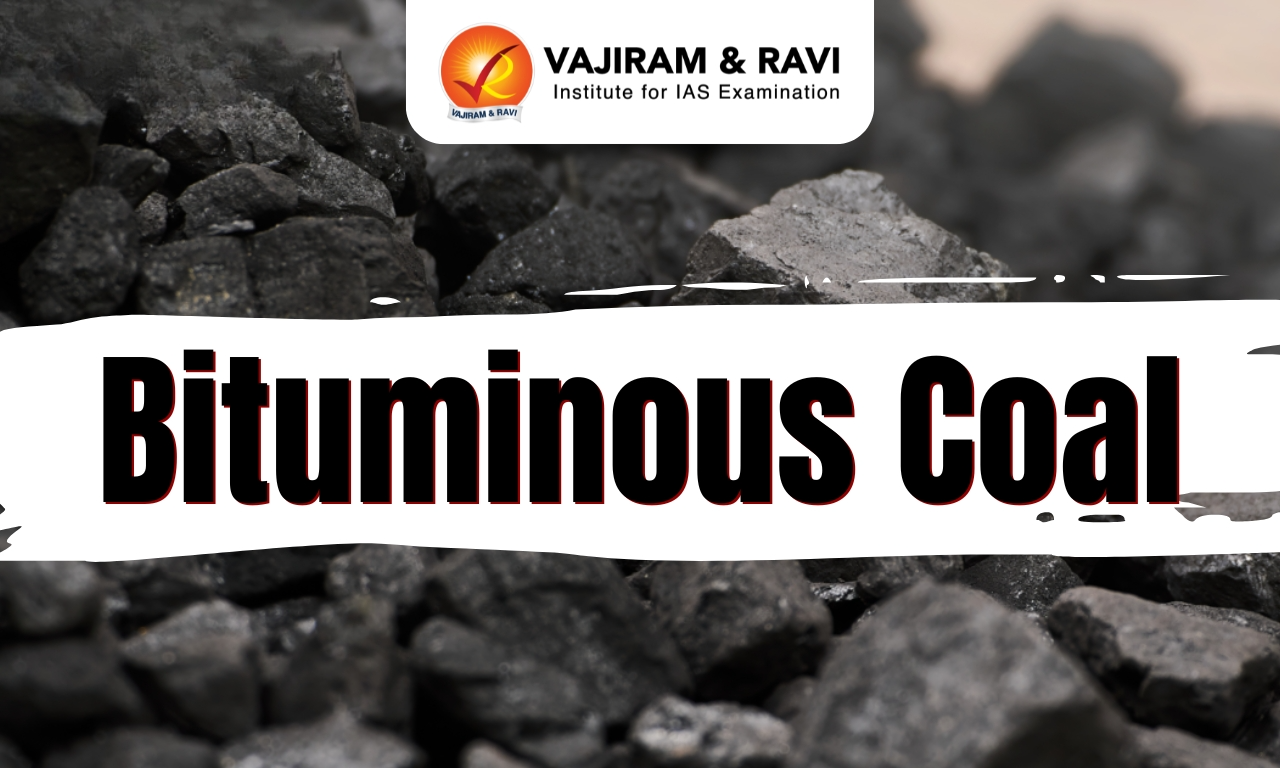
Bituminous Coal is a widely available fossil fuel commonly called Black Coal due to its dark colour and high carbon content. It contains a tar like substance called bitumen. It is formed through geological coalification processes at temperatures above 85° C. It is globally abundant and widely used for electricity generation, steel manufacturing and industrial fuel due to its high calorific value and strong carbon concentration.

Bituminous Coal Features

Bituminous Coal is a dense fossil fuel with high carbon concentration and significant energy potential. The major features of the coal has been listed below:

  • Carbon Content: Bituminous Coal generally contains about 40-80% carbon, while detailed chemical composition averages nearly 84.4% carbon, 5.4% hydrogen, 6.7% oxygen, 1.7% nitrogen and 1.8% sulfur by weight.
  • Physical Property: This coal type appears dark brown to deep black and is dense yet friable. Coal seams usually show alternating bright and dull bands formed during organic deposition.
  • Bitumen: The name “bituminous” originates from bitumen, a sticky tar like substance present in the coal that softens and swells when heated.
  • Combustion Behaviour: During burning, it usually produces a smoky flame and softens before forming coke like porous residue due to the bitumen content.
  • Geological Formation: It forms when sub-Bituminous Coal is buried deeper underground and exposed to temperatures above 85°C during coalification.
  • Industrial Uses: Bituminous Coal is widely used in thermal power plants, steel production through coke manufacture and production of activated carbon.

Also Read: Coal Mines In India

Bituminous Coal in India

Bituminous Coal plays a central role in India’s energy system, industrial development and electricity production infrastructure.

Distribution

Bituminous Coal deposits in India are concentrated mainly in eastern and central regions within major Gondwana coalfields.

  • States: Significant reserves occur in Jharkhand, Odisha, Chhattisgarh, West Bengal and Madhya Pradesh, mainly across Damodar Valley (Jharia, Raniganj), Mahanadi Valley (Talcher), Son Valley, etc.
  • Largest Reserves: Jharkhand holds the highest coal reserves in India, followed by Odisha, Chhattisgarh, West Bengal and Madhya Pradesh.

Production

  • Total coal production in India reached about 730.354 million tonnes in 2018-19, showing nearly 7.9% annual growth.
  • Coal accounts for roughly 55% of India’s total energy requirements, making it the most important fossil fuel in the country.

Challenges

  • India imports nearly 213 million tonnes of coal annually, mainly high quality coking coal required for steel manufacturing.
  • Coal mining expansion frequently encounters land acquisition disputes and rehabilitation challenges.
  • Strict environmental regulations increase operating and maintenance coal mines.
  • Growing electricity demand after power sector reforms in 2003 created supply shortages in domestic coal production.

Government Initiatives

  • Coal Mines Nationalisation Act 1973: This legislation brought most coal mines under government control and established centralised sector management.
  • Commercial Mining Reform: Private and foreign companies were allowed to participate in commercial coal mining to increase competition and efficiency.
  • Coal Mines Special Provisions Act 2015: This law introduced transparent auction based allocation of coal blocks after earlier allocations were cancelled.
  • UTTAM Monitoring App: The Ministry of Coal launched the UTTAM mobile application in 2018 for third party assessment and transparency in coal quality monitoring.

Bituminous Coal FAQs

Q1: What is Bituminous Coal?

Ans: Bituminous Coal is a widely used black coal containing bitumen, with about 40-80% carbon and high calorific value, mainly used in electricity generation and steel production.

Q2: How is Bituminous Coal formed?

Ans: Bituminous Coal forms when buried plant material converts into peat and gradually undergoes coalification under heat and pressure, typically at temperatures above about 85°C.

Q3: What are the main uses of Bituminous Coal?

Ans: Bituminous Coal is mainly used for electricity generation, production of metallurgical coke for steel manufacturing and preparation of industrial products like activated carbon.

Q4: Where are major Bituminous Coal deposits found in India?

Ans: Major Bituminous Coal reserves occur in Jharkhand, Odisha, Chhattisgarh, West Bengal and Madhya Pradesh within Gondwana coalfields concentrated in eastern and central India.

Q5: Why is Bituminous Coal mining considered risky?

Ans: Bituminous Coal mines often release methane rich firedamp gas during extraction, which can cause underground explosions if proper ventilation, monitoring systems and strict safety measures are not maintained.

Drawida vazhania

Drawida vazhania

Drawida vazhania Latest News

A team of researchers recently identified a new earthworm species named Drawida vazhania from the Vazhani dam area of the Peechi-Vazhani Wildlife Sanctuary in the Thrissur district of Kerala.

About Drawida vazhania

  • It is a new species of earthworm.
  • It was discovered from the Vazhani Dam area of the Peechi-Vazhani Wildlife Sanctuary in the Thrissur district of Kerala.
  • Belonging to the genus Drawida, which is naturally restricted to the south, southeast, and east asian region, it belongs to the family Moniligastridae.
  • D. vazhania, with a small body size, is a member of the Barwelli species group.
  • D. vazhania can be easily differentiated from other members of the Barwelli group by the presence of a grooved male genital field, a kidney- or bean-shaped prostate, a narrow tubular C-shaped prostatic capsule, and a distinct small sessile atrium on the body wall.
  • With the new finding, the total number of Drawida species reported from India and the Western Ghats biodiversity hotspot has risen to 83 and 55, respectively.

Source: TH

Drawida vazhania FAQs

Q1: What is Drawida vazhania?

Ans: It is a newly discovered species of earthworm.

Q2: Where was Drawida vazhania discovered?

Ans: It was discovered near Vazhani Dam in the Peechi-Vazhani Wildlife Sanctuary.

Q3: What is a notable physical characteristic of Drawida vazhania?

Ans: It has a small body size.

Q4: Which feature distinguishes Drawida vazhania from other members of the Barwelli group?

Ans: The presence of a grooved male genital field.

Lower Kopili Hydroelectric Project

Lower Kopili Hydroelectric Project

Lower Kopili Hydroelectric Project Latest News

The Prime Minister virtually inaugurated the 120 MW Lower Kopili Hydroelectric Project recently.

About Lower Kopili Hydroelectric Project

  • It is a 120 MW run-of-river hydropower project planned on the Kopili River basin in Assam.
  • The project is situated in the West Karbi Anglong and Dima Hasao (also known as North Cachar Hills) Autonomous District Council (ADC) areas of Central Assam. 
  • The project is being developed and currently owned by Assam Power Generation Corporation Limited (APGCL).
  • It is funded by the Asian Development Bank (ADB) under its Assam Power Sector Investment Program. 

Key Facts about Kopili River

  • It is an interstate river in Northeast India that flows through the states of Meghalaya and Assam.
  • It is the largest south bank tributary of the Brahmaputra in Assam.
  • Originating in the Meghalaya plateau, it flows through the districts of Karbi Anglong and Nagaon before merging with the Brahmaputra. 
  • Its total length is 256 km, of which 78 km form the common border of Meghalaya and Assam and the remaining 178 km lie in Assam.

Source: SA

Lower Kopili Hydroelectric Project FAQs

Q1: What is the Lower Kopili Hydroelectric Project?

Ans: It is a 120 MW run-of-river hydropower project planned on the Kopili River basin in Assam.

Q2: On which river basin is the Lower Kopili Hydroelectric Project planned?

Ans: The Kopili River basin.

Q3: Which international organization is funding the Lower Kopili Hydroelectric Project?

Ans: Asian Development Bank.

NMDC Limited

NMDC Limited

NMDC Limited Latest News

NMDC Limited has become the first mining company in India to produce 50 million tonnes (MT) of iron ore in a single financial year.

About NMDC Limited

  • NMDC Limited (formerly National Mineral Development Corporation) is a Central Public Sector Enterprise (CPSE).
  • Incorporated in 1958, it is under the administrative control of the Ministry of Steel, Government of India.
  • Since inception, it has been involved in the exploration of a wide range of minerals, including iron ore, copper, rock phosphate, limestone, dolomite, gypsum, bentonite, magnesite, diamond, tin, tungsten, graphite, beach sands, etc. 
  • It is India's largest iron ore producer and exporter, producing more than 45 million tonnes of iron ore from three mechanized mines in Chhattisgarh and Karnataka. 
  • It also operates the only mechanized diamond mine in the country at Panna in Madhya Pradesh.
  • The company has been categorised by the Department of Public Enterprises as a "NAVRATNA" Public Sector Enterprise in 2008.
  • It has its registered office in Hyderabad, Telangana. 

Source: DDN

NMDC Limited FAQs

Q1: What is NMDC Limited?

Ans: It is a Central Public Sector Enterprise (CPSE) engaged in mineral exploration and production.

Q2: Under which ministry does NMDC Limited function?

Ans: The Ministry of Steel.

Q3: Which mineral is NMDC Limited the largest producer of in India?

Ans: Iron ore.

Q4: Where is India’s only mechanized diamond mine operated by NMDC located?

Ans: At Panna Diamond Mine.

United Nations Environment Programme

United Nations Environment Programme

United Nations Environment Programme Latest News

Recently, in a new report, Safe disposal of unused medicines by the United Nations Environment Programme (UNEP) warned that the improper disposal of medicines poses serious risks to both environmental and public health.

About United Nations Environment Programme

  • It is the leading global authority on the environment.
  • It was founded in 1972 after a UN General Assembly resolution.
  • Mandate: It was conceived to monitor the state of the environment and coordinate responses to the world’s greatest environmental challenges. 
  • Headquarters: Nairobi, Kenya.

United Nations Environment Programme (UNEP) Structure

  • United Nations Environment Assembly (UNEA): UNEA is the world’s highest-level decision-making body on environmental issues, comprising all UN member states. It meets biennially to set global priorities, adopt resolutions, and guide UNEP’s overall policy direction.
  • Committee of Permanent Representatives (CPR): It acts as the main advisory body to UNEA and helps in preparing its agenda.
  • Secretariat: The UNEP Secretariat, led by the Executive Director, implements UNEA decisions and oversees day-to-day operations.
  • Regional and Thematic Offices: UNEP functions through multiple regional offices in Asia-Pacific, Africa, Europe, Latin America, West Asia, and North America.

United Nations Environment Programme (UNEP) Functions

  • It develops and supports global environmental treaties, such as the CBD, CITES, and Minamata Convention.
  • Hosts secretariats of major environmental conventions and supports the negotiation of new environmental agreements.
  • It publishes authoritative research and assessments, including the Global Environment Outlook and Emissions Gap Report.
  • It supports developing countries with environmental capacity building, funding, and technical assistance.

Source: DTE

United Nations Environment Programme FAQs

Q1: Where is UNEP headquartered?

Ans: Nairobi

Q2: What is UNEP's primary goal?

Ans: To address global environmental issues

Megamalai Wildlife Sanctuary

Megamalai Wildlife Sanctuary

Megamalai Wildlife Sanctuary Latest News

Recently, nine species were recently discovered during a faunal survey by Zoological Survey of India (ZSI) at Megamalai Wildlife Sanctuary.

About Megamalai Wildlife Sanctuary

  • Location: It is located in the state of Tamil Nadu.
  • This wildlife sanctuary serves as a buffer zone for the Periyar Tiger Reserve in Kerala, as it is situated on the border of Tamilnadu and Kerala.
  • It is home to a diverse variety of flora and fauna shrubs and evergreen forests to mammals.
  • Vegetation: It mainly consists of scrub forest (at the foothills) to dense evergreen forest and shola grasslands (at the top).
  • Flora: Banyan Tree, Syzygium zeylanicum, Nothopegia vajravelui, Memecylon flavescens, Symplocos oligandra, Symplocos wynadense, Meiogyne ramarowii,
  • Fauna: The sanctuary is home to elephants, tigers, leopards, Nilgiri tahr, gaurs, spotted deer, barking deer, sambar deer, wild boar, porcupine, Nilgiri langur, lion-tailed macaque.
    • The wood snake is endemic to the Megamalai Wildlife Sanctuary

Source: TOI

Megamalai Wildlife Sanctuary FAQs

Q1: Where is the Megamalai Wildlife Sanctuary located?

Ans: Tamil Nadu

Q2: Which animals are found in the Megamalai Wildlife Sanctuary

Ans: Grizzled Giant Squirrel, Lion-tailed Macaque and Nilgiri Tahr etc

Jnanpith Award

Jnanpith Award

Jnanpith Award Latest News

Recently, Tamil lyricist and author R. Vairamuthu has been selected for the Jnanpith Award for the year 2025.

About Jnanpith Award

  • It is the highest literary honour of India, given to writers who have excelled in literature in different Indian languages.
  • It was instituted in 1961. 
  • Award: The prize carries a cash prize of Rs 11 lakh, a bronze statuette of Vagdevi (Goddess Saraswati), and a citation.
  • It is sponsored by the cultural organization Bharatiya Jnanpith.
  • The first recipient of the award was Malayalam poet G. Sankara Kurup, who received the award in 1965 for his collection of poems Odakkuzhal.

Eligibility and Rules

  • It is given every year to an author for his/her outstanding contribution towards Indian literature through creative writing in any of the Indian languages mentioned in Schedule VIII of the Indian Constitution and English.
  • Only those creative writers who are alive and are Indian citizens, can be proposed for the Award.
  • A language which receives the award in a particular year is not eligible for consideration for the next two years. 
  • A writer who receives the Award once will not be considered again.
  • The Award may not be given in a particular year if the Jnanpith Award Selection Board feels that there is no suitable name which comes up to the expected standard of the Award.

Source: TH

Jnanpith Award FAQs

Q1: What is the Jnanpith Award given for?

Ans: Outstanding contribution to Indian literature

Q2: Who was the first recipient of the Jnanpith Award?

Ans: G. Sankara Kurup,

Supreme Court Allows First Ever Passive Euthanasia in India

Passive Euthanasia in India

The Supreme Court (SC), in Harish Rana vs Union of India Case (2026), authorised passive euthanasia of 32-year-old Harish Rana, who has been in a persistent vegetative state (PVS) for the last 13 years. The ruling marks the first practical application of India’s passive euthanasia framework developed through earlier Supreme Court judgments.

Background of the Case

Harish Rana suffered severe head injuries after falling from a balcony in 2013 and remained in a persistent vegetative state with 100% quadriplegia  for more than 13 years. His father first approached the Delhi High Court in 2024 seeking permission to withdraw treatment, but the plea was rejected.

The family later approached the Supreme Court of India. A bench comprising Justice J. B. Pardiwala and Justice K. V. Viswanathan constituted two medical boards, which concluded that the chances of recovery were negligible. Based on these findings, the Court permitted the withdrawal of life-sustaining treatment, marking the first practical application of India’s passive euthanasia framework.

Euthanasia Meaning and Types 

Euthanasia refers to the deliberate act of ending the life of a person suffering from an incurable disease or irreversible condition to relieve pain and suffering. Euthanasia can only be administered by a physician and can be either “active” or “passive”. 

Active euthanasia

Active euthanasia involves directly causing the death of a patient through deliberate medical intervention, such as administering a lethal injection. 

Active Euthanasia is illegal in India under the Bharatiya Nyaya Sanhita (BNS), 2023 and may amount to culpable homicide or abetment to suicide under criminal law.

Passive euthanasia

Passive euthanasia involves withdrawing or withholding life-sustaining medical treatment such as ventilators, artificial nutrition or other medical support. In such cases, death occurs naturally due to the underlying illness rather than a direct medical action.

Passive euthanasia is legally permitted in India under safeguards prescribed by the Supreme Court of India in Common Cause vs Union of India, which recognised the right to die with dignity as part of the Article 21 of the Constitution of India.

Procedure for Passive Euthanasia in India

The procedure for passive euthanasia in India is strictly regulated to ensure it is not misused and the patient’s dignity is maintained. It is based on Supreme Court guidelines from Common Cause (2018) and subsequent modifications. The procedure is as follows: 

  • Constitution of Medical Boards: Two medical boards must be formed:
    • A Primary Medical Board at the treating hospital.
    • A Secondary Medical Board comprising independent external experts.

Both boards must examine the patient and confirm that the condition is irreversible and recovery is not possible.

  • Consent of Family or Legal Guardians: If the patient is incapable of making decisions, consent from family members or legal guardians is required before withdrawal of life-support measures.
  • Simplified Legal Procedure (2023 Modification): Earlier guidelines required High Court approval or judicial magistrate involvement. The 2023 clarification by the Supreme Court simplified the process by reducing direct judicial intervention while retaining procedural safeguards.
  • Withdrawal of Life Support and Palliative Care: After approval, the patient may be shifted to palliative care, where life-support systems can be withdrawn in a humane manner ensuring dignity and minimal suffering.
  • Mandatory Documentation: All decisions, medical board opinions and consent records must be properly documented to maintain transparency and prevent misuse.

Passive Euthanasia Constitutional Basis

The constitutional foundation of passive euthanasia in India lies in Article 21 of the Constitution of India,which guarantees the Right to Life and Personal Liberty. The Supreme Court has interpreted this right to include not just living, but living with dignity.

Key Supreme Court Judgements on Euthanasia

The legal framework governing euthanasia in India has evolved primarily through landmark rulings of the Supreme Court of India. Over the years, the Court has clarified the legality of passive euthanasia and recognised the right to die with dignity as part of constitutional rights.

Maruti Shripati Dubal vs State of Maharashtra

  • The Bombay High Court held that the right to life under Article 21 of the Constitution of India could include a right to die, particularly for individuals suffering from terminal illness or extreme, incurable pain.

Gian Kaur vs State of Punjab

  • The Supreme Court of India overturned the earlier ruling in Maruti Shripati Dubal vs State of Maharashtra, which had held that the right to die forms part of the right to life under Article 21 of the Constitution of India. The Court clarified that Article 21 protects life and does not include a right to die, reaffirming the principle of preservation of life.

Aruna Shanbaug Case (2011)

  • In Aruna Ramchandra Shanbaug v. Union of India (2011), the Supreme Court recognised passive euthanasia for the first time in India. 
  • Aruna Shanbaug, a nurse in Mumbai, had remained in a persistent vegetative state since a brutal assault in 1973.
  • While the Court rejected the plea seeking permission to end her life, it held that withdrawal of life support could be allowed in exceptional circumstances. 
  • The Court permitted passive euthanasia with the approval of the relevant High Court and under strict safeguards, marking the first judicial recognition of the concept in India.

Common Cause Case (2018)

The judgment laid down detailed procedural safeguards for implementing passive euthanasia.

  • A five-judge Constitution Bench ruled that the right to die with dignity is an intrinsic part of the right to life under Article 21.
  • The Court also recognised the concept of a living will or advance directive, allowing individuals to state in advance that life-sustaining treatment should be withdrawn if they fall into a terminal illness or a persistent vegetative state. 

In 2023, another Constitution Bench of the Supreme Court modified the guidelines issued in the Common Cause judgment. The Court simplified the procedure for implementing passive euthanasia by introducing timelines for medical boards and reducing the procedural role of the judicial magistrate.

These changes were aimed at making the process more practical and accessible for hospitals and families dealing with end-of-life situations.

Rabies Patients’ Petition (2019)

  • In 2019, the NGO All Creatures Great and Small filed a petition before the Supreme Court seeking recognition of rabies as an exceptional medical condition and requested guidelines allowing patients or their guardians to seek the option of death with dignity due to the severe suffering caused by the disease.
  • The Supreme Court agreed to examine the issue, and the matter remains pending before the Court.

Arguments in favour of Legalisation of Passive Euthanasia

Legalisation of passive euthanasia is supported on constitutional, ethical and humanitarian grounds, particularly in cases of irreversible medical suffering.

  • Right to Die with Dignity: Recognised by the Supreme Court of India in Common Cause vs Union of India as part of the Article 21 of the Constitution of India.
  • Respect for Patient Autonomy: Allows individuals to exercise control over medical decisions, including refusal of life-sustaining treatment.
  • Protection of Human Dignity: Prevents a person from being reduced to mere biological existence in a persistent vegetative or terminal condition.
  • Recognition of Living Will: Advance directives allow individuals to state their medical preferences in advance, ensuring their wishes are respected.

Arguments Against Legalisation of Passive Euthanasia

Despite legal safeguards, the legalisation of passive euthanasia raises several ethical, social and institutional concerns in the Indian context.

  • Risk of Misuse and Coercion: There is a possibility that elderly, disabled, or economically dependent patients may be pressured by families or institutions to withdraw life support.
  • Weak Healthcare and Palliative Care System: In a country with limited access to quality palliative care, euthanasia may become an easier option instead of improving end-of-life care facilities.
  • Diagnostic Uncertainty: Medical prognosis is not always certain, and some patients in vegetative states have shown unexpected recovery.
  • Moral and Cultural Opposition: Many religious and cultural traditions in India view life as sacred, and deliberate withdrawal of life support may face strong societal resistance.

Ethical Dimensions of Passive Euthanasia

Passive euthanasia raises profound ethical questions about the balance between preserving life and alleviating suffering. 

  • On one hand, it respects the principle of autonomy, allowing individuals or their families to make decisions about end-of-life care when recovery is impossible. 
  • On the other hand, it challenges the sanctity of life, a core value in medical ethics and society. 

Ethical frameworks emphasise that any decision to withdraw life support must be guided by compassion, beneficence, and non-maleficence, ensuring that the patient’s dignity and comfort are preserved. The Supreme Court’s guidelines seek to balance these ethical concerns by combining medical evaluation, legal safeguards, and family consent, thereby providing a humane approach to end-of-life care while preventing misuse.

Euthanasia in Other Countries: Global Examples

Many countries across the world have adopted different legal approaches to euthanasia and assisted dying, balancing ethical concerns with the principles of individual autonomy and dignity.

  • Netherlands: Euthanasia and physician-assisted suicide have been legal since 2002 under strict conditions such as voluntary consent and unbearable suffering; in 2023, the law was expanded to allow euthanasia for terminally ill children aged 1–12 with parental approval and medical safeguards.
  • Belgium: Legalised euthanasia in 2002, and in 2014 removed age restrictions, allowing minors of any age to access euthanasia provided they have a terminal illness, parental consent, and proven decision-making capacity.
  • Canada: Introduced Medical Assistance in Dying (MAiD) in 2016 for adults with grievous and irremediable medical conditions; however, the proposed expansion to include mental illness as the sole condition has been postponed until March 2027.
  • Switzerland: Allows assisted suicide if it is not motivated by selfish interests, although active euthanasia remains illegal; the country is known for permitting assistance even for non-residents.
  • United States: Medical Aid in Dying is legal in several jurisdictions such as Oregon, California, and others under “Death with Dignity” laws, with strict eligibility criteria and medical oversight.
  • Japan: There is no specific law legalising euthanasia, but courts and medical guidelines allow withholding or withdrawing life-sustaining treatment (“death with dignity”) under limited circumstances.
  • Australia: Voluntary Assisted Dying (VAD) has been legalised across all six states, including Victoria and New South Wales, with strict eligibility requirements and medical safeguards.

Passive Euthanasia FAQs

Q1: What is passive euthanasia?

Ans: Passive euthanasia is the withdrawal or withholding of life-sustaining medical treatment, allowing a patient to die naturally from an underlying illness. It is legally permitted in India under strict safeguards.

Q2: How is passive euthanasia different from active euthanasia?

Ans: Active euthanasia involves directly causing death, such as through a lethal injection, and is illegal in India. Passive euthanasia lets death occur naturally by stopping or withholding treatment and is legal under certain conditions.

Q3: What is the constitutional basis for passive euthanasia in India?

Ans: The Supreme Court has derived the right to passive euthanasia from Article 21, which guarantees the right to life and personal liberty. It includes the right to live with dignity and the right to die with dignity in terminal or irreversible conditions.

Q4: What procedure must be followed for passive euthanasia in India?

Ans: Two medical boards (Primary and Secondary) must assess the patient and certify negligible chances of recovery. Family consent is required, and withdrawal of treatment is done in a palliative care facility under documented, humane procedures.

Q5: Which key Supreme Court judgments govern passive euthanasia?

Ans: The landmark cases are Aruna Shanbaug (2011), Common Cause (2018), the 2023 modification of Common Cause guidelines, and pending cases like the Rabies Patients’ Petition (2019), all of which define the legal and procedural framework.


Central Adoption Resource Authority

Central Adoption Resource Authority

Central Adoption Resource Authority Latest News

The Central Adoption Resource Authority issued nationwide directions to strengthen adoption procedures, safeguard records and protect children’s identity.

About Central Adoption Resource Authority

  • It is a statutory body of the Ministry of Women & Child Development, Government of India.
  • Through Section 68 of the Juvenile Justice (Care and Protection of Children) Act, 2015 (JJ Act 2015), CARA attained the status of a statutory body.
  • Mandate: Primarily deals with the adoption of orphan, abandoned, and surrendered children through its associated/recognised adoption agencies.
  • It is designated as the Central Authority to deal with intercountry adoptions in accordance with the provisions of the Hague Convention on Intercountry Adoption, 1993, ratified by the Government of India in 2003.
  • Headquarters: New Delhi.

Functions of Central Adoption Resource Authority

  • To promote In-country adoptions and to facilitate Inter-state adoptions in coordination with State Agency;
  • To regulate Inter-country adoptions;
  • To frame regulations on adoption and related matters from time to time as may be necessary;
  • To carry out the functions of the Central Authority under the Hague Convention on protection of Children and Cooperation in respect of Intercountry Adoption;
  • Any other function as may be prescribed.
  • It monitors and regulates bodies such as the State Adoption Resource Agency (SARA), Specialised Adoption Agency (SAA), Authorised Foreign Adoption Agency (AFAA), Child Welfare Committees (CWCs), and District Child Protective Units (DPUs)

Source: PIB

Central Adoption Resource Authority FAQs

Q1: What is CARA's primary role?

Ans: To oversee adoption processes in India

Q2: Under which ministry does CARA function?

Ans: Ministry of Women and Child Development

Great Indian Bustard

Great Indian Bustard

Great Indian Bustard Latest News

Recently, the Union Minister of Environment, Forest and Climate Change informed that Project Great Indian Bustard (GIB) has entered the fourth year of its captive breeding programme.

About Great Indian Bustard

  • It is a large terrestrial bird endemic to the Indian subcontinent.
  • Habitat: The bird is primarily found in dry grasslands and scrublands, which are rapidly declining due to agricultural expansion and development.
  • Distribution: Its core population survives in the Thar Desert, mainly in Jaisalmer and Barmer districts of Rajasthan.

Characteristics of Great Indian Bustard

  • It is one of the heaviest flying birds in the world.
  • It has a horizontal body posture, long bare legs, and resembles an ostrich in appearance.
  • Both sexes are similar in size, with the heaviest individuals reaching up to 15 kg (33 pounds).
  • Life Span: The bird has a lifespan of 12–15 years.
  • Diet: These birds are opportunist eaters. Their diet ranges widely depending on the seasonal availability of food. They feed on grass seeds, insects like grasshoppers and beetles, and sometimes even small rodents and reptiles.

Conservation Status of  Great Indian Bustard

  • IUCN: Critically Endangered
  • CITES: Appendix 1
  • Wildlife (Protection) Act, 1972: Schedule 1

Source: PIB

Great Indian Bustard FAQs

Q1: Which state in India has the largest population of Great Indian Bustards?

Ans: Rajasthan

Q2: What is the Great Indian Bustard's habitat?

Ans: Grasslands

Dimethyl Ether

Dimethyl Ether

Dimethyl Ether Latest News

The Council of Scientific and Industrial Research- National Chemical Laboratory (CSIR-NCL) in collaboration with a processing engineering partner is ready to scale up the Dimethyl Ether technology to an industrial scale demonstration.

About Dimethyl Ether

  • It is a synthetically produced alternative to diesel for use in specially designed compression ignition diesel engines.

Properties of Dimethyl Ether 

  • It has a very high cetane number, which is a measure of the fuel’s ignitibility in compression ignition engines.
  • Under normal atmospheric conditions, DME is a colorless gas.
  • It burns cleaner, emitting minimal amounts of soot, nitrogen oxides (NOx), sulfur oxides (SOx), and particulate matter.
  • Furthermore, DME exhibits thermal efficiency that is comparable to traditional fuels, making it a viable substitute
  • It can be a viable alternative fuel and engine technology to adapt to conventional diesel engines used in India’s economy’s agricultural and transport sectors.

Application of Dimethyl Ether

  • It is used extensively in the chemical industry and as an aerosol propellant.
  • It is used in chemical industries and also to produce dyes and plastics.

Source: IE

Dimethyl Ether FAQs

Q1: Why is DME considered an environmentally friendly fuel?

Ans: It is because DME contains low sulfur content.

Q2: What is the chemical formula of Dimethyl Ether?

Ans: CH3OCH3

Henckelia Monophylla

Henckelia Monophylla

Henckelia Monophylla Latest News

Scientists from the Botanical Survey of India have rediscovered a rare plant Henckelia monophylla, native to Arunachal Pradesh after nearly 189 years.

About Henckelia Monophylla

  • It is a rare plant species endemic to Arunachal Pradesh.
  • It is a member of the Gesneriaceae family.
  • The plant was first collected in 1836 by British botanist William Griffith in the Mishmi Hills.
  • Habitat: It is a perennial herb that typically grows in moist, forested habitats.

Characteristics of Henckelia Monophylla

  • Plants in the Henckelia genus are usually characterised by upright or slightly trailing stems and simple leaves that are often ovate or lance-shaped.
  • The plants produce axillary inflorescences bearing one or several tubular or funnel-shaped flowers, often with delicate colouration.
  • Their fruits develop as elongated capsules containing numerous tiny seeds, enabling them to reproduce effectively in suitable ecological niches.

Key Facts about Botanical Survey of India

  • It is the apex taxonomic research organization of the country which is under the Ministry of Environment, Forest & Climate Change, Government of India.
  • It was established on 13thFebruary 1890 under the direction of Sir George King.
  • Mandate: The mandate of the organization has been broadened to biosystematics research, floristic studies, documentation, database of National Botanical collection, digitization of herbarium specimens etc.
  • Headquarter: Kolkata

Source: LM

Henckelia Monophylla FAQs

Q1: What is Henckelia Monophylla?

Ans: A species of flowering plant in the family Gesneriaceae

Q2: Where is Henckelia Monophylla primarily found?

Ans: Arunachal Pradesh, India

Daily Editorial Analysis 16 March 2026

Daily-Editorial-Analysis

On the Right to Die with Dignity

Context

  • The debate surrounding the right to die with dignity lies at the intersection of constitutional law, medical ethics, and human rights.
  • The case of Harish Rana brought this debate to the forefront of Indian constitutional discourse.
  • After remaining in a Persistent Vegetative State (PVS) for more than a decade following a tragic accident, Rana’s parents approached the Supreme Court seeking permission to withdraw life support.
  • Their plea raised profound questions about the meaning of life, dignity, and autonomy under Article 21 of the Indian Constitution.

The Tragedy of Harish Rana and the Constitutional Question

  • In 2013, 20-year-old Harish Rana suffered critical injuries after falling from the fourth floor of his accommodation.
  • The accident left him in a Persistent Vegetative State, with no ability to respond to stimuli. For thirteen years, he remained dependent on life support systems, primarily sustained through Clinically Assisted Nutrition and Hydration (CANH).
  • Despite continuous medical attention and devoted care from his parents, no signs of recovery appeared.
  • Confronted with the emotional and physical burden of prolonged treatment without improvement, his parents petitioned the Supreme Court seeking permission to withdraw life support.
  • The case presented a fundamental constitutional dilemma: whether continuing medical treatment that offers no possibility of recovery serves the purpose of protecting life, or whether it merely prolongs biological existence without dignity.
  • Addressing this question required a deeper interpretation of the right to life guaranteed under Article 21.

Evolution of the Right to Die with Dignity in India

  • Gian Kaur v. State of Punjab (1996)
    • The jurisprudence surrounding end-of-life decisions in India has gradually developed through landmark judicial decisions.
    • In Gian Kaur v. State of Punjab (1996), the Supreme Court affirmed that Article 21 guarantees the right to live with dignity, but rejected the idea that it includes a right to die.
    • The judgment emphasised the sanctity of life and upheld the criminalisation of suicide.
  • Aruna R. Shanbaug v. Union of India (2011)
    • The debate resurfaced in the case of Aruna Shanbaug, who remained in a Persistent Vegetative State after a brutal assault.
    • In Aruna R. Shanbaug v. Union of India (2011), the Supreme Court recognised the concept of passive euthanasia under exceptional circumstances.
    • Although the request to withdraw life support in that case was denied, the Court established procedural guidelines to regulate decisions involving the withdrawal of treatment, drawing upon international legal frameworks.
  • Common Cause v. Union of India (2018)
    • The Constitution Bench recognised that the right to refuse medical treatment forms part of the right to life and dignity under Article 21.
    • The Court linked this right to the principles of privacy, autonomy, and self-determination, affirming that individuals possess control over decisions affecting their own bodies.
    • Detailed safeguards were established to regulate withdrawal of medical treatment, including the involvement of primary and secondary medical boards.

The Supreme Court’s Reasoning in the Harish Rana Case

  • The first issue concerned whether Clinically Assisted Nutrition and Hydration (CANH) qualified as medical treatment.
  • The Court determined that CANH involves continuous medical supervision, specialised knowledge, and periodic evaluation.
  • Because its administration requires professional expertise and emergency management, it was recognised as a form of medical intervention.
  • The second issue concerned whether withdrawing this treatment would serve Rana’s best interests.
  • The Court emphasised that such decisions must consider the perspectives of family members, medical professionals, and the patient’s condition.
  • When recovery becomes impossible and treatment merely prolongs biological life without improvement, continuing intervention ceases to serve a meaningful purpose.
  • Consequently, the Court concluded that withdrawing life support was consistent with Rana’s best interests, recognising the limits of medical treatment in circumstances where recovery is unattainable.

Constitutional Morality and the Ethics of Death

  • While the Constitution safeguards life as a fundamental right, it also recognises that dignity, autonomy, and personal choice are essential components of that right.
  • Situations involving irreversible medical conditions challenge traditional assumptions about the purpose of life-sustaining treatment.
  • By allowing passive euthanasia under strict safeguards, the judiciary has attempted to reconcile ethical considerations with constitutional values.
  • The Common Cause guidelines ensure that decisions regarding withdrawal of treatment are carefully evaluated through medical boards, procedural safeguards, and consideration of the patient’s best interests.

Conclusion

  • The story of Harish Rana represents both a personal tragedy and a significant development in constitutional jurisprudence.
  • His case strengthens the evolving recognition that dignity, autonomy, and compassion must guide decisions concerning life and death.
  • Through cases such as Gian Kaur, Aruna Shanbaug, and Common Cause, the Supreme Court has gradually expanded the interpretation of Article 21 to include the right to refuse medical treatment in situations where recovery is impossible.

On the Right to Die with Dignity FAQs

Q1. What constitutional issue was raised in the Harish Rana case?
Ans. The case raised the issue of whether the right to life under Article 21 includes the right to die with dignity through withdrawal of life-sustaining treatment.

Q2. What condition did Harish Rana suffer from after his accident?

Ans. Harish Rana remained in a Persistent Vegetative State (PVS) after suffering critical injuries from a fall in 2013.

Q3. Which Supreme Court case first recognised passive euthanasia in India?
Ans. The Supreme Court recognised passive euthanasia in the Aruna R. Shanbaug v. Union of India (2011) case.

Q4. What are the Common Cause guidelines?
Ans. The Common Cause guidelines provide legal procedures and safeguards for withdrawing or withholding medical treatment in the patient’s best interests.

Q5. Why did the Supreme Court allow withdrawal of life support in Rana’s case?
Ans. The Court allowed withdrawal because continued treatment offered no therapeutic benefit and withdrawing it was considered in the patient’s best interests.

Source: The Hindu


Building India’s Climate Resilience With Water At The Core

Context

  • The COP30 climate conference in Belém, Brazil (2025) marked a shift toward practical and measurable climate adaptation, emphasising accountability and systems that function under stress.
  • A key focus was the integration of water, sanitation, and hygiene (WASH) into global adaptation indicators, highlighting the central role of water in the climate–food–water nexus and its importance for countries like India.

Water at the Centre of Climate Change Impacts

  • Climate change is most directly experienced through water-related disruptions, including floods, droughts, glacial melt in the Himalayas, saline intrusion in coastal aquifers, and erratic monsoons that threaten food security and rural livelihoods.
  • Agriculture contributes around 40% of anthropogenic methane emissions, largely from rice cultivation, livestock, and organic waste.
  • Improving water-use efficiency, wastewater reuse, aquifer recharge, and climate-resilient sanitation has therefore become central to climate mitigation and adaptation.

Belém Adaptation Indicators and Water Governance

  • The 59 Belém Adaptation Indicators, introduced under the UAE Framework for Global Climate Resilience, establish measurable benchmarks for climate adaptation and emphasise the role of water systems in climate resilience.
  • One key cluster of indicators aims to reduce water scarcity, improve resilience to floods and droughts, ensure universal access to safe drinking water, and upgrade sanitation systems to withstand extreme climate events.
  • Another cluster highlights risk governance, including the creation of universal multi-hazard early warning systems by 2027, stronger hydrometeorological services, and updated national vulnerability assessments by 2030.
  • The framework signals a shift from simply building infrastructure to ensuring that water and sanitation systems continue functioning effectively under intensifying climate stress.

India’s Water Governance and Climate Adaptation

  • India is strengthening climate adaptation by building on existing frameworks.
  • The creation of the Ministry of Jal Shakti in 2019 and the Water Vision 2047 emphasise integrated water governance, sustainability, equity, and resilience.
  • The National Aquifer Mapping and Management (NAQUIM) Programme 2.0 has shifted from merely mapping aquifers to implementing aquifer-level management plans, translating scientific knowledge into practical water governance policies.
  • The National Mission for Clean Ganga (NMCG) has expanded beyond sewage treatment to include biodiversity restoration, digital monitoring, and international cooperation, positioning clean rivers as buffers against climate-related shocks.

Key Challenges Slowing Progress

  • Persistent Water Scarcity - Water scarcity remains uneven across regions. Since most climate disasters in India are water-related, resilient WASH systems require climate stress testing of infrastructure, diversified water sources, and stronger service delivery systems.
  • Fragile Adaptation Finance - Although global discussions propose mobilising $1.3 trillion annually by 2035 for climate adaptation, funding pathways remain uncertain. Water projects need to be recognised and financed as core climate investments.
  • Digital Fragmentation in Water Data - Despite extensive hydrological and meteorological datasets, AI-driven real-time integration of water data into planning and governance systems is still limited.

Aligning Global Targets with Domestic Missions

  • Existing Missions Supporting Adaptation - India already has multiple programmes aligned with global adaptation goals, including drinking water access, sanitation expansion, irrigation efficiency, urban water reforms, and climate action plans.
  • Integrating Data for Real-Time Decision-Making - The Belém framework emphasises convergence rather than new programmes. India’s digital public infrastructure offers an opportunity to integrate hydrological data, agricultural advisories, insurance, and financial systems for better climate decision-making.

Belém Indicators and the Future of Climate Adaptation

  • A Framework for Climate Survival - The Belém Adaptation Indicators serve as a practical framework for measuring climate resilience, transforming adaptation from a broad policy goal into a structured and accountable development strategy.
  • India’s Opportunity for Leadership - With ongoing water sector reforms, technological capabilities, and community-driven initiatives, India is well positioned to not only participate in global climate negotiations but also lead in implementing large-scale climate adaptation.
  • Water as the Foundation of Climate Action - Effective climate action must place water at the centre of policy, ensuring that adaptation measures are rapid, equitable, and supported by strong technological systems.
  • Measuring Resilience Through Functioning Systems - True resilience should be judged not by the amount of infrastructure built, but by how well essential systems continue to serve people during floods, droughts, and other climate shocks.
  • Aligning Policy, Finance, and Metrics - To translate ambition into measurable resilience, India must align its policies, financial resources, and monitoring frameworks, enabling it to set an example for the Global South in climate adaptation and sustainable development.

Building India’s Climate Resilience With Water At The Core FAQs

Q1. What was the significance of COP30 in Belém for climate adaptation?

Ans. COP30 in Belém shifted the focus toward measurable climate adaptation, introducing indicators that integrate water, sanitation, and hygiene systems into global accountability frameworks for resilience planning.

Q2. Why is water central to climate change impacts?

Ans. Climate change manifests most directly through water disruptions such as floods, droughts, glacial melt, and erratic monsoons, affecting agriculture, food security, ecosystems, and livelihoods.

Q3. What are the Belém Adaptation Indicators?

Ans. The Belém Adaptation Indicators are 59 global metrics under the UAE Framework for Global Climate Resilience designed to measure progress in water security, sanitation systems, and climate risk governance.

Q4. How is India strengthening climate resilience through water governance?

Ans. India is improving climate resilience through integrated water governance under the Ministry of Jal Shakti, aquifer management programmes, river rejuvenation initiatives, and expanded drinking water and sanitation missions.

Q5. What challenges hinder India’s climate adaptation efforts?

Ans. Major challenges include uneven water scarcity, uncertain climate adaptation finance, and fragmented hydrological data systems that limit real-time planning, coordination, and effective climate resilience strategies.

Source: TH

Daily Editorial Analysis 16 March 2026 FAQs

Q1: What is editorial analysis?

Ans: Editorial analysis is the critical examination and interpretation of newspaper editorials to extract key insights, arguments, and perspectives relevant to UPSC preparation.

Q2: What is an editorial analyst?

Ans: An editorial analyst is someone who studies and breaks down editorials to highlight their relevance, structure, and usefulness for competitive exams like the UPSC.

Q3: What is an editorial for UPSC?

Ans: For UPSC, an editorial refers to opinion-based articles in reputed newspapers that provide analysis on current affairs, governance, policy, and socio-economic issues.

Q4: What are the sources of UPSC Editorial Analysis?

Ans: Key sources include editorials from The Hindu and Indian Express.

Q5: Can Editorial Analysis help in Mains Answer Writing?

Ans: Yes, editorial analysis enhances content quality, analytical depth, and structure in Mains answer writing.

Coal Plant Inflexibility: How Coal Plant Inflexibility Challenges India’s Clean Energy Push

Coal Plant Inflexibility

Coal Plant Inflexibility Latest News

  • India’s rapid expansion of renewable energy, with 262 GW installed capacity and over 51% of total power capacity, is creating challenges for grid integration due to the operational inflexibility of coal-fired power plants. 
  • To address this, the Central Electricity Authority has proposed incentives for thermal plants to operate more flexibly, but industry experts warn that running plants at lower loads can damage equipment, increase maintenance costs, and reduce plant lifespan, particularly in older units.

Coal Plant Inflexibility and Renewable Energy Curtailment

  • Coal-fired power plants are expected to reduce output during peak solar generation hours and increase production after sunset when renewable energy supply falls. 
  • However, many coal plants in India lack this operational flexibility.
  • Rising Curtailment of Renewable Energy - Due to the inflexibility of coal plants, renewable energy generation—especially solar—is increasingly curtailed during peak production periods, limiting the effective use of green power.
  • Scale of Solar Power Losses - According to a report, India lost 2.3 terawatt-hours (TWh) of solar power between May and December 2025 due to curtailment—enough electricity to power about 14 lakh households for a year.
  • Financial Impact of Curtailment - Renewable energy curtailment resulted in compensation payments of ₹5.75–6.9 billion to renewable energy generators, as they are compensated when generation is curtailed during grid management or emergency conditions.
  • Minimum Technical Load Constraints - A key reason for curtailment is that many coal plants cannot operate below 55% Minimum Technical Load (MTL), the lowest stable generation level at which a thermal plant can function safely without shutting down.
  • Industry Reluctance to Lower Output - Thermal power operators are often reluctant to reduce MTL from 55% to 40% because lower loads can affect plant efficiency and increase operational risks.

Grid Safety Challenges from Renewable Energy Surplus

  • India’s unified national power grid connects generators, distribution utilities, and major consumers. Maintaining system frequency within the 49.900–50.050 Hz band is essential for safe and stable grid operation.
  • A report by the Central Electricity Authority (CEA) noted that in May 2025, system frequency exceeded the permissible band for nearly 20% of the time, with sustained high-frequency conditions during peak solar generation hours.
    • On May 25, 2025, even after reducing thermal generation to about 58% of capacity and curtailing nearly 10 GW of solar power, the system frequency still rose to 50.48 Hz, raising serious grid safety concerns.
  • The inability of many thermal plants to operate below 55% Minimum Technical Load (MTL) limited their ability to reduce output, forcing authorities to curtail renewable energy generation to maintain grid stability.
  • Most renewable energy curtailment occurred during high solar generation periods, particularly because several intra-state thermal plants lacked operational flexibility to adjust output efficiently.

Industry Concerns Over Flexible Operation of Coal Plants

  • Despite the CEA’s push for flexible operations, power producers remain cautious about running coal plants at lower loads due to potential technical and operational risks.
  • Industry experts warn that operating plants below 55% load can cause thermal and mechanical stress on equipment such as turbines and boilers, increasing wear and reducing the overall lifespan of power units.

Concerns Raised by NTPC

  • India’s largest power producer, NTPC, has also expressed reservations about two-shift operations and reducing load to 40%, citing negative impacts on the health and reliability of generating units.
  • NTPC highlighted that operating below 55% load may be technically difficult, especially because of poor coal quality and operational constraints, which can affect plant efficiency and stability.
  • Repeated ramping up and down of generation increases equipment wear and accelerates the degradation of thermal units, making many power producers reluctant to adopt flexible operating practices.

Economic and Environmental Costs of Coal Plant Inflexibility

  • The operational inflexibility of coal plants complicates India’s ambition of achieving 500 GW of non-fossil fuel capacity by 2030, as renewable energy cannot always be fully integrated into the grid.
  • Under the Tertiary Reserve Ancillary Services (TRAS) mechanism, renewable energy producers are compensated when their generation is curtailed during grid emergencies.
  • The compensation paid to renewable energy generators is distributed across the power system and reflected in electricity tariffs, meaning consumers indirectly pay for electricity that was generated but not used.
  • Curtailing renewable energy prevents the grid from using clean power that could replace fossil-fuel generation, leading to missed opportunities for reducing carbon emissions and improving economic efficiency.

Source: IE

Coal Plant Inflexibility FAQs

Q1: What is coal plant inflexibility?

Ans: Coal Plant Inflexibility refers to the inability of coal-fired power stations to reduce output below minimum technical load levels, making it difficult to integrate renewable energy into the electricity grid.

Q2: How does coal plant inflexibility affect renewable energy?

Ans: Coal Plant Inflexibility forces grid operators to curtail renewable energy during peak solar hours because thermal plants cannot quickly reduce generation levels to accommodate fluctuating renewable supply.

Q3: What is Minimum Technical Load (MTL) in coal plants?

Ans: Minimum Technical Load is the lowest generation level at which a coal plant can operate safely. Many Indian thermal plants cannot operate below 55% MTL.

Q4: Why are power companies reluctant to operate coal plants flexibly?

Ans: Power producers argue that operating coal plants below 55% load causes mechanical stress on turbines and boilers, increases wear and tear, and reduces the lifespan of power generation units.

Q5: What is the economic impact of coal plant inflexibility?

Ans: Coal Plant Inflexibility leads to renewable energy curtailment, forcing compensation payments to renewable generators under grid mechanisms, which ultimately increases electricity costs for consumers.

Thorium Nuclear Energy: Thorium and India’s 100 GWe Nuclear Power Vision

Thorium Nuclear Energy

Thorium Nuclear Energy Latest News

  • The SHANTI Act 2025 marks a major step in expanding India’s nuclear energy sector by opening it to public and private participation, academia, and industry, while highlighting the need for a supportive regulatory framework. 

  • However, India’s planned 100 GWe nuclear capacity by 2047 relies heavily on imported uranium, as domestic reserves are limited. 
  • Meeting this target would require 18,000–20,000 tonnes of uranium annually, raising concerns about long-term sustainability and global competition for uranium resources.

Thorium Recycling as a Solution to Uranium Constraints

  • With global energy demand expected to rise beyond 2047, nuclear power will remain important until alternatives such as fusion become viable. 
  • However, reliance on once-through uranium fuel cycles is unsustainable due to limited global reserves. 
  • Nuclear fuel recycling can increase the energy extracted from fuel by 50–100 times, but many countries avoid it due to concerns over nuclear weapons proliferation.
  • India’s thorium-based fuel cycle offers a potential solution. With the largest thorium reserves in the world, India could achieve greater energy independence while reducing proliferation risks. 
  • Advancing thorium utilisation therefore requires significant research, innovation, and multidisciplinary collaboration.

Fast Breeder Reactors and Thorium Pathways for India’s Nuclear Future

  • India’s nuclear strategy is based on a three-stage programme designed to utilise its vast thorium resources. 
    • Stage I: Pressurised Heavy Water Reactors (PHWRs)
      • Fuel: Natural Uranium (U-238)
      • Process: Uses natural uranium to produce electricity and converts into plutonium  as a byproduct.
    • Stage II: Fast Breeder Reactors (FBRs)
      • Fuel: Plutonium- 239 (from Stage I) and Uranium- 238.
      • Process: FBRs produce more fissile material than they consume (breeding), essential for generating the inventory needed for the final stage.
    • Stage III: Thorium-Based Reactors
      • Fuel: Thorium- 232 and Plutonium- 239.
      • Process: Utilizes thorium-232, which converts into uranium-233 to generate energy, aimed at long-term sustainability. 
  • The next stage involves Fast Breeder Reactors (FBRs), with the 500 MWe Prototype Fast Breeder Reactor nearing completion.

Role of Fast Breeder Reactors

  • FBRs are intended to irradiate thorium and produce uranium-233, the key fuel required for the third stage of the nuclear programme. 
  • However, large-scale deployment of fast reactors is expected only in the coming decades.

Expanding PHWR Capacity and the 100 GWe Mission

  • India’s 100 GWe nuclear energy target by 2047 is currently driven mainly by Pressurised Heavy Water Reactors (PHWRs) using imported uranium. 
  • This expansion also creates an opportunity to irradiate thorium within PHWRs, helping produce uranium-233 earlier.

HALEU–Thorium Fuel as an Alternative Path

  • Thorium can be used in PHWRs together with High-Assay Low-Enriched Uranium (HALEU) without major design changes. 
  • This approach offers advantages such as higher fuel burnup, reduced spent fuel, improved safety, and lower waste management costs.
  • Developing HALEU–thorium fuel requires accelerated irradiation testing, which India currently lacks. International cooperation and partnerships could help advance research and technology development.

Future Role of SMRs and Advanced Technologies

  • India also aims to develop Thorium Molten Salt Reactors (TMSRs) and Small Modular Reactors (SMRs) capable of producing low-cost green hydrogen and supporting the clean energy transition.
  • Advanced reactors, including metal-fuelled FBRs and SMRs, could use pyrochemical recycling technology to process spent fuel efficiently, strengthening long-term nuclear sustainability.

Toward Energy Independence

  • With policy support from the SHANTI Act, collaboration between government, industry, and academia can accelerate innovation and help India achieve greater energy security and nuclear self-reliance.

Source: IE | IE

Thorium Nuclear Energy FAQs

Q1: What is thorium nuclear energy?

Ans: Thorium Nuclear Energy uses thorium-232 as fuel, which converts into uranium-233 during reactor operation, providing a potentially safer and more sustainable alternative to uranium-based nuclear power.

Q2: Why is thorium important for India’s nuclear programme?

Ans: Thorium Nuclear Energy is crucial for India because the country holds the world’s largest thorium reserves, offering long-term energy security and reduced dependence on imported uranium.

Q3: What is India’s three-stage nuclear power programme?

Ans: India’s nuclear programme includes three stages: PHWRs using natural uranium, Fast Breeder Reactors producing plutonium, and thorium-based reactors generating uranium-233 for sustainable nuclear power.

Q4: What technologies support India’s thorium nuclear energy future?

Ans: Advanced technologies such as Small Modular Reactors, Thorium Molten Salt Reactors, HALEU–thorium fuels, and pyrochemical recycling could support India’s long-term thorium nuclear energy strategy.

Q5: How do fast breeder reactors support thorium nuclear energy?

Ans: ast Breeder Reactors produce plutonium and uranium-233 needed for the thorium fuel cycle, enabling the transition to large-scale thorium-based nuclear reactors in the future..

India-US Trade Dispute and Its Impact – Explained

Trade Dispute

Trade Dispute Latest News

  • The United States has initiated Section 301 investigations against India and several other economies to examine whether their trade practices harm U.S. commerce.

Background: India-US Trade Relations

  • India and the United States share one of the largest bilateral trade relationships in the world. 
  • The US remained India's largest trading partner for the fourth consecutive year in 2024-25, with bilateral trade valued at $131.84 billion.
  • However, despite growing economic ties, trade disputes occasionally arise over tariffs, market access, and industrial policies. 
  • The recent investigation launched by the U.S. government represents one such development in the evolving trade relationship between the two countries.
  • The investigation has raised concerns about potential new tariffs that could affect Indian exports to the U.S.

Current Tariff Situation in the United States

  • The background to the investigation lies in recent developments in the U.S. tariff regime.
  • In February 2026, the U.S. Supreme Court ruled against the use of the International Emergency Economic Powers Act (IEEPA) by the U.S. President to impose reciprocal tariffs on trading partners. 
  • Before this ruling, India had been subjected to reciprocal tariffs of up to 50% from August 2025, which were later reduced to 25% until February 2026.
  • Following the court decision, the U.S. administration imposed a temporary 10% tariff on imports from all countries for 150 days under Section 122 of the Trade Act of 1974. 
  • However, the U.S. government also indicated that other legal provisions, such as Section 301, could be used to introduce additional tariffs if required.

Section 301 of the U.S. Trade Act

  • Section 301 of the Trade Act of 1974 allows the U.S. government to investigate and respond to foreign trade practices that are considered unfair, discriminatory, or harmful to U.S. businesses.
  • Under this provision, the Office of the United States Trade Representative (USTR) can examine policies of foreign governments that restrict U.S. commerce.
  • If such practices are confirmed, the U.S. government may take retaliatory actions such as imposing tariffs or other trade restrictions.
  • Section 301 has previously been used in trade disputes with several countries, including China.

First Investigation: Excess Manufacturing Capacity

  • On March 11, 2026, the U.S. Trade Representative initiated a Section 301 investigation against 16 economies, including India. 
  • The investigation aims to determine whether these countries have developed excess manufacturing capacity that allows them to export large volumes of goods to the U.S., thereby harming American industries.
  • In India’s case, the U.S. government cited the country’s bilateral trade surplus with the United States, which it estimated at $58 billion in 2025
    • However, Indian government data suggests that the surplus was around $42.2 billion during the same period.
  • The U.S. investigation also identified certain sectors where India may have surplus production capacity, including Solar modules, Petrochemicals, Steel and Manufacturing sectors such as textiles and automotive goods.
  • According to the U.S. order, India’s solar module manufacturing capacity is reportedly almost three times higher than domestic demand, indicating the possibility of export-driven production. 

Second Investigation: Forced Labour Concerns

  • A day after the first investigation, the U.S. announced a second Section 301 investigation covering 60 countries, including India.
  • This investigation aims to determine whether countries have taken adequate steps to prevent the import of goods produced through forced labour
  • The U.S. government argues that the failure to eliminate such practices could negatively affect American workers and businesses.
  • This inquiry will evaluate whether the participating countries have implemented effective policies to prevent forced labour in global supply chains.

Possible Impact on Indian Industries

  • The outcome of the investigations could have implications for several Indian export sectors.
  • For example, sectors such as steel, aluminium, automobiles, and auto components already face significant tariffs in the U.S. market. 
  • In addition, India’s textiles and apparel sector has expressed concerns about rising uncertainty in global trade conditions.
  • Industry representatives have noted that the new investigations could add further pressure on export-oriented industries that are already facing global economic challenges.
  • However, trade experts have emphasised that the investigations will likely take several months to conclude and may not have immediate consequences.

Responses from Governments and Industry

  • So far, the Indian government has not issued an official public response to the investigations.
  • In contrast, the European Union, which is also part of the investigation, has strongly reacted and warned that it will respond proportionately if trade commitments are violated.
  • Indian industry leaders have adopted a cautious approach. Experts have stated that these investigations are typically lengthy processes and do not necessarily lead to immediate trade restrictions.

Source: TH

Trade Dispute FAQs

Q1: What is Section 301 of the U.S. Trade Act?

Ans: Section 301 allows the U.S. government to investigate and respond to unfair foreign trade practices that restrict U.S. commerce.

Q2: Why has the U.S. launched investigations against India?

Ans: The U.S. is examining issues such as excess manufacturing capacity and forced labour practices affecting U.S. trade interests.

Q3: What sectors are mentioned in the investigation involving India?

Ans: Sectors such as solar modules, petrochemicals, steel, textiles, and automotive goods have been highlighted.

Q4: How large is India’s trade surplus with the U.S.?

Ans: The U.S. estimated the surplus at $58 billion in 2025, while Indian data puts it at around $42.2 billion.

Q5: Will the investigation immediately affect India’s exports?

Ans: No, the investigation process will take several months and its impact will depend on the final findings and policy decisions.

Enquire Now