Cloud Formation, Classification, Process, Steps, Geography

Cloud Formation

Clouds are visible masses of tiny water droplets or ice crystals floating in the atmosphere. They are formed when water vapour in the air cools and condenses. Clouds are an essential part of the Earth’s climate system as they influence weather, temperature, and rainfall. Without clouds, the water cycle and life on Earth would not function properly.

Meaning and Nature of Clouds

  • Clouds consist of very small droplets of water or ice crystals that remain suspended in the air due to their light weight. They form when warm, moist air rises upward and cools. As it cools, the water vapour condenses around tiny particles such as dust, smoke, or pollen, known as condensation nuclei.
  • Clouds are intangible, meaning they cannot be touched like solid objects. They are constantly changing in shape, size, and density due to variations in temperature, humidity, and wind. Clouds act as a bridge between Earth’s surface and the atmosphere by regulating heat and moisture.

Also Read: Cloud Computing

Classification and Types of Clouds

Clouds are mainly classified based on their altitude (height) and appearance.

  1. High-Level Clouds (Above 20,000 feet / 6,000 meters)

These clouds form at great heights where temperatures are very low, so they are mostly made of ice crystals.

  • Cirrus (Ci): These are thin, white, and wispy clouds that look like feathers. They usually indicate fair weather but can also signal a change in weather conditions.
  • Cirrostratus (Cs): These clouds form a thin, transparent layer that covers the sky. They often create a halo around the sun or moon and usually appear before rainfall or snowfall.
  • Cirrocumulus (Cc): These are small, white, fluffy patches arranged in rows or ripples. They are rare and generally short-lived.
  1. Mid-Level Clouds (6,500 - 20,000 feet / 2,000 - 6,000 meters)

These clouds are made of water droplets or a mixture of water and ice.

  • Altostratus (As):These appear as grey or bluish sheets that cover the sky. They often indicate that a storm is approaching.
  • Altocumulus (Ac):These are white or grey clouds forming in patches or layers. They may signal unstable weather and possible thunderstorms.
  1. Low-Level Clouds (Below 6,500 feet / 2,000 meters)

These clouds are mostly made of water droplets.

  • Stratus (St): These are grey, uniform clouds that cover the sky like a blanket. They often bring dull weather and light drizzle.
  • Stratocumulus (Sc): These are low, lumpy clouds that appear in layers. They usually bring cool but dry weather.
  • Nimbostratus (Ns): These are thick, dark clouds that produce steady and continuous rain or snow over a large area.
  1. Clouds with Vertical Development

These clouds grow vertically due to strong upward air currents.

  • Cumulus (Cu): These are fluffy, white clouds with flat bases and rounded tops, often resembling cotton. They generally indicate fair weather.
  • Cumulonimbus (Cb): These are large, towering clouds that extend high into the sky. They are associated with thunderstorms, heavy rain, lightning, hail, and sometimes tornadoes.

Also Read: Cumulonimbus Cloud

Process of Cloud Formation

Cloud formation is a continuous and natural process that plays an important role in the water cycle. It involves the transformation of water from liquid to vapour and back to liquid or ice in the atmosphere.

Steps in Cloud Formation

  • Evaporation and Transpiration
    • Water from oceans, rivers, lakes, and other water bodies absorbs heat from the sun and changes into water vapour.
    • Plants also release water vapour into the air through a process called transpiration. This increases moisture in the atmosphere.
  • Rising of Warm Air
    • Warm air containing water vapour becomes lighter and starts rising upward into the atmosphere.
    • This upward movement can occur due to heating of the Earth’s surface, wind movement, or geographical features like mountains.
  • Cooling of Air
    • As the warm air rises, it moves into regions of lower atmospheric pressure.
    • Due to expansion, the air cools down. Cooler air cannot hold as much moisture as warm air.
  • Reaching the Dew Point
    • The temperature at which air becomes fully saturated with moisture is called the dew point.
    • When the air cools to this point, it can no longer hold all the water vapour present in it.
  • Condensation
    • Excess water vapour begins to condense into tiny water droplets or ice crystals.
    • This condensation occurs around small particles like dust, smoke, salt, or pollen, known as condensation nuclei.
  • Formation of Cloud Droplets
    • Millions of tiny droplets or ice crystals gather together and remain suspended in the air.
    • These clusters of droplets form visible clouds.
  • Growth of Clouds
    • As more water vapour condenses, the cloud grows in size and density.
    • Droplets may collide and combine to form larger droplets.
  • Precipitation
    • When the droplets or ice crystals become too heavy to remain suspended, they fall to the Earth as precipitation in the form of rain, snow, or hail.

Factors Responsible for Cloud Formation

  • Surface Heating (Convection): The Sun heats the Earth’s surface, making the air warm and light. This air rises, cools at higher altitudes, and condenses to form clouds, mainly cumulus clouds.
  • Orographic Lifting: When moist air is forced to rise over mountains, it cools and forms clouds on the windward side, often causing rainfall, while the leeward side remains dry.
  • Frontal Lifting: When warm and cold air masses meet, the lighter warm air rises over the cold air, cools, and forms clouds, often leading to widespread rain or storms.
  • Convergence: Air from different directions comes together and is forced to rise upward. As it cools, condensation occurs, forming clouds and sometimes heavy rainfall.
  • Turbulence: Irregular air movement due to changes in wind speed or direction causes air to rise and mix, leading to the formation of scattered clouds.

Significance of Clouds

  • Regulation of Temperature: Clouds help maintain Earth’s temperature by reflecting sunlight during the day (cooling effect) and trapping heat at night (warming effect).
  • Role in Water Cycle: Clouds store water in the form of droplets and release it as precipitation like rain, snow, or hail, ensuring the supply of fresh water.
  • Weather Indicators: Different types of clouds help in predicting weather conditions such as rain, storms, or clear skies.
  • Agricultural Importance: Rainfall from clouds supports crop growth and is essential for farming and food production.
  • Energy Balance: Clouds control the flow of solar and terrestrial radiation, helping to balance Earth’s energy system.
  • Support to Ecosystem: Clouds help maintain environmental balance by regulating moisture and temperature needed for living organisms.

Cloud Formation FAQs

Q1: What are clouds?

Ans: Clouds are visible masses of tiny water droplets or ice crystals floating in the atmosphere, formed when water vapour cools and condenses.

Q2: How are clouds formed?

Ans: Clouds form when warm, moist air rises, cools, reaches the dew point, and water vapour condenses around dust particles to form droplets.

Q3: What are the main types of clouds?

Ans: Clouds are classified into high-level, mid-level, low-level, and vertical development clouds based on their height and appearance.

Q4: What is the role of condensation in cloud formation?

Ans: Condensation is the process where water vapour changes into tiny droplets or ice crystals, which come together to form clouds.

Q5: What factors help in cloud formation?

Ans: Important factors include surface heating, orographic lifting, frontal lifting, convergence, and turbulence, all of which cause air to rise and cool.
Persian Literature, Origin, Poetry Forms, Sufi Writings, Historical Works

Persian Literature

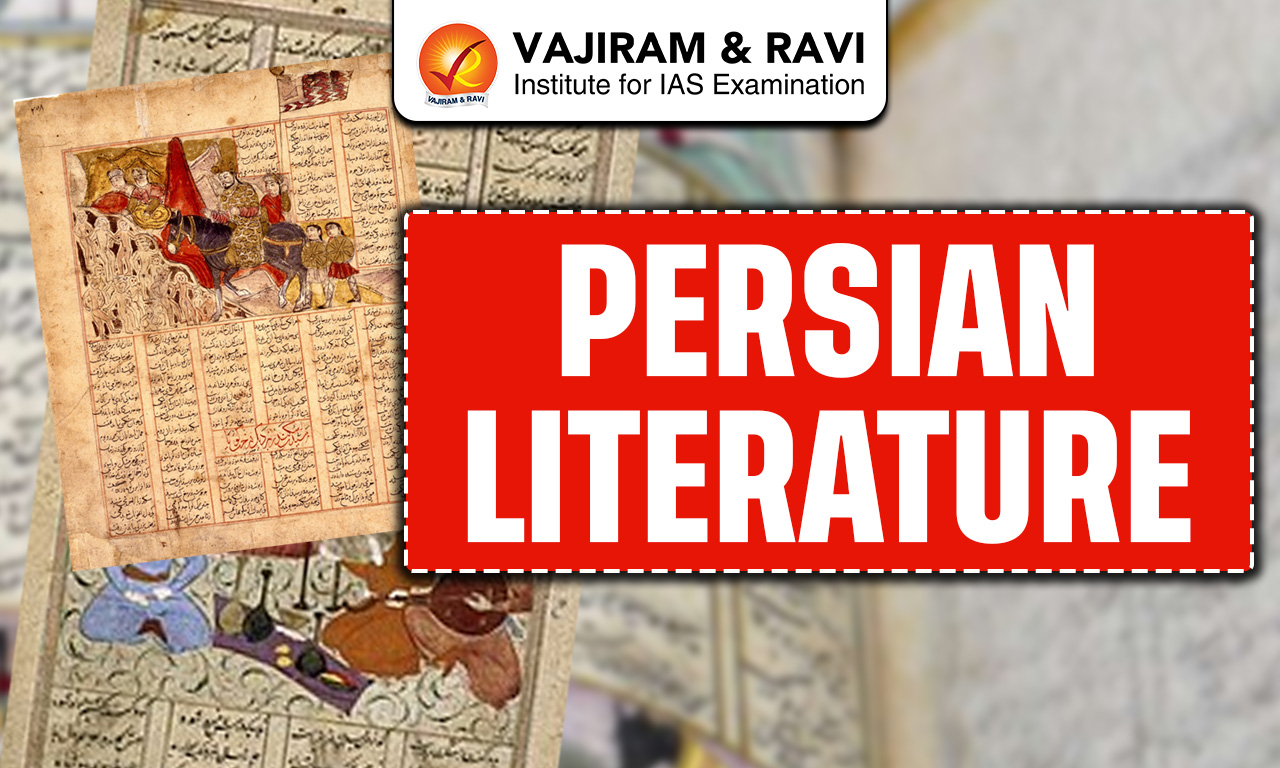
Persian literature refers to the rich body of literary works composed in the Persian language over many centuries. It includes poetry, historical writings, philosophical discussions, and mystical or Sufi literature. This tradition originated in ancient Iran and Central Asia and later spread widely into the Indian subcontinent.

Persian Literature Origin

The origin of the Persian language is traditionally associated with the Achaemenid Empire under King Darius, who ruled between 521 BCE and 485 BCE. During this early period, Persian was used mainly for royal inscriptions and administrative purposes. However, this early form of Persian was not yet developed as a refined literary language.

A major transformation in Persian literature occurred during the Sasanian Empire and later under the Samanid dynasty in Central Asia. These rulers provided strong patronage to poets, scholars, and writers. As a result, Persian gradually developed into a sophisticated literary language capable of expressing complex ideas in poetry and prose.

Major Forms of Persian Literature 

Persian literature developed in several important forms, each serving a different purpose in society.

Poetry 

Poetry was the most developed and widely respected form of Persian literature. It was used to express emotions, love, philosophy, spirituality, and praise of rulers. Persian poetry developed in several styles. 

  • The ghazal form was used for expressing love and emotional longing. 
  • The masnavi form was used for long narrative poems and moral stories. 
  • The rubaiyat form consisted of short four-line poems that expressed deep philosophical ideas about life and existence. 

Poetry was not only a literary art but also an important part of court culture and Sufi spiritual practice.

Historical Writing or Chronicles

Historical writing in Persian, known as tawarikh, played a very important role in documenting the events of medieval India and the Islamic world. These writings recorded the achievements of rulers, details of battles, administrative policies, and social conditions. Most historical works were written under royal patronage, and therefore they often reflected the political ideology of ruling elites. 

Sufi and Mystical Literature

Sufi literature focused on spiritual development, devotion to God, and the idea of love and unity with the divine. This form of literature used simple language and symbolic expressions to communicate deep spiritual meanings. 

  • A special category of Sufi literature known as malfuzat recorded the conversations, teachings, and sayings of Sufi saints. These texts played a major role in spreading ideas of tolerance, compassion, and universal brotherhood.

Translation Literature

Another important form of Persian literature was translation literature, which involved translating texts from Sanskrit and other Indian languages into Persian. This process became especially important during the Mughal period. These translations helped in creating intellectual exchange between Indian and Persian traditions and promoted cultural integration.

Advent of Persian Literature in India

Persian literature came to India through early Central Asian contacts and invasions, especially from the 11th century onwards. Over time, it became the language of the royal courts, administration, and historical writing in medieval India. Under the Delhi Sultanate and later the Mughal Empire, it developed into a rich literary tradition supported by kings, scholars, poets, and Sufi saints. Persian literature in India also mixed with local languages and ideas, creating a unique Indo-Persian culture that played an important role in shaping India’s medieval history.

Persian Literature during the Sultanate Period

The real foundation of Persian literature in India was laid during the Delhi Sultanate period. 

Slave Dynasty and Early Scholars: 

  • The Slave Dynasty rulers such as Qutb-ud-din Aibak and Iltutmish provided patronage to Persian scholars and made Persian the official language of administration.
  • As a result, Persian became the language of courts, revenue records, and historical writing. 
  • Scholars from regions such as Bukhara, Samarqand, and Khorasan migrated to India and contributed to the growth of literary culture. They also established madrasas and centres of learning.

Khalji and Tughlaq Period Literature: 

Under Alauddin Khalji, Persian literature received strong royal support. Court poets and scholars produced works that combined poetry with Sufi and historical themes.

  • Khwaja Hasan Dehlawi, also known as the “Sadi of Hindustan,” wrote lyrical poetry and Sufi-oriented compositions. His work Fawaid-ul-Fuad reflects spiritual discussions and moral teachings associated with Sufi traditions.
  • During the Tughlaq period, Ziauddin Barani emerged as one of the most important historians. His work Tarikh-i-Firozshahi provides detailed accounts of political developments, administrative policies, and moral observations about rulers. However, his writings often reflect a biased aristocratic viewpoint.
  • Another important historian was Isami, who wrote Futuh-us-Salatin. This work covers the history of Muslim rule in India from early invasions to the Tughlaq period and provides a regional perspective from the Deccan.

Firoz Shah Tughlaq and Later Sultanate Developments: 

Firoz Shah Tughlaq was a major patron of literature and encouraged historical writing, translation activities, and lexicographical works. Important contributions include:

  • Tarikh-i-Firozshahi by Shams-i-Siraj Afif, which provides a detailed account of Firoz Shah’s reign and administrative policies.
  • Tarikh-i-Mubarak Shahi by Yahya bin Ahmad Sirhindi, which gives historical details of the Sayyid dynasty.
  • Farhang-i-Ibrahimi, a Persian dictionary compiled by Ibrahim Qivam Faruqi, which reflects the development of Persian lexicography in India.

In the Deccan region, Persian literature developed under the Bahmani Sultanate. Khwaja Mahmud Gawan played an important role in promoting education and literary culture. He encouraged writing on administration and literary composition.

Persian Literature under the Mughal Empire

The Mughal period represents the peak of Indo-Persian literary development.

Babur and Humayun Period: 

  • Babur, the founder of the Mughal Empire, wrote his autobiography Tuzuk-i-Baburi in Turkish, which was later translated into Persian. This work provides valuable insights into his life and military campaigns.
  • Humayun and his court also contributed to literary culture. His sister Gulbadan Begum wrote Humayun Nama, which is an important historical text written from a unique female perspective.
  • Other works such as Jawahir-ul-Ulum-i-Humayuni and Badai-ul-Insha reflect scholarly and administrative interests during this period.

Akbar’s Reign: Golden Age of Persian Literature: 

Akbar’s reign is considered the most significant phase in Indo-Persian literary history. He encouraged scholars, poets, and intellectuals from Persia, Central Asia, and India.Two major works define this period:

  • Akbar Nama by Abul Fazl, which provides a detailed political and administrative history of Akbar’s reign.
  • Ain-i-Akbari by Abul Fazl, which is an encyclopaedic work describing administration, revenue system, society, economy, and culture.

Poets like Urfi Shirazi, Faizi, Ghazali Mashhadi, and others contributed to the richness of Persian poetry during this period.

Jahangir and Shah Jahan Period: 

During Jahangir’s reign, Persian literary tradition continued. Jahangir himself wrote Tuzuk-i-Jahangiri, which provides autobiographical details and insights into Mughal governance.Important historical works of this period include:

  • Padshahnama by Abdul Hamid Lahori, which describes Shah Jahan’s reign in detail.
  • Shah Jahan Nama by Muhammad Salih Kanbo, which also provides a historical account of the period.

Aurangzeb and Later Mughal Period: 

During Aurangzeb’s reign, Persian historical writing continued, although royal patronage for literature declined compared to earlier Mughal rulers. 

  • Important works include Khulasat-ut-Tawarikh by Sujan Rai and Alamgir Nama by Mirza Muhammad Kazim, which document the political events of Aurangzeb’s reign.
  • Dara Shikoh made a unique contribution to Indo-Persian intellectual history. He worked towards interfaith understanding between Hinduism and Islam. His major works include Majma-ul-Bahrain, which compares philosophical ideas of both traditions, and Sirr-i-Akbar, which is a Persian translation of the Upanishads.

Persian Literature FAQs

Q1: Persian became the official language of administration in medieval India under which dynasty?

Ans: Persian became the official language of administration under the Delhi Sultanate, particularly during the Slave Dynasty, when rulers like Iltutmish promoted its use in courts and revenue records.

Q2: Who wrote Akbarnama, and why is it important?

Ans: Akbarnama was written by Abul Fazl and is important as it provides a detailed official history of Akbar’s reign, including political events and imperial policies.

Q3: Which Persian work by Abul Fazl is an encyclopaedic account of Mughal administration and society?

Ans: The Ain-i-Akbari is Abul Fazl’s encyclopaedic work that systematically describes the Mughal administrative system, revenue structure, society, and culture.

Q4: Which Mughal prince translated the Upanishads into Persian?

Ans: Dara Shikoh translated the Upanishads into Persian under the title Sirr-i-Akbar and promoted comparative study of Hindu and Islamic philosophies.

Q5: Who is considered the greatest Indo-Persian poet who introduced Indian elements into Persian poetry?

Ans: Amir Khusrau is regarded as the greatest Indo-Persian poet known for blending Indian themes, languages, and culture into Persian poetry.

India’s Service Sector, Activities, Importance, Major Drivers

India's Service Sector

The service sector, also known as the tertiary sector, is one of the three major sectors of the economy, the other two being the primary sector (agriculture, mining, fishing, etc.) and the secondary sector (manufacturing and construction). Unlike these sectors, the service sector does not produce physical goods. Instead, it provides services that satisfy the needs of people and businesses. Over the years, this sector has become the most important contributor to India’s economic growth and development.

Meaning and Nature of the Service Sector

  • The service sector includes all economic activities that provide intangible outputs, meaning they cannot be seen or touched like physical goods. These services are consumed at the time they are produced. For example, a doctor’s treatment, a teacher’s lesson, or a bank’s financial service are all intangible in nature.
  • This sector supports both individuals and industries by improving efficiency, providing convenience, and enhancing the quality of life. It acts as a link between production and consumption and plays a crucial role in the smooth functioning of the economy.
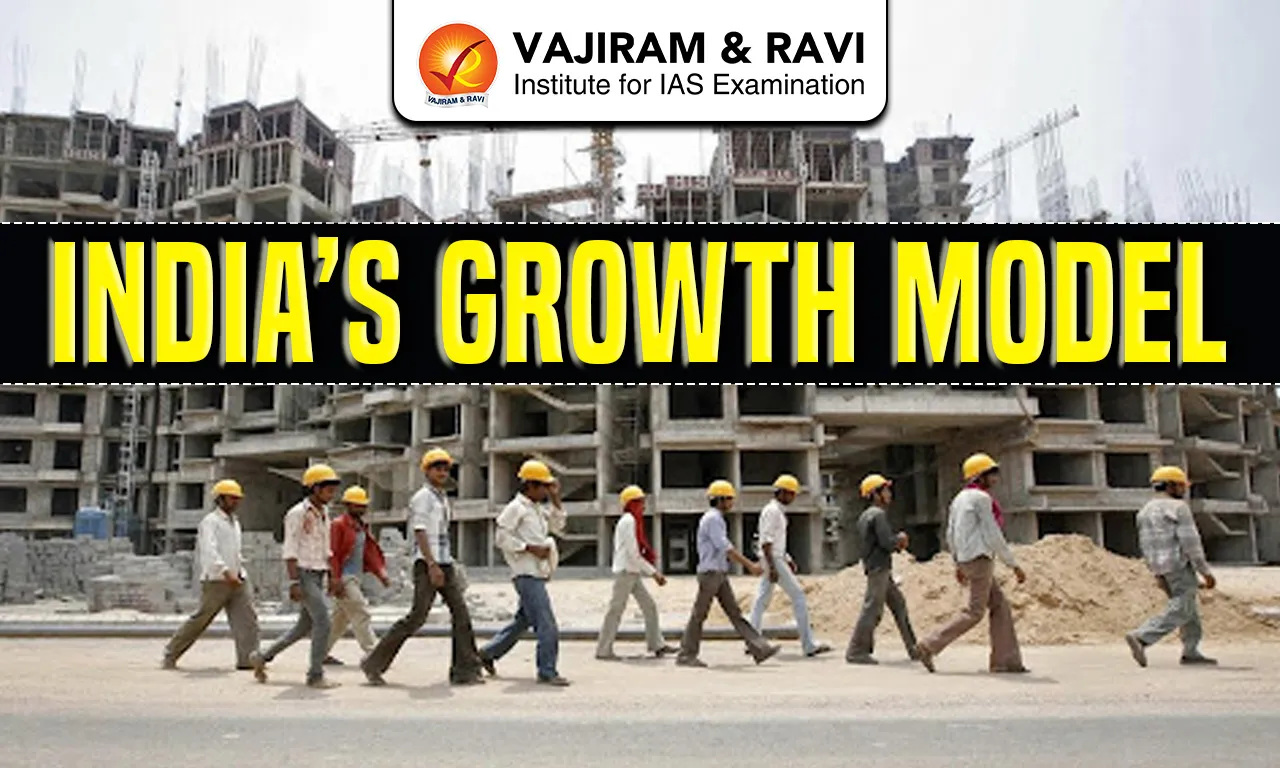
  • The service sector is the largest and most important part of India’s economy. It contributes more than half of the country’s total output and plays a key role in growth, employment, and global trade. In recent years, the sector has shown strong performance and continues to expand steadily.

Activities in India’s Service Sector

The service sector in India is very broad and includes a variety of activities such as:

  • Information Technology (IT) and Software Services: Software development, IT consulting, and digital solutions
  • Business Process Outsourcing (BPO): Customer support, data processing, and back-office services
  • Financial Services: Banking, insurance, stock markets, and investment services
  • Healthcare Services: Hospitals, clinics, doctors, and medical tourism
  • Education and Training: Schools, colleges, coaching centres, and skill development institutes
  • Telecommunication Services: Mobile networks, internet services, and digital communication
  • Tourism and Hospitality: Hotels, travel agencies, airlines, and tourist services
  • Media and Entertainment: Films, television, music, and online content
  • Professional Services: Legal advice, accounting, and business consultancy
  • Retail and E-commerce: Shops, supermarkets, and online shopping platforms

Role and Importance of the Service Sector in India

The service sector plays a very important role in the Indian economy. Its contributions are as follows:

  • Major Contributor to GDP: The service sector contributes more than 50% to India’s Gross Domestic Product (GDP), making it the largest sector in the economy.
  • Employment Generation: It provides employment to a large number of people across different skill levels. From highly skilled professionals like engineers and doctors to workers in retail and hospitality, the sector creates diverse job opportunities.
  • Source of Foreign Exchange: Services like IT, BPO, and medical tourism bring foreign income into the country. India earns significant foreign exchange by exporting these services to other countries.
  • Growth of Knowledge Economy: India has become known for its skilled workforce, especially in areas like IT, engineering, and finance. The service sector promotes education, innovation, and skill development.
  • Global Outsourcing Hub: India is a preferred destination for outsourcing services due to its skilled labour and cost advantages. Many global companies depend on India for IT and business services.
  • Expansion of the Digital:  EconomyWith the growth of the internet and smartphones, sectors like e-commerce, online education, and digital payments have expanded rapidly.
  • Promotion of Tourism and Culture: Tourism and hospitality services help in promoting India’s culture and traditions worldwide, attracting international visitors.

Service Sector Contribution to GDP in India

  • The service sector contributes around 53-56% of India’s GDP.
  • Its share in Gross Value Added (GVA) has increased from about 50.6% in FY14 to over 55% in FY25.
  • In FY26 (first half), it reached around 56.4%, showing its growing importance.
  • It has been the most stable contributor to economic growth over the last decade.

Growth and Recovery

  • The sector has shown strong growth after the COVID-19 pandemic.
  • It grew at an average rate of 8.3% between FY23 and FY25.
  • Growth is estimated to rise to 9.1% in FY26, compared to 7.2% in FY25.
  • Even during difficult times, some services like IT remained stable, while others like tourism and retail have recovered quickly.

Major Drivers of Growth

The growth of the service sector is supported by several important areas:

  • Information Technology (IT) and IT-enabled services (ITeS)
  • Business and professional services
  • Financial and banking services
  • Communication and telecom services
  • Global Capability Centers (GCCs)

These sectors have helped India become a global leader in service-based industries.

Service Sector Contribution to Employment in India

  • The service sector provides jobs to around 30% of the workforce.
  • It contributes to more than 50% of formal job creation, especially in urban areas.
  • Global Capability Centers alone employ about 1.9 million professionals.
  • It offers jobs across all skill levels, from highly skilled professionals to service workers.

India in Global Services Trade

  • India is the 7th largest exporter of services in the world.
  • Its share in global services exports has increased to about 4.3% in 2024.
  • Services exports grew by 12.8% during April-November FY25.
  • IT and business services together make up nearly 70% of total service exports.

Key Trends in the Service Sector

  • Expansion of Global Capability Centers (GCCs)
    • India has more than 1,700 GCCs, which act as global business hubs.
    • These centres provide services like research, analytics, and management support.
  • Strong Digital Growth
    • The Services PMI (Purchasing Managers’ Index) has remained above 50 since August 2021, indicating continuous growth.
    • Digital services like e-commerce, fintech, and online platforms are expanding rapidly.
  • Increasing Data Usage and Connectivity
    • Average monthly mobile data usage increased to 19.3 GB per user in FY24.
    • India is one of the largest telecom markets with over 1.18 billion subscribers.
  • Growth of Unorganised Sector
    • About 72.6% of unincorporated enterprises are in the service sector.
    • These small businesses contribute to employment but often lack formal benefits.

Role of Different Service Sectors

  • Transport and Logistics
    • Railways, roads, airways, and waterways play a key role in service delivery.
    • Road transport contributes about 78% of transport GVA.
    • Air travel and cargo movement are growing rapidly.
  • Ports and Waterways
    • Major ports handled large cargo volumes, showing increasing trade activity.
    • Inland waterways are being developed for better transport and tourism.
  • Tourism and Hospitality Sector
    • Tourism contributes about 5% to GDP.
    • It generated around 7.6 crore jobs.
    • International tourist arrivals have returned to pre-pandemic levels.
    • The sector plays a major role in cultural exchange and economic growth.
  • Real Estate and Urban Development
    • Real estate has shown strong growth due to better infrastructure and connectivity.
    • Demand for housing and office spaces is increasing across cities.
    • Housing demand is expected to reach 93 million units by 2036.
  • Information Technology (IT) Sector
    • India’s IT industry is a global leader.
    • It generated around USD 254 billion revenue in FY24.
    • Exports from the tech sector reached nearly USD 200 billion.
    • The domestic IT market is also expanding steadily.
  • Telecommunication Sector
    • India is the second-largest telecom market in the world.
    • It has over 941 million broadband users.
    • The introduction of 5G technology is boosting digital growth.
    • Data services in India are among the most affordable globally.
  • Investment and Financial Support
    • Bank credit to the service sector reached around ₹48.5 lakh crore.
    • Credit growth has been strong, especially in software and professional services.
    • Foreign Direct Investment (FDI) in services remains significant, especially in insurance and financial sectors.

Challenges Faced by the Service Sector in India

  • Regulatory Complexity: Frequent changes in rules and complicated procedures make it difficult for businesses to operate smoothly.
  • Infrastructure Gaps: Poor transport, logistics, and digital connectivity in some areas affect the efficient delivery of services.
  • Skill Mismatch: There is often a gap between the skills workers have and the skills required by industries, leading to unemployment or underemployment.
  • Uneven Growth: Growth is concentrated in urban areas, while rural regions do not benefit equally from service sector expansion.
  • Slow Technology Adoption: While sectors like IT are advanced, many other services are slow in adopting modern technology.
  • Data Privacy and Cybersecurity Issues: Increasing digital services have raised concerns about data protection and cyber threats.
  • Dependence on Global Demand: Sectors like IT and outsourcing depend heavily on foreign markets, making them vulnerable to global economic changes.
  • Informal Sector Dominance: A large number of service activities operate in the unorganised sector, lacking job security and benefits.
  • Limited Access to Finance: Small service providers often face difficulty in getting loans or financial support.
  • Competition from Global Players: Indian service providers face strong competition from other countries in areas like outsourcing and technology services.

Government Schemes to Promote Service Sector in India

  • Pradhan Mantri Employment Generation Programme (PMEGP): This scheme promotes self-employment by providing loans and subsidies to start small businesses, including service-based enterprises like shops, salons, and repair services. It supports youth and entrepreneurs in both rural and urban areas.
  • PM SVANidhi Scheme: It provides small loans to street vendors and small service providers to restart or expand their businesses. It helps in improving income and promoting urban service activities.
  • Startup India Initiative: This scheme supports service-based startups (like IT, fintech, and consulting) by offering funding, tax benefits, and easier regulations. It encourages innovation and growth in modern service sectors.
  • Udyam Registration & MSME Support Schemes: These schemes help service enterprises register easily and get benefits like loans, subsidies, marketing support, and participation in exhibitions. They also promote formalisation of small service businesses.
  • National Career Service (NCS): A digital platform that connects job seekers with employers, provides career guidance, and supports skill development. It helps improve employment in the service sector.
  • Atmanirbhar Bharat Rojgar Yojana (ABRY): This scheme encourages companies to create new jobs by providing incentives, thereby boosting employment in various service industries.
  • Digital India Programme: Promotes digital infrastructure and online services, which supports sectors like IT, e-commerce, banking, and communication services.
  • Skill India Mission: Focuses on training and skill development to make the workforce ready for service sector jobs such as hospitality, IT, healthcare, and retail.

India's Service Sector FAQs

Q1: What is the service sector?

Ans: The service sector, also called the tertiary sector, provides intangible services like education, healthcare, banking, and IT instead of physical goods.

Q2: Why is the service sector important for India’s economy?

Ans: It is the largest sector, contributing more than 50% to GDP and GVA, and plays a key role in economic growth and development.

Q3: What are the main activities included in the service sector?

Ans: It includes IT services, banking, tourism, healthcare, education, telecom, retail, and professional services like legal and consultancy.

Q4: How does the service sector contribute to employment?

Ans: It provides jobs to about 30% of the workforce and creates more than half of formal jobs, especially in urban areas.

Q5: What is India’s position in global services trade?

Ans: India is the 7th largest exporter of services, with around 4.3% share in global services exports.

Indian Puppetry, Origin, History, Types, Significance, Schemes

Indian Puppetry

Indian Puppetry is one of the oldest and most creative art forms in India. It combines storytelling with acting, music, dance, and visual art. Puppets are used to tell stories from mythology, folklore, and everyday life. This art form is not only entertaining but also helps in spreading culture, traditions, and social messages.

Indian Puppetry Origin

  • Ancient Origin of Puppetry: The history of puppetry in India dates back to very ancient times. It is considered one of the earliest forms of storytelling and entertainment in Indian culture.
  • Evidence from Indus Valley Civilization: Archaeological discoveries from the Indus Valley Civilization, especially from sites like Harappa and Mohenjo-Daro, have revealed puppets with movable parts. This proves that puppetry was already practiced thousands of years ago.
  • Early References in History: There are references to puppet theatre dating back to around 500 BC. These early mentions show that puppetry was not only a form of entertainment but also a well-known cultural activity in ancient India.
  • Mention in Ancient Texts: Important Indian texts like the Mahabharata and Silappadikaram include references to puppetry. This indicates that puppetry was widely recognized and valued in literature and society.
  • Philosophical Significance: Puppetry in India is not just an art form but also has deep philosophical meaning. In the Bhagavad Gita, God is compared to a puppeteer who controls human life and the universe through three qualities - Sattva (purity), Rajas (activity), and Tamas (inertia).
  • Role of Sutradhar: In traditional Indian theatre, the narrator or storyteller is called a Sutradhar, which means “the one who holds the strings.” This term reflects the idea that the storyteller guides and controls the flow of the story, similar to how a puppeteer controls puppets.

Indian Puppetry Development

  • Regional Development of Puppetry: Over time, puppetry spread across different regions of India, and each area developed its own unique style, techniques, and forms of puppets based on local culture and traditions.
  • Use of Mythology and Folklore: The stories performed in puppetry are mostly taken from mythology, folklore, epics, and local legends. These stories help in preserving cultural traditions and passing them from one generation to another.
  • Combination of Various Art Forms: Puppetry is a combined art form that includes elements of painting, sculpture, music, dance, and drama. This makes it a rich and complete form of artistic expression.
  • Medium of Education and Entertainment: Puppetry has been widely used as a tool to educate people and spread social and moral messages, while also entertaining audiences in an engaging and simple way.
  • Decline in Modern Times: In recent years, puppetry has been gradually declining due to a lack of audience interest, competition from modern entertainment, and financial difficulties faced by puppeteers.

Types of Indian Puppetry

Indian puppetry is broadly divided into four main types, each with its own unique style, technique, and regional importance.

  1. String Puppets (Marionettes): String puppets are controlled by strings tied to different parts of the puppet’s body such as the head, hands, and legs.
  • Features
    • Usually made of wood and painted with bright colours
    • Have movable joints for flexible movement
    • Controlled from above using strings
    • Known for lifelike and expressive actions
  • Major Regions: Rajasthan, Odisha, Karnataka, Tamil Nadu
  • Important Examples
    • Kathputli (Rajasthan): The most popular form, with colourful costumes and stories of kings, heroes, and folklore.
    • Kundhei (Odisha): Light wooden puppets influenced by dance and music traditions.
    • Gombeyatta (Karnataka): Inspired by Yakshagana theatre and often requires skilled control.
    • Bommalattam (Tamil Nadu): A mix of rod and string puppetry, with large and heavy puppets.
  1. Shadow Puppets: Shadow puppets are flat figures placed behind a screen, and light is used to create moving shadows that tell a story.
  • Features
    • Made from processed leather
    • Flat and often decorated with colours
    • Shadows are shown on a white screen
    • Mostly used for mythological and epic stories
  • Major Regions: Odisha, Kerala, Andhra Pradesh, Karnataka, Tamil Nadu
  • Important Examples
    • Ravanachhaya (Odisha): Simple puppets without joints, mainly based on Ramayana stories.
    • Togalu Gombeyatta (Karnataka): Puppets vary in size based on the importance of characters.
    • Tholu Bommalata (Andhra Pradesh): Large, colourful puppets used to narrate epics like Ramayana and Mahabharata.
  1. Rod Puppets: Rod puppets are bigger puppets that are controlled using rods attached to their body.
  • Features
    • Larger in size compared to glove puppets
    • Controlled from below using rods
    • Have fewer movements but strong visual impact
  • Major Regions: West Bengal, Odisha, Bihar
  • Important Examples
    • Putul Nach (West Bengal): Puppets are about 3-4 feet tall and perform folk stories.
    • Yampuri (Bihar): Simple wooden puppets, often without joints and easy to handle.
  1. Glove Puppets: Glove puppets are worn on the hand like a glove and operated using fingers.
  • Features
    • Small and light in size
    • Made of cloth, wood, or papier-mâché
    • Easy to control and perform
    • Appear like small dolls
  • Major Regions: Kerala, Uttar Pradesh, Odisha, West Bengal
  • Important Example
    • Pavakoothu (Kerala): Influenced by Kathakali, with colourful costumes and expressive designs.

Indian Puppetry Cultural Significance

  • Preservation of Traditions: Puppetry helps in preserving ancient stories, folklore, and cultural traditions, passing them from one generation to another.
  • Connection with Religion and Mythology: Many puppet shows are based on epics like the Ramayana and Mahabharata, keeping religious beliefs and values alive.
  • Medium of Social Awareness: Puppetry has been used to spread messages about social issues, morality, and education in a simple and engaging way.
  • Reflection of Regional Diversity: Different regions of India have their own styles of puppetry, showing the country’s rich cultural diversity.
  • Integration of Arts: It combines various art forms such as music, dance, drama, painting, and sculpture, making it a complete cultural expression.
  • Community Bonding and Entertainment: Puppet shows were traditionally performed during festivals and gatherings, bringing people together and providing entertainment.
  • Symbolic and Philosophical Meaning: Puppetry represents deeper ideas about life and control, as seen in texts like the Bhagavad Gita, where life is compared to a puppet controlled by higher forces.

Challenges Faced by Indian Puppetry

  • Declining Audience Interest: Modern entertainment like TV, cinema, and mobile content has reduced people’s interest in traditional puppet shows.
  • Lack of Financial Support: Puppeteers often earn very little, making it difficult to continue this art form as a full-time profession.
  • Loss of Traditional Skills: Younger generations are less interested in learning puppetry, leading to a gradual loss of skills and knowledge.
  • Limited Government Support: Although some efforts exist, overall support in terms of funding, promotion, and training is still inadequate.
  • Competition from Modern Media: Digital platforms and advanced visual effects attract more attention compared to simple traditional performances.
  • Irregular Performance Opportunities: Puppet shows are mostly limited to festivals or special events, reducing regular income for artists.
  • Lack of Awareness and Promotion: Many people, especially in urban areas, are not aware of the richness and importance of puppetry traditions.

Government Schemes to Promote Indian Puppetry

  • Sangeet Natak Akademi (SNA) Support Programs
    • It is the national academy for music, dance, and drama under the Ministry of Culture.
    • Provides grants, awards, and financial assistance to artists and institutions involved in puppetry and other performing arts.
  • Kala Sanskriti Vikas Yojana (KSVY)
    • A central government scheme that offers financial support to artists and cultural organizations.
    • Covers traditional art forms like puppetry, helping artists sustain their livelihood.
  • Cultural Function and Production Grant (CFPG)
    • Supports organization of cultural programs, festivals, and performances.
    • Helps puppeteers showcase their art and increase public awareness.
  • Scheme for Safeguarding Intangible Cultural Heritage
    • Focuses on preserving traditional art forms like puppetry as part of India’s cultural heritage.
    • Encourages documentation, training, and promotion of such arts.
  • Global Engagement Scheme (Festival of India)
    • Provides opportunities for Indian artists, including puppeteers, to perform internationally.
    • Promotes Indian puppetry on a global platform.
  • Financial Assistance for Cultural Activities (Building Grants)
    • Supports creation of theatres, training centres, and performance spaces.
    • Helps in developing proper infrastructure for puppetry and other arts.
  • Ministry of Culture Initiatives
    • The Ministry of Culture runs various programs to preserve and promote traditional arts.
    • It focuses on protecting intangible heritage like puppetry and supporting artists across India.

Indian Puppetry FAQs

Q1: What is Indian puppetry?

Ans: Indian puppetry is an ancient art form that uses puppets to tell stories through music, dance, and drama, often based on mythology, folklore, and daily life.

Q2: What is the origin of Indian puppetry?

Ans: It dates back to ancient times, with evidence from the Indus Valley Civilization sites like Harappa and Mohenjo-Daro, and references in texts like the Mahabharata.

Q3: What are the main types of Indian puppetry?

Ans: The four main types are String puppets (marionettes), Shadow puppets, Rod puppets, and Glove puppets.

Q4: What kind of stories are shown in puppetry?

Ans: Most puppet shows are based on epics like the Ramayana and the Mahabharata, along with folklore and local traditions.

Q5: Why is Indian puppetry culturally important?

Ans: It helps preserve traditions, spread social messages, reflect regional diversity, and combine different art forms like music, dance, and drama.

History of Indian Railways, Timeline, Key Events & Development

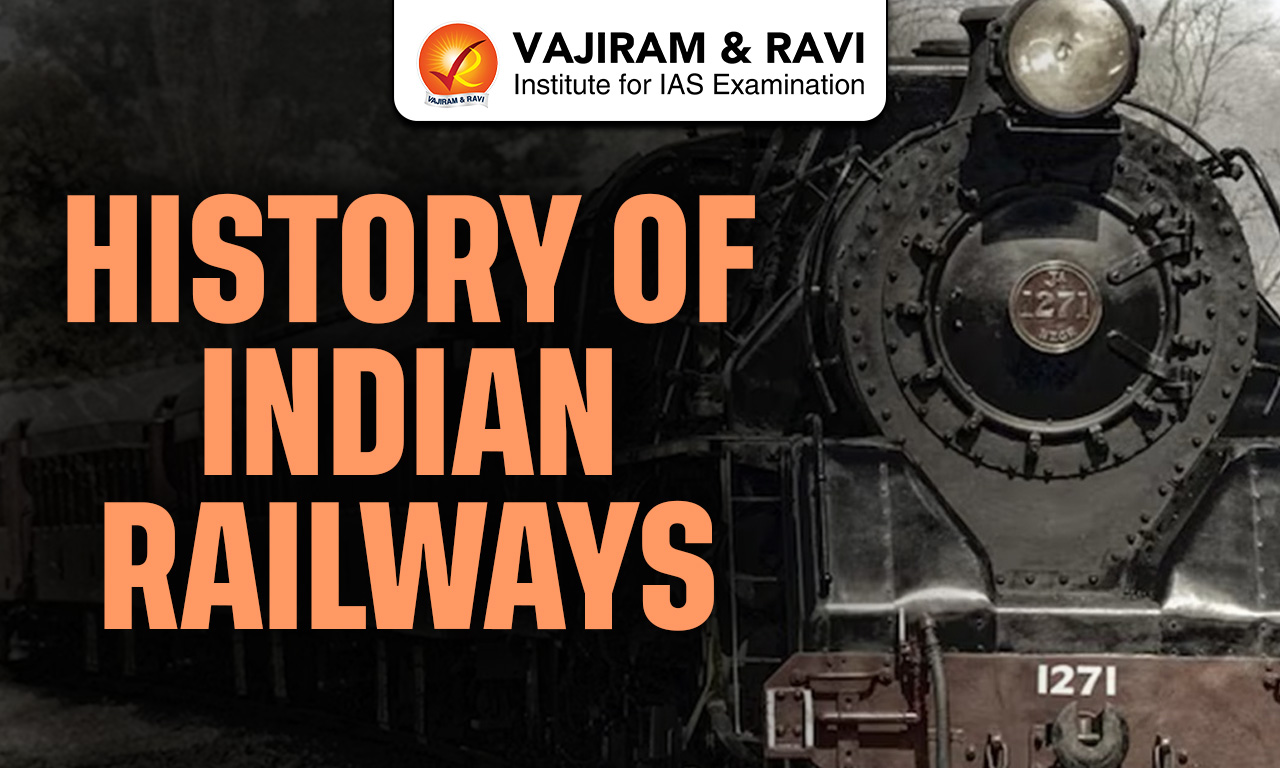
history of indian railways

Indian Railways is one of the largest railway networks in the world and plays a crucial role in India’s economy and daily life. It is the fourth-largest railway system globally by route length and is owned and operated by the Government of India. With a history of more than 150 years, Indian Railways has evolved from a small colonial transport system into a modern and advanced network. In this article, we have discussed in brief about the History of Indian Railways from the British Era to the present-day modern era.

With a history of over 150+ years, Indian Railways carries more than 6 billion passengers annually and transports around 750 million tonnes of freight. It is also one of the largest employers in the world, with over 1.6 million employees.

History of Indian Railways

The journey of Indian Railways began during the British period and gradually expanded across the country. Below is a simplified timeline:

Early Developments (1832-1853)

  • The idea of railways in India was first proposed in 1832 in Madras (Chennai).
  • Red Hill Railway (1836-37), built by Arthur Cotton, was used for transporting granite.
  • In 1843, George Clark proposed a railway connecting Bombay with nearby regions.
  • On 16 April 1853, India’s first passenger train ran from Bombay to Thane, covering 34 km.

Rapid Expansion (1854-1900)

  • 1854: First eastern railway line from Howrah to Hooghly.
  • 1856: First southern railway line opened.
  • 1859: Northern line from Allahabad to Kanpur.
  • 1862: First railway workshop at Jamalpur.
  • 1864: Delhi Junction became a major railway hub.
  • By 1880, railway network expanded to 9000 miles.
  • 1895: First steam locomotive manufactured in Ajmer.

Mountain & Heritage Railways

  • Darjeeling Himalayan Railway (1881) - UNESCO World Heritage Site.
  • Nilgiri Mountain Railway (1899) - Engineering marvel.
  • Kalka Shimla Railway (1903) - Scenic hill route.

Colonial Impact & Independence (1900-1951)

  • Railways were used heavily during World Wars, leading to damage and neglect.
  • After Independence in 1947, railways were divided between India and Pakistan.
  • In 1951, Indian Railways was nationalized and divided into zones.

Railway Infrastructure in India

Indian Railways has one of the most extensive and complex infrastructure networks in the world, connecting remote villages to major metropolitan cities. Its infrastructure includes tracks, stations, bridges, signaling systems, and modern digital facilities that ensure smooth and efficient operations.

  • Extensive Rail Network: Indian Railways operates over 120,000 km of track, making it the fourth-largest railway network globally. It connects almost every region of India, including rural, urban, and industrial areas.
  • Types of Railway Gauges: The network primarily uses Broad Gauge (1676 mm), which is the most widely used. Older Meter Gauge and Narrow Gauge lines are being converted into Broad Gauge under Project Unigauge.
  • Railway Zones & Divisions: Indian Railways is divided into multiple zones (such as Northern, Southern, Western, etc.) for better administration. Each zone is further divided into divisions for efficient management.
  • Major Railway Stations: India has thousands of railway stations, including major junctions like Delhi Junction, Mumbai, Chennai, and Kolkata, which handle heavy passenger and freight traffic.
  • Bridges and Tunnels: Indian Railways has built several engineering marvels like the Pamban Bridge (India’s first sea bridge) and the Chenab Rail Bridge (world’s highest railway bridge). Numerous tunnels have also been constructed in hilly regions.
  • Railway Tracks & Electrification: A large portion of the railway network is electrified to improve efficiency and reduce pollution. Continuous efforts are being made to achieve 100% electrification.
  • Signaling and Safety Systems: Modern signaling systems like automatic signals, centralized traffic control, and anti-collision devices ensure safe train operations and reduce accidents.
  • Workshops & Production Units: Indian Railways has major workshops and production units in places like Jamalpur and Ajmer, where locomotives, coaches, and wagons are manufactured and maintained.
  • Rolling Stock (Trains & Engines): Includes diesel and electric locomotives, passenger coaches, freight wagons, and modern trains like semi-high-speed trains.
  • Digital Infrastructure: Services like online ticket booking through IRCTC Rail Connect, real-time train tracking, and e-catering have improved passenger convenience.
  • Freight Infrastructure: Dedicated Freight Corridors are being developed to improve the speed and efficiency of goods transport across the country.

Important Bridges of Indian Railways

Indian Railways has constructed several iconic bridges across rivers, seas, and valleys, showcasing remarkable engineering skills. These bridges play a crucial role in connectivity, trade, and strategic movement across different regions of India.

  • Chenab Rail Bridge
    • Located in Jammu & Kashmir over the Chenab River
    • World’s highest railway bridge (about 359 meters above riverbed)
    • Part of the Udhampur-Srinagar-Baramulla Rail Link (USBRL) project
    • Symbol of modern engineering and strategic importance
  • Pamban Bridge
    • Connects mainland India to Rameswaram Island (Tamil Nadu)
    • India’s first sea bridge (opened in 1914)
    • Features a double-leaf bascule section that opens for ships
  • Bandra Worli Sea Link (railway relevance indirect)
    • Though primarily a road bridge, it reflects India’s advanced bridge engineering influencing rail projects
  • Vembanad Rail Bridge
    • India’s longest railway bridge (about 4.62 km)
    • Built across Vembanad Lake in Kerala
    • Connects Edappally to Vallarpadam
  • Godavari Rail Bridge
    • Built over the Godavari River in Andhra Pradesh
    • One of the longest and oldest railway bridges in India
    • Important for South India connectivity
  • Mahatma Gandhi Setu (primarily road, but regionally significant)
    • Highlights large-scale bridge construction over Ganga
  • Bogibeel Bridge
    • India’s longest rail-cum-road bridge
    • Built over the Brahmaputra River in Assam
    • Strategically important for Northeast India and defense
  • Saraighat Bridge
    • First rail-cum-road bridge over the Brahmaputra River
    • Connects North and South Assam
  • Howrah Bridge (mainly road but historically linked to rail hub)
    • Located near Howrah Railway Station, one of the busiest rail terminals
  • Narmada Bridge
    • Important railway bridge over the Narmada River
    • Supports freight and passenger movement in western India

Future of Indian Railways

The future of Indian Railways is focused on speed, safety, sustainability, and smart technology. With rapid modernization and large-scale investments, Indian Railways aims to become a world-class transport system that is efficient, eco-friendly, and passenger-friendly.

  • High-Speed Rail (Bullet Trains): India is working on its first bullet train project, the Mumbai Ahmedabad High Speed Rail. This will significantly reduce travel time and introduce world-class rail technology.
  • 100% Electrification: Indian Railways is moving towards complete electrification of its network to reduce fuel costs and pollution. This will also improve speed and efficiency.
  • Green Energy & Sustainability: Railways aim to meet a large portion of their energy needs through solar and wind power. The goal is to reduce carbon emissions and become an environmentally sustainable transport system.
  • Dedicated Freight Corridors (DFC): Special freight corridors are being developed to allow faster and smoother transportation of goods, reducing congestion on passenger routes.
  • Modern Trains (Vande Bharat): Introduction of semi-high-speed trains like Vande Bharat Express with better speed, comfort, and modern facilities.
  • Station Modernization: Major railway stations are being redeveloped into world-class hubs with better waiting areas, cleanliness, food courts, and digital services.
  • Advanced Safety Systems: Implementation of modern safety technologies like automatic train protection systems (e.g., Kavach) to reduce accidents and improve passenger safety.
  • Digital Transformation: Services like online booking via IRCTC Rail Connect, real-time train tracking, AI-based scheduling, and paperless tickets are improving passenger experience.
  • Smart Infrastructure: Use of modern signaling systems, GPS tracking, and centralized traffic control for better management of trains and routes.
  • Expansion to Remote Areas: New railway lines are being built to connect remote and border regions, improving connectivity and boosting economic development.
  • Make in India & Indigenous Production: Focus on manufacturing trains, coaches, and railway equipment within India to reduce imports and boost local industries.

History of Indian Railways FAQs

Q1: When did Indian Railways start?

Ans: Indian Railways began in 1853 when the first passenger train ran from Bombay to Thane on 16 April 1853.

Q2: What was the first railway line in India?

Ans: The first railway line was a 34 km stretch between Bombay and Thane, marking the beginning of railway transport in India.

Q3: Who introduced railways in India?

Ans: Railways were introduced by the British colonial government. Early contributions were made by engineers like Arthur Cotton and administrators like George Clark.

Q4: When was the first railway workshop established?

Ans: The first railway workshop was set up in 1862 at Jamalpur, which became a major industrial unit.

Q5: When were railway zones introduced in India?

Ans: Railway zones were introduced in 1951 to improve administration and efficiency.

UPSC Daily Quiz 14 April 2026

UPSC Daily Quiz

[WpProQuiz 136]

UPSC Daily Quiz FAQs

Q1: What is the Daily UPSC Quiz?

Ans: The Daily UPSC Quiz is a set of practice questions based on current affairs, static subjects, and PYQs that help aspirants enhance retention and test conceptual clarity regularly.

Q2: How is the Daily Quiz useful for UPSC preparation?

Ans: Daily quizzes support learning, help in revision, improve time management, and boost accuracy for both UPSC Prelims and Mains through consistent practice.

Q3: Are the quiz questions based on the UPSC syllabus?

Ans: Yes, all questions are aligned with the UPSC Syllabus 2025, covering key areas like Polity, Economy, Environment, History, Geography, and Current Affairs.

Q4: Are solutions and explanations provided with the quiz?

Ans: Yes, each quiz includes detailed explanations and source references to enhance conceptual understanding and enable self-assessment.

Q5: Is the Daily UPSC Quiz suitable for both Prelims and Mains?

Ans: Primarily focused on Prelims (MCQ format), but it also indirectly helps in Mains by strengthening subject knowledge and factual clarity.

Project Him Sarovar, Need, Features, Objectives, Significance

Project Him Sarovar

Project Him Sarovar is a scientific water conservation initiative launched in April 2026 by Vinai Kumar Saxena in Ladakh to address chronic water scarcity through systematic snow harvesting and storage of meltwater in designed water bodies, ensuring long-term water security in the region.

Project Him Sarovar Need

The Project Him Sarovar project is necessitated by Ladakh’s fragile water availability system and increasing climate-induced stress on its resources.

  • Ladakh is a cold desert region with extremely low rainfall and high dependence on glaciers and snowmelt for water supply.
  • Climate change has caused declining snowfall, glacier retreat, and falling water tables, aggravating water scarcity.
  • Agriculture and livelihoods in Ladakh depend on limited seasonal water availability, making water management critical.

Project Him Sarovar Objectives

The project is designed to ensure sustainable water availability while addressing ecological and livelihood challenges in Ladakh.

  • The project aims to enhance water security by scientifically harvesting snow and conserving meltwater.
  • It seeks to provide reliable irrigation support to farmers facing water shortages.
  • It focuses on building climate resilience against changing snowfall and glacial patterns.
  • It intends to restore degraded land and improve ecological balance.
  • It aims to generate sustainable livelihood opportunities for local communities.

Key Features of the Project Him Sarovar

Project Him Sarovar is designed as a comprehensive and scientific intervention combining technology, community participation, and institutional support to ensure effective water conservation in Ladakh.

  • Scientific Snow Harvesting: The project involves scientific techniques to capture and store snowmelt and glacial meltwater for future use.
  • Creation of Water Bodies: A total of 50 small water bodies are being constructed across Leh and Kargil to store meltwater efficiently.
  • Design and Dimensions: Each water body is designed with dimensions of approximately 40 × 30 meters and 2 meters depth for optimal storage.
  • Mission Mode Implementation: Excavation and construction activities have been initiated simultaneously, ensuring time-bound execution.
  • Community Participation: The project is being implemented with active consultation of local communities to ensure relevance and sustainability.
  • Institutional Support: The initiative is supported by institutions such as Indian Army, Indo-Tibetan Border Police, and Border Roads Organisation for effective implementation.

The project aligns with the vision of Narendra Modi to restore 2.6 crore hectares of degraded land by 2030.

It contributes to Sustainable Development Goals such as SDG 6 (Clean Water), SDG 13 (Climate Action), and SDG 15 (Life on Land).

Project Him Sarovar Significance

The project holds multidimensional importance as it addresses water scarcity while promoting sustainable development and climate resilience in Ladakh.

  • Strengthening Water Security: The project ensures year-round water availability by storing seasonal snowmelt and reducing dependence on uncertain natural sources.
  • Boost to Agriculture: Improved irrigation facilities will enhance agricultural productivity and may extend the cropping season.
  • Climate Change Adaptation: The project acts as a local adaptation strategy to mitigate the effects of rising temperatures and glacier retreat.
  • Ecological Restoration: Increased water availability will support plantation drives and creation of green and blue assets, improving ecological balance.
  • Livelihood Generation: Better water availability will create employment opportunities in agriculture and allied sectors.

Project Him Sarovar FAQs

Q1: What is Project Him Sarovar?

Ans: Project Him Sarovar is a scientific water conservation initiative launched in 2026 by Vinai Kumar Saxena in Ladakh to address water scarcity through snow harvesting and storage of meltwater in small water bodies.

Q2: Why is Project Him Sarovar needed in Ladakh?

Ans: It is needed because Ladakh faces acute water scarcity due to low rainfall, dependence on glaciers and snowmelt, and increasing climate change impacts such as glacier retreat and declining snowfall.

Q3: How does Project Him Sarovar work?

Ans: The project works by scientifically capturing snow and glacial meltwater and storing it in constructed water bodies, which can later be used for irrigation and other purposes.

Q4: How many water bodies are planned under the Project Him Sarovar?

Ans: The project involves the construction of 50 small water bodies across different regions of Ladakh, particularly in Leh and Kargil.

Q5: What role do local communities play in the Project Him Sarovar?

Ans: Local communities are involved in planning and implementation, ensuring that the structures are suitable for local conditions and are maintained effectively over time.

Over Ground Workers (OGWs), Role, Functions, Challenges

Over Ground Workers

Over Ground Workers (OGWs) constitute one of the most complex and understated dimensions of India’s internal security challenges. Unlike armed militants who operate visibly, OGWs function within the civilian domain, providing critical logistical, financial, and intelligence support that sustains insurgent and terrorist networks.

Who are Over Ground Workers (OGWs)?

  • Over Ground Workers (OGWs) are individuals who provide logistical, financial, and informational assistance to terrorist organizations without directly engaging in armed violence.
  • They are the invisible layer between militant leadership and the general population making them one of the most difficult yet critical threats to India’s internal security architecture.
  • OGWs are mainly motivated by money, unlike tactical operatives who are driven by religious or ideological reasons.
  • Recruits can vary in age from 7 years old all the way up to 32 years and sometimes above. 
  • OGWs effectively target the so-called “grey population” or fence-sitters, shaping negative sentiments towards security forces.

While the term is widely associated with Jammu and Kashmir, similar support networks are also observed in Left Wing Extremism (LWE) and other insurgency-affected regions. Security forces like the Sashastra Seema Bal have reported the presence of OGW-type support systems in anti-Naxal operations.

Roles Played by Over Ground Workers (OGWs) 

Over Ground Workers (OGWs) perform diverse and evolving roles that collectively sustain the operational capability of terrorist organizations.

  • Intelligence Gathering: Over Ground Workers (OGWs) provide real-time, location-specific intelligence regarding troop movement, patrol routes, and potential targets, enabling militants to plan precise attacks and evade capture.
  • Logistical Support: They arrange safe houses, food supplies, medical assistance, and transportation, and facilitate the movement of arms, ammunition, and explosives, thereby ensuring operational continuity.
  • Funding and Financial Networks: OGWs act as conduits for financial flows through illegal means such as hawala transactions, extortion, and illicit donations, ensuring sustained funding for terror activities.
  • Recruitment and Radicalization: They identify vulnerable individuals, particularly unemployed youth, and gradually indoctrinate them with extremist ideologies, facilitating their entry into militant organizations.
  • Creating Public Disorder: OGWs mobilize crowds, enforce shutdowns, and incite protests or violence to divert attention of security forces during counter-insurgency operations.
  • Psychological Warfare and Propaganda: They disseminate misinformation, amplify anti-state narratives, and attempt to create distrust between civilians and security forces, thereby weakening state legitimacy.
  • Expanding Operational Role: In recent years, OGWs have increasingly participated in low-intensity attacks such as grenade throwing, weapon snatching, and targeted killings, indicating a shift from passive support to active engagement.

Challenges in Dealing with Over Ground Workers (OGWs)

The covert and embedded nature of Over Ground Workers (OGWs) poses significant operational, legal, and ethical challenges.

  • Blurred Civilian-Militant Distinction: OGWs operate within civilian settings while supporting militancy, making it difficult to clearly distinguish them from ordinary citizens.
  • Legal and Evidentiary Constraints: Since OGWs rarely engage directly in violence, gathering admissible evidence and securing convictions under laws like the Unlawful Activities (Prevention) Act becomes challenging.
  • Social Embeddedness: OGWs are deeply integrated into local communities as students, workers, or traders, complicating identification without alienating the population.
  • Expanding Operational Roles: The evolving role of OGWs—from support functions to low-intensity attacks blurs operational categories and complicates response strategies.
  • Use of Minors and Vulnerable Groups: Recruitment of minors creates legal and ethical dilemmas, requiring a balance between punitive action and rehabilitation.
  • Weak Intelligence Flow: Fear, coercion, and local support networks reduce civilian cooperation, limiting actionable intelligence for security forces.
  • Cross-Border and External Linkages: External support, including cross-border networks, strengthens OGW operations and makes disruption more complex.
  • Technological Challenges: Use of encrypted communication and digital platforms enables covert coordination, making surveillance difficult.
  • Human Rights Concerns: Aggressive counter-measures risk human rights violations, which can lead to public backlash and weaken legitimacy of state actions.

Government Initiatives to Counter Over Ground Workers (OGWs)

The government has adopted a multi-dimensional strategy combining legal, security, and socio-economic measures to counter Over Ground Workers (OGWs).

  • Legal Measures: Laws such as the Unlawful Activities (Prevention) Act and Public Safety Act (J&K) provide the legal framework to detain, investigate, and prosecute OGWs involved in supporting terrorist activities, while also acting as a deterrent against potential recruits.
  • Intelligence Measures: Strengthening multi-agency coordination through intelligence-sharing mechanisms, along with enhanced surveillance of communication channels, financial transactions, and social media platforms, helps in mapping and tracking OGW networks effectively.
  • Security Operations: Targeted counter-insurgency operations such as ‘Operation All Out’ in Jammu and Kashmir focus on dismantling both militant groups and their support systems, including OGWs, through intelligence-based actions.
  • Financial Crackdown: Agencies such as the NIA and Enforcement Directorate disrupt hawala networks, monitor suspicious transactions, and freeze assets linked to OGWs, thereby choking the financial lifelines of terrorist organizations.
  • Counter-Radicalization Initiatives: Programs like ‘Operation Sadbhavana’ and ‘Operation Dreams’ aim to counter extremist ideologies, engage local youth through education and outreach, and reduce the appeal of militancy.
  • Developmental Measures: Government efforts to improve infrastructure, expand employment opportunities, and promote skill development in vulnerable regions help address socio-economic grievances, thereby reducing the pool of potential OGW recruits.

Challenges Despite Government Initiatives

Despite a comprehensive strategy, structural and operational constraints continue to limit the effectiveness of measures against OGWs.

  • Identification Challenges: OGWs operate within civilian settings and maintain a low profile, making it difficult for security agencies to accurately identify them without risking wrongful targeting.
  • Legal and Evidentiary Gaps: Even with laws like the Unlawful Activities (Prevention) Act, securing convictions remains difficult due to lack of direct evidence and reliance on circumstantial links.
  • Deep Social Embeddedness: OGWs are often integrated into local communities, which complicates intelligence gathering and creates the risk of alienating civilians during enforcement actions.
  • Evolving and Adaptive Networks: OGW networks continuously adapt by using encrypted communication, decentralized structures, and digital platforms, making surveillance and tracking more complex.
  • Persistent Local Support and Fear: Fear of retaliation and ideological sympathy reduce public cooperation with security forces, weakening grassroots intelligence.
  • Cross-Border Linkages: External support, including cross-border funding and coordination, sustains OGW networks despite domestic crackdowns.
  • Radicalization Pipeline: Continued recruitment of youth, including minors, indicates that counter-radicalization efforts are not fully effective.
  • Human Rights and Perception Issues: Aggressive counter-measures sometimes lead to allegations of excesses, which can fuel alienation and undermine legitimacy of state actions.

Way Forward

A calibrated and integrated approach combining security, legal, technological, and socio-economic measures is essential to effectively neutralize OGW networks.

  • Strengthening Legal Framework: Laws need to be refined to address the “grey zone” nature of OGWs, ensuring better conviction rates while safeguarding civil liberties and preventing misuse.
  • Enhancing Intelligence Capabilities: Greater emphasis on multi-agency coordination, real-time intelligence sharing, and use of advanced technologies such as data analytics and AI-based surveillance can improve identification and disruption of OGW networks.
  • Financial Intelligence and Tracking: Strengthening monitoring of hawala networks, digital transactions, and terror financing channels is crucial to dismantle the economic backbone of OGWs.
  • Community-Centric Approach: Building trust through community policing and local engagement can improve intelligence flow and isolate OGWs from the population.
  • Focus on De-radicalization: Expanding counseling, education, and rehabilitation programs for vulnerable youth can prevent recruitment into OGW networks.
  • Addressing Root Causes: Tackling unemployment, governance deficits, and social alienation in regions like Jammu and Kashmir and LWE areas is critical for long-term peace.
  • Strategic Communication: Countering misinformation and extremist propaganda through credible narratives and outreach programs can weaken the ideological appeal of OGWs.
  • Integrated National Strategy: A coordinated effort involving central and state agencies, security forces, and civil society is necessary to ensure a sustained and holistic response.

Over Ground Workers FAQs

Q1: What are Over Ground Workers (OGWs) in India’s internal security context?

Ans: Over Ground Workers (OGWs) are individuals who support terrorist and insurgent groups through logistics, finance, intelligence, and communication without directly participating in violence, making them a covert but critical component of insurgency networks.

Q2: Why are Over Ground Workers (OGWs) considered a major security threat?

Ans: Over Ground Workers (OGWs) sustain militant operations from within civilian society, enabling planning, movement, and funding of attacks while remaining difficult to detect, which makes them a force multiplier for terrorism.

Q3: Where are Over Ground Workers (OGWs) mainly active in India?

Ans: Over Ground Workers (OGWs) are most prominently active in Jammu and Kashmir, but similar support networks are also present in Left Wing Extremism–affected regions and other insurgency-prone areas.

Q4: What role do Over Ground Workers (OGWs) play in terrorism?

Ans: Over Ground Workers (OGWs) provide intelligence, arrange logistics, facilitate funding, recruit youth, and spread propaganda, thereby ensuring the operational continuity of terrorist organizations.

Q5: How does the government counter Over Ground Workers (OGWs)?

Ans: The government counters Over Ground Workers (OGWs) through legal measures like the Unlawful Activities (Prevention) Act, intelligence-based operations, financial crackdowns, counter-radicalization programs, and community engagement initiatives.

Climate Change and Poverty, Key Drivers, Impacts, Regional Trends

Climate Change and Poverty

Climate Change and Poverty are interlinked challenges. A recent study conducted by the National Institute of Science Education and Research (NISER), an autonomous research institute under the Department of Atomic Energy, highlights that poverty in India is increasingly shaped by climate factors rather than purely economic conditions.

Understanding Climate Change and Poverty Nexus

The NISER report, based on an analysis of 593 districts across 21 states, reveals that poverty in India is no longer just an economic issue but increasingly a climate-linked phenomenon. Climate change and poverty reinforce each other, creating a self-perpetuating cycle of vulnerability and deprivation.

  • Climate shocks reduce income by affecting agriculture, livestock, fisheries, and informal sector activities, which are primary livelihood sources for the poor.
  • Poor households lack financial resources, insurance, and institutional support, limiting their ability to adapt to climate variability.
  • Repeated exposure to climate events leads to asset depletion, indebtedness, and long-term economic insecurity.

This creates a “poverty trap” where climate vulnerability and poverty continuously reinforce each other.

Key Climate Drivers of Poverty

Climate change and poverty are driven by multiple environmental factors that directly affect livelihoods and economic stability. Key climate drivers of poverty are: 

  • Temperature Volatality : Maximum temperature variation is the strongest climatic driver of poverty. A one-unit increase raises poverty probability by 31.1%
  • Rainfall Deficit : Lower and uneven precipitation is associated with higher poverty, particularly in agriculture and water-dependent sectors. A one-unit rise in yearly average minimum precipitation increases poverty probability by 1.9%. 
  • Floods: Flood exposure is linked to higher poverty due to damage to infrastructure, displacement, and livelihood loss. A one-unit rise in flood-affected areas increases poverty probability by 1.4%. 
  • Drought Conditions: Repeated droughts result in crop failure, livestock loss, and rising indebtedness, particularly in regions heavily dependent on rain-fed agriculture. 

Impact on Livelihoods and Economy

Climate change directly affects income, employment, and economic stability, especially for vulnerable populations dependent on natural resources. Climate change is a risk multiplier that disproportionately impacts the world’s poorest populations, threatening to push over 120 million more people into poverty by 2030.

  • Agricultural productivity declines due to rising temperatures, erratic rainfall, and extreme events, leading to reduced farm incomes and increased rural poverty.
  • Allied sectors such as livestock, fisheries, and forestry are adversely affected, as climate stress reduces output, increases mortality, and disrupts traditional livelihoods.
  • Repeated climate shocks such as floods and droughts lead to asset loss, including crops, land quality, housing, and livestock, pushing households into long-term economic distress.
  • Increased rural-to-urban migration occurs as people lose livelihood opportunities in agriculture, putting pressure on urban infrastructure and informal labour markets.
  • Income instability rises, particularly in the informal sector, as climate variability disrupts daily wage employment and seasonal work patterns.
  • Rising indebtedness among farmers and small producers results from repeated crop failures and income losses, often leading to a cycle of poverty and financial vulnerability.
  • Broader economic growth is affected as climate shocks disrupt supply chains, reduce productivity, and increase public expenditure on disaster relief and rehabilitation.

Structural Factors Increasing Vulnerability

Climate impacts are amplified by existing socio-economic inequalities, making certain groups more vulnerable.

  • High dependence on agriculture increases vulnerability because livelihoods are directly exposed to climate variability such as droughts and erratic rainfall.
  • Lack of economic diversification limits alternative income sources, making it difficult for households to cope during climate shocks.
  • Marginalized communities, especially Scheduled Tribes, face higher risks due to geographic isolation, dependence on natural resources, and limited access to services.
  • Poor infrastructure, including irrigation, storage, and connectivity, reduces the ability to withstand and recover from climate events.
  • Limited access to education, healthcare, and financial services weakens adaptive capacity and resilience.
  • Women are disproportionately affected as they are more dependent on natural resources for livelihoods, face unequal access to land, credit, and technology, and bear additional burdens of water collection, caregiving, and household management during climate stress.

Regional Patterns in India

The impact of climate-induced poverty varies across regions due to differences in economic structure, level of development, and exposure to climate risks. In contrast to agriculture-dependent regions, the study found that districts with a higher share of the tertiary sector such as services, trade, and information technology tend to have lower poverty rates. 

  • The report highlights that higher poverty levels were observed in eastern states (Chhattisgarh, Odisha, Jharkhand, Bihar, and West Bengal), where the share of the tertiary sector is relatively low.
  • By contrast, districts in southern states such as Kerala, Karnataka, Tamil Nadu, and parts of western states like Gujarat and Maharashtra, which have a higher share of the tertiary sector, showed lower poverty rates. 

This divergence reflects broader structural economic patterns, where regions with more diversified and service-oriented economies tend to be more resilient to poverty. Stronger infrastructure, higher human capital, and policy support for skill development in southern and western states reinforce this trend.

Government Initiatives

India has undertaken several policy measures to address the dual challenge of climate change and poverty through adaptation, mitigation, and livelihood support strategies.

  • The National Action Plan on Climate Change (NAPCC) provides a broad framework for climate adaptation and sustainable development through missions on solar energy, water conservation, and sustainable agriculture.
  • State Action Plans on Climate Change (SAPCCs) focus on region-specific vulnerabilities, enabling states to design localized strategies for climate resilience and poverty reduction.
  • Programs like MGNREGA act as a social safety net by providing wage employment during periods of climate stress such as droughts and floods, thereby supporting rural livelihoods.
  • Promotion of climate-resilient agriculture, including drought-resistant crops, micro-irrigation, and soil conservation techniques, helps reduce the impact of climate variability on farmers.
  • Crop insurance schemes such as Pradhan Mantri Fasal Bima Yojana (PMFBY) protect farmers against losses due to extreme weather events.
  • Disaster management frameworks and early warning systems have been strengthened to reduce the economic and human costs of floods, cyclones, and droughts.
  • Financial inclusion initiatives, rural infrastructure development, and skill development programs aim to diversify income sources and reduce dependence on climate-sensitive sectors.
  • India’s commitment to the United Nations Sustainable Development Goals, particularly SDG 1 (No Poverty) and SDG 13 (Climate Action), reflects an integrated approach to tackling climate-induced poverty.

Key Challenges

Despite efforts, climate change and poverty remain persistent due to several structural and policy constraints.

  • Lack of localized and district-level policy implementation reduces effectiveness.
  • Continued dependence on agriculture increases vulnerability.
  • Regional inequalities lead to uneven resilience across states.
  • Inadequate infrastructure and institutional capacity hinder adaptation.
  • Limited awareness and access to technology restrict adoption of climate-resilient practices.

Way Forward

Addressing climate change and poverty requires a comprehensive and integrated strategy.

  • Encourage economic diversification by expanding non-farm employment opportunities in rural areas. The NISER report highlights that districts with a higher share of the tertiary sector — such as services, trade, and information technology — tend to have lower poverty rates. A one-unit increase in the tertiary sector’s share in gross state domestic product decreases the probability of poverty by 1.9 per cent. This shows that economic diversification acts as a buffer against climate shocks. 
  • India must move beyond one-size-fits-all approaches and adopt region-specific strategies to tackle climate-induced poverty. 
  • The study recommends promoting climate-resilient agriculture through drought-resistant crops and efficient irrigation systems, expanding non-farm employment opportunities to reduce dependence on agriculture, and strengthening disaster management systems to minimise the impact of floods and extreme weather events.
  • Strengthen disaster preparedness and early warning systems to minimize losses.
  • Improve infrastructure, healthcare, education, and financial inclusion to enhance adaptive capacity.
  • Focus on inclusive development targeting vulnerable groups such as tribal communities and small farmers.
  • Integrate climate policy with poverty alleviation strategies to ensure coordinated and sustainable outcomes.

Climate Change and Poverty FAQs

Q1: What does the NISER study reveal about climate change and poverty in India?

Ans: The National Institute of Science Education and Research study shows that climate change and poverty in India are closely linked, with temperature variability, rainfall changes, floods, and droughts significantly increasing the probability of poverty.

Q2: Why is climate change intensifying poverty in India?

Ans: Climate change reduces incomes by damaging agriculture and allied sectors, while poor households lack the resources to adapt, creating a cycle where environmental shocks and poverty reinforce each other.

Q3: Which regions are most affected by climate change and poverty in India?

Ans: Climate change and poverty are more severe in eastern states such as Bihar, Jharkhand, Odisha, and Chhattisgarh due to agricultural dependence and frequent climate shocks.

Q4: How does economic diversification help reduce climate-induced poverty?

Ans: A stronger tertiary sector provides stable and less climate-sensitive income sources, making regions more resilient and reducing the overall risk of poverty.

Q5: What is the key policy approach to address climate-induced poverty in India?

Ans: An integrated and region-specific approach that combines climate-resilient agriculture, economic diversification, disaster preparedness, and inclusive development is essential for sustainable poverty reduction.

Gothic Architecture, Origin, Characteristics, Examples

Gothic Architecture

Gothic Architecture is a style of building that originates and developed in Europe during the medieval period. It is known for its tall structures, pointed arches, large windows, and beautiful decorations. This style was mainly used in churches and cathedrals, making them look grand and full of light. Gothic buildings often give a feeling of height, space, and beauty. Overall, Gothic architecture reflects creativity and advanced building techniques of its time.

Gothic Architecture Origin and Evolution 

  • Origin and Beginning (12th Century)
    • The origin of Gothic architecture can be traced to the Île-de-France and Picardy regions of northern France in the early 12th century, where it developed from the earlier Romanesque style.
    •  It is often associated with Abbot Suger, who redesigned the Basilica of Saint-Denis around 1135-1144. His aim was to create brighter and more open spaces, which led to the use of features like pointed arches, ribbed vaults, and flying buttresses, allowing buildings to become taller and filled with light.
  • Early Gothic Period (c. 1140-1200)
    • This stage saw the initial development of Gothic features like pointed arches and ribbed vaults.
    • Buildings became slightly taller and more spacious compared to earlier styles.
    • Early examples include parts of Notre-Dame Cathedral.
  • High Gothic Period (c. 1200-1250)
    • Gothic architecture reached its peak during this phase, especially in France.
    • Structures became taller, more balanced, and highly refined.
    • Large stained glass windows and detailed designs became common.
    • Famous examples include Chartres Cathedral and Reims Cathedral.
  • Rayonnant Style (13th Century)
    • A sub-style of High Gothic, mainly developed in France.
    • Focused more on decoration and large windows rather than height.
    • Buildings became brighter with more intricate glass designs.
  • Late Gothic Period (15th Century)
    • This phase is known for highly decorative and elaborate designs.
    • Structures included complex patterns, carvings, and flamboyant details.
    • Gothic architecture spread widely across Europe during this time.
  • Regional Variations Across Europe
    • France: Focused on height, symmetry, and structural balance.
    • England: Emphasized length and developed styles like Early English, Decorated, and Perpendicular.
    • Italy: Used brick and marble, with less emphasis on height and more on surface decoration.

Also Read: Modern Architecture

Gothic Architecture Characteristics

Gothic architecture, which developed between the mid-12th and 16th centuries, is known for its strong focus on height, vertical design, and the use of light to create grand and spiritual spaces. Its main features include pointed arches, ribbed vaults, and flying buttresses. These elements made it possible to build taller structures with thinner walls and large stained-glass windows that filled the interiors with light. The key characteristics are discussed below in detail.

  • Tall and Vertical Structures: Buildings are very tall and designed to draw the eye upward, creating a sense of height and spirituality.
  • Pointed Arches: Strong arches that distribute weight efficiently, allowing taller and more stable structures.
  • Ribbed Vaults: Ceilings made of intersecting arches that reduce weight and support the roof effectively.
  • Flying Buttresses: External supports that carry the building’s weight, enabling thinner walls and greater height.
  • Large Windows: Big openings in walls that make interiors brighter and more open.
  • Stained Glass Windows: Colourful glass panels that let in light and create beautiful visual effects.
  • Thin and Light Walls: Walls are thinner due to improved support systems, allowing more space for windows.
  • Decorative Carvings: Rich sculptures and designs that add beauty and often depict religious themes.
  • Tracery Work: Decorative stone patterns in windows that enhance the building’s artistic look.
  • Spacious Interiors: Wide and open halls supported by tall columns and arches.
  • Emphasis on Light: Natural light is an important element, symbolizing purity and divinity.
  • Complex Structural Design: Advanced use of arches and supports makes buildings strong and visually impressive.
  • Gothic Architecture examples:
    • Notre-Dame Cathedral: One of the most famous Gothic cathedrals, known for its grand structure, towers, and beautiful stained glass windows.
    • Chartres Cathedral: A classic example of High Gothic style, famous for its impressive height and well-preserved stained glass.
    • Cologne Cathedral: One of the largest Gothic churches in Europe, known for its twin towers and detailed design.
    • Westminster Abbey: A historic Gothic church in London, used for royal ceremonies like coronations.
    • Canterbury Cathedral: An important religious centre in England and a fine example of Gothic architecture.
    • Milan Cathedral: A large and highly decorative Gothic cathedral made of white marble, known for its intricate details.
    • Salisbury Cathedral: Famous for its tall spire, which is the highest in England.
    • St. Vitus Cathedral: A major Gothic landmark known for its beautiful interiors and stained glass.
    • Burgos Cathedral: A UNESCO World Heritage Site known for its detailed Gothic design.
    • Reims Cathedral: Famous for being the traditional site of French kings’ coronations and its grand Gothic style.

Gothic Architecture Significance

  • Advanced Engineering Techniques: Gothic architecture introduced new construction methods like pointed arches, ribbed vaults, and flying buttresses. These innovations made buildings stronger, more stable, and allowed greater height than earlier styles.
  • Greater Height and Grandeur: It made possible the construction of very tall and large structures, creating a sense of magnificence and awe. Buildings like Notre-Dame Cathedral reflect this grandeur.
  • Better Use of Natural Light: Large windows and stained glass allowed more sunlight to enter, making interiors bright and visually appealing. Light was also given spiritual importance.
  • Religious and Cultural Importance: Gothic buildings were mainly churches and cathedrals, playing a central role in religious life and reflecting the beliefs and culture of medieval society.
  • Artistic and Architectural Influence: It encouraged the growth of art forms like sculpture and glasswork, and later inspired new styles of architecture in different parts of the world.

Gothic Architecture FAQs

Q1: What is Gothic architecture?

Ans: Gothic architecture is a style of building that developed in medieval Europe, known for tall structures, pointed arches, large windows, and detailed decoration.

Q2: When did Gothic architecture develop?

Ans: It developed from the mid-12th century to the 16th century and became popular across many European countries.

Q3: What are the main features of Gothic architecture?

Ans: Its main features include tall vertical structures, pointed arches, ribbed vaults, flying buttresses, large stained glass windows, and decorative carvings.

Q4: Why are Gothic buildings so tall?

Ans: They are tall to create a sense of grandeur and spirituality, making people feel closer to heaven, especially in churches and cathedrals.

Q5: What is the role of stained glass windows?

Ans: Stained glass windows allow light to enter and create colourful effects inside, while also showing religious stories and designs.

National Zoological Park, History, Role in Wildlife, Importance

National Zoological Park

A Zoological Park, commonly known as a zoo, is a place where animals are kept in a controlled environment for public display, conservation, and research. Over time, zoos have transformed from simple entertainment centers into important institutions for wildlife protection and environmental education.

National Zoological Park is located in New Delhi near Purana Qila, the National Zoological Park is one of India’s leading examples of a modern zoo focused on conservation and awareness.

National Zoological Park History

The National Zoological Park was established in 1959 in New Delhi near Purana Qila as part of India’s efforts to develop modern zoological institutions.

  • The zoo was designed by Major Weinman of Sri Lanka, who introduced the concept of open enclosures instead of traditional cages, allowing animals to live in more natural surroundings.
  • From the beginning, the park was planned not just for recreation but also for wildlife conservation, education, and research.
  • Over time, it developed into one of India’s leading zoos, focusing on scientific management of animals and improved living conditions.
  • The park became an important centre for captive breeding programmes, especially for endangered species, contributing to conservation efforts.

Role in Wildlife Conservation

Zoological parks play a crucial role in wildlife conservation by protecting endangered species and maintaining biodiversity outside their natural habitats. Through scientific management, captive breeding, and awareness programs, they support Ex-situ conservation, ensuring the survival of species facing extinction.

  • Zoological parks act as centres of ex-situ conservation, where species are conserved outside their natural habitats under controlled conditions, helping prevent extinction.
  • They run captive breeding programmes for endangered species such as the Royal Bengal Tiger and Indian Rhinoceros, increasing their population.
  • Successful reintroduction programmes have been carried out globally, where zoo-bred animals are released back into the wild to restore ecological balance.
  • Zoological parks help preserve the genetic diversity (gene pool) of species, which is essential for long-term survival and adaptation.
  • Modern zoos provide naturalistic enclosures, reducing stress and improving breeding success among animals.
  • They offer advanced veterinary care and nutrition management, ensuring healthy populations of rare species.
  • Zoos support wildlife rescue and rehabilitation, taking care of injured, orphaned, or trafficked animals and giving them a safe environment.
  • They play a major role in research and scientific studies, including animal behaviour, reproduction, and disease control.
  • Zoological parks create public awareness through educational programs, signboards, and guided tours, encouraging people to protect wildlife.
  • In India, institutions like the Central Zoo Authority regulate zoos to maintain proper standards of animal care and conservation.

National Zoological Park Importance

  • Plays a key role in wildlife conservation by protecting endangered species through captive breeding and proper care
  • Supports Ex-situ conservation, helping preserve species outside their natural habitats
  • Helps maintain biodiversity and ecological balance by conserving rare and threatened species
  • Acts as an important centre for education and awareness, especially for students and visitors about wildlife protection
  • Provides opportunities for scientific research on animal behaviour, breeding patterns, and health management
  • Offers rescue and rehabilitation facilities for injured, orphaned, or endangered animals
  • Ensures proper veterinary care and nutrition, improving survival and well-being of animals
  • Promotes environmental awareness and encourages people to adopt eco-friendly practices
  • Contributes to national and global conservation efforts under the guidance of the Central Zoo Authority

About Central Zoo Authority (CZA)

  • Central Zoo Authority (CZA) was established in 1991 under the Wildlife Protection Act 1972 to regulate and monitor zoos in India
  • Acts as a statutory body under the Ministry of Environment, Forest and Climate Change
  • Ensures minimum standards for animal housing, healthcare, and overall zoo management
  • Grants recognition to zoos; no zoo can operate in India without CZA approval
  • Has the power to de-recognise zoos that fail to follow prescribed guidelines
  • Promotes ex-situ conservation through captive breeding programs for endangered species
  • Supports training, research, and modernization of zoos as per global standards
  • Implements policies like the Vision Plan (2021–2031) to strengthen conservation, animal welfare, and public awareness

National Zoological Park FAQs

Q1: Where is the National Zoological Park located?

Ans: It is located in New Delhi near Purana Qila on Mathura Road.

Q2: What are the main objectives of the National Zoological Park?

Ans: Its main objectives are wildlife conservation, captive breeding of endangered species, education, research, and public awareness.

Q3: Which authority manages the National Zoological Park?

Ans: It is managed under the guidelines of the Central Zoo Authority, which regulates all zoos in India.

Q4: What types of animals can be seen in the zoo?

Ans: The zoo houses a variety of animals including mammals (tigers, lions, elephants), birds, and reptiles.

Q5: What is the importance of the National Zoological Park?

Ans: It plays a key role in biodiversity conservation, environmental education, and scientific research.

Edicts of Ashoka, Types, Major-Minor Rock & Pillar Edicts

Edicts of Ashoka

The Ashoka Edicts are among the most important sources of ancient Indian history. These inscriptions were issued by Ashoka, the great ruler of the Mauryan Empire, who ruled from 268 BCE to 232 BCE. Engraved on rocks and pillars across the Indian subcontinent, these edicts reflect his governance, moral philosophy, and commitment to Dhamma (righteous conduct).

What are Ashoka Edicts?

Ashoka Edicts are a collection of 33 inscriptions carved on rocks and pillars. These proclamations were meant to communicate the king’s policies, ethical teachings, and administrative instructions directly to the public. Most of these inscriptions were written in the Prakrit language using the Brahmi script, making them accessible to common people.

Discovery and Decipherment

The discovery and decipherment of Ashokan inscriptions was a major breakthrough in understanding ancient Indian history. These inscriptions were first successfully read in 1837 by James Prinsep. He identified the script and decoded the term “Devanampiya Piyadasi,” which referred to Emperor Ashoka. This helped historians confirm the authorship of the edicts and reconstruct the history of the Mauryan Empire.

Types of Ashoka Edicts

The edicts of Ashoka are classified based on the medium on which they were inscribed, such as rocks and pillars. These inscriptions provide valuable insights into administration, moral values, and the concept of Dhamma during the Mauryan Empire.

1. Major Rock Edicts

The Major Rock Edicts of Ashoka are a set of 14 detailed inscriptions carved on large rocks across the Mauryan Empire. These edicts mainly focus on the principles of Dhamma, welfare policies, non-violence, and moral governance.

  • Engraved on large natural rock surfaces for public visibility
  • Located mainly in frontier and strategic regions to spread royal messages
  • Written primarily in Prakrit language using Brahmi script
  • Some north-western inscriptions use Kharosthi, Greek, and Aramaic
  • Reflect Ashoka’s transformation after the Kalinga War
  • Focus on non-violence, religious tolerance, social welfare, and ethical conduct
  • Introduce administrative officers like Dhamma Mahamatras
  • Promote harmony between different religious sects
Major Rock Edicts

Edict No.

Location

Important Features

Major Rock Edict I

Girnar, Shahbazgarhi

Complete ban on animal sacrifices in royal ceremonies; restriction on festive gatherings involving killing; reduction in slaughter in royal kitchens; promotes compassion towards all living beings

Major Rock Edict II

Girnar, Sopara

Mentions southern kingdoms (Cholas, Pandyas, Satyaputras, Keralaputras); provision of medical facilities for humans and animals; construction of wells, roads, and planting of medicinal herbs and trees; reflects welfare state concept

Major Rock Edict III

Kalsi

Orders respect towards Brahmanas and Shramanas; instructs officials (Yuktas, Rajukas, Pradesikas) to tour every five years; emphasizes obedience to parents, generosity, and moral discipline

Major Rock Edict IV

Dhauli, Jaugada

Replacement of war drum (Berighosa) with Dhamma message (Dhammaghosa); decline in violent practices; highlights moral progress of society due to Dhamma

Major Rock Edict V

Girnar

Appointment of Dhamma Mahamatras to oversee moral welfare; focus on care for prisoners, slaves, elderly, and women; encourages humane treatment and social justice

Major Rock Edict VI

Kalsi

King’s accessibility to subjects at all times; prompt redressal of grievances; emphasis on efficient administration and continuous communication between ruler and people

Major Rock Edict VII

Dhauli

Promotes religious tolerance and coexistence; encourages mutual respect among sects; highlights unity in diversity

Major Rock Edict VIII

Kalsi

Mentions pilgrimage to Bodh Gaya; replaces hunting expeditions with Dharmayatras; encourages moral and spiritual upliftment

Major Rock Edict IX

Girnar

Criticism of empty rituals and ceremonies; stresses importance of moral conduct, respect, and charity; encourages simple living

Major Rock Edict X

Kalsi

Rejects desire for fame and glory; emphasizes that true achievement lies in spreading Dhamma and ethical behavior

Major Rock Edict XI

Dhauli

Provides clear definition of Dhamma: respect for elders, kindness, truthfulness, generosity, and purity; promotes ethical way of life

Major Rock Edict XII

Girnar

Strong appeal for religious tolerance; encourages dialogue and understanding among different sects; condemns religious intolerance

Major Rock Edict XIII

Dhauli, Jaugada

Detailed account of the Kalinga War; expresses deep remorse for loss of life; promotes policy of Dhamma Vijaya (conquest through righteousness); mentions spread of Dhamma to foreign regions

Major Rock Edict XIV

Multiple locations

Explains purpose of inscriptions; states variations in language and style for different regions; shows systematic communication strategy of the empire

2. Minor Rock Edicts

The Minor Rock Edicts of Ashoka are earlier and shorter inscriptions that mainly reflect his personal beliefs, conversion to Buddhism, and practical aspects of Dhamma. These edicts are less elaborate than the Major Rock Edicts but are very important for understanding the early phase of his rule in the Mauryan Empire.

  • Provide insight into Ashoka’s personal transformation after embracing Buddhism
  • Focus more on individual moral conduct rather than detailed administration
  • Written in simple language for common people
  • Found mainly in remote and interior regions of the empire
  • Important for identifying Ashoka as “Devanampiya Piyadasi”
  • Some inscriptions directly mention the name Ashoka
Minor Rock Edicts

Edict Name

Location

Important Features

Maski Edict

Karnataka

First inscription where the name “Ashoka” appears clearly; confirms identity as Devanampiya Piyadasi

Brahmagiri Edict

Karnataka

Emphasizes moral conduct, obedience to elders, and following Dhamma

Sasaram Edict

Bihar

Highlights Ashoka’s message of discipline and righteous living

Rupanath Edict

Madhya Pradesh

Focus on self-control, moral behavior, and devotion

Bhabru (Bairat) Edict

Rajasthan

Mentions Buddhist texts recommended for monks; shows Ashoka’s faith in Buddhism

Gujarra Edict

Madhya Pradesh

Contains the name “Ashoka”; reinforces identity of the emperor

Nittur Edict

Karnataka

Promotes ethical living and adherence to Dhamma

Udegolam Edict

Karnataka

Encourages discipline and moral responsibility among people

Ahraura Edict

Uttar Pradesh

Focuses on following righteous path and moral teachings

3. Major Pillar Edicts

The Major Pillar Edicts of Ashoka are a set of seven inscriptions engraved on stone pillars, representing the mature phase of his rule in the Mauryan Empire. These edicts mainly focus on administration, justice, public welfare, and a detailed explanation of Dhamma.

  • Total of 7 pillar edicts (I-VII)
  • Inscribed on polished sandstone pillars, known for their high craftsmanship
  • Belong to the later period of Ashoka’s reign
  • Found mainly in Central and Northern India
  • Written in Prakrit language using Brahmi script
  • Provide detailed instructions about administration and duties of officials
  • Emphasize justice, compassion, and ethical governance
  • Highlight Ashoka’s concern for prisoners, animals, and common people
Major Pillar Edicts

Pillar Edict

Important Features

Pillar Edict I

Emphasizes protection and welfare of people; promotes moral behavior; highlights king’s responsibility towards subjects

Pillar Edict II

Defines Dhamma as compassion, charity, purity, truthfulness, and minimum sins; encourages ethical living

Pillar Edict III

Condemns sins such as anger, cruelty, pride, and jealousy; encourages self-control and moral discipline

Pillar Edict IV

Mentions duties and responsibilities of Rajukas (officials); ensures fair justice and administration

Pillar Edict V

Lists animals and birds that should not be killed; regulates slaughter; mentions release of 25 prisoners; reflects humanitarian approach

Pillar Edict VI

Explains policy of Dhamma; emphasizes quick decision-making and administrative efficiency; promotes welfare measures

Pillar Edict VII

Longest edict; summarizes Ashoka’s Dhamma policy; promotes religious tolerance, charity, kindness, and moral progress

4. Minor Pillar Edicts

The Minor Pillar Edicts of Ashoka are a set of shorter inscriptions engraved on pillars that belong to the early phase of his reign in the Mauryan Empire. These edicts mainly focus on religious discipline, Buddhist Sangha regulations, and royal instructions, reflecting Ashoka’s growing inclination towards Buddhism.

Minor Pillar Edicts

Edict Name

Location

Important Features

Schism Edict

Sarnath, Sanchi

Warns monks and nuns against creating divisions in the Sangha; strict punishment for those causing schism; ensures unity and discipline

Queen’s Edict

Allahabad

Mentions charitable donations made by Ashoka’s queens; orders that these donations be properly recorded and credited

Rummindei Pillar Edict

Lumbini

Records Ashoka’s visit to the birthplace of Buddha; grants tax reduction and special privileges to the village

Nigali Sagar Pillar Edict

Nigali Sagar

Mentions Ashoka’s reverence for Kanakamuni Buddha; records enlargement of a stupa and religious devotion

Kosambi (Allahabad) Edict

Kaushambi

Related to Sangha discipline; reinforces obedience to royal authority and Buddhist teachings

Important Rock Edicts Features

The pillars of Ashoka are among the finest examples of ancient Indian art, architecture, and political communication during the Mauryan Empire. These monolithic sandstone pillars were not only symbols of authority but also carried inscriptions that conveyed Dhamma, administrative policies, and later historical records, making them invaluable historical sources.

1. Allahabad–Kaushambi Pillar (Prayagraj Pillar)

  • Originally located at Kaushambi on the banks of the Yamuna River
  • Later shifted to Prayagraj during the medieval period
  • It is an Ashokan pillar (Ashoka Stambha) with inscriptions in Brahmi script and Prakrit language
  • Contains six Major Pillar Edicts similar to other Ashokan pillars
  • Also includes the famous Prayag Prashasti of Samudragupta
  • This inscription was composed by Harishena in Sanskrit using Gupta script
  • It praises Samudragupta’s military conquests and political achievements
  • Later, Jahangir also added inscriptions on the same pillar
  • Thus, this pillar represents a continuous historical record from Mauryan to Mughal period

2. Delhi-Meerut and Delhi-Topra Pillars

Delhi-Meerut Pillar

  • Located on the Delhi Ridge in Delhi
  • Originally from Meerut/Topra region, later transported by Firoz Shah Tughlaq
  • Contains seven edicts of Ashoka in Brahmi script
  • Includes several minor inscriptions and engravings added later
  • Reflects Ashoka’s emphasis on morality, governance, and public welfare

Delhi-Topra Pillar

  • Located in Feroz Shah Kotla
  • Originally erected at Topra (Haryana) and moved to Delhi by Firoz Shah Tughlaq
  • Inscribed in Brahmi script with Ashokan edicts
  • Conveys core principles of Dhamma: virtue, social harmony, and piety
  • Unique feature: includes references related to taxation policies, showing administrative depth

3. Lauria Nandangarh Pillar

  • Located in West Champaran
  • Contains six Ashokan pillar edicts in Prakrit language and Brahmi script
  • Features a single lion capital, symbolizing royal authority
  • Pillar surface includes engraved peacock figures, indicating artistic excellence
  • Nearby archaeological remains include large burial mounds (stupas/tombs)
  • These mounds are believed to belong to the pre-Mauryan period, possibly linked to ancient republics like Vrijjis and Mallas
  • Indicates continuity of religious and cultural traditions

4. Lauria Areraj Pillar

  • Located in East Champaran
  • Erected around 249 BCE by Ashoka
  • Made from a single block of polished sandstone
  • Contains six pillar edicts
  • Currently without its capital (top structure)
  • Reflects Ashoka’s efforts to spread Dhamma in eastern regions

5. Rampurva Pillars

  • Located in West Champaran
  • Two Ashokan pillars discovered at the site
  • One pillar has a bull capital, while the other has a lion capital
  • The lion pillar contains inscriptions, while the bull pillar is without inscriptions
  • The animal capitals symbolize strength, authority, and guardianship
  • Represent high level of Mauryan art and craftsmanship

6. Kandahar Edicts

  • Located in Kandahar
  • Known as Kandahar Greek Edicts, part of Ashoka’s inscriptions
  • Written in Greek and Prakrit (Aramaic influence)
  • One of the rare bilingual inscriptions of Ashoka
  • Shows Ashoka’s effort to communicate with Greek-speaking populations
  • The region was historically linked to Alexander the Great
  • Kandahar was a strategic trade and military center, connecting India with Central Asia and the Middle East
  • Demonstrates the international scope of Mauryan Empire and Dhamma policy

7. Nigali Sagar Pillar Inscription

  • Located in Nigali Sagar near Lumbini
  • A Minor Pillar Edict of Ashoka
  • Originally erected near the stupa of Kanakamuni (Konakamana) Buddha
  • Records Ashoka’s enlargement of the stupa and later his visit to the site
  • Chinese traveler Xuanzang mentioned seeing this pillar with a lion capital
  • The capital and original stupa are now missing
  • Provides strong evidence of Ashoka’s patronage of Buddhist pilgrimage sites

Edicts of Ashoka Significance

The edicts of Ashoka are one of the most valuable sources for understanding the political, social, and religious life of the Mauryan Empire. These inscriptions not only reflect Ashoka’s policies but also reveal his vision of a moral, welfare-oriented, and inclusive state.

  • Provide authentic and reliable historical evidence about the Mauryan period and Ashoka’s rule
  • Help historians reconstruct the political history and territorial extent of the empire
  • Show the transformation of Ashoka from a conqueror to a promoter of peace and non-violence
  • Reflect the concept of Dhamma as a universal moral code based on compassion, truth, and discipline
  • Demonstrate the idea of welfare state, including medical care, roads, wells, and plantations
  • Reveal the structure of administration through references to officials like Rajukas and Dhamma Mahamatras
  • Show that the king maintained direct communication with people through inscriptions
  • Emphasize religious tolerance, encouraging respect for all sects and beliefs
  • Provide early and strong evidence of the spread and influence of Buddhism
  • Encourage social values such as respect for elders, obedience to parents, and kindness to servants
  • Oppose meaningless rituals and promote ethical and moral living instead
  • Highlight concern for animal welfare and environmental protection
  • Indicate development of infrastructure such as roads, rest houses, and water facilities
  • Show the use of local languages like Prakrit, making messages accessible to common people
  • Help in understanding ancient scripts like Brahmi and Kharosthi
  • Reflect cultural unity across diverse regions of the empire

Edicts of Ashoka FAQs

Q1: What are the Edicts of Ashoka?

Ans: The Edicts of Ashoka are a collection of inscriptions carved on rocks and pillars that communicate his policies, moral teachings (Dhamma), and administrative instructions to the people of the Mauryan Empire.

Q2: How many edicts of Ashoka are there?

Ans: There are 33 edicts in total, including Major Rock Edicts, Minor Rock Edicts, Major Pillar Edicts, and Minor Pillar Edicts.

Q3: What is the main purpose of Ashoka’s edicts?

Ans: The main purpose was to spread the concept of Dhamma, promote moral values, ensure welfare of people, and establish effective communication between the king and his subjects.

Q4: In which language were Ashoka’s edicts written?

Ans: Most edicts were written in Prakrit language using Brahmi script, while some in the northwest were written in Kharosthi, Greek, and Aramaic.

Q5: Who deciphered the Ashokan inscriptions?

Ans: The inscriptions were first deciphered in 1837 by James Prinsep.

Arachnids

Arachnids

Arachnids Latest News

A fossil harvestman identified using advanced imaging techniques shows that extinct arachnid lineages once lived in Europe.

About Arachnids

  • Arachnids are chelicerates, one of the five groups of the phylum Arthropoda, which loosely means ‘jointed foot’. 
  • These arthropods are primarily carnivorous, wingless, and have 8 legs.
  • Like all arthropods, arachnids have segmented bodies, tough exoskeletons, and jointed appendages.
  • Comprising around 100,000 species, there are more arachnids than all vertebrate animals (e.g., mammals, birds, fish, reptiles, and amphibians) combined
  • They encompass various orders, including spiders, scorpions, ticks, and mites, making arachnids prevalent in terrestrial habitats across all continents, with some found in freshwater environments. 
  • They are notable for their anatomical adaptations, such as specialized mouthparts for prey capture and unique respiratory structures, like book lungs and tracheal tubes.
  • Arachnids lack jaws and, with only a few exceptions, inject digestive fluids into their prey before sucking its liquefied remains into their mouths.
  • They exhibit various lifestyles, including free-living, predatory, and parasitic behaviors. 
  • Noteworthy members include highly venomous species, such as the black widow spider and certain scorpions, which can pose risks to humans.
  • At a glance, insects and arachnids are easy to mistake for one another. The two easy-to-spot differences between the two are:
    • Body segments: While arachnids have two body segments, insects have three body segments. 
    • Number of legs: Insects have six legs compared to arachnids’ eight legs.

Source: STD

Arachnids FAQs

Q1: What are arachnids?

Ans: Arachnids are chelicerates, one of the five groups of the phylum Arthropoda, which loosely means ‘jointed foot’.

Q2: How many legs do arachnids have?

Ans: Eight legs.

Q3: Do arachnids have segmented bodies?

Ans: Yes, they have segmented bodies.

Q4: Do arachnids have jaws?

Ans: No, they lack jaws.

Q5: How many body segments do arachnids have?

Ans: Two body segments.

Baisakhi Festival

Baisakhi Festival

Baisakhi Festival Latest News

The festival of Baisakhi is being celebrated in Punjab with devotion, enthusiasm and brotherhood.

About Baisakhi Festival

  • Baisakhi, also known as Vaisakhi, is the popular spring harvest festival which is celebrated in Northern India, especially by the Sikh/Punjabi community.
  • It is traditionally observed on the first day of the month of Vaishakha in the Hindu solar calendar, which falls in April
  • The annual festival is observed on April 13 or 14. It marks the Sikh New Year.
  • It is primarily a harvest festival, where farmers express gratitude for a good crop yield. It symbolizes prosperity, hard work, and new beginnings.
  • It holds special importance for the Sikh community, as in 1699, the foundation of the ‘Khalsa Panth’ or the ‘order of the free/pure ones’ was laid down on Baisakhi by the tenth Guru of Sikhism, Guru Gobind Singh. 
    • The Khalsa was founded by him at Anandpur Sahib, Punjab, in front of thousands.
  • However, as it coincides with the Hindu New Year for many communities that follow the solar calendar, variations of the festival are observed in other regions across India. For instance, we will find Baisakhi being celebrated as 
    • Pohela/Poila Boishakh or Nobo Borsho as the Bengali New Year
    • Vishu marking the end of the spring equinox in Kerala
    • Bohag Bihu in Assam
    • Puthandu as the Tamil New Year
    • Vaishakha in honor of Surya, the Sun God in Bihar.

Source: NOA

Baisakhi Festival FAQs

Q1: What is Baisakhi?

Ans: Baisakhi is the popular spring harvest festival which is celebrated in Northern India, especially by the Sikh/Punjabi community.

Q2: When is Baisakhi usually observed?

Ans: On April 13 or 14.

Q3: Which month marks the celebration of Baisakhi in the Hindu solar calendar?

Ans: Vaishakha.

Q4: Which major event in Sikh history is associated with Baisakhi?

Ans: Foundation of the ‘Khalsa Panth’ or the ‘order of the free/pure ones’ was laid down on Baisakhi by the tenth Guru of Sikhism, Guru Gobind Singh.

Lake Neuchâtel

Lake Neuchâtel

Lake Neuchâtel Latest News

In an amazing find for archaeology, over 1,000 Roman artefacts have been recently uncovered in Lake Neuchâtel in Switzerland, offering an insight into life at the time of the Roman Empire.

About Lake Neuchâtel

  • It is the largest lake entirely within Switzerland.
  • It is nestled at the foot of the Jura Mountains.
  • It was formed during the last Ice Age, around 15,000 years ago, when huge glaciers melted and carved out valleys.
  • It is about 38.3 kilometers long and 8.2 kilometers wide. It covers an area of 212.33 sq.km.
  • The Thièle River enters at its southwestern end and issues from it at its northeastern end. The lake also receives the Areuse and Broye rivers. 
  • The northwestern shore (Neuchâtel canton) is the most thickly settled, and the slopes are covered with vineyards. 
  • On the north shore is La Tène, famous for prehistoric finds, which gives its name to the late Iron Age culture.

Source: TOI

Lake Neuchâtel FAQs

Q1: Where is Lake Neuchâtel located?

Ans: In Switzerland.

Q2: At the foot of which mountain range is Lake Neuchâtel situated?

Ans: The Jura Mountains.

Q3: When was Lake Neuchâtel formed?

Ans: Around 15,000 years ago during the last Ice Age.

Q4: Which river enters Lake Neuchâtel at its southwestern end?

Ans: The Thièle River.

Cyrtodactylus raimonaensis

Cyrtodactylus raimonaensis

Cyrtodactylus raimonaensis Latest News

Recently, a new species of bent-toed gecko has been discovered in Assam and reseaechers named it as "Cyrtodactylus raimonaensis".

About Cyrtodactylus raimonaensis

  • It is a species of bent-toed gecko.
  • It belongs to the Cyrtodactylus genus which is amongst the largest groups of geckos worldwide.
  • It has been found near Raimona National Park in Kokrajhar district, Assam and named after the park itself.
  • Features
    • It exhibits a moderate adult size, with a maximum snout-vent length of 71.1 mm.
    • It is characterized by rounded, bluntly conical, and weakly keeled dorsal tubercles.
    • This specific kind is known for their curved toes that help them grip surfaces with ease.
    • These ‘bent’ or ‘bow-fingered’ toes—an evolutionary adaptation that allows it to navigate the vertical, moss-covered rock faces and ancient tree trunks of the region’s tropical evergreen forests.

Key Facts Raimona National Park

  • Location: It is located in the north-western part of Assam.
  • It lies along the India-Bhutan border and is situated at the foothills of the Eastern Himalayas. 
  • It is connected with Phibsoo Wildlife Sanctuary and Jigme Singye Wangchuck National Park.
  • Rivers:
    • The Sankosh River flows along the western boundary.
    • The Saralbhanga River lies on the eastern side.
    • Pekua River forms the southern boundary.
  • Vegetation: Moist Sal forests, Sub-Himalayan semi-evergreen forests, Moist mixed deciduous forests, Savannah forests.
  • Flora: Many orchid species and Riverine grasslands
  • Fauna: It is famous for the Golden Langur, Asian Elephant and Bengal Tiger

Source: NIE

Cyrtodactylus raimonaensis FAQs

Q1: What is Cyrtodactylus raimonaensis?

Ans: A species of gecko

Q2: Where was Cyrtodactylus raimonaensis discovered?

Ans: India

Atlantic Meridional Overturning Circulation

Atlantic Meridional Overturning Circulation

Atlantic Meridional Overturning Circulation Latest News

According to a new study the complete collapse of the Atlantic Meridional Overturning Circulation (AMOC) could lead to the release of large amounts of carbon into the atmosphere, particularly from the Southern Ocean.

About Atlantic Meridional Overturning Circulation

  • It is a complex system of ocean currents and eddies (circular currents of water) that form a huge vertical loop spanning the whole length of the Atlantic Ocean.
  • AMOC is also one of the 16 Earth system climate tipping elements being studied by scientists

Mechanism of Atlantic Meridional Overturning Circulation

  • AMOC acts as an ocean conveyor belt, transporting warm water northward from the tropics across the Atlantic at the surface, and cold water southward at the bottom.
  • This circulation is driven by differences in temperature and salinity, which create differences in water density – a process known as thermohaline circulation.
  • In the North Atlantic Ocean, the warm water cools and becomes denser, sinking and down into the deep ocean.
  • This dense water then travels southward along the ocean floor, eventually warming and resurfacing to complete the cycle.

Reason for Weakening of AMOC

  • It will weaken as greenhouse gas concentrations rise and global temperatures increase.
  • One of the main drivers is believed to be the influx of freshwater from the melting Greenland Ice Sheet, which reduces ocean salinity and disrupts the circulation. 

Impact of Weakening of AMOC

  • Gulf Stream, a part of the AMOC, is a warm current responsible for mild climate at the Eastern coast of North America as well as Europe.
  • Without a proper AMOC and Gulf Stream, Europe will be very cold.
  • Modelling studies have shown that an AMOC shutdown would cool the northern hemisphere and decrease rainfall over Europe.
  • It can also have an effect on the El Nino.

Source: DTE

Atlantic Meridional Overturning Circulation FAQs

Q1: How does AMOC affect global climate?

Ans: Regulates global temperature

Q2: What is the impact of AMOC weakening?

Ans: Cooling of Europe

Bonus Issue

Bonus Issue

Bonus Issue Latest News

India’s largest insurer, Life Insurance Corporation of India, recently announced the first ever bonus issue.

About Bonus Issue

  • A bonus issue, also known as a scrip issue or a capitalization issue, occurs when a company listed on a stock exchange decides to offer free additional shares to the existing shareholders.
  • The company decides the number of bonus shares to be allotted to every individual investor for holding a certain number of shares over a set period of time and accordingly rewards them.
  • For example:
    • In a 2:1 bonus issue, you get two extra shares for every one share you already own.
    • If you had 10 shares, after the bonus, you’ll hold 30 shares.
    • However, the share price will drop proportionally so that your total investment remains the same.
  • This bonus issue aims to attract further investment and reward its existing shareholders as it improves the entity’s market image.
  • A bonus issue of shares will increase a company’s share capital but not its market capitalisation.
    • Market capitalisation is calculated by multiplying the company’s current stock price and the total number of outstanding shares. Share capital is the amount that the company raises by issuing shares.
    • By issuing bonus shares, the number of outstanding shares increases with a proportional decrease in the value of each share, ensuring no change in the market capitalization. However, the face value of the shares remains unchanged.
  • Bonus shares do not dilute shareholders’ equity because they are issued in a constant ratio that keeps the relative equity of each shareholder the same as before the issue.
  • The important thing to note is that companies issue bonus shares from their reserves or retained profits. Instead of paying out cash, they convert their saved earnings into shares and distribute them among shareholders.
  • The issuance of bonus shares is not taxable; however, shareholders must still pay capital gains tax if they sell them for a net gain.

What is a Stock Split?

  • A stock split is an action taken in which a company divides its existing shares into multiple shares to boost the liquidity of shares.
  • A split is usually undertaken when the stock price is high, making it pricey for investors to acquire.
  • It brings down the share price as the number of shares increases.
  • The market cap of the firm and the value of each shareholder’s investment stay unchanged after a stock split.

Source: FE

Bonus Issue FAQs

Q1: What is a bonus issue?

Ans: It is the issue of free additional shares to existing shareholders by a company.

Q2: What is another name for a bonus issue?

Ans: Scrip issue or capitalization issue.

Q3: Are bonus shares issued free of cost?

Ans: Yes, they are issued free of cost.

Q4: What happens to the share price after a bonus issue?

Ans: It decreases proportionally.

Q5: Does a bonus issue change market capitalization?

Ans: No, market capitalization remains unchanged.

Keytruda

Keytruda

Keytruda Latest News

Recent investigations have found an alarming rise of a counterfeit market in Keytruda fuelled by lack of access for most patients, and use of standardised high dosing that increases costs.

About Keytruda

  • It is the brand name of pembrolizumab, an immunotherapy drug used for treating several cancers.
  • It was manufactured by US-based global pharma major Merck & Co (MSD)
  • It belongs to a class called “checkpoint inhibitors” — drugs that remove the brakes preventing the body’s T cells, which are a crucial weapon in the body’s immune system, from attacking cancerous cells.
  • In other words, it uses the body’s own immune system to fight cancer.
  • It belongs to the category of monoclonal antibodies.
    • Monoclonal antibodies are laboratory-made molecules designed to bind with specific targets, enabling the immune system to identify and destroy cancerous cells.
  • Working
    • Pembrolizumab works by attaching to receptors called PD-1 on T cells.
    • This prevents T cells from binding with corresponding PD-L1 receptors on cancer cells, letting them identify the abnormal cells and triggering an immune response.
  • It was first approved by the US FDA in 2014 for advanced skin cancer, 
  • Keytruda is now used globally for certain lung cancers, cervical cancer, renal cell cancer and aggressive breast cancer, among others. 

Source: IE

Keytruda FAQs

Q1: What is Keytruda used to treat?

Ans: Various types of cancer, including melanoma and lung cancer

Q2: How does Keytruda work?

Ans: By boosting the immune system's ability to fight cancer

Bankey Bihari Temple

Bankey Bihari Temple

Bankey Bihari Temple Latest News

The Supreme Court recently made it clear that it would not make "any structural changes" to the present arrangement with regard to religious practices at the famous Bankey Bihari temple in Vrindavan.

About Bankey Bihari Temple

  • It is a Hindu temple dedicated to Lord Krishna.
  • It is located in the holy city of Vrindavan in the Mathura District of Uttar Pradesh.
  • ‘Banke’ means bent, and ‘Bihari’ refers to Vihari, or enjoyer.
  • At this temple, the primary deity is presented in the 'tribhanga' posture, gracefully tilted at three angles. This distinctive pose, where Lord Krishna is bent at three places, earns Him the beloved name "Banke."
  • It was established by Swami Haridas, a guru of the famous singer Tansen.
  • This is one of the highly regarded shrines, and is one out of the seven temples of ‘Thakur of Vrindavan’, along with Shri Govind Dev Ji, Sri Radhavallabh Ji, and four others.
  • The present temple complex housing ‘Banke Bihari’ was constructed in 1864 and is a unique example of Indian craftsmanship. 
  • Architecture of the temple is influenced by the Rajasthani style, with arches and pillars adding to its magnificence.
  • In this temple, from the walls to the ceiling, the pictures of the deities have been painted through oil paintings. 
  • One unique feature of the Banke Bihari temple is that there are no bells or conchs on the premises.
  • In the freedom struggle, this temple was the main center of revolutionary activities; from here, the revolutionary newspaper “Bundelkhand Kesari” was published secretly.

Source: TI

Bankey Bihari Temple FAQs

Q1: To which deity is Bankey Bihari Temple dedicated?

Ans: Lord Krishna.

Q2: Where is the Bankey Bihari Temple located?

Ans: In Vrindavan, Mathura district, Uttar Pradesh.

Q3: Who established the Bankey Bihari Temple?

Ans: It was established by Swami Haridas, a guru of the famous singer Tansen.

Millipede

Millipede

Millipede Latest News

A recent study has revealed the self-cleaning mechanism similar to the famous ‘lotus effect’ (the natural self-cleaning property of lotus leaves) to stay clean by green pill millipede, a species endemic to the Western Ghats.

About Millipede

  • Millipedes are cylindrical or slightly flattened invertebrates. 
  • They constitute the class Diplopoda within the subphylum Myriapoda. 
  • The name ‘millipede’ derives from the Latin words ‘mille’, meaning thousand, and ‘pes’, meaning foot. 
  • Appearance
    • They are slow-moving arthropods having long, segmented bodies, with most segments bearing two pairs of legs attached to the underside of the body.
    • Their exoskeleton is typically brown to black in color, and thus, they can easily remain camouflaged in the soil.
  • Habitat: Their highest diversity is found in the tropical region, where they inhabit moist microhabitats on the forest floor, including leaf litter, dead wood, and soil.
  • Distribution: These arthropods are found on all continents except Antarctica.
  • Features
    • Defence Mechanism: They lack speed or the ability to bite or sting, their primary defensive mechanism is curling into a coil, exposing their protective exoskeleton to the predator. 
    • Diet: Most species are typically detritivores, feeding on rotting leaves, wood, and other decomposing plant debris.
  • Ecological Role: They act as decomposers, conserving soil erosion and nutrient cycling, and are among the greatest vital foliage litter creatures.

Source: TH

Millipede FAQs

Q1: How do millipedes defend themselves?

Ans: By curling up and releasing chemicals

Q2: What do millipedes primarily eat?

Ans: Decaying organic matter

Konyak Tribe

Konyak Tribe

Konyak Tribe Latest News

Researchers in a preliminary investigation, identified traditional herbal formulation used by the Konyak tribe of Nagaland for its anti-cancer potential, providing valuable scientific insight into indigenous medicinal practices.

About Konyak Tribe

  • The Konyaks can be found in the Mondistrict of Nagaland and also in the Tirap and Changlang districts of Arunachal.
  • The term ‘Konyak’ is believed to have been derived from the words ‘Whao’ meaning ‘head’ and ‘Nyak’ meaning ‘black’ translating to ‘men with black hair’.
  • The Konyaks are of Mongoloid origin and about 95% of the population follows the Christian faith now.
  • Tattooed: Traditionally, facial and body tattoos were closely linked to social status and life achievements.
  • Language: They speak the Konyak language belonging to the Northern Naga sub branch of the Sal subfamily of Sino-Tibetan.
  • Society
    • The Konyak society is a patriarchal society and the eldest son of the family usually inherits the paternal property.
    • Festivals: Festivals occupy an important place in the lives of the Konyaks. The three most significant festivals were Aolingmonyu, Aonyimo and Laoun-ongmo.
    • Economy: They are skilled in the art of making firearms. They are also skilled in handicrafts like basket making, cane and bamboo works, brass works etc.

Source: DTE

Konyak Tribe FAQs

Q1: Where is the Konyak Tribe primarily located?

Ans: Nagaland

Q2: What is the main occupation of the Konyak Tribe?

Ans: Agriculture

Biometric Verification in Mandis: Why Biometric Verification Triggered Haryana Farmers Protest

Biometric Verification in Mandis

Biometric Verification in Mandis Latest News

  • A section of farmers in Haryana protested against the mandatory biometric verification for selling crops in mandis, blocking highways and alleging it creates harassment and procedural hurdles.
  • The state government, however, defended the move as a step to enhance transparency and accountability in the procurement system.

Mandi System in India

  • The Mandi system is India's regulated agricultural marketplace framework where farmers bring their produce for sale through a structured auction process. 
  • These mandis (wholesale markets) are established under the Agricultural Produce Market Committee (APMC) Acts enacted by individual state governments
  • The APMC Act designates specific geographical areas as market yards, and all agricultural trade within that area must compulsorily pass through the regulated mandi. 
  • Middlemen called arhatiyas (commission agents) facilitate transactions between farmers and buyers, charging a commission on every sale.

Issues and Challenges 

  • Structural Problems
    • The mandi system has long been criticised for creating a monopoly of middlemen. 
    • The middlemen often advance loans to farmers, creating a cycle of debt bondage where farmers are compelled to sell exclusively through their creditor-agent regardless of price.
  • Fragmented Market and Multiple Levies
    • India's mandi system is highly fragmented — a trader operating across states must obtain separate licences in each state and pay multiple layers of taxes including market fees, commission charges, and various local levies. 
    • This fragmentation increases transaction costs and discourages private investment in agricultural marketing infrastructure.
  • Price Realisation Gap
    • Farmers typically receive only 30-40% of the final consumer price of their produce, with the remainder absorbed by the chain of intermediaries.
    • In the current setup, farmers are often price-takers rather than price-setters, leaving them vulnerable to exploitation especially during periods of surplus production.
  • Infrastructure Deficits
    • Many mandis suffer from inadequate storage, cold chain facilities, and processing infrastructure. 
    • Poor road connectivity to mandis, lack of weighing equipment, and absence of grading and sorting facilities result in significant post-harvest losses.
  • Information Asymmetry
    • Farmers — particularly small and marginal ones — lack access to real-time price information, making them heavily dependent on the arhatiya for price discovery.

Government Efforts at Reform and Integration

  • Electronic National Agriculture Market (e-NAM) - Launched in April 2016, e-NAM is an online trading portal that networks existing APMC mandis across the country into a unified national market.
  • Model APMC Act, 2003 - The central government circulated a Model APMC Act encouraging states to amend their legislations to allow direct purchase from farmers, establishment of private markets, and promotion of contract farming. 
    • However, adoption across states was uneven, with several states making only cosmetic changes.
  • Gramin Haats and Primary Agriculture Cooperative Societies (PACS) - The government has been upgrading 22,000 Gramin Haats (rural periodical markets) into Farmer-Consumer Markets to enable direct farm-to-consumer trade, bypassing intermediaries. 
    • Simultaneously, PACS are being strengthened to provide collective bargaining power to small farmers.

Haryana’s Biometric Procurement System in Mandis

  • Introduced in 2026, Haryana’s procurement system mandates Aadhaar-based fingerprint verification for farmers before selling crops in mandis, linked to the “Meri Fasal-Mera Byora” portal to ensure accurate registration and prevent discrepancies. 
  • The system also includes vehicle tracking, requiring tractor details and photos, and geofencing of procurement centres and storage points to enhance monitoring and prevent misuse. 
  • So far, hundreds of mandis and over a thousand storage locations have been brought under this digital oversight framework.

Reason Behind Biometric Verification in Haryana Mandis

  • The biometric verification system was introduced following the 2025 Karnal paddy scam, where fake gate passes were used to sell paddy from other states in Haryana mandis
  • This led to fraudulent procurement records and siphoning of government funds, involving officials, traders, and millers. 
  • The scam resulted in multiple FIRs and arrests, prompting the government to implement biometric verification to prevent such fraud and ensure transparency in procurement.

Farmers’ Concerns Over Biometric Verification

  • Farmers argue that procurement irregularities were due to collusion among officials and millers, not farmers themselves, yet the new system places the burden on them. 
  • They report long queues, slow verification, and procedural hassles, especially when the registered farmer cannot be physically present. 
  • Many see the process as excessive and humiliating, with union leaders calling it overly cumbersome and farmers feeling they are being treated with undue suspicion.

Government–Opposition Divide on Biometric Procurement

  • The Haryana government defends biometric verification as a tool to enhance transparency, accountability, and efficiency, noting significant adoption in wheat procurement. 
  • It has also introduced relaxations, such as allowing nominated individuals and flexible vehicle documentation.
  • However, opposition leaders criticise the system as bureaucratic and arbitrary, arguing it unfairly burdens farmers while ignoring the real issue of collusion among officials and traders.

Source: IE | DTE

Biometric Verification in Mandis FAQs

Q1: Why are farmers protesting biometric verification in mandis?

Ans: Farmers oppose biometric verification as it creates delays, long queues, and procedural hurdles, making crop sales difficult and increasing dependency on physical presence at mandis.

Q2: What is biometric verification in mandis?

Ans: Biometric verification in mandis requires Aadhaar-based fingerprint authentication before crop sales, linked to the Meri Fasal-Mera Byora portal to ensure transparency and prevent fraud.

Q3: Why was biometric verification in mandis introduced?

Ans: Biometric verification in madis was introduced after the 2025 Karnal paddy scam to prevent fake procurement, eliminate fraud, and improve accountability in mandi transactions.

Q4: What are the government’s arguments for biometric verification?

Ans: The government says biometric verification enhances transparency, prevents fraud, improves efficiency, and ensures accurate farmer identification in procurement systems.

Q5: What are the broader issues in the mandi system?

Ans: The mandi system faces issues like middlemen dominance, low price realisation, fragmented markets, and poor infrastructure, which affect farmers’ incomes and efficiency.

US Blockade on Iran: US Blockade Impact on Trade, Oil Prices, and Global Stability

US Blockade

US Blockade Latest News

  • The United States has initiated a blockade on all maritime traffic to and from Iranian ports following the failure of recent Iran–US negotiations in Islamabad. The move aims to restrict Iran’s trade, escalating tensions in the region. 
  • In response, Iran has warned that no ports in the Persian Gulf and Gulf of Oman would remain safe if the blockade proceeds. 
  • While the exact enforcement mechanism remains unclear, US Central Command stated that it will apply the blockade to vessels of all nations accessing Iranian ports, while allowing uninterrupted navigation through the Strait of Hormuz for non-Iranian destinations.

What a Blockade Means in International Conflict

  • A blockade is considered an act of war (International Armed Conflict), where a state prevents all vessels or aircraft—enemy and neutral—from accessing specified ports or coastal areas.
  • Typically, a blockade involves naval deployment of surface combat vessels. Ships are tasked to stop, inspect, and possibly seize vessels attempting to breach the blockade.

Types of Blockade

  • Close Blockade - Forces are positioned near enemy ports or coastlines. More effective but exposes blockading ships to enemy attacks.
  • Distant Blockade - Forces are deployed farther from the coast to reduce vulnerability. However, this increases the chances of ships evading the blockade.
  • For a blockade to be valid and successful, it must be “effective”, meaning it should genuinely restrict access to the enemy’s coastline.
  • This requires adequate naval strength and strategic deployment.

Legal Framework and Implications of a Naval Blockade

  • For a blockade to be lawful under international norms, it must meet specific criteria:
  • Formal Declaration
    • Must be officially declared by the belligerent state. 
    • Notification must be given to both enemy and neutral states, including commencement and termination details. 
  • Continuous and Impartial Enforcement
    • The blockade must be consistently maintained. 
    • It should be applied equally to all vessels, without discrimination. 
  • Lawful Military Objective
    • The blockade must serve a legitimate military purpose. 
    • It cannot aim to starve civilians or deny essential supplies. 
  • Effectiveness Requirement
    • It must be operationally effective, with sufficient force to restrict access. 
    • “Paper blockades” without real enforcement are considered illegal.

US Blockade Strategy: Recalibration After Failed Talks

  • The U.S. move towards a blockade appears to be a response to failed Iran–US talks and earlier decisions that allowed Iranian oil shipments, which inadvertently supported Tehran’s war financing.
  • Earlier easing of sanctions enabled Iran to export oil and generate revenue, including through tolls.
  • The blockade now reflects a policy recalibration aimed at cutting off Iran’s financial resources.
  • Basically, the U.S. blockade approach reflects a shift from economic pressure to strategic containment, but it carries high risks of escalation, given Iran’s strong leverage over critical maritime routes.

Impact of Blockade on India’s Trade

  • Export Concerns - India’s exports to Iran—worth about $1.1–1.2 billion (2025–26)—include foodgrains, pharmaceuticals, machinery, and chemicals. These sectors could face disruptions due to restricted maritime access. 
  • Import Dependence - Imports from Iran include petroleum bitumen, methanol, and construction materials like gypsum. Disruptions may affect energy-linked and infrastructure sectors.

Impact on Global Oil Markets

  • The blockade has already pushed oil prices upward.
  • If both Iranian and broader Gulf oil supplies are disrupted, global supply could tighten further.
  • Conversely, if non-Iranian oil flows resume, prices may stabilise.

US Blockade: Uncertainty in Enforcement and Impact

  • There is no clear mechanism on how the US will enforce the blockade.
  • Challenges include identifying vessels linked to Iran amid GPS spoofing and false port records.
  • Questions remain on whether the US will board ships or use force against merchant vessels. Enforcing a selective blockade while allowing other traffic is complex and difficult.

Risk of Regional Escalation

  • Iran may retaliate by targeting foreign vessels in the region.
  • The threat of Houthi attacks in the Red Sea adds another layer of instability.
  • Countries like China, which import Iranian oil, may respond strongly.
  • Shipowners and insurers may hesitate to operate amid conflicting US and Iranian directives.

Source: IE| IE | BBC

US Blockade FAQs

Q1: What is the US blockade on Iranian ports?

Ans: The US blockade restricts all maritime traffic to and from Iranian ports, aiming to cut Iran’s trade and limit its financial capacity during ongoing geopolitical tensions.

Q2: Why did the US impose the blockade?

Ans: The US blockade followed failed Iran-US talks and aims to stop Iran’s oil exports, which were indirectly supporting its war financing and economic resilience.

Q3: What are the legal conditions for a blockade?

Ans: A US blockade must be declared, effective, impartial, and serve a lawful military objective under international law to be considered legitimate.

Q4: How does the US blockade affect global oil markets?

Ans: The US blockade may reduce oil supply, increase prices, and disrupt global energy markets, especially if flows through the Strait of Hormuz are affected.

Q5: What is the impact of the US blockade on India?

Ans: The US blockade can disrupt India’s trade with Iran, affect energy supplies, increase costs, and create economic pressure due to rising oil prices and supply uncertainties.

India’s Growth Model and Rising Middle Class Vulnerability

India’s Growth Model

India’s Growth Model Latest News

  • A recent analysis highlights structural weaknesses in India’s growth model and rising middle-class vulnerability. 

India’s Growth Model and Poverty Reduction

  • India’s economic growth over the last decade has been widely recognised for its success in reducing poverty.
  • The proportion of people living below the World Banks lower middle-income poverty line has declined significantly from over 50% a decade ago to nearly 30% in recent estimates. 
  • This reduction has been driven by a combination of economic growth and the expansion of welfare programmes. Key enabling factors include:
    • Improved delivery of welfare schemes such as subsidised food and direct benefit transfers. 
    • Expansion of financial inclusion through banking access. 
    • Strengthening of last-mile governance mechanisms. 
  • However, while poverty reduction is evident, it does not fully capture the broader picture of economic well-being.

Limits of Poverty-Based Measurement

  • Traditional poverty metrics rely on a threshold approach.
  • They classify individuals as either poor or non-poor based on whether their income crosses a fixed line. This method has two key limitations:
    • It does not capture the quality of life above the poverty line. 
    • It ignores income volatility and economic insecurity. 
  • A World Bank perspective suggests shifting towards a “well-being spectrum” approach. 
  • This approach evaluates how far individuals are from achieving a reasonable standard of living rather than simply whether they are above or below a threshold.

Rise of a Vulnerable Middle Class

  • India’s growth has led to a situation where many people have moved out of poverty but have not achieved economic stability.
  • This has resulted in the emergence of a “vulnerable middle class”.
  • These households are characterised by:
    • Low and uncertain incomes. 
    • Limited savings and high exposure to shocks. 
    • Restricted access to quality education and healthcare. 
  • Crossing the poverty line, therefore, often marks entry into vulnerability rather than stability. 

Structural Issues in Employment and Income

  • India’s growth model reveals a disconnect between output expansion and employment generation.
  • Growth has been concentrated in sectors that are capital-intensive or limited in labour absorption.
  • Key structural concerns include:
    • Less than 10% of workers are in formal employment with social security. 
    • Around 94% of informal workers earn below Rs. 10,000 per month. 
    • Real wages have remained largely stagnant despite productivity gains. 
  • This indicates that economic growth has not translated into stable income growth for the majority.

Sectoral Imbalances and Labour Shift

  • A major concern is the weak performance of the manufacturing sector.
  • Manufacturing has not expanded sufficiently to absorb the growing labour force. Between 2016 and 2021, the sector reportedly lost around 24 million jobs. 
  • As a result, many workers have moved back into agriculture.
    • Agriculture employs nearly 46% of the workforce. 
    • It contributes only about 18% of total output. 
  • This mismatch reflects low productivity and limited income growth.
  • The average farm household income remains modest, indicating persistent economic insecurity.

Inequality and Concentration of Wealth

  • While a large section of the population remains vulnerable, income and wealth concentration at the top have increased.
    • The top 1% accounts for over 22% of national income. 
    • A small group of billionaires holds a significant share of national wealth. 
  • This divergence highlights that growth benefits are unevenly distributed.
  • It also reinforces the idea that poverty reduction alone is not sufficient to ensure equitable development.

Indicators of Economic Fragility

  • Several indicators point towards growing economic fragility.
    • Youth unemployment is around 45%. 
    • Graduate unemployment is close to 29%. 
  • This suggests that education is not translating into employment opportunities.
    • Household financial stress is also increasing.
    • Financial savings have declined to around 5% of GDP. 
    • Household debt has risen, often driven by consumption needs. 
  • Human development indicators further reinforce this concern.
  • India has high levels of child wasting and stunting, indicating long-term constraints on productivity and mobility. 

Policy Implications and Way Forward

  • India’s development challenge is evolving. The focus must shift from merely reducing poverty to enabling upward mobility.
  • Key policy priorities include:
    • Expanding labour-intensive manufacturing and MSMEs. 
    • Strengthening skill development aligned with market needs. 
    • Improving wage growth and linking it to productivity. 
    • Expanding social security for informal workers. 
    • Adopting broader measures of welfare beyond poverty lines. 
  • These steps are essential to convert economic growth into inclusive and sustainable development.

Source: TH

India’s Growth Model FAQs

Q1: What is the key achievement of India’s growth model?

Ans: Significant reduction in poverty levels over the past decade.

Q2: What is meant by a vulnerable middle class?

Ans: People above the poverty line but economically insecure due to low and unstable incomes.

Q3: Why is India’s growth considered structurally weak?

Ans: Because it does not generate sufficient employment or income growth.

Q4: What is the limitation of poverty-based metrics?

Ans: They do not capture economic insecurity above the poverty line.

Q5: What is the key policy focus required ahead?

Ans: Enhancing upward mobility and ensuring inclusive economic growth.

Daily Editorial Analysis 14 April 2026

Daily-Editorial-Analysis

The Fallout of the Crisis in West Asia on India’s Economy

Context

  • The ongoing geopolitical tensions, particularly the Russia-Ukraine war and the crisis in West Asia, have destabilized the global economy.
  • Disruptions in energy markets have led to supply chain disruptions, rising commodity prices, and macroeconomic uncertainty.
  • For India, with nearly 90% import dependence on crude oil, the consequences are significant, affecting growth, inflation, and fiscal stability.

Disruptions in Global Energy Markets

  • The West Asian crisis has disrupted the production and transportation of crude oil, natural gas, and fertilizers.
  • A partial blockade of the Strait of Hormuz has constrained global supply, intensifying volatility.
  • Although a temporary ceasefire reduced Brent crude prices, recovery in global supply chains remains slow.
  • India has diversified imports across 41 source countries, yet remains vulnerable to fluctuations.
  • The Indian crude basket, linked to global benchmarks, surged sharply before moderating. This volatility highlights structural risks in India’s energy dependence.

Economic Impact on India

  • Supply Disruptions
    • Supply disruptions impact energy-intensive sectors such as textiles, chemicals, cement, and tyres, leading to cascading effects across the economy.
    • Shortages of fertilizers threaten agricultural output, particularly during the Kharif season.
  • Rising Logistics Costs
    • Rising logistics costs increase overall production expenses, pushing up prices of final goods and contributing to cost-push inflation.
  • Pressure on Exports
    • Exports face pressure from both demand and supply sides.
    • Weak demand from the U.S. and Europe, along with disruptions in West Asia, which accounts for a significant share of India’s exports, reduces trade performance.
    • Although rupee depreciation may provide limited support, it cannot fully offset these constraints.

Financial and External Sector Pressures

  • The crisis has intensified pressure on the exchange rate. Rising energy prices increase demand for foreign currency, leading to rupee depreciation.
  • This has been compounded by large capital outflows, with significant Foreign Portfolio Investment (FPI) withdrawals.
  • Additionally, declining remittances from Indians in Gulf countries further strain foreign exchange inflows.
  • These factors widen the current account deficit, as import bills rise while export earnings weaken.

Inflationary and Fiscal Challenges

  • Inflationary pressures are a key concern. Rising prices of petroleum products and fertilizers drive cost increases across sectors.
  • If combined with excess liquidity, inflation could become more widespread.
  • The government also faces fiscal strain. Increased subsidies for Oil Marketing Companies (OMCs) and reductions in excise duty on fuel lead to significant revenue loss.
  • Estimates suggest a substantial annual fiscal burden if the crisis persists. Lower tax revenues, due to reduced economic activity, further worsen the fiscal deficit.
  • State governments are similarly affected, facing reduced tax devolution and pressure to cut VAT on petroleum products, limiting their fiscal capacity.

Macroeconomic Outlook and Policy Implications

  • Rising crude prices pose risks to both growth and inflation. A sustained increase could reduce real GDP growth while significantly raising inflation, creating a potential stagflationary scenario.
  • Policy responses require careful balancing.
  • While shielding consumers is important, prolonged price controls are fiscally unsustainable. Gradual pass-through of higher prices may help manage deficits and restrain demand.
  • Maintaining liquidity discipline is essential to prevent inflation escalation.

Conclusion

  • The global energy crisis underscores the link between geopolitics and economic stability and for India, the effects extend beyond energy costs to trade, finance, and public finances.
  • While short-term relief may arise from geopolitical developments, structural vulnerabilities persist.
  • A balanced approach involving energy diversification, domestic capacity building, and fiscal prudence is essential.
  • India’s economic trajectory will depend on both effective domestic policies and evolving global conditions.

The Fallout of the Crisis in West Asia on India’s Economy FAQs

Q1. What is the main cause of the global energy crisis discussed?
Ans. The global energy crisis is mainly caused by geopolitical tensions, including the Russia-Ukraine war and the West Asian conflict.

Q2. Why is India highly vulnerable to energy price shocks?
Ans. India is highly vulnerable because it depends on imports for nearly 90% of its crude oil needs.

Q3. How do rising energy prices affect inflation in India?
Ans. Rising energy prices increase production and logistics costs, leading to cost-push inflation.

Q4. What impact does the crisis have on India’s external sector?
Ans. The crisis weakens the external sector by causing rupee depreciation, capital outflows, and a higher current account deficit.

Q5. What is one key policy challenge for the government during this crisis?
Ans. A key policy challenge is balancing consumer protection with controlling the fiscal deficit.

Source: The Hindu


Reimagining Judicial Infrastructure in India - From Colonial Legacy to Citizen-Centric Justice

Context

  • Recent announcements regarding new High Court complexes in Assam, Maharashtra, and Telangana present a timely opportunity to rethink judicial infrastructure in India.
  • With mounting case pendency and evolving societal needs, the design and architecture of courts can play a crucial role in enhancing judicial efficiency, accessibility, and public trust in justice delivery.

Colonial Overhang - Architecture as Power

  • India's court architecture was conceived during British rule, deliberately designed to project state authority and institutional hierarchy.
  • These structures were built for a vastly smaller judicial workload. For instance, the Supreme Court handled just 2,656 pending cases with 14 judges in 1960.
  • Today, it confronts over 86,000 pending cases with only 34 sanctioned judges. The numbers at lower levels are even more sobering -
    • High Courts collectively carry 6.3 million pending cases.
    • District and subordinate courts are burdened with over 46 million pending cases.
  • This explosive growth in caseload has forced ad hoc spatial expansion — what legal scholar Patrícia Branco aptly calls "judicial slumisation" — a built environment of overcrowded corridors, poor acoustics, and cramped courtrooms.
    • This undermines the very dignity of justice delivery.

How Poor Infrastructure Hurts Justice

  • The litigant's experience
    • Overcrowded court premises make litigants and victims feel unwelcome and unheard.
    • Poor acoustics mean judges' queries are often missed, and parties must strain to make themselves heard.
    • This erodes public perception of justice — a foundational element of rule of law.
  • The lawyer's dilemma
    • Indian courts follow a docket system — cases are called in serial number order rather than at fixed time slots.
    • A lawyer with multiple hearings in different courts on the same day is structurally disadvantaged.
    • The resulting "clashes" cause frequent derailments in workflow, pushing cases back by days.
    • Junior lawyers are consequently trained, almost by default, to seek "pass-overs" or argue "in proxy" — practices that themselves contribute to delays.
  • Access and inclusion:
    • Parking bottlenecks delay entry into court premises.
    • Infrastructure remains inaccessible for persons with disabilities.
    • Remarkably, HCs passing orders under the Maternity Benefit Act, 1961 often lack the very crèches mandated under that legislation — a glaring institutional contradiction.

Global Best Practices - What India Can Learn:

  • Several countries have used moments of national reconstruction or economic growth to deliberately redesign their justice infrastructure. For example,
    • United States: Devised formal design guidelines for courthouse construction post-New Deal (1930s).
    • Japan: With economic prosperity (1980s), rebuilt Tokyo District Court with structured planning norms.
    • South Africa: Constitutional Court designed around citizen-centrism and local values.
    • Australia: High Courts reflect community identity and inclusivity.
  • India must similarly engage architectural experts to reimagine court complexes, moving beyond colonial spatial logic and centring design around all stakeholders — judges, lawyers, litigants, victims, and court staff.


Policy Gap - The NCMS Blind Spot:

  • The National Case Management System (NCMS) 2024 acknowledged the need to improve court infrastructure in line with the needs of all stakeholders.
  • It even constituted a sub-committee — the Court Development Planning System (Infrastructure & Budgeting) — to address this.
  • However, this sub-committee focuses exclusively on model plans for district and taluka court complexes, leaving out:
    • Reconstruction guidelines for HCs.
    • Planning frameworks for integrated court complexes.
  • This is a significant policy lacuna, especially as multiple states are now actively planning to rebuild their HCs.

Way Forward

  • Frame: National design guidelines for High Court and integrated court complexes, similar to the US and Japanese models.
  • Expand: The NCMS sub-committee's mandate to include High Courts and appellate-level infrastructure.
  • Engage: Multidisciplinary experts — architects, urban planners, legal scholars, and accessibility specialists — in courthouse design.
  • Draw: Inspiration from citizen-centric models such as South Africa's Constitutional Court and Australia's Kununurra courthouse.
  • Incorporate: Universal design principles ensuring access for persons with disabilities, nursing mothers, and elderly litigants.
  • Explore: Integrated court complexes that reduce inter-court travel time for lawyers, thus minimising hearing clashes under the docket system.

Conclusion

  • The construction of new HCs is not merely an infrastructural exercise — it is a constitutional moment.
  • A well-designed courthouse communicates (without speaking a single word) that justice is accessible, impartial, and humane.
  • As the Indian courts carry the weight of over 52 million pending cases, they cannot afford to be designed only for the colonial past.
  • Hence, the Centre must ensure that architecture serves justice and restore public faith in the judiciary—a cornerstone of a vibrant democracy.

Reimagining Judicial Infrastructure FAQs

Q1. How does court infrastructure impact judicial efficiency and case pendency in India?

Ans. Poorly designed and overcrowded court infrastructure disrupts workflow and delays hearings.

Q2. What is meant by “judicial slumisation” in the context of Indian courts?

Ans. It refers to overcrowded, poorly planned court spaces that hinder accessibility, efficiency, and dignity in justice delivery.

Q3. What are the limitations of India’s current court infrastructure planning framework?

Ans. The framework lacks comprehensive design guidelines and largely overlooks HCs and integrated complexes.

Q4. How can improved court design enhance access to justice in India?

Ans. Citizen-centric and inclusive court design improves accessibility, user experience, and public trust in the justice system.

Q5. What lessons can India learn from global best practices in judicial infrastructure?

Ans. India can adopt standardized design guidelines, integrated complexes, and community-oriented architecture to improve judicial efficiency.

Source: IE

Daily Editorial Analysis 14 April 2026 FAQs

Q1: What is editorial analysis?

Ans: Editorial analysis is the critical examination and interpretation of newspaper editorials to extract key insights, arguments, and perspectives relevant to UPSC preparation.

Q2: What is an editorial analyst?

Ans: An editorial analyst is someone who studies and breaks down editorials to highlight their relevance, structure, and usefulness for competitive exams like the UPSC.

Q3: What is an editorial for UPSC?

Ans: For UPSC, an editorial refers to opinion-based articles in reputed newspapers that provide analysis on current affairs, governance, policy, and socio-economic issues.

Q4: What are the sources of UPSC Editorial Analysis?

Ans: Key sources include editorials from The Hindu and Indian Express.

Q5: Can Editorial Analysis help in Mains Answer Writing?

Ans: Yes, editorial analysis enhances content quality, analytical depth, and structure in Mains answer writing.

Ambedkar Jayanti 2026, Biography, Contributions, Birth Anniversary

Ambedkar Jayanti 2026

Ambedkar Jayanti 2026 is observed on 14 April, as an honour to pay tribute to Dr. Bhimrao Ramji Ambedkar and his efforts to improve the conditions of people in India. The day is celebrated to spread awareness about him and his contributions by the central and state government. In this article, we are going to cover the life of Dr. Ambedkar, his biography and most importantly his contributions. 

Ambedkar Jayanti 2026

Dr. B.R.Ambedkar Remembrance Day 2026 is celebrated every year on 14 April to celebrate the birth anniversary of Dr. B.R.Ambedkar, the man who wrote the Constitution of India. Remembered as a social reformer, jurist and social reformer, Dr. Ambedkar spent his life fighting against caste discrimination and promote social justice. 

B.R. Ambedkar Birth Anniversary 2026 

The 136th birth anniversary of Dr. B.R. Ambedkar, popularly known as Bhim Jayanti, will be observed through official ceremonies and public events across the country. In keeping with tradition, the President, Prime Minister, and other dignitaries are expected to pay tribute at his statue in the Parliament complex.

Educational institutions will conduct debates, essay competitions, and seminars to highlight his pivotal role in drafting the Constitution and advocating for social justice. The Ministry of Social Justice and Empowerment will lead awareness campaigns focused on Dr. Ambedkar’s enduring contributions to constitutional development, education reform, and economic empowerment.

B.R. Ambedkar Biography 

Dr. Ambedkar was born in Mhow on 14 April, 1891. He belonged to the Mahar community and faced discrimination from his very early life. He completed his education from Columbia University and London School of Economics. A lawyer, economist and social reformer by profession, he fought for the rights of marginalised communities. 

B.R. Ambedkar Biography

Ambedkar's Date of Birth

April 14, 1891

Birthplace

Mhow, Central India Agency, British India (now in Madhya Pradesh).

Title

The Father of the Indian Constitution, Babasaheb

Family

14th child of Subedar Ramji Maloji Sakpal and Bhimabai Sakpal.

Education

M.A., Ph.D., LL.D., D. Litt., D. Sc., Barrister-at-Law.

Career

Jurist, economist, social reformer, and politician.

Key Positions

  • Minister of Labour in Viceroy's Executive Council (1942-1946)
  • Chairman of the Constitution Drafting Committee (1947-1950)
  • First Minister of Law and Justice in independent India (1947-1951)

Political Parties

  • Independent Labour Party (founded in 1936)
  • Scheduled Castes Federation (formed in 1942)
  • Republican Party of India (announced in 1956)

Notable Works

  • Drafting of the Indian Constitution.
  • Advocacy for Dalit rights and social reforms.

Literary Works

The Annihilation of Caste, The Buddha and His Dhamma, Waiting for A Visa, Ancient Indian Commerce: Commercial Relations of India in the Middle East, The Untouchables: Who Were They and Why They Became Untouchables?

Awards

Bharat Ratna in 1990

Death

December 6, 1956.

Dr. Ambedkar adopted Buddhism with an aim of spreading the message of dignity and equality. His works in the areas of social issues, law and economics, influenced policies on employment, education and affirmative action. 

Dr. B.R. Ambedkar Contributions

Dr. B.R. Ambedkar made foundational contributions to the shaping of modern India across legal, economic, and social domains. His major achievements include:

  • Architect of the Indian Constitution: As Chairman of the Drafting Committee, he played a pivotal role in framing a Constitution that enshrined democratic governance, fundamental rights, and social justice.
  • Abolition of Untouchability: He was instrumental in the enactment of the Untouchability (Offences) Act, 1955, which outlawed caste-based discrimination and advanced the cause of social equality.
  • Advocate of Affirmative Action: Dr. Ambedkar championed reservations in education, employment, and political representation for Scheduled Castes and Scheduled Tribes, laying the foundation for India’s affirmative action framework.
  • Pioneer of Labour Reforms: During his tenure as Labour Member of the Viceroy’s Executive Council (1942–1946), he introduced progressive labour laws related to working hours, minimum wages, and maternity benefits.
  • Economic Thought Leader: His seminal work The Problem of the Rupee had a lasting influence on India's monetary policy, emphasizing the need for currency stability and sound economic planning.
  • Champion of Women’s Rights: Through his work on the Hindu Code Bill, he sought to secure equal rights for women in marriage, divorce, and inheritance, marking a bold step toward gender justice.
  • Social and Spiritual Reformer: In 1956, Dr. Ambedkar embraced Buddhism, initiating the Dalit Buddhist movement. This historic act inspired millions to pursue dignity and liberation beyond caste oppression.

Dr. Ambedkar’s vision continues to inspire movements for equality, justice, and inclusive development in India and beyond

Ambedkar Jayanti 2026 FAQs

Q1: Which is the No. 1 biggest Jayanti in the world?

Ans: Dr. B.R. Ambedkar Jayanti is considered the largest Jayanti celebration in the world.

Q2: How many years is Dr. B.R. Ambedkar Jayanti?

Ans: In 2026, Dr. B.R. Ambedkar Jayanti marks his 135th birth anniversary.

Q3: When was Ambedkar born and died?

Ans: Dr. B.R. Ambedkar was born on April 14, 1891, and passed away on December 6, 1956.

Q4: When was Dr. B.R. Ambedkar's death anniversary?

Ans: His death anniversary is observed on December 6 every year.

Q5: What is the original name of Ambedkar?

Ans: His original name was Bhimrao Ramji Ambedkar.

Enquire Now