Epidemic Diseases Act 1897, Provisions, History, Powers, Amendments

Epidemic Diseases Act

The Epidemic Diseases Act 1897 is a key public health law in India that empowers governments to take special measures to control the spread of dangerous epidemic diseases. Despite being a colonial-era legislation, it continues to be routinely enforced to deal with outbreaks such as swine flu, dengue, and cholera.

Epidemic Diseases Act Historical Background 

The Epidemic Diseases Act 1897 was enacted during the outbreak of bubonic plague in the Bombay Presidency. The colonial government introduced it to enforce strict disease-control measures. Since then, the Act has become a key legal tool for the control of epidemics/pandemics in India. 

  • Authorities conducted house inspections, forced segregation, evacuation, and demolition of infected areas.
  • The implementation was often coercive, leading to widespread criticism.
  • The high-handed actions of officials like W.C. Rand triggered public resentment, culminating in his assassination by the Chapekar brothers, reflecting the oppressive colonial response.
  • A notable incident highlighting resistance to colonial policies was the punishment of Bal Gangadhar Tilak, who was sentenced to 18 months of imprisonment in 1897 for criticising the government’s handling of the plague through his newspapers Kesari and Mahratta.

Epidemic Diseases Act 1897 Objective 

The primary objective of the Epidemic Diseases Act 1897 is to prevent the spread of dangerous epidemic diseases by empowering governments to take necessary measures during public health emergencies.

Epidemic Diseases Act, 1897 Key Provisions 

The Epidemic Diseases Act, 1897 provides a legal framework empowering governments to take necessary measures to control the spread of dangerous epidemic diseases.

Section 1: Short title and extent

  • Defines the act as the "Epidemic Diseases Act, 1897" and states it extends to the whole of India.

Section 2: Empowers state governments/UTs to take special measures and formulate regulations for containing the outbreak. 

  • The State Government can act when it is satisfied that an area is affected by or threatened with an outbreak of a dangerous epidemic disease and existing laws are insufficient.
  • The government can issue temporary regulations through public notice to be followed by individuals or specific groups to control the spread of disease.
  • The government can take measures directly or empower any person or authority to implement such measures as required.
  • It can determine how expenses incurred in controlling the epidemic, including compensation if any, will be managed.
  • Authorities are empowered to inspect travellers and isolate or segregate suspected patients in hospitals or temporary facilities to prevent transmission.

Section 2A: Powers of Central Government

  • The Central Government can inspect ships and vessels arriving at or leaving Indian ports.
  • It can detain individuals suspected of carrying infection to prevent cross-border spread of diseases.

Section 3: Penalty for Disobedience

  • Any person disobeying regulations or orders issued under the Epidemic Diseases Act, 1897 is punishable under the corresponding provision of the Bharatiya Nyaya Sanhita, 2023 (which has replaced the earlier Section 188 of the Indian Penal Code). This ensures compliance with lawful directions issued by public authorities during an epidemic.

Section 4: Protection to Officials

  • Government officials are granted immunity from legal proceedings for actions performed in good faith under the Act.
  • No suit or legal action can be initiated against authorities for measures taken to control the epidemic.

Epidemic Diseases (Amendment) Act, 2020

The 2020 Amendment was introduced during the COVID-19 pandemic to address major gaps in the original Act.

Section 2B: Protection of Healthcare Workers

  • The amendment prohibits violence against healthcare personnel and damage to their property.
  • Stringent Punishments – Imprisonment from 3 months to 5 years and fines up to ₹2 lakh.
  • In cases of grievous injury, imprisonment can extend up to 7 years.
  • Offences are made cognizable and non-bailable to ensure strict enforcement.
  • Offenders are liable to compensate for injury or damage caused.

Epidemic Diseases Act Implementation Examples 

The Epidemic Diseases Act has been repeatedly used in India to manage various public health emergencies.

  • Cholera Outbreak in Gujarat (2018): Authorities in Vadodara district declared a village cholera-affected and implemented containment measures under the Act after multiple cases were reported.
  • Malaria and Dengue Control in Chandigarh (2015): The Act was enforced to control vector-borne diseases, and officials were authorised to issue notices and fines to ensure compliance.
  • Swine Flu Outbreak in Pune (2009): Section 2 powers were used to establish screening centres in hospitals and declare swine flu as a notifiable disease to improve surveillance and control.
  • COVID-19: During the COVID-19 pandemic, this section was used by states to impose lockdowns, enforce quarantine, mandate mask-wearing, and regulate public movement to control the spread of the virus.

Epidemic Diseases Act 1897 Significance 

The Epidemic Diseases Act 1897 remains an important legal tool for managing public health emergencies by enabling swift and coordinated government action.

  • Ensures Rapid Response: It allows governments to take immediate action during outbreaks without waiting for lengthy legislative procedures.
  • Provides Legal Backing for Restrictions: It gives authority to impose measures such as lockdowns, quarantine, and movement restrictions.
  • Ensures Administrative Flexibility: Its broad and enabling nature allows authorities to design context-specific responses during evolving he
  • Supports Disease Containment: It facilitates implementation of surveillance, isolation, and public health measures to control disease spread.
  • Effective During COVID-19: It played a crucial role in enforcing lockdowns, social distancing, and public health regulations during the pandemic.

Epidemic Diseases Act 1897 Limitations 

Despite its utility, the Act has several limitations due to its colonial origin and lack of modern public health perspectives.

  • Outdated Legislation: Being a law from 1897, it does not reflect current scientific and public health advancements.
  • Lack of Clear Definitions: Terms like “dangerous epidemic disease” are not clearly defined, leading to ambiguity.
  • Absence of Rights-Based Approach: It does not address issues such as privacy, dignity, and rights of affected individuals.
  • Wide Discretionary Powers: It grants broad powers to authorities with limited checks and balances, increasing the risk of misuse.
  • Limited Scope: It focuses mainly on emergency response and does not provide a comprehensive framework for long-term public health management.

Need for Reform in the Epidemic Diseases Act 1897

The Epidemic Diseases Act 1897 requires comprehensive reform to align it with modern public health challenges, scientific advancements, and constitutional values.

  • Modernisation of Legal Framework: The Act must be updated to reflect current epidemiological knowledge, emerging diseases, and global health standards.
  • Clear Definitions and Scope: It should clearly define terms such as epidemic, pandemic, quarantine, and containment to remove ambiguity and ensure uniform implementation.
  • Incorporation of Rights-Based Approach: The law must balance public health measures with fundamental rights such as privacy, dignity, and freedom of movement.
  • Focus on Prevention and Preparedness: A reformed law should go beyond emergency response and include provisions for surveillance, early warning systems, and healthcare capacity building.
  • Institutional Clarity and Coordination: Different states adopted different strategies during COVID-19, leading to inconsistencies in lockdown rules and movement regulations, indicating lack of a unified coordination framework. It should clearly define the roles of the Centre, states, and local bodies to ensure better coordination during health crises. 
  • Accountability and Safeguards: Mechanisms must be introduced to prevent misuse of powers and ensure transparency in decision-making.
  • Protection of Healthcare Workers: Although an amendment in 2020 provided protection against violence towards healthcare workers, experts argue that such provisions should be institutionalised in a comprehensive public health law.
  • Alignment with International Obligations: The Act does not reflect obligations under the International Health Regulations (2005), which emphasise surveillance, reporting, and coordinated global response to pandemics which emphasise surveillance, reporting, and coordinated global response to pandemics.

Epidemic Diseases Act FAQs

Q1: What is the Epidemic Diseases Act, 1897?

Ans: The Epidemic Diseases Act, 1897 is a public health law that empowers governments to take special measures to prevent and control the spread of dangerous epidemic diseases during health emergencies.

Q2: What powers does the Epidemic Diseases Act, 1897 provide?

Ans: The Epidemic Diseases Act, 1897 allows state governments to impose restrictions such as quarantine, isolation, and movement control, while the central government can regulate disease spread through ports and international entry points.

Q3: What is Section 2 of the Epidemic Diseases Act, 1897?

Ans: Section 2 of the Epidemic Diseases Act, 1897 empowers state governments to take special measures and prescribe regulations when existing laws are insufficient to control an epidemic.

Q4: How was the Epidemic Diseases Act, 1897 used during COVID-19?

Ans: During COVID-19, the Epidemic Diseases Act, 1897 was used to enforce lockdowns, mandate mask-wearing, implement quarantine measures, and regulate public movement to contain the spread of the virus.

Q5: What changes were introduced in the Epidemic Diseases (Amendment) Act, 2020?

Ans: The Epidemic Diseases (Amendment) Act, 2020 strengthened the law by providing protection to healthcare workers and introducing strict punishments for violence against them, including making such offences cognizable and non-bailable.

Kharsawan Massacre, Causes, Events, Casualties, Legacy

Kharsawan Massacre

The Kharsawan Massacre, also known as the Kharsawan Golikaand, took place on 1 January 1948 in the then Kharsawan princely state (present-day Jharkhand). It involved police firing on a large gathering of unarmed Adivasis protesting the merger of Kharsawan with Odisha. The incident is often referred to as the “Jallianwala Bagh of Independent India” due to the scale of violence and the absence of accountability.

Kharsawan Massacre Historical Background 

After independence in 1947, princely states were being merged into the Indian Union. Kharsawan, a small princely state in the Chotanagpur region, was merged with Odisha, along with nearby Seraikela. The decision was largely influenced by linguistic considerations, as the region had a significant Odia-speaking population.

However, the Adivasi population strongly opposed this merger, arguing that their cultural identity and political aspirations were not being considered. They demanded a separate tribal state rather than joining either Odisha or Bihar. This dissatisfaction created widespread resentment and led to organised protests.

Kharsawan Massacre Incident (1 January 1948)

  • On New Year’s Day, which also coincided with the weekly market (haat), a large Adivasi gathering assembled in Kharsawan. 
  • Estimates suggest that around 50,000 people gathered to protest the merger and to hear the expected address of tribal leader Jaipal Singh Munda, who ultimately did not arrive.
  • The area was heavily controlled by the Orissa Military Police, and the situation became tense as the crowd grew restless. 
  • Without adequate warning or effective crowd control measures, police opened fire on the unarmed protestors. 
  • The firing reportedly continued for a significant period, leading to mass panic and large-scale casualties. Many bodies were later allegedly disposed of in nearby wells and forests.

Official reports recorded only 35 deaths. However, local accounts, oral histories, and some historical writings suggest that the death toll could range from hundreds to nearly 2,000 people. 

Kharsawan Massacre Legacy

The Kharsawan Massacre did not receive immediate national attention and remained largely absent from mainstream historical narratives for decades. No individual or authority was ever held accountable for the firing, and no final official report was made public.

  • Over time, the incident became a powerful symbol of Adivasi resistance and identity assertion in the Chotanagpur region. 
  • It also contributed to the long-term political consciousness that eventually supported the demand for a separate Jharkhand state, which was created in 2000.
  • Today, 1 January is observed as Martyrs’ Day (Shaheed Diwas) in parts of Jharkhand in remembrance of those killed in the massacre.

Kharsawan Massacre FAQs

Q1: What was the Kharsawan Massacre?

Ans: It was a tragic incident on 1 January 1948 in present-day Jharkhand where police opened fire on a large gathering of Adivasis protesting the merger of Kharsawan princely state with Odisha, leading to hundreds, and possibly thousands, of deaths.

Q2: Why did the Kharsawan Massacre happen?

Ans: The violence occurred due to strong Adivasi opposition to the merger with Odisha. They demanded a separate Adivasi state, and tensions escalated when a large protest gathering was not properly managed by authorities.

Q3: How many people died in the Kharsawan Massacre?

Ans: Official records mention around 35 deaths, but local accounts and historical estimates suggest that the actual number could range from several hundred to nearly 2,000 people.

Q4: Why is the Kharsawan Massacre compared to Jallianwala Bagh?

Ans: It is compared to Jallianwala Bagh because both involved large-scale firing on unarmed civilians during a peaceful gathering, resulting in heavy loss of life under state action.

Q5: What is the significance of the Kharsawan Massacre today?

Ans: The event is remembered as a symbol of Adivasi resistance and identity assertion. It is observed as a day of mourning in parts of Jharkhand and remains important in discussions on tribal rights and state formation history.

Fertilizer Security, Causes, Impacts, Reforms, Implications

Fertilizer Security

India’s fertiliser security is under significant strain due to structural challenges such as excessive dependence on urea, rising import reliance, and inefficient nutrient usage. With over 80% of nitrogen consumption met through urea, the system has become both economically and environmentally unsustainable. This imbalance has escalated the subsidy burden, degraded soil health, and increased vulnerability to global supply chain disruptions, making fertilizer security a critical concern for long-term agricultural sustainability.

Structural Drivers of the Fertilizer Crisis in India

India’s fertilizer crisis stems from interconnected structural issues in consumption, production, and policy design.

  • Urea-Dominated Nitrogen Consumption: Urea accounts for the majority of nitrogen use due to its low, subsidized price, leading to imbalanced nutrient application and soil degradation.
  • Rising Import Dependence: Increasing demand and stagnant domestic production have led to higher imports of urea and key inputs like LNG, ammonia, and sulphur, creating external vulnerability.
  • Dependence on Imported Natural Gas: Nearly 85% of natural gas required for urea production is imported, linking domestic output to global energy price fluctuations.
  • Distorted Subsidy Structure: Urea receives heavy subsidies, while non-urea fertilizers under the Nutrient Based Subsidy Scheme receive lower and capped support, resulting in skewed price incentives.
  • Low Nitrogen Use Efficiency (NUE): Inefficient fertilizer application leads to significant nutrient loss, increasing demand without proportional productivity gains.

Implications of the Fertilizer Crisis in India

India’s fertilizer imbalance has wide-ranging consequences across economic, environmental, and strategic dimensions.

  • Fiscal Pressure on Government Finances: Rising fertilizer imports and heavy urea subsidies significantly increase the subsidy burden on the Union Budget.
  • Widening Current Account Deficit: Higher import of fertilizers, LNG, and inputs like ammonia and sulphur adds pressure on India’s foreign exchange reserves and external balance.
  • Soil Degradation and Nutrient Imbalance: Excessive use of urea disrupts soil nutrient balance, reduces fertility over time, and affects long-term agricultural productivity.
  • Water Pollution and Environmental Stress: Nitrogen leaching leads to groundwater contamination, while excessive use contributes to greenhouse gas emissions such as nitrous oxide.
  • Agronomic Inefficiency: Low nitrogen use efficiency results in fertilizer wastage and diminishing returns in crop yield despite higher input use.
  • Strategic Vulnerability: Dependence on imports of fertilizers and energy inputs from a few regions, especially the Gulf, exposes India to geopolitical and supply chain risks.
  • Food Security Risks: Any disruption in fertilizer supply directly impacts agricultural output, threatening food security in a highly agriculture-dependent economy.

Therefore, there is a need for a comprehensive and long-term strategy to ensure fertilizer security and promote balanced nutrient management.

Strategies to Address India’s Fertilizer Crisis and Ensure Fertilizer Security

India requires a multi-pronged strategy addressing supply-side constraints, demand-side inefficiencies, and policy distortions to build long-term fertilizer security.

Enhancing Domestic Production Resilience: 

  • Diversify feedstock usage by promoting mixed fuel (gas + naphtha) flexibility in urea plants during LNG shortages.
  • Allow continued use of coal-based utilities for steam and power where cost-effective.
  • Upgrade and modernize old fertilizer plants to improve energy efficiency and output capacity.
  • Strengthen domestic gas availability through infrastructure expansion and long-term import contracts.

Transition towards Green Fertilizers: 

  • Promote production of green ammonia using renewable energy sources to reduce fossil fuel dependence.
  • Develop pilot and demonstration plants for green urea to resolve techno-economic challenges.
  • Gradually substitute grey ammonia with green ammonia in existing fertilizer plants.
  • Aim for a phased target of 20–25% nitrogen fertilizer production through green routes.

Diversification of Fertilizer Use: 

  • Increase the share of NP/NPK complex fertilizers to promote balanced nutrient application.
  • Encourage use of ammonium sulphate for sulphur-deficient soils and specific crops like oilseeds.
  • Reduce overdependence on urea by promoting soil-specific fertilizer combinations.

Improving Nitrogen Use Efficiency (NUE): 

  • Promote site-specific nutrient management (SSNM) practices.
  • Encourage use of organic manure, biofertilizers, and biochar to improve soil health.
  • Strengthen extension services to educate farmers on efficient fertilizer application.
  • Aim to improve NUE through precision agriculture techniques.

Reforming Subsidy and Policy Framework: 

  • Rationalize fertilizer subsidies to reduce distortion between urea and non-urea fertilizers.
  • Align subsidies with nutrient content rather than product type.
  • Improve implementation of the Nutrient Based Subsidy Scheme to ensure balanced fertilization.
  • Introduce price signals that discourage overuse of urea.

Strengthening Institutional and Technological Support: 

  • Invest in R&D for green fertilizers and efficient production technologies.
  • Promote digital agriculture tools for real-time soil and nutrient management.
  • Enhance coordination between government, industry, and research institutions.

Fertilizer Security FAQs

Q1: What is fertilizer security and why is it important for India?

Ans: Fertilizer security means ensuring uninterrupted, affordable, and sustainable availability of fertilizers for agriculture. It is important for India because agriculture is highly dependent on fertilizers, and any disruption directly affects food production and food security.

Q2: Why is India heavily dependent on urea?

Ans: India depends on urea because it is heavily subsidized, making it much cheaper than other fertilizers. This price advantage leads farmers to overuse urea, even when balanced fertilizers are more suitable for soil health.

Q3: How does fertilizer dependency affect India’s economy?

Ans: High dependency increases import bills and subsidy expenditure, putting pressure on government finances and worsening the current account balance due to imports of fertilizers and inputs like natural gas.

Q4: What are the main environmental impacts of excessive urea use?

Ans: Excessive urea use leads to soil nutrient imbalance, reduced fertility, groundwater contamination due to nitrate leaching, and increased greenhouse gas emissions such as nitrous oxide.

Q5: What is the long-term solution for fertilizer security in India?

Ans: The long-term solution lies in reducing urea dependence, improving fertilizer efficiency, diversifying nutrient sources, reforming subsidies, and gradually shifting towards green fertilizers like green ammonia.

Crustacean, Characteristic, Recent Discovery, Significance

Crustacean

Crustaceans are a highly diverse group of invertebrate animals under the subphylum Crustacea of phylum Arthropoda, comprising nearly 45,000 species worldwide. They include crabs, lobsters, shrimps, barnacles and copepods. They are found mainly in freshwater and some terrestrial habitats. The species is characterised by a hard exoskeleton, segmented body and jointed appendages.

Crustacean Characteristics

Crustaceans display remarkable diversity in morphology, habitat and behaviour, making them one of the most complex arthropod groups across aquatic ecosystems globally.

  • Body Structure: Crustaceans possess a segmented body divided into head, thorax and abdomen, often forming a cephalothorax covered by a carapace. They have two pairs of antennae and biramous limbs adapted for feeding, locomotion and sensory functions.
  • Exoskeleton and Growth: Like other arthropods, they have a chitinous exoskeleton which is periodically shed through moulting.
  • Habitat Diversity: Most species are aquatic, living in freshwater, marine and deep sea environments up to 10,000 metres. Some species like woodlice are terrestrial, while others inhabit extreme environments such as high altitude lakes and brine pools.
  • Feeding: Many Crustaceans are bottom feeders, scavengers, or filter feeders consuming plankton and algae. 
  • Ecological Role: They maintain ecosystem balance by recycling nutrients and serving as prey for fish, whales and seabirds.
  • Sensory and Behaviour: They possess advanced sensory organs like antennae for detecting environmental changes. Certain species exhibit social behaviour, including dominance hierarchies, courtship displays and chemical communication.
  • Reproduction and Larva: Crustaceans show varied reproductive strategies including sexual reproduction, hermaphroditism and parthenogenesis. Their life cycle often includes a nauplius larval stage, unique among arthropods.

Discovery of New Crustacean Species

Recent researches has identified several new Crustaceans Species as highlighted below:

  • Uranoscopicolaidae: A newly discovered crustacean family from India, parasitic on Uranoscopus guttatus at 300-550 m depth, led to identification of Hirodai ohtsukai.
  • Parhyale Odian: A new amphipod species discovered in Chilika Lake, about 8 mm long with 13 pairs of legs, identified by unique stout seta feature and named after Odia language.
  • Kasargodia: A newly identified freshwater crab genus from Kerala’s Western Ghats, including Kasargodia sheebae, found in isolated streams, showing nearly 70% endemism.
  • Water flea: A new species Bryospilus (Indobryospilus) bharaticus discovered in moss near Korigad Fort, marking first record in Tropical Asia, adapted to semi terrestrial habitats and linked to ancient Gondwanan evolutionary history.
  • Indiaphonte bijoyi: A microscopic copepod discovered in Kavaratti lagoon, Lakshadweep, recognised as a new genus due to unique traits, contributing to marine biodiversity and playing a key role in nutrient cycling and aquatic food webs.

Crustacean Significance

Crustaceans hold immense ecological and economic importance, contributing to marine food webs, fisheries and environmental balance across global aquatic ecosystems.

  • Ecological Role: They form a key component of aquatic food chains, especially planktonic copepods and krill, which support fish, seabirds and whales, maintaining ocean productivity.
  • Economic Value: Many species like crabs, prawns and lobsters are commercially important, forming the backbone of global fisheries and coastal economies.
  • Environmental Indicators: Certain Crustaceans such as ostracods and plankton species are used in geological and ecological studies, helping in oil exploration and climate analysis.
  • Aquaculture Utility: Species like Artemia salina and Daphnia magna are widely used as feed in aquaculture, supporting fish farming and sustainable food production systems. 

Crustacean FAQs

Q1: What are Crustaceans?

Ans: Crustaceans are invertebrate animals under the subphylum Crustacea, including crabs, lobsters and shrimps, mostly found in aquatic environments with segmented bodies and hard exoskeletons.

Q2: What is unique about Crustacean limbs?

Ans: Crustaceans have biramous limbs, meaning each limb has two branches, which are adapted for various functions like swimming, feeding and walking.

Q3: Where are Crustaceans found?

Ans: They are mainly found in marine and freshwater environments, but some species also live on land, such as woodlice and certain crabs.

Q4: Why are Crustaceans important?

Ans: Crustaceans play key roles in ecosystems as food sources, scavengers and filter feeders and are also economically important in fisheries and aquaculture.

Q5: Are all Crustaceans aquatic?

Ans: No, most Crustaceans are aquatic, but some like woodlice and certain crabs live on land in moist environments.

Phytoremediation, Meaning, Types, Advantages, Limitations

Phytoremediation

Rising industrialisation, mining, and intensive agriculture have led to severe soil contamination across the world. Conventional clean-up technologies are often expensive and environmentally damaging. In this context, phytoremediation has emerged as a sustainable, eco-friendly, and cost-effective method to restore polluted soils using natural biological processes.

Phytoremediation Meaning 

Phytoremediation is a method of cleaning contaminated soil using living organisms — primarily plants, but also microalgae and seaweeds. 

  • It targets toxic heavy metals that have entered the soil through industrialisation, mining, chemical spills, pesticides, and fertiliser use.
  • It uses “hyperaccumulator” plants to absorb the toxic materials present in the soil and accumulate in their living tissue.

Hyperaccumulator Plants

Even though most plants do sometimes accumulate toxic substances, hyperaccumulators are special plants capable of absorbing hundreds or thousands of times more toxic substances than normal plants. They are commonly found in regions like the Mediterranean, Brazil, Cuba, New Caledonia, and Southeast Asia.

  • They store high concentrations of metals in their tissues without suffering damage.
  • Most hyperaccumulators are known for accumulating nickel, cobalt, and manganese.
  • Once absorbed, the toxic substances are transported to stems, leaves, and other parts of the plant where they accumulate.
  • After sufficient accumulation, the plants are harvested, thereby removing the pollutants from the contaminated site.

Examples of Hyperaccumulator Plants:

  • Brassica juncea (Indian mustard) is used for removing lead and cadmium from contaminated soils.
  • Pteris vittata (Chinese brake fern) is effective in absorbing arsenic from soil.
  • Alyssum murale is known for accumulating high levels of nickel.
  • Thlaspi caerulescens (Alpine pennycress) is used for zinc and cadmium removal.
  • Helianthus annuus (sunflower) has been used to remove radionuclides and heavy metals from polluted sites.

Because this entire process is driven by natural plant growth using sunlight, phytoremediation is considered a solar-powered, eco-friendly, and nature-based solution for soil remediation. 

Pollutants Removed by Phytoremediation

Phytoremediation is effective in removing a wide range of contaminants from soil, especially inorganic pollutants. 

  • It is widely used for the extraction of heavy metals such as cadmium, lead, mercury, chromium, copper, nickel, zinc, silver, and manganese, which commonly accumulate due to industrial discharge, mining, and agricultural chemicals. 
  • In addition to metals, phytoremediation can also remove metalloids like arsenic and selenium, as well as certain radionuclides such as uranium, cesium, and strontium from contaminated sites. 
  • It is also capable of absorbing some non-metallic elements like boron. 

Phytoremediation Process

Phytoremediation follows a systematic and step-by-step biological process through which plants absorb, accumulate, and help remove pollutants from contaminated soil.

  • Step 1: Selection of Suitable Plant Species – Scientists select appropriate plant species based on the type of pollutant present, soil characteristics, local climatic conditions, and a preference for native species to ensure better adaptation and safety.
  • Step 2: Absorption of Pollutants – Plant roots absorb toxic substances from the soil along with water and essential nutrients.
  • Step 3: Translocation and Accumulation – The absorbed pollutants are transported from the roots to aerial parts such as stems and leaves, where they accumulate in plant tissues.
  • Step 4: Harvesting and Disposal – After sufficient accumulation, the plants are harvested and either safely disposed of or processed to extract the concentrated metals for reuse or safe containment.

Phytoremediation Types

Phytoremediation includes different mechanisms depending on the nature of the pollutant and how plants interact with it in the environment.

  • Phytoextraction: Plants absorb and accumulate heavy metals such as lead, cadmium, and nickel in their tissues, which are later harvested to remove contaminants from the soil.
  • Phytodegradation: Plants break down organic pollutants such as pesticides, hydrocarbons, and explosives into simpler and less harmful substances within their tissues.
  • Rhizodegradation: Microorganisms present in the root zone degrade pollutants, with plant roots providing nutrients and a supportive environment for microbial activity.
  • Phytostabilization: Plants immobilise contaminants in the soil by binding them within the root zone, thereby preventing their movement and spread to groundwater or air.
  • Rhizofiltration: Plant roots absorb and concentrate pollutants, especially heavy metals, from contaminated water.
  • Phytovolatilization: Plants absorb contaminants such as mercury or selenium and release them into the atmosphere in a less toxic volatile form through their leaves.

Phytoremediation Advantages

Phytoremediation offers a sustainable, low-cost, and environmentally safe approach to cleaning contaminated soils while improving overall ecosystem health.

  • Cost-Effective Method: It requires only basic agricultural practices such as planting, watering, and harvesting, without the need for expensive machinery or advanced infrastructure.
  • Environment-Friendly Approach: It does not disturb the natural soil structure and avoids secondary pollution, making it ecologically safe.
  • Solar-Powered Process: It relies entirely on sunlight for plant growth and remediation, eliminating the need for external energy sources like electricity or fossil fuels.
  • Improves Soil Health: It enhances soil fertility by adding organic matter and promotes beneficial microbial activity in the soil.
  • Prevents Soil Erosion: Plant roots bind the soil and prevent erosion by wind and water, thereby reducing the spread of contaminants to nearby areas.

Phytoremediation Limitations 

Despite its environmental benefits, phytoremediation has certain limitations related to time, applicability, and ecological considerations.

  • Slow Process: Remediation can take 10 years or more depending on the level of contamination, and the land often remains unusable for economic activities during this period.
  • Limited Scope: It is ineffective for many organic pollutants such as petroleum products, as these substances are usually broken down within the plant rather than accumulated.
  • Risk of Invasive Species: The use of non-native plants may disturb local ecosystems and can lead to ecological imbalance if not carefully managed.
  • Site-Specific Effectiveness: It requires detailed scientific assessment of soil conditions, climate, and plant suitability, making it highly dependent on local factors.

Phytoremediation vs Conventional Methods 

Phytoremediation and conventional remediation methods differ significantly in terms of cost, sustainability, efficiency, and environmental impact.

Phytoremediation:

  • It is a low-cost and sustainable method that relies mainly on basic agricultural practices rather than expensive technology.
  • It uses natural biological processes involving plants to absorb and remove contaminants from the soil.
  • It improves soil quality by adding organic matter and also helps in preventing soil erosion through root systems.
  • It is a slow process and may take several years or even decades to restore heavily contaminated land.
  • It is limited in scope and is mainly effective for specific pollutants, particularly heavy metals and inorganic substances.

Conventional Methods: 

  • These methods are expensive and require advanced technology, specialised equipment, and skilled labour.
  • They can provide faster results in comparison to phytoremediation in certain cases.
  • They are capable of treating a wider range of pollutants, including both organic and inorganic contaminants.
  • They may cause environmental damage, such as soil degradation and secondary pollution, making them less sustainable in the long term.

Phytoremediation vs Bioremediation 

Phytoremediation and bioremediation are both eco-friendly approaches to pollution control, but they differ in their mechanisms and areas of application.

  • Phytoremediation uses plants to absorb, accumulate, and remove contaminants from the soil. Bioremediation uses microorganisms such as bacteria, which live naturally in the environment, to break down and degrade pollutants into less harmful substances.
  • Bioremediation stimulates the growth of certain microbes that use contaminants as a source of food and energy. It is particularly effective for organic pollutants such as oil, petroleum products, solvents, and pesticides. Phytoremediation is mainly used for heavy metals and inorganic substances, which cannot be degraded but can be absorbed and stored by plants.

Phytoremediation FAQs

Q1: What is phytoremediation?

Ans: Phytoremediation is an eco-friendly technique that uses plants, microalgae, or seaweeds to remove or absorb toxic pollutants, especially heavy metals, from contaminated soil.

Q2: How does phytoremediation work?

Ans: Phytoremediation works by allowing plant roots to absorb contaminants from the soil and transport them to stems and leaves, where they accumulate and are later removed through harvesting.

Q3: What are hyperaccumulator plants in phytoremediation?

Ans: In phytoremediation, hyperaccumulator plants are special species that can absorb and store extremely high concentrations of toxic metals in their tissues without being damaged.

Q4: How is phytoremediation different from bioremediation?

Ans: Phytoremediation uses plants to absorb contaminants, while bioremediation uses microorganisms to break down pollutants, especially organic substances.

Generation Beta, Characteristics, Challenges, Implications for India

Generation Beta

Generation Beta refers to individuals born between 2025 and 2039. The term was coined by Australian social researcher Mark McCrindle, who has been tracking generational cohorts and their defining characteristics.

By the time Generation Beta reaches adulthood, it is estimated that they will constitute nearly 36% of the global population. Generation Beta is expected to grow up in a world where artificial intelligence, climate change, and digital-physical integration are fully normalised.

Concept of Generations

The idea of “generation” is not just biological but sociological. It refers to groups of people born in the same period who experience similar historical and social conditions. The concept was developed by sociologist Karl Mannheim in his 1928 essay “The Problem of Generations”. Mannheim argued that generations are shaped by shared experiences, social location, and historical events.

Today, generational categories are widely used in sociology, policy studies, and even marketing analysis to understand behavioural trends. Generations are typically grouped in 15-20 year cycles and named based on dominant historical or cultural influences:

  • Baby Boomers (1946-1964): Post-World War II population boom, economic optimism, and institutional trust.
  • Generation X (1965-1979): Marked by scepticism toward institutions and economic transformation.
  • Millennials / Gen Y (1980-1995): Globalisation, internet expansion, and workplace flexibility.
  • Generation Z (1996-2010): First true digital natives, shaped by smartphones and social media.
  • Generation Alpha (2010-2024): Born into AI, digital education, and pandemic-era childhoods.
  • Generation Beta (2025-2039): Emerging AI-native generation with fully integrated digital-physical lives.

Expected Characteristics of Generation Beta

Generation Beta is expected to grow up in a highly digital, AI-driven and environmentally sensitive world, which will shape their behaviour, thinking, and lifestyle in unique ways.

  • AI-native thinking: They will learn, study and solve problems with the constant support of artificial intelligence from early childhood.
  • Highly tech-integrated lifestyle: Their daily life will involve seamless interaction between humans and automated systems, making technology a natural part of routine activities.
  • Greater global awareness: Continuous exposure to global digital networks will make them more connected with international ideas, cultures and opportunities.
  • Sustainability mindset: Environmental concerns like climate change and resource conservation will become a natural part of their behaviour and decision-making.
  • Urban-centric worldview: As one of the most urban generations, with nearly 58% expected to live in cities by 2040, their outlook will be shaped by urban lifestyles, infrastructure, and opportunities.
  • Fluid identity formation: They are likely to be more open-minded towards different identities, cultures and lifestyles due to global exposure.
  • Collaborative orientation: They will prefer teamwork and collective problem-solving, both in physical spaces and digital platforms.

India and Generation Beta

For India, Generation Beta represents a critical demographic phase that will significantly influence the country’s long-term development trajectory. It will emerge during the final phase of India’s demographic dividend, making its human capital development crucial for sustaining economic growth and global competitiveness.

Generation Beta FAQs

Q1: Who are Generation Beta?

Ans: Generation Beta refers to people born between 2025 and 2039. They are the next generational cohort after Generation Alpha and are expected to grow up in a fully AI-integrated and highly digital world.

Q2: Why is it called Generation Beta?

Ans: The name follows the Greek alphabet sequence after Generation Alpha. The term was popularised by demographer Mark McCrindle to classify emerging generational cohorts based on shared social and technological environments.

Q3: What will be the main characteristics of Generation Beta?

Ans: Generation Beta will be AI-native, highly tech-dependent, globally connected, and climate-conscious. They will grow up in an environment where digital systems and artificial intelligence are embedded in everyday life.

Q4: How will Generation Beta impact the global economy?

Ans: By 2050, they are expected to form about 18% of the global population and influence consumption patterns significantly. Their spending will be concentrated in urban and digital economies, especially in Asia, India, and China, while high-income countries will still retain large spending power.

Q5: Why is Generation Beta important for India?

Ans: For India, Generation Beta represents a critical demographic opportunity as it will be one of the last large young cohorts before population ageing begins.

Health Insurance in India, Types, Status, Need, Schemes

Health Insurance in India

Health insurance in India is a system that helps people manage the cost of medical treatment. It provides financial support during illness, accidents, or hospitalisation so that healthcare does not become a heavy burden. Both government and private companies offer different types of health insurance plans. It plays an important role in improving access to healthcare and protecting families from high medical expenses.

About Health Insurance In India

  • Meaning of Health Insurance: Health insurance is a system that protects people from high medical expenses. It helps individuals and families manage the cost of treatment so that they do not fall into poverty due to sudden illness or accidents.
  • Basic Idea Behind It: Health insurance works by collecting money from many people in the form of premiums or through government funding. This pooled money is then used to pay for the treatment of those who need medical care, reducing the financial burden on individuals.
  • Different Ways It is Provided: In India, health insurance is offered in different forms. The government runs schemes for poor and vulnerable groups, companies provide group insurance to their employees, and private companies sell individual health insurance plans to people.
  • Health Insurance Coverage: Most health insurance plans in India mainly cover hospitalisation expenses, such as surgeries, ICU care, and treatment that requires admission to a hospital.

Types of Healthcare Services and Insurance Coverage in India

  • In-Patient Care (IPD): This includes treatments where a patient is admitted to a hospital for more than 24 hours, such as surgeries, ICU care, and delivery. These expenses are widely covered by most insurance schemes in India, including Pradhan Mantri Jan Arogya Yojana (PMJAY) and private policies.
  • Outpatient Care (OPD): This covers treatments without hospital admission, like doctor visits, tests, and medicines. In India, such expenses are usually not fully covered, so people often pay from their own pocket.
  • Preventive Care: This includes services like vaccines, health check-ups, and screenings to prevent diseases. These are rarely covered under most insurance plans, even though they are important for early detection and better health.

Health Insurance Sector in India Current Status

  • India’s health insurance sector is witnessing steady expansion and deeper penetration, supported by government schemes, rising awareness, and digital healthcare reforms.
  • Strong Growth in the Sector
    • The health insurance industry in India is growing at around 9% annually, showing consistent expansion.
    • In 2024-25, total health insurance premiums crossed ₹1.2 lakh crore, making it the largest segment in the non-life insurance sector.
    • Health insurance now contributes about 41.42% of total gross direct premiums in the non-life insurance industry, highlighting its dominance.
  • Expansion of Coverage Across Population
    • Health insurance coverage has improved significantly over the years.
    • By 2025, around 47.4% of rural population and 44.3% of urban population are covered under some form of health insurance or government health financing scheme.
    • This is a major jump compared to 2017-18, when coverage was much lower (around 14.1% rural and 19.1% urban).
  • Role of Ayushman Bharat PM-JAY
    • The Ayushman Bharat Pradhan Mantri Jan Arogya Yojana (PM-JAY) is the largest government health insurance scheme in the world.
    • It provides ₹5 lakh health coverage per family per year to over 12 crore poor and vulnerable families.
    • The scheme has more than 33,000 empanelled hospitals, improving access to cashless treatment.
    • It has helped reduce out-of-pocket health expenditure for economically weaker sections.
  • Digital Health and Infrastructure Push
    • Over 79.75 crore Ayushman Bharat Health Account (ABHA) IDs have been created by 2025.
    • Around 65.34 crore Electronic Health Records are linked, improving continuity of care and digital tracking.
    • Expansion of Ayushman Arogya Mandirs (primary health centres) is strengthening grassroots healthcare delivery.
    • 131 new medical colleges have been made functional under government schemes, improving healthcare availability.
  • Claim Settlement and Efficiency Measures
    • IRDAI has set strict timelines for faster claim processing:
    • Cashless pre-authorization is to be completed within 1 hour.
    • Final approval for cashless treatment must be given within 3 hours.
    • These rules aim to reduce delays and ensure timely medical support for patients.
  • Claim Settlement Performance
    • Claim settlement performance remains relatively strong:
    • 2022-23: 85.66% claims paid
    • 2023–24: 82.46% claims paid
    • 2024–25: 87.50% claims paid (improvement seen)
    • Around 93% of insurance grievances were resolved in 2024–25, showing improved complaint handling.
  • Rising Demand and Cost Factors
    • Health insurance premiums are increasing due to:
    • Ageing population
    • Wider coverage and better hospital facilities
    • Advanced medical technologies and treatments
    • IRDAI ensures pricing remains fair and based on risk and data-driven assessments.

Need for Health Insurance in India

  • High out-of-pocket expenditure: In India, a large share of healthcare costs is paid directly by families. This often makes treatment expensive and financially stressful during serious illness or emergencies.
  • Protection from poverty due to medical costs: Many families fall into debt or poverty because of high hospital bills. Health insurance helps reduce this risk by covering major medical expenses.
  • Low public health spending: Government spending on healthcare is relatively low, creating gaps in services. Health insurance helps fill this gap by improving access to treatment.
  • Cashless and timely treatment: Insurance allows patients to get cashless treatment in hospitals, ensuring quick care during emergencies without worrying about immediate payment.
  • Rising cost of healthcare: Medical inflation is increasing every year. Health insurance protects individuals and families from the burden of expensive treatments.
  • Better access and equity in healthcare: It improves access to quality healthcare for rural, poor, and vulnerable groups, helping reduce inequality in the health system.

Government Schemes Related to Health Insurance in India

The Government of India has launched several schemes to make healthcare affordable, reduce out-of-pocket spending, and ensure that even poor and vulnerable families get access to quality medical treatment.

  • Ayushman Bharat - Pradhan Mantri Jan Arogya Yojana (PM-JAY)
    • Launched in 2018, PM-JAY is the largest government health insurance scheme in the world.
    • It provides health cover of up to ₹5 lakh per family per year for hospital treatment.
    • It mainly covers serious illnesses and hospitalisation in both government and private hospitals.
    • It focuses on poor and vulnerable families, helping them avoid high medical expenses.
    • It also supports elderly citizens by expanding coverage for people aged 70 years and above.
  • Ayushman Bharat Health Infrastructure Mission (PM-ABHIM)
    • Launched to strengthen healthcare facilities across India, especially at primary and district levels.
    • It improves hospitals, labs, and health centres so that insurance schemes can work more effectively.
    • Focuses on better preparedness for diseases and emergencies, including pandemic situations.
    • Helps ensure that people covered under insurance get better and faster treatment facilities.
  • National Health Mission (NHM)
    • A major programme aimed at providing affordable and accessible healthcare to all.
    • Works through rural (NRHM) and urban (NUHM) health missions.
    • It improves hospitals, doctors, and healthcare services in both rural and urban areas.
    • Supports early treatment, maternal care, child health, and disease control, reducing overall medical costs for families.
  • Rashtriya Arogya Nidhi (RAN)
    • Provides financial assistance to poor patients suffering from serious and life-threatening diseases.
    • Helps families who cannot afford expensive treatment in hospitals.
    • Covers major illness costs for people below the poverty line.
    • Acts as a financial safety net for critical medical conditions.
  • Janani Shishu Suraksha Karyakram (JSSK)
    • Provides completely free care for pregnant women and newborns in government hospitals.
    • Includes free delivery, medicines, transport, and treatment for mothers and babies.
    • Reduces maternal and infant deaths by ensuring safe hospital deliveries.
    • Helps poor families avoid spending money during childbirth.
  • Pradhan Mantri Swasthya Suraksha Yojana (PMSSY)
    • Aims to improve healthcare infrastructure and medical education.
    • Includes setting up AIIMS and upgrading government medical colleges.
    • Helps increase availability of quality hospitals and specialist doctors.
    • Indirectly supports health insurance by strengthening healthcare delivery.
  • State Health Insurance Schemes (SHIPs)
    • Many states run their own health insurance programmes along with PM-JAY.
    • Examples include CMCHIS (Tamil Nadu), Arogyasri (Andhra Pradesh), Karunya (Kerala), and others.
    • These schemes provide cashless treatment for major diseases and surgeries.
    • They mainly support low-income and Below Poverty Line (BPL) families.
    • Each state customises coverage based on local health needs.
  • Employees’ State Insurance Scheme (ESIS)
    • One of the oldest schemes, launched in 1952 for industrial workers.
    • It provides medical care, hospitalisation, and cash benefits during illness or injury.
    • It covers workers and their families in organised sectors.
    • It is funded through contributions from employers and employees.

Challenges Related to Health Insurance in India

  • High out-of-pocket spending still continues: Even though insurance coverage is increasing, many people still pay a large part of their medical expenses directly from their own pocket. This can become stressful during serious illness or emergencies.
  • Limited awareness among people: Many individuals, especially in rural areas, do not fully understand how health insurance works, what it covers, or how to use it. Because of this, a large number of people either avoid insurance or fail to use it properly.
  • Focus mainly on hospitalisation: Most health insurance plans mainly cover hospital admission costs. Expenses like doctor consultations, medicines, and routine check-ups are often not covered, which reduces overall benefit for families.
  • Complicated claim process: Claim settlement can sometimes be slow and confusing. People may face delays, paperwork issues, or rejection of claims due to policy conditions, which creates frustration during medical emergencies.
  • Unequal access to quality healthcare: In many rural and remote areas, there are fewer hospitals that accept insurance or provide good services. This creates a gap between urban and rural healthcare access.
  • Rising premium costs: Insurance premiums are increasing due to higher medical costs and lifestyle diseases. This makes it difficult for low-income families to continue or renew their policies.
  • Fraud and misuse issues: In some cases, fake claims, unnecessary treatments, or hospital overbilling have been reported. This affects trust in the system and increases costs for everyone.
  • Weak public health infrastructure dependence: Health insurance alone cannot solve healthcare problems if public hospitals and primary care systems are weak. Without strong government healthcare, insurance becomes only a partial solution.

Significance of Health Insurance in India

  • Financial protection from high medical costs: Health insurance protects families from heavy hospital expenses, especially during serious illness or surgery, and reduces the risk of falling into poverty due to sudden medical costs.
  • Prevents financial hardship and debt: In India, many people pay healthcare costs directly from their savings or by borrowing money. Insurance reduces this burden and prevents long-term debt caused by medical emergencies.
  • Improved access to timely treatment: Insurance enables cashless and faster treatment in hospitals, ensuring patients do not delay care due to financial problems.
  • Better access to quality healthcare: It allows poor and rural populations to access private and advanced healthcare facilities, improving overall treatment outcomes.
  • Promotes health equity: Government schemes like PM-JAY help reduce inequality by providing coverage to low-income and vulnerable groups.
  • Improves healthcare system efficiency: Insurance encourages hospitals to maintain proper records and transparent billing, reducing overcharging and improving accountability.
  • Boosts economic productivity: A healthier population leads to fewer work absences and higher productivity, supporting economic growth.
  • Strengthens overall public health: Early treatment and wider coverage help reduce disease severity and improve health outcomes across society.

Regulation of Health Insurance in India (IRDAI)

  • Regulated by IRDAI: Health insurance in India is controlled by the Insurance Regulatory and Development Authority of India (IRDAI), formed under the IRDA Act, 1999. Its main job is to protect customers and ensure that insurance companies follow fair rules.
  • No age barrier for buying insurance: In recent rules (2025-2026), insurance companies cannot deny policies based on age. This makes it easier for senior citizens to buy health insurance.
  • Protection for senior citizens: Premium increases for elderly people are limited (generally capped around 10%), so they are not overburdened with high costs.
  • Coverage for pre-existing diseases: Diseases that a person already has must be covered after a waiting period. This waiting period has been reduced to around 3 years in many cases, making insurance more useful.
  • Moratorium rule for security: After 5 years of continuous policy, insurance companies cannot reject claims later on the basis of non-disclosure, except in cases of fraud. This gives long-term protection to policyholders.
  • Standard rules and easy switching: Insurance terms are being standardised to reduce confusion. People can also switch insurance companies without losing their benefits (portability).
  • Control on unfair premium changes: Premiums cannot be changed frequently for individual customers based on their claims. Any revision must be applied across the whole customer group and follow approval rules.
  • Coverage of AYUSH treatments: Health insurance now includes traditional treatments like Ayurveda, Yoga, Unani, Siddha, and Homeopathy, up to the insured amount.
  • Simple information for customers: Every policy must include a clear and easy-to-understand summary sheet so people can know exactly what is covered and what is not.

Health Insurance in India FAQs

Q1: What is Health Insurance?

Ans: Health insurance is a system that pays for medical expenses so people do not face financial stress during illness or accidents.

Q2: Why is Health Insurance important in India?

Ans: It protects families from high hospital bills and reduces the risk of falling into debt or poverty due to medical costs.

Q3: What does health insurance usually cover?

Ans: Most plans cover hospitalisation costs like surgery, ICU care, and treatments requiring admission, but OPD and preventive care are limited.

Q4: What is PM-JAY?

Ans: PM-JAY is a government scheme that provides up to ₹5 lakh per family per year for hospital treatment, mainly for poor and vulnerable families.

Q5: Who regulates health insurance in India?

Ans: Health insurance is regulated by IRDAI, which ensures fair rules, transparency, and protection for policyholders.

Bridge Recombinase Mechanism, Significance, Comparison with CRISPR-Cas9

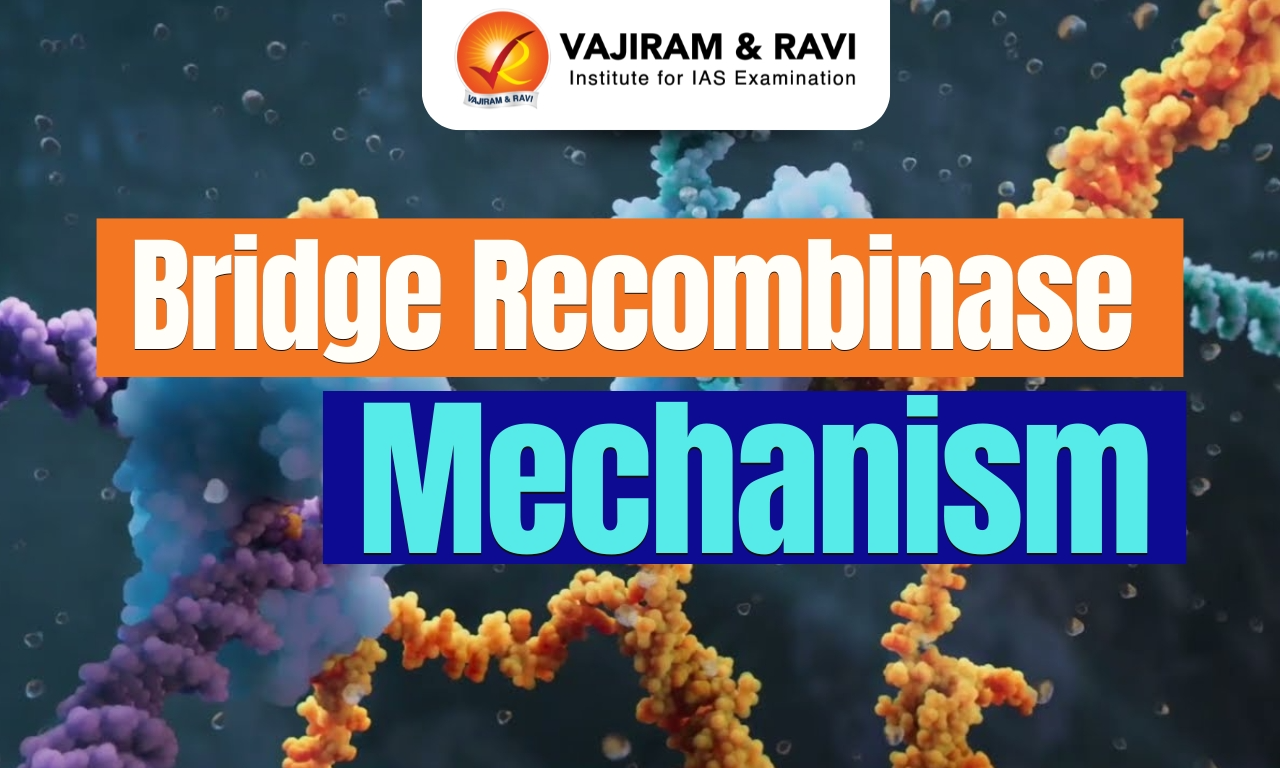
Bridge Recombinase Mechanism

The Bridge Recombinase Mechanism is a next-generation genomic design system that uses jumping genes, particularly the IS110 element, to edit DNA. These jumping genes, also known as transposable elements, naturally move within genomes and are found across all forms of life.

This mechanism allows DNA to be cut, rearranged, and inserted with high precision, without always requiring the double-strand breaks typically seen in older genome-editing techniques.

How the Bridge Recombinase Mechanism Works?

The Bridge Recombinase Mechanism is a genome editing process where programmable RNA loops derived from jumping genes guide precise DNA recombination between donor and target sequences without always requiring double-strand breaks.

  • Activation of Jumping Gene (IS110): The IS110 element, a mobile genetic sequence, initiates the recombination process.
  • Formation of RNA Structure: Extra DNA at the ends converts into a single-stranded RNA that folds into two loop structures.
  • Dual Binding Mechanism: Each RNA loop binds separately to donor DNA and target DNA segments.
  • Bridge Formation: The loops act as a molecular bridge, bringing donor and target DNA together.
  • Programmable Targeting: Scientists can design loops to bind specific DNA sequences for precise editing.
  • DNA Insertion/Recombination: Genetic material is inserted or rearranged between the connected DNA strands.
  • Minimal DNA Damage: The process often avoids double-strand breaks, reducing the risk of errors. 

Jumping Genes as “Bridges” Significance

Jumping genes act as molecular bridges connecting different DNA sequences:

  • They carry genetic information from one location to another.
  • They integrate DNA without always causing disruptive cuts.
  • Their programmability allows targeted genome editing.

Bridge Recombinase vs CRISPR-Cas9

The Bridge Recombinase Mechanism and CRISPR-Cas9 are advanced genome editing tools, but they differ significantly in how they modify DNA.

Bridge Recombinase vs CRISPR-Cas9

Feature

Bridge Recombinase Mechanism

CRISPR-Cas9

Basic Principle

Uses jumping genes (IS110) and recombinase enzymes to insert DNA

Uses guide RNA and Cas9 enzyme to cut DNA

DNA Cutting Requirement

Not always required

Mandatory double-strand break

Mechanism Type

DNA recombination via RNA loop bridging

DNA cleavage followed by repair

Key Components

Recombinase enzyme, IS110 element, RNA loops

Cas9 enzyme, Guide RNA (gRNA)

Targeting Method

Programmable donor and target DNA loops

Guide RNA binds complementary DNA sequence

Precision

High precision with flexible insertion

High precision but dependent on repair accuracy

Flexibility

Allows complex and diverse DNA insertions

Limited to cut-and-repair modifications

Risk of DNA Damage

Lower (less reliance on cutting)

Higher due to double-strand breaks

Off-target Effects

Potentially lower

Possible off-target cuts

Natural Occurrence

Derived from naturally occurring jumping genes

Derived from bacterial immune system

Applications

Advanced genome design, synthetic biology

Gene editing, disease correction, research

Bridge Recombinase Mechanism FAQs

Q1: What is the Bridge Recombinase Mechanism?

Ans: The Bridge Recombinase Mechanism is a next-generation genome editing system that uses jumping genes like IS110 to insert or recombine DNA sequences with high precision and flexibility.

Q2: How does the Bridge Recombinase Mechanism work?

Ans: It forms RNA loop structures that bind separately to donor and target DNA, acting as a bridge to enable precise DNA insertion or recombination without always cutting both strands.

Q3: What are jumping genes in this mechanism?

Ans: Jumping genes, or transposable elements, are small DNA segments that can move within the genome and carry genetic information to new locations using recombinase enzymes.

Q4: How is it different from CRISPR-Cas9?

Ans: Unlike CRISPR-Cas9, which cuts DNA using the Cas9 enzyme, the bridge recombinase system can insert DNA more flexibly and may not require double-strand breaks.

Q5: What is the role of IS110 in this mechanism?

Ans: IS110 is a type of jumping gene that enables DNA movement and recombination, forming the core component of the bridge recombinase system.

Refugee Crisis in India, UN Framework, Challenges, Way Forward

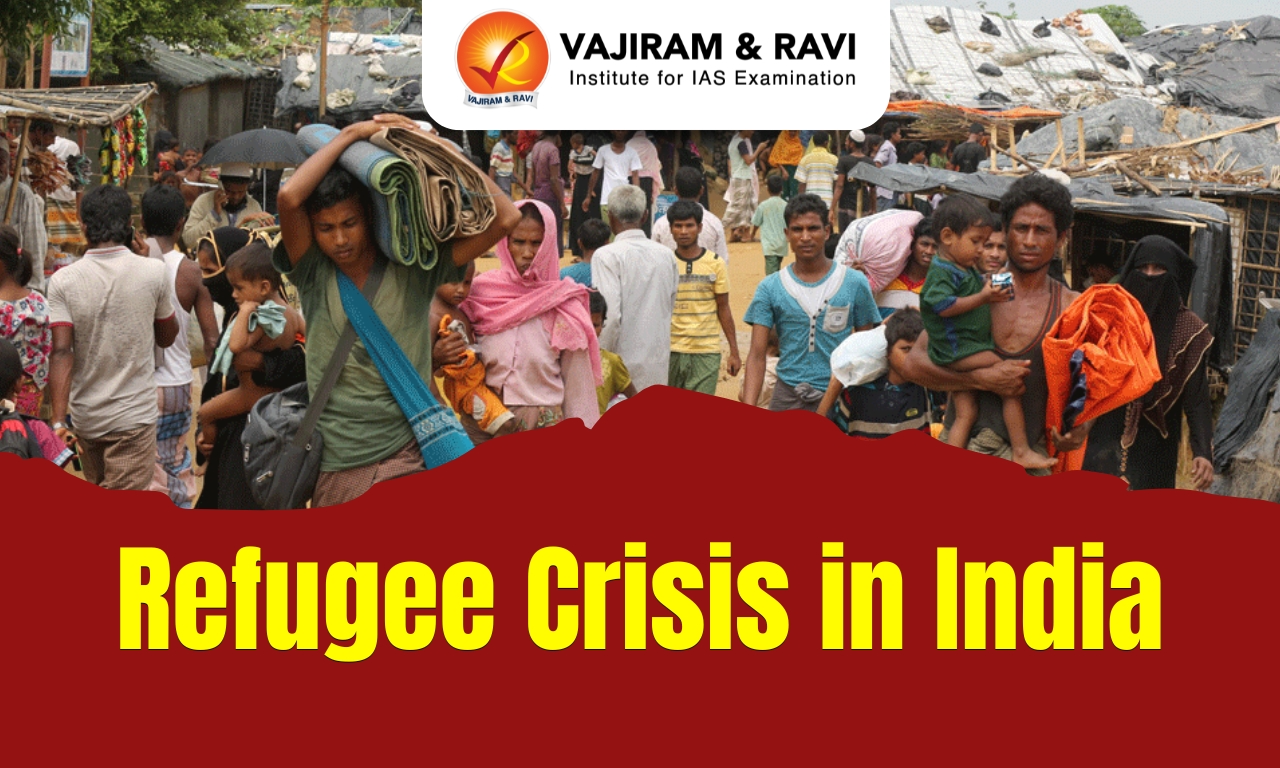
Refugee Crisis in India

A refugee is a person who is forced to leave their home country because of serious threats such as war, violence, or persecution based on religion, race, nationality, political opinion, or social group. This definition is based on the United Nations Refugee Convention of 1951.

Refugees are different from migrants. Migrants move mainly for better opportunities, while refugees move to save their lives and freedom.

The detailed article on the Refugee Crisis in India has been discussed below in this article.

Refugee Crisis in India

India has a long history of giving shelter to people fleeing persecution. Even though India is not a signatory to international refugee conventions, it has hosted millions of refugees over time. Some major refugee groups in India include:

  • Tibetan refugees (since 1959)
  • Bangladeshi refugees (1971 war)
  • Sri Lankan Tamil refugees
  • Afghan refugees
  • Rohingya refugees from Myanmar

Key UN Bodies and International Framework

Global refugee protection is guided by institutions and legal frameworks developed under the United Nations system.

1. United Nations High Commissioner for Refugees (UNHCR)

  • Established in 1950 to protect refugees and stateless persons
  • Main agency responsible for refugee welfare globally
  • Registers and identifies refugees
  • Provides basic needs such as food, shelter, healthcare, and education
  • Facilitates voluntary repatriation, local integration, and resettlement
  • Works in India, especially for refugees from non-neighbouring countries

2. United Nations Human Rights Council (UNHRC)

  • Intergovernmental body responsible for promoting human rights
  • Monitors violations of refugee rights across countries
  • Conducts Universal Periodic Review (UPR) of member states
  • Raises concerns on discrimination, detention, and deportation of refugees

3. 1951 Refugee Convention

  • Core international treaty defining the term “refugee”
  • Provides legal rights such as:
    • Right to work
    • Right to education
    • Access to courts
  • Establishes the principle of refugee protection globally

4. 1967 Protocol Relating to the Status of Refugees

  • Expands the scope of the 1951 Convention
  • Removes geographical and time restrictions
  • Makes refugee protection universally applicable 

India’s Position on Refugee Convention

India is not a signatory to the 1951 Refugee Convention or its 1967 Protocol Relating to the Status of Refugees. The country prefers to handle refugee matters through its own laws and a case-by-case approach rather than being bound by international obligations. This is mainly due to security concerns, regional challenges, and the need for policy flexibility. However, India generally follows humanitarian principles such as Non-refoulement, ensuring that refugees are not forcibly returned to danger.

Legal Framework Governing Refugees in India

India does not have a specific refugee law, so refugees are governed under general laws applicable to foreigners. The legal framework is fragmented, leading to different treatment of refugee groups based on government policies.

  • Foreigners Act, 1946
    • Provides the central government with wide powers over all foreigners
    • Allows identification, detention, restriction of movement, and deportation
    • Does not differentiate between refugees, asylum seekers, and illegal migrants
    • Often used in cases involving Rohingya and undocumented migrants
  • Passport (Entry into India) Act, 1920
    • Regulates entry of persons into India
    • Authorizes authorities to expel individuals without valid documents
    • Works alongside the Foreigners Act for border control
  • Registration of Foreigners Act, 1939
    • Mandates registration of foreigners staying beyond 180 days
    • Requires reporting to a Registration Officer within 14 days
    • Helps in maintaining records and monitoring foreign nationals
  • Citizenship Act, 1955
    • Governs citizenship by birth, descent, registration, and naturalization
    • Includes provisions for renunciation, termination, and deprivation
    • Serves as the base law for all citizenship-related matters
  • Citizenship (Amendment) Act, 2019
    • Provides fast-track citizenship to persecuted minorities (Hindus, Sikhs, Buddhists, Jains, Parsis, Christians)
    • Covers migrants from Pakistan, Bangladesh, and Afghanistan
    • Reduces residency requirement from 11 years to 5 years
    • Excludes Muslim refugees, including Rohingyas, leading to debates on discrimination
    • Has sparked nationwide protests and constitutional challenges
  • Standard Operating Procedure (SOP) for Refugees
    • Issued by the Government of India to guide officials
    • Provides a mechanism to examine asylum claims
    • Ensures coordination between central and state authorities
    • Applied in a case-by-case manner, not as a formal law

Constitutional and Judicial Safeguards

  • The Indian Constitution ensures basic human rights to all persons, including refugees:
    • Article 14 – Equality before law
    • Article 21 – Right to life and personal liberty
    • Article 22 – Protection against arbitrary detention
  • The Supreme Court has played a key role in protecting refugee rights:
    • In NHRC vs State of Arunachal Pradesh:
      • The Court held that refugees cannot be forcibly evicted
      • Directed the government to protect life and liberty of Chakma refugees
    • Courts have interpreted Article 21 broadly to include:
      • Right to dignity
      • Protection from inhuman treatment
      • Access to basic necessities 

Key Challenges in India’s Refugee Crisis

India’s refugee crisis involves multiple interconnected issues related to law, security, economy, and human rights. The absence of a clear policy framework makes the situation more complex and sensitive.

  • India does not have a comprehensive refugee law, and refugees are governed under general laws like the Foreigners Act, 1946, leading to a lack of clarity and consistency.
  • There is no clear distinction between refugees, asylum seekers, and illegal migrants, which results in uniform but often inappropriate treatment of different categories.
  • The approach of the government is largely ad-hoc and case-by-case, rather than based on a structured national policy.
  • Different refugee groups receive unequal treatment depending on political and strategic considerations, creating policy inconsistency and inequality.
  • National security concerns remain significant due to porous borders and the risk of infiltration by extremist elements.
  • It is often difficult to verify the identity and background of refugees, increasing concerns related to internal security.
  • Refugees face several human rights challenges, including risk of detention, deportation, and limited access to basic services like education, healthcare, and employment.
  • There are ongoing concerns about adherence to the principle of Non-refoulement, especially in cases of forced return.
  • The presence of large refugee populations puts pressure on local resources such as housing, jobs, and public services.
  • Refugees may compete with local populations for employment, leading to economic stress and resentment in certain areas.
  • Social and cultural differences between refugees and local communities can lead to tensions and conflicts.
  • Many refugees lack proper documentation, which creates identity issues and increases the risk of statelessness.
  • Administrative challenges include weak coordination between central and state governments and lack of proper data systems for refugee management.
  • Political debates and controversies, especially around the Citizenship (Amendment) Act, 2019, have further complicated refugee policy in India.

Way Forward

To address the refugee crisis effectively, India needs a balanced approach that combines humanitarian values, legal clarity, and national security concerns.

  • Enact a comprehensive national refugee law to clearly define refugees, asylum seekers, and illegal migrants, ensuring uniform treatment across the country.
  • Create a proper legal distinction between refugees and illegal immigrants to avoid misuse of laws like the Foreigners Act, 1946.
  • Develop a transparent and structured asylum mechanism for identification, registration, and status determination of refugees.
  • Strengthen coordination with international agencies like the United Nations High Commissioner for Refugees for better protection and rehabilitation.
  • Ensure protection of basic human rights in line with constitutional provisions, especially Article 14 and Article 21.
  • Follow and reinforce the principle of Non-refoulement to prevent forced return of refugees to unsafe conditions.
  • Balance humanitarian obligations with national security concerns through better border management and identity verification systems.
  • Improve data collection and documentation systems to track refugee populations effectively.
  • Promote social integration policies such as access to education, healthcare, and skill development to reduce dependency.
  • Encourage international cooperation and burden-sharing, especially with neighboring countries facing similar challenges.

Refugee Crisis in India FAQs

Q1: What is a refugee?

Ans: A refugee is a person who leaves their country due to fear of persecution, conflict, or violence and seeks protection in another country, as defined under the 1951 Refugee Convention.

Q2: Does India have a specific refugee law?

Ans: No, India does not have a dedicated refugee law. Refugees are managed under general laws like the Foreigners Act, 1946 and administrative policies.

Q3: Is India a signatory to international refugee conventions?

Ans: No, India is not a signatory to the 1951 Refugee Convention or the 1967 Protocol Relating to the Status of Refugees.

Q4: Which UN body works for refugees in India?

Ans: The United Nations High Commissioner for Refugees (UNHCR) is the main agency that provides protection and assistance to refugees, especially those from non-neighbouring countries.

Q5: What is the Citizenship (Amendment) Act, 2019 (CAA)?

Ans: The Citizenship (Amendment) Act, 2019 provides fast-track citizenship to certain persecuted non-Muslim minorities from Pakistan, Bangladesh, and Afghanistan who entered India before 31 December 2014.

Northern Ireland Conflict, Background, The Troubles

Northern Ireland Conflict

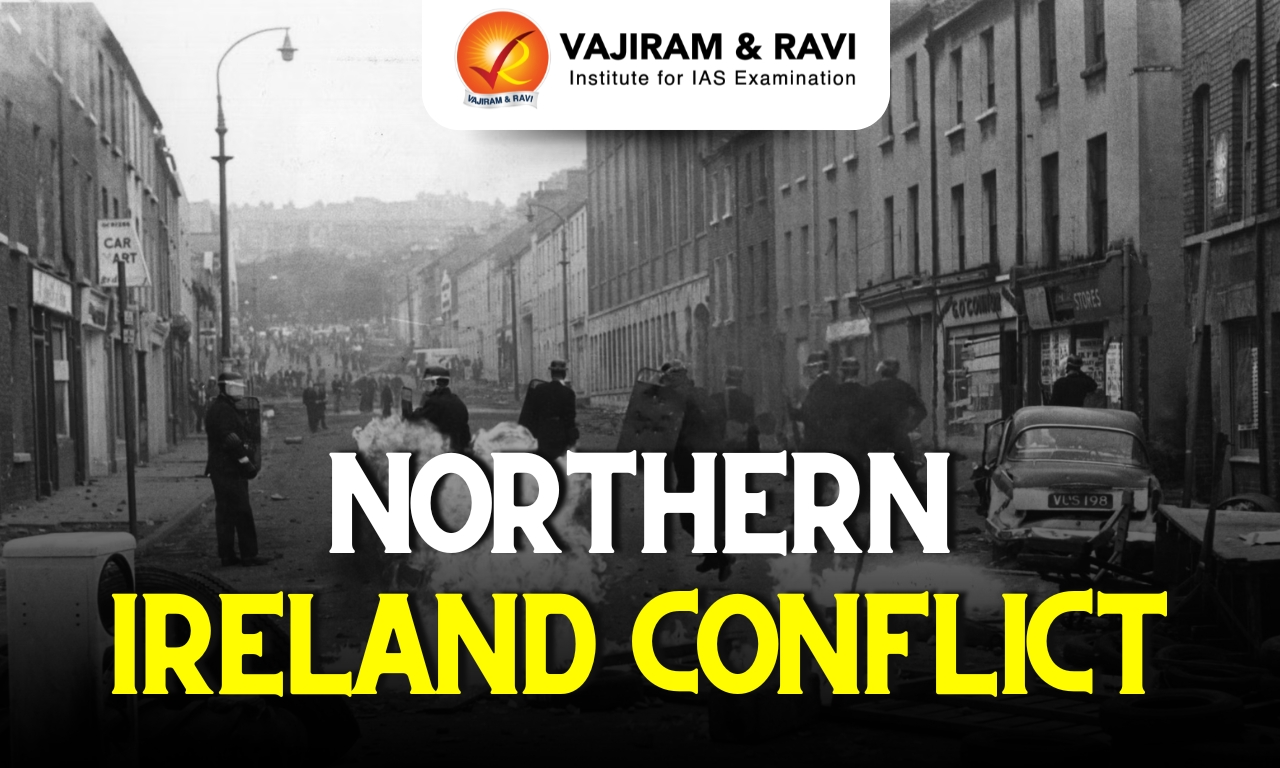
The Northern Ireland conflict, also known as “The Troubles,” was a period of violence from the late 1960s to 1998. It was mainly between Unionists, who wanted Northern Ireland to remain part of the United Kingdom, and Nationalists, who wanted it to join a united Ireland. Although it had a religious angle, with Protestants and Catholics on opposite sides, the conflict was mostly about political identity and control. It led to widespread violence and loss of lives, and was finally brought to an end with the Good Friday Agreement in 1998.

Northern Ireland Conflict Background

  • Northern Ireland is a region located in the northern part of the island of Ireland and is currently a part of the United Kingdom. Its history is deeply shaped by migration, colonisation, and cultural mixing over centuries. Different groups such as the Celts, Vikings, Normans, and Anglo-Saxons settled in this region at different times, making it a diverse but also divided society.
  • In the early 17th century, an important event called the Plantation of Ulster took place. During this period, the English government encouraged people from England and Scotland, who were mostly Protestants, to settle in Ulster. These settlers were given land that had been taken from native Irish Catholics. This created a clear divide between the Protestant settlers and the Catholic locals, which later became a major source of conflict.
  • The division was not just about land but also about religion, culture, and political loyalty. Protestants generally supported British rule, while Catholics wanted independence from Britain. These differences slowly turned into long-term tensions in the region.

Protestants and Catholics Conflict in Ireland

  • The conflict between Protestants and Catholics in Ireland became stronger over time due to both religious differences and political control. Across Europe, there were already tensions between these two religious groups, and similar issues affected Ireland as well.
  • Ireland was under British rule for many years, and many Irish Catholics felt that they were treated unfairly in terms of land ownership, political rights, and economic opportunities. This led to growing resentment and resistance against British control.
  • A major turning point was the Great Potato Famine of 1845, which caused the death of more than one million people due to starvation and disease. Many Irish people believed that the British government did not do enough to help, which increased anger and strengthened nationalist feelings.
  • In 1916, during the First World War, Irish nationalists launched the Easter Rising, an armed rebellion against British rule. Although the rebellion was suppressed, it inspired a stronger independence movement across Ireland.

Partition of Ireland and Creation of Northern Ireland

  • After years of struggle, Ireland moved closer to independence in the early 20th century. However, there was a major disagreement between different groups within Ireland. Catholics and nationalists wanted a united independent Ireland, while Protestants in Ulster wanted to remain part of the United Kingdom.
  • In 1921, the Anglo-Irish Treaty was signed, which led to the division of Ireland into two parts. The southern part became the Irish Free State (now the Republic of Ireland), while six counties in the north, where Protestants were the majority, remained with the United Kingdom. This region became known as Northern Ireland.
  • This partition created a political and social divide. Northern Ireland remained part of the UK, but it had a large Catholic minority that did not fully accept British rule. This imbalance later led to unrest and conflict.

Northern Ireland Conflict The Troubles

  • From the late 1968 to 1998, Northern Ireland experienced a violent conflict known as The Troubles. This was not a traditional war but a long period of violence involving bombings, shootings, and protests.
  • The conflict was mainly between two groups. The Unionists or Loyalists, who were mostly Protestants, wanted Northern Ireland to remain part of the UK. The Nationalists or Republicans, who were mostly Catholics, wanted Northern Ireland to join the Republic of Ireland.
  • The British Army was also involved in trying to maintain peace, but at times it became part of the conflict. Paramilitary groups like the Irish Republican Army (IRA) and loyalist groups carried out violent attacks.
  • More than 3,500 people lost their lives during this period, and many more were injured. The violence affected daily life, created fear among communities, and deepened divisions between people.

The Good Friday Agreement

  • About the Agreement
    • The Good Friday Agreement, also called the Belfast Agreement, is a historic peace deal signed on 10 April 1998 in Northern Ireland. It was created to end years of violence and tension that had deeply affected the region during a period known as The Troubles.
    • The main aim of the agreement was to bring peace by encouraging cooperation between different communities, especially between Unionists and Nationalists, who had long-standing political and social differences.
    • It was supported by the governments of the United Kingdom and Ireland, as well as by most political parties in Northern Ireland. Importantly, it also received public approval through referendums held in both Northern Ireland and the Republic of Ireland. Key Provisions of the Agreement are as follows:
  • Power Sharing Government
    • The agreement created a system where Unionists and Nationalists share power in the government, ensuring that both communities have a role in decision-making.
    • It also led to the formation of the Northern Ireland Assembly for local governance.
  • Principle of Consent
    • The agreement states that Northern Ireland will remain part of the UK unless a majority votes to join the Republic of Ireland.
    • Any change in status can happen only through a peaceful and democratic referendum.
  • Human Rights and Equality
    • It emphasizes equal rights and protection for all citizens, regardless of religion or background.
    • New laws and institutions were created to reduce discrimination and promote fairness.
  • Decommissioning of Weapons
    • It provided a process for paramilitary groups to gradually give up their weapons.
    • This helped reduce violence and build trust among communities.
  • Cross-Border Cooperation
    • The agreement encouraged better cooperation between Northern Ireland and the Republic of Ireland in areas like trade, transport, education, and culture.
    • It led to the creation of joint bodies where leaders from both sides could work together on common issues.
    • This helped improve relationships and reduce tensions between the two regions.
  • Improved UK-Ireland Relations
    • The agreement also strengthened relations between the United Kingdom and Ireland by promoting dialogue and mutual respect.
    • Both countries agreed to work together to maintain peace and stability in the region.
  • Reduction of Violence and Peace Building
    • One of the biggest achievements of the agreement was the significant reduction in violence and conflict in Northern Ireland.
    • It created a foundation for long-term peace, even though some challenges and disagreements still remain.
    • Over time, it has helped communities move towards reconciliation and a more stable future.

Post-Agreement Developments

  • After the Good Friday Agreement, Northern Ireland saw a significant reduction in violence and improvement in economic conditions. Cities like Belfast began to develop and modernise, moving away from their conflict-driven past.
  • However, some issues still remained. There are still divisions between communities, and political disagreements sometimes lead to instability in governance.
  • The legacy of The Troubles continues to affect society, with unresolved issues related to victims, justice, and reconciliation.

Brexit and the Northern Ireland Issue

  • In 2016, the United Kingdom decided to leave the European Union through a referendum known as Brexit. This created a new problem for Northern Ireland because it shares a land border with the Republic of Ireland, which is still part of the EU.
  • The main concern was how to manage this border without creating physical checkpoints, which could increase tensions and threaten peace.
  • Northern Ireland became the only region of the UK with a direct land border with the EU, making the situation more complicated.

Northern Ireland Protocol and Its Features

  • To solve the border issue, the UK and the EU agreed on the Northern Ireland Protocol as part of the Brexit deal. Its main aim was to avoid a hard border between Northern Ireland and the Republic of Ireland while keeping peace intact.
  • Under this arrangement, Northern Ireland continues to follow certain EU rules related to trade and goods. This allows goods to move freely across the Irish border without checks.
  • Instead of a land border, a new system was created where checks take place on goods moving between Great Britain and Northern Ireland. This effectively created a trade boundary in the Irish Sea.
  • The protocol also includes a democratic system where the Northern Ireland Assembly can vote every four years on whether to continue these arrangements.

Political Deadlock and Controversies

  • The Northern Ireland Protocol has been a major source of disagreement, especially among Unionist leaders. They believe that the new trade rules separate Northern Ireland from the rest of the UK and weaken its position within the union.
  • The Democratic Unionist Party (DUP) strongly opposed the protocol and even withdrew from the power-sharing government in protest. This created a political deadlock and stopped normal governance for some time.
  • Businesses also faced practical challenges, such as delays and extra paperwork for goods moving between Great Britain and Northern Ireland. This created confusion and economic difficulties.
  • There were also tensions between the UK and the EU, with both sides disagreeing over how the protocol should be implemented. These disagreements raised concerns about the future of peace and stability in the region.

Northern Ireland Conflict Recent Developments

  • Over time, efforts were made to resolve the issues related to the protocol through negotiations and adjustments. These efforts aimed to reduce trade barriers and address the concerns of different groups.
  • Political parties, including the DUP, eventually showed willingness to return to governance after receiving assurances about Northern Ireland’s position within the UK.
  • Today, Northern Ireland continues to move forward with a focus on maintaining peace, improving cooperation, and addressing remaining challenges.
  • While the situation is more stable than before, long-term peace depends on continued dialogue, trust-building, and balanced political solutions that respect the concerns of all communities.

Northern Ireland Conflict FAQs

Q1: What was the Northern Ireland conflict ?

Ans: The Northern Ireland conflict, or The Troubles, was a period of violence from the late 1960s to 1998. It involved clashes between Unionists, who wanted to stay with the UK, and Nationalists, who wanted to join Ireland, leading to thousands of deaths and widespread unrest.

Q2: How did Northern Ireland come into existence?

Ans: Northern Ireland was created in 1921 after the partition of Ireland. Six northern counties with a Protestant majority remained part of the United Kingdom, while the rest became the Irish Free State (now the Republic of Ireland).

Q3: What caused the conflict between Protestants and Catholics?

Ans: The conflict began due to historical events like the Plantation of Ulster, where Protestant settlers were given land. Over time, differences in religion, political rights, and loyalty to Britain or Ireland increased tensions between the two communities.

Q4: What was the role of the Good Friday Agreement?

Ans: The Good Friday Agreement of 1998 helped end the violence by establishing power-sharing between communities, ensuring equal rights, and promoting peace and cooperation between Northern Ireland and the Republic of Ireland.

Q5: What is the Northern Ireland Protocol?

Ans: The Northern Ireland Protocol is part of the Brexit agreement. It allows Northern Ireland to follow some EU trade rules to avoid a hard border with Ireland, while placing trade checks between Great Britain and Northern Ireland.

Microbes in Human Welfare, Fermentation, Food, Healthcare

Microbes in Human Welfare

There is a fundamental role of Microbes in Human Welfare in sustaining life and supporting human welfare through diverse biological, industrial and environmental processes. These microscopic organisms contribute to food production, medicine, agriculture and waste management. From ancient fermentation practices to modern biotechnology, Microbes have remained central to human progress. Their applications have expanded significantly with scientific advancements, making them indispensable in improving health, economy and ecological balance across the world.

What are Microbes?

Microbes, also called microorganisms, are tiny living organisms invisible to the naked eye and include bacteria, fungi, protozoa, algae, viruses, viroids and prions. They can be unicellular like bacteria and protozoa or multicellular like fungi and algae. These organisms exist in diverse environments such as soil, water, air and inside living bodies. While some Microbes cause diseases, many are beneficial and play a vital role in maintaining ecological and biological balance.

Microbes in Human Welfare Roles

Microbes perform diverse roles across multiple sectors including healthcare, agriculture, food industry and environmental management. The list of major roles of Microbes in Human Welfare are:

  • Medical applications: Microbes are used in producing antibiotics, vaccines and therapeutic molecules that help prevent and treat diseases, improving global healthcare systems significantly.
  • Food production: Microorganisms help prepare curd, bread, cheese and fermented beverages by enhancing taste, texture and nutritional value of food products consumed daily.
  • Agriculture support: Nitrogen fixing bacteria and biofertilizers improve soil fertility and plant growth, reducing dependence on chemical fertilizers and promoting sustainable farming practices.
  • Environmental cleaning: Microbes decompose organic waste and help in sewage treatment, reducing pollution levels and maintaining ecological balance effectively.
  • Energy production: Methanogenic bacteria produce biogas from organic waste, providing an eco friendly and renewable source of energy, especially in rural areas.

Microbes in Fermentation

One of the major roles of Microbes in Human Welfare is Fermentation. It is a biological process where Microbes convert sugars into alcohol, acids, or gases, widely used in food preparation and industrial production processes globally.

  • Yeast fermentation: Saccharomyces cerevisiae converts sugar into ethanol and carbon dioxide, forming the basis of alcohol production and bread making industries worldwide.
  • Discovery: Fermentation was scientifically explained in 1857 by Louis Pasteur, establishing its importance in microbiology and industrial biotechnology.
  • Food fermentation: Bacteria ferment dough used in idli and dosa, producing carbon dioxide that makes the food soft and spongy.
  • Cheese formation: Propionibacterium sharmanii produces carbon dioxide in Swiss cheese, creating characteristic holes and enhancing flavor.
  • Traditional beverages: Fermentation of palm sap produces toddy, while cereals and fruits are used to make wine, beer, whisky and rum.

Microbes in Healthcare

Healthcare is one of the major area of Microbes in Human Welfare as they produce antibiotics, vaccines and bioactive compounds that prevent and treat diseases, saving millions of lives globally.

  • Antibiotic production: Penicillin from Penicillium notatum discovered by Alexander Fleming in 1929 inhibits bacterial growth and revolutionized treatment of infectious diseases.
  • Common antibiotics: Streptomycin, tetracycline and erythromycin are produced from bacteria and fungi and widely used in treating bacterial infections.
  • Vaccine mechanism: Vaccines use weakened or dead Microbes to stimulate antibody production, providing immunity against diseases like cholera, tuberculosis and hepatitis.
  • Historical discovery: Edward Jenner developed the smallpox vaccine in 1798, marking the beginning of immunology and preventive medicine.
  • Limitations: Antibiotics are ineffective against viral infections such as cold and flu and excessive use can lead to antibiotic resistance and loss of beneficial Microbes.

Microbes in Food Products

Microbes are widely used in food production to enhance taste, texture, nutritional value and preservation, forming an integral part of daily human diet worldwide.

  • Curd formation: Lactobacillus converts milk into curd by producing lactic acid, improving digestibility and increasing Vitamin B12 content.
  • Bread making: Yeast produces carbon dioxide during fermentation, making dough rise and giving bread a soft and fluffy texture.
  • Fermented foods: Microbes are used in preparing cheese, pickles, soy products and bamboo shoots, adding unique flavors and textures.
  • Digestive benefits: Lactic acid bacteria in the human gut prevent harmful Microbes and aid digestion, improving overall gut health.
  • Alcoholic beverages: Yeast fermentation produces ethanol used in wine, beer, whisky and rum, depending on raw materials and processing methods.

Microbes in Sewage Treatment

Microbes play a crucial role in sewage treatment by decomposing organic waste and reducing pollution, ensuring safer disposal of wastewater into the environment.

  • Primary treatment: Solid waste settles as sludge while liquid effluent moves for further treatment, separating major pollutants initially.
  • Aeration process: Aerobic Microbes form flocs in aeration tanks and consume organic matter, significantly reducing biochemical oxygen demand (BOD).
  • BOD reduction: Lower BOD indicates reduced organic pollution, making treated water safer for release into natural water bodies.
  • Activated sludge: Settled microbial flocs are reused as inoculum, enhancing efficiency of sewage treatment processes.
  • Anaerobic digestion: Methanogenic bacteria break down sludge to produce methane rich biogas along with carbon dioxide and hydrogen sulphide.

Microbes in Biogas Production

Microbes contribute to renewable energy production by generating biogas through anaerobic digestion of organic waste, especially in rural and agricultural settings.

  • Methanogens role: Methanobacterium and similar bacteria produce methane by breaking down organic matter in oxygen free conditions.
  • Biogas composition: Biogas mainly contains methane along with carbon dioxide and hydrogen sulphide, making it a combustible fuel.
  • Source materials: Cattle dung, agricultural waste and sewage sludge are commonly used substrates for biogas production.
  • Rumen digestion: Methanogens in cattle stomach help digest cellulose and contribute to nutrient absorption in animals.
  • Sustainable energy: Biogas provides an eco friendly alternative to fossil fuels and helps manage organic waste efficiently.

Microbes in Biocontrol Agents

Microbes are used as biocontrol agents to manage pests and diseases in agriculture, reducing dependence on harmful chemical pesticides and promoting ecological balance.

  • Bacillus thuringiensis: Bt produces toxins that kill insect larvae, especially caterpillars, without harming beneficial organisms.
  • Trichoderma species: These fungi act against plant pathogens and are widely used to protect crops from diseases.
  • Baculoviruses: These viruses target specific insect pests and are safe for plants, animals and humans.
  • Biological balance: Biocontrol methods maintain pest populations at manageable levels instead of complete elimination.
  • Sustainable Agriculture: Use of microbial agents reduces environmental pollution and promotes organic agriculture practices.

Microbes in Biofertilizers

Biofertilizers use microorganisms to enhance soil fertility and plant growth by increasing nutrient availability and promoting sustainable agricultural practices.

  • Nitrogen fixation: Rhizobium bacteria in legume roots convert atmospheric nitrogen into usable forms for plants.
  • Free living bacteria: Azospirillum and Azotobacter fix nitrogen independently, enriching soil nutrient content.
  • Mycorrhiza association: Glomus fungi help plants absorb phosphorus and improve resistance to stress conditions.
  • Cyanobacteria role: Anabaena and Nostoc fix nitrogen in paddy fields and increase soil fertility.
  • Soil health improvement: Biofertilizers reduce chemical usage and enhance long term agricultural sustainability.

Microbes in Preservatives

Microbial control techniques are used in food preservation to prevent spoilage and extend shelf life by inhibiting the growth of harmful microorganisms.

  • Salt preservation: Common salt prevents microbial growth in meat, fish and pickles by reducing moisture availability.
  • Sugar preservation: High sugar concentration in jams and jellies inhibits microbial growth by lowering water activity.
  • Chemical preservatives: Sodium benzoate and sodium metabisulphite are widely used to prevent spoilage in processed foods.
  • Oil and vinegar: These create unfavorable conditions for Microbes, preserving pickles and other food items effectively.
  • Pasteurization: Heating milk at about 70°C for 15–30 seconds followed by rapid cooling kills harmful Microbes and increases shelf life.

Microbes in Chemical, Enzymes and Other Bioactive Agents

Microbes are widely used in industries to produce chemicals, enzymes and bioactive compounds that have medical, industrial and commercial applications.

  • Organic acid production: Aspergillus niger produces citric acid, Acetobacter aceti produces acetic acid and Lactobacillus produces lactic acid.
  • Alcohol production: Saccharomyces cerevisiae is used for commercial production of ethanol through fermentation processes.
  • Enzyme applications: Lipases help remove oily stains in detergents, while pectinases and proteases clarify fruit juices.
  • Medical bioactive molecules: Streptokinase from Streptococcus acts as a clot buster in heart attack patients.
  • Therapeutic compounds: Cyclosporin A from Trichoderma polysporum is used in organ transplantation, while statins from Monascus purpureus lower cholesterol levels.

Microbes in Human Welfare Recent Developments

Recent advancements have enhanced understanding and utilization of Microbes in Human Welfare making them central to modern scientific progress.

  • Metagenomics: Advanced genome sequencing allows study of microbial communities in natural environments, expanding knowledge of microbial diversity and functions.
  • CRISPR Cas technology: Enables precise genetic modification of Microbes, improving production of beneficial products and medical therapies.
  • Microbiome research: Studies on human gut Microbes have led to development of probiotics and improved disease prevention strategies.
  • AI integration: Artificial intelligence helps analyze large microbial datasets, accelerating discovery of new microbial applications.
  • Public health concerns: Antimicrobial resistance causes about 4.95 million deaths annually, highlighting need for rational antibiotic use.

Microbes in Human Welfare Significances

Importance of Microbes in Human Welfare lies in supporting life processes, improving health and enabling sustainable development across various sectors globally.

  • Ecological balance: Microbes regulate biogeochemical cycles like nitrogen and carbon cycles, ensuring availability of essential nutrients.
  • Human health support: Gut Microbes aid digestion, produce vitamins and protect against harmful pathogens.
  • Agricultural sustainability: Biofertilizers and biocontrol agents reduce chemical dependency and improve crop productivity.
  • Industrial importance: Microbes are used in producing food, beverages, medicines and biofuels, contributing to economic growth.
  • Environmental protection: Microbes help in waste decomposition, sewage treatment and pollution control, maintaining environmental health. 

Microbes in Human Welfare FAQs

Q1: What are Microbes?

Ans: Microbes are tiny living organisms such as bacteria, fungi, protozoa, algae and viruses that are not visible to the naked eye and exist in diverse environments.

Q2: How are Microbes useful in Human Welfare?

Ans: Microbes help in producing medicines, food products, biofertilizers and biogas and also play a key role in sewage treatment and environmental cleaning.

Q3: Which Microbe is used in Curd Formation?

Ans: Lactobacillus bacteria convert milk into curd by producing lactic acid, improving its nutritional value and digestibility.

Q4: Who discovered Penicillin?

Ans: Penicillin was discovered by Alexander Fleming in 1929 from the fungus Penicillium notatum, marking a major advancement in antibiotics.

Q5: What is Biogas and which Microbes produce it?

Ans: Biogas is a methane rich fuel produced by methanogenic bacteria like Methanobacterium during anaerobic decomposition of organic waste.

Agrochemicals, Types, Regulation, Impacts, Indian Context

Agrochemicals

Agrochemicals refer to chemical products used in agriculture such as fertilisers, pesticides and plant growth regulators to enhance crop productivity and protect crops. Their use expanded significantly after the Green Revolution, enabling higher yields on limited land. However, excessive and unscientific usage has raised concerns about environmental degradation, soil health and human safety. Balancing productivity with sustainability has become essential in modern agricultural practices.

Agrochemicals Types

Agrochemicals are broadly classified based on their function in agriculture, including crop protection, soil enhancement and plant growth regulation roles.

  • Crop Protectors: These include pesticides such as insecticides, herbicides, fungicides and rodenticides used to control pests, weeds, fungi and rodents, ensuring crop safety and reducing yield losses during cultivation and storage.
  • Soil Supplements: Fertilisers and manures improve soil fertility by supplying essential nutrients like nitrogen, phosphorus and potassium, while organic manures enhance soil structure, microbial activity and long term soil productivity.
  • Plant Growth Regulators: These chemicals regulate plant growth, flowering, fruiting and ripening processes by supplying micro and macronutrients, thereby improving crop quality and resistance to diseases.
  • Soil Conditioners and pH Agents: Liming and acidifying agents help maintain suitable soil pH levels, improving nutrient availability and water retention capacity, which is essential for optimal plant growth.

Agrochemicals in India

India is a major producer and consumer of Agrochemicals, with rising demand due to intensive farming and food security requirements.

  • Fertiliser Consumption: India consumed about 61 million tonnes of fertilisers in FY20, rising to around 65 million tonnes in FY21, with urea accounting for nearly 55% of total consumption.
  • Production and Imports: Domestic fertiliser production stands at 42-45 million tonnes, while imports are approximately 18 million tonnes, reflecting dependence on external sources for meeting agricultural demand.
  • Pesticide Market Growth: The Indian pesticide market was valued at around INR 212 billion in 2021 and is projected to reach INR 320 billion by 2027, showing steady growth.
  • Global Position: India is the fourth largest agrochemical producer globally and has emerged as the second largest exporter, with exports reaching US$ 5.4 billion in 2022-23.
  • Usage Patterns: Around 61,000 tonnes of pesticides were used in 2020, with states like Maharashtra, Uttar Pradesh, Punjab and Haryana being major consumers due to intensive agriculture.

Agrochemicals Regulation in India

Regulatory frameworks in India aim to ensure safe use, manufacture and distribution of Agrochemicals to protect human and environmental health.

  • Insecticides Act 1968: This law regulates import, manufacture, sale, transport and use of pesticides to minimise risks to humans, animals and the environment through licensing and registration mechanisms.
  • Central Insecticides Board: Established under the Act, it advises governments on technical matters and oversees pesticide regulation, including safety standards and risk assessment processes.
  • Registration and Licensing: Manufacturers and distributors must obtain registration certificates and licences, ensuring that only approved Agrochemicals are used in agriculture and related sectors.
  • Maximum Residue Limits (MRLs): The Food Safety and Standards Authority of India sets MRLs for pesticide residues in food products based on scientific risk assessment aligned with global standards.
  • Pesticides Management Bill 2020: This proposed framework aims to strengthen regulation, introduce stricter penalties and improve safety monitoring in pesticide use across the country.

Agrochemicals Impacts

Agrochemicals have both positive and negative impacts on agriculture, environment and human health, depending on their usage patterns.

  • Increased Crop Productivity: Agrochemicals have improved per acre yield by 200-300% in some regions since the 1930s, contributing significantly to food security and farmer income.
  • Soil Degradation: Excessive use leads to soil acidification, reduced organic matter and destruction of beneficial microorganisms, ultimately lowering soil fertility and crop productivity over time.
  • Water Pollution: Runoff containing nitrates and phosphates causes eutrophication, leading to algal blooms, oxygen depletion and formation of dead zones that harm aquatic ecosystems.
  • Biomagnification: Toxic chemicals accumulate in food chains, increasing concentration at higher trophic levels, adversely affecting animal and human health with long term exposure risks.
  • Human Health Risks: Exposure to pesticide residues can cause respiratory issues, neurological disorders, cancer and reproductive problems due to contamination of food, water and air.

Agrochemicals Challenges

The widespread use of Agrochemicals in India faces multiple structural, environmental and regulatory challenges affecting sustainability.

  • Imbalanced Fertiliser Use: About 56% of districts account for 85% of fertiliser use, with heavy dependence on urea leading to nutrient imbalance and declining crop response.
  • Lack of Awareness: Many farmers lack scientific knowledge about correct dosage, resulting in excessive pesticide application and increased environmental and health risks.
  • Weak Regulatory Enforcement: Issues in licensing, monitoring and coordination between agencies lead to continued use of banned or harmful pesticides in agriculture.
  • Environmental Concerns: Agrochemicals contribute to biodiversity loss, soil degradation and pollution, threatening long term agricultural sustainability and ecological balance.
  • Global Market Pressures: Competition from countries like China and changing international standards create challenges for Indian agrochemical exports and domestic industry stability.

Way Forward

  • Promotion of Biofertilisers: Biofertilisers like Rhizobium can fix 40-50 kg nitrogen and increase yields by 10-40%, offering eco-friendly and cost effective alternatives to chemical fertilisers.
  • Precision Agriculture: Technologies like drones, sensors and artificial intelligence enable targeted application of Agrochemicals, reducing overuse and improving efficiency in farming operations.
  • Organic Farming Transition: Adoption of organic and natural farming methods such as crop rotation, intercropping and biological pest control reduces chemical dependency and environmental impact.
  • Farmer Awareness Programmes: Training and education initiatives help farmers understand optimal usage, safety measures and alternative practices, ensuring balanced agrochemical application.
  • Regulatory Strengthening: Updating laws and implementing stricter monitoring systems, including digital tracking and Aadhaar linked fertiliser purchases, can improve accountability and reduce misuse.

Agrochemicals Government Initiatives

The government has launched several schemes and interventions to promote sustainable agriculture and reduce dependency on chemical inputs.

  • PRANAM Scheme: Promotion of Alternate Nutrients for Agriculture Management encourages states to reduce chemical fertiliser use and adopt sustainable nutrient management practices.
  • Rashtriya Krishi Vikas Yojana (RKVY): This scheme supports states in implementing agricultural development projects, including sustainable farming and efficient agrochemical use.
  • Liquid Nano Urea Fertiliser: Introduced to reduce urea consumption, nano urea enhances nutrient efficiency, lowers costs and minimises environmental pollution caused by excessive fertiliser use.
  • Integrated Pest Management (IPM): Launched in 1992, IPM promotes biological and cultural pest control methods, reducing reliance on chemical pesticides while maintaining crop productivity.
  • Organic Farming Promotion: Initiatives like Paramparagat Krishi Vikas Yojana encourage adoption of organic farming, reducing chemical usage and promoting environmentally sustainable agricultural practices. 

Agrochemicals FAQs

Q1: What are Agrochemicals?

Ans: Agrochemicals are chemical products used in agriculture, including fertilisers, pesticides, herbicides and plant growth regulators, aimed at improving crop yield and protecting crops from pests and diseases.

Q2: Why are Agrochemicals important in agriculture?

Ans: They help increase crop productivity, reduce losses caused by pests and weeds, improve food quality and support food security for a growing population.

Q3: What are the major types of Agrochemicals?

Ans: The main types include fertilisers, pesticides (insecticides, herbicides, fungicides), plant growth regulators and soil conditioners used to enhance soil and crop health.

Q4: What are the harmful effects of Agrochemicals?

Ans: Excessive use can lead to soil degradation, water pollution, biomagnification in food chains and serious health issues like cancer and respiratory problems.

Q5: How can Agrochemical use be made sustainable?

Ans: Sustainable use involves promoting biofertilisers, adopting organic farming, using precision agriculture technologies and spreading awareness among farmers about proper dosage and safe practices.

Houthis in Yemen, Origin, Rise, Civil War, & Humanitarian Crisis

Houthis

The Houthis are a powerful political and armed group based in Yemen. Over the years, they have grown from a small regional movement into a major force influencing not only Yemen but also the wider Middle East. Their role in conflict, regional politics, and global trade routes has made them an important topic in international affairs.

Who are the Houthis?

The Houthis are officially known as Ansar Allah, which means “Supporters of God.” The movement was founded by Hussein Badreddin al-Houthi in the 1990s.

They mainly follow Zaydi Shia Islam, a sect that has historically been dominant in northern Yemen. Initially, the group focused on religious and cultural revival, aiming to protect their identity and traditions. However, due to political and economic issues, they gradually turned into an armed resistance group.

Rise of the Houthis in Yemen

The Houthis rose to power by taking advantage of political instability and weak governance in Yemen, eventually emerging as a dominant force in the country.

  • The movement expanded during the political unrest that followed the Arab Spring in 2011.
  • They gained local support by opposing corruption and economic neglect in northern regions.
  • In 2014, they captured Sanaa, marking a major turning point in their rise.
  • They took control of key government institutions and military bases.
  • Their influence spread across large parts of northern Yemen, strengthening their political and military position.

Yemen Civil War and External Involvement

The Yemen civil war became an international conflict after the Houthis seized Sanaa, leading to foreign intervention and regional power rivalry.

  • A military coalition led by Saudi Arabia intervened in 2015 to support the Yemeni government.
  • The Houthis are believed to receive support from Iran, increasing regional tensions.
  • The conflict is often seen as a proxy war between Saudi Arabia and Iran.
  • Fighting has spread across key regions, affecting political stability and security.
  • Yemen’s location near the Bab el-Mandeb Strait makes the conflict important for global trade and shipping routes.

Humanitarian Crisis in Yemen

The ongoing conflict in Yemen has created one of the world’s worst humanitarian crises, severely affecting millions of people.

  • Large sections of the population face hunger and famine due to food shortages.
  • Healthcare systems have collapsed, leading to the spread of diseases and lack of treatment.
  • Millions of people have been displaced from their homes due to continuous fighting.
  • Children and women are the most affected, facing malnutrition and lack of basic services.
  • According to the United Nations, a majority of Yemen’s population depends on humanitarian aid for survival.

Houthis FAQs

Q1: Who are the Houthis?

Ans: The Houthis are a political and armed group from Yemen, officially known as Ansar Allah, mainly belonging to the Zaydi Shia sect.

Q2: What do the Houthis want?

Ans: They seek political control, representation, and protection of their religious and regional identity.

Q3: Which country supports the Houthis?

Ans: Iran is widely believed to provide support, though the extent of involvement is debated.

Q4: Why are the Houthis in the news?

Ans: They are often in the news due to attacks in the Red Sea region and their role in the Yemen conflict.

Q5: Why is Yemen important globally?

Ans: Yemen is located near key shipping routes like the Bab el-Mandeb Strait, making it strategically important for global trade.

Integrated Battle Groups, Features, Strategic Importance

Integrated Battle Groups

Integrated Battle Groups (IBGs) are brigade-sized, agile, and self-sufficient combat formations introduced to transform the warfighting capabilities of the Indian Army. These formations are designed to enable rapid mobilisation, swift strikes, and better coordination among different arms of the military during modern warfare.

Integrated Battle Groups Key Features

 Integrated Battle Groups are a significant shift from conventional military structures due to their flexibility and efficiency. Some of their major features include:

  • Rapid Mobilisation: IBGs can be deployed within 12-48 hours, depending on their location.
  • Self-Sufficient Units: Each IBG includes combat, combat support, and logistical elements, making it capable of independent operations.
  • Customised Composition: Formed based on the principle of Threat, Terrain, and Task (3Ts).
  • High Mobility: Designed for quick movement and rapid response along borders.
  • Integrated Structure: Combines infantry, artillery, armoured units, engineers, and communication systems.

Also Read: Defence Technology

The Concept of 3Ts

The design of each IBG is based on the 3Ts principle, ensuring maximum effectiveness:

  • Threat: Nature and capability of the enemy
  • Terrain: Geographic conditions such as deserts, plains, or mountains
  • Task: Specific mission objectives (defence, offence, or strike operations)

For example:

  • A desert IBG may have more tanks and mechanised units
  • A mountain IBG may focus on light infantry and mobility equipment

Integrated Battle Groups Strategic Importance

The introduction of IBGs is a major military reform aimed at improving India's combat readiness. Their importance lies in:

  • Faster Response Time: Ability to act swiftly during crises
  • Enhanced Combat Efficiency: Better coordination between different units
  • Flexibility in Warfare: Adaptable to multiple battle scenarios
  • Deterrence Capability: Acts as a strong signal to adversaries

The deployment of IBGs along borders with China and Pakistan strengthens India's ability to handle two-front security challenges effectively.

Integrated Battle Groups FAQs

Q1: What are Integrated Battle Groups (IBGs)?

Ans: Integrated Battle Groups (IBGs) are brigade-sized, self-sufficient combat units of the Indian Army designed for rapid deployment and swift military operations.

Q2: What is the main objective of IBGs?

Ans: The primary objective is to ensure quick mobilisation and effective combat response, enabling the army to carry out fast and coordinated strikes during conflicts.

Q3: How quickly can IBGs be mobilised?

Ans: IBGs can be deployed within 12 to 48 hours, depending on their location and operational requirements.

Q4: What is the 3Ts principle in IBGs?

Ans: The 3Ts – Threat, Terrain, and Task – determine the structure and composition of each IBG, making them flexible and mission-specific.

Q5: Who commands an IBG?

Ans: Each IBG is usually headed by a Major General, ensuring effective leadership and coordination.

Environmental Racism, Features, Background, Causes, Global and India’s Status

Environmental Racism

Environmental Racism refers to a situation where certain communities, especially tribal, indigenous, or economically weaker groups face a disproportionate burden of environmental damage. These groups often suffer from pollution, displacement, and ecological destruction, while having very little say in decision-making. In recent years, global events like the death of George Floyd in 2020 triggered debates on racism, but the issue of environmental racism remains relatively under-discussed, especially in countries like India.

About Environmental Racism

  • The term environmental racism was introduced by civil rights leader Benjamin F. Chavis Jr. It refers to a situation where polluting industries, waste disposal sites, and hazardous infrastructure are deliberately or disproportionately placed in areas inhabited by marginalized communities such as racial minorities, low-income groups, and indigenous populations.
  • In simple terms, it means some communities are forced to live in more polluted and unhealthy environments than others, not by accident but due to systemic inequalities in decision-making.
  • Over time, scholars like Robert Bullard expanded this idea to include any policy or practice that harms certain communities more than others based on race, class, or social status, whether intentional or not.

Environmental Racism Features

  • Disproportionate exposure: Vulnerable communities face higher levels of pollution, including contaminated air, unsafe drinking water, and degraded land, compared to privileged groups.
  • Lack of participation: These communities are often excluded from decision-making processes, especially in large development or industrial projects.
  • Systemic nature: Environmental Racism is not accidental; it is deeply rooted in historical inequalities, governance failures, and social discrimination.
  • Link with poverty: Poor communities lack the resources to move away from polluted areas, making them more vulnerable.
  • Global presence: It exists in both developed and developing countries, though the form may vary depending on social structure.

Environmental Racism Background

  • Environmental Racism gained national attention after the Warren County Protests 1982, where a Black community opposed the dumping of toxic waste in their area.
  • Despite protests, the landfill was built, but it exposed a broader pattern: hazardous facilities were often located in poor and minority areas.
  • This incident led to the rise of the Environmental Justice Movement, which aimed to ensure fair treatment and equal protection from environmental hazards for all communities.
  • A landmark report titled Toxic Wastes and Race in the United States confirmed that most hazardous waste sites were concentrated in low-income communities of color.

Environmental Racism Causes

  • Historical discrimination: Long-standing inequalities based on race, caste, or ethnicity have pushed marginalized communities into environmentally degraded areas.
  • Economic factors: Industries prefer cheaper land for operations, which is often inhabited by economically weaker sections who lack the power to resist.
  • Weak political representation: Marginalized groups have limited influence in governance, making it difficult for them to oppose harmful projects.
  • Policy bias: Governments may prioritize economic growth and industrialization over environmental safety and social justice.
  • Globalization: Polluting industries are often shifted to countries with weaker environmental regulations, increasing the burden on vulnerable populations.

Environmental Racism Global Perspective

  • In the USA, minority communities, especially African Americans, often live near hazardous waste sites and polluted industrial areas.
  • In Canada, indigenous Inuit communities face environmental degradation due to mining and resource extraction.
  • In China, informal e-waste recycling zones have led to severe environmental and health problems.
  • Developing countries in Asia and Africa often become dumping grounds for toxic waste exported by developed nations.
  • In regions like Australia and parts of Africa, marginalized groups are pushed into “sacrifice zones” where environmental quality is severely compromised.

Environmental Racism in India

Environmental Racism in India is closely linked to caste hierarchy, tribal marginalization, regional imbalance, and economic inequality, where vulnerable communities bear a disproportionate burden of environmental degradation. Despite contributing the least to pollution, these groups are often the most affected due to weak political voice, lack of awareness, and limited access to resources. Development projects such as mining, dams, industries, and urban expansion are frequently located in areas inhabited by Adivasis, Dalits, and economically weaker sections, leading to displacement, loss of livelihood, and cultural erosion.

  • Tribal displacement: Large-scale projects like mining, dams, and infrastructure development in forest areas (e.g., central India and North-East) displace tribal populations, affecting their traditional way of life and dependence on forests
  • Caste-based environmental inequality: Dalit communities are often forced to live in environmentally degraded areas such as near landfills, sewage drains, or polluted water bodies
  • Urban environmental injustice: Slum dwellers in cities are exposed to poor sanitation, air pollution, and lack of clean water, as they reside near industrial zones or waste disposal sites
  • Industrial and mining activities: Coal mining in regions like Hasdeo Arand (Chhattisgarh), thermal power plants, and heavy industries are concentrated in regions inhabited by marginalized groups, leading to deforestation, pollution, and health hazards. 
  • Forest rights and exclusion: Inadequate implementation of the Forest Rights Act leads to eviction and denial of land rights for tribal communities, increasing their vulnerability
  • Development vs livelihood conflict: Projects prioritized for economic growth often ignore local ecological concerns and the rights of indigenous populations
  • Environmental disasters: Incidents like The Bhopal Gas Tragedy, oil spills, and industrial accidents disproportionately impact poor communities who lack the means to recover and also causing long-term health and environmental impacts
  • Climate vulnerability: Marginalized groups are more exposed to climate risks such as floods, droughts, and heatwaves due to poor housing and location in high-risk areas
  • Lack of representation: Limited participation of these communities in decision-making processes leads to policies that overlook their concerns
  • Disproportionate displacement: Although forming a small percentage of the population, tribal communities account for a significantly higher share of those displaced by development projects
  • Health burden: Continuous exposure to polluted air, water, and soil leads to chronic diseases and poor living conditions
  • Weak enforcement of laws: Environmental regulations exist but are often poorly implemented, allowing exploitation of vulnerable regions

Role of Laws and Environmental Impact Assessment (EIA)

  • Article 21 of the Indian Constitution guarantees the right to life, which includes the right to a clean and healthy environment.
  • The Environment Protection Act 1986 provides a legal framework for environmental regulation.
  • The Environmental Impact Assessment (EIA) process ensures that the environmental and social impacts of projects are evaluated before approval.
  • However, recent changes have weakened the process by reducing public consultation time, allowing post-facto approvals, and exempting certain projects from detailed scrutiny.
  • This reduces the ability of marginalized communities to raise concerns and protect their rights.

Environmental Racism Impacts

  • Serious Health Consequences
    • Communities exposed to pollution face higher risks of diseases such as cancer, asthma, lung infections, and heart problems.
    • Continuous exposure to toxic substances like lead and industrial chemicals affects children the most, leading to poor brain development and lifelong health issues.
    • Example: The Bhopal Gas Tragedy led to long-term respiratory and genetic health problems among residents.
  • Economic Inequality and Poverty Trap
    • Polluted areas usually have low land and property values, which traps people in these regions as they cannot afford to move elsewhere.
    • Health problems increase medical expenses and reduce productivity, pushing families further into poverty.
    • Lack of investment in such areas leads to fewer job opportunities and weak local economies.
    • Example: Industrial belts like Singrauli face heavy pollution from coal power plants, yet remain economically underdeveloped with poor living conditions.
  • Poor Quality of Life
    • Constant exposure to pollution leads to stress, anxiety, and reduced overall well-being.
    • Lack of clean air, safe water, and green spaces affects daily life and limits opportunities for healthy living.
    • People often feel neglected by authorities, leading to social dissatisfaction and distrust in governance.
    • Example: Residents near the Ghaziabad landfill live amid toxic waste, foul smell, and unsafe surroundings, affecting daily life quality.
  • Environmental Degradation and Resource Loss
    • Over-concentration of industries and waste sites leads to soil, air, and water pollution.
    • This damages local ecosystems, agriculture, and biodiversity.
    • Example: Pollution in the Ganga River due to industrial discharge and sewage affects water quality, aquatic life, and farming livelihoods.
  • Cultural and Social Disruption
    • Indigenous and marginalized communities often lose access to their traditional lands and cultural sites.
    • Their way of life, identity, and heritage get disrupted.
    • Example: Tribal displacement due to mining projects in Odisha (like in Niyamgiri hills) disrupted indigenous lifestyles and cultural practices.
  • Increased Vulnerability to Climate Change
    • These communities face greater risks from floods, heatwaves, and disasters due to poor infrastructure and location in vulnerable areas.
    • Climate change worsens existing inequalities, making recovery slower and more difficult.
    • Example: Frequent flooding in Mumbai affects slum areas the most due to poor drainage and overcrowding.

Environmental Racism Measures

  • Strengthening Environmental Justice Policies
    • Governments must ensure fair distribution of environmental benefits and burdens.
    • Laws should prevent the concentration of polluting industries in vulnerable communities.
    • Environmental Impact Assessments (EIA) should include social justice considerations.
  • Inclusive and Participatory Decision-Making
    • Affected communities should be actively involved in planning and policy decisions.
    • Public hearings and consultations must be transparent and meaningful, not just formalities.
    • Local knowledge should guide development projects.
  • Equitable Urban Planning and Zoning
    • Proper land-use policies should ensure balanced development across regions.
    • Authorities must avoid zoning marginalized areas as industrial hubs.
    • Development of green spaces, clean infrastructure, and public services should be prioritized in disadvantaged areas.
  • Corporate Accountability and Regulation
    • Industries must be held responsible for pollution through strict environmental regulations and penalties.
    • Companies should adopt cleaner technologies and sustainable practices.
    • Global supply chains should not shift environmental harm to weaker regions.
  • Improving Access to Basic Services
    • Ensure clean drinking water, sanitation, healthcare, and waste management in all communities.
    • Immediate action should be taken in crisis situations to prevent long-term damage.
    • Example: After the Flint Water Crisis, efforts like pipe replacement and safe water supply became essential steps.
  • Climate Justice Approach
    • Climate policies should focus on protecting most vulnerable populations first.
    • Adaptation measures like flood control, cooling infrastructure, and disaster preparedness must be targeted toward high-risk communities.
  • Awareness, Data Transparency, and Community Empowerment
    • Governments should provide accessible data on pollution and environmental risks.
    • Community-led monitoring can help identify violations and ensure accountability.
    • Educating people about their rights empowers them to demand justice.
  • Global Cooperation
    • Developed countries must take responsibility for reducing emissions and waste export.
    • International organizations like the United Nations play a key role in promoting environmental justice globally.
    • Financial and technological support should be provided to developing nations.

Environmental Racism FAQs

Q1: What is Environmental Racism?

Ans: Environmental Racism refers to the unequal exposure of marginalized communities (tribals, minorities, poor) to environmental hazards like pollution and displacement due to biased policies and decision-making.

Q2: Who introduced the term Environmental Racism?

Ans: The term was introduced by Benjamin F. Chavis Jr., and later expanded by Robert Bullard, who linked environmental issues with social justice and inequality.

Q3: What are the key features of Environmental Racism?

Ans: It involves disproportionate pollution exposure, lack of participation in decision-making, systemic inequality, strong link with poverty, and its presence across both developed and developing nations.

Q4: What caused the rise of Environmental Racism awareness globally?

Ans: The 1982 Warren County protests (USA) highlighted the issue when a toxic landfill was set up in a Black community, leading to the Environmental Justice Movement.

Q5: What are the main causes of Environmental Racism?

Ans: Major causes include historical discrimination, economic factors (cheap land), weak political representation, policy bias toward development, and globalization shifting pollution to weaker regions.

Samaveda, Meaning, Divisions, Brahmana, Upanishad, Branches

Samaveda

The Samaveda is one of the four Vedas composed during the Vedic Age (1500-600 BCE). The term is derived from the Sanskrit word “Vid,” meaning knowledge, the Vedas represent sacred wisdom transmitted orally. It is known as the “Veda of Chants.” The Samaveda focuses on musical recitation of hymns, mainly adapted from the Rigveda and plays a central role in ritual practices and spiritual traditions.

Samaveda Features

The Samaveda is a liturgical text consisting of hymns arranged for singing during rituals, especially Soma sacrifices and represents the earliest foundation of Indian musical tradition.

  • Nature and Meaning: The Samaveda means “knowledge of melodies” and is often called the Book of Chants, as its verses are designed to be sung rather than recited during rituals.
  • Composition Period: It was composed between 1500 BCE and 600 BCE and reflects early Indo-Aryan religious practices and cultural traditions during the Vedic Age.
  • Source of Verses: Nearly 95% of its verses are borrowed from the Rigveda, mainly from its eighth and ninth mandalas, with few original compositions.
  • Ritual Purpose: It was compiled specifically for Soma sacrifices, where priests called Udgātṛs chanted hymns to invoke deities and maintain cosmic harmony.
  • Musical Importance: The Samaveda introduced systematic musical notation, pitch, rhythm and melody, forming the basis of Indian classical music traditions like Hindustani and Carnatic.
  • Language Style: Written in Vedic Sanskrit, its verses are concise and structured for accurate intonation, with special marks guiding pitch and tone in chanting.
  • Religious Focus: It praises deities such as Agni, Indra and Soma, emphasizing devotion, worship and attainment of Brahman through musical recitation.
  • Shortest Veda: Among the four Vedas, it is the shortest, yet its verses are longer and musically elaborate compared to others.

Samaveda Divisions

The Samaveda is structurally divided into sections that organize hymns and melodies for ritual and musical use.

  • Main Divisions: It consists of two primary parts- Ārcika (collection of verses) and Gāna (melodic chants), which together convert hymns into musical expressions.
  • Ritual Mapping: Each verse in the Archika corresponds to specific melodies in the Gana, ensuring precise performance during sacrificial ceremonies.
  • Archika: It contains a collection of verses. It is subdivided into-
    • Purva Archika: This section contains about 585 verses arranged according to deities like Agni, Indra and Soma and serves as the earlier compilation.
    • Uttara Archika: It includes around 1225 verses arranged according to rituals, especially Soma sacrifices, highlighting ceremonial application of hymns.
  • Gana: The Gana provides detailed musical instructions and notations, specifying how verses should be sung with proper pitch, rhythm and tone. Gana is further divided into-
    • Gramageya: meant for public chanting
    • Aranyageya: meant for solitary or forest recitation

Samaveda Branches

The Samaveda developed several recensions or shakhas, reflecting different oral traditions preserved by various schools.

  • Number of Shakhas: According to Sage Patanjali, the Samaveda originally had about 1000 shakhas, though most have been lost over time.
  • Surviving Branches: Only three recensions survive today- Kauthuma, Jaiminiya and Ranayaniya, each preserving unique textual and musical traditions.
  • Structural Components: Each shakha includes its own Samhita, Brahmana, Aranyaka and Upanishad, forming a complete Vedic textual traditions.
  • Examples-
    • Kauthuma Shakha: This is the most prominent and widely followed branch, especially in northern and western India, with a well preserved Samhita structure.
    • Jaiminiya Shakha: Also called Talavakara, it is mainly preserved in southern India and contains distinctive chanting styles and interpretations.
    • Ranayaniya Shakha: This branch is less widespread but contributes to the diversity of Samavedic traditions and recitation methods.

Samaveda Brahmanas

The Brahmanas associated with the Samaveda explain rituals, sacrifices and the significance of chants in detail.

  • Ritual Explanation: Brahmanas interpret the meaning and origin of rituals, linking hymns with ceremonial actions and cosmic order (ṛta).
  • Liturgical Guidance: They serve as manuals for priests, guiding correct chanting, pronunciation and sequence of rituals during sacrifices.
  • Examples-
    • Panchavimsha Brahmana: Also known as Tandya Mahabrahmana, it contains 25 sections describing rituals, especially Soma Yajna and provides procedural clarity for ceremonies.
    • Jaiminiya Brahmana: This text elaborates on sacrificial practices and emphasizes mystical and symbolic aspects of chanting and ritual performance.

Samaveda Upanishads

The Upanishads linked to the Samaveda represent the philosophical culmination of Vedic thought, focusing on spirituality and metaphysics.

  • Philosophical Ideas: These texts emphasize unity of self and universal reality, presenting knowledge as a path to liberation and spiritual awareness.
  • Ethical Teachings: They stress self discipline, truth and meditation as essential for achieving higher knowledge and understanding existence.
  • Examples-
    • Chandogya Upanishad: One of the largest and oldest Upanishads, it discusses Brahman, Atman, meditation, truth and ethical living, dating roughly between 8th and 6th centuries BCE.
    • Kena Upanishad: A shorter philosophical text exploring consciousness, the power behind sensory perception and the nature of ultimate reality.

Samaveda Significances

The Samaveda holds immense cultural, musical and spiritual importance in Indian tradition and intellectual history.

  • Foundation of Music: It is considered the earliest source of Indian classical music, introducing concepts like svara (notes), tala (rhythm) and melodic patterns.
  • Ritual Importance: Central to Soma sacrifices, its chants were believed to maintain harmony between heaven and earth and connect humans with divine forces.
  • Spiritual Role: It emphasizes devotion and sound as a medium of realizing Brahman, linking music with spiritual evolution and inner consciousness.
  • Cultural Influence: The chanting traditions influenced temple music, devotional singing and later artistic developments in Indian civilization.
  • Oral Tradition: Preserved through precise oral transmission over centuries, it reflects the importance of memory, discipline and phonetic accuracy in Vedic culture.
  • Philosophical Insight: Through its Upanishads, it connects ritual practices with deeper metaphysical ideas, integrating knowledge, devotion and aesthetics. 

Samaveda FAQs

Q1: What is the Samaveda known for?

Ans: The Samaveda is known as the “Veda of Chants” because it focuses on musical recitation of hymns, mainly adapted from the Rigveda for ritual singing.

Q2: How many verses are there in the Samaveda?

Ans: The Samaveda contains about 1,875 verses, of which nearly 95% are borrowed from the Rigveda and arranged for chanting.

Q3: What is the main purpose of the Samaveda?

Ans: Its primary purpose is to provide musical arrangements of hymns for use in Soma sacrifices and other Vedic rituals performed by Udgātṛ priests.

Q4: Which are the main divisions of the Samaveda?

Ans: The Samaveda is divided into two main parts- Ārcika (verses collection) and Gāna (melodic chants used for singing rituals).

Q5: Name the important Upanishads of the Samaveda.

Ans: The two major Upanishads associated with the Samaveda are the Chandogya Upanishad and the Kena Upanishad.

UPSC Daily Quiz 20 April 2026

UPSC Daily Quiz

[WpProQuiz 141]

UPSC Daily Quiz FAQs

Q1: What is the Daily UPSC Quiz?

Ans: The Daily UPSC Quiz is a set of practice questions based on current affairs, static subjects, and PYQs that help aspirants enhance retention and test conceptual clarity regularly.

Q2: How is the Daily Quiz useful for UPSC preparation?

Ans: Daily quizzes support learning, help in revision, improve time management, and boost accuracy for both UPSC Prelims and Mains through consistent practice.

Q3: Are the quiz questions based on the UPSC syllabus?

Ans: Yes, all questions are aligned with the UPSC Syllabus 2025, covering key areas like Polity, Economy, Environment, History, Geography, and Current Affairs.

Q4: Are solutions and explanations provided with the quiz?

Ans: Yes, each quiz includes detailed explanations and source references to enhance conceptual understanding and enable self-assessment.

Q5: Is the Daily UPSC Quiz suitable for both Prelims and Mains?

Ans: Primarily focused on Prelims (MCQ format), but it also indirectly helps in Mains by strengthening subject knowledge and factual clarity.

Apis mellifera

Apis mellifera

Apis mellifera Latest News

By successfully demonstrating that Apis mellifera can survive sub-zero temperatures, the CSIR-Indian Institute of Integrative Medicine (IIIM) Pulwama recently introduced a breakthrough likely to help beekeepers avoid the costly practice of migrating their hives to the plains during winter.

About Apis mellifera

  • Apis mellifera, the Western bee or European bee, is the most common species of honey bee worldwide.
  • It is the most widely distributed and well-known domesticated species of insect in the world.
  • It is commercially exploited for products such as honey, wax, and propolis, and it is used for pollination of multiple crops.

Apis mellifera Habitat and Distribution

  • It is native to Europe, Western Asia, and Africa. 
  • Human introduction of Apis mellifera to other continents started in the 17th century, and now they are found all around the world, including East Asia, Australia, and North and South America.
  • They prefer habitats that have an abundant supply of suitable flowering plants, such as meadows, open wooded areas, and gardens. 
  • They can survive in grasslands, deserts, and wetlands if there is sufficient water, food, and shelter. 
  • They need cavities (e.g. in hollow trees) to nest in. 

Apis mellifera Features

  • They are generally reddish brown to yellow in color, with black bands and orange-yellow rings on their abdomens. 
  • They have two pairs of wings and a slender waist. 
  • Thoraxes and abdomens are covered with forked or frayed hairs, though less so on the abdomen.
  • Like all honey bees, the western honey bee is eusocial, creating colonies with a single fertile female (or "queen"), many normally non-reproductive females or "workers," and a small proportion of fertile males or "drones."
  • Individual colonies can house tens of thousands of bees.
  • Workers and queens possess stingers spiked with venom coming from abdominal glands. 
  • The stinger is barbed in workers and tears away from their bodies after stinging. The queen’s stinger is smooth.
  • Its nest has a sophisticated architecture made of multiple combs constructed from beeswax and, under natural conditions, built inside a protective cavity.

Source: TH

Apis mellifera FAQs

Q1: What is Apis mellifera commonly known as?

Ans: The Western honey bee or European honey bee.

Q2: For what main purposes is Apis mellifera commercially exploited?

Ans: Honey, wax, propolis production, and crop pollination.

Q3: Where is Apis mellifera native to?

Ans: Europe, Western Asia, and Africa.

Q4: What type of habitats do Apis mellifera prefer?

Ans: Areas with abundant flowering plants like meadows, open woodlands, and gardens.

Q5: What is the general body color of Apis mellifera?

Ans: Reddish-brown to yellow with black bands and orange-yellow rings.

Employees Provident Fund Organisation (EPFO), Objectives

Employees Provident Fund Organisation (EPFO)

The Employees Provident Fund Organisation (EPFO) is a statutory body established under the Employees Provident Funds and Miscellaneous Provisions Act, 1952. It is responsible for administering social security schemes aimed at providing financial stability to workers and their families.

Employees Provident Fund Organisation (EPFO) Objectives

The Employees’ Provident Fund Organisation (EPFO) aims to provide comprehensive social security to employees by ensuring financial stability during retirement and unforeseen circumstances. It promotes long-term savings, pension security, and insurance protection for workers and their families.

  • Ensure Retirement Security: EPFO helps employees accumulate a retirement corpus through regular contributions, ensuring financial independence after superannuation.
  • Provide Social Security Coverage: It offers financial protection in cases of retirement, disability, death, or unemployment, safeguarding employees and their dependents.
  • Promote Habit of Savings: By mandating contributions from both employers and employees, EPFO inculcates disciplined and long-term saving behavior.
  • Deliver Pension Benefits: Through pension schemes, EPFO ensures a steady post-retirement income and support for family members in case of the employee’s death.
  • Offer Life Insurance Protection: It provides insurance coverage to employees so that their families receive financial assistance in case of premature death.
  • Support During Emergencies: EPFO allows partial withdrawals for critical needs such as medical treatment, education, housing, and marriage.
  • Ensure Financial Inclusion: It brings a large workforce into the formal financial system, especially in the organized sector.
  • Facilitate Ease of Access and Transparency: Through digital initiatives like UAN and online services, EPFO ensures transparency and easy access to funds and services.

Employees Provident Fund Organisation (EPFO) Structure

The Employees Provident Fund Organisation (EPFO) has a tripartite administrative structure to ensure balanced representation of government, employers, and employees.

  • Central Board of Trustees (CBT): EPFO is administered by the CBT, which is the apex decision-making body under the Employees' Provident Funds and Miscellaneous Provisions Act, 1952.
  • Tripartite Representation: The board includes representatives from the Central Government, State Governments, employers, and employees to ensure inclusive governance.
  • Chairmanship: The CBT is chaired by the Union Minister of Labour and Employment, Government of India.
  • Administrative Control: EPFO functions under the Ministry of Labour and Employment, which oversees its operations and policy direction.

Schemes Administered by EPFO

The Employees Provident Fund Organisation (EPFO) administers three major social security schemes under the Employees' Provident Funds and Miscellaneous Provisions Act, 1952.

1. Employees’ Provident Fund Scheme, 1952 (EPF)

This is the primary savings scheme designed to help employees build a retirement corpus through regular monthly contributions.

  • Both employer and employee contribute 12% of wages
  • The employee’s full contribution goes into the EPF account
  • Provides a lump sum amount at retirement or resignation
  • Interest is credited annually by the government
  • Partial withdrawals are allowed for specific needs like housing, education, or medical emergencies

2. Employees’ Pension Scheme, 1995 (EPS)

The EPS provides a monthly pension to employees after retirement and ensures income security for their families.

  • Pension is payable after 58 years of age
  • Minimum 10 years of service required
  • Funded by 8.33% of employer’s contribution
  • Provides benefits to widow, children, and dependents
  • Includes provisions for early pension and disability pension

3. Employees’ Deposit Linked Insurance Scheme, 1976 (EDLI)

The EDLI scheme offers life insurance coverage to employees enrolled under EPFO.

  • Provides a lump sum insurance amount to the nominee in case of employee’s death during service
  • No direct contribution from employees
  • Premium is paid by the employer
  • Benefit amount is linked to the employee’s last drawn salary
  • Ensures financial protection for the employee’s family

Employees Provident Fund Organisation (EPFO) Functions

The Employees’ Provident Fund Organisation (EPFO) performs several important functions to ensure social security and financial protection for employees in the organized sector.

  • Management of Provident Fund Accounts: EPFO maintains individual provident fund accounts of employees and ensures that monthly contributions from employers and employees are properly credited.
  • Administration of Pension Scheme: It manages the Employees’ Pension Scheme (EPS) and provides monthly pension to retired employees, widows, children, and other eligible dependents.
  • Implementation of Insurance Benefits: EPFO administers the Employees’ Deposit Linked Insurance Scheme (EDLI) to provide financial assistance to the nominee in case of an employee’s death.
  • Settlement of Claims: It processes claims related to final settlement, pension withdrawal, transfer of accounts, and insurance benefits in a timely manner.
  • Ensuring Employer Compliance: EPFO monitors establishments to ensure employers deposit contributions regularly and comply with the provisions of the Employees' Provident Funds and Miscellaneous Provisions Act, 1952.
  • Investment of Funds: The organization invests provident fund collections in approved financial instruments to generate safe returns for members.
  • Digital Service Delivery: Through the UAN portal and online services, EPFO provides easy access to passbooks, claim tracking, e-nomination, and account updates.
  • Grievance Redressal: EPFO addresses complaints and disputes through online grievance portals and regional offices to protect employee interests.
  • Implementation of Social Security Agreements: It acts as the nodal agency for implementing bilateral social security agreements with other countries for international workers.

Employees Provident Fund Organisation (EPFO) FAQs

Q1: What is the Employees’ Provident Fund Organisation (EPFO)?

Ans: EPFO is a statutory body that manages provident fund, pension, and insurance schemes for employees under the Employees' Provident Funds and Miscellaneous Provisions Act, 1952.

Q2: Under which ministry does EPFO function?

Ans: EPFO works under the Ministry of Labour and Employment, Government of India.

Q3: What are the main schemes administered by EPFO?

Ans: EPFO administers three schemes: Employees’ Provident Fund Scheme, 1952 (EPF), Employees’ Pension Scheme, 1995 (EPS) and Employees’ Deposit Linked Insurance Scheme, 1976 (EDLI)

Q4: What is the contribution rate under EPF?

Ans: Both employer and employee contribute 12% of basic salary plus DA, with a part of the employer’s share allocated to pension (EPS).

Q5: What is the minimum service required for pension under EPS?

Ans: An employee must complete at least 10 years of service to be eligible for pension benefits.

Yangtze River

Yangtze River

Yangtze River Latest News

China recently completed an 11.18-km-long high-speed underwater tunnel beneath the Yangtze River, enabling bullet trains to run at speeds of up to 350 kmph.

About Yangtze River

  • The Yangtze River, known in China as the Chang Jiang or Yangzi, is the longest river in both China and Asia and the third-longest river in the world after the Nile River and the Amazon River.
  • It is also considered the longest river to exclusively flow within the borders of a single nation.
  • It is 6,300 kilometers long.
  • Course:
    • It begins in the mountains of Tibet.
    • It runs through mountains for most of its length. 
    • Near the end of its course, it flows through wide, low plains. 
    • More than 700 streams and rivers flow into the Yangtze. 
    • The Yangtze empties into the East China Sea near Shanghai in east-central China.
  • It has eight principal tributaries. On its left bank, from source to mouth, these are the Yalung, Min, Jialing, and Han rivers; those on the right bank include the Wu, Yuan, Xiang, and Gan rivers.
  • The Yangtze has been an important traffic route since the 1200s. The river connects inland and coastal ports with major cities, including Nanjing, Wuhan, and Chongqing.
  • Its basin is China’s great granary. Nearly half of China’s crops are grown in this area.  
  • The Yangtze basin provides about half of all the fish eaten in China. 
  • Industries and farming there contribute as much as 40% of China's whole economy.
  • The region is also responsible for the housing of 400 million people, about one-third of the country’s population.
  • Many of China's largest cities, including Shanghai, Wuhan, and Chongqing, are situated along the river.

Source: IE

Yangtze River FAQs

Q1: What is the Yangtze River called in China?

Ans: Chang Jiang or Yangzi.

Q2: Which is the longest river in Asia?

Ans: Yangtze River.

Q3: What is the length of the Yangtze River?

Ans: About 6,300 kilometers.

Q4: Where does the Yangtze River originate?

Ans: In the mountains of Tibet.

Q5: Into which sea does the Yangtze River empty?

Ans: The Yangtze empties into the East China Sea near Shanghai in east-central China.

Col. Sher Jung National Park

Col. Sher Jung National Park

Col. Sher Jung National Park Latest News

The Himachal Pradesh High Court quashed a recent notification declaring areas of at least three grama panchayats around the Col Sher Jung National Park at Simbalbara in Sirmaur district as an Eco-Sensitive Zone (ESZ).

About Col. Sher Jung National Park

  • Col. Sher Jung National Park, also known as Simbalbara National Park, is located in the Paonta Valley of the Sirmaur (Sirmour) district in Himachal Pradesh along its border with Haryana. 
  • It is named after the famous freedom fighter and ardent environmentalist Colonel Sher Jung.
  • The park is located in the lower Shiwalik region and extends into the middle and upper Shiwaliks, with an elevation ranging from 350 to 700 meters above sea level.
  • Geographically, it is at the confluence of three biogeographic regions: the Himalayas, the Gangetic plain, and the semi-arid region.
  • It touches Kalesar National Park of Haryana to its south and west.
  • The Simbalbara River flows through Simbalbara National Park and is a lifeline for the park’s plants and animals.
  • Vegetation: It is characterized by its dense Sal forests with grassy glades.
  • Flora
    • Sal (Shorea robusta) and Terminalia tomentosa are the principal species that form the top canopy here. 
    • On the riverine side, Jamun (Syzygium cumini), Cassia siamea, and Eucalyptus are present.
  • Fauna
    • Some key species include Nilgai, Sambar deer, spotted deer, wild boar, goral, barking deer, and Rhesus macaque. 
    • The park also serves as a significant bird habitat, home to species like the Indian roller, dollar bird, kingfishers, and three types of hornbills.
    • Predatory birds such as the crested serpent eagle and Brahminy kite also inhabit this area.

Source: IE

Col. Sher Jung National Park FAQs

Q1: Where is Col. Sher Jung National Park located?

Ans: In the Paonta Valley of Sirmaur district, Himachal Pradesh.

Q2: What is another name of Col. Sher Jung National Park?

Ans: Simbalbara National Park.

Q3: At the confluence of which three biogeographic regions is the Col. Sher Jung National Park located?

Ans: Himalayas, Gangetic Plain, and semi-arid region.

Q4: What type of vegetation is dominant in the Col. Sher Jung National Park?

Ans: Dense Sal forests with grassy glades.

Mansar Lake

Mansar Lake

Mansar Lake Latest News

A senior police officer recently reviewed security measures at Mansar Lake, a prominent tourist destination in Samba district of Jammu and Kashmir.

About Mansar Lake

  • It is a freshwater lake located in the Samba district of Jammu and Kashmir, around 62 kilometers from Jammu city and about 19 kilometers from Samba town. 
  • It lies in the foothills of the Shivalik range.
  • It is oval in shape and surrounded by green hills and forests. 
  • It is one of the largest lakes in the region, with a length of about 1 km and a width of about 0.5 km.
  • The lake is mainly fed by rainwater and underground springs. 
  • It has been a center of faith for many generations. 
    • On the eastern side of the lake stands the Sheshnag Temple, where devotees offer milk and prayers to the serpent god. 
    • Other temples such as Durga Temple and Umapati Mahadev Temple are also located around the lake.
  • Mansar Lake is ecologically rich, housing about 207 species of algae and supporting diverse fauna including several species of fish and waterfowl.
  • Together with its twin lake, Surinsar, it was designated under Ramsar Convention in November 2005.

Source: PRINT

Mansar Lake FAQs

Q1: Where is Mansar Lake located?

Ans: In Samba district of Jammu and Kashmir.

Q2: In which mountain range foothills is Mansar Lake situated?

Ans: Shivalik range.

Q3: What are the main sources of water for Mansar Lake?

Ans: Rainwater and underground springs.

Q4: Which lake is considered the twin of Mansar Lake?

Ans: Surinsar Lake.

Amber Fort

Amber Fort

Amber Fort Latest News

The Rajasthan High Court, while hearing a plea against alleged illegal elephant rides near Amber Fort, recently issued notices to the state govt. and multiple respondents.

About Amber Fort

  • Amber Fort, also known as Amer Fort, is located in Amer, a town located approximately 11 kilometers from the city of Jaipur in Rajasthan.
  • It was constructed atop a hill. The fort was strategically situated on the Aravalli Range, providing a commanding view of the surrounding region. 
  • It was originally built by Raja Man Singh I, the Kachwaha Rajput ruler, in the late 16th century. 
    • Man Singh was one of the trusted generals of Emperor Akbar and one among the Navaratnas of his court. 
  • Prior to shifting their capital to Jaipur, Amer was the capital of the Kachhwaha Rajputs.
  • The original construction of the fort began in 1592.
  • It underwent significant expansion and renovation under the reign of Jai Singh I, who ruled from 1621 to 1667. 
    • He is credited with constructing the impressive Diwan-i-Khas (Hall of Private Audience) and the Sheesh Mahal (Mirror Palace) within the fort complex.
  • Following Jai Singh I's enhancements, successive rulers of the Kachwaha dynasty continued to contribute to Amer Fort's development, until the capital was shifted to Jaipur in 1727.
  • It is a UNESCO World Heritage Site.

Amber Fort Architecture

  • Its architecture is a noteworthy fusion of Rajput (Hindu) and Mughal (Islamic) styles.
  • It was built using pink and yellow sandstones.
  • With its large ramparts, series of gates and cobbled paths, the fort overlooks the Maota Lake, at its forefront.
  • It has splendid palaces, courtyards, and the famous Sheesh Mahal.

Source: TOI

Amber Fort FAQs

Q1: Where is Amber Fort located?

Ans: In Amer, about 11 km from Jaipur, Rajasthan.

Q2: Who originally built Amber Fort?

Ans: It was originally built by Raja Man Singh I, the Kachwaha Rajput ruler, in the late 16th century.

Q3: Who expanded and renovated Amber Fort significantly?

Ans: It underwent significant expansion and renovation under the reign of Jai Singh I, who ruled from 1621 to 1667.

Q4: Which architectural styles are combined in Amber Fort?

Ans: Rajput (Hindu) and Mughal (Islamic) styles.

Pelusium

Pelusium

Pelusium Latest News

The excavation at the Tell el-Farama site in northern Sinai by an Egyptian archaeological team has concluded and resulted in the discovery of a rarely seen round temple within the ruins of the ancient city of Pelusium, which also has a new identity than previously believed.

About Pelusium

  • Pelusium, located at the easternmost mouth of the Nile in Egypt, is an ancient city known for its historical significance and cultural heritage. 
  • It lies about 32 km southeast of Port Said, in the Sinai Peninsula
  • Originally called Sainu and Per-Amun, after its principal deity, Pelusium became a vital fortress and customs post on the border with Judaea during Pharaonic times.
  • The city was particularly famous for its flax production. 
  • It witnessed several notable military events, including Cambyses' conquest in 525 BC (Battle of Pelusium, in which Persian king Cambyses II defeated Pharaoh Psamtik III’s Egyptian army) ,and later sieges involving Athenian assistance and attacks from various rulers, such as Artaxerxes III and the Seleucid king Antiochus IV.
  • After Alexander the Great's death, Pelusium served as an important customs station under the Ptolemies (a Greek (Macedonian) dynasty that ruled Egypt). 
  • It was also the site of significant conflict during the Roman period, particularly during the rise of Octavian (Augustus) following the defeat of Antony and Cleopatra. 
  • The residents of Pelusium had a rich cultural life, venerating Isis, the goddess of sea voyages, and considering onions sacred, which has led to diverse interpretations of their practices. 
  • Under the later Roman Empire, Pelusium was incorporated into the province of Augustamnica, affirming its enduring importance in the region’s history.

Source: TOI

Pelusium FAQs

Q1: Where was Pelusium located?

Ans: At the easternmost mouth of the Nile River in Egypt.

Q2: In which peninsula is Pelusium situated?

Ans: Sinai Peninsula.

Q3: For which economic activity was Pelusium famous?

Ans: Flax production.

Q4: Which major battle took place at Pelusium in 525 BC?

Ans: Battle of Pelusium, in which Persian king Cambyses II defeated Pharaoh Psamtik III’s Egyptian army.

Q5: Into which Roman province was Pelusium incorporated?

Ans: Augustamnica.

Muthuvan Tribe

Muthuvan Tribe

Muthuvan Tribe Latest News

A recent report by the Kerala Food Commission has spotlighted significant discrepancies in the distribution of ration supplies in Edamalakkudy, Kerala's sole tribal panchayat, primarily inhabited by the Muthuvan tribe.

About Muthuvan Tribe

  • The Muthuvans, or Mudugars, live in the Western Ghats mountains in the Indian states of Kerala and Tamil Nadu.
  • The Muthuvan language is a special language spoken by the Muthuvan people. It belongs to the Dravidian language family.
  • There are two different groups among the Muthuvan, and they speak slightly different dialects. Hence, they call each other Malayalam Muthuvan and Pandi Muthuvan.
  • They are known for coexisting with the wildlife with their traditional knowledge and understanding of hills.
  • They have expertise in traditional medicines, which are very effective, and these medicines and the medicine men are confidentially preserved and passed on to the generations.

Muthuvan Tribe Social Organization

  • The Muthuvan have six clans known as Koottams. Each koottam is again divided into sub-clans. 
  • The functions of these divisions are mainly for marriage alliances, to keep up the social status, and to indicate descent and ancestry. 
  • The Muthuvan adhere to community endogamy and clan exogamy. 
  • These tribal people follow a unique system of governance called the ‘Kani System’.
  • The law and order in the community is handled by a council of elders under the leadership of the Kani, the headman.
  • The elders select the kani. They have various penal codes for breaking their traditions and moral standards.

Muthuvan Tribe Religion and Beliefs

  • They are animists and spirit worshippers and also worship the forest gods.
  • They believe that the spirits of their ancestors are to be the first migrants to the hill forests.
  • Nowadays, the Hindu gods and goddesses of the plains are also being worshipped, one of the effects of cultural infiltration.

Muthuvan Tribe Occupation 

  • Virippukrishi (a form of shifting cultivation) is their traditional means of livelihood, and they cultivate a wide variety of food grains that are used only for consumption. 
  • Ragi (Little Millet), Maize (Sorghum), Thina (Italian Millet), Varagu, Chama Rice, Tomato, Carrot, Sweet Potato, Potato, Cheeni Vala, Toppi, Mocha, etc., are principal food crops cultivated by the Muthuvan community.

Source: DEVD

Muthuvan Tribe FAQs

Q1: Where do the Muthuvan tribe live?

Ans: In the Western Ghats of Kerala and Tamil Nadu.

Q2: What are the clans of the Muthuvan tribe called?

Ans: Koottams.

Q3: What type of marriage system do the Muthuvans follow?

Ans: Community endogamy and clan exogamy.

Q4: Who is the head of the Muthuvan tribal administration?

Ans: The Kani.

Q5: What type of religious belief do the Muthuvans follow traditionally?

Ans: Animism and spirit worship.

Bulgaria

Bulgaria

Bulgaria Latest News

Recently, Bulgarians are headed to the polls for the eighth time in five years, hoping to finally elect a parliament able to resolve the longtime political impasse.

About Bulgaria

  • Location: It is located in the south eastern region of the European continent, occupying the eastern part of the Balkan Peninsula.
  • Bordering Countries: It is bordered by 5 countries: by Romania in the north; by Turkey and Greece in the south; by North Macedonia in the southwest and by Serbia in the west.
  • Maritime Border: It is bounded by the Black Sea in the east.
  • Capital City: Sofia

Geographical Features of Bulgaria

  • Climate: Most of Bulgaria has a moderate continental climate, which is tempered by Mediterranean influences in the south. 
  • Mountain Ranges: The Balkan Mountains cut across the central part of the country, while the Rhodope Mountains run through southern Bulgaria, along its border with Greece.
  • Highest Point: Musala Mt (at 9,594 ft.) which is located in the Rila Mountains.
  • Major Rivers: Major rivers include the Danube River, Iskur, Maritsa, Struma, Tundzha and Yantra rivers.
  • Natural Resources: Bauxite, Copper, lead, zinc, coal etc.

Source: TH

Bulgaria FAQs

Q1: Which major European river forms part of Bulgaria’s northern border?

Ans: Danube

Q2: Which sea borders Bulgaria to the east?

Ans: Black Sea

Colorado River

Colorado River

Colorado River Latest News

Recently, the mystery of the Colorado River’s missing water has finally been solved by scientists from the University of Washington, revealing a critical shift in the American West’s hydrological cycle.

About Colorado River

  • It is a major river of North America.
  • Origin: It rises in the Rocky Mountains of Colorado, U.S.
  • It flows generally west and south for 1,450 miles (2,330 kilometres) into the Gulf of California in northwestern Mexico.
  • It flows through seven U.S. states and two Mexican states.
  • The river drains a vast arid and semiarid sector of the North American continent.
  • It is often referred to as the “Lifeline of the Southwest.”
  • Lakes: It forms several major reservoirs, including Lake Mead and Lake Powell.
  • International boundary: Colorado forms an international boundary between Arizona (US) and Mexico.
  • Tributaries: The Colorado River has several tributaries, including Green, Gunnison, San Juan, Dolores, Little Colorado, Gila, and Virgin Rivers.
  • One of the Colorado River’s most famous features is the Grand Canyon, which it carved over millions of years.
    • Grand Canyon landscape is a UNESCO World Heritage Site and a major tourist attraction.
  • The river also flows through Canyonlands National Park and Horseshoe Bend in Arizona.

Source: TOI

Colorado River FAQs

Q1: Which is the largest tributary of Colorado River by length and discharge?

Ans: Green River

Q2: The Colorado River originates in which country?

Ans: United States

Anamalai Tiger Reserve

Anamalai Tiger Reserve

Anaimalai Tiger Reserve Latest News

An elderly woman who went missing from her home was found dead in the Manampally forest range of the Anaimalai Tiger Reserve.

About Anaimalai Tiger Reserve

  • Location: It is located in the Anamalai Hills of Pollachi and Coimbatore District of Tamil Nadu.
  • It lies south of the Palakkad gap in the Southern Western Ghats. 
  • It is surrounded by the Parambikulum Tiger Reserve on the east, Chinnar Wildlife Sanctuary, and Eravikulum National Park on the southwestern side.
  • The reserve is also surrounded by the Nenmara, Vazhachal, Malayattur, and Marayur reserved forests of Kerala.
  • It was declared a tiger reserve in the year 2007.
  • It is inhabited by six indigenous communities viz., Kadar, Muduvar, Malasar, Malai malasar, Eravalar and Pulayar.
  • Vegetation: It supports diverse habitat types, viz. Wet evergreen forests, semi-evergreen forests, moist deciduous, dry deciduous, dry thorn, and shola forests. Other unique habitats like montane grasslands, savannah and marshy grasslands are also present.
  • Flora: The reserve is rich in wild relatives of cultivated species like mango, jackfruit, wild plantain, ginger (Zingiber officinale), turmeric, pepper (Piper longum), cardamom, etc.
  • Fauna: The important wild animals of the reserve include: Tiger, Asiatic elephant, Sambar, Spotted deer, Barking deer, Jackal, Leopard, Jungle cat, etc.

Source: TOI

Anaimalai Tiger Reserve FAQs

Q1: Anamalai Tiger Reserve is located in which state?

Ans: Tamil Nadu

Q2: Anamalai Tiger Reserve lies in which hills of the Western Ghats?

Ans: Anamalai Hills

OCI Card Eligibility Expansion in Sri Lanka – Explained

OCI Card

OCI Card Latest News

  • India has extended OCI card eligibility to the sixth generation of Indian-origin people in Sri Lanka.

Overseas Citizen of India (OCI) Scheme

  • The Overseas Citizen of India (OCI) scheme was introduced in 2005 through an amendment to the Citizenship Act, 1955
  • It provides a form of long-term residency and travel facility to persons of Indian origin who are citizens of other countries.
  • Eligibility and Features
    • OCI status is granted to foreign nationals who can prove Indian ancestry. Earlier, eligibility was generally limited to up to the fourth generation in certain cases.
    • OCI cardholders enjoy multiple-entry, lifelong visa access to India. They are exempt from registering with local police authorities for long stays. 
    • They are also granted parity with Non-Resident Indians (NRIs) in areas such as education and economic opportunities, except for political rights.
    • However, OCI is not dual citizenship. OCI holders cannot vote, hold constitutional posts, or acquire agricultural land.
  • Significance of OCI Scheme
    • The OCI scheme strengthens India’s engagement with its diaspora. It promotes cultural ties, facilitates investment, and enhances people-to-people connections.
    • It also plays a strategic role in foreign policy, particularly in regions with significant Indian-origin populations such as Sri Lanka, Mauritius, and Southeast Asia.
  • Merger of PIO and OCI
    • The Person of Indian Origin (PIO) scheme and the OCI scheme were both introduced to facilitate engagement with the Indian diaspora.
    • However, the PIO scheme was later merged with OCI in 2015 to simplify administrative processes and remove duplication between the two schemes. 
    • It also strengthened India’s engagement with its diaspora by offering a unified and more beneficial framework under OCI.

News Summary

  • During a two-day visit to Sri Lanka, Vice-President C. P. Radhakrishnan announced that OCI card eligibility will now be extended to the sixth generation of Indian-origin people in Sri Lanka. 
  • Previously, eligibility was restricted to the fourth generation. The new policy significantly expands the coverage of the Indian diaspora in Sri Lanka. 
  • OCI cards will now be issued based on documents provided by the Sri Lankan government in many cases, which simplifies the application process. 

Key Highlights of the Visit

  • During the visit, the Vice-President held discussions with Sri Lankan President Anura Kumara Dissanayake on bilateral issues, including economic cooperation, housing projects, and fishermen-related concerns. 
  • Both countries emphasised strengthening cooperation in sectors such as energy, trade, education, and tourism. A key focus was the proposed energy hub in Trincomalee, including infrastructure like fuel pipelines and oil tank farms. 
  • The discussions also included India-funded housing projects and assistance under a $450 million package for cyclone recovery. Several Memoranda of Understanding were signed to advance these projects. 
  • Fishermen’s issues, a sensitive aspect of India-Sri Lanka relations, were addressed with an emphasis on a humanitarian approach that considers the livelihoods of fishing communities on both sides. 
  • Additionally, India reiterated its commitment to Sri Lanka under its “Neighbourhood First” policy. 
  • Sri Lanka acknowledged India’s role as a “first responder” during crises, including economic assistance during the 2022 financial crisis and disaster support. 

Source: TH | IE

OCI Card FAQs

Q1: What is the OCI scheme?

Ans: It provides lifelong visa and residency benefits to persons of Indian origin.

Q2: What is the new change in OCI eligibility for Sri Lanka?

Ans: It has been extended to the sixth generation of Indian-origin people.

Q3: Does OCI grant full citizenship rights?

Ans: No, it does not provide political rights such as voting.

Q4: What sectors were discussed during the India-Sri Lanka visit?

Ans: Energy, trade, education, housing, and fisheries.

Q5: Why is OCI important for India’s foreign policy?

Ans: It strengthens diaspora engagement and regional ties.

Female Labour Force Participation in India: Why Female Labour Force Participation Still Lags in Leadership

Female labour force participation

Female Labour Force Participation Latest News

  • The Indian government failed to get Parliamentary approval to advance the implementation of the Women's Reservation Act, with its linkage to the delimitation bill proving to be a stumbling block. 
  • This has renewed focus on the broader question of women's participation in India's economy — not just in legislatures, but across the workforce, academia, and corporate boardrooms.

Why Women's Economic Participation Matters

  • The World Bank (2023) stated that for India to become a developed economy by 2047, it must grow at nearly 8% per year — a target that is impossible to achieve with low female workforce participation
  • A 2018 study found that constituencies with women legislators recorded 1.8 percentage points higher economic performance per year compared to those with male lawmakers.
  • This demonstrates that women's leadership directly translates into better economic outcomes.

Female Labour Force Participation Rate (LFPR) — Explained

  • Labour Force Participation Rate (LFPR) is the percentage of the working-age population (typically 15-64 years) that is either employed or actively seeking employment. 
  • It is a key indicator of how productively a country is utilising its human capital. 
  • A low female LFPR means a large section of women is neither working nor looking for work — representing a significant loss of economic potential.

India's Current Position

  • Female LFPR has risen from 33.9% (2022) to 40% (2025) — a positive trend.
  • However, it remains well below the global average of 49%.
  • Emerging market peers significantly outperform India — Brazil at 53% and Vietnam at 69%.

Why is India's Female LFPR Low?

  • India's low female LFPR is primarily a demand-side problem, not just a supply-side one. 
    • Supply-side approach — focuses on encouraging more women to enter the workforce by relaxing social norms, providing childcare, etc. 
    • However, in a labour-abundant economy like India — where most workers are in the informal sector with low wages — simply increasing female labour supply without creating new jobs would only reduce wages further, not improve welfare.
    • Demand-side approach — focuses on creating new jobs through promotion of labour-intensive industries. 
    • An increase in demand for labour raises both employment and wages simultaneously — a far more effective strategy for raising female LFPR in Indian conditions.
  • Other reasons include:
    • Persistent patriarchal norms and institutional barriers
    • Limited opportunities in high-productivity sectors
    • Underrepresentation in decision-making roles

Women in Senior Academic Positions

  • Despite rising LFPR, women remain significantly underrepresented in senior positions across India's premier institutions.
  • At the national level, women in professor-level roles increased from 25.9% (2011–12) to 29.5% (2021–22).
  • Indian Institutes of Technology (IITs)
    • Female faculty proportion is stagnant at around 14% of total strength nationally.
    • IIT-Jodhpur has the highest proportion at 22% (57 out of 259) in 2024-25 — an improvement from 14% in 2014-15.
    • Some IITs have even seen a decline in female faculty over the years.
  • IIMs (Top Management Institutes)
    • Indian Institute of Management Ahmedabad: ~20% 
    • Indian Institute of Management Bangalore: ~26% 
    • Indian Institute of Management Calcutta: ~31% 
    • Indian Institute of Management Lucknow: ~24% 
    • Indian Institute of Management Indore: ~19% 
    • Indian Institute of Management Kozhikode: ~30%

Women in Business and Corporate Leadership

  • Ownership and Entrepreneurship - Female-owned proprietary establishments stand at only 27% of total unincorporated sector enterprises (Statistics Ministry, 2025).
  • Senior Management - For every 100 males working as legislators, senior officials, and managers, there are only 13 females in similarly high positions (Periodic Labour Force Survey, 2025) — a stark gender gap in management.

Corporate Boards

  • Nearly all of India's leading firms have at least one woman director — but 77% of firms have only 1-2 women directors.
  • Only 7% of BSE 200 and 5% of NSE 500 board chairpersons are women.
  • Experts note that the "one-woman director" mandate is often treated as the maximum rather than the minimum, reducing it to a compliance exercise rather than genuine inclusion.
  • Research suggests that women need to constitute at least 30% of a board — the concept of "critical mass" — for their presence to be substantive rather than symbolic in influencing strategic decisions and board culture.

Conclusion

  • While India has made progress in increasing women’s workforce participation, deep structural gaps remain in leadership, academia, and business. 
  • Achieving inclusive growth requires not just more participation, but meaningful representation and economic empowerment at all levels.

Source: IE

Female Labour Force Participation FAQs

Q1: What is female labour force participation?

Ans: Female labour force participation refers to the percentage of working-age women who are employed or actively seeking jobs, indicating women’s economic engagement in a country.

Q2: Why is female labour force participation important for India?

Ans: Female labour force participation is crucial for economic growth, as India needs higher workforce inclusion to achieve developed economy status and sustain high GDP growth rates.

Q3: What is India’s current female labour force participation rate?

Ans: India’s female labour force participation has risen to about 40% in 2025 but remains below global and emerging market averages like Brazil and Vietnam.

Q4: Why are women underrepresented in leadership roles?

Ans: Despite rising female labour force participation, women face barriers like patriarchy, lack of opportunities, and institutional bias, limiting their presence in leadership positions.

Q5: How can female labour force participation be improved?

Ans: Female labour force participation can be improved by promoting labour-intensive industries, creating jobs, reducing social barriers, and ensuring women’s representation in decision-making roles.

Algal Blooms, Causes, Impact, Prevention and Mitigation

Algal Blooms

Algal blooms refer to the rapid growth of tiny algae in water bodies like lakes, rivers, and oceans. These algae are naturally present in water, but sometimes they multiply very quickly due to factors like excess nutrients and warm conditions. When this happens, the water can change colour and become harmful for aquatic life and sometimes even for humans. Algal blooms are an important environmental concern today because they can disturb the balance of water ecosystems and affect water quality.

About Algae

  • Algae are simple living organisms found almost everywhere in the world, especially in water bodies like oceans, rivers, and lakes. They can be very small, even microscopic, or sometimes large like seaweed. Algae may live alone or grow on rocks, soil, or other organisms.
  • They are very important because they produce a large amount of oxygen through photosynthesis, which is needed by humans and animals for survival. Some algae float freely in water and are so tiny that thousands of them can fit on a pinhead.
  • Although some algae look like plants, they are not true plants or animals. They belong to a group of organisms called protists. From tiny floating forms to large seaweeds, algae play a key role in maintaining life in aquatic ecosystems.

About Algal Boom

  • Algae are tiny photosynthetic organisms found in almost all water bodies like rivers, lakes, and oceans. They can be single-celled or form more complex structures.
  • An algal bloom is a rapid and excessive growth of algae in water, which can change the colour of water to green, red, blue-green, or brown depending on the type of algae.
  • Although algal blooms can occur naturally, they have become more frequent and intense due to nutrient pollution, especially excess nitrogen and phosphorus from fertilizers, sewage, and waste.
  • Warm temperatures and calm water conditions further support their fast growth, allowing algae to spread quickly over the water surface.
  • Some algae form thick floating layers or mats that block sunlight and reduce oxygen levels in water, affecting fish and other aquatic life.
  • A common type involved in blooms is cyanobacteria (blue-green algae), which can grow in both freshwater and marine environments using sunlight for energy.
  • In marine areas, dinoflagellates can also cause blooms, sometimes leading to harmful events like red tides.

Algal Blooms Causes

  • Excess nutrients (nutrient pollution): Algal blooms mainly occur when nitrogen and phosphorus enter water bodies in large amounts through sewage, fertilizers, industrial waste, and runoff, acting like fertilizer for algae growth.
  • Warm temperature and sunlight: Warm water and bright sunlight speed up algae growth as they support faster metabolism and photosynthesis.
  • Slow or stagnant water: Still or slow-moving water allows algae to accumulate and grow densely instead of being washed away.
  • Water layering (stratification): In lakes, water layers may not mix properly, trapping nutrients near the surface where algae grow.
  • Human activities: Agricultural runoff, urban drainage, septic tanks, and untreated wastewater increase nutrient levels in water bodies.
  • Eutrophication: Over-enrichment of water with nutrients, especially due to human activities, accelerates algal growth.
  • Other factors: Dams, climate change, and changing rainfall patterns also increase nutrient build-up and water warming, encouraging blooms.

Algal Blooms Impact

  • Poor water quality: Algal blooms make water look dirty, reduce its clarity, and often give it a bad smell and unusual colour, making it unsuitable for use.
  • Loss of oxygen and fish deaths: When algae die and decompose, they consume oxygen from water. This oxygen shortage can kill fish and other aquatic animals.
  • Harm to aquatic life: Some algal blooms release toxins that are harmful or even fatal to fish, plants, and other organisms living in water.
  • Human health risks: Toxic algae can affect humans through drinking contaminated water, eating affected seafood, or even skin contact during swimming and other activities.
  • Economic losses: Algal blooms damage fisheries, reduce fish production, and negatively affect tourism and recreational activities like boating and swimming.
  • Blocked sunlight in water: Thick algal layers prevent sunlight from reaching underwater plants, disturbing the natural balance of the ecosystem.
  • Overall ecosystem imbalance: Continuous blooms disrupt food chains in water bodies and can permanently affect the health of aquatic ecosystems if not controlled.

Prevention and Mitigation of Algal Blooms

  • Reducing nutrient pollution: Algal blooms can be prevented by controlling the entry of excess nitrogen and phosphorus into water bodies. This can be done by using proper farming practices, reducing chemical fertilizers, using compost wisely, and managing industrial and sewage waste.
  • Better agricultural practices: Farmers can help by using methods like crop rotation, cover crops, and reduced tillage, which reduce soil erosion and nutrient runoff into rivers and lakes.
  • Proper waste and sewage management: Treating sewage and industrial wastewater before releasing it into water bodies is very important to prevent nutrient overload.
  • Regular monitoring of water bodies: Continuous checking of water quality helps in early detection of algal growth so that action can be taken before blooms become severe.
  • Use of water treatment methods: In some cases, chemicals (algaecides) or advanced treatment technologies are used to control excessive algae growth in affected water bodies.
  • Protection of wetlands and natural filters: Wetlands naturally clean water by trapping nutrients and pollutants, so protecting them helps reduce the chances of algal blooms.
  • Restoring riverbank (riparian) zones: Planting vegetation along riverbanks helps filter runoff water and stop excess nutrients from entering lakes and rivers.
  • Awareness and sustainable use: Educating people about responsible fertilizer use, waste disposal, and water conservation also plays an important role in long-term prevention.

Significance of Algae

  • Source of oxygen: Algae produce a large amount of oxygen through photosynthesis and contribute significantly to the oxygen available in water bodies and the atmosphere, supporting aquatic and terrestrial life.
  • Base of food chain: They are primary producers in aquatic ecosystems and form the first step of the food chain, directly or indirectly supporting fish and other marine organisms.
  • Indicator of water quality: Changes in algal growth often show water pollution, especially when excess nutrients like nitrogen and phosphorus enter water bodies.
  • Provide habitat: Large algae such as kelp form underwater “forests” that provide shelter, breeding grounds, and protection for many marine species.
  • Maintain ecosystem balance: Algae help in nutrient cycling and support biodiversity, keeping aquatic ecosystems stable and healthy.
  • Useful for environmental monitoring: They are often studied to understand water quality and the impact of pollution on ecosystems.

Algal Bloom FAQs

Q1: What are Algal Blooms?

Ans: Algal Blooms are the rapid and excessive growth of algae in water bodies like lakes, rivers, and oceans, which can change water colour and affect water quality and aquatic life.

Q2: Why do Algal Blooms occur?

Ans: They mainly occur due to excess nutrients like nitrogen and phosphorus entering water bodies, along with warm temperatures, sunlight, and stagnant water conditions.

Q3: What are the main impacts of Algal Blooms?

Ans: They reduce water quality, cause fish deaths due to oxygen loss, harm aquatic life through toxins, and can also affect human health and local economies.

Q4: How can Algal Blooms be prevented?

Ans: They can be prevented by reducing nutrient pollution, improving farming practices, treating sewage properly, and protecting wetlands and riverbanks.

Q5: Why are Algal Blooms a serious environmental concern?

Ans: As they disturb the balance of aquatic ecosystems, reduce oxygen levels, harm biodiversity, and affect water resources needed by humans and wildlife.

Yellow Line Israel: How Yellow Line Israel Strategy Is Redefining Levant Security

Yellow Line Israel

Yellow Line Israel Latest News

  • Israel has announced the creation of a “Yellow Line” buffer zone in southern Lebanon during a temporary ceasefire, allowing its forces to restrict civilian return, dismantle Hezbollah infrastructure, and conduct strikes beyond the zone. 
    • The 10-day ceasefire between Israel and Lebanon began on April 16.
  • Extending up to the Litani River, the move signals a shift in Israel’s security strategy toward establishing deeper defensive control inside neighbouring territory, with potential long-term implications for regional conflict dynamics.

Israel’s ‘Yellow Line’: A Forward Defensive Strategy

  • The “Yellow Line” emerged during the Gaza war of October 2025 as a military boundary dividing areas under Israeli control and Palestinian-held territory. 
  • Introduced in proposals linked to Donald Trump’s Gaza peace framework, it was physically marked by Israeli forces using barriers and markers inside Gaza.
  • From Israel’s perspective, the Line represents a forward defensive posture, aimed at preventing militant groups like Hamas and Hezbollah from re-establishing operational strength near its borders—especially after the October 7 attacks.
  • Initially conceived as a temporary measure for disarmament and security control, the Yellow Line has increasingly become a permanent feature of Israel’s military doctrine, signalling a shift toward deeper, pre-emptive territorial defence.

Yellow Line and the Militarisation of Gaza: Redefining the Operational Theatre

  • Strategic Re-engineering of the Battlefield - The “Yellow Line” reflects the Israel Defense Forces shift toward restructuring the operational theatre, enabling it to manage security challenges with available resources while maintaining sustained territorial control.
  • Expansion of Direct Military Control – Experts indicate that nearly 58% of the Gaza Strip falls under direct Israeli military control. Areas east of the line are treated as closed military and free-fire zones, restricting civilian access.
  • Shift from Mobile Warfare to Static Defence - The IDF has transitioned from mobile manoeuvre operations to a fixed defensive posture, marking a significant doctrinal change. The Yellow Line functions as a permanent defensive boundary rather than a temporary deployment.
  • Fortified Infrastructure and Heavy Deployment
    • To sustain this line, the IDF has built fortified positions featuring:
      • Elevated earth mounds 
      • Communication towers 
      • Concentrated troop deployments 
    • Maintaining the boundary requires two full IDF divisions, making it a resource-intensive and logistically demanding strategy.

The “Gaza Model”: Expanding Israel’s Yellow Line Strategy

  • The “Gaza Model” refers to the extension of Israel’s Yellow Line strategy beyond Gaza, particularly into southern Lebanon. 
  • It involves creating a deep, militarised buffer zone—potentially up to the Litani River—by dismantling militant infrastructure, displacing civilians, and preventing their return.
  • Unlike earlier boundaries such as the Green Line or West Bank divisions, which were largely political, the Yellow Line is a forward, fortified military boundary inside hostile territory. 
  • First applied in Gaza (2025) and later in Lebanon, it signals a shift toward permanent, control-oriented security zones that prioritise military dominance over temporary separation.

Humanitarian and Legal Concerns Over the Yellow Line

  • International bodies and watchdogs have raised serious concerns about Israel’s “Yellow Line”, viewing it as a potential violation of international humanitarian law and ceasefire norms
  • The Office of the United Nations High Commissioner for Human Rights reported significant civilian casualties and continued military strikes near the zone, highlighting the intensity of operations.
  • Human rights groups have described the policy as a form of systematic land seizure and forced ghettoisation. 
  • By restricting Palestinians to about 42% of Gaza, the Yellow Line limits access to key agricultural and urban areas, leading humanitarian agencies to characterise it as a tool of forced displacement and creeping annexation.

Internal Criticism of Israel’s Yellow Line Strategy

  • The “Yellow Line”, initially framed as a security measure, has faced strong opposition within Israel from military experts, civil society, and economists. 
  • Critics argue that the strategy risks becoming a strategic liability rather than a defensive asset.
  • They warn that shifting from mobile warfare to static defence exposes troops to guerrilla attacks, sniper fire, and anti-tank missiles.
  • Military historians also draw parallels with Israel’s costly occupation of the South Lebanon Security Zone occupation, cautioning that such fixed deployments could turn soldiers into “sitting targets” in a prolonged war of attrition.

Source: IE | HT

Yellow Line Israel FAQs

Q1: What is the Yellow Line Israel strategy?

Ans: Yellow Line Israel strategy is a military buffer zone inside hostile territory that restricts civilian movement, strengthens control, and prevents militant regrouping near Israeli borders.

Q2: Why did Israel introduce the Yellow Line?

Ans: Yellow Line Israel was introduced after security threats like the October 7 attacks to create forward defence zones and reduce risks from Hamas and Hezbollah.

Q3: What is the Gaza Model in Yellow Line Israel strategy?

Ans: The Gaza Model refers to extending Yellow Line Israel strategy to other regions, involving militarised zones, infrastructure destruction, and long-term territorial control.

Q4: What are the criticisms of Yellow Line Israel?

Ans: Critics argue Yellow Line Israel violates humanitarian law, causes displacement, and turns troops into vulnerable targets due to static defence positions.

Q5: How does Yellow Line Israel impact regional security?

Ans: Yellow Line Israel reshapes conflict by creating permanent buffer zones, escalating tensions, and redefining military engagement in the Levant region.

Daily Editorial Analysis 20 April 2026

Daily-Editorial-Analysis

Delimitation — A Case of to Be or Not to Be

Context

  • The recent special session of Parliament to deliberate on the Constitution (131st Amendment) Bill, 2026, alongside the Delimitation Bill, 2026, and the Union Territories Laws (Amendment) Bill, marks a significant moment in India’s democratic evolution.
  • At its core, the session addressed two deeply interconnected issues: the readjustment of parliamentary and legislative representation through delimitation, and the implementation of women’s reservation in legislatures.
  • While the proposals aim to modernise representation and correct demographic imbalances, they also raise complex constitutional, political, and federal concerns.

Historical Context and Constitutional Mandate

  • The process of delimitation in India is rooted in constitutional provisions, specifically Articles 82 and 170(3), which mandate the periodic readjustment of constituencies following each Census.
  • In the early decades after independence, delimitation exercises were conducted regularly, based on the Census data of 1951, 1961, and 1971, to ensure equitable representation in line with population changes.
  • However, a major shift occurred in 1976, when the Forty-Second Amendment froze delimitation.
  • This decision was closely tied to population control policies, ensuring that States successfully reducing population growth would not lose representation relative to those with higher growth rates.
  • This freeze reflected a broader policy concern: balancing democratic representation with incentives for population stabilisation.

Extension of the Freeze and Changing Demographics

  • Although the freeze was initially intended to last until 2001, it was extended through the Eighty-Fourth Amendment Act, 2001, pushing the deadline to 2026.
  • During this period, while the number of seats remained constant, constituency boundaries were redrawn using 2001 Census data to address internal disparities caused by migration and uneven population growth.
  • This extension was based on the assumption that population growth across States would stabilise within 25 years.
  • However, this expectation has proven optimistic. India continues to experience uneven demographic trends, with significant inter-state differences and sustained rural-to-urban migration.

The 2026 Delimitation Proposal: Intent and Contradictions

  • The Delimitation Bill, 2026, seeks to address disparities in constituency populations and proposes a substantial increase in Lok Sabha seats, from the current strength to 850.
  • It also links delimitation to the implementation of women’s reservation, making the exercise politically and socially consequential.
  • Yet, a central contradiction lies in the choice of data: the proposed delimitation is to be based on the 2011 Census.
  • By the time the exercise is completed, this data would be over 15 years old.
  • Given the rapid pace of demographic change, especially migration and urbanisation, reliance on outdated figures undermines the very objective of achieving population parity across constituencies.

The Challenge of Population as the Sole Criterion

  • Article 81(2) of the Constitution emphasises population as the basis for allocating seats among States, ensuring that the ratio of representation remains broadly uniform.
  • While this principle aligns with democratic equality, its rigid application in contemporary India raises concerns.
  • States that have effectively implemented population control measures, primarily in southern and western India, risk losing relative representation if seat allocation strictly follows population growth.
  • Conversely, States with higher population growth could gain disproportionate influence. This dynamic has the potential to create political tensions and disrupt the federal balance.

Federal Implications and the Need for Broader Criteria

  • Beyond technical concerns, delimitation raises fundamental questions about India’s federal structure.
  • Representation in Parliament is not merely a function of population but also a reflection of the States as constituent units of the Union.
  • A purely population-based approach risks weakening the voice of States that have achieved demographic stability.
  • This suggests the need for a more nuanced framework that incorporates additional criteria, such as development indicators, governance performance, or demographic achievements, alongside population.
  • Given the proposed expansion in the number of seats, there is an opportunity to design a more balanced system that preserves both democratic equality and federal integrity.

Conclusion

  • While objectives of proposed delimitation exercise, ensuring equitable representation and accommodating demographic changes, are legitimate, the methodology raises serious concerns.
  • The reliance on outdated data, the exclusive emphasis on population, and the potential impact on federal balance all point to the need for a more carefully calibrated approach.
  • Ultimately, delimitation is not just a technical exercise; it is a political and constitutional process that shapes the nature of representation and governance.
  • A fair and forward-looking framework must reconcile demographic realities with the principles of federalism, ensuring that the strength of the Union is reinforced by the equitable and meaningful representation of its constituent States.

Delimitation — A Case of to Be or Not to Be

Q1. What is the main purpose of the Delimitation Bill, 2026?
Ans. The main purpose of the Delimitation Bill, 2026 is to readjust constituencies and ensure more equal population representation in legislatures.

Q2. Why was delimitation frozen after 1976?
Ans. Delimitation was frozen to ensure that States controlling population growth were not disadvantaged in representation.

Q3. What is a major concern with using 2011 Census data?
Ans. A major concern is that the data is outdated and may not reflect current population and migration patterns.

Q4. How can delimitation affect federal balance?
Ans. Delimitation can affect federal balance by changing the representation of States based on population differences.

Q5. Why might population alone be an insufficient criterion?
Ans. Population alone may be insufficient because it ignores factors like development, governance, and demographic achievements.

Source: The Hindu


Differentiating Welfare and Development

Context

  • In contemporary democratic politics, development has become a central electoral promise, often presented as a universal goal that transcends ideological divides.
  • Political actors deploy the language of development to signal commitments to economic growth, infrastructure expansion, employment generation, and improved public services.
  • In India, such narratives frequently emphasise visible and tangible outcomes, roads, housing, and large-scale infrastructure, as markers of progress.

Understanding Welfare and Development

  • Conceptual Differences

    • Welfare refers to redistributive interventions aimed at addressing immediate needs such as poverty alleviation, food security, and income support.
    • These measures are typically short-term and consumption-oriented.
    • Development, on the other hand, is a long-term process involving structural transformation, economic growth, productivity enhancement, and the expansion of human capabilities.
    • It is production-oriented and requires sustained investment over time.
  • The Source of Confusion

    • In practice, the boundaries between welfare and development often blur.
    • This is particularly evident in India, where large-scale welfare programmes coexist with ambitions of rapid economic growth.
    • Political narratives frequently present welfare schemes as indicators of development, even when their long-term impact is limited.
    • This confusion arises largely from differing time horizons, welfare delivers immediate, visible benefits, while development unfolds gradually.
    • Electoral cycles tend to favour the former, reinforcing the conflation of the two.

Welfare and Development as Complementary Forces

  • A more coherent policy approach requires recognising welfare and development as complementary rather than interchangeable.
  • Well-designed welfare programmes can support development by enhancing human capabilities, reducing inequality, and enabling broader participation in economic processes.
  • However, tensions emerge when welfare provisioning becomes excessive or inefficient.
  • Poorly designed schemes may lead to leakages, exclusion errors, and limited effectiveness.

The Temporal Nature of Development

  • Development as a Long-Term Process
    • Development is not a series of short-term achievements but an incremental and cumulative process.
    • It involves the gradual transformation of economic structures, institutional capacities, and social outcomes over extended periods, often decades.
    • Improvements in productivity, education, health, governance, and technology adoption occur slowly and require consistent policy support.
    • Unlike visible infrastructure projects, these changes are less immediate but far more consequential.
  • The Fallacy of Quick Development
    • Political discourse often promotes the idea of rapid or quick development.
    • However, such expectations overlook the complexity and path-dependent nature of development processes.
    • Sustainable progress depends on the steady consolidation of institutions, norms, and state capacity.
    • This perspective highlights the limitations of evaluating development through short-term outcomes or electoral cycles, and instead emphasises continuity, persistence, and gradual improvement.

Public Goods vs Welfare Populism

  • Role of Public Goods in Development
    • Public goods, such as quality education, healthcare systems, infrastructure, and rule of law, are fundamental to long-term development.
    • They generate positive externalities, enhance productivity, and produce inclusive and durable benefits across society.
    • Because they are non-excludable and broadly accessible, their impact tends to be cumulative and sustainable over time.
  • Risks of Welfare Populism
    • In contrast, populist welfare measures, such as free electricity, loan waivers, and unconditional cash transfers, are often driven by short-term political considerations.
    • While they may provide immediate relief, they typically prioritise consumption over productive capacity.
    • When overused, such measures can strain public finances and reduce the resources available for investment in public goods. This can ultimately hinder long-term development.
  • Distinguishing Productive Welfare
    • Well-designed programmes, such as nutrition support, employment guarantees, and basic income floors, can enhance human capital, reduce vulnerability, and improve productivity.
    • The issue lies not in welfare itself, but in populist and fiscally unsustainable approaches that substitute for, rather than complement, development.

Policy Challenges and the Way Forward

  • Balancing immediate social needs with long-term economic objectives requires careful design and implementation of policies.
  • Welfare systems must be fiscally sustainable, efficiently targeted, and aligned with broader developmental goals.
  • Moreover, political discourse and election manifestos need to adopt a more nuanced understanding of development.
  • Rather than promising quick results, they should emphasise long-term strategies, institutional strengthening, and sustained investment in public goods.

Conclusion

  • Development remains a powerful and necessary aspiration in democratic politics; however, its meaning has often been diluted by political rhetoric that conflates it with short-term welfare measures and visible achievements.
  • Recognising the distinction between welfare and development, and their complementary roles, is essential for achieving sustainable and inclusive progress.
  • Ultimately, true development requires moving beyond electoral cycles and simplistic narratives toward a long-term vision grounded in structural transformation, institutional strength, and human capability expansion.

Differentiating Welfare and Development

Q1. What is the main difference between welfare and development?
Ans. Welfare focuses on short-term relief and redistribution, while development involves long-term structural transformation and growth.

Q2. Why are welfare and development often confused in politics?
Ans. They are confused because welfare provides immediate visible benefits, which are often presented as development in political narratives.

Q3. Why is development considered a long-term process?
Ans. Development requires gradual improvements in institutions, productivity, and human capabilities over an extended period.

Q4. What is the risk of welfare populism?
Ans. Welfare populism can strain public finances and divert resources away from long-term investments in public goods.

Q5. Can welfare contribute to development?
Ans. Yes, well-designed welfare programmes can enhance human capabilities and support long-term development.

Source: The Hindu


Industrial Unrest in India - The Noida Warning and the Crisis of Labour Rights

Context

  • In the backdrop of India's ambition to be a global manufacturing hub and a $4 trillion economy, a series of violent worker protests — most recently in Noida (UP), and earlier in Manesar and Bhiwadi (Haryana) — have exposed a deepening fault line between economic growth narratives and ground-level labour realities.
  • These incidents are not isolated law-and-order failures; they are symptomatic of a structural breakdown in India's industrial relations framework.

Causes of Workers Revolt

  • When workers abandon negotiations and resort to arson and stone-pelting at their own workplaces, it signals a complete collapse of trust between employers and employees.
  • Such acts reflect a workforce that sees itself as dispensable, disrespected, and without a stake in the enterprise it sustains.
  • This is not spontaneous criminality — it is the last resort of a people pushed beyond the threshold of dignity.
  • The recurring nature of such unrest across multiple industrial corridors marks it as a systemic crisis, not a localised grievance.

The "Conspiracy" Theory vs Reality

  • Authorities have routinely attributed labour unrest to "conspiracies" by outside elements. This narrative conveniently sidesteps structural causes.
  • The reality is stark -
    • Workers in the National Capital Region (NCR) earn as little as ₹10,000 per month — below the statutory minimum wage and far below any reasonable living wage standard.
    • The Supreme Court has itself flagged such conditions as amounting to "forced labour" — where workers are compelled to work for less than the minimum wage mandated by law.
    • The myth of labour "unavailability" is exposed — labour is present, but under conditions of extreme precarity.

The New Labour Codes - Reform or Regression?

  • The four Labour Codes — consolidating 29 central labour laws — officially came into effect on April 1, 2026.
  • While projected by the government as modernising legislation that eases business, critics and trade unions across the political spectrum argue otherwise.
  • For example,
    • The Codes prioritise "ease of doing business" over "ease of labouring."
    • They extend legal cover to deregulated and unregulated work environments.

Workers' Rights Under Threat

  • Minimum wage - A promise on paper
    • Wage violations are widespread. For example, wages have stagnated for three consecutive years in Rajasthan.
    • The Anoop Satpathy Committee (2019) had recommended a national floor wage of ₹375/day (at 2018 prices), along with a housing allowance for urban workers. These recommendations remain unimplemented.
    • MGNREGA — a critical safety net — has been undermined. The transition to the new VBGRAMG scheme imposes a two-month "blackout period," weakening rural workers' bargaining power.
    • For the first time in 15 years, MGNREGA wages have not been revised for inflation at the start of a financial year, resulting in declining real wages for rural workers.
  • The 8-hour workday - A legal fiction
    • Workers are routinely forced to work beyond 8 hours without overtime pay.
    • Post-riot government orders mandating "double pay" reveal a troubling truth: it takes a riot to enforce an existing law.
    • With a largely unorganised and union-less workforce, such orders remain paper promises.
  • Right to organise - Systematically dismantled
    • The Labour Codes have erected structural barriers to collective bargaining. The state's immediate response to the Noida protests was to round up union leaders — a counterproductive move.
    • Unions serve as safety valves in industrial relations. Without them, grievances accumulate invisibly until they explode in unorganised, unpredictable, and often violent ways.

The Gig Economy - The Next Flash Point

  • The crisis is not confined to factory floors. The digital gig economy replicates and deepens labour precarity.
  • Workers are atomised through individual micro-contracts, with no employer formally acknowledged.
  • Conditions worsen over time — shorter delivery deadlines, falling pay, no grievance redress mechanisms.
  • Labour Codes offer only lip-service social security provisions through schemes that are impractical and underfunded.
  • The central government has reportedly collaborated with platform aggregators to resist state-level regulatory legislation protecting gig workers. Without regulation, the gig economy is incubating the next wave of industrial unrest.

Post-Pandemic Recovery Deficit

  • The pandemic exposed India's migrant labour crisis in its starkest form — millions walking hundreds of kilometres home when city gates shut on them.
  • When they returned, they came back to the same conditions of precarity, but now compounded by:
    • Escalating cost of living (including skyrocketing LPG cylinder prices)
    • Stagnant or declining real wages
    • No institutional safety nets

Challenges

  • Wage enforcement gap: Statutory minimum wages exist on paper but are widely flouted without consequences.
  • State-capital collusion: Governments at both Centre and state levels have prioritised investor sentiment over worker welfare.
  • Inequality and dignity deficit: Extreme income inequality fuels frustration that goes beyond material demands.

Way Forward

  • Implement: The Anoop Satpathy Committee recommendations — establish a nationally enforceable floor wage indexed to inflation.
  • Restore: And strengthen MGNREGA — ensure timely wage revisions and remove disruptive transition schemes.
  • Revisit: Labour Codes through genuine tripartite consultation involving workers, employers, and government.
  • Legalise: And protect collective bargaining — unions must be recognised as industrial stabilisers, not threats.
  • Regulate: Gig and platform work — extend social security, minimum wage protections, and grievance mechanisms to platform workers.
  • Enforce: Existing laws rigorously — overtime pay, minimum wage compliance, and workplace safety must be monitored and penalised where violated.
  • Shift: The lens from "law and order" to "social justice" when responding to labour unrest.

Conclusion

  • Noida is not an aberration — it is a warning. A nation cannot sustain 6–7% GDP growth on the back of a workforce denied basic dignity, legal protections, and a living wage.
  • If India's growth story is to be inclusive and stable, the worker must be given not just a wage, but a stake — in the enterprise, in the economy, and in the republic itself.

Industrial Unrest in India FAQs

Q1. Why is industrial unrest in India called a primarily socio-economic crisis?

Ans. It reflects deeper issues of wage insecurity, poor working conditions, inequality, and weak labour institutions.

Q2. What are the major concerns associated with the implementation of the new Labour Codes in India?

Ans. The Labour Codes are criticised for prioritising ease of doing business over labour welfare, weakening protections related to wages.

Q3. How do low wages and rising inflation contribute to labour distress in India?

Ans. Stagnant wages combined with increasing living costs reduce real incomes, intensify precarity.

Q4. What are the challenges faced by gig workers in India?

Ans. Gig workers face insecure contracts, low earnings, lack of social security, weak grievance redressal, etc.

Q5. What reforms are necessary to ensure inclusive and sustainable labour-led growth in India?

Ans. India needs living wages, stronger labour law enforcement, social security, union rights, rural employment support, etc.

Source: IE

Daily Editorial Analysis 20 April 2026 FAQs

Q1: What is editorial analysis?

Ans: Editorial analysis is the critical examination and interpretation of newspaper editorials to extract key insights, arguments, and perspectives relevant to UPSC preparation.

Q2: What is an editorial analyst?

Ans: An editorial analyst is someone who studies and breaks down editorials to highlight their relevance, structure, and usefulness for competitive exams like the UPSC.

Q3: What is an editorial for UPSC?

Ans: For UPSC, an editorial refers to opinion-based articles in reputed newspapers that provide analysis on current affairs, governance, policy, and socio-economic issues.

Q4: What are the sources of UPSC Editorial Analysis?

Ans: Key sources include editorials from The Hindu and Indian Express.

Q5: Can Editorial Analysis help in Mains Answer Writing?

Ans: Yes, editorial analysis enhances content quality, analytical depth, and structure in Mains answer writing.

Enquire Now