Initial Public Offering (IPO), Meaning, Types, Objectives, Eligibility

Initial Public Offering

Initial Public Offering (IPO) is the process through which a company offers its shares to the public for the first time. After launching an IPO, the company becomes a publicly listed company and its shares are traded on a stock exchange such as the National Stock Exchange or the Bombay Stock Exchange.

An IPO allows ordinary people to buy shares of a company and become its part-owners. It is the stage when a company moves from private ownership to public ownership.

Initial Public Offering (IPO) Objectives

  • The main objective of an Initial Public Offering (IPO) is to raise money from the public. Companies use this money to expand their business, set up new units, develop new products, invest in technology, or enter new markets.
  • Another objective is to repay existing loans and reduce debt. This improves the financial health of the company.
  • IPOs also increase a company’s visibility and credibility. Once listed, the company gains public trust because it must follow strict rules and disclose its financial details.
  • For early investors and promoters, an IPO provides an opportunity to sell part of their shares and earn returns on their investment.

Types of Initial Public Offering (IPO)

There are mainly two types of Initial Public Offering (IPO): 

  • Fresh Issue: The company issues new shares and receives the money raised from investors.
  • Offer for Sale (OFS): Existing shareholders, such as promoters or the government, sell their shares to the public. In this case, the company does not receive the money; the selling shareholders do. Sometimes, an IPO includes both fresh issue and offer for sale.

Process of an Initial Public Offering (IPO)

The company first appoints merchant bankers or investment banks to manage the Initial Public Offering (IPO). It then prepares a detailed document called the Draft Red Herring Prospectus (DRHP) and submits it to the Securities and Exchange Board of India (SEBI). This document contains information about the company’s financial position, risks, objectives of raising funds, and other important details.

After SEBI reviews and approves the document, the company decides the price of shares. The shares are then offered to the public for subscription. Once investors apply and shares are allotted, the company gets listed on the stock exchange and trading begins.

How is an Initial Public Offering (IPO) Priced?

In India, most IPOs are priced through a method called book building. In this system, the company announces a price band, which means a lower and upper limit within which investors can bid. During the subscription period, investors place bids stating how many shares they want and at what price within that range. After the bidding closes, the final price known as the cut-off price is decided based on demand. The price at which maximum shares can be sold becomes the issue price. This process is called price discovery because the market demand helps determine the fair price.

In some cases, companies use the fixed price method. Here, the company decides the price in advance and investors apply at that specific price. There is no bidding process. However, this method is less common today.

The pricing decision is made by the company in consultation with its merchant bankers after studying financial performance, profitability, industry conditions, growth potential, and investor interest. The Securities and Exchange Board of India (SEBI) does not decide the price of the IPO. Its role is to ensure transparency, proper disclosure, and investor protection under the SEBI (ICDR) Regulations, 2018.

Who Can Invest in an IPO?

Any person above 18 years of age can invest in an IPO, provided they have a PAN card, a demat account, and a bank account linked to the application system. IPOs are open not only to individuals but also to institutions and companies.

Investors are divided into three main categories:

  • Qualified Institutional Buyers (QIBs): These include mutual funds, banks, insurance companies, pension funds, and Foreign Portfolio Investors. They invest large amounts and are considered financially experienced.
  • Retail Individual Investors (RIIs): Individual investors who apply for shares worth up to ₹2 lakh fall under this category.
  • High Net Worth Individuals (HNIs): Investors who apply for more than ₹2 lakh are placed in this category.

Eligibility for Initial Public Offering (IPO)

To protect investors, the Securities and Exchange Board of India (SEBI) has fixed certain financial conditions.

  • Financial Track Record: Generally, a company should have:
    • Minimum ₹3 crore net tangible assets in each of the last 3 years.
    • At least ₹1 crore net worth in each of the last 3 years.
    • Average pre-tax profit of ₹15 crore in at least 3 out of the last 5 years.

This ensures that the company has some financial stability and is not a risky or shell company.

  • Clean Record: The company, its promoters, and directors should not be involved in fraud or serious legal violations. SEBI checks the background to protect investors.
  • Alternative Route for New-Age Companies: Some startups or technology companies may not have long profit records but have strong growth potential. SEBI allows them to list under special provisions, provided they meet disclosure norms and investor protection requirements.

These eligibility conditions ensure that only reasonably stable and transparent companies raise money from the public. The aim is to reduce the risk for small investors.

Legal and Regulatory Framework for Initial Public Offering (IPO)

Initial Public Offering (IPO) in India are governed by several laws and regulations.

  • The SEBI Act, 1992 gives powers to SEBI to regulate capital markets.
  • The Companies Act, 2013 lays down rules related to company formation, prospectus, and disclosures.
  • The SEBI (ICDR) Regulations, 2018 provide detailed guidelines on IPO eligibility, pricing, and disclosure requirements.
  • The Securities Contracts (Regulation) Act, 1956 regulates listing and trading of securities on stock exchanges.
  • The SEBI (LODR) Regulations, 2015 ensure that listed companies follow corporate governance and continuous disclosure norms.

Initial Public Offering (IPO) Significance

Initial Public Offering (IPO) is significant because: 

  • Capital Formation: IPOs help companies raise large funds for expansion, innovation, and infrastructure, which supports overall economic growth.
  • Deepening of Capital Markets: More listed companies increase market size, liquidity, and investor participation. This strengthens India’s financial system.
  • Encouragement to Entrepreneurship: A successful IPO motivates startups and innovators because it provides a clear path to raise funds and reward early investors.
  • Wealth Creation for Public: Common investors get an opportunity to invest in growing companies and participate in wealth creation.
  • Improved Corporate Governance: Listed companies must follow strict disclosure and transparency norms under the Securities and Exchange Board of India (SEBI), leading to better accountability.
  • Support to Government Disinvestment: IPOs of public sector enterprises help the government raise revenue and reduce fiscal pressure without increasing taxes.

Challenges and Risks of Initial Public Offering (IPO) 

Risks associated with Initial Public Offering (IPO) are as follows: 

  • Market Volatility: Share prices can fluctuate due to market conditions, causing losses to investors after listing.
  • Overvaluation Risk: Sometimes companies are priced too high, and their performance may not justify the valuation.
  • Information Gap: Retail investors may not fully understand business risks or financial details.
  • Short-Term Pressure: Public companies face pressure to show quarterly profits, which may affect long-term decision-making.
  • Dilution of Control: Promoters lose some ownership and decision-making control after shares are sold to the public.

Initial Public Offering FAQs

Q1: What is Initial Public Offering (IPO)?

Ans: Initial Public Offering (IPO) is the process through which a company offers its shares to the public for the first time. After launching an IPO, the company becomes a publicly listed company and its shares are traded on a stock exchange such as the National Stock Exchange or the Bombay Stock Exchange. An IPO allows ordinary people to buy shares of a company and become its part-owners.

Q2: Why do companies launch an Initial Public Offering (IPO)?

Ans: Companies launch an IPO mainly to raise long-term capital from the public for business expansion, new projects, technological upgrades, or entering new markets. It also helps them repay existing loans, strengthen their financial position, improve credibility, and provide an exit opportunity to early investors such as promoters or venture capitalists.

Q3: Who regulates IPOs in India?

Ans: IPOs in India are regulated by the Securities and Exchange Board of India (SEBI). SEBI ensures that companies provide complete information to investors and follow legal procedures.

Q4: What is the difference between Fresh Issue and Offer for Sale?

Ans: In a Fresh Issue, the company issues new shares and receives the money raised. In an Offer for Sale (OFS), existing shareholders sell their shares and receive the money, not the company.

Q5: Why do companies need to meet eligibility conditions before launching an IPO?

Ans: Eligibility conditions ensure that only financially stable and transparent companies raise money from the public. This protects small investors from fraud or financially weak companies.

Oxfam Report, Background, Key Findings, Way Forward

Oxfam Report

The international organization Oxfam released a major report titled “Takers Not Makers: The Unjust Poverty and Unearned Wealth of Colonial Inheritance.” The Oxfam Report examines how historical colonialism and modern economic systems have contributed to growing global inequality. It argues that a large share of wealth accumulated by the world’s richest individuals is not the result of productive work or innovation but rather comes from inheritance, monopoly power, and economic systems shaped during the colonial period.

Oxfam Report Background

The Oxfam Report aims to understand the structural causes of rising global inequality and how colonial history continues to shape modern economic systems.

  • The report focuses on how wealth and power are concentrated in the hands of a small global elite.
  • It examines the historical roots of inequality, particularly the impact of colonial exploitation.
  • It also highlights the continued economic dominance of wealthy countries over developing nations.
  • The report provides data showing how global wealth is distributed and why inequality continues to increase.
  • It aims to encourage governments and international institutions to adopt policies that reduce inequality and ensure fair economic growth.

Oxfam Report Key Findings

The Oxfam Report presents several findings that show the extent of global inequality and how wealth is increasingly concentrated among a small group of people.

  • Nearly 44% of the world’s population lives below the poverty line of $6.85 per day, which is the poverty benchmark defined by the World Bank using purchasing power parity. This shows that a large share of the global population still struggles to meet basic needs.
  • At the same time, the richest 1% of the population controls about 45% of global wealth, showing the extreme concentration of resources among a small group of people.
  • The report finds that billionaire wealth grew rapidly in 2024, increasing three times faster than in 2023. This indicates that wealth is accumulating at the top much faster than economic benefits are reaching the broader population.
  • Around 60% of billionaire wealth comes from inheritance, monopoly power, corruption, or political connections, rather than productive economic activity.
  • These findings challenge the belief that extreme wealth mainly results from hard work or entrepreneurship.

Economic Inequality in India

India provides an important example of how economic inequality persists despite rapid economic growth. 

  • According to Oxfam’s report “Survival of the Richest: The India Story,” the richest 1% of Indians control more than 40% of total wealth.
  • Meanwhile, the bottom 50% of the population owns only about 3% of the country’s wealth.

This indicates a highly unequal distribution of resources.

Rural–Urban Income Gap

The Household Consumption Expenditure Survey 2023–24 shows significant differences in consumption between rural and urban areas.

Area

Average Monthly Per Capita Expenditure

Rural India

₹4,122

Urban India

₹6,996

Gender Pay Gap

The World Inequality Report 2022 highlights large gender disparities in labour income. This indicates significant gender inequality in economic participation.

  • Men earn about 82% of total labour income.
  • Women earn only 18% of total labour income.

Wealth Drain During Colonial Period

Historical data shows that colonial exploitation played a major role in shaping India’s economic history.

  • Between 1765 and 1900, the United Kingdom extracted about $64.82 trillion from India.
  • Around $33.8 trillion of this wealth benefited the top 10% in Britain.

Way Forward

The report proposes several reforms to reduce global inequality and address the legacy of colonial exploitation.

  • Governments should establish National Inequality Reduction Plans with clear strategies to reduce economic inequality, including measurable targets and fixed timelines to track progress.
  • Global financial institutions such as the International Monetary Fund and the World Bank should be reformed to provide greater representation to developing countries, ensuring that voting power reflects global population and development needs.
  • International financial institutions should avoid imposing strict economic conditions like austerity measures, fiscal consolidation, or deregulation while providing loans or financial assistance to developing nations.
  • Reforms should be introduced in global political institutions, including the United Nations Security Council, by expanding permanent membership to include countries from the Global South and reducing or eliminating veto powers that concentrate decision-making authority among a few nations.
  • Governments should implement progressive taxation policies to tax ultra-rich individuals, including wealth taxes and higher taxes on large fortunes, to help redistribute income and reduce inequality.
  • Countries should cooperate internationally to eliminate tax havens that allow corporations and wealthy individuals to hide income and avoid paying taxes.
  • Governments should regulate large corporations and break up monopolies to ensure fair competition, while also ensuring that companies pay fair wages and follow environmental and social responsibility standards.
  • Global trade and patent systems should be reformed to democratize knowledge, preventing monopolies over medicines, technology, and scientific innovations.

Oxfam Report FAQs

Q1: What is the Oxfam “Takers Not Makers” report?

Ans: The “Takers Not Makers: The Unjust Poverty and Unearned Wealth of Colonial Inheritance” report by Oxfam highlights how colonial history and modern economic systems contribute to global inequality.

Q2: What does the Oxfam report say about global poverty?

Ans: The report states that about 44% of the world’s population lives below the $6.85 poverty line defined by the World Bank.

Q3: What percentage of global wealth is controlled by the richest 1%?

Ans: According to the report, the richest 1% of people control around 45% of the world’s total wealth.

Q4: What does the report mean by “taken, not earned” wealth?

Ans: The report explains that about 60% of billionaire wealth comes from inheritance, monopoly power, corruption, or political connections rather than productive work.

Q5: How do global institutions influence economic inequality?

Ans: Institutions like the International Monetary Fund and the World Bank are often dominated by wealthy countries, which gives them greater influence over global economic policies.

Impact of War in West Asia on India, Inflationary Pressure

Impact of War in West Asia on India

A war is currently going on in West Asia between Israel, Iran, and the United States. Missile strikes, attacks on strategic sites, and growing tensions have created instability in the region. Although India is geographically far from the conflict zone, its economic dependence on energy imports, trade links, financial flows, and migrant remittances makes it highly exposed to instability in the region. Impact of War in West Asia on India are as follows: 

Impact on Energy Security

The most immediate effect of the conflict is on India’s energy security. 

  • India imports about 80-85% of its crude oil requirement, and nearly 50-55% of crude comes from West Asia. 
  • Disruption in routes like the Strait of Hormuz, through which around 40% of India’s crude imports pass, can push global oil prices upward. 
  • Even fear of supply disruption increases Brent crude volatility. 

Inflationary Pressure on Indian Economy

  • Higher crude prices can create cost-push inflation in India because fuel costs influence logistics, agriculture, and manufacturing. 
  • Food prices may rise due to increased transportation and storage costs. 
  • Although India’s inflation has recently remained within the RBI target band, global oil shocks can reverse this stability. 
  • The Reserve Bank of India faces a policy challenge between controlling inflation and supporting economic growth.

Trade and Export Disruption

  • West Asia is an important export market for India, especially for agricultural products, pharmaceuticals, textiles, and engineering goods. Conflict in the region can disrupt normal trade flows.
  • War increases shipping costs as maritime insurance premiums rise and cargo vessels may have to take longer or safer routes.
  • Small and medium enterprises are more affected because higher logistics costs reduce already thin export margins and weaken global competitiveness.
  • Conflict also creates uncertainty in global supply chains. Delays in delivery, restrictions on movement, or changes in trade policies can reduce India’s export competitiveness. If the situation continues for a long time, India’s overall export growth may slow down.

Currency and Financial Market Volatility

  • Rising oil prices and geopolitical uncertainty can lead to capital outflows from emerging markets like India. This may weaken the rupee against the dollar. 
  • A weaker currency increases import costs and can widen the current account deficit. 
  • Foreign institutional investors often reduce risk exposure during geopolitical crises, increasing market volatility.

Remittance and Diaspora Vulnerability

  • Millions of Indian workers live in Gulf countries and contribute a significant portion of India’s remittances. More than a third of India's worker remittances come from the West Asia region, For example around 19% of India's total remittances come  from the UAE and 7% from Saudi Arabia, which support foreign exchange stability. 
  • Escalation of conflict may affect employment opportunities and safety of Indian diaspora communities. Any decline in remittance inflow can impact household consumption in India.

Fertiliser and Agricultural Sector Impact

  • Energy price shocks can increase fertilizer production and transportation costs. 
  • If maritime routes are disrupted, supply of imported fertilisers may tighten. This can indirectly affect agricultural output and increase government subsidy burden.

Pressure on Fiscal Policy

  • If fuel prices rise, the government may need to reduce taxes or increase subsidies to protect consumers. This can widen the fiscal deficit and affect infrastructure spending. 

Experts suggest that West Asia conflict mainly creates immediate-term economic challenges rather than permanently damaging India’s long-term growth trajectory. India still has potential to move toward higher growth if manufacturing expands and energy diversification continues.

Strategic Way Forward for India

The ongoing geopolitical instability highlights the need for India to strengthen economic resilience, reduce external vulnerabilities, and adopt long-term strategic planning to protect growth and stability.

  • Energy Diversification: India should reduce excessive dependence on West Asian oil by sourcing crude from multiple regions such as Africa, the Americas, and Eurasia. Multiple supply options will help India handle geopolitical risks and price shocks.
  • Promotion of Renewable Energy: India must accelerate expansion of renewable energy sources like solar, wind, and hydrogen power. Increasing clean energy capacity will reduce long-term dependence on imported fossil fuels and improve energy security.
  • Strategic Petroleum Reserves: The government should expand strategic petroleum storage to protect the economy from sudden global supply disruptions. Adequate oil buffer stock can help stabilise fuel availability during international crises.
  • Strengthening Domestic Manufacturing: India should continue promoting domestic manufacturing under initiatives like Make in India. A stronger industrial base will reduce import dependency, create jobs, and improve economic resilience.
  • Supply Chain and Infrastructure Improvement: Modernising port infrastructure, shipping logistics, and trade networks is necessary to ensure stable export and import movement. Efficient supply chains will help Indian businesses remain competitive globally.
  • Balanced Diplomatic Approach: India should maintain strong diplomatic and economic relations with West Asian countries, the United States, and other major global powers. Strategic neutrality and cooperation can help protect India’s economic interests.
  • Protection of Indian Diaspora: India should strengthen consular support, diplomatic engagement, and emergency evacuation preparedness to ensure the safety of Indian workers living in West Asia during conflict situations.

Impact of War in West Asia on India FAQs

Q1: What is the Impact of War in West Asia on India?

Ans: The impact of war in West Asia on India can be seen through rising global oil prices, trade disruption, currency pressure, and possible reduction in remittance inflows from Indian workers in Gulf countries.

Q2: Why is India vulnerable to West Asia conflict?

Ans: India’s vulnerability arises because of its dependence on West Asia for energy imports, export markets, migrant employment opportunities, and foreign exchange remittances, making the impact of war in West Asia on India economically significant.

Q3: How does the war in West Asia impact inflation in India?

Ans: Higher crude oil prices increase transportation, agriculture, and manufacturing costs, which can raise food and overall consumer prices.

Q4: Can India protect itself from impacts of war in West Asia?

Ans: India can reduce risks by diversifying energy sources, increasing renewable energy use, and maintaining strategic petroleum reserves.

Q5: Will the West Asia conflict hurt India’s long-term growth?

Ans: Experts suggest that the impact of war in West Asia on India is mainly short-term. India’s long-term growth will depend on manufacturing expansion, energy transition, and economic resilience.

Harrod-Domar Model, Meaning, Formula, Role in First Five-Year Plan

Harrod-Domar Model

The Harrod–Domar Model is an important economic theory that explains how a country’s economic growth depends on its savings and investment levels. It was developed in the late 1930s and 1940s by two economists: Roy F. Harrod and Evsey Domar.

The model was one of the earliest attempts to mathematically explain how economies grow over time. It became especially influential in the field of Development Economics, particularly in understanding growth strategies for developing countries.

What is Harrod-Domar Model?

The Harrod–Domar Model is a theory of economic growth which states that the growth rate of an economy depends on the level of savings and the productivity of capital investment.

In simple terms, the model suggests that:

Formula: Growth Rate (g) = Savings Rate (s) / Capital Output Ratio (v)

  • Higher savings lead to more investment
  • More investment increases production
  • Increased production results in economic growth

According to this theory, countries that save and invest more can grow faster economically. The model became an important foundation for growth planning in many developing countries after World War II.

Harrod-Domar Model Key Concepts

The Harrod–Domar Model explains how economic growth depends mainly on the level of savings and the productivity of capital investment in an economy. 

  • Savings: Savings represent the portion of national income that is not spent on consumption. In the Harrod–Domar framework, higher savings provide more funds for investment, which increases the productive capacity of the economy and supports long-term growth.
  • Investment: Investment refers to spending on capital goods such as machinery, factories, infrastructure, and technology. The model assumes that investment has a dual effect, it increases current demand and also expands future production capacity.
  • Capital Formation: Capital formation means increasing the stock of physical assets in an economy, including equipment, tools, buildings, and infrastructure. The model emphasizes that continuous capital formation is essential to maintain steady economic growth.
  • Capital-Output Ratio: The capital–output ratio measures the amount of capital required to produce a unit of output. A lower ratio indicates greater efficiency in using capital, while a higher ratio means more investment is required to generate economic output.
  • Growth Rate of the Economy: The growth rate shows the increase in national income or GDP over time. According to the Harrod–Domar model, the economic growth rate is determined by the savings rate and the capital-output ratio.
  • Balance Between Demand and Supply: The model emphasizes that economic growth requires a balance between aggregate demand and productive capacity. If investment grows too slowly or too quickly, it may lead to economic instability.

Harrod-Domar Model in Five-Year Plans

The Harrod-Domar Model served as the theoretical foundation for the First Five-Year Plan of India in India. The model emphasized that economic growth depends mainly on high savings and capital investment. Based on this idea, the First Five-Year Plan focused on strengthening sectors like agriculture, irrigation, and power to promote economic development and increase production.

  • The Harrod–Domar model was used as the basic framework for planning economic growth in India’s First Five-Year Plan (1951–1956).
  • It highlighted the importance of higher savings and investment to accelerate economic growth and improve national income.
  • The plan prioritized agriculture development, aiming to increase food production and ensure economic stability after independence.
  • Major emphasis was placed on irrigation projects and rural development, which were essential for improving agricultural productivity.
  • The government invested in power generation and infrastructure, recognizing that industrial and economic growth required reliable energy sources.
  • The model helped policymakers estimate the required capital investment to achieve targeted economic growth in the early years of national planning.

Harrod-Domar Model FAQs

Q1: Who developed the Harrod–Domar Model?

Ans: The Harrod–Domar Model was developed by economists Roy F. Harrod and Evsey Domar in the late 1930s and 1940s.

Q2: What does the Harrod–Domar Model explain?

Ans: The model explains how economic growth depends on a country’s savings rate and capital-output ratio.

Q3: What is the formula of the Harrod–Domar Model?

Ans: The formula is: Economic Growth Rate = Savings Rate ÷ Capital-Output Ratio

Q4: Why is the Harrod–Domar Model important?

Ans: It highlights the importance of savings and investment in promoting economic growth, especially in developing countries.

Q5: What is the major limitation of the Harrod–Domar Model?

Ans: The model ignores technological progress, human capital, and changes in productivity.

Article 156 of Indian Constitution, Provisions, Issues, Judgements

Article 156 of Indian Constitution

Article 156 of Indian Constitution is an important constitutional provision that governs the tenure, resignation, and removal of the Governor of a State. The Governor acts as the constitutional head of the State under Part VI of the Constitution and plays a crucial role in maintaining constitutional governance at the State level. The provision reflects India’s quasi-federal structure, where the Governor is appointed by the President but functions as a link between the Union and State governments.

Article 156 of Indian Constitution

Article 156 of Indian Constitution contains three main provisions. 

Article 156(1)

It states that the Governor shall hold office during the pleasure of the President. This means the Governor can be removed by the President at any time. However, since the President acts on the advice of the Union Council of Ministers under Article 74, the Union Government effectively influences the decision regarding the Governor’s tenure.

Issues with Article 156(1)

Article 156(1) has been criticised due to following issues: 

  • Political misuse of the pleasure doctrine: Governors are sometimes removed due to political changes at the Centre rather than on constitutional or administrative grounds.
  • Federalism concerns: Frequent removal or appointment of Governors may affect State autonomy and cooperative federalism.
  • Possibility of executive dominance: As the Union Government influences the President’s decision, it may lead to centralization of power.

Article 156(2)

  • A Governor may resign from office by submitting a written resignation to the President. The resignation becomes effective once accepted.

Article 156(3)

  • The normal term of a Governor is five years from the date of assuming office. 
  • However, the Constitution provides that a Governor may continue to hold office even after completing five years until the successor takes charge. 
  • This provision prevents administrative uncertainty and ensures smooth functioning of the State executive.

Important Judgements Related to Article 156 of Indian Constitution 

  • In B.P. Singhal v. Union of India, the Supreme Court held that the President can remove a Governor without giving reasons, but such removal should not be arbitrary, mala fide, or based purely on political considerations. The Court emphasised that the doctrine of pleasure is not absolute and must be exercised in accordance with constitutional principles.
  • In Shamsher Singh v. State of Punjab, the Supreme Court clarified that constitutional heads like the President and Governor are generally bound by the advice of the Council of Ministers. This judgment reinforced the parliamentary system of governance.

Article 156 of Indian Constitution FAQs

Q1: What is Article 156 of Indian Constitution?

Ans: Article 156 deals with the tenure, resignation, and removal of the Governor. It states that the Governor holds office during the pleasure of the President and normally has a five-year term.

Q2: Who appoints and removes the Governor under Article 156?

Ans: The Governor is appointed by the President of India. Removal is also done by the President, generally on the advice of the Union Council of Ministers.

Q3: What is the meaning of “pleasure of the President” in Article 156?

Ans: It means the Governor can be removed by the President at any time. However, in B.P. Singhal v. Union of India, the Supreme Court ruled that removal should not be arbitrary or politically motivated.

Q4: What is the normal term of a Governor?

Ans: The normal term of a Governor is five years. However, the Governor may continue in office until the successor assumes charge.

Q5: Can courts review the removal of a Governor?

Ans: Yes. Judicial review is possible if removal is found to be arbitrary, mala fide, or unconstitutional, as discussed in B.P. Singhal v. Union of India.

Article 160 of Indian Constitution, Provisions, Case Laws, Significance

Article 160 of Indian Constitution

Article 160 of the Indian Constitution is a significant constitutional provision that ensures continuity in the functioning of the State executive in unforeseen circumstances. It is placed under Part 6 of the Constitution which deals with the States and their executive structure. The Article empowers the President of India to make suitable arrangements for the discharge of the functions of a State Governor when a contingency arises that is not specifically covered in the constitutional provisions related to the Governor. This clause prevents administrative gaps and ensures that governance at the State level continues smoothly even during unexpected situations such as absence, incapacity, or vacancy in the office of the Governor.

Article 160 of Indian Constitution Provisions

Article 160 of Indian Constitution empowers the President to arrange discharge of Governor’s functions in contingencies not covered within constitutional provisions.

  • Constitutional Position of Article 160: Article 160 is placed in Part VI of the Constitution dealing with the State Executive. It acts as a supplementary provision ensuring the Governor’s duties are performed when situations arise that are not directly addressed in Articles 153 to 167.
  • Text of the Constitutional Provision: Article 160 states that the President may make such provision as he thinks fit for the discharge of the functions of the Governor of a State in any contingency not provided for in this Chapter of the Constitution.
  • Presidential Authority: The Article grants the President discretionary authority to decide arrangements for carrying out the Governor’s constitutional functions. This power ensures the executive machinery of the State remains operational despite unforeseen administrative or constitutional gaps.
  • Scope of Contingencies: The Article applies to situations not specifically mentioned elsewhere in the constitutional framework of the State executive. These may include absence, temporary incapacity, resignation, death, or delay in the appointment of a new Governor.
  • Administrative Continuity: Article 160 ensures that the constitutional head of the State always exists in practice. Even if the Governor cannot perform duties temporarily, another person may discharge those functions to maintain uninterrupted governance.
  • Temporary Constitutional Arrangement: The arrangement made under Article 160 is generally temporary. It continues until the contingency ends, such as when a new Governor is appointed or the existing Governor resumes office.
  • Flexible Constitutional Mechanism: The wording “such provision as he thinks fit” gives the President flexibility to design suitable arrangements based on the nature of the contingency affecting the Governor’s office.

Article 160 of Indian Constitution Case Laws

Several constitutional cases clarify principles related to the Governor’s office and indirectly explain the scope of Article 160 of Indian Constitution.

  • Shamsher Singh v. State of Punjab (1974): The Supreme Court held that the Governor is a constitutional head who normally acts on the aid and advice of the Council of Ministers. Even arrangements under Article 160 must follow constitutional principles and responsible government.
  • State of Rajasthan v. Union of India (1977): The Court discussed the limits of central authority over State governance. The judgment emphasized that constitutional powers, including contingency provisions, must operate within the broader framework of constitutional federalism.
  • Hargovind Pant v. Raghukul Tilak (1979): This case examined the status and independence of the Governor’s office. The Court recognized the constitutional dignity of the post, which is relevant when temporary arrangements are made under provisions like Article 160.
  • Rameshwar Prasad v. Union of India (2006): While primarily concerning Article 356, the Supreme Court highlighted the constitutional responsibilities of Governors and the importance of neutrality, which also applies to acting or temporary arrangements under Article 160.
  • Principle of Constitutional Continuity: Judicial interpretations consistently emphasize that constitutional offices must function without interruption. Article 160 supports this principle by enabling alternative arrangements when unforeseen situations affect the Governor’s office.
  • Doctrine of Constitutional Responsibility: Courts have noted that even when contingency powers exist, they must be exercised with constitutional propriety, ensuring that federal balance and democratic governance are not disturbed.

Article 160 of Indian Constitution Significance

Article 160 of Indian Constitution ensures administrative continuity and constitutional stability by empowering the President to handle unforeseen situations affecting the Governor’s office.

  • Ensures Continuity of State Administration: The Article prevents administrative paralysis by guaranteeing that the constitutional functions of the Governor are always performed, even when unexpected circumstances temporarily disrupt the office.
  • Acts as a Constitutional Safety Mechanism: Article 160 serves as a safeguard for unforeseen events that the Constitution does not explicitly address, ensuring governance continues without legal or administrative uncertainty.
  • Strengthens the Federal Structure: By authorizing the President to manage temporary arrangements, the Article preserves stability in the federal system while ensuring that State governance remains constitutionally functional.
  • Provides Administrative Flexibility: The President’s discretion allows tailored responses to different contingencies, ensuring that arrangements suit the specific administrative or political situation affecting the Governor’s office.
  • Prevents Executive Vacuum: Without Article 160, sudden vacancies or incapacity in the Governor’s office could lead to a constitutional vacuum. The provision ensures that executive authority remains active at all times.
  • Supports the Functioning of Other Constitutional Provisions: The Governor performs numerous constitutional roles such as summoning the State Legislature, granting assent to bills, and administering the executive. Article 160 ensures these functions continue uninterrupted.
  • Reflects Constitutional Foresight: The framers included this provision to address rare but possible situations that may not be covered by detailed constitutional rules, demonstrating flexibility within the constitutional framework.
  • Maintains Stability During Political Changes: In periods of resignation, transfers, or delays in new appointments of Governors, Article 160 allows temporary arrangements so that the constitutional head of the State remains functional.
  • Ensures Efficient Governance: By preventing delays in decision-making at the State level, the provision contributes to administrative efficiency and effective functioning of government institutions.
  • Promotes Institutional Continuity: Article 160 upholds the principle that constitutional institutions must remain operational regardless of temporary disruptions affecting individual office holders.

Article 160 of Indian Constitution FAQs

Q1: What does Article 160 of the Indian Constitution deal with?

Ans: Article 160 allows the President to arrange the discharge of the Governor’s functions during contingencies not provided in the Constitution.

Q2: Which part of the Constitution contains Article 160?

Ans: Article 160 is placed in Part VI of the Constitution, which deals with the State Executive.

Q3: Who exercises the power under Article 160 of Indian Constitution?

Ans: The President of India exercises the authority to make arrangements for the Governor’s functions during unforeseen situations.

Q4: Why was Article 160 included in the Constitution?

Ans: It was included to prevent administrative disruption and ensure continuity in the functioning of the State executive.

Q5: When was Draft Article 138 adopted as Article 160 of Indian Constitution?

Ans: The amended provision was adopted by the Constituent Assembly on 1 June 1949 during the framing of the Constitution.

UPSC Daily Quiz 5 March 2026

[WpProQuiz 106]

UPSC Daily Quiz FAQs

Q1: What is the Daily UPSC Quiz?

Ans: The Daily UPSC Quiz is a set of practice questions based on current affairs, static subjects, and PYQs that help aspirants enhance retention and test conceptual clarity regularly.

Q2: How is the Daily Quiz useful for UPSC preparation?

Ans: Daily quizzes support learning, help in revision, improve time management, and boost accuracy for both UPSC Prelims and Mains through consistent practice.

Q3: Are the quiz questions based on the UPSC syllabus?

Ans: Yes, all questions are aligned with the UPSC Syllabus 2025, covering key areas like Polity, Economy, Environment, History, Geography, and Current Affairs.

Q4: Are solutions and explanations provided with the quiz?

Ans: Yes, each quiz includes detailed explanations and source references to enhance conceptual understanding and enable self-assessment.

Q5: Is the Daily UPSC Quiz suitable for both Prelims and Mains?

Ans: Primarily focused on Prelims (MCQ format), but it also indirectly helps in Mains by strengthening subject knowledge and factual clarity.

Karkota Dynasty 625-855 CE, Administration, History, Culture, Decline

Karkota Dynasty

The Karkota Dynasty was one of the most influential ruling houses of early medieval Kashmir, flourishing roughly between 625 CE and 855 CE. It transformed Kashmir from a relatively isolated Himalayan region into a politically powerful and culturally vibrant kingdom. The dynasty is remembered for administrative consolidation, military expansion, and patronage of religion, art, and literature. Under rulers such as Durlabhavardhana and especially Lalitaditya Muktapida, Kashmir developed strong diplomatic links with Central Asia, China, and northern India. The Karkota period marked an important phase in the development of Kashmiri identity, architecture, intellectual traditions, and regional power in the early medieval Indian subcontinent.

Karkota Dynasty

The Karkota Dynasty ruled the Kashmir valley and surrounding northern regions from the 7th to the mid-9th century CE and is widely regarded as a golden age of Kashmiri political power and cultural achievements. The dynasty unified the region after earlier dynasties weakened and gradually expanded its influence across northern India and Central Asia. Its rulers strengthened administration, trade, and agricultural productivity, which brought prosperity to the valley. The dynasty’s most famous ruler, Lalitaditya Muktapida, built a large empire and promoted monumental temple construction. Even after its fall around 855 CE, the Karkota legacy continued to shape Kashmiri culture, scholarship, architecture, and religious traditions.

Karkota Dynasty History

The dynasty rose after earlier rulers weakened and gradually transformed Kashmir into a powerful regional kingdom with strong political influence.

  • Foundation of the Dynasty: The Karkota Dynasty was founded by Durlabhavardhana around 625 CE. He originally served under the last Gonanda ruler and became king after marrying Princess Anangalekha, establishing a new ruling line in Kashmir.
  • Origin of the Name Karkota: The dynasty derived its name from the mythical Naga deity Karkotaka, revered in Kashmiri tradition. This association symbolised divine legitimacy and reinforced the dynasty’s connection with regional religious traditions.
  • Political Consolidation: During the early phase, rulers focused on stabilising Kashmir after earlier political turbulence. Administrative structures were strengthened and internal conflicts were reduced, allowing the kingdom to grow economically and militarily.
  • Expansion of Territory: Over time the dynasty expanded its control beyond the Kashmir valley. Its influence extended to Punjab, parts of northern India, and areas linking the subcontinent with Central Asian trade networks.
  • Rise of Imperial Power: The reign of Lalitaditya Muktapida in the 8th century marked the peak of Karkota political authority. Military campaigns reportedly extended Kashmiri influence from Afghanistan to the Gangetic plains.
  • Diplomatic Relations with China: Chinese chronicles of the Tang dynasty record diplomatic missions between Kashmir and the Chinese imperial court. Envoys from Kashmir visited China and maintained trans-Himalayan political relations.
  • Defence Against Foreign Threats: During Chandrapida’s reign, Kashmir faced Arab expansion in north-western India. Despite limited external assistance, the kingdom successfully defended its territory from such incursions.
  • Sources of Historical Knowledge: Much of the history of the dynasty is reconstructed from literary works such as the Rajatarangini by Kalhana and accounts of Chinese travellers like Xuanzang, Yijing, and Wukong.

Karkota Dynasty Administration

The dynasty developed a structured administrative system combining royal authority, regional governance, taxation mechanisms, and military organisation.

  • Centralised Monarchy: The king was the supreme authority in the Karkota administration. He controlled political, military, and judicial powers and was regarded as divinely ordained ruler responsible for maintaining order and prosperity.
  • Council of Ministers: The ruler was assisted by ministers called amatyas. These officials supervised important departments such as finance, military affairs, justice, and religious administration.
  • Provincial Administration: The kingdom was divided into provinces governed by officials known as deshadhipatis or vishayapatis. These officers supervised revenue collection, law enforcement, and local governance.
  • Revenue System: Land revenue formed the backbone of the economy. Agricultural taxes were collected from farmers cultivating fertile crops such as rice, saffron, and fruits in the Kashmir valley.
  • Trade Regulation: The state supervised trade routes connecting Kashmir with Central Asia, Punjab, and northern India. Customs duties and market taxes contributed significantly to state income.
  • Currency and Exchange: Metallic coins issued by Karkota rulers circulated widely. Cowrie shells were also used in everyday economic transactions in local markets.
  • Military Organisation: The Karkota army consisted of infantry, cavalry, and war elephants. Hill tribes skilled in mountain warfare also served as auxiliary forces.
  • Taxation Practices: The state imposed several taxes including customs duties, market taxes, and specialised levies such as prostitution taxes and trade duties mentioned in literary sources.

Karkota Dynasty Rulers

Several rulers governed Kashmir during the Karkota period, but a few monarchs played particularly significant roles in expanding and shaping the kingdom.

  • Durlabhavardhana (c. 625-662 CE): Founder of the dynasty who established political stability in Kashmir. His rule strengthened administration and laid the foundation for future expansion and prosperity.
  • Durlabhaka Pratapaditya (c. 662-712 CE): Son of the founder who ruled for nearly fifty years. His reign witnessed growth in trade, agriculture, and artistic development within the kingdom.
  • Chandrapida (c. 712-720 CE): Known for diplomacy with the Tang dynasty of China. He sent envoys seeking assistance against Arab invasions and maintained friendly international relations.
  • Tarapida (c. 720-724 CE): His rule lasted only a few years and was marked by internal unrest. Literary sources describe him as a harsh ruler whose policies alienated sections of society.
  • Lalitaditya Muktapida (c. 724-760 CE): The greatest ruler of the dynasty who expanded Kashmir’s influence across northern India, Afghanistan, and Central Asia through ambitious military campaigns.
  • Kuvalayapida (mid-8th century CE): A short-reigning ruler who abdicated the throne after internal conflicts and reportedly withdrew to a religious life.
  • Vajraditya (c. 760-770 CE): His reign witnessed political instability and raids from neighbouring regions. Literary accounts portray him as a controversial ruler.
  • Jayapida (late 8th century CE): Known for military campaigns and patronage of literature and scholarship. His court attracted scholars, poets, and philosophers from different regions.
  • Later Karkota Rulers: Kings such as Lalitapida, Samgramapida II, and Cippatajayapida ruled during the final phase. Their reigns witnessed growing political fragmentation and administrative weakness.

Also Read: Khilji Dynasty

Karkota Dynasty Art and Architecture

The Karkota period produced significant achievements in architecture, sculpture, literature, and artistic traditions across Kashmir.

  • Temple Architecture: The dynasty developed a distinctive Kashmiri temple style featuring rectangular courtyards, stone colonnades, and pyramidal roofs influenced by Gandhara and Gupta traditions.
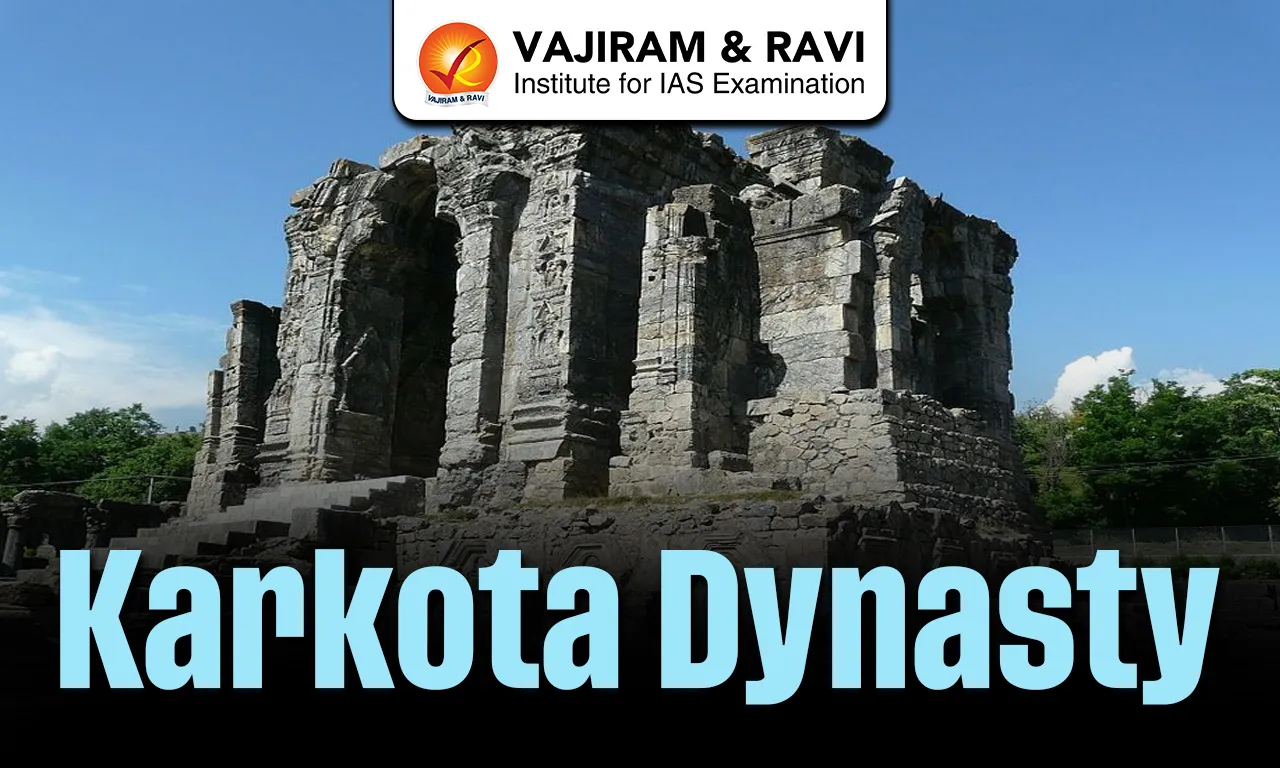
  • Martand Sun Temple: Built by Lalitaditya near present-day Anantnag, the Martand Sun Temple was one of the largest temple complexes of early medieval India constructed from massive limestone blocks.
  • Wangath Temple Complex: Another important temple group associated with Karkota architecture showing elaborate carvings and symmetrical layouts typical of Kashmiri stone architecture.
  • Pandrethan Temple: This temple represents the refined architectural style of Kashmir with precise stone masonry and a square sanctum surrounded by decorative elements.
  • Stone and Metal Sculpture: Sculptures depicting deities such as Vishnu, Shiva, and Surya reached a high level of artistic sophistication with graceful forms and intricate detailing.
  • Literary Developments: Works such as the Nilamata Purana and Vishnudharmottara Purana provide insight into religion, geography, and cultural life during the early Karkota period.
  • Scholarly Patronage: Jayapida’s court supported scholars like Vamana and Udbhatta who contributed to literary criticism, Sanskrit poetics, and philosophical debates.
  • Major Literary Works: The Kuttanimata by Damodaragupta and Haravijaya by Ratnakara illustrate the flourishing of Sanskrit literature under Karkota patronage.
  • Artistic Exchanges: The dynasty encouraged interaction with Central Asian and Indian artistic traditions, resulting in unique cultural synthesis in Kashmiri art.

Karkota Dynasty Culture

The dynasty fostered a vibrant cultural environment combining religion, learning, social traditions, and intellectual activity.

  • Religious Diversity: Karkota rulers were primarily Hindu, particularly followers of Shaivism and Vaishnavism, but they also patronised Buddhism, creating a religiously tolerant environment.
  • Buddhist Influence: Buddhist monasteries, stupas, and viharas continued to exist alongside Hindu temples, reflecting the coexistence of different religious traditions.
  • Sanskrit Scholarship: Kashmir emerged as an important centre of Sanskrit learning where scholars studied philosophy, grammar, poetics, and theology.
  • Migration of Scholars: Brahmin scholars from regions such as the Indus valley and southern India migrated to Kashmir and contributed to intellectual life.
  • Transmission of Buddhist Thought: Scholars from Kashmir helped transmit Buddhist teachings to Central Asia and East Asia, strengthening cross-regional intellectual exchange.
  • Social Structure: Society was hierarchical with strong influence of merchant communities. Urban trade and economic activity played a major role in social organisation.
  • Cultural Practices: Hunting, theatrical performances, and dramatic arts were popular among elite groups. Literary texts mention organised theatre halls and cultural gatherings.
  • Social Institutions: Practices such as the devadasi system and sati existed during the period, reflecting social customs prevalent in early medieval India.

Karkota Dynasty Decline

The dynasty weakened gradually due to internal instability, succession disputes, and external pressures that reduced its political authority.

  • Succession Conflicts: After the reign of powerful rulers like Lalitaditya and Jayapida, repeated struggles for the throne weakened central authority within the kingdom.
  • Weak Later Rulers: Several later kings lacked strong leadership abilities, which resulted in administrative disorder and declining imperial control.
  • Rise of Powerful Nobles: Court factions and influential ministers increasingly controlled political decisions, reducing the authority of the Karkota monarchs.
  • Regional Rebellions: Outlying territories began asserting independence as the central government lost its ability to enforce political control.
  • External Threats: Invasions and pressure from neighbouring powers such as the Daradas and Tibetans further destabilised the kingdom.
  • Political Fragmentation: Rival factions placed puppet rulers on the throne, leading to rapid changes of leadership and instability in governance.
  • Assassination and Court Intrigues: Some rulers were assassinated or overthrown through conspiracies, reflecting the deep political divisions within the ruling elite.
  • End of the Dynasty: Around 855 CE, Avantivarman overthrew the last Karkota ruler and established the Utpala Dynasty, bringing the Karkota rule to an end in Kashmir.

Karkota Dynasty FAQs

Q1: Who founded the Karkota Dynasty?

Ans: The Karkota Dynasty was founded by Durlabhavardhana around 625 CE in Kashmir. He was originally a feudatory of the last Gonanda ruler and ascended the throne after marrying Princess Anaṅgalekhā, establishing a powerful new ruling line in the region.

Q2: Who was the most famous ruler of the Karkota Dynasty?

Ans: Lalitaditya Muktapida (c. 724-760 CE) was the greatest ruler of the Karkota Dynasty. His reign marked the peak of Kashmiri power, with extensive military campaigns, diplomatic relations with China, and major architectural projects like the Martand Sun Temple.

Q3: What was the time period of the Karkota Dynasty?

Ans: The Karkota Dynasty ruled Kashmir roughly from 625 CE to 855 CE. During these two centuries, the dynasty transformed Kashmir into an important political, cultural, and economic centre of northern India.

Q4: What were the cultural achievements of the Karkota Dynasty?

Ans: The dynasty promoted Sanskrit literature, temple architecture, sculpture, and religious scholarship. Important works like Nilamata Purana, Vishnudharmottara Purana, and literary developments in Kashmiri poetics flourished under royal patronage.

Q5: Why did the Karkota Dynasty decline?

Ans: The dynasty declined due to internal succession disputes, weak rulers, administrative instability, and rising regional powers. Eventually, in 855 CE, Avantivarman overthrew the last Karkota ruler and established the Utpala Dynasty in Kashmir.

Dravidian Movement, Background, Origin, Role of Periyar

Dravidian Movement

The Dravidian Movement was an important social and political movement that began in South India, especially in present-day Tamil Nadu, during the early 20th century. It aimed to challenge caste discrimination, social inequality, and the dominance of upper-caste groups in education, jobs, and politics.

The movement focused on promoting social justice, self-respect, rational thinking, and equal rights for non-Brahmin communities. Over time, it transformed the political and social structure of Tamil Nadu and played a major role in shaping regional politics and cultural identity.

Dravidian Movement Background

The background of the Dravidian Movement lies in the social and political conditions of South India during the late 19th and early 20th centuries. During this period, many non-Brahmin communities faced discrimination in education, employment, and administration, which led to the rise of reform movements demanding social justice and equal representation.

  • Caste hierarchy and social inequality were deeply rooted in society, where certain communities enjoyed greater privileges while others were marginalized.
  • Dominance of Brahmins in government jobs and education created dissatisfaction among non-Brahmin communities in the Madras Presidency.
  • Limited access to higher education and administrative positions for backward communities led to demands for fair opportunities.
  • The spread of Western education and modern ideas of equality and democracy encouraged people to question traditional social structures.
  • Rise of non-Brahmin political consciousness led to organized efforts to challenge social discrimination.
  • The formation of the Justice Party in 1916 provided a political platform for non-Brahmin communities to demand representation.
  • Growing awareness about regional identity, language, and culture also contributed to the emergence of the Dravidian ideology.

Dravidian Movement Origin

The origin of the Dravidian Movement can be traced to the early 20th century in South India, particularly in the Madras Presidency. It emerged as a response to social inequality, caste discrimination, and the lack of representation of non-Brahmin communities in education, administration, and politics.

  • The formation of the Justice Party in 1916 marked the beginning of organized political efforts to represent non-Brahmin interests.
  • The Justice Party worked to secure greater representation for backward communities in government jobs and educational institutions.
  • The party introduced important reservation policies in the Madras Presidency, which aimed to improve opportunities for marginalized communities.
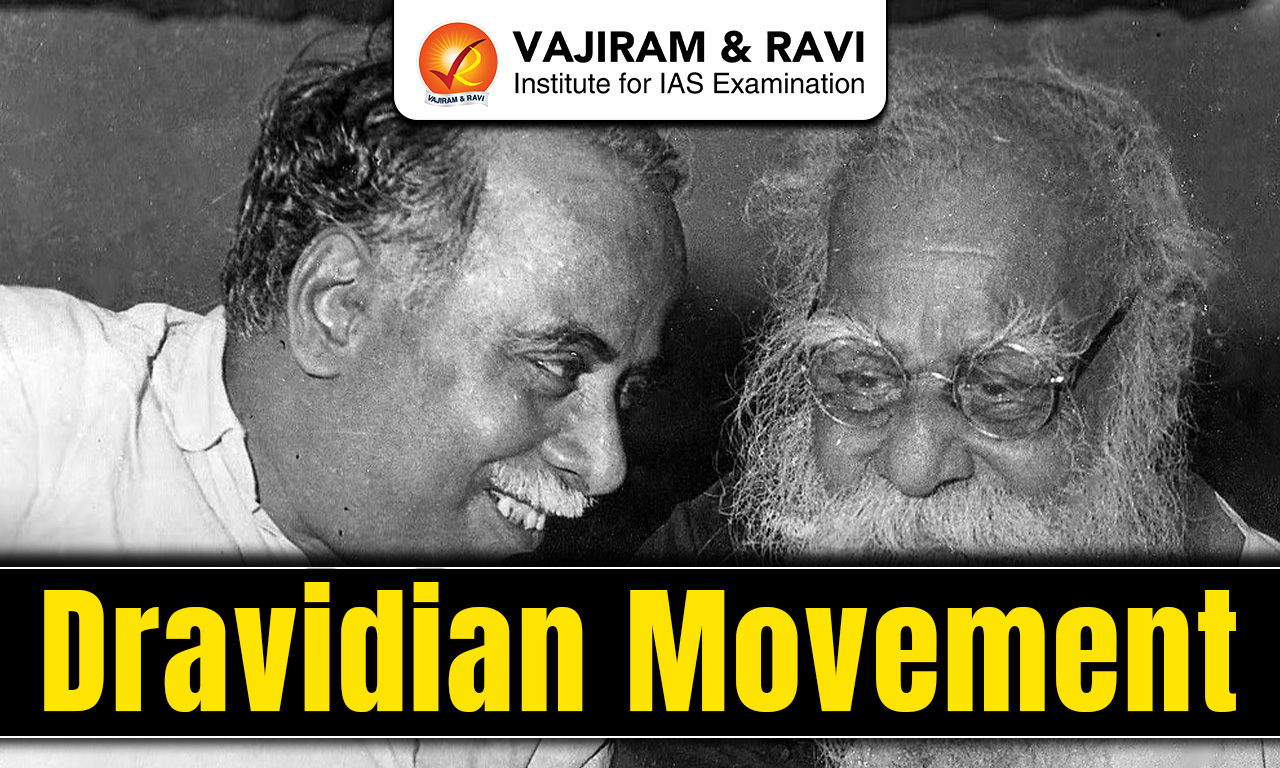
  • The movement gained ideological strength through the leadership of E. V. Ramasamy, who promoted social equality and rational thinking.
  • The early phase of the movement focused on challenging caste hierarchy, promoting social reforms, and strengthening the identity of Dravidian people.
  • These developments gradually transformed the movement from a social reform campaign into a powerful political and cultural movement in Tamil Nadu.

Role of Periyar in the Dravidian Movement

  1. V. Ramasamy, popularly known as Periyar, played a central role in shaping and spreading the ideas of the Dravidian Movement in South India.
  • Periyar launched the Self-Respect Movement in 1925, which aimed to promote dignity, equality, and self-respect among non-Brahmin communities.
  • He strongly opposed the caste system and Brahminical dominance, arguing that social hierarchy based on birth was unjust and harmful to society.
  • Periyar promoted rationalism and scientific thinking, encouraging people to question blind faith, superstition, and discriminatory religious practices.
  • He played a key role in spreading the ideas of social equality and justice through public meetings, newspapers, and reform campaigns.
  • Periyar actively supported women’s rights, including women’s education, widow remarriage, and the abolition of child marriage and other oppressive customs.
  • In 1944, he transformed the Justice Party into Dravidar Kazhagam, which became a major platform for promoting Dravidian ideology.
  • He also raised strong voices against the imposition of Hindi in South India, which later contributed to the Anti-Hindi agitations of Tamil Nadu.
  • Through his lifelong activism, Periyar laid the intellectual and ideological foundation of the Dravidian Movement, which later influenced regional political parties and governance in Tamil Nadu.

Growth of the Dravidian Movement

The Dravidian Movement gradually expanded from a social reform campaign into a powerful political and cultural force in South India, especially in Tamil Nadu. Over time, the movement gained support from various communities and played a major role in shaping regional politics and identity.

  • The movement gained early momentum through the activities of the Justice Party, which worked to secure greater representation for non-Brahmin communities in education and government jobs.
  • In 1944, E. V. Ramasamy reorganized the Justice Party into the Dravidar Kazhagam, focusing on social reforms and the promotion of Dravidian identity.
  • The movement entered electoral politics when C. N. Annadurai formed the Dravida Munnetra Kazhagam in 1949, which aimed to spread Dravidian ideology through democratic politics.
  • The movement gained wider popularity by promoting social justice, reservation policies, and equal opportunities for backward communities.
  • Public campaigns, speeches, newspapers, and cultural programs helped spread the ideas of rationalism, self-respect, and social equality among the masses.
  • Strong opposition to the compulsory use of Hindi led to the Anti-Hindi agitations of Tamil Nadu, which further strengthened the movement and increased public support.
  • Over time, Dravidian parties became dominant in Tamil Nadu politics, and another major party, the All India Anna Dravida Munnetra Kazhagam, also emerged from the same ideological background.
  • By the late 1960s, the Dravidian Movement had successfully transformed into a major political force that reshaped the governance and social policies of Tamil Nadu.

Also Read: Role of Press in Indian Freedom Movements

Dravidian Movement Impact

  • The Dravidian Movement challenged the rigid caste hierarchy and promoted the idea of social equality and dignity for all communities, especially non-Brahmin groups.
  • It led to the expansion of reservation policies in education and government jobs, improving opportunities for backward and marginalized communities.
  • The movement played a major role in the rise of regional political parties such as the Dravida Munnetra Kazhagam and All India Anna Dravida Munnetra Kazhagam, which later dominated Tamil Nadu politics.
  • It encouraged the promotion and protection of the Tamil language and culture, strengthening regional identity and pride.
  • The movement supported women’s rights and social reforms, including education for women and opposition to discriminatory social practices.
  • Public policies influenced by the movement helped improve access to education, welfare programs, and social development initiatives in the state.
  • The movement also played an important role in resisting the imposition of Hindi, leading to the Anti-Hindi agitations of Tamil Nadu, which strengthened linguistic and cultural identity in the region.

Dravidian Movement FAQs

Q1: What is the Dravidian Movement?

Ans: The Dravidian Movement was a social and political movement that began in South India to promote social justice, equality, and the rights of non-Brahmin communities.

Q2: Who was the main leader of the Dravidian Movement?

Ans: The most influential leader of the movement was E. V. Ramasamy, popularly known as Periyar.

Q3: Which organization started the Dravidian Movement?

Ans: The early phase of the movement was associated with the Justice Party, which was formed in 1916 to represent the interests of non-Brahmin communities.

Q4: What was the Self-Respect Movement?

Ans: The Self-Respect Movement, started by Periyar in 1925, aimed to promote dignity, equality, and self-respect among people while opposing caste-based discrimination.

Q5: What is the impact of the Dravidian Movement?

Ans: The movement helped promote social equality, reservation policies, regional political power, and the protection of Tamil language and culture, significantly influencing politics and society in Tamil Nadu.

International Women’s Day 2026, Theme, History, Significance

International Women’s Day 2026

International Women’s Day is celebrated every year on 8 March to recognize the achievements, contributions and struggles of women across the world. It is a day to appreciate women’s role in society and to promote gender equality, women’s rights, and empowerment. International Women’s Day 2026 reminds us of the importance of creating equal opportunities for women in areas such as education, employment, leadership and decision-making. The day also encourages people, governments and organizations to work together to remove discrimination and build a more inclusive and fair society for women.

International Women's Day 2026 Theme

The theme of International Women’s Day 2026 is “Give to Gain.” This theme highlights the idea that when people support others by sharing their time, knowledge, resources, or opportunities, everyone benefits. It encourages individuals, organizations, and communities to work together to promote gender equality and women’s empowerment. The theme promotes a culture of generosity and cooperation, showing that helping women grow and succeed can create positive change in society.

Significance of the Theme

  • The theme “Give to Gain” highlights the importance of mutual support and cooperation. By sharing knowledge, resources, and opportunities, people can help create more opportunities for women. Empowering women strengthens families, communities and economies, showing that when women progress, society as a whole moves forward.
  • International Women’s Day also raises awareness about key issues affecting women, such as equal pay, education, safety, healthcare, and ending violence against women. At the same time, it celebrates women’s achievements and encourages continued efforts toward a more equal and inclusive society.

About International Women’s Day 2026

  • International Women’s Day (IWD) is celebrated every year on 8 March around the world. It is a special day to recognize and appreciate the achievements and contributions of women in different fields such as education, science, politics, business, sports, and social work. The day also highlights the important role women play in the development of society.
  • International Women’s Day is also an opportunity to raise awareness about gender equality and women’s rights. It encourages people to discuss and address issues faced by women, such as discrimination, unequal opportunities, and gender-based violence. Governments, organizations, and communities organize various programs, campaigns, and events on this day to promote women’s empowerment and equal rights.

Also Read: National Women’s Day

Campaign Focus and Message

  • The International Women’s Day (IWD) 2026 campaign promotes the idea of generosity, cooperation, and collective support. Ahead of the 115th anniversary of International Women’s Day on 8 March in 2026, the official campaign encourages people to adopt a positive and supportive mindset. Individuals are encouraged to take small but meaningful actions such as challenging gender stereotypes, appreciating women’s achievements, and giving women a stronger voice in society.
  • Organizations and institutions are also encouraged to participate by supporting women-focused initiatives, organizing events, raising funds and spreading awareness about gender equality. Through activities like discussions, training programs, exhibitions, and public campaigns, they can help address ongoing challenges such as discrimination and unequal opportunities faced by women.

Global Call to Action

International Women’s Day is a global movement that welcomes everyone who believes in human rights and gender equality. It encourages people from different countries, cultures, and communities to work together to create a more equal society. The #GiveToGain campaign highlights that when women are supported through equal opportunities in workplaces, education, and communities, it leads to innovation, economic growth, and social progress worldwide.

International Women’s Day History

The history of International Women’s Day (IWD) goes back to the early 20th century, when women across many countries began demanding better working conditions, fair wages, and the right to vote. At that time, many women worked long hours in difficult conditions and had very few rights. Their protests and movements gradually led to the creation of a global day dedicated to women’s rights and equality.

Early Beginning

  • The movement began in 1908, when about 15,000 women workers marched in New York City demanding shorter working hours, better pay, and voting rights. Inspired by this movement, the Socialist Party of America organized the first National Woman’s Day in the United States in 1909, which was celebrated on the last Sunday of February for several years.
  • In 1910, during the Second International Conference of Working Women in Copenhagen, German activist Clara Zetkin suggested the idea of celebrating an International Women’s Day every year to support women’s rights. Her proposal was accepted by many countries.
  • Following this decision, International Women’s Day was celebrated for the first time in 1911 in countries such as Austria, Denmark, Germany, and Switzerland. Many people participated in rallies and demonstrations demanding voting rights and better working conditions for women.

Development of the Day

  • During World War I, women in Russia organized protests for peace and better living conditions. These protests took place on 8 March, which later became the official date for International Women’s Day. Over time, the increasing participation of women in the workforce also strengthened the movement for women’s equality and political rights.
  • In 1945, the United Nations Charter recognized the principle of equal rights for men and women, which further supported the global movement for gender equality.

Global Recognition

  • The United Nations officially recognized International Women’s Day in 1975, and since then it has been celebrated worldwide every year on 8 March. Later, in 1996, the UN started announcing an annual theme for the day to highlight different issues related to women’s rights.
  • In 2015, the United Nations adopted the Sustainable Development Goals (SDGs), where SDG 5 focuses on achieving gender equality and empowering all women and girls.
  • Today, International Women’s Day is celebrated across the world to honor the achievements of women and promote gender equality. Governments, organizations, and communities organize various events, campaigns, and discussions to highlight women’s rights and encourage a more equal and inclusive society.

International Women’s Day 2026 FAQs

Q1: When is International Women’s Day celebrated?

Ans: International Women’s Day is celebrated every year on 8 March to recognize the achievements of women and promote gender equality and women’s rights across the world.

Q2: Why is International Women’s Day important?

Ans: The day raises awareness about issues affecting women such as equal pay, education, safety, healthcare, and ending gender-based violence. It also celebrates women’s contributions to society.

Q3: What is the theme of International Women’s Day 2026?

Ans: The theme for International Women’s Day 2026 is “Give to Gain.” It highlights that supporting women through opportunities, knowledge, and resources benefits society as a whole.

Q4: What does the theme “Give to Gain” signify?

Ans: The theme emphasizes generosity, cooperation, and mutual support. It shows that empowering women helps strengthen families, communities, and economies.

Q5: How did International Women’s Day begin?

Ans: The movement began in 1908, when women workers in New York protested for better wages, shorter working hours, and voting rights. Later, in 1910, activist Clara Zetkin proposed an international day for women’s rights.

Cassava Brown Streak Disease

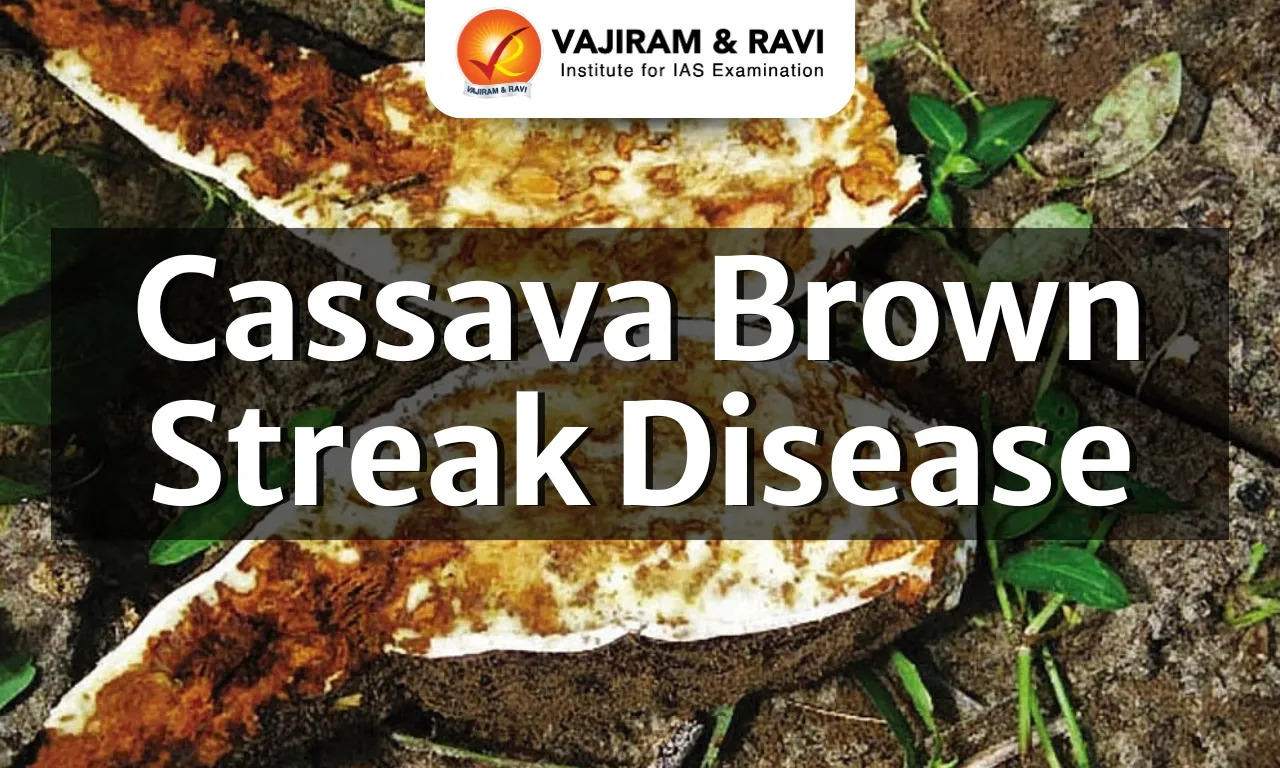
Cassava Brown Streak Disease

Cassava Brown Streak Disease Latest News

Recently, a study warns that more than a third of Africa is at risk of Cassava Brown Streak Disease

About Cassava Brown Streak Disease

  • It is a devastating disease that causes loss of cassava root (tuber) production and quality.
  • Cause: It is caused by two types of virus, Cassava Brown Streak Virus (CBSV) and Ugandan Cassava Brown Streak Virus (UCBSV).
  • It was first identified in Africa in the coastal region of East Africa close to the mid-20th century.
    • Its presence has now been confirmed in several eastern, central and southern African countries, including Tanzania, Uganda, Kenya, Rwanda, Burundi, Congo, the DRC, South Sudan, Malawi and now Zambia.
  • Spread: It is primarily spread by the whitefly Bemisia tabaci, a pest that exists as a complex of genetically distinct groups.
    • It spreads through particular whitefly populations in sub-Saharan Africa, known as Sub-Saharan Africa 1 and 2, which are highly efficient at transmitting the virus.

Symptoms of Cassava Brown Streak Disease

  • Symptoms of Cassava brown streak disease can be observed on leaves, stems and cassava roots
  • Typical CBSD symptoms are leaf chlorosis, brown streaks on stems and dry hard rot in roots which affects both the quality and quantity of edible storage roots. 
  • The disease causes necrosis in the roots of infected plants, often leading to total crop loss. 
  • It is observed that weak clean-seed systems, whitefly transmission and climate pressures accelerate the spread of Cassava Brown Streak Disease.
  • Management of CBSD:  Planting of clean cassava cuttings is the main way of controlling CBSD.
    • Use of resistant varieties is the most sustainable way of controlling CBSD.

Source: DTE

Cassava Brown Streak Disease FAQs

Q1: What is the primary cause of Cassava Brown Streak Disease?

Ans: Viral infection (CBSV and UCBSV)

Q2: How is CBSD primarily transmitted?

Ans: Through infected cuttings and whiteflies

Musa sikkimensis

Musa sikkimensis

Musa sikkimensis Latest News

Researchers at Nagaland University highlighted genetic richness of wild banana Musa sikkimensis for climate-resilient farming.

About Musa sikkimensis

  • It is a wild banana species.
  • It is native to the Eastern Himalayas and Northeast India.
  • Other Names: It is commonly known as the ‘Darjeeling banana’ or ‘Sikkim banana’.

Features of Musa sikkimensis

  • It is a tall, evergreen perennial plant that belongs to the banana family.
  • It has large, paddle-shaped leaves that can grow up to 10 feet (3 meters) long and 2 feet (60 cm) wide.
  • The plant produces beautiful, pendulous flowers that are a deep maroon color and can grow up to 2 feet (60 cm) long.
  • It is not widely cultivated for edible fruit, it plays a crucial role in strengthening crop resilience and ensuring sustainable production.
  • Its germplasm exhibits strong adaptive potential across diverse environmental conditions.
  • It is a wild-seeded species that serves as a crucial genetic reservoir.

Required Climatic Conditions for  Musa sikkimensis

  • It prefers high humidity levels, around 50-60%. 
  • It prefers warm temperatures between 20-30°C.
  • It can tolerate cooler temperatures, but not below 10°C.
  • Significance:  It possesses traits linked to disease resistance, environmental stress tolerance and climate adaptability, making it an invaluable resource for future banana breeding and crop improvement programmes.

Source: DD News

Musa sikkimensis FAQs

Q1: What is Musa sikkimensis commonly known as?

Ans: Himalayan banana

Q2: Where is Musa sikkimensis primarily found?

Ans: Eastern Himalayas

Article 144 of Indian Constitution, Provisions, Objectives, Case Laws

Article 144 of Indian Constitution

Article 144 of Indian Constitution empowers all authorities in India, whether civil or judicial, to act in support of the functioning and authority of the judiciary.

Article 144 of Indian Constitution Scope

  • Binding Nature on Authorities: Article 144 of Indian Constitution creates a constitutional obligation for all public authorities to respect and follow the directions of the Supreme Court of India. This means that government departments and officials cannot ignore or delay the implementation of judicial orders. The provision ensures that the highest court’s decisions are effectively carried out in practice.
  • Inclusion of Civil and Judicial Authorities: The scope of Article 144 is wide because it covers both civil and judicial bodies. 
    • Civil authorities include administrative officers, police departments, district-level officials, and other government functionaries. 
    • Judicial authorities such as lower courts and tribunals are also expected to cooperate with the Supreme Court’s orders for smooth functioning of the justice system.
  • Supportive Nature of Power: Article 144 does not give the Supreme Court independent law-making or enforcement authority. Instead, it works as a supportive constitutional mechanism to ensure cooperation among institutions. The article mainly promotes coordination between the judiciary and administrative machinery rather than creating new enforcement powers.

Article 144 of Indian Constitution Objectives

The main objective of Article 144 of Indian Constitution is to ensure the effective functioning of the judicial system by promoting cooperation between the judiciary and administrative machinery.

  • Maintain supremacy and dignity of the Supreme Court: The provision helps protect the authority of the Supreme Court of India by ensuring its lawful orders are respected.
  • Ensure smooth implementation of judicial orders: It supports practical enforcement of court decisions so that justice is not only delivered but also implemented.
  • Prevent administrative resistance to judicial decisions: The article discourages any attempt by public authorities to ignore or obstruct judicial directions.
  • Protect constitutional governance and rule of law: By ensuring cooperation among institutions, Article 144 strengthens democratic constitutional functioning in India.

Article 144 of Indian Constitution Case Laws

The scope and significance of Article 144 of Indian Constitution have been clarified through several landmark judgments of the Supreme Court.

  • Supreme Court Bar Association v. Union of India (1998): In this case, the Supreme Court clarified the scope of its constitutional powers. The court held that the powers under Article 142 cannot be used to override existing substantive laws. This judgment ensured that judicial discretion remains within constitutional and statutory boundaries.
  • Vineet Narain v. Union of India (1997): This case was related to ensuring fair and independent investigation in corruption matters. The court issued several administrative directions to maintain transparency in investigative processes and ensure government agencies complied with judicial instructions.
  • Sahara India Real Estate Corporation Ltd. v. SEBI (2012): In this judgment, the court balanced two important constitutional principles - freedom of speech and the right to a fair trial. The court allowed reasonable restrictions on media reporting when necessary to protect the integrity of judicial proceedings.

Article 144 of Indian Constitution FAQs

Q1: What does Article 144 of Indian Constitution state?

Ans: Article 144 of Indian Constitution states that all civil and judicial authorities in India must act in aid of the Supreme Court, ensuring that its orders are properly implemented.

Q2: Who is bound by Article 144 of Indian Constitution?

Ans: All government officials, administrative authorities, police departments, lower courts, and tribunals are bound to assist and comply with the directions of the Supreme Court.

Q3: Does Article 144 of Indian Constitution give additional powers to the Supreme Court?

Ans: No, Article 144 does not grant new powers. It only ensures cooperation from authorities in carrying out Supreme Court decisions.

Q4: Why is Article 144 of Indian Constitution important?

Ans: It maintains the authority of the Supreme Court, prevents non-compliance by public authorities, and strengthens the rule of law.

Q5: Which judgments explain the importance of Article 144 of Indian Constitution?

Ans: Important cases include Supreme Court Bar Association v. Union of India, Vineet Narain v. Union of India, and Sahara India Real Estate Corporation Ltd. v. SEBI, which clarified judicial limits and emphasized compliance with Supreme Court directions.

Cushing’s Syndrome

Cushing’s Syndrome

Cushing’s Syndrome Latest News

Recent studies have reported expanding treatment options for Cushing’s syndrome.

About Cushing’s Syndrome

  • It is a disorder that occurs when your body makes too much of the hormone cortisol over a long period of time.
    • Cortisol is produced by the adrenal glands and helps control blood pressure, metabolism, immunity, and the body’s response to stress.
  • Cause: The most common cause is long-term use of steroid medicines prescribed for asthma, autoimmune diseases, arthritis, or after organ transplants.
    • The body produces excess cortisol on its own. This is usually due to a non-cancerous tumour in the pituitary gland (called Cushing’s disease).

Signs and Symptoms

  • Weight gain especially around the abdomen and face and develop fat buildup between the shoulders.
  • The skin becomes thin and bruises easily. Wounds may heal slowly. Wide purple stretch marks can appear on the abdomen, thighs, breasts, or arms.
  • Acne and increased facial or body hair (especially in women) can also occur.
  • Women may notice irregular or absent periods, while men may experience reduced libido or fertility issues.
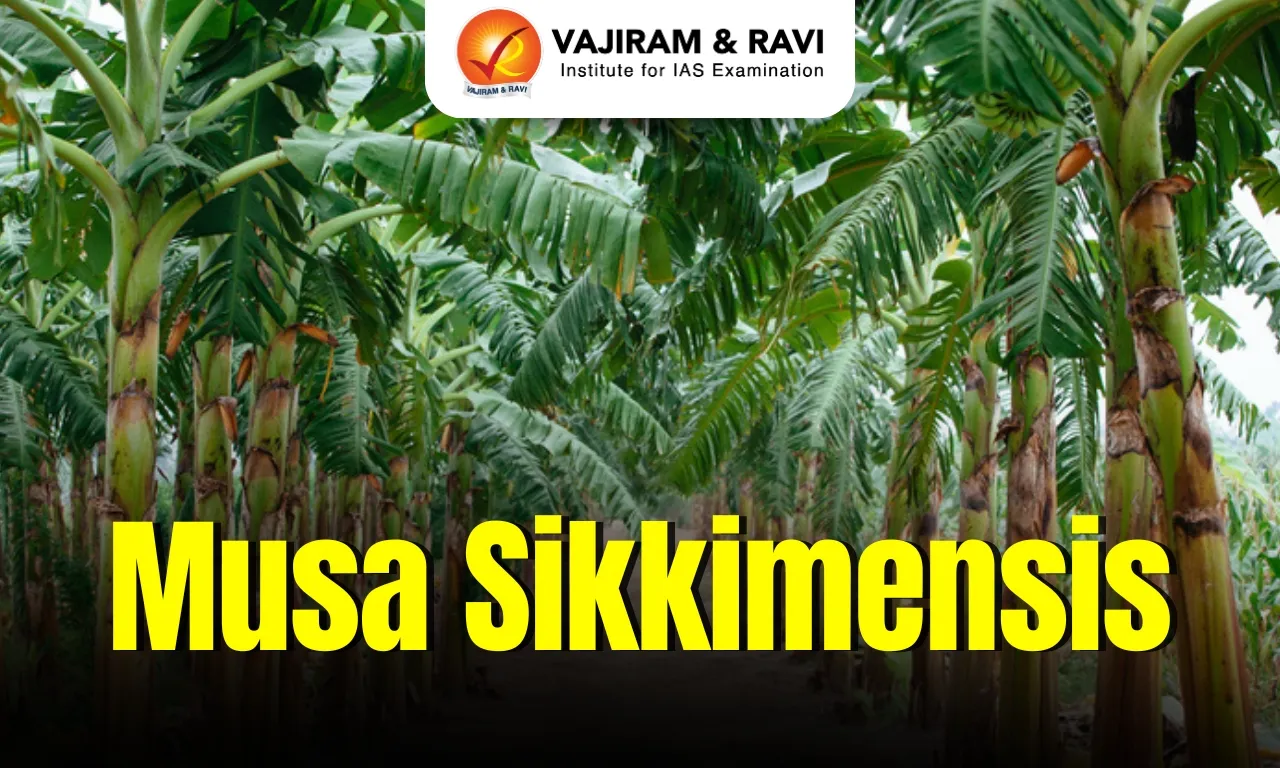
  • Many people develop high blood pressure and high blood sugar, and some develop diabetes.
  • Bone loss can lead to osteoporosis and fractures.
  • Anxiety, irritability, depression, mood swings, sleeps problems and memory problems.
  • Risks: Women are more commonly affected than men in naturally occurring (endogenous) cases, especially between ages 30 and 50.

Treatment for Cushing’s Syndrome 

  • Treatment depends on the cause and aims to bring cortisol levels back to normal.
  • If steroid medicines are the cause, doctors slowly reduce the dose under supervision.
  • If a tumour is causing excess cortisol, surgery is usually the first treatment.

Source: TH

Cushing’s syndrome FAQs

Q1: What is the primary cause of Cushing's Syndrome?

Ans: Excess cortisol production

Q2: What is a common symptom of Cushing's Syndrome?

Ans: Weight gain

Karbi Anglong Ginger

Karbi Anglong Ginger

Karbi Anglong Ginger Latest News

Recently, the Assam Agriculture Minister flagged off the first export of GI-tagged Karbi Anglong Ginger to London.

About Karbi Anglong Ginger

  • It is grown as an important cash crop in Singhasan Hills of Karbi Anglong district of Assam.
  • It is cultivated using the age-old system of Jhum and Tila cultivation.

Properties of Karbi Anglong Ginger

  • It is one of the most aromatic and flavourful varieties of ginger in India.
  •  It is renowned for its bold flavour, rich pungency, and high oil content.
  • It is known for its pungent aroma and medicinal properties.
  • The ginger has a distinct earthy flavour with a hint of spiciness that makes it perfect for cooking.
  • It received the Geographical Indication tag in 2015.

Key Facts about Geographical Indication Tag

  • It is a sign used on products that have a specific geographical origin and possess qualities or a reputation that are due to that origin.
  • It is used for agricultural products, foodstuffs, wine and spirit drinks, handicrafts and industrial products.
  • The Geographical Indications of Goods (Registration and Protection) Act, 1999 seeks to provide for the registration and better protection of geographical indications relating to goods in India.
  • This GI tag is valid for 10 years following which it can be renewed.

Source: DD News

Karbi Anglong Ginger FAQs

Q1: What is Karbi Anglong Ginger known for?

Ans: High gingerol content and strong aroma¹

Q2: What is the GI status of Karbi Anglong Ginger?

Ans: Awarded in 2015

Article 43B of Indian Constitution, About, Insertion, Significance

Default Image

Article 43B of Indian Constitution is a part of the Directive Principles of State Policy. It guides the State to promote cooperative societies and ensure that they function in a democratic and efficient manner. This article encourages people to work together through cooperative groups for their economic and social development. Though it is not legally enforceable, it acts as an important guideline for the government while making policies related to cooperative institutions.

Article 43B of Indian Constitution

Promotion of co-operative societies

The State shall endeavour to promote voluntary formation, autonomous functioning, democratic control and professional management of co-operative societies.

Article 43B of Indian Constitution Insertion

  • Article 43B was added to the Indian Constitution by the 97th Constitutional Amendment Act, 2011. This amendment aimed to strengthen and promote the cooperative movement in India. It gave constitutional recognition to cooperative societies and emphasized their importance in economic and social development.
  • Article 43B was placed under the Directive Principles of State Policy (Part IV). It directs the State to promote voluntary formation, autonomous functioning, democratic control and professional management of cooperative societies.
  • Along with inserting Article 43B, the amendment also introduced Part 9B in the Constitution, which contains provisions related to the structure, election and functioning of cooperative societies. The main objective of these changes was to ensure that cooperative societies operate in a democratic, transparent and efficient manner.

Article 43B of Indian Constitution Significance

  • Promotes cooperative movement: Article 43B encourages the growth and development of cooperative societies in sectors like agriculture, credit, and rural industries.
  • Ensures democratic functioning: It emphasizes democratic control, where members of cooperative societies can participate in decision-making and elect their representatives.
  • Supports voluntary formation: The article promotes the voluntary creation of cooperative societies so that people can work together to meet their economic and social needs.
  • Improves management and transparency: It encourages professional management and better functioning of cooperative societies, making them more efficient and accountable.
  • Aids rural and economic development: By strengthening cooperatives, the article helps farmers, small producers, and local communities improve their livelihoods and contribute to overall economic development.

Article 43B of Indian Constitution FAQs

Q1: What is Article 43B of Indian Constitution?

Ans: Article 43B is a part of the Directive Principles of State Policy. It directs the State to promote cooperative societies and ensure their voluntary formation, democratic functioning, and professional management.

Q2: In which part of the Constitution is Article 43B included?

Ans: Article 43B is included in Part IV of the Constitution, which deals with the Directive Principles of State Policy.

Q3: Which Constitutional Amendment inserted Article 43B?

Ans: Article 43B was inserted by the 97th Constitutional Amendment Act, 2011 to strengthen the cooperative movement in India.

Q4: What is the main objective of Article 43B?

Ans: The main objective of Article 43B is to encourage the growth of cooperative societies and ensure that they function in a democratic, autonomous, and efficient manner.

Q5: Why is Article 43B important?

Ans: Article 43B is important because it strengthens cooperative societies, supports rural and economic development, and helps people work together for their social and economic progress.

New Earthworm Species

New Earthworm Species

New Earthworm Species Latest News

Recently, a team of researchers have discovered two previously unknown species of moniligastrid earthworms and named them as Moniligaster girishi and Drawida reynoldsi.

About Moniligaster girishi

  • It is endemic to Western Ghats and belongs to the family Moniligastridae.
  • It is named after P. Girish Kumar, a scientist at the Zoological Survey of India’s Western Ghats Regional Centre, Kozhikode.
  • It was collected from the tropical wet evergreen forest. 

Characteristics of Moniligaster girishi

  • It is of the gravelyi species-group.
  • It is distinguished by a single undivided spermathecal atrial gland on each side of the anterior body, particularly by the condition of its prostate and prostatic capsule.
  • It has a smooth, tubular capsule at one end that flattens into a strap-like shape.

About Drawida reynoldsi

  • It was collected from the montane grassland.
  • It is named after John Warren Reynolds, an eminent Canadian earthworm specialist.
  • It belongs to the robusta species-group characterised by glandular prostates and bilobed spermathecal atria.

Key Facts about Earthworms

  • They are terrestrial worms of the class Oligochaeta (phylum Annelida)—in particular, members of the genus Lumbricus. 
  • Earthworms are harmless, often beneficial residents of the soil.
  • Benefits
    • They  break down dead and decaying organic matter into rich humus soil, thereby supporting plant growth.
    • Earthworms release waste from their bodies called castings. Castings contain many nutrients that the plant can use. 
    • They also dig tiny channels and make holes that aerate soil and improve drainage.

Source: TH

New Earthworm Species FAQs

Q1: Which genus does Drawida reynoldsi belong to?

Ans: Drawida

Q2: What is unique about the genus Drawida?

Ans: It is the most species-rich genus of earthworms in India

Shtil Missile

Shtil Missile

Shtil Missile Latest News

The Ministry of Defence recently signed contracts worth a total of Rs 5,083 crore for the acquisition of six Advanced Light Helicopters (ALH) Mk-III (Maritime Role) for the Indian Coast Guard and Surface-to-Air Vertical Launch - Shtil missiles for the Indian Navy.

About Shtil Missile

  • It is a medium-range, ship-based, vertical-launch surface-to-air missile (SAM) system developed by Russia.
  • It primarily uses the 9M317ME semi-active radar homing (SARH) missile.
  • It is designed to defend warships from aerial threats such as helicopters, supersonic fighter aircraft, anti-ship cruise missiles, and drones.
  • It can engage up to 12 targets simultaneously. 
  • It has a range of 3.5 to 50 km and can engage targets at altitudes between 5 meters and 15 km. 
  • The Shtil SAM system uses the information provided by the ship's 3D radar system. 
  • It has been highly automated to reduce the reaction time in the event of an attack. 
  • It can travel at 2.5 times the speed of sound.

Source: PIB

Shtil Missile FAQs

Q1: What is the Shtil Missile System?

Ans: It is a medium-range, ship-based, vertical-launch surface-to-air missile (SAM) system.

Q2: Which country developed the Shtil Missile System?

Ans: Russia.

Q3: What types of aerial threats can the Shtil Missile System defend against?

Ans: Helicopters, supersonic fighter aircraft, anti-ship cruise missiles, and drones.

Q4: What is the engagement range of the Shtil Missile System?

Ans: 3.5 km to 50 km.

Oleum

Oleum

Oleum Latest News

A major leak of hazardous oleum gas at a chemical unit in Maharashtra's Palghar district recently led to the evacuation of over 2,600 people.

About Oleum

  • Oleum is a powerful chemical solution composed of sulfur trioxide (SO₃) dissolved in sulfuric acid (H₂SO₄).
  • Though oleum and sulfuric acid are closely related, they differ significantly in composition and reactivity. 
  • Sulfuric acid (H₂SO₄) is a powerful acid in its own right, but oleum is even more reactive due to the additional dissolved SO₃.
  • The Contact Process is the primary industrial method for producing sulfuric acid, and by extension, oleum.
  • Oleum is available in different concentrations, with the SO₃ content varying to suit industrial needs.
  • It’s often referred to as “fuming sulfuric acid” due to its tendency to release SO₃  fumes upon exposure to air. 
  • In terms of appearance, oleum ranges from colorless to pale yellow, with an oily consistency. 

Oleum Applications

  • Oleum's high reactivity makes it a vital component for producing highly concentrated sulfuric acid and in synthesizing crucial chemicals like explosives, dyes, and pharmaceuticals.
  • Oleum’s high viscosity contributes to its “oily” appearance and influences its handling requirements in industrial applications.
  • It is also an efficient dehydrating agent and can strip water from organic compounds, which is essential in certain industrial reactions.

Is Oleum Dangerous?

  • It is highly corrosive, meaning it can burn and damage skin, eyes, and other materials very quickly. 
  • Because it releases toxic fumes, it can also be harmful if inhaled. 

Source: TH

Oleum FAQs

Q1: What is Oleum?

Ans: It is a powerful chemical solution composed of Sulfur trioxide (SO₃) dissolved in Sulfuric acid (H₂SO₄).

Q2: Why is Oleum more reactive than Sulfuric acid?

Ans: Because it contains additional dissolved Sulfur trioxide (SO₃).

Q3: Why is Oleum often called “fuming sulfuric acid”?

Ans: Because it releases **Sulfur trioxide fumes when exposed to air.

Q4: Why is Oleum important in the chemical industry?

Ans: It is used to produce highly concentrated Sulfuric acid and to synthesize chemicals such as explosives, dyes, and pharmaceuticals.

Q5: Is Oleum dangerous to handle?

Ans: Yes, it is highly corrosive and can cause severe burns to skin and eyes.

Takydromus ultapanensis

Takydromus ultapanensis

Takydromus ultapanensis Latest News

Researchers recently discovered a new species of Asian grass lizard named Takydromus ultapanensis from Assam’s Manas Biosphere landscape.

About Takydromus ultapanensis

  • It is a new species of Asian grass lizard.
  • It was discovered in Assam’s Manas Biosphere landscape. 
  • It was found in the Ultapani Reserve Forest in the Kokrajhar district.
  • Unlike many of its congeners found in montane or subtropical habitats, T. ultapanensis inhabits lowland, semi-evergreen forests interspersed with waterlogged grasslands and fern patches.
  • Researchers recorded the lizards basking on fern bushes in small open patches criss-crossed by seasonal water channels.
  • Morphologically, the new species differs from its northeastern Indian relatives—including T. khasiensis and T. sikkimensis, in scale patterns, body proportions, and diagnostic head features.
  • The fact that T. ultapanensis is currently known from a single forest range raises conservation concerns.

Source: NEN

Takydromus ultapanensis FAQs

Q1: What is Takydromus ultapanensis?

Ans: It is a newly discovered species of Asian grass lizard.

Q2: Where was Takydromus ultapanensis discovered?

Ans: In the Manas Biosphere Reserve landscape in Assam, India.

Q3: What type of habitat does Takydromus ultapanensis inhabit?

Ans: Lowland semi-evergreen forests with waterlogged grasslands and fern patches.

New GDP Series: Stronger Agriculture and Informal Manufacturing Revealed

New GDP Series

New GDP Series Latest News

  • India’s new GDP series, with 2022–23 as the base year, has introduced notable changes in the assessment of economic performance. 
  • The revised data shows more stable real GDP growth rates for the years beginning 2023–24, ranging between 7.1% and 7.6%, compared to the earlier wider range of 6.5% to 9.2%.
  • The updated series also indicates a 3–4% reduction in the overall size of the economy in nominal terms (Nominal GDP → Uses current market prices). 
  • However, the revision is considered reasonable and reflects a more accurate measurement of economic activity.
  • Importantly, the new GDP series offers a clearer picture of how different sectors of the economy are performing.

Agriculture Sector Larger in the New GDP Series

  • The new GDP series released by the Ministry of Statistics and Programme Implementation (MoSPI) shows that the agriculture, livestock, forestry and fishing sector is about 5% larger than previously estimated for the years starting 2022–23 in nominal terms.
  • Since the overall size of the economy has been revised downward by 3–4%, agriculture’s share in GDP has increased. 
  • The sector’s share rose to 18.2% in 2022–23, compared with 16.5% in the earlier GDP series.
  • Despite the revision, agriculture’s share in the economy continues to decline over time. In 2025–26, agriculture accounts for 16.2% of GDP in the new series, compared with 15.2% in the old series.

Reasons for the Higher Estimate

  • Inclusion of More Cash Crops - The new GDP series better captures the shift toward cash crops such as fruits and vegetables. These crops generate higher profits for farmers, increasing the value added in agriculture and raising the sector’s estimated size.
  • Reduced Input Costs for Farmers - The new estimates also reflect a decline in fuel costs in agriculture. Diesel use has reduced and is increasingly being replaced by electricity and solar power for irrigation. Lower input costs increase the value added generated by farmers.

Role of the PM-KUSUM Scheme

  • A major factor behind this shift is the Pradhan Mantri Kisan Urja Suraksha evam Utthaan Mahabhiyaan (PM-KUSUM) scheme launched in 2019.
  • The scheme provides subsidies for installing solar irrigation pumps, helping farmers reduce dependence on diesel and lower energy costs. 
  • This transition contributes to higher value added in the agricultural sector.

Stronger Manufacturing Growth in the New GDP Series

  • The new GDP series shows that the manufacturing sector has become a stronger driver of economic growth. 
  • Under the old GDP series, manufacturing grew at an average rate of about 8% between 2023–24 and 2025–26, with a sharp 12.3% growth in 2023–24 largely due to a favourable base effect.
  • In contrast, the new GDP series estimates manufacturing growth at an average of 11.2% annually during the same period, indicating a stronger and more consistent expansion of the sector.

Methodological Improvements in Estimation

  • One important reason for the higher growth estimate is the abandonment of the single-deflator method, which was widely criticised for inaccurately converting nominal Gross Value Added (GVA) into real terms. 
    • The single-deflator method is an economic technique used to calculate real Value Added (or GDP) by deflating nominal value added directly with a single price index, typically the output price index (e.g., WPI or CPI). 
    • It assumes input and output prices move similarly, often leading to overestimation when they diverge.
  • The revised methodology provides a more accurate estimate of manufacturing output.

Better Data on the Informal Sector

  • Improved data sources have also contributed to the revised estimates. 
  • Surveys such as the Annual Survey of Unincorporated Sector Enterprises (ASUSE) and the Periodic Labour Force Survey (PLFS) now capture more information about the informal manufacturing sector.
  • This improved data coverage has helped economists estimate stronger and more consistent manufacturing growth in the new GDP series.

Informal Economy in the New GDP Series

  • One major criticism of India’s earlier GDP estimates was the inaccurate measurement of the informal sector. 
  • The new GDP series attempts to correct this by using data from the Periodic Labour Force Survey (PLFS) and the Annual Survey of Unincorporated Sector Enterprises (ASUSE).
  • These surveys reduce the earlier dependence on formal-sector proxies and provide a more realistic picture of informal economic activity.

Impact on Different Sectors

  • The improved measurement of the informal economy has contributed to stronger estimates of manufacturing growth, as informal manufacturing activities are now better captured in the data.

Decline in Estimated Size of Some Service Activities

  • However, data for some service-sector activities suggest that the size of the unorganised sector may have been overestimated earlier.
  • For example, the sector comprising trade, repair, hotels and restaurants, transport, storage, communication, and broadcasting-related services has seen its Gross Value Added (GVA) fall by nearly 25% annually between 2022–23 and 2025–26 in the revised estimates.
  • According to officials, this sector has a large informal component, and better data has led to more accurate and possibly lower estimates of its size.

Source: IE

New GDP Series FAQs

Q1: What is the New GDP Series introduced by India?

Ans: The New GDP Series uses 2022–23 as the base year and incorporates improved data sources to provide a more accurate measurement of sectoral performance and overall economic growth.

Q2: Why does the New GDP Series show agriculture as larger?

Ans: The New GDP Series includes better data on cash crops like fruits and vegetables and lower fuel costs due to solar irrigation, increasing the value added in the agricultural sector.

Q3: How has manufacturing growth changed in the New GDP Series?

Ans: Manufacturing growth is estimated at about 11.2% annually between 2023–24 and 2025–26 in the New GDP Series due to improved methods and better data on informal sector production.

Q4: How does the New GDP Series measure the informal economy better?

Ans: The New GDP Series uses surveys such as the Periodic Labour Force Survey (PLFS) and the Annual Survey of Unincorporated Sector Enterprises (ASUSE) to capture informal sector activity more accurately.

Q5: What major methodological change was made in the New GDP Series?

Ans: The New GDP Series abandons the criticised single-deflator method for calculating real GVA, improving accuracy in measuring manufacturing output and overall economic performance.

Canada Uranium Deal: Fueling India’s Nuclear Power Expansion

Canada Uranium Deal

Canada Uranium Deal Latest News

  • India and Canada have signed an agreement for the long-term supply of uranium to fuel India’s nuclear reactors. Under the deal, Canadian company Cameco will supply about 22 million pounds (around 10,000 tonnes) of uranium to India between 2027 and 2035. The contract is valued at about 2.6 billion Canadian dollars.
  • This is India’s second major uranium supply agreement within a month. Earlier, India finalised a similar deal with Kazakhstan’s state-owned company Kazatomprom, though details of that contract have not been disclosed.
  • These agreements are significant for India’s plans to greatly expand nuclear power generation and increase nuclear energy capacity more than tenfold by 2047.

India’s Dependence on Imported Uranium

  • Although India has uranium deposits, the quality of its ore is relatively low. The uranium concentration in Indian mines ranges between 0.02 and 0.45 per cent
    • This is far lower than the global average of 1–2 per cent.
  • In comparison, some mines in Canada contain uranium concentrations as high as 15 per cent. 
  • Because of the lower ore quality, extracting uranium in India is more expensive than importing it.

Growing Reliance on Imports

  • Due to these limitations, more than 70 per cent of India’s uranium needs are currently met through imports. 
  • However, domestic production still plays an important role. 
  • It supports India’s nuclear weapons programme and provides a buffer in case global supply chains are disrupted.

Expansion of Domestic Production

  • India is increasing domestic uranium production to support the planned expansion of nuclear energy. 
  • The government aims to raise nuclear power capacity from about 9 GW today to 100 GW by 2047.
  • Despite this expansion, domestic production is expected to meet only around 30 per cent of the fuel requirements of nuclear power plants in the future.

Rising Uranium Demand

  • India currently consumes about 1,500–2,000 tonnes of uranium each year. In 2025, the country’s requirement was about 1,884 tonnes.
  • With the expansion of nuclear power, annual uranium demand could rise to about 5,400 tonnes
  • Even then, only around 30 per cent of this demand is likely to be met through domestic production.

Domestic Uranium Resources and Production

  • India’s uranium production is mainly concentrated in Jharkhand and Andhra Pradesh, where seven mines are currently operational. 
  • Uranium deposits are also found in states such as Meghalaya, Rajasthan, and Telangana.
  • India’s total uranium resources are estimated at about 4.3 lakh tonnes of uranium ore. 
  • More than 80,000 tonnes are located in mines allocated to the Uranium Corporation of India Limited (UCIL), and about 40 per cent of these reserves have already been extracted. 
  • Explorations are ongoing in nearly 15 states to identify new deposits.

Expanding and Diversifying India’s Uranium Supply

  • New uranium supply agreements, including the recent deal with the Canadian company Cameco, aim to diversify India’s import sources and meet rising nuclear fuel demand.
  • The agreement with Canada also reflects improving bilateral relations after a period of diplomatic tensions.

Longstanding Nuclear Cooperation with Canada

  • India and Canada have had nuclear cooperation since the 1950s. One early example was the CIRUS reactor, a joint India–Canada project. 
  • Canada also helped establish reactors at the Rajasthan Atomic Power Project in the 1960s.
  • Cameco has previously supplied uranium to India, including during 2020–21.

Multiple Global Supply Sources

  • With the new agreement, India now imports uranium from several countries, including Uzbekistan, Kazakhstan, Canada, and Russia
  • Russia has also committed to long-term fuel supply for reactors at Kudankulam in Tamil Nadu.
  • India may further expand supply partnerships with countries such as Australia and the United States. 
  • Indian companies are also exploring opportunities to mine uranium in other countries to strengthen long-term energy security.

India’s Three-Stage Nuclear Programme

  • India aims to develop a three-stage nuclear power programme that will ultimately rely on thorium rather than uranium. 
  • The country possesses large thorium reserves, which makes this approach attractive for long-term energy security and independence.
  • However, achieving this goal requires specialised nuclear reactors based on technologies that are proven but not yet widely used.
  • First Stage: Uranium-Based Reactors - The nuclear reactors currently operating in India represent the first stage of the programme. These reactors primarily use uranium as fuel and produce plutonium as a by-product for the next stage.
  • Second Stage: Fast-Breeder Reactors - The second stage involves fast-breeder reactors that use plutonium produced in the first stage. India has taken a major step toward this stage with a prototype fast-breeder reactor at Kalpakkam, which is nearing operational status.
  • Third Stage: Thorium-Fuelled Reactors - The final stage aims to deploy reactors that use thorium as the main fuel. This stage is still some distance away and will require advanced technological development.

Slow Progress Despite Early Vision

  • India conceived the three-stage nuclear programme in the 1950s and remains the only country pursuing this model. 
  • However, progress has been slow, and full realisation of the programme is still a long-term objective.

Source: IE | FP

Canada Uranium Deal FAQs

Q1: What is the Canada Uranium Deal?

Ans: The Canada Uranium Deal is an agreement under which the Canadian company Cameco will supply about 22 million pounds of uranium to India between 2027 and 2035 to fuel its nuclear reactors

Q2: Why is the Canada Uranium Deal important for India?

Ans: The Canada Uranium Deal ensures long-term fuel availability for India’s nuclear reactors, helping the country expand nuclear power capacity from around 9 GW today to about 100 GW by 2047.

Q3: Why does India import uranium despite having domestic deposits?

Ans: India imports uranium because its domestic uranium ore has low concentration levels (0.02–0.45%), making extraction expensive compared with higher-grade uranium deposits available in countries like Canada.

Q4: Which countries currently supply uranium to India?

Ans: India currently imports uranium from several countries including Canada, Kazakhstan, Uzbekistan, and Russia, with additional potential supply partnerships expected with Australia and the United States.

Q5: How does uranium supply support India’s three-stage nuclear programme?

Ans: Uranium fuels the first stage of India’s three-stage nuclear programme, producing plutonium that will later power fast-breeder reactors and eventually enable thorium-based nuclear energy generation.

World Wildlife Day

World Wildlife Day 2026

World Wildlife Day Latest News

The Prime Minister reaffirmed India’s commitment to wildlife conservation and sustainable practices on the occasion of World Wildlife Day.

About World Wildlife Day (WWD)

  • It is observed every year on March 3 to celebrate wild animals and plants and recognize the unique roles and contributions of wildlife to people and the planet. 
  • History:
    • It was established by the United Nations in 2013 after Thailand proposed to dedicate a day to raise awareness about wildlife conservation. 
    • On December 20, 2013, the UN General Assembly officially declared March 3 as World Wildlife Day, with the first celebration taking place in 2014.
    • This date was chosen because, in 1973, the Convention on International Trade in Endangered Species of Wild Fauna and Flora (CITES) was signed on the same day. 
    • CITES is a global agreement to ensure that international wildlife trade does not threaten the survival of animal and plant species.
  • WWD 2026 Theme: “Medicinal and Aromatic Plants: Conserving Health, Heritage and Livelihoods”
    • It highlights the importance of plants used for medicine, their role in preserving cultural traditions, and the income they provide to local communities. 
    • Across the world, 70–95% of people in developing countries depend on traditional medicine for basic healthcare, much of it derived from plant-based resources. 
    • Medicinal and aromatic plants form the foundation of traditional systems of medicine and also contribute significantly to modern pharmaceuticals. 
    • India is one of 17 megabiodiversity-rich countries with around 15,000 medicinal plant species, of which 8,000 are used in Indian medicine, making it one of the world's most important hubs for medicinal and aromatic plants.

Source: DD

World Wildlife Day FAQs

Q1: When is World Wildlife Day observed?

Ans: It is observed annually on March 3.

Q2: When did the United Nations General Assembly officially declare March 3 as World Wildlife Day?

Ans: On December 20, 2013.

Q3: Why was March 3 chosen as the date for World Wildlife Day?

Ans: Because the Convention on International Trade in Endangered Species of Wild Fauna and Flora (CITES) was signed on March 3, 1973.

Q4: What is the theme of World Wildlife Day 2026?

Ans: “Medicinal and Aromatic Plants: Conserving Health, Heritage and Livelihoods.”

Childhood Obesity in India – Global Ranking and Health Risks

Childhood Obesity

Childhood Obesity Latest News

  • India has ranked second globally in the number of children living with overweight and obesity, according to the World Obesity Atlas 2026

Global Trends in Childhood Obesity

  • Childhood obesity has emerged as a major global public health challenge over the past two decades. 
  • According to the World Obesity Atlas 2026, more than one in five children aged 5-19 worldwide are overweight or obese, representing about 20.7% of children globally, compared to 14.6% in 2010. 
  • The report indicates that over 200 million school-age children living with overweight or obesity are concentrated in just ten countries. 
  • China, India, and the United States account for a large proportion of this burden. 
  • Globally, the number of children affected by overweight and obesity is projected to continue rising. 
  • The World Obesity Federation estimates that around 507 million children worldwide could be overweight or obese by 2040, highlighting the urgent need for preventive health policies. 
  • These trends demonstrate that childhood obesity is no longer limited to high-income countries; it is rapidly increasing in developing and middle-income nations as well.

India’s Ranking and Current Situation

  • India now ranks second globally after China in the number of children living with overweight and obesity. 
  • According to the World Obesity Atlas 2026:
    • Around 41 million children in India have high Body Mass Index (BMI).
    • Approximately 14 million children are living with obesity. 
  • Data from 2025 shows that:
    • Nearly 14.9 million children aged 5-9 years were overweight or obese.
    • More than 26 million adolescents aged 10-19 years were overweight or obese. 
  • These figures place India ahead of the United States in terms of the number of children affected by obesity. However, experts note that India’s large population size contributes significantly to this ranking.
  • Within the WHO South-East Asia Region, India has the highest number of children and adolescents affected by overweight and obesity.

Future Projections for India

  • The World Obesity Atlas provides projections for the period 2025-2040, indicating a worrying rise in childhood obesity in India.
  • Key projections include:
    • Around 20 million children in India are expected to be living with obesity by 2040.
    • Nearly 56 million children are projected to be overweight or obese by the same period. 
  • In addition, the report predicts that many children may develop health complications associated with high BMI. For instance:
    • Cases of BMI-related hypertension may rise from 2.99 million to 4.21 million.
    • Hyperglycaemia may increase from 1.39 million to 1.91 million.
    • High triglycerides, a risk factor for cardiovascular disease, may increase from 4.39 million to 6.07 million. 
  • These projections indicate that childhood obesity could significantly increase the burden of non-communicable diseases (NCDs) in India.

Health Implications of Childhood Obesity

  • Childhood obesity exposes young individuals to several health risks typically associated with adulthood. These include Hypertension, Cardiovascular diseases, Type 2 diabetes and Metabolic disorders
  • The report estimates that over 57 million children may show early signs of cardiovascular disease by 2040, while more than 43 million may show symptoms of hypertension. 
  • Additionally, childhood obesity increases the likelihood of obesity persisting into adulthood, leading to long-term health and economic consequences.
  • Thus, tackling obesity early in life is crucial for preventing future health crises.

Key Factors Contributing to Childhood Obesity

  • Several lifestyle and environmental factors are contributing to rising obesity levels among children in India.
  • The report highlights the following risk factors:
    • Low physical activity: About 74% of adolescents aged 11-17 fail to meet recommended physical activity levels. 
    • Poor dietary patterns: Children increasingly consume processed foods and sugary beverages, contributing to higher calorie intake.
    • Limited school nutrition coverage: Only 35.5% of school-age children receive school meals, indicating gaps in nutrition programmes. 
    • Early-life nutrition challenges: Around 32.6% of infants experience sub-optimal breastfeeding, which may increase the risk of obesity later in life. 
    • Maternal health risks: About 13.4% of women aged 15-49 have high BMI, while 4.2% live with Type 2 diabetes, which may influence childhood obesity risk. 
  • These factors highlight that childhood obesity is influenced by a combination of lifestyle, nutrition, and social determinants.

Policy Measures and Prevention Strategies

  • The World Obesity Federation has emphasised the need for coordinated policy responses to address childhood obesity.
  • Recommended measures include:
    • Healthier school food environments
    • Restrictions on marketing unhealthy foods to children
    • Taxes on sugar-sweetened beverages
    • Promotion of physical activity among children
    • Protection and promotion of breastfeeding
    • Integration of obesity prevention into primary healthcare systems 
  • Experts also emphasise early screening and intervention to identify at-risk children and provide appropriate healthcare support.
  • Implementing these measures can help slow the rise of childhood obesity and improve long-term health outcomes.

Source : TH | IE

Childhood Obesity FAQs

Q1: Which report highlighted India’s childhood obesity ranking?

Ans: The World Obesity Atlas 2026 reported that India ranks second globally in childhood obesity.

Q2: How many children in India are overweight or obese?

Ans: Around 41 million children in India have high BMI, including about 14 million living with obesity.

Q3: Which country ranks first in childhood obesity numbers?

Ans: China ranks first globally in the number of children with high BMI.

Q4: What major health risks are associated with childhood obesity?

Ans: Hypertension, cardiovascular disease, diabetes, and metabolic disorders are major risks.

Q5: What policy measures can reduce childhood obesity?

Ans: Measures include promoting healthy diets, increasing physical activity, regulating food marketing, and taxing sugary beverages.

Daily Editorial Analysis 5 March 2026

Daily-Editorial-Analysis

Climate Risks Must Prompt International Legal Reforms

Context

  • Climate change has evolved into a structural challenge to the foundations of international law.
  • Beyond addressing environmental damage and designing burden-sharing mechanisms, states must now reconsider core legal doctrines.
  • Principles such as Permanent Sovereignty over Natural Resources (PSNR), the territorial requirement for statehood under the Montevideo Convention, refugee protection under the 1951 Refugee Convention, and maritime entitlements governed by the United Nations Convention on the Law of the Sea are increasingly unsettled.
  • Within the framework of the United Nations Framework Convention on Climate Change (UNFCCC), states face the urgent task of renegotiation to preserve legal stability while responding to climate-induced risks.

Climate Change and Permanent Sovereignty over Natural Resources

  • The Foundation of PSNR
    • The doctrine of PSNR emerged from decolonisation and affirms the right of states to control and exploit their natural wealth.
    • It also includes fossil fuels, in pursuit of economic independence and self-determination and remains a cornerstone of sovereign equality and development policy.
  • Tension Between Fossil Fuel Exploitation and Climate Obligations
    • The imperative to limit global warming to 1.5°C has intensified calls for a phase-out of fossil fuels.
    • Proposals such as a Fossil-Fuel Non-Proliferation Treaty advocate leaving substantial reserves unexploited.
    • This creates tension between national resource rights and the common concern of humankind.
    • Developing states may accept limited obligations restricting extraction, provided these do not permanently undermine development prospects.
    • Equity requires climate finance, technology transfer, and access to carbon-neutral technologies from developed countries.
    • Climate governance thus recalibrates sovereignty, balancing resource control with collective environmental responsibility.

Climate Change and the Territorial Requirement for Statehood

  • The Montevideo Criteria for Statehood
    • The Montevideo Convention establishes four criteria for statehood: defined territory, permanent population, government, and capacity to enter relations.
    • Sea-level rise (SLR) threatens small island states whose physical territory may diminish or disappear, raising existential legal questions.
  • State Continuity and Legal Ambiguity
    • Customary international law presumes state continuity. The International Court of Justice has indicated that loss of one constituent element does not automatically extinguish statehood.
    • In 2023, the Pacific Islands Forum affirmed that international law does not contemplate the demise of states due to climate-related SLR.
    • No minimum territorial threshold is specified in the Montevideo Convention, reinforcing arguments for continued legal personality despite land loss.
    • However, the erosion of territory threatens governance structures, citizenship rights, and sovereign authority, rendering statehood increasingly precarious.
    • Climate change exposes gaps between formal doctrine and geopolitical reality.

Climate Change-Induced Migration and Refugee Protection

  • Limitations of the 1951 Refugee Framework
    • The 1951 Refugee Convention protects individuals fleeing persecution based on race, religion, nationality, social group, or political opinion.
    • Persons displaced by environmental degradation or SLR do not meet this definition. Consequently, climate migrants risk losing international protection and the benefits attached to nationality.
  • The Need for a New Legal Regime
    • Addressing this protection gap requires a dedicated legal mechanism, potentially through a protocol under the UNFCCC. Such a framework could provide recognition, resettlement, and safeguards for those displaced by climate impacts.
    • This approach reflects a shift toward collective responsibility and human security, acknowledging that environmental harm generates cross-border consequences beyond traditional refugee law.

Unsettling of Maritime Zones

  • Baselines and Maritime Entitlements
    • Under the United Nations Convention on the Law of the Sea, maritime zones, including the territorial sea, contiguous zone, exclusive economic zone (EEZ), and continental shelf, are measured from coastal baselines.
    • Rising sea levels may shift these baselines, potentially reducing maritime entitlements and access to marine resources.
  • Permanent vs. Ambulatory Baselines
    • Several small island and Pacific states advocate permanent baselines, effectively freezing maritime claims despite physical coastal changes.
    • This ensures jurisdictional stability and economic security.
    • This position contrasts with the traditional ambulatory baseline doctrine permitted under UNCLOS, whereby baselines move with natural coastal shifts.
    • Accepting either interpretation in the context of anthropogenic climate change would require significant legal reinterpretation.
    • The tension illustrates the conflict between static legal doctrines and dynamic environmental transformation.

Conclusion

  • Climate change represents a transformative moment for international law. Foundational doctrines, sovereignty, territorial integrity, refugee protection, and maritime jurisdiction, are strained by rising seas, displacement, and decarbonisation imperatives.
  • The UNFCCC framework and its Conference of the Parties provide a crucial forum for advancing equitable principles and reinforcing international cooperation.
  • Responding effectively demands more than incremental adaptation; it requires principled legal innovation, solidarity, and a redefinition of rights and responsibilities in an era of planetary crisis.

Climate Risks Must Prompt International Legal Reforms FAQs

 Q1. What challenge does climate change pose to Permanent Sovereignty over Natural Resources (PSNR)?
Ans. Climate change challenges PSNR by pressuring states to limit fossil fuel extraction despite their sovereign right to exploit natural resources.

Q2. How does sea-level rise affect the concept of statehood under the Montevideo Convention?
Ans. Sea-level rise threatens the territorial requirement of statehood, raising concerns about the continued legal existence of small island states.

Q3. Why are climate migrants not protected under the 1951 Refugee Convention?
Ans. Climate migrants are not protected because the Convention only recognizes individuals fleeing persecution on specific grounds, not environmental harm.

Q4. What legal issue arises regarding maritime zones due to rising sea levels?
Ans. Rising sea levels may shift coastal baselines, potentially altering maritime zones such as the territorial sea and exclusive economic zone.

Q5. Why is renegotiation within the UNFCCC framework considered necessary?
Ans. Renegotiation is necessary to address gaps in international law and ensure equitable solutions to climate-induced legal challenges.

Source: The Hindu


Mapping India’s Social and Linguistic Diversity

Context

  • India’s social and cultural landscape is marked by extraordinary diversity, reflected in its caste communities, Denotified and Nomadic Tribes (DNTs), and languages.
  • Yet, paradoxically, the country lacks precise data on several of these categories. Historical processes, colonial classifications, and post-Independence administrative choices have left significant gaps in understanding India’s social composition.
  • With the delayed Census (originally scheduled for 2021, now expected to conclude by 2027), questions regarding the enumeration of Other Backward Classes (OBCs), DNTs, and languages remain contentious and unresolved.

India’s Caste Communities - An Uncertain Count

  • Evolution of caste communities
    • The number of caste communities in India remains uncertain despite extensive anthropological and historical research.
    • Various theories attribute the emergence of caste to -
      • Occupational specialisation
      • Ritual hierarchy and social stratification
      • Tribal integration into the caste system
      • Regional socio-economic transformations
    • However, no consensus exists regarding the exact number or origin of caste communities.
  • Other Backward Classes (OBCs)
    • India also lacks a precise count of OBC communities.
    • The Mandal Commission (1980) identified thousands of socially and educationally backward groups, but enumeration has never been systematically updated.
    • Absence of caste-based Census data limits accurate assessment of their demographic and socio-economic status.

Denotified and Nomadic Tribes (DNTs) - A Neglected Category

  • Historical background
    • Many nomadic communities were classified as “Criminal Tribes” under the Criminal Tribes Act (CTA), 1871, by the British colonial government.
    • These communities were subjected to systematic surveillance and restrictions on movement.
  • Denotification and present status
    • The Criminal Tribes Act was repealed in 1952, leading to the “denotification” of these groups.
    • After Independence, they were placed under Scheduled Castes (SC), Scheduled Tribes (ST), OBCs, or the General category, depending on regional classification.
  • Data deficit: India still does not have an official count of DNT communities or their population. This represents a major gap in policy formulation for historically marginalised groups.

Language Diversity in India

  • Early linguistic survey
    • The first comprehensive attempt to map India’s linguistic diversity was the Linguistic Survey of India, proposed by George Abraham Grierson in 1886.
    • Conducted over three decades, it documented 179 languages, and 544 dialects.
  • Post-independence developments
    • Despite India being organised into linguistic states, there has been no independent linguistic survey since independence. Instead, language data is derived from the Census.
  • Census language data:
    • 1961 Census: 1,652 mother tongues
    • 1971 Census: 108 languages (plus “others”)
    • 2011 Census: 1,369 mother tongues and 121 languages
    • This shows the disappearance of 283 mother tongues between 1961 and 2011, raising questions about classification methods and data processing.

Issues with Census Language Classification

  • Arbitrary criteria
    • Census reports often exclude languages spoken by fewer than 10,000 people.
    • Linguistically, this criterion has no scientific basis, as language identity is not determined by the number of speakers.
  • Mother tongue vs language
    • The Census distinction between “mother tongue” and “language” is widely criticised as methodologically inconsistent.
    • Such classifications risk undermining India’s linguistic diversity.

Recent Debates on Language Origins

  • Linguistic families in India: Scholars generally classify Indian languages into four major families Indo-Aryan, Dravidian, Sino-Tibetan, and Austro-Asiatic.
  • The “Bharat Bhasha Parivar” idea:
    • The Bharatiya Bhasha Samiti has proposed that all Indian languages belong to a single linguistic family (“Bharat Bhasha Parivar”), with Sanskrit as the primordial source predating the Indus Valley Civilisation.
    • Linguists argue that this view lacks scientific or comparative linguistic evidence, and is more ideological than scholarly.

Key Challenges and Way Forward

  • Absence of comprehensive social enumeration: No accurate count of caste communities, OBCs, or DNTs.
    • Conduct caste and community-based data collection, including OBCs and DNTs, to enable evidence-based policymaking.
  • Data gaps in linguistic diversity: Lack of a post-Independence Linguistic Survey of India.
    • Revive the Linguistic Survey of India - Undertake a modern linguistic survey using digital and field-based methodologies.
  • Methodological flaws in Census data: Arbitrary thresholds for language recognition, confusing distinction between mother tongue and language.
    • Scientific census methodology - Remove arbitrary thresholds for language recognition. Adopt internationally accepted linguistic classification standards.
  • Policy implications: Inadequate data affects welfare policies, representation, and social justice measures.
    • Focused policy for DNTs - Prepare an official registry and socio-economic survey of Denotified and Nomadic Tribes to address historical marginalisation.
  • Politicisation of linguistic history: Attempts to homogenise linguistic origins risk ignoring established linguistic scholarship.
    • Evidence-based linguistic research - Encourage independent academic research free from ideological influence.

Conclusion

  • India’s remarkable diversity—social, cultural, and linguistic—remains only partially understood due to incomplete data and methodological limitations in enumeration exercises.
  • Without accurate mapping of caste groups, DNTs, and languages, policymaking risks being detached from ground realities.
  • A scientific, transparent, and inclusive census and linguistic survey is essential to understand the true contours of Indian society and to strengthen democratic governance, social justice, and cultural preservation.

India’s Social and Linguistic Diversity FAQs

Q1. Why is there uncertainty regarding the number of caste communities and OBC groups in India?

Ans. Because India has never conducted a comprehensive caste-based enumeration after independence.

Q2. What were DNTs, and how did they emerge historically?

Ans. DNTs were communities labelled as “criminal tribes” under the Criminal Tribes Act, 1871, and were denotified in 1952 after the Act was repealed.

Q3. Why is the lack of reliable data on DNTs a policy challenge in India?

Ans. Because the absence of official enumeration hampers targeted welfare policies and recognition.

Q4. What are the major issues associated with language classification in the Indian Census?

Ans. Arbitrary thresholds for recognition and the unclear distinction between “mother tongue” and “language”.

Q5. What is the debate surrounding the concept of the “Bharat Bhasha Parivar”?

Ans. It is criticised for lacking scientific evidence and overlooking established linguistic family classifications.

Source: IE

Daily Editorial Analysis 5 March 2026 FAQs

Q1: What is editorial analysis?

Ans: Editorial analysis is the critical examination and interpretation of newspaper editorials to extract key insights, arguments, and perspectives relevant to UPSC preparation.

Q2: What is an editorial analyst?

Ans: An editorial analyst is someone who studies and breaks down editorials to highlight their relevance, structure, and usefulness for competitive exams like the UPSC.

Q3: What is an editorial for UPSC?

Ans: For UPSC, an editorial refers to opinion-based articles in reputed newspapers that provide analysis on current affairs, governance, policy, and socio-economic issues.
Q4: What are the sources of UPSC Editorial Analysis?

Ans: Key sources include editorials from The Hindu and Indian Express.
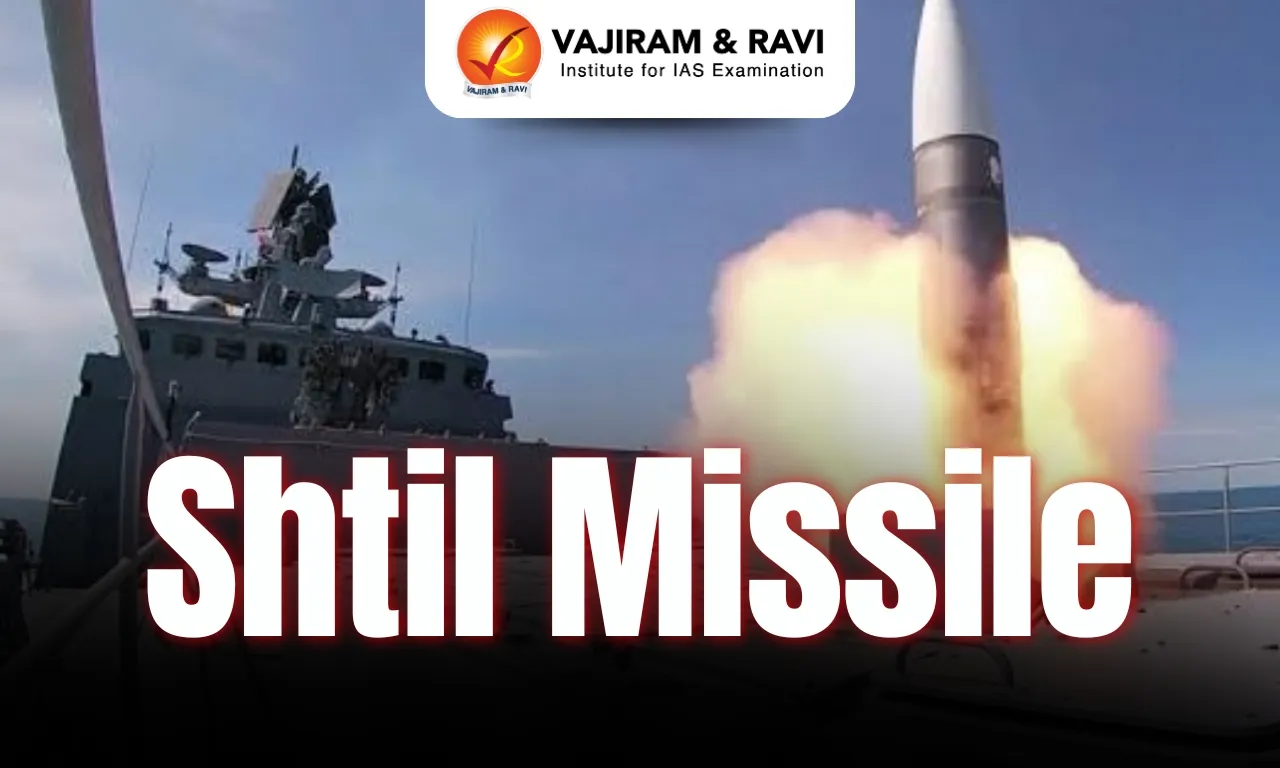
Q5: Can Editorial Analysis help in Mains Answer Writing?

Ans: Yes, editorial analysis enhances content quality, analytical depth, and structure in Mains answer writing.

Ruddy Shelduk

Ruddy Shelduck

Ruddy Shelduck Latest News

For over 20 years, residents of Mudh Village in the eastern part of Ladakh have been protecting the ruddy shelduck that visits their mountains to breed.

About Ruddy Shelduck

  • It is a migratory bird species belonging to the duck family called Anatidae.
  • Scientific Name: Tadorna ferruginea
  • In India it is known as the Brahminy duck.

Ruddy Shelduck Habitat and Distribution

  • It is known to breed in Central Asia and parts of Europe and spends the winter months in South Asia, including the Himalayan region.
  • Ruddy Shelducks typically arrive in the Himalayan region between October and November and leave by March or April.
  • It favors inland water bodies such as lakes, reservoirs, and rivers. 
  • It is often found in open areas and is less common in forested regions. It can also be found in brackish waters and saline lagoons.

Ruddy Shelduck Features

  • It is a type of large duck. It measures 58 to 70 cm in length and boasts a wingspan of 110 to 135 cm. 
  • Its plumage is primarily orange-brown, with a paler head and starkly contrasting black tail and flight feathers. 
  • The white wing coverts are a distinctive feature, particularly noticeable in flight.
  • Both sexes exhibit variability in color intensity and can fade with feather aging. 
  • The bill is black, and the legs are a dark grey shade.

Ruddy Shelduck Conservation Status

It is classified as 'Least Concern' under the IUCN Red List.

Source: DTE

Ruddy Shelduck FAQs

Q1: What is the Ruddy Shelduck?

Ans: What is the Ruddy Shelduck? Answer:

Q2: What is the scientific name of the Ruddy Shelduck?

Ans: Tadorna ferruginea.

Q3: What is the Ruddy Shelduck commonly called in India?

Ans: It is known as the Brahminy duck.

Q4: Where does the Ruddy Shelduck primarily breed?

Ans: In Central Asia and parts of Europe.

Q5: What is the conservation status of the Ruddy Shelduck according to the IUCN Red List?

Ans: Least Concern.

Enquire Now