Tidal Energy, Methods, Power Plant, Indian Aspects, Challenges

Tidal Energy

Tidal Energy refers to electricity produced by harnessing the natural rise and fall of ocean tides caused mainly by the gravitational interaction of the Earth, Moon, and Sun. The movement of seawater during tidal cycles contains kinetic and potential energy that can be converted into electricity using turbines and generators. Although its commercial use remains limited, technological improvements in turbine design and project development are increasing its potential as a reliable renewable energy source.

Tidal Energy Generation Methods

Different engineering techniques convert tidal movement into electricity by using turbines, reservoirs, and controlled water flow systems.

  • Tidal Stream Generators: These systems use the kinetic energy of fast moving tidal currents to rotate underwater turbines. Installed in narrow straits or channels with strong water flow, turbines can be horizontal, vertical, open, or ducted. The movement of water directly drives generators similar to wind turbines.
  • Tidal Barrage: A tidal barrage is a large dam constructed across the entrance of an estuary or bay. During high tide, water flows into a basin behind the dam and is stored as potential energy. When the tide recedes, the water is released through turbines to generate electricity.
  • Tidal Lagoon: Tidal lagoons are artificial reservoirs created by constructing circular retaining walls along coastal areas. Turbines placed in these walls capture energy as water enters and exits the lagoon during tidal cycles. Some lagoon systems also use pumping mechanisms to stabilize electricity output.
  • Dynamic Tidal Power (DTP): Dynamic tidal power is an emerging concept involving extremely long dams, sometimes 30-50 km in length, extending straight into the sea. These structures create phase differences in tidal currents, generating large water level differences that can drive turbines for electricity generation.

Also Read: Nuclear Energy in India

Tidal Power Plant

A Tidal Power Plant is a system that converts the energy of rising and falling ocean tides into electricity using turbines. The first large Tidal Power Station was established at the Rance River in France in 1966. The Sihwa Lake Tidal Power Station in South Korea, started operating in 2011 with an installed capacity of about 254 MW using ten turbines, is the largest Tidal Power Plant.

Tidal Energy in India

India has significant tidal resources along its coastline. The key features of Tidal Energy in India has been listed below:

  • Tidal Energy Potential: Government estimates indicate that India possesses around 8,000 MW of tidal power potential. Approximately 7,000 MW lies in the Gulf of Cambay in Gujarat, about 1,200 MW in the Gulf of Kutch, and around 100 MW in the Sunderbans region of West Bengal.
  • Government Initiatives: In 2011, the Gujarat government signed an agreement with Gujarat Power Corporation Limited, Atlantis Resource Corporation of the United Kingdom, and PMES of Singapore to develop a 250 MW tidal power project in the Gulf of Kutch.
  • Mandavi Tidal Power Project: A tidal project at Mandavi in the Kutch district was planned with a capacity of 50 MW. The project aimed to demonstrate the feasibility of large scale tidal electricity generation along India’s western coastline.
  • Sunderbans Demonstration Project: The Ministry of New and Renewable Energy approved a 3.75 MW demonstration tidal power project in 2008 at Durgaduani Creek in the Sunderbans of West Bengal. However, the project did not progress due to high financial costs.
  • Coastal Advantage: India has a coastline of approximately 7,500 km, and several estuaries and gulfs experience large tidal variations. Such geographical features create favourable conditions for the installation of tidal power infrastructure.

Also Read: Solar Energy

Tidal Energy Significance

Tidal Energy is gaining importance because it provides a predictable and clean alternative for electricity generation.

  • Tidal cycles follow the gravitational movement of the Moon and Sun and occur approximately every 12 hours. This regular pattern makes Tidal Energy far more predictable than wind or solar energy.
  • Water density is nearly 800 times greater than air. As a result, tidal turbines can generate significant power even at relatively low flow speeds compared with wind energy systems.
  • Certain Tidal Energy structures like lagoons and barrages can also provide secondary advantages such as coastal flood protection and wave energy reduction during extreme weather events.

Tidal Energy Challenges

Despite its potential, several technological, economic, and environmental issues restrict the large scale deployment of Tidal Energy projects as highlighted below:

  • High Initial Construction Cost: Tidal power plants require expensive infrastructure such as dams, turbines, and underwater installations. In India, the estimated cost of the 3.75 MW Durgaduani project reached about ₹2.38 billion.
  • Suspended Projects Due to Cost: A proposed 50 MW tidal power project in Gujarat’s Gulf of Kutch had an estimated cost of around ₹7.5 billion per megawatt. Such high investment requirements caused the project to be suspended.
  • Environmental Concerns: Rotating turbine blades may harm marine organisms such as fish and dolphins. Turbines also generate underwater noise that can affect marine mammals which rely on echolocation for navigation and communication.
  • Impact on Coastal Ecosystems: Large tidal barrages may alter natural tidal flows in estuaries. Reduced water circulation can increase turbidity, disturb sediment distribution, and affect breeding patterns of fish species.
  • Corrosion and Maintenance Issues: Tidal power equipment operates in saltwater environments that cause corrosion of metal components. Special materials such as stainless steel, nickel alloys, copper-nickel alloys, and titanium are required to reduce damage.
  • Limited Suitable Locations: Efficient Tidal Energy generation requires a tidal range of at least about five metres between high and low tides. Globally, only about twenty coastal regions possess such conditions.

Tidal Energy FAQs

Q1: What is Tidal Energy?

Ans: Tidal Energy is renewable energy produced from the natural rise and fall of ocean tides caused by the gravitational pull of the Moon and Sun.

Q2: How is electricity generated from Tidal Energy?

Ans: Electricity is generated by using turbines that rotate when tidal water flows through them during high and low tide cycles.

Q3: What is the Tidal Energy Potential of India?

Ans: India has an estimated Tidal Energy potential of about 8,000 MW, mainly in the Gulf of Cambay, Gulf of Kutch, and the Sunderbans.

Q4: Which was the first large tidal power plant in the world?

Ans: The first large tidal power station was built at the Rance River in France and began operation in 1966.

Q5: What is the major challenge of Tidal Energy?

Ans: The main challenge of Tidal Energy is its high initial construction cost and limited suitable coastal locations for large scale power generation.

Garo Hills Autonomous District Council (GHADC), Structure, Jurisdiction

Garo Hills Autonomous District Council

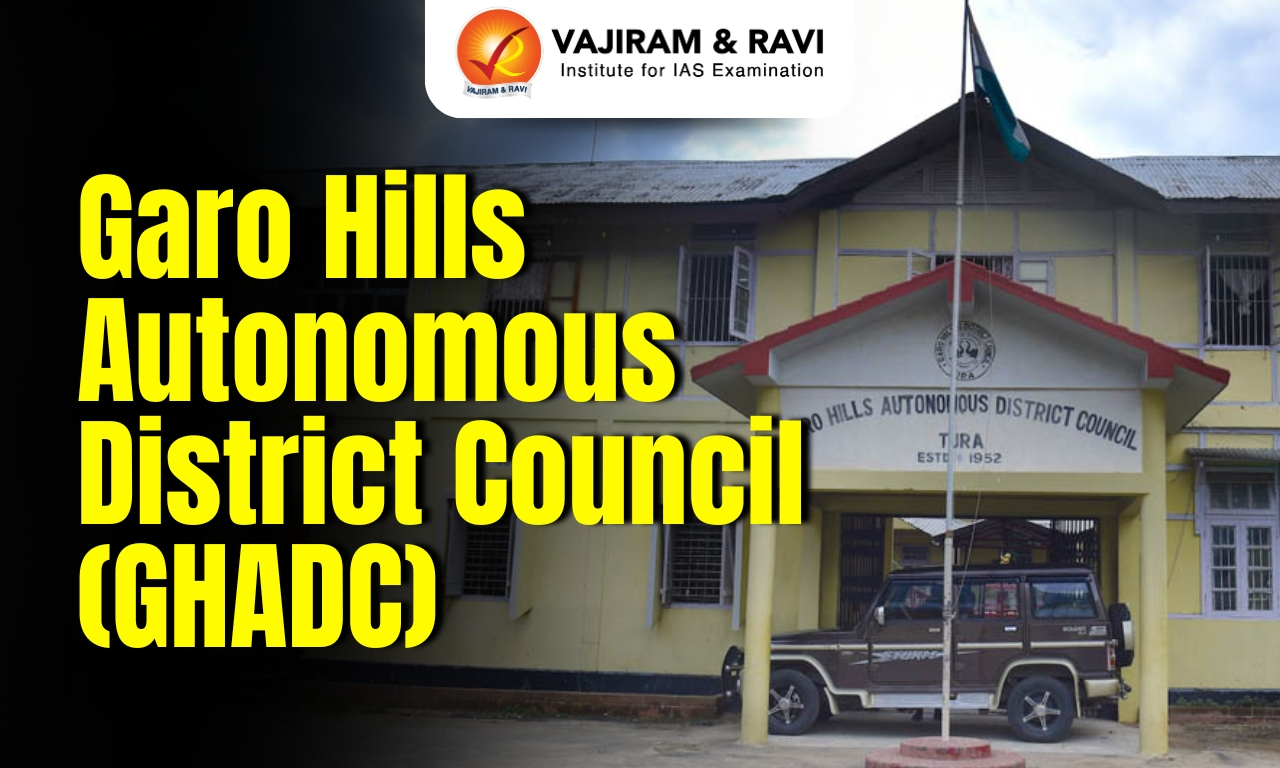
Elections to the Garo Hills Autonomous District Council (GHADC) in Meghalaya have been postponed following incidents of violence in parts of the state.

About Garo Hills Autonomous District Council (GHADC)

  • The Garo Hills Autonomous District Council (GHADC) is an autonomous district council in the state of Meghalaya in India.
  • It functions under the provisions of the Sixth Schedule of the Constitution of India.
  • The objective of this constitutional arrangement is to ensure that tribal communities can govern their own affairs, protect their traditional institutions, and preserve their unique cultural identity while remaining part of the Indian constitutional system.
  • Garo Hills Autonomous District Council (GHADC) is headquartered in Tura, the largest town and administrative centre of the Garo Hills region. 
  • The Garo Hills Autonomous District Council (GHADC) is one of the three Autonomous District Councils in Meghalaya, the other two being the Khasi Hills Autonomous District Council (KHADC) and the Jaintia Hills Autonomous District Council (JHADC).

Garo Hills Autonomous District Council (GHADC) Territorial Jurisdiction

  • Garo Hills Autonomous District Council exercises jurisdiction over the Garo Hills region of Meghalaya, which is predominantly inhabited by the Garo tribal community. 
  • The council’s authority extends across five districts of the state: East Garo Hills, West Garo Hills, South Garo Hills, North Garo Hills, and South West Garo Hills. These districts collectively form the geographical region commonly referred to as the Garo Hills.
  • The total area administered by the council is approximately 10,102 square kilometres. 
  • The region is characterised by hilly terrain, forested landscapes, and scattered rural settlements. 
  • While the Garo tribe forms the majority population, the area also includes non-tribal communities residing particularly in certain plains belt constituencies.

Garo Hills Autonomous District Council (GHADC) Structure and Composition 

  • Garo Hills Autonomous District Council is composed of 30 members.
  • Out of 30 members, 29 members are elected directly by the people from territorial constituencies.
  • One member is nominated by the Governor of Meghalaya, who holds office at the Governor’s pleasure.
  • The elected members generally serve a five-year term, unless the council is dissolved earlier under specific circumstances. 
  • The council elects a Chairman, who presides over its sessions and ensures orderly conduct of debates and legislative proceedings. 
  • The executive authority of the council is exercised by the Chief Executive Member (CEM), who functions as the head of the executive branch. 
  • The CEM is supported by an Executive Committee, which is responsible for implementing policies, supervising administrative departments, and carrying out development programmes within the council’s jurisdiction.

Relationship with the State Government

Although Autonomous District Councils enjoy a significant degree of autonomy, they function within the broader framework of the state administration. 

In Meghalaya, coordination between the councils and the state government is facilitated through the District Council Affairs Department. This department acts as an institutional bridge between the Autonomous District Councils and various state government departments.

Through this coordinating mechanism, development schemes, administrative decisions, and financial support are channelled between the state government and the councils. The arrangement ensures that while the councils retain autonomy over certain local matters, they remain integrated with the overall governance system of the state.

About Autonomous District Councils (ADCs)

  • Autonomous District Councils (ADCs) are special local self-governing bodies created under the Sixth Schedule of the Constitution of India to administer tribal areas in certain northeastern states. 
  • Purpose: To protect the social, cultural, and economic interests of tribal communities while allowing them a degree of autonomy in managing their local affairs.
  • The Sixth Schedule applies to tribal areas in Assam, Meghalaya, Tripura, and Mizoram. In these states, some regions are organised into Autonomous Districts and Autonomous Regions, which are governed by District Councils and Regional Councils.
  • An Autonomous District Council (ADC) can have not more than 30 members, and not more than 4 members may be nominated by the Governor. 
  • The elected members serve a term of five years.

Powers and Functions of Autonomous District Councils

These councils have legislative, administrative, and limited judicial powers over specified subjects.

  • Legislative Powers: Autonomous District Councils can make laws on subjects such as land use, management of forests (except reserved forests), inheritance, marriage, social customs, and regulation of moneylending and trade by non-tribals, subject to the assent of the Governor.
    • Central and State laws do not automatically apply to these regions. Such laws apply only if the Governor or the President of India issues a notification.
  • Administrative Powers: The councils administer local governance in tribal areas, including management of village administration, markets, roads, and certain development activities.
  • Judicial Powers: They can establish village courts to settle disputes related to tribal customary laws and local matters.
  • Financial Powers: They can levy and collect certain taxes such as taxes on land, buildings, markets, animals, vehicles, and tolls, and also receive grants from the state and central governments.
  • Regulatory Powers: They can regulate activities such as land transfer, moneylending, and trade in tribal areas to protect the interests of tribal communities.

Garo Hills Autonomous District Council FAQs

Q1: What is the Garo Hills Autonomous District Council (GHADC)?

Ans: The Garo Hills Autonomous District Council (GHADC) is an autonomous local governing body in Meghalaya created under the Sixth Schedule of the Constitution of India to administer tribal areas and protect the cultural, social, and economic interests of the Garo tribal community.

Q2: Where is the headquarters of the Garo Hills Autonomous District Council located?

Ans: The headquarters of GHADC is located in Tura, which is the largest town and an important administrative centre of the Garo Hills region in Meghalaya.

Q3: Which areas fall under the jurisdiction of the Garo Hills Autonomous District Council?

Ans: GHADC exercises jurisdiction over the Garo Hills region, which includes East Garo Hills, West Garo Hills, South Garo Hills, North Garo Hills, and South West Garo Hills districts.

Q4: How many members are there in the Garo Hills Autonomous District Council?

Ans: The council has 30 members, of which 29 are elected by the people from territorial constituencies and one member is nominated by the Governor of Meghalaya.

Q5: What are the powers of Autonomous District Councils under the Sixth Schedule of the Constitution of India?

Ans: Autonomous District Councils have legislative, administrative, financial, and limited judicial powers over specified subjects such as land, forests (except reserved forests), social customs, village administration, and regulation of trade and moneylending in tribal areas.

Impact of AI on Jobs and Employment, Insights from the Anthropic Study

Impact of AI on Jobs and Employment

A recent labour market study by Anthropic highlights the growing impact of AI (Artificial Intelligence) on jobs. The study shows that Large Language Models like Claude AI and ChatGPT can perform many workplace tasks, but their actual use in offices is still limited and gradually increasing.

Key Findings of the Anthropic Labour Market Study

A recent Anthropic labour market study reveals key insights into the impact of AI on jobs and employment, showing how automation is reshaping work across sectors, occupations, and demographics.

  • AI is increasingly shaping employment, especially in knowledge - based sectors like IT, finance, and management where many tasks involve data processing, analysis, and digital communication.
  • A major finding is the gap between AI’s theoretical capability and its real-world use. Large Language Models such as Claude AI could theoretically perform a very large share of tasks in professions like computer science and mathematics, but in practice they are currently used for a much smaller portion of those tasks.
  • The study identifies high-exposure occupations where AI can potentially perform a significant share of work. High-risk jobs include computer programmers, customer service staff, financial analysts, and roles in business, engineering, legal, and office administration.
  • Sectors relatively insulated from AI disruption include construction, agriculture, protective services, and personal care, as these roles require physical labour and direct human interaction, making them less suitable for automation by AI.
  • Researchers developed a new indicator called “observed exposure”, which measures the actual impact of AI on jobs. This measure combines theoretical AI capabilities with real workplace data to determine which job tasks are already being performed with AI tools.
  • AI is affecting hiring more than current jobs. Since ChatGPT launched in 2022, companies have slowed or reduced hiring for entry-level roles such as junior developers, graduate analysts, and early-career professionals because AI can now perform many of the tasks these positions previously handled.
  • The study indicates that AI exposure is uneven across demographics
    • Women (54.4%) are more likely to work in AI-exposed roles because jobs with higher female participation, like customer service and administrative work, are more automatable.
    • Highly educated workers, especially graduates, are nearly four times more exposed as knowledge-intensive tasks in fields like finance, engineering, and IT can be automated by AI.
    • White and Asian employees are more represented in AI-vulnerable roles, while Hispanic and Black workers are less affected.
    • Slightly older professionals (average 42.9 years) are more at risk because AI impacts established mid-career roles in knowledge-based jobs.

Impact of AI on Jobs and Employment in India 

Although the study mainly focuses on data from the United States, its conclusions carry significant implications for India. AI technologies are rapidly expanding in the Indian market, especially in sectors related to technology services and digital platforms.

  • The rapid advancement of Artificial Intelligence could significantly affect India’s IT services sector, as many outsourcing tasks such as data processing, customer support, and compliance monitoring are increasingly being automated.
  • Analysts estimate that the spread of AI could erode around 9-12% of the revenues of IT services companies over the next few years, indicating a potential slowdown in growth if companies fail to adapt quickly to the new technological landscape.
  • Major IT companies like Tata Consultancy Services, Infosys, and Wipro may face pressure to transform their business models by shifting from routine service delivery to high-value AI-driven solutions.
  • The rise of Large Language Models such as ChatGPT and Claude AI could reduce demand for certain entry-level roles in the IT and business process outsourcing sectors.
    • For example, Entry into high-exposure occupations among workers aged 22 to 25 has fallen 14% since late 2022.
  • India’s workforce may face challenges in adapting to the AI-driven economy due to gaps in advanced mathematical, scientific, and digital skills.
  • Lower investment in research and development compared with countries like the United States and China may limit India’s ability to compete in the global AI ecosystem.

Government Initiatives for Impact of AI on Jobs and Employment

Key government initiatives to prepare India’s workforce for AI impact:

  • FutureSkills PRIME: Upskilling platform focusing on emerging technologies, including AI and robotics.
  • SOAR (Skilling for AI Readiness) Initiative: Training programs to make workers AI-ready across sectors.
  • Pradhan Mantri Kaushal Vikas Yojana (PMKVY 4.0): Skill development scheme incorporating digital and AI-related skills.
  • Skill India Digital Hub: Online platform for AI and digital skill training and certification.
  • NITI Aayog’s Roadmap for Job Creation in the AI Economy: Strategic framework to promote AI-led employment opportunities.
  • National Strategy for Artificial Intelligence (2018): Policy guiding AI research, innovation, and workforce preparedness.

Wayforward 

Measures to make employment resilient against AI impact:

  • Integrate AI literacy in education: Teach data, algorithms, and AI ethics from early schooling to prepare future workforce.
  • National reskilling programs: Provide training and incentives for upskilling workers in AI-adjacent fields like prompt engineering, data annotation, and robotics maintenance.
  • Promote human-AI collaboration (cobotics): Use AI to assist rather than replace humans, enhancing productivity while retaining jobs.
  • Protect apprenticeship and entry-level opportunities: Create safe work environments where junior employees learn alongside AI without being deskilled.
  • Support MSMEs in cyber-resilience: Offer subsidized AI-based security tools to prevent intellectual property loss and job erosion.

Implement portable social security: Ensure gig and platform workers retain pensions, health benefits, and insurance as AI changes job structures.

Impact of AI on Jobs and Employment FAQs

Q1: What is the impact of AI on jobs and employment?

Ans: The impact of AI on jobs and employment is evident as AI performs tasks in data, analysis, and communication, affecting knowledge-based roles while jobs needing physical labour or human interaction remain safer.

Q2: Which jobs face the highest impact of AI on jobs and employment?

Ans: Roles like programmers, customer service staff, financial analysts, and entry-level positions face the highest impact of AI on jobs and employment because AI can handle many of their tasks.

Q3: Who is most affected by the impact of AI on jobs and employment?

Ans: Women, highly educated workers, White and Asian employees, and mid-career professionals in knowledge-intensive jobs are most affected by the impact of AI on jobs and employment.

Q4: What are the impacts of AI on jobs and employment in India?

Ans: In India, the impact of AI on jobs and employment includes automation in IT and outsourcing, reduced entry-level opportunities, skill gaps challenges, and potential growth in high-skilled AI-driven roles.

Q5: How can the workforce prepare for the impact of AI on jobs and employment?

Ans: Workers can prepare for the impact of AI on jobs and employment through AI and digital literacy, reskilling for emerging roles, human-AI collaboration, protecting entry-level jobs, and ensuring social security.

Lagoon Formation, Types, Important, Significance, Key Details

Lagoon Formation

A Lagoon is a shallow water body that forms along coastal areas when a part of the sea becomes separated from the main ocean by natural barriers such as sandbars, barrier islands, or coral reefs. These barriers are created by the continuous action of waves and coastal currents that deposit sand and sediments along the shore. As a result, a water body gets enclosed between the land and the barrier, forming a lagoon. The water in lagoons is usually brackish, as it contains a mixture of sea water and fresh water from nearby rivers or rainfall. Lagoon Formation has been discussed in detail in this article.

Types of Lagoons

Lagoons are generally classified into two main types: atoll lagoons and coastal lagoons.

Atoll Lagoons: An Atoll lagoon forms in tropical oceans when a volcanic island slowly sinks below sea level over a long period of time. 

  • Coral reefs grow around the island and continue to grow upward even as the island gradually disappears beneath the ocean. Over time, the coral reefs form a circular ring, and the water trapped in the centre of this ring becomes a Lagoon. This process happens very slowly and may take hundreds of thousands of years to develop.
  • Many marine species such as fish, jellyfish, and corals live in these lagoons. However, large predators are less common because food sources are limited within the enclosed reef area.

Coastal Lagoons: Coastal lagoons develop along gently sloping coastlines. They are usually shallow and are separated from the sea by features such as sandbars, barrier islands, or reefs. In many cases, these lagoons remain connected to the sea through narrow inlets, allowing exchange of water between the lagoon and the ocean. This creates a brackish ecosystem, which supports rich biodiversity such as fish, birds, and aquatic plants.

  • The depth and size of coastal lagoons depend largely on sea level.
    • When sea level is low, lagoons may appear like swamps or wetlands.
    • When sea level is high, they may resemble bays or coastal lakes.
  • These lagoons often support fisheries, tourism, and boating activities, making them economically important.
  • Lake Nokoue, is a good example of Coastal Lagoon, where salinity changes seasonally. During the rainy season, freshwater from rivers dominates, while during the dry season seawater increases the salinity.
  • Coastal lagoons also serve as natural harbours because they protect boats from strong waves. For example, Lake Piso has been used as a harbour in the past.

Factors Affecting Formation: Several factors influence the formation and development of coastal lagoons, including:

  • Sea level changes
  • Deposition of sediments by waves and currents
  • Tidal range and coastal processes
  • Coastal lagoons are generally younger and more dynamic than atoll lagoons. Because they are located close to the shoreline, they may change shape or even disappear over time due to erosion, sediment deposition, and sea-level changes.

Lagoons Formation

A lagoon forms when a shallow part of the sea becomes separated from the open ocean by natural barriers such as sandbars, barrier islands, or coral reefs. Lagoons usually develop along low-energy, gently sloping coasts, where waves and currents slowly deposit sand and other sediments. The formation of lagoons takes place through several coastal processes:

  • Barrier Island Formation: Waves and coastal currents carry sand along the shoreline through a process known as longshore drift. Over time, this sand accumulates to form offshore sandbars or barrier islands parallel to the coast. As these barriers grow, they enclose a portion of seawater between the land and the barrier, creating a lagoon.
  • Spit Formation: Sometimes, sand spits develop when sediments are deposited in a narrow strip connected to the mainland at one end. As the spit continues to extend across a bay, it may eventually cut off the bay from the open sea, forming a lagoon behind it.
  • Coral Reef Growth (Atoll Lagoons): In tropical regions, lagoons may also form inside an Atoll. This happens when coral reefs grow around a volcanic island. Over thousands of years, the volcanic island slowly sinks beneath the ocean, while the coral reefs continue to grow upward. The circular reef surrounds a central water body, which becomes the lagoon.
  • Sea-Level Changes: Changes in sea level can also lead to lagoon formation. When sea levels rise, seawater floods low-lying coastal areas, creating shallow bays. Later, waves and sediments build barrier beaches that separate these bays from the open sea, turning them into lagoons.

Some Important Lagoons in India

  • Chilika Lake (Odisha): It is the largest coastal lagoon in India and the second largest in the world. It is famous for migratory birds and the endangered Irrawaddy dolphins.
  • Pulicat Lake (Andhra Pradesh/Tamil Nadu): It is the second-largest lagoon in India. The lake lies between Andhra Pradesh and Tamil Nadu and is known for the Pulicat Bird Sanctuary.
  • Vembanad Lake (Kerala): This lagoon is part of the Kerala backwater system and is the longest lake in India. It supports fishing, tourism, and houseboat activities.
  • Kolleru Lake (Andhra Pradesh): Although mainly a freshwater lake, it acts like a lagoon-like wetland between the Krishna and Godavari river deltas and supports rich bird life.
  • Ashtamudi Lake (Kerala): It is a palm-shaped lagoon connected to the Arabian Sea and is important for fisheries and inland water transport.

Significance of Lagoons

Lagoons are important natural features found along many coastal regions. They play a significant role in supporting ecosystems, protecting coastlines, and supporting human livelihoods.

  • Rich Biodiversity: Lagoons provide habitat for many species of fish, birds, plants, and marine organisms. They often act as nurseries for fish and other aquatic species, making them important for maintaining marine biodiversity.
  • Coastal Protection: Lagoons help reduce the impact of strong ocean waves, storms, and coastal erosion. The natural barriers such as sandbars and reefs protect the coastline and nearby settlements.
  • Support for Fisheries: Many local communities depend on lagoons for fishing and aquaculture. The calm and nutrient-rich waters support the growth of many commercially important fish and shellfish.
  • Economic Importance: Lagoons contribute to tourism and recreation, including activities like boating, bird watching, and water sports. Famous lagoons also attract visitors and support local economies.
  • Environmental Importance: Lagoons help in maintaining ecological balance by filtering pollutants, storing nutrients, and supporting wetlands and mangrove ecosystems.
  • Climate and Coastal Regulation: Lagoons play a role in coastal climate regulation and groundwater recharge, and they help maintain the stability of coastal ecosystems.

Lagoon Formation FAQs

Q1: What is a Lagoon?

Ans: A lagoon is a shallow water body separated from the open sea by natural barriers such as sandbars, barrier islands, or coral reefs. Its water is usually brackish due to the mixing of seawater and freshwater.

Q2: What are the main types of lagoons?

Ans: The two main types are coastal lagoons and atoll lagoons.

Q3: How does an Atoll lagoon form?

Ans: It forms when a volcanic island slowly sinks below sea level while coral reefs grow upward around it, creating a circular reef that encloses a central lagoon.

Q4: How are coastal lagoons formed?

Ans: Coastal lagoons form along gently sloping coasts when waves and currents deposit sediments to create barriers such as sandbars or barrier islands that separate a part of the sea from the ocean.

Q5: What factors influence the formation of lagoons?

Ans: Important factors include sea-level changes, sediment deposition by waves and currents, tidal range, and coastal processes.

Coral Atoll Formation, Distribution, Conditions, Significance

Coral Atoll Formation

Coral Atoll Formation refers to the natural process through which Coral Atolls develop in warm tropical oceans. These landforms generally consist of a circular coral reef surrounding a central Lagoon. Coral atolls form gradually over a very long period due to the growth of coral reefs and changes in the underlying landforms. They are commonly found in tropical regions of oceans such as the Indian Ocean and the Pacific Ocean, and represent important marine ecosystems as well as distinctive coastal landforms.

Coral Atoll Formation

An Atoll is a circular or ring-shaped coral reef found in the ocean. It surrounds a central Lagoon, which is a body of water enclosed by the reef. The lagoon inside an atoll can be quite deep, usually about 80-150 metres, and it often connects with the open sea through small channels that cut across the reef. Most atolls are found far away from large land areas in the open ocean. They usually develop on underwater features such as submerged islands or volcanic cones, which provide a base where corals can grow and gradually form a reef structure.

Atolls may appear in three different forms.

  • A true atoll, where a circular coral reef surrounds a lagoon and no island exists inside it.
  • An atoll with an island, where a small island is present within the ring of coral reef.
  • A coral island or atoll island, which forms when sand and coral fragments are deposited on the reef by waves, creating small islands on top of the reef.

Formation Process

  • The formation of coral atolls is explained by the theory proposed by Charles Darwin through his coral reef subsidence theory.
  • Coral reefs first grow around a volcanic island, forming fringing reefs.
  • Over time, the volcanic island slowly sinks below sea level due to geological processes.
  • Meanwhile, corals continue to grow upward towards sunlight.
  • Eventually, the volcanic island completely disappears beneath the ocean, leaving a ring-shaped coral reef surrounding a central lagoon.
  • This process takes thousands to millions of years.

Distribution of Coral Atolls

  • Atolls are most commonly found in the Pacific Ocean, where their number is greater than in any other ocean. Some well-known examples include atolls near Fiji and the Funafuti Atoll. In India, several coral atolls are located in the Lakshadweep Islands.
  • In the South Pacific region, many atolls are found in the middle of the ocean and occur in island groups such as French Polynesia, Marshall Islands, Micronesia, and the Cook Islands.
  • The Indian Ocean also has many atoll formations. Important examples can be seen in the Maldives, the Chagos Archipelago, Seychelles, and the Cocos (Keeling) Islands.

Conditions Required for Coral Atoll Formation

  • Warm Ocean Water: Coral reefs grow best in warm tropical waters. The water temperature is usually between 20°C and 32°C.
  • Shallow Water: Corals need sunlight to grow because tiny algae living in corals use sunlight for photosynthesis. Therefore, corals mostly grow in shallow water, generally less than 50-55 metres deep.
  • Clear and Salty Water: The water must be clear so that sunlight can reach the corals. It should also have normal ocean salinity (salt content).
  • Submerged Volcanic Base: Atolls usually form on top of a sinking volcanic island or underwater mountain. As the island slowly sinks, the corals keep growing upward.
  • Availability of Nutrients: Small marine organisms such as plankton provide nutrients that help corals grow and develop.
  • Low Pollution and Sediments: Corals grow best in clean water with little pollution or sediments, because too much mud or silt can cover the corals and block sunlight.

Coral Atolls Significance

  • Rich Marine Biodiversity: Coral Atolls support diverse marine life such as fish, corals, sea turtles, and sharks. These ecosystems act as breeding and feeding grounds for many marine species.
  • Protection of Coastlines: Coral reefs around atolls help reduce the impact of strong ocean waves and storms. They act as natural barriers that protect nearby islands and coastal areas from erosion.
  • Support for Fisheries: Atolls provide rich fishing grounds. Many coastal and island communities depend on these areas for fish and other marine resources for their livelihood.
  • Tourism and Economic Importance: The clear waters, coral reefs, and lagoons of atolls attract tourists for activities like snorkeling, diving, and boating. Tourism in places such as the Maldives is largely based on coral atolls.
  • Scientific and Environmental Importance: Atolls help scientists study coral reef ecosystems, ocean processes, and climate change.
  • Indicators of Climate Change: Since atolls are low-lying landforms, they are very sensitive to sea-level rise. Changes in these ecosystems help scientists understand the impacts of global climate change on coastal regions.

Coral Atolls Formation FAQs

Q1: What is a Coral Atoll?

Ans: A coral atoll is a circular coral reef that surrounds a central Lagoon in tropical oceans.

Q2: How are coral atolls formed?

Ans: They form when coral reefs grow around a volcanic island that slowly sinks beneath the ocean, leaving a ring-shaped reef with a lagoon in the centre.

Q3: Who explained the formation of coral atolls?

Ans: The formation of coral atolls was explained by Charles Darwin through his coral reef subsidence theory.

Q4: Where are coral atolls mainly found?

Ans: They are mostly found in tropical oceans such as the Indian Ocean and the Pacific Ocean.

Q5: What are the main parts of a coral atoll?

Ans: A coral atoll generally consists of an outer coral reef, a central lagoon, and small coral islands (cays).

Mihir Shah Committee, Recommendations, Steps, Key Details

Mihir Shah Committee

The Mihir Shah Committee, headed by Mihir Shah, submitted its report in 2016 to reform India’s water management institutions. It examined the functioning of the Central Water Commission (CWC) and the Central Ground Water Board (CGWB) and suggested restructuring them. The committee proposed creating a National Water Commission for better and integrated management of surface and groundwater resources in India.

About Mihir Shah Committee

  • In July 2016, a committee chaired by Mihir Shah presented recommendations to reform India’s key water institutions, namely the Central Water Commission (CWC) and the Central Ground Water Board (CGWB), with the aim of improving water governance in the country.
  • The CWC works with state governments to plan and implement projects related to the conservation and use of surface water resources, while the CGWB is responsible for assessing groundwater resources and promoting their sustainable management.
  • The committee suggested that these two organisations should be merged and reorganised into a single body called the National Water Commission (NWC). According to the committee, a unified institution would help in better coordination and integrated management of both surface water and groundwater.
  • It also recommended that the proposed NWC should focus on water policy, data management, and overall water governance in India. The commission should work under the Ministry of Water Resources, but it should be given sufficient autonomy to function effectively.

Mihir Shah Committee Key Recommendations

  • Creation of a National Water Commission (NWC): The committee recommended merging the Central Water Commission (CWC) and the Central Ground Water Board (CGWB) into a single body called the National Water Commission (NWC). A unified institution would help manage surface water and groundwater together and promote sustainable use of water resources.
  • Divisions within the National Water Commission: The committee proposed that the NWC should have eight specialised divisions to handle different aspects of water management:
    • Irrigation Reform Division: To support states in improving irrigation systems and water use efficiency.
    • River Rejuvenation Division: To design region-specific programmes for restoring and protecting rivers.
    • Aquifer Mapping and Groundwater Management Division: To implement a National Aquifer Management Programme and assess groundwater resources across the country.
    • Water Security Division: To address issues such as water scarcity, floods, droughts, and ensure basic water availability for people.
    • Urban and Industrial Water Division: To promote technologies for recycling and reuse of wastewater in cities and industries.
    • Water Quality Division: To monitor and reduce pollution in rivers, lakes, and groundwater.
    • Water Data Management and Transparency Division: To create a reliable and open database on water resources for better planning and public access.
    • Knowledge Management and Capacity Building Division: To train professionals and strengthen institutions working in water and land management.
  • Irrigation Management Transfer (IMT): The committee recommended that states should mainly build major irrigation infrastructure, while local Water Users Associations of farmers should manage smaller canal systems. This can improve fair distribution of water and reduce wastage.
  • Participatory Groundwater Management: Groundwater should be treated as a shared community resource. Measures like regulating well depth, maintaining distance between wells, and promoting suitable cropping patterns should be adopted to prevent over-extraction.
  • River Basin Management: The proposed NWC should have regional offices covering all river basins so that surface water and groundwater can be managed together with better scientific and local expertise.

Steps Taken by the Government for Effective Water Resource Management

The Government of India has launched several programmes and initiatives to ensure better conservation and efficient use of water resources.

  • Interlinking of Rivers: The government has proposed the National Plan for Interlinking of Rivers to transfer water from water-surplus river basins to water-deficit regions. The National Water Development Agency has identified around 30 river linking projects under this plan.
  • Rural Drinking Water Supply: Under the Jal Jeevan Mission, the Ministry of Jal Shakti aims to provide safe drinking water through tap connections to every rural household.
  • Urban Water Supply Improvement: The government launched the Atal Mission for Rejuvenation and Urban Transformation (AMRUT) to ensure reliable and universal water supply through household tap connections in urban areas.
  • Rainwater Harvesting and Conservation: The Jal Shakti Abhiyan: Catch the Rain campaign promotes rainwater harvesting, groundwater recharge, and water conservation across the country.
  • Efficient Irrigation in Agriculture: The Pradhan Mantri Krishi Sinchayee Yojana (PMKSY) encourages efficient use of water in farming through micro-irrigation techniques such as drip and sprinkler systems.
  • Promotion of Water-Efficient Crops: The Sahi Fasal Programme, launched by the National Water Mission, motivates farmers in water-scarce areas to grow less water-intensive crops suitable to local conditions.
  • Sustainable Groundwater Management: The Atal Bhujal Yojana focuses on community participation in managing groundwater resources, especially in regions facing severe water stress.

Mihir Shah Committee FAQs

Q1: What is the Mihir Shah Committee?

Ans: It is a committee formed by the Government of India in 2016 to recommend reforms in India’s water management institutions.

Q2: Which organisations were examined by the committee?

Ans: The committee reviewed the functioning of the Central Water Commission (CWC) and the Central Ground Water Board (CGWB).

Q3: What major reform was suggested by the committee?

Ans: recommended merging CWC and CGWB to form the National Water Commission (NWC).

Q4: What would be the role of the National Water Commission?

Ans: The NWC would handle water policy, data management, and integrated management of surface and groundwater.

Q5: How many divisions were proposed under the NWC?

Ans: The committee suggested eight specialised divisions for different areas of water management.

Abdul Rahim Khan-i-Khanan, Literary Contributions, Key Details

Abdul Rahim Khan-i-Khanan

Abdul Rahim Khan-i-Khanan was an important noble and scholar in the court of Emperor Akbar. He is widely known for his Hindi dohas (couplets) that teach moral values and wisdom and for his contributions to literature and culture during the Mughal period.

About Abdul Rahim Khan-i-Khanan

  • Abdul Rahim Khan-i-Khanan (1556-1627), popularly known as Rahim, was a famous poet, scholar, and military commander during the reign of Akbar in the Mughal Empire. He was the son of Bairam Khan, who served as Akbar’s guardian and trusted advisor in the early years of Akbar’s rule.
  • Rahim was one of the Navratnas (Nine Jewels) of Akbar’s court. He gained great respect not only for his administrative and military abilities but also for his contributions to literature and culture.

Abdul Rahim Khan-i-Khanan Literary Contributions

  • Rahim was a talented writer who composed works in several languages such as Braj, Persian, Sanskrit, and Arabic. He is especially famous for his Hindi dohas (couplets) that teach moral values, humility, and wisdom. These dohas are still widely studied and remembered in Indian literature.
  • He also translated the autobiography of Babur, known as the Baburnama, from the Chagatai Turkish language into Persian, making it accessible to a larger audience of scholars.
  • Rahim had a strong knowledge of Sanskrit as well. He wrote important works on astrology such as Khetakautukam and Dwatrimshadyogavali.

Abdul Rahim Khan-i-Khanan FAQs

Q1: Who was Abdul Rahim Khan-i-Khanan?

Ans: He was a Mughal noble, military commander, poet, and scholar in the court of Akbar.

Q2: Whose son was Abdul Rahim Khan-i-Khanan?

Ans: He was the son of Bairam Khan, who served as Akbar’s guardian and mentor.

Q3: What was Rahim’s position in Akbar’s court?

Ans: He was one of the Navratnas (Nine Jewels) of Akbar’s court.

Q4: What is the most well-known literary contribution of Abdul Rahim Khan-i-Khanan?

Ans: He is best known for his Hindi dohas (couplets) that teach moral values and wisdom.

Q5: Which famous book did Rahim translate?

Ans: He translated Baburnama, the autobiography of Babur, from Chagatai Turkish into Persian.

Raimona National Park, About, Background, Conservation

Raimona National Park

Raimona National Park is a national park located in Assam, near the border with Bhutan. It was declared a national park in 2021 and is known for its rich biodiversity and forest ecosystems. The park is also an important habitat for rare wildlife such as the Golden Langur, making it significant for conservation in Northeast India.

About Raimona National Park

Raimona National Park is located in the north-western part of Assam, in Kokrajhar district within the Bodoland Territorial Region. The park lies along the India-Bhutan border and is situated at the foothills of the Eastern Himalayas. 

  • Location and Area: The park lies in the Gossaigaon subdivision of Kokrajhar district and covers an area of about 422 sq. km. The elevation of the park ranges from 85 metres to about 1042 metres above sea level.
  • Transboundary Conservation Landscape: Raimona National Park forms part of a large transboundary conservation area with forests in India and Bhutan. It is connected with Phibsoo Wildlife Sanctuary and Jigme Singye Wangchuck National Park, creating a conservation landscape of more than 2,400 sq. km.
  • Geographical Features: The park has diverse terrain and vegetation.
  • Rivers
    • The Sankosh River flows along the western boundary.
    • The Saralbhanga River lies on the eastern side.
    • Pekua River forms the southern boundary.
  • Vegetation
    • Raimona has several forest types, including:
    • Moist sal forests
    • Sub-Himalayan semi-evergreen forests
    • Moist mixed deciduous forests
    • Savannah forests
    • Riverine and khoir-sisoo forests
    • Overall, the park contains around 11-12 different forest types, making it one of the most biodiversity-rich forest belts in Assam.
  • Flora and Fauna: The park supports a wide range of plant and animal species.
  • Flora
    • Tropical forest vegetation
    • Many orchid species
    • Riverine grasslands
    • About 380 species of plants
  • Fauna
    • Raimona National Park is famous for the Golden Langur, which is also the mascot of the Bodoland region. Other important wildlife includes:
    • Asian Elephant
    • Bengal Tiger
    • Clouded Leopard
    • Gaur
    • Wild Water Buffalo
    • Spotted Deer
    • The park also has 170 species of birds, over 150 species of butterflies, and many reptiles and insects.

Raimona National Park Background

In earlier times, the Raimona area was sparsely populated. Historically, it was part of a region called Ripudwar, which served as one of the traditional “dwars” or mountain passes connecting the plains of Assam with Bhutan. These passes were historically administered by officials appointed by the Bhutanese rulers.

Also Read: National Parks in India 2026

Raimona National Park Conservation

  • Authorities regularly take measures to protect wildlife from illegal activities such as poaching. For example, forest officials and Sashastra Seema Bal have conducted operations in the park and arrested poachers to safeguard wildlife.
  • Because of its location near international borders, Raimona is also important for regional cooperation in wildlife conservation between India and Bhutan.

Raimona National Park Importance

  • The declaration of Raimona as a national park has created new opportunities for ecotourism, scientific research, and biodiversity conservation. It can also help generate sustainable livelihood options for local communities, many of whom depend on agriculture and forest resources.
  • Overall, Raimona National Park plays an important role in protecting the rich wildlife and natural ecosystems of Northeast India while promoting a balance between nature conservation and local development.

Raimona National Park FAQs

Q1: Where is Raimona National Park located?

Ans: It is located in Kokrajhar district in the Bodoland Territorial Region, along the India–Bhutan border.

Q2: When was Raimona declared a National Park?

Ans: It was declared a national park on 5 June 2021.

Q3: Which rare animal is the main attraction of the park?

Ans: The park is famous for the Golden Langur, the mascot of the Bodoland region.

Q4: Which protected areas form the transboundary conservation landscape with Raimona?

Ans: It is connected with Phibsoo Wildlife Sanctuary and Jigme Singye Wangchuck National Park.

Q5: Which rivers flow around Raimona National Park?

Ans: The main rivers are the Sankosh River, Saralbhanga River, and Pekua River.

National Shipping Board

National Shipping Board

National Shipping Board Latest News

Recently, the government of India held a high-level interaction with the National Shipping Board (NSB) to address sectoral challenges amid global maritime uncertainty.

About National Shipping Board

  • It is a permanent statutory body established in 1959, under Section 4 of Merchant Shipping Act, 1958.
  • Function: It advises the Govt. of India on matters related to shipping including the development.
  • It has played a very distinguished role in the Maritime development of the country, as its deliberation and recommendations have contributed to the evolution of a sound and pragmatic National Maritime Policy over the years.
  • Composition
    • It consists of Chairman and Members.
    • Six Members elected by Parliament (Four from the Lok Sabha and two from Rajya Sabha from amongst its Members).
    • Tenure: The Chairman and other members of the Board held office for a period of two years.
    • Such Members of other members not exceeding sixteen as the Central Government may think fit to appoint on the Board to represent the Central Government, Ship-owners, and Seamen.
  • Nodal Ministry: Ministry of Ports, Shipping and Waterways.

Source: PIB

National Shipping Board FAQs

Q1: What is the primary function of the National Shipping Board?

Ans: To advise the central government on Indian shipping and its development

Q2: Under which ministry does the National Shipping Board operate?

Ans: Ministry of Ports, Shipping and Waterways

Nevado Ojos del Salado

Nevado Ojos del Salado

Nevado Ojos del Salado Latest News

Recently, a professor at the Indian Institute of Science (IISc) has summited the Nevado Ojos del Salado peak.

About Nevado Ojos del Salado

  • Location: It is located in the Andes Mountain Range on the boundary between Chile and Argentina. 
  • It is also the highest mountain (6,893 meters) in Chile.

Features OF Nevado Ojos del Salado

  • It is the world’s highest active stratovolcano.
  • It was largely formed from the accumulation of lava flows and explosive volcanic material.
  • Climate: The Mountain’s climate is high desert. Day and night temperatures vary widely, with an average maximum of 18°C and an average minimum of -10°C.
  • The upper part of the mountain features a set of craters and elongated volcanic peaks. 
  • Due to its location near the Atacama Desert, the mountain has very dry conditions with snow usually only remaining on the peak during winter.
  • There is a permanent crater lake about 100 m (330 ft) in diameter at an elevation of 6,390 m (20,960 ft) on the eastern side of the mountain.

Source: TH

Nevado Ojos del Salado FAQs

Q1: What type of volcano is Nevado Ojos del Salado?

Ans: Stratovolcano

Q2: Where is Nevado Ojos del Salado located?

Ans: Argentina-Chile border

India-South Africa Relations, Evolution, Area of Cooperation

India-South Africa Relations

India-South Africa Relations roots in common historical experiences, democratic values, and cooperation among developing nations. Their relationship evolved from early political struggles to a strategic partnership. Today the partnership reflects shared interests in economic development, South-South cooperation, and global governance reforms while continuing to expand into new sectors such as skills development and institutional educational linkages.

India-South Africa Relations Evolution

India-South Africa Relations evolved through freedom struggles, diplomatic restoration, strategic declarations, and cooperation in multilateral institutions.

  • Historical Roots of Cooperation: The relationship traces back to the late 19th century when Mahatma Gandhi began the Satyagraha movement in South Africa. His struggle against racial discrimination created the earliest political and ideological connections between Indians and South Africans.
  • Anti-Apartheid: India played a leading global role in opposing apartheid policies. In 1946, India became the first country to break trade relations with the apartheid government and raised the issue in global institutions such as the UN, Commonwealth of Nations, and Non‑Aligned Movement.
  • Restoration of Relations in 1993: After South Africa ended institutionalised racial segregation, both countries restored trade and business links in 1993. Diplomatic and consular relations were formally re-established during the same year.
  • Red Fort Declaration 1997: In March 1997, India and South Africa signed the Red Fort Declaration on Strategic Partnership in New Delhi. This agreement provided a framework for cooperation in politics, economics, and international diplomacy.
  • Tshwane Declaration 2006: The strategic partnership gained further strength through the Tshwane Declaration signed in October 2006. The declaration reaffirmed bilateral cooperation and long term collaboration across sectors.
  • Multilateral Platforms: Both countries coordinate their policies within global groupings like BRICS, IBSA Dialogue Forum, G20, World Trade Organization, and Indian Ocean Rim Association to promote the interests of developing nations.
  • Three Decades of Diplomatic Relations: In 2023, both countries marked 30 years of diplomatic relations.

India-South Africa Relations Area of Cooperation

India-South Africa Relations consist of cooperation across several fields as highlighted below:

  • Strategic Cooperation: Both countries support reforms in global governance and seek greater representation for developing nations in international institutions.
  • Trade and Economic Partnership: Bilateral trade has consistently expanded, crossing the USD 10 billion target earlier set by the leaders of both countries. South Africa remains one of India’s major trading partners in Africa and an important destination for Indian investments.
  • Exports from India: India exported about 4,873 commodities to South Africa during FY 2021-22 with exports worth around USD 6.08 billion. Key products include petroleum products, motor vehicles, pharmaceuticals, engineering goods, textiles, chemicals, and transport equipment.
  • Imports from South Africa: India imported more than 1,124 commodities from South Africa with imports reaching approximately USD 10.9 billion in FY 2021-22. Important imports include gold, coal, minerals, precious stones, and metal resources.
  • Science and Technology Cooperation: Both countries signed a Science and Technology Cooperation Agreement in 1995. Eg: Collaboration in the international Square Kilometre Array (SKA) radio telescope project.
  • Defence Cooperation: Defence ties began formally in 1996 through an agreement on defence equipment cooperation, later expanded in 2000. Naval cooperation is visible through exercises such as IBSAMAR involving India, Brazil, and South Africa.
  • Gandhi-Mandela Centre of Specialisation: The Gandhi-Mandela Centre of Specialisation for Artisan Skills was established to provide training in technical fields such as mechanical fitting, electrical work, boilermaking, and millwright skills.
  • Cultural Exchange: The 9th World Hindi Conference was organised in Johannesburg in September 2012.
  • Migration of Indians: Indian migration to South Africa began in 1860 when labourers were brought to work on sugar plantations. Over time, this community developed into an influential social and economic group.
  • Pravasi Bharatiya Divas: India celebrates Pravasi Bharatiya Divas every year on 9 January, marking the return of Mahatma Gandhi from South Africa to India in 1915.

India-South Africa Relations Challenges

Despite strong cooperation, India-South Africa Relations face several challenges as highlighted below:

  • Trade Imbalance Concerns: India’s imports from South Africa remain significantly higher than exports in several years, largely due to gold, coal, and mineral imports. Expanding manufacturing exports and services trade can balance bilateral trade flows.
  • Competition from Major Powers: Increasing economic presence of other global powers in Africa creates competitive pressure. Strengthening development partnerships and local capacity building can enhance India’s comparative advantage.
  • Need for Stronger Economic Diversification: Bilateral trade still relies heavily on commodities and mineral resources. Promoting collaboration in manufacturing, digital technology, pharmaceuticals, and renewable energy can diversify economic engagement.
  • Enhancing Tourism Cooperation: Tourism flows between the two countries remain relatively limited. Promoting joint tourism initiatives and improving travel connectivity can strengthen people-to-people ties.

India-South Africa Relations FAQs

Q1: What is the foundation of India-South Africa Relations?

Ans: India-South Africa Relations are rooted in shared historical experiences of anti-colonial struggle, particularly the role of Mahatma Gandhi in South Africa and India’s strong support for the anti-apartheid movement.

Q2: Which international forums strengthen India-South Africa Relations?

Ans: Both countries coordinate their policies in global institutions such as BRICS, IBSA Dialogue Forum, G20, and the World Trade Organization.

Q3: What recent initiative has strengthened India-South Africa Relations?

Ans: Both countries have agreed to establish institutional mechanisms linking higher education and skill institutions, including the creation of a Joint Working Group on Education.

Q4: What is the Red Fort Declaration in India-South Africa Relations?

Ans: The Red Fort Declaration on Strategic Partnership, signed in 1997 by Nelson Mandela and Indian leadership, laid the foundation for expanding cooperation in political, economic, and diplomatic areas.

Q5: How do India and South Africa cooperate in science and technology?

Ans: Both countries collaborate in scientific research through agreements between their science ministries and joint participation in international projects such as the Square Kilometre Array radio telescope initiative.

India-Sudan Relations, Evolution, Area of Cooperation, Challenges

India-Sudan Relations

India-Sudan Relations are a long standing diplomatic partnership built on historical contacts, trade linkages, and development cooperation. Sudan holds strategic importance for India due to energy resources, regional stability, and access to African markets. Over the decades, both countries have strengthened their partnership through high level visits, development assistance, economic collaboration, and cultural exchanges. Today, India-Sudan relations remain significant for South-South cooperation, multilateral diplomacy, and expanding economic and strategic engagement in Africa.

India-Sudan Relations Evolution

The evolution of the India-Sudan Relation has been listed below:

  • Historical evidence suggests that commercial interactions existed between the Indus Valley Civilization and Nilotic regions through Mesopotamian trade routes. 
  • Diplomatic engagement with Sudan began in 1955 with the opening of India’s representation in Khartoum.
  • India contributed to Sudan’s infrastructure through two steel suspension railway bridges installed in Khartoum and Atbara.
  • Political interactions between Indian and Sudanese leaders influenced Sudan’s independence movement.
  • Prominent Indian leaders visited Sudan during the pre-independence era, like Mahatma Gandhi visited Port Sudan in 1935.
  • The first Sudanese parliamentary elections in 1953 were supervised by Sukumar Sen, India’s first Chief Election Commissioner.
  • Since the 1970s, both countries have signed numerous agreements covering culture, science and technology, trade, media cooperation, agriculture, and business collaboration. 
  • India and Sudan established the Joint Committee on Economic, Technical, Commercial and Cultural Cooperation in 1995, later upgraded to a Joint Ministerial Commission in 1997.

India-Sudan Relations Areas of Cooperation

India and Sudan collaborate across economic, technological, educational, and development sectors strengthening strategic engagement and mutual development partnerships.

  • Strategic Importance of Sudan: Sudan occupies a strategic location connecting North Africa, the Middle East, and sub-Saharan Africa. For India, Sudan is important due to its energy resources, trade routes, and role in regional stability, making it a valuable partner in India’s broader Africa engagement policy.
  • Bilateral Trade Relations: Trade between India and Sudan has grown steadily over time. Bilateral trade volume reached approximately 134 billion USD in 2023.
  • Indian Exports to Sudan: Major exports include sugar, pharmaceuticals, machinery, textiles, petroleum products, and food items. 
  • Sudanese Exports to India: Sudan supplies several agricultural commodities and natural products to India. Major imports include sesame seeds, gum arabic, cotton, hides, and groundnuts. 
  • Energy and Oil Cooperation: ONGC Videsh invested heavily in Sudan’s petroleum sector and participated in oil exploration and production projects.
  • Infrastructure and Power Projects: India has financed several infrastructure projects in Sudan through lines of credit provided by the Export-Import Bank of India. One of the most significant projects is the 500 MW Kosti Thermal Power Plant built by Bharat Heavy Electricals Limited, which remains Sudan’s largest oil fired power plant.
  • Development Assistance: India has extended development assistance to Sudan since 1980 through concessional lines of credit. By 2014, the cumulative value of such assistance exceeded 737 million USD, funding projects in power generation, railway equipment, agriculture, and renewable energy.
  • Digital Projects: India launched the Pan-African e-Network project to enhance digital education and healthcare connectivity across Africa. Under its second phase, e-Vidya Bharati and e-Arogya Bharati programs provide tele-education and tele-medicine services to Sudanese universities and hospitals.
  • Cultural Exchanges: Indian Council for Cultural Relations organizes scholarships, cultural troupe visits, and educational exchanges. Sudanese artists have also participated in events such as the Surajkund International Crafts Mela.
  • Multilateral Cooperation: India and Sudan cooperate in international platforms including the Non Aligned Movement and Group of 77. 

India-Sudan Relations Challenges

Despite strong cooperation, India-Sudan relations face political, economic, and security challenges affecting trade, investment, and development engagement.

  • Political Instability in Sudan: Sudan has experienced frequent political instability and transitional governance since the late twentieth century making it difficult for India to maintain economic engagement.
  • Civil Conflict and Security Issues: Armed conflict in 2023 disrupted bilateral economic relations and forcing India to evacuate its nationals through Operation Kaveri.
  • Economic Instability: Sudan faces significant economic challenges which reduce the country’s ability to repay loans or finance joint projects.
  • Pending Payment Dues: Some Indian companies working on infrastructure projects have faced payment delays. For example, outstanding dues remain from projects such as the Kosti thermal power plant executed by BHEL under Indian lines of credit.
  • Future Prospects amid Challenges: Despite these challenges, India continues to support Sudan through humanitarian assistance, development cooperation, and capacity building programs. Opportunities exist in post conflict reconstruction, renewable energy, agriculture modernization, and digital infrastructure development once stability improves.

India-Sudan Relations FAQs

Q1: When were diplomatic relations established between India and Sudan?

Ans: Diplomatic relations between India and Sudan were formally established in March 1955 when India opened its diplomatic mission in Khartoum.

Q2: Which sectors form the main areas of cooperation in India-Sudan Relations?

Ans: Major areas of cooperation include trade, energy, agriculture, education, infrastructure development, healthcare, and capacity building programs.

Q3: What is the role of the Energy Sector in India-Sudan Relations?

Ans: ONGC Videsh Limited invested in Sudan’s oil exploration and production sector, acquiring a stake in the Greater Nile Petroleum Operating Company.

Q4: How does India support Sudan through development assistance?

Ans: India provides Lines of Credit, infrastructure projects, technical training under the ITEC program, and digital education initiatives for Sudan’s development.

Q5: What challenges affect India-Sudan Relations today?

Ans: Key challenges include political instability, civil conflict, economic crisis, security risks for investments, and disruptions in bilateral trade and development projects.

Van Allen Probe A

Van Allen Probe A

Van Allen Probe A Latest News

NASA's 600 kg Van Allen Probe A satellite is falling back to Earth, raising questions about whether people on the ground should be concerned.

About Van Allen Probe A

  • NASA’s Van Allen Probes mission was the first mission to use two spacecraft in tandem to study Earth’s radiation belts. 
  • Originally designed for a two-year mission, the Van Allen Probes A and B launched on Aug. 30, 2012, and gathered unprecedented data on Earth’s two permanent radiation beltsnamed for scientist James Van Allen — for almost seven years.
  • From 2012 to 2019, the spacecraft and its twin, Van Allen Probe B, flew through the Van Allen belts, rings of charged particles trapped by Earth’s magnetic field, to understand how particles were gained and lost. 
  • The belts shield Earth from cosmic radiation, solar storms, and the constantly streaming solar wind that are harmful to humans and can damage technology, so understanding them is important. 
  • By having two spacecraft with identical instruments, with one followed by the other along nearly the same path, researchers could measure changes that occur in Earth’s radiation belts over time and through space, providing insights into the physical dynamics of the radiation belts and changes that occur in this critical region of space.
  • NASA ended the mission after the two spacecraft ran out of fuel and were no longer able to orient themselves toward the Sun. 

Source: NDTV

Van Allen Probe A FAQs

Q1: What was the primary objective of the Van Allen Probes mission?

Ans: To study Earth’s radiation belts.

Q2: Which space agency launched the Van Allen Probes mission?

Ans: NASA.

Q3: When were the Van Allen Probes launched?

Ans: August 30, 2012.

Q4: For how long did the Van Allen Probes collect scientific data?

Ans: For almost seven years (2012–2019).

Cobalt

Cobalt

Cobalt Latest News

According to a new report, the world’s largest cobalt producing company has caused serious environmental and public health damage in the Democratic Republic of Congo (DRC).

About Cobalt

  • It is a hard, lustrous, silver-grey metal.
  • Properties
    • It is a ferromagnetic strategic alloying metal.
    • It is a chemical element with the symbol Co and atomic no.27. 
    • It is associated mostly with copper, nickel and arsenic ores.
    • Cobalt is extracted as a by-product of copper, nickel, zinc or precious metals.
  • Major World reserves of cobalt: Democratic Republic of Congo, Russia, Canada, Philippines and Cuba.
  • Occurrences of cobalt in India: Jharkhand, Odisha, Rajasthan, Nagaland and Madhya Pradesh.

Applications of Cobalt

  • Major use of cobalt is in metallurgical applications, in the Special alloy/Superalloy Industry, in magnets and cutting tools industries.
  • Cobalt is used as precursors (cobalt compounds) for cathodes in rechargeable batteries.
  • It is also used in powerful magnets, cutting tools and high-strength alloys in the aerospace, energy and defence sectors.
  • Cobalt compounds have been used since antiquity as a pigment (cobalt-blue) for pottery, glass, paints and other media. 

Source: DTE

Cobalt FAQs

Q1: Which industry uses Cobalt extensively?

Ans: Electronics and batteries

Q2: What is Cobalt's symbol?

Ans: Co

Spotted Hyena

Spotted Hyena

Spotted Hyena Latest News

According to a new study the spotted hyena (Crocuta crocuta) has emerged as an unlikely ‘eco-warrior’ in Ethiopia’s second-largest city Mekelle.

About Spotted Hyena

  • It is also called the laughing hyena.
  • It is a strong and capable hunter and the largest member of the hyena family. 
  • Appearance: It looks like a dog but is closer related to cats, civets, and genes.
    • It is physically distinguished from other species by its vaguely bear-like build, rounded ears, less prominent mane, spotted pelt, more dual-purposed dentition, fewer nipples, and pseudo-penis.
  • Habitat: It inhabits savannas, open and dense dry woodland, grasslands, mountains, tropical rainforests, semi-deserts, and coastal areas. 
  • Distribution: It is mainly found throughout sub-Saharan Africa (Chad, Central African Republic, South Sudan, Ethiopia, Kenya, Tanzania, Botswana, Angola, Namibia, and parts of South Africa),

Characteristics of Spotted Hyena

  • They have excellent night vision, being mostly nocturnal, hunting at night, and sleeping or staying near their den in the daytime.
  • They have a matriarchal social order of related individuals that are called clans. One alpha female leads the clan.
  • These animals mark their territory by scratching the ground and with an oily substance that they secrete from their anal glands.
  • Diet:  These are carnivorous animals that hunt and scavenge.
  • It is the only placental mammalian species where females have a pseudo-penis and lack an external vaginal opening. 
  • Conservation status: IUCN: Least Concern.

Source: DTE

Spotted Hyena FAQs

Q1: What is the scientific name of the Spotted Hyena?

Ans: Crocuta crocuta

Q2: Spotted Hyenas are primarily found in?

Ans: Savannas and grasslands

Kurumba Painting

Kurumba Painting

Kurumba Painting Latest News

Recently, it was observed that the Kurumba art form is facing the threat of extinction.

About Kurumba Painting

  • It is a prehistoric art form, estimated to be over 3000 years old.
  • It originates from the Kurumba tribe in Tamil Nadu, Kerala, and Karnataka.
  • The art was traditionally drawn on rocks and in caves across the high hills of the Nilgiris.
  • Raw Materials and Tools Used
    • Kurumba paintings use natural pigments sourced from the forest.
    • Yellow-brown and black pigments come from Vengai tree resin, while green pigments are derived from crushed leaves.
    • Artists use fine twigs, bamboo sticks, and natural fiber brushes for application.
    • The paintings are traditionally done on walls, fabric, and handmade paper.
  • Design and Color
    • Kurumba tribal paintings use natural colors—green from leaves, red and white from soil, and black from tree bark—applied with cloth on cow dung-coated walls.
    • The art features simple, linear motifs with dots, lines, and geometric shapes, depicting huts, animals, and community life.
    • Themes center around spiritual beliefs, rituals, festivals, and daily activities.
    • This minimalist yet expressive style preserves the tribe’s cultural heritage and reflects their deep spiritual bond with nature.
  • Product Range: Wall murals, decorative panels, ritual paintings, cloth artworks.

Source: IE

Kurumba Painting FAQs

Q1: Kurumba Painting is associated with which community?

Ans: Kurumba tribe

Q2: What is Kurumba Painting known for?

Ans: Depictions of nature and mythology

Beas River

Beas River

Beas River Latest News

Four people drowned in the Beas River in the Kangra district, Himachal Pradesh, recently.

About Beas River

  • It is a river passing through the northern Indian states of Himachal Pradesh and Punjab.
  • It is one of the five rivers that give Punjab (“Five Rivers”) its name.
  • It was known as Vipas in the past, meaning the “Unfettered” river.
  • The Beas River was the approximate eastern limit of Alexander the Great’s invasion of India in 326 BCE.
  • Course
    • The river originates in the Rohtang Pass of the Himalayas in central Himachal Pradesh at a height of 13,050 feet.
    • From there it flows south through the Kullu Valley, receiving tributaries from the flanking mountains, and then turns west to flow past Mandi into the Kangra Valley. 
    • After crossing the valley, the Beas enters Punjab state and veers south and then southwest to its confluence with the Sutlej River at Harike.
  • The total length of the river is 470 km.
  • The Beas catchment is under the influence of western disturbances that bring snowfall to the upper sub-catchment during winter, and the monsoon provides around 70% of the annual rainfall during June – September.
  • Major Tributaries: Bain, Banganga, Luni, and Uhal, along with Banner, Chakki, Gaj, Harla, Mamuni, Parvati, Patlikuhlal, Sainj, Suketi, and Tirthan.
  • Dams: The Pong Dam, also known as the Beas Dam, is an earth-fill embankment dam constructed on the river Beas in the Kangra district of Himachal Pradesh.

Source: NEWSM

Beas River FAQs

Q1: Through which Indian states does the Beas River flow

Ans: Himachal Pradesh and Punjab.

Q2: Where does the Beas River originate?

Ans: Rohtang Pass in the Himalayas.

Q3: With which river does the Beas River meet at Harike?

Ans: Sutlej River.

Q4: What is the total length of the Beas River?

Ans: Approximately 470 km.

Women Representation in Indian Politics – Explained

Women Representation

Women Representation Latest News

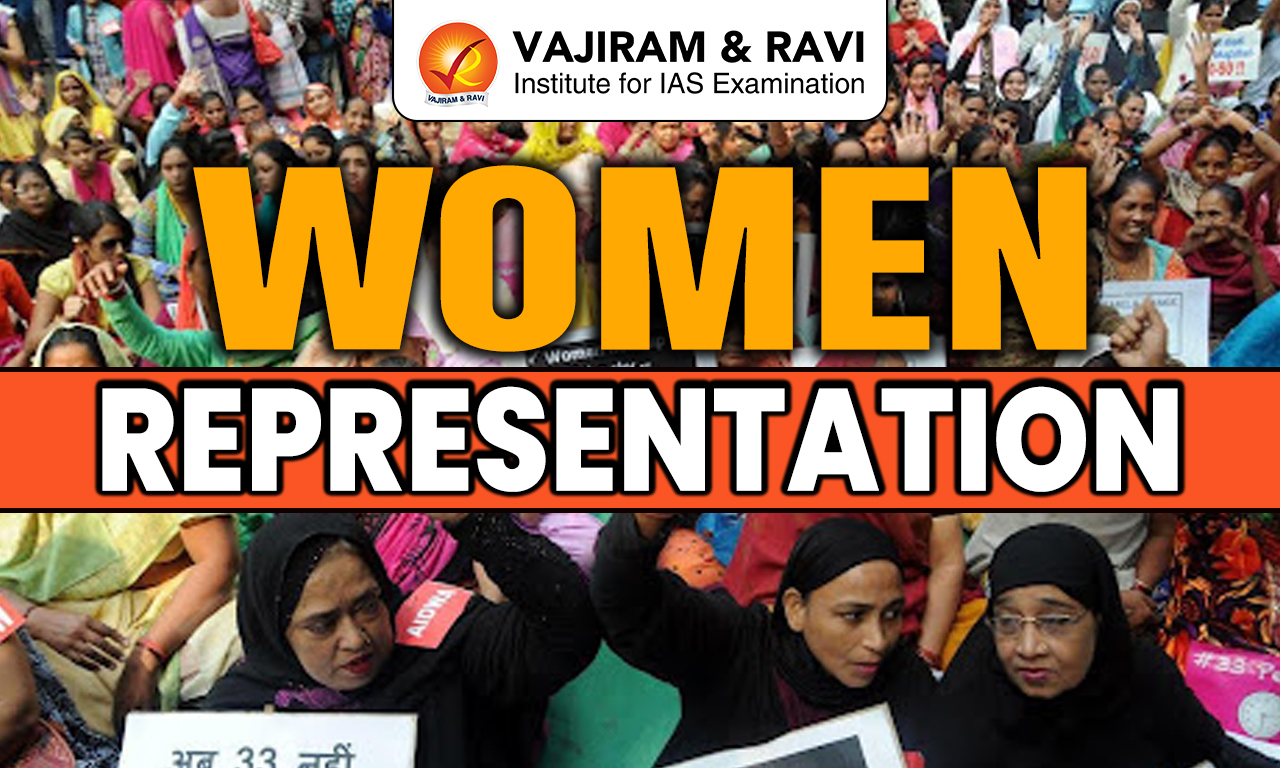
  • Recent analyses of electoral data highlight that women now vote at nearly the same rate as men in India, yet their representation in legislatures and political campaigns remains limited. 

Women’s Political Participation in India

  • Women’s participation in electoral politics in India has undergone a significant transformation over the past six decades. 
  • Earlier, women faced major barriers in accessing the electoral process, but today their participation as voters has reached near parity with men.
  • Despite this remarkable progress in voter turnout, women’s political representation in Parliament and active engagement in political campaigns remain relatively low. 
  • This creates a paradox in Indian democracy: high electoral participation but limited political power. 

Women as Voters: The Rise in Electoral Participation

  • In the decades following Independence, women participated in elections at much lower rates than men.
  • For example, in the 1967 Lok Sabha election, male voter turnout was 66.7%, while female turnout stood at 55.5%, reflecting a gender gap of more than 11 percentage points. 
  • Such disparities persisted into the 1970s due to several structural factors:
    • Lower female literacy rates
    • Restricted mobility
    • Domestic responsibilities
    • Limited political outreach to women
  • However, from the 1980s onwards, the gender gap in voter turnout began to narrow steadily.
  • By 2009, the gap had declined to around 4.4 percentage points. The most dramatic shift occurred in the last decade. 
  • In 2014, the difference reduced to about 1.5 percentage points, and by the 2019 and 2024 Lok Sabha elections, women voted at nearly the same rate as men. 

Trends in State Assembly Elections

  • In the early 1990s, women’s voter turnout was typically 4-5 percentage points lower than men’s turnout. Over time, this gap narrowed significantly.
  • By the late 2000s, the difference had almost disappeared. After 2011, the trend reversed in many states, with women voting at slightly higher rates than men.
  • Between 2015 and 2016, women’s turnout exceeded men’s by about 2.8 percentage points in several State elections. Even during the 2020–2025 period, women’s turnout remained marginally higher than men’s. 

Electoral Participation Beyond Voting

  • While voter turnout has improved significantly, women’s participation in other political activities remains limited.
  • Across Lok Sabha elections between 2009 and 2024, men consistently reported higher participation in campaign-related activities such as attending rallies, participating in processions, and canvassing voters. 
  • For example:
    • Women attending election rallies increased from 9% in 2009 to about 16% in recent elections.
    • Participation in processions and door-to-door canvassing rose from around 5–6% to about 11%.
  • Although these numbers show gradual improvement, men’s participation remains roughly double that of women in many campaign activities.
  • One major factor limiting women’s involvement in public political activities is family approval. Surveys show that many women require permission from family members to attend rallies or political meetings. 

Women’s Representation in Parliament

  • Despite increasing voter participation, women remain underrepresented in India’s legislatures.
  • In the first Lok Sabha in 1952, only 22 women were elected to Parliament. For several decades, the number of women MPs remained relatively small.
  • A noticeable increase began in the 21st century. The number of women MPs rose from 59 in 2009 to 62 in 2014, and reached a historic high of 78 in 2019. However, this number slightly declined to 74 in 2024
  • Even at its highest point, women constituted only about 14% of the Lok Sabha, which is far below their nearly 50% share in the electorate.

The Candidate Nomination Gap

  • In 1957, only 45 women contested parliamentary elections. This number increased gradually over the decades.
  • By 2014, around 668 women contested elections. The number rose to 726 in 2019 and 800 in 2024
  • However, these numbers remain small compared to the thousands of male candidates contesting elections.
  • Political parties often argue that women candidates are less likely to win elections. Yet empirical evidence challenges this claim.
  • In several elections, women candidates have had equal or higher success rates than men. For example:
    • In 2019, about 11% of women candidates won, compared to 6% of male candidates.
    • In 2024, success rates were 9% for women and 6% for men. 
  • This suggests that when women receive party nominations, they are equally capable of winning elections.

Structural and Social Barriers

  • Women’s underrepresentation in politics is shaped by multiple structural and social barriers.
  • According to survey findings:
    • 58% of women believe it is easier for those from political families to enter politics.
    • 57% think women from wealthier backgrounds have better chances of entering politics.
    • 44% believe political parties prefer men when distributing election tickets. 
  • Women also face broader social challenges. Respondents identified several key obstacles:
    • Patriarchal social structures
    • Household responsibilities
    • Lack of political experience or awareness
    • Cultural and financial barriers

Way Forward

  • Improving women’s political participation requires both institutional reforms and social change.
  • One significant step is the Women’s Reservation Bill (Nari Shakti Vandan Adhiniyam), which aims to reserve 33% of seats in the Lok Sabha and State Assemblies for women.
  • In addition, political parties must increase the number of women candidates and promote women’s leadership within party structures.

Source : TH

Women Representation FAQs

Q1: How has women’s voter turnout in India changed over time?

Ans: Women’s voter turnout has increased significantly and now matches or sometimes exceeds men’s turnout in elections.

Q2: What percentage of the Lok Sabha is currently represented by women?

Ans: Women constitute about 14% of the Lok Sabha, despite forming nearly half of the electorate.

Q3: Why are fewer women elected to Parliament in India?

Ans: Limited party nominations, social barriers, and political constraints contribute to women’s low representation.

Q4: Do women candidates perform worse than men in elections?

Ans: No, women candidates often have similar or higher success rates than male candidates when given party tickets.

Q5: What reform aims to increase women’s representation in Indian legislatures?

Ans: The Women’s Reservation Bill (Nari Shakti Vandan Adhiniyam) proposes reserving 33% seats for women in Parliament and State Assemblies.

Section 301 Investigation: US Launches Trade Probe into India and Other Countries

Section 301 Investigation

Section 301 Investigation Latest News

  • The United States has launched a Section 301 investigation into several countries, including India and China, over concerns of structural excess capacity and overproduction in manufacturing sectors. 
  • This is the first such probe by the Trump administration after the US Supreme Court struck down tariffs imposed under the International Emergency Economic Powers Act (IEEPA). 
  • The investigation will examine economies with large trade surpluses or underutilised industrial capacity across multiple sectors.

Section 301 of the US Trade Act

  • Section 301, part of the Trade Act of 1974 (Sections 301–310), empowers the Office of the United States Trade Representative (USTR) to investigate foreign trade practices that may violate trade agreements or unfairly restrict US commerce. 
  • The law allows the USTR to initiate investigations independently or based on complaints, examine foreign government policies affecting trade, and impose remedies such as tariffs or other trade restrictions. 
  • As a result, Section 301 serves as the US government’s primary legal instrument for responding to perceived unfair trade practices by other countries.

Possible Tariffs as US Launches Fast-Track Section 301 Probe

  • Trade experts note that most countries targeted in the investigation have trade deficits in goods with the US
  • The probe is moving quickly, with a short window for public comments and hearings scheduled for early May.
  • This could mean that fresh tariffs could be imposed on India and other countries after May.

US Concerns Over India’s Excess Manufacturing Capacity

  • The USTR has targeted India for structural excess capacity in several manufacturing sectors. 
  • It noted that India recorded a $58 billion trade surplus with the US in 2025, with global surpluses in textiles, healthcare products, construction materials, and automobiles. 
  • The USTR also highlighted excess capacity in sectors such as solar modules, petrochemicals, and steel, stating that India’s solar module production is nearly three times higher than its domestic demand.

Trade Deal Uncertainty Amid US Concerns Over Excess Capacity

  • The US investigation comes as India and the US are negotiating a trade deal that is yet to be formally signed. 
  • India has indicated that talks will resume once there is clarity on tariff policies. 
  • Meanwhile, the US argues that structural excess capacity in manufacturing sectors among trading partners undermines its efforts to reshore supply chains and create domestic jobs. 
  • According to the USTR, government-supported overcapacity leads to overproduction, persistent trade surpluses, and underutilised industrial capacity, distorting global trade dynamics.

Implications of the US Section 301 Investigation for India

  • According to the Global Trade Research Initiative (GTRI), the US investigation highlights several Indian sectors where structural excess capacity or export surpluses may exist.
  • This includes solar modules, petrochemicals, steel, textiles, healthcare goods, construction materials, and automobiles.
  • The US notice points out that India’s solar module manufacturing capacity is nearly three times higher than domestic demand, suggesting the possibility of export-driven surpluses. 
  • Similar concerns have been raised regarding expanding capacity in petrochemicals and steel.
  • Experts stated that the investigation mainly addresses global concerns over manufacturing overcapacity. 
  • They emphasised that India’s export growth is largely demand-driven and diversified, though the situation will need to be closely monitored.

US Legal Tools Used to Impose Tariffs

  • International Emergency Economic Powers Act (IEEPA), 1977 - The Trump administration invoked the IEEPA in February 2025 to impose tariffs. However, in February 2026, the US court ruled that this law cannot be used to impose tariffs.
  • Section 122 of the Trade Act, 1974 - In February 2026, the US President invoked Section 122 to impose 10% tariffs on all countries for 150 days, with the authority to increase the tariffs up to 15%.
  • Section 232 of the Trade Expansion Act, 1962 - This provision allows the US to impose trade restrictions on national security grounds. It has been used to impose sector-specific tariffs on steel, aluminium, and auto components, and could potentially be expanded to other sectors.
  • Section 301 of the Trade Act, 1974 - Section 301 is designed to address unfair foreign trade practices that harm US commerce. It allows the US to respond to policies considered unjustifiable, unreasonable, or discriminatory, though investigations require evidence and follow a formal legal process.
  • Section 302(b) of the Trade Act, 1974 - Under Section 302(b), the US Trade Representative (USTR) can self-initiate investigations under Section 301 to examine foreign trade practices that may affect US economic interests.

Source: IE | BL | DC

Section 301 Investigation FAQs

Q1: What is the Section 301 Investigation launched by the US?

Ans: The Section 301 Investigation is a US trade tool used to examine unfair foreign trade practices and allows Washington to impose tariffs if such practices harm US commerce.

Q2: Why has the US launched a Section 301 Investigation against India?

Ans: The US claims India and other countries show structural excess capacity in manufacturing sectors such as solar modules, steel, and petrochemicals, which may distort global trade and create large surpluses.

Q3: Which sectors in India are under scrutiny in the Section 301 Investigation?

Ans: The investigation highlights sectors including solar modules, petrochemicals, steel, textiles, healthcare products, construction materials, and automobiles as possible areas with excess production capacity.

Q4: How could the Section 301 Investigation affect India?

Ans: If the Section 301 Investigation finds unfair trade practices, the US could impose new tariffs on Indian exports, potentially affecting bilateral trade and ongoing negotiations for a trade agreement.

Q5: What legal tools does the US use to impose trade tariffs?

Ans: The US uses several laws such as Section 301 of the Trade Act, Section 232 of the Trade Expansion Act, Section 122 of the Trade Act, and earlier attempted tariffs under the IEEPA.

No-Fault Vaccine Compensation: SC Orders Relief for Covid Vaccine Side-Effects

No-Fault Vaccine Compensation

No-Fault Vaccine Compensation Latest News

  • The Supreme Court directed the Centre to create a “no-fault” compensation policy for people who suffered serious side effects or died after receiving Covid vaccines. 
  • The Court said victims’ families should not have to prove negligence in courts and that the State must provide a structured compensation mechanism as part of its public health responsibility during the vaccination drive.

Background: Vaccine Injury Cases Before the Supreme Court

  • The Supreme Court heard petitions filed by families who lost their children or spouses, aged between 18 and 40 years, due to rare complications such as blood clotting disorders after receiving Covishield and Covaxin vaccines in 2021.

Petitioners’ Arguments

  • Lack of Informed Consent - The petitioners argued that the government failed to ensure proper informed consent and did not adequately communicate the potential risks associated with the Covid vaccines.
  • Vaccination Effectively Mandatory - They also contended that although vaccination was officially voluntary, administrative restrictions on unvaccinated individuals effectively made it mandatory, thereby infringing their fundamental rights.

Government’s Defence

  • Safety and Regulatory Approval - The Union government maintained that the vaccines had undergone rigorous regulatory approvals and that India’s system for detecting Adverse Events Following Immunisation (AEFI) was robust.
  • Rare Incidence of Vaccine-Related Deaths - It argued that vaccine-related deaths were extremely rare, citing a reporting rate of 0.001 per one lakh doses for certain clotting disorders.
  • Existing Legal Remedies - The government suggested that affected families could seek compensation by approaching civil or consumer courts and proving negligence by vaccine manufacturers.

Supreme Court’s Observations

  • The Bench rejected the suggestion of pursuing individual cases in lower courts. 
  • It noted that proving negligence in vaccine injury cases involves complex scientific evidence, which places an excessive burden on families.
  • The Court also warned that forcing families into multiple individual legal battles could lead to inconsistent outcomes and unequal access to relief, undermining the principle of equality under Article 14 of the Constitution.

No-Fault Liability and the Right to Health

  • To address vaccine injury claims, the Supreme Court invoked the principle of “no-fault liability,” which allows victims or their families to receive compensation without proving negligence or wrongdoing. 
  • The Court noted that this principle already exists in Indian law, such as in motor vehicle accident compensation, and is commonly used in vaccine injury compensation schemes in countries like Australia, the United Kingdom, and Japan.

Constitutional Basis under Article 21

  • The judgment relied on Article 21 of the Constitution, which guarantees the right to life and the right to health. 
  • The Court emphasised that the State cannot remain a passive observer to human suffering but must act as a guardian of welfare and dignity. 
  • Since the Covid-19 vaccination programme was a State-led public health initiative, the government has a responsibility to support those who suffered serious adverse outcomes, regardless of how rare they are.

Reference to Earlier Supreme Court Ruling

  • The Court clarified that it was not reviewing the scientific validity of the vaccines. 
  • It cited its 2022 judgment in Jacob Puliyel vs Union of India, which upheld the legality of the vaccine approval process and the AEFI monitoring system, while affirming that bodily integrity under Article 21 means vaccination cannot be forcibly imposed.

Adequacy of Existing AEFI Mechanisms

  • Based on the earlier ruling, the Court refused to establish a separate expert medical board to investigate vaccine-related deaths.
  • It stated that the existing AEFI committees are sufficient for monitoring and investigation.

Directive to Formulate Compensation Framework

  • The Supreme Court directed the Ministry of Health and Family Welfare to quickly develop and publish a no-fault compensation policy for serious adverse events related to the Covid-19 vaccination drive. 
  • It clarified that such a policy should not be treated as an admission of liability or fault by the Union government.

Supreme Court’s Direction on Compensation for Covid-19 Deaths

  • The Supreme Court’s recent judgment on vaccine injury compensation reflects its earlier intervention during the pandemic in the 2021 case of Gaurav Kumar Bansal vs Union of India, which dealt with financial relief for families of Covid-19 victims.
  • It directed the NDMA to frame guidelines for providing ex gratia compensation to families of those who died due to Covid-19.

NDMA Guidelines on Ex Gratia Compensation

  • Following the Court’s direction, the NDMA issued guidelines in September 2021, fixing an ex gratia amount of ₹50,000 for each Covid-19 death, to be paid by states through the State Disaster Response Fund (SDRF).
  • To ensure fair access to compensation, a simplified procedure was introduced. 
  • Deaths occurring within 30 days of a positive Covid-19 test were treated as Covid deaths, and district-level grievance redressal committees were established to resolve disputes over death certificates.

Source: IE | ToI

No-Fault Vaccine Compensation FAQs

Q1: What is No-Fault Vaccine Compensation?

Ans: No-Fault Vaccine Compensation allows victims or their families to receive financial relief for vaccine injuries without proving negligence, ensuring quicker and fairer compensation through a structured public health mechanism.

Q2: Why did the Supreme Court order No-Fault Vaccine Compensation?

Ans: The Supreme Court held that families should not bear the burden of proving negligence for vaccine injuries and that the State must ensure No-Fault Vaccine Compensation during a state-led vaccination programme.

Q3: What constitutional principle supports No-Fault Vaccine Compensation?

Ans: The judgement relied on Article 21 of the Constitution, stating that the right to life includes the right to health, requiring the State to support victims of rare vaccine-related adverse outcomes.

Q4: What earlier case influenced the Supreme Court’s reasoning?

Ans: The Court referred to the Jacob Puliyel vs Union of India (2022) judgement, which upheld vaccine approvals while affirming that bodily integrity under Article 21 protects individuals from forced vaccination.

Q5: How does the ruling relate to earlier Covid compensation policies?

Ans: The ruling echoes the Supreme Court’s 2021 decision directing ex gratia compensation for Covid deaths under the Disaster Management Act, where NDMA later fixed ₹50,000 assistance per deceased person.

Daily Editorial Analysis 13 March 2026

Daily-Editorial-Analysis

Preparing India for a True Innovation-Led Economy

Context

  • India shows strong policy ambition through major funding commitments, regulatory reforms, and improvements in global innovation rankings.
  • Yet the core foundations of innovation remain fragile. Indicators such as low R&D intensity, limited global technological influence, weak research-to-market translation, and inadequate private-sector participation continue to constrain progress.
  • The challenge facing India today is not the absence of intent but the gap between policy ambition and effective execution.

Policy Momentum and Growing Government Commitment

  • Recent policy initiatives signal a determined effort to strengthen the national innovation ecosystem.
  • The government’s ₹1,00,000 crore Research, Development, and Innovation (RDI) Fund represents a significant step toward strengthening technological capacity.
  • The 2026 Union Budget further reinforced this direction with a ₹20,000 crore corpus supporting deep-tech startups, expanded tax incentives, and investments in digital infrastructure.
  • The expansion of the Atal Tinkering Labs programme, from ₹500 crore to ₹3,200 crore, demonstrates a long-term commitment to cultivating young innovators and strengthening STEM education.
  • Regulatory reforms have also reduced barriers to innovation; the removal of the three-year existence requirement for startups under the Industrial R&D Promotion Programme widened access to research support.
  • In addition, the SHANTI Act, 2025 enabled patents for the peaceful use of nuclear energy and radiation, potentially encouraging greater private-sector participation in advanced technological fields.

Persistent Structural Weaknesses

  • India spends approximately 65 percent of GDP on research and development, far below advanced economies and several emerging peers.
  • In most innovation leaders, industry investment accounts for the largest share of R&D spending.
  • In India, however, the public sector continues to shoulder a disproportionate burden, reflecting limited private appetite for long-term, high-risk technological investment.
  • Patent statistics further highlight the scale gap between India and global leaders. China records over 8 million patent applications, while the United States files around 600,000 annually.
  • India’s numbers remain modest by comparison, indicating the absence of sustained large-scale technological research.
  • International patent filings offer another indicator of innovation impact. India filed 4,547 Patent Cooperation Treaty (PCT) applications in 2024, representing a 22 percent increase from the previous year.
  • However, the country still trails significantly behind China, the United States, and Japan.

Human Capital and Talent Inclusion Gaps

  • Innovation ecosystems depend heavily on human capital, yet India faces several gaps in this area.
  • The Global Innovation Index 2025 places India low in indicators such as employment in knowledge-intensive sectors and the number of full-time researchers.
  • These weaknesses restrict the country’s ability to generate consistent scientific breakthroughs.
  • Gender inclusion remains another challenge. India ranks poorly in the employment of women with advanced degrees, reflecting an underutilisation of a critical talent pool. Strong evidence links diversity in research teams with better innovation outcomes.
  • Government programmes such as WIDUSHI and WISE-KIRAN aim to promote women’s participation in science and engineering, but their long-term impact is yet to be fully realised.

The Missing Link: From Research to Market

  • The most significant weakness in India’s innovation system lies in the transition from scientific research to commercialisation.
  • Innovation delivers real economic impact only when ideas move successfully from the laboratory to the market.
  • Universities and public research institutions produce increasing volumes of scientific output, yet mechanisms for technology transfer, venture creation, and risk capital alignment remain limited.
  • High-technology entrepreneurship requires patient capital, strong intellectual property protection, and ecosystems that tolerate technological risk and failure.
  • Leading innovation economies have built strong connections between academia, industry, and finance, enabling discoveries to evolve into globally competitive technologies.

The Crucial Role of the Private Sector

  • India’s innovation future ultimately depends on the active participation of the private sector.
  • Government initiatives can provide funding and policy support, but sustainable technological progress requires strong industry-led research investment.
  • Businesses must commit to long-gestation innovation, particularly in deep technology sectors such as advanced communications, space technology, and artificial intelligence.
  • Encouraging developments are already visible. India’s commercial space sector has produced several promising startups, demonstrating the potential of technology-driven entrepreneurship.
  • The RDI Fund could further accelerate innovation if industry embraces long-term investment and collaboration with research institutions.
  • The emergence of 6G technology standards in the coming years will serve as a critical benchmark of India’s technological contribution.

Conclusion

  • India stands at a decisive moment in its innovation journey; Government reforms, funding initiatives, and supportive policies have created a promising environment for technological growth.
  • However, structural challenges, including low R&D spending, limited industry participation, human capital gaps, and weak commercialisation mechanisms, continue to limit progress.
  • Transforming India into a global innovation leader will require stronger private-sector engagement, deeper investment in scientific research, and closer collaboration between universities, industry, and venture capital.
  • The policy groundwork has been laid; the next phase of India’s innovation story will depend on whether industry-driven R&D rises to meet the opportunity.

Preparing India for a True Innovation-Led Economy FAQs

Q1. What paradox characterizes India’s innovation landscape?
Ans. India shows strong policy ambition in innovation but continues to struggle with weak execution and structural limitations.

Q2. How much does India invest in R&D as a share of its GDP?
Ans. India invests about 0.65 percent of its GDP in research and development.

Q3. What is a major weakness in India’s innovation ecosystem?
Ans. A major weakness is the limited translation of scientific research into commercially viable technologies.

Q4. Why is private-sector participation important for innovation?
Ans. Private-sector participation is important because industry-led investment drives large-scale research and technological development.

Q5. What role does human capital play in innovation?
Ans. Human capital contributes to innovation by providing skilled researchers and diverse talent needed for scientific and technological breakthroughs.

Source: The Hindu


Economic Survey Promises, Impact of New Labour Codes

Context

  • India’s new labour codes are projected to boost formalisation, employment, and GDP growth by simplifying compliance for firms.
  • However, critics argue that these expectations overlook the reality that over 80% of India’s workforce remains informal and outside labour protections.
  • Evidence suggests that firms often respond to regulatory flexibility by increasing contract and casual employment rather than creating permanent jobs.
  • Between 2011 and 2023, direct factory employment fell while contract labour expanded significantly, and even public sector enterprises are increasingly replacing regular workers with contractual staff.
    • Regular employment in central public sector enterprises declined by 30,000 workers in 2024 alone.
  • As a result, instead of strengthening stable employment, the new labour codes may accelerate the shift toward precarious work and deepen labour market informality.
  • This article highlights the Economic Survey’s optimistic projections about India’s new labour codes and examines concerns that the reforms may expand contractual work, weaken protections, and deepen labour market informality.

Formalisation Illusion in India’s Labour Codes

  • India’s new labour codes attempt to address informality by raising the thresholds for labour protections, allowing more firms to remain outside regulatory coverage.
  • For instance, the definition of a factory has been expanded and the threshold for contract labour and prior approval for layoffs has been increased.
  • Despite these relaxations, the government expects the reforms to boost formalisation mainly through fixed-term employment, which allows firms to hire workers on short-term contracts instead of permanent positions.
  • While fixed-term workers may receive some benefits such as appointment letters and gratuity after one year, this system weakens the core element of formal employment—job security—thereby risking the expansion of precarious work rather than genuine formalisation.

Policy Grey Areas in India’s Labour Codes

  • The new labour codes introduce several welfare provisions for workers, but many crucial details remain unclear and are left to future schemes or administrative decisions.
  • This creates uncertainty about how the benefits will actually function in practice.
  • Unclear Framework for Worker Welfare Schemes
    • The codes require platform companies to contribute 1–2% of their annual turnover for gig worker welfare.
    • However, the rules regarding contribution mechanisms, coverage, benefit levels, and claim procedures have not yet been specified.
    • Similarly, the reskilling fund for retrenched workers mandates employers to deposit wages equivalent to 15 days’ pay per worker, but the system for accessing these funds, training providers, and the skills to be taught remain undefined.
    • As seen with many welfare funds and cesses in India, money may be collected but its utilisation could remain limited or delayed.
  • Ambiguity in Wage Determination
    • The Code on Wages introduces the concept of a National Floor Wage and a National Minimum Wage, but it does not clearly explain how these wages will be calculated or how the two will differ.
    • This lack of methodology creates scope for greater administrative discretion in wage determination.
  • Debate on Minimum Wages and Employment
    • Critics of minimum wages often argue that forcing employers to pay higher wages leads to job losses.
    • However, extensive research suggests that these fears rarely materialise. Higher wages can reduce worker turnover and improve productivity.
    • Moreover, when low-income workers receive wage increases, they tend to spend more on essential goods and services, which boosts consumption and aggregate demand.
    • In labour markets where employers possess strong bargaining power, minimum wages can actually improve efficiency and reduce exploitation.
  • Weakening of Labour Law Enforcement
    • The labour codes rename labour inspectors as “Inspector-cum-Facilitators”, which appears progressive but may weaken enforcement.
    • Instead of strictly monitoring compliance, inspectors are now expected to assist employers in meeting regulations.
  • Compounding of Violations
    • The codes allow employers to compound serious violations, such as wage theft or unpaid overtime, by paying prescribed fines.
    • If these penalties are lower than the cost of compliance, firms may find it economically rational to violate labour laws rather than follow them.
  • Impact on Informal Sector Workers
    • This shift is particularly harmful for workers in the informal sector, where trade unions, labour courts, and awareness of rights are limited.
    • Previously, labour inspectors often served as the only accessible mechanism for workers to seek redress.
    • Transforming them into facilitators reduces accountability and further weakens protection for vulnerable workers.

Structural Causes of Informality Overlooked

  • The labour codes assume that simplifying regulations will encourage formal employment, but they fail to address the deeper structural drivers of informality.
  • Informality persists not because regulations are complex, but because it is economically profitable for firms.
  • At the same time, technological changes and platform-based jobs are increasingly bypassing traditional employer–employee relationships, further expanding informal work.

Questionable Assumptions Behind Reform Projections

  • The optimistic projections in the Economic Survey rely on assumptions that conflict with labour market realities.
  • Making formal jobs more flexible does not guarantee formalisation if informal employment remains cheaper and more attractive for employers.

Formalisation Without Better Jobs

  • Lower compliance costs may encourage firms to replace permanent employees with contract workers, rather than create stable jobs.
  • As a result, official statistics may show higher formalisation, but this would largely reflect changes in accounting practices rather than genuine improvements in workers’ living conditions.

Economic Survey Promises, Impact of New Labour Codes FAQs

Q1. What benefits does the Economic Survey expect from the new labour codes?

Ans. The Economic Survey projects that the labour codes will increase formalisation, generate about 77 lakh jobs, boost female labour participation, reduce unemployment, and contribute around 1.25% to GDP by 2029–30.

Q2. Why do critics argue that labour codes may increase precarious work?

Ans. Critics argue that flexible regulations encourage firms to replace permanent employees with contract or fixed-term workers, which weakens job security and expands precarious employment despite claims of formalisation.

Q3. How do the new labour codes raise thresholds for labour regulation?

Ans. The codes increase thresholds for defining factories, contract labour rules, and lay-off approvals, allowing more firms to remain outside strict labour regulations and reducing the number of workers covered by protections.

Q4. What concerns exist regarding welfare provisions for gig and retrenched workers?

Ans. Although the codes propose welfare funds for gig workers and reskilling schemes for retrenched employees, many details on contributions, coverage, benefits, and implementation remain unspecified.

Q5. Why might labour market statistics improve without improving workers’ lives?

Ans. Firms may reclassify workers under flexible arrangements like fixed-term employment, increasing formalisation figures statistically, while actual job security, wages, and working conditions remain largely unchanged.

Source: TH


Motion to Remove the CEC - Constitutional Safeguards and Institutional Concerns

Context

  • During the ongoing session of the Indian Parliament, several Opposition parties are reportedly considering moving a removal motion against the Chief Election Commissioner (CEC).
  • If such a motion is formally introduced, it would mark an unprecedented event in India’s democratic history, as no CEC has ever faced a removal motion in Parliament in the last 75 years.
  • The debate has revived concerns about the independence of the Election Commission of India (ECI), the process of appointment of election commissioners, and the broader issue of protecting constitutional institutions.

Constitutional Status and Removal of the CEC

  • Removal procedure: The Constitution of India [Article 324 (5)] provides a stringent process to ensure the independence of the CEC. The procedure mirrors the removal process of a Supreme Court judge.
  • Steps involved:
    • Initiation of notice: At least 100 members of the Lok Sabha or 50 members of the Rajya Sabha must submit a removal notice to the Speaker or Chairman.
    • Admission and inquiry: If admitted, a three-member committee is constituted to investigate the charges.
    • Grounds for removal: Removal can occur only on the grounds of Proved misbehaviour, and incapacity.
    • Parliamentary approval: The motion must be passed in both Houses of Parliament with a special majority -
      • Majority of total membership of the House, and
      • Two-thirds of members present and voting.
    • Meaning of “Proved misbehaviour”: The phrase has been interpreted to include -
      • Deliberate abuse of constitutional authority,
      • Partisan functioning favouring a political formation, and
      • Actions undermining the credibility and impartiality of the Election Commission.

Independence of the Election Commission

  • Constitutional vision: During the Constituent Assembly debates, B.R. Ambedkar emphasised that the election machinery must remain outside executive control, as free and fair elections form the foundation of democracy.
  • SC intervention (2023):
    • In Anoop Baranwal Union of India (2023), the Supreme Court ruled that the appointment of the CEC and Election Commissioners should be done by a three-member committee consisting of -
      • Prime Minister
      • Leader of the Opposition
      • Chief Justice of India
    • The objective was to reduce executive dominance in appointments and ensure institutional autonomy.

Legislative Response to the SC Verdict - The CEC Act

  • Soon after the SC judgment, the Union government enacted a new law governing appointments to the Election Commission.
  • Key change in the appointment process:
    • The new arrangement replaced the Chief Justice of India with a Union Cabinet Minister nominated by the Prime Minister.
    • Thus, the selection committee now consists of - Prime Minister (Chairperson), Leader of the Opposition, and a Cabinet Minister nominated by the Prime Minister.
  • Implications: This structure gives the executive a majority (2 out of 3 members), raising concerns that the independence of the ECI may be compromised, and the executive may influence appointments.

Legacy of the Election Commission

  • Despite current controversies, the Election Commission of India has historically been a strong and respected institution.
  • Foundational leadership: Sukumar Sen, India’s first CEC, successfully conducted the 1951–52 general elections, the largest democratic exercise in the world at the time.
  • Key challenges included: 170 million eligible voters, around 85% illiteracy, massive logistical operations (16,500 clerks, 56,000 presiding officers, over 2 lakh policemen, infrastructure built to reach remote areas).
  • Institutional reforms by later CECs:
    • Y. Quraishi (17th CEC): Expanded SVEEP (Systematic Voters’ Education and Electoral Participation) programme. Took a firm stance against paid news and misleading opinion polls.
    • Sunil Arora (23rd CEC): Strengthened technological integration in elections. Created a database of over 930 million voters. Introduced nationwide voter helpline services
    • These initiatives reinforced voter awareness, transparency, and technological efficiency.

Historical Precedents

  • Although criticism of CECs has occurred before, no formal removal motion has ever been filed.
    • 1991: Parliament witnessed protests demanding the removal of T.N. Seshan, but no official motion was introduced.
    • 2006: Then the Opposition party (BJP-led NDA) sought removal of Election Commissioner Navin Chawla, but this was limited to a memorandum rather than parliamentary proceedings.
  • Thus, a removal motion today would set a historic precedent.

Challenges and Concerns

  • Politicisation of Constitutional offices: A removal motion could deepen the perception that constitutional authorities are being dragged into political conflicts.
  • Executive dominance in appointments: Changes in the appointment process may weaken the institutional independence of the ECI.
  • Erosion of public trust: If electoral authorities are seen as partisan, public confidence in free and fair elections may decline.
  • Institutional instability: Frequent political challenges to constitutional authorities may undermine the stability of democratic institutions.

Way Forward

  • Strengthen appointment mechanism: Restore a balanced selection committee including judicial representation.
  • Ensure transparency in decision-making: Election Commission decisions should be backed by clear reasoning and institutional accountability.
  • Parliamentary responsibility: Removal motions should be used only in exceptional circumstances to preserve institutional credibility.
  • Institutional reforms: Introduce clear guidelines defining “misbehaviour” to avoid political misuse.
  • Promote electoral integrity: Expand programmes like SVEEP to deepen voter awareness and participation.

Conclusion

  • The possible removal motion against the CEC represents a critical moment for India’s democratic institutions.
  • While the Constitution rightly provides a mechanism to hold constitutional authorities accountable, the process must be exercised with great restraint and responsibility.
  • The Election Commission has historically been a pillar of India’s electoral democracy, conducting complex elections with remarkable credibility.
  • Safeguarding its independence, impartiality, and public trust is essential to preserving the integrity of the world’s largest democracy.

Motion to Remove the CEC FAQs

Q1. What is the constitutional procedure for the removal of the CEC in India?

Ans. The CEC can be removed by Parliament on the grounds of proved misbehaviour or incapacity, similar to the removal process of a SC judge.

Q2. How did the SC seek to ensure the independence of the Election Commission?

Ans. In the Anoop Baranwal v. Union of India (2023) case, the Court constituted a 3-member committee to appoint the CEC and Election Commissioners.

Q3. What change was introduced by the new law after the 2023 SC judgment?

Ans. The law replaced the CJI with a Union Cabinet Minister nominated by the PM, giving the executive a majority in the selection committee.

Q4. Why is the independence of the Election Commission crucial for Indian democracy?

Ans. An independent Election Commission ensures free, fair, and impartial elections.

Q5. What were the major contributions of early Election Commission leadership in strengthening India’s electoral democracy?

Ans. Sukumar Sen, India’s first CEC, successfully conducted the 1951–52 general elections, establishing the credibility and legitimacy of India’s electoral system.

Source: IE

Daily Editorial Analysis 13 March 2026 FAQs

Q1: What is editorial analysis?

Ans: Editorial analysis is the critical examination and interpretation of newspaper editorials to extract key insights, arguments, and perspectives relevant to UPSC preparation.

Q2: What is an editorial analyst?

Ans: An editorial analyst is someone who studies and breaks down editorials to highlight their relevance, structure, and usefulness for competitive exams like the UPSC.

Q3: What is an editorial for UPSC?

Ans: For UPSC, an editorial refers to opinion-based articles in reputed newspapers that provide analysis on current affairs, governance, policy, and socio-economic issues.

Q4: What are the sources of UPSC Editorial Analysis?

Ans: Key sources include editorials from The Hindu and Indian Express.

Q5: Can Editorial Analysis help in Mains Answer Writing?

Ans: Yes, editorial analysis enhances content quality, analytical depth, and structure in Mains answer writing.


Chelonus (Carinichelonus) mahadeb

Chelonus (Carinichelonus) mahadeb

Chelonus (Carinichelonus) mahadeb Latest News

A rare parasitic wasp Chelonus (Carinichelonus) mahadeb named has been recently recorded from a tea estate in Assam.

About Chelonus (Carinichelonus) mahadeb

  • It is a new species of parasitic wasp.
  • It was discovered from Nahortoli Tea Estate in Assam.
  • Parasitic wasps of the genus Chelonus are tiny insects but play an important ecological role. 
    • They are known as egg–larval parasitoids, meaning they lay their eggs inside the eggs of other insects, usually moths and butterflies. 
    • The developing wasp larva eventually consumes the host, helping regulate insect populations naturally.
    • Because many moth larvae are major agricultural pests, species of Chelonus are often considered beneficial insects that contribute to natural pest control in crop ecosystems, including plantations.
  • The discovery is notable because the subgenus Carinichelonus is extremely rare and poorly documented worldwide. 
  • It is only the second new species of this subgenus described from India in recent times.

Source: EM

Chelonus (Carinichelonus) mahadeb FAQs

Q1: What is Chelonus (Carinichelonus) mahadeb?

Ans: A newly discovered species of parasitic wasp.

Q2: Where was Chelonus (Carinichelonus) mahadeb discovered?

Ans: Nahortoli Tea Estate in Assam, India.

Q3: What is the ecological role of parasitic wasps of the genus Chelonus?

Ans: They help regulate insect populations naturally.

Q4: Where do Chelonus wasps lay their eggs?

Ans: Inside the eggs of other insects, usually moths and butterflies.

International Atomic Energy Agency (IAEA)

International Atomic Energy Agency (IAEA)

International Atomic Energy Agency (IAEA) Latest News

Amid growing concerns over nuclear non-proliferation, the Director General of the International Atomic Energy Agency held talks with the head of Rosatom, Russia's state nuclear energy corporation recently.

About International Atomic Energy Agency (IAEA)

  • It is the world’s leading intergovernmental organisation for scientific and technical cooperation in the nuclear field.
  • The Agency’s genesis was U.S. President Eisenhower’s “Atoms for Peace” address to the General Assembly of the United Nations on 8 December 1953.
  • The IAEA Statute was approved on 23 October 1956 and came into force on 29 July 1957.
  • The IAEA is an autonomous organization within the United Nations system.
  • It reports to both the United Nations General Assembly and the UN Security Council.
  • Its primary goal is to ensure that nuclear energy is not diverted for weapons purposes.
  • The IAEA works with its Member States and multiple partners worldwide to promote the safe, secure, and peaceful use of nuclear technologies.
  • It is widely known as the world's "Atoms for Peace and Development"​ organization. 
  • Member Countries: The agency currently has 180 member states, reflecting its wide international mandate and credibility.
  • Headquarters: Vienna, Austria.

International Atomic Energy Agency (IAEA) Institutional Structure

  • General Conference: The General Conference, composed of all member states, meets annually to approve budgets and set general policy directions.
  • Board of Governors: The Board of Governors, comprising 35 members, meets about five times a year to: approve safeguards agreements, carry out statutory functions, and appoint the Director General.
  • Secretariat: The Secretariat, led by the Director General, handles the IAEA’s daily operations.

International Atomic Energy Agency (IAEA) Functions

  • Promoting Peaceful Uses of Nuclear Energy: The IAEA encourages the use of nuclear technology for peaceful purposes, emphasizing sustainability and safety.
  • Safety and Security: The agency establishes safety standards and provides assistance to ensure that nuclear operations are conducted safely and securely.
  • Verification: The IAEA conducts inspections and monitoring to verify compliance with nuclear non-proliferation agreements.

Source: DEVD

International Atomic Energy Agency (IAEA) FAQs

Q1: What is the International Atomic Energy Agency (IAEA)?

Ans: The world’s leading intergovernmental organization for scientific and technical cooperation in the nuclear field.

Q2: When did the International Atomic Energy Agency (IAEA) Statute come into force?

Ans: 29 July 1957.

Q3: What is the primary goal of the International Atomic Energy Agency (IAEA)?

Ans: To ensure that nuclear energy is not diverted for weapons purposes.

Q4: Where is the headquarters of the International Atomic Energy Agency (IAEA) located?

Ans: Vienna.

Peptides

Peptides

Peptides Latest News

Globally, peptide therapeutics have been gaining attention in research as well as clinical practice.

About Peptides

  • Peptides are chains of amino acids that are naturally found in the body.
  • The amino acids in a peptide are connected to one another in a sequence by bonds called peptide bonds.
  • Peptides vs. Proteins:
  • Proteins and peptides are fundamental components of cells that carry out important biological functions. 
  • Both proteins and peptides are made up of amino acids, but peptides contain far fewer amino acids than proteins.
  • Traditionally, peptides are defined as molecules that consist of between 2 and 50 amino acids.
  • Meanwhile, proteins are long molecules made up of multiple peptide subunits, and are also known as polypeptides.
  • In addition, peptides tend to be less well defined in structure than proteins, which can adopt complex conformations known as secondary, tertiary, and quaternary structures. 
  • Proteins can be digested by enzymes (other proteins) into short peptide fragments.

Functions of Peptides

  • The body makes lots of different peptides, each of which has a different role.
  • They may provide pro-aging support, anti-inflammatory, or muscle-building properties.
  • Some peptides act as hormones, which are molecules that when released from cells, affect other areas of the body.
  • Due to the potential health benefits of peptides, many supplements are available that contain peptides that manufacturers have derived either from food or made synthetically.

What are Amino Acids?

  • Amino acids are molecules that combine to form proteins.
  • Amino acids and proteins are the building blocks of life.
  • There are 20 different amino acids.
  • A protein consists of one or more chains of amino acids (called polypeptides) whose sequence is encoded in a gene.
  • Some amino acids can be synthesized in the body, but others (essential amino acids) cannot and must be obtained from a person’s diet.
  • The nine essential amino acids are: histidine, isoleucine, leucine, lysine, methionine, phenylalanine, threonine, tryptophan, and valine.

Source: TH

Peptides FAQs

Q1: What are peptides?

Ans: Chains of amino acids naturally found in the body.

Q2: What is the main difference between peptides and proteins?

Ans: Peptides contain fewer amino acids than proteins.

Q3: How is the structure of peptides different from proteins?

Ans: Peptides are generally less structurally complex than proteins.

Q4: What roles do peptides play in the human body?

Ans: They perform various biological functions including hormone activity, anti-inflammatory effects, and muscle-building support.

PM Kisan Samman Nidhi Yojana, Launch Date, Objectives, Eligibility

PM Kisan Samman Nidhi Yojana

The Central Sector Scheme named PM Kisan Samman Nidhi Yojana was introduced under the Government of India to facilitate income support to farmers and their families. The scheme was implemented as the Rythu Bandhu Scheme in Telangana by their state government where a fixed amount was transferred directly to the farmers who were eligible for the scheme. During the Interim Union Budget of India on 1 February 2019, Piyush Goyal announced the project as a country wise project.

Pradhan Mantri Kisan Samman Nidhi Yojana was launched on 24th February 2019 by the Prime Minister Narendra Modi in Gorakhpur, Uttar Pradesh. According to this scheme, all the small and marginal farmers will receive Rs. 6000 per year in three installments directly to the bank accounts. The budget for this scheme is set to be Rs. 75000 crore, financed by the Union Government.

PM Kisan Samman Nidhi Yojana

The Pradhan Mantri Kisan Samman Nidhi (PM-KISAN) was launched in February 2019 to offer direct financial aid to small and marginal farmers. Under this scheme, eligible farming families receive ₹6,000 a year, paid in three instalments of ₹2,000 each, credited into their bank accounts directly.

The core idea behind PM Kisan Samman Nidhi Yojana is to promote farmer’s income, helping them manage agricultural costs and household needs more effectively. It specifically targets those with limited land, aiming to improve rural livelihoods and strengthen the rural economy. PM KISAN also aligns with the broader goal of increasing the farmer’s income and tackling rural struggles, making it a pillar in the country’s agricultural support system.

PM Kisan Samman Nidhi Yojana (PM KISAN) 21st Installment

The PM Kisan Samman Nidhi Yojana (PM KISAN) 21st Installment provides ₹2,000 to each eligible small and marginal farmer as part of the annual ₹6,000 aid. More than 10 crore farmers across the country benefit from this direct financial transfer. The scheme plays a crucial role in empowering farmers and promoting sustainable growth in the agricultural sector. The PM Kisan Samman Nidhi Yojana (PM KISAN) 21st Installment of ₹2,000 is expected to be released before Diwali, bringing festive relief to farmers. The scheme ensures that farmers receive timely monetary support to manage agricultural expenses and household needs.

PM Kisan Samman Nidhi Yojana Overview

The 21st Installment of PM Kisan Samman Nidhi Yojana amount is expected to be released in October 2025. Below mentioned table includes PM Kisan Samman Nidhi Yojana Overview:

PM Kisan Samman Nidhi Yojana Overview

Name of the scheme

PM-KISAN Yojana

Full-Form

Pradhan Mantri Kisan Samman Nidhi Yojana

Date of launch

24th February 2019

Government Ministry

Ministry of Agriculture and Farmers Welfare

Official Website

https://pmkisan.gov.in/

PM Kisan Samman Nidhi Yojana Features

  1. The PM Kisan Samman Nidhi Yojana is introduced to support around 12 crore small and marginal farmers across India. With an annual budget of ₹75,000 crore, it stands as one of the largest direct income support programs in the country.
  2. Every farmer who is eligible receives ₹6,000 per year, distributed in three equal instalments of ₹2,000. This amount is transferred straight into their bank accounts via Direct Benefit Transfer (DBT), cutting out delays and eliminating middlemen.
  3. This scheme ensures a basic, reliable income for farming families. With timely payments every four months, it provides expected support for managing agricultural and household expenses.
  4. There are no restrictions on how the money should be spent. Whether it’s seeds, fertilizers, family needs, or medical expenses, farmers are free to use the funds as they see fit.
  5. The scheme is entirely financed by the central government. From its introduction, the Centre has committed ₹75,000 crore annually, ensuring a consistent flow of funds through the DBT system.
  6. To access the benefits of PM Kisan Samman Nidhi Yojana, Aadhaar authentication is required. Farmers without Aadhaar can get enrolled at the nearest Common Service Centre (CSC) to become eligible for the scheme.
  7. The process has been made user-friendly. Farmers can register themselves using the PM-KISAN mobile app or visit a CSC for assistance. This self-registration setup ensures broader and quicker access.
  8. A centralized call center has been established to handle queries, resolve issues, and assist farmers with registration or any problems they might face with the scheme.

PM Kisan Samman Nidhi Yojana Objectives

The Pradhan Mantri Kisan Samman Nidhi Yojana (PM-KISAN) is a scheme launched by the Government of India to increase the income of small and marginal farmers. It serves as a direct support mechanism for rural households dependent on agriculture. PM Kisan Samman Nidhi Yojana Objectives are as follow:

  1. The PM Kisan Samman Nidhi Yojana aims to provide assured income support to eligible farmer families with cultivable land, helping them manage both agricultural and household expenses.
  2. PM-KISAN also helps farmers purchase essential inputs like seeds, fertilizers, and equipment. The goal is to promote better crop health and improve farm productivity, thereby stabilizing farm income.
  3. The government plans to expand the scheme’s coverage to nearly 14.5 crore farmers, up from the current base, with a target of including 2 crore more beneficiaries.
  4. PM Kisan Samman Nidhi Yojana coverage is expected to cost ₹87,217.50 crore, fully financed by the Central Government.

PM Kisan Samman Nidhi Yojana Eligibility Criteria

To be eligible for the Pradhan Mantri Kisan Samman Nidhi Yojana (PM-KISAN), small and marginal farmers must not fall under certain exclusion categories. The scheme is meant for land-owning farmers, and specific individuals and groups are banned from receiving its benefits.

  • Institutional landholders - Any land owned by institutions rather than individuals is excluded.
  • High-ranking public officials which includes:
    • Former and current holders of constitutional posts.
    • Ex or current Union and State Ministers.
    • Sitting or former Members of Parliament (Lok Sabha or Rajya Sabha) or State Legislatures.
    • Former and present Mayors of Municipal Corporations.
    • Former and current Chairpersons of District Panchayats.
  • Government employees and retirees - Any serving or retired employee of Central or State Government departments, offices, or ministries is ineligible. This also applies to retirees drawing a monthly pension of ₹10,000 or more.
  • Income taxpayers - Anyone who paid income tax in the most recent assessment year is automatically excluded.
  • Professionals practicing independently - Registered doctors, engineers, lawyers, chartered accountants, and architects actively practicing their profession are not eligible, even if they own agricultural land.

Documents required for verification by eligible farmers:

  • Valid proof of Indian citizenship
  • Landholding documents to prove ownership
  • Aadhaar card for identity authentication
  • Active bank account details to receive DBT transfers

PM Kisan Samman Nidhi Yojana Advantages

  1. One of the PM Kisan Samman Nidhi Yojana Advantages is the direct transfer of money to farmer’s bank accounts. An example was on December 25, 2020, when ₹18,000 crore was deposited into the accounts of 9 crore farmers in the presence of Prime Minister Narendra Modi. This kind of direct benefit transfer ensures speed, transparency, and zero leakage.
  2. All beneficiary details are maintained on a central digital platform. This has streamlined both registration and fund distribution, making the process more efficient and reliable. The digital shift has also helped in reducing errors and eliminating duplication.
  3. By providing timely financial assistance, PM Kisan Samman Nidhi Yojana helps ease the cash issues that farmers often face, especially during sowing or harvest seasons. This support can make a real difference in managing day-to-day farming and household expenses.
  4. With improved financial support, farmers are in a better position to adopt improved practices, invest in inputs, or even explore new technologies.
  5. The selection of beneficiaries is based on eligibility criteria, leaving no room for bias or political interference.

PM Kisan Samman Nidhi Yojana Challenges

  1. While the intent is to offer income support, the ₹6,000 annual aid may not be enough to meaningfully improve the financial stability of small farmers. The fixed amount also doesn’t consider the size of landholding or varying cost of living across regions, limiting its real impact.
  2. Despite being positioned as a poor welfare scheme, data suggests that the benefits often reach relatively better-off farmers, those who already had access to land and resources even before the pandemic, leaving out some of the most vulnerable rural households.
  3. One of the major drawbacks is the exclusion of landless agricultural workers. Since eligibility is only restricted to land ownership, millions of rural households who work on leased land or as laborers don’t qualify, even though they form a critical part of the rural economy.
  4. The PM Kisan Samman Nidhi Yojana follows a top-down structure, where the central government funds and directs it while states identify beneficiaries. This model often faces coordination issues, delays in updating records, and gaps in last-mile delivery which reduces its overall effectiveness.
  5. As more focus and funding shift toward cash transfer schemes like PM-KISAN, there’s growing concern that critical long-term investments like those in irrigation, infrastructure, and market support which will affect the agricultural sector in a longer run.

PM Kisan Samman Nidhi Yojana FAQs

Q1: What is PM Kisan Samman Nidhi Yojana?

Ans: It is a Central Sector Scheme launched by the Government of India that provides ₹6,000 per year to eligible farmers in three equal installments directly into their bank accounts.

Q2: Who is eligible for the PM Kisan Scheme?

Ans: All landholding farmer families with cultivable land, as per official land records, are eligible. However, income tax payers, institutional landholders, and professionals like doctors or engineers are excluded.

Q3: How can a farmer register for PM Kisan?

Ans: Farmers can register through the official PM Kisan portal (pmkisan.gov.in), local CSC centers, or through the agriculture department of their respective states.

Q4: What documents are required for PM Kisan registration?

Ans: Aadhaar card, bank account details, land ownership proof, and mobile number are required for registration.

Q5: How is the PM Kisan amount disbursed?

Ans: The amount of ₹2,000 is transferred thrice a year, usually in April-July, August-November, and December-March directly into the beneficiary’s Aadhaar-linked bank account.

Enquire Now