Tyagaraja, Life, Works and Contribution to Carnatic Music

Tyagaraja

Tyagaraja was one of the greatest composer-saints of South India and a central figure in the tradition of Carnatic music. A devoted follower of Lord Rama, he used music as a means of spiritual expression and liberation. He is regarded as one of the Trinity of Carnatic Music, along with Muthuswami Dikshitar and Syama Sastri.

Tyagaraja Birth and Early Background

  • Tyagaraja was born on 14 May 1767 in the village of Thiruvaiyaru, located in the Thanjavur region of present-day Tamil Nadu. 
  • His father, Kakarla Ramabrahmam, and his mother, Sitamma, belonged to the Telugu-speaking Mulakanadu Smartha Brahmin community. 
  • The family originally came from the Prakasam region of present-day Andhra Pradesh and later migrated to the Tamil-speaking cultural region of Thanjavur.
  • At the time of his birth, he was named Tyagabrahmam. This name was given in honour of Lord Shiva, who is worshipped as Tyagaraja at the temple in his birthplace. 
  • This early religious environment played an important role in shaping his spiritual outlook and devotion, which later became the foundation of his musical compositions.

Tyagaraja and the Carnatic Trinity

Tyagaraja is widely recognised as one of the three great composers of Carnatic music, collectively known as the Trinity. The other two members of this Trinity are Muthuswami Dikshitar and Syama Sastri. 

  • All three composers lived and worked in the Thanjavur region during the late eighteenth and early nineteenth centuries and made lasting contributions to the development of Carnatic music.
  • They laid the foundation of modern Carnatic music. 
  • Among them, Tyagaraja is particularly known for the large number of compositions he created and for the devotional depth present in his music.

Tyagaraja Devotional Philosophy 

  • The central theme of Tyagaraja’s compositions is devotion to Lord Rama, who is believed to be an incarnation of Vishnu. 
  • It is believed that he composed thousands of kritis, most of which praise Lord Rama and express a deep personal connection with the divine.
  • His compositions express deep devotion and a personal relationship with God. They include emotions such as love, surrender, longing and spiritual reflection. 
  • His music reflects the Bhakti tradition, where devotion to God is seen as the path to spiritual liberation.
  • He also rejected royal patronage and material wealth, preferring a life of devotion to Lord Rama. When invited by King Serfoji II, he declined and composed “Nidhi Chala Sukhama”, highlighting that true happiness lies in devotion rather than wealth or royal honor.

Tyagaraja Musical Contribution and Innovations

Carnatic music evolved as a highly structured classical tradition in South India under strong Bhakti influence. By the eighteenth century, it had reached a mature stage but lacked standardisation in composition and performance. Tyagaraja played a crucial role in systematising and refining this tradition into its modern form.

  • He introduced sangatis, which are small variations in a musical line. This made his compositions more expressive and allowed singers to improvise.
  • He helped establish the kriti as the main form of Carnatic music by giving it a clear and fixed structure.
  • His Pancharatna Kritis are considered masterpieces and are still widely performed in music concerts and festivals.
  • He composed many ragas and helped develop them by showing their full beauty and emotional expression.
  • He also wrote musical operas such as Prahlada Bhakti Vijayam and Nauka Charitam.
  • His compositions are simple, devotional, and emotionally rich, mainly dedicated to Lord Rama.

Tyagaraja Compositions

  • Tyagaraja’s compositions, known as kritis, are famous for their quality, variety and depth. They combine meaningful lyrics with rich musical structure.
  • A well-known example is the composition “Koluvaiyunnade” in the raga Devagandari, which shows how he used multiple sangatis to enrich a musical piece.
  • Apart from kritis, he also composed Uthsava Sampradaya Kirtanas for festivals and Divyanama Sankirtanas for devotional singing in groups. This shows that his music was closely connected to religious and social practices.
  • Among his many compositions, the Pancharatna Kritis are the most famous. These five compositions are still sung together by Carnatic musicians across the world as a tribute to him.

Tyagaraja Aradhana Festival

Every year, musicians gather at Thiruvaiyaru to celebrate the Tyagaraja Aradhana festival. 

  • It is held during January or February and marks the day of his samadhi, known as Pushya Bahula Panchami.
  • During this festival, hundreds of musicians perform together, and the group singing of the Pancharatna Kritis is an important part of the celebration.

Tyagaraja Death

Tyagaraja passed away on 6 January 1847. This day is remembered as Pushya Bahula Panchami. Not much information is available about his final days.

Tyagaraja FAQs

Q1: Who was Tyagaraja?

Ans: Tyagaraja was a 18th-19th century composer-saint and one of the Trinity of Carnatic music, known for his devotional kritis dedicated to Lord Rama.

Q2: What are Tyagaraja’s most famous compositions?

Ans: His most famous works are the Pancharatna Kritis, which are considered masterpieces and are widely performed in Carnatic music concerts and festivals.

Q3: What was the main theme of Tyagaraja’s music?

Ans: His compositions primarily focused on devotion to Lord Rama, expressing emotions such as love, surrender, longing, and spiritual devotion.

Q4: Which language did Tyagaraja use in his compositions?

Ans: He composed mainly in Telugu, making his devotional ideas accessible and emotionally expressive.

Q5: Why is Tyagaraja important in Carnatic music?

Ans: He is important because he systematised the kriti form, introduced sangatis for musical variation, and shaped Carnatic music into a structured classical tradition.

Grassroots Biodiversity Governance, Features, Benefits, Role

Grassroots Biodiversity Governance

To strengthen biodiversity conservation at the grassroots level, the Union Ministry of Environment, Forest and Climate Change (MoEFCC) and the National Biodiversity Authority (NBA) have launched a five-year national project titled ‘Strengthening Institutional Capacities for Securing Biodiversity Conservation Commitments’.

About Strengthening Institutional Capacities for Securing Biodiversity Conservation Commitments

The project is a joint initiative of the Government of India, the Global Environment Facility (GEF) and the United Nations Development Programme (UNDP).

  • Aim: To include biodiversity protection in village development plans by strengthening local bodies and involving communities in conservation.
  • Duration: 2025-2030
  • Financial support: USD 4.88 million

Need for the Initiative

Despite India’s strong legal and institutional framework for biodiversity conservation, a key gap persists at the grassroots level. Local development planning often remains disconnected from ecological considerations. Infrastructure expansion, land use changes, and livelihood activities at the village level frequently affect biodiversity without adequate assessment or integration. Thus, there is a need to:

  • Integrate biodiversity into local development planning
  • Strengthen grassroots institutions for ecological governance
  • Link conservation outcomes with livelihood and development processes

The present initiative seeks to address these structural gaps.

Key Features of the Project

The project focuses on bringing biodiversity conservation into village-level planning and making local communities active partners in protecting nature. The initiative adopts a “whole-of-government and whole-of-society” approach, aiming to bridge policy and grassroots action while strengthening India’s leadership in biodiversity conservation.

Landscape-Based Conservation Model: The project adopts a landscape-based approach by focusing on two ecologically rich and socio-culturally diverse regions - Sathyamangalam Landscape (Tamil Nadu) and Garo Hills Landscape (Meghalaya). 

  • Sathyamangalam Landscape (Tamil Nadu): Located at the confluence of the Western and Eastern Ghats, it includes Mudumalai and Sathyamangalam Tiger Reserves. The region involves forest-fringe communities with strong traditional ecological knowledge.
  • Garo Hills Landscape (Meghalaya): Includes Nokrek Biosphere Reserve, Balpakram National Park, and Siju Wildlife Sanctuary. The area is characterised by community-managed forests and institutions like Village Employment Councils (VECs).

Decentralised Environmental Governance Structures: The project focuses on strengthening Panchayati Raj Institutions (PRIs) and Biodiversity Management Committees (BMCs). 

  • It promotes the creation of multi-stakeholder landscape platforms involving forest departments, revenue authorities, elected representatives, and civil society organisations.

This ensures convergence between administrative systems and community institutions.

Integration of Biodiversity into GPDPs: One of the most important interventions is the inclusion of biodiversity in Gram Panchayat Development Plans (GPDPs). This means that village-level development planning will now consider ecological aspects such as:

  • Impact of infrastructure on forests and ecosystems
  • Conservation of local species and natural habitats
  • Use of traditional ecological knowledge in planning

BMCs will act as a bridge between scientific knowledge and local governance, ensuring that ecological concerns are reflected in development decisions.

Innovative Financing Mechanisms: The initiative promotes diversified financing for conservation through:

  • Access and Benefit Sharing (ABS), Corporate Social Responsibility (CSR) co-financing and green micro-enterprises, aimed at generating sustainable livelihoods linked directly to conservation outcomes.

Capacity Building and Inclusion: The programme also places strong emphasis on capacity building, knowledge management and inclusive governance, with a special focus on : 

  • Women, Scheduled Castes and Tribal communities, ensuring that conservation benefits are equitably distributed

Alignment with Policy Frameworks

The initiative aligns with key national and global frameworks, including:

Significance of the Project

The project is important because it changes the way biodiversity conservation is planned and implemented in India by linking it directly with local governance and development processes.

  • Strengthens grassroots governance: It empowers Panchayati Raj Institutions and Biodiversity Management Committees, making them active decision-makers in environmental governance.
  • Integrates development and environment: By including biodiversity in Gram Panchayat Development Plans, it ensures that local development does not harm ecological systems.
  • Promotes community ownership: Forest-fringe and tribal communities are formally involved in conservation, increasing local responsibility and accountability.
  • Improves coordination among institutions: It reduces fragmentation by bringing forest departments, local bodies, and civil society onto a common platform.
  • Links conservation with livelihoods: Through mechanisms like ABS, CSR funding, and green enterprises, it connects biodiversity protection with income generation.
  • Supports inclusive development: Special focus on women, SCs, and tribal communities ensures equitable participation in environmental governance.
  • Contributes to national and global goals: It supports India’s NBSAP (2024-2030), Global Biodiversity Framework (30x30 target), and climate commitments under the Paris Agreement.
  • Creates scalable model: Successful implementation in pilot landscapes can be replicated in other biodiversity-rich regions of India.

Grassroots Biodiversity Governance FAQs

Q1: What is the Strengthening Institutional Capacities for Securing Biodiversity Conservation Commitments project?

Ans: It is a five-year initiative (2025-2030) launched by MoEFCC and NBA in collaboration with UNDP and GEF to integrate biodiversity conservation into local governance through Gram Panchayat Development Plans (GPDPs).

Q2: What is the main objective of the project?

Ans: The main objective is to mainstream biodiversity conservation into village-level development planning by strengthening local institutions like Panchayati Raj Institutions (PRIs) and Biodiversity Management Committees (BMCs).

Q3: Which organisations are involved in this project?

Ans: The project is jointly implemented by the Government of India (MoEFCC and NBA), the Global Environment Facility (GEF), and the United Nations Development Programme (UNDP).

Q4: What is the duration and funding of the project?

Ans: The project runs from 2025 to 2030 with a financial support of USD 4.88 million.

Q5: Where is the project being implemented?

Ans: It is being implemented in two pilot landscapes: Sathyamangalam landscape in Tamil Nadu and Garo Hills landscape in Meghalaya.

FPOs Challenges, NAAS Policy Paper Recommends Government Aid

FPOs Challenges

A 2026 policy paper by the National Academy of Agricultural Sciences (NAAS) notes that Farmer Producer Organisations (FPOs) in India continue to face structural constraints such as limited capital, weak infrastructure, and inadequate managerial capacity. It recommends targeted state support, including easier access to credit, simplified regulatory compliance, and assured institutional procurement to strengthen their sustainability.

Key Challenges Faced by FPOs (NAAS 2026)

The National Academy of Agricultural Sciences (NAAS) 2026 policy paper highlights the following challenges faced by Farmer Producer Organisations (FPOs)

  1. Financial Constraints
  • FPOs face limited access to institutional credit due to absence of collateral mechanisms.
  • Weak turnover and low initial revenue reduce confidence of banks in lending to FPOs.
  • Lack of strong and viable business plans restricts financial sustainability.
  • Heavy dependence on government or external grants weakens long-term self-reliance.
  1. Weak Managerial and Governance Capacity
  • Many FPOs lack adequate managerial, entrepreneurial, and leadership skills.
  • Weak internal governance structures lead to inefficient decision-making.
  • Absence of professional management reduces operational efficiency and competitiveness.
  • Limited capacity-building support from promoting agencies constrains institutional growth.
  1. Market Linkage Challenges
  • FPOs remain weakly integrated with organised markets and value chains.
  • Dependence on intermediaries reduces farmers’ share in final consumer prices.
  • Limited bargaining power affects price realisation and income stability.
  • A small membership base restricts economies of scale and market competitiveness.
  1. Infrastructure and Technical Gaps
  • Inadequate storage, grading, and processing facilities increase post-harvest losses.
  • Poor logistics and supply chain infrastructure restrict market access.
  • Limited access to modern agricultural technologies reduces productivity and efficiency.
  • Weak extension services and technical advisory support limit operational improvement.
  1. Structural and Institutional Limitations
  • Low membership base weakens collective bargaining strength.
  • Fragmented organisational structures hinder scalability and expansion.
  • Inconsistent institutional support affects continuity of performance.
  • Limited digital integration reduces transparency, monitoring, and efficiency.

Key Policy Recommendations by NAAS 

Farmer Producer Organisations require a coordinated policy push combining institutional, financial, and technological reforms to achieve scale, sustainability, and market integration.

  1. Strengthening Institutional Procurement
  • Institutional buyers such as Food Corporation of India (FCI), Railways, and Defence should prioritise procurement from FPOs. 
  • This will ensure the consistent delivery of high-quality goods and significantly reduce transaction costs associated with market searches. 
  1. Financial Sector Reforms
  • Improve access to collateral-free credit for FPOs.
  • Strengthen financial literacy among FPOs and banking institutions.
  • Develop improved credit appraisal systems for small agribusinesses.
  • Promote blended finance models combining public funding and private investment.
  1. Simplification of Compliance Framework
  • The NAAS recommended that the Ministry of Agriculture needs to collaborate with the Ministry of Corporate Affairs to review and simplify compliance requirements of the FPOs.
  1. Strengthening Capacity Building
  • Expand structured training programmes for FPO leadership and management.
  • Strengthen mentoring role of promoting agencies.
  • Focus on business planning, marketing, and financial management skills.
  • Promote professionalisation of FPO governance systems.
  1. Digital and Data Infrastructure Development
  • Implement nationwide digitisation of FPO data and operations.
  • Improve transparency and accountability in transactions.
  • Enable real-time access to market prices and information.
  • Integrate FPOs into broader digital agriculture ecosystems.
  1. Market and Industry Linkages
  • Establish a national-level business development agency for FPO support.
  • Strengthen direct linkages between FPOs and industries.
  • Promote contract farming and forward linkage arrangements.
  • Facilitate integration into retail chains and export markets.
  1. Integration with Emerging Agricultural Technologies
  • Promote participation of FPOs in climate-smart agriculture initiatives.
  • Encourage adoption of AI-based agricultural solutions.
  • Support use of IoT devices, drones, and precision farming tools.
  • Enable access to climate finance and carbon market opportunities.
  1. Structural and Investment Reforms
  • Encourage private equity participation in FPO ecosystems. 
  • To facilitate the infusion of private equity, the NAAS asked the Government to establish new entities similar to Farmer Producer Companies (FPCs) under the Companies Act. 
  • Promote transition of FPOs from welfare units to agri-enterprise models.

FPOs Challenges FAQs

Q1: What are Farmer Producer Organisations (FPOs)?

Ans: Farmer Producer Organisations are legally registered collectives of farmers formed to aggregate production, improve market access, and strengthen bargaining power.

Q2: Why are FPOs important for Indian agriculture?

Ans: FPOs are important because they address structural inefficiencies in Indian agriculture such as fragmented landholdings, weak market linkages, and low price realisation.

Q3: What are the major challenges faced by FPOs in India?

Ans: According to the NAAS 2026 policy paper, FPOs face constraints such as limited access to institutional credit, weak managerial capacity, poor infrastructure, and inadequate market linkages.

Q4: What does the NAAS 2026 policy paper recommend to strengthen FPOs?

Ans: The NAAS recommends targeted government support through easier credit access, simplified compliance systems, and assured institutional procurement from bodies like FCI, Railways, and Defence.

Q5: What is the role of the government in strengthening FPOs as per NAAS 2026?

Ans: The NAAS 2026 policy paper highlights the need for targeted state intervention rather than a purely market-driven approach. It recommends credit facilitation, regulatory simplification, capacity building, digital integration, and assured institutional procurement to ensure FPOs become viable agri-enterprises.

Off Budget Borrowing, Meaning, Mechanism, Issues, Way forward

Off Budget Borrowing

Off-budget borrowing is a method of financing government expenditure through public institutions or PSUs instead of direct borrowing by the Centre. The loans are used for government schemes but are not shown in the official fiscal deficit, even though the government ultimately bears the repayment burden. It is mainly used to manage fiscal deficit targets and fund subsidies, but it raises concerns about hidden debt, lack of transparency, and weak fiscal discipline.

Off Budget Borrowing Meaning

Off-budget borrowings are loans that are taken not by the Centre directly, but by another public institution which borrows on the directions of the central government

  • Such borrowings are used to fulfil the government’s expenditure needs. 
  • But since the liability of the loan is not formally on the Centre, the loan is not included in the national fiscal deficit.
  • This helps keep the country’s fiscal deficit within acceptable limits.

Mechanism of Off-Budget Borrowing

The government can ask an implementing agency to raise the required funds from the market through loans or by issuing bonds. 

  • For example, in the Budget presentation for 2020-21, the government paid only half the amount budgeted for the food subsidy bill to the Food Corporation of India. The shortfall was met through a loan from the National Small Savings Fund. 
  • Public sector oil marketing companies were asked to pay for subsidised gas cylinders for Pradhan Mantri Ujjwala Yojana beneficiaries in the past.

Public sector banks are also used to fund off-budget expenses. 

  • For example, loans from PSU banks were used to make up for the shortfall in the release of fertiliser subsidies.

Reasons for Off-Budget Borrowing

The primary reasons for resorting to off-budget borrowing include:

  • Meeting fiscal deficit targets: Governments use off-budget borrowing to keep the reported fiscal deficit within FRBM-mandated limits while still financing required expenditure.
  • Managing subsidy burden: Large and recurring subsidies such as food, fertiliser, and LPG are often financed through entities like FCI and PSUs to avoid immediate strain on the central Budget.
  • Bridging budgetary under-provisioning: When actual expenditure exceeds allocated Budget estimates, off-budget channels are used to meet the shortfall without revising fiscal numbers.
  • Financing capital and infrastructure projects: Special Purpose Vehicles (SPVs) and extra-budgetary resources are used for long-gestation infrastructure projects like railways, roads, and irrigation.
  • Avoiding fiscal pressure visibility: It helps present lower official borrowing and deficit figures, maintaining macroeconomic stability perception and investor confidence.
  • Handling economic shocks and emergencies: During crises such as economic downturns or the COVID-19 period, it enables faster mobilisation of resources without immediate budget restructuring.
  • Maintaining policy flexibility: It allows governments to continue welfare and development spending despite constraints in formal budgetary allocations.

Issues with Off-Budget Borrowing

Off-budget borrowing raises serious concerns regarding fiscal transparency, accountability, and long-term debt sustainability. The Comptroller and Auditor General (CAG) in its 2019 report highlighted that such financing mechanisms shift major sources of funds outside the direct control of Parliament, despite having clear fiscal implications.

  • Undermines parliamentary oversight: A significant portion of public expenditure is financed outside the Budget, reducing effective scrutiny by Parliament over government finances.
  • Crowding Out: When PSUs borrow heavily from the market to fund government projects, it leaves less credit available for private companies, potentially raising interest rates for everyone.
  • Distorts fiscal indicators: Since these borrowings are excluded from fiscal deficit calculations, they present an incomplete and potentially misleading picture of the government’s fiscal position.
  • Weakens fiscal transparency: Off-budget financing reduces clarity in public accounts, making it difficult to assess the true level of government liabilities and expenditure.
  • Creates hidden debt burden: Although not immediately visible in official statistics, these borrowings eventually become government liabilities, increasing long-term public debt.
  • Undermines FRBM framework: It dilutes the effectiveness of fiscal discipline mechanisms under the FRBM Act by bypassing mandated borrowing limits.
  • Reduces accountability in public finance: Since expenditure is routed through PSUs or agencies, responsibility becomes diffused and less directly accountable to legislative oversight.
  • Risk of fiscal mismanagement: Over time, accumulation of off-budget liabilities can create fiscal stress and reduce policy flexibility for future governments.

Way Forward 

Ensuring fiscal transparency and long-term debt sustainability requires a structured reduction and better regulation of off-budget borrowing practices in India.

  • Complete transparency in fiscal reporting: All off-budget liabilities should be clearly disclosed in Union and State Budget documents to reflect the true fiscal position.
  • Gradual inclusion in fiscal deficit: Extra-budgetary resources should be progressively incorporated into fiscal deficit calculations to avoid hidden liabilities.
  • Strengthening FRBM framework: The FRBM Act should be strictly enforced with clear limits on indirect borrowings and improved compliance mechanisms.
  • Rationalisation of subsidies: Structural reforms in food, fertiliser, and energy subsidies can reduce dependence on off-budget financing.
  • Improved budgetary planning: Better estimation and allocation of expenditures can minimise the need for last-minute off-budget funding.
  • Stronger parliamentary oversight: Enhanced scrutiny by Parliament and its financial committees over PSU and SPV borrowings.
  • CAG monitoring and audit strengthening: Regular audit and disclosure of off-budget liabilities to ensure accountability.
  • Reducing reliance on PSUs for borrowing: Limiting the practice of using public sector entities as financing intermediaries for government expenditure.
  • Fiscal consolidation focus: Medium-term strategy should aim at reducing overall debt and improving quality of public expenditure.

Off Budget Borrowing FAQs

Q1: What is off-budget borrowing?

Ans: Off-budget borrowing refers to loans taken by government-controlled institutions on behalf of the Centre, which are used for government expenditure but are not directly shown in the official fiscal deficit.

Q2: Why does the government use off-budget borrowing?

Ans: It is mainly used to meet fiscal deficit targets, finance subsidies and welfare schemes, and manage expenditure without increasing the officially reported government debt.

Q3: Is off-budget borrowing part of the fiscal deficit?

Ans: No, off-budget borrowing is not included in the fiscal deficit, although it eventually becomes a government liability and is often repaid through budgetary support.

Q4: Which institutions are commonly used for off-budget borrowing?

Ans: Public sector undertakings, Food Corporation of India, oil marketing companies, public sector banks, and special purpose vehicles are commonly used for such borrowing.

Q5: What are the risks of off-budget borrowing?

Ans: It leads to hidden debt accumulation, weakens fiscal discipline under FRBM, reduces parliamentary oversight, and can create long-term fiscal stress.

Mawsmai Cave, Location, History, Presence of Fossils, Recent Discovery

Mawsmai Cave

The Mawsmai Cave is a limestone cave near Sohra in Meghalaya, formed over millions of years by water erosion. It is known for its unique rock formations, narrow passages, and underground chambers. The cave also contains fossils and diverse life, making it a fascinating natural wonder. Mawsmai Cave Location, History of Formation, Presence of Fossils, Recent Discovery and Significance have been discussed in detail in this article.

Also Read: Karla Caves

Mawsmai Cave Features

  • Location: Mawsmai Cave is situated in Mawsmai village in the East Khasi Hills district of Meghalaya, close to Sohra (Cherrapunji). It lies just a short distance from the town and is approximately 57 kilometres away from Shillong.
  • History of Formation: Mawsmai Cave developed over millions of years through the natural process of water erosion. Heavy rainfall in the Khasi Hills allowed water to slowly dissolve and shape the limestone, gradually creating the cave’s passages, chambers, and unique structures seen today.
  • Stalactites and Stalagmites: Inside the cave, water keeps dripping from the roof, leading to the formation of stalactites (hanging from the ceiling) and stalagmites (rising from the ground). Over time, some of these join together to form natural pillars, creating fascinating shapes that look almost artistic.
  • Narrow and Wide Passages: One of the most interesting features of the cave is its changing structure. While some parts are wide and open, almost like halls, others are very narrow, requiring visitors to bend or squeeze through. This variation adds a sense of adventure while exploring.
  • Illuminated and Dark Sections: A part of the cave is well-lit and easily accessible for visitors, making it safe and comfortable to explore. However, there are deeper sections that remain dark and untouched, showing how mysterious and untouched the cave still is.
  • Large Chambers and Rooms: The cave contains spacious chambers that resemble natural halls. Some sections are so large that they feel like underground rooms, giving visitors a sense of the cave’s vastness and natural design.
  • Continuous Water Dripping: The steady dripping of water inside the cave is not only soothing but also plays an important role in shaping its features. This process is still ongoing, meaning the cave continues to evolve even today.
  • Presence of Fossils: Fossils can be spotted on the cave walls, offering a glimpse into the ancient past. These formations tell the story of life and natural processes that existed long before humans explored the cave.
  • Rich Biodiversity Inside: Despite being dark and enclosed, the cave supports small forms of life such as insects and bats. These organisms have adapted to survive in low-light and humid conditions.
  • Discovery of a Rare Micro Snail Species: A new micro snail species named Georissa mawsmaiensis was recently discovered inside the cave. This finding is significant because it came nearly 170 years after the last such discovery, highlighting how the cave still holds many hidden secrets.
  • Natural Light Openings: In some parts of the cave, there are small openings that allow sunlight to filter in. These natural “windows” create a beautiful contrast between light and darkness and offer glimpses of the greenery outside.
  • Cultural and Linguistic Significance: The name “Mawsmai” comes from the Khasi language, meaning “Oath Stone.” This reflects the cultural connection of the cave with the local Khasi community and their traditions.
  • Unique Shape and Structure: The cave’s entrance is quite wide, welcoming visitors easily, but as one moves further, the pathways become tighter and more complex. This gradual change in structure makes the exploration both interesting and slightly challenging.

Also Read: Udayagiri Caves

Mawsmai Cave FAQs

Q1: What is Mawsmai Cave famous for?

Ans: Mawsmai Cave is famous for its stunning limestone formations, including stalactites and stalagmites, along with its narrow passages and naturally formed underground chambers.

Q2: Where is Mawsmai Cave located?

Ans: Mawsmai Cave is located in the East Khasi Hills of Meghalaya, near Cherrapunjee (Sohra), a region known for its heavy rainfall and natural beauty.

Q3: How was Mawsmai Cave formed?

Ans: The cave was formed over thousands of years due to the continuous action of water on limestone rocks, especially because of the region’s high rainfall.

Q4: What types of formations can be seen inside Mawsmai Cave?

Ans: Visitors can see stalactites hanging from the ceiling, stalagmites rising from the ground, and natural pillars formed when both join together.

Q5: What is the significance of the discovery of Georissa mawsmaiensis?

Ans: The discovery of this rare micro snail species is important because it occurred after nearly 170 years, showing that the cave still holds many unexplored biological secrets.

Saguna Bhakti, Key Aspects, Prominent Saints, Saguna vs. Nirguna

Saguna Bhakti

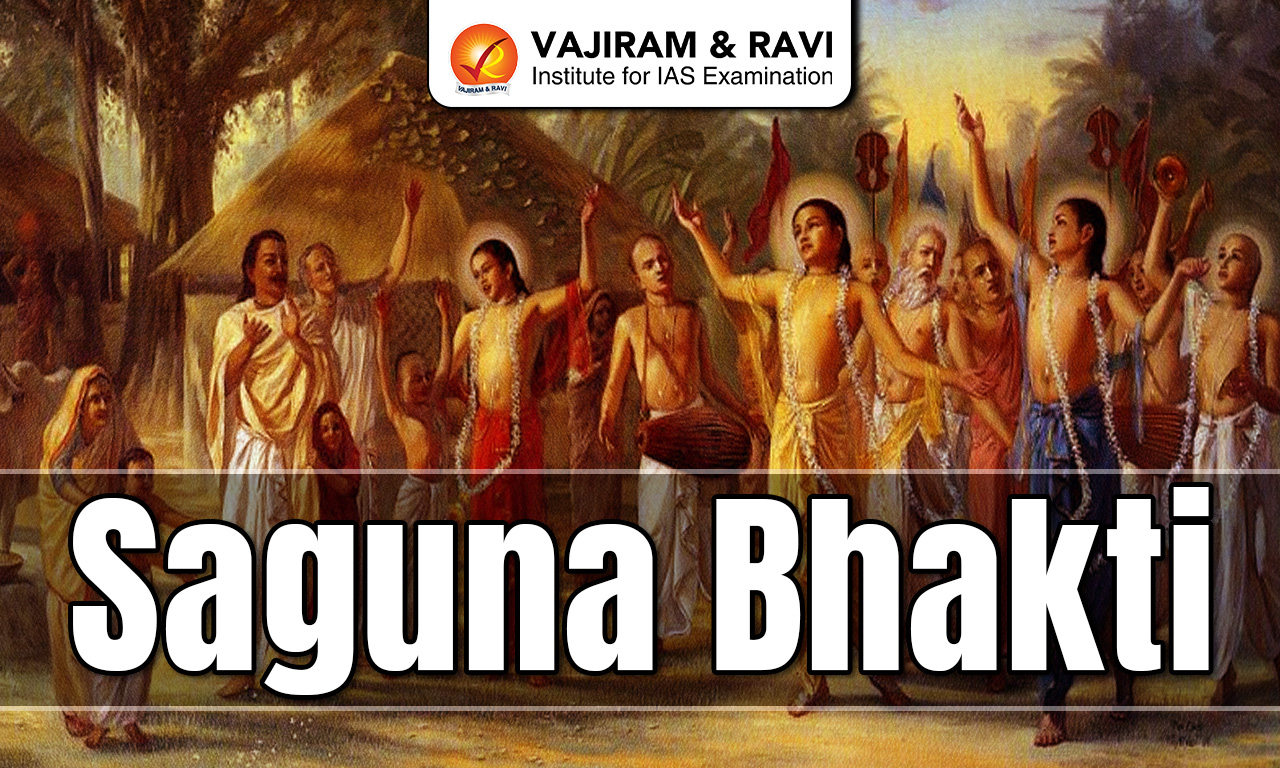
Saguna Bhakti is a form of devotion in which people worship God with a physical form and qualities, such as love, kindness, and compassion. In this path, devotees feel a personal connection with God, often imagining or seeing the divine in human-like forms like Krishna or Rama. It makes devotion more emotional and relatable, as people can express their feelings through prayers, songs, and rituals. Saguna Bhakti Key Aspects, Prominent Saints, Social Impact and the differences between Saguna and Nirguna Bhakti have been discussed in detail in this article.

Key Aspects of Saguna Bhakti

  • Concept of a Personal God: Saguna Bhakti focuses on worshipping God in a visible and human-like form, with qualities such as love, kindness, and compassion. Devotees believe in deities like Vishnu, Shiva, Rama, Krishna, and Durga, who can be imagined and connected with easily.
  • Worship Through Idols and Images: In this tradition, idols (murti) and pictures are important. People believe that God’s presence exists in these forms, so they worship them at home and in temples with great respect and devotion.
  • Use of Rituals and Practices: Devotion is expressed through temple rituals, pilgrimages, singing bhajans, and reciting prayers or hymns. These practices help devotees feel closer to God in their daily lives.
  • Emotional Connection with God: Saguna Bhakti strongly emphasizes a deep emotional bond with God. Devotees relate to God in different ways, such as a friend, parent, child, or beloved, making the relationship very personal and heartfelt.
  • Belief in God’s Incarnations (Avatars): Followers believe that God takes different forms or avatars, such as Rama and Krishna, to guide and protect people. These stories make devotion more relatable and meaningful.
  • Importance of Love and Devotion: The main focus of this path is pure love (bhakti) and complete dedication to God. It teaches that sincere devotion is more important than complex rituals or knowledge.
  • Division into Ram and Krishna Bhakti: Saguna Bhakti later developed into two main branches - one focused on devotion to Rama (Ram Bhakti) and the other on Krishna (Krishna Bhakti), each with its own traditions and followers.
  • Role of Guru and Scriptures: Followers respect the authority of sacred texts like the Vedas and believe in the importance of a Guru (spiritual teacher), who guides them on the path of devotion.
  • Connection with Philosophical Ideas: Philosophers like Ramanujacharya and Madhvacharya explained Saguna Bhakti by describing God as a personal being with qualities. Their teachings helped shape this devotional path.
  • Simple and Accessible Worship: Saguna Bhakti made religion easier for common people by encouraging the use of regional languages, simple prayers, and personal devotion instead of strict and complex rituals.
  • Social and Cultural Influence: Some followers supported existing social systems like the caste structure, while also spreading devotion among the masses through poetry, songs, and teachings.
  • Famous Saints and Followers: This tradition was followed and spread by saints like Ramanuja, Ramananda, Meera Bai, and Chaitanya Mahaprabhu, who expressed their devotion through songs and teachings.

Saguna Bhakti Prominent Saints

  • Ramanuja (1060-1118 AD)
    • Background and Role: Ramanuja was a Tamil Brahmin scholar and one of the most important followers of Vaishnavism. He travelled widely to spread the message of love, devotion, and surrender to God before finally settling in Srirangam.
    • Philosophy - Vishishtadvaita (Qualified Monism): He introduced the idea of Vishishtadvaita, which means that God is one, but the world and souls are also real and connected to Him. Unlike pure dualism, he believed humans are closely connected to God and not completely separate.
    • Belief in a Personal God: According to him, Brahman is a personal God, mainly Vishnu or his forms. He believed Vishnu created the world out of love and continues to guide and control it.
    • Path to Salvation: He taught that salvation can be achieved through three paths: Karma (actions), Gyan (knowledge), and Bhakti (devotion). He especially emphasized prapatti (complete surrender to God).
    • Works and Influence: His important works include Sri Bhashya and Gita Bhashya. His teachings were later spread in North India by his disciple Ramananda.
  • Ramananda (1300–1380 AD)
    • Role in Bhakti Movement: Ramananda was a great devotee of Lord Rama and played a key role in spreading Bhakti in North India. He is often called a bridge between the Bhakti traditions of South and North India.
    • Social Reforms and Inclusiveness: He strongly opposed caste discrimination and accepted followers from all backgrounds, regardless of caste, religion, or gender. His disciples included people from different professions like Kabir (weaver), Ravidas (cobbler), and Sena (barber).
    • Use of Local Language: He preached in Hindi so that common people could easily understand religious ideas. This made devotion more accessible to everyone.
    • Teachings and Influence: He believed in simple devotion to Rama and love for God. Many later saints respected him as their Guru.
  • Chaitanya Mahaprabhu
    • Devotion to Krishna: Chaitanya Mahaprabhu was a passionate devotee of Lord Krishna. He popularized the chanting of “Hare Rama, Hare Krishna” as a way to connect with God.
    • Philosophy and Worship Style: He taught the idea of Achintya Bheda-Abheda (oneness and difference with God). He promoted kirtans (devotional singing) as an important form of worship.
    • Cultural Influence: He encouraged the worship of Radha and Krishna together. His teachings are still widely followed, especially in Bengal and Odisha.
    • Works and Legacy: He wrote Siksastakam in Sanskrit. His life story was written by Krishnadas Kaviraj.
  • Meera Bai (1498-1546)
    • Background and Devotion: Meera Bai was a Rajput princess from Rajasthan who devoted her life to Lord Krishna. She saw Krishna not just as God, but as her beloved.
    • Poetry and Expression: She composed beautiful bhajans in simple languages like Braj and Rajasthani. Her songs express deep love and longing for Krishna.
    • Unique Spiritual Relationship: Her poetry reflects a very personal bond with God, where she imagines herself as Krishna’s devotee and beloved.
  • Eknath (1533-1599)
    • Religious and Literary Contribution: Eknath was a saint from Maharashtra and part of the Varkari tradition. He wrote Eknathi Bhagavat, explaining religious ideas in a simple way.
    • Language and Accessibility: He translated Sanskrit texts into Marathi so that ordinary people could understand them. He also introduced a new devotional song style called Bharood.
    • Social Views: He opposed caste discrimination and believed all humans are equal in God’s eyes. His ideas were influenced by both Vedanta and Sufi thought.
  • Tulsidas
    • Life and Background: Tulsidas was a contemporary of Emperor Akbar and a great devotee of Lord Rama. His real name was Ram Bola Dubey.
    • Famous Works: He wrote Ramcharitmanas in Awadhi, making the story of Ram accessible to common people. Other works include Vinaya Patrika, Gitavali, and Kavitawali.
    • Cultural Contribution: He started the tradition of Ramlila (dramatic performances of Ramayana). He also founded the Sankatmochan Hanuman Temple in Varanasi.
    • Impact: His use of simple language helped spread devotion among ordinary people.
  • Surdas (1478–1580)
    • Early Life and Devotion: Surdas was a blind poet and a devoted follower of Lord Krishna. He left home at a young age and later became a disciple of Vallabhacharya.
    • Literary Contributions: His famous works include Sursagar and Sur Saravali, which mainly describe Krishna’s childhood.
    • Religious Beliefs: He followed the Pushti Marg tradition and worshipped Krishna in his child form. He was one of the most important poets among the Ashtachap (eight disciples of Vallabhacharya).
    • Role in Bhakti Movement: His works played a major role in spreading the Bhakti movement among common people and strengthening spiritual awareness.

Saguna vs Nirguna Key Differences

Saguna and Nirguna Bhakti represent two different ways of understanding and experiencing the divine in Indian philosophy. While one focuses on a personal God with form and qualities, the other describes an abstract, formless ultimate reality. The key differences between them are discussed below.

Basis of Difference

Saguna Bhakti (With Form)

Nirguna Bhakti (Formless)

Nature of God

God is seen with form, qualities, and attributes like love, power, and compassion.

God is without any form or qualities; it is pure, infinite, and beyond human understanding.

Concept of Divinity

God is personal and can be imagined in forms like Rama, Krishna, or Shiva.

God is impersonal, abstract, and cannot be seen or imagined in any physical form.

Way of Worship

Worship involves idols, temples, rituals, prayers, and devotional songs (bhakti).

Worship is through meditation, self-reflection, and inner realization rather than rituals.

Relationship with God

Devotees form a personal and emotional bond with God (like friend, parent, or beloved).

There is no personal relationship; the focus is on realizing that the self and Brahman are one.

Spiritual Goal

To develop love and devotion towards a personal God and seek His grace.

To achieve self-realization and understand the ultimate truth of existence.

Level of Understanding

Often considered easier and more accessible for common people.

Considered more philosophical and deeper, requiring higher level of understanding.

Role in Philosophy

Seen as a step towards understanding the ultimate truth in some traditions.

Considered the highest and ultimate reality (Para Brahman).

Examples of Practice

Bhajans, kirtans, temple visits, idol worship, and pilgrimages.

Meditation, silence, contemplation, and inquiry into the self (“Who am I?”).

Emotional Aspect

Strong emotional and devotional connection with God.

Focus is more on knowledge, awareness, and inner peace rather than emotions.

Accessibility

Easy to follow for the general public due to visible forms and simple practices.

More abstract and may be difficult for beginners to understand.

View of Reality

Accepts God with form as real and meaningful for devotion.

Sees ultimate reality as beyond all forms and descriptions.

Relationship Between Both

Acts as a starting point for many devotees.

Represents the final stage of spiritual understanding.

Social Impact

  • Made Religion Simple and Accessible: Saguna Bhakti made religious practices easy for common people by focusing on simple devotion, prayers, and songs instead of complex rituals. People from all sections of society could now connect with God without needing deep knowledge of scriptures.
  • Use of Regional Languages: Devotional songs and teachings were written in local languages rather than Sanskrit. This helped ordinary people understand religious ideas better and increased participation in spiritual practices.
  • Strengthened Emotional Faith: It encouraged people to build a personal and emotional connection with God. This brought comfort, hope, and a sense of belonging, especially during difficult times.
  • Growth of Temple Culture: Saguna Bhakti promoted idol worship and temple rituals, leading to the development and importance of temples as social and cultural centers where people gathered regularly.
  • Promotion of Music and Literature: The movement gave rise to a rich tradition of bhajans, kirtans, and devotional poetry. Saints expressed their devotion through songs and writings, enriching regional literature and cultural heritage.
  • Encouraged Community Participation: Activities like group singing (kirtans) and festivals brought people together, creating a sense of unity and shared spiritual experience within communities.
  • Spread of Bhakti Movement Across India: Saguna Bhakti played a major role in spreading the Bhakti movement to different parts of India, influencing religious practices and beliefs across regions.
  • Role of Guru and Spiritual Guidance: It emphasized the importance of a Guru, who guided followers on the path of devotion and helped them understand spiritual teachings.
  • Support for Traditional Social Structure: In some cases, Saguna Bhakti followers supported existing social systems like the caste structure and Brahminical authority, maintaining traditional hierarchies.
  • Balance Between Ritual and Devotion: While it supported rituals and idol worship, it also highlighted that true devotion and faith are more important than mere external practices.
  • Cultural Integration: Saguna Bhakti helped blend religion with daily life, festivals, music, and art, making spirituality a natural part of people’s routine.

Saguna Bhakti FAQs

Q1: What is Saguna Bhakti?

Ans: Saguna Bhakti is a form of devotion where God is worshipped in a visible form with qualities like love and compassion. Devotees connect with God through idols, prayers, and emotional devotion.

Q2: What are the key features of Saguna Bhakti?

Ans: It includes belief in a personal God, idol worship, emotional devotion, use of rituals, and expressing faith through bhajans, kirtans, and local languages.

Q3: Who are the main saints of Saguna Bhakti?

Ans: Important saints include Ramanuja, Ramananda, Chaitanya Mahaprabhu, Meera Bai, Eknath, Tulsidas, and Surdas.

Q4: What is the difference between Saguna and Nirguna Bhakti?

Ans: Saguna Bhakti focuses on worshipping God with form and qualities, while Nirguna Bhakti believes in a formless and abstract God, worshipped through meditation and self-realization.

Q5: How did Saguna Bhakti impact society?

Ans: It made religion simple and accessible, promoted regional languages, encouraged emotional faith, and brought people together through music, festivals, and community worship.

India’s Bioeconomy to Reach Trillion by 2047, Initiatives, Challenges

India’s Bioeconomy to Reach Trillion by 2047

India’s bio-economy is projected to expand to Rs. 92.44 lakh crore (US$ 1 trillion) by 2047, according to Union Minister of State (Independent Charge) for Science and Technology, Dr. Jitendra Singh. He highlighted that the 21st century will be driven by a biology-led economy, India’s bio-economy is projected to reach $1 trillion by 2047, placing it among the top three globally, as stated by Union Minister Jitendra Singh.

What is Bioeconomy?

The bioeconomy refers to an economic system that uses biological resources, processes, and principles to produce goods, services, and energy. It includes sectors such as:

  • Biotechnology and pharmaceuticals
  • Agriculture and food systems
  • Bio-energy and biofuels
  • Environmental and industrial biotechnology

It emphasizes sustainability, circular resource use, and reduced dependence on fossil fuels.

India’s Bio-Economy Growth 

India’s bioeconomy has witnessed exponential growth over the last decade:

  • India’s bio-economy has expanded from $10 billion in 2014 to over $165 billion today, growing at nearly 18% annually, with a target of $300 billion by 2030.
  • The number of biotech startups has increased from around 50 to more than 11,000. 
  • By 2047, India aims to emerge among the top three global bio-economies.

This growth reflects India’s transition from a nascent biotech player to a global bio-innovation hub.

Drivers of India’s Bio-Economy Growth 

India’s bioeconomy growth is being driven by a combination of policy support, innovation, and rising demand across sectors.

  • Policy-Led Expansion: Targeted interventions such as the BioE3 Policy, RDI Fund, and Anusandhan National Research Foundation have created a supportive ecosystem for bio-innovation and manufacturing.
  • Startup-Led Innovation: Rapid rise of biotech startups has strengthened the lab-to-market pipeline, attracting private capital and solving real-world challenges.
  • Rising R&D and Global Integration: Increasing investment in research and deeper global collaborations have enhanced India’s technological capabilities and competitiveness.
  • Institutional Backbone: Strong support from research institutions, universities, and incubators has enabled knowledge creation and talent development.
  • Demand-Side Push: Growing needs in healthcare, clean energy, and food security are driving expansion of bio-based industries.

Government Initiatives

The government has introduced several targeted measures to accelerate the growth of the bioeconomy sector.

  • BioE3 Policy (Biotechnology for Economy, Environment and Employment): Approved by the Union Cabinet in 2024, it aims to position India as a global bio-manufacturing hub. It promotes high-performance biomanufacturing across sectors. It’s focus areas include  bio-based chemicals, smart proteins, precision biotherapeutics, climate-resilient agriculture, carbon capture, and space/defence applications. It aims to position India as a global bio-manufacturing hub.
  • Anusandhan National Research Foundation: A research funding body with a corpus of fifty thousand crore rupees to strengthen long-term scientific research.
  • Research Development and Innovation Fund: A one lakh crore rupees fund aimed at supporting deep technology and high-risk innovation.
  • Startup and infrastructure support: Expansion of biotechnology parks, incubators, and programs supported by Biotechnology Industry Research Assistance Council to promote entrepreneurship.
  • Biofuel policies: Promotion of ethanol blending and other bio-energy initiatives to support energy security and sustainability.

Challenges in India’s Bioeconomy

Despite strong growth, several structural challenges continue to limit the full potential of India’s bioeconomy.

  • Low investment in research and development: India’s Gross Expenditure on Research and Development remains around zero point six to zero point seven percent of Gross Domestic Product, which is lower than the global average.
  • Regulatory uncertainty: Delays and policy ambiguity, especially in genetically modified crops, slow down innovation and investment.
  • Import dependence: Heavy reliance on imported Active Pharmaceutical Ingredients and medical devices creates supply chain risks.
  • Funding gap: Biotechnology startups face difficulty in securing late-stage funding, often referred to as the “Valley of Death,” which limits commercialization.
  • Infrastructure gaps: Limited bio-manufacturing capacity and lack of pilot-scale facilities restrict scaling of innovations.
  • Weak commercialization: High research output is not adequately converted into patents or market-ready products.
  • Skill gap: There is a mismatch between academic training and industry requirements in areas such as bioinformatics and synthetic biology.

Way Forward

To achieve the target of a one trillion dollar bioeconomy by 2047, India needs to adopt a comprehensive and forward-looking strategy.

  • Develop bio-manufacturing infrastructure: Establish shared bio-foundries and pilot facilities to support large-scale production.
  • Reform regulatory systems: Introduce regulatory sandboxes and faster approval processes to promote innovation.
  • Enhance financing mechanisms: Create dedicated platforms to attract long-term investment in biotechnology.
  • Strengthen industry academia linkages: Set up Technology Transfer Offices to improve commercialization of research.
  • Promote domestic manufacturing: Encourage production of critical inputs and key starting materials to reduce import dependence.
  • Focus on skill development: Integrate biotechnology with artificial intelligence and data science to build a future-ready workforce.
  • Leverage genomic data: Use India’s genetic diversity for precision medicine and global research collaborations.

India’s Bioeconomy to Reach Trillion by 2047 FAQs

Q1: What is India’s bioeconomy and why is it important?

Ans: India’s bioeconomy uses biological resources and biotechnology to produce goods, services, and energy, promoting sustainable growth while reducing dependence on fossil fuels.

Q2: What is the current size and growth trajectory of India’s bioeconomy?

Ans: India’s bioeconomy has grown from about 10 billion dollars in 2014 to over 165 billion dollars today and is expected to reach 300 billion dollars by 2030 and 1 trillion dollars by 2047.

Q3: What are the key drivers behind the growth of India’s bioeconomy?

Ans: The growth is driven by strong government policies, a rapidly expanding startup ecosystem, rising research and development efforts, institutional support, and increasing demand in healthcare, energy, and food sectors.

Q4: What are the major challenges faced by India’s bioeconomy?

Ans: Key challenges include low research investment, regulatory delays, dependence on imports, lack of late-stage funding for startups, infrastructure gaps, weak commercialization of research, and shortage of skilled talent.

Q5: What steps are needed to achieve the 1 trillion dollar bioeconomy target by 2047?

Ans: India needs to strengthen bio-manufacturing infrastructure, improve regulatory efficiency, expand funding avenues, enhance industry-academia collaboration, reduce import dependence, build skilled human capital, and leverage genomic data for innovation.

Udayagiri Caves, Location, Features, Cave List, Significance

Udayagiri Caves

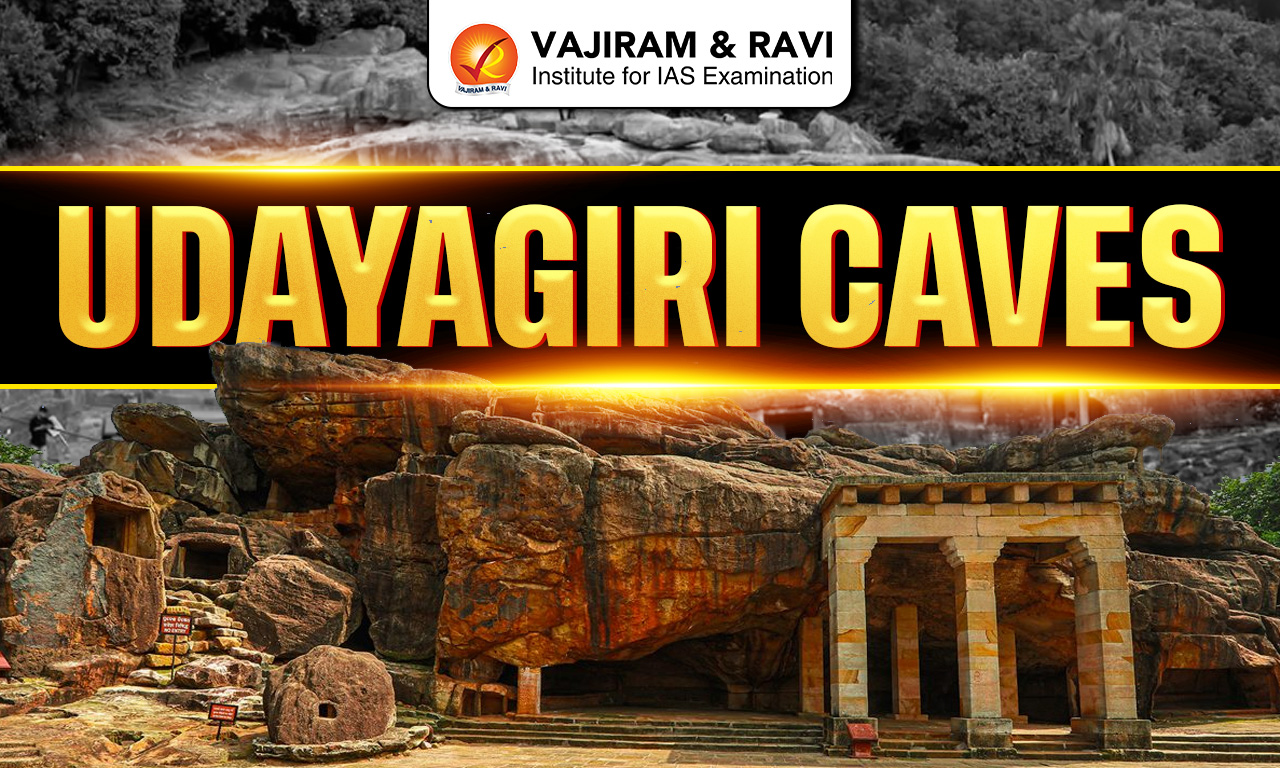
The Udayagiri Caves are a group of twenty rock cut caves carved in sandstone hills near Vidisha, dating mainly between the 3rd and 5th centuries CE. These caves represent some of the earliest surviving Hindu temple architecture in India and are closely linked with the Gupta Empire, especially the reign of Chandragupta II. The Udayagiri Caves showcase rich iconography of Vishnu, Shiva and Jain traditions, along with inscriptions, sculptures and early temple designs that mark a significant phase in Indian art and religious history.

Udayagiri Caves Features

The Udayagiri Caves display early temple architecture, inscriptions, sculptures and astronomical alignment, reflecting religious diversity and Gupta artistic excellence.

  • Location: The Udayagiri Caves are situated on sandstone hills near Betwa and Bes rivers, about 6 km from Vidisha, Madhya Pradesh.
  • Rock Cut Architecture: The caves are carved into horizontal sandstone layers forming square sanctums and mandapas, representing earliest structural models of Hindu temples in North India.
  • Varaha Relief Sculpture: Cave 5 houses a monumental Varaha panel showing Vishnu rescuing Earth, with detailed depictions of gods, sages and Gupta king Chandragupta II.
  • Gupta Inscriptions: Sanskrit inscriptions dated 401 CE and 425 CE provide direct evidence of Gupta rulers like Chandragupta II and Kumaragupta I.
  • Religious Diversity: Majority caves are Hindu, while one is Jain; iconography includes Vaishnavism, Shaivism and Shaktism traditions in a single complex.
  • Early Ganesha Representation: Cave 6 includes one of the earliest known images of Ganesha holding Modaka, indicating the rising importance in Hindu worship.
  • Shankha Lipi Inscriptions: Undeciphered conch shaped scripts carved on rocks suggest pre Gupta literacy and earlier cultural activity at the site.
  • Astronomical Alignment: Located near the Tropic of Cancer, the site likely observed sun overhead during solstice, linking it with ancient astronomical practices.
  • Water Systems and Structures: Presence of rock cut tanks, channels and habitation mounds indicates advanced planning and long term settlement in the region.
  • Sculptural Themes: Several sculptures depict dieties like Narasimha, Durga slaying Mahishasura, Shiva linga and reclining Vishnu, showing mythological narratives in stone.
  • Lion Capital Artifact: The Udayagiri Lion Capital, dated around 2nd century BCE or Gupta period, reflects Mauryan influence and early imperial symbolism.

Udayagiri Caves List

The Udayagiri Caves consist of twenty excavated rock cut chambers with diverse religious affiliations, artistic styles and inscriptions reflecting Gupta period patronage.

  • Cave 1: Southernmost cave with square sanctum and mandapa traces, built using sandstone layers; original deity lost due to damage but shows early temple plan features.
  • Cave 2: Small cave with eroded interior and partial pilasters; once had a structural mandapa and doorway carvings, now mostly weathered.
  • Cave 3: Shaivism cave featuring Skanda (Kartikeya) sculpture on a monolithic plinth, showing early Gupta sculptural style though partially damaged.
  • Cave 4: Known as Vina Cave, dedicated to Shiva with ekamukha linga; includes carvings of musicians, river goddesses and matrikas indicating Shakti influence.
  • Cave 5: Famous Varaha Cave displaying colossal relief of Vishnu as boar rescuing Bhudevi, considered the iconographic centerpiece of the Udayagiri Caves.
  • Cave 6: Multi religious cave with Vishnu, Shiva, Durga Mahishasuramardini and early Ganesha figure, along with inscription of Chandragupta II dated 401 CE.
  • Cave 7: Contains damaged figures of eight mother goddesses and traces of Kartikeya and Ganesha, representing Shaktism themes.
  • Cave 8: Dome shaped cave with lotus carving on ceiling and Sanskrit inscription linking it to Chandragupta II and minister Virasena.
  • Caves 9-11: Small caves with Vishnu carvings; simple rectangular niches showing Vaishnavism influence in compact forms.
  • Cave 12: Features Narasimha avatar of Vishnu with Sankha Lipi inscriptions, indicating earlier habitation and literacy before cave excavation.
  • Cave 13: Displays Anantasayana Vishnu reclining on serpent, with figures identified as Chandragupta II and his minister in devotion.
  • Cave 14: Partially preserved chamber with water channel, indicating functional architectural planning in caves.
  • Caves 15-18: Smaller caves showing early Ganesha, Durga and Shaiva elements, with geometric ceiling designs and simple sanctum plans.
  • Cave 19: Largest cave known as Amrita Cave, featuring Samudra Manthan sculpture, Shiva lingas, pillars and inscriptions from 11th century CE.
  • Cave 20: Only Jain cave dedicated to Parshvanatha, containing inscription dated 425 CE and multiple chambers with Jaina iconography.

Udayagiri Caves Significance

The Udayagiri Caves hold immense historical, religious and architectural importance as early examples of Hindu temple art and Gupta political symbolism.

  • Earliest Hindu Temples: The caves represent one of the oldest surviving examples of Hindu temple architecture with sanctum and mandapa layout.
  • Gupta Political Symbolism: Inscriptions and sculptures link the site directly with Chandragupta II, making it a rare site associated with a specific ruler.
  • Development of Iconography: Fully developed forms of Vishnu avatars like Varaha and Narasimha indicate maturity of Hindu mythology by 4th-5th century CE.
  • Religious Coexistence: Presence of Hindu and Jain caves reflects tolerance and coexistence of multiple religious traditions during Gupta period.
  • Astronomical and Sacred Site: Its alignment with solar movements and name meaning “sunrise mountain” highlight its role in ritual and calendar systems.
  • Artistic Benchmark: The caves define early Gupta artistic style, influencing later temple construction at sites like Sanchi and Tigawa.
  • Epigraphic Importance: Inscriptions provide data on language, script evolution, administration and religious practices of ancient India.
  • Cultural Continuity: Evidence of habitation from 6th century BCE to medieval period shows long term cultural and religious importance of the region.
  • Archaeological Value: Excavations revealed settlement patterns, inscriptions and artifacts, making it a key site for understanding ancient Indian civilization.
  • Symbol of Dharma: Varaha panel symbolizes restoration of cosmic order, linking kingship with divine duty and reinforcing political theology of Gupta rulers.

Udayagiri Caves FAQs

Q1: Where are the Udayagiri Caves located?

Ans: The Udayagiri Caves are located near Vidisha in Madhya Pradesh, about 60 km from Bhopal and close to Sanchi.

Q2: How many caves are there in Udayagiri Caves?

Ans: There are a total of 20 rock cut caves at the Udayagiri Caves complex, mainly dedicated to Hindu deities, with one cave devoted to Jainism.

Q3: Which is the most famous sculpture in Udayagiri Caves?

Ans: The most famous sculpture is the Varaha relief in Cave 5, depicting Lord Vishnu rescuing Earth in his boar incarnation.

Q4: Which dynasty is associated with Udayagiri Caves?

Ans: The Udayagiri Caves are closely associated with the Gupta Empire, especially the reign of Chandragupta II during the 4th-5th century CE.

Q5: What is the time period of the Udayagiri Caves?

Ans: The Udayagiri Caves were primarily developed between the 3rd century CE and 5th century CE, with major activity during the Gupta period.

World Wide Fund for Nature (WWF), Objectives, Importance

World Wide Fund for Nature (WWF)

The World Wide Fund for Nature (WWF) is a globally recognized environmental organization working to protect nature and reduce the most serious threats to the planet’s biodiversity. It focuses on conserving wildlife, natural habitats, and promoting sustainable living practices across the world.

Established in 1961, WWF has grown into one of the largest conservation organizations, operating in over 100 countries with the support of millions of people. The headquarters of World Wildlife Fund for Nature (WWF) is located in Gland, Switzerland.

World Wide Fund for Nature (WWF) Objectives

The World Wide Fund for Nature (WWF) focuses on protecting nature, conserving biodiversity, and promoting sustainable use of natural resources to ensure a healthy planet for future generations.

  • Conserves biodiversity by protecting endangered species and preserving natural ecosystems
  • Promotes sustainable use of natural resources like forests, water, and marine life
  • Works to reduce pollution, including plastic waste and harmful emissions
  • Addresses climate change through renewable energy and carbon reduction initiatives
  • Protects forests and wildlife habitats from deforestation and degradation
  • Conserves freshwater resources such as rivers, lakes, and wetlands
  • Spreads environmental awareness through education and campaigns like Earth Hour
  • Encourages sustainable development by balancing economic growth with environmental protection

WWF India

  • The WWF-India was established in November 1969 as a charitable public trust to protect and conserve India’s natural heritage and ecological diversity
  • Its national secretariat is located in New Delhi, from where it coordinates conservation programs across the country

Mission of WWF India

  • Focuses on conserving biological diversity by protecting ecosystems and wildlife
  • Ensures sustainable use of renewable natural resources like forests, water, and land
  • Promotes reduction of pollution and wasteful consumption through awareness and policy support

Priority Species of WWF India

  • Tiger – conservation through habitat protection and anti-poaching efforts
  • Elephant – safeguarding migration corridors and reducing human-elephant conflict
  • Rhinos – protecting populations from poaching and habitat loss
  • Red Panda – conserving fragile mountain ecosystems
  • Snow Leopard – protecting high-altitude biodiversity
  • Nilgiri Tahr – conserving endemic species in the Western Ghats

Priority Landscapes of WWF India

  • North Bank Landscape – important for elephant and tiger conservation
  • Kaziranga–Karbi Anglong Landscape – critical habitat for rhinos and other wildlife
  • Terai Arc Landscape – supports diverse species including tigers and elephants
  • Sunderbans – unique mangrove ecosystem with rich biodiversity
  • Western Arunachal – biodiversity hotspot with rare and endangered species

Awareness and Education Initiatives

  • Promotes environmental awareness through the Nature Clubs of India program
  • Runs five major education programs across 16 states to engage students and communities
  • Encourages participation in conservation through school activities, workshops, and campaigns

World Wide Fund for Nature (WWF) FAQs

Q1: What is the World Wide Fund for Nature?

Ans: The World Wide Fund for Nature is an international non-governmental organization that works to protect the environment, conserve wildlife, and reduce human impact on nature.

Q2: When was WWF founded?

Ans: WWF was established on 29 April 1961 to address growing concerns about wildlife conservation and environmental degradation.

Q3: What is the main mission of WWF?

Ans: Its mission is to stop environmental degradation and build a future where humans live in harmony with nature.

Q4: Where is WWF headquartered?

Ans: WWF’s international headquarters is located in Gland.

Q5: What are the key areas of WWF’s work?

Ans: WWF focuses on wildlife conservation, forests, oceans, freshwater, climate change, and sustainable development.

Monotheism, Origin, Major Monotheistic Religions, Key Features

Monotheism

Monotheism is the belief in one supreme God who created and controls the universe. It is one of the most important religious ideas in human history and forms the foundation of many major religions. Unlike polytheism (belief in many gods), monotheism emphasizes the unity, power, and uniqueness of a single divine being.

Monotheism Origin and Development

Monotheism developed gradually over time. Early human societies mostly followed polytheism, but later some civilizations began believing in a single God.

  • Ancient Egypt: Pharaoh Akhenaten promoted the worship of one god (Aten)
  • Judaism: One of the earliest religions to firmly establish monotheism
  • Later adopted and expanded by Christianity and Islam

Major Monotheistic Religions

Monotheistic religions are those that believe in one supreme God who is the creator and sustainer of the universe. The three major monotheistic religions- Judaism, Christianity, and Islam, have shaped world history, culture, and moral systems.

1. Judaism

  • Earliest organized monotheistic faith, originating in the Middle East around 2000 BCE
  • Central belief in one God, Yahweh, who is eternal, formless, and just
  • Sacred scripture is the Torah, part of the Hebrew Bible (Tanakh)
  • Strong concept of a covenant relationship between God and the people of Israel
  • Emphasis on Halakha (religious law) governing daily life, ethics, food, and rituals
  • Prophetic tradition (e.g., Moses, Isaiah) guiding moral and social justice
  • Importance of Ten Commandments as basic moral code
  • Worship takes place in synagogues, led by rabbis
  • Key practices: Sabbath (Shabbat) rest, dietary laws (Kosher), circumcision
  • Major festivals: Passover, Yom Kippur, Hanukkah
  • Focus on community identity, tradition, and historical continuity

2. Christianity

  • Developed from Judaism in the 1st century CE based on teachings of Jesus Christ
  • Belief in one God in three forms (Trinity): Father, Son, and Holy Spirit
  • Sacred text is the Bible (Old Testament + New Testament)
  • Core belief that Jesus is the Son of God and savior, who died for human sins and was resurrected
  • Central teaching of salvation through faith, grace, and love
  • Ethical focus on compassion, forgiveness, humility, and charity
  • Organized into different denominations: Catholic, Protestant, Orthodox
  • Worship in churches, led by priests or pastors
  • Key practices: prayer, baptism, Eucharist (Holy Communion)
  • Major festivals: Christmas, Easter, Good Friday
  • Emphasis on missionary work and spreading teachings globally

3. Islam

  • Founded in the 7th century CE in Arabia by Prophet Muhammad
  • Absolute monotheism called Tawhid, belief in one God Allah
  • Sacred text is the Quran, considered the literal word of God
  • Supplemented by Hadith (sayings and actions of the Prophet)
  • Follows the Five Pillars of Islam:
    • Shahada (faith)
    • Salah (prayer 5 times daily)
    • Zakat (charity)
    • Sawm (fasting during Ramadan)
    • Hajj (pilgrimage to Mecca)
  • Concept of Ummah (global Muslim community)
  • Law system called Sharia, covering moral, social, and legal aspects
  • Worship in mosques, led by imams
  • Major festivals: Eid al-Fitr, Eid al-Adha
  • Strong focus on accountability, justice, and life after death (Day of Judgment)

Modern Reforms in Monotheism

During the 18th and 19th centuries, monotheistic ideas were used as a tool for religious and social reform in India. Reformers and organizations promoted the belief in one formless God, aiming to remove social evils and revive the original spiritual essence of religion.

  • Role of Raja Ram Mohan Roy
    • One of the earliest reformers to promote monotheism in Indian society
    • Advocated belief in one supreme God and rejected idol worship
    • His work A Gift to Monotheists emphasized rational religion and unity of God
    • Founded the Brahmo Samaj to promote social and religious reforms
    • Opposed practices like Sati, caste discrimination, and superstitions
  • Contribution of Arya Samaj
    • Founded by Swami Dayanand Saraswati
    • Promoted a return to the Vedas as the true source of knowledge
    • Strongly supported monotheism (belief in one God)
    • Rejected idol worship and ritualism, considering them later distortions
    • Emphasized education, social reform, and equality
    • Encouraged reforms like women’s education and opposition to caste-based discrimination
  • Core Reform Ideas
    • Focus on pure monotheism and rational thinking
    • Removal of social evils and blind traditions
    • Revival of ancient spiritual values in a modern form
    • Promotion of ethical living over rituals

Monotheism vs Polytheism

Monotheism and polytheism are two major types of religious belief systems that differ mainly in the number and nature of gods worshipped. While monotheism focuses on one supreme God, polytheism believes in multiple gods with different roles and powers.

Monotheism vs Polytheism

Basis

Monotheism

Polytheism

Meaning

Belief in one supreme God

Belief in many gods and goddesses

Number of Deities

Only one God

Multiple gods with different functions

Nature of God(s)

All-powerful, all-knowing, universal

Gods have limited powers and specific roles

Unity of Power

Power is centralized in one divine being

Power is divided among many deities

Religious Examples

Islam, Christianity, Judaism

Ancient Greek religion, Roman religion, traditional forms of Hinduism

Worship Style

Focused on one God through prayer and devotion

Worship of different gods for different needs (rain, wealth, war, etc.)

Moral System

Clear and unified moral code

Moral codes may vary depending on different deities

Concept of God

Formless or beyond human understanding

Often represented in human or natural forms

Sacred Texts

Single or central holy books (e.g., Quran, Bible)

Multiple myths, scriptures, and traditions

Scope of God(s)

Universal God for all people

Gods may be linked to specific regions, cultures, or functions

Afterlife Concept

Clear belief in judgment and afterlife

Varies widely depending on tradition

Philosophical Approach

Emphasizes unity and absolute truth

Emphasizes diversity and multiple perspectives

Monotheism FAQs

Q1: What is monotheism?

Ans: Monotheism is the belief in one God who created and controls the entire universe.

Q2: Which religions follow monotheism?

Ans: Major monotheistic religions include Judaism, Christianity, and Islam.

Q3: What is the difference between monotheism and polytheism?

Ans: Monotheism believes in one God, while polytheism believes in many gods with different roles and powers.

Q4: What is the concept of one God in Islam called?

Ans: In Islam, the belief in one God is called Tawhid, which emphasizes the absolute unity of God.

Q5: Why is monotheism important?

Ans: Monotheism provides moral guidance, promotes unity, and encourages equality, influencing society and human behavior.

UPSC Daily Quiz 28 April 2026

UPSC Daily Quiz

[WpProQuiz 148]

UPSC Daily Quiz FAQs

Q1: What is the Daily UPSC Quiz?

Ans: The Daily UPSC Quiz is a set of practice questions based on current affairs, static subjects, and PYQs that help aspirants enhance retention and test conceptual clarity regularly.

Q2: How is the Daily Quiz useful for UPSC preparation?

Ans: Daily quizzes support learning, help in revision, improve time management, and boost accuracy for both UPSC Prelims and Mains through consistent practice.

Q3: Are the quiz questions based on the UPSC syllabus?

Ans: Yes, all questions are aligned with the UPSC Syllabus 2025, covering key areas like Polity, Economy, Environment, History, Geography, and Current Affairs.

Q4: Are solutions and explanations provided with the quiz?

Ans: Yes, each quiz includes detailed explanations and source references to enhance conceptual understanding and enable self-assessment.

Q5: Is the Daily UPSC Quiz suitable for both Prelims and Mains?

Ans: Primarily focused on Prelims (MCQ format), but it also indirectly helps in Mains by strengthening subject knowledge and factual clarity.

Crowd Disaster Management, NDMA Guidelines, Role of Technology

Crowd Disaster Management

Crowd Disaster Management is a crucial aspect of public safety, especially in a country like India where large gatherings are common during festivals, religious events, political rallies, and sports matches. Poor planning, panic situations, and infrastructure gaps often lead to tragic incidents like stampedes. Effective management ensures safety, reduces risks, and helps authorities respond quickly during emergencies.

What is a Crowd Disaster?

A Crowd Disaster refers to any situation in a large gathering that results in injuries or loss of life due to mismanagement, panic, or structural failure.

A stampede is the most common type of crowd disaster. It is a sudden and uncontrolled rush of people caused by fear, excitement, or confusion. In such situations, people often die due to compressive asphyxia, where the chest is unable to expand due to extreme pressure.

Another concept linked to stampedes is the “black hole effect”, where if one person falls, it creates a gap, causing others to fall on top, leading to a deadly pile-up.

Causes of Crowd Disasters in India

Crowd disasters in India are mainly caused by a combination of poor planning, weak infrastructure, and sudden behavioral reactions like panic. These factors often interact with each other, turning manageable situations into deadly stampedes.

1. Systemic Failures

Systemic issues arise due to gaps in administration, planning, and coordination, making events unsafe from the beginning.

  • Poor Planning & Risk Assessment: Authorities often fail to estimate crowd size or identify possible hazards in advance.
  • Overcrowding: Entry of people beyond the safe capacity of a venue increases pressure and risk of crushing.
  • Lack of Coordination: Miscommunication between organizers, police, and local administration leads to confusion.
  • Weak Crowd Control Measures: Absence of barricades, route segregation, and trained staff results in unmanaged crowd flow.
  • Inadequate Emergency Preparedness: Lack of evacuation plans, medical teams, and quick response systems delays rescue.

2. Infrastructure Deficiencies

Poor physical arrangements at venues significantly increase the chances of accidents.

  • Narrow Entry and Exit Points: Create bottlenecks and slow movement during emergencies.
  • Blocked or Poorly Designed Exits: Prevent smooth evacuation and increase panic.
  • Slippery or Unsafe Surfaces: Cause people to fall, triggering a domino effect.
  • Lack of Signage and Lighting: People cannot find safe routes easily, leading to confusion.

3. Behavioral Factors

Human psychology plays a major role in triggering and worsening crowd disasters.

  • Panic and Rumors: Sudden fear (like fire or collapse rumors) leads to uncontrolled running.
  • Herd Mentality: Individuals follow others blindly without assessing danger.
  • Excitement or Celebrity Attraction: People rush to get a closer view of celebrities or religious figures.
  • Disregard for Rules: Queue breaking, pushing, and ignoring instructions increase chaos.

4. Immediate Triggers

Certain sudden events can instantly turn a stable crowd into a dangerous situation.

  • Fire or Electrical Failures: Sparks panic and rapid movement toward exits.
  • Rumors or Misinformation: False alerts about danger spread quickly in dense crowds.
  • VIP Movement or Sudden Announcements: Cause sudden crowd shifts.
  • Weather Conditions: Rain, heat, or slippery conditions increase discomfort and risk.

5. Environmental and External Factors

External conditions can also contribute to crowd disasters.

  • High Population Density: Large gatherings are common in India, increasing risk levels.
  • Festival and Religious Pressure: Emotional and spiritual urgency leads to overcrowding.
  • Urban Constraints: Limited space in cities restricts safe crowd movement.

Impact of Crowd Disasters

Crowd disasters have serious and far-reaching consequences that go beyond immediate loss of life. They affect individuals, society, governance systems, and the economy, often leaving long-term impacts on public safety and trust.

  • Loss of Lives due to Compressive Asphyxia, Trampling, and Domino Effect in high-density crowds
  • Severe Injuries such as Fractures, Head Trauma, and Internal Organ Damage leading to long-term disability
  • Psychological Trauma including Stress, Anxiety, PTSD, and lasting Fear of Crowds among survivors
  • Decline in Public Trust toward authorities, resulting in Social Anger, Protests, and reduced confidence in safety systems
  • Significant Economic Losses through Compensation Burden, Tourism Decline, Event Disruptions, and Business Losses
  • Exposure of Administrative Failures like poor planning and coordination, leading to Legal Action, Inquiries, and stricter regulations
  • Damage to Infrastructure such as Stadiums, Bridges, and Public Facilities, increasing repair and maintenance costs
  • Disruption of Social and Cultural Activities, creating Negative Perception of festivals and public gatherings
  • Increased pressure on governance systems for better Policy Implementation, Safety Audits, and Accountability Mechanisms
  • Long-term Community Grief, Emotional Loss, and changes in Public Behavior toward large gatherings

Major Stampede Events in India

  • Hathras Stampede (2024, Uttar Pradesh): A massive crowd gathered at a religious event led to overcrowding and panic, resulting in over 100 deaths, mostly women and children. The incident exposed failures in crowd control, exit management, and administrative preparedness.
  • New Delhi Railway Station Stampede (Multiple Incidents): Heavy rush during festivals and peak travel times has repeatedly led to stampede-like situations due to platform overcrowding, poor crowd flow management, and lack of real-time monitoring, highlighting the risks in transport hubs.
  • Prayag Sangam / Maha Kumbh Stampede (2025, Prayagraj): During the holy dip at Sangam, a sudden surge of millions of devotees caused overcrowding and chaos, leading to casualties and injuries, emphasizing the need for scientific crowd estimation and route planning.
  • Bengaluru Stadium Stampede (2025): During celebrations related to a major cricket event near M. Chinnaswamy Stadium, crowd size far exceeded capacity, causing a deadly surge and exposing issues like overcrowding and poor coordination.
  • Tirupati Stampede (2025, Andhra Pradesh): A stampede occurred near a token distribution counter due to sudden crowd pressure, highlighting problems in queue management and entry regulation at religious sites.
  • Mumbai Footbridge Stampede (2017): Panic triggered by rumors during heavy rainfall at a crowded railway footbridge caused a deadly stampede, showing the impact of panic behavior and infrastructure limitations.

NDMA Guidelines on Crowd Disaster Management

The National Disaster Management Authority (NDMA) has issued comprehensive guidelines to ensure safe planning, regulation, and management of large public gatherings in India. These guidelines focus on preparedness, infrastructure, real-time monitoring, and effective emergency response.

1. Preparedness and Planning

Proper planning is the foundation of crowd safety and helps prevent disasters before they occur.

  • Conduct Scientific Crowd Estimation to determine expected footfall and avoid overcrowding.
  • Carry out Risk Assessment using tools like Failure Mode and Effect Analysis (FMEA).
  • Define Maximum Crowd Density Limits per square meter and set clear evacuation triggers.
  • Establish a strong Legal Framework under provisions like the Disaster Management Act and Police Act.
  • Develop detailed Standard Operating Procedures (SOPs) for all stakeholders.

2. Infrastructure and Venue Design

Safe infrastructure reduces congestion and ensures smooth crowd movement.

  • Provide Multiple Wide Entry and Exit Points to avoid bottlenecks.
  • Ensure Clear Segregation of Routes for entry and exit.
  • Install Multilingual Signage and proper lighting for easy navigation.
  • Design venues with Open Spaces and Emergency Escape Routes.
  • Maintain Barrier Systems and Zig-Zag Queues to regulate crowd flow.

3. On-Ground Crowd Management

Effective management at the site is essential to control crowd movement.

  • Deploy Trained Personnel and Volunteers for crowd control.
  • Use Barricading and Route Diversion to manage flow and prevent overcrowding.
  • Implement Traffic and Parking Management Plans near event sites.
  • Ensure Coordination Between Agencies like police, local administration, and organizers.

4. Facilities and Emergency Services

Immediate support systems are crucial during emergencies.

  • Provide On-Site Medical Facilities, ambulances, and first aid centers.
  • Ensure availability of Fire Safety Equipment and emergency response tools.
  • Deploy Quick Reaction Teams (QRTs) for rapid intervention.
  • Arrange Public Utilities like drinking water, sanitation, and rest areas.

5. Real-Time Monitoring and Communication

Continuous monitoring helps detect risks and respond quickly.

  • Install CCTV Surveillance Systems and monitoring control rooms.
  • Use Public Address Systems for announcements and crowd guidance.
  • Provide Real-Time Updates through mobile alerts, digital boards, and loudspeakers.
  • Set up Watch Towers and Communication Networks for better visibility and coordination.

6. Emergency Response Mechanism

Quick and coordinated response can minimize damage during disasters.

  • Establish an Incident Command System (ICS) for clear decision-making.
  • Prepare Evacuation Plans with clearly marked escape routes.
  • Conduct Mock Drills and Training Programs for all stakeholders.
  • Ensure Coordination with Hospitals and Emergency Services.

7. Awareness and Capacity Building

Public awareness plays a key role in preventing panic and chaos.

  • Conduct Awareness Campaigns on safe crowd behavior.
  • Train staff in Crowd Psychology and Panic Management.
  • Educate people about Emergency Exits and Safety Protocols.

Role of Technology in Crowd Disaster Management

Technology plays a crucial role in preventing crowd disasters by enabling real-time monitoring, early warning, and quick response.

  • AI-Based CCTV Surveillance helps detect Crowd Density, Unusual Movement, and potential Bottlenecks in real time
  • Drone Monitoring provides Aerial Surveillance, Live Feeds, and better Decision-Making from control centers
  • RFID Tagging Systems track Pilgrim Movement and help control Overcrowding at sensitive locations
  • IoT Sensors monitor Footfall, Environmental Conditions, and trigger alerts when limits are exceeded
  • Integrated Command and Control Centers (ICCCs) enable Real-Time Coordination between police, administration, and emergency services
  • Mobile Apps and SMS Alerts provide Live Updates, Route Guidance, and Emergency Notifications to the public
  • Digital Signage and Public Address Systems ensure Instant Communication and reduce panic among crowds
  • Thermal Imaging Cameras help monitor Night Crowds and detect unusual congestion patterns
  • GPS and GIS Mapping assist in Route Planning, Traffic Management, and Emergency Evacuation
  • Facial Recognition Systems improve Security Monitoring and help identify missing persons in large gatherings
  • Smart Wearables and Tracking Devices are being tested for Volunteer Coordination and Crowd Navigation

Strategies for Effective Crowd Disaster Management

Effective crowd disaster management requires a proactive, multi-layered approach that combines planning, infrastructure, technology, coordination, and public awareness to prevent risks and ensure safety during large gatherings.

  • Scientific Crowd Estimation using data analysis to fix safe Capacity Limits and avoid overcrowding
  • Comprehensive Risk Assessment through tools like FMEA to identify potential hazards in advance
  • Proper Venue Planning with Multiple Entry/Exit Points, Wide Pathways, and Emergency Escape Routes
  • Segregation of Crowd Flow using Barricading, Zig-Zag Queues, and separate routes for entry and exit
  • Deployment of Trained Personnel including police, volunteers, and crowd managers for effective on-ground control
  • Real-Time Monitoring using CCTV, Drones, and Control Rooms for quick detection of overcrowding
  • Use of Technology like AI Analytics, RFID Tracking, and Mobile Alerts for crowd guidance and risk prevention
  • Effective Communication Systems through Loudspeakers, Digital Boards, and SMS Alerts to inform and guide people
  • Public Awareness Campaigns to educate people about Safe Crowd Behavior and emergency protocols
  • Training in Crowd Psychology for staff to manage panic and control crowd behavior calmly
  • Emergency Preparedness with Quick Reaction Teams (QRTs), Medical Aid, and Ambulances on-site
  • Incident Command System (ICS) for clear roles, responsibilities, and quick decision-making during crises
  • Regular Mock Drills and Safety Audits to test preparedness and improve response systems

Global Best Practices

Global experiences show that effective crowd disaster management depends on scientific planning, strict regulation, and advanced use of technology.

  • Saudi Arabia (Hajj Management): Uses Crowd Simulation Models, AI-Based Monitoring, Time-Slot Entry, and Multi-Level Pathways to safely manage millions of pilgrims
  • United Kingdom (Stadium Safety): Venues like Wembley follow Advanced Evacuation Systems, Strict Capacity Norms, and All-Seater Designs for controlled movement
  • South Korea (Post-2022 Reforms): Implemented AI-Based CCTV Surveillance and Real-Time Density Alerts to prevent overcrowding in public spaces
  • Japan (Event Discipline): Uses Timed Ticketing, Staggered Entry/Exit, and strong Public Awareness Culture for smooth crowd flow
  • United States (Event Management Systems): Mandates Trained Crowd Managers, Emergency Protocols, and Integrated Command Centers for large events

Crowd Disaster Management FAQs

Q1: What is a crowd disaster?

Ans: A crowd disaster is any incident in a large gathering that leads to injuries or deaths due to panic, overcrowding, or mismanagement, with stampedes being the most common form.

Q2: What is the main cause of deaths in stampedes?

Ans: The primary cause is compressive asphyxia, where intense crowd pressure prevents normal breathing, leading to suffocation.

Q3: What are the major causes of crowd disasters in India?

Ans: Key causes include overcrowding, poor planning, lack of coordination, inadequate infrastructure, and panic or rumors among people.

Q4: What is the “black hole effect” in crowd disasters?

Ans: It refers to a situation where one person falls, creating a gap that causes others to fall, leading to a deadly pile-up or domino effect.

Q5: How can crowd disasters be prevented?

Ans: They can be prevented through scientific planning, crowd control measures, use of technology, public awareness, and effective emergency response systems.

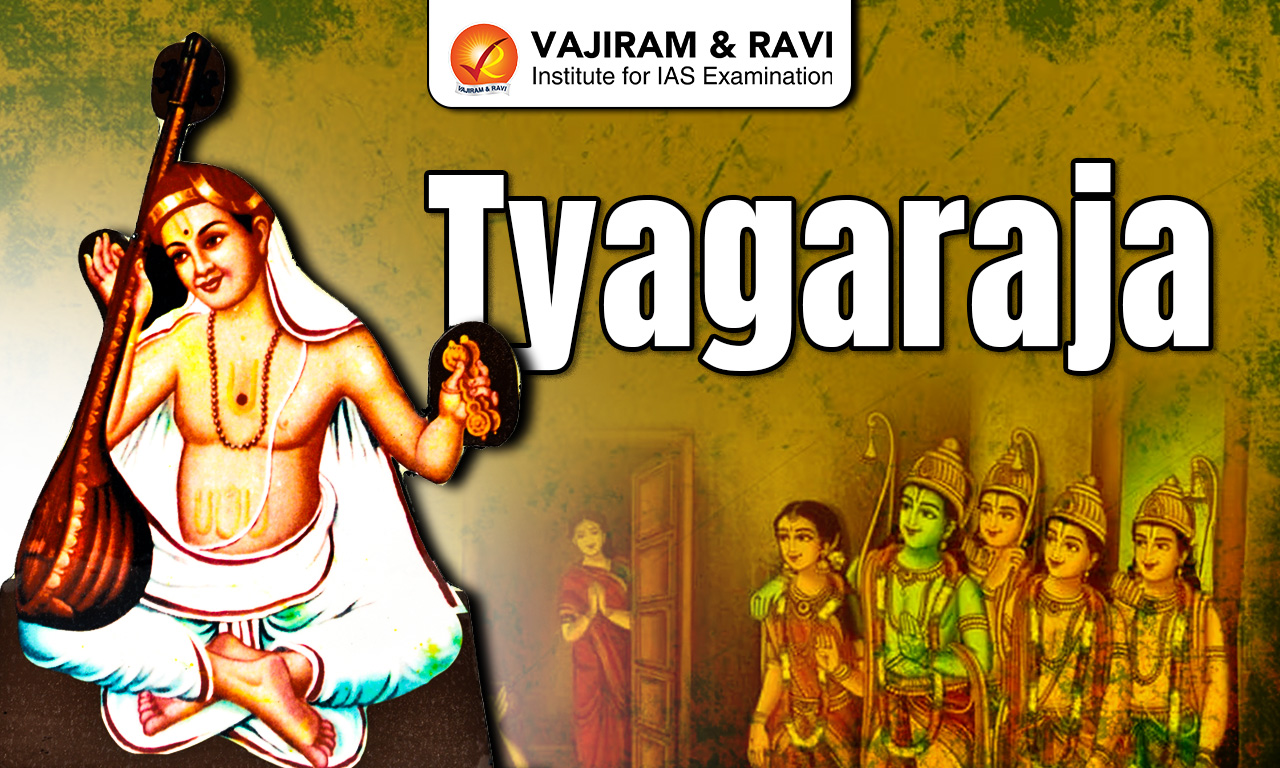
Sisodia Dynasty 1326 – 1947, Founder, Capital, Rulers, Map

Sisodia Dynasty

The Sisodia Dynasty was a prominent Rajput ruling lineage of Mewar in present day Rajasthan. The Dynasty played a crucial role in medieval Indian history through continuous resistance against powerful Sultanates and the Mughal Empire. It is widely known for their valor, cultural patronage and strong identity. The Sisodia Dynasty maintained political independence for long periods and contributed significantly to regional stability, architecture and literary traditions in western India.

Sisodia Dynasty Historical Background

The Sisodia Dynasty emerged from the Guhila lineage and established strong political control in Mewar after early medieval conflicts.

  • The Sisodia Dynasty traced its lineage to Rahapa, son of Guhila king Ranasimha in the 12th century, establishing their early identity and linking themselves to the prestigious Suryavansha tradition of solar lineage.
  • Rahapa founded the village of Sisoda in present day Rajsamand district and his descendants came to be known as Sisodias, forming a distinct branch within the larger Guhila dynasty.
  • The main Guhila branch declined after the Siege of Chittorgarh in 1303 by Alauddin Khalji, creating a political vacuum that later allowed the Sisodia Dynasty to rise.
  • In 1326, Rana Hammir of the Sisodia branch recaptured Chittor with support from local allies, re-establishing Mewar and laying the foundation of the Sisodia Dynasty.
  • The Sisodia rulers constantly fought against regional powers like Malwa, Gujarat, Nagor and Delhi Sultanate, which strengthened their military traditions and regional influence.
  • Genealogical texts like Rajprashasti Mahakavyam blended mythology and history, linking Sisodias to ancient rulers of Ayodhya and reinforcing their royal legitimacy and prestige.

Sisodia Dynasty Features

The Sisodia Dynasty developed a strong political system, military tradition and cultural identity in Mewar over several centuries.

  • Founder: Rana Hammir I is regarded as the founder of the Sisodia Dynasty, who re-established Mewar’s sovereignty in 1326 and adopted the title ‘Maharana’ for future rulers.
  • Time period: The Sisodia Dynasty ruled from approximately 1326 AD to 1947, making it one of the longest surviving Rajput dynasties in Indian history with continuous political relevance.
  • Capital cities: Initially, Chittorgarh served as the capital, later shifted to Udaipur by Udai Singh II in the 16th century for better strategic security against invasions.
  • Territorial extent: The Sisodia Dynasty controlled the Kingdom of Mewar in Rajasthan, a region known for its strategic forts, trade routes and resistance against external domination.
  • Military tradition: The dynasty is known for practices like Saka (last stand battle) and Jauhar (self sacrifice by women), particularly during sieges such as those in 1303, 1535 and 1567.
  • Relations with Mughals: Unlike other Rajput clans, the Sisodia Dynasty resisted Mughal authority for long periods and did not intermarry with the Mughal royal family, maintaining distinct political identity.
  • Cultural patronage: Sisodia rulers promoted art, architecture and literature, commissioning temples, forts, lakes and scholarly works that reflected both religious devotion and royal authority.

Sisodia Dynasty Rulers and their Contributions

The Sisodia Dynasty produced several powerful rulers who shaped the political and cultural landscape of Mewar through warfare, administration and patronage.

  • Rana Hammir (1326-1364): He restored Mewar after Khalji conquest, defeated Muhammad-bin-Tughluq and was called “Visham Ghati Panchanan” in inscriptions, symbolizing bravery in adverse conditions.
  • Rana Lakha (1382-1421): He strengthened the economy and ordered construction of Pichola Lake in Udaipur, contributing to irrigation, water management and urban development in the region.
  • Maharana Kumbha (1433-1468): He defeated Mahmud Khilji of Mandu, built Kumbhalgarh Fort, constructed Vijay Stambh and authored important works on music and literature, showcasing intellectual excellence.
  • Rana Sanga (1508-1528): He expanded Mewar’s power, defeated Ibrahim Lodhi and Malwa Sultan, but lost to Babur in the Battle of Khanwa (1527), marking a turning point in North Indian politics.
  • Udai Singh II (1540-1572): He founded the city of Udaipur as a secure capital after repeated attacks on Chittor, ensuring the continuity of Sisodia political power.
  • Maharana Pratap (1572-1597): Famous for resisting Mughal emperor Akbar, he fought the Battle of Haldighati (1576) and symbolized Rajput valor and independence despite limited resources.
  • Amar Singh I (1597-1620): He continued resistance against Mughals, defeated Sultan Khan in the Battle of Dewair (1606) and later signed the Treaty of 1615 with Jahangir ending prolonged conflict.
  • Jai Singh (1680-1698): He opposed Aurangzeb and constructed Dhebar Lake (Jaisamand) in 1685, one of the largest artificial lakes, enhancing water management and regional economy.

Sisodia Dynasty Princely States

The Sisodia Dynasty expanded its influence through several princely states and branches across western and central India.

  • Kingdom of Mewar: The core state ruled by the Sisodia Dynasty, centered in Rajasthan, served as the political and cultural heart of their authority for centuries.
  • Shahpura State: A branch state established by Sisodia descendants, contributing to regional governance and maintaining Rajput traditions under local rulers.
  • Dungarpur State: This princely state emerged under Sisodia lineage, playing an important role in local administration and maintaining ties with the parent Mewar kingdom.
  • Banswara State: Another Sisodia ruled region in southern Rajasthan, known for tribal interactions and frontier administration during medieval and early modern periods.
  • Pratapgarh State: It developed under Sisodia influence and became significant for maintaining Rajput political presence in southeastern Rajasthan.
  • Barwani and Dharampur States: These states in central India and Gujarat region reflected the geographical spread and political reach of the Sisodia Dynasty beyond Rajasthan.

Sisodia Dynasty Significance

The Sisodia Dynasty holds great importance in Indian history due to its political resistance, cultural achievements and long lasting legacy.

  • Symbol of resistance: The Sisodia Dynasty consistently resisted powerful empires like Delhi Sultanate and Mughals, becoming a symbol of independence and courage in Indian history.
  • Cultural contributions: They promoted architecture such as forts, temples and lakes, along with literature and music, enriching the cultural heritage of Rajasthan.
  • Political continuity: The dynasty survived from medieval period to Indian independence in 1947, demonstrating administrative adaptability and long term political stability.
  • Distinct identity: The Sisodia Dynasty maintained a unique Rajput identity through traditions, refusal of matrimonial alliances with Mughals and promotion of elite lineage narratives.
  • Influence on other dynasties: Clans like the Bhonsle of the Maratha Empire and even the Rana dynasty of Nepal claimed descent from Sisodia lineage, reflecting their extensive historical prestige.
  • Legacy in modern India: The Sisodia Dynasty continues symbolically through titular Maharanas, preserving heritage, culture and historical memory associated with the House of Mewar.

Sisodia Dynasty FAQs

Q1: Who founded the Sisodia Dynasty?

Ans: Rana Hammir I founded the Sisodia Dynasty in 1326 after recapturing Chittorgarh and restoring the Kingdom of Mewar.

Q2: Which region was ruled by the Sisodia Dynasty?

Ans: The Sisodia Dynasty ruled the Kingdom of Mewar, located in present day Rajasthan, India.

Q3: Who was the most famous ruler of the Sisodia Dynasty?

Ans: Maharana Pratap is the most famous ruler, known for resisting Mughal emperor Akbar and fighting the Battle of Haldighati in 1576.

Q4: What was the capital of the Sisodia Dynasty?

Ans: Chittorgarh was the early capital, later shifted to Udaipur by Udai Singh II for better security.

Q5: When did the Sisodia Dynasty rule?

Ans: The Sisodia Dynasty ruled from 1326 AD until 1947, continuing as a princely lineage until Indian independence.

Polytheism, Meaning, Key Features, Polytheistic Religions

Polytheism

Polytheism is one of the oldest forms of religious belief in human history. It refers to the worship of multiple gods and goddesses, each having specific powers, roles, and responsibilities. From ancient civilizations to modern traditions, polytheism has played a key role in shaping cultures, rituals, and belief systems across the world.

Polytheism Key Features

Polytheism is a belief system centered on the worship of multiple gods and goddesses, each governing different aspects of life, nature, and the universe.

  • Belief in Many Deities: Followers worship multiple gods, each with distinct identities and powers.
  • Division of Responsibilities: Different gods control different forces like rain, war, wealth, or knowledge.
  • Association with Nature: Many gods are linked to natural elements such as the sun, rivers, and mountains.
  • Idol and Image Worship: Deities are often represented through statues, symbols, or pictures.
  • Rich Mythology: Stories and legends explain the roles, powers, and relationships of gods.
  • Rituals and Festivals: Various ceremonies and festivals are dedicated to specific deities.
  • Flexibility in Belief: Worship practices can vary widely across regions and cultures.

Polytheistic Religions

Polytheistic religions are belief systems that involve the worship of multiple gods and goddesses, each associated with different powers, natural forces, or aspects of human life.

  • Hinduism: One of the oldest living religions in the world, it includes the worship of many deities such as Vishnu, Shiva, and Lakshmi. It emphasizes concepts like dharma, karma, and rebirth.
  • Ancient Egyptian religion: Practiced in ancient Egypt, it involved the worship of gods like Ra and Isis. Religion was closely connected to life after death and the power of nature.
  • Greek mythology: Featured gods such as Zeus, Hera, and Athena. These beliefs influenced ancient Greek culture, politics, and literature.
  • Norse mythology: Followed by ancient Scandinavian societies, it included gods like Odin and Thor, with strong connections to war, fate, and heroism.
  • Shinto: The traditional religion of Japan, it involves the worship of “kami” (spirits or gods) associated with nature, ancestors, and sacred places.
  • Tribal and Indigenous Religions: Many tribal communities around the world practice polytheism, worshipping nature spirits, ancestors, and local deities as part of their daily life and traditions.

Polytheism FAQs

Q1: What is polytheism?

Ans: Polytheism is the belief in and worship of multiple gods and goddesses, each with different roles and powers.

Q2: Which religions are polytheistic?

Ans: Some well-known polytheistic traditions include Hinduism, Greek mythology, Norse mythology, Ancient Egyptian religion, and Shinto.

Q3: Is polytheism still practiced today?

Ans: Yes, polytheism is still widely practiced, especially in Hinduism and Shinto, as well as in many tribal and indigenous belief systems.

Q4: What is the difference between polytheism and monotheism?

Ans: Polytheism believes in many gods, while monotheism believes in one God, as seen in religions like Islam and Christianity.

Q5: Why did polytheism develop in early societies?

Ans: Early humans used polytheism to explain natural events like rain, thunder, and seasons by associating them with different gods.

Nirguna Bhakti, Saints, Examples, Beliefs, Features, Literature

Nirguna Bhakti

Nirguna Bhakti refers to devotion towards a formless, attribute-less Supreme reality known as Nirguna Brahman. It emerged as a major stream within the Bhakti movement between the 12th and 17th centuries. Nirguna Bhakti emphasizes inner realization, personal experience and spiritual equality over rituals and idol worship. It views God as eternal, non incarnate and beyond human description, focusing on unity of existence and direct connection with the divine.

Nirguna Bhakti Features

Nirguna Bhakti highlights devotion to a formless divine, stressing knowledge, equality and inner realization over rituals and external religious practices.

  • Concept of God: Nirguna Bhakti believes in a formless, attribute-less Brahman. God is beyond name, shape and qualities, representing supreme consciousness and ultimate reality without incarnation or physical manifestation.
  • Beliefs: Nirguna saints strongly opposed idol worship and temple rituals. They criticized external practices and emphasized direct devotion through inner faith and meditation rather than physical representations of God.
  • Divisions of Nirguna Bhakti: Nirguna tradition is broadly divided into Jnan Margi and Prem Margi. Jnan Margi emphasizes knowledge and philosophical understanding, while Prem Margi focuses on love and emotional devotion to the formless divine.
  • Emphasis on Jnana (Knowledge): Unlike Saguna Bhakti’s focus on love, Nirguna Bhakti integrates knowledge with devotion. Spiritual understanding and realization of unity between soul and God are considered essential.
  • Social Equality: Nirguna Bhakti rejected caste hierarchy and Brahmin dominance. Saints promoted equality among all humans, arguing that spiritual worth depends on actions, not birth or social status.
  • Use of Vernacular Languages: Saints used regional languages like Hindi, Punjabi and Marathi instead of Sanskrit. This made teachings accessible to common people, especially artisans and lower social groups.
  • Influence of Sufism and Vaishnavism: Nirguna Bhakti reflects a synthesis of Vaishnava devotion, Sufi mysticism and Nanpanthi traditions. It combines monotheism, love for God and inner spiritual experience.
  • Experience of God: Devotees focus on direct spiritual experience rather than scriptures. God is realized within oneself through meditation, remembrance (Naam) and inner awakening.

Also Read: Bhakti Movements

Nirguna Bhakti Saints

Nirguna Bhakti saints played a crucial role in spreading ideas of equality, monotheism and inner devotion across India through poetry and teachings.

  • Kabir: Kabir (15th century) was a weaver from Banaras and a major Nirguna saint. He rejected both Hindu and Islamic orthodoxy, promoted unity of God and composed dohas compiled in Bijak.
  • Guru Nanak: Guru Nanak (1469-1539), founder of Sikhism, preached Nirguna Bhakti and unity of God. He emphasized Naam Japna, rejected caste and rituals and introduced Sangat and Langar traditions.
  • Ravidas: Ravidas (15th-16th century) was a social reformer and poet saint. He promoted equality and spiritual freedom, opposed caste discrimination and his hymns are included in Guru Granth Sahib.
  • Dadu Dayal: Dadu Dayal (1544-1603) was influenced by Kabir and preached that God transcends all religions. He founded the Dadu Panth and emphasized devotion beyond sectarian boundaries.
  • Namdev: Namdev, associated with the Varkari tradition, emphasized devotion to a formless God. His abhangas reflect spiritual unity and are included in Guru Granth Sahib.
  • Bulleh Shah: Bulleh Shah was a Punjabi Sufi poet who expressed Nirguna ideas. His poetry highlights love, unity and rejection of religious orthodoxy and social divisions.

Nirguna Bhakti Literary Works

Nirguna Bhakti literature consists of mystical poetry and devotional compositions that emphasize unity, inner realization and rejection of ritualism.

  • Bijak: Bijak is the primary collection of Kabir’s verses. It includes dohas and sabads that criticize social evils, religious hypocrisy and promote direct devotion to a formless God.
  • Guru Granth Sahib: The Sikh scripture compiled in 1604 contains hymns of Guru Nanak, Kabir, Ravidas and others. It emphasizes Nirguna Bhakti and unity of God.
  • Dohas of Kabir and Rahim: These short poetic verses convey deep philosophical insights. They stress moral values, devotion and the transient nature of life.
  • Abhangas of Namdev and Tukaram: These Marathi devotional songs emphasize inner devotion and spiritual equality. They reflect Nirguna concepts blended with regional traditions.
  • Panchvani Text: This text of the Dadupanthi tradition includes compositions of Dadu Dayal and other saints, highlighting Nirguna devotion and social reform ideas.

Nirguna Bhakti School

Nirguna Bhakti School represents a philosophical and devotional tradition centered on the worship of a formless divine and rejection of external religious practices.

  • Philosophical Basis: Nirguna Bhakti is rooted in Advaita Vedanta of Adi Shankara, which views Brahman as the only reality. The world is seen as Maya and realization of unity leads to liberation.
  • Monotheistic Tradition: The Nirguna school promotes belief in one universal God. Saints referred to God by different names like Ram, Allah and Hari, emphasizing unity beyond religions.
  • Opposition to Ritualism: The school rejected rituals, pilgrimages and scriptural authority. It focused on inner purity, meditation and personal devotion as the path to salvation.
  • Social Reform Movement: Nirguna Bhakti challenged feudal and caste based oppression. It gained support among artisans and lower classes seeking dignity and equality.
  • Role of Guru: The Guru plays a central role in guiding spiritual realization. Teachings are transmitted through Shabad (divine word) and personal instruction.

Nirguna Bhakti Examples

Nirguna Bhakti examples illustrate its practical expression through poetry, teachings and social practices emphasizing unity and inner devotion.

  • Kabir’s Dohas: Kabir’s verses like “Moko Kahan Dhunde Re Bande” highlight that God resides within, reinforcing Nirguna philosophy.
  • Guru Nanak’s Teachings: Practices like Naam Japna and Langar demonstrate equality and devotion without rituals, reflecting Nirguna Bhakti ideals in everyday life.
  • Ravidas’ Concept of Begumpura: Ravidas imagined a society free from suffering and caste discrimination, representing spiritual and social ideals of Nirguna Bhakti.
  • Dadu Panth Practices: Followers of Dadu Dayal emphasize meditation, simplicity and rejection of external rituals, focusing on inner connection with the divine.
  • Sufi Poetry of Bulleh Shah: His poems express love for a formless God and criticize religious divisions, showing the fusion of Nirguna Bhakti and Sufi traditions.

Nirguna Bhakti FAQs

Q1: What is Nirguna Bhakti?

Ans: Nirguna Bhakti is devotion to a formless and attribute-less God, focusing on inner realization rather than rituals or idol worship.

Q2: Who were the main saints of Nirguna Bhakti?

Ans: Major saints include Kabir, Guru Nanak, Ravidas, Dadu Dayal and Namdev.

Q3: How is Nirguna Bhakti different from Saguna Bhakti?

Ans: Nirguna Bhakti worships a formless God, while Saguna Bhakti focuses on God with form and attributes like Rama or Krishna.

Q4: What is the main teaching of Nirguna Bhakti?

Ans: It emphasizes equality, rejection of caste system and personal spiritual experience of God.

Q5: Which texts are associated with Nirguna Bhakti?

Ans: Important works include Bijak, Guru Granth Sahib and various dohas and devotional poems of saints.

Cyborg Botany

Cyborg Botany

Cyborg Botany Latest News

Scientists across many institutions are exploring the cyborg botany field which transforms plants into living circuit boards.

About Cyborg Botany

  • It is a hybrid system that integrates living plants with electronic components.
  • It is an intersection of biology, materials science, and engineering.
  • The word ‘cyborg’ itself comes from ‘cybernetic organism’, a concept long associated with science fiction.
  • Its goal is to use the biological processes of living plants and merge them with artificial electronic functionality.
  • Working
    • Embedding Nanowires and Electronic Transistors: These can be directly embedded into plant cell walls, where they can function as biosensors, picking up biochemical changes as they happen.
    • Polymers as living wires: Certain conductive polymers such as PEDOT, a biodegradable, electrically conductive material, can act as living wires within plant tissue, carrying signals from the plant’s cells to an external device.
  • Significance
    • Plants face two broad types of stress: biotic stress, such as pest infestations and disease, and abiotic stress, such as drought and extreme temperatures.
    • If a sensor embedded in a crop plant could flag a moisture deficit or a disease signal days or weeks before the physical symptoms appear.
    • Farmers could intervene early by applying water and nutrients or treatments only where and when they are needed.

Source: TH

Cyborg Botany FAQs

Q1: What does “Cyborg Botany” refer to?

Ans: Integration of electronic circuits/devices directly into living plant tissue for sensing & actuation

Q2: Cyborg botany contributes to which modern agriculture concept?

Ans: Precision farming & Internet of Plants (IoP)

Barbary Macaque

Barbary Macaque

Barbary Macaque Latest News

Recently, scientists have observed that the Gibraltar’s Barbary Macaques eat soil (geophagy ) to counter ill effects of tourist-derived junk food.

About Barbary Macaque

  • Barbary macaques are one of 25 species of macaque found around the world.
  • They’re the only macaque species living outside Asia and the only non-human primate in North Africa and Europe.
  • Habitat: They are most commonly found in high-altitude mountains, rocky cliffs, and gorges. The ideal habitat of this species is cedar forest.
  • Distribution: They are mainly found in Africa, Asia and Europe.
    • The natural range of these primates covers the Atlas Mountains of Algeria and Morocco in North Africa.
    • The Barbary monkeys have also been introduced from Morocco to Gibraltar, where these animals currently occur in a small population.
  • Characteristics
    • These are highly adaptable creatures, they are capable of surviving in various environments and temperatures from fir and mixed oak forests to sheer cliffs.
    • They are generally active during the daytime hours.
    • Barbary macaques lack a tail. This means they’re sometimes called Barbary apes
    • Diet: These are omnivorous animals.
    • It is an alloparental species. This means that the adult males and females look after all the offspring in the group, not just their own.
  • Conservation Status
    • IUCN Red List: Endangered

Source: DTE

Barbary Macaque FAQs

Q1: What is the main diet of Barbary Macaque?

Ans: Omnivore – fruits, seeds, leaves, insects, bark

Q2: What is the IUCN Red List status of Barbary Macaque?

Ans: Endangered

Vitamin E

Vitamin E

Vitamin E Latest News

Researchers recently found that a daily 300 mg dose of vitamin E improves liver tissue in adults with metabolic dysfunction-associated steatohepatitis, a serious form of fatty liver disease where fat buildup triggers inflammation and damage in the liver. 

About Vitamin E

  • It is a fat-soluble vitamin with several forms, but alpha-tocopherol is the only one used by the human body. 
  • The body stores vitamin E in fatty tissue and the liver
  • Functions:
    • The main role of vitamin E is to act as an antioxidant, scavenging loose electrons—so-called “free radicals”—that can damage cells. 
    • Vitamin E helps keep your immune system healthy, promotes good eye health, and supports healthy skin.
    • It helps form red blood cells and widen blood vessels to keep blood from clotting inside them.
    • It helps the body use vitamin K.
  • Food Sources
    • Foods rich in vitamin E include vegetable oils such as canola and olive oils, nuts, and seeds. 
    • Meats, dairy, leafy greens, and fortified cereals also have vitamin E. 
  • People who have digestive disorders or do not absorb fat properly (e.g., pancreatitis, cystic fibrosis, celiac disease) can develop a vitamin E deficiency. 
  • The following are common signs of a deficiency:
    • Retinopathy (damage to the retina of the eyes that can impair vision)
    • Peripheral neuropathy (damage to the peripheral nerves, usually in the hands or feet, causing weakness or pain)
    • Ataxia (loss of control of body movements)
    • Decreased immune function

Source: EAR

Vitamin E FAQs

Q1: What is Vitamin E?

Ans: A fat-soluble vitamin.

Q2: Which form of Vitamin E is used by the human body?

Ans: Alpha-tocopherol

Q3: What is the primary function of Vitamin E?

Ans: It acts as an antioxidant.

Q4: Which conditions can lead to Vitamin E deficiency?

Ans: People who have digestive disorders or do not absorb fat properly (e.g., pancreatitis, cystic fibrosis, celiac disease) can develop a vitamin E deficiency.

Siang Upper Multipurpose Project

Siang Upper Multipurpose Project

Siang Upper Multipurpose Project Latest News

More than 330 students from Boleng in Arunachal Pradesh recently took part in a three-day school exhibition centred on river conservation and sustainable infrastructure, with a strong focus on the proposed Siang Upper Multipurpose Project (SUMP).

About Siang Upper Multipurpose Project

  • It is a proposed 11,000 MW hydropower project on the Siang River near the Geku Village in the Upper Siang district of Arunachal Pradesh.
    • The Siang River is the upper course of the Brahmaputra River.
  • It is envisioned as one of India’s largest hydropower reservoirs and as a strategic countermeasure to China’s proposed 60,000 MW super dam on the Yarlung Tsangpo (Brahmaputra) in Tibet’s Medog County.
  • This project aims to not only harness hydropower but also to control flooding and erosion downstream in the upper Brahmaputra basin.
  • The area is primarily inhabited by the Adi Tribe, an indigenous community with a strong connection to the Siang River.
  • Developers: Jointly undertaken by the National Hydroelectric Power Corporation (NHPC) and the North Eastern Electric Power Corporation (NEEPCO).

Source: IT

Siang Upper Multipurpose Project FAQs

Q1: Where is the Siang Upper Multipurpose Project located?

Ans: It is located on the Siang River near the Geku Village in the Upper Siang district of Arunachal Pradesh.

Q2: What is the planned capacity of Siang Upper Multipurpose Project?

Ans: 11,000 MW

Q3: What is one of the main objectives of Siang Upper Multipurpose Project besides power generation?

Ans: Flood control and erosion management.

Q4: Which indigenous tribe inhabits the Siang Upper Multipurpose Project area?

Ans: Adi Tribe

Eulophia picta

Eulophia picta

Eulophia picta Latest News

Scientists recently identified a rare orchid species, Eulophia picta, in central Andhra Pradesh, marking the first recorded presence of this species in the region.

About Eulophia picta

  • It is a medium-to-small, hot-growing terrestrial orchid.
  • It is commonly known as Nodding Swamp Orchid or pink nodding orchid.
  • Habitat and Distribution:
    • It is found from India to Southeast Asia to Australia in moist grasslands, sandy areas behind beaches, and rainforests.
    • It is also found in semi-deciduous and deciduous dry lowland forests at elevations up to 1000 m, with underground, spherical pseudobulbs.  
  • Description
    • A distinctive leafy species with three to five broad, smooth, ribbed leaves and up to 20 pale pink, rarely white flowers. 
    • The flowers do not open but remain as a tube. 
    • The distinctive inflorescence is hooked like a shepherd's crook when plants are flowering but straightens as the prominently ribbed seed capsules develop. 
  • It thrives in full sun to partial shade, making it versatile for various garden settings.

Source: HANS

Eulophia picta FAQs

Q1: What is Eulophia picta?

Ans: A medium-to-small terrestrial orchid.

Q2: What are the common names of Eulophia picta?

Ans: Nodding Swamp Orchid and Pink Nodding Orchid

Q3: Where is Eulophia picta found geographically?

Ans: From India to Southeast Asia to Australia.

Q4: What is the typical color of Eulophia picta flowers?

Ans: Pale pink (rarely white)

Lake Issyk-Kul

Lake Issyk-Kul

Lake Issyk-Kul Latest News

Underwater archaeologists recently unveiled a hidden city in Lake Issyk-Kul, revealing a lost civilization from seven hundred years ago.

About Lake Issyk-Kul

  • It is located in northeastern Kyrgyzstan. 
  • Surrounding the lake are the snowcapped Tian Shan mountains (the Heaven’s mountains).  
  • It was formed roughly 25 million years ago and has an endorheic basin, meaning it has no outflow to other bodies of water like rivers or oceans. 
  • The water in the lake is blue and brackish. 
  • It is located at an altitude of 1600 meters. It is after Lake Titicaca in South America, the world's second-largest high mountain lake.
  • The lake has a length of 182 km, a width up to 61 km, and a surface area of 6,280 sq.km.
  • It is the second-largest saline lake in the world after the Caspian Sea.  It is also the largest lake in Kyrgyzstan.
  • It reaches a depth of 668 metres and averages some 280 metres deep. It ranks seventh in the list of the deepest lakes in the world.  
  • Owing to its depth, low salinity, and warm springs, it does not freeze, even in winter.   Issyk-Kul translates as "hot lake". 
  • From the lakeshore, all major landscape types, from subtropical to tundra, occur in close succession. 
  • In 1976, it was included on the Ramsar list as a wetland of international importance.

Source: TOI

Lake Issyk-Kul FAQs

Q1: Where is Lake Issyk-Kul located?

Ans: Northeastern Kyrgyzstan

Q2: Which mountain range surrounds Lake Issyk-Kul?

Ans: Tian Shan mountains (the Heaven’s mountains).

Q3: Which is the world’s second-largest high mountain lake?

Ans: Lake Issyk-Kul

Q4: Why does Lake Issyk-Kul not freeze in winter?

Ans: Due to its depth, low salinity, and warm springs.

Pradhan Mantri Rashtriya Bal Puraskar

Pradhan Mantri Rashtriya Bal Puraskar

Pradhan Mantri Rashtriya Bal Puraskar Latest News

Recently, the central government has invited nominations for the Pradhan Mantri Rashtriya Bal Puraskar (PMRBP).

About Pradhan Mantri Rashtriya Bal Puraskar

  • It is a prestigious national honour conferred annually by the Government of India.
  • It is awarded to children for exceptional excellence in Bravery, Art & Culture, Environment, Social Service, Science & Technology, and Sports.
  • The Pradhan Mantri Rashtriya Bal Puraskar organized by the Ministry of Women and Child Development Government of India.

Eligibility for Pradhan Mantri Rashtriya Bal Puraskar

  • A child should be an Indian Citizen.
  • Age: A child above the age of 5 years and not exceeding 18 years (as of 31st July of respective year).
  • The act/incident/achievement should have been within 2 years of the last date of receipt of application/nomination for the year of consideration.
  • The number of awards will be 25, however, any relaxation to this maximum number may be permitted at the discretion of the National Selection Committee.
  • Each awardee will receive a medal, certificate and citation booklet.

Source: DD News

Pradhan Mantri Rashtriya Bal Puraskar FAQs

Q1: Pradhan Mantri Rashtriya Bal Puraskar is conferred by which ministry?

Ans: Ministry of Women and Child Development

Q2: What is the age limit for Bal Shakti Puraskar?

Ans: 5-18 years

Dopamine

Dopamine

Dopamine Latest News

Researchers recently showed for the first time that dopamine dysfunction in the entorhinal cortex, a critical memory-related brain region, contributes directly to impaired memory formation.

About Dopamine

  • Dopamine is a hormone and a type of neurotransmitter, or chemical messenger, made in your brain. 
  • Your nervous system uses it to send messages between nerve cells.  These messages also travel between your brain and the rest of your body.  
  • This unique neurotransmitter affects your body, brain, and behavior.
  • Dopamine is the chemical that mediates pleasure in the brain.  
    • It is released when your brain is expecting a reward
    • When you come to associate a certain activity with pleasure, mere anticipation may be enough to raise dopamine levels.
  • It's a big part of our unique human ability to think and plan.  It helps us focus, work towards goals, and find things interesting. 
  • Dopamine also plays a role in these functions:
    • learning and attention
    • mood
    • movement
    • heart rate
    • kidney function
    • blood vessel function
    • sleep
    • pain processing
    • lactation.
  • High or low dopamine levels are associated with diseases including Parkinson’s disease, restless legs syndrome, and attention deficit hyperactivity disorder (ADHD).
  • Dopamine is also made in other parts of your body, where it acts as a hormone. 
  • Dopamine acts as a hormone to help:
    • relax or tighten your blood vessels when needed
    • control your salt levels and urine production
    • control how much insulin you make
    • slow down some parts of your digestion
  • Dopamine is found in humans as well as animals, including both vertebrates and invertebrates.

Source: ME

Dopamine FAQs

Q1: What is dopamine?

Ans: A hormone and a neurotransmitter.

Q2: What is the function of dopamine in the nervous system?

Ans: It acts as a chemical messenger between nerve cells.

Q3: What role does dopamine play in the brain’s reward system?

Ans: It mediates pleasure.

Q4: How does dopamine help in human thinking?

Ans: It supports focus, planning, and goal-oriented behavior.

Q5: What diseases are associated with low dopamine levels?

Ans: Parkinson's disease and Restless legs syndrome.

Sahayog Portal

Sahayog Portal

Sahayog Portal Latest News

The Delhi High Court has asked the Union government to clarify whether social media platform X Corp. should be required to participate in the Sahyog portal in cases linked to human trafficking, child trafficking and national security.

About Sahayog Portal

  • It is an online platform launched in October 2024 to help remove illegal content from the internet quickly.
  • It allows government agencies to send takedown notices directly to social media platforms and other online intermediaries.
  • It operates under Section 79(3)(b) of the IT Act, 2000, giving it legal backing.
  • It ensures that intermediaries act fast while retaining safe harbour protections.
  • Nodal Ministry: Union Home Ministry

Features of Sahayog Portal

  • Centralised Communication: Connects government agencies, state/UT nodal officers, and 65 online intermediaries in a single platform.
  • Automated Takedown Notices: Sends quick, documented notices to intermediaries for prompt removal of unlawful content.
  • Legal Backing: Operates under Section 79(3)(b) of the IT Act, 2000, ensuring legal enforcement and consequences for non-compliance.
  • Separate from Section 69A: Focuses on intermediaries’ responsibility to disable unlawful content rather than government blocking powers.

Source: TH

Sahayog Portal FAQs

Q1: What is the primary purpose of Sahayog Portal?

Ans: Platform for coordination between Law Enforcement Agencies & Social Media intermediaries to remove unlawful content

Q2: Sahayog Portal was launched in which year?

Ans: 2024

India New Zealand FTA – Key Features and Strategic Significance

India New Zealand FTA

India New Zealand FTA Latest News

  • India and New Zealand have signed a comprehensive Free Trade Agreement with investment commitments and expanded market access.

Free Trade Agreement: Concept

  • A Free Trade Agreement (FTA) is a pact between countries to reduce or eliminate tariffs, quotas, and trade barriers.
  • It aims to enhance trade flows, investment, and economic integration while improving market access for goods and services.

Key Aspects of India-New Zealand FTA

  • This is India’s seventh FTA in the past five years, after agreements with Mauritius, the UAE, Australia, European Free Trade Association countries, the UK and Oman.
  • Tariff Liberalisation and Market Access
    • The agreement provides duty-free or preferential access for a large number of Indian exports to New Zealand
    • Sectors such as textiles, pharmaceuticals, engineering goods, and agricultural products are expected to benefit significantly.
    • This improves India’s export competitiveness in a developed market.
  • Investment Commitments
    • New Zealand has committed to investing approximately $20 billion in India over a defined period. 
    • The investment is expected to flow into infrastructure, renewable energy, food processing, and technology sectors.
    • This enhances capital availability and supports India’s growth objectives.
  • Services Sector Opportunities
    • The FTA includes provisions to facilitate the movement of professionals and service providers.
    • Indian IT professionals, healthcare workers, and education service providers are likely to gain improved access.
    • This aligns with India’s comparative advantage in services exports.
  • Agricultural Trade Balance
    • New Zealand is a major exporter of dairy and agricultural products, which has been a sensitive area for India.
    • The agreement is expected to include safeguards or calibrated access to protect Indian farmers while enabling selective imports.
    • Balancing domestic interests with trade liberalisation remains a key feature.
  • Regulatory Cooperation and Standards
    • The agreement promotes mutual recognition of standards and regulatory cooperation.
    • This reduces non-tariff barriers and simplifies compliance for exporters.
    • It also improves the ease of doing business between the two countries.
  • Strategic and Geopolitical Significance
    • The FTA strengthens India’s engagement in the Indo-Pacific region.
    • It complements India’s broader strategy of diversifying trade partnerships beyond traditional markets.
    • The agreement also signals India’s renewed push towards bilateral trade agreements after exiting RCEP.
  • Expected Economic Impact
    • The FTA is likely to boost bilateral trade volumes, which have remained modest compared to potential.
    • It will support India’s goal of becoming a global manufacturing and export hub.
    • The investment inflows and technology partnerships can contribute to job creation and industrial growth.

Challenges and Concerns

  • There are concerns regarding competition from New Zealand’s agricultural exports, particularly dairy.
  • Domestic industries may require adjustment support and policy safeguards.
  • Ensuring effective utilisation of market access remains critical, as seen in previous FTAs.

Source: TH | IE

India New Zealand FTA FAQs

Q1: What is the India-New Zealand FTA?

Ans: It is a trade agreement aimed at reducing tariffs and boosting bilateral trade and investment.

Q2: What is the investment commitment under the FTA?

Ans: New Zealand has pledged around $20 billion in investments in India.

Q3: Which sectors benefit most from the FTA?

Ans: Textiles, pharmaceuticals, engineering goods, and services sectors benefit significantly.

Q4: Why is agriculture a sensitive issue in this FTA?

Ans: New Zealand’s dairy exports could impact Indian farmers, requiring safeguards.

Q5: What is the strategic importance of this FTA?

Ans: It strengthens India’s Indo-Pacific engagement and diversifies trade partnerships.

Strait of Hormuz History: How Strait of Hormuz History Shaped Global Power

Strait of Hormuz History

Strait of Hormuz History Latest News

  • The Strait of Hormuz has emerged as the central flashpoint in the ongoing West Asia conflict, with Iran restricting passage after US-Israeli strikes and the Donald Trump administration responding with a naval blockade.
  • However, the strait’s importance is not new. 
  • Owing to its strategic location controlling global energy flows, it has historically been a site of intense imperial competition, especially during the 18th and 19th centuries when colonial powers like United Kingdom used naval strength and diplomacy to dominate trade routes through the region.

16th Century: Portuguese Conquest and Control

  • The Strait of Hormuz was originally controlled by the wealthy Kingdom of Hormuz, a major trade hub linking India, Persia, Arabia, and East Africa. 
  • In 1515, the Portuguese Empire seized Hormuz Island and transformed it into a fortified toll point, dominating and taxing lucrative spice and silk trade routes throughout the 16th century.
  • By the early 17th century, rising competition led the English East India Company to challenge Portuguese control. 
  • In 1622, a strategic alliance between the British, the Dutch East India Company, and the Safavid ruler Shah Abbas I successfully defeated the Portuguese, ending nearly a century of Iberian dominance over the strait.

7th–18th Century Rivalry in the Strait of Hormuz

  • After the fall of Portuguese control, the Strait of Hormuz entered a phase of intense rivalry between the English East India Company and the Dutch East India Company. 
  • The Dutch, operating as a quasi-sovereign power with military authority, dominated the region during much of the 17th century from their base in Bandar Abbas, leveraging a strong navy and aggressive trade practices to control the spice trade.
  • By the 18th century, the Dutch East India Company weakened due to overextension, internal corruption, and high administrative costs in its Asian territories. 
  • The situation worsened after the Fourth Anglo-Dutch War, which pushed the company into financial collapse. 
  • Its eventual withdrawal from the Persian Gulf created a power vacuum, enabling the British to expand their influence and establish dominance in the region.

British Hegemony in the Strait of Hormuz

  • After the exit of European rivals, the United Kingdom focused on controlling the Strait of Hormuz to safeguard maritime routes to British India. 
  • To ensure safe passage to Bombay, Britain launched naval campaigns in 1809 and 1819 against the Al Qawasim confederation, accusing them of piracy and destroying their fleets.
    • The Al Qawasim (also known as Al Qasimi) was a powerful 18th-century maritime confederation of Sunni tribes based in the southern Gulf.

Treaty System and Indirect Control

  • Rather than direct rule, Britain established control through treaties with local Arab rulers, restricting their foreign relations and trade while allowing internal autonomy. 
  • These arrangements effectively turned the region into British protectorates.
  • The treaty-bound Sheikhdoms came to be known as the Trucial States, which later evolved into the United Arab Emirates
  • This system ensured long-term British dominance over the strait without heavy administrative costs.

Models of Control in the Strait of Hormuz

  • The Portuguese Empire relied on direct military dominance over the Strait of Hormuz, constructing large fortifications like the Castelo de Nossa Senhora da Conceição and imposing taxes on passing trade. 
  • However, this heavily militarised system proved costly and unsustainable over time.
  • In contrast, the United Kingdom adopted a more cost-effective and strategic approach, combining naval power with diplomacy
  • By integrating local rulers into the Trucial system, Britain allowed internal autonomy while controlling foreign policy, defence, and trade.
  • This indirect model enabled Britain to secure the strait efficiently, ensuring control over a key global chokepoint. 
  • It facilitated the flow of resources from India while promoting the export of British goods, consolidating long-term economic and geopolitical dominance.

20th Century Shift: Oil and Strategic Control in the Strait of Hormuz

  • At the turn of the 20th century, British priorities in the Strait of Hormuz shifted from trade protection to energy security
  • In 1901, financier William Knox D’Arcy secured oil exploration rights in Persia, leading to a major breakthrough in 1908 when George Bernard Reynolds discovered oil at Masjed Soleyman—the first large commercial strike in the region.

Formation of Anglo-Persian Oil Company and State Control

  • Following this discovery, the Anglo-Persian Oil Company was established in 1909. 
  • Recognising oil’s strategic importance, especially after Winston Churchill shifted the navy from coal to oil, the British government acquired a 51% stake in the company by 1914, ensuring direct control over energy resources.

Transformation of the Strait’s Role

  • The strait evolved from a trade chokepoint into a critical energy corridor, facilitating the transport of West Asian oil to Britain. 
  • This marked a major shift in global geopolitics, aligning with the growing importance of petroleum during and after the First World War.
  • Through treaty-based control over Gulf states, Britain maintained its dominance in the region until 1971, when it formally withdrew its military presence, marking the end of the Trucial States era.

Source: IE

Strait of Hormuz History FAQs

Q1: Why is the Strait of Hormuz historically important?

Ans: Strait of Hormuz history highlights its strategic role as a chokepoint controlling global trade and energy flows, making it central to imperial and modern geopolitical conflicts.

Q2: How did the Portuguese control the Strait of Hormuz?

Ans: Strait of Hormuz history shows Portuguese domination in the 16th century through fortified bases and taxation of trade routes, turning the strait into a toll-based maritime hub.

Q3: What role did the British play in Strait of Hormuz history?

Ans: Strait of Hormuz history includes British dominance achieved through naval power and treaties, creating the Trucial States and securing trade routes to British India.

Q4: How did oil change Strait of Hormuz history?

Ans: Strait of Hormuz history shifted in the 20th century when oil discoveries made it a vital energy corridor, transforming its importance from trade to global energy supply routes.

Q5: What was the Anglo-Dutch rivalry in Strait of Hormuz history?

Ans: Strait of Hormuz history saw intense rivalry between British and Dutch trading companies, with the Dutch initially dominating before decline allowed British expansion in the region.

Nilgiri Tahr

Nilgiri Tahr

Nilgiri Tahr Latest News

Recently, the Tamil Nadu Forest Department has commenced the third synchronised survey of the Nilgiri Tahr.

About Nilgiri Tahr

  • The Nilgiri Tahr is a mountain ungulate endemic to the southern part of the Western Ghats
  • It is also known by the name Nilgiri Ibex or simply Ibex. Locally the animal is called ‘Varayaadu’.
  • It is the only mountain ungulate in southern India.
  • Habitat: It inhabits the open montane grassland habitat of the southwestern ghats montane rain forests ecoregion. 
    • At elevations ranging from 1200 to 2600 m, the jungle opens into grasslands interspersed with pockets of stunted forests, known as ‘sholas.’
  • Distribution: It is found in a roughly 400 km stretch in the Western Ghats, which falls in the states of Kerala and Tamil Nadu. 
    • The Eravikulam National Park (Kerala) has the highest density and largest surviving population of Nilgiri tahr. 
  • Features of Nilgiri Tahr
    • These are stocky goats with short, coarse fur and a bristly mane. 
    • The males are found to be larger than the females, and have a darker color when mature. 
    • Both sexes have curved horns, which are larger in the males.
  • Conservation Status
    • IUCN: Endangered 
    • Wildlife (Protection) Act of India, 1972: Schedule I.
  • Threats: Habitat loss due to rampant deforestation, competition with domestic livestock, hydroelectric projects in Nilgiri tahr habitat, and monoculture plantations. 

Source: TH

Nilgiri Tahr FAQs

Q1: Nilgiri Tahr is endemic to which mountain range?

Ans: Western Ghats

Q2: Under which Schedule of Wildlife Protection Act, 1972 is Nilgiri Tahr listed?

Ans: Schedule I

Index of Service Production: Why Index of Service Production Matters for India’s Economy

Index of Service Production

Index of Service Production Latest News

  • The Ministry of Statistics and Programme Implementation (MoSPI) has released an 'Approach Paper' outlining its plan to measure the output of India's formal services sector every month through a new Index of Service Production (ISP). 
  • The index will use 2024-25 as the base year and will rely heavily on GST Network data as a key input. Public comments on this proposal have been invited. 
  • A Technical Advisory Committee on ISP (TAC-ISP) was formed in May 2025. It consisted of 24 experts. It has prepared the current approach paper after extensive discussions.

What is the ISP and Why is it Needed

  • Currently, India publishes two key high-frequency (monthly) economic indicators:
    • Index of Industrial Production (IIP) — measures monthly output of the industrial sector (manufacturing, mining, electricity).
    • Consumer Price Index (CPI) — measures retail inflation and forms the basis of India's headline inflation number.
  • Both are closely watched by policymakers, the RBI, and economists to understand the economy's trajectory. 
  • However, there is no equivalent monthly index for the services sector — a glaring gap given that services contribute more than half of India's GDP and generate millions of jobs.

What Do Policymakers Use Currently

  • To understand services sector performance, policymakers and economists currently rely on the S&P Global's HSBC Purchasing Managers' Index (PMI). 
  • However, the PMI is a survey-based sentiment index — it captures how businesses feel about activity, not what is actually being produced. 
  • It does not measure actual output. The ISP is designed to fill this gap with hard, output-based data.

Index of Service Production (ISP)

  • ISP aims to track short-term movements in the services sector. It will be similar in concept to IIP but for services.
  • It will be developed by the National Statistical Office (NSO).

What Will the ISP Cover

  • The approach paper studies 40+ service sub-sectors, including:
    • Trade (wholesale & retail) 
    • Transport 
    • Banking and insurance 
    • Communication 
    • Hotels and restaurants 
    • Real estate 
    • Professional and technical services 
    • Entertainment and recreation 
  • Focus is on availability of output data and price deflators.

Methodology and Global Alignment

  • Based on international best practices.
  • Includes methods for: 
    • Data standardisation 
    • Use of price deflators (to adjust for inflation)

What Data Sources Will the ISP Use

  • MoSPI plans to draw from three key data sources:
    • GST Network (GSTN) Data — Provides information on production and outward supplies across different sectors and will serve as the primary data source for monitoring services sector output. However, sectors exempt from GST — such as health and education — cannot be captured through this route.
    • Administrative Data from Ministries and Organisations — Sector-specific data from relevant government bodies will supplement GSTN data for sectors not covered by GST.
    • Annual Survey of Incorporated Services Sector Enterprises (ASISSE) — MoSPI's own enterprise survey, currently being conducted, will provide additional granularity.
  • It should be note that all three data sources exclude the informal services sector. 
  • The excluded segments — due to data unavailability — account for nearly 33% of total GVA of the services sector
  • Specifically, health and education (which will be excluded until ASISSE results are available) alone account for nearly 10% of services sector GVA.

How Will Output be Adjusted for Prices

  • To convert nominal output into real output (adjusted for price changes), a Producer Price Index (PPI) would ideally be used — as it measures the prices received by producers. 
  • However, since India does not yet have a comprehensive PPI, MoSPI plans to use non-food CPI and sub-sector specific CPI as proxies in the interim.
    • DPIIT is currently working on revising the Wholesale Price Index (WPI) and developing a full Producer Price Index (PPI). 
    • A Working Group has recommended methodologies for compiling PPIs for services sub-sectors like Banking, Insurance, Securities, Pensions, Air Transport, Railways, and Telecom. 

Conclusion

  • The ISP, once operationalised, will be a transformative addition to India's statistical architecture. 
  • It will give policymakers — including the RBI's Monetary Policy Committee — a far more accurate and timely picture of the services sector, which is the backbone of India's economy. 
  • It will also reduce India's dependence on private sector survey-based indices like the PMI for understanding services output. 
  • The initiative reflects MoSPI's broader push toward evidence-based policymaking through better data.

Source: IE | PIB

Index of Service Production FAQs

Q1: What is the Index of Service Production?

Ans: Index of Service Production is a proposed monthly indicator to measure output in India’s services sector, similar to IIP for industry, using real data instead of surveys.

Q2: Why is the Index of Service Production needed?

Ans: Index of Service Production is needed because services contribute over half of India’s GDP, yet no reliable high-frequency data exists to track its actual output performance.

Q3: What data sources will the Index of Service Production use?

Ans: Index of Service Production will rely on GST data, administrative datasets, and enterprise surveys like ASISSE to measure output across more than 40 services sub-sectors.

Q4: What are the limitations of the Index of Service Production?

Ans: Index of Service Production excludes informal services and GST-exempt sectors like health and education, leaving out nearly one-third of total services sector output.

Q5: How will prices be adjusted in the Index of Service Production?

Ans: Index of Service Production will use CPI-based proxies for deflation until a full Producer Price Index is developed to convert nominal service output into real output.

Daily Editorial Analysis 28 April 2026

Daily-Editorial-Analysis

Electoral Roll Purges Raise Constitutional Questions

Context

  • The credibility of a democratic system depends heavily on the accuracy and inclusiveness of its electoral rolls.
  • In India, the right to vote is guaranteed under Article 326 of the Constitution, making universal adult suffrage a foundational principle.
  • However, recent actions by the Election Commission of India (ECI), particularly through its Special Intensive Revision (SIR) exercise, have raised serious concerns.
  • The introduction of the term logical discrepancy and the large-scale deletion of voters from electoral rolls have triggered debates about legality, constitutional limits, and democratic fairness.

Citizenship as the Basis of Voting Rights

  • Constitutional Provision
    • Article 326 clearly states that every citizen of India above the age of 18, unless disqualified by law, is entitled to be registered as a voter.
    • Citizenship is therefore the fundamental requirement for inclusion in electoral rolls.
  • Administrative Responsibility
    • The authority to determine and regulate citizenship lies with the Union Home Ministry, not the ECI.
    • It is the Ministry’s responsibility to specify the documents required to establish citizenship.
    • However, in the absence of an official list from the Ministry, the ECI prescribed its own set of documents during the SIR exercise.
    • Notably, widely used documents such as Aadhaar cards, ration cards, and even voter identity cards were excluded.
    • This created confusion and hardship, especially for rural populations who may lack access to alternative documentation.

Jurisdictional Overreach by the ECI

  • A significant constitutional issue arises from the ECI’s actions.
  • Under Article 324, the ECI is empowered to conduct and supervise elections, but it does not have the authority to determine what constitutes valid proof of citizenship.
  • By prescribing its own documentation requirements, the ECI appears to have exceeded its jurisdiction and encroached upon the powers of the Union Home Ministry.
  • This raises concerns about the separation of powers and institutional accountability.

Legal Framework Governing Electoral Roll Revision

  • Statutory Provisions
    • Section 21 of the Representation of the People Act, 1950, and Rule 25 of the Registration of Electors Rules, 1960, govern the revision of electoral rolls. These provisions distinguish between:
    • Summary Revision: Conducted before elections
    • Intensive Revision: Conducted in non-election periods due to its comprehensive nature
  • Deviation from the Law
    • The SIR exercise conducted by the ECI shortly before elections deviates from this legal framework.
    • Intensive revision is a time-consuming process that involves preparing electoral rolls afresh and cannot be carried out hastily in the run-up to elections.
    • This deviation from established procedures has contributed to administrative chaos and large-scale voter exclusions.

Procedural Violations and Administrative Lapses

  • Non-Adherence to Established Rules
    • The Registration of Electors Rules require booth-level officers (BLOs) to conduct house-to-house visits and collect information from residents.
    • Citizens are expected to provide information to the best of their ability, implying flexibility and inclusiveness.
    • However, the ECI’s insistence on strict documentation, often difficult to obtain, contradicts this principle.
    • The removal of millions of voters in Bihar and West Bengal highlights a failure to adhere to these procedural safeguards.
  • Denial of Natural Justice
    • Reports suggest that many voters were removed from electoral rolls without being given a hearing. This violates the principles of natural justice, which require that individuals be given an opportunity to present their case before adverse action is taken.
    • Such actions not only breach statutory provisions but also undermine the legitimacy of the electoral process.

Role of the Judiciary and Implications for Democracy

  • Role of the Judiciary
    • The response of the judiciary, particularly the Supreme Court, has been perceived as limited.
    • While the Court acknowledged concerns regarding documentation, it stopped short of addressing the broader constitutional issue of jurisdiction.
    • Instead of directing the Union government to clarify acceptable proof of citizenship, the Court merely suggested that the ECI consider including Aadhaar as a valid document.
    • This restrained approach has been criticised for failing to address the root of the problem.
  • Implications for Democracy
    • The large-scale deletion of voters, combined with procedural irregularities and legal ambiguities, poses a serious threat to democratic integrity.
    • The exclusion of genuine citizens from electoral rolls effectively disenfranchises them and weakens the principle of universal suffrage.
    • Moreover, the use of undefined categories such as logical discrepancy erodes transparency and public trust in electoral institutions.

Conclusion

  • The Special Intensive Revision exercise conducted by the ECI raises critical concerns about constitutional propriety, legal compliance, and democratic fairness.
  • The apparent overreach of authority, deviation from statutory provisions, and violation of natural justice principles collectively point to a troubling situation.
  • To safeguard the integrity of elections, it is essential that all institutions adhere strictly to their constitutional roles.

Electoral Roll Purges Raise Constitutional Questions FAQs

Q1. Why is the Special Intensive Revision (SIR) considered a deviation from the law?
Ans. The SIR is considered a deviation because intensive revision is not meant to be conducted just before elections.

Q2. What does Article 326 of the Constitution guarantee?
Ans. Article 326 guarantees the right of every adult citizen to be registered as a voter.

Q3. Why is the term “logical discrepancy” controversial?
Ans. The term is controversial because it has no basis in electoral law and is considered arbitrary.

Q4. Which authority is responsible for determining proof of citizenship?
Ans. The Union Home Ministry is responsible for determining proof of citizenship.

Q5. What major procedural issue has been highlighted?
Ans. The passage highlights that many voters were removed without being given a fair hearing.

Source: The Hindu


A Tightening of the Fist in India’s Digital Public Square

Context

  • The experience of posting a sharp or satirical comment online, only to see it disappear without explanation, reflects a growing concern about the regulation of digital speech.
  • This scenario is increasingly plausible in light of the draft amendments to India’s Information Technology Rules released by the Ministry of Electronics and Information Technology (MeitY) on March 30, 2026.
  • Though presented as technical clarifications, these amendments signal a deeper transformation in how online expression is governed.
  • At stake is not merely content moderation, but the balance between state authority, platform responsibility, and citizens’ fundamental right to free speech.

Expansion of Executive Authority

  • Rule 3(4) and Safe Harbour Provisions
    • A central concern within the draft amendments is the expansion of executive power.
    • Rule 3(4) requires digital platforms to comply with a wide range of government-issued instruments, such as advisories, directions, and standard operating procedures, to retain safe harbour protection under Section 79 of the IT Act.
    • This effectively encourages platforms to follow government instructions even when such instructions do not stem from formally enacted law.
  • Conflict with Judicial Precedent
    • This provision appears to conflict with the Supreme Court’s ruling in Shreya Singhal vs Union of India, which clearly established that platforms must act against unlawful content only upon receiving a court order or a legally valid government notification.
    • By allowing informal directives to influence content moderation, the amendments risk weakening this constitutional safeguard.
  • Implications: Over-Censorship
    • In practice, this creates an environment where platforms may over-censor content.
    • Faced with legal uncertainty and potential liability, companies are likely to adopt a risk-averse approach, removing content pre-emptively rather than defending user expression.
    • This undermines the principle of free speech by making lawful expression vulnerable to administrative pressure.

Expansion of State Oversight

  • Inclusion of Ordinary Users
    • Another significant shift is the expansion of regulatory oversight to include ordinary users.
    • Amendments to Rule 8 bring individuals who post or share news and current affairs content under the purview of government oversight mechanisms, such as the Inter-Departmental Committee.
  • Judicial Concerns and Ongoing Challenges
    • The Bombay High Court stayed key provisions of the IT Rules in 2021, citing concerns related to freedom of speech under Article 19(1)(a).
    • Similarly, the Madras High Court warned that such oversight could undermine media independence.
    • Despite these unresolved challenges, the draft amendments effectively revive a similar regulatory framework.

Expanded Data Retention Obligations

  • Scope of Data Collection
    • The draft amendments also introduce broader data retention requirements.
    • Platforms are required to retain user data in addition to obligations under other laws, potentially resulting in prolonged storage of personal information, browsing history, and communication records.
  • Risks and Consequences
    • Extended data retention increases the risk of misuse, data breaches, and unauthorized access.
    • It also contributes to a climate of surveillance, where individuals may self-censor due to the awareness that their online activities are being recorded and stored for extended periods.

Cumulative Impact on Digital Speech

  • Interconnected Regulatory Changes
    • While each amendment raises individual concerns, their combined effect is more significant.
    • Informal government directives gain enforceability through safe harbour provisions, oversight expands to include ordinary users, and data retention enhances state access to information.
  • Shift Toward Executive Control
    • Together, these changes signal a shift toward a governance model where executive discretion plays a dominant role in regulating online speech.
    • This risks undermining the legal and constitutional frameworks that traditionally protect freedom of expression.

Constitutional and Legal Considerations

  • Limits of Delegated Legislation
    • Supporters of the amendments may argue that governments need flexible tools to manage harmful content.
    • However, constitutional principles require that such powers remain within the limits of the parent statute.
    • This principle was affirmed in Indian Express Newspapers vs Union of India.
  • Need for Democratic Scrutiny
    • When regulatory rules begin to impose obligations not clearly grounded in law, the balance between regulation and overreach becomes unstable.
      • The short public consultation period further limits meaningful democratic engagement with these changes.

Conclusion

  • The draft amendments to the Information Technology Rules raise critical questions about the future of online speech in India.
  • By expanding executive authority, increasing oversight, and enhancing data retention, they risk narrowing the space for free expression.
  • Ultimately, the challenge lies in ensuring that regulatory frameworks protect both public order and the fundamental right to speak freely.

A Tightening of the Fist in India’s Digital Public Square FAQs

Q1. What is the main concern with Rule 3(4)?
Ans. Rule 3(4) expands executive power by requiring platforms to follow government directives even if they are not backed by formal law.

Q2. How does the draft conflict with Shreya Singhal vs Union of India?
Ans. It conflicts by allowing informal government instructions to influence content removal instead of requiring a court order or lawful notification.

Q3. Who is newly brought under government oversight in the amendments?
Ans. Ordinary users who post or share news and current affairs content are now included under oversight mechanisms.

Q4. What change has occurred in the role of the Inter-Departmental Committee?
Ans. The committee has shifted from a grievance redressal body to a proactive authority with broad and undefined powers.

Q5. What is a key risk of expanded data retention requirements?
Ans. Expanded data retention increases the risk of misuse and may lead to self-censorship among users.

Source: The Hindu


India's Fuel Pricing Policy - Need for a Transparent and Rule-Based Framework

Context

  • India imports nearly 90% of its crude oil, making it acutely vulnerable to global price shocks, currency fluctuations, and geopolitical disruptions.
  • Despite decades of reforms, the country's fuel pricing mechanism remains caught between market logic and political compulsion.
  • This is a grey zone that breeds opacity, distorts incentives, and periodically destabilises public finances and oil marketing companies (OMCs) alike.

From APM to 'Managed Deregulation'

  • Pre-2010 - The Administered Pricing Mechanism (APM)
    • Before 2010, India operated under the APM, where the government directly fixed petrol and diesel prices — largely insulated from global crude markets.
    • State-owned OMCs like Indian Oil Corporation (IOC), Bharat Petroleum (BPCL), and Hindustan Petroleum (HPCL) sold fuel below cost, with losses compensated through:
      • Direct subsidies
      • Upstream support (from ONGC and Oil India)
      • Oil bonds — deferred liabilities passed on to future governments
    • While consumers benefited from stable prices, the system severely distorted price signals and strained government finances.
  • The reform trajectory
    • 2010: Petrol deregulated, based on the Kirit Parikh Committee recommendations.
    • 2014: Diesel deregulated.
    • 2017: Daily price revision mechanism introduced.
    • On paper, India embraced market-based pricing. In practice, it never truly let go.

The Grey Zone - What 'Managed Deregulation' Really Means

  • Structural asymmetry
    • Prices are nominally linked to global crude rates and the rupee-dollar exchange rate, but government tax policy decisively shapes the consumer outcome.
  • Who benefits when crude prices fall?
    • Central and state governments raise taxes silently.
    • OMCs accumulate windfall profits.
    • Consumers pay broadly unchanged pump prices.
  • The numbers
    • Between 2022 and 2025, crude oil prices dropped from $99 to $68 per barrel, but combined tax collections of central and state governments from petrol and diesel increased from Rs 5.24 lakh crore to Rs 6.31 lakh crore.
    • At the same time, oil marketing company profits surged — Rs 83,000 crore in 2024 and Rs 50,000 crore in 2025. However, consumers saw no benefit.
  • Who bears the loss when crude prices rise?
    • The current Strait of Hormuz crisis and broader geopolitical tensions are pushing crude prices higher.
    • OMCs are now reporting losses of ~₹20/litre on petrol, and losses of up to ₹100/litre on diesel.
    • Yet retail petrol in Delhi remains around ₹95/litre — held artificially low under political pressure.
    • The system that quietly captured gains during the downcycle is now ill-equipped to absorb losses in the upcycle. An inevitable price hike looms.

Key Challenge - Structural Opacity and Asymmetric Risk

  • The core problem is the absence of a rule-based, transparent pricing architecture.
  • This creates -
    • Consumer mistrust: No visible logic behind pump prices.
    • Fiscal distortion: Taxes used as a silent revenue lever rather than a policy instrument.
    • OMC vulnerability: Companies forced to absorb losses that should be passed through.
    • Investment uncertainty: No predictable margin framework discourages private sector participation.
    • Macroeconomic risk: Sudden large price corrections are more destabilising than gradual adjustments.

Way Forward - The Fuel Price Transparency Framework (FPTF)

  • The core architecture
    • The proposed FPTF would make every component of the pump price visible and rule-bound.
    • For example, pump prices should be linked directly to oil prices, exchange rates, ethanol blending, refining and marketing costs, company margin and government taxes.
  • Step-by-step calculation
    • If crude is at $100 per barrel and the exchange rate is Rs 93 per dollar, one barrel/ 159 litres costs Rs 9,300/ Rs 58.5 per litre.
    • Petrol in India is blended with about 20% ethanol. With petrol at Rs 58.5 per litre and ethanol at Rs 60 per litre, the blended cost comes to around Rs 58.8 per litre.
    • Add 15% to cover refining, transport, marketing, dealer commissions, and company margins, bringing the cost to roughly Rs 67.6 per litre.
    • With combined central and state taxes currently around Rs 28.9 per litre, the final pump price comes to about Rs 96.5 per litre — very close to prevailing prices.
  • Managing a price hike under FPTF: (Different scenarios)
    • Key insight: The FPTF does not eliminate price increases — it makes them understandable, calibrated, and accountable. Tax cuts become a policy lever, not a political surprise.

India's 3-Pillar Energy Security Strategy

  • Adopt FPTF: A rule-based, formula-driven pricing system.
  • Secure long-term crude contracts: Deepen supply partnerships with Russia and other reliable suppliers, independent of external geopolitical pressure. Supply diversification reduces vulnerability to single-source disruptions.
  • Accelerate domestic exploration: Invest aggressively in India's sedimentary basins to reduce the 90% import dependence over the long term. This is as much a strategic imperative as an economic one.

Conclusion

  • India's fuel pricing story is one of reforms half-taken and accountability deferred.
  • A FPTF is not merely a technical fix — it is a governance reform. It restores consumer trust, shields OMCs from politically-induced losses, gives governments a calibrated fiscal tool, and sends credible signals to investors in India's energy sector.
  • For an economy that runs on imported oil, transparent pricing, diversified supply, and domestic exploration are not policy options — they are macroeconomic necessities.

India's Fuel Pricing Policy FAQs

Q1. Why is India's fuel pricing system often described as “managed deregulation”?

Ans. Because fuel prices are market-linked in theory but continue to be influenced by government taxes and pricing interventions in practice.

Q2. What are the drawbacks of the Administered Pricing Mechanism (APM)?

Ans. APM distorted market signals, encouraged inefficiency, and imposed a heavy fiscal burden through subsidies and oil bonds.

Q3. Why is there a need for a Fuel Price Transparency Framework (FPTF)?

Ans. To ensure transparent, predictable, and rule-based fuel pricing linked to crude prices, exchange rates, and taxes.

Q4. How do rising global crude oil prices affect India’s economy?

Ans. It increases inflation, widen the current account deficit, strains OMC finances, and weakens macroeconomic stability.

Q5. What measures are required to strengthen India’s long-term energy security?

Ans. India should adopt transparent fuel pricing, secure diversified oil imports, boost domestic exploration, and accelerate renewable energy transition.

Source: IE

Daily Editorial Analysis 28 April 2026 FAQs

Q1: What is editorial analysis?

Ans: Editorial analysis is the critical examination and interpretation of newspaper editorials to extract key insights, arguments, and perspectives relevant to UPSC preparation.

Q2: What is an editorial analyst?

Ans: An editorial analyst is someone who studies and breaks down editorials to highlight their relevance, structure, and usefulness for competitive exams like the UPSC.

Q3: What is an editorial for UPSC?

Ans: For UPSC, an editorial refers to opinion-based articles in reputed newspapers that provide analysis on current affairs, governance, policy, and socio-economic issues.

Q4: What are the sources of UPSC Editorial Analysis?

Ans: Key sources include editorials from The Hindu and Indian Express.

Q5: Can Editorial Analysis help in Mains Answer Writing?

Ans: Yes, editorial analysis enhances content quality, analytical depth, and structure in Mains answer writing.

Medieval Literature, Persian, Urdu, Hindi & Bhakti Movement

Medieval literature

Medieval literature refers to the writings produced during the Middle Ages (5th to 15th century). It includes poems, stories, religious texts, and historical writings. Most works were influenced by religion and often aimed to teach moral values. Many stories were first shared orally and later written down. Overall, Medieval Literature reflects the beliefs, culture, and everyday life of people of that time. 

Persian Literature in Medieval India

  • Arrival and growth of Persian language in India: Persian is an ancient language like Sanskrit, but it came to India mainly with the Turks and Mongols around the 12th century. Over time, it became very important and was widely used in royal courts, administration, and official communication.
  • Persian as the court language: During the Delhi Sultanate and later the Mughal period, Persian became the main language of governance, education, and literature. Kings and nobles supported Persian writers, which helped the language grow rapidly in India.
  • Famous poet Amir Khusrau: One of the most well-known Persian poets was Amir Khusrau, also called the “Parrot of India.” He wrote many beautiful poems and works like Nuh Sipihr and Masnavi Duwal Rani Khizr Khan, and his Diwan (poetry collection) is highly respected.
  • Important historians of the time: Historians like Zia-ud-Din Barani wrote Tarikh-e-Firuz Shahi, which gives details about rulers and events of that time. Another historian, Minhaj-i-Siraj, also contributed important historical records.
  • Travel accounts and social life: Travelers like Ibn Battuta visited India and wrote detailed accounts about society, politics, and daily life, which help us understand that period better.
  • Growth during the Mughal period: Persian literature reached its peak during the Mughal Empire, as emperors actively supported writers, poets, and scholars, leading to a rich collection of books, histories, and poetry.
  • Important Mughal literary works: Tuzuk-i-Babari (Babur’s autobiography) gives insight into early Mughal history, while Tuzuk-i-Jahangiri tells us about Jahangir’s rule. Humayun-nama, written by Gulbadan Begum, describes Humayun’s life and struggles.
  • Akbar’s contribution to literature: Emperor Akbar greatly promoted literature. His court historian Abul Fazl wrote Akbarnama and Ain-i-Akbari, which are very important historical sources. Akbar also encouraged the translation of many Sanskrit texts like the Ramayana, Bhagavad Gita, and Upanishads into Persian. The Mahabharata was translated as Razmnama.
  • Other famous works and writers: Hamzanama is a beautifully illustrated text telling the story of Amir Hamza. Malik Muhammad Jayasi wrote Padmavat, a famous poetic work. Writers like Badauni and Faizi also made important contributions to Persian literature.
  • Literature during later Mughal rulers: During Shah Jahan’s time, works like Padshahnama by Abdul Hamid Lahori and Shah Jahan-nama were written, describing his reign. During Aurangzeb’s rule, writers like Mir Jafar Zatalli composed satirical poetry collections.

Urdu Literature in Medieval India

  • Origin and development of Urdu language: Urdu developed through the mixing of Persian and Hindi languages, especially in the camps and army barracks of Turkish rulers. Over time, it became a unique language with its own identity, combining Indian vocabulary with Persian style and expression.
  • Early growth and structure of Urdu: The grammar of Urdu is mainly based on Hindi, while its script and writing style come from Persian. In its early stage, it was not fully developed and was still evolving as a literary language.
  • Dakkani Urdu in the South: Urdu was first popularly known as “Dakkani” because it was widely used in the Deccan region, especially in states like Ahmedabad, Golconda, Bijapur, and Berar. This version of Urdu played an important role in shaping modern Urdu literature.
  • Contribution of early writers: Amir Khusrau is considered one of the early contributors who used a mix of languages, including early Urdu, in his writings, helping in its gradual development.
  • Famous Urdu poets and their works: Mirza Ghalib is one of the greatest Urdu poets, known for his Diwan (collection of poetry), which is still widely read today. Other important poets include Mir Taqi Mir, Sauda, and Khwaja Mir Dard, who enriched Urdu poetry with deep emotions and themes of love and spirituality.
  • Urdu literature in the modern period: In the 20th century, Muhammad Iqbal became a major literary figure. His work Bang-i-Dara and the famous patriotic song “Saare Jahan Se Achha” made him widely respected and influential.
  • Role of rulers and patrons: Urdu literature received strong support from rulers like Bahadur Shah Zafar, who himself was a poet. The Nawabs of Awadh also encouraged Urdu writers and poets, helping the language grow further.
  • Contribution of reformers and modern thinkers: Sir Syed Ahmad Khan played a key role in promoting Urdu in modern times. He wrote educational and social reform texts in Urdu and English, giving the language a new direction and importance.

Hindi Literature in Medieval India

  • Origin and development of Hindi language: Hindi developed gradually from Apabhramsa, which itself came from Prakrit, between the 7th and 14th centuries. Over time, it evolved into a more structured and widely used language, becoming the base of modern Hindi.
  • Role of the Bhakti Movement: The Bhakti movement played a major role in promoting Hindi. Saints and poets avoided Sanskrit because it was mostly used by educated elites, and instead chose simple local languages so that common people could easily understand their teachings.
  • Growth of regional languages: From the 12th century onwards, many regional languages like Hindi, Bengali, Marathi, and Gujarati started growing rapidly. This made literature more accessible and helped people connect better with religious and social ideas.
  • Early Hindi literature: For a long time, Hindi literature remained less important compared to Sanskrit. However, Prithviraj Raso, written by Chand Bardai, is considered one of the earliest Hindi works, describing the life and bravery of Prithviraj Chauhan.
  • Contribution of Bhakti poets: Much of medieval Hindi literature is in the form of poetry, especially devotional poetry. Kabir is famous for his simple and meaningful dohas (couplets), which are still widely remembered and used in everyday life.
  • Works of Tulsidas: Tulsidas made a huge contribution by writing Ramcharitmanas in simple language, making the story of Lord Rama accessible to everyone. His writing style mixed local dialects like Braj with some Persian influence.
  • Krishna Bhakti literature: The life and stories of Lord Krishna became a popular theme. Surdas wrote Sur Sagar, beautifully describing Krishna’s childhood and his playful moments with the gopis. Other poets like Abdul Rahim Khan-i-Khanan (Rahim), Bhushan, and Raskhan also expressed deep devotion to Krishna.
  • Contribution of Mirabai: Mirabai is one of the most famous female Bhakti poets, known for her deep love and devotion to Lord Krishna. She left royal life and dedicated herself completely to spiritual poetry.
  • Other important works and traditions: Works like Satsai from Bihar also became popular, adding to the richness of Hindi literature. Many poems and songs from this period focused on devotion, love, and moral values.

Status of Sanskrit & Sanskrit Literature in Medieval India

  • Sanskrit as a prestigious language: Sanskrit was considered a very important and respected language in medieval India. It was mainly used by educated people, especially Brahmins, and was seen as the language of knowledge, religion, and scholarship. However, it was not commonly spoken by ordinary people in daily life.
  • Role of Sanskrit in literature and religion: Sanskrit was widely used to write important religious and philosophical texts like the Vedas, Puranas, and Upanishads. It remained the main language for learning, rituals, and higher education across India.
  • Contribution of the Pala Empire: The Pala rulers greatly supported Sanskrit literature. During the rule of Madan Pal, scholars like Sandhyakar Nandi wrote Ramcharit, and Sridhar Nandi composed works such as Nyayakandali, Tattvaprabodh, Tattvasangbadini, and Tattva Sangraha Tika, which focused on philosophy and logic.
  • Important scholars and their works: Scholars like Chakrapani Datta contributed to medical science through works like Chikitsa Sangraha and Ayurveda Deepika. Jimutavahana wrote Dayabhaga, an important text on Hindu law and inheritance.
  • Sena dynasty contributions: During the Sena period, Ballala Sena wrote important texts like Dan-Sagara, Advut-Sagara, and Pratistha-Sagara, which added value to Hindu religious and legal knowledge.
  • Famous literary works of the time: Gita Govinda by Jayadeva is one of the most popular Sanskrit works, known for its devotional poetry on Lord Krishna. Another notable work is Meghaduta by Dhoyi, which reflects poetic beauty and emotions.

Status of Tamil & Tamil Literature in Medieval India

  • Tamil as one of the oldest languages: Tamil is one of the oldest and most respected languages in India, with a very rich and continuous literary tradition. It has been used for thousands of years and has preserved both ancient culture and evolving modern ideas.
  • Strong role in Bhakti literature: Tamil played a major role in the Bhakti movement, where saints and poets used simple language to express devotion to God. This made religious ideas easy to understand and helped connect deeply with common people.
  • Wide use and continuous growth: Unlike some classical languages, Tamil continued to be widely spoken and read by people. Over time, it developed by blending its ancient roots with new styles, making it both traditional and modern at the same time.
  • Golden period during the Chola dynasty: Tamil literature reached its peak during the rule of the Chola kings, when art, culture, and literature were highly supported. Many great works were produced during this time.
  • Famous Tamil literary works: One of the most well-known works is Ramavatharam, written by Kamban, which beautifully presents the story of the Ramayana in Tamil and is still highly respected today.
  • Important Tamil writers and contributions: Avvaiyar wrote Aathichudi, a simple yet meaningful work that teaches moral values. Bhimkavi wrote Raghav-Padaviya, inspired by great epics like the Ramayana and Mahabharata.
  • Influence of epics and devotion: Many Tamil works were inspired by stories of gods like Rama and Krishna, as well as Indian epics. These works combined devotion, storytelling, and moral teachings, making them popular among people.

Role of Religion in Shaping Medieval Literature

  • Rise of religious traditions: During this period, Brahmanical religion became stronger, while Buddhism and Jainism declined. Literature started focusing more on temple worship, rituals, and devotion.
  • Different sects shaping literature: Sects like Shaivism, Vaishnavism, and Shaktism influenced many religious texts and poems, leading to diverse devotional writings.
  • Role of Puranas: Texts like the Bhagavata Purana and Markandeya Purana spread religious stories, myths, and values, shaping people’s beliefs and culture.
  • Sacred idea of India: Epics like the Ramayana and Mahabharata described India as a holy land, helping create a shared religious identity among people.
  • Mix of myth and real life: Literature included both divine stories and real-life experiences, making it more relatable and meaningful.
  • Influence of philosophers: Thinkers like Adi Shankaracharya and Ramanuja shaped religious ideas, which were reflected in literature.
  • Overall impact: Religion became the main theme of medieval literature, influencing culture, values, and the way people understood life and spirituality.

Influence of Bhakti Movement on Medieval Literature

  • Focus on devotion and personal connection with God: The Bhakti Movement mainly focused on deep love and devotion towards a personal god like Krishna or Rama. Poets expressed this devotion through simple songs and poems, often showing God as a friend, lover, or parent, which made spirituality easy to understand for common people.
  • Promotion of unity and religious harmony: The movement helped bring people of different religions closer by spreading messages of equality and unity. Saints like Kabir and Guru Nanak taught that God is one and lives in every human being, reducing differences between Hinduism and Islam.
  • Growth of regional languages: Bhakti poets wrote in local languages instead of Sanskrit, which helped common people understand religious ideas easily. This led to the growth of languages like Hindi, Marathi, Kannada, and others, with writers like Tulsidas, Mirabai, and Basavanna making major contributions.
  • Challenge to caste system and social inequality: The Bhakti Movement strongly opposed the rigid caste system. It taught that anyone, regardless of caste or background, could worship God. Many Bhakti poets came from lower castes and used literature to speak against social injustice.
  • Importance of personal spiritual experience: Instead of focusing on rituals and complex practices, the movement encouraged people to have a direct and personal experience with God. This made literature more emotional, meaningful, and spiritually rich.
  • Development of new poetic styles: The Bhakti Movement gave rise to simple, lyrical, and musical forms of poetry. These poems often combined local traditions with themes from epics, creating a wide variety of devotional literature.
  • Role of women in Bhakti literature: Women also played an important role in this movement. Poets like Mirabai and Lal Ded expressed their devotion through powerful poetry and challenged social restrictions, giving voice to women in spiritual and literary fields.
  • Overall impact on literature and society: The Bhakti Movement made literature more people-friendly, emotional, and inclusive. It not only changed the way literature was written but also helped bring social reform, equality, and a deeper connection between people and spirituality.
  • Influence of the Bhakti Movement: The Bhakti movement encouraged the use of regional languages so that spiritual ideas could reach common people. This also led to differences within religious groups, such as Thenkalai (supporting Tamil) and Vadakalai (supporting Sanskrit) among Vaishnavas.

Medieval Literature FAQs

Q1: What is Medieval Indian Literature?

Ans: Medieval Indian literature includes writings from the 5th to 18th centuries such as poems, religious texts, and stories. It mainly focused on devotion, moral values, and the lifestyle of people during that time.

Q2: What are the main phases of Medieval Indian Literature?

Ans: It is divided into the Early Medieval Period (7th-14th century), known for Bhakti literature in South India, and the Late Medieval Period (14th-18th century), which saw famous poets promoting devotion and equality.

Q3: How did the Bhakti Movement influence Medieval Literature?

Ans: The Bhakti Movement made literature simple and accessible by using regional languages. It spread messages of devotion, equality, and unity among people.

Q4: What was the role of Persian literature in Medieval India?

Ans: Persian became the official language of courts and administration during the Delhi Sultanate and Mughal period. It was widely used for poetry, history, and governance.

Q5: How did Urdu language develop in Medieval India?

Ans: Urdu developed from a mix of Persian and Hindi in army camps and cities. It later became a rich literary language known for poetry and cultural expression.

Difference between Cognizable and Non Cognizable Offences

Difference between Cognizable and Non Cognizable Offences

Cognizable and Non Cognizable offences are two important categories under India’s criminal justice system, now governed by the Bharatiya Nyaya Sanhita (BNS) 2023 and Bharatiya Nagarik Suraksha Sanhita (BNSS) 2023. These classifications determine police powers, legal procedures and seriousness of crimes. Cognizable offences involve grave threats requiring immediate police action, while Non Cognizable offences involve relatively minor harm requiring judicial approval before action. This distinction ensures balance between law enforcement authority and individual rights.

Also Read: First Information Report (FIR)

Difference between Cognizable and Non Cognizable Offences

The key Difference between Cognizable and Non Cognizable Offences lies in police powers, seriousness of crime and requirement of judicial permission before taking legal action.

Difference between Cognizable and Non Cognizable Offences

Aspect

Cognizable Offence

Non Cognizable Offence

Definition (Legal Basis)

Defined under Section 2(g) BNSS 2023; police can arrest without warrant as per legal schedule provisions.

Defined under Section 2(o) BNSS 2023; police cannot arrest without warrant and require magistrate authorization.

Nature of Crime

Involves serious offences affecting society directly such as violent crimes or threats to life and safety.

Involves less serious offences causing limited harm, often personal disputes without immediate public danger.

Police Authority

Police have full authority to act immediately, including arrest and investigation without prior court approval.

Police authority is restricted; action begins only after receiving explicit permission from a magistrate.

FIR Registration

FIR must be compulsorily registered under Section 173 BNS once information is received.

FIR is not registered directly; complaint is recorded and referred to magistrate for directions.

Arrest Without Warrant

Allowed under Section 35 BNSS; accused can be detained immediately to prevent further harm or evidence tampering.

Not allowed without warrant; arrest requires prior judicial approval ensuring procedural safeguards.

Investigation Power

Police can initiate investigation independently, collect evidence, record statements and proceed quickly.

Investigation begins only after magistrate order; delays may occur due to procedural requirements.

Severity of Punishment

Punishment generally includes imprisonment exceeding three years, life imprisonment, or even death penalty.

Punishment is lighter, usually fine or imprisonment up to three years depending on offence nature.

Examples with Sections

Murder (Section 101 BNS), Rape (Section 63), Kidnapping (Section 137), Robbery (Section 309).

Defamation (Section 356 BNS), Public nuisance (Section 270), Minor assault (Section 131).

Threat to Public Safety

Poses immediate danger to society requiring urgent intervention to maintain law and order.

Does not pose immediate large scale threat; impact is usually limited to individuals or small groups.

Court Jurisdiction

Cases are generally tried in Sessions Courts due to seriousness and gravity of offences involved.

Cases are tried in Magistrate Courts, reflecting relatively lower severity and simpler legal proceedings.

Legal Procedure Start

Begins with FIR filing, followed by immediate investigation, arrest and evidence collection by police.

Starts with complaint application, followed by magistrate scrutiny before allowing investigation.

Role of Magistrate

Magistrate supervises later stages such as remand, trial and judgment after police action begins.

Magistrate plays initial role by granting permission for investigation and issuing warrants if needed.

Time Sensitivity

Requires urgent action to secure evidence, prevent crime escalation and protect victims quickly.

Less urgent; procedure allows time for judicial review before police intervention begins.

Chargesheet Filing

Police file chargesheet after investigation in competent court for trial and final adjudication.

Chargesheet filed only after magistrate approved investigation is completed and evidence is collected.

Appeal and Trial Outcome

Trial may result in severe sentences; appeal can be filed in higher courts against conviction.

Trial usually results in minor penalties; appeal mechanism remains available for both parties.


Difference between Cognizable and Non Cognizable Offences FAQs

Q1: What is the meaning of Cognizable Offence?

Ans: A Cognizable Offence is a serious crime where police can arrest without warrant and start investigation immediately under BNSS provisions.

Q2: What is a Non Cognizable offence?

Ans: A  Non Cognizable offence is a minor crime where police need prior permission from a magistrate before investigation or arrest.

Q3: Which offences require FIR registration immediately?

Ans: Cognizable offences require mandatory FIR registration under Section 173 of BNS when information is reported to police.

Q4: Can police arrest without warrant in all cases?

Ans: No, police can arrest without warrant only in cognizable offences, not in non-cognizable offences without court approval.

Q5: What is the main Difference between Cognizable and Non Cognizable Offences?

Ans: The main difference lies in police powers: immediate action in Cognizable cases versus magistrate controlled action in Non Cognizable cases.

Enquire Now