Sugar Industry in India, Production, Export, Import, Latest News 

Sugar Industry in India

The Sugar Industry in India is a major agro-based industry. The industry supports about 50 million sugarcane farmers and around 5 lakh workers directly employed in sugar mills. India has emerged as the world’s largest sugar consumer and second largest sugar producers globally. The industry also produces ethanol, molasses and bagasse. The sector therefore has importance beyond conventional sugar production and rural employment.

Sugar Price Surge Latest News

For the first time in nearly a decade, India is importing sugar to strengthen domestic supplies amid rising prices and falling stocks. The Government approved duty free imports of 1 million metric tonnes (10 lakh tonnes) of raw sugar under a Tariff Rate Quota valid until October 31, 2026. The decision follows crop losses, lower sugar production, ethanol diversion and tightening stocks before the festive season.

Sugar Crisis in India 2026

India’s sugar shortage reflects lower cane output, ethanol diversion, weak stocks and strong festive demand, pushing prices sharply higher across several markets.

  • Price Surge: Average retail sugar prices increased from ₹48.18 per kg in late July to ₹55.70 by August 20. Some markets recorded ₹60-80 per kg.
  • Production Shortfall: Expected sugar output for 2025-26 fell from 34.3 million tonnes to about 30.6 million tonnes due to weather and crop diseases.
  • E20 Factor: About 30 lakh tonnes of sugar equivalent was diverted to ethanol in 2025-26, but the government says ethanol diversion was not the main cause of the price surge.
  • Stock Pressure: Required carryover stocks are 6.0 million tonnes, but September end stocks were projected at only 3.5-4.0 million tonnes.
  • Government Measures: Sugar exports were prohibited in May 2026. The government also considered stockholding limits, monthly release changes and alternative ethanol feedstocks such as maize.

Sugar Import in India

India’s latest sugar import decision aims to increase availability, control prices and maintain adequate stocks before the 2026-27 crushing season begins.

  • Latest Import Decision: DGFT and Customs Notification No. 30/2026 authorised duty free import of 1.0 million metric tonnes of raw sugar under TRQ. Applications opened from August 21 to August 28, 2026.
  • First Import in a Decade: This is India’s first sugar import since the 2016-17 sugar season. The country had earlier become the world’s second largest sugar exporter.
  • Pakistan Concern: Pakistan’s sugar industry sought access to India’s market, but India will continue excluding Pakistan because existing trade restrictions remain in force.
  • Import Conditions: Operational sugar mills and refiners can receive the quota. Importers must refine the sugar and sell 1.0 kg domestically for every 1.05 kg imported by October 31.

Sugar Production in India 2026

The key highlights of the Sugar Production in India as of 2026 is detailed below:

  • 2026 Production: India’s sugar production is expected to increase by 15% during the 2026 sugar season and reach around 35 million tonnes.
  • Monsoon Impact: An above average monsoon is expected to improve sugarcane yields and acreage, particularly in Maharashtra and Karnataka, supporting higher sugar production.
  • 2025-26 Output: Sugar production for the 2025-26 sugar year is estimated at 279 lakh tonnes, with opening stocks and estimated production together providing around 329 lakh tonnes of sugar for domestic availability.
  • Domestic Consumption: Annual domestic sugar consumption is estimated at approximately 28 to 28.5 million tonnes.
  • Historical Production: India produced 35.8 million tonnes during the 2021-22 marketing year and production was anticipated to reach 36.5 million tonnes in 2022-23.

Sugar Industry in India List State Wise

The geographical distribution of Sugar Mills follows sugarcane cultivation because cane loses sucrose after harvesting. 

  • Mill Location: Sugar Industry in India are located near sugarcane growing areas because transportation over long distances increases costs and delays can reduce sucrose recovery.
  • Two major agro-climatic regions shape India’s sugar production and regional concentration:
    • Tropical Region: Maharashtra, Andhra Pradesh, Tamil Nadu, Karnataka, Gujarat, Madhya Pradesh, Goa, Pondicherry and Kerala form the major tropical sugarcane region.
    • Subtropical Region: Uttar Pradesh, Bihar, Haryana and Punjab constitute the principal subtropical sugarcane belt of northern India.
  • First Sugar Industry in India: India’s first modern, organised sugar mill was established in 1903 at Pratappur in Deoria district, Uttar Pradesh.
  • Maharashtra: Maharashtra produced 99.20 lakh tonnes in the 2025-26 crushing season, making it India’s largest sugar producing state during that season.
  • Uttar Pradesh: Uttar Pradesh produced 89.20 lakh tonnes during the 2025-26 crushing season and remains one of India’s principal sugar producing states.
  • Karnataka: Karnataka produced 47.15 lakh tonnes during 2025-26 and forms an important part of India’s tropical sugarcane and sugar production belt.

Sugar Export in India

India has historically been an important Sugar eExporter, but domestic supply management has increasingly influenced export policy.

  • Export Ban: The Directorate General of Foreign Trade has placed all categories of sugar, including raw, white and refined sugar, under the “Prohibited” category until 30th September 2026.
  • Ban Purpose: The export ban aims to safeguard domestic supplies, control inflation and build protection against possible future production and supply risks.
  • Preferential Exemption: The prohibition excludes approximately 14,500 tonnes under preferential concessional duty export quotas for the European Union and the United States.
  • Global Position: India was the third largest raw sugar exporter in 2024.
  • Trade Implications: Reduced Indian exports can affect countries dependent on Indian sugar, including Bangladesh, Sri Lanka and several African nations, while influencing global prices.
  • Policy Shift: India’s current approach reflects a stronger focus on domestic availability compared with earlier periods when quantitative restrictions governed sugar exports.

Also Read: Sustainable Sugarcane Initiative

Sugar Industry in India Government Measures

Various Government Initiatives, Interventions and Legislations handling the Sugar Industry in India as well as Production and distribution has been discussed below:

  • Essential Commodities Act 1955: The Act regulates sugar and sugarcane and enables government intervention through measures such as stockholding limits and market controls.
  • Sugarcane (Control) Order 1966: The Order provides the framework for fixing the Fair and Remunerative Price of sugarcane and supporting timely farmer payments.
  • Sugar (Control) Order 1966: It regulates important aspects of sugar production, sale, packaging and international trade within the controlled sugar sector.
  • Sugar Price Control Order 2018: The Order establishes the Minimum Selling Price for sugar and permits inspections of sugar mills and storage facilities.
  • Fair and Remunerative Price: FRP is the minimum price mills must pay for sugarcane and is fixed by the Central Government after CACP recommendations.
  • State Advised Price: State governments can announce SAP for sugarcane and mills must pay the higher SAP when it exceeds the centrally determined FRP.
  • Rangarajan Committee: The 2012 Committee recommended revenue sharing, tariff based trade, review of the 15 km mill distance rule and market based by product pricing.
  • Ethanol Blending Programme: Molasses and sugar based distilleries have expanded ethanol capacity to 605 crore litres annually, supporting the target of higher ethanol blending.
  • Sugar Protection Act: The Sugar Industry Protection Act of 1932 provided protection to domestic sugar producers, helping India become self sufficient in sugar by 1935.

Sugar Industry in India Challenges

The Sugar Sector in India faces structural problems involving water use, cane pricing, productivity, technology, climate variability and financial pressure. These issues affect both farmers and sugar mills.

  • Water Stress: Sugarcane requires substantial water, creating sustainability concerns in water stressed areas of Maharashtra and Karnataka, particularly rain shadow regions.
  • Climate Risk: El Niño can weaken the Southwest Monsoon and threaten future sugarcane planting, especially because cane requires a long period to mature.
  • Long Crop Cycle: Suru sugarcane in North India takes around 11-12 months, while pre-seasonal and Adsali crops in Maharashtra can require 15-18 months.
  • Low Recovery: Indian sugar recovery generally remains around 9.5-10%, compared with 13-14% reported for some other sugar producing countries.
  • Cane Arrears: Fixed cane procurement costs combined with market linked sugar prices can create liquidity shortages for mills and increase unpaid farmer dues.
  • FRP-SAP Distortion: Differences between centrally determined FRP and higher State Advised Prices can increase procurement costs and weaken the financial position of sugar mills.
  • Outdated Technology: Several mills, particularly in Uttar Pradesh and Bihar, operate with old machinery, which can restrict productivity and efficiency.
  • Gur Competition: Sugarcane diverted to gur production reduces sugar availability, while gur units may offer farmers incentives through procurement arrangements.
  • Input Disruptions: Geopolitical tensions can threaten fertilizer supply chains, while shortages of nitrogenous and phosphatic fertilizers can affect cane yields and sucrose recovery.

Sugar Industry in India Significance

The Sugar Industry in India is important because it connects agriculture, manufacturing, energy, employment and trade. Its significance extends across the rural and national economy.

  • Rural Livelihoods: The sector supports approximately 50 million sugarcane farmers and provides direct employment to around 5 lakh workers in sugar mills.
  • Economic Value: The sugar sector has an estimated annual turnover of Rs 50,000 crore to Rs 60,000 crore and contributes up to Rs 8,000 crore annually to the Centre through taxes including GST.
  • Ethanol Production: Sugarcane molasses and other sugar sector feedstocks support ethanol production, helping diversify mill revenues and reduce dependence on conventional sugar markets.
  • Bagasse Utilisation: Bagasse can generate energy and supply raw material to the paper industry, contributing about 30% of cellulose requirements from agricultural residues.
  • Multiple Products: Sugarcane supports production of sugar, ethanol, molasses, electricity and paper, making the sector an important part of the circular bio economy.
  • Energy Security: Ethanol produced from sugar sector feedstocks supports ethanol blended fuel and can reduce dependence on imported crude oil.
  • Future Sustainability: Expanding ethanol, compressed biogas, efficient irrigation, modern inventory systems and predictable trade policies can help the industry move beyond its traditional sugar centred model.

Sugar Industry in India FAQs

Q1: What is the Sugar Industry in India?

Ans: The Sugar Industry in India is an agro-based industry that processes sugarcane into sugar and also produces ethanol, molasses and bagasse.

Q2: Which state produces the most Sugar in India?

Ans: Maharashtra was the largest sugar producing state in the 2025-26 crushing season, producing about 99.20 lakh tonnes of sugar.

Q3: How much Sugar will India produce in 2026?

Ans: India's sugar production is expected to rise by about 15% in the 2026 sugar season and reach around 35 million tonnes.

Q4: Why are Sugar Mills located near sugarcane farms?

Ans: Sugar mills are located near sugarcane growing areas because sugarcane is bulky and perishable and its sucrose content decreases after harvesting.

Q5: Why has India banned Sugar Exports until September 2026?

Ans: India has prohibited sugar exports until 30 September 2026 to protect domestic supplies, control sugar prices and reduce risks from future climate and supply disruptions.

Great Living Chola Temples, History, Temples & UNESCO Status

Great Living Chola Temples

The Great Living Chola Temples are a group of historic Hindu temples in Tamil Nadu that showcase the remarkable achievements of the Chola dynasty in architecture, sculpture and art. Built mainly during the 11th and 12th centuries, these temples continue to function as active places of worship and are recognised as a UNESCO World Heritage Site, reflecting the rich cultural and architectural heritage of South India. 

Great Living Chola Temples History

  • The Great Living Chola Temples are a group of magnificent Hindu temples built during the rule of the Chola dynasty, one of the most powerful and influential dynasties of South India. 
  • The Cholas established a strong kingdom in the 9th century CE and ruled for several centuries, making major contributions to administration, military power, religion, literature and the arts.
  • The three temples were mainly constructed during the 11th and 12th centuries CE, when Chola power and cultural influence were at their height. 
  • They reflect the remarkable progress made in temple architecture, stone sculpture, mural painting and bronze casting during this period.
  • These temples are dedicated primarily to Lord Shiva and played an important role in the religious and social life of the Chola kingdom. 
  • Temples were not only places of worship but also important centres of culture, education, economic activity and community life.
  • The term “Living Chola Temples” refers to the fact that these temples continue to be active places of worship. 
  • Traditional rituals, festivals and forms of temple worship that developed centuries ago are still practised, making them an important example of living cultural heritage.
  • Together, the three temples demonstrate the evolution of Chola architecture and artistic traditions. They also provide valuable evidence about the history, religious beliefs, social organisation and cultural achievements of medieval Tamil society.

Three Temples of the Great Living Chola Temples

The Great Living Chola Temples comprise three magnificent temples that represent the finest achievements of Chola-era architecture and art. These temples, discussed below, are the Brihadisvara Temple at Thanjavur, Brihadisvara Temple at Gangaikondacholapuram and Airavatesvara Temple at Darasuram

Brihadisvara Temple, Thanjavur

  • The Brihadisvara Temple at Thanjavur was built by Rajaraja Chola I during the early 11th century. Dedicated to Lord Shiva, it is also known as Rajarajesvaram and Dakshina Meru and is regarded as one of the finest achievements of Chola architecture.
  • The temple was constructed mainly using granite and is famous for its enormous scale, balanced design and towering vimana
  • The vimana rises to nearly 60 metres and dominates the temple complex, making it one of the most impressive examples of the Dravidian architectural tradition.
  • The temple complex includes the main sanctum, mandapas, subsidiary shrines, gateways and a large surrounding enclosure. 
  • The sanctum contains a massive Shiva lingam, while the walls are decorated with sculptures of various Hindu deities and different forms of Shiva.
  • The temple is also known for its Chola-period mural paintings, some of which depict religious themes and scenes associated with the period. Later paintings were added during subsequent periods, particularly under the Nayakas.
  • Numerous Tamil inscriptions found on the temple walls record royal donations, land grants, administrative arrangements, temple activities and other details. 
  • These inscriptions make the temple an important source for understanding Chola administration and society.

Brihadisvara Temple, Gangaikondacholapuram

  • The Brihadisvara Temple at Gangaikondacholapuram was built by Rajendra Chola I, the son and successor of Rajaraja Chola I. Rajendra established Gangaikondacholapuram as an important imperial capital after his successful military campaigns in northern India.
  • The temple was constructed in the 11th century CE and was dedicated to Lord Shiva. Its overall layout and monumental character were influenced by the Brihadisvara Temple at Thanjavur, but its architecture has a more graceful and curved appearance.
  • The temple's vimana is around 53 metres high and has recessed corners with a gentle upward movement. This gives it a softer appearance compared with the more straight-sided tower of the Thanjavur temple.
  • The temple is particularly famous for its exceptional stone sculptures. Important representations include Dakshinamurti, Nataraja, Ardhanari, Durga, Sarasvati, Vishnu and Ganesha, showcasing the skill of Chola sculptors.
  • The temple also contains remarkable Chola bronze sculptures, including images of Bhogasakti and Subrahmanya. These works demonstrate the high level of craftsmanship achieved in metal casting during the Chola period.
  • Gangaikondacholapuram is therefore important not only as a religious monument but also as evidence of the political power, artistic excellence and cultural ambitions of Rajendra Chola I.

Airavatesvara Temple, Darasuram

  • The Airavatesvara Temple at Darasuram was built by Rajaraja Chola II during the 12th century. Dedicated to Lord Shiva, the temple is smaller than the Brihadisvara temples at Thanjavur and Gangaikondacholapuram but is particularly famous for its ornate architecture and intricate carvings.
  • The temple is centred around a sanctum and a series of mandapas. One of its most distinctive features is the Rajagambhiran Tirumandapam, a front hall designed to resemble a stone chariot, complete with carved wheels and richly decorated pillars.
  • The temple walls and pillars contain numerous finely carved sculptures depicting Hindu deities, mythical figures, dancers and religious themes
  • These sculptures demonstrate the increasing sophistication and decorative richness of later Chola architecture.
  • The temple is also noted for its miniature friezes depicting the 63 Nayanmars, the celebrated Shaivite saints of Tamil tradition. These carvings provide an important link between temple art and the development of Shaivism in Tamil Nadu.
  • A separate shrine dedicated to Devi or Amman was constructed later near the main temple. This reflects the growing importance of separate Amman shrines within South Indian temple complexes.

Great Living Chola Temples Architecture and Features

  • The Great Living Chola Temples are outstanding examples of Dravidian temple architecture
  • Their major architectural elements include large vimanas, sanctums, mandapas, gopuras, subsidiary shrines, courtyards and intricately decorated walls.
  • The vimana or sanctum tower is one of their most prominent features. The Thanjavur temple has the tallest and most monumental tower, Gangaikondacholapuram has a more graceful and curved tower, while Darasuram is distinguished by its smaller but highly ornate architectural design.
  • Stone sculpture forms an important part of all three temples. The walls, pillars and entrances are decorated with detailed representations of gods, goddesses, dancers, mythical beings and scenes connected with Hindu traditions.
  • The temples also demonstrate the Cholas' mastery of bronze casting. Chola bronze images, especially those representing Shiva and other deities, are internationally recognised for their graceful forms, detailed craftsmanship and artistic quality.
  • Inscriptions and mural paintings add considerable historical value to the temples. Inscriptions provide information about royal patronage, donations, land ownership, temple administration and religious activities, while the paintings offer glimpses into the artistic traditions of the period.
  • The temples also showcase advanced knowledge of structural engineering and architectural planning
  • Their enormous stone structures, carefully balanced proportions and elaborate layouts demonstrate the technical capabilities of Chola architects and craftsmen.
  • Another important feature is the continued connection between architecture and religious practice. The temples were designed not merely as monuments but as functioning sacred spaces where rituals, festivals and worship formed an integral part of everyday life.

UNESCO Status of Great Living Chola Temples

  • The Great Living Chola Temples were inscribed on the UNESCO World Heritage Site List for their outstanding contribution to architecture, sculpture, painting and cultural traditions. 
  • The Brihadisvara Temple at Thanjavur was inscribed in 1987, while the temples at Gangaikondacholapuram and Darasuram were added to the property in 2004.
  • UNESCO considers the three temples an exceptional group that represents the development and refinement of Chola architecture and art during the 11th and 12th centuries.
  • The temples are especially significant because they preserve a remarkable combination of architectural grandeur, sculptural excellence, inscriptions, paintings and religious traditions. Together, they provide a comprehensive picture of the artistic and cultural achievements of the Chola period.
  • Their status as living temples further strengthens their cultural importance. Unlike monuments that survive only as archaeological remains, these temples continue to host worship, festivals and traditional rituals, maintaining a direct connection with the religious traditions of the past.
  • The Great Living Chola Temples are therefore important not only for Indian history and art, but also for understanding Tamil culture, South Indian temple traditions, Dravidian architecture and the legacy of the Chola dynasty.

Cultural Significance of Great Living Chola Temples

  • The Great Living Chola Temples are an important part of Tamil cultural heritage and reflect the religious, artistic and social traditions that developed during the Chola period.
  • These temples played a central role in the growth of Shaivism and temple culture in South India. Their continuing rituals, festivals and worship practices preserve traditions that have been followed for centuries.
  • The temples showcase the outstanding achievements of Chola art and craftsmanship, particularly in stone sculpture, bronze casting, mural painting and temple architecture.
  • The inscriptions found in the temples provide valuable information about Chola administration, donations, land grants, social life and religious practices, making them important sources for understanding medieval Tamil society.
  • Their continued use as living places of worship connects present-day communities with centuries-old traditions, giving the temples significance beyond their architectural and historical value.
  • The temples also represent the wider influence of Dravidian architecture and have contributed to the development of South Indian temple-building traditions.

Great Living Chola Temples FAQs

Q1: What are the Great Living Chola Temples?

Ans: The Great Living Chola Temples are three historic Hindu temples in Tamil Nadu that showcase the achievements of the Chola dynasty in architecture, sculpture, painting and bronze casting.

Q2: Which are the three Great Living Chola Temples?

Ans: The three temples are Brihadisvara Temple at Thanjavur, Brihadisvara Temple at Gangaikondacholapuram, and Airavatesvara Temple at Darasuram.

Q3: Who built the Brihadisvara Temple at Thanjavur?

Ans: The Brihadisvara Temple at Thanjavur was built by Rajaraja Chola I during the early 11th century and is dedicated to Lord Shiva.

Q4: Who built the Brihadisvara Temple at Gangaikondacholapuram?

Ans: The temple was built by Rajendra Chola I, son and successor of Rajaraja Chola I, during the 11th century.

Q5: Who built the Airavatesvara Temple at Darasuram?

Ans: The Airavatesvara Temple was built by Rajaraja Chola II during the 12th century and is dedicated to Lord Shiva.

Scheduled Tribes (ST), Meaning, Constitutional Provisions

Scheduled Tribes

Scheduled Tribes are indigenous tribal communities recognized under Article 342 of the Constitution of India for special constitutional protection and welfare measures. These communities are known for their distinctive culture, geographical isolation, traditional lifestyle and socio-economic backwardness. The Constitution provides educational, political, economic and administrative safeguards to ensure their protection, development and participation in governance. 

Scheduled Tribes

Scheduled Tribes represent culturally unique indigenous communities with constitutional recognition, significant demographic presence, traditional knowledge systems and important contributions to biodiversity conservation.

  • Definition: Article 366 (25) defines Scheduled Tribes as tribal communities specified under Article 342 by the President through public notification for constitutional purposes.
  • Constitutional Recognition: Tribal communities recognized under Schedule V and Schedule VI receive administrative protection, political representation, welfare support and safeguards against exploitation and displacement.
  • Criteria for Identification: Criteria include primitive traits, distinctive culture, geographical isolation, shyness of contact with larger society and socio-economic backwardness as identified by Lokur Committee 1965.
  • Inclusion Process: Proposals for inclusion require recommendation from State Governments along with concurrence of Registrar General of India and National Commission for Scheduled Tribes.
  • Geographic Distribution: Tribal communities are concentrated mainly in Central India, North-Eastern India, with major population in Odisha, Jharkhand, Chhattisgarh, Madhya Pradesh, Maharashtra, Gujarat and Rajasthan.
  • Indigenous Identity: Tribal communities are often called Adivasis, meaning original inhabitants believed to be among the earliest settlers of the Indian Peninsula.
  • Cultural Diversity: Scheduled Tribes possess unique customs, rituals, languages, dance forms, agricultural systems and traditional governance institutions preserving India’s cultural diversity.
  • Biodiversity Conservation: Indigenous communities safeguard nearly 80% of remaining global biodiversity despite occupying or using only one-fourth of world land surface.
  • Contribution to Food Security: Tribal crops like quinoa, moringa and oca survive harsh climatic conditions and strengthen resilient agricultural systems against climate change.
  • Particularly Vulnerable Tribal Groups: India has 75 PVTGs spread across 18 States and Andaman and Nicobar Islands with extremely vulnerable socio-economic conditions. PVTGs generally have small population size, physical isolation, low literacy, pre-agricultural technology, subsistence economy and absence of written language.

Status of Scheduled Tribes in India

The socio-economic status of the Scheduled Tribes in India has been listed below:

  • Population: According to Census 2011, Scheduled Tribes constitute about 8.6% to 8.9% of India’s total population, exceeding 104 million tribal citizens nationwide.
  • Literacy Rate: Literacy among Scheduled Tribes improved from 47.1% in 2001 to 59% in 2011, including 68.5% male and 49.4% female literacy.
  • Recent Educational Progress: Periodic Labour Force Survey 2020-21 estimated tribal literacy at 71.6%, reducing literacy gap between STs and overall population to 7.5%.
  • Educational Enrolment: Gross Enrolment Ratio for ST students increased from 91.3 to 98 at upper primary level between 2013-14 and 2021-22.

Scheduled Tribes Historical Background

Scheduled Tribes possess a long historical presence in India and played major roles in resistance movements, forest conservation and anti colonial struggles.

  • Ancient References: Ancient and medieval Indian literature mentions numerous tribal communities inhabiting forests, hills, river valleys and frontier regions across the subcontinent.
  • Colonial Exploitation: British forest laws restricted tribal access to forests, land, water and natural resources that traditionally sustained tribal economies and lifestyles.
  • Tribal Resistance Movements: Tribal uprisings such as Kol movement, Khasi-Garo Movement, Mizo movement and Bhil resistance became major anti colonial struggles against exploitation.
  • Freedom Fighters Contribution: Tribal leaders including Bhagwan Birsa Munda, Veer Durgavati, Rani Kamalapati and Bhil warriors significantly contributed to India’s freedom struggle.
  • Mangarh Massacre Memory: More than 1500 Bhil freedom fighters were killed by British forces at Mangarh Dham in Rajasthan during 1913 tribal resistance movement.
  • Ministry of Tribal Affairs Formation: Government established Ministry of Tribal Affairs in 1999 for focused socio-economic development and policy coordination for tribal communities.
  • Forest Rights Recognition: Historical injustice due to denial of customary forest rights led to enactment of Forest Rights Act 2006 for tribal empowerment.
  • Tribal Cultural Recognition: Recent policy initiatives increasingly emphasize preservation of tribal culture, heritage, language and contribution to nation building processes.

Scheduled Tribes Constitutional Provisions

The Constitution provides extensive educational, political, administrative, cultural and economic safeguards to protect Scheduled Tribes from exploitation and marginalization.

  • Article 342: Article 342 empowers the President to specify tribal communities recognized as Scheduled Tribes through public notification.
  • Article 366 (25): Article 366 (25) constitutionally defines Scheduled Tribes as communities notified under Article 342 for constitutional safeguards and welfare measures.
  • Article 46: Article 46 directs the State to promote educational and economic interests of Scheduled Tribes and protect them from exploitation and injustice.
  • Article 15(4): Article 15(4) enables the State to make special provisions for educational advancement of socially and educationally backward communities including STs.
  • Article 29: Article 29 protects tribal languages, scripts, customs and cultural identity from cultural assimilation and discrimination.
  • Article 350A: Article 350 promotes instruction in mother tongue and preservation of tribal languages in educational institutions.
  • Article 330: Article 330 provides reservation of seats for Scheduled Tribes in the Lok Sabha for political representation.
  • Article 332: Article 332 reserves seats for Scheduled Tribes in State Legislative Assemblies to strengthen political participation.
  • Article 243D: Article 243 provides reservation for Scheduled Tribes in Panchayats and local self government institutions.
  • Article 275(1): Article 275 enables Union Government grants for tribal welfare, infrastructure development and administration in Scheduled Areas.

Scheduled Tribes Legal Provisions

Various laws, institutional mechanisms and policy frameworks protect tribal rights, forest access, political participation and socio-economic development.

  • SC/ST Prevention of Atrocities Act: This law prevents atrocities against Scheduled Tribes and establishes special courts for speedy trial, victim relief and rehabilitation measures.
  • Forest Rights Act 2006: FRA recognizes forest rights of Scheduled Tribes and traditional forest dwellers over land, minor forest produce, grazing and community resources.
  • Panchayats Extension to Scheduled Areas Act: PESA Act 1996 extended Panchayati Raj provisions to Scheduled Areas and empowered Gram Sabhas in tribal governance.
  • National Commission for Scheduled Tribes: Article 338A established NCST through 89th Constitutional Amendment Act, 2003 for monitoring tribal safeguards. It monitors implementation of safeguards, investigates complaints and evaluates tribal welfare programmes and policies.
  • NSTFDC: National Scheduled Tribes Finance and Development Corporation was established in 2001 for tribal economic empowerment through concessional finance. It provides up to 90% project cost assistance for income generating projects up to Rs.50 lakh per unit.
  • Tribal Advisory Councils: Tribal Advisory Councils advise Governors on tribal welfare, customary rights and administration of Scheduled Areas under Fifth Schedule.
  • Adivasi Mahila Sashaktikaran Yojana: This scheme supports tribal women entrepreneurship by providing concessional loans up to 90% for projects costing Rs.2 lakh.
  • TRIFED Role: Tribal Cooperative Marketing Development Federation supports marketing, value addition, entrepreneurship and tribal product promotion across India.
  • Micro Credit Scheme: NSTFDC provides loans up to Rs.50,000 per member and Rs.5 lakh per Self Help Group under microcredit programme.
  • Adivasi Shiksha Rrinn Yojana: Education loan scheme offers financial assistance up to Rs.10 lakh for technical, professional and higher education including PhD studies.
  • Tribal Research Institutes: TRIs conduct research, documentation, training, museum development, cultural preservation and policy support for tribal welfare programmes.
  • Evaluation Frameworks: NITI Aayog and independent agencies regularly evaluate the schemes and livelihood programmes for effectiveness.
  • Dhebar Commission Recommendations: Dhebar Commission 1960 recommended free books, clothing, mid day meals, local schools and tribal friendly educational environments.
  • Xaxa Committee Recommendations: Xaxa Committee emphasized multilingual education, tribal women reservation, local teacher recruitment, land protection and Tribal Advisory Council strengthening.
  • Mungekar Committee Suggestions: Mungekar Report recommended participatory governance, fully functional Gram Sabhas, review of land laws and improved healthcare in tribal areas.

Scheduled Tribes Government Initiatives

Government initiatives focus on education, economic development, healthcare, infrastructure, entrepreneurship, scholarships, cultural preservation and empowerment of vulnerable tribal communities.

  • Development Action Plan for Scheduled Tribes: DAPST mandates 41 Ministries to allocate specified portions of scheme budgets for tribal development and welfare activities.
  • Eklavya Model Residential Schools: EMRS scheme provides quality residential education to tribal children in remote areas at par with Navodaya Vidyalayas.
  • PM JANMAN Initiative: PM JANMAN launched in 2023 aims at socio-economic development of 75 PVTG communities across 18 States and one UT.
  • DhartiAaba Janjatiya Gram Utkarsh Abhiyan: DAJGUA launched in 2024 aims at saturation of infrastructure gaps in 63,843 villages.
  • PMAAGY Scheme: Pradhan Mantri Adi Adarsh Gram Yojana develops villages having more than 50% tribal population and minimum 500 ST residents.
  • Van Bandhu Kalyan Yojana: This programme focuses on holistic tribal development through health, education, livelihoods, infrastructure and skill development support.
  • Pradhan Mantri Van Dhan Yojana: Scheme promotes sustainable livelihoods through value addition and marketing of minor forest produce.
  • VDVK Network: Around 3958 Van Dhan Vikas Kendras received sanction involving 1,83,412 tribal beneficiaries with Rs.398.49 crore disbursed.
  • TRIFED Marketing Support: TRIFED markets tribal handicrafts, textiles, jewelry, organic products, bamboo items and paintings through online and offline platforms.
  • Health Mission for Tribal Areas: National Health Mission implemented guidelines for prevention and control of haemoglobinopathies including Sickle Cell Disease.

Problems faced by Scheduled Tribes in India

Scheduled Tribes continue facing socio-economic deprivation, land alienation, displacement, cultural erosion, poor healthcare, exploitation and implementation gaps despite constitutional safeguards.

  • Land Alienation: Tribal communities continue losing traditional land ownership due to mining, industrialization, infrastructure projects and commercial exploitation of natural resources.
  • Forest Access Restrictions: Protected forest policies and conservation measures often restrict tribal access to forests, grazing land and traditional livelihood resources.
  • Weak Rehabilitation Mechanisms: Rehabilitation packages frequently fail to restore livelihood security, social identity and community networks after displacement from tribal regions.
  • Poverty and Backwardness: Many tribal communities still face multidimensional poverty, poor income opportunities, malnutrition and inadequate infrastructure facilities.
  • Educational Barriers: Remote geography, language barriers, shortage of qualified teachers, poverty and culturally irrelevant curriculum reduce educational participation among tribal children.
  • Health Challenges: Tribal regions experience high prevalence of malnutrition, anaemia, malaria, tuberculosis, sickle cell disease and inadequate healthcare infrastructure.
  • Exploitation by Market Forces: Commercialization, mining activities and market expansion often expose tribal communities to exploitation by middlemen and contractors.
  • Cultural Erosion: Modernization and external influence threaten tribal languages, customary laws, rituals, folklore and traditional social institutions.
  • Decline of Tribal Languages: Several tribal dialects and oral traditions are disappearing due to lack of institutional support and increasing linguistic assimilation.
  • Gender Vulnerability: Tribal women face exploitation, trafficking risks, unsafe labour conditions and social insecurity due to economic marginalization.
  • Digital and Infrastructure Gap: Many tribal villages continue lacking roads, telecom connectivity, electricity, banking services, internet access and transportation facilities.
  • Environmental Degradation: Deforestation, mining pollution and ecological destruction adversely affect tribal livelihoods dependent on forests and natural ecosystems.
  • Inadequate Participation: Tribal communities often receive limited participation in decision making processes regarding development projects affecting their land and resources.
  • Migration and Urban Vulnerability: Seasonal migration for labour exposes tribal populations to exploitation, unsafe work conditions and social exclusion in urban areas.
  • Need for Inclusive Development: Sustainable tribal development requires balancing economic growth with protection of cultural identity, ecological rights and community autonomy.

Scheduled Tribes FAQs

Q1: What are Scheduled Tribes in India?

Ans: Scheduled Tribes are tribal communities recognized under Article 342 of the Constitution for special constitutional safeguards and welfare measures.

Q2: Which article defines Scheduled Tribes?

Ans: Article 366 (25) of the constitution of India defines Scheduled Tribes, while Article 342 specifies the procedure for their identification.

Q3: What is the population percentage of Scheduled Tribes in India?

Ans: According to Census 2011, Scheduled Tribes constitute around 8.6% to 8.9% of India’s total population.

Q4: What is the purpose of the Forest Rights Act 2006?

Ans: The Forest Rights Act recognizes forest land and resource rights of Scheduled Tribes and traditional forest dwellers.

Q5: What is PM JANMAN scheme?

Ans: PM JANMAN is a government mission launched in 2023 for socio-economic development of 75 Particularly Vulnerable Tribal Groups across India.

Digital Technology, Meaning, Uses, Benefits, Challenges in India

Digital Technology

Digital Technology refers to the use of digital systems, data, software and connected devices to create, process, store and exchange information. Technologies such as Artificial Intelligence (AI), big data, cloud computing, blockchain, Internet of Things (IoT) and digital platforms are transforming economies and societies. They can improve access to services, promote inclusion and accelerate development, but they also raise concerns related to the digital divide, privacy, cybersecurity, employment and human rights

Digital Technology Meaning and Key Features

  • Digital Technology involves the use of electronic and computer-based systems to collect, process, store and exchange information. It has become an important part of everyday life, influencing communication, business, education, healthcare, governance and employment.
  • The rapid growth of digital technologies has transformed societies at an unprecedented pace. Internet connectivity, smartphones and digital platforms have made information and services accessible across geographical boundaries.
  • Data is a key resource in the digital economy. Technologies such as big data and AI can process large amounts of information and identify patterns that can support better decision-making, policy formulation and service delivery.
  • Connectivity and accessibility are important characteristics of Digital Technology. Digital platforms can connect citizens, businesses and governments and reduce the barriers created by distance and limited physical infrastructure.
  • Digital Technology also has a strong transformative potential. It can support progress towards the 17 Sustainable Development Goals (SDGs) by improving access to education, healthcare, financial services, employment opportunities and public services.
  • However, technological progress does not automatically benefit everyone. Differences in internet access, affordability, digital literacy and availability of devices can create a digital divide and leave vulnerable groups behind.

Digital India Mission and India’s Digital Transformation

The Digital India Mission has played an important role in India’s digital transformation by promoting the use of Digital Technology, online services and digital platforms across different sectors. 

  • The Digital India Mission has played an important role in expanding digital infrastructure, improving online access and promoting technology-based public service delivery. Its broader objective is to create a digitally empowered society and knowledge-based economy.
  • India’s internet user base expanded substantially over the past decade, while Common Service Centres (CSCs) have helped extend access to digital and government services in rural and remote areas.
  • India has also developed a strong Digital Public Infrastructure (DPI) ecosystem through platforms and systems such as Aadhaar, UPI and DigiLocker. These digital building blocks enable interoperable services across different sectors.
  • Digital financial services have expanded rapidly through UPI and other digital payment systems. This has made payments faster and more convenient while supporting greater participation in the formal financial system.
  • Aadhaar has become an important component of digital service delivery and the JAM Trinity (Jan Dhan-Aadhaar-Mobile) framework. It supports identification and facilitates the direct transfer of government benefits to beneficiaries.
  • Digital literacy programmes such as Pradhan Mantri Gramin Digital Saksharta Abhiyan (PMGDISHA) have sought to equip rural citizens with basic digital skills and help them access services related to banking, education, healthcare and governance.

Digital Public Infrastructure in India

Digital Public Infrastructure (DPI) refers to basic digital systems that support access to services, connectivity and digital participation. In India, it includes platforms such as Aadhaar, UPI and DigiLocker

  • Digital Public Infrastructure (DPI) refers to foundational digital systems that enable citizens, governments and businesses to access and provide services in an interoperable manner.
  • India's DPI ecosystem is prominently supported by Aadhaar, UPI and DigiLocker, which together demonstrate how digital platforms can support identity, payments and document access.
  • DPI can reduce transaction costs, improve service delivery and create an environment where private and public organisations can build additional digital services.
  • The success of India's digital infrastructure also highlights the importance of interoperability, scalability, open standards and secure data-sharing mechanisms.
  • For India, DPI can become an important tool for promoting financial inclusion, good governance, entrepreneurship and inclusive economic development.

Role of Digital Technology in India’s Economic Development

Digital Technology is contributing to India’s economic development by improving productivity, financial inclusion, innovation and market access. It is also creating new opportunities for businesses, startups and employment

  • Digital Technology can contribute to economic growth and productivity by reducing transaction costs, improving access to markets and enabling businesses to operate more efficiently.
  • Digital platforms have expanded opportunities for small businesses, startups and entrepreneurs by allowing them to reach customers beyond their local markets. This can encourage innovation, entrepreneurship and formalisation of economic activities.
  • Digital financial services can promote financial inclusion by making banking, payments and other financial services more accessible, particularly for people who have traditionally faced barriers to formal financial systems.
  • Emerging technologies such as AI, automation, IoT and big data can improve productivity in manufacturing, logistics, finance, agriculture and other sectors. Data-driven decision-making can also help businesses manage resources more effectively.
  • Digital Technology is changing the future of work. Automation may reduce demand for certain traditional jobs, while creating new employment opportunities in areas such as AI, data science, cybersecurity, digital services and emerging industries.
  • The transition towards a green economy can also create new employment opportunities through renewable energy, electric mobility, energy efficiency and sustainable technologies.
  • India therefore needs greater emphasis on reskilling and upskilling, so that workers can adapt to changing technologies and participate in emerging employment opportunities.

Digital Technology in Governance and Development Sectors

Digital Technology is playing an increasingly important role in governance and development by improving the delivery of public services, strengthening transparency, promoting financial inclusion and enabling better decision-making. Its applications in e-governance, healthcare, education, agriculture, financial services and social welfare are discussed below. 

Digital Technology and E-Governance in India

  • Digital Technology has changed the delivery of government services by reducing paperwork, simplifying procedures and enabling citizens to access services without visiting government offices repeatedly.
  • Platforms such as UMANG, DigiLocker and e-Sign have helped bring multiple government services and digital documents into a more accessible digital environment.
  • Data analytics and AI can help governments identify public needs, monitor schemes and design more targeted and responsive policies.
  • Digital governance can improve transparency and accountability by creating digital records and reducing unnecessary human intervention in routine processes.
  • The SVAMITVA scheme demonstrates how digital and geospatial technologies can be used for rural property mapping and the issuance of property cards, helping address long-standing land and property-related uncertainties.
  • However, digital governance needs interoperable platforms. Fragmentation between central and state-level systems can result in duplication, poor data sharing and disjointed service delivery.

Digital Technology in Education

  • Digital Technology has expanded educational opportunities through online learning, virtual classrooms and distance education, particularly for students living in remote areas.
  • Digital platforms provide flexibility and allow learners to access educational resources according to their needs.
  • However, unequal access to devices, reliable internet connectivity and digital skills can create a digital education divide.

Digital Technology in Healthcare

  • Digital Technology can improve healthcare through telemedicine, digital health records, AI-assisted diagnosis and online health services.
  • Platforms such as eSanjeevani have expanded access to telemedicine, particularly for people who may face geographical barriers to healthcare.
  • The Ayushman Bharat Digital Health Mission (ABDM) aims to create a more connected digital health ecosystem, enabling better access to health-related information and services.
  • Digital healthcare also requires strong safeguards because health information is highly sensitive and can cause serious harm if improperly accessed or misused.

Digital Technology in Agriculture

  • Digital technologies such as AI, IoT, big data and geospatial systems can help farmers and policymakers with crop planning, weather information, crop monitoring and risk management.
  • The Digital Agriculture Mission, AgriStack and Krishi Decision Support System (DSS) aim to strengthen data-driven agricultural planning and improve access to relevant information and services.
  • Such technologies can support better resource management, crop forecasting, disaster preparedness and market linkages, but their benefits depend on rural connectivity, affordability and digital literacy.

Digital Technology and the Future of Work

  • Technological change has historically transformed labour markets, and the current growth of AI and automation is likely to change both the nature and organisation of work.
  • Automation can replace certain repetitive tasks while simultaneously creating new opportunities in AI, data science, cybersecurity, digital services and technology-enabled industries.
  • The major challenge is ensuring that workers can move from declining occupations to emerging opportunities. This requires continuous reskilling, upskilling and lifelong learning.
  • Education systems should combine technical knowledge with communication, creativity, adaptability, problem-solving and other soft skills.
  • The transition towards a greener economy can also generate new employment opportunities in areas such as renewable energy, electric mobility and energy efficiency.

Digital Technology, Data and Privacy

  • Data has become an important economic and governance resource, with governments and businesses increasingly using data to understand behaviour, improve services and make decisions.
  • The growing collection of personal data also creates risks related to privacy, surveillance, unauthorised access and data misuse.
  • Digital technologies can support human rights and individual empowerment, but they can also be used to monitor people's movements, purchases, communications and online behaviour.
  • Strong data protection, informed consent, responsible data processing and cybersecurity safeguards are therefore necessary to build public trust in digital systems.

Digital Technology, Social Media and Society

  • Social media has made communication faster and more widespread, allowing people to share information, express opinions and participate in public discussions across geographical boundaries.
  • At the same time, social media can become a channel for misinformation, hate speech and harmful content, particularly when misleading information spreads rapidly.
  • Algorithm-driven platforms can create echo chambers by repeatedly showing users content similar to what they have already viewed or agreed with. This can reinforce existing prejudices and contribute to social polarisation.
  • The challenge is to balance freedom of expression, user safety, platform accountability and access to reliable information.

Key Issues Associated with Digital Technology in India

  • Digital Divide and Inequality: Differences in connectivity, affordability, devices and digital literacy continue to create gaps between urban and rural areas and among different social groups.
  • Cybersecurity and Data Privacy: Growing digital transactions and data collection increase the risks of cyberattacks, data breaches, online fraud and privacy violations.
  • Fragmented Digital Infrastructure: Different government platforms may not always work smoothly together, resulting in duplication, inefficient data sharing and fragmented service delivery.
  • Digital Literacy and Skill Gaps: Access to technology alone is insufficient. Citizens need the knowledge and skills to use digital platforms effectively and safely.
  • Regulatory Challenges: Rapidly developing technologies such as AI, blockchain and IoT create new questions related to privacy, safety, accountability, intellectual property and responsible innovation.
  • Government-Private Sector Coordination: Excessive dependence on private technology providers can raise concerns about vendor lock-in, data ownership, interoperability and market concentration.
  • Digital Exclusion: Women, tribal communities, low-income households, persons with disabilities and people living in remote areas may face greater barriers to digital participation.

Measures for Digital Empowerment and Inclusion in India

  • Universal Digital Literacy: Digital literacy programmes should focus on practical skills such as online banking, e-governance, education, cybersecurity and digital financial management.
  • Better Rural Connectivity: India should strengthen last-mile connectivity and expand broadband and suitable wireless technologies in underserved regions through appropriate public-private partnerships.
  • Regional Language Content: Government and private platforms should provide more multilingual digital services and educational content to reduce language barriers.
  • Digital Skill Development: Government, technology companies and educational institutions can collaborate to provide training in AI, coding, cybersecurity, data analytics and other emerging technologies.
  • Support for Digital Startups: Startups developing solutions in agriculture, healthcare, education and governance should be encouraged through incubation, financing and innovation support.
  • Stronger Data Protection and Cybersecurity: Robust data protection measures, cybersecurity systems and public awareness campaigns are necessary to protect citizens from digital fraud and data misuse.
  • Integrated Digital Governance: Government platforms should become more interoperable, citizen-centric and easy to use, allowing people to access multiple services through connected systems.
  • Digital Literacy through Welfare Programmes: Digital awareness can be integrated with rural development and welfare programmes so beneficiaries can access services, track payments and identify fraudulent activities.
  • Rural Digital Hubs: Integrated rural digital centres can provide internet access, computers, digital training, government services and employment support, while also encouraging rural entrepreneurship.
  • Human-Centric Digital Governance: India’s digital transformation should balance innovation with inclusion, ensuring that people who cannot access digital services because of age, disability, poverty or poor connectivity continue to have suitable alternative channels.

Digital Technology FAQs

Q1: What is Digital Technology?

Ans: Digital Technology refers to the use of digital systems, software, data and connected devices to create, process, store and exchange information. It is widely used in governance, education, healthcare, agriculture, business and communication.

Q2: What are the key features of Digital Technology?

Ans: The major features of Digital Technology include connectivity, data processing, automation, accessibility, interoperability and scalability. It enables faster communication, efficient service delivery and data-driven decision-making.

Q3: What is the role of Digital Technology in governance?

Ans: Digital Technology improves e-governance, transparency, accountability and public service delivery by reducing paperwork, enabling online services and supporting data-based policy decisions.

Q4: What is Digital Public Infrastructure (DPI)?

Ans: Digital Public Infrastructure (DPI) refers to foundational digital systems that enable interoperable services for citizens, governments and businesses. In India, Aadhaar, UPI and DigiLocker are important examples.

Q5: How does Digital Technology contribute to economic development?

Ans: Digital Technology promotes productivity, financial inclusion, entrepreneurship, innovation and market access. Digital platforms also help businesses reduce transaction costs and reach wider markets.

Rural and Tribal Development in India, Schemes, Challenges

Rural and Tribal Development in India

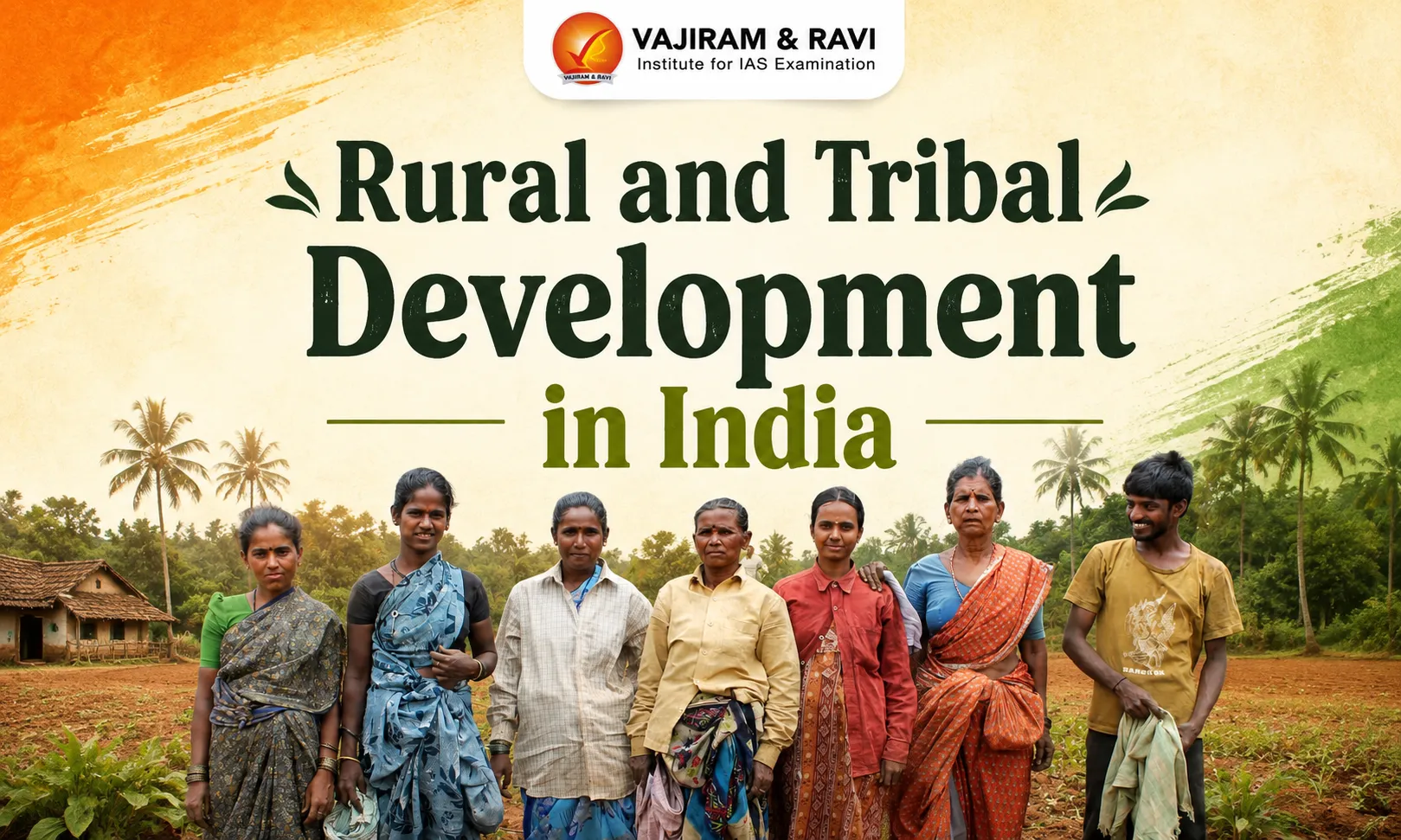
Rural and Tribal Development in India is increasingly moving from basic welfare delivery towards decentralised development, livelihood creation, digital connectivity, social security and community-led empowerment. Government interventions now focus not only on providing basic services but also on strengthening infrastructure, skills, financial inclusion, women-led enterprises and targeted support for tribal and vulnerable communities.

Rural Development in India

Rural Development in India focuses on improving the quality of life and economic opportunities of rural households through basic amenities, infrastructure, education, healthcare, livelihoods, financial inclusion and decentralised governance.

Decentralised Rural Development

  • Under the 15th Finance Commission, direct fiscal transfers to Gram Panchayats were ₹2.36 lakh crore for 2021-26, increasing to ₹4.35 lakh crore under the 16th Finance Commission for 2026-31, strengthening local-level development.
  • Under the Union Budget, allocation for rural development increased from ₹87,765 crore in 2016-17 to ₹2.73 lakh crore in 2026-27.
  • Under BharatNet, 2.19 lakh Gram Panchayats were connected by May 2026, improving digital connectivity in rural areas.
  • Under eGramSwaraj, more than ₹3 lakh crore in payments had been processed by June 2026, strengthening digital financial management of Panchayats.

Access to Basic Services

Access to water, sanitation, clean cooking fuel, electricity, healthcare and food security forms the foundation of dignified rural living.

  • Under Jal Jeevan Mission, which aims to provide safe and adequate drinking water through functional household tap connections in rural households, tap-water coverage increased from 3.23 crore in August 2019 to more than 15.91 crore by August 12, 2026.
  • Under the Har Ghar Jal campaign, 2.89 lakh villages had reported 100% household tap-water coverage by August 12, 2026.
  • Under Swachh Bharat Mission-Grameen, which aims to eliminate open defecation and improve rural sanitation and waste management, more than 12.19 crore individual household toilets had been constructed by August 12, 2026.
    • Under the Swachh Bharat Mission, India was declared Open Defecation Free in 2019.
  • Under GOBARdhan, which promotes the conversion of cattle dung and organic waste into biogas, bio-slurry and other useful products, operational biogas plants increased from 14 in FY 2018-19 to more than 1,288 by August 11, 2026.
  • Under PM Ujjwala Yojana, which provides LPG connections to women from poor households, more than 10.57 crore free LPG connections had been provided by August 12, 2026.
    • The total number of LPG connections increased from 14.52 crore in 2014 to 33.39 crore in 2026.
  • Under Saubhagya, which aimed to provide electricity connections to willing households, 100% willing household electrification was achieved at the pan-India level by March 2019.
  • Under Deendayal Upadhyaya Gram Jyoti Yojana, which focused on strengthening rural electricity infrastructure, 100% village electrification was achieved by 2025.
  • Under Ayushman Bharat, which provides health protection and strengthens primary healthcare, more than 45.51 crore Ayushman Cards had been issued by August 12, 2026.
  • More than 1.86 lakh Ayushman Arogya Mandirs were functional by August 12, 2026, strengthening access to primary healthcare.
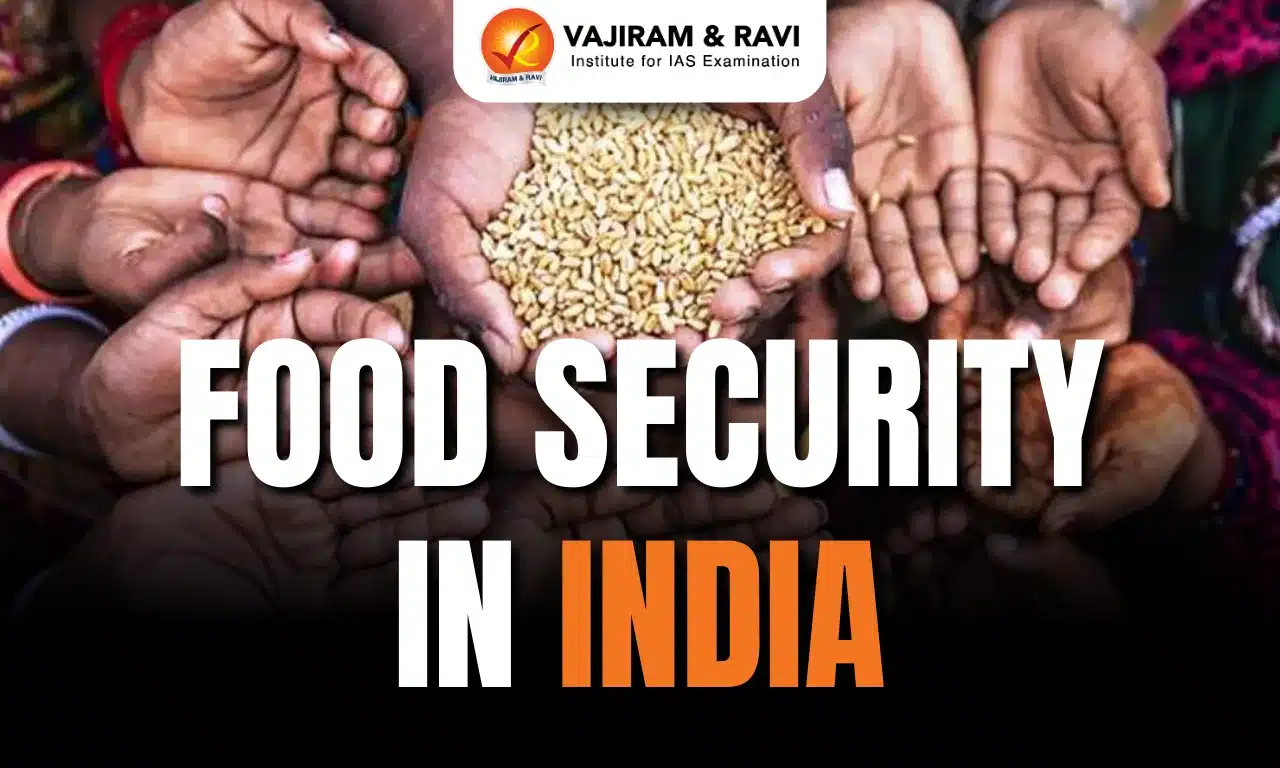
  • Under PM Garib Kalyan Anna Yojana, which provides free foodgrains to eligible beneficiaries, more than 81.35 crore people were covered.
  • Under the Public Distribution System, 99.8% of Fair Price Shops were automated by July 29, 2026.
  • Under the One Nation One Ration Card, more than 221 crore portability transactions had been recorded by July 29, 2026, enabling beneficiaries to access ration from any participating location.

Education and Human Capital

Education and skill development are essential for breaking the cycle of rural poverty and inter-generational disadvantage.

  • Under Samagra Shiksha, which supports school education through infrastructure, digital learning and skill education, 4,073 schools were upgraded and 1.49 lakh ICT and digital initiatives were implemented between 2018-19 and 2025-26.
    • Under the same initiative, 25,000 schools were covered under skill education.
    • Female dropout at the primary level declined from 4.6% in 2013-14 to 0.1% in 2025-26, while the secondary-level rate declined from 14.5% to 8% during the same period.
  • Under Beti Bachao Beti Padhao, which promotes the survival, education and empowerment of girls, girls' GER at the secondary level increased from 75.5% in 2014-15 to 83.4% in 2025-26.
  • Under Kasturba Gandhi Balika Vidyalayas (KGBVs), which provide residential schooling mainly to girls from disadvantaged communities, sanctioned schools increased from 3,609 in 2014-15 to 5,639 in 2024-25, while 5,133 were operational, with enrolment rising from 3.52 lakh to 7.11 lakh during the same period.

Rural Infrastructure and Connectivity

Rural infrastructure connects households with markets, schools, healthcare, financial services and employment opportunities.

  • Under Pradhan Mantri Awaas Yojana–Grameen (PMAY-G), which provides assistance for pucca rural houses with basic amenities, more than 3.91 crore houses had been sanctioned and 3.13 crore houses completed by August 12, 2026.
  • Under Pradhan Mantri Gram Sadak Yojana (PMGSY), which provides all-weather road connectivity to eligible rural habitations, 99.6% of eligible habitations had been connected by June 2026, while completed road length increased from 3.86 lakh km during May 2000–May 2014 to 4.13 lakh km during May 2014–August 12, 2026, and completed bridges increased from 484 to 10,404 over the same periods.

Rural Livelihoods, Employment and Skills

The focus of rural development is increasingly shifting from short-term income support towards sustainable livelihoods, skills, entrepreneurship and women’s economic empowerment.

  • Under Deendayal Antyodaya Yojana-National Rural Livelihoods Mission (DAY-NRLM), which organises rural women into Self-Help Groups (SHGs) and supports livelihoods through credit and skills, 10.19 crore households had been mobilised into 94.46 lakh SHGs by August 12, 2026, with over 9 lakh Community Resource Persons (CRPs) supporting areas such as agriculture, banking, insurance and nutrition, including 50,548 Bank Sakhis, 1.91 lakh Krishi Sakhis, 2,012 Matsya Sakhis and 1.70 lakh Pashu Sakhis.
  • Under the Lakhpati Didi initiative, which aims to help rural women earn at least ₹1 lakh annually, 3.46 crore women had achieved the target by July 29, 2026.
  • Under Self-Help Entrepreneur Mart (SHE-Mart), announced in Union Budget 2026-27, community-owned retail spaces are proposed under the SHG ecosystem, with an aim to benefit 1 crore women.
  • Under Deen Dayal Upadhyaya Grameen Kaushalya Yojana (DDU-GKY), which provides placement-linked skill training to rural youth, training increased from 43,038 candidates in 2014-15 to 18.45 lakh till August 11, 2026, while placements increased from 21,446 to 12.35 lakh over the same period.
  • Under Pradhan Mantri Kaushal Vikas Yojana (PMKVY), which provides industry-oriented skill training to youth, more than 1.64 crore youth had received training since inception till June 2026.
  • Under Viksit Bharat-Guarantee for Rozgar and Ajeevika Mission (Gramin), which provides wage employment and supports rural livelihoods, persondays increased from 1,660 crore during FY 2006-07 to FY 2013-14 to 3,029 crore during FY 2014-15 to FY 2024-25, while women’s participation increased from 48% in FY 2013-14 to 58.19% in FY 2024-25.

Financial Inclusion and Social Security

Financial inclusion enables rural households to access formal credit, insurance, pensions, savings and entrepreneurship opportunities.

  • Under PM Jan Dhan Yojana, which provides access to basic banking services, beneficiaries increased from 17.9 crore in August 2015 to 58.90 crore by August 12, 2026.
  • Under PM MUDRA Yojana, which provides institutional credit to micro and small entrepreneurs, loans sanctioned increased from 3.49 crore in 2016 to more than 59.14 crore by July 2026.
  • Under PM SVANidhi, which provides collateral-free working-capital loans to street vendors, beneficiaries increased from 26.37 lakh in November 2021 to 78.17 lakh by August 12, 2026, with ₹18,971.18 crore in loans disbursed.
  • Under PM Vishwakarma, which supports traditional artisans through training, toolkits and credit, more than 30 lakh artisans had registered by August 12, 2026; 24.32 lakh had received skill training and 17.70 lakh toolkits.
  • Under e-Shram, which creates a national database of unorganised workers for better delivery of social-security benefits, registrations increased from 14.40 crore in December 2021 to 31.87 crore by August 12, 2026.
  • Under Atal Pension Yojana, beneficiaries increased from 48.80 lakh in 2016-17 to 9.29 crore by June 2026.

Tribal Development in India

Tribal Development in India focuses on improving the socio-economic conditions of Scheduled Tribes (STs), Particularly Vulnerable Tribal Groups (PVTGs) and tribal-majority communities through targeted interventions in livelihoods, basic services, education and social development. The approach is increasingly based on convergence, community participation and mission-mode implementation.

Increase in Budget for Tribal Development

The Union Budget for Tribal Affairs increased from ₹4,826 crore in 2016-17 to ₹15,421.97 crore in 2026-27, reflecting greater fiscal support for targeted tribal development.

Tribal Livelihoods and Economic Empowerment

  • Under PM-JANMAN, which specifically targets Particularly Vulnerable Tribal Groups (PVTGs) through basic services and livelihood support, 540 Van Dhan Vikas Kendras had been sanctioned by August 5, 2026, benefiting 46,042 PVTG persons.
  • Under the Pradhan Mantri Janjatiya Vikas Mission (PM-JVM), which promotes tribal livelihoods through value addition and marketing of minor forest produce, 4,172 Van Dhan Vikas Kendras had been sanctioned by August 2026, benefiting 12.48 lakh tribal people.
  • Under Pradhan Mantri Janjatiya Unnat Gram Abhiyan (PM-JUGA), which brings together 17 ministries to address development gaps in tribal-majority villages and PVTG habitations, 7.60 lakh tribal houses have been completed, 28,303 tribal villages have gained drinking-water access, 59,812 tribal households and public institutions have been electrified, 657 Anganwadi Centres operationalised and 692 hostels sanctioned over the last 12 years.

Education and Scholarships for Tribal and Vulnerable Communities 

  • Under Eklavya Model Residential Schools (EMRS), which provide quality residential education to tribal students, operational schools increased from 129 in 2014-15 to 511 by August 12, 2026, with 1.68 lakh students enrolled.
  • Under the Pre-Matric Scholarship Scheme for ST students, more than 28.99 lakh tribal students benefited between April 2024 and August 12, 2026.
  • Under the National Fellowship for ST Students, 2,961 research scholars were supported in 2025-26, with women accounting for 56% of beneficiaries.
  • Under PM-YASASVI, which provides educational support to students from economically disadvantaged OBC, EBC and DNT communities, 20.61 lakh students received pre-matric scholarships and 24.53 lakh students received post-matric scholarships in FY 2024–25.
  • Under SHREYAS, which promotes higher education among disadvantaged communities, the Top-Class Education for SC Students component enabled 8,571 students to study in institutions such as IITs, IIMs, NITs and AIIMSin 2025–26.

Development of Vulnerable and Marginalised Communities

  • Under PM-AJAY, which supports the socio-economic development of Scheduled Caste communities, more than 4.16 lakh SC houses had been built, over 3.57 lakh SC households had individual toilets and 17,578 villages had been declared Adarsh Grams by August 12, 2026.
  • Under the Scheme for Economic Empowerment of De-Notified, Nomadic and Semi-Nomadic Tribes (SEED), which supports the education, livelihood and health needs of these communities, ₹26.75 crore was disbursed during 2025–26 for the educational empowerment of 4,485 DNT students, while 73,569 Ayushman Bharat cards were issued to DNT families under its health component.

Challenges of Rural and Tribal Development in India

Despite significant expansion in scheme coverage, Rural and Tribal Development in India continues to face structural challenges.

  • Last-mile delivery: Infrastructure and scheme coverage do not always translate into quality, regular and accessible services.
  • Regional disparities: Development outcomes remain uneven across States, districts and tribal regions.
  • Livelihood insecurity: Rural households remain vulnerable to agricultural risks, informal employment and low productivity.
  • Digital divide: Digital delivery can exclude households facing poor connectivity, limited digital literacy or authentication problems.
  • Weak market linkages: Small farmers, artisans and tribal producers often receive low returns because of inadequate processing, storage, branding and market access.
  • Climate vulnerability: Droughts, floods, heatwaves and changing rainfall patterns disproportionately affect rural livelihoods.
  • Tribal rights: Development projects, displacement and resource extraction can affect tribal land, forests, livelihoods and traditional rights.
  • Human capital gaps: Quality of education, healthcare and skill development remains uneven despite improved access.

Way Forward 

The next phase should focus on moving from coverage to outcomes and from welfare to sustainable economic empowerment.

  • Strengthen local institutions: Give Panchayats and Gram Sabhas greater planning capacity, resources and technical support.
  • Focus on outcomes: Measure not only the number of houses, toilets or connections created but also their quality, functionality and actual use.
  • Promote local value chains: Support processing, storage, branding, FPOs, SHGs and tribal enterprises to improve producer incomes.
  • Strengthen tribal convergence: Integrate housing, water, healthcare, education, infrastructure and livelihoods in tribal areas.
  • Protect tribal rights: Ensure effective implementation of the Forest Rights Act, 2006 and PESA, 1996, with meaningful Gram Sabha participation.
  • Bridge the digital divide: Combine digital governance with accessible offline mechanisms for vulnerable households.
  • Build climate resilience: Promote water conservation, climate-resilient agriculture, renewable energy and disaster preparedness.
  • Strengthen women's economic agency: Expand SHGs, financial inclusion, entrepreneurship and women's ownership of productive assets.

Rural and Tribal Development in India FAQs

Q1: What is the approach to Rural and Tribal Development in India?

Ans: It is shifting from welfare-oriented delivery to integrated, participatory and livelihood-based development, combining basic services, infrastructure, human capital, financial inclusion and community empowerment.

Q2: What are the major pillars of Rural Development in India?

Ans: The major pillars are basic amenities, rural infrastructure, employment and livelihoods, education and healthcare, financial inclusion, social security and decentralised governance

Q3: What are the major initiatives for Rural Development in India?

Ans: Major initiatives include Jal Jeevan Mission, Swachh Bharat Mission-Grameen, PMAY-G, PMGSY, DAY-NRLM, rural employment programmes, PM Jan Dhan Yojana and PM Vishwakarma, covering basic amenities, infrastructure, livelihoods and financial inclusion.

Q4: What is the approach to Tribal Development in India?

Ans: Tribal development follows a targeted and integrated approach, focusing on tribal-majority villages, PVTGs, education, healthcare, housing, infrastructure, livelihoods and social protection.

Q5: What are the major initiatives for Tribal Development in India?

Ans: Key initiatives include PM-JANMAN, PM-JUGA, PM-Janjatiya Vikas Mission, Van Dhan Vikas Kendras and Eklavya Model Residential Schools, focusing on PVTGs, infrastructure, livelihoods and education.

Ram Prasad Bismil (1897-1927), Biography, Poem, Contributions

Ram Prasad Bismil

Ram Prasad Bismil (11 June 1897-19 December 1927) was an Indian revolutionary, poet, writer and translator who opposed British rule. He became associated with the Arya Samaj and revolutionary nationalism. He participated in the Mainpuri Conspiracy of 1918 and the Kakori Train Action of 1925. His writings, revolutionary activities and commitment to Hindu-Muslim unity made him a significant figure in India’s freedom struggle.

Ram Prasad Bismil Biography

Ram Prasad Bismil’s early life in Shahjahanpur shaped his literary talent, nationalist ideas and commitment to revolutionary action against British colonial rule.

  • Birth and Family: Ram Prasad Bismil was born on 11 June 1897 in Shahjahanpur district of present day Uttar Pradesh to Murlidhar and Moolmati Devi.
  • Education: He learned Hindi from his father and Urdu from a local maulvi. He later studied in an English medium school despite his father’s initial disapproval.
  • Arya Samaj Association: Bismil joined the Arya Samaj in Shahjahanpur. The organisation was founded by Swami Dayananda Saraswati in 1875 and strongly influenced his ideas and discipline.
  • Early Revolutionary Inspiration: At the age of 18, he read about the death sentence awarded to Bhai Parmanand. The incident deeply affected him and strengthened his opposition to British rule.
  • First Revolutionary Poem: Bismil expressed his anguish through the Hindi poem “Mera Janm”. His early writings reflected his growing commitment to India’s freedom.
  • Pen Names: He wrote in Hindi and Urdu under the names Bismil, Ram and Agyat. The word Bismil means wounded or restless and became his most recognised pen name.

Ram Prasad Bismil Contributions and Activities

Ram Prasad Bismil believed that organised revolutionary action was necessary for independence and worked to build networks, organisations and resources for resistance.

  • Matrivedi Organisation: Bismil founded Matrivedi and worked with Genda Lal Dixit to organise young people for armed resistance against British rule.
  • Mainpuri Conspiracy: In 1918, Bismil participated in the Mainpuri Conspiracy. He distributed prohibited nationalist literature and worked to collect funds for revolutionary activities.
  • Nationalist Publications: On 28 January 1918, he circulated Deshvasiyon ke Naam Sandesh and Mainpuri ki Pratigya. These writings communicated revolutionary ideas and nationalist messages to the public.
  • Underground Activities: During 1919-1920, Bismil remained underground in different parts of Uttar Pradesh. He continued writing, publishing and supporting revolutionary activities during this period.
  • Ahmedabad Congress: In 1921, Bismil attended the Ahmedabad session of the Indian National Congress. He supported the demand for Poorna Swaraj and worked with younger nationalists.
  • Hindustan Republican Association: Bismil helped establish the Hindustan Republican Association with Sachindra Nath Sanyal and Jadugopal Mukherjee. The organisation sought an armed revolution and a federal Republic of United States of India.
  • HRA Manifesto: Bismil played an important role in preparing the organisation’s constitutional framework. The HRA manifesto, The Revolutionary, was circulated on 1 January 1925.
  • Kakori Train Action: On 9 August 1925, Bismil and fellow revolutionaries stopped the Saharanpur-Lucknow passenger train at Kakori. They targeted government treasury funds to finance revolutionary activities.
  • Kakori Conspiracy Case: More than 40 revolutionaries were arrested following the Kakori action, although only 10 had participated directly. The legal proceedings continued for about 18 months.
  • Hindu-Muslim Unity: Bismil’s friendship with Ashfaqulla Khan represented communal harmony within the revolutionary movement. His final writings also emphasised Hindu-Muslim unity for national service.

Ram Prasad Bismil Literary Contributions

Ram Prasad Bismil used Hindi and Urdu literature as a means of spreading nationalism, revolutionary ideas, equality and human dignity.

  • Mera Janm: Bismil composed Mera Janm after learning about Bhai Parmanand’s death sentence. The poem expressed his early anger against British colonial control.
  • Mainpuri ki Pratigya: Mainpuri ki Pratigya became an important nationalist composition associated with his revolutionary activities. It expressed his determination to resist British rule.
  • Deshvasiyon ke Naam Sandesh: He wrote and circulated Deshvasiyon ke Naam Sandesh in 1918. The pamphlet communicated revolutionary ideas directly to Indian countrymen.
  • Man Ki Lahar: Man Ki Lahar was a collection of poems written by Bismil and others. It reflected patriotic emotions and his literary engagement with nationalism.
  • Swadeshi Rang: Swadeshi Rang was among the literary works associated with Bismil. His writings used patriotic themes to encourage resistance and national consciousness.
  • Bolshevikon Ki Kartoot: Bismil translated Bolshevikon Ki Kartoot from Bengali. He also translated Yogik Sadhan and produced literary material through the Sushil Mala publication series.
  • Swadhinta Ki Devi: Catherine or Swadhinta Ki Devi was adapted into Hindi from an English text. Bismil used translation and adaptation to expand access to nationalist literature.
  • Sarfaroshi Ki Tamanna: Sarfaroshi Ki Tamanna was originally written by Bismil Azimabadi and not Ram Prasad Bismil who popularized it. It became strongly associated with the revolutionary movement and was widely recited as a patriotic war cry.
  • Mera Rang De Basanti Chola: Mera Rang De Basanti Chola is popularly associated with the revolutionary tradition surrounding Bismil. It became part of the wider patriotic memory of India’s freedom struggle.
  • Autobiography: Bismil wrote his autobiography while imprisoned in Gorakhpur Jail. It was later published under the cover title Kakori ke Shaheed in 1928.

Ram Prasad Bismil Death

Ram Prasad Bismil was executed following the Kakori Conspiracy trial, becoming one of the most remembered martyrs of the revolutionary movement.

  • Execution Date: Ram Prasad Bismil was hanged on 19 December 1927 at Gorakhpur Jail. He was 30 years old at the time of his execution.
  • Kakori Sentences: Bismil, Ashfaqulla Khan, Rajendra Nath Lahiri and Thakur Roshan Singh were sentenced to death for their revolutionary activities connected with the Kakori case.
  • Other Executions: Rajendra Nath Lahiri was hanged two days earlier at Gonda Jail. Ashfaqulla Khan and Thakur Roshan Singh were executed on 19 December 1927 at Faizabad and Naini Allahabad respectively.
  • Final Resting Place: Bismil’s body was taken to the banks of the Rapti River for Hindu cremation. The site later became known as Raj Ghat.

Ram Prasad Bismil Recognition and Honours

Ram Prasad Bismil continues to be remembered through memorials, public institutions, railway infrastructure, postage stamps and commemorations across India.

  • Birthplace Memorial: The Shaheed Smarak Samiti of Shahjahanpur established the Amar Shaheed Ram Prasad Bismil Smarak at Khirni Bagh. A white marble statue was inaugurated by Governor Motilal Vora on 18 December 1994.
  • Railway Station: The Northern Railway zone named a railway station near Shahjahanpur as Pt Ram Prasad Bismil railway station. It is located about 11 kilometres from Shahjahanpur.
  • Kakori Memorial: A memorial dedicated to the Kakori conspirators was established at Kakori. Prime Minister Indira Gandhi inaugurated it on 19 December 1983.
  • Commemorative Stamp: The Government of India issued a multicoloured commemorative postal stamp featuring Ram Prasad Bismil on 19 December 1997 during his birth centenary year.
  • Ram Prasad Bismil Udyan: The Government of Uttar Pradesh named a park near Rampur Jagir village as Amar Shaheed Pt. Ram Prasad Bismil Udyan. Bismil had lived underground in this area after the Mainpuri Conspiracy.
  • Historical Legacy: Ram Prasad Bismil remains associated with revolutionary nationalism, patriotic literature, the HRA, the Mainpuri Conspiracy and the Kakori Train Action of 1925.

Ram Prasad Bismil FAQs

Q1: Who was Ram Prasad Bismil?

Ans: Ram Prasad Bismil was an Indian revolutionary, poet, writer and translator who fought British rule and helped establish the Hindustan Republican Association.

Q2: When was Ram Prasad Bismil born?

Ans: Ram Prasad Bismil was born on 11 June 1897 in Shahjahanpur, Uttar Pradesh, to Murlidhar and Moolmati Devi.

Q3: What was Ram Prasad Bismil’s role in the Kakori Train Action?

Ans: Ram Prasad Bismil played a leading role in the Kakori Train Action of 9 August 1925, organised to obtain government treasury funds for revolutionary activities.

Q4: When and where was Ram Prasad Bismil executed?

Ans: Ram Prasad Bismil was hanged on 19 December 1927 at Gorakhpur Jail at the age of 30 for his revolutionary activities.

Q5: Which poems and literary works are associated with Ram Prasad Bismil?

Ans: His notable works include Mera Janm, Mainpuri ki Pratigya, Deshvasiyon ke Naam Sandesh, Man Ki Lahar and Swadeshi Rang.

India-Japan Maritime Security Pact, About, Key Features

India-Japan Maritime Security Pact

Why in the News?: Recently, the India-Japan Maritime Security Pact was signed as a Memorandum of Arrangement (MoA) to strengthen maritime security and defence cooperation between the two countries. The pact comes amid heightened regional security concerns and supports their shared vision of a free and open Indo-Pacific.

About India-Japan Maritime Security Pact

The India-Japan Maritime Security Pact is a Memorandum of Arrangement (MoA) signed by India and Japan to provide a structured framework for closer cooperation in maritime security and defence.

  • The MoA was signed by Defence Minister Rajnath Singh and Japanese Defence Minister Shinjiro Koizumi during the Japan-India Defence Ministers’ Meeting in New Delhi.
  • The arrangement forms part of the broader Japan-India Special Strategic and Global Partnership, under which the two countries are strengthening their defence relationship.
  • The pact reflects the growing strategic and maritime convergence between India and Japan amid heightened regional and international security concerns.

India-Japan Maritime Security Pact Key Features

The India-Japan Maritime Security Pact include maritime cooperation with naval operations, logistics, shipbuilding, defence technology and wider Indo-Pacific cooperation. Both countries reaffirmed that their defence cooperation should contribute to a free and open Indo-Pacific, with greater coordination on regional and international security developments.

Maritime Security and Maritime Operations

  • Maritime Domain Awareness: India and Japan will strengthen information sharing on Maritime Domain Awareness (MDA) to improve their understanding of developments in the maritime domain.
  • Search and Rescue: Both sides will enhance cooperation in Search and Rescue (SAR) operations.
  • Humanitarian assistance and disaster relief: The two countries will strengthen cooperation in Humanitarian Assistance and Disaster Relief (HADR) operations.
  • Protection of sea routes: India and Japan will strengthen coordination for protecting Sea Lines of Communication (SLOCs) through naval, logistical and operational cooperation.
  • Mine countermeasures: Both sides will work to enhance mine-countermeasure capabilities according to their strategic and operational requirements.

Naval and Operational Cooperation

  • Naval visits and exercises: Cooperation will include mutual visits by naval ships and units and joint exercises to strengthen operational coordination.
  • Personnel and expert exchanges: India and Japan will promote exchanges of military personnel and Subject Matter Experts (SMEs).
  • Greater operational integration: Bilateral exercises will become more complex and integrated, including greater use of unmanned systems.
  • Short-notice exercises: Both sides will explore the possibility of conducting joint exercises at short notice whenever opportunities arise.
  • Special Operations Forces: India and Japan will promote exchanges between their respective Special Operations Forces.
  • Integrated theatre commands: Japan will explore cooperation with India's integrated theatre commands following their establishment.

Logistics, Ports and Ship Repair

  • Port access: The two countries will strengthen logistical cooperation, including the use of ports.
  • Maintenance and repair: Cooperation will extend to maintenance and repair facilities, supporting greater practical naval cooperation.
  • Reciprocal ship repair: India and Japan will work towards reciprocal provision of ship-repair facilities and conclude a ship-repair arrangement in the near future.

Shipbuilding and Make in India

  • Joint naval shipbuilding: The two countries will explore joint development in naval shipbuilding and design. The cooperation will leverage Japan's technological expertise and India's production capabilities.
  • Defence shipbuilding: Both sides will seek to leverage each other's strengths in defence shipbuilding and related areas.
  • Make in India: Japan's possible use of Indian production capabilities will be explored under the Make in India framework.

Defence Equipment and Technology

  • Technology transfer: India and Japan will deepen cooperation in defence equipment and technology, following Japan's recent review of its framework for defence equipment and technology transfers.
  • UNICORN system: The shipborne UNICORN integrated communications antenna system has been identified as an important symbol of growing India–Japan defence technology cooperation.
    • UNICORN is the first defence equipment transfer project between India and Japan, and both sides will work towards its early realisation.
  • Future defence projects: India and Japan will discuss additional defence equipment and technology projects based on the operational requirements of their respective armed forces.
  • DRDO-ATLA cooperation: India's Defence Research and Development Organisation (DRDO) and Japan's Acquisition, Technology & Logistics Agency (ATLA) will deepen cooperation in state-of-the-art defence technologies.
  • Defence Industry Forum: The two countries will convene a Defence Industry Forum to promote greater cooperation between their defence industries.

Indo-Pacific and Regional Cooperation

  • Third-country cooperation: India and Japan will deepen cooperation with third countries through high-level exchanges, exercises and other initiatives.
    • Both sides welcomed the first trilateral naval PASSEX involving India, Japan and Indonesia, conducted in February.
  • Indo-Pacific Logistics Network: India and Japan will further promote cooperation through the Indo-Pacific Logistics Network (IPLN) to support partner countries during natural disasters by transporting personnel and supplies.
    • The second Indo-Pacific Logistics Network (IPLN) tabletop exercise is scheduled to be held at the Japan Ministry of Defense in September.

Institutional Mechanism for Implementation

  • Working Group: India and Japan will establish a Working Group headed at the Director-General/Joint Secretary level to coordinate implementation of the decisions taken by the two Defence Ministers.
    • The Working Group will cover operational, intelligence, equipment, technology and defence-industrial cooperation.]
    • It will maximise synergies and accelerate implementation of agreed initiatives while respecting the respective policies and sovereign choices of both countries.

Defence Dialogue and Strategic Coordination

  • 2+2 dialogue: India and Japan will accelerate discussions towards convening the Fourth Japan-India Foreign and Defence Ministerial Meeting (2+2) in Tokyo this year.
  • Security consultations: Both countries agreed to hold consultations when necessary to contribute to the security of both countries and peace and stability in the region.

India-Japan Maritime Security Pact Significance

The pact deepens India-Japan defence ties by moving cooperation towards greater operational, technological, industrial and regional coordination.

For India

  • Strengthens maritime security: Cooperation in Maritime Domain Awareness (MDA), naval operations, Search and Rescue (SAR) and Humanitarian Assistance and Disaster Relief (HADR) improves maritime coordination.
  • Protects Sea Lines of Communication: Greater naval and logistical cooperation supports the protection of Sea Lines of Communication (SLOCs).
  • Boosts defence capabilities: Joint exercises, unmanned systems and Special Operations Forces exchanges enhance operational preparedness.
  • Supports Make in India: Joint shipbuilding and greater use of Indian production capabilities strengthen domestic defence manufacturing.
  • Improves defence technology: The shipborne UNICORN integrated communications antenna system and cooperation between the Defence Research and Development Organisation (DRDO) and Japan's Acquisition, Technology & Logistics Agency (ATLA) deepen India's defence technology partnership with Japan.

For Japan

  • Deepens strategic partnership: It gives greater practical depth to the Japan-India Special Strategic and Global Partnership.
  • Strengthens maritime cooperation: Closer engagement with the Indian Navy enhances Japan's maritime security cooperation.
  • Expands defence industry cooperation: Shipbuilding, technology transfer and the Defence Industry Forum create opportunities for greater industrial collaboration.
  • Supports regional stability: Cooperation with India and other Indo-Pacific partners strengthens Japan's contribution to regional peace and stability.

For the Indo-Pacific

  • Supports a free and open Indo-Pacific: The pact strengthens cooperation between two countries committed to this objective.
  • Promotes freedom of navigation: Both countries oppose actions threatening the freedom and safety of navigation and overflight.
  • Builds regional partnerships: The India-Japan-Indonesia trilateral naval Passage Exercise (PASSEX) and cooperation with third countries expand maritime cooperation.
  • Strengthens disaster response: The Indo-Pacific Logistics Network (IPLN) supports regional humanitarian assistance and disaster-relief cooperation.

India-Japan Maritime Security Pact FAQs

Q1: What is the India-Japan Maritime Security Pact?

Ans: The India-Japan Maritime Security Pact is a Memorandum of Arrangement (MoA) that provides a framework for strengthening maritime security and defence cooperation between India and Japan.

Q2: Who signed the India-Japan Maritime Security Pact?

Ans: The India-Japan Maritime Security Pact was signed by Indian Defence Minister Rajnath Singh and Japanese Defence Minister Shinjiro Koizumi during the Japan-India Defence Ministers’ Meeting in New Delhi.

Q3: What are the key areas covered under the India-Japan Maritime Security Pact?

Ans: The India-Japan Maritime Security Pact covers Maritime Domain Awareness, Search and Rescue, Humanitarian Assistance and Disaster Relief, protection of Sea Lines of Communication, naval exercises, logistics, ship repair and maritime cooperation.

Q4: How does the India-Japan Maritime Security Pact strengthen defence cooperation?

Ans: The India-Japan Maritime Security Pact expands cooperation beyond military exercises to include defence technology, naval shipbuilding, defence production, personnel exchanges, advanced defence technologies and defence-industrial cooperation.

Q5: What is the significance of the India-Japan Maritime Security Pact for the Indo-Pacific?

Ans: The India-Japan Maritime Security Pact strengthens cooperation for a free and open Indo-Pacific, promotes maritime cooperation with regional partners and supports peace, stability, freedom of navigation and disaster-response cooperation.

India-Portugal Relations, History, Significance, Challenges

India-Portugal Relations

Why in the News? : India-Portugal relations gained renewed attention with the 50th anniversary of the re-establishment of India-Portugal diplomatic relations in 2025, marked by President Droupadi Murmu’s State Visit to Portugal from 7-8 April 2025.

India-Portugal Relations Historical Background

India-Portugal relations have a history of over 500 years, beginning with Portuguese maritime trade in India and gradually evolving into modern diplomatic, economic and cultural cooperation. The relationship has passed through the phases of Portuguese colonial rule, post-independence tensions, restoration of diplomatic ties and renewed bilateral engagement.

Portuguese Arrival and Colonial Expansion

Vasco da Gama reached Calicut (Kozhikode), Kerala, in May 1498, establishing a direct maritime route between Europe and India through the Atlantic Ocean and around Africa.

  • The new sea route gave Portugal direct access to India’s profitable spice trade and helped it emerge as a major colonial trading power.
  • The Portuguese established a trading centre at Kollam in 1502 and subsequently acquired territories including Goa, Daman, Diu, Dadra and Nagar Haveli.
  • Goa became the headquarters of Portuguese activities in the Orient, with Portuguese influence extending from Malacca in the east to Mozambique in the west.

From Independence to Normalisation

  • Relations were initially cordial after India’s independence in 1947, and diplomatic relations were established in 1949.
  • Relations deteriorated after Portugal, under dictator António Salazar, refused to surrender its remaining enclaves in India.
  • India launched Operation Vijay, leading to the liberation of Goa, Daman and Diu on 19 December 1961, ending more than 450 years of Portuguese rule.
  • Diplomatic relations were restored after Portugal’s Carnation Revolution of April 1974, which ended the Estado Novo regime.
  • India and Portugal signed a treaty on 31 December 1974, under which Portugal recognised Indian sovereignty over Goa, Daman and Diu, Dadra and Nagar Haveli and related territories; the treaty came into force on 3 June 1975.

Revival of Bilateral Relations

After diplomatic relations were restored in 1975, India-Portugal relations gradually improved, with regular high-level visits and closer India-European Union engagement giving the relationship fresh momentum.

  • 1990s: Visits by Indian Presidents in 1990, 1992 and 1998 helped restart regular political engagement.
  • 2000: Prime Minister Atal Bihari Vajpayee visited Lisbon for the first India-European Union Summit, held under Portugal’s Presidency of the European Union, creating an important link between bilateral and India-European Union relations.
  • 2007: Portuguese Prime Minister José Sócrates visited India for the 8th India-European Union Summit, further strengthening political engagement.
  • 2017 onwards: The relationship gained stronger momentum with reciprocal visits by Prime Minister António Costa and Prime Minister Narendra Modi, followed by regular high-level exchanges and expansion into areas such as defence, technology, investment and culture.

Contemporary India-Portugal Relations

Today, India-Portugal Relations have moved beyond their historical legacy towards practical cooperation in political, economic, defence, technology and people-to-people ties.

Political and Diplomatic Relations

India and Portugal share warm political relations, supported by historical and cultural links and convergence on several international issues.

  • Political convergence: Portugal regards India as a pluralistic democracy, major world economy and ancient civilisation, while both countries have sought to deepen their contemporary strategic partnership.
  • Support for India: Portugal has consistently supported India’s aspirations for permanent membership of the United Nations Security Council (UNSC) and membership of the Nuclear Suppliers Group (NSG).
  • United Nations cooperation: India and Portugal have supported each other’s candidatures for UNSC non-permanent seats, with India serving for 2021-22 and Portugal set to serve for 2027-28.

High-Level Engagement Since 2017

Frequent high-level exchanges have provided political momentum and expanded cooperation into new sectors.

  • 2017: Prime Minister António Costa visited India in January, while Prime Minister Narendra Modi made the first standalone bilateral visit by an Indian Prime Minister to Portugal in June.
  • 2020: Portuguese President Marcelo Rebelo de Sousa visited India, with 32 Memoranda of Understanding (MoUs)/outcomes announced across different areas.
  • 2023: External Affairs Minister S. Jaishankar visited Portugal, marking the first visit by an Indian External Affairs Minister to Portugal in more than two decades.
  • 2025: President Droupadi Murmu visited Portugal on 7-8 April 2025 for the 50th anniversary of restored diplomatic relations; it was the first State Visit by an Indian President to Portugal in 27 years.
  • Recent engagement: Political exchanges continued through meetings between Prime Minister Narendra Modi and Portuguese Prime Minister Luís Montenegro in 2024, and visits by senior Portuguese and Indian ministers during 2024-26.

Economic and Trade Relations

Economic ties remain an important area of the partnership, with scope for greater trade, investment and industrial cooperation.

Trade Trends

India-Portugal bilateral trade stood at US$1.15 billion in FY 2025-26, with India maintaining a substantial export surplus.

Financial Year Indian Exports (US$ million) Indian Imports (US$ million) Total Trade (US$ million) Growth

2021–22

1,191.80

164.54

1,356.34

42.61%

2022–23

1,005.41

196.10

1,201.51

-11.42%

2023–24

1,183.80

178.34

1,362.14

13.36%

2024–25

920.24

206.11

1,126.35

-17.31%

2025–26

947.56

197.97

1,145.53

1.72%

Trade Basket

  • India’s major exports: Textiles and apparel, agricultural products, metals, chemicals, plastics and rubber, footwear, machinery, leather products and vehicles.
  • India’s major imports: Machinery and appliances, metals, minerals, plastics and rubber, chemicals, textiles and apparel, paper and pulp, wood and cork, and optical and precision instruments.

Investment

  • Portugal ranked 52nd among sources of Foreign Direct Investment (FDI) into India, with cumulative inflows of US$126.45 million as of December 2025.
  • Major companies include Visabeira, Efacec and Petrotec, along with Portind Shoe Accessories.
  • Indian investments are estimated at up to US$475 million, with companies such as Generis, MGM Group, Sugee Group, Wipro, HCL and Tata Consultancy Services (TCS) having a presence.

India-Portugal Defence Cooperation

Defence cooperation has gradually expanded from institutional dialogue to naval engagement and regular exchanges between the two countries.

  • India and Portugal signed a Memorandum of Understanding on defence cooperation in January 2017.
  • Both countries conduct Joint Working Group meetings on Defence, with the 3rd meeting held in Lisbon in September 2024.
  • Indian Navy training ship INS Tarangini visited Lisbon and Porto in 2022 during its Lokayan voyage, enabling professional interactions with Portuguese naval personnel and visits to naval ships and installations.

India-Portugal Science and Technology Cooperation

Science and technology has emerged as an important area for joint research, innovation and emerging technologies.

  • The 1998 Agreement on Cooperation in Science and Technology established the Indo-Portuguese Joint Science and Technology Committee (JSTC).
  • The 6th JSTC meeting in March 2023 reviewed ongoing cooperation and discussed a proposed €4 million joint research fund.
  • Cooperation is being explored in green hydrogen, net-zero emission programmes for industry, young scientist exchanges and startups.
  • The India-Portugal Technology Summit 2020 covered HealthTech, CleanTech, energy, climate change, WaterTech, AgriTech, space-ocean interactions and Information and Communication Technology (ICT).

India-Portugal Cultural and People-to-People Relations

Historical links have created a strong foundation for cultural exchanges, academic cooperation and wider people-to-people contacts.

  • A Memorandum of Understanding on Cultural Cooperation was signed in 2017, supporting cultural performances, youth exchanges, literary programmes and art exhibitions.
  • India became an Associate Observer in the Community of Portuguese Language Countries (CPLP) in 2021, opening greater scope for engagement with Portuguese-speaking countries.
  • India has organised programmes under Azadi Ka Amrit Mahotsav, including Yoga, Ayurveda, literature, art and commemorations of Indian national figures.
  • The 2025 commemorations included film festivals, cultural programmes and the Hindi translation of Fernando Pessoa’s ‘Mensagem’, highlighting the cultural dimension of bilateral ties.

Academic and Youth Exchanges

  • Youth engagement: India and Portugal have conducted reciprocal youth exchanges under the bilateral framework, including visits by Indian and Portuguese youth delegations in 2018 and 2019.
  • Know India and Know Goa: The Indian diaspora has participated in the Know India Programme (KIP) and Know Goa Programme (KGP).
  • Centre for Indian Studies: The Centre for Indian Studies at the University of Lisbon, established in 2016, is Portugal’s first such centre dedicated to the study of India and promotes teaching and research on Indian culture and Hindi.

Indian Diaspora in Portugal

The Indian community provides an important human link between the two countries and supports bilateral economic and cultural engagement.

  • Official figures indicate around 98,616 Indian nationals in Portugal, while an estimated 180,000 persons of Indian origin, including 14,125 Overseas Citizen of India (OCI) card holders, live there.
  • The community is mainly concentrated around Lisbon, the Algarve region and Porto.
  • In 2021, India and Portugal signed an agreement for the recruitment of Indian citizens to work in Portugal, making Portugal the first European Union country with which India signed a dedicated labour mobility agreement.
  • The first India-Portugal Consular Dialogue was held in November 2024 to discuss issues concerning Indian citizens in Portugal.

India-Portugal Relations Significance

Portugal is important for India not only as a bilateral partner but also as a bridge to the European Union and the wider Portuguese-speaking world.

  • European Union outreach: Portugal’s support strengthens India’s engagement with the European Union, including through its role in promoting India-European Union summits.
  • Lusophone outreach: Portugal provides India with an important link to the Portuguese-speaking countries of the CPLP, particularly in Africa and other regions.
  • Economic opportunities: Portugal offers opportunities for Indian companies in renewable energy, infrastructure, technology, tourism, defence and manufacturing.
  • Technology and innovation: Joint work in green hydrogen, clean technologies, startups and advanced research supports India’s technology and sustainability objectives.
  • Human mobility: The labour mobility agreement provides a structured channel for Indian workers to access employment opportunities in Portugal.
  • Multilateral support: Portugal’s support for India’s UNSC reform aspirations and NSG membership strengthens convergence on global governance issues.

India-Portugal Relations Challenges and Way Forward

The India-Portugal relations  has strong foundations, but its economic and strategic potential requires deeper and more sustained engagement.

  • Expand trade: Bilateral trade remains modest relative to the size of the two economies and requires greater diversification and business-to-business engagement.
  • Scale up investment: The relatively limited investment flows indicate scope for stronger cooperation in renewable energy, infrastructure, technology, defence and manufacturing.
  • Deepen technology partnerships: The proposed joint research fund and cooperation in emerging technologies can be used to build long-term research and innovation partnerships.
  • Strengthen people-to-people ties: Labour mobility, academic exchanges and diaspora engagement can further strengthen the social foundations of the relationship.
  • Leverage Portugal’s wider networks: India can use its partnership with Portugal to deepen engagement with the European Union and Portuguese-speaking countries.

India-Portugal Relations FAQs

Q1: When were diplomatic relations between India and Portugal established?

Ans: India-Portugal Relations were formally established in 1949 after India’s independence. Relations were disrupted following the Portuguese refusal to surrender its Indian territories and were restored after the Carnation Revolution in 1974, with the bilateral treaty coming into force in 1975.

Q2: Why is 1961 important in India-Portugal Relations?

Ans: The year 1961 marks the liberation of Goa, Daman and Diu from Portuguese rule through Operation Vijay, ending more than 450 years of Portuguese colonial rule in India.

Q3: What are the major areas of India-Portugal Relations?

Ans: India-Portugal Relations cover political and diplomatic cooperation, trade and investment, defence, science and technology, culture, education, labour mobility and people-to-people ties.

Q4: Why is Portugal important for India’s European engagement?

Ans: Portugal serves as an important bridge between India and the European Union and Portuguese-speaking countries. Its support for India in multilateral forums and its role in India-European Union engagement add strategic value to India-Portugal Relations.

Q5: What is the significance of President Droupadi Murmu’s 2025 visit to Portugal?

Ans: President Droupadi Murmu’s 7-8 April 2025 State Visit marked the 50th anniversary of the re-establishment of diplomatic relations and was the first State Visit by an Indian President to Portugal in 27 years, highlighting the renewed momentum in India-Portugal Relations.

National Commission for Scheduled Tribes (NCST)

National Commission for Scheduled Tribes

The National Commission for Scheduled Tribes, constituted as a constitutional body, NCST safeguards and promotes the rights of Scheduled Tribes in India. The commission plays the role of advising the government on policies related to socio-economic development of STs and their function of watchdog to ensure justice. In this article, we are going to discuss the functions and powers of the National Commission for Scheduled Tribes.

NCST Overview 

NCST stands for National Commission for Scheduled Tribes and is central to the government's effort towards empowering and uplifting the Scheduled tribes across India. The organisation works towards providing the community the benefits from state and central government schemes along with the protection from social discrimination. 

National Commission for Scheduled Tribes 

Constitutional Provision 

Article 338-A 

Composition 

Chairperson, Vice-Chairperson, and three other members. 

National Commission for Scheduled Tribes Chairman 

Antar Singh Arya 

Ministry 

Ministry of Tribal Affairs 

Appointment 

Appointed by the President 

Tenure 

3 years 

Post-Tenure Appointment 

Not eligible for more than two terms. 

Reporting 

Annual reports to the President 

What is National Commission for Scheduled Tribes?

The National Commission for Scheduled Tribes is a constitutional body that safeguards and monitors the rights of India’s scheduled tribes. Constituted under Article 338A of Constitution of India, the organisation monitors policies, scheme implementation for the benefits of STs communities and make sure that they receive the right treatment and equal opportunity in the society. 

Scheduled Tribes are tribal communities/tribes that are recognised and listed under Article 342 of the Indian Constitution. This article gives the power to the President to notify the communities that are considered Scheduled Tribes based on factors like socio-economic backwardness and cultural distinctiveness. 

National Commission for Scheduled Tribes Evolution 

The origin of NCST can be traced back to the Indian Constitution’s initial provisions, which evolved over time through key amendments:

  • Originally, Article 338 provided for a Commissioner for SCs and STs, responsible for investigating constitutional safeguards and reporting to the President.
  • Article 338 was amended to establish a National Commission for SCs and STs, replacing the earlier Commissioner with a high-level constitutional body.
  • This amendment led to the bifurcation of the Commission into two distinct bodies:
    • National Commission for Scheduled Castes (NCSC) under Article 338
    • National Commission for Scheduled Tribes (NCST) under Article 338-A

Finally, in 2004, the National Commission for Scheduled Tribes (NCST) was formally established as an independent constitutional body, ensuring dedicated focus on the rights and welfare of Scheduled Tribes in India.

NCST Power and Functions

The National Commission for Scheduled Tribes (NCST) derives its authority from Article 338A of the Indian Constitution, which outlines its structure, composition, and operational framework:

  • According to Article 338A, the Constitution of India makes it mandatory to form a National Commission for Scheduled Tribes to protect the rights of Scheduled Tribes. 
  • The President of India is responsible for the creation of the commission and the appointment of the members including the Chairperson, Vice-Chairperson and the other three members. The President determines the powers and the tenure of their service. 
  • The NCST Commission also has the power and liberty to regulate its own procedures, ensuring effective and independent functioning. 

This constitutional framework empowers the NCST to uphold and protect the rights of Scheduled Tribes across the country.

Composition of NCST 

The National Commission for Scheduled Tribes consists of the Chairperson, Vice-Chairperson, and three other members all chosen by the President of India under his/her warrant and seal. One of the members of the committee has to be a woman. At present, the NCST committee has four members, with the position of vice-president being vacant. 

Tenure of NCST

All members of the NCST Commission are appointed for a period of three years and cannot be reappointed for more than two terms. During their tenure, the tribal community addresses the grievances, policies and recommendations related to the improvement of the tribal community. 

NCST Functions and Duties 

The National Commission for Scheduled Tribes has the following responsibilities: 

  • Implementation of the safeguards and rules of the constitution meant for Scheduled Tribes. 
  • Addressing the complaints and grievances regarding the rights and problems faced by the ST community. 
  • Making recommendations and preparing annual reports to improve the rights for STs. 
  • Making recommendations to the government on improvement measures like educational development, welfare initiatives and socio-economic development. 
  • Advicing actions to curb practices like atrocities and discrimination against STs. 

These duties ensure that NCST actively advocates for the rights and welfare of STs while helping formulate policies that meet their needs. 

Powers of NCST 

The NCST is vested with substantial powers to safeguard the rights and welfare of Scheduled Tribes (STs). Its key functions include:

  • The commission can investigate complaints and make the necessary recommendations when it comes to the rights of the ST community.
  • The organisation can make recommendations that impact laws and policies, guiding the ST community towards their development. 
  • The NCST Committee can demand evidence, examine documents and summon individuals to ensure accountability in cases of rights violations. 
  • The committee has the power to take disciplinary action against individuals for violating the rights and policies of the ST community. 
  •  The committee makes the reports and recommendation for the ST Welfare that is presented to the President of India who tables these reports in both the houses of parliament. 

National Commission for Scheduled Tribes FAQs

Q1: Who is the current chairman of the National Commission for Scheduled Tribes?

Ans: The Chairman of NCST is Antar Singh Arya.

Q2: What is the 89th Amendment Act?

Ans: The Constitution (Eighty-Ninth Amendment) Act, 2003 established separate National Commissions for Scheduled Castes and Scheduled Tribes by introducing Article 338A.

Q3: Is the National Commission for Scheduled Tribes a constitutional body?

Ans: Yes, it is a constitutional body established under Article 338A of the Indian Constitution.

Q4: What are Articles 338 and 338A?

Ans: Article 338 pertains to the National Commission for Scheduled Castes, while Article 338A relates to the National Commission for Scheduled Tribes.

Q5: What is IPC 338 and its punishment?

Ans: Section 338 of the Indian Penal Code deals with causing grievous hurt by an act endangering life or personal safety, punishable by imprisonment up to two years, a fine up to ₹1,000, or both.

Prafulla Chandra Chaki (1888-1908), Biography, Contributions, Death

Prafulla Chandra Chaki

Prafulla Chandra Chaki was an Indian revolutionary who opposed British colonial rule through armed revolutionary activities in the early twentieth century. He was associated with the Jugantar group and the Anushilan Samiti. He became widely known for his role in the 1908 Muzaffarpur Bomb Case with Khudiram Bose.

Prafulla Chandra Chaki Biography

Prafulla Chandra Chaki was born into a well to do Jotedar family during the Bengal Presidency period. His early education and involvement in student protests shaped his revolutionary outlook.

  • Birth: Prafulla Chandra Chaki was born on 10 December 1888 in Bihar village of Bogra district, then part of Bengal Presidency and now in Bangladesh.
  • Parents and Family: His father was Rajnarayan Chaki, who worked in the Nagar estate and his mother was Swarnomoyee Devi. Prafulla was the fifth child.
  • Early Education: He began schooling at Namuja Janada Prasad English School in Bogra. He later moved to Rangpur with his elder brother Pratap Chandra Chaki.
  • School Activities: Prafulla was expelled from Rangpur Zilla School in Class 9 after participating in a student demonstration that violated East Bengal law. He subsequently joined Rangpur National School, where he came into contact with revolutionary ideas and developed a strong commitment to anti colonial activities.
  • Revolutionary Associations: Prafulla became associated with the local branch of Anushilan Samiti and later moved to Calcutta, where Barindra Kumar Ghosh brought him into the Jugantar revolutionary group.

Prafulla Chandra Chaki Contributions

Prafulla Chandra Chaki played a significant role in the underground revolutionary movement and participated in high risk operations against British officials.

  • Jugantar Activities: Prafulla Chandra Chaki worked under the leadership of Barindra Kumar Ghosh and received training in physical culture, martial arts, firearms and explosives at secret revolutionary centres.
  • Mission Against Fuller: His first major assignment was to assassinate Sir Joseph Bampfylde Fuller, the first Lieutenant Governor of Eastern Bengal and Assam. The planned operation was not carried out.
  • Targeting Kingsford: Douglas Kingsford became a major revolutionary target because of his harsh punishments against young nationalist workers, including public floggings and severe prison sentences.

Role of Prafulla Chaki in Muzaffarpur Mission 1908

Barindra Kumar Ghosh selected Prafulla and Khudiram Bose for Muzaffarpur Mission 1908 to assassinate Kingsford after his transfer to Muzaffarpur as District Judge for security reasons.

  • Use of Alias: During the Muzaffarpur operation, Prafulla Chandra Chaki used the false identity Dinesh Chandra Roy to conceal his revolutionary activities.
  • Bomb Attack: On 30 April 1908, Prafulla and Khudiram waited near the European Club and threw a bomb at a carriage they believed carried Kingsford.
  • Wrong Identification: The carriage did not contain Kingsford. It carried the wife and daughter of British barrister Pringle Kennedy and both women died from injuries caused by the bombing.
  • Historical Debate: The incident drew different responses among nationalist leaders. Mahatma Gandhi condemned the violence, while Bal Gangadhar Tilak defended the young revolutionaries in Kesari and demanded immediate swaraj.
  • Bomb Preparation: The bomb used in the operation was prepared by Hem Chandra Kanungo, who had learned explosive techniques in Paris and contributed to revolutionary training.

Prafulla Chandra Chaki Death

Prafulla Chandra Chaki chose death rather than capture after the Muzaffarpur bombing. His final actions became an important episode in revolutionary resistance to British rule.

  • Escape: After the bombing, Prafulla and Khudiram separated to escape the police. Prafulla changed his clothes and travelled by train from Samastipur towards Mokama.
  • Final Encounter: On 1 May 1908, Prafulla reached Mokama Ghat railway station, where Nandalal Banerjee and police constables attempted to arrest him.
  • Self Sacrifice: Prafulla used his revolver and shot himself in the head when he realised that capture was imminent. He was nineteen years old.
  • Identification After Death: His head was separated from his body and sent to Kolkata for identification. The identification was connected with the subsequent capture of Khudiram Bose.
  • Khudiram Bose: Khudiram Bose was later arrested, tried for the deaths of the two women and hanged on 11 August 1908 at Muzaffarpur Jail.
  • Recognition: Mokama Ghat railway station was later renamed Prafulla Chaki Nagar railway station in his honour, recognising his place in India’s revolutionary anti colonial history.

Prafulla Chandra Chaki FAQs

Q1: Who was Prafulla Chandra Chaki?

Ans: Prafulla Chandra Chaki was an Indian revolutionary associated with the Jugantar group who fought British colonial rule through armed revolutionary activities.

Q2: When was Prafulla Chandra Chaki born?

Ans: Prafulla Chandra Chaki was born on 10 December 1888 in Bihar village of Bogra district, then part of the Bengal Presidency.

Q3: What was Prafulla Chandra Chaki’s role in the Muzaffarpur Bomb Case?

Ans: Prafulla Chandra Chaki and Khudiram Bose attempted to assassinate British judge Douglas Kingsford at Muzaffarpur on 30 April 1908.

Q4: When and how did Prafulla Chandra Chaki die?

Ans: Prafulla Chandra Chaki died on 1 May 1908 at Mokama Ghat railway station after shooting himself to avoid capture by British police.

Q5: What alias did Prafulla Chandra Chaki use?

Ans: Prafulla Chandra Chaki operated under the alias Dinesh Chandra Roy during the revolutionary mission against Douglas Kingsford.

UPSC Daily Quiz 22 August 2026

UPSC Daily Quiz

[WpProQuiz 237]

UPSC Daily Quiz FAQs

Q1: What is the Daily UPSC Quiz?

Ans: The Daily UPSC Quiz is a set of practice questions based on current affairs, static subjects, and PYQs that help aspirants enhance retention and test conceptual clarity regularly.

Q2: How is the Daily Quiz useful for UPSC preparation?

Ans: Daily quizzes support learning, help in revision, improve time management, and boost accuracy for both UPSC Prelims and Mains through consistent practice.

Q3: Are the quiz questions based on the UPSC syllabus?

Ans: Yes, all questions are aligned with the UPSC Syllabus 2025, covering key areas like Polity, Economy, Environment, History, Geography, and Current Affairs.

Q4: Are solutions and explanations provided with the quiz?

Ans: Yes, each quiz includes detailed explanations and source references to enhance conceptual understanding and enable self-assessment.

Q5: Is the Daily UPSC Quiz suitable for both Prelims and Mains?

Ans: Primarily focused on Prelims (MCQ format), but it also indirectly helps in Mains by strengthening subject knowledge and factual clarity.

Ervebo Vaccine

Ervebo Vaccine

Ervebo Vaccine Latest News

Recently, the World Health Organisation and its partners said that Congo will receive 70,000 doses of the Ervebo vaccine.

About Ervebo Vaccine

  • It is licensed for use against the Ebola virus disease.
  • It is a replication-competent, live, attenuated recombinant vesicular stomatitis virus (VSV) vaccine.
  • Working
    • The vaccine only contains one protein from the Zaire Ebola virus and cannot cause Ebola virus disease.
    • When a person receives the vaccine, it triggers an immune response against this viral protein. 
  • Administration: It is indicated for active immunization of individuals 1 year of age or older to protect against Ebola Virus Disease. 
  • It is manufactured by Merck.
  • It does not provide protection against other species of orthoebolaviruses or orthomarburgviruses.

Key Facts about Ebola

  • It is a severe and often deadly viral disease caused by a group of viruses known as orthoebolaviruses (formerly ebolavirus).
  • It is a severe contagious disease affecting humans and non-human primates. 
  • Ebola, first identified in 1976 in southern Sudan and the Democratic Republic of Congo, primarily affects remote villages in Central and West Africa.  
  • It is known as a hemorrhagic fever virus because it can cause problems with the clotting system of the body and lead to internal bleeding as blood leaks from small blood vessels.
  • Transmission
    • The virus is transmitted to people from wild animals (such as fruit bats, porcupines, and non-human primates).
    • It then spreads in the human population through direct contact with the blood, secretions, organs, or other bodily fluids of infected people and with surfaces and materials contaminated with these fluids.
    • Ebola cannot be transmitted by air.
  • Symptoms
    • Incubation period: Typically 5 to 15 days; range is 2 to 21 days. 
    • Symptoms include fever, diarrhea, vomiting, bleeding, and often, death.

Source: IT

Ervebo Vaccine FAQs

Q1: ERVEBO was developed by whom?

Ans: Merck

Q2: ERVEBO vaccine protects against which strain of Ebola virus?

Ans: Zaire ebolavirus

National Animal Disease Control Programme

National Animal Disease Control Programme

National Animal Disease Control Programme Latest News

The National Animal Disease Control Programme (NADCP) has emerged as one of India’s most comprehensive and data-driven livestock health interventions. 

About National Animal Disease Control Programme

  • It is one of India's largest livestock health initiatives launched in 2019.
  • It is a Central Sector Scheme where 100% of funds is provided by the Central Government to the States/UTs.
  • It is aimed at controlling and eradicating Foot and Mouth Disease (FMD) and Brucellosis through nationwide vaccination and surveillance.
  • The programme targets 100 % vaccination of all livestock against FMD twice a year and one time vaccination against Brucellosis in 4-8 months old female bovine calves in their lifetime.
  • Nodal Ministry: Department of Animal Husbandry and Dairying (AH&D), Ministry of Fisheries, Animal Husbandry & Dairying. 

What is Foot and Mouth Disease (FMD)?

  • It is a highly contagious viral vesicular disease of cloven-hoofed animals such as cattle, buffaloes, sheep, goats and pigs etc.
  • FMD leads to reduction in milk yield, decreased growth rate, infertility, reduced working capacity in bullocks,

What is Brucellosis? 

  • It is a reproductive disease of cattle and buffaloes caused by bacterium Brucella abortus.
  • It is characterized by fever, induced abortion at the last stage of pregnancy, infertility, delayed heat, interrupted lactation resulting in loss of calves, loss in production of meat and milk. 
  • Control of Brucellosis can be achieved by a once-in-a-lifetime vaccination of female bovine calves (4 – 8 months old).

Source: PIB

National Animal Disease Control Programme FAQs

Q1: National Animal Disease Control Programme is implemented by which ministry?

Ans: Ministry of Fisheries, Animal Husbandry & Dairying

Q2: What is the funding pattern of National Animal Disease Control Programme?

Ans: Central Sector Scheme where 100% of funds are provided by central government

INS Mangrol

INS Mangrol

INS Mangrol Latest News

INS Mangrol, the third of the eight anti-submarine warfare shallow watercraft (ASW SWC), indigenously designed and constructed by Cochin Shipyard Limited (CSL), was delivered to the Indian Navy recently.

About INS Mangrol

  • It is an Anti-Submarine Warfare Shallow Water Craft (ASW SWC) of the Indian Navy.
  • It is the third of the eight ASW SWC indigenously designed and constructed by Cochin Shipyard Limited (CSL).
  • It has been designed primarily for anti-submarine warfare operations in shallow coastal waters, where detecting and tracking submarines can be particularly challenging. 
  • The warship can also undertake underwater surveillance, Search and Rescue operations and Low Intensity Maritime Operations, besides possessing mine-laying capabilities. 
  • The warship has been named ‘Mangrol’ after the historic and strategically significant coastal township of Mangrol in Gujarat’s Surat district. 

INS Mangrol Features

  • The ASW SWC ships are 78 m long and have a displacement of approx. 900 tons, with a maximum speed of 25 knots.  
  • It is powered by a Diesel Engine-Waterjet Propulsion system.
  • It is fitted with advanced systems, including lightweight torpedoes, indigenous ASW rockets, and shallow-water sonars. 
  • It has over 80% indigenous content.
  • It has been designed and constructed in accordance with the classification rules of Det Norske Veritas (DNV). 
    • DNV is the world's leading classification society and a recognized advisor for the maritime industry.

News: TH

INS Mangrol FAQs

Q1: What is INS Mangrol?

Ans: INS Mangrol is an Anti-Submarine Warfare Shallow Water Craft (ASW SWC) of the Indian Navy.

Q2: Which shipyard designed and constructed INS Mangrol?

Ans: Cochin Shipyard Limited (CSL).

Q3: What is the primary role of INS Mangrol?

Ans: To conduct anti-submarine warfare operations in shallow coastal waters.

Q4: Where is the town of Mangrol, after which INS Mangrol is named, located?

Ans: It is located in Surat district of Gujarat.

Online Bond Platform Provider (OBPP)

Online Bond Platform Provider (OBPP)

Online Bond Platform Provider Latest News

The SEBI recently proposed an advertisement code for online bond providers platform (OBPP) to boost reach and on account of need for investor awareness about this asset class.

About Online Bond Platform Provider 

  • An OBPP is a SEBI-registered platform that facilitates the buying and selling of bonds. 
  • It acts as a digital bridge between bond issuers (like corporations or the government) and retail investors. 
  • OBPPs leverage technology to simplify the bond investment process, making it more accessible and efficient for non-institutional investors. 
  • They create an online ecosystem and provide comprehensive information about bonds. 
  • Investors can browse through a diverse array of bonds, review their features, their credit ratings, interest rates, maturities, and offer documents. 
  • They can compare different bonds and assess their risk-return profiles, empowering them to make well-informed investment choices. 
  • Benefits:
    • Ticket Sizes are Low: The minimum investment value is just Rs. 10,000. 
    • Compliance is Built-in: Platforms must be registered stockbrokers and adhere to strict SEBI (Issue and Listing of Non-Convertible Securities) Regulations.
    • Discovery is Instant: You can filter bonds by credit rating, yield, and maturity in seconds.
  • How Does an OBPP Work? 
    • An OBPP simplifies bond investing by bringing discovery, execution, and settlement together in a regulated digital journey.
    • While the interface may feel seamless to the investor, the process follows a structured market mechanism. 
    • In practice, an investor first opens a Demat account and completes KYC formalities. 
    • Once onboarded, they can browse listed bonds, compare key details such as yield, maturity, rating, and issuer profile, and then place an order. 
    • For listed debt securities, orders are routed through the Request for Quote (RFQ) platform of a recognised stock exchange. 
    • After execution, settlement takes place through the recognised clearing corporation, and the bonds are credited to the investor’s Demat account. 
    • This makes the investment process more transparent, trackable, and aligned with the formal securities market ecosystem.

News: TH

Online Bond Platform Provider FAQs

Q1: What is an Online Bond Platform Provider (OBPP)?

Ans: An OBPP is a SEBI-registered platform that facilitates the buying and selling of bonds.

Q2: What role does an Online Bond Platform Provider (OBPP) play in the bond market?

Ans: It acts as a digital bridge between bond issuers and retail investors.

Q3: What information about bonds is provided by Online Bond Platform Providers (OBPPs)?

Ans: They provide information such as credit ratings, interest rates, maturities, features, and offer documents.

Q4: How can investors quickly discover suitable bonds on an Online Bond Platform Provider (OBPP)?

Ans: They can filter bonds based on parameters such as credit rating, yield, and maturity.

Polysilicon

Polysilicon

Polysilicon Latest News

The government is working to add 30 gigawatts (GW) of polysilicon manufacturing capacity by 2030 and is working on a subsidy scheme.

About Polysilicon

  • Polysilicon, also known as polycrystalline silicon or simply poly-Si, is composed of multiple tiny crystals or grains of silicon.  
  • It is composed of multiple smaller silicon crystals fused together in a haphazard manner. 
  • Polysilicon is highly pure and generates almost as much energy as pure mono-crystalline silicon.
  • Because of this, polysilicon is crucial to the solar industry as it plays a key part when manufacturing solar cells that are used in solar panels. 
  • To produce solar modules, polysilicon is melted at high temperatures to form ingots, which are then sliced into wafers and processed into solar cells and solar modules. 
  • It is also used in the semiconductor industry to manufacture integrated circuits and other electronic components. 
  • It is produced by purifying metallurgical-grade silicon into a high-purity form. 
    • There are two main methods to produce high-quality polysilicon that can be used for solar cell manufacturing: the Siemens process and fluidized bed reactor (FBR) technology.   
  • Global production is highly concentrated. China accounts for the large majority of solar-grade polysilicon output.

News: TH

Polysilicon FAQs

Q1: What is polysilicon?

Ans: Polysilicon is a highly pure form of silicon composed of multiple tiny silicon crystals or grains.

Q2: Why is polysilicon important for the solar industry?

Ans: It is a crucial raw material used in the manufacturing of solar cells for solar panels.

Q3: How is polysilicon used to produce solar modules?

Ans: Polysilicon is melted at high temperatures to form ingots, which are sliced into wafers and processed into solar cells and solar modules.

Q4: How is polysilicon produced?

Ans: It is produced by purifying metallurgical-grade silicon into a high-purity form.

Q5: What are the two main methods used to produce high-quality polysilicon for solar cells?

Ans: The Siemens process and fluidized bed reactor (FBR) technology.

Golconda Fort

Golconda Fort

Golconda Fort Latest News

The Archaeological Survey of India (ASI) recently said a structure recently found near the historic Golconda Fort in Hyderabad is not a tunnel, as had been reported, but a small rectangular chamber made of granite stone.

About Golconda Fort

  • It is a historic fort located towards the western outskirts of Hyderabad, Telangana. 
  • The name originates from the Telugu words "Golla Konda" meaning "Shepherd's Hill".  

Golconda Fort History

  • It was erected in 1143 under the Kakatiya Dynasty. 
  • However, it rose to prominence when it came under the rule of the Qutub Shahi Dynasty during the 16th century, i.e., when Quli Qutub Shah declared his independence from the Bahmani Sultanate in 1518. 
  • The striking fort has since then expanded from a mud fortress to a lofty structure with a 10 km outer wall. 
  • From 1518 to 1591, Golconda served as the capital of the Qutb Shahi rulers before they shifted their capital to Hyderabad.
  • After a failed attempt in the year 1686, the Mughal emperor Aurangzeb was finally able to breach the impregnable fort in 1687 after a long nine-month siege. 
  • After this, Golconda became part of the Mughal Empire.
  • Golconda region was world-famous for its diamond mines. Some of the most valuable diamonds in history, including the Koh-i-Noor, Hope Diamond, and Nassak Diamond, were once associated with this region.

Golconda Fort Architecture

  • It is a grand structure built on a granite hill of altitude 400 feet with a circumference of 7 km, displaying the beautiful fusion of Hindu-Islamic style of architecture. 
  • Its wall comprises 8 gates and 87 bastions, each one reaching the height of 50-60 feet. 
  • Amongst the eight gates, Fateh Darwaza is the main gate, as the victorious march of King Aurangzeb proceeded through it.  
  • At Fateh Darwaza one can witness fantastic acoustical effects, which is one among the many famous engineering marvels at Golconda. 
  • There are three powerful consecutive fortification walls, each within the other.  
  • The first line of the wall contains a town; the second line is a double wall that runs around the foot of the hill on which the citadel stands. 
  • The third line is further up the hill, lying within the second, composed of masonry and natural boulders. 
  • The tombs of the Qutub Shahi kings, built with Islamic architecture, lie about 1 km north of the outer wall of Golconda.  
  • Situated with the fortress are the dwellings of the queens and princesses and homesteads of their retainers. 
  • It is quite famous for its royal apartments, parade grounds, numerous halls, and mosques

News: IT

Golconda Fort FAQss

Q1: Where is Golconda Fort located?

Ans: Golconda Fort is located on the western outskirts of Hyderabad, Telangana.

Q2: When was Golconda Fort originally erected?

Ans: Golconda Fort was originally erected in 1143.

Q3: Which dynasty originally erected Golconda Fort?

Ans: The Kakatiya Dynasty.

Q4: Under which dynasty did Golconda Fort rise to prominence?

Ans: It rose to prominence under the Qutb Shahi Dynasty during the 16th century.

Q5: Who finally breached Golconda Fort in 1687?

Ans: The Mughal emperor Aurangzeb.

Tundra Ecosystem, Characteristics, Types, Latest News

Tundra Ecosystem

Tundra Ecosystem Latest News

 According to a study conducted in Arctic Alaska, wildfires in the tundra have been more active this past century than at any time in the past 3,000 years.

About Tundra Ecosystem

Tundra Biome is a treeless region found in the Arctic and on the tops of mountains, where the climate is cold and windy, and rainfall is scant.

Characteristics of Tundra Ecosystem

  • Low temperatures: The average temperature is -34 to -6 degrees Celsius (-30 to 20 degrees Fahrenheit) in the tundra region.
  • Short growing seasons: The summer growing season is just 50 to 60 days, when the sun shines up to 24 hours a day.
  • Permafrost: A layer of permanently frozen soil lies beneath the surface, which can be a few inches to several feet thick.
  • Minimal precipitation: Despite often being compared to deserts in terms of moisture, the tundra receives low levels of precipitation, often as snow.
  • Limited biodiversity: The harsh conditions of the tundra result in fewer plant and animal species compared to other biomes.
  • Carbon sink: The tundra acts as a significant carbon storage area due to slow decomposition rates in the cold environment.

The World has Three Types of Tundra

  • Arctic Tundra: It  occurs north of the taiga belt in the far Northern Hemisphere (It encompasses the land between the North Pole and the boreal forest, including parts of Canada, Russia, Greenland, Iceland, Norway, Sweden, and Finland.)
  • Alpine tundra: It prevails above the tree line in mountains worldwide (in various mountain ranges such as the Rockies, the Andes, the Himalayas, and the Alps).
  • Antarctic tundra: It includes several sub-Antarctic islands and parts of the continent of Antarctica.
  • Flora: Mosses, lichens, sedges, cotton grass, birches etc.
  • Fauna: Arctic foxes, snow geese, polar bears etc.

Tundra Ecosystem FAQs

Q1: What is the Tundra Biome characterized by?

Ans: Cold temperatures and low vegetation

Q2: Where is the Tundra Biome primarily located?

Ans: In Arctic and sub-Arctic regions

Food Security in India, Needs, Measures to Ensure, Government Initiatives

Food Security in India

Food Security in India refers to both the availability of food and people’s access to it. It ensures that individuals have enough safe and nutritious food throughout the year to maintain a healthy life. In the context of India, Food Security in India is not just about production but also about equitable distribution, affordability, and nutritional quality.

As per the World Food Programme, around 195 million people in India remain undernourished, highlighting the scale of the issue. Nearly 43% of children suffer from chronic malnutrition, which impacts health, education, and future productivity. In the Global Food Security Index 2022, India ranked 68th out of 113 countries, reflecting the urgent need for systemic reforms to strengthen food security mechanisms.

Food Security in India Need

Food Security in India is a critical requirement for India due to its vast population and socio-economic realities. The country not only needs to ensure sufficient food production but also guarantee that food is accessible and affordable to all sections of society. The need arises from several pressing factors:

  • Rising Population - With more than 1.3 billion people, ensuring a consistent food supply is vital to meet growing demand.
  • Nutritional Security - A significant share of the population, including children, still suffers from malnutrition and undernourishment, making food security essential for improving health outcomes.
  • Agricultural Dependence - A large proportion of Indians depend on agriculture for livelihood. Stable food systems directly support rural incomes and economic stability.
  • Climate Vulnerability - Increasing climate uncertainties highlight the importance of resilient food systems that can withstand natural disasters and erratic weather.
  • Reducing Poverty and Inequality - Ensuring food availability at affordable prices plays a key role in lifting marginalized communities out of hunger and poverty.
  • National Stability - Food insecurity can lead to social unrest and economic instability, making it a core component of national security and development.

Measures to Ensure Food Security in India

Ensuring food security in India requires a multi-pronged approach that addresses production, distribution, and sustainability. Some of the key measures include:

  • Sustainable Agriculture Practices - Promoting organic farming, agroforestry, and integrated pest management helps restore soil fertility, reduce dependence on chemical inputs, and conserve water resources, ensuring long-term productivity.
  • Irrigation and Water Management - Expanding access to reliable irrigation systems, promoting efficient methods such as drip and sprinkler irrigation, and encouraging rainwater harvesting are essential to stabilize yields in water-scarce regions.
  • Research and Technology - Developing high-yielding, drought-resistant, and pest-tolerant crop varieties, alongside the adoption of modern tools like precision farming, remote sensing, and digital advisory platforms, can significantly boost farm efficiency and output.
  • Climate Change Adaptation - Crop Diversification, crop rotation, and agroecological methods make agriculture more resilient to climate shocks. Early warning systems and climate-resilient practices also help safeguard farmers from losses.
  • Storage and Cold Chain Infrastructure - Building modern warehouses, silos, and cold chain facilities reduces post-harvest losses, ensures better price realization for farmers, and keeps food supplies stable.
  • Strengthening Food Distribution Systems - Improving logistics, streamlining supply chains, and strengthening linkages between farmers and markets ensures timely, affordable, and equitable food access across the country.

 Food Security in India Government Initiatives

The Government of India has introduced several policies and schemes to tackle food insecurity and improve nutrition across the country. Some of the major initiatives include:

  • The National Food Security Act, 2013 - Provides subsidized food grains to nearly two-thirds of India’s population, making food accessible and affordable.
  • Public Distribution System (PDS) - Ensures the supply of essential food items such as rice, wheat, and sugar at subsidized rates to vulnerable sections of society.
  • Mid-Day Meal Scheme - Provides cooked meals to school children, improving nutritional intake and encouraging school attendance.
  • Integrated Child Development Services (ICDS) - Focuses on the health, nutrition, and development of children under six years of age, along with support for pregnant and lactating mothers.
  • National Nutrition Strategy - Aims to reduce malnutrition and improve the overall nutritional status of children, women, and adolescents.
  • Pradhan Mantri Krishi Sinchai Yojana (PMKSY) - Enhances irrigation efficiency and expands access to irrigation, reducing farmer’s dependence on monsoon rainfall.
  • Rastriya Krishi Vikas Yojana (RKVY) - Supports states in strengthening agriculture and allied sectors through need-based planning and funding.
  • National Mission for Sustainable Agriculture (NMSA) - Promotes climate-resilient agricultural practices and efficient use of natural resources to ensure long-term food security.

National Food Security Mission

In 2007, the National Development Council (NDC) passed a resolution to launch a dedicated mission for food security. The goal was to increase annual production by 10 million tonnes of rice, 8 million tonnes of wheat, and 2 million tonnes of pulses by the end of the Eleventh Five-Year Plan (2011-12).

Following this resolution, the National Food Security Mission (NFSM), a Centrally Sponsored Scheme, was rolled out in October 2007. The mission focused on improving productivity through better seeds, soil health management, and efficient farming practices.

The NFSM turned out to be highly successful, as it not only met but also surpassed its targets, achieving the planned increase in rice, wheat, and pulses production. This played a crucial role in strengthening India’s food security framework.

National Food Security Act (NFSA), 2013

The National Food Security Bill, passed in 2013 and later enacted as the National Food Security Act (NFSA), is a landmark step toward guaranteeing food as a legal right in India. The Act is designed to ensure access to adequate quantities of quality food at affordable prices for vulnerable sections of the population.

National Food Security Act Key Features

  • Targeted Coverage - The Act extends to nearly two-thirds of India’s population, covering priority households and families under the Antyodaya Anna Yojana (AAY).
  • Entitlements - Every eligible person is entitled to 5 kg of food grains per month at subsidized prices, while AAY households receive 35 kg per month. Additionally, nutritional support is assured for pregnant women, lactating mothers, and children through the ICDS and Mid-Day Meal Scheme.
  • Subsidized Prices - The Act fixes highly affordable prices: Rs. 3/kg for rice, Rs. 2/kg for wheat, and Rs. 1/kg for coarse grains.
  • Public Distribution System (PDS) Reforms - The NFSA stresses strengthening the PDS through digitization of records, doorstep delivery of food grains, and the introduction of grievance redressal mechanisms to improve transparency and efficiency.

Grievance Redressal - Dedicated channels are established at state and district levels to ensure beneficiaries can report denial of entitlements or irregularities.

Also Check Other Posts
Thermal Power Plants in India Unemployment Rate in India

Food Security in India FAQs

Q1: What is meant by food security?

Ans: Food Security in India means ensuring everyone has regular access to sufficient, safe, and nutritious food to lead an active, healthy life.

Q2: What are the 4 pillars of food security?

Ans: The four pillars are availability, access, utilization, and stability of food to meet nutritional needs consistently.

Q3: What is the food security Act in India?

Ans: The National Food Security Act (2013) provides subsidized food grains to about two-thirds of India’s population through the Public Distribution System.

Q4: Why is food security important in India?

Ans: Food Security reduces hunger, improves health, supports economic stability, and ensures vulnerable sections get adequate nutrition in a growing population.

Q5: What are the benefits of food security?

Ans: Food Security ensures better health, poverty reduction, social stability, economic growth, and resilience against crises like droughts, inflation, or pandemics.

Lake Erie

Lake Erie

Lake Erie Latest News

A 1,256-MW nuclear reactor on the southern shore of Lake Erie in Ohio has unintentionally become a wildlife refuge, with its 1,100-acre buffer zone providing habitat and nesting grounds for threatened spotted turtles.

About Lake Erie

  • It is the fourth-largest and the southernmost of the five Great Lakes in North America. 
  • It is also the warmest, shallowest, and smallest of the Great Lakes by volume. 
  • However, it is the most productive of the region’s lakes.
  • It was named after the Erie Indians, who once lived on its shores. 
  • It forms the boundary between Canada (Ontario) to the north and the United States to the west, south, and east.
  • It is located just below Lake Huron and bordered to the east by Lake Ontario and northwest by Lake Michigan.
  • It has a surface area of 25,874 sq.km.  Globally, Lake Erie is the 11th largest lake by both surface area and volume. 
  • The lake’s principal tributary rivers are the Detroit (carrying the discharge of Lake Huron), Huron, and Raisin rivers of Michigan, etc.
  • Lake Erie drains into Lake Ontario via the Niagara River.  
  • Its western end contains several islands. The largest is Pelee Island.  
  • Lake Erie has four major ports—Detroit, Michigan; Cleveland, Ohio; Toledo, Ohio; and Buffalo, New York. 
  • It is an important link in the Saint Lawrence Seaway. The seaway connects the Great Lakes with the Atlantic Ocean. 
  • Biodiversity:
    • Lake Erie hosts numerous species, including over 10,000 Lake Erie water snakes.  
    • There are also millions of mayflies and several bird species, including common red-breasted mergansers, grebes, loons, ring-billed gulls, diving ducks, and herring gulls. 
    • Lake Erie has the most abundant fish species of all the Great Lakes due to plenty of plankton and mild temperature, accounting for more than half of the Great Lakes’ fish population. 

Key Facts about The Great Lakes

  • The Great Lakes are five large lakes in eastern North America. 
  • They are Lakes Superior, Michigan, Huron, Erie, and Ontario. Together the Great Lakes cover an area of about 245,660 sq.km. They form the largest connected area of fresh water on Earth. 
  • Lake Michigan is the only one of the Great Lakes that is completely within the United States. 
  • The other four form a natural border between Canada and the United States.  
  • Lake Superior is the largest and the deepest of the Great Lakes. Lake Ontario is the smallest.

News: TOI

Lake Erie FAQs

Q1: Which is the fourth-largest of the five Great Lakes of North America?

Ans: Lake Erie.

Q2: Which two countries share the shores of Lake Erie?

Ans: Canada and the United States.

Q3: Which river carries the discharge of Lake Huron into Lake Erie?

Ans: The Detroit River.

Q4: Through which river does Lake Erie drain into Lake Ontario?

Ans: The Niagara River.

Q5: Which are the four major ports of Lake Erie?

Ans: Detroit (Michigan), Cleveland (Ohio), Toledo (Ohio), and Buffalo (New York).

National Financial Reporting Authority

National Financial Reporting Authority

National Financial Reporting Authority Latest News

National Financial Reporting Authority is an independent regulatory body established by the Government of India under Section 132(1) of the Companies Act, 2013. 

About National Financial Reporting Authority

  • It is an independent regulatory body established by the Government of India under Section 132(1) of the Companies Act, 2013. 
  • Its primary role is to oversee and enforce compliance with accounting and auditing standards to improve the credibility, quality, and transparency of financial reporting in India.
  • It aims to protect the interests of investors, stakeholders, and the public by ensuring high standards in the financial reporting ecosystem.
  • Head Office: New Delhi.

Functions of National Financial Reporting Authority

  • Recommendation: Recommend accounting and auditing policies and standards to be adopted by companies for approval by the Central Government;
  • Monitor: Monitor and enforce compliance with accounting standards and auditing standards;
  • Perform such other functions and duties as may be necessary or incidental to the aforesaid functions and duties.

Composition of National Financial Reporting Authority

  • The Companies Act requires the NFRA to have a chairperson who will be appointed by the Central Government and a maximum of 15 members.
  • The appointment of such chairperson and members is subject to the following qualifications:
  • They should have an expertise in accountancy, auditing, finance, or law.
  • They are required to make a declaration to the Central Government that there is no conflict of interest or lack of independence in their appointment.
  • All the members, including the chairperson, who are in full-time employment, should not be associated with any audit firm (including related consultancy firms) during their term of office and 2 years after their term.

Powers of National Financial Reporting Authority

  • It has the power to investigate, either suo moto or on a reference made to it by the Central Government, into the matters of professional or other misconduct committed by any member or firm of chartered accountants registered under the Chartered Accountants Act, 1949.
  • It has the same powers as are vested in a civil court under the Code of Civil Procedure, 1908, while trying a suit.
  • Where professional or other misconduct is proved, it shall have the power to impose punishment.
  • Any person who is not satisfied with the order of the NFRA can then make an appeal to the Appellate Authority.

Source: PIB

National Financial Reporting Authority FAQs

Q1: National Financial Reporting Authority was established under which act?

Ans: Companies Act, 2013

Q2: NFRA functions under which ministry?

Ans: Ministry of Corporate Affairs

Meghna River, Origin, Depth, Formation, Tributaries, River System

Meghna River

The Meghna River is a major river of Bangladesh and a key watercourse of the Ganges Delta. It belongs to the Surma-Meghna River System. It is formed when the Surma and Kushiyara rivers meet in Kishoreganj District, Bangladesh. The river later joins the Padma and Jamuna near Chandpur. It finally drains into the Bay of Bengal through four principal mouths. The Meghna supports fisheries, navigation, agriculture, wetlands and floodplain ecosystems.

Meghna River

The Meghna River links northeastern India with Bangladesh and forms an important part of the Ganges-Brahmaputra-Meghna basin. Its major physical and ecological features are given below.

  • Origin: The origin of Meghna River sources to the Barak River that originates in the Manipur Hills at 2,331 m and enters Assam before splitting into the Surma and Kushiyara rivers in Karimganj District in India.
  • Formation: The Meghna River is formed by the confluence of the Surma and Kushiyara in Kishoreganj District, Bangladesh.
  • Meghna River in India: The river does not flow as the Meghna in India. Its upstream source is the Barak River, which flows through Manipur, Mizoram and Assam.
  • Meghna River Name in India: The upstream river is called Barak in India. Near Karimganj, the Barak divides into the Surma and Kushiyara before entering Bangladesh.
  • Upper and Lower Meghna: The Upper Meghna extends towards Chandpur. After the Padma joins it at Chandpur, the river is called the Lower Meghna.
  • River System: The Meghna forms part of the Ganga-Brahmaputra-Meghna basin and is a major watercourse of the Padma River delta in Bangladesh.
  • Tributaries: Major tributaries include Dhaleshwari, Gumti, Feni, Kalni, Ghorautra, Old Brahmaputra and Titas. The Titas leaves and later rejoins the Meghna.
  • Meghna River Depth: The river has an average depth of 1,012 feet. Its channels and sandbanks can shift, making navigation possible but potentially dangerous.
  • Length and Basin: The Upper Meghna has a length of 140 km. The broader Upper Meghna-Kalni-Kushiyara-Barak course extends to 1,040 km and drains 85,401.1 sq km.
  • Discharge Volume: The average discharge was recorded as 5,603.2 m³/s during 1971-2000.
  • Flora and Vegetation: Charlands support grasses such as Kash. Wetlands contain floating and submerged plants, while lower estuarine areas support salttolerant Sundri and Gewa vegetation.
  • Fauna: The river supports over 100 fish species, including Hilsa shad, Pabdah, Silond and carps. It also provides habitat for river dolphins, otters, turtles and migratory birds.
  • Economic and Ecological Role: The Meghna supports fisheries, navigation and local livelihoods. Its freshwater, floodplain, wetland, charland and estuarine habitats sustain significant biodiversity.

Also Read:- Bay of Bengal

Meghna River FAQs

Q1: Where does the Meghna River originate?

Ans: The Meghna River originates in Bangladesh at the confluence of the Surma and Kushiyara rivers in Kishoreganj District.

Q2: Meghna River is formed by which River?

Ans: The Meghna River is formed by the confluence of the Surma and Kushiyara rivers. Both rivers originate from the Barak River in northeastern India.

Q3: Where does the Meghna River meet the Padma River?

Ans: The Meghna River meets the Padma River near Chandpur District in Bangladesh, after which the combined river is known as the Lower Meghna.

Q4: Where does the Meghna River flow into the sea?

Ans: The Meghna River flows into the Bay of Bengal through four principal mouths: Tetulia (Ilsha), Shahbazpur, Hatia and Bamni.

Q5: What is the Meghna River known for?

Ans: The Meghna River is known for its great depth, high velocity, fisheries, navigation, biodiversity and important role in the Ganges-Brahmaputra-Meghna basin.

Deccan Trap, Distribution, Formation, Characteristics, Black Soil

Deccan Trap

The Deccan Traps form one of the most extensive volcanic landscapes in the world, dominating the west-central Indian Peninsula. These are classic examples of flood basalt formations, where highly fluid lava spread over vast areas, creating a layered, step-like terrain. 

What are Deccan Traps?

The Deccan Traps are a massive accumulation of basaltic lava flows formed during intense volcanic activity in the Late Cretaceous period (~66 million years ago). These lava flows now cover about 500,000 sq. km of India.

The term “Trap” comes from the Swedish word Trappa, meaning stairs, referring to the terraced topography formed due to successive lava layers.

How are Deccan Traps Formed?

The Deccan Traps were formed due to massive fissure volcanic eruptions during the Late Cretaceous period (~66 million years ago), when large volumes of highly fluid basaltic lava flowed out onto the Earth’s surface and spread over vast areas of peninsular India.

  • The formation began when the Indian Plate passed over the Reunion hotspot, causing intense volcanic activity.
  • Instead of erupting from a single volcanic cone, lava emerged through long linear cracks (fissures) in the Earth’s crust.
  • These eruptions were non-explosive (quiet eruptions), allowing lava to flow smoothly over long distances.
  • The lava was highly fluid (low viscosity), which enabled it to spread across hundreds of kilometers, forming a vast lava plateau.
  • Multiple eruptions occurred over time, creating layer upon layer of basalt flows, leading to great thickness (up to 3000+ meters).
  • The eruptions took place in a sub-aerial environment, meaning lava spread over land rather than underwater.
  • Vertical intrusions called dykes acted as feeder channels through which magma reached the surface.
  • The volcanic activity was not continuous, there were intervals of inactivity during which:
    • Rivers and lakes developed
    • Sediments were deposited
    • Plant and animal life existed
  • These breaks resulted in the formation of inter-trappean beds, which contain fossil evidence.
  • Over millions of years, cooling, weathering, and erosion shaped the lava flows into a step-like (trap) topography seen today.

Deccan Trap Distribution

The Deccan Trap spread reflects the vast outpouring of basaltic lava that once covered a much larger area, later reduced due to erosion.

  • The largest coverage of Deccan Traps is found in Maharashtra, forming the core of the Deccan Plateau.
  • Significant extensions occur in Madhya Pradesh, Gujarat (Kutch and Kathiawar), Karnataka, Telangana, and Andhra Pradesh.
  • In Gujarat, the traps are well-developed in the Saurashtra peninsula and Kutch region.
  • The lava flows extend eastward into the Godavari and Krishna river valleys.
  • Thickness varies from over 3,000 m in the Western Ghats to thinner layers toward the eastern margins.
  • The Deccan Traps originally covered a much larger area, possibly extending into parts of central India and beyond, but have been reduced due to erosion and denudation.
  • Isolated remnants of basalt flows are also found in Jharkhand, Bihar, and northern Andhra, indicating their former wider spread.
  • The traps form a step-like topography, especially visible in the Western Ghats region.
  • After the Archaean rock system, the Deccan Traps are the second most widespread geological formation in India.

Deccan Trap Characteristics

The Deccan Traps exhibit distinctive geological, structural, and soil-related features that reflect their origin from extensive flood basalt eruptions.
  • The Deccan Traps consist of thick, horizontal layers of basaltic lava flows, giving rise to a step-like or terraced topography (trap structure).
  • The lava flows are remarkably uniform in composition, indicating repeated eruptions of similar magma over a long period.
  • The average dip of layers is low (about 5°–10°), showing that lava spread widely over flat surfaces.
  • Individual lava flows vary in thickness from 3 to 30 meters, while the total thickness may exceed 3,000 meters in some regions.
  • These flows extend over very large areas (sometimes up to 100 km or more), highlighting the fluid nature of basaltic lava.
  • The rocks are primarily basalt (igneous), often showing vesicular texture (gas bubbles) and amygdaloidal structure (mineral-filled cavities).
  • The presence of numerous dykes and sills indicates the pathways through which magma rose to the surface.
  • Inter-trappean beds (sedimentary layers) occur between lava flows, formed during pauses in volcanic activity; these contain fossils of plants and freshwater organisms.
  • The Deccan Trap region has given rise to black cotton soil (regur) due to weathering of basalt rocks.
  • The soils are clay-rich, moisture-retentive, and fertile, but low in humus and nitrogen.
  • The terrain often shows flat-topped hills, plateaus, and steep escarpments, especially along the Western Ghats.

Black Cotton Soil (Regur Soil)

Black Cotton Soil, also known as Regur Soil, is a distinctive soil type formed by the weathering of basaltic rocks of the Deccan Traps. It is widely recognized for its dark color, high clay content, and excellent moisture retention, making it especially suitable for cotton cultivation.

  • Black soil derives its origin from the basalt lava flows of the Deccan Trap region, making it a residual soil formed in situ.
  • It is most commonly found in semi-arid and sub-humid regions, where climatic conditions favor its development.
  • The soil appears deep black to grey in color due to the presence of iron, magnesium, and certain mineral salts.
  • It has a fine-grained, clayey texture, dominated by montmorillonite clay minerals, which are responsible for its swelling and shrinking nature.

Key Characteristics:

  • High moisture retention capacity, allowing crops to survive even during dry periods.
  • Becomes sticky and plastic when wet, making ploughing difficult.
  • Develops wide cracks during dry seasons, aiding aeration, this is known as the self-ploughing property.
  • Poor in humus content, but rich in certain minerals.
  • Slow permeability, which helps retain water but can lead to waterlogging if poorly managed.

Chemical Composition: 

  • Rich in Calcium Carbonate (Lime): Enhances soil structure and supports plant growth.
  • High Magnesium Content: Important for chlorophyll formation and crop productivity.
  • Contains Potash (Potassium): Essential for plant metabolism and disease resistance.
  • Deficient in Nitrogen and Phosphorus: Limits fertility unless supplemented with fertilizers.

Agricultural Importance

  • Black cotton soil (regur) is highly fertile and ideal for farming
  • Excellent moisture retention supports crops even in low rainfall
  • Suitable for major crops like cotton, sugarcane, and millets
  • Supports rain-fed agriculture, reducing dependence on irrigation

Environmental Issues in Deccan Trap Region

The Deccan Trap region faces multiple environmental challenges due to its basaltic geology, clay-rich black soils, and semi-arid climate, which affect land, water, and agriculture.

  • Soil erosion and land degradation: Removal of vegetation and improper farming on slopes leads to loss of fertile topsoil and reduced productivity.
  • Water scarcity and groundwater limitations: Hard basalt rocks have low permeability, restricting groundwater recharge and causing frequent drought-like conditions.
  • Waterlogging in black soil areas: The clayey nature of regur soil leads to poor drainage, resulting in temporary waterlogging during heavy rainfall.
  • Soil salinity and alkalinity: Improper irrigation practices and poor drainage contribute to salt accumulation, reducing soil fertility.
  • Cracking and structural damage in soil: Deep cracks in dry seasons can damage plant roots and infrastructure like roads and buildings.
  • Deforestation and biodiversity loss: Expansion of agriculture and urbanization leads to loss of natural vegetation and wildlife habitats.
  • Overgrazing pressure: Excessive grazing depletes vegetation cover, accelerating soil erosion and desertification tendencies.
  • Climate variability impacts: Erratic rainfall and prolonged dry spells affect crop yields and water availability.
  • Mining and quarrying impacts: Extraction of basalt for construction causes landscape degradation and dust pollution.

Deccan Trap FAQs

Q1: What are the Deccan Traps?

Ans: The Deccan Traps are vast basaltic lava plateaus formed by massive flood basalt eruptions during the Late Cretaceous period, covering a large part of peninsular India.

Q2: Why are they called “Traps”?

Ans: The name “Trap” comes from the Swedish word Trappa, meaning stairs, referring to the step-like (terraced) landscape formed by successive lava flows.

Q3: When were the Deccan Traps formed?

Ans: They were formed around 66 million years ago, near the end of the Cretaceous period, and volcanic activity continued into the early Eocene.

Q4: How were the Deccan Traps formed?

Ans: They were formed due to fissure-type volcanic eruptions, where lava erupted through cracks in the Earth’s crust rather than from a central volcano.

Q5: What type of rock is found in the Deccan Traps?

Ans: The dominant rock type is basalt, an igneous rock formed from rapidly cooling lava.

Social Empowerment, Dimensions, Need, Challenges, Examples

Social Empowerment

Social Empowerment means removing all existing inequalities and disparities created by society. It also involves providing easy access to basic services. Social Empowerment helps individuals and disadvantaged groups participate fully in social, economic, and political life. This is done by eliminating structural inequalities and ensuring dignity, equality, and social justice.

Constitutional Basis of Social Empowerment in India

The Indian Constitution provides a robust framework for Social Empowerment through:

  • The Preamble, which guarantees justice, equality, and fraternity.
  • Fundamental Rights (Articles 14–18), ensuring equality before law and abolition of social discrimination.
  • The Directive Principles of State Policy mandate the State to promote the welfare of weaker sections under Article 46 of the Indian Constitution.
  • Special provisions for Scheduled Castes, Scheduled Tribes, women, minorities, and socially and educationally backward classes are provided under Articles 15(3), 15(4), 15(5), 16(4), 29, 30, 46, and 340 of the Indian Constitution.

Social Empowerment Dimensions

Social Empowerment is a multi-dimensional process. Key dimensions include: 

  • Economic Empowerment: Access to resources, income, employment, and the ability to make financial decisions. Access to jobs, credit, and entrepreneurship opportunities.
  • Political Empowerment: Ability to participate in political processes and decision-making.
    • Example: Voting rights, Representation in local bodies, legislatures, and governance structures.
  • Social Empowerment: Ability to participate in social life without discrimination.
  • Cultural Empowerment: Ability to practice one’s culture, language, and traditions, Protection from cultural assimilation or suppression etc 
  • Educational Empowerment: Access to knowledge, education, and awareness of rights.
  • Health and Nutritional Empowerment: Enhances access to healthcare, nutrition, and sanitation, thereby improving quality of life 

Social Empowerment Need

Social Empowerment is vital for creating an inclusive, just, and democratic society, especially in India, which has significant social diversity and historical inequalities. Social Empowerment is necessary:

  • To address historical injustices and social exclusion
    • Example: Reservation policies for SCs and STs help overcome centuries of caste-based exclusion
  • To ensure equality of opportunity and dignity for all citizens.
    • Example: Abolition of untouchability (Article 17) and the SC/ST (Prevention of Atrocities) Act protect dignity of marginalized communities.
  • To strengthen democratic participation
    • Example: Reservation of seats for women in Panchayati Raj Institutions has increased women’s political participation at the grassroots level.
  • To promote inclusive development
    • Example: Tribal welfare schemes and the Forest Rights Act, 2006 integrate tribal communities into development while protecting their rights.
  • To improve access to education and opportunities
    • Example: Scholarship schemes for minorities and backward classes reduce educational inequality.
  • To empower women socially and economically
    • Example: Beti Bachao Beti Padhao and Self-Help Groups (SHGs) enhance women’s education, awareness, and income.
  • To integrate persons with disabilities into society
    • Example: The Rights of Persons with Disabilities Act, 2016 ensures accessibility, education, and employment.
  • To promote social harmony and national integration: Policies promoting social justice and affirmative action reduce social conflict and foster unity in diversity.

Social Empowerment Challenges

  • Deep-rooted social prejudices and stereotypes: Persistence of caste discrimination and manual scavenging despite constitutional abolition.
  • Poverty and economic deprivation: Poor households are often unable to access quality education and healthcare.
  • Low access to quality education
    • Example: High dropout rates among SC/ST and tribal children. 
  • Gender norms and patriarchy
    • Example: Low female labour force participation due to social restrictions and unpaid care work.
  • Inadequate implementation of welfare schemes
    • Example: Leakages and exclusion errors in scholarship and social security schemes.
  • Lack of awareness about rights and entitlements
    • Example: Beneficiaries not claiming benefits under the Forest Rights Act due to poor awareness.
  • Digital divide and technological exclusion
    • Example: Marginalized groups facing difficulty in accessing online services and e-governance platforms.
  • Weak institutional capacity and governance gaps
    • Example: Shortage of staff and slow justice delivery in cases under the SC/ST (PoA) Act

Way Forward

  • Effective Implementation of Policies and Schemes: Focuses on data-driven monitoring, convergence of schemes, and competitive federalism etc 
  • Strengthen Legal and Institutional Frameworks
    • Example: Effective implementation of SC/ST (Prevention of Atrocities) Act, 1989 and Rights of Persons with Disabilities Act, 2016.
  • Leverage Technology for Empowerment
    • Example: e-SHRAM portal for unorganized sector workers ensures coverage of social security benefits.
  • Encourage Community Participation and Civil Society Involvement
    • Example: Community-led sanitation drives by Sulabh International have empowered women and improved social dignity.
  • Promote Awareness and Social Attitudinal Change: Awareness campaigns on gender equality and anti-discrimination laws promote a culture of inclusion.

Social Empowerment FAQs

Q1: What is social Empowerment?

Ans: Social Empowerment is the process of enabling individuals and marginalized groups to access rights, opportunities, and resources, reduce discrimination, and participate fully in social, economic, and political life.

Q2: Why is social empowerment important?

Ans: It ensures justice, equality, human dignity, and inclusive development, strengthens democracy, and promotes social cohesion.

Q3: What are the main dimensions of social Empowerment?

Ans: Key dimensions include education, economic independence, health access, social inclusion, gender Empowerment, minority/tribal Empowerment, political participation, and disability inclusion.

Q4: What are the major challenges to social empowerment in India?

Ans: Challenges include caste- and gender-based discrimination, poverty, low education access, poor implementation of welfare schemes, social prejudice, digital divide, and weak institutional capacity.

Q5: What are the key government schemes for social empowerment in India?

Ans: Key schemes for social empowerment are Beti Bachao Beti Padhao (BBBP), Pradhan Mantri Jan Dhan Yojana (PMJDY),Samagra Shiksha Abhiyan,Ayushman Bharat PM-JAY,Forest Rights Act, 2006, Rights of Persons with Disabilities Act, 2016, Skill India Mission, National Rural Livelihood Mission (NRLM),Mid-Day Meal scheme etc

Foehn Winds, Location, Formation, Effects, Significance

Foehn Winds

Foehn Winds are warm and dry winds that blow down the slopes of mountains in certain regions. These winds occur when moist air rises over mountains, loses its moisture, and then becomes warm and dry as it moves down the other side. Foehn winds can cause a sudden increase in temperature and make the weather warmer in nearby areas. They are an example of local winds that influence the climate and weather conditions of a particular region.

About Foehn Winds

  • Foehn is a warm, dry, and sometimes strong local wind that blows on the leeward side of the Alps mountains in Europe. These winds occur when air moves across the mountains due to differences in air pressure.
  • As moist air rises on the windward side of the mountains, it cools and often produces rain or snow. After crossing the mountain peaks, the air descends on the other side and becomes warmer and drier. This descending warm wind is called the Foehn wind.
  • Foehn winds can increase the temperature quickly, sometimes raising it by 15-20°C in a short time. Because of this warming effect, they help melt snow rapidly.
  • These winds are useful for farmers and herders. When the snow melts, pasture lands become available for animal grazing, and crops such as grapes can ripen earlier. However, very strong Foehn winds can sometimes cause dryness or damage to vegetation.

Also Read: Mountain Ranges in India

Foehn Winds Formation

  • Moist Air Rising: Foehn winds form when moist air moves toward a mountain range such as the Alps. The air is forced to rise up the windward side of the mountains.

  • Cooling and Condensation: As the air rises, it cools and the moisture in the air condenses to form clouds. This often leads to rain or snow on the windward side of the mountains.
  • Loss of Moisture: During this process, much of the moisture is removed from the air through precipitation.
  • Descending Dry Air: After crossing the mountain peak, the now dry air moves down the leeward side of the mountains.
  • Adiabatic Warming: As the air descends, it becomes warmer and drier due to compression. This process is called adiabatic warming.
  • Warm and Dry Wind: Because of this warming effect, the air on the leeward side becomes much hotter and drier than the air at the same height on the windward side. This creates the warm and dry Foehn wind.

Also Read: Local Winds in India

Foehn Winds Significance

  • Increase in Temperature: Foehn winds bring warm and dry air to the leeward side of mountains such as the Alps, causing a rapid rise in temperature.
  • Helps Melt Snow: Because these winds are warm, they can melt snow quickly, which opens pasture land for grazing animals and helps agricultural activities.
  • Risk of Wildfires: The combination of warm temperature, strong winds, and very dry air can make forests and grasslands dry. This increases the chances of wildfires starting and spreading quickly.
  • Impact on Polar Regions: In some polar regions, strong warm downslope winds similar to foehn winds can cause the melting and breaking of ice shelves, which affects the stability of glaciers and sea ice.
  • Effect on Local Climate: Foehn winds often bring clear skies and dry weather, influencing the climate and weather conditions of mountainous regions.

Also Read: Chinook Winds

Foehn Winds FAQs

Q1: What are Foehn Winds?

Ans: Foehn Winds are warm and dry winds that blow down the slopes of mountains and cause a sudden rise in temperature.

Q2: Where do Foehn Winds commonly occur?

Ans: They commonly occur on the leeward side of the Alps mountains in Europe.

Q3: How are Foehn Winds formed?

Ans: They form when moist air rises over mountains, loses its moisture as rain or snow, and then descends as warm and dry air.

Q4: Why do Foehn Winds become warm and dry?

Ans: As the air descends the mountain slope, it gets compressed and warms up through adiabatic warming.

Q5: How do Foehn Winds affect temperature?

Ans: They can increase the temperature quickly, sometimes by 15-20°C in a short time.

Pradhan Mantri Annadata Aay Sanrakshan Abhiyan

Pradhan Mantri Annadata Aay Sanrakshan Abhiyan

Pradhan Mantri Annadata Aay Sanrakshan Abhiyan Latest News

Pradhan Mantri Annadata Aay Sanrakshan Abhiyan has emerged as a strong and structured mechanism to support farmers through assured procurement, price stabilization, and effective market interventions.

About Pradhan Mantri Annadata Aay Sanrakshan Abhiyan

  • It was launched in September 2018.
  • It is aimed at strengthening the implementation of Minimum Support Price (MSP) and ensuring remunerative prices for farmers.

Components of Pradhan Mantri Annadata Aay Sanrakshan Abhiyan

  • Price Support Scheme (PSS)
    • It ensures procurement of crops at MSP when market prices fall below MSP during harvest.
    • It mainly covers pulses, oilseeds, and copra.
    • Procurement is carried out through agencies such as the National Agricultural Cooperative Marketing Federation of India (NAFED) and the National Cooperative Consumers' Federation of India Limited (NCCF) at the request of state governments.
    • Only registered farmers with valid land records are eligible, which ensures direct benefit without intermediaries.
  • Price Stabilization Fund (PSF)
    • It protects consumers from price volatility by maintaining buffer stocks of essential commodities like pulses, onions, and potatoes.
    • It was set up to stabilize the prices of key agri-horticultural products.
    • Commodities are procured during harvest and released in lean seasons to control price spikes and ensure affordability.
  • Price Deficiency Payment Scheme (PDPS)
    • Under PDPS, farmers’ produce is not physically procured.
    • Instead, they are paid the price difference between the MSP and the actual market price in the notified market, up to 15% of the MSP value, directly into their bank accounts.
    • It is mainly used for oilseeds and reduces the need for large procurement infrastructure.
  • Market Intervention Scheme (MIS)
    • It is designed to procure a range of perishable agricultural and horticultural commodities.
    • It targets products such as tomatoes, onions, and potatoes for which a Minimum Support Price does not apply.
    • The scheme activates when market prices drop by at least 10% over the previous normal season's rates.
    • It operates through cost-sharing between the Centre and State governments for the operations undertaken by Central Nodal Agencies like NAFED and NCCF.

Source: PIB

Pradhan Mantri Annadata Aay Sanrakshan Abhiyan FAQ's

Q1: What is the main objective of PM-AASHA ?

Ans: To ensure remunerative prices to farmers via MSP

Q2: When was PM-AASHA scheme launched?

Ans: 2018

Brazil

Brazil

Brazil Latest News

Recently, India and Brazil signed a Memorandum of Understanding (MoU) to strengthen bilateral cooperation in telecommunications and Information and Communication Technologies (ICTs). 

About Brazil

  • Location: It is located in the central-eastern part of South America.
  • Bordering Countries: Argentina and Paraguay (Southwest), Bolivia and Peru (West), Columbia (Northwest), and Venezuela, Guyana, Suriname and French Guiana (North).
  • Bordering Water body: It borders the Atlantic Ocean.
  • It occupies almost half of the continent’s landmass and is dissected by both the Equator and the Tropic of Capricorn.
  • Capital City: Brasilia.

Geographical Features of Brazil

  • Physiographic zones: It includes the Brazilian Highlands, the Amazon Rainforest, and the Pantanal Wetlands.
  • Major Rivers: Amazon, São Francisco River and Iguacu River.
  • Amazon Basin: It is the world’s largest river basin, spans across Brazil, Peru, Colombia, Ecuador, Venezuela, Bolivia, Guyana, and Suriname.
  • Highest Peak: Pico da Neblina (2,999 m) is Brazil’s tallest mountain.
  • Natural Resources:  It mainly consists of iron ore, tin, copper, pyrochlore and bauxite. 

Source: DD News

Brazil FAQs

Q1: What is the capital of Brazil?

Ans: Brasilia

Q2: What is the highest peak of Brazil?

Ans: Pico da Neblina

Census 2027 Questionnaire – New Questions, NPR Link and Concerns Over Data Collection

Census 2027

Census 2027 Latest News

  • The Census 2027 population-enumeration questionnaire has attracted public debate because several of its new or modified questions overlap with information collected under the National Population Register (NPR), particularly questions relating to nationality, parents and identity documents.

Census in India

  • The Census of India is the country's largest exercise for collecting demographic, social and economic information about its population. It provides data required for public policy, planning, administration and allocation of resources.
  • The Census is fundamentally a statistical exercise. Its information is used to understand population characteristics such as age, sex, literacy, education, occupation, housing conditions and other socio-economic indicators.
  • The upcoming Census 2027 is significant because the population enumeration questionnaire contains 40 questions, of which 14 are new or modified compared with the 2011 Census.

Key New or Modified Questions in Census 2027

  • The new or modified questions cover a relatively broad range of demographic, socio-economic and identification-related information.
  • These cover spouse's name, nationality as declared, father's and mother's particulars, Scheduled Caste/Scheduled Tribe/caste, literacy and digital literacy, highest educational qualification and stream, place of Covid-19 vaccination, number of bank accounts, mobile number, Aadhaar, voter ID, passport, and driving licence.
  • The inclusion of caste-related information is particularly significant because Census 2027 will collect caste data, unlike the population enumeration component of the 2011 Census, which did not collect comprehensive caste information beyond the Scheduled Castes and Scheduled Tribes.

National Population Register

  • The National Population Register (NPR) is a register of the country's usual residents.
  • A usual resident is a person who has lived in a particular local area for at least six months, or intends to live there for the next six months. 
  • Therefore, the NPR is not, by definition, a register exclusively of Indian citizens. A foreign national who satisfies the residence criterion can also fall within its scope.
  • The NPR was first prepared in 2010, alongside the house-listing phase of the 2011 Census, and was subsequently updated through a door-to-door exercise in 2015.
  • The proposed 2020 update of the NPR became politically contentious because of its relationship with debates surrounding citizenship.

News Summary

  • Eight of these, nationality as declared, father's and mother's particulars, mobile number, Aadhaar, voter ID, passport, and driving licence, were also included in the National Population Register (NPR) schedule prepared for the 2020 exercise.
  • The overlap has become a central point of discussion because some of these questions, particularly those relating to nationality and parents, have previously been associated with debates over citizenship verification.

Why Are Parental Details Significant?

  • The NPR schedule prepared in 2020 sought information about the date and place of birth of an individual's father and mother.
  • Where parents were born outside India, the schedule also sought the country of birth.
  • These questions became particularly contentious during the 2019-20 debate surrounding the NPR because of concerns that information about parental origins could potentially acquire significance in citizenship-related processes.
  • The Citizenship (Registration of Citizens and Issue of National Identity Cards) Rules, 2003 provide for the preparation of a Population Register and its verification for preparing a register of Indian citizens. 
  • The Rules also provide for individuals whose citizenship is considered doubtful to be marked for further inquiry.
  • This statutory linkage is an important distinction when examining the relationship between the NPR and citizenship-related processes.

Government's Position

  • Administrative and Policy Rationale
    • A comprehensive database of residents can potentially assist governments in:
      • Formulating public policies
      • Planning public services
      • Identifying beneficiaries
      • Improving delivery of welfare schemes
      • Reducing duplication in government records
      • Reconciling discrepancies across databases
      • Reducing paperwork for citizens 
    • The NPR was also envisaged as a mechanism for combining demographic information with details such as mobile numbers and identity documents.
    • From an administrative perspective, therefore, collecting more comprehensive information can potentially improve the efficiency of government programmes.
  • Clarification on Parental Information
    • During the 2020 NPR debate, the government stated that the controversial questions concerning the date and place of birth of parents were optional.
    • The then Information and Broadcasting Minister Prakash Javadekar stated that individuals could provide the information if they remembered it and leave the relevant fields blank if they did not.
    • Former Union Minister Ram Vilas Paswan also stated that nobody would lose citizenship merely because they did not know their parents' date or place of birth and that documentary proof would not be required for providing such information.

Privacy and Data Protection Concerns

  • The debate surrounding the Census 2027 questionnaire raises a broader question about government data collection and privacy.
  • Traditional Census data collection has primarily focused on demographic and socio-economic characteristics required for population statistics and planning. 
  • The inclusion of information such as mobile numbers and identity documents potentially creates greater possibilities for linking Census information with other government databases.
  • Therefore, the central privacy question is not merely how much information is collected, but also:
    • How is the information stored?
    • Who can access it?
    • How can it legally be used?
    • Whether it can be linked with other databases?
    • What safeguards exist against unauthorised access or misuse?
  • These considerations are particularly important because Census data concerns virtually the entire population.

Source: IE

Census 2027 FAQs

Q1: How many questions will the Census 2027 population-enumeration questionnaire contain?

Ans: The questionnaire contains 40 questions, of which 14 are new or modified compared with the 2011 Census.

Q2: How many of the new or modified Census questions overlap with the NPR schedule?

Ans: According to the source article, eight of the 14 new or modified questions were also included in the NPR schedule prepared in 2020.

Q3: Is the NPR a register of Indian citizens?

Ans: No. The NPR is a register of usual residents of India. A usual resident can include a foreign national who meets the prescribed residence criterion.

Q4: What is the difference between NPR and NRC?

Ans: The NPR concerns the country's usual residents, whereas the NRC is intended to contain the names of Indian citizens. The two are legally distinct, although the Citizenship Rules, 2003 provide a statutory connection between the Population Register and preparation of the citizens' register.

Q5: Why have parental details in the NPR/Census questionnaire attracted attention?

Ans: Questions concerning parents' date and place of birth, particularly where parents were born outside India, have attracted attention because of their association with earlier debates concerning citizenship verification and the NRC.

Political Clearance for Foreign Trips: Why Chief Ministers Need MEA Approval

Political Clearance for Foreign Trips

Political Clearance for Foreign Trips Latest News

  • Telangana Chief Minister A Revanth Reddy had to cancel the US leg of his 10-day UK-US tour after the Ministry of External Affairs (MEA) denied him "clearance from political angle." 
  • He will now return to Hyderabad from London instead of proceeding to Boston.

What Is Political Clearance?

  • Political clearance is granted by the Ministry of External Affairs (MEA) and is mandatory for any government servant — not just public representatives — undertaking a foreign trip.
  • The MEA receives hundreds of clearance requests every month from ministries, secretaries, bureaucrats, and other officials.
  • Factors influencing the decision include the nature of the event, the level of participation from other countries, the type of invitation extended, and India's diplomatic relations with the host country.
  • The system exists to ensure that official foreign visits do not carry unassessed diplomatic or foreign-policy implications.
  • Since 2016, applications are processed online via epolclearance.gov.in, coordinated through a dedicated 'Coordination Division' within the Ministry.

What Clearances Do Chief Ministers Need?

  • Chief Ministers, state ministers, and Union Territory ministers must inform both the Cabinet Secretariat and the MEA about any foreign visit — official or private.
  • As per a Cabinet Secretariat circular, prior political clearance and FCRA (Foreign Contribution Regulation Act) clearance are mandatory.
  • They also require clearance from the Department of Economic Affairs (DEA), and a copy of the application must be sent to the DEA Secretary.
  • Crucially, the DEA and concerned ministries will process an application only if MEA's political clearance is attached — without it, no public servant can travel abroad.

Past Instances of Denied Clearance

  • Denial of political clearance is not unprecedented:
    • 2022: Then Delhi CM Arvind Kejriwal had to cancel a Singapore visit after clearance was denied.
    • 2019: Kejriwal was denied approval for another foreign conference and had to participate via videoconferencing instead.
    • UPA era: The MEA denied clearance to then Assam CM Tarun Gogoi's proposed trips to the US (citing that "direct correspondence by a diplomatic Mission with a State Government" was inappropriate) and to Israel (citing protocol difficulties). Then Jharkhand CM Arjun Munda was similarly denied clearance for a trip to Thailand.

Debate Over the Clearance System

  • When PM Modi took office in 2014, then Civil Aviation Secretary Ashok Lavasa flagged the MEA's clearance process as a "dilatory system" that needed reform, in a letter to the Cabinet Secretary.
  • The MEA, however, maintained its position — then Foreign Secretary Sujatha Singh clarified it was the Ministry's prerogative to assess the suitability, desirability, and level of Indian officials' participation in foreign engagements. This practice continues today.

Clearance Requirements for Other Officials

  • Union Ministers: Political clearance from MEA, plus approval from the Prime Minister for both official and personal trips.
  • Lok Sabha MPs: Clearance from the Speaker; Rajya Sabha MPs from the Chairperson (Vice President of India).
  • Officials up to Joint Secretary level: Cleared by the concerned minister after MEA political clearance.
  • Officials above Joint Secretary level: Require approval from a Screening Committee of Secretaries (ScoS).
  • If foreign hospitality involves non-UN organisations, FCRA clearance from the Home Ministry is additionally required.
  • A May 2019 circular by the Department of Expenditure mandates that proposals requiring ScoS/PM approval be submitted at least 15 days (and no later than 5 days) before departure.
  • For MPs, informing the Lok Sabha/Rajya Sabha Secretariat is not obligatory for private trips, though many do so voluntarily. 
  • Government employees, however, need approval for all foreign trips, official or personal.

Do Judges Need Clearance?

  • For official travel, Supreme Court/High Court judges' proposals go through the Department of Justice (DoJ) after clearance from the Chief Justice of India, followed by MEA (and Home Ministry, if FCRA applies) clearance.
  • February 2010: DoJ dispensed with the need for MEA clearance for judges' private trips.
  • February 2011: New DoJ guidelines restricted personal travel of higher judiciary judges — but these were struck down by the Delhi High Court on May 25, 2012.
  • July 2025: A Centre Office Memorandum required judges to submit prior political clearance even for Visa Support Notes Verbale for private/official visits — but this was struck down by the Delhi High Court on April 1, 2026, terming it "uncalled for" given the judges' high office.

Conclusion

  • Political clearance remains a critical gatekeeping mechanism ensuring that India's foreign policy interests are safeguarded even in visits by state and central officials. 
  • While the Revanth Reddy episode has reignited debate over the system's transparency and timing, its core rationale — protecting diplomatic sensitivities — continues to shape how Chief Ministers, ministers, MPs, officials, and even judges navigate foreign travel.

Source: IE |OI

Political Clearance for Foreign Trips FAQs

Q1: What is Political Clearance for Foreign Trips?

Ans: Political Clearance for Foreign Trips is MEA approval required for government servants undertaking overseas travel to assess possible diplomatic and foreign-policy implications.

Q2: Why do Chief Ministers need Political Clearance for Foreign Trips?

Ans: Political Clearance for Foreign Trips ensures that overseas visits by Chief Ministers and ministers are consistent with India's diplomatic interests, protocols, and foreign-policy considerations.

Q3: What other approvals accompany Political Clearance for Foreign Trips by Chief Ministers?

Ans: Political Clearance for Foreign Trips must be accompanied by required clearances involving the Cabinet Secretariat, FCRA provisions, and the Department of Economic Affairs.

Q4: Have Chief Ministers previously been denied Political Clearance for Foreign Trips?

Ans: Yes, Political Clearance for Foreign Trips has previously been denied to Chief Ministers, including Arvind Kejriwal, Tarun Gogoi, and Arjun Munda.

Q5: Do judges require Political Clearance for Foreign Trips?

Ans: Political Clearance for Foreign Trips requirements differ for judges, with official visits following prescribed clearances, while judicial rulings have protected private travel from certain requirements.

Durand Cup 2026, History, Teams, Venues & Key Highlights

Durand Cup 2026

The Durand Cup 2026 is the 135th edition of one of India’s most historic football tournaments. Founded in 1888, the competition has grown from a military football tournament into a major national event involving clubs from different levels of Indian football. Its long association with the Indian Armed Forces, historic trophies and growing reach across different states make it an important part of India’s sporting heritage. 

Durand Cup 2026 Latest News

  • East Bengal FC have reached the final of the Durand Cup 2026 after defeating Sporting Club Delhi 5-3 on penalties following a goalless draw in the first semi-final. East Bengal will now await the winner of Mohun Bagan Super Giant vs NorthEast United FC for the title clash.
  • The second semi-final of the Durand Cup 2026 was held on 20 August 2026 in Shillong, where Mohun Bagan Super Giant defeated defending champions NorthEast United FC 4-3 on penalties after a goalless draw. Mohun Bagan will face East Bengal FC in the final on 23 August 2026.
  • The Final Showdown: The Durand Cup 2026 final will feature a high-voltage Kolkata Derby between arch-rivals Mohun Bagan Super Giant and East Bengal FC. The title clash is scheduled for 23 August 2026 at the Vivekananda Yuba Bharati Krirangan (Salt Lake Stadium), Kolkata.
  • The result sets up a repeat of the 2023 Durand Cup final, with Mohun Bagan Super Giant and East Bengal FC meeting again in the summit clash. In 2023, Mohun Bagan defeated East Bengal 1-0 in Kolkata to win the title.
  • Mohun Bagan have featured in the most Durand Cup finals, making 30 appearances in the summit clash. They have won the title 17 times and finished runners-up on 13 occasions.
  • The 135th Durand Cup 2026 has featured 24 teams across six groups, with the tournament continuing until the final on 23 August 2026.

About Durand Cup 2026

  • The Durand Cup was founded in 1888 by Sir Henry Mortimer Durand at Annadale in Shimla. It was initially started to encourage physical fitness, discipline and sportsmanship among British Indian troops.
  • The tournament is recognised as Asia’s oldest football tournament and the world’s third-oldest surviving football competition. More than a century later, it continues to hold an important place in Indian football.
  • The competition was initially associated mainly with military teams, but its participation gradually expanded. In 1925, civilian clubs were allowed to enter the tournament, with Mohun Bagan becoming the first civilian team to participate.
  • In 1940, the tournament shifted from Shimla to New Delhi. The same year, Mohammedan Sporting Club became the first civilian team to win the Durand Cup, marking an important stage in the tournament’s development.
  • Since 1950, the tournament has been conducted as an initiative of the Indian Armed Forces through the Durand Football Tournament Society, with the Army, Navy and Air Force playing an important role in its organisation.

History and Evolution of the Durand Cup

  • The history of the Durand Cup reflects the changing nature of Indian football. From its early military origins, it gradually opened its doors to civilian clubs and later became a platform connecting professional, institutional and Armed Forces teams.
  • In 1956, Dr. Rajendra Prasad, the first President of India, introduced the President’s Cup. This added a new ceremonial and national dimension to the tournament’s tradition.
  • The tournament went through several changes in its hosting arrangements. It shifted to Goa in 2014, returned to Delhi in 2016 and moved to West Bengal in 2019 under the Eastern Command.
  • The 2019 edition marked another major milestone as ISL clubs participated in the tournament for the first time. This helped bring different levels of Indian football together and strengthened the tournament’s role within the national football structure.
  • In 2021, the Durand Cup received recognition in the AIFF Annual Calendar as the official season opener. The tournament subsequently expanded beyond West Bengal, with Assam and Manipur added in 2022 and Jharkhand and Shillong added in 2024.
  • In 2025, the tournament was held across five states for the first time. The President of India also presented the President’s Cup to the champions at Rashtrapati Bhavan.

Durand Cup Trophies and Significance

  • A unique feature of the Durand Cup is that the winning team receives three prestigious trophies. These trophies represent different stages of the tournament’s long history and add to its distinctive identity.
  • The Durand Cup is the original trophy of the competition and dates back to its beginning in 1888. It remains one of the most recognisable symbols of the tournament.
  • The Shimla Trophy was presented by the residents of Shimla in 1905. It represents the tournament’s early connection with its place of origin.
  • The President’s Cup was introduced in 1956 by Dr. Rajendra Prasad. It is awarded as a permanent keepsake to the winning team, while the other two trophies are treated as rolling honours.
  • Another important feature of the tournament is its ability to bring together teams from the Indian Super League, I-League and Armed Forces. This helps connect different levels of the Indian football pyramid through a single historic competition.

Durand Cup 2026 Teams, Venues and Key Highlights

  • The Durand Cup 2026 is the 135th edition of the tournament and is being held from 25 July to 23 August 2026. It continues the tradition of serving as the official season opener of Indian football.
  • The Durand Cup 2026 is being played across five states - West Bengal, Jharkhand, Assam, Meghalaya and Manipur. The major host cities are Kolkata, Ranchi, Guwahati, Shillong and Imphal.
  • The tournament features 24 teams, including a team representing the Sri Lankan Armed Forces, with 43 matches being played across six venues.
  • The Kolkata Derby between East Bengal FC and Mohun Bagan Super Giant marked the beginning of the tournament, highlighting the strong football culture and historic rivalries associated with the competition.
  • The opening ceremony of the Durand Cup 2026 showcased Indian martial traditions and West Bengal’s cultural heritage. A helicopter flypast carrying the National Flag and Durand Cup Flag was also part of the ceremony.
  • With its wider geographical reach and participation from clubs belonging to different football competitions, the Durand Cup 2026 reflects how a tournament founded more than 135 years ago continues to adapt to the changing landscape of Indian football.
  • The tournament therefore represents more than a football competition. It combines sporting tradition, military heritage, regional football culture and national sporting identity, making the Durand Cup an enduring part of India’s football history.

Durand Cup 2026 FAQs

Q1: What is the Durand Cup 2026?

Ans: Durand Cup 2026 is the 135th edition of India’s historic football tournament. It is being organised from 25 July to 23 August 2026.

Q2: When was the Durand Cup started?

Ans: The Durand Cup was started in 1888 by Sir Henry Mortimer Durand at Annadale in Shimla.

Q3: Why is the Durand Cup important?

Ans: The Durand Cup is Asia’s oldest football tournament and the world’s third-oldest surviving football competition, making it an important part of India’s sporting heritage.

Q4: Who organises the Durand Cup?

Ans: The tournament is organised under the Durand Football Tournament Society with the involvement of the Indian Armed Forces, including the Army, Navy and Air Force.

Q5: Which states are hosting the Durand Cup 2026?

Ans: The Durand Cup 2026 is being played across West Bengal, Jharkhand, Assam, Meghalaya and Manipur.

H1N1 Virus, Swine Flu, Symptoms, Prevention, Latest News 2026

H1N1 Virus | Swine Flu

H1N1 Virus is a subtype of Influenza A that causes an acute respiratory infection commonly known as Swine flu. It can affect people of all ages. Most infections remain mild and improve within about a week. However, severe cases can cause pneumonia, respiratory failure, hospitalisation and death, especially among high risk groups.

Why is H1N1 Virus in News?

Delhi has reported 1,344 H1N1 Virus (influenza) cases this season, compared with 229 during the corresponding period last year. This is nearly a six fold increase. The rise has again focused attention on seasonal Influenza, its transmission, symptoms and risk of severe disease.

H1N1 Virus

H1N1 Virus is an Influenza A subtype. The virus responsible for the 2009 pandemic is called A(H1N1)pdm09 and continues to circulate as a seasonal virus.

  • Full Form: H1N1 refers to Hemagglutinin 1 and Neuraminidase 1. These names identify two surface proteins used to classify Influenza A virus subtypes.
  • H1N1 Disease: H1N1 causes an acute respiratory infection commonly called Swine flu. Influenza has four types, A, B, C and D, while A and B cause seasonal epidemics in humans.
  • 2009 Pandemic: The new A(H1N1) virus was first reported in North America in April 2009. WHO declared a pandemic in June 2009 after infections were confirmed in 74 countries and territories.
  • Origin: Genetic analysis showed that the 2009 virus originated from animal Influenza viruses. It was different from human seasonal H1N1 viruses circulating since 1977.
  • First Case in India: India reported its first confirmed H1N1 case in May 2009. The virus has since caused several outbreaks, with significant cases reported in 2021, 2022 and 2023.
  • Transmission: Swine Flu mainly spreads through respiratory droplets released during coughing and sneezing. Infection can also occur after touching contaminated surfaces and then touching the mouth or nose.
  • Incubation: Symptoms generally appear about two days after infection. The incubation period can range from one to four days, allowing transmission before symptoms become clearly noticeable.
  • Diagnosis: Most cases are identified clinically. Laboratory testing of respiratory samples can confirm infection. RT PCR can detect Influenza specific RNA and generally has better sensitivity than rapid diagnostic tests.

Also Read: Difference Between Pandemic and Epidemic

H1N1 Virus Symptoms

H1N1 Virus symptoms usually begin suddenly and resemble those of ordinary seasonal flu, with fever, cough, body pain and marked tiredness being common features.

  • Common Symptoms: Fever, dry cough, sore throat, headache, muscle and joint pain, runny nose, chills and severe tiredness are common symptoms of Swine Flu infection.
  • Other Symptoms: Some infected people may experience vomiting or diarrhoea. Symptoms generally improve within about a week, although cough and weakness can continue for two weeks or longer.
  • Severe Illness: H1N1 can sometimes cause serious complications. Pneumonia, respiratory failure and sepsis have been reported in severe infections requiring medical attention.
  • High Risk Groups: Pregnant women, children below five years, adults aged 65 years and above and people with chronic diseases face a higher risk of severe Influenza.

H1N1 Virus Prevention and Treatment

Prevention of the H1N1 Virus focuses on vaccination, hygiene and limiting exposure, while treatment depends on disease severity and the person's risk of complications.

  • Vaccination: WHO considers vaccination the best protection against seasonal Influenza. Annual vaccination is recommended because immunity declines over time and circulating viruses continually change.
  • Hygiene: Regular handwashing, proper disposal of tissues, covering the mouth and nose while coughing or sneezing and avoiding unnecessary contact with infected people can reduce the spread of Swine Flu.
  • Isolation: This helps limit transmission, particularly during the infectious period.
  • Antiviral Treatment: WHO recommends antiviral medicines as soon as possible for high risk patients and people with severe Influenza. Treatment within 48 hours may reduce severe complications and deaths.
  • Public Health Measures: Effective control requires adequate vaccination, diagnostic facilities, disease surveillance and awareness, particularly for pregnant women, young children, older adults and people with chronic illnesses.

H1N1 Virus FAQs

Q1: What is H1N1 Virus?

Ans: H1N1 Virus is a subtype of Influenza A that causes respiratory infection and is commonly known as Swine flu.

Q2: How does H1N1 Virus spread?

Ans: H1N1 spreads mainly through respiratory droplets from coughing or sneezing and through contaminated hands or surfaces.

Q3: What are the main symptoms of H1N1 Virus?

Ans: Common symptoms include fever, cough, sore throat, headache, body aches, chills, runny nose and fatigue.

Q4: Is H1N1 Virus a serious disease?

Ans: H1N1 can cause severe illness, pneumonia and respiratory failure, particularly among high-risk groups such as older adults and young children.

Q5: Can antibiotics treat H1N1 Virus?

Ans: No. Antibiotics do not treat H1N1 because it is caused by a virus, while antiviral medicines may be used for severe or high-risk cases.

Daily Editorial Analysis 22 August 2026

Daily-Editorial-Analysis

Ensuring Equity Amid India’s Educational Progress

Context

  • India’s school education system has made significant progress in gross enrolment, student retention, dropout reduction, teacher availability and basic infrastructure.
  • With 1.47 million schools, 240 million students and 10.2 million teachers, the system has achieved remarkable scale.
  • However, progress remains uneven across regions and social groups.
  • Differences in Gross Enrolment Ratio (GER), dropout rates, pupil-teacher ratios (PTR), infrastructure and accessibility reveal that educational expansion has not yet produced equal opportunities for all.

Regional and Social Imbalances

  • Uneven Access and Enrolment

    • Educational access varies considerably across States and Union Territories.
    • Aadhaar seeding ranges from 99.6% in Andhra Pradesh to only 35% in Meghalaya, against a national average of 90.2%.
    • School distribution is also shaped by population density and geography.
    • Uttar Pradesh has the largest share of schools and enrolment, while Chandigarh records an average enrolment of 1,194 students per school and Ladakh only 64.
    • Such differences reflect variations in population density, settlement patterns and geographical accessibility.
  • Social Inequality

    • Social composition varies significantly across regions.
    • Several northeastern and Himalayan regions have substantial ST enrolment, Punjab has a high share of SC students, while OBC representation is prominent in Tamil Nadu and Gujarat.
    • National GER also varies across social categories, requiring policies that address socioeconomic disadvantage and unequal educational opportunities.
    • Gender participation presents a positive trend, with the Gender Parity Index favouring girls across most States and Union Territories.
    • Sustaining this achievement, particularly through secondary education, remains important.

Regional Variation in GER and Dropout Rates

  • GER varies sharply across educational stages. Meghalaya records a Foundational GER of 131, while Bihar records only 24.
  • At the Secondary level, Chandigarh records 109 compared with Bihar’s 48. Such variations can reflect differences in enrolment, age-grade patterns, migration, delayed entry and continuation through successive stages.
  • Dropout rates reveal another dimension of inequality.
  • Bihar records the highest Preparatory dropout rate at 7.9% and Middle-level rate at 9%, while Ladakh records the highest Secondary dropout rate at 14.8%.
  • These patterns underline the need to strengthen student retention and transition from primary to secondary education.

Teacher Availability and Quality

  • The pupil-teacher ratio (PTR) directly influences classroom interaction and individual attention.
  • Densely populated States generally experience greater pressure on teachers. Jharkhand records a Secondary PTR of 43, while Sikkim records only 6.
  • Rural and remote schools face additional shortages, with teachers often handling multiple grades, subjects and administrative responsibilities.
  • Teacher policy must therefore prioritise equitable deployment, subject-specific availability and retention in disadvantaged areas, rather than focusing solely on aggregate teacher numbers.

Persistent Infrastructure and Inclusion Gaps

  • Access to electricity and drinking water has improved, but infrastructure remains uneven.
  • Remote, tribal, hilly and border regions continue to face shortages of schools, transportation and quality learning facilities.
  • Districts such as Bageshwar, Ganjam, Kandhamal, Kathua and Palghar illustrate the difficulties created by geographical isolation.
  • Children belonging to SC, ST, minority and economically vulnerable communities face additional barriers to enrolment, attendance and completion.
  • Children with disabilities require accessible classrooms, appropriate learning resources, assistive technologies and trained teachers to ensure genuine inclusion.

Targeted Investment and Policy Reform

  • A uniform approach cannot address India’s diverse educational challenges.
  • In accordance with the National Education Policy (NEP) 2020, investment should be targeted towards educationally deprived regions and vulnerable groups.
  • Priority areas include school infrastructure, transport facilities, equitable teacher deployment, digital connectivity and learning resources.
  • Scholarships, residential facilities and community-based interventions can improve retention among disadvantaged children.
  • Digital expansion must also avoid creating a new digital divide by ensuring access to devices, connectivity and local-language content.
  • Inclusive education requires accessible buildings, toilets, assistive technologies and trained teachers.
  • Better monitoring of district-level outcomes can help direct resources towards areas with the greatest educational deficits.

Conclusion

  • India’s education system presents a paradox of progress: access, participation and basic infrastructure have improved, yet substantial regional and social inequalities persist.
  • The next phase of reform must shift from access to equity, enrolment to learning, and aggregate improvement to targeted outcomes.
  • Bridging these disparities requires coordinated investment in infrastructure, teachers, digital resources, social protection and inclusive education.
  • Ensuring that location, social background, economic circumstances or disability do not determine educational opportunity is essential for strengthening human capital, social mobility, economic growth and balanced regional development.

Ensuring Equity Amid India’s Educational Progress FAQs

Q1. What is the major challenge facing India’s school education system?
Ans. India’s major challenge is reducing regional and social inequalities in educational access and quality.

Q2. Which factor significantly affects the quality of classroom learning?
Ans. The pupil-teacher ratio significantly affects classroom interaction and individual attention.

Q3. Which groups face greater barriers to education?
Ans. SCs, STs, minorities, economically weaker children and children with disabilities face greater educational barriers.

Q4. Why is targeted investment necessary in education?
Ans. Targeted investment is necessary to address infrastructure, teacher shortages, digital gaps and regional disparities.

Q5. What should be the focus of the next phase of educational reform?
Ans. The next phase should focus on equity, quality, inclusion and learning outcomes rather than access alone.

Source: The Hindu


Unimpeded Trade Needs IPMDA as the Answer 

Context

  • The India-U.S. relationship faces sanctions, visa restrictions, trade disagreements and energy-security concerns, yet strategic cooperation remains essential.
  • The West Asian crisis has reinforced the need for resilient global supply chains and secure maritime routes.
  • The Indo-Pacific has become the critical intersection of geopolitics, global trade, energy security and maritime security, making stronger Maritime Domain Awareness (MDA) an urgent priority.
  • India and the United States can strengthen maritime security through the Indo-Pacific Partnership for Maritime Domain Awareness (IPMDA) and the Quad while expanding cooperation with regional partners.

The Indo-Pacific as the Artery of Global Trade

  • The Indo-Pacific is a critical artery of the global economy, carrying nearly $7 trillion in annual trade and connecting energy producers, manufacturing centres and consumer markets.
  • Major chokepoints such as the Strait of Malacca, Strait of Hormuz and Bab-al-Mandeb are essential to the movement of energy and goods.
  • Disruptions in these waters can cause higher energy prices, shipping delays and supply-chain instability.
  • At the same time, state-sponsored coercion, smuggling, illegal fishing, sanctions evasion and grey-zone activities increasingly threaten freedom of navigation.

The Growing Importance of Maritime Domain Awareness

  • MDA provides a comprehensive understanding of activities in the maritime environment by integrating information from multiple technological and institutional sources.
  • It strengthens maritime security, economic security, environmental protection, safety and law enforcement.
  • A major challenge is the increasing number of vessels that disable Automatic Identification System (AIS) transponders to conceal movements, cargo or illicit activities.
  • Smaller fishing vessels may also remain outside mandatory AIS requirements, enabling illegal, unreported and unregulated fishing that damages marine ecosystems and threatens regional food security.

Grey-Zone Threats and the Surveillance Gap

  • State and non-state actors increasingly employ grey-zone operations to intimidate competitors and disrupt regional stability without triggering conventional military responses.
  • Such activities are difficult to counter because their origins and intentions may remain ambiguous.
  • A continuous maritime picture can help identify suspicious behaviour, establish evidence and enable diplomatic, legal or security responses.
  • Transparency therefore becomes an important instrument of deterrence.

IPMDA and the Quad

  • The Indo-Pacific Partnership for Maritime Domain Awareness (IPMDA) provides a practical framework for improving maritime surveillance through multilateral information-sharing.
  • Developed under the Quad, it seeks to provide partners with near-real-time maritime information.
  • Its strength lies in integrating commercial satellites, radio-frequency monitoring, radar systems and national sensor networks.
  • India's acquisition of SeaVision technology and its maritime information infrastructure create a strong foundation for deeper cooperation.
  • India's Information Fusion Centre–Indian Ocean Region (IFC-IOR) can complement IPMDA by connecting maritime information across the Indian Ocean and strengthening regional situational awareness.

India-U.S. Cooperation: Strategic Complementarity

  • The United States benefits from India's regional capabilities because Washington cannot independently maintain comprehensive maritime surveillance across the Pacific, Indian and Atlantic Oceans.
  • Cooperation with India can distribute responsibilities while preserving strategic reach.
  • For India, partnership with the United States provides access to advanced maritime technologies, intelligence-sharing and wider surveillance networks while supporting strategic autonomy.
  • However, bilateral cooperation alone cannot address threats that routinely cross national boundaries.

Bringing ASEAN, Pacific Island States and Europe into the Framework

  • The effectiveness of IPMDA depends on wider participation by ASEAN countries, Pacific Island nations and European partners.
  • Smaller states such as Bangladesh, Maldives, Seychelles, Sri Lanka and Fiji often possess surveillance capabilities but face financial, technological and jurisdictional limitations.
  • Regional information-sharing can strengthen these existing systems without replacing national sovereignty.
  • European participation can further reinforce the framework because European economies depend heavily on secure maritime trade and energy supplies.

Transparency as Deterrence

  • The strategic environment has weakened the assumption that freedom of navigation and open trade can sustain themselves automatically.
  • Unchallenged coercive behaviour can gradually become normalised and establish dangerous precedents.
  • An integrated maritime-information system can make illicit activities more difficult by ensuring that suspicious movements are detected, documented and rapidly shared.
  • Technology must therefore be combined with common standards, legal cooperation, institutional coordination and capacity-building.

Challenges and the Way Forward

  • Key challenges include data sovereignty, intelligence-sharing, technological disparities, legal differences and institutional coordination. Addressing them requires:
    • strengthening India-U.S. maritime information-sharing;
    • integrating IPMDA with IFC-IOR and partner systems;
    • expanding participation among ASEAN and Pacific Island states;
    • improving satellite, radar and AIS-based surveillance;
    • providing smaller states with technology and training;
    • developing common protocols for suspicious maritime activity;
    • combating illegal fishing, smuggling and sanctions evasion; and
    • ensuring cooperation remains consistent with sovereignty and international law.

Conclusion

  • The future of the Indo-Pacific depends on protecting the maritime foundations of global commerce.
  • India-U.S. cooperation must therefore extend beyond trade, energy and diplomatic concerns to include collective maritime security.
  • Through IPMDA, the Quad, IFC-IOR and wider regional partnerships, India and the United States can promote a more transparent and resilient maritime order.
  • Freedom of navigation requires continuous awareness, information-sharing and collective action.
  • In an era of grey-zone competition, transparency can serve as a powerful deterrent and help secure the Indo-Pacific as a foundation of global economic stability.

Unimpeded Trade Needs IPMDA as the Answer FAQs

Q1. Why is the Indo-Pacific important to global trade?
Ans. The Indo-Pacific carries nearly $7 trillion in annual trade and connects major energy, manufacturing and consumer markets.

Q2. What is Maritime Domain Awareness (MDA)?
Ans. MDA provides a comprehensive understanding of activities and threats in the maritime domain.

Q3. What is the purpose of IPMDA?
Ans. IPMDA enables near-real-time maritime information-sharing among partner countries to improve maritime security.

Q4. How does India contribute to maritime security?
Ans. India contributes through the IFC-IOR and its growing maritime surveillance and information-sharing capabilities.

Q5. Why is transparency important in the Indo-Pacific?
Ans. Transparency helps detect, document and deter coercive and illegal maritime activities.

Source: The Hindu


Keep UPI Free - Fund It from the Savings It Generates

Context

  • There is the need to examine the proposed change to Section 10A of the Payment and Settlement Systems Act, through the Taxation Laws (Amendment) Bill, 2026.
  • The amendment replaces the existing prohibition on charges for BHIM-UPI and RuPay with an enabling provision under which the government may notify modes of payment on which charges can be imposed.
  • While no charge has been introduced yet, opening this door could undermine the foundational principle of free and universal digital payments.

UPI - From Payment Innovation to Public Digital Infrastructure:

  • When Unified Payments Interface (UPI) was introduced (by NPCI), the objective was to reduce dependence on cash by providing a simple, interoperable and low-cost payment system.
  • UPI has since become the backbone of India's digital payments ecosystem. For example, it processed over 24,000 crore transactions in 2025-26, roughly 66 crore transactions a day, worth about ₹314 lakh crore.
  • It accounted for around 85% of India's digital retail payments and nearly half of the world's real-time payments.
  • A large proportion of transactions are small-value payments—around ₹1,300 on average, with 86% of merchant payments below ₹500.
  • These include everyday payments to vegetable vendors, autorickshaw drivers, small shops and street businesses.
  • Thus, UPI's significance lies not merely in transaction volumes but in its ability to formalise small-value economic activity and make digital payments accessible to ordinary citizens.

Why MDR is the Wrong Pricing Model

  • Merchant Discount Rate (MDR) originated in the card-payment ecosystem, where multiple intermediaries—issuer, acquirer and payment network—share costs and assume risks associated with physical infrastructure and credit.
  • UPI operates differently:
    • It is based on interoperability, rather than closed payment networks.
    • Transactions move directly between bank accounts.
    • There is no physical card or terminal.
    • There is no comparable credit-default risk.
    • Settlement is almost instantaneous.
    • UPI is built on an open protocol and common infrastructure.
  • Therefore, applying the traditional MDR model to UPI would amount to imposing an inappropriate legacy pricing mechanism on a fundamentally different digital public infrastructure.

The Cost of Zero-MDR UPI

  • Banks and payment providers nevertheless incur real costs in operating UPI. The government has attempted to bridge this gap through incentives.
  • However, the projected expenditure on these incentives has increased sharply—from about ₹3,631 crore to nearly ₹4,373 crore.
  • The solution should not be to recover these costs directly from merchants and consumers through MDR.

Alternative - Fund UPI Through the Savings it Creates

  • The state and financial system derive substantial savings from digitisation:
    • The RBI spends ₹5,000–6,400 crore annually merely on printing currency.
    • Digital payments reduce the costs of cash printing, storage, transportation and handling.
    • Banks benefit from the lower-cost digital transaction ecosystem and the ability to retain deposits and lend them.
    • Digitalisation reduces transaction costs across the economy.
  • Hence, if UPI generates savings for the government and banks, a portion of these savings can finance the infrastructure that generates them.

Why MDR Could Become Self-Defeating

  • India's digital-payment transition remains price-sensitive. Even a small MDR can make digital transactions less attractive than cash.
  • For example, a merchant charged 2% may pass the cost to customers as a “digital payment charge” or discourage digital payments altogether.
  • Even a 0.3% charge could significantly affect merchants operating on thin margins.
  • The result could be a reversal of India's cash-to-digital transition, particularly among small merchants.

Protecting UPI as a Public Good

  • UPI has succeeded because it is free, instant, interoperable, universal, and accessible.
  • Its expansion has brought millions of people and small businesses into the formal digital economy.
  • Therefore, UPI should not be treated simply as a commercial payment product. It is a form of digital public infrastructure, and its benefits extend beyond individual transactions.

Way Forward

  • Instead of imposing MDR:
    • Fund UPI through savings generated by reduced cash dependence.
    • Develop transparent, formula-based support for payment infrastructure.
    • Ensure that any support is linked to value delivered, rather than transaction pricing.
    • Preserve affordability for small merchants and consumers.
    • Avoid policies that could encourage a return to cash.
  • The debate illustrates the broader challenge of balancing financial sustainability with inclusive digital public infrastructure.
  • India's UPI model demonstrates how interoperability, network effects and state-supported digital infrastructure can reduce transaction costs while promoting financial inclusion.

Conclusion

  • The central proposition is clear: UPI should remain free at the point of use.
  • If digitalisation saves money for the government and banks, those savings should help finance UPI rather than recovering costs through MDR from merchants and consumers.
  • Preserving zero-cost UPI is therefore presented not merely as a payment-policy choice, but as a means of protecting India's cash-light, inclusive and digitally enabled economy.

Keep UPI Free FAQs

Q1. Why is Merchant Discount Rate (MDR) considered unsuitable for UPI transactions?

Ans. Unlike card networks, UPI is an interoperable DPI with minimal physical infrastructure and no comparable credit risk.

Q2. How has UPI contributed to India’s digital financial inclusion?

Ans. By enabling instant, interoperable and low-cost payments.

Q3. What are the advantages of financing UPI through savings generated by digitisation?

Ans. Since digital payments reduce government and banking costs, a portion of these can sustainably finance UPI infrastructure.

Q4. What are the potential consequences of imposing MDR on UPI transactions?

Ans. MDR could raise transaction costs, encourage merchants to pass charges to consumers, etc.

Q5. How can India ensure the financial sustainability of UPI while preserving its zero-cost character?

Ans. India can use transparent, formula-based government support funded partly by savings from reduced cash dependence.

Source: IE

Daily Editorial Analysis 2026 FAQs

Q1: What is editorial analysis?

Ans: Editorial analysis is the critical examination and interpretation of newspaper editorials to extract key insights, arguments, and perspectives relevant to UPSC preparation.

Q2: What is an editorial analyst?

Ans: An editorial analyst is someone who studies and breaks down editorials to highlight their relevance, structure, and usefulness for competitive exams like the UPSC.

Q3: What is an editorial for UPSC?

Ans: For UPSC, an editorial refers to opinion-based articles in reputed newspapers that provide analysis on current affairs, governance, policy, and socio-economic issues.

Q4: What are the sources of UPSC Editorial Analysis?

Ans: Key sources include editorials from The Hindu and Indian Express.

Q5: Can Editorial Analysis help in Mains Answer Writing?

Ans: Yes, editorial analysis enhances content quality, analytical depth, and structure in Mains answer writing.

North Atlantic Oscillation (NAO), Phases, Impacts, Influence on India

North Atlantic Oscillation (NAO)

The North Atlantic Oscillation (NAO) is an important pattern of atmospheric variability that influences weather across the North Atlantic region and beyond. Changes in the NAO affect westerly winds, the jet stream and storm tracks, thereby influencing temperature and rainfall, particularly over Europe and North America.

What is North Atlantic Oscillation?

The North Atlantic Oscillation (NAO) is a pattern of change in air pressure over the North Atlantic Ocean. It mainly involves two pressure systems - the Azores High in the south and the Icelandic Low in the north.

The pressure difference between these two systems changes over time. This changes the strength of the westerly winds, which then affects the jet stream, storm tracks, temperature and rainfall over Europe and North America.

North Atlantic Oscillation Phases 

The NAO has two phases - positive and negative. The key difference between them is whether the pressure difference between the Azores High and Icelandic Low is stronger or weaker than normal.

North Atlantic Oscillation Positive Phase 

In the positive phase, the pressure difference between the Azores High and Icelandic Low is stronger than normal. This produces stronger westerly winds across the North Atlantic. As a result:

  • Northern Europe generally experiences milder and wetter winters as warmer, moist Atlantic air moves into the region.
  • Northeastern North America generally experiences relatively milder winter conditions.
  • Greenland and northeastern Canada tend to experience colder and drier conditions.
  • Southern Europe and the Mediterranean generally receive less winter rainfall.
  • The Atlantic storm track tends to favour northern Europe.

North Atlantic Oscillation Negative Phase 

In the negative phase, the pressure difference between the Azores High and Icelandic Low is weaker than normal. The westerly winds therefore become weaker. As a result:

  • Northern Europe is more likely to experience colder and relatively drier winters.
  • Northeastern North America becomes more vulnerable to cold Arctic air, cold waves and snowfall.
  • Southern Europe and the Mediterranean generally receive more winter rainfall.
  • Parts of Greenland can experience relatively warmer conditions.
  • The Atlantic storm track can shift towards a more southerly path.

North Atlantic Oscillation Impacts

The NAO changes the strength and position of westerly winds and the jet stream. This changes the movement of air masses, storms and moisture, producing wider effects on weather and human activities.

Weather and Climate

  • Temperature: Positive NAO generally brings milder winters to Northern Europe, while negative NAO increases the likelihood of colder conditions.
  • Rainfall and Snowfall: Positive NAO generally produces wetter conditions in Northern Europe and drier conditions around the Mediterranean, while negative NAO tends to reverse this pattern.
  • Storms: Changes in the jet stream alter the North Atlantic storm track, affecting the distribution and intensity of storms, rainfall and snowfall.
  • Cold Waves: Negative NAO can allow Arctic air to move southwards, increasing the likelihood of cold waves and heavy snowfall in parts of Europe and eastern North America.

Agriculture and Economy

  • Agriculture: Changes in winter temperature and precipitation influence soil moisture, crop growth and agricultural productivity.
  • Energy: Colder winters increase heating requirements and energy consumption, particularly in Europe.
  • Transport: Changes in the North Atlantic storm track can affect shipping and aviation, as strong winds and storms influence travel conditions.
  • Infrastructure: Severe storms, heavy snowfall and extreme winter conditions can damage infrastructure and disrupt economic activity.

Ocean Circulation and Long-Term Climate

  • Ocean Circulation: Persistent changes in the NAO can influence North Atlantic ocean circulation through changes in wind patterns and heat exchange.
  • Long-Term Climate: Through its interaction with ocean circulation, the NAO can contribute to climate variations over several years or decades, although it is only one of several factors influencing long-term climate change.

Impact of North Atlantic Oscillation on India

The NAO can indirectly influence Indian winter weather by affecting the westerly circulation and subtropical jet stream. This can influence the movement of Western Disturbances, which bring winter rainfall to northwestern India and snowfall to the Western Himalayas. These changes are important for Rabi crops, especially wheat, and for water availability from Himalayan snowfall. However, the NAO-India relationship is indirect and variable, as Western Disturbances are influenced by several other atmospheric factors.

North Atlantic Oscillation (NAO) FAQs

Q1: What is the North Atlantic Oscillation?

Ans: The North Atlantic Oscillation (NAO) is a pattern of changes in air pressure over the North Atlantic involving the Azores High and Icelandic Low. It affects westerly winds, temperature, rainfall and storms.

Q2: Why is it called an oscillation?

Ans: North Atlantic Oscillation (NAO) is called an oscillation because the pressure pattern varies between positive and negative phases. These changes are irregular and do not follow a fixed cycle.

Q3: What are the two phases of North Atlantic Oscillation (NAO)?

Ans: The North Atlantic Oscillation (NAO) has a positive phase, when the pressure difference between the Azores High and Icelandic Low is stronger than normal, and a negative phase, when the difference is weaker than normal.

Q4: What happens during a positive North Atlantic Oscillation (NAO)?

Ans: A positive NAO produces stronger westerly winds, generally bringing milder and wetter conditions to Northern Europe and drier conditions to Southern Europe.

Q5: What happens during a negative North Atlantic Oscillation (NAO)?

Ans: A negative NAO produces weaker westerly winds, increasing the likelihood of colder conditions in Northern Europe and wetter conditions in Southern Europe.

Collectors Empowered to Grant Citizenship Under CAA

Collectors Empowered to Grant Citizenship Under CAA

The Ministry of Home Affairs (MHA) has empowered District Collectors to process pending citizenship applications under the Citizenship Amendment Act (CAA), 2019 in eight States and Union Territories (UTs). The move shifts the responsibility from Central government-led Empowered Committees to district-level authorities. The change has been made through the Citizenship (Third Amendment) Rules, 2026, notified on August 19, 2026, and applies to pending applications in the specified jurisdictions.

About Citizenship (Third Amendment) Rules, 2026

Under Citizenship (Third Amendment) Rules, 2026 District Collectors have been authorised to receive, scrutinise, verify and dispose of applications for registration or naturalisation under Section 6B of the Citizenship Act, 1955. The process under the  Citizenship (Third Amendment) Rules, 2026 is as follows:

  • Application: The applicant submits an application for registration or naturalisation under Section 6B of the Citizenship Act, 1955 through the prescribed process to the competent District Collector.
  • Scrutiny: The District Collector examines the application and the documents submitted by the applicant.
  • Verification: The Collector verifies the documents and may conduct the necessary enquiry to establish the applicant's eligibility.
  • Eligibility Check: Based on the verification, the Collector determines whether the applicant fulfils the requirements prescribed under Section 6B and the Citizenship Rules.
  • Oath of Allegiance: The eligible applicant is required to subscribe to the prescribed Oath of Allegiance as part of the citizenship process.
  • Decision: If satisfied that the applicant meets the prescribed requirements and is a “fit and proper person”, the competent authority can grant citizenship.
  • States Covered: The new arrangement covers Gujarat, Rajasthan, Punjab, West Bengal, Assam, Tripura, Jammu and Kashmir, and Ladakh. 
    • All applications pending before the earlier Empowered Committees and District Level Committees in these jurisdictions will be transferred to the concerned District Collectors.
  • Exceptions: Tribal areas of Assam and Tripura are excluded.

Why Were the Citizenship (Third Amendment) Rules, 2026 Introduced?

The Citizenship (Third Amendment) Rules, 2026 were introduced to decentralise and simplify the processing of citizenship applications. The earlier system involved two levels of committees and officials from multiple Central government agencies. The new arrangement creates a more direct chain of responsibility at the district level.

Earlier system

The Citizenship Amendment Rules, 2024 created the mechanism through which CAA applications were processed after the CAA, 2019.

  • Applications were handled through District Level Committees and Empowered Committees, with officials from different Central government agencies involved in the process.
  • The District Level Committee was responsible for the initial processing and verification of applicants, while the Empowered Committee handled the subsequent decision-making process.

This created a multi-agency mechanism for processing citizenship applications. The new Rules were therefore introduced to simplify this process by placing the responsibility with the District Collector, reducing administrative layers and enabling faster and more direct disposal of citizenship applications.

Collectors Empowered to Grant Citizenship Under CAA FAQs

Q1: Who has been empowered to grant citizenship under the Citizenship (Third Amendment) Rules, 2026?

Ans: District Collectors in the specified States and UTs have been empowered to receive, scrutinise, verify and dispose of applications for registration or naturalisation under Section 6B of the Citizenship Act, 1955.

Q2: Which States and UTs are covered under the Citizenship (Third Amendment) Rules, 2026?

Ans: The new mechanism covers Gujarat, Rajasthan, Punjab, West Bengal, Assam, Tripura, Jammu and Kashmir, and Ladakh. The tribal areas of Assam and Tripura are excluded.

Q3: What happens to pending CAA applications under the Citizenship (Third Amendment) Rules, 2026?

Ans: All applications pending before the earlier Empowered Committees and District Level Committees in the covered jurisdictions will be transferred to the concerned District Collectors.

Q4: What was the earlier mechanism for processing CAA applications?

Ans: Under the Citizenship Amendment Rules, 2024, applications were processed through District Level Committees and Empowered Committees, involving officials from multiple Central government agencies.

Q5: What is the significance of the Citizenship (Third Amendment) Rules, 2026?

Ans: The Citizenship (Third Amendment) Rules, 2026 simplify and decentralise CAA citizenship processing by shifting responsibility to District Collectors, reducing administrative layers and enabling faster disposal of applications.

12th BRICS Communications Ministers Meeting 2026, Significance

12th BRICS Communications Ministers Meeting 2026

12th BRICS Communications Ministers Meeting 2026 will be organised by India on 21 August 2026 in Pune, Maharashtra, under its BRICS Chairmanship. The meeting is part of the BRICS Information and Communication Technologies (ICT) Track and will focus on how BRICS countries can work together to improve digital connectivity, cybersecurity, digital infrastructure and emerging technologies.

About the 12th BRICS Communications Ministers Meeting

The 12th BRICS Communications Ministers’ Meeting is a ministerial-level meeting under the BRICS ICT Track. The meeting will bring together Communications Ministers and senior representatives from BRICS member countries to deliberate on strengthening cooperation in Information and Communication Technologies (ICTs), digital transformation, innovation and resilient digital infrastructure.

  • Host: India
  • Date: 21 August 2026
  • Venue: Pune, Maharashtra
  • Chair: Jyotiraditya M. Scindia, Union Minister for Communications
  • Organizing Body: The meeting is being organized specifically by the Department of Telecommunications (DoT), Ministry of Communications, Government of India.
  • Focus: Information and Communication Technologies, digital transformation, innovation and resilient digital infrastructure
  • India’s BRICS Chairship theme: “Building for Resilience, Innovation, Cooperation and Sustainability”
  • ICT Track theme: “Innovate, Cooperate and Transform (ICT) for a Resilient Future”

The meeting built upon the outcomes of the 11th BRICS Communications Ministers' Meeting, held under Brazil's Chairship in 2025, which had reaffirmed continued cooperation among BRICS members on ICT, digital public infrastructure and global digital governance. 

BRICS ICT Track 2026

The BRICS ICT Track is the platform where BRICS countries discuss cooperation in telecommunications and digital technology. Before the ministerial meeting, officials and experts discuss issues and these discussions provide the technical groundwork for cooperation and decisions at the ministerial level. Under India’s 2026 Chairship, it focuses on building a resilient, secure and inclusive digital future.

The BRICS ICT Track 2026 is being organised in Pune from 17-21 August 2026. 

  • From 17-19 August, the BRICS Working Group on Cooperation in ICTs  discussed future networks, Digital Public Infrastructure, cybersecurity and emerging technologies.
  • On 20 August, the Digital BRICS Forum and Expo brought together governments, industry, startups and experts to showcase technologies and exchange ideas.
  • India also proposed BRICS Capacity Building Centres to support technical training, skilling, knowledge sharing and capacity development in emerging technologies
  • On 21 August, the 12th BRICS Communications Ministers’ Meeting will take these discussions to the ministerial level.

Why is the 12th BRICS Communications Ministers Meeting being held?

The rapid expansion of digital technologies has created new opportunities for economic development, but it has also increased challenges related to cybersecurity, digital exclusion, technological dependence and the resilience of communication networks.

The meeting will focus on the following areas: 

  • Digital Public Infrastructure: Sharing experiences and best practices in population-scale digital systems.
  • Future Networks: Cooperation on next-generation networks, including 5G and 6G.
  • Cybersecurity: Promoting safer and more trustworthy digital ecosystems.
  • Emerging Technologies: Strengthening cooperation in new and rapidly developing technologies.
  • Capacity Building: Developing technical skills and institutional capabilities among BRICS countries.
  • Inclusive Connectivity: Expanding affordable digital access, particularly across the Global South.

Significance for India and BRICS

The 12th BRICS Communications Ministers Meeting 2026 is significant as it seeks to strengthen digital cooperation among BRICS countries and support a more resilient, inclusive and secure digital future.

  • Stronger Global South cooperation: It strengthens India’s role in promoting ICT cooperation and digital development among BRICS countries and other developing economies.
  • Sharing India’s digital experience: India can share its experience in Digital Public Infrastructure (DPI), digital transformation and emerging technologies.
  • Better technical cooperation: The meeting strengthens the BRICS Working Group on ICTs by linking technical discussions with ministerial-level cooperation.
  • Showcasing Indian technology: The Digital BRICS Forum and Expo provides a platform to showcase India’s digital technologies and innovations and promote interaction among stakeholders.
  • Safer digital systems: Cooperation in cybersecurity, future networks and digital infrastructure can help BRICS countries build more secure and resilient digital systems.
  • More inclusive connectivity: Greater cooperation can help expand affordable digital connectivity and support digital transformation across the Global South.

12th BRICS Communications Ministers Meeting 2026 FAQs

Q1: What is the 12th BRICS Communications Ministers Meeting 2026?

Ans: The 12th BRICS Communications Ministers Meeting 2026 is a ministerial-level meeting under the BRICS Information and Communication Technologies (ICT) Track focused on digital cooperation, connectivity, cybersecurity and emerging technologies.

Q2: When and where will the 12th BRICS Communications Ministers Meeting 2026 be held?

Ans: The 12th BRICS Communications Ministers Meeting 2026 will be held on 21 August 2026 in Pune, Maharashtra, under India’s BRICS Chairship.

Q3: Who will chair the 12th BRICS Communications Ministers Meeting 2026?

Ans: Jyotiraditya M. Scindia, Union Minister for Communications, will chair the 12th BRICS Communications Ministers Meeting 2026.

Q4: What is the theme of the 12th BRICS Communications Ministers Meeting 2026?

Ans: The ICT Track theme for the 12th BRICS Communications Ministers Meeting 2026 is “Innovate, Cooperate and Transform (ICT) for a Resilient Future.”

Q5: What are the key areas of the 12th BRICS Communications Ministers Meeting 2026?

Ans: The 12th BRICS Communications Ministers Meeting 2026 will focus on digital public infrastructure, future networks, cybersecurity, emerging technologies, capacity building and inclusive digital connectivity.

Gaganyaan Thermal Protection System (TPS), Need, Types, Working

Gaganyaan Thermal Protection System (TPS)

The Gaganyaan mission’s Thermal Protection System (TPS) is in focus for its critical role in protecting the Crew Module during atmospheric re-entry

About Gaganyaan Thermal Protection System (TPS)

The Gaganyaan Thermal Protection System (TPS) is a critical safety system that protects the Crew Module and astronauts from the extreme heat generated during atmospheric re-entry, ensuring their safe return to Earth.

Gaganyaan Thermal Protection System (TPS) Need 

The need for the Gaganyaan Thermal Protection System (TPS) arises from the extreme conditions faced by the Crew Module during its return to Earth.

  • The Crew Module will re-enter the atmosphere at around 7,500-8,000 m/s, carrying enormous kinetic energy. More than 99% of this kinetic energy will be dissipated into the atmosphere as heat, creating extremely high thermal loads around the spacecraft.
  • Even the small portion of heat directed back towards the Crew Module can be intense enough to melt its outer structure without adequate protection. As a result, some regions of the Crew Module may experience temperatures of up to 1,800°C during re-entry.
  • The situation is more challenging because re-entry is extremely fast and the deceleration forces continuously change. This leaves astronauts very little time to manually identify and correct a sudden system abnormality. Moreover, once atmospheric descent begins, there is no provision to abort the mission.

Therefore, the Crew Module must be capable of withstanding these extreme conditions through reliable onboard systems. The TPS plays the crucial role of managing the intense re-entry heat and protecting the spacecraft’s structure, keeping its temperature below about 150°C despite the extreme conditions outside.

Gaganyaan Thermal Protection System (TPS) Types and Working 

The TPS protects the Crew Module by absorbing, removing or managing the heat generated during re-entry. It is broadly classified into three types based on how it deals with this heat.

  • Ablative TPS: It absorbs extreme heat and gradually sacrifices its outer material through chemical and physical decomposition. The material forms a protective char layer, while escaping gases carry heat away and create a cooler boundary layer that reduces further heat transfer to the Crew Module.
  • Radiative TPS: It absorbs the intense heat and releases it back into space as electromagnetic radiation, mainly infrared radiation. Unlike an ablative system, it remains largely intact without melting or degrading, making it suitable for reusable re-entry vehicles.
  • Heat-Sink TPS: It absorbs and stores the heat, raising its own temperature without melting or changing its physical state. Copper and aluminium are examples of heat-sink materials.

Why Does Gaganyaan Use an Ablative TPS?

The Gaganyaan Crew Module uses an ablative TPS because it is a proven and robust technology suited to the single-use design of the Crew Module.

  • Handles extreme heat: It can withstand extreme and fluctuating heat loads during re-entry.
  • Protects the structure: It gradually sacrifices its outer material, carrying heat away while protecting the structure underneath.
  • Requires less maintenance: Unlike reusable thermal protection systems, it does not require complex maintenance and specialised inspection after use.
  • Greater tolerance: Radiative systems are less forgiving of design errors, as localised overheating can quickly cause dangerous heat transfer.
  • Safe and cost-effective: The ablative approach provides a suitable combination of safety, reliability and cost-effectiveness for Gaganyaan.

The choice also builds on India’s earlier re-entry experience. The Space Capsule Recovery Experiment (SRE) used carbon-phenolic ablative material on its nose cap, where heat flux was highest. This experience was further strengthened by the LVM-3/CARE mission in 2014, which successfully demonstrated Crew Module re-entry using an ablative TPS. Globally, the same approach is also used in SpaceX’s Crew Dragon, which employs Phenolic Impregnated Carbon Ablator (PICA).

Gaganyaan Thermal Protection System (TPS) FAQs

Q1: What is the Gaganyaan Thermal Protection System (TPS)?

Ans: The Gaganyaan Thermal Protection System (TPS) is the heat-shielding system that protects the Gaganyaan Crew Module and astronauts from extreme heat during atmospheric re-entry.

Q2: Why is the Gaganyaan Thermal Protection System (TPS) needed?

Ans: The Crew Module will re-enter the atmosphere at around 7,500-8,000 m/s, generating extreme heat. The Gaganyaan Thermal Protection System (TPS) manages this heat and protects the Crew Module’s structure and astronauts during re-entry.

Q3: Which type of Thermal Protection System (TPS) does Gaganyaan use?

Ans: The Gaganyaan Crew Module uses an ablative Thermal Protection System (TPS). It protects the spacecraft by gradually sacrificing its outer material, carrying heat away during atmospheric re-entry.

Q4: What are the three types of Thermal Protection System (TPS)?

Ans: The three broad types are ablative Thermal Protection System (TPS), radiative Thermal Protection System (TPS), and heat-sink Thermal Protection System (TPS), classified according to how they manage re-entry heat.

Q5: How is India’s experience with the Gaganyaan Thermal Protection System (TPS)?

Ans: India’s experience includes the Space Capsule Recovery Experiment (SRE), which used carbon-phenolic ablative material, and the Crew Module Atmospheric Re-entry Experiment (CARE) conducted using the Launch Vehicle Mark-3 (LVM-3) in 2014, which demonstrated Crew Module re-entry using an ablative Thermal Protection System (TPS).

Enquire Now