UPSC Daily Quiz 31 October 2026

UPSC Daily Quiz

[WpProQuiz 290]

UPSC Daily Quiz FAQs

Q1: What is the Daily UPSC Quiz?

Ans: The Daily UPSC Quiz is a set of practice questions based on current affairs, static subjects, and PYQs that help aspirants enhance retention and test conceptual clarity regularly.

Q2: How is the Daily Quiz useful for UPSC preparation?

Ans: Daily quizzes support learning, help in revision, improve time management, and boost accuracy for both UPSC Prelims and Mains through consistent practice.

Q3: Are the quiz questions based on the UPSC syllabus?

Ans: Yes, all questions are aligned with the UPSC Syllabus 2025, covering key areas like Polity, Economy, Environment, History, Geography, and Current Affairs.

Q4: Are solutions and explanations provided with the quiz?

Ans: Yes, each quiz includes detailed explanations and source references to enhance conceptual understanding and enable self-assessment.

Q5: Is the Daily UPSC Quiz suitable for both Prelims and Mains?

Ans: Primarily focused on Prelims (MCQ format), but it also indirectly helps in Mains by strengthening subject knowledge and factual clarity.

Chhattisgarh Formation Day 2026, Theme, History, Provisions

Chhattisgarh Formation Day 2026

Chhattisgarh Formation Day 2026 commemorates the creation of Chhattisgarh as a separate state on 1 November 2000. The event is celebrated annually as Chhattisgarh Rajyotsava or Chhattisgarh Foundation Day. The occasion highlights the state's distinct cultural identity, tribal heritage and administrative development. It also provides an opportunity to understand the constitutional provisions governing state formation and the reorganisation of Indian territory.

Chhattisgarh Formation Day 2026

Chhattisgarh Formation Day 2026 will be observed on 1 November 2026, marking 26 years since the state was separated from Madhya Pradesh. Also known as Chhattisgarh Foundation Day 2026, the occasion celebrates the state's establishment as the 26th state of India under the Madhya Pradesh Reorganisation Act 2000. The annual celebration reflects Chhattisgarh's regional identity, cultural diversity and journey towards development.

Chhattisgarh Rajyotsav Theme 2026

The theme of Chhattisgarh Rajyotsav 2026 is "Sashakt Nari, Yuva Udaan". It highlights women's empowerment and the role of young people in shaping the state's future. The theme reflects the importance of inclusive development, women's participation and youth led opportunities in the state's social and economic progress.

Chhattisgarh Formation Day 2026 History

The formation of Chhattisgarh was the outcome of a long standing demand for regional identity and greater administrative independence.

  • Historical Identity: Chhattisgarh is traditionally associated with the mythological name Dakshin Kaushal. Its distinct cultural traditions and predominantly tribal population contributed to the demand for separate statehood.
  • Demand for Statehood: The movement for a separate state developed over several decades, driven by regional aspirations, cultural differences and the need for better administrative representation.
  • Parent State: Before its formation, Chhattisgarh constituted a part of Madhya Pradesh and was administered within its territorial framework.
  • Legal Foundation: Parliament passed the Madhya Pradesh Reorganisation Act 2000, providing the legal framework for establishing Chhattisgarh as a separate state.
  • Presidential Approval: The President of India gave assent to the legislation on 25 August 2000, completing an important stage in the reorganisation process.
  • State Formation: The new state officially came into existence on 1 November 2000, with Raipur designated as its capital.
  • First Celebration: The inaugural Rajyotsava took place at Raipur with Chief Minister Ajit Jogi and Sonia Gandhi participating in the opening ceremony.

Chhattisgarh Formation Day Events 2026

Chhattisgarh Rajyotsav 2026 will feature cultural programmes, public celebrations and official ceremonies across the state.

  • Celebration Period: The main festivities will take place from 1 November to 3 November 2026, bringing together cultural and official programmes.
  • Main Venue: Rajya Utsav Sthal, Sector 15, Nava Raipur (Atal Nagar), will host the principal state level celebrations.
  • Inaugural Ceremony: Union Minister Mansukh Mandaviya will inaugurate the celebrations on 1 November 2026.
  • Air Show: On 2 November, the Indian Air Force Sarang Helicopter Display Team and Akashganga Parachute Display Team will perform over Sendh Lake at 11:00 AM.
  • Closing Ceremony: The concluding programme on 3 November will include the State Honors ceremony, known as Rajya Alankaran Samaroh.
  • Chief Guest: Union Home Minister Amit Shah will attend the closing ceremony as the chief guest.
  • District Celebrations: All district headquarters will organise local programmes, with ministers, Members of Parliament and Members of Legislative Assemblies participating as chief guests.

Chhattisgarh State Formation

The Formation of Chhattisgarh followed a constitutional and legislative process involving the reorganisation of an existing state.

  • Parent State: Chhattisgarh was originally part of Madhya Pradesh, making territorial separation the first requirement for its establishment.
  • Reorganisation Legislation: The Madhya Pradesh Reorganisation Act 2000, provided the statutory authority and framework for creating the new state.
  • Parliamentary Process: The reorganisation was undertaken through parliamentary legislation under the constitutional framework governing the formation of states.
  • Presidential Assent: The President approved the legislation on 25 August 2000, allowing the reorganisation law to proceed.
  • Effective Date: The Central Government fixed 1 November 2000 as the date on which Chhattisgarh formally became a separate state.

Process Formation of a State in India

The Indian Constitution provides Parliament with powers to create new states and modify existing territorial boundaries through specific provisions.

  • Part I of the Constitution: Articles 1-4 deal with the Union and its territory, establishing the constitutional framework for the creation and reorganisation of states.
  • Article 1: It describes India as a Union of States and covers states, Union Territories and territories that may be acquired in the future.
  • Article 2: It authorises Parliament to admit new states into the Union or establish them under conditions determined through legislation.
  • Article 3: It empowers Parliament to create states, merge territories, separate regions from existing states and modify their boundaries or names. Prior presidential recommendation is necessary for introducing such a Bill.
  • State Legislature's Opinion: Under Article 3, the President refers the proposed Bill to the concerned State Legislature for its views. However, Parliament is not legally bound by its opinion.
  • Article 4: Laws enacted under Articles 2 and 3 can modify the First and Fourth Schedules. Such changes do not require the special constitutional amendment procedure under Article 368.
  • Reorganisation Commissions: The Dhar Commission (1948), JVP Committee (1949) and States Reorganisation Commission (1953) examined different principles of state formation. The Fazl Ali Commission submitted its report in 1955, contributing to the States Reorganisation Act 1956, which established 14 states and 6 Union Territories.

Chhattisgarh Formation Day 2026 FAQs

Q1: When is Chhattisgarh Formation Day 2026 celebrated?

Ans: Chhattisgarh Formation Day 2026 will be celebrated on 1 November 2026, marking the 26th anniversary of the state's establishment.

Q2: Why is Chhattisgarh Foundation Day celebrated?

Ans: It commemorates the separation of Chhattisgarh from Madhya Pradesh and its establishment as India's 26th state in 2000.

Q3: Which Act led to the formation of Chhattisgarh?

Ans: The Madhya Pradesh Reorganisation Act 2000, provided the legal basis for creating Chhattisgarh as a separate state.

Q4: What is the theme of Chhattisgarh Rajyotsav 2026?

Ans: The theme is "Sashakt Nari, Yuva Udaan", which focuses on women's empowerment and youth development.

Q5: Which constitutional Article deals with the formation of new states in India?

Ans: Article 3 empowers Parliament to form new states and alter the areas, boundaries or names of existing states.

Karnataka Formation Day 2026, State Marks 70 Years on November 1

Karnataka Formation Day 2026

Karnataka marks the 70th anniversary of its formation in 2026, commemorating the integration of Kannada-speaking regions into a unified state in 1956. The occasion highlights an important phase in India's post-Independence political history, particularly the reorganisation of states on 

When is Karnataka Formation Day Celebrated?

Karnataka Formation Day, popularly known as Kannada Rajyotsava, is celebrated every year on 1 November. In 2026, Karnataka will mark its 70th anniversary, as the unified state was formed on 1 November 1956.

Why is Karnataka Formation Day Celebrated on 1 November?

Karnataka Formation Day is celebrated on 1 November because the States Reorganisation Act, 1956 came into effect on this date, bringing together Kannada-speaking regions from different administrative units to form the enlarged Mysore State.

Before 1956, Kannada-speaking regions were divided among several political and administrative units:

  • The princely State of Mysore
  • Bombay State
  • Madras State
  • Hyderabad State
  • Coorg, which was a separate Part C State

Their integration on 1 November 1956 created a unified administrative unit for most Kannada-speaking regions. The state was initially named Mysore and was renamed Karnataka in 1973.

Historical Background, Karnataka Unification Movement

The demand for a unified Kannada-speaking state emerged from the desire to bring Kannada-speaking people and regions under a common administrative unit.

During British rule, Kannada-speaking areas were spread across different administrative territories. This division made it difficult to develop a common political and cultural identity.

The Karnataka Ekikarana (Unification) Movement gradually emerged to address this division. Aluru Venkata Rao was one of its prominent advocates and played an important role in mobilising support for the unification of Kannada-speaking regions.

The movement gained wider public and political support over time and contributed to the demand for linguistic reorganisation of states after Independence.

States Reorganisation Act, 1956: Formation of Mysore State

The demand for linguistic states gained momentum after the formation of Andhra State in 1953. This led the Union Government to establish the States Reorganisation Commission (SRC) to examine the reorganisation of Indian states.

States Reorganisation Commission (1953-1955)

The Commission was constituted on 29 December 1953, under the chairmanship of Justice Fazl Ali. Its other members were:

  • H.N. Kunzru
  • K.M. Panikkar

The Commission submitted its report in 1955. It examined linguistic, administrative, economic and national considerations while recommending the reorganisation of states. 

States Reorganisation Act, 1956

Parliament enacted the States Reorganisation Act, 1956 on 31 August 1956. It came into effect on 1 November 1956.

Under Section 7, the enlarged Mysore State was formed by integrating:

  • The existing Mysore State.
  • Kannada-speaking districts of the erstwhile Bombay State, including Belgaum, Bijapur, Dharwar and North Kanara.
  • Kannada-speaking areas of the erstwhile Hyderabad State, including Bidar, Gulbarga and Raichur.
  • South Kanara district (excluding Kasaragod) and Kollegal taluk from the erstwhile Madras State.
  • The former Coorg State.

Bellary district had already been transferred to Mysore State following the formation of Andhra State in 1953. 

Why was Mysore State renamed Karnataka in 1973?

Although the unified state was formed in 1956, it initially retained the name Mysore, which was associated with the erstwhile princely state.

The demand for renaming the state grew to reflect the identity of all Kannada-speaking regions rather than only the historical Mysore region.

The Mysore Legislative Assembly and Legislative Council passed resolutions in 1972 recommending the change of name. Parliament subsequently enacted the Mysore State (Alteration of Name) Act, 1973.

The name Karnataka came into effect on 1 November 1973, during the tenure of Chief Minister Devaraj Urs. 

Constitutional provisions related to the formation of states in India

The formation of Karnataka is an important example of Parliament's power to reorganise states under the Constitution.

Article 3 – Formation of New States and Alteration of Boundaries

Article 3 empowers Parliament to:

  • Form a new state by separating territory from an existing state or by merging territories.
  • Increase or reduce the area of a state.
  • Alter the boundaries of a state.
  • Change the name of a state.

A Bill under Article 3 requires the President's recommendation. If it affects a state's area, boundaries or name, the President refers it to the concerned State Legislature for its views. However, Parliament is not bound by those views.

Article 4 – Supplemental Provisions

A law passed under Articles 2 and 3 may amend the First and Fourth Schedules of the Constitution and include related provisions. Such a law is not treated as a constitutional amendment under Article 368. 

How is Karnataka Formation Day Celebrated?

Karnataka Formation Day is celebrated through official ceremonies and cultural programmes organised by the state government and Kannada-speaking communities.

Major observances include:

  • Rajyotsava Awards: The Karnataka Government recognises individuals for their contributions to the state and Kannada culture.
  • Cultural programmes: Events showcase Kannada literature, music, folk traditions and regional heritage.
  • State anthem: Jaya Bharata Jananiya Tanujate, written by Kuvempu, is sung during celebrations.
  • Public participation: Educational institutions, government offices and Kannada associations organise programmes to mark the occasion. 

Karnataka Formation Day Significance 

Karnataka Formation Day represents an important phase in the evolution of Indian federalism.

  • Linguistic identity: It recognises the demand of Kannada-speaking people for a common administrative unit.
  • Linguistic reorganisation: It demonstrates how language became an important consideration in reorganising Indian states after Independence.
  • National integration: The unification brought historically and administratively diverse regions together within the Indian Union.
  • Federal accommodation: It highlights how regional aspirations can be accommodated through constitutional and democratic processes.

The formation of Karnataka illustrates that linguistic diversity can be accommodated within a unified constitutional and political system.

Karnataka Formation Day 2026 FAQs

Q1: When is Karnataka Formation Day celebrated?

Ans: Karnataka Formation Day is celebrated on 1 November every year as Kannada Rajyotsava.

Q2: Why is Karnataka Formation Day celebrated on 1 November?

Ans: Karnataka Formation Day is celebrated on 1 November because the States Reorganisation Act, 1956 came into effect on 1 November 1956, creating the unified Mysore State.

Q3: When was Mysore State renamed Karnataka?

Ans: Mysore State was renamed Karnataka on 1 November 1973.

Q4: Which Act led to the formation of Karnataka in 1956?

Ans: The States Reorganisation Act, 1956, provided for the formation of the enlarged Mysore State.

Q5: Who chaired the States Reorganisation Commission?

Ans: Justice Fazl Ali chaired the Commission, which also included H.N. Kunzru and K.M. Panikkar.

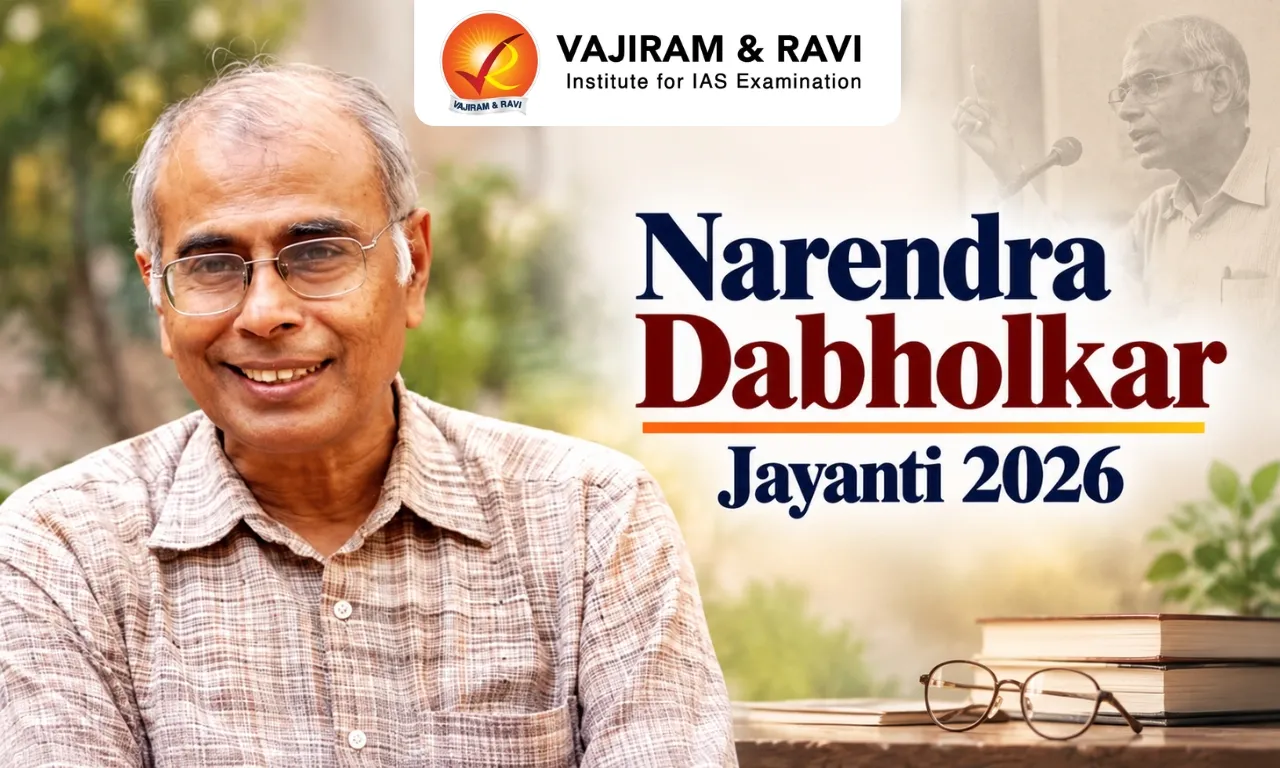
Narendra Dabholkar Jayanti 2026, Biography, Contributions

Narendra Dabholkar Jayanti 2026

Dr. Narendra Dabholkar Birth Anniversary 2026 is observed on November 1, 2026, marking the birth anniversary of Dr. Narendra Dabholkar, who was born on November 1, 1945, in Satara, Maharashtra.

Dr. Narendra Dabholkar was an Indian social activist, rationalist, medical doctor and author. He is widely remembered for his efforts to eliminate superstition, blind faith and harmful religious practices from society.

He founded the Maharashtra Andhashraddha Nirmoolan Samiti (MANS) in 1989 to promote scientific thinking and create awareness against superstition. His work also contributed to the public debate surrounding the Maharashtra Anti-Superstition and Black Magic Act.

Who Was Dr. Narendra Dabholkar?

Dr. Narendra Dabholkar was a prominent Indian social reformer who worked to promote rational thinking and scientific awareness in society. He believed that people should question harmful practices and make decisions based on reason, evidence and scientific knowledge rather than fear or blind faith.

Although he was a qualified medical doctor, he dedicated much of his life to social activism. He worked against practices involving black magic, fraudulent godmen, superstition and the exploitation of vulnerable people. His efforts focused on creating a society where individuals could think independently and understand the difference between faith and superstition.

Early Life and Education

Dr. Narendra Dabholkar was born on November 1, 1945, in Satara, Maharashtra. He pursued medical education and completed his MBBS from Government Medical College, Miraj. He initially worked as a medical professional before becoming actively involved in social reform activities.

During his early years, he developed an interest in social issues and the role of scientific thinking in improving society. His experiences encouraged him to work towards eliminating superstitious beliefs and practices that could harm individuals and communities.

Maharashtra Andhashraddha Nirmoolan Samiti (MANS)

One of the most important contributions of Dr. Narendra Dabholkar was the establishment of the Maharashtra Andhashraddha Nirmoolan Samiti (MANS) in 1989. MANS is a social organisation that works to eliminate superstition and promote scientific awareness among people. The major objectives of the organisation include:

  • Eradication of Superstition: Creating awareness against irrational beliefs and harmful traditional practices.
  • Scientific Temper: Encouraging people to develop a scientific outlook and question unsupported claims.
  • Awareness Campaigns: Organising public meetings, demonstrations and educational programmes.
  • Prevention of Exploitation: Raising awareness about individuals who exploit people through black magic and fraudulent claims.
  • Social Reform: Promoting equality, human dignity and rational thinking in society.

Role in the Anti-Superstition Movement in Maharashtra

Dr. Narendra Dabholkar played a significant role in the anti-superstition movement in Maharashtra. He believed that superstition could lead to financial exploitation, discrimination, fear and physical harm, particularly among vulnerable sections of society. His movement focused on exposing fraudulent practices and encouraging people to question claims that lacked scientific evidence.

Some major areas of his work included:

  • Opposition to black magic and harmful rituals.
  • Awareness against fraudulent claims made by self-proclaimed godmen.
  • Campaigns against practices that exploited people in the name of supernatural powers.
  • Promotion of scientific temper and rational thinking.
  • Encouragement of education and social awareness to reduce blind faith.

Scientific Temper and Dr. Narendra Dabholkar

Scientific temper refers to developing an attitude of questioning, reasoning, observing and examining information using scientific methods. Dr. Dabholkar believed that scientific thinking was essential for building an informed and progressive society. He encouraged people to:

  • Question claims that lack scientific evidence.
  • Avoid blind acceptance of superstitious practices.
  • Make decisions based on facts and reasoning.
  • Promote education and awareness.
  • Respect human dignity and individual rights.

The promotion of scientific temper is also mentioned in the Indian Constitution under Article 51A(h). Article 51A(h) makes it a fundamental duty of every citizen to develop scientific temper, humanism, and the spirit of inquiry and reform.

Assassination of Dr. Narendra Dabholkar

Dr. Narendra Dabholkar was assassinated on August 20, 2013, in Pune, Maharashtra, while he was on his morning walk. His assassination shocked the country and brought national attention to the work of rationalists and social reformers.

His death also strengthened public discussions on freedom of expression, scientific thinking and the need to protect individuals working for social reform. August 20 is observed as National Scientific Temper Day in his memory, recognising his contribution to promoting rational thinking and scientific awareness.

Major Contributions of Dr. Narendra Dabholkar

The major contributions of Dr. Narendra Dabholkar can be summarised as follows:

  • Social Reform: Worked to eliminate superstition and harmful practices from society.
  • MANS Foundation: Established the Maharashtra Andhashraddha Nirmoolan Samiti in 1989.
  • Scientific Awareness: Promoted scientific temper and rational thinking.
  • Anti-Superstition Campaign: Raised awareness against black magic and fraudulent religious practices.
  • Legislative Advocacy: Campaigned for a law to prevent exploitation in the name of superstition.
  • Human Dignity: Worked to protect vulnerable individuals from harmful rituals and exploitation.
  • Social Awareness: Encouraged education, critical thinking and evidence-based decision-making.

Significance of Dr. Narendra Dabholkar Birth Anniversary

Dr. Narendra Dabholkar Birth Anniversary, observed on November 1 every year, provides an opportunity to remember his contribution to social reform and the promotion of scientific thinking. His work highlights the importance of:

  • Scientific Temper: Developing a scientific outlook and questioning irrational beliefs.
  • Social Equality: Opposing practices that promote exploitation and discrimination.
  • Education and Awareness: Using education to create an informed society.
  • Human Rights: Protecting individuals from harmful and exploitative practices.
  • Rational Thinking: Encouraging people to make decisions based on evidence and reasoning.

Narendra Dabholkar Jayanti 2026 FAQs

Q1: When is Dr. Narendra Dabholkar Birth Anniversary observed?

Ans: Dr. Narendra Dabholkar Birth Anniversary is observed every year on November 1.

Q2: When was Dr. Narendra Dabholkar born?

Ans: He was born on November 1, 1945, in Satara, Maharashtra.

Q3: Who was Dr. Narendra Dabholkar?

Ans: He was an Indian medical doctor, social activist, rationalist and author known for his efforts to eliminate superstition and promote scientific thinking.

Q4: What is MANS?

Ans: Maharashtra Andhashraddha Nirmoolan Samiti (MANS) is an organisation founded by Dr. Narendra Dabholkar in 1989 to fight superstition and promote rational thinking.

Q5: When was the Maharashtra Anti-Superstition Act enacted?

Ans: The Maharashtra Anti-Superstition and Black Magic Act was passed in 2013 to prevent exploitation through specified inhuman and harmful practices.

Foundation Day of Indian States and UTs, History, Significance

Foundation Day of Indian States and UTs

After India gained independence in 1947, the country had 562 princely states. Most of these eventually accepted to become a part of the Indian Union. Over time, many of them were reorganised into new administrative states. A major shift occurred with the States Reorganization Act of 1956, which restructured Indian states based primarily on linguistic basis. Each state and union territory has its formation dates which is essential for every aspirant who is planning to appear in any competitive exam. The article shared below discusses the Foundation Day of Indian States and UTs.

Formation of Indian States and Union Territories

The Formation of Indian States and Union Territories began after independence in 1947. The country comprised over 565 princely states and 17 provinces, which were integrated into the Indian Union under the leadership of Sardar Vallabhbhai Patel and his secretary, V.P. Menon, by 1948. When the Constitution was being drafted in 1949, the First Schedule categorized the Indian territory into four parts:

  • Part A: Former Governor’s Provinces
  • Part B: Former Princely States or their groupings
  • Part C: Territories administered by Chief Commissioners appointed by the President
  • Part D: The Andaman and Nicobar Islands

States Reorganization Act of 1956

State Reorganization Act of 1956 was introduced to determine the boundaries of each princely state to safeguard the diversity of each linguistic identity especially after Andhra was carved out in 1953 for Telugu-speaking people. The States Reorganization Act reorganized the country into 14 states and 6 union territories, replacing the older classification under Parts A, B, C, and D of the Constitution.

States Reorganization Act of 1956

States

Assam, Bihar, Bombay, Jammu and Kashmir, Kerala, Madras (renamed Tamil Nadu in 1969), Madhya Pradesh, Mysore (renamed as Karnataka in 1973), Orissa, Punjab, Rajasthan, Uttar Pradesh, and West Bengal.

Union Territories

Andaman and Nicobar Islands, Delhi, Manipur, Tripura, Himachal Pradesh, Laccadive, Minicoy and Amindivi Islands.

List of Foundation Day of Indian States

The formation of Indian states has been an evolving process over the years. The table below includes the List of Foundation Day of Indian States in chronological order.

List of Foundation Day of Indian States

State Name

Formation Date

Formed By

Previous Status

Significance

Andhra Pradesh

1 November 1953

Linguistic Reorganization

Part of Madras State

First linguistic state

Karnataka

1 November 1956

States Reorganization Act (SRA 1956)

Part of Mysore State

Created to incorporate Kannada-speaking areas.

Kerala

1 November 1956

SRA 1956

Part of Travancore-Cochin

Unified several regions for the Malayali population.

Maharashtra

1 May 1960

Bombay Reorganisation Act

Part of Bombay State

Established for Marathi speakers following the Samyukta Maharashtra movement

Gujarat

1 May 1960

Bombay Reorganisation Act

Part of Bombay State

Formed from Gujarati-speaking areas due to the Mahagujarat movement

Nagaland

1 December 1963

Nagaland Act

Part of Assam

Recognized the rights of the Naga people and their unique culture

Punjab

1 November 1966

Punjab Reorganisation Act

Part of Punjab State

Created to represent Punjabi-speaking populations after the Punjabi Suba movement

Haryana

1 November 1966

Punjab Reorganisation Act

Part of Punjab State

Established to cater to Hindi-speaking residents in the former Punjab region.

Himachal Pradesh

25 January 1971

Himachal Pradesh Act

Union territory till 1971

Recognized the distinct cultural identity of the region establishing a full-fledged state

Manipur

21 January 1972

North Eastern Region (Reorganisation) Act, 1971

Union Territory

Acknowledged the aspirations of the Manipuri people

Meghalaya

21 January 1972

North Eastern Region (Reorganisation) Act, 1971

Union Territory

Cater to Garo and Khasi ethnic groups

Tripura

21 January 1972

North Eastern Region (Reorganisation) Act, 1971

Union Territory

Recognized the rights and identity of the Tripuri people

Sikkim

16 May 1975

Constitution (36th Amendment) Act of 1975

Formerly a Kingdom

Grant statehood to the “associate state” of Sikkim after referendum

Mizoram

20 February 1987

Mizoram Accord

Union Territory

Established to address ethnic identity and local governance issues

Arunachal Pradesh

20 February 1987

Arunachal Pradesh Act 1986

Union Territory

Converted the North-East Frontier Agency into the state due to strategic importance

Goa

30 May 1987

Goa, Daman, and Diu Reorganisation Act

Union Territory

Achieved statehood after liberation from Portuguese rule in 1961

Jharkhand

15 November 2000

Bihar Reorganisation Act

Part of Bihar

Addressed local governance challenges and development issues.

Chhattisgarh

1 November 2000

Madhya Pradesh Reorganisation Act

Part of Madhya Pradesh

Aimed at improving local administration and addressing regional disparities.

Uttarakhand

9 November 2000

Uttar Pradesh Reorganisation Act

Part of Uttar Pradesh

Address unique developmental needs in the Uttaranchal region.

Telangana

2 June 2014

Andhra Pradesh Reorganisation Act

Part of Andhra Pradesh

Established after a long struggle for identity and self-governance.

List of Foundation Day of Indian Union Territory

Union Territories (UTs) in India are administrative divisions governed directly by the Central Government, unlike states which have their own elected governments. These territories were established based on factors such as administrative efficiency, strategic importance, and cultural uniqueness. The table below is the List of Foundation Day of Indian Union Territory:

List of Foundation Day of Indian Union Territory

Union Territories

Formation Date

Formed By

Status Before Foundation

Andaman and Nicobar Islands

1 November 1956

States Reorganisation Act of 1956

Previously British-controlled territory later Part D state

Delhi

1 November 1956

SRA of 1956

Part C state in the first schedule of the Indian Constitution

Lakshadweep

1 November 1956

SRA of 1956

Part of Madras state

Chandigarh

1 November 1966

Punjab Reorganisation Act

Part of the East Punjab

Puducherry

1 July 1963

Integration of French Territories

Formerly French colonies

Jammu & Kashmir

31 October 2019

Jammu & Kashmir Reorganisation Act

Formerly a special state with autonomy

Ladakh

31 October 2019

Jammu & Kashmir Reorganisation Act

Previously part of Jammu & Kashmir

Dadra and Nagar Haveli and Daman and Diu

26 January 2020

Dadra and Nagar Haveli and Daman and Diu (Merger of Union Territories) Act, 2019

Separate UTs of Daman and Diu (30 May 1987) and Dadra and Nagar Haveli (11 August 1961)

Foundation Day of Indian States and UTs FAQs

Q1: What is the Foundation Day of Delhi?

Ans: Delhi celebrates its Foundation Day on February 1, commemorating its formation as a Union Territory in 1956.

Q2: When is Chandigarh Foundation Day celebrated?

Ans: Chandigarh Foundation Day is observed on November 1, marking its creation as a Union Territory in 1966.

Q3: When was Andaman and Nicobar Islands formed?

Ans: Andaman and Nicobar Islands were established as a Union Territory on November 1, 1956.

Q4: When was Lakshadweep declared a Union Territory?

Ans: Lakshadweep became a Union Territory on November 1, 1956, after being separated from Madras Presidency.

Q5: What is the Foundation Day of Puducherry?

Ans: Puducherry celebrates its Foundation Day on August 16, marking the de facto transfer of French territories to India in 1962.

IMF Warns Super El Niño Risks to Indian Economy, Highlights, Impacts

IMF warns Super El Niño risks to Indian Economy

IMF Warns Super El Niño Risks to Indian Economy by highlighting the possible impact of extreme weather conditions on agricultural production, food prices and rural demand. A strong El Niño can disturb India's monsoon patterns, affecting livelihoods and economic activity. Understanding this phenomenon is important to examine the relationship between climate variability, food security, inflation and India's overall economic growth.

IMF Warns Super El Niño Risks to Indian Economy

The International Monetary Fund (IMF) has identified Super El Niño as a potential downside risk to India's economic outlook. According to IMF Communications Director Julie Kozack, reduced agricultural output and rising food inflation could weaken household purchasing power. However, these risks have not materialised yet. The IMF plans to review India's growth projections in its January World Economic Outlook (WEO) update.

IMF Super El Niño Warning Highlights

The IMF's warning for Super El Niño Risks to Indian Economy highlights possible economic vulnerabilities arising from extreme weather conditions, particularly their effects on rural livelihoods, Agriculture and domestic consumption.

  • Agricultural Production: Unfavourable weather conditions associated with El Niño could reduce Crop yields, affecting agricultural output and economic activity, particularly in rural regions.
  • Food Inflation: Lower agricultural production may create supply shortages, increasing food prices and putting additional pressure on household expenditure.
  • Household Purchasing Power: Higher food costs can reduce the real purchasing power of households, particularly those with limited incomes and a larger share of expenditure on food.
  • Economic Growth Projections: The IMF has projected India's growth at 7% for FY27 and FY28, revising its earlier estimates of 6.4% and 6.7%, respectively.
  • Growth Assessment: Strong domestic demand and services sector performance currently support India's economic momentum despite emerging weather related uncertainties.
  • January Review: The IMF will reconsider India's growth estimates in its January WEO update depending on whether the potential effects of Super El Niño become evident.

What is Super El Niño?

Super El Niño refers to an exceptionally strong warming of the tropical Pacific Ocean that can significantly influence atmospheric circulation, rainfall distribution and global weather conditions.

  • El Niño: It is the warm phase of the El Niño Southern Oscillation (ENSO), characterised by abnormal warming of surface waters in the central and eastern equatorial Pacific Ocean. It generally occurs every 2-7 years.
  • Temperature Threshold: El Niño is identified when sea surface temperatures in the Niño 3.4 region remain at least 0.5°C above normal for five consecutive overlapping three month periods.
  • Super El Niño: This informal term describes an exceptionally intense event when Niño 3.4 sea surface temperature anomalies reach or exceed +2°C above average.
  • Formation Mechanism: Weakened or reversed easterly trade winds push warm ocean water towards South America's western coast, reducing the upwelling of cold water and changing atmospheric circulation.
  • La Niña: It represents the cold phase of ENSO, involving unusually cool sea surface temperatures in the central and eastern equatorial Pacific. Its climatic effects are generally opposite to El Niño.
  • Historical Events: The 1876-78 event contributed to the Great Madras Famine, while the 2015-16 episode brought Southwest Monsoon drought conditions alongside severe Chennai flooding in December 2015.

Impacts of Super El Niño on India

Super El Niño can influence India's regional climate differently, affecting monsoon rainfall, agricultural productivity, water availability and disaster vulnerability.

  • Southwest Monsoon: El Niño generally weakens the Southwest Monsoon by shifting the Walker Circulation towards the Pacific, potentially reducing rainfall across several parts of India.
  • Agriculture and Crop Production: Reduced monsoon rainfall can affect rain fed farming, soil moisture and irrigation availability, lowering agricultural productivity and increasing the vulnerability of farmers.
  • Food Security: Declining Crop production may disturb food supply, increase market prices and create additional challenges for food availability and affordability.
  • Impact on Tamil Nadu: Unlike much of India, Tamil Nadu receives around 48-50% of its annual rainfall from the Northeast Monsoon. Strong El Niño conditions can sometimes intensify rainfall during October-December.
  • Flooding and Cyclones: Warmer Bay of Bengal waters can provide additional moisture and energy to developing weather systems, increasing the possibility of intense rainfall, cyclones and coastal flooding as seen in recent times.
  • Indian Ocean Dipole (IOD): A Positive IOD can support Indian monsoon rainfall and partly offset El Niño related weakness, whereas a Negative IOD can further aggravate rainfall deficiency.
  • Madden-Julian Oscillation (MJO): This eastward moving system of tropical clouds and rainfall can temporarily enhance precipitation over the Indian Ocean, influencing monsoon activity even during El Niño conditions.
  • Regional Climate Variations: El Niño Modoki, characterised by central Pacific warming, can produce different regional weather responses, influencing cyclone patterns over the Arabian Sea and Bay of Bengal.

IMF Warns Super El Niño Risks to Indian Economy FAQs

Q1: What is Super El Niño and how does it affect India?

Ans: Super El Niño is an exceptionally strong warming of the central and eastern Pacific Ocean that can weaken India's Southwest Monsoon and affect agriculture, food prices and economic activity.

Q2: Why has the IMF warned about Super El Niño risks to the Indian economy?

Ans: The IMF has warned that reduced Crop yields and higher food inflation could weaken household purchasing power and negatively affect rural economic activity.

Q3: What is the difference between El Niño and La Niña?

Ans: El Niño involves unusually warm sea surface temperatures in the central and eastern equatorial Pacific, whereas La Niña involves unusually cool temperatures in the same region.

Q4: How does Super El Niño affect Indian agriculture?

Ans: It can weaken monsoon rainfall, reduce soil moisture and irrigation availability, affecting Crop production, agricultural incomes and food supply.

Q5: Why can El Niño cause heavy rainfall in Tamil Nadu?

Ans: Tamil Nadu depends heavily on the Northeast Monsoon. During certain El Niño events, warmer Bay of Bengal waters and favourable atmospheric conditions can intensify rainfall, increasing flood risks.

Bihar Museum, History, Architecture, Collections, Significance

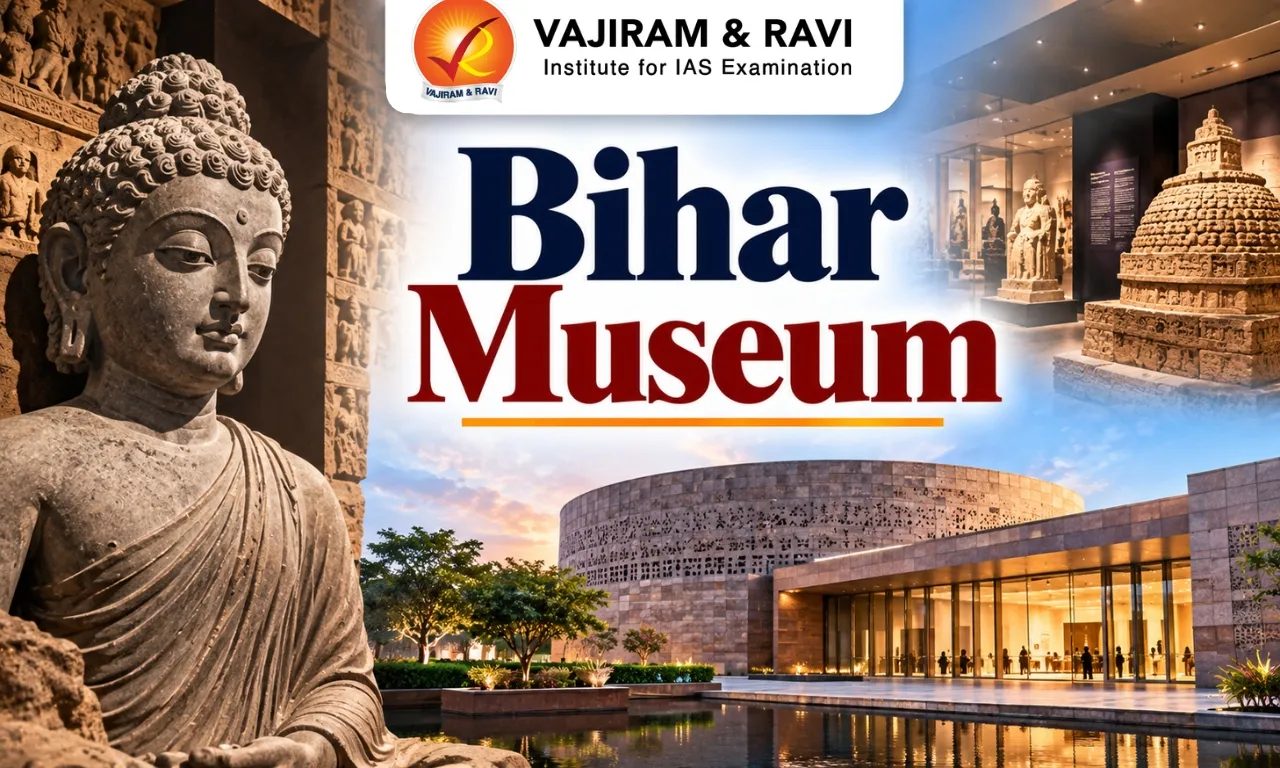
Bihar Museum

Bihar Museum is an important cultural and historical institution located in Patna, Bihar. It preserves and displays the rich historical heritage of the state through ancient sculptures, archaeological remains, coins, manuscripts, paintings and traditional artworks. The museum highlights Bihar's contribution to ancient Indian civilisation, art, architecture and culture.

Established as a modern cultural institution, Bihar Museum provides visitors with an opportunity to explore different phases of the region's history. It has also gained international recognition for its position in the World's 100 Best Museums 2026 list.

Why in News?

The Bihar Museum in Patna secured the ninth position in the World's 100 Best Museums 2026 list, published by the German travel publication Worth a Journey.

The major highlights of this achievement are:

  • Ninth position globally: Bihar Museum secured the ninth rank among the world's 100 best museums in 2026.
  • Highest-ranked museum in Asia: It emerged as the highest-ranked museum in Asia on the list.
  • Only Indian museum: It was the only museum from India to feature in the global top 100.
  • International recognition: The museum received recognition alongside internationally renowned cultural institutions.

History of Bihar Museum

The Bihar Museum was established to preserve and promote the historical, archaeological and cultural heritage of Bihar. The idea behind its development was to create a modern institution with sufficient space to display the state's extensive collection of historical artefacts.

The Patna Museum, established in 1917, had accumulated a large collection of historical objects. However, limited exhibition space restricted the display of many artefacts.

To address this challenge, the Bihar government planned a new museum with modern infrastructure and international architectural standards.

The important developments associated with Bihar Museum include:

  • 2013: Construction of Bihar Museum began in Patna.
  • 2015: The museum was partially opened to visitors.
  • 2017: It became fully operational.
  • Subsequent years: The institution expanded its exhibitions, educational activities, cultural programmes and conservation initiatives.

The museum houses collections representing different historical periods, from prehistoric times to 1764, along with traditional and contemporary artworks.

Architecture of Bihar Museum

The architecture of Bihar Museum combines modern architectural concepts with elements reflecting the cultural identity of Bihar. It was designed through an international collaboration involving Japanese architect Fumihiko Maki and Mumbai-based architectural firm Studio Opolis.

The major architectural features include:

  • Contemporary design: The museum follows modern architectural principles while maintaining a connection with Bihar's historical identity.
  • Courtyards and open spaces: Its buildings are connected through open courtyards, corridors and landscaped areas.
  • Weathering steel: The exterior features weathering steel, which gives the structure its distinctive rust-coloured appearance.
  • Use of natural materials: Materials such as stone, terracotta and glass contribute to its architectural character.
  • Modern galleries: The museum has organised exhibition spaces that allow visitors to explore different historical periods and artistic traditions.

Major Collections and Attractions of Bihar Museum

The Bihar Museum collections represent the historical, archaeological and artistic development of the region. They include sculptures, coins, terracotta objects, paintings, manuscripts and other artefacts.

1. Didarganj Yakshi

The Didarganj Yakshi is among the most famous attractions of Bihar Museum. It is a life-sized sculpture made from highly polished Chunar sandstone.

Important facts about the sculpture include:

  • It was discovered at Didarganj in Patna in 1917.
  • It represents a Yakshi, a female figure associated with ancient Indian religious and artistic traditions.
  • The figure holds a fly-whisk, known as a chauri, in its right hand.
  • It is approximately 5 feet 2 inches tall.
  • The sculpture is particularly famous for its polished surface and detailed craftsmanship.

2. Mauryan and Gupta Period Artefacts

The museum displays several artefacts representing important historical periods, including the Mauryan, Sunga, Kushana, Gupta and Pala periods.

These collections provide information about the development of:

  • Ancient Indian sculpture and architecture.
  • Religious traditions and cultural practices.
  • Stone-carving and artistic techniques.
  • Political and social developments in different historical periods.

3. Kurkihar Bronzes

The Kurkihar bronzes represent the rich metalworking and religious artistic traditions of Bihar.

These bronze sculptures are particularly significant for understanding the development of Buddhist art and bronze craftsmanship in eastern India. They provide insights into the artistic excellence and religious traditions of the region.

4. Coins and Terracotta Artefacts

Bihar Museum also preserves ancient coins, terracotta objects and archaeological materials that provide information about the economic and social conditions of different historical periods.

These artefacts help researchers understand:

  • Ancient trade and commercial activities.
  • Economic conditions and monetary systems.
  • Religious beliefs and cultural practices.
  • Everyday life and traditional craftsmanship.

5. Patna Kalam Paintings

Patna Kalam is a traditional painting style that developed in and around Patna.

It is known for depicting everyday life, occupations, local markets, social customs and cultural activities. The artistic tradition provides valuable insights into the social history of the region.

The museum's collections help preserve and promote Bihar's traditional painting and artistic heritage.

6. Children's Gallery

The Children's Gallery at Bihar Museum provides an interactive learning environment for young visitors.

It includes educational activities, storytelling, sculpture puzzles, fossil replicas and other engaging displays.

The gallery aims to develop children's interest in history, science, art and cultural heritage through interactive experiences.

Significance of Bihar Museum

The Bihar Museum plays an important role in preserving the historical and cultural identity of the state. Its contribution extends beyond displaying historical objects to promoting education, research, tourism and heritage conservation.

  • Historical preservation: It preserves valuable archaeological objects, sculptures, manuscripts and artworks associated with Bihar's history.
  • Understanding ancient civilisation: Its collections provide insights into important historical periods, including the Mauryan, Gupta and Pala periods.
  • Promotion of regional art: It showcases traditional artistic practices, including Patna Kalam, folk art and contemporary artworks.
  • Educational importance: Its galleries and interactive facilities support students, researchers and history enthusiasts.
  • Cultural tourism: It attracts visitors interested in Bihar's historical and artistic heritage.
  • International collaboration: Exhibitions and cultural programmes connect Bihar's heritage with global audiences.
  • Heritage conservation: Its conservation initiatives support the scientific preservation and restoration of valuable artefacts.

Bihar Museum's Global Recognition Significance

The ninth position in the World's 100 Best Museums 2026 list is an important milestone for Bihar's cultural heritage.

This recognition is significant because:

  1. It brings international recognition to Bihar's historical and artistic heritage.
  2. It highlights the importance of modern museum infrastructure in preserving cultural identity.
  3. It promotes cultural tourism and international collaboration.
  4. It encourages investment in heritage conservation and museum development.
  5. It strengthens India's representation in the global cultural landscape.

Bihar Museum FAQs

Q1: Where is Bihar Museum located?

Ans: Bihar Museum is located on Nehru Path (Bailey Road), Patna, Bihar.

Q2: Who designed Bihar Museum?

Ans: Bihar Museum was designed by Japanese architect Fumihiko Maki in collaboration with Mumbai-based architectural firm Studio Opolis.

Q3: When was Bihar Museum established?

Ans: Construction began in 2013. The museum was partially opened in 2015 and fully opened in 2017.

Q4: What is the most famous attraction of Bihar Museum?

Ans: The Didarganj Yakshi, a highly polished sandstone sculpture discovered in Patna in 1917, is one of the museum's most famous attractions.

Q5: Why is Bihar Museum in the news in 2026?

Ans: Bihar Museum is in the news because it secured the ninth position in the World's 100 Best Museums 2026 list, published by Worth a Journey. It was also the highest-ranked museum in Asia on the list.

Poland Coup 2026, Constitutional Tribunal, Judicial Independence

Poland Coup 2026

Poland is facing a major constitutional crisis following the reported suspension of the President of its Constitutional Tribunal, Bogdan Święczkowski, on 30 October 2026. The development has intensified the confrontation between Prime Minister Donald Tusk's government and President Karol Nawrocki, backed by the opposition Law and Justice (PiS) party.

The opposition has described the move as a coup, while the government maintains that it is aimed at restoring judicial independence. However, there has been no confirmed military coup or overthrow of the elected government. The crisis centres on judicial appointments, the leadership of the Constitutional Tribunal and the limits of constitutional powers.

Poland’s Political System: President, Prime Minister and Constitutional Tribunal

Poland is a parliamentary republic with a directly elected President and a Prime Minister who heads the government.

  • President: Head of State, elected directly by citizens. Has constitutional responsibilities, including a role in the judicial appointment process.
  • Prime Minister: Head of Government, responsible for executive administration and dependent on parliamentary support.
  • Parliament: Bicameral legislature comprising the Sejm (lower house) and Senate (upper house). The Sejm elects judges to the Constitutional Tribunal.
  • Poland Constitutional Tribunal: Reviews the constitutionality of laws and other legal provisions.

The current crisis concerns the composition and leadership of this Tribunal.

Poland Constitutional Crisis 2026: What Happened on 30 October?

On 30 October 2026, Constitutional Tribunal judge Anna Korwin-Piotrowska announced the suspension of Tribunal President Bogdan Święczkowski and Vice-President Bartłomiej Sochański.

She accused the Tribunal's leadership of obstructing judges elected by the current parliamentary majority from taking their positions.

However, the existing Tribunal leadership rejected the suspension and questioned Korwin-Piotrowska's authority. It maintained that Święczkowski remained the Tribunal's President.

The confrontation triggered protests in Warsaw and police deployment near the Tribunal. President Karol Nawrocki also cut short his visit to Senegal and returned to Poland amid the escalating dispute.

Also Read:- Poland

Background to the Poland Constitutional Crisis

The present crisis originates in the judicial reforms introduced by the Law and Justice (PiS) government and the subsequent efforts of Donald Tusk's government to reverse them.

2015-2023: Judicial reforms under PiS

The conflict began in 2015 when the incoming PiS government challenged appointments of judges made by the outgoing Parliament. It subsequently introduced changes to the judicial system that raised concerns about political influence over courts.

The European Union questioned whether these reforms undermined judicial independence and the separation of powers.

2023: Donald Tusk comes to power

A coalition led by Donald Tusk defeated PiS and formed the government. It promised to restore judicial independence and address the rule-of-law concerns raised by the European Union.

2025-2026: Presidential opposition and judicial appointments

Karol Nawrocki became President in 2025 with PiS support. In 2026, he refused to swear in three of the six judges elected by Parliament to the Constitutional Tribunal. The Tribunal's existing leadership also declined to allow judges elected by the current parliamentary majority to take their positions.

These disagreements deepened the conflict over the Tribunal's composition and authority. 

Why Has the Poland Constitutional Crisis Been Called a Coup?

The opposition has described the government's actions as a coup because it believes that the government is attempting to take control of a constitutional institution by bypassing established procedures.

The government argues that the existing Tribunal leadership has obstructed legitimate judicial appointments and that corrective action is necessary to restore the rule of law.

The controversy raises an important constitutional question: Can a government restore judicial independence through actions whose own constitutionality is disputed?

Thus, the crisis is fundamentally about the conflict between institutional reform and adherence to constitutional procedures.

European Union’s Concerns over Judicial Independence in Poland

The European Union (EU) has raised concerns over Poland's judicial reforms, arguing that they undermine judicial independence and the rule of law.

Article 7 of the Treaty on European Union (TEU)

  • In 2017, the European Commission initiated proceedings under Article 7 of the TEU against Poland over concerns about the independence of its judiciary.
  • Article 7 provides a mechanism to address a serious risk of a member state's violation of the EU's fundamental values, including democracy, human rights and the rule of law.
  • The European Commission closed the proceedings against Poland in May 2024, following the new government's commitments to restore judicial independence.

CJEU Ruling on Poland’s Constitutional Tribunal (2025)

On 18 December 2025, the Court of Justice of the European Union (CJEU) ruled in Commission v Poland Case that Poland's Constitutional Tribunal did not meet the requirements of an independent and impartial court.

The ruling identified serious irregularities in the appointment of three judges and the Tribunal's President. It also highlighted violations concerning the primacy of EU law and the right to effective judicial protection.

Constitutional Issues Raised by the Poland Crisis

The crisis highlights three important principles of constitutional governance:

  • Judicial independence: Courts must function without improper political interference. Disputed judicial appointments can weaken public confidence in the impartiality of the judiciary.
  • Separation of powers: The legislature, executive and judiciary must operate within their constitutionally defined powers. Institutional conflict can undermine this balance.
  • Rule of law: Government actions, including judicial reforms, must follow established constitutional procedures. The objective of restoring judicial independence cannot justify arbitrary exercise of state power.

Implications for Poland and European Democracy

The continuing confrontation could lead to institutional deadlock, uncertainty over the validity of judicial decisions and declining public trust in the judiciary. It may also deepen political polarisation and renew concerns within the European Union about Poland's commitment to the rule of law.

More broadly, the crisis demonstrates that electoral legitimacy alone cannot guarantee democratic governance. Independent institutions, constitutional accountability and respect for legal procedures are equally important.

Poland Coup 2026 FAQs

Q1: What is the Poland Coup 2026?

Ans: The Poland Coup 2026 refers to the constitutional crisis triggered by the reported suspension of Constitutional Tribunal President Bogdan Święczkowski on 30 October 2026.

Q2: Why is Poland facing a constitutional crisis in 2026?

Ans: The crisis centres on disputes over judicial appointments, the leadership of the Constitutional Tribunal and the independence of the judiciary.

Q3: Who is the President and Prime Minister of Poland in 2026?

Ans: Karol Nawrocki is the President, while Donald Tusk is the Prime Minister of Poland.

Q4: What is the Constitutional Tribunal of Poland?

Ans: It is Poland's constitutional review body, responsible for examining whether laws comply with the Constitution.

Q5: What is Article 7 of the EU Treaty?

Ans: Article 7 of the Treaty on European Union provides a mechanism to address serious violations of the EU's fundamental values, including democracy and the rule of law.

Dicharax tilariensis: Scientists Discover Tiny New Snail Species in Western Ghats

Dicharax tilariensis

Dicharax tilariensis 

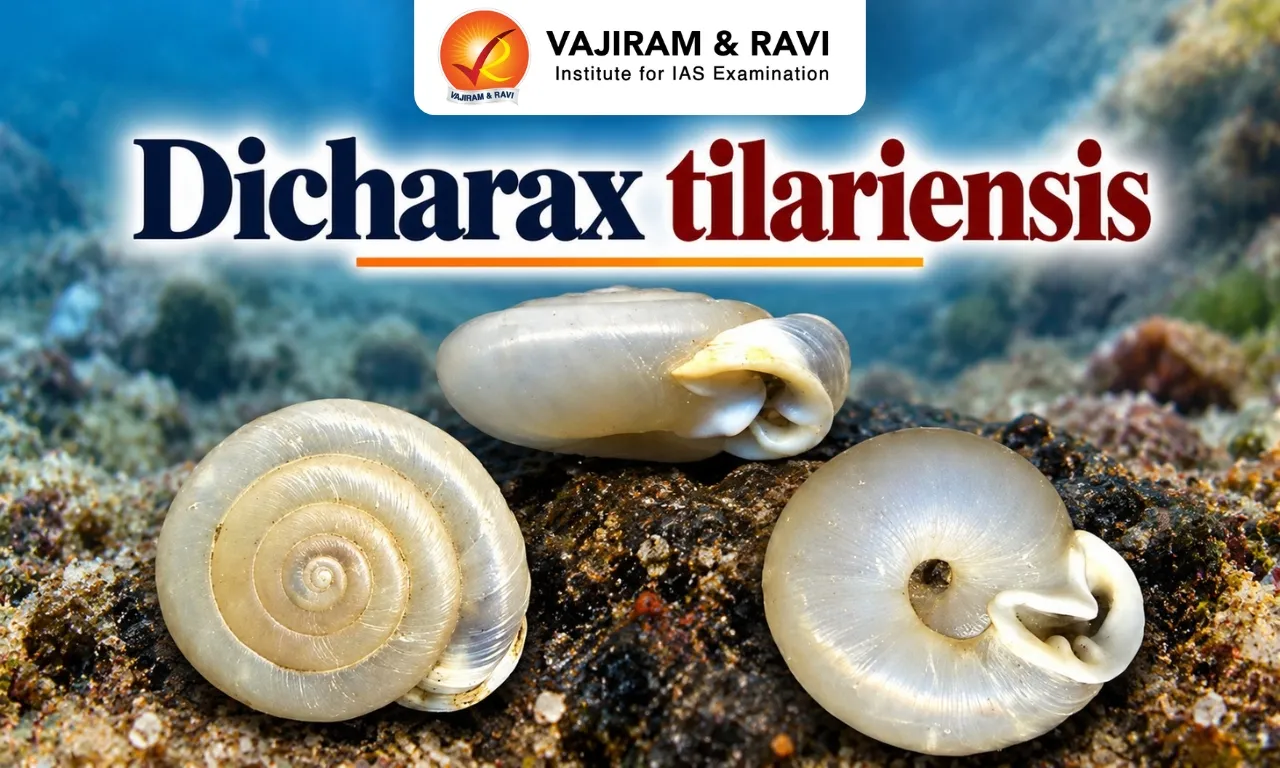
Researchers recently identified a new species of microscopic land snail named Dicharax tilariensis in Kolhapur’s Tilari region.

About Dicharax tilariensis

  • It is a new species of microscopic land snail.
  • It was discovered in the Tilari region in the Kolhapur district of Maharashtra.  
  • It is currently known only from its discovery site near Swapnavel Point at an elevation of 700-800 metres above sea level, making it endemic to the area.
  • The species inhabits the region’s semi-evergreen forests and is known to occupy microhabitats among forest litter, decaying organic matter, and moist soil. 
  • It is the second endemic species of its genus described from the northern Western Ghats.  
  • The snail features a whitish shell with a pinkish or brownish tinge, measuring 4.21-4.87 mm in width and 3.01-3.52 mm in height.   
  • It has an elevated spire, distinctive rib patterns, and a sharp swelling on the shell.

News: TOI

Dicharax tilariensis FAQs

Q1: What is Dicharax tilariensis?

Ans: It is a newly discovered species of microscopic land snail.

Q2: Where was Dicharax tilariensis discovered?

Ans: In the Tilari region of Kolhapur district, Maharashtra.

Q3: Which type of forest serves as the habitat of Dicharax tilariensis?

Ans: The species inhabits the region’s semi-evergreen forests.

Q4: What is the shell colour of Dicharax tilariensis? -

Ans: Whitish, with a pinkish or brownish tinge.

Punah Bharan App Launched to Identify Groundwater Recharge Zones Within 3 Km

Punah Bharan Mobile Application

Punah Bharan Mobile Application Latest News

Recently, the Union Minister of Jal Shakti has launched the Punah Bharan Mobile Application.

About Punah Bharan Mobile Application

  • It is developed for advancing scientific groundwater recharge planning through geospatial technology.
  • It is developed by the Bhaskaracharya National Institute for Space Applications and Geo-informatics (BISAG-N) in collaboration with the National Water Mission (NWM).
  • Features
    • It enables users to identify potential artificial recharge zones within a radial distance of up to 3 km and explore suitable recharge structures based on local conditions.
    • It provides access to village-level Artificial Recharge Structure (ARS) zonation maps, GIS tools and thematic layers, supporting informed planning for sustainable groundwater management.
    • The platform utilises geospatial datasets, including rainfall, groundwater levels, groundwater yield, slope and drainage, to help identify potential recharge areas and plan appropriate interventions.

What is Bhaskaracharya National Institute for Space Applications and Geo-informatics?

  • It is an autonomous scientific society registered under the Societies Registration Act, 1860, under the Ministry of Electronics & Information Technology (MeitY), Government of India.
  • Objective: To undertake technology development & management, research & development, facilitate national and international cooperation, capacity building, and support technology transfer & entrepreneurship development in the area of geospatial technology.
  • BISAG-N has three main domain areas: satellite communication, geo-informatics and geo-spatial technology.
  • BISAG-N provides specialized services and solutions in implementing map-based Geographic Information Systems (GIS).
  • Location: Gandhinagar, Gujarat

Source: PIB

Punah Bharan Mobile Application FAQs

Q1: Which organisation developed the Punah Bharan Mobile Application?

Ans: It is developed by the Bhaskaracharya National Institute for Space Applications and Geo-informatics (BISAG-N) in collaboration with the National Water Mission (NWM).

Q2: What is the function of Punah Bharan Mobile Application?

Ans: It enables users to identify potential artificial recharge zones within a radial distance of up to 3 km and explore suitable recharge structures based on local conditions.

Manisha Bhanwala Wins World Wrestling Championships Gold

Manisha Bhanwala Wins World Wrestling Championships Gold

Indian wrestler Manisha Bhanwala won the gold medal in the women's 59 kg freestyle category at the 2026 Senior World Wrestling Championships held in Astana, Kazakhstan. She defeated Abigail Nette of the United States by 8–6 in the final on October 30, 2026.

With this victory, she became the first Indian woman to win a gold medal at the Senior World Wrestling Championships.

Manisha Bhanwala Wins Gold at World Wrestling Championships 2026 Key Highlights

The important highlights of Manisha Bhanwala's historic achievement are given below:

  • Gold Medal: Manisha Bhanwala won gold in the women's 59 kg freestyle category.
  • Final Opponent: She defeated Abigail Nette of the United States.
  • Final Score: Manisha won the final bout by 8–6.
  • Competition Venue: Astana, Kazakhstan.
  • Date of Victory: October 30, 2026.
  • Historic Achievement: She became the first Indian woman to win a gold medal at the Senior World Wrestling Championships.
  • National Record: She became only the second Indian wrestler to win a senior World Championships gold medal after Sushil Kumar.
  • Comeback Victory: She recovered from a 0–6 deficit to win the final 8–6.

How Did Manisha Bhanwala Win the Gold Medal?

Manisha Bhanwala displayed remarkable determination in the final against American wrestler Abigail Nette. The match was highly competitive, and Manisha initially struggled against her opponent's attacking moves.

Nette established an early 6–0 lead, putting Manisha under considerable pressure. However, the Indian wrestler did not give up and gradually turned the match in her favour.

The major moments of the final were:

  • Early Setback: Abigail Nette took an early 6–0 lead through scoring moves and a caution against Manisha.
  • First Point: Manisha scored a step-out point before the end of the first period, reducing the difference to 6–1.
  • Strong Comeback: She secured a takedown and earned additional points after the American team's challenge was unsuccessful.
  • Technical Attack: Manisha used a gut-wrench move to turn her opponent and bring the score to 6–6.
  • Winning Move: She secured another takedown to take an 8–6 lead.
  • Final Result: Manisha successfully defended her lead and won the gold medal.

Also Read:- Mirabai Chanu Wins India’s First Gold Medal at Commonwealth Games 2026

Manisha Bhanwala's Journey to the World Championships Final

Manisha delivered an impressive performance throughout the competition to reach the gold medal bout.

Her journey to the final included the following victories:

  1. Qualification Round: She defeated Canada's Laurence Beauregard by fall.
  2. Quarterfinal: She defeated Mongolia's Bolortuya Khurelkhuu by 6–0.
  3. Semifinal: She faced Kazakhstan's Altyn Shagayeva and secured a victory by fall after taking a 10–0 lead.
  4. Final: She defeated Abigail Nette of the United States by 8–6 to claim the gold medal.

Significance of Manisha Bhanwala's World Wrestling Championships Gold

Manisha Bhanwala's victory is an important milestone for Indian sports, particularly women's wrestling. Her achievement has strengthened India's position in international wrestling and demonstrated the growing competitiveness of Indian women wrestlers.

The major significance of her achievement includes:

  • First Indian Woman World Champion: She became the first Indian woman to win a gold medal at the Senior World Wrestling Championships.
  • End of a 16-Year Wait: Her victory ended India's wait for a senior World Wrestling Championships gold medal since Sushil Kumar's triumph in 2010.
  • Second Indian World Champion: She joined Sushil Kumar as the only Indian wrestlers to win a senior World Championships gold medal.
  • Progress in Women's Wrestling: Her victory reflects the increasing performance of Indian women wrestlers at international competitions.
  • Inspiration for Young Wrestlers: Her achievement can encourage young athletes, especially women, to pursue wrestling at national and international levels.

Also Read:- Sharmila Dhankar Wins India’s First Para Athletics Gold Medal in Commonwealth Games 2026

Who Was the First Indian Wrestler to Win a World Wrestling Championships Gold Medal?

Sushil Kumar was the first Indian wrestler to win a gold medal at the Senior World Wrestling Championships.

He achieved this milestone at the 2010 World Wrestling Championships held in Moscow, Russia. He won the gold medal in the men's 66 kg freestyle category by defeating Russia's Alan Gogaev in the final.

Manisha Bhanwala became the second Indian wrestler to win a senior World Championships gold medal and the first Indian woman to achieve this distinction.

India's Performance at the World Wrestling Championships 2026

India recorded an impressive performance at the 2026 Senior World Wrestling Championships, finishing with four medals in women's freestyle wrestling. The Indian women's wrestling team won one gold, two silver and one bronze medal.

Wrestler

Weight Category

Medal

Manisha Bhanwala

59 kg

Gold

Neelam Sirohi

50 kg

Silver

Kajal Dhochak

76 kg

Silver

Tanu Sharma

72 kg

Bronze

About the World Wrestling Championships

The World Wrestling Championships are international wrestling competitions organised by United World Wrestling (UWW), the international governing body for the sport of wrestling.

The competition brings together leading wrestlers from different countries to compete for world titles in various weight categories.

Some important points about the championship are:

  • Organising Body: United World Wrestling (UWW).
  • Sport: Wrestling.
  • Participants: Wrestlers representing different countries.
  • Competition Categories: Men's freestyle, women's freestyle and Greco-Roman wrestling.
  • Objective: To determine world champions in different wrestling weight categories.

Manisha Bhanwala Wins World Wrestling Championships Gold FAQs

Q1: Who won the gold medal at the World Wrestling Championships 2026?

Ans: Indian wrestler Manisha Bhanwala won the gold medal in the women's 59 kg freestyle category at the 2026 Senior World Wrestling Championships.

Q2: Whom did Manisha Bhanwala defeat in the final?

Ans: She defeated Abigail Nette of the United States by 8–6 in the gold medal match.

Q3: When did Manisha Bhanwala win the World Wrestling Championships gold medal?

Ans: She won the gold medal on October 30, 2026, in Astana, Kazakhstan.

Q4: What is Manisha Bhanwala's historic achievement?

Ans: She became the first Indian woman to win a gold medal at the Senior World Wrestling Championships.

Q5: Who was the first Indian wrestler to win a World Wrestling Championships gold medal?

Ans: Sushil Kumar was the first Indian wrestler to win a senior World Championships gold medal in 2010.

Bhimbandh Wildlife Sanctuary: Bihar Proposes ₹62.87 Crore Tourism Project Amid Legal Restrictions

Bhimbandh Wildlife Sanctuary

Bhimbandh Wildlife Sanctuary is located in the state of Bihar.

Bhimbandh Wildlife Sanctuary Latest News

Recently, the Bihar government has floated a tender for constructing sprawling tourism facilities inside Bhimbandh Wildlife Sanctuary despite statutory restrictions and a Supreme Court order restraining construction in protected areas.

About Bhimbandh Wildlife Sanctuary

  • Location: It is located in the state of Bihar.
  • It is situated in the south of the Ganges river, at the northern edge of Chota Nagpur Plateau.
  • It is sustained by the drainage network of the Ganga, Gandak, Kosi, and Son River Systems. 
  • It spans roughly 682 sq km in Bihar’s Kharagpur Hills.
  • It is known for its natural hot springs.                                          
  • Vegetation: It predominantly has Northern Tropical Moist Deciduous Sal.
  • Flora: It mainly consists of Shorea robusta (Sal), Terminalia tomentosa, Adina cordifolia, Syzygium cumini, aquatic macrophytes
  • Fauna: It is home to leopard, sloth bear, hyena, wolf, large Indian civet and barking deer.

Source: IE

Bhimbandh Wildlife Sanctuary FAQs

Q1: Where is Bhimbandh Wildlife Sanctuary located?

Ans: Bihar

Q2: Which river network is part of Bhimbandh Wildlife Sanctuary?

Ans: It is sustained by the drainage network of the Ganga, Gandak, Kosi, and Son River Systems. 

Adi Tribe: Proposed 11,200 MW Siang Dam Raises Concerns Over Tribal Heritage

Adi Tribe

Adi Tribe Latest News

The proposed 11,200 MW Siang Upper Multipurpose Project has triggered fears that disruption to the river could destroy not only homes and farmland but also the roots of the Adi civilisation.

About Adi Tribe

  • The Adi are one of the major indigenous tribal communities of Arunachal Pradesh.
  • The name Adi means 'hill man'.  
  • They primarily reside in the lower part of the Lower Dibang Valley district, particularly in Roing and Dambuk areas. 
  • They are believed to have come from southern China in the 16th century. 
  • The Adis have two main divisions (the Bogums and Bomis), and under each there are a number of sub-tribes. 
    • The Minyonfs, Karkos, Shimongs, Bomdo, Janbos, Panggis, Palibos, Bogums, Padams, Milangs, and so on form one group, while the Gallong and seven other groups constitute another group of Adis. 
  • Racially the Adi tribes belong to the Mongoloid stock with well-built features.

Adi Tribe Language

  • The language spoken by Adis is called Adi, which is distantly related to the Chinese and Tibetan languages. 
  • It is spoken with minor variations among all the Adi tribes. 

Adi Tribe Society

  • The father is considered the head of the family. 
  • The Adis by nature are democratic and have a nicely organised village council, better known as "Kebang". 
  • The Adi tribe is organized into several clans.  
  • This tribe is determinant of the social relationship and kinship. 
  • Family is the lowest unit of social organization and nuclear in character. 
  • Monogamy is the common form of marriage, though polygamy is socially restricted. 
  • Adi houses are constructed using wood and bamboo, featuring raised floors called "chang," made from split bamboo over beams supported by wooden or bamboo stilts.  

Adi Tribe Occupation

  • Agriculture forms the backbone of Adi livelihoods, with both wet rice cultivation and shifting cultivation being practiced.  
  • In addition to agriculture, fishing and hunting play significant roles in supplementing food sources.  
  • Handicrafts of the Adi tribes are best seen in their cane and bamboo works like baskets, trays, haversacks, mats, and hats and headgears with artistic designs that are produced for domestic use. 
  • Women belonging to the Adi tribal group are expert weavers. 

Adi Tribe Religion

  • The majority of Adi traditionally followed the animist Donyi-Polo religion, which involves the worship of the sun, the moon, and the ancestral god, the shaman, called Miri, can be a female. 
  • But, in modern times, many of the Adis have moved away from Donyi-Polo, especially the Adi youths, and have converted to Christianity. 

Adi Tribe Festivals

  • Their main festivals are Solung, Etor, and Aaran. 
  • Popular dances are the Ponung, Delong, Yakjong, and Tapu, which is in-fact, a war dance. 
  • Dances performed are in-group lead by a main singer (Miri).

News: TOI

Adi Tribe FAQs

Q1: Which Indian state is home to the Adi tribe?

Ans: Arunachal Pradesh.

Q2: In which areas of Arunachal Pradesh does the Adi tribe primarily reside?

Ans: The lower part of Lower Dibang Valley district, particularly Roing and Dambuk.

Q3: What is the traditional village council of the Adi tribe called?

Ans: Kebang.

Q4: What are the major festivals celebrated by the Adi tribe?

Ans: Solung, Etor and Aaran (Unying-Aran).

Q5: Which are the popular traditional dances of the Adi tribe?

Ans: Ponung, Delong, Yakjong and Tapu.

Tandur Red Gram: Telangana’s GI-Tagged Toor Dal Exported to Australia for First Time

Tandur Red Gram

Tandur Red Gram Latest News

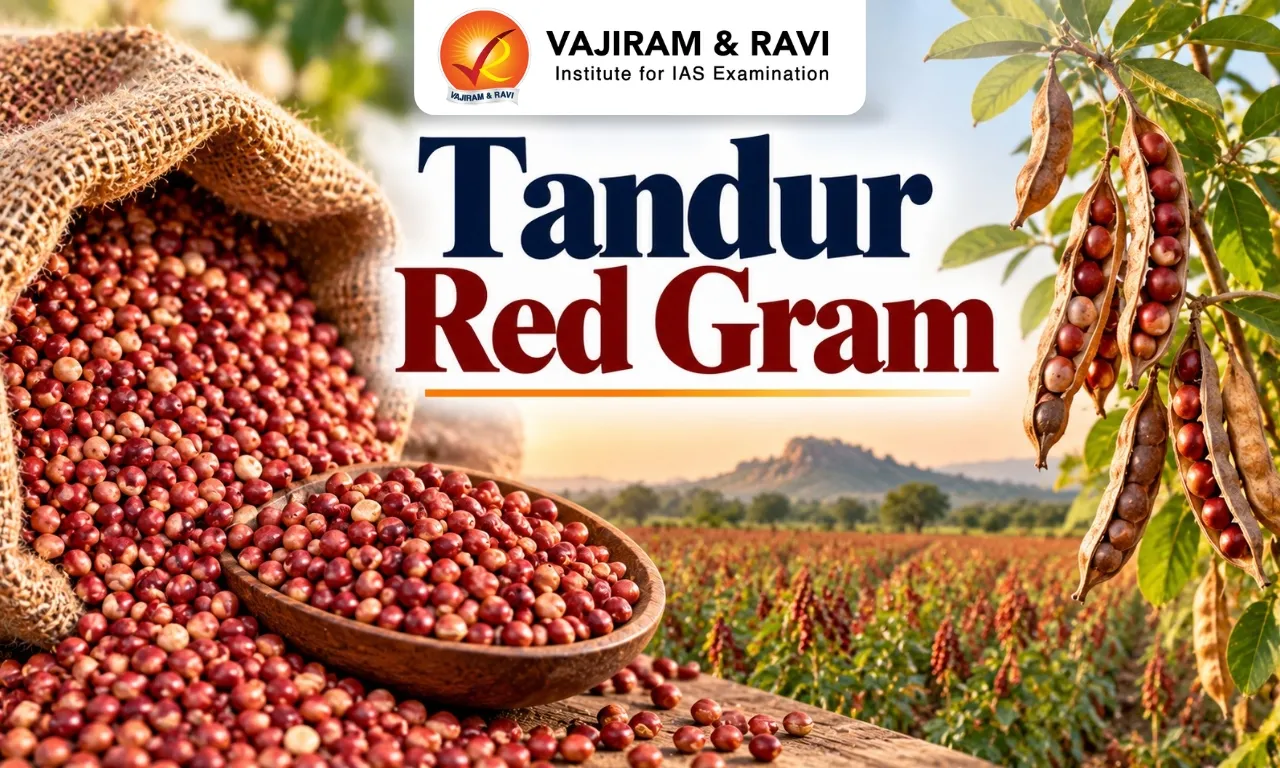
Recently, the first consignment of GI-tagged Tandur red gram from Telangana was flagged off from Hyderabad, Telangana, to Australia. 

About Tandur Red Gram

  • It is popularly known as Tandur Toor Dal.
  • It is primarily cultivated in the rainfed tracts of four mandals in the Tandur region namely Tandur, Basheerabad, Peddemul and Yelal of Telangana state.
  • Its distinctive characteristics are associated with the region’s fertile deep black soils, the presence of attapulgite clay mineral deposits, and substantial limestone deposits.
  • It is the first agricultural product from the Telangana State to receive Geographical Indication (GI) registration in 2022.
  • Nutritional Value
    • It has more protein content than cereals.
    • It contains approximately 22–24 per cent protein, nearly three times the protein content of cereals.
    • It is valued for its excellent taste, superior cooking quality, and enhanced storage quality.

Key Facts about Geographical Indications Tag

  • It is a sign used on products that have a specific geographical origin and possess qualities or a reputation that are due to that origin.
  • This is typically used for agricultural products, foodstuffs, wine and spirit drinks, handicrafts and industrial products.
  • The Geographical Indications of Goods (Registration and Protection) Act, 1999 seeks to provide for the registration and better protection of geographical indications relating to goods in India.
  • This GI tag is valid for 10 years following which it can be renewed.

Source: TH

Tandur Red Gram FAQs

Q1: Tandur Red Gram mainly cultivated in which state ?

Ans: Telangana

Q2: What is the nutritional benefit of Tandur Red Gram?

Ans: It contains approximately 22–24 per cent protein, nearly three times the protein content of cereals.

DoT SIM Binding Rules 2027, Provisions, Restrictions, Impact

DoT SIM Binding Rules 2027

The DoT SIM Binding Rules 2027 are new cybersecurity requirements introduced by the Department of Telecommunications (DoT) under the Telecom Cyber Security Rules, 2024. These rules require messaging applications such as WhatsApp and Telegram to remain linked to the active SIM card associated with the user's registered Indian mobile number. The government has set December 31, 2026 as the compliance deadline, with the requirements expected to take effect from January 1, 2027. The main purpose is to prevent cyber fraud, misuse of Indian mobile numbers and online scams.

DoT SIM Binding Rules 2027 Key Provisions

The DoT SIM Binding Rules introduce several requirements for messaging platforms to improve user verification and prevent the misuse of mobile numbers. 

  • Issued by the Department of Telecommunications: The DoT issued the original SIM-binding directions on November 28, 2025, under the Telecom Cyber Security Rules, 2024. The government officially announced them on December 1, 2025.
  • Mandatory SIM and account linking: Messaging applications must remain connected to the specific active SIM card associated with the mobile number used for registration. This means users will generally need to keep their registered SIM in the device where the application is running.
  • Restrictions when SIM cards are removed: If a user removes, replaces or deactivates the registered SIM card, the messaging application may stop functioning until the required SIM verification is completed. This prevents accounts from continuing to operate without the linked SIM.
  • Implementation deadline extended: Messaging platforms were initially given 90 days to implement the directions. However, following requests from technology companies and concerns about technical readiness, the government extended the compliance deadline to December 31, 2026.
  • Changes to web and desktop login rules: The original directions required web-based messaging sessions to log out within six hours and reconnect through QR-code verification. However, this requirement was later replaced with a risk-based logout system, under which sessions can be terminated when suspicious or fraudulent activity is detected.

DoT SIM Binding Rules 2027 Objectives and Need for Implementation

The main objective of the DoT SIM Binding Rules is to make messaging services more secure and reduce the misuse of Indian mobile numbers for online fraud. 

  • Prevent misuse of Indian mobile numbers: Many messaging applications currently allow users to keep accessing their accounts even after removing the registered SIM card. Fraudsters can misuse this feature to operate accounts linked to Indian numbers without keeping the original SIM in their devices.
  • Control cross-border cyber fraud: Criminals operating outside India can use Indian mobile numbers to create or maintain messaging accounts and target people in India. SIM binding aims to reduce this misuse by requiring a continuous connection between the account and its registered SIM.
  • Address rising online scams: The government has highlighted digital arrest scams, phishing, government impersonation, fake investment schemes and fraudulent loan offers as major concerns. Stronger verification is intended to make these activities more difficult.
  • Improve accountability of messaging accounts: By linking messaging applications to active SIM cards, the government aims to strengthen the connection between mobile numbers and the accounts using them. This could help authorities investigate suspicious activities and prevent the repeated misuse of accounts.
  • Extend existing security practices: SIM-linked verification is already used in several banking and UPI applications. The DoT wants to introduce similar security measures in messaging services to strengthen India's overall digital security system.

DoT SIM Binding Rules 2027 Impact on WhatsApp, Telegram and Other Messaging Apps

The implementation of SIM-binding requirements could change how people use WhatsApp, Telegram and other communication applications, particularly on devices without their registered SIM cards. 

  • Messaging applications covered: The DoT’s original directions named eight platforms: WhatsApp, Telegram, Snapchat, Arattai, ShareChat, Josh, JioChat and Signal. However, later reports have suggested differences in the compliance status of certain platforms, including Snapchat and Signal.
  • Changes for WhatsApp and Telegram users: Users may no longer be able to access their messaging accounts on smartphones without the registered SIM being present and active. If the linked SIM is removed or deactivated, the application may temporarily restrict access.
  • Effects on multiple-device users: People who use messaging applications on secondary smartphones, tablets or other devices may face difficulties if the registered SIM is installed in a different phone. The exact restrictions will depend on how each platform implements the requirements.
  • Impact on Android and iPhone users: The rules apply to covered communication services on both Android smartphones and iPhones. Technology companies may need to introduce software updates and SIM-verification features to ensure that their applications follow the new requirements.
  • Changes for web and desktop users: WhatsApp Web and other browser-based messaging services will follow a risk-based logout system instead of the earlier proposed six-hour compulsory logout. This is intended to reduce unnecessary disruptions while allowing platforms to respond to suspicious sessions.
  • Difficulties for travellers and SIM-switching users: People travelling abroad, frequently changing mobile phones, replacing SIM cards or relying on Wi-Fi without keeping their registered SIM in the phone may face interruptions in accessing their messaging accounts.

DoT SIM Binding Rules 2027 Cybersecurity Benefits

The DoT SIM Binding Rules are expected to strengthen India's telecom cybersecurity framework by making it more difficult to misuse messaging accounts and mobile numbers. 

  • Reduction in digital arrest scams: Fraudsters sometimes impersonate police officers, government officials or investigation agencies to threaten victims and demand money. SIM-linked verification may make it harder to operate fraudulent messaging accounts remotely.
  • Protection against phishing and impersonation: Cybercriminals often use fake messages and fraudulent identities to collect passwords, banking details and other sensitive information. Keeping accounts linked to active SIM cards could help reduce some forms of anonymous account misuse.
  • Better prevention of cross-border fraud: SIM binding aims to limit the ability of criminals operating outside India to continue using messaging accounts registered with Indian numbers without access to the associated active SIM.
  • Improved security of messaging accounts: Continuous SIM verification can introduce an additional security requirement, making it more difficult to operate an account after the associated SIM has been removed or deactivated.
  • Stronger digital trust and accountability: The rules could improve confidence in app-based communication services by encouraging better account verification and reducing opportunities for misuse of telecom identifiers.
  • Support for India’s wider cybersecurity efforts: The initiative complements existing measures aimed at addressing identity theft, financial fraud and telecom-related cybercrime. It also reflects the government’s efforts to strengthen security across India’s growing digital ecosystem.

Also Read : Digital Economy

DoT SIM Binding Rules 2027 Implementation Challenges

Although the SIM-binding requirements aim to improve cybersecurity, their implementation may create technical difficulties for messaging platforms and inconvenience for certain users. 

  • Technical difficulties across devices: Messaging applications must develop reliable systems to detect and verify active SIM cards on different smartphones and operating systems. These changes may require cooperation between app developers, mobile manufacturers and operating system providers.
  • Problems for frequent SIM and phone users: People who regularly replace their SIM cards, change mobile numbers or switch between smartphones may experience account access restrictions. They may need to complete additional verification steps to continue using their messaging applications.
  • Challenges for international travellers: Users travelling abroad may face difficulties if they remove their Indian SIM cards and use local SIM cards for mobile connectivity. The rules could affect how they access messaging services registered with Indian numbers.
  • Concerns about privacy and convenience: Continuous SIM verification may raise questions about how messaging platforms access SIM-related information and protect user data. It could also make account access less convenient for people using multiple devices.
  • Need for software updates and testing: Messaging companies may need substantial technical changes to support SIM detection and verification. Industry concerns about testing, compatibility and operating system updates were among the reasons for extending the implementation deadline.
  • Maintaining security without disrupting users: Platforms will need to balance stronger cybersecurity requirements with convenient access to messaging services. The shift from compulsory six-hour web logouts to risk-based logouts is an example of efforts to reduce unnecessary disruptions while maintaining security.

DoT SIM Binding Rules 2027 FAQs

Q1: What are the DoT SIM Binding Rules 2027?

Ans: The DoT SIM Binding Rules 2027 require messaging applications to remain linked to the active SIM card associated with a user's registered Indian mobile number to prevent cyber fraud.

Q2: When will the DoT SIM Binding Rules 2027 come into effect?

Ans: The rules are expected to take effect on January 1, 2027, while messaging platforms must complete compliance by December 31, 2026.

Q3: Which messaging apps are covered under the DoT SIM Binding Rules 2027?

Ans: The original directions named WhatsApp, Telegram, Signal, Snapchat, Arattai, ShareChat, Josh and JioChat, although the compliance status of some platforms remains subject to clarification.

Q4: Will WhatsApp work without a SIM card under the new rules?

Ans: Under the new rules, WhatsApp may restrict access if the registered SIM card is removed, replaced or deactivated until the required SIM verification is completed.

Q5: Why has the government introduced the SIM Binding Rules 2027?

Ans: The government introduced these rules to prevent digital arrest scams, phishing, impersonation, cross-border cyber fraud and misuse of Indian mobile numbers.

Ravi River Water Levels Rise After Heavy Rainfall in Himachal Pradesh

Ravi River

Ravi River Latest News

Researchers from IIT Gandhinagar monitored three decades of river discharge data and satellite imagery to examine changes in the Ravi River and its floodplain before and after the Ranjit Sagar reservoir began operating in 2001.

About Ravi River

  • It is a transboundary river that flows through northwestern India and northeastern Pakistan.
  • It is one of the five tributaries of the Indus River that give Punjab (meaning “Five Rivers”) its name.
  • It was originally known as Iravati and Parushni/Purushni in Vedic times and later called Hydraotes by the Ancient Greeks. 
  • Course:
    • It originates from the northern face of Rohtang Pass in Himachal Pradesh and flows through the junction formed by the BaraBang-Dhauladhar range of the Himalayas as two channels, namely Budhil and Tantgari.
    • After joining, it flows through Himachal Pradesh, mainly the Chamba district, where it receives many tributaries.
    • From there, it flows southwards through India, crossing through Punjab before crossing into Pakistan, where it finally merges with the Chenab River, a major tributary of the Indus River.
  • The river has a total length of 720 km, of which 320 km are in India and 400 km are in Pakistan. 
  • Often called “The River of Lahore,” the historical city of Lahore, Pakistan, sits on its eastern bank. 
  • The hydrology is controlled by spring snowmelt and the South Asian monsoon that brings heavy rains from June to September. 
  • Major Tributaries:  Siul, Baira, and Ujh rivers.
  • Major Dams:
    • Thein Dam (Ranjit Sagar Dam) – Chamba, Himachal Pradesh
    • Chamera Dam – Chamba, Himachal Pradesh
    • Shahpurkandi Dam – Pathankot, Punjab
    • Ujh Dam – Kathua, Jammu & Kashmir
    • Ravi-Beas Link (Proposed)
    • Upper Bari Doab Canal–Irrigation canal system in Punjab
  • The Indus Water Treaty of 1960 between India and Pakistan allocated the Ravi River, along with the Beas and Sutlej rivers, to India.

News: EUR

Ravi River FAQs

Q1: Which countries does the Ravi River flow through?

Ans: India and Pakistan.

Q2: The Ravi River is a tributary of which major river system?

Ans: The Indus River system.

Q3: Where does the Ravi River originate?

Ans: From the northern face of Rohtang Pass in Himachal Pradesh.

Q4: Which river does the Ravi join in Pakistan?

Ans: The Chenab River.

Q5: What is the approximate total length of the Ravi River?

Ans: The river has a total length of 720 km, of which 320 km are in India and 400 km are in Pakistan.

Kariyachalli Island Loses 85% of Landmass as Tamil Nadu Deploys 8,500 Artificial Reefs

Kariyachali Island

Kariyachalli Island Latest News

With two of the original 21 islands in the Gulf of Mannar already lost, Kariyachalli Island has become a test of whether engineering and ecological restoration can reverse an apparently relentless erosion trajectory.

About Kariyachalli Island

  • It is one of the 21 islands in the Gulf of Mannar Marine National Park region, located on the southeastern coast of India between Rameshwaram and Thhothukudi. 
  • The  Gulf of Mannar is home to one of the four major coral reefs in India and is one of India’s most ecologically sensitive marine zones.
  • Kariyachalli island possesses beaches, sand dunes, spits, and sandy plains.
  • The uninhabited island has sunk significantly over the past few decades due to rapid erosion, rising sea levels, and degradation of the surrounding coral reef and seagrass meadows. 
  • The island’s landmass shrank by over 70 per cent in 2024 compared to 1969, according to a January 2025 report by the Indian Institute of Technology Madras’s (IIT Madras) Department of Ocean Engineering. 
  • From its original size of 20.85 hectares, the island shrunk to just under six hectares in 2024. 
  • About a third of the coral around the island has bleached on average, and further degradation and disappearance of coral reefs would make the island more vulnerable to erosion, the report stated.
  • At the current rate of erosion, the island is expected to be submerged by 2036. With just a decade left, government authorities are now racing to save it from disappearing.
  • The Tamil Nadu Government is undertaking restoration under the Tamil Nadu SHORE (Sustainably Harnessing Ocean Resources) project, with World Bank support. 
    • Under this initiative, the govt uses 8,500 multipurpose artificial coral reef modules — designed by IIT Madras based on wave dynamics and bathymetry studies — to protect the island’s shoreline, reduce wave energy, and increase sediment deposition. 
    • The restoration programme also aims to rehabilitate three acres of degraded seagrass beds. 
    • The project also includes a blue-carbon assessment.

News: NIE

Kariyachalli Island FAQs

Q1: Where is Kariyachalli Island located?

Ans: In the Gulf of Mannar, off the southeastern coast of India, between Rameswaram and Thoothukudi.

Q2: Kariyachalli Island is part of which marine protected region?

Ans: Gulf of Mannar Marine National Park region.

Q3: Is Kariyachalli Island inhabited or uninhabited?

Ans: It is an uninhabited island.

Q4: What are the major reasons behind the shrinking of Kariyachalli Island?

Ans: Rapid coastal erosion, rising sea levels, and degradation of surrounding coral reefs and seagrass meadows.

Q5: Under which project is the Tamil Nadu Government undertaking restoration work around Kariyachalli Island?

Ans: Tamil Nadu SHORE (Sustainably Harnessing Ocean Resources) project.

AIM-120 AMRAAM Missile: Pakistan May Receive US-Made Air-to-Air Missiles

AIM-120 Advanced Medium-Range Air-to-Air Missile

AIM-120 Advanced Medium-Range Air-to-Air Missile Latest News

The US and Japan recently signed a deal to establish an AIM-120 Advanced Medium-Range Air-to-Air Missile (AMRAAM) facility in Japan, a move that will help bolster production of the most sought-after American beyond-visual-range air-to-air munition.

About AIM-120 Advanced Medium-Range Air-to-Air Missile 

  • It is an active, radar-guided, medium-range, supersonic air-to-air missile. 
  • It is among the most widely used beyond-visual-range (BVR) air combat weapons in the world. 
  • Developed in the US in the late 1970s and 1980s, it became operational in 1991 with the US Air Force, replacing older radar-guided missiles.
  • The AIM-120 is currently employed by over 35 countries, including key U.S. allies in NATO, the Asia-Pacific region, and the Middle East. 
    • Notable users include the United States, United Kingdom, Japan, Australia, and several NATO member countries. 
  • From American F-15s, F-16s, and F-35s to European aircraft like the Typhoon and Gripen, it is installed on a wide variety of fighter jets.
  • The missile's primary role is to achieve air superiority by engaging and destroying enemy fighters, bombers, and cruise missiles from beyond visual range. 
  • Features:
    • The missile measures 3.65 meters in length, with a diameter of 178 millimeters and a wingspan of 484 millimeters.  
    • The missile features four cropped delta wings for lift and four control fins at the rear for steering.  
    • It is powered by a solid-fuel rocket motor capable of propelling it to speeds exceeding Mach 4, or roughly 3,000 miles per hour.
    • The missile can be launched in all weather, day or night.
    • It has a range exceeding 160 kilometers under optimal launch conditions.
    • It has a blast fragmentation warhead detonated by a proximity fuse. 
    • It utilizes a sophisticated guidance system that includes inertial guidance for the mid-course phase and terminal active radar homing for the final approach to the target. 
    • The missile also supports optional mid-course update data links, which enhance its accuracy by refining its trajectory during flight. 
    • This guidance system provides "fire-and-forget" capability, allowing the launching aircraft to disengage and focus on other threats. 
  • AMRAAM-ER (Extended Range): 
    • It is a ground-launched variant with extended range and altitude capabilities.
    • It is intended for use in ground-based air defense systems like the NASAMS (National Advanced Surface-to-Air Missile System). 

News: EURT

AIM-120 Advanced Medium-Range Air-to-Air Missile FAQs

Q1: What is the AIM-120 Advanced Medium-Range Air-to-Air Missile (AMRAAM)?

Ans: It is an active radar-guided, medium-range, supersonic air-to-air missile.

Q2: Which country developed the AIM-120 Advanced Medium-Range Air-to-Air Missile (AMRAAM)?

Ans: The United States.

Q3: What type of propulsion system does the AIM-120 Advanced Medium-Range Air-to-Air Missile (AMRAAM) use?

Ans: A solid-fuel rocket motor.

Q4: What is the range of the AIM-120 Advanced Medium-Range Air-to-Air Missile (AMRAAM)?

Ans: It has a range exceeding 160 kilometers under optimal launch conditions.

Kendriya Grihmantri Dakshata Padak 2026 Awarded to 490 Police and Security Personnel

Kendriya Grihmantri Dakshata Padak

Kendriya Grihmantri Dakshata Padak Latest News

Recently, the ‘Kendriya Grihmantri Dakshata Padak’ has been awarded to 490 personnel for the year 2026.

About Kendriya Grihmantri Dakshata Padak     

  • It has been instituted by the Ministry of Home Affairs, Government of India in 2024.
  • The award aims to encourage professional standards and boost the morale of officers and officials across the country.
  • It is given to recognize excellent work, promote high professional standards and boost the morale of the concerned official/officer in the following four fields:
    • Special Operation
    • Investigation
    • Intelligence
    • Forensic Science
  • It was created by merging the 4 previously existing MHA awards –
    • The Special Operation Medal,
    • The Medal for Excellence in Investigation,
    • The Exceptional Intelligence Efficiency Medal, and
    • The Union Home Minister’s Award for Meritorious Service.
  • Eligibility: It is conferred on members of the Police Forces, Security Organization, Intelligence Wing/Branch/Special Branch of State/Union Territories/Central Police Organizations (CPOs)/Central Armed Police Forces (CAPFs) and Forensic Science (Central / State / Union Territories) throughout the Indian Union.
  • The medal is announced on 31st of October every year, on the occasion of the Birth Anniversary of Sardar Vallabhbhai Patel.

Source: PIB

Kendriya Grihmantri Dakshata Padak FAQs

Q1: Which ministry awards the Kendriya Grihmantri Dakshata Padak?

Ans: Ministry of Home Affairs

Q2: Who are eligible for Kendriya Grihmantri Dakshata Padak?

Ans: It is conferred on members of the Police Forces, Security Organization.

Poverty Reduction in India – World Bank Report 2026

Poverty Reduction in India

Poverty Reduction in India Latest News

  • The World Bank’s October 2026 Poverty and Equity Brief reported a significant decline in India's extreme poverty rate to 2.6% in 2023, from 27.1% in 2011, while highlighting persistent wage disparities and regional concentration of poverty.

Understanding Poverty and Its Measurement

  • Poverty is a multidimensional development challenge involving inadequate income, limited access to essential services and insufficient opportunities for a dignified standard of living. It is generally assessed through two broad approaches:
    • Monetary poverty: Measures whether individuals or households have sufficient income or consumption expenditure to meet a defined poverty threshold.
    • Multidimensional poverty: Assesses deprivation across indicators such as health, education and living standards.
  • The World Bank uses international poverty lines expressed in purchasing power parity (PPP) terms to compare poverty across countries.

Purchasing Power Parity (PPP)

  • PPP measures the relative purchasing power of currencies by accounting for differences in the prices of goods and services across countries. 
  • It helps compare living standards by estimating how much of a common basket of goods and services can be purchased in different economies.
  • The World Bank's revised international poverty lines include:

  • These thresholds are expressed in 2021 PPP terms. They should not be directly converted using prevailing market exchange rates.

India's Progress in Poverty Reduction

  • According to the World Bank's October 2026 Poverty and Equity Brief, India has recorded one of the fastest reductions in poverty globally over the past decade.
  • Between 2011 and 2023, the proportion of India's population living below the lower-middle-income poverty line of $4.20 per day declined from 57.7% to 16.1%. This represents an estimated 496 million people moving above that poverty threshold.
  • Extreme poverty also declined substantially, from 27.1% in 2011 to 2.6% in 2023.

 Reduction in Poverty in India

  • The reduction in extreme poverty between 2022-23 and 2023 indicates that the rate was approximately halved over the period.

Multidimensional Poverty Reduction

  • India has also made progress in reducing non-monetary deprivation.
  • The World Bank's brief highlighted the following trends:
    • India's Multidimensional Poverty Index (MPI), based on the Oxford Poverty and Human Development Initiative (OPHI) methodology, declined from 53.8% in 2005-06 to 16.4% in 2019-21.
    • The World Bank's MPI measure for India stood at 15.5% in 2022-23.
  • These indicators suggest improvements extending beyond household consumption and income.

Factors Behind Poverty Reduction

  • The World Bank identified multiple factors contributing to India's progress:
    • Strong consumption growth: Rising household consumption has contributed to improvements in living standards.
    • Employment expansion: Employment increased by approximately 13.4 crore people between 2017 and 2023, nearly twice the growth in the working-age population.
    • Women's workforce participation: Much of the employment increase was driven by rural women entering paid work, increasing the number of earners within households.
    • Social transfers: Expanded government support, including food subsidies, contributed to improved household welfare.

Persistent Challenges: Inequality and Regional Concentration

  • Despite substantial progress, the World Bank identified structural challenges that could affect the sustainability and inclusiveness of poverty reduction.
  • Wage Inequality
    • Wage disparities remain pronounced in India. In 2023, median earnings among the top 10% of workers were approximately 13 times those of the bottom 10%.
    • At the same time, the consumption-based Gini index declined from 28.8 in 2011-12 to 25.5 in 2022-23 and further to 23.0 in 2023.
    • However, the World Bank cautioned that household consumption surveys may not fully capture the consumption of wealthier households and could therefore understate inequality.
  • Geographical Concentration of Poverty
    • Poverty is becoming increasingly concentrated geographically. Approximately 57% of India's poor population lives in a contiguous belt stretching from Uttar Pradesh to West Bengal.
    • This concentration means that further poverty reduction will depend substantially on improving economic opportunities and creating productive employment in these States.
  • Employment Quality and Youth Unemployment
    • Although employment expanded significantly between 2017 and 2023, the World Bank noted that real earnings remained broadly unchanged, with employment growth concentrated in relatively low-productivity activities.
    • Youth unemployment also increased from 14.6% in the first quarter of FY2025-26 to 15.9% in the corresponding quarter of FY2026-27. The increase was particularly notable among rural young women.
    • These trends highlight the distinction between employment generation and the creation of stable, productive and adequately remunerated jobs.

Future Poverty Projections

  • The World Bank expects poverty in India to continue declining, although at a more gradual pace.
  • According to its projections, the proportion of the population below the $4.20-per-day lower-middle-income poverty line is expected to decline to 14.2% in 2026 and further to 12.1% by 2028.

Source: TH | IE

Poverty Reduction in India FAQs

Q1: What is India's extreme poverty rate according to the World Bank's October 2026 brief?

Ans: India's extreme poverty rate declined to 2.6% in 2023, from 27.1% in 2011, using the $3-per-day poverty line in 2021 PPP terms.

Q2: What is the lower-middle-income poverty line?

Ans: The World Bank's lower-middle-income poverty threshold is $4.20 per person per day in 2021 PPP terms.

Q3: What is Purchasing Power Parity (PPP)?

Ans: PPP compares the purchasing power of currencies by accounting for differences in the prices of goods and services across countries.

Q4: How many people moved above India's lower-middle-income poverty threshold between 2011 and 2023?

Ans: The World Bank estimated that approximately 496 million people moved above the $4.20-per-day poverty threshold during this period.

Q5: What is India's Multidimensional Poverty Index trend?

Ans: The OPHI-based MPI declined from 53.8% in 2005-06 to 16.4% in 2019-21, while the World Bank's MPI measure stood at 15.5% in 2022-23.

State Legislative Councils: Composition, Elections and Relevance

State Legislative Councils

State Legislative Councils Latest News

  • Recently, elections were held for 28 Legislative Council seats in four states. These polls have drawn attention to the unusual and complex system used to elect Members of Legislative Councils (MLCs). Unlike Assembly elections, not every adult citizen can vote in them.

A Second Chamber for States

  • India has two types of legislatures. Unicameral legislatures have one House. Bicameral legislatures have two Houses.
  • The Constitution makes Parliament bicameral, with the Lok Sabha and Rajya Sabha. 
  • For states, however, a second chamber is optional. This chamber is called the Legislative Council (Vidhan Parishad).

Debate in the Constituent Assembly

  • The framers disagreed on whether states needed a second chamber.
  • Arguments in favour:
    • It would bring diverse viewpoints into lawmaking.
    • It would act as a voice of reason.
    • It would check hasty decisions of the directly elected House.
  • Arguments against:
    • It would be expensive.
    • It would slow down government action.
    • Parties could use its seats to reward loyalists.
  • The framers reached a middle path. They let states decide whether they want a Council. 
  • They also capped its size and limited its powers. This created a unique institution.

Present Status

  • Currently, six states have Legislative Councils: Andhra Pradesh, Bihar, Maharashtra, Karnataka, Uttar Pradesh and Telangana.
  • Uttar Pradesh has the largest Council (100 seats). Telangana has the smallest (40 seats).
  • The Representation of the People Act, 1950 also provides seats for Madhya Pradesh and Tamil Nadu, but their Councils are not operational.

Composition of the Council

  • Article 171 governs the size and structure of Councils.
    • Minimum size: 40 members.
    • Maximum size: One-third of the total strength of the Legislative Assembly.
  • Members are chosen as follows:
    • One-third elected by MLAs.
    • One-third elected by members of local bodies.
    • One-twelfth elected by graduates.
    • One-twelfth elected by teachers.
    • The remaining nominated by the Governor.
  • The Representation of the People Act, 1950 lays down the exact seat break-up for each Council.

Key Features of MLC Membership

  • Term: Six years.
  • Continuity: One-third of members retire every two years.
  • Eligibility: A candidate must be at least 30 years old and a voter in the state.
  • Nominations: The Governor nominates residents with expertise in literature, science, art, the co-operative movement and social service.

Who Votes in MLC Elections?

  • MLA Constituency - This is the simplest category. Only sitting MLAs vote.
  • Territorial Constituencies - The other three categories are territorial. Eligible voters within a specific area elect their representative.
    • Local authorities: Only sitting members of local bodies can vote.
    • Graduates: The voter must be a citizen, ordinarily resident in the constituency, and must have held a graduate degree from any Indian university for at least three years.
    • Teachers: The voter must have taught for at least three years in the last six years in an institution not lower than secondary school.
  • Special Electoral Rolls - Rolls for graduate and teacher constituencies are prepared afresh before every election. Even existing voters must re-apply. Eligibility is counted from the qualifying date of November 1 each year.
  •  

Rationale for Graduate and Teacher Seats

  • Representation of specific groups began before Independence. The Government of India Act, 1935 provided seats on religious, economic and social grounds.
  • In the Constituent Assembly, arguments were made that the Council should represent a province’s intelligentsia. 
  • It suggested that subsets of voters, such as graduates, trade unions, local body members and professionals, should elect some members. This idea was adopted in the Constitution.

How Voting Works

  • Single Transferable Vote: General elections are simple: one voter, one vote, one candidate. This allows the use of EVMs. MLC elections, however, use proportional representation through the Single Transferable Vote (STV), as in Rajya Sabha elections. 
  • That is why they still use ballot papers.
    • The ballot lists all candidates, along with NOTA.
    • Voters rank candidates by writing 1, 2, 3 and so on.
    • A candidate needs a fixed quota of votes to win.
    • Quota formula: (Total valid votes ÷ (Seats + 1)) + 1.
    • Surplus votes of winners pass to the next preferences. The lowest-ranked candidate is eliminated, and their votes are transferred. This continues until all seats are filled.

Secret Ballot vs Open Ballot

  • In Rajya Sabha elections, MLAs must show their ballot to their party’s agent. Parliament introduced this open ballot system in 2003 to curb cross-voting.
  • In MLC elections, the MLAs’ vote remains secret. They need not show it to anyone.

How Councils Differ from Rajya Sabha

  • Legislative Councils are much weaker than the Rajya Sabha.
  • Permanence: Rajya Sabha is a continuous body. A Council’s existence depends on the Assembly. Under Article 169, Parliament can create or abolish a Council if the Assembly passes a resolution by a special majority.
  • Legislative power: Councils cannot shape laws passed by the Assembly. They can only delay ordinary bills; the Assembly has the final say.

Concern over Stability

  • In 2013, a Parliamentary Committee examining a proposed Council for Rajasthan called for a national policy on creating and abolishing Councils. 
  • It warned that a second chamber should not depend on the mood of the government of the day.

Conclusion

  • Legislative Councils give a voice to the educated, teachers and local governments in state lawmaking. Yet their limited powers and dependence on ruling majorities weaken their role. 
  • A clear national policy on their creation and abolition can make Councils stable, credible and truly deliberative institutions.

Source: IE

State Legislative Councils FAQs

Q1: What are State Legislative Councils?

Ans: State Legislative Councils are the upper houses of bicameral state legislatures, providing a second chamber for deliberation and review of legislation passed by Legislative Assemblies.

Q2: Which states in India currently have Legislative Councils?

Ans: State Legislative Councils currently exist in six states: Andhra Pradesh, Bihar, Maharashtra, Karnataka, Uttar Pradesh and Telangana, with membership varying across states.

Q3: How are members of State Legislative Councils elected?

Ans: State Legislative Councils comprise members elected by MLAs, local authorities, graduates and teachers, alongside members nominated by the Governor under Article 171.

Q4: What is the minimum and maximum strength of a Legislative Council?

Ans: State Legislative Councils must have at least 40 members, while their maximum strength cannot exceed one-third of the corresponding State Legislative Assem.

Q5: Can a State Legislative Council be abolished?

Ans: Yes. Under Article 169, Parliament can abolish State Legislative Councils through legislation after the concerned Assembly passes a resolution by special majority.

Ballot Papers in Indian Elections: Where and Why They Are Used

Ballot Papers in Indian Elections

Ballot Papers in Indian Elections Latest News

  • Recently, elections were held for 28 Legislative Council (MLC) seats across the country. PM Modi took a swipe at the opposition party, noting that MLC elections use ballot papers, not EVMs. The Opposition Party has blamed EVMs for its past electoral losses.
  • The remarks have revived the EVM vs ballot paper debate. This raises a key question: which elections in India still use ballot papers, and why?

Ballot Papers in Panchayat Elections

  • Most elections to Gram Panchayats, Panchayat Samitis and Zilla Parishads still use ballot papers.
  • A 2023 study by the Indian Institute of Public Administration (IIPA), sponsored by the Ministry of Panchayati Raj, found:
    • 53% of states use ballot papers for Gram Panchayat elections.
    • Only three States/UTs (Kerala, Sikkim, and Dadra & Nagar Haveli and Daman & Diu) use EVMs in all Gram Panchayat constituencies.
    • 22% of states are in transition. They use EVMs in some constituencies and ballot papers in others.
    • EVM use rises at higher tiers. In Zilla Panchayat elections, 17% of states use EVMs in all constituencies.

Reasons Given by States

  • States using ballot papers cited two main hurdles:
    • Lack of funds.
    • Lack of voter awareness about EVMs.
  • The IIPA report found the awareness argument weak. The same voters use EVMs in Assembly and Lok Sabha elections.

Drawbacks of Ballot Papers

  • The report highlighted several problems:
    • Counting is slow and cumbersome.
    • It requires huge manpower.
    • It is not environment-friendly.

Ground Realities

  • Local practices also explain the continued use of ballot papers.
  • Non-party symbols: In rural local body polls, tehsildars allot symbols days before the election. Candidates give three choices and get one. These are not regular party symbols.
  • Personal connect matters: A former sarpanch from Maharashtra noted that a candidate’s closeness to voters and help with daily work matter more than ideology in these polls.
  • Simultaneous polls: A Bihar official said elections for multiple tiers happen at the same time. Using so many machines would be difficult, so ballot papers are more practical.
  • Can EVMs Handle Local Symbols?
    • Yes. Former Election Commissioner Ashok Lavasa explained that a process called “symbol loading” allows the required local symbols to be loaded onto EVMs.

Municipal and Student Union Elections

  • Municipal Bodies
    • Municipal elections fall under the State Election Commissions (SECs). SECs can choose between EVMs and ballot papers.
      • Municipal Corporation of Delhi: Uses EVMs.
      • Punjab: Shifted to ballot papers in 2026.
    • The Punjab and Haryana High Court upheld this choice. It noted that the Punjab Municipal Election Rules, 1994 permit both methods, leaving the decision to the SEC.
  • Student Unions
    • Student union polls also use both methods.
    • Delhi University Students’ Union (DUSU): Uses EVMs. Candidate names appear in alphabetical order, so names and ballot numbers matter.
    • Jawaharlal Nehru University Students’ Union (JNUSU): Uses ballot papers.

Single Transferable Vote: Where Ballot Papers Are Necessary

  • Some elections must use ballot papers. These are elections held through the Single Transferable Vote (STV) system.
  • Legislative Councils - Under Article 171, MLC elections follow proportional representation through STV. Voters mark their first, second, third and further preferences. This ranking makes the vote transferable. It can only be done on paper, not on an EVM.
  • Rajya Sabha - Rajya Sabha elections also use STV and ballot papers. Here, voting MLAs follow an open ballot; they must show their vote to their party’s agent.

How the STV Quota Works

  • A formula decides the votes needed to win.
  • Quota = [Total votes ÷ (Number of seats + 1)] + 1
  • Example:
    • 200 MLAs vote for 4 seats.
    • 200 ÷ (4 + 1) = 40.
    • Quota = 40 + 1 = 41 votes.
  • Any candidate with 41 first-preference votes is elected.
  • If seats remain vacant, surplus votes of winners are transferred. For instance, a winner with 45 votes has 4 surplus votes. These go to the second-preference candidates.
  • If several winners have surpluses, the largest surplus is transferred first.
  • If seats still remain, the candidate with the fewest first-preference votes is eliminated. Their votes move to the next preference. This continues until all seats are filled.

Conclusion

  • Ballot papers remain vital where STV voting, local symbols or simultaneous multi-tier polls make EVMs impractical. However, slow counting, high costs and environmental concerns persist. 
  • Gradual, well-funded adoption of EVMs in local polls, with strong voter trust, can balance efficiency and credibility.

Source: IE

Ballot papers in Indian elections FAQs

Q1: Which elections in India still use ballot papers?

Ans: Ballot papers in Indian elections are still used in many Panchayat polls, some municipal and student union elections, and elections conducted through proportional representation.

Q2: Why do states continue using ballot papers in Panchayat elections?

Ans: Ballot papers in Indian elections persist in Panchayat polls because states cite financial constraints, simultaneous multi-tier elections and practical difficulties in deploying sufficient EVMs.

Q3: What are the major disadvantages of using ballot papers?

Ans: Ballot papers in Indian elections involve slower counting, substantial manpower requirements and environmental costs, making electronic voting machines more efficient for many electoral settings.

Q4: Why are ballot papers necessary in Legislative Council elections?

Ans: Ballot papers in Indian elections are necessary for Legislative Council polls because Single Transferable Vote requires voters to rank candidates by preference.

Q5: How does the Single Transferable Vote system work?

Ans: Under ballot papers in Indian elections using STV, voters rank candidates; surplus votes transfer to preferences, while votes of eliminated candidates are redistributed until seats are filled.

National Unity Day 2026, Date, Theme, Significance, Celebrations

National Unity Day 2026

National Unity Day 2026  highlights India's national integration, unity in diversity and the importance of preserving social harmony. The observance honours Sardar Vallabhbhai Patel’s role in nation-building, with the 2026 celebrations in Ekta Nagar, Gujarat, featuring a unity parade, cultural programmes and the Run for Unity.

When is National Unity Day 2026?

National Unity Day 2026 is observed on Saturday, 31 October, to mark the 151st birth anniversary of Sardar Vallabhbhai Patel, India's first Deputy Prime Minister and Home Minister. The day honours his contribution to national integration and promotes unity, integrity and harmony among citizens. The main celebrations will be held at the Statue of Unity in Ekta Nagar, Gujarat.

What is the theme of National Unity Day 2026?

The unifying theme of the National Unity Day 2026 celebrations and the accompanying Bharat Parv festival in Gujarat is “Ek Bharat Shreshtha Bharat”, which promotes national integration and unity in diversity.

The celebrations will also highlight the following focus areas:

  • Vande Mataram: Commemorating 150 years of India's national song.
  • Drug-free India: Spreading awareness about drug abuse prevention and encouraging public participation in the campaign against drugs.
  • National Security: Highlighting the role of police forces and Central Armed Police Forces (CAPFs) in combating armed Naxalism.
  • Cultural Integration: Showcasing India's diverse cultures and strengthening connections among people from different states and regions through Bharat Parv.

Why is National Unity Day Celebrated?

At the time of Independence in 1947, India consisted of British Indian provinces and more than 560 princely states. Integrating these territories into a united political entity was one of the major challenges faced by the new government.

Sardar Vallabhbhai Patel, as the first Deputy Prime Minister and Home Minister, played a central role in this process. Working with V. P. Menon and other officials, he used diplomacy, negotiation and political leadership to facilitate the accession and integration of princely states.

National Unity Day commemorates this contribution and highlights the importance of national cohesion, constitutional values and collective responsibility.

The observance also encourages citizens to uphold national unity despite differences in language, religion, region and culture.

National Unity Day 2026 Celebrations Key Events

The main celebrations will take place at Ekta Nagar, Gujarat, to promote national unity and showcase India's cultural diversity and security forces.

  • Unity Parade: Police forces from different states and Central Armed Police Forces will take part in the parade.
  • Tableaux: Fifteen tableaux will showcase national themes and Gujarat's culture.
  • Air Force Flypast: Indian Air Force aircraft will perform a flypast.
  • Cultural Programme: Around 2,000 artists from 126 districts affected by Left-Wing Extremism will participate in a special performance.
  • Run for Unity: People will participate in a run to spread the message of national unity.
  • Motorcycle Rally: Riders representing states, Union Territories and security forces will take part in a rally to promote national integration.

Around 25,000 people are expected to attend the celebrations.

What is the main objective of National Unity Day 2026?

According to Union Home Secretary Govind Mohan, the celebrations have two principal objectives:

  1. Showcasing police and security forces: Bringing national attention to the work of state police forces, CAPFs and Central Police Organisations (CPOs), including their contribution to the fight against armed Naxalism.
  2. Promoting public participation: Encouraging people from across India to visit Ekta Nagar, experience the Statue of Unity complex and participate in the national celebrations.

The 2026 programme is also intended to expand participation beyond Gujarat. Organisers have made arrangements to accommodate approximately 25,000 people, with online registration introduced to facilitate attendance.

What is Bharat Parv 2026?

Bharat Parv 2026 is a cultural and arts festival scheduled to be held at Ekta Nagar from 1 to 15 November 2026, following the National Unity Day celebrations.

The festival will be organised around the message “Ek Bharat Shreshtha Bharat”, which seeks to strengthen cultural connections and mutual understanding among people from different parts of the country.

Its broader objectives include:

  • Showcasing India's regional cultures, art forms and traditions.
  • Promoting interaction among people from different states and Union Territories.
  • Encouraging appreciation of India's linguistic and cultural diversity.
  • Strengthening the idea of national integration through cultural exchange.

Bharat Parv complements National Unity Day by extending the message of unity beyond a single commemorative event.

Significance of National Unity Day

National Unity Day has political, social, cultural and administrative significance.

  • National integration: Reminds citizens of the historical effort required to integrate princely states and build a united India.
  • Unity in diversity: Encourages respect for India's different languages, religions, cultures and regional identities.
  • National security: Highlights the importance of protecting the country's sovereignty, territorial integrity and internal security.
  • Recognition of police forces: Provides an occasion to recognise the role of police and central forces in maintaining public order and addressing security challenges.
  • Civic responsibility: Encourages citizens to uphold constitutional values and contribute to peace and social harmony.
  • Cultural exchange: Programmes such as Bharat Parv promote understanding and cooperation among different regions.
  • Youth participation: Runs, rallies, educational activities and pledge ceremonies help engage students and young people in nation-building.

National Unity Day 2026 FAQs

Q1: When is National Unity Day 2026 celebrated?

Ans: National Unity Day 2026 is observed on Saturday, 31 October 2026.

Q2: Whose birth anniversary is celebrated on National Unity Day?

Ans: It commemorates the birth anniversary of Sardar Vallabhbhai Patel, born on 31 October 1875. In 2026, it marks his 151st birth anniversary.

Q3: What is the theme of National Unity Day 2026?

Ans: The unifying theme of the 2026 celebrations is “Ek Bharat Shreshtha Bharat”, promoting national integration and unity in diversity.

Q4: Where will the main National Unity Day 2026 celebrations take place?

Ans: The main celebrations will be held at the Statue of Unity in Ekta Nagar, Gujarat.

Q5: Why is Sardar Vallabhbhai Patel called the Iron Man of India?

Ans: He is known as the Iron Man of India for his decisive leadership and major contribution to integrating more than 560 princely states into the Indian Union.

Glacial Lake Outburst Flood (GLOF), Meaning, Causes, Examples in India

Glacial Lake Outburst Flood

Glacial Lake Outburst Flood (GLOF) is a sudden and destructive flood caused by the failure of a glacial lake dam made of ice or moraine debris. Rapid glacier melting, climate change, earthquakes, avalanches and intense rainfall are increasing the frequency of such floods globally. A recent international study estimated that nearly 15 million people are exposed to GLOF threats, especially in High Mountain Asia and the Himalayan region, where vulnerable settlements, hydropower projects and transport infrastructure lie downstream of unstable glacial lakes.

Why in News?

A Glacial Lake Outburst Flood (GLOF) at Shintaphu Lake in Bhutan's Punatsangchhu River Basin triggered flood alerts in parts of Assam and West Bengal on October 30, 2026.
The Central Water Commission (CWC) issued a flood advisory warning of a sudden rise in water levels along the Sankosh River, putting Alipurduar (West Bengal) and Dhubri (Assam) on alert.
Authorities initiated precautionary measures, including monitoring vulnerable areas and coordinating with disaster response agencies to protect downstream communities.

What are Glacial Lakes?

Glacial lakes are formed by glacier erosion and accumulation of meltwater in depressions blocked by ice or moraine material.

  • Formation Process: Glacial lakes form when retreating glaciers carve depressions through abrasion and glacial plucking, which later fill with meltwater. Moraine deposits and terminal moraines often act as natural barriers holding the water.
  • Moraine-Dammed Lakes: Moraine-dammed lakes are highly unstable because their dams consist of loose rocks, sediments, sand and ice residue. South Lhonak Lake in Sikkim is a classic example of a moraine-dammed glacial lake.
  • Glacier Retreat: Rapid glacier retreat due to warming temperatures has accelerated glacial lake formation across the Hindu Kush Himalaya. ICIMOD reported over 40% glacial mass loss in the region during the last four decades.
  • Himalayan Expansion: Around 25 glacial lakes in the Himalayas have recorded increased water spread since 2009. India, Nepal and China together witnessed nearly 40% expansion in glacial lake surface area.
  • Scale in India: ISRO identified more than 5,000 glacial lakes in the Indian Himalayan region. Many lakes are situated near densely populated river valleys and hydropower infrastructure, increasing disaster vulnerability.
  • Global Exposure: Nearly 9.3 million people, representing about 62% of the globally exposed population, live in High Mountain Asia where glacial lakes continue expanding because of climate induced warming.

Glacial Lake Outburst Flood Causes

Glacial Lake Outburst Flood occurs because natural or human induced disturbances suddenly breach glacial lake boundaries and release enormous water discharge downstream.

  • Climate Change: Rising temperatures are accelerating glacier retreat and increasing meltwater accumulation. The Himalayan region warmed by nearly 0.28°C per decade between 1951 and 2020, intensifying glacial lake formation and instability.
  • Heavy Rainfall and Cloudbursts: Intense rainfall and cloudbursts weaken moraine dams and rapidly increase lake volume. A cloudburst can produce more than 10 cm rainfall within one hour over a limited mountainous area.
  • Avalanches and Rockfalls: Ice avalanches, landslides and rockfalls entering glacial lakes create massive displacement waves capable of breaching weak moraine barriers. The 2021 Chamoli disaster was linked to an ice-rock avalanche.
  • Earthquakes: Himalayan states fall within seismic zones IV and V where earthquakes frequently trigger landslides and destabilise moraine dams, increasing the possibility of sudden glacial lake failure and flash floods.
  • Unstable Moraine Structure: Moraine dams are naturally weak because they consist of unconsolidated rocks, sediments and buried ice. Continuous melting reduces structural stability and increases chances of catastrophic breach formation.
  • Rapid Water Accumulation: Sudden inflow from glacier melting, rainfall or snowmelt increases pressure on glacial lakes. Peak discharges during GLOFs have reached nearly 15,000 cubic metres per second in extreme events globally.
  • Infrastructure Pressure: Unscientific road widening, tunnels, hydropower projects and excessive tourism increase ecological stress in fragile mountain regions, raising risks of slope instability, erosion and GLOF triggering events.

Glacial Lake Outburst Flood in India

India’s Himalayan region is among the world’s most vulnerable zones for Glacial Lake Outburst Flood because of expanding glacial lakes and increasing climate related disasters.

  • Himalayan Vulnerability: The Himalayan states located along the Hindukush-Himalayan ranges face high GLOF risk because of rapid glacier retreat, unstable terrain, seismic activity and increasing human settlements downstream of glacial lakes.
  • Eastern Himalaya Risk: Scientific studies indicate the Eastern Himalayas face nearly double the GLOF risk compared to the Western Himalayas because warmer temperatures accelerate glacier melting and glacial lake expansion more rapidly.
  • South Lhonak Disaster: The South Lhonak Lake burst in Sikkim caused devastating floods in the Teesta basin, damaging Sikkim, Assam and West Bengal through sudden rise in river discharge after heavy rainfall and cloudburst activity.
  • Human and Infrastructure Loss: The Sikkim GLOF caused more than 90 deaths, over 100 missing persons, destruction of 14 bridges and severe damage to the 1,200 MW Teesta III hydropower project at Chungthang.
  • Displacement Impact: Nearly 2,563 people were shifted to 21 relief camps after the Sikkim disaster, showing how GLOFs cause sudden displacement and humanitarian emergencies in remote Himalayan regions.
  • Chamoli Floods 2021: Flash floods in Uttarakhand’s Chamoli district were linked to glacier collapse and GLOF like conditions involving the Nanda Devi glacier system, severely damaging hydropower projects and settlements downstream.
  • Kedarnath Floods 2013: The Chorabari Lake outburst combined with extreme rainfall caused massive flooding in the Mandakini basin, leading to more than 5,000 deaths and widespread destruction across Uttarakhand.
  • Himachal Pradesh Threats: Gephang Gath Lake in Himachal Pradesh is considered highly vulnerable because of rapid expansion, permafrost melting and unstable surrounding topography capable of triggering future flash floods.
  • Global Risk Ranking: India, Pakistan, Peru and China together account for more than half of the global population exposed to GLOF hazards, highlighting India’s major vulnerability in global mountain disaster assessments.
  • Future Hotspots: ICIMOD studies reported formation of 203 new glacial lakes in northern Sikkim because of warming conditions, indicating that future GLOF hotspots may continue expanding westward across the Himalayas by 2050.

Glacial Lake Outburst Flood Impacts

Glacial Lake Outburst Flood creates severe environmental, economic and humanitarian damage because of their sudden onset and extreme flood discharge in mountain valleys.

  • Loss of Lives: GLOFs move rapidly with little warning time, causing heavy casualties among downstream populations. Settlements located within 10–15 km of source lakes face the highest immediate danger during sudden breaches.
  • Infrastructure Destruction: Floodwaters destroy bridges, roads, tunnels, hydropower stations and communication networks. The Teesta III hydropower project and multiple bridges were destroyed during the South Lhonak flood disaster.
  • Agricultural Damage: Floods deposit debris, sediments and boulders over agricultural land, damaging horticulture and reducing soil productivity in mountain valleys dependent on farming and allied livelihoods.
  • Economic Disruption: Tourism, transport, industries and local businesses suffer prolonged setbacks after GLOFs because damaged infrastructure interrupts economic activities and reduces visitor movement into mountain regions.
  • Environmental Degradation: Glacial Lake Outburst Flood uproot forests, disturb river ecosystems, alter river chemistry and increase sedimentation. Floods also threaten biodiversity rich protected areas and ecologically sensitive Himalayan landscapes.
  • Water Crisis: Flood contamination damages drinking water sources and creates shortages for affected populations. Sediment laden floodwaters also degrade water quality and aquatic ecosystems downstream.
  • Energy Insecurity: Damage to hydropower projects creates regional electricity shortages and disrupts renewable energy generation in Himalayan states heavily dependent on river based hydropower infrastructure.

Glacial Lake Outburst Flood NDMA Guidelines

The National Disaster Management Authority has recommended scientific monitoring, preparedness and structural measures to reduce Glacial Lake Outburst Flood risks across Himalayan regions.

  • Identification of Dangerous Lakes: NDMA recommends identifying high risk lakes through field observations, geomorphological studies, historical records, bathymetric surveys and geotechnical assessment of surrounding moraine structures and terrain conditions.
  • Synthetic Aperture Radar Use: NDMA promotes Synthetic Aperture Radar imagery for automatic monitoring of glacial lakes, especially during monsoon months, to detect water spread changes and newly formed lakes in inaccessible regions.
  • Controlled Water Reduction: The authority recommends reducing lake volume through controlled breaching, pumping, siphoning and tunnel construction beneath moraine dams to minimise sudden flood discharge during potential breaches.
  • Early Warning Systems: NDMA emphasises installation of sensor based monitoring systems, automated weather stations and communication networks because existing operational Glacial Lake Outburst Flood Early Warning Systems remain extremely limited in the Himalayan region.
  • Uniform Construction Codes: Infrastructure development in vulnerable mountain zones should follow scientific land use planning, environmental safeguards and regulated excavation practices to reduce ecological instability and disaster risks.
  • Local Community Training: NDMA stresses training local communities because more than 80% of search and rescue operations in mountain disasters are initially carried out by residents before specialised teams arrive.
  • Modern Alarm Systems: Smartphone alerts, mobile communication and digital warning systems should complement traditional siren based alarm infrastructure for rapid evacuation and emergency communication during flash flood situations.

Glacial Lake Outburst Flood Mitigation Measures

Effective mitigation requires combining scientific monitoring, engineering solutions, local preparedness and sustainable development practices in Himalayan ecosystems.

  • Hazard Mapping: Detailed hazard zonation and glacial lake mapping using satellite imagery, field investigations and remote sensing help identify vulnerable river basins and downstream settlements facing high GLOF exposure.
  • Lake Lowering Measures: Lowering water levels through siphoning, pumping and drainage channels reduces flood volume and pressure on moraine dams, thereby decreasing chances of catastrophic outburst floods.
  • Structural Protection: Retention basins, diversion channels and reinforced moraine dams help reduce flood intensity. Peru successfully strengthened over 35 vulnerable glacial lakes using stone faced protective structures during recent decades.
  • Remote Sensing Technology: Satellite monitoring, drones, SAR interferometry and Electrical Resistivity Tomography are increasingly used to monitor slope stability, lake expansion and buried ice beneath moraine dams.
  • Community Preparedness: Mock drills, awareness campaigns and volunteer based local response systems improve evacuation efficiency and help remote Himalayan communities respond quickly during sudden flood emergencies.
  • Sustainable Infrastructure: Scientific Environmental Impact Assessment and strict carrying capacity evaluation are necessary before approving hydropower projects, tunnels, highways and tourism infrastructure in fragile Himalayan regions.
  • Cross Border Cooperation: Real time information sharing among India, Nepal, Bhutan and China is essential because glacial river systems and associated disaster risks frequently extend across national boundaries.

Glacial Lake Outburst Flood Government Initiatives

India has adopted a multi layered strategy involving scientific agencies, disaster authorities and technological monitoring systems to reduce Glacial Lake Outburst Flood related risks.

  • National GLOF Risk Mitigation Programme: India launched a dedicated programme with nearly 20 million dollar allocation, initially covering 56 glacial lakes and later expanded to 195 lakes classified into four risk categories.
  • NDMA Led Preventive Approach: The disaster management strategy has shifted from post disaster relief towards proactive mitigation involving hazard assessment, early warning systems and scientific monitoring of vulnerable Himalayan lakes.
  • Automated Monitoring Systems: Automated Weather and Water Stations are being installed near vulnerable glacial lakes for real time hydrological monitoring and rapid dissemination of flood warnings to downstream communities.
  • Research Initiatives: Programmes such as the National Mission for Sustaining the Himalayan Ecosystem support scientific research on glacier retreat, climate impacts and long term mountain ecosystem sustainability.
  • Institutional Coordination: Multiple agencies including GSI, IMD, ISRO, DRDO, NRSA and Central Water Commission monitor glaciers, hydrology, avalanches, rainfall and remote sensing aspects related to GLOF management.
  • Indigenous Technology Promotion: Experts recommended launching innovation based programmes under initiatives like Start up India to develop low cost sensors and monitoring systems suitable for extreme Himalayan conditions.
  • Capacity Building Efforts: ITBP personnel, local volunteers and disaster response teams are being trained for emergency evacuation, manual warning dissemination and rescue operations in isolated mountain settlements vulnerable to GLOFs.

Glacial Lake Outburst Flood FAQs

Q1: What is Glacial Lake Outburst Flood (GLOF)?

Ans: A Glacial Lake Outburst Flood is a sudden flood caused by the failure of a glacier or moraine dam holding a glacial lake, releasing massive amounts of water downstream.

Q2: Which Indian states are most vulnerable to Glacial Lake Outburst Flood?

Ans: Sikkim, Arunachal Pradesh, Himachal Pradesh, Uttarakhand, Ladakh, Jammu and Kashmir and Assam are highly vulnerable to Glacial Lake Outburst Flood because of expanding Himalayan glacial lakes.

Q3: What caused the South Lhonak Lake disaster in Sikkim?

Ans: Heavy rainfall, cloudburst activity and climate induced glacier melting triggered the South Lhonak Lake outburst, causing severe flooding in the Teesta River basin.

Q4: How does climate change increase Glacial Lake Outburst Flood risk?

Ans: Climate change accelerates glacier melting, increases glacial lake size, weakens moraine dams and raises the frequency of avalanches, cloudbursts and flash floods in Himalayan regions.

Q5: What measures has India taken to reduce Glacial Lake Outburst Flood risks?

Ans: India launched the National Glacial Lake Outburst Flood Risk Mitigation Programme, installed early warning systems, expanded glacial lake monitoring and strengthened disaster preparedness in Himalayan states.

ISRO NVS-03 Mission 2026, Features, Applications, Significance

ISRO NVS-03 Mission

ISRO has launched NVS-03 aboard GSLV-F18 on 30 October 2026 to strengthen NavIC, India’s regional satellite navigation system. NavIC currently has only three satellites available for positioning, navigation and timing services, below the minimum four required for basic standalone positioning.

NVS-03 Mission

NVS-03 is the third satellite in the second-generation NavIC series, which aims to improve the system’s reliability and service continuity.

  • Launch vehicle: GSLV-F18.
  • Launch site: Satish Dhawan Space Centre, Sriharikota, Andhra Pradesh.
  • Launch Date: 30 October 2026 at 11:51 p.m. IST.
  • Target orbit: Geosynchronous Transfer Orbit (GTO).
  • Satellite mass: Approximately 2,250 kg.
  • Key features: An indigenous atomic clock and support for the L1 navigation frequency alongside L5 and S-band signals.

After launch, the satellite must reach its intended orbit, complete testing and be commissioned before it can provide operational services.

NavIC: India’s Regional Navigation System

NavIC stands for Navigation with Indian Constellation. It is the operational name of the Indian Regional Navigation Satellite System (IRNSS), developed by ISRO to provide independent satellite-based positioning, navigation and timing services.

Main Features

  • Coverage: India and an area extending approximately 1,500 km beyond its borders.
  • Original constellation design: Seven satellites in geosynchronous and inclined geosynchronous orbits.
  • Services: Standard Positioning Service for civilian users and Restricted Service for authorised users.
  • Accuracy: ISRO specifies Standard Positioning Service accuracy better than 20 metres and timing accuracy better than 40 nanoseconds over the primary service area.
  • Strategic significance: Provides India with an indigenous regional navigation capability and reduces dependence on foreign navigation systems.

How Satellite Navigation Works

Satellite navigation relies on precise timing signals transmitted by satellites.

  • Satellites transmit signals containing timing and orbital information.
  • A receiver estimates its distance from satellites by measuring the time taken for their signals to arrive.
  • Signals from at least four satellites are generally needed to calculate a three-dimensional position and correct the receiver’s clock error.
  • Atomic clocks are essential because timing errors can lead to inaccurate position calculations.

Second-Generation NavIC Satellites

ISRO has planned five second-generation satellites: NVS-01, NVS-02, NVS-03, NVS-04 and NVS-05.

Their main improvements include:

  • Longer mission life: Designed for a mission life of approximately 12 years.
  • Indigenous atomic clocks: Support technological self-reliance and reliable timing.
  • L1 frequency: Added alongside the L5 and S-band signals used by NavIC.
  • Improved interoperability: L1 is widely used by other navigation systems and supported by many consumer devices, including compatible single-frequency receivers.
  • Constellation continuity: New satellites are intended to replace ageing spacecraft and strengthen service availability.

Applications of NavIC

A reliable constellation can support civilian services, public infrastructure and strategic operations.

  • Transport: Navigation and location services for road transport and public vehicles.
  • Railways: Real-time train tracking and related safety applications.
  • Maritime activities: Navigation and communication support for vessels, including fishing boats.
  • Disaster management: Location support for search, rescue and emergency response.
  • Defence and security: Positioning and timing support for authorised strategic applications.
  • Telecommunications and infrastructure: Precise timing for systems requiring synchronisation.
  • Consumer technology: Navigation in compatible smartphones, wearables and other devices.

Actual use depends on receiver compatibility, signal availability and the operational status of the satellite constellation.

NavIC and Other Navigation Systems

The following table compares major satellite navigation systems based on the countries or regions that operate them and their geographical coverage.

System

Country or region

Coverage

NavIC (IRNSS)

India

Regional

GPS

United States

Global

GLONASS

Russia

Global

Galileo

European Union

Global

BeiDou

China

Global

QZSS

Japan

Regional augmentation system

NavIC focuses on India and its surrounding region. GPS, GLONASS, Galileo and BeiDou provide global coverage, while Japan’s Quasi-Zenith Satellite System (QZSS) complements GPS coverage in the Asia-Pacific region.

Challenges Facing NavIC

NavIC faces challenges related to the availability of operational satellites, technical failures and limited use in consumer devices.

  • Shortage of Operational Satellites: NavIC needs at least four operational satellites for basic standalone positioning. A shortage of functional satellites has disrupted this service.
  • Atomic Clock Failures: Atomic clocks help satellites maintain accurate time, which is essential for navigation. Clock failures in some satellites have affected the system’s operational reliability.
  • Failure of NVS-02: NVS-02 could not reach its intended orbit because its propulsion system failed to complete the required orbit-raising manoeuvres. This delayed its entry into operational service.
  • Ageing Satellites: Several first-generation NavIC satellites have reached or exceeded their planned mission lives, making their timely replacement necessary.
  • Limited Use in Consumer Devices: NavIC-compatible receivers are not widely available across consumer devices. This limits its wider use in smartphones and other navigation-enabled equipment.

Way Forward

  • Complete the constellation: Progress with NVS-03, NVS-04 and NVS-05 is important for restoring and maintaining adequate satellite coverage.
  • Strengthen reliability testing: Improve checks of connectors, propulsion systems and other critical components before launch.
  • Expand indigenous technology: Develop reliable space-grade atomic clocks and reduce dependence on imported components.
  • Improve receiver adoption: Encourage NavIC integration into compatible smartphones, vehicles, wearables and public infrastructure.
  • Plan satellite replacement in advance: Reduce service gaps by replacing ageing satellites before the end of their operational lives.
  • Expand applications: Promote suitable uses in railways, maritime navigation, disaster management and other public services.

NVS-03 and NavIC Navigation System FAQs

Q1: What is NavIC?

Ans: NavIC (Navigation with Indian Constellation) is India's regional satellite navigation system developed by ISRO.

Q2: What is NVS-03?

Ans: NVS-03 is the third satellite in the second-generation NavIC series, designed to strengthen navigation services.

Q3: When is NVS-03 scheduled to be launched?

Ans: NVS-03 has been launched on 30 October 2026 aboard the GSLV-F18 rocket from Sriharikota, Andhra Pradesh.

Q4: What is the coverage area of NavIC?

Ans: NavIC covers India and an area extending approximately 1,500 km beyond its borders.

Q5: Why does NavIC need at least four operational satellites?

Ans: At least four satellites are generally required for basic standalone positioning, allowing a receiver to calculate its location and correct its clock error.

UNCCD COP17, Key Outcomes, India’s Initiatives, Progress

UNCCD COP17

The 17th Conference of Parties (COP17) to the United Nations Convention to Combat Desertification (UNCCD) was held in Ulaanbaatar, Mongolia, from 17 to 28 August 2026 under the theme “Restoring Land. Restoring Hope.”The conference focused on land restoration, drought resilience, rangelands, pastoralist livelihoods and sustainable land management. With land degradation affecting up to 40% of the world’s land, COP17 sought to strengthen practical action, finance and community participation for restoring degraded landscapes.

About United Nations Convention to Combat Desertification 

The United Nations Convention to Combat Desertification (UNCCD) is a legally binding international framework established in 1994 to combat desertification, land degradation and the effects of drought, particularly in drylands.

  • The Convention entered into force in 1996 and currently has 197 Parties, including the European Union. 
  • It is the only legally binding global framework specifically addressing desertification and drought. 
  • The UNCCD follows the principles of participation, partnership and decentralisation, recognising the role of governments, local communities, scientists, civil society and other stakeholders in land management. 
  • Its broader objective is not merely to prevent desertification but to promote land restoration, sustainable land management and drought resilience, thereby supporting food security, water security, livelihoods and ecosystems.

About UNCCD COP17

The Conference of Parties (COP) is the main decision-making body of the UNCCD.

  • COP17 was hosted by Mongolia in Ulaanbaatar from 17-28 August 2026. 
  • The theme “Restoring Land. Restoring Hope.” reflected the focus on converting land restoration commitments into practical action.
  • COP17 brought together representatives of the UNCCD’s 197 Parties, along with scientists, governments, businesses, Indigenous Peoples, pastoralists, youth and civil society. 
  • The conference focused particularly on rangelands, drought resilience, water, food systems, land restoration and sustainable land management. 
  • Its significance was enhanced by 2026 being the International Year of Rangelands and Pastoralists, providing a global platform to address the degradation of rangelands and the livelihoods dependent on them. 

UNCCD COP17 Key Outcomes and Highlights 

UNCCD COP17 sought to move the global approach from declarations towards implementation, finance and community-led restoration.

Greater Focus on Rangelands and Pastoralists

UNCCD COP17 placed rangelands and pastoral communities at the centre of efforts to tackle land degradation and drought.

  • Rangelands cover about 54% of the Earth’s land surface and support the livelihoods of nearly 2 billion people, including around 500 million pastoralists.
  • The Rangelands Flagship Initiative was launched to fund projects that restore degraded rangelands, improve their sustainable management and strengthen the livelihoods of pastoral communities.
    • The initiative brings together around US$1.2 billion across 45 projects, making it the largest mobilisation for rangelands under the United Nations Convention to Combat Desertification.
    • The initiative recognises pastoralists as custodians of rangelands, giving greater importance to their traditional knowledge and participation in land management.
    • It also emphasises secure land rights, biodiversity conservation, food security and sustainable pastoral livelihoods.

Shift from Drought Response to Drought Resilience

UNCCD COP17 strengthened the emphasis on anticipatory and resilience-based drought management rather than responding only after drought occurs.

  • Drought resilience requires early warning systems, preparedness, risk reduction, adaptation and coordinated action. 
  • The approach seeks to integrate drought management into agriculture, water management, disaster risk reduction and development planning.
  • UNCCD and Luxembourg also launched the Drought Resilience Investment Facility, aimed at mobilising up to US$400 million in public and private capital for drought resilience. 

Stronger Emphasis on Land Restoration Finance

A major focus of COP17 was to treat land restoration as an investment opportunity rather than merely an environmental cost.

  • Governments, development banks, funds and companies announced a US$1.3 billion portfolio of finance across 23 countries for land restoration and drought resilience. 
  • Discussions emphasised the use of public finance, concessional resources, guarantees, insurance and private investment to scale up restoration.

Greater Role for Local Communities

COP17 highlighted that restoration is more effective when local communities are involved in planning, implementation and stewardship.

  • Community-led approaches were promoted for rangeland management, ecosystem restoration and drought resilience.
  • The conference also sought greater recognition of pastoralist, Indigenous, farming and other local communities as implementation partners. 

India at UNCCD COP17

India used COP17 to present its approach to rangeland restoration, drought resilience, open natural ecosystems and community-based conservation.

India’s First Guide to Grasslands and Other Open Natural Ecosystems

India launched its first-ever Guide to Grasslands and Other Open Natural Ecosystems (ONEs) of India at UNCCD COP17.

  • The guide recognises grasslands, savannas, scrublands, deserts and other open ecosystems as distinct ecosystems, rather than treating areas without trees as degraded land.
  • It brings together their geography, biodiversity, ecological functions and socio-economic importance, including pastoralism, fire ecology and carbon sequestration.
  • India’s open natural ecosystems include Himalayan and Terai grasslands, the Thar and Banni landscapes, Deccan savannas, rocky plateaus, ravines, scrublands, coastal ecosystems and deserts.

India’s Approach to Rangeland Restoration

India advocated community-led restoration that combines scientific knowledge with traditional practices and pastoral livelihoods.

  • India emphasised that pastoralists should be treated as custodians rather than merely beneficiaries of rangeland restoration.
  • India highlighted the Orans of Rajasthan, community-protected sacred groves that conserve biodiversity, support pastoral livelihoods and protect important habitats, including those of the Great Indian Bustard.
  • India stressed the importance of recognising grazing rights and community forest resource rights to strengthen community stewardship of rangelands.
  • India’s approach combines landscape management, watershed development, sustainable grazing, fodder development and livelihood support.
  • India also highlighted the role of deep-rooted grasses in storing carbon in soil, improving water infiltration and supporting groundwater recharge.

India’s Approach to Drought Resilience

India called for a shift from reactive drought relief to proactive, technology-enabled drought resilience.

  • India highlighted the use of rainfall monitoring and satellite-based drought assessment to support early preparedness and coordinated action.
  • It emphasised watershed-based measures, including restoration of springs and recharge zones in hill areas and ridge-to-valley watershed development in the plains.
  • India also highlighted crop insurance and technology-based assessment of crop losses as tools for reducing the economic impact of drought.

The approach brings together early warning, preparedness, mitigation, relief and community resilience rather than treating drought only as a post-disaster relief issue.

India’s Focus on International Finance

India called for greater access to predictable and accessible finance, technology and knowledge for land restoration and drought resilience in developing countries.

  • India stressed the need for dedicated financing for rangeland restoration and offered to share its experience through South-South cooperation.

India’s Progress on Land Restoration

India also highlighted its progress under the Bonn Challenge.

  • India restored approximately 21.76 million hectares of degraded and deforested land between 2011 and 2020, according to the country’s second progress report on the Bonn Challenge. 
  • Restoration included planted forests, natural regeneration, silviculture, agroforestry and mangrove restoration. 
  • India had initially pledged to restore 13 million hectares, with an additional 8 million hectares, and later increased its commitment to 26 million hectares by 2030.
  • Land restoration is linked with India’s broader objectives of sustainable land management, biodiversity conservation, climate action and rural development. 

What Is the Bonn Challenge?

The Bonn Challenge is a global initiative launched in 2011 by the Government of Germany and the International Union for Conservation of Nature (IUCN) to promote the restoration of degraded and deforested landscapes.

  • It initially set a global target of restoring 150 million hectares by 2020.
  • The target was subsequently expanded to 350 million hectares by 2030.
  • Forest Landscape Restoration is its principal approach, seeking to restore ecological functionality while meeting human needs.
  • The Bonn Challenge contributes to wider international commitments under the Sustainable Development Goals, United Nations Decade on Ecosystem Restoration, Convention on Biological Diversity and Paris Agreement.

UNCCD COP17 FAQs

Q1: What is UNCCD?

Ans: The United Nations Convention to Combat Desertification is the only legally binding international framework specifically addressing desertification, land degradation and drought.

Q2: Where and when was UNCCD COP17 held?

Ans: UNCCD COP17 was held in Ulaanbaatar, Mongolia, from 17 to 28 August 2026.

Q3: What was the theme of UNCCD COP17?

Ans: The theme of UNCCD COP17 was “Restoring Land. Restoring Hope.”

Q4: What was the major focus of UNCCD COP17?

Ans: UNCCD COP17 focused on land restoration, drought resilience, rangelands, pastoralist livelihoods, water and sustainable land management.

Q5: What did India launch at UNCCD COP17?

Ans: India launched its first-ever Guide to Grasslands and Other Open Natural Ecosystems (ONEs) of India at UNCCD COP17.

Daily Editorial Analysis 31 October 2026

Daily-Editorial-Analysis

Can India and China Coexist Peacefully?

Context

  • India-China relations are characterised by managed coexistence, combining diplomatic engagement with persistent border tensions and strategic mistrust.
  • Despite being two ancient civilisations, both countries struggle to establish lasting peace.
  • Historical grievances, territorial disputes and geopolitical competition undermine mutual confidence.
  • However, conflict is neither inevitable nor desirable. Peaceful coexistence, strategic stability and diplomatic dialogue are essential for securing long-term peace in Asia.

An Analysis of Divide and Development Between India and China

  • Historical Grievances and Border Disputes

    • The 1962 Sino-Indian War remains a defining moment in bilateral relations.
    • China's military action shattered India's confidence after years of Hindi–Chini Bhai Bhai
    • Territorial disagreements over Ladakh and Arunachal Pradesh subsequently deepened mutual suspicion.
    • The 2020 Galwan Valley clash, which killed 20 Indian soldiers, further damaged relations. Disagreements over patrolling arrangements and territorial claims continue to threaten peace along the Line of Actual Control (LAC).
    • The difficult Himalayan terrain and the absence of a mutually agreed boundary complicate resolution.
    • China's rejection of the McMahon Line adds to tensions in the eastern sector. Nevertheless, historical grievances must not become permanent obstacles to reconciliation.
  • Rajiv Gandhi's Diplomatic Initiative

    • In 1988, Prime Minister Rajiv Gandhi visited China and met Deng Xiaoping, creating a turning point in bilateral relations.
    • The initiative demonstrated that political dialogue could reduce tensions.
    • An important understanding was that the boundary dispute could be addressed separately from other aspects of cooperation.
    • However, subsequent developments weakened this approach.
    • Despite agreements and confidence-building measures, lasting trust remains elusive.
    • Reviving the diplomatic spirit of 1988 could help manage contemporary disagreements.
  • Geopolitical Competition and the United States

    • India's growing partnership with the United States, particularly through the Quadrilateral Security Dialogue (QUAD), has intensified Chinese suspicions.
    • Beijing frequently interprets India's participation as part of an American strategy to contain China.
    • India's international partnerships, however, should not automatically be viewed as preparations for confrontation.
    • India must preserve its strategic autonomy, while China must respect India's independent foreign policy.
    • Both countries should replace zero-sum competition with mutual respect and constructive engagement.

Is China an Existential Threat to India?

  • China's economic influence, technological advancement and military modernisation make it a major global power.
  • Nevertheless, this does not mean that conflict with India is inevitable.
  • China seeks to achieve its long-term ambition of becoming a leading world power by 2049, while India prioritises economic growth and national development.
  • A prolonged conflict would impose enormous economic and strategic costs on both countries.
  • Therefore, military confrontation cannot sustainably resolve bilateral disputes.
  • Both governments must ensure military restraint, maintain communication and prevent unintended escalation along the Himalayan border.

The Way Forward for India: Understanding China Is Essential

  • Assessing China's Military Capabilities

    • The People's Liberation Army (PLA) and People's Liberation Army Navy (PLAN) have advanced significantly in missile technology, naval power, surveillance and amphibious operations.
    • However, sophisticated weapons do not guarantee victory in every conflict. Geography, logistics and operational preparedness also determine military effectiveness.
    • India possesses important geographical and operational advantages in the high Himalayas. Nevertheless, it must strengthen border infrastructure, intelligence and defence preparedness.
    • China's military modernisation should be treated as a strategic reality without automatically assuming an imminent attack.
  • Understanding China's Strategic Intentions

    • India must distinguish between China's actual intentions and perceptions shaped by political rhetoric.
    • Accurate assessment of Chinese intentions can prevent unnecessary confrontations.
    • In 2005, under President Hu Jintao, China and India signed an agreement promoting a long-term constructive and cooperative partnership.
    • It emphasised that neither country should use or threaten force against the other and that the interests of settled border populations should be protected during boundary negotiations.
    • These principles remain relevant. India must combine diplomatic engagement with vigilance and credible defence capabilities, while China must acknowledge India's legitimate security concerns.
  • The Importance of Historical and Political Understanding

    • Understanding China's history, political structures and strategic culture is essential for effective policymaking.
    • The evolution of China's territorial boundaries, including during the Qing dynasty, demonstrates the complexity of its historical experiences and national identity.
    • India must develop a deeper understanding of Chinese history, strategic culture and decision-making to avoid costly miscalculations.
    • China, similarly, must recognise India's historical experiences, security concerns and aspirations as an independent global power.
    • Mutual understanding does not require either country to compromise its legitimate national interests.

Conclusion

  • Despite historical grievances, unresolved territorial disputes and geopolitical competition, peaceful coexistence remains achievable. Renewed diplomacy, effective border-management mechanisms, military restraint and realistic assessments of strategic intentions are essential.
  • India must remain vigilant without allowing suspicion to dominate its foreign policy.
  • China must respect India's legitimate interests and avoid actions that undermine mutual trust.
  • By combining diplomatic engagement with credible defence preparedness, India and China can transform managed coexistence into a durable partnership, contributing to regional peace and global stability.

Can India and China Coexist Peacefully? FAQs

Q1. What characterises India–China relations today?
Ans. India–China relations are characterised by managed coexistence and strategic mistrust.

Q2. What was the significance of Rajiv Gandhi’s 1988 visit to China?
Ans. Rajiv Gandhi’s visit revived diplomatic engagement and improved bilateral relations.

Q3. What caused the 2020 Galwan Valley clash to become significant?
Ans. The clash killed 20 Indian soldiers and intensified border tensions.

Q4. Why is understanding China important for India?
Ans. Understanding China helps India avoid miscalculations and manage bilateral disputes.

Q5. How can India and China achieve lasting peace?
Ans. India and China can achieve lasting peace through diplomacy, military restraint and mutual understanding.

Source: The Hindu


Good Governance - The Signal That Matters for India’s Next Generation

Context

  • There is the need to examine the difference between India during the 2004–2014 period, described as the “lost decade”, and the India being built since 2014.
  • It argues that the real measure of governance is not political rhetoric or the number of schemes announced, but the tangible improvement in citizens’ lives.
  • The central question for India’s young electorate is whether governance creates an environment where success depends on merit, skills and hard work rather than political connections.

Transforming the Citizen-State Relationship

  • From patronage to merit:

    • During 2004–2014, economic opportunities were allegedly influenced by political connections rather than merit. Contracts, credit and capital often favoured influential business groups over deserving entrepreneurs.
    • For example, a 2012 Credit Suisse report highlighted the concentration of bank borrowing among major business groups, while small entrepreneurs struggled to access credit.
    • Good governance must ensure equal opportunity, transparency and merit-based access to resources, reducing the role of patronage.
  • Direct benefit transfer (DBT) - Eliminating intermediaries:

    • Earlier, a former Prime Minister acknowledged that only a fraction of welfare expenditure reached intended beneficiaries.
    • The JAM Trinity (Jan Dhan, Aadhaar and Mobile) transformed welfare delivery by enabling direct transfers and reducing intermediary leakages. For example, over ₹53 lakh crore transferred directly to citizens’ bank accounts since 2014.
    • DBT represents a governance reform rather than merely a technological innovation, strengthening transparency, accountability and financial inclusion.

Poverty Reduction and Inclusive Development

  • Multidimensional poverty:

    • According to the NITI Aayog figures, nearly 250 million Indians exited multidimensional poverty over nine years.
    • The multidimensional poverty headcount ratio declined from 29.17% in 2013–14 to 11.28% in 2022–23.
    • This is mainly driven by substantial transfers to farmers, including approximately ₹4.47 lakh crore under direct assistance programmes.
  • Significance: Effective governance can create a virtuous cycle of poverty reduction, economic security, dignity and improved human development.

Fiscal Discipline - Welfare versus Capital Formation

  • Welfare expenditure, when financed through unsustainable borrowing, can undermine long-term development.
  • Case of Karnataka:
    • Borrowings reportedly increased from ₹90,280 crore to ₹1.04 lakh crore in a year.
    • This increase has been linked to expenditure on guarantee schemes, and capital expenditure has been crowded out.
    • Reduced capital investment can constrain infrastructure development, industrial capacity and employment generation.
  • Keralam:
    • A June 2026 White Paper reportedly documented ₹5.07 lakh crore in debt accumulated over a decade.
    • The State was reportedly in RBI overdraft for 84 days during 2025.
    • Capital expenditure stood at 1.3% of GSDP, substantially below the national average.
  • Key concern: Excessive revenue expenditure and debt servicing can reduce the fiscal space available for productive investment.

Political Disruption versus Democratic Accountability

  • The right to protest:

    • As peaceful protest and dissent are essential to democracy, citizens must retain the non-negotiable right to question and challenge those in power.
    • However, it distinguishes legitimate dissent from the deliberate disruption of governance for political gains, for example,
      • Repeated disruption of Parliament to prevent legislative proceedings.
      • Blocking highways as a pressure tactic.
      • Creating an artificial appearance of crisis without presenting a credible alternative policy programme.
    • Such practices substitute political noise for substantive debate and weaken institutional functioning.
  • Impact on young citizens:

    • This -
      • Creates cynicism and reduces public participation.
      • Encourages the misconception that creating chaos is equivalent to demonstrating governing ability.
      • Weakens democratic accountability by diverting attention from measurable governance outcomes.
    • India's large youth population makes the development of informed political values particularly important for the future of democracy.

Governance and State-Level Development

  • The below state-level examples illustrate the relationship between governance and economic outcomes.
  • For example,
    • UP: Transformation from a BIMARU state to a ₹36 lakh crore economy, accompanied by revenue surplus and improved investor confidence.
    • Maharashtra: Leadership in foreign direct investment (FDI), with more than half of India's FDI reportedly received in a single quarter.
    • Karnataka: Rising borrowings and welfare expenditure allegedly constraining capital investment.
    • Keralam: High public debt, fiscal stress and low capital expenditure limiting future investment.
  • The broader argument is that good governance should be evaluated through outcomes such as infrastructure, employment, investment, fiscal sustainability and public service delivery.

Governance, Technology and Institutional Accountability

  • Both governance and technology should be designed around citizens rather than those administering the system.
  • Effective governance requires -
    • Transparency in public expenditure and decision-making.
    • Accountability for the use of public resources.
    • Efficient delivery of public services.
    • Merit-based access to economic opportunities.
    • Sustainable fiscal management and investment in productive assets.
  • The objective is to create institutions that empower citizens rather than make them dependent on political patronage.

Way Forward - Outcome-Oriented Governance

  • Outcome-based budgeting: Link public expenditure with measurable improvements in citizens' welfare.
  • Fiscal prudence: Balance welfare commitments with infrastructure creation and long-term investment.
  • Participatory governance: Protect dissent while ensuring that democratic institutions remain functional.
  • Institutional accountability: Strengthen transparency, social audits and citizen-centric public service delivery.
  • Youth engagement: Promote informed political participation based on policies and governance outcomes rather than partisan narratives.

Conclusion

  • The true test of democracy is when governments expand citizens' opportunities, uphold accountability and create sustainable prosperity.
  • Good governance must enable citizens to succeed through their abilities rather than political connections.
  • India's future depends on choosing institutions that build lasting public assets and leave the next generation better equipped to prosper.

Good Governance FAQs

Q1. How does the JAM Trinity improve governance?

Ans. It enables DBT, reduces leakages and intermediaries, and promotes transparency and financial inclusion.

Q2. How does good governance contribute to poverty reduction?

Ans. Through efficient welfare delivery, financial inclusion and access to economic opportunities.

Q3. How can excessive welfare expenditure undermine fiscal sustainability?

Ans. Unproductive borrowing and rising revenue expenditure can crowd out capital investment, increase debt, etc.

Q4. What is the difference between democratic dissent and political disruption?

Ans. Democratic dissent promotes accountability, whereas deliberate disruption weakens constructive policymaking.

Q5. What measures can strengthen outcome-oriented governance in India?

Ans. Outcome-based budgeting, fiscal prudence, transparency, social audits and citizen-centric service delivery.

Source: IE

Daily Editorial Analysis 2026 FAQs

Q1: What is editorial analysis?

Ans: Editorial analysis is the critical examination and interpretation of newspaper editorials to extract key insights, arguments, and perspectives relevant to UPSC preparation.

Q2: What is an editorial analyst?

Ans: An editorial analyst is someone who studies and breaks down editorials to highlight their relevance, structure, and usefulness for competitive exams like the UPSC.

Q3: What is an editorial for UPSC?

Ans: For UPSC, an editorial refers to opinion-based articles in reputed newspapers that provide analysis on current affairs, governance, policy, and socio-economic issues.

Q4: What are the sources of UPSC Editorial Analysis?

Ans: Key sources include editorials from The Hindu and Indian Express.

Q5: Can Editorial Analysis help in Mains Answer Writing?

Ans: Yes, editorial analysis enhances content quality, analytical depth, and structure in Mains answer writing.

Enquire Now