Hunger-Hotspots Report 2026, Major Drivers, Key Findings

Hunger-Hotspots Report

FAO and WFP have released the latest Hunger Hotspots Report 2026, warning that acute food insecurity is expected to worsen across 13 global hotspots between June and November 2026. Around 266 million people are already facing high levels of acute hunger, while declining humanitarian funding threatens to aggravate the crisis

About Hunger Hotspots Report

The Hunger Hotspots Report is a biannual early-warning assessment jointly published by the Food and Agriculture Organization (FAO) and World Food Programme (WFP) under the Global Network Against Food Crises (GNAFC).

  • Identifies countries and territories where acute food insecurity is expected to deteriorate in the coming months.
  • Assesses the severity and magnitude of hunger using internationally recognised food security classifications.
  • Analyses the impact of conflict, economic shocks, climate variability, displacement, disease outbreaks and humanitarian access constraints.
  • Provides an evidence base for humanitarian planning, resource mobilisation and early intervention.

Key Findings of the Hunger Hotspots Report 2026

The report identifies 13 hunger hotspots where food insecurity is expected to worsen between June and November 2026. 

  • These include Afghanistan, Myanmar, South Sudan, Somalia, Haiti, Sudan, Palestine, Yemen, Lebanon, Democratic Republic of the Congo (DRC), Madagascar, Nigeria and Mali.
  • Seven of these hotspots are located in Africa - South Sudan, Somalia, Sudan, Democratic Republic of the Congo, Madagascar, Nigeria and Mali.

Hotspot of Highest Concern Countries

The report categorises Sudan, South Sudan, Yemen, Palestine, Nigeria and Somalia as the regions of highest concern because of the severity and scale of hunger as well as the risk of famine.

  • Sudan: The world’s worst hunger hotspot, with famine risks identified in 14 areas across North Darfur, South Darfur and South Kordofan; around 19.5 million people (41% of the population) face acute food insecurity.
  • South Sudan: About 7.8 million people (55% of the population) are projected to face Crisis or worse levels of food insecurity, with famine risks in four counties.
  • Yemen: One of the world’s most severe food crises, where 18.3 million people are projected to face Crisis or worse food insecurity, including 5.5 million in Emergency conditions.
  • Nigeria: Newly elevated to the highest-risk category, with 34.8 million people projected to face acute food insecurity and parts of Borno State facing Catastrophe-level hunger.
  • Somalia: Around 6 million people are expected to face acute food insecurity, with a risk of famine identified in Burhakaba District due to drought, conflict and poor harvests.
  • Palestine (Gaza Strip): Despite some improvement after the ceasefire, around 1.6 million people (77% of the analysed population) require urgent food assistance, reflecting continued severe food insecurity.

Hotspots of Very High Concern

  • Afghanistan: Consecutive droughts, high food prices and escalating conflict continue to drive severe food insecurity.
  • Democratic Republic of the Congo (DRC): Conflict, large-scale displacement and the resurgence of Ebola are worsening acute hunger.
  • Haiti: Despite localized improvements in inflation and road access, food insecurity remains highly fragile.

Other Hotspots

  • Myanmar: Conflict, economic pressures and climate variability are expected to worsen food insecurity.
  • Mali: Persistent conflict and economic challenges continue to increase hunger risks.
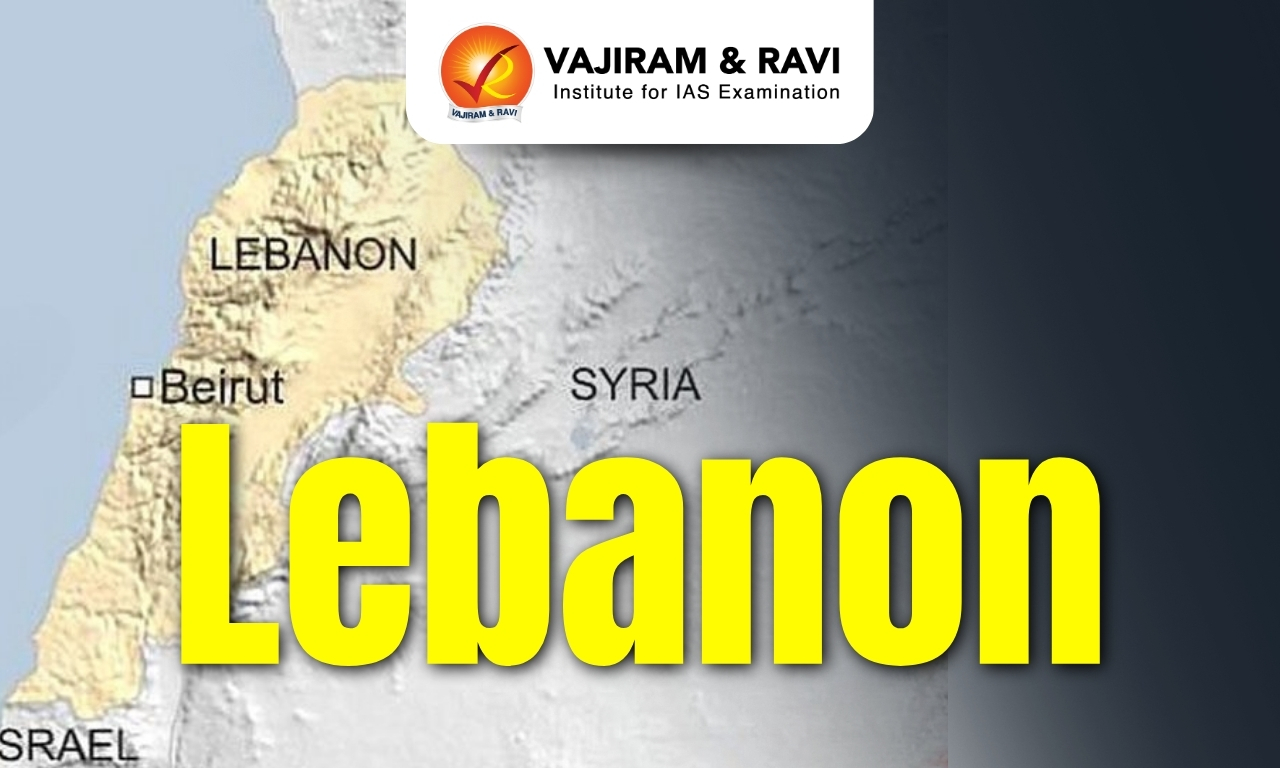
  • Lebanon: Added to the hotspot list due to escalating hostilities in 2026.
  • Madagascar: Included because of adverse and erratic weather conditions affecting agricultural production.

Major Drivers of the Global Hunger Crisis

The report highlights multiple interconnected factors driving the worsening food crisis:

  • Armed Conflict and Violence: Conflict remains the primary driver of hunger, affecting 12 of the 13 hotspots and disrupting livelihoods, markets and humanitarian access.
  • Economic Shocks: Inflation, rising energy prices, higher fertiliser costs and slowing global economic growth are reducing food affordability and increasing vulnerability.
  • Climate Change and Climate Variability: Climate-related shocks are intensifying food insecurity across already fragile regions.
  • Possible El Niño Event: Forecasts indicate a transition towards El Nino conditions that could trigger droughts, floods and erratic rainfall patterns.
  • Repeated Droughts: Consecutive rainfall failures in countries such as South Sudan, Somalia and Afghanistan have resulted in crop losses, water shortages and displacement.
  • Floods and Extreme Weather: Irregular rainfall, cyclones and flooding have damaged crops and reduced harvest prospects in Madagascar and parts of the DRC.
  • Disease Outbreaks: The Ebola outbreak in eastern DRC is disrupting livelihoods, mobility and humanitarian operations.
  • Spillover Effects of Regional Conflicts: The conflict in the Middle East is affecting markets, supply chains and humanitarian access in multiple countries.
  • Declining Humanitarian Funding: Funding for food assistance, emergency agriculture and nutrition programmes declined by 59% between 2022 and 2025.
  • Limited Humanitarian Response Capacity: As of June 2026, only about one-third of global food-security funding requirements had been met.

Way Forward

The report calls for urgent and coordinated action to scale up humanitarian assistance, ensure safe access to affected populations, invest in livelihoods and strengthen resilience.

FAO and WFP emphasise that early action saves lives, protects livelihoods and is significantly more cost-effective than responding after crises have escalated. The report stresses the need for stronger political commitment, predictable financing and collective international action to prevent hunger crises from deepening across some of the world’s most vulnerable regions.

Hunger Hotspots Report FAQs

Q1: What is the Hunger Hotspots Report?

Ans: The Hunger Hotspots Report is a biannual early-warning assessment jointly released by the Food and Agriculture Organization and World Food Programme under the Global Network Against Food Crises to identify countries where acute food insecurity is likely to worsen in the coming months.

Q2: Which countries have been identified as the hotspots of highest concern in the Hunger Hotspots Report 2026?

Ans: The report identifies Sudan, South Sudan, Yemen, Palestine, Nigeria and Somalia as the hotspots of highest concern due to the severity of hunger, large affected populations and the risk of famine or catastrophe-level food insecurity.

Q3: What are the major drivers of acute food insecurity highlighted in the Hunger Hotspot Report?

Ans: The report identifies armed conflict and violence as the primary driver, compounded by economic shocks, climate variability, a possible El Niño event, disease outbreaks such as Ebola, regional conflict spillovers and declining humanitarian funding.

Q4: Why has humanitarian funding emerged as a major concern?

Ans: Funding for food assistance, emergency agricultural support and nutrition programmes declined by about 59% between 2022 and 2025, while nearly 266 million people are facing high levels of acute food insecurity, creating a significant gap between needs and available resources.

Q5: What measures does the Hunger Hotspot Report recommend to prevent worsening hunger crises?

Ans: The report calls for early and coordinated action through scaling up humanitarian assistance, ensuring safe access to affected populations, investing in livelihoods and resilience-building, and securing predictable financing and stronger international cooperation.

Declining Soil Health, A Silent Threat to India’s Food Security

Declining Soil Health

India produced a record 354 million tonnes of foodgrains in 2024-25, an increase of more than 100 million tonnes over the last decade. However, higher agricultural production has not translated into better nutritional outcomes. According to the State of Food Security and Nutrition in the World (SOFI) 2025 Report, 18.7% of Indian children below five years suffer from wasting, while more than half of women aged 15–49 years are anaemic. This paradox highlights a deeper concern - Declining Soil Health in India, a silent threat to India’s food security. 

State of Soil Health in India

India has achieved record foodgrain production of 354 million tonnes in 2024-25, but the condition of its soils is becoming a matter of concern. 

  • Nutritional Deficiency: According to Soil Health Card data (2025-26) based on more than 93 lakh soil samples, nearly 73% of soils are deficient in nitrogen, while many soils also lack important micronutrients such as zinc and iron.
  • Declining Soil Organic Carbon: The level of Soil Organic Carbon (SOC), which supports microbial activity, helps plants absorb nutrients, improves soil structure, enhances water retention, and sustains long-term fertility, has declined in many agricultural regions.
    • For example, in several parts of Punjab and Haryana, SOC levels have fallen to 0.2-0.4%, reflecting severe degradation of soil quality.

Reasons of Declining Soil Health

India’s soil health has deteriorated gradually due to farming practices that prioritised higher production but paid insufficient attention to restoring the nutrients and organic matter removed from the soil.

  • Rice-Wheat Centric Agricultural Model: Post- Green Revolution procurement and policy support became heavily concentrated around rice and wheat, gradually reducing the cultivation of pulses, millets, and oilseeds that help maintain soil balance.
  • Intensive Mono-Cropping: Continuous cultivation of the same crops year after year places constant pressure on soil nutrients without providing adequate time or mechanisms for natural replenishment.
  • Excessive Dependence on Nitrogen-Based Fertilisers: Fertiliser use increasingly became skewed towards nitrogen, leading to nutrient imbalances and neglect of other essential macro and micronutrients.
  • Inadequate Organic Replenishment: Crop residues, compost, farmyard manure, and other organic inputs have not been added back to the soil in sufficient quantities to compensate for nutrient extraction contributing to declining Soil Organic Carbon (SOC)
  • Weakening of Soil Biological Systems: Continuous nutrient extraction and declining organic matter have gradually damaged the biological processes through which soils naturally absorb, recycle, and retain nutrients.
  • Policy Bias Towards Productivity Rather than Soil Health: Agricultural policies have largely focused on maximising yields, while soil restoration and balanced nutrient management received relatively less attention.
  • Growing Dependence on Chemical Inputs: As soil fertility declined, farmers increasingly relied on chemical fertilisers to sustain yields, creating a cycle of further soil degradation over time.

These factors have collectively weakened the soil’s natural ability to sustain productivity, making soil degradation a long-term challenge for India’s agricultural sustainability.

Implications of Declining Soil Health 

The implications of declining soil health extend far beyond agriculture.

  • First, it threatens long-term food security. Soil degradation gradually reduces the productive capacity of agricultural land, making future yield growth more difficult.
  • Second, it affects nutritional security. Deficiencies in micronutrients such as zinc and iron in soils can eventually influence the nutritional quality of crops.
  • Third, soil health is closely linked to water security. Research shows that a 1% increase in Soil Organic Carbon can improve an acre’s water-holding capacity by up to 25,000 gallons. For a country where a large share of agriculture remains rain-fed, this is critically important.
  • Fourth, soil degradation increases climate vulnerability. A 2025 study published in Soil and Tillage Research found that higher SOC levels can reduce warming-induced yield losses, particularly in dryland regions.
  • Finally, declining soil quality pushes farmers towards greater dependence on chemical inputs to maintain productivity, increasing cultivation costs and environmental pressures.

Andhra Pradesh’s Community Managed Natural Farming (CMNF) Programme

Andhra Pradesh’s Community Managed Natural Farming (CMNF) programme provides an important example of how soil health can be restored while maintaining agricultural productivity. 

Launched in 2016, the programme had expanded to nearly 17.74 lakh farmers, covering 9.26 lakh hectares across 4,116 Gram Panchayats by 2025-26.

  • The initiative focuses on rebuilding soil health by restoring organic matter, reducing dependence on chemical fertilisers and pesticides, and encouraging diversified cropping systems
  • By improving soil moisture retention and biological activity, it seeks to strengthen the natural processes that sustain long-term soil fertility.

Early research suggests that natural farming plots can achieve yields comparable to conventional farming while lowering input costs and improving farm incomes. More importantly, the programme helps restore the ecological resilience of agricultural systems, making them better equipped to withstand climate stress, water scarcity, and soil degradation.

Way Forward

  • Promote Balanced Nutrient Management: Shift from excessive nitrogen use towards balanced application of macro and micronutrients based on Soil Health Card recommendations.
  • Increase Soil Organic Carbon (SOC): Encourage the use of compost, farmyard manure, green manuring, crop residues, and bio-inputs to improve soil fertility and moisture retention.
  • Diversify Cropping Systems: Promote pulses, millets, oilseeds, and crop rotation to reduce pressure on soils caused by intensive rice-wheat cultivation.
  • Scale Up Natural Farming Models: Replicate successful initiatives such as Andhra Pradesh’s Community Managed Natural Farming programme in other states.
  • Strengthen Soil Health Card Programme: Improve soil testing infrastructure and ensure timely, location-specific advisories to farmers.
  • Reorient Agricultural Subsidies: Align fertiliser and procurement policies with sustainable farming practices rather than production-centric incentives alone.
  • Promote Climate-Resilient Agriculture: Integrate soil conservation with climate adaptation strategies to enhance resilience against droughts, heat stress, and erratic rainfall.
  • Enhance Farmer Awareness and Extension Services: Strengthen capacity-building programmes on sustainable soil management and integrated nutrient management practices.
  • Encourage Conservation Agriculture: Promote minimum tillage, residue retention, and cover cropping to reduce soil degradation and improve soil structure.
  • Support Research and Innovation: Invest in research on soil restoration, bio-fertilisers, regenerative agriculture, and region-specific sustainable farming practices.

Declining Soil Health FAQs

Q1: What is the current status of soil health in India?

Ans: Indian soils are facing widespread nutrient depletion, with nearly 73% of tested soil samples deficient in nitrogen and many lacking essential micronutrients such as zinc and iron.

Q2: Why is soil health declining in India?

Ans: Declining soil health is mainly due to intensive mono-cropping, excessive use of nitrogen-based fertilisers, inadequate addition of organic matter, and prolonged cultivation of rice-wheat cropping systems.

Q3: How does poor soil health affect agriculture and food security?

Ans: Poor soil health reduces soil fertility, lowers water retention capacity, increases climate vulnerability, raises cultivation costs, and threatens long-term food and nutritional security.

Q4: What is Soil Organic Carbon (SOC) and why is it important?

Ans: Soil Organic Carbon is the organic matter present in soil that helps retain moisture, recycle nutrients, support microbial activity, and maintain long-term soil productivity.

Q5: What is Andhra Pradesh’s Community Managed Natural Farming (CMNF) Programme?

Ans: CMNF is a large-scale natural farming initiative that promotes soil restoration, reduces dependence on chemical inputs, encourages crop diversification, and improves farm sustainability.

Gulf of Mannar Biosphere Reserve, Location, Flora & Fauna, Threats

Gulf of Mannar Biosphere Reserve

The Gulf of Mannar Biosphere Reserve is a coastal and marine ecosystem located along the southeastern coast of India. It is known for its rich biodiversity, including coral reefs, seagrass beds, and a wide variety of marine species. The area is protected to conserve its natural resources while also supporting the livelihoods of local communities. Overall, it represents a balance between environmental conservation and sustainable development

About Gulf of Mannar Biosphere Reserve

  • The Gulf of Mannar Biosphere Reserve is one of the most biologically rich marine regions in India, known for the presence of multiple ecosystems such as coral reefs, seagrass beds, and mangroves, all existing together in close interaction. This combination makes it ecologically very unique and globally significant.
  • It supports an extremely high level of biodiversity, with over 4,000 species of plants and animals, ranging from microscopic organisms to large marine mammals, making it a storehouse of marine diversity.
  • The region is often described as an “underwater tropical rainforest” because of its dense and diverse marine life, especially coral reef systems and ornamental fish populations.

Gulf of Mannar Biosphere Reserve Location

  • The biosphere reserve is located along the southeastern coast of India in Tamil Nadu, stretching between Thoothukudi and Ramanathapuram districts, and includes a chain of 21 islands.
  • It covers a large area of about 10.5 lakh hectares, including both terrestrial and marine ecosystems, with a significant coastal population depending on it.
  • It was declared a biosphere reserve in 1989 and later recognized under UNESCO’s Man and Biosphere (MAB) Programme in 2001, highlighting its international ecological importance.

Gulf of Mannar Biosphere Reserve Ecological Features

  • The islands in the region are formed mainly of sand, coral debris, and limestone, and are surrounded by diverse coastal landforms such as mudflats, lagoons, backwaters, and sand dunes, creating varied habitats.
  • Seagrass beds are one of the most important features of this region, acting as nursery and breeding grounds for fish and other marine organisms, and supporting food chains in the ecosystem.
  • The coral reefs found here are highly productive and support a wide variety of marine life, while also protecting the coastline from wave action and erosion.
  • The region lies along the Central Asian Flyway, making it an important stopover for migratory birds, thereby increasing its ecological significance beyond marine biodiversity.

Gulf of Mannar Biosphere Reserve Flora and Fauna

  • The vegetation includes mangroves (Rhizophora, Avicennia, Bruguiera), extensive seagrass meadows, and a large number of seaweed species, all of which play a crucial role in maintaining ecological balance.
  • The biosphere reserve is famous for the Dugong (sea cow), an endangered herbivorous marine mammal that depends on seagrass for food, making this region one of its last important habitats in India.
  • It also supports a wide range of fauna including corals, fishes, sea turtles, dolphins, whales, crustaceans, molluscs, and echinoderms, showing immense biological diversity.
  • A unique feature is the presence of Balanoglossus, often called a “living fossil,” which is important for understanding evolutionary links between different animal groups.

Gulf of Mannar Biosphere Reserve Socio-Cultural Significance

  • Socio-Economic Importance
    • The biosphere reserve supports the livelihoods of lakhs of people living in coastal villages, most of whom depend on fishing and marine resources for their income and survival.
    • The Gulf of Mannar Biosphere Reserve Trust plays a key role in managing the area through community participation, ensuring that conservation efforts also support local development.
    • The region has strong potential for eco-tourism, research, and education, attracting scientists, students, and nature enthusiasts.
  • Cultural and Historical Significance
    • The area holds immense cultural importance as it includes Rameswaram, a major pilgrimage center associated with the Ramayana, attracting millions of visitors every year.
    • This cultural connection adds to the importance of the region, making it not just an ecological hotspot but also a site of historical and religious value.

Gulf of Mannar Biosphere Reserve  Environmental Challenges

  • Destructive Fishing Practices (Bottom Trawling): Intensive fishing using bottom trawlers disturbs the seabed and destroys coral reefs and seagrass beds, which are crucial habitats. It also leads to the accidental capture of endangered species like dugongs and sea cucumbers, reducing biodiversity over time.
  • Pollution (Plastic & Industrial Waste): Discharge of industrial effluents, untreated sewage, and plastic waste has caused increasing microplastic contamination in marine waters. This not only degrades ecosystems but also affects marine organisms through ingestion and toxicity.
  • Coral Bleaching & Climate Change: Rising sea temperatures, ocean acidification, and sea-level rise are triggering frequent coral bleaching events, weakening reef systems. In some cases, coastal erosion and submergence of islands have also been observed.
  • Habitat Destruction (Mangroves & Seagrass Loss): The degradation of mangroves and seagrass ecosystems reduces natural coastal protection and eliminates important breeding and feeding grounds, especially impacting species like the dugong.
  • Ghost Nets & Marine Debris: Abandoned or lost fishing gear continues “ghost fishing”, trapping marine life and damaging coral habitats. Over time, these synthetic materials break down into microplastics, further polluting the ecosystem.
  • Invasive Species & Overexploitation: The spread of invasive plants like Prosopis disturbs native biodiversity on islands, while overharvesting of marine resources (like ornamental fish and holothurians) puts additional pressure on already fragile ecosystems.

Gulf of Mannar Biosphere Reserve  Importance & Conservation Value

  • Maintains Ecological Balance & Biodiversity: The biosphere reserve plays a vital role in sustaining marine ecological balance by supporting diverse ecosystems like coral reefs, seagrass beds, and mangroves, which together host thousands of species and ensure ecosystem stability.
  • Coastal Protection & Climate Regulation: Natural features such as mangroves and coral reefs act as protective barriers against cyclones, storm surges, and coastal erosion, while also contributing to carbon sequestration (blue carbon) and climate regulation.
  • Supports Livelihoods & Food Security: The region provides direct livelihood support to coastal communities, especially through fisheries, while also ensuring food security by acting as a breeding and nursery ground for commercially important fish species.
  • Centre for Research, Education & Biodiversity Conservation: It serves as a living laboratory for scientific research, environmental education, and conservation practices, helping in better understanding and protection of marine ecosystems.
  • Model for Sustainable Development: Being the first marine biosphere reserve in South and Southeast Asia, it demonstrates how conservation and human development can coexist, promoting community-based and sustainable resource management.
  • Global Ecological Significance & Eco-Tourism Potential: The region holds international importance due to its rich biodiversity and endangered species like the dugong, and also offers strong potential for eco-tourism, which can generate awareness and sustainable economic benefits.

Gulf of Mannar Biosphere Reserve FAQs

Q1: What is the Gulf of Mannar Biosphere Reserve?

Ans: The Gulf of Mannar Biosphere Reserve is a coastal and marine protected area in Tamil Nadu, known for its rich biodiversity, including coral reefs, seagrass beds, and mangroves, and aims to balance conservation with sustainable development.

Q2: Where is the Gulf of Mannar Biosphere Reserve located?

Ans: It is located along the southeastern coast of India in Tamil Nadu, stretching between Thoothukudi and Ramanathapuram districts, and includes a chain of 21 islands.

Q3: Why is the Gulf of Mannar called an “underwater tropical rainforest”?

Ans: It is called an “underwater tropical rainforest” due to its dense and diverse marine life, especially coral reef ecosystems and ornamental fish diversity, similar to the richness of tropical forests.

Q4: What makes the Gulf of Mannar ecologically important?

Ans: The region is ecologically significant because it hosts multiple ecosystems (coral reefs, seagrass, mangroves) together and supports over 4,000 species, making it one of the richest marine biodiversity hotspots in India.

Q5: Which endangered species is found in the Gulf of Mannar?

Ans: The biosphere reserve is famous for the Dugong (sea cow), an endangered marine mammal that depends on seagrass ecosystems, making the region crucial for its survival.

Pradhan Mantri Swasthya Suraksha Yojana, Objectives, Components, Benefits

Pradhan Mantri Swasthya Suraksha Yojana

Pradhan Mantri Swasthya Suraksha Yojana (PMSSY) is a government initiative aimed at improving the quality and accessibility of healthcare services in India. It focuses on correcting regional imbalances in healthcare by setting up new AIIMS-like institutions and upgrading existing government medical colleges and hospitals. Overall, the scheme seeks to make advanced medical care more affordable and available to people across different parts of the country. 

About Pradhan Mantri Swasthya Suraksha Yojana

  • The Pradhan Mantri Swasthya Suraksha Yojana (PMSSY) was announced in 2003 and later approved in March 2006 with the aim of strengthening India’s healthcare system. It is implemented by the Ministry of Health and Family Welfare, which is responsible for planning and execution.
  • The scheme was introduced to address the uneven distribution of healthcare facilities across different regions of the country, especially where advanced medical services were lacking.
  • It also focuses on improving medical education infrastructure, so that more skilled doctors and healthcare professionals can be trained within the country.

Also Read : India Healthcare Sector

Pradhan Mantri Swasthya Suraksha Yojana Objectives

  • One of the primary objectives of PMSSY is to reduce regional disparities by ensuring that even backward and under-served states have access to affordable and quality healthcare services.
  • The scheme also aims to expand tertiary healthcare facilities, which include specialized treatments and advanced medical procedures that are usually available only in major cities.
  • Another important goal is to strengthen medical education, particularly in states where there is a shortage of quality institutions, thereby improving the overall doctor-patient ratio in the long run.
  • Overall, the scheme seeks to create a more balanced, inclusive, and efficient healthcare system in India.

Pradhan Mantri Swasthya Suraksha Yojana Key Components

  • PMSSY works through two major components, both of which complement each other in improving healthcare delivery and education.
  • Setting up AIIMS-like Institutions
    • Under this component, new institutions similar to the All India Institute of Medical Sciences (AIIMS) are established in different parts of the country. These institutions are designed to provide high-quality healthcare services, along with teaching and research facilities.
    • They act as centers of excellence where patients can access advanced treatments, and students can receive world-class medical education.
  • Upgradation of Government Medical Colleges
    • The second component focuses on improving existing government medical colleges by providing them with better infrastructure, equipment, and specialized services.
    • The financial responsibility for these upgrades is usually shared between the Central and State Governments, ensuring cooperative federalism in healthcare development.
    • This component helps in quickly improving healthcare services without building entirely new institutions.

Pradhan Mantri Swasthya Suraksha Yojana Implementation

The implementation of Pradhan Mantri Swasthya Suraksha Yojana (PMSSY) has been carried out in a phased manner, focusing on both the creation of new AIIMS-like institutions and the upgradation of existing government medical colleges. The following sections explain how the scheme has been implemented across different phases to improve healthcare infrastructure and medical education in the country. 

First Phase

  • The first phase of PMSSY focused on both creating new institutions and strengthening existing ones, making it a foundational stage of the scheme.

AIIMS-like Institutions

  • Six new AIIMS-like institutions were set up in states such as Bihar (Patna), Chhattisgarh (Raipur), Madhya Pradesh (Bhopal), Odisha (Bhubaneswar), Rajasthan (Jodhpur), and Uttarakhand (Rishikesh).
  • These locations were selected based on socio-economic and health indicators, such as low literacy rates, high poverty levels, poor health infrastructure, and higher disease burden.
  • Each institution was planned with a 960-bed hospital, which includes facilities for general treatment, super-specialty care, ICU services, trauma care, AYUSH units, and rehabilitation services.
  • In addition to hospitals, these institutions also include medical colleges offering undergraduate, postgraduate, and doctoral courses, thereby strengthening medical education.

Upgradation of Existing Institutions

  • Along with new institutions, 13 existing government medical colleges across various states were upgraded to improve their capacity and service quality.
  • Each institution received financial support of around ₹120 crore, with the majority contribution coming from the Central Government.
  • This helped in improving patient care services, teaching standards, and availability of advanced medical facilities.

Second Phase

  • The second phase expanded the reach of PMSSY by adding more institutions and further upgrading existing ones.
  • Two additional AIIMS-like institutions were approved in West Bengal and Uttar Pradesh, helping to extend advanced healthcare services to more regions.
  • At the same time, six more medical colleges were selected for upgradation, ensuring that improvements were not limited to new institutions alone.
  • The cost of each new AIIMS was estimated at around ₹823 crore, while the Central Government provided ₹125 crore for each upgraded college.
  • This phase reflected the government’s continued commitment to reducing healthcare gaps across states.

Third Phase

  • The third phase mainly focused on upgrading seven more government medical colleges, rather than setting up new AIIMS institutions.
  • The total cost for upgrading each institution was around ₹150 crore, out of which the Central Government contributed the majority share.
  • This phase aimed at strengthening existing healthcare infrastructure, especially in regions where institutions already existed but lacked modern facilities.
  • By improving these colleges, the government aimed to enhance both medical education and patient care services simultaneously.

Pradhan Mantri Swasthya Suraksha Yojana Progress & Benefits

  • PMSSY has significantly improved tertiary healthcare infrastructure by establishing AIIMS-like institutions in different regions, reducing the pressure on existing hospitals in metro cities.
  • The scheme has helped in reducing regional disparities by bringing advanced medical facilities to under-served and backward states, ensuring more balanced healthcare development across India.
  • Upgradation of government medical colleges has enhanced their infrastructure, diagnostic capacity, and availability of specialized treatment, leading to better patient care.
  • It has increased the availability of medical education opportunities, including UG, PG, and super-specialty courses, thereby helping address the shortage of skilled doctors.
  • The initiative has made advanced healthcare services more affordable and accessible, especially for economically weaker sections who depend on government hospitals.
  • PMSSY has strengthened the overall healthcare system by improving the doctor-patient ratio, promoting research, and building long-term capacity for quality healthcare delivery.

Other Healthcare Related Initiatives

  • Universal & Primary Healthcare
    • Ayushman Bharat - PM Jan Arogya Yojana (AB-PMJAY): This is one of the largest government-funded health insurance schemes in the world, designed to provide cashless treatment coverage to poor and vulnerable families. It helps reduce the financial burden of hospitalization by covering major medical expenses in empanelled hospitals.
    • Ayushman Arogya Mandir (Health and Wellness Centres): Under this initiative, existing sub-centres and primary health centres are upgraded to deliver comprehensive primary healthcare. These centres provide services like free essential medicines, diagnostics, maternal care, and treatment for common diseases, bringing healthcare closer to people’s homes.
    • National Health Mission (NHM): NHM acts as an umbrella programme for strengthening both rural (NRHM) and urban (NUHM) healthcare systems. It focuses on improving reproductive, maternal, newborn, child, and adolescent health (RMNCH+A) while also addressing communicable and non-communicable diseases.
  • Digital Health & Infrastructure
    • ABHA & Ayushman Bharat Digital Mission (ABDM): This initiative aims to build a digital health ecosystem in India by providing every citizen with a unique ABHA (Health ID). It helps in maintaining digital health records, enabling seamless sharing of medical data between hospitals and improving continuity of care.
    • e-Sanjeevani Telemedicine Services: eSanjeevani is a national telemedicine platform that allows online consultations between doctors and patients, as well as between doctors themselves. It has been especially useful in rural and remote areas, where access to specialists is limited.
    • PM-Ayushman Bharat Health Infrastructure Mission (PM-ABHIM): This scheme focuses on building strong health infrastructure, including critical care units, disease surveillance systems, and testing facilities. It also aims to improve pandemic preparedness and strengthen public health institutions.
    • National Digital Health Mission (NDHM): It focuses on creating a technology-driven healthcare ecosystem, where services are more efficient, transparent, and easily accessible.
    • Pradhan Mantri Bhartiya Janaushadhi Pariyojana (PMBJP): This initiative ensures the availability of affordable generic medicines through dedicated stores, making treatment more economical for common people.
  • Specialized & Preventive Healthcare Programs
    • Tele-MANAS (Mental Health Services): This is a 24×7 national tele-mental health service that provides free counseling and mental healthcare support, helping address the growing need for mental health awareness and care.
    • Disease Elimination Programs: The government runs targeted campaigns such as the National Tuberculosis Elimination Programme (NTEP) and other initiatives aimed at controlling vector-borne diseases, hepatitis, and antimicrobial resistance. These programs focus on prevention, early detection, and treatment.
    • Maternal and Child Health Initiatives: Schemes like Janani Suraksha Yojana (JSY), Pradhan Mantri Surakshit Matritva Abhiyan (PMSMA) aims to improve maternal and infant health. They promote safe institutional deliveries, regular check-ups, and better healthcare facilities to reduce mortality rates.

Pradhan Mantri Swasthya Suraksha Yojana FAQs

Q1: What is Pradhan Mantri Swasthya Suraksha Yojana (PMSSY)?

Ans: PMSSY is a Government of India scheme aimed at improving access to quality healthcare by establishing AIIMS-like institutions and upgrading existing medical colleges.

Q2: What are the main objectives of PMSSY?

Ans: The scheme aims to reduce regional disparities in healthcare, expand tertiary care services, and strengthen medical education infrastructure in India.

Q3: When was PMSSY launched?

Ans: PMSSY was announced in 2003 and officially approved in March 2006 to strengthen the healthcare system.

Q4: What are the key components of PMSSY?

Ans: It has two main components: setting up new AIIMS-like institutions and upgrading existing government medical colleges.

Q5: How is PMSSY implemented in India?

Ans: PMSSY is implemented in phases, focusing on building new institutions and upgrading medical colleges to improve healthcare access and education.

UPSC Daily Quiz 20 June 2026

UPSC Daily Quiz

[WpProQuiz 190]

UPSC Daily Quiz FAQs

Q1: What is the Daily UPSC Quiz?

Ans: The Daily UPSC Quiz is a set of practice questions based on current affairs, static subjects, and PYQs that help aspirants enhance retention and test conceptual clarity regularly.

Q2: How is the Daily Quiz useful for UPSC preparation?

Ans: Daily quizzes support learning, help in revision, improve time management, and boost accuracy for both UPSC Prelims and Mains through consistent practice.

Q3: Are the quiz questions based on the UPSC syllabus?

Ans: Yes, all questions are aligned with the UPSC Syllabus 2025, covering key areas like Polity, Economy, Environment, History, Geography, and Current Affairs.

Q4: Are solutions and explanations provided with the quiz?

Ans: Yes, each quiz includes detailed explanations and source references to enhance conceptual understanding and enable self-assessment.

Q5: Is the Daily UPSC Quiz suitable for both Prelims and Mains?

Ans: Primarily focused on Prelims (MCQ format), but it also indirectly helps in Mains by strengthening subject knowledge and factual clarity.

Chittaranjan Das, Early Life, Swaraj Party & Major Contributions

Chittaranjan Das

Chittaranjan Das, popularly known as “Deshbandhu”, was a prominent leader of India’s freedom struggle who worked tirelessly for the country’s independence. He played a key role in spreading nationalist ideas and political awareness, especially in Bengal. Apart from being a political leader, he was also a respected lawyer and social reformer who believed in unity and self-governance. Overall, he is remembered for his strong commitment to democratic values and the cause of national freedom

Chittaranjan Das Early Life & Education

  • Chittaranjan Das (1870-1925), popularly known as “Deshbandhu”, was born in Calcutta in an educated and reform-oriented family that valued learning and social service.
  • His father, Bhuban Mohan Das, was a reputed lawyer and a member of the Brahmo Samaj, which influenced Das towards progressive thinking and reformist ideas.
  • He received his early education in Calcutta and later studied at Presidency College, where he developed an interest in literature, politics, and public speaking.
  • He went to England to prepare for the I.C.S., but after not succeeding, he chose to pursue law at the Inner Temple, shaping his future career.
  • During his student life, he was influenced by leaders like Surendranath Banerjee and writers like Bankim Chandra Chattopadhyay, which shaped his nationalist outlook.

Chittaranjan Das Legal Career & Rise to Fame

  • After returning to India, he started practicing at the Calcutta High Court and soon became known for his sharp legal mind and persuasive arguments.
  • His major breakthrough came when he defended Aurobindo Ghose in the Alipore Bomb Case (1908), leading to Aurobindo’s acquittal and bringing Das into national prominence.
  • He also handled important cases like the Dacca Conspiracy Case, showcasing his expertise in both civil and criminal law.
  • Within a short time, he built a highly successful and lucrative legal practice, becoming one of the leading lawyers of his time.
  • His courtroom skills and commitment to justice earned him wide respect among both the public and the legal community.

Chittaranjan Das Entry into Politics & National Movement

  • Though he joined the Indian National Congress earlier, he became actively involved in politics around 1917, quickly emerging as a mass leader in Bengal.
  • He strongly opposed colonial laws like the Rowlatt Act (1919) and supported nationwide protests against British repression.
  • He actively participated in the Non-Cooperation Movement (1920) and made significant personal sacrifices, including giving up his profitable legal career.
  • He adopted a simple lifestyle, symbolizing his commitment to the national cause, and even encouraged his family members to participate in the movement.
  • His leadership helped mobilize youth, students, and common people, turning the freedom struggle into a mass movement.

Chittaranjan Das Political Ideas & Contributions

  • He strongly believed in “Swaraj for the masses, not for the classes”, emphasizing that freedom should benefit all sections of society.
  • He supported Hindu-Muslim unity and introduced the Bengal Pact (1923) to reduce communal tensions and promote cooperation.
  • He emphasized the importance of national education, especially through vernacular languages, so that common people could actively participate in the freedom movement.
  • He advocated social reforms such as women’s education, widow remarriage, and removal of untouchability, showing his progressive outlook.
  • He believed in constitutional and non-violent methods, but also supported active political participation to challenge British rule.

Swaraj Party & Leadership Role

  • Along with Motilal Nehru and others, he founded the Swaraj Party in 1923 to enter legislative councils and oppose colonial policies from within.
  • The party achieved significant success in elections and became an important voice against British governance inside the councils.
  • In 1924, he became the first elected Mayor of Calcutta, marking a major step in local self-governance.
  • As Mayor, he introduced reforms in public health, sanitation, education, and urban infrastructure, aiming to improve living conditions.
  • He also worked towards making the administration more efficient, transparent, and people-oriented.

Chittaranjan Das Literary Contributions & Journalism

  • Apart from politics, he was a talented poet, writer, and thinker, contributing to India’s intellectual and cultural life.
  • He published and edited the newspaper ‘Forward’, which became the mouthpiece of the Swaraj Party and influenced political opinion.
  • He was associated with journals like ‘Bande Mataram’, helping spread nationalist ideas among the masses.
  • His literary works, including ‘Mala’, ‘Antaryami’, and ‘Kishore Kishori’, reflect his creative and philosophical side.
  • Through his writings, he aimed to awaken national consciousness and inspire people towards freedom.

Chittaranjan Das Values, Personality & Legacy

  • He is remembered for his patriotism, sacrifice, leadership, and dedication to public service, which made him a beloved national figure.
  • His life reflected strong values of unity, social justice, and democratic ideals, influencing future leaders.
  • He believed in inclusive nationalism, where all communities could work together for a common goal.
  • His sacrifices, including donating his wealth for public causes, showed his selflessness and commitment.
  • Leaders like Rabindranath Tagore praised him for his vision and inspiring personality, which left a lasting impact.

Chittaranjan Das Death & Historical Importance

  • Chittaranjan Das passed away on 16 June 1925 in Darjeeling, at a relatively young age, cutting short a powerful political career.
  • Despite his short active period in politics, he became one of the most influential leaders of Bengal and the national movement.
  • His role in shaping mass politics, legislative opposition, and communal harmony remains highly significant.
  • He is remembered as a bridge between moderate and extremist approaches, combining idealism with practical politics.
  • His legacy continues to inspire India’s democratic and nationalist traditions, making him a key figure in modern Indian history.

Chittaranjan Das FAQs

Q1: Who was Chittaranjan Das?

Ans: Chittaranjan Das, also known as Deshbandhu, was a prominent Indian freedom fighter, lawyer, and political leader who played a key role in spreading nationalist ideas and leading movements for India’s independence, especially in Bengal.

Q2: Why is Chittaranjan Das called “Deshbandhu”?

Ans: He was called “Deshbandhu” (Friend of the Nation) because of his selfless service, sacrifices, and dedication towards the cause of national freedom and public welfare.

Q3: What was Chittaranjan Das’s role in the freedom struggle?

Ans: He actively participated in movements like the Non-Cooperation Movement (1920), opposed laws like the Rowlatt Act, and helped transform the struggle into a mass movement by mobilizing youth and common people.

Q4: What is the Swaraj Party and what was his role in it?

Ans: The Swaraj Party, founded in 1923 by Chittaranjan Das and Motilal Nehru, aimed to enter legislative councils and oppose British policies from within, becoming an important platform for constitutional resistance.

Q5: What was his contribution as a lawyer?

Ans: He gained fame for defending Aurobindo Ghose in the Alipore Bomb Case (1908), which brought him national recognition and established him as a leading lawyer of his time.

List of Mughal Emperors (1526-1857), Rulers, Timeline, Decline

List of Mughal Emperors

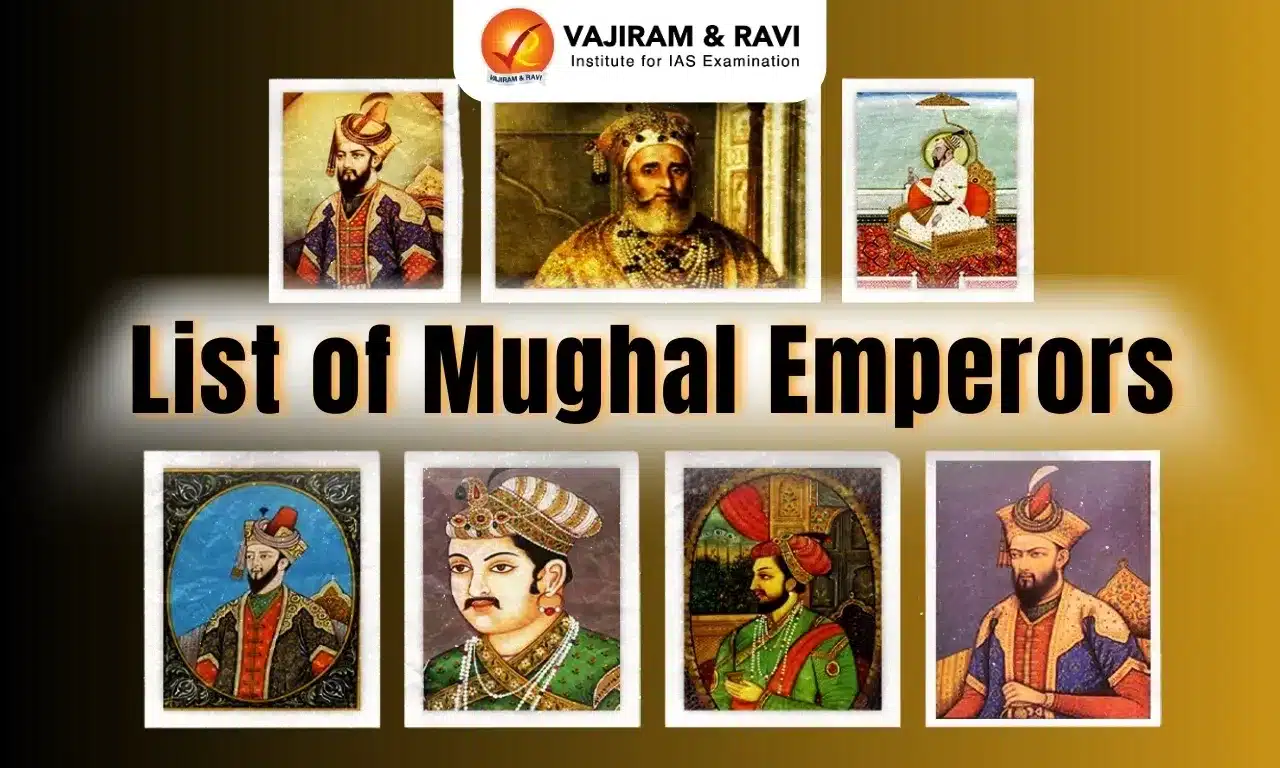
The Mughal Emperors were among the most influential rulers in Indian history, governing large parts of the Indian subcontinent from 1526 to 1857. The Mughal Empire was founded by Babur after his victory in the First Battle of Panipat (1526), which marked the beginning of Mughal rule in India. The dynasty is renowned for its strong administrative system, magnificent architecture, promotion of Persian art and culture, and lasting contributions to India's social and cultural heritage. This article provides a complete list of Mughal Emperors, their reigns, major achievements, and the factors that led to the decline of the Mughal Empire.

History of Mughal Dynasty 

The Mughal Dynasty was one of the most powerful dynasties in Indian History, founded in 1526 by Babur after winning the First Battle of Panipat against Ibrahim Lodi. Later, rulers like Akbar, Shah Jahan and Aurangzeb contributed in expanding the empire. Eventually after Aurangzab’s death in 1707, the mughal empire started getting weak due to succession struggles, regional revolts, and foreign invasions. This led to British dominance in 1857. 

List of Mughal Emperors (1526-1857)

The Mughal Empire lasted from 1526 to 1857. Below is a list of emperors of the Mughal Empire in chronological order:

Emperor

Reign

Death

Known For

Babur

1526-1530

1530, Agra

Founder of the Mughal Empire, known for his military skills and the use of gunpowder.

Humayun

1530-1540, 1555-1556

1556, Delhi

Lost and regained the throne.

Akbar

1556-1605

1605, Agra

Expanded the empire, introduced religious tolerance, and strengthened the administrative system.

Jahangir

1605-1627

1627, Bhimber

Encouraged Persian art and culture, established diplomatic ties with the British

Shah Jahan

1628-1658

1666, Agra

Patron of Mughal architecture; built the Taj Mahal, Red Fort, and Jama Masjid.

Aurangzeb

1658-1707

1707, Ahmednagar

The last major Mughal emperor, expanded the empire to its greatest size. Faced strong resistance from Marathas, Rajputs, and Sikhs.

Bahadur Shah I

1707-1712

1712, Lahore

Known for his weak rule, he was defeated by his brother Farrukhsiyar.

Jahandar Shah

1712-1713

1713, Delhi

Weak ruler, assassinated by the Sayyid Brothers.

Farrukh Siyar

1713-1719

1719, Delhi

Brief reign of 4 months before being overthrown.

Rafi ud-Darajat

1719

1719, Agra

Also a short reign, marked by turbulence.

Shah Jahan II

1719

1719, Agra

A puppet ruler, during the period of political chaos.

Muhammad Shah

1719-1748

1748, Delhi

Witnessed the invasion of Nadir Shah, who plundered Delhi.

Ahmad Shah Bahadur

1748-1754

1775, Delhi

Incompetent ruler, the empire fell under noble control.

Alamgir II

1754-1759

1759, India

Assassinated due to court intrigues.

Shah Jahan III

1759-1760

1772, India

Nominal ruler with no real power.

Shah Alam II

1760-1788, 1788-1806

1806, Delhi

Defeated at the Battle of Buxar, ruled under British influence.

Shah Jahan IV

1788

1790, Delhi

Real name, Bidar Bakht Mahmud Shah Bahadur, was deposed by Ghulam Kadir

Akbar II

1806-1837

1837, Delhi

Reduced to a ceremonial figurehead.

Bahadur Shah II

1837-1857

1862, Rangoon

Last Mughal emperor, exiled after the Revolt of 1857.

Famous Rulers of Mughal Empire

The Mughal emperors played a significant role in shaping India’s history, politics, and culture. Their reigns influenced governance, architecture, and societal structures, leaving a lasting impact on the subcontinent. Here are some of the most influential rulers of the Mughal Empire:

  • Babur (1526–1530)
    A descendant of Timur and Genghis Khan, Babur defeated Ibrahim Lodi in the Battle of Panipat (1526), marking the beginning of Mughal rule in India.
    His key contributions include the introduction of gunpowder warfare and the establishment of a centralized administration with Persian cultural influence. 
  • Akbar (1556–1605)
    Akbar ascended the throne at the age of 13 and significantly expanded the empire through military conquests and diplomacy.
    He is known for advocating religious tolerance, implementing an efficient tax system (Zabt), and introducing important military reforms. His legacy includes the promotion of Hindu-Muslim unity through Din-i-Ilahi, which earned him the reputation of being the greatest Mughal emperor.
  • Shah Jahan (1628–1658)
    Shah Jahan’s reign is often referred to as the golden age of Mughal architecture. He is best known for his contributions to architecture, including the construction of the Taj MahalRed Fort, and Jama Masjid.
  • Aurangzeb (1658–1707)
    Aurangzeb expanded the Mughal Empire to its largest territorial extent but faced significant resistance.
    He strengthened the military but imposed strict religious policies, which led to widespread discontent. His reign saw internal revolts that ultimately weakened the empire and contributed to its decline.

Each of these emperors played a crucial role in shaping India's history, leaving behind a legacy that continues to be studied and debated today.

Reason Behind Decline of the Mughal Empire

After Aurangzeb’s death, the Mughal Empire started declining due to various reasons, including external and internal factors: 

  • After Aurangzeb, the mughal empire didn't see the emergence of any strong ruler leading to instability due to policies of later Mughals. 
  • Corruption, lack of reforms and heavy taxation weakened the economy. 
  • The rising power of rajputs, marathas and sikhs reduced the control of mughals over India. Ahmad Shah Abdali and Nadir Shah constantly invaded and plundered Delhi, further weakening the empire. 
  • The Battle of Buxar (1764) and British diplomacy reduced the Mughal emperor to a mere figurehead. The Revolt of 1857 marked the final collapse of Mughal rule.
  • The Mughal Empire played a crucial role in shaping Indian history. From Babur to the Later Mughals, their rule saw great achievements and eventual decline. The empire’s influence on art, architecture, and governance remains significant.

List of Mughal Emperors FAQs

Q1: Who were the 7 Mughal emperors?

Ans: The first seven Mughal emperors were Babur, Humayun, Akbar, Jahangir, Shah Jahan, Aurangzeb, and Bahadur Shah I.

Q2: Who was the 19th Mughal emperor?

Ans: Akbar Shah II was the 19th Mughal emperor.

Q3: Who was the 17th Mughal emperor?

Ans: Shah Alam II was the 17th Mughal emperor.

Q4: What is the order of the Mughal emperors?

Ans: Babur → Humayun → Akbar → Jahangir → Shah Jahan → Aurangzeb → Bahadur Shah I → Jahandar Shah → Farrukhsiyar → Rafi ud-Darajat → Shah Jahan II → Muhammad Shah → Ahmad Shah Bahadur → Alamgir II → Shah Jahan III → Shah Alam II → Akbar Shah II → Bahadur Shah II.

Q5: Who is the real father of Akbar?

Ans: Humayun was the real father of Akbar.

Folk Dances of India, State Wise List, Pictures, Features

Folk Dances of India

India is a land of diverse cultures, with each region showcasing unique traditions, languages, and art forms. Among these, Folk Dances of India play a significant role in reflecting the country's cultural richness. From the classical to regional folk performances, dance is an essential part of India's heritage. For candidates preparing for government exams, understanding List of Folk Dances of India is crucial. This article covers the most commonly asked folk dances, focusing on those that have appeared in past exams and those likely to feature in future ones, ensuring thorough exam preparation.

Folk Dances of India

Folk dances in India are dance forms which represent different communities and are performed during celebrations such as births, festivals, weddings, and other special occasions. These dances aren’t performed by professionals but by people who carry forward age-old traditions, showcasing the cultural identity and values passed down through generations. Unique to each region, these dances showcase the cultural identity and narrates tales of heritage, joy, and the shared history of the community.

Folk Dances of India Historical Background

The history of Indian folk dances goes back to ancient agricultural communities. Early human settlements performed group dances to thank nature, celebrate good harvest, pray for rain and mark important events. As kingdoms, trade routes and communities evolved, these dances absorbed new cultural influences such as tribal customs, local mythology, regional music and craftsmanship. Over time, folk dances became part of community identity and were performed during festivals, fairs and seasonal rituals. Many dances also served social purposes such as community coordination, storytelling or strengthening unity within villages.

Folk Dances of India State Wise Categories

To understand them better, folk dances can be studied region-wise or theme-wise. Below are the major categories.

1. North Indian Folk Dances

These dances are energetic, vibrant and often linked with agriculture and festivals. Major Examples:

[my_image src="https://vajiramias.sgp1.cdn.digitaloceanspaces.com/wp/current-affairs/2026/06/Bhangra-Dance.webp?v=2" size="full" align="center" width="auto" height="371px" alt="Bhangra Dance" title="Bhangra Dance"]

  • Bhangra (Punjab): Performed during Baisakhi; celebrates harvest.
  • Gidda (Punjab): Women’s dance expressing folk stories and humor.
  • Rouf (Jammu and Kashmir): Slow, graceful steps performed during Ramadan and spring season.
  • Kud (Jammu): Performed by villages to thank local deities.
  • Features: Use of drums like dhol, colorful attire, group movements, and strong community participation.

2. West Indian Folk Dances

These dances highlight desert culture, royal traditions and festive celebrations. Major Examples:

[my_image src="https://vajiramias.sgp1.cdn.digitaloceanspaces.com/wp/current-affairs/2026/06/Dandiya-Dance.webp?v=2" size="full" align="center" width="auto" height="427px" alt="Dandiya Dance" title="Dandiya Dance"]

  • Garba (Gujarat): Performed in circles during Navratri with clapping patterns.
  • Dandiya Raas (Gujarat): Stick dance performed in pairs.
  • Ghoomar (Rajasthan): Graceful circular movements performed by women.
  • Kachhi Ghodi (Rajasthan): Mock horse dance narrating heroic tales.
  • Features: Rich costumes, mirror-work dresses, use of traditional instruments like dhol, nagada, shehnai.

3. East Indian Folk Dances

These dances are deeply influenced by nature, harvest rituals and tribal life. Major Examples:

[my_image src="https://vajiramias.sgp1.cdn.digitaloceanspaces.com/wp/current-affairs/2026/06/Bihu-Dance.webp?v=2" size="full" align="center" width="auto" height="394px" alt="Bihu Dance" title="Bihu Dance"]

  • Bihu (Assam): Celebrates Assamese New Year and spring; involves fast beats.
  • Chhau (Odisha, West Bengal, Jharkhand): Martial art-based dance with masks.
  • Santhali Dance (Jharkhand/West Bengal): Tribal dance celebrating community unity.
  • Jhumur (Bengal region): Rhythmic dance expressing daily rural life.
  • Features: Bamboo instruments, rhythmic footwork, storytelling through movements.

4. South Indian Folk Dances

These dances focus on temple traditions, local myths and agricultural celebrations. Major Examples:

[my_image src="https://vajiramias.sgp1.cdn.digitaloceanspaces.com/wp/current-affairs/2026/06/Kummi-Dance.webp?v=2" size="full" align="center" width="auto" height="347px" alt="Kummi Dance" title="Kummi Dance"]

  • Kummi (Tamil Nadu): Simple clapping dance by women.
  • Karagattam (Tamil Nadu): Balancing pots decorated as temple offerings.
  • Theyyam (Kerala): Ritual dance where performers take the form of deities.
  • Dollu Kunitha (Karnataka): Drum-based vigorous dance by men.
  • Oggu Katha (Telangana): Storytelling dance glorifying local heroes and Gods.
  • Features: Strong devotional links, colorful makeup, ritual elements and fast rhythms.

5. Central Indian Folk Dances

Central India has a strong tribal cultural base and most dances here connect with forests, festivals and local beliefs. Major Examples:

[my_image src="https://vajiramias.sgp1.cdn.digitaloceanspaces.com/wp/current-affairs/2026/06/Matki-Dance.webp?v=2" size="full" align="center" width="auto" height="366px" alt="Matki Dance" title="Matki Dance"]

  • Gaur Dance (Madhya Pradesh/ Chhattisgarh): Tribal dance honoring hunting traditions.
  • Saila Dance (Chhattisgarh): Performed during post-harvest season.
  • Matki Dance (Madhya Pradesh): Women perform balancing acts with pots.
  • Features: Use of natural materials, vibrant group movements and symbolic animal or nature-inspired steps.

List of Folk Dances of India

We have shared the List of Folk Dances of India according to different states. In exams such as UPSC, there are questions which can be related to the State Wise List of Folk Dances in India:

  • Andhra Pradesh: Kuchipudi, Dappu, Dhimsa, Kolattam, Vilasini Natyam, Andhra Natyam, Bhamakalapam, Veeranatyam, Dappu, Tappeta Gullu, Lambadi, Dhimsa, Kolattam, Butta Bommalu.
  • Assam: Bihu, Gamocha, Tabal Chongli, Natpuja, Bichhua, Maharas, Kaligopal, Bagurumba, Naga dance, Khel Gopal, Tabal Chongli, Canoe, Jhumura Hobjanai.
  • Bihar: Jata-Jatin, Bakho-Bakhain, Panwariya, Sama Chakwa, Bidesia
  • Gujarat: Garba, Dangi, Hallisaka, Gheriya Nritya, Dandia (On Navratri), Rathwa ni Gher (On Holi by Rathwa Tribe), Dandiya Ras, Tippani Juriun, Bhavai
  • Haryana: Jhumar, Phag, Daph, Dhamal, Loor (by Women), Ratvai (By Mewati Tribes), Gugga, Khor, Gagor
  • Himachal Pradesh: Jhora, Chharhi, Thoda (Sports Dance/ Martial Art form), Chham (By Buddhist to ward off evil spirit), Nati ( Guiness Book of World), Jhali, Dhaman, Chhapeli, Mahasu, Dangi
  • Jammu and Kashmir: Rauf, Dhumal, Hafiza, Bhand Pather, Hikat, Mandjas, Kud Dandi Nach, Damali
  • Karnataka: Yakshagana, Bolak-aat, Ummatt-aat, Dollu Kunitha, Hampi, Bayalata, Veeragase (During Dussehra), Bhootada Kola (Walking on bed of hot coal), Huttari, Suggi, Kunitha, Karga, Lambi
  • Kerala: Kathakali (Classical), Kummattikali (Mask dance), Kolkali, Padayani, Ottamthullal, Mohiniattam, Kaikottikali
  • Maharashtra: Lavani, Povada, Dhangari Gaja, Lezim (During Ganesh Festival), Nakata, Koli, Gafa, Dahikala, Dashavatar or Bohada
  • Odisha: Mayurbhanj Chhau (Martial Art form derived from Tribal), Savari, Ghumara, Munari, Chhau, Odissi (Classical), Dalkhai, Sakhi Kandhei (Puppet Dance), Paika, Gotipua, Tiger Nach (Bagh Nach on Chatra month), Ranapa (Enacting Chapters from life of Lord Krishna)
  • West Bengal: Jatra, Baul, Marasia, Mahal, Kathi, Gambhira, Dhali, Bhatiyali Geet, Gambira (Using Wooden Masks), Alkam (Famous Dancing, Singing), Keertan
  • Punjab: Dhaman, Bhand, Naqual, Baga (Martial Dance), Heer Geet, Tappa (Often shows soreness of a lover), Viyahula Giddha (During Marriage), Bhangra (Bhangra word derived from Hemp), Daff
  • Rajasthan: Ghumar, Chakri, Bhavai, Jhulan, Gangaur, Terah Taali, Suisini, Kalbelia (UNESCO Recognised dance form), Ghoomar (State Dance of Rajasthan), Khayal (By Bhawai Tribe), Jhulan Leela, Jhuma, Suisini, Ghapal, Kalbeliya
  • Tamil Nadu: Bharatanatyam, Kummi, Karagam, Natyanjali (Tribute to Lord Shiva), Kolattam, Kavadi
  • Uttar Pradesh: Nautanki, Raslila, Kajri, Jhora, Chappeli, Jaita
  • Uttarakhand: Garhwali, Kumayuni, Kajari, Jhora, Raslila, Choliya (Martial art/ Sword Dance), Hurka Baul, Chappeli
  • Goa: Tarangamel, Dhalo, Kunbi (Tribal Dance), Dhangar (Shepherd Community during Navratri), Koli, Dekhni, Fugdi, Shigmo, Ghode Modni, Samayi nrutya, Jagar, Ranmale, Gonph, Tonnya mell
  • Madhya Pradesh: Jawara, Matki, Phulpati (By unmarried girls of Malwa Community), Aada, Khada Nach, Phulpati, Grida Dance, Selalarki, Selabhadoni, Maanch
  • Chhattisgarh: Gaur Maria, Panthi, Gaur, Saila (By Boys after harvest Season), Sua (Tribal Dance Women dance like a Parrot), Raut Nacha, Pandwani, Vedamati, Kapalik, Bharthari Charit, Chandaini
  • Jharkhand: Alkap, Karma Munda, Agni, Jhumar, Janani Jhumar, Mardana Jhumar, Paika, Karma (During Autumn Season), Birhor (By Tribe Birhor), Kadsa (Carrying Kalasha), Phagua, Hunta Dance, Mundari Dance, Sarhul, Barao, Jhitka, Danga, Domkach, Ghora Naach
  • Arunachal Pradesh: Buiya, Rikhampada, Ponu Yoksi, Bardo Chham, Ponung, Popir, Chalo, Wancho, Pasi Kongki, Ponung, Popir, Bardo Chham
  • Manipur: Dol Cholam, Thang Ta, Lai Haraoba, Pung Cholom, Khamba Thaibi, Nupa Dance, Raslila, Jagoi, Khubak Ishei, Lhou Sha
  • Meghalaya: Ka Shad Suk Mynsiem, Laho, Nongkrem (By Khasi Tribes during Wangla Festival), Chad Sukra (Celebrate as a sowing festival), Behdienkhlam
  • Mizoram: Cheraw Dance, Khuallam, Chailam, Sawlakin, Cheraw (Traditional Bamboo Dance), Khullam (Performed by village Guests), Chawnglaizawn, Zangtalam, Par Lam, Sarlamkai/Solakia, Tlanglam
  • Nagaland: Rangma, Bamboo Dance, Zeliang, Nsuirolians, Gethinglim, Temangnetin, Hetaleulee, Leshalaptu, Aaluyattu (By konyak tribe)
  • Tripura: Hojagiri, Maimata (By Kaloi Community)
  • Sikkim: Chu Faat Dance, Sikmari, Singhi Chaam or the Snow Lion Dance, Yak Chaam, Denzong Gnenha, Tashi Yangku Dance, Khukuri Naach, Chutkey Naach, Maruni Dance, Chu Faat (By Lepcha Community, in honour of Mount Khangchendzonga), Maruni, Limbo or Subba (Chyap Brung music instrument is used), Lama or Chham (Masked Dance by buddhist lamas during Pong Lhabsol Festival)
  • Ladakh: Spao
  • Lakshadweep: Lava, Kolkali, Chakali, Parichakali

Classical Dances of India

India's classical dance forms are a significant part of its cultural and religious heritage. These dances hold deep connections to Hindu mythology, often symbolizing devotion to Hindu deities. Here is a List of Classical Dances of India, each with its own unique style and cultural significance:

List of Classical Dances in India
Dance Form

State

Bharatnatyam

Tamil Nadu

Kathak

Uttar Pradesh

Kuchipudi

Andhra Pradesh

Odissi

Odisha

Kathakali

Kerala

Sattriya

Assam

Manipuri

Manipur

Mohiniyattam

Kerala

Folk Dances of India Significance

Folk dances play an important role in shaping cultural identity and social harmony. They preserve ancient customs and provide a platform for storytelling and expression. Many folk dances strengthen unity within communities, promote physical coordination and help transmit values and history to younger generations. They also attract tourism, support local artisans, and generate economic opportunities for performers, musicians and costume makers. In modern times, folk dances are performed in schools, cultural festivals, national events and international platforms to showcase India’s cultural diversity.

Folk Dances of India Challenges

Several Challenges faced in Preserving the Folk Dances of India:

  • Urbanization and modernization have reduced community participation.
  • Youth migration to cities leads to loss of performers in rural areas.
  • Decline in traditional instruments affects authenticity.
  • Commercialization sometimes modifies original forms.
  • Lack of documentation leads to disappearance of many tribal dances.
  • Insufficient government funding for local artists prevents regular performances.

Folk Dances of India Government Initiatives

Various national and state-level initiatives aim to preserve folk dances. These efforts help maintain the continuity of folk traditions and create new platforms for artists.

  • Sangeet Natak Akademi documents and promotes traditional performing arts.
  • Zonal Cultural Centres (ZCCs) conduct fairs and cultural festivals.
  • Ministry of Culture’s schemes support folk artists financially.
  • Tribal Research Institutes record tribal dances and customs.
  • Republic Day cultural segments regularly showcase dances from different states.

Folk Dances of India FAQs

Q1: Which is the National Dance of India?

Ans: India does not have an officially declared national dance, but Bharatanatyam is among the most revered classical dance forms.

Q2: Which is the Oldest Dance of India?

Ans: Odissi is the Oldest Dance of India.

Q3: Bihu is Folk Dance of which State in India?

Ans: Bihu is Folk Dance of Assam.

Q4: What is Kashmiri Folk Dance called?

Ans: Bacha Nagma is one of the major folk dance forms found in the Kashmir valley. It is also referred to as Bacha Gyavaun in certain parts of Kashmir.

Q5: What is Folk Dance of Gujarat?

Ans: The dance form of Dandiya.

Rajya Sabha, Composition, Powers, Functions, Role in Parliament

Rajya Sabha

The Rajya Sabha is an important part of India’s bicameral parliamentary system that represents the states and the Union Territories and has an extremely important role in the legislative process. The Rajya Sabha provides an important platform for regional interests and maintains a federal balance. In this article, we are going to cover all about the Rajya Sabha, its composition, structure of work, election process and special scenarios. 

Rajya Sabha

The Rajya Sabha is also known as the Upper House of India’s Parliament. Rajya Sabha means “Council of States”. The house represents the issues and interests about states and union territories of the Union of India. 

The house plays an important role of acting as a deliberative body that provides the states with a voice and platform to raise their concerns and make sure that the interests and concerns of all states are heard in the parliamentary proceedings. 

Rajya Sabha Composition

According to the Constitution of India, the Rajya Sabha consists of 250 members. These members are: 

  • 238 members are representatives of the States and Union Territories 
  • 12 are nominated by the President of India. 

Currently, the Rajya Sabha has 245 members, which include:

  • 225 members of representatives of state
  • 8 members of representatives of Union Territories 
  • 12 nominated members by the President of India

Also Read: Difference between Lok Sabha and Rajya Sabha

Representation of States in the Rajya Sabha

  • Members representing states in the Rajya Sabha are elected by the elected members of the State Legislative Assemblies.
  • The election follows the system of proportional representation by means of the single transferable vote.
  • The allocation of seats to each state in the Rajya Sabha is based on its population, so the number of representatives differs from state to state.
  • Note: The Fourth Schedule of the Indian Constitution specifies the distribution of seats in the Rajya Sabha among states and Union Territories.

Representation of Union Territories in the Rajya Sabha

  • Union Territories are represented in the Rajya Sabha through an electoral college formed specifically for this purpose.
  • These members are also elected using proportional representation through the single transferable vote system.
  • Note: Only Delhi, Puducherry, and Jammu & Kashmir currently have representation in the Rajya Sabha; the other five Union Territories have too small a population to qualify for representation.

Nominated Members in the Rajya Sabha

  • The President of India nominates 12 members to the Rajya Sabha, chosen from among individuals with special knowledge or practical experience in the fields of art, literature, science, or social service.
  • This system allows distinguished personalities to contribute to Parliament without going through elections.
  • Note: The US Senate does not have any provision for nominated members.

Duration of Rajya Sabha 

Unlike the Lok Sabha, which has a fixed term of five years, the Rajya Sabha is a continuing Chamber that does not get dissolved at any specific period of time. 

According to the Representation of the People Act (1951), the parliament enacted the following laws for the Rajya Sabha: 

  • The term of office of a member of Rajya Sabha should be six years 
  • The President of India has the power to create provisions to govern the order of retirement of the members of the Rajya Sabha. The President of India also enacted the Rajya Sabha Order, 1952. 
  • Every second year one-third members of the Rajya Sabha retire. Their existing seat is filled by fresh elections and Presidential nominations at the starting of every third year. 
  • The retiring members of the Rajya Sabha are eligible for re-election and renomination multiple times. 

Rajya Sabha System of Elections 

The elections of Rajya Sabha are conducted by the indirect method through the method of system of proportional representation by the method of single transferable vote. 

Indirect Elections to the Rajya Sabha

  • Unlike the Lok Sabha, whose members are directly elected by the people, members of the Rajya Sabha are elected indirectly.
  • From States: Elected members of the State Legislative Assemblies elect the Rajya Sabha members.
  • From Union Territories: Members are chosen by an Electoral College formed specifically for this purpose.

System of Proportional Representation

  • Rajya Sabha elections are based on the proportional representation system, where the number of seats a party wins is in proportion to the number of votes it secures.
  • This system ensures that minority and diverse viewpoints are fairly represented in the House.

Single Transferable Vote (STV) Method

  • Elections to the Rajya Sabha use the Single Transferable Vote (STV) method.
  • In this system, voters (MLAs or Electoral College members) rank candidates in order of preference.
  • To be elected, a candidate must achieve a quota of votes, calculated as:
    Quota = [Total Votes / (Total Seats + 1)] + 1
  • If no one meets the quota initially, the candidate with the fewest votes is eliminated, and their votes are transferred to the next preferences.
  • This process continues until all seats are filled.

Also Read: Functions of Parliament

Rajya Sabha Qualification of Members

The Constitution of India and the Representation of People’s Act 1951,  provides many qualifications for the Members of the Rajya Sabha. These qualifications are constitutional and statutory in nature. The qualifications include: 

The Indian Constitution provides for various qualifications for the Members of the Rajya Sabha. Apart from them, the Parliament has also prescribed some qualifications for members of the Rajya Sabha under the Representation of People’s Act of 1951. These constitutional as well as statutory qualifications have been discussed as follows.

Constitutional Qualifications for Rajya Sabha Membership

As per the Indian Constitution, a person must meet the following criteria to become a Rajya Sabha member:

  • Must be a citizen of India.
  • Must take an oath or affirmation before an authority appointed by the Election Commission of India (ECI).
  • Must be at least 30 years of age.
  • Must fulfill any additional qualifications prescribed by Parliament.

Statutory Qualifications (as per Representation of the People Act, 1951)

In addition to constitutional provisions, the following statutory requirements apply:

  • Must be registered as an elector for a parliamentary constituency anywhere in India (not necessarily in the state of contest).
  • For reserved seats, the candidate must belong to a Scheduled Caste or Scheduled Tribe of any State or Union Territory.
  • SC/ST candidates are also eligible to contest from general (non-reserved) seats.

Rajya Sabha Disqualifications of Members 

The Constitution of India and the Representation of the People’s Act 1951 provides many factors of disqualifications for the Members of the Rajya Sabha. These disqualifications are both constitutional and statutory in nature. These disqualifications include: 

The Indian Constitution provides for various disqualifications for the Members of the Rajya Sabha. Apart from them, the Indian Parliament has also prescribed some disqualifications for members of the Rajya Sabha under the Representation of People’s Act of 1951. These constitutional as well as statutory disqualifications have been discussed as follows:

Constitutional Disqualifications for Rajya Sabha Membership

According to the Indian Constitution, a person is disqualified from being elected or continuing as a Member of the Rajya Sabha if:

  • Holds an office of profit under the Union or State Government (except for the post of a Minister or any office exempted by Parliament).
  • Is declared to be of unsound mind by a competent court.
  • Is an undischarged insolvent.
  • Is not a citizen of India, has voluntarily acquired foreign citizenship, or owes allegiance to a foreign state.
  • Is disqualified under any law made by Parliament.

Statutory Disqualifications under the Representation of the People Act, 1951

In addition to constitutional provisions, the following disqualifications are outlined by Parliament:

  • Convicted of electoral offences or corrupt practices.
  • Sentenced to imprisonment for two years or more (Note: Preventive detention does not count as disqualification).
  • Failure to submit election expense accounts within the stipulated time.
  • Financial interests in government contracts, works, or services.
  • Holding the post of a Director, Managing Agent, or Office of Profit in a company where the government holds 25% or more share.
  • Dismissed from government service for corruption or disloyalty.
  • Convicted for promoting enmity between groups or for bribery.
  • Punished for practising social evils like untouchability, dowry, or sati.

Disqualifications on Grounds of Defection

  • The constitution of India provides guidelines for disqualification of Rajya Sabha Members on the grounds of defection as per the provisions laid down by the tenth Schedule. 
  • A member incurs disqualification under the Anti-Defection law:
    • if he/she voluntarily gives up the membership of the political party on whose ticket he/she is elected to the House,
    • if he/she votes or abstains from voting in the House contrary to any direction given by his/her political party,
    • if any independently elected member joins any political party,
    • if any nominated member joins any political party after the expiry of six months.

Rajya Sabha Oath or Affirmation of Members 

Every Member of Rajya Sabha has to subscribe to an Oath or Affirmation in front of the President or a person appointed by him/her for the same purpose. 

  • In his/her Oath or Affirmation, a Member of Rajya Sabha swears:
    • to bear true faith and allegiance to the Constitution of India,
    • to uphold the sovereignty and integrity of India,
    • to faithfully discharge the duty upon which he/she is about to enter. 
  • Rajya Sabha members cannot vote or participate in the proceedings of the house. Members are not eligible for parliamentary privilege and immunity unless taking the oath. 
  • A person is liable to a penalty of Rs. 500 for each day he/she sits or votes as a Member in a House in the following conditions:
    • Before taking and subscribing to the prescribed Oath or Affirmation,
    • When he/she knows that he/she is not qualified or that he/she is disqualified for membership in Rajya Sabha,
    • When he/she knows that he/she is prohibited from sitting or voting in the House by virtue of any parliamentary law.

Rajya Sabha Salaries and Allowances of Members 

  • The Members of the Rajya Sabha are entitled to receive such salaries and allowances as determined by the Parliament of India.
  • However, there is no provision of pension for the Members of Rajya Sabha in the Indian Constitution.
    • However, in 1976, the Indian Parliament provided the provision of pension to the Members of the Rajya Sabha.
  • Moreover, the Members of Rajya Sabha are also provided with travelling facilities, free accommodation, telephone, vehicle advance, medical facilities and so on.

Vacating of Seats of Members of Rajya Sabha

A Member of the Rajya Sabha vacates his/her seat in the following cases:

  • Double Membership,
  • Disqualification,
  • Resignation,
  • Absence, and
  • Other Cases

Rajya Sabha Seat Distribution by States and Union Territories

The allocation of Rajya Sabha seats is based on the population of states and Union Territories, with larger states receiving more representation while 12 members are nominated by the President for their distinguished contributions to various fields.

State / Union Territory Rajya Sabha Seats
Uttar Pradesh 31
Maharashtra 19
Tamil Nadu 18
Bihar 16
West Bengal 16
Karnataka 12
Andhra Pradesh 11
Gujarat 11
Madhya Pradesh 11
Odisha 10
Rajasthan 10
Kerala 9
Assam 7
Punjab 7
Telangana 7
Jharkhand 6
Chhattisgarh 5
Haryana 5
Uttarakhand 5
Jammu & Kashmir (UT) 4
Himachal Pradesh 3
NCT of Delhi (UT) 3
Arunachal Pradesh 1
Goa 1
Manipur 1
Meghalaya 1
Mizoram 1
Nagaland 1
Puducherry (UT) 1
Sikkim 1
Tripura 1
Nominated by the President 12
Total 245

Rajya Sabha FAQs

Q1: What is Rajya Sabha and Lok Sabha?

Ans: Rajya Sabha is the Upper House and Lok Sabha is the Lower House of the Indian Parliament.

Q2: Who comes under Rajya Sabha?

Ans: Members elected by State and Union Territory legislatures and 12 nominated members by the President form the Rajya Sabha.

Q3: How many members are there in Rajya Sabha – 245 or 250?

Ans: The maximum strength of Rajya Sabha is 250, but the current strength is 245.

Q4: What are the privileges of Rajya Sabha Members?

Ans: They enjoy parliamentary privileges like freedom of speech in the House, exemption from civil arrest during sessions, and immunity for actions in their legislative capacity.

Q5: What is the term of a Rajya Sabha member?

Ans: A Rajya Sabha member serves a term of six years, with one-third of members retiring every two years.

Why Do We Need a Constitution? History. Importance, Purpose

Why Do We Need a Constitution?

Why Do We Need a Constitution? A Constitution is a document that helps in protecting individual rights, set up a framework for governance of the country, uphold the rule of law and provide stability, promote citizen participation and safeguard against tyranny. The constitution guarantees fundamental freedom, structure of the government and rules that govern the society. The constitution is the law of the land helping in establishing the rules of the society. It helps in avoiding the abuse of power, promotes justice and equality and allows citizens to take part in decision-making. In this article, we are going to cover all about why we need a constitution. 

Why Do We Need a Constitution?

A Constitution gives a foundational blueprint for a nation’s governance, defines the distribution of power, provides a protection of fundamental rights and guiding principles of the state. It makes sure of accountability, helps avoid abuse of authority, and frames a collective force for national identity, fostering stability and democracy. Its importance lies in establishing the structure that shapes the functioning of the government. It also helps set the powers and responsibilities of different branches, helps set the mechanism for citizen participation and provides transparency and accountability.  

Constitution of India Historical Importance 

The Constitution of India is shaped on the basis of history of historical events, and the vision of its leaders. The making of the Constitution of India can be traced back to the following historical importance: 

  • India came under British control in the 18th century, ushering in far-reaching political, social, and economic changes under a centralized administration. This governance system deeply influenced the lives of Indians.
  • By the 19th century, Indian intellectuals and reformers such as Raja Ram Mohan Roy, Dadabhai Naoroji, and Gopal Krishna Gokhale began demanding greater representation in governance. The formation of the Indian National Congress in 1885 marked a turning point, initially seeking reforms within the British framework but later transforming into a movement for self-rule and independence.
  • Struggle for Independence and the Constituent Assembly
    Mahatma Gandhi’s leadership brought non-violent civil disobedience to the forefront, mobilizing millions and uniting the country against British rule. As the independence movement strengthened, the demand for a Constituent Assembly to draft a constitution became central to the vision of self-governance.
  • The Cabinet Mission Plan of 1946 proposed the creation of such an assembly. Formed later that year, it included representatives from across regions and communities, with Dr. Rajendra Prasad as President and Dr. B.R. Ambedkar as Chairman of the Drafting Committee.
  • Drafting and Adoption of the Constitution
    The Drafting Committee, under Ambedkar’s leadership, sought to embed justice, liberty, equality, and fraternity into the constitutional framework. Drawing from global inspirations, such as the French Revolution, the British parliamentary system, and the Universal Declaration of Human Rights, the Assembly engaged in extensive debates on citizenship, fundamental rights, governance structure, and centre–state relations. After nearly three years of deliberations, the Constitution was adopted on 26 November 1949 and came into force on 26 January 1950, marking India’s transformation into a sovereign republic.

Constitution of India Purpose

A Constitution lays down the structure and guidelines for the country. It has the following purpose and significance: 

  • Protects Fundamental Rights and Liberties: The Constitution helps protect the fundamental rights and liberties of the citizens of the country. The Constitution is like a protecting shield against the abuse of power, and provides a legal framework to seek redress in case of violations. 
  • Separation of Powers: The Constitution helps separate the power of government into separate branches that are the executive, legislative and the Judiciary. This separation of power helps in decentralisation of power instead of concentrating it into the hands of a single entity and avoids tyranny and authoritarianism. 
  • Set up a system of Checks and Balances : The setting up of a system of checks and balances allows every branch of government to have an oversight of the functioning of others, making sure accountability is maintained and power doesn't get concentrated in the hands of one. 
  • Gives Stability and Predictability: The Constitution lays down the fundamental outline, principles and rules that governs a nation, provides a framework for decision making as well as policy implementation. This stability provides confidence among citizens, investors and international partners. 
  • Social Cohesion and National Identity: The Constitution includes provisions that recognise and protect the rights of all communities belonging to any ethnicity, cultural and religious background. 
  • Improves Democracy and popular participation: A constitution sets up a framework of democratic governance, including election procedure, representative and citizen participation. This facilitates active involvement in the decision-making process. 
  • Constitution as the Blueprint for Governance: Serving as the guiding framework, a constitution outlines the structure of government, the powers and limits of each branch, and the processes for policy-making and implementation. 
  • Safeguarding Minority Rights: In societies where majority dominance can threaten vulnerable groups, the constitution acts as a shield for minority rights. It guarantees equality, inclusivity, and non-discrimination, protecting the dignity and freedoms of all individuals, regardless of identity or belief.
  • A Living Document for Change: Far from being static, a constitution is designed to evolve. Through its amendment provisions, it adapts to new challenges and reflects social progress. This flexibility ensures it remains relevant to the aspirations and needs of its citizens over time.

Why Do We Need a Constitution FAQs

Q1: Why Do We Need a Constitution?

Ans: To provide a legal framework that defines governance, protects rights, and upholds the rule of law.

Q2: What are the benefits of having a constitution?

Ans: It ensures stability, safeguards liberties, prevents abuse of power, and promotes democratic governance.

Q3: What is the difference between a written and non-written constitution?

Ans: A written constitution is formally codified in a single document, while a non-written constitution is based on customs, precedents, and laws without a single codified text.

Q4: How does a constitution ensure accountability?

Ans: By defining powers, setting limits, and establishing checks and balances among government institutions.

Q5: What is the purpose of a constitution?

Ans: To outline the structure of government, protect citizens’ rights, and guide the nation’s political and legal system.

Oil Reserves in India, State Wise List, Location, Map, Govt Initiatives

Oil Reserves in India

Oil Reserves in India play a crucial role in ensuring the country’s energy security, economic stability, and industrial growth. Petroleum oil is the backbone of transportation, manufacturing, power generation, and defence sectors. Despite being one of the largest consumers of crude oil in the world, India has limited domestic oil reserves, making it heavily dependent on imports.

Oil Reserves in India

India has moderate proven oil reserves compared to global standards. These reserves are unevenly distributed and largely confined to specific geological regions. The country’s sedimentary basins cover nearly 3.36 million square kilometres, but only a portion has been explored so far.

Domestic crude oil production meets only 15-18% of India’s total demand, while the rest is fulfilled through imports from West Asia, Russia, and Africa. This makes the development of Oil Reserves in India a strategic priority.

Also Read: Coal Mines In India

Constituents of Petroleum and Mineral Oil

Petroleum, also known as mineral oil, is a complex mixture of hydrocarbons along with small amounts of other organic compounds. It is formed over millions of years from decomposed organic matter under high pressure and temperature in sedimentary rocks.

  • Hydrocarbons (90–95%) – Mainly compounds of hydrogen and carbon, forming alkanes, cycloalkanes, and aromatic hydrocarbons.
  • Organic compounds (5–10%) – Contain oxygen, nitrogen, sulphur, and other elements.
  • Trace organo-metallic compounds – Include metals like vanadium and nickel present in very small amounts.
  • Minor impurities – Influence refining processes and environmental emissions when combusted.

Formation of Petroleum and Mineral Oil

Petroleum or mineral oil is formed over millions of years through geological and biochemical processes in sedimentary rocks. Its formation requires specific conditions of organic matter accumulation, burial, pressure, and temperature.

  • Origin: Derived from the remains of microscopic plants and animals deposited in sediments millions of years ago.
  • Sedimentary Rock Requirement: Only occurs in porous and permeable sedimentary rocks capable of storing oil.
  • Porosity: Rocks must have tiny pores or gaps to accommodate sufficient quantities of oil.
  • Permeability: Pores must be interconnected to allow oil and gas to flow when wells are drilled.
  • Impervious Cap Rock: Porous rocks must be capped by impermeable layers to prevent oil from escaping.
    Accumulation in Traps: Oil generally accumulates in anticlines, fault traps, and other geological traps.
  • Favourable Geological Period: Most petroleum in India formed during the Tertiary period when conditions for organic deposition were ideal.
  • Transformation Process: Buried organic matter undergoes heat and pressure, converting it into hydrocarbons over millions of years.

Oil Reserves in India Distribution

The Distribution of Petroleum and Mineral Oil in India is closely linked to sedimentary basins formed over millions of years. These basins contain organic matter that, under heat and pressure, transformed into hydrocarbons.

1. Assam (Brahmaputra Valley)

Assam is the oldest oil-producing region in India and holds a historic position in the country’s petroleum industry. Oil-bearing strata extend for nearly 320 km along the Brahmaputra Valley in Upper Assam. The oil occurs in Tertiary sedimentary rocks associated with anticlines and fault traps.

  • Oldest oil-producing state in India
  • Major oilfields: Digboi, Naharkatiya, Moran-Hugrijan
  • Digboi is the oldest oilfield in India
  • Oil is refined mainly at Digboi, Guwahati, Bongaigaon, and Barauni
  • Oilfields are relatively inaccessible and far from major consumption centres

2. Gujarat (Cambay Basin)

Gujarat is one of the most important on-shore oil-producing regions in western India. The oilfields are mainly located in the Cambay (Khambhat) Basin, which contains thick sedimentary deposits rich in hydrocarbons.

  • Major oilfields: Ankleshwar, Kalol, Mehsana, Nawgam, Kosamba, Kathana, Barkol, Sanand
  • Ankleshwar is the most productive oilfield of the state
  • Oil is transported to refineries at Trombay and Koyali
  • Well-developed pipeline network supports production and refining

3. Rajasthan (Barmer–Sanchor Basin)

Rajasthan has emerged as India’s largest on-shore oil-producing state due to major discoveries in the Barmer region. The basin contains significant reserves trapped in sandstone formations.

  • One of the largest inland oil discoveries in India
  • Major oilfields: Mangala, Saraswati, Rajeshwari
  • Contributes significantly to India’s domestic crude oil output
  • Modern extraction technology used for enhanced oil recovery

4. Mumbai High (Western Offshore Region)

Mumbai High is the largest and most productive oil-producing region in India. It is an off-shore oilfield located in the Arabian Sea, about 160 km west of Mumbai. Discovered in 1974, it lies in Miocene-age rock strata.

  • Largest contributor to India’s crude oil production
  • Located in the western off-shore basin
  • Supported by advanced offshore drilling platforms like Sagar Samrat
  • Includes nearby fields such as Bassein

5. Krishna–Godavari Basin (Eastern Offshore Region)

The Krishna–Godavari (KG) Basin along the eastern coast is an important emerging oil and gas-producing region. It holds substantial hydrocarbon potential in both on-shore and off-shore areas.

  • Located off the coast of Andhra Pradesh
  • Important off-shore oilfield: Rava
  • Significant reserves of both oil and natural gas
  • Considered one of India’s most promising future energy regions

6. Cauvery Basin (Tamil Nadu and Offshore Areas)

The Cauvery Basin is another important oil-producing region located in Tamil Nadu and adjoining offshore areas. The basin has both on-shore and off-shore oilfields.

  • Important oilfields: Narimanam, Kovilappal
  • Oil found in Tertiary sedimentary formations
  • Moderate but steady contribution to domestic production

Also Read: Silver Production in India

Oil Reserves in India Map

An Oil Reserves in India Map highlights the concentration of petroleum resources along the western coast and north-eastern region. Offshore areas dominate India’s oil production, while onshore reserves are relatively scattered.

Oil Reserves in India vs Global Oil Reserves

India’s oil reserves are very limited compared to global oil-rich nations, even though India is among the top crude oil consumers worldwide. While India holds less than 1% of global proven oil reserves, countries in the Middle East and Russia dominate global reserves, making India highly dependent on imports.

Indian Oil Reserves vs Global Oil Reserves
Oil Reserves in India Global Oil Reserves

Less than 1% share of proven oil reserves

Over 50% reserves concentrated in the Middle East

Domestic production meets only a small part of demand

Many countries have surplus production

Heavy import dependence (over 80%)

Major exporters of crude oil

Oilfields mainly in Mumbai High, Assam, Gujarat, Rajasthan

Large reserves in Saudi Arabia, Venezuela, Russia, Iran

Low reserve-to-production ratio

High reserve-to-production ratio

Vulnerable to global price and supply shocks

Greater energy and strategic stability

Oil Reserves in India Government Initiatives

Government Initiatives for Oil Reserves in India and Oil Exploration are aimed at boosting domestic crude oil production, reducing import dependence, and encouraging private and foreign investment. These reforms focus on policy simplification, flexible licensing, and faster monetisation of oil and gas resources.

  • Hydrocarbon Exploration and Licensing Policy (HELP): Introduced a single licence for all hydrocarbons, replaced profit-sharing with a revenue-sharing model, and provided pricing and marketing freedom to explorers.
  • Open Acreage Licensing Policy (OALP): Allows companies to choose exploration blocks of interest through continuous bidding rounds, promoting exploration of unexplored and frontier areas.
  • New Exploration Licensing Policy (NELP): Earlier framework that opened the sector to private and foreign players, later replaced due to regulatory rigidity and delays.
  • Discovered Small Field Policy (DSF): Aimed at monetising small and marginal oilfields quickly by encouraging participation of smaller operators.
  • National Data Repository (NDR): Provides easy access to geological and geophysical data, improving transparency and informed investment decisions.

Oil Reserves in India Challenges

Environmental and ecological concerns related to oil exploration arise due to the intensive drilling, extraction, and transportation activities involved in the petroleum sector. These activities often take place in ecologically sensitive areas such as coastal regions, forests, wetlands, and offshore zones, posing serious risks to the environment.

  • Oil spills and leakages that contaminate marine and coastal ecosystems, affecting fisheries and coral reefs
  • Air pollution caused by gas flaring, drilling operations, and emissions of greenhouse gases
  • Water pollution due to contamination of surface and groundwater from drilling muds and chemical waste
  • Land degradation and deforestation during on-shore exploration and pipeline construction
  • Loss of biodiversity and disturbance to wildlife habitats, especially in sensitive regions
  • Climate change impacts due to increased carbon emissions from fossil fuel extraction and use

Also Read: Manganese Ore Distribution in India

Domestic Oil Production in India Challenges

Challenges in Enhancing Domestic Oil Production have been discussed below:

  • Limited proven reserves: India holds less than 1% of global proven crude oil reserves, which restricts large-scale expansion of domestic output.
  • High import dependence: Domestic production meets only 15–18% of India’s crude oil demand, making the country heavily reliant on imports.
  • Declining production from mature fields: Major fields such as Mumbai High and Assam have crossed peak production, leading to falling output despite enhanced recovery efforts.
  • High cost of offshore and deep-water exploration: Deep-sea drilling involves advanced technology and high capital investment, increasing financial risk for operators.
  • Technological constraints: Limited access to advanced technologies for enhanced oil recovery (EOR) and exploration of ultra-deep and unconventional resources.
  • Low exploration coverage: Out of India’s 26 sedimentary basins, several frontier and deep-water basins remain underexplored.
  • Long gestation period: Oil exploration projects take 10-15 years from exploration to commercial production, delaying output gains.
  • Regulatory and environmental hurdles: Multiple clearances and strict environmental norms often slow project execution.

Way Forward:

  • Accelerate exploration in unexplored and frontier basins, especially deep-water and offshore regions
  • Adopt advanced technologies such as enhanced oil recovery (EOR), seismic imaging, and digital oilfields
  • Improve recovery from mature fields through secondary and tertiary recovery techniques
  • Simplify regulatory and clearance processes to reduce project delays
  • Encourage private and foreign investment by ensuring policy stability and risk-sharing mechanisms
  • Expand Strategic Petroleum Reserves (SPR) to cushion against global supply disruptions
  • Strengthen overseas oil asset acquisitions to secure long-term crude supplies
  • Promote energy efficiency and conservation to moderate demand growth
  • Accelerate transition to renewable and alternative energy sources to reduce long-term oil dependence
Also Read
Critical Minerals Coal Mines in India
Mineral Resources in India Mining Sector in India
Natural Resources Gold Reserves in India
Silver Production in India Semiconductor Industry in India

Oil Reserves in India FAQs

Q1: Where are Oil Reserves mainly found in India?

Ans: Oil reserves in India are mainly found in Mumbai High (offshore), Assam, Gujarat, and Rajasthan, along with emerging reserves in the Krishna–Godavari and Cauvery basins.

Q2: Which is the largest Oil Producing Region in India?

Ans: Mumbai High, located in the Arabian Sea off the western coast, is the largest and most productive oil-producing region in India.

Q3: Which state is the largest On-Shore Oil Producer in India?

Ans: Rajasthan is currently the largest on-shore oil-producing state due to major discoveries in the Barmer basin.

Q4: Why does India import most of its crude oil?

Ans: India imports most of its crude oil because domestic production meets only about 15–18% of total demand, while consumption continues to rise rapidly.

Q5: How many sedimentary basins does India have?

Ans: India has 26 sedimentary basins, covering both on-shore and off-shore areas with hydrocarbon potential.

4 New Labour Codes in India, Features, Objectives & Impact

New Labour Codes

The 4 New Labour Codes represent a historic transformation in India’s labour governance framework, consolidating 29 outdated and fragmented labour laws into four new labour codes: the Code on Wages, 2019, the Industrial Relations Code, 2020, the Code on Social Security, 2020 and the Occupational Safety, Health and Working Conditions Code, 2020 which are modern, progressive and worker-centric Codes. These reforms significantly improve wage protection, workplace safety, social security access, and ease of compliance for industries. After the implementation, India’s labour ecosystem now reflects global standards and supports the vision of a future-ready workforce and a resilient, competitive economy.

Together, the Codes lay the foundation for Aatmanirbhar Bharat, ensuring that workers, especially women, youth, gig, migrant, and unorganised workers, receive stronger rights and welfare protection.

What Are the Four New Labour Codes?

The Four New Labour Codes, notified by the Government, streamline decades-old laws into a simpler, efficient structure designed for modern economies.

Four New Labour Codes
Labour Code Key Focus Area Major Benefit

Code on Wages, 2019

Wages, minimum wages, payment of wages

Ensures statutory minimum wages for all workers

Industrial Relations Code, 2020

Hiring, firing, dispute resolution, unions

Faster dispute resolution, flexibility in employment

Code on Social Security, 2020

PF, ESIC, maternity, gig workers, unorganised workers

Universal social security coverage

Occupational Safety, Health, and Working Conditions Code, 2020

Occupational safety, health, working conditions

Safer workplaces across all industries

Why India Needed the New Labour Codes?

For decades, India operated under labour laws designed during the 1930s-1950s, a period when the nature of employment, technology and work structures were drastically different. Many provisions became outdated and ineffective for today’s gig economy, digital workforce, MSMEs, and large-scale industries. The Codes solve this by modernising regulations, improving legal clarity, and providing equitable protection across all forms of employment.

Reasons for Reform

  • The old laws were fragmented across 29 Acts with inconsistent definitions and processes.
  • New forms of work, gig, platform, and contractual work need legal recognition.
  • Labour dispute resolution was slow and unpredictable.
  • Social security coverage was extremely limited, excluding gig and informal workers.
  • Women’s participation in night shifts and high-paying sectors was restricted by outdated norms.

[youtube url="https://www.youtube.com/watch?v=nMpr5BYtBbo" width="560" height="315"]

4 New Labour Codes in India Key Features

The 4 New Labour Codes consolidate 29 existing labour laws into four comprehensive codes to simplify compliance, improve worker welfare, and enhance ease of doing business in India.

Labour Code on Wages, 2019

  • Introduces a uniform definition of wages across all sectors.
  • Ensures minimum wages for all employees, including those in organized and unorganized sectors.
  • Mandates timely payment of wages to workers.
  • Provides for equal remuneration irrespective of gender.

Industrial Relations Code, 2020

  • Simplifies provisions related to trade unions, industrial disputes, and employment conditions.
  • Introduces a framework for fixed-term employment.
  • Requires establishments with a specified workforce threshold to seek approval before retrenchment or closure.
  • Promotes faster resolution of industrial disputes through tribunals.

Code on Social Security, 2020

  • Extends social security benefits to gig workers, platform workers, and unorganized workers.
  • Integrates provisions relating to EPF, ESI, gratuity, and maternity benefits.
  • Enables registration of workers through a centralized system.
  • Strengthens welfare measures for vulnerable workers.

Occupational Safety, Health and Working Conditions (OSH) Code, 2020

  • Consolidates laws related to workplace safety, health, and working conditions.
  • Provides standards for safe working environments across industries.
  • Enhances provisions for working hours, leave, and welfare facilities.
  • Covers inter-state migrant workers and offers additional protections.

Changes Under New Labour Codes

The transition highlights how the New Labour Codes bring India closer to global labour practices. Workers benefit through formalisation, financial stability and access to social protection, while businesses enjoy simplified compliance and operational flexibility. The Codes strike a balance between worker welfare and industry growth, ensuring that reforms support both productivity and protection.

Changes Under New Labour Codes
Area Pre-Labour Codes Post-Labour Codes (2025)

Formalisation

No mandatory appointment letter

Mandatory appointment letters for all

Social Security

Limited coverage

Universal PF, ESIC, insurance for all workers

Minimum Wages

Only for scheduled employments

Statutory minimum wage for every worker

Healthcare

No annual check-up requirement

Free annual health check-up for workers 40+

Timely Wages

No strict enforcement

Mandatory timely wage payment

Women’s Employment

Restrictions in night shifts

Women allowed in all jobs with safety measures

ESIC Coverage

Only notified areas

PAN-India ESIC coverage, including small units

Compliance

Multiple returns and licences

Single registration, single licence, single return

New Labour Codes Benefits

  1. Fixed-Term Employees (FTE): FTEs get equal pay, benefits and gratuity after one year, reducing excessive contractual hiring.
  2. Gig & Platform Workers: Gig workers receive legal recognition, aggregator-funded welfare, and fully portable Aadhaar-linked benefits.
  3. Contract Workers: Contract workers get equal benefits as permanent staff with gratuity after one year and free annual health check-ups.
  4. Women Workers: Women get equal pay, legal protection, night-shift options with safety and mandatory committee representation.
  5. Youth Workers: Youth receive guaranteed minimum wages, formal appointment letters and mandatory paid leave protection.
  6. MSME Workers: MSME employees gain social security coverage, standard working hours and assured timely wage payment.
  7. Beedi & Cigar Workers: Workers get minimum wages, capped working hours and double overtime rates with bonus eligibility.
  8. Plantation Workers: Plantation workers receive safety training, protective gear and full ESI coverage for families.
  9. Audio-Visual & Digital Media Workers: AV and digital media workers get appointment letters, timely wages and double overtime pay.
  10. Mine Workers: Mine workers receive accident-related coverage, free health check-ups and regulated 8–12 hour work shifts.
  11. Hazardous Industry Workers: Hazardous industry workers get annual health check-ups, national safety standards and gender-inclusive job access.
  12. Textile Workers: Textile workers get equal wages, migrant benefits, longer claim periods and double overtime rates.
  13. IT & ITES Workers: IT workers are assured salary by the 7th, anti-harassment protections and mandatory social security coverage.
  14. Dock Workers: Dock workers receive legal recognition, PF/pension/insurance benefits and employer-funded health check-ups.
  15. Export Sector Workers: Export workers get gratuity, timely wages, annual leave after 180 days and safe, consent-based night-shift options.

Impact of New Labour Codes on India’s Labour Landscape

India has rapidly expanded social security coverage from 19% in 2015 to 64% in 2025, and the New Labour Codes accelerate this trajectory by making benefits portable, inclusive and technology-driven. They empower workers while easing compliance for industries, creating a balanced and future-ready labour ecosystem that aligns with global standards.

  • Formalisation of the workforce
  • Expanded ESIC and PF coverage
  • Increased women’s participation
  • Better safety and health standards
  • Boost to employment and industry growth

New Labour Codes FAQs

Q1: What are the four new Labour Codes?

Ans: They are the Code on Wages, Industrial Relations Code, Social Security Code, and Occupational Safety, Health & Working Conditions (OSH) Code.

Q2: What is the main objective of Labour Codes?

Ans: To simplify 29 labour laws into 4 codes for ease of compliance, transparency, and worker welfare.

Q3: Are the Labour Codes implemented in India?

Ans: They are notified but not yet fully implemented as states must frame corresponding rules.

Q4: How will the new Labour Codes affect salaries?

Ans: They may reduce take-home pay but increase social security contributions due to a 50% cap on allowances.

Q5: What is the ‘floor wage’ under the Wage Code?

Ans: It is a nationally fixed minimum wage benchmark set by the Centre for all states.

Important Days in March 2026, National and International Days List

Important Days in March 2026

March 2026 includes several national and international important days observed for awareness, historical remembrance, environmental protection and cultural celebrations. The month of March marks the end of India’s financial year and the beginning of the spring season. From global campaigns on wildlife and water conservation to national observances honouring freedom fighters and security forces. Important Days in March 2026 carries academic, cultural and social importance for students and aspirants preparing for competitive examinations.

Important Days in March 2026 List

The list for the National and International Important Days in March 2026 has been tabulated below:

Important Days in March 2026

Dates

Events

1 March

World Civil Defence Day; Zero Discrimination Day

3 March

World Wildlife Day; Holi (Holika Dahan)

4 March

National Safety Day; Dhulandi

8 March

International Women’s Day

12 March

CISF Raising Day; Anniversary of Dandi March

15 March

Pi Day; World Consumer Rights Day; International Day of Action for Rivers

16 March

National Vaccination Day

18 March

National Vaccination Day (awareness observance reference)

20 March

Ordnance Factory Day; International Day of Happiness; World Sparrow Day; Eid-ul-Fitr (Tentative)

21 March

International Day of Forests; World Poetry Day

22 March

World Water Day

23 March

World Meteorological Day; Shaheed Diwas (Martyrs’ Day)

24 March

World Tuberculosis Day

27 March

World Theatre Day; Ram Navami

31 March

Mahavir Jayanti

Important Days in March 2026 in India and World

March is widely recognised for global awareness campaigns, national commemorations and religious festivals. Below is a date-wise explanation of the major observances. The major Important Days in March 2026 in India and World include:

1 March: Zero Discrimination Day and World Civil Defence Day

Zero Discrimination Day promotes equality and inclusion without bias based on gender, caste, race, or background. World Civil Defence Day recognises the efforts of organisations working to protect people from disasters and emergencies.

3 March: World Wildlife Day and Holika Dahan

World Wildlife Day highlights the importance of conserving wild animals and plant species. On the same day, Holika Dahan marks the symbolic victory of good over evil and begins the festival of colours in India.

4 March: National Safety Day and Dhulandi (Holi)

National Safety Day, also known as Rashtriya Suraksha Diwas, spreads awareness about workplace safety and accident prevention. Dhulandi is the main Holi celebration when people play with colours and water.

8 March: International Women’s Day

This global observance celebrates the achievements of women in social, political, economic and cultural fields. It also promotes gender equality and woman empowerment.

12 March: CISF Raising Day and Dandi March Anniversary

CISF Raising Day honours the Central Industrial Security Force for safeguarding vital institutions. The anniversary of the Dandi March commemorates the day Mahatma Gandhi began the Salt Satyagraha in 1930.

15 March: Pi Day, World Consumer Rights Day and International Day of Action for Rivers

Pi Day recognises the mathematical constant π (3.14). World Consumer Rights Day promotes awareness about consumer protection and fair trade practices. The International Day of Action for Rivers focuses on protecting rivers and freshwater ecosystems.

16 March: National Vaccination Day

First observed in 1995 when the Oral Polio Vaccine was administered in India, this day stresses the importance of immunisation in preventing life-threatening diseases.

20 March: Ordnance Factory Day, International Day of Happiness and World Sparrow Day

Ordnance Factory Day acknowledges India’s defence manufacturing sector. The International Day of Happiness promotes well-being. World Sparrow Day raises awareness about conserving urban bird populations. Eid-ul-Fitr may also fall around this date depending on moon sighting.

21 March: International Day of Forests and World Poetry Day

International Day of Forests emphasises the importance of forest conservation and sustainable management. World Poetry Day celebrates creative literary expression across cultures.

22 March: World Water Day

World Water Day focuses on freshwater conservation and sustainable water management practices worldwide.

23 March: World Meteorological Day and Shaheed Diwas

World Meteorological Day commemorates the establishment of the World Meteorological Organization and highlights climate and weather awareness. Shaheed Diwas honours the sacrifices of Bhagat Singh, Sukhdev Thapar and Shivaram Rajguru.

24 March: World Tuberculosis Day

This day marks the discovery of the TB bacillus and spreads awareness about prevention and treatment of tuberculosis.

27 March: World Theatre Day and Ram Navami

World Theatre Day celebrates performing arts and cultural expression. Ram Navami marks the birth anniversary of Lord Rama.

31 March: Mahavir Jayanti

Mahavir Jayanti commemorates the birth of Lord Mahavir and holds great significance for the Jain community.

Also Read
Important Days in January 2026 Important Days in February 2026
Important Days in March 2026 Important Days in April 2026
Important Days in May 2026 Important Days in June 2026
Important Days in 2026 Important Days in 2025


Important Days in March 2026 FAQs

Q1: Why is National Vaccination Day observed in March?

Ans: National Vaccination Day is observed on 16 March to highlight the importance of immunisation, first marked in 1995 with the administration of the Oral Polio Vaccine in India.

Q2: Which major international days are observed in March 2026?

Ans: Important global observances include World Wildlife Day (3 March), International Women’s Day (8 March), World Water Day (22 March) and World Tuberculosis Day (24 March).

Q3: What is the significance of 23 March in India?

Ans: 23 March is observed as Shaheed Diwas to honour the sacrifices of Bhagat Singh, Sukhdev Thapar and Shivaram Rajguru.

Q4: Which environmental awareness days are celebrated in March 2026?

Ans: World Wildlife Day, International Day of Forests, World Water Day and World Sparrow Day focus on wildlife, forests, water conservation and bird protection.

Q5: What major festivals will be celebrated in March 2026?

Ans: Holi, Chaitra Navratri, Gudi Padwa, Ugadi, Ram Navami, Eid-ul-Fitr (tentative) and Mahavir Jayanti are key festivals observed in March 2026.

List of Countries With the Most Time Zones, Country Wise Time zone

List of Countries With the Most Time Zones

Time Zones play a crucial role in maintaining global synchronisation, affecting everything from international trade to travel and communication. While most countries operate within one or two time zones, some nations span vast geographic areas or possess overseas territories, necessitating the management of multiple time zones. 

France leads the world with 12 Time Zones, primarily due to its numerous overseas departments and territories. Russia and the United States follow closely, each encompassing 11 Time Zones owing to their expansive mainland regions and distant holdings.

Why Time Zones Matter

A Time Zone is a geographic region that observes a uniform standard time for legal, commercial, and social purposes. Most time zones are defined by their offset from Coordinated Universal Time (UTC), such as UTC+5:30 for India. The global system of time zones ensures synchronisation across countries and continents, especially in sectors like aviation, international trade, and broadcasting.

Several factors contribute to a country having multiple time zones:

  • Large east-west landmass (e.g., Russia, USA)
  • Overseas territories scattered across the globe (e.g., France, UK)
  • Seasonal changes due to Daylight Saving Time (DST)
  • Administrative and political divisions

List of Countries With Most Time Zones 2026

Time Zones are established based on one or more deviations from Coordinated Universal Time (UTC). In certain regions, these deviations vary according to specific dates due to the implementation of daylight saving time (DST). As a result, such regions may alternate between time offsets throughout the year. The range of UTC offsets extends from UTC−12:00 to UTC+14:00, commonly measured in full-hour increments. However, a few regions, such as India (UTC+5:30), South Australia (UTC+9:30), and Nepal (UTC+5:45), follow non-standard offsets of 30 or 45 minutes.

The table below includes the List of Countries With Most Time Zones 2026:

List of Countries With Most Time Zones 2026
S. No. Countries No. of time zones Time zone

1

France

12

UTC−10:00 — Society Islands, Tuamotus, Austral Islands

UTC−09:30 — Marquesas Islands

UTC−09:00 — Gambier Islands

UTC−08:00 — Clipperton Island

UTC−04:00 (AST) — Guadeloupe, Martinique, Saint Barthélemy, Saint Martin

UTC−03:00 (PMST)— French Guiana, Saint Pierre and Miquelon

UTC+01:00 (CET) — metropolitan France

UTC+03:00 — Mayotte, Scattered Islands in the Indian Ocean

UTC+04:00 — Réunion, Crozet Islands

UTC+05:00 — Kerguelen Islands, Saint Paul and Amsterdam Islands

UTC+11:00 — New Caledonia

UTC+12:00 — Wallis and Futuna

2

Russia

11

UTC+02:00 (Kaliningrad Time) — Kaliningrad Oblast

UTC+03:00 (Moscow Time) — Most of European Russia

UTC+04:00 (Samara Time) — Astrakhan Oblast, Samara Oblast, Saratov Oblast, Udmurtia, and Ulyanovsk Oblast

UTC+05:00 (Yekaterinburg Time) — Bashkortostan, Chelyabinsk Oblast, Khanty–Mansia, Kurgan Oblast, Orenburg Oblast, Perm Krai, Sverdlovsk Oblast, Tyumen Oblast, and Yamalia

UTC+06:00 (Omsk Time) — Omsk Oblast

UTC+07:00 (Krasnoyarsk Time) — Altai Krai, Altai Republic, Kemerovo Oblast, Khakassia, Krasnoyarsk Krai, Novosibirsk Oblast, Tomsk Oblast, and Tuva

UTC+08:00 (Irkutsk Time) — Buryatia and Irkutsk Oblast

UTC+09:00 (Yakutsk Time) — Amur Oblast, western Sakha Republic, and Zabaykalsky Krai

UTC+10:00 (Vladivostok Time) — Jewish Autonomous Oblast, Khabarovsk Krai, Primorsky Krai, and central Sakha Republic

UTC+11:00 (Magadan Time) — Magadan Oblast, eastern Sakha, and Sakhalin Oblast

UTC+12:00 (Kamchatka Time) — Chukotka and Kamchatka Krai

3

United States

11

UTC−12:00 (AoE) — Baker Island and Howland Island

UTC−11:00 (ST) — American Samoa, Jarvis Island, Kingman Reef, Midway Atoll and Palmyra Atoll

UTC−10:00 (HT) — Hawaii, most of the Aleutian Islands, and Johnston Atoll

UTC−09:00 (AKT) — most of the state of Alaska

UTC−08:00 (PT) — Pacific Time zone: the Pacific coast states, the Idaho Panhandle and most of Nevada and Oregon

UTC−07:00 (MT) — Mountain Time zone: most of Idaho, part of Oregon, and the Mountain states plus western parts of some adjacent states

UTC−06:00 (CT) — Central Time zone: a large area spanning from the Gulf Coast to the Great Lakes

UTC−05:00 (ET) — Eastern Time zone: roughly a triangle covering all the states from the Great Lakes down to Florida and east to the Atlantic coast

UTC−04:00 (AST) — Puerto Rico, the U.S. Virgin Islands

UTC+10:00 (ChT) — Guam and the Northern Mariana Islands

UTC+12:00 (WAKT) — Wake Island

4

Antarctica

9

UTC−03:00 (ART) — Palmer Station, Rothera Station

UTC±00:00 (GMT) — Troll Station

UTC+03:00 — Syowa Station

UTC+05:00 — Mawson Station

UTC+06:00 — Vostok Station

UTC+07:00 — Davis Station

UTC+10:00 — Dumont-d'Urville Station

UTC+11:00 — Casey Station

UTC+12:00 — McMurdo Station, Amundsen–Scott South Pole Station

5

Australia

9

UTC+05:00 — Heard and McDonald Islands

UTC+06:30 — Cocos (Keeling) Islands

UTC+07:00 (CXT) — Christmas Island

UTC+08:00 (AWST) — Western Australia, Indian Pacific railway when travelling between Port Augusta, South Australia and Kalgoorlie, Western Australia)

UTC+08:45 (CWT) – South Australia (Border Village), Western Australia (Caiguna, Cocklebiddy, Eucla, Madura, Mundrabilla)

UTC+09:30 (ACST) — South Australia, Northern Territory, New South Wales (Yancowinna County)

UTC+10:00 (AEST) — Queensland, New South Wales, Australian Capital Territory, Victoria, Tasmania

UTC+10:30 — Lord Howe Island

UTC+11:00 (NFT) — Norfolk Island

6

United Kingdom

9

UTC−08:00 — Pitcairn Islands

UTC−05:00 — Cayman Islands, Turks and Caicos Islands

UTC−04:00 (AST) — Anguilla, Bermuda, British Virgin Islands, Montserrat

UTC−03:00 (FKST) — Falkland Islands

UTC−02:00 — South Georgia and the South Sandwich Islands

UTC±00:00 (GMT in winter/BST in summer) — main territory of the United Kingdom, Saint Helena, Ascension and Tristan da Cunha, Guernsey, Isle of Man, Jersey

UTC+01:00 (CET) — Gibraltar

UTC+02:00 (EET) — Akrotiri and Dhekelia

UTC+06:00 — British Indian Ocean Territory

7

Canada

6

UTC−08:00 (PT) — larger western part of British Columbia, Tungsten and the associated Cantung Mine in Northwest Territories, Yukon

UTC−07:00 (MT) — Alberta, some eastern parts of British Columbia, most of Northwest Territories, Nunavut (west of 102°W and all communities in the Kitikmeot Region), Lloydminster and the surrounding area in Saskatchewan

UTC−06:00 (CT)— Manitoba, Nunavut (between 85° West and 102°W except for western Southampton Island), Ontario (Northwestern Ontario west of 90°W with some exceptions and Big Trout Lake area east of 90°W), Saskatchewan except Lloydminster

UTC−05:00 (ET) — Nunavut east of 85°W and entire Southampton Island, Ontario east of 90°W (except Big Trout Lake area) plus several more western areas, Quebec (most of the province)

UTC−04:00 (AT) — Labrador (all but southeastern tip), New Brunswick, Nova Scotia, Prince Edward Island, eastern part of Quebec

UTC−03:30 (NT) — Labrador (southeastern), Newfoundland

8

Denmark

5

UTC−04:00 — Pituffik Space Base in Greenland

UTC−03:00 — most of Greenland, including inhabited south coast and west coast

UTC−01:00 — Ittoqqortoormiit and the surrounding area in Greenland's Tunu county

UTC±00:00 — Danmarkshavn weather station and surrounding area in Greenland's Tunu county, Faroe Islands

UTC+01:00 (CET) — main territory of Denmark

9

New Zealand

5

UTC−11:00 — Niue

UTC−10:00 — Cook Islands

UTC+12:00 — main territory of New Zealand

UTC+12:45 — Chatham Islands

UTC+13:00 — Tokelau

10

Brazil

4

UTC−05:00 (Brasília time −2) — Acre and Southwestern Amazonas

UTC−04:00 (Brasília time −1) — Most part of the Amazonas State, Mato Grosso, Mato Grosso do Sul, Rondônia, Roraima

UTC−03:00 (Brasília time) — the Southeast Region, the South Region, the Northeast Region (except some islands), Goiás, Distrito Federal, Tocantins, Pará, Amapá

UTC−02:00 (Brasília time +1) — A few islands on the east coast of Brazil (Fernando de Noronha, Trindade and Martim Vaz, Rocas Atoll, Saint Peter and Saint Paul Archipelago)

11

Mexico

4

UTC−08:00 (Zone 4 or Northwest Zone) — the state of Baja California

UTC−07:00 (Zone 3 or Pacific Zone) — the states of Baja California Sur, Chihuahua, Nayarit, Sinaloa and Sonora

UTC−06:00 (Zone 2 or Central Zone) — most of Mexico

UTC−05:00 (Zone 1 or Southeast Zone) — the state of Quintana Roo

12

Chile

3

UTC−06:00 — Easter Island

UTC−04:00 — main territory of Chile

UTC−03:00 — Magallanes and Chilean Antarctica

13

Indonesia

3

UTC+07:00 (Western Indonesian Standard Time) — islands of Sumatra, Java, Madura, provinces of Bangka Belitung Islands, Riau Islands, West Kalimantan and Central Kalimantan

UTC+08:00 (Central Indonesian Standard Time) — islands of Sulawesi, Bali, provinces of East Nusa Tenggara, West Nusa Tenggara, East Kalimantan, North Kalimantan and South Kalimantan

UTC+09:00 (Eastern Indonesian Standard Time) — islands of the Maluku Islands and Western New Guinea

14

Kiribati

3

UTC+12:00 — Gilbert Islands

UTC+13:00 — Phoenix Islands

UTC+14:00 — Line Islands

15

Democratic Republic of the Congo

2

UTC+01:00 (WAT) — provinces of Équateur, Kinshasa, Kongo Central, Kwango, Kwilu, Mai-Ndombe, Mongala, Nord-Ubangi, Sud-Ubangi and Tshuapa

UTC+02:00 (CAT) — provinces of Bas-Uele, Haut-Katanga, Haut-Lomami, Haut-Uele, Kasaï, Kasaï-Central, Kasaï Oriental, Lomami, Lualaba, Maniema, Nord-Kivu, Sankuru, Sud-Kivu, Tanganyika, Tshopo and Ituri Interim Administration

16

Ecuador

2

UTC−06:00 (GALT) — Galápagos Province

UTC−05:00 (Ecuador Time) — main territory of Ecuador

17

Federated States of Micronesia

2

UTC+10:00 — the states of Chuuk and Yap

UTC+11:00 — the states of Kosrae and Pohnpei

18

Kazakhstan

2

UTC+05:00 — western Kazakhstan (Aktobe, Atyrau, Kyzylorda, Mangystau and West Kazakhstan)

UTC+06:00 — eastern Kazakhstan

19

Kingdom of the Netherlands

2

UTC−04:00 (AST) — Caribbean municipalities and constituent countries

UTC+01:00 (CET) — main territory of the Netherlands

20

Mongolia

2

UTC+07:00 — the provinces of Khovd, Uvs and Bayan-Ölgii

UTC+08:00 — most of the country

21

Papua New Guinea

2

UTC+10:00 — most of the country

UTC+11:00 — Autonomous Region of Bougainville (Bougainville Standard Time)

22

Portugal

2

UTC−01:00 — Azores

UTC±00:00 (WET) — Madeira and the main territory of Portugal

23

South Africa

2

UTC+02:00 (South African Standard Time) — main territory of South Africa

UTC+03:00 — Prince Edward Islands

24

Spain

2

UTC±00:00 (WET) — Canary Islands

UTC+01:00 (CET) — main territory of Spain

Top Countries With the Most Time Zones (2026)

  • France - 12 Time Zones: France surprisingly tops the list, not due to the size of its mainland, but because of its numerous overseas departments and territories spread across the globe. These include territories in the Caribbean, Indian Ocean, Pacific Ocean, and even Antarctica.
  • Time zones: UTC−10:00 to UTC+12:00
  • Russia - 11 Time Zones: As the largest country in the world by area, Russia spans 11 time zones from its western exclave of Kaliningrad to the eastern edge of Kamchatka. Unlike France, all of Russia’s time zones exist within its mainland territory.
  • Time zones: UTC+02:00 to UTC+12:00
  • United States - 11 Time Zones: The United States covers a significant expanse and includes several unincorporated territories, which contribute to its 11 time zones.
  • Time zones: UTC−12:00 to UTC+12:00
  • Antarctica - 9 Time Zones: Antarctica is unique because it doesn't have a permanent population, yet hosts various research stations operated by different countries. Each station uses the time zone of the country that runs it or the supply base it connects with.
  • Time zones: UTC−03:00 to UTC+12:00
  • United Kingdom - 9 Time Zones: Despite being relatively small in size, the UK has numerous overseas territories that contribute to its broad time zone coverage.
  • Time zones: UTC−08:00 to UTC+06:00
  • Australia - 9 Time Zones: Australia itself covers three official time zones, but when its external territories are considered, the count rises to nine.
  • Time zones: UTC+05:00 to UTC+11:00
  • Canada - 6 Time Zones: Canada spans from the Atlantic Ocean to the Pacific, resulting in six different time zones. Unlike France or the UK, Canada does not have overseas territories, so all time zones are domestic.
  • Time zones: UTC−08:00 to UTC−03:30
  • Denmark - 5 Time Zones: Denmark's mainland may follow just one time zone, but its autonomous territories, including Greenland and the Faroe Islands, span several others.
  • Time zones: UTC−04:00 to UTC+01:00
  • New Zealand - 5 Time Zones: New Zealand includes several island dependencies, which extend its time zone reach.
  • Time zones: UTC−11:00 to UTC+13:00
  • Brazil - 4 Time Zones: Brazil spans four time zones across its continental mass and distant islands. It’s the largest country in South America and follows Brasília Time as the standard.
  • Time zones: UTC−05:00 to UTC−02:00

List of Countries With the Most Time Zones FAQs

Q1: Which country has the highest number of time zones in 2026?

Ans: France has the most with 12 official time zones, due to its widespread overseas territories.

Q2: How many time zones does India have?

Ans: India has only one official time zone (IST - UTC+5:30) despite spanning over 29 degrees longitude.

Q3: Why does Russia have so many time zones?

Ans: Due to its east-west expanse, Russia requires 11 time zones to align local time with the solar position.

Q4: Does the US observe all its time zones equally?

Ans: No, most mainland operations follow four time zones, while others apply to territories like Guam and Samoa.

Q5: Is there a country with UTC+14:00?

Ans: Yes, Kiribati’s Line Islands use UTC+14:00, making them among the first places to see each new day.

Deputy Prime Minister of India 2026, List, Tenure, Present, Last

Deputy Prime Minister of India

As of 2026, India does not have a Deputy Prime Minister. The position is not a permanent constitutional post and is appointed only when required by the government. Over the years, only a few leaders have held this title, such as Sardar Vallabhbhai Patel, Morarji Desai, and L. K. Advani. The last person to serve as Deputy Prime Minister of India was L. K. Advani from 2002 to 2004.

Deputy Prime Minister of India

The Deputy Prime Minister of India isn’t a constitutional post, it’s purely political, created and used at the Prime Minister’s decision. Over the years, it’s been given to senior leaders in the Cabinet to recognize their influence or help manage major portfolios. While there’s no official job description in the Constitution, the Deputy Prime Minister of India is usually seen as the second-most important person in the government, right after the Prime Minister. This role becomes especially significant in coalition governments. It helps keep alliance partners satisfied and provides a sense of balance in power-sharing.

List of Deputy Prime Minister of India

India does not have a Deputy Prime Minister. The position has remained vacant since May 23, 2004, after Lal Krishna Advani last held the role. Since independence, only a few leaders have served as Deputy Prime Minister of India, and each did so under specific political circumstances. Here’s a complete List of Deputy Prime Minister of India, along with their tenure and the key portfolios they managed:

List of Deputy Prime Minister of India
S.No. Name Tenure Political Party Notable Facts

1

Vallabhbhai Patel

15 Aug 1947 – 15 Dec 1950

Indian National Congress

First DPM; longest-serving; integrated princely states into India

2

Morarji Desai

13 Mar 1967 – 19 Jul 1969

Indian National Congress

Later became PM; known for economic policies

3

Charan Singh

24 Jan 1979 – 16 Jul 1979

Janata Party

Later became PM; advocated agricultural reforms

4

Jagjivan Ram

24 Jan 1979 – 28 Jul 1979

Indian National Congress

Prominent Dalit leader, Minister of Defence

5

Yashwantrao Chavan

28 Jul 1979 – 14 Jan 1980

Indian National Congress (Urs)

Minister of Home Affairs, internal security role

6

Devi Lal

2 Dec 1989 – 1 Aug 1990

Janata Dal

Focused on agricultural reforms

7

Devi Lal

10 Nov 1990 – 21 Jun 1991

Samajwadi Janata Party (Rashtriya)

Second term as DPM

8

Lal Krishna Advani

28 Jun 2002 – 22 May 2004

Bharatiya Janata Party

Oversaw legislative reforms, Home Minister

Note: *Charan Singh served as Deputy Prime Minister under Morarji Desai and then became Prime Minister himself, with Jagjivan Ram as his Deputy Prime Minister for a brief period.

First Deputy Prime Minister of India

Sardar Vallabhbhai Patel was the First Deputy Prime Minister of India, serving from 15 August 1947 until his death on 15 December 1950. He held the crucial portfolio of Home Minister and played a defining role in integrating more than 560 princely states into the Indian Union after independence. He was known as the “Iron Man of India,” Patel earned this title through his resolute leadership and administrative clarity.

[my_image src="https://vajiramias.sgp1.cdn.digitaloceanspaces.com/wp/current-affairs/2025/08/sardar-vallabhbhai-patel.webp?v=2" size="full" align="center" alt="sardar-vallabhbhai-patel" title="sardar-vallabhbhai-patel" width="auto" height="200px"]

Current Deputy Prime Minister of India 2026

As of now, India doesn’t have a Deputy Prime Minister. The position has remained vacant since 2004, after the UPA government led by Dr. Manmohan Singh took office. Even under the current NDA government headed by Prime Minister Narendra Modi, no one has been appointed to the role.

At present, the Prime Minister oversees all key ministries directly, with support from the Cabinet. The Deputy Prime Minister of India is a powerful but non-constitutional post that has served both administrative and political purposes.

Also Check Related Post
Vice Presidents of India Education Ministers of India
Foreign Ministers of India Finance Ministers of India
Cabinet Ministers of India Prime Ministers of India
Deputy Prime Minister of India Presidents of India
Ministry of External Affairs

Deputy Prime Minister of India FAQs

Q1: How many Deputy Prime Ministers has India had?

Ans: India has had seven Deputy Prime Ministers since independence, though the post is not constitutionally mandated.

Q2: Who was the First Deputy Prime Minister of India?

Ans: Sardar Vallabhbhai Patel was First Deputy Prime Minister of India, serving from 1947 to 1950.

Q3: Who appoints the Deputy Prime Minister of India?

Ans: The Prime Minister may recommend a Deputy Prime Minister, who is then appointed by the President of India.

Q4: Is the Deputy Prime Minister post permanent?

Ans: No, it is not a constitutional post and is created at the discretion of the government.

Q5: Who was the last Deputy Prime Minister of India?

Ans: L. K. Advani was the last Deputy Prime Minister, serving from 2002 to 2004.

Human Development Index (HDI), Meaning, Calculation, Components

The Human Development Index (HDI) is a composite indicator developed by the United Nations Development Programme to measure a country's overall level of human development. It evaluates progress based on three key dimensions: health (life expectancy), education, and standard of living (per capita income). HDI provides a broader assessment of development than economic growth alone by focusing on people's well-being and quality of life.

Human Development Index (HDI)

The Human Development Index is a summary measure of average achievement in three basic dimensions of human development:

  • A long and healthy life (measured by life expectancy at birth)
  • Access to knowledge (measured by expected years of schooling for children and mean years of schooling for adults)
  • A decent standard of living (measured by Gross National Income (GNI) per capita, adjusted for purchasing-power parity)

In effect, the HDI uses the geometric mean of these three dimension-indices to compute a composite score between 0 and 1, where a higher number indicates higher human development.

Human Development Index Calculation

The Human Development Index 2025 is calculated in three steps:

  • Compute Dimension Indices
    • Health Index = (Life Expectancy - 20) / (85 -20)
    • Education Index = (Mean Years of Schooling Index + Expected Years of Schooling Index) / 2
    • Income Index = (log(GNI per capita) - log(100)) / (log(75,000) - log(100))
  • Combine Indices
    • HDI = (Health Index × Education Index × Income Index)^(1/3)
  • Rank Countries
    • Countries are ranked based on their HDI score and grouped into development categories.

Human Development Index Historical Background

The idea of measuring development through people’s well-being, rather than only economic output, gained importance in the late 20th century. The United Nations Development Programme (UNDP) introduced the Human Development Index (HDI) in 1990, inspired by the works of Dr. Mahbub ul Haq and Amartya Sen. Dr. Haq argued that development should expand people’s choices and freedoms, not just increase national income. The first Human Development Report published in 1990 introduced HDI as a new approach to understanding development, focusing on health, knowledge, and income as key pillars.

Since then, the HDI has become a central feature of UNDP’s annual Human Development Reports (HDRs) and is used by governments, economists, and researchers worldwide to evaluate progress and inequalities among countries.

Human Development Index Classification of Countries

The United Nations Development Programme (UNDP) categorizes countries into four groups based on HDI values:

  • Very High Human Development: HDI of 0.800 and above
  • High Human Development: HDI between 0.700 and 0.799
  • Medium Human Development: HDI between 0.550 and 0.699
  • Low Human Development: HDI below 0.550

Human Development Index Components

The major dimensions of the Human Development Index is distributed into three components as given below:

  1. Health Dimension
    • Represented by life expectancy at birth, which reflects the average number of years a person is expected to live under current conditions.
    • Higher life expectancy indicates better health services, nutrition, and living conditions.
  2. Education Dimension
    • Measured using mean years of schooling (average years of education received by adults aged 25 and above) and expected years of schooling (years of schooling a child entering the education system can expect).
    • Education enhances human capabilities and contributes to individual and national growth.
  3. Standard of Living
    • Measured by Gross National Income (GNI) per capita (PPP), adjusted for purchasing power parity to reflect real living standards.
    • This captures the economic capacity and access to resources available to citizens.

Inequality Adjusted Human Development Index (IHDI)

The Inequality-Adjusted Human Development Index (IHDI) shows how unequal access to opportunities lowers overall development. For India, the IHDI shows nearly 31% loss in HDI value due to inequality in income, health, and education. The Gender Development Index (GDI) and Gender Inequality Index (GII) highlight gender-based disparities:

  • India ranked 108th on GII (UNDP 2024).
  • Women’s labor participation rate is below 30%.
  • Access to higher education and political representation still needs improvement.

Human Development Index India’s Performance

India’s experience with the Human Development Index offers interesting insights:

  • According to UNDP, India’s HDI value rose from 0.676 in 2022 to 0.685 in 2023, placing the country at 130th out of 193 countries in the 2025 Human Development Report.
  • Between 1990 and 2022, India’s HDI value increased from 0.434 to 0.644, a rise of about 48.4%.
  • The improvement has been driven by gains in life expectancy (from 58.6 years in 1990 to around 72 years in 2023), education (schooling years increasing) and income (GNI per capita rising).
  • Life expectancy: Increased from 58.6 years (1990) to 72 years (2023).
  • Education: Mean years of schooling rose from 3.0 years to 6.2 years.
  • Income: GNI per capita (PPP) increased from US$2,000 in 1990 to about US$9,000 in 2023.
  • Despite these gains, India still falls under the Medium Human Development category.
  • States like Kerala, Goa, and Himachal Pradesh show higher HDI, while Bihar, Uttar Pradesh, and Jharkhand lag behind.

Government Policies to Improve HDI in India

India has introduced several national programs to improve its HDI indicators. Together, these schemes aim to raise living standards and human capital, both essential for improving the Human Development Index.

  • Ayushman Bharat Yojana (2018): Provides free healthcare coverage to over 10 crore families.
  • National Education Policy (2020): Focuses on inclusive, skill-based, and flexible education.
  • Skill India Mission (2015): Aims to provide vocational training to millions of youth.
  • PM-KISAN and PM Awas Yojana: Support rural income and housing.
  • Beti Bachao Beti Padhao (2015): Promotes education and safety of girls.
  • Digital India Mission: Expands access to technology and e-governance, improving service delivery.

UNDP Indices

To overcome Human Development Index’s limitations, UNDP introduced related indices:

  • Inequality-adjusted HDI (IHDI)- Adjusts HDI based on inequality levels in each dimension.
  • Gender Development Index (GDI)- Compares HDI values for men and women.
  • Gender Inequality Index (GII)- Measures gender-based disadvantages in health, empowerment, and labor.
  • Multidimensional Poverty Index (MPI)- Measures overlapping deprivations in health, education, and living standards.

Human Development Index Challenges

While the HDI is a powerful tool, there are well-recognised limitations:

  • Simplification: It condenses complex realities into a single number, which can mask internal disparities and context.
  • Data Lag and Quality: Some critics argue that HDI data may be outdated or not fully represent the current situation, particularly in countries with rapid change.
  • Exclusion of Important Dimensions: HDI does not directly capture environmental sustainability, governance quality, informal work, and the distribution of development. Although complementary indices exist, they are not always emphasised.
  • Comparability Issues: Methodological changes over time, and differing national circumstances, complicate direct comparisons across years or countries.

Way Forward:

  • Focus on Quality Education: Mere enrolment is not sufficient; improving learning outcomes and mean years of schooling should be a priority.
  • Health Equity: Strengthening primary health-care networks, reducing malnutrition, and improving maternal and child health will push life-expectancy gains further.
  • Growth with Inclusivity: Economic growth must translate into improved living standards for marginalised communities for the standard-of-living dimension to keep rising.
  • Addressing Inequality: Losses in HDI due to inequality suggest that targeted programmes for vulnerable groups (women, rural, SC/ST, minorities) will deliver better human development.
  • State-Level Variation: Sub-national HDI shows vast gaps between Indian states (for example, Goa or Kerala perform much better than others), policy must recognise regional diversity.
  • Beyond HDI: Integrate sustainability and climate resilience into human development planning, as climate change increasingly threatens human life and well-being.

Human Development Index Significance

While Gross Domestic Product (GDP) and per capita income remain important, they don’t tell the full story about human welfare. The HDI matters because:

  • It highlights people’s opportunities, not just their income or output.
  • It allows cross-country comparison and shows broader social progress.
  • It directs attention to education, health and standard of living as core development components.
  • It enables policy makers to identify weak areas (for example schooling or income) and design targeted interventions.

Human Development Index Future Aspects

As India and the world navigate 21st-century challenges, the Human Development Index remains relevant but requires evolution:

  • Technological Change: The UNDP’s 2025 Report emphasises how AI and digital inclusion can shape future human development opportunities.
  • Climate and Environment: Human development must increasingly account for environmental resilience, because climate vulnerabilities affect health, livelihood and education.
  • Data Disaggregation: More granularity at district and city-level HDI, and inclusion of informal work and technology access, will improve relevance.
  • Inclusive Growth: The focus will shift to not just raising HDI values but ensuring equitable and sustainable human development.
  • Global Interdependence: India’s progress in HDI ties into global goals like the Sustainable Development Goal 10 (reduced inequalities) and SDG 3, 4 (health and education).

Human Development Index FAQs

Q1: What is the Human Development Index (HDI)?

Ans: The Human Development Index (HDI) is a composite measure developed by UNDP in 1990 to assess health, education, and income levels in countries.

Q2: Who introduced the Human Development Index?

Ans: HDI was introduced by economist Dr. Mahbub ul Haq and Nobel Laureate Amartya Sen in 1990 through the United Nations Development Programme (UNDP).

Q3: What is India’s rank in the Human Development Index 2024?

Ans: According to the UNDP Human Development Report 2024, India ranks 134th with an HDI value of 0.644.

Q4: What are the three main components of Human Development Index?

Ans: The three main components of HDI are life expectancy at birth, mean and expected years of schooling, and Gross National Income per capita.

Q5: How is the Human Development Index different from GDP?

Ans: GDP measures only economic output, while HDI assesses overall human well-being by combining health, education, and income indicators.

Five Year Plans in India, History, Objectives, Complete List

Five Year Plan in India

The Five Year Plan in India was a systematic approach to economic development introduced after Independence to ensure planned use of resources and balanced growth. India implemented twelve Five Year Plans between 1951 and 2017, covering agriculture, industry, infrastructure, education, and welfare sectors. The planning system was discontinued after the Twelfth Five-Year Plan, and a more flexible policy framework under NITI Aayog replaced it, as discussed in detail in the article below.

What is Five Year Plans in India?

The Five Year Plans in India was a centralized economic planning mechanism under which the government set specific economic, social, and developmental targets to be achieved over a period of five years.

The planning process was formulated and implemented by the Planning Commission of India, which was established in 1950. Each plan outlined sector-wise priorities such as agriculture, industry, education, health, infrastructure, and social justice, keeping in view the country’s developmental needs.

Origin of Five Year Plans in India

The concept of Five Year Plans in India was inspired by the centralized planning model adopted by the Soviet Union. After gaining independence in 1947, India faced challenges such as poverty, unemployment, low agricultural productivity, and inadequate industrial development. To address these issues through systematic economic planning, the Government of India adopted the Five Year Plan model.

Five Year Plans in India History

India adopted the Five Year Plans model in 1951 to achieve planned economic development after Independence, inspired by the Soviet Union’s centralized planning system. The plans aimed to address poverty, low industrial base, and uneven development through systematic resource allocation.

  • Planning Commission was established in 1950 under the chairmanship of the Prime Minister
  • First Five Year Plan (1951-56) focused mainly on agriculture and irrigation
  • Early plans emphasized state-led industrialization and public sector growth
  • Plan Holiday (1966-69) occurred due to wars, droughts, and economic instability
  • Economic reforms in 1991 changed the planning approach toward liberalization
  • Twelfth Five Year Plan (2012-17) was the last plan before discontinuation
  • Planning Commission was replaced by NITI Aayog in 2015
  • Five Year Plans ended in 2017 to adopt a flexible and cooperative federal framework

Five Year Plans in India Objectives

The major objectives of the Five Year Plans in India were:

  • Economic Growth: Achieving rapid and sustained economic development by increasing national income and productivity.
  • Self-Reliance: Reducing dependence on imports and promoting domestic production, especially in key industries.
  • Social Justice: Reducing inequalities of income, wealth, and opportunities across regions and communities.
  • Poverty Alleviation: Addressing unemployment, poverty, and underdevelopment through targeted programs.
  • Balanced Regional Development: Ensuring equitable growth across states and backward regions.
  • Modernization: Promoting technological advancement, industrial diversification, and human capital development.

List of Five Year Plans in India

India implemented Twelve Five Year Plans between 1951 and 2017 to guide economic and social development in a planned manner. These plans were formulated by the Planning Commission and focused on areas such as agriculture, industrialisation, poverty reduction, and inclusive growth. The Twelfth Five-Year Plan (2012-17) was the last plan, after which the Planning Commission was replaced by NITI Aayog and the planning system was discontinued.

First Five-Year Plan (1951-56)

  • Marked the beginning of planned economic development in independent India, aiming to stabilise the economy after Partition.
  • Presented to Parliament by Jawaharlal Nehru, reflecting a mixed economy approach with state intervention.
  • K. N. Raj advocated a cautious growth path, arguing that India should “hasten slowly” to avoid inflation and instability.
  • Priority was given to agriculture, irrigation, and food security, as nearly 70% of the population depended on agriculture.
  • Large-scale investments were made in multipurpose river valley projects like Bhakra Nangal, Damodar Valley, and Hirakud.
  • Based on the Harrod-Domar Model, stressing capital formation through higher savings and investment.
  • Strengthened institutional framework by establishing five IITs to build technical manpower.
  • Target growth rate: 2.1% | Achieved growth rate: 3.6%, indicating strong early success.

Second Five-Year Plan (1956-61)

  • Shifted focus from agriculture to rapid industrialisation, especially heavy and capital goods industries.
  • Planned under P. C. Mahalanobis, whose model prioritised long-term industrial capacity over short-term consumption.
  • Emphasised development of public sector enterprises in steel, power, and machine tools.
  • Established major steel plants at Bhilai, Rourkela, and Durgapur, laying the foundation of industrial India.
  • Introduced import substitution by imposing high tariffs to protect domestic industries.
  • Faced challenges of inflation, balance of payments pressure, and limited foreign exchange.
  • Target growth rate: 4.5% | Actual growth rate: 4.27%.

Third Five-Year Plan (1961-66)

  • Aimed to make India a self-reliant economy with balanced growth of agriculture and industry.
  • Focused on wheat production, fertilisers, and agricultural expansion to reduce food imports.
  • Greater decentralisation, assigning states more responsibility for education and development.
  • Introduction of Panchayat elections strengthened democratic governance at the grassroots.
  • External shocks such as the 1962 China war, 1965 Pakistan war, and consecutive droughts disrupted the plan.
  • Severe fiscal stress and inflation led to poor outcomes.
  • Target growth rate: 5.6% | Actual growth rate: 2.4%, resulting in plan failure.

Plan Holidays (1966-69)

  • Implemented due to economic crisis following the failure of the Third Plan.
  • Consisted of three Annual Plans focusing on short-term stabilization.
  • Priority given to controlling inflation, food security, and restoring economic balance.

Fourth Five-Year Plan (1969-74)

  • Introduced under Indira Gandhi with an emphasis on correcting earlier distortions.
  • Based on the Gadgil Formula, ensuring balanced regional development.
  • Core objectives were growth with stability and self-reliance.
  • Nationalisation of 14 banks expanded institutional credit to agriculture and small industries.
  • Green Revolution significantly increased food grain production, especially wheat.
  • Launch of Drought Prone Area Programme (DPAP) to address regional vulnerabilities.
  • Target growth rate: 5.6% | Actual growth rate: 3.3%.

Fifth Five-Year Plan (1974-78)

  • Strongly focused on poverty alleviation and employment generation under the slogan Garibi Hatao.
  • Emphasised redistribution of income and reduction of inequalities.
  • Minimum Needs Programme (MNP) aimed at providing basic services like health, education, housing, and water.
  • Expansion of power sector after amendment of the Electricity Supply Act, 1975.
  • Development of the National Highway System to improve connectivity.
  • Target growth rate: 4.4% | Actual growth rate: 4.8%.
  • Discontinued in 1978 due to political change.

Rolling Plan (1978-80)

  • Introduced by the Janata Party government to ensure flexibility in planning.
  • Plans were revised annually based on performance evaluation.
  • Allowed adjustments in targets and resource allocation each year.
  • Abandoned after political transition in 1980.

Sixth Five-Year Plan (1980-1985)

  • Marked a major shift in India’s economic strategy, moving gradually from strict state control toward economic liberalisation.
  • Considered the end of Nehruvian Socialism, as price controls, licensing, and excessive regulation were reduced.
  • Focused on modernisation of industries, efficiency improvement, and technological upgradation.
  • Introduced family planning and population control measures to address demographic pressure on resources.
  • Strengthened rural and agricultural credit by establishing the National Bank for Agriculture and Rural Development (NABARD) in 1982, based on the Shivaraman Committee’s recommendations.
  • Prioritised development of energy, transport, and communication infrastructure to support industrial growth.
  • Encouraged greater participation of the private sector while retaining a strong public sector presence.
  • Target growth rate: 5.2%
  • Actual growth rate: 5.7%, making it one of the more successful Five Year Plans.

Seventh Five-Year Plan (1985-1990)

  • Implemented under the leadership of Prime Minister Rajiv Gandhi, focusing on technology-driven economic growth.
  • Emphasised modernisation of industries through the adoption of computers, electronics, and telecommunications.
  • Aimed to improve industrial productivity and efficiency, reducing reliance on outdated production methods.
  • Strengthened anti-poverty initiatives and welfare schemes to promote social justice.
  • Encouraged self-sustained economic growth, reducing long-term dependence on external assistance.
  • Laid emphasis on food grain production to ensure food security and price stability.
  • Promoted a shift towards a knowledge-based economy, laying groundwork for future IT sector growth.
  • Aimed to achieve the prerequisites for self-reliant growth by the year 2000.
  • Target growth rate: 5.0%
  • Actual growth rate: 6.01%, indicating robust economic performance.

Annual Plans (1990-1992)

  • The regular Five Year Plan framework was suspended due to political instability and severe economic crisis.
  • India faced an acute balance of payments and foreign exchange crisis, with reserves barely sufficient for a few weeks of imports.
  • High fiscal deficit, rising inflation, and declining industrial growth worsened economic conditions.
  • These years acted as a transition phase before comprehensive structural reforms.
  • Under Prime Minister P. V. Narasimha Rao, India initiated Liberalisation, Privatisation, and Globalisation (LPG) reforms.
  • Major measures included industrial delicensing, reduction in import tariffs, and encouragement of foreign investment.
  • The role of the private sector was expanded, while government control over the economy was reduced.

Eighth Five-Year Plan (1992-1997)

  • The first Five Year Plan implemented after the 1991 economic reforms.
  • Marked a decisive shift from centralised planning to a market-driven growth strategy.
  • Focused on modernisation of industries, improving efficiency, and global competitiveness.
  • Emphasised human resource development, especially in education, health, and skill formation.
  • Aimed to control population growth, reduce poverty, and generate employment opportunities.
  • Gave high priority to the development of infrastructure sectors such as power, roads, and telecommunications.
  • Encouraged private sector participation and foreign direct investment (FDI).
  • India became a member of the World Trade Organisation (WTO) in 1995, integrating with the global economy.
  • Target growth rate: 5.6%
  • Actual growth rate: 6.8%, reflecting strong economic performance.

Ninth Five-Year Plan (1997-2002)

  • Implemented during the period marking 50 years of Indian Independence.
  • Led under the Prime Ministership of Atal Bihari Vajpayee.
  • Theme of the plan was “Growth with Social Justice.”
  • Sought to balance rapid economic growth with improvement in quality of life.
  • Emphasised poverty eradication, human development, and social sector expansion.
  • Focused on empowering socially and economically backward classes.
  • Aimed to ensure universal access to primary education and improve health outcomes.
  • Encouraged public-private partnership (PPP) to accelerate economic development.
  • Target growth rate: 7.1%
  • Actual growth rate: 6.8%, slightly below expectations.

Tenth Five-Year Plan (2002-2007)

  • The Tenth Plan marked a clear shift towards inclusive and equitable economic growth.
  • Aimed at achieving an average annual GDP growth of 8%, focusing on both growth and distribution.
  • One of its key objectives was to reduce poverty by half during the plan period.
  • Targeted creation of 80 million employment opportunities, especially in agriculture, manufacturing, and services.
  • Emphasised reduction of regional disparities by promoting balanced development across states.
  • Focused on strengthening education, health, and skill development to improve human capital.
  • Sought to reduce gender inequality, particularly in education and wage employment.
  • Target growth rate: 8.1%
  • Actual growth rate: 7.6%, slightly below the target but considered relatively strong.

Eleventh Five-Year Plan (2007-2012)

  • The theme of the Eleventh Five-Year Plan was “Faster and More Inclusive Growth.”
  • Placed strong emphasis on social sector development, especially education, health, and skill formation.
  • Aimed to expand access to higher education, including universities, distance learning, and IT institutes.
  • The Right to Education Act (2009) was enacted, making free and compulsory education for children aged 6-14 years.
  • Focused on employment generation, particularly for youth, through skill development initiatives.
  • Sought to reduce poverty, gender inequality, and regional imbalances.
  • Emphasised environmental sustainability and sustainable use of natural resources.
  • Prepared under the leadership of C. Rangarajan.
  • Targeted provision of safe and clean drinking water for all.
  • Target growth rate: 9%
  • Actual growth rate: 8%, affected partly by the global financial crisis (2008).

Twelfth Five-Year Plan (2012-2017)

  • The Twelfth Plan was the last five-year plan implemented in India.
  • Its theme was “Faster, More Inclusive and Sustainable Growth.”
  • Focused on strengthening infrastructure, including power, roads, railways, and urban development.
  • Aimed to ensure electricity access to all villages and improve energy efficiency.
  • Emphasised reducing social and gender gaps in school and higher education enrolment.
  • Promoted skill development and employment generation, especially in non-farm sectors.
  • Stressed environmental sustainability, with a target to increase green cover by 1 million hectares annually.
  • Encouraged innovation, improved governance, and better delivery of public services.
  • Initially targeted 9% growth, later revised to 8% by the National Development Council.

Impact of Five-Year Plans on India's Economy

The Five Year Plans played a crucial role in shaping India's economic development after independence. Introduced in 1951, these plans aimed to promote balanced growth, reduce poverty, strengthen infrastructure, and achieve self-reliance. Over six decades, the planning process has significantly influenced various sectors of the Indian economy.

Growth of Agriculture

  • The First Five Year Plan focused heavily on agricultural development and irrigation projects.
  • Initiatives such as the Green Revolution helped India achieve food security.
  • Agricultural productivity increased, reducing dependence on food imports.

Expansion of Industrial Base

  • The Second Five Year Plan emphasized rapid industrialization through the Mahalanobis Model.
  • Development of heavy industries, steel plants, and manufacturing units strengthened the industrial sector.
  • Public sector enterprises played a key role in economic growth.

Development of Infrastructure

  • Massive investments were made in roads, railways, power generation, dams, and communication networks.
  • Major multipurpose river valley projects such as Bhakra Nangal Dam and Hirakud Dam contributed to irrigation and electricity generation.
  • Improved infrastructure facilitated trade and industrial expansion.

Reduction in Poverty and Unemployment

  • Several plans introduced poverty alleviation and employment generation programmes.
  • Schemes targeting rural development improved living standards in many regions.
  • Employment opportunities increased through industrial and infrastructure projects.

Promotion of Self-Reliance

  • Five Year Plans encouraged domestic production and import substitution.
  • India developed capabilities in sectors such as steel, machinery, agriculture, and energy.
  • Dependence on foreign goods gradually declined in strategic sectors.

Growth of Education and Healthcare

  • Increased public expenditure on education, healthcare, and social welfare improved human development indicators.
  • Literacy rates and life expectancy witnessed substantial growth.
  • Expansion of schools, colleges, hospitals, and primary health centres benefited millions.

Balanced Regional Development

  • Special efforts were made to reduce disparities between developed and backward regions.
  • Investments in rural infrastructure and development projects helped integrate remote areas into the national economy.
  • Though regional inequalities persisted, significant progress was achieved in many states.

Increase in National Income

  • India's GDP and per capita income grew steadily over successive plans.
  • Economic planning laid the foundation for long-term development and modernization.
  • The economy transformed from a primarily agrarian system to a diversified one with strong industrial and service sectors.

Limitations and Challenges

  • Several plans failed to achieve their growth targets due to wars, droughts, political instability, and resource constraints.
  • Excessive government control sometimes reduced efficiency and competitiveness.
  • Poverty, unemployment, and regional disparities remained major challenges despite planning efforts.

Overall Impact

The Five Year Plans laid the foundation for India's economic transformation by promoting agriculture, industry, infrastructure, and social development. While the planning model faced limitations, it played a vital role in building a self-reliant economy and preparing India for the liberalization era that began in 1991.

Five Year Plans in India FAQs

Q1: Who introduced the Five Year Plans in India?

Ans: The Five Year Plans were introduced by the Government of India with the establishment of the Planning Commission in 1950.

Q2: Which was the first Five Year Plan in India?

Ans: The First Five Year Plan was launched in 1951 under the leadership of Jawaharlal Nehru.

Q3: How many Five Year Plans were implemented in India?

Ans: India implemented 12 Five Year Plans between 1951 and 2017.

Q4: Why were Five Year Plans discontinued in India?

Ans: They were discontinued to adopt a more flexible, decentralized, and market-driven planning approach through NITI Aayog.

Q5: What replaced the Five Year Plans in India?

Ans: The NITI Aayog replaced the Planning Commission and introduced long-term vision documents and action agendas.

New Naval Platforms

New Naval Platforms

New Naval Platforms Latest News

The Indian Navy is scheduled to commission three indigenously built frontline platforms – Dunagiri, Sanshodhak, and Agray – in Kolkata. 

About New Naval Platforms

  • INS Dunagiri
    • It is the fifth Project 17A stealth frigate.
    • It was designed by Warship Design Bureau (WDB).
    • It was built at Garden Reach Shipbuilding and Engineers Ltd (GRSE).
    • It is equipped with advanced weapons and sensors, including BrahMos surface-to-surface missiles and the Medium Range Surface-to-Air Missile system, significantly enhancing the Navy’s combat capability.
  • Sanshodhak
    • It is the fourth Survey Vessel (Large).
    • Function: It is designed for coastal and deep-water hydrographic surveys and collection of oceanographic and geophysical data for defence and civil applications.
    • It is equipped with advanced survey systems including Autonomous Underwater Vehicles and Remotely Operated Vehicles.
  • Agray
    • It is the fourth of the Arnala-class Anti-Submarine Warfare Shallow Water Craft.
    • It is equipped with lightweight torpedoes, indigenous rocket launchers, and shallow-water sonar systems to detect and engage underwater threats in littoral waters.

Source: PIB

New Naval Platforms FAQs

Q1: INS Dunagiri, launched in Kolkata in July 2022, belongs to which class of warships?

Ans: Project-17A Nilgiri-class stealth frigate

Q2: INS Sanshodhak, launched by GRSE Kolkata in June 2023, is what type of naval vessel?

Ans: 4th Survey Vessel Large (SVL)

Turquoise Nexus Initiative

Turquoise Nexus Initiative

Turquoise Nexus Initiative Latest News

Turkey’s Presidency of 2026 UNFCCC COP31 and Food and Agriculture Organization (FAO) have introduced the Turquoise Nexus Initiative (TNI).  

About Turquoise Nexus Initiative

  • It is aimed at integrating food security, water management and climate adaptation into national climate plans.
  • It is unveiled by Turkey’s upcoming COP31 Presidency and Food and Agriculture Organization.
  • It will help developing countries align NDCs and Paris Agreement efforts with farmer-inclusive strategies and improved climate finance.
  • It is a proposed programme under FAO’s multistakeholder Food and Agriculture for Sustainable Transformation (FAST) Partnership which was launched by the COP27 Presidency in 2022 in Sharm el-Sheikh, Egypt.  

Key Facts about FAST Partnership

  • The FAST Partnership is a multi-stakeholder partnership that aims to catalyze and accelerate the transformation of agriculture and food systems by 2030 for people, climate, and nature.
  • FAST is the most consistent COP-to-COP mechanism for agrifood systems.
  • The three pillars of FAST are
    • Access to finance: enhance country capacities to identify and access climate finance and investment.
    • Knowledge and capacity: develop analyses and voluntary guidelines, support capacity development across stakeholders.
    • Policy support and dialogue: ensure agrifood systems are fully embedded and prioritized in climate change policies.

Source: DTE

Turquoise Nexus Initiative FAQs

Q1: Which country is leading the Turquoise Nexus Initiative ahead of its COP31 Presidency?

Ans: Turkey

Q2: What is the core objective of the Turquoise Nexus Initiative?

Ans: To integrate food security, water management, and climate adaptation into national climate plans/NDCs

Fast X-Ray Transient

Fast X-Ray Transient

Fast X-Ray Transient Latest News

Recently, astronomers have uncovered new clues about the origin of a rare and powerful cosmic X-ray flash known as a Fast X-ray Transient (FXT).

About Fast X-Ray Transient

  • FXTs are energetic, non-repeating bursts of low-energy X-rays associated with violent cosmic events.
  • It was first identified about a decade ago.
  • They typically last from a few minutes to several hours before fading rapidly, making them difficult to study and leaving their origins largely uncertain.
  • Many FXTs are associated with high-redshift long period gamma-ray bursts (lGRBs).
  • Known X-ray transient types with these timescales include stellar flares, X-ray binary outbursts, supernova shock breakouts (SN SBOs) and gamma-ray bursts (GRBs).

What is Gamma-Ray Burst?

  • It is a powerful astronomical cosmic burst of high-energy gamma-ray.
  • It emits more energy in a few seconds than our Sun will emit in its lifetime.
  • It has two distinct emission phases: the short-lived prompt emission (the initial burst phase that emits gamma-rays), followed by a long-lived multi-wavelength afterglow phase. 
  • Sources of Gamma Ray
    • They are produced by the hottest and most energetic objects in the universe, such as neutron stars and pulsars, supernova explosions, and regions around black holes.
    • On Earth, gamma waves are generated by nuclear explosions, lightning, and the less dramatic activity of radioactive decay.

Source: PIB

Fast X-ray Transient FAQs

Q1: What are Fast X-ray Transients (FXTs)?

Ans: Brief, intense flashes of X-rays lasting seconds to minutes – from explosive cosmic events

Q2: Which Indian space observatory detected a rare FXT named ‘XT-190630’?

Ans: AstroSat – using Cadmium Zinc Telluride Imager (CZTI) instrument

Bharat Climate Observation Network

Bharat Climate Observation Network

Bharat Climate Observation Network Latest News

Recently, the Indian Institute of Tropical Meteorology and the Aryabhatta Research Institute of Observational Science Nainital have signed a long-term Memorandum of Understanding (MoU) to establish a climate observation station in the Himalayan region under the Bharat Climate Observation Network (BCON).

About Bharat Climate Observation Network

  • It is a national observational initiative conceptualized and implemented by Indian Institute of Tropical Meteorology (IITM) under the Ministry of Earth Sciences (MoES), Government of India,
  • Objective: It is to develop a long-term, high-precision climate monitoring framework across the country.
  • Functions
    • Monitor Meteorological Parameters: BCON will monitor meteorological parameters, climate-active trace gases (greenhouse gases and short-lived climate forcers), atmospheric chemistry and soil moisture observations.
    • National Database: BCON will develop a robust national database that supports the detection of long term trends, advances climate change research, and strengthens India’s capacity for climate assessment and evidence based policy development.
  • Significance of Bharat Climate Observation Network Data
    • The high accuracy datasets produced through BCON will also provide the critical validation and benchmarking required for Earth System Models, including India’s first ESM, the IITM ESM.
    • It enables more accurate simulations of the Indian climate change and enhances future climate projections.

Source: PIB

Bharat Climate Observation Network FAQs

Q1: Why is Devasthal campus ideal for BCON observations?

Ans: High-altitude, relatively pristine environment

Q2: What is the main objective of BCON datasets?

Ans: Generate long-term, high-quality climate datasets to detect trends + support evidence-based policymaking

Drunix

Drunix

Drunix Latest News

Recently, the National Payments Corporation of India (NPCI) rolled out the Drunix platform.

About Drunix

  • It is an enterprise-grade distributed ledger technology designed to help organizations build and scale tokenization platforms, digital asset ecosystems, and multi-organization networks. 
  • Drunix is a custom-built private blockchain framework designed to deliver high scalability and optimized performance.
  • It enables blockchain deployment at scale and is engineered for enterprise and public infrastructure adoption.
  • It is a high-performance distributed ledger platform built as an enhanced fork of Hyperledger Fabric.
    • Hyperledger Fabric is an open-source enterprise blockchain framework developed under the umbrella of the Linux Foundation.

What is Blockchain Technology?

  • Blockchain, also known as Distributed Ledger Technology (DLT), is an emerging technology that facilitates the conversion of currency and various assets into digital formats for storage and management.
  • Blockchain Technology Features
    • Distributed Ledger: The blockchain is a distributed ledger that exists on multiple computers simultaneously in a peer-to-peer network.
    • Immutability: Once data is written to the blockchain, it is extremely difficult to alter it retroactively. Cryptographic hashes help achieve this which improves security and trust.
    • Secured: Cryptography through hashing and digital signatures secures the blockchain network. It also provides participant identity protection through private/public keys.
    • Consensus-Based: For a transaction to be valid and added to the blockchain, all nodes must agree to its validity based on the existing rules of the network through a consensus mechanism.
    • Decentralised: No single entity or computer controls the network. Full copies of the blockchain reside on multiple computers in a decentralised manner.

Source: BS

Drunix FAQs

Q1: Which organization released the open-source blockchain platform ‘Drunix’?

Ans: National Payments Corporation of India (NPCI)

Q2: Drunix is built as an enhanced fork of which open-source enterprise blockchain framework?

Ans: Hyperledger Fabric

Pradhan Mantri Viksit Bharat Rozgar Yojana

Pradhan Mantri Viksit Bharat Rozgar Yojana

Pradhan Mantri Viksit Bharat Rozgar Yojana Latest News

Recently, the Prime Minister of India disbursed incentives amounting to approximately ₹2,400 crore under the Pradhan Mantri Viksit Bharat Rozgar Yojana (PM-VBRY). 

About Pradhan Mantri Viksit Bharat Rozgar Yojana

  • It is a flagship employment generation scheme launched by the Government of India to encourage job creation in the formal sector.
  • The scheme provides financial incentives to employers and first-time employees, promoting increased enrollment in the Employees’ Provident Fund Organisation (EPFO).
  • It aims to boost employment opportunities, strengthen social security coverage, and support the vision of a developed India by 2047.

Key Features of Pradhan Mantri Viksit Bharat Rozgar Yojana

  • Part A – Support to First-Time Employees
    • Targeting first-time employees registered with EPFO, this Part will offer one-month EPF wage up to Rs 15,000 in two installments.
    • Employees with salaries up to Rs 1 lakh will be eligible for the incentives.
    • All payments to the First Time Employees under Part A of the Scheme will be made through DBT (Direct Benefit Transfer) mode using Aadhar Bridge Payment System (ABPS).
  • Part B – Incentives for Employers
    • This part will encourage generation of additional employment in all sectors, with a special focus on the manufacturing sector.
    • The employers will get incentives in respect of  new employees with salaries up to Rs 1 lakh.
    • The Government will incentivize employers, up to Rs 3000 per month, for two years, for each additional employment, sustained  for at least six months.
    • For the manufacturing sector, incentives will be extended to the 3rd and 4th  years as well.
    • Payments to the Employers under Part B will be made directly into their PAN-linked Accounts.

Source: PIB

Pradhan Mantri Viksit Bharat Rozgar Yojana FAQs

Q1: PM-VBRY has two parts. What is Part A for?

Ans: First-time employees – up to ₹15,000 in 2 instalments; salary ceiling ₹1 lakh/month

Q2: What incentive does Part B provide to employers?

Ans: Up to ₹3,000/month per new employee – 2 years for all sectors, 4 years for manufacturing

Lebanon

Lebanon

Lebanon Latest News

Recently, talks between the U.S. and Iran were called off due to intense fighting between Israel and Hezbollah in southern Lebanon.

About Lebanon

  • Location: It is situated on the eastern coast of the Mediterranean Sea in Western Asia.
  • Borders: It is bounded in the northern and eastern parts by Syria; in the southern part by Israel; in the western part by the Mediterranean Sea.
  • Capital City: Beirut

Geographical Features of Lebanon

  • Climate: Its Mediterranean climate brings mild, wet winters and hot, dry summers.
  • Mountains: Its major mountains are Lebanon Mountains (Jabal Lubnan), Hermon Ranges.
  • Highest Peak: The highest point of Lebanon is Qurnat as Sawda’ which peaks at 10,128 ft. (3,087 m) in the Lebanon Mountains.
  • Major Valley: Bekaa (Al-Biqa)
  • River: The Litani the most significant river which irrigates the heart of the fertile Bekaa Valley.
  • Natural Resources: It mainly consists of mineral products which include limestone, gypsum, oil, natural gas, and salt.

Source: TH

Lebanon FAQs

Q1: What is the capital of Lebanon?

Ans: Beirut

Q2: Which two countries share land borders with Lebanon?

Ans: Syria and Israel

High Courts in India, List, Jurisdictions, Articles, Key Facts for UPSC

High Courts in India

High Courts in India: In India’s legal framework, High Courts hold a prominent position as the highest courts of appeal for the states and Union Territories they serve. As per Article 214 of the Constitution, every state or Union Territory is mandated to establish at least one High Court, ensuring access to justice across the country. Additionally, Article 231 allows for the creation of a single High Court that serves multiple states, offering a more streamlined approach to legal proceedings. As of now, there are 25 High Courts in India, each contributing to the nation’s judicial integrity.

High Courts in India

High Courts in India are the highest judicial authority in each state or Union Territory, overseeing subordinate courts. According to Article 231 of the Constitution, while each state generally has its own High Court, some states share a single court. India has 25 High Courts, with the Calcutta High Court, established in 1862, being the oldest, alongside Bombay and Madras High Courts.

The Telangana and Andhra Pradesh High Courts were established in 2019. Each High Court is headed by a Chief Justice, with additional judges appointed by the President of India. The Madras Law Journal, started in 1891, reports judicial decisions.

Also Read: List of Education Ministers

List of High Courts in India

Below is a List of High Courts in India, along with their respective years of establishment:

List of High Courts in India
Name Year Territorial Jurisdiction Seat

Kolkata

1862

West Bengal, Andaman & Nicobar Islands

Kolkata ( Bench of port Blair)

Bombay

1862

Maharashtra, Dadar, & Nagar Haveli. Goa, Daman  Diu

Mumbai (Bench at Panaji, Aurangabad and Nagpur)

Chennai

1862

Tamil Nadu & Pondicherry

Chennai (Bench at Madurai)

Allahabad

1866

Uttar Pradesh

Allahabad (Bench at Lucknow)

Karnataka

1884

Karnataka

Bengaluru (Bench at Dharwad and Gulbarga)

Patna

1916

Bihar

Patna

Jammu & Kashmir

1928

Jammu & Kashmir

SriNagar & Jammu

Punjab & Haryana

1947

Punjab, Haryana, Chandigarh

Chandigarh

Guwahati

1948

Assam, Nagaland, Mizoram and Arunachal Pradesh

Guwahati (Bench at Kohima, Aizawl and Itanagar

Orissa

1948

Orissa

Cuttack

Rajasthan

1949

Rajasthan

Jodhpur ( Bench – Jaipur)

Madhya Pradesh

1956

Madhya Pradesh

Jabalpur (Bench –Indore , Gwalior)

Kerala

1958

Kerala & Lakshadweep

Ernakulam

Gujarat

1960

Gujarat

Ahmedabad

Delhi

1966

Delhi

Delhi

Himachal Pradesh

1966

Himachal Pradesh

Shimla

Sikkim

1975

Sikkim

Gangtok

Chhattisgarh

2000

Chhattisgarh

Bilaspur

Uttarakhand

2000

Uttarakhand

Nainital

Jharkhand

2000

Jharkhand

Ranchi

Tripura

2013

Tripura

Agartala

Manipur

2013

Manipur

Imphal

Meghalaya

2013

Meghalaya

Shillong

Andhra Pradesh

2019

Andhra Pradesh

Amravati

Telangana

2019

Telangana

Hyderabad

Appointment of Judges in High Courts

The process of appointing judges to a High Court in India involves a multi-step procedure, ensuring that the most qualified individuals are selected. The Chief Justice of a High Court is appointed by the President of India, who consults both the Chief Justice of the Supreme Court and the Governor of the respective state.

Other judges are appointed based on consultations between the President, the Governor, and the Chief Justice of the High Court. This collaboration ensures that judicial appointments are both transparent and uphold the integrity of the judicial system.

Qualifications for High Court Judges

To qualify for a judge's position in a High Court, an individual must meet the following criteria:

  1. Citizenship: The candidate must be an Indian citizen.
  2. Experience: The candidate should have served as an advocate in one or more High Courts in India or held the position of a judge in subordinate courts in India for a minimum of 10 years.

These requirements ensure that only highly experienced legal professionals are considered for the esteemed position of High Court judge.

Tenure of High Court Judges

Initially, the retirement age for High Court judges was set at 60 years. However, this was extended to 62 years in 1963 through the 15th Constitutional Amendment Act, recognizing the value of experience in the judiciary.

Removal of High Court Judges

A High Court judge may vacate their office under several circumstances. If a judge wishes to resign, they submit their resignation letter to the President of India. Additionally, a judge's office will be considered vacated if they are appointed to the Supreme Court or transferred to a different High Court.

In rare cases, a High Court judge can be removed from office. This can happen if both Houses of Parliament pass a motion against the judge with an absolute majority and a two-thirds majority of the members present and voting, when sitting separately. The final decision is made by the President of India.

Salary of High Court Judges

Judges of the High Court receive a substantial salary in recognition of their important roles. The Chief Justice of a High Court is entitled to a salary of ₹280,000 per month, while other judges earn ₹250,000 per month. 

Jurisdiction and Powers of the High Court

The High Court of India holds a range of key powers and jurisdictions, as outlined below:

  • Issuance of Writs: Each High Court is empowered to issue writs such as habeas corpus, mandamus, prohibition, quo warranto, and certiorari. These writs are vital tools for safeguarding fundamental rights and addressing other legal matters.
  • Supervisory Authority: High Courts maintain supervisory authority over all lower courts and tribunals within their jurisdiction. This power ensures proper administration of justice and accountability at the state level.
  • Case Transfer Power: If a High Court determines that a case pending in a subordinate court involves a significant constitutional question, it can withdraw the case. The High Court may either directly resolve the case or provide a ruling on the constitutional issue, allowing the lower court to continue with the case in line with the High Court's judgment.
  • Role in Judicial Appointments: The High Court plays a crucial role in the judicial appointment process. The Governor consults the High Court regarding the appointment, posting, and promotion of District Judges, as well as the recruitment of other members of the State Judicial Service.
  • Control Over Subordinate Courts: The High Court exercises control over district courts and their subordinates, including authority over promotions, transfers, and granting leave for judicial officers below the rank of District Judge.

High Courts in India Key Facts

High Courts are the highest courts at the state level and play an important role in India's judicial system. The key important facts related to the High Courts in India include:

  • The Calcutta High Court is the Oldest High Court in India. It was established on 1 July 1862 and serves West Bengal and the Andaman and Nicobar Islands.
  • The Allahabad High Court is the Largest High Court in India and has the highest sanctioned judge strength in India, with 160 sanctioned posts.
  • The Jharkhand High Court is the Biggest Highcourt in India by area as it has the largest Court campus in India. Its new complex at Ranchi covers about 165 acres of land.
  • The Sikkim High Court is the Smallest High Court in India in terms of both area and strength. It has a sanctioned strength of only three judges and is located in Gangtok.
  • The first three High Courts in India were Calcutta, Bombay, and Madras. They were established in 1862 during British rule.
  • Some High Courts have jurisdiction over more than one state or union territory. The Bombay and Guwahati High Courts are important examples.
  • Several High Courts have permanent benches in different cities. The Allahabad High Court has its principal seat at Prayagraj and a bench at Lucknow.
  • The Delhi High Court is the only High Court created exclusively for a Union Territory and functions independently.

High Courts in India FAQs

Q1: How many high courts are there in India 2026?

Ans: There are 25 High Courts in India as of 2026.

Q2: Which is the newly constituted High Court in India?

Ans: Telangana and Andhra Pradesh High Courts were established in 2019.

Q3: Which state of India does not have its own High Court?

Ans: Goa, Arunachal Pradesh, Mizoram and Nagaland do not have their own high court.

Q4: Which is the Biggest High Court in India?

Ans: Allahabad High Court is one of the biggest High Court in India in terms of strength of judges, while Jharkhand High Court is the largest high court in terms of built area after the establishment of new complex.

Q5: Which is the Smallest High Court in India?

Ans: Sikkim High Court in the Smallest High Court in India in terms of both area of building as well as strength of Judges (only three).

Energy Transition Index

Energy Transition Index

Energy Transition Index Latest News

India moved up two places to rank 70th in the Energy Transition Index (ETI) 2026.

About Energy Transition Index

  • It is released by the World Economic Forum.
  • It evaluates countries on energy security, sustainability and equity, along with the readiness of their policy, financial and infrastructure environments to support the transition.
  • A country’s final ETI score is a weighted composite of two sub-indices: system performance (60%) and transition readiness (40%).
    • System performance is evenly distributed across equity, security and sustainability dimensions, while transition readiness is divided into two categories: core enablers and enabling factors.
      • Core enablers include regulation and political commitment as well as finance and investment, while enabling factors encompass innovation, infrastructure and education and human capital.
  • ETI scores use a 0-100 scale, with 100 representing the highest global performance for each indicator and index component. 

Key Findings of Energy Transition Index

  • Sweden, Finland and Denmark retained their top three positions globally
  • Singapore posted one of the largest improvements, climbing 10 places to 42nd due to stronger regulations and political commitment.
  • Six G20 members featured in the top 20: Germany (9th), France (10th), the United Kingdom (11th), China (14th), Brazil (17th) and the United States (19th).

Source: TI

Energy Transition Index FAQ's

Q1: Which organisation releases the annual Energy Transition Index?

Ans: World Economic Forum

Q2: What is India’s rank in the Energy Transition Index 2026?

Ans: 70th

42nd Constitutional Amendment Act 1976, Provisions, Case Law

42nd Constitutional Amendment Act

The 42nd Constitutional Amendment Act 1976 is the most important constitutional amendment and also known as the ‘Mini Constitution’ of India. Indira Gandhi was heading the Indian Congress when these changes were implemented. In this article, we are going to cover the 42nd Constitutional Amendment Act 1976 and its importance and major changes that were implemented. 

42nd Constitutional Amendment Act 1976

The 42nd Constitutional Amendment Act 1976 introduced some major changes in the Constitution of India. Also known as the Constitution Act of 1976, this act made the following changes in the constitution: 

  • Reduce the power of the supreme court and the high court
  • Laid down fundamental duties for citizens
  • Terms- socialist, secular and integrity were added to the Preamble 

42nd Constitutional Amendment Act Provisions

The 42nd Constitutional Amendment Act 1976 altered the basic structure of the Constitution of India. The changes include: 

42nd Constitutional Amendment Act Provisions
Changes introduced Details of the Amendment

Preamble

  • For the words “Sovereign Democratic Republic”, the words “Sovereign
    Socialist Secular Democratic Republic” was substituted
  • For the words “unity of the Nation”, the words “unity and
    integrity of the Nation” was substituted.

7th Schedule

Transferred five subjects from the state list to the concurrent list:

  1. Education
  2. Forests
  3. Weights & Measures
  4. Protection of Wild Animals and Birds
  5. Administration of Justice

Article 51A

10 Fundamental Duties added for the citizens. (The Fundamental Duties of citizens were added upon the recommendations of the Swaran Singh Committee that was constituted by the government in 1976)

Parliament

  1. Made President bound to the advice of the cabinet
  2. Allowed Centre to deploy central forces in State to deal with the conflicting situations of law and order (Article 257A)
  3. Gave special discretionary powers to the speaker of  the Lok Sabha and Prime Minister (Article 329A)
  4. Directive Principles were given precedence over Fundamental Rights and any law made to this effect by the Parliament was kept beyond the scope of judicial review by the Court

Judicial Powers of HC

Curtailed the judicial review power of the High Courts

Articles 323A and 323B, Part XIV-A 

Part XIV-A added entitled as ‘Tribunals dealing with Administrative matters’ and ‘Tribunals for other matters’

DPSPs 

Three new DPSPs (Directive Principles of State Policy) were added to the existing list of DPSPs and one was amended:

  1. To secure opportunities for the healthy development of children (Article 39)
  2. To promote equal justice and to provide free legal aid to the poor (Article 39 A)
  3. To take steps to secure the participation of workers in the management of industries (Article 43 A)
  4. To protect and improve the environment and to safeguard forests and wildlife (Article 48 A)

42nd Constitutional Amendment Act Case Law

The 42nd Constitutional Amendment Act faced major judicial review, leading to landmark rulings that restored constitutional balance and judicial powers.

  • In the Minerva Mills v. Union of India Case (1980), the Supreme Court became the most important judicial check on the 42nd Amendment and protected the Constitution's basic structure. 
  • The Court struck down Section 4 of the 42nd Amendment, which gave Directive Principles priority over Fundamental Rights in many cases. 
  • The Court invalidated Section 55, which attempted to give Parliament unlimited power to amend the Constitution under Article 368.
  • The judgment reaffirmed that judicial review is a basic feature of the Constitution and cannot be removed by constitutional amendments.
  • The Court relied on the Kesavananda Bharati judgment and held that Parliament cannot alter the Constitution’s basic structure.
  • The Janata Government reversed several Emergency-era changes, restored powers of the Supreme Court and High Courts, and replaced "Internal Disturbance" with "Armed Rebellion" for National Emergency through 43rd and 44th Amendments.

42nd Constitutional Amendment Act FAQs

Q1: What is the 42nd amendment of India?

Ans: It is the Constitutional (42nd Amendment) Act 1976, which made extensive changes to the Indian Constitution during the Emergency.

Q2: Which words are added in the Preamble by the 42nd amendment?

Ans: The words "Socialist", "Secular", and "Integrity" were added to the Preamble.

Q3: When was the 42nd amendment Act implemented?

Ans: It came into effect on 3 January 1977.

Q4: What were the major changes of the 42nd Constitutional Amendment?

Ans: It added Fundamental Duties, strengthened Directive Principles, curtailed judicial review, extended legislatures’ terms, and altered the Preamble.

Q5: Why is the 42nd amendment act also called a mini constitution?

Ans: The 42nd Constitutional amendment brought the most comprehensive and wide-ranging changes to the Constitution since its adoption.

Brahmaputra River System, Origin, Length, Tributaries

brahmaputra river system

The Brahmaputra River System is one of Asia's largest and most significant river systems. It originates from the Chemayungdung Glacier, near Mount Kailash, in the Angsi Glacier region in southwestern Tibet. It then passes through Assam and Bangladesh, eventually merging with the Bay of Bengal. 

The river spans across the Indian states of Assam and Arunachal Pradesh and plays a crucial role in the northeastern region of India. The Brahmaputra River rises in the eastern Tibetan Plateau course through India and Bangladesh. The river supports a diverse ecosystem, serving as shelter to a wide range of flora and fauna, including rare and endangered species.

Brahmaputra River System

The Brahmaputra River System is surrounded by the Himalayas to the north, the Patkai Hills to the east, the Assam Hills to the south, and the Himalayas again to the west. The Himalayan regions of Sikkim and Arunachal Pradesh, which form part of the Brahmaputra Basin, experience heavy snowfall. These regions also account for 55.48% of India’s total forest cover, making them some of the greenest areas in the country.

One of the most remarkable features of the Brahmaputra River System is Majuli, an island in Assam, which holds the distinction of being the world’s largest and oldest inhabited river island, recognized by UNESCO. The river system also has a significant hydropower potential of 66,065 MW, making it a crucial resource for renewable energy development.

As the Brahmaputra River flows from Kobo to Dhubri in Assam, it accumulates a large amount of sediment from its 20 tributaries on the north bank and 13 on the south bank. The region receives the majority of its annual rainfall during the South-West monsoon season, with 85% of the total precipitation occurring between May and September.

Brahmaputra River System Origin

The Brahmaputra, meaning "Son of Brahma," originates from the Chemayungdung glacier in southwestern Tibet. Its source lies in proximity to the origins of the Indus and Sutlej rivers. Despite its location at a remarkably high altitude, the Tsangpo River maintains a gentle gradient. It flows at a slow pace, forming a broad river channel that stretches for nearly 640 kilometers.

Brahmaputra River System Map

The Brahmaputra River has its origin in the Chemayungdung Glacier in southwestern Tibet. From there, it flows eastward across the Tibetan Plateau as the Yarlung Tsangpo River. This majestic river later enters India through Arunachal Pradesh, marking the beginning of its long journey across Northeast India. The Brahmaputra River System Map has been shared below.

Brahmaputra River System Tributaries

The Brahmaputra River System Tributaries play a significant role in shaping its flow and water volume. The rivers in the Himalayan region are primarily glacier-fed, experiencing a rise in water levels during the monsoon season. Heavy rainfall, occurring between May and September due to the southwest monsoon, often leads to flooding in these rivers, impacting the Brahmaputra’s overall flow. The tributaries of the Brahmaputra are classified into two categories: northern (left-bank) tributaries and southern (right-bank) tributaries. These rivers contribute significantly to the river’s strength, often causing seasonal flooding.

Brahmaputra River System Tributaries

Northern (Left-bank) Tributaries

Southern (Right-bank) Tributaries

Lhasa River

Kameng River

Nyang River

Manas River

Parlung Zangbo River

Beki River

Lohit River

Raidak River

Dhanashri River

Jaldhaka River

Kolong River

Teesta River


Subansiri River

Brahmaputra River System Left Tributaries

The Brahmaputra River is fed by several significant tributaries that originate across Tibet, Arunachal Pradesh, and the Northeast Indian region. These rivers not only enrich the water volume of the Brahmaputra but also support hydropower generation, agriculture, flood regulation, and ecological balance. Below is a detailed table including the Brahmaputra River System Left Tributaries, their origins, the states or regions they pass through, and their key contributions to the river system and surrounding ecosystems.

Brahmaputra River System Left Tributaries

Tributary Name

Origin

States/Regions Covered

Key Significance

Lhasa River

Tibet (Lhasa Plateau)

Tibet

Major tributary of Yarlung Tsangpo; contributes to Brahmaputra's upper flow

Nyang River

Nyangtri Prefecture, Tibet

Tibet

Enhances flow in Tibet; important for hydro development

Parlung Zangbo River

Tibet

Tibet

One of the easternmost contributors to the Tsangpo system

Subansiri River

Tibet

Arunachal Pradesh, Assam

Largest tributary; site of major hydropower projects

Kameng River

Tawang, Arunachal Pradesh

Arunachal Pradesh, Assam

Supports agriculture and biodiversity in West Kameng

Lohit River

Eastern Tibet

Arunachal Pradesh, Assam

Joins Siang & Dibang to form Brahmaputra; prone to floods

Dhanashri (Dhansiri)

Laisang Peak, Nagaland

Nagaland, Assam

Important for irrigation; passes through ecologically sensitive zones

Kolong River

Distributary of Brahmaputra

Assam

Supports inland navigation and local livelihoods

Brahmaputra River System Right Tributaries

The Brahmaputra River System is enriched by various tributaries that originate in the Eastern Himalayas and the hills of Northeast India. These tributaries, flowing through diverse terrains and states like Assam, Meghalaya, Sikkim, and even Bhutan and Bangladesh, play an important role in shaping the region’s ecology, economy, and culture. Each river contributes uniquely, be it through hydroelectric potential, biodiversity support, irrigation, or transboundary cooperation. The following table highlights the Brahmaputra River System Right Tributaries detailing their origin, the regions they flow in, and their key significance.

Brahmaputra River System Right Tributaries

Tributary Name

Origin

States/Regions Covered

Key Significance

Manas River

Bhutan Himalayas

Bhutan, Assam

A UNESCO World Heritage Site; supports rich biodiversity and wildlife sanctuaries.

Beki River

Himalayas in Bhutan

Assam

Important for fisheries, floodplain cultivation, and a tributary of the Manas River.

Raidak River

Northern Bhutan

Bhutan, West Bengal, Assam

Supports irrigation and hydropower; merges with the Brahmaputra near Dhubri.

Jaldhaka River

Bitang Lake (Sikkim-Bhutan border)

Sikkim, West Bengal, Bangladesh

Transboundary river; key for farming, hydroelectricity, and cross-border cooperation.

Teesta River

Pauhunri Glacier, Eastern Himalayas

Sikkim, West Bengal, Bangladesh

Major eastern Himalayan river; vital for hydro projects and Indo-Bangladesh water sharing.

Kopili River

Meghalaya Hills (Sapong Reserve)

Meghalaya, Assam

Major source for power and irrigation; joins Brahmaputra near Nagaon.

Kulsi River

Khasi Hills, Meghalaya

Meghalaya, Assam

Seasonal river; known for river dolphins; prone to flooding during monsoon.

Dhansiri (South)

Patkai Hills, Eastern Himalayas

Arunachal Pradesh, Assam

Important for floodplain agriculture and biodiversity; passes through Golaghat.

Krishnai River

West Garo Hills, Meghalaya

Assam

Seasonal river supporting agriculture; joins with Dudhnoi before meeting Brahmaputra.

Dudhnoi River

East Garo Hills, Meghalaya

Assam

Converges with Krishnai River; crucial for local irrigation systems.

Jinjiram River

East Garo Hills, Meghalaya

Meghalaya, Assam

Seasonal waterway; significant for flood management in the Goalpara district.

Sonkosh (Sankosh)

Bhutan

Bhutan, Assam

Borders Assam and West Bengal; joins Brahmaputra near Srirampur; irrigation support.

States Through Which the Brahmaputra River Flows

The majestic Brahmaputra River, one of the longest and most important rivers in India, flows through several northeastern states before entering Bangladesh. In India, the Brahmaputra River passes through the states of Arunachal Pradesh, Assam, Meghalaya, Nagaland, West Bengal, and Sikkim. Originating from the Angsi Glacier in Tibet (where it is known as the Yarlung Tsangpo), the river enters India through Arunachal Pradesh as the Siang or Dihang River, flows majestically across Assam, and finally travels toward West Bengal before entering Bangladesh as the Jamuna River.

Cities Located on the Brahmaputra River

The Brahmaputra River flows through several important cities that play a key role in the cultural, economic, and geographical landscape of Northeast India. Major cities situated along the banks of the Brahmaputra River include Pasighat, Dibrugarh, Tezpur, Guwahati, and Goalpara.

  • Pasighat (Arunachal Pradesh): One of the oldest towns in Arunachal Pradesh, Pasighat lies near the entry point of the Brahmaputra into India and is known for its scenic beauty.
  • Dibrugarh (Assam): Often called the "Tea City of India," Dibrugarh is a major commercial hub located on the banks of the Brahmaputra.
  • Tezpur (Assam): A historical and cultural city, Tezpur sits gracefully along the river, surrounded by lush landscapes.
  • Guwahati (Assam): The largest city in Assam, Guwahati is an important river port and urban center along the Brahmaputra.
  • Goalpara (Assam): Located in Lower Assam, Goalpara is another significant town positioned along the river’s fertile plains.

Brahmaputra River System List of Dams and Hydro Projects

Brahmaputra River System has its vast network of tributaries, it sustains diverse ecosystems and human settlements, contributing significantly to agriculture, culture, and the economy. Below in the table includes the Brahmaputra River System List of Dams and Hydro Projects:

Brahmaputra River System List of Dams and Hydro Projects

Dam

Location

Status

Zangmu Dam

Tibet, China

Operational

Jiacha Dam

Tibet, China

Under construction

Dagu Dam

Tibet, China

Proposed

Jiexu Dam

Tibet, China

Proposed

Upper Subansiri Hydroelectric Project

India

Under construction

Lower Subansiri Hydroelectric Project

India

Under construction

Teesta-V (NHPC) Dam

India

Completed

Teesta-III Dam

India

Under construction

Rangit Dam

India

Completed

Jaldhaka Hydroelectric Project

India and Bhutan

Operational

Kurichu Hydroelectric Project

Bhutan

Operational

Chukha Hydroelectric Project

Bhutan

Operational

Tala Hydroelectric Project

Bhutan

Operational

Daguchu Hydroelectric Project

Bhutan

Operational

Different Names of Brahmaputra River

The Brahmaputra River is known by different names across its journey through various regions, reflecting diverse linguistic and cultural identities. Originating from Tibet, where it is revered as Tsangpo meaning "The Purifier," the river flows through China, India, and Bangladesh. In each of these regions, it adopts unique names.

Different Names of Brahmaputra River

Region

Name

Tibet

Tsangpo (meaning ‘The Purifier’)

China

Yarlung Zangbo, Jiangin

Assam Valley

Dihang or Siang, South of Sadiya: Brahmaputra

Bangladesh

Jamuna River

Padma River: Combined Waters of Ganga and Brahmaputra

Meghana: From the confluence of Padma and Meghna 

Also Check Other River System
Godavari River System Tapti River System
Kaveri River System Mahanadi River System
Ganga River System Narmada River System
Yamuna River System Krishna River System
Indus River System
Brahmaputra River System

Brahmaputra River System FAQs

Q1: What is the river system of Brahmaputra?

Ans: The river originates from the Kailash ranges of Himalayas at an elevation of 5300 M.

Q2: What are the four names of Brahmaputra River?

Ans: Brahmaputra or Luit in Assamese, Yarlung Tsangpo in Tibetan, the Siang/Dihang River in Arunachali, and Jamuna River in Bengali.

Q3: Which glacier is the origin of the Brahmaputra River?

Ans: The Brahmaputra River originates from the Chemayungdung Glacier.

Q4: What is Brahmaputra called in China?

Ans: Tsangpo, the Brahmaputra is also known by its Chinese name.

Q5: Why is Brahmaputra called the red river?

Ans: The soil of this region is naturally rich in iron content, bringing the colour red to the river with a high concentration of red and yellow soil sediments.

Money Supply, Types, Components, Role of RBI, Impact

Money Supply

Money Supply refers to the total amount of money available in an economy at a given time. It includes currency held by the public and deposits in banks. The money supply is regulated by the Reserve Bank of India to maintain economic stability. Changes in money supply influence inflation, interest rates, investment, and overall economic growth.

Characteristics and Functions of Money

  • Medium of Exchange: Money eliminates the inefficiencies of barter trade by providing a common standard accepted by all for buying and selling goods and services.
  • Unit of Account: Money provides a consistent measure to value goods and services, enabling price comparison and economic calculation.
  • Store of Value: Money retains its value over time, allowing individuals and businesses to save and plan for the future.
  • Standard of Deferred Payment: Money is used to settle debts and contractual obligations, facilitating credit and lending.
  • Liquidity: Money is the most liquid asset, easily convertible into goods, services, or other forms of wealth.
  • Acceptability: Money is widely accepted within an economy for transactions and payments.

Types of Money

Money exists in different forms depending on its nature, acceptability, and the way it is used in the economy. Understanding the different types of money is essential to study money supply, monetary policy, and banking.

1. Commodity Money

Commodity money is a form of money that has intrinsic value, meaning it is valuable in itself and can be used for purposes other than trade. Historically, people used metals or goods as a medium of exchange. Examples: Gold coins, silver coins, copper coins, salt, or cattle in ancient economies.

2. Fiat Money

Fiat money is money issued by a government and accepted as legal tender, even though it has no value in itself. Its value comes entirely from the trust people place in the issuing authority and its legal acceptance for payments. Examples: Indian rupee notes and coins, US dollar bills.

3. Representative Money

Representative money consists of paper or tokens that represent a claim on a physical commodity, which can be exchanged on demand. It allows people to trade easily without carrying heavy commodities. Examples: Gold certificates, silver certificates, old currency notes backed by gold reserves.

4. Bank Money

Bank money exists as deposits in banks that can be transferred electronically or through instruments like cheques. This type of money is created when banks lend money, effectively increasing the money available in the economy. Examples: Savings account deposits, current account balances, demand deposits.

5. Digital Money

Digital money is money that exists only in electronic form. It is used for online transactions, mobile payments, and cashless banking. This form of money has become increasingly important in modern economies. Examples: UPI transfers, Paytm balances, Google Pay, cryptocurrencies like Bitcoin.

Components of Money Supply

Money supply refers to the total amount of money circulating in an economy at a particular time. Economists classify money into different categories, called aggregates, to measure liquidity and help the Reserve Bank of India (RBI) regulate the economy effectively.

  • M0 (Reserve Money/Base Money):
    • Includes all currency notes and coins in circulation with the public.
    • Includes deposits of commercial banks held with the RBI.
    • Forms the foundation for all other money supply measures.
  • M1 (Narrow Money):
    • Consists of currency held by the public, demand deposits in banks, and other liquid deposits.
    • Used for day-to-day transactions and payments.
  • M2:
    • Includes all of M1 plus savings deposits with post offices.
    • Represents slightly less liquid money than M1 but still readily accessible.
  • M3 (Broad Money):
    • Includes M1 plus time deposits with commercial banks.
    • Widely used to measure total money available in the economy.
  • M4:
    • Includes M3 plus total deposits with post office savings institutions (excluding National Savings Certificates).
    • Represents the broadest measure of money supply in the economy.

Here’s the money supply hierarchy arranged from most liquid to least liquid: M0 > M1 > M2 > M3 > M4

Factors Affecting Money Supply

The total money circulating in an economy depends on several key factors that influence liquidity, inflation, and economic growth:

  1. Banks create money by giving loans and advances, which increases deposits and circulation in the economy.
  2. The Reserve Bank of India controls money supply through tools like Cash Reserve Ratio (CRR), Statutory Liquidity Ratio (SLR), and repo/reverse repo rates.
  3. Government borrowing absorbs money from the economy, while government spending injects money into circulation.
  4. Foreign inflows like exports, foreign investment, and remittances increase money supply, while imports and capital outflows reduce it.
  5. Public preference for cash or bank deposits affects liquidity; more cash holdings reduce deposits, while more deposits increase money supply.
  6. Economic activity and business confidence affect circulation; during growth, borrowing and spending increase money supply, while in slowdown, saving increases and circulation decreases.

Role of Reserve Bank of India in Controlling Money Supply

The Reserve Bank of India (RBI) plays a key role in managing the money supply to ensure economic stability, control inflation, and support growth.

  1. RBI uses the Cash Reserve Ratio (CRR) to control the amount of money banks can lend, affecting liquidity in the economy.
  2. The Statutory Liquidity Ratio (SLR) requires banks to maintain a certain percentage of deposits in approved government securities, regulating credit availability.
  3. Through repo and reverse repo rates, RBI controls borrowing and lending rates, influencing money supply and interest rates.
  4. Open Market Operations (OMO) involve buying or selling government securities to inject or absorb money from the economy.
  5. RBI monitors and regulates credit creation by banks to prevent excessive or inadequate money supply.
  6. By maintaining price stability and controlling inflation, RBI ensures that money supply supports sustainable economic growth without destabilizing the economy.

Money Supply Impact on Inflation and Economic Growth

  • Excessive money supply increases aggregate demand for goods and services, leading to higher prices and inflation, which reduces the real purchasing power of money.
  • A low or shrinking money supply decreases spending and demand, slowing down production, reducing employment, and potentially causing deflation.
  • Adequate money supply encourages borrowing and lending by businesses and individuals, promoting investment, industrial growth, and capital formation.
  • Increased money circulation stimulates consumption, trade, and entrepreneurship, contributing to higher GDP and overall economic development.
  • Changes in money supply influence interest rates; higher liquidity lowers borrowing costs, while lower liquidity increases interest rates, affecting investment and consumption.
  • Maintaining a balanced money supply ensures price stability, prevents financial crises, supports smooth functioning of markets, and promotes long-term sustainable economic growth.

Money Supply FAQs

Q1: What is money supply?

Ans: Money supply is the total amount of money available in an economy at a given time, including currency, deposits, and other liquid forms.

Q2: What are the main components of money supply?

Ans: The main components are M0 (currency in circulation + bank reserves), M1 (narrow money), M2 (M1 + savings deposits), M3 (M1 + time deposits), and M4 (M3 + post office deposits).

Q3: How does RBI control money supply?

Ans: RBI controls money supply using tools like Cash Reserve Ratio (CRR), Statutory Liquidity Ratio (SLR), repo and reverse repo rates, and open market operations.

Q4: How does money supply affect inflation?

Ans: An excessive money supply can increase demand, causing prices to rise (inflation), while low money supply can reduce demand, potentially causing deflation.

Q5: Can digital money impact money supply?

Ans: Yes, digital money in bank accounts and electronic payments contributes to M1 and M3, affecting overall liquidity.

Prithviraj Chauhan, Biography, History, Battles, Death

Prithviraj Chauhan

Prithviraj Chauhan, one of the most prominent rulers of medieval India, reigned from 1178 to 1192 CE. He is remembered as a heroic figure in Rajput history for his courage, military prowess, and chivalry. His most notable adversary was Muhammad of Ghor, with whom he fought a series of decisive battles. The First Battle of Tarain in 1191 CE marked a major victory for Prithviraj, showcasing his strength and leadership. However, in the Second Battle of Tarain in 1192 CE, he was defeated, captured, and taken prisoner. Despite this tragic end, his bravery, pride, and spirit turned him into a legendary symbol of resistance in Indian history. Prithviraj Chauhan Jayanti is observed each year on May 16th to commemorate his contributions and valor.

Prithviraj Chauhan Biography

Prithviraj Chauhan was born on 16th May 1168 CE in Ajmer, Rajasthan. He was the son of Someshvara Chauhan and belonged to the Chauhan or Chahamana dynasty, which emerged after the decline of the Pratihara Empire.

  • Following the death of his father, he ascended the throne around 1177-1178 CE at a young age. Despite his age, he soon established himself as a capable ruler and military commander.
  • His capital was Ajmer, though Delhi also became an important centre of his rule. His kingdom stretched from Thanesar in the north to parts of Mewar in the south, covering regions of present day Rajasthan, Delhi, and Haryana.
  • From childhood, Prithviraj received education in warfare, archery, horsemanship, poetry, and music. Historical traditions describe him as an exceptional archer and a fearless cavalry commander.
  • He strengthened the Chauhan kingdom by defeating several neighbouring rulers and smaller Rajput states. His campaigns increased his political influence across northern India during the late twelfth century.
  • According to literary traditions, especially the Prithviraj Raso, his wife was Samyukta (Sanyogita), daughter of Jayachandra of Kannauj (Gahadavala Dynasty). Their story became one of the most famous narratives in medieval Indian literature.
  • Historical records about his son remain limited and debated among historians. Some later traditions mention Govindaraja in connection with the Chauhan lineage after Prithviraj's fall.
  • Prithviraj Chauhan is remembered as the last great Hindu ruler of Delhi before the establishment of Muslim rule in northern India. His courage, tragic fall, and legendary tales have secured him a lasting place in Indian history as a symbol of bravery and resistance.

Prithviraj Chauhan History

Prithviraj Chauhan, also known as Rai Pithora, was a prominent king of the Chauhan (Chahamana) Dynasty who ruled Sapadalaksha with his capital at Ajmer in present-day Rajasthan. He ascended the throne in 1177 CE as a minor, inheriting a kingdom stretching from Thanesar in the north to Jahazpur (Mewar) in the south. Prithviraj sought to expand his territory through military campaigns, most notably defeating the Chandelas.

  • Early in his reign, he faced a challenge from his cousin Nagarjuna, who claimed the throne. The rebellion was crushed, strengthening Prithviraj's authority over the kingdom.
  • Before 1182 CE, he defeated the Bhadanakas, who had long threatened Chauhan territories around Delhi. Their defeat removed a significant regional challenge.
  • Prithviraj defeated Parmardin Deva Chandela of Jejakabhukti, including regions around Mahoba and Khajuraho. This victory enhanced his prestige but increased hostility from neighbouring powers.
  • He launched campaigns against the Chalukyas of Gujarat. Although he demonstrated military ambition, he faced setbacks that limited his western expansion.
  • Political competition with Jayachandra of Kannauj became one of the major rivalries of the period. Literary traditions connect this conflict with the story of Samyukta.
  • In 1191 CE, during the first Battle of Tarain, Prithviraj led a Rajput coalition against Muhammad of Ghor near Tarain in present day Haryana. The Ghurid ruler was injured and forced to retreat after a decisive defeat.
  • In 1192 CE during the second Battle of Tarain, Muhammad of Ghor returned with a larger and strategically stronger force. The Rajput army was defeated, and Prithviraj was captured, marking a major turning point in Indian history.

Prithviraj Chauhan Battles and Conflicts

Military campaigns defined Prithviraj Chauhan's reign and shaped the political future of northern India during the twelfth century.

  • Campaign Against Nagarjuna: The suppression of Nagarjuna's rebellion secured internal stability and allowed Prithviraj to focus on territorial expansion and external military campaigns.
  • War Against Bhadanakas: His victory over the Bhadanakas eliminated a long-standing threat around Delhi and strengthened Chauhan control over strategic northern territories.
  • Chandela Campaign of 1182 CE: Defeating Parmardin Deva Chandela increased Prithviraj's influence in central India and demonstrated the military strength of the Chauhan kingdom.
  • Conflict with Chalukyas: Military engagements with the Chalukyas of Gujarat revealed the competitive nature of regional politics and highlighted the limits of Chauhan expansion toward western India.
  • Battle of Tarain: The battles were fought between Prithviraj Chauhan and Muhammad Ghori in two phases:
    • First Battle of Tarain (12 March 1191): Fought near present day Taraori, around 110 kilometres north of Delhi, this battle ended in a major Rajput victory. Muhammad of Ghor suffered defeat and retreated towards Afghanistan.
    • Second Battle of Tarain (17 November 1192): Muhammad of Ghor returned with Persians, Afghans, and Turks supported by mounted archers and heavy cavalry. Strategic mobility and Rajput disunity contributed to Prithviraj's defeat.
  • Historical Consequences: The wars between Prithviraj Chauhan and Muhammad of Ghor represented a watershed moment. They accelerated the decline of major Rajput dominance in northern India and facilitated subsequent Ghurid expansion.

Prithviraj Chauhan Sources of History

Knowledge about Prithviraj Chauhan comes from literary works, court chronicles, and later historical writings of different periods.

  • Prithviraja Vijaya: Written by Jayanaka, a Kashmiri poet associated with Prithviraj's court around 1191 CE, this Sanskrit mahakavya is considered the earliest and most valuable contemporary source.
  • Prithviraj Raso: Traditionally attributed to Chand Bardai and compiled in later centuries, this famous epic combines historical events with folklore, heroic narratives, and the popular story of Samyukta.
  • Ghurid Records: Persian chronicles related to Muhammad of Ghor provide important information about the Battles of Tarain, military campaigns, and the political situation of northern India.
  • Inscriptions and Epigraphy: Stone inscriptions issued by the Chauhans and neighbouring dynasties help historians reconstruct territorial boundaries, royal titles, and administrative developments during his reign.
  • British Historical Works: James Mill's The History of British India (1817) and James Tod's Annals and Antiquities of Rajasthan (1829) popularised the image of Prithviraj as the last great Hindu ruler before Muslim political dominance.
  • Folk Traditions: Ballads, poems, regional legends, and oral traditions preserved memories of his bravery, transforming him into a heroic cultural figure beyond documented history.

Prithviraj Chauhan Death

After the Second Battle of Tarain in 1192 CE, Prithviraj attempted to retreat but was captured shortly after the battlefield by the victorious Ghurid forces. Most historical sources state that Muhammad of Ghor ordered his execution after the battle. His death ended Chauhan resistance at the highest political level. 

The Prithviraj Raso presents a different narrative, claiming that he was taken to Ghazni, blinded, and later killed Muhammad of Ghor through archery before dying himself. Historians generally regard this as a literary legend. The death of Prithviraj Chauhan weakened organised resistance in northern India and contributed to the rise of new political structures under Ghurid authority.

Other Related Posts
Paramara Dynasty Ashtadiggajas 
Western Chalukyas Battle of Talikota
Hoysala Dynasty Bahmani Kingdom
Kakatiya Dynasty Deccan Sultanates
Vijayanagara Empire Muhammad Ghori
Krishnadevaraya Mahmud of Ghazni

Prithviraj Chauhan FAQs

Q1: What was the cause of death of Prithviraj Chauhan?

Ans: Prithviraj Chauhan was captured and executed by Muhammad Ghori after the Second Battle of Tarain in 1192 CE, though exact historical details are debated.

Q2: Who defeated Prithviraj Chauhan 17 times?

Ans: There is no historical evidence that Prithviraj Chauhan was defeated 17 times; his notable defeat was by Muhammad Ghori in the Second Battle of Tarain.

Q3: Why is Prithviraj Chauhan so famous?

Ans: He is famous as a valiant Rajput king and warrior, known for resisting invasions and his legendary battles against Muhammad Ghori.

Q4: Why did Prithviraj lose to Ghori?

Ans: Prithviraj lost due to strategic mistakes, Ghori’s superior tactics, and possible betrayal, which allowed the Ghurid forces to capture Delhi and Ajmer.

Q5: Did Prithviraj Chauhan marry his cousin?

Ans: Yes, according to historical accounts, Prithviraj married Sanyogita (or Samyukta), his cousin, daughter of Jaichand of Kannauj.

Financial Action Task Force

Financial Action Task Force (FATF)

Financial Action Task Force Latest News

Recently, India has been elected to the Vice-Presidency of the Financial Action Task Force (FATF) for the first time.

About Financial Action Task Force

  • It is an independent intergovernmental body that develops and promotes policies to protect the global financial system against money laundering and terrorist financing.
  • Origin
    • It was established in 1989 during the G7 Summit in Paris in response to a growing concern about money laundering.
    • In 2001, its mandate expanded to include terrorism financing.
  • Headquarters: Paris, France.
  • Members:FATF members include 40 countries, including the United States, India, China, Saudi Arabia, Britain, Germany, France, and the EU as such.
    • India became a member of FATF in 2010. 
    • In addition, over 200 jurisdictions around the world have committed to the FATF Recommendations through the global network of FSRBs and FATF memberships.
  • FATF regularly publishes reports that raise awareness about the latest money laundering, terrorist financing, and proliferation financing techniques.
  • Once a member, a country or organization must endorse and support the most recent FATF recommendations and commit to being evaluated by (and evaluating) other members.
  • The FATF holds countries to account that do not comply with the FATF Standards.
  • If a country repeatedly fails to implement FATF Standards, then it can be placed under the grey and black lists.
  • The FATF recommendations are recognised as the global anti-money laundering (AML) and counter-terrorist financing (CFT) standard.

Source: PIB

Financial Action Task Force FAQ's

Q1: Which are the only 3 countries currently on the FATF Black List in 2026?

Ans: North Korea, Iran, and Myanmar

Q2: When and where was the Financial Action Task Force established?

Ans: 1989 by G7 Summit in Paris

Dongria Kondh Community

Dongria Kondh Community

Dongria Kondh Tribe Latest News

The Dongria Kondh tribes who inhabit the Niyamgiri hills across Rayagada and Kalahandi districts in southwestern Odisha for whom forests, food and faith shape their daily life.  

About Dongria Kondh Tribe

  • It is a Particularly Vulnerable Tribal Group (PVTG) Community.
  • Dongria Kondhs are ancient occupants of Niyamgiri hills spread across Kalahandi and Rayagada districts of Odisha.
  • They derive their name from dongar, meaning ‘hill’ and the name for themselves is Jharnia: protector of streams.
  • Belief: They trace their ancestry to Niyam Raja, a mythical god-king, who they believe is a creator of the Niyamgiri hills and whose stewardship has been left to them. 
  • Culture and Society
    • The Dongria have distinctive jewellery, tattoos and hairstyles. Women wear many rings through their ears and three through their noses, while boys wear two nose rings. 
    • They have no overarching political or religious leader
    • Clans and villages have their own leaders and individuals with specific ceremonial functions, including the beju and bejuni, male and female priests. 
    • Language: They speak two languages namely “kuyi” and “kuvi”, vocabulary which is completely unrelated to odiya, the state’s official language.
    • Members of the Dongria Kondh tribe perform a traditional dance at Phakeri.
  • Economy: The economy and livelihood of Dongria kondh is dependent on collection of Non-timber forest products (NTFPs) and podu cultivation. They are traditionally horticulturists.

Source: TH

Dongria Kondh Tribe FAQs

Q1: What is the traditional shifting cultivation practice of Dongria Kondh called?

Ans: Podu cultivation

Q2: In which state and district is the Dongria Kondh tribe primarily located?

Ans: Odisha

Global Energy Transition Challenge – Explained

Energy Transition

Energy Transition Latest News

  • At the mid-year climate talks in Bonn, Turkey proposed a global target of meeting at least one-third of the world's energy needs through electricity by 2035, highlighting the central role of electrification in achieving climate goals. 

Understanding Electrification

  • Electrification refers to the process of replacing direct fossil-fuel use with electricity across different sectors of the economy. 
  • It involves shifting activities such as transportation, industrial production, cooking, heating, and other energy-consuming processes from coal, oil, and gas to electricity.
  • Electrification is a critical component of the global energy transition because most clean energy sources, such as solar, wind, hydropower, and nuclear energy, generate electricity rather than directly supplying usable energy.
  • As a result, achieving deep decarbonisation requires not only expanding renewable energy but also ensuring that end-use sectors increasingly rely on electricity.

Electrification and Climate Goals

  • Climate change is driven primarily by greenhouse gas emissions resulting from the combustion of fossil fuels. 
  • Consequently, reducing emissions requires replacing conventional energy sources with cleaner alternatives. 
  • A key distinction exists between fossil fuels and renewable energy sources:
    • Fossil fuels are direct sources of energy and can be used immediately through combustion. 
    • Renewable energy sources generally need to be converted into electricity before they can be utilised. 
  • Therefore, a complete transition away from fossil fuels is not possible without widespread electrification. Tracking electrification levels has become an important indicator of progress toward climate goals and energy transition. 

Current Status of Global Electrification

  • Despite the widespread presence of electricity in modern life, its contribution to overall energy consumption remains relatively limited.
  • According to the International Energy Agency (IEA):
    • Electricity accounted for only 21% of global Total Final Energy Consumption (TFEC) in 2025
    • The corresponding figure for India was about 23%
  • TFEC measures the energy ultimately consumed by end users and excludes energy used during extraction, conversion, transportation, and distribution processes. 
  • Although global electricity generation increased from around 24 terawatt-hours (TWh) in 2015 to over 32 TWh in 2025, the share of electricity in final energy consumption increased only modestly, from 17.7% to 21% during the same period. 

Challenges to Rapid Electrification

  • Several sectors remain difficult to electrify because of technological and operational constraints. These include:
    • Aviation and shipping
    • Heavy-duty and long-haul transport
    • Iron and steel manufacturing
    • Cement production
    • Glass and ceramics industries
    • Certain residential heating applications
  • Many of these sectors require high-temperature processes or energy-dense fuels that currently lack commercially viable electric alternatives.
  • As a result, significant portions of global energy demand continue to rely on fossil fuels.

The Clean Electricity Challenge

  • Electrification alone is not sufficient to achieve climate goals. The source of electricity also matters. According to IEA data:
    • Only about 42% of global electricity generation in 2025 came from non-fossil fuel sources such as renewables, hydropower, and nuclear energy. 
  • This creates a major challenge:
    • Only 21% of final energy consumption is electrified
    • Only 42% of that electricity is generated from clean sources
  • As a result, just over 8% of the world's total energy consumption currently comes from clean electricity, while more than 90% of global energy use still depends on fossil fuels. 
  • These figures underline the scale of the transition required to achieve international climate targets.

Turkey's Proposed Electrification Target

  • At the Bonn climate talks, Turkey proposed that countries collectively aim to meet at least 35% of global energy demand through electricity by 2035. Currently, global electrification levels are around 20-23%. 
  • The proposal is based on a roadmap prepared by the International Renewable Energy Agency (IRENA). According to IRENA:
    • A 35% electrification rate by 2035 represents the minimum level required to keep the world on the 1.5°C pathway under the Paris Agreement
  • The proposal is expected to be discussed at COP31, which Turkey and Australia will jointly host in Antalya later this year. 

Requirements for Achieving the Target

  • Achieving the proposed electrification target will require substantial investments and infrastructure expansion. Key requirements include:
    • Annual investments of approximately $1.2 trillion in electricity systems
    • Rapid expansion of renewable energy capacity
    • Large-scale deployment of battery storage systems
    • Modernisation of transmission and distribution networks
    • Electrification of transport and industrial sectors
  • The challenge is further complicated by geopolitical conflicts, supply chain disruptions, and economic uncertainties that may affect investment flows and energy security priorities. 

Implications for India

  • India has emerged as one of the fastest-growing renewable energy markets and already derives approximately 23% of its final energy consumption through electricity. 
  • For India, accelerated electrification can contribute to:
    • Reduced dependence on imported fossil fuels
    • Improved energy security
    • Lower greenhouse gas emissions
    • Expansion of electric mobility
    • Progress toward its net-zero target of 2070
  • However, significant investments in renewable energy, energy storage, smart grids, and industrial decarbonisation will be required to sustain this transition.

Source: IE

Energy Transition FAQs

Q1: What is electrification in the context of climate change?

Ans: Electrification refers to replacing direct fossil-fuel use with electricity in sectors such as transport, industry, and households.

Q2: What share of global final energy consumption came from electricity in 2025?

Ans: Electricity accounted for about 21% of global final energy consumption in 2025.

Q3: Why is electrification important for achieving climate goals?

Ans: Most clean energy sources generate electricity, making electrification essential for reducing dependence on fossil fuels.

Q4: What electrification target has Turkey proposed?

Ans: Turkey has proposed that at least 35% of global energy demand should be met through electricity by 2035.

Q5: How much investment does IRENA estimate is needed annually to achieve the electrification target?

Ans: Approximately $1.2 trillion per year needs to be invested in electricity systems.

Top 10 Intercontinental Ballistic Missiles, List, Range, Speed

Top 10 Intercontinental Ballistic Missiles

The Top 10 Intercontinental Ballistic Missiles represent the most advanced nuclear deterrence systems globally, combining extreme range, payload capacity, accuracy, survivability, and penetration capabilities. These missiles form the backbone of nuclear triads maintained by major powers such as Russia, the United States, China, France, and India. Technological advancements like MIRVs, hypersonic glide vehicles, canisterised launches, and satellite-aided navigation have significantly enhanced their effectiveness. Deployed on land, sea, and mobile platforms, these missiles ensure credible deterrence and strategic stability in an era of evolving missile defence systems.

Intercontinental Ballistic Missiles (ICBMs)

Intercontinental Ballistic Missiles (ICBMs) are the most powerful long-range nuclear delivery systems in modern warfare. These missiles can strike targets beyond 5,500 kilometres, travelling through space before re-entering Earth’s atmosphere at hypersonic speeds exceeding Mach 20. ICBMs can be launched from underground silos, mobile road launchers, or submarines, ensuring survivability and second-strike capability. Equipped with Multiple Independently Targetable Re-entry Vehicles (MIRVs), a single missile can hit multiple targets simultaneously. As of 2025, Russia possesses the world’s largest ICBM force, with around 306 strategic missiles capable of carrying nearly 1,185 nuclear warheads.

Top 10 Intercontinental Ballistic Missiles List

The list of Top 10 Intercontinental Ballistic Missiles has been given below: 

  1. RS-28 Sarmat (Russia)
  2. DF-41 (China)
  3. LGM-35 Sentinel (United States)
  4. Trident II D5 (United States / United Kingdom)
  5. RS-24 Yars (Russia)
  6. M51 (France)
  7. R-29RMU2.1 Layner (Russia)
  8. LGM-30G Minuteman III (United States)
  9. JL-2 (China)
  10. Agni-V (India)

1. RS-28 Sarmat (Russia)

RS-28 Sarmat, also called Satan II, is Russia’s heaviest and longest-range ICBM, designed to defeat all existing missile defence systems globally. Features:

  • Launch weight: ~208 tonnes; length: 35.3 metres
  • Maximum range: up to 18,000 kilometres
  • Liquid-fuelled, silo-based missile
  • Carries 10-15 MIRVs or 3 Avangard hypersonic glide vehicles
  • Individual warhead yield: up to 750 kilotons
  • Uses Fractional Orbital Bombardment System (FOBS)
  • Can approach targets via South Pole trajectory
  • Central pillar of Russia’s strategic deterrence

2. DF-41 (China)

DF-41 is China’s most advanced road-mobile ICBM, enhancing survivability and long-range nuclear strike capability. Features:

  • Range: 12,000-15,000 kilometres
  • Solid-fuel, three-stage missile
  • Speed: approximately Mach 25
  • Capable of carrying up to 10 MIRVs
  • Uses BeiDou satellite-aided guidance
  • Accuracy: ~100 metres CEP
  • Operated by PLA Rocket Force
  • Entered service around 2017

3. LGM-35 Sentinel (United States)

LGM-35 Sentinel is a next-generation silo-based ICBM replacing Minuteman III for long-term land deterrence.

  • Range: approximately 13,000 kilometres
  • Three-stage, solid-fuel missile
  • Warheads: W87 Mod 0 or Mod 1 (300-475 kt)
  • Managed by Northrop Grumman
  • Program cost: about USD 140.9 billion
  • Deployment planned around 2030
  • Designed to remain operational until 2075

4. Trident II D5 (United States)

Trident II D5 is a highly accurate submarine-launched missile forming the sea-based nuclear deterrent of NATO powers. It was developed by the United States, although used by both the United States as well as the United Kingdom. Features:

  • Range: about 12,000 kilometres
  • Speed: Mach 24
  • Carries up to 8 MIRVs
  • Accuracy: ~90 metres CEP
  • Deployed on Ohio-class and Vanguard submarines
  • Over 190 successful test launches
  • Operational since the 1990s

5. RS-24 Yars (Russia)

RS-24 Yars is a modern Russian solid-fuel ICBM designed for both silo and mobile deployment. Features:

  • Range: ~10,500 kilometres
  • Launch weight: ~49,000 kg
  • Carries up to 10 MIRVs
  • Warhead yield: 150-300 kilotons
  • Uses inertial plus GLONASS guidance
  • Accuracy: ~250 metres CEP
  • Equipped with advanced decoys and penetration aids

Also Read: Missiles of India

6. M51 (France)

M51 is France’s primary submarine-launched ballistic missile ensuring independent nuclear deterrence capability at sea.

  • Range: ~8,000 kilometres
  • Three-stage solid-fuel missile
  • Launch weight: ~53,000 kg
  • Carries 4-6 MIRVs
  • Warheads: TN-75 or TNO (up to 150 kt)
  • Deployed on Triomphant-class submarines
  • Operational since 2010

7. R-29RMU2.1 Layner (Russia)

R-29RMU2.1 Layner strengthens Russia’s naval nuclear forces with flexible warhead configurations and extended strike range.

  • Range: up to 12,000 kilometres
  • Submarine-launched from Delta IV class
  • Carries up to 12 low-yield MIRVs
  • Designed to overwhelm missile defences
  • Uses advanced countermeasures and decoys
  • Ensures credible second-strike capability

8. LGM-30G Minuteman III (United States)

Minuteman III remains the backbone of America’s land-based nuclear deterrent despite gradual replacement plans. Features:

  • Range: ~13,000 kilometres
  • In service since 1970
  • Three-stage solid-fuel missile
  • Current load: single W78 or W87 warhead
  • Yield: 300-475 kilotons
  • Accuracy: ~120 metres CEP
  • Deployed in hardened underground silos

9. JL-2 (China)

JL-2 provides China with its first credible sea-based nuclear deterrence capability through submarine deployment.Features:

  • Range: ~7,000-8,000 kilometres
  • Deployed on Type-094 Jin-class submarines
  • Solid-fuel propulsion
  • Carries 3-4 MIRVs
  • Warhead yield: ~90 kilotons each
  • Uses inertial and satellite-assisted guidance

10. Agni-V (India)

Agni-V is India’s longest-range missile, enabling credible minimum deterrence and strengthening strategic reach beyond Asia. Features:

  • Range: 7,000-8,000 kilometres
  • Three-stage solid-fuel missile
  • Road-mobile and canisterised launch system
  • Speed: up to Mach 24
  • Carries 3-6 MIRVs (future capability- 10-12)
  • Accuracy: less than 10 metres CEP
  • Uses inertial navigation with NavIC/ GPS support
  • Core component of India’s nuclear triad

Top 10 Intercontinental Ballistic Missiles FAQs

Q1: What are the Top 10 Intercontinental Ballistic Missiles?

Ans: The Top 10 Intercontinental Ballistic Missiles include RS-28 Sarmat, DF-41, LGM-35 Sentinel, Trident II D5, RS-24 Yars, M51, Layner, Minuteman III, JL-2, and Agni-V.

Q2: Which country has the most missiles in the Top 10 Intercontinental Ballistic Missiles list?

Ans: Russia leads the Top 10 Intercontinental Ballistic Missiles list with Sarmat, Yars, and Layner systems forming its strategic core.

Q3: Which is the most powerful among the Top 10 Intercontinental Ballistic Missiles?

Ans: RS-28 Sarmat (Russia) is the most powerful among the Top 10 Intercontinental Ballistic Missiles, with up to 18,000 km range and heavy MIRV payload.

Q4: Why are MIRVs important in the Top 10 Intercontinental Ballistic Missiles?

Ans: MIRVs allow Top 10 Intercontinental Ballistic Missiles to strike multiple targets simultaneously, overwhelming missile defence systems effectively.

Q5: Which missile represents India in the Top 10 Intercontinental Ballistic Missiles?

Ans: Agni-V represents India in the Top 10 Intercontinental Ballistic Missiles, with a 7,000-8,000 km range and canisterised road-mobile launch.

Fundamental Right to Walk – Supreme Court Prioritises Pedestrians Over Motor Vehicles

Fundamental Right to Walk

Fundamental Right to Walk Latest News

  • In a landmark judgment delivered, the Supreme Court of India held that the right to walk on safe and demarcated footpaths is a Fundamental Right under Part III of the Constitution. 
  • It declared that pedestrian rights take precedence over the movement of motorised vehicles and called for a comprehensive legal framework to protect walkers.

Constitutional Recognition of the Right to Walk

  • The SC ruled that the right to walk is an intrinsic component of:
    • Article 19(1)(d) – Freedom of movement.
    • Article 19(1)(a) – Freedom of expression.
    • Article 19(1)(b) – Freedom of assembly.
    • Article 19(1)(c) – Freedom of association.
    • Article 21 – Right to life and personal liberty.
  • The Court observed that walking is the most basic form of human movement and predates all motorised transport. 
  • Therefore, access to safe and well-maintained footpaths is an essential constitutional entitlement.

Footpaths as an Enforceable Constitutional Right

  • The judgment established that wherever a road exists, there is a corresponding legal duty to provide and maintain pedestrian infrastructure.
  • Duty bearers identified:
    • The responsibility lies with the Urban Development Authorities, Municipal Corporations, Municipalities, and Panchayats.
    • These bodies must demarcate footpaths, construct and maintain pedestrian facilities, protect footpaths from encroachment and neglect, and ensure safe pedestrian movement.
  • The Court made this obligation judicially enforceable, transforming pedestrian infrastructure from a governance concern into a constitutional requirement.

Pedestrian Rights Above Motorised Traffic

  • The Court unequivocally held that the fundamental right to walk on demarcated footpaths has priority over the privilege of movement by motorised vehicles.
  • It criticised the prevailing urban planning approach that disproportionately favours automobiles while marginalising pedestrians.
  • According to the Court, roads and public spaces cannot become the monopoly of the motorised class; equitable access must be ensured for all citizens.

Compensation and Legal Remedies

  • A significant aspect of the judgment is the recognition of independent remedies for violation of pedestrian rights.
  • Citizens suffering injury, loss, or hardship due to absence of footpaths, encroached footpaths, and poorly maintained pedestrian infrastructure, can seek:
    • Constitutional remedies,
    • Restitution,
    • Compensation from public authorities.
  • These remedies are separate from compensation available under the Motor Vehicles Act, 1988.

The Case Behind the Judgment

  • The ruling emerged from a compensation dispute involving a five-year-old boy who died after being hit by a tanker while walking to school with his father.
  • Compensation timeline:
    • Motor Accident Claims Tribunal (MACT): ₹7.82 lakh compensation.
    • High Court: Reduced compensation to ₹4.70 lakh.
    • SC: Enhanced compensation to ₹11.44 lakh with directions for payment within two months.
  • The Court noted that the accident site lacked both a footpath and a pedestrian crossing, highlighting systemic neglect of pedestrian safety.

Critique of Existing Legal Framework

  • The Court observed that the Motor Vehicles Act, 1988 primarily regulates drivers and vehicles but does not adequately recognise pedestrian rights.
  • Key observations:
    • Existing laws impose duties on drivers but fail to establish a right to walk safely.
    • Pedestrian interests have remained secondary to motor traffic.
    • Urban planning has historically prioritised roads for vehicles rather than people.
  • The Bench described the neglect of walkers as a long-standing "civilisational problem".

Cultural and Democratic Significance of Walking

  • The judgment emphasised that walking is not merely a mode of transport but also:
    • A means of expression.
    • A form of social interaction and association.
    • An instrument of political mobilisation and resistance.
    • A part of India's cultural and freedom movement heritage.
  • The Court linked walking to democratic freedoms protected under Article 19 and the constitutional duty under Article 51A to cherish the ideals of the freedom struggle.

Need for a Dedicated Law and Regulator

  • Recognising the absence of a comprehensive legal framework, the Court urged the government to enact legislation that would:
    • Formally declare the right to walk.
    • Clearly identify duty bearers.
    • Provide quick remedies for violations.
    • Protect and enhance pedestrian infrastructure.
    • Establish a full-time regulatory authority for planning, implementation, monitoring and enforcement.
  • The Court stressed that institutional accountability and expert oversight are essential for meaningful implementation.

Conclusion

  • A truly inclusive democracy is measured not by the speed of its vehicles but by the safety, accessibility and dignity it affords its most vulnerable road users. 
  • Going forward, embedding pedestrian-centric urban planning within the framework of sustainable development and the right to the city can help create safer, healthier and more equitable public spaces.

Source: TH | IE

Fundamental Right to Walk FAQs

Q1: How did the SC derive the right to walk as a Fundamental Right under the Constitution?

Ans: The Court derived it from Article 19(1)(d) (freedom of movement), read with Articles 19(1)(a), 19(1)(b), 19(1)(c) and Article 21.

Q2: Why is the SC's judgment on pedestrian rights significant for urban governance?

Ans: It transforms access to safe and demarcated footpaths from a governance issue into an enforceable constitutional entitlement.

Q3: What obligations has the SC imposed on local authorities regarding pedestrian infrastructure?

Ans: Urban development authorities must construct, demarcate, maintain and safeguard footpaths and related pedestrian facilities.

Q4: Why did the Supreme Court criticise the Motor Vehicles Act, 1988?

Ans: It primarily regulates vehicles and drivers but fails to adequately recognise or protect the fundamental rights of pedestrians.

Q5: How does the judgment contribute to the goals of sustainable and inclusive urban development?

Ans: By prioritising road safety and equitable access to public spaces, the judgment promotes people-centric urban planning.

Nipah Virus in Kerala: Understanding Kerala’s Risk Profile and Response

Nipah Virus in Kerala

Nipah Virus in Kerala Latest News

  • Nipah Virus (NiV) has resurfaced in Kozhikode, Kerala, with a 43-year-old patient currently battling for life at Kozhikode Medical College. 
  • This marks yet another spillover event in a state that has now faced recurring Nipah outbreaks since 2018, prompting renewed scrutiny of Kerala's unique vulnerability to this high-threat pathogen.

Kerala's Nipah Timeline: A Pattern of Recurrence

  • The pattern reveals near-annual spillover events, mostly independent of each other — indicating the virus is endemically established in Kerala's environment, not arriving from a single source.

The Natural Reservoir: Fruit Bats

  • Research has consistently identified the Indian flying fox (Pteropus medius), or fruit bat, as the natural reservoir of Nipah virus in Kerala.
  • In the 2018 outbreak, ~25% of sampled bats tested positive for Nipah viral RNA.
  • Subsequent outbreaks have repeatedly confirmed NiV presence in bat populations.
  • A mapping study by the Kerala Forest Research Institute's Department of Wildlife Biology found that almost all bat roosting sites are located near human habitats — dramatically increasing zoonotic exposure risk.

Why Kerala: The Ecological and Demographic Convergence

  • Kerala's vulnerability stems from a unique convergence of factors:
  • Seasonal Spillover Window
    • Peak Nipah risk occurs April to September, when:
      • Fruit-laden trees are abundant (attracting bats)
      • Bat foraging activity increases
      • Bat breeding season coincides
      • Viral shedding dynamics peak
    • This pattern has remained consistent since the 2018 outbreak.
  • Western Ghats Biodiversity Pressure
    • The Western Ghats, one of the world's richest biodiversity hotspots, lies along Kerala's eastern flank.
    • Only about 1,60,000 sq. km of this rich biosphere is formally protected.
    • Kerala's high population density combined with settlements, plantations, and farmland abutting forest fringes creates intense human-wildlife interface.
  • Habitat Disruption
    • Scientific literature links emerging zoonosis to: Deforestation; Habitat fragmentation; Urbanisation; Agricultural intensification.
    • When wildlife habitats are disturbed, animals are pushed into closer contact with human settlements — increasing spillover risk. 
    • Climate-related ecological disruptions are flagged as a growing future risk factor.

Beyond Nipah: Kerala's Broader Zoonotic Risk Profile

  • Nipah is just one part of a wider pattern. Kerala also faces recurring risk from: Kyasanur Forest Disease (KFD); Leptospirosis; Scrub typhus; Japanese encephalitis; West Nile fever; Rabies; Avian influenza.
  • The WHO has flagged Kerala for vigilance on three High Threat Pathogens: Nipah; Avian Influenza (H5N1); KFD.
  • These share high mortality, high transmissibility, and pandemic potential. 
  • Nipah specifically has been classified by WHO as a priority pathogen due to its lethality, unpredictability, and potential to trigger the next pandemic.

From Crisis to Resilience: Kerala's Health System Response

  • The 2018 Wake-Up Call - The first outbreak caught the health system off guard. Of 23 cases:
    • Only the index case was community-acquired.
    • All remaining cases resulted from nosocomial transmission (hospital-acquired infection) across three different hospitals.
  • Reforms Since 2018 - Kerala converted this crisis into systemic learning:
    • Developed a clinical algorithm for emerging viral infections at tertiary care level.
    • Strengthened diagnostic and research capacities.
    • Augmented hospital infection control practices.
    • Built clinician capacity to maintain high index of suspicion for unusual Acute Encephalitis Syndrome (AES) cases and case clustering.
    • Established stringent monitoring of all AES cases of unknown origin and severe respiratory infections.
    • Expanded the Virus Research and Diagnostic Laboratory (VRDL) network for early lab confirmation.
  • In every outbreak since 2018, the health system has rapidly identified the index case and swiftly contained the event.
  • Human-to-human transmission has occurred only once since 2018 — in the 2023 cluster.

The 'One Health' Strategy

  • Kerala has adopted a 'One Health' approach — recognising the interconnection between human, animal, and environmental health.

Key Initiatives

  • Community-based surveillance network of over 2.5 lakh trained volunteers tracking unusual disease trends, including abnormal animal/bird deaths, enabling early detection of zoonotic outbreaks (Nipah, Mpox).
  • One Health Centre for Nipah Research and Resilience, established in 2023 at Kozhikode — focused on community awareness, resilience-building, and rapid response capacity.
  • Documentation of every Nipah outbreak in the state, prioritising future research on epidemiology, sero-surveillance, and host factors.
  • Collaboration with the National Institute of Virology (NIV) to develop indigenous monoclonal antibodies specific to the Bangladesh strain of NiV circulating in Kerala.

Key Takeaway: Spillover Cannot Be Prevented, Only Managed

  • Because Kerala harbours a perennial natural reservoir of Nipah virus in its bat populations, complete prevention of spillover events may not be possible. The state's strategy has therefore shifted from prevention to:
  • Reducing bat-human interface through community awareness
  • Early detection through robust surveillance
  • Rapid containment to prevent wider outbreaks

Source: TH | PR

Nipah Virus in Kerala FAQs

Q1: Why does Nipah Virus in Kerala recur frequently?

Ans: Nipah Virus in Kerala recurs because fruit bats act as natural reservoirs and frequently interact with human settlements in ecologically sensitive regions.

Q2: What role do fruit bats play in Nipah Virus in Kerala outbreaks?

Ans: Fruit bats are the primary natural hosts of Nipah Virus in Kerala and contribute to repeated spillover events through viral shedding.

Q3: How has Kerala responded to Nipah Virus in Kerala since 2018?

Ans: Kerala has strengthened surveillance, diagnostics, infection control systems and rapid response mechanisms to contain Nipah Virus in Kerala outbreaks.

Q4: What is the One Health approach to managing Nipah Virus in Kerala?

Ans: The One Health approach integrates human, animal and environmental health strategies to improve monitoring and management of Nipah Virus in Kerala.

Q5: Can Nipah Virus in Kerala be completely prevented?

Ans: Experts believe Nipah Virus in Kerala cannot be fully prevented because of its natural reservoir, making surveillance and rapid containment essential.

RELOS Agreement: Understanding the India-Russia Logistics Agreement

RELOS Agreement

RELOS Agreement Latest News

  • The India-Russia Reciprocal Exchange of Logistics Agreement (RELOS), operationalised in January 2026, recently triggered social media speculation claiming it allows stationing of 3,000 Russian troops on Indian soil (or vice versa) — framing it as a military alliance.

What Are Logistics Support Agreements (LSAs)

  • An LSA is a foundational military cooperation agreement between countries for administrative purposes. 
  • It enables:
    • Reciprocal use of each other's bases and ports for supplies, repair, and fuel.
    • Support during joint exercises, training, port calls, and Humanitarian Assistance and Disaster Relief (HADR) operations.
  • LSAs simplify essential administrative procedures and reduce bureaucratic friction as defence cooperation between nations deepens. 
  • They are purely logistical, not military alliance instruments.

The LEMOA Precedent (US-India, 2016)

  • India's first such agreement was the Logistics Exchange Memorandum of Agreement (LEMOA) with the US, signed in 2016. 
  • As clarified by the govt in Parliament: "It does not provide for the establishment of any bases or basing arrangements."
  • Services covered under LSAs typically include: Food, water, billeting, transportation, fuel/lubricants, clothing, communication services, medical services, storage, training, spare parts, repair and maintenance, calibration, and port services.

India's Existing Logistics Agreements

  • India currently has similar LSAs with nine countries:
    • US, UK, France, Vietnam, Japan, Australia, Singapore, Russia - Standalone LSA.
    • Oman - Covered under broader defence cooperation agreement.
  • All these agreements follow the same basic template and purpose — they are not unique to Russia.

Practical Utility of LSAs: Real Examples

  • Anti-piracy operations (Gulf of Aden): Indian Naval ships and P-8I maritime patrol aircraft have used these pacts for quick operational turnaround without returning home — extending operational reach and endurance. 
  • Eastern Ladakh standoff (2020): India invoked the US logistics pact to procure high-altitude clothing for troops during the China border standoff, when over 50,000 troops were deployed through harsh winters.
  • UK partnership: Royal Navy ships have received India-manufactured spare parts and undergone maintenance at Indian shipyards during visits.

What Does RELOS (India-Russia) Specifically Allow

  • Full name - Reciprocal Exchange of Logistics Agreement
  • Signed - February 18, 2025, in Moscow
  • Ratified by Russia - December 15, 2025 (Putin signed federal law)
  • Operationalised - January 2026
  • Validity - 5 years, with provision for future revision

Scope of RELOS

  • According to the Kremlin, RELOS defines procedures for:
    • Deployment of military formations
    • Port calls by warships
    • Use of airspace and airfield infrastructure by military aircraft of both countries
    • Joint military exercises and training
    • HADR missions
    • Port and repair services
    • Medical support
    • Delivery of food and technical resources
    • Reciprocal access to military facilities, including airbases and ports, to support ship and aircraft personnel

Debunking the "3,000 Troops" Claim

  • The agreement does specify a maximum upper limit of 3,000 troops — but this figure has been widely misunderstood. 
  • Key clarifications:
    • This is a broad ceiling, accounting for the size of contingents and number of ships/aircraft that may visit during mutually agreed engagements.
    • It is NOT a provision for permanent stationing of troops.
  • Officials explicitly clarified: "No permanent or long-term stationing has been agreed upon as part of the Agreement." Positioning of assets and personnel occurs only during mutually agreed visits — exercises, port calls, or training engagements.

Strategic Significance: The Arctic Dimension

  • A notable feature of RELOS is that it gives India access to Russian military facilities in the Arctic. This is significant because:
    • Both countries are expanding cooperation in the Arctic region.
    • New navigation routes are opening up in the Arctic due to global warming and melting ice.
    • This positions India to engage with emerging Arctic shipping lanes and strategic geography — relevant to India's broader Arctic Policy ambitions.

Conclusion

  • RELOS is not a military alliance in disguise — it is a standard administrative logistics framework, similar to seven other agreements India already has, including with the US. 
  • The 3,000-troop figure is a mutually-agreed operational ceiling, not a basing arrangement. Its real strategic value lies quietly in the Arctic, not in any imagined troop deployment on Indian soil.

Source: TH

RELOS Agreement FAQs

Q1: What is the RELOS Agreement between India and Russia?

Ans: The RELOS Agreement is a reciprocal logistics arrangement that enables military support, refuelling, repairs, port access and operational cooperation between India and Russia.

Q2: Does the RELOS Agreement allow permanent deployment of troops?

Ans: The RELOS Agreement does not permit permanent stationing of troops. The troop ceiling applies only to mutually agreed visits, exercises and training activities.

Q3: How is the RELOS Agreement similar to other logistics agreements signed by India?

Ans: The RELOS Agreement follows the same framework as India's logistics agreements with countries such as the United States, France, Japan and Australia.

Q4: What strategic benefits does the RELOS Agreement provide to India?

Ans: The RELOS Agreement enhances operational reach, improves logistical efficiency and provides India access to Russian facilities, including those in the Arctic region.

Q5: Why has the RELOS Agreement generated public debate?

Ans: The RELOS Agreement became controversial due to misinformation suggesting permanent troop deployment, despite official clarifications that it is only a logistics framework.

Himalayan Region in India, Formation, Types, Significance

Himalayan Region in India

The Himalayas are fold mountains that were formed due to the convergence of two tectonic plates. Acting as a dividing range between the Tibetan Plateau in the north and India in the south, the Himalayas constitute one of the 5 physiographic divisions of India. The mountains also act as a barrier guarding India’s frontiers. 

Formation of Himalayas

The Himalayas were formed several years ago due to the convergence of the Indo-Australian Tectonic Plate with Eurasian Tectonic Plate. The evolution of the Himalayas is as follows: 

  • The Pangea Landscape was surrounded by the Panthalassa waterbody about 250 million years ago. Later, about 150 years later, the Pangea subcontinent further broke into pieces into further two parts: 
  • Laurasia and Angaraland: The northern part was called Angaraland or Laurasia. It consists of present day North America, Europe and Asia. 
  • The South part is called Gondawanaland and consists of Africa, Australia, Antarctica and South America
  • The Tethys Sea in between Dondwanaland and Angaraland, was created by the division of Pangea. 
  • Millions of years ago, Gondwanaland and Angaraland began breaking apart into smaller landmasses. The Indo-Australian Plate (now India and Australia) separated from Gondwanaland, while the Eurasian Plate (comprising Europe and Northern Asia) emerged from Angaraland.
  • Driven by convection currents in the Earth's mantle, the Indo-Australian Plate drifted northward, gradually colliding with the Eurasian Plate across the Tethys Sea. As they converged, the Tethys Sea shrank, and its seabed sediments were compressed and pushed upward, forming folds.
  • Over time, these rising folds gave birth to the Himalayas, a process that continues even today. The collision of these plates still causes the Himalayas to rise by about 5 mm per year, shaping the world’s highest mountain range.

Types of Himalayas

Himalayas happen to be one of the youngest mountain ranges in the words and are divided into four different types according to their geological and geographical characteristics:

  • Trans- Himalayas: they are on the north of Great Himalayas and consist of arid landscapes and high plateaus
  • Greater Himalayas (Himadri): this is the most prominent himalayan range, consisting of Mount Everest and Kanchenjunga
  • Lesser Himalayas (Himachal): includes Shimla and Darjeeling and rugged terrains
  • Shivalik Hills are the youngest range lying on the low-altitude foothills
  • The Himalayas act as a natural barrier and are important for balancing Indian climates, water resources and biodiversity. 

Longitudinal Division of Himalayas

According to the longitudinal division, the Himalayas can be divided into 3 divisions: 

The Trans-Himalayas

  • The Trans-Himalayas lie north of the Great Himalayas, stretching 1,000 km from east to west.
  • Their average elevation is around 3,000 meters above sea level.
  • The major ranges include the Karakoram Range, Ladakh Range, and Zaskar Range.

Karakoram Range

  • The northernmost Trans-Himalayan range in India, forming a natural boundary with Afghanistan and China.
  • It spans 110-130 km in width and houses some of the world’s highest peaks and largest glaciers.
  • K2 (Mount Godwin-Austen), at 8,611m, is the second-highest peak in the world.
  • Major glaciers include the Siachen Glacier and Remo Glacier.

Ladakh Range

  • A southeastern extension of the Karakoram Range.
  • Runs from Shyok River in North Kashmir to the Indo-Tibetan border.
  • The Deosai Mountains in POK and the Kailash Range in Tibet are often considered part of this range.

Zaskar Range

  • Runs parallel to the Great Himalayas, extending southeast from the Suru River to the Upper Karnali River.
  • Kamet Peak (25,446 ft) is the highest peak in this range.

The Himalayan Ranges

The Himalayan Ranges are divided into different ranges like Himavan, Himadri, Shivalik Range etc. Being the youngest mountains, the Himalayas consist of uplifted Sedimentary and Metamorphic Rocks.The Himalayas are bordered on the northwest by Karakoram and Hindu Kush Ranges on the North by the Tibetan Plateau and Indo-Gangetic Plains on south. 

The mountains range over 2,400 km from Indus Gorge In west to Brahmaputra Gorge in the east. 

1. The Greater Himalayas (Himadri/Inner Himalayas/Central Himalayas)

  • Composed of Archaean rocks like granite, gneiss, and schist.
  • Orientation changes across regions:
    • Southeast across northern Pakistan, India, and Nepal.
    • Eastward across Sikkim and Bhutan.
    • Northeast across northern Arunachal Pradesh.
  • Home to several of the world’s highest peaks, including:
    • Nanga Parbat, Mount Everest, Kanchenjunga, and Namcha Barwa.
  • The slopes are steep in the north and gentler in the south.

2. The Middle Himalayas (Lesser/Lower Himalayas)

  • Elevation: 3,500 to 5,000 meters | Width: 60 to 80 km.
  • Major ranges: Nag Tibba, Mahabharat Range, Dhauladhar, Pir Panjal, Mussoorie Range.
  • Rivers like Jhelum and Chenab pass through this range.
  • Kashmir Valley lies between Pir Panjal and Zanskar Range.
  • Famous hill stations: Shimla, Chail, Ranikhet, Chakrata, Nainital, Almora.
  • Karewas (fluvioglacial deposits) are found between the Greater and Middle Himalayas.

3. The Outer Himalayas (Shiwalik Hills)

  • Southernmost Himalayan range, lying between the Middle Himalayas and the Indo-Gangetic Plains.
  • Rises abruptly from the plains of the Indus and Ganges rivers.
  • Churia Range is the portion of Shiwaliks in Nepal.
  • Wider in the west, narrower in the east.
  • Known for the formation of Doons and Duars:
    • Created by rivers depositing fertile alluvial soils after cutting through the Shiwaliks.
    • Doons (western India) & Duars (eastern India) are important for tea cultivation.

4. The Eastern Hills (Purvanchal)

  • Formed by a southward bend of the Himalayas at the Dihang Gorge (Syntaxial Bend).
  • Extends from Arunachal Pradesh to Mizoram, forming India’s border with Myanmar.
  • Major ranges:
    • Patkai Bum – Along the Arunachal Pradesh-Myanmar border.
    • Naga Hills – South of Patkai Bum, forms a watershed with Myanmar.
    • Manipur Hills – South of Naga Hills, separated by Barail Range.
    • Mizo Hills (Lushai Hills) – Southernmost range of Purvanchal. 

Himalayan Mountains Significance

The importance of Himalayas is as follows: 

  • Climatic Influence: The Himalayas shape India’s climate by blocking cold Siberian winds and triggering monsoonal rainfall through their altitude and orientation.
  • Natural Defense: Acting as a formidable barrier, they have historically protected India from invasions and external threats.
  • Water Source: These mountains sustain major Indian rivers, supporting agriculture and daily life across northern India.
  • Forest Wealth: The region is rich in forests, providing fuelwood and raw materials for various industries.
  • Agriculture: While large plains are scarce, terraced farming on slopes supports cultivation.
  • Mineral Resources: The Himalayas contain valuable minerals like copper, lead, zinc, gold, silver, and gemstones.
  • Hydroelectric Potential: Rugged terrain and fast-flowing rivers make the region ideal for hydroelectric power generation.

Beyond their geographical importance, the Himalayas face critical ecological challenges, including climate change, deforestation, and unregulated tourism. Ensuring their sustainability is vital not only for India but for global environmental balance. A sustainable approach is the way forward.

Himalayan Region of India FAQs

Q1: Where is the Himalayan region?

Ans: The Himalayan region stretches across northern India, Nepal, Bhutan, and Tibet, forming a natural border between the Indian subcontinent and the Tibetan Plateau.

Q2: What are the 4 Himalayan ranges?

Ans: The four Himalayan ranges are Trans-Himalayas, Greater Himalayas (Himadri), Lesser Himalayas (Middle Himalayas), and Shiwalik (Outer Himalayas).

Q3: What is the Himalayan region Class 9?

Ans: The Himalayan region is a vast mountain system in northern India, consisting of parallel ranges that influence climate, biodiversity, and river systems.

Q4: What are the 5 divisions of the Himalayas?

Ans: The five divisions of the Himalayas are Punjab Himalayas, Kumaon Himalayas, Nepal Himalayas, Assam Himalayas, and Eastern Hills (Purvanchal).

Q5: What are the 11 Himalayan states in India?

Ans: The 11 Himalayan states in India are Jammu & Kashmir, Ladakh, Himachal Pradesh, Uttarakhand, Sikkim, Arunachal Pradesh, Nagaland, Manipur, Mizoram, Tripura, and Meghalaya.

Indian National Movement (1857-1947), Phases, Leaders, Timeline

Indian National Movement

The Indian National Movement was a long struggle by Indians to gain independence from British colonial rule. Beginning in the late 19th century and culminating in 1947, it involved political, social, and economic efforts to challenge foreign dominance. Leaders like Mahatma Gandhi, Jawaharlal Nehru, Subhas Chandra Bose, Bal Gangadhar Tilak, and others played crucial roles. The movement combined constitutional reforms, mass mobilization, revolutionary activities, and civil disobedience, shaping modern India

Indian National Movement

The movement evolved in phases, reflecting the changing strategies of Indians against British rule. Early leaders emphasized moderate political reforms, while later generations adopted more radical approaches. Mass movements, including the Non-Cooperation Movement, Civil Disobedience Movement, and Quit India Movement, mobilized millions. It also integrated social reform, women’s participation, and youth activism, marking a nationwide awakening. Regional movements in Bengal, Punjab, Maharashtra, and the South complemented the national struggle for freedom.

Revolt of 1857

The 1857 Revolt, also called the First War of Indian Independence, marked the beginning of modern nationalist sentiment. Triggered by sepoy grievances, economic exploitation, and religious fears, it began in Meerut and spread to Delhi, Kanpur, Lucknow, and Jhansi. Key leaders included Mangal Pandey, Rani Lakshmibai, Nana Sahib, and Bahadur Shah Zafar. Though suppressed, it inspired future organized nationalist movements.

Indian National Movement Phases

The Historians have distributed the timeline of Indian National Movement into three major Phases:

  1. Moderate Phase (1885 - 1905)
  2. Extremist Phase (1905 - 1919)
  3. Gandhian Era (1919 - 1947)

Moderate Phase (1885-1905)

Focused on petitions, reforms, and dialogue with the British. Leaders like Dadabhai Naoroji emphasized economic critique (Drain Theory).

  • Leaders: Dadabhai Naoroji, Gopal Krishna Gokhale, Pherozeshah Mehta, Surendranath Banerjee, W.C. Bonnerjee. Advocated constitutional reforms, petitions, and economic critique.
  • Objective: Gain political rights through constitutional methods through “Dominion Status”, including participation in legislative councils, economic justice, and social reform.

Major Events & Movements:

Events of Moderate Phase (1885-1905)
Event / Movement Year

Formation of INC

1885

Regional Associations

1885-1900

Early Protests against Bengal Partition

1905

  • Important Locations: Bombay, Calcutta, Madras, Allahabad- hubs of political activity and education.
  • Outcome: Laid the foundation for organized nationalism, political awareness, and petitioning the British for reform.
  • Other Contemporary British Events:
  • Indian Councils Act (1892) increased council participation but limited powers.
  • Censorship laws to curb nationalist press.
  • Regional Uprisings: Peasant agitations in Bengal and Madras, Santhal and Munda tribal revolts.

Extremist Phase (1905-1919)

Advocated direct action, boycott, and assertive nationalism.

  • Leaders: Bal Gangadhar Tilak, Lala Lajpat Rai, Bipin Chandra Pal. Advocated direct action, boycotts, and assertive nationalism.
  • Objective: Achieve “Swaraj” (self-rule) and assert Indian authority against British policies.

Major Movements & Events:

Events of Extremist Phase (1905-1919)
Movement / Event Year Objective Outcome

Swadeshi Movement

1905

Boycott British goods

Strengthened nationalist sentiment

Partition of Bengal Protests

1905

Political and economic resistance

Mass mobilization

  • Important Locations: Bengal (Calcutta), Maharashtra (Bombay), Punjab, United Provinces- major centres of agitation.
  • Regional Uprisings: Localized protests against taxes and British policies in Bengal, Punjab, and Maharashtra.

Gandhian Era/ Mass Movements Phase (1919-1947)

Non-violent protests, civil disobedience, and Satyagraha led by Mahatma Gandhi mobilized millions.

  • Leaders: Mahatma Gandhi, Jawaharlal Nehru, Subhas Chandra Bose, Sarojini Naidu, Kasturba Gandhi, Aruna Asaf Ali.
  • Objective: Achieve Sampoorna Swaraj (complete independence) through non-violent resistance and mass mobilization.

Major Movements & Events:

Events of Gandhian Era/ Mass Movements Phase (1919-1947)
Movement Year Leaders Method Outcome

Non-Cooperation

1920-22

Gandhi

Boycott institutions, resignations

Suspended after Chauri Chaura

Civil Disobedience

1930-34

Gandhi

Salt March, non-payment of taxes

International attention

Quit India

1942

Gandhi, Nehru

Mass protests, strikes

Suppressed but united India

  • Important Locations: Champaran, Kheda, Dandi, Bombay, Delhi- centres of mass Satyagraha.
  • Regional Uprisings: Champaran Satyagraha (1917), Kheda Satyagraha (1918), tribal and peasant revolts integrated into national struggle.
  • Other Contemporary British Events: Rowlatt Act (1919), Jallianwala Bagh Massacre (1919), Simon Commission (1927).

Factors Responsible for National Uprising

The Indian National Movements were the results of the various events that occurred against Policies and Actions of the British. Few of the major causes are:

Factors Responsible for National Uprising
Factor Details

Political

Exclusion from governance, British monopoly

Economic

Heavy taxation, drain of wealth, deindustrialization

Social

Famines, caste discrimination, low education

Events

Partition of Bengal (1905), World Wars I & II

Repressive Policies

Rowlatt Act, Jallianwala Bagh Massacre, Simon Commission

Indian National Movement (1857-1947) Timeline

The chronological order of the key events and list of major Indian National Movements is tabulated below:

Timeline of Indian National Movement (1857-1947)
Year Event / Movement Leader(s) / Organisation Location / Centre Outcome / Significance

1857

Revolt of 1857

Mangal Pandey, Rani Lakshmibai, Nana Sahib, Bahadur Shah Zafar

Meerut, Delhi, Jhansi, Kanpur

First War of Indian Independence; inspired nationalist sentiment

1885

Formation of INC

Allan Octavian Hume, Dadabhai Naoroji, W.C. Bonnerjee

Bombay

Platform for political dialogue and reforms

1885-1905

Moderate Phase activities

Dadabhai Naoroji, Gopal Krishna Gokhale, Pherozeshah Mehta

Bombay, Calcutta, Madras, Allahabad

Constitutional petitions, economic critique (Drain Theory), foundation for nationalism

1905

Partition of Bengal

Lord Curzon, local leaders

Bengal

Triggered Swadeshi Movement; early mass protests

1905-1919

Extremist Phase

Bal Gangadhar Tilak, Bipin Chandra Pal, Lala Lajpat Rai

Bengal, Maharashtra, Punjab

Assertive nationalism, boycott of British goods, regional mobilization

1917

Champaran Satyagraha

Mahatma Gandhi

Champaran, Bihar

First major non-violent protest addressing rural grievances

1918

Kheda Satyagraha

Mahatma Gandhi

Kheda, Gujarat

Non-payment of revenue; success in obtaining concessions from British

1919

Jallianwala Bagh Massacre

British colonial authority

Amritsar, Punjab

Sparked nationwide outrage; led to Non-Cooperation Movement

1920-22

Non-Cooperation Movement

Gandhi, C.R. Das

Nationwide

Boycott of British institutions; suspended after Chauri Chaura incident

1930

Salt March / Civil Disobedience

Mahatma Gandhi

Dandi, Gujarat

Protest against salt tax; widespread civil disobedience

1935

Government of India Act

British Parliament

India-wide

Provincial autonomy; partial self-rule; step toward independence

1942

Quit India Movement

Gandhi, Nehru

Nationwide

Mass uprising demanding immediate independence; suppressed but politically significant

1942

Formation of Indian National Army (INA)

Subhas Chandra Bose

Singapore (initially), Burma

Armed resistance against British; mobilized Indian soldiers and expatriates

1943

Provisional Government of Free India (Azad Hind)

Subhas Chandra Bose

Singapore

Parallel government in exile; diplomatic recognition sought; symbol of sovereign India

1944

INA campaigns: Imphal & Kohima

Subhas Chandra Bose

Assam-Nagaland border

Pushed into India but eventually retreated; inspired nationalist sentiment

1944

Arakan Campaign

INA + Japanese forces

Burma

Coordinated offensive; strengthened INA’s strategic role

1947

Indian Independence

Indian National Congress

India-wide

End of British rule; establishment of a sovereign nation

Kheda Satyagraha (1918)

In 1918, Gandhi led Kheda Satyagraha in Gujarat, supporting farmers facing crop failure and high taxes through non-violent protest.

Salt March/ Civil Disobedience Movement (1930)

Gandhi’s 1930 Salt March protested the salt tax, inspiring mass civil disobedience, boycotts, and nationwide anti-British mobilization.

Non-Cooperation Movement (1920)

Launched in 1920-22, Gandhi promoted boycotts of British institutions, resignations, and social unity, paused after Chauri Chaura violence.

Bardoli Satyagraha (1928)

In 1928, Sardar Vallabhbhai Patel led Bardoli Satyagraha, achieving concessions from the British against oppressive land taxes through non-violent methods.

Indigo Rebellion / Nil Bidroha (1859)

In 1859-60, Bengal peasants revolted against forced indigo cultivation, gaining temporary concessions and inspiring later nationalist and agrarian movements.

Quit India Movement (1942)

Launched in 1942 by Gandhi, the Quit India Movement demanded immediate British withdrawal, mass protests, strikes, and national unity.

Home Rule Movement (1916)

Led by Tilak and Annie Besant (1916), it aimed for self-governance within the British Empire, mobilizing people politically and socially.

Newspaper and Press Rebellion

The press played a vital role in mobilizing public opinion, spreading nationalist ideas, and documenting British injustices. Newspapers and journals became platforms for protest, awareness, and political critique. Press activism was often suppressed by the British, with censorship laws, fines, and imprisonment of editors, but it continued to strengthen nationalist consciousness across India

Newspaper and Press Rebellion

Newspaper / Journal

Year

Leader / Editor

Significance

Kesari

1881

Bal Gangadhar Tilak

Advocated extremism and Swadeshi; inspired mass mobilization

The Hindu

1878

G. Subramania Iyer

Constitutional criticism and political awareness

Indian National Herald

1938

Jawaharlal Nehru

Promoted Gandhian policies and Quit India Movement

Bengalee

1879

Surendranath Banerjee

Supported early nationalist policies; anti-partition stance

Amrita Bazar Patrika

1868

Sisir Kumar Ghosh

Highlighted colonial exploitation; mass influence

Contribution of Women to the Indian National Movement

Women played a critical role in India’s struggle for freedom, participating in protests, leadership, and social reform campaigns. Key contributions include:

Contribution of Women to the National Movement
Leader Region Contribution

Sarojini Naidu

Andhra / Maharashtra

Led Civil Disobedience and Quit India campaigns; first woman president of INC

Kasturba Gandhi

Gujarat

Participated in non-violent protests and Satyagraha

Aruna Asaf Ali

Delhi

Hoisted Indian flag during Quit India Movement; underground activist

Annie Besant

All India

Home Rule League; political awareness and reform

Begum Rokeya

Bengal

Promoted women’s education; participated in social reform

Tribal Uprisings

Tribal communities in India resisted British colonial policies that exploited their lands, resources, and autonomy. Tribal uprisings often preceded mainstream nationalist movements and highlighted local grievances against land revenue systems, forest laws, and forced labor.

Tribal Uprisings
Tribal Uprising Year Leader(s) Region Significance

Santhal Rebellion

1855-56

Sidhu & Kanhu Murmu

Bihar / West Bengal

Revolt against zamindari exploitation and revenue demands

Munda Rebellion

1899-1900

Birsa Munda

Jharkhand

Resistance to British land revenue policies; assertion of tribal rights

Kol Rebellion

1831-32

Tribal Chiefs

Chotanagpur

Early tribal revolt against British revenue and administrative interference

Paika Rebellion

1817

Bakshi Jagabandhu

Odisha

Armed resistance against British land policies; precursor to nationalist movement

Bhils & Gonds Revolts

18th-19th Century

Local Chiefs

Central India / Madhya Pradesh

Sustained resistance against revenue collection and forest exploitation

Peasant Movements

Indian peasants led agrarian movements against excessive taxation, forced cultivation, and oppressive policies. They were crucial in linking local grievances to national awareness.

Peasant Movements
Movement Year Region Leader(s) Cause Outcome

Indigo Rebellion / Nil Bidroha

1859-60

Bengal

Local peasants

Forced indigo cultivation for European planters

Temporary concessions; British attempted reforms; inspired political activism

Deccan Riots

1875

Maharashtra

Peasants

High debt, oppressive moneylenders

Limited relief via colonial reforms

Kheda Satyagraha

1918

Gujarat

Mahatma Gandhi

Failure of crops; high taxes

Successful non-payment of revenue; model for non-violent protest

Bardoli Satyagraha

1928

Gujarat

Sardar Vallabhbhai Patel

Increased land revenue

Government concession; strengthened civil disobedience strategies

Telangana Peasant Revolt

1946-51

Hyderabad State

Communist leaders

Zamindari exploitation, forced labour

Integrated into larger post-independence land reforms

Punjab Peasant Agitation

Early 20th century

Punjab

Local leaders

High taxes, colonial revenue policies

Contributed to anti-British sentiment

Formation of Indian National Army (INA)

Leader: Subhas Chandra Bose, 1942.
Objective: Overthrow British rule militarily and inspire Indian soldiers and expatriates to join the freedom struggle.

Structure of Azad Hind Government (Provisional Government of Free India, 1943):

Structure of Azad Hind Government 1943
Department Head Responsibility

Defence

Subhas Chandra Bose

Led INA operations

Foreign Affairs

Abid Hasan

Diplomacy, international recognition

Interior

Syed Mahmud

Administration of territories

Finance

Lakshmi Swaminathan

Funding INA and government operations

Impact: Boosted morale, inspired Indian soldiers, pressured British administration, and influenced post-war independence.

Causes of Indian National Movements

Various factors responsible for the National Uprising and Indian National Movements involve roles of various section of society along with major activities and policies laid by the British Rulers as discussed below:

  1. Role of British Reforms and Acts

The British passed various reforms to manage Indian dissent. These reforms often fueled further nationalist demand for complete independence, as incremental concessions were deemed insufficient.

Role of British Reforms and Acts in Indian National Movements
Act/ Reform Year Significance

Indian Councils Act

1892

Expanded legislative participation; limited powers

Morley-Minto Reforms

1909

Introduced separate electorates for Muslims

Montagu-Chelmsford Reforms

1919

Dyarchy in provinces; partial self-government

Government of India Act

1935

Provincial autonomy; federal structure

  1. Political Organizations in the Indian National Movement

Besides the Indian National Congress, regional and communal organizations influenced the movement:

  • All India Muslim League (1906): Initially sought Muslim interests, later called for Pakistan.
  • Hindu Mahasabha (1915): Promoted Hindu nationalist agenda.
  • Ghadar Party (1913): Revolutionary activities abroad, especially in the US and Canada.
  • Socialist and Labour groups: Focused on workers’ rights and peasant welfare.
  1. Role of Media and Literature

Newspapers, journals, and literature played a vital role in spreading nationalist ideas:

  • The Indian Spectator, The Hindu, Kesari promoted political awareness.
  • Writings of Bankim Chandra Chatterjee, Rabindranath Tagore, and revolutionary poetry inspired youth and common people.
  • Print media helped unite diverse linguistic and cultural groups under common goals.
  1. Role of Youth in the Movement

Youth played a critical role, often participating in revolutionary activities and protests:

  • Members of HSRA and Jugantar took part in armed resistance.
  • Student movements in colleges across India engaged in boycotts and civil disobedience.
  • Young leaders, including Bhagat Singh and Chandrashekhar Azad, became icons of courage and patriotism.
  1. Socio-Religious Movements

Social reform movements complemented political struggle:

  • Brahmo Samaj (Raja Ram Mohan Roy)- eradication of Sati, widow remarriage.
  • Arya Samaj (Dayananda Saraswati)- revivalist movement, education, anti-caste practices.
  • Aligarh Movement (Sir Syed Ahmed Khan)- Muslim education, modern institutions.
  • Prarthana Samaj- reform in Maharashtra.
  1. Secret Societies and Underground Activities

Secret revolutionary organizations worked alongside moderate and extremist movements:

  • Anushilan Samiti- Bengal, revolutionary planning, training.
  • Jugantar Party- Bengal, political assassinations.
  • Ghadar Party- North America, Indian expatriates, armed struggle during WWI.
  • Abhinav Bharat Society- Maharashtra, revolutionary activities.
  1. Split in INC and Revolutionary Rivalry

The INC split into Moderates and Extremists (1905-1919) due to differences in approach:

Split of Indian National Congress
Faction Leaders Method Objective

Moderates

Gokhale, Naoroji

Dialogue, petitions

Constitutional reforms

Extremists

Tilak, Lajpat Rai

Boycotts, protests

Assertive Swaraj

Revolutionary leaders like Bhagat Singh, Surya Sen, Chandrasekhar Azad carried out targeted attacks on British officials, inspiring youth and public support.

  1. Role of Working Class

Urban industrial workers participated in strikes and labor protests:

  • Bombay Textile Strike (1920s-1930s)
  • Bengal jute mill strikes
  • Formation of All India Trade Union Congress (AITUC, 1920)
  • Highlighted link between industrial grievances and nationalist struggle
  1. Role of Capitalists

Indian business community supported nationalism through:

  • Funding Swadeshi movement
  • Establishing indigenous industries to reduce dependence on British goods
  • Leaders: G.D. Birla, Jamnalal Bajaj, Ghanshyam Das Birla
  1. Communalism and Its Impact
  • Communal divisions emerged in the late 19th and early 20th century.
  • Muslim League (1906) advocated separate representation.
  • Hindu Mahasabha formed in 1915.
  • Impact: Led to political negotiations, partition debates, and influenced nationalist strategies
  1. Princely States and Their Struggle

During the Indian National Movement, princely states often participated in protests, strikes, and local uprisings to demand reforms and align with the broader struggle for independence.

Struggle of Princely States
Princely State Leader / Key Figure Contribution / Significance

Mysore

Maharaja Krishna Raja Wadiyar IV

Supported reforms; some administrative autonomy; allowed nationalist activities in education and society

Travancore

Local leaders, Diwan Sir C.P. Ramaswami Iyer

Mobilization in civil protests; participated in Quit India Movement indirectly

Hyderabad

People & local activists

Regional uprisings; demanded democratic reforms; resisted Nizam’s autocratic policies

Rajasthan (Mewar, Jaipur, Jodhpur)

Princes & commoners

Organized regional protests; collaborated with INC and peasant movements

Gwalior

People & local leaders

Participated in Quit India protests; provided shelter to nationalist leaders

Indian National Movement Outcomes

The result of the Indian National Movement was eventually Freedom in 1947. Although various aspects of impacts created through these movements are discussed below:

  • Political: End of British rule, foundation of democracy.
  • Social: Women and marginalized groups participated in politics.
  • Economic: Awareness of exploitation; promotion of indigenous industries.
  • Cultural: Revival of Indian identity and national unity.
  • International: Inspired anti-colonial movements worldwide.

Indian National Movement FAQs

Q1: When did the Indian National Movement start?

Ans: The Indian National Movement began with the Revolt of 1857, marking India’s first large-scale struggle against British rule.

Q2: Who were the key leaders of the Indian National Movement?

Ans: Leaders like Mahatma Gandhi, Jawaharlal Nehru, Subhas Chandra Bose, Bal Gangadhar Tilak, and Sarojini Naidu played crucial roles.

Q3: What were the main phases of the Indian National Movement?

Ans: The movement had three phases: Moderate (1885-1905), Extremist (1905-1919), and Gandhian Era (1919-1947).

Q4: How did women contribute to the Indian National Movement?

Ans: Women leaders like Sarojini Naidu, Kasturba Gandhi, Aruna Asaf Ali, and Annie Besant actively participated in protests, Satyagraha, and leadership roles.

Q5: What was the role of the Indian National Army (INA)?

Ans: Formed by Subhas Chandra Bose in 1942, the INA inspired armed resistance against British rule and boosted nationalist morale.

Parts of Indian Constitution, Check All 25 Parts Subject, Key Details

Parts of Indian Constitution

The Constitution of India, adopted in 1950, originally consisted of 395 Articles, 22 Parts, and 8 Schedules. Over time, through amendments, its scope has expanded to address emerging needs of governance and society. Today, the Constitution contains 448 Articles, 25 Parts, and 12 Schedules.

The Parts of Indian Constitution serve as the backbone, organizing its provisions into broad themes such as fundamental rights, directive principles, governance structure, and emergency provisions. Later additions like Part IXA (Municipalities), Part IXB (Co-operative Societies), and Part XIVA (Tribunals) highlight the evolving nature of constitutional law in India.

It’s also important to note that when new Articles or Parts are inserted, they are numbered alphabetically (like Article 21A) to maintain the document’s structure without disrupting the original sequence.

Parts of Indian Constitution 

The Constitution of India is not just a legal document but also the supreme law of the land. It lays down the framework of governance by defining the roles of people in positions of authority and clearly outlining the limitations on their power. At the same time, it secures the rights, powers, procedures, and duties of both the government and the citizens.

What makes it unique is its emphasis on the supremacy of the Constitution itself, rather than the supremacy of the legislature. This ensures that every law and every action of the government remains within the constitutional framework.

To understand this structure better, here’s an overview of the Parts of the Indian Constitution presented in a table:

Parts of Indian Constitution Overview

Particulars

Details

Constitution formed on

26th November 1949

Parts of Indian Constitution Originally

22 Parts

Parts of Indian Constitution at Present

25 Parts

New Parts added in Constitution

  • Part IX A of the Constitution was inserted by the Constitution (74th Amendment) Act, 1992. It contains provisions for local self government at the urban level.
  • Part IXB of the Constitution grants constitutional status to co-operative societies and contains provisions for their democratic functioning. It was inserted by the Constitution (97th, Amendment) Act, 2011.
  • Part XIVA of the Indian Constitution provides for the appointment of tribunals for administrative and other disputes. It was not a part of the Constitution of India 1950, but was added by the Constitution (Forty-second Amendment) Act, 1942.

List of Parts of Indian Constitution

The Indian Constitution is a written document that serves as the supreme law of the land. It was drafted by the Constituent Assembly, with key contributions from leaders like Dr. B.R. Ambedkar, Rajendra Prasad, and Jawaharlal Nehru, and came into effect on January 26, 1950.

To ensure clarity and proper governance, the Constitution is divided into distinct sections that address specific subjects. Over time, it has expanded and now consists of 25 Parts, each focusing on different aspects of governance, rights, and duties.

List of Parts of Indian Constitution

Parts and Subject

Articles

Part I - The Union and its Territories

1 - 4

Part II - Citizenship

5 -11

Part III - Fundamental Rights

12 - 35

Part IV - Directive Principles of State Policy

36 - 51

Part IV A - Fundamental Duties

51A

Part V - The Union

52 - 151

Part VI - The States

152 - 237

Part VII - The States in Part B of First Schedule

238 [Repealed]

Part VIII - The Union Territories

239 - 242

Part IX - The Panchayats

243 - 243O

Part IXA - The Municipalities

243P - 243ZG

Part IXB - The Co-operative Societies

243ZH - 243ZT

Part X - The Scheduled and Tribal Areas

244 - 244A

Part XI - Relation between the Union and the States

245 - 263

Part XII - Finance, Property, Contracts and Suits

264 - 300A

Part XIII - Trade, Commerce and Intercourse within the territory of India

301 - 307

Part XIV - Services Under the Union and the States

308 - 323

Part XIVA - Tribunals

323A - 323B

Part XV - Elections

324 - 329A

Part XVI - Special provisions relating to certain classes

330 - 342

Part XVII - Official language

343 - 351

Part XVIII - Emergency Provisions

352 - 360

Part XIX - Miscellaneous

361 - 367

Part XX - Amendment of the Constitution

368

Part XXI - Temporary, Transitional and Special Provisions

369 - 392

Part XXII - Short Title, Commencement, Authoritative Text in Hindi and Repeals

393 - 395

Parts of Indian Constitution Details

The Constitution of India is the supreme law of the land. It was adopted on 26 January 1950 and originally contained 395 Articles, 22 Parts, and 8 Schedules. Today, through amendments, it has expanded to 448 Articles, 25 Parts, and 12 Schedules.

Each Part of the Constitution deals with a specific subject - from Union and State structures to rights, duties, emergency provisions, and governance frameworks. 

Parts of Indian Constitution Details

Part

Articles Covered

Subject / Theme

Brief Explanation

Part I

Articles 1 - 4

The Union and its Territory

Defines India as a Union of States; regulates formation of new states and alteration of boundaries.

Part II

Articles 5 - 11

Citizenship

Lays down provisions for citizenship at the commencement of the Constitution and rules for acquisition/termination.

Part III

Articles 12 - 35

Fundamental Rights

Guarantees six categories of Fundamental Rights to citizens, inspired by the US Bill of Rights.

Part IV

Articles 36 - 51

Directive Principles of State Policy (DPSP)

Guidelines for the State to establish a just society; non-justiciable but fundamental to governance.

Part IVA

Article 51A

Fundamental Duties

Lists 11 duties of citizens, added by the 42nd Amendment (1976) on recommendation of Swaran Singh Committee.

Part V

Articles 52 - 151

The Union

Deals with the Union Government - Executive (President, PM, Council of Ministers), Parliament, and Judiciary.

Part VI

Articles 153 - 237

The States

Deals with State Governments - Governors, State Legislature, and High Courts.

Part VII

[Repealed]

States in Part B

Dealt with Part B states; repealed by the 7th Amendment (1956).

Part VIII

Articles 239 - 242

Union Territories

Provides for administration of Union Territories by the President through Administrators.

Part IX

Articles 243 - 243O

The Panchayats

Establishes Panchayati Raj system (73rd Amendment, 1992) for rural local self-government.

Part IXA

Articles 243P - 243ZG

The Municipalities

Establishes urban local bodies (74th Amendment, 1992) with structure, powers, and responsibilities.

Part IXB

Articles 243ZH - 243ZT

Co-operative Societies

Provides for regulation and management of co-operatives (97th Amendment, 2011).

Part X

Articles 244 - 244A

Scheduled and Tribal Areas

Deals with administration of Scheduled Areas (Fifth Schedule) and Tribal Areas (Sixth Schedule).

Part XI

Articles 245 - 263

Relations between the Union and States

Lays down legislative, administrative, and financial relations between the Centre and States.

Part XII

Articles 264 - 300A

Finance, Property, Contracts, and Suits

Covers distribution of revenues, borrowing powers, property rights, and legal suits involving government.

Part XIII

Articles 301 - 307

Trade, Commerce, and Intercourse

Ensures freedom of trade and commerce across India; modeled on Australian Constitution.

Part XIV

Articles 308 - 323

Services under Union and States

Covers recruitment, conditions of service, and role of Public Service Commissions.

Part XIVA

Articles 323A - 323B

Tribunals

Provides for Administrative Tribunals and other tribunals for speedy justice (42nd Amendment, 1976).

Part XV

Articles 324 - 329A

Elections

Deals with conduct of elections; empowers Election Commission of India.

Part XVI

Articles 330 - 342

Special Provisions for Certain Classes

Safeguards for SCs, STs, and Anglo-Indians, including reservation of seats.

Part XVII

Articles 343 - 351

Official Language

Declares Hindi in Devanagari script as official language; provides for use of English and development of regional languages.

Part XVIII

Articles 352 - 360

Emergency Provisions

Provides for National Emergency, President’s Rule, and Financial Emergency.

Part XIX

Articles 361 - 367

Miscellaneous

Covers protection of President/Governors, privy purses, interpretation of Constitution, etc.

Part XX

Article 368

Amendment of the Constitution

Provides the procedure for constitutional amendments - flexible yet rigid.

Part XXI

Articles 369 - 392

Temporary, Transitional, and Special Provisions

Deals with temporary and special provisions for certain states and union territories.

Part XXII

Articles 393 - 395

Short title, Commencement, Authoritative Text, Repeals

Specifies short title, date of commencement, authoritative text in Hindi, and repeals of previous laws.

Parts of Indian Constitution FAQs

Q1: Are there 22 or 25 parts in the Indian Constitution?

Ans: Originally, the Constitution had 22 parts, but after subsequent amendments and additions, it now has 25 parts.

Q2: Why is part 7 removed?

Ans: Part 7 dealt with Part-B states. After the 7th Constitutional Amendment, 1956, Part-B states were merged with others, making this part redundant, so it was repealed.

Q3: What is part 8 of the Indian Constitution?

Ans: Part 8 (Articles 239-242) deals with Union Territories, their administration, governance, and special provisions.

Q4: What are the articles 1, 2, 3, 4, 5 of the Constitution?

Ans: Article 1 - India, that is Bharat, is a Union of States, Article 2 - Admission/establishment of new States, Article 3 - Formation of new States and alteration of areas/boundaries, Article 4 - Laws under Articles 2 & 3 not amendments under Article 368, Article 5 - Citizenship at the commencement of the Constitution.

Q5: How to remember 25 parts of the Indian Constitution?

Ans: Use a mnemonic chain technique. For example: “The Union’s State Needs Citizenship, Directive Policies, Emergency Provisions, Panchayati Raj, Tribunals...” linking each part in order with keywords.

Daily Editorial Analysis 20 June 2026

Daily-Editorial-Analysis

India’s Cheapest Power is Here, the Grid Must Catch Up 

Context

  • The rapid growth of solar power and wind energy, now the country's cheapest sources of electricity, has positioned India as a global leader in the renewable energy
  • However, the pace of renewable energy deployment has begun to outstrip the development of transmission infrastructure, creating significant bottlenecks.
  • While clean energy projects can be completed within months, transmission networks often require several years to build.

Transmission as the New Bottleneck

  • Growing Energy Demand and Renewable Expansion
    • India currently possesses around 250 GW of renewable energy capacity, with another 100 GW under construction.
    • As electricity demand rises and sectors such as transportation and industry become increasingly electrified, the country may require nearly 2,000 GW by 2050.
    • Meeting this target will necessitate one of the largest energy infrastructure expansions in the world.
  • Constraints in Transmission Development
    • Despite impressive progress in renewable deployment, more than 50 GW of clean energy capacity remains unable to connect effectively to the grid.
    • The primary reason is the slow pace of transmission development.
    • New transmission corridors face challenges related to land acquisition, environmental clearances, regulatory approvals, and lengthy construction periods.
    • As a result, transmission infrastructure has emerged as the most significant barrier to India's clean energy transition.

Unlocking Capacity Through Existing Infrastructure

  • Integrating Battery Storage
    • One of the most effective ways to improve grid efficiency is through battery storage.
    • Many renewable energy projects use their transmission connections only when electricity is being generated.
    • By storing excess electricity and releasing it during peak demand periods, batteries can significantly increase transmission utilisation.
    • This approach could unlock the equivalent of approximately 400 GW of additional clean energy capacity without requiring new transmission corridors.
  • Utilising Coal-Based Transmission Corridors
    • Many ageing coal plants operate below capacity but continue to possess valuable transmission connections.
    • Locating renewable energy projects near these facilities allows clean power to use underutilised transmission infrastructure whenever coal generation declines.
    • This strategy can improve asset utilisation, reduce congestion, and support nearly 100 GW of additional renewable energy capacity.
  • Leveraging Existing Substations
    • Existing substations provide another opportunity for rapid expansion.
    • Many substations have the ability to accommodate additional renewable energy connections with minimal upgrades.
    • When combined with storage systems, these facilities can help manage power flows more effectively and support around 100 GW of additional clean energy generation.

The Role of Advanced Transmission Technology

  • Reconductoring and Grid Upgrades
    • A substantial portion of India’s transmission network still relies on conventional conductors that limit power transfer under high temperatures.
    • Replacing these with high-temperature, low-sag conductors through reconductoring can nearly double transmission capacity while using the same towers and rights-of-way.
    • This approach eliminates the need for extensive land acquisition and significantly increases grid efficiency.
  • Creating Clean-Energy Superhighways
    • When advanced conductors are combined with storage systems and shared transmission infrastructure, the existing grid can support more than 1,000 GW of additional renewable energy.
    • These improvements effectively transform existing transmission corridors into clean-energy superhighways, capable of carrying much larger volumes of electricity at relatively low cost.

Economic and Industrial Benefits

  • Enhancing Competitiveness and Energy Security
    • Grid modernisation delivers benefits that extend beyond environmental sustainability.
    • Improved grid utilisation lowers costs, enhances reliability, and strengthens energy security.
    • Reliable and affordable electricity is increasingly important for industries such as steelaluminiumcementchemicals, and data centres, all of which require continuous access to power at predictable prices.
  • Maximising Infrastructure Investments
    • India plans to invest over $100 billion in transmission infrastructure and expand its network by approximately 40% over the coming decade.
    • Incorporating advanced technologies into these investments can maximise long-term returns while reducing future congestion and capacity constraints.

The Importance of Policy Reform

  • Promoting Storage-Integrated Renewable Energy
    • Regulatory frameworks should encourage greater integration of storage systems with renewable energy projects.
    • Such measures can improve grid efficiency and ensure more effective use of transmission infrastructure.
  • Encouraging Advanced Transmission Technologies
    • Procurement and regulatory policies should support advanced transmission technologies that provide higher capacity and better long-term performance, even if they involve slightly higher initial costs.
  • Coordinated Planning and Renewable Energy Zones
    • The development of renewable energy zones alongside optimised transmission corridors is essential for reducing planning delays and ensuring that large volumes of low-cost clean energy can be transmitted efficiently across the country.

Conclusion

  • India’s clean energy future depends not only on generating renewable electricity but also on delivering it efficiently.
  • Transmission bottlenecks have become the defining challenge of the country's energy transition.
  • Through grid modernisationbattery storageadvanced conductors, improved utilisation of existing infrastructure, and forward-looking policy reforms, India can unlock vast amounts of additional renewable energy capacity.
  • A smarter, more resilient grid will not only accelerate the transition to clean energy but also support industrial growth, economic competitiveness, and long-term sustainable development.

India’s Cheapest Power is Here, the Grid Must Catch Up FAQs

Q1. Why is transmission considered the main challenge in India’s energy transition?
Ans. Transmission is the main challenge because renewable energy projects are being developed faster than the transmission infrastructure needed to connect them to the grid.

Q2. How can battery storage improve grid efficiency?
Ans. Battery storage can improve grid efficiency by storing excess renewable energy and supplying it during periods of high electricity demand.

Q3. What role can old coal plants play in renewable energy expansion?
Ans. Old coal plants can support renewable energy expansion by allowing clean energy projects to use their underutilised transmission connections.

Q4. How does reconductoring increase transmission capacity?
Ans. Reconductoring increases transmission capacity by replacing old conductors with advanced high-temperature, low-sag conductors that can carry more electricity.

Q5. Why are policy reforms important for grid modernisation?
Ans. Policy reforms are important because they encourage storage integration, advanced transmission technologies, and better coordination between renewable energy projects and transmission planning.

Source: The Hindu


Moving from Drone Purchases to Drone Partnerships

Context

  • India's planned $2 billion investment in domestically manufactured drones represents a significant milestone in defence modernisation and the promotion of indigenous manufacturing.
  • Beyond strengthening the domestic defence industry, it reflects a broader shift in military strategy from reliance on expensive platforms such as fighter aircraft and tanks toward smaller, cheaper, and more attritable systems.
  • However, maximising the benefits of this investment requires reforms in the existing procurement system, which was designed primarily for long-life military assets rather than rapidly evolving drone technologies.

The Changing Nature of Modern Warfare

  • Rise of Cost-Effective Drone Warfare
    • Recent conflicts have demonstrated the growing importance of micro dronesnano drones, and other low-cost unmanned systems.
    • Countries such as IranRussia, and Ukraine have effectively used large numbers of affordable drones to achieve military objectives.
    • A key advantage of drones lies in their favourable cost-benefit ratio. In many cases, the cost of intercepting a drone exceeds the cost of manufacturing it.
    • Consequently, military effectiveness increasingly depends on the ability to deploy large numbers of adaptable and expendable systems rather than a limited number of expensive platforms.
  • Increasing Relevance of Attritable Systems
    • The battlefield is witnessing a shift from preserving every military asset to accepting the loss of low-cost systems that can be rapidly replaced.
    • This trend has made attritable systems a central component of contemporary military strategy.

Innovation Through Civil-Military Collaboration

  • Role of Civilian Technology
    • Modern drone innovation is closely linked to advances in civilian technology.
    • Commercial drones can be modified for military applications at relatively low cost, creating opportunities for rapid innovation.
    • Ukraine's use of first-person-view (FPV) drones equipped with warheads demonstrates how commercially available technologies can be adapted for combat purposes.
    • Such developments blur the distinction between civilian and military innovation.
  • Importance of Research and Development Ecosystems
    • The growth of China's drone industry highlights the value of collaboration among industryacademia, and the military.
    • Strong research and development (R&D) networks facilitate technological innovation, faster product development, and greater adaptability to changing operational requirements.

Challenges in Tactical Drone Procurement

  • Rapid Technological Obsolescence
    • Unlike conventional military platforms that remain relevant for decades, tactical drones face rapid obsolescence.
    • Advances in electronic warfare (EW), signal interception, and jamming technologies can render drone systems ineffective within a short period.
    • Adversaries often adapt quickly to new drone technologies, requiring frequent modifications and upgrades.
    • The replacement of radio communication systems with fibre-optic cables in Ukraine illustrates the need for continuous innovation in response to evolving threats.
  • Limitations of Traditional Procurement Models
    • Traditional procurement frameworks are largely transactional, assuming that military requirements can be fulfilled through one-time purchases.
    • While suitable for tanks and fighter aircraft, this model is inadequate for technologies that require constant updates and improvements.

India's Existing Procurement Framework

  • Positive Reforms
    • India has introduced several measures to address emerging technological challenges:
      • The Defence Acquisition Procedure (DAP) permits procurement of commercial-off-the-shelf (COTS)
      • The Defence Procurement Manual (DPM) provides financial flexibility for repairs and upgrades.
    • Existing policies recognize the need for modernization and technological adaptability.
    • These reforms represent important steps toward a more responsive procurement framework.
  • Remaining Gaps
    • Despite these improvements, procurement processes continue to focus primarily on acquiring products rather than sustaining capabilities.
    • The emphasis remains on transactions rather than long-term technological partnerships.

Towards a Partnership-Based Procurement Model

  • Managed Service Contracts
    • A more effective approach would involve managed service contracts between the armed forces and drone manufacturers. Such agreements would include:
      • Continuous maintenance and support.
      • Regular software and hardware upgrades.
      • Assured supply during emergencies.
      • Enhanced surge production capacity during conflicts.
  • Benefits of Long-Term Partnerships
    • Long-term partnerships would provide demand predictability for manufacturers while ensuring sustained military readiness.
    • More importantly, they would encourage continuous collaboration between industry and the armed forces, enabling rapid adaptation to changing battlefield conditions and technological threats.

Conclusion

  • India's investment in domestic drone production demonstrates a clear recognition of the changing character of warfare.
  • However, acquiring drones alone will not guarantee military effectiveness.
  • Sustained success requires procurement systems that prioritise continuous innovation, technological adaptability, and sustained capability.
  • By moving from transactional purchases to strategic partnerships, India can build a defence ecosystem capable of keeping pace with the rapid evolution of tactical drones and the demands of future warfare.

Moving from Drone Purchases to Drone Partnerships FAQs

Q1. Why is India investing heavily in drones?

Ans. India is investing in drones to strengthen indigenous defence manufacturing and modernize its military capabilities.

Q2. Why are tactical drones becoming important in modern warfare?

Ans. Tactical drones are becoming important because they are cost-effective, adaptable, and can be deployed in large numbers.

Q3. What is the biggest challenge in drone procurement?

Ans. The biggest challenge is keeping drones technologically relevant as they can become obsolete within a few years.

Q4. How does civilian technology contribute to military drone development?

Ans. Civilian technology contributes by providing commercial drone innovations that can be adapted for military use.

Q5. What procurement model is recommended for tactical drones?

Ans. A partnership-based managed service contract model is recommended to ensure continuous upgrades, maintenance, and technological improvements.

Source: The Hindu

Daily Editorial Analysis 2026 FAQs

Q1: What is editorial analysis?

Ans: Editorial analysis is the critical examination and interpretation of newspaper editorials to extract key insights, arguments, and perspectives relevant to UPSC preparation.

Q2: What is an editorial analyst?

Ans: An editorial analyst is someone who studies and breaks down editorials to highlight their relevance, structure, and usefulness for competitive exams like the UPSC.

Q3: What is an editorial for UPSC?

Ans: For UPSC, an editorial refers to opinion-based articles in reputed newspapers that provide analysis on current affairs, governance, policy, and socio-economic issues.

Q4: What are the sources of UPSC Editorial Analysis?

Ans: Key sources include editorials from The Hindu and Indian Express.

Q5: Can Editorial Analysis help in Mains Answer Writing?

Ans: Yes, editorial analysis enhances content quality, analytical depth, and structure in Mains answer writing.

Enquire Now