Bioethics, Meaning, Principles, Importance and Challenges

Bioethics

Bioethics is an important branch of ethics that deals with moral issues related to biology, medicine, healthcare, and life sciences. It helps in deciding what is right or wrong when it comes to human life, medical treatment, scientific research, and use of modern technologies like genetic engineering and cloning.

What is Bioethics?

Bioethics is the study of moral principles that guide decisions in medicine, healthcare, and biological research. It helps ensure that scientific and medical practices are safe, fair, and respect human dignity. Bioethics deals with issues like patient rights, medical treatment, organ donation, and genetic research. It balances scientific progress with ethical responsibility.

Principles of Bioethics

The principles of bioethics provide an ethical framework for decision-making in healthcare, medical research, and life sciences to ensure respect for human dignity and well-being.

  • Autonomy: Respecting an individual's right to make informed decisions about their own health and medical treatment.
  • Beneficence: Acting in the best interests of patients and promoting their health, welfare, and well-being.
  • Non-Maleficence: Avoiding actions that may cause harm, injury, or unnecessary suffering to individuals.
  • Justice: Ensuring fair and equitable distribution of healthcare resources, treatments, and medical opportunities.
  • Informed Consent: Ensuring that patients voluntarily agree to medical procedures after receiving complete and understandable information.
  • Confidentiality: Protecting the privacy of patients and safeguarding their personal and medical information.
  • Human Dignity: Respecting the inherent worth, rights, and dignity of every individual regardless of age, gender, or social status.
  • Accountability and Responsibility: Ensuring that healthcare professionals and researchers act ethically and are responsible for their decisions and actions.

Importance of Bioethics

Bioethics plays a vital role in ensuring that advances in medicine, healthcare, and biotechnology are guided by ethical values, human dignity, and social responsibility.

  • Protects Human Rights: Safeguards the dignity, autonomy, privacy, and rights of patients and research participants.
  • Guides Medical Decision-Making: Helps doctors and healthcare professionals make ethical choices in complex situations.
  • Ensures Patient Welfare: Promotes treatments and healthcare practices that prioritize the well-being of individuals.
  • Regulates Medical Research: Prevents unethical experimentation and ensures informed consent in clinical trials.
  • Supports Fair Healthcare Access: Encourages equitable distribution of healthcare services and medical resources.
  • Addresses Emerging Technologies: Provides ethical guidelines for genetic engineering, cloning, stem cell research, and artificial intelligence.
  • Builds Public Trust: Strengthens confidence in healthcare institutions, medical professionals, and scientific research.
  • Prevents Exploitation: Protects vulnerable groups from misuse in medical research and healthcare practices.
  • Promotes Accountability: Ensures that healthcare providers and researchers act responsibly and transparently.
  • Balances Science and Ethics: Ensures that scientific progress benefits society without compromising moral and ethical values.

Major Areas Covered Under Bioethics

Bioethics covers various ethical issues arising in healthcare, medicine, biotechnology, and scientific research to ensure that advancements are used responsibly and for the benefit of society.

  • Medical Ethics: Deals with ethical responsibilities of doctors, nurses, and healthcare professionals in patient care, treatment, and decision-making.
  • Clinical Ethics: Focuses on ethical dilemmas in hospitals and healthcare settings, such as informed consent, patient confidentiality, and end-of-life decisions.
  • Research Ethics: Ensures that scientific and medical research involving humans or animals is conducted ethically, safely, and with proper consent.
  • Genetic Ethics: Examines ethical concerns related to genetic testing, gene editing, genetic engineering, and hereditary diseases.
  • Reproductive Ethics: Covers issues such as abortion, surrogacy, in-vitro fertilization (IVF), contraception, and reproductive rights.
  • Organ Transplantation Ethics: Addresses ethical questions related to organ donation, organ allocation, and prevention of organ trafficking.
  • End-of-Life Ethics: Deals with euthanasia, palliative care, withdrawal of life support, and the right to die with dignity.
  • Environmental Bioethics: Examines the impact of human activities, biotechnology, and healthcare practices on the environment and biodiversity.
  • Public Health Ethics: Focuses on ethical issues in disease control, vaccination programs, pandemic management, and healthcare policies.
  • Biotechnology and Emerging Technologies Ethics: Evaluates ethical challenges arising from artificial intelligence, cloning, stem cell research, nanotechnology, and other scientific innovations.

Bioethics in India

Bioethics in India focuses on ensuring that medical practices, healthcare services, and scientific research are conducted in an ethical, transparent, and socially responsible manner.

  • Role of ICMR: The Indian Council of Medical Research issues ethical guidelines for biomedical and health research involving human participants and ensures that research follows internationally accepted ethical standards.
  • Ethics Committees: Hospitals, medical colleges, and research institutions establish Institutional Ethics Committees (IECs) to review and monitor research projects and clinical trials.
  • Protection of Patient Rights: Bioethical principles promote informed consent, confidentiality, privacy, and respect for the dignity and autonomy of patients.
  • Regulation of Clinical Trials: India has strengthened regulations to ensure participant safety, transparency, and ethical conduct in drug and vaccine trials.
  • Organ Transplantation Framework: The Transplantation of Human Organs and Tissues Act, 1994 regulates organ donation and transplantation while preventing commercial exploitation and organ trafficking.
  • Regulation of Assisted Reproductive Technologies: The Assisted Reproductive Technology (Regulation) Act, 2021 and the Surrogacy (Regulation) Act, 2021 provide ethical and legal safeguards for IVF and surrogacy practices.
  • Digital Health Ethics: Initiatives such as the Ayushman Bharat Digital Mission have increased the focus on data privacy, cybersecurity, and protection of personal health information.
  • Stem Cell Research Guidelines: India regulates stem cell research through guidelines issued jointly by ICMR and the Department of Biotechnology to prevent misuse and ensure ethical compliance.

Challenges in Bioethics

The rapid advancement of medical science and biotechnology has created several ethical challenges that require balancing scientific progress with human rights, dignity, and social welfare.

  • Genetic Engineering and Gene Editing: Technologies such as CRISPR raise concerns about designer babies, genetic discrimination, and unintended consequences on future generations.
  • Organ Trafficking and Commercialization: The illegal trade of human organs exploits vulnerable populations and violates ethical principles of justice and human dignity.
  • Ethical Issues in Clinical Trials: Ensuring informed consent, participant safety, and protection from exploitation remains a major challenge, especially in developing countries.
  • Privacy and Data Protection: The increasing use of digital health records and genetic databases raises concerns about confidentiality and misuse of personal health information.
  • End-of-Life Decisions: Debates over euthanasia, assisted dying, and withdrawal of life support involve complex ethical, legal, and religious considerations.
  • Inequality in Healthcare Access: Limited access to quality healthcare, medicines, and advanced treatments creates ethical concerns regarding fairness and justice.
  • Artificial Intelligence in Healthcare: AI-based medical decisions may lead to issues of accountability, bias, transparency, and patient autonomy.
  • Stem Cell Research Controversies: The use of embryonic stem cells raises moral questions about the status and protection of human embryos.
  • Reproductive Technologies: Issues related to surrogacy, IVF, and prenatal genetic testing often create ethical dilemmas concerning parental rights and the welfare of children.
  • Balancing Innovation and Ethics: Policymakers and scientists often face challenges in regulating new technologies while encouraging scientific advancement and protecting societal values.

Recent Developments in Bioethics

Recent advancements in biotechnology, digital healthcare, and medical research have brought new ethical challenges and expanded the scope of bioethics worldwide.

  • Gene Editing Technologies: The development of CRISPR-Cas9 has enabled precise genetic modifications, raising ethical concerns about human genome editing and hereditary changes.
  • Artificial Intelligence in Healthcare: AI is increasingly being used for disease diagnosis, treatment planning, and patient monitoring, leading to debates on accountability, transparency, and data privacy.
  • Expansion of Telemedicine: The growth of digital healthcare services has improved access to medical care but has also raised concerns regarding patient confidentiality and cybersecurity.
  • Ethics of Big Data and Health Records: The collection and use of large-scale health data for research and policymaking require strong safeguards to protect individual privacy.
  • Advances in Stem Cell Research: New breakthroughs in regenerative medicine offer promising treatments but continue to raise ethical questions about the use of embryonic stem cells.
  • Genome Sequencing and Personalized Medicine: Tailor-made treatments based on an individual's genetic profile have improved healthcare outcomes while creating concerns about genetic discrimination.
  • Bioethics During Public Health Emergencies: The COVID-19 pandemic highlighted ethical issues related to vaccine distribution, resource allocation, and balancing public safety with individual freedoms.
  • Organ Transplantation Innovations: Advances such as xenotransplantation (animal-to-human organ transplantation) have opened new possibilities while raising ethical and safety concerns.
  • Regulation of Assisted Reproductive Technologies: Increasing use of IVF, surrogacy, and reproductive technologies has led to stronger ethical and legal frameworks in many countries.
  • Global Focus on Responsible Biotechnology: International organizations and governments are developing guidelines to ensure that emerging biotechnologies are used safely, ethically, and for the benefit of humanity.

Bioethics FAQs

Q1: What is Bioethics?

Ans: Bioethics is the study of ethical and moral issues related to medicine, healthcare, biotechnology, and life sciences. It helps ensure that scientific advancements respect human dignity, rights, and well-being.

Q2: Why is Bioethics important?

Ans: Bioethics is important because it guides ethical decision-making in healthcare and research, protects patient rights, and ensures that scientific progress benefits society responsibly.

Q3: What are the four main principles of Bioethics?

Ans: The four core principles of bioethics are: Autonomy (respect for individual choice), Beneficence (doing good), Non-Maleficence (do no harm), and Justice (fairness and equality).

Q4: What is an example of Bioethics?

Ans: Respecting a patient's decision to accept or refuse medical treatment after receiving complete information is an example of bioethics in practice.

Q5: What is the role of Bioethics in medical research?

Ans: Bioethics ensures that research involving humans or animals is conducted safely, ethically, and with informed consent while protecting participants from harm.


Business Ethics, Meaning, Key Principles, Significance, CSR

Business Ethics

Business Ethics refers to the moral principles that guide how businesses operate and make decisions in a fair and responsible way. It focuses on honesty, integrity, and respect in dealing with customers, employees, and society, ensuring that business activities are not just profitable but also ethical

About Business Ethics

  • Business Ethics refers to the moral principles and values that guide how companies and individuals behave in the business world. It goes beyond just following laws and focuses on doing what is honest, fair and responsible in everyday decisions and actions.
  • Ethical practices play a key role in building trust and credibility among customers, employees, and investors. When a company follows strong ethical standards, it develops a positive reputation, which helps in gaining customer loyalty and long-term success.
  • Important principles of Business Ethics include honesty, transparency, accountability, fairness, and responsibility towards society and the environment. These values ensure that businesses treat all stakeholders equally and respectfully.
  • Following ethical practices also helps companies avoid legal troubles, scandals and reputational damage. In a competitive market, maintaining ethical standards protects the company’s image and ensures sustainable growth.
  • Corporate Social Responsibility (CSR) is an important part of Business Ethics, where companies try to balance profit-making with social welfare and environmental protection, showing responsibility beyond just earning money.
  • Business Ethics ensures fair treatment for all, whether it is customers, employees, or investors. For example, professionals should treat both small and large clients equally, which helps maintain fairness and public confidence in the system.
  • The importance of Business Ethics grew significantly during the 1960s, when society became more aware of issues like environmental protection, social justice, and corporate accountability, pushing companies to act more responsibly.

Also Read : Professional Ethics 

Key Principles Driving Business Ethics

  • Leadership and Integrity: Ethical business starts from the top. Leaders must set a good example by being honest, reliable, and consistent in their actions. When leaders act with integrity, employees are more likely to follow the same values.
  • Accountability and Responsibility: Businesses and employees should take ownership of their actions. This means accepting mistakes, fixing them, and ensuring that ethical standards are followed at every level of the organization.
  • Honesty and Transparency: Being truthful in communication is very important. Companies should share accurate information with customers, employees, and stakeholders without hiding facts or misleading them. Transparency helps build trust.
  • Respect and Fairness: Every individual employee, customers, or partners should be treated with dignity, equality and fairness. Ethical businesses avoid discrimination and provide equal opportunities to all.
  • Following Laws and Ethical Standards: Companies must follow all legal rules and regulations, and even in unclear situations, they should choose what is ethically right instead of exploiting loopholes.
  • Compassion and Loyalty: Ethical organizations care about the well-being of employees, customers, and society. At the same time, they build loyalty by maintaining trust and long-term relationships.
  • Environmental Responsibility: Businesses should be aware of their impact on the environment and take steps to reduce harm, such as using sustainable practices and conserving resources.

Key Components of Business Ethics

  • Integrity: Integrity means being honest and sticking to strong moral values, even when it is difficult or unprofitable. A business with integrity does not mislead customers or exaggerate its products just to increase sales. For example, companies like Tata Group are known for maintaining high ethical standards and building trust through honest practices over many years.
  • Fairness: Fairness refers to treating all people equally and making unbiased decisions. This includes giving equal opportunities to employees and handling issues in a transparent way. A company that has clear and fair systems for promotions, complaints, and rewards reflects this value. Infosys is widely respected for its fair policies and equal treatment of employees.
  • Accountability: Accountability means taking responsibility for one’s actions and accepting mistakes when they happen. Ethical companies do not hide their errors but take quick steps to correct them. For instance, Maruti Suzuki showed accountability by recalling thousands of vehicles to fix a safety issue and protect customers.
  • Respect: Respect involves treating everyone with dignity, valuing differences, and promoting inclusion in the workplace. Ethical businesses ensure that no one is discriminated against based on gender, background, or beliefs. Mahindra Group promotes diversity and inclusion by supporting equal opportunities for all individuals.
  • Transparency: Transparency means openly sharing important and truthful information with stakeholders like employees, customers, and investors. It helps build trust and avoids confusion or suspicion. Wipro is known for publishing detailed reports about its business practices and environmental impact.
  • Sustainability: Sustainability focuses on conducting business in a way that protects the environment and future generations. Ethical companies try to reduce pollution, conserve resources, and contribute positively to society. ITC Limited follows sustainable practices through initiatives like environmental conservation and social development programs.

Also Read : Media Ethics 

Significance of Business Ethics for Modern Companies

  • Guides behavior and decision-making: Business Ethics provides a clear code of conduct that helps everyone in the organization from top managers to new employees make the right decisions. It creates a culture where people know what is acceptable and expected in the workplace.
  • Builds strong reputation and brand value: When a company consistently follows ethical practices, it earns a good reputation in the market. This leads to better brand recognition, trust, and long-term growth, as people prefer to associate with ethical businesses.
  • Increases trust and customer loyalty: Today’s customers are more aware and prefer companies that are honest and transparent. Ethical behavior helps build long-term trust, which leads to repeat customers and steady business growth.
  • Improves employee satisfaction and retention: A workplace that follows fairness, respect, and equality creates a positive environment for employees. This improves morale, increases productivity, and reduces employee turnover, saving time and hiring costs.
  • Reduces legal and financial risks: Following ethical standards ensures that a company stays within legal boundaries and avoids problems like fraud, lawsuits, or penalties. It protects the company from major scandals that can damage its image and finances.
  • Provides competitive advantage and attracts investors: Ethical companies stand out in a competitive market. They attract investors, talented employees, and business partners who prefer responsible and trustworthy organizations.
  • Ensures long-term and sustainable success: Businesses that focus only on short-term profits through unethical means often fail in the long run. Ethical companies, on the other hand, balance profit with social and environmental responsibility, leading to stable and lasting success.
  • Prevents major business failures: Many well-known companies like Enron and Lehman Brothers collapsed due to unethical practices. This shows that ignoring ethics can lead to serious consequences and even business failure.

Business Ethics FAQs

Q1: What is Business Ethics in simple terms?

Ans: Business Ethics refers to the moral principles that guide how businesses operate. It ensures that companies act honestly, fairly, and responsibly while dealing with customers, employees, and society.

Q2: Why is Business Ethics important for companies?

Ans: Business Ethics is important because it builds trust, improves reputation, increases customer loyalty, and helps companies achieve long-term sustainable success while avoiding legal and financial risks.

Q3: What are the main principles of Business Ethics?

Ans: The key principles of Business Ethics include honesty, integrity, transparency, fairness, accountability, respect, and responsibility towards society and the environment.

Q4: How does Business Ethics affect employees?

Ans: Business Ethics creates a fair and respectful workplace where employees feel valued. It improves job satisfaction, increases productivity, and reduces workplace conflicts and discrimination.

Q5: What is the role of Corporate Social Responsibility (CSR) in Business Ethics?

Ans: CSR is a part of Business Ethics where companies contribute to social welfare and environmental protection while conducting business. It balances profit-making with responsibility toward society.

UPSC Daily Quiz 6 June 2026

UPSC Daily Quiz

[WpProQuiz 179]

UPSC Daily Quiz FAQs

Q1: What is the Daily UPSC Quiz?

Ans: The Daily UPSC Quiz is a set of practice questions based on current affairs, static subjects, and PYQs that help aspirants enhance retention and test conceptual clarity regularly.

Q2: How is the Daily Quiz useful for UPSC preparation?

Ans: Daily quizzes support learning, help in revision, improve time management, and boost accuracy for both UPSC Prelims and Mains through consistent practice.

Q3: Are the quiz questions based on the UPSC syllabus?

Ans: Yes, all questions are aligned with the UPSC Syllabus 2025, covering key areas like Polity, Economy, Environment, History, Geography, and Current Affairs.

Q4: Are solutions and explanations provided with the quiz?

Ans: Yes, each quiz includes detailed explanations and source references to enhance conceptual understanding and enable self-assessment.

Q5: Is the Daily UPSC Quiz suitable for both Prelims and Mains?

Ans: Primarily focused on Prelims (MCQ format), but it also indirectly helps in Mains by strengthening subject knowledge and factual clarity.

National Plan for Conservation of Aquatic Ecosystems (NPCA)

national plan for conservation of aquatic ecosystems

The National Plan for Conservation of Aquatic Ecosystems (NPCA) is a centrally sponsored scheme of MoEF&CC aimed at conserving, restoring and managing wetlands and lakes across India. It follows an integrated approach to improve water quality, biodiversity and ecosystem health while addressing pollution, encroachment and degradation. The scheme supports sustainable use of aquatic resources and promotes ecological security through coordinated efforts of the Central Government, State Governments, Union Territories and local communities.

National Plan for Conservation of Aquatic Ecosystems Objectives

The key objectives and aim of the National Plan for Conservation of Aquatic Ecosystems has been listed below:

  • The scheme aims to conserve and restore lakes and wetlands while maintaining their ecological character and environmental functions.
  • NPCA seeks to reduce pollution loads by supporting wastewater interception, diversion, treatment and other measures that enhance the overall quality of water bodies.
  • It promotes conservation of aquatic flora and fauna by protecting habitats, controlling ecological degradation and improving ecosystem resilience across wetlands and lakes.
  • The programme strengthens ecological services such as groundwater recharge, flood moderation, fisheries support and livelihood opportunities dependent on aquatic ecosystems.

National Plan for Conservation of Aquatic Ecosystems Background

The National Plan for Conservation of Aquatic Ecosystems emerged from the need for unified management of wetlands and lakes facing increasing developmental and human pressures.

  • In February 2013, the National Wetlands Conservation Programme (NWCP) and National Lake Conservation Plan (NLCP) were merged to create NPCA and improve coordination.
  • Before 2012-13, MoEF&CC separately funded identified wetlands under NWCP and lakes under NLCP for conservation and management activities.
  • Increasing pollution, encroachment, untreated effluents, land use changes and developmental pressures highlighted the need for a consolidated conservation programme.
  • The Wetlands (Conservation and Management) Rules 2017 under the Environment (Protection) Act 1986 strengthened conservation efforts through a national regulatory framework.

National Plan for Conservation of Aquatic Ecosystems Features

The major highlighting features of the National Plan for Conservation of Aquatic Ecosystems has been discussed below:

  • NPCA operates on a cost sharing basis between the Central Government and respective State or Union Territory Governments.
  • The scheme supports wastewater treatment, shoreline protection, lakefront development, desilting, de-weeding, stormwater management and bioremediation initiatives.
  • Activities include catchment area treatment, biodiversity conservation, weed control, fisheries development and ecological habitat improvement.
  • Survey, demarcation, bio fencing and ecosystem monitoring are undertaken to safeguard wetlands and prevent further degradation.
  • More than ₹1,000 crore has been released under NPCA for conservation of 157 wetlands across the country.

National Plan for Conservation of Aquatic Ecosystems Implementation

Implementation of National Plan for Conservation of Aquatic Ecosystems involves the below given process:

  • State Based Proposals: Central assistance is provided based on proposals submitted by State Governments in accordance with NPCA guidelines and budget availability.
  • Wetland Authorities: State and Union Territory Wetland Authorities constituted under the Wetlands Rules 2017 are responsible for conservation and protection measures.
  • Pollution Control Responsibility: States, Union Territories and local bodies must ensure treatment of sewage and industrial effluents before discharge into wetlands.
  • Waste Management Integration: Solid Waste Management Rules prohibit dumping, burning or disposal of waste into drains and water bodies, supporting NPCA objectives.
  • Awareness Initiatives: MoEF&CC conducts regional workshops and World Wetlands Day programmes to improve stakeholder participation and conservation awareness.
  • Funding Support: During 2019-20, 2020-21 and 2021-22, central assistance of ₹44.58 crore, ₹32.63 crore and ₹36 crore respectively was provided to various States and Union Territories.

National Plan for Conservation of Aquatic Ecosystems Challenges

Despite policy support and funding, several environmental and administrative challenges affect the National Plan for Conservation of Aquatic Ecosystems.

  • Anthropogenic Pressure: Urbanisation, developmental projects and human activities continue to exert pressure on wetlands and lakes across India.
  • Pollution: Untreated sewage, industrial effluents and solid waste remain major threats to aquatic ecosystem health and water quality.
  • Encroachment Issues: Illegal land conversion and non wetland use activities can reduce wetland area and disturb ecological balance despite regulatory safeguards.
  • Implementation Gaps: Effective coordination among multiple agencies, local bodies and stakeholders remains essential for successful conservation outcomes.
  • Waste Disposal Practices: Improper segregation and disposal of waste by generators continue to contribute to environmental degradation in some regions.

National Plan for Conservation of Aquatic Ecosystems Significance

National Plan for Conservation of Aquatic Ecosystems plays a crucial role in preserving aquatic ecosystems that support biodiversity, water security and environmental sustainability.

  • Biodiversity Conservation: The scheme protects habitats for numerous plant and animal species, strengthening ecological stability and natural ecosystem functions.
  • Pollution Reduction: Wastewater treatment and restoration measures help improve water quality and reduce environmental degradation in wetlands and lakes.
  • Water Resource Security: Healthy wetlands support groundwater recharge, hydrological balance and long term availability of freshwater resources.
  • Climate and Disaster Benefits: Conserved wetlands assist in flood moderation, carbon storage and climate resilience through natural ecosystem processes.
  • Livelihood Support: Fisheries, tourism and other ecosystem based activities provide economic benefits to communities dependent on aquatic resources.
  • Sustainable Development: By integrating conservation with wise use, NPCA promotes balanced development while protecting India’s valuable aquatic ecosystems for future generations.

National Plan for Conservation of Aquatic Ecosystems FAQs

Q1: What is the National Plan for Conservation of Aquatic Ecosystems (NPCA)?

Ans: NPCA is a centrally sponsored scheme of MoEF&CC for the conservation, restoration and management of wetlands and lakes in India.

Q2: When was the National Plan for Conservation of Aquatic Ecosystems launched?

Ans: NPCA was created in February 2013 by merging the National Wetlands Conservation Programme (NWCP) and National Lake Conservation Plan (NLCP).

Q3: Which ministry implements the NPCA scheme?

Ans: The Ministry of Environment, Forest and Climate Change (MoEF&CC) implements NPCA in partnership with State Governments and Union Territories.

Q4: What are the Wetlands (Conservation and Management) Rules 2017?

Ans: These rules provide a legal framework for wetland conservation and prohibit activities such as encroachment, untreated waste discharge and unauthorized permanent construction.

Q5: What are the main objectives of the National Plan for Conservation of Aquatic Ecosystems?

Ans: The scheme aims to improve water quality, conserve biodiversity, restore aquatic ecosystems and promote sustainable management of wetlands and lakes.

Media Ethics, Key Features, Need, Measures, Significance

Media Ethics

Media Ethics refers to the set of moral principles and guidelines that help journalists, media organizations and content creators decide what is right and responsible while creating and sharing information. It focuses on values like truthfulness, accuracy, fairness, respect for privacy and avoiding harm, ensuring that the media informs the public in an honest and balanced way.

Key Features of Media Ethics

Media Ethics is guided by a set of core principles that ensure responsible and fair communication. The key features discussed below highlight how the media can maintain credibility, protect public interest, and uphold professional standards.

  • Truth and Accuracy: The primary duty of the media is to present truthful and verified information. Facts should be carefully checked before publication and presented in the correct context. Any mistakes should be corrected quickly and transparently, as the public has a right to accurate information.
  • Objectivity and Fairness: The media should present information in a balanced manner without bias. It must clearly distinguish between facts and opinions and include multiple perspectives wherever necessary, allowing people to form their own views.
  • Independence and Integrity: Journalists should work without influence from political, corporate or personal pressures. They must avoid conflicts of interest and should not accept bribes or favors that can affect their reporting.
  • Respect for Privacy and Dignity: Media should avoid unnecessary intrusion into people’s private lives, especially during sensitive situations like grief or illness. Personal dignity must be respected unless there is a strong public interest in disclosure.
  • Minimizing Harm: The media should consider the impact of its content on individuals and society. It should avoid sensationalism, spreading panic, reinforcing stereotypes or causing unnecessary harm.
  • Accountability and Transparency: Media organizations are accountable to the public. They should take responsibility for their work, admit mistakes and correct them. Mechanisms like corrections and ethical oversight help maintain trust.
  • Public Interest over Public Curiosity: Ethical media focuses on what is important for the public to know rather than what is merely interesting or sensational.
  • Trust and Credibility: Following ethical principles consistently helps media build trust with the public, which is essential for its role in society.

Also Read: Environmental Ethics

Need of Media Ethics

In today’s fast-paced and digitally driven world, the role of media has expanded significantly, making ethical practices more important than ever. The following points highlight why Media Ethics is essential to ensure responsible communication and protect public interest.

  • Spread of misinformation and fake news: With so much content online, false information spreads very quickly. During major events like pandemics or elections, unverified claims can confuse people and even put lives at risk. Ethical practices like fact-checking and responsible reporting are essential to control this.
  • Impact of artificial intelligence and deepfakes: New technologies can create very realistic fake videos or audio clips. These can be used to mislead people, damage reputations or influence public opinion. Media Ethics must adapt to ensure authenticity and prevent misuse of such tools.
  • Rise of online shaming and cancel culture: Social media often becomes a space where people are judged quickly, sometimes without full facts. While accountability is important, it can turn into harassment. Ethical behavior helps maintain a balance between criticism and fairness.
  • Handling sensitive issues responsibly: Topics like violence, mental health, gender identity or disasters require careful reporting. Ethical media can create awareness and empathy, while irresponsible coverage can spread fear, stereotypes or further harm victims.
  • Need for diversity and fair representation: Media should include different voices and perspectives. Ethical storytelling ensures that no group is ignored or misrepresented, helping build a more inclusive society.
  • Pressure of 24×7 news and being “first”: In the race to break news quickly, accuracy is often ignored. This can lead to half-verified or incorrect information being shared, causing confusion and harm.
  • Viral nature of digital content: A single misleading post or video can reach millions within minutes. Even if corrected later, the damage is often already done. This makes ethical responsibility even more critical.
  • Declining trust in media: When media becomes biased or sensational, people start losing trust in it. A strong ethical foundation is necessary to rebuild credibility and ensure people believe in the information they receive.
  • Commercial pressure and sensationalism: Competition for ratings, views and profits often pushes media towards dramatic and emotional content instead of meaningful reporting. Ethics helps maintain a balance between business interests and public responsibility.
  • Influence of political and corporate interests: Media may sometimes be influenced by powerful groups. Ethical journalism requires independence so that news remains fair and unbiased.
  • Normalization of unethical practices: Over time, repeated exposure to sensational debates or intrusive reporting makes such behavior seem normal. Ethical awareness is needed to challenge and correct these trends.
  • Protection of individuals, both famous and ordinary: Media often invades the privacy of celebrities as well as common people, especially during crises. Ethical practices ensure dignity and respect for everyone.

Also Read : Professional Ethics 

Measures to Strengthen Media Ethics

As media influence continues to grow, ensuring ethical standards has become a pressing need in modern society. The following measures highlight practical steps that can help strengthen accountability, responsibility, and integrity in media practices.

  • Stronger Self-Regulation: Media organisations should not just create ethical guidelines but actively enforce them through internal review systems, strict correction policies, and more effective and visible press councils.
  • Clear Privacy Boundaries: There must be firm rules on what is off-limits such as filming in hospitals, showing private grief, or publishing sensitive personal details unless there is a clear and justified public interest.
  • Ethics Training & Better Newsroom Culture: Regular training, discussions on real-life cases, and strong editorial checks should become part of everyday journalistic practice to build a culture of responsibility.
  • Transparency & Accountability: Media outlets should openly admit mistakes, publish corrections, maintain ombudsmen or public editors, and encourage reader feedback to build trust with the audience.
  • Responsible Digital & Paparazzi Practices: Clear guidelines should be created for social media reporting and paparazzi conduct, especially regarding children, private spaces, funerals, and vulnerable situations.
  • Media Literacy for the Public: Citizens should be educated to question information, avoid sharing misleading content, and support ethical journalism, because a responsible audience pushes the media to behave responsibly.

Also Read: Ethics in International Relations

Significance of Media Ethics

Media plays a powerful role in shaping public opinion and influencing society, making ethical conduct essential. The following points highlight the significance of Media Ethics in ensuring trust, accountability, and responsible use of this influence.

  • Builds and maintains public trust: People depend on the media for correct and reliable information, whether it is about elections, health, or social issues. If the media spreads false or biased news, people lose trust. Ethical practices help ensure that information is truthful, which builds confidence among the public.
  • Prevents harm and confusion: Careless or irresponsible reporting can create panic, spread rumors, or damage someone’s reputation. For example, sharing unverified news during a crisis can mislead people. Media Ethics encourages careful reporting to avoid such negative consequences.
  • Protects individual rights and dignity: Ethical media respects people’s privacy and does not unnecessarily expose their personal lives. It also ensures that individuals are not judged unfairly, especially in sensitive cases, and upholds the principle of innocence until proven guilty.
  • Supports democracy and accountability: The media plays a key role in a democracy by questioning those in power and informing citizens. However, this power must be used responsibly. Ethics ensures that freedom of the press is not misused to spread misinformation or manipulate public opinion.
  • Reduces misinformation and fake news: In today’s fast-moving digital world, false information spreads quickly. Media Ethics acts as a safeguard by promoting fact-checking and responsible reporting, helping people access accurate information.
  • Encourages responsible use of media power: Since media has a strong influence on society, ethical guidelines ensure that this power is used positively to inform, educate, and create awareness, rather than to mislead or harm.

Media Ethics FAQs

Q1: What is Media Ethics?

Ans: Media Ethics refers to the moral principles that guide journalists and content creators to share information truthfully, fairly, and responsibly while respecting privacy and avoiding harm.

Q2: Why is Media Ethics important in society?

Ans: Media Ethics is important because it builds public trust, prevents misinformation, protects individual rights, and ensures that media power is used responsibly in a democracy.

Q3: What are the key principles of Media Ethics?

Ans: The main principles include truth and accuracy, objectivity, fairness, independence, respect for privacy, minimizing harm, and accountability.

Q4: How does Media Ethics help prevent fake news?

Ans: Media Ethics promotes fact-checking, verification of sources, and responsible reporting, which helps reduce the spread of misinformation and fake news.

Q5: What challenges does Media Ethics face today?

Ans: Major challenges include misinformation on social media, deepfakes, 24×7 news pressure, political influence, sensationalism, and declining public trust.

Professional Ethics, Meaning, Importance, Examples, Key Components

Professional Ethics

Professional Ethics refers to the set of moral principles and values that guide the behavior of individuals in their professional life. It helps people act with honesty, responsibility and fairness while performing their duties. Professional ethics ensures that individuals maintain integrity and accountability in their work and build trust in society. It plays an important role in promoting ethical conduct and discipline across different professions. 

About Professional Ethics

  • Meaning: Professional ethics are the set of values, principles and rules that guide how a person should behave in a professional environment. These are usually defined by organizations or professions and employees are expected to follow them while performing their duties.
  • Creates Discipline: Professional ethics help maintain discipline, order and proper conduct in the workplace. They ensure that individuals behave respectfully and follow accepted standards.
  • Builds Responsibility: When people follow ethical practices, they become more accountable and responsible for their actions, decisions and outcomes.

Also Read: Environmental Ethics

Professional Ethics Examples

  • Confidentiality: Protecting sensitive information of clients and the organization
  • Impartiality: Treating everyone equally without bias or favoritism
  • Transparency: Being open, honest, and clear in actions and decisions
  • Punctuality & Time Management: Respecting time, meeting deadlines and working efficiently

Professional Ethics Key Components

  • Integrity: Acting with honesty and strong moral principles, even when no one is watching
  • Confidentiality: Maintaining trust by safeguarding private information
  • Competence: Having the required skills and continuously improving knowledge to perform tasks effectively
  • Impartiality: Ensuring fair and unbiased decisions in all situations
  • Accountability: Taking ownership of actions and accepting consequences when things go wrong
  • Professionalism: Showing respect, courtesy, discipline, and proper behavior in all interactions

Also Read: Ethics in International Relations

Difference Between Personal Ethics and Professional Ethics

Ethics guide human behavior in both personal and professional life. While personal ethics are based on an individual’s sense of right and wrong, professional ethics involve rules and standards followed in the workplace. Though related, they differ in their nature and application, as discussed below. 

Difference Between Personal Ethics and Professional Ethics

Basis

Personal Ethics

Professional Ethics

Meaning

Personal ethics refers to an individual’s own sense of right and wrong, based on personal beliefs and values.

Professional ethics refers to the rules, standards, and code of conduct that must be followed in a workplace or profession.

Source of Learning

Learned from family, culture, religion, and life experiences since childhood.

Learned through education, training, and workplace policies when entering a profession.

Nature

More flexible and subjective, varies from person to person.

More formal and structured, same for all members of a profession or organization.

Choice

An individual has the freedom to change or adapt personal ethics over time.

Individuals are generally expected to follow them strictly with little choice.

Focus

Focuses on personal character and moral values.

Focuses on professional behavior, discipline, and responsibility at work.

Accountability

Accountability is only to oneself (inner conscience).

Accountability is both to the organization and society.

Consequences of Non-Compliance

May lead to guilt, confusion, or moral conflict within the person.

May result in loss of job, reputation damage, or disciplinary action.

Examples

Honesty, respect, kindness, loyalty, fairness, integrity.

Confidentiality, punctuality, transparency, following laws, workplace discipline, safety norms.

Scope

Applies to all areas of life (personal and social).

Applies mainly to professional or workplace settings.

Also Read : Code of Ethics

Professional Ethics Significance

  • Helps build trust, credibility, and goodwill in professional relationships
  • Strengthens teamwork, cooperation, and a positive work environment
  • Ensures compliance with laws, rules, and organizational standards
  • Reduces chances of conflicts, corruption, and unethical practices
  • Enhances the reputation and image of both individuals and organizations
  • Encourages continuous learning, self-improvement, and ethical growth
  • Promotes a sense of social responsibility, where professionals contribute positively to society

Professional Ethics FAQs

Q1: What is Professional Ethics?

Ans: Professional ethics refers to the set of moral values and principles that guide an individual’s behavior in the workplace, ensuring honesty, responsibility, and fairness.

Q2: Why are Professional Ethics important in the workplace?

Ans: Professional ethics help build trust, maintain discipline, ensure accountability, and create a positive and productive work environment.

Q3: What are the key components of Professional Ethics?

Ans: The key components include integrity, confidentiality, competence, impartiality, accountability, and professionalism.

Q4: What are some examples of Professional Ethics?

Ans: Common examples include confidentiality, transparency, punctuality, impartiality, and effective time management.

Q5: What is the difference between Personal Ethics and Professional Ethics?

Ans: Personal ethics are individual beliefs about right and wrong, while professional ethics are formal rules and standards that guide behavior in a workplace.

Jan Samarth Portal

Jan Samarth Portal

Jan Samarth Portal Latest News

Jan Samarth completes 4 years of its journey and it continues to strengthen financial inclusion through seamless credit delivery.

About Jan Samarth Portal

  • It is a unique digital platform for credit-linked government schemes launched in 2022.
  • Objectives: It was conceptualised with the twin objectives of expanding the reach of government-sponsored schemes and streamlining the credit delivery process.
  • It facilitates ease of access to all beneficiaries, financial institutions, Central/State Government Agencies, and Nodal Agencies.
  • It connects various stakeholders of the financial ecosystem on a single platform and promotes inclusive development and ease of doing business.

Features of Jan Samarth Portal

  • It is available in 8 different languages for ease of access to rural and underprivileged populations in the country.
  • It is a digital marketplace with front-end user interface for beneficiaries, integrated with a wide range of centralized data sources. 
  • It eases the loan application and disbursement process as the applicant can upload his application and the rule engine for approval of the applications is inbuilt.
  • Applicants can apply for a loan on the portal which is available on a 24/7 basis.
  • It provides a single-window facility for 15 Credit-linked Central Government Schemes application submissions and 254 Member Lending Institutions (including all Public Sector Banks) to choose from.
  • The portal will check eligibility, give in-principle sanction and send the application to the selected Bank branch.
  • It will also keep the beneficiaries updated at each stage of the journey, without necessitating multiple physical visits to bank branches.
  • It has a dedicated grievance redressal channel for both beneficiaries and Banks.

Source: PIB

Jan Samarth Portal FAQs

Q1: What is the primary purpose of Jan Samarth Portal?

Ans: It connects beneficiaries to lenders for loans under 15+ credit-linked govt schemes. ‘One platform, multiple schemes’

Q2: Which technology backbone supports Jan Samarth Portal?

Ans: Uses India Stack: Aadhaar e-KYC, DigiLocker, Account Aggregator, UPI. Provides digital in-principle approval

Jai Prakash Narayan Bird Sanctuary

Jai Prakash Narayan Bird Sanctuary

Jai Prakash Narayan Bird Sanctuary Latest News

Recently, the Jai Prakash Narayan Bird Sanctuary (Surha Tal) was designated as India’s 100th Ramsar Site.

About Jai Prakash Narayan Bird Sanctuary

  • Location: It is located in the state of Uttar Pradesh.
  • The sanctuary is also known as Surha Tal.
  • It is a natural perennial oxbow lake which serves as a critical wintering ground for avian species traveling along the Central Asian Flyway. 
  • It is a freshwater wetland in the middle stretch of the Ganga River basin.
  • It was originally formed from a meander of the Ganga and receives freshwater inflow through three channels.
  • It is characterized by floodplains, extensive marshes, seasonally flooded areas and rice paddies.
  • It attracts several migratory and resident bird species due to its rich avifaunal biodiversity.
  • Fauna: It supports a rich diversity of other species, including 221 plant species, 66 fish species, seven reptile species, and three amphibian species.
    • Notable fish include the vulnerable Wallago attu and Bagarius bagarius.

Key Facts about Ramsar Convention

  • It  was adopted in 1971 in the city of Ramsar in Iran and came into force in 1975.
  • It was the first intergovernmental agreement focused exclusively on a specific ecosystem, i.e. wetlands.
  • The convention rests on the three main pillars:
    • Conservation of wetlands of international importance,
    • Promotion of the wise use of all wetlands within a country’s territory
    • International co-operation on shared wetland systems and migratory species
  • The Convention has 172 signatory countries. They are obligated to create wetland reserves and promote the wise use of wetland habitats.
    • India joined it in 1982, initially designating the Chilika Lake in Odisha and Keoladeo National Park in Rajasthan.

Source: HT

Jai Prakash Narayan Bird Sanctuary FAQs

Q1: Jai Prakash Narayan Bird Sanctuary is located in which state?

Ans: Uttar Pradesh

Q2: Which is the largest Ramsar Site in India by area?

Ans: Sundarbans Wetland, West Bengal

E85 Fuel

E85 Fuel

E85 Fuel Latest News

Recently, the Union Minister for Petroleum and Natural Gas launched E85 fuel at an IndianOil retail outlet in New Delhi.

About E85 Fuel

  • It is a high-ethanol blended fuel comprising 80–85 per cent ethanol and 14–19 per cent petrol, specifically designed for use in flex-fuel vehicles.
  • The initiative aims to facilitate the adoption of Flex-Fuel Vehicles (FFVs), which are capable of operating on ethanol blends from E20 to E100, without restricting consumers to a single blend.

Benefits of E85 Fuel

  • Lower Price: E85 is priced lower than conventional petrol to ensure that the economic benefits of domestically produced ethanol are passed on to consumers.
  • Reduce lifecycle Greenhouse gas: Flex-fuel vehicles operating on E85 can reduce lifecycle greenhouse gas emissions by around 61 per cent compared to conventional petrol vehicles.
  • Knock Resistance: With a Research Octane Number (RON) of about 108,  ethanol offers superior knock resistance that allows engines to operate at higher compression ratios and optimized ignition timing.
  • Cleaner Combustion: Higher ethanol blends promote cleaner and more complete combustion, resulting in near-zero particulate matter emissions contributing to improved urban air quality.

Source: PIB

E85 Fuel FAQs

Q1: What constitutes E85 Fuel ?

Ans: E85 consists of 80–85% ethanol, rest petrol.

Q2: What does E10, E20, E85 denote in ethanol blending?

Ans: E10 = 10% ethanol, E20 = 20% ethanol, E85 = 80-85% ethanol. Rest is petrol

Tax Exemption on FII Investments in Government Bonds – Explained

FII Investments

FII Investments Latest News

  • The Union Government has exempted Foreign Institutional Investors (FIIs) from capital gains tax and interest income tax on investments in Indian government bonds to attract foreign capital inflows.

Foreign Investment in Government Bonds

  • Government bonds are debt securities issued by the Central Government to finance its expenditure and borrowing requirements. 
  • These securities are considered among the safest investment instruments because they carry sovereign backing.
  • Foreign investors participate in India's government bond market through regulated channels that allow overseas capital to invest in domestic debt instruments.

Routes for Foreign Investment

  • Foreign investors can invest in Indian government securities through two major routes:
  • General Route
    • Subject to investment limits and regulatory restrictions. 
    • Designed to manage foreign participation in domestic debt markets. 
  • Fully Accessible Route
    • Introduced by the Reserve Bank of India in 2020. 
    • Permits non-resident investors to invest in specified government securities without investment caps. 
    • Aims to integrate Indian debt markets with global financial markets. 
    • The inclusion of Indian government bonds in major global bond indices in recent years has further increased foreign investor interest.

Benefits of Foreign Investment in Government Bonds

  • Foreign investment in government securities offers several advantages:
    • Stable Source of Capital
      • Government bonds generally attract long-term institutional investors such as sovereign wealth funds, pension funds, and insurance companies, providing relatively stable capital inflows.
    • Support for Government Borrowing
      • Higher demand for government securities can lower borrowing costs and improve debt market liquidity.
    • Strengthening External Sector Stability
      • Large foreign inflows help finance the current account deficit and support the country's Balance of Payments (BoP) position.
    • Support for the Rupee
      • Increased foreign currency inflows improve dollar availability in the domestic market and can help reduce depreciation pressures on the rupee.

News Summary

  • The Central Government has promulgated an ordinance amending the Income Tax Act, 2025, to exempt Foreign Institutional Investors from:
    • Long-term capital gains tax on government bonds. 
    • Short-term capital gains tax on government bonds. 
    • Withholding tax on interest income earned from government securities. 
    • The changes will take retrospective effect from April 1, 2026.
  • Previously, foreign investors were required to pay:
    • 12.5% tax on long-term capital gains. 
    • 30% tax on short-term capital gains. 
    • Around 20% withholding tax on interest income from government bonds. 
    • The exemption also extends to the Bank for International Settlements (BIS), an international organisation of central banks.

Objective Behind the Decision

  • The measure has been introduced amid concerns regarding:
    • Slowing foreign capital inflows. 
    • Pressure on the Indian rupee. 
    • A widening Balance of Payments deficit. 
  • Economists estimate that India's BoP deficit could reach $50-60 billion in FY27. Such a deficit can exert downward pressure on the rupee and increase external sector vulnerabilities.
  • The government expects that tax-free returns on government securities will make Indian bonds more attractive relative to competing markets.

Expected Impact on Capital Inflows

  • According to estimates cited in the report, the removal of these taxes could result in substantial foreign investment inflows over the next few years.
  • Axis Bank economists estimate that the measure could attract approximately $45-50 billion of foreign investment into government bonds over two years.
  • At present, foreign investors hold around Rs. 3.75 lakh crore worth of government securities, representing only about 3.34% of the total eligible government bond market of Rs. 112.42 lakh crore.
  • This indicates significant room for expansion in foreign participation.

RBI Measures to Complement the Reform

  • Alongside the tax changes, the Reserve Bank of India has announced additional steps to encourage foreign investment. These include:
    • Expanding the Fully Accessible Route (FAR) to cover all new issuances of 15-year, 30-year, and 40-year government bonds. 
    • Removing restrictions related to short-term investment limits. 
    • Relaxing concentration limits and security-specific limits for foreign portfolio investors under the General Route. 
  • These reforms are intended to deepen India's bond market and improve its attractiveness to global investors.

Implications for the Rupee and Bond Market

  • The announcement had an immediate positive impact on government bond markets, with bond yields declining following the ordinance.
  • Economists believe that stronger foreign inflows could:
    • Help bridge India's external financing gap. 
    • Improve Balance of Payments stability. 
    • Strengthen foreign exchange reserves. 
    • Provide support to the rupee. 
  • With greater foreign participation, India's sovereign debt market could become more integrated with global financial markets.

Source: TH | IE

FII Investments FAQs

Q1: What is the Fully Accessible Route (FAR)?

Ans: FAR allows foreign investors to invest in specified Indian government securities without investment limits.

Q2: Which taxes have been removed for FIIs investing in government bonds?

Ans: Long-term capital gains tax, short-term capital gains tax, and withholding tax on interest income.

Q3: Why is the government encouraging foreign investment in bonds?

Ans: To attract capital inflows, support the rupee, and improve Balance of Payments stability.

Q4: What is withholding tax?

Ans: It is a tax deducted at source from income payments such as interest earned on bonds.

Q5: What is the estimated foreign inflow from the new tax exemption?

Ans: Economists estimate inflows of about $45-50 billion over the next two years.

Software Technology Parks of India

Software Technology Parks of India

Software Technology Parks of India Latest News

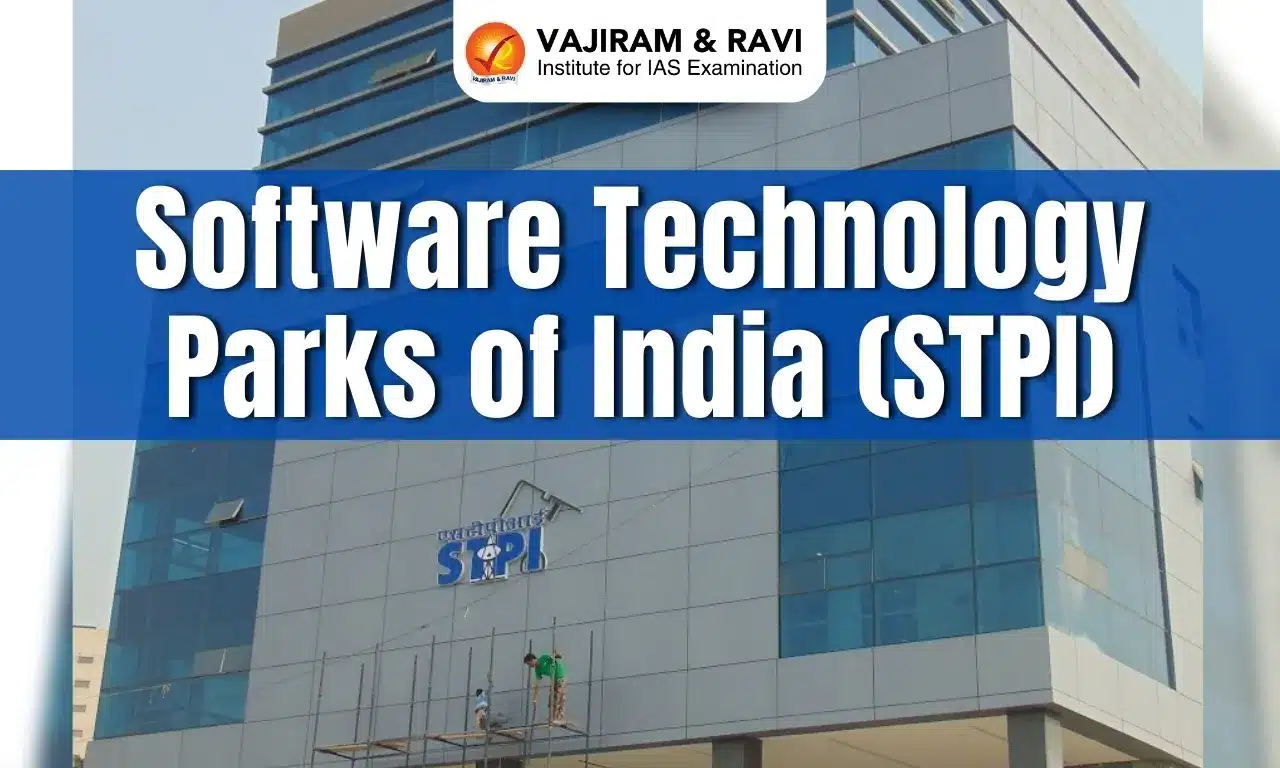
Recently, the Software Technology Parks of India (STPI) organised STPI Tech Summit 2026: India's Next Leap at New Delhi which coincided with its 35th Foundation Day. 

About Software Technology Parks of India

  • It is a premier Science & Technology organization established in 1991 under the Ministry of Electronics and Information Technology (MeitY)
  • Objective: STPI’s main objective has been the promotion of software exports from the country. 
  • It promotes software exports from the country and has been implementing the Software Technology Park (STP) scheme and Electronics Hardware Technology Park (EHTP) scheme for the promotion of the IT/ITES industry.
  • STPI helps in facilitating software development, export, and compliance with regulatory requirements, including customs and foreign exchange rules.
  • Further, STPI is nurturing pan India start-up ecosystem through its initiatives like Centres of Entrepreneurship (CoEs) & Next Generation Incubation Scheme (NGIS).

STPI Services

  • Infrastructure Support: Provides plug-and-play office space with IT infrastructure for software exporters.
  • Customs Clearances: Facilitates duty-free imports of capital goods, consumables, and other goods necessary for software export.
  • Statutory Compliance: Ensures compliance with export regulations and assists companies in meeting their export obligations.
  • Consultation and Guidance: Offers advice and support on matters related to exports, tax exemptions, and regulatory issues.

Source: PIB

Software Technology Parks of India FAQ's

Q1: STPI was established in which year?

Ans: Set up in 1991 to promote software exports

Q2: STPI functions under which ministry?

Ans: STPI is an autonomous society under MeitY

Eklavya Model Residential Schools

Eklavya Model Residential Schools

Eklavya Model Residential Schools Latest News

Recently, the National Education Society for Tribal Students (NESTS) has signed a Memorandum of Understanding (MoU) with Learning Links Foundation (LLF) to implement the Amazon Future Engineer (AFE) programme across Eklavya Model Residential Schools (EMRSs) in the country.

About Eklavya Model Residential Schools

  • It is a flagship intervention of the Ministry of Tribal Affairs launched in 1998.
  • It aims to provide quality residential education to Scheduled Tribes students from Class 6th to 12th in remote areas to enable them to access the best opportunities in education and to bring them at par with the general population.
  • The programme was revamped during the year 2018-19 to expand the geographical outreach and enhance the quality of facilities.
  • EMRSs to be set up in every block with more than 50% ST population and at least 20,000 tribal persons. 
  • Governance: The National Education Society for Tribal Students (NESTS), an autonomous organization, has been set up under the Ministry of Tribal Affairs to establish and manage EMRS across the country.

Features of Eklavya Model Residential Schools

  • EMRSs are co-educational residential schools from Class VI to XII.
  • Eklavya schools will be on par with Navodaya Vidyalayas and will have special facilities for preserving local art and culture besides providing training in sports and skill development.
  • Infrastructure: The school infrastructure will include classroom, administrative block, hostels, playground.
  • CBSE curriculum is followed in these schools, and education is completely free.
  • Each school has a capacity of 480 students with an equal number of seats for boys and girls.
  • Non-ST students can be admitted in these schools on seats up to 10% of the total seats. And also reservation of 20% of seats under sports quota for deserving ST students who have excelled in the field of sports.

Source: PIB

Eklavya Model Residential Schools FAQs

Q1: Which ministry runs EMRS?

Ans: Ministry of Tribal Affairs

Q2: EMRS provides education from which class to which class?

Ans: From Class 6 to 12

Solar Cycles

Solar Cycles

Solar Cycle Latest News

Researchers from the Indian Institute of Astrophysics (IIA) have used over 100 years of observations from the Kodaikanal solar observatory to investigate how large cellular structures known as supergranulations behave during different phases of the solar cycle. 

About Solar Cycle

  • It describes an approximately 11-year cycle of solar activity driven by the sun’s magnetic field.
  • It is indicated by the frequency and intensity of sunspots visible on the surface. 
  • Every 11 years or so, the Sun’s magnetic field completely flips.
  • This means that the Sun’s north and south poles switch places. Then it takes about another 11 years for the Sun’s north and south poles to flip back again.
  • The solar cycle affects activity on the surface of the Sun, such as sunspots, which are caused by the Sun’s magnetic fields.
  • As the magnetic fields change, so does the amount of activity on the Sun’s surface.
  • It can be tracked by counting the number of sunspots.
  • Cycle Stages
    • Solar minimum: It is the beginning of a solar cycle or when the Sun has the least sunspots.
    • Over time, solar activity—and the number of sunspots—increases.
    • Solar maximum: It is the middle of the solar cycle or when the Sun has the most sunspots.
    • As the cycle ends, it fades back to the solar minimum, and then a new cycle begins.
  • Impact: The solar cycle has the potential to impact Earth’s climatic conditions through changes in solar radiation, cosmic rays, and ozone distribution.

What is the Sun's supergranulation?

  • The Sun's supergranulation refers to a physical pattern covering the surface of the quiet Sun with a typical horizontal scale of approximately 30,000 km and a lifetime of around 1.8 d. 
  • Supergranulation was discovered by Hart (1954) using Doppler images of the Sun.

Source: PIB

Solar Cycle FAQs

Q1: How does Solar Cycle is measured?

Ans: Sunspots are a useful tool to determine where the Sun is in its cycle

Q2: During Solar Maximum, which activity increases on Sun?

Ans: More sunspots, solar flares and Coronal Mass Ejections

Nilgiri Tahr

Nilgiri Tahr

Nilgiri Tahr Latest News

According to the third synchronised population survey the population of the endangered Nilgiri Tahr, has increased to an estimated 1,364.

About Nilgiri Tahr

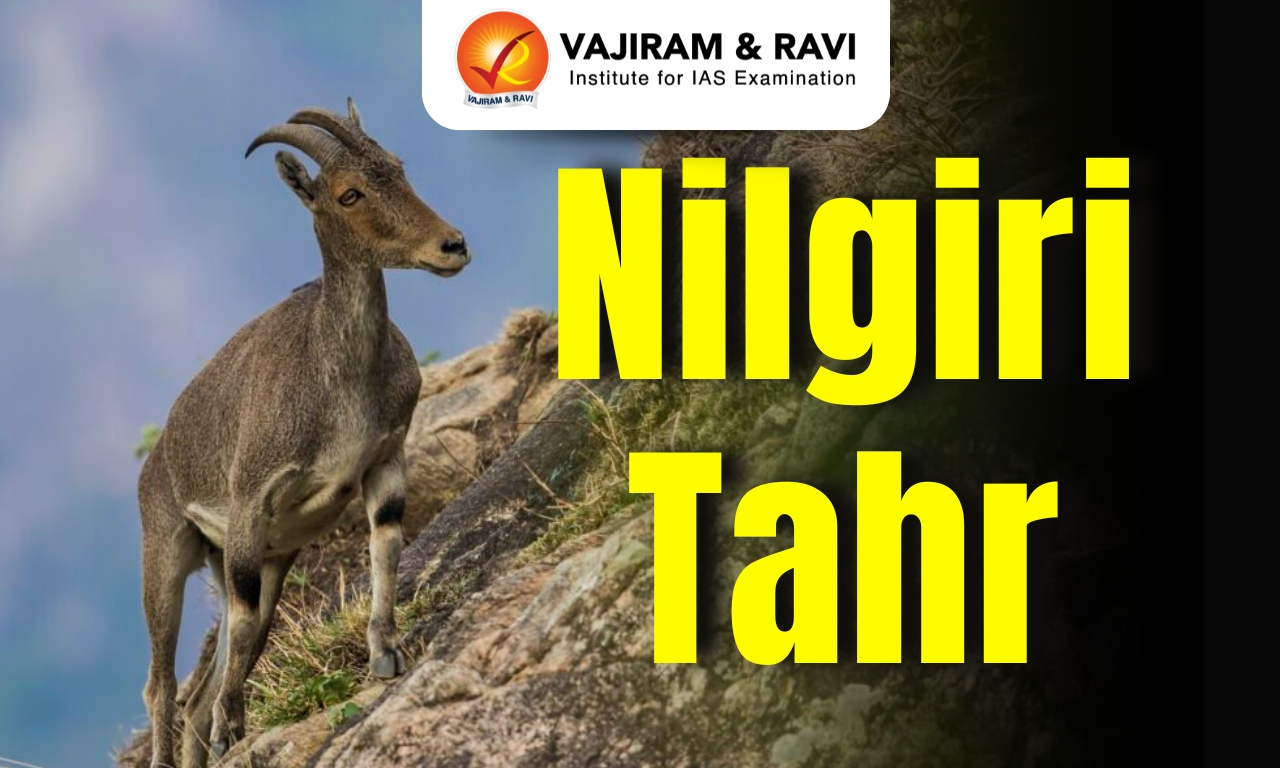
  • It is a mountain ungulate endemic to the southern part of the Western Ghats. 
  • It is also known by the name Nilgiri Ibex or simply Ibex. Locally the animal is called ‘Varayaadu’.
  • It is the only mountain ungulate in southern India.
  • Habitat: It inhabits the open montane grassland habitat of the southwestern ghats montane rain forests Eco region. 
  • At elevations ranging from 1200 to 2600 m, the jungle opens into grasslands interspersed with pockets of stunted forests, known as ‘sholas.’
  • Distribution: It is found in a roughly 400 km stretch in the Western Ghats, which falls in the states of Kerala and Tamil Nadu. 
  • The Eravikulam National Park (Kerala) has the highest density and largest surviving population of Nilgiri tahr. 
  • Features of Nilgiri Tahr
    • These are stocky goats with short, coarse fur and a bristly mane. 
    • The males are found to be larger than the females, and have a darker color when mature. 
    • Both sexes have curved horns, which are larger in the males.
  • Conservation Status
    • IUCN: Endangered 
    • Wildlife (Protection) Act of India, 1972: Schedule I.
  • Threats: Habitat loss due to rampant deforestation, competition with domestic livestock, hydroelectric projects in Nilgiri tahr habitat, and monoculture plantations.

Source: TH

Nilgiri Tahr FAQs

Q1: Tamil Nadu launched which project in 2023 for Nilgiri Tahr?

Ans: Project Nilgiri Tahr launched for 5 years, ₹25 crore

Q2: Nilgiri Tahr is protected under which Schedule of Wildlife Protection Act 1972?

Ans: Schedule I

Anusandhan National Research Foundation

Anusandhan National Research Foundation

Anusandhan National Research Foundation Latest News

Recently, the Union Minister of Science & Technology announced that the Anusandhan National Research Foundation supported digital portal will facilitate training in patent filing support and research paper writing assistance for researchers, students and innovators across the country.

About Anusandhan National Research Foundation

  • It was established through the Anusandhan National Research Foundation Act, 2023.
  • It is functioning under the Department of Science & Technology (DST).
  • The Science and Engineering Research Board (SERB) has been merged into ANRF.
  • Objective: To seed, grow, and promote R&D, and foster a research and innovation culture across universities, colleges, research institutions, and R&D labs in India.
  • It acts as an apex body to provide high-level strategic direction of scientific research in the country as per recommendations of the National Education Policy.
  • It has been established to promote research and development and foster a culture of research and innovation throughout India’s Universities, Colleges, Research Institutions, and R&D laboratories. 
  • Funding Target: It aims to mobilise funds amounting to ₹50,000 crore during 2023–28 through multiple streams including the ANRF Fund, Innovation Fund, Science and Engineering Research Fund, and Special Purpose Funds.
  • ANRF forges collaborations among the industry, academia, research institutions and government departments.

Source: PIB

Anusandhan National Research Foundation FAQs

Q1: ANRF aims to provide funding of how much over 5 years (2023-28)?

Ans: ₹50,000 crore total corpus

Q2: Anusandhan National Research Foundation (ANRF) was established by replacing which body?

Ans: ANRF Act 2023 replaced SERB

Ramsar Sites in India 2026, State-wise List, Largest, Smallest & Oldest Sites

ramsar sites in india

India is home to 100 Ramsar Sites across 28 states and union territories, each recognized for its ecological, hydrological, and biodiversity significance. The largest Ramsar site is the Sundarban Wetland in West Bengal (4,230 km²), while the smallest sites include Renuka Lake in Himachal Pradesh and Vembannur Wetland Complex in Tamil Nadu (both under 1 km²). The oldest Ramsar sites, Chilika Lake in Odisha and Keoladeo Ghana National Park in Rajasthan, were designated in 1981, reflecting India’s long-standing commitment to wetland conservation.

What is a Ramsar Site?

A Ramsar Site is a wetland recognized under the Ramsar Convention (1971) for its international importance in conserving biodiversity and sustaining ecological balance. These wetlands provide critical habitats for migratory birds, endangered species, and unique flora and fauna. They help in groundwater recharge, flood control, and climate regulation, while supporting local livelihoods like fishing and agriculture. India currently has 100 Ramsar Sites spread across 28 states and union territories, highlighting the country’s rich wetland diversity.

Ramsar Sites in India State-wise List

India has 100 Ramsar sites spread across 28 states and union territories, each recognized for its ecological, hydrological, and biodiversity significance. These wetlands range from large brackish lagoons to small freshwater lakes, supporting unique flora, fauna, and migratory birds.

Ramsar Sites in India State-wise List

S.No

Ramsar Site

State/UT

Designated Year

Area (km²)

1

Kolleru Lake

Andhra Pradesh

2002

901

2

Deepor Beel

Assam

2002

40

3

Kanwar (Kabar) Taal

Bihar

2020

26.2

4

Nagi Bird Sanctuary

Bihar

2023

2

5

Nakti Bird Sanctuary

Bihar

2023

3.3

6

Nanda Lake

Goa

2022

0.42

7

Khijadia WLS

Gujarat

2021

6

8

Nalsarovar BS

Gujarat

2012

123

9

Thol Lake

Gujarat

2021

6.99

10

Wadhvana Wetland

Gujarat

2021

10.38

11

Bhindawas WLS

Haryana

2021

4.11

12

Sultanpur NP

Haryana

2021

142.5

13

Chandra Taal

Himachal Pradesh

2005

0.49

14

Pong Dam Lake

Himachal Pradesh

2002

156.62

15

Renuka Lake

Himachal Pradesh

2005

0.2

16

Ranganathituu BS

Karnataka

2022

5.18

17

Magadi Kere Conservation Reserve

Karnataka

2024

0.5

18

Ankasamudra Bird Conservation Reserve

Karnataka

2024

0.98

19

Aghanashini Estuary

Karnataka

2024

4.8

20

Ashtamudi Wetland

Kerala

2002

614

21

Sasthamkotta Lake

Kerala

2002

3.73

22

Vembanad-Kol Wetland

Kerala

1905

1,512.5

23

Bhoj Wetland

Madhya Pradesh

2002

32

24

Sakhya Sagar

Madhya Pradesh

2022

2.48

25

Sirpur Wetland

Madhya Pradesh

2022

1.61

26

Yashwant Sagar

Madhya Pradesh

2022

8.22

27

Tawa Reservoir

Madhya Pradesh

2024

200

28

Lonar Lake

Maharashtra

2020

4.27

29

Nandur Madhameshwar

Maharashtra

2019

14

30

Thane Creek

Maharashtra

2022

65.21

31

Loktak Lake

Manipur

1990

266

32

Pala Wetland

Mizoram

2021

18.5

33

Ansupa Lake

Odisha

2021

2.31

34

Bhitarkanika Mangroves

Odisha

2002

650

35

Chilika Lake

Odisha

1981

1,165

36

Hirakud Reservoir

Odisha

2021

654

37

Satkosia Gorge

Odisha

2021

981.97

38

Tampara Lake

Odisha

2021

3

39

Beas CnR

Punjab

2019

64

40

Harike Wetland

Punjab

1990

41

41

Kanjli Wetland

Punjab

2002

1.83

42

Keshopur-Miani CmR

Punjab

2019

34

43

Nangal WLS

Punjab

2019

1

44

Ropar Wetland

Punjab

2002

13.65

45

Keoladeo National Park

Rajasthan

1981

28.73

46

Sambhar Lake

Rajasthan

1990

240

47

Chitrangudi BS

Tamil Nadu

2021

2.6

48

Gulf of Mannar Marine BR

Tamil Nadu

2022

526.72

49

Kanjirankulam BS

Tamil Nadu

2022

0.96

50

Karikili BS

Tamil Nadu

2022

0.584

51

Koonthankulam BS

Tamil Nadu

2021

0.72

52

Pallikaranai Marsh Reserve Forest

Tamil Nadu

2022

12.475

53

Pichavaram Mangrove

Tamil Nadu

2022

14.786

54

Point Calimere WLS & BS

Tamil Nadu

2002

389

55

Suchindram Theroor Wetland Complex

Tamil Nadu

2022

0.94

56

Udhayamarthandapuram BS

Tamil Nadu

2022

0.44

57

Vaduvur BS

Tamil Nadu

2022

1.12

58

Vedanthangal BS

Tamil Nadu

2022

0.4

59

Vellode BS

Tamil Nadu

2022

0.77

60

Vembannur Wetland Complex

Tamil Nadu

2022

0.2

61

Karaivetti Bird Sanctuary

Tamil Nadu

2024

4.5

62

Longwood Shola Reserve Forest

Tamil Nadu

2024

1.16

63

Nanjarayan Bird Sanctuary

Tamil Nadu

2024

1.3

64

Kazhuveli Bird Sanctuary

Tamil Nadu

2024

1,513

65

Rudrasagar Lake

Tripura

2005

2.4

66

Hokera Wetland

UT of Jammu & Kashmir

2005

13.75

67

Hygam Wetland CnR

UT of Jammu & Kashmir

2022

8.02

68

Shallbugh Wetland CnR

UT of Jammu & Kashmir

2022

16.75

69

Surinsar-Mansar Lakes

UT of Jammu & Kashmir

2005

3.5

70

Wular Lake

UT of Jammu & Kashmir

1990

189

71

Tso Kar

UT of Ladakh

2020

95.77

72

Tsomoriri

UT of Ladakh

2002

120

73

Bakhira WLS

Uttar Pradesh

2021

28.94

74

Haiderpur Wetland

Uttar Pradesh

2021

69

75

Nawabganj BS

Uttar Pradesh

2019

2

76

Parvati Arga BS

Uttar Pradesh

2019

7

77

Saman BS

Uttar Pradesh

2019

5

78

Samaspur BS

Uttar Pradesh

2019

8

79

Sandi BS

Uttar Pradesh

2019

3

80

Sarsai Nawar Jheel

Uttar Pradesh

2019

2

81

Sur Sarovar (Keetham Lake)

Uttar Pradesh

2020

4.31

82

Upper Ganga River (Brijghat to Narora)

Uttar Pradesh

2005

265.9

83

Asan Barrage

Uttarakhand

2020

4.44

84

East Kolkata Wetlands

West Bengal

2002

125

85

Sundarban Wetland

West Bengal

2019

4,230

86

Sakkarakottai Bird Sanctuary

Tamil Nadu

2025

87

Therthangal Bird Sanctuary

Tamil Nadu

2025

88

Khecheopalri Wetland

Sikkim

2025

89

Udhwa Lake

Jharkhand

2025

90

Khichan (Phalodi)

Rajasthan

2025

91

Menar (Udaipur)

Rajasthan

2025

92

Gokul Jalashay

Bihar

2025

93

Udaipur Jheel

Bihar

2025

94

Gogabeel Lake

Bihar

2025

-

95

Siliserh Lake

Rajasthan

2025

-

96

Kopra Jalashay

Chhattisgarh

2025

-

97

Patna Bird Sanctuary

Uttar Pradesh

2026

-

98

Chhari-Dhand

Kutch (Gujarat)

2026

-

99

Shekha Jheel Bird Sanctuary

Uttar Pradesh

2026

-

100

Jai Prakash Narayan Bird Sanctuary

Uttar Pradesh

2026

-

Newly Added Ramsar Sites in India

In 2025 and 2026, India added 15 new Ramsar Sites, reflecting its ongoing commitment to wetland conservation and biodiversity protection. These sites span several states and union territories, including Tamil Nadu, Uttar Pradesh, Chhattisgarh, Sikkim, Jharkhand, Rajasthan, and Bihar.

Newly Added Ramsar Sites in India

S.No

Ramsar Site

State/UT

Designated Year

1

Sakkarakottai Bird Sanctuary

Tamil Nadu

2025

2

Therthangal Bird Sanctuary

Tamil Nadu

2025

3

Khecheopalri Wetland

Sikkim

2025

4

Udhwa Lake

Jharkhand

2025

5

Khichan (Phalodi)

Rajasthan

2025

6

Menar (Udaipur)

Rajasthan

2025

7

Gokul Jalashay

Bihar

2025

8

Udaipur Jheel

Bihar

2025

9

Gogabeel Lake

Bihar

2025

10

Siliserh Lake

Rajasthan

2025

11

Kopra Jalashay

Chhattisgarh

2025

12

Patna Bird Sanctuary

Uttar Pradesh

2026

13

Chhari-Dhand

Kutch (Gujarat)

2026

14

Shekha Jheel Bird Sanctuary

Uttar Pradesh

2026

15

Jai Prakash Narayan Bird Sanctuary

Uttar Pradesh

2026

[youtube url="https://www.youtube.com/watch?v=SSE0fdf60s4" width="560" height="315"]

Ramsar Sites in India Description

This table provides a comprehensive list of all 100 Ramsar Sites in India, including their state/UT and a brief description highlighting ecological, cultural, and conservation importance. It serves as a handy reference for understanding India’s wetlands and their significance for biodiversity, migratory birds, and local livelihoods.

Ramsar Sites in India Description

S.No

Ramsar Site

State/UT

Description

1

Kolleru Lake

Andhra Pradesh

Nutrient-rich freshwater lake between Godavari and Krishna basins, supports fisheries and agriculture; endangered Spot-Billed Pelican.

2

Deepor Beel

Assam

Permanent freshwater lake near Guwahati; habitat for Grey Pelican, Lesser & Greater Adjutant Storks, Baer’s Pochard.

3

Kanwar Taal

Bihar

Oxbow lake in Indo-Gangetic plain; hosts critically endangered vultures and waterbirds like Baer’s Pochard.

4

Nagi Bird Sanctuary

Bihar

Created from damming Nagi River; wintering site for Baer’s Pochard and steppe eagle; large bar-headed goose congregation.

5

Nakti Bird Sanctuary

Bihar

Man-made wetland from Nakti Dam; habitat for red-crested pochard and vulnerable catfish.

6

Gokul Jalashay

Bihar

Oxbow lake on Ganga’s southern edge; supports 50+ bird species; local communities depend on it for fishing and agriculture.

7

Udaipur Jheel

Bihar

Oxbow lake in Udaipur WLS; home to 280 plant species and migratory birds including vulnerable common pochard.

8

Nanda Lake

Goa

Freshwater marsh near Zuari River; supports aquatic biodiversity despite small size (0.42 km²).

9

Khijadia WLS

Gujarat

Freshwater wetland in Jamnagar; endangered Pallas’s Fish-Eagle, Indian Skimmer, and Bdellium-Tree.

10

Nalsarovar BS

Gujarat

Largest natural freshwater lake in Thar Desert; supports endangered Indian Wild Ass and Sociable Lapwing.

11

Thol Lake

Gujarat

Human-made reservoir; supports Blackbucks and endangered birds like White-Rumped Vulture.

12

Wadhvana Wetland

Gujarat

Semi-arid man-made wetland; habitat for Pallas’s Fish-Eagle, Sarus Crane, Common Pochard.

13

Bhindawas WLS

Haryana

Human-made freshwater wetland; hosts Egyptian Vultures and Pallas’s Fish-Eagle.

14

Sultanpur NP

Haryana

Near Delhi; IBA wetland supporting Sociable Lapwing, Egyptian Vultures, Saker Falcon, Black-Bellied Tern.

15

Chandra Taal

Himachal Pradesh

High-altitude lake; habitat for Snow Leopard, Himalayan Ibex, Blue Sheep; threatened by overgrazing.

16

Pong Dam Lake

Himachal Pradesh

Reservoir on Beas River; lies on Trans-Himalayan Flyway for migratory waterfowl.

17

Renuka Lake

Himachal Pradesh

Freshwater wetland with karst formations; named after sage Parshuram’s mother.

18

Udhwa Lake

Jharkhand

Oxbow wetland; supports Oriental White-Backed Vulture, Pallas’s Fish Eagle, Lesser Adjutant.

19

Aghanashini Estuary

Karnataka

Free-flowing river estuary; mangroves support fish, prawns, and bird diversity; important nutrient cycling.

20

Ankasamudra Bird CnR

Karnataka

Near Hampi; 175 bird species including 11 IUCN-listed species; nesting and breeding site.

21

Magadi Kere CnR

Karnataka

Saline wetland attracting migratory waterfowl; hosts bar-headed goose, Grey & Purple Herons.

22

Ranganathituu BS

Karnataka

Part of Kaveri River; habitat for Mugger Crocodile, Smooth-Coated Otter, Painted Stork, Grey Pelican.

23

Ashtamudi Wetland

Kerala

Backwater ecosystem; second-largest estuary in Kerala; supports fisheries and National Waterway 3.

24

Sasthamkotta Lake

Kerala

Largest freshwater lake in Kerala; exceptionally pure water supporting diverse aquatic life.

25

Vembanad-Kol Wetland

Kerala

Largest brackish lake in Kerala; supports paddy cultivation and migratory birds; second-largest Ramsar site in India.

26

Bhoj Wetland

Madhya Pradesh

Two human-made lakes in Bhopal; habitat for Sarus Crane.

27

Sakhya Sagar

Madhya Pradesh

Reservoir near Madhav National Park; hosts Mugger, Smooth-Coated Otter, Hump-Backed Mahseer.

28

Sirpur Wetland

Madhya Pradesh

Human-made wetland in Indore; supports Common Pochard, Egyptian Vulture, Indian River Tern.

29

Tawa Reservoir

Madhya Pradesh

Within Satpura Tiger Reserve; fish spawning ground and habitat for Indian giant squirrel.

30

Yashwant Sagar

Madhya Pradesh

IBA wetland in Indore region; important for migratory and resident birds.

31

Lonar Lake

Maharashtra

Meteorite crater lake; hypersaline and alkaline, hosts haloarchaea producing pink pigment.

32

Nandur Madhameshwar

Maharashtra

Created by Godavari-Kadwa confluence; hosts leopards and endangered bird species.

33

Thane Creek

Maharashtra

Large brackish water creek; fringed by mangroves; supports flamingos and diverse avifauna.

34

Loktak Lake

Manipur

Largest freshwater lake in northeast India; features floating phumdis and Keibul Lamjao, the only floating national park.

35

Pala Wetland

Mizoram

Natural lake in Indo-Burma hotspot; supports Sambar Deer, Barking Deer, Hoolock Gibbon.

36

Ansupa Lake

Odisha

Freshwater oxbow of Mahanadi River; largest freshwater lake in Odisha; endangered birds and fish.

37

Bhitarkanika Mangroves

Odisha

Part of Bhitarkanika WLS; supports Olive Ridley Turtles, Saltwater Crocodiles.

38

Chilika Lake

Odisha

India’s first Ramsar site (1981); brackish water lagoon; home to Irrawaddy dolphins; major migratory bird hub.

39

Hirakud Reservoir

Odisha

Large earthen dam; moderates floods in Mahanadi delta.

40

Satkosia Gorge

Odisha

Mosaic of rivers and forests; home to tigers and endangered turtles.

41

Tampara Lake

Odisha

Formed during 1766 battle; now connected to Rushikulya River for flood control.

42

Beas CnR

Punjab

189 km stretch of Beas River; hosts Indus River dolphin and reintroduced Gharial.

43

Harike Wetland

Punjab

Shallow reservoir at Beas-Sutlej confluence; important for migratory birds.

44

Kanjli Wetland

Punjab

Associated with Guru Nanak; freshwater wetland supporting local biodiversity.

45

Keshopur-Miani CmR

Punjab

Mosaic of marshes and ponds; supports Common Pochard, Spotted Pond Turtle.

46

Nangal WLS

Punjab

Bhakra-Nangal reservoir; historically significant; endangered Indian Pangolin and Leopard.

47

Ropar Wetland

Punjab

Formed by Sutlej River barrage; supports Smooth Indian Otter, Hog Deer, Sambar.

48

Keoladeo NP

Rajasthan

Complex of seasonal marshes; invasive grasses threaten Siberian Crane; on Montreux Record in 1990.

49

Sambhar Lake

Rajasthan

India’s largest inland saltwater lake; wintering site for flamingos.

50

Khichan Wetland

Rajasthan

Thar Desert wetland; wintering site for migratory demoiselle cranes.

51

Menar Wetland Complex

Rajasthan

Monsoon-fed freshwater ponds; supports vultures, waterbirds, and local flora.

52

Khecheopalri Wetland

Sikkim

Sacred lake in Demazong valley; revered by Hindus and Buddhists; near Kanchenjunga.

53

Chitrangudi BS

Tamil Nadu

IBA adjacent to Kanjirankulam; supports Grey Pelican, Painted Stork, Little Egret.

54

Gulf of Mannar Marine BR

Tamil Nadu

First marine biosphere reserve in South Asia; Dugong, Hawksbill Turtle, Humpback Dolphin.

55

Kanjirankulam BS

Tamil Nadu

Affected by invasive Prosopis trees; hosts Painted Stork, Oriental Darter.

56

Karaivetti BS

Tamil Nadu

Irrigation tank; freshwater feeding ground for migratory birds like Bar-headed Goose.

57

Karikili BS

Tamil Nadu

Near Kanchipuram; supports Oriental Darter, Spot-Billed Pelican.

58

Kazhuveli BS

Tamil Nadu

Brackish lake; important migratory bird path and spawning ground for fish.

59

Koonthankulam BS

Tamil Nadu

Human-made wetland; IBA maintained by local community.

60

Longwood Shola RF

Tamil Nadu

Urban shola forest in Nilgiris; retains water, regulates microclimate.

61

Nanjarayan BS

Tamil Nadu

Historical freshwater lake; nesting habitats for waterbirds and flapshell turtles.

62

Pallikaranai Marsh RF

Tamil Nadu

Coastal marsh; buffers Chennai floodwaters.

63

Pichavaram Mangrove

Tamil Nadu

Large mangrove forest; spiritual value; supports endangered birds and Olive Ridley Turtle.

64

Point Calimere WLS & BS

Tamil Nadu

Last remnants of dry evergreen forests; hosts Spoon-Billed Sandpiper and Grey Pelican.

65

Suchindram Theroor Wetland Complex

Tamil Nadu

IBA; inland perennial man-made tank on Central Asian flyway.

66

Udhayamarthandapuram BS

Tamil Nadu

Stores monsoon floodwaters; maintains dry-season water flow.

67

Vaduvur BS

Tamil Nadu

Large human-made tank; shelter for migratory birds.

68

Vedanthangal BS

Tamil Nadu

Freshwater wetland; protected by locals; guano enriches agriculture.

69

Vellode BS

Tamil Nadu

Supports Indian River Tern, Oriental Darter, Painted Stork.

70

Vembannur Wetland Complex

Tamil Nadu

Human-made inland tank; habitat for Spot-Billed Pelican and Spotted Greenshank.

71

Karaivetti BS

Tamil Nadu

Freshwater lake; attracts migratory waterbirds.

72

Rudrasagar Lake

Tripura

Reservoir fed by perennial streams; habitat for Three-Striped Roof Turtle.

73

Hokera Wetland

UT of JK

Natural wetland near Srinagar; hosts White-Eyed Pochard.

74

Hygam Wetland CnR

UT of JK

Downstream of Wular Lake; threatened by siltation.

75

Shallbugh Wetland CnR

UT of JK

Prevents flooding; supports Steppe Eagle, Pallas’s Fish-Eagle.

76

Surinsar-Mansar Lakes

UT of JK

Composite freshwater lake; semi-arid Punjab plains; linked to Mahabharata mythology.

77

Wular Lake

UT of JK

Largest freshwater lake in India; fed by Jhelum; supports rich biodiversity.

78

Tso Kar

UT of Ladakh

High-altitude hypersaline and freshwater lakes; breeding site for Black-Necked Cranes.

79

Tsomoriri

UT of Ladakh

Freshwater-brackish lake; only breeding site in India for Black-Necked Cranes and Bar-Headed Geese.

80

Bakhira WLS

Uttar Pradesh

Freshwater marsh near Gorakhpur; hosts Egyptian Vultures, Greater Spotted Eagle.

81

Haiderpur Wetland

Uttar Pradesh

Formed by Madhya Ganga Barrage; supports Gharial, Golden Mahseer, Hog Deer.

82

Nawabganj BS

Uttar Pradesh

Shallow marsh near Lucknow; renamed Chandra Shekhar Azad BS; Egyptian Vulture and Pallas’s Fish Eagle.

83

Parvati Arga BS

Uttar Pradesh

Freshwater oxbow lakes; home to Red-Headed Vulture, Indian Vulture.

84

Saman BS

Uttar Pradesh

Seasonal oxbow lake on Ganges floodplain; Sarus Crane, Greater Spotted Eagle.

85

Samaspur BS

Uttar Pradesh

Perennial lowland marsh; Egyptian Vulture, Pallas’s Fish Eagle.

86

Sandi BS

Uttar Pradesh

Freshwater wetland; supports Sarus Crane.

87

Sarsai Nawar Jheel

Uttar Pradesh

Marsh; name from Sarus Crane; pilgrimage site nearby.

88

Sur Sarovar (Keetham Lake)

Uttar Pradesh

Created for Agra water supply; supports Greater Spotted Eagle.

89

Upper Ganga River

Uttar Pradesh

Stretch from Brijghat to Narora; endangered Ganges River Dolphin and Gharial.

90

Asan Barrage

Uttarakhand

Formed by damming Asan River; supports Red-Headed Vulture, White-Rumped Vulture, Baer’s Pochard.

91

East Kolkata Wetlands

West Bengal

Multiple-use wetland; feeds world’s largest wastewater-fed aquaculture.

92

Sundarban Wetland

West Bengal

Largest Ramsar site in India; mangrove forest; Northern River Terrapin, Irrawaddy Dolphin.

93

Newly Added Sites (2025 and 2026)

Multiple States

Includes Sakkarakottai BS, Therthangal BS (TN), Khecheopalri Wetland (Sikkim), Udhwa Lake (Jharkhand), Khichan (Rajasthan), Menar (Rajasthan), Gokul Jalashay, Udaipur Jheel (Bihar), Gogabeel Lake (Bihar), Siliserh Lake (Rajasthan), and Kopra Jalashay (Chhattisgarh), Patna Bird Sanctuary (Uttar Pradesh), Chhari-Dhand (Gujarat), Shekha Jheel Bird Sanctuary (Uttar Pradesh), and Jai Prakash Narayan Bird Sanctuary (Uttar Pradesh).

Ramsar Sites in India Largest, Smallest and Oldest

The detailed list of Lagest, Smallest and Oldest Ramsar Sites in India have been listed below.

The Sundarban Wetland, Kazhuveli Bird Sanctuary, and Vembanad-Kol Wetland are among India’s largest Ramsar sites, spanning over 1,500 km² each. These wetlands play a crucial role in biodiversity conservation, supporting diverse flora, fauna, and migratory birds.

Largest Ramsar Sites in India

Rank

Ramsar Site

State

Area (km²)

1

Sundarban Wetland

West Bengal

4,230

2

Kazhuveli Bird Sanctuary

Tamil Nadu

1,513

3

Vembanad-Kol Wetland

Kerala

1,512.5

4

Chilika Lake

Odisha

1,165

5

Satkosia Gorge

Odisha

981.97

6

Kolleru Lake

Andhra Pradesh

901

Renuka Lake, Vembannur Wetland Complex, and Vedanthangal Bird Sanctuary are India’s smallest Ramsar sites, each under 1 km² in area. Despite their size, these sites are ecologically significant, providing critical habitats for endangered species and local communities.

Smallest Ramsar Sites in India

Rank

Ramsar Site

State

Area (km²)

1

Renuka Lake

Himachal Pradesh

0.2

2

Vembannur Wetland Complex

Tamil Nadu

0.2

3

Vedanthangal BS

Tamil Nadu

0.4

4

Nanda Lake

Goa

0.42

5

Udhayamarthandapuram BS

Tamil Nadu

0.44

Chilika Lake and Keoladeo Ghana National Park were the first Indian wetlands recognized under the Ramsar Convention in 1981. They are internationally renowned for their rich biodiversity, especially migratory waterbirds, and long-standing conservation importance.

Oldest Ramsar Sites in India

Rank

Ramsar Site

Year of Designation

1

Chilika Lake

1981

2

Keoladeo Ghana NP

1981

Importance of Ramsar Sites in India

Ramsar sites are wetlands of international importance that support biodiversity, regulate water cycles, and sustain livelihoods of local communities. They play a vital role in flood control, groundwater recharge, and climate regulation. 

  • Provide habitat for migratory and endangered species.
  • Support fisheries, agriculture, and tourism-based livelihoods.
  • Act as natural water purifiers and carbon sinks.
  • Help in flood mitigation and groundwater replenishment.
  • Contribute to climate regulation and ecosystem services.

Montreux Record in India

The Montreux Record is a register of Ramsar sites facing ecological changes due to human activities or natural factors. Inclusion highlights wetlands requiring priority conservation and restoration efforts. There are only 2 Ramsar Sites in India in the Montreux Record.

Indian Ramsar Sites on the Montreux Record

Ramsar Site

State

Reason for Inclusion

Year Listed

Keoladeo Ghana National Park

Rajasthan

Water shortage and unbalanced grazing

1990

Loktak Lake

Manipur

This lake is affected by factors such as human-induced changes and pollution

1993

Also Check Other Posts
Biosphere Reserves in India National Parks in India
Waterfalls in India Highest Peak in India
Ramsar Sites in India Wildlife Sanctuaries in India
Dams in India Tiger Reserves in India
Mountain Passes in India Longest Bridge in India

Ramsar Sites in India FAQs

Q1: What is a Ramsar Site?

Ans: A Ramsar Site is a wetland designated as being of international importance under the Ramsar Convention (1971) for its biodiversity, ecological, and hydrological value.

Q2: How many Ramsar Sites are there in India?

Ans: As of June 2026, India has 100 Ramsar Sites spread across 28 states and union territories.

Q3: Which is the largest Ramsar Site in India?

Ans: The Sundarban Wetland in West Bengal is the largest Ramsar Site in India, covering 4,230 km².

Q4: Which is the smallest Ramsar Site in India?

Ans: The Renuka Lake (Himachal Pradesh) and Vembannur Wetland Complex (Tamil Nadu) are the smallest Ramsar Sites, each under 1 km².

Q5: Which are the oldest Ramsar Sites in India?

Ans: Chilika Lake (Odisha) and Keoladeo Ghana National Park (Rajasthan), both designated in 1981, are the oldest Ramsar Sites.

Venezuela

Venezuela

Venezuela  Latest News

Recently, the Prime Minister of India and Venezuela’s acting President held talks on forging a long-term energy partnership and collaboration in pharmaceuticals and critical minerals 

About Venezuela

  • Location: It is located on the northern coast of South America.
  • Bordering Countries: It is bounded by Guyana to the east, Brazil to the south, and Colombia to the southwest and west. 
  • Maritime boundaries: It shares a border with the Caribbean Sea and the Atlantic Ocean to the north.
  • Capital: Caracas

Geographical Features of Venezuela

  • Terrain: Andes Mountains and Maracaibo Lowlands in northwest; central plains (llanos); Guiana Highlands in southeast
  • Major Rivers: Rio Negro (it is shared with Colombia and Brazil) and Orinoco (shared with Colombia).
  • Major Lakes:  Lake Guri and Lake Maracaibo (the largest lake in South America).
  • Highest Point: Pico Bolivar 
  • Water Falls: The world’s highest waterfall – the Andes Mountains Angel Falls is located in the Guiana Highlands.
  • Natural Resources: It is home to the world’s largest oil reserves as well as huge quantities of coal, iron ore, bauxite, and gold.

Source: HT

Venezuela FAQs

Q1: What is the capital city of Venezuela?

Ans: Carcas

Q2: Where is Venezuela located?

Ans: It is located on the northern coast of South America.

Conjugal Rights, in India, Meaning, Legal Basis, Recent Judgement

Conjugal Rights

Why in News?

Recently, the Supreme Court of India observed that the persistent denial of conjugal rights by one spouse without a valid reason can amount to mental cruelty.

What are Conjugal Rights?

Conjugal Rights are the mutual rights and responsibilities that arise from a valid marriage. They include the right of spouses to live together, provide companionship, and maintain a normal marital relationship. These rights aim to strengthen the bond between husband and wife and promote family stability. In simple terms, conjugal rights ensure that both spouses enjoy the benefits and fulfill the obligations of married life.

What is Restitution of Conjugal Rights (RCR)?

Restitution of Conjugal Rights (RCR) is a legal remedy available when one spouse withdraws from the company of the other without a reasonable excuse. Under this provision, the aggrieved spouse can approach the court seeking an order for the resumption of marital cohabitation. The objective is to preserve the marriage and encourage reconciliation between the spouses. In India, RCR is primarily governed by Section 9 of the Hindu Marriage Act, 1955 and similar provisions under other personal laws.

Constitutional and Legal Basis of Conjugal Rights

Conjugal rights in India are recognized under various personal laws and are subject to constitutional principles such as dignity, privacy, equality, and the protection of marriage as a social institution.

  • Section 9 of the Hindu Marriage Act, 1955 provides for the restitution of conjugal rights when one spouse withdraws from the company of the other without a reasonable excuse.
  • Muslim Personal Law recognizes the right of spouses to cohabit and fulfill marital obligations.
  • Indian Divorce Act, 1869 contains provisions related to restitution of conjugal rights for Christians.
  • Parsi Marriage and Divorce Act, 1936 also recognizes the remedy of restitution of conjugal rights.
  • Article 21 of the Constitution guarantees the right to life and personal liberty, including dignity and privacy, which are relevant in matrimonial matters.
  • Courts seek to balance marital rights with individual autonomy, consent, and constitutional freedoms.
  • Indian courts have consistently emphasized that conjugal rights cannot override the fundamental rights and dignity of either spouse.

Personal Laws

Different personal laws in India recognize the rights and obligations of spouses in marriage, including provisions related to cohabitation and conjugal rights.

  • Hindu Marriage Act, 1955 – Section 9 provides for the restitution of conjugal rights when one spouse withdraws from the society of the other without a reasonable reason.
  • Muslim Personal Law – Recognizes the mutual rights and duties of spouses, including cohabitation and marital companionship.
  • Indian Divorce Act, 1869 – Provides remedies related to matrimonial disputes for Christians, including restitution of conjugal rights.
  • Parsi Marriage and Divorce Act, 1936 – Contains provisions governing matrimonial rights and obligations among Parsis.
  • Special Marriage Act, 1954 – Provides for restitution of conjugal rights for marriages solemnized under this secular law.
  • These laws aim to promote marital harmony, reconciliation, and family stability while respecting legal and constitutional safeguards

Conjugal Rights FAQs

Q1: What are conjugal rights?

Ans: Conjugal rights are the mutual rights and obligations of spouses to live together and maintain a normal marital relationship.

Q2: What is Restitution of Conjugal Rights?

Ans: It is a legal remedy through which a spouse can seek a court order directing the other spouse to resume cohabitation without a valid reason for separation.

Q3: Can denial of conjugal rights be considered cruelty?

Ans: Yes. According to recent Supreme Court observations, persistent and unjustified denial of conjugal rights may amount to mental cruelty and can be a ground for divorce.

Q4: Which law governs restitution of conjugal rights for Hindus?

Ans: Section 9 of the Hindu Marriage Act, 1955 provides for the restitution of conjugal rights.

Q5: Does the court force spouses to have physical relations?

Ans: No. Courts cannot compel physical intimacy. They only examine whether the conduct of a spouse amounts to cruelty or causes marital breakdown.

Monetary Policy Committee (MPC) – RBI Holds Rates Amid West Asia Crisis

Monetary Policy Committee (MPC)

Monetary Policy Committee (MPC) Latest News

  • The Reserve Bank of India (RBI), through its Monetary Policy Committee (MPC), has kept the repo rate unchanged at 5.25% despite rising inflationary pressures stemming from the West Asia conflict, elevated crude oil prices, and global economic uncertainties. 
  • Simultaneously, the RBI has revised growth and inflation projections and introduced measures to attract foreign capital inflows.

Reasons for Keeping Rates Unchanged

  • The MPC adopted a cautious "wait-and-watch" approach amid increasing uncertainty in the global economy.
  • Key reasons:
    • Escalating tensions involving the US, Israel, and Iran have increased risks of higher energy prices, supply-chain disruptions, financial market volatility, and global trade uncertainty.
    • India is also facing capital outflows, pressure on the rupee, and stress on foreign exchange reserves.
  • Implications of status quo:
    • Repo Rate remains at 5.25%, the rate at which RBI lends to commercial banks.
    • Lending and deposit rates are likely to remain stable.
    • EMIs on home, vehicle, personal and business loans are expected to remain unchanged.
    • Businesses gain a predictable borrowing environment for investment planning.
    • Borrowers receive relief from any immediate increase in financing costs.

Growth Outlook Weakens

    • RBI revises GDP growth forecast for FY27 from 6.9% to 6.7%. This marks a cumulative reduction of about 100 basis points from earlier expectations.
  • Factors behind lower growth:
    • Elevated crude oil prices.
    • Disruptions in global supply chains.
    • Geopolitical instability in West Asia.
    • Financial market volatility.
    • Weather-related disturbances affecting economic activity.
  • RBI's assessment: While domestic demand remains resilient and manufacturing and services continue to expand, external shocks are expected to moderate overall economic growth.

Inflation Risks Intensify

  • The Consumer Price Index (CPI) inflation forecast for FY27 has been raised from 4.6% to 5.1%. The revised estimate exceeds the RBI's medium-term inflation target of 4%.
  • Drivers of inflation:
    • Rising fuel prices: Retail fuel prices have already increased by around ₹7.5 per litre. Higher crude oil prices may lead to further revisions.
    • Direct impact on inflation: Fuel price increases could add approximately 35 basis points (bps) to headline CPI inflation.
    • Indirect inflationary effects: Transportation and logistics costs may increase. Additional impact estimated at 10–15 bps.
    • Food inflation risks: Heatwave conditions may affect agricultural output and food prices.
    • Producer price pressures: The Wholesale Price Index (WPI) inflation rose sharply to 8.3%, increasing the likelihood of pass-through to consumers.
  • Future monetary policy: If geopolitical tensions persist and inflation expectations become entrenched, analysts believe the RBI may consider rate hikes later in the year.

RBI’s Measures to Attract Foreign Capital

  • To strengthen external financing conditions and support economic growth, the RBI announced several capital inflow-enhancing measures.
  • Concessional forex swap facility for PSUs:
    • Available until September 30, 2026, it is designed to encourage External Commercial Borrowings (ECBs) by Public Sector Undertakings (PSUs).
  • Significance:
    • Reduces hedging and borrowing costs.
    • Enables PSUs in sectors such as oil, power and infrastructure to access cheaper overseas funds.
    • Supports investment and infrastructure spending.
  • Incentives for FCNR(B) deposits:
    • The RBI will provide full hedging support for banks mobilising Foreign Currency Non-Resident (Bank) [FCNR(B)] deposits with maturities of 3–5 years.
  • FCNR(B) account:
    • Fixed deposit account maintained by Non-Resident Indians (NRIs) and Overseas Citizens of India (OCIs).
    • Deposits are held in foreign currencies such as USD, GBP, EUR and CAD.
    • Protects depositors from exchange-rate fluctuations.
  • Expected benefits: Banks can offer more attractive interest rates. Increase in stable foreign currency inflows. Improved foreign exchange liquidity. Strengthening of India's external sector.

Liberalisation of Foreign Investments

  • Expansion of Fully Accessible Route (FAR): The RBI expanded the universe of government securities eligible under the FAR.
  • Key changes:
    • Inclusion of all new 15-year, 30-year, and 40-year government securities.
    • Removal of restrictions on short-term investments, concentration limits, and individual security exposure for Foreign Institutional Investors (FIIs).
  • Significance: Enhances foreign participation in government bond markets. Supports government borrowing programmes. Deepens India's debt market.

Greater Access for Overseas Investors

  • Equity investments: Higher investment limits for NRIs and OCIs in listed equity instruments. Similar benefits extended to all Persons Resident Outside India (PROIs) without mandatory SEBI registration.
  • Export promotion: RBI proposes restoring the time limit for realisation of export proceeds to nine months, supporting trade and foreign exchange earnings.

RBI Governor’s Remarks on Indian Economy

  • Indian Rupee is not undervalued: 
    • According to the REER, the rupee may actually be overvalued, indicating RBI's preference for avoiding artificial exchange-rate management and maintaining market-based valuation.
    • REER (Real Effective Exchange Rate): Measures a currency's value against major trading partners' currencies after adjusting for inflation, indicating international competitiveness.
  • Competition for deposits is healthy: As long as competition remains transparent and fair, it can improve financial intermediation and benefit depositors through better returns.
  • Private capital expenditure (Capex) showing improvement: The investment-to-GDP ratio has been rising, suggesting strengthening business confidence. 
  • Plastic/polymer currency notes under consideration: The central bank is evaluating the costs, benefits, durability, and overall viability before taking a final decision.

Conclusion

  • While holding rates steady protects economic activity amid global uncertainty, upward revisions in inflation forecasts highlight growing price pressures. 
  • Measures to attract foreign capital seek to strengthen the Balance of Payments (BoP), stabilise the rupee, and improve foreign exchange liquidity in an environment marked by rising geopolitical and economic risks.
  • Going forward, sustaining growth while containing imported inflation and ensuring adequate foreign capital inflows will remain central to India's monetary and external sector strategy.

Source: IEIE

Monetary Policy Committee (MPC) FAQs

Q1: Why did the RBI maintain the repo rate despite rising inflationary pressures?

Ans: To balance growth concerns and inflation risks arising from the West Asia conflict.

Q2: How can geopolitical conflicts in West Asia affect India's inflation and economic growth?

Ans: It can raise crude oil prices, disrupt supply chains, increase imported inflation, weaken external demand.

Q3: What is the significance of the RBI's concessional forex swap facility for PSUs?

Ans: The facility lowers hedging and borrowing costs for PSUs, encourages External Commercial Borrowings (ECBs), etc.

Q4: How do FCNR(B) deposits contribute to India's external sector stability?

Ans: FCNR(B) deposits attract foreign currency inflows from NRIs and OCIs, improve forex liquidity, strengthen the BoP, etc.

Q5: What is the importance of the Fully Accessible Route (FAR) in India's government securities market?

Ans: FAR allows unrestricted foreign investment in specified government securities, enhancing capital inflows, deepening bond markets, etc.

Foraminifera

Foraminifera

Foraminifera Latest News

Recently, scientists at Agharkar Research Institute (ARI), Pune have discovered a new species of Foraminifera and named it Portatrochammina bharatensis.

About Foraminifera

  • It is a group of single-celled organisms that have inhabited the world’s oceans for over 500 million years.
  • The shells have hundreds of tiny holes called foramen, the Latin word for window. 
  • They are among the most abundant and ecologically important organisms in the ocean.

Features of Foraminifera

  • Size: They are generally sand-grain size, measuring between 500 and 50 µm.
  • Habitat: They live in the open ocean, along the coasts, and in estuaries. 
  • Most have shells for protection and either float in the water column (planktonic) or live on the sea floor (benthic). 
  • They construct their intricate shells, called “tests,” from materials they scavenge from their surroundings (agglutinating mineral grains). 
  • Most of foraminifera” ‘crawl around’ using their pseudopodia. 
  • They don’t have a wall around their cell membranes, they are extremely flexible and can change shape.
  • The organism pushes extensions of its cytoplasm called pseudopodia (or false feet) through these holes to gather food.
  • Diet: Foraminifera eat detritus on the sea floor and anything smaller than them: diatoms, bacteria, algae, and even small animals such as tiny copepods.
  • They build complex shells, consisting at their simplest of one chamber (like a vase or tube) to many chambers that coil in elaborate ways.

Source: RM

Foraminifera FAQs

Q1: What are Foraminifera?

Ans: They are unicellular organisms.

Q2: What is the habitat of Foraminifera?

Ans: They live in the open ocean, along the coasts, and in estuaries. 

Delhi-NCR’s Clean Mobility Scheme: Replacing Old Trucks and Buses to Reduce Air Pollution

Delhi-NCR's Clean Mobility Scheme

Delhi-NCR's Clean Mobility Scheme Latest News

  • Recently, the Union Cabinet approved a two-year Clean Mobility Scheme for Delhi-NCR. The scheme will incentivise owners of older, more polluting trucks and buses to replace them with BS-VI or stricter emission-compliant vehicles. 
  • It is expected to benefit owners of around 2.07 lakh vehicles — 1.91 lakh trucks and 16,329 buses. Government vehicles are excluded.

Bharat Stage (BS) Emission Norms

  • Bharat Stage (BS) standards are emission regulations set by the government to limit the amount of pollutants a vehicle's engine can release.

  • BS-VI is the current and strictest standard. It introduced tighter limits on pollutants, mandated cleaner fuels, and required advanced onboard diagnostic systems. 
  • India jumped directly from BS-IV to BS-VI in 2020, skipping BS-V entirely — a significant leap in emission control.

Why Old Trucks and Buses Are the Problem

  • Delhi-NCR has 2.98 crore registered vehicles, growing at 7% per year. The transport sector is one of the dominant sources of pollution — alongside dust, industrial emissions, and biomass burning.
  • But not all vehicles pollute equally. Old trucks and buses are disproportionately responsible for a large share of the damage.

The Numbers Tell the Story

  • Trucks and buses together account for 36% of PM2.5 emissions from the transport sector in Delhi-NCR.
    • PM2.5 refers to fine particulate matter — particles so tiny they penetrate deep into the lungs and enter the bloodstream, causing serious respiratory and cardiovascular disease.
  • A 2018 study by TERI found that the transport sector accounts for 40% of carbon monoxide and 63% of nitrogen oxide (NOx) emissions in Delhi-NCR.

Why Old Vehicles Are So Much Worse

  • A vehicle that is mechanically "fit" can still be dangerously polluting if it runs on an old BS standard. 
  • As engines age, parts wear out, combustion becomes incomplete, and emission controls degrade. 
  • Old vehicles also lack modern systems like diesel particulate filters and selective catalytic reduction that BS-VI vehicles use to clean exhaust.
  • The pollution gap between old and new vehicles is staggering:
    • A pre-BS norm heavy-duty vehicle pollutes 14 times more than a BS-VI vehicle.
    • A BS-IV vehicle emits 2.7 times more than a BS-VI vehicle.
    • A 15-year-old legacy commercial vehicle emits 11 times more PM and 6 times more NOx than a modern BS-VI vehicle.
    • An old BS-I heavy-duty truck emits up to 35 times more PM than a new BS-VI vehicle.

What the Scheme Proposes

  • The scheme incentivises vehicle owners to voluntarily phase out their older trucks and buses and replace them with cleaner alternatives.
  • The treatment differs by how old the vehicle is:
    • BS-III and older vehicles — Scrapping is mandatory.
    • BS-IV vehicles — Owners may either scrap them or sell them outside NCR, but only to areas not covered under the National Clean Air Programme (NCAP).
  • This ensures that older polluting vehicles are not simply relocated from Delhi to other vulnerable cities.

How This Fits Into India's Larger Clean Air Agenda

  • This scheme does not stand alone. Several earlier initiatives have worked towards cleaner transport in Delhi-NCR — the PM-eBus Sewa scheme for electric buses being a prominent example. 
  • The National Clean Air Programme (NCAP), launched in 2019, targets a 40% reduction in PM2.5 and PM10 concentrations by 2026 in 131 non-attainment cities — cities that consistently fail to meet air quality standards.
  • The Clean Mobility Scheme complements these by specifically addressing the legacy vehicle problem.

The Broader Pollution Context

  • Delhi-NCR's air pollution is driven by multiple sources — transport, construction dust, industries, and seasonal factors like crop stubble burning and winter weather conditions. 
  • Meteorology matters too. Cold, still winter air traps pollutants near the ground, which is why Delhi's pollution peaks in November and December.
  • The Commission for Air Quality Management (CAQM) — a statutory body set up specifically for Delhi-NCR air quality — has been monitoring these sources and directing action. 
  • In data submitted to the Supreme Court in December 2025, CAQM confirmed that of the 1.61 lakh buses in Delhi-NCR, only 34,449 are BS-VI compliant — the rest, over 1.26 lakh buses, fall in the pre-BS to BS-IV category. This is a massive backlog of dirty vehicles.

Source: IE

Delhi-NCR's Clean Mobility Scheme FAQs

Q1: What is Delhi-NCR's Clean Mobility Scheme?

Ans: Delhi-NCR's Clean Mobility Scheme is a government initiative that incentivises owners of older trucks and buses to replace them with cleaner BS-VI-compliant vehicles.

Q2: Why was Delhi-NCR's Clean Mobility Scheme introduced?

Ans: Delhi-NCR's Clean Mobility Scheme was introduced to reduce vehicular pollution, particularly PM2.5 and nitrogen oxide emissions from aging commercial vehicles.

Q3: Which vehicles are covered under Delhi-NCR's Clean Mobility Scheme?

Ans: Delhi-NCR's Clean Mobility Scheme targets approximately 2.07 lakh old trucks and buses operating across the National Capital Region.

Q4: How does Delhi-NCR's Clean Mobility Scheme treat older vehicles?

Ans: Under Delhi-NCR's Clean Mobility Scheme, BS-III and older vehicles must be scrapped, while BS-IV vehicles can be scrapped or sold outside eligible regions.

Q5: How does Delhi-NCR's Clean Mobility Scheme support clean air goals?

Ans: Delhi-NCR's Clean Mobility Scheme complements the National Clean Air Programme by reducing emissions from legacy vehicles and improving urban air quality.

Maulana Barkatullah: The Forgotten Freedom Fighter and the University Rename Row

Maulana Barkatullah

Maulana Barkatullah Latest News

  • The executive council of Barkatullah University in Bhopal has passed a proposal to rename it Vagdevi Bhojpal University. The university was named after Maulana Barkatullah Bhopali in 1988 — before that, it was simply called Bhopal University. 
  • The rename proposal has sparked debate about who Barkatullah was and whether erasing his name amounts to erasing an important chapter of India's freedom struggle.

Who Was Maulana Barkatullah

  • Maulana Barkatullah Bhopali was born on July 7, 1854, in Bhopal. He was a scholar, freedom fighter, and revolutionary who spent virtually his entire adult life outside India — working to end British rule from abroad.
  • He studied in Bombay and then London. He began teaching in Liverpool, where he came into contact with Indian revolutionaries. 
  • His writings and speeches drew the attention of British authorities, forcing him to leave for the United States in 1899.
  • From that point, he never stopped moving — Japan, England, the US, Germany, Russia, Afghanistan, Brussels, Switzerland, France. 
    • In US, he corresponded with the freedom fighter Maulana Hasrat Mohani (who coined the slogan Inquilab Zindabad).
  • Wherever he went, he built networks, wrote, spoke, and organised against British colonialism. 
  • He died in September 1927 in Sacramento, California, while attending a Ghadar Party event, with his lifelong associate Raja Mahendra Pratap by his side. He is buried there.

Core Beliefs of Barkatullah

  • Barkatullah was a committed anti-colonial thinker who held one conviction above all others: India could only be free if Hindus and Muslims fought together.
  • He saw the British policy of divide-and-rule as the primary obstacle to independence. 
  • He wrote about the suffering of ordinary Indians — both Hindu and Muslim — under colonial economic exploitation, noting that millions had died of starvation. 
  • His entire political career was built on the idea of composite nationalism — the belief that India's freedom was a shared cause that transcended religion.

The Kabul Government: India's First Government in Exile

  • The most significant chapter of Barkatullah's life came during World War I.
  • In December 1915, Barkatullah, along with Raja Mahendra Pratap (a Hindu prince) and Maulana Ubaidullah Sindhi (an Islamic scholar), established the Provisional Government of India in Kabul, Afghanistan. 
  • This was India's first government in exile — set up entirely outside British control.
  • Raja Mahendra Pratap became President. Maulana Barkatullah became Prime Minister — which is why he is sometimes called the "first Prime Minister of independent India".
  • This was not merely symbolic. It was a bold political act — Indians of different faiths forming a government and asserting sovereign authority at a time when India was still firmly under British rule. 
  • The Kabul government sought support from Afghanistan, Germany, and later Soviet Russia to challenge British power.

Meeting Lenin

  • Four years after the Kabul government was formed, its leaders travelled to Moscow to meet Vladimir Lenin, then head of Soviet Russia.
  • Barkatullah's statement in Russia captures his worldview clearly. He described himself as neither a communist nor a socialist, but said his goal was the expulsion of the British from Asia. 
  • He saw European colonialism — led by Britain — as the enemy, and found in the Soviets a natural ally against it.
  • After the British victory in WWI dealt a severe blow to the revolutionaries' plans, Barkatullah continued his work — travelling across Europe and keeping his cause alive until his death.

Why His Legacy Was Forgotten

  • Barkatullah spent most of his life abroad and died in the US in 1927 — twenty years before Independence. 
  • He was never part of the mainstream nationalist movement led by the Congress inside India. 
  • His revolutionary activities were conducted across multiple countries, leaving little visible trace on the Indian public consciousness.
  • He was formally recognised in 1988 when Bhopal University was renamed after him — a long-overdue acknowledgment of a son of the city who had given his life to its freedom.
  • Historians argue that the proposal to rename the university now would undo even that belated recognition. 
  • Historians said that instead of changing the university's name, more should be done to popularise the legacy of Barkatullah.
  • They note the irony that the central government has been actively working to popularise Raja Mahendra Pratap — Barkatullah's closest associate — while his name faces erasure.

Source: IE | TP

Maulana Barkatullah FAQs

Q1: Who was Maulana Barkatullah?

Ans: Maulana Barkatullah was a revolutionary freedom fighter from Bhopal who spent decades abroad building international support against British colonial rule.

Q2: Why is Maulana Barkatullah important in India's freedom struggle?

Ans: Maulana Barkatullah played a leading role in anti-colonial movements and served as Prime Minister of the Provisional Government of India in Kabul.

Q3: What was Maulana Barkatullah's vision for India?

Ans: Maulana Barkatullah strongly believed in Hindu-Muslim unity and promoted composite nationalism as the foundation of India's independence movement.

Q4: What was the Kabul Government associated with Maulana Barkatullah?

Ans: Maulana Barkatullah helped establish India's first government-in-exile in Kabul in 1915 to challenge British rule during World War I.

Q5: Why is Maulana Barkatullah in the news today?

Ans: Maulana Barkatullah is in the news because of a proposal to rename Barkatullah University, reigniting debate over his historical legacy and recognition.

Cambodia Becomes the 9th Country to Accept UPI Payments

Cambodia Becomes the 9th Country to Accept UPI Payments

Cambodia has become the 9th country in the world to enable Unified Payments Interface (UPI) payments for Indian users. The milestone was achieved through a partnership between NPCI International Payments Limited (NIPL) and ACLEDA Bank Plc., integrating India's UPI system with KHQR, Cambodia's national QR code network.

Other Countries Accepting UPI Payments

Apart from Cambodia, UPI payments are accepted in eight other countries: Singapore, the United Arab Emirates (UAE), France, Mauritius, Nepal, Bhutan, Qatar, and Sri Lanka. This global expansion of the Unified Payments Interface (UPI) enables Indian travellers to make secure and convenient digital payments using their existing UPI apps while abroad. The growing international acceptance of UPI reduces dependence on cash and simplifies cross-border transactions. It also strengthens India's position as a leader in fintech innovation and digital public infrastructure. The expansion of UPI payments globally promotes greater financial connectivity, tourism, and economic cooperation between countries.

What is KHQR?

KHQR (Khmer QR Code) is Cambodia’s national QR code payment standard developed under the Bakong digital payment system of the National Bank of Cambodia. It allows users to make quick, secure, and interoperable digital payments by scanning QR codes. KHQR connects banks and payment service providers on a single platform, making transactions seamless across Cambodia. Through its integration with UPI, Indian travellers can now use their UPI apps to make payments at KHQR-enabled merchants in Cambodia.

Benefits of the India-Cambodia UPI Linkage

  • Provides hassle-free and secure digital payments for travellers.
  • Reduces dependence on cash and foreign currency exchange.
  • Enhances convenience and transparency in cross-border transactions.
  • Helps Cambodian merchants attract more Indian tourists and increase sales.
  • Improves operational efficiency through real-time settlements and reduced cash-handling costs.
  • Strengthens economic and tourism ties between India and Cambodia.

Why is the global expansion of UPI important?

The global expansion of UPI strengthens India's digital payment ecosystem and enables seamless cross-border financial transactions.

  • Promotes cashless and secure payments internationally.
  • Enhances cross-border trade and tourism.
  • Reduces dependence on cash and currency exchange.
  • Strengthens digital financial connectivity between countries.
  • Showcases India's Digital Public Infrastructure (DPI) model globally.
  • Expands the reach of India's fintech innovation worldwide.

Cambodia Becomes the 9th Country to Accept UPI Payments FAQs

Q1: Which country became the 9th country to accept UPI payments?

Ans: Cambodia became the 9th country to accept UPI payments through the integration of India's UPI system with Cambodia's KHQR network.

Q2: When was the UPI payment facility launched in Cambodia?

Ans: The cross-border UPI payment facility was officially launched on 3 June 2026.

Q3: Which organizations partnered to launch UPI payments in Cambodia?

Ans: The initiative was launched through a partnership between NPCI International Payments Limited (NIPL) and ACLEDA Bank Plc.

Q4: What is KHQR?

Ans: KHQR is Cambodia's national QR code standard operated under the Bakong payment system, enabling seamless digital transactions across the country.

Q5: How will Indian travellers benefit from UPI payments in Cambodia?

Ans: Indian travellers can make cashless payments directly through their UPI-enabled apps by scanning KHQR codes at Cambodian merchant establishments.

Daily Editorial Analysis 6 June 2026

Daily-Editorial-Analysis

India Needs Innovative Strategies to Eliminate TB

Context

  • More than a century after the introduction of the BCG vaccine, tuberculosis (TB) remains one of the world's deadliest infectious diseases.
  • Despite significant medical advances, TB continues to impose a heavy burden, particularly in low- and middle-income countries (LMICs) such as India.
  • Recent findings from the PreVenTB trial provide evidence that moderately effective vaccines can play a meaningful role in this effort.

Understanding the Complexity of Tuberculosis

  • Multiple Disease Pathways
    • TB is caused by Mycobacterium tuberculosis, but its progression varies widely among individuals.
    • Following exposure, some people develop latent infection and remain symptom-free for years. Others may develop subclinical disease before progressing to active TB.
  • Pulmonary and Extrapulmonary Tuberculosis
    • Active TB manifests in two major forms:
      • Pulmonary TB (PTB), which affects the lungs and drives disease transmission.
      • Extrapulmonary TB (EPTB), which affects organs outside the lungs and is often difficult to diagnose.
    • The existence of multiple disease pathways makes it unrealistic to expect a single vaccine to prevent every form of TB.
    • Effective disease control therefore requires multiple interventions working together.

Significance of the PreVenTB Trial and Key Findings

  • Real-World Evidence
    • The PreVenTB trial, conducted across 18 sites in India, involved more than 12,700 participants who were household contacts of TB patients.
    • The study evaluated two vaccine candidates: VPM1002 and Immuvac.
  • Key Findings
    • The trial reported:
      • Around 50% efficacy of VPM1002 against EPTB.
      • More than 60% efficacy among certain groups of children and adolescents.
      • Evidence of protection against progression from infection to disease.
    • These findings are significant because they demonstrate effectiveness under real-world conditions and address forms of TB that have often received less attention in vaccine research.

Addressing the Hidden Burden of Extrapulmonary TB

  • Why EPTB Matters
    • Extrapulmonary TB is frequently underdiagnosed and associated with substantial morbidity and mortality.
    • Its diagnosis is often delayed due to the absence of typical respiratory symptoms.
  • Public Health Benefits
    • Reducing EPTB cases can lower healthcare costs, decrease patient suffering, and improve quality of life.
    • The strong efficacy signals observed among children and adolescents also support the possibility of a future booster-dose strategy for TB prevention.

The Role of Nutrition in TB Prevention

  • Impact of Nutritional Status
    • The trial demonstrated lower vaccine effectiveness among individuals with low Body Mass Index (BMI).
    • This finding highlights the close relationship between nutrition and immune function.
  • Integrating Nutrition with TB Control
    • Addressing undernutrition should be considered an essential component of TB control strategies.
    • Vaccination programs are likely to achieve better outcomes when combined with nutritional support initiatives.

Policy Implications and Operational Advantages

  • Benefits of VPM1002
    • It is a single-dose vaccine.
    • It is based on a modified BCG platform.
    • It can be produced through large-scale manufacturing.
    • It is suitable for cost-effective deployment in resource-constrained settings.
  • Lessons from Previous Public Health Decisions
    • India has previously adopted innovative health technologies before international endorsement was fully established. Examples include:
      • TrueNat for TB diagnosis.
      • Covaxin during the COVID-19 pandemic.
      • Indigenous rotavirus vaccines.
    • These experiences demonstrate the value of acting on strong evidence rather than waiting indefinitely for perfect solutions.

Steps Required in Achieving TB Elimination

  • Strengthening Diagnostic Systems
    • Improved diagnostics can identify infections at earlier stages, including latent and subclinical cases, enabling timely intervention and reducing transmission.
  • Expanding Preventive Therapy
    • Preventive treatment can stop latent infections from progressing into active disease, thereby reducing the overall burden of TB.
  • The Importance of Vaccination
    • Vaccination remains a critical component of TB control, especially in regions where access to healthcare services is uneven.
    • Even vaccines with moderate effectiveness can contribute significantly when deployed strategically.
  • Towards a Smarter TB Strategy
    • TB elimination requires an integrated approach that combines:
      • Diagnostics
      • Preventive therapy
      • Targeted vaccination
      • Case management
      • Nutritional supplementation
      • Sustained public health investment
    • No single intervention can eliminate TB on its own. A combination of complementary strategies is essential for long-term success.

Conclusion

  • The complexity of the disease demands a multi-layered strategy that addresses prevention, diagnosis, treatment, and broader social determinants of health.
  • The PreVenTB trial provides encouraging evidence that vaccines such as VPM1002 and Immuvac can reduce both PTB and EPTB, particularly among high-risk populations.
  • Rather than waiting indefinitely for an ideal vaccine, policymakers should prioritise evidence-based interventions capable of delivering immediate public health benefits.
  • A pragmatic and integrated approach offers the most realistic pathway toward controlling one of humanity's oldest and most persistent diseases.

India Needs Innovative Strategies to Eliminate TB FAQs

Q1. What is El Niño?
Ans. El Niño is a climate phenomenon that can weaken monsoon rainfall and increase temperatures in India.

Q2. How does heat stress affect workers?
Ans. Heat stress reduces workers' productivity and limits their working hours.

Q3. Why is agriculture vulnerable to El Niño?
Ans. Agriculture is vulnerable because it depends heavily on monsoon rainfall for crop production.

Q4. How can El Niño contribute to inflation?
Ans. El Niño can reduce crop yields, leading to higher food prices and increased inflation.

Q5. Why is climate change considered a development challenge?
Ans. Climate change affects employment, agriculture, food security, and social equality, thereby influencing overall development.

Source: The Hindu


When El Niño Becomes an Economic Crisis

Context

  • India has traditionally viewed extreme heat and uncertain monsoons as recurring natural phenomena, however, the anticipated return of El Niño in 2026 signals a much deeper challenge.
  • A weaker monsoon and rising temperatures threaten not only environmental stability but also economic growth and social well-being.
  • In a country where a large proportion of employment remains dependent on climate-sensitive sectors, climate risk has become a significant development challenge.
  • The impacts of El Niño extend through labour markets, agriculture, food prices, and urban living conditions, exposing the vulnerabilities of the informal economy and widening existing inequalities.

Climate Change as an Economic Challenge

  • Climate-related shocks no longer remain confined to the environment. They directly influence employment, production, consumption, and household welfare.
  • A below-normal monsoon can weaken rural incomes, reduce agricultural output, and trigger inflationary pressures.
  • Consequently, climate disturbances function as an economic transmission mechanism, affecting multiple sectors of the economy simultaneously.

Impact on Labour and Employment

  • Heat Stress and Worker Productivity
    • One of the most immediate consequences of El Niño is increasing heat stress.
    • Outdoor workers such as construction labourers, street vendors, delivery personnel, and agricultural workers face prolonged exposure to extreme temperatures.
    • Higher temperatures reduce physical efficiency, shorten working hours, and lower overall productivity.
  • Income Insecurity in the Informal Economy
    • Since many workers depend on daily wages, any reduction in work opportunities directly affects household income.
    • Limited access to social protection and healthcare further increases their vulnerability.
    • As a result, rising temperatures make earning a livelihood increasingly difficult for millions of workers.

Impact on Agriculture and Rural Livelihoods

  • Dependence on Monsoon Rainfall
    • Indian agriculture relies heavily on monsoon rainfall for crop cultivation, reservoir replenishment, and groundwater recharge.
    • A weaker monsoon creates uncertainty regarding sowing decisions and agricultural planning.
  • Rising Costs and Rural Instability
    • Reduced rainfall often increases dependence on irrigation and groundwater extraction, raising production costs for farmers.
    • For small and marginal farmers, already burdened by volatile market prices and rising input expenses, climatic uncertainty can significantly weaken income and productivity.
    • Consequently, agricultural disruption becomes a major obstacle to rural development.

Inflation and Household Welfare

  • Rising Food Prices
    • Climate-related disruptions frequently translate into food inflation. Lower agricultural output can increase the prices of vegetables, pulses, and other essential commodities.
    • Since food constitutes a large share of household expenditure, rising prices place considerable pressure on consumers.
  • Policy Challenges
    • El Niño creates a complex policy dilemma. While economic growth may slow because of reduced agricultural production and lower labour productivity, inflation may simultaneously increase.
    • Managing these competing pressures becomes a significant challenge for policymakers.

Urban Inequality and Climate Vulnerability

  • Cities as Heat Traps
    • Rapid urbanisation, extensive concretisation, and shrinking green cover have transformed many Indian cities into heat traps.
    • Rising temperatures intensify discomfort and health risks, particularly during prolonged heat waves.
  • Unequal Capacity to Adapt
    • The burden of climate change is distributed unevenly. Wealthier households can access better housing, cooling technologies, and reliable water supplies.
    • In contrast, poorer communities often experience overcrowding, water scarcity, and prolonged heat exposure.
    • As a result, climate change reinforces existing social and economic inequalities.

Need for Climate Adaptation

  • Building Resilient Systems
    • Addressing the challenges posed by El Niño requires comprehensive climate adaptation
    • Investments in heat-resilient cities, improved worker protection, sustainable water management, and climate-resilient agriculture are essential for reducing vulnerability.
  • Protecting the Most Vulnerable
    • Special attention must be directed toward protecting low-income households, informal workers, and small farmers who bear the greatest burden of climate-related shocks.
    • Strengthening resilience at the local level can help mitigate long-term economic and social consequences.

Conclusion

  • The return of El Niño should not be viewed merely as a weather event but as a broader test of India's developmental resilience.
  • Its effects on employment, agriculture, inflation, and urban living conditions demonstrate the close relationship between climate and economic stability.
  • As climate shocks become more frequent and intense, effective adaptation strategies will be essential for ensuring sustainable growth and protecting vulnerable populations.
  • Ultimately, recognising that climate risk is economic risk is crucial for securing India's future development.

When El Niño Becomes an Economic Crisis FAQs

Q1. Why is tuberculosis still a major public health challenge?
Ans. Tuberculosis remains a major public health challenge because it continues to cause a high number of deaths worldwide despite existing prevention and treatment measures.

Q2. What are the two main forms of active tuberculosis?
Ans. The two main forms of active tuberculosis are Pulmonary TB (PTB) and Extrapulmonary TB (EPTB).

Q3. What was the main objective of the PreVenTB trial?
Ans. The main objective of the PreVenTB trial was to evaluate the effectiveness of the vaccines VPM1002 and Immuvac in preventing tuberculosis.

Q4. Why is nutrition important in TB prevention?
Ans. Nutrition is important in TB prevention because undernourished individuals may respond less effectively to vaccines and are more vulnerable to disease.

Q5. What approach is needed to achieve TB elimination in India?
Ans. India needs a multi-layered approach that combines diagnosis, preventive therapy, vaccination, nutritional support, and public health investment to achieve TB elimination.

Source: The Hindu

Daily Editorial Analysis 2026 FAQs

Q1: What is editorial analysis?

Ans: Editorial analysis is the critical examination and interpretation of newspaper editorials to extract key insights, arguments, and perspectives relevant to UPSC preparation.

Q2: What is an editorial analyst?

Ans: An editorial analyst is someone who studies and breaks down editorials to highlight their relevance, structure, and usefulness for competitive exams like the UPSC.

Q3: What is an editorial for UPSC?

Ans: For UPSC, an editorial refers to opinion-based articles in reputed newspapers that provide analysis on current affairs, governance, policy, and socio-economic issues.

Q4: What are the sources of UPSC Editorial Analysis?

Ans: Key sources include editorials from The Hindu and Indian Express.

Q5: Can Editorial Analysis help in Mains Answer Writing?

Ans: Yes, editorial analysis enhances content quality, analytical depth, and structure in Mains answer writing.

Enquire Now