Special Majority, About, Types, Significance, Key Details

Special Majority

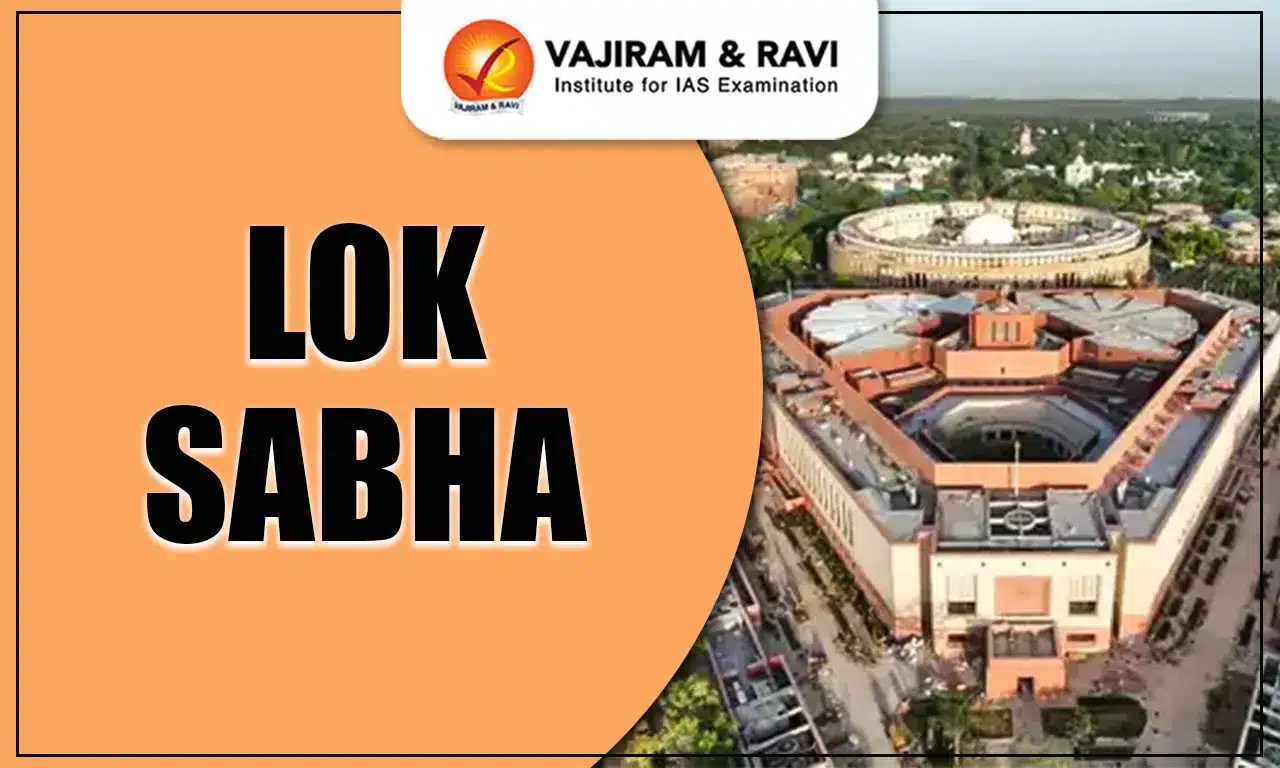
A Special Majority is a type of voting requirement used in the Constitution of India for passing certain important laws and constitutional amendments. It requires more than a simple majority of votes in the legislature. In this system, a proposal is passed only when it receives a higher level of support from the members of Parliament. Special majority is mainly used for amending the Constitution and passing significant constitutional provisions to ensure that such decisions are made with broad agreement.

About Special Majority

  • A Special Majority is required in the Parliament of India to amend most provisions of the Constitution of India under Article 368. It means a majority of the total membership of each House and two-thirds of the members present and voting in each House. Here, total membership refers to the total number of members in the House, including vacant seats or absent members. This special majority is mainly required at the final voting stage of a constitutional amendment bill. 
  • Important provisions such as the Fundamental Rights, the Directive Principles of State Policy, and other constitutional provisions that do not require state ratification can be amended using this type of majority.
  • Types of Special Majority
    • Special Majority Type 1 under Article 249
    • Special Majority Type 2 under Article 368
    • Special MajorityType 3 under Article 368 + State Ratification
    • Special Majority Type 4 under Article 61

Special Majority Types

In the Constitution of India, a Special Majority refers to a higher level of majority required in the Parliament of India to pass certain important decisions, especially constitutional amendments. Different provisions of the Constitution require different forms of special majority. The main types of special majority used in the Constitution are discussed below.

Special Majority Types

Type of Special Majority

Article

Description 

Used For

Type 1: Two-thirds majority of members present and voting

Article 249

Requires two-thirds of members present and voting in the Rajya Sabha.

Allows the Parliament of India to make laws on subjects in the State List if it is necessary in the national interest.

Type 2: Special Majority for Constitutional Amendment

Article 368

Requires majority of total membership of each House + two-thirds of members present and voting.

Used for most constitutional amendments, including changes related to Fundamental Rights and Directive Principles of State Policy.

Type 3: Special Majority + State Ratification

Article 368

Requires special majority in Parliament + approval by at least 50% of State Legislatures by simple majority.

Used for amendments affecting the federal structure, such as election of the President of India, powers of the Union and States, Supreme Court of India and High Courts, and distribution of legislative powers.

Type 4: Two-thirds of total membership of the House

Article 61

Requires two-thirds of the total strength of the House, not just members present and voting.

Used for impeachment of the President of India for violation of the Constitution.

Significance of Majorities in the Parliament of India

  • Ensures representation: Different types of majorities ensure that decisions reflect the views of a large number of elected representatives.
  • Protects democratic principles: They make sure that important decisions are properly debated and not taken arbitrarily.
  • Safeguards the Constitution: Special majorities help protect the basic principles of the Constitution of India by preventing frequent changes.
  • Prevents misuse of power: Different majority requirements stop any single group from dominating the decision-making process.
  • Encourages consensus: They encourage discussion, negotiation, and cooperation among political parties before major decisions are taken.

Special Majority FAQs

Q1: What is the Special Majority?

Ans: A Special Majority is a higher level of majority required in the Parliament of India to pass important laws and constitutional amendments.

Q2: Under which article is the Special Majority mainly used for constitutional amendments?

Ans: It is mainly used under Article 368 of the Constitution of India.

Q3: What does Special Majority under Article 368 mean?

Ans: It means the majority of the total membership of each House plus two-thirds of members present and voting.

Q4: For what purpose is the Special Majority under Article 249 used?

Ans: Under Article 249, the Rajya Sabha can allow Parliament to make laws on State List subjects in the national interest.

Q5: When is a Special Majority with State Ratification required?

Ans: It is required for constitutional amendments affecting the federal structure, such as election of the President of India or powers of the Union and States.

Achanakmar Wildlife Sanctuary, Location, Flora, Fauna, Map

Achanakmar Wildlife Sanctuary

Achanakmar Wildlife Sanctuary is an important protected forest located in Chhattisgarh and Madhya Pradesh. It was established in 1975 under the Wildlife (Protection) Act 1972. In 2009, it became a Tiger Reserve under Project Tiger. The sanctuary forms the core of the Achanakmar-Amarkantak Biosphere Reserve, which was notified in 2005 and included in the UNESCO World Network of Biosphere Reserves on 11 July 2012. It is one of the three tiger reserves in Chhattisgarh and plays a major role in conserving central India's forest ecosystem.

Achanakmar Wildlife Sanctuary Features

Achanakmar Wildlife Sanctuary is known for its strategic location, rich forest landscape, tiger corridors, river systems and strong conservation importance.

  • Location: The sanctuary extends across Mungeli district in Chhattisgarh and Anuppur and Dindori districts in Madhya Pradesh. 
  • Area: It covers about 557.55 sq km of forest and lies around 50 km north of Mungeli near Amarkantak.
  • Legal Status: It was declared a wildlife sanctuary in 1975 under the Wildlife (Protection) Act 1972
  • Tiger Reserve: In 2009, it received Tiger Reserve status under Project Tiger, strengthening tiger conservation in central India.
  • Biosphere Reserve: The sanctuary forms the 551.55 sq km core zone of the Achanakmar-Amarkantak Biosphere Reserve. The remaining 3,284.36 sq km serves as the buffer area across Chhattisgarh and Madhya Pradesh.
  • Tiger Corridor: Achanakmar is connected to Kanha Tiger Reserve through the Kanha-Achanakmar Corridor. It also supports tiger movement towards Bandhavgarh, making it an important wildlife dispersal route in central India.
  • River System: The Maniyari River flows through the centre of the reserve and supports wildlife throughout the year. The sanctuary is also located close to the origin of the Narmada and Son rivers near Amarkantak.
  • Landscape and Geography: The sanctuary lies within the Maikal Hills of the Satpura region. The surrounding biosphere reserve includes parts of the Vindhya and Satpura ranges and forms a watershed between the Arabian Sea and Bay of Bengal river systems.
  • Tribal Communities: The reserve is home to Baiga, a Particularly Vulnerable Tribal Group (PVTG), along with Gond and Yadav communities. Their traditional knowledge has long supported sustainable use of forest resources.
  • Conservation Importance: The biosphere reserve includes 416 villages and two urban settlements. Conservation efforts focus on reducing pressure from resource exploitation, protecting biodiversity, controlling invasive weeds and preventing river pollution.

Also Read: Tribes of Madhya Pradesh

Achanakmar Wildlife Sanctuary Biodiversity

Achanakmar Wildlife Sanctuary supports tropical moist deciduous forests with exceptional plant and animal diversity, making it one of central India's significant biodiversity landscapes.

  • Forest Ecology: Tropical moist deciduous forests dominate the sanctuary. The region supports healthy wildlife habitats because of dense vegetation, perennial rivers and continuous forest connectivity with neighbouring protected areas.
  • Rich Flora: Major tree species include Sal, Saja, Bija, Haldu, Teak, Tinsa, Dhawara, Lendia, Khamar and Bamboo. More than 600 medicinal plant species have also been recorded from the reserve.
  • Large Mammals: The sanctuary shelters Bengal tiger, Indian leopard, gaur, elephant, sloth bear, striped hyena, dhole, Indian jackal, wild boar, nilgai, chital, sambar, four horned antelope, chinkara, Indian muntjac, flying squirrel and Indian giant squirrel.
  • Wildlife Population: The 2004 wildlife census recorded 26 tigers, 46 leopards, 28 bears, 1,936 chital, 1,369 sambar, 376 barking deer and 552 gaur, demonstrating the sanctuary's rich herbivore and predator population.
  • Ecological Significance: The sanctuary maintains habitat connectivity across central India, supports genetic exchange among tiger populations, protects diverse ecosystems and strengthens long term conservation of forests, wildlife and river catchments.

Also Read: Tribes of Chhattisgarh

Achanakmar Wildlife Sanctuary FAQs

Q1: Where is Achanakmar Wildlife Sanctuary located?

Ans: Achanakmar Wildlife Sanctuary is located in Mungeli district of Chhattisgarh and Anuppur and Dindori districts of Madhya Pradesh.

Q2: When was Achanakmar Wildlife Sanctuary established?

Ans: Achanakmar Wildlife Sanctuary was established in 1975 under the Wildlife (Protection) Act, 1972 and became a Tiger Reserve in 2009.

Q3: Which biosphere reserve includes Achanakmar Wildlife Sanctuary?

Ans: Achanakmar Wildlife Sanctuary forms the core zone of the Achanakmar-Amarkantak Biosphere Reserve, recognised by UNESCO in 2012.

Q4: Which major animals are found in Achanakmar Wildlife Sanctuary?

Ans: The sanctuary is home to Bengal tiger, Indian leopard, gaur, elephant, sloth bear, dhole, chital, sambar, striped hyena and over 150 bird species.

Q5: Why is Achanakmar Wildlife Sanctuary important?

Ans: The sanctuary protects rich biodiversity, supports tiger movement through the Kanha-Achanakmar corridor, conserves tropical forests and safeguards important river catchment ecosystems.

Zanskar Range, Location, Extent, Formation, Physiography

Zanskar Range

The Zanskar Range is an important mountain range of the Trans-Himalayan system, located mainly in the Union Territory of Ladakh. It forms a natural divide between the Indus Valley in the north and the Zanskar Valley in the south and is known for its high mountains, glaciers, deep gorges, cold desert landscape and strategic importance.

Zanskar Range Location and Extent

  • The Zanskar Range is located mainly in the Kargil and Leh regions of Ladakh, with its extension reaching towards Himachal Pradesh.
  • It lies south of the Ladakh Range and north of the Great Himalayan Range, forming an important part of the Trans-Himalayan mountain system.
  • The range extends from the Suru Valley in the northwest to the Tso Kar basin in the southeast.
  • The range separates the Indus Valley to the north from the Zanskar Valley to the south and is surrounded by valleys such as Stod, Tsarap and Zanskar.
  • Along with the Karakoram, Ladakh and Kailas ranges, the Zanskar Range forms part of the broader Trans-Himalayan region.

Zanskar Range Geological Formation

  • The Zanskar Range belongs to the Tethys Himalaya, one of the major geological divisions of the Himalayan system.
  • It is mainly composed of folded and thrust sedimentary and metamorphic rocks formed from sediments deposited in the ancient Tethys Sea.
  • Marine fossils found in the rocks provide evidence that the region was once part of an ancient sea before the collision of the Indian and Eurasian plates.
  • The range was formed due to the convergence of the Indian Plate with the Eurasian Plate, which resulted in the uplift of the Himalayan mountain system.
  • The deep gorge carved by the Zanskar River exposes highly folded rock layers, making the region important for studying Himalayan geological evolution.

Zanskar Range Physiography and Peaks

  • The elevation of the Zanskar Range generally varies between 3,500 metres and over 7,000 metres, with several peaks exceeding 6,500 metres.
  • The region contains several high-altitude peaks, glaciers and mountain valleys due to its rugged Himalayan terrain.
  • Kamet (7,756 m), located in Uttarakhand, is the highest peak of the broader Zaskar Range
  • The mountains of the Zanskar Range are characterised by barren slopes, deep valleys and steep gorges due to extreme climatic conditions and erosion.

Zanskar Range Important Passes

  • Pensi La Pass (around 4,400 m) is an important pass connecting the Suru Valley of Kargil with the Zanskar Valley and is known as the gateway to Zanskar.
  • Shingo La (Shinku La) Pass (around 5,091 m) connects the Zanskar Valley with the Lahaul region of Himachal Pradesh.

These high-altitude passes play an important role in regional connectivity, tourism and strategic movement.

Zanskar Range Drainage System

  • The Zanskar River is the main river of the region and forms an important tributary of the Indus River.
  • The Zanskar River is formed by the confluence of the Doda River and the Lungnak River near Padum. The Lungnak River is formed by the confluence of the Tsarap and Kargyag rivers
  • The Zanskar River flows northwards through deep gorges and joins the Indus River near Nimmu in Ladakh.
  • The Drang-Drung Glacier, located near Pensi La, is one of the largest glaciers in Ladakh and provides meltwater to the Zanskar river system.

Zanskar Range Climate and Natural Vegetation

  • The Zanskar Range experiences a cold desert climate due to its location in the rain-shadow region of the Himalayas.
  • The range blocks moisture-bearing monsoon winds, resulting in very low rainfall and dry conditions in Ladakh and Zanskar.
  • Winters are extremely cold and long, while summers are short and relatively mild.
  • Vegetation is sparse and mainly consists of alpine grasses, shrubs and steppe vegetation adapted to high altitude and aridity.

Zanskar Range Flora and Fauna

Zanskar region supports a unique high-altitude Himalayan ecosystem. Important wildlife species found in the region include the snow leopard, Himalayan blue sheep (bharal), ibex and Himalayan marmot.

Zanskar Range Cultural and Tourism Importance

  • Zanskar is known for its unique Tibetan Buddhist culture, monasteries and traditional lifestyle.
  • The Chadar Trek, conducted on the frozen Zanskar River during winter, is one of India’s most famous high-altitude trekking routes.
  • Monasteries such as Phuktal Monastery represent the rich cultural heritage of the region.
  • The region attracts tourists for trekking, mountaineering, river expeditions and adventure activities.

Zanskar Range Environmental Concerns

  • Climate change is affecting glaciers, snowfall patterns and water availability in the Zanskar region.
  • Rapid glacier retreat may impact agriculture, biodiversity and the livelihoods of local communities dependent on glacier-fed rivers.
  • Increasing tourism and infrastructure development require sustainable planning to protect the fragile cold desert ecosystem.

Zanskar Range FAQs

Q1: Where is the Zanskar Range located?

Ans: The Zanskar Range is located mainly in the Union Territory of Ladakh, particularly in the Kargil region, with extensions towards Himachal Pradesh.

Q2: Which physiographic division does the Zanskar Range belong to?

Ans: The Zanskar Range is part of the Trans-Himalayan mountain system, along with the Karakoram, Ladakh and Kailas ranges.

Q3: Between which regions does the Zanskar Range lie?

Ans: The Zanskar Range lies between the Ladakh Range in the north and the Great Himalayan Range in the south.

Q4: How was the Zanskar Range formed?

Ans: The Zanskar Range was formed due to the collision of the Indian Plate with the Eurasian Plate, which caused the uplift of the Himalayan mountain system.

Q5: Which river flows through the Zanskar Range?

Ans: The Zanskar River is the main river of the region and a tributary of the Indus River.

Bundela Dynasty, History, Origin, Important Rulers, Administration

Bundela Dynasty

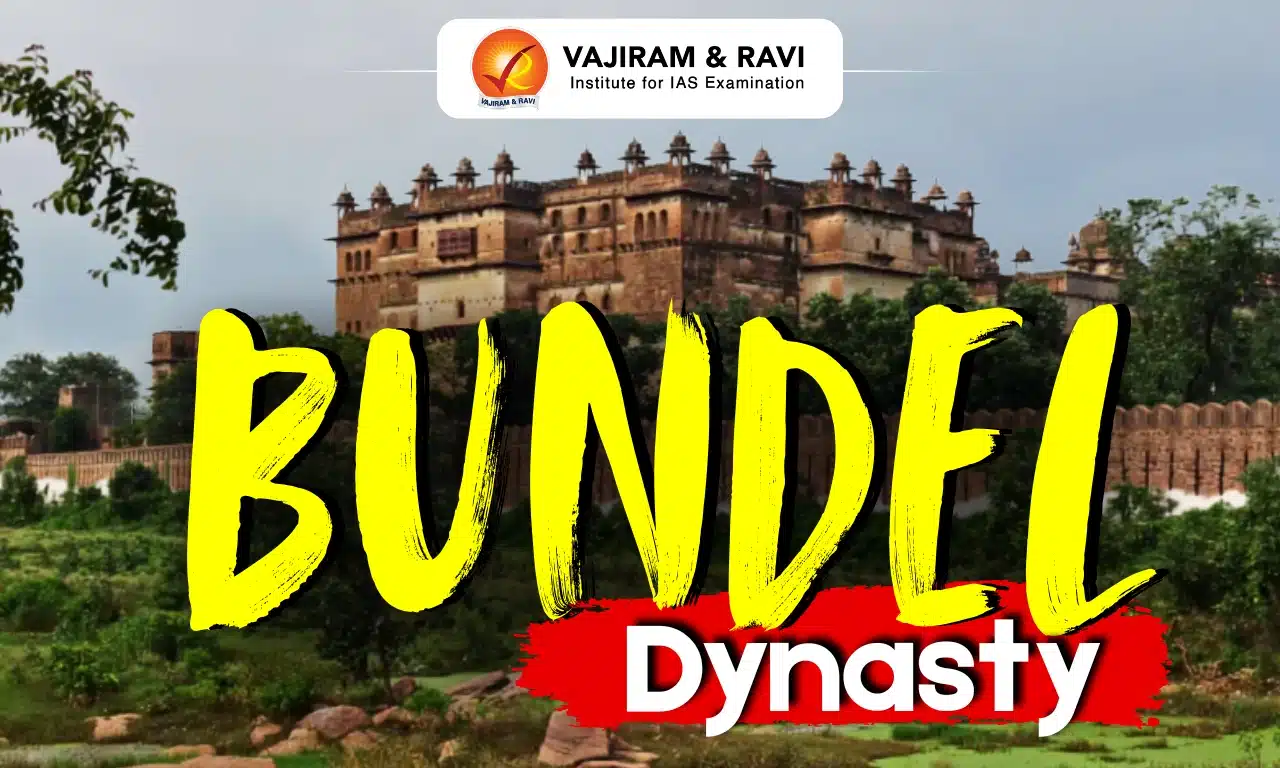
The Bundela Dynasty was one of the most influential Rajput dynasties in central India. It ruled large parts of present-day Bundelkhand, covering regions of Madhya Pradesh and Uttar Pradesh, between the 16th and 18th centuries. The dynasty is known for its brave rulers, magnificent forts and palaces, rich cultural heritage, and resistance against the Mughal Empire. Famous rulers such as Raja Rudra Pratap Singh, Raja Bir Singh Deo, and Maharaja Chhatrasal played a significant role in shaping the political history of central India.

Bundela Dynasty

The Bundela Dynasty was a Rajput dynasty that established its rule over the Bundelkhand region during the medieval period. The name "Bundela" is believed to have originated from the legendary ancestor Pancham, who is said to have received divine blessings after performing severe penance. His descendants came to be known as the Bundelas.

Bundela Dynasty Origin and History

The Bundela Dynasty emerged as a powerful Rajput dynasty in central India and established its rule over the Bundelkhand region, leaving a lasting impact on the political, cultural, and architectural history of medieval India.

  • Origin: The Bundelas are believed to have descended from the Gaharwar Rajputs, though their origin is also associated with local legends.
  • Foundation: Raja Rudra Pratap Singh founded the Kingdom of Orchha in 1531 CE and made Orchha his capital.
  • Expansion: The dynasty expanded its territories across present-day Madhya Pradesh and Uttar Pradesh, establishing several princely states.
  • Golden Period: The reign of Raja Bir Singh Deo (1605-1627) marked the peak of Bundela power, with significant military success and architectural development.
  • Resistance to the Mughals: Maharaja Chhatrasal successfully fought against Mughal rule under Aurangzeb and established an independent Bundela kingdom.

Important Rulers of the Bundela Dynasty

The Bundela Dynasty was led by several capable rulers who strengthened the kingdom through military achievements, efficient administration, and patronage of art, architecture, and religion.

  • Rudra Pratap Singh (1501-1531): Founder of the Kingdom of Orchha in 1531 CE and established Orchha as the capital of the Bundela rulers.
  • Bharti Chand (1531-1554): Consolidated the newly established kingdom, strengthened its administration, and expanded Bundela influence in the region.
  • Madhukar Shah (1554-1592): A devout Hindu ruler known for promoting religion, temple construction, literature, and cultural activities.
  • Bir Singh Deo (1605-1627): One of the greatest Bundela rulers, famous for constructing the Jahangir Mahal, expanding the Orchha Fort Complex, and maintaining close ties with Emperor Jahangir.
  • Jujhar Singh (1627-1635): Succeeded Bir Singh Deo and resisted Mughal authority, but his conflict with Emperor Shah Jahan eventually weakened the kingdom.
  • Maharaja Chhatrasal (1649-1731): The most celebrated Bundela ruler who fought against Mughal rule, established an independent kingdom in Bundelkhand, and later allied with the Marathas to strengthen his position.

Also Read:- Khilji Dynasty

Administration, Culture, and Architecture

The Bundela Dynasty developed an effective administrative system and made significant contributions to art, culture, literature, and architecture, leaving behind a rich heritage in the Bundelkhand region.

Administration

  • Followed a decentralized administrative system, with provinces managed by local governors and officials.
  • Maintained a strong military to protect the kingdom from external invasions and internal rebellions.
  • Collected land revenue as the primary source of state income and promoted agricultural development.
  • Built forts and defensive structures to strengthen border security and maintain law and order.
  • Encouraged local governance through village heads and officials for efficient administration.

Culture

  • Promoted Hindu religion, traditions, and festivals while respecting other faiths.
  • Patronized Sanskrit and Braj literature, attracting scholars and poets to the royal court.
  • Supported music, dance, painting, and sculpture, contributing to the cultural growth of the region.
  • Built numerous temples, palaces, and religious institutions that reflected their devotion and artistic vision.
  • Preserved the unique cultural identity and folk traditions of Bundelkhand.

Architecture

  • Developed a distinctive Bundela architectural style, blending Rajput and Mughal influences.
  • Constructed iconic monuments such as the Orchha Fort Complex, Jahangir Mahal, Raja Mahal, and Chaturbhuj Temple.
  • Built impressive forts, palaces, temples, and royal cenotaphs (Chhatris) using sandstone and locally available materials.
  • Architectural features include ornate balconies (jharokhas), domes, chhatris, murals, frescoes, courtyards, and decorative carvings.
  • Many Bundela monuments continue to be important historical and architectural heritage sites in India.

Decline and Legacy of the Bundela Dynasty

Bundela Dynasty gradually declined after the death of Maharaja Chhatrasal in 1731 due to internal succession disputes, the growing influence of the Marathas, and later the expansion of British rule in central India. Although their political power diminished, the Bundelas left behind a remarkable legacy through their forts, palaces, temples, and contributions to art, architecture, and regional governance. Monuments in Orchha, Datia, and Panna continue to reflect their architectural brilliance and cultural achievements.

Bundela Dynasty FAQs

Q1: Who founded the Bundela Dynasty?

Ans: The Bundela Dynasty was established by Rudra Pratap Singh, who founded the Kingdom of Orchha in 1531 CE.

Q2: Which region was ruled by the Bundela Dynasty?

Ans: The dynasty mainly ruled the Bundelkhand region, covering parts of present-day Madhya Pradesh and Uttar Pradesh.

Q3: Who was the most famous ruler of the Bundela Dynasty?

Ans: Maharaja Chhatrasal is regarded as the most famous Bundela ruler due to his successful resistance against the Mughal Empire and the establishment of an independent kingdom.

Q4: Why is Raja Bir Singh Deo important?

Ans: Raja Bir Singh Deo is remembered for his military strength and for constructing famous monuments such as the Jahangir Mahal and expanding the Orchha Fort Complex.

Q5: What was the capital of the Bundela Kingdom?

Ans: Orchha served as the principal capital of the Bundela Kingdom.

Article 13 of Indian Constitution, Provisions, Clauses, Case Laws

Article 13 of Indian Constitution

Article 13 of Indian Constitution comes under Part III of the Constitution of India. The article is a foundational pillar that helps protect the fundamental rights of citizens of India. It says that any existing or future laws that violate these rights should be considered void to the extent of the violation. This article helps establish the supremacy of the Constitution and also makes sure that no authority including the executive and executive can surpass the fundamental rights of individuals. In this article, we are going to cover Article 13 of the Constitution of India, its interpretation and its significance. 

Article 13 of Indian Constitution

The Constitution of India has stated the following about Article 13: 

Laws inconsistent with or in derogation of the fundamental rights

  • All laws in force in the territory of India immediately before the commencement of this Constitution, in so far as they are inconsistent with the provisions of this Part, shall, to the extent of such inconsistency, be void.
  • The State shall not make any law which takes away or abridges the rights conferred by this Part, and any law made in contravention of this clause shall, to the extent of the contravention, be void.
  • In this article:
    • (a) "Law" includes any Ordinance, order, bye-law, rule, regulation, notification, custom, or usage having in the territory of India the force of law;
    • (b) "Laws in force" includes laws passed or made by a Legislature or other competent authority in the territory of India before the commencement of this Constitution and not previously repealed, notwithstanding that any such law or any part thereof may not be then in operation either at all or in particular areas.
  • Nothing in this article shall apply to any amendment of this Constitution made under Article 368. 

Article 13 of Indian Constitution Clauses

Article 13 of Indian Constitution can be interpreted in the following manner

  • Article 13(1) says that any laws that are existing even before the Constitution was constituted, and are now in conflict with fundamental rights will now become invalid in case of any conflict. 
  • Article 13(2) of the Indian Constitution says that the state is not allowed to make laws that violate the fundamental rights of citizens of India. Such laws will be considered to be void in case of violation. 
  • Article 13(3) of the Indian Constitution particularly defines “Law”  in the form of legal instruments and customs. 
  • Article 13(4) of the Indian Constitution states that the constitutional amendments under Article 368 does not come under the provisions mentioned under Article 13.

Article 13 of Indian Constitution Case Laws

Article 13 of Indian Constitution has always been in shaping India’s constitutional framework by ensuring that laws violating fundamental rights are struck down. Key Supreme Court judgments interpreting Article 13 include:

  • Kesavananda Bharati v. State of Kerala (1973): Establishing the Basic Structure Doctrine, limiting Parliament’s power to amend core constitutional principles, including fundamental rights.
  • I.C. Golaknath v. State of Punjab (1967): Ruled that Parliament cannot amend fundamental rights, treating amendments as “law” under Article 13.
  • Minerva Mills Ltd. v. Union of India (1980): Reaffirmed the Basic Structure Doctrine and held limited amending power as a basic feature.
  • L. Chandra Kumar v. Union of India (1997): Declared judicial review as a basic feature; tribunals cannot exclude High Court or Supreme Court jurisdiction.

Article 13 of the Indian Constitution Significance

Article 13 of the Constitution of India is important in the following manners: 

  • Make sure that the fundamental rights of citizens are protected by declaring any law that violates it void. 
  • Gives the power to the courts to review and nullify any unconstitutional laws.
  • Article 13(1) of the constitution can remove any pre-constitutional law that violates the fundamental rights. 
  • Article 13(2) of the Constitution of India makes sure that the state does not make any laws that violate the constitution in the future. 
  • Article 13 ensures all laws, whether past or present, must respect fundamental rights, and when read with Article 12 (defining "State"), it empowers citizens to hold the State accountable.
Also Check Related Articles
Article 167 of Indian Constitution Article 93 of Indian Constitution
Article 141 of Indian Constitution Article 47 of Indian Constitution
Article 84 of Indian Constitution Article 174 Of Indian Constitution
Article 128 of Indian Constitution Article 114 of Indian Constitution
Article 17 of Indian Constitution Article 32 of Indian Constitution
Article 21 of Indian Constitution Article 19 of indian constitution
Article 14 of indian constitution Article 18 of Indian Constitution
Article 23 of Indian Constitution Article 24 of Indian Constitution
Article 3 of Indian Constitution Article 38 of Indian Constitution
Article 43 of Indian Constitution Article 48 of Indian Constitution
Article 143 of Indian Constitution Article 326 of Indian Constitution
Article 124 of indian constitution Article 45 of Indian Constitution
Article 41 of Indian Constitution Article 160 of Indian Constitution
Article 340 of Indian Constitution Article 43b of Indian Constitution
Article 156 of Indian Constitution Article 144 of Indian Constitution
Article 365 of Indian Constitution
Article 201 of Indian Constitution
Article 140 of Indian Constitution Article 35 of Indian Constitution
Article 166 of Indian Constitution Article 102 of Indian Constitution
Article 83 of Indian Constitution Article 88 of Indian Constitution
Article 28 of Indian Constitution Article 103 of Indian Constitution
Article 36 of Indian Constitution Article 62 of Indian Constitution
Article 82 of Indian Constitution Article 97 of Indian Constitution
Article 224 of Indian Constitution Article 251 of Indian Constitution
Article 13 of Indian Constitution Article 29 & 30 of Indian Constitution
Article 15 of Indian Constitution Article 4 of Indian Constitution
Article 85 of Indian Constitution Article 27 of Indian Constitution
Article 238 of Indian Constitution Article 312 of Indian Constitution
Article 137 of Indian Constitution Article 118 of Indian Constitution
Article 353 of Indian Constitution Article 111 of Indian Constitution
Article 113 of Indian Constitution Article 76 of Indian Constitution
Article 44 of Indian Constitution Article 50 of Indian Constitution
Article 295 of Indian Constitution Article 194 of Indian Constitution
Article 39 of Indian Constitution Article 191 of Indian Constitution
Article 20 of Indian Constitution Article 16 of Indian Constitution
Article 67 of Indian Constitution Article 40 of Indian Constitution
Article 78 of Indian Constitution

Article 13 of Indian Constitution FAQs

Q1: What does Article 13 of Indian Constitution say?

Ans: Article 13 declares that any law violating fundamental rights shall be void and empowers courts to strike them down.

Q2: Is the word minority not defined in the Constitution of India?

Ans: Yes, the Constitution does not define "minority"; it leaves the term open to interpretation by the courts and legislature.

Q3: What is the main objective of Article 13 of Indian Constitution?

Ans: The main objective of Article 13 is to protect fundamental rights by invalidating laws that contravene them.

Q4: What is the Article 13 summary?

Ans: Article 13 ensures judicial review of laws, declaring pre- and post-Constitution laws void if they infringe fundamental rights.

Q5: What is the Article 13 agreement?

Ans: There is no "Article 13 agreement" in the Constitution; the term may refer to legal interpretations or applications of Article 13, but it is not an official constitutional clause.

Ashfaqullah Khan, Kakori Conspiracy, Role & Martyrdom

Ashfaqullah Khan

Ashfaqullah Khan was a brave revolutionary who contributed to India’s freedom struggle. He is known for his role in the Kakori Conspiracy, aimed at challenging British rule and supporting revolutionary activities. He worked with Ram Prasad Bismil and was part of the Hindustan Republican Association. Known for his courage and patriotism, he was executed in 1927 and is remembered as a martyr who inspires generations.

Ashfaqullah Khan

  • Ashfaqullah Khan was a prominent Indian revolutionary and freedom fighter, born on 22 October 1900 in Shahjahanpur, Uttar Pradesh during British rule.
  • He came from a Pathan Muslim family that emphasized education, discipline, and moral values, which shaped his personality from a young age.
  • As a child, he showed a keen interest in history, justice, and national issues, and gradually developed a strong desire to see India free from colonial rule.
  • Growing up in a time of political unrest, he was deeply influenced by the freedom movement and nationalist ideas, which motivated him to join revolutionary activities.

Ashfaqullah Khan’s Role in the Freedom Struggle

  • Ashfaqullah Khan played a significant role in the revolutionary phase of India’s freedom struggle, especially during the 1920s.
  • After the withdrawal of the Non-Cooperation Movement, many young Indians felt disillusioned, and Ashfaqullah Khan was among those who believed that stronger action was needed against British rule.
  • He chose the path of armed revolution, aiming to challenge colonial authority and awaken patriotic feelings among Indians.
  • His dedication, bravery, and willingness to sacrifice made him an important figure among young revolutionaries of that time.

Also Read:- Alauddin khilji

Kakori Conspiracy and Ashfaqullah Khan’s Contribution

  • Ashfaqullah Khan was one of the key revolutionaries involved in the Kakori Conspiracy, which took place on 9 August 1925.
  • The plan involved stopping a train near Kakori and seizing government funds, which were to be used for purchasing weapons and supporting revolutionary activities.
  • This act was not just a robbery but a strategic move to weaken British control and finance the freedom struggle.
  • Ashfaqullah Khan played an active role in planning and executing the operation, displaying courage and strong commitment to the cause.
  • The incident gained widespread attention and became a symbol of resistance against British rule.

Association with Hindustan Republican Association

  • Ashfaqullah Khan was an active member of the Hindustan Republican Association (HRA), founded in 1924.
  • The organization aimed to overthrow British rule through armed struggle and establish a free and democratic India.
  • The HRA believed in creating a nation based on equality, justice, and universal rights, as outlined in its manifesto “The Revolutionary.”
  • Ashfaqullah Khan contributed to strengthening the organization, planning actions, and inspiring others to join the movement.
  • Later, the organization evolved into the Hindustan Socialist Republican Association (HSRA) with broader ideological goals.

Ashfaqullah Khan and Ram Prasad Bismil’s Partnership

  • Ashfaqullah Khan shared a deep friendship and working relationship with Ram Prasad Bismil, a leading revolutionary of the time.
  • Their bond was built on mutual respect, shared vision, and dedication to India’s independence.
  • Together, they played key roles in organizing revolutionary activities, including the Kakori action.
  • Their friendship is remembered as a powerful example of Hindu-Muslim unity, showing that people from different backgrounds could come together for a common national cause.

Arrest, Trial, and Execution of Ashfaqullah Khan

  • After the Kakori incident, Ashfaqullah Khan managed to escape arrest initially and went into hiding, moving across places like Bihar, Banaras, and Delhi.
  • He even worked in an engineering company while trying to find ways to continue the struggle or leave the country for further support.
  • However, he was eventually betrayed by a friend and arrested in Delhi in 1926.
  • The trial for the Kakori case lasted about one and a half years, during which he showed remarkable courage and confidence.
  • He was sentenced to death and executed on 19 December 1927 at Faizabad Jail, embracing martyrdom with pride and fearlessness.

Ideals, Courage, and Patriotism of Ashfaqullah Khan

  • Ashfaqullah Khan strongly believed in freedom, justice, equality, and national unity, which guided his actions throughout his life.
  • He remained calm, fearless, and determined, even during difficult times such as imprisonment and trial.
  • Apart from being a revolutionary, he was also a poet, using his writings to spread messages of hope, unity, and patriotism.
  • His thoughts reflected the idea that India belonged to all people, regardless of religion or background.
  • His life is a true example of selfless sacrifice and unwavering dedication to the nation.

Legacy and Inspiration of Ashfaqullah Khan in Modern India

  • Ashfaqullah Khan is remembered as a great martyr and national hero who sacrificed his life for India’s freedom.
  • His story continues to inspire students, youth, and citizens to stand for truth, courage, and justice.
  • He is widely regarded as a symbol of unity and brotherhood, especially due to his close association with revolutionaries from different communities.
  • His contributions are honored through memorials, educational content, and historical recognition across India.
  • His life teaches us the importance of patriotism, unity, and the courage to fight for what is right.

Ashfaqullah Khan FAQs

Q1: Who was Ashfaqullah Khan?

Ans: Ashfaqullah Khan was a brave Indian revolutionary who played an important role in the freedom struggle against British rule.

Q2: When and where was Ashfaqullah Khan born?

Ans: He was born on 22 October 1900 in Shahjahanpur, Uttar Pradesh during British rule.

Q3: What is Ashfaqullah Khan famous for?

Ans: He is best known for his role in the Kakori Conspiracy, which aimed to challenge British authority.

Q4: What was the Kakori Conspiracy?

Ans: It was a planned train robbery on 9 August 1925 to seize government funds for revolutionary activities.

Q5: Which organization did Ashfaqullah Khan join?

Ans: He was a member of the Hindustan Republican Association (HRA).

Revamped Khelo India Scheme (2026-2031), Objectives, Budget

Revamped Khelo India Scheme

The Revamped Khelo India Scheme was approved by the Union Cabinet with an enhanced Assistance to National Sports Federations (ANSFs) Scheme and a combined outlay of ₹36,441 crore for 2026-27 to 2030-31. The Revamped Khelo India Scheme marks India’s largest sports development programme since Independence, aiming to build a seamless pathway from grassroots participation to Olympic excellence and strengthen India’s long-term sporting ambitions.

About the Revamped Khelo India Scheme

The Revamped Khelo India Scheme marks a major shift from promoting sports participation to creating a comprehensive athlete development ecosystem that supports every talented sportsperson from school playgrounds and village sports fields to the Olympic podium.

  • Duration: Approved for the period 2026-27 to 2030-31.
  • Financial Outlay: Provides a combined allocation of ₹36,441 crore for the Revamped Khelo India Scheme and the enhanced ANSF Scheme.
    • The approved outlay is nearly eight times higher than the previous Khelo India Scheme, making it India’s largest sports development programme since Independence.
  • Objective: To ensure that no sporting talent remains undiscovered because of geography, economic background or lack of opportunity by creating a seamless pathway from grassroots to elite sports.
  • Policy Convergence: Aligns with Khelo Bharat Niti, 2025 and the National Education Policy (NEP), 2020 by integrating sports with education, fitness, technology and high-performance training.
  • Long-term Focus: Supports India’s preparations for the 2030 Commonwealth Games, the country’s 2036 Olympic ambitions, Olympic and Paralympic hosting aspirations, and the vision of Viksit Bharat@2047.

Why is the Revamped Khelo India Scheme Needed?

India’s sporting ambitions have expanded significantly, but its Olympic performance highlights the need for a stronger grassroots sports ecosystem and a larger pool of world-class athletes.

  • India achieved its best-ever Olympic finish in the 21st century by securing 48th position with seven medals at the Tokyo Olympics (2021).
  • India slipped to 71st position with six medals at the Paris Olympics (2024), highlighting the need for more consistent international performances.

To support India’s 2036 Olympic hosting aspirations and emerge as a global sporting power, the country needs a much larger pool of elite athletes capable of winning 30-40 Olympic medals, including double-digit gold medals.

The Revamped Khelo India Scheme addresses these gaps by strengthening talent identification, scientific training, coaching, sports infrastructure and the athlete development pathway from grassroots to the Olympic podium.

Major Reforms under the Revamped Khelo India Scheme

The Revamped Khelo India Scheme introduces structural reforms to strengthen athlete development, modernise governance and expand India’s sports ecosystem.

Athlete Development

  • Comprehensive Athlete Pathway: Creates a structured pathway covering talent identification, scientific training, regular competitions, international exposure and Olympic preparation.
  • Emerging Khelo India Athletes (E-KIAs): Introduces a new athlete category, expanding the structured athlete pool from 2,904 to nearly 28,000 athletes.
  • TOPS Integration: Establishes a seamless progression from grassroots competitions → Khelo India → Target Olympic Podium Scheme (TOPS).

Sports Ecosystem

  • Integrated Institutional Network: Brings together National Centres of Excellence (NCOEs), Khelo India Centres of Excellence (KICoEs), SAI Training Centres (STCs), Khelo India Accredited Academies (KIAAs), Khelo India Centres (KICs) and Youth Sports Companies (YSCs) of the Armed Forces.
  • Infrastructure Expansion: Expands Khelo India Centres, Centres of Excellence and accredited academies to improve access to world-class coaching, sports science support and modern infrastructure.

School Sports and Talent Identification

  • Khelo India Feeder Schools (KIFS): Introduced for early identification and systematic nurturing of talented children.
  • Khelo India Utkrishta Vidyalayas (KIUV): Integrates sports with mainstream education in line with NEP 2020.
  • Strengthened Talent Identification: Creates a nationwide framework involving Talent Identification Development Committees, Zonal Committees, Talent Scouts, High Performance Directors and High Performance Managers.

Competition, Inclusion and Fitness

  • Competition Ecosystem: Supports school, university, regional and sport-specific leagues along with national championships for regular competitive exposure.
  • Inclusive Sports: Expands opportunities for women athletes, para-athletes and indigenous sports while promoting sports for peace and community development.
  • Major Events: Supports the National Games and hosting of international sporting events in India.
  • Fit India Expansion: Scales up the Fit India Movement to promote fitness, women’s participation, outreach in border and remote areas, and campaigns against substance abuse.

Coaching, Technology and Governance

  • National Coach Accreditation Board (NCAB): Standardises coaching qualifications and strengthens professional standards.
  • Unified Digital Sports Platform: Integrates athlete databases, infrastructure, competitions, coaching resources, talent assessments and funding for transparent, data-driven governance.

Public-Private Partnerships

  • Encourages collaboration with private academies and corporate partners to strengthen sports infrastructure, athlete development and innovation.

Enhanced Assistance to National Sports Federations (ANSFs) Scheme

  • Supports coaching, sports science, modern equipment, foreign experts, coaching camps and international exposure for athletes and teams.
  • Promotes sports cooperation with Global South countries and the international promotion of India’s indigenous sports.

Significance of the Revamped Khelo India Scheme

The Revamped Khelo India Scheme represents a major structural reform that strengthens India’s long-term sporting ecosystem and global competitiveness.

  • Transforms Khelo India into a comprehensive athlete development ecosystem with a seamless pathway from grassroots to elite sports.
  • Expands the organised athlete base and strengthens scientific coaching, sports science and institutional support.
  • Improves coaching quality and governance through NCAB and a unified digital sports platform.
  • Supports India’s preparations for the 2030 Commonwealth Games, 2036 Olympic ambitions and Viksit Bharat@2047.
  • Promotes sports as a tool for youth development, fitness and nation-building.

Challenges of the Revamped Khelo India Scheme

Despite its ambitious reforms, the success of the Revamped Khelo India Scheme will depend on sustained implementation and institutional support.

  • Ensuring effective and transparent implementation across the country.
  • Converting grassroots talent into consistent Olympic and international medal winners.
  • Strengthening grassroots infrastructure, coaching capacity and competition culture.
  • Addressing India’s doping challenge to improve credibility in international sports.
  • Sustaining a nationwide sports culture through greater participation and the Fit India Movement.

Revamped Khelo India Scheme FAQs

Q1: Why has the Khelo India Scheme been revamped?

Ans: To transform Khelo India from a participation-based programme into a comprehensive athlete development ecosystem that prepares athletes for international sporting success.

Q2: What are the key reforms introduced under the Revamped Khelo India Scheme?

Ans: The scheme introduces higher investment, a structured athlete pathway, expanded sports institutions, school sports initiatives, a larger athlete pool, improved coaching, digital governance and stronger competition pathways.

Q3: What is the financial outlay of the Revamped Khelo India Scheme?

Ans: The Revamped Khelo India Scheme has an outlay of ₹29,054 crore, while the combined allocation with the Enhanced ANSF Scheme is ₹36,441 crore for 2026-31.

Q4: What is the role of the National Coach Accreditation Board (NCAB)?

Ans: It standardises coaching qualifications and improves the quality of coaches across India.

Q5: What is the role of Khelo India Feeder Schools (KIFS) and Khelo India Utkrishta Vidyalayas (KIUV)?

Ans: They integrate sports with education, enable early talent identification, and provide systematic training and nurturing of young athletes.

India’s First Comprehensive Catalogue of Lepidoptera, Key Findings

India’s First Comprehensive Catalogue of Lepidoptera

India has completed its first comprehensive national catalogue of Lepidoptera, documenting the country’s butterfly and moth diversity after nearly 12 years of research by the Zoological Survey of India (ZSI).

Published in the international peer-reviewed journal Zootaxa, the catalogue brings together scattered records collected over more than a century and provides an updated database for biodiversity research, ecological studies and conservation planning

About Lepidoptera

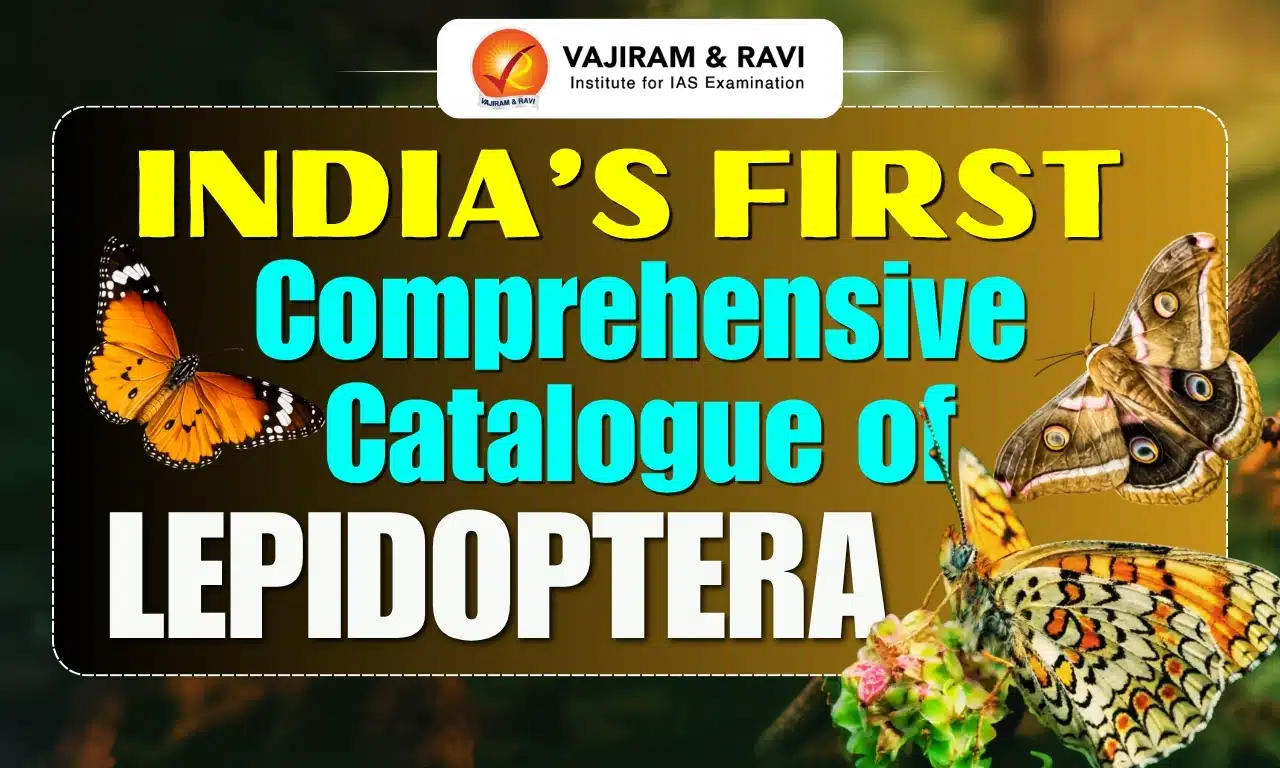
Lepidoptera is an insect order that includes butterflies and moths and represents one of the most diverse groups of insects.

  • Lepidoptera species are characterised by their scaled wings and are found across diverse ecosystems.
  • They perform important ecological functions as pollinators, herbivores and decomposers.
  • They also form an important part of food chains by providing food for birds, bats and other insect-eating animals.

About India’s First Comprehensive Lepidoptera Catalogue

India’s first comprehensive Lepidoptera Catalogue is a landmark scientific effort that brings together scattered information on butterflies and moths into a single national reference.

  • The catalogue was prepared by Zoological Survey of India (ZSI) scientists Navneet Singh and Rahul Joshi through nearly 12 years of field surveys, museum studies and detailed literature verification.
  • The work has been compiled into 22 volumes, with the final volume completing the documentation of Indian Lepidoptera diversity.
  • It provides updated information on species classification, distribution and taxonomy, resolving gaps that existed in scientific records for more than 100 years.
  • The catalogue covers India’s butterfly and moth diversity across different ecosystems, creating a reliable baseline for future biodiversity studies.

Key Findings of India’s First Comprehensive Lepidoptera Catalogue

India’s First Comprehensive Lepidoptera Catalogue highlights India’s rich Lepidoptera diversity and strengthens scientific understanding of butterfly and moth species.

  • India has recorded 13,703 species of Lepidoptera (butterflies and moths), which is around 8.25% of the world’s known species.
  • These species are spread across different ecosystems, from the Himalayas to the Western Ghats and tropical forests, showing India’s diverse habitats.
  • The recorded diversity includes 1,417 butterfly species and 12,286 moth species, indicating that moths make up the larger share of Indian Lepidoptera.
  • The catalogue classifies these species into 3,705 genera, 240 subfamilies, 102 families and 31 superfamilies, helping scientists understand their relationship and diversity.
  • A major section of the catalogue covers Geometroidea moths, an important group of mostly night-active moths that help in pollination when many daytime pollinators are inactive.
  • India has 2,205 species of Geometroidea moths, belonging to 479 genera, 13 subfamilies and four families, accounting for about 8.8% of the world’s known Geometroidea diversity.
  • Among Geometroidea moths, Geometridae is the most diverse family with 2,100 species, followed by Uraniidae (95 species), Epicopeiidae (9 species) and Pseudobistonidae (1 species).
  • The most species-rich groups within Geometroidea include Ennominae (895 species), Larentiinae (565 species) and Geometrinae (309 species).

India’s First Comprehensive Lepidoptera Catalogue Significance

The comprehensive inventory strengthens India’s biodiversity conservation efforts and scientific research.

  • Improved Biodiversity Knowledge: Provides an updated reference for identifying and studying butterfly and moth species.
  • Conservation Planning: Helps researchers and policymakers design better strategies for protecting species and their habitats.
  • Climate Change Monitoring: Enables tracking of changes in species distribution caused by environmental and climatic variations.
  • Agriculture and Forestry Support: Accurate taxonomic information helps in understanding moth species that may impact crops and forests.
  • Global Biodiversity Research: Positions India among countries with a well-documented and scientifically verified biodiversity database.

About Zoological Survey of India (ZSI)

The Zoological Survey of India has been instrumental in documenting India’s animal diversity.

  • Established in 1916, ZSI functions under the Ministry of Environment, Forest and Climate Change.
  • It undertakes taxonomic research, biodiversity surveys and ecological studies across the country.

The Lepidoptera catalogue reflects ZSI’s role in creating scientific databases essential for biodiversity conservation and environmental management.

India’s First Comprehensive Catalogue of Lepidoptera FAQs

Q1: What is India’s First Comprehensive Catalogue of Lepidoptera?

Ans: India’s First Comprehensive Catalogue of Lepidoptera is the first national-level scientific inventory of butterflies and moths, prepared by the Zoological Survey of India (ZSI) after 12 years of research.

Q2: How many Lepidoptera species are found in India according to the catalogue?

Ans: The catalogue documents 13,703 species of Lepidoptera belonging to 3,705 genera, 240 subfamilies, 102 families and 31 superfamilies.

Q3: Which organisation prepared India’s Lepidoptera catalogue?

Ans: The catalogue was prepared by the Zoological Survey of India (ZSI) under the Ministry of Environment, Forest and Climate Change.

Q4: What is Lepidoptera?

Ans: Lepidoptera is an insect order that includes butterflies and moths, known for their scaled wings and important ecological roles as pollinators and a food source for other wildlife.

Q5: What percentage of the world’s Lepidoptera diversity is found in India?

Ans: India accounts for around 8.25% of the world’s known Lepidoptera diversity, highlighting its rich biodiversity.

Pingali Venkayya 150th Birth Anniversary, Life, Contributions

Pingali Venkayya 150th Birth Anniversary

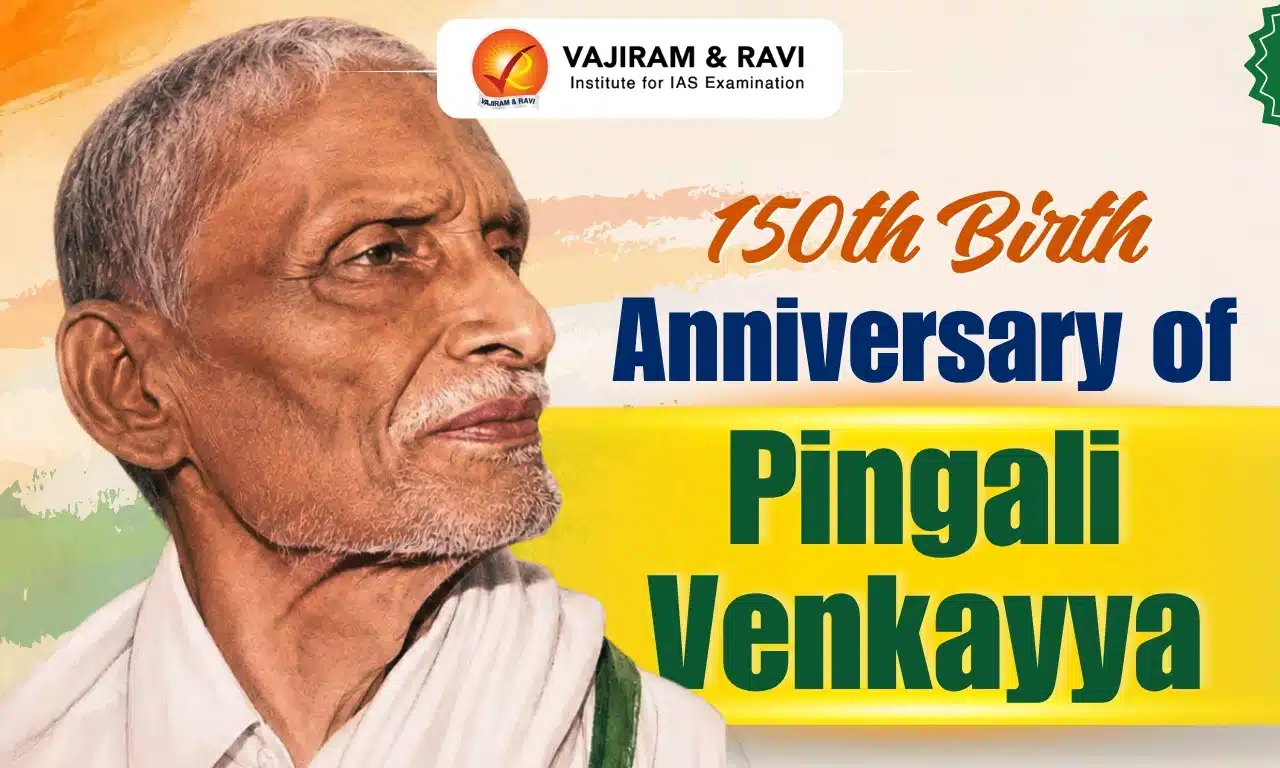
India observed the 150th Birth Anniversary of Pingali Venkayya on 2 August 2026, paying tribute to the visionary freedom fighter who designed the original version of the Indian National Flag (Tiranga). The occasion highlighted his enduring contribution to India’s freedom struggle, national identity and patriotic spirit.

Who was Pingali Venkayya?

Pingali Venkayya was a freedom fighter, educationist, agriculturist, geologist and linguist whose greatest contribution was designing the flag that later evolved into India’s National Flag.

  • Pingali Venkayya was born on 2 August 1876 at Bhatlapenumarru village in present-day Krishna district of Andhra Pradesh.
  • He joined the British Indian Army at the age of 19 and served in the Second Boer War (1899-1902) in South Africa, where he first met Mahatma Gandhi.
  • He actively participated in India’s freedom movement between 1906 and 1922, including the Vande Mataram Movement and the Home Rule Movement.
  • He briefly worked as a plague inspector in Madras and Bellary before establishing an educational institution at Machilipatnam.

Pingali Venkayya and the Evolution of the Indian National Flag

Pingali Venkayya devoted years to developing a national flag that could represent India’s aspirations for freedom and unity.

  • In 1916, he published the booklet A National Flag for India, presenting several designs for a national flag.
  • During the 1921 Indian National Congress session at Vijayawada, he presented the Swaraj Flag made of khadi to Mahatma Gandhi.
  • His original design consisted of red and green horizontal bands, representing the two major communities of the time, with the charkha at the centre.
  • On Mahatma Gandhi’s suggestion, a white band was added to represent peace and all other communities, while the charkha symbolised Swaraj and self-reliance.
  • The modified tricolour with the charkha was adopted by the Indian National Congress in 1931, forming the basis of the present National Flag.
  • In 1947, an ad hoc committee of the Constituent Assembly recommended replacing the charkha with the Ashoka Chakra while retaining the tricolour.
  • The Constituent Assembly adopted the present National Flag on 22 July 1947, and it officially became India’s National Flag on 15 August 1947.

Pingali Venkayya Legacy and Significance 

Pingali Venkayya’s contribution extended well beyond designing the National Flag. His work in the freedom movement, scientific research and public service continues to hold lasting relevance in India’s national journey.

  • Pingali Venkayya’s design became the foundation of the Indian National Flag (Tiranga), one of the most enduring symbols of India’s unity, sovereignty and constitutional values.
  • His work reflected the ideals of Swadeshi, self-reliance and national unity, making the National Flag a powerful symbol of the freedom movement.
  • His diverse contributions earned him the popular titles Japan Venkayya for his proficiency in Japanese, Patti (Cotton) Venkayya for his research on Cambodia cotton, and Diamond Venkayya for his work on geology and diamond deposits.
  • He authored The Mother of Diamonds (1955) and later contributed to India’s mineral research after Independence.
  • Independent India recognised his contribution through a commemorative postage stamp (2009) and by renaming All India Radio Vijayawada in his honour in 2015.

The Pingali Venkayya 150th Birth Anniversary and initiatives such as Har Ghar Tiranga continue to strengthen public respect for the National Flag and preserve the legacy of one of India’s most remarkable nation-builders.

Pingali Venkayya 150th Birth Anniversary FAQs

Q1: Who was Pingali Venkayya?

Ans: Pingali Venkayya was an Indian freedom fighter, educationist, agriculturist, geologist and linguist, best known for designing the original version of India’s National Flag.

Q2: What was Pingali Venkayya’s contribution to the Indian National Flag?

Ans: Pingali Venkayya presented the Swaraj Flag to Mahatma Gandhi during the 1921 Indian National Congress session at Vijayawada, and his design became the foundation of the present Indian Tricolour.

Q3: When was the present National Flag adopted?

Ans: The Constituent Assembly adopted the present National Flag on 22 July 1947, and it officially became India’s National Flag on 15 August 1947.

Q4: Why is Pingali Venkayya called Japan Venkayya, Patti Venkayya and Diamond Venkayya?

Ans: Pingali Venkayya earned these titles for his proficiency in Japanese, research on Cambodia cotton, and contributions to geology and diamond studies, respectively.

Q5: Which book was written by Pingali Venkayya?

Ans: Pingali Venkayya authored A National Flag for India (1916) and later wrote The Mother of Diamonds (1955).

Kunwar Singh 1777-1858, Biography, Death, Role in 1857 Revolt

Kunwar Singh

Kunwar Singh is popularly known as Veer Kunwar Singh. He was one of the most respected leaders of the Revolt of 1857. He led the resistance against the British East India Company from Jagdishpur in present day Bhojpur district of Bihar. Despite being nearly 80 years old and in poor health, he commanded rebel forces with remarkable courage. His military leadership, guerrilla warfare tactics and determination made him one of the most successful regional leaders of the uprising.

Kunwar Singh Biography

Kunwar Singh was born on 13 November 1777 in Jagdishpur, Bihar, into the Ujjainiya clan of the Parmar Rajputs. He was the son of Raja Sahabzada Singh and Panchratan Devi. After his father's death in 1826, he became the ruler of the Jagdishpur estate. He was known for horse riding, hunting and strong leadership. Although he faced financial disputes and pressure from the British over his estate. He remained influential among local people, zamindars and soldiers, which later helped him organise resistance during the Revolt of 1857.

Kunwar Singh 1857 Revolt Role

Kunwar Singh emerged as one of the strongest military leaders of the Revolt of 1857. His campaigns across Bihar and eastern Uttar Pradesh challenged British authority for nearly one year.

  • Leadership in Bihar: On 25 July 1857, Kunwar Singh took command of the mutinous Danapur sepoys and became the chief organiser of the revolt in Bihar despite being nearly 80 years old.
  • Siege of Arrah: On 27 July 1857, he captured Arrah, the district headquarters. The siege continued until 3 August, when Major Vincent Eyre relieved the British garrison and later destroyed Jagdishpur.
  • Guerrilla Warfare: After losing Jagdishpur, he avoided direct confrontation and adopted guerrilla tactics. His mobile warfare repeatedly confused British forces and enabled him to continue resistance across several regions.
  • Support from Commanders: Kunwar Singh was assisted by his brother Babu Amar Singh and commander in chief Hare Krishna Singh, whose military planning contributed significantly to the early successes of the rebellion.
  • Campaign in Azamgarh: In March 1858, he occupied Azamgarh and successfully resisted initial British attacks before strategically withdrawing under increasing military pressure.
  • Sacrifice at the Ganga: While crossing the Ganga River, a British bullet shattered his left wrist. To prevent infection, he cut off his injured arm near the elbow with his sword and offered it to the river.
  • Battle of Jagdishpur: On 23 April 1858, Kunwar Singh defeated the British force led by Captain Le Grand near Jagdishpur. The victory restored control over Jagdishpur and the British flag was replaced with his own.
  • British Recognition: Even British writers acknowledged his military ability. Sir George Trevelyan and George Bruce Malleson described him as a capable strategist whose guerrilla tactics created serious challenges for British commanders.

Kunwar Singh Death and Succession

Kunwar Singh died on 26 April 1858 at Jagdishpur, only three days after his decisive victory against British forces. He succumbed to injuries suffered during the campaign but remained undefeated in his final battle. After his death, leadership of the resistance passed to his brother Amar Singh, who continued the struggle in Shahabad and later retreated towards Nepal. Kunwar Singh's sacrifice established him as one of the greatest military leaders of the Revolt of 1857 against British Rule.

Kunwar Singh Recognition

Kunwar Singh's courage continues to be honoured through national memorials, institutions and commemorative events across India.

  • Commemorative Stamp: The Government of India issued a commemorative postage stamp on 23 April 1966 to honour his exceptional contribution to the freedom struggle.
  • University Named After Him: The Veer Kunwar Singh University was established at Arrah, Bihar, in 1992, preserving his legacy through higher education.
  • Memorial Bridge: The Veer Kunwar Singh Setu, also called the Arrah-Chhapra Bridge, was inaugurated in 2017, improving connectivity between northern and southern Bihar.
  • Azadi Park: In 2018, Bihar relocated his statue to Hardinge Park and officially renamed the site Veer Kunwar Singh Azadi Park to commemorate the 160th death anniversary.
  • Guinness World Record: On 23 April 2022, during Veer Kunwar Singh Vijayotsav at Duler Ground, Jagdishpur, 78,220 people waved the Indian Tricolour simultaneously, creating a Guinness World Record under the Azadi Ka Amrit Mahotsav celebrations.
  • National Commemoration: The 2022 event was attended by Union Home Minister Amit Shah and organised by the Ministry of Home Affairs and Ministry of Culture, recognising Kunwar Singh as a leading hero of the Revolt of 1857.
  • Legacy: Kunwar Singh remains a symbol of courage, patriotism and early Indian nationalism. His military leadership, determination at an advanced age and successful resistance against the British continue to inspire generations.

Kunwar Singh FAQs

Q1: Who was Kunwar Singh?

Ans: Kunwar Singh was a prominent leader of the Revolt of 1857 from Jagdishpur in present day Bihar and is popularly known as Veer Kunwar Singh.

Q2: How old was Kunwar Singh during the Revolt of 1857?

Ans: Kunwar Singh was nearly 80 years old when he led the armed resistance against the British East India Company in 1857.

Q3: Why is Kunwar Singh famous in Indian history?

Ans: Kunwar Singh is remembered for his successful guerrilla warfare, leadership in Bihar during the Revolt of 1857 and victory at the Battle of Jagdishpur.

Q4: When did Kunwar Singh die?

Ans: Kunwar Singh died on 26 April 1858, three days after defeating British forces near Jagdishpur during his final military campaign.

Q5: What was Kunwar Singh's role in the Revolt of 1857?

Ans: Kunwar Singh led the uprising in Bihar, organised rebel forces, used guerrilla warfare and defeated British troops at the Battle of Jagdishpur in 1858.

Plastic Currency in India 2026, Polymer Note, Impact, Latest News

Plastic Currency in India

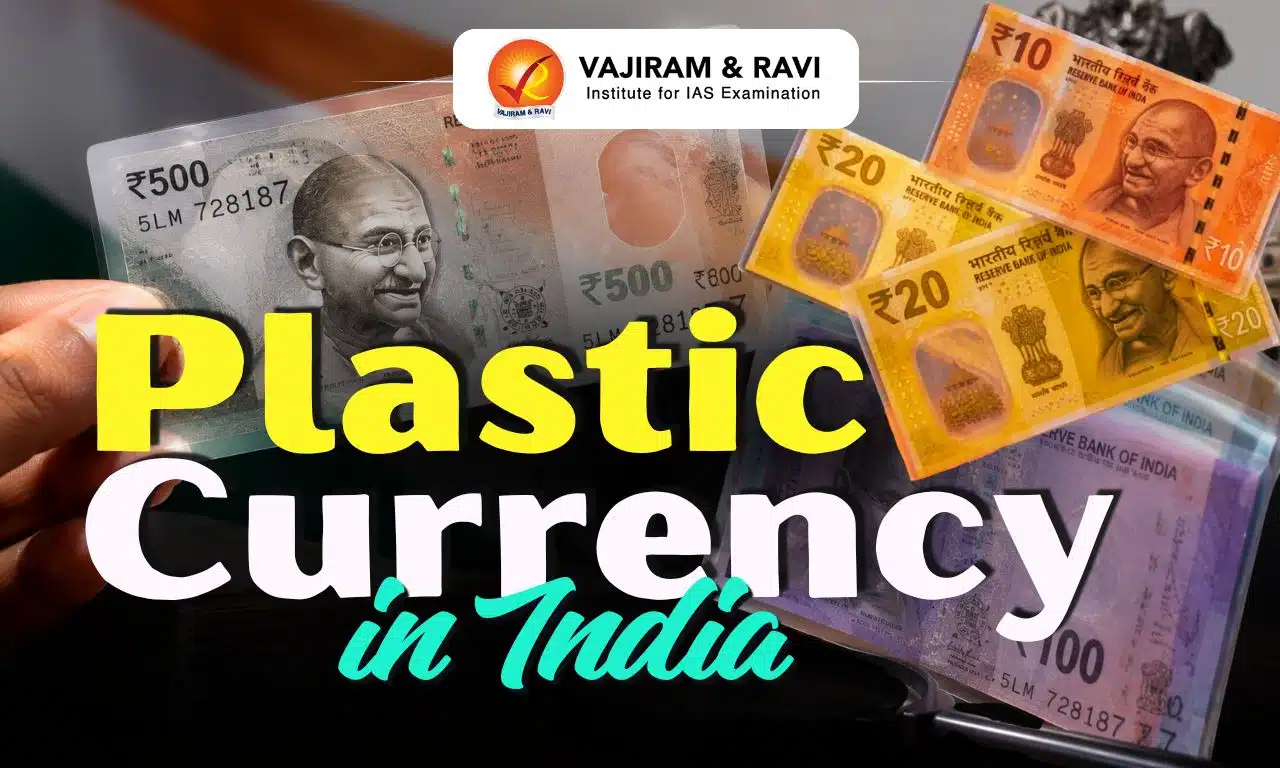
Plastic Currency in India has re-emerged as a major currency management reform after the Reserve Bank of India (RBI) revived its long pending proposal to introduce polymer banknotes. The initiative aims to improve the durability, security and efficiency of India's currency system without replacing existing paper notes. 

The government has approved field trials of ₹10 and ₹20 polymer notes, while making it clear that polymer and paper banknotes will circulate together. 

Plastic Currency in India Latest News 2026

The RBI has revived its polymer currency proposal by initiating fresh procurement of polymer substrates for pilot testing. The government has approved field trials before any regular circulation begins.

  • Approval for field trials: The Government of India approved the RBI's proposal to conduct field trials using one billion ₹10 polymer notes and one billion ₹20 polymer notes. Regular issuance will begin only after successful evaluation of the pilot project under real circulation conditions.
  • No replacement of paper currency: The Ministry of Finance clarified that polymer banknotes will be issued alongside existing cotton-paper banknotes. There is currently no proposal to completely replace India's paper currency with polymer based notes.
  • Global Expression of Interest (EOI): RBI's currency printing company, Bharatiya Reserve Bank Note Mudran Pvt. Ltd. (BRBNMPL), has invited global Expressions of Interest for supplying Biaxially Oriented Polypropylene (BOPP) polymer substrates equipped with advanced security features for future polymer banknotes.

What is a Polymer Note?

Polymer notes are banknotes manufactured using Biaxially Oriented Polypropylene (BOPP) instead of traditional cotton based paper. They are designed for longer circulation and stronger security.

  • Durability: International studies cited by the RBI show that polymer notes generally remain in circulation 2.5 to 4 times longer than paper notes, especially for lower denominations that experience heavy handling.
  • Damage Resistance: Polymer notes are more resistant to moisture, dirt, folding and tearing, reducing the number of damaged notes that require replacement under the RBI's Clean Note Policy.
  • Advanced features: Polymer notes can incorporate transparent windows, metallic numerals, magnetic pseudo-threads, holograms, shadow images, iridescent patterns and durable tactile markings for visually impaired persons, making counterfeiting significantly more difficult.

Need for Plastic Currency in India

Plastic currency is being considered in India to improve note durability, reduce costs, strengthen security and make currency management more efficient.

  • Reduce replacement of damaged notes: Under the RBI's Clean Note Policy, around 20 to 24 billion soiled banknotes are destroyed every year. Polymer notes last much longer, reducing the need for frequent replacement.
  • Lower long term currency management costs: The RBI spends thousands of crores on printing and managing currency. Longer lasting notes can reduce repeated printing, transportation and destruction costs.
  • Improving counterfeit protection: RBI detected around 2.3 lakh counterfeit banknotes during 2025-26. Polymer notes support advanced security features that are more difficult to copy than conventional paper currency.
  • Increase the life of frequently used notes: ₹10 and ₹20 notes are used the most in daily transactions and wear out quickly. Polymer notes are better suited for these denominations because they remain usable for a longer period.

Countries Using Plastic Currency

Many countries have adopted polymer banknotes after observing improvements in currency durability, security and lifecycle costs despite higher production expenses.

  • Australia became the first country to introduce polymer currency in 1988 and has since completely shifted to polymer banknotes.
  • Around 60 countries currently use polymer banknotes in some form, including Canada, the United Kingdom, New Zealand, Singapore, Malaysia, Vietnam, Mexico, Brazil, Saudi Arabia, Romania and Barbados.

Bharatiya Reserve Bank Note Mudran Pvt Ltd (BRBNMPL)

BRBNMPL is the RBI's specialised currency printing company responsible for producing banknotes and supporting India's currency management infrastructure.

  • Establishment: BRBNMPL was established in 1995 under the Companies Act as a wholly owned subsidiary of the RBI to strengthen India's secure banknote printing capacity.
  • Headquarter: The organisation is headquartered in Bengaluru, Karnataka and operates two high security printing presses at Mysuru (1996) and Salboni (2000).
  • Primary Responsibilities: BRBNMPL prints banknotes according to RBI requirements, procures specialised banknote paper, security inks and printing materials and applies advanced anti counterfeiting technologies.
  • Role in Polymer Currency: The organisation has issued global Expressions of Interest for BOPP polymer substrates.

Plastic Currency in India Impacts

The launch of Polymer Currency in India can influence India's currency management in the following manner:

  • Reduced operational expenditure: Although polymer notes cost more to produce initially, their longer lifespan reduces frequent printing, transportation, storage, processing and destruction costs over time.
  • Enhanced public confidence: Better durability and stronger protection against counterfeiting can improve confidence in physical currency while ensuring cleaner notes remain available for longer periods.
  • Environmental advantages: A TERI study commissioned by the RBI found that polymer notes can reduce lifecycle carbon emissions because fewer notes need production and transport. Used notes can also be recycled into plastic products.
  • Supports India's cash economy: Despite UPI handling over 24,000 crore transactions annually and nearly 85% of retail digital payments, currency in circulation crossed ₹41 lakh crore in 2025-26, with the currency-to-GDP ratio remaining above 11%, highlighting the continued importance of cash.

Plastic Currency in India Challenges

Although Plastic Currency offers many advantages, its nationwide adoption in India faces several challenges as highlighted below:

  • Higher manufacturing cost: Polymer banknotes cost around 30% to 60% more than paper notes to manufacture. In several countries, production costs for low value polymer notes have reached nearly 20% to 24% of their face value.
  • Dependence on Import: Polymer notes require BOPP made from polypropylene. India imports nearly one-fifth of its polypropylene requirement, making production costs sensitive to crude oil prices, supply disruptions and geopolitical tensions, particularly in West Asia.
  • Infrastructure transition expenses: Introducing polymer currency would require recalibration of ATMs, currency sorting machines, vending machines, cash processing systems and banking infrastructure, creating significant transition costs for financial institutions and businesses.
  • Environmental and Recycling Challenges: Polymer notes are produced from petroleum based polypropylene, leading to a higher initial carbon footprint. Their disposal also requires specialised recycling facilities, making waste management an important policy challenge.
  • Impact on Existing Currency Ecosystem: India has already invested substantially in domestic banknote paper production and indigenous security ink manufacturing. A rapid transition to plastic currency could reduce the effective use of these existing facilities before their planned economic life ends.

Plastic Currency in India FAQs

Q1: Which Countries use Plastic Notes 2026?

Ans: More than 60 countries use polymer banknotes either fully or partially, including Australia, Canada, the United Kingdom, New Zealand, Singapore, Malaysia, Vietnam, Brazil and Mexico.

Q2: What is a Polymer Note?

Ans: A Polymer Note is a banknote made from Biaxially Oriented Polypropylene (BOPP). It is more durable, secure, water resistant and longer lasting than paper currency.

Q3: When will Plastic Currency launch in India 2026?

Ans: India has approved field trials for ₹10 and ₹20 polymer notes. Regular circulation will begin only after the RBI successfully completes these trials; no official launch date has been announced.

Q4: Will Polymer Banknotes replace all paper currency in India?

Ans: No. The Government has clarified that polymer banknotes will circulate alongside existing paper notes and there is no proposal to completely replace paper currency.

Q5: Why is RBI introducing Plastic Notes in India?

Ans: RBI plans to introduce polymer notes because they last 2.5 to 4 times longer, reduce replacement costs, improve security against counterfeiting and support better currency management.

Repo Rate, Meaning, Importance, Impact, Current Rate, Latest News

Repo Rate

Repo Rate News

The Reserve Bank of India (RBI) conducted its first Monetary Policy Committee (MPC) meeting of 2026, during which RBI Governor Sanjay Malhotra announced that the key policy rate, known as the repo rate, will remain unchanged at 5.25%. The inflation for FY 2025-26 is at 2.1%.

Basis Points Meaning

  • Basis points (bps) are a standard financial unit used to measure small changes in interest rates, yields, or other percentage-based values.
  • They provide precision when expressing movements in financial indicators. For example, a 25 bps hike means a 0.25% increase.
  • Basis points are widely used to describe changes in interest rates on loans, savings, bonds, and other financial instruments, ensuring clarity where even minor shifts matter.

RBI Repo Rate

  • The repo rate is the interest rate at which the RBI lends short-term funds to commercial banks against government securities. 
  • It serves as a primary tool for the RBI to regulate liquidity, control inflation, and influence overall economic activity.
  • By adjusting the repo rate, RBI can either encourage banks to borrow more (by lowering the rate) or discourage borrowing (by raising the rate), thus influencing the money supply in the economy.
  • The reverse repo rate is the interest rate at which the central bank (such as the RBI) borrows surplus funds from commercial banks, thereby absorbing excess liquidity from the system. 
    • It is the opposite of the repo rate, where commercial banks borrow from the central bank.

Also Read: RBI Monetary Policy 2025

Impact of RBI Repo Rate Cut

  • Lower Borrowing Costs: Commercial banks benefit from reduced borrowing costs, enabling them to offer loans at more competitive interest rates.
  • Fixed Deposit (FD) Interest Rates: Banks likely lower FD rates after a repo rate cut, as their own cost of funds decreases. This means new FDs may offer lower returns, while existing FDs remain unaffected until maturity
  • Enhanced Credit Flow: Lower interest rates encourage increased borrowing by businesses and consumers, stimulating investment and consumption.
  • Boost to Real Estate and Infrastructure: Due to more affordable financing options, sectors like real estate and infrastructure may see heightened activity.
  • Support Amid Global Challenges: The RBI's accommodative stance aims to bolster the Indian economy against global uncertainties, such as increased U.S. tariffs impacting exports.

Repo Rate FAQs

Q1: What is the repo rate?

Ans: The repo rate is the interest rate at which commercial banks borrow money from the RBI by pledging government securities.

Q2: What is the current repo rate?

Ans: As of December 05, 2025, the RBI repo rate is 5.25%.

Q3: What is the repo rate of RBI in 2025?

Ans: In December 2025, the RBI reduced the repo rate to 5.25% during its December Monetary Policy Committee meeting.

Q4: What is the current reverse repo rate?

Ans: As of December 05, 2025, the reverse repo rate is 3.35%.

Republic Day 2026, Chief Guest, Theme, History, Significance

Republic Day 2026

India celebrates Republic Day every year on 26 January to mark the historic day when the Constitution of India came into force in 1950, transforming the nation into a sovereign democratic republic. Republic Day 2026 will mark the 77th anniversary of the Republic of India and holds immense constitutional, political, and cultural importance for citizens

Republic Day 2026

Republic Day 2026 will be celebrated across the country with patriotism, discipline, and national pride. The main celebration takes place at Kartavya Path, New Delhi, featuring a grand parade that showcases India’s military strength, cultural diversity, technological achievements, and federal unity.

Schools, colleges, government institutions, and Indian missions abroad also observe the day by hoisting the national flag, singing the national anthem, and organizing cultural programs.

Why is Republic Day 2026 celebrated?

Republic Day 2026 is celebrated to commemorate the adoption and implementation of the Indian Constitution on 26 January 1950. Although India attained independence on 15 August 1947, it did not have a permanent constitution until 1950.

The date 26 January was deliberately chosen to honor the Purna Swaraj Declaration of 1929 at Lahore Session on December 19, 1929, when the Indian National Congress proclaimed complete independence from British rule. Republic Day symbolizes:

  • Supremacy of the Constitution
  • Rule of law
  • Democratic governance
  • Equality, liberty, and justice for all citizens

Republic Day 2026 Chief Guests

The Chief Guests for India’s 77th Republic Day celebrations on 26 January 2026 will be the top leadership of the European Union, namely Ursula von der Leyen, President of the European Commission, and António Costa, President of the European Council. Their presence reflects a significant deepening of India–EU strategic and diplomatic relations. The EU leaders will be on an official visit to India from 25 to 27 January 2026, during which they will also co-chair the 16th India–EU Summit, underscoring growing cooperation in areas such as trade, technology, security, and global governance.

Other leaders across various countries will also be invited to participate in India’s Republic  Day 2026 celebration.

Beating Retreat Ceremony 2026

The Beating Retreat Ceremony 2026 is a solemn and dignified tradition that formally concludes the Republic Day 2026 celebrations. The ceremony embodies national pride and India’s military heritage, showcased against the majestic setting of Vijay Chowk in New Delhi.

Republic Day 2026 Theme

The Republic Day 2026 theme continues to echo India’s long-term national vision of “Viksit Bharat” (Developed India) and “Bharat – Loktantra ki Matruka” (India – The Mother of Democracy). These themes underscore India’s commitment to achieving comprehensive development by 2047 while reaffirming its deep-rooted democratic traditions that date back to ancient times.

The spirit of these themes is vividly showcased through tableaux presented by States, Union Territories, and central Ministries, highlighting governance reforms, cultural heritage, technological progress, and inclusive growth.

Republic Day History

  • Lahore Session of the INC (1929): The Indian National Congress, at its historic Lahore Session on 19 December 1929 under the leadership of Jawaharlal Nehru, formally adopted the resolution of Purna Swaraj (Complete Independence), rejecting dominion status under British rule.
  • Proclamation of Complete Independence: The Purna Swaraj resolution declared that British rule in India was illegitimate and affirmed the Indian people’s inalienable right to self-governance and sovereignty.
  • Observance of Independence Day Before 1947: Between 1930 and 1947, 26 January was observed as Independence Day by freedom fighters across India, with public meetings, oath-taking ceremonies, and hoisting of the tricolour.
  • Formation of the Constituent Assembly (1946): The Constituent Assembly of India was constituted in December 1946 to draft a permanent constitution for independent India, representing diverse regions, communities, and political ideologies.
  • Adoption of the Constitution (1949): After nearly 2 years, 11 months, and 18 days of deliberations, the Constitution of India was adopted on 26 November 1949, establishing the :framework of governance and fundamental values.
  • Choice of 26 January as Republic Day: The date 26 January 1950 was chosen for the enforcement of the Constitution to honor the historic Purna Swaraj resolution of 1930, linking constitutional governance with the freedom struggle.
  • India Becomes a Republic (1950): On 26 January 1950, the Constitution came into force, India officially became a Sovereign Democratic Republic, and Dr. Rajendra Prasad was sworn in as the first President of India.
  • First Republic Day Celebration: The first Republic Day parade was held at Rajpath (now Kartavya Path), New Delhi, symbolizing the transfer of power from colonial rule to the people of India through constitutional democracy.
  • Evolution of Republic Day Celebrations: Over the decades, Republic Day celebrations have evolved to showcase India’s military strength, cultural diversity, technological progress, and federal unity, making it a powerful symbol of national integration.
  • Constitutional and Democratic Legacy: Republic Day serves as an annual reminder of the supremacy of the Constitution, the rule of law, and the commitment to justice, liberty, equality, and fraternity enshrined in the Preamble.

Role of the Constitution in Strengthening Indian Democracy

  • The Constitution of India establishes India as a Sovereign, Socialist, Secular, Democratic Republic, ensuring that ultimate authority rests with the people, which is the foundation of democratic governance.
  • It provides Universal Adult Franchise, granting voting rights to all citizens above 18 years of age, enabling political equality and mass participation regardless of caste, gender, religion, or economic status.
  • The Constitution guarantees Fundamental Rights (Articles 12–35), including equality before law, freedom of speech and expression, and protection against discrimination, empowering citizens to actively participate in democracy.
  • It enshrines the Rule of Law, ensuring that all individuals and institutions, including the government, are subject to the Constitution, thereby preventing arbitrary exercise of power.
  • An independent judiciary with powers of judicial review safeguards the Constitution, protects citizens’ rights, and acts as a check on the legislature and executive.
  • The principle of separation of powers among the Legislature, Executive, and Judiciary creates a system of checks and balances, strengthening accountability and preventing concentration of power.
  • The federal structure divides powers between the Union and the States through the Seventh Schedule, allowing democratic governance at multiple levels while maintaining national unity.
  • The Directive Principles of State Policy (Part IV) guide the state to achieve social and economic justice, helping transform political democracy into a welfare-oriented democracy.
  • Constitutional bodies such as the Election Commission, Comptroller and Auditor General (CAG), Finance Commission, and UPSC ensure free elections, financial transparency, and administrative neutrality.
  • The 73rd and 74th Constitutional Amendments (1992) strengthened grassroots democracy by empowering Panchayats and Municipalities, bringing governance closer to the people.
  • Provisions for reservation and affirmative action for SCs, STs, OBCs, women, and minorities promote inclusive representation and social justice in democratic institutions.

Republic Day Awards and Civil Honours

Republic Day Awards and Civil Honours recognize individuals for exceptional service and achievements in fields such as public service, arts, science, social work, sports, and national security, reflecting the nation’s gratitude and constitutional values.

Civilian Awards (Highest Honours):

  • Bharat Ratna – India’s highest civilian award for exceptional service in art, literature, science, or public service; a maximum of three awards per year
  • Padma Vibhushan – Conferred for exceptional and distinguished service
  • Padma Bhushan – Awarded for distinguished service of a high order
  • Padma Shri – Given for distinguished service in any field

Gallantry and Service Awards (Police and Forces):

  • President’s Police Medal (PPM) – For distinguished service
  • Police Medal (PM) for Gallantry – For acts of exceptional bravery
  • Police Medal (PM) for Meritorious Service – For sustained dedication and service
  • Fire Services, Home Guards, and Correctional Services Awards – For bravery and distinguished service

Other Important Awards:

  • Jeevan Raksha Padak – For acts of courage and life-saving by civilians
  • Pradhan Mantri Rashtriya Bal Puraskar – For children showing exceptional achievement and bravery

Republic Day 2026 Significance

Republic Day 2026 marks the celebration of India’s constitutional governance and reaffirms the ideals of sovereignty, democracy, and rule of law as the nation progresses through the Amrit Kaal towards a developed India by 2047.

  • Celebrates the enforcement of the Indian Constitution (26 January 1950)
  • Reinforces democratic values and constitutional morality
  • Highlights unity in diversity and national integration
  • Showcases India’s defence strength and cultural heritage
  • Inspires citizens to uphold fundamental rights and duties

Republic Day 2026 FAQs

Q1: When is Republic Day 2026 celebrated?

Ans: Republic Day 2026 is celebrated on 26 January 2026.

Q2: Why is 26 January important in Indian history?

Ans: 26 January marks both the Purna Swaraj Declaration (1930) and the enforcement of the Constitution (1950).

Q3: Who drafted the Indian Constitution?

Ans: The Constitution was drafted by the Constituent Assembly, with Dr. B.R. Ambedkar as Chairman of the Drafting Committee.

Q4: What is the significance of the Republic Day parade?

Ans: The parade showcases India’s military strength, cultural diversity, and developmental progress.

Q5: Which awards are announced on Republic Day?

Ans: Major awards include Padma Awards, Bharat Ratna, and Gallantry Awards.

Biodiversity Conservation, Importance, Types, Threats & Strategies

Biodiversity Conservation

Biodiversity Conservation means protecting and taking care of the variety of living organisms on Earth, including plants, animals, and microorganisms. It is important because all living beings are interconnected and depend on each other for survival. Healthy biodiversity helps maintain ecological balance, supports food security, provides medicinal resources, and ensures clean air and water. However, human activities like deforestation, pollution, and climate change are rapidly harming biodiversity. Therefore, conservation efforts focus on protecting natural habitats, promoting sustainable use of resources, and ensuring intergenerational equity so that future generations can also benefit from nature. 

Biodiversity Conservation and its Significance

  • Biodiversity conservation means protecting and managing the variety of all living organisms, including plants, animals, and microorganisms, along with their ecosystems. It focuses on preserving life in all its forms so that ecosystems can function properly and sustainably.
  • Biodiversity is essential because it supports ecosystem services such as clean air, fresh water, food production, and climate regulation, all of which are necessary for human survival and well-being.
  • It also ensures the survival of different species by providing diverse habitats and ecological balance, helping nature remain stable even in changing environmental conditions.
  • Conserving biodiversity is important not only for present needs but also to protect natural resources and life forms for future generations, maintaining the Earth’s biological richness.

Types of Biodiversity Conservation

  • In-situ conservation involves protecting species in their natural habitats, such as forests, national parks, wildlife sanctuaries, and biosphere reserves, allowing ecosystems to function naturally while preserving biodiversity at all levels.
  • This method helps conserve not just individual species but also their entire ecosystem, interactions, and natural processes, making it the most effective long-term conservation approach.
  • Ex-situ conservation is used when species are endangered and need immediate protection outside their natural habitat, such as in zoos, botanical gardens, seed banks, and aquariums.
  • Advanced techniques like cryopreservation, tissue culture, and seed storage are also used to protect genetic diversity and ensure species survival in the future.

Importance of Biodiversity Conservation for Ecosystem Balance

  • Biodiversity plays a key role in maintaining ecological balance, as different species depend on each other for survival through food chains, pollination, and nutrient cycles.
  • It helps ecosystems remain stable and resilient, enabling them to recover from natural disasters, climate changes, and environmental stress.
  • A loss of even a single species can disturb the entire ecosystem, leading to imbalance and affecting other species, including humans.
  • Healthy ecosystems with rich biodiversity also support oxygen production, soil fertility, and water purification, making life on Earth sustainable.

Major Threats to Biodiversity and Wildlife

  • Habitat loss due to urbanization, agriculture, and deforestation is one of the biggest threats, as it destroys the natural homes of plants and animals.
  • Overexploitation of natural resources, such as excessive fishing, hunting, and logging, reduces species populations and can lead to extinction.
  • Invasive species disrupt ecosystems by competing with or preying on native species, often causing severe ecological damage.
  • Pollution, including chemical waste, plastic, and nutrient loading, harms both terrestrial and aquatic life.
  • Increasing human population and activities like tourism can also put pressure on natural environments, disturbing wildlife and ecosystems.

Methods and Strategies for Biodiversity Conservation

  • Establishing protected areas like national parks, wildlife sanctuaries, and biosphere reserves is one of the most effective ways to conserve biodiversity.
  • Promoting sustainable use of natural resources ensures that human needs are met without harming ecosystems.
  • Conservation strategies also include restoration of degraded habitats, afforestation, and protection of biodiversity hotspots.
  • Scientific methods like genetic conservation, seed banks, and species monitoring help in preserving biodiversity for the long term.
  • Integrated approaches that consider ecological, social, and economic factors are essential for effective conservation planning.

India’s Biodiversity Framework: Laws, Policies, and Conservation Mechanisms

  • India’s biodiversity framework is a well-structured system that combines laws, policies, institutions, and programmes to ensure the conservation and sustainable use of biological resources, while also promoting fair and equitable benefit sharing. It connects national priorities with global biodiversity commitments and ensures that conservation efforts are implemented at all levels.
  • The Biological Diversity Act, 2002 (Amended in 2023)
    • The Biological Diversity Act, 2002 serves as the main legal foundation for biodiversity conservation in India, focusing on conservation, sustainable use, and fair benefit sharing of biological resources and traditional knowledge. 
    • The Act also promotes the documentation and protection of traditional knowledge, especially knowledge held by local communities related to food, medicine, agriculture, and cultural practices.
    • The Biological Diversity (Amendment) Act, 2023 further improves this framework by making it more practical, research-friendly, and efficient, while also encouraging innovation and strengthening community participation.
  • Three-Tier Governance Structure
    • The Act provides a three-tier governance system to effectively manage biodiversity across the country.
    • At the national level, the National Biodiversity Authority (NBA) provides guidance on conservation, sustainable use, and benefit sharing.
    • At the state and union territory level, State Biodiversity Boards (SBBs) and Union Territory Biodiversity Councils (UTBCs) adapt these policies according to regional needs.
    • At the local level, Biodiversity Management Committees (BMCs) prepare People’s Biodiversity Registers (PBRs) and promote community participation in conservation.
  • Section 39 and National Repositories
    • Section 39 of the Biological Diversity Act, 2002 allows the government to designate institutions as national repositories for biological resources.
    • These repositories help in the safe storage, documentation, and research of biological materials, including newly discovered species and specimens.
  • Scientific and Technical Support
    • India’s biodiversity framework is supported by specialized scientific institutions that play a key role in research and monitoring.
    • Organizations like the Zoological Survey of India (ZSI) and Botanical Survey of India (BSI) document animal and plant diversity across the country.
    • The Forest Survey of India (FSI) regularly publishes reports on forest and tree cover, helping in policy planning.
    • The National Tiger Conservation Authority (NTCA) and state forest departments focus on wildlife conservation, especially for endangered species like tigers.
  • Community-Level Institutions and Participation
    • Local-level institutions such as Biodiversity Management Committees (BMCs) play a crucial role in conservation through community participation.
    • They prepare People’s Biodiversity Registers (PBRs), which document local species, ecosystems, and traditional knowledge.
  • National Biodiversity Authority Fund (NBAF)
    • The National Biodiversity Authority Fund (NBAF) is a statutory fund created to support conservation activities and benefit-sharing mechanisms.
  • People’s Biodiversity Register (PBR)
    • The People’s Biodiversity Register (PBR) is a detailed local database that records biological resources, habitats, traditional knowledge, and species diversity.
    • With over 2.7 lakh PBRs prepared across India, it has become a key instrument in strengthening biodiversity governance at the grassroots level. 
  • National Biodiversity Strategy and Action Plan (NBSAP 2024-2030)
    • The NBSAP 2024-2030 provides a long-term roadmap for biodiversity conservation and sustainable use in India.
    • It aligns national actions with the Kunming-Montreal Global Biodiversity Framework (KMGBF), ensuring international relevance.
  • National Red List Roadmap (2025–2030)
    • The National Red List Roadmap aims to develop a scientific and coordinated system for assessing threatened species in India.

Global Efforts for Biodiversity Conservation

  • Nagoya Protocol (2010)
    • Adopted at COP-10 of the Convention on Biological Diversity (CBD) in Nagoya, Japan (October 2010).
    • It is a legally binding international agreement that focuses on Access and Benefit Sharing (ABS) of genetic resources.
    • Ensures that benefits arising from the use of genetic resources (like medicines, crops, biotech products) are shared fairly with the country or community providing them.
  • Kunming-Montreal Global Biodiversity Framework (KMGBF) (2022)
    • A global roadmap adopted by 196 countries to halt and reverse biodiversity loss by 2030
  • Convention on Biological Diversity (CBD) : A major international treaty that promotes Conservation of biodiversity and Conservation of biodiversity.
  • Global Environment Facility (GEF) : Acts as a financial mechanism supporting biodiversity conservation. 

Challenges in Biodiversity Conservation in India

  • India faces challenges like rapid population growth, urbanization, and deforestation, which lead to habitat loss and environmental degradation.
  • Limited financial and technical resources often affect the effective management of protected areas.
  • Climate change is forcing ecosystems to shift, making it difficult for existing conservation systems to remain effective.
  • Balancing development needs with conservation efforts remains a major challenge in a growing economy like India.

Sustainable Development and Biodiversity Conservation

  • Sustainable development aims to meet present needs without harming future generations, and biodiversity conservation is a key part of this approach.
  • Protecting ecosystems ensures the continued availability of natural resources like water, food, and energy.
  • Integrating conservation into development planning helps create a balance between economic growth and environmental protection.
  • Long-term sustainability depends on responsible use of biodiversity and maintaining ecological balance.

Biodiversity Conservation FAQs

Q1: What is Biodiversity Conservation?

Ans: Biodiversity conservation means protecting and managing plants, animals, microorganisms, and ecosystems to maintain ecological balance and sustainability.

Q2: What are the main types of Biodiversity Conservation?

Ans: The two main types are In-situ conservation (natural habitats) and Ex-situ conservation (outside habitats like zoos and seed banks).

Q3: What is In-situ Conservation?

Ans: It involves protecting species in their natural environment like forests, national parks, and wildlife sanctuaries.

Q4: What is Ex-situ Conservation?

Ans: It focuses on protecting endangered species outside their natural habitats using methods like zoos, botanical gardens, and seed banks.

Q5: What are the major threats to biodiversity?

Ans: Major threats include deforestation, pollution, climate change, habitat loss, and overexploitation.

Electrochemical Reaction, Definition, Mechanism, Application

Electrochemical Reaction

An Electrochemical Reaction is a chemical reaction that either produces electricity or uses electricity to cause a chemical change. It involves the movement of electrons between substances, usually a solid conductor and a liquid electrolyte. These reactions form the basis of batteries, fuel cells, electroplating, corrosion, electrolysis and many industrial processes. Electrochemistry has become increasingly important for clean energy technologies, electric vehicles and sustainable manufacturing.

What is Electrochemical Reaction?

An Electrochemical Reaction is a reaction in which chemical energy changes into electrical energy or electrical energy changes into chemical energy through electron transfer. The reaction takes place at the interface of an electrode and an electrolyte. Oxidation occurs at the anode, while reduction takes place at the cathode. The complete process requires a closed electrical circuit for continuous electron flow and ion movement between the electrodes.

Electrochemical Reaction Principle

Electrochemical Reactions work on the movement of electrons and ions between electrodes and electrolytes under suitable electrical conditions.

  • Electron Transfer: Every Electrochemical Reaction is a redox reaction. Oxidation releases electrons at the anode, while reduction accepts electrons at the cathode. Both reactions occur simultaneously and maintain continuous electric current.
  • Electrodes and Electrolyte: Electrodes are electronic conductors- Anode and Cathode, whereas electrolytes are ionic conductors such as acids, bases and salts in molten or dissolved form. The reaction occurs only where the electrode and electrolyte come into contact.
  • Ion Movement: Positive ions move towards the cathode, while negative ions move towards the anode. Their movement carries electric current through the electrolyte and enables chemical transformation.
  • Energy Conversion: A galvanic cell converts chemical energy into electrical energy through spontaneous reactions. Electrolysis converts electrical energy into chemical energy by driving non spontaneous chemical reactions.
  • Faraday's Law: Michael Faraday established that fixed quantities of electricity produce fixed amounts of chemical change. One gram equivalent of a substance reacts with 96,485 coulombs, known as one Faraday of electricity.

Electrochemical Reaction Mechanism

The electrochemical process explains how electrons and ions interact to produce electricity or bring about chemical changes.

  • Electrodes are placed in an electrolyte: Two electrodes, called the anode and cathode, are immersed in an electrolyte containing free moving ions.
  • A closed circuit is formed: The electrodes are connected through an external wire, allowing electrons to move between them.
  • Oxidation occurs at the anode: The substance at the anode loses electrons. These electrons enter the external circuit.
  • Electrons flow through the circuit: The released electrons travel from the anode to the cathode through the connecting wire, creating an electric current.
  • Ions move inside the electrolyte: Positive ions move towards the cathode, while negative ions move towards the anode to maintain electrical balance.
  • Reduction occurs at the cathode: The cathode accepts electrons, causing positive ions to gain electrons and form new substances.
  • Chemical products are formed: Depending on the reaction, metals may be deposited, gases such as hydrogen or oxygen may be released, or new compounds may be produced.
  • Energy conversion takes place: In a galvanic cell, chemical energy changes into electrical energy. In electrolysis, electrical energy is converted into chemical energy.

Electrochemical Reaction Types

Electrochemical Reactions occur in different forms depending on the substances involved and the nature of electron transfer.

  • Simple Redox Reactions: These involve direct electron transfer between ions and electrodes without major structural changes. Ferric and ferrous ion reactions are common examples of reversible redox systems.
  • Gas Producing Reactions: Electrochemical Reactions can produce gases such as hydrogen, oxygen and chlorine. Hydrogen forms at the cathode, while oxygen or chlorine generally evolves at the anode.
  • Metal Deposition and Dissolution: Metal ions gain electrons and deposit as solid metal during reduction. Conversely, metals lose electrons and dissolve into solution during oxidation.
  • Organic Electrochemical Reactions: Many organic compounds undergo oxidation or reduction at electrodes. These reactions are widely used in chemical synthesis, polymer production and advanced industrial processes.
  • Complex Electrochemical Reactions: Some reactions involve multiple electron transfers and intermediate steps. Their overall speed is controlled by the slowest stage, known as the rate determining step.

Electrochemical Reaction Applications

Electrochemical Reactions support modern industry, energy systems, environmental protection, transportation and scientific research.

  • Batteries and Fuel Cells: Lead-acid, nickel-cadmium, nickel-iron, silver-zinc and modern rechargeable batteries store electrical energy through Electrochemical Reactions. Fuel cells convert fuels such as hydrogen directly into electricity with much higher efficiency than conventional combustion.
  • Metallurgy and Electroplating: Metals including aluminium, titanium, alkali metals, alkaline earth metals and refined copper are produced using electrochemical methods. Electroplating improves corrosion resistance and provides decorative metal coatings.
  • Chemical Industry: Electrolysis of brine produces chlorine and caustic soda on a large industrial scale. Electrochemical methods are also used in manufacturing inorganic chemicals and synthetic fibres such as nylon.
  • Corrosion Control: Electrochemical principles explain rust formation and metal corrosion. Techniques such as cathodic protection and protective coatings reduce corrosion and extend the service life of engineering structures.
  • Analytical and Biological Uses: Electrochemical techniques are widely used in analytical chemistry for ion measurement. In biology, Electrochemical Reactions play important roles in nerve impulse transmission, blood clotting and energy conversion inside living cells.

Electrochemical Reaction FAQs

Q1: What is an Electrochemical Reaction?

Ans: An Electrochemical Reaction is a chemical reaction in which chemical energy is converted into electrical energy or electrical energy is converted into chemical energy through electron transfer.

Q2: What is the difference between Electrolysis and an Electrochemical Cell?

Ans: An electrochemical cell generates electricity from spontaneous chemical reactions, while electrolysis uses external electricity to drive non spontaneous chemical reactions.

Q3: What are the main components of an Electrochemical Reaction?

Ans: The main components are two electrodes (anode and cathode), an electrolyte and an external circuit that enables electron flow and ion movement.

Q4: What are the common applications of Electrochemical Reactions?

Ans: Electrochemical Reactions are used in batteries, fuel cells, electroplating, metal refining, corrosion control, electrolysis and chemical manufacturing.

Q5: Why are Electrochemical Reactions important?

Ans: Electrochemical Reactions are important because they enable efficient energy storage, electricity generation, industrial metal production, chemical manufacturing and clean energy technologies.

Great Bear Lake, Location, Facts, Depth, Wildlife & Climate

Great Bear Lake

Great Bear Lake is the largest lake entirely within Canada and one of the cleanest freshwater lakes in the world. Located in the Northwest Territories, it is known for its crystal-clear water, vast size, and untouched natural beauty. The lake plays an important role in supporting biodiversity, including fish and wildlife, and is also significant for local Indigenous communities who depend on it for their livelihood and culture. 

Great Bear Lake

  • Location
    • Great Bear Lake is a major freshwater lake located in Canada’s Northwest Territories, widely known for its pristine environment, clean water, and ecological importance.
    • It is considered one of the least polluted and most untouched lakes in the world, making it highly valuable for environmental conservation and study.
  • Size, Depth, and Formation 
    • The lake covers around 12,000 square miles (31,000 sq km), making it the largest freshwater lake entirely within Canada.
    • It was formed during the last Ice Age by glacial activity, which carved out its deep and complex basin.
    • Great Bear Lake is also among the deepest lakes in the world, with a maximum depth of 1,460 feet (446 m) and an average depth of 235 feet (72 m).
  • Geographical Setting and Drainage 
    • Great Bear Lake drains into the Mackenzie River system, which eventually flows into the Beaufort Sea of the Arctic Ocean.
    • The lake’s drainage basin spans approximately 44,400 square miles (115,000 sq km).
    • It lies between two major physical regions: the Canadian Shield and the Interior Plains, featuring rocky terrain, forests, and wetlands.
  • Climate and Water Characteristics 
    • The lake experiences a harsh subarctic climate, with long, extremely cold winters and very short summers.
    • It remains frozen from late November until July, meaning ice covers it for most of the year.
    • Water temperatures stay very low (around or below 4°C), contributing to its unique ecological conditions.
    • It is classified as a cold monomictic lake, meaning its water circulates and mixes only once annually after the ice melts.
  • Wildlife and Ecosystem 
    • The lake is surrounded by rich natural habitats, including boreal forests (taiga) in the south and tundra in the north.
    • This region supports a wide variety of wildlife such as caribou, moose, musk ox, black and grizzly bears, and mountain goats.
    • Bird species include bald eagles, golden eagles, and various waterfowl, making it an ecologically diverse area.
  • Historical Developments 
    • European exploration began in 1799 with Alexander Mackenzie, followed by the establishment of fur trading networks.
    • Mining activities started in the 1930s, involving radium, silver, and uranium extraction.
    • The region contributed uranium to the Manhattan Project during World War II, highlighting its historical significance.
    • Mining operations ended in 1964, and efforts are ongoing to clean and restore old mining sites.
  • Conservation and UNESCO Recognition
    • In 2016, Great Bear Lake was designated as a UNESCO Biosphere Reserve, recognizing its global ecological and environmental importance.
    • Conservation efforts focus on protecting biodiversity, preserving natural habitats, and promoting sustainable practices.
  • Climate Change Concerns 
    • The lake is increasingly vulnerable to climate change impacts, especially in the Arctic region.
    • Expected changes include rising temperatures, shorter winters, increased precipitation, and thawing permafrost.
    • These changes could disrupt ecosystems, alter habitats, and challenge species with slow growth and adaptation rates.

Great Bear Lake FAQs

Q1: What is Great Bear Lake known for?

Ans: Great Bear Lake is known for being the largest lake entirely within Canada and one of the cleanest freshwater lakes in the world, famous for its pristine environment and biodiversity.

Q2: Where is Great Bear Lake located?

Ans: Great Bear Lake is located in the Northwest Territories of Canada, in a remote region with minimal human disturbance.

Q3: How big is Great Bear Lake?

Ans: The lake covers about 12,000 square miles (31,000 sq km), making it the largest freshwater lake completely within Canada.

Q4: How deep is Great Bear Lake?

Ans: It has a maximum depth of 1,460 feet (446 meters) and an average depth of 235 feet (72 meters), making it one of the deepest lakes in the world.

Q5: How was Great Bear Lake formed?

Ans: Great Bear Lake was formed during the last Ice Age by glacial activity, which created its deep and complex basin.

UPSC Daily Quiz 5 August 2026

UPSC Daily Quiz

[WpProQuiz 224]

UPSC Daily Quiz FAQs

Q1: What is the Daily UPSC Quiz?

Ans: The Daily UPSC Quiz is a set of practice questions based on current affairs, static subjects, and PYQs that help aspirants enhance retention and test conceptual clarity regularly.

Q2: How is the Daily Quiz useful for UPSC preparation?

Ans: Daily quizzes support learning, help in revision, improve time management, and boost accuracy for both UPSC Prelims and Mains through consistent practice.

Q3: Are the quiz questions based on the UPSC syllabus?

Ans: Yes, all questions are aligned with the UPSC Syllabus 2025, covering key areas like Polity, Economy, Environment, History, Geography, and Current Affairs.

Q4: Are solutions and explanations provided with the quiz?

Ans: Yes, each quiz includes detailed explanations and source references to enhance conceptual understanding and enable self-assessment.

Q5: Is the Daily UPSC Quiz suitable for both Prelims and Mains?

Ans: Primarily focused on Prelims (MCQ format), but it also indirectly helps in Mains by strengthening subject knowledge and factual clarity.

Lake Superior, Location, Depth, Size, Country, Map, Biodiversity

Lake Superior

Lake Superior is the largest of the five Great Lakes and the world's largest freshwater lake by surface area. It lies on the Canada-United States border. It is known for its vast size, deep waters, rugged coastline, rich biodiversity and major role in transport, fisheries, tourism and regional economies. Its immense water storage, stable water levels and unique ecosystem make it one of North America's most important freshwater resources.

Lake Superior Features

Lake Superior is a massive freshwater lake with remarkable geographical, hydrological, historical and economic importance. It connects Canada and the United States while supporting navigation, industries, recreation and freshwater conservation across the Great Lakes region.

  • Location: Lake Superior is the northwestern and highest of the Great Lakes. 
  • Boundaries: It is bordered by Ontario in Canada and the U.S. states of Minnesota, Wisconsin and Michigan. 
  • Drainage: It drains eastward into Lake Huron through the St. Marys River.
  • Size: Its surface area is approximately 31,700 square miles (82,100 square km), making it the world's largest freshwater lake by area.
  • Depth: Lake Superior has a maximum depth of 1,332 feet (406 metres) and an average depth of about 483 feet (147 metres). 
  • Water Volume: It stores nearly 2,900 cubic miles (12,100 cubic km) of freshwater, ranking third globally by freshwater volume.
  • River Tributaries: More than 200 rivers feed it, including the Nipigon, St. Louis, Pigeon, Kaministikwia, Pic, White, Michipicoten, Bois Brule and Tahquamenon rivers.
  • Major Islands: Isle Royale, a U.S. National Park, is the largest island in the lake. Other important islands include the Apostle Islands, Michipicoten Island, Madeline Island, Grand Island and St. Ignace Island.
  • Climate and Hydrology: Deep waters below about 200 metres remain close to 4°C throughout the year. Seasonal mixing makes the lake dimictic. Storms regularly produce waves exceeding 20 feet (6.1 metres), with some recorded above 30 feet (9 metres).
  • Economic Importance: Lake Superior supports international shipping through the Soo Locks at Sault Ste. Marie. Major ports include Duluth Superior, Thunder Bay, Marquette, Ashland, Hancock, Houghton and Two Harbors, handling grain, iron ore, flour and other bulk cargo.
  • Mineral Resources: The surrounding region contains valuable deposits of iron ore, taconite, copper, nickel, silver and gold. Important mining areas include the Mesabi Range, Marquette Range, Keweenaw Peninsula and Thunder Bay region.

Lake Superior Biodiversity

Lake Superior supports one of the healthiest freshwater ecosystems in North America. Its cold, clean, nutrient-poor waters, extensive forests, protected shorelines and diverse fish populations sustain a unique ecological balance despite growing environmental pressures.

  • Oligotrophic Ecosystem: Lake Superior is an oligotrophic lake with naturally low nutrient levels and exceptionally clear water. Limited agriculture and relatively small human populations in its watershed help maintain high water quality.
  • Fish Diversity: More than 80 fish species occur in the lake. Native species include lake trout, lake sturgeon, lake whitefish, brook trout, cisco, burbot, muskellunge, northern pike, walleye, yellow perch and smallmouth bass.
  • Introduced Species: Atlantic salmon, Chinook salmon, Coho salmon, brown trout, rainbow trout, pink salmon, carp, rainbow smelt, round goby, Eurasian ruffe, white perch and sea lamprey have been introduced intentionally or accidentally.
  • Forest Ecosystems: Dense forests dominate much of the watershed, with large areas protected under federal, state, provincial and private forest lands. These forests support wildlife, maintain watershed health and reduce soil erosion.
  • Protected Natural Areas: Important conservation sites include Isle Royale National Park, Apostle Islands National Lakeshore, Pictured Rocks National Lakeshore, Lake Superior Provincial Park, Pukaskwa National Park and Porcupine Mountains Wilderness State Park.
  • Ecological Challenges: Overfishing, invasive species such as sea lamprey and Eurasian ruffe and steadily increasing nitrate concentrations have affected native fish populations. Scientists also continue to monitor warming surface temperatures and changing ice cover linked to climate change.

Lake Superior FAQs

Q1: What is the largest freshwater lake in the world by surface area?

Ans: Lake Superior is the world's largest freshwater lake by surface area, covering about 31,700 square miles (82,100 square kilometres).

Q2: Which countries share Lake Superior?

Ans: Lake Superior is shared by Canada and the United States, bordering Ontario, Minnesota, Wisconsin and Michigan.

Q3: What is the deepest point of Lake Superior?

Ans: Lake Superior reaches a maximum depth of 1,332 feet (406 metres), making it the deepest of the Great Lakes.

Q4: Which river carries water from Lake Superior?

Ans: The St. Marys River carries water from Lake Superior into Lake Huron through the Soo Locks at Sault Ste. Marie.

Q5: Why does Lake Superior have clear water?

Ans: Lake Superior has clear water because it is an oligotrophic lake with low nutrient levels, a relatively small watershed and limited agricultural influence.

Vokkaliga Caste, Origin, OBC Status & Influence

Vokkaliga Caste

The Vokkaliga caste is a well-known community mainly found in Karnataka, traditionally connected with farming and rural life. They are generally seen as land-owning farmers who have played an important role in shaping the social and cultural life of the region. Over time, the community has also become influential in areas like politics and education, making it an important part of Karnataka’s society. 

Vokkaliga Community

  • Who are Vokkaligas: The Vokkaligas are a major agrarian (farming-based) community mainly found in the state of Karnataka. Traditionally, they are known as farmers, landowners, and cultivators, and their identity is closely linked to agriculture and rural life.
  • Meaning of the term :The word “Vokkaliga” comes from the Kannada language, meaning “one who tills the land” or “cultivator/householder.” This shows their strong connection with farming and land-based occupations.
  • Origin and nature of the community: Vokkaliga is not just a caste but also an occupation-based category, which over time developed into a social and ethnic identity. Historically, they have been associated with agriculture, land ownership, and rural economy.
  • Historical background and roots: It is believed that some ancient dynasties like the Rashtrakutas and Western Gangas may have been of Vokkaliga origin, which reflects their deep historical presence in South India.
  • Geographical distribution: The Vokkaligas are mainly concentrated in South Karnataka, especially in regions like Bangalore, Mysore, Mandya, Hassan, Kolar, and Chikmagalur. In the former princely state of Mysore, they were one of the largest communities.
  • Role as warriors and cultivators : Traditionally, Vokkaligas were both warriors and farmers, which gave them strong social standing. Their control over land and resources helped them gain economic strength and local influence.
  • Population and social presence : Vokkaligas make up around 15% of Karnataka’s population, making them a significant demographic group with strong influence in both rural and urban areas.
  • Sub-groups within Vokkaligas : The community includes different sub-sects like Gangadikar and Morasu Vokkaligas. Some sub-groups, like Gangadikar, have had greater political representation historically.
  • Caste and reservation status : In Karnataka, Vokkaligas are classified under the Other Backward Classes (OBC) category, specifically under the 3A reservation group.
    However, they are often seen as a forward-leaning and relatively influential community, rather than socially marginalized.
  • Role in electoral politics : Vokkaligas have played a crucial role in coalition politics, such as during the 1994 Karnataka elections, where their support combined with other communities influenced electoral outcomes.

Vokkaliga Caste FAQs

Q1: Who are Vokkaligas?

Ans: Vokkaligas are a major agrarian community mainly found in Karnataka, traditionally known as farmers, landowners, and cultivators.

Q2: What does the term Vokkaliga mean?

Ans: The word Vokkaliga comes from Kannada, meaning “one who tills the land” or “cultivator.”

Q3: Where are Vokkaligas mainly located?

Ans: They are mainly found in South Karnataka, especially in Bangalore, Mysore, Mandya, Hassan, Kolar, and Chikmagalur.

Q4: What is the population share of Vokkaligas in Karnataka?

Ans: They make up around 15% of Karnataka’s population, making them a significant community.

Q5: Are Vokkaligas included in the OBC category?

Ans: Vokkaligas are classified under the OBC category (3A group) in Karnataka.

Bankers’ Books Evidence Bill 2026, Features, Latest News

Bankers’ Books Evidence Bill 2026

The Bankers’ Books Evidence Bill, 2026 is an important reform in India’s banking and legal framework. It replaces the Bankers’ Books Evidence Act, 1891, a colonial-era law that governed the use of bank records as evidence in courts for more than 135 years. The new legislation recognizes digital, electronic, virtual, and cloud-based banking records, making the legal system compatible with modern banking practices.

Why in News?

The Lok Sabha passed the Bankers’ Books Evidence Bill, 2026 on 5 August 2026. The Bill replaces the 135-year-old Bankers’ Books Evidence Act, 1891 to modernize the legal framework governing the admissibility of bank records as evidence in courts.

Need for Replacing the Bankers’ Books Evidence Act, 1891

The Bankers’ Books Evidence Act, 1891 was enacted during the colonial period when banking records were maintained in physical ledgers and registers. With the rapid growth of digital banking and electronic transactions, there was a need for a modern law that reflects current banking practices.

  • The 1891 Act was designed for paper-based banking records and did not adequately cover digital records.
  • Rapid growth of digital banking, including internet banking, mobile banking, UPI, NEFT, RTGS, and IMPS, required legal recognition.
  • Electronic and cloud-based banking records needed to be explicitly recognized as admissible evidence.
  • Reduce dependence on physical documents in courts and legal proceedings.
  • Simplify the production of certified electronic records during investigations and litigation.
  • Support paperless banking and improve efficiency in record management.
  • Strengthen the legal framework for handling financial frauds and cyber-enabled banking offences.
  • Align banking evidence laws with India's digital governance and technological advancements.
  • Provide greater legal certainty for electronic banking records maintained through modern banking systems.

Also Read:- Anti Paper Leak Bill 2026

Bankers’ Books Evidence Bill 2026 Features

The Bankers’ Books Evidence Bill, 2026 modernizes India's banking evidence laws by replacing the colonial-era Bankers’ Books Evidence Act, 1891 and providing legal recognition to digital and electronic banking records in judicial proceedings.

  • Recognizes electronic, digital, virtual, and cloud-based banking records as bankers' books.
  • Makes certified electronic records admissible as legal evidence in courts and other legal proceedings.
  • Expands the definition of "bankers' books" to include records maintained in electronic databases, servers, and cloud infrastructure.
  • Creates a technology-neutral legal framework that accommodates both physical and digital records.
  • Retains the provision allowing certified copies of bank records to be produced instead of original documents in most cases.
  • Introduces safeguards to ensure courts summon original records or bank officials only when there is a special cause, reducing unnecessary litigation.
  • Supports paperless banking by reducing reliance on physical records.
  • Aligns banking evidence laws with contemporary digital banking practices and technological advancements.
  • Improves efficiency in financial investigations, commercial disputes, and judicial proceedings involving banking records

Bankers’ Books Evidence Bill, 2026 Significance

The Bankers’ Books Evidence Bill, 2026 modernizes India's banking evidence laws by recognizing digital and electronic records and aligning the legal framework with the needs of a technology-driven banking system.

  • Replaces the colonial-era Bankers’ Books Evidence Act, 1891 with a modern legal framework.
  • Grants legal recognition to electronic, digital, and cloud-based banking records as admissible evidence.
  • Supports digital banking by aligning the law with modern banking technologies and electronic transactions.
  • Reduces dependence on physical documents, promoting paperless banking and efficient record management.
  • Simplifies judicial proceedings by allowing certified electronic copies of bank records to be used in courts.
  • Strengthens investigations into financial frauds, cybercrimes, and commercial disputes through easier access to digital evidence.
  • Enhances the efficiency and transparency of India's banking and legal systems in the digital era.

Bankers’ Books Evidence Bill 2026 FAQs

Q1: What is the Bankers’ Books Evidence Bill, 2026?

Ans: The Bankers’ Books Evidence Bill, 2026 replaces the Bankers’ Books Evidence Act, 1891 and provides legal recognition to digital, electronic, virtual, and cloud-based banking records as evidence in courts.

Q2: Why was the Bankers’ Books Evidence Act, 1891 replaced?

Ans: The 1891 Act was enacted when banks maintained paper-based records. It was replaced to align the law with modern digital banking systems and electronic record-keeping.

Q3: What are the key features of the Bankers’ Books Evidence Bill, 2026?

Ans: The Bill recognizes electronic banking records, expands the definition of bankers’ books, allows certified electronic copies as evidence, and supports paperless banking.

Q4: What are bankers’ books under the new Bill?

Ans: Bankers’ books include physical records, electronic databases, digital account statements, transaction records, and cloud-based banking records maintained by banks.

Q5: How does the Bill benefit the judiciary?

Ans: It simplifies court proceedings by allowing certified electronic copies of bank records to be admitted as evidence, reducing reliance on original physical documents.

Migratory Birds, Flyways, Conservation, Examples in India

Migratory Birds

Migratory Birds are birds that travel regularly between different regions during specific seasons to find food, suitable breeding areas, nesting sites and favorable weather. Every year, millions of birds migrate across continents, connecting ecosystems across countries. 

India is one of the world's most important destinations for Migratory Birds because of its geographical location along major global flyways. These birds also help maintain ecological balance by supporting pollination, seed dispersal and natural pest control.

What is Migration of Birds?

Bird Migration is the seasonal and predictable movement of birds from one geographical region to another. Migration may occur over a few hundred kilometres or thousands of kilometres. Birds use specific migration routes known as flyways and often stop at wetlands, forests and grasslands for feeding and resting before continuing their journey.

Why Do Birds Migrate?

Migratory Birds travel long distances to improve their chances of survival and successful breeding.

  • Food Availability: During winter, insects, seeds, aquatic plants and other food sources become scarce in colder regions. Birds migrate to warmer places like India where food remains available throughout the season.
  • Breeding Success: Many birds breed in northern regions during summer because longer daylight hours, abundant food and fewer predators provide favourable conditions for raising chicks.
  • Suitable Climate: Birds avoid harsh winters in Siberia, Central Asia and northern Europe by migrating to regions with moderate temperatures during winter.
  • Safe Nesting Sites: Migration allows birds to reach habitats with suitable wetlands, grasslands, forests, or coastal areas that offer secure nesting and breeding opportunities.
  • Seasonal Survival: Migration helps birds escape extreme weather while ensuring access to feeding, breeding and resting habitats during different seasons.

Migratory Birds in India

India serves as an important seasonal destination for Migratory Birds because of its diverse wetlands, rivers, forests, grasslands and coastal ecosystems.

  • India becomes a winter home for Siberian Crane, Greater Flamingo, Demoiselle Crane and several other birds arriving mainly from Siberia, Central Asia and Europe for feeding, breeding and nesting.
  • India lies along the Central Asian Flyway, making it one of the most important countries supporting hundreds of Migratory Bird populations during their annual movement.
  • The protected areas comprising National Parks, Wildlife Sanctuaries, Reserve Forests and Conservation Reserves that support bird conservation are present at a vast scale in India.

Examples of Migratory Birds

Many bird species visit India annually through different migration routes. Most Migratory Birds arrive during winter, while some species also migrate during summer depending on breeding requirements and food availability.

  • Siberian Crane: The Siberian Crane migrates from Siberia to India during winter to escape freezing temperatures and search for suitable feeding and wintering habitats. It is one of the best known Migratory Birds visiting India and is protected under CMS Appendix I.
  • Greater Flamingo: Greater Flamingos migrate from Siberia and other northern regions to India during winter for feeding and nesting. They are commonly associated with large wetlands and shallow water bodies where they can easily find food.
  • Demoiselle Crane: Demoiselle Cranes arrive from Siberia and Central Asia every winter. They migrate to India because of favourable climatic conditions, food availability and safe wintering habitats before returning to their breeding grounds.
  • Bar-headed Goose: The Bar-headed Goose migrates through the Central Asian Flyway from Central Asia and nearby northern regions. It spends the winter in India and is among the important Migratory Bird species supported by the country's wetlands and river systems.
  • Black-necked Crane: The Black-necked Crane migrates through the Central Asian Flyway and uses suitable wetlands and high altitude habitats in India during its seasonal movement. It is also listed among the important Migratory Birds protected under international conservation efforts.
  • Amur Falcon: The Amur Falcon migrates from East Asia through India while travelling towards Southern Africa. In India, it makes an important stop in Nagaland, where it rests and feeds before continuing its long migration. Community based conservation has reduced its hunting to zero since 2013.
  • Northern Shoveler: The Northern Shoveler is one of the major migratory ducks that reaches India during winter. It is commonly found in wetlands, lakes and other freshwater habitats where it feeds before returning to its breeding areas.
  • Gadwall: Gadwall is another important winter migratory duck visiting India. It migrates to Indian wetlands for food and favourable climatic conditions and is frequently recorded during seasonal waterbird surveys.
  • Greylag Goose: Greylag Geese migrate to India during winter from northern breeding regions. They gather in wetlands and water bodies where they spend the winter months before migrating back.
  • Pallas's Gull: Pallas's Gulls are seasonal migratory visitors that arrive in India during winter. They are generally observed around large wetlands and water bodies along with several other migratory waterbirds.
  • Brown-headed Gull: Brown-headed Gulls migrate to India during winter in search of suitable feeding habitats. They are commonly found near lakes, reservoirs and other wetland ecosystems.
  • Black-headed Gull: Black-headed Gulls are regular winter migrants to India. They use wetlands and freshwater habitats as feeding and resting sites during their seasonal migration.
  • Coots: Coots are among the important migratory waterbirds that arrive in India every winter. They inhabit lakes, marshes and wetlands where they find abundant aquatic vegetation and food during the season.

Migratory Birds Flyways

Flyways are established migration corridors connecting breeding, feeding, resting and wintering habitats across continents.

  • Americas Flyway: This system consists of three flyways connecting North America with the Caribbean, Central America and South America.
  • African-Eurasian Flyway: Three major flyways connect Europe and northern Asia with the Mediterranean region, the Middle East and Africa.
  • Central Asian Flyway: It connects northern Asia with southern Asia and the Middle East. India is one of its most important countries supporting Migratory Bird populations.
  • East Asian-Australasian Flyway: This flyway links north-east Asia with south-east Asia, Australia and New Zealand and supports several Migratory Bird species.

Migratory Birds Challenges

Migratory Birds face increasing threats across breeding grounds, migration routes and wintering habitats.

  • Population Decline: The UN State of the World's Migratory Species Report 2024 interim update reported that 49% of CMS listed migratory species populations are declining, compared with 44% only two years earlier.
  • Higher Extinction Risk: About 24% of CMS listed species now face extinction, while only 38% show stable or increasing population trends.
  • Habitat Loss: Wetland reclamation, habitat degradation, urbanisation, pollution, agricultural expansion and fragmentation caused by roads, railways and fences reduce safe breeding and stopover sites.
  • Emerging Diseases: Highly Pathogenic Avian Influenza (HPAI) H5N1 has caused mass mortality among several Migratory Birds, including cranes, pelicans and penguins.
  • Overexploitation: Hunting, trapping, illegal killing, bycatch, poisoning, collisions with energy infrastructure and excessive pesticide use continue to threaten Migratory Bird populations.
  • Climate Change: Warmer winters, altered rainfall patterns and changing migration timing are affecting bird movements and reducing the availability of suitable habitats and food.
  • Shorebird Decline: Around 69% of CMS listed species reassessed into different IUCN categories are migratory shorebirds, mainly affected by habitat loss at key stopover and non breeding sites.

Migratory Birds Conservation

International cooperation and national conservation measures are essential because Migratory Birds cross several countries during their life cycle.

  • Convention on Migratory Species (CMS)
    • Also called the Bonn Convention, CMS is a legally binding UNEP treaty adopted in 1979. 
    • India became a Part in 1983. 
    • Appendix I provides strict protection to endangered migratory species through habitat conservation and restrictions on hunting, trapping and poisoning. 
    • Appendix II promotes international agreements for species requiring coordinated conservation. 
    • CMS recommends protecting and restoring critical habitats, improving ecological connectivity, restoring 30% of degraded ecosystems by 2030 and reducing impacts of infrastructure, pollution and climate change.
  • Wild Life (Protection) Act 1972: Rare and endangered Migratory Birds receive the highest legal protection under Schedule I. The Act also prescribes stringent punishment for illegal hunting and trade.
  • Government Initiatives: Important bird habitats have been notified as Protected Areas. Financial and technical assistance is provided to States and Union Territories for habitat management, while the Wildlife Crime Control Bureau combats illegal wildlife trade.
  • Species Conservation: Community participation has helped eliminate the killing of Amur Falcons in Nagaland since 2013. India has also signed CMS Memorandums of Understanding for the conservation of Siberian Cranes and Raptors, while vulture conservation is supported under the Integrated Development of Wildlife Habitats programme.

Migratory Birds FAQs

Q1: What are Migratory Birds?

Ans: Migratory Birds are birds that travel seasonally between different regions for food, breeding, nesting, or favourable climatic conditions.

Q2: Why do Migratory Birds come to India?

Ans: Migratory Birds visit India mainly during winter because of its warm climate, abundant food, diverse wetlands and safe habitats for feeding and resting.

Q3: Which flyway is most important for India?

Ans: The Central Asian Flyway is the most important flyway for India. It supports hundreds of Migratory Bird populations travelling between northern and southern Asia.

Q4: What are the major threats to Migratory Birds?

Ans: Habitat loss, wetland degradation, pollution, climate change, avian influenza, illegal hunting and infrastructure development are the major threats to Migratory Birds.

Q5: Which international convention protects Migratory Species?

Ans: The Convention on the Conservation of Migratory Species of Wild Animals (CMS), also known as the Bonn Convention, provides the global framework for protecting migratory species.

World Lion Day 2026, Importance, Threats, Conservation Efforts

World Lion Day 2026

World Lion Day 2026 is observed every year on August 10 to raise awareness about the declining population of lions and the urgent need for their conservation. Known as the "King of the Jungle," the lion is one of the world's most iconic wild animals and plays a crucial role in maintaining ecological balance. However, habitat loss, poaching, climate change, and increasing human-wildlife conflict have pushed lion populations under serious threat.

World Lion Day 2026

World Lion Day 2026 will be celebrated on August 10, 2026, highlighting the importance of conserving one of the world's most majestic big cats. The day emphasizes the protection of both African lions (Panthera leo leo) and Asiatic lions (Panthera leo persica), whose populations continue to face numerous environmental and human-induced threats.

Why Are Lions Important to the Ecosystem?

Lions are apex predators that play a critical role in maintaining ecological balance, regulating prey populations, and protecting biodiversity. Their presence keeps ecosystems healthy by ensuring that plants, herbivores, and other wildlife remain in natural balance.

  • Maintain ecological balance by controlling populations of herbivores such as zebras, antelopes, and buffaloes.
  • Prevent overgrazing, allowing grasslands and forests to regenerate and remain healthy.
  • Support biodiversity by maintaining a balanced predator-prey relationship and protecting multiple species.
  • Remove weak and diseased animals, reducing the spread of diseases and improving the overall health of prey populations.
  • Sustain the food chain by providing food for scavengers such as vultures, hyenas, and jackals through leftover kills.
  • Protect natural habitats by influencing grazing patterns and preventing habitat degradation.
  • Serve as an indicator of ecosystem health, as healthy lion populations reflect thriving wildlife habitats.
  • Act as an umbrella species, where conserving lions also protects many other plants and animals sharing the same habitat.
  • Promote eco-tourism, generating income for local communities and funding wildlife conservation initiatives.
  • Strengthen ecosystem resilience, helping natural environments remain stable and adapt to environmental changes.

Major Threats Facing Lions in the Wild

Despite being one of the world's most powerful predators, lions face several human-induced and environmental threats that have caused their populations to decline significantly. Protecting lions requires addressing these challenges through effective conservation and sustainable wildlife management.

  • Habitat loss and fragmentation: Expansion of agriculture, urban development, mining, and infrastructure projects reduces and divides lion habitats, limiting their movement and breeding.
  • Human-wildlife conflict: As lions move closer to human settlements in search of food, attacks on livestock often lead to retaliatory killings by local communities.
  • Poaching and illegal wildlife trade: Lions are illegally hunted for their bones, skin, claws, teeth, and other body parts, which are traded in illegal international markets.
  • Declining prey population: Overhunting and habitat degradation reduce the availability of natural prey such as antelopes and buffaloes, forcing lions to hunt livestock.
  • Climate change: Rising temperatures, prolonged droughts, and changing rainfall patterns affect water availability, vegetation, and prey populations, impacting lion survival.
  • Disease outbreaks: Diseases such as canine distemper virus (CDV) and bovine tuberculosis (bTB) can spread among wild lion populations, especially in isolated habitats.
  • Small and isolated populations: Habitat fragmentation reduces genetic diversity, increasing the risk of inbreeding and making lions more vulnerable to diseases and environmental changes.
  • Expansion of human settlements: Encroachment into wildlife areas increases pressure on lion habitats and reduces the space available for hunting and reproduction.
  • Unsustainable tourism and disturbance: Poorly managed tourism activities can disrupt lion behavior, breeding patterns, and hunting activities in protected areas.

Lion Conservation Efforts in India and Across the World

Lion conservation aims to protect habitats, increase wild populations, prevent poaching, and promote human-wildlife coexistence through government initiatives, scientific research, and international collaboration.

Lion Conservation Efforts in India

  • Project Lion (2020): A Government of India initiative to strengthen Asiatic lion conservation through habitat management, AI-based monitoring, radio-collaring, and conflict mitigation.
  • Greater Gir Landscape: Expansion of lion habitats beyond Gir National Park into Girnar, Pania, Mitiyala, and coastal forest areas to create a larger, connected landscape.
  • Barda Wildlife Sanctuary: Being developed as the second wild habitat for Asiatic lions to reduce dependence on a single population.
  • Community participation: Compensation for livestock losses and awareness programs encourage Maldhari communities to coexist with lions and reduce retaliatory killings.
  • Modern wildlife monitoring: GPS collars, drones, camera traps, and periodic lion censuses help track population growth, movement, and health.

Lion Conservation Efforts Across the World

  • Protected landscapes: Expansion of national parks, wildlife reserves, and transboundary conservation areas safeguards lion habitats across Africa.
  • Anti-poaching enforcement: Increased wildlife patrols, intelligence-led operations, and stronger legal penalties help combat illegal hunting and wildlife trafficking.
  • International agreements: CITES restricts international trade in lion body parts, while the IUCN guides global conservation policies and assessments.
  • Habitat restoration: Restoration of savannas, wildlife corridors, and prey populations improves long-term lion survival.
  • Research and technology: Satellite tracking, camera traps, genetic analysis, and population surveys support evidence-based conservation planning.
  • Global partnerships: Organizations including Panthera, LionAid, the Born Free Foundation, and the International Big Cat Alliance (IBCA) collaborate with governments to fund research, strengthen conservation programs, and raise public awareness.

World Lion Day 2026 FAQs

Q1: When is World Lion Day 2026 celebrated?

Ans: World Lion Day 2026 will be observed on 10 August 2026 (Monday).

Q2: Why is World Lion Day celebrated?

Ans: It is celebrated to raise awareness about lion conservation, protect their habitats, and encourage global efforts to prevent the decline of wild lion populations.

Q3: Who started World Lion Day?

Ans: World Lion Day was founded in 2013 by wildlife conservationists Dereck and Beverly Joubert to promote lion conservation worldwide.

Q4: Where are Asiatic lions found?

Ans: Asiatic lions are found only in and around Gir National Park and Wildlife Sanctuary in Gujarat, India.

Q5: What are the biggest threats to lions?

Ans: The major threats include habitat loss, poaching, human-wildlife conflict, climate change, declining prey populations, diseases, and illegal wildlife trade.

Article 35A of Indian Constitution, Provisions, Current Status

Article 35A

Article 35A of Indian Constitution was a special provision linked to Jammu and Kashmir that empowered the State Legislature to define “permanent residents” and grant them exclusive rights and privileges. It protected rights relating to government employment, property ownership, scholarships, settlement and welfare benefits. The provision remained one of the most debated constitutional arrangements until its effective removal in August 2019 following the withdrawal of Jammu and Kashmir’s special status.

Article 35A of Indian Constitution Background

Article 35A of Indian Constitution emerged from historical arrangements that protected the rights of Jammu and Kashmir residents.

  • Historical Origin: Before Independence, Jammu and Kashmir was a princely state ruled by Maharaja Hari Singh. State Subject Orders of 1927 and 1932 granted special rights in jobs and land ownership to state subjects.
  • Permanent Resident Concept: Permanent residents mainly included hereditary State Subjects recognised before accession to India in 1947. These residents enjoyed exclusive privileges that distinguished them from citizens of other Indian states.
  • Delhi Agreement 1952: The Delhi Agreement between the Central Government and Sheikh Abdullah extended Indian citizenship to Jammu and Kashmir residents while retaining special protections for State Subjects and their privileges.
  • Constitutional Inclusion: Article 35A was incorporated through the Constitution (Application to Jammu and Kashmir) Order 1954, issued by President Rajendra Prasad under Article 370(1)(d) on the advice of the Jawaharlal Nehru government.
  • Special Constitutional Position: Unlike most constitutional provisions, Article 35A was not inserted through a Parliamentary amendment under Article 368 and appeared in the Constitution's Appendix rather than its main text.

Article 35A of Indian Constitution Provisions

Article 35A of Indian Constitution granted extensive powers to the Jammu and Kashmir Legislature regarding permanent residents.

  • Power to Define Residents: The Jammu and Kashmir Legislature received complete authority to determine who qualified as a permanent resident and could modify the definition through legislation passed by a two-thirds majority.
  • Government Employment Rights: Permanent residents received exclusive access to public sector and state government jobs, preventing non residents from competing for many government positions within the state.
  • Property Ownership Privileges: Only permanent residents could acquire immovable property in Jammu and Kashmir. Citizens from other states were prohibited from purchasing or owning land there.
  • Settlement and Residence Benefits: Non permanent residents could not permanently settle in the state, while permanent residents retained exclusive rights regarding residence and long term settlement.
  • Educational and Welfare Advantages: Permanent residents enjoyed eligibility for state sponsored scholarships, public aid programmes, welfare benefits and other government assistance schemes unavailable to outsiders.
  • Constitutional Protection: Laws enacted under Article 35A could not easily be challenged for violating Fundamental Rights, providing strong legal protection to the special privileges granted by the state legislature.

Article 35A of Indian Constitution Controversy

Article 35A of Indian Constitution generated significant constitutional, political and social debates for decades.

  • Constitutional Procedure Debate: Critics argued that Article 35A was introduced through a Presidential Order rather than a constitutional amendment under Article 368, thereby bypassing the normal Parliamentary amendment process.
  • Temporary Provision Argument: Opponents maintained that Article 370 was intended as a temporary arrangement to facilitate integration and democratic stability, not to introduce permanent constitutional changes like Article 35A.
  • Equality and Fundamental Rights Issue: Restrictions on employment, property ownership and settlement for citizens from other states were viewed as inconsistent with Fundamental Rights guaranteed under Articles 14, 19 and 21.
  • Class Within Citizens: Many critics described Article 35A as creating a separate category among Indian citizens by granting privileges exclusively to permanent residents while limiting rights of others.
  • Gender Discrimination Concerns: A permanent resident woman marrying a person without a Permanent Resident Certificate faced restrictions affecting property related rights, while her children could face difficulties in obtaining resident status.
  • Judicial Review Concerns: Article 35A insulated certain state laws from constitutional challenges, leading critics to argue that it weakened the principle of judicial review and constitutional scrutiny.
  • Arguments in Support: Supporters believed Article 35A protected Jammu and Kashmir’s identity, culture, land and employment opportunities. They also argued that its removal could alter the region's demographic composition and autonomy.

Article 35A of Indian Constitution Present Status

The constitutional position of Article 35A of Indian Constitution changed significantly after 2019.

  • Presidential Order 2019: On 5 August 2019, the President issued the Constitution (Application to Jammu and Kashmir) Order, 2019, which superseded the 1954 Presidential Order that had introduced Article 35A.
  • Revocation of Special Status: The 2019 Order effectively ended the special constitutional status previously available under Article 370 and extended all provisions of the Indian Constitution to Jammu and Kashmir.
  • Fundamental Rights Extension: Part III of the Constitution, containing Fundamental Rights, became fully applicable in Jammu and Kashmir without the earlier exceptions and modifications.
  • Abrogation of Article 35A: Since Article 35A derived its authority from Article 370, its legal basis ceased after the constitutional changes introduced in August 2019.
  • Reorganisation of Territory: The Jammu and Kashmir Reorganisation Act 2019 divided the former state into two Union Territories: Jammu and Kashmir with a legislature and Ladakh without a legislature.
  • Constitutional Impact: The special rights, privileges and restrictions earlier protected under Article 35A are no longer constitutionally valid following the constitutional restructuring of 2019.

Jammu and Kashmir Domicile Criteria

Following constitutional changes, a domicile based framework replaced the earlier permanent resident system.

  • Fifteen Year Residence Rule: A person becomes eligible for domicile status if he or she has resided in the Union Territory of Jammu and Kashmir for at least fifteen years.
  • Educational Qualification Route: Individuals who studied for seven years in Jammu and Kashmir and appeared in Class 10th or Class 12th examinations there can obtain domicile status.
  • Migrant Registration Provision: Persons registered as migrants with the Relief and Rehabilitation Commissioner are eligible to receive domicile status under the revised framework.
  • Children of Central Employees: Children of Central Government employees, All India Services officers, PSU personnel, autonomous body staff, public sector bank employees and similar officials who served in Jammu and Kashmir for ten years qualify for domicile.
  • Residents Living Outside J&K: Children of Jammu and Kashmir residents working or conducting business outside the Union Territory remain eligible if their parents satisfy prescribed domicile conditions.
  • Legal Reforms 2020: The Ministry of Home Affairs issued the Jammu and Kashmir Reorganisation (Adaptation of State Laws) Order, 2020, amending 109 laws, repealing 29 laws and introducing the domicile clause into recruitment legislation.

Article 35A of Indian Constitution FAQs

Q1: What was Article 35A of Indian Constitution?

Ans: Article 35A was a constitutional provision that empowered the Jammu and Kashmir Legislature to define permanent residents and grant them special rights and privileges.

Q2: When was Article 35A added to the Constitution?

Ans: Article 35A was added in 1954 through the Constitution (Application to Jammu and Kashmir) Order issued under Article 370.

Q3: What special rights were provided under Article 35A of Indian Constitution?

Ans: It granted permanent residents exclusive rights in government jobs, property ownership, settlement, scholarships and welfare benefits.

Q4: Why was Article 35A of Indian Constitution controversial?

Ans: Critics argued that it bypassed Parliament, restricted rights of other Indian citizens and raised concerns regarding equality, gender justice and judicial review.

Q5: What is the current status of Article 35A of Indian Constitution?

Ans: Article 35A became ineffective after the Constitution (Application to Jammu and Kashmir) Order, 2019 revoked the special status of Jammu and Kashmir under Article 370.

Nitrosamines

Nitrosamines

Nitrosamines Latest News

Recently, it was observed that packaged foods, pharmaceuticals, industrial products and global supply chains contain chemicals known as nitrosamines. 

About Nitrosamines

  • Nitrosamines are organic compounds that contain alkyl and an aryl group with the following nitrogen and oxygen group: N–N=O.
  • It is formally named N-nitrosamines.
  • Formation
    • These compounds get formed when amines react with nitrites or nitrates (often found in preservatives, food additives or environmental sources) under specific conditions, such as acidic environment, heat and presence of oxidising agents.
    • Formation of nitrosamine in foods occurs either during preparation or storage, or in the stomach.
    • The concentration of nitrosamines tends to increase over time, and their formation is enhanced by high temperatures.
  • Human exposure to Nitrosamines
    • It can be through ingestion, inhalation and dermal contact.
    • The other major sources of nitrosamines are contaminated water, pharmaceuticals and tobacco products. (One of the most concerning nitrosamines in water is NDMA (N nitrosodimethylamine).
  • Impact on Human Health:  These compounds have been linked to potential health risks, including cancer, even at very low concentrations over long-term exposure.

Source: DTE

Nitrosamines FAQs

Q1: What is the functional group present in Nitrosamines?

Ans: N-N=O

Q2: Nitrosamines are classified as what type of compounds?

Ans: Carcinogenic compounds

Union Public Service Commission (UPSC), Powers, Functions, Roles

Union Public Service Commission (UPSC)

Union Public Service Commission (UPSC) is India's premier constitutional body responsible for recruiting candidates to the All India Services and Central Civil Services. It ensures that the recruitment process is fair, transparent, and merit-based, making it one of the most important institutions in the Indian administrative system. Understanding the powers, functions, composition, constitutional provisions, and limitations of UPSC is essential for aspirants preparing for competitive examinations.

Union Public Service Commission (UPSC)

The Union Public Service Commission (UPSC) is an independent constitutional body established under Article 315 of Constitution of India. Its primary responsibility is to conduct examinations and advise the Government of India on matters related to recruitment, appointments, promotions, transfers, and disciplinary cases involving civil servants.

UPSC plays a crucial role in selecting capable, efficient, and impartial officers who serve in various departments of the Central Government.

Union Public Service Commission History and Evolution

The history and evolution of the Union Public Service Commission (UPSC) reflects India's gradual transition toward a fair, transparent, and merit-based civil services recruitment system.

  • 1854: The Macaulay Committee recommended introducing an open competitive examination for the Indian Civil Services.
  • 1855: The first Civil Services Examination was conducted in London, allowing merit-based recruitment.
  • 1919: The Government of India Act, 1919 recommended establishing a Public Service Commission in India.
  • 1 October 1926: The first Public Service Commission was established under the chairmanship of Sir Ross Barker.
  • 1935: The Government of India Act, 1935 created the Federal Public Service Commission and provided for Provincial Public Service Commissions.
  • 26 January 1950: With the enforcement of the Constitution of India, the Federal Public Service Commission became the Union Public Service Commission (UPSC) under Article 315.
  • Since 1950, the UPSC has functioned as an independent constitutional body, ensuring impartial recruitment to the All India Services and Central Civil Services.

Constitutional Provisions Related to UPSC

The Constitution of India provides a comprehensive framework for the Union Public Service Commission (UPSC) under Articles 315 to 323, ensuring its independence, impartiality, and effective functioning.

  • Article 315: Provides for the establishment of the Union Public Service Commission (UPSC) and State Public Service Commissions (SPSCs).
  • Article 316: Deals with the appointment, term of office, and qualifications of the Chairman and Members of the UPSC. They are appointed by the President of India and serve for six years or until the age of 65 years, whichever is earlier.
  • Article 317: Specifies the removal and suspension of the Chairman or Members. The President can remove them on certain grounds, and in cases of misbehaviour, an inquiry by the Supreme Court is required.
  • Article 318: Empowers the President to determine the number of members, their service conditions, and the staff regulations of the UPSC.
  • Article 319: Places restrictions on the future employment of the Chairman and Members after completing their tenure to safeguard the Commission's independence.
  • Article 320: Defines the functions of the UPSC, including conducting examinations, advising on recruitment methods, promotions, transfers, appointments, and disciplinary matters.
  • Article 321: Allows Parliament to assign additional functions to the UPSC through legislation.
  • Article 322: States that the expenses of the UPSC are charged on the Consolidated Fund of India, ensuring its financial independence.
  • Article 323: Requires the UPSC to submit an annual report on its work to the President of India, who places it before Parliament along with a memorandum explaining cases where the Commission's advice was not accepted.

Functions and Responsibilities of the UPSC

The Union Public Service Commission (UPSC) performs several important functions to ensure fair, transparent, and merit-based recruitment for the All India Services and Central Civil Services, while also advising the Government on various service-related matters.

  • Conducts Competitive Examinations: Organises national-level examinations such as the Civil Services Examination (CSE), Indian Forest Service (IFoS), Engineering Services Examination (ESE), Combined Defence Services (CDS), National Defence Academy (NDA), Combined Medical Services (CMS), and CAPF Examination.
  • Direct Recruitment: Recruits candidates for various Group 'A' and selected Group 'B' posts through interviews and recruitment tests.
  • Advises on Transfers: Provides recommendations regarding the transfer of officers from one service to another whenever required.
  • Frames Recruitment Rules: Assists the Government in preparing and revising service rules, recruitment regulations, and eligibility criteria for various posts.
  • Additional Functions: Performs any additional responsibilities assigned by Parliament under Article 321 of the Constitution.
  • Submits Annual Report: Prepares and submits an Annual Report on its functioning to the President of India, who places it before Parliament.

Composition, Appointment, and Tenure of UPSC Members

The Constitution of India defines the composition, appointment, tenure, and removal of the Chairman and Members of the Union Public Service Commission (UPSC) to ensure its independence and efficient functioning.

  • The UPSC consists of a Chairman and other Members.
  • The President of India determines the number of members of the Commission.
  • As far as practicable, half of the members should have held a government office for at least 10 years.
  • The Chairman and Members are appointed by the President of India under Article 316.
  • They hold office for 6 years or until attaining the age of 65 years, whichever is earlier.
  • A member may resign by submitting a written resignation to the President of India.
  • The President can remove the Chairman or a Member under Article 317.
  • In cases of misbehaviour, removal requires an inquiry by the Supreme Court.
  • Other grounds for removal include insolvency, paid employment outside official duties, and physical or mental incapacity.
  • The UPSC Chairman is not eligible for further employment under the Central or State Government after retirement.
  • A UPSC Member may be appointed as the Chairman of UPSC or a State Public Service Commission, but cannot accept any other government employment.

Independence, Powers, and Limitations of the UPSC

The Union Public Service Commission (UPSC) enjoys several constitutional safeguards that ensure its independence, while its powers are primarily advisory in nature and subject to certain constitutional limitations.

  • The UPSC is a constitutional body established under Article 315, ensuring institutional independence.
  • The Chairman and Members have security of tenure and cannot be removed arbitrarily.
  • The President can remove a member only under the conditions specified in Article 317.
  • The expenses of the UPSC are charged on the Consolidated Fund of India, ensuring financial independence.
  • The Chairman and Members face restrictions on post-retirement employment, preventing conflicts of interest.
  • The UPSC has the power to conduct competitive examinations for recruitment to the All India Services and Central Civil Services.
  • It advises the Government on recruitment methods, appointments, promotions, transfers, and disciplinary matters.
  • The Commission can be assigned additional functions by Parliament under Article 321.
  • The recommendations of the UPSC are advisory and are not legally binding on the Government.

Challenges Faced by the UPSC and Recent Reforms

The Union Public Service Commission (UPSC) faces several administrative and operational challenges due to the increasing scale and complexity of recruitment. Over the years, various reforms have been introduced to improve efficiency, transparency, and fairness in the recruitment process.

  • Rising Number of Applicants: Every year, millions of candidates apply, making examination management more challenging.
  • Lengthy Recruitment Process: The multi-stage selection process often takes several months to complete.
  • Vacancies and Delays: Delays in conducting examinations and declaring results can affect timely appointments.
  • Examination Security: Preventing paper leaks, impersonation, and malpractice remains a major challenge.
  • Technological Upgradation: There is a growing need for secure digital systems and modern examination infrastructure.
  • Increasing Litigation: Court cases related to recruitment and eligibility can delay the selection process.
  • Maintaining Transparency: Ensuring fairness and public confidence in the recruitment process is an ongoing responsibility.
  • Digital Reforms: UPSC has expanded online applications, e-Admit Cards, and digital communication with candidates.
  • Improved Examination Security: Stronger verification methods and enhanced security measures have been introduced to reduce malpractice.
  • Faster Processing: Greater use of technology has helped improve the speed of application processing and result publication.

Importance of the Union Public Service Commission in Indian Governance

The Union Public Service Commission (UPSC) is a cornerstone of India's administrative system, ensuring the recruitment of competent, impartial, and merit-based civil servants who contribute to effective governance and public administration.

  • Ensures merit-based recruitment through a fair and competitive selection process.
  • Promotes transparency, impartiality, and equal opportunity in public employment.
  • Recruits officers for the All India Services and Central Civil Services.
  • Helps build a professional, efficient, and politically neutral civil service.
  • Advises the Government on recruitment, promotions, transfers, and disciplinary matters.
  • Strengthens good governance by selecting qualified and capable administrators.
  • Protects the integrity of the civil services recruitment system through constitutional safeguards.
  • Enhances public trust in government recruitment by ensuring fairness and accountability.
  • Supports the effective implementation of government policies and welfare programmes through competent administration.
  • Contributes to the stability, continuity, and efficiency of the Indian administrative system.

Union Public Service Commission (UPSC) FAQs

Q1: What is the Union Public Service Commission (UPSC)?

Ans: The Union Public Service Commission (UPSC) is a constitutional body responsible for conducting examinations and recruiting candidates for All India Services and Central Civil Services.

Q2: Which Articles of the Constitution deal with UPSC?

Ans: UPSC is governed by Articles 315 to 323 of the Constitution of India.

Q3: Who appoints the Chairman and Members of UPSC?

Ans: The President of India appoints the Chairman and Members of UPSC under Article 316.

Q4: What is the tenure of UPSC members?

Ans: UPSC members serve for six years or until they attain the age of 65 years, whichever is earlier.

Q5: Can the Government reject UPSC recommendations?

Ans: Yes. In most cases, UPSC's recommendations are advisory, and the Government is not legally bound to accept them.

Pseudecheneis likimroensis

Pseudecheneis likimroensis

Pseudecheneis likimroensis Latest News

Recently, Pseudecheneis likimroensis, has been described from India’s north-eastern state of Nagaland. 

About Pseudecheneis likimroensis

  • It is a new catfish species found in Nagaland.
  • The species, named after the fast-flowing Likimro river, from which specimens have been collected so far.
  • It is locally known as “Nupedro” among the Chirr Naga community and is also referred to as “Jetfighter”.

Characteristics of Pseudecheneis likimroensis 

  • It belongs to a group of freshwater rheophilic catfishes adapted to life in swiftly flowing hill streams.
  • These fish exhibit remarkable adaptations, such as dorso-ventrally flattened bodies and specialised adhesive structures, enabling them to thrive in torrential environments.
  • Diet: The species is carnivorous in nature as it feeds on insects, larvae and other organisms found attached to rocks.
  • It often spawn in stretches of river which are shallow.

Key Facts about Likimro River

  • Origin: Likimro river originates around Nagaland’s highest peak, Mount Saramati.
  • It is a tributary of the Tizu river, flowing along the eastern Kiphire district.
  • Tizu River drains into the Brahmaputra River as it actually flows into Myanmar and joins the Chindwin River which in turn ultimately merges into the Irrawaddy river system.

Source: IM

Pseudecheneis likimroensis FAQs

Q1: What is Pseudecheneis likimroensis?

Ans: Catfish

Q2: Pseudecheneis likimroensis was discovered in which state?

Ans: Nagaland

Kazakhstan

Kazakhstan

Kazakhstan Latest News

Recently, Chief Election Commissioner of India and Chairman of the Council of Member States of International Institute for Democracy and Electoral Assistance (International IDEA) met Kazakhstan’s Ambassador to India, Azamat Yeskarayev, in New Delhi. 

About Kazakhstan

  • It is a transcontinental country with major parts in Central Asia and a small part in Eastern Europe. 
  • Bordering Countries: It is bordered by 5 nations; Russia in the north and west; China in the east; Kyrgyzstan, Uzbekistan and Turkmenistan in the south.
  • Water Bodies: The Aral Sea is located along the southern border and the Caspian Sea is situated along the western border. 
  • Capital City: Astana

Geographical Features of Kazakhstan

  • Topography: It features lowlands, hilly plateaus, plains, low mountainous regions, and deserts.
  • Highest Point: The highest point is Mount Khan Tengri at 22,949 feet (6,995 meters)
  • Major Rivers: River Ural and Irtysh drains this country.
  • Mountains: Its main mountain ranges are Tien Shan Range and Altai mountains.
  • Grassland: Kazakh Steppe is the world's largest dry steppe region.
  • Natural Resources: It is the world’s leading producer of uranium.

Source: News On Air

Kazakhstan FAQs

Q1: What is the capital of Kazakhstan?

Ans: Astana

Q2: Which sea is the largest inland water body touching Kazakhstan?

Ans: Caspian Sea

Lok Sabha, Seat, Members, Speaker, Questions, Election, Article

Lok Sabha

The Lok Sabha represents the people of India, helping in shaping national policies, enacting laws and representing the interests of citizens of India. This lower house of parliament plays an important role in the democratic governance of India. In this article, we are going to cover all about Lok Sabha, its structure, composition, systems of elections of members and other cases. 

What is the Lok Sabha?

The Lok Sabha is also known as the Lower House of the Parliament of India or the House of People. The house consists of people directly elected representatives of India. According to the Constitution of India, the Lok Sabha plays an important role in making laws, formulating the Union Budget and articulating the democratic will of people.  

Lok Sabha Total Member Composition

The Lok Sabha is composed of 550 members, including: 

  • 530 members are representatives of the States
    • 20 members are representatives of the Union Territories
    • Currently, the Lok Sabha consists of 543 members, including: 
    • 524 members are representatives of the State
    • 19 members are representatives of Union Territories

Also Read: Difference between Lok Sabha and Rajya Sabha

Representation of States in the Lok Sabha

Members representing states in the Lok Sabha are directly elected by the people through territorial constituencies.
The elections are conducted based on the Universal Adult Franchise, meaning:

  • Every Indian citizen aged 18 and above
  • Not disqualified by law or the Constitution

is eligible to vote.

Note: The voting age was lowered from 21 to 18 by the 61st Constitutional Amendment Act, 1988.

Representation of Union Territories in the Lok Sabha

The Constitution empowers Parliament to decide how Union Territories are represented in the Lok Sabha.
Under the Union Territories (Direct Election to the House of the People) Act, 1965, members from UTs are also chosen by direct elections.

Representation of Nominated Members in Lok Sabha

Currently, no members are nominated to the Lok Sabha.
Earlier, the President could nominate 2 members from the Anglo-Indian community if they were underrepresented.
This provision was abolished by the 104th Constitutional Amendment Act 2019, and ceased on 25th January 2020.

Lok Sabha Duration 

  • The duration of Lok Sabha is five years starting from the date when it starts for the first time after the general elections. 
  • The President of India has the power to dissolve the Lok Sabha at any time before the completion of five years and this decision cannot be challenged in court. 
  • The term of Lok Sabha can also be extended by the law to Parliament during the National Emergency , one year at a time, as many times. However, this extension cannot continue beyond a period of six months after the emergency has ceased to be in effect.

Also Read: Functions of Parliament

Lok Sabha Election Process

One needs to cover multiple aspects to conduct the Lok Sabha Elections: 

  • Territorial Constituencies,
  • Readjustment after each Census,
  • Reservation of seats for SCs and STs, and
  • First-Past-The-Post System. 

Territorial Constituencies and Representation in the Lok Sabha

Division of States into Territorial Constituencies

For the purpose of direct elections to the Lok Sabha, each State is divided into territorial constituencies. To ensure uniformity of representation both:

  • Among States, and
  • Within constituencies of the same State,
    the Constitution makes the following provisions:
  1. Allocation of Seats to States
    • Seats are allotted to each State in such a manner that the ratio between the population of the State and the number of seats allotted is the same for all States.
    • This provision, however, does not apply to States with a population less than six million.

  2. Division into Territorial Constituencies
    • Within each State, constituencies are demarcated in a way that the ratio between the population of each constituency and the number of seats remains the same throughout the State.

Readjustment After Each Census

The Constitution mandates that after every Census, a readjustment must be done in:

  • The allocation of Lok Sabha seats to States, and
  • The division of States into territorial constituencies.
  • Parliament is empowered to determine the authority and procedure for this readjustment.
    For this purpose, the Delimitation Commission Act is enacted as needed.
  • So far, the Delimitation Acts were passed in the years: 1952, 1962, 1972, and 2002.

Freeze on Readjustment of Lok Sabha Seats

Although the Constitution originally required seat readjustment after each Census, certain amendments have frozen this process:

  • 42nd Amendment Act (1976)
    • Froze the allocation of seats and delimitation of constituencies at the 1971 Census level till the year 2000.
  • 84th Amendment Act (2001)
    • Extended the freeze till 2026, but allowed rationalisation of territorial constituencies based on 1991 Census figures.
  • 87th Amendment Act (2003)
    • Modified the basis to 2001 Census for delimiting constituencies, without altering the total number of seats.

Reservation of Seats for SCs and STs in Lok Sabha

The Constitution provides for reservation of seats for Scheduled Castes (SCs) and Scheduled Tribes (STs) in the Lok Sabha based on their population proportion:

  • Formula:

(SC/ST seats in a State / Total seats of the State) = (SC/ST population in that State / Total population of the State)

  • These reserved seats are not elected by separate electorates. All voters in the constituency elect the candidate.
  • SC/ST candidates can also contest from general (non-reserved) constituencies.

Reservation Period

  • Initially meant to last only 10 years (till 1960).
  • The reservation has been periodically extended by constitutional amendments.
  • 104th Amendment Act (2019) extended the reservation up to 2030.

Basis of Reservation

  • 84th Amendment Act (2001): Basis was 1991 Census.
  • 87th Amendment Act (2003): Revised the basis to 2001 Census.

Thus, currently, the number of reserved seats for SCs and STs is based on the 2001 Census figures.

Electoral System: First-Past-The-Post (FPTP)

  • System of Territorial Representation: Each constituency elects one Lok Sabha member who represents that geographic area.
  • Single-Member Constituencies: Each constituency returns only one representative.
  • First-Past-The-Post: The candidate with the highest number of votes is declared elected, regardless of whether they secure a majority.

Also Read: Rajya Sabha

Lok Sabha Members Qualifications

The Constitution of India and the Representation of People’s Act of 1951 provides a list of qualifications that must be met to become a Member of Lok Sabha. These qualifications are both constitutional and statutory in nature. These qualifications are : 

Constitutional Qualifications in the Lok Sabha

As per the Constitution of India, a person must meet the following criteria to be elected as a Member of the Lok Sabha:

  • Must be a citizen of India
  • Must make and subscribe to an oath or affirmation before a person authorised by the Election Commission
  • Must be at least 25 years of age
  • Must possess any other qualifications as prescribed by Parliament

Statutory Qualifications in the Lok Sabha

Under the Representation of the People Act, 1951, the following additional qualifications apply:

  • Must be registered as an elector in a parliamentary constituency from where the person intends to contest
  • For seats reserved for Scheduled Castes (SC) or Scheduled Tribes (ST), the candidate must belong to the respective community in any State or Union Territory

Note: A candidate from SC or ST can also contest from a general (non-reserved) seat.

Lok Sabha Members Disqualifications

The Constitution of India and the Representatives of People's Act 1951 give many guidelines for the disqualifications of the Members of Lok Sabha. These disqualifications are both constitutional and statutory in nature. The disqualifications include: 

Constitutional Disqualifications for Members of Lok Sabha

As per the Indian Constitution, a person shall be disqualified from being elected as a Member of Lok Sabha:

  • if he/she holds any office of profit under the Union or State Government (except that of a Minister or any other office exempted by Parliament).
  • if he/she is of unsound mind and stands so declared by a court.
  • if he/she is an undischarged insolvent.
  • if he/she is not a citizen of India or has voluntarily acquired the citizenship of a foreign state or is under any acknowledgement of allegiance to a foreign state.
  • if he/she is so disqualified under any law made by Parliament.

Statutory Disqualifications for Members of Lok Sabha

The Indian Parliament has laid down the following additional disqualifications for the Members of Lok Sabha in the Representation of People Act (1951).

  • He/she must not have been found guilty of certain electoral offences or corrupt practices in the elections.
  • He/she must not have been convicted for any offence resulting in imprisonment for two or more years.
    • But, the detention of a person under a preventive detention law is not a disqualification.
  • He/she must not have failed to lodge an account of his/her election expenses within the time.
  • He/she must not have any interest in government contracts, works or services.
  • He/she must not be a Director or Managing agent nor hold an office of profit in a corporation in which the government has a share of at least 25 per cent.
  • He/she must not have been dismissed from government service for corruption or disloyalty to the State.
  • He/she must not have been convicted for promoting enmity between different groups or for the offence of bribery.
  • He/she must not have been punished for preaching and practising social crimes such as untouchability, dowry and sati.

Lok Sabha Oath or Affirmation of Members

The members of Lok Sabha have to make and subscribe to an Oath or Affirmation in front of the President or any person appointed by him/her. 

  • In his/her Oath or Affirmation, a Member of Lok Sabha swears:
    • to bear true faith and allegiance to the Constitution of India,
    • to uphold the sovereignty and integrity of India,
    • to faithfully discharge the duty upon which he/she is about to enter.
  • Without taking the oath, the Member of Lok Sabha is not allowed to vote or participate in the proceedings of the house or use any parliamentary privileges
  • A person is liable to a penalty of Rs. 500 for each day he/she sits or votes as a Member in a House in the following conditions:
    • Before taking and subscribing to the prescribed Oath or Affirmation,
    • When he/she knows that he/she is not qualified or that he/she is disqualified for membership in Lok Sabha,
    • When he/she knows that he/she is prohibited from sitting or voting in the House by virtue of any parliamentary law.

Lok Sabha Members Salaries and Allowances 

  • The salaries and allowances of Lok Sabha members are determined by the Parliament.
  • The constitution of India does not give any provision of pension for the Members of Lok Sabha.
    • However, in 1976, the Parliament provided the provision of pension to the Members of the Lok Sabha.
  • Moreover, the Members of Lok Sabha are also given travelling facilities, free accommodation, telephone, vehicle advance, medical facilities and so on.

Lok Sabha Members Vacating of Seats

A Member of Lok Sabha vacates his/her seat in the following cases:

  • Double Membership,
  • Disqualification,
  • Resignation,
  • Absence, and
  • Other Cases

1. Double Membership

  • A person cannot simultaneously be a member of both Houses of Parliament: Lok Sabha and Rajya Sabha.
  • As per the Representation of the People Act 1951:
    • If elected to both Houses, the individual must choose one within 10 days; otherwise, the Rajya Sabha seat is vacated.
    • If a sitting member of one House is elected to the other, their original seat is vacated.
    • If elected to two seats in the same House, the individual must retain one; failure to choose leads to both seats being vacated.
  • Similarly, one cannot be a member of both Parliament and a State Legislature at the same time. If so elected, the parliamentary seat is vacated unless the state seat is resigned within 14 days.

2. Disqualification

  • A member's seat becomes vacant if they incur any constitutional disqualification, including defection under the Tenth Schedule.

3. Resignation

  • A Lok Sabha member may resign by writing to the Speaker.
  • The seat is vacated upon acceptance of the resignation.
  • However, the Speaker may reject the resignation if it is found to be involuntary or not genuine.

4. Absence

  • If a member is absent from all Lok Sabha meetings for 60 days without permission, the House may declare their seat vacant.
  • Periods when the House is prorogued or adjourned for over four consecutive days are excluded from this count.

5. Other Cases

A Lok Sabha member must vacate their seat if:

Lok Sabha FAQs

Q1: How many members are there in Lok Sabha?

Ans: The Lok Sabha has a maximum strength of 552 members.

Q2: Who is qualified to join Lok Sabha?

Ans: A person must be an Indian citizen, at least 25 years old, and meet other constitutional and statutory criteria.

Q3: Are there any reserved seats in Lok Sabha?

Ans: Yes, certain seats are reserved for Scheduled Castes (SC) and Scheduled Tribes (ST).

Q4: When can a member of Lok Sabha vacate the seat?

Ans: A seat is vacated due to resignation, disqualification, prolonged absence, or upon assuming certain offices.

Q5: How are members of Lok Sabha elected?

Ans: Members are directly elected by the people through general elections using the first-past-the-post system.

MSME Sustainable ZED Certification Scheme

MSME Sustainable ZED Certification Scheme

MSME Sustainable ZED Certification Scheme Latest News

The Ministry of Micro, Small and Medium Enterprises (MSME) is promoting quality-driven and environmentally sustainable manufacturing through the MSME Sustainable (Zero Defect, Zero Effect – ZED) Certification Scheme. 

About MSME Sustainable ZED Certification Scheme

  • It aims to help MSMEs improve manufacturing processes, adopt higher quality standards and reduce their environmental footprint.
  • Nodal Ministry: Ministry of Micro, Small & Medium Enterprises.
  • Features
    • A major focus of the initiative is encouraging women entrepreneurs, with the government providing a 100 per cent subsidy on the cost of ZED certification for women-owned MSMEs since November 11, 2023.
    • The ZED framework offers Bronze, Silver and Gold certifications, allowing MSMEs to progressively improve their quality and sustainability standards.
    • Eligible enterprises can avail financial assistance of up to 75 per cent of the cost of testing, system or product certification (up to ₹50,000),
    • ₹2 lakh for consultancy and handholding support, and ₹3 lakh for adopting cleaner technologies, pollution-control measures and Zero Effect solutions.
  • The scheme has also gained support across the country, with 22 States and Union Territories integrating ZED into their industrial policies and offering additional incentives to certified MSMEs. 

Source: DD News

MSME Sustainable ZED Certification Scheme FAQs

Q1: MSME ZED Certification Scheme is launched by which ministry?

Ans: Ministry of Micro, Small & Medium Enterprises

Q2: What is the main objective of ZED Scheme?

Ans: Quality manufacturing with minimal environmental impact

National Centre for Cell Science

National Centre for Cell Science

National Centre for Cell Science Latest News

A National Centre for Cell Science (NCCS) study uncovers nearly 200 previously undocumented microbial strains, showing that a healthy gut is shaped by diet, geography, and lifestyle and why India needs its own microbiome map.

About National Centre for Cell Science 

  • It is an autonomous organisation aided by the Department of Biotechnology, Ministry of Science and Technology, Government of India.
  • It was established to facilitate cell biology research in the country.
  • It is located on the campus of Savitribai Phule Pune University, Pune, Maharashtra. 
  • Origin
    • The institute traces its origin to the National Tissue Culture Facility (1986) and was established as the National Facility for Animal Tissue and Cell Culture Collection (NFATCC) in 1988
    • It was renamed National Centre for Cell Science (NCCS) in 1996. 
  • The tripartite mandate of NCCS includes the following as its key functions: 
    • To serve as a National Cell Repository.
    • To perform basic research in cell biology.
    • Human resource development through teaching and training.
  • NCCS is engaged in cutting-edge research in the diverse areas of modern cell biology, broadly categorized as 
    • Cell Biology and Cancer Biology.
    • Structural Biology, Bioinformatics, and Omics.
    • Infectious diseases, Immunology, and Microbiology.
    • Neurobiology & Stem Cell Biology. 
  • The research addresses challenging health issues like cancer, infectious diseases, metabolic disorders, and regenerative medicine through approaches that integrate modern and conventional disciplines. 
  • The institute hosts a National Cell Repository that maintains and distributes well-characterized animal cell lines to various colleges, universities, and research institutions in India at affordable costs.
  • NCCS hosts the DBT-funded National Centre for Microbial Research for collecting, identifying, preserving, and distributing microbial cultures from various ecological niches across the country. 
    • NCCS has the third-largest microbial collection in the world.

News: IE

National Centre for Cell Science FAQs

Q1: What is the National Centre for Cell Science (NCCS)?

Ans: It is an autonomous organization aided by the Department of Biotechnology (DBT), Ministry of Science and Technology, Government of India.

Q2: Why was the National Centre for Cell Science (NCCS) established?

Ans: To facilitate cell biology research in the country.

Q3: Where is the National Centre for Cell Science (NCCS) located?

Ans: On the campus of Savitribai Phule Pune University, Pune, Maharashtra.

Q4: What is the primary role of the National Cell Repository at National Centre for Cell Science (NCCS)?

Ans: To serve as a National Cell Repository, conduct basic research in cell biology, and promote human resource development through teaching and training.

English Channel

English Channel

English Channel Latest News

French ​coastguards rescued ‌157 people from a ​boat ⁠carrying migrants that caught fire ‌in the English Channel ‌recently.

About English Channel

  • The English Channel, also known as the Channel, is a narrow arm of the Atlantic Ocean.
  • It separates the southern coast of England (part of Great Britain) from the northern coast of France. 
  • It is separated from the North Sea on the north by the Strait of Dover.  
  • The current name, “English Channel,” dates back to the 18th century. Before then, the English mostly referred to the waterway as a “Narrow Sea.”
  • The French refer to the Channel as “la Manche” because of its sleevelike shape.
  • It is about 563 km long and 246 km wide. Its narrowest part is the Strait of Dover, which is only 34 km wide.
  • With an area of some 75,000 sq.km., it is the smallest of the shallow seas covering the continental shelf of Europe.
  • Climate: Temperate maritime climate, with warm summers and cold winters. 
  • The main islands are the Isle of Wight and the Channel Islands (a collection of islands including Jersey, Guernsey, Alderney, and Sark).

Historical Importance English Channel

  • Served as a natural defensive barrier for Britain.
  • Played a crucial role during:
    • The Norman Conquest (1066)
    • The Napoleonic Wars
    • World War I
    • World War II, including the Dunkirk Evacuation (1940) and the Normandy Landings (1944).
  • It is one of the world’s busiest shipping areas. It accounts for up to 20% of the global maritime trade and connects the Atlantic Ocean to the North Sea.
  • Major Ports:
    • United Kingdom: Dover, Portsmouth, Southampton
    • France: Calais, Cherbourg, Le Havre
  • Channel Tunnel:
    • The Channel Tunnel (also called the Chunnel) is a rail tunnel beneath the English Channel connecting Folkestone in Kent, England, with Coquelles near Calais, France. 
    • The Channel Tunnel, 50 km long, consists of three tunnels: two for rail traffic and a central tunnel for services and security.  
    • It has the longest undersea portion of any tunnel in the world (37.8 km).
    • It is the only fixed link between the island of Great Britain and the European mainland.

News: TH

English Channel FAQs

Q1: What is the English Channel?

Ans: The English Channel is a narrow arm of the Atlantic Ocean.

Q2: Which two countries are separated by the English Channel?

Ans: The United Kingdom and France.

Q3: Which sea is connected to the English Channel through the Strait of Dover?

Ans: The North Sea.

Q4: What type of climate does the English Channel region experience?

Ans: A temperate maritime climate.

Longest Bridge in India, List of Longest Bridges in India

Longest Bridge in India

Bridges are among the most important infrastructure assets of a country, improving connectivity, supporting economic growth, and linking geographically separated regions. India has developed several major bridges across rivers, seas, lakes, and difficult terrains to strengthen road and rail networks. 

The longest bridge in India is the Atal Setu (Mumbai Trans Harbour Link), which is 21.8 km long and located in Maharashtra. It is also the longest sea bridge in India, connecting Sewri in Mumbai with Nhava Sheva in Navi Mumbai across Thane Creek and the Arabian Sea region. It was inaugurated in January 2024.

Top 10 Longest Bridges in India Complete List

The top 10 longest bridges in India are as follows: 

Rank Bridge Name Length Location Water Body / Feature Year of Opening

1

Atal Setu (Mumbai Trans Harbour Link)

21.8 km

Maharashtra

Thane Creek / Arabian Sea

2024

2

Kacchi Dargah–Bidupur Bridge

9.76 km (main bridge)

Bihar

Ganga River

Under completion (target 2026)

3

Dr. Bhupen Hazarika Setu (Dhola–Sadiya Bridge)

9.15 km

Assam

Lohit River

2017

4

Dibang River Bridge

6.20 km

Arunachal Pradesh

Dibang River

2018

5

Mahatma Gandhi Setu

5.75 km

Bihar

Ganga River

1982

6

Bandra–Worli Sea Link

5.60 km

Maharashtra

Mahim Bay

2009

7

Bogibeel Bridge

4.94 km

Assam

Brahmaputra River

2018

8

Vikramshila Setu

4.70 km

Bihar

Ganga River

2001

9

Vembanad Rail Bridge

4.62 km

Kerala

Vembanad Lake

2011

10

Digha-Sonpur Bridge (J.P. Setu)

4.55 km

Bihar

Ganga River

2016

Important Bridges in India

India has built several landmark bridges across rivers, seas, and lakes to improve connectivity, trade, and strategic mobility. Some of the longest and most important bridges in India are listed below.

Atal Setu (Mumbai Trans Harbour Link)

  • Atal Setu, officially known as the Atal Bihari Vajpayee Sewri-Nhava Sheva Atal Setu, is the longest bridge in India with a length of 21.8 km.  
  • It connects Sewri in Mumbai with Nhava Sheva in Navi Mumbai and significantly reduces travel time between the two regions.  
  • The bridge has approximately a 16.5 km section over the sea and around 5.5 km approach viaducts on land.  
  • It is a six-lane road bridge constructed by the Mumbai Metropolitan Region Development Authority (MMRDA).  
  • It is an important infrastructure project aimed at improving connectivity between Mumbai, Navi Mumbai International Airport, and Jawaharlal Nehru Port.

Kacchi Dargah-Bidupur Bridge

  • The Kacchi Dargah-Bidupur Bridge is a major six-lane bridge project over the Ganga River in Bihar.
  • The main bridge section over the river is approximately 9.76 km long, making it one of India’s longest river bridges after completion.
  • The complete project alignment, including approach roads and connecting structures, extends to nearly 19.76 km.
  • The project connects Patna district with Vaishali district and aims to improve connectivity between northern and southern Bihar.

Dr. Bhupen Hazarika Setu (Dhola-Sadiya Bridge)

  • The Dr. Bhupen Hazarika Setu is India’s longest operational river bridge before the completion of newer mega projects.
  • It is 9.15 km long and built over the Lohit River, a tributary of the Brahmaputra.
  • It connects Dhola and Sadiya in Assam and improves connectivity with Arunachal Pradesh.
  • It was inaugurated in 2017 and was named after legendary Assamese singer Dr. Bhupen Hazarika.

Dibang River Bridge

  • The Dibang River Bridge is located in Arunachal Pradesh and has a length of approximately 6.20 km.
  • It is constructed over the Dibang River and provides strategic connectivity in India’s northeastern border region.
  • The bridge improves movement between Assam and remote areas of Arunachal Pradesh.
  • It was opened in 2018.

Mahatma Gandhi Setu

  • The Mahatma Gandhi Setu is a major road bridge over the Ganga River in Bihar.
  • It connects Patna with Hajipur and plays a vital role in Bihar’s transport network.
  • Opened in 1982, it was once the longest river bridge in India.
  • The bridge is approximately 5.75 km long.

Bandra-Worli Sea Link

  • The Bandra-Worli Sea Link, officially called the Rajiv Gandhi Sea Link, is located in Mumbai, Maharashtra.
  • It connects Bandra with Worli across Mahim Bay.
  • It is approximately 5.6 km long and was opened in 2009.
  • It was India’s first major cable-stayed bridge built over the open sea.

Bogibeel Bridge

  • Bogibeel Bridge is India’s longest rail-cum-road bridge.
  • It is built over the Brahmaputra River in Assam and has a length of approximately 4.94 km.
  • The bridge connects Dibrugarh and Dhemaji districts.
  • It was inaugurated in 2018 and has strategic importance because of its proximity to the India-China border region.

Vikramshila Setu

  • Vikramshila Setu is a road bridge over the Ganga River near Bhagalpur, Bihar.
  • It was opened in 2001 and has a length of approximately 4.70 km.
  • The bridge connects Bhagalpur with Naugachhia and northern Bihar regions.
  • The bridge suffered a partial structural collapse in May 2026. 

Vembanad Rail Bridge

  • The Vembanad Rail Bridge is located in Kerala and crosses Vembanad Lake.
  • It has a length of approximately 4.62 km.
  • It is one of India’s longest railway bridges and forms an important part of the railway connectivity in the Kochi region.
  • It was opened in 2011.

Digha-Sonpur Bridge (J.P. Setu)

  • The Digha-Sonpur Bridge, also known as Jai Prakash Setu, is a rail-cum-road bridge over the Ganga River in Bihar.
  • It connects Digha Ghat in Patna with Sonpur in Saran district.
  • The bridge is approximately 4.55 km long.
  • It was opened in 2016 and improved connectivity between northern and southern Bihar.
Also Check Other Posts
Biosphere Reserves in India National Parks in India
Waterfalls in India Highest Peak in India
Ramsar Sites in India Wildlife Sanctuaries in India
Dams in India Tiger Reserves in India
Mountain Passes in India Longest Bridge in India


Longest Bridge in India FAQs

Q1: Which is the longest bridge in India?

Ans: The Atal Setu (Mumbai Trans Harbour Link) is the longest bridge in India. It is 21.8 km long, located in Maharashtra, and was inaugurated in January 2024. It connects Sewri in Mumbai with Nhava Sheva in Navi Mumbai across Thane Creek.

Q2: Which is the longest river bridge in India?

Ans: The Kacchi Dargah-Bidupur Bridge over the Ganga River in Bihar is the longest river bridge in India after completion. Its main bridge section over the river is approximately 9.76 km long.

Q3: Which is the longest rail-cum-road bridge in India?

Ans: The Bogibeel Bridge in Assam is India’s longest rail-cum-road bridge. It is built over the Brahmaputra River and was inaugurated in 2018.

Q4: Which is the longest sea bridge in India?

Ans: The Atal Setu (Mumbai Trans Harbour Link) is the longest sea bridge in India, with a total length of 21.8 km. It connects Mumbai and Navi Mumbai across Thane Creek.

Q5: Which bridge is known as India’s first major cable-stayed sea bridge?

Ans: The Bandra-Worli Sea Link (Rajiv Gandhi Sea Link) in Mumbai is India’s first major cable-stayed sea bridge. It was opened in 2009 and connects Bandra with Worli across Mahim Bay.

African Swine Fever

African Swine Fever

African Swine Fever Latest News

Scientists at ICAR–National Institute of High Security Animal Diseases (ICAR-NIHSAD), Bhopal, recently developed India's first indigenous MA-104_Cell_Line-Based Live Attenuated African Swine Fever (ASF) vaccine for pigs.

About African Swine Fever 

  • It is a highly contagious viral disease affecting pigs and wild boar.
  • It is caused by the African Swine Fever Virus (ASFV), a DNA virus from the Asfarviridae family. 
  • Characterised by high fever, haemorrhages, and mortality rates that may approach 100 percent, the disease has caused severe socio-economic losses to the global pig farming sector.  
  • The disease does not infect humans (not zoonotic) or other livestock species.

African Swine Fever Global Distribution

  • Originally found throughout sub-Saharan Africa, ASF is now prevalent in many countries in Europe, Asia, and Africa. 
  • India notified the first outbreak of the ASF virus in January 2020 in the Northeastern States of Assam and Arunachal Pradesh.
  • Since its first detection in India, ASF has spread to several States and Union Territories. 

African Swine Fever Transmission

  • The virus is highly resistant in the environment, meaning that it can survive on clothes, boots, wheels, and other materials. 
  • It can also survive in various pork products, such as ham, sausages, or bacon. 
  • Therefore, human behaviours can play an important role in spreading this disease.
  • Infection can occur through direct contact between infected pigs or boars but also, for example, through soft ticks in (sub)tropical regions or through contaminated materials or contaminated feed.

African Swine Fever Symptoms

  • The clinical signs of ASF can vary but are similar to some other pig diseases. Signs typically occur 3-15 days after infection.
  • The early signs are non-specific and include:
    • High fever, lethargy, and loss of appetite.
    • Pigs may die suddenly without further disease signs.
  • At later stages, further signs may be observed including
    • Reddening of the skin (visible only in pale-skinned pigs), with patches appearing on the tips of ears, tail, feet, chest, or under the belly.
    • Diarrhoea, vomiting
    • Laboured breathing
    • Swollen red eyes, eye discharge
    • Abortions, still-births
    • Increasing morbidity and unwillingness to get up
  • In severe cases, death can sometimes be the only sign of infection.

African Swine Fever Treatment

Currently, there is no treatment available against ASF, so prevention by adopting strict biosecurity measures, such as culling the animals, is the only way to prevent ASF.

African Swine Fever Prevention

  • A couple of commercially licensed ASF vaccines are available in Vietnam.  
  • ICAR–National Institute of High Security Animal Diseases (ICAR-NIHSAD), Bhopal, recently developed India's first indigenous MA-104_Cell_Line-Based Live Attenuated ASF vaccine for pigs.

News: PIB

African Swine Fever FAQ's

Q1: What is African Swine Fever (ASF)?

Ans: African Swine Fever (ASF) is a highly contagious viral disease that affects domestic pigs and wild boar.

Q2: Which virus causes African Swine Fever?

Ans: African Swine Fever is caused by the African Swine Fever Virus (ASFV).

Q3: Is African Swine Fever a zoonotic disease?

Ans: No. ASF is not a zoonotic disease and does not infect humans.

Q4: What is the mortality rate of African Swine Fever?

Ans: The mortality rate can approach 100%.

Q5: How does African Swine Fever spread?

Ans: It spreads through direct contact with infected pigs, contaminated feed and materials, pork products, and soft ticks in some regions.

Rhine River

Rhine River

Rhine River Latest News

The water levels in the Rhine River, a major highway for European freight traffic, recently sank below the record set in October 2018.

About Rhine River

  • It is a river and waterway of Western Europe. 
  • It is the 12th longest river in Europe and the longest in Western Europe.
  • It is called different names depending on the country it flows through. It is called Rhein in Germany, Rhine in France, and Rijn in the Netherlands.
  • Course
    • Origin: In the Alps of eastern Switzerland, two mountain streams run together to form the Rhine. 
    • It flows through six countriesSwitzerland, the Principality of Liechtenstein, Austria, Germany, France, and the Netherlands before flowing into the North Sea at Rotterdam, Netherlands.
    • The Rhine forms a natural border between Germany and France.
  • Total Length: 1,232 km
  • The river drains an area of about 185,000 sq.km. 
  • The Rhine, alongside the Danube, formed the Roman Empire’s northern inland frontier.
  • The Rhine served as a formidable German border during World War II, a defensive barrier to Allied troops.
  • Tributaries: Some of the notable tributaries include Aare, Tamina, Moselle, Erft, Rein da Tuma, Plessur, Rotach, and Wiese.
  • The Rhine Falls near Schaffhausen in Switzerland is Europe's largest waterfall, 150 meters wide and 23 meters high.  
  • The Upper Middle Rhine Valley in Germany is famous for its castles, vineyards, and the legendary Lorelei Rock. 
  • The river basin is home to around 58 million people, passing densely populated regions.
  • The major cities along the Rhine include Basel (Switzerland), Cologne, Bonn, Duisburg, Mainz, Leverkusen, and Neuss (Germany), Strasbourg (France), and Rotterdam and Utrecht (Netherlands).
  • It is Europe’s most important commercial waterway, channeling the flow of trade among Switzerland, France, Germany, and the Netherlands.
  • It facilitates industrial transportation and supports industrial production, with about 20% of the world’s chemical industries manufacturing along the river.

News: IE

Rhine River FAQs

Q1: Which is the longest river in Western Europe?

Ans: The Rhine River.

Q2: Where does the Rhine River originate?

Ans: It originates in the Alps of eastern Switzerland.

Q3: Into which sea does the Rhine River drain?

Ans: The North Sea.

Q4: Which countries does the Rhine River flow through?

Ans: Switzerland, Liechtenstein, Austria, Germany, France, and the Netherlands.

Q5: What is the total length of the Rhine River?

Ans: 1,232 km.

Important Days in 2026, National and International Days List

Important Days in 2026

Important Days in 2026, Month-wise List helps candidates track national and international observances throughout the year in an organised manner. These days cover important themes such as health, environment, education, science, culture, and national pride. Remembering the date along with its significance improves general awareness and exam performance.

The detailed article on Special Days in 2026 in India along with a month-wise list have been mentioned below.

Important Days in 2026

Important Days in 2026 include nationally and internationally recognised dates observed to promote awareness about health, environment, human rights, culture, science, and historical events. Throughout the year, these days commemorate significant milestones such as independence movements, social reforms, humanitarian efforts, and global cooperation initiatives.

Month Wise Important Days in 2026 in India

The detailed list of Important Days Month Wise 2026 has been provided below along with the significance and dates for each:

List of Important Days in January 2026

Important Days in January 2026 mark the beginning of the year with significant national and international observances such as Republic Day, National Youth Day, and Army Day. These days highlight themes of patriotism, youth empowerment, cultural heritage, and social awareness.

Important Days in January 2026
Date Important Day Significance

1 January

English New Year

Marks the beginning of the Gregorian calendar year

1-31 January

National Road Safety Month

Spreads awareness on traffic safety and accident prevention

4 January

World Braille Day

Highlights importance of Braille for visually impaired

4 January

Holi

Festival symbolising victory of good over evil

5 January

National Birds Day

Promotes bird conservation and biodiversity

6 January

World War Orphans Day

Focuses on children orphaned due to wars

9 January

Pravasi Bharatiya Divas

Celebrates contribution of Indian diaspora

10 January

World Hindi Day

Promotes Hindi language globally

11 January

Lal Bahadur Shastri Death Anniversary

Remembers India’s second Prime Minister

12 January

National Youth Day

Birth anniversary of Swami Vivekananda

13 January

Lohri

Harvest festival of North India

14 January

Makar Sankranti

Marks sun’s transition into Capricorn

15 January

Army Day

Establishment of Indian Army leadership

23 January

Netaji Subhas Chandra Bose Jayanti

Honors freedom fighter Subhas Chandra Bose

25 January

India Tourism Day

Promotes tourism in India

25 January

National Voters Day

Encourages democratic participation

26 January

Republic Day

Adoption of Indian Constitution

28 January

Lala Lajpat Rai Jayanti

Birth anniversary of Punjab Kesari

28 January

Data Protection Day

Awareness on data privacy

28 January

K.M. Cariappa Day

Honors India’s first Field Marshal

30 January

Martyrs’ Day

Death anniversary of Mahatma Gandhi

30 January

World Leprosy Day

Awareness for leprosy eradication

31 January

International Zebra Day

Conservation of zebra species

Check Complete List of Important Days in January 2026

List of Important Days in February 2026

Important Days in February 2026 focus on health, science, language, and social justice, with key observances like World Cancer Day, National Science Day, and International Mother Language Day.

Important Days in February 2026
Date Important Day Significance

1 February

Indian Coast Guard Day

Formation of Indian Coast Guard

2 February

World Wetlands Day

Conservation of wetlands

4 February

World Cancer Day

Awareness on cancer prevention

13 February

World Radio Day

Importance of radio communication

20 February

World Social Justice Day

Promotes equality and fairness

21 February

Mother Language Day

Protects linguistic diversity

24 February

Central Excise Day

Formation of Excise Department

28 February

National Science Day

Discovery of Raman Effect

Check Complete List of Important Days in February 2026

List of Important Days in March 2026

March 2026 emphasises equality, happiness, and environmental protection through observances such as International Women’s Day, World Water Day, and World Wildlife Day. It promotes social justice, sustainability, and global well-being.

Important Days in March 2026
Date Important Day Significance

1 March

Zero Discrimination Day

Promotes equality

3 March

World Wildlife Day

Wildlife conservation

8 March

International Women’s Day

Women empowerment

14 March

Pi Day

Mathematical awareness

15 March

Consumer Rights Day

Protects consumer interests

20 March

Happiness Day

Global well-being

21 March

World Forestry Day

Forest conservation

22 March

World Water Day

Sustainable water management

23 March

Shaheed Diwas

Martyrdom of Bhagat Singh

24 March

World Tuberculosis (TB) Day

Tuberculosis awareness

Check Complete List of Important Days in March 2026

List of Important Days in April 2026

Important Days in April 2026 underlines public welfare, democracy, and cultural heritage. The table have been shared below.

Important Days in April 2026
Date Important Day Important Day

1 April

Odisha Foundation Day

Marks the formation of Odisha as a separate state in 1936

1 April

April Fools’ Day

A day associated with humor, jokes, and light-hearted pranks

1 April

Prevention of Blindness Week

Promotes eye care awareness and prevention of avoidable blindness

2 April

World Autism Awareness Day

Spreads awareness about autism spectrum disorder and social inclusion

5 April

National Maritime Day

Commemorates India’s maritime history and shipping sector

7 April

World Health Day

Raises awareness on global public health issues under WHO

10 April

World Homoeopathy Day

Birth anniversary of Dr. Samuel Hahnemann, founder of homoeopathy

11 April

National Safe Motherhood Day

Focuses on maternal health and reducing maternal mortality

13 April

Vaisakhi / Baisakhi / Vishu

Harvest festivals celebrated in different parts of India

13 April

Jallianwala Bagh Massacre

Remembers the 1919 massacre during India’s freedom struggle

14 April

Dr. B.R. Ambedkar Jayanti

Birth anniversary of the chief architect of the Indian Constitution

15 April

Bengali New Year / Bihu

Celebrates New Year and harvest season in eastern India

17 April

World Haemophilia Day

Raises awareness about haemophilia and bleeding disorders

18 April

World Heritage Day

Promotes protection of cultural and natural heritage sites

21 April

National Civil Service Day

Recognises the role of civil servants in governance

22 April

World Earth Day

Encourages environmental protection and climate action

23 April

World Book and Copyright Day

Promotes reading, publishing, and intellectual property rights

24 April

National Panchayati Raj Day

Marks constitutional status of local self-governance in India

25 April

World Malaria Day

Focuses on prevention and eradication of malaria

26 April

World Intellectual Property Day

Highlights importance of innovation and IP rights

30 April

World Veterinary Day

Recognises contributions of veterinarians to animal health

Check Complete List of Important Days in April 2026

List of Important Days in May 2026

Important Days in May 2026 focuses on workers’ rights, family values, and global health through days like International Labour Day, International Day of Families, and World No Tobacco Day.

Important Days in May 2026
Date Important Day Significance

1 May

International Labour Day / May Day

Celebrates workers’ rights and labour movements worldwide

1 May

Maharashtra Day

Marks the formation of Maharashtra state in 1960

2 May

World Asthma Day

Raises awareness about asthma management and care

3 May

World Press Freedom Day

Promotes freedom of expression and press independence

4 May

Coal Miners Day

Recognises the contribution of coal miners

7 May

World Athletics Day

Encourages youth participation in sports and fitness

8 May

World Red Cross Day

Marks the birth of Henry Dunant and humanitarian work

8 May

World Thalassaemia Day

Raises awareness about thalassaemia prevention and care

7 May

Rabindranath Tagore Jayanti

Birth anniversary of Nobel laureate Rabindranath Tagore

11 May

National Technology Day

Commemorates India’s technological achievements

12 May

International Nurses Day

Birth anniversary of Florence Nightingale

17 May

National Endangered Species Day

Promotes conservation of endangered species

18 May

Armed Forces Day

Honours the armed forces and their service

18 May

World AIDS Vaccine Day

Encourages research towards HIV vaccines

18 May

International Museum Day

Highlights role of museums in cultural preservation

21 May

National Anti-Terrorism Day

Observed in memory of Rajiv Gandhi

22 May

International Day for Biological Diversity

Promotes biodiversity conservation

31 May

World No Tobacco Day

Raises awareness about harmful effects of tobacco

Check Complete List of Important Days in May 2026

List of Important Days in June 2026

Important Days in June 2026 centre on environmental protection, yoga, and humanitarian issues, including World Environment Day and International Yoga Day.

Important Days in June 2026
Date Important Day Significance

1 June

World Milk Day

Highlights the importance of milk and dairy for nutrition

2 June

Telangana Formation Day

Marks formation of Telangana state in 2014

4 June

International Day of Innocent Children Victims of Aggression

Protects children affected by war and violence

5 June

World Environment Day

Encourages environmental protection and climate action

7 June

World Food Safety Day

Raises awareness of safe food handling and hygiene

8 June

World Oceans Day

Promotes conservation of oceans and marine resources

12 June

World Day Against Child Labour

Focuses on ending child labour worldwide

16 June

Martyrdom of Guru Arjan Dev

Commemorates the 5th Sikh Guru’s martyrdom

17 June

World Day to Combat Desertification and Drought

Promotes sustainable land management

19 June

World Sickle Cell Awareness Day

Awareness about sickle cell disease

19 June

World Sauntering Day

Promotes slow walking for health and relaxation

20 June

World Refugee Day

Recognises the rights and plight of refugees

21 June

World Hydrography Day

Highlights the importance of mapping seas and waterways

21 June

International Yoga Day

Promotes physical and mental well-being through yoga

23 June

International Olympic Day

Celebrates Olympic values and sports participation

23 June

United Nations Public Service Day

Recognises contributions of public servants

23 June

International Widow’s Day

Raises awareness of challenges faced by widows

26 June

International Day against Drug Abuse

Focuses on prevention of drug abuse worldwide

29 June

National Statistics Day

Recognises importance of statistics for development

30 June

World Asteroid Day

Promotes awareness of asteroid impact risks

Check Complete List of Important Days in June 2026

List of Important Days in July 2026

Important Days in July 2026 highlights population awareness, youth skills, and national pride with observances such as World Population Day and Kargil Vijay Diwas. It encourages responsibility, innovation, and patriotism.

Important Days in July 2026
Date Important Day Significance

1 July

National Doctor’s Day

Honours doctors for their contributions to healthcare

1 July

Canada Day

Celebrates Canada’s national day and independence

1 July

Chartered Accountants Day (India)

Recognises the role of CAs in India’s economy

4 July

Independence Day (USA)

Commemorates US independence from British rule in 1776

7 July

Jagannath Puri Rath Yatra

Annual Hindu chariot festival in Puri, Odisha

11 July

World Population Day

Focuses on global population awareness and challenges

12 July

Malala Day

Celebrates education advocacy and women’s rights inspired by Malala Yousafzai

15 July

World Youth Skills Day

Highlights importance of skill development for youth

17 July

World Day for International Justice

Promotes accountability and international justice mechanisms

18 July

International Nelson Mandela Day

Honors Mandela’s legacy of peace, equality, and social justice

22 July

Chandrayaan 2 Launch Anniversary

Marks India’s second lunar mission launch

26 July

Kargil Vijay Diwas

Commemorates India’s victory in Kargil War (1999)

28 July

World Nature Conservation Day

Promotes biodiversity and natural habitat protection

28 July

World Hepatitis Day

Raises awareness about hepatitis prevention and treatment

29 July

Guru Purnima

Pays tribute to spiritual and academic teachers

29 July

International Tiger Day

Promotes tiger conservation and wildlife protection

Check Complete List of Important Days in July 2026

List of Important Days in August 2026

Important Days in August 2026 commemorate freedom, humanitarian values, and peace, led by Independence Day, Quit India Movement Day, and World Humanitarian Day. The month reflects sacrifice, unity, and national pride.

Date Important Day Significance

6 August

Hiroshima Day

Remembers the atomic bombing of Hiroshima in 1945

7 August

National Handloom Day

Promotes India’s handloom sector and traditional weaving

8 August

Quit India Movement Day

Commemorates India’s Quit India Movement 1942 struggle for independence

9 August

Nagasaki Day

Remembers atomic bombing of Nagasaki in 1945

12 August

International Youth Day

Highlights youth empowerment and social engagement

12 August

World Elephant Day

Promotes conservation of elephants and their habitats

13 August

World Organ Donation Day

Encourages organ donation to save lives

14 August

Youm-e-Azadi (Pakistan Independence Day)

Commemorates Pakistan’s independence from British India in 1947

15 August

National Mourning Day (Bangladesh)

Observes the assassination of Sheikh Mujibur Rahman in 1975

15 August

Independence Day (India)

Marks India’s independence from British rule in 1947

19 August

World Humanitarian Day

Honors aid workers and promotes humanitarian causes

20 August

Sadbhavna Diwas

Promotes national harmony and peace in India

20 August

Indian Akshay Urja Day

Highlights renewable energy initiatives in India

29 August

National Sports Day

Marks birth anniversary of hockey legend Major Dhyan Chand

List of Important Days in September 2026

Important Days in September 2026 focus on education, democracy, and peace through International Literacy Day and International Day of Peace.

Important Days in September 2026
Date Important Day Significance

1 September

National Nutrition Week

Promotes awareness about balanced diet and nutrition

5 September

Teachers’ Day (India)

Honors teachers on Dr. S. Radhakrishnan’s birth anniversary

8 September

International Literacy Day

Promotes global literacy and education

11 September

National Forest Martyrs Day

Honors forest personnel who sacrificed their lives

14 September

Hindi Diwas

Celebrates Hindi as India’s official language

15 September

Engineer’s Day (India)

Marks birth anniversary of M. Visvesvaraya

15 September

International Day of Democracy

Promotes democratic values and governance

16 September

World Ozone Day

Raises awareness on ozone layer protection

18 September

World Bamboo Day

Promotes sustainable use of bamboo resources

21 September

International Day of Peace (UN)

Promotes global peace and non-violence

22 September

World Rhino Day

Promotes conservation of rhinoceros species

24 September

Antyodaya Diwas

Honors Pandit Deendayal Upadhyaya’s birth anniversary

25 September

World Pharmacists Day

Recognizes role of pharmacists in healthcare and Pharmaceutical Sector of India

26 September

World Environmental Health Day

Highlights link between environment and public health

28 September

World Rabies Day

Raises awareness to eliminate rabies

30 September

International Translation Day

Honors translators and language professionals

List of Important Days in October 2026

Important Days in October 2026 highlight non-violence, mental health, and social equality, with key observances like Gandhi Jayanti and World Mental Health Day.

Important Days in October 2026
Date Important Day Significance

1 October

International Day of the Older Persons

Promotes dignity, rights, and well-being of senior citizens

2 October

Gandhi Jayanti

Marks birth anniversary of Mahatma Gandhi

2 October

International Day of Non-Violence

Promotes non-violence inspired by Gandhian philosophy

8 October

Indian Air Force Day

Commemorates establishment of Indian Air Force in 1932

9 October

World Postal Day

Highlights role of postal services in communication

10 October

World Mental Health Day

Raises awareness about mental health issues

12 October

Dussehra

Celebrates victory of good over evil

13 October

International Day for Disaster Risk Reduction

Promotes disaster preparedness and resilience

16 October

World Anaesthesia Day

Commemorates first public demonstration of anaesthesia

17 October

International Day for the Eradication of Poverty

Highlights need to end poverty globally

20 October

World Statistics Day

Promotes importance of statistics in development

24 October

United Nations Day

Marks establishment of the United Nations in 1945

31 October

Rashtriya Ekta Diwas (National Unity Day)

Marks birth anniversary of Sardar Vallabhbhai Patel

List of Important Days in November 2026

Important Days in November 2026 emphasise children’s welfare, science, and social tolerance through Children’s Day and World Science Day. It reflects compassion, education, and equality.

Important Days in November 2026
Date Important Day Significance

1 November

Rajyotsava Day (Karnataka Formation Day)

Celebrates formation of Karnataka state in 1956

5 November

World Tsunami Awareness Day

Raises awareness about tsunami risks and preparedness

7 November

National Cancer Awareness Day

Promotes early detection and cancer prevention

9 November

Legal Services Day

Raises awareness about legal aid and justice

11 November

National Education Day

Celebrates birth anniversary of Maulana Abul Kalam Azad

12 November

World Pneumonia Day

Raises awareness on pneumonia prevention

14 November

Children’s Day (India)

Celebrates childhood on Jawaharlal Nehru’s birth anniversary

16 November

International Day for Tolerance

Promotes mutual understanding and harmony

17 November

National Epilepsy Day

Raises awareness about epilepsy

19 November

World Toilet Day

Promotes sanitation and hygiene

24 November

Guru Nanak Jayanti

Celebrates birth of Guru Nanak Dev Ji

25 November

International Day for Elimination of Violence against Women

Raises awareness to end gender-based violence and Women Empowerment

26 November

Constitution Day of India

Commemorates adoption of Indian Constitution

List of Important Days in December 2026

Important Days in December 2026 focus on human rights, national pride, and social responsibility, marked by World AIDS Day, Vijay Diwas, and Human Rights Day.

Important Days in December 2026
Date Important Day Significance

1 December

World AIDS Day

Raises awareness about HIV/AIDS prevention and treatment

2 December

National Pollution Control Day

Commemorates the Bhopal Gas Tragedy and promotes pollution control

4 December

Indian Navy Day

Marks Operation Trident and honours the Indian Navy

5 December

World Soil Day

Highlights importance of soil health for ecosystems

7 December

Armed Forces Flag Day

Supports welfare of Indian armed forces personnel

9 December

International Anti-Corruption Day

Raises awareness against corruption globally

10 December

Human Rights Day

Marks adoption of the Universal Declaration of Human Rights

14 December

National Energy Conservation Day

Promotes energy efficiency and conservation in India

16 December

Vijay Diwas

Celebrates India’s victory in the 1971 Indo-Pak war

18 December

Minorities Rights Day (India)

Protects constitutional rights of minorities

19 December

Goa’s Liberation Day

Marks Goa’s liberation from Portuguese rule in 1961

22 December

National Mathematics Day

Birth anniversary of Srinivasa Ramanujan

23 December

Kisan Diwas

Birth anniversary of Chaudhary Charan Singh

24 December

National Consumer Rights Day

Promotes awareness of consumer rights

25 December

Christmas Day

Celebrates birth of Jesus Christ

25 December

National Good Governance Day

Birth anniversary of Atal Bihari Vajpayee


Related Post
Important Days in January 2026 Important Days in 2026
Important Days in February 2026 Important Days in March 2026
Important Days in April 2026 Important Days in May 2026
Important Days in June 2026 Important Days in July 2026
Important Days in August 2026

Important Days in 2026 FAQs

Q1: What are the major National Important Days in 2026 in India?

Ans: Republic Day, Independence Day, National Youth Day, Army Day, Constitution Day, National Sports Day, and National Technology Day are highly significant special days in India.

Q2: What are the special days in 2026 internationally observed?

Ans: The list includes World Health Day, World Environment Day, International Yoga Day, Human Rights Day, World Water Day, and Literacy Day.

Q3: What are the important days in August 2026 in India?

Ans: Key days include Independence Day (15 August), Quit India Movement Day (8 August), Hiroshima Day (6 August), and National Sports Day (29 August).

Q4: Which Important Days in 2026 are related to the environment?

Ans: World Wetlands Day, World Forestry Day, Earth Day, World Environment Day, World Oceans Day, and World Ozone Day promote environmental conservation.

Q5: Why should students remember Important Days of 2026?

Ans: Remembering Important Days of 2026 helps students score better in competitive exams and stay aware of national and global issues.

Clouded Leopard

Clouded Leopard

Clouded Leopard Latest News

Recently, on the occasion of International Clouded Leopard Day, India has reaffirmed its commitment to the conservation of one of Asia’s most elusive wild cats through the newly launched Clouded Leopard Conservation Action Plan (CAP).  

About Clouded Leopard

  • It is a wild cat inhabiting dense forests of the Himalayas through mainland Southeast Asia into South China.
  • There are two species of clouded leopards:
    • The clouded leopard (Neofelis nebulosa), found on the mainland of southeastern Asia, and the Sunda clouded leopard (Neofelis diardi), found on the islands of Sumatra and Borneo.
  • Distribution
    • It is found from Nepal, Bangladesh, and India through Indochina to Sumatra and Borneo, and northeastward to southern China.
    • In India, it is found in Sikkim, northern West Bengal, Meghalaya, Tripura, Mizoram, Manipur, Assam, Nagaland, and Arunachal Pradesh.
  • Habitat
    • They prefer to live in lowland tropical rainforests. 
    • However, they can also be found in dry woodlands and secondary forests, and in Borneo.
  • Features
    • It is named after the distinctive ‘clouds’ on its coat – ellipses partially edged in black, with the insides a darker colour than the background colour of the pelt.
    • It has an exceptionally long tail for balancing, which can be as long as the body itself, thick with black ring markings.
    • They are arboreal and nocturnal inhabitants.
  • Conservation Status: IUCN Red List: Vulnerable

Key Facts about Clouded Leopard Conservation Action Plan

  • It is prepared under the Government of India–GEF–UNDP initiative.
  • It provides a comprehensive framework for securing habitats, restoring forest connectivity, strengthening scientific monitoring and empowering local communities for conservation of the species.
  • Key components: Identification of 14 priority conservation landscapes across Northeast India, along with landscape-scale habitat restoration and corridor conservation to strengthen connectivity between forest habitats.
  • The CAP provides for standardised scientific monitoring through camera traps, occupancy surveys, genetics and environmental DNA (eDNA).
  • It also encourages transboundary cooperation with neighbouring range countries for coordinated conservation of the species across its range.

Source: PIB

Clouded Leopard FAQs

Q1: What is the scientific name of Clouded Leopard?

Ans: Neofelis nebulosa

Q2: What is the IUCN Red List status of Clouded Leopard?

Ans: Vulnerable

Pandit Deendayal Upadhyaya, Early Life, Political Career, Integral Humanism

Pandit Deendayal Upadhyaya

Pandit Deendayal Upadhyaya was a prominent Indian thinker, political leader, and social philosopher known for his vision of value-based politics and nation-first approach. He emphasized development rooted in Indian culture and traditions, rather than blindly following Western models. His most important contribution, the philosophy of Integral Humanism, focuses on the holistic development of individuals and society, balancing economic growth with moral and social well-being. Through his ideas like Antyodaya (upliftment of the last person), he highlighted inclusive growth and social justice. Even today, his thoughts continue to influence discussions on governance, self-reliance, and sustainable development in India

Early Life and Education of Pandit Deendayal Upadhyaya

  • Pandit Deendayal Upadhyaya was born on September 25, 1916, in Nagla Chandrabhan (Mathura, Uttar Pradesh) in a lower middle-class Hindu family.
  • His father, Bhagwati Prasad, was an Assistant Station Master, and his mother, Rampyari, was deeply religious.
  • He lost both parents at a very young age (father early; mother due to tuberculosis), which deeply influenced his life.
  • He was brought up by his maternal grandfather (Chunnilal Shukla) and later by his maternal uncle and aunt.
  • His childhood was marked by poverty, hardships, and personal losses, which shaped his resilience and strong character.
  • An important childhood incident shows his fearlessness, when he calmly faced dacoits, impressing them with his presence of mind..
  • His early experiences of suffering, simplicity, and social realities played a crucial role in shaping his philosophy of “Integral Humanism”, emphasizing a balanced approach to human development and societal welfare.

Political Career of Pandit Deendayal Upadhyaya

  • His political journey began with his association with the Rashtriya Swayamsevak Sangh (RSS) in 1937, where he started as a dedicated worker and later became a full-time pracharak, dedicating his life to social and national service.
  • He worked extensively at the grassroots level, especially in Uttar Pradesh, where he developed strong organizational skills and built close connections with people.
  • In 1951, he entered formal politics and played a crucial role in the creation of a new political platform, where he emerged as a key organizer and strategist.
  • He served as the General Secretary for nearly 17 years (1951-1967), during which he built the party structure from the ground level and ensured its steady growth across different regions of India.
  • His leadership qualities were widely recognized when he was elected as the President in 1967, although his tenure remained short due to his untimely death.
  • Throughout his political career, he remained known for his simplicity, discipline, integrity, and commitment to nation-building, rather than personal power or position.

Philosophy of Integral Humanism

  • Integral Humanism is the central philosophy developed by Pandit Deendayal Upadhyaya, which focuses on the overall development of a human being, including physical, intellectual, emotional, and spiritual aspects.
  • He rejected both Western capitalism, which he felt was too materialistic, and communism, which ignored individual freedom, and instead proposed a balanced, Indian-centered approach.
  • The philosophy emphasizes that development should not be limited to economic growth but should also include moral values, cultural identity, and social harmony.
  • A key concept within this philosophy is Antyodaya, which means the upliftment of the last and weakest person in society, ensuring that development benefits everyone equally.
  • He supported decentralization of power and economy, promoting local self-reliance, small-scale industries, and the idea of Swadeshi (indigenous development).
  • Integral Humanism sees society as an interconnected whole, where cooperation, balance, and harmony are more important than competition or conflict.

Role of Pandit Deendayal Upadhyaya in Bharatiya Jana Sangh

  • Pandit Deendayal Upadhyaya played a foundational role in the establishment of the Bharatiya Jana Sangh in 1951, helping to build its structure from the very beginning.
  • He organized the party’s state unit in Uttar Pradesh and contributed significantly to expanding its presence across the country.
  • As General Secretary, he was the main driving force behind the party’s growth, focusing on building a strong, disciplined, and committed cadre base.
  • His organizational abilities were considered exceptional, and he was often described as the “backbone” or “moving spirit” of the party.
  • When he became the President in 1967, he aimed to take the party’s message to all regions of India, especially expanding its reach beyond the north.
  • He emphasized creating a value-based political organization, rooted in ideology, discipline, and long-term vision rather than short-term gains.

Key Contributions of Pandit Deendayal Upadhyaya to Indian Politics

  • One of his biggest contributions was the development of Integral Humanism, which provided a distinct Indian alternative to dominant global political and economic ideologies.
  • He strongly promoted the idea of Antyodaya, ensuring that governance and policies focus on the most marginalized sections of society.
  • He played a crucial role in strengthening grassroots politics, demonstrating how strong organization at the local level can shape national politics.
  • He emphasized economic democracy, stating that just as political democracy requires voting rights, economic democracy requires opportunities for work and livelihood for all.
  • His focus on ethical and value-based politics encouraged leaders to prioritize public service over personal ambition.
  • He also supported self-reliant development models, reducing dependence on foreign systems and promoting indigenous solutions.

Pandit Deendayal Upadhyaya’s Ideology and Vision for India

  • His vision for India was deeply rooted in Indian culture, traditions, and values, which he believed should guide modern development.
  • He supported the concept of Dharmarajya, which does not mean a religious state but a system based on justice, morality, and ethical governance.
  • He believed in Sarvodaya (welfare of all) along with Antyodaya (upliftment of the last person), ensuring inclusive and balanced development.
  • His idea of Samanvaya (harmony and coordination) emphasized cooperation among different sections of society instead of conflict.
  • He advocated for decentralization of power and resources, ensuring that economic and political systems do not become concentrated in a few hands.
  • Overall, he envisioned an India that is self-reliant, socially just, culturally rooted, and economically balanced.

Books and Writings of Pandit Deendayal Upadhyaya

  • Pandit Deendayal Upadhyaya was not only a political leader but also a prolific writer and journalist, who used writing as a tool to spread his ideas.
  • He established publications like Rashtra Dharma, Panchjanya, and Swadesh, which became important platforms for promoting cultural and national thought.
  • He regularly wrote columns, including the well-known “Political Diary”, where he shared his views on contemporary political issues.

  • His major works include Integral Humanism, Ekatma Manavvad, Political Diary, Samrat Chandragupt, and Jagatguru Shankaracharya.
  • His writings mainly focus on Indian philosophy, politics, culture, and economic thinking, reflecting his deep intellectual understanding.

Death and Legacy of Pandit Deendayal Upadhyaya

  • Pandit Deendayal Upadhyaya passed away on 11 February 1968 under mysterious circumstances, when his body was found near a railway station, and the case remains unresolved.
  • His death at the age of 52 was a major shock, especially because it came just after he assumed a major leadership role.
  • Despite his short life, he left behind a powerful ideological and organizational legacy that continues to influence Indian politics.
  • He is remembered as a selfless leader, disciplined worker, and visionary thinker, who dedicated his life to national service.
  • His ideas, especially Integral Humanism and Antyodaya, continue to guide policy thinking and governance approaches in India.
  • Today, he is seen as a leader who combined simplicity, deep thought, and commitment to the welfare of society.

Major National Schemes Inspired by Pandit Deendayal Upadhyaya

  • Deendayal Upadhyaya Gram Jyoti Yojana (DDUGJY): Aims to improve rural electricity supply and strengthen power infrastructure for better village development.
  • Deendayal Upadhyaya Antyodaya Yojana (DAY): Focuses on reducing poverty by promoting livelihoods, self-employment, and skill development among the poor.
  • Deendayal Upadhyaya Grameen Kaushalya Yojana (DDU-GKY): Provides job-oriented skill training to rural youth to improve employment opportunities.
  • Pandit Deendayal Upadhyaya Shramev Jayate Karyakram: Works towards improving labor conditions, skill development, and workplace safety.
  • Deendayal Disabled Rehabilitation Scheme (DDRS): Supports programs for the rehabilitation and empowerment of persons with disabilities.
  • Pandit Deendayal Upadhyay National Welfare Fund for Sportspersons: Offers financial assistance to athletes facing hardship, injury, or financial difficulties.

Pandit Deendayal Upadhyaya FAQs

Q1: Who was Pandit Deendayal Upadhyaya?

Ans: Pandit Deendayal Upadhyaya was an Indian political leader, thinker, and philosopher known for promoting value-based politics and the idea of Integral Humanism.

Q2: When and where was Pandit Deendayal Upadhyaya born?

Ans: He was born on 25 September 1916 in Nagla Chandrabhan, Mathura (Uttar Pradesh).

Q3: What are his major contributions to Indian politics?

Ans: He contributed through Integral Humanism, grassroots politics, and promoting ethical governance.

Q4: What books were written by Deendayal Upadhyaya?

Ans: His major works include Integral Humanism, Political Diary, Ekatma Manavvad, and Samrat Chandragupt.

Q5: What is Integral Humanism?

Ans: Integral Humanism is a philosophy that focuses on the holistic development of individuals and society, balancing economic growth with moral and cultural values.

Srisailam Project, Location, River, Water Supply, Significance

Srisailam Project

The Srisailam Project is a major multi-purpose river project built across the Krishna River in Andhra Pradesh, India. It plays an important role in providing hydroelectric power, supporting irrigation, and helping in water management for nearby regions. In a broader sense, it reflects how large dams are used for development, resource utilization, and regional growth. The project also highlights the balance between economic benefits and the need for sustainable use of natural resources

Srisailam Project Location & Features

  • The Srisailam Project is a major multi-purpose river valley project built across the Krishna River, located on the border of Telangana and Andhra Pradesh near Srisailam town.
  • It is strategically situated between Kurnool district (Andhra Pradesh) and Nagarkurnool/Mahabubnagar region (Telangana), making it important for both states.
  • Construction of the Srisailam Dam began in 1960, the main structure was completed on July 26, 1980, and it was officially inaugurated in 1981
  • The project lies in a deep gorge of the Nallamala Hills, at an elevation of around 300 meters above sea level, which provides a naturally suitable site for dam construction.
  • This natural valley location helps in the formation of a large reservoir, enabling efficient water storage and hydropower generation.
  • The Srisailam Project is recognized as a significant engineering landmark as well as a vital water resource project in southern India.
  • It plays a crucial role in hydroelectric power generation, irrigation, and drinking water supply, supporting millions of people in both states.
  • The project acts as a lifeline for Telangana and Andhra Pradesh, contributing to regional development and water management.
  • It is also officially known as the Neelam Sanjeeva Reddy Srisailam Project, highlighting its national importance.
  • Srisailam Project Hydroelectric Power Generation : The project hosts the second-largest hydroelectric power station in India in terms of installed capacity. Power generation is divided into two main powerhouses:
    • Left Bank Power House (Telangana side)
    • Right Bank Power House (Andhra Pradesh side)
  • The project has an estimated live storage capacity of 178.74 TMC ft. 

Srisailam Project Role in Irrigation and Water Supply

  • The Srisailam reservoir acts as a key water source for several irrigation and drinking water projects.
  • It supports major canal systems:
    • Srisailam Right Bank Canal (SRBC): Provides irrigation to large agricultural areas in Kurnool, Nandyal, and Kadapa districts.
    • Srisailam Left Bank Canal (SLBC): Supplies water through tunnels to regions like Nalgonda and also contributes to Hyderabad’s drinking water needs.
  • It is also connected to important inter-basin transfer projects, such as:
    • Pothireddypadu Head Regulator
    • Handri-Neeva Lift Irrigation Scheme
    • Telugu Ganga Project, which supplies drinking water to Chennai

Srisailam Project Significance

  • The project supports agriculture, energy, and drinking water needs across multiple regions.
  • It helps in flood control and water management in the Krishna River basin.
  • Acts as a strong example of how large dams contribute to regional development and resource management.
  • At the same time, it highlights the need for balanced and sustainable use of water resources.

Srisailam Project FAQs

Q1: What is the Srisailam Project?

Ans: The Srisailam Project is a major multi-purpose river project built on the Krishna River, used for hydropower, irrigation, and water supply.

Q2: Where is the Srisailam Project located?

Ans: It is located on the border of Telangana and Andhra Pradesh near Srisailam town, between Kurnool and Nagarkurnool regions.

Q3: Which river is the Srisailam Dam built on?

Ans: The dam is constructed across the Krishna River, one of the major rivers in India.

Q4: Why is the Srisailam Project important?

Ans: It is important for electricity generation, irrigation, drinking water supply, and regional development.

Q5: What makes the location of Srisailam Project unique?

Ans: It is built in a deep gorge of the Nallamala Hills, which helps in creating a large reservoir and efficient water storage.

Supreme Court Steps In to Curb Digital Arrest Scams

Digital Arrest

Digital Arrest Latest News

  • The Supreme Court has issued a detailed set of directions to curb "digital arrest" scams, directing states, the RBI, and telecom authorities to adopt standard operating procedures, e-zero FIRs, and money restoration mechanisms to protect cyber fraud victims.

About Digital Arrest Scams

  • A "digital arrest" scam is a form of cyber-enabled financial fraud in which scammers impersonate law enforcement officials, such as police, the CBI, or the Enforcement Directorate, to intimidate victims into transferring money.
  • How the Scam Works
    • Fraudsters contact victims via phone, video, or messaging platforms.
    • They falsely claim the victim is involved in a crime such as money laundering or drug trafficking.
    • Victims are placed under a fake "digital arrest" and kept under continuous audio or video surveillance.
    • Scammers use forged documents, including fake court and agency orders, to appear legitimate.
    • Victims are coerced into transferring large sums to avoid "arrest."
  • Role of Mule Accounts
    • Mule accounts are bank accounts used to receive and route fraudulently obtained money. They:
      • Help fraudsters hide the money trail.
      • Move funds through multiple layers of accounts to avoid detection.
      • Are often opened using stolen or fake identities.
      • Play a central role in laundering the proceeds of cyber fraud.

The Legal and Institutional Framework

  • Several mechanisms exist to tackle cyber-enabled financial fraud in India:
    • Indian Cyber Crime Coordination Centre (I4C): The nodal agency under the Ministry of Home Affairs for coordinating action against cybercrime.
    • National Cybercrime Reporting Portal (NCRP): A platform for citizens to report cyber fraud.
    • Reserve Bank of India (RBI): Frames rules for banks on suspicious transactions and account holds.
    • e-Zero FIR mechanism: Allows registration of FIRs for cyber fraud regardless of jurisdiction.
    • State Cyber Crime Coordination Centres: State-level bodies to coordinate cybercrime response.
  • The Supreme Court took suo motu cognisance of the issue in November 2025, following a complaint by a senior citizen couple from Ambala, Haryana, who were defrauded of Rs 1.05 crore by scammers using forged orders of the Supreme Court, Bombay High Court, and Enforcement Directorate.

News Summary: Supreme Court's Directions

  • A bench led by the Chief Justice of India passed a detailed order directing the Centre, states, the RBI, and telecom authorities to strengthen the fight against digital arrest scams.
  • Standard Operating Procedure for Banks
    • The RBI was directed to prepare and circulate within four weeks an SOP for banks to place temporary debit holds on suspicious amounts and mule accounts.
    • The SOP must additionally incorporate a grievance redressal mechanism, a money restoration module, and public awareness measures.
    • A copy of the SOP is to be furnished to the Registrars General of the High Courts.
  • e-Zero FIR and State Coordination
    • States and UTs were directed to adopt the e-zero FIR mechanism in consultation with I4C.
    • States were asked to notify and operationalise State Cyber Crime Coordination Centres within the time period.
    • The e-Zero FIR mechanism was noted to be functional in 19 states, while only 14 states had notified their State Cyber Crime Coordination Centres.
  • Grievance Redressal and Money Restoration
    • States and UTs were directed to frame grievance redressal and money restoration modules as per the Ministry of Home Affairs' SOP within four weeks.
    • The Registrar Generals of all High Courts were asked to bring the grievance mechanism to the attention of courts and adjudicating authorities dealing with the freezing of bank accounts.
    • Aggrieved persons should be encouraged to use this mechanism first, though it would not bar other legal remedies.
    • All adjudicating authorities, including the RBI, ombudsmen, consumer protection fora, and courts, were asked to ensure recovered amounts are disbursed to victims expeditiously.
  • Victim Compensation and CBI Threshold
    • The Inter-Departmental Committee (IDC) was asked to consider a shared liability and victim compensation framework.
    • The IDC was told to examine reducing the existing Rs 10 crore monetary threshold for CBI investigation, for example, by aggregating fraud involving the same organised network.
  • Telecom Measures
    • Given the misuse of telecom services, the bench asked MeitY, the Department of Telecommunications, and I4C to examine whether time-based restrictions on audio and video calls are feasible.
    • The Telecommunications (Radio Equipment Possession Authorisation) Rules, 2025, had been notified, while the Telecommunications (User Identification) Rules, 2025, were at the final stage of notification.

Progress So Far

  • The Court reviewed status reports from I4C showing encouraging trends:
  • Declining Complaints
    • Digital arrest complaints on the NCRP fell from 1,23,672 in 2024 to 58,239 in 2025.
    • The period until June 30, 2026, saw 16,377 complaints.
  • Money Restoration
    • A data-sharing MoU between the Reserve Bank Innovation Hub and I4C was executed on May 11, 2026.
    • The Money Restoration Mechanism Portal has 57 participating banks covering all 36 states and UTs.
    • Restoration was completed in 36,290 cases, involving an aggregate amount of Rs 18.05 crore.
  • CBI Investigations
    • The CBI has registered 10 digital arrest cases and several connected cases.
    • In one investigation, it identified 238 victims across 67 first-layer bank accounts, involving transactions of approximately Rs 80 crore, and conducted searches at 93 locations across 16 states.
    • The Court noted that while the statistics were "certainly encouraging," continued monitoring was essential, and the mechanisms already in place required wider adoption, faster disposal, and continued follow-up.

Significance of the Directions

  • Victim-centric approach: Focus on grievance redressal, money restoration, and compensation.
  • Prevention through banking action: Temporary debit holds on mule accounts can stop money from flowing to fraudsters.
  • Faster justice: e-Zero FIRs and quicker disposal of complaints reduce delays.
  • Inter-agency coordination: Involving RBI, I4C, CBI, telecom authorities, and states ensures a comprehensive response.
  • Public awareness: Emphasis on educating citizens to prevent them from falling victim.

Source: TH | IE

Digital Arrest FAQs

Q1: What is a digital arrest scam?

Ans: It is a cyber fraud where scammers impersonate law enforcement officials and coerce victims into transferring money by placing them under a fake "digital arrest."

Q2: What are mule accounts?

Ans: Mule accounts are bank accounts used by fraudsters to receive and route fraudulently obtained money, often opened using stolen or fake identities.

Q3: What did the Supreme Court direct the RBI to do?

Ans: The RBI was directed to prepare an SOP within four weeks for banks to place temporary debit holds on suspicious amounts and mule accounts.

Q4: How much defrauded money has been restored to victims?

Ans: As per the I4C report, Rs 18.05 crore has been restored to victims across 36,290 cases through the Money Restoration Mechanism Portal.

Q5: How have digital arrest complaints changed over recent years?

Ans: Complaints fell from 1,23,672 in 2024 to 58,239 in 2025, with 16,377 complaints recorded until June 30, 2026.

Asan Conservation Reserve

Asan Conservation Reserve

Asan Conservation Reserve Latest News

The Supreme Court recently clarified that a direction banning mining activities within a 10 km radius of the Asan wetland conservation reserve, a Ramsar site in Uttarakhand, would apply to other wetland conservation reserves across the country for the sake of parity.

About Asan Conservation Reserve

  • It is located in the Dehradun district of Uttarakhand
  • Spanning 444.4 ha, it is situated at the confluence of the Asan and Yamuna Rivers. 
  • The Asan River, unlike other rivers which flow north to south, flows in a west to east direction.
  • The reserve comprises the Asan Barrage and the wetland formed by damming the Asan River in 1967.
  • The barrage created a freshwater reservoir with habitats ideal for migratory and resident birds.
  • It was declared a Conservation Reserve in 2005 under Section 36A of the Wildlife (Protection) Act, 1972.
  • It was declared a Ramsar site in 2020. It is the first Ramsar site in Uttarakhand. 
  • It is also listed as an Important Bird Area (BNHS and BirdLife International) and is popular for sightings of native and migratory birds. 
  • This biodiverse wetland lies strategically along the Central Asian Flyway, serving as a critical habitat for numerous migratory and resident species. 
  • It is home to 330 species of birds, including critically endangered-white-rumped vulture, Baer’s pochard; endangered-Egyptian vulture, steppe eagle, black-bellied tern; and vulnerable-marbled teal, common pochard, Indian spotted eagle, etc.
  • The wetland is especially known for hosting large flocks of ruddy shelduck during winter. 
  • Beyond avifauna, the reserve supports a rich biological diversity with 78 invertebrate species, 49 fish species, 4 amphibians, 1 reptile, and 20 mammal species. 
  • Among the fish, the endangered golden mahseer (Tor putitora) is particularly significant, as the wetland functions as an important feeding, migration, and spawning site.

News: TH

Asan Conservation Reserve FAQs

Q1: Where is the Asan Conservation Reserve located?

Ans: In the Dehradun district of Uttarakhand.

Q2: At the confluence of which two rivers is the Asan Conservation Reserve situated?

Ans: The Asan River and the Yamuna River.

Q3: What are the main components of the Asan Conservation Reserve?

Ans: The Asan Barrage and the wetland formed by damming the Asan River.

Q4: Which was the first Ramsar Site in Uttarakhand?

Ans: Asan Conservation Reserve.

Youth Discontent in India – Employment, Education and the Erosion of the Demographic Dividend

Youth Discontent in India

Youth Discontent in India Latest News

  • The nationwide youth protests, triggered by repeated examination paper leaks, reflect a deeper crisis of unemployment, uncertainty in the education system and declining public investment in human capital. 
  • India's demographic dividend is at risk due to inadequate job creation, inconsistent education policies and weakening institutional credibility.

India’s Demographic Dividend

  • Under stress:
    • India possesses one of the world's largest working-age populations (15–64 years), offering a significant demographic dividend.
    • However, a demographic advantage translates into economic gains only when accompanied by productive employment, quality education and skill development.
    • Persistently high youth unemployment indicates that India is failing to fully utilise its young workforce.
  • Key trends:
    • Youth unemployment (15–29 years) is nearly three times the overall unemployment rate.
    • Female youth unemployment is disproportionately higher, with urban women being the most affected.
    • Educated youth face even greater unemployment, indicating that the problem lies in insufficient job creation (demand-side constraint) rather than lack of education or skills.

Employment Crisis

  • A structural challenge:
    • Economic growth has not translated into adequate employment generation.
    • Rising educational attainment has not improved employability because the economy is creating too few quality jobs.
    • The mismatch between aspirations and available opportunities has intensified youth frustration.
  • Implications:
    • Rising educated unemployment.
    • Social unrest and declining trust in public institutions.
    • Risk of losing the demographic dividend before India becomes an ageing society.

Declining Public Investment in Education

  • Key issues:
    • Government expenditure on education as a share of GDP has declined over the past decade.
    • The share of education in the Union Budget has also consistently fallen despite the National Education Policy (NEP) 2020 recommending public expenditure of around 6% of GDP.
    • Budgetary allocations reportedly remained below announced commitments, affecting educational expansion and quality.
  • Consequences:
    • Limited expansion of educational infrastructure.
    • Growing competition for higher education seats.
    • Reduced accessibility, especially for economically weaker students.

Challenges in Higher Education Admissions

  • Frequent policy changes have increased uncertainty for students.
  • Concerns regarding CUET:
    • Greater dependence on the Common University Entrance Test (CUET) has shifted focus from school learning to examination coaching.
    • Multiple-choice entrance examinations increasingly determine admissions for both undergraduate and postgraduate programmes.
    • Coaching institutes have expanded rapidly as students prioritise test preparation over holistic learning.
  • Operational issues:
    • Delays in examination and admission schedules.
    • Disruptions in academic calendars.
    • Students joining institutions well after the semester has commenced.
    • Continued logistical challenges despite several years of implementation.

Examination Reforms, Quality of Higher Education and Broader Governance Issues

  • Examination reforms:
    • Frequent changes in admission criteria, technological interventions in evaluation without adequate preparedness, and increased uncertainty surrounding examinations and assessments  have been criticised.
    • Such instability reduces predictability and increases stress among students.
  • Quality issues:
    • Expanding the number of institutions alone is insufficient.
  • Major concerns:
    • Infrastructure expansion without proportional funding.
    • Inadequate investment in faculty recruitment and academic quality.
    • Allegations of political interference in appointments affecting institutional autonomy and teaching standards.
  • Key insight: Strong educational institutions depend not only on physical infrastructure but also on academic excellence, institutional autonomy and qualified faculty.
  • Governance issues:
    • Youth dissatisfaction has been linked to broader governance concerns, such as,
      • Repeated examination paper leaks.
      • Administrative inefficiencies in conducting national examinations.
      • Perceived lack of accountability.
      • Policy uncertainty affecting students' academic and career planning.
    • These factors collectively weaken confidence in public institutions.

Policy Efforts to Preserve India’s Demographic Dividend

  • Accelerating: Labour-intensive employment generation through manufacturing, MSMEs and services.
  • Increasing: Public expenditure on education in line with NEP 2020 commitments.
  • Strengthening: Examination security, transparency and accountability.
  • Ensuring: Predictable, student-centric admission processes with minimal policy disruptions.
  • Improving: Faculty quality, institutional autonomy and governance in higher education.
  • Enhancing: Female labour force participation through targeted employment and skilling initiatives.

Conclusion

  • India's demographic dividend remains one of its greatest developmental opportunities, but it cannot be realised without sustained investments in education, employment generation and institutional credibility. 
  • Addressing youth aspirations through transparent governance, quality human capital development and inclusive economic growth will be essential for transforming demographic potential into long-term national prosperity.

Source: TH

Youth Discontent in India FAQs

Q1: Why is India's demographic dividend described as a "potential" dividend?

Ans: Because it can be realised only through productive employment, quality education, and skill development.

Q2: How does rising educated unemployment reflect a structural challenge?

Ans: It indicates a demand-side employment crisis where economic growth is not generating sufficient quality jobs.

Q3: Why is sustained public investment in education crucial for human capital formation?

Ans: It expands access to quality education, strengthens institutional capacity, enhances employability, etc.

Q4: What are the major concerns associated with the implementation of the CUET?

Ans: Delays in admissions, disruption of academic calendars, increased coaching dependence, etc.

Q5: What policy measures are needed to safeguard India's demographic dividend?

Ans: Generate labour-intensive employment through manufacturing and MSMEs, and increase public expenditure on education.

RBI Monetary Policy 2026, Repo Rate Unchanged, Impact on Indian Economy

RBI Monetary Policy

Why RBI Monetary Policy 2026 in News?

The Reserve Bank of India (RBI), through its Monetary Policy Committee (MPC) chaired by Governor Sanjay Malhotra, announced repo rate at 5.25% remains unchanged as of August 5, 2026.

What is Repo Rate?

  • Definition: Repo rate is the interest rate at which the Reserve Bank of India (RBI) lends short-term funds to commercial banks against government securities.
  • Purpose: It is a monetary policy tool used to control liquidity, inflation, and credit flow in the economy.
  • Mechanism: When banks need short-term funds, they borrow from RBI by pledging government securities; the interest charged is the repo rate.
  • Significance: Changes in repo rate directly affect borrowing costs, lending rates, and overall economic activity.

Impact of Repo Rate in Indian Economy

The repo rate is the interest rate at which RBI lends to banks. Changes in this rate affect loans, savings, investment, and overall economic growth.

Impact of Reducing Repo Rate

Cheaper Loans: Banks borrow at lower costs and offer loans at lower interest rates to people and businesses.

  • Increases Spending: Low loan rates encourage households to buy homes, cars, and goods.
  • Encourages Business Investment: Companies can invest in new projects and expand operations due to cheaper credit.
  • Supports SMEs and Agriculture: Small businesses and farmers get affordable loans for working capital and production.
  • Improves Liquidity: More money circulates in the economy, helping banking operations and credit flow.
  • Promotes Economic Growth: Increased borrowing, spending, and investment stimulate GDP growth.
  • Enhances Consumer Confidence: Cheaper credit encourages people to spend and invest, strengthening demand.

Impact of Increasing Repo Rate

  • Expensive Loans: Banks pay more to borrow, making loans costlier for consumers and businesses.
  • Controls Inflation: High loan costs reduce excessive spending, helping stabilize prices.
  • Reduces Credit Growth: Slower borrowing ensures economy doesn’t overheat.
  • Attracts Foreign Investment: Higher interest rates may draw foreign capital, strengthening the rupee.
  • Encourages Savings: People may prefer saving more in banks as returns rise.
  • Maintains Macro Stability: Prevents rapid economic growth from causing inflationary pressures.
  • Strengthens Currency: Reduced money supply can support the value of the Indian rupee in international markets.

About Monetary Policy Committee (MPC)

The Monetary Policy Committee (MPC) is a six-member body of the RBI responsible for formulating India’s monetary policy, mainly deciding the repo rate, reverse repo rate, and stance to maintain price stability and support growth. 

The MPC meets at least four times a year to review economic conditions and recommend policy actions. It plays a key role in balancing inflation control with economic growth.

Members of the MPC

  1. Governor of RBI - Chairperson
  2. Deputy Governor of RBI in charge of monetary policy – Member
  3. One more RBI official appointed by the central board – Member
  4. Three external experts nominated by the Government of India, usually economists or finance specialists

RBI Monetary Policy 2026 FAQs

Q1: What is the repo rate announced in February 2026?

Ans: The RBI repo rate remains unchanged at 5.25% in its February 2026 monetary policy meeting.

Q2: What is the stance of the RBI in this policy?

Ans: The RBI has maintained a neutral stance, indicating neither aggressive easing nor tightening.

Q3: What is the significance of reducing the repo rate?

Ans: A lower repo rate makes loans cheaper for banks, which can reduce borrowing costs for individuals and businesses, boost spending, investment, and support economic growth.

Q4: How does repo rate affect inflation?

Ans: Reducing repo rate can increase spending, but RBI monitors inflation closely. If inflation rises, the RBI may increase rates to control price growth.

Q5: How does this policy support economic growth?

Ans: Lower borrowing costs encourage consumption and investment, leading to higher demand, production, and employment generation.

Fertiliser Crisis: How India Prevented Supply Disruptions During the West Asia War

Fertiliser Crisis

Fertiliser Crisis Latest News

  • Despite the US-Israel-Iran war and the effective closure of the Strait of Hormuz since February 28, 2026 — triggering arguably the greatest global energy supply shock in history — India has avoided major fertiliser shortages in the ongoing kharif season. 
  • However, while urea supply remains comfortable, the situation is more precarious for DAP (di-ammonium phosphate) and complex fertilisers.

Initial Shock: Urea Production Dip

  • India's urea production fell to 17.5 lakh tonnes (lt) in March 2026, down from 24.7 lt in March 2025.
  • Cause: Disruption in liquefied natural gas (LNG) supply — the primary feedstock for urea. 
  • Before the war, 53-54% of India's LNG imports came from Qatar and the UAE via long-term contracts, which couldn't be honoured due to shipping blockades and damage to liquefaction infrastructure from Iranian missile/drone strikes.

Recovery Through Government Action

  • Diversifying LNG Sources
    • Domestic urea output recovered sharply: 21 lt (April) → 25.2 lt (May) → 25.4 lt (June).
    • Cumulative April-June 2026 production at 71.5 lt was 5.4% higher than 67.9 lt in the same period last year.
    • The government pushed GAIL and Indian Oil Corporation to diversify LNG sourcing — pivoting to spot market purchases from the US, Oman, Nigeria, Angola, Congo, Indonesia, Trinidad, and Norway as Qatar/UAE's share fell to near-zero.
  • Proactive Urea Imports
    • Indian Potash Ltd (IPL) and National Fertilizers Ltd floated tenders, securing 25 lt and 17 lt of imported urea at $935-959 and $444.9-449.3 per tonne respectively.
    • A third tender for 17 lt (10 lt to western ports, 7 lt to eastern ports) was issued by Rashtriya Chemicals and Fertilizers.
    • Total urea imports during April-June 2026 reached 25.1 lt, sharply up from just 8.4 lt in April-June 2025.
    • The government has also absorbed higher import costs rather than passing them to farmers, impacting the fertiliser subsidy bill.

The DAP and Complex Fertiliser Problem

  • Unlike urea, DAP, complex fertilisers, and SSP have seen both lower domestic output and lower imports.

Rising Raw Material Costs

  • Phosphoric acid import prices rose steadily: from $1,055/tonne (Jan-Mar 2025) to $1,700/tonne (Jul-Sep 2026).
  • Sulphur prices are even worse — elevated to $500-550/tonne (against a normal $150-250 range) even before the Iran war, due to Ukrainian drone attacks on Russian oil refineries and an export ban by a major supplier. 
    • West Asia conflict has further tightened supplies from QatarEnergy, Saudi Aramco, ADNOC, and Iran, pushing prices to around $1,100/tonne.
  • Ammonia (source of nitrogen for complex fertilisers) prices eased to $650-700/tonne after peaking at $850-900 in May, as supplies from Qatar, Saudi Arabia's Maaden/SABIC, and Iran were squeezed.
  • Core issue: Sulphur is essential for making sulphuric acid, which breaks down rock phosphate into phosphoric acid — without both, DAP, SSP, and complex fertiliser production is constrained.
  • No fresh DAP imports have been contracted since IPL's April 28 tender secured 13.5 lt at $930-935/tonne — notably higher than $725-750/tonne a year earlier. 
  • Experts warn prices are unlikely to fall and may rise further.

The El Niño Factor: Demand-Side Relief

  • Beyond supply management, subdued fertiliser demand has also helped avert shortages, driven by El Niño-induced monsoon rainfall deficiency.
  • All-India rainfall during June-July was 12.6% below normal, and kharif sowing area was 4.7% lower than last year.
  • This contrasts with 2024 and 2025 (surplus monsoon years), when ample soil moisture drove farmers to plant aggressively and queue for fertilisers, causing supply-demand mismatches and long queues.
  • This year, a slowdown in fertiliser offtake, combined with better government preparedness, has meant no significant shortages despite the war.

Conclusion

  • India's proactive diversification of LNG and urea import sources helped avert a nitrogen fertiliser crisis despite an unprecedented West Asia-driven energy shock. 
  • However, persistent sulphur and phosphoric acid shortages continue to threaten DAP and complex fertiliser supply, underscoring the need for sustained government intervention — particularly with the politically sensitive rabi season and upcoming state elections ahead.

Source: IE

Fertiliser Crisis FAQs

Q1: How did India avoid a Fertiliser Crisis during the West Asia war?

Ans: India prevented a Fertiliser Crisis by diversifying LNG imports, increasing urea imports, boosting domestic production and managing supplies through timely government intervention.

Q2: Why was urea supply protected despite the Fertiliser Crisis?

Ans: The government diversified LNG procurement, restored production and imported additional urea, helping prevent a severe Fertiliser Crisis during the kharif season.

Q3: Why does the Fertiliser Crisis remain serious for DAP and complex fertilisers?

Ans: The Fertiliser Crisis persists because phosphoric acid, sulphur and ammonia prices remain elevated, restricting DAP and complex fertiliser production and imports.

Q4: How did El Niño influence the Fertiliser Crisis?

Ans: El Niño reduced rainfall and kharif sowing, lowering fertiliser demand and easing pressure, thereby helping India manage the Fertiliser Crisis more effectively.

Q5: What challenge could prolong the Fertiliser Crisis in India?

Ans: Continued shortages of sulphur and phosphoric acid, coupled with volatile global prices, may prolong the Fertiliser Crisis, especially during the upcoming rabi season.

Daily Editorial Analysis 5 August 2026

Daily-Editorial-Analysis

Jammu and Kashmir — The Elusive Quest for Statehood

Context

  • The August 2019 transformation of Jammu and Kashmir (J&K) marked a fundamental change in its constitutional and political framework.
  • The alteration of Article 370 and withdrawal of Statehood were accompanied by extensive troop deployment, detentions, curfews and communication restrictions.
  • These measures were justified as temporary steps to eliminate violence and accelerate development.
  • Seven years later, continuing violence, economic challenges and limited democratic accountability raise questions about the sustainability of a predominantly security-centric approach.

The 2019 Transformation and Its Consequences

  • The 2019 measures imposed an extensive security lockdown, including detention of political leaders, restrictions on communication and curfews.
  • While presented as temporary necessities, many restrictions have persisted. Violence has not disappeared and has expanded into areas previously less affected by militancy.
  • This demonstrates that security operations alone cannot resolve the political and social roots of conflict.

Security Without Political Reconciliation

  • The J&K experience illustrates the limitations of excessive coercion.
  • Public rejection of terrorism and demonstrations for peace provide opportunities for peacebuilding and confidence-building.
  • Such moments require political engagement alongside security measures.
  • Overdependence on preventive detention, curfews, questioning and communication restrictions can deepen alienation and distrust.
  • A sustainable counter-terrorism strategy must therefore combine intelligence-led operations with political outreach, rehabilitation, employment opportunities and civil-liberty protection.

Economic Development: The Missing Dividend

  • Economic transformation was among the major objectives of the 2019 changes. Yet J&K continues to face serious economic challenges.
  • Its per-capita income relative to the national average has declined, while unemployment remains significantly high, particularly among graduates.
  • Sustainable development requires private investment, tourism, industrial diversification, human-capital development and youth employment.
  • Infrastructure expansion alone cannot generate inclusive prosperity. Economic opportunity is also essential for reducing social frustration and strengthening long-term stability.

Constitutionalism and Federalism

  • The transformation of J&K raises important questions concerning constitutional morality, federalism and democratic consent.
  • The alteration of its constitutional status and conversion from a State into a Union Territory represented a major change in the relationship between the Union and a constituent State.
  • The issue extends beyond J&K because India’s federal structure depends on democratic representation, institutional checks and constitutional restraint.
  • Constitutional processes must remain as important as constitutional outcomes. Judicial scrutiny is essential to ensure that extraordinary governmental measures remain proportionate and constitutionally justified.

The Statehood and Accountability Deficit

  • Restoration of elections represented an important step towards democratic normalisation, but electoral representation requires meaningful institutional authority.
  • The concentration of substantial powers in the Lieutenant-Governor creates an accountability deficit because an appointed authority is ultimately answerable to the Union rather than directly to voters.
  • Thus, elections without adequate powers can produce representation without accountability.
  • Strengthening the elected government is essential for restoring democratic legitimacy.

Democracy as the Foundation of Reconciliation

  • Restoring Statehood should be viewed as an instrument of democratic reconciliation and confidence-building, rather than merely an administrative change.
  • An empowered elected government can encourage dialogue, strengthen legislative oversight, expand civic participation and improve public accountability.
  • Democratic institutions cannot eliminate terrorism by themselves, but they provide peaceful channels for grievances and reduce the political space for alienation and radicalisation.

From Negative Firsts to Positive Firsts

  • J&K has experienced several contentious developments, including extensive use of pellet guns, loss of special status and Statehood, prolonged restrictions and controversial political changes.
  • The region can instead become an example of positive democratic transformation. Elections and continued participation by pluralist political forces demonstrate the resilience of democratic aspirations.
  • Restoring Statehood can convert this democratic potential into stronger institutions and accountable governance.

Way Forward

  • Restore Statehood and strengthen the elected government.
  • Ensure targeted, proportionate and accountable security measures.
  • Protect due process and minimise unnecessary communication restrictions.
  • Promote political dialogue and reconciliation with elected representatives and civil society.
  • Address youth unemployment through investment, tourism, entrepreneurship and skill development.
  • Strengthen independent institutions, including the judiciary, legislature and media.
  • Ensure counter-terrorism remains compatible with constitutional rights and human dignity.
  • Build trust through transparent and participatory governance.

Conclusion

  • The central challenge in J&K is to move beyond maintaining order towards legitimate, accountable and durable peace.
  • Security remains essential to combat terrorism, but security without political legitimacy can become counterproductive.
  • Similarly, development without democratic empowerment cannot fully address alienation.
  • Restoration of Statehood can become an important confidence-building measure.
  • An empowered elected administration, supported by constitutional institutions, can demonstrate that national integration is strongest when security, development, federalism and democracy reinforce one another.

Jammu and Kashmir — The Elusive Quest for Statehood FAQs

Q1. What were the major changes made in J&K in 2019?
Ans. The government altered Article 370 and withdrew J&K’s Statehood.

Q2. Why is excessive securitisation problematic?
Ans. Excessive securitisation can deepen alienation and distrust among citizens.

Q3. What are the major economic challenges in J&K?
Ans. J&K faces high unemployment, weak income growth and limited economic opportunities.

Q4. Why is restoration of Statehood important?
Ans. Restoration of Statehood can strengthen democratic accountability and public participation.

Q5. What is essential for lasting peace in J&K?
Ans. Lasting peace requires security, development, democracy, political dialogue and constitutional governance.

Source: The Hindu


NATO Enters a New Strategic Era of Transformation

Context:

  • For the first time since NATO's creation in 1949, Washington is asking Europe not just to spend more on defence, but to take primary responsibility for its own security.
  • This marks a fundamental shift in the transatlantic compact, signalling that the real question today is not whether NATO survives, but how it adapts to a changing strategic landscape.
  • This article highlights NATO's transition into a new strategic era, where Europe is expected to assume greater responsibility for its conventional defence while the United States shifts its strategic focus toward the Indo-Pacific.

America's Shifting Priorities

  • The US National Security Strategy (November 2025) retains NATO as America's principal alliance but signals reduced US commitment as Europe's primary security guarantor.
  • It endorses raising defence spending to 5% of GDP as the new burden-sharing benchmark, while the US repositions itself as the Alliance's strategic enabler, nuclear guarantor, and political convener — not its sole military backbone.
  • Objective: A self-reliant Europe, freeing Washington to focus more on the Indo-Pacific.

Evidence of Rebalancing

  • US troop strength in Europe, which rose to ~1,00,000 after Russia's 2022 Ukraine invasion, has since been scaled back.
  • During 2025-26: 5,000 troops withdrawn from Germany, a planned 4,000-troop deployment to Poland cancelled, and Brigade Combat Teams reduced from four to three — bringing US presence down to 75,000-80,000 troops, near pre-war levels.

The Ankara Summit (July 2026)

  • Reaffirmed commitment to Article 5 (collective defence).
  • Members pledged €70 billion in military assistance to Ukraine for 2026, with comparable support planned for 2027.
  • Endorsed European-led development of long-range precision strike capabilities and strengthening NATO's defence industrial base.
  • Underlying message: Europe must take greater responsibility for conventional defence as the US pivots toward the Indo-Pacific.

NATO's Evolution: Three Phases

  • NATO 1.0 (1949-1991) - Relied overwhelmingly on American military and nuclear power to deter Soviet aggression.
  • NATO 2.0 (1991-2022) - Eastward expansion, incorporation of former Warsaw Pact members, operations in Balkans/Afghanistan; declining European defence spending and rising US dependence.
  • NATO 3.0 (Post-2022) - A more balanced partnership — Europe takes primary responsibility for conventional defence; US retains nuclear deterrence, intelligence, and global power projection
  • As Lord Ismay (NATO's first Secretary General) once put it, the Alliance's original purpose was to "keep the Russians out, the Americans in, and the Germans down."
  • Today's phase can be summarised as keeping Russia deterred, America engaged, and Europe prepared.

Europe's Response and Its Limits

  • At the 2025 Hague Summit, NATO members committed to raising core defence spending to at least 3.5% of GDP by 2035 (progress reviewed in 2029).
  • Germany has doubled defence spending since 2023, aiming for the same 2029 target while rebuilding capability to deter Russia.
  • Russia, meanwhile, has reorganised its western military posture with new headquarters, formations, and bases facing NATO.
  • The real challenge: Not spending, but replacing the American military ecosystem. Europe remains heavily dependent on the US for intelligence, satellite support, command-and-control systems, strategic airlift, missile defence, and the nuclear umbrella.
  • As Poland's Foreign Minister noted, Europe doesn't need to match American power — it simply needs to be stronger than Russia.

Implications for India

  • NATO's transformation matters to India primarily through the redistribution of American strategic attention toward the Indo-Pacific, reinforcing regional balance amid China's assertiveness.
  • A more capable Europe could become an important partner for India in defence manufacturing, advanced technologies, AI, cybersecurity, semiconductors, and space.
  • New Delhi should view these shifts as a strategic opportunity, not alliance politics — closer cooperation with both the US and Europe can complement, not compromise, India's strategic autonomy.

Conclusion

  • NATO's transformation marks not American retreat but strategic redistribution — Europe rearming, America refocusing on the Indo-Pacific.
  • For India, this recalibration opens genuine opportunities in defence technology and partnerships, provided New Delhi engages pragmatically while safeguarding its cherished strategic autonomy.

NATO Enters a New Strategic Era of Transformation FAQs

Q1. Why is NATO entering a new strategic era of transformation?

Ans: NATO is transforming as the United States expects Europe to assume greater responsibility for conventional defence while America increasingly focuses its strategic attention on the Indo-Pacific.

Q2. What are the three phases of NATO's evolution?

Ans: NATO evolved from US-led Cold War deterrence (1949–1991) to post-Cold War expansion (1991–2022), and now toward a balanced partnership with greater European responsibility.

Q3. What was the key outcome of the 2026 Ankara Summit?

Ans: The summit reaffirmed collective defence, pledged military assistance to Ukraine, strengthened NATO's defence industry, and emphasised Europe's larger role in conventional security.

Q4. What challenges does Europe face despite increasing defence spending?

Ans: Europe still depends heavily on the United States for intelligence, missile defence, satellite support, strategic airlift, command systems, and the nuclear umbrella.

Q5. Why is NATO's transformation significant for India?

Ans: NATO's changing structure enables the US to focus more on the Indo-Pacific while creating opportunities for India to expand defence, technology, cybersecurity, and semiconductor cooperation with Europe.

Source: TH

Daily Editorial Analysis 2026 FAQs

Q1: What is editorial analysis?

Ans: Editorial analysis is the critical examination and interpretation of newspaper editorials to extract key insights, arguments, and perspectives relevant to UPSC preparation.

Q2: What is an editorial analyst?

Ans: An editorial analyst is someone who studies and breaks down editorials to highlight their relevance, structure, and usefulness for competitive exams like the UPSC.

Q3: What is an editorial for UPSC?

Ans: For UPSC, an editorial refers to opinion-based articles in reputed newspapers that provide analysis on current affairs, governance, policy, and socio-economic issues.
Q4: What are the sources of UPSC Editorial Analysis?

Ans: Key sources include editorials from The Hindu and Indian Express.

Q5: Can Editorial Analysis help in Mains Answer Writing?

Ans: Yes, editorial analysis enhances content quality, analytical depth, and structure in Mains answer writing.

Domestic Cruelty Protection Extended to Live-in Couples: Supreme Court’s Landmark Ruling

Domestic Cruelty Protection

Domestic Cruelty Protection Latest News

  • The Supreme Court, in a judgment delivered by Justices Sanjay Karol and N Kotiswar Singh, ruled that protection against domestic cruelty under criminal law — ordinarily available to married women under Section 498A of the erstwhile IPC — now extends to women in live-in relationships, provided the couple shares an "intent to marry." 
  • Since the IPC has been replaced by the Bharatiya Nyaya Sanhita (BNS), the ruling will likely apply to the corresponding provision, Section 85 of the BNS.

The Legal Position Until Now

  • Section 498A, IPC penalises a husband or his relatives for subjecting a woman to cruelty. 
  • Since the provision explicitly uses the word "husband," its application was traditionally limited to legally valid marriages.

  • Over the years, the Supreme Court had expanded this to cover men who induced a woman into a legally void or voidable marriage (e.g., by concealing a prior subsisting marriage) — holding that such men cannot escape prosecution by claiming they were never a "husband."

Background: The Case That Triggered the Ruling

  • The accused man sought to quash a Section 498A case filed by his partner, arguing his marriage to her was invalid since he was already married to someone else.
  • The Karnataka High Court rejected this, ruling that a man who induces a woman to believe she is lawfully married to him cannot evade criminal responsibility merely because no valid marriage existed in law.
  • This led to his appeal before the Supreme Court.

Beyond Void Marriages: A Purposive Interpretation

  • Rather than confining itself to the narrow issue of void marriages, the bench addressed the broader question: can a man in a live-in relationship be prosecuted under Section 498A?
  • SC adopted a "purposive interpretation," holding that since the law's original objective was to deter domestic cruelty, it must adapt to changing social realities — observing that "cruelty, any which way, does not check at the door, whether the house it enters is that of a married woman or not."
  • The Court held that denying criminal law protection to a cohabiting woman while granting it to a married woman has "no rational nexus with the object of preventing domestic violence" and is thus "offensive to Article 14" (Right to Equality) of the Constitution.

Why the Domestic Violence Act Isn't Sufficient

  • Both the petitioner and the Union government argued that unmarried women are already protected under the Protection of Women from Domestic Violence (DV) Act, 2005, which covers relationships "in the nature of marriage." 
  • The Court rejected this, distinguishing the two laws: 
    • The DV Act is primarily civil legislation, offering remedies like maintenance and protection orders.
    • Section 498A is a criminal provision, backed by the force of criminal deterrence.

  • Equating the two would be a "misstatement of law" given their fundamentally different legal character and consequences.

Why "Intent to Marry" Is the Key Qualifier

  • To determine which live-in couples qualify for this protection, the Court borrowed the concept of a "relationship in the nature of marriage" from the DV Act — a narrower subset of general live-in relationships.
  • Drawing on a 2013 judgment, the Court reiterated the features of such a relationship: pooling financial resources, shared domestic arrangements, a sexual relationship, and holding themselves out to society as spouses.
  • Crucially, the recent ruling added a new requirement: the couple must also possess an "intent to marry."

Rationale

  • Many relationships may satisfy all criteria of being "in the nature of marriage," yet the partners may never intend to marry. 
  • Without this intent, the relationship cannot be equated with marriage for invoking a penal provision with serious consequences.
  • The Court held: "Those relationships that are in the nature of marriage and also have the requisite intent to marry are the closest to marriage itself" — and only these qualify for Section 498A protection.

Burden of proof

  • The initial burden to establish "intent to marry" lies on the female partner seeking protection. 
  • The judgment, however, did not specify concrete parameters for legally establishing this subjective intent.

Conclusion

  • By extending Section 498A's protection to live-in partners with a demonstrable "intent to marry," the Supreme Court has adopted a purposive, equality-driven interpretation of criminal law, recognising that cruelty is not contingent on formal marital status. 
  • However, the absence of clear parameters for proving "intent to marry" leaves an evidentiary challenge that courts will have to navigate case by case.

Source: IE | TH

Domestic Cruelty Protection FAQs

Q1: What is the Supreme Court's Domestic Cruelty Protection ruling for live-in couples?

Ans: The Domestic Cruelty Protection ruling extends criminal protection under Section 498A and the BNS to eligible live-in partners who demonstrate an intent to marry.

Q2: Who can claim Domestic Cruelty Protection in a live-in relationship?

Ans: Domestic Cruelty Protection is available to women in relationships resembling marriage where partners intended to marry and satisfy conditions laid down by the Supreme Court.

Q3: Why is intent to marry important for Domestic Cruelty Protection?

Ans: The Court held that Domestic Cruelty Protection applies only where a genuine intent to marry exists, distinguishing serious marital-like relationships from ordinary live-in arrangements.

Q4: How is the Domestic Violence Act different from Domestic Cruelty Protection?

Ans: While the Domestic Violence Act provides civil remedies, Domestic Cruelty Protection under Section 498A/BNS offers criminal sanctions against cruelty in qualifying relationships.

Q5: What constitutional principle supports Domestic Cruelty Protection for live-in couples.

Ans: The Supreme Court relied on Article 14, holding that denying Domestic Cruelty Protection solely due to marital status violates the constitutional guarantee of equality.

The Chartered Accountants Act 1949, Provisions, Amendments

Chartered Accountants Act

The Chartered Accountants Act, 1949 is the principal law governing the chartered accountancy profession in India. It establishes the Institute of Chartered Accountants of India (ICAI), regulates the education and practice of Chartered Accountants, prescribes professional standards and ethics, and provides a legal framework to ensure transparency, accountability and high-quality financial reporting in the country.

Chartered Accountants Act, 1949 Background

The Chartered Accountants Act, 1949 came into force on 1 May 1949 to regulate the accountancy profession in independent India. Before Independence, the profession was mainly governed by the Auditors’ Certificates Rules, 1932, which provided only a limited framework for registration and practice. As India’s economy expanded after Independence, there was a need for a professional body to set uniform educational standards, regulate the profession, maintain ethical conduct and protect public interest. To achieve these objectives, Parliament enacted the Chartered Accountants Act, 1949, establishing the Institute of Chartered Accountants of India (ICAI) as a statutory body. Today, ICAI functions under the administrative control of the Ministry of Corporate Affairs and is one of the world’s largest professional accounting bodies.

Chartered Accountants Act, 1949 Key Provisions 

The Chartered Accountants Act,1949 provides a comprehensive legal framework for regulating the chartered accountancy profession through provisions relating to membership, professional practice, governance, discipline and quality assurance.

  • Establishment of ICAI: The Chartered Accountants Act, 1949 establishes the Institute of Chartered Accountants of India (ICAI) as the statutory body responsible for regulating the chartered accountancy profession in India. 
    • ICAI is responsible for maintaining professional standards, conducting examinations, granting membership and ensuring ethical conduct among Chartered Accountants.
  • Membership and Registration: The Act provides for the maintenance of a Register of Members, which contains the details of every Chartered Accountant enrolled with ICAI. It also prescribes the educational qualifications, examinations, practical training and eligibility conditions that must be fulfilled before a person can become a member.
  • Classes of Membership: The Chartered Accountants Act, 1949 classifies members into two categories - Associate Chartered Accountants (ACA) and Fellow Chartered Accountants (FCA). An Associate becomes eligible to become a Fellow after fulfilling the prescribed experience and other conditions laid down by ICAI.
  • Certificate of Practice (COP): The Act makes it compulsory for every Chartered Accountant to obtain a Certificate of Practice (COP) from ICAI before offering professional services to the public. A person may remain a member of ICAI without a COP, but cannot practise as a Chartered Accountant or undertake professional assignments.
  • Professional Practice: The Chartered Accountants Act, 1949 clearly defines the scope of professional practice. It authorises Chartered Accountants to undertake auditing, verification of financial records, certification of financial statements, taxation, accounting, financial advisory and other professional services recognised by the ICAI Council.
  • Regulation of the Profession: The Act empowers ICAI to regulate every aspect of the profession, including conducting examinations, prescribing practical training, recognising foreign qualifications, granting Certificates of Practice and maintaining professional and ethical standards. This ensures uniformity and credibility in the profession across the country.
  • Council of ICAI: The Act provides for a Council to manage the affairs of ICAI. The Council consists of 40 members, including 32 elected by Chartered Accountants and 8 nominated by the Central Government, ensuring representation from both the profession and the government.
    • Functions of the Council: The Council is responsible for conducting examinations, regulating practical training, maintaining the Register of Members, granting Certificates of Practice, recognising foreign qualifications, promoting research in accountancy and ensuring that professional standards are continuously improved.
  • Professional Misconduct: The Chartered Accountants Act, 1949 defines professional and other misconduct through the First and Second Schedules of the Act. These include unethical professional behaviour, negligence, misconduct during professional assignments and actions that damage the reputation of the profession.
  • Disciplinary Mechanism: The Act establishes a Disciplinary Directorate, Board of Discipline, Disciplinary Committee and an independent Appellate Authority to deal with complaints against Chartered Accountants. These institutions investigate cases, conduct inquiries and impose penalties where misconduct is proved.
  • Penalties: The Chartered Accountants Act, 1949 empowers disciplinary authorities to issue warnings, reprimands, impose monetary penalties, suspend members for a specified period or permanently remove their names from the Register, depending on the seriousness of the misconduct.
  • Quality Review Board (QRB): The Act provides for the establishment of a Quality Review Board (QRB) to review the quality of audit and accounting services provided by Chartered Accountants. The Board recommends improvements and promotes compliance with professional and regulatory standards to strengthen public confidence in the profession.
  • Restriction on Practice: The Chartered Accountants Act, 1949 prohibits companies from practising as Chartered Accountants and reserves the use of the designation “Chartered Accountant” exclusively for eligible ICAI members. This protects the integrity and credibility of the profession.
  • Protection of Professional Designation: The Act prescribes penalties for falsely claiming to be a Chartered Accountant, using the name of ICAI without authority or awarding qualifications similar to those granted by ICAI. These provisions prevent misuse of the professional designation and protect the public from fraud.
  • Government Oversight: While ICAI functions as a self-regulatory professional body, the Chartered Accountants Act, 1949 provides for oversight by the Central Government through nomination of Council members, rule-making powers, constitution of appellate bodies and the power to issue directions where necessary. This creates a balance between professional autonomy and public accountability.

Chartered Accountants Act, 1949 Major Amendments 

The Chartered Accountants, the Cost and Works Accountants and the Company Secretaries (Amendment) Act, 2022 introduced significant reforms to strengthen transparency, accountability and disciplinary oversight under the Chartered Accountants Act, 1949.

  • Registration of Firms: The amendment made registration of Chartered Accountant firms with ICAI mandatory. It also requires maintenance of records relating to disciplinary proceedings and penalties against firms, improving transparency.
  • Strengthened Disciplinary Framework: The disciplinary mechanism was restructured by increasing the participation of independent members nominated by the Central Government in disciplinary bodies. This was intended to improve impartiality and strengthen public confidence in the disciplinary process.
  • Time-bound Disciplinary Proceedings: The amendment introduced fixed timelines for disposal of disciplinary cases to reduce delays and ensure quicker action against professional misconduct.
  • Coordination Committee: A Coordination Committee headed by the Ministry of Corporate Affairs was established to improve coordination among ICAI, ICMAI and ICSI, especially in disciplinary matters and regulatory reforms.
  • Enhanced Penalties: The amendment significantly increased monetary penalties for professional misconduct and strengthened action against repeated violations by individual members as well as firms.
  • Audit of Institute Accounts: The accounts of ICAI are now audited annually by a Chartered Accountant firm selected from a panel maintained by the Comptroller and Auditor General (CAG), thereby enhancing financial transparency and accountability.

Chartered Accountants Act, 1949 Significance 

The Chartered Accountants Act, 1949 is the foundation of India’s accounting and auditing regulatory framework and plays an important role in promoting transparency, accountability and sound corporate governance.

  • Establishes a uniform system for regulating the chartered accountancy profession across India.
  • Ensures high standards of professional education, training and ethical conduct.
  • Improves the quality and reliability of financial reporting and auditing.
  • Strengthens corporate governance by promoting accountability in financial management.
  • Protects investors, businesses and the public through an effective disciplinary mechanism.
  • Enhances confidence in India’s financial and corporate regulatory system.
  • Supports economic growth by ensuring credible financial information for businesses and investors.

Challenges

Despite its comprehensive framework, the implementation of the Chartered Accountants Act, 1949 continues to face certain challenges.

  • Concerns over reduced professional autonomy following greater government involvement after the 2022 amendments.
  • Delays in disposal of disciplinary cases despite procedural reforms.
  • Need to further strengthen audit quality and ethical standards to prevent corporate frauds.
  • Balancing professional self-regulation with independent external oversight remains an important policy challenge.

Chartered Accountants Act FAQs

Q1: What is the Chartered Accountants Act, 1949?

Ans: The Chartered Accountants Act, 1949 is the principal law regulating the chartered accountancy profession in India. It establishes the Institute of Chartered Accountants of India (ICAI) and provides the legal framework for membership, professional practice, ethics and disciplinary action.

Q2: Why was the Chartered Accountants Act, 1949 enacted?

Ans: The Act was enacted to create a uniform system for regulating the accountancy profession, maintaining professional standards, ensuring ethical conduct and protecting public interest through a statutory regulatory body.

Q3: Which ministry administers the Chartered Accountants Act, 1949?

Ans: The Act is administered by the Ministry of Corporate Affairs (MCA), Government of India.

Q4: What are the major functions of ICAI under the Chartered Accountants Act, 1949?

Ans: Under the Act, ICAI conducts Chartered Accountancy examinations, regulates education and practical training, grants membership and Certificates of Practice, maintains professional standards, and takes disciplinary action against members guilty of misconduct.

Q5: What were the major reforms introduced by the Chartered Accountants (Amendment) Act, 2022?

Ans: The 2022 Amendment strengthened the disciplinary framework by introducing time-bound proceedings, enhancing penalties, mandating firm registration, increasing external oversight in disciplinary bodies and improving transparency and accountability in the profession.

Enquire Now