UPSC Daily Quiz 21 November 2026

UPSC Daily Quiz

[WpProQuiz 302]

UPSC Daily Quiz FAQs

Q1: What is the Daily UPSC Quiz?

Ans: The Daily UPSC Quiz is a set of practice questions based on current affairs, static subjects, and PYQs that help aspirants enhance retention and test conceptual clarity regularly.

Q2: How is the Daily Quiz useful for UPSC preparation?

Ans: Daily quizzes support learning, help in revision, improve time management, and boost accuracy for both UPSC Prelims and Mains through consistent practice.

Q3: Are the quiz questions based on the UPSC syllabus?

Ans: Yes, all questions are aligned with the UPSC Syllabus 2025, covering key areas like Polity, Economy, Environment, History, Geography, and Current Affairs.

Q4: Are solutions and explanations provided with the quiz?

Ans: Yes, each quiz includes detailed explanations and source references to enhance conceptual understanding and enable self-assessment.

Q5: Is the Daily UPSC Quiz suitable for both Prelims and Mains?

Ans: Primarily focused on Prelims (MCQ format), but it also indirectly helps in Mains by strengthening subject knowledge and factual clarity.

Tiger Reserves in Bihar, Location, Area, Key Features, Flora, Fauna

Tiger Reserves in Bihar

Tiger Reserves in Bihar play an important role in protecting wildlife, forests and biodiversity in the state. Valmiki Tiger Reserve (VTR), located in the West Champaran district, is Bihar's only notified tiger reserve. Established under Project Tiger in 1994, it is known for its rich wildlife, dense forests and unique Himalayan Terai ecosystem. The reserve includes Valmiki National Park and Valmiki Wildlife Sanctuary and provides an important habitat for Bengal tigers, leopards, Indian gaur and several endangered species. 

How Are Tiger Reserves in India Governed and Managed?

Tiger Reserves in India are jointly managed by the Central and State Governments under Project Tiger and the Wild Life (Protection) Act, 1972. The National Tiger Conservation Authority (NTCA) provides statutory oversight, while State Forest Departments handle daily conservation and management.

Legal and Institutional Framework

  • Wild Life (Protection) Act, 1972: Provides the legal basis for tiger conservation, with Section 38V, introduced in 2006, governing tiger reserve notification and management.
  • MoEFCC: Oversees Project Tiger (1973) and provides financial assistance, policies and conservation guidance.
  • NTCA: A statutory body headed by the Union Environment Minister, responsible for conservation standards, monitoring and approval of Tiger Conservation Plans.
  • State Governments: Manage forest protection, anti-poaching activities, wildlife monitoring and habitat conservation.
  • Boundary Changes: Under Section 38W, boundary alterations require NTCA recommendations and National Board for Wild Life approval. De-notification requires approval from both and must serve the public interest.

Core and Buffer Zones of Tiger Reserves in India

As of November 2026, India has 58 tiger reserves across 18 states, divided into core and buffer zones for effective wildlife conservation.

  • Core Zone (Critical Tiger Habitat): Protects tigers, prey species and natural habitats with minimal human disturbance and legal safeguards.
  • Buffer Zone (Peripheral Area): Supports wildlife movement, local livelihoods and human-wildlife coexistence.
  • Conservation Management: The NTCA, State Forest Departments and local communities work together for habitat protection, wildlife monitoring and sustainable conservation.

List of Tiger Reserves in Bihar

Bihar has only one notified tiger reserve, Valmiki Tiger Reserve, located in the northwestern part of the state. It is an important protected forest area that supports tiger conservation and preserves the biodiversity of the Himalayan Terai region.

Tiger Reserve Location Established Area

Valmiki Tiger Reserve

West Champaran, Bihar

1994

898.94 sq. km

Tiger Reserves in Bihar Key Features

Valmiki Tiger Reserve is the only tiger reserve in Bihar, known for its diverse forests, rivers, grasslands and wildlife habitats. It represents an important part of the Himalayan Terai and Bhabar ecosystem.

  • Location: Situated in West Champaran district, in northwestern Bihar, near the Indo-Nepal border.
  • Total Area: Covers approximately 898.94 sq. km, including its core and buffer zones.
    • Core Area: 589.79 sq. km.
    • Buffer Zone: 309.14 sq. km.
  • Protected Areas: Includes Valmiki National Park (335.64 sq. km) and Valmiki Wildlife Sanctuary (880.78 sq. km), with the national park forming part of the sanctuary landscape.
  • Forest Coverage: The wider Valmiki forest landscape covers around 901.07 sq. km, accounting for approximately 17.4% of West Champaran's geographical area.
  • Geographical Landscape: Features rocky hills, Doon valleys, river plains, wetlands and grasslands.
  • Major Rivers: The Gandak, Masan, Harha, Pandai, Sonha and Pachnad rivers, along with several smaller streams, support the reserve's ecosystem.
  • Gandak River: Forms the western boundary of Valmiki Wildlife Sanctuary and is known as the Narayani River in Nepal.
  • Triveni Confluence: Near Valmikinagar, the Sonha and Pachnad streams join the Gandak River, forming the Triveni confluence.
  • Rich Biodiversity: Supports numerous mammals, birds, reptiles, fishes, butterflies and other insects.

Valmiki Tiger Reserve Flora and Fauna

Valmiki Tiger Reserve has a long history of forest conservation, evolving from privately managed forests into Bihar's most important tiger conservation area. Its diverse vegetation and wildlife make it a significant protected ecosystem.

Flora of Valmiki Tiger Reserve

Valmiki Tiger Reserve supports seven major forest types, providing suitable habitats for various herbivores, carnivores and other wildlife species.

  • Major Forest Types: Valmiki Tiger Reserve has seven forest types, mainly Sal forests, moist deciduous forests, grasslands and swamp forests, representing the Himalayan Terai and Bhabar ecosystems.
  • Major Vegetation: Dominated by Sal, Khair, Shisham, Semal, Bamboo and Cane, providing important habitats for tigers, deer, birds and other wildlife.

Fauna of Valmiki Tiger Reserve

Valmiki Tiger Reserve is home to a wide variety of animals, birds, reptiles and aquatic species, making it one of Bihar's most important wildlife habitats.

  • Major Mammals: Home to around 58 mammal species, including Bengal tigers, leopards, sloth bears, Indian gaur, wild dogs, sambar, chital and Himalayan pangolins.
  • Birds and Reptiles: Supports approximately 250 bird species and 37 reptile species, including king cobras, pythons, kraits and monitor lizards.
  • Aquatic and Invertebrate Fauna: The Gandak River supports gharials, crocodiles and Gangetic dolphins, while the reserve also hosts 50 fish species and diverse butterflies, moths and insects.

Tiger Reserves in Bihar Challenges

Tiger Reserves in Bihar, particularly Valmiki Tiger Reserve, require effective conservation management to protect wildlife and maintain ecological balance. The reserve's forest landscape and location create several potential conservation challenges.

  • Habitat Degradation: Human activities and pressure on forest resources can threaten natural wildlife habitats.
  • Human-Wildlife Conflict: Wildlife movement near settlements may lead to crop damage, livestock losses and safety concerns.
  • Poaching Threats: Illegal hunting and wildlife trafficking can threaten tigers, deer and other protected species.
  • Forest Management: Maintaining the reserve's diverse forests, grasslands and wetlands requires continuous protection.
  • River and Flood Management: Seasonal flooding and changing river courses can affect forest habitats and wildlife movement.

Tiger Reserves in Bihar Conservation Efforts

Tiger conservation in Bihar mainly focuses on Valmiki Tiger Reserve, where protecting forests, wildlife habitats and natural ecosystems is essential for maintaining biodiversity. The reserve's protected status under Project Tiger supports long-term conservation efforts.

  • Project Tiger Protection: Valmiki Tiger Reserve was included under Project Tiger in 1994, strengthening tiger habitat conservation.
  • Protected Area Management: The establishment of Valmiki Wildlife Sanctuary and Valmiki National Park helped safeguard important forest habitats.
  • Core and Buffer Zones: The reserve has designated core and buffer areas to protect wildlife while supporting ecological management.
  • Forest Conservation: Protecting Sal forests, grasslands, wetlands and riverine vegetation is important for maintaining biodiversity.
  • Wildlife Habitat Protection: Conservation efforts focus on preserving habitats for tigers, leopards, Indian gaur, deer and other species.
  • River Ecosystem Protection: The Gandak River and its tributaries are important for conserving aquatic wildlife and maintaining natural water resources.
  • Cross-Border Conservation: Its location near Nepal and Uttar Pradesh highlights the importance of coordinated wildlife and forest protection.

Tiger Reserves in Bihar FAQs

Q1: How many tiger reserves are there in Bihar?

Ans: Bihar has only one notified tiger reserve, Valmiki Tiger Reserve, located in the West Champaran district.

Q2: Where is Valmiki Tiger Reserve located?

Ans: Valmiki Tiger Reserve is located in West Champaran, Bihar, near the Indo-Nepal border in the Himalayan Terai region.

Q3: When was Valmiki Tiger Reserve established?

Ans: Valmiki Tiger Reserve was established on March 11, 1994, as India's 18th Tiger Reserve under Project Tiger.

Q4: What is the total area of Valmiki Tiger Reserve?

Ans: Valmiki Tiger Reserve covers approximately 898.94 sq. km, including a 589.79 sq. km core area and a 309.14 sq. km buffer zone.

Q5: Which animals are found in Valmiki Tiger Reserve?

Ans: The reserve is home to Bengal tigers, leopards, sloth bears, Indian gaur, sambar, chital, gharials and Gangetic dolphins.

Accamma Cherian, Biography, Freedom Struggle, Contributions, Legacy

Accamma Cherian

Accamma Cherian (1909-1982) was a prominent Indian freedom fighter, political leader and women's rights advocate from the princely state of Travancore (present-day Kerala). Popularly known as the “Jhansi Rani of Travancore,” a title given by Mahatma Gandhi, she played a major role in the struggle for democratic governance and India's independence. She is remembered for her fearless leadership in the Travancore State Congress, the 1938 Kowdiar Palace protest and the Quit India Movement of 1942. 

Accamma Cherian Biography

Accamma Cherian was born on February 14, 1909, in Kanjirappally, Travancore, into a Syrian Christian family. She began her career as a teacher before joining the freedom struggle and becoming an influential political leader.

  • Birth and Family: She was born to Thomman Cherian and Annamma in Kanjirappally, present-day Kerala.
  • Education: She graduated from St. Teresa's College, Ernakulam, in 1931.
  • Teaching Career: She worked as a teacher and later became the headmistress of St. Mary's Girls High School, Edakkara.
  • Entry into Politics: In 1938, she resigned from teaching to join the Travancore State Congress, which demanded responsible government and civil rights.
  • Political Leadership: She became the first woman to serve as the 12th Dictator (Acting President) of the Travancore State Congress during the government's crackdown on political activities.
  • Marriage: In 1951, she married V. V. Varkey Mannamplackal, a fellow freedom fighter and political leader.
  • Death: She passed away on May 5, 1982, in Thiruvananthapuram, at the age of 73.

Accamma Cherian's Role in India's Freedom Struggle

Accamma Cherian played an important role in the freedom struggle in Travancore, leading protests against the princely state's authoritarian administration and demanding democratic rights. Her courage and leadership encouraged thousands of people, especially women, to join political movements.

  • Travancore State Congress (1938): She joined the organisation formed under Pattom A. Thanu Pillai to demand a responsible government and civil liberties in Travancore.
  • Kowdiar Palace Rally (October 23, 1938): She led a massive protest of over 20,000 people from Thampanoor to Kowdiar Palace in Thiruvananthapuram against the ban on the State Congress and the arrest of political leaders.
  • Fearless Leadership: When armed forces threatened to fire on protesters, she boldly declared, “I am the leader; shoot me first.” Her courage helped prevent bloodshed.
  • Travancore Civil Disobedience Movement (1939): She was arrested on December 24, 1939, for violating prohibitory orders and was sentenced to one year in prison.
  • Quit India Movement (1942): As Acting President of the Travancore State Congress, she supported the Quit India Resolution and faced imprisonment for her political activities.
  • Opposition to Independent Travancore (1946-1947): She strongly opposed Dewan C. P. Ramaswamy Aiyar's proposal to keep Travancore independent of the Indian Union and led protests demanding its integration with India.
  • Repeated Imprisonment: She was arrested several times, including in 1946 and 1947, for challenging the Travancore administration and supporting democratic rights.

Accamma Cherian's Contributions, Achievements and Legacy

Accamma Cherian made significant contributions to India's freedom struggle, women's political participation and democratic reforms in Travancore. Her leadership earned her recognition as one of Kerala's most inspiring women freedom fighters.

  • Jhansi Rani of Travancore: Mahatma Gandhi gave her this title in recognition of her bravery during the 1938 Kowdiar Palace protest.
  • Women's Empowerment: In October 1938, she organised the Desasevika Sangham (Women's Volunteer Corps), encouraging women to participate in the freedom movement through training, Khadi promotion and political awareness.
  • Political Representation: In 1947, she was elected unopposed from Kanjirappally to the Travancore Legislative Assembly.
  • Democratic Reforms: She fought against feudal practices, authoritarian rule and gender discrimination, supporting civil liberties and responsible government.
  • Political Career: She left the Indian National Congress in the early 1950s and unsuccessfully contested the 1967 Kerala Assembly elections as an independent candidate supported by left-wing parties.
  • Autobiography: Her book Jeevitham: Oru Samaram (Life: A Protest) describes her political journey and struggles against social injustice.
  • Family Legacy: Her younger sister, Rosamma Punnoose, was also a freedom fighter and became the first member to take the oath in the Kerala Legislative Assembly in 1957.
  • Later Contributions: She served on the Freedom Fighters' Pension Advisory Board, supporting the welfare of freedom fighters.
  • Commemoration: A statue at Vellayambalam, Thiruvananthapuram, honours her contribution to India's independence movement.

Accamma Cherian FAQs

Q1: Who was Accamma Cherian?

Ans: Accamma Cherian (1909-1982) was an Indian freedom fighter and political leader from Travancore, Kerala, known for her role in India's independence movement.

Q2: Why is Accamma Cherian called the Jhansi Rani of Travancore?

Ans: Mahatma Gandhi gave her the title “Jhansi Rani of Travancore” for her bravery during the 1938 Kowdiar Palace protest.

Q3: What was Accamma Cherian's role in India's freedom struggle?

Ans: She led the 1938 Kowdiar Palace rally, supported the Quit India Movement (1942) and fought for democratic governance in Travancore.

Q4: What was Accamma Cherian's contribution to women's empowerment?

Ans: In 1938, she established the Desasevika Sangham, a women's volunteer organisation that encouraged female participation in the freedom struggle.

Q5: Which political organisation did Accamma Cherian join in 1938?

Ans: She joined the Travancore State Congress in 1938 to fight for civil liberties and a responsible democratic government.

Malati Choudhury, Biography, Role, Contributions, Awards

Malati Choudhury

Malati Choudhury (1904-1998) was a prominent Indian freedom fighter, social reformer, Gandhian activist and political leader from Odisha. She played an important role in India's independence movement, particularly the Salt Satyagraha, peasant movements and Quit India Movement. Inspired by Mahatma Gandhi and Rabindranath Tagore, she dedicated her life to women's empowerment, tribal welfare, rural development and social justice. She was popularly known as “Numa”, while Mahatma Gandhi affectionately called her “Toofani” for her energetic activism.

Malati Choudhury Biography

Malati Choudhury was born on July 26, 1904, into a Bengali family with a strong educational and political background. Influenced by nationalist ideas from an early age, she chose to work for India's freedom and the welfare of disadvantaged communities.

  • Birth and Family: She was born in 1904 into a Bengali family and was the daughter of Kumudnath Sen and Snehalata Sen.
  • Education: In 1921, at the age of 16, she chose Visva-Bharati at Santiniketan instead of pursuing conventional college education.
  • Influence of Tagore: Her time at Santiniketan under Rabindranath Tagore strengthened her beliefs in patriotism, education and social equality.
  • Marriage: She married Nabakrushna Choudhury, a freedom fighter who later became the Chief Minister of Odisha.
  • Move to Odisha: In 1927, she settled in Odisha and began working with farmers, tribal communities and other disadvantaged groups.
  • Political Ideology: She was influenced by Gandhian principles and socialist ideas, supporting equality, rural development and social justice.
  • Death: She passed away on March 15, 1998, at the age of 93.

Malati Choudhury's Role in India's Freedom Struggle

Malati Choudhury actively participated in India's freedom struggle, mobilising farmers, women and rural communities against British rule. She worked closely with the Indian National Congress and faced imprisonment several times for her political activities.

  • Salt Satyagraha (1930): She participated in the Civil Disobedience Movement alongside her husband and encouraged people to oppose British colonial policies.
  • Congress Socialist Movement (1933): Along with her husband, she established the Utkal Congress Samajvadi Karmi Sangh, which became associated with the Congress Socialist Party in Odisha.
  • Gandhi's Padayatra (1934): She joined Mahatma Gandhi's march in Odisha, spreading awareness about social equality and national independence.
  • Peasant Movements: She led the Krisaka Andolan and helped establish the Utkal Provincial Kisan Sabha to protect farmers from exploitation by landlords and moneylenders.
  • Fight Against Zamindari: She supported the abolition of the Zamindari system and actively participated in peasant struggles during the 1930s.
  • Quit India Movement (1942): She participated in the Quit India Movement and was imprisoned for opposing British rule.
  • Repeated Arrests: She faced imprisonment on several occasions for her involvement in nationalist protests and civil disobedience activities.
  • Contribution to Constitution Making (1946): She was elected to the Constituent Assembly from Odisha on a Congress ticket but resigned to continue working at the grassroots level with farmers, Dalits, tribal communities and children.

Malati Choudhury's Contributions to Social Reform and Women's Empowerment

Malati Choudhury worked throughout her life for women's empowerment, education, tribal welfare and rural development in Odisha. She focused on improving the lives of disadvantaged communities through education, social awareness and grassroots organisations.

  • Women's Empowerment: She encouraged women to participate in freedom movements, education and community development, promoting social and economic independence.
  • Bajiraut Chhatravas (1946): She established Bajiraut Chhatravas in Odisha to provide education and support to children of freedom fighters and disadvantaged communities.
  • Post Basic School: She founded a Post Basic School at Champatimunda, Odisha, promoting practical education and vocational skills.
  • Utkal Navjeevan Mandal (1948): Along with her husband and fellow freedom fighters, she established this organisation to promote rural development, tribal welfare and social service.
  • Tribal and Dalit Welfare: She worked to improve education, livelihood opportunities and social equality among tribal, Dalit and other marginalised communities.
  • Civil Rights Advocacy: As President of the Orissa Civil Liberties Committee, she opposed human rights violations and condemned the killings of Naxalites.
  • Opposition to Emergency (1975): She strongly opposed the National Emergency imposed in 1975 and was imprisoned for protesting against authoritarian measures.

Malati Choudhury's Achievements, Awards and Legacy

Malati Choudhury received several awards for her contributions to India's freedom struggle, education, child welfare and social reform. Her lifelong commitment to serving disadvantaged communities made her an important figure in Odisha's social and political history.

  • Constituent Assembly Member (1946): She was elected from Odisha but resigned to focus on grassroots social work.
  • Political Leadership: She served as President of the Orissa Pradesh Congress Committee, contributing to the state's political development.
  • National Award for Child Welfare (1987): Recognised for her efforts to improve the lives and education of disadvantaged children.
  • Jamnalal Bajaj Award (1988): Honoured for her outstanding contribution to the development and welfare of women and children.
  • Utkal Seva Sammaan (1994): Recognised for her dedicated service to society in Odisha.
  • Tagore Literacy Award (1995): Honoured for her contribution to education and literacy.
  • Lasting Legacy: She is remembered as a courageous freedom fighter, social reformer and advocate of women's rights, whose work helped strengthen education, rural welfare and social equality in Odisha.

Malati Choudhury FAQs

Q1: Who was Malati Choudhury?

Ans: Malati Choudhury (1904-1998) was an Indian freedom fighter, social reformer and political leader from Odisha, known for her contributions to women's empowerment and social welfare.

Q2: What were the major contributions of Malati Choudhury?

Ans: She contributed to India's freedom struggle, rural development, women's empowerment, child education and tribal welfare.

Q3: Was Malati Choudhury a member of the Constituent Assembly?

Ans: Yes, she was elected to the Constituent Assembly from Odisha in 1946 but later resigned to focus on grassroots social work.

Q4: Which award did Malati Choudhury receive in 1988?

Ans: She received the Jamnalal Bajaj Award in 1988 for her outstanding contributions to women's and children's welfare.

Q5: Why did Malati Choudhury receive the National Award for Child Welfare?

Ans: She received the National Award for Child Welfare in 1987 for her efforts to improve education and support disadvantaged children.

Tiger Reserves in Andhra Pradesh 2026, List, Location, Area & Wildlife

Tiger Reserves in Andhra Pradesh

Andhra Pradesh has one notified tiger reserve – Nagarjunasagar-Srisailam Tiger Reserve (NSTR). Located in the Nallamala Hills of the Eastern Ghats, it is recognised as India's largest tiger reserve by area. The reserve is known for its extensive dry deciduous forests, the Krishna River and its association with the Chenchu tribal community.

List of Tiger Reserves in Andhra Pradesh

Nagarjunasagar-Srisailam is the only tiger reserve in Andhra Pradesh included in the National Tiger Conservation Authority's list of notified tiger reserves.

Tiger Reserve

Location

Year of Inclusion under Project Tiger

Total Area (sq. km.)

Nagarjunasagar-Srisailam

Nallamala Hills, Andhra Pradesh

1982-83

3,727.82

Nagarjunasagar-Srisailam Tiger Reserve

Nagarjunasagar-Srisailam Tiger Reserve is located in the Nallamala hill ranges, an offshoot of the Eastern Ghats in Andhra Pradesh. It is an important protected area for tiger conservation in the Deccan Plateau.

Location and Area

  • The reserve is spread across the Nallamala forest landscape in southern Andhra Pradesh.
  • It covers a total area of 3,727.82 sq. km., including its core and buffer areas, according to the 2021 Central Government notification.
  • It is recognised as the largest tiger reserve in India by area in the Wildlife Institute of India's fifth-cycle Management Effectiveness Evaluation report.
  • The reserve is administered through four forest divisions: Atmakur, Markapur, Giddalur and Nandyal.
  • It was brought under Project Tiger in 1982-83.

History and Important Notifications

  • 1978: The Nagarjunasagar-Srisailam Wildlife Sanctuary was notified.
  • 1982-83: The area was brought under Project Tiger.
  • 1998: Rajiv Gandhi Wildlife Sanctuary and Gundla Brahmeswaram Wildlife Sanctuary received their final notifications under the Wildlife (Protection) Act, 1972.
  • 2007: The Andhra Pradesh Government notified the Critical Tiger Habitat of Nagarjunasagar-Srisailam Tiger Reserve under Section 38V of the Wildlife (Protection) Act, 1972.
  • 2014: Following the bifurcation of Andhra Pradesh, the Krishna River became the geographical divide between Nagarjunasagar-Srisailam Tiger Reserve in Andhra Pradesh and Amrabad Tiger Reserve in Telangana.

Landscape and Rivers

  • The reserve forms part of the Nallamala Hills, which are an extension of the Eastern Ghats.
  • Its terrain consists of plateaus, ridges, gorges, steep slopes and deep valleys.
  • The Krishna River flows through the reserve and is its principal perennial water source.
  • The Nagarjuna Sagar and Srisailam reservoirs are important water bodies in the reserve, formed by dams across the Krishna River.
  • The landscape represents the typical physical and ecological features of the Deccan Plateau.

Vegetation and Wildlife

  • The reserve is dominated by tropical dry deciduous and moist deciduous forests, with bamboo and grass undergrowth.
  • Important tree species include Nallamaddi (Terminalia tomentosa), Yegi (Hardwickia binata), Billudu (Chloroxylon swietenia), and Anduga (Boswellia serrata).
  • Major mammals found here include the Bengal tiger, leopard, sloth bear, dhole, Indian jackal, honey badger, Indian giant squirrel, mouse deer, four-horned antelope, sambar, spotted deer and nilgai.
  • The reserve also supports a rich diversity of birds, reptiles, amphibians and fish.

Chenchu Tribe

The Chenchu are a Particularly Vulnerable Tribal Group (PVTG) traditionally associated with the Nallamala forest region of Andhra Pradesh. They inhabit forest settlements locally known as gudems and have traditionally depended on forest resources for their livelihood. Their close association with the Nallamala forests makes them an important tribal community in the context of the conservation landscape of Nagarjunasagar-Srisailam Tiger Reserve.

Tiger Reserves in Andhra Pradesh FAQs

Q1: How many tiger reserves are there in Andhra Pradesh?

Ans: Andhra Pradesh has one notified tiger reserve – Nagarjunasagar-Srisailam Tiger Reserve.

Q2: Which is the largest tiger reserve in India?

Ans: Nagarjunasagar-Srisailam Tiger Reserve in Andhra Pradesh is recognised as India's largest tiger reserve by area.

Q3: When was Nagarjunasagar-Srisailam Tiger Reserve brought under Project Tiger?

Ans: Nagarjunasagar-Srisailam Tiger Reserve was brought under Project Tiger in 1982-83.

Q4: Which river flows through Nagarjunasagar–Srisailam Tiger Reserve?

Ans: The Krishna River flows through the Nagarjunasagar–Srisailam Tiger Reserve and serves as its principal perennial water source

Q5: Which two wildlife sanctuaries form Nagarjunasagar–Srisailam Tiger Reserve?

Ans: Rajiv Gandhi Wildlife Sanctuary and Gundla Brahmeswaram Wildlife Sanctuary form the tiger reserve.

Ranipur Tiger Reserve, Area, History, Flora, Fauna, Conservation

Ranipur Tiger Reserve

Ranipur Tiger Reserve, located in the Chitrakoot district of Uttar Pradesh, was notified as India's 53rd Tiger Reserve in October 2022. Spread across 529.36 sq. km, it is the first tiger reserve in the Bundelkhand region and was the fourth tiger reserve recognised in Uttar Pradesh at the time. Situated in the Vindhyan Hills, the reserve supports diverse wildlife, including tigers, leopards, sloth bears and deer. Its proximity to Panna Tiger Reserve in Madhya Pradesh makes it important for wildlife conservation and ecological connectivity. 

Ranipur Tiger Reserve Location

Ranipur Tiger Reserve is located in the Chitrakoot district of southern Uttar Pradesh, within the Bundelkhand region. Surrounded by the Vindhyan Hills, it features dense forests, rocky landscapes, grasslands and seasonal streams that provide suitable habitats for wildlife.

  • Geographical Location: Situated in the Vindhyachal (Vindhyan) Range, known for its hills and tropical dry deciduous forests.
  • Total Area: Covers approximately 529.36 sq. km, including core and buffer zones.
  • Nearby Tiger Reserve: Located around 150 km from Panna Tiger Reserve in Madhya Pradesh, forming part of a wider wildlife conservation landscape.
  • River System: The Ooshan River and seasonal streams support vegetation and provide water for wildlife.
  • Forest Ecosystem: Dominated by tropical dry deciduous forests, along with grasslands, rocky hills and seasonal water bodies.
  • Rich Biodiversity: Supports tigers, leopards, sloth bears, wolves, deer, birds and reptiles.
  • Wildlife Corridor: Forms part of the wider Panna-Ranipur tiger landscape, supporting tiger movement and habitat connectivity.

Ranipur Tiger Reserve History

Ranipur Tiger Reserve was established to strengthen tiger conservation in Uttar Pradesh, particularly in the Bundelkhand region. It was originally protected as a wildlife sanctuary before being upgraded to a tiger reserve in 2022.

  • Wildlife Sanctuary (1977): The area was first declared Ranipur Wildlife Sanctuary in 1977 to protect its forests and wildlife.
  • State Government Approval (2022): The Uttar Pradesh Government, approved the proposal to establish the tiger reserve.
  • Official Notification: The reserve was notified in October 2022, with Union Environment Minister Bhupender Yadav announcing it on October 31, 2022.
  • India's 53rd Tiger Reserve: It became the 53rd tiger reserve in India and the first in Bundelkhand.
  • Fourth Tiger Reserve in Uttar Pradesh: It followed Dudhwa, Pilibhit and Amangarh, although the NTCA treats Amangarh as part of Corbett's buffer rather than a separate tiger reserve.
  • Project Tiger: Following its notification, Ranipur became part of Project Tiger, receiving conservation support through the National Tiger Conservation Authority (NTCA).
  • Ken-Betwa Link Project: The reserve's development was also linked to conservation planning for the Greater Panna landscape, where the river-linking project is expected to affect tiger habitats.

Also Read: Tiger Reserves in Uttar Pradesh 2026

Ranipur Tiger Reserve Flora and Fauna

Ranipur Tiger Reserve is home to diverse plant and animal species, supported by its tropical dry deciduous forests, grasslands and seasonal water bodies.

Flora (Vegetation)

  • Major Trees: Tendu, Mahua, Bamboo, Dhak (Palash), Khair, Salai, Dhau, Amla, Bael and Sal.
  • Riverside Vegetation: Trees such as Arjun, Khirni, Jamun and Goolar grow near streams and water channels.
  • Forest Type: Mainly tropical dry deciduous forests, with grasslands and patches of dense vegetation.
  • Ecological Role: Forests provide food, shelter and breeding habitats for wildlife while supporting soil and water conservation.

Fauna (Wildlife)

  • Major Carnivores: Tigers, leopards, wolves, hyenas, jackals, wild dogs and sloth bears.
  • Herbivores: Sambar, chital (spotted deer), chinkara, blackbuck and nilgai (blue bull).
  • Other Wildlife: Pangolins and several reptiles are found in the forest landscape.
  • Reptiles: Crocodiles and gharials are reported from water bodies in the wider region.
  • Bird Species: Vultures, cranes, painted storks, black-necked storks and various other birds occur in and around the reserve.
  • Wildlife Observation: Watchtowers provide opportunities to observe animals and birds in their natural surroundings.

Ranipur Tiger Reserve Conservation Efforts

Ranipur Tiger Reserve plays an important role in tiger conservation and biodiversity protection in Uttar Pradesh. Conservation efforts focus on protecting wildlife habitats, improving ecological connectivity and supporting local communities.

  • Project Tiger Support: Included under Project Tiger, which provides assistance for wildlife protection, habitat management and tiger conservation.
  • Government Funding: Conservation activities receive central and state government support, with funding shares determined by the applicable Project Tiger guidelines.
  • Panna-Ranipur Wildlife Corridor: Efforts focus on maintaining habitat connectivity between Ranipur and Panna Tiger Reserve, enabling the natural movement of tigers.
  • Habitat Protection: Measures such as forest conservation, anti-poaching patrols and wildlife monitoring are important for maintaining healthy animal populations.
  • Ken-Betwa Conservation Planning: The Integrated Landscape Management Plan (ILMP) for the Greater Panna landscape aims to protect habitats and wildlife corridors affected by the Ken-Betwa Link Project.
  • Eco-Tourism Development: Responsible tourism can create employment opportunities for local communities while increasing awareness of wildlife conservation.
  • Community Participation: Involving local people in conservation helps reduce human-wildlife conflict and dependence on forest resources.

Ranipur Tiger Reserve Challenges

Despite its ecological importance, Ranipur Tiger Reserve faces several conservation challenges, including habitat fragmentation, water scarcity and growing pressure from human activities.

  • Habitat Fragmentation: Roads, infrastructure projects and human settlements can disrupt wildlife movement and forest connectivity.
  • Water Scarcity: The Bundelkhand region experiences hot summers and seasonal water shortages, affecting wildlife and vegetation.
  • Human-Wildlife Conflict: Wildlife movement near villages can result in crop damage, livestock losses and safety concerns.
  • Poaching and Illegal Activities: Illegal hunting, tree cutting and forest encroachment pose potential threats to wildlife habitats.
  • Ken-Betwa Link Project: Habitat loss and submergence in the wider Panna landscape may affect wildlife movement, increasing the need to protect connected forests.
  • Conservation and Tourism Balance: Expanding tourism and development requires careful management to prevent disturbance to wildlife and natural ecosystems.

Ranipur Tiger Reserve Ecological Importance

Ranipur Tiger Reserve is ecologically significant for protecting biodiversity, conserving tiger habitats and maintaining wildlife corridors between Uttar Pradesh and Madhya Pradesh. Its forests support endangered species and strengthen the ecological balance of the Bundelkhand region.

  • Tiger Conservation: Provides a protected habitat that can support tiger movement, population recovery and long-term conservation.
  • Panna-Ranipur Corridor: Helps maintain ecological connectivity with Panna Tiger Reserve in Madhya Pradesh, supporting wildlife movement across state boundaries.
  • Genetic Diversity: Connected forest habitats allow tiger populations to interact, supporting gene flow and reducing inbreeding.
  • Biodiversity Protection: Conserves a variety of mammals, birds, reptiles and native plant species.
  • Ecosystem Balance: Predators and herbivores help maintain natural food chains and ecological stability.
  • Forest and Water Conservation: Forest vegetation supports soil protection, groundwater recharge, carbon storage and climate regulation.
  • Regional Development: Sustainable eco-tourism can promote local employment, environmental awareness and rural economic development.

Ranipur Tiger Reserve FAQs

Q1: Where is Ranipur Tiger Reserve located?

Ans: Ranipur Tiger Reserve is located in the Chitrakoot district of Uttar Pradesh, within the Bundelkhand region and Vindhyan Hills.

Q2: Which is the 53rd Tiger Reserve of India?

Ans: Ranipur Tiger Reserve in Uttar Pradesh was notified as India's 53rd Tiger Reserve in October 2022.

Q3: What is the total area of Ranipur Tiger Reserve?

Ans: Ranipur Tiger Reserve covers 529.36 sq. km, including a 230.31 sq. km core area and a 299.05 sq. km buffer zone.

Q4: When was Ranipur Tiger Reserve established?

Ans: It was originally established as Ranipur Wildlife Sanctuary in 1977 and was declared a tiger reserve in 2022.

Q5: Which animals are found in Ranipur Tiger Reserve?

Ans: The reserve supports tigers, leopards, sloth bears, wolves, hyenas, sambar, chital, chinkara and blackbuck.

Orang Tiger Reserve, Location, Area, Flora and Fauna, 49th Reserve

Orang Tiger Reserve

Orang Tiger Reserve is located in Assam on the northern bank of the Brahmaputra River. It covers the parts of Darrang and Sonitpur districts. It is an important protected area known for its Bengal tiger population, one horned rhinoceros and riverine floodplain ecosystem. It was notified as the 49th Tiger Reserve in India in 2016, making it an important conservation area in Northeast India.

Orang Tiger Reserve

Orang Tiger Reserve is centred on Orang National Park, which serves as its core area, with a designated buffer zone.

  • Location: Situated on the northern bank of the Brahmaputra River, the reserve extends across Darrang and Sonitpur districts of Assam.
  • Notification: Orang was declared a Tiger Reserve in 2016, becoming the 49th Tiger Reserve in India.
  • Area: The reserve covers a total area of 492.46 sq. km, comprising 79.28 sq. km of core area and 413.18 sq. km of buffer area.
  • Conservation History: Initially declared a Game Reserve in 1915, it became a Wildlife Sanctuary in 1985 and was upgraded to a National Park in 1999.
  • Core Area: Orang National Park forms the core area of the reserve and provides important habitats for tigers and other wildlife.
  • Ecological Significance: Its landscape consists of riverine floodplains, wetlands, grasslands and woodlands, supporting diverse wildlife and providing important ecosystem services.

Orang Tiger Reserve Biodiversity

Orang Tiger Reserve supports rich biodiversity through its grasslands, wetlands, woodlands and riverine habitats, making it an important wildlife conservation landscape.

Flora

  • Eastern Seasonal Swamp Forests: These forests occur in waterlogged areas and form an important part of the reserve's natural vegetation.
  • Moist Mixed Deciduous Forests: These forests contain species such as Salmalia, Terminalia and Lagerstroemia, contributing to the woodland ecosystem.
  • Khair-Sisoo Forests: Dominated by Khair (Acacia catechu) and Sisoo (Dalbergia sissoo), these forests are characteristic of alluvial habitats.
  • Eastern Wet Alluvial Grasslands: These grasslands support important wildlife habitats and are characterised by tall grasses such as Phragmites and Saccharum.
  • Plantation Vegetation: The reserve also contains plantations of species such as Sisoo, Simul, Teak and Gamari.

Fauna

  • Bengal Tiger: The reserve is recognised for its important tiger population and is considered one of the high tiger density areas.
  • One Horned Rhinoceros: Orang is an important refuge for the Great One Horned Rhinoceros, a major species of conservation significance.
  • Pygmy Hog: The reserve is associated with the successful reintroduction of the critically endangered pygmy hog under a conservation programme.
  • Bengal Florican: This critically endangered grassland bird finds an important habitat in the reserve.
  • Other Mammals: Asiatic elephants, hog deer and wild pigs are among the important mammals found in the reserve.
  • Other Wildlife: The reserve also supports Swamp Francolin, Gangetic Dolphin and several species of reptiles, including turtles.

Orang Tiger Reserve FAQs

Q1: Where is Orang Tiger Reserve located?

Ans: Orang Tiger Reserve is located in Assam, on the northern bank of the Brahmaputra River, covering parts of Darrang and Sonitpur districts.

Q2: Which is the 49th Tiger Reserve in India?

Ans: Orang Tiger Reserve in Assam was notified as the 49th Tiger Reserve in India in 2016.

Q3: What is the core area of Orang Tiger Reserve?

Ans: Orang National Park forms the core area of Orang Tiger Reserve.

Q4: What is the total area of Orang Tiger Reserve?

Ans: Orang Tiger Reserve covers a total area of 492.46 sq. km, including 79.28 sq. km of core area and 413.18 sq. km of buffer area.

Q5: Which important wildlife species are found in Orang Tiger Reserve?

Ans: Important species include the Bengal tiger, Great One Horned Rhinoceros, pygmy hog, Bengal Florican, Asiatic elephant and Gangetic Dolphin.

Madhav Tiger Reserve, Location, Area, Flora and Fauna, 58th Reserve

Madhav Tiger Reserve

Madhav Tiger Reserve is the newest addition to Project Tiger. It is located in Shivpuri district of Madhya Pradesh. The state government declared it on 7 March 2025 under the Wild Life (Protection) Act 1972, as the 58th Tiger Reserve of India.

Madhav Tiger Reserve

Madhav Tiger Reserve was created from Madhav National Park and has a core zone and buffer zone.

  • Location: Madhav Tiger Reserve is in Shivpuri district of Madhya Pradesh. It lies on the northern fringe of the Central Highlands and forms a part of the Upper Vindhyan Hills, with plateaus and valleys.
  • Status in India: Madhav Tiger Reserve is the 58th tiger reserve in India. Tiger reserves under Project Tiger rose from 46 in 2014 to 58 in 2025. It is the newest addition to this network.
  • Legal Basis: The National Tiger Conservation Authority (NTCA) gave final approval to notify Madhav National Park as a tiger reserve. It was declared on 7 March 2025 under Section 38V of the Wild Life (Protection) Act 1972.
  • Area: The reserve covers 1651.387 sq km in total. The core area is 375.233 sq km and the buffer area is 1276.154 sq km. NTCA gave final approval for this notification.
  • Project Tiger Growth: Tiger Reserves increased from 46 in 2014 to 58 in 2025.
  • Tiger Network in India: Tiger reserves now cover 82,836.45 sq km, about 2.5% of India. India has 32 identified tiger corridors. The sixth cycle of All India Tiger Estimation has begun, building on 3,167 tigers recorded in 2022.

Madhav Tiger Reserve Biodiversity

Madhav Tiger Reserve has habitats including forests, grasslands, lakes and hills, which support a rich range of flora and fauna.

Flora of Madhav Tiger Reserve

  • Forest Type: The forests of Madhav Tiger Reserve fall under Northern tropical dry deciduous mixed forests and Dry Thorn Forests, typical of north-western Madhya Pradesh. Under the Champion and Seth classification, they are placed in category 5B/C2.
  • Important Species: Important tree species are Kardhai, Salai, Dhaora and Khair. The understory is almost entirely made of Ber, Makor and Karonda, while Jamun and Mahua are found along the nullahs.
  • Grasslands: Pure grasslands are almost non-existent. However, areas near Sakhya Sagar lake and its landings have good grasslands, and good patches also occur in the North range and in the extension area.

Fauna of Madhav Tiger Reserve

  • Ungulates: Chital, Nilgai and Chinkara are the most common ungulates. Chital are often seen near the two lakes. Sambar prefer the hilly eastern and northern parts with dense forest, and wild pigs live in large sounders.
  • Carnivores: The leopard is the most common carnivore. Tigers visited the area infrequently earlier and have been reintroduced recently. Jackal and hyena are very common, while wild dog and wolf are occasionally sighted.
  • Tiger History: The last resident wild tigers were seen around late 1970. Due to dedicated efforts, the habitat recovered and became secure for transient tigers. Occasional tiger presence has been seen since October 2007.
  • Reptiles and Fish: Marsh Crocodiles are abundant in Sakhya Sagar lake, and the lakes have fish such as Rohu and Katla. Cobra and Common Krait are common poisonous snakes and the Indian Python is occasionally seen.
  • Migratory Birds: The two lakes do not dry up even in severe drought. Migratory birds, mostly from Central Asia, arrive in November and December and leave by March. Bar-headed and greylag geese come regularly.
  • Rare Species and Nesting Birds: Wild dog, otter, Marsh Crocodile and Indian Rock Python are considered rare in the area. Painted stork, ibises, darter, cormorant, moorhen and spoonbill build their nests here.

Madhav Tiger Reserve FAQs

Q1: What is Madhav Tiger Reserve?

Ans: Madhav Tiger Reserve is a tiger reserve in Shivpuri district of Madhya Pradesh. It was formed from Madhav National Park in March 2025 and is the 58th tiger reserve in India.

Q2: Under which law was Madhav Tiger Reserve declared?

Ans: It was declared under section 38V of the Wild Life (Protection) Act, 1972. The Madhya Pradesh government notified its core and buffer zones on 7 March 2025.

Q3: What is the total area of Madhav Tiger Reserve?

Ans: The total area is 1651.387 sq km. The core zone is 375.233 sq km and the buffer zone is 1276.154 sq km.

Q4: Which type of forest is found in Madhav Tiger Reserve?

Ans: The park has Northern tropical dry deciduous mixed forests and Dry Thorn Forests. Under the Champion and Seth classification, they fall in category 5B/C2.

Q5: Which rivers and lakes are linked to Madhav Tiger Reserve?

Ans: Sakhya Sagar and Madhav Sagar are the two lakes, formed by dams on the Manihar river. The park forms the catchment of the Sind river, which flows along its eastern boundary.

Guru Ghasidas-Tamor Pingla Tiger Reserve, Location, Area, History

Guru Ghasidas-Tamor Pingla Tiger Reserve

Guru Ghasidas-Tamor Pingla Tiger Reserve, located in Chhattisgarh, was officially notified as India's 56th Tiger Reserve on November 18, 2024. Spread across 2,829.38 sq. km, it became the third-largest tiger reserve in India, after Nagarjunasagar-Srisailam in Andhra Pradesh and Manas in Assam. The reserve combines Guru Ghasidas National Park and Tamor Pingla Wildlife Sanctuary, providing an important habitat for tigers and other wildlife. It also strengthens India's Project Tiger initiative and biodiversity conservation efforts. 

Guru Ghasidas-Tamor Pingla Tiger Reserve Location

Guru Ghasidas-Tamor Pingla Tiger Reserve is located in northern Chhattisgarh, covering a large forest landscape with hills, rivers, valleys and dense vegetation. Its location makes it an important wildlife corridor connecting protected areas in Central India.

  • Districts: Spread across Manendragarh-Chirmiri-Bharatpur, Korea (Koriya), Surajpur and Balrampur.
  • Geographical Location: Lies mainly in the Chota Nagpur Plateau and partly in the Baghelkhand Plateau.
  • Total Area: Covers approximately 2,829.38 sq. km, making it India's third-largest tiger reserve.
  • Landscape: Features dense forests, hills, plateaus, valleys, streams and waterfalls, creating suitable habitats for wildlife.
  • Major Rivers: The landscape includes rivers and streams such as the Hasdeo, Gopad, Banas and other tributaries.
  • Nearby Protected Areas: It shares ecological connections with Sanjay-Dubri and Bandhavgarh Tiger Reserves in Madhya Pradesh and Palamau Tiger Reserve in Jharkhand.

Guru Ghasidas-Tamor Pingla Tiger Reserve History

Guru Ghasidas-Tamor Pingla Tiger Reserve was established to strengthen tiger conservation in Chhattisgarh by bringing two major protected areas under a single conservation framework.

  • Earlier Protected Areas: The reserve combines the existing Guru Ghasidas National Park and Tamor Pingla Wildlife Sanctuary.
  • NTCA Approval (2021): The National Tiger Conservation Authority (NTCA) granted final approval for its notification in October 2021.
  • Official Notification (2024): The Chhattisgarh Government notified the reserve on the advice of the NTCA, with the announcement made by Union Environment Minister Bhupender Yadav on November 18, 2024.
  • India's 56th Tiger Reserve: It became the 56th tiger reserve in India and the fourth in Chhattisgarh.
  • Other Tiger Reserves in Chhattisgarh: The three existing reserves were Indravati, Udanti-Sitanadi and Achanakmar Tiger Reserves.
  • Legal Framework: The reserve was notified under Section 38V of the Wildlife (Protection) Act, 1972, on the advice of the NTCA.

Guru Ghasidas-Tamor Pingla Tiger Reserve Key Features

Guru Ghasidas-Tamor Pingla Tiger Reserve is one of India's largest protected forest landscapes, known for its extensive tiger habitat, rich biodiversity and important wildlife corridors.

  • Third-Largest Tiger Reserve: With an area of approximately 2,829.38 sq. km, it ranked third in India by area when notified in 2024.
  • Core Area: Covers 2,049.2 sq. km, comprising Guru Ghasidas National Park and Tamor Pingla Wildlife Sanctuary, with stronger protection for wildlife.
  • Buffer Zone: Spans 780.15 sq. km, supporting biodiversity conservation and human-wildlife coexistence.
  • Rich Biodiversity: The Zoological Survey of India (ZSI) has recorded 753 animal species, including 365 invertebrates and 388 vertebrates.
  • Wildlife Corridor: Forms a continuous forest landscape with Sanjay-Dubri Tiger Reserve, together covering nearly 4,500 sq. km.
  • Diverse Terrain: Contains hills, dense Sal forests, river valleys and grassland habitats, supporting various animal and plant species.
  • Important Tiger Habitat: Provides suitable conditions for tiger movement, breeding and long-term population recovery.

Guru Ghasidas-Tamor Pingla Tiger Reserve Flora and Fauna

Guru Ghasidas-Tamor Pingla Tiger Reserve supports a wide variety of plants and animals, making it an important biodiversity hotspot in Chhattisgarh. Its forests provide food, shelter and breeding grounds for several wildlife species.

Fauna (Wildlife)

  • Major Mammals: Tigers, leopards, elephants, wolves, sloth bears, jackals, hyenas, chital and otters.
  • Bird Species: Peacocks, hornbills, eagles, kites, hoopoes, kingfishers, mynas and herons.
  • Biodiversity Records: The ZSI has documented 388 vertebrate species, including 230 bird species and 55 mammal species.
  • Invertebrates: Around 365 species, mainly insects, have been recorded.

Flora (Vegetation)

  • Major Trees: Sal, Saja, Haldu, Tendu, Kusum, Amla, Jamun, Banyan and Char.
  • Medicinal Plants: Includes locally known plants such as Tejraj, Bhojraj, Bhringraj, Patharneem, Harra and Bahera.
  • Forest Type: Dominated by tropical deciduous forests, providing important habitats for herbivores and carnivores.
  • Ecological Role: Forest vegetation supports soil conservation, carbon storage and wildlife food chains.

Guru Ghasidas-Tamor Pingla Tiger Reserve Conservation Efforts

Guru Ghasidas-Tamor Pingla Tiger Reserve plays an important role in India's tiger conservation efforts by protecting natural habitats, improving wildlife connectivity and supporting biodiversity under Project Tiger.

  • Project Tiger Support: Receives technical and financial assistance from the NTCA for tiger protection, habitat management and conservation.
  • Landscape Conservation: Follows the landscape approach outlined in the National Wildlife Action Plan (2017-2031), focusing on protecting connected forest ecosystems.
  • Wildlife Corridor Protection: Maintains ecological links with Sanjay-Dubri, Bandhavgarh and Palamau Tiger Reserves, supporting the natural movement of wildlife.
  • Core and Buffer Protection: The core area focuses on conserving critical tiger habitats, while the buffer zone promotes sustainable resource use and coexistence with local communities.
  • Habitat Management: Conservation priorities include forest protection, anti-poaching patrols, prey population improvement and wildlife monitoring.
  • Community Participation: Involving local communities and forest-dependent populations is important for long-term conservation and reducing human-wildlife conflicts.

Guru Ghasidas-Tamor Pingla Tiger Reserve Challenges

Despite its rich biodiversity, Guru Ghasidas-Tamor Pingla Tiger Reserve faces several conservation challenges, including habitat fragmentation, human-wildlife conflict and pressure on forest resources.

  • Habitat Fragmentation: Roads, infrastructure development and other human activities can disrupt wildlife corridors and tiger movement.
  • Mining Pressure: Mineral extraction, particularly coal mining in the wider landscape, poses risks to forest connectivity and natural habitats.
  • Human-Wildlife Conflict: Encounters between wildlife and nearby communities can result in crop damage, livestock losses and safety concerns.
  • Poaching Threats: Illegal hunting and wildlife trafficking remain potential risks to tigers and their prey species.
  • Low Prey Availability: Maintaining sufficient populations of deer and other herbivores is essential for supporting a healthy tiger population.
  • Difficult Terrain: Extensive forests and hilly areas make wildlife monitoring, patrolling and protection activities challenging.
  • Conservation and Livelihood Balance: Protecting critical habitats while respecting the rights and livelihoods of forest-dependent communities requires careful planning.

Guru Ghasidas-Tamor Pingla Tiger Reserve Ecological Significance

Guru Ghasidas-Tamor Pingla Tiger Reserve is ecologically important for tiger conservation, biodiversity protection and wildlife connectivity in Central India. Its connected forests help maintain healthy ecosystems and support the long-term survival of endangered species.

  • Important Tiger Corridor: Connects Sanjay-Dubri and Bandhavgarh Tiger Reserves in Madhya Pradesh with the Palamau Tiger Reserve in Jharkhand, supporting wildlife movement.
  • Genetic Diversity: Forest corridors allow tigers to move between populations, promoting gene flow and reducing inbreeding.
  • Meta-Population Conservation: Supports interconnected tiger populations, improving their long-term survival and population recovery.
  • Biodiversity Conservation: Protects 753 documented animal species, including several threatened mammals and birds.
  • Ecosystem Protection: Dense forests contribute to carbon storage, climate regulation, soil conservation and water security.
  • River Conservation: Forests and catchment areas help sustain rivers, streams and groundwater resources in the surrounding region.
  • National Conservation Importance: Strengthens India's tiger conservation network and supports the objectives of the National Wildlife Action Plan (2017-2031).

Guru Ghasidas-Tamor Pingla Tiger Reserve FAQs

Q1: Where is Guru Ghasidas-Tamor Pingla Tiger Reserve located?

Ans: Guru Ghasidas-Tamor Pingla Tiger Reserve is located in Chhattisgarh, covering the districts of Koriya, Manendragarh-Chirmiri-Bharatpur, Surajpur and Balrampur.

Q2: Which is the 56th Tiger Reserve of India?

Ans: Guru Ghasidas-Tamor Pingla Tiger Reserve in Chhattisgarh was notified as India's 56th Tiger Reserve on November 18, 2024.

Q3: What is the total area of Guru Ghasidas-Tamor Pingla Tiger Reserve?

Ans: The reserve covers 2,829.38 sq. km, making it the third-largest tiger reserve in India at the time of its notification.

Q4: Which two protected areas form Guru Ghasidas-Tamor Pingla Tiger Reserve?

Ans: The reserve combines Guru Ghasidas National Park and Tamor Pingla Wildlife Sanctuary in Chhattisgarh.

Q5: What animals are found in Guru Ghasidas-Tamor Pingla Tiger Reserve?

Ans: The reserve is home to tigers, leopards, elephants, wolves, sloth bears, chital and several bird species.

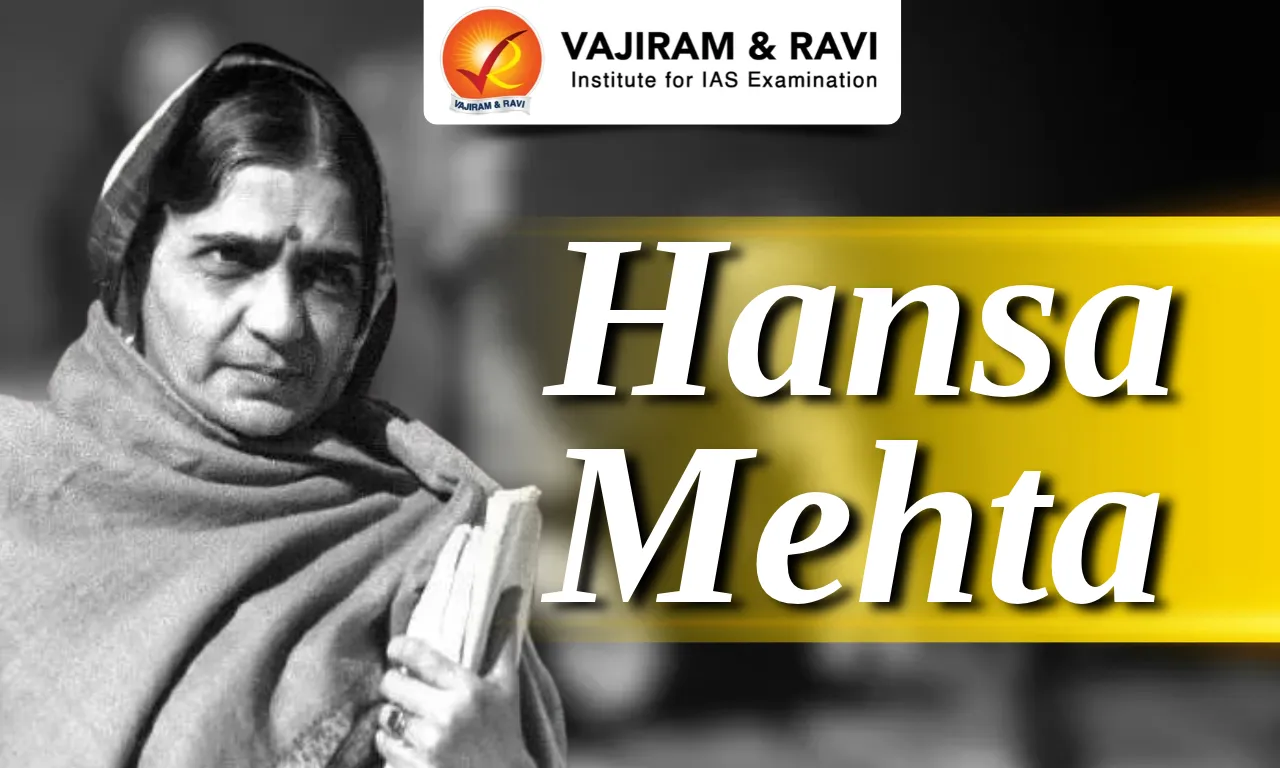
Hansa Mehta 1897-1995, Biography, Contributions, Recognitions

Hansa Mehta

Hansa Mehta was an Indian freedom fighter, social reformer, educationist and women's rights advocate. As one of the 15 women members of the Constituent Assembly, she contributed to constitutional debates and played an important role in making the Universal Declaration of Human Rights gender inclusive.

Hansa Mehta Biography

Hansa Mehta, also known as Hansa Jivraj Mehta, was born on 3 July 1897 in Surat, Gujarat.

  • Early Life and Education: She graduated in Philosophy from Baroda College in 1918 and later studied journalism and sociology in England, where she met Sarojini Naidu, who influenced her involvement in women's rights.
  • Association with Freedom Movement: Inspired by Mahatma Gandhi, she participated in the Non Cooperation and Swadeshi movements, organised protests against foreign goods and liquor and faced imprisonment for her participation in the freedom struggle.
  • Political Career: She was elected to the Bombay Legislative Council in 1937 as a general category candidate and continued serving until 1949, advocating equal political opportunities and rights for women.
  • Constituent Assembly Membership: Elected from Bombay, she was among the 15 women members of the Constituent Assembly and participated in constitution making as a member of important fundamental rights committees.
  • Leadership in Women's Organisations: She served as President of the All India Women's Conference in 1945-46 and promoted women's equality through the Indian Women's Charter of Rights and Duties.
  • Academic Leadership: She served as Vice Chancellor of SNDT Women's University from 1946 to 1948 and Maharaja Sayajirao University of Baroda from 1949 to 1958, becoming a prominent woman education administrator.
  • Recognition: She received the Padma Bhushan in 1959 for her contributions to education, social reform and public life.
  • Death: Hansa Jivraj Mehta passed away on 4 April 1995. Her work remains significant in India's constitutional and women's rights history.

Hansa Mehta Contributions

Hansa Mehta made significant contributions to constitutional development, women's empowerment, education and international human rights, particularly through her work in India and the United Nations.

  • Contribution to Constitution Making: As a member of the Advisory Committee and Sub Committee on Fundamental Rights, she advocated gender equality, equal citizenship and women's constitutional rights during the framing of the Indian Constitution.
  • Advocacy for Uniform Civil Code: She supported reforms in personal laws to establish gender equality and argued that a common civil framework could help ensure equal rights for women across communities.
  • Indian Women's Charter of Rights and Duties: As President of the All India Women's Conference, she led efforts to formulate the Charter, demanding equal rights in education, voting, employment, remuneration and property ownership.
  • Contribution to Universal Declaration of Human Rights: As India's delegate to the UN Commission on Human Rights (1947-48), she helped change Article 1 from "All men are born free and equal" to "All human beings are born free and equal", ensuring gender inclusive language.
  • Promotion of Women's Education: Through her leadership at SNDT Women's University and Maharaja Sayajirao University, she strengthened women's access to higher education and promoted institutional development in India's education sector.
  • Contribution to Education and Literature: She promoted Indian classical literature through university initiatives and authored Gujarati children's books, translated literary works and contributed to the preservation and publication of classical Indian texts.
  • International Recognition of Gender Equality: Her contribution to human rights continues to be recognised through the United Nations' Dr. Hansa Mehta Dialogue series, which promotes discussions on women's empowerment, gender equality and human rights.

Hansa Mehta FAQs

Q1: Who was Hansa Mehta?

Ans: Hansa Mehta was an Indian freedom fighter, educationist, social reformer and women's rights activist who contributed to the making of the Indian Constitution.

Q2: What was the contribution of Hansa Mehta to the Indian Constitution?

Ans: She advocated gender equality and women's rights as a member of the Constituent Assembly's Advisory Committee and Sub Committee on Fundamental Rights.

Q3: What was Hansa Mehta's role in the Universal Declaration of Human Rights?

Ans: She helped replace the phrase "All men are born free and equal" with "All human beings are born free and equal" in Article 1.

Q4: What was the Indian Women's Charter of Rights and Duties?

Ans: It was a document advocating equal rights for women in education, voting, employment, wages and property, promoted under Hansa Mehta's leadership.

Q5: Which award was conferred on Hansa Mehta for her contributions?

Ans: Hansa Mehta was awarded the Padma Bhushan in 1959 for her contributions to education, social reform and public service.

Tiger Reserves in West Bengal 2026, Sundarbans & Buxa Biodiversity

Tiger Reserves in West Bengal

Tiger Reserves in West Bengal play an important role in conserving the Royal Bengal Tiger and protecting diverse forest ecosystems. The state has two notified Tiger Reserves, Sundarbans and Buxa, representing distinct habitats: mangrove forests in the coastal delta and tropical forests in the Himalayan foothills.

Tiger Reserves in West Bengal

West Bengal has two Tiger Reserves under the tiger conservation framework. These are important for biodiversity conservation, wildlife protection and maintaining ecological connectivity across eastern and northeastern India.

List of Tiger Reserves in West Bengal 2026

The Two Tiger Reserves in West Bengal are located in different geographical regions and have distinct ecological characteristics.

  • Sundarbans Tiger Reserve (STR)
  • Buxa Tiger Reserve (BTR)

Sundarbans Tiger Reserve (STR)

Sundarbans Tiger Reserve (Sunderban Tiger Reserve) is located in the southern Gangetic delta along the Bay of Bengal. It is globally significant for its mangrove ecosystem and tiger population.

  • Notification: The area was initially notified as a protected area in 1973-74 and received Tiger Reserve notification in 2007.
  • Location: It covers South 24 Parganas and part of North 24 Parganas district, West Bengal, along the international boundary with Bangladesh.
  • Geographical Features: The reserve comprises numerous islands, tidal rivers, estuaries and interconnected creeks, forming a distinctive mangrove landscape.
  • Area: The core or critical tiger habitat covers 1,699.62 sq. km and does not have permanent human settlements. The buffer zone covers 885.27 sq. km and includes inhabited islands where regulated fishing and tourism are permitted. The notified Tiger Reserve covers 2,584.89 sq. km, including both core and buffer areas.
  • Proposed Expansion: On 19 August 2025, the National Board for Wildlife approved the inclusion of an additional 1,044.68 sq. km across the Matla, Raidighi and Ramganga ranges of South 24 Parganas.
  • Second Largest Tiger Reserve: After the proposed expansion, the total area of Sundarbans Tiger Reserve is expected to reach 3,629.57 sq. km, making it India's second largest Tiger Reserve after Nagarjunasagar-Srisailam. The final expansion notification is still awaited.
  • Ecological Significance: It is one of the world's largest mangrove ecosystems and is particularly important for the conservation of tigers adapted to mangrove habitats.

Sundarbans Tiger Reserve Biodiversity

The Sundarbans Tiger Reserve ecosystem supports diverse plant and animal communities. Its mangroves provide important habitats for several endangered and threatened species.

Flora

The Sundarbans has diverse mangrove vegetation, with several plant species reported across the biosphere region.

  • Sundari: Heritiera fomes is a characteristic mangrove tree of the region and is associated with the name Sundarban.
  • Mangrove Species: Important species include Avicennia alba, Avicennia marina, Avicennia officinalis and Rhizophora apiculata.
  • Mangrove Adaptation: Mangrove plants possess specialised features such as breathing roots and salt management mechanisms to survive in saline, oxygen deficient soils.
  • Other Vegetation: Keora, Hetal, Golpata, Genwa and Baine are among the important plants found in the mangrove forests.
  • Vegetation Types: The vegetation includes saltwater mixed forests, brackish water forests, tidal swamp vegetation and palm dominated forests.
  • Ecological Importance: Mangroves provide breeding and nursery grounds for fish and shellfish while protecting coastal ecosystems and supporting biodiversity.

Fauna

The Sundarbans supports several threatened wildlife species, including mammals, reptiles, birds and aquatic animals adapted to estuarine conditions.

  • Royal Bengal Tiger: The reserve is internationally recognised for its tiger population. These tigers are adapted to saline environments and are capable of swimming across wide water channels.
  • Other Mammals: Fishing cats, Gangetic dolphins, Irrawaddy dolphins, spotted deer, wild boars, otters and rhesus macaques are among its important fauna.
  • Reptiles: Important reptiles include the estuarine crocodile, king cobra, water monitor lizard and river terrapin (Batagur baska).
  • Marine Turtles: Olive Ridley, Green Sea and Hawksbill turtles use the region for nesting and habitat requirements.
  • Avifauna: The region supports more than 300 bird species, including kingfishers, herons, egrets, sea eagles and several migratory birds.
  • Aquatic Biodiversity: Rivers and creeks support diverse fish, prawns, crabs and other aquatic species, sustaining the wider estuarine food chain.

Buxa Tiger Reserve (BTR)

Buxa Tiger Reserve is situated in the Alipurduar subdivision of West Bengal. Located in the Himalayan foothills, it is important for forest biodiversity and wildlife corridors.

  • Notification: The area was initially notified as a protected area in 1982-83 and received Tiger Reserve notification in 2009.
  • Location: It is situated in Alipurduar district, northern West Bengal, near the international boundary with Bhutan.
  • Geographical Features: The reserve extends approximately 50 km from west to east and 35 km from north to south.
  • Area: The core or critical tiger habitat covers 390.58 sq. km and the buffer zone covers 367.32 sq. km, containing forest villages and areas adjoining tea gardens. The notified Tiger Reserve covers 757.90 sq. km, comprising core and buffer areas.
  • Forest Type: Its vegetation is primarily classified as moist tropical forest, with variations according to altitude, soil and moisture conditions.
  • Wildlife Corridors: Buxa maintains important ecological connections with forests in Bhutan, Manas Tiger Reserve, Jaldapara National Park and adjoining forest areas of Assam.

Buxa Tiger Reserve Biodiversity

Buxa Tiger Reserve supports diverse tropical forest vegetation and wildlife. Its geographical position makes it important for maintaining ecological connectivity across the eastern Himalayan landscape.

Flora

Buxa Tiger Reserve has rich plant diversity due to variations in altitude, soil conditions, drainage and moisture across its forest habitats.

  • Trees: The reserve contains approximately 352 tree species, representing considerable diversity in its forest vegetation.
  • Shrubs and Herbs: Its recorded vegetation includes 133 shrub species and 189 herb species.
  • Other Vegetation: Its plant diversity also includes grass, sedge, orchid, climbers, cane and bamboo species.
  • Forest Type: The vegetation mainly belongs to moist tropical forests, with changes in plant composition across different elevations.

Fauna

Buxa Tiger Reserve has significant faunal diversity, supporting mammals, reptiles, birds, amphibians, fishes and insects across its forest ecosystems.

  • Mammals: Important species include the Indian tiger, leopard, clouded leopard, elephant, gaur, sambar, spotted deer, barking deer and sloth bear.
  • Other Wildlife: Fishing cats, jungle cats, leopard cats, wild dogs, jackals, civets, porcupines and pangolins are also found in the reserve.
  • Avifauna: More than 246 bird species have been recorded, including hill myna, crested serpent eagle, black francolin, hornbills and waterfowl.
  • Reptiles: Important reptiles include the king cobra, Russell's viper, black krait, Indian python and reticulated python.
  • Aquatic Fauna: The rivers and streams support around 103 fish species, including the Mahseer.

Tiger Reserves in West Bengal FAQs

Q1: How many Tiger Reserves are there in West Bengal?

Ans: West Bengal has two notified Tiger Reserves: Sundarbans Tiger Reserve and Buxa Tiger Reserve.

Q2: Which is the Largest Tiger Reserve in West Bengal?

Ans: Sundarbans Tiger Reserve is the largest Tiger Reserve in West Bengal, covering a total notified area of 2,584.89 sq. km.

Q3: When was Sundarbans Tiger Reserve established?

Ans: Sundarbans was initially notified as a protected area in 1973-74 and received Tiger Reserve notification in 2007.

Q4: Where is Buxa Tiger Reserve located?

Ans: Buxa Tiger Reserve is located in Alipurduar district in northern West Bengal, near the Bhutan border.

Q5: What is the total area of Buxa Tiger Reserve?

Ans: Buxa Tiger Reserve covers a total notified area of 757.90 sq. km, comprising 390.58 sq. km of core area and 367.32 sq. km of buffer area.

Tiger Reserves in Odisha 2026, Names, Areas & Biodiversity

Tiger Reserves in Odisha

Tiger Reserves in Odisha play an important role in conserving the Bengal tiger and protecting the state's forest ecosystems. Odisha has two notified Tiger Reserves, Similipal and Satkosia, both established under Project Tiger. These reserves are significant for wildlife conservation, biodiversity protection and maintaining ecological connectivity across forest landscapes.

Tiger Reserves in Odisha

As of 2026, Odisha has two Tiger Reserves: Similipal Tiger Reserve in Mayurbhanj and Satkosia Tiger Reserve, spread across four districts. Both contribute to tiger conservation through habitat protection, wildlife monitoring and forest management.

List of Tiger Reserves in Odisha 2026

The two Tiger Reserves in Odisha are recognised under Project Tiger, with different core and buffer areas.

  • Similipal Tiger Reserve
  • Satkosia Tiger Reserve

Similipal Tiger Reserve

Similipal Tiger Reserve is located in northern Odisha and is known for its extensive forests, rich wildlife diversity and importance in tiger conservation.

  • Notification: The reserve was initially notified as a protected area in 1973-74 and designated as a Tiger Reserve in 2007.
  • Location: It is situated in Mayurbhanj district in northern Odisha, covering the Similipal landscape.
  • Total Area: The reserve covers 2,750 sq. km, comprising a core area of 1,194.75 sq. km and a buffer area of 1,555.25 sq. km.
  • Forest Divisions: Its administration involves Similipal North, Similipal South, Karanjia, Baripada and Rairangpur forest divisions.
  • Geographical Features: The landscape consists of undulating hills, plateaus, grasslands and forested valleys, with perennial water sources feeding rivers such as Budhabalanga and Salandi.
  • Famous For: Similipal is known for its melanistic (black) tigers, elephants and important waterfalls, including Barehipani and Joranda.
  • Conservation Importance: It has an important ecological connection with Satkosia Tiger Reserve and restoring fragmented forest corridors is essential for wildlife movement.

Similipal Tiger Reserve Biodiversity

Similipal Tiger Reserve supports diverse forest ecosystems and wildlife, making it an important landscape for conserving eastern India's biodiversity.

Flora

  • Moist Deciduous Forests: Northern tropical moist deciduous forests dominate the landscape and form an important part of its natural vegetation.
  • Semi Evergreen Forests: Tropical semi evergreen forests occur in suitable moist conditions, particularly in areas with favourable local climates.
  • Dry Deciduous Forests: These forests are mainly found in the eastern and southern parts, particularly along exposed and steep hill slopes.
  • Sal Forests: High level sal forests occur on plateaus at higher elevations and represent an important forest type within the reserve.
  • Grasslands: Grassland and savanna patches occur on hilltops, valley areas and along stream banks, contributing to habitat diversity.
  • Plant Diversity: The reserve contains plant species associated with the Western Ghats, Eastern Ghats and Sub Himalayan regions, giving it distinctive ecological importance.

Fauna

  • Tiger Population: Similipal provides an important habitat for Bengal tigers and supports a significant source population within Odisha.
  • Melanistic Tigers: The reserve is particularly recognised for its melanistic tigers, commonly known as black tigers, which are a distinctive feature of its wildlife.
  • Large Mammals: Elephants and Indian bison are important mammals found here, alongside several species of deer.
  • Carnivores: Apart from tigers and leopards, the reserve supports leopard cats, fishing cats, jungle cats, wolves, jackals and hyenas.
  • Reptiles: Mugger crocodiles inhabit its river systems and perennial streams. Several snake species, including king cobras and pythons, are also present.
  • Birdlife: The reserve supports diverse birdlife, including peafowl, hornbills, hill mynas, eagles, kingfishers, herons and egrets.

Satkoshia Tiger Reserve

Satkoshia Tiger Reserve is an important wildlife conservation landscape in Odisha, recognised for its Mahanadi river gorge, forest ecosystems and tiger habitat.

  • Notification: Satkoshia was notified as a Tiger Reserve in 2007. Its present notified area was declared on 14 December 2018.
  • Location: The reserve extends across Angul, Boudh, Cuttack and Nayagarh districts of Odisha.
  • Total Area: According to the National Tiger Conservation Authority, it covers 963.87 sq. km, consisting of a core area of 523.61 sq. km and a buffer area of 440.26 sq. km. However, according to the Odisha Wildlife Organization 2018 notification, the reserve covers an area of 1,136.70 sq. km.
  • Forest Divisions: Its administrative coverage includes Satkosia Wildlife, Mahanadi Wildlife, Boudh, Athagarh and Nayagarh forest divisions.
  • Geographical Features: The landscape comprises hills, valleys and forested slopes, with elevations ranging from 37 metres to 932 metres.
  • River: The Mahanadi flows through the reserve, forming the famous Satkosia Gorge, an important geographical feature of the landscape.
  • Conservation Importance: Restoring forest connectivity with Similipal and other adjoining forest divisions is important for tiger movement and maintaining ecological continuity.

Satkosia Tiger Reserve Biodiversity

Satkosia Tiger Reserve supports diverse forest vegetation and wildlife, while the Mahanadi Gorge provides an important habitat for aquatic and terrestrial species.

Flora

  • Moist Deciduous Forests: North Indian tropical moist deciduous forests form an important vegetation type within the reserve.
  • Sal Forests: Moist peninsular low level sal forests occur extensively, with sal forming a major component of the tree vegetation.
  • Associated Tree Species: Important associated trees include Asan, Dhaura and Simal, which contribute to the reserve's mixed forest composition.
  • Bamboo Vegetation: Bamboo, particularly Dendrocalamus strictus, occurs in the forest landscape and forms part of its natural vegetation.
  • Dry Deciduous Forests: Northern tropical dry deciduous forests include mixed sal forests, open woodland and vegetation along riverbanks.
  • Teak Plantations: Older teak plantations are also present alongside the natural forest ecosystems of the reserve.

Fauna

  • Tiger and Leopard: Satkosia provides habitat for Bengal tigers and leopards, making it important for large carnivore conservation in Odisha.
  • Important Mammals: Elephants, Indian bison, spotted deer, sambar, barking deer and four horned antelope are among its important mammals.
  • Other Mammals: Sloth bears, wild dogs, jackals, giant squirrels and porcupines are also found in the reserve.
  • Crocodile Conservation: The Satkosia Gorge provides a natural habitat for two important endangered reptiles, the freshwater crocodile and gharial.
  • Avifauna: The reserve supports diverse birdlife, including several forest dwelling and water associated bird species.
  • Aquatic Biodiversity: The Mahanadi river system and associated water bodies support a variety of freshwater fish and aquatic wildlife.
  • Reptile Diversity: The reserve also supports different reptile species, including crocodiles, gharials and snakes.

Tiger Reserves in Odisha FAQs

Q1: How many Tiger Reserves are there in Odisha?

Ans: As of 2026, Odisha has two Tiger Reserves: Similipal Tiger Reserve and Satkosia Tiger Reserve, both notified under Project Tiger.

Q2: Which is the Largest Tiger Reserve in Odisha?

Ans: Similipal Tiger Reserve is the largest Tiger Reserve in Odisha, covering a total area of 2,750 sq. km.

Q3: Where is Similipal Tiger Reserve located?

Ans: Similipal Tiger Reserve is located in Mayurbhanj district in northern Odisha and is known for its rich biodiversity and melanistic tigers.

Q4: When was Satkosia Tiger Reserve notified?

Ans: Satkosia Tiger Reserve was notified in 2007 under Project Tiger, with its present notified area declared on 14 December 2018.

Q5: Which river flows through Satkosia Tiger Reserve?

Ans: The Mahanadi River flows through Satkosia Tiger Reserve, forming the famous Satkosia Gorge, an important habitat for gharials and freshwater crocodiles.

Kaziranga Tiger Reserve, Location, Area, Wildlife & Biodiversity

Kaziranga Tiger Reserve

Kaziranga Tiger Reserve, located in the floodplains of the Brahmaputra River in Assam, along the foothills of the Karbi Anglong hills, was declared a Tiger Reserve in 2007. It is one of India's most important wildlife conservation areas, renowned for its population of the greater one-horned rhinoceros. The reserve also provides habitat to tigers, elephants, wild water buffaloes, eastern swamp deer and several species of migratory birds.

Kaziranga Tiger Reserve Location and Area 

Kaziranga Tiger Reserve is situated in the North East Brahmaputra Valley Province of the Indian biogeographic classification.

  • State: Assam.
  • Districts: Golaghat, Nagaon and Sonitpur.
  • River system: The reserve lies in the floodplain of the Brahmaputra River. The Diffalu, a tributary of the Brahmaputra, flows through the National Park's core area, while the Moradifalu flows along its southern boundary.
  • Terrain: The landscape is predominantly flat, with a gentle slope from east to west. It consists largely of alluvial deposits formed by the Brahmaputra river system.

Area of Kaziranga Tiger Reserve

According to the National Tiger Conservation Authority (NTCA), Kaziranga Tiger Reserve covers 1,173.58 sq. km.

Zone

Area

Core area

625.58 sq. km

Buffer area

548.00 sq. km

Total area

1,173.58 sq. km

Kaziranga Tiger Reserve History

Kaziranga was given different conservation designations over the years, beginning with its protection as a proposed reserve forest in 1905.

  • 1905: The Kaziranga Proposed Reserve Forest was created in 1905 as an initial step towards protecting the area's wildlife.
  • 1974: Kaziranga was declared a National Park in 1974. 
  • 1985: It was inscribed on the UNESCO World Heritage List under natural criteria (ix) and (x) in 1985. 
  • 2007: Kaziranga was notified as a Tiger Reserve in 2007. 

Habitat and Vegetation of Kaziranga Tiger Reserve

Kaziranga is characterised by a mosaic of grasslands, wetlands, riverine areas and forests. Its ecosystem is shaped by the annual floods and sediment deposition of the Brahmaputra.

The major habitat types include:

  1. Eastern wet alluvial grasslands: Tall grasslands that provide food and shelter to large herbivores.
  2. Assam alluvial plains semi-evergreen forests: Forest patches occurring in relatively higher areas.
  3. Tropical moist mixed deciduous forests: These support diverse tree and wildlife species.
  4. Wetlands: Marshes, shallow pools and water bodies provide habitat for aquatic animals and waterbirds.
  5. Sandy river islands or chaurs: These are formed by the shifting channels and sediment deposits of the Brahmaputra.

Kaziranga Tiger Reserve Important Flora

According to NTCA, Kaziranga Tiger Reserve supports more than 550 plant species, including several medicinal plants. Important tree species include:

  • Bombax ceiba (Silk cotton tree)
  • Albizia procera
  • Careya arborea
  • Dillenia indica
  • Lagerstroemia speciosa
  • Trewia nudiflora
  • Ficus religiosa

Tall grasses such as Saccharum spontaneum, Saccharum procerum and Imperata cylindrica are important components of its grassland ecosystem.

Kaziranga Tiger Reserve Fauna 

Kaziranga is recognised internationally for its rich wildlife diversity. It is particularly important for the conservation of large herbivores and threatened mammals.

Important Mammals

  • Greater one-horned rhinoceros
  • Royal Bengal tiger
  • Asian elephant
  • Wild water buffalo
  • Eastern swamp deer
  • Hog deer
  • Sambar
  • Hoolock gibbon
  • Capped langur
  • Gangetic river dolphin

The wetlands and grasslands also support a diverse bird population, including resident and migratory species.

Greater One-Horned Rhinoceros in Kaziranga Tiger Reserve 

Kaziranga is home to the world's largest population of the greater one-horned rhinoceros (Rhinoceros unicornis).

According to the 14th Rhino Population Estimation conducted in March 2022, Kaziranga recorded 2,613 rhinoceroses. The census covered the National Park, its addition areas and adjoining civil areas.

The species is listed as Vulnerable on the International Union for Conservation of Nature (IUCN) Red List and is included in Appendix I of the Convention on International Trade in Endangered Species of Wild Fauna and Flora (CITES).

Tiger Population in Kaziranga Tiger Reserve

Kaziranga is an important source habitat for tigers in the North East Hills and Brahmaputra floodplains landscape. According to the All India Tiger Estimation 2022, the reserve recorded 104 individual tigers within its surveyed area. The reserve's grasslands and wetlands support a substantial prey base, including wild water buffaloes, deer and other herbivores.

Kaziranga Tiger Reserve Wildlife Corridors

Wildlife corridors connect Kaziranga's floodplain habitats with higher forested areas, allowing animals to move safely during seasonal floods. In April 2022, the Government of Assam notified nine animal corridors connecting Kaziranga National Park with the Karbi Anglong hills. These corridors are important for maintaining habitat connectivity and facilitating seasonal wildlife movement.

Annual Floods in Kaziranga Tiger reserve 

Kaziranga experiences annual flooding due to the Brahmaputra River and its tributaries. These floods play an important ecological role in maintaining the reserve's grassland and wetland ecosystems. Floodwaters deposit nutrient-rich alluvial sediments, supporting the growth of grasslands and replenishing wetlands. During severe floods, wildlife moves towards higher ground in the neighbouring Karbi Anglong hills to escape inundation.

Kaziranga Tiger Reserve FAQs

Q1: Where is Kaziranga Tiger Reserve located?

Ans: Kaziranga Tiger Reserve is located in Assam, across the districts of Golaghat, Nagaon and Sonitpur, in the floodplain of the Brahmaputra River.

Q2: When was Kaziranga declared a National Park and a Tiger Reserve?

Ans: Kaziranga Tiger Reserve was declared a National Park in 1974 and notified as a Tiger Reserve in 2007.

Q3: What is the area of Kaziranga Tiger Reserve?

Ans: According to the NTCA, Kaziranga Tiger Reserve covers 1,173.58 sq. km, comprising a core area of 625.58 sq. km and a buffer area of 548 sq. km.

Q4: When was Kaziranga National Park included in the UNESCO World Heritage List?

Ans: Kaziranga National Park was inscribed on the UNESCO World Heritage List in 1985 under natural criteria (ix) and (x).

Q5: Which river flows through Kaziranga Tiger Reserve?

Ans: The Brahmaputra is the principal river of the region, while the Diffalu River flows through the core area.


Tiger Reserves in Telangana 2026, Amrabad, Kawal, Areas & Wildlife

Tiger Reserves in Telangana

Telangana has two tiger reserves – Amrabad Tiger Reserve and Kawal Tiger Reserve. Amrabad lies in the Nallamala Hills in southern Telangana, while Kawal is located in the northern part of the state. Both are important components of the Deccan Plateau’s forest ecosystem and form part of the larger Central Indian tiger landscape.

List of Tiger Reserves in Telangana

According to the National Tiger Conservation Authority (NTCA), Telangana has two notified tiger reserves. Their notification years and core and buffer areas are given below.

Tiger Reserve

Location

Year of Notification

Core Area (sq. km.)

Buffer Area (sq. km.)

Total Area (sq. km.)

Amrabad

Nagarkurnool and Nalgonda

2015

2,166.37

445.02

2,611.39

Kawal

Nirmal and Mancherial

2012

892.23

1,123.21

2,015.44

1. Amrabad Tiger Reserve

Amrabad Tiger Reserve is located in the Nallamala Hills of the Eastern Ghats and is one of the largest tiger reserves in India by area.
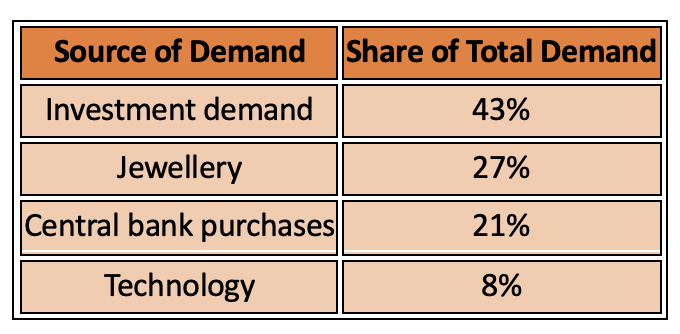
Location and Area

  • The reserve is spread across the Nagarkurnool and Nalgonda districts of Telangana.
  • It covers a total area of 2,611.39 sq. km., comprising 2,166.37 sq. km. of core area and 445.02 sq. km. of buffer area.
  • It was part of the erstwhile Nagarjunasagar-Srisailam Tiger Reserve, which was declared a tiger reserve in 1983.
  • Following the formation of Telangana in 2014, the portion of the erstwhile reserve falling within the state was separately notified as Amrabad Tiger Reserve in 2015.

Landscape and Rivers

  • The reserve forms part of the Nallamala hill ranges and is characterised by rugged terrain, steep hills, deep valleys and gorges.
  • The Dindi and Haliya rivers, which are tributaries of the Krishna River, drain the reserve.
  • The forests form an important catchment for the Krishna River.
  • The Nagarjunasagar and Srisailam reservoirs, both located on the Krishna River, are important freshwater habitats in the landscape.
  • The reserve shares a long boundary with Nagarjunasagar-Srisailam Tiger Reserve in Andhra Pradesh, with the Krishna River separating the two over a stretch of approximately 160 km.

Vegetation and Wildlife

The reserve supports rich biodiversity, including a variety of birds, reptiles, amphibians and aquatic species. 

  • The reserve is characterised mainly by southern tropical dry deciduous forests, with extensive bamboo forests.
  • Important plant species include Dendrocalamus strictus, Terminalia alata, Boswellia serrata and species of Ficus.
  • Major mammals include the Bengal tiger, leopard, Indian wolf, dhole, sloth bear, chital, sambar, nilgai and four-horned antelope.
  • Smooth-coated otters are among the notable aquatic mammals found in the Krishna River system.

Chenchu Tribe and Conservation

The reserve is home to the Chenchu, a Particularly Vulnerable Tribal Group (PVTG) of Telangana. Chenchu communities have traditionally depended on the forests for their livelihoods and have a close association with the Nallamala landscape.

2. Kawal Tiger Reserve

Kawal Tiger Reserve is located in northern Telangana and forms an important part of the Deccan Plateau’s forest ecosystem.

Location and Area

  • The reserve is located mainly in the Nirmal and Mancherial districts of Telangana.
  • It covers a total area of 2,015.44 sq. km., comprising 892.23 sq. km. of core area and 1,123.21 sq. km. of buffer area.

  • Kawal Wildlife Sanctuary was notified as a tiger reserve in 2012.
  • It is situated in the southern part of the Central Indian Tiger Landscape.

Landscape and Rivers

  • The reserve has a landscape of dry deciduous forests, teak-dominated woodlands, grasslands, streams and water bodies.
  • It is situated in the Godavari River basin and forms part of the river’s wider ecological landscape.
  • The reserve has ecological linkages with forests and protected areas in neighbouring Maharashtra and Chhattisgarh.

Vegetation and Wildlife

  • The dominant vegetation consists of dry deciduous forests, particularly teak (Tectona grandis) and bamboo (Dendrocalamus strictus).
  • Important mammals include the Bengal tiger, leopard, gaur, sloth bear, dhole, sambar and chital.
  • The reserve also supports diverse bird, reptile and amphibian species.

Tiger Corridors and Landscape Connectivity

  • Kawal is an important tiger movement corridor connecting the forests of Telangana with the larger Central Indian landscape.
  • The Wildlife Institute of India identifies active tiger movement between the Tadoba-Kanhargaon landscape and the Tipeshwar Sanctuary-Adilabad landscape.
  • The Kagaznagar-Pranahita Sanctuary-Kolamarka Conservation Reserve link provides a potential connection towards the Indravati Tiger Reserve landscape in Chhattisgarh.
  • These ecological linkages are important for maintaining wildlife movement and genetic exchange between fragmented tiger habitats.

Tiger Reserves in Telangana FAQs

Q1: How many tiger reserves are there in Telangana?

Ans: Telangana has two tiger reserves: Amrabad Tiger Reserve and Kawal Tiger Reserve.

Q2: Which is the largest tiger reserve in Telangana?

Ans: Amrabad Tiger Reserve is the largest in Telangana, covering 2,611.39 sq. km.

Q3: When was Amrabad Tiger Reserve notified?

Ans: Amrabad was notified as a separate tiger reserve in 2015, following the bifurcation of the erstwhile Nagarjunasagar-Srisailam Tiger Reserve after the formation of Telangana.

Q4: Which rivers are associated with Amrabad Tiger Reserve?

Ans: The Dindi and Haliya rivers, tributaries of the Krishna River, drain the Amrabad landscape.

Q5: Which tribal community is associated with Amrabad Tiger Reserve?

Ans: The Chenchu, a Particularly Vulnerable Tribal Group (PVTG), lives in the Nallamala forest region, including the Amrabad landscape.

Tiger Reserves in Kerala 2026, Periyar, Parambikulam, Area & Wildlife

Tiger Reserves in Kerala

Kerala has two tiger reserves – Periyar Tiger Reserve and Parambikulam Tiger Reserve. Both are located in the Western Ghats, a global biodiversity hotspot known for its rich forest ecosystems and high species endemism.

List of Tiger Reserves in Kerala

The following table provides the names, locations, notification years and geographical areas of the two tiger reserves in Kerala.

Tiger Reserve

Location

Year of Notification

Core Area (sq. km.)

Buffer Area (sq. km.)

Total Area (sq. km.)

Periyar

Idukki, Pathanamthitta and Kottayam

2007

881.00

44.00

925.00

Parambikulam

Palakkad and Thrissur

2009

390.89

252.77

643.66

1. Periyar Tiger Reserve

Periyar Tiger Reserve is located in the southern Western Ghats of Kerala and is known for its evergreen forests, rich biodiversity and important habitats of tigers and Asian elephants.

Location and Area

  • Periyar Tiger Reserve extends across the Idukki, Pathanamthitta and Kottayam districts of Kerala and covers a total area of 925 sq. km.
  • It was brought under Project Tiger in 1978 and formally notified as a Tiger Reserve in 2007.
  • The reserve comprises a core area of 881 sq. km. and a buffer area of 44 sq. km.

Landscape and Rivers

  • The reserve lies in the Cardamom Hills and Pandalam Hills of the southern Western Ghats, with an undulating landscape of forested valleys and hills.
  • The Periyar and Pamba rivers are the major river systems associated with the reserve.
  • The Periyar Lake, formed following the construction of the Mullaperiyar Dam, is a prominent geographical feature of the reserve.

Vegetation and Wildlife

  • The major vegetation types include tropical evergreen, semi-evergreen and moist deciduous forests, along with grasslands and montane shola ecosystems.
  • Important mammals found here include the Bengal tiger, Asian elephant, gaur, leopard, sambar deer, sloth bear, dhole, Nilgiri langur and lion-tailed macaque.
  • The reserve provides habitat to several Western Ghats endemic species, including the lion-tailed macaque and Nilgiri langur.

Conservation Significance

  • Periyar is recognised for its community-based conservation initiatives, particularly its participatory eco-development programmes involving local communities.
  • In the fifth cycle of the Management Effectiveness Evaluation (MEE) of Tiger Reserves, Periyar secured the first position in India with a score of 94.53% in the 2022 evaluation.

2. Parambikulam Tiger Reserve

Parambikulam Tiger Reserve is situated in the Nelliampathy-Anamalai landscape of the southern Western Ghats in Kerala and is known for its diverse forest ecosystems and rich wildlife.

Location and Area

  • Parambikulam Tiger Reserve is located in the Palakkad district of Kerala and covers a total area of 643.66 sq. km.
  • It was established as a Wildlife Sanctuary in 1973 and notified as a Tiger Reserve in 2009.
  • The reserve comprises a core area of 390.89 sq. km. and a buffer area of 252.77 sq. km.

Landscape and Water Bodies

  • The reserve forms part of the Anamalai-Nelliampathy landscape of the Western Ghats and is connected with protected forest areas of Kerala and Tamil Nadu.
  • Its landscape consists of hills, valleys, forests and grasslands, supporting a variety of wildlife habitats.
  • The Parambikulam, Thunacadavu and Peruvaripallam reservoirs are important water bodies within the reserve.

Vegetation and Wildlife

  • The major vegetation types include tropical evergreen, semi-evergreen, moist deciduous and dry deciduous forests, along with shola forests and montane grasslands.
  • Important wildlife species include the Bengal tiger, Asian elephant, leopard, dhole, sloth bear, gaur, sambar deer and lion-tailed macaque.
  • The reserve also supports several species of birds, reptiles and other wildlife characteristic of the Western Ghats.

Kannimara Teak

  • Parambikulam is famous for the Kannimara Teak, a well-known old teak tree located within the reserve and recognised as an important natural heritage feature of the region.

Tiger Reserves in Kerala FAQs

Q1: How many tiger reserves are there in Kerala?

Ans: Kerala has two tiger reserves: Periyar Tiger Reserve and Parambikulam Tiger Reserve.

Q2: When was Periyar Tiger Reserve established?

Ans: Periyar was brought under Project Tiger in 1978 and formally notified as a Tiger Reserve in 2007.

Q3: When was Parambikulam declared a Tiger Reserve?

Ans: Parambikulam was notified as a Tiger Reserve in 2009.

Q4: Which tiger reserve in Kerala is famous for Kannimara Teak?

Ans: Parambikulam Tiger Reserve is famous for the Kannimara Teak, a well-known old teak tree.

Q5: Which river is associated with the Periyar Tiger Reserve?

Ans: The Periyar River is the principal river associated with the Periyar Tiger Reserve. The Pamba is another major river system draining the reserve.

Kamala Nehru Biography, Early Life, Freedom Struggle & Death

Kamala Nehru

Kamala Nehru was an Indian freedom fighter and social reformer who actively participated in the national movement. As the wife of Jawaharlal Nehru, she played an important role in mobilising women, promoting Swadeshi and organising protests against British rule, particularly during the Non Cooperation and Civil Disobedience Movements.

Kamala Nehru Biography

Kamala Nehru’s biography reflects her journey from a traditional family background to becoming an active participant in India's freedom struggle.

  • Birth and Family Background: Kamala Nehru was born as Kamala Kaul on 1 August 1899 in Delhi into a Kashmiri Pandit family. Her parents were Jawaharmal Kaul and Rajpati Kaul.
  • Marriage to Jawaharlal Nehru: She married Jawaharlal Nehru on 8 February 1916 at the age of 16. Their daughter, Indira Priyadarshini, was born in November 1917 and later became Prime Minister of India.
  • Influence of National Movement: The political transformation of the Nehru family under Mahatma Gandhi's influence encouraged Kamala to participate actively in the freedom struggle and adopt a life of simplicity.
  • Association with Mahatma Gandhi: Inspired by Gandhi's principles of self sacrifice and nationalism, she supported the freedom movement.
  • Participation in Freedom Struggle: Kamala became actively involved in the national movement during the Non Cooperation Movement of 1921 and subsequently participated in the Civil Disobedience Movement.
  • Death: Kamala Nehru died of tuberculosis on 28 February 1936 in Lausanne, Switzerland. Her contribution to India's freedom struggle continued to be remembered through institutions established in her memory.

Kamala Nehru Contributions

Kamala Nehru made significant contributions to India's freedom struggle through women's mobilisation, civil resistance, nationalist activities and social service.

  • Role in Non Cooperation Movement (joined in 1921): She organised women in Allahabad to protest against shops selling foreign items, encouraging participation in the Swadeshi movement and promoting the boycott of foreign goods.
  • Mobilisation of Women: Kamala played an important role in bringing women into the national movement. She organised volunteers, led public demonstrations and encouraged greater participation of women in anti colonial activities.
  • Civil Disobedience Movement: During the Civil Disobedience Movement, she mobilised women and youth, organised processions and participated in picketing against foreign cloth and liquor shops in Allahabad.
  • Participation in Salt Satyagraha: Inspired by Gandhi's resistance against British salt laws, Kamala participated in the Salt Satyagraha and was among the early leaders involved in selling prohibited salt.
  • Organisation of No Tax Campaigns: She participated in no tax campaigns alongside women volunteers, including Durgabai and Kamaladevi Chattopadhyaya, strengthening mass participation in the national movement.
  • Leadership and Arrest: As President of the District Congress Committee, she mobilised people against colonial rule. She faced arrest for her political activities and continued her involvement despite deteriorating health.
  • Establishment of Congress Dispensary in 1931: She converted rooms at Swaraj Bhavan in Allahabad into a Congress dispensary to provide medical assistance to injured freedom fighters, their families and local residents.
  • Recognitionl: Following her death, Mahatma Gandhi supported the establishment of Kamala Nehru Memorial Hospital in Allahabad, preserving her legacy of public service and commitment to social welfare.

Kamala Nehru FAQs

Q1: Who was Kamala Nehru?

Ans: Kamala Nehru was an Indian freedom fighter and social worker who participated in the Non Cooperation and Civil Disobedience Movements.

Q2: When and where was Kamala Nehru born?

Ans: Kamala Nehru was born on 1 August 1899 in Delhi into a Kashmiri Pandit family.

Q3: What was Kamala Nehru's contribution to the Indian freedom struggle?

Ans: She mobilised women, organised protests against foreign cloth and liquor shops, participated in the Salt Satyagraha and supported Congress led movements.

Q4: What was Kamala Nehru's role in the Non Cooperation Movement?

Ans: During the 1921 Non Cooperation Movement, she organised women in Allahabad and led protests against shops selling foreign cloth and liquor.

Q5: When did Kamala Nehru die?

Ans: Kamala Nehru died on 28 February 1936 in Lausanne, Switzerland, due to tuberculosis.

Vijaya Lakshmi Pandit 1900-1990 Biography, Life, Career & Contributions

Vijaya Lakshmi Pandit

Vijaya Lakshmi Pandit was an Indian freedom fighter, politician and diplomat who played an important role in India's independence movement and international diplomacy. She became the first woman President of the United Nations General Assembly in 1953 and contributed to India's diplomatic representation after independence.

Vijaya Lakshmi Pandit Biography

Vijaya Lakshmi Pandit, originally named Swarup Kumari Nehru, was born on 18 August 1900 into the prominent Nehru family.

  • Family Background: She was the daughter of Motilal Nehru, a prominent lawyer, nationalist leader and freedom fighter and the younger sister of Jawaharlal Nehru, India's first Prime Minister.
  • Early Life: She received private education without attending a formal school. In 1921, she married Ranjit Sitaram Pandit, a lawyer and freedom movement supporter and adopted the name Vijaya Lakshmi Pandit.
  • Participation in Freedom Struggle: She actively participated in India's national movement and was imprisoned three times by British authorities for her involvement in the struggle for independence.
  • Later Political Career: She served as Governor of Maharashtra from 1962 to 1964 and represented Phulpur in the Lok Sabha from 1964 to 1968.
  • Death: Vijaya Lakshmi Pandit passed away on 1 December 1990 in Dehradun, Uttar Pradesh (now Uttarakhand), at the age of 90.

Vijaya Lakshmi Pandit Contributions

Vijaya Lakshmi Pandit made significant contributions to India's freedom struggle, constitution making process, international diplomacy and women's representation in public leadership.

  • Indian Independence Movement: She actively participated in the national movement against British rule and faced repeated imprisonment, demonstrating her commitment to India's freedom and self governance.
  • Imprisonment and National Movement: She was imprisoned during 1932-1933, 1940 and 1942-1943 for participating in the freedom movement, including the Quit India Movement.
  • First Woman Cabinet Minister: In 1937, she became the first Indian woman to hold a cabinet portfolio in British India, serving as Minister of Local Self Government and Public Health.
  • Constituent Assembly Contribution: As a Constituent Assembly member from the United Provinces, she represented the Indian National Congress and participated in the process of framing India's Constitution.
  • Diplomatic Representation of India: After independence, she headed India's delegation to the United Nations during 1946-1948 and 1952-1953 and served as India's ambassador to the Soviet Union, the United States and Mexico.
  • First Woman President of UNGA: In 1953, she became the first woman President of the United Nations General Assembly and the only Indian to hold this position, marking an important achievement in international diplomacy.
  • Governor of Maharashtra: She served as the third Governor of Maharashtra from 1962 to 1964, contributing to India's constitutional and administrative framework through her role as a constitutional head.
  • Political Opposition During Emergency: She openly criticised Indira Gandhi's government during the Emergency (1975-1977), left the Congress Party and supported the political movement that contributed to the Janata Party's electoral victory in 1977.
  • Literary Contributions: She authored The Scope of Happiness: A Personal Memoir, Prison Days and So I Became a Minister, documenting her experiences in public life and the freedom movement.
  • UN Human Rights Commission: In 1979, she was appointed India's representative to the United Nations Human Rights Commission, further reflecting her involvement in international affairs.

Vijaya Lakshmi Pandit FAQs

Q1: Who was Vijaya Lakshmi Pandit?

Ans: Vijaya Lakshmi Pandit was an Indian freedom fighter, politician and diplomat who became the first woman President of the United Nations General Assembly in 1953.

Q2: When was Vijaya Lakshmi Pandit born?

Ans: Vijaya Lakshmi Pandit was born on 18 August 1900 in Allahabad, British India.

Q3: What was Vijaya Lakshmi Pandit's role in the Constituent Assembly?

Ans: She was elected to the Constituent Assembly in 1946 from the United Provinces as a member of the Indian National Congress.

Q4: When did Vijaya Lakshmi Pandit become the President of the UN General Assembly?

Ans: She became the first woman President of the United Nations General Assembly in 1953 and served during 1953-1954.

Q5: Which state did Vijaya Lakshmi Pandit serve as Governor?

Ans: She served as the Governor of Maharashtra from 1962 to 1964.

Sucheta Kripalani 1908-1974, Biography, Contributions, Death

Sucheta Kripalani

Sucheta Kripalani was an Indian freedom fighter, politician and constitutional figure who played an important role in India's independence movement and Constitution making process. She became the First Woman Chief Minister of an Indian State, serving Uttar Pradesh from 1963 to 1967. Her contributions to the Quit India Movement, refugee rehabilitation and women's political participation remain significant in modern Indian history.

Sucheta Kripalani Biography

Sucheta Kripalani's biography highlights her journey from an educator and freedom fighter to an important leader in independent India.

  • Birth and Early Life: Sucheta Kripalani was born on 25 June 1908 in Ambala, Punjab (present day Haryana), into a Bengali family. Her father, Surendranath Majumdar, worked as a medical officer.
  • Education: She studied at Indraprastha College, Delhi University and St. Stephen's College, Delhi, where she completed her Master's in History. Her education shaped her academic and political journey.
  • Teaching Career: Before entering active politics, she worked as a professor of Constitutional History at Banaras Hindu University. She continued teaching there until 1939 before becoming involved in the freedom movement.
  • Political Association: She joined the Indian National Congress in 1938 and served its Foreign Department and Women's Section as Secretary. In 1936, she married Acharya J. B. Kripalani, a prominent freedom fighter.
  • Role in the Freedom Movement: She actively participated in the Quit India Movement of 1942 and initially evaded arrest. The British authorities arrested her in 1944 and she remained detained for approximately one year.
  • Constituent Assembly Membership: In 1946, she was elected to the Constituent Assembly from the United Provinces. She was among the 15 women members who participated in India's Constitution making process.
  • Political Career: She served in the Provincial Parliament and the First and Second Lok Sabha. 
  • Death: After retiring from active politics in 1971, she passed away on 1 December 1974.

Sucheta Kripalani Contributions

Sucheta Kripalani made significant contributions to India's freedom struggle, Constitution making, refugee rehabilitation, women's participation and democratic governance.

  • Quit India Movement: During the 1942 Quit India Movement, she actively supported the national struggle against British rule. Her participation demonstrated the important role played by women in India's freedom movement.
  • Constitution Making: Elected to the Constituent Assembly in 1946, she contributed to constitution making and served on the Advisory Committee on Fundamental Rights, Minorities and Tribal and Excluded Areas.
  • Presentation of National Flag: She was a member of the Flag Presentation Committee, which presented the first Indian National Flag before the Constituent Assembly, marking an important moment in India's constitutional history.
  • Singing Vande Mataram: On 14 August 1947, during the Independence Session of the Constituent Assembly, she sang Vande Mataram shortly before Jawaharlal Nehru delivered his famous Tryst with Destiny Speech.
  • Refugee Rehabilitation: Following Partition, she worked closely with Mahatma Gandhi during communal disturbances in Bengal, including Noakhali. She also served as Secretary of the Congress Relief and Rehabilitation Committee.
  • Women's Political Participation: She founded the All India Mahila Congress in 1940, encouraging women's participation in the national movement and public life. Her political journey also strengthened women's representation in independent India's institutions.
  • First Woman Chief Minister: In October 1963, she became India's first woman Chief Minister, heading the Uttar Pradesh government until March 1967. Her tenure established an important milestone in women's political leadership.
  • International Representation: She represented India at international platforms, including the United Nations General Assembly in 1949 and the International Labour Organization in 1961. 
  • Literary Contributions: Her autobiography, Sucheta: An Unfinished Autobiography, recounts her life up to 1947.

Sucheta Kripalani FAQs

Q1: Who was Sucheta Kripalani?

Ans: Sucheta Kripalani was an Indian freedom fighter, politician and the first woman Chief Minister of an Indian state.

Q2: When did Sucheta Kripalani become the Chief Minister of Uttar Pradesh?

Ans: She became the Chief Minister of Uttar Pradesh in October 1963 and served until March 1967.

Q3: What was Sucheta Kripalani's role in the Indian National Movements?

Ans: She actively participated in the 1942 Quit India Movement and was arrested by British authorities in 1944.

Q4: What was Sucheta Kripalani's contribution to the Constituent Assembly?

Ans: She was elected in 1946 from the United Provinces, served on the Advisory Committee on Fundamental Rights, Minorities and Tribal and Excluded Areas and participated in the Flag Presentation Committee.

Q5: Which organisation was founded by Sucheta Kripalani?

Ans: She founded the All India Mahila Congress in 1940 to encourage women's participation in the freedom movement and public life.

Overa-Aru Wildlife Sanctuary: Report Flags Environmental Violations Near Pahalgam

Overa-Aru Wildlife Sanctuary

Overa-Aru Wildlife Sanctuary Latest News

A report from Kashmir reveals severe environmental violations in the ecologically sensitive Overa-Aru Wildlife Sanctuary  near Pahalgam.

About Overa-Aru Wildlife Sanctuary

  • It is located in the Aru Valley near Pahalgam in the Anantnag district of Jammu and Kashmir.
  • Established as a game reserve in 1945 under Dogra rule and upgraded to a sanctuary in 1981, it covers an area of about 511 sq.km. 
  • It is known for its rich biodiversity and scenic landscape, including lakes, glaciers, mountains, and forests with elevations ranging from 2,100 to 5,425 meters. 
  • It also plays a vital role in protecting the Lidder River catchment area, which is key for irrigation and drinking water supply in the region. 
  • Flora: The sanctuary's forests vary by altitude, with deciduous species like walnut and chestnut at lower levels, coniferous blue pine and silver fir at mid-levels, birch at higher levels, and alpine shrubs near the peaks. 
  • Fauna:
    • It is a critical habitat for endangered species such as the Hangul or Kashmir stag, musk deer, Asiatic ibex, Himalayan serow, and predators like the common leopard and Asiatic black bear. 
    • It also supports over 117 bird species, including the endangered Egyptian vulture and vulnerable Kashmir flycatcher.

News: IT

Overa-Aru Wildlife Sanctuary FAQs

Q1: Where is Overa-Aru Wildlife Sanctuary located?

Ans: It is located in the Aru Valley near Pahalgam in Anantnag district of Jammu and Kashmir.

Q2: What is the approximate geographical area of Overa-Aru Wildlife Sanctuary?

Ans: It covers an area of approximately 511 sq. km.

Q3: Which river's catchment area is protected by Overa-Aru Wildlife Sanctuary?

Ans: It plays an important role in protecting the catchment area of the Lidder River.

Q4: What type of vegetation is found near the peaks of Overa-Aru Wildlife Sanctuary?

Ans: Alpine shrubs are found near the peaks.

Allan-Herndon-Dudley Syndrome: Drug Cost Cut from ₹9 Crore to ₹2.5 Lakh

Allan-Herndon-Dudley Syndrome

Allan-Herndon-Dudley Syndrome Latest News

Recently, an initiative led by Hyderabad-based paediatrician brought down rare disease Allan-Herndon-Dudley syndrome (AHDS) drug cost from ₹9 crore to ₹2.5 lakh and made seven children to get the medicine tiratricol free of cost. 

About Allan-Herndon-Dudley Syndrome

  • It is also known as MCT8 deficiency.
  • It is a rare X-linked genetic disorder that primarily affects males and disrupts brain development and movement.
  • Cause: It is caused by mutations in the SLC16A2 gene, which block the thyroid hormone triiodothyronine (T3) from entering nerve cells in the developing brain while leaving excess T3 circulating in the bloodstream.
  • Symptoms
    • It has weak muscle tone (hypotonia) and underdevelopment of many muscles (muscle hypoplasia).
    • As they get older, they usually develop joint deformities called contractures, which restrict the movement of certain joints.
  • Abnormal muscle stiffness (spasticity), muscle weakness, and involuntary movements of the arms and legs also limit mobility.
  • Treatment: Treatment options range from symptomatic interventions, including botulinum toxin injections, levodopa/carbidopa, assistive devices, functional therapies, rehabilitation to replacement therapies.

Source: TH

Allan-Herndon-Dudley Syndrome FAQs

Q1: What is Allan-Herndon-Dudley Syndrome?

Ans: It is a rare X-linked genetic disorder that primarily affects males and disrupts brain development and movement.

Q2: What is the cause of Allan-Herndon-Dudley Syndrome?

Ans: It is caused by mutations in the SLC16A2 gene

Klebsiella Pneumonia: ICMR Report Flags Low Effectiveness of Antibiotics

Klebsiella Pneumonia

Klebsiella Pneumonia Latest News

The Indian Council of Medical Research (ICMR) Antimicrobial Resistance Surveillance and Research Network (AMRSN) Annual Report 2025 found particularly low effectiveness of several antibiotics against E. coli and Klebsiella pneumonia.

About Klebsiella Pneumonia

  • It is a type of bacteria that can cause pneumonia.
  • It is usually found in poop (stool) and your respiratory tract. It can also live in dirt and water in the environment.
  • It is a major cause of healthcare-associated infections, particularly in adult and newborn intensive-care units (ICUs).
  •  It can cause pneumonia, bloodstream infections and sepsis, and is associated with high mortality, especially among critically ill patients.
  • It is known to develop multidrug resistance, including resistance to carbapenems, which are important antibiotics used to treat severe bacterial infections.
  • Types of Klebsiella pneumoniae
    • Classic: These strains can live in your body and usually don’t harm you. But they can spread in hospitals and long-term care facilities. They usually infect people with medical devices or those who have other health conditions.
    • Hypervirulent: These are more likely to cause severe illness and spread outside of healthcare facilities (community-acquired).
  • Symptoms: Klebsiella symptoms depend on where you get infected. Some symptoms could include: belly pain, cough, shortness of breath, eye pain, fever, chills etc.
  • Treatment: Healthcare providers treat Klebsiella infections with antibiotics.

Source: IE

Klebsiella Pneumonia FAQs

Q1: What is Klebsiella Pneumonia?

Ans: It is a type of bacteria that can cause pneumonia.

Q2: What infections are caused by the Klebsiella Pneumonia?

Ans:  It can cause pneumonia, bloodstream infections and sepsis, and is associated with high mortality, especially among critically ill patients.

Bridal Veil Bamboo Mushroom Spotted at Ranganathittu Bird Sanctuary in Karnataka

Bridal Veil Bamboo Mushroom

Bridal Veil Bamboo Mushroom Latest News

Recently, biologists spotted the short-lived Bridal Veil bamboo mushroom in Ranganathittu Bird Sanctuary, Karnataka.

About Bridal Veil Bamboo Mushroom

  • It is scientifically known as Phallus indusiatus.
  • It is popularly referred as “veiled lady” or bamboo pith, derives its common name from its close association with bamboo thickets.
  • Appearance: The net-like structure surrounding its stalk is called an indusium, which gives it the distinctive appearance of a veil,
  • It can grow up to 25 centimeters tall, and it consists of a brown cap, a hollow shaft, and its distinctive netting.
  • Habitat: It can also grow in other moist, shaded habitats rich in decaying leaves and organic matter.
  • Distribution: It is found in tropical environments around the world, from the Amazon to Southern China.
  • This fungus grows on deadwood bamboo when moisture and temperature conditions are favourable, adding that it also emits a distinctive odour.
  • Uses: It is considered a delicacy in several Asian cuisines and is used in soups and stir-fries after proper processing.

Source: TH

Bridal Veil Bamboo Mushroom FAQs

Q1: What is the scientific name of Bridal Veil Bamboo Mushroom?

Ans: Phallus indusiatus

Q2: Where do we find Bridal Veil Bamboo Mushroom?

Ans: It grows in other moist, shaded habitats rich in decaying leaves and organic matter.

DIVERSIFARM-India Survey Finds Over 1,000 Community Seed Banks Across India

DIVERSIFARM-India

DIVERSIFARM-India Latest News

According to a survey conducted by DIVERSIFARM-India, India has at least 1,000 community seed banks (CSBs).

About DIVERSIFARM-India

  • It is a project designed to strengthen community seed banks, farmer-managed seed systems and Farmers’ Rights in India.
  • It aims to improve food, nutrition, and livelihoods for small farmers by strengthening seed systems through community seed banks.
  • It will provide an overview of community seed banks, invite them to share experiences through a joint platform, develop solutions to joint challenges and identify how best practices can be scaled out.
  • It is a project led by Fridtjof Nansen Institute (FNI) and the M S Swaminathan Research Foundation (MSSRF).
  • Funded By: It is funded by the Royal Norwegian Embassy, New Delhi.
  • Key Features
    • National mapping: The project estimates at least 1,000 CSBs in India and has profiled 652 in a digital atlas.
    • Six management types: An earlier survey of 475 CSBs identified six types based on how they are managed.
    • Odisha roadmap: A ten-point proposal recommends a coordinating secretariat, district-level recognition and access to technical and financial support.
    • Capacity-building manual: A practical guide covers seed quality, storage, documentation, governance and financial sustainability.

What are Community Seed Banks?

  • These are local, informal or formal institutions/initiatives whose core functions are to conserve, manage and share seeds and propagate material of diverse local crop varieties for local use.
  • They comprise institutions and initiatives that are collectively governed as well as individual initiatives aimed at supporting local communities with crop diversity.

Source:  PIB

DIVERSIFARM-India FAQs

Q1: What is DIVERSIFARM-India ?

Ans: It is a project designed to strengthen community seed banks, farmer-managed seed systems and Farmers’ Rights in India.

Q2: What is the aim of DIVERSIFARM-India ?

Ans: It aims to improve food, nutrition, and livelihoods for small farmers by strengthening seed systems through community seed banks.

Nepal PM India Visit 2026, India-Nepal Relations, Significance

Nepal PM India Visit 2026

The Nepal PM India Visit on 22-23 November 2026 marks an important step in strengthening India-Nepal Relations. The visit reflects the close historical, cultural and strategic ties between the neighbouring countries. It also provides an opportunity to review bilateral cooperation in trade, energy, connectivity, development partnership and regional issues.

Nepal PM India Visit 2026

Nepal's Prime Minister Balendra Shah will undertake a two day State visit to India from 22-23 November 2026, at the invitation of Prime Minister Narendra Modi. This is his first India visit since assuming office in March 2026. He will meet President Droupadi Murmu, while bilateral talks with Prime Minister Modi are scheduled for 23 November.

India-Nepal Relations 2026

India and Nepal share a unique partnership based on geographical proximity, historical ties, cultural connections and mutual economic interests.

  • Treaty of Peace and Friendship 1950: Signed on 31 July 1950, the treaty provides the foundation for India-Nepal Bilateral Relations and recognises the sovereignty, territorial integrity and independence of both countries.
  • High Level Diplomatic Engagement: Over the past twelve years, the countries have witnessed 17 exchanges at the Head of State or Head of Government level, reflecting sustained political engagement.
  • Institutional Cooperation: More than 40 bilateral mechanisms address areas such as border management, security, trade, energy, railways and water resources. The Joint Commission provides an important platform for bilateral discussions.
  • Trade and Investment: India is Nepal's largest trading partner and a major source of foreign investment. Bilateral goods trade reached approximately US$9.38 billion in FY 2025-26, accounting for more than 60% of Nepal's external goods trade.
  • Development Partnership: Indian assistance supports projects in healthcare, education, infrastructure, agriculture and capacity building. The High Impact Community Development Programme has undertaken 598 projects worth approximately NPR 1,583 crore across Nepal.
  • Connectivity Cooperation: Major initiatives include the Jaynagar-Bijalpura and Jogbani-Nepal Customs Yard railway links, three operational Integrated Check Posts and the Motihari-Amlekhgunj petroleum pipeline.
  • Energy and Water Resources: Cooperation covers hydropower development, cross border electricity trade and transmission infrastructure. Nepal exported approximately 1,100 MW of electricity to India in the previous year and also supplied electricity to Bangladesh through the Indian grid.
  • Digital Cooperation: The India-Nepal UPI-NPI linkage, launched in June 2026, enables direct peer to peer cross border remittances, strengthening financial connectivity and facilitating digital payments between the countries.
  • Defence and Security: Cooperation includes military training, joint exercises such as Exercise Surya Kiran, intelligence sharing and coordination against cross border crimes. The Mutual Legal Assistance Agreement in Criminal Matters was signed in February 2026.
  • Cultural and Educational Relations: Shared religious traditions, festivals and cultural heritage strengthen people to people connections. India also provides approximately 1,500 scholarships annually to Nepali students and supports professional training through the ITEC programme.

Nepal PM India Visit Significance

The Nepal PM’s India Visit holds diplomatic, economic and strategic importance for strengthening India's neighbourhood engagement and advancing mutually beneficial cooperation with Nepal.

  • Strengthening Bilateral Relations: The visit provides an opportunity for both countries to review existing agreements, address bilateral concerns and establish priorities for deeper political and diplomatic cooperation.
  • Advancing Neighbourhood First Policy: Nepal's geographical and strategic importance makes it a key partner in India's Neighbourhood First policy. Regular leadership level engagement reinforces regional cooperation and mutual trust.
  • Enhancing Economic Cooperation: Discussions can support stronger trade, investment and development partnerships, particularly in infrastructure, energy, connectivity and emerging sectors such as technology and innovation.
  • Strengthening Regional Stability: Continued diplomatic engagement can facilitate cooperation on shared security concerns, border management, disaster response and regional and international issues of mutual interest.

Nepal PM India Visit FAQs

Q1: When is Nepal Prime Minister Balendra Shah visiting India in 2026?

Ans: Nepal Prime Minister Balendra Shah is scheduled to visit India from 22 to 23 November 2026 on a two day State visit.

Q2: Why is Nepal Prime Minister Balendra Shah's India visit significant?

Ans: It is his first visit to India since becoming Prime Minister in March 2026 and provides an opportunity to strengthen bilateral relations and cooperation.

Q3: Which treaty forms the foundation of India-Nepal Relations?

Ans: The Treaty of Peace and Friendship, signed on 31 July 1950, forms an important foundation of India-Nepal Relations.

Q4: What is the UPI-NPI linkage between India and Nepal?

Ans: The UPI-NPI linkage is a cross border digital remittance mechanism launched in June 2026, connecting India's Unified Payments Interface with Nepal's National Payments Interface for direct peer to peer money transfers.

Q5: What is the significance of the 1950 India-Nepal Treaty of Peace and Friendship?

Ans: The treaty establishes the framework for peace and friendship, mutual recognition of sovereignty and reciprocal privileges relating to residence, trade, movement and economic participation.

Rajkumari Amrit Kaur Biography, First Health Minister & Legacy

Rajkumari Amrit Kaur

Rajkumari Amrit Kaur was a freedom fighter, social reformer and India's first Union Health Minister. A close associate of Mahatma Gandhi, she played an important role in the national movement, women's empowerment and the development of public health institutions in independent India. 

Rajkumari Amrit Kaur Early Life and Education

Rajkumari Amrit Kaur was born into the royal family of Kapurthala and received her education in England before joining India's freedom struggle.

  • She was born on 2 February 1889 in Lucknow, Uttar Pradesh.
  • Her father, Raja Harnam Singh, belonged to the royal family of Kapurthala.
  • She attended Sherborne School in Dorset, England, and later studied at Oxford University.

After returning to India, she became increasingly involved in the nationalist movement and social reform activities, influenced by Mahatma Gandhi's ideas.

Rajkumari Amrit Kaur Role in India's Freedom Struggle

Rajkumari Amrit Kaur actively participated in India's freedom struggle and worked closely with Mahatma Gandhi to mobilise women against British rule. Influenced by Gandhian ideals of non-violence and social equality, she gave up her privileged lifestyle, adopted khadi and served as Gandhi's secretary for several years.

  • Civil Disobedience Movement: She actively participated in the nationalist movement, including the Salt Satyagraha, and was imprisoned for her political activities.
  • Opposition to the Communal Award: In 1932, she opposed the Communal Award and supported the idea of joint electorates.
  • Quit India Movement: She participated in the 1942 movement and was arrested by the British authorities.
  • Gandhian constructive programmes: She promoted khadi, non-violence, self-reliance and social reform.

Her participation reflected the growing role of women from different social backgrounds in India's freedom struggle.

Rajkumari Amrit Kaur Contribution to Women's Empowerment

Rajkumari Amrit Kaur worked for women's education, equality and social reform, both before and after independence.

  • All India Women's Conference (AIWC): She was associated with the organisation, founded in 1927, and later served as its president in 1938.
  • Social reform: She campaigned against practices such as child marriage, the purdah system and the Devadasi system.
  • Women's education: She advocated greater access to education and opportunities for women.
  • Political equality: She supported equal political rights for women and believed that universal adult franchise would enable them to participate in legislative and administrative institutions.

She did not favour reserving legislative seats for women, believing that equal citizenship and universal adult franchise should provide the basis for their political participation.

Rajkumari Amrit Kaur Role in the Constituent Assembly

Rajkumari Amrit Kaur was a member of the Constituent Assembly of India, elected from the Central Provinces and Berar.

  • She served on the Fundamental Rights Sub-Committee and the Minorities Sub-Committee.
  • She supported equality and opposed discriminatory social practices.
  • She advocated a Uniform Civil Code (UCC), which was eventually included under Article 44 of the Directive Principles of State Policy (DPSP).

Article 44 directs the State to endeavour to secure a Uniform Civil Code for citizens throughout India.

Rajkumari Amrit Kaur as India's First Health Minister

After independence, Rajkumari Amrit Kaur became India's first Union Health Minister and served from 1947 to 1957. She was also the first woman to hold Cabinet rank in independent India. Her tenure focused on strengthening healthcare infrastructure, medical education, nursing and public health services.

Establishment of AIIMS, New Delhi

One of her most significant contributions was the establishment of the All India Institute of Medical Sciences (AIIMS), New Delhi.

  • The foundation stone of AIIMS was laid in 1952.
  • The AIIMS Bill was introduced in Parliament in 1956 and subsequently became the All India Institute of Medical Sciences Act, 1956.
  • The Act established AIIMS as an Institution of National Importance.
  • Rajkumari Amrit Kaur became the first President of AIIMS and held the position until her death in 1964.

She played a crucial role in securing international assistance for the institution, including support from New Zealand under the Colombo Plan.

Contribution to Nursing and Public Health

  • She promoted improvements in nursing education and healthcare training.
  • The Rajkumari Amrit Kaur College of Nursing in New Delhi was named in her honour.
  • She supported public health programmes, particularly efforts to control tuberculosis and leprosy.
  • She also worked to strengthen maternal and child healthcare in India.

Rajkumari Amrit Kaur International Contributions 

Rajkumari Amrit Kaur represented India in several international health and cultural organisations.

  • World Health Organization (WHO): She became the President of the Third World Health Assembly in 1950, making her the first woman to hold the position.
  • UNESCO: She served as Deputy Leader of the Indian delegation to UNESCO in 1945 and 1946.
  • Indian Red Cross Society: She played an important role in the organisation and its humanitarian activities.
  • Indian Council for Child Welfare: She was its founding president and worked to promote child welfare and development.

Rajkumari Amrit Kaur Awards and Recognition

  • Court Bernadotte Gold Medal (1957): Awarded by the League of Red Cross Societies for her contribution to humanitarian work.
  • Honorary Doctor of Laws (1956): Conferred by Princeton University.
  • TIME's 100 Women of the Year (2020): Rajkumari Amrit Kaur was featured in TIME magazine's project recognising women who shaped the last century and whose contributions had often been overlooked.

Rajkumari Amrit Kaur FAQs

Q1: Who was Rajkumari Amrit Kaur?

Ans: Rajkumari Amrit Kaur was a freedom fighter, social reformer and India's first Union Health Minister.

Q2: When did Rajkumari Amrit Kaur serve as India's Health Minister?

Ans: She served as India's first Health Minister from 1947 to 1957.

Q3: What was Rajkumari Amrit Kaur's contribution to AIIMS?

Ans: She played a leading role in establishing AIIMS, New Delhi, and became its first President.

Q4: Which international organisation's World Health Assembly did Rajkumari Amrit Kaur preside over?

Ans: She presided over the Third World Health Assembly in 1950.

Q5: Which constitutional provision reflects Rajkumari Amrit Kaur's advocacy for a Uniform Civil Code?

Ans: Article 44 of the Indian Constitution, which is part of the Directive Principles of State Policy, provides for the State's endeavour to secure a Uniform Civil Code.

Hypereteone indica: New Marine Bristle Worm Discovered on Odisha and Bengal Coasts

Hypereteone indica

Hypereteone indica Latest News

Scientists recently discovered a new species of marine bristle worm named Hypereteone indica along the northern Bay of Bengal coast.

About Hypereteone indica

  • It is a new species of marine bristle worm.
  • It was discovered along the northern Bay of Bengal coast in the intertidal zones of Udaipur Beach in Odisha and Hijli Beach in Bengal.
  • The discovery takes the number of recognised species in the genus worldwide to 10.
  • The worms were spotted in the early morning but could not be found after sunrise despite repeated attempts, suggesting possible sensitivity to light or a distinct daily activity pattern.
  • The worm has an elongated, flattened body.
  • The holotype — the specimen used to formally describe the species — measures about 43 mm.
  • Pale yellowish when alive, it turns opaque brown after preservation.
  • It is distinguished from its relatives by several physical features, including a prominent terminal ring on its proboscidial papillae, ventral cirri as long as the neuropodia, and bristles with a long, curved tooth accompanied by smaller accessory teeth. 

What are Bristle Worms?

  • Members of the annelid family: the term ‘’bristle worm’’ encompasses more than 10,000 species.  
  • Generally found in the ocean (but also occasionally in fresh water), they're characterized by segmented bodies with bristle-like protrusions—called chaetae—which extend from both sides of their body along their entire length.   
  • These worms can grow very large—up to 24 inches in a tank—but most are between 1 and 6 inches long. 
  • They are nocturnal and tend to stay in or under a live rock or in substrate.

News: TOI

Hypereteone indica FAQs

Q1: What is Hypereteone indica?

Ans: Hypereteone indica is a newly discovered species of marine bristle worm.

Q2: Along which coast was Hypereteone indica discovered?

Ans: It was discovered along the northern coast of the Bay of Bengal.

Q3: What is the characteristic body shape of Hypereteone indica?

Ans: It has an elongated and flattened body.

Q4: What is the colour of Hypereteone indica when alive?

Ans: It is pale yellowish when alive.

Q5: What distinctive feature is observed in the bristles of Hypereteone indica?

Ans: Its bristles possess a long, curved tooth accompanied by smaller accessory teeth.

Purana Qila Hosts First SCO Civilisational Dialogue Forum, Inaugurated by PM Modi

Purana Qila

Purana Qila Latest News

The Prime Minister recently inaugurated the first SCO Civilisational Dialogue Forum at Delhi's Purana Qila.

About Purana Qila

  • Purana Qila, also known as Qila-e-Kohna (meaning 'old fort’), is located in the southeastern part of the present city of New Delhi.
  • It is one of the oldest forts in Delhi built on the banks of the Yamuna River.

Purana Qila History

  • The fort was also mentioned by the Greek traveler Megasthenes in the 4th century BCE as one of the seven cities of Delhi. 
  • The current structure of Purana Qila was built by the Mughal Emperor Humayun from 1533 to 1538. He named it Dinpanah, meaning the refuge of faith. 
  • The Afghan ruler Sher Shah Suri (‘The Lion King’) defeated Humayun in 1540, renamed the fort as Shergarh, and added several structures in the complex during his five-year reign.  
  • Purana Qila changed hands several times between the Mughals and their rivals until it came under the control of the British in 1803 CE. 
  • The British used it as a military camp and a prison during the First War of Independence in 1857 CE. 

Purana Qila Architecture

  • It is an impressive example of medieval Indian architecture, combining elements of Hindu, Islamic, and Persian styles. 
  • It is roughly rectangular in shape. 
  • The fort complex has walls measuring 18 m in height and 1.5 km in length. 
  • The fort has three main entrances, the Bara Darwaza, which faces west and is used as the entrance to the fort even today. 
  • The South Gate is known as the Humayun Gate, and the third gate is called the Talaqi Gate, or the forbidden gate. 
  • All these gateways are beautifully decorated with tiles, marble inlays, and pillared pavilions.
  • The double-storied gates of the Purana Quila are quite massive and are built with red sandstone.
  • The fort is surrounded by a moat, which is fed by river Yamuna. 
  • The Sher Mandal and the Quila-i-Kunha Mosque are the notable structures inside the Fort complex. 
    • The Sher Mandal was built by Humayun. It is a two storied octagonal tower, used by Humayun as his library. 
    • The Quila-I-Kunha Mosque is an example of Indo-Islamic architecture built by Sher Shah Suri in 1541 AD. 

News: NDTV

Purana Qila FAQs

Q1: Where is Purana Qila located?

Ans: It is located in the southeastern part of the present city of New Delhi.

Q2: On the banks of which river is Purana Qila situated?

Ans: Purana Qila is situated on the banks of the Yamuna River.

Q3: Which Mughal emperor built the present structure of Purana Qila?

Ans: Mughal Emperor Humayun built the present structure of Purana Qila.

Q4: Which Afghan ruler defeated Humayun in 1540 and took control of Purana Qila?

Ans: Sher Shah Suri defeated Humayun in 1540 and took control of the fort.

Q5: In which year did Purana Qila come under British control?

Ans: Purana Qila came under British control in 1803 CE.

Estonia Eyes Stronger Defence and Trade Cooperation with India

Estonia

Estonia Latest News

Estonia will close its road border crossings with Russia on security grounds for at least six months, the Baltic country's government ‌said recently, prompting a warning from Moscow that it would respond with political and diplomatic measures.

About Estonia

  • It is a small Baltic country  in northern Europe.
  • It is the northernmost of the three Baltic states, the other two being Latvia and Lithuania.  
  • It is bordered by Russia in the east and Latvia in the south. 
  • The country is mostly low and flat (close to sea level).  
  • It is bounded by the Gulf of Finland to the north and the Baltic Sea to the west.  
  • Estonia shares its maritime borders with Finland and Sweden. 
  • Estonia’s area includes some 1,500 islands and islets; the two largest of these islands, Saaremaa and Hiiumaa, are off mainland Estonia’s west coast. 
  • Lakes: 
    • Over 1,400 small lakes dot the western parts of the country. 
    • The largest lakes include Peipus and Pskov (shared with Russia) and Lake Vorts-Jarv. 
    • Lake Peipus is one of the largest lakes in Europe. It forms much of Estonia’s border with Russia. 
  • Known for its advanced digital society, Estonia is often recognized for its e-governance initiatives, making it a leader in digital innovation. 
  • Capital: The capital city, Tallinn, features a well-preserved medieval old town that is a UNESCO World Heritage site.
  • Official Language: Estonian   
  • Currency: euro (€) 
  • Political System:  It is a parliamentary republic. 
  • History:
    • Estonia has been dominated by foreign powers through much of its history.  
    • It ended up part of the Russian Empire in the 18th century.
    • It experienced its first period of independence in 1918, following the end of World War One and the collapse of the Russian Empire.
    • In 1940 it was forcibly incorporated into the U.S.S.R. as one of its constituent republics. 
    • Estonia remained a Soviet republic until 1991, when, along with the other Baltic states, it declared its independence. 
    • Economically, Estonia has transitioned into a free market system, and it is a member of the European Union and NATO.

News: TH

Estonia FAQs

Q1: Where is Estonia located?

Ans: Estonia is a small Baltic country located in Northern Europe.

Q2: Which countries share land borders with Estonia?

Ans: Estonia shares land borders with Russia in the east and Latvia in the south.

Q3: Which water bodies border Estonia to the north and west?

Ans: The Gulf of Finland lies to its north, while the Baltic Sea lies to its west.

Q4: What is the capital of Estonia?

Ans: Tallinn is the capital of Estonia.

Q5: What is the political system of Estonia?

Ans: Estonia is a parliamentary republic.

Lonar Lake in Maharashtra Added to IUGS Top 100 Geological Heritage Sites List

Lonar Lake

Lonar Lake Latest News

Lonar Lake has been recently included in the ‘Third 100 IUGS Geological Heritage Sites’, an international list recognising locations of outstanding scientific importance.

About Lonar Lake

  • Lonar Lake (also known as Lonar Crater) is situated in the Buldhana district of Maharashtra.
  • It is less than 1.6 km in diameter and sits in a nearly circular bowl.
  • It sits inside the Deccan Plateau—a massive plain of volcanic basalt rock leftover from eruptions some 65 million years ago.
  • Its location in this basalt field suggested to some geologists that it was a volcanic crater. 
  • Scientists in the 1970s, however, confirmed the presence of maskelynite—a naturally occurring glass that is only formed by extremely high-velocity impacts. 
  • It is believed to have been created around 52,000 years ago when a high-velocity meteorite struck the basaltic Deccan Plateau. 
  • This impact led to the formation of a nearly circular depression, which gradually transformed into a saline and alkaline lake. 
  • It is the only known impact crater lake in basaltic rock in the world.  
  • It is the only known saline crater lake in the world. Its water is seven times saltier than seawater due to the presence of basalt rock.
  • The basin is surrounded by steep slopes. It has several springs around the lake that supply water to the lake. 
  • It has several vents around the lake that release gases such as methane, carbon dioxide, hydrogen sulphide, etc. 
  • One of the most striking aspects is its color, which changes from green to pink depending on the season and the water conditions. 
    • This is caused by the presence of microorganisms that thrive in the saline and alkaline environment of the lake.
  • Apart from its scientific importance, Lonar also has a rich historical and cultural heritage. 
  • The region has been mentioned in ancient scriptures, such as the Skanda Purana and the Aina-i-Akbari. 
  • The area surrounding the crater is home to centuries-old temples built during the Chalukya and Hemadpanti eras, showcasing stunning architectural craftsmanship and religious significance. 
  • It was already recognized as a Ramsar Site and a National Geological Heritage Monument. 
  • With the latest recognition, Lonar Lake moved closer to becoming a Unesco World Heritage Site.

Key Facts about IUGS Geological Heritage Sites

  • IUGS Geological Heritage Sites are recognised by the International Union of Geological Sciences (IUGS) for their outstanding scientific value as exceptional examples of geological features, processes and discoveries.  
    • With 74 active national members, IUGS is one of the World´s largest scientific organisations. 
    • It encourages international cooperation and participation in the Earth sciences in relation to human welfare. 
  • They represent some of the world’s most significant places for understanding the Earth and its history. 
  • Located across the globe, they offer a surprising journey through the most important geological sites of the Earth. 
  • The selection of the Third 100 builds on the success and global impact of the First 100, announced in Zumaia, Spain, in 2022, and the Second 100, announced during the 37th International Geological Congress (IGC 2024) in Busan, Republic of Korea. 

  • Third 100 Geological Heritage Sites was announced at a IUGS Geoheritage Event, Algarve, Portugal. 
  • They are distributed across 47 countries and include 11 sites in Africa, 22 in the Americas, 22 in the Asia-Pacific region, 6 in the Middle East, 34 in Europe, 2 in Antarctica, and 3 in the High Seas.
  • This list of geographical wonders include the Fjords of Norway, the San Andreas Fault in the US, Chocolate Hills in the Philippines and Mount Fuji in Japan.

News: NH

Lonar Lake FAQs

Q1: Where is Lonar Lake located?

Ans: Lonar Lake is located in the Buldhana district of Maharashtra.

Q2: What geological event led to the formation of Lonar Lake?

Ans: A high-velocity meteorite struck the basaltic Deccan Plateau, creating a nearly circular depression that eventually became a lake.

Q3: What type of lake was formed following the meteorite impact at Lonar?

Ans: The impact depression gradually transformed into a saline and alkaline lake.

Q4: What makes Lonar Lake unique among impact craters worldwide?

Ans: It is the only known impact crater lake in the world formed in basaltic rock.

Q5: What geological factor contributes to the high salinity of Lonar Lake?

Ans: The presence of basaltic rock contributes to the lake's unusual saline and alkaline conditions.

Bandhavgarh Tiger Reserve: Study Reveals 2,700 Years of Monsoon and Vegetation Changes

Bandhavgarh Tiger Reserve

Bandhavgarh Tiger Reserve Latest News

Recently, researchers used pollen-based records from Bandhavgarh Tiger Reserve and integrated them with the Earth System Paleoclimate Simulation (ESPS) model to reconstruct vegetation and Indian Summer Monsoon (ISM) variability over the past ~2700 years.

About Bandhavgarh Tiger Reserve

  • Location: It is located between the Vindhyan and Satpura ranges in the Umaria district of Madhya Pradesh. 
  • It was declared a National Park in 1968 and a Tiger Reserve in 1972.
  • Topography: The habitat is characterized by valleys, hills, and plains, with the Bandhavgarh fort prominently seen as a major landmark. 
  • Archeological Monuments: The reserve features around 39 caves with Pali inscriptions and animal depictions.
  • It also contains ancient structures, including stupas and statues from the 1st century BCE.
  • Vegetation: The habitat consists of tropical moist, deciduous forests with sal, mixed forest and grasslands.
  • Flora: It mainly consists of Saja, Dhauda, Tendu, Arjun, Aonla, Pals, Salai, Bhirra, Khamer, Dhaman, Mango, Jamun, Dhobin, etc. 
  • Fauna: It is known to have one of the highest density of tigers in the world. It is also considered the origin of all the white tigers in the world.  
  • It is also home to leopards, Indian bison (gaur), sambar deer, spotted deer, nilgai, wild boar, sloth bears, Indian wolves, jackals, and both langur and rhesus macaque monkeys.

Source: PIB

Bandhavgarh Tiger Reserve FAQs

Q1: Where is Bandhavgarh Tiger Reserve located?

Ans: Madhya Pradesh

Q2: What type of vegetation is found in Bandhavgarh Tiger Reserve ?

Ans: The habitat consists of tropical moist, deciduous forests with sal, mixed forest and grasslands.

SCO Civilisational Dialogue Forum

SCO

SCO Latest News

  • The first Shanghai Cooperation Organisation (SCO) Civilisational Dialogue Forum (CDF) was inaugurated by the Indian PM at the historic Purana Qila in New Delhi. 
  • The three-day event, proposed by India at the SCO Summit in Tianjin, China, in 2025, brought together culture ministers and delegates from over 20 countries.
  • Held amid growing geopolitical tensions and global conflicts, the forum seeks to strengthen regional cooperation through shared civilisational heritage, cultural exchanges and mutual understanding.

Cultural Diplomacy

  • Cultural presentation by the Sangeet Natak Akademi: 
    • Showcased -
      • India's 5,000-year-old Vedic heritage and civilisational continuity.
      • Buddhism's origin in India and its spread across Asia and Central Asia.
      • India's cultural diversity, including traditions from Kashmir to Arunachal Pradesh.
      • The Silk Route as a channel for the exchange of trade, literature, knowledge and culture, etc.
    • Sufi music, Gurbani, Qawwali and other traditions highlighted India's pluralistic ethos and peaceful coexistence.
  • Geopolitical significance:
    • The presentation subtly reinforced India's cultural and historical connections with regions and territories.
    • Buddhist heritage and traditions of Northeast India were highlighted in the presence of Chinese delegates, while Kashmiri cultural performances were showcased before the Pakistani delegation.
    • It projected India's civilisational influence and cultural diversity as instruments of soft power.

PM’s Vision

  • Addressing the forum, the Indian PM emphasised that cultural connections are among the strongest guarantees of global peace.
  • Key arguments:
    • Cultural cooperation can complement the SCO's existing collaboration in security, economy and connectivity.
    • Civilisations flourish through dialogue, mutual enrichment and exchange rather than isolation.
    • India's philosophy of Vasudhaiva Kutumbakam (the world is one family) underlines the importance of collective welfare and global harmony.
  • The PM envisioned the forum as more than a ceremonial platform, suggesting that it could become a platform to guide global thinking towards peace and cooperation.

Major Proposals for Cultural Cooperation

  • Digital preservation of heritage:
    • Digitisation of ancient manuscripts, historical documents and artefacts preserved to make cultural heritage accessible to younger generations.
    • India's digitisation efforts: The National Archives has undertaken a major digitisation initiative targeting approximately 300 million pages, with nearly two-thirds digitised (by July 2026).
  • AI-enabled translation and research:
    • Leveraging Artificial Intelligence (AI) to accelerate the translation of ancient literary and historical works.
    • Promoting joint research projects to uncover previously unexplored dimensions of shared history.
    • Encouraging academic collaboration among universities and research institutions.
  • Cultural exchanges:
    • Organising joint exhibitions through museums and cultural institutions.
    • Promoting exchanges among scholars, researchers and artists.
    • Conducting joint cultural festivals to familiarise people with diverse traditions.
  • Heritage tourism and cultural routes:
    • Developing transnational heritage circuits connecting historical sites associated with the Silk Route and Buddhist heritage.
    • Promoting cultural tourism as a source of P2P connectivity and economic opportunities.

India’s Civilisational Heritage and SCO Cooperation

  • The exhibition 'Astitva – The Essence of Our Existence' showcased India's archaeological and cultural heritage at Purana Qila.
  • The historic venue, associated by some scholars with the Mahabharata-era Indraprastha, reinforced India's ancient cultural legacy.
  • The Union Culture Minister highlighted that heritage is not merely a remembrance of the past but a living resource for knowledge, livelihoods, creativity and national confidence.

Diplomatic Significance

  • The forum witnessed participation from SCO members and other regional countries, including China, Russia, Pakistan, Iran, Belarus, Uzbekistan and Tajikistan.
  • Pakistan's Climate Change Minister attended the inauguration, marking the first visit by a Pakistani minister to India since Bilawal Bhutto's visit in 2023.
  • His visit took place amid strained India-Pakistan relations following the Pahalgam terror attack and Operation Sindoor in April–May 2025.
  • Hence, the forum provided an opportunity to maintain limited diplomatic engagement and encourage regional dialogue.

Significance for India and the SCO

  • Soft power diplomacy: Strengthens India's international influence through Buddhism, yoga, cultural traditions and civilisational heritage. 
  • Regional connectivity: Revives historical linkages through Silk Route and Buddhist heritage circuits.
  • Knowledge diplomacy: Promotes cooperation in AI, digitisation, historical research and preservation of cultural resources.
  • Global governance: Positions cultural dialogue as a complementary instrument for addressing conflict, mistrust and geopolitical fragmentation.

Way Forward

  • Institutionalise the forum through regular meetings, joint cultural programmes and collaborative research.
  • Establish common digital platforms for preserving and sharing manuscripts and historical archives.
  • Ensure that cultural heritage is used for cooperation rather than competing historical claims.
  • Strengthen cultural tourism while protecting heritage sites and respecting local communities.
  • Translate civilisational dialogue into practical cooperation without overlooking existing security and political challenges.

Conclusion

  • The SCO Civilisational Dialogue Forum reflects India's attempt to complement traditional geopolitics with cultural diplomacy. 
  • By this, India can strengthen its soft power and contribute to a more peaceful and cooperative Eurasian region.

Source: IE | IE

SCO FAQs

Q1: How can cultural diplomacy strengthen India's soft power?

Ans: By promoting India's civilisational heritage, Buddhism, yoga, art and pluralistic traditions.

Q2: Why is the SCO Civilisational Dialogue Forum significant for regional cooperation?

Ans: It complements security and economic cooperation by promoting shared heritage, cultural exchanges, etc.

Q3: What is the role of AI in preserving and promoting cultural heritage?

Ans: AI can accelerate manuscript translation, digitise historical archives, facilitate collaborative research, etc.

Q4: How can the historical Silk Route contribute to contemporary regional connectivity?

Ans: Developing transnational heritage circuits along the Silk Route can promote P2P exchanges and regional integration.

Q5: How can civilisational dialogue complement traditional diplomacy in resolving geopolitical differences?

Ans: Cultural dialogue creates mutual understanding and trust beyond political disagreements.

Gold Prices in 2026 – Reasons for the Fall and Future Outlook

Gold Prices in 2026

Gold Prices in 2026 Latest News

  • Gold prices in the Delhi market declined by approximately 25% between February 28 and November 20, 2026, prompting concerns among investors and prospective buyers about the reasons behind the correction and the possibility of further declines.

Recent Trend in Gold Prices

  • Gold prices in India have witnessed a sharp correction in 2026 after an exceptional rise over the preceding four years.
  • According to Google Finance data, the price of 24-carat gold in Delhi declined from Rs. 1,70,305 per 10 grams on February 28, 2026, to Rs. 1,26,875 on November 20, 2026.
  • However, the decline needs to be viewed against the preceding rally:
    • February 26, 2022: Rs. 51,715 per 10 grams.
    • February 24, 2024: Rs. 64,185 per 10 grams.
    • February 28, 2026: Rs. 1,70,305 per 10 grams.
    • November 20, 2026: Rs. 1,26,875 per 10 grams.
  • Gold prices had increased by approximately 165% in the two years preceding February 2026 and 230% over four years. 
  • Even after the recent correction, prices remained approximately 145% higher than in February 2022 and 98% higher than in February 2024.
  • This indicates that the 2026 decline represents a correction following an extraordinary price rally rather than a complete reversal of the earlier gains.

Major Sources of Global Gold Demand

  • According to the World Gold Council, global net annual demand for gold averages approximately 3,200 tonnes, driven by four major sources:

Major Sources of Demand in Gold

  • Gold is distinct from conventional financial investments because it does not generate regular income through interest or dividends. 
  • Its primary investment value lies in its ability to act as a store of value and protect purchasing power during periods of inflation and economic uncertainty.
  • For instance, inflation reduces the purchasing power of money over time. Gold has historically helped investors preserve value because its price has generally risen during periods of sustained inflation and uncertainty.
  • World Gold Council data since 1971 indicates that gold prices have outperformed both US and global consumer price indices over the long term.

Reasons for Fall in Gold Prices in 2026

  • Higher Interest Rates Reduce Gold's Attractiveness
    • Gold does not generate interest or regular income. Consequently, when interest rates rise, investors have greater incentives to shift towards interest-bearing financial instruments such as government bonds.
    • This creates an inverse relationship between interest rates and the attractiveness of gold as an investment.
    • Higher interest rates can therefore reduce investment demand for gold and put downward pressure on its prices.
  • Changing Inflation Expectations
    • Gold is traditionally considered a hedge against inflation. When investors expect inflation to remain elevated, demand for gold generally increases as they seek to protect their purchasing power.
    • However, expectations of tighter monetary policy and higher interest rates have strengthened the belief that inflation could be brought under control.
    • This change in inflation expectations has further weakened demand for gold.
    • The trend is not limited to the US Federal Reserve. Other major central banks, including the Bank of Japan and the European Central Bank, have also moved towards higher interest rates.

Factors That Drove the Earlier Gold Price Rally

  • The sharp rise in gold prices before February 2026 was supported by four major factors.
  • Rising Government Borrowing: Heavy borrowing by governments of major economies increased concerns about fiscal sustainability and future inflation. These concerns strengthened gold's appeal as a store of value.
  • Persistent Inflation: Both headline inflation and core inflation remained above target levels in several major economies. Core inflation excludes the effects of volatile food and fuel prices, helping assess underlying price pressures.
  • Geopolitical Uncertainty: Wars, international tensions and geopolitical instability increased demand for gold as a safe-haven asset. During periods of uncertainty, investors often shift towards gold to protect their wealth.
  • Central Bank Purchases: Central banks have remained net buyers of gold since the 2008 global financial crisis. Their purchases have provided sustained support to global gold demand and prices.

Future Outlook for Gold Prices

  • The future direction of gold prices will depend on the interaction between monetary policy and the broader economic and geopolitical environment.
  • Rising interest rates are likely to exert downward pressure on gold prices by increasing the attractiveness of alternative investments. However, several factors could continue supporting gold demand:
    • Government borrowing: Continued high levels of public debt and borrowing could sustain concerns about inflation and financial stability.
    • Geopolitical uncertainty: International conflicts and geopolitical tensions may continue to support safe-haven demand.
    • Central bank purchases: Central banks may resume or increase gold purchases as prices moderate, maintaining a source of structural demand.
    • Inflation trends: Any renewed increase in inflation could strengthen gold's appeal as a hedge against declining purchasing power.
  • Therefore, the possibility of further price declines cannot be ruled out. However, the continuation of central bank purchases, geopolitical uncertainty and concerns over government borrowing could limit the extent of the correction.

Source: IE

Gold Prices in 2026 FAQs

Q1: By how much have gold prices fallen in 2026?

Ans: Gold prices in the Delhi market declined by approximately 25% between February 28 and November 20, 2026.

Q2: What is the primary reason behind the fall in gold prices?

Ans: The principal reason is the shift in market expectations from US Federal Reserve interest rate cuts towards further rate hikes, which has reduced gold's attractiveness.

Q3: Why do higher interest rates affect gold prices?

Ans: Gold does not generate interest income. When interest rates rise, interest-bearing investments such as government bonds become more attractive, potentially reducing demand for gold.

Q4: What are the four major sources of global gold demand?

Ans: Investment demand, jewellery, central bank purchases and technology applications are the four major sources of gold demand.

Q5: Why did gold prices rise sharply before February 2026?

Ans: The rally was supported by rising government borrowing, persistent inflation, geopolitical uncertainty and sustained gold purchases by central banks.

Corporate Profits and Wage Growth in India: Why Workers Aren’t Benefiting

Wage Growth in India

Wage Growth in India Latest News

  • Recently, PM Modi sharply criticised Indian industry for failing to pass on the benefits of government reforms — ease of doing business measures and tax cuts — to employees through higher salaries. 
  • Government data strongly supports this criticism: real wages for factory workers have barely moved over the past three years, even as corporate profits have hit record highs as a share of GDP. 
  • This marks the second such high-level rebuke of India Inc, following Finance Minister Nirmala Sitharaman’s similar remarks four years ago.

The Wage Reality: Barely Keeping Pace with Inflation

  • As per the latest Annual Survey of Industries (ASI) data, nominal wages for factory workers rose 5.3% in 2024-25, reaching ₹2.28 lakh annually.
  • However, household inflation was 4.6% in the same period — meaning real wage growth (inflation-adjusted) was just 0.7%.
  • Historical trend is worse: This 0.7% was actually the highest real wage growth in three years — 
    • 2023-24: just 0.1% growth
    • 2022-23: a decline of 1.1%
  • Real wage growth has stayed below 1% in 5 of the last 6 years.
  • The only exception was 2021-22 (4.5% growth) — but this was due to a low base effect, since wages had fallen 5.3% in 2020-21 because of the COVID-19 pandemic.
  • A May 2025 study by the Centre for Social and Economic Progress found wage growth barely kept pace with inflation from 2017-18 to 2023-24.
  • The study described this as the most curious and worrisome aspect of India’s employment scenario, affecting almost all forms of employment across most sectors.

The Widening Worker-Manager Pay Gap

  • 2008-09: Average factory worker wage was ₹68,103; supervisory/managerial wage was ₹4 lakh — a ratio of 5.87 times.
  • 2024-25: Worker wage rose to ₹2.28 lakh; supervisor wage rose to ₹14.5 lakh — a ratio of 6.36 times.
  • Key takeaway: The pay gap between ordinary workers and management has widened, not narrowed, over the 16-year period.

Corporate Profits: Soaring to Record Highs

  • In the July-September 2026 quarter, around 2,600 listed companies (tracked by Bank of Baroda) posted a record net profit of ~₹4.5 lakh crore — up ~26% year-on-year.
  • Concentration Concern: Just 5 companies — Reliance Industries, SBI, Indian Oil, HDFC Bank, and ONGC — accounted for ₹1.12 lakh crore (25%) of this total. Notably, three of these five are government-owned.
  • More broadly, Nifty 500 companies’ profits hit an all-time high of 5.2% of GDP in 2025-26 (per Motilal Oswal Financial Services, June 2026).
  • These 500 companies — representing ~90% of India’s market capitalisation — have seen profits grow three times faster than India’s overall GDP.

The Policy Backstory: Tax Cuts That Didn’t Deliver as Hoped

  • Both the criticisms (by PM and FM) trace back to the corporate tax rate cuts of September 2019, intended to trigger a new private capex cycle and growth rebound.
  • While COVID disrupted this trajectory, headline GDP growth has rebounded strongly since — yet concerns persist about the nature of this recovery: 
    • It is “K-shaped” (uneven across income groups).
    • Wages aren’t rising fast enough despite rapid profit growth.
    • Insufficient job creation.
    • Companies aren’t investing enough, despite the tax cut’s original intent.
  • Importantly, a corporate tax cut doesn’t automatically translate into higher investment or wages — other factors like regulatory constraints matter too, which is why the government has recently pivoted toward deregulation.

Official Acknowledgment of the Disconnect

  • The Economic Survey 2024-25 itself flagged that “the disproportionate rise in corporate profits — predominantly among large firms — raises concerns about income inequality.”
  • Chief Economic Advisor V. Anantha Nageswaran recently stated that India doesn’t have “as much of a jobs problem as an income problem” — reframing the debate from employment quantity to income adequacy.

Why Growth Isn’t Being Felt

  • PM Modi’s remarks came ahead of the November 30 GDP release for July-September 2026; after 7.8% growth in April-June, similar or higher (8%+) growth is widely expected for Q2.
  • Yet a persistent question remains: why isn’t rapid GDP growth being “felt” by ordinary households?
  • The RBI’s consumer confidence surveys show both rural and urban households’ assessment of their current situation and future expectations at multi-year lows — a stark contrast to headline growth figures.

Conclusion

  • The data makes clear that India’s growth story has a distribution problem: profits are surging, but wages for ordinary workers remain largely stagnant in real terms, and the gap between workers and management continues to widen. 
  • Unless this disconnect between corporate prosperity and worker income is addressed, headline GDP growth will keep failing to translate into improved living standards — fuelling the very public disillusionment reflected in depressed consumer confidence.

Source: IE

Wage Growth in India FAQs

Q1: Why are corporate profits and wage growth in India diverging?

Ans: Corporate profits and wage growth in India are diverging because companies have recorded strong profitability while workers' inflation-adjusted earnings have barely increased.

Q2: What is the current trend in real wage growth in India?

Ans: Corporate profits and wage growth in India highlight that factory workers' real wages increased just 0.7% in 2024–25 despite nominal wage growth.

Q3: How has the worker-manager wage gap changed in India?

Ans: Corporate profits and wage growth in India reflect widening inequality, with supervisory and managerial wages rising faster than ordinary factory workers' earnings.

Q4: Why did corporate tax cuts fail to significantly boost wages?

Ans: Corporate profits and wage growth in India suggest tax reductions did not automatically translate into higher wages, investment or sufficient employment generation.

Q5: Why is India's economic growth not improving household incomes adequately?

Ans: Corporate profits and wage growth in India reveal a distributional challenge, as rising company profitability has not translated proportionately into household incomes or living standards.

Stubble Burning Monitoring in India: Why Fire Counts Underestimate Pollution

Stubble Burning

Stubble Burning Latest News

  • Satellites have recorded 16,070 farm-fire incidents across northern India this kharif harvesting season, but experts warn the actual scale of stubble burning could be much higher. 
  • At a high-level inter-ministerial review last month, the Centre acknowledged gaps in satellite-based monitoring and directed district authorities to intensify ground patrols after 3 pm — when satellite coverage is largely unavailable. 
  • This has reignited debate on whether India needs a more robust, standardised method to measure stubble burning’s true extent.

Why Stubble Burning Happens and Why It Matters

  • The post-monsoon period gives farmers only a narrow 10-20 day window (October to mid-November) between paddy harvesting and wheat sowing — prompting large-scale burning of crop residue.
  • This severely degrades air quality across the Indo-Gangetic Plain.
  • As per IITM (Indian Institute of Tropical Meteorology) data, stubble burning can contribute over 30% of Delhi’s PM2.5 during peak season.
  • PM2.5: Particulate matter ≤2.5 micrometres in diameter — a microscopic mix of solid particles and liquid droplets (dust, soot, smoke, chemical aerosols), sourced from vehicles, industry, power plants, and natural events like wildfires.

How Farm Fires Are Currently Tracked

  • India relies on daily thermal-anomaly observations — significant temperature deviations detected by sensors aboard polar-orbiting satellites like Aqua, Suomi-NPP, and Terra (operated by NASA/NOAA).
  • Critical limitation: These satellites detect fires only during fixed overpass windows, mainly 10:30 am to 1:30 pm.
    • Suomi-NPP (with VIIRS sensor): passes at ~1:30 pm, detects fires at 375-metre resolution.
    • Aqua (with MODIS sensor): coarser 1 km resolution; its overpass has shifted from 1:30 pm to ~4 pm since 2023, capturing some later fires.
  • This fire-count data feeds directly into IITM’s emission estimates for Delhi-NCR air quality forecasts — and influences policy decisions, including triggering the Graded Response Action Plan (GRAP) when air quality worsens.

The Core Problem: What Satellites Are Missing

  • A November 2025 ISRO Space Applications Centre study found peak farm-burning activity has shifted to late afternoon/evening in Punjab and Haryana — outside standard satellite detection windows.
  • Analysts noted that VIIRS-based estimates are “inadequate in capturing the near-totality of fire incidences” in Punjab.
  • A 2019 Columbia University-affiliated study found MODIS missed over 90% of fires in northwest India — due to: 
    • Short duration (many fires last under 30 minutes, occurring entirely between satellite passes).
    • Partial burning (common in Haryana), which produces weaker thermal signals harder to detect.
  • Using South Korea’s GEO-KOMPSAT-2A satellite, a 2026 study found a sharp spike in fires after 4 pm — a trend building since 2022. 
  • Crucially, aerosol pollution rose between 2022-2025 even as official satellite fire counts fell — exposing the detection gap.
  • Cloud cover is another persistent challenge, frequently flagged by the Indian Agricultural Research Institute, which obstructs satellite observation over northern states.

The Paradox: Fewer Fires Detected, More Area Burnt

  • At an October 2026 inter-ministerial review, authorities called for ground surveillance to supplement satellite data, especially post-3 pm.
  • iFOREST (International Forum for Environment, Sustainability and Technology) assessment revealed a striking contradiction: 
    • Haryana: Recorded fire incidents fell from 1,406 (2024) to 662 (2025), but satellite-derived Burnt Area (BA) actually increased from 7,117 sq km to 8,812 sq km.
    • Punjab: Incidents fell from 10,909 to 5,114, while BA fell much less sharply — from 23,262 sq km to 19,757 sq km.
  • This shows fire-count data alone can be misleading — fewer detected fires don’t necessarily mean less actual burning.

Burnt-Area (BA) Mapping: A More Reliable Alternative

  • Unlike active-fire detection (which only captures fires at the moment of satellite observation), BA mapping detects changes to land surface left behind after burning.
  • Burning alters how ground reflects sunlight, especially in near-infrared and shortwave-infrared wavelengths — creating “burn signatures” detectable even after smoke clears.
  • Key indices used: 
    • NDVI (Normalised Difference Vegetation Index): measures vegetation greenness.
    • NBR (Normalised Burn Ratio): compares near-infrared/shortwave-infrared reflectance; a fall in NBR signals vegetation damage/burnt surface.
  • As per the experts, burnt area signal is weaker but lasts longer. BA products are much more accurate than [active fire detection] to estimate total area affected.
    • ESA’s Sentinel-2 satellites (used for internal BA assessments in India) offer up to 10-metre resolution and revisit areas every 5 days.

Why Even BA Mapping Has Limitations

  • Crop-residue fires are smaller and less intense than wildfires (less biomass involved), making medium-resolution sensors (MODIS, Sentinel-3) less sensitive to agricultural fires.
  • Harvesting itself alters a field’s spectral signature — exposing soil and residue — which can resemble burn signatures, making it hard to distinguish genuinely burnt patches from merely harvested fields.
  • The short gap between harvesting and next sowing means burn scars change quickly as fields are ploughed/prepared, while cloud cover further limits usable imagery.
  • Satellite-derived BA maps require regular validation against higher-resolution imagery for accuracy.

Conclusion

  • India’s reliance on active-fire counts alone risks significantly underestimating the true scale of stubble burning, given satellite blind spots around timing, fire intensity, and cloud cover. 
  • Combining ground surveillance with burnt-area mapping — despite its own technical challenges — offers a more accurate, holistic picture, essential for designing effective pollution-control policies across the Indo-Gangetic Plain.

Source: IE

Stubble Burning FAQs

Q1: Why is stubble burning monitoring in India considered inadequate?

Ans: Stubble burning monitoring in India relies heavily on satellite fire counts, which miss fires occurring outside observation windows, smaller fires and cloud-obstructed areas.

Q2: Why do satellites miss stubble-burning incidents in India?

Ans: Stubble burning monitoring in India faces satellite limitations because fires may occur after afternoon overpasses, last briefly, produce weak signals or remain cloud-obstructed.

Q3: Why can fewer recorded farm fires indicate more burning?

Ans: Stubble burning monitoring in India can underestimate actual burning because declining detected fire counts may coexist with increasing burnt-area measurements.

Q4: How can burnt-area mapping improve stubble burning monitoring in India?

Ans: Stubble burning monitoring in India can improve through burnt-area mapping, which detects post-burning land-surface changes and provides a more comprehensive estimate of affected areas.

Q5: What measures can strengthen stubble burning monitoring in India?

Ans: Stubble burning monitoring in India requires combining satellite observations, ground surveillance, high-resolution imagery and regular validation of burnt-area maps for accurate assessment.

Daily Editorial Analysis 21 November 2026

Daily-Editorial-Analysis

India’s Civilisational Gambit in China’s Backyard

Context

  • The first Civilisational Dialogue Forum of the Shanghai Cooperation Organisation (SCO), hosted at Delhi’s historic Purana Qila from November 20, represents an important development in India's cultural diplomacy and geopolitical strategy.
  • Proposed by PM Modi during his visit to Tianjin in 2025, the forum brings together representatives from over 25 countries.
  • The choice of Purana Qila is symbolically significant. Built by Sher Shah Suri in the 16th century, it is traditionally associated with the ancient city of Indraprastha.
  • The forum reflects India's attempt to strengthen its international influence, shape the SCO's agenda and promote an alternative understanding of civilisation based on pluralism, inclusivity and democratic values.

Civilisation as a Contested Concept in International Politics

  • The Western Monopoly over Universal Values

    • Following the Cold War, Western countries dominated the interpretation of universal principles such as democracy, human rights, free markets and liberal governance.
    • Although presented as universally applicable, these principles were largely shaped by Western political and intellectual traditions.
    • Emerging powers have challenged this dominance by arguing that modernity and development can follow different historical and cultural pathways.
  • China's Civilisational Diplomacy

    • China has systematically institutionalised civilisational dialogue to expand its international influence.
    • President Xi Jinping introduced the Global Civilization Initiative in 2023, promoting respect for different civilisational traditions and development models.
    • Following a Chinese initiative, the UN General Assembly designated June 10 as the International Day for Dialogue among Civilizations in 2024.
    • China has also organised ministerial meetings and international forums to promote its civilisational narrative.

India's Rebranding within the SCO

  • Strengthening India's Institutional Presence

    • India's initiative reflects its determination to establish a stronger identity within the SCO, whose secretariat is located in Beijing.
    • India's relationship with the organisation remains complicated by disagreements with China and Pakistan.
    • India opposes the Belt and Road Initiative, faces continuing tensions with Pakistan and retains strategic mistrust following the Galwan Valley confrontation.
    • A flagship civilisational forum provides India an opportunity to demonstrate that the SCO is not exclusively a Chinese platform.
  • Promoting Soft Connectivity

    • India seeks to strengthen soft connectivity through historical and cultural networks, including Buddhist circuits, Sufi traditions and ancient trade routes connecting Taxila and Samarkand.
    • These initiatives can promote people-to-people relationships, cultural exchanges and regional cooperation beyond conventional economic and military partnerships.

The Real Currency of Soft Power

  • Different Approaches to Global Influence

    • Western countries generally exercise influence through technological, commercial and regulatory frameworks rather than explicitly civilisational diplomacy.
    • Their influence is reflected in international rules governing artificial intelligence, semiconductors, carbon regulations and global supply chains.
    • India must therefore maintain engagement across multiple platforms, including technological cooperation with Europe, supply-chain partnerships with the United States and Japan, and maritime security cooperation through the Quad.
  • The Risk of Strengthening China's Narrative

    • India's civilisational forum also carries geopolitical risks. International discussions increasingly framed around civilisational identities could strengthen China's argument that Western universal standards are politically imposed.
    • A forum hosted by a democracy could inadvertently legitimise this narrative.
    • China may also promote its historical claims concerning the Silk Route and Buddhism, particularly regarding the Dalai Lama's succession.
    • India must ensure that its democratic credibility does not become an instrument for advancing China's geopolitical ambitions.
  • Agenda-Setting as an Instrument of Soft Power

    • India cannot economically or militarily outspend China in Central Asia. However, it can challenge Beijing's monopoly over the interpretation of civilisation in Eurasian diplomacy.
    • The forum's significance lies in India's ability to influence international discussions and establish alternative narratives.
    • Agenda-setting, rather than mere participation, is the real currency of soft power.

An Inclusive Alternative

  • Avoiding the Pitfalls of Civilisational Politics

    • Civilisational diplomacy becomes problematic when historical identity is used to justify authoritarianism, political repression or cultural superiority.
    • India must avoid lending its democratic credibility to narratives that undermine freedom and diversity.
    • Multipolarity does not automatically guarantee inclusivity.
    • Competing claims of historical superiority can generate cultural divisions and geopolitical tensions rather than cooperation.
  • Building an Inclusive Asian Identity

    • India's success depends on developing an Asian identity that accommodates different historical and political systems without allowing any single country to dominate.
    • It must position itself as a bridge connecting Central Asia, the Global South and the Western world.
    • Purana Qila offers an important historical lesson: civilisations derive their strength from their ability to absorb, accommodate and evolve through interactions with others rather than claims of exclusive ownership or superiority.

Conclusion

  • The SCO Civilisational Dialogue Forum represents India's attempt to expand its geopolitical influence through cultural diplomacy and intellectual engagement.
  • Its importance extends beyond historical discussions to the broader competition over international narratives and institutional influence.
  • India must distinguish its approach from China's state-centric interpretation by promoting democratic pluralism, cultural diversity, mutual respect and inclusive multilateralism.
  • Ultimately, India's success will not depend on proving that its civilisation is older or superior to others.
  • It will depend on demonstrating that civilisations become stronger through dialogue, coexistence and the ability to embrace differences.

India’s Civilisational Gambit in China’s Backyard FAQs

Q1. What is the main objective of the SCO Civilisational Dialogue Forum?

Ans. It aims to promote cultural dialogue and strengthen India's diplomatic influence.

Q2. What is China's Global Civilization Initiative?

Ans. It is a 2023 initiative promoting alternative civilisational models and challenging Western dominance.

Q3. Why is India promoting civilisational pluralism?

Ans. India seeks to demonstrate that civilisational continuity is compatible with democracy and diversity.

Q4. What is the major geopolitical risk of the forum?

Ans. The forum could unintentionally strengthen China's narrative against Western universal values.

Q5. How can India strengthen its soft power through the forum?

Ans. India can strengthen its soft power by promoting inclusivity, mutual respect and cultural cooperation.

Source: The Hindu


After Shenzhen: How India Can Forge a Fourth Pole 

Context

  • The unprecedented trilateral meeting between the leaders of the United States, China and Russia in Shenzhen on November 19 signals a transformation in the global geopolitical order.
  • The proposed Shenzhen International System reflects the growing dominance of these three powers in international affairs.
  • Their economic strength, military capabilities and nuclear arsenals give them considerable influence over global security.
  • This development challenges India's long-standing vision of a multipolar world order, in which India expected to emerge as a major power centre.

The Changing Global Power Structure

  • Limitations of India's Present Capabilities

    • India's large population, civilisational heritage and strategic location provide considerable advantages.
    • However, low per capita income, economic inequality and developmental challenges restrict its global economic influence. Dependence on foreign defence technologies also limits military self-reliance.
    • Nevertheless, India need not compete directly with established powers.
    • Its historical contribution to the Non-Aligned Movement demonstrates its ability to influence international politics through diplomatic innovation and collective action.
  • The Concept of a Fourth Pole

    • India should promote a fourth pole consisting of countries committed to national sovereignty, territorial integrity and strategic autonomy.
    • It should oppose expansionism, coercive diplomacy and international decisions taken without adequate consultation.
    • Countries across Asia, Europe, Africa, the Middle East and Latin America share concerns about geopolitical instability and strategic dependence.
    • India can unite these nations through a flexible platform for collective strategic autonomy, without creating another rigid military alliance.

An Action Plan

  • Building a Coalition for Strategic Autonomy

    • India should initiate consultations with countries concerned about unilateralism, territorial aggression and the concentration of global power.
    • The proposed coalition should facilitate cooperation, consultation and peaceful conflict resolution while respecting diverse political systems and national interests.
    • Such an initiative would strengthen India's diplomatic influence and provide smaller and medium-sized countries with a collective platform to protect their independence.
  • Promoting a Diplomacy of Conscience

    • India should adopt a diplomacy of conscience that places human dignity, civilian protection and international humanitarian principles at the centre of foreign policy.
    • Contemporary conflicts have caused enormous casualties, disrupted supply chains and weakened global markets.
    • The 2024 ethnic cleansing in Nagorno-Karabakh and continuing civil wars in Sudan and Yemen demonstrate the consequences of international indifference.
    • India should consistently oppose civilian casualties, ethnic cleansing and crimes against humanity, irrespective of the countries involved.
    • Its mediation efforts, including those concerning Ukraine, must prioritise civilian protection and humanitarian concerns alongside political negotiations.

Enhancing the Multilateral System

  • Strengthening India's Institutional Presence

    • India must strengthen its participation in established multilateral institutions.
    • Although the G20 and BRICS facilitate cooperation, they cannot replace the legitimacy and universal representation of the United Nations.
    • India should seek to host important UN agencies and demonstrate commitment to collective interests over immediate national advantages.
    • It could consider withdrawing from the 2028–29 Security Council election in favour of Tajikistan, strengthening relations with the Global South.
    • Similarly, supporting a Latin American candidate for the next UN Secretary-General would demonstrate India's commitment to equitable representation.
  • Upholding International Law

    • India should reject transactional diplomacy and the weakening of international law.
    • It should lead by signing and ratifying important international instruments, particularly the Convention Against Torture and the 1951 Refugee Convention.
    • A credible fourth pole must uphold human rights, international accountability and established legal principles rather than narrow geopolitical interests.

The Way Forward: Need to Stand Firm

  • India must prevent the emerging world order from becoming an exclusive arrangement dominated by the three major nuclear powers.
  • Concentrating strategic weapons and security decisions in their hands could create an unequal international system.
  • India should encourage like-minded nuclear powers to establish common principles governing nuclear arsenal expansion, strategic stability and deterrence.
  • The possibility of a joint nuclear umbrella could also be explored to strengthen collective security and prevent the monopolisation of international security.

Conclusion

  • The emerging Shenzhen arrangement challenges the vision of a genuinely multipolar world.
  • India must strengthen its influence through economic development, diplomatic credibility and responsible international leadership.
  • The proposed fourth pole offers an opportunity to unite countries seeking sovereignty, independence and a rules-based international order.
  • By promoting strategic autonomy, humanitarian diplomacy, multilateralism and international law, India can emerge as a credible global leader.

After Shenzhen: How India Can Forge a Fourth Pole FAQs

Q1. What is the proposed “Shenzhen International System”?

Ans. It refers to an emerging global order dominated by the United States, China and Russia.

Q2. What is India's proposed fourth pole?

Ans. It is a collective of sovereign nations committed to strategic autonomy, territorial integrity and international cooperation.

Q3. What is meant by India's diplomacy of conscience?

Ans. It means prioritising human dignity, civilian protection and opposition to crimes against humanity.

Q4. How can India strengthen the multilateral system?

Ans. India can strengthen multilateralism by supporting the UN, hosting international agencies and promoting equitable global representation.

Q5. How can India promote nuclear security?

Ans. India can encourage cooperation among like-minded nuclear powers to establish common rules on nuclear expansion and strategic stability.

Source: The Hindu

Daily Editorial Analysis 2026 FAQs

Q1: What is editorial analysis?

Ans: Editorial analysis is the critical examination and interpretation of newspaper editorials to extract key insights, arguments, and perspectives relevant to UPSC preparation.

Q2: What is an editorial analyst?

Ans: An editorial analyst is someone who studies and breaks down editorials to highlight their relevance, structure, and usefulness for competitive exams like the UPSC.

Q3: What is an editorial for UPSC?

Ans: For UPSC, an editorial refers to opinion-based articles in reputed newspapers that provide analysis on current affairs, governance, policy, and socio-economic issues.

Q4: What are the sources of UPSC Editorial Analysis?

Ans: Key sources include editorials from The Hindu and Indian Express.

Q5: Can Editorial Analysis help in Mains Answer Writing?

Ans: Yes, editorial analysis enhances content quality, analytical depth, and structure in Mains answer writing.

Enquire Now