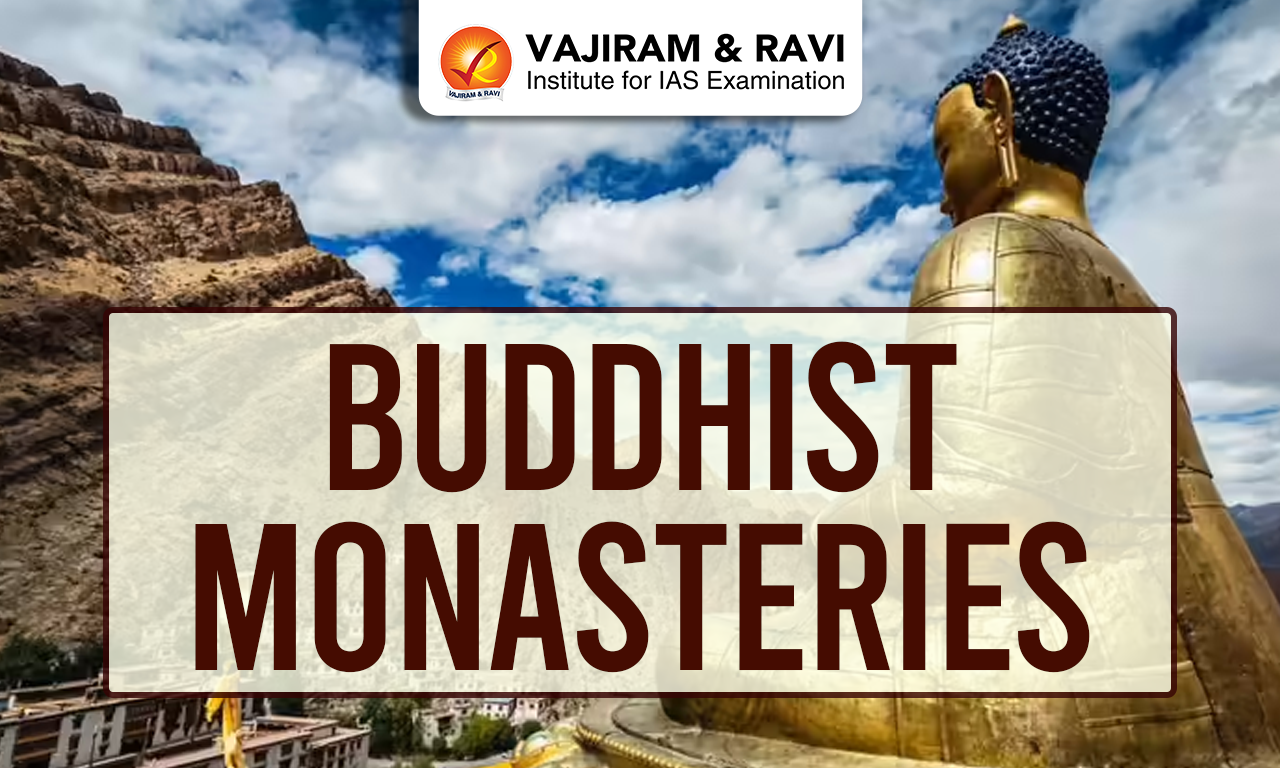
Buddhist Monasteries, Buddhist Temples in India & World List

Buddhist Monasteries

Buddhist Monasteries are sacred institutions where monks live under vows and follow disciplined spiritual practices within the Sangha system. These centres act as hubs of learning, meditation and cultural preservation. Across regions, Buddhist Temples reflect diverse architectural styles and traditions such as vihara, chaitya and stupa. 

In India, Buddhist Monasteries hold historical importance as they trace the spread of Buddhism from ancient times while continuing to serve as places of worship, education and community welfare.

Buddhist Monasteries in India

Buddhist Monasteries in India reflect historical evolution, regional diversity and spiritual traditions while serving as centers of learning, meditation and cultural heritage. The list of major Buddhist Temples has been given below:

Hemis Monastery

  • Location and affiliation: Hemis Monastery is a Drukpa lineage Tibetan Buddhist gompa located 45 km south of Leh on the Indus River's west bank in Ladakh, making it a key centre of Himalayan Buddhism.
  • Cultural importance: It hosts the famous annual festival dedicated to Guru Padmasambhava in June-July, attracting large gatherings of devotees and tourists celebrating masked dances and rituals.
  • Historical role: The monastery has long served as a spiritual hub promoting Buddhist teachings and preserving ancient traditions of the Drukpa sect in the region.
  • Architectural features: Hemis Monastery showcases traditional Tibetan design with prayer halls, murals and sacred artefacts representing centuries old Buddhist artistic heritage.

Tabo Monastery

  • Foundation details: Tabo Monastery in Spiti Valley was established in 996 CE by Rinchen Zangpo under the patronage of King Yeshe-O of the Guge kingdom.
  • Historical significance: It is among the oldest continuously functioning Buddhist monasteries in India, often called the “Ajanta of the Himalayas” for its ancient murals.
  • Cultural heritage: The monastery preserves rare wall paintings, manuscripts and sculptures reflecting early Tibetan Buddhist traditions and artistic excellence.
  • Religious importance: Tabo has remained a major centre for Buddhist learning and meditation practices for over a millennium in the Himalayan region.

Tsuglakhang Monastery

  • Location and identity: Tsuglakhang Monastery in Gangtok serves as a royal chapel and important Buddhist monastery associated with Sikkim’s spiritual traditions.
  • Institutional role: It functions as a central place of worship and ceremonial activities linked to the region’s Buddhist governance and cultural life.
  • Cultural importance: The monastery plays a key role in preserving rituals, festivals and monastic traditions followed in Sikkim.
  • Architectural style: Its structure reflects traditional Buddhist palace style architecture with prayer halls, sacred images and ritual spaces.

Namgyal Monastery

  • Establishment history: Founded by the Third Dalai Lama Gendun Gyatso around 1564-1565, Namgyal Monastery is located in McLeod Ganj, Dharamshala.
  • Institutional significance: It serves as the personal monastery of the 14th Dalai Lama and represents all four major Tibetan monastic traditions.
  • Religious importance: Renamed in 1571 after the deity Namgyälma, it focuses on rituals for longevity, protection and spiritual welfare.
  • Monastic community: The monastery houses nearly 200 monks dedicated to advanced Buddhist studies and ceremonial practices.

Thiksey Monastery

  • Location and sect: Thiksey Monastery belongs to the Gelug sect and is situated on a hill about 19 km east of Leh in Ladakh.
  • Architectural uniqueness: The twelve storey complex resembles the Potala Palace of Lhasa and is one of the most visually striking monasteries in India.
  • Cultural assets: It houses stupas, statues, thangkas, wall paintings and ancient artefacts showcasing Buddhist artistic richness.
  • Religious role: Thiksey functions as a major centre for monastic education and spiritual training in the Ladakh region.

Tawang Monastery

  • Geographic importance: Located in Arunachal Pradesh, Tawang Monastery is the largest monastery in India and second largest globally after Potala Palace.
  • Historical significance: It has been a major centre of Mahayana Buddhism and monastic learning in the Eastern Himalayas for centuries.
  • Cultural role: The monastery plays a vital role in preserving Buddhist traditions, festivals and rituals in the region.
  • Institutional structure: It houses a large monastic community and extensive libraries of ancient scriptures.

Bylakuppe Monastery (Namdraling Monastery)

  • Global importance: Located in Karnataka, it is the largest teaching centre of the Nyingma lineage of Tibetan Buddhism worldwide.
  • Community size: The monastery supports a sangha of over 5,000 lamas, making it one of the largest monastic settlements globally.
  • Educational facilities: It includes a school, religious college (shedra) and hospital, promoting holistic development.
  • Cultural preservation: The monastery actively preserves Tibetan traditions, language and religious practices in exile.

Shashur Monastery

  • Historical background: Built in the 17th century by Lama Deva Gyatsho, Shashur Monastery belongs to the Drugpa sect in Himachal Pradesh.
  • Political link: It was established under the influence of Bhutan’s ruler Nawang Namgyal, showing regional religious connections.
  • Cultural role: The monastery is known for its traditional festivals and mask dances reflecting Buddhist teachings.
  • Religious significance: It continues to serve as a centre for meditation and monastic learning.

Ghum Monastery

  • Establishment: Founded in 1875 by Lama Sherab Gyatso, Ghum Monastery is located in West Bengal.
  • Sect affiliation: It belongs to the Gelukpa or Yellow Hat sect of Tibetan Buddhism.
  • Unique feature: The monastery houses a 15 foot high statue of Maitreya Buddha, symbolizing the future Buddha.
  • Cultural importance: It is a key spiritual centre in eastern India attracting pilgrims and tourists alike.

Kye Gompa Monastery

  • Location and altitude: Situated at 4,166 metres in Spiti Valley, Kye Gompa is the largest monastery in the region.
  • Institutional role: It serves as a major training centre for lamas and Buddhist scholars.
  • Strategic position: Built on a hilltop near the Spiti River, it reflects defensive monastic architecture.
  • Cultural importance: The monastery preserves ancient scriptures, paintings and religious traditions.

Dhankar Monastery

  • Geographic location: Located at 3,894 metres in Lahaul and Spiti, Dhankar Monastery is among the highest monasteries globally.
  • Historical role: It served as the capital of Spiti in the 17th century and an administrative centre.
  • Religious importance: The monastery has been a major centre of Buddhist learning since the 7th century.
  • Architectural uniqueness: Built on a cliff, it reflects remarkable adaptation to harsh terrain.

Lingdum Monastery

  • Location: Lingdum Monastery is situated near Ranka in Sikkim, about an hour from Gangtok.
  • Sect affiliation: It follows the Zurmang Kagyu tradition of Tibetan Buddhism.
  • Cultural role: The monastery promotes Buddhist teachings and rituals in northeastern India.
  • Educational importance: It serves as a centre for training monks and preserving traditions.

Alchi Gompa Monastery

  • Historical origin: Built between 958 and 1055 AD by Rinchen Zangpo, Alchi Monastery is one of Ladakh’s oldest sites.
  • Administrative link: It is managed by Likir Monastery, maintaining its religious significance.
  • Artistic value: Known for ancient murals and sculptures, it represents early Indo-Tibetan art.
  • Cultural importance: It stands as a major heritage site reflecting Buddhist artistic excellence.

Phugtal Monastery

  • Remote location: Situated in Zanskar’s Lungnak Valley, Phugtal Monastery is accessible only by foot.
  • Unique structure: Built around a natural cave, it reflects early monastic traditions.
  • Historical belief: The cave is believed to have been visited by sages and scholars over 2,500 years ago.
  • Spiritual importance: It remains an isolated centre for meditation and spiritual practice.

Shankar Monastery

  • Location: Shankar Monastery is located near Leh in Ladakh.
  • Institutional link: It is a branch of Spituk Monastery and residence of Kushok Bakula.
  • Religious role: It serves as an important centre for Buddhist teachings in Ladakh.
  • Cultural importance: The monastery maintains continuity of monastic traditions.

Matho Monastery

  • Location and sect: Matho Monastery lies 26 km southeast of Leh on the Indus River and belongs to the Sakya order.
  • Foundation: It was established in the 16th century by Lama Tugpa Dorjay.
  • Cultural importance: Known for its annual festival featuring oracles and masked dances.
  • Religious role: It continues to function as a centre for spiritual learning.

Nako Monastery

  • Establishment: Founded in 996 AD by Rinchen Zangpo, Nako Monastery is located in Kinnaur district.
  • Historical importance: It is one of the oldest monasteries on ancient Himalayan trade routes.
  • Cultural heritage: The monastery preserves ancient Buddhist art and manuscripts.
  • Religious role: It remains a centre for monastic practices.

Rumtek Monastery

  • Identity: Rumtek Monastery, also called Dharmachakra Centre, is located near Gangtok in Sikkim.
  • Historical origin: Built under the direction of the 12th Karmapa in the mid 18th century.
  • Religious importance: It is a key centre of the Kagyu lineage of Tibetan Buddhism.
  • Institutional role: The monastery functions as a major centre of learning and spiritual practice.

Pemayangtse Monastery

  • Establishment: Founded in 1647 by Lama Lhatsun Chempo, it is located near Pelling in Sikkim.
  • Historical importance: It is one of the oldest monasteries in Sikkim.
  • Cultural role: Known for preserving pure monastic traditions of Tibetan Buddhism.
  • Religious significance: It serves as a premier monastery in the region.

Gonjang Monastery

  • Establishment: Gonjang Monastery was founded in 1981 by Tingkye Gonjang Rimpoche in Sikkim.
  • Cultural importance: It contributes to the spread of Buddhist teachings in the region.
  • Religious role: The monastery functions as a place for meditation and learning.
  • Institutional relevance: It reflects modern expansion of monastic institutions.

Karzok Buddhist Monastery

  • Location: Situated near Korzok village on Tso Moriri lake in Ladakh.
  • Historical origin: Founded around 300 years ago by Kunga Lodro Ningpo.
  • Geographic importance: Located near one of the highest lakes in the world.
  • Religious role: It serves the local nomadic community’s spiritual needs.

Bharatpur Buddhist Monastery Complex

  • Archaeological discovery: Excavations in Paschim Bardhaman revealed a large monastery complex with brick structures and pottery remains.
  • Historical context: The site links to earlier discoveries from 1972-75 including a large stupa.
  • Cultural significance: Findings indicate spread of Buddhism in southwestern Bengal during ancient times.
  • Unique importance: Presence of Black and Red Ware Pottery suggests coexistence of religious and settlement activities.

Buddhist Monasteries Across World

Buddhist Monasteries across the world show cultural diversity, architectural evolution and religious traditions shaped by regional history while preserving core teachings.

  • Borobudur, Central Java, Indonesia: Built in the 8th century under the Sailendra Dynasty, Borobudur is the world’s largest Buddhist temple, designed as a mandala with intricate reliefs reflecting Buddhist cosmology and spiritual journey.
  • Batujaya Stupas, Karawang, West Java, Indonesia: This ancient complex dates from the 2nd to 12th centuries, representing one of Indonesia’s earliest Buddhist archaeological sites with numerous stupas reflecting early spread of Buddhism.
  • Muaro Jambi Temple Complex, Jambi, Sumatra, Indonesia: A major Buddhist heritage site associated with the Srivijaya empire, it consists of extensive temple ruins showing the region’s importance in Buddhist learning and trade networks.
  • Sewu Temple, Central Java, Indonesia: An 8th century Buddhist temple complex near Prambanan, it reflects advanced temple architecture and was influenced by powerful Hindu-Buddhist kingdoms of ancient Java.
  • Kinkaku-ji Temple, Kyoto, Japan: A UNESCO World Heritage Site, this Buddhist temple is famous for its golden pavilion structure and reflects Japan’s integration of Buddhist philosophy with aesthetic architectural design.
  • Nara Buddhist Temples, Nara, Japan: Nara hosts some of Japan’s oldest and most significant Buddhist temples, developed when Buddhism became state religion in the 8th century, influencing Japanese culture and governance.
  • Kyoto Buddhist Temples, Kyoto, Japan: Kyoto contains a dense concentration of historic temples forming the cultural heartland of Japanese Buddhism with architectural features like main halls and associated Shinto shrines.
  • Wat Benchamabophit, Bangkok, Thailand: Known as the Marble Temple, it represents classic Thai wat architecture with distinct divisions between Phutthawat for Buddha and Sangkhawat for monastic community.
  • Thai Wat Temples, Thailand: Buddhist monasteries in Thailand follow a structured layout with designated sacred and monastic zones, reflecting organized religious life and architectural uniformity across the country.
  • Jetavanaramaya, Anuradhapura, Sri Lanka: Once among the tallest structures in the ancient world, this massive stupa highlights Sri Lanka’s advanced engineering and its strong Buddhist heritage.
  • Ruwanwelisaya Stupa, Anuradhapura, Sri Lanka: One of the largest stupas globally, it symbolizes the deep rooted Buddhist traditions of Sri Lanka and its historical role as a major religious centre.
  • Abhayagiri Vihara, Anuradhapura, Sri Lanka: A major monastic complex in ancient Sri Lanka, it served as a centre for Buddhist scholarship and attracted monks from across Asia.
  • Jaya Sri Maha Bodhi, Anuradhapura, Sri Lanka: Known as the oldest human planted tree still living, it is a sacred Bodhi tree grown from the original tree under which Buddha attained enlightenment.
  • Khosheutovsky Khurul, Russia: Built in 1818, it reflects a blend of Buddhist and Russian architectural traditions with cruciform design and features adapted to cold climate conditions.
  • Buryat Datsans, Russia: These Buddhist monasteries combine local and Russian influences, often built in square or pyramid forms with Chinese style roofs, reflecting cultural synthesis in architecture.
  • Kalmyk Khuruls, Russia: Constructed using wood and stone, these monasteries show adaptation of Buddhist architecture to regional conditions while maintaining spiritual functions and symbolic layouts.

Buddhist Monasteries FAQs

Q1: What are Buddhist Monasteries?

Ans: Buddhist Monasteries are places where monks live, study and practice teachings under the Sangha system.

Q2: Which is the largest Buddhist Monastery in India?

Ans: Tawang Monastery in Arunachal Pradesh is the largest monastery in India.

Q3: Which is the oldest Buddhist Monastery in India?

Ans: Tabo Monastery, established in 996 CE, is one of the oldest functioning monasteries.

Q4: Which monastery is located at the highest altitude?

Ans: Kye Gompa Monastery in Spiti Valley is located at about 4,166 metres above sea level.

Q5: Which Buddhist Monastery is known for the Guru Padmasambhava festival?

Ans: Hemis Monastery in Ladakh is famous for its annual festival held in June-July.
Operation Barga, Meaning, Objectives, Impact & Challenges

Operation Barga

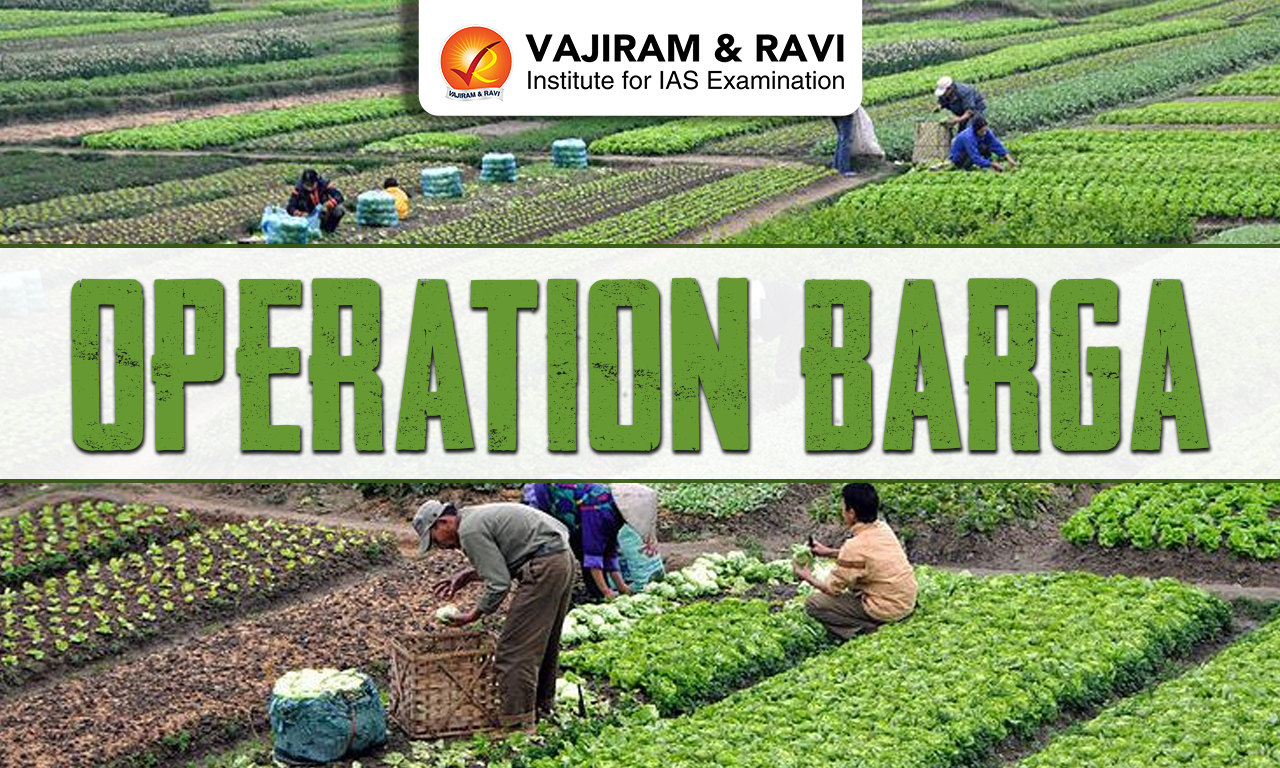
Operation Barga was a land reform initiative aimed at helping small farmers and sharecroppers who worked on land owned by others. Before this, many such farmers had little security and could be removed from the land easily, often receiving an unfair share of the produce. The program focused on giving these farmers recognition and protection, so they could work without fear and get a fairer share of what they produced. In a simple sense, it was an effort to make the agricultural system more just, improve farmers’ lives, and reduce exploitation in rural areas.

About Operation Barga

  • Operation Barga was a land reform program started in the 1970s in West Bengal under the leadership of Jyoti Basu and the Left Front government. It was introduced to improve the lives of small farmers and sharecroppers who worked hard on land but did not legally own it.
  • Before this initiative, many farmers had very little security. They could be removed from the land at any time and often had to give a large part of their harvest to landowners. Operation Barga aimed to change this situation by giving these farmers legal recognition and protection, so they could work with dignity and a sense of stability.

Operation Barga Main Goals

  • Security for Farmers: The program ensured that tenant farmers and sharecroppers were officially recorded, giving them protection from eviction and more control over the land they cultivated.
  • Fair Distribution of Land: It was part of a larger effort to reduce inequality by limiting the power of big landowners and making land distribution more balanced.
  • Better Farming and Productivity: When farmers felt secure, they were more motivated to improve the land, which helped increase agricultural production.
  • Reducing Exploitation: The system helped protect poor farmers from unfair practices, such as high rents and forced dependence on landlords.

Operation Barga Working

  • Survey and Identification: The government carried out surveys to find out who was actually farming the land. Many people had been cultivating land for years without any official recognition. These farmers were identified and brought into the system.
  • Recording the Farmers’ Rights: Once identified, their names were officially recorded in government records. This gave them legal recognition as sharecroppers, which meant they could no longer be easily removed from the land.
  • Security of Land Tenure: After being registered, farmers gained a sense of security. They were allowed to continue farming the same land without fear of eviction, and landlords could not replace them at will.
  • Fair Share and Control: The system also ensured that farmers received a fairer share of the produce. With more control over their work, they were able to make better decisions about farming and improve their livelihoods.
  • Long-term Stability: Over time, this process reduced the power imbalance between landlords and farmers. It helped create a more stable and fair rural system where farmers could plan for the future instead of living with constant uncertainty.

Operation Barga Significance

Operation Barga had a deep and lasting impact on rural life in West Bengal. It was not just about land it was about dignity, fairness, and giving farmers a better future.

  • Empowering Farmers and Reducing Exploitation: Before this reform, many farmers depended completely on landlords and lived with constant insecurity. Operation Barga gave them legal rights and recognition, which meant they could no longer be easily pushed out. This reduced unfair treatment and gave farmers more control over their work and lives.
  • Improving Agricultural Productivity: When farmers feel secure, they naturally take better care of the land. With rights over the land they cultivated, farmers became more willing to invest time and effort in improving farming methods. This led to better crop production and healthier agricultural growth.
  • Reducing Poverty and Inequality: The reform helped bridge the gap between rich landowners and poor farmers. By giving rights to sharecroppers and landless workers, it created opportunities for a more stable and dignified life, helping reduce rural poverty.
  • Strengthening the Rural Economy: With more secure livelihoods, farming families became more stable. This reduced the need for migration to cities in search of work. As a result, villages became economically stronger and more self-reliant.
  • A Model for Other Regions: Operation Barga showed that meaningful land reforms are possible. Its success inspired other regions to think about similar steps to protect farmers and make agriculture more equitable.
  • Social and Political Change: The reform also changed the social structure in rural areas. It weakened old systems where power was concentrated in the hands of a few landlords and moved towards a more equal and just society. At the same time, it built strong trust between the government and rural communities.

Operation Barga Challenges

Even though Operation Barga was an important reform, it was not easy to implement and faced several difficulties, especially in West Bengal.

  • Resistance from Landowners: Many big landowners were unhappy with the reforms because they feared losing control over their land and power. In some places, this led to conflicts and tensions, and farmers sometimes faced pressure or threats.
  • Problems with Land Records: Accurate land records were not always available. In many cases, ownership details were unclear or outdated. This made it difficult to correctly identify who was cultivating the land, leading to confusion and disputes.
  • Illegal Occupation and Disputes: There were situations where land was already occupied unofficially or claimed by multiple people. Sorting out these issues took time and created hurdles in giving clear rights to the actual farmers.
  • Gaps in Implementation: Although the policy was strong on paper, its execution was not always smooth. Some farmers were left out, and in certain areas, the process of registration and recognition was slow or incomplete.
  • Administrative and Awareness Issues: Many farmers were not fully aware of their rights or how to claim them. At the same time, local officials sometimes faced limitations in managing such a large reform program effectively.

Operation Barga Legacy and Long-Term Effects

Operation Barga left a lasting impact on rural life in West Bengal and continues to be remembered as an important step toward fairness in agriculture.

  • Reduced Problems Faced by Farmers: By giving farmers security over the land they cultivated, the reform helped reduce everyday struggles like fear of eviction and unstable income. This brought a sense of relief and stability to many farming families.
  • Boost to Rural Development: The changes created a strong base for future rural and agricultural development. With better security and income, villages saw improvements in living conditions, farming practices, and local economies.
  • Better Social and Economic Status: When farmers received legal rights over land, their position in society improved. They were no longer just laborers but recognized landholders, which gave them confidence, dignity, and financial security.
  • Long-Term Political Impact: The reform helped build strong trust between rural people and the government. Because farmers directly benefited from these changes, the ruling government was able to maintain support for many years.
  • A Step Toward Social Justice: Beyond economics, Operation Barga helped reduce inequality in rural areas. It slowly weakened old systems where power was concentrated in a few hands and moved society toward a more fair and balanced structure.
Also Check
Operation Sindoor Operation Sankat Mochan
Operation Ganga Operation Olivia
Operation Devi Shakti Operation Safe Homecoming
Operation Cactus Operation Keller
Operation Kaveri Operation Rising Lion
Operation Karuna Operation Airlift
Operation Megh Chakra Operation Maitri
Operation Rahat Operation Nader
Operation Dost Operation Baam
Operation Samudra Setu Operation Mahadev
Operation Iron Swords Operation Shiv Shakti
Operation Sagar Bandhu Operation Smiling Buddha

Operation Barga FAQs

Q1: What is Operation Barga?

Ans: Operation Barga was a land reform program started in the 1970s in West Bengal to protect the rights of sharecroppers and small farmers. It aimed to give them legal recognition, security, and a fair share of the produce.

Q2: Who started Operation Barga and when?

Ans: Operation Barga was launched in the late 1970s under the leadership of Jyoti Basu and the Left Front government to improve the condition of tenant farmers.

Q3: What were the main objectives of Operation Barga?

Ans: The main goals were to provide security to farmers, reduce inequality, ensure fair distribution of land, increase agricultural productivity, and prevent exploitation by landlords.

Q4: How did Operation Barga work?

Ans: The government identified sharecroppers through surveys, recorded their names officially, and gave them legal protection. This ensured they could not be easily evicted and received a fair share of the produce.

Q5: Why was Operation Barga important?

Ans: It improved farmers’ lives by giving them security, dignity, and better income opportunities, reduced rural poverty, and strengthened the agricultural system.

Origin and Evolution of Earth, Theories, Process, Timeline

Origin and Evolution of Earth

The Origin and Evolution of Earth explains how a hot, barren planet transformed into a life supporting world over billions of years. Earth formed about 4.6 billion years ago from cosmic material within the solar system. Scientific theories and geological evidence describe its gradual development through stages of planetary formation, atmospheric changes and biological evolution. 

Origin and Evolution of Earth Theories

Various theories explain the Origin and Evolution of Earth, from early philosophical ideas to modern scientific explanations based on observations, experiments and astronomical evidence.

  • Nebular Hypothesis: Proposed by Immanuel Kant and revised by Laplace in 1796, it states that planets formed from a rotating cloud of gas and dust linked with a young Sun, gradually condensing into planetary bodies.
  • Revised Nebular Theory: Otto Schmidt (1950) and Carl Weizascar suggested that the Sun was surrounded by hydrogen, helium and dust. Collisions and friction formed a disk shaped cloud, leading to planetary formation through accretion.
  • Planetesimal Theory: Chamberlin and Moulton (1905) proposed that a nearby star caused solar material to be pulled out, forming small bodies called planetesimals, which later combined to form planets.
  • Tidal Hypothesis: Sir James Jeans (1919) explained that gravitational interaction between the Sun and a passing star pulled out gaseous material, which later condensed to form planets.
  • Protoplanet Hypothesis: H. McCrea suggested that rotating gas clouds formed vortex like structures that condensed into protoplanets, eventually becoming planets and their satellites.
  • Binary Theories: These theories proposed that the Sun had a companion star composed of hydrogen and helium, whose material contributed to the formation of planets through dust accumulation.
  • Big Bang Theory: Proposed by Georges Lemaitre and supported by Edwin Hubble (1920), it explains the origin of the universe from a dense, hot singularity about 13.7 billion years ago, followed by continuous expansion and Formation of Stars, Galaxies and Planets.
  • Steady State Theory: Proposed by Hoyle, it suggested the universe remains constant over time, but it is now largely rejected due to strong evidence supporting the expanding universe model.

Also Check: Geological Time Scale

Origin of Earth

The Origin and Evolution of Earth begins with cosmic events that led to the formation of The Universe, solar system and finally the Earth through gradual accumulation processes.

  • Big Bang Event: Around 13.7 billion years ago, the universe began as a tiny, dense, hot point. Rapid expansion created matter and energy and within three minutes, the first atomic particles formed.
  • Formation of Atoms: About 300,000 years after the Big Bang, temperature dropped to around 4,500 Kelvin, allowing atoms to form and the universe became transparent, enabling radiation to travel freely.
  • Galaxy Formation: Uneven distribution of matter created gravitational differences, leading to clustering of matter and formation of galaxies containing billions of stars spread across thousands of light years.
  • Star Formation: Around 5-6 billion years ago, dense hydrogen gas clouds collapsed under gravity forming nebulae. These condensed into protostars where nuclear fusion began at approximately 15 million degrees Celsius.
  • Solar System Formation: A rotating nebula formed the Sun at the center, surrounded by a disk of gas and dust. This disk provided the material for planetary formation.
  • Formation of Planetesimals: Dust particles collided and stuck together forming small rounded bodies called planetesimals through cohesion and gravitational attraction.
  • Accretion into Planets: Planetesimals combined into larger bodies through continuous collisions, eventually forming planets including Earth through a process known as accretion.
  • Formation of Earth: About 4.6 billion years ago, Earth formed as a hot, molten mass composed mainly of hydrogen, helium and heavier elements gathered from the solar nebula.

Also Check: Cloud Formation

Evolution of Earth

The Origin and Evolution of Earth continued through cooling, differentiation, atmospheric changes and biological development that transformed Earth into a habitable planet.

  • Early Earth Condition: Initially, Earth was extremely hot, rocky and barren with a thin atmosphere composed mainly of hydrogen and helium, making it unsuitable for life.
  • Loss of Primordial Atmosphere: Solar winds stripped away the early hydrogen-helium atmosphere, similar to other terrestrial planets, leading to the need for a secondary atmosphere.
  • Planetary Differentiation: As Earth cooled, heavier elements like iron sank to the core, while lighter materials rose to the surface, forming distinct layers through a process called differentiation.
  • Formation of Lithosphere: Cooling of the outer surface led to solidification, forming the crust. The Earth developed layered structure including crust, mantle, outer core and inner core with increasing density inward.
  • Giant Impact and Heating: The formation of the Moon due to a massive collision further heated Earth, accelerating internal differentiation and structural development.
  • Degassing Process: Volcanic activity released gases like water vapour, carbon dioxide, nitrogen, methane and ammonia from Earth’s interior, contributing to the formation of a secondary atmosphere.
  • Evolution of Early Atmosphere: The early atmosphere contained very little free oxygen and was dominated by Water Vapour, carbon dioxide and nitrogen.
  • Formation of Hydrosphere: As Earth cooled, water vapour condensed into rain. Continuous rainfall filled surface depressions, forming oceans within 500 million years of Earth’s formation.
  • Age of Oceans: Oceans are estimated to be about 4 billion years old, indicating early establishment of water bodies crucial for life development.
  • Carbon Dioxide Reduction: Carbon dioxide dissolved in rainwater, reducing atmospheric CO₂ levels and contributing to further cooling of the planet.
  • Beginning of Life: Around 3.8 billion years ago, simple life forms began to evolve in oceans through chemical reactions that produced complex organic molecules.
  • Fossil Evidence: Geological records contain fossils of microscopic organisms, including blue-green algae like structures dating back over 3 billion years, confirming early life existence.
  • Photosynthesis Evolution: Between 2.5 to 3 billion years ago, Photosynthesis began, allowing organisms to convert sunlight into energy and release oxygen.
  • Oxygenation of Oceans: Oxygen produced by photosynthetic organisms first accumulated in oceans, gradually saturating them over time.
  • Oxygen in the Atmosphere: Around 2 billion years ago, oxygen began to accumulate in the atmosphere, transforming it into an oxygen rich environment suitable for complex life.
  • Development of Water Cycle: Interaction between land and water, including freshwater systems, may have started as early as 4 billion years ago, supporting early life conditions.
  • Formation of Landmasses: Cooling and solidification led to the emergence of continental crust and dry land, providing diverse environments for life evolution.
  • Biological Evolution: Life gradually evolved from simple unicellular organisms to more complex forms, aided by oxygen availability and stable environmental conditions.
  • Atmospheric Stabilization: Nitrogen and oxygen became dominant gases, forming the present atmospheric composition essential for sustaining life.
  • Modern Earth System: Continuous geological and biological processes shaped Earth into a dynamic system with lithosphere, hydrosphere, atmosphere and biosphere interacting in balance.

Also Check: Mountain Building Theories

Origin and Evolution of Earth FAQs

Q1: What is the age of Earth?

Ans: Earth is about 4.6 billion years old, formed from dust and gas in the solar nebula through accretion.

Q2: What is the Nebular Hypothesis?

Ans: It explains that planets formed from a rotating cloud of gas and dust surrounding a young Sun.

Q3: How were oceans formed on Earth?

Ans: Oceans formed when water vapour condensed into rain and filled surface depressions about 4 billion years ago.

Q4: When did Origin and Evolution of Life on Earth take place?

Ans: Life began around 3.8 billion years ago in oceans through chemical processes forming simple organisms.

Q5: What led to oxygen in the atmosphere?

Ans: Photosynthesis by early organisms released oxygen, which accumulated in the atmosphere around 2 billion years ago.

Planetary Winds, Structure, Mechanism, and Climatic Significance

Planetary Winds

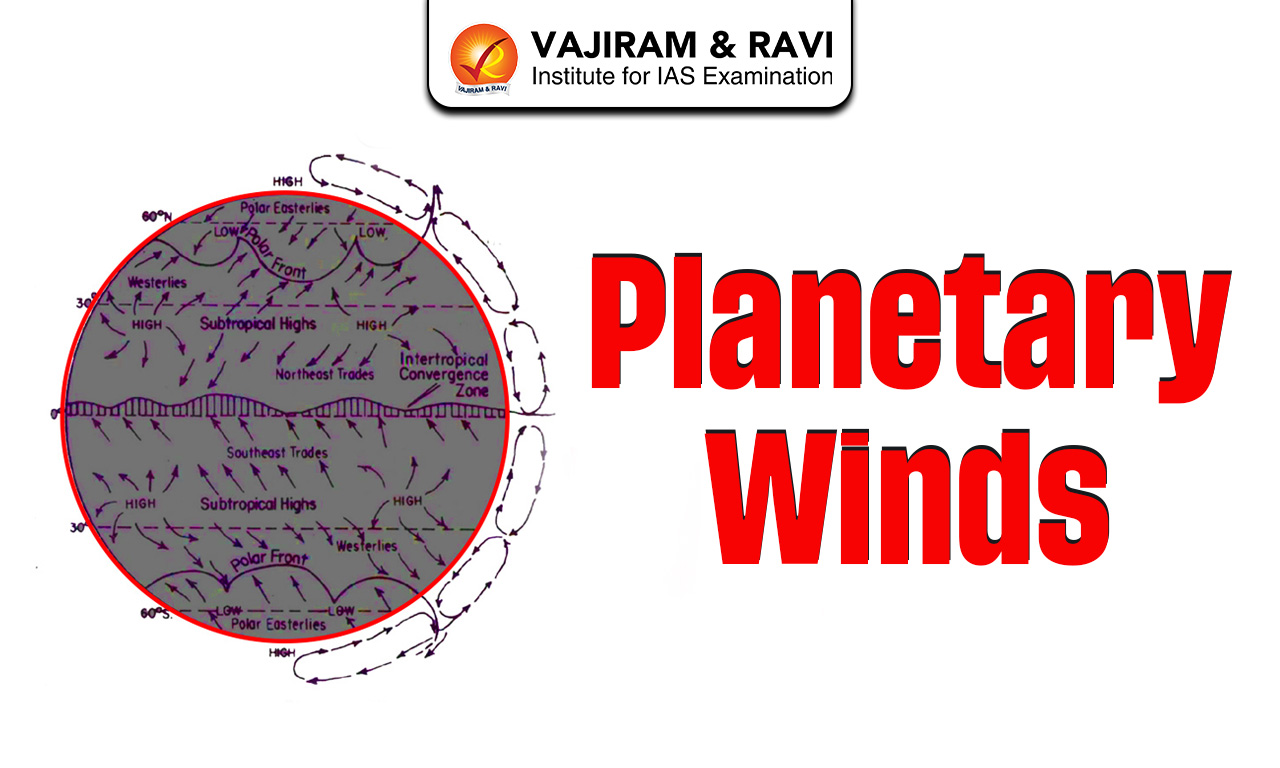
Planetary winds, also called permanent winds, are large-scale air currents that blow over the Earth in fairly fixed directions throughout the year. These winds are important because they help control climate, influence ocean currents, determine rainfall patterns, and affect agriculture across the world.

What are Planetary Winds?

Planetary winds are large-scale wind patterns that blow across the Earth's surface, from one permanent pressure belt to another in a consistent direction throughout the year. They are also called primary winds or permanent winds because they remain the same throughout the year and are distributed all across the globe. 

Pressure Belts and Their Role in Planetary Winds Movement 

The origin and direction of planetary winds can only be fully understood in the context of the global distribution of pressure belts. 

  • These pressure belts are formed due to differential heating of the Earth’s surface and the dynamic movement of air masses. 
  • The Earth is characterized by seven major pressure belts, which include one equatorial low-pressure belt, two subtropical high-pressure belts, two subpolar low-pressure belts, and two polar high-pressure belts.
  • The equatorial region experiences intense heating, causing air to expand, become lighter, and rise, thereby creating a low-pressure zone. 
  • The polar regions remain cold, resulting in dense, descending air that forms high-pressure areas.
  • Between these extremes, subtropical and subpolar belts are formed due to complex atmospheric circulation processes.

Air continuously moves from high-pressure regions to low-pressure regions, and it is this pressure gradient that drives planetary winds. However, due to the influence of the Coriolis effect, these winds follow curved paths, giving rise to distinct wind belts across latitudes.

Forces Affecting Planetary Wind

Planetary winds are controlled by four main forces that act together to decide their speed and direction.

  • Pressure Gradient Force: This is the main driving force of wind. Air moves from areas of high pressure to areas of low pressure. The greater the pressure difference, the stronger the wind. It gives the initial direction of wind flow.
  • Coriolis Force: This force is caused by the rotation of the Earth. It deflects winds to the right in the Northern Hemisphere and to the left in the Southern Hemisphere, as explained by Ferrel’s Law. It increases with latitude and is zero at the equator. It changes only the direction of wind, not its speed.
  • Frictional Force: This force acts near the Earth’s surface. It slows down the wind and reduces the effect of the Coriolis force, causing winds to move more directly towards low-pressure areas. It is absent in the upper atmosphere.
  • Gravitational Force: Gravity keeps the atmosphere attached to the Earth. It helps maintain pressure differences and the vertical structure of the atmosphere, which are necessary for wind movement.

In the upper atmosphere, where friction is negligible, the pressure gradient force and Coriolis force balance each other. As a result, winds flow parallel to isobars. This is called geostrophic wind, and jet streams are a good example of this behaviour.

Types of Planetary Winds

The major types of planetary winds are: Trade Winds (Tropical Easterlies), Westerlies and Polar Easterlies.

Trade Winds

  • Trade winds blow from the subtropical high-pressure belts towards the equatorial low-pressure belt, covering the region between zero degrees and thirty degrees latitude.
  • In the Northern Hemisphere, they blow from the northeast towards the southwest, while in the Southern Hemisphere, they blow from the southeast towards the northwest.
  • Trade winds are characterized by their remarkable consistency in both speed and direction.
  • As they travel over oceans, they pick up moisture and become moisture-laden. When they meet near the equator in the Intertropical Convergence Zone, the air rises and produces heavy rainfall.
  • Trade winds are important because they bring rainfall to equatorial regions and help form tropical forests. 
  • They are also linked to the monsoon system and help drive ocean currents near the equator.

Westerlies

  • Westerlies blow from the subtropical high-pressure belts towards the subpolar low-pressure belts, covering the region between thirty degrees and sixty degrees latitude.
  • In the Northern Hemisphere, they blow from the southwest towards the northeast, while in the Southern Hemisphere, they blow from the northwest towards the southeast.
  • These winds are less steady than trade winds and often change in speed and direction. They are stronger in the Southern Hemisphere because there is more ocean and less land to block their movement.
  • Westerlies are important because they control the weather of temperate regions. They carry cyclones and bring rainfall to the western parts of continents. In the Southern Hemisphere, very strong westerlies are found in regions called the Roaring Forties, Furious Fifties, and Screaming Sixties.

Polar Easterlies

  • Polar easterlies blow from the polar high-pressure belts towards the subpolar low-pressure belts, covering the region between sixty degrees and ninety degrees latitude.
  • These winds move from east to west and are cold and dry because they originate in polar regions. They are weaker and less regular compared to trade winds and westerlies.
  • When polar easterlies meet the warmer westerlies, they form a boundary called the polar front. This region is important because it leads to the formation of cyclones.

Seasonal Shift of Wind Belts

Planetary wind belts do not remain fixed throughout the year. They shift slightly due to the apparent movement of the Sun between the northern and southern hemispheres.

  • During summer, the Sun moves towards the Northern Hemisphere, and the wind belts shift northward.
  • During winter, they move southward. This shift is usually around five to ten degrees in latitude.

This seasonal movement is very important for India because it controls the onset and withdrawal of the monsoon. When the Intertropical Convergence Zone moves northward, it helps bring monsoon rains. When it moves southward, the monsoon withdraws.

Influence of Planetary Wind on Indian Climate

Planetary winds play a very important role in shaping the climate of India. The most important example is the monsoon. 

  • During the summer months, the southeast trade winds cross the equator and are deflected due to the Coriolis effect, eventually becoming the southwest monsoon winds that bring widespread rainfall to the Indian subcontinent.
  • Westerlies also affect India during winter. They bring western disturbances, which cause rainfall and snowfall in northwestern India. This precipitation is vital for the cultivation of rabi crops such as wheat.
  • Additionally, high-altitude jet streams associated with westerlies influence the onset and withdrawal of the monsoon. 

Any shift or weakening of these wind systems can have significant implications for agricultural productivity, water resources, and overall economic stability in India.

Influence of Planetary Winds on Ocean Currents

Planetary winds exert a significant influence on the movement of ocean waters, thereby generating surface ocean currents. 

  • Trade winds drive equatorial currents that flow from east to west, while westerlies influence mid-latitude currents that move in the opposite direction.
  • These wind-driven currents play a vital role in redistributing heat across the oceans, which in turn affects global climate patterns. 
  • In certain regions, winds cause upwelling, a process in which cold, nutrient-rich water rises from the deep ocean to the surface. This enhances marine productivity and supports rich fishing grounds.
  • Variations in planetary winds are also linked with large-scale ocean-atmosphere phenomena such as El Nino and La Nina, which have far-reaching impacts on weather patterns, including the Indian monsoon.

Climate Zones Shaped by Planetary Winds

Planetary winds help create different climate zones across the world. 

  • Near the equator, the meeting of trade winds causes heavy rainfall and leads to equatorial climate.
  • In regions around thirty degrees latitude, descending air creates dry conditions, leading to the formation of deserts.
  • Similarly, the seasonal influence of westerlies gives rise to Mediterranean climates, which experience dry summers and wet winters.

Thus, the global pattern of climate zones is closely aligned with the distribution and movement of planetary winds.

Significance of Planetary Winds

Planetary winds play a fundamental role in shaping the Earth’s climate system and influencing both natural processes and human activities.

  • Climate regulation: They help maintain the Earth’s heat balance by transferring warm air from equatorial regions towards higher latitudes and bringing cold air towards lower latitudes. This prevents extreme temperature differences across the planet.
  • Rainfall distribution: Planetary winds control global rainfall patterns. For example, convergence of trade winds near the equator leads to heavy rainfall, while descending air in subtropical regions creates dry conditions and deserts.
  • Ocean currents: They drive major surface ocean currents, which in turn influence coastal climates, marine ecosystems, and global heat distribution.
  • Weather systems: Westerlies, in particular, carry cyclones and fronts in temperate regions, shaping day-to-day weather changes.
  • Indian monsoon system: Trade winds are closely linked to the origin of the monsoon, while westerlies bring western disturbances in winter, affecting rainfall and agriculture in India.
  • Agriculture and human life: By influencing rainfall and temperature patterns, planetary winds directly affect crop production, water availability, and settlement patterns.
  • Navigation and trade: Historically, steady winds like the trade winds enabled sea navigation and global trade routes.
  • Climate zones formation: They help determine major climatic regions such as equatorial rainforests, tropical deserts, and Mediterranean climates.

Planetary Winds FAQs

Q1: What are planetary winds?

Ans: Planetary winds are large-scale, permanent air currents that blow in relatively fixed directions between major pressure belts due to differential heating and Earth’s rotation.

Q2: Why are planetary winds termed permanent winds?

Ans: They are termed permanent winds because their direction and broad pattern of flow remain consistent throughout the year, unlike seasonal or local winds.

Q3: What are the major types of planetary winds?

Ans: The three main types of planetary winds are trade winds, westerlies, and polar easterlies, each associated with specific latitudinal pressure belts and circulation cells.

Q4: What are the main factors controlling planetary winds?

Ans: Planetary winds are controlled by the pressure gradient force, Coriolis force, frictional force, and gravitational force, which together determine their speed, direction, and overall behaviour.

Q5: How do trade winds influence the Indian monsoon?

Ans: Trade winds, particularly the southeast trade winds, cross the equator and undergo deflection to become the southwest monsoon winds, which bring rainfall to India.

Cryosphere, Meaning, Components, Impacts, Significance

Cryosphere

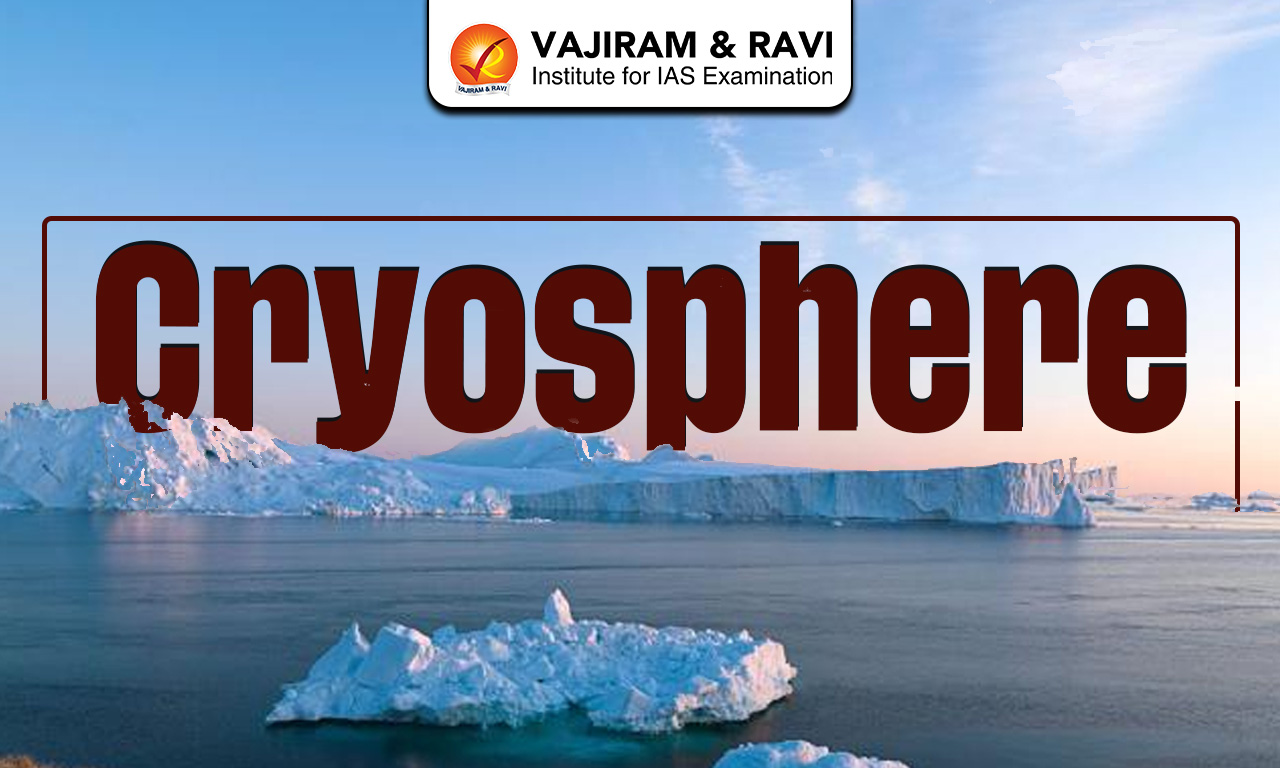
The cryosphere refers to all parts of the Earth where water exists in frozen form. This includes glaciers, ice sheets, snow cover, sea ice, and permafrost. 

Cryosphere Meaning 

The cryosphere is the frozen water component of the Earth system. It includes both permanent features such as ice sheets and glaciers, and seasonal features such as snow cover and sea ice. Although largely confined to polar and high mountain regions, its influence extends far beyond these areas. It regulates global climate, controls sea levels, and sustains freshwater systems.

Components of the Cryosphere

The cryosphere is composed of various forms of frozen water, each differing in location, scale, and role within the Earth’s climate system.

  • Ice Sheets: Ice sheets are massive bodies of ice covering large land areas, mainly found in Antarctica and Greenland. They store a major portion of the world’s freshwater and play a significant role in sea-level changes.
  • Glaciers: Glaciers are smaller ice masses formed by the accumulation of snow over long periods. In India, Himalayan glaciers are especially important as they feed major rivers such as the Ganga, Brahmaputra, and Indus.
  • Sea Ice: Sea ice forms when ocean water freezes in polar regions. It floats on the ocean surface and plays a crucial role in regulating temperature and influencing ocean circulation.
  • Snow Cover: Snow cover is usually seasonal and reflects a large portion of solar radiation, helping to maintain lower surface temperatures.
  • Permafrost: Permafrost refers to ground that remains frozen for at least two consecutive years. It contains organic matter which, when thawed, can release greenhouse gases and contribute to global warming.

Impact of the Cryosphere on Global Climate

The cryosphere has a significant influence on the global climate system by interacting with the atmosphere, oceans, and land, thereby affecting temperature, sea levels, and weather patterns.

  • Regulation of Earth’s Temperature: The cryosphere helps in keeping the Earth cool. Ice and snow reflect a large part of the Sun’s heat back into space. This is known as the albedo effect. When ice melts, dark land or ocean surfaces are exposed, which absorb more heat. This increases temperature and leads to further melting.
  • Sea-Level Rise: Glaciers and ice sheets are found on land. When they melt, the water flows into the oceans, causing sea levels to rise. This can lead to flooding of coastal areas and loss of land.
  • Influence on Ocean Circulation: Melting ice adds fresh water to the oceans. This reduces the salinity of seawater and affects its density. As a result, ocean currents that distribute heat across the world may slow down or change, affecting the global climate.
  • Role in Climate Feedback Mechanism: When ice melts, it reduces reflectivity and increases heat absorption. In addition, thawing permafrost releases gases like methane and carbon dioxide, which further increase global warming.
  • Impact on Atmospheric Circulation: Rapid warming in polar regions reduces the temperature difference between the equator and the poles. This weakens wind systems such as jet streams, leading to extreme weather conditions like heatwaves, cold spells, and irregular rainfall.
  • Effect on Water Availability: Glaciers store fresh water and release it slowly over time. This helps maintain river flow. When glaciers shrink, water supply may increase in the short term but decrease in the long term, affecting agriculture and human use.
  • Impact on Climate and Ecosystems: Changes in the cryosphere affect polar and mountain ecosystems. Loss of ice alters habitats and can disturb the balance of the climate system.

Cryosphere Loss: Causes and Trends

Cryosphere loss refers to the reduction in the extent, thickness, and stability of frozen components such as glaciers, ice sheets, sea ice, and permafrost. It is one of the most visible indicators of climate change.

Recent Trends

  • Glaciers are retreating across almost all mountain regions, including the Himalayas.
  • Arctic sea ice is declining in both area and thickness, especially during summer.
  • Permafrost is thawing in high-latitude regions.
  • The rate of ice loss has increased significantly in recent decades, as observed through satellite data.
  • Overall, the cryosphere is shrinking rapidly, reflecting rising global temperatures.

Causes of Cryosphere Loss

  • Increase in global temperature due to greenhouse gas emissions is the primary cause.
  • Black carbon deposition on ice reduces reflectivity and speeds up melting, especially in the Himalayas.
  • Warming of oceans contributes to melting of sea ice and ice sheets from below.
  • Local factors such as land-use change and pollution further accelerate melting in some regions.

Consequences of Cryosphere Loss

The loss of the cryosphere has wide-ranging impacts on both natural systems and human life.

  • Rising sea levels increase the risk of coastal flooding, salinization of groundwater, and displacement of populations.
  • Reduction in glacier volume threatens long-term water availability in river basins dependent on glacial melt.
  • Climate feedback processes intensify warming, making climate change more difficult to control.
  • Disturbance in ocean circulation can alter rainfall patterns, including monsoon systems.
  • Increased occurrence of disasters such as glacial lake outburst floods and landslides in mountain regions.
  • Loss of biodiversity in fragile polar and alpine ecosystems due to habitat changes.

Cryosphere and India

Although India is a tropical country, the cryosphere plays a crucial role due to the Himalayan region, often referred to as the “Third Pole.”

  • Cryosphere Extent in India: India’s cryosphere is mainly found in the Himalayan and trans-Himalayan regions, including Ladakh, Himachal Pradesh, Uttarakhand, Sikkim, and Arunachal Pradesh. It includes glaciers, snow cover, permafrost, and glacial lakes.
  • Cryosphere Importance for India: Himalayan glaciers feed major river systems such as the Ganga, Brahmaputra, and Indus, making them essential for water supply, irrigation, and hydropower generation. They also influence regional climate patterns and play a role in the behaviour of the Indian monsoon.

Cryosphere-Induced Hazards in the Himalayan Region

Cryosphere changes are no longer limited to environmental concerns; they are increasingly manifesting as disasters in the Himalayan region, directly affecting lives, infrastructure, and livelihoods. The rapid melting of glaciers and associated geomorphic instability has made mountain regions more vulnerable to sudden and high-intensity hazards.

  • Glacial Lake Outburst Floods (GLOFs): The accelerated melting of glaciers has led to the formation and expansion of glacial lakes. These lakes are often unstable and can burst suddenly due to triggers such as ice avalanches or moraine failure. Incidents like the Chamoli disaster (2021) and the South Lhonak Lake flood in Sikkim (2023) highlight the increasing frequency and intensity of such events.
  • Landslides and Flash Floods: Melting ice weakens mountain slopes and alters natural drainage systems. Combined with intense rainfall events, this leads to more frequent landslides and flash floods in Himalayan regions.
  • Cryoseisms (Ice Quakes): In cold regions, repeated freezing and thawing of water in the ground creates stress within rocks and soil. Sudden release of this stress can cause minor seismic shocks, known as cryoseisms, indicating growing instability in permafrost areas.

This emerging disaster dimension highlights the need to view the cryosphere not only as a climate regulator but also as a critical factor in disaster risk management, particularly in fragile mountain ecosystems like the Himalayas.

Indian Initiatives for Cryosphere Study and Protection

India has taken several scientific and policy initiatives to understand and manage cryosphere-related changes.

  • Establishment of Himansh, a high-altitude research station in Himachal Pradesh for glacier studies.
  • Role of the National Centre for Polar and Ocean Research, which coordinates research in polar regions and the Himalayas.
  • Maintenance of Antarctic research stations such as Bharati and Maitri for long-term scientific observation.
  • Deployment of IndARC, an underwater observatory in the Arctic region, to study ocean and climate interactions.
  • Implementation of the National Mission for Sustaining the Himalayan Ecosystem under the National Action Plan on Climate Change, focusing on conservation and sustainable development.

Cryosphere FAQs

Q1: What is the cryosphere?

Ans: The cryosphere refers to all parts of the Earth where water exists in frozen form, including glaciers, ice sheets, sea ice, snow cover, and permafrost.

Q2: Why is the cryosphere important for global climate?

Ans: The cryosphere helps regulate temperature through reflection of solar radiation, influences ocean circulation, and controls sea levels.

Q3: What is the albedo effect?

Ans: The albedo effect is the reflection of solar radiation by ice and snow, which helps in cooling the Earth’s surface.

Q4: What are Glacial Lake Outburst Floods?

Ans: Glacial Lake Outburst Floods are sudden floods caused by the bursting of glacial lakes due to melting or structural failure.

Q5: What are the major consequences of cryosphere loss?

Ans: Cryosphere loss leads to rising sea levels, reduced freshwater availability, increased disasters, and disturbance in climate systems.

Deccan Trap, Distribution, Formation, Characteristics, Black Soil

Deccan Trap

The Deccan Traps form one of the most extensive volcanic landscapes in the world, dominating the west-central Indian Peninsula. These are classic examples of flood basalt formations, where highly fluid lava spread over vast areas, creating a layered, step-like terrain. 

What are Deccan Traps?

The Deccan Traps are a massive accumulation of basaltic lava flows formed during intense volcanic activity in the Late Cretaceous period (~66 million years ago). These lava flows now cover about 500,000 sq. km of India.

The term “Trap” comes from the Swedish word Trappa, meaning stairs, referring to the terraced topography formed due to successive lava layers.

How are Deccan Traps Formed?

The Deccan Traps were formed due to massive fissure volcanic eruptions during the Late Cretaceous period (~66 million years ago), when large volumes of highly fluid basaltic lava flowed out onto the Earth’s surface and spread over vast areas of peninsular India.

  • The formation began when the Indian Plate passed over the Reunion hotspot, causing intense volcanic activity.
  • Instead of erupting from a single volcanic cone, lava emerged through long linear cracks (fissures) in the Earth’s crust.
  • These eruptions were non-explosive (quiet eruptions), allowing lava to flow smoothly over long distances.
  • The lava was highly fluid (low viscosity), which enabled it to spread across hundreds of kilometers, forming a vast lava plateau.
  • Multiple eruptions occurred over time, creating layer upon layer of basalt flows, leading to great thickness (up to 3000+ meters).
  • The eruptions took place in a sub-aerial environment, meaning lava spread over land rather than underwater.
  • Vertical intrusions called dykes acted as feeder channels through which magma reached the surface.
  • The volcanic activity was not continuous, there were intervals of inactivity during which:
    • Rivers and lakes developed
    • Sediments were deposited
    • Plant and animal life existed
  • These breaks resulted in the formation of inter-trappean beds, which contain fossil evidence.
  • Over millions of years, cooling, weathering, and erosion shaped the lava flows into a step-like (trap) topography seen today.

Deccan Trap Distribution

The Deccan Trap spread reflects the vast outpouring of basaltic lava that once covered a much larger area, later reduced due to erosion.

  • The largest coverage of Deccan Traps is found in Maharashtra, forming the core of the Deccan Plateau.
  • Significant extensions occur in Madhya Pradesh, Gujarat (Kutch and Kathiawar), Karnataka, Telangana, and Andhra Pradesh.
  • In Gujarat, the traps are well-developed in the Saurashtra peninsula and Kutch region.
  • The lava flows extend eastward into the Godavari and Krishna river valleys.
  • Thickness varies from over 3,000 m in the Western Ghats to thinner layers toward the eastern margins.
  • The Deccan Traps originally covered a much larger area, possibly extending into parts of central India and beyond, but have been reduced due to erosion and denudation.
  • Isolated remnants of basalt flows are also found in Jharkhand, Bihar, and northern Andhra, indicating their former wider spread.
  • The traps form a step-like topography, especially visible in the Western Ghats region.
  • After the Archaean rock system, the Deccan Traps are the second most widespread geological formation in India.

Deccan Trap Characteristics

The Deccan Traps exhibit distinctive geological, structural, and soil-related features that reflect their origin from extensive flood basalt eruptions.

  • The Deccan Traps consist of thick, horizontal layers of basaltic lava flows, giving rise to a step-like or terraced topography (trap structure).
  • The lava flows are remarkably uniform in composition, indicating repeated eruptions of similar magma over a long period.
  • The average dip of layers is low (about 5°–10°), showing that lava spread widely over flat surfaces.
  • Individual lava flows vary in thickness from 3 to 30 meters, while the total thickness may exceed 3,000 meters in some regions.
  • These flows extend over very large areas (sometimes up to 100 km or more), highlighting the fluid nature of basaltic lava.
  • The rocks are primarily basalt (igneous), often showing vesicular texture (gas bubbles) and amygdaloidal structure (mineral-filled cavities).
  • The presence of numerous dykes and sills indicates the pathways through which magma rose to the surface.
  • Inter-trappean beds (sedimentary layers) occur between lava flows, formed during pauses in volcanic activity; these contain fossils of plants and freshwater organisms.
  • The Deccan Trap region has given rise to black cotton soil (regur) due to weathering of basalt rocks.
  • The soils are clay-rich, moisture-retentive, and fertile, but low in humus and nitrogen.
  • The terrain often shows flat-topped hills, plateaus, and steep escarpments, especially along the Western Ghats.

Black Cotton Soil (Regur Soil)

Black Cotton Soil, also known as Regur Soil, is a distinctive soil type formed by the weathering of basaltic rocks of the Deccan Traps. It is widely recognized for its dark color, high clay content, and excellent moisture retention, making it especially suitable for cotton cultivation.

  • Black soil derives its origin from the basalt lava flows of the Deccan Trap region, making it a residual soil formed in situ.
  • It is most commonly found in semi-arid and sub-humid regions, where climatic conditions favor its development.
  • The soil appears deep black to grey in color due to the presence of iron, magnesium, and certain mineral salts.
  • It has a fine-grained, clayey texture, dominated by montmorillonite clay minerals, which are responsible for its swelling and shrinking nature.

Key Characteristics:

  • High moisture retention capacity, allowing crops to survive even during dry periods.
  • Becomes sticky and plastic when wet, making ploughing difficult.
  • Develops wide cracks during dry seasons, aiding aeration, this is known as the self-ploughing property.
  • Poor in humus content, but rich in certain minerals.
  • Slow permeability, which helps retain water but can lead to waterlogging if poorly managed.

Chemical Composition: 

  • Rich in Calcium Carbonate (Lime): Enhances soil structure and supports plant growth.
  • High Magnesium Content: Important for chlorophyll formation and crop productivity.
  • Contains Potash (Potassium): Essential for plant metabolism and disease resistance.
  • Deficient in Nitrogen and Phosphorus: Limits fertility unless supplemented with fertilizers.

Agricultural Importance

  • Black cotton soil (regur) is highly fertile and ideal for farming
  • Excellent moisture retention supports crops even in low rainfall
  • Suitable for major crops like cotton, sugarcane, and millets
  • Supports rain-fed agriculture, reducing dependence on irrigation

Environmental Issues in Deccan Trap Region

The Deccan Trap region faces multiple environmental challenges due to its basaltic geology, clay-rich black soils, and semi-arid climate, which affect land, water, and agriculture.

  • Soil erosion and land degradation: Removal of vegetation and improper farming on slopes leads to loss of fertile topsoil and reduced productivity.
  • Water scarcity and groundwater limitations: Hard basalt rocks have low permeability, restricting groundwater recharge and causing frequent drought-like conditions.
  • Waterlogging in black soil areas: The clayey nature of regur soil leads to poor drainage, resulting in temporary waterlogging during heavy rainfall.
  • Soil salinity and alkalinity: Improper irrigation practices and poor drainage contribute to salt accumulation, reducing soil fertility.
  • Cracking and structural damage in soil: Deep cracks in dry seasons can damage plant roots and infrastructure like roads and buildings.
  • Deforestation and biodiversity loss: Expansion of agriculture and urbanization leads to loss of natural vegetation and wildlife habitats.
  • Overgrazing pressure: Excessive grazing depletes vegetation cover, accelerating soil erosion and desertification tendencies.
  • Climate variability impacts: Erratic rainfall and prolonged dry spells affect crop yields and water availability.
  • Mining and quarrying impacts: Extraction of basalt for construction causes landscape degradation and dust pollution.

Deccan Trap FAQs

Q1: What are the Deccan Traps?

Ans: The Deccan Traps are vast basaltic lava plateaus formed by massive flood basalt eruptions during the Late Cretaceous period, covering a large part of peninsular India.

Q2: Why are they called “Traps”?

Ans: The name “Trap” comes from the Swedish word Trappa, meaning stairs, referring to the step-like (terraced) landscape formed by successive lava flows.

Q3: When were the Deccan Traps formed?

Ans: They were formed around 66 million years ago, near the end of the Cretaceous period, and volcanic activity continued into the early Eocene.

Q4: How were the Deccan Traps formed?

Ans: They were formed due to fissure-type volcanic eruptions, where lava erupted through cracks in the Earth’s crust rather than from a central volcano.

Q5: What type of rock is found in the Deccan Traps?

Ans: The dominant rock type is basalt, an igneous rock formed from rapidly cooling lava.

UPSC Daily Quiz 2 May 2026

UPSC Daily Quiz

[WpProQuiz 152]

UPSC Daily Quiz FAQs

Q1: What is the Daily UPSC Quiz?

Ans: The Daily UPSC Quiz is a set of practice questions based on current affairs, static subjects, and PYQs that help aspirants enhance retention and test conceptual clarity regularly.

Q2: How is the Daily Quiz useful for UPSC preparation?

Ans: Daily quizzes support learning, help in revision, improve time management, and boost accuracy for both UPSC Prelims and Mains through consistent practice.

Q3: Are the quiz questions based on the UPSC syllabus?

Ans: Yes, all questions are aligned with the UPSC Syllabus 2025, covering key areas like Polity, Economy, Environment, History, Geography, and Current Affairs.

Q4: Are solutions and explanations provided with the quiz?

Ans: Yes, each quiz includes detailed explanations and source references to enhance conceptual understanding and enable self-assessment.

Q5: Is the Daily UPSC Quiz suitable for both Prelims and Mains?

Ans: Primarily focused on Prelims (MCQ format), but it also indirectly helps in Mains by strengthening subject knowledge and factual clarity.

Revenue Deficit States, Meaning, Causes, Current Status, Impact

Revenue Deficit States

In its Monthly Economic Review (MER) for April 2026, the Department of Economic Affairs in the Ministry of Finance highlighted that nine of the 18 large States are in revenue deficit as per their own projections for 2026-27. Seven States are projected to be revenue surplus, while one is in revenue balance. 

About Revenue Deficit

Revenue Deficit is the difference between the government's revenue expenditure and revenue receipts. It occurs when expenditure on recurring items such as salaries, pensions, subsidies, and interest payments exceed the revenue earned from regular sources such as taxes and fees.

Revenue expenditure includes:

  • Salaries and wages of government employees
  • Pensions and retirement benefits
  • Subsidies on essential goods and services
  • Interest payments on past borrowings
  • Maintenance and administrative expenditure

Revenue receipts include:

  • Tax revenues such as Goods and Services Tax (GST) and State tax
  • Non-tax revenues such as fees, royalties, and interest earnings
  • Transfers from the central government

A persistent revenue deficit implies that the government is borrowing not for investment, but for day-to-day consumption expenditure. This weakens fiscal health over time and increases dependence on debt.

Current Status of Revenue Deficit States

According to Ministry of Finance projections for the financial year 2026 to 2027, nine major States are expected to remain in revenue deficit. 

  • The States with projected revenue deficits as a percentage of their gross state domestic products (GSDP) are Himachal Pradesh (-2.4%), Punjab (-2.2%), Kerala (-2.1%), Andhra Pradesh (-1.1%), Rajasthan (-1.1%), Haryana (-0.9%), Karnataka (-0.7%), Maharashtra (-0.7%), and Chhattisgarh (-0.3%).
  • Revenue-deficit States are constrained by the debt servicing obligations and carry, on average, significantly higher outstanding liabilities than revenue-surplus states, and many of them spend more than 15% of their revenue receipts on interest payments.”
  • Punjab has the highest projected ratio of interest payments to revenue receipts of 22.8%, for every ₹100 that the Punjab government earns from taxes and fees, ₹22.8 of that goes towards simply paying off interest on loans. 

Revenue Surplus States and Their Fiscal Position

The report identifies eight States expected to remain in revenue surplus in 2026-27, namely Odisha, Jharkhand, Uttar Pradesh, Goa, Gujarat, Uttarakhand, Telangana, and Bihar.

  • Revenue-surplus implies that states are able to meet their revenue expenditure - salaries, pensions, subsidies through their own receipts, reducing reliance on borrowings for day-to-day spending, thereby improving fiscal sustainability.
  • This pattern is significant because it reflects a healthier quality of public expenditure, where debt is linked to long-term investment rather than short-term fiscal stress.
  • Odisha, despite a fiscal deficit of 3.5 percent (above the 3 percent norm), remains in revenue surplus with a capital outlay of 6.5 percent of Gross State Domestic Product, indicating investment-led fiscal strategy rather than fiscal stress.

Overall, these States demonstrate relatively stronger fiscal management, with better revenue mobilisation and a clearer emphasis on productive, growth-oriented spending.

Implications of Revenue Deficit States in India

The report underscores that states unable to maintain the golden rule of zero revenue deficit are likely to face greater fiscal stress, particularly amid rising expenditure pressures and constrained fiscal space.

  • Limited fiscal flexibility due to high committed expenditure reduces ability to respond to economic shocks.
  • Increased dependence on borrowing leads to rising debt and potential long-term fiscal stress.
  • Crowding out of development expenditure reduces investment in infrastructure, health, and education.
  • High interest payments constrain future fiscal space, making stress structural rather than temporary.
  • Greater dependence on central transfers increases pressure on Union finances during consolidation phases.
  • Violation of the golden rule of fiscal policy weakens intergenerational equity and fiscal sustainability.
    • The Golden Rule of Fiscal Financing is a principle of public finance which states a government should borrow only to finance capital expenditure (investment), not to meet current (revenue) expenditure.
  • Uneven fiscal capacity across States widens regional disparities in development outcomes.

Strategies for State Governments

  • Strengthen own revenue mobilisation through improved tax administration and widening of the tax base.
  • Rationalise revenue expenditure by controlling subsidies, salaries, and non-productive recurring spending.
  • Enhance the quality of public expenditure by prioritising capital investment over current consumption.
  • Improve fiscal discipline by adhering to Fiscal Responsibility and Budget Management targets and maintaining transparency in borrowing.
  • Reduce dependence on debt for routine expenditure and focus on productive borrowing linked to asset creation.
  • Expand non-tax revenues through efficient pricing of public services and better utilisation of state assets.
  • Improve fiscal governance through digitisation, better financial management systems, and outcome-based budgeting.

Revenue Deficit States FAQs

Q1: What is a Revenue Deficit?

Ans: Revenue deficit occurs when a government’s revenue expenditure exceeds its revenue receipts, meaning routine spending is not fully covered by regular income.

Q2: Which States are in revenue deficit?

Ans: Himachal Pradesh, Punjab, Kerala, Andhra Pradesh, Rajasthan, Haryana, Karnataka, Maharashtra, and Chhattisgarh.

Q3: Which States are revenue surplus in 2026–27 projections?

Ans: Odisha, Jharkhand, Uttar Pradesh, Goa, Gujarat, Uttarakhand, Telangana, and Bihar.

Q4: Why are revenue-deficit States fiscally stressed?

Ans: Because high committed expenditure and debt servicing reduce fiscal space and increase dependence on borrowing.

Q5: What is the main implication of revenue deficit for development spending?

Ans: It crowds out capital expenditure, reducing investment in infrastructure, health, and education.

Prompt Corrective Action (PCA), Meaning, Objectives, Triggers, Role

Prompt Corrective Action

The Reserve Bank of India introduced the Prompt Corrective Action (PCA) framework in 2002 as an early intervention tool for banks showing financial stress such as weak capital, poor asset quality, or low profitability. It aims to ensure timely corrective steps by banks and help control the problem of rising Non-Performing Assets in the banking system while maintaining financial stability.

About Prompt Corrective Action (PCA)

The Prompt Corrective Action (PCA) framework is a supervisory tool used by the Reserve Bank of India (RBI) to ensure timely intervention in banks showing signs of financial stress. It acts as an early warning mechanism to restore the financial health of weak banks before their problems become systemic.

Prompt Corrective Action (PCA) Objectives 

The primary objective of PCA is to maintain financial stability by:

  • To enable early identification of financial stress in banks.
  • To ensure timely corrective action before the situation worsens.
  • To strengthen capital adequacy and improve balance sheet health.
  • To control the rise of Non-Performing Assets (NPAs).
  • To protect depositor interests and maintain confidence in the banking system.
  • To reduce the risk of bank failure and systemic financial instability.

Prompt Corrective Action (PCA) Trigger Indicators

Once banks hit a certain level of threshold in terms of these three parameters, RBI initiates certain structured and discretionary actions.

  • Capital Adequacy Ratio (CAR): Measures the bank’s capital strength
  • Asset Quality: Assessed through Non-Performing Assets (NPA) levels
  • Leverage Ratio: Indicates excess exposure relative to capital

Prompt Corrective Action (PCA) Implications

Once a bank is placed under the Prompt Corrective Action (PCA) framework, the Reserve Bank of India may take the following actions:

  • Impose restrictions on branch expansion, dividend distribution, and cap compensation and fees of management and directors.
  • In extreme cases, restrict or stop lending operations and impose caps on lending to specific sectors or entities.
  • Increase provisioning requirements to strengthen the bank’s financial position and improve balance sheet quality.
  • Initiate governance and structural reforms such as bringing in new management or Board, appointing consultants for restructuring, initiating changes in ownership, facilitating mergers or amalgamation, and even superseding the bank’s Board.

Prompt Corrective Action (PCA) Applicability 

The Prompt Corrective Action (PCA) framework is applied across different types of financial institutions based on their size, structure, and regulatory importance to ensure timely intervention in case of financial stress.

  • Applicable to all Scheduled Commercial Banks, excluding Small Finance Banks and Payment Banks.
  • Regional Rural Banks are excluded as they are regulated under NABARD’s Supervisory Action Framework.
  • Applicable to Non-Banking Financial Companies with asset size above ₹1,000 crore, covering both deposit-taking and large non-deposit-taking NBFCs.
  • Smaller non-deposit-taking NBFCs with assets below ₹1,000 crore are excluded from PCA coverage.
  • Housing Finance Companies are not covered under the PCA framework.
  • Government-owned NBFCs were initially excluded but were brought under PCA coverage in 2023.
  • Urban Cooperative Banks are brought under PCA from April 1, 2025, except Tier-1 UCBs with deposits below ₹100 crore.

Significance of Prompt Corrective Action (PCA)

The Prompt Corrective Action framework plays an important role in maintaining the health and stability of the Indian banking system by enabling early regulatory intervention in financially weak banks.

  • Ensures early detection and correction of financial stress in banks.
  • Strengthens capital adequacy and improves asset quality.
  • Helps control the rise of Non-Performing Assets in the banking system.
  • Protects depositor interests and maintains trust in banks.
  • Reduces risk of bank failures and systemic financial instability.
  • Promotes better risk management and financial discipline in banks.
  • Minimises the need for government bailouts and supports macroeconomic stability.

Prompt Corrective Action FAQs

Q1: What is the Prompt Corrective Action (PCA) framework?

Ans: The Prompt Corrective Action framework is a supervisory mechanism used by the Reserve Bank of India to identify and address early signs of financial stress in banks and other financial institutions.

Q2: Why was the PCA framework introduced?

Ans: It was introduced to ensure early intervention in weak banks, prevent further financial deterioration, reduce Non-Performing Assets, and maintain overall financial stability.

Q3: Which indicators trigger PCA action?

Ans: The framework is triggered based on Capital Adequacy Ratio, Asset Quality measured through Non-Performing Assets, and leverage position of the bank.

Q4: What actions can the Reserve Bank of India take under PCA?

Ans: The Reserve Bank of India can impose restrictions on expansion, dividends, lending operations, increase provisioning requirements, and initiate governance or structural changes including mergers or management changes.

Q5: Is PCA applicable to all banks in India?

Ans: No, it is applicable to Scheduled Commercial Banks except Small Finance Banks and Payment Banks, while Regional Rural Banks are covered under a different framework.

Andaman and Nicobar Islands, Topography, Climate, Flora, Fauna

Andaman and Nicobar Islands

The Andaman and Nicobar Islands are a group of beautiful islands located in the Bay of Bengal, southeast of mainland India. This island is known for its rich biodiversity, strategic location, and unique tribal culture. These islands are one of India’s most ecologically and culturally important regions.

Topography and Geological Features

The Andaman and Nicobar Islands have a rugged and mountainous topography, formed as part of a submerged extension of the Arakan Yoma mountain range.

  • Submerged Mountain Chain
    • The islands are an extension of the Arakan Yoma fold mountains, stretching from Myanmar to Indonesia.
  • Mountainous Terrain
    • Most islands are hilly with steep slopes and narrow valleys, while flat land is limited to coastal areas.
  • Highest Peak
    • Saddle Peak (737 m) in North Andaman is the highest point.
  • Volcanic Origin
    • Many islands have a volcanic base, composed of tertiary sandstone, limestone, and shale.
  • Active and Dormant Volcanoes
    • Barren Island is India’s only active volcano.
    • Narcondam Island is a dormant volcanic island.
  • Coastal Features
    • The islands have narrow coastal plains, sandy beaches, and are fringed with coral reefs.
  • Tectonic Activity
    • Located in a seismically active zone due to the interaction of the Indian and Burmese plates.
  • Island Separation
    • The Ten Degree Channel divides the Andaman group from the Nicobar group.

Andaman and Nicobar Islands Climate

The Andaman and Nicobar Islands experience a tropical maritime climate, influenced by the surrounding Bay of Bengal. The weather remains warm, humid, and equable throughout the year, with no extreme winters or summers.

  • Temperature
    • The temperature generally ranges between 23°C to 30°C.
    • Seasonal variation is minimal due to the moderating effect of the sea.
  • Rainfall
    • The islands receive heavy rainfall (around 3000 mm annually).
    • Rainfall is well distributed but peaks during the monsoon months.
  • Monsoon Influence
    • Affected by both Southwest Monsoon (May-September) and Northeast Monsoon (October–December).
    • Prolonged rainy season compared to mainland India.
  • Humidity
    • High humidity levels, usually between 70% to 90%, prevail throughout the year.
  • Cyclonic Activity
    • Occasionally affected by cyclones and depressions originating in the Bay of Bengal.
  • No Distinct Winter Season
    • Winters are mild and pleasant, without significant temperature drops.
  • Favorable for Dense Vegetation
    • The warm and wet climate supports tropical evergreen forests and rich biodiversity.

Area, Sub-Groups, and Distribution of Nicobar Islands

The Nicobar Islands form the southern part of the Andaman and Nicobar archipelago, spread over a length of about 262 km with a maximum width of 58 km and covering an area of nearly 1,653 sq km. These islands are strategically located close to Southeast Asia and are divided into distinct sub-groups based on their geographical distribution.

  • Total Area and Extent
    • Spread over 262 km length and 58 km maximum width with a total area of 1,653 sq km.
  • Three Major Sub-Groups
    • Divided into Northern, Central, and Southern groups based on location and island clustering.
  • Northern Group
    • Includes islands like Car Nicobar and Battimalv, which are relatively more populated.
  • Central Group
    • Consists of islands such as Chowra, Teressa, Katchal, Camorta, Nancowry, Trinket, and Tillangchong.
  • Southern Group
    • Dominated by Great Nicobar Island, along with Little Nicobar, Kondul, and other smaller islands.
  • Southernmost Point of India
    • Indira Point is located at the southern tip of Great Nicobar.
  • Proximity to Indonesia
    • Great Nicobar lies just about 147 km from Sumatra (Indonesia), highlighting its strategic importance.
  • Habitation
    • Only about 12 islands are inhabited, mainly by indigenous tribes like Nicobarese and Shompen.

Biodiversity of Andaman and Nicobar Islands

The Andaman and Nicobar Islands, a group of 572 islands in the Bay of Bengal, are recognized as a major biodiversity hotspot of India. More than 90% of the land area is covered with dense tropical rainforests, mangroves, and coastal ecosystems.

Flora (Plant Diversity)

The vegetation of these islands is dominated by dense tropical forests with multiple layers, ranging from coastal vegetation to inland evergreen forests.

  • Forest Types
    • North Andaman is covered with wet evergreen forests, while Middle Andaman has moist deciduous forests.
    • The Nicobar Islands mainly have evergreen forests and grasslands, showing variation in vegetation across regions.
  • Dominant Tree Species
    • Forests include tall canopy trees like Dipterocarpaceae species forming dense layers.
    • Andaman Padauk is a valuable timber tree known for its strong reddish wood.
    • Dhoop tree produces aromatic resin, and Andaman Red Cedar is another important species.
  • Epiphytic Vegetation
    • Southern islands show abundant growth of epiphytes such as orchids and ferns.
    • These plants grow on other trees and thrive in humid conditions.
  • Mangrove Ecosystems
    • Mangroves cover large coastal areas and protect the shoreline from erosion.
    • They act as breeding and nursery grounds for marine organisms.
  • High Endemism in Plants
    • A large number of plant species are unique to the islands due to their isolation.
    • These species show special adaptations to island conditions.

Fauna (Animal Life)

The islands support a wide variety of terrestrial and marine fauna with high levels of endemism.

  • Mammals
    • Endemic mammals include the Andaman Wild Pig, Nicobar Tree Shrew, and Narcondam Shrew.
    • Mammalian diversity is limited but unique compared to mainland India.
  • Bird Species
    • The islands are home to rare birds like the Nicobar megapode, known for building nesting mounds.
    • Narcondam hornbill is another important endemic species.
    • The region also supports many migratory birds.
  • Marine Biodiversity
    • Rich marine life includes the dugong (sea cow and state animal) and Indo-Pacific humpback dolphin.
    • Coral reefs are highly diverse, with about 179 coral species, 1200+ fish species, and 1000+ molluscs.
  • Reptiles
    • The islands are known for the saltwater crocodile, especially in mangrove regions.
    • Various rare snakes, lizards, and geckos are also found.
  • High Endemism in Animals
    • Many animal species are found only in these islands and nowhere else in the world.
    • This makes conservation extremely important.

Tribes of Andaman and Nicobar Islands

The Andaman and Nicobar Islands are home to some of the oldest indigenous communities in the world, known for their distinct cultures, languages, and isolated lifestyles. These tribes are broadly divided into Andamanese and Nicobarese groups, with several classified as Particularly Vulnerable Tribal Groups (PVTGs).

  • Great Andamanese Tribe (PVTG) – One of the earliest inhabitants, now reduced in population and settled mainly in Strait Island.
  • Jarwa Tribe (PVTG) – A nomadic hunting-gathering tribe living in parts of South and Middle Andaman, maintaining limited outside contact.
  • Onge Tribe (PVTG) – A semi-nomadic tribe primarily residing in Little Andaman, dependent on forest and marine resources.
  • Sentinelese Tribe (PVTG)– A highly isolated tribe that resists all external contact and lives on North Sentinel Island.
  • Nicobarese Tribe – The most populous tribe, practicing agriculture and living in relatively developed settlements.
  • Shompen Tribe  (PVTG) – A reclusive tribe inhabiting the forests of Great Nicobar, with minimal interaction with outsiders.

National Parks of Andaman and Nicobar Islands

The Andaman and Nicobar Islands have a rich network of protected areas, including 9 National Parks, which play a crucial role in conserving tropical forests, coral reefs, and rare wildlife species.

  • Mahatma Gandhi Marine National Park
    • Famous for coral reefs, mangroves, and marine life like sea turtles and fishes.
  • Mount Harriet National Park
    • Known for evergreen forests, butterflies, and scenic viewpoints near Port Blair.
  • Saddle Peak National Park
    • Covers the highest peak and rich tropical forest biodiversity.
  • Rani Jhansi Marine National Park
    • Protects coral reefs, seagrass beds, and diverse marine species.
  • Campbell Bay National Park
  • Galathea National Park
    • Known for nesting grounds of leatherback turtles and tropical rainforests.
  • North Button Island National Park
    • A small marine park rich in coral reefs and underwater biodiversity.
  • Middle Button Island National Park
    • Famous for clear waters, coral reefs, and marine fauna.
  • South Button Island National Park
    • Known for vibrant coral ecosystems and diving spots.

Wildlife Sanctuaries of Andaman and Nicobar Islands

The Andaman and Nicobar Islands have an extensive network of 100+ wildlife sanctuaries, making them one of the most ecologically protected regions in India. These sanctuaries conserve fragile island ecosystems, including tropical forests, mangroves, coral reefs, and rich marine biodiversity.

  • Interview Island Wildlife Sanctuary: Known for its forest ecosystem and population of feral elephants along with diverse birdlife.
  • North Reef Island Wildlife Sanctuary: Protects coral reefs, sea turtles, and rich marine biodiversity.
  • South Sentinel Island Wildlife Sanctuary: A remote sanctuary important for nesting sea turtles and undisturbed ecosystems.
  • Ross and Smith Islands Wildlife Sanctuary: Famous for twin islands connected by a sandbar and coastal biodiversity.
  • Narcondam Island Wildlife Sanctuary: Habitat of the endemic Narcondam hornbill and unique volcanic ecosystem.

Farming and Agricultural Practices in Andaman and Nicobar Islands

The Andaman and Nicobar Islands have a unique agricultural system shaped by tropical climate, island geography, and ecological sensitivity. Agriculture is largely small-scale, sustainable, and subsistence-oriented, focusing on local food security rather than large-scale commercialization.

  • Agriculture is mainly subsistence farming, where production is done for self-consumption, with limited market surplus due to isolation and transport constraints.
  • The islands follow mixed cropping and multi-cropping systems, ensuring efficient land use, risk reduction, and food diversity.
  • Rice (paddy) is the staple food crop, cultivated in low-lying monsoon-fed fields, while pulses and vegetables are grown on a smaller scale.
  • Plantation agriculture dominates, with coconut as the most important cash crop, supported by arecanut plantations in coastal regions.
  • Cultivation of spices such as black pepper, clove, nutmeg, and cinnamon adds commercial value and supports small-scale agro-economy.
  • Shifting cultivation (Jhum farming) is practiced in tribal areas of Nicobar, involving temporary land clearing and natural regeneration cycles.
  • Organic farming practices are encouraged due to the fragile ecosystem, with minimal use of chemical fertilizers and pesticides.
  • Integrated farming systems combine crop cultivation, livestock rearing, and fisheries, ensuring income diversification and resource efficiency.
  • Horticulture is significant, with fruits like banana, pineapple, papaya, and mango grown due to favorable humid climate.
  • Agriculture faces challenges like limited cultivable land, soil erosion, and coastal salinity, which restrict productivity.
  • Frequent cyclones, heavy rainfall, and high humidity create climatic risks, affecting crop stability and yields.

About Great Nicobar Project

The ₹81,000-crore Great Nicobar Project is a major strategic infrastructure initiative on Great Nicobar Island, led by NITI Aayog and Andaman and Nicobar Islands Integrated Development Corporation (ANIIDCO), aimed at transforming the island into a global transshipment and connectivity hub.

  • Focuses on developing an International Container Transshipment Terminal (ICTT) to position India as a key player in global maritime trade.
  • Includes a Greenfield International Airport at Galathea Bay to improve civilian and strategic connectivity.
  • Plans for a modern township and supporting infrastructure for economic growth.
  • Enhances strategic importance due to proximity to major sea routes like the Malacca Strait.
  • Located within the Great Nicobar Biosphere Reserve, raising ecological concerns.
  • May impact biodiversity and indigenous communities such as the Shompen Tribe.
  • Emphasizes balanced development with environmental safeguards and sustainability measures.

Andaman and Nicobar Islands FAQs

Q1: Where are the Andaman and Nicobar Islands located?

Ans: The Andaman and Nicobar Islands are located in the Bay of Bengal, to the southeast of mainland India, near Southeast Asia.

Q2: What is the capital of the Andaman and Nicobar Islands?

Ans: The capital city is Port Blair, which serves as the administrative and economic center.

Q3: How many islands are there in the Andaman and Nicobar group?

Ans: There are 572 islands, islets, and rocky outcrops, out of which only about 37 are inhabited.

Q4: What separates the Andaman Islands from the Nicobar Islands?

Ans: The Ten Degree Channel separates the Andaman group in the north from the Nicobar group in the south.

Q5: What is the climate of the islands?

Ans: The islands have a tropical maritime climate with moderate temperatures (23°C-30°C), high humidity, and heavy rainfall influenced by both southwest and northeast monsoons.

Twenty Point Programme 1975, Launch, Update 2006, Achievements

Twenty Point Programme

The Twenty Point Programme is a major socio-economic initiative launched in 1975 to reduce poverty and improve living standards. It was revised in 1982, 1986 and comprehensively restructured in 2006. The updated Twenty Point Programme 2006 became operational from 1 April 2007. The programme focuses on rural development, employment, housing, education, health and environmental protection through coordinated government schemes.

Twenty Point Programme Objectives

The Twenty Point Programme aims to eliminate poverty, reduce inequality and improve quality of life through targeted welfare and development schemes across sectors.

  • Poverty eradication: Reduces poverty through targeted welfare schemes, income support programmes and improved access to basic resources for economically weaker sections.
  • Employment generation: Creates job opportunities in rural and urban areas through wage employment and self employment schemes.
  • Social justice: Promotes equality by supporting SC, ST, OBC and minority communities through welfare and development initiatives.
  • Basic services improvement: Ensures access to housing, education, healthcare and drinking water for overall human development.
  • Environmental protection: Encourages sustainable development through afforestation, conservation and resource management initiatives.

Twenty Point Programme Historical Evolution

The Twenty Point Programme has evolved through multiple phases since 1975, adapting to changing development priorities and economic reforms in India.

  • Launch in 1975: The programme was introduced in 1975 under the fifth five year plan under the leadership of Prime Minister Indira Gandhi to address poverty, inflation and socio-economic inequality through direct government intervention and welfare measures.
  • Restructuring in 1982 and 1986: The programme was revised to include new development priorities such as rural employment, land reforms and improved delivery of public services to address emerging socio-economic challenges.
  • Major restructuring in 2006: The Twenty Point Programme 2006 aligned with economic liberalisation and globalization, incorporating 20 points and 66 items linked with various central government schemes and development goals.
  • Alignment with global goals: The programme was harmonised with the Millennium Development Goals (MDGs) and later aligned with Sustainable Development Goals (SDGs), ensuring international standards in development monitoring.
  • Monitoring mechanism evolution: Monitoring expanded from central and state levels to include district and block levels, with the Ministry of Statistics and Programme Implementation overseeing performance through reports and data analysis.

List of Twenty Point Programme 2006

The Twenty Point Programme 2006 includes twenty core focus areas covering poverty, welfare, infrastructure and governance for comprehensive development.

  1. Garibi Hatao [Poverty Eradication]: Focuses on reducing poverty through targeted welfare schemes, income generation programmes and improved access to resources for economically weaker sections.
  2. Jan Shakti [Power to People]: Encourages decentralization, public participation and empowerment of local institutions to ensure inclusive governance and effective implementation of development programmes.
  3. Kisan Mitra [Support to Farmers]: Promotes agricultural productivity through irrigation, credit access, improved seeds and support systems to enhance farmers’ income and sustainability.
  4. Shramik Kalyan [Labour Welfare]: Ensures welfare of workers by improving working conditions, wages and social security benefits for both organized and unorganized sector labourers.
  5. Khadya Suraksha [Food Security]: Strengthens food distribution systems and ensures availability of essential food grains to vulnerable populations through public distribution and nutrition programmes.
  6. Subke Liye Aawas [Housing for All]: Aims to provide affordable housing for rural and urban poor through schemes like rural housing and low income urban housing programmes.
  7. Shudh Peya Jal [Clean Drinking Water]: Ensures safe drinking water supply in rural and urban areas, addressing water scarcity and contamination issues.
  8. Jan Jan Ka Swasthya [Health for All]: Focuses on universal healthcare access, immunization, maternal and child health services to improve public health outcomes.
  9. Sabke Liye Shiksha [Education for All]: Promotes universal education through expansion of schools, literacy programmes and inclusive education policies.
  10. SC/ST/OBC and Minorities Welfare: Provides targeted schemes for social and economic upliftment of disadvantaged communities through education, employment and welfare measures.
  11. Mahila Kalyan [Women Welfare]: Promotes gender equality, women empowerment and access to health, education and employment opportunities.
  12. Bal Kalyan [Child Welfare]: Ensures nutrition, education and protection of children through schemes like ICDS and child development programmes.
  13. Yuva Vikas [Youth Development]: Encourages skill development, employment opportunities and participation of youth in nation building activities.
  14. Basti Sudhar [Improvement of Slums]: Focuses on improving living conditions in urban slums through housing, sanitation and infrastructure development.
  15. Paryavaran Sanrakshan evam Van Vridhi: Promotes environmental conservation, afforestation and sustainable use of natural resources.
  16. Samajik Suraksha [Social Security]: Ensures financial and social protection for vulnerable groups including elderly, disabled and poor households.
  17. Grameen Sadak [Rural Roads]: Enhances rural connectivity through construction of roads, improving access to markets, healthcare and education.
  18. Grameen Oorja [Rural Energy]: Expands electrification and energy access in rural areas to support development and improve living standards.
  19. Pichhara Kshetra Vikas [Backward Area Development]: Targets development of economically backward regions through infrastructure and investment support.
  20. e-Shasan [E-Governance]: Promotes digital governance and use of information technology for efficient service delivery and transparency.

Twenty Point Programme Achievements

The Twenty Point Programme shows mixed performance based on April-June 2023 data, with strong outcomes in some sectors and gaps in others.

  • Very good performance categories: Six parameters achieved above 90% targets, including PMGSY road construction (107%), ICDS blocks operational (100%), anganwadis functional (100%), electricity supply (nearly 100%) and food security under NFSA reaching 97-98% achievement.
  • Good performance indicators: Two parameters recorded 80-90% achievement, including pump sets energized at 81% and NFSA (Tide Over) food distribution at around 80%, showing moderate but stable progress.
  • Poor performing sectors: Six parameters remained below 80%, including SHGs promotion (71%), revolving fund support (43%), CIF support (40%), rural housing under PMAY(G) (35%), plantation area (10%) and seedlings planted (13%).
  • Employment and livelihood generation: Under MGNREGA, 1.68 crore job cards were issued, 77.54 crore person days employment generated and wages worth ₹18,446 crore were distributed, indicating strong rural employment support.
  • Food security achievements: Total food grain distribution under NFSA reached 131.64 lakh tonnes, including 126.35 lakh tonnes under normal category and 5.29 lakh tonnes under tide over provisions.
  • Housing and infrastructure progress: Around 4,96,810 rural houses and 1,01,311 urban EWS/LIG houses were constructed, while 6,403 km of rural roads were built under PMGSY during the quarter.
  • Social welfare coverage: Over 14.54 lakh SC families and 14.39 lakh SC students received assistance, while 17.02 lakh institutional deliveries and 6.03 lakh rural toilets highlight progress in health and sanitation.
  • Women and child development services: ICDS coverage remained strong with 7,073 operational blocks and 13.98 lakh functional anganwadis, ensuring nutrition and childcare support across regions.
  • Twenty Point Programme: Afforestation recorded 56,296 hectares plantation area and 4.71 crore seedlings planted, but performance remained significantly below targets, indicating need for improvement.
  • Energy and electrification progress: Electricity supply reached 4,09,622 million units and 0.92 lakh pump sets were energized, while all inhabited census villages were already electrified, reflecting strong rural energy coverage.

List of Twenty Point Programme 2006 Items

The Twenty Point Programme 2006 includes 65 items grouped under 20 categories as highlighted below:

I. Garibi Hatao [Poverty Eradication]

This category focuses on employment generation, rural livelihoods and poverty reduction through targeted schemes in rural and urban areas.

  • Employment generation under MGNREGA: Provides guaranteed wage employment in rural areas, creating livelihood security and strengthening rural infrastructure through labour intensive public works.
  • National Rural Livelihood Mission (NRLM): Promotes self employment and skill development by organizing poor households into Self Help Groups and linking them with financial institutions.
  • Rural Business Hubs: Encourages partnerships between Panchayats and private sector to create rural enterprises, improve market access and generate sustainable income opportunities.
  • Self Help Groups (SHGs): Strengthens community based savings and credit groups, especially for women, enabling financial inclusion and economic empowerment at grassroots level.
  • Swaran Jayanti Shahari Rojgar Yojana: Focuses on urban poverty alleviation by providing employment opportunities and skill training to the urban poor population.

II. Jan Shakti [Power to People]

This category emphasizes decentralization, local governance and access to justice for strengthening democratic participation.

  • Local Self Government: Ensures effective functioning of Panchayati Raj Institutions and Urban Local Bodies through devolution of functions, funds and functionaries.
  • Gram Nyayalayas and Nyaya Panchayats: Provides quick and affordable justice at grassroots level, reducing burden on higher courts and improving access to legal services.
  • District Planning Committees: Facilitates decentralized planning by integrating rural and urban development plans at district level.

III. Kisan Mitra [Support to Farmers]

This category supports agriculture through irrigation, credit, land distribution and infrastructure development.

  • Watershed development: Promotes soil and water conservation to improve agricultural productivity in rain fed areas.
  • Marketing and infrastructure support: Strengthens agricultural markets, storage facilities and supply chains for better price realization.
  • Irrigation facilities: Expands minor and micro irrigation systems to ensure efficient water use in agriculture.
  • Credit to farmers: Enhances access to institutional credit for farmers to support agricultural investments.
  • Distribution of wasteland: Allocates unused land to landless farmers to improve livelihoods and agricultural output.

IV. Shramik Kalyan [Labour Welfare]

This category focuses on protection and welfare of labour, especially unorganized sector workers.

  • Social security for labour: Provides insurance, pensions and welfare schemes for agricultural and unorganized workers.
  • Minimum wages enforcement: Ensures fair wages through inspections and legal mechanisms.
  • Prevention of child labour: Implements policies and laws to eliminate child labour practices.
  • Welfare of women labour: Promotes safe working conditions and equal opportunities for women workers.

V. Khadya Suraksha [Food Security]

This category ensures availability and access to food for vulnerable populations.

VI. Subke Liye Aawas [Housing for All]

This category focuses on providing affordable housing.

  • Rural housing (PMAY-G): Provides financial assistance for construction of houses in rural areas.
  • Urban housing (EWS/LIG): Supports housing for economically weaker and low income groups in urban areas.

VII. Shudh Peya Jal [Clean Drinking Water]

This category ensures access to safe drinking water.

  • Rural drinking water: Covers National Rural Drinking Water Programme for safe water supply in villages.
  • Urban water supply: Includes Accelerated Urban Water Supply Programme for cities.

VIII. Jan Jan Ka Swasthya [Health for All]

This category focuses on healthcare, nutrition and disease control.

  • Disease control programmes: Targets HIV/AIDS, TB, malaria, leprosy and blindness.
  • National Rural Health Mission: Strengthens rural healthcare infrastructure and services.
  • Immunisation of children: Ensures vaccination coverage for children.
  • Sanitation programmes: Improves sanitation facilities in rural and urban areas.
  • Institutional delivery: Promotes safe childbirth in healthcare institutions.
  • Prevention of female foeticide: Addresses gender imbalance and promotes awareness.
  • Nutrition programmes: Provides supplementary nutrition for mothers and children.
  • Two child norms: Encourages population stabilization.

IX. Sabke Liye Shiksha [Education for All]

This category promotes universal education.

  • Sarva Shiksha Abhiyan: Ensures compulsory elementary education for all children.
  • Mid Day Meal Scheme: Provides nutritious meals to improve school attendance and nutrition.

X. Welfare of SC/ST/OBC/Minorities

This category focuses on upliftment of disadvantaged communities.

  • SC welfare schemes: Includes financial assistance and scholarships for SC families and students.
  • Rehabilitation of scavengers: Aims at ending manual scavenging and rehabilitating workers.
  • ST welfare: Provides development support to tribal families.
  • Forest rights: Ensures rights of forest dwellers over minor forest produce.
  • PTGs welfare: Focuses on particularly vulnerable tribal groups.
  • Protection of tribal land: Prevents alienation of tribal lands.
  • PESA implementation: Strengthens self governance in tribal areas.
  • Minority welfare: Supports socio-economic development of minorities.
  • Professional education: Promotes higher education among minorities.
  • OBC reservation: Ensures reservation in education and employment.

XI. Mahila Kalyan [Women Welfare]

This category promotes empowerment of women.

  • Financial assistance: Provides economic support schemes for women.
  • Political participation: Encourages women’s representation in Panchayats, municipalities and legislatures.

XII. Bal Kalyan [Child Welfare]

This category ensures child development and nutrition.

  • ICDS universalisation: Expands integrated child development services.
  • Functional anganwadis: Strengthens grassroots childcare centres.

XIII. Yuva Vikas [Youth Development]

This category focuses on youth engagement and development.

  • Sports programmes: Promotes sports activities in rural and urban areas.
  • Rashtriya Sadbhavana Yojana: Encourages national integration and harmony.
  • National Service Scheme: Engages youth in community service.

XIV. Basti Sudhar [Improvement of Slums]

This category improves urban living conditions.

  • Urban poor assistance: Supports families through housing, sanitation, health, education and social security services.

XV. Paryavaran Sanrakshan evam Van Vridhi

This category focuses on environmental protection.

  • Afforestation: Covers plantation activities and seedling growth on public and forest lands.
  • Pollution control: Prevents pollution of rivers and water bodies.
  • Waste management: Improves solid and liquid waste management in rural and urban areas.

XVI. Samajik Suraksha [Social Security]

This category provides support to vulnerable groups.

  • Rehabilitation of handicapped and orphans: Ensures welfare and support services.
  • Welfare of the aged: Provides schemes for elderly care and support.

XVII. Grameen Sadak [Rural Roads]

This category enhances connectivity.

  • PMGSY roads: Develops rural road infrastructure to connect villages with markets and services.

XVIII. Grameen Oorja [Rural Energy]

This category focuses on rural electrification and energy access.

  • Bio diesel production: Promotes alternative energy sources.
  • Deendayal Upadhyaya Gram Jyoti Yojana: Expands rural electrification.
  • Renewable energy: Encourages use of solar and other renewable sources.
  • Energising pump sets: Supports irrigation through electrification.
  • Electricity supply: Ensures consistent power supply in rural areas.
  • Kerosene and LPG supply: Improves access to clean cooking fuels.

XIX. Pichhara Kshetra Vikas [Backward Area Development]

This category focuses on regional development.

  • Backward Regions Grants Fund: Provides financial support for development of backward regions.

XX. e-Shasan [E-Governance]

This category promotes digital governance.

  • Central and State Governments: Enhances use of IT in governance systems.
  • Panchayats and Municipalities: Promotes digital service delivery at local government level.

Twenty Point Programme FAQs

Q1: What is the Twenty Point Programme?

Ans: The Twenty Point Programme is a government initiative launched in 1975 to reduce poverty and improve quality of life through various socio-economic development schemes.

Q2: When was the Twenty Point Programme last restructured?

Ans: The programme was last restructured in 2006 and became operational in its updated form from 1 April 2007.

Q3: How many points are included in the Twenty Point Programme 2006?

Ans: The Twenty Point Programme 2006 consists of 20 key focus areas and originally included 66 items, later revised to 65 monitored items.

Q4: Which ministry monitors the Twenty Point Programme?

Ans: The Ministry of Statistics and Programme Implementation monitors the programme through monthly progress reports and annual performance reviews.

Q5: What is the main objective of the Twenty Point Programme?

Ans: The main objective is to eradicate poverty, reduce inequality and improve living standards through targeted development and welfare schemes.

Korowai Tribe

Korowai Tribe

Korowai Tribe Latest News

Papua’s Korowai tribe, often labelled ‘cannibals’, is re-examined as myths fade, revealing a misunderstood culture shaped by isolation, conflict, and historical misrepresentation.

About Korowai Tribe

  • The Korowai tribe is a group of indigenous people who live in the southeastern part of Papua, Indonesia. 
  • According to estimates, there are between 2500 and 4000 indigenous Korowai people.  
  • The tribe has unique cultural practices and a unique way of living in treehouses high above the ground. 
  • The Korowai people have a deep connection to the forest, which they rely on for their survival. 
  • They hunt and gather food from the forest, including wild animals and plants. 
  • They are living high up in the trees which they built on the tree trunks. 
    • They build tree houses to protect their homes from floods and wild animals, as well as to keep them safe from rival tribes.  
    • A Korowai treehouse is made of wood and tree bark, plus some bamboo and sago leaves for the roof.
    • The tallest houses can reach a height of 40 metres (130ft).  
    • A treehouse will remain to be used for about 3 years, or till the tree is eaten by termites. 
  • The Korowai people were totally disconnected from the outside world until the 1970s.  
  • They have been sensationalised in modern media for their association with cannibalism, a practice of eating human flesh.
    • While it is believed that the tribe historically practised cannibalism as part of their spiritual and social beliefs, it has largely faded over time.

Source: N18

Korowai Tribe FAQs

Q1: Where does the Korowai Tribe live?

Ans: Southeastern Papua in Indonesia

Q2: What is the most distinctive feature of Korowai housing?

Ans: Treehouses built high above the ground.

Q3: What is the primary source of livelihood for the Korowai people?

Ans: Hunting and gathering from the forest.

Q4: Is cannibalism still widely practiced among the Korowai today?

Ans: No, it has largely faded over time.

Mount Dukono

Mount Dukono

Mount Dukono Latest News

Mount Dukono in eastern Indonesia erupted recently, sending an ash column up to 1,400 meters above its summit.

About Mount Dukono

  • It is an active volcano located on Halmahera Island in North Maluku, Indonesia.
  • It is a complex volcano presenting a broad, low profile with multiple summit peaks and overlapping craters. 
  • Standing at 1,087 meters above sea level, Mount Dukono is one of Indonesia's 127 active volcanoes. 
  • It is part of the Pacific Ring of Fire, a region with high tectonic activity. 
  • Since its first eruption in 1933, the volcano has exhibited significant volcanic activity, including frequent eruptions and smoke emissions. 
    • Eruptions have been explosive and also produced lava flows and mudflows.  
    • It often produces ash plumes that can reach several kilometers into the atmosphere. 
  • The tropical rainforest surrounding the volcano is home to various endemic flora and fauna species.

Source: MSN

Mount Dukono FAQs

Q1: Where is Mount Dukono located?

Ans: Halmahera Island in North Maluku, Indonesia

Q2: What type of volcano is Mount Dukono?

Ans: A complex volcano with multiple summit peaks and overlapping craters.

Q3: When did Mount Dukono begin its recorded eruptions?

Ans: 1933

INS Mahendragiri

INS Mahendragiri

INS Mahendragiri Latest News

Recently, the INS Mahendragiri was delivered to the Indian Navy at Mazagon Dock Shipbuilders Limited (MDSL) Mumbai.

About INS Mahendragiri

  • It is the sixth ship of Nilgiri Class (Project 17A).
  • It was designed by Warship Design Bureau (WDB).
  • It was built at Mazagon Dock Shipbuilders Limited (MDSL) Mumbai.

Features of INS Mahendragiri

  • Propulsion: These ships are configured with Combined Diesel or Gas (CODOG) propulsion plants.
  • Comprising a diesel engine and a gas turbine that drive a Controllable Pitch Propeller (CPP) on each shaft, and state-of-the-art Integrated Platform Management System (IPMS)
  • Armaments: The potent weapon and sensor suite comprises anti-surface, anti-air, and anti-submarine warfare systems.

What are Project 17A frigates?

  • These are versatile multi-mission platforms designed to address current and emerging challenges in the maritime domain. 
  • The five already delivered to the Navy are INS Nilgiri, INS Himgiri, INS Udaygiri, INS Taragiri and INS Vindhyagiri.
  • Armaments: P17A ships are fitted with an advanced weapon and sensor suite like MF-STAR active phased array radar, BrahMos supersonic cruise missiles, and Barak-8 long-range surface-to-air missiles, designed for superior anti-air, anti-surface and anti-submarine warfare.

Source: PIB

INS Mahendragiri FAQs

Q1: Which shipyard built INS Mahendragiri?

Ans: Mazagon Dock Shipbuilders Limited, Mumbai

Q2: INS Mahendragiri belongs to which class of warships?

Ans: Nilgiri-class stealth frigate / Project 17A

Socialism, Meaning, Types, Features, Challenges, Evolution

Socialism

Socialism is an economic system that focuses on equality and fairness in society. In this system, important resources and industries are owned or controlled by the government or the community, rather than private individuals. The main aim is to reduce the gap between rich and poor and ensure that everyone has access to basic needs like education, healthcare, and employment. Overall, socialism tries to balance economic growth with social welfare and equal opportunities for all.

About Socialism

  • Socialism is an economic and political system where the community or government owns and controls resources and production.
  • Its main aim is to create a fair and equal society where everyone gets basic needs like food, education, healthcare, and jobs.
  • In socialism, people work together, and the wealth created is shared more equally among everyone.
  • It focuses on meeting people’s needs rather than making profit, which is the main goal in capitalism.
  • The system often includes government control of major industries, fair taxation, and public services for all.
  • Socialism believes that the free market alone cannot solve social problems, so collective efforts are needed.
  • It supports common or collective ownership of resources instead of private ownership.
  • Jayaprakash Narayan described socialism as a way to rebuild society by reorganizing economic and social systems.
  • Bertrand Russell explained socialism as common ownership of land and capital for the benefit of all people.
  • Mahatma Gandhi saw socialism as a society where everyone is equal, with no one above or below others.

Types of Socialism

Over time, socialism has developed into different forms based on ideas, goals, and ways of implementation. Some important types are explained below in simple language:

  • Democratic Socialism: This type combines democracy with socialist ideas. It supports government control of key sectors along with free elections, individual rights, and welfare services like healthcare and education.
  • Marxian Socialism: Based on the ideas of Karl Marx, this type focuses on ending class differences. It supports common ownership of resources and central planning to create a more equal society.
  • Revolutionary Socialism: This form believes that big and fast change is needed to remove capitalism. It supports revolution rather than slow reforms to bring a socialist system.
  • Utopian Socialism: An early form of socialism that imagined ideal societies based on cooperation and equality. However, it was more theoretical and lacked practical methods to achieve its goals.
  • Libertarian Socialism: This type supports freedom and equality without strong government control. It promotes local decision-making, direct democracy, and cooperative ownership by workers.
  • Market Socialism: Market socialism mixes socialism with market ideas. Prices are decided by demand and supply, but businesses are owned by the government or workers instead of private individuals.
  • Eco-Socialism: This form connects socialism with environmental protection. It focuses on sustainable development, reducing pollution, and ensuring fairness while protecting nature.
  • Fabian Socialism: This type believes in gradual and peaceful changes instead of sudden revolution. It aims to slowly transform capitalism into a socialist system through reforms.
  • Anarchism (Socialist View): This form rejects both capitalism and strong government control. It supports complete freedom, self-management, and cooperation among people.
  • Syndicalism: Syndicalism focuses on the power of workers and labor unions. It believes workers can bring change by organizing strikes and collective actions against capitalist systems.

Key Features of Socialism

  • Public Ownership: In socialism, important industries and resources like factories, transport, and energy are owned by the government or the community. This helps ensure that they are used for the benefit of all people, not just for profit.
  • Central Planning: The government or collective bodies play a key role in planning the economy. They decide what goods should be produced, how resources are used, and how things are distributed.
  • Focus on Social Welfare: Socialism aims to improve people’s lives by providing basic needs such as education, healthcare, housing, and employment opportunities for everyone.
  • Equal Distribution of Income: It tries to reduce the gap between rich and poor. Wealth is distributed more fairly through taxes, welfare schemes, and public services.
  • Controlled Prices: Prices of essential goods and services are often regulated by the government to make them affordable for all sections of society.
  • Reduction of Inequality: Socialism works to create a more equal society by giving everyone similar opportunities and reducing social and economic differences.
  • Worker Protection: Workers are given importance through fair wages, safe working conditions, and job security.
  • Limited Role of Private Profit: Profit is not the main focus. Instead, the system gives priority to public welfare and social benefits.
  • Access to Basic Services: Essential services like healthcare, education, and public transport are made easily accessible and often low-cost or free.
  • Economic Stability: With government control and planning, socialism aims to reduce sudden economic ups and downs and ensure steady development.

Evolution and Development of Socialism Over Time

Socialism has changed a lot over time. Its ideas developed gradually based on social, economic, and political changes across the world.

  • Early Phase of Socialism
    • Utopian Socialism: In the early 19th century, thinkers like Robert Owen, Charles Fourier, and Henri de Saint-Simon imagined ideal societies based on equality, cooperation, and shared living. However, their ideas were mostly theoretical and not easy to implement.
    • Scientific Socialism: Later, Karl Marx and Friedrich Engels gave socialism a more practical and structured form. In their work The Communist Manifesto, they argued that capitalism exploits workers and would eventually be replaced by a classless society.
  • Socialism in the Early 20th Century
    • Rise of Socialist Movements: During the Industrial Revolution, many workers faced poor conditions, leading to the growth of labor unions and socialist parties across Europe.
    • The Russian Revolution: This major event led to the creation of the Soviet Union, the first socialist state. It achieved rapid industrial growth but also faced criticism due to lack of freedom and political control.
  • Mid-20th Century Developments
    • Social Democracy: In Western Europe, a softer version of socialism developed. Countries like Sweden and Norway adopted systems that combined capitalism with strong welfare programs such as free healthcare, education, and social security.
    • Post-Colonial Influence: After World War II, many newly independent countries adopted socialist ideas to reduce poverty and build equal societies.
  • Late 20th Century Changes
    • Decline of Traditional Socialism: The fall of the Soviet Union and the end of the Cold War reduced the global influence of strict socialist systems.
    • Rise of Globalisation: Free-market policies became more popular, which challenged traditional socialist ideas and reduced their dominance in many countries.
  • Socialism in the 21st Century
    • Renewed Interest: In recent years, socialism has gained attention again, especially among young people concerned about inequality, unemployment, and rising living costs.
    • Democratic Socialism: Modern socialism focuses more on democratic methods. It supports fair wealth distribution, social welfare, and government action, while still respecting individual rights and freedoms.
    • Focus on New Issues: Today, socialism also addresses modern challenges like environmental protection, social justice, and inclusive development.

Socialism in the Indian Context

Socialism in India has developed in a unique way by combining both social welfare ideas and market-based growth. Over time, it has adapted to the country’s changing needs.

  • Pre-Independence Period
    • The idea of socialism started gaining importance during the freedom struggle against British rule.
    • People were inspired by values like equality, justice, and ending exploitation.
    • Leaders like Jawaharlal Nehru and Subhas Chandra Bose supported socialist ideas.
    • Trade unions and farmer groups were formed to fight for workers’ rights and better living conditions.
  • Post-Independence Phase
    • After independence, India adopted a system called democratic socialism, where both public and private sectors work together.
    • The word “Socialist” was officially added to the Constitution through the 42nd Amendment Act (1976).
    • The government focused on reducing inequality and improving social welfare.
    • 1970s - Strong Socialist Policies:
    • Major industries like banks and coal were nationalized.
    • The public sector expanded, and private businesses were controlled through licenses and permits.
    • The aim was to reduce inequality and strengthen the economy.
  • Economic Reforms (1980s-1990s)
    • India faced economic challenges and introduced LPG (Liberalisation, Privatisation, Globalisation) reforms.
    • These reforms reduced government control, encouraged private businesses, and opened the economy to foreign investment.
    • This marked a shift towards a more market-based system.
  • Contemporary India
    • Today, India follows a mixed economy, combining elements of both socialism and capitalism.
    • Private companies play a major role, but the government still focuses on welfare and social justice.
    • Social Welfare Measures:
    • Programs like food distribution, reservations, healthcare, and employment schemes aim to support weaker sections.
    • These policies reflect the continued influence of socialist ideas.
    • Role of Politics:
    • Many political parties in India still support socialist principles and work toward reducing inequality and improving public services.

Challenges Faced by Socialism

  • Capital Flight: Strict government control and policies can discourage private investment. As a result, businesses may move to countries with more freedom and better profit opportunities.
  • Balance Between State and Market: Too much control by the government can make it hard to maintain a proper balance between public control and market efficiency.
  • Corruption and Inefficiency: When there is less competition, there may be less motivation to improve. This can lead to corruption, slow decision-making, and poor performance in industries.
  • Limited Consumer Choice: In a socialist system, people may not always have the freedom to choose what they want to buy, as production and distribution are often controlled by the state.
  • Ideological Differences: There are many types of socialism, and differences in ideas can create confusion and make it difficult to implement a clear and unified system.
  • Impact of Globalization: Global trade and the spread of free-market ideas make it challenging for socialist systems to compete and survive in the modern world.
  • Lack of Innovation: Without strong competition or profit incentives, businesses may not feel encouraged to innovate or improve products and services.
  • Heavy Burden on Government: The government has to manage many sectors, which can become difficult and lead to inefficiency if not handled properly.
  • Economic Slowdown: Excessive control and regulation can sometimes slow down economic growth and reduce productivity.
  • Dependence on the State: People may become too dependent on government support, which can reduce individual initiative and self-reliance.

Positive Impact of Socialism

  • Reduction in Inequality: Socialism helps reduce the gap between rich and poor by distributing wealth more fairly.
  • Focus on Social Welfare: It ensures that basic needs like healthcare, education, and housing are available to everyone, improving overall quality of life.
  • Equal Opportunities: People get equal chances in areas like education and employment, regardless of their background.
  • Affordable Basic Services: Essential services are often provided at low cost or free, making them accessible to all sections of society.
  • Job Security and Worker Protection: Workers are given importance through fair wages, safe working conditions, and job stability.
  • Economic Stability: Government planning helps reduce extreme ups and downs in the economy, leading to more stability.
  • Prevention of Exploitation: By limiting private control, socialism reduces the chances of workers being exploited by large companies.
  • Focus on Collective Good: The system prioritizes the well-being of society as a whole rather than just individual profit.
  • Balanced Regional Development: The government can focus on developing less-developed areas, reducing regional inequalities.
  • Support for Vulnerable Groups: Special schemes and policies help uplift weaker sections of society, such as the poor and marginalized.

Constitutional and Legal Provisions of Socialism in India

India follows socialist values through different parts of its Constitution, even though the word “socialism” is not always directly mentioned in every article.

  • Fundamental Rights (Part III)
    • Article 21 (Right to Life): This article ensures that every person has the right to live with dignity. Over time, it has been understood to include basic needs like a decent standard of living, which supports social justice.
    • Article 23 (Protection from Exploitation): This article protects people from forced labour and human trafficking. It reflects socialist ideas by preventing exploitation of individuals.
  • Directive Principles of State Policy (Part IV)
    • Article 38 (Social Order and Welfare): It directs the government to create a fair and just society where everyone’s welfare is taken care of.
    • Article 39 (Equal Distribution of Resources): This article aims to reduce inequality by ensuring that wealth and resources are not concentrated in the hands of a few people.
    • Article 41 (Right to Work and Support): It states that the government should provide support like jobs, education, and help during unemployment, sickness, or old age.
    • Article 43 (Workers’ Welfare): This article focuses on improving the living conditions of workers by ensuring fair wages and a decent standard of life.

Major Supreme Court Judgements on Socialism

  • Keshavananda Bharati v. State of Kerala (1973): This landmark case introduced the Basic Structure Doctrine, which means Parliament cannot change the core principles of the Constitution. The Court also made it clear that socialism is an important part of this basic structure.
  • Minerva Mills v. Union of India (1980): The Court emphasized that the Constitution aims to create a balance between individual rights and social welfare. It supported the idea that socialism and economic justice are key goals of the Indian Constitution.
  • D.S. Nakara v. Union of India (1983): In this case, the Court ruled that pension is a right, not a charity. It highlighted the government’s duty to provide social security, which reflects socialist values.
  • Olga Tellis v. Bombay Municipal Corporation (1985): The Court stated that the right to livelihood is part of the right to life. This shows the importance of ensuring basic needs for all citizens.
  • Bandhua Mukti Morcha v. Union of India (1984): This judgement focused on the rights of workers. The Court said that people have the right to live with dignity and receive fair wages, protecting them from exploitation.
  • Unni Krishnan v. State of Andhra Pradesh (1993): The Court recognized the right to education as a fundamental right, ensuring equal opportunities for everyone, which supports the idea of social equality.
  • National Legal Services Authority v. Union of India (2014): This case recognized the rights of transgender persons. The Court stressed equality, dignity, and social inclusion, asking the government to take steps for their welfare.

Socialism FAQs

Q1: What is Socialism?

Ans: Socialism is a system where the government or community controls major resources to ensure equality and basic needs for all.

Q2: What are the main types of Socialism?

Ans: Major types include Democratic, Marxian, Revolutionary, Libertarian, Market, and Eco-Socialism, each with different approaches.

Q3: What are the key features of Socialism?

Ans: It includes public ownership, social welfare, equal distribution of wealth, and government planning.

Q4: How has Socialism evolved over time?

Ans: It developed from early ideas of equality to modern systems influenced by thinkers like Karl Marx and Friedrich Engels.

Q5: What is Socialism in India?

Ans: India follows a mixed economy where socialist ideas support welfare schemes and reduce inequality.

Jamaica

Jamaica

Jamaica Latest News

Recently, India has deployed its flagship Aarogya Maitri portable healthcare infrastructure in Jamaica, viewed as part of India’s broader outreach to CARICOM countries.

About Jamaica

  • It is a large island nation located in the west-central Caribbean in the Greater Antilles archipelago.
  • It is situated to the south of Cuba; to the west of Hispaniola Islands (Haiti & the Dominican Republic) and to the northwest of Cayman Islands.
  • It is surrounded by the Caribbean Sea.
  • Capital City: Kingston

Geographical Features of Jamaica

  • Climate: The tropical climate is influenced by the sea and the northeast trade winds, which are dominant throughout the year. 
  • Major Mountains: It consists of Blue Mountains (highest point), John Crow Mountains, Don Figuero Mountains, Santa Cruz, etc. 
  • Major Rivers: Rio Minho (the longest river of Jamaica), Black River, Rio Cobre
  • Natural Resources: Jamaica's main natural resources are bauxite, gypsum and limestone.

What is Aarogya Maitri?

  • 'Aarogya Maitri' project is a humanitarian initiative that extends India's commitment to global health and disaster relief.
  • The Bharat Health Initiative for Sahyog Hita & Maitri (BHISHM), part of Project Aarogya Maitri, is an innovative emergency medical aid program.
  • At its core are compact, portable "mini cubes" filled with essential medicines and equipment, designed for rapid deployment in various emergencies.

Source: News On Air

Jamaica FAQs

Q1: Jamaica is located in which sea?

Ans: Caribbean Sea

Q2: What is the capital of Jamaica?

Ans: Kingston

Whitley Awards

Whitley Awards

Whitley Awards Latest News

Recently, Indian conservationists Barkha Subba, Parveen Shaikh won Whitley Awards for conservation of Himalayan salamander and endangered Indian skimmer.

About Whitley Awards

  • It is often called as the “Green Oscars,”
  • It recognises grassroots conservation leaders in the Global South.
  • It is given by the UK charity Whitley Fund for Nature (WFN).
  • It provides winners with £50,000 in project funding over one year to scale up local solutions to biodiversity loss.

Key Facts about Himalayan salamander

  • It is a lizard-like amphibian species.
  • Although it resembles a lizard, it lacks scales on its body.
  • Distribution: It is endemic to India (the Darjeeling region), Nepal and Bhutan,
  • It can grow up to 17 cm in length and live for up to 11 years.
  • Salamanders return to their natal site to breed and lay eggs—a process known as philopatry, which makes them highly vulnerable to changes in habitat and wetland health.
  • Cultural Significance: The wetlands where Himalayan salamanders breed are culturally revered water bodies, associated with local deities and rituals.
  • Conservation Status: IUCN: Vulnerable

Key Facts about Indian skimmer

  • It is one of the three species that belong to the skimmer genus Rynchops in the family Laridae. 
  • It gets its name from the way it feeds, flying low over the water surface and ‘skimming’for fish.
  • Habitat: It occurs primarily on larger, sandy, lowland rivers, around lakes and adjacent marshes.
  • Distribution: It is mainly found in India, Bangladesh, and Pakistan, with some populations extending to Nepal and Myanmar.
  • In India, one of the key areas for spotting Indian Skimmers is the Chambal River.
  • Conservation status: IUCN: Endangered

Source: HT

Whitley Awards FAQs

Q1: Whitley Awards are given by which organization?

Ans: Whitley Fund for Nature, UK

Q2: Whitley Fund for Nature was established in which year?

Ans: 1993 – By Edward Whitley

Incentive Scheme to Promote Critical Mineral Recycling

Incentive Scheme to Promote Critical Mineral Recycling

Incentive Scheme for Promotion of Critical Mineral Recycling Latest News

Recently, the Ministry of Mines has approved 58 companies under the Incentive Scheme for Promotion of Critical Mineral Recycling as eligible for participation. 

About Incentive Scheme for Promotion of Critical Mineral Recycling

  • It is part of the National Critical Mineral Mission (NCMM), which is aimed at building the domestic capacity of and supply chain resilience in critical minerals. 
  • Time Period: The Scheme will have a tenure of six years from Financial Year 2025-26 to Financial Year 2030-31. 

Features of Incentive Scheme for Promotion of Critical Mineral Recycling

  • Eligible feedstock is e-waste, Lithium Ion Battery (LIB) scrap, and scrap other than e-waste and LIB scraps. 
  • Expected beneficiaries will be both large, established recyclers, as well as small, new recyclers (including start-ups), for whom one-third of the scheme outlay has been earmarked. 
  • It is applicable to investments in new units as well as expansion of capacity and modernization and diversification of existing units. 
  • It provides incentive for the recycling value chain, which is involved in the actual extraction of critical minerals, and not the value chain involved in only black mass production.
  • The incentives include a 20% capital subsidy on plant and machinery for projects that commence production within the stipulated timeframe and an operational subsidy tied to incremental sales. 
  • The operational support will be provided in tranches—40% in the second year and 60% in the fifth year—on meeting specific sales thresholds.
  • To ensure wider participation, the total incentive has been capped at ₹50 crore per large entity and ₹25 crore per small entity, with limits on operating subsidies of ₹10 crore and ₹5 crore, respectively..

Source: News On Air

Incentive Scheme for Promotion of Critical Mineral Recycling FAQ's

Q1: Which Ministry implements the scheme?

Ans: Ministry of Mines

Q2: What is the total financial outlay of the scheme?

Ans: ₹1,500 crore

Leprosy

What is Leprosy?

Leprosy Latest News

Leprosy will be declared a notifiable disease under the Delhi Epidemic Diseases Act, making it mandatory for all healthcare providers to report every new case of leprosy to the District Leprosy Officer, the government recently.

About Leprosy

  • Leprosy, also known as Hansen’s disease, is an infectious disease caused by a type of bacteria called Mycobacterium leprae.
  • It primarily affects the skin, the peripheral nerves, the mucosa of the upper respiratory tract, and the eyes. 
  • It is a neglected tropical disease (NTD) which still occurs in more than 120 countries, with around 200000 new cases reported every year. 
  • People affected by the disease often face social isolation and discrimination, particularly in regions where the illness is more common. 

Leprosy Transmission

  • The disease is transmitted through droplets from the nose and mouth of an untreated case of leprosy, containing the causative agent, following prolonged, close contact. 
  • The disease does not spread through casual contact (like shaking hands or hugging, sharing meals or sitting next to each other). 
  • The patient stops transmitting the disease upon initiation of treatment.

Leprosy Symptoms

  • It usually takes about 3 to 5 years for symptoms to appear after you come into contact with the bacteria that cause leprosy.
  • The main symptom is disfiguring skin sores, lumps, or bumps that don’t go away after several weeks or months.
  • In some cases, body parts may lose their sense of touch and pain, increasing the likelihood of injuries such as cuts and burns.
  • Left untreated, the disease may cause progressive and permanent disabilities
  • It can cause permanent paralysis, blindness, and damage to your hands, feet, and face.  

Leprosy Treatment

  • Leprosy is a curable disease. 
  • The currently recommended treatment regimen consists of three medicines (dapsone, rifampicin, and clofazimine) and is referred to as multi-drug therapy (MDT).

Source: TH

Leprosy FAQs

Q1: What is leprosy also known as?

Ans: Hansen’s disease.

Q2: Which bacterium causes Leprosy?

Ans: Mycobacterium leprae

Q3: Which parts of the body are primarily affected by leprosy?

Ans: Skin, peripheral nerves, mucosa of the upper respiratory tract, and eyes.

Q4: How is leprosy transmitted?

Ans: Through droplets from the nose and mouth of an untreated person during prolonged close contact.

Q5: Is Leprosy curable?

Ans: Leprosy is a curable disease.

Extremely Severe Alert, India Launches Cell Broadcast Alert System

Extremely Severe Alert

The recent “Extremely Severe Alert” notification seen on mobile devices across India marks a major upgrade in the country’s disaster preparedness framework. This Emergency Alert on Mobile Phone is part of the government’s initiative to build a robust NDMA Alert system capable of delivering real-time warnings during critical situations like floods, earthquakes, and industrial hazards.

Institutional Framework Behind the NDMA "Extremely Severe Alert"

The Department of Telecommunications (DoT), Ministry of Communications, in collaboration with the National Disaster Management Authority (NDMA), is actively enhancing mobile-based disaster communication systems to ensure timely dissemination of life-saving information.

At the core of this initiative is the Integrated Alert System (SACHET), developed by the Centre for Development of Telematics (C-DOT), the premier telecom R&D institution under DoT.

  • Built on the International Telecommunication Union recommended Common Alerting Protocol (CAP)
  • Operational across all 36 States and Union Territories
  • Enables geo-targeted alerts via SMS

So far, the NDMA Alert system has successfully delivered over 134 billion SMS alerts in 19+ Indian languages, covering disasters like cyclones, heavy rainfall, and extreme weather events.

What is SACHET?

SACHET (System for Advanced Communication and Holistic Emergency Transmission) is India’s Integrated Alert System that enables authorities to send geo-targeted disaster warnings directly to mobile users through SMS and Cell Broadcast. It has been developed by Centre for Development of Telematics under the Department of Telecommunications in collaboration with the National Disaster Management Authority to strengthen real-time emergency communication.

Importance in Disaster Management

The Emergency Alert on Mobile Phone under the NDMA Alert system plays a critical role in minimizing disaster risks by ensuring timely, accurate, and wide-reaching communication to citizens during emergencies.

  • Early Warning for Floods and Cyclones: The system enables authorities to send advance alerts about heavy rainfall, rising river levels, and approaching cyclones, allowing people in vulnerable areas to evacuate safely and protect essential belongings.
  • Rapid Response During Earthquakes: In seismically active regions of India, even a few seconds of warning through mobile alerts can help individuals take cover, halt transport systems, and reduce casualties during earthquakes.
  • Effective Management of Nuclear and Industrial Hazards: In case of emergencies like gas leaks, chemical spills, or nuclear incidents, the NDMA Alert system provides instant instructions such as evacuation routes or shelter-in-place guidelines, preventing panic and confusion.
  • Real-Time Alerts for Lightning and Extreme Weather: The system delivers immediate warnings for lightning strikes, heatwaves, and sudden weather changes, helping farmers, outdoor workers, and the general public take preventive measures.
  • Tsunami and Coastal Disaster Preparedness: For coastal regions, geo-targeted alerts ensure that people receive timely warnings about tsunamis or storm surges, enabling quick evacuation to safer zones.
  • Wide Reach and Inclusivity: Since alerts are sent in multiple languages and do not require internet access, the system ensures that even remote and rural populations receive critical information.
  • Reduction in Loss of Life and Property: Timely dissemination of alerts allows authorities and citizens to act quickly, significantly reducing casualties and economic losses during disasters.
  • Strengthening Disaster Governance: The integration of agencies like the National Disaster Management Authority and the Department of Telecommunications ensures coordinated and efficient disaster response across the country.

Advantages of the NDMA Alert System

The Extremely Severe Alert on Mobile Phone under the NDMA Alert system offers several key advantages that strengthen disaster preparedness and response in India:

  • Instant and Real-Time Communication: Alerts are delivered within seconds, ensuring timely warnings during critical situations like floods, earthquakes, and cyclones.
  • Wide Geographic Coverage: Through Cell Broadcast technology, messages reach all mobile devices within a specific area, including remote and rural regions.
  • No Internet Requirement: The system works on basic mobile networks, making it accessible even in areas with poor or no internet connectivity.
  • Multilingual Alerts: Messages are sent in multiple Indian languages, ensuring better understanding across diverse populations.
  • Reliable During Network Congestion: Unlike SMS or calls, Cell Broadcast is not affected by network traffic, making it highly dependable during emergencies.
  • Geo-Targeted Messaging: Alerts are sent only to affected regions, reducing panic and ensuring relevance of information.
  • Supports Multiple Disaster Types: Covers natural disasters (floods, earthquakes, cyclones) as well as man-made emergencies (industrial accidents, chemical leaks).
  • Reduces Loss of Life and Property: Early warnings enable timely evacuation and preparedness, significantly minimizing damage.

Extremely Severe Alert FAQs

Q1: What is the Extremely Severe Alert on Mobile Phone system?

Ans: It is a government initiative that sends real-time disaster warnings directly to mobile phones using SMS and Cell Broadcast technology, ensuring timely communication during emergencies.

Q2: What is the NDMA Alert system?

Ans: The NDMA Alert system is a nationwide disaster communication framework developed under the National Disaster Management Authority to disseminate early warnings for natural and man-made disasters.

Q3: What is the Integrated Alert System (SACHET)?

Ans: SACHET is a CAP-based (Common Alerting Protocol) integrated platform developed by the Centre for Development of Telematics that enables geo-targeted alerts across India. It is operational in all states and UTs and supports multi-language messaging.

Q4: Why did I receive an “Extremely Severe Alert” on my phone?

Ans: This alert is part of a nationwide testing exercise of the Cell Broadcast system. The government is evaluating its performance and reliability before full-scale implementation.

Q5: Do I need to take action when I receive such alerts?

Ans: No. During testing phases, these messages are clearly marked as “test alerts”, and no action is required from the public.

DAMPE Satellite

DAMPE Satellite

DAMPE Satellite Latest News

China's DAMPE space telescope recently made an observation on the acceleration of cosmic rays, such as nuclei of hydrogen, helium, etc., and found that the intensity of the cosmic radiation decreases more rapidly upon reaching a specific high-energy threshold.

About DAMPE Satellite

  • DAMPE (Dark Matter Particle Explorer), also known as “Wukong”, is China's first astronomical satellite.
  • It is a powerful space telescope for high-energy gamma-ray, electron, and cosmic ray detection. 
  • The satellite was launched into a polar, sun-synchronous orbit with an altitude of 500 km on December 17, 2015.  
  • The main scientific objective of DAMPE is to measure electrons and photons with much higher energy resolution and energy reach than achievable with existing space experiments in order to identify possible dark matter signatures. 
  • It also has great potential in advancing the understanding of the origin and propagation mechanism of high-energy cosmic rays, as well as in new discoveries in high-energy gamma astronomy. 
  • Since its launch, DAMPE has recorded about 18.5 billion high-energy particle events.

Source: IS

DAMPE Satellite FAQs

Q1: Which country launched the DAMPE Satellite?

Ans: China

Q2: What kind of particles does DAMPE detect?

Ans: High-energy gamma rays, electrons, and cosmic rays.

Q3: When was the DAMPE launched?

Ans: 17 December 2015

Q4: What is the primary objective of DAMPE?

Ans: To detect high-energy electrons and photons with high precision to identify possible dark matter signatures.

Hepatitis

Hepatitis

Hepatitis Latest News

According to the WHO’s Global Hepatitis Report 2026 India remains among the countries bearing the highest burden of hepatitis-related deaths.

About Hepatitis

  • It is an inflammation of the liver that is caused by a variety of infectious viruses and non-infectious agents.
  • It is commonly the result of a viral infection, but there are other possible causes of hepatitis.
    • These include autoimmune hepatitis and hepatitis that occurs as a secondary result of medications, drugs, toxins, and alcohol.
    • Autoimmune hepatitis is a disease that occurs when your body makes antibodies against your liver tissue.
  • Common Symptoms: Fatigue, flu-like symptoms, dark urine, pale stool, abdominal pain, loss of appetite, unexplained weight loss, yellow skin and eyes, which may be signs of jaundice.

Classification of Hepatitis 

  • Hepatitis A: It is the result of an infection with the hepatitis A virus (HAV). This type of hepatitis is an acute, short-term disease.
  • Hepatitis B: The hepatitis B virus (HBV) causes hepatitis B. This is often an ongoing, chronic condition.
  • Hepatitis C: It comes from the hepatitis C virus (HCV). It is among the most common bloodborne viral infections and typically presents as a long-term condition.
  • Hepatitis D: It is a rare form of hepatitis that only occurs in conjunction with hepatitis B infection.
    • The hepatitis D virus (HDV) causes liver inflammation like other strains, but a person cannot contract HDV without an existing hepatitis B infection
  • Hepatitis E: It is a waterborne disease that results from exposure to the hepatitis E virus (HEV).
    • It is mainly found in areas with poor sanitation and typically results from ingesting fecal matter that contaminates the water supply.

Treatment for Hepatitis 

  • There are vaccines that can help protect against many hepatitis viruses.
  • There are vaccines for prevention against Hepatitis A, B and D.
  • However, there is no vaccine for Hepatitis C or E.

Source: TOI

Hepatitis FAQs

Q1: Hepatitis is inflammation of which organ?

Ans: Liver

Q2: Which Hepatitis types are transmitted through contaminated food and water?

Ans: Hepatitis A and E

Girnar Wildlife Sanctuary

Girnar Wildlife Sanctuary

Girnar Wildlife Sanctuary Latest News

Ten years after it was notified as an eco-sensitive zone (ESZ), a committee of monks recently demanded scrapping of this conservation status for the Girnar Wildlife Sanctuary that houses 54 lions so that all religious activities can be organized freely.

About Girnar Wildlife Sanctuary

  • It is located in the Junagadh district of Gujarat.
  • It spans the rugged terrain of the Girnar hills, which are a part of the Saurashtra region. 
  • Girnar has a rich cultural and religious significance with Hindu and Jain temples situated on the hills.  
  • Flora:
    • Predominantly dry deciduous forests with species like teak, dhak, acacia, and other drought-resistant plants.
    • The sanctuary supports a mix of dense forest, open scrub, and grasslands.
  • Fauna:
    • It is filled with abundant wildlife, including Asiatic lions, spotted deer, Sambar, Chousinghas, Chinkaras, leopards, Indian golden jackals, and around 300 species of birds, which include both resident and migratory.
    • It serves as an extension of the Gir National Park’s lion population.

Source: TOI

Girnar Wildlife Sanctuary FAQs

Q1: Where is the Girnar Wildlife Sanctuary located?

Ans: Junagadh district of Gujarat

Q2: The Girnar Wildlife Sanctuary is spread over which hill range?

Ans: It spans the rugged terrain of the Girnar hills, which are a part of the Saurashtra region.

Q3: What type of forest dominates the Girnar Wildlife Sanctuary?

Ans: Dry deciduous forest

RBI’s Expected Credit Loss Norms for Bank Provisioning

Expected Credit Loss

Expected Credit Loss Latest News

  • The Reserve Bank of India’s new Expected Credit Loss framework may cause a one-time capital impact of up to 120 basis points on banks’ Common Equity Tier-1 ratios, according to CRISIL Ratings.

Expected Credit Loss Framework

  • The Expected Credit Loss (ECL) framework is a method used by banks to estimate possible future losses from loans and other credit exposures
  • It requires banks to make provisions not only after a loan turns bad, but also on the basis of expected future credit risk.
  • At present, Indian banks broadly follow the incurred loss model, where provisions are made after signs of stress appear or when a loan becomes a non-performing asset (NPA). 
  • Under the ECL framework, banks will follow a more forward-looking approach. This means they will assess the probability of default, possible loss if default occurs, and exposure at the time of default.
  • The RBI’s new norms will come into effect from April 1, 2027. They are broadly aligned with global accounting practices such as IFRS 9, which was adopted internationally after the global financial crisis to make banking systems more resilient.

Need for ECL Norms

  • The ECL framework is important because the traditional incurred-loss model often recognises loan stress too late. 
  • Banks may continue to show healthy books until a loan actually defaults, even when early warning signs are visible.
  • A forward-looking model helps banks prepare for future risks in advance. It also improves transparency, strengthens risk management, and reduces the chance of sudden shocks to bank balance sheets. 

Three-Stage Asset Classification

  • Under the new framework, loans will be classified into three stages based on the level of credit risk.
    • Stage I includes loans with low or no significant increase in credit risk. For these assets, banks will recognise provisions based on 12-month expected credit loss.
    • Stage II includes loans where credit risk has increased significantly, although they have not yet become NPAs. For these loans, banks will have to make provisions based on lifetime expected credit loss.
    • Stage III includes credit-impaired assets or NPAs. These are high-risk loans where banks will also have to recognise lifetime expected credit loss.
  • This classification marks a major shift because banks will now have to provide more for stressed loans that have not yet crossed the traditional 90-day overdue threshold for NPAs.

Impact on Banks

  • According to CRISIL Ratings, the transition to ECL could have a gross impact of up to 170 basis points on the Common Equity Tier-1 (CET-1) ratio of most banks. After factoring in provisions already made, the net impact may be up to 120 basis points.
  • CET-1 is the highest quality capital of a bank and acts as a cushion during financial stress. A fall in this ratio means that banks may have less capital available for lending or absorbing losses. 
  • However, the impact is expected to remain manageable because Indian banks are currently well capitalised. 
  • Their CET-1 ratio stood at around 14% as of March 31, 2026, supported by steady profitability and improved asset quality.
  • Banks will also be allowed to spread the transition impact over four financial years, which will reduce the immediate pressure on capital. Additional provisioning buffers already maintained by some banks may further cushion the effect.

Higher Provisioning and Credit Costs

  • The most significant impact is expected from Stage II assets, where provisioning requirements will rise sharply compared to the current system. 
  • However, CRISIL has noted that Stage II assets form only about 2-2.2% of the banking system, which will help contain the overall burden.
  • The new framework will also cover off-balance-sheet exposures and undisbursed credit limits, increasing the provisioning requirement. 
  • This means banks must consider risks not only from loans already disbursed but also from committed credit lines.
  • Experts believe that the ECL regime may lead to a structural rise in credit costs. Banks with higher exposure to microfinance, unsecured retail loans, and other riskier segments may face a greater impact. 
  • Some of these costs may be passed on to borrowers through higher interest rates or charges.

New NPA Classification Rules

  • The new norms also strengthen NPA classification. The duration for classifying a loan as an NPA will continue to be 90 days overdue. However, classification will be at the borrower level, not merely the account level.
  • This means that if one loan of a borrower turns bad, all loans of that borrower from the same bank may be treated as NPAs. Once classified as an NPA, the borrower will have to clear all liabilities before being upgraded back to standard asset status.
  • This provision is expected to improve credit discipline among borrowers and prevent selective repayment of loans.

Significance for Financial Stability

  • The RBI’s ECL norms come at a time when Indian banks are enjoying one of their best asset-quality phases, with net NPA ratios below 1% for most major banks. This makes the transition less disruptive.
  • The new norms will help banks detect stress earlier, build buffers in advance, and improve accountability in credit risk assessment. They will also make banking supervision more robust by reducing under-reporting of potential risks.

Source: TH | ET

Expected Credit Loss FAQs

Q1: What is the Expected Credit Loss framework?

Ans: It is a forward-looking system where banks provide for possible future loan losses before actual default occurs.

Q2: When will RBI’s ECL norms come into effect?

Ans: The new ECL norms will come into effect from April 1, 2027.

Q3: What may be the capital impact of ECL norms on banks?

Ans: CRISIL estimates a one-time net impact of up to 120 basis points on banks’ CET-1 ratios.

Q4: How are loans classified under the ECL framework?

Ans: Loans are classified into three stages based on credit risk, with 12-month or lifetime ECL provisioning.

Q5: Why are ECL norms important for India?

Ans: They improve early risk recognition, strengthen bank resilience, and align India with global banking standards.

India’s Water-Energy-Food Nexus – Silent Crisis Beneath Growth Aspirations

India’s Water-Energy-Food Nexus

India’s Water-Energy-Food Nexus Latest News

  • The World Bank (WB) report “Nourish and Flourish” highlights a global misalignment between food systems and hydrological realities.
  • Simultaneously, the International Energy Agency (IEA) report “Sheltering from Oil Shocks” (2026) warns of energy disruptions cascading into food and water crises.
  • For India, striving for high economic growth and food security for 1.4 billion nexus presents an immediate structural challenge.

The Core Problem

  • Mismanagement, not absolute scarcity:
    • Agricultural water systems can sustainably support only about 1/3rd of the global population by 2050 if inefficiencies persist.
    • India exemplifies the paradox - 
      • A water-stressed food exporter
      • Produces water-intensive crops (rice, sugarcane) in depleted regions
    • This leads to export of “virtual water”, worsening domestic water stress.
  • Regional hotspots of groundwater crisis - Punjab–Haryana model:
    • Groundwater depletion exceeding 1 metre/year, driven by free or subsidised or solar electricity for irrigation, which leads to near-zero marginal cost energy, resulting in over-extraction.
    • This drives nexus failure, for example, energy policy (free power) distorting water usage and agricultural incentives (MSP, procurement) reinforcing unsustainable cropping patterns.

Worsening Energy-Water-Food Interlinkages

  • Energy shocks and agriculture:
    • Food security is deeply dependent on energy stability.
    • For example, mod­ern eco­nom­ies like India remain deeply vul­ner­able to energy dis­rup­tions, because it imports nearly 85–90% of its crude oil.
    • Oil shocks increase diesel prices, and irrigation and transport costs. Power shortages disrupt agricultural operations.
    • IEA’s insight: Demand-side measures (remote work, reduced transport) indirectly stabilize energy systems, and reduce inflationary pressures on food systems.
  • Fiscal and policy distortions:
    • India spends ₹1.5 lakh crore annu­ally on elec­tri­city sub­sidies for agri­cul­ture. Yet, a sig­ni­fic­ant share of this expendit­ure per­petu­ates inef­fi­ciency. 
    • Glob­ally, out of approx­im­ately ₹55 lakh crore spent on agri­cul­ture in 2023, only about ₹2.2 lakh crore was dir­ec­ted toward irrig­a­tion infra­struc­ture.
    • Also, rising oil prices dur­ing global shocks place addi­tional pres­sure on India’s import bill, fiscal defi­cit, and infla­tion. 
    • The link­age is clear: inef­fi­cient water use amp­li­fies energy vul­ner­ab­il­ity and energy shocks exacer­bate food insec­ur­ity.
  • Climate change as a risk multiplier:
    • Erratic monsoons, droughts, and extreme rainfall disrupt agricultural cycles.
    • Combined with oil shock—trig­ger­ing higher fuel costs and sup­ply dis­rup­tions—can com­pound exist­ing vul­ner­ab­il­it­ies.

Key Challenges

  • Structural: Fragmented governance (water, energy, agriculture in silos), and distorted price signals (free electricity).
  • Economic: High subsidy burden, rising import bill and inflation during oil shocks.
  • Environmental: Groundwater depletion and unsustainable cropping patterns.
  • Technological and institutional: Lack of water accounting systems, and weak integration of renewable energy with regulation.

Way Forward - Integrated Nexus Approach

  • Crop diversification:
    • Shifting away from water-intensive crops in stressed regions is simultaneously a water strategy, an energy-saving measure, and a hedge against fuel price shocks. 
    • It must move from pilot schemes to mainstream agricultural policy.
  • Energy-water pricing reform:
    • Transitioning from blanket electricity subsidies to targeted Direct Benefit Transfers (DBT) combined with smart metering would restore rational economic signals while protecting small farmers. 
    • This aligns with both WB efficiency principles and IEA demand-side management logic.
    • Precision irrigation and solar-powered systems: Promote drip or sprinkler systems, scale up schemes like PM-KUSUM. Add smart controls, and water-use regulation to prevent overuse.
  • Urban energy demand management: 
    • Promoting public transport, remote work, and efficient logistics.
    • This will reduce oil dependence, stabilise energy systems, and indirectly eases inflationary pressure on food supply chains — connecting urban policy to rural resilience.
  • Nexus-based institutional framework: A dedicated institutional architecture integrating the Ministries of Agriculture, Jal Shakti, and Power — with unified data systems and joint planning processes — is the structural prerequisite for everything else.

Conclusion

  • India’s challenge is not merely about water scarcity or energy dependence, but about managing their deep interdependence
  • Therefore, a nexus-based approach is essential to ensure sustainable agriculture, energy security, and long-term economic resilience. 
  • Without transitioning from sectoral policymaking to systems approach (aligning incentives, reforming subsidies, and leveraging technology), India cannot build a robust and future-ready development model.

Source: TH

India’s Water-Energy-Food Nexus FAQs

Q1: What is the concept of the Water–Energy–Food Nexus?

Ans: The nexus highlights interdependence where inefficient energy subsidies drive groundwater overuse, undermining long-term agricultural sustainability.

Q2: Why is India described as a “water-stressed food exporter”?

Ans: India exports water-intensive crops like rice and sugar from groundwater-depleting regions, effectively exporting “virtual water.”

Q3: How energy shocks can impact food security in India?

Ans: By raising irrigation and transport costs while causing power shortages.

Q4: What is the role of electricity subsidies in India’s groundwater crisis?

Ans: Free or subsidised electricity leads to unchecked groundwater extraction by eliminating cost incentives.

Q5: What policy measures are required to address the water–energy–food nexus?

Ans: Crop diversification, DBT-based power subsidies, precision irrigation, and integrated governance are essential reforms.

Rupee Under Pressure: Why Rupee Under Pressure Fragile Five Era Comparison Matters

Rupee under pressure

Rupee under Pressure Latest News

  • The Indian rupee has depreciated sharply, touching an all-time low of ₹95.33 against the US dollar on April 30, 2026, meaning it now takes over ₹95 to buy one dollar. 
  • This marks a steep decline compared to the beginning of 2026, when the exchange rate was around ₹90 per dollar, and less than ₹85 a year ago. 
  • Overall, the rupee has fallen by about 12% in just 12 months, significantly higher than its typical annual depreciation of 3–4%. 
  • The magnitude of this fall is reminiscent of the 2013 currency crisis, when the rupee similarly weakened by around 12% within a short span, indicating heightened pressure on the currency in recent times.

‘Fragile Five’ Economies and Currency Depreciation

  • In 2013, a leading global financial services firm Morgan Stanley identified five emerging market economies—India, Indonesia, Brazil, South Africa, and Turkey—as the “Fragile Five” due to their vulnerable currencies. 
  • During this period, their currencies saw sharp declines against the US dollar, including the Indian rupee, Indonesian rupiah, Brazilian real, South African rand, and Turkish lira.

Role of US Monetary Policy 

  • The primary trigger behind this depreciation was the rollback of Quantitative Easing (QE) by the Federal Reserve. 
  • Under QE, low interest rates in the US encouraged investors to borrow cheaply in dollars and invest in higher-yielding emerging markets. 
  • However, when the US signalled tightening of monetary policy, capital flows reversed as investors shifted funds back to safer US assets like government bonds.

Underlying Structural Weakness

  • These economies were particularly affected because they ran current account deficits—importing more than they exported—and relied heavily on foreign capital inflows to finance this gap. 
  • When global investment flows reversed, the demand for their currencies fell sharply relative to the US dollar, leading to significant depreciation.

Rupee in 2026: Revisiting the ‘Fragile Five’ Comparison

  • While India has projected itself as a leading global economy, even reaching the top five in GDP rankings in recent years, recent trends show renewed pressure on the rupee. 
  • Over the past 12 months, the Indian currency has depreciated by about 12.1% against the US dollar, making it the second-worst performer among the original “Fragile Five” economies.

Comparative Performance of Other Economies

  • Unlike 2013, the current scenario shows divergence among these economies. 
  • Brazil and South Africa have witnessed currency appreciation—around 12% and 10% respectively—indicating stronger external positions or capital flows. 
  • Indonesia has experienced only a modest depreciation of about 4%, suggesting relative stability.
  • Turkey remains the worst performer, with its currency—the lira—falling by 17% in the past year. 
    • More significantly, the lira has undergone a prolonged crisis, losing over 1000% of its value since 2018, highlighting deep structural economic issues.

Rupee Depreciation: Comparing 2026 with the 2013 Crisis

  • The rupee’s fall in 2026 closely mirrors the decline seen during the 2013 crisis in terms of scale. 
  • It depreciated by about 9.6% in FY 2025–26, almost identical to the 9.5% fall recorded in FY 2013–14. 
  • However, a key difference lies in the trend: the 2013 decline came after consecutive sharp falls in the preceding two years (around 13% in FY12 and 6% in FY13), whereas the recent depreciation followed a period of relatively moderate currency movement.

Underlying External Sector Pressures

  • The drivers of the current depreciation resemble those of 2013, particularly in terms of balance of payments stress
  • Both periods witnessed a widening current account deficit, indicating higher outflows on imports of goods and services. 
  • At the same time, the capital account also weakened, with reduced or negative inflows, reflecting capital outflows from the economy.
  • The simultaneous occurrence of deficits in both current and capital accounts created significant pressure on the rupee in both periods
  • This meant that not only was India spending more foreign exchange on imports, but it was also losing capital to global markets, intensifying the currency’s decline.

Role of Forex Reserves

  • In such situations, the only buffer available is the drawdown of foreign exchange reserves. 
  • As in 2013, India has had to rely on its reserves to manage the imbalance between inflows and outflows, highlighting the structural similarity between the two episodes despite differences in preceding trends.

Source: IE

Rupee under Pressure FAQs

Q1: What does rupee under pressure fragile five era mean?

Ans: Rupee under pressure fragile five era refers to the current depreciation of the rupee resembling 2013 conditions when emerging market currencies weakened due to global capital outflows.

Q2: Why is rupee under pressure fragile five era comparison relevant?

Ans: The rupee under pressure fragile five era comparison highlights similar triggers like US monetary tightening, capital flight, and external sector imbalances affecting currency stability.

Q3: How does rupee under pressure fragile five era differ from 2013?

Ans: Rupee under pressure fragile five era differs as other emerging economies show mixed trends today, unlike 2013 when all fragile five currencies depreciated simultaneously.

Q4: What caused rupee under pressure fragile five era in 2026?

Ans: Rupee under pressure fragile five era in 2026 is driven by current account deficits, capital outflows, global uncertainty, and rising demand for the US dollar.

Q5: What are the implications of rupee under pressure fragile five era?

Ans: Rupee under pressure fragile five era leads to higher import costs, inflationary pressures, stress on forex reserves, and potential economic slowdown if external imbalances persist.

Commercial LPG Price Hike Impact: How Commercial LPG Price Hike Is Affecting Businesses

Commercial LPG Price Hike

Commercial LPG Price Hike Latest News

  • The govt announced a sharp ₹933 jump in commercial LPG cylinder prices (19-kg cylinder), taking the price in Delhi to ₹3,071.50. 
  • While domestic LPG, petrol, and diesel prices remain unchanged, the hike has sent shockwaves through India's vast ecosystem of small food businesses — restaurants, roadside eateries, caterers, bakeries, and cloud kitchens. 
  • The hike is directly linked to the disruption of global energy supply chains caused by the US-Iran war and the blockade of Iranian ports.

What is Commercial LPG and Why Does it Matter

  • Domestic LPG (14-kg cylinder) is used by households for cooking — it is subsidised and politically sensitive. 
  • Commercial LPG (19-kg cylinder) is used by businesses — restaurants, hotels, caterers, cloud kitchens, bakeries, and canteens. For millions of small food businesses, cooking gas is not just an input cost — it is the business itself. 
  • A spike in commercial LPG prices therefore hits the informal economy far more severely than headline inflation data suggests.

The Timing Makes It Worse

  • The price hike arrives at a particularly vulnerable moment. India's smaller enterprises were already struggling with:
    • Weak consumer demand
    • Elevated raw material costs
    • Thinning profit margins due to global supply disruptions from the US-Iran war
  • Adding a sharp fuel cost increase on top of these existing pressures risks triggering a chain reaction across the economy.

The Chain Reaction — How One Price Hike Spreads

  • The economic impact of this hike is not confined to restaurants alone. It sets off a cascade of consequences across multiple layers of the economy.
  • For businesses — Restaurants and eateries face higher operating costs. Those with wafer-thin margins and dependence on daily cash flows — particularly small operators, roadside stalls, and cloud kitchens — have little financial cushion to absorb the shock. Several operators are already scaling down or shutting temporarily.
  • For workers —If restaurants and eateries are unable to do business, the first ones to get hit will be people down below. Informal workers — paid daily or weekly — face reduced shifts and lower earnings.
  • For consumers — Businesses will either reduce portion sizes or quietly increase prices, passing costs on to consumers. This fans food inflation — which economists note is a tax that hurts the poor the most.
  • For the broader economy — Small suppliers that depend on restaurants — vegetable traders, dairy vendors, transporters, packaging units, and local wholesalers — begin seeing weaker orders. SMEs linked to hospitality and food services face slower cash flows. This weakens local demand cycles that support small businesses across urban and semi-urban India.

Government's Approach — Shielding Households, Exposing Businesses

  • The government's decision to keep domestic LPG prices unchanged has helped avoid immediate public anger and household inflation. 
  • However, experts highlights that the economic pain is simply arriving through a side entrance — through commercial kitchens, small enterprises, and the informal sector. 
  • They noted that a supply shock is apparent in the economy and warned that accompanying demand compression is a serious concern given high prices, rising inflation, and a reduced pace of economic activity.

The PNG Alternative — Opportunity and Constraint

  • The commercial LPG price shock could accelerate the transition from cylinders to Piped Natural Gas (PNG) — a shift that policymakers and city gas distributors have been pushing since the war broke out.

Advantages of PNG over Commercial LPG

  • Continuous 24/7 supply through pipelines — no repeated refills or storage logistics needed.
  • No risk of sudden shortages during periods of disruption.
  • Safer — PNG is lighter than air and disperses quickly in the event of a leak, unlike LPG which can accumulate in enclosed spaces.
  • Operationally smoother and potentially less price-volatile.

Limitations of PNG Transition

  • PNG connectivity remains patchy outside major urban clusters. 
  • For thousands of small eateries, roadside establishments, and informal businesses, shifting infrastructure and obtaining approvals is itself an added financial burden at a time when operating costs are already surging.

The Deeper Structural Concern

  • Analysts highlight a troubling structural pattern in India's economy — formal sectors and large corporations continue to expand, while smaller businesses struggle with profitability and weak consumption demand
    • Large restaurant chains can weather the storm through scale and pricing power. Small operators cannot. 
  • India's growth model still relies heavily on millions of low- and middle-income consumers spending small amounts frequently. 
  • Any sustained rise in everyday food and service costs chips away at discretionary spending — weakening local demand cycles across urban and semi-urban India. 
  • One cylinder price hike may not look dramatic in macroeconomic data. On the ground, however, it can quietly become a shock that spreads everywhere.

Source: TH | ET

Commercial LPG Price Hike FAQs

Q1: What is the commercial LPG price hike impact on businesses?

Ans: The commercial LPG price hike impact increases operating costs for restaurants and small businesses, forcing price hikes, reduced margins, and in some cases temporary shutdowns or scaling down operations.

Q2: Why is the commercial LPG price hike impact significant now?

Ans: The commercial LPG price hike impact is severe due to weak demand, high input costs, and global disruptions, making it harder for small enterprises to absorb rising fuel expenses.

Q3: How does the commercial LPG price hike impact consumers?

Ans: The commercial LPG price hike impact leads to higher food prices, reduced portion sizes, and increased inflation, especially affecting low-income consumers who depend on affordable meals.

Q4: Can PNG reduce commercial LPG price hike impact?

Ans: PNG can reduce commercial LPG price hike impact by offering stable supply and potentially lower volatility, but limited infrastructure restricts its adoption among small and informal businesses.

Q5: What is the broader economic effect of commercial LPG price hike impact?

Ans: The commercial LPG price hike impact weakens local demand, affects informal workers, disrupts supply chains, and slows small business activity across urban and semi-urban economies.

India Citizenship Rules 2026, Changes, Key Highlights, OCI Scheme

India Citizenship Rules 2026

The India Citizenship Amendment Rules 2026 mark a significant step in modernizing India’s citizenship framework, especially concerning Overseas Citizen of India (OCI) cardholders and digital application processes. Notified by the Ministry of Home Affairs through amendments to the Citizenship Rules, 2009, these new rules aim to simplify procedures, enhance compliance, and promote digitization.

What are India Citizenship Amendment Rules 2026?

The Citizenship Amendment Rules 2026 are updated provisions introduced by the Government of India to streamline citizenship-related procedures. These rules primarily focus on:

  • Enhancing the efficiency of OCI registration
  • Promoting digital application systems
  • Strengthening compliance with citizenship norms
  • Introducing biometric-based fast-track immigration benefits

The amendments modify the existing Citizenship Rules, 2009, making the system more transparent and user-friendly.

India Citizenship Amendment Rules 2026 Key Highlights

The key highlights of India Citizenship Amendment Rules 2026 are:

  • All OCI registration and renunciation applications must be submitted electronically through the official portal
  • Introduction of Electronic OCI (e-OCI) with issuance of either digital or physical OCI cards
  • Removal of requirement to submit documents in duplicate, reducing paperwork
  • Mandatory surrender of original OCI card to Indian Mission/Post/FRRO upon renunciation
  • Minor children cannot hold both Indian and foreign passports simultaneously
  • Introduction of biometric consent for opting into the Fast Track Immigration Programme (FTIP)
  • Standardized online application forms for OCI registration and related services
  • Enhanced digital verification and faster processing of applications

What is Overseas Citizen of India (OCI)?

Overseas Citizen of India (OCI) is a special status given to foreign citizens of Indian origin, allowing them to live, work, and travel in India with ease. Introduced by the Government of India, it provides a lifelong visa and exemption from police registration for long stays. However, OCI is not full citizenship and does not grant political rights like voting or holding public office. The scheme helps maintain strong connections between India and its global diaspora.

Overseas Citizen of India (OCI) Scheme

Overseas Citizen of India (OCI) Scheme was introduced through the Citizenship (Amendment) Act, 2005 under the Citizenship Act, 1955 to provide a special status to persons of Indian origin living abroad

  • In 2015, the Person of Indian Origin (PIO) card scheme was merged with OCI to create a single, simplified framework
  • Eligibility includes individuals who were citizens of India on or after 26 January 1950, or were eligible to become citizens on that date
  • Not eligible if the person is or has been a citizen of Pakistan, Bangladesh, or any other country specified by the Government of India
  • Provides a multiple-entry, multi-purpose lifelong visa for visiting India without restrictions on duration of stay
  • Exemption from reporting to police authorities regardless of the length of stay in India
  • Grants parity with Non-Resident Indians (NRIs) in financial, economic, and educational fields, except in the purchase of agricultural or plantation properties
  • Does not grant political rights such as voting, contesting elections, or holding constitutional/public offices
  • OCI status is a privilege granted by the Government and can be cancelled in case of violation of Indian laws

Also Read: Indian Diaspora

Constitutional Provions Related to Citizenship in India

The Constitutional provisions related to citizenship in India are primarily contained in Part II of Indian Constitution (Articles 5 to 11) of the Constitution of India, which define who is considered a citizen at the commencement of the Constitution. These provisions also empower Parliament to regulate citizenship laws, including acquisition and termination.

  • Article 5 – Citizenship at the commencement of the Constitution
  • Article 6 – Citizenship rights of migrants from Pakistan to India
  • Article 7 – Citizenship of migrants who went to Pakistan but later returned
  • Article 8 – Citizenship rights of Indians residing abroad
  • Article 9 – Voluntary acquisition of foreign citizenship leads to loss of Indian citizenship
  • Article 10 – Continuance of citizenship rights subject to law made by Parliament
  • Article 11 – Empowers Parliament to make laws regarding citizenship (e.g., Citizenship Act, 1955)

India Citizenship Rules 2026 FAQs

Q1: What are the Citizenship Amendment Rules 2026?

Ans: They are updated rules notified by the Government of India to modernize citizenship procedures, especially for OCI registration, making processes more digital and transparent.

Q2: Is OCI application now fully online?

Ans: Yes, all OCI registration and renunciation applications must be submitted through an online portal under the new rules.

Q3: What is e-OCI?

Ans: e-OCI is a digital version of OCI registration where applicants may receive an electronic record instead of only a physical card.

Q4: Can a minor hold both Indian and foreign passports?

Ans: No, the rules clearly prohibit minors from holding dual passports simultaneously.

Q5: Is document duplication still required?

Ans: No, the requirement to submit documents in duplicate has been removed to simplify the process.

Daily Editorial Analysis 2 May 2026

Daily-Editorial-Analysis

Abu Dhabi’s OPEC Exit Begins Its Ascent of Peak Oil

Context

  • The decision of the United Arab Emirates to withdraw from the Organisation of the Petroleum Exporting Countries marks a significant development in global energy politics.
  • Although the UAE had previously expressed dissatisfaction with the organisation, the suddenness and timing of its announcement surprised observers.
  • Occurring amid geopolitical tensions and disruptions in oil supply routes, the move reflects deeper economic ambitions, strategic calculations, and regional rivalries.

Background and Immediate Context

  • The UAE’s withdrawal was notable for its abruptness, with only a few days’ notice given before its implementation.
  • This timing coincided with heightened tensions in the Gulf region, including disruptions in oil exports through critical routes such as the Strait of Hormuz.
  • Despite issuing a formal statement emphasising stability and responsible market behaviour, the UAE’s explanation remained vague, prompting analysts to examine deeper structural and geopolitical motivations.

Economic Motivations

  • Oil Reserves and Production Constraints
    • The UAE possesses one of the largest oil reserves globally, estimated at over 100 billion barrels, primarily located in Abu Dhabi.
    • The country has invested heavily in expanding its production capacity to around five million barrels per day.
    • However, OPEC’s quota system limited its production to approximately 3.45 million barrels per day.
    • This gap between capacity and permitted output created dissatisfaction, as it restricted the UAE’s ability to fully utilize its resources.
  • Frustration with OPEC Dynamics
    • OPEC’s policies are widely perceived to be influenced by Saudi Arabia, which acts as a swing producer by adjusting output to stabilise global prices.
    • While this approach benefits the collective stability of the cartel, it often conflicts with the individual economic interests of member states like the UAE.
    • The restrictions imposed by OPEC hinder the UAE’s broader economic strategy, which depends on increased oil revenues to finance its transition toward a diversified, technology-driven economy.

Strategic and Long-Term Considerations

  • The Peak Oil Perspective
    • A key factor in the UAE’s decision is its anticipation of a future decline in global oil demand, often referred to as Peak Oil.
    • Policymakers believe that demand for crude oil will eventually decrease due to the rise of renewable energy and alternative fuels.
    • Consequently, the UAE aims to maximise its oil production and revenue in the short term before global demand diminishes.
  • Impact of Global Conflicts
    • Ongoing geopolitical tensions, particularly involving Iran, have contributed to fluctuations in oil prices.
    • While conflicts tend to drive prices higher, they also risk accelerating the global shift away from fossil fuels.
    • By exiting OPEC, the UAE gains the flexibility to respond independently to market conditions and capitalize on high prices without being bound by production limits.

Geopolitical Factors

  • Regional Rivalries
    • The UAE’s exit from OPEC must also be understood within the context of Gulf geopolitics. Rivalries with Saudi Arabia and tensions with Iran have intensified in recent years.
    • By leaving an organization perceived to be dominated by Saudi interests, the UAE signals its desire for greater strategic autonomy.
  • Assertion of Foreign Policy Independence
    • The decision also reflects the UAE’s broader ambition to pursue an independent and nationalistic foreign policy.
    • Within the Gulf Cooperation Council (GCC), the UAE seeks to assert its influence and distinguish its strategic priorities.
    • Its exit from OPEC can thus be interpreted as a demonstration of political and economic self-determination.

Global Implications

  • Impact on OPEC
    • As one of OPEC’s largest producers, the UAE’s departure weakens the organisation’s cohesion and influence.
    • Although OPEC is unlikely to collapse, its ability to control global oil supply may diminish, especially with the growing role of non-OPEC producers such as the United States, Canada, Brazil, and Norway.
  • Shifting Market Dynamics
    • The UAE’s exit may lead to increased competition among oil exporters, particularly in key markets such as Asia.
    • Greater competition could result in more flexible pricing and reduced dominance of traditional oil cartels, thereby reshaping global energy dynamics.

Implications for India

  • Opportunities for Energy Security
    • For India, the UAE’s decision offers potential benefits. As one of the world’s largest and fastest-growing importers of crude oil, India may gain from increased supply and competitive pricing.
  • Strengthening Bilateral Relations
    • India shares strong economic and strategic ties with the UAE.
    • The shift in the UAE’s oil policy provides an opportunity for deeper collaboration, particularly through joint investments in downstream energy projects.
    • Such initiatives could enhance India’s energy security while strengthening long-term bilateral relations.

Conclusion

  • Driven by economic ambitions, strategic foresight, and geopolitical considerations, the decision reflects a broader shift toward national interest-driven policies.
  • While its immediate impact on global markets may be limited, the move signals a gradual transformation in the structure and influence of OPEC.
  • For countries like India and other global stakeholders, the development presents both opportunities and challenges in navigating an evolving energy landscape.

Abu Dhabi’s OPEC Exit Begins Its Ascent of Peak Oil FAQs

Q1. Why did the United Arab Emirates leave the Organization of the Petroleum Exporting Countries?
Ans. The UAE left OPEC to gain freedom from production quotas and maximize its oil output and revenues.

Q2. What was the UAE’s main economic grievance with OPEC?
Ans. The UAE was dissatisfied because its production quota was much lower than its actual oil production capacity.

Q3. How does “Peak Oil” influence the UAE’s decision?
Ans. The expectation of declining future oil demand encourages the UAE to sell more oil while demand remains high.

Q4. What geopolitical factor influenced the UAE’s exit?
Ans. Rising tensions and rivalry with Saudi Arabia and Iran influenced the UAE’s decision to act independently.

Q5. How might India benefit from this move?
Ans. India may benefit from increased oil supply and potentially lower prices due to greater market competition.

Source: The Hindu

Daily Editorial Analysis 2 May 2026 FAQs

Q1: What is editorial analysis?

Ans: Editorial analysis is the critical examination and interpretation of newspaper editorials to extract key insights, arguments, and perspectives relevant to UPSC preparation.

Q2: What is an editorial analyst?

Ans: An editorial analyst is someone who studies and breaks down editorials to highlight their relevance, structure, and usefulness for competitive exams like the UPSC.

Q3: What is an editorial for UPSC?

Ans: For UPSC, an editorial refers to opinion-based articles in reputed newspapers that provide analysis on current affairs, governance, policy, and socio-economic issues.

Q4: What are the sources of UPSC Editorial Analysis?

Ans: Key sources include editorials from The Hindu and Indian Express.

Q5: Can Editorial Analysis help in Mains Answer Writing?

Ans: Yes, editorial analysis enhances content quality, analytical depth, and structure in Mains answer writing.

Enquire Now