Folk Arts of Himachal Pradesh, Types, Features & Significance

Folk Arts of Himachal Pradesh

Himachal Pradesh has a rich and diverse tradition of folk art and handicrafts. The state's art forms reflect its local culture, religious traditions, natural surroundings, and way of life. These traditions include embroidery, miniature paintings, woodcarving, hand-woven textiles, and traditional footwear. In this article, we are going to discuss the major Folk Arts of Himachal Pradesh.

Major Folk Arts of Himachal Pradesh

Folk Arts of Himachal Pradesh reflect the state's rich cultural heritage, religious beliefs, local traditions, and close connection with nature. Major forms include Chamba Rumal, Pahari miniature paintings, woodcarving, Pullas, Himachali caps, and traditional shawls.

Chamba Rumal

Chamba Rumal is a traditional form of pictorial embroidery associated with the Chamba region. It combines the artistic features of Pahari miniature painting with fine needlework.

  • Made on fine muslin or silk fabric.
  • Uses untwisted silk threads for detailed embroidery.
  • Common themes include Lord Krishna's Raaslila, Hindu mythology, flowers, birds, and human figures.
  • Known for its fine and symmetrical embroidery.
  • Reflects the influence of Pahari painting traditions.
  • Has received Geographical Indication (GI) recognition.

Pahari Miniature Paintings

Pahari miniature paintings developed under the patronage of Himalayan rulers, particularly from the 17th century onwards. They are known for their delicate artwork, natural colours, and strong connection with mythology and devotion.

  • Major schools include Kangra, Guler, and Chamba.
  • Characterised by delicate brushwork and fine detailing.
  • Use soft and naturalistic colours.
  • Frequently depict Radha-Krishna, Hindu mythology, and devotional themes.
  • Love, devotion, and nature are important subjects.
  • Landscapes often feature hills, rivers, forests, flowers, and trees.
  • Kangra paintings are especially known for their graceful depiction of love and devotion.

Also Read:- Tribes of Himachal Pradesh

Woodcarving and Traditional Masks

Woodcarving is an important part of traditional Himachali architecture and is especially visible in old temples and houses. Traditional wooden and papier-mâché masks are also used during festivals and folk performances.

  • Deodar wood is commonly used for traditional carving.
  • Intricate designs are found on doors, windows, pillars, and temples.
  • Designs include floral, geometric, religious, and local motifs.
  • Traditional masks are used in folk theatre, festivals, and religious ceremonies.
  • Masks often have expressive facial features.
  • These crafts preserve traditional architectural and performing arts.

Pullas Grass Footwear

Pullas are traditional lightweight footwear made using locally available natural materials. They reflect the practical knowledge and eco-friendly approach of Himalayan communities.

  • Traditionally made using treated grass and hemp fibres.
  • Lightweight and suitable for the mountainous terrain.
  • The upper surface may have colourful wool embroidery.
  • Made using locally available materials.
  • Reflects the sustainable and practical nature of traditional Himachali crafts.

Also Read:- Festivals of Himachal Pradesh

Himachali Caps

Himachali caps are an important cultural symbol of the state and are closely associated with the traditional identity of its people. Kullu and Kinnauri caps are among the best-known varieties.

  • Generally have a round shape and flat top.
  • Feature colourful bands and geometric patterns.
  • Different regions have their own designs and patterns.
  • Commonly worn during festivals, cultural events, and social occasions.
  • Represent the regional identity and cultural heritage of Himachal Pradesh.

Himachali Shawls

Himachali shawls are famous for their woollen fabric, colourful designs, and traditional patterns. Kullu and Kinnauri shawls are particularly recognised for their distinctive weaving styles.

  • Traditionally made using wool.
  • Known for geometric patterns and colourful bands.
  • Kullu and Kinnauri shawls have distinctive regional designs.
  • Provide warmth in the cold Himalayan climate.
  • Combine utility with traditional craftsmanship.
  • Support the state's handloom and artisan communities.

Folk Arts of Himachal Pradesh Significance

Folk Arts of Himachal Pradesh are important for preserving the state's cultural identity, traditional knowledge, local craftsmanship, and community-based livelihoods.

  • Cultural Heritage: Preserve the traditions, customs, beliefs, and artistic practices of local communities.
  • Religious Traditions: Folk paintings and embroidery often depict Hindu mythology, deities, and devotional themes.
  • Regional Identity: Crafts such as Himachali caps, Chamba Rumal, and Kullu shawls represent the distinct identity of different regions.
  • Livelihood Generation: Handicrafts and handlooms provide employment and income to local artisans, especially in rural areas.
  • Traditional Knowledge: Help pass indigenous skills, techniques, designs, and craftsmanship from one generation to another.
  • Use of Local Resources: Crafts such as woodcarving and Pullas make use of locally available natural materials.
  • Tourism Promotion: Traditional crafts and folk arts attract tourists and contribute to cultural and handicraft tourism.
  • Women Empowerment: Embroidery, weaving, and other home-based crafts provide economic opportunities for women artisans.
  • Sustainable Craftsmanship: Traditional production methods often encourage the use of natural and locally sourced materials.

Folk Arts of Himachal Pradesh FAQs

Q1: What are the major Folk Arts of Himachal Pradesh?

Ans: Major folk arts include Chamba Rumal, Pahari miniature paintings, woodcarving, traditional masks, Pullas footwear, Himachali caps, and woollen shawls.

Q2: What is Chamba Rumal?

Ans: Chamba Rumal is a traditional pictorial embroidery from Himachal Pradesh, known for its fine designs, silk-thread work, and themes from Hindu mythology, especially Lord Krishna's Raaslila.

Q3: What are Pahari miniature paintings?

Ans: Pahari miniature paintings are traditional paintings from the Himalayan region, particularly associated with schools such as Kangra, Guler, and Chamba. They commonly depict mythology, nature, love, and devotion.

Q4: What is the significance of Himachali woodcarving?

Ans: Himachali woodcarving is an important part of traditional architecture. Intricate designs are commonly carved on temples, doors, windows, and pillars, often using deodar wood.

Q5: What are Pullas?

Ans: Pullas are traditional lightweight footwear made using grass and hemp fibres. They may also feature colourful wool embroidery.

UPSC Daily Quiz 14 September 2026

UPSC Daily Quiz

[WpProQuiz 253]

UPSC Daily Quiz FAQs

Q1: What is the Daily UPSC Quiz?

Ans: The Daily UPSC Quiz is a set of practice questions based on current affairs, static subjects, and PYQs that help aspirants enhance retention and test conceptual clarity regularly.

Q2: How is the Daily Quiz useful for UPSC preparation?

Ans: Daily quizzes support learning, help in revision, improve time management, and boost accuracy for both UPSC Prelims and Mains through consistent practice.

Q3: Are the quiz questions based on the UPSC syllabus?

Ans: Yes, all questions are aligned with the UPSC Syllabus 2025, covering key areas like Polity, Economy, Environment, History, Geography, and Current Affairs.

Q4: Are solutions and explanations provided with the quiz?

Ans: Yes, each quiz includes detailed explanations and source references to enhance conceptual understanding and enable self-assessment.

Q5: Is the Daily UPSC Quiz suitable for both Prelims and Mains?

Ans: Primarily focused on Prelims (MCQ format), but it also indirectly helps in Mains by strengthening subject knowledge and factual clarity.

Folk Arts of Manipur 2026, Famous Dance, Music, Crafts List

Folk Arts of Manipur

Manipur has a rich tradition of folk arts shaped by religious beliefs, community life, festivals and traditional occupations. Its cultural expressions include dance, music, storytelling, pottery, textiles, bamboo work, reed mats, cloth dolls, bell metal craft and wood carving. These Folk Arts of Manipur tradition connect artistic practices with rituals, social customs and local livelihoods. Different ethnic communities also preserve distinct forms, making Manipur’s folk arts highly diverse and culturally significant.

Folk Arts of Manipur 2026

Folk Arts of Manipur reflect the close relationship between artistic expression, religious traditions and everyday life. Dance and music remain important in festivals and ceremonies. Pottery, textiles, bamboo products, reed mats and metal crafts show strong functional value. Traditional storytelling preserves historical memories and religious narratives. These arts also reflect the skills of Meitei and hill communities. Many practices are transmitted through generations and remain closely connected with local customs.

List of Famous Folk Arts of Manipur 2026

Famous Folk Arts of Manipur include traditional dances, folk music, storytelling, pottery, metalwork, textiles, bamboo crafts, reed mats, cloth dolls and wood carving.

Folk Dances of Manipur 2026

  • Ras Leela: Ras Leela presents the spiritual relationship of Radha and Krishna through solo, duet and group movements. Its major forms include Basant Rasa, Kunja Rasa, Maharasa, Nitya Rasa, Goshtha or Gopa Rasa and Ulukhal Rasa.
  • Lai-Haraoba: Lai-Haraoba means festival of gods and is associated with deities such as Pakhangba and Thangjing. It occurs during Kalen, April-May and traditionally continues for a week.
  • Maibi Dance: Maibi dancers are priestesses and spiritual mediums who represent the Meitei concept of creation and traditional life. Their performance portrays house construction, occupations and social activities.
  • Khamba Thoibi Dance: This duet features male and female performers representing Khamba and Thoibi. It is dedicated to Thangjing, the sylvan deity of Moirang and forms part of Moirang Lai-Haraoba.
  • Nupa Pala: Also called Kartal Cholom or Cymbal Dance, Nupa Pala is performed by male dancers using cymbals and Pung. It works as a prologue to Ras Lila and also appears independently.
  • Pung Cholom: Pung Cholom combines drum playing with vigorous dance movements. The Pung is the traditional Manipuri drum and forms an important part of Nata Sankirtana, social ceremonies and devotional performances.
  • Kartal Cholam: Kartal Cholam is a Tandava dance performed with cymbals. Male dancers execute circular movements, jumps and rhythmic patterns inspired by the movements of birds such as peacock, swan and crane.
  • Manjira Cholom: Manjira Cholom is a ritualistic dance performed in the mandapa of Govindjee temple before ceremonial images of Radha and Krishna. It remains connected with the Radha-Krishna devotional tradition.
  • Khuba Kishei: Khuba Kishei is a clap dance performed by men and women during Ratha Yatra. Performers participate while carrying deities in a chariot procession.
  • Thouble Chongba: Thouble Chongba means dancing by moonlight in a circle. Boys, girls and adults participate in this seasonal performance, which expresses community excitement through coordinated singing and dancing.

Also Read: Folk Dances of Manipur 2026

Folk Music of Manipur 2026

  • Khullong Ishei: Khullong Ishei means community singing and is commonly performed by Meities in villages during fieldwork, fishing and other activities. Its themes are often based on love.
  • Lai Haraoba Ishei: Lai Haraoba Ishei consists of songs performed during Lai Haraoba ceremonies. These songs are intended to please and honour the deity during the ritual festival.
  • Pena Ishei: Pena Ishei is a love song associated with the Khamba-Thoibi story. It is performed with the Pena, a traditional stringed instrument made using bamboo, gourd or coconut shell and horse tail string.
  • Khongjom Parva: Khongjom Parva is a musical narration of the Battle of Khongjom fought in April 1891 between Manipuris and the British. It glorifies warriors who sacrificed their lives for their homeland.

Storytelling of Manipur 2026

  • Wari Liba: Wari Liba is an indigenous storytelling tradition recorded in Manipur since the 17th century. The Mahabharata and Ramayan are important themes, preserving religious stories and traditional narratives.

Pottery of Manipur 2026

  • Manipuri Pottery: Manipuri pottery is traditionally made by women without using a potter’s wheel. It serves domestic and ritual purposes, while traditional firing commonly takes place in open spaces.
  • Thongjao Pottery: Thongjao Village in Thoubal District is associated with ancient pottery making traditions. The craft uses hand forming, slabbing, shaping, burnishing and open kiln firing, producing distinctive scarlet tan coloured terracotta pottery.
  • Chaphu: Chaphu is a small earthen pot used during childbirth. The placenta of a newborn is kept inside it and the vessel symbolises purity and sanctity.
  • Blackware, Greyware and Redware: Manipur pottery is classified by colour into blackware, greyware and redware. Nungi, Oinam, Andro, Nangpok Sekmai, Chairel, Thongojao, Ningthemeha Karong and Leimaran are associated with different pottery traditions.

Bell Metal Work of Manipur 2026

  • Bell Metal Work: Meitei craftsmen practise lost wax casting using an alloy of copper and tin. Products include ceremonial and domestic vessels such as bowl chaisel and shentakal shenga.
  • Senjeng: Bell metal ware is known as senjeng and has a strong market in Manipur. Craftsmen finish cast products through lathe work, polishing, drilling, engraving, hammering and embossing.

Reed Craft of Manipur 2026

  • Kauna Phak: Kauna Phak uses kauna, a local reed found in marshes and stagnant water. About 1000 craftspersons in Imphal Valley practise this craft and produce square, circular and rectangular mats.
  • Kauna Cushions: Square cushions are made by weaving two mats consecutively in the same warp. One mat is folded over the other to create a durable double layered structure.

Bamboo Craft of Manipur 2026

  • Traditional Bamboo Products: Meitei artisans make baskets, trays and containers for offerings and gifts during religious and wedding processions. These products are often carried on the head according to local customs.
  • Phingaruk: Phingaruk is a bamboo basket with a dome shaped lid. Vegetable dyed strips are used for decoration, giving the functional basket a distinctive traditional appearance.
  • Long: Long is a fishing basket made by deforming a flat bamboo mat into a dome shaped container. Bamboo rings help maintain its structure.
  • Leephang: Maring communities make leephang, a low dining table from bamboo splits, whole cane and split cane binding. Shaikui tree bark provides plant dye, while smoking produces deep brown colour.

Cloth Doll Craft of Manipur 2026

  • Laiphadibi: Laiphadibi is a traditional cloth doll craft. The name combines lai, meaning god, phadi, meaning a shabby cloth piece and bi, indicating feminine gender.
  • Traditional Laiphadibi Making: Older women traditionally make Laiphadibi through boriba, a ritual involving permission and blessings from a teacher. Materials include cotton, colourful dress fabric, beads, sequins, net, lace and jewellery.

Textiles of Manipur 2026

  • Ningthou Phee and Akoibi: Ningthou phee and akoibi feature snake motifs and were associated with royalty. Ningthou phee was regarded as a royal design with special ceremonial importance.
  • Angami Naga: Angami Naga is a black shawl featuring thick and bold animal motifs. Royalty traditionally presented it to brave and distinguished warriors.
  • Shamilami: Shamilami combines weaving and embroidery. It was once considered a status symbol, while its regional patterns, bold colours and geometric designs reflect Manipuri textile traditions.
  • Lasingphee: Lasingphee is a quilted cotton material produced in Manipur. It is traditionally used as a winter covering, with natural sources such as wild indigo used for colouring.
  • Morangfi Saris: Morangfi saris are generally woven in white or soft colours. Their borders feature a mandir shikhara design with dotted patterns traditionally believed to have been created by Goddess Morangfi.

Wood Carving of Manipur 2026

  • Traditional Wood Carving: Manipuri artisans use wang and heijuga for wood carving. Wang is lightweight and resistant to cracking, while heijuga is heavier and requires proper seasoning to prevent warping.
  • Traditional Motifs and Lacquer Work: Artisans carve traditional Manipuri motifs on wood. Lacquer work influenced by Myanmar traditions is also used for swords, scabbards, sword handles and leather belts.

Folk Arts of Manipur Significance

Folk Arts of Manipur preserve religious beliefs, historical memories, community traditions, traditional skills and local livelihoods through diverse performing and craft practices.

  • Cultural Identity: Folk arts provide distinct cultural identity to Manipur through community specific dances, songs, crafts, rituals and customary practices preserved across generations.
  • Religious Importance: Ras Leela, Lai-Haraoba, Pung Cholom, Nupa Pala and other forms connect artistic expression with devotional practices, temples, deities and ceremonial occasions.
  • Historical Memory: Khongjom Parva preserves the memory of the April 1891 Battle of Khongjom and honours Manipuri warriors who sacrificed their lives during the conflict.
  • Community Participation: Folk performances involve different sections of society. Thouble Chongba, Khullong Ishei and Lai-Haraoba demonstrate how music and dance remain linked with collective community activities.
  • Traditional Knowledge: Pottery, bamboo work, reed weaving, textiles, metal casting and wood carving preserve specialised techniques passed through generations. Many crafts depend on locally available materials and traditional skills.
  • Women’s Craft Traditions: Women play an important role in several traditional crafts. Manipuri pottery is practised by women, while older women traditionally make Laiphadibi through the boriba ritual.
  • Economic Importance: Kauna Phak has reached export markets and supports around 1000 craftspersons in Imphal Valley. Bell metal ware also has a strong market within Manipur.
  • Threats to Continuity: Manipuri pottery faces declining demand after the arrival of metal utensils in the 19th century. Unsuitable clay, shortage of skilled potters, seasonal production and difficult firing processes create additional challenges.
  • Preservation Need: Several traditional practices face pressure from changing lifestyles, machines and modern products. Laiphadibi is slowly declining, while pottery requires financial assistance, suitable guidance and stronger support for continuity.
  • Distinctive Cultural Expression: Folk Arts of Manipur combine artistic skill with social, religious and historical traditions. Their diversity reflects the cultural practices of Meitei and different hill communities across the state.

Folk Arts of Manipur 2026 FAQs

Q1: What are the famous Folk Arts of Manipur 2026?

Ans: Famous Folk Arts of Manipur include Ras Leela, Lai-Haraoba, Pung Cholom, Nupa Pala, Khongjom Parva, Manipuri pottery, Kauna Phak, bamboo craft and Laiphadibi.

Q2: What is the most famous Folk Dance of Manipur?

Ans: Ras Leela is one of the most famous dance traditions of Manipur. It depicts the devotional relationship between Radha and Krishna through graceful dance and music.

Q3: What is Lai-Haraoba in Manipur?

Ans: Lai-Haraoba is a traditional festival of gods in Manipur. It combines religious rituals, traditional music, dance, storytelling and ancient Meitei cultural practices.

Q4: What is Khongjom Parva of Manipur?

Ans: Khongjom Parva is a musical storytelling tradition about the Battle of Khongjom fought in April 1891 between the Manipuris and the British.

Q5: What are the major Handicrafts of Manipur?

Ans: Major handicrafts of Manipur include pottery, bell metal work, Kauna reed mats, bamboo products, Laiphadibi cloth dolls, traditional textiles and wood carving.

HR Khan Committee, Objectives, Recommendations, Importance

HR Khan Committee

HR Khan Committee was constituted by the Reserve Bank of India (RBI) to examine issues related to the development of the corporate bond market in India. The committee focused on improving the functioning of the bond market, increasing investor participation, and making it easier for companies to raise long-term funds.

Why was the HR Khan Committee Formed?

HR Khan Committee was formed to identify the key problems in India’s corporate bond market and suggest measures to make it deeper, more liquid, transparent and accessible.

  • Low market liquidity: Many corporate bonds were not actively traded in the secondary market, making it difficult for investors to buy or sell them easily.
  • Limited investor participation: The corporate bond market had a relatively narrow investor base, with greater participation needed from institutional as well as retail investors.
  • High dependence on banks: Companies relied heavily on bank loans for raising funds. A stronger bond market could provide an alternative source of finance.
  • Need for long-term finance: Infrastructure and other large projects require long-term funds, which can be raised more effectively through a well-developed corporate bond market.
  • Weak secondary market: Limited trading and price discovery reduced the attractiveness of corporate bonds as an investment option.
  • Need for better market infrastructure: The committee examined ways to improve trading, clearing, settlement and information systems related to corporate bonds.
  • Regulatory challenges: Differences and complexities in regulations could discourage participation. The committee therefore looked at ways to create a more supportive regulatory framework.

Major Recommendations of the HR Khan Committee

HR Khan Committee suggested several measures to strengthen India’s corporate bond market, improve liquidity, increase investor participation and make the market more efficient.

  • Improve Secondary Market Liquidity: The committee recommended measures to increase trading in corporate bonds and make it easier for investors to buy and sell them.
  • Develop the Corporate Bond Repo Market: It suggested developing the repo market for corporate bonds to improve short-term liquidity and provide financial institutions with better funding options.
  • Strengthen Market-Making: The committee recommended encouraging market makers to provide regular buy and sell quotes, helping improve liquidity and price discovery.
  • Widen the Investor Base: It proposed increasing participation from banks, insurance companies, mutual funds, pension funds, foreign investors and retail investors.
  • Improve Market Infrastructure: The committee recommended strengthening systems for trading, clearing, settlement and reporting of corporate bonds.
  • Improve Transparency: Better availability of information on bond prices, trades, issuers and outstanding securities was recommended to help investors make informed decisions.
  • Promote Credit Enhancement: The committee supported mechanisms that could improve the credit quality of bonds and make them more attractive to a wider range of investors.
  • Simplify Regulatory Framework: It recommended reducing regulatory difficulties and creating a more coordinated framework for the development of the corporate bond market.
  • Encourage Electronic Trading: Greater use of electronic platforms was suggested to improve transparency, efficiency and price discovery in corporate bond transactions.

Corporate Bond Market in India

Corporate Bond Market in India is a market where companies raise money by issuing debt securities to investors. It provides an alternative to bank loans and is an important source of long-term finance for businesses and infrastructure projects.

  • Meaning: A corporate bond is a debt instrument through which a company borrows money from investors and promises to repay the principal, generally with interest.
  • Primary Market: Companies issue new bonds to raise funds for purposes such as business expansion, infrastructure development and refinancing existing debt.
  • Secondary Market: Investors can buy and sell already-issued corporate bonds. An active secondary market improves liquidity and price discovery.
  • Major Participants: Banks, mutual funds, insurance companies, pension funds, financial institutions, foreign investors and other eligible investors participate in the market.
  • Regulatory Framework: The Securities and Exchange Board of India (SEBI) regulates the listed corporate bond market, while the RBI plays an important role in areas related to banks, financial institutions and the broader debt market.
  • Importance: A strong corporate bond market helps companies access long-term funds, reduces dependence on bank credit and provides investors with additional investment opportunities.
  • Key Challenge: Despite reforms, the market continues to face issues such as limited liquidity, concentrated investor participation, credit risk and relatively low retail participation.

HR Khan Committee FAQs

Q1: What is the HR Khan Committee?

Ans: The HR Khan Committee was constituted to examine issues related to the development of India’s corporate bond market and suggest measures to improve its efficiency and liquidity.

Q2: Who was the HR Khan Committee headed by?

Ans: The committee was headed by H.R. Khan, former Deputy Governor of the Reserve Bank of India.

Q3: Why was the HR Khan Committee formed?

Ans: It was formed to address challenges such as low liquidity, limited investor participation, weak secondary-market trading and high dependence on bank financing.

Q4: What was the main focus of the HR Khan Committee?

Ans: Its main focus was to strengthen the corporate bond market by improving liquidity, market infrastructure, investor participation and regulatory mechanisms.

Q5: What were the major recommendations of the HR Khan Committee?

Ans: The committee recommended measures such as developing the corporate bond repo market, strengthening market-making, widening the investor base, improving market infrastructure and increasing transparency.

Moth Bean

Moth Bean

Moth Bean Latest News

Recently, ICAR’s Central Arid Zone Research Institute (CAZRI), Jodhpur, has developed a new generation of moth bean varieties capable of withstanding highly variable weather conditions, including prolonged drought and excessive rainfall. 

About Moth Bean

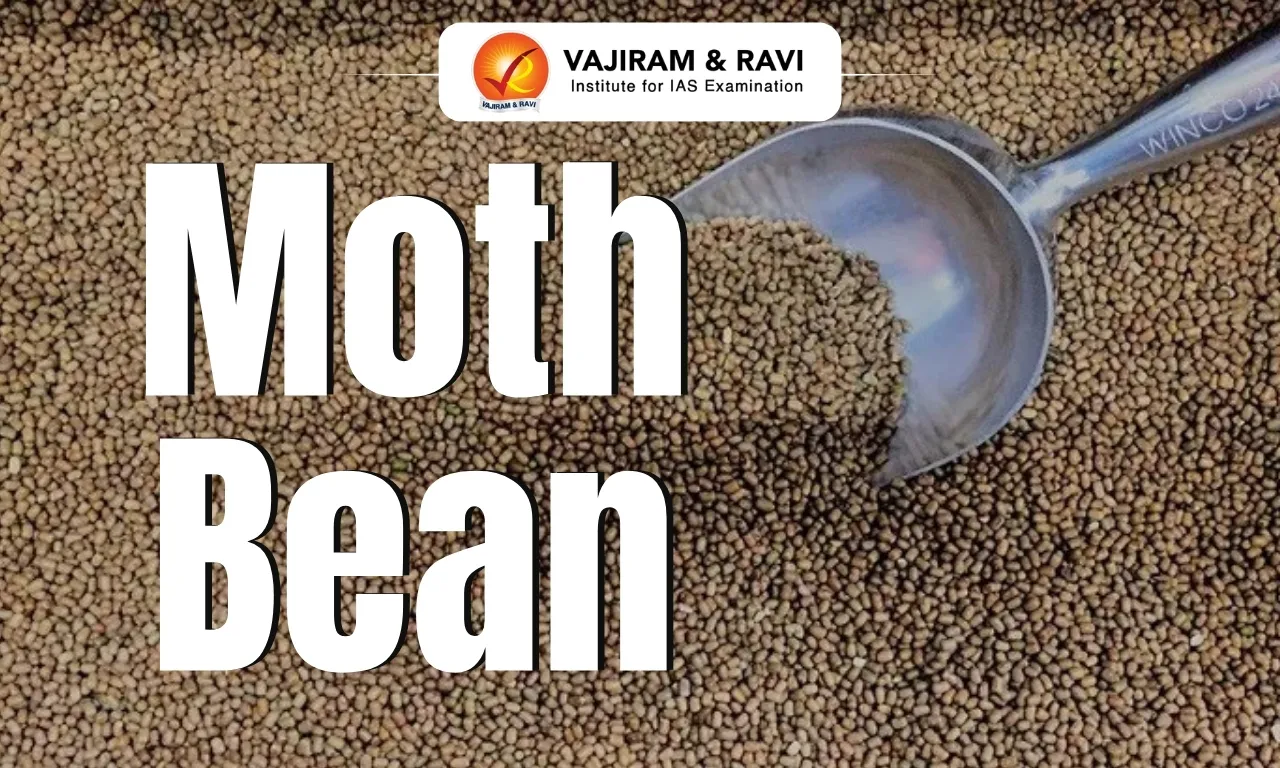
  • Moth bean (Vigna aconitifolia), commonly called dew bean or matki, is one of the hardiest pulse crops cultivated in India.
  • It is a creeping, annual herbaceous plant belonging to the Fabaceae family.
  • Its fast-penetrating taproot system enables it to access moisture from lower soil layers, which is a key adaptation for survival in arid environments.
  • Required Climatic Conditions
    • Temperature: It performs best at temperatures between 24-32°C but can tolerate daytime temperatures as high as 45°C.
    • Rainfall: The ideal annual rainfall for production is 500-750 mm, the crop can sustain growth with just 200-300 mm. 
    • Soil: This legume thrives in well-drained sandy loam soils that are common across India’s western desert regions.
    • It tolerates a remarkably wide pH range of 3.5 to 10 and can handle slight salinity.
  • Major cultivation states: Grown primarily in the arid and semi-arid zones of Rajasthan, Maharashtra, Gujarat, and Haryana.
  • It serves farmers as a source of protein-rich dal, nutritious fodder for livestock, and a natural green manure that enriches the soil. 

Source: PIB

Moth Bean FAQs

Q1: What is Moth Bean?

Ans: It is a creeping, annual herbaceous plant belonging to the Fabaceae family.

Q2: Which are the major Moth Bean cultivation states of India?

Ans: Grown primarily in the arid and semi-arid zones of Rajasthan, Maharashtra, Gujarat, and Haryana.

Folk Arts of Odisha, Traditional Art, Crafts & Culture

Folk Arts of Odisha

Folk Arts of Odisha reflect the state's diverse religious traditions, tribal heritage, regional identities and long-standing craftsmanship. Its artistic traditions range from Pattachitra and tribal paintings to handlooms, applique, metalwork and stone carving, while its folk culture also includes distinctive forms of dance, music and storytelling.

Major Folk Arts of Odisha

The Major Folk Arts of Odisha include traditional paintings, palm-leaf engraving, handlooms, applique work, metal crafts, stone and wood carving, tribal paintings, folk dances and narrative traditions. Their forms vary across the state, but most are closely connected with Odisha's religious traditions, natural environment and community life.

Pattachitra

Pattachitra is one of Odisha's best-known painting traditions, closely associated with the Jagannath culture of Puri and the celebrated craft village of Raghurajpur.

  • Traditionally painted on prepared cloth, it is recognised for its fine lines, elaborate borders and carefully detailed compositions.
  • Religious narratives form its central theme, with subjects drawn from the Jagannath tradition, the Ramayana, the Mahabharata and Hindu mythology.
  • Artists traditionally prepare colours from natural materials, while the painting process involves considerable attention to detail and surface preparation.
  • The tradition has also adapted to tussar cloth and palm leaves, allowing artists to create different forms of Pattachitra.
  • Orissa Pattachitra received a Geographical Indication (GI) registration in 2007.

Lanjia Saura Painting

Lanjia Saura painting, commonly known as Idital or Ekon, is a traditional mural art practised by the Lanjia Saura community, particularly in the Rayagada and Gajapati regions of southern Odisha.

  • Traditionally drawn on mud walls, the paintings depict human figures, animals, trees, celestial bodies and other elements of the natural and spiritual world.
  • Their significance lies in their connection with ancestral beliefs and rituals associated with important stages of community life, including birth, marriage, harvest and death.
  • Natural materials such as rice paste, red ochre and charcoal have traditionally been used to create these compositions.
  • While the original practice was closely linked with wall painting, artists now also work on paper and canvas.
  • Painting of Lanjia Saura (IDITAL), Odisha received a GI registration in 2022.

Palm Leaf Engraving

Palm leaf engraving is a distinctive folk art tradition of Odisha, in which artists engrave texts, illustrations and intricate designs on prepared palm leaves. The practice has been used to preserve religious, literary and cultural knowledge, with individual leaves often arranged and bound together to create manuscripts. Its combination of writing, storytelling and visual design makes it an important part of Odisha's folk-art heritage.

Odisha Handlooms

Odisha's handloom tradition is particularly known for Ikat or Bandha, a technique in which threads are tied and dyed before they are woven to create distinctive patterns.

  • Sambalpuri textiles are strongly associated with western Odisha and are known for their traditional motifs and Bandha weaving.
  • Bomkai Sarees are recognised for their intricate designs and distinctive motifs.
  • Berhampur Patta represents a traditional textile tradition associated with Berhampur.
  • Nuapatna is an important centre of Ikat and other traditional weaving practices.
  • Kotpad Handloom Fabric, associated with the Koraput region, has a distinctive regional identity and is among Odisha's GI-registered textiles.

GI-recognised Odisha textiles include Orissa Ikat, Kotpad Handloom Fabric, Sambalpuri Bandha Saree & Fabrics, Bomkai Saree & Fabrics and Berhampur Patta.

Pipili Applique

Pipili applique is a colourful textile craft from Puri district in which pieces of fabric are stitched onto a base cloth to create decorative designs, with a particularly strong connection to the Jagannath tradition.

  • Its most visible religious use is in the decoration of the chariots associated with the Ratha Yatra.
  • Artisans create floral, animal, geometric and religious motifs by carefully arranging pieces of coloured fabric.
  • Canopies, umbrellas, wall hangings, lampshades, bags and other decorative articles are commonly produced through this technique.
  • The craft is locally known as Chandua and has developed from its ritual associations into a wider handicraft tradition.
  • Pipli Applique Work received a GI registration in 2007.

Silver Filigree or Tarakasi

Rupa Tarakasi, or silver filigree, is a highly intricate craft of Cuttack in which fine silver wires are shaped and arranged to create delicate designs.

  • The technique demands considerable precision because artisans work with extremely fine strands of silver to form complex patterns.
  • Jewellery, decorative objects and religious artefacts are among the products traditionally made through this craft.
  • Floral forms, geometric patterns and motifs inspired by mythology and nature are commonly incorporated into the designs.
  • Cuttack Rupa Tarakasi (Silver Filigree) received a GI registration in 2021.

Dhokra Metal Casting

Dhokra is a traditional metal-casting technique based on the lost-wax process, with Sadeibareni village in Dhenkanal district being an important centre of the craft in Odisha.

  • The process begins with a wax model, which is covered with a mould and heated so that the wax melts away.
  • Molten metal is then poured into the space created by the removed wax, producing the final object after the mould is broken.
  • Artisans use the technique to create figurines, animals, lamps, decorative objects and other traditional products.

Brass and Bell Metal Craft

Brass and bell metal craft is an important traditional craft of Odisha, with artisans using these metals to make household utensils, lamps, ritual objects and decorative items. The craft combines practical use with religious and cultural purposes and continues to be practised by artisan communities across the state.

Stone Carving

Stone carving has deep roots in Odisha’s architectural and sculptural traditions and is closely linked with the state’s famous temples. The Konark Sun Temple is a prominent example of this heritage, while artisans in places such as Bhubaneswar, Puri, Konark and Sukuapada continue to create religious figures, decorative objects and architectural elements. Konark Stone Carving received a Geographical Indication (GI) registration in 2007.

Wood Craft

Wood carving in Odisha includes religious figures, toys, decorative objects and other articles shaped according to traditional designs.

  • Raghurajpur is known for wood craft alongside Pattachitra and other traditional artistic practices.
  • Religious stories, local traditions and natural forms provide recurring sources of inspiration for artisans.
  • Wooden toys and figures serve both decorative and cultural purposes, helping preserve traditional motifs in everyday objects.

Papier-Mache

Papier-mache is a folk craft tradition of Odisha in which paper pulp and tamarind paste are moulded into masks, animal figures, toys and decorative objects. The finished pieces are shaped, dried and painted with colourful designs, while masks are also used in traditional dances, street performances and dramas. The craft therefore forms part of Odisha’s wider folk-art and performing traditions.

Folk Dance and Performing Arts of Odisha

The Folk Arts of Odisha extend beyond visual arts and handicrafts. Different regions and communities have preserved their own traditions of dance, martial performance, music and storytelling.

Mayurbhanj Chhau

Mayurbhanj Chhau is a martial folk dance of northern Odisha that combines energetic movements with stories and themes drawn from mythology, warfare and everyday life. It developed from the martial traditions of the region and includes movements inspired by combat and physical exercises. Unlike the other major forms of Chhau, Mayurbhanj Chhau is performed without masks, allowing dancers to express characters and emotions through their movements and body language. It is traditionally performed during Chaitra Parva and other festivals and remains an important part of the cultural life of Mayurbhanj.

Ghumura

Ghumura is a traditional dance of Odisha associated particularly with Kalahandi and takes its name from the Ghumura percussion instrument used during performances.

  • The form has strong associations with warrior traditions and martial themes.
  • Male performers traditionally participate in the dance while accompanying the performance with rhythmic percussion.
  • Its energetic movements and distinctive musical rhythm have made it an important cultural symbol of western Odisha.

Gotipua

Gotipua is a devotional folk dance tradition of Odisha in which young boys dress in feminine attire and perform songs and stories based on devotion, particularly to Lord Krishna and Lord Jagannath. The tradition developed around the religious and cultural environment of Puri and is widely regarded as an important precursor to the development of Odissi, Odisha’s classical dance form. Performances combine dance, music and expressive movements. 

Chaiti Ghoda

Chaiti Ghoda is a folk dance tradition of coastal Odisha, particularly associated with fishing communities. The performance centres on a colourful dummy horse, which is carried by a dancer and becomes part of a lively presentation of traditional and mythological stories. The dance is especially performed during festivals and community celebrations and reflects the cultural traditions of Odisha’s fishing communities.

Ranappa

Ranappa is a folk dance of Odisha, particularly associated with the Ganjam district, in which performers dance on wooden stilts while maintaining balance and rhythm. The dance involves energetic movements and requires considerable physical control, coordination and skill. Some performances depict episodes from the childhood of Lord Krishna, adding a mythological element to the tradition.

Sambalpuri Dance

Sambalpuri dance is a folk dance tradition of western Odisha, known for its energetic movements, rhythmic music and colourful costumes. It forms an important part of the cultural traditions of the Sambalpuri-speaking region, with performances drawing on local music, customs and community life. The dance is commonly performed during festivals, social gatherings and cultural programmes, where its distinctive music and costumes add to its lively character.

Pala and Daskathia

Pala and Daskathia are traditional narrative forms that combine storytelling, music and performance to communicate religious and social themes.

  • Performers use oral narration, songs and dialogue to present stories before an audience.
  • Religious narratives and moral themes form an important part of their traditional repertoire.
  • These forms have helped preserve cultural knowledge through oral transmission.

Paika Akhada

Paika Akhada is a traditional martial practice associated with the historical Paika warrior tradition of Odisha.

  • It combines physical exercises, martial movements and public performance.
  • The tradition reflects the military culture of the Paikas and their role in the history of Odisha.
  • Paika Akhada is also presented during cultural programmes and festivals, linking martial heritage with contemporary public performance.

Folk Arts of Odisha and Festivals

Festivals in Odisha provide an important setting for the performance and preservation of its folk arts. Chaitra Parva, for instance, is closely associated with the performance of Mayurbhanj Chhau, while folk forms such as Ghumura, Gotipua and Paika Akhada are also presented during festivals and cultural events. The Ratha Yatra of Puri further highlights the connection between art, religion and community traditions, with Pipili applique being used to decorate the chariots of Lord Jagannath, Balabhadra and Subhadra. These occasions allow traditional artists and performers to practise their art before communities and pass these traditions on to younger generations.

Folk Arts of Odisha FAQs

Q1: What are the major Folk Arts of Odisha?

Ans: The major folk arts of Odisha include Pattachitra, Lanjia Saura painting, palm-leaf engraving, handloom weaving, Pipili applique, silver filigree, Dhokra, stone carving, wood craft and papier-mache. Odisha also has a rich tradition of folk dances and narrative performances.

Q2: Which painting tradition is associated with the Lanjia Saura tribe?

Ans: Lanjia Saura painting, also known as Idital or Ekon, is associated with the Lanjia Saura community of southern Odisha.

Q3: Which Odisha craft is famous for silver filigree?

Ans: Cuttack Rupa Tarakasi, or silver filigree, is the traditional silver craft associated with Cuttack.

Q4: Which Odisha craft is associated with the Jagannath chariots?

Ans: Pipili applique work is traditionally used to decorate the chariots associated with the Ratha Yatra.

Q5: Which Odisha folk dance is associated with martial traditions?

Ans: Mayurbhanj Chhau has strong links with martial traditions, while Ghumura also carries associations with warrior culture.

INS Kulish

INS Kulish

INS Kulish Latest News

Recently, Indian Navy’s guided missile corvette INS Kulish reached Ream Naval Base in Cambodia as part of the Eastern Fleet’s operational deployment. 

About INS Kulish

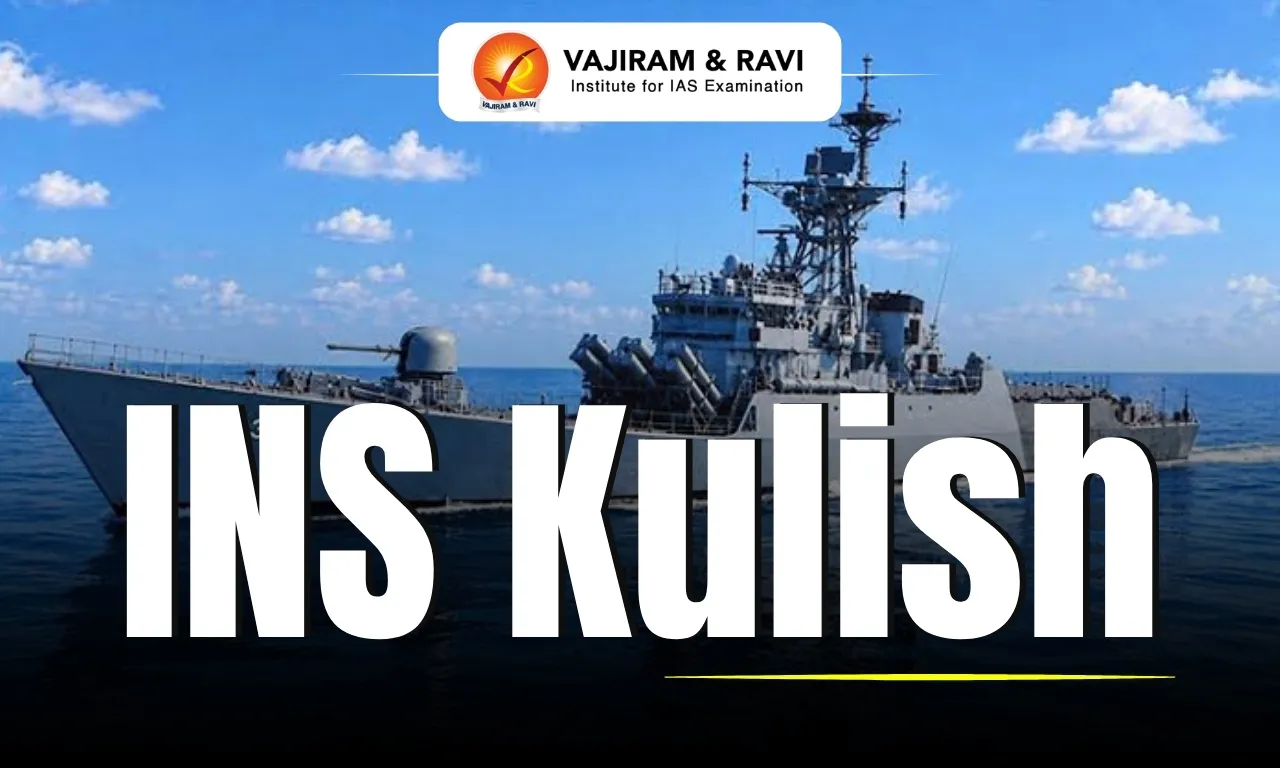
  • It is a Kora-class corvette of the Indian Navy.
  • The Kulish meaning is Thunderbolt in Sanskrit.
  • It was built from 1995-2001 and commissioned in 2001.
  • Designed by: It has been designed & built within India by Indian shipbuilders Garden Reach Shipbuilders and Engineers [GRSE].
  • Features
    • Their primary weapon is the Russian-origin Kh-35 Anti-Ship Cruise missile.
    • It has state-of-the-art sensors and electronic equipment, and is capable of operating at extended ranges up to 2,500 nautical miles without replenishment.
    • Displacement Capacity: The ship has a displacement of 1,500 tonnes.
    • It is powered by twin diesel engines generating a maximum speed of 25 knots.
    • The capability to operate Chetak Helicopter gives the ship extra flexibility in discharge of its duties.
    • It is armed with modern weapon systems, which include surface-to-surface missiles, and long range guns for delivering attacks on enemy units at sea and surface to air missiles for self-defence.

Source: PIB

INS Kulish FAQs

Q1: INS Kulish belongs to which class of navy vessel?

Ans: Kora-class corvette

Q2: When was INS Kulish commissioned into the Indian Navy?

Ans: In the year 2001.

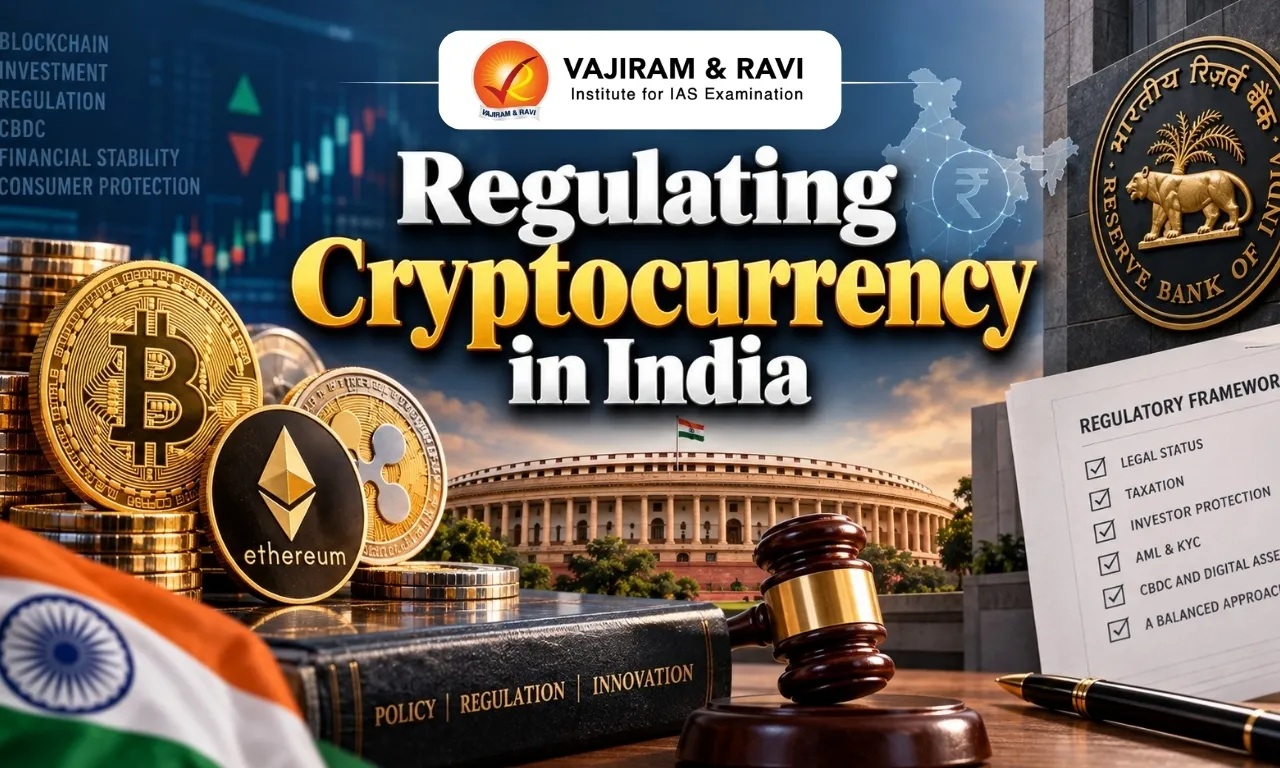
Regulating Cryptocurrency in India, Framework, Challenges, Benefits

Regulating Cryptocurrency in India

Cryptocurrency is a type of digital asset that uses blockchain technology to record transactions. Unlike the Indian rupee, most cryptocurrencies are not issued or controlled by a central bank.

In India, private cryptocurrencies such as Bitcoin and Ethereum are not recognised as legal tender. However, they are not completely banned. India has adopted a cautious approach by focusing on taxation, anti-money laundering rules, investor protection and financial risks.

What is Regulating Cryptocurrency in India?

Regulating cryptocurrency in India means creating rules to govern the use, trading, taxation and transfer of digital assets. The aim is to control risks such as money laundering, fraud, tax evasion, cybercrime and terrorist financing. India does not recognise private cryptocurrencies as legal tender but regulates certain activities through taxation and anti-money laundering laws. The approach seeks to balance financial security, investor protection and technological innovation.

Current Status of Cryptocurrency in India

India does not recognise private cryptocurrencies as legal tender, but it has not completely banned their ownership or trading. Instead, the government follows a regulatory approach based on taxation, anti-money laundering rules and monitoring of crypto-related activities.

  • Private cryptocurrencies are not legal tender in India.
  • Crypto assets are covered under Virtual Digital Assets (VDAs) for taxation.
  • Income from VDA transfers is taxed at 30%, subject to applicable provisions.
  • 1% TDS applies to specified VDA transfers under Section 194S.
  • Certain VDA-related activities come under the Prevention of Money Laundering Act (PMLA).
  • Covered crypto service providers must register with FIU-IND and follow KYC and AML requirements.
  • India's digital rupee (e₹) is a CBDC issued by the RBI and is different from private cryptocurrencies.

Why Does India Need to Regulate Cryptocurrency?

Cryptocurrencies offer opportunities for digital innovation, but they also create financial, economic and security risks. Regulation can help protect users, prevent illegal activities and maintain stability in the financial system.

  • Prevent money laundering: Crypto can be used to transfer and hide illegally obtained funds.
  • Control terrorist financing: Regulation helps monitor transactions that may support illegal activities.
  • Protect investors: Clear rules can reduce fraud, scams and unfair practices.
  • Prevent tax evasion: Monitoring crypto transactions can improve tax compliance.
  • Reduce cybercrime: Regulation can promote better security standards for exchanges and wallets.
  • Maintain financial stability: Uncontrolled growth of crypto assets may create risks for the financial system.
  • Control cross-border risks: Crypto can move across countries quickly, making monitoring difficult.
  • Promote responsible innovation: Clear regulations can encourage legitimate blockchain and digital-asset businesses.

India’s Approach Towards Cryptocurrency Regulation

India has adopted a cautious and gradual approach towards cryptocurrency rather than completely banning or recognising private cryptocurrencies as legal tender. The government mainly focuses on taxation, anti-money laundering, investor protection and financial risk management.

  • 2013: RBI issued its first major warning about the risks of virtual currencies.
  • 2018: RBI restricted regulated entities from providing certain services to businesses dealing in virtual currencies.
  • 2020: The Supreme Court set aside RBI’s 2018 restriction.
  • 2022: India introduced a 30% tax on income from the transfer of specified Virtual Digital Assets (VDAs).
  • 2022: A 1% TDS was introduced on specified VDA transfers under Section 194S.
  • 2023: Certain VDA-related activities were brought under the Prevention of Money Laundering Act (PMLA).
  • 2023 onwards: Covered VDA service providers were required to register with FIU-IND and follow KYC and anti-money laundering rules.
  • 2026: FIU-IND strengthened its AML, counter-terrorist financing and counter-proliferation financing guidelines for VDA service providers.
  • India also supports international cooperation through platforms such as the G20 and FATF, as cryptocurrencies can easily move across national borders.

Role of RBI in Cryptocurrency Regulation

Reserve Bank of India (RBI) has expressed concerns about the risks associated with private cryptocurrencies and their possible impact on India's financial system. It also manages India's Central Bank Digital Currency (CBDC), the digital rupee (e₹).

  • Financial stability: Monitors the possible impact of crypto assets on the financial system.
  • Monetary policy: Assesses whether widespread use of private cryptocurrencies could affect monetary policy.
  • Consumer protection: Highlights risks such as high price volatility, fraud and loss of funds.
  • Banking risks: Warns about possible risks to banks and other regulated financial institutions.
  • Money laundering: Raises concerns about the use of crypto for illegal financial activities.
  • Foreign exchange risks: Crypto's cross-border nature can create challenges for foreign exchange management.
  • Digital Rupee: Develops and manages the e₹, which is a sovereign digital currency issued by the RBI.
  • Public awareness: Regularly informs users about the risks associated with private virtual currencies.

Regulatory Framework for Crypto Exchanges in India

India regulates crypto exchanges mainly through taxation and anti-money laundering (AML) requirements rather than recognising cryptocurrencies as legal tender. Crypto exchanges carrying out specified VDA activities in India have to follow the Prevention of Money Laundering Act (PMLA) and register with FIU-IND.

  • FIU-IND registration: Covered VDA service providers must register with the Financial Intelligence Unit-India.
  • KYC requirements: Exchanges must verify the identity of their customers.
  • Customer due diligence: Platforms must assess and monitor customer transactions.
  • Transaction records: Exchanges are required to maintain prescribed records of transactions.
  • Suspicious Transaction Reports: Suspicious transactions must be reported to FIU-IND as required under the PMLA framework.
  • AML compliance: Exchanges must have systems to prevent money laundering and terrorist financing.
  • Beneficial ownership: Platforms may need to identify the actual persons who own or control an account or entity.
  • Tax compliance: Specified crypto transactions are subject to India's VDA taxation and applicable TDS provisions.
  • Offshore exchanges: Certain overseas VDA service providers serving Indian users may also come under India's AML requirements when their activities fall within the specified framework.

How is Cryptocurrency used in Money Laundering and Terror Financing?

Cryptocurrency can be misused for money laundering and terrorist financing because transactions can be carried out quickly across borders and may involve pseudonymous digital wallets. However, crypto transactions are generally recorded on blockchains, which can also help authorities trace suspicious activity.

  • Moving illegal funds: Criminals may convert illegally obtained money into crypto to move or store it.
  • Layering transactions: Funds may be transferred through multiple wallets or crypto assets to make their original source harder to identify.
  • Mixing services: Some services attempt to make the connection between the sender and receiver more difficult to trace.
  • Cross-border transfers: Crypto can move across countries without using traditional banking channels.
  • Peer-to-peer transfers: Direct wallet-to-wallet transactions can make monitoring more difficult.
  • Terror financing: Terrorist groups or their supporters may use digital assets to collect or transfer funds.
  • Use of offshore platforms: Criminals may use overseas exchanges or platforms with weak compliance systems.
  • Conversion into cash: Crypto may eventually be converted into fiat currency through exchanges or other channels.

Challenges in Regulating Cryptocurrency in India

Regulating cryptocurrency is difficult because digital assets are decentralised, borderless and based on rapidly changing technology. India also has to coordinate with other countries because crypto transactions can easily move across jurisdictions.

  • Decentralisation: Many cryptocurrencies do not have a central authority that can be directly regulated.
  • Cross-border transactions: Crypto can be transferred across countries quickly, making monitoring difficult.
  • Rapid technological changes: New technologies such as DeFi, stablecoins and smart contracts create new regulatory challenges.
  • Regulatory gaps: Different countries have different rules, which can create opportunities for regulatory arbitrage.
  • Investor protection: High price volatility, scams and hacking can lead to major financial losses.
  • Privacy concerns: Strong KYC and transaction monitoring may create concerns about user privacy.
  • Peer-to-peer transactions: Direct transfers between users can make suspicious transactions harder to track.
  • Enforcement challenges: Identifying and taking action against anonymous or overseas entities can be difficult.
  • Lack of global framework: Differences in national regulations make international regulation and enforcement more difficult.

Benefits of Regulating Cryptocurrency in India

A clear regulatory framework can help India reduce the risks of cryptocurrencies while supporting responsible innovation in blockchain and digital assets.

  • Investor protection: Reduces the risk of fraud, scams and unfair practices.
  • Prevention of money laundering: KYC and transaction monitoring can help identify illegal financial activities.
  • Better tax compliance: Reporting and TDS rules can help track taxable crypto transactions.
  • Greater accountability: Registered exchanges and service providers can be held responsible for following regulations.
  • Financial stability: Regulation can help manage risks that crypto assets may create for the financial system.
  • Cybersecurity: Regulatory standards can encourage better security practices among crypto platforms.
  • Support for innovation: Clear rules can provide certainty to legitimate blockchain and Web3 businesses.
  • National security: Monitoring crypto transactions can help address risks related to terrorist financing and other illegal activities.
  • International cooperation: Common standards can make it easier for India to work with other countries on cross-border crypto-related crimes.

Regulating Cryptocurrency in India FAQs

Q1: Is cryptocurrency legal in India?

Ans: Private cryptocurrencies are not recognised as legal tender in India. However, India has not completely banned their ownership or trading and instead regulates certain crypto-related activities through taxation and anti-money laundering rules.

Q2: Is Bitcoin legal tender in India?

Ans: No. Bitcoin is not legal tender in India. It is treated as a digital asset rather than an official currency issued by the government or RBI.

Q3: What is a Virtual Digital Asset (VDA)?

Ans: A Virtual Digital Asset (VDA) is a category of digital assets defined under India's tax law. Specified cryptocurrencies and other digital assets can come under this definition.

Q4: What is the tax on cryptocurrency in India?

Ans: Income from the transfer of specified VDAs is taxed at 30%, subject to the applicable provisions of the Income Tax Act.

Q5: Is TDS applicable to cryptocurrency transactions?

Ans: Yes. A 1% TDS applies to specified VDA transfers under Section 194S, subject to applicable conditions and thresholds.

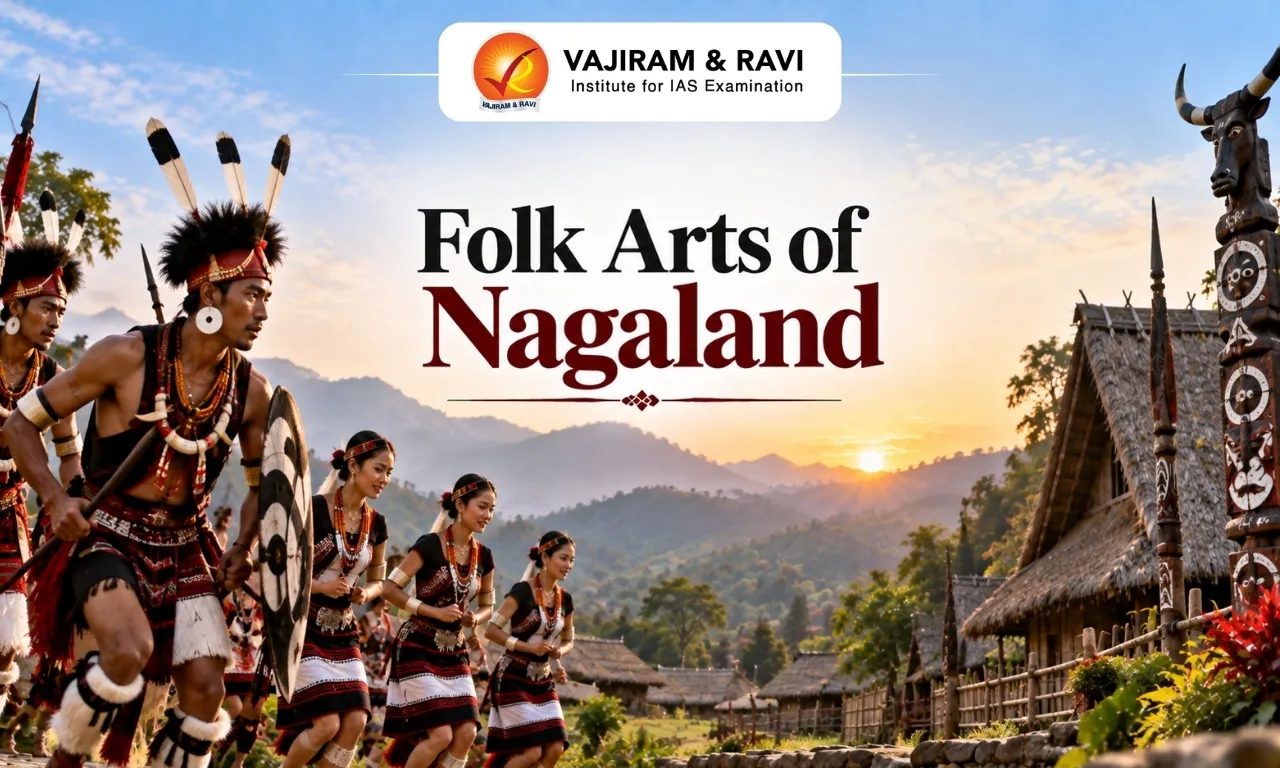
Folk Arts of Nagaland, Traditional Art, Crafts & Culture

Folk Arts of Nagaland

The Folk Arts of Nagaland reflect the state's diverse tribal traditions, social life and cultural heritage. Nagaland is home to 16 major tribes, including the Angami, Ao, Konyak, Lotha, Sumi and Chakhesang, each with its own traditions of weaving, wood carving, bamboo and cane work, pottery, ornaments, music and dance. These traditions are closely connected with community life, festivals, agriculture and traditional beliefs. They have also helped Naga communities preserve their customs, social identity and cultural practices across generations.

Major Folk Arts of Nagaland

The Major Folk Arts of Nagaland include wood carving, weaving, traditional cloth painting, bamboo and cane craft, pottery, jewellery, folk music and dance. Most of these traditions developed from everyday needs but also carry information about tribal identity, social position, achievements and traditional beliefs.

Folk Dance and Music

Folk dance and music are an important part of Naga culture and are closely linked with festivals, harvest celebrations, purification rituals and other community occasions. Different Naga tribes have their own traditional songs and dances, reflecting their distinct customs and traditions.

  • Changsang is associated with the Chang community and is performed during the Naknyulum Festival. 
  • Melo Phita is associated with the Angami community and is performed during the Sekrenyi purification festival. 
  • The Lotha community has the warrior-themed Rukhyo-Sharu, while Khupielili is associated with the Pochury community and the Nazu Festival.

The log drum, made from a large hollowed tree trunk, is an important traditional instrument. In the past, it was also used to send messages between villages and to call people together on important occasions. This shows that music and musical instruments were closely connected with communication and community life in Naga society.

Wood Carving

Wood carving is one of the most distinctive traditional arts of Nagaland and has traditionally been practised mainly by men. 

  • The Konyak, Wancho and Phom communities are particularly known for their skills in wood carving.
  • Artisans carve village gates, house posts, morungs, wooden mugs, spoons, drums and grave effigies. Many objects are made from a single block of wood without joints. 
  • Human figures, mithun, hornbills, elephants and pythons are common motifs, with some designs reflecting the traditional warrior culture of Naga communities.
  • Shangnyu village in Mon district is particularly known for its traditional carved wooden gate.

Weaving and Naga Shawls

Weaving is an important part of Naga culture and has traditionally been practised mainly by women using the backstrap loom. Different tribes have their own colours, patterns and motifs, which often reflect their tribal identity, social position and achievements.

  • The Tsüngkotepsü is a traditional warrior shawl of the Ao community. 
  • The Rongsu, another Ao shawl, is associated with the tradition of mithun sacrifice. 
  • The Lohe is associated with the Angami and Chakhesang communities, while the Supong of the Sangtam and Rongkhim of the Yimchunger community are traditionally linked with wealth and social status.

Naga shawls are also decorated with cowrie shells, beads and dyed animal hair. Among these traditional textiles, the Chakhesang Naga Shawl is notable for having a Geographical Indication (GI) tag.

Traditional Cloth Painting

Nagaland has a distinctive tradition of cloth painting associated with the Tsüngkotepsü warrior shawl. The tradition is linked with the Ao, Lotha and Rengma communities.

  • Traditionally, the white central band of the shawl was painted using a sharpened bamboo stick. 
  • Natural materials such as tree sap, fermented rice brew and bamboo-leaf ash were used to prepare the pigments. 
  • The motifs carried symbolic meanings related to valour, wealth and traditional Naga beliefs.

This tradition is particularly significant because it shows how painting developed as part of Naga textile culture rather than as a separate decorative art.

Bamboo and Cane Craft

Bamboo and cane are widely available in Nagaland and have long been used to make objects required in everyday life. Basketry is particularly associated with the Angami community.

The Khophi is a traditional Angami basket used for carrying everyday and agricultural items. Bamboo and cane are also used to make baskets, mats, hats, fish traps and storage containers.

Pottery

Naga pottery has traditionally been practised mainly by women and is particularly associated with the Phom community. Unlike pottery made on a wheel, traditional Naga pots are shaped entirely by hand. The designs on some pots are inspired by patterns found in Naga textiles. Traditional practices such as husk-burning and the use of boiling rice water are also associated with strengthening and seasoning newly made pots.

Naga Jewellery and Ornaments

Jewellery and ornaments form an important part of traditional Naga attire, particularly during festivals, ceremonies and other important occasions. Beads, cowrie shells, brass, animal teeth, horns and feathers are among the materials traditionally used.

Mithun horns, boar tusks and hornbill feathers may also be incorporated into ornaments. Beyond decoration, these objects can represent wealth, social position, achievements and community identity.

Folk Arts of Nagaland FAQs

Q1: What are the major Folk Arts of Nagaland?

Ans: The major Folk Arts of Nagaland include wood carving, weaving, traditional cloth painting, bamboo and cane craft, pottery, jewellery, folk music and folk dances.

Q2: Which Naga communities are particularly known for wood carving?

Ans: The Konyak, Wancho and Phom communities are particularly known for their traditional wood-carving skills.

Q3: What is Tsüngkotepsü?

Ans: Tsüngkotepsü is a traditional warrior shawl associated with the Ao community. Its designs are linked with traditional ideas of valour, achievement and social status.

Q4: Which Naga shawl has a Geographical Indication tag?

Ans: The Chakhesang Naga Shawl has a Geographical Indication (GI) tag.

Q5: Which traditional dance is associated with the Chang community?

Ans: Changsang is associated with the Chang community and is performed during the Naknyulüm festival.

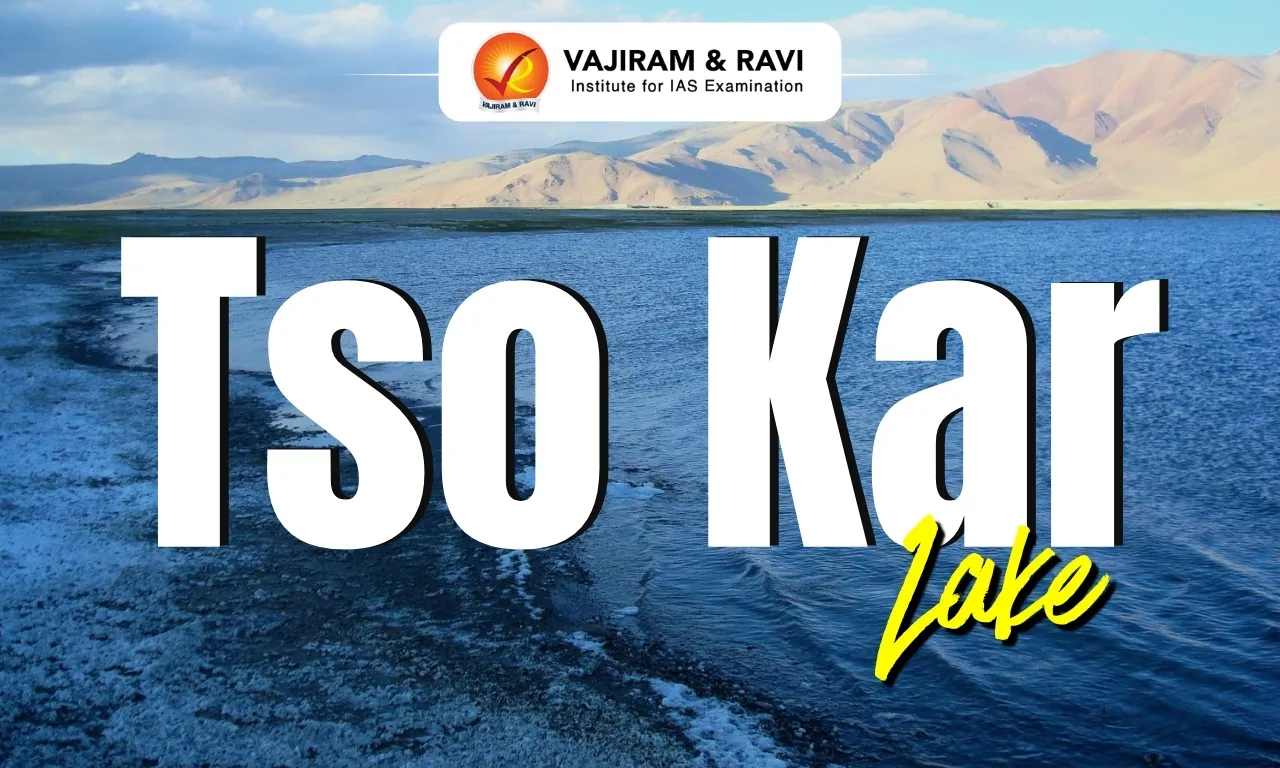
Tso Kar Lake

Tso Kar Lake

Tso Kar Lake Latest News

The Ladakh administration recently launched an ambitious project to revive and restore the shrinking Tso Kar Lake by diverting nearly 320 million litres of untapped glacier water daily from the glacial stream, Rupsho Kharnak.

About Tso Kar Lake

  • Tso Kar, meaning “White Lake” in Ladakhi, is a high-altitude salt lake located in the Rupshu Valley of Ladakh.
  • At an elevation of approximately 15,280 feet (4,660 meters), it is the smallest of the three prominent lakes in the region, alongside Pangong Tso and Tso Moriri. 
  • The lake's name derives from the white salt deposits that fringe its shores, remnants of its saline nature.  
  • The Tso Kar basin includes both Tso Kar Lake and Startsapuk Tso (a nearby freshwater lake), creating a rare wetland system. 
  • It experiences extreme winters with temperatures falling below -40 °C, while summers see a maximum of 30°C.
  • The nomads, commonly known as Khampas, inhabit the Tso Kar area, and they make a living here by collecting the salt from the banks of Tso Kar Lake and selling it to the regions nearby. 
  • The lake is surrounded by marshlands, which host different types of birds. Some of these are Brahmi Ducks, bar-headed geese, and great crested grebe.
  • The most commonly spotted birds at the lake, though, are the black-necked cranes, which visit the lake to lay eggs. 
  • Mammals like Kianga, the largest of the wild asses, can also be spotted. The area surrounding the lake is also home to ibex, snow leopards, and snow foxes.
  • Ramsar Site: In 2020, Tso Kar was recognized as a Wetland of International Importance under the Ramsar Convention, highlighting its ecological significance.

News: TRIB

Tso Kar Lake FAQs

Q1: What type of lake is Tso Kar?

Ans: A high-altitude salt lake.

Q2: Where is Tso Kar Lake located?

Ans: In the Rupshu Valley of Ladakh.

Q3: Why is Tso Kar known as the “White Lake”?

Ans: Because of the white salt deposits along its shores.

Q4: Which nomadic community inhabits the Tso Kar area?

Ans: The Khampas.

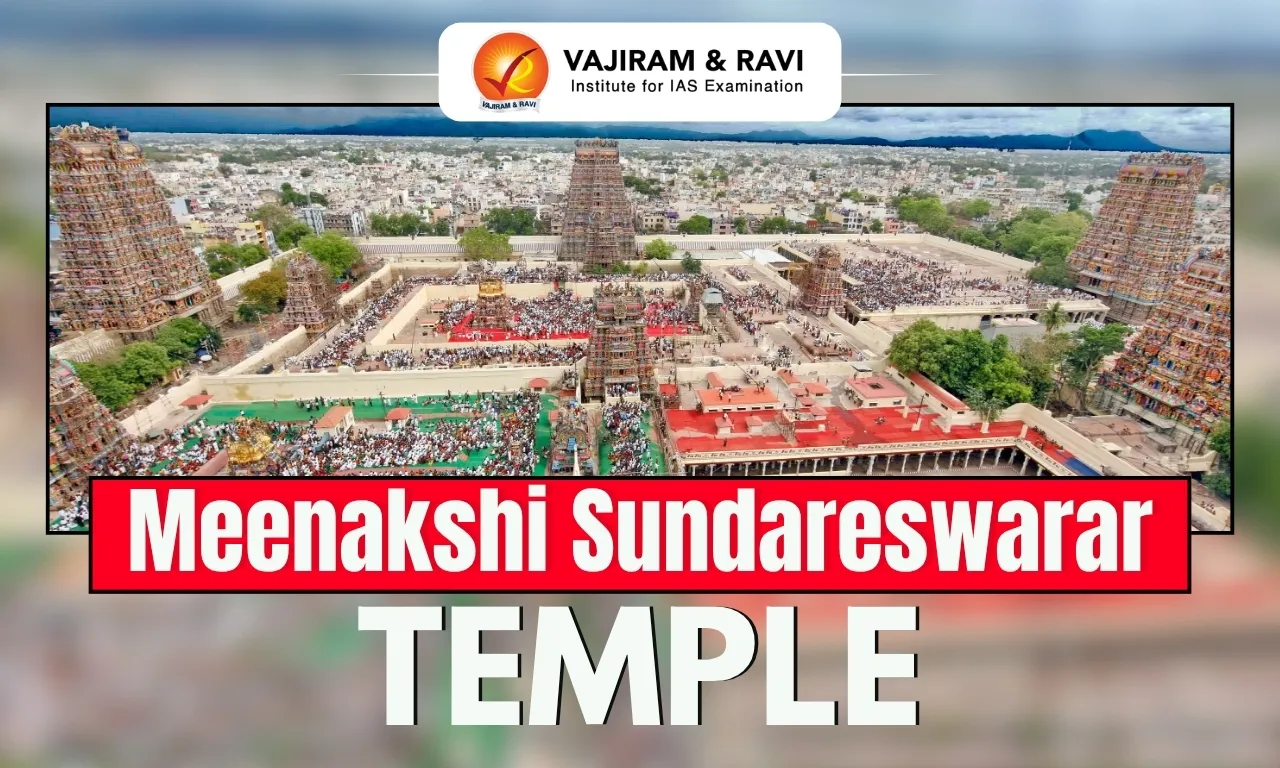
Meenakshi Sundareswarar Temple

Meenakshi Sundareswarar Temple

Meenakshi Sundareswarar Temple Latest News

Hundreds of street vendors have been left struggling after being recently evicted from the roads surrounding the Meenakshi Sundareswarar Temple as part of measures to regulate traffic and pedestrian movement ahead of the temple’s Maha Kumbabishekam.

About Meenakshi Sundareswarar Temple

  • Meenakshi Sundareswarar Temple, also called Arulmigu Meenakshi Sundareswarar Temple, is a historic Hindu temple located on the southern bank of the Vaigai River in the temple city of Madurai, Tamil Nadu.
  • The temple is dedicated to the goddess Meenakshi, a form of Parvati; her consort Sundareswarar, a form of Shiva; and her brother Alagar, a form of Vishnu. 
  • The temple is theologically significant, as it represents a confluence of the Shaivism, Shaktism, and Vaishnavism denominations of Hinduism.  

Meenakshi Sundareswarar Temple History

  • It was built during the Pandya reign by Kulasekarer Pandya. 
  • According to historical findings, the creation of this temple can be traced back to early A.D.
  • There are mentions of this temple in the songs of the great Hindu Saint Thirugnanasambandar, who lived during the 7th century. 
  • It is also said that during the 12th or 13th century, at the time of Islamic conquest, this temple was destroyed to an extent. 
  • However, later it was restored to its present structure. It was later expanded during the rule of Thirumalai Nayak (1623-55 AD). During this time, the present structure of the temple came into being. 

Meenakshi Sundareswarar Temple Architecture

  • It is a finest example of the Dravidian style of architecture.  
  • Spread over an area of 45 acres of land, it is a massive complex measuring 254 by 237 meters.  
  • The temple is surrounded by 14 towers, the tallest of which, the famous Southern tower, rises to over 170 feet high, built in the year 1559. 
  • The oldest gopuram is the eastern one, built by Maravarman Sundara Pandyan during 1216-1238. 
  • The west tower (gopuram) of the temple is the model on which the Tamil Nadu State Emblem is based. 
  • The temple has four entrances, while the entrance on the Eastern side being the main temple entrance. 
  • There are several corridors, and halls such as Aayirankaal (1000-pillared hall), Kilikoondu-mandapam, Golu-mandapam, and Pudu-mandapam, and shrines inside the temple. The corridors and pillars are adorned with wonderful artwork. 
  • The Thousand Pillar Hall contains 985 (instead of 1000) carved pillars. It was built by Ariyanatha Mudaliar in 1569 and currently houses a museum with artifacts collected from Madurai from the 8th century onwards. 
  • There are the Musical Pillars outside this hall towards the west. Each pillar produces a different musical note when struck. 
  • The temple is an architectural wonder with an estimated 33,000 sculptures in the temple.

News: NIE

Meenakshi Sundareswarar Temple FAQs

Q1: Where is the Meenakshi Sundareswarar Temple located?

Ans: Madurai, Tamil Nadu.

Q2: Which Pandya ruler is associated with the construction of the Meenakshi Sundareswarar Temple?

Ans: Kulasekarer Pandya.

Q3: Which ruler played an important role in expanding the present structure of the temple?

Ans: Thirumalai Nayak.

Q4: Which architectural style is exemplified by the Meenakshi Sundareswarar Temple?

Ans: Dravidian architecture.

Planet Mercury

Planet Mercury

Planet Mercury Latest News

Mercury may have shrunk more than scientists previously estimated, with the planet’s diameter potentially reducing by as much as 23 km, a recent study has revealed.

About Planet Mercury

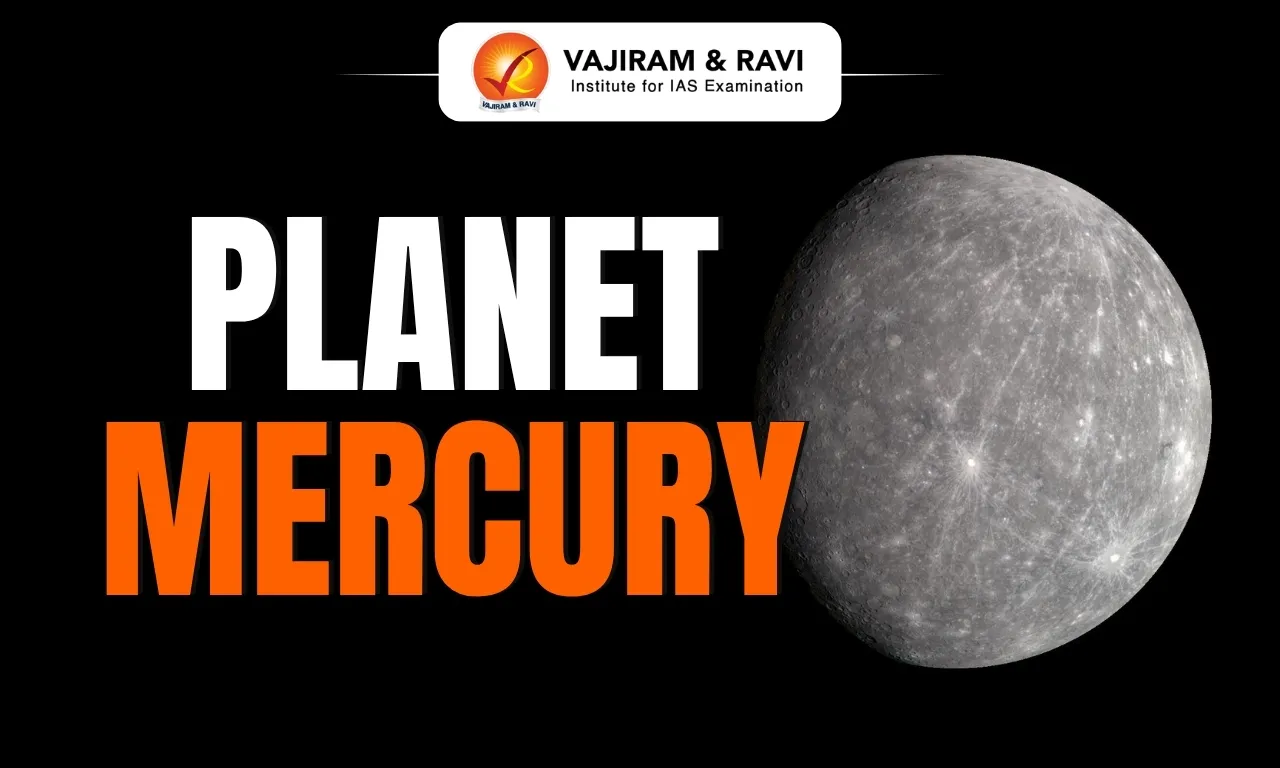
  • It is the smallest planet in our solar system and the nearest to the Sun.  
  • It is one of the four terrestrial (rocky) planets, along with Venus, Earth, and Mars. 
  • As the closest planet to the Sun, it experiences extreme temperature variations at its surface, from about +450ºC (day) down to –180ºC (night). 
    • However, Mercury is not the hottest planet; Venus has the highest average surface temperature because of its thick atmosphere and strong greenhouse effect. 
  • It has permanently shadowed regions at its poles that never see sunlight and thus enables ice to exist on its floor. 
  • Mercury’s ancient, cratered surface shows signs of past volcanic and tectonic activity and is heavily weathered by the harsh space environment. 
  • The planet has huge impact basins, including the Caloris Basin, one of the largest impact features in the solar system. 
  • Mercury has a large iron-rich core, which occupies a substantial portion of the planet's interior. 
  • Its closeness to the Sun and its smallness make it the most elusive of the planets visible to the unaided eye. 
  • NASA's MESSENGER spacecraft became the first spacecraft to orbit Mercury, entering orbit in 2011 and studying the planet until 2015. 
  • The BepiColombo mission, a joint mission of the European Space Agency (ESA) and Japan Aerospace Exploration Agency (JAXA), is studying Mercury and is expected to enter orbit in 2026. 

Planet Mercury Facts

  • Diameter: 4879 km (0.38 Earths, or 1.40 Moons)
  • Surface area: 74.8 million sq.km. (0.147 Earths)
  • Gravity: 3.7 m/s2 (38% of Earth’s gravity)
  • Mass: 3.3 × 10²³ kg (0.055 Earths)
  • Density: 5430 kg/m3 (Earth: 5515 kg/m3). It is the second-highest in the Solar System after earth.
  • Distance from Sun: 46001200 – 69816900 km (Earth: 149 597 900 km)
  • Solar irradiance: 6272 – 14448 W/m² (Earth: 1366 W/m²)
  • Day: 58 Earth days to turn once on its axis (Mercury rotation period); 176 days for the Sun to return to the same spot in the sky, as seen from a fixed point on the surface (Mercury solar day)
  • Year: 88 Earth days to orbit the Sun (Mercury orbital period). It has the shortest orbital period of any planet. 
  • Obliquity to orbit (axial tilt): 0.01° (i.e., the equator of Mercury nearly coincides with the orbital plane of the planet)
  • Atmosphere: Very thin (<10–14 bar), including oxygen (42%), sodium (29%), hydrogen (22%), helium (6%), and trace gases
  • Moons: None

News: IT

Planet Mercury FAQs

Q1: Which is the smallest planet in the Solar System?

Ans: Mercury.

Q2: Why does Mercury experience extreme temperature variations?

Ans: Because of its proximity to the Sun and its extremely thin atmosphere.

Q3: What are the major geological features found on Mercury's ancient surface?

Ans: Craters, impact basins and evidence of past volcanic and tectonic activity.

Q4: What is the major composition of Mercury's core?

Ans: Iron.

Q5: Which spacecraft became the first to orbit Mercury?

Ans: NASA's MESSENGER spacecraft.

Java Sea

Java Sea

Java Sea Latest News

An Indonesian passenger ship carrying 243 people was reported missing after losing ‌contact in the Java Sea early during bad weather. 

About Java Sea

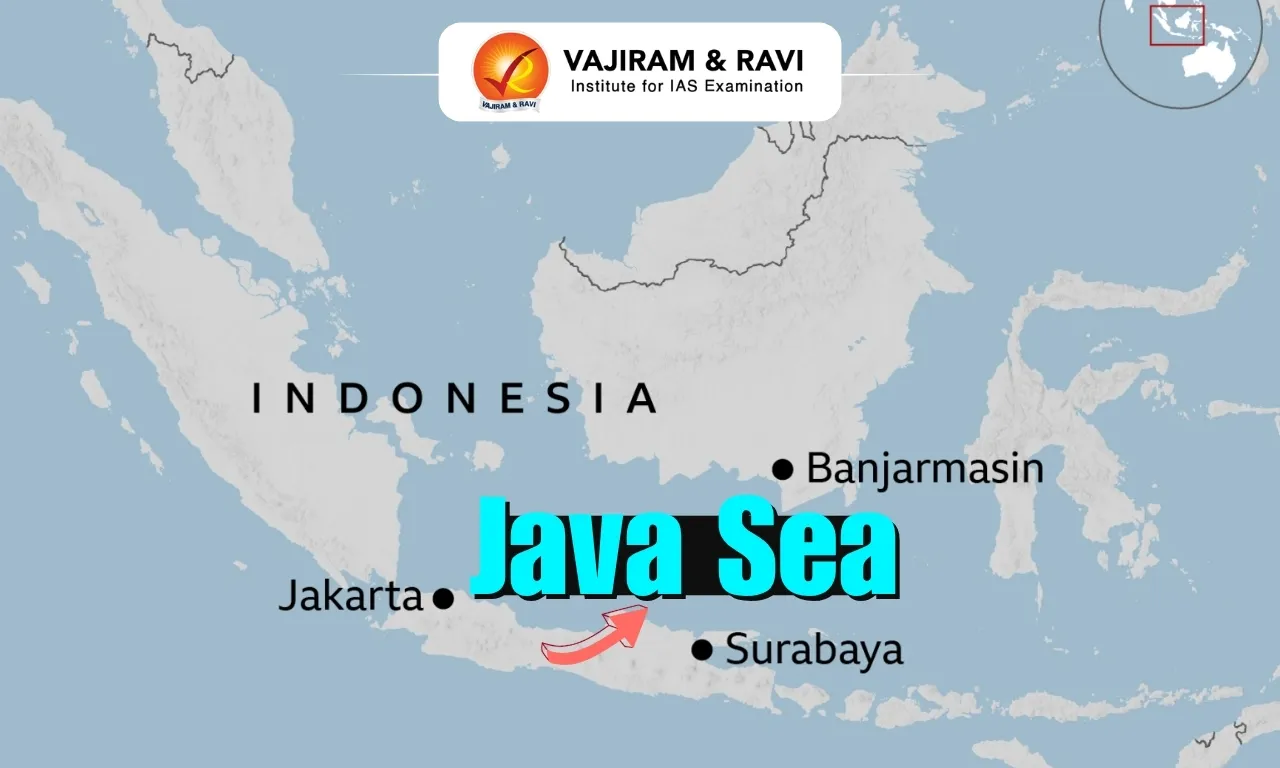
  • It is a portion of the western Pacific Ocean situated between the islands of Java and Borneo.
  • It is bordered by Borneo (Kalimantan) on the north, the southern end of Makassar Strait on the northeast, Celebes and the Flores and Bali seas on the east, Java on the south, the Sunda Straits on the southwest and Sumatra on the west.
  • It forms part of the Sunda Shelf, a shallow part of the continental shelf of Southeast Asia.
  • The Java Sea experiences a typical monsoon climate.
  • It is home to several protected national parks such as Ujung Kulon and Karimunjawa.
  • Resources: It is home to a wealth of marine life, as well as petroleum and natural gas deposits that are instrumental to Indonesia's export economy.

Source: IT

Java Sea FAQs

Q1: Where is Java Sea?

Ans: It is a portion of the western Pacific Ocean situated between the islands of Java and Borneo.

Q2: Java sea experiences which type of climate?

Ans: Typical monsoon climate.

Malabari Goat

Malabari Goat

Malabari Goat Latest News

A new study suggested that ancient spice route networks may have shaped the maternal genetic history of the Malabari goat. 

About Malabari Goat 

  • Malabari also known as Tellicherry or Cutch are native to Keralam.
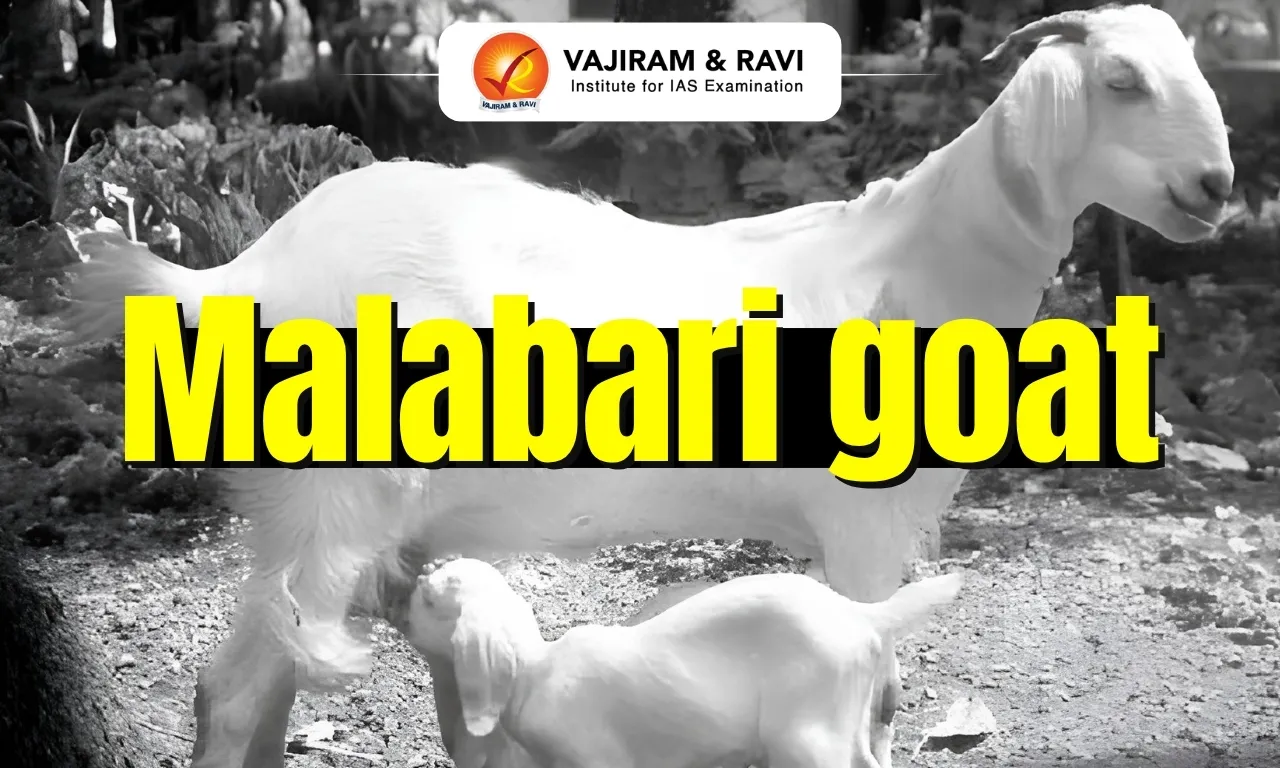
  • Appearance: All males and a small number of females are bearded. They have a medium sized head with a flat and occasionally a Roman nose with medium sized ears directed outward and downward.
    • The animals are medium in size. They have no uniform colour and the coat varies from completely white to black.
  • These goats are reared for milk and meat and their skin is popular in the tanning industry.
  • Milk Yield: The milk yield ranges from 0.5 to 1.5 litres a day with an average of 90 kg in a lactation period of 178 days. 
  • Adaptability: It exhibits exceptional adaptability to humid tropical stressors.
  • The main threat to this goat is the invasion of Boer goats and also goats from other parts of the country to the breeding tract of Malabari resulting in the dilution of the breed.

Key Highlights of the Study

  • These Malabari goats belong to a rare maternal genetic group found in only about 3% of domestic goats globally. 
  • The goats were placed in mitochondrial haplogroup B1, a relatively uncommon lineage among domestic goats. 
  • It also showed close maternal genetic relationships with goats from Oman, Arabia and Gujarat.

Source: TH

Malabari Goat FAQs

Q1: Malabari Goat is native to which Indian state?

Ans: Keralam

Q2: What is unique about Malabari Goat?

Ans: It exhibits exceptional adaptability to humid tropical stressors.

Willingdon Island

Willingdon Island

Willingdon Island Latest News

Diversification of operations and the comprehensive revitalisation of Willingdon Island are essential to unlock the full potential of Cochin Port and boost revenue and employment, a seminar organised by the Cochin Port Employees Organisation (CPEO) has said recently.

About Willingdon Island

  • It is a man-made island in the city of Kochi, Kerala.
  • It is one of the largest man-made islands in India. 
  • History
    • The island was created in 1936 by dredging the soil from the Vembanad Lake, which is the largest lake in Kerala
    • The aim was to create a deep-water port that could accommodate large ships and vessels and to improve the trade and commerce of Kochi. 
    • The project was initiated by Lord Willingdon, the British Viceroy of India, who also gave his name to the island.
    • Designed and created by the harbour engineer Sir Robert Bristow, it is today a massive commercial centre in Kochi.   
  • Apart from its commercial significance, Willingdon Island also hosts several important institutions and facilities. 
    • The Southern Naval Command of the Indian Navy is headquartered here. 
    • It is also home to the Central Institute of Fisheries Technology and the Port of Kochi.
  • The island is connected to the mainland Kochi by the Venduruthy Bridge.

Who was Lord Willingdon (1931 – 1936)?

  • He was a British administrator who served in several high offices of the British Empire. 
  • Positions held in India:
    • Governor of Bombay: 1913–1918
    • Governor of Madras: 1919–1924
    • Viceroy and Governor-General of India: 1931–1936
  • He served as 22nd Viceroy and Governor-General of India from 1931 to 1936. 
  • Major events during his tenure:
    • He succeeded Lord Irwin.
    • His tenure coincided with the Civil Disobedience Movement led by Mahatma Gandhi.
    • Gandhi attended the Second Round Table Conference (1931) in London shortly after Willingdon assumed office.
    • After the failure of the conference, the Civil Disobedience Movement resumed, and the British government adopted a stricter policy toward nationalist leaders.
    • The Communal Award (1932), introduced by British Prime Minister Ramsay MacDonald, was announced during his tenure.
    • The Poona Pact (1932) between Mahatma Gandhi and B. R. Ambedkar also took place during this period.
    • The Government of India Act, 1935, an important constitutional reform that introduced provincial autonomy, was enacted during his tenure.

News: NIE

Willingdon Island FAQs

Q1: Where is Willingdon Island located?

Ans: Kochi, Kerala.

Q2: What type of island is Willingdon Island?

Ans: A man-made island.

Q3: How was Willingdon Island created?

Ans: The island was created in 1936 by dredging the soil from the Vembanad Lake, which is the largest lake in Kerala.

Q4: What was the main objective behind the creation of Willingdon Island?

Ans: To create a deep-water port capable of accommodating large ships and to improve Kochi's trade and commerce.

Q5: Who initiated the project to create Willingdon Island?

Ans: Lord Willingdon, the British Viceroy of India.

GST Impact on Small Business, Benefits, Challenges and GST 2.0 Reforms

GST Impact on Small Businesses

The GST Impact on Small Business has been significant since its introduction in 2017. GST replaced multiple indirect taxes with a unified system, making interstate trade easier and promoting tax transparency, input tax credit and business formalisation. However, small businesses also face challenges such as compliance costs, technology dependence and working capital pressure

GST Impact on Small Businesses in India

GST has changed the way small businesses manage taxation, pricing, accounting, procurement and interstate trade. Its impact has been particularly visible in the shift towards digital record-keeping and formal business practices. 

  • Wider Tax Base: Since Goods and Services Tax  (GST) was introduced on 1 July 2017, the number of registered taxpayers has increased significantly. The taxpayer base grew from around 66.5 lakh in 2017 to 1.65 crore in May 2026, showing the expansion of formal tax registration among businesses.
  • Higher GST Collections: Gross GST collections increased from about ₹7.4 lakh crore in 2017-18 to around ₹13.76 lakh crore in 2021-22 and further to approximately ₹22.27 lakh crore in 2025-26. GST collections during April-May 2026 stood at around ₹4.37 lakh crore.
  • Unified Tax System: GST subsumed 17 central and state taxes and 13 cesses, creating a more integrated indirect tax framework. This reduced the need for businesses to deal with multiple indirect tax systems.
  • Digitalisation of Business: GST has increased the use of online registration, return filing, e-invoicing and digital payments, encouraging small businesses to maintain better financial and transaction records. This has improved transparency but has also increased the need for digital knowledge and proper accounting systems.
  • Support for Small Businesses: Measures such as higher exemption thresholds, the Composition Scheme, quarterly return filing and NIL return filing through SMS have helped reduce compliance pressure for eligible small taxpayers.
  • Input Tax Credit: Businesses can claim Input Tax Credit (ITC) on eligible purchases and inputs, subject to GST rules and conditions. This helps reduce the cascading effect of taxes and can lower the effective tax cost.
  • Greater Formalisation: GST registration, digital invoicing and online return filing have encouraged small businesses to maintain more systematic financial records. This can also improve their ability to demonstrate business turnover and financial activity to formal lenders.
  • Different Impact Across Businesses: The impact of GST is not the same for every small business. It depends on the sector, turnover, type of customers, use of inputs, eligibility for ITC and the business's ability to manage digital compliance.

Positive Impact of GST on Small Businesses

GST has provided several benefits to small businesses by reducing tax fragmentation, improving market integration and supporting more transparent business practices. 

  • Easier Interstate Trade: GST has reduced the complexity associated with multiple state-level indirect taxes, making it easier for small businesses to sell goods and services across state borders.
  • Business Formalisation: The rise in registered taxpayers from 66.5 lakh to 1.65 crore also reflects the growing formalisation of businesses under the GST system.
  • Improved Supply Chains: GST has encouraged businesses to review warehouse and distribution networks based more on business efficiency rather than state-wise tax considerations.
  • Simplified Indirect Tax Structure: GST brought several indirect taxes under one broad framework. This reduced the complexity created by different central and state tax systems and made tax administration more standardised.
  • Reduction in Tax Cascading: The availability of Input Tax Credit helps businesses offset eligible taxes paid on inputs against their output tax liability. This reduces the problem of tax being charged repeatedly through the supply chain.
  • Composition Scheme: Eligible small taxpayers can use the GST Composition Scheme, which provides a simpler compliance mechanism subject to prescribed conditions. It can reduce the compliance burden for businesses that meet the eligibility requirements.
  • Better Record-Keeping: GST has encouraged businesses to maintain proper invoices, purchase records and sales records. This has improved transparency and can make financial management more organised.

GST 2.0 and Its Impact on Small Businesses

The Next-Generation GST reforms, often referred to as GST 2.0, have further simplified the GST rate structure and introduced measures aimed at reducing compliance and tax-related difficulties. The major rate changes recommended by the 56th GST Council meeting took effect from 22 September 2025, with the structure moving mainly towards 5% and 18% rates, along with a 40% special rate for specified luxury and sin goods.

  • Simpler Rate Structure: The reduction in the number of major rate slabs is intended to make GST easier to understand and reduce classification-related disputes.
  • Lower Rates in Selected Sectors: Rationalisation of GST rates for selected goods and services can reduce tax costs for businesses operating in affected sectors.
  • Support for MSMEs: Easier registration, return filing and refund processes are intended to reduce procedural difficulties for MSMEs and other taxpayers.
  • Correction of Tax Distortions: GST reforms also aim to address inverted duty structures, where the tax paid on inputs can be higher than the tax applicable to the final output.
  • Technology-Based Administration: Greater use of GSTN, e-invoicing, data analytics and automated validation is expected to strengthen compliance while reducing manual errors.

Sector-Wise Impact of GST on Small Businesses

The effect of GST differs across sectors because businesses have different tax structures, input requirements and compliance capacities.

  • Manufacturing: GST has helped manufacturers benefit from ITC and more integrated supply chains. However, compliance requirements and working capital pressures can remain concerns for smaller manufacturers.
  • Agriculture and Agri-Business: Most agricultural produce is outside or exempt from GST, while several agricultural inputs are subject to GST at applicable rates. GST has also improved documentation and transparency in parts of the agricultural supply chain. However, small producers may face digital and awareness-related challenges.
  • Services: GST replaced the earlier service tax system and created a common framework for taxing services. Service providers can benefit from eligible ITC, but compliance requirements can be challenging for smaller service businesses.
  • Retail: Retail businesses benefit from a more integrated national market and ITC mechanisms. At the same time, maintaining proper invoices and records adds to their compliance responsibilities.
  • Banking and Financial Services: GST applies to several taxable financial services, including applicable service charges and fees. Digital compliance and centralised processes have increased transparency, although the tax treatment of financial services can remain relatively complex.

GST Compliance Requirements for Small Businesses

Small businesses need to maintain proper records and follow applicable GST requirements to avoid notices, penalties and disruption in cash flows.

  • Maintain Accurate Invoices: Sales and purchase invoices should contain the required GST details and should be recorded correctly.
  • File Returns on Time: Businesses registered under GST must comply with the applicable return-filing requirements based on their registration and tax scheme.
  • Reconcile Transactions: Businesses should regularly reconcile their sales and purchase records with relevant GST statements to identify discrepancies and protect eligible ITC claims.
  • Monitor Suppliers: Businesses should maintain proper communication with suppliers and ensure that invoices are correctly issued and reported.
  • Use GST-Compliant Software: Accounting and invoicing software can help automate calculations, maintain records and reduce manual errors.
  • Train Employees: Regular training can help business owners and employees understand changes in GST rules and avoid procedural mistakes.

Challenges of GST for Small Businesses

Despite its benefits, GST can create difficulties for small businesses, particularly those with limited financial and technological resources.

  • Compliance Burden: Regular return filing, invoice management, reconciliation and keeping track of GST rules can require considerable time and effort. Small businesses may need professional accounting or tax support.
  • Digital Dependence: GST compliance is largely technology-driven. Businesses that previously relied on paper-based records may face difficulties in adapting to online registration, return filing, e-invoicing and other digital processes.
  • Higher Compliance Costs: Small businesses may have to spend on accounting software, professional services and staff training to maintain GST compliance. These costs can be significant for micro and small enterprises.
  • Working Capital Pressure: Delays or mismatches relating to eligible ITC and refunds can affect cash flows. Businesses with limited working capital may find such delays particularly difficult to manage.
  • Frequent Procedural Changes: GST rules, notifications and compliance requirements have evolved regularly. Keeping up with these changes can be challenging for small business owners who do not have dedicated tax teams.
  • Invoice and ITC Reconciliation: Errors in invoices or differences between supplier and recipient records can create reconciliation problems and may affect the availability of eligible ITC.
  • Complexity in Classification: Even after rate rationalisation, differences in product classification, exemptions and special provisions can lead to disputes.
  • Excluded Items: Alcohol for human consumption remains outside GST, while the five petroleum products are not currently subject to GST. Their inclusion would require decisions by the GST Council and would also have significant revenue implications for States.

Measures to Improve GST Compliance for Small Businesses

Further reforms can make GST easier for small businesses while maintaining revenue and compliance objectives.

  • Simplify Procedures: Compliance requirements should remain simple and proportionate to the size and turnover of small businesses.
  • Improve Digital Support: Better GST helpdesks, training and regional-language support can help small businesses adapt to digital compliance.
  • Speed Up Refunds: Faster and predictable refund processing can reduce working capital pressure, particularly for exporters and businesses affected by inverted duty structures.
  • Strengthen Dispute Resolution: A fully functional GST Appellate Tribunal can help provide a more effective mechanism for resolving GST-related disputes. The GST Council had recommended its operationalisation for accepting appeals and beginning hearings in 2025.
  • Reduce Classification Disputes: Clearer rules and consistent interpretations can reduce litigation and improve certainty for businesses.
  • Stable Tax Policies: Predictable GST rules and adequate transition time for major changes can help small businesses plan their finances and operations better.

GST Impact on Small Businesses FAQs

Q1: What is the GST impact on small businesses?

Ans: GST has created a unified tax framework, improved interstate trade and encouraged digital record-keeping and formalisation. However, compliance costs and technology requirements remain challenges.

Q2: How has GST benefited small businesses in India?

Ans: GST has helped small businesses through Input Tax Credit, easier interstate trade, reduced tax cascading, better record-keeping and greater market access.

Q3: What are the major challenges of GST for small businesses?

Ans: The main challenges include compliance burden, digital dependence, accounting costs, working capital pressure, ITC reconciliation and frequent procedural changes.

Q4: How does GST help small businesses expand their market?

Ans: GST provides a common tax framework across states, making interstate sales and business expansion easier by reducing the complexity of dealing with multiple state-level indirect tax systems.

Q5: What is the role of Input Tax Credit for small businesses?

Ans: Input Tax Credit (ITC) allows eligible businesses to offset GST paid on inputs against their output tax liability, helping reduce the cascading effect of taxes.

Melanoma

Melanoma

Melanoma Latest News

Melanoma, in India, most commonly presents on the soles of the feet or beneath the nails, sites that are rarely examined and even more rarely associated with cancer. 

About Melanoma

  • Melanoma is a kind of skin cancer that starts in the melanocytes.
    • Melanocytes are cells that make the pigment that gives skin its color. The pigment is called melanin.
  • It typically starts on skin that’s often exposed to the sun. This includes the skin on the arms, back, face and legs.
  • Rarely, it can happen inside the body, such as in the nose or throat.

Cause of Melanoma

  • The exact cause of all melanomas isn’t clear.
  • Most melanomas are caused by exposure to ultraviolet light. Ultraviolet light, also called UV light, comes from sunlight or tanning lamps and beds.

Symptoms of Melanoma

  • A change in an existing mole.
  • The development of a new pigmented or unusual-looking growth on the skin.
  • It doesn’t always begin as a mole. It also can happen on otherwise healthy skin.

Treatments for melanoma

  • Melanoma Surgery: In the early stages, surgery has a high probability of being able to cure melanoma.
  • Lymphadenectomy: In cases where melanoma has spread, removal of the lymph nodes near the primary diagnosis site may be required.
  • Metastasectomy: It is used to remove small melanoma bits from organs.

Source: TH

Melanoma FAQs

Q1: What is Melanoma?

Ans: Melanoma is a kind of skin cancer that starts in the melanocytes.

Q2: What are Melanocytes?

Ans: Melanocytes are cells that make the pigment that gives skin its color. The pigment is called melanin.

Gangotri Glacier, Location, River, Melting, Retreat, Significance

Gangotri Glacier

Gangotri Glacier is one of the largest glaciers in the Indian Himalayas and an important source of the Ganges river system. It lies in Uttarkashi district of Uttarakhand in the Garhwal Himalayas near the Tibet border. The glacier originates below the Chaukhamba range and feeds the Bhagirathi River through its snout at Gaumukh. Its retreat and changing meltwater pattern are important indicators of Himalayan climate and water changes.

Gangotri Glacier

Gangotri Glacier is a valley type glacier in the Greater Himalaya with major tributaries, high peaks and a direct hydrological connection with the Bhagirathi River.

  • Location: Gangotri Glacier is situated in Uttarkashi district of Uttarakhand in the Garhwal Himalayas. It lies in a region bordering Tibet and forms part of the upper Ganga basin.
  • Origin: Gangotri Glacier originates in a cirque below Chaukhamba and flows roughly northwest. 
  • Height: Its elevation extends from about 4,120 metres to nearly 7,000 metres above sea level.
  • Mountain range: The glacier belongs to the Greater Himalayan zone of the Garhwal Himalayas. Its head region is associated with the Chaukhamba massif and surrounding high peaks.
  • Surrounding peaks: Important peaks around the glacier include Chaukhamba, Kedar Dome, Shivling, Thalay Sagar, Meru and Bhagirathi III. Chaukhamba rises to about 7,138 metres.
  • Gaumukh: The terminus of Gangotri Glacier is called Gaumukh or Gomukh. The name means cow's mouth because the glacier's snout resembles the mouth of a cow.
  • Drainage: The Bhagirathi River emerges from Gaumukh. It later meets the Alaknanda River at Devprayag, where the combined river is known as the Ganga River (Ganges).
  • Tributaries: Major tributaries include Raktvarn, Chaturangi and Kirti. Raktvarn is 15.90 kilometres long, Chaturangi including Kalindi Bamak is 22.45 kilometres and Kirti is 11.05 kilometres.
  • Gangotri Glacier System: The GGS includes Meru, Raktavaran, Chaturangi and Gangotri Glaciers. Their areas are 7, 30, 75 and 140 square kilometres respectively, with the system spanning 549 square kilometres.

Gangotri Glacier Environment and Ecology

The environmental and ecological features of the Gangotri Glacier has been listed below:

  • Climate setting: The Gangotri Glacier System receives winter precipitation from western disturbances during October to April. The Indian summer monsoon provides precipitation mainly during May to September.
  • Hydrological study: A study titled “Hydrological Contributions of Snow and Glacier Melt from the Gangotri Glacier System and Their Climatic Controls Since 1980” reconstructed discharge trends from 1980 to 2020.
  • Discharge pattern: The study estimated mean annual discharge at 28±1.9 m³/s. Summer produces the highest discharge, with the peak reaching 129 m³/s in July.
  • Meltwater contribution: Snowmelt contributes 64% of annual discharge. Glacier melt contributes 21%, rainfall runoff contributes 11% and base flow contributes 4%.
  • Changing discharge: After 1990, the discharge peak shifted from August to July. Reduced winter precipitation and stronger early summer melting were linked with this change.
  • Recent monitoring: Scientists installed a non contact Automatic Water Level and Velocity Sensor about 35 kilometres downstream of Gomukh. It continuously measures Bhagirathi water level and flow velocity.
  • Monitoring network: The Gomukh region has two automatic weather stations, one water level recorder and two broadband seismic stations. These instruments provide real time information on weather, seismic activity and glacier behaviour.

Also Read: Gangotri Glacier Study Reveals 10% Snowmelt

Gangotri Glacier Retreat

Gangotri Glacier has shown long term retreat, while recent research also indicates important changes in snowmelt and seasonal discharge under a warming climate.

  • Long term retreat: Measurements show that Gangotri Glacier has been retreating for a long period. Data from 1936 to 1996 recorded 1,147 metres of total recession at an average rate of 19 metres annually.
  • Recent recession: Over the last 25 years, the glacier has retreated by more than 850 metres. This corresponds to an average retreat rate of about 34 metres per year.
  • Historical trend: Between 1996 and 1999, Gangotri Glacier retreated 76 metres, giving an average annual rate of about 25 metres during that period.
  • Snowmelt decline: A recent study by IIT Indore and international collaborators found that Gangotri Glacier has lost 10% of its snowmelt flow over four decades because of climate change.
  • Changing discharge: The study found that snowmelt has declined because of shrinking snow cover. Rainfall runoff and base flow have increased, changing the seasonal pattern of water contribution.
  • Climate influence: Mean annual temperatures have increased in the study period. The analysis found no significant trend in precipitation or glacier melt, while summer precipitation remained the main driver of annual discharge.
  • Extreme rainfall: The findings are relevant to changing rainfall conditions in North India. Summer monsoon rainfall from June to August has recorded 25% excess rainfall, increasing flood risks in Himalayan regions.
  • Monitoring challenge: Instrument installation remains difficult because of unstable Himalayan terrain. A similar device installed in 2024 was washed away by a flash flood.

Gangotri Glacier Significance

Gangotri Glacier is important for Himalayan water security, river systems, climate monitoring, religious traditions and understanding environmental changes in glacier fed regions.

  • Religious importance: 
    • Gangotri Dham has major religious importance in Hinduism
    • Gaumukh is regarded as the physical and sacred source of the Ganges and attracts pilgrims who trek through the Himalayan terrain. 
    • Gangotri town is associated with the Chota Char Dham tradition, while Tapovan and Nandanvan also have long standing religious importance. 
    • The route from Gangotri to Gaumukh passes through Devgadh, Chirbhasa and Bhojwasa. 
    • The 2013 North Indian Floods damaged the trail and made access beyond Chirbhasa more difficult.
  • Water resource: Changes in Gangotri Glacier melt and discharge can influence water availability and seasonal river flow. These changes are important for ecosystems and livelihoods dependent on Himalayan rivers.
  • Climate indicator: Gangotri Glacier provides a useful location for studying climate related changes in snow cover, glacier melt and river discharge because its smaller system allows more focused hydrological assessment.
  • Scientific monitoring: The Long term Monitoring of Gangotri Glacier, Garhwal Himalaya initiative supports continuous observation. The initiative is supported by the Uttarakhand State Disaster Management Authority.
  • Environmental importance: The Gangotri Glacier System contains interconnected glaciers and high altitude ecosystems. Its changing snow and water conditions provide important evidence about wider environmental changes across the central Himalayas.
  • Future concern: Continued monitoring of Gangotri Glacier can improve understanding of changing discharge, rainfall, snowmelt and glacier behaviour. Such information is important for better water resource planning and disaster preparedness.

Gangotri Glacier FAQs

Q1: Gangotri Glacier is located in which State?

Ans: Gangotri Glacier is located in Uttarakhand, India, in the Uttarkashi district of the Garhwal Himalayas near the Tibet border.

Q2: What is the source of Gangotri Glacier?

Ans: Gangotri Glacier originates below the Chaukhamba range and its snout at Gaumukh is the source of the Bhagirathi River.

Q3: Why is Gangotri Glacier Famous?

Ans: Gangotri Glacier is famous as a major source of the Bhagirathi River and for its religious importance, with Gaumukh regarded as the sacred source of the Ganges.

Q4: What is Gaumukh in Gangotri Glacier?

Ans: Gaumukh is the snout of Gangotri Glacier. It is named for its cow mouth like appearance and marks the emergence point of the Bhagirathi River.

Q5: Is Gangotri Glacier retreating?

Ans: Yes, Gangotri Glacier has been retreating for decades. Recent research also shows a 10% decline in its snowmelt flow over four decades due to climate change.

Celiac Disease

Celiac Disease

Celiac Disease Latest News

Celiac disease, traditionally regarded as a childhood disorder, is increasingly being diagnosed among adults and the elderly, with doctors at the PGIMS, Rohtak, reporting a growing number of atypical cases.

About Celiac Disease

  • Celiac disease is an autoimmune disease that causes your body to react to a protein called gluten. 
    • Gluten is a protein found in wheat, barley, rye, and other grains
    • It may also be in other products like vitamins and supplements, hair and skin products, toothpastes, and lip balm. 
  • When people with celiac disease eat gluten, it triggers an abnormal response from your immune system. 
  • Your immune system attacks the gluten in your digestive system, causing inflammation. 
  • This inflammation damages the inside of your small intestine. 
  • The damage may prevent your body from absorbing vitamins, minerals, and other nutrients from the food you eat. 
  • Without treatment, celiac disease can lead to malabsorption and malnutrition. 
  • Malnutrition has many serious side effects, especially in children. Children with celiac disease may have growth and development delays. 
  • The condition is also known as celiac sprue, nontropical sprue, or gluten-sensitive enteropathy. 

What Causes Celiac Disease?

  • The exact cause of celiac disease is not known. 
  • Research suggests that celiac disease only happens in people who have certain genes and eat food that contains gluten. 
  • Researchers are studying other factors that may play a role in causing the disease.

Celiac Disease Symptoms

  • Signs and symptoms of celiac disease can appear at any age. Healthcare providers most often see it develop during two clear age windows:
    • Early childhood, between 8 and 12 months old (when children may begin eating solid foods with gluten in them, like crackers or cereals)
    • Midlife, between the ages of 40 and 60
  • Celiac disease symptoms vary widely. Some people don’t notice any symptoms at all. 
  • Some experience indigestion or other GI symptoms after eating gluten. 
  • Others only begin to see signs of nutrient deficiencies later, when significant damage has been done.
  • Gastrointestinal (digestive) symptoms of celiac disease may include:
    • Stomach pain
    • Bloating
    • Gas
    • Diarrhea
  • Nondigestive symptoms may include:
    • Paleness
    • Extreme tiredness
    • Cold hands
    • Indented (concave) nails
    • Dental enamel defects
    • Abnormal periods
    • Trouble getting pregnant
    • Irritability or depression
    • Unexplained weight loss
    • Growth faltering in children
  • Some people with celiac disease develop a condition called dermatitis herpetiformis. This is an itchy rash that looks like clusters of bumps or blisters. It affects your elbows, knees, butt, and scalp.

Is Celiac Disease serious?

  • While celiac disease itself isn't usually life-threatening, it can lead to serious complications and symptoms if it's not managed. 
  • Untreated celiac disease also raises your risk for some types of cancer. 

Celiac Disease Treatment

  • The only treatment for celiac disease is strict adherence to a gluten-free diet for life. 
  • Sticking with a gluten-free diet will treat or prevent many of the symptoms and other health problems caused by celiac disease. 
  • In most cases, it can also heal damage in the small intestine and prevent more damage.

News: TRIB

Celiac Disease FAQs

Q1: What is celiac disease?

Ans: Celiac disease is an autoimmune disease in which the body reacts abnormally to gluten.

Q2: What happens when a person with celiac disease consumes gluten?

Ans: It triggers an abnormal immune response that causes inflammation and damages the small intestine.

Q3: Which part of the digestive system is primarily damaged by celiac disease?

Ans: The small intestine.

Q4: How does celiac disease affect nutrient absorption?

Ans: Damage to the small intestine can reduce the absorption of vitamins, minerals and other nutrients.

Q5: What are the common gastrointestinal symptoms of celiac disease?

Ans: Stomach pain, bloating, gas and diarrhea.

Tropic of Capricorn, Location, Countries, Climate, Significance

Tropic of Capricorn

Tropic of Capricorn is an important imaginary line of latitude located at approximately 23.5° south of the Equator. It marks the southernmost latitude where the Sun can appear directly overhead at noon. The Tropic of Capricorn passes through parts of South America, Africa, Madagascar and Australia and has great significance for understanding the Earth’s seasons, climate and geographical divisions.

Countries Through Which the Tropic of Capricorn Passes

The Tropic of Capricorn passes through 10 countries across four major regions: South America, Africa, Madagascar and Australia.

Countries Through Which the Tropic of Capricorn Passes

Region

Countries

South America

Chile, Argentina, Paraguay, Brazil

Africa

Namibia, Botswana, South Africa, Mozambique

Indian Ocean

Madagascar

Oceania

Australia

Countries in South America

The Tropic of Capricorn crosses Chile, Argentina, Paraguay and Brazil. It passes through several important landscapes, including parts of the Atacama Desert and the agricultural and grassland regions of South America.

Countries in Africa

In Africa, the Tropic of Capricorn passes through Namibia, Botswana, South Africa and Mozambique. The region includes dry areas, savannas and parts of the Kalahari Desert.

Madagascar

The Tropic of Capricorn crosses Madagascar, an island country located in the Indian Ocean off the southeastern coast of Africa.

Australia

In Australia, the Tropic of Capricorn crosses the mainland from the western coast to the eastern coast. It passes through the northern part of Queensland and crosses areas with tropical, subtropical and dry climates.

Tropic of Capricorn and the Earth’s Axial Tilt

The position of the Tropic of Capricorn is closely related to the tilt of the Earth's axis.

The Earth rotates around an imaginary axis that is tilted by about 23.5° from the perpendicular to its orbital plane. Because of this tilt, the Sun's direct rays appear to move between approximately 23.5°N and 23.5°S during the year.

The northern limit is called the Tropic of Cancer, while the southern limit is called the Tropic of Capricorn.

This axial tilt is responsible for important geographical phenomena such as:

  • Change of seasons
  • Variation in the length of day and night
  • Solstices
  • Equinoxes
  • Seasonal movement of the Sun's apparent position

Tropic of Capricorn and the Southern Hemisphere

The Tropic of Capricorn is an important line of latitude in the Southern Hemisphere, located at approximately 23.5°S, and marks the southernmost limit where the Sun can appear directly overhead.

  • Lies entirely in the Southern Hemisphere.
  • Forms the southern boundary of the tropical zone.
  • The region between the Equator and Tropic of Capricorn experiences tropical conditions.
  • The Sun is directly overhead at the Tropic of Capricorn around the December Solstice.
  • It influences the distribution of seasons, solar radiation and climate in the Southern Hemisphere.
  • Areas south of the Tropic generally experience subtropical and temperate climates as latitude increases.
  • It passes through parts of South America, Africa, Madagascar and Australia.

Tropic of Capricorn and the Summer Solstice

Tropic of Capricorn is closely associated with the December Solstice, when the Sun’s direct rays fall vertically over approximately 23.5°S latitude, marking the beginning of summer in the Southern Hemisphere.

  • The December Solstice usually occurs on 21 or 22 December.
  • The Sun’s direct rays fall on the Tropic of Capricorn around this time.
  • It marks the longest day and shortest night in the Southern Hemisphere.
  • It marks the shortest day and longest night in the Northern Hemisphere.
  • The Southern Hemisphere begins its astronomical summer around the December Solstice.
  • The Northern Hemisphere experiences its winter solstice at the same time.
  • The position of the Tropic of Capricorn is linked to the 23.5° axial tilt of the Earth.
  • After the December Solstice, the Sun’s direct rays gradually move northward towards the Equator.

Climate Along the Tropic of Capricorn

Tropic of Capricorn passes through diverse climatic regions, with many areas experiencing hot, dry or semi-arid conditions, while local climate is also influenced by ocean currents, relief and distance from the sea.

  • Subtropical High Pressure: Descending air in the subtropical high-pressure belt limits cloud formation and rainfall, contributing to dry conditions.
  • Desert Climate: The Tropic passes through or near major dry regions, including the Atacama Desert, Kalahari region and deserts of central Australia.
  • Seasonal Rainfall: Some areas receive seasonal rainfall, supporting grasslands, savannas and agricultural activities.
  • Ocean Currents: Cold ocean currents can reduce evaporation and rainfall, particularly along western coastal regions such as the Atacama area.
  • Effect of Mountains: Mountain ranges such as the Andes influence rainfall through orographic effects and rain-shadow conditions.
  • Continental Influence: Inland areas generally have low rainfall and greater temperature variations compared with coastal regions.
  • Temperature: Most areas experience warm to hot summers, while inland regions can have significant seasonal and day-night temperature variations.
  • Varied Vegetation: Climate supports different vegetation types, from desert shrubs and xerophytes in dry regions to grasslands, savannas and forests in areas receiving greater rainfall.

Tropic of Capricorn vs Tropic of Cancer

Tropic of Capricorn and Tropic of Cancer are major circles of latitude located at approximately 23.5° south and 23.5° north of the Equator, respectively, and together mark the southern and northern limits of the tropical zone.

Tropic of Capricorn vs Tropic of Cancer

Feature

Tropic of Capricorn

Tropic of Cancer

Latitude

Approximately 23.5°S

Approximately 23.5°N

Hemisphere

Southern Hemisphere

Northern Hemisphere

Tropical Zone

Southern boundary

Northern boundary

Associated Solstice

December Solstice

June Solstice

Sun Directly Overhead

Around 21-22 December

Around 20-21 June

Summer Season

Southern Hemisphere

Northern Hemisphere

Countries/Regions

Passes through parts of South America, Africa, Madagascar and Australia

Passes through parts of North America, Africa and Asia

Importance

Helps explain Southern Hemisphere seasons and solar patterns

Helps explain Northern Hemisphere seasons and solar patterns

Tropic of Capricorn vs Equator

Tropic of Capricorn and the Equator are important lines of latitude used to understand the Earth’s geographical divisions, climate and solar patterns. The Equator lies at 0° latitude, while the Tropic of Capricorn lies at approximately 23.5°S.

Tropic of Capricorn vs Equator

Feature

Tropic of Capricorn

Equator

Latitude

Approximately 23.5°S

Location

Southern Hemisphere

Divides the Northern and Southern Hemispheres

Geographical Role

Southern boundary of the tropical zone

Divides Earth into two hemispheres

Sun Overhead

Around the December Solstice

Approximately twice a year, during the equinoxes

Climate

Mostly tropical and subtropical conditions around its region

Predominantly hot and humid tropical climate

Length

Approximately 36,800 km

Approximately 40,075 km

Importance

Helps explain seasons, solstices and solar radiation

Serves as the reference line for measuring latitude

Regions Crossed

South America, Africa, Madagascar and Australia

South America, Africa and Southeast Asia/Oceania

Tropic of Capricorn FAQs

Q1: What is the Tropic of Capricorn?

Ans: Tropic of Capricorn is an imaginary line of latitude located at approximately 23.5° south of the Equator.

Q2: Why is the Tropic of Capricorn important?

Ans: It marks the southernmost latitude where the Sun can be directly overhead and helps in understanding the Earth's seasons, tropical zone and climate.

Q3: How many countries does the Tropic of Capricorn pass through?

Ans: The Tropic of Capricorn passes through 10 countries: Chile, Argentina, Paraguay, Brazil, Namibia, Botswana, South Africa, Mozambique, Madagascar and Australia.

Q4: Which hemisphere is the Tropic of Capricorn located in?

Ans: It is located in the Southern Hemisphere.

Q5: When is the Sun directly overhead at the Tropic of Capricorn?

Ans: The Sun is approximately overhead at the Tropic of Capricorn around 21–22 December, during the December solstice.

5th Swachh Vayu Sarvekshan Award 2026, Lucknow Tops, Rankings

5th Swachh Vayu Sarvekshan 2026

Swachh Vayu Sarvekshan 2026 has been released under the National Clean Air Programme (NCAP). Lucknow topped the ranking among cities with a population of more than 10 lakh, scoring 198 out of 200 points. Indore secured second place, followed by Jabalpur.

The survey also highlighted improvement in particulate pollution across several Indian cities. Out of 130 cities, 108 recorded an improvement in PM10 levels compared with their 2017-18 baseline.

What is Swachh Vayu Sarvekshan?

Swachh Vayu Sarvekshan is an annual assessment conducted to evaluate the air quality management efforts of cities in India. It is implemented under the National Clean Air Programme (NCAP) to encourage cities to take effective measures to control air pollution. The survey assesses actions related to vehicular emissions, road dust, construction activities, waste burning and industrial pollution. It also promotes healthy competition among cities and highlights successful clean-air practices that can be adopted by other cities.

Swachh Vayu Sarvekshan 2026 Ranking

Swachh Vayu Sarvekshan 2026 Ranking assesses cities based on their air pollution control measures, air-quality improvement and implementation of clean-air action plans under the National Clean Air Programme (NCAP).

Category I: Population Above 10 Lakh

Lucknow's first-place position is particularly significant because it moved from 15th position in the previous assessment to first place.

Swachh Vayu Sarvekshan 2026: Category-I Cities Population Above 10 Lakhs

Sl. No.

City/Town

Final Score

Rank

1

Lucknow

198

1

2

Indore

197

2

3

Jabalpur

195

3

4

Bhopal

192

4

5

Agra

192

4

6

Surat

191

5

7

Raipur

189

6

8

Thane

187

7

9

Chandigarh

187

7

10

Rajkot

187

7

11

Ahmedabad

186

8

12

Vijayawada

186

8

13

Ghaziabad

184

9

14

Navi Mumbai

184

9

15

Nagpur

183.8

10

Category II: Population 3-10 Lakh

Rourkela topped this category with a score of 198.5, followed by Firozabad and other cities.

Category III: Population Below 3 Lakh

Kalinga Nagar emerged as the top-performing city with a score of 198.5. Angul, Talcher, Eluru and Haldia were among the other leading cities.

Why Did Lucknow Top Swachh Vayu Sarvekshan 2026?

Lucknow topped the Swachh Vayu Sarvekshan 2026 among cities with more than 10 lakh population, scoring 198 out of 200 points, due to its sustained efforts to control major sources of air pollution and improve urban air-quality management.

  • Waste segregation and collection helped improve municipal waste management.
  • Mechanised road sweeping helped reduce pollution caused by road dust.
  • Electric vehicles were promoted to reduce vehicular emissions.
  • Open waste burning was controlled to prevent additional particulate pollution.
  • Green spaces were expanded to support a cleaner urban environment.
  • Community participation at the local level strengthened clean-air initiatives.
  • PM10 levels also declined significantly compared with the 2017–18 baseline.

PM10 Reduction in Swachh Vayu Sarvekshan 2026

Swachh Vayu Sarvekshan 2026 highlighted a significant improvement in PM10 levels across several Indian cities. Out of 130 cities covered under the National Clean Air Programme, 108 cities recorded lower PM10 concentrations compared with the 2017–18 baseline. As many as 72 cities achieved more than 20% reduction, while 26 cities recorded reductions of more than 40%.

  • 108 out of 130 cities showed improvement in PM10 levels.
  • 72 cities achieved more than 20% reduction in PM10 concentration.
  • 26 cities recorded more than 40% reduction.
  • 14 cities achieved the National Ambient Air Quality Standards (NAAQS) for PM10.
  • Lucknow reduced its annual PM10 concentration substantially, from around 250 µg/m³ in 2017–18 to 137 µg/m³.
  • Lucknow, Rourkela and Kalinga Nagar emerged among the leading cities for PM10 reduction in their respective population categories.
  • The improvement has been supported by measures such as road-dust control, mechanised sweeping, cleaner mobility, waste management and better pollution monitoring.

What is the National Clean Air Programme?

National Clean Air Programme (NCAP) is a government initiative launched in January 2019 to improve air quality in Indian cities by addressing major sources of air pollution through city-specific action plans, monitoring, enforcement and public participation.

  • Launch: The NCAP was launched in 2019 by the Ministry of Environment, Forest and Climate Change (MoEFCC).
  • Main Objective: It aims to achieve better air quality by reducing particulate pollution and strengthening pollution-control measures across cities.
  • Focus on PM10 and PM2.5: The programme gives particular importance to reducing Particulate Matter (PM10 and PM2.5), which are major contributors to poor air quality.
  • Target for Pollution Reduction: The revised NCAP framework targets up to 40% reduction in PM10 concentration or achievement of the National Ambient Air Quality Standards (NAAQS) by 2025–26, compared with the 2017–18 baseline.
  • City-Specific Action Plans: Cities prepare City Action Plans (CAPs) based on their local pollution sources and environmental conditions.
  • Control of Vehicular Pollution: Measures include promoting public transport, cleaner fuels, electric mobility and better traffic management to reduce vehicle emissions.
  • Road Dust Management: Cities undertake measures such as mechanised sweeping, paving of roads and controlling dust from unpaved surfaces.
  • Control of Industrial Emissions: The programme promotes better monitoring and compliance with emission standards for industries.
  • Construction and Demolition Dust: Cities are encouraged to adopt measures to control dust generated by construction and demolition activities.
  • Waste Management: Improving waste collection, segregation, processing and disposal helps reduce pollution caused by open waste burning.
  • Strengthening Monitoring: NCAP supports the expansion and improvement of air-quality monitoring systems to generate better pollution data.
  • Performance-Based Approach: Cities are assessed based on their air-quality improvement and implementation of pollution-control measures, encouraging healthy competition among urban areas.
  • Public Participation: The programme promotes awareness, citizen participation and behavioural changes to support cleaner air.

Major Sources of Air Pollution in Indian Cities

Air pollution in Indian cities comes from several transport, industrial, construction, waste and natural sources. The contribution of each source varies from city to city depending on local activities, weather conditions and urban development.

  1. Vehicular Emissions: Cars, buses, trucks, two-wheelers and other vehicles release pollutants such as PM2.5, nitrogen oxides (NOx) and carbon monoxide (CO), especially in areas with heavy traffic.
  2. Road Dust: Dust from unpaved roads, traffic movement, damaged road surfaces and roadside soil is an important source of particulate pollution, particularly PM10.
  3. Construction and Demolition Activities: Construction sites, demolition work and the transportation of construction materials can generate large amounts of dust and particulate matter.
  4. Industrial Emissions: Factories, power plants, brick kilns and other industrial units can release particulate matter, sulphur dioxide (SO₂), nitrogen oxides and other pollutants.
  5. Open Burning of Waste: Burning municipal waste, plastics and other materials in the open releases harmful gases and fine particulate matter into the atmosphere.
  6. Biomass and Solid-Fuel Burning: Burning wood, crop residue, coal and other solid fuels for cooking, heating or agricultural purposes can contribute significantly to air pollution.
  7. Diesel Generator Sets: Diesel generators used during power interruptions or at commercial and construction sites emit particulate matter and gaseous pollutants.
  8. Agricultural Residue Burning: Crop-residue burning, particularly during certain seasons, can release large quantities of smoke and particulate matter and affect air quality in nearby cities.

Swachh Vayu Sarvekshan 2026 Significance

Swachh Vayu Sarvekshan 2026 is significant as it evaluates how effectively Indian cities are implementing measures to control air pollution and improve air quality. It encourages cities to adopt better pollution-control practices and provides recognition to those showing strong performance.

  • Encourages healthy competition: The ranking motivates cities to compete for better air-quality management and improve their performance.
  • Measures city-level efforts: It assesses actions taken to control vehicular emissions, road dust, construction dust, industrial pollution and waste burning.
  • Supports NCAP: The survey strengthens the implementation of the National Clean Air Programme (NCAP) by tracking progress at the city level.
  • Highlights successful practices: Cities performing well can provide best practices and innovative solutions that other cities can adopt.
  • Focuses on measurable improvement: The assessment considers improvements in air pollution levels, particularly PM10 concentrations, along with pollution-control measures.
  • Promotes better urban management: It encourages improvements in waste management, road cleaning, public transport and dust control.
  • Strengthens public awareness: Rankings and clean-air initiatives increase awareness about the importance of clean air and pollution reduction.
  • Encourages local participation: Urban local bodies, government agencies and citizens are encouraged to work together for cleaner and healthier cities.

Swachh Vayu Sarvekshan 2026 FAQs

Q1: What is Swachh Vayu Sarvekshan 2026?

Ans: Swachh Vayu Sarvekshan 2026 is an annual assessment that ranks cities based on their efforts to improve air quality and reduce air pollution under the National Clean Air Programme.

Q2: Which city topped Swachh Vayu Sarvekshan 2026?

Ans: Lucknow topped the category of cities with a population above 10 lakh, scoring 198 out of 200 points.

Q3: Which city ranked second in Swachh Vayu Sarvekshan 2026?

Ans: Indore ranked second among cities with a population above 10 lakh, with 197 points.

Q4: Which city ranked third?

Ans: Jabalpur ranked third among million-plus cities with 195 points.

Q5: Which city topped the 3-10 lakh population category?

Ans: Rourkela topped the category of cities having a population between 3 lakh and 10 lakh.

BRICS and the Global South – Building Resilience Against the Weaponisation of Technology and Critical Minerals

BRICS and the Global South

BRICS and the Global South Latest News

  • At the concluding session of the BRICS Summit hosted by India, the Indian Prime Minister warned that the weaponisation of technology and critical minerals could undermine collective progress
  • Without naming any country, the remarks come amid concerns over China’s dominant position in critical-mineral processing and restrictions affecting the supply of rare earths and advanced technologies.
  • India’s BRICS chairship centred on four pillars—Resilience, Innovation, Cooperation and Sustainability—with an emphasis on making BRICS a platform for inclusive global growth, particularly for the Global South.

Critical Minerals and Technology

  • Critical minerals are increasingly central to clean energy, electronics, defence, semiconductors and advanced manufacturing. 
  • Excessive concentration of their processing and supply chains creates strategic vulnerabilities.
  • Modi stressed that weaponising technology and critical minerals can hinder shared development. 
  • The New Delhi Declaration consequently called for -
    • Reliable, diversified, resilient and just critical-mineral supply chains.
    • Greater value addition and benefit sharing.
    • Economic diversification in resource-rich countries.
    • Respect for countries’ sovereign rights over their mineral resources.
  • India’s position reflects a broader push for supply-chain diversification, strategic autonomy and technology inclusivity.

BRICS as a Platform for the Global South

  • The Indian PM highlighted the growing confidence of developing countries in BRICS because their voices are heard, experiences respected and solutions developed jointly rather than imposed upon them.
  • This reflects India’s effort to position BRICS as a mechanism for reformed and more representative global governance. 
  • The grouping’s diversity is presented as a strength that can facilitate cooperation among countries with different developmental realities.
  • The emphasis is therefore shifting from merely articulating grievances of the Global South towards creating practical, scalable and accessible solutions.

Four Pillars of India’s BRICS Chairship

  • Resilience:
    • The increasing frequency of conflicts, pandemics, climate disasters and supply-chain disruptions demonstrates the vulnerability of an interconnected world. 
    • Crises originating in one region can rapidly produce global consequences.
    • India highlighted -
      • BRICS Integrated Early Warning System for prevention and response to infectious diseases.
      • Early Warning Data Integration Guidelines for disaster management.
      • BRICS Logistics Supply Chain Cooperation Framework to strengthen reliability and resilience of supply chains.
    • The broader objective is to move from crisis response to anticipatory governance, through early identification, preparedness and prompt action.
  • Innovation:
    • India sought to use innovation for inclusive development through -
      • BRICS Incubator Network to connect start-ups and incubators.
      • BRICS Startup Innovation Fund to promote innovative and scalable solutions.
      • BRICS Network on Digital Agriculture, linking AI, geospatial technology and Digital Public Infrastructure (DPI) with farmers’ needs.
    • This approach seeks to ensure that emerging technologies are not confined to technologically advanced economies but contribute directly to agricultural productivity and livelihoods.
  • Cooperation and wider participation:
    • India stressed that BRICS cooperation should extend beyond governments to entrepreneurs, farmers, researchers, women, youth and ordinary citizens.
    • Key initiatives include - 
      • BRICS CONNECT for skills, employability, women’s workforce participation, social security and capacity building.
      • BRICS MSME Cooperation Portal to connect small enterprises with knowledge, finance and markets.
      • BRICS Urban Mobility Hub for sharing urban best practices.
    • This represents a shift towards people-centric and multi-stakeholder cooperation.
  • Sustainability:
    • India emphasised the need to balance human development with environmental protection, keeping intergenerational equity at the centre of sustainable development.
    • Initiatives include - 
      • BRICS Digital Centre of Excellence for smart grids and energy storage.
      • Centres of Excellence for Agro-Ecology and Regenerative Agriculture, connecting traditional knowledge with modern science.
    • These initiatives seek to make clean-energy systems more reliable, efficient and accessible.

Way Forward

  • As BRICS enters its third decade, its credibility will increasingly depend on translating declarations into concrete, measurable outcomes
  • Priorities should include diversified critical-mineral supply chains, responsible technology governance, resilient logistics, inclusive digitalisation and stronger participation of developing countries.

Conclusion

  • India’s BRICS chairship seeks to transform the grouping from a forum for political coordination into an “ecosystem of solutions”. 
  • Its central challenge is to ensure that technology, critical minerals and economic integration become instruments of shared prosperity rather than geopolitical leverage. 
  • For the Global South, BRICS can contribute most effectively when cooperation remains inclusive, sovereign, sustainable and development-oriented.

Source: ToIHT

BRICS and the Global South FAQs

Q1: How can the weaponisation of critical minerals undermine global economic security?

Ans: It can create strategic dependencies, disrupt clean-energy and high-tech industries, and provide geopolitical leverage.

Q2: What is the significance of India’s emphasis on technology inclusivity within BRICS?

Ans: It seeks to make AI, Digital Public Infrastructure and emerging technologies accessible and adaptable.

Q3: How does the BRICS Integrated Early Warning System strengthen resilience?

Ans: By enabling early identification, data integration, preparedness and coordinated response to infectious diseases and disasters.

Q4: How can BRICS contribute to inclusive growth in the Global South?

Ans: Through technology transfer, resilient supply chains, MSME cooperation, start-up networks, etc.

Q5: Why is balancing human development with environmental sustainability important for BRICS?

Ans: It advances intergenerational equity by promoting clean energy, smart grids, energy storage, etc.

India EU FTA – 1.64 Million Tonne Steel Quota and New EU Import Regime

India EU FTA

India EU FTA Latest News

  • India has secured country-specific tariff-rate quotas (TRQs) of about 1.64 million tonnes of steel products annually under its proposed Free Trade Agreement (FTA) with the European Union (EU).

About Tariff-Rate Quota

  • A Tariff-Rate Quota (TRQ) is a trade policy instrument that allows a specified quantity of a product to enter a market at a preferential or lower tariff rate. Imports beyond the specified quota are subject to a higher tariff.
  • In the India–EU arrangement, country-specific quotas provide Indian steel exporters with defined access to the EU market. 
  • Steel exported outside the applicable quota will face the duties prescribed under the EU's new steel regime.
  • TRQs therefore combine market access with domestic industry protection.

India's Steel Quota under the FTA

  • India has secured a total country-specific quota of 1,641,470 tonnes annually. This comprises:
    • 946,616 tonnes under the Most Favoured Nation (MFN) component
    • 694,853 tonnes under the FTA component
  • India currently exports approximately 4 million tonnes of steel annually to the EU, making the quota an important consideration for the country's steel industry.
  • The negotiated access is particularly significant because steel imports entering the EU outside the applicable quotas will attract a 50% tariff under the new regime.

EU's New Steel Import Regime

  • The EU's new Steel Regulation came into force on July 1, 2026. 
  • It replaced the temporary safeguard measures introduced in 2018, which expired in June 2026, after reaching the maximum eight-year period permitted for temporary safeguards under World Trade Organisation (WTO) rules.
  • The new regime seeks to protect the European steel industry from the effects of global overcapacity and potentially low-priced imports. It provides:
    • Duty-free tariff quotas of 18.3 million tonnes
    • A 50% duty on imports outside the applicable quotas
    • A melt-and-pour requirement aimed at improving transparency regarding the origin and production of steel
  • Under the new system, MFN quotas are allocated based on each exporting country's average share of EU imports in individual product categories during 2022-24.

Steel Products Covered

  • The country-specific quotas cover a broad range of steel products, including:
  • Non-alloy and alloy hot-rolled sheets and strips. 
    • Cold-rolled sheets
    • Metallic-coated sheets
    • Organic-coated sheets 
    • Tin mill products
    • Quarto plates
    • Stainless steel products
    • Merchant bars and light sections
    • Reinforcing bars
    • Wire rods
    • Pipes and tubes
  • The largest Indian country-specific quota is for non-alloy and other alloy hot-rolled sheets and strips, at 509,605 tonnes.
  • This consists of 299,197 tonnes under the MFN component and 210,408 tonnes under the FTA component.
  • Other significant quotas include 218,658 tonnes for cold-rolled sheets, 197,860 tonnes for metallic-coated sheets, and 186,038 tonnes for organic-coated sheets.

News Summary

  • The negotiated steel access is significant because the EU is simultaneously strengthening protection for its domestic steel industry.
  • The 1.64-million-tonne country-specific quota gives Indian exporters predictable access to the EU market despite the new 50% out-of-quota tariff. 
  • Of the total quota, nearly 6.95 lakh tonnes will receive access under the FTA component, while around 9.47 lakh tonnes will fall under the MFN component.
  • The agreement also contains mechanisms to prevent India from being disadvantaged if the EU subsequently provides more favourable quota access to another FTA partner.
  • India will have access to additional quota volumes in product categories where it already has a country-specific quota. 
  • These additional volumes will be allocated through competition among eligible EU FTA partners having country-specific quotas.
  • For categories without an Indian country-specific quota, Indian exporters can access residual quotas, including general residual quotas and preferential quotas reserved for EU FTA partners.
  • The EU has committed to administering the TRQs in a transparent, objective and non-discriminatory manner and making relevant information regarding their administration publicly available.

Review Mechanism

  • The agreement provides for periodic review of the negotiated quotas.
  • The first review will begin one year after the FTA enters into force, followed by subsequent reviews every five years. 
  • These reviews will consider market developments, quota utilisation and changes in the EU's steel regime.
  • The agreement also provides for consultation with India if the EU proposes amendments to Product Specific Rules (PSRs) for products covered under its Steel Regulation.

Significance for India

  • The arrangement provides Indian steel exporters with greater certainty and predictability in a major export market.
  • At the same time, the benefits will depend on effective utilisation of the quotas. Since India currently exports around 4 million tonnes of steel annually to the EU, the negotiated access does not cover the entirety of existing exports.
  • For Indian steel producers, therefore, the FTA provides an opportunity to preserve and expand market access while encouraging greater competitiveness, product diversification and compliance with evolving European trade regulations.

Source: ET | TH

India EU FTA FAQs

Q1: How much country-specific steel quota has India secured under the India–EU FTA?

Ans: India has secured a total country-specific quota of 1,641,470 tonnes of steel products annually.

Q2: How much of India's quota is under the FTA component?

Ans: 694,853 tonnes of the total quota is under the FTA component.

Q3: What tariff applies to steel imports outside the EU's applicable quotas?

Ans: Steel imports entering the EU outside the applicable quotas will face a 50% tariff under the new regime.

Q4: When did the EU's new Steel Regulation come into force?

Ans: The EU's new Steel Regulation came into force on July 1, 2026.

Q5: When will the steel quotas be reviewed?

Ans: The first review will begin one year after the FTA enters into force, followed by reviews every five years.

NDB and BRICS: How India Can Strengthen BRICS Without Strengthening China

NDB and BRICS

NDB and BRICS Latest News

  • BRICS leaders gathered at Bharat Mandapam in New Delhi on September 12, 2026, with India holding the chair. 
  • Against this backdrop, analysts argue that India should focus on the New Development Bank (NDB) as the most practical avenue for BRICS cooperation. 
  • Strengthening the NDB through greater capital, wider membership and local-currency lending can make the grouping relevant without advancing Beijing's strategic position.

The Representation Grievance

  • BRICS' economic and demographic weight has not translated into institutional influence:
    • In 2011, the five original members contributed 20 per cent of global GDP but held only 11 per cent of voting share at the IMF.
    • Today, the expanded grouping accounts for nearly 40 per cent of global GDP and 55 per cent of the world's population, yet its IMF voting share has barely grown.

Why BRICS Lacks a Coherent Identity

  • The grouping is divided over its purpose. Russia, China and Iran want it to be anti-West. India, Brazil and South Africa see it as non-West. 
  • Given these divergences and the importance of India-US ties, Delhi cannot join the Beijing-Moscow de-dollarisation campaign. Doing so would worsen already strained relations with Washington and would be unsustainable in the medium term.
  • India's approach must therefore work within the constraints of membership: maximising the grouping's potential without strengthening Beijing. 
  • Within these limits, the NDB offers real possibilities.

The NDB: BRICS' Most Tangible Tool

  • The NDB was established by BRICS countries in 2015 to mobilise resources for infrastructure and sustainable development projects in BRICS and other emerging markets and developing countries. 
  • It is the grouping's most concrete instrument, and one that can contribute to the global financial order without directly challenging American predominance.

The NDB's Underperformance

  • Despite a decade in operation, the NDB has lagged well behind its peer, the Asian Infrastructure Investment Bank (AIIB), established around the same time:
    • Projects approved – 139 (NDB); 350 (AIIB)
    • Commitments ~$43 billion (NDB); ~$69 billion (AIIB)
    • Members - Mostly core members (NDB); 111 approved members (AIIB)
    • Credit rating - AA/AA+ (NDB); AAA (AIIB)
  • Additional weaknesses:
    • Stagnant asset growth restricts lending capacity.
    • Disbursement is exceptionally slow. Only about $20 billion of approved loans has actually been disbursed.
    • China and India together account for 51 per cent of the active portfolio. 
    • Transport infrastructure takes the largest share (38 per cent), followed by COVID-19 emergency assistance (25 per cent).

Breaking the Asset Bottleneck

  • One solution is for the five founders to raise their paid-up capital. But this faces obstacles:
    • Russia, heavily sanctioned, cannot match higher commitments.
    • Sanctions have strained the bank's credit standing and raised its dollar funding costs.
    • Ironically, though Moscow and Beijing champion de-dollarisation, the NDB has extended no new credit to Russia since March 2022 to protect its AA/AA+ rating.
    • The bank's rules mandate equal voting shares among founders, so capital expansion is effectively held hostage by its financially weakest member.
    • New members can bring fresh capital, but the founders' collective voting share cannot fall below 55 per cent.

What the NDB Has Done for India

  • The bank has served India well. It has committed nearly $10 billion across 32 projects, including metro rail systems and the Delhi-Ghaziabad-Meerut Regional Rapid Transit System (RRTS) corridor
  • Expanding the NDB to match other multilateral lenders would require extending such benefits to many more emerging markets and developing countries.

The Local-Currency Advantage

  • A notable strength of the NDB is its preference for local-currency lending. This appeals to emerging economies facing sustained foreign-exchange volatility due to global military and economic wars. 
  • It offers a way to reduce reliance on the dollar without replacing it as the currency for trade invoicing.
  • The bank's 2022-26 General Strategy commits to 30 per cent of lending and borrowing in members' local currencies, though most remains in dollars. 
  • However, existing local-currency activity is heavily skewed towards the Renminbi. The NDB recently priced a ¥7 billion (about $1.04 billion) three-year Panda bond in the China Interbank bond market. 

Pushing the Rupee Bond

  • Analysts urge India to push the long-delayed rupee bond over the line. 
  • A rupee bond programme was floated in March 2026 to mobilise around Rs 25,000 crore over five years
  • Since the 2026 New Delhi Declaration did not include a meaningful agreement on mobilising the NDB, India's BRICS focus next year should be on simpler fixes to local-currency challenges.

Conclusion

  • Unlike the Shanghai Cooperation Organisation, whose recent summit produced bare-minimum outcomes, BRICS has tangible economic tools and its widest membership ever. 
  • In a world drifting towards "subscription multilateralism," exemplified by Washington's pay-to-shape-the-rules Board of Peace, these concrete arrangements are what will set BRICS apart.

Source: TH | HT

NDB and BRICS FAQs

Q1: What is the NDB’s role in BRICS?

Ans: The NDB and BRICS are closely linked because the bank is the grouping’s most tangible economic instrument for infrastructure and sustainable development financing.

Q2: Why should India focus on the NDB?

Ans: India can use the NDB and BRICS framework to strengthen practical economic cooperation without directly challenging American predominance or advancing Beijing’s strategic position.

Q3: How has the NDB performed compared with AIIB?

Ans: The NDB and BRICS development agenda has underperformed AIIB, with fewer approved projects, lower commitments, fewer members and a weaker credit rating.

Q4: How can local-currency lending strengthen NDB and BRICS?

Ans: Local-currency lending through NDB and BRICS can reduce emerging economies’ dependence on dollar financing while avoiding an attempt to replace the dollar entirely.

Q5: What should India do to make BRICS more relevant?

Ans: India should strengthen NDB and BRICS cooperation by expanding membership, increasing capital, promoting rupee bonds and addressing practical local-currency financing challenges.

Bihar Floods 2026, Over 47 Lakh People Affected Across 15 Districts

Bihar Floods 2026

Bihar Floods 2026 situation has intensified, with around 47 lakh people affected across 15 districts of the state. The crisis has worsened after the Ganga crossed its previous Highest Flood Level (HFL) at Gandhi Ghat in Patna, prompting authorities to issue alerts for downstream areas.

Major Causes of Floods in Bihar

Floods in Bihar are caused by a combination of natural factors, geographical conditions and human activities.

  1. Heavy Monsoon Rainfall: Intense and prolonged monsoon rainfall increases the volume of water flowing into Bihar's rivers and can quickly push them beyond their carrying capacity.
  2. River Overflow: Rivers such as the Ganga, Kosi, Gandak and Bagmati frequently experience rising water levels during the monsoon, resulting in inundation of nearby areas.
  3. Siltation of Riverbeds: Large quantities of sediment and silt carried by Himalayan rivers gradually raise riverbeds and reduce their water-carrying capacity.
  4. Flat and Low-Lying Terrain: Much of Bihar consists of flat alluvial plains, allowing floodwaters to spread over large areas and drain slowly.
  5. Embankment-Related Problems: Embankments protect settlements and agricultural land but can also restrict natural drainage. Breaches, poor maintenance and waterlogging can worsen flood impacts.
  6. Deforestation and Land-Use Changes: Loss of vegetation in catchment areas can increase surface runoff and soil erosion, adding more sediment to rivers.
  7. Urbanisation: Unplanned urban growth and the conversion of natural drainage channels can reduce the ability of cities and towns to absorb and drain excess water.

Why is Bihar Highly Vulnerable to Floods?

Bihar is among India's most flood-prone states because of its geography, river system and socio-economic conditions. A large part of the state consists of fertile but low-lying alluvial plains, while many rivers entering Bihar originate in the Himalayan region.

Key factors behind Bihar's vulnerability include:

  • Himalayan rivers: Rivers originating in the Himalayas carry substantial amounts of water and sediment into Bihar during the monsoon.
  • Low-gradient plains: The state's relatively flat terrain slows the movement of floodwaters.
  • High population density: Large populations live in flood-prone areas, increasing the number of people exposed to disasters.
  • Agricultural dependence: A significant rural population depends on agriculture, making floods a major threat to livelihoods and food security.
  • Drainage constraints: Water can remain stagnant for long periods because of inadequate natural and artificial drainage.
  • Transboundary river systems: Several major rivers enter Bihar from Nepal, making effective flood management dependent partly on upstream conditions and cooperation.

Major Rivers Responsible for Floods in Bihar

Bihar's flood vulnerability is closely linked to its major Himalayan and Gangetic rivers, which carry high volumes of water and sediment during the monsoon.

  • Ganga: The principal river of Bihar; rising water levels can inundate large areas along its floodplain.
  • Kosi: Known for its high sediment load and shifting course, making it one of Bihar's most flood-prone rivers.
  • Gandak: Originating in the Himalayas, it causes flooding in parts of north-western Bihar during heavy rainfall.
  • Bagmati: Frequently causes floods in north Bihar, particularly during intense monsoon rainfall.
  • Burhi Gandak: Its overflowing waters affect several districts of north and central Bihar.
  • Kamla-Balan: A Himalayan river that contributes to flooding in parts of Madhubani, Darbhanga and adjoining areas.
  • Ghaghra: Its high water levels can affect areas near its confluence with the Ganga.
  • Punpun: A significant cause of flooding in parts of south Bihar, including Patna region.

Impact of Bihar Floods 2026

Bihar Floods 2026 have created significant humanitarian, economic and infrastructural challenges.

  • Human displacement: Flooding forces vulnerable families to move to safer locations and relief camps.
  • Agricultural losses: Floodwaters can damage standing crops, farmland and livestock, affecting rural incomes.
  • Infrastructure damage: Roads, bridges, houses, schools and other public infrastructure may be damaged or disrupted.
  • Transport disruption: Flooding can affect road and rail connectivity, making movement difficult.
  • Health risks: Contaminated water and stagnant water can increase the risk of waterborne diseases and other health problems.
  • Livelihood disruption: Small businesses, agricultural workers and rural households may lose income during prolonged flooding.
  • Food and water insecurity: Disruption of supplies can create shortages of safe drinking water, food and essential medicines.
  • Pressure on administration: Large-scale flooding requires extensive deployment of NDRF, SDRF, boats, relief camps and community kitchens.

Government Measures for Flood Management in Bihar

Bihar government follows a multi-dimensional approach to flood management, combining embankment protection, drainage, flood forecasting, rescue operations, relief and disaster preparedness. The Water Resources Department is responsible for flood-control works, including embankments, river-bank protection and drainage of waterlogged areas.

  • Embankment Construction and Maintenance: The government undertakes the construction, strengthening and maintenance of embankments to protect flood-prone settlements and agricultural areas.
  • Anti-Erosion Measures: Revetments, land spurs and other river-bank protection works are undertaken at vulnerable locations to reduce erosion and protect embankments.
  • Flood Forecasting and Monitoring: River water levels and vulnerable locations are monitored to support timely warnings and preparedness.
  • Flood Control Orders: The Water Resources Department issues annual flood-control guidelines and operational directions for managing vulnerable rivers and embankments; a specific Flood Control Order 2026 is also listed by the department.
  • Flood Protection Forces: Special flood-fighting teams are constituted to provide technical assistance for protecting embankments and other vulnerable sites during the flood season.
  • NDRF and SDRF Deployment: Disaster-response forces are deployed for rescue, evacuation and emergency relief in severely affected areas.
  • Relief and Rehabilitation: The Disaster Management Department coordinates response, relief, rehabilitation and reconstruction, with a focus on vulnerable communities.
  • Flood and Drainage Schemes: The state implements flood-protection and drainage schemes to reduce inundation and waterlogging in vulnerable areas.
  • Community-Based Preparedness: Bihar's flood-disaster management framework includes pre-flood preparation, relief and rescue during floods, post-flood action and reconstruction, helping strengthen disaster preparedness at different stages.

Challenges in Flood Management in Bihar

Bihar faces persistent challenges in managing floods due to its geographical vulnerability, heavy sedimentation, inadequate drainage, infrastructure limitations and recurring monsoon floods. These challenges are further complicated by the transboundary nature of several major rivers.

  • High Sediment Load: Himalayan rivers carry large amounts of silt, reducing the carrying capacity of river channels and raising riverbeds.
  • Embankment Breaches: Weak or damaged embankments can lead to sudden flooding, while their maintenance requires continuous monitoring and investment.
  • Poor Drainage: Inadequate drainage and blocked natural channels can result in prolonged waterlogging even after river levels decline.
  • Transboundary Rivers: Several major rivers originate in Nepal, making effective flood management dependent on timely data sharing and cooperation between India and Nepal.
  • Changing Rainfall Patterns: Climate change and extreme rainfall events can increase uncertainty in flood forecasting and preparedness.
  • High Population Exposure: A large population lives in low-lying and flood-prone areas, making evacuation, relief and rehabilitation difficult.
  • Agricultural Dependence: Frequent floods cause crop and livestock losses, affecting the livelihoods of rural communities.
  • Limited Floodplain Management: Encroachment and unplanned development in flood-prone areas can obstruct natural drainage and increase flood risks.

Bihar Floods 2026 FAQs

Q1: What is the Bihar Floods 2026 situation?

Ans: Bihar Floods 2026 have affected around 47 lakh people across 15 districts and 330 gram panchayats. The situation worsened after the Ganga crossed its previous Highest Flood Level (HFL) at Gandhi Ghat in Patna.

Q2: Which rivers are responsible for floods in Bihar?

Ans: Major flood-prone rivers include the Ganga, Kosi, Gandak, Bagmati, Burhi Gandak, Punpun and Ghaghra. Rising water levels in these rivers can cause widespread inundation during the monsoon.

Q3: Why is Bihar highly vulnerable to floods?

Ans: Bihar's vulnerability is linked to its flat alluvial terrain, Himalayan river systems, heavy monsoon rainfall, high sediment load, poor drainage and high population exposure.

Q4: What are the major impacts of Bihar Floods 2026?

Ans: The floods have caused displacement, disruption of transport, damage to livelihoods and agricultural activities, waterlogging and increased risks to public health and infrastructure.

Q5: How does climate change affect floods in Bihar?

Ans: Changing rainfall patterns, intense rainfall events and increasing weather variability can make flood prediction and management more difficult, increasing the need for climate-resilient disaster preparedness.

Copper Prices Hit Record High: How Tariffs and Stockpiling Are Driving the Rally

Copper Prices

Copper Prices Latest News

  • Copper prices recently rose to an all-time high of $14,708 per tonne, even though the global economic outlook is uncertain because of trade disputes, the conflict in West Asia and general instability. 
  • Three-month copper futures on the London Metal Exchange (LME) stayed above $14,000 per tonne for most of August before climbing further in September. 
  • As per the experts, this rally is driven less by economic optimism and more by anticipation of US tariffs on refined copper.

A Rally After Volatility

  • The rise follows a turbulent period:
    • Copper crossed $12,000 per tonne in December 2025, recording its biggest annual gain since 2009.
    • Prices cooled to $11,929.5 per tonne in March 2026 amid fears that higher energy costs from the West Asia conflict would slow global growth and weaken demand for industrial commodities.
  • The current surge has reversed that decline sharply.

Why Copper Prices Matter

  • Copper, often called the "red metal", is essential to the modern economy. Its uses span:
    • Housing and manufacturing
    • Power grids and clean energy
    • Artificial intelligence infrastructure
    • Defence
  • Because of this wide industrial use, copper prices are treated as a barometer of economic health. 
  • Rising prices normally signal robust growth, while falling prices raise fears of a slowdown. 
  • Copper is sometimes nicknamed "Dr Copper" for this reason. However, the present rally tells a different story.

The Real Driver: Anticipation of US Tariffs

  • Industry insiders say the surge stems mainly from concerns over potential US tariffs that could take effect from January 2027. These expected duties are already reshaping trade flows and inventories.
  • The tariff picture so far:
    • In August 2025, President Donald Trump imposed a 50 per cent tariff on semi-finished and derivative copper imports.
    • Refined copper has so far been exempt.
    • A proposal now exists to impose a 15 per cent tariff on refined copper imports from January 2027, rising to 30 per cent in 2028.

Stockpiling and the Inventory Shift

  • In anticipation of tariffs, traders are moving copper out of LME warehouses into US COMEX (Commodity Exchange) warehouses. 
  • This has created a shortage of tradeable copper stocks on the LME and pushed futures prices up. 
  • The current inventory distribution highlights the imbalance:
    • LME: about 2,65,000 tonnes
    • Shanghai Futures Exchange (SHFE): about 63,000 tonnes
    • US COMEX: about 7,00,000 tonnes
  • Refined copper has been "front-loaded" into the US market amid tariff uncertainty, while low inventories in London and Shanghai indicate tighter availability outside the US.

The Arbitrage Factor

  • The price gap between exchanges has created arbitrage opportunities. Arbitrage arises when the same commodity is priced differently in two markets. 
  • Traders buy copper in the cheaper market and sell it simultaneously in the costlier one, profiting from the difference. 
    • The current LME-COMEX gap is estimated at $400–500 per tonne.
  • However, industry sources stress that arbitrage is only a secondary factor. The primary driver is stockpiling ahead of the expected tariff.

Supply Constraints and the Outlook

  • Analysts identified two additional reasons for elevated prices: constrained mine supply and the ongoing geographical rebalancing of inventories
    • Chile’s copper shipments fell to their lowest level in more than a year in August despite the sharp increase in prices.
  • But they also flagged a downside risk. If the US tariff is delayed significantly or set lower than expected, the inventory flows could reverse. 
  • Accumulated US stocks would then flood global markets, pushing prices down and squeezing the profitability of upstream producers.

Other Factors

  • AI and data centres: The rapid expansion of artificial intelligence infrastructure is creating additional demand for copper. 
    • Data centres use the metal in power systems, cooling infrastructure and network equipment.
  • Power grids and renewable energy: Global investments in electricity transmission and distribution networks, renewable energy projects and battery storage are also supporting copper demand as economies expand electrification.
  • Electric vehicles: EVs require significantly more copper than conventional internal combustion engine vehicles, with industry estimates suggesting they use roughly six times as much copper.

Conclusion

  • The record copper price is a product of tariff anticipation, cross-border stockpiling and supply constraints rather than strong economic fundamentals. 
  • This shows how trade policy can distort commodity markets independent of demand. 
  • For India, which is racing alongside China and the US to secure copper supplies, sustained high prices raise input costs for power, infrastructure and clean energy sectors.

Source: IE | CNBC

Copper Prices FAQs

Q1: Why have copper prices reached a record high?

Ans: Copper prices reached a record high mainly because traders anticipate US tariffs, triggering stockpiling and inventory shifts rather than reflecting strong global economic growth.

Q2: How are US tariffs affecting copper prices?

Ans: Expected US tariffs are reshaping trade flows and inventories, pushing traders to move copper into American warehouses and contributing to higher copper prices.

Q3: How does stockpiling influence copper prices?

Ans: Stockpiling reduces tradeable copper stocks in LME warehouses, tightening availability outside the US and contributing significantly to higher copper prices and futures.

Q4: What role does arbitrage play in copper prices?

Ans: Arbitrage affects copper prices when traders exploit exchange price differences, although analysts consider it secondary compared with tariff-driven stockpiling and inventory movements.

Q5: Why are high copper prices important for India?

Ans: High copper prices can raise India’s input costs for power, infrastructure and clean-energy projects as the country competes globally to secure supplies.

National Waterway 2, Brahmaputra Route and Significance

National Waterway 2

National Waterway 2 is an important inland water transport route in India that supports connectivity, trade and regional development. It highlights the growing role of inland waterways in providing an efficient and sustainable mode of transportation, particularly for the Northeastern region. The waterway also has significance for cargo movement, tourism and economic activities along its route. 

National Waterway 2 Route and Important River Stretches

  • National Waterway 2 is an important inland waterway located in Assam. It covers an 891-km stretch of the Brahmaputra River, running from Sadiya in eastern Assam to Dhubri near the Bangladesh border. The stretch was declared a National Waterway on 1 September 1988.
  • The waterway passes through important locations such as Dibrugarh, Neamati and Pandu (Guwahati) and provides a navigable route across the Brahmaputra valley. The Inland Waterways Authority of India (IWAI) is responsible for its development and maintenance.

Also Read : National Waterways in India

National Waterway 2 Importance for Inland Water Transport

National Waterway 2 is important for improving inland water transport in Assam and the wider Northeast region. It provides an alternative mode of transportation for passengers and goods and can reduce the pressure on road and rail networks.

  • Improves regional connectivity: National Waterway 2 provides an important transport link across Assam and supports better connectivity within the Northeast.
  • Supports movement of goods: The waterway is used to transport cargo, including bulk commodities and over-dimensional cargo, particularly during suitable navigation periods.
  • Promotes cost-effective transport: Inland water transport can be more economical for carrying large quantities of goods over long distances compared with some other modes of transport.
  • Supports trade: The waterway connects important river ports and terminals, including Pandu, Neamati and Dibrugarh, and also connects with the Indo-Bangladesh Protocol Route.
  • Encourages tourism: The Brahmaputra's landscape and river islands, particularly Majuli, give National Waterway 2 significant potential for river cruises and tourism-related activities.
  • Offers environmental benefits: Inland water transport can help reduce fuel consumption and emissions when it replaces part of the movement of goods by road.

National Waterway 2 FAQs

Q1: What is National Waterway 2?

Ans: National Waterway 2 is an inland water transport route on the Brahmaputra River in Assam, supporting cargo movement, connectivity and regional economic activities.

Q2: What is the route of National Waterway 2?

Ans: National Waterway 2 covers an 891-km stretch of the Brahmaputra River, extending from Sadiya to Dhubri in Assam.

Q3: When was National Waterway 2 declared?

Ans: National Waterway 2 was declared on 1 September 1988 under the Inland Waterways framework.

Q4: Which river is National Waterway 2 located on?

Ans: National Waterway 2 is located on the Brahmaputra River and runs across Assam from its eastern to western part.

Q5: What is the importance of National Waterway 2?

Ans: National Waterway 2 is important for Northeast connectivity, cargo transportation, trade, tourism and regional development. It also provides an alternative to road and rail transport.

Folk Arts of Andaman and Nicobar Islands 2026, Famous Art List

Folk Arts of Andaman and Nicobar Islands

Folk Arts of Andaman and Nicobar Islands 2026 reflect indigenous tribal traditions, settler influences, island resources, community life and close links with nature. The cultural landscape includes dance, music, crafts, performance traditions and architecture. Nicobari traditions remain especially important, while Bengali, Tamil, Telugu, Malayali, Ranchi and Karen communities add further cultural forms. These traditions together create a distinctive cultural identity shaped by the islands’ history and environment.

Folk Arts of Andaman and Nicobar Islands 2026

Folk Arts of Andaman and Nicobar Islands in 2026 include traditional dances, tribal music, handicrafts, storytelling, bamboo work, shell craft, woodwork and indigenous architecture. Nicobarese traditions remain central to island culture. Karen, Bengali, Tamil, Telugu, Malayali and Ranchi communities also contribute to the wider cultural landscape. Festivals such as the Island Tourism Festival and Subhash Mela provide platforms for presenting these traditions through public performances, music, dance and cultural programmes.

List of Famous Folk Arts of Andaman and Nicobar Islands

The major Folk Arts of Andaman and Nicobar Islands 2026 can be grouped into dance, music, theatre, crafts, basketry and architecture traditions.

Folk Dances of Andaman and Nicobar Islands 2026

Traditional Dances of Andaman and Nicobar Islands 2026 connect island communities with festivals, ceremonies, nature, folklore and social life through coordinated movement, singing and community participation.

  • Nicobarese Dance: This is a major traditional dance of the Nicobarese community, especially associated with the Nicobar Islands. It is performed as a circular group dance near community houses.
  • Circular Group Performance: Dancers move together in repetitive rhythms under the guidance of a leader. Sideways movements and coordinated jumps create a synchronised community performance.
  • Singing with Dance: Singing is an important part of Nicobarese dance. Participants sing together while maintaining coordinated movements during traditional ceremonies and social gatherings.
  • Nicobari Festival Dance: Nicobari Dance is performed during festivals and community occasions. Its themes include nature, harvest, celebration and community bonding.
  • Bamboo and Coconut Elements: Traditional descriptions associate Nicobari performances with bamboo sticks and coconut shells. These elements reflect the use of materials available in the island environment.
  • Andamanese Tribal Dances: Indigenous communities such as the Jarawa and Onge have traditional dance practices connected with rituals, hunting, nature and tribal folklore.
  • Nature and Animal Movements: Andamanese ritual dances may imitate animal movements and natural elements. Body paint and naturally available materials are also associated with these traditional performances.
  • Karen Bamboo Dance: This dance belongs to the Karen community, which has roots in Myanmar and settled in the Andaman Islands during the British period.
  • Bamboo Pole Performance: Dancers move between rhythmically clapped or moved bamboo poles. The performance requires timing, coordination and agility from participants.
  • Karen Cultural Identity: The Karen Bamboo Dance represents the community’s cultural heritage in the Islands. Webi village in Mayabunder, North and Middle Andaman, is particularly associated with the Karen community.
  • Bengali Dance Traditions: Bengali settlers continue dance traditions connected with Basanta Utsav. These traditions form part of the wider cultural mix found in the Islands.
  • Tamil Dance Traditions: Tamil settlers perform Kavadi Attam, a devotional dance associated with Lord Murugan. It represents the continuation of Tamil cultural traditions within the Islands.
  • Ranchi Dance Traditions: Ranchi communities, including people of Oraon and Munda origin, preserve folk traditions with roots in Chhotanagpur culture. Their traditions came through historical settlement and labour migration.
Folk Music of Andaman and Nicobar Islands 2026

Music Traditions of Andaman and Nicobar Islands 2026 combine indigenous songs, ritual performance, community singing and mainland influences brought by different settler communities.

  • Jarawa Chants: Traditional Jarawa chants include call and response singing during tribal ceremonies. They represent the role of collective vocal traditions in indigenous community life.
  • Nicobari Songs: Music and dance are closely connected in Nicobari culture. Dancing is traditionally accompanied by singing during festivals, ceremonies and other community occasions.
  • Folk Songs and Folklore: Nicobari communities narrate folklore and sing folk songs during festive occasions. These traditions help maintain community memories and cultural practices.
  • Modern Nicobari Music: Film songs and Western vocal music have influenced contemporary Nicobari musical practices. Some Nicobari people now compose romantic music and perform it using guitars and other instruments.
  • Pū Kuta Yem Nga: A traditional Andaman musical instrument was the pū kuta yem nga. It is a large oval wooden sounding board partly buried in sand and supported by a stone.
  • Rhythmic Sound Board: During dancing, performers step on the sounding board to produce rhythm. The instrument shows how locally available materials became part of traditional performance practices.
  • Historical Documentation: In 1888, British naval officer Maurice Vidal Portman recorded Andamanese music and documented it using Western musical notation. His work was published in the Journal of the Royal Asiatic Society.
  • Andamanese Song Creation: Traditional song making could occur during everyday activities such as carving boats or bows and rowing. A newly created song could later be introduced during a dance.
  • Community Song Practice: A song creator could first practise the composition with female relatives and a women’s chorus. The song leader then performed it at a dance while others joined the refrain.
  • Mainland Musical Influences: Bengali and Tamil settlers adapted folk songs to island life. Settler communities also maintain mainland Indian musical traditions through community gatherings and cultural programmes.
  • Carnatic and Hindustani Music: Mainland Indian classical traditions are practised by settler communities. Carnatic and Hindustani music performances can form part of cultural gatherings in the Islands.
  • Christian Hymns and Carols: On All Saints Day, Easter and Christmas, Nicobari communities sing hymns and carols. People from other islands may visit and exchange greetings during these occasions.

Theatre and Performance Traditions of Andaman and Nicobar Islands 2026

Indigenous performance traditions of Andaman and Nicobar Islands 2026 use storytelling, chants, gestures and ritual actions to communicate folklore, beliefs, community memories and traditional knowledge.

  • Shamanic Performances: Tribal medicine men conduct ritualistic storytelling through chants and gestures. These performances form part of indigenous cultural and traditional practices.
  • Ritual Storytelling: Shamanic traditions combine spoken performance with gestures and chanting. They provide a traditional way of communicating stories and cultural knowledge within communities.
  • Community Performances: Folk performances occur during ceremonies, festivals and social gatherings. Dance, singing and storytelling often work together rather than appearing as completely separate cultural activities.

Traditional Handicrafts of Andaman and Nicobar Islands 2026

The islands provide wood, cane, bamboo, coconut, shells, coral, driftwood and plant materials that support distinctive traditional handicraft practices of Andaman and Nicobar Islands 2026.

  • Woodwork: Woodworking is an important handicraft tradition. Local workshops produce furniture and decorative products using woods such as marble wood, Paduak and Chui.
  • Paduak Burr Table Tops: Paduak burr table tops are distinctive wooden handicrafts associated with the Islands. Their decorative appearance makes them notable among local wood products.
  • Driftwood Art: Sea currents shape driftwood into natural forms. Andaman artists transform this material into decorative art objects through creative and careful woodworking.
  • Wooden Statues: Some islands are known for carefully crafted wooden figures showing male and female couples, animals and birds. These figures may be brightly painted.
  • Cane and Bamboo Work: Cane and bamboo are used to create baskets, household articles and furniture. These crafts are particularly associated with immigrant communities from Andhra Pradesh and Kerala.
  • Cane Baskets: Thin cane pieces are used to produce baskets for carrying and storing fruits and vegetables. These products combine everyday utility with decorative craftsmanship.
  • Shell Art: Shell craft includes decorative objects such as ashtrays, lamps, buttons and jewellery. Polished shells provide the basic material for these products.
  • Tortoiseshell Craft: Tortoiseshell has been used for decorative products such as table lamps, small containers and other objects. It is described as a rare and visually distinctive material.
  • Coconut Shell Craft: Coconut shells are widely available because coconut palms are abundant. Artisans use them to make items such as finger bowls, table lamps and decorative products.
  • Basketry: Basket making is among the traditional crafts practised in the Islands. Women commonly undertake such work during leisure time using locally available plant materials.
  • Mat Making: Mats are produced from pandanus leaves and coconut stems. They are soft, light and cool and can be used for sleeping and sitting.
  • Palm Mats: Palm based mats are also used as sitting mats and doormats. Their light and cool character makes them useful in island homes.
  • Crossbows: Traditional crossbows are notable craft products and popular tourist souvenirs. They use grooved wooden beams, iron loops, arrows and a furrowed central bar.

Traditional Canoe Making of Andaman and Nicobar Islands 2026

Seafaring traditions have encouraged specialised woodcraft, with Nicobari communities developing lightweight canoes suited to island conditions and daily requirements.

  • Large Seafaring Canoes: Nicobari communities traditionally make large seafaring canoes from carefully hollowed wood. Their construction makes the boats light enough to be carried despite their size.
  • Wood Hollowing: Canoe makers carefully hollow a single piece of wood. This demonstrates the practical skill involved in converting natural timber into functional watercraft.
  • Cultural and Practical Value: Canoe making reflects the close connection between Nicobari art, environment and community needs. It combines traditional craftsmanship with the requirements of island life.

Traditional Architecture of Andaman and Nicobar Islands 2026

Architecture of Andaman and Nicobar Islands 2026 reflects both indigenous adaptation and colonial history through stilt houses, local materials, historic buildings and distinctive structures.

  • Nicobari Huts: Traditional Nicobari houses are built as stilt structures using locally available materials. Their form reflects adaptation to the island environment and community requirements.
  • Cellular Jail: Cellular Jail represents the colonial architectural heritage of the Islands. Its distinctive star shaped design makes it an important historic structure in Port Blair.
  • British era Buildings: Port Blair contains buildings reflecting British colonial architectural influence. These structures form an important part of the built heritage of the Islands.
  • Local Materials: Indigenous construction traditions make use of materials available within the Islands. This approach is visible in traditional huts, wooden structures and related community buildings.

Folk Arts of Andaman and Nicobar Islands Significance

Folk Arts of Andaman and Nicobar Islands are significant for cultural identity, community continuity, heritage preservation, tourism and understanding the Islands’ indigenous and settler history.

  • Indigenous Heritage: Traditional dances, chants, crafts and rituals preserve cultural practices of indigenous communities. Jarawa, Onge and Nicobarese traditions form important parts of this heritage.
  • Nicobari Cultural Identity: Music, dance, folklore, canoe making, huts and handicrafts collectively express Nicobari life. These practices remain closely connected with community needs and the island environment.
  • Community Bonding: Group dancing, singing, festivals and collective ceremonies strengthen social relationships. The Nicobari tradition also places strong importance on community based cultural participation.
  • Tuhet Institution: The TUHET, or large joint family, is mainly prevalent in Car Nicobar. Members living in different areas of a village remain united for practical purposes under the Tuhet.
  • Environmental Connection: Island crafts use materials such as wood, cane, bamboo, coconut, pandanus leaves, shells and driftwood. This gives many traditional art forms a strong connection with local resources.
  • Cultural Diversity: Bengali, Tamil, Telugu, Malayali, Ranchi and Karen communities have added their own traditions to the cultural landscape. The result is a distinctive combination of indigenous and settler influences.
  • Historical Heritage: Cellular Jail and British era buildings represent the colonial phase of island history. Indigenous huts and traditional crafts provide a contrasting record of local cultural practices.
  • Tourism Promotion: Handicrafts, dance, music and festivals provide important cultural attractions. The Island Tourism Festival and Subhash Mela help present island traditions to visitors and wider audiences.
  • Living Tradition: Folk art in the Islands is not limited to museum objects. Dance, songs, festivals, crafts, community gatherings and religious celebrations continue to provide active spaces for cultural expression.
  • Inter island Cultural Links: Nicobari communities maintain cultural interaction across islands through visits during important occasions. Inter island marriages are also common, supporting social connections between communities.
  • Cultural Harmony: Religious and community participation during festivals encourages interaction among different groups. Invitations to non Christians during Nicobari Christian celebrations reflect traditions of social participation and peaceful coexistence.
  • Preservation of Traditional Skills: Canoe building, woodworking, basketry, mat making and shell craft preserve practical skills passed through community traditions. These crafts also demonstrate the creative use of island materials.
  • Contemporary Adaptation: Nicobari music shows how traditional culture changes with new influences. Film songs, Western vocal music, guitars and other instruments have contributed to newer forms of local musical expression.
  • Overall Cultural Value: Folk Arts of Andaman and Nicobar Islands represent the interaction of indigenous heritage, natural resources, migration, colonial history and contemporary cultural influences within a distinctive island society.

Folk Arts of Andaman and Nicobar Islands 2026 FAQs

Q1: What are the major Folk Arts of Andaman and Nicobar Islands?

Ans: Major folk arts include Nicobarese Dance, Karen Bamboo Dance, tribal music, shell craft, woodwork, cane and bamboo work, mat making and traditional architecture.

Q2: Which is the famous folk dance of Nicobar Islands?

Ans: Nicobarese Dance is a major traditional dance of the Nicobarese community. It is performed as a circular group dance with singing during community occasions.

Q3: What are the main handicrafts of Andaman and Nicobar Islands?

Ans: Major handicrafts include woodwork, shell craft, coconut shell products, cane and bamboo items, baskets, palm mats, driftwood art and traditional crossbows.

Q4: What is the Karen Bamboo Dance of Andaman and Nicobar Islands?

Ans: Karen Bamboo Dance is a traditional dance of the Karen community. Dancers move between rhythmically clapped bamboo poles, showing coordination, agility and cultural identity.

Q5: Why are Folk Arts of Andaman and Nicobar Islands important?

Ans: They preserve indigenous heritage, community traditions and traditional skills while reflecting the Islands’ natural environment, cultural diversity, historical influences and social life.

International Day of Democracy 2026, Theme, Celebrations, History

International Day of Democracy 2026

International Day of Democracy is observed every year on 15 September to promote democratic principles, public participation, human rights and accountable governance. The United Nations General Assembly established the day in 2007 through a consensus resolution. The first observance took place in 2008. International Day of Democracy 2026 provides an opportunity to review democratic institutions, citizen participation, freedom of expression and the role of parliaments in peaceful and inclusive governance.

International Day of Democracy 2026

International Day of Democracy 2026 will be observed on 15 September 2026. The 2026 focus highlights human rights and wider participation in decision making. UN Secretary General António Guterres has stressed bringing people from different sections of society together to improve decisions, build trust and create peaceful, inclusive and resilient societies. A UN Headquarters event will examine citizens’ assemblies, participation, dialogue and deliberative democracy.

International Day of Democracy Theme 2026

The theme for International Day of Democracy 2026 connects democratic participation with human rights, inclusion and accountable governance. It highlights the importance of ensuring that people can participate in decisions affecting their lives. The focus also supports discussion on freedom of expression, civic participation, equality and institutions that protect democratic values.

International Day of Democracy 2026 History

The International Day of Democracy 2026 developed from international efforts to strengthen democracy, parliamentary institutions and citizen participation across countries.

  • 1997 IPU Declaration: The Inter Parliamentary Union adopted the Universal Declaration on Democracy in September 1997, affirming democratic principles, government and international cooperation.
  • ICNRD Process: International conferences on new and restored democracies began in 1988 following the initiative of Philippine President Corazon C. Aquino after the People Power Revolution.
  • Doha Conference: The sixth ICNRD conference was held in Doha, Qatar, in 2006. Its declaration and Plan of Action reaffirmed fundamental democratic principles and values.
  • UN Resolution: Qatar led consultations and drafting efforts for a UN resolution. The General Assembly adopted it by consensus on 8 November 2007.
  • First Observance: The first International Day of Democracy was observed in 2008. Since then, parliamentary events have been organised across countries every year.

International Day of Democracy 2026 Celebration

International Day of Democracy 2026 will include discussions and activities focused on participation, dialogue, inclusion and responsive governance.

  • UN Headquarters Event: The United Nations Democracy Fund and United Nations Office for Partnerships will host an event on 15 September 2026 at UN Headquarters.
  • Citizens’ Assemblies: The event will examine experiences of citizens’ assemblies and how deliberative democracy can increase public ownership of decision making.
  • Parliamentary Activities: Member parliaments mark the day through workshops, debates, photo competitions, radio programmes, civil society meetings and other public activities.
  • Global Participation: Since 2008, hundreds of parliamentary events have been organised worldwide to increase awareness about democracy and citizen participation.

International Day of Democracy 2026 Significance

International Day of Democracy 2026 highlights democracy as both a governing system and a continuing process requiring participation, rights protection and public accountability.

  • Human Rights: The 2026 theme places human rights at the centre of democratic discussion and highlights their connection with participation, equality and dignity.
  • Freedom of Expression: Article 19 of the Universal Declaration of Human Rights protects freedom of opinion and expression, including the right to seek, receive and share information.
  • Role of Parliaments: Parliaments provide an important institutional space for representation, law making, accountability and public participation in democratic governance.
  • United Nations Democracy Fund: UNDEF has supported more than one thousand initiatives promoting civil society, inclusive participation, stronger institutions, gender equality and transparent governance.
  • Democratic Governance: The United Nations supports democracy through election assistance, good governance, constitutional development, civil society support and stronger accountability mechanisms.

International Day of Democracy 2026 FAQs

Q1: When is International Day of Democracy 2026 observed?

Ans: International Day of Democracy 2026 will be observed on 15 September 2026 to promote democracy, human rights, public participation and accountable governance.

Q2: What is the theme of International Day of Democracy 2026?

Ans: The theme of International Day of Democracy 2026 highlights human rights in democratic participation and decision making.

Q3: When was International Day of Democracy established?

Ans: The United Nations General Assembly established International Day of Democracy in 2007 through a consensus resolution. The first observance was held in 2008.

Q4: Why is International Day of Democracy celebrated?

Ans: International Day of Democracy is celebrated to promote democratic principles, citizen participation, human rights, accountable governance and the important role of democratic institutions.

Q5: Who established International Day of Democracy?

Ans: The United Nations General Assembly established the International Day of Democracy in 2007 and designated 15 September for its annual observance.

India-Russia Trade Target of $100 Billion by 2030, Latest News

India-Russia Trade Target of $100 Billion by 2030

India and Russia have renewed their commitment to expand bilateral trade to $100 billion by 2030, with both sides seeking to diversify trade beyond energy and increase investment, manufacturing and technology cooperation. The target has gained fresh importance during India's BRICS Chairship in 2026 and the ongoing 18th BRICS Summit in New Delhi.

Why in News?

India and Russia have renewed focus on expanding bilateral economic ties and achieving the $100 billion trade target by 2030. The issue gained fresh attention during the 18th BRICS Summit 2026 in New Delhi, where India and Russia discussed strengthening trade, investment, energy, connectivity and strategic cooperation.

Major Areas of India-Russia Economic Cooperation

The $100 billion target requires both countries to expand trade into sectors beyond traditional energy cooperation. Several sectors have been identified as having strong potential for future growth.

  • Energy: Russian crude oil, petroleum products and other energy resources remain central to bilateral trade.
  • Pharmaceuticals: Indian generic medicines have significant potential in the Russian market.
  • Engineering goods: Machinery, industrial equipment and engineering products can increase India's exports.
  • Automobiles: Auto components and other automobile-related products offer opportunities for Indian manufacturers.
  • Agriculture: Indian agricultural and food products can gain greater access to Russian consumers.
  • Fertilizers: Russia remains an important supplier of fertilizers to India, supporting agricultural and food security needs.
  • Critical minerals: Cooperation can support India's requirements for minerals important for advanced manufacturing and clean technologies.
  • Nuclear energy: Russia remains an important partner in India's civil nuclear energy programme.

Measures to Achieve the $100 Billion Trade Target

India and Russia need to diversify their trade relationship and improve market access to achieve the ambitious target. Increasing Indian exports and Russian investment in India will be particularly important.

  • Increase Indian exports: Promote pharmaceuticals, engineering goods, chemicals, textiles, food products and automobile components.
  • Expand manufacturing cooperation: Encourage Russian companies to establish manufacturing facilities in India.
  • Improve payment mechanisms: Develop efficient systems for bilateral trade using national currencies.
  • Strengthen connectivity: Utilise the International North-South Transport Corridor (INSTC) and other emerging trade routes.
  • Promote investment: Work towards the target of $50 billion in two-way investment by 2030.
  • Improve market access: Address regulatory, certification and customs-related barriers faced by exporters.
  • Strengthen the India-EAEU trade framework: Greater market access through the proposed India-Eurasian Economic Union FTA can support wider trade with the Eurasian region.

Challenges in Achieving the $100 Billion Target

Although political relations between India and Russia remain strong, several economic and geopolitical challenges could make the target difficult to achieve.

  • Large trade deficit: India's imports from Russia significantly exceed its exports.
  • Dependence on energy: Bilateral trade is heavily concentrated in crude oil and other commodities.
  • Western sanctions: Sanctions can create difficulties in payments, shipping, insurance and logistics.
  • Payment challenges: Rupee-rouble settlement mechanisms need greater efficiency and scale.
  • Logistical constraints: Long-distance transportation can increase costs and delivery times.
  • Limited export presence: Indian companies need to expand their presence in the Russian consumer and industrial markets.
  • Geopolitical uncertainty: Global conflicts and changing sanctions regimes can affect trade flows and investment decisions.

Significance and Way Forward

The $100 billion India-Russia trade target by 2030 is important not only for economic growth but also for India's broader strategic and economic interests. A more diversified trade relationship can reduce India's dependence on a few commodities while creating new opportunities for Indian businesses.

  • India can use the Russian market to expand its pharmaceutical, engineering, agricultural and manufacturing exports.
  • Russian investment can support manufacturing, energy, mining and advanced technologies in India.
  • Better payment mechanisms can facilitate smoother bilateral trade.
  • Improved connectivity through the INSTC and other trade corridors can strengthen access to Eurasian markets.
  • Greater cooperation in critical minerals, nuclear energy and emerging technologies can support long-term economic security.
  • The BRICS framework can help both countries strengthen local-currency trade and financial connectivity.

India-Russia Trade Target of $100 Billion by 2030 FAQs

Q1: What is the India-Russia trade target for 2030?

Ans: India and Russia aim to increase their bilateral trade to $100 billion by 2030.

Q2: What is the current value of India-Russia trade?

Ans: India-Russia bilateral trade is currently around $60 billion, according to recent government statements.

Q3: What are the major items traded between India and Russia?

Ans: India mainly imports crude oil, petroleum products and fertilizers from Russia, while Indian exports include pharmaceuticals, engineering goods, chemicals, agricultural products and machinery.

Q4: Why is India-Russia trade heavily imbalanced?

Ans: The trade imbalance is mainly due to India's large imports of Russian crude oil, energy products and fertilizers, while India's exports to Russia remain comparatively low.

Q5: How can India increase exports to Russia?

Ans: India can increase exports of pharmaceuticals, engineering goods, automobiles, agricultural products, chemicals, textiles and food products while improving market access and regulatory cooperation.

BRICS Reform of IMF & World Bank, Key Demands, Proposals and Significance

BRICS Reform of IMF & World Bank

The BRICS Reform of IMF & World Bank has gained renewed attention under India’s 2026 BRICS Presidency, with member countries calling for a more representative and inclusive global financial system. BRICS has urged reforms in the Bretton Woods Institutions to give emerging markets and developing economies greater voice, voting power and representation in their governance. The grouping also supports stronger development financing through institutions such as the New Development Bank (NDB).

BRICS Demand for IMF and World Bank Reforms

BRICS has called for reforms in the IMF and World Bank to make global financial governance more representative and responsive to today’s economic realities. 

  • Reforming Bretton Woods Institutions: BRICS has called for reforms in the International Monetary Fund (IMF) and World Bank to make them more representative, transparent, accountable, inclusive and effective.
  • Greater Voice for Developing Economies: BRICS wants emerging markets and developing economies (EMDEs) to have a stronger voice and greater representation in the decision-making processes of these institutions.
  • Reflecting Changing Economic Realities: The global economy has changed significantly since the creation of the Bretton Woods institutions after World War II. BRICS wants their governance structures to reflect the current distribution of global economic power.
  • IMF Quota and Voting Reform: BRICS supports increasing the quota and voting shares of emerging and developing economies in the IMF, while also protecting the interests of the poorest countries.
  • Greater Representation in Leadership: BRICS has called for a merit-based, inclusive and transparent selection process for the leadership of the IMF and World Bank, with greater regional diversity and representation of EMDEs.
  • World Bank Shareholding Reform: BRICS considers the World Bank Shareholding Review an opportunity to increase the voice of developing countries and address their historical under-representation.

Why Does BRICS Seek Reform of IMF and World Bank?

The demand for reform reflects BRICS’ broader objective of making the global financial system more balanced and inclusive. 

  • Changing Global Economic Weight: Emerging economies now account for a much larger share of global output, trade and investment, but their representation in global financial institutions has not increased at the same pace.
  • Historical Under-representation: BRICS believes that many developing and emerging economies remain under-represented in the decision-making structures of the IMF and World Bank.
  • Fairer Decision-Making: Greater voting power would give developing countries a stronger role in decisions related to global finance, development, debt and financial stability.
  • Better Development Financing: Reforms can help make international financial institutions more responsive to the financing needs of developing countries, particularly for infrastructure and sustainable development.
  • Addressing Global Challenges: Developing economies face challenges such as rising debt, infrastructure gaps, climate financing needs and financial instability. BRICS wants global institutions to respond more effectively to these concerns.
  • More Inclusive Global Governance: IMF and World Bank reforms form part of BRICS’ wider effort to promote a more representative and inclusive global economic order with a stronger role for the Global South.

BRICS Proposals for Reforming the Global Financial System

Along with institutional reforms, BRICS supports strengthening alternative and complementary mechanisms for development finance and financial stability.

  • IMF Quota Reform: BRICS supports changes in IMF quotas to give emerging markets and developing economies a larger share of quotas and voting rights.
  • Meaningful Quota Realignment: BRICS has backed the implementation of quota increases under the 16th General Review of Quotas and meaningful quota realignment under the 17th review.
  • World Bank Shareholding Reform: BRICS wants the World Bank’s shareholding structure to provide greater voice and representation to developing countries.
  • Leadership Reform: The grouping supports transparent, merit-based and inclusive selection processes for senior positions in the IMF and World Bank.
  • Strengthening the New Development Bank: BRICS supports a stronger role for the New Development Bank (NDB) in financing infrastructure and development projects across BRICS and the wider Global South.
  • Multilateral Guarantees: BRICS supports the NDB’s Multilateral Guarantees initiative, which aims to mobilise private capital, improve the creditworthiness of development projects and reduce financing costs.
  • Strengthening the Contingent Reserve Arrangement: BRICS is working to make the Contingent Reserve Arrangement (CRA) more flexible and responsive so that it can provide liquidity support to members facing balance-of-payments pressures.
  • Local-Currency Financing: BRICS encourages greater use of local currencies and efficient cross-border payment mechanisms to reduce transaction costs and strengthen financial resilience.
  • Stronger Global South Role: Overall, BRICS seeks to use the growing economic weight of its members to promote a more balanced global financial architecture in which developing countries have a greater role in shaping international economic decisions.

BRICS Reform of IMF & World Bank FAQs

Q1: What is BRICS’ demand for IMF and World Bank reform?

Ans: BRICS seeks reforms to make the IMF and World Bank more representative, inclusive, transparent and accountable, with greater participation of developing economies.

Q2: Why does BRICS want to reform the IMF and World Bank?

Ans: BRICS believes that the global economic balance has changed, but the representation of emerging and developing economies in these institutions has not kept pace.

Q3: What IMF reforms does BRICS support?

Ans: BRICS supports greater quota and voting shares for emerging and developing economies and meaningful quota realignment under the IMF’s review process.

Q4: What are BRICS proposals for World Bank reform?

Ans: BRICS supports changes in the World Bank’s shareholding structure to increase the voice and representation of developing countries.

Q5: How does BRICS seek greater representation in IMF and World Bank leadership?

Ans: BRICS supports merit-based, transparent and inclusive leadership selection processes, along with greater regional diversity and representation of developing economies.

Operation Safed Sagar, Background, Objective, Significance

Operation Safed Sagar was the Indian Air Force’s air campaign during the 1999 Kargil War, launched in support of the Indian Army’s Operation Vijay. It involved reconnaissance, intelligence gathering, precision air strikes, close air support, air defence and helicopter operations to help recapture strategic heights occupied by Pakistani forces. 

Operation Safed Sagar

Operation Safed Sagar was launched in May 1999 to support the recapture of Indian territory in the Mushko Valley, Drass, Kaksar, Batalik and Turtok areas.

  • It was conducted in the extremely difficult high-altitude terrain of the Kargil region, where several enemy positions were located above 16,000-18,000 feet.
  • It was the first time the Indian Air Force (IAF) undertook live combat missions at such extreme altitudes.
  • A major operational constraint was that Indian aircraft had to conduct missions without crossing the Line of Control (LoC)

Operation Safed Sagar Background and Objective

In 1999, Pakistani soldiers and armed personnel occupied strategic heights on the Indian side of the Line of Control (LoC) in the Kargil sector. These positions provided them with a tactical advantage over important routes, particularly the Srinagar-Leh National Highway.

India launched Operation Vijay to recapture the occupied positions, while the Indian Air Force conducted Operation Safed Sagar to support the ground offensive. Its primary objective was to weaken the intruders’ military position through air strikes against enemy positions and supply lines, while providing intelligence and close air support to Indian troops.

Operation Safed Sagar Conduct and Features

Operation Safed Sagar was conducted through a coordinated combination of reconnaissance, precision strikes and air support.

  • Reconnaissance and intelligence: Aerial reconnaissance and ELINT missions identified enemy positions, movements, supply routes and logistic concentrations.
  • Targeted air strikes: Fighter aircraft, particularly Mirage-2000s, conducted precision strikes against identified enemy positions using Laser-Guided Bombs and Laser Designator Pods.
  • Support to ground operations: Air strikes weakened enemy positions and disrupted their supply lines, thereby supporting the Army’s advance in difficult mountainous terrain.
  • Air defence and escort: Escort and air-defence missions protected aircraft operating in the conflict zone.
  • Helicopter support: Helicopters were used mainly for casualty evacuation, air transport and logistical support.
  • Large-scale operations: The IAF conducted around 5,000 strike missions, 350 reconnaissance/ELINT missions and approximately 800 escort flights, besides more than 2,000 helicopter sorties.
  • Operational restraint: Indian aircraft were strictly directed not to cross the Line of Control, requiring careful route planning and precision targeting.

Also Read:- Kargil War

Operation Safed Sagar Challenges

Operation Safed Sagar was conducted under exceptionally difficult operational conditions, which imposed significant limitations on air operations.

  • High-altitude terrain: Enemy positions located at heights of around 16,000-18,000 feet made targeting and air operations extremely difficult.
  • Limited aircraft performance: Thin air at high altitudes affected aircraft payload, manoeuvrability and operational effectiveness.
  • Difficult target identification: Mountainous terrain, camouflage and limited visibility made accurate identification of enemy positions challenging.
  • Air defence threats: The loss of a Mi-17 helicopter to a Stinger missile on 28 May 1999 highlighted the vulnerability of helicopters operating against shoulder-fired surface-to-air missiles.

Significance of Operation Safed Sagar

Operation Safed Sagar provided important lessons for air power and high-altitude warfare.

  • Air-ground integration: Close coordination between the IAF’s air operations and the Army’s Operation Vijay supported the recapture of enemy-held heights.
  • Precision warfare: Mirage-2000 aircraft, equipped with Laser-Guided Bombs and Laser Designator Pods, enabled accurate strikes against fortified positions in mountainous terrain.
  • Technological adaptability: The IAF adapted its tactics and weapon employment to overcome the challenges of high-altitude operations.
  • Intelligence-led operations: Reconnaissance and ELINT missions improved target identification and supported more effective air strikes.
  • Operational support: Over 2,000 helicopter sorties were undertaken for casualty evacuation and air transport, highlighting the vital role of aviation in sustaining high-altitude operations.
  • Strategic restraint: Operations were conducted without crossing the LoC, demonstrating the use of calibrated military power while limiting the risk of wider escalation.
Also Check
Operation Sindoor Operation Sankat Mochan
Operation Ganga Operation Olivia
Operation Devi Shakti Operation Safe Homecoming
Operation Cactus Operation Keller
Operation Kaveri Operation Rising Lion
Operation Karuna Operation Airlift
Operation Megh Chakra Operation Maitri
Operation Rahat Operation Nader
Operation Dost Operation Baam
Operation Samudra Setu Operation Mahadev
Operation Iron Swords Operation Shiv Shakti
Operation Sagar Bandhu Operation Smiling Buddha

Operation Safed Sagar FAQs

Q1: What was Operation Safed Sagar?

Ans: Operation Safed Sagar was the Indian Air Force’s air campaign during the 1999 Kargil War, conducted in support of Operation Vijay to recapture strategic heights occupied by Pakistani forces.

Q2: When and where was Operation Safed Sagar conducted?

Ans: Operation Safed Sagar was launched on 25 May 1999, with offensive air operations beginning on 26 May 1999, in the Kargil-Drass-Batalik sector.

Q3: What were the key features of Operation Safed Sagar?

Ans: Operation Safed Sagar involved reconnaissance, ELINT missions, precision air strikes, air defence, escort missions and helicopter operations. Mirage-2000 aircraft used Laser-Guided Bombs (LGBs) and Laser Designator Pods (LDPs).

Q4: What were the major challenges of Operation Safed Sagar?

Ans: Operation Safed Sagar was challenged by high-altitude terrain, thin air affecting aircraft performance, difficult target identification and threats from shoulder-fired missiles such as Stinger missiles.

Q5: What was the significance of Operation Safed Sagar?

Ans: Operation Safed Sagar demonstrated the importance of precision warfare, air-ground coordination, intelligence-led operations and technological adaptability in high-altitude warfare, while Indian aircraft maintained strategic restraint by not crossing the LoC.

Hindi Diwas 2026, History, Importance, Celebration, Significance

Hindi Diwas 2026

Hindi Diwas 2026 is observed on Monday, September 14, 2026. Every year, Hindi Diwas is celebrated on September 14 to remember an important event in India's constitutional history. On September 14, 1949, the Constituent Assembly adopted Hindi in the Devanagari script as the Official Language of the Union.

The day is also an opportunity to appreciate Hindi as a language of communication, literature and creative expression. Hindi Diwas is not only about celebrating a language. It also helps people understand India's linguistic diversity and the constitutional position of Hindi.

Why Is Hindi Diwas Celebrated on September 14?

Hindi Diwas is celebrated on September 14 because of the decision taken by the Constituent Assembly on this date in 1949.

While preparing the Constitution, the members of the Constituent Assembly discussed several important questions related to India's official language. On September 14, 1949, the Assembly adopted Hindi in the Devanagari script as the Official Language of the Union.

When the Constitution came into force on January 26, 1950, Article 343 provided the constitutional framework for the Official Language of the Union. It states that the Official Language of the Union shall be Hindi in the Devanagari script.

To remember the 1949 decision and encourage the use and development of Hindi, September 14 has been observed as Hindi Diwas since 1953.

Hindi Diwas History

The history of Hindi Diwas is closely linked to India's constitutional development and the status of Hindi as the Official Language of the Union.

  • September 14, 1949: The Constituent Assembly adopted Hindi in the Devanagari script as the Official Language of the Union. This decision forms the historical basis of Hindi Diwas.
  • January 26, 1950: The Constitution of India came into force. Article 343 provided that the Official Language of the Union shall be Hindi in the Devanagari script.
  • September 14, 1953: Hindi Diwas began to be observed annually on September 14 to remember the 1949 decision and encourage the use and development of Hindi.
  • Article 343: Article 343 of the Constitution deals with the Official Language of the Union and recognises Hindi in Devanagari script for this purpose.
  • Article 351: Article 351 provides a directive for promoting the spread and development of Hindi, with the aim of strengthening its role as a medium of expression for India's composite culture.
  • Hindi Diwas Today: Today, Hindi Diwas is observed through speeches, essay competitions, poetry recitations, quizzes, debates, cultural programmes and Hindi-related activities in schools, colleges, government offices and other institutions.

What Is the Significance of Hindi Diwas 2026?

Hindi Diwas 2026 is significant because it reminds us of the important place of Hindi in India's constitutional and cultural history. It is observed on September 14 to remember the 1949 Constituent Assembly decision regarding Hindi in the Devanagari script as the Official Language of the Union.

The importance of Hindi Diwas can be understood through these key points:

  • Remembers the 1949 decision: Hindi Diwas marks the September 14, 1949 decision of the Constituent Assembly, which gave Hindi a defined place in the constitutional framework.
  • Highlights the Official Language: The day creates awareness about Hindi as the Official Language of the Union under Article 343 of the Constitution.
  • Promotes Hindi: It encourages the use, learning and development of Hindi in education, communication, literature and official work.
  • Encourages Hindi literature: Hindi Diwas provides an opportunity to explore Hindi poetry, stories, novels, essays and other forms of literature.
  • Develops language skills: Activities such as essay writing, speeches, debates and poetry recitation help students improve their Hindi speaking and writing skills.
  • Connects language with culture: Hindi has a rich literary and cultural tradition. Hindi Diwas encourages people to understand the connection between language, literature and cultural heritage.
  • Creates awareness among students: Schools and colleges use the occasion to help students learn about the history and constitutional status of Hindi.
  • Appreciates linguistic diversity: Hindi Diwas can also remind us that India is a multilingual country, where Hindi exists alongside many other regional and Indian languages.

Is Hindi the National Language of India?

No, Hindi is not the National Language of India. The Constitution of India does not declare any language as the national language. Under Article 343, Hindi in the Devanagari script is the Official Language of the Union. English is also used for official purposes under the Official Languages Act 1963.

Hindi Diwas vs World Hindi Day Key Differences

Hindi Diwas and World Hindi Day are two separate occasions that celebrate and promote Hindi, but they differ in their date, historical background and main purpose.

Hindi Diwas vs World Hindi Day Key Differences

Basis

Hindi Diwas

World Hindi Day

Date

September 14

January 10

Main Purpose

To remember the 1949 Constituent Assembly decision regarding Hindi as the Official Language of the Union and promote its use

To promote Hindi at the international level

Historical Significance

On September 14, 1949, the Constituent Assembly adopted Hindi in the Devanagari script as the Official Language of the Union

January 10 is linked to the First World Hindi Conference, held in Nagpur in 1975

First Observed

1953

2006

Focus

Development and wider use of Hindi in India, particularly in official and educational contexts

Increasing the global reach and recognition of Hindi

Who Observes It?

Schools, colleges, government offices and various institutions in India

Indian missions, institutions and Hindi-related organisations in India and abroad

Common Activities

Hindi speeches, essays, poetry, debates, quizzes and cultural programmes

Hindi conferences, seminars, literary events and international language programmes

Related Constitutional Provision

Article 343 deals with the Official Language of the Union

No specific constitutional provision

Hindi Diwas 2026 FAQs

Q1: When is Hindi Diwas 2026 celebrated?

Ans: Hindi Diwas 2026 is celebrated on Monday, September 14, 2026.

Q2: Why is Hindi Diwas celebrated on September 14?

Ans: Hindi Diwas is observed on September 14 because the Constituent Assembly adopted Hindi in the Devanagari script as the Official Language of the Union on September 14, 1949.

Q3: What is the history of Hindi Diwas?

Ans: Hindi Diwas History dates back to September 14, 1949. The day commemorates the Constituent Assembly's decision on Hindi, and Hindi Diwas has been observed annually since 1953.

Q4: Is Hindi the National Language of India?

Ans: No. Hindi is not the National Language of India. The Constitution does not declare any language as India's national language. Hindi in Devanagari script is the Official Language of the Union under Article 343.

Q5: Which article of the Constitution is related to Hindi?

Ans: Article 343 deals with the Official Language of the Union and provides for Hindi in the Devanagari script. Article 351 also provides directions for promoting and developing Hindi.

Daily Editorial Analysis 14 September 2026

Daily-Editorial-Analysis

Terror’s Changing Face, India’s Counter-Terror Strategy 

Context

  • The September 11, 2001 attacks transformed global counter-terrorism.
  • Over the past 25 years, terrorism has evolved from large, centrally controlled organisations into decentralised networks and lone-wolf attacks.
  • Drones, cyber capabilities, and artificial intelligence have created new security challenges.
  • India’s response has similarly shifted from diplomatic restraint to active deterrence against cross-border terrorism.

The Changing Nature of Global Terrorism

  • The rise of al-Qaeda and the Islamic State demonstrated the destructive potential of international terrorist organisations.
  • However, their decline as centralised structures has given rise to smaller, autonomous groups and individual attackers.
  • Modern terrorists exploit encrypted communications, digital propaganda, cyber operations, and emerging technologies.
  • These developments make it difficult to identify threats before attacks occur.
  • Counter-terrorism therefore requires not only military action but also intelligence-sharing, technological preparedness, and efforts to prevent radicalisation.

India’s Early Struggle with Cross-Border Terrorism

  • India’s experience with terrorism predates 9/11. The assassination of Rajiv Gandhi in 1991, the Mumbai serial blasts of 1993, and the Coimbatore blasts of 1998 exposed weaknesses in national security.
  • The IC-814 hijacking in 1999 forced India to release Pakistan-based terrorists, including Masood Azhar, demonstrating the limitations of its response mechanisms.
  • The Parliament attack in December 2001 led to Operation Parakram, but nuclear deterrence and international pressure prevented direct military action against Pakistan.

The Passive Response and Its Consequences

  • India suffered several attacks, including those at Akshardham, Varanasi, Pune, and Delhi.
  • The 26/11 Mumbai attacks in 2008 became a defining moment in India’s fight against terrorism.
  • Despite evidence of Pakistan-based involvement, India avoided military retaliation.
  • This approach reduced the immediate risk of escalation but also created the perception that terrorist attacks could occur without proportionate consequences.
  • The need for a stronger deterrent became increasingly evident.

The Shift Towards Active Deterrence

  • After the change of government in 2014, India adopted a more assertive counter-terrorism policy.
  • The Uri attack in September 2016 led to surgical strikes across the Line of Control, marking a significant departure from earlier restraint.
  • Following the Pulwama attack in February 2019, the Indian Air Force conducted strikes on a Jaish-e-Mohammed camp in Balakot.
  • This demonstrated India’s willingness to cross Pakistani airspace to target terrorist infrastructure.

  • The Pahalgam attack in April 2025 led to Operation Sindoor, launched on May 6–7.
  • The operation targeted Pakistan-based terror infrastructure and reinforced India’s policy of imposing direct costs on those responsible for cross-border terrorism.

India’s Contemporary Counter-Terrorism Framework

  • The launch of PRAHAAR, India’s National Counter-Terrorism Policy and Strategy, in February 2026 reflects the development of a comprehensive national framework.
  • Its emphasis on whole-of-government and whole-of-society approaches recognises that terrorism cannot be defeated through military force alone.
  • Four priorities are essential:
    • Eliminating Terrorist Networks: Security agencies must continue dismantling terrorist networks, particularly in Kashmir.
    • Preventive Military Action: India must maintain the capability to respond to emerging threats across the Line of Control.
    • De-radicalisation and Social Integration: Education, employment, community engagement, and rehabilitation can reduce the appeal of extremist ideologies.
    • Disrupting Terror Financing: International cooperation is necessary to trace and block financial networks supporting terrorist organisations.

The Importance of International Cooperation

  • Terrorism is a transnational threat requiring coordinated international action.
  • India has used platforms such as the Shanghai Cooperation Organisation and BRICS to oppose countries that support or shelter terrorists.
  • The inclusion of a paragraph on the Pahalgam attack in the BRICS Delhi Declaration reflects growing international recognition of India’s security concerns.
  • India’s consistent opposition to double standards on terrorism is essential for building an effective global response.

Conclusion

  • Twenty-five years after 9/11, terrorism remains a serious global threat despite changes in its organisational structure and methods.
  • India has moved from a reactive policy to active deterrence and comprehensive counter-terrorism.
  • Military action must be combined with intelligence coordination, technological preparedness, de-radicalisation, financial disruption, and diplomacy.
  • India’s long-term success will depend on preventing terrorism before attacks occur while ensuring that terrorism never becomes a strategic asset for any state.

Terror’s Changing Face, India’s Counter-Terror Strategy FAQs

Q1. What did the 9/11 attacks change?
Ans. The 9/11 attacks transformed global counter-terrorism strategies.

Q2. When did India conduct its first surgical strikes across the LoC?
Ans. India conducted its first surgical strikes in September 2016.

Q3. What was Operation Sindoor?
Ans. Operation Sindoor was India’s military response to the Pahalgam terror attack.

Q4. What is the purpose of PRAHAAR?
Ans. PRAHAAR provides a comprehensive national framework for countering terrorism.

Q5. Why is international cooperation important in counter-terrorism?
Ans. International cooperation helps disrupt terrorist networks and prevent terror financing.

Source: The Hindu


The Evidence Gap in Dole Politics

Context:

  • Cash transfers have become a regular feature of Indian politics, in the form of free electricity, free bus travel, monthly payments to women, subsidised food and utility subsidies.
  • Experts argue that governments attach lofty purposes such as dignity and empowerment to these schemes but rarely publish the evidence linking payments to outcomes. They call for rigorous accountability before and after rollout.
  • This article highlights the growing role of cash transfers in Indian politics, their expanding fiscal footprint, the evidence gap surrounding their outcomes, and the need for stronger accountability.

The Speenhamland Lesson

  • In May 1795, English magistrates met at the Pelican Inn in Speenhamland, Berkshire.
  • With food prices rising and the French Revolution unsettling the establishment, they decided to top up agricultural wages from parish funds, linking payouts to bread prices and family size.
  • Hungarian economic historian Karl Polanyi later saw this as an early assertion of a human "right to live" against the harshness of the market. Critics disagreed.
  • Once wage support, poor relief and public finance were merged into one instrument, it became unclear what the system was protecting: poor families, the wage structure, employers or social peace.
  • Subsidising wages from public funds blurred price signals and weakened incentives.
  • Analysts draw a clear lesson: relief may be justified, but the instrument must still be judged by its effects. India's dole politics must face the same test.

Why Cash Support Matters in India

  • Cash transfers can be essential in a poor, informal economy. The Economic Survey 2025-26 notes that transfers to women amount to:
    • 11–24 per cent of the monthly income of women daily-wage workers;
    • 11–87 per cent of the income of self-employed women.
  • However, a transfer that begins as relief can become a permanent fiscal commitment unless there is a clear account of who receives it, what it changes and what it displaces.

The Growing Fiscal Footprint

  • Dole politics now stakes major claims on State finances. According to PRS Legislative Research:
    • Unconditional cash transfers to women expanded from two States in 2022-23 to 12 States in 2025-26.
    • The estimated annual cost is Rs 1.68 lakh crore, about 5 per cent of GDP.
  • State-level examples:
    • West Bengal has moved from Lakshmir Bhandar to Annapurna Yojana, budgeting Rs 36,000 crore for a Rs 3,000 monthly transfer to about 1.3 crore women.
    • Tamil Nadu allocated Rs 14,412 crore for the Kalaignar Magalir Urimai Thogai in its 2026-27 interim budget.
    • Assam set aside Rs 5,000 crore for Orunodoi.

Cash Cannot Replace Public Goods

  • Cash may improve welfare, but it should not substitute for the public goods that make welfare durable.
  • The same woman who values Rs 1,500–3,000 a month also needs a functioning health centre, childcare, a good government school and access to better work.
  • A cash transfer may soften the strain caused by weak institutions, but it cannot fix them.

The Missing Evidence

  • Governments rarely publish the model that connects payments to outcomes. Key unanswered questions include:
    • Who exactly is being targeted?
    • What baseline data justifies the scheme?
    • What effect is expected on consumption, debt, nutrition, schooling, health spending, labour supply or women's bargaining power?
  • Without such answers, dole politics is defended by the moral language of welfare rather than evidence.
  • An ADB study prepared for the 16th Finance Commission found that India lacks a systematic dataset of government expenditure on cash-transfer schemes.

Learning from Other Democracies

  • Other democracies also redistribute and face welfare politics. But benefits such as unemployment insurance, food support and healthcare subsidies are usually tied to eligibility rules, contribution records, job-search obligations or periodic reassessment.
  • India need not copy these mechanically. Some transfers, especially to women in poor households, may be better left unconditional.

A Framework for Accountability

  • Experts propose a two-stage evidence framework for any large recurring transfer:
    • Before rollout: a welfare impact statement covering
      • Objective and eligibility rule
      • Expected coverage
      • Five-year fiscal cost
      • Alternatives considered
      • Likely leakage and exclusion errors
      • Measurable outcomes
    • After rollout: household surveys recording not just receipt of the transfer but its effects on
      • Consumption and debt
      • Health spending and schooling
      • Mobility and work incentives
      • Control over household expenditure
      • Subjective well-being
    • Anonymised microdata should then be released for independent research. Schemes spending public money at this scale must survive severe scrutiny.

Conclusion

  • Cash transfers have real value in India's informal economy, but they are fast becoming permanent fiscal commitments without evidence of impact.
  • Welfare impact statements, post-rollout surveys and open data would not remove politics from welfare, but would make it more honest. Evidence is ultimately a matter of democratic fairness.

The Evidence Gap in Dole Politics FAQs

Q1. Why have cash transfers become significant in Indian politics?

Ans. Cash transfers have become significant because governments increasingly use monthly payments, free services and subsidies to provide relief and support vulnerable households.

Q2. What is the main evidence gap in dole politics?

Ans. The evidence gap concerns governments rarely publishing clear models showing who receives transfers, what outcomes they seek and how payments affect households.

Q3. Why can cash transfers not replace public goods?

Ans. Cash transfers may improve welfare temporarily, but they cannot replace functioning healthcare, childcare, government schools and better employment opportunities needed for durable welfare.

Q4. What accountability framework is proposed for recurring transfers?

Ans. The proposed framework requires welfare impact statements before rollout and household surveys afterwards to measure fiscal costs, outcomes, leakage and behavioural effects.

Q5. How can India make dole politics more evidence-based?

Ans. India can make dole politics more evidence-based by publishing welfare assessments, conducting post-rollout surveys and releasing anonymised microdata for independent research.

Source: TH

Daily Editorial Analysis 2026 FAQs

Q1: What is editorial analysis?

Ans: Editorial analysis is the critical examination and interpretation of newspaper editorials to extract key insights, arguments, and perspectives relevant to UPSC preparation.

Q2: What is an editorial analyst?

Ans: An editorial analyst is someone who studies and breaks down editorials to highlight their relevance, structure, and usefulness for competitive exams like the UPSC.

Q3: What is an editorial for UPSC?

Ans: For UPSC, an editorial refers to opinion-based articles in reputed newspapers that provide analysis on current affairs, governance, policy, and socio-economic issues.

Q4: What are the sources of UPSC Editorial Analysis?

Ans: Key sources include editorials from The Hindu and Indian Express.

Q5: Can Editorial Analysis help in Mains Answer Writing?

Ans: Yes, editorial analysis enhances content quality, analytical depth, and structure in Mains answer writing.

Enquire Now