Nobel Prize 2026 announcements are being released from 5 October to 12 October 2026 across six categories: Physiology or Medicine, Physics, Chemistry, Literature, Peace and Economic Sciences. The Nobel Prize in Physiology or Medicine 2026 and Nobel Prize in Physics 2026 have already been announced, while the winners in the remaining categories will be announced on their respective dates.
The Nobel Prize recognises outstanding contributions that have provided the greatest benefit to humankind. The original Nobel Prizes cover Physics, Chemistry, Physiology or Medicine, Literature and Peace, while the Prize in Economic Sciences was established by Sweden's central bank in 1968 in memory of Alfred Nobel.
Nobel Prize 2026 Winners List
Nobel Prize 2026 winners list will include laureates from six categories. As of 6 October 2026, the Medicine & Physics winner has been announced, while the other four category winners are scheduled to be announced during Nobel Week.
| Nobel Prize 2026 Winners List |
|
Category
|
Nobel Prize 2026 Winners
|
Announcement Date
|
Why Provided
|
|
Physiology or Medicine
|
Karl Deisseroth, Peter Hegemann and Georg Nagel
|
5 October 2026
|
Awarded for discoveries concerning light-gated ion channels and optogenetics
|
|
Physics
|
Francis Halzen
|
6 October 2026
|
Awarded for decisive contributions to the IceCube Neutrino Observatory and the discovery of high-energy neutrinos of astrophysical origin
|
|
Chemistry
|
Henri B. Kagan and Kenso Soai
|
7 October 2026
|
Awarded for the discovery of non-linear effects and autocatalysis in asymmetric organic synthesis
|
|
Literature
|
To be announced
|
8 October 2026
|
Winner will be announced by the Swedish Academy
|
|
Peace
|
To be announced
|
9 October 2026
|
Winner will be announced by the Norwegian Nobel Committee
|
|
Economic Sciences
|
To be announced
|
12 October 2026
|
Winner will be announced by the Royal Swedish Academy of Sciences
|
Nobel Prize in Medicine 2026
Nobel Prize in Physiology or Medicine 2026 has been awarded jointly to Karl Deisseroth, Peter Hegemann and Georg Nagel for their discoveries concerning light-gated ion channels and optogenetics. The Nobel Assembly at Karolinska Institutet announced the award on 5 October 2026.
Their research established the scientific foundation of optogenetics, a technique that allows scientists to control the activity of specific nerve cells using light. This has transformed the study of the brain and helped researchers understand how neural activity influences behaviour, emotions and other complex brain functions.
Nobel Prize in Medicine 2026 Winners
- Karl Deisseroth – Stanford University and Howard Hughes Medical Institute, USA.
- Peter Hegemann – Humboldt University of Berlin, Germany.
- Georg Nagel – University of Würzburg, Germany.
- The three scientists are recognised for discoveries that made it possible to control the activity of cells using light.
- Their work combined discoveries in microbiology, neuroscience and molecular biology to create the foundation for optogenetics.
Karl Deisseroth: Contribution to Optogenetics
Karl Deisseroth played a major role in transforming the discovery of light-sensitive proteins into a practical tool for neuroscience.
- He developed methods to introduce light-sensitive proteins into specific nerve cells.
- This allowed researchers to activate or inhibit selected neurons using pulses of light.
- His research demonstrated that the activity of individual groups of neurons could be linked to specific behaviours.
- Deisseroth's work helped establish optogenetics as a powerful technique for studying the functioning of the brain.
- The technique allows researchers to investigate neural circuits involved in behaviour, emotions, memory and neurological disorders.
Peter Hegemann: Discovery of Light-Sensitive Proteins
Peter Hegemann made a fundamental contribution by studying how certain single-celled organisms respond to light.
- He investigated the mechanism by which microorganisms detect and respond to light.
- His research identified channelrhodopsins, light-sensitive proteins that function as ion channels.
- These proteins can open in response to light and allow ions to pass through the cell membrane.
- The discovery provided the essential molecular component needed to control cells using light.
- Hegemann's work laid the foundation for the later development of optogenetics.
Georg Nagel: Discovery and Characterisation of Channelrhodopsins
Georg Nagel worked with Peter Hegemann to understand the properties and functions of channelrhodopsins.
- Their research showed that channelrhodopsins could act as light-controlled ion channels.
- When exposed to light, these proteins allow ions to move across the cell membrane.
- This discovery demonstrated how light could directly influence the electrical activity of cells.
- The findings provided the key biological mechanism that later enabled researchers to control neurons with light.
- Nagel's work was therefore crucial in converting the study of microbial light responses into a tool with applications in neuroscience.
What Is Optogenetics?
Optogenetics is a technique that combines genetic engineering and light to control the activity of specific cells, particularly neurons.
In this technique, scientists introduce genes that produce light-sensitive proteins, such as channelrhodopsins, into selected nerve cells. When these cells are exposed to light of a suitable wavelength, the proteins respond and change the electrical activity of the neurons.
The basic process can be understood as:
- Gene introduction: A gene for a light-sensitive protein is introduced into selected neurons.
- Protein production: The neurons produce the light-sensitive protein in their cell membranes.
- Light stimulation: Researchers expose the neurons to controlled pulses of light.
- Ion movement: The light-sensitive ion channels open or close in response to light.
- Neural control: The electrical activity of the targeted neurons changes.
- Behavioural study: Scientists can then examine how activation or inhibition of those neurons affects behaviour and brain functions.
Nobel Prize in Physics 2026
The Nobel Prize in Physics 2026 has been awarded to Francis Halzen for his decisive contributions to the IceCube Neutrino Observatory and the discovery of high-energy neutrinos of astrophysical origin. The prize was announced on 6 October 2026 by the Royal Swedish Academy of Sciences in Stockholm.
Nobel Prize in Physics 2026 Winner and IceCube Neutrino Observatory
- Francis Halzen is the winner of the Nobel Prize in Physics 2026 for his decisive contributions to the IceCube Neutrino Observatory and the discovery of high-energy neutrinos of astrophysical origin.
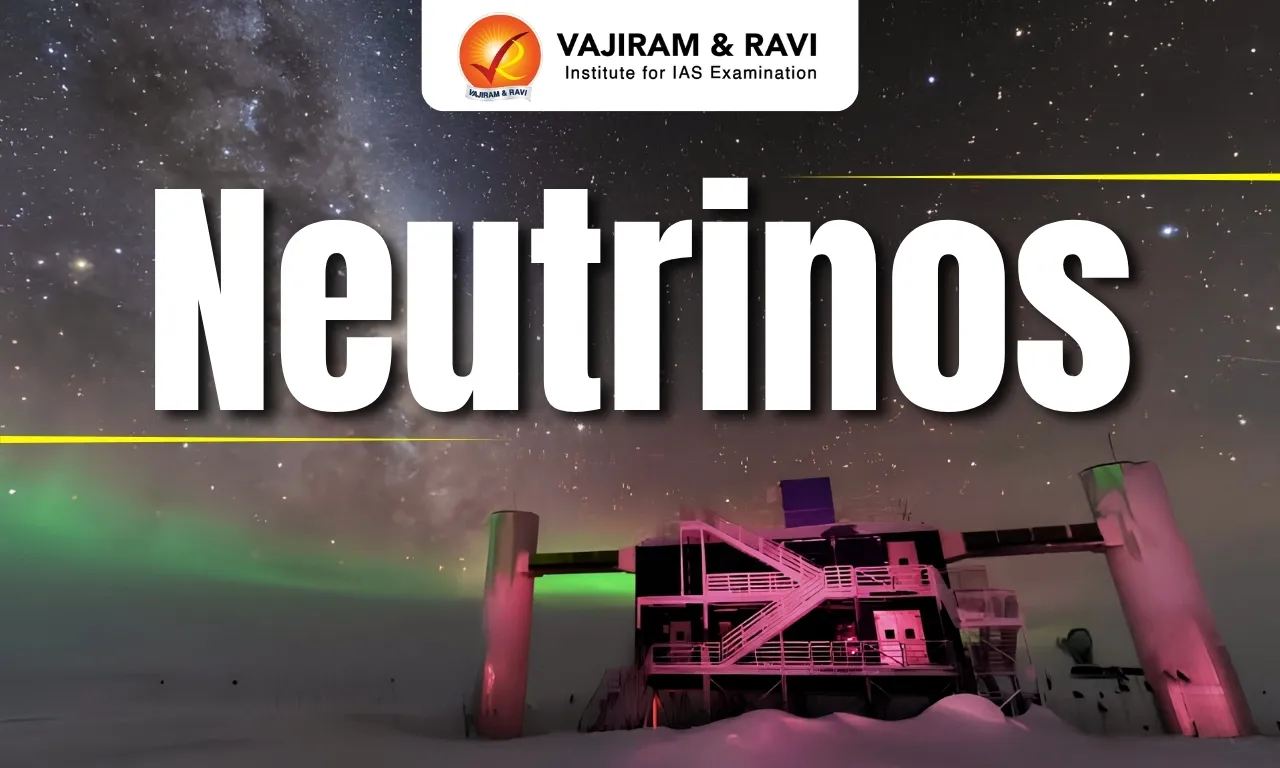
- His scientific vision and leadership were fundamental to the development of the IceCube Neutrino Observatory at the South Pole, Antarctica.
- The IceCube Neutrino Observatory is a large scientific detector that uses about one cubic kilometre of Antarctic ice to detect neutrinos arriving from the universe.
- Thousands of light sensors are embedded deep inside the Antarctic ice to detect tiny flashes of light produced when neutrinos interact with matter.
- Neutrinos are electrically neutral subatomic particles that interact very weakly with matter, allowing them to travel through enormous amounts of material with little interaction.
- Their ability to travel vast cosmic distances makes neutrinos useful for studying distant and powerful astrophysical events.
- IceCube has opened a new way of studying the universe through neutrino astronomy, complementing traditional observations based on light and other forms of radiation.
- When a high-energy neutrino interacts with matter in or around the ice, it can produce a charged particle that generates a faint flash of Cherenkov light.
- IceCube's light sensors detect these flashes, while scientists analyse their timing and pattern to determine the neutrino's energy and direction.
- The South Pole provides a huge volume of relatively clear and stable Antarctic ice, making it suitable as a natural detection medium.
- Using the ice as a detector allows scientists to cover a very large volume without constructing a conventional detector of the same size.
- The IceCube Observatory has helped scientists detect high-energy neutrinos of astrophysical origin and investigate the extreme processes that produce them.
Nobel Prize in Chemistry 2026
Nobel Prize in Chemistry 2026 has been awarded to Henri B. Kagan and Kenso Soai for their discovery of non-linear effects and autocatalysis in asymmetric organic synthesis. The prize was announced on 7 October 2026 by the Royal Swedish Academy of Sciences in Stockholm.
Nobel Prize in Chemistry 2026 Winners and Asymmetric Organic Synthesis
- Henri B. Kagan and Kenso Soai are the winners of the Nobel Prize in Chemistry 2026.
- They were awarded the prize for the discovery of non-linear effects and autocatalysis in asymmetric organic synthesis.
- Their work has advanced the understanding of how chemical reactions can produce molecules with a preferred three-dimensional structure or handedness.
- Asymmetric organic synthesis is a branch of chemistry that focuses on producing one preferred form of a molecule over its mirror-image form.
- Non-linear effects occur when a small change in the composition of a chiral catalyst can produce a disproportionately large change in the chirality of the resulting chemical product.
- Autocatalysis is a chemical process in which a product of a reaction also acts as a catalyst, helping accelerate the formation of more of that product.
- Asymmetric autocatalysis can amplify a small initial imbalance between two mirror-image forms of a molecule.
- Kenso Soai made pioneering contributions to asymmetric autocatalysis and demonstrated how a small initial chiral preference can be significantly amplified through chemical reactions.
- Henri B. Kagan made important contributions to the understanding of non-linear effects in asymmetric catalysis.
- Their discoveries have provided important insights into molecular chirality, asymmetric synthesis and autocatalytic chemical reactions.
- The research is significant for understanding how molecular asymmetry can emerge and become amplified during chemical processes.
- The discoveries recognised by the Nobel Prize in Chemistry 2026 have contributed to the broader development of modern organic chemistry and asymmetric synthesis.
Nobel Prize in Literature 2026
Nobel Prize in Literature 2026 is scheduled to be announced on 8 October 2026 by the Swedish Academy in Stockholm. The announcement is scheduled for 1:00 PM CEST, or 4:30 PM IST, at the earliest. The winning author and the official Nobel citation will be updated once the announcement is made.
Nobel Peace Prize 2026
Nobel Peace Prize 2026 is scheduled to be announced on 9 October 2026 by the Norwegian Nobel Committee in Oslo. The announcement is scheduled for 11:00 AM CEST, or 2:30 PM IST, at the earliest. The name of the 2026 Peace Prize laureate or laureates will be added after the official announcement.
Nobel Prize in Economics 2026
Nobel Prize in Economic Sciences 2026, officially known as the Sveriges Riksbank Prize in Economic Sciences in Memory of Alfred Nobel, is scheduled to be announced on 12 October 2026 by the Royal Swedish Academy of Sciences. The official Nobel Prize schedule gives the announcement time as 11:45 AM CEST, or 3:15 PM IST, at the earliest. The laureates and their recognised contribution will be updated after the official announcement.
About Nobel Prize
Nobel Prize is a prestigious international award established through the will of Alfred Nobel to recognise outstanding contributions that have provided significant benefit to humankind.
- Founder: Alfred Nobel, Swedish inventor, engineer, chemist and industrialist.
- Established: Through Alfred Nobel's will in 1895.
- First awarded: 1901.
- Original categories: Physics, Chemistry, Physiology or Medicine, Literature and Peace.
- Economic Sciences: Added in 1968 as the Sveriges Riksbank Prize in Economic Sciences in Memory of Alfred Nobel.
- Awarding institutions: Different Nobel committees and institutions select winners for different categories.
- Nobel Peace Prize: Awarded by the Norwegian Nobel Committee.
- Other Nobel Prizes: Physics, Chemistry, Medicine and Literature are awarded by Swedish institutions.
- Prize components: Nobel laureates receive a medal, diploma and prize money.
- Award ceremony: Nobel Prizes are traditionally presented on 10 December, the anniversary of Alfred Nobel's death.
- Nobel Peace Prize ceremony: Held in Oslo, Norway.
- Other Nobel Prize ceremonies: Held in Stockholm, Sweden.
- Nobel laureate: A person or organisation receiving a Nobel Prize is called a Nobel laureate.
Nobel Prize 2026 FAQs
Q1: What is the Nobel Prize 2026?
Ans: Nobel Prize 2026 recognises outstanding contributions in six categories: Physiology or Medicine, Physics, Chemistry, Literature, Peace and Economic Sciences. The 2026 announcements are scheduled from 5 to 12 October 2026.
Q2: Who won the Nobel Prize in Medicine 2026?
Ans: Nobel Prize in Physiology or Medicine 2026 was awarded jointly to Karl Deisseroth, Peter Hegemann and Georg Nagel for their discoveries concerning light-gated ion channels and optogenetics.
Q3: Who won the Nobel Prize in Physics 2026?
Ans: Francis Halzen won the Nobel Prize in Physics 2026 for his decisive contributions to the IceCube Neutrino Observatory and the discovery of high-energy neutrinos of astrophysical origin.
Q4: Why did Francis Halzen win the Nobel Prize in Physics 2026?
Ans: He was recognised for his decisive contributions to the IceCube Neutrino Observatory and the discovery of high-energy neutrinos from astrophysical sources.
Q5: When will the Nobel Prize in Chemistry 2026 be announced?
Ans: The Nobel Prize in Chemistry 2026 was announced on 7 October 2026 at 11:45 AM CEST (3:15 PM IST). Henri B. Kagan and Kenso Soai were awarded the prize for the discovery of non-linear effects and autocatalysis in asymmetric organic synthesis.