Airports In India 2026, State Wise List, International and Domestic

Airports In India

Airports in India 2026 are important transport facilities that connect different parts of the country as well as the rest of the world. They play a key role in air travel, trade, tourism, and economic development. India has a large network of airports, including international, domestic, and regional airports, which help in the movement of passengers and goods. These airports are located in major cities as well as smaller towns to improve connectivity.

Aviation Sector of India

In the last decade, India’s aviation sector has grown rapidly, and air travel has become more common than ever. Today, India is the third-largest domestic aviation market in the world. The number of airports has also increased significantly from 74 in 2014 to 163 in 2026. Looking ahead, the government plans to expand this number to around 350-400 airports by 2047.

  • The aviation sector is one of the fastest-growing parts of India’s economy. It not only provides air transport but also supports other sectors like tourism, trade, logistics, and manufacturing.
  • According to the International Civil Aviation Organization (ICAO), investment in aviation has a strong impact on the economy. For every rupee spent, it creates more than three times the value and generates many job opportunities in related sectors.
  • At present, the aviation sector supports over 7.7 million jobs, including around 369,000 direct jobs. In the future, the demand for skilled workers such as pilots, engineers, and ground staff is expected to increase.
  • India is also improving its global connectivity through more than 116 air service agreements with other countries. This is helping Indian airlines expand internationally and making India an important aviation hub in Asia. The sector is also attracting foreign investment (FDI) and promoting initiatives like Make in India, especially in areas like aircraft maintenance and manufacturing.
  • Over the past few years, domestic air travel in India has been growing at a steady rate of 10-12% every year. By 2040, passenger traffic is expected to increase nearly six times, reaching around 1.1 billion passengers. The number of aircraft is also expected to grow significantly, and total employment in the aviation sector may reach around 25 million.

What are International Airports in India?

International Airports in India are airports that allow people to travel to other countries through direct or connecting flights. Along with international travel, these airports are also used for domestic flights.

  • These airports usually have separate terminals for domestic and international passengers. They include important facilities like customs checks, security systems, and immigration services, which are necessary for international travel.
  • Compared to domestic airports, international airports are larger and more advanced. They provide extra facilities such as duty-free shops, lounges, waiting areas, airline offices, baby care rooms, prayer rooms, and tourism help centres.
  • International airports in India follow global standards set by organizations like the International Air Transport Association and the International Civil Aviation Organization, which also assign airport codes.
  • The Indira Gandhi International Airport is the largest and busiest airport in India (2026). It is built over a large area and handles a huge number of passengers. It is followed by the Chhatrapati Shivaji Maharaj International Airport.
  • The Cochin International Airport is important because it is the first airport in India developed under the Public-Private Partnership (PPP) model. Another example is the Calicut International Airport, which has been recently included in the list of international airports.

List of International Airports in India 2026

The list of International Airports in India State Wise 2026 has been tabulated below:

Number of International Airports in India 2026

S. No.

State / UT

City

Airport Name

1

Andaman & Nicobar

Port Blair

Veer Savarkar International Airport

2

Andhra Pradesh

Visakhapatnam

Visakhapatnam International Airport

3

Assam

Guwahati

Lokpriya Gopinath Bordoloi International Airport

4

Bihar

Gaya

Gaya Airport

5

Delhi

New Delhi

Indira Gandhi International Airport

6

Goa

Dabolim

Dabolim Airport

7

Goa

Mopa

Manohar International Airport

8

Gujarat

Ahmedabad

Sardar Vallabhbhai Patel International Airport

9

Gujarat

Surat

Surat International Airport

10

Jammu & Kashmir

Srinagar

Sheikh ul-Alam International Airport

11

Karnataka

Bengaluru

Kempegowda International Airport

12

Karnataka

Mangaluru

Mangaluru International Airport

13

Kerala

Kannur

Kannur International Airport

14

Kerala

Kochi

Cochin International Airport

15

Kerala

Kozhikode

Calicut International Airport

16

Kerala

Thiruvananthapuram

Trivandrum International Airport

17

Madhya Pradesh

Indore

Devi Ahilyabai Holkar International Airport

18

Maharashtra

Mumbai

Chhatrapati Shivaji Maharaj International Airport

19

Maharashtra

Nagpur

Dr. Babasaheb Ambedkar International Airport

20

Manipur

Imphal

Imphal International Airport

21

Odisha

Bhubaneswar

Biju Patnaik International Airport

22

Punjab

Amritsar

Sri Guru Ram Dass Jee International Airport

23

Rajasthan

Jaipur

Jaipur International Airport

24

Tamil Nadu

Chennai

Chennai International Airport

25

Tamil Nadu

Coimbatore

Coimbatore International Airport

26

Tamil Nadu

Madurai

Madurai Airport

27

Tamil Nadu

Tiruchirappalli

Tiruchirappalli International Airport

28

Telangana

Hyderabad

Rajiv Gandhi International Airport

29

Uttar Pradesh

Ayodhya

Maharishi Valmiki International Airport

30

Uttar Pradesh

Kushinagar

Kushinagar International Airport

31

Uttar Pradesh

Lucknow

Chaudhary Charan Singh International Airport

32

Uttar Pradesh

Varanasi

Lal Bahadur Shastri International Airport

33

West Bengal

Kolkata

Netaji Subhash Chandra Bose International Airport

What are Domestic Airports in India?

Domestic airports in India are airports that handle flights within the country only. They connect different cities and regions of India and do not operate international flights.

  • Unlike international airports, domestic airports do not have customs and immigration facilities, so they cannot handle flights to or from other countries. However, they still follow security checks such as baggage screening and metal detectors to ensure passenger safety.
  • Domestic terminals provide many facilities for the comfort of passengers. These include waiting areas, VIP lounges with Wi-Fi, and basic travel services. Some modern airports also offer extra facilities like spas, massage centres, and showers, especially for passengers traveling long distances.

List of Domestic Airports in India 2026

Here is the list of domestic airports in India, along with the city and state where they are located.

List of Domestic Airports in India (2026)

S. No.

State / UT

City

Airport Name

1

Andaman & Nicobar

Car Nicobar

Car Nicobar Air Force Station

2

Andhra Pradesh

Kadapa

Kadapa Airport

3

Andhra Pradesh

Kurnool

Uyyalawada Narasimha Reddy Airport

4

Andhra Pradesh

Rajahmundry

Rajahmundry Airport

5

Andhra Pradesh

Tirupati

Tirupati Airport

6

Arunachal Pradesh

Itanagar

Donyi Polo Airport

7

Arunachal Pradesh

Pasighat

Pasighat Airport

8

Arunachal Pradesh

Tezu

Tezu Airport

9

Assam

Dibrugarh

Dibrugarh Airport

10

Assam

Jorhat

Jorhat Airport

11

Assam

North Lakhimpur

Lilabari Airport

12

Assam

Silchar

Silchar Airport

13

Assam

Tezpur

Tezpur Airport

14

Bihar

Darbhanga

Darbhanga Airport

15

Bihar

Patna

Jay Prakash Narayan Airport

16

Bihar

Purnia

Purnia Airport

17

Chhattisgarh

Ambikapur

Maa Mahamaya Airport

18

Chhattisgarh

Bilaspur

Bilasa Devi Kevat Airport

19

Chhattisgarh

Raipur

Swami Vivekananda Airport

20

Daman & Diu

Diu

Diu Airport

21

Gujarat

Bhavnagar

Bhavnagar Airport

22

Gujarat

Bhuj

Bhuj Airport

23

Gujarat

Jamnagar

Jamnagar Airport

24

Gujarat

Kandla

Kandla Airport

25

Gujarat

Porbandar

Porbandar Airport

26

Gujarat

Vadodara

Vadodara Airport

27

Haryana

Hisar

Maharaja Agrasen International Airport

28

Himachal Pradesh

Kangra

Kangra Airport

29

Himachal Pradesh

Kullu

Kullu–Manali Airport

30

Himachal Pradesh

Shimla

Shimla Airport

31

Jammu & Kashmir

Jammu

Jammu Airport

32

Jharkhand

Bokaro

Bokaro Airport

33

Jharkhand

Deoghar

Deoghar Airport

34

Karnataka

Belagavi

Belagavi Airport

35

Karnataka

Hubballi

Hubballi Airport

36

Karnataka

Kalaburagi

Kalaburagi Airport

37

Karnataka

Mysuru

Mysuru Airport

38

Karnataka

Shivamogga

Rashtrakavi Kuvempu Airport

39

Karnataka

Bidar

Bidar Airport

40

Ladakh

Leh

Kushok Bakula Rimpochee Airport

41

Lakshadweep

Agatti

Agatti Airport

42

Madhya Pradesh

Bhopal

Raja Bhoj Airport

43

Madhya Pradesh

Gwalior

Rajmata Vijaya Raje Scindia Airport

44

Madhya Pradesh

Jabalpur

Jabalpur Airport

45

Madhya Pradesh

Khajuraho

Khajuraho Airport

46

Madhya Pradesh

Rewa

Rewa Airport

47

Maharashtra

Aurangabad

Aurangabad Airport

48

Maharashtra

Kolhapur

Chhatrapati Rajaram Maharaj Airport

49

Maharashtra

Nashik

Nashik Airport (Ozar)

50

Maharashtra

Nanded

Shri Guru Gobind Singh Ji Airport

51

Maharashtra

Shirdi

Shirdi Airport

52

Maharashtra

Solapur

Solapur Airport

53

Maharashtra

Sindhudurg

Sindhudurg Airport

54

Meghalaya

Shillong

Umroi Airport

55

Mizoram

Aizawl

Lengpui Airport

56

Nagaland

Dimapur

Dimapur Airport

57

Odisha

Jharsuguda

Veer Surendra Sai Airport

58

Puducherry

Puducherry

Pondicherry Airport

59

Punjab

Pathankot

Pathankot Airport

60

Rajasthan

Jaisalmer

Jaisalmer Airport

61

Rajasthan

Jodhpur

Jodhpur Airport

62

Rajasthan

Bikaner

Nal Airport

63

Rajasthan

Udaipur

Maharana Pratap Airport

64

Rajasthan

Kishangarh

Kishangarh Airport

65

Sikkim

Gangtok

Pakyong Airport

66

Tamil Nadu

Salem

Salem Airport

67

Tamil Nadu

Thoothukkudi

Tuticorin Airport

68

Tripura

Agartala

Maharaja Bir Bikram Airport

69

Uttarakhand

Dehradun

Jolly Grant Airport

70

Uttarakhand

Pantnagar

Pantnagar Airport

71

Uttarakhand

Pithoragarh

Naini Saini Airport

72

West Bengal

Siliguri

Bagdogra Airport

What are Greenfield Airports in India?

Out of the 21 approved greenfield airports in India, 12 airports have already become operational. These include places like Durgapur, Shirdi, Sindhudurg, Pakyong, Kannur, and others. The remaining airports are either under development or in the planning stage, and are expected to become operational in the coming years.

Recently Alluri Sitharamaraju International Airport at Bhogapuram has been completed and will become operational in August. It is replacing scheduled commercial operations at Visakhapatnam (VTZ) while retaining limited services at the existing airport.

Greenfield Airports in India 2026 with Status

S. No.

State / UT

Airport / Location

Status

1

Goa

Mopa

Operational

2

Maharashtra

Navi Mumbai

Under Development

3

Maharashtra

Shirdi

Operational

4

Maharashtra

Sindhudurg

Operational

5

Karnataka

Kalaburagi

Operational

6

Karnataka

Vijayapura

Approved

7

Karnataka

Hassan

Approved

8

Karnataka

Shivamogga

Operational

9

Madhya Pradesh

Dabra (Gwalior)

Approved

10

Uttar Pradesh

Kushinagar

Operational

11

Uttar Pradesh

Noida (Jewar)

Under Development

12

Gujarat

Dholera

Approved

13

Gujarat

Rajkot

Operational

14

Puducherry

Karaikal

Approved

15

Andhra Pradesh

Dagadarthi

Approved

16

Andhra Pradesh

Alluri Sitarama Raju International Airport (Bhogapuram)

Operational (Aug 2026)

17

Andhra Pradesh

Oravakal (Kurnool)

Operational

18

West Bengal

Durgapur

Operational

19

Sikkim

Pakyong

Operational

20

Kerala

Kannur

Operational

21

Arunachal Pradesh

Itanagar

Operational

22

Rajasthan

Alwar

Site Cleared

23

Madhya Pradesh

Singrauli

Site Cleared

24

Himachal Pradesh

Mandi

Site Cleared

25

Kerala

Kottayam

Site Cleared

26

Odisha

Puri

Site Cleared

27

Assam

Doloo

Site Cleared

28

Tamil Nadu

Parandur

Site Cleared

29

Rajasthan

Kota

Site Cleared

30

Karnataka

Raichur

Site Cleared

Aviation Initiatives in India 2026

The Government Initiatives for the Aviation Sector in India has been provided below:

  • UDAN (Ude Desh ka Aam Nagrik): This scheme aims to make air travel affordable and accessible for common people. It connects small towns and remote areas with major cities, boosting tourism and local economic development.
  • Krishi UDAN (2020): This initiative helps in the fast transport of agricultural and perishable goods, especially from rural, tribal, and northeastern regions. It also provides subsidy on freight charges, benefiting farmers.
  • Lifeline UDAN (2020): Started during the COVID-19 pandemic, this scheme ensured the delivery of medical supplies and essential goods across the country, especially to remote areas.
  • Greenfield Airports Policy: This policy promotes the development of new airports on unused land, often through public-private partnerships, to improve connectivity and reduce pressure on major airports.
  • Digi Yatra (2022): A digital initiative that allows paperless and contactless travel using facial recognition technology, making airport processes faster and smoother.
  • Flight Training and Pilot Development: The government is expanding pilot training institutes to meet future demand and is also promoting greater participation of women in aviation.
  • Drone Rules (2021) and PLI Scheme: These initiatives aim to simplify drone regulations and promote domestic manufacturing, supporting growth in the drone sector.
  • Bharatiya Vayuyan Adhiniyam (2024): A new law introduced to modernize India’s aviation sector, simplify regulations, and support Make in India and global standards.

Airports In India 2026 FAQs

Q1: What are airports and why are they important in India?

Ans: Airports are transport hubs that connect different parts of India and the world. They help in travel, trade, tourism, and economic growth by enabling movement of people and goods.

Q2: How has India’s aviation sector grown in recent years?

Ans: India’s aviation sector has grown rapidly and is now the third-largest domestic aviation market. The number of airports increased from 74 (2014) to 163 (2025), and it is expected to grow further.

Q3: What is the difference between international and domestic airports?

Ans: International airports handle flights between countries and have facilities like customs and immigration, while domestic airports handle flights within India only and do not have these facilities.

Q4: Which is the largest and busiest airport in India 2026?

Ans: Indira Gandhi International Airport is the largest and busiest airport in India (2026), followed by Chhatrapati Shivaji Maharaj International Airport.

Q5: What are Greenfield airports in India?

Ans: Greenfield airports are new airports built on unused land. Out of 21 approved projects, 12 airports are already operational, while others are under development or planning.

Monsoon Session of Parliament 2026, Bills, Constitutional Provisions

Monsoon Session of Parliament 2026

The Monsoon Session of Parliament 2026 is the second regular session of the Indian Parliament held every year after the Budget Session. During this session, the Lok Sabha and Rajya Sabha discuss important national issues, introduce and pass bills, scrutinize government policies, and hold the executive accountable. The 2026 Monsoon Session has gained significant attention due to the introduction of key legislations and debates on major political, economic, and social issues.

Why is the Monsoon Session 2026 in News?

The Monsoon Session of Parliament 2026 commenced on 20 July 2026 and is scheduled to continue until 13 August 2026. The session is expected to witness discussions on several important bills, government policies, and current national issues. The government is also planning to hold a discussion to resolve the issue of Paper Leaks in India, as there is an ongoing protest due to NEET paper leak students at Jantar Mantar, Delhi.

Bills to be Introduced in the Monsoon Session 2026

The government has listed several important bills for introduction, discussion, and passage during the session. Some of the key bills include:

  • Micro, Small and Medium Enterprises Development (Amendment) Bill, 2026
  • Income Tax (Amendment) Bill 2026 aimed at simplifying and modernizing direct tax laws.
  • Registration of Births and Deaths (Amendment) Bill 2026
  • Supreme Court (Number of Judges) Amendment Bill 2026
  • Prevention of Insults to National Honour (Amendment) Bill, 2026

Also Read:- Section 163 of Bharatiya Nagarik Suraksha Sanhita

Constitutional Provisions Related to Parliamentary Sessions

The Constitution of India provides the legal framework for convening, conducting, and regulating the sessions of Parliament, ensuring the smooth functioning of the country's legislative process.

  • Article 79: Establishes the Parliament of India, consisting of the President, Lok Sabha (House of the People), and Rajya Sabha (Council of States).
  • Article 85: Empowers the President to summon each House of Parliament, prorogue either House or both Houses, and dissolve the Lok Sabha on the advice of the Council of Ministers.
  • Maximum Gap Between Sessions: The Constitution mandates that not more than six months shall elapse between the last sitting of one session and the first sitting of the next session.
  • Article 86: Grants the President the right to address either House or both Houses of Parliament and send messages regarding pending legislative matters.
  • Article 87: Requires the President to address both Houses assembled together at the beginning of the first session after every General Election and the first session of each calendar year, outlining the government's policies and legislative agenda.
  • Article 88: Allows the Attorney General of India to participate in the proceedings of both Houses and Parliamentary Committees without having the right to vote.
  • Article 100: Specifies that questions in either House are decided by a majority of members present and voting, with the Presiding Officer exercising a casting vote in the event of a tie.
  • Article 107: Lays down the procedure for the introduction, consideration, and passage of ordinary bills in Parliament.
  • Article 108: Provides for a Joint Sitting of both Houses to resolve a legislative deadlock on an ordinary bill under specified circumstances.
  • Article 111: States that a bill passed by both Houses becomes law only after receiving the President's assent.
  • Article 118: Empowers each House of Parliament to make rules governing its own procedure and conduct of business, subject to constitutional provisions.
  • Constitutional Practice: Although the Constitution does not mention the Budget, Monsoon, and Winter Sessions by name, Parliament generally meets in three sessions every year to ensure uninterrupted legislative and oversight functions.

Also Read:- Right to Protest in India

Powers of the President in Summoning Parliament

The President of India plays a key constitutional role in convening and regulating the sessions of Parliament. These powers are exercised on the aid and advice of the Council of Ministers headed by the Prime Minister, as provided under the Constitution.

  • Summons Parliament: Under Article 85, the President summons each session of the Lok Sabha and Rajya Sabha.
  • Ensures Regular Sessions: Ensures that not more than six months elapse between the last sitting of one session and the first sitting of the next.
  • Prorogues Parliament: Has the power to prorogue either House or both Houses after the completion of a session under Article 85.
  • Dissolves the Lok Sabha: Can dissolve the Lok Sabha before the expiry of its term on the advice of the Council of Ministers.
  • Addresses Parliament: Under Article 87, addresses both Houses assembled together at the beginning of the first session after every General Election and the first session of each year.
  • Sends Messages to Parliament: Under Article 86, may send messages to either House or both Houses regarding pending bills or any matter requiring consideration.
  • Gives Assent to Bills: Under Article 111, grants assent to bills passed by Parliament, returns certain ordinary bills for reconsideration, or withholds assent where constitutionally permissible.
  • Promulgates Ordinances: Under Article 123, may issue an Ordinance when Parliament is not in session if immediate legislative action is necessary. The Ordinance must be approved by Parliament within the prescribed constitutional period.
  • Convenes Joint Sitting: Under Article 108, may summon a Joint Sitting of both Houses to resolve a deadlock over an ordinary bill, on the advice of the government.

Monsoon Session 2026 Significance

The Monsoon Session 2026 is an important phase of India's parliamentary calendar, providing an opportunity to enact legislation, review government policies, and discuss issues of national importance through democratic debate.

  • Facilitates Law-Making: Enables Parliament to introduce, debate, amend, and pass important bills.
  • Strengthens Executive Accountability: Allows Members of Parliament to question the government through Question Hour, Zero Hour, and parliamentary debates.
  • Addresses National Issues: Provides a platform to discuss matters related to the economy, agriculture, internal security, foreign policy, social welfare, and public interest.
  • Reviews Government Policies: Examines the implementation and effectiveness of government schemes, programmes, and administrative decisions.
  • Represents Public Concerns: Gives elected representatives an opportunity to raise issues affecting their constituencies and seek government action.
  • Enhances Parliamentary Oversight: Enables Parliamentary Committees and both Houses to scrutinize legislative proposals and executive functioning.
  • Supports Democratic Governance: Encourages debate, consensus-building, and informed decision-making in the legislative process.
  • Ensures Legislative Continuity: Maintains the momentum of parliamentary business between the Budget Session and the Winter Session.
Other Related Posts
Important Articles of Indian Constitution 9th Schedule
Schedules of Indian Constitution Anti Defection Law
5th Schedule Preamble of the Indian Constitution
6th Schedule 8th Schedule of Indian Constitution

Monsoon Session of Parliament 2026 FAQs

Q1: What is the Monsoon Session of Parliament?

Ans: The Monsoon Session is the second regular session of the Indian Parliament, generally held between July and August, during which important bills are introduced, debated, and passed, and national issues are discussed.

Q2: When will the Monsoon Session of Parliament 2026 be held?

Ans: The Monsoon Session 2026 is scheduled from 20 July 2026 to 13 August 2026.

Q3: Why is the Monsoon Session 2026 important?

Ans: It is important because Parliament discusses key legislative proposals, reviews government policies, raises public issues, and holds the executive accountable through parliamentary procedures.

Q4: Which Article of the Constitution deals with summoning Parliament?

Ans: Article 85 of the Constitution empowers the President to summon and prorogue Parliament and dissolve the Lok Sabha.

Andromeda Galaxy

Andromeda Galaxy

Andromeda Galaxy Latest News

A major new study using data from Nasa's Hubble Space Telescope has found that star formation in Andromeda has been declining for the past 500 million years.  

About Andromeda Galaxy

  • It is also known as M31, comparable in size to our Milky Way galaxy.
  • It is a large spiral galaxy located approximately 2.5 million light years from Earth.
  • It is named for its celestial location in the constellation of Andromeda.
  • It is the closest major galaxy to the Milky Way and is visible to the naked eye.
  • It is currently transitioning to its ‘middle age’, away from being a vibrant, active galaxy and towards a quiescent state 
  • It is a barred spiral galaxy, so-called for the bar-like structure formed by the stars in its center.
  • It is observed that this galaxy is moving towards the Milky Way at approximately 110 km/s. 

Key Facts about Hubble Space Telescope

  • It is named in honour of the trailblazing astronomer Edwin Hubble which was launched by NASA.
  • It is a large, space-based observatory, which has revolutionized astronomy since its launch and deployment by the space shuttle Discovery in 1990.
  • Hubble’s domain extends from the ultraviolet through the visible (which our eyes see) and into the near infrared.
  • It is one of NASA’s Great Observatories Programs.

Source: TH

Andromeda Galaxy FAQs

Q1: Andromeda Galaxy is located in which constellation?

Ans: Andromeda

Q2: Which telescope captured the most detailed image of Andromeda?

Ans: Hubble Space Telescope

Malvi Camel

Malvi Camel

Malvi Camel Latest News

Recently, it was observed that the rare malvi camel breed is facing threat of extinction and which prompted a conservation initiative by the National Research Centre on Camel (NRCC).

About Malvi Camel

  • It is one of the nine recognised camel breeds in India.
  • It is also valued for milk production, with a female capable of yielding around 4-5 kg of milk per cycle.
  • Distribution: It is primarily found in Madhya Pradesh’s Malwa region, including Mandsaur, Neemuch, Ratlam and Gwalior, and parts of Rajasthan such as Kota, Bundi, Jhalawar and Baran.
  • Physical Appearance
    • It is known for its distinct white colour and is considered the smallest among India’s camel breeds.
    • Malvi camels are generally medium-sized with a robust build.
    • They often have a light brown to reddish-brown coat and a well-developed hump.
  • Adaptability: These camels are well-adapted to both semi-arid and slightly more humid conditions, as the Malwa region experiences a range of climatic conditions compared to the harsher desert environments of other camel breeds.
  • Endurance and Strength: These are known for their endurance and strength, making them suitable for carrying loads and performing work, including transportation and agricultural tasks.

Source: TP

Malvi Camel FAQs

Q1: Malvi Camel is primarily found in which region?

Ans: Malwa region of Madhya Pradesh and Rajasthan

Q2: Malvi Camel is mainly reared for which purpose in Malwa region?

Ans: Milk and transportation

SHetA2 Therapy

SHetA2 Therapy

SHetA2 Therapy Latest News

Recently, a new cervical cancer SHetA2 pill showed promise by stopping Human Papillomavirus (HPV) from turning cancerous. 

About SHetA2 Therapy

  • SHetA2 is a small molecule therapy that is designed to stop an HPV infection from causing cancer.
  • Small molecule therapies are chemically manufactured, low-weight compounds that can easily be absorbed by the body.
  • It is designed to treat HPV-induced cervical dysplasia and cervical cancer.
  • Working
    • This therapy targets three proteins in the human body called mortalin, heat shock cognate (hsc70), and glucose regulated protein 78 (Grp78).
    • These are essential for the proliferation of the cancer-causing oncoprotein of the virus.
    • It works by breaking the connection between the HPV-E7 protein and a host protein inside human cells.
    • Normally, this host protein protects E7 and allows it to keep damaging healthy cells. When SHetA2 breaks this connection, the harmful E7 protein is destroyed by the body’s normal immune defences.
  • The therapy is meant for those who have developed precancerous lesions of cervical cancer.
  • The therapy has, at present, been evaluated in an oral, capsule form. 

Key Facts about Human Papillomavirus (HPV)

  • HPV is the most common sexually transmitted infection (STI), and there are more than 100 types of HPV.
  • However, some types of HPV infection cause skin growths called warts, and some types of HPV infection can cause cancer.
  • Transmission
    • The virus that causes HPV infection is transmitted through skin-to-skin contact. 
    • Most people get a genital HPV infection through direct sexual contact, including vaginal, anal, and oral sex.
    • About 80% of people – both men and womenwill get an HPV infection at some point in their lives. 
  • Symptoms may include warts on the genitals or anus or cancerous growths in the mouth or throat. 
  • Treatment: There’s no cure for HPV. HPV vaccination is the most effective way to prevent HPV-related cancers.

Source: IE

SHetA2 Therapy FAQs

Q1: SHetA2 therapy is related to which treatment?

Ans: Ovarian Cancer

Q2: How does SHetA2 work?

Ans: It works by inducing apoptosis in cancer cells.

Koldam Hydro Power Project

Koldam Hydro Power Project

Koldam Hydro Power Project Latest News

The Koldam NTPC Hydroelectric Project generated over 3512 million units of power in 2025-26, the highest ever since the project was commissioned.

About Koldam Hydro Power Project

  • It is located on the Satluj River in the Bilaspur District of Himachal Pradesh.
  • It is located just upstream of the Bhakra reservoir.  
  • The total capacity of the project is 800 MW.
  • The project involved the construction of a 167m-high rock-and-gravel-filled clay-core dam.
  • It also necessitated the construction of an upstream coffer dam as well as a downstream coffer dam. 
  • The reservoir created by the dam can hold up to 560 million cubic metres of water.  
  • It is owned and operated by India's biggest power utility National Thermal Power Corporation (NTPC).
  • The output from the power plant is conveyed to the national grid via a 400kV direct current (D/C) line. 
  • Himachal Pradesh receives 15% of the generated power free of cost and 12% at bus-bar rate. 
  • The project also benefits Delhi, Haryana, Punjab, Rajasthan, Uttar Pradesh, Jammu and Kashmir, and Chandigarh.

News: RED

Koldam Hydro Power Project FAQs

Q1: Where is the Koldam Hydro Power Project located?

Ans: It is located on the Satluj River in the Bilaspur District of Himachal Pradesh.

Q2: Near which major reservoir is the Koldam Hydro Power Project located?

Ans: Just upstream of the Bhakra Reservoir.

Q3: What is the total installed capacity of the Koldam Hydro Power Project?

Ans: 800 MW.

Q4: Which organization owns and operates the Koldam Hydro Power Project?

Ans: National Thermal Power Corporation (NTPC).

Kikai Caldera

Kikai Caldera

Kikai Caldera Latest News

A vast reservoir of magma beneath Japan's Kikai caldera appears to be filling again, offering scientists a rare glimpse into how some of Earth's largest volcanoes recover after catastrophic eruptions.

About Kikai Caldera

  • It is a massive submarine caldera with three small islands, parts of the caldera rim, that project above sea level. 
  • It is located in the East China Sea just south of Kyushu, Japan
  • The caldera is about 19 km in diameter. 
  • About 7,300 years ago, it produced the largest known volcanic eruption of the Holocene, the current geological epoch, which began roughly 11,700 years ago. 
  • About 150 cubic km of ash erupted. It sent pyroclastic flows 150 kilometers across the sea and buried much of Japan and the Korean Peninsula in ash. 
  • The volcanic explosivity index (VEI) for the eruption was 7 (there have only been three other VEI=7 eruptions in the last 10,000 years). 
  • It is still active, producing a scattered array of minor eruptions in recent decades. 
  • Research has found evidence of new volcanic activity beneath the Kikai Caldera, pointing to the formation of a lava dome and raising concerns about its potential to erupt again.

News: SD

Kikai Caldera FAQs

Q1: Where is the Kikai Caldera located?

Ans: In the East China Sea, just south of Kyushu, Japan.

Q2: What is the approximate diameter of the Kikai Caldera?

Ans: About 19 km.

Q3: When did the Kikai Caldera produce its largest known eruption?

Ans: About 7,300 years ago.

Q4: Is the Kikai Caldera still volcanically active?

Ans: Yes, it is still active.

Q5: Why is the Kikai Caldera significant in volcanology?

Ans: It produced the largest known volcanic eruption of the Holocene epoch.

Tigidia singhal

Tigidia singhal

Tigidia singhal Latest News

Researchers recently described a new trapdoor spider species, Tigidia singhal, from the semi-arid grasslands of the Deccan Plateau.

About Tigidia singhalt

  • It is a new species of trapdoor spider.
  • It was discovered from the semi-arid grasslands of the Deccan Plateau in Maharashtra
  • The collected specimen was a 15-millimetre-long female with black legs covered in greyish bristle-like hairs and a lighter abdomen with chevron-shaped markings.  
  • The discovery brings the number of Tigidia species in India to eight. Spiders of the genus Tigidia occur only in Madagascar, Mauritius, and India
  • Until now, species of this genus were known from peninsular India’s tropical evergreen and deciduous forests, particularly the Western and Eastern Ghats. 
  • T. singhal is the first record of this genus from a semi-arid open natural ecosystem. 

What are Trapdoor Spiders?

  • Trapdoor spiders are long-living, sedentary spiders that spend most of their lives in burrows, rarely leaving except to search for a mate.
  • The doors of silk, soil, moss, and leaves that many species construct to camouflage their burrows give this group its name.  
  • This adaptation has great advantages for the spider, providing protection against desiccation and predators and enabling efficient prey capture.
  • They feed by quickly opening the trap door and grabbing an insect or other arthropod that is passing close by. 
  • Trapdoor spider burrows aerate soil, maintain soil structure, and provide microhabitats for other organisms. 
  • Highly sensitive to habitat disturbances, these spiders also serve as ecological indicators, with their presence suggesting a healthy ecosystem and rich soil biodiversity. 
  • They belong to the infraorder Mygalomorphae, which also includes tarantulas and funnel-web spiders.  
  • The genus Tigidia falls within the family Barychelidae (brush-footed spiders) — one of India’s nine mygalomorph families.

News: MONG

Tigidia singhal FAQs

Q1: What is Tigidia singhal?

Ans: It is a newly discovered species of trapdoor spider.

Q2: Where was Tigidia singhal discovered?

Ans: In the semi-arid grasslands of the Deccan Plateau in Maharashtra.

Q3: To which group of spiders does Tigidia singhal belong?

Ans: Trapdoor spiders.

Q4: In which three regions of the world does the genus Tigidia occur?

Ans: Madagascar, Mauritius, and India.

Q5: What type of ecosystem does Tigidia singhal inhabit?

Ans: A semi-arid open natural grassland ecosystem.

Japan

Japan

Japan Latest News

The Japanese Prime Minister said that 13 people were confirmed dead after a powerful earthquake struck the southern Japanese city of Kumamoto. 

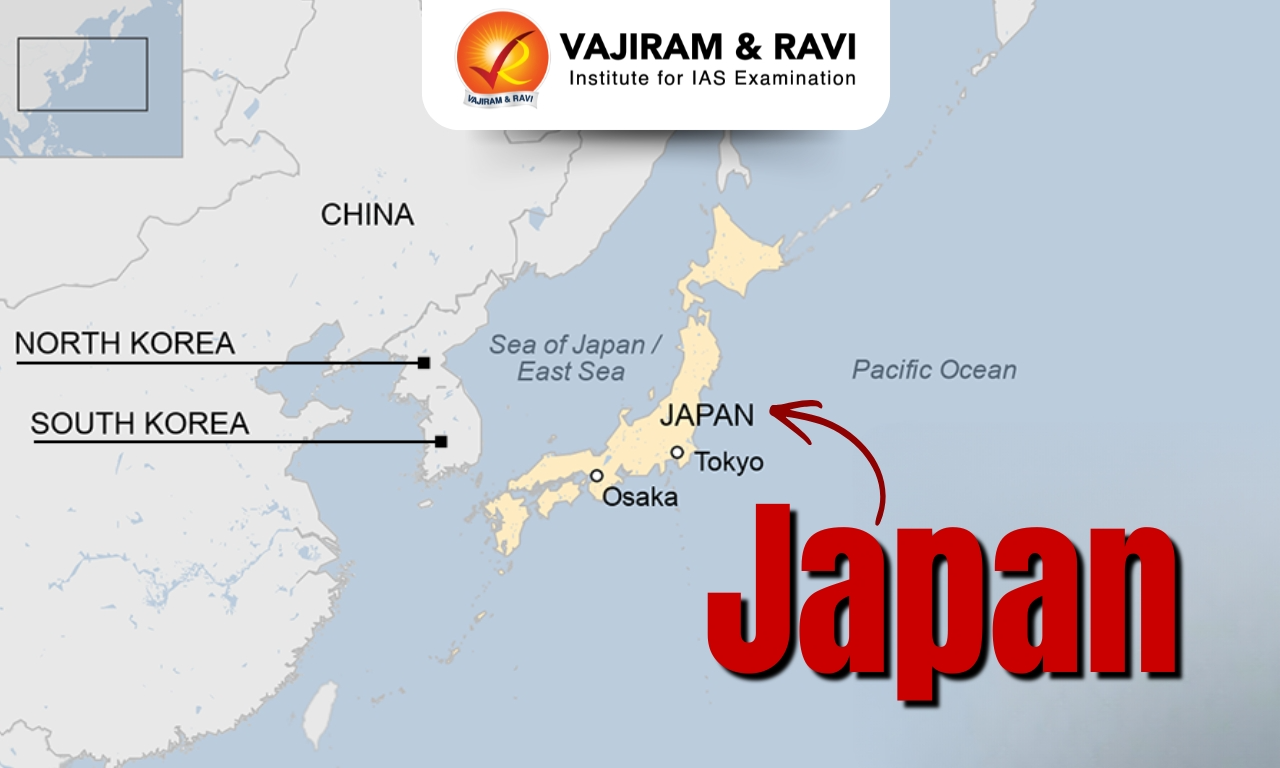
About Japan

  • Location: It is an island nation in East Asia, situated in the Northwestern Pacific Ocean.
  • Maritime borders: It is bordered by the Pacific Ocean (East), Sea of Okhotsk (North), Sea of Japan (West East) and East China Sea (Southwest).
  • Capital City: Tokyo.

Geographical Features of Japan

  • It comprises a chain of islands stretching ~1,500 miles in a northeast–southwest arc.
  • Terrain: Over 80% mountainous, with rugged terrain.
  • Main Islands (north to south): Hokkaido, Honshu, Shikoku, and Kyushu.
  • Climate: It ranges from subarctic in the north to humid subtropical in the south.
  • Volcanic activity: It is located on the Pacific Ring of Fire – a major zone of earthquakes and active volcanoes.
  • Highest peak: Mount Fuji (3,776 m), which is a stratovolcano.
  • Major mountain ranges: Japanese Alps.
  • Major rivers: Shinano River (longest), Tone River, Kiso River.
  • Natural Resources: It mainly consists of Coal, iron ore, zinc, lead, copper, sulfur, gold, and silver.

Source: IE

Japan FAQs

Q1: What is the capital of Japan?

Ans: Tokyo

Q2: Which is the highest mountain in Japan?

Ans: Mount Fuji

Festivals of Kerala 2026, Top 12 Famous Festivals Name List

Festivals of Kerala

Festivals of Kerala reflect the state's rich cultural heritage, religious diversity and traditional way of life. These festivals unite people across communities through rituals, music, dance, temple traditions, feasts, boat races and cultural performances. Harvest celebrations, temple festivals, religious observances and artistic events together preserve Kerala's historical identity while showcasing its vibrant customs, folklore and community participation.

Festivals of Kerala 2026

Festivals of Kerala celebrate agriculture, mythology, religion, nature and social harmony. While many festivals are rooted in Hindu traditions, several Christian and Islamic celebrations are equally important across the state. The 5 main Festivals of Kerala including Onam, Vishu, Thrissur Pooram, Sabarimala Temple Festival and the Nehru Trophy Boat Race have earned national and international recognition for their unique customs, traditional arts, music and public participation.

Also Read: Fairs and Festivals of India

List of Festivals of Kerala 2026

The Top 12 famous Festivals of Kerala has been listed below:

  1. Onam: Kerala's grand harvest festival commemorates the annual visit of King Mahabali during the Malayalam month of Chingom (August-September).
  2. Vishu: Celebrated as the Malayalam New Year, Vishu begins with the sacred Vishukkani, featuring Lord Krishna, gold ornaments, rice or paddy, Konna flowers, mirror, fruits, coconut and traditional lamps.
  3. Thiruvathira: Observed in the Malayalam month of Dhanu (December-January), this women's festival honours Lord Shiva and commemorates the death of Kamadeva. 
  4. Karthigai Deepam: Kerala celebrates Karthigai as the festival of lights. Village temples organise ceremonial bonfires, from which families carry burning palm-leaf torches (Chootu) to their homes before lighting oil lamps, illuminating entire villages.
  5. Sabarimala Temple Festival: Conducted at the Ayyappa Temple in the Western Ghats, the festival reaches its peak on Makkara Vilakku day, when a sacred light seen on a nearby hill symbolises the arrival of the deity.
  6. Thrissur Pooram: This famous temple festival is celebrated during Medom (April-May) at Vadakkunathan Temple. Decorated elephant processions, Panchavadyam performances and spectacular fireworks make it Kerala's most celebrated temple festival.
  7. Kodungallur Bharani: Celebrated at the Sree Kurumba Bhagavathi Temple in Kodungallur during Meenam (March-April). This ancient festival honours Goddess Bhadrakali's victory over the demon Daarika and attracts large gatherings of Velichappad (oracles).
  8. Guruvayoor Ekadesi: Celebrated in the Malayalam month of Vrischikam at the Guruvayur Sree Krishna Temple near Chavakkad. The festival includes temple rituals, processions, annual fairs and devotional gatherings attended by pilgrims from Malabar, Cochin and Travancore.
  9. Swathi Sangeethotsavam: Organised annually from 6-12 January at Kuthiramalika Palace, Thiruvananthapuram, this week-long music festival honours Maharaja Swathi Thirunal (1813-1846) through Carnatic and Hindustani performances featuring his compositions.
  10. Vetta & Arattu: Celebrated twice every year during October-November and March-April, the festival symbolises Lord Vishnu destroying evil. Idols of Lord Padmanabha, Lord Krishna and Lord Narasimha are ceremonially taken to Shangumugham Beach for ritual bathing before returning in grand processions accompanied by Kathakali performances.
  11. Nehru Trophy Boat Race: Started in 1952 following Prime Minister Jawaharlal Nehru's visit to Alappuzha, this famous snake boat race is held on the second Saturday of August. Giant boats with nearly 100 rowers from different villages compete, while another race in January promotes tourism.
  12. Other Important Festivals: Kerala also celebrates Attukal Pongala, Navaratri, Christmas, Eid-ul-Fitr, Pattambi Nercha, Guruvayoor Anayottam, Theyyam, Aranmula Uthrattathi, Ambalapuzha Arattu, Adoor Gajamela and Cochin Carnival, reflecting the state's remarkable religious harmony, artistic traditions and inclusive cultural heritage.

Also Read:- Harvest Festivals in India

Related Post for festivals in states
Festivals of Kerala Festivals of Sikkim
Festivals of Chhattisgarh Festivals of Himachal Pradesh
Festivals of Maharashtra Festivals of Odisha
Festivals of Karnataka Festivals of Punjab
Festivals of Andhra Pradesh Festivals of Tamil Nadu
Festivals of Haryana Festivals of West Bengal
Festivals of Arunachal Pradesh Festivals of Ladakh
Festivals of Rajasthan Festivals of Nagaland
Festivals of Jharkhand Festivals of Uttarakhand
Festivals of Telangana Festivals of Manipur
Festivals of Bihar Festivals of Gujarat
Festivals of Goa Festivals of Assam
Festivals of Meghalaya
Festivals of Uttar Pradesh
Festivals of Tripura Festivals of Delhi
Festivals of Madhya Pradesh Festivals of Jammu and Kashmir
Festivals of Puducherry Festivals of Dadra and Nagar Haveli and Daman and Diu
Festivals of Andaman and Nicobar Islands Festivals of Lakshadweep
Fairs and Festivals of India
Harvest Festivals in India

Festivals of Kerala FAQs

Q1: Which is the most famous among Festivals of Kerala 2026?

Ans: Onam is the most famous festival of Kerala. It is the state's biggest harvest festival and celebrates the annual visit of the legendary King Mahabali.

Q2: Why is Onam celebrated in Kerala?

Ans: Onam is celebrated to honour King Mahabali's annual visit to Kerala and marks the harvest season with feasts, floral decorations, cultural events and traditional games.

Q3: What is the significance of Vishu festival?

Ans: Vishu marks the Malayalam New Year. People begin the day by viewing the Vishukkani, which is believed to bring prosperity and good fortune throughout the year.

Q4: What is Thrissur Pooram famous for?

Ans: Thrissur Pooram is famous for its decorated elephant processions, Panchavadyam performances, grand fireworks and colourful temple celebrations held at Vadakkunathan Temple.

Q5: Which famous boat race is celebrated in Kerala?

Ans: The Nehru Trophy Boat Race, held annually at Alappuzha, is Kerala's most famous snake boat race and features long traditional boats with around 100 rowers each.

Pithora Painting

Pithora Painting

Pithora Painting Latest News

The Pithora painting, a centuries-old wall art tradition of Gujarat’s Rathwa tribal community, recently received a Geographical Indication (GI) tag.

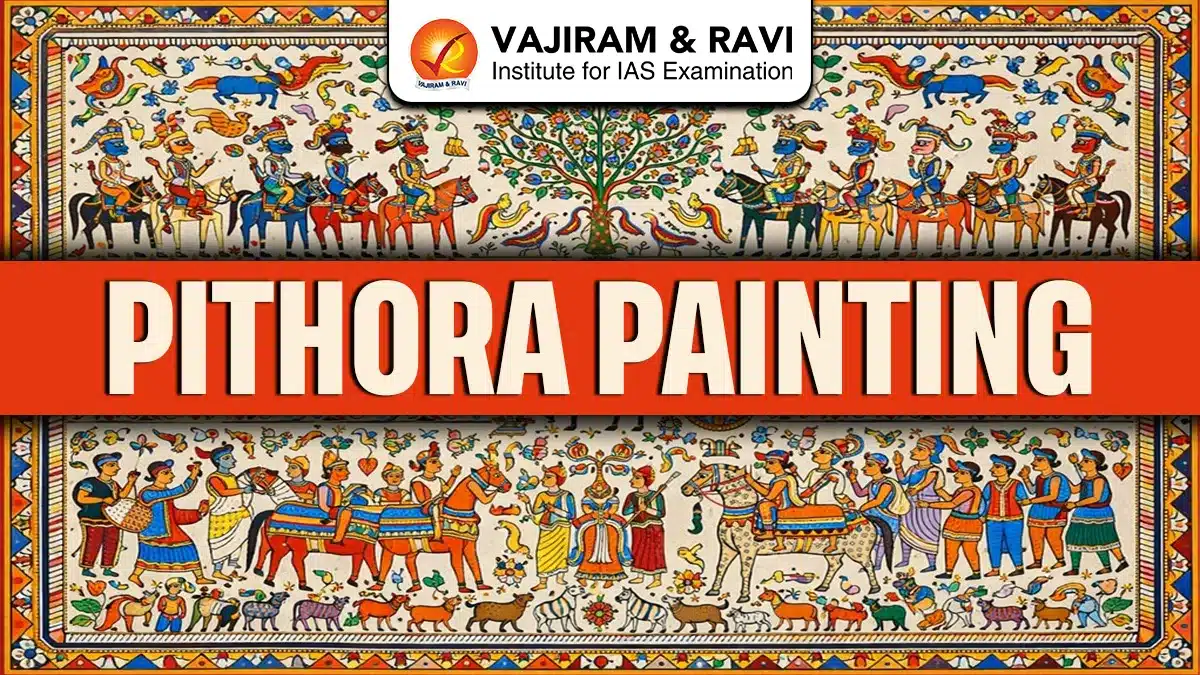
About Pithora Painting

  • It is a traditional tribal wall art that has originated in the tribal regions of Gujarat, mainly in Panchmahal and Chhota Udaipur.
  • It is done by tribes such as the Rathwa, Bhil, and Bhilala, who hold a strong belief in nature, spirits, and divine powers.
  • It holds a long history, and its existence dates back to around the 13th century.
  • It is named after Pithora De, who is their tribal god and is associated with marriage, prosperity, and the well-being of the tribe.
  • Traditionally, Pithora paintings were created on the walls of homes. The paintings were often commissioned during significant life events, such as weddings, births, and festivals, serving as a means of invoking blessings and protection from deities. 
  • Artists: Traditionally executed by specialist ritual painters known as Lakharas, under the guidance of a priest called Badwa. 
  • Surface Preparation: Traditionally, walls are prepared by applying a mixture of cow dung and clay. 
  • Natural Colors: 
    • Artists use natural pigments derived from minerals, plants, and other organic materials to create the colors for their paintings. 
    • Common colors include red, yellow, green, and blue, each derived from specific natural sources. 
  • Painters use a combination of bamboo sticks, cotton and wooden stencils to create their art. 
  • The paintings show tribal and Hindu deities, horses, animals, and scenes from daily life like farming, hunting, and dancing.
  • It  plays a crucial role in preserving tribal stories, beliefs, and customs and helps to teach younger generations about their culture.
  • Although it is traditionally practiced only as wall art, today’s generation of pithora painters use paper and canvas that they sell commercially.  
  • It has been awarded a Geographical Indication (GI) tag in 2026.

News: NM

Pithora Painting FAQs

Q1: What is Pithora Painting?

Ans: It is a traditional tribal wall art of Gujarat.

Q2: Which tribes traditionally practice Pithora Painting?

Ans: The Rathwa, Bhil, and Bhilala tribes.

Q3: Where were Pithora Paintings traditionally created?

Ans: On the walls of homes.

Q4: During which occasions were Pithora Paintings traditionally commissioned?

Ans: The paintings were often commissioned during significant life events, such as weddings, births, and festivals.

Q5: Who traditionally executes Pithora Paintings?

Ans: Specialist ritual painters known as Lakharas.

Soliga Tribe

Soliga Tribes

Soliga Tribe Latest News

A recent study showed that fortress conservation approach has led to uprooting, ongoing distress and despondency worldwide, and offers the Soligas in the Biligiri Rangaswamy Temple Wildlife Sanctuary (BRTWS) as a prime conservation exemplar. 

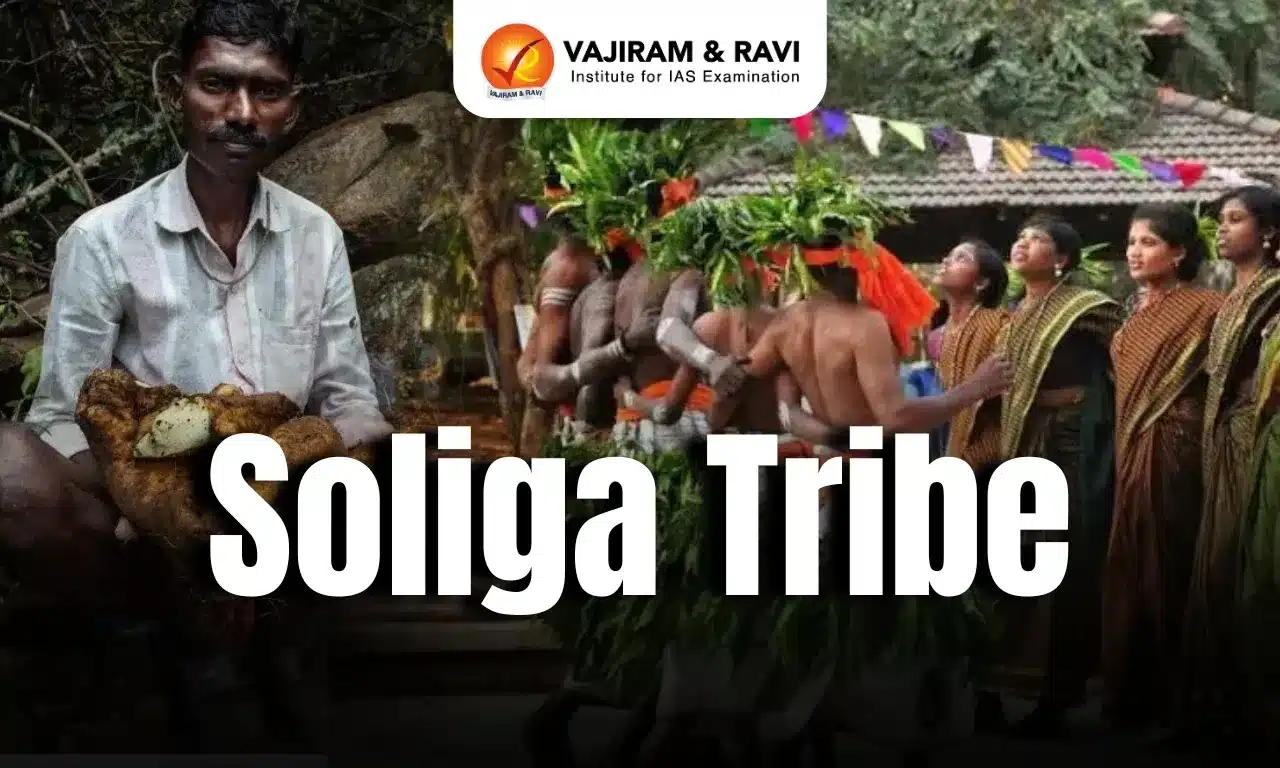
About Soliga Tribe

  • The term “Soliga” literally translates to “children of bamboo”, which reflects the tribe’s relationship with nature and their belief that they too have emerged from it.
  • Distribution: They are a group of indigenous, forest-dwelling people found mostly in Tamil Nadu and Karnataka.
  • They reside in the peripheral forest areas near Biligiri Rangana Hills and Male Mahadeshwara Hills.
  • Soligas was the first tribal community living inside a tiger reserve and getting their forest rights recognised by a court in a judgment in 2011.
  • Language: The Dravidian language sholaga is spoken by the Soliga. They also speak Kannada and Tamil.
  • The Soligas live in single-room huts, built of bamboo and mud.
  • They believe in coexisting with the environment and have indigenous ways of using nature to make unique utility products, such as the ‘jottai’, which is a cup made out of leaves.
  • Religion of Soliga Tribes : Along with adhering to Hindu customs, the Soliga people practice naturism and animism.
  • Economy:  The traditional economy of the Soliga is mostly based on shifting cultivation and collection of minor forest produce.

Source: TH

Soliga Tribe FAQs

Q1: Soligas are famous for living in which Tiger Reserve?

Ans: Biligiri Rangaswamy Temple - BRT Tiger Reserve

Q2: Soliga language belongs to which language family?

Ans: Dravidian

Festivals of Puducherry 2026, Name, Famous Fairs and Festivals List

Festivals of Puducherry

Festivals of Puducherry reflect the unique cultural identity of the Union Territory, where Indian traditions blend with a strong French heritage. Hindu, Christian, Muslim and spiritual celebrations are observed throughout the year with equal enthusiasm. More than 350 temples, along with churches, mosques and ashrams, make Puducherry an important religious and cultural centre. Tamil, Telugu, Malayalam, English and French speaking communities together preserve a vibrant festival tradition that represents the region's diverse social and cultural heritage.

Festivals of Puducherry 2026

Puducherry celebrates festivals connected with religion, spirituality, agriculture, history and culture across all four regions of the Union Territory. The influence of Tamil Nadu, Andhra Pradesh, Kerala, French colonial history and the teachings of Sri Aurobindo and The Mother is clearly visible in these celebrations. Major events such as the International Yoga Festival, Bastille Day, Pongal, Masi Magam, Veerampattinam Car Festival and several temple festivals attract visitors from nearby states as well as other parts of India.

List of Festivals of Puducherry 2026

The Festivals of Puducherry showcase its multicultural heritage, religious harmony and French influence through temple rituals, cultural events, processions and community celebrations.

Pongal

  • The most important festival of Puducherry, celebrated every year in January as a four day harvest festival. Freshly harvested rice, milk and jaggery are cooked in a new clay pot and first offered to the Sun God before being shared on banana leaves.

International Yoga Festival

  • Organised annually from 4 January to 7 January, this internationally recognised event promotes yoga and Indian philosophy. Yoga experts from India and abroad conduct demonstrations, discussions and workshops along with Indian classical dance and music performances.

Mother's Birth Anniversary

  • Celebrated on 21 February, this festival honours Mirra Alfassa (The Mother), born on 21 February 1878. She became the spiritual guide of the Sri Aurobindo Ashram after its establishment following Sri Aurobindo's seclusion in 1926.

Masi Magam Festival

  • Celebrated during February, this important Hindu festival involves bringing temple deities in grand processions to nearby water bodies for ceremonial bathing before returning them to their respective temples through religious processions.

Masquerade Festival

  • Observed during March and April, this distinctive celebration reflects Puducherry's French cultural influence. People wear colourful masks, fancy costumes and participate in festive gatherings, making it one of the region's most unique cultural events.

Good Friday and Easter

  • The Christian community observes Good Friday during March or April, followed by Easter. Churches conduct special prayers, religious services and community gatherings, highlighting Puducherry's strong Christian traditions.

Puthandu (Tamil New Year)

  • Celebrated on 14 April, devotees greet each other with Puthandu Vazthukal. At the Thirukameswar Kokilambal Temple, a traditional chariot procession is organised, where devotees manually pull the temple car through nearby localities.

Akshaya Tritiya

  • Celebrated in April, this auspicious Hindu festival is associated with prosperity and good fortune. Purchasing gold on this day is considered highly auspicious and forms an important local tradition.

Villianur Temple Festival

  • Held at Sri Gokilambal Thirukameswar Temple, this famous ten day Brahmotsavam attracts devotees from across India. Its annual Temple Car Festival during May and June features a 15 metre high chariot, believed to fulfil devotees' wishes.

Bastille Day

  • Celebrated every year on 14 July, Bastille Day marks the French National Day. A ceremonial procession on the Promenade concludes at the French War Memorial, where the French and Indian national anthems are sung and marching contingents pay tribute to fallen French soldiers.

Aadi Amavasai

  • Observed during July, this important Hindu festival is dedicated to paying respect to ancestors. Devotees perform rituals and offer food in memory of their departed forefathers.

Sri Aurobindo's Birth Anniversary

  • Celebrated on 15 August, this occasion coincides with India's Independence Day. Devotees visit the Sri Aurobindo Ashram to offer flowers and prayers in memory of Sri Aurobindo Ghosh, whose spiritual philosophy inspired the establishment of Auroville.

Fete de Puducherry

  • This cultural celebration is organised on India's Liberation Day and Independence Day. The Aayi Mandapam (Park Monument) is beautifully illuminated and decorated, becoming one of the major attractions for visitors.

Bakrid (Eid-ul-Adha)

  • Celebrated with devotion by the Muslim community, Bakrid reflects Puducherry's religious diversity. Families gather for prayers, charitable activities and community celebrations.

Muharram

  • Beginning on the first day of the Islamic calendar, Muharram continues for ten days. It commemorates the martyrdom of Hazrat Imam Hussain, with religious gatherings and large public processions carrying symbolic replicas of his shrine.

Vinayagar Chaturthi

  • Dedicated to Lord Ganesha, this widely celebrated Hindu festival marks the installation and worship of Ganesh idols, followed by devotional processions and community prayers across Puducherry.

Navaratri

  • One of the major Hindu festivals, Navaratri is celebrated with devotional worship, cultural performances and temple rituals dedicated to Goddess Durga in different forms over nine days.

Deepavali

  • The Festival of Lights is celebrated with great enthusiasm across Puducherry. The traditional five day observance includes Dhanteras, Naraka Chaturdasi, Diwali, Diwali Padva and Bhau Beej, symbolising the victory of light over darkness.

Milad-un-Nabi

  • Celebrated during November, this Islamic festival marks the birth anniversary of Prophet Muhammad. Religious prayers, sermons and community gatherings are organised across mosques.

Christmas

  • Celebrated on 25 December, Christmas reflects Puducherry's European cultural influence. Churches are decorated, Christmas Eve services are held on 24 December, carols are sung and families exchange gifts and festive meals.

New Year Celebrations

  • The arrival of the New Year is celebrated with cultural programmes, music, dance, food festivals and public gatherings, continuing Puducherry's tradition of blending Indian and European festive customs.

Kinni Radhothsavam

  • Celebrated at the Kamatchiamman Temple, this important religious festival is one of Puducherry's traditional temple celebrations and forms an integral part of the region's Hindu cultural heritage.

Brahamothsavam at Manakula Vinayagar Temple

  • This major temple festival attracts large numbers of devotees through elaborate rituals, religious processions and special worship dedicated to Lord Vinayagar.

Fire Walking Festival

  • One of Puducherry's most famous religious festivals, devotees perform the traditional fire walking ritual as an act of faith and devotion, attracting pilgrims and tourists from neighbouring regions.

Annual Festival at Muthumariamman Temple

  • Dedicated to Goddess Muthumariamman, this temple festival is marked by special rituals, community worship and large religious gatherings.

Drowpathiamman Temple Festival

  • This unique 22 day festival is among the longest temple celebrations in Puducherry, featuring continuous religious ceremonies, processions and traditional cultural practices.

Other Traditional Festivals

  • Puducherry also celebrates Mangani Festival, Mandalam Vilakku, Putha Lanthira, Kandoori Festival, Mandolilthira, Sedal, Pandokuloththira, Bhagavathi Temple Festival, Koyodan Korothithra, Vishnutheertham, Swamikalyanam, Vishu, Onam, Sri Krishna Jayanti, Holi, Maha Shivaratri and Eid-ul-Fitr, reflecting the Union Territory's multicultural and multi religious character across its different regions.
Related Post for festivals in states
Festivals of Kerala Festivals of Sikkim
Festivals of Chhattisgarh Festivals of Himachal Pradesh
Festivals of Maharashtra Festivals of Odisha
Festivals of Karnataka Festivals of Punjab
Festivals of Andhra Pradesh Festivals of Tamil Nadu
Festivals of Haryana Festivals of West Bengal
Festivals of Arunachal Pradesh Festivals of Ladakh
Festivals of Rajasthan Festivals of Nagaland
Festivals of Jharkhand Festivals of Uttarakhand
Festivals of Telangana Festivals of Manipur
Festivals of Bihar Festivals of Gujarat
Festivals of Goa Festivals of Assam
Festivals of Meghalaya
Festivals of Uttar Pradesh
Festivals of Tripura Festivals of Delhi
Festivals of Madhya Pradesh Festivals of Jammu and Kashmir
Festivals of Puducherry Festivals of Dadra and Nagar Haveli and Daman and Diu
Festivals of Andaman and Nicobar Islands Festivals of Lakshadweep
Fairs and Festivals of India
Harvest Festivals in India

Festivals of Puducherry 2026 FAQs

Q1: Which is the most famous festival of Puducherry 2026?

Ans: Thai Pongal is considered the most famous festival of Puducherry. It is a four day harvest festival celebrated every January with traditional rituals dedicated to the Sun God.

Q2: Why is Bastille Day celebrated in Puducherry?

Ans: Bastille Day is celebrated on 14 July to mark France's National Day, reflecting Puducherry's French colonial heritage through parades, memorial ceremonies and cultural events.

Q3: When is the International Yoga Festival held in Puducherry?

Ans: The International Yoga Festival is organised every year from 4 January to 7 January, bringing together yoga experts from India and many other countries.

Q4: Which temple festival is famous for its giant chariot procession in Puducherry?

Ans: The Villianur Temple Festival is famous for its annual Temple Car Festival, where devotees pull a 15 metre high chariot during the ten day Brahmotsavam celebrations.

Q5: Which festival reflects the French cultural influence in Puducherry?

Ans: The Masquerade Festival and Bastille Day are the two major festivals that reflect Puducherry's French cultural heritage through costumes, parades and traditional celebrations.

Western Ghats – Centre’s 7th Draft and the Decade-Long Controversy

Western Ghats

Western Ghats Latest News

  • The Union Environment Ministry has reissued, for the seventh time in over a decade, its draft notification proposing an ecologically sensitive area (ESA) across the Western Ghats, after the previous draft lapsed without being finalised due to continuing differences with the six states.

About the Western Ghats

  • The Western Ghats is a mountain range running parallel to the western coast of the Indian peninsula, spread over approximately 1,500 km across six states: Gujarat, Maharashtra, Goa, Karnataka, Kerala & Tamil Nadu.
  • Ecological Significance
    • A UNESCO World Heritage Site, recognised for its outstanding universal value.
    • It is older than the Himalayas in geological age.
    • Home to thousands of species of flora and fauna, many of which are endemic and found nowhere else.
    • Influences the monsoon pattern of peninsular India.
    • Acts as a critical water source, giving rise to major rivers such as the Godavari, Krishna, and Cauvery.
    • Hosts 39 components of protected areas, including national parks, wildlife sanctuaries, and reserved forests.

About the Gadgil Committee (2011)

  • Background
    • The dispute over protecting the Western Ghats dates back to 2011, when the Western Ghats Ecology Expert Panel (WGEEP), chaired by ecologist Madhav Gadgil, submitted its report recommending stringent conservation measures.
  • Key Recommendations
    • The entire mountain chain of the Western Ghats should be treated as an Ecologically Sensitive Area (ESA).
    • The region should be divided into Ecologically Sensitive Zones (ESZ) 1, 2, and 3, based on the level of ecological sensitivity.
    • Strict regulation of developmental activities, including a ban on mining, quarrying, and highly polluting industries in ESZ-1.
    • Phased decommissioning of chemical and polluting industries operating in sensitive zones.
    • Promotion of sustainable agriculture and organic farming practices.
    • A bottom-up, decentralised governance model involving local communities and Gram Sabhas in conservation decisions.
  • Reaction
    • The Gadgil report faced strong opposition from states, particularly Kerala and Karnataka.
      • Strict restrictions would adversely affect agriculture, plantations, and infrastructure development.
      • It would displace local populations and impact livelihoods dependent on natural resources.
      • The recommendations were seen as anti-development by state governments.
      • States argued that the report did not adequately consider the socio-economic realities of the region.
    • Despite the ecological merit of the report, its political unacceptability led the Centre to seek a more balanced approach.

About the Kasturirangan Committee (2012)

  • Background
    • Following the widespread opposition to the Gadgil report, the Centre constituted a High Level Working Group (HLWG) in 2012, chaired by K. Kasturirangan, to review the earlier recommendations and propose a more balanced framework.
  • Key Recommendations
    • Only 37% of the Western Ghats should be designated as an ESA, significantly lower than the 64% suggested by the Gadgil report.
    • A complete ban on mining, quarrying, sand mining, and thermal power plants in the ESA.
    • Strict regulation of highly polluting industries within the eco-sensitive zone.
    • Exclusion of inhabited regions and agricultural plantations from the purview of the ESA, making the report more pro-farmer in its approach.
    • Regulation of hydel power projects and large construction activities.
    • Promotion of sustainable development alongside conservation.
  • Criticism
    • States argued that the report used an "erroneous method" that included many villages under ESA despite having only rubber plantations and no forest land.
    • The report was accused of including ecologically non-sensitive areas under ESA while leaving out some ecologically sensitive ones.
    • Kerala appointed its own state-level committee under Oommen V. Oommen, which recommended further exclusions of inhabited regions and plantations.
    • States continued to object to the restrictions on infrastructure and developmental activities.

News Summary: The 7th Draft Notification

  • The ESA issue has been pending since August 2011, when the Gadgil Committee first recommended notifying a no-go zone to save the fragile terrain. 
  • The first draft notification was issued in March 2014, but the proposal has remained on paper since then. 
  • The ministry subsequently issued five more drafts in 2015, 2017, 2018, 2022, and 2024 before coming out with the latest seventh one in July 2026.

Key Features of the 7th Draft

  • The Union Environment Ministry notified the seventh draft on July 27, 2026, after the previous draft lapsed on July 27, 2026, without being finalised. The draft will remain open for public objections for 60 days before the Centre considers issuing a final notification.
  • The latest notification retains the proposed ESA at 56,825.7 sq. km, spread across the six states.
  • Prohibited Activities
    • Mining, quarrying, and sand mining within the ESA.
    • New thermal power plants.
    • Certain highly polluting industries.
    • Large construction projects.
  • Regulated Activities
    • Hydel power generation would be regulated.
    • Agriculture and plantation activity will not be affected due to the provisions in the draft notification.
    • The actual area will be finalised based on the recommendations of the states, the views of stakeholders, and the expert committee.

No Substantive Changes

  • A comparison of the latest draft with the previous notification issued in July 2024 shows no substantive changes in the notified area, state-wise extent, or regulatory provisions. 
  • The list of villages proposed for inclusion also remains unchanged.
  • New Provision for Phased Implementation
    • Like the sixth draft, the seventh one proposes a provision where the final ESA notification can be taken up "in a phased manner either state-wise or through a combined single notification." This move may help speed up the process without waiting for all six states to be on board simultaneously.

The Core Controversy

  • Conservation vs. Development
    • The central tension in the Western Ghats debate is between ecological conservation and developmental aspirations:
    • Conservationists argue that the fragile ecosystem needs strict protection to prevent disasters like landslides, biodiversity loss, and water scarcity.
    • States and local communities fear that stringent regulations would stifle economic growth, restrict agriculture, and displace populations.
  • Scientific Demarcation vs. Political Acceptability
    • The Gadgil report was scientifically rigorous but politically unacceptable due to its strictness.
    • The Kasturirangan report was a politically diluted compromise but was criticised for scientific inaccuracies in demarcation.
    • Neither approach has succeeded in finding a balance acceptable to all stakeholders.
  • Federal Dynamics
    • The Centre wants a uniform framework for ecological protection across the Western Ghats.
    • States demand flexibility to determine the extent of regulation based on local conditions.
    • The lack of consensus has left the entire issue in limbo for over a decade.
  • Recurring Natural Disasters
    • The repeated landslides in Wayanad and other parts of the Western Ghats have reinforced the urgency of ecological protection:
    • Experts have linked the disasters to deforestation, unplanned construction, and climate change.
    • The failure to notify the ESA has allowed environmentally hazardous activities to continue unchecked.
    • Each disaster revives the debate but has not yet led to a final decision.

Source: TH | TOI

Western Ghats FAQs

Q1: What is the Ecologically Sensitive Area (ESA) in the Western Ghats?

Ans: The ESA is a designated zone within the Western Ghats where certain environmentally hazardous activities are prohibited or regulated to protect the fragile ecosystem.

Q2: What did the Gadgil Committee recommend for the Western Ghats?

Ans: The Gadgil Committee (2011) recommended treating the entire 1,29,000 sq km Western Ghats as an ESA, divided into three sensitivity zones with strict regulations.

Q3: How did the Kasturirangan Committee differ from the Gadgil Committee?

Ans: The Kasturirangan committee (2012) recommended bringing only 37% of the Western Ghats under ESA, excluding inhabited regions and plantations, making it more acceptable to states.

Q4: Why have states objected to the ESA notification?

Ans: States have objected due to concerns over the impact on agriculture, plantations, infrastructure development, and local livelihoods, as well as alleged inaccuracies in village demarcation.

Q5: How many draft notifications has the Centre issued on the Western Ghats ESA so far?

Ans: The Centre has issued seven draft notifications since 2014, with the latest one issued on July 27, 2026, after the previous draft lapsed.

Zoonotic Outbreaks: Lessons from Ebola, Hantavirus and Nipah for Global Preparedness

Zoonotic Outbreaks

Zoonotic Outbreaks Latest News

  • Recent episodes involving Ebola, hantavirus, and Nipah virus show that dangerous zoonotic infections are no longer rare, isolated events. 
  • They are appearing with increasing regularity at the interface of humans, animals, forests, farms, hospitals, and global travel — exposing weaknesses in surveillance, public trust, vaccine access, and international preparedness.

Understanding the Three Viruses

  • Ebola Virus Disease
    • Causes severe illness and death, with an average case-fatality rate of around 50%.
    • Recent cases in central Africa illustrate how conflict, displacement, unsafe burials, distrust of health workers, and weak surveillance make outbreak control extremely difficult.
    • Transmits human-to-human through infected body fluids.
  • Hantavirus
    • Named after the Hantaan River region in South Korea; mainly rodent-borne.
    • Causes kidney disease or hantavirus pulmonary syndrome — a severe lung illness that can rapidly progress to respiratory failure and shock.
    • A cluster linked to the MV Hondius cruise ship revived public attention, showing how a locally confined virus can acquire international significance through travel, enclosed spaces, and multi-country contact tracing.
    • Unlike most hantaviruses, the Andes hantavirus strain shows limited person-to-person spread.
  • Nipah Virus
    • Carried mainly by fruit bats; causes respiratory illness and encephalitis.
    • Case-fatality rates estimated at 40–75%.
    • Recurring concerns in India and Bangladesh confirm it remains a persistent regional threat.
    • Spreads through close household or healthcare contact.

The Vaccine Gap

  • A licensed vaccine exists for only one major Ebola virus species.
  • No licensed human vaccines currently exist for Bundibugyo Ebola, Nipah virus, or hantavirus infections.
  • No reliable curative treatment exists once outbreaks begin, making early detection, isolation, and infection control critical.

Building Preparedness: From Research to Vaccine

  • Step 1 — Basic research: Understanding pathogen biology — how it enters cells, causes disease, and which proteins trigger immunity — largely happens in publicly funded universities and national laboratories.
  • Step 2 — Industrial translation: Converting research into usable vaccines requires industrial-scale capacity: process development, formulation, quality control, regulatory documentation, clinical trials, manufacturing, and cold-chain planning.
  • Role of new technology: AI tools can now help identify vaccine targets, predict immune responses, compare candidates, and improve manufacturing — though conventional biological validation, safety testing, and regulatory review remain essential. 
  • Platform technologies like mRNA vaccines, viral vector vaccines, and recombinant protein systems can accelerate design once a pathogen's genetic sequence or protective antigen is identified.

Why Vaccine Development Lags for These Viruses

  • COVID-19 proved vaccine design, testing, and scale-up can move far faster than previously believed — but these platforms aren't freely available to all researchers, as many depend on patents, proprietary know-how, and specialised manufacturing controls.
  • Testing challenges: Outbreaks of Ebola, hantavirus, and Nipah are often unpredictable, making conventional large clinical trials difficult. This may require emergency trial designs, ring-vaccination studies, adaptive protocols, and regional trial networks.
  • Economic disincentive: International vaccine companies may find limited financial attraction in developing vaccines for diseases with small, uncertain outbreaks in poorer regions — despite enormous public-health value.

The Way Forward

  • Academia-industry partnerships: Academic institutions provide immunology expertise, animal models, and early vaccine concepts; industry provides scale-up, formulation, quality assurance, and distribution.
  • Shared-risk financing model: Since standard profit models fail to reward epidemic vaccine development, the solution may lie in public funding, advance purchase commitments, technology transfer, regional manufacturing capacity, and fair global stockpiles.
  • Addressing vaccine hesitancy: Fear, misinformation, and distrust during outbreaks can prevent people from accepting vaccines or cooperating with contact tracing and isolation measures. Trust must be built before emergencies arise, through honest communication, local leadership, and transparent risk communication.

Conclusion

  • Ebola, hantavirus, and Nipah illustrate that pathogens do not respect borders — a disease originating in a forest village or aboard a ship can become an international concern within days. 
  • Genuine preparedness demands overcoming a scientific challenge and building public-private, academic-industrial, and international systems that can develop vaccines in time, distribute them fairly, and earn the community trust needed to use them.

Source: IE

Zoonotic Outbreaks FAQs

Q1: Why are Zoonotic Outbreaks becoming a major global health concern?

Ans: Zoonotic Outbreaks are increasing due to greater human-animal interaction, environmental changes, global travel and gaps in disease surveillance and public health preparedness.

Q2: Why do Zoonotic Outbreaks expose weaknesses in vaccine development?

Ans: Zoonotic Outbreaks often involve diseases with limited commercial incentives, making vaccine research, clinical trials and manufacturing investments slower than public health needs.

Q3: How can technology improve preparedness for Zoonotic Outbreaks?

Ans: Zoonotic Outbreaks can be managed better through AI-assisted vaccine research, genomic surveillance, rapid diagnostics and platform technologies that accelerate vaccine development.

Q4: Why are public trust and communication essential during Zoonotic Outbreaks?

Ans: Zoonotic Outbreaks require transparent communication to reduce misinformation, encourage vaccination, improve contact tracing and strengthen community cooperation during health emergencies.

Q5: What strategies can strengthen preparedness for future Zoonotic Outbreaks?

Ans: Zoonotic Outbreaks require stronger surveillance, public-private partnerships, global vaccine financing, technology transfer, regional manufacturing capacity and coordinated international response systems.

Rupee Undervaluation: What India’s Shift Means for Exports and Competitiveness

Rupee Undervaluation

Rupee Undervaluation Latest News

  • The Indian rupee's sharp depreciation over the past one-and-a-half years has transformed it from an overvalued currency into one that is now more undervalued than even the Chinese yuan — potentially boosting India's trade competitiveness.

Recent Rupee Movement

  • Hardening global oil prices, following renewed US-Iran hostilities, pushed the rupee past 96-to-the-dollar on July 14, where it stayed until July 24.
  • A pause in daily strikes since has strengthened the rupee to around 95.9, as Brent crude eased below $85 per barrel after surging past $95 on July 23.
  • The rupee hit an all-time low of 96.96-to-the-dollar on May 20, while Brent crude had crossed $126.4 per barrel on April 30.
  • RBI Governor Sanjay Malhotra noted the rupee has become undervalued and could appreciate once the West Asia situation stabilises, as seen in past episodes of external shock-driven volatility.

Understanding Effective Exchange Rates

  • NEER (Nominal Effective Exchange Rate) and REER (Real Effective Exchange Rate) are the key indices used to measure whether a currency is over- or under-valued.
  • These indices track the rupee's movement against a basket of 40 currencies of countries accounting for about 88% of India's trade flows, with 2015-16 as the base year (value = 100).
  • Currency weights are derived from each country's share in India's total foreign trade — similar to how the Consumer Price Index (CPI) weighs commodities by consumption share.
  • NEER captures the rupee's external value against this basket without factoring in inflation.
  • REER adjusts NEER for inflation differentials between India and its trading partners — making it the true measure of a currency's value. 
  • If Indian prices rise faster than trading partners' even with a stable exchange rate, REER rises, making Indian products less competitive globally.

From Overvaluation to Undervaluation: The Data

  • In November 2024, the REER of 108.03 meant the rupee was over 8% overvalued in real terms.
  • By June 2026, the REER of 91.26 represents an 8.7% "real" weakening — confirming the rupee has moved from overvaluation to undervaluation.
  • Notably, the REER stayed above 100 until July 2025, marking a clear and relatively recent shift.
  • Future appreciation toward "fair value" (REER of 100) depends on sustainable easing of West Asia tensions, reopening of commercial shipping lanes, and absence of new geopolitical energy shocks or US trade actions.

More Competitive Than the Yuan

  • An independent measure — the Real Broad Effective Exchange Rate (RBEER), compiled by the Federal Reserve Bank of St. Louis — corroborates this trend. 
  • RBEER compares a country's currency value against 64 trade partners, using 2020 as the base year.
    • The rupee's RBEER fell from an all-time high of 106.1 (November 2024) to 90.15 (June 2026).
    • In November 2024, the yuan's RBEER (92.16) made it more undervalued and competitive than the rupee.
    • By June 2026, the yuan's RBEER (92.24) was higher than the rupee's 90.15 — meaning the rupee is now a more competitive currency than the yuan.

Why This Matters

  • A more undervalued currency can theoretically:
    • Boost the price competitiveness of Indian exports in global markets.
    • Make domestic manufacturing more competitive against imports.
  • However, whether these theoretical benefits materialise in practice remains to be seen, as several other factors — global demand conditions, supply chains, and trade policy — will also shape outcomes.

Conclusion

  • The rupee's transition from an overvalued to an undervalued currency — now more competitive than even the yuan — marks a significant shift with potential trade advantages for India. 
  • Yet, translating this currency competitiveness into tangible export growth and stronger domestic manufacturing will depend on global geopolitical stability and India's ability to capitalise on the opportunity.

Source: IE

Rupee Undervaluation FAQs

Q1: What does Rupee Undervaluation indicate for the Indian economy?

Ans: Rupee Undervaluation suggests that Indian goods have become more price-competitive globally, potentially boosting exports and improving domestic manufacturing competitiveness.

Q2: How is Rupee Undervaluation measured?

Ans: Rupee Undervaluation is primarily assessed using the Real Effective Exchange Rate (REER), which adjusts exchange rates for inflation relative to India's trading partners.

Q3: Why has Rupee Undervaluation become significant in 2026?

Ans: Rupee Undervaluation has become significant because the rupee shifted from being overvalued to more undervalued than the Chinese yuan, enhancing India's trade competitiveness.

Q4: Can Rupee Undervaluation automatically increase exports?

Ans: Rupee Undervaluation improves export competitiveness, but actual export growth also depends on global demand, supply chains, logistics and international trade conditions.

Q5: Why is Rupee Undervaluation important for economic policy?

Ans: Rupee Undervaluation influences trade, inflation, investment and monetary policy, making it a key indicator for assessing India's external competitiveness.

Bhavani River

Bhavani River

Bhavani River Latest News

Large stretches of the Bhavani River near Kooduthurai at Bhavani have been recently engulfed by water hyacinth, prompting farmers and residents to urge the State government to remove the invasive aquatic weed.

About Bhavani River

  • It is a major tributary of the Cauvery River flowing through the states of Kerala and Tamil Nadu.
  • It is the second largest river in Tamil Nadu.
  • Course
    • It originates from the Western Ghats in the Nilgiri Hills, located in the Tiruppur district of Tamil Nadu.  
    • The river emerges from Bhavani Lake, at an elevation of about 2,165 meters (7,100 feet) above sea level.  
    • From there, it flows into Kerala, passing through the Silent Valley National Park
    • After flowing through Kerala, the river turns and flows back into Tamil Nadu.
    • Finally, the river merges with the Cauvery River in the town of Bhavani, at a location known as Bhavani Sangameshwarar Temple, a significant pilgrimage site for Hindus.
  • Total Length: 217 km.
  • It is a “perennial” river, which means it flows all year round and never dries up.
  • The drainage basin spans approximately 6,200 sq.km., covering parts of Tamil Nadu, Kerala, and Karnataka:
  • About 90 percent of the river water is used for agriculture.
  • Tributaries: The largest tributaries are West and East Varagar, which come from the Nilgiris. 
  • Major Dams:
    • Bhavani Sagar Dam
    • Kodiveri Dam.

News: TH

Bhavani River FAQs

Q1: Which major river is the Bhavani River a tributary of?

Ans: The Cauvery River.

Q2: Through which two states does the Bhavani River primarily flow?

Ans: Kerala and Tamil Nadu.

Q3: Where does the Bhavani River originate?

Ans: In the Western Ghats in the Nilgiri Hills, Tiruppur district, Tamil Nadu.

Q4: What is the total length of the Bhavani River?

Ans: 217 km.

Festivals of Delhi 2026, List of Famous Fairs and Festivals

festivals of delhi

Delhi is the traditional and present capital of India. It reflects India's cultural diversity through Festivals of Delhi 2026. It is located between the Yamuna River and the Aravalli hills and is influenced by Haryana, Rajasthan, Uttar Pradesh and Punjab. People from every part of the country have made Delhi their home, making it a truly cosmopolitan city. As a result, festivals of different religions and communities are celebrated with equal enthusiasm, showcasing the spirit of unity in diversity and preserving the city's rich cultural heritage.

Festivals of Delhi 2026

Festivals of Delhi 2026 represent its long history, diverse population and shared cultural traditions. The city celebrates national, religious and seasonal festivals throughout the year, bringing together people from different languages, faiths and regions. From grand national ceremonies at historic landmarks to colourful community celebrations in neighbourhoods, every festival reflects Delhi's inclusive culture. Music, dance, traditional food, fairs, processions, religious rituals and cultural performances make these celebrations an important part of the city's social and cultural identity.

List of Main Festivals of Delhi 2026

Delhi celebrates national, religious and seasonal festivals throughout the year, reflecting its multicultural society, historical importance and rich cultural traditions. The list of major Festivals of Delhi 2026 include:

Republic Day

It is celebrated every year on 26 January to mark the enforcement of the Constitution of India in 1950, officially establishing India as a sovereign democratic republic.

  • Republic Day Parade: The main attraction is the grand parade with tableaux beginning from Rashtrapati Bhavan and proceeding towards India Gate, featuring the Armed Forces, marching contingents and cultural tableaux from different states.
  • National Significance: The President hoists the national flag, presents gallantry awards and honours distinguished citizens, making Delhi the centre of the country's Republic Day celebrations.

Independence Day

It is celebrated every year on 15 August to commemorate India's independence in 1947 following the transfer of legislative sovereignty under the Indian Independence Act.

  • Red Fort Ceremony: The Prime Minister receives the Guard of Honour, hoists the national flag and delivers the Address to the Nation from the historic Red Fort.
  • Public Celebrations: March pasts, National Cadet Corps performances, state exhibitions, kite flying events and patriotic programmes are organised across Delhi.
  • City Decoration: Government buildings, roads, schools and public spaces are decorated with national flags, lights and colourful displays before the celebrations.

Holi

Holi marks the arrival of spring and celebrates joy, colours and the victory of good over evil through vibrant community celebrations.

  • Observance: It is celebrated on the full moon day of Phalguna, generally falling in March, according to the Hindu calendar.
  • Religious Significance: The festival commemorates the story of Prahlad and Holika, symbolising the victory of devotion and righteousness over evil.
  • Celebrations: People perform Holika Dahan on the previous evening and celebrate with colours, gulaal, flowers, water balloons and festive foods like Gujiya, Dahi Bhalle and Masala Mathri.

Diwali

Diwali is the festival of lights celebrated across Delhi with decorations, prayers, fairs and vibrant cultural activities.

  • Observance: Celebrated on the Amavasya of Kartik, approximately 20 days after Dussehra, usually during October or November.
  • Religious Importance: The festival honours the return of Lord Ram after 14 years of exile, symbolising the triumph of light over darkness and good over evil.
  • Celebrations: Homes and workplaces are cleaned, decorated with diyas, candles and lights, while families perform Lakshmi Puja and celebrate together.
  • Delhi Attractions: Markets and fairs across the city become festive, while Dilli Haat, INA, hosts a popular Diwali Bazaar featuring handicrafts, cultural performances and festive shopping.

Dussehra

Dussehra commemorates Lord Ram's victory over Ravana and remains one of Delhi's largest cultural festivals.

  • Observance: Celebrated on the tenth day of Navratri, usually during September or October and is also known as Vijayadashami.
  • Historical Significance: The festival celebrates the victory of Lord Ram over the ten headed king Ravana, representing the triumph of truth over evil.
  • Major Events: Grand Ram Lila performances narrate the Ramayana, followed by Ravana Dahan, where giant effigies of Ravana are ceremonially burnt.
  • Delhi Celebrations: Ramlila Maidan and performances are organised that attract large crowds with elaborate stage effects and fireworks.

Durga Puja

Durga Puja showcases Delhi's vibrant Bengali culture through elaborate pandals, rituals and community celebrations.

  • Observance: Celebrated during Ashvina (September-October) and honours Goddess Durga's victory over the buffalo demon Mahishasura.
  • Religious Rituals: Beautiful idols of Goddess Durga are installed in pandals, with celebrations continuing from Sashti to Vijayadashami, ending with idol immersion.
  • Community Celebrations: Devotional songs, dhak performances, cultural events and traditional puja bhog are central attractions.
  • Delhi Locations: Chittaranjan Park, popularly called Mini Bengal, along with Minto Road, Kashmere Gate and Civil Lines, hosts some of Delhi's largest Durga Puja celebrations.

Eid-ul-Fitr

Eid-ul-Fitr celebrates the completion of Ramadan with prayers, charity and community gatherings across Delhi.

  • Observance: Celebrated after the completion of the holy month of Ramadan, marking the end of month long fasting.
  • Religious Significance: Muslims offer special morning prayers, exchange greetings of 'Eid Mubarak', promote forgiveness and distribute gifts to the needy.
  • Celebrations: The festival continues for one to three days with family gatherings, fairs, traditional foods and charitable activities.
  • Delhi Celebrations: Jama Masjid, one of India's largest mosques, attracts thousands of worshippers.

Guru Nanak Jayanti

Guru Nanak Jayanti is the most sacred Sikh festival celebrated with devotion, processions and community service.

  • Observance: Celebrated on Kartik Purnima, generally during November, marking the birth anniversary of Guru Nanak Dev, founder of Sikhism.
  • Religious Significance: Devotees organise Prabhat Pheris, Kirtan, Katha, Asaa-ki-Vaar and community Langars in gurudwaras.
  • Delhi Celebrations: Colourful Nagar Kirtans begin from Gurudwara Sis Ganj Sahib, led by the Panj Pyaras, with decorated streets and devotional singing.
  • Unique Feature: Delhi celebrates the occasion with eco-friendly laser shows, while gurudwaras begin religious ceremonies from 4:00 a.m., welcoming thousands of devotees.

Lohri

Lohri is a popular winter harvest festival celebrated mainly by Delhi's Punjabi community.

  • Observance: Celebrated every year on 13 January, marking the end of winter and the beginning of longer days after the winter solstice.
  • Agricultural Importance: The festival is associated with the successful harvest of Rabi crops, while the following day, Makar Sankranti, is regarded as a financial New Year by many Punjabi farmers.
  • Celebrations: Families light bonfires, sing traditional Lohri songs and offer peanuts, sesame seeds, popcorn and beaten rice into the sacred fire.
  • Delhi Attractions: Dilli Haat, Janakpuri, hosts traditional Lohri celebrations featuring bonfires, Bhangra performances, folk music and distribution of festive sweets.

Christmas

Christmas brings festive decorations, prayers and celebrations across Delhi's churches, markets and public spaces.

  • Observance: Celebrated every year on 25 December to commemorate the birth of Jesus Christ.
  • Religious Celebrations: Churches conduct special prayer services, while homes are decorated with Christmas trees, wreaths, garlands and festive lights.
  • Delhi Celebrations: Sacred Heart Cathedral hosts one of Delhi's largest midnight Mass services, attracting thousands of worshippers and visitors.

New Year

New Year marks the beginning of the Gregorian calendar with citywide celebrations, entertainment and public gatherings.

  • Observance: Celebrated every year on 1 January, marking the first day of the Gregorian and Julian calendar year.
  • Celebrations: People welcome the New Year through parties, concerts, fireworks, family gatherings and midnight celebrations on 31 December.
  • Public Gatherings: Many people also celebrate around India Gate and Connaught Place, where illuminated surroundings and cultural programmes create a vibrant festive atmosphere.

Phool walon ki Sair Festival of Delhi

Phool walon ki Sair is Delhi's traditional flower festival celebrating communal harmony and shared cultural heritage.

  • Observance: Organised during late September or early October, this historic flower festival reflects Delhi's long tradition of communal harmony.
  • Cultural Importance: The festival symbolises unity by bringing together people from different religious communities through floral offerings and cultural programmes.
  • Celebrations: Flower processions, traditional performances and community participation form the main attractions of this heritage festival.

Qutub Festival

Qutub Festival celebrates Delhi's artistic traditions through music, dance and cultural performances at one of the city's historic monuments.

  • Observance: Usually organised during November or December, highlighting Delhi's cultural heritage and performing arts.
  • Major Attractions: Classical music, folk performances, traditional dances and cultural programmes are presented against the backdrop of the historic Qutub complex.
  • Significance: The festival promotes India's artistic traditions while showcasing Delhi's historical and architectural legacy.

International Mango Festival

The International Mango Festival celebrates India's rich mango diversity through exhibitions, competitions and cultural activities.

  • Observance: Organised every year during July, bringing together mango growers, experts and visitors from different regions.
  • Festival Highlights: Mango exhibitions, tasting sessions, competitions and displays of numerous mango varieties make it one of Delhi's unique seasonal events.
  • Importance: The festival promotes India's mango heritage while encouraging interaction between growers, consumers and horticulture enthusiasts.
Related Post for festivals in states
Festivals of Kerala Festivals of Sikkim
Festivals of Chhattisgarh Festivals of Himachal Pradesh
Festivals of Maharashtra Festivals of Odisha
Festivals of Karnataka Festivals of Punjab
Festivals of Andhra Pradesh Festivals of Tamil Nadu
Festivals of Haryana Festivals of West Bengal
Festivals of Arunachal Pradesh Festivals of Ladakh
Festivals of Rajasthan Festivals of Nagaland
Festivals of Jharkhand Festivals of Uttarakhand
Festivals of Telangana Festivals of Manipur
Festivals of Bihar Festivals of Gujarat
Festivals of Goa Festivals of Assam
Festivals of Meghalaya
Festivals of Uttar Pradesh
Festivals of Tripura Festivals of Delhi
Festivals of Madhya Pradesh Festivals of Jammu and Kashmir
Festivals of Puducherry Festivals of Dadra and Nagar Haveli and Daman and Diu
Festivals of Andaman and Nicobar Islands Festivals of Lakshadweep
Fairs and Festivals of India
Harvest Festivals in India

Festivals of Delhi 2026 FAQs

Q1: Which are the main Festivals of Delhi 2026?

Ans: The main festivals of Delhi include Republic Day, Independence Day, Holi, Diwali, Dussehra, Durga Puja, Eid ul Fitr, Guru Nanak Jayanti, Lohri, Christmas, New Year, Qutub Festival, Phool walon ki Sair and the International Mango Festival.

Q2: Why is Delhi known for celebrating diverse festivals?

Ans: Delhi is a cosmopolitan city where people from different states, religions and communities live together. This cultural diversity makes festivals of every major faith an important part of Delhi's social and cultural life.

Q3: Where are Republic Day and Independence Day celebrated in Delhi?

Ans: Republic Day is celebrated with the national parade from Rashtrapati Bhavan to India Gate, while Independence Day is marked by the Prime Minister's flag hoisting and address at the Red Fort.

Q4: What is the famous Phool walon ki Sair festival in Delhi?

Ans: Phool walon ki Sair is a traditional flower festival held in late September or early October. It symbolises communal harmony through floral offerings, cultural performances and participation by different communities.

Q5: Which places are famous for festival celebrations in Delhi?

Ans: Popular festival venues in Delhi include Red Fort, India Gate, Ramlila Maidan, Jama Masjid, Gurudwara Sis Ganj Sahib, Chittaranjan Park, Connaught Place, Dilli Haat and Qutub complex.

Festivals of Chhattisgarh 2026, Top 10 Name List, Significance

Festivals of Chhattisgarh

Chhattisgarh is popularly known as the "Rice Bowl of India." It is famous for its vibrant festivals rooted in agriculture, tribal traditions, nature worship and local deities. It is mentioned in ancient texts as Dakshin Kosal, the Festivals of Chhattisgarh preserve its rich cultural heritage and strengthen social unity. These celebrations reflect the customs of communities, especially tribal groups such as the Gond and Baiga, while showcasing the state's unique identity through rituals, folk music, dances, fairs and seasonal celebrations.

Festivals of Chhattisgarh 2026

The Festivals of Chhattisgarh represent the close relationship between people, farming, forests and faith. Most celebrations are linked with the agricultural calendar, harvest seasons, village deities and family traditions. Folk dances like Panthi and Raut Nacha, traditional music, local fairs and community gatherings add cultural richness to these festivals. They also help preserve the state's customs, encourage social harmony and pass traditional values from one generation to another.

Also Read:- Harvest Festivals in India

List of Festivals of Chhattisgarh 2026

The major Top 10 Festivals of Chhattisgarh highlight its agricultural lifestyle, tribal heritage and religious traditions. Important festivals and their significance has been listed below:

  1. Bastar Dussehra: Celebrated for 75 days, it is among the world's longest Dussehra festivals. Unlike other regions, it honours Maa Danteshwari instead of celebrating Lord Rama's victory over Ravana and features tribal rituals and grand processions.
  2. Hareli: The state's first major agricultural festival, celebrated on Shravan Amavasya, when farmers worship farming tools like ploughs, pickaxes and spades, decorate homes with neem leaves and children enjoy walking on traditional Gedi bamboo stilts.
  3. Pola: Observed on Bhadrapada Amavasya, this farming festival honours bullocks for their contribution to agriculture. Farmers bathe, decorate, worship and feed their animals, while children play with beautifully crafted clay bullocks.
  4. Teeja (Haritalika Teej): An important festival for married women, marked by a waterless fast for their husbands' well-being. Women traditionally celebrate at their maika (parental home), symbolising devotion, family bonds and cultural traditions.
  5. Chherchera Punni: Celebrated on the Paush Purnima after harvest, children and youths visit homes singing "Chher chhera, mai kothi ke dhaan la her hera" and collect paddy, promoting generosity, sharing and community participation.
  6. Madai: A travelling tribal fair organised between December and March after harvest. Villages worship local deities while enjoying folk dances, traditional music, local cuisine and cultural gatherings across different regions.
  7. Rajim Kumbh: Held at the Triveni Sangam of the Mahanadi, Pairi and Sondur rivers, this major religious gathering attracts devotees for holy bathing, rituals, spiritual discourses, folk performances and cultural activities.
  8. Goncha Festival: A popular tribal celebration featuring a symbolic mock battle using handmade bamboo pistols called Goncha and tamarind seeds, reflecting the festive spirit and traditional customs of the region.
  9. Kajari Festival: Celebrated during the monsoon and sowing season, farmers collect soil and seeds on the ninth day after Shravan Amavasya, symbolising prayers and hopes for a productive agricultural year.
  10. Other major festivals: Polia Festival, marking the local New Year with worship of village deities and ancestors; Chakradhar Samaroh in Raigarh celebrating Indian classical arts; and Fagun Wari, welcoming spring through colourful folk songs and traditional dances.
Related Post for festivals in states
Festivals of Kerala Festivals of Sikkim
Festivals of Chhattisgarh Festivals of Himachal Pradesh
Festivals of Maharashtra Festivals of Odisha
Festivals of Karnataka Festivals of Punjab
Festivals of Andhra Pradesh Festivals of Tamil Nadu
Festivals of Haryana Festivals of West Bengal
Festivals of Arunachal Pradesh Festivals of Ladakh
Festivals of Rajasthan Festivals of Nagaland
Festivals of Jharkhand Festivals of Uttarakhand
Festivals of Telangana Festivals of Manipur
Festivals of Bihar Festivals of Gujarat
Festivals of Goa Festivals of Assam
Festivals of Meghalaya
Festivals of Uttar Pradesh
Festivals of Tripura Festivals of Delhi
Festivals of Madhya Pradesh Festivals of Jammu and Kashmir
Festivals of Puducherry Festivals of Dadra and Nagar Haveli and Daman and Diu
Festivals of Andaman and Nicobar Islands Festivals of Lakshadweep
Fairs and Festivals of India
Harvest Festivals in India

Festivals of Chhattisgarh 2026 FAQs

Q1: Which is the most famous festival of Chhattisgarh?

Ans: Bastar Dussehra is the most famous festival of Chhattisgarh. It lasts for 75 days and is dedicated to Maa Danteshwari.

Q2: Why is Hareli Festival celebrated in Chhattisgarh?

Ans: Hareli is celebrated to mark the beginning of the agricultural season, when farmers worship their farming tools and pray for a good harvest.

Q3: What is the significance of Pola Festival in Chhattisgarh?

Ans: Pola honours bullocks for their important role in farming. Farmers decorate, worship and feed their bullocks as a mark of gratitude.

Q4: What makes Bastar Dussehra different from other Dussehra celebrations?

Ans: Bastar Dussehra is dedicated to Maa Danteshwari instead of Lord Rama's victory over Ravana and is celebrated for 75 days.

Q5: Which state is known as the “Rice Bowl of India”?

Ans: Chhattisgarh is known as the “Rice Bowl of India” as it produces more than 20,000 varieties of Rice varieties. 

Festivals of Nagaland, List, Importance, Culture, Traditions

Festivals of Nagaland

The Festivals of Nagaland showcase the rich cultural heritage, traditions, and customs of the state's diverse Naga tribes. Celebrated throughout the year, these festivals are closely linked to agriculture, harvest, thanksgiving, and community life. They play an important role in preserving tribal culture, promoting unity, and attracting tourists from across the world.

Major Festivals of Nagaland

The major festivals of Nagaland include the Hornbill Festival, Moatsu Festival, Sekrenyi Festival, Tokhu Emong Festival, Tuluni Festival, Aoling Festival, Naknyulem Festival, Tsokum Festival, Mimkut Festival, and Monyu Festival. These festivals are celebrated by different Naga tribes to mark important agricultural seasons, express gratitude for a good harvest, and preserve their unique cultural traditions. They are known for colorful folk dances, traditional music, community feasts, and tribal rituals.

1. Hornbill Festival

The Hornbill Festival is the most famous festival of Nagaland, celebrated as the "Festival of Festivals." It showcases the culture, traditions, music, dance, cuisine, and handicrafts of all major Naga tribes.

  • Celebration: Held annually from 1-10 December.
  • Venue: Organized at Kisama Heritage Village near Kohima.
  • Participation: Brings together all major Naga tribes.
  • Cultural Events: Features folk dances, tribal music, and cultural performances.
  • Traditional Attire: Participants wear colorful tribal costumes and ornaments.
  • Handicrafts: Showcases bamboo crafts, handloom products, and tribal artifacts.
  • Food Festival: Offers authentic Naga cuisine and local delicacies.
  • Indigenous Sports: Includes archery, Naga wrestling, and traditional games.
  • Tourism: Attracts thousands of domestic and international tourists.
  • Importance: Promotes Naga culture, tribal unity, and tourism.

2. Moatsu Festival

The Moatsu Festival is celebrated by the Ao Tribe after the completion of the sowing season. It is a thanksgiving festival that celebrates friendship, prosperity, and community harmony.

  • Celebration: Observed in the first week of May.
  • Tribe: Celebrated by the Ao Naga Tribe.
  • Purpose: Marks the end of the sowing season.
  • Thanksgiving: Prayers are offered for a good harvest and prosperity.
  • Community Feasts: Families and villagers celebrate with traditional meals.
  • Cultural Performances: Includes folk dances, songs, and music.
  • Traditional Customs: Elders share tribal traditions with younger generations.
  • Social Bonding: Strengthens friendship and community relationships.
  • Importance: Preserves the heritage of the Ao Tribe.

3. Sekrenyi Festival

The Sekrenyi Festival is the principal festival of the Angami Tribe, celebrated as a purification and renewal festival. It symbolizes good health, courage, prosperity, and spiritual well-being.

  • Celebration: Celebrated every year in February.
  • Tribe: Observed by the Angami Naga Tribe.
  • Purpose: Marks purification and a new beginning.
  • Rituals: Traditional cleansing ceremonies are performed.
  • Prayers: People seek blessings for health and prosperity.
  • Cultural Events: Features folk dances, songs, and tribal music.
  • Traditional Dress: Participants wear colorful tribal attire.
  • Community Feasts: Families gather for celebrations and meals.
  • Youth Participation: Young people learn tribal customs and traditions.
  • Importance: Preserves the cultural identity of the Angami Tribe.

4. Tokhu Emong Festival

The Tokhu Emong Festival is the main harvest festival of the Lotha Tribe. It celebrates a successful harvest while promoting gratitude, forgiveness, and community harmony.

  • Celebration: Held annually in November.
  • Tribe: Celebrated by the Lotha Naga Tribe.
  • Purpose: Marks the completion of the harvest season.
  • Community Feasts: Families enjoy traditional meals together.
  • Reconciliation: Old disputes are resolved during the festival.
  • Cultural Programs: Includes folk dances and traditional music.
  • Traditional Attire: People wear colorful tribal costumes.
  • Social Unity: Strengthens friendship and village harmony.
  • Importance: Preserves the traditions of the Lotha Tribe.

5. Tuluni Festival

The Tuluni Festival is one of the most important festivals of the Sumi Tribe, celebrated during the peak agricultural season. It symbolizes prosperity, abundance, friendship, and strong community ties.

  • Celebration: Celebrated annually in July.
  • Tribe: Observed by the Sumi Naga Tribe.
  • Purpose: Marks the mid-agricultural season.
  • Community Feasts: Families gather for traditional meals.
  • Rice Beer: Sharing Tuluni (rice beer) symbolizes friendship and unity.
  • Marriage Ceremonies: Engagements and weddings are commonly held.
  • Cultural Events: Features folk dances, songs, and music.
  • Community Bonding: Promotes peace, cooperation, and social harmony.
  • Importance: Preserves the cultural heritage of the Sumi Tribe.

6. Aoling Festival

The Aoling Festival is the most important festival of the Konyak Tribe, celebrated to welcome the spring season and the beginning of a new agricultural year. It marks the end of the old year and prays for a prosperous harvest.

  • Celebration: Celebrated annually in the first week of April.
  • Tribe: Observed by the Konyak Naga Tribe.
  • Purpose: Welcomes spring and the new agricultural cycle.
  • Agricultural Significance: Farmers pray for a good harvest and prosperity.
  • Traditional Rituals: Special ceremonies are performed for peace and well-being.
  • Cultural Performances: Features warrior dances, folk songs, and tribal music.
  • Traditional Attire: People wear colorful Konyak costumes, bead necklaces, and headgear.
  • Community Feasts: Families and villagers celebrate with traditional food.
  • Social Unity: Strengthens friendship and community bonding.
  • Importance: Preserves the rich cultural heritage and traditions of the Konyak Tribe.

7. Naknyulem Festival

The Naknyulem Festival is the main festival of the Chang Tribe, celebrated to strengthen friendship, unity, and community harmony. It is observed after the completion of agricultural activities and reflects the tribe's rich cultural traditions.

  • Celebration: Celebrated annually in July.
  • Tribe: Observed by the Chang Naga Tribe.
  • Purpose: Celebrates friendship, unity, and social harmony.
  • Traditional Rituals: Special customs are performed for peace and prosperity.
  • Community Feasts: Families gather to enjoy traditional meals.
  • Cultural Performances: Includes folk dances, songs, and tribal music.
  • Traditional Attire: Participants wear colorful tribal costumes and ornaments.
  • Community Bonding: Encourages cooperation and strengthens social ties.
  • Importance: Preserves the cultural heritage of the Chang Tribe.

8. Tsokum Festival

The Tsokum Festival is an important harvest festival of the Khiamniungan Tribe, celebrated to express gratitude for nature's blessings and a successful harvest. It reflects the tribe's close connection with agriculture and community life.

  • Celebration: Celebrated after the harvest season.
  • Tribe: Observed by the Khiamniungan Naga Tribe.
  • Purpose: Offers thanksgiving for a good harvest and prosperity.
  • Traditional Rituals: Ceremonies are performed to seek future blessings.
  • Community Feasts: Villagers celebrate with traditional food and gatherings.
  • Cultural Performances: Features folk dances, songs, and tribal music.
  • Traditional Attire: People wear colorful tribal dresses and ornaments.
  • Social Unity: Strengthens cooperation and community relationships.
  • Agricultural Importance: Highlights the importance of farming in tribal life.
  • Importance: Preserves the traditions and customs of the Khiamniungan Tribe.

9. Mimkut Festival

The Mimkut Festival is a traditional harvest festival celebrated by the Kuki Tribe after the maize harvest. It is observed to thank nature for a successful crop and to honor ancestors.

  • Celebration: Celebrated after the maize harvest.
  • Tribe: Observed by the Kuki Tribe.
  • Purpose: Expresses gratitude for a good harvest and remembers ancestors.
  • Traditional Rituals: Ceremonies are performed to honor departed family members.
  • Community Feasts: Families gather for festive meals and celebrations.
  • Cultural Performances: Includes folk dances, songs, and traditional music.
  • Traditional Attire: Participants wear colorful tribal costumes.
  • Social Bonding: Strengthens unity among families and the community.
  • Agricultural Significance: Celebrates the successful maize harvest.
  • Importance: Preserves the cultural heritage and traditions of the Kuki Tribe.

10. Monyu Festival

The Monyu Festival is the principal festival of the Phom Tribe, celebrated after the completion of the sowing season. It marks the beginning of a new agricultural cycle and symbolizes peace, prosperity, and community harmony.

  • Celebration: Celebrated annually in April.
  • Tribe: Observed by the Phom Naga Tribe.
  • Purpose: Marks the completion of the sowing season and welcomes a prosperous year.
  • Traditional Rituals: Special ceremonies are performed for peace, good health, and prosperity.
  • Community Feasts: Families and villagers celebrate with traditional food and local delicacies.
  • Cultural Performances: Features folk dances, songs, and tribal music.
  • Traditional Attire: Participants wear colorful Phom tribal costumes and ornaments.
  • Social Bonding: Strengthens friendship, unity, and cooperation within the community.
  • Agricultural Significance: Celebrates the beginning of a successful farming season.
  • Importance: Preserves the rich cultural heritage and traditional customs of the Phom Tribe.

Festivals of Nagaland Significance

The Festivals of Nagaland are a vibrant expression of the state's tribal heritage, cultural diversity, and agricultural traditions. Celebrated by different Naga tribes throughout the year, these festivals preserve ancient customs, strengthen community bonds, and showcase the unique identity of Nagaland.

  • Preserve Tribal Heritage: Help protect the traditions, customs, languages, and rituals of various Naga tribes.
  • Promote Cultural Identity: Reflect the unique cultural values and way of life of different tribal communities.
  • Celebrate Agriculture: Mark important farming activities such as sowing, harvesting, and thanksgiving for a good crop.
  • Strengthen Community Bonds: Bring families and villages together through feasts, dances, and cultural celebrations.
  • Promote Peace and Harmony: Encourage friendship, cooperation, forgiveness, and unity among communities.
  • Preserve Folk Arts: Keep traditional folk dances, music, songs, and indigenous games alive for future generations.
  • Support Local Artisans: Provide a platform to showcase and sell handicrafts, handloom products, and traditional artworks.
  • Pass on Traditional Knowledge: Allow elders to share cultural values, customs, and tribal history with younger generations.
  • Strengthen State Identity: Showcase Nagaland's rich cultural diversity and promote pride in its unique tribal heritage.
Related Post for festivals in states
Festivals of Kerala Festivals of Sikkim
Festivals of Chhattisgarh Festivals of Himachal Pradesh
Festivals of Maharashtra Festivals of Odisha
Festivals of Karnataka Festivals of Punjab
Festivals of Andhra Pradesh Festivals of Tamil Nadu
Festivals of Haryana Festivals of West Bengal
Festivals of Arunachal Pradesh Festivals of Ladakh
Festivals of Rajasthan Festivals of Nagaland
Festivals of Jharkhand Festivals of Uttarakhand
Festivals of Telangana Festivals of Manipur
Festivals of Bihar Festivals of Gujarat
Festivals of Goa Festivals of Assam
Festivals of Meghalaya
Festivals of Uttar Pradesh
Festivals of Tripura Festivals of Delhi
Festivals of Madhya Pradesh Festivals of Jammu and Kashmir
Festivals of Puducherry Festivals of Dadra and Nagar Haveli and Daman and Diu
Festivals of Andaman and Nicobar Islands Festivals of Lakshadweep
Fairs and Festivals of India
Harvest Festivals in India

Festivals of Nagaland FAQs

Q1: Which is the most famous festival of Nagaland?

Ans: The Hornbill Festival is the most famous festival of Nagaland. It is celebrated every year from 1-10 December at Kisama Heritage Village near Kohima.

Q2: Why is the Hornbill Festival called the "Festival of Festivals"?

Ans: It is called the "Festival of Festivals" because it brings together all major Naga tribes to showcase their culture, traditions, music, dance, handicrafts, and cuisine on one platform.

Q3: How many major festivals are celebrated in Nagaland?

Ans: Nagaland celebrates many tribal festivals throughout the year. Some of the major festivals include Hornbill, Moatsu, Sekrenyi, Tokhu Emong, Tuluni, Aoling, Naknyulem, Tsokum, Mimkut, and Monyu.

Q4: Why are the Festivals of Nagaland celebrated?

Ans: The Festivals of Nagaland are celebrated to mark agricultural seasons, give thanks for a good harvest, preserve tribal traditions, strengthen community bonds, and promote peace and prosperity.

Q5: Which tribe celebrates the Moatsu Festival?

Ans: The Moatsu Festival is celebrated by the Ao Tribe after the completion of the sowing season.

Festivals of Dadra and Nagar Haveli and Daman and Diu 2026, List

Festivals of Dadra and Nagar Haveli and Daman and Diu

Dadra and Nagar Haveli and Daman and Diu is a Union Territory on the western coast of India. It was created on 26 January 2020 after the merger of two former Union Territories. The Festivals of Dadra and Nagar Haveli and Daman and Diu reflect a unique blend of tribal customs, Indian traditions and Portuguese cultural influence. These celebrations are closely connected with agriculture, nature, religion, fishing communities and local heritage which makes the region one of the most culturally diverse parts of western India.

Festivals of Dadra and Nagar Haveli and Daman and Diu 2026

The Festivals of Dadra and Nagar Haveli and Daman and Diu represent the traditions of tribal communities such as the Kokna, Varli, Dhodia, Koli, Kathodi, Naika, Siddi and Dublas, along with Hindu, Christian, Muslim and Parsi communities. Many celebrations feature traditional and folk dances including Tarpa, Bhawada, Tur and Thali, Dhol, Verdigao, Vera, Gheria, Portuguese dances, Garba and Machhi Dance.

List of Festivals of Dadra and Nagar Haveli and Daman and Diu 2026

The Major Festivals of Dadra and Nagar Haveli and Daman and Diu has been listed below:

Nariyal Poornima

  • Celebrated mainly in August, this coastal festival is famous for colourful water sports in the creek between Moti Daman and Nani Daman. 
  • The Coconut Food Festival and community feasts make it one of the region's major maritime celebrations.

Christmas

  • Christmas is celebrated with beautifully decorated homes, colourful festive lights, church gatherings and traditional Portuguese dances. 
  • The festival showcases the lasting Portuguese cultural influence, attracting visitors who witness its distinctive music, dance and celebrations.

Barash Festival

  • Observed mainly by the Kokna and Varli tribes during September, Barash is an important tribal harvest festival. 
  • Families traditionally avoid consuming food prepared from homegrown beans until the festival is completed, reflecting long standing agricultural customs.

Masimagam Festival

  • Celebrated during February-March on the full moon day of the Tamil month Masi. 
  • This festival includes the ceremonial bathing of sacred idols. 
  • It is believed that idols from more than 64 temples are taken for ritual sea bathing.

Holi Festival

  • Holi is celebrated enthusiastically across tribal communities with colours, music, dance and fairs. 
  • A week long fair is organised at Lavachha, while celebrations are also held in Silvassa, bringing together local communities in joyful festivities.

Raksha Bandhan (Divaso and Baleo)

  • Among the Dhodia tribes, Raksha Bandhan is locally known as Divaso and Baleo. 
  • The festival includes prayers to Goddess Kali, especially in villages around Silvassa, seeking blessings before and after the harvest season.

Akhatrij (Akha Teej) Festival

  • Organised traditionally by Kokna tribal women, Akhatrij is an important cultural celebration. 
  • It reflects the community's agricultural traditions and social unity while preserving customs followed by one of the region's oldest tribal groups.

Akhateej (Akshaya Tritiya)

  • Celebrated during April-May (Vaisakha), this agricultural festival marks the beginning of the farming season. 
  • The important ritual of Akhi Muthi Anukula, involving ceremonial seed sowing, symbolises prosperity and a successful cultivation cycle.

Divaso Festival

  • Divaso is a traditional festival of the Dhodia and Varli tribes, observed on the Amavasya of Ashada month. 
  • Dedicated to nature, it symbolically welcomes the holy month of Shravan while celebrating environmental harmony and tribal heritage.

Bhawada Festival

  • Also known as Bohada, this important three-day mask festival is celebrated by the Varli and Koli tribes. 
  • Elaborate masks, ritual performances and cultural dances honour local deities and preserve centuries-old tribal traditions.

Navratri Festival

  • Navratri is celebrated for nine nights, especially in Silvassa, with vibrant Garba and Dandiya Raas influenced by neighbouring Gujarat. 
  • Community organisations conduct large celebrations featuring live music and professional singers, sometimes extending to ten nights.

Pateti Festival

  • Pateti is observed by the Parsi (Zoroastrian) community as a day of repentance before Navroz, the Parsi New Year. 
  • Though more common in Gujarat and Maharashtra, it is also celebrated by Parsis residing in the Union Territory.

Ganesh Chaturthi

  • The festival is marked by installation of large eco-friendly, creative and thematic Ganesh idols. 
  • Community worship, cultural programmes, devotional music and public celebrations continue over several days across different towns.

Eid-ul-Fitr and Eid-al-Adha

  • Muslim communities celebrate both Eid festivals through special prayers at mosques and Eidgahs, community gatherings, wearing new clothes and sharing traditional dishes such as sheer khurma, strengthening social harmony and communal unity.

Monsoon Magic Festival

  • Celebrated mainly through Raja Parba (Mithuna Sankranti) from 14 to 16 June. 
  • This three-day festival welcomes the monsoon while celebrating womanhood, fertility and nature through traditional swings, festive foods and cultural activities.

Kali Puja

  • Tribal communities perform Kali Puja during the crop harvesting period, expressing deep faith in Goddess Kali. 
  • Large gatherings, traditional rituals and prayers seek protection, prosperity and a successful agricultural season.

Diwali

  • Diwali features the unique ritual of Bada Badua Daka, where families honour their ancestors by burning Kaunria Kathi (jute sticks) on Naraka Chaturdashi. 
  • Homes are illuminated with diyas, cleaned and decorated while fireworks add festive spirit.

Children's Film Festival

  • Supported mainly by the Department of Tourism, Silvassa, this regional festival promotes educational and entertaining cinema for children. 
  • Film screenings, cultural performances and interactive activities encourage creativity and cultural participation among students.

Kite Festival (Makar Sankranti/Uttarayan)

  • Celebrated on 14 January, the festival features colourful kite flying, creative workshops and giant thematic kites. 
  • Popular venues include Silvassa Riverfront near Nakshatra Garden and Lighthouse Beach, Daman, attracting visitors from morning until sunset.

Other Festivals

  • Along with tribal festivals, people across the Union Territory celebrate Ganesh Chaturthi, Navaratri, Diwali, Eid-E-Milad, Makar Sankranti, New Year, Nariyeli Poornima, Christmas and other Indian festivals, reflecting the harmonious coexistence of tribal, Indian and Portuguese cultural traditions.
Related Post for festivals in states
Festivals of Kerala Festivals of Sikkim
Festivals of Chhattisgarh Festivals of Himachal Pradesh
Festivals of Maharashtra Festivals of Odisha
Festivals of Karnataka Festivals of Punjab
Festivals of Andhra Pradesh Festivals of Tamil Nadu
Festivals of Haryana Festivals of West Bengal
Festivals of Arunachal Pradesh Festivals of Ladakh
Festivals of Rajasthan Festivals of Nagaland
Festivals of Jharkhand Festivals of Uttarakhand
Festivals of Telangana Festivals of Manipur
Festivals of Bihar Festivals of Gujarat
Festivals of Goa Festivals of Assam
Festivals of Meghalaya
Festivals of Uttar Pradesh
Festivals of Tripura Festivals of Delhi
Festivals of Madhya Pradesh Festivals of Jammu and Kashmir
Festivals of Puducherry Festivals of Dadra and Nagar Haveli and Daman and Diu
Festivals of Andaman and Nicobar Islands Festivals of Lakshadweep
Fairs and Festivals of India
Harvest Festivals in India

Festivals of Dadra and Nagar Haveli and Daman and Diu 2026 FAQs

Q1: Which is the most famous coastal festival of Dadra and Nagar Haveli and Daman and Diu 2026?

Ans: Nariyal Poornima is one of the most popular coastal festivals, celebrated in August with water sports, the Coconut Food Festival and traditional community celebrations.

Q2: Which tribal communities celebrate the Barash Festival?

Ans: The Barash Festival is mainly celebrated by the Kokna and Varli tribes during September and is closely linked with traditional agricultural customs.

Q3: What is special about the Masimagam Festival?

Ans: Masimagam is celebrated during February-March, when sacred idols from more than 64 temples are ceremonially taken for a ritual sea bath.

Q4: When is the Kite Festival celebrated in Dadra and Nagar Haveli and Daman and Diu?

Ans: The Kite Festival is celebrated on 14 January during Makar Sankranti (Uttarayan) with colourful kite flying, workshops and public events in Silvassa and Daman.

Q5: Which festival reflects Portuguese cultural heritage in Daman and Diu?

Ans: Christmas best reflects the Portuguese cultural heritage through traditional Portuguese dances, decorated homes, illuminated streets and festive community celebrations.

Festivals of Assam, Complete List, Culture & Significance

Festivals of Assam

Assam, the gateway to Northeast India, is renowned for its vibrant culture, rich traditions, and diverse ethnic communities. The festivals of Assam beautifully reflect the state's agricultural heritage, religious beliefs, tribal customs, and spirit of unity. In this article, we have discussed the Major Festivals of Assam.

Major Festivals of Assam

The major festivals of Assam reflect the state's rich cultural heritage, agricultural traditions, and ethnic diversity. Celebrations such as Bihu, Ambubachi Mela, Baishagu, Me-Dam-Me-Phi, Ali-Ai-Ligang, and Jonbeel Mela are marked by vibrant folk dances, music, rituals, and community feasts. These festivals promote unity, cultural preservation, and tourism, showcasing the unique traditions and harmonious lifestyle of the people of Assam. 

1. Bihu Festival

Bihu is the most important and widely celebrated festival of Assam, symbolizing the state's agricultural heritage, prosperity, and the Assamese New Year.

  • Celebrated three times a year as Bohag (Rongali) Bihu, Kati (Kongali) Bihu, and Magh (Bhogali) Bihu.
  • Bohag Bihu marks the Assamese New Year and the beginning of the sowing season.
  • Kati Bihu is observed for the protection and healthy growth of crops.
  • Magh Bihu celebrates the harvest with community feasts and bonfires.
  • Famous for Bihu dance, Bihu songs, traditional attire, and festive cuisine.
  • Promotes unity, cultural identity, and community bonding.

2. Ambubachi Mela

Ambubachi Mela is a renowned religious festival celebrated annually at the Kamakhya Temple in Guwahati, attracting devotees and pilgrims from across the country.

  • Held every year during mid-June (monsoon season).
  • Celebrated according to Tantric traditions dedicated to Goddess Kamakhya.
  • The temple remains closed for three days, symbolizing the annual menstruation of the Goddess.
  • Devotees are allowed to offer prayers on the fourth day after the temple reopens.
  • Thousands of saints, sadhus, and pilgrims participate in the festival.
  • It is one of the largest spiritual gatherings in Northeast India.

3. Me-Dam-Me-Phi

Me-Dam-Me-Phi is the most significant festival of the Ahom community, dedicated to honoring ancestors and preserving cultural traditions.

  • Celebrated annually on 31 January.
  • Ancestors are worshipped through traditional rituals and prayers.
  • Strengthens family values and community harmony.
  • Traditional processions feature people dressed in colorful Assamese attire.
  • Cultural programs and religious ceremonies are organized.
  • Reflects the Ahom community's respect for their heritage and forefathers.

4. Baishagu Festival

Baishagu is the principal festival of the Bodo community, celebrating the arrival of spring and the Bodo New Year.

  • Celebrated every year during mid-April.
  • Marks the Bodo New Year and the beginning of the agricultural season.
  • Features traditional Bodo folk dances, songs, and cultural performances.
  • Musical instruments like Kham, Siphung, Gogona, Jotha, and Khawbang are played.
  • Ends with a community prayer known as Garjasali.
  • Promotes peace, prosperity, and social unity among the Bodo people.

5. Ali-Ai-Ligang

Ali-Ai-Ligang is the major agricultural festival of the Mishing tribe, marking the beginning of paddy cultivation in Assam.

  • Celebrated annually in February.
  • Marks the start of the sowing season for farmers.
  • Traditional Gumrag dance and folk songs are performed during the celebrations.
  • Families prepare traditional delicacies and Apong (rice beer).
  • Farmers offer prayers for a good harvest and agricultural prosperity.
  • Preserves the rich cultural traditions and identity of the Mishing community.

6. Jonbeel Mela

Jonbeel Mela is a unique traditional fair of Assam, famous for its centuries-old barter system, where goods are exchanged without the use of money.

  • Held annually in January near Jagiroad in Morigaon district.
  • Brings together Tiwa, Karbi, Khasi, Jaintia, and other tribal communities.
  • Traders exchange agricultural produce, handicrafts, and household items through barter.
  • Features traditional folk dances, music, and cultural performances.
  • Preserves Assam's ancient trading traditions and cultural heritage.
  • Promotes community harmony and inter-tribal cooperation.

7. Rongker Festival

Rongker Festival is an important religious and cultural festival celebrated by the Karbi tribe for the protection and well-being of the village community.

  • Celebrated annually in January or February.
  • Dedicated to village deities and ancestral spirits.
  • Rituals are performed to seek protection from diseases and natural calamities.
  • Community prayers strengthen social unity and peace.
  • Traditional Karbi dances, songs, and rituals are an integral part of the festival.
  • Reflects the tribe's close relationship with nature and spirituality.

8. Baikho Festival

Baikho Festival is a major harvest festival of the Rabha community, celebrated to express gratitude for a good harvest and pray for prosperity.

  • Celebrated after the harvesting season.
  • Devotees worship local deities for peace and agricultural abundance.
  • Traditional Rabha folk dances and songs are performed.
  • Community feasts and cultural programs bring people together.
  • Elders bless the younger generation for a prosperous future.
  • Preserves the customs and cultural identity of the Rabha tribe.

9. Bohaggiyo Bishu

Bohaggiyo Bishu is the traditional New Year and spring festival of the Dimasa community, celebrated with joy and cultural enthusiasm.

  • Celebrated during April with the arrival of spring.
  • Marks the beginning of the Dimasa New Year.
  • People perform traditional dances and folk songs in colorful attire.
  • Families prepare festive meals and participate in community gatherings.
  • Rituals are conducted to seek peace, prosperity, and a good harvest.
  • Strengthens cultural identity and social bonding within the community.

10. Rajini Gabra Harni Gabra

Rajini Gabra Harni Gabra is a traditional festival of the Dimasa tribe, celebrated to honor deities and seek the welfare of the community.

  • Observed according to the traditional Dimasa calendar.
  • Religious rituals are performed to invoke divine blessings.
  • Traditional music, dances, and cultural ceremonies are organized.
  • Elders pass on customs and folklore to younger generations.
  • Reinforces social unity and tribal heritage.
  • Reflects the Dimasa community's deep respect for tradition, culture, and spirituality.

Festivals of Assam Cultural Significance

The festivals of Assam are an integral part of the state's cultural identity, reflecting its rich traditions, agricultural heritage, and ethnic diversity. Celebrated by various communities and tribes, these festivals strengthen social bonds, preserve age-old customs, and showcase Assam's vibrant folk music, dances, rituals, and cuisine.

  • Preserve Cultural Heritage: Festivals help protect and promote Assam's rich traditions, folklore, languages, and indigenous customs for future generations.
  • Celebrate Agricultural Life: Festivals like Bihu, Baishagu, and Ali-Ai-Ligang are closely linked to the agricultural cycle, expressing gratitude for nature and good harvests.
  • Promote Unity in Diversity: Assam's festivals are celebrated by different ethnic groups and religious communities, fostering communal harmony and mutual respect.
  • Showcase Folk Arts: Traditional Bihu dance, Gumrag dance, folk songs, music, and indigenous musical instruments are performed during festivals, preserving Assam's artistic heritage.
  • Strengthen Community Bonds: Community feasts, fairs, prayers, and cultural gatherings encourage cooperation, social interaction, and collective celebrations.
  • Promote Religious and Spiritual Values: Festivals such as Ambubachi Mela and Me-Dam-Me-Phi reflect deep spiritual beliefs, devotion, and respect for ancestors and deities.
  • Boost Tourism and Local Economy: Major festivals attract thousands of domestic and international tourists, supporting local artisans, craftsmen, performers, and small businesses.
  • Preserve Tribal Traditions: Tribal festivals like Rongker, Baikho, and Bohaggiyo Bishu help safeguard the unique customs, rituals, and cultural identity of Assam's indigenous communities.
  • Encourage Cultural Exchange: Festivals provide a platform for different communities to share their traditions, strengthening Assam's multicultural identity.
Related Post for festivals in states
Festivals of Kerala Festivals of Sikkim
Festivals of Chhattisgarh Festivals of Himachal Pradesh
Festivals of Maharashtra Festivals of Odisha
Festivals of Karnataka Festivals of Punjab
Festivals of Andhra Pradesh Festivals of Tamil Nadu
Festivals of Haryana Festivals of West Bengal
Festivals of Arunachal Pradesh Festivals of Ladakh
Festivals of Rajasthan Festivals of Nagaland
Festivals of Jharkhand Festivals of Uttarakhand
Festivals of Telangana Festivals of Manipur
Festivals of Bihar Festivals of Gujarat
Festivals of Goa Festivals of Assam
Festivals of Meghalaya
Festivals of Uttar Pradesh
Festivals of Tripura Festivals of Delhi
Festivals of Madhya Pradesh Festivals of Jammu and Kashmir
Festivals of Puducherry Festivals of Dadra and Nagar Haveli and Daman and Diu
Festivals of Andaman and Nicobar Islands Festivals of Lakshadweep
Fairs and Festivals of India
Harvest Festivals in India

Festivals of Assam FAQs

Q1: Which is the most famous festival of Assam?

Ans: Bihu is the most famous festival of Assam. It is celebrated three times a year, Bohag (Rongali) Bihu, Kati (Kongali) Bihu, and Magh (Bhogali) Bihu to mark different stages of the agricultural cycle.

Q2: What are the major festivals celebrated in Assam?

Ans: Some of the major festivals of Assam include Bihu, Ambubachi Mela, Me-Dam-Me-Phi, Baishagu, Ali-Ai-Ligang, Jonbeel Mela, Rongker Festival, Baikho Festival, Bohaggiyo Bishu, and Rajini Gabra Harni Gabra.

Q3: What is the significance of Ambubachi Mela?

Ans: Ambubachi Mela is a famous religious festival held at the Kamakhya Temple in Guwahati. It celebrates the annual menstruation of Goddess Kamakhya and attracts lakhs of devotees, saints, and pilgrims from across India.

Q4: Why is Bihu celebrated in Assam?

Ans: Bihu is celebrated to mark the Assamese New Year, the beginning of the agricultural season, crop growth, and the harvest. It symbolizes prosperity, happiness, and cultural unity.

Q5: Which community celebrates Baishagu?

Ans: The Baishagu Festival is celebrated by the Bodo community of Assam as their traditional New Year and spring festival.

Festivals of Manipur, Major List, Traditions, Cultural Importance

Festivals of Manipur

Manipur’s festivals reflect the cultural diversity of its valley and hill communities. They are closely linked to indigenous religious traditions, agriculture, seasonal cycles, community life and the state’s unique biodiversity. 

List of Major Festivals of Manipur

The major festivals of Manipur, along with their community, cultural, agricultural and ecological associations, are given below.

Festivals of the Meitei Community

These festivals reflect the indigenous traditions, religious practices and social customs of the Meitei community, which is predominantly associated with the Manipur Valley.

Lai Haraoba

  • Lai Haraoba is an important traditional festival of the Meitei community.
  • It is associated with the worship of Umang Lai, the traditional sylvan or forest deities.
  • Maibis, the priestesses, perform ritual dances representing aspects of the creation of the world and the traditional way of life of the Meitei people.
  • The festival is closely associated with the indigenous religious traditions of Manipur, including Sanamahism

Yaoshang

  • Yaoshang is one of the most important festivals of Manipur and is celebrated for five days from the full-moon day of Phalguna.
  • The festival is particularly known for Thabal Chongba, a traditional circular dance in which participants hold hands and dance to folk music.
  • It is also associated with community celebrations, sports and cultural activities.

Also Read: Festivals of Sikkim

Cheiraoba

  • Sajibu Cheiraoba is the traditional Manipuri New Year.
  • It is celebrated in April, during the month of Sajibu.
  • People clean and decorate their houses and prepare special food offerings for deities.
  • A distinctive tradition is hill climbing, which symbolises the aspiration for progress and higher achievements in life. 

Ningol Chak-kouba

  • Ningol Chak-kouba is an important social festival that strengthens family bonds.
  • Married daughters, known as Ningols, are invited to their parental homes for a family feast and are traditionally given gifts.
  • It reflects the importance of family and kinship networks in Manipuri society. 

Kang Chingba

  • Kang Chingba is the Manipuri form of Ratha Yatra.
  • It is celebrated for about ten days, generally during June-July.
  • Lord Jagannath is taken out in a chariot known locally as Kang, which is pulled by devotees. 

Heikru Hitongba

  • Heikru Hitongba is a traditional boat race held annually in September.
  • It is conducted at the moat near the Sri Bijoy Govindajee Temple in Imphal.
  • The boat race is accompanied by traditional religious rituals. 

Festivals of Naga and Other Hill Communities

These festivals are closely linked to agriculture, harvest, tribal identity and community traditions in the hill regions of Manipur.

Gaan-Ngai

  • Gaan-Ngai is an important post-harvest festival of the Zeliangrong/Kabui Naga community.
  • It is celebrated during December-January.
  • The festival includes community feasts, traditional dances and ceremonies associated with the community’s cultural traditions. 

Lui-Ngai-Ni

  • Lui-Ngai-Ni is a collective festival of the Naga communities of Manipur.
  • It is observed annually on 15 February.
  • It is a seed-sowing festival that marks the beginning of the agricultural season for several Naga communities.
  • The festival also promotes social and cultural solidarity among the Naga tribes. 

Chavang Kut

  • Chavang Kut is an important harvest festival of the Kuki-Chin-Mizo tribal communities.
  • It is celebrated as a thanksgiving festival after the completion of agricultural activities.
  • The festival showcases the traditional dances, music and cultural heritage of the participating communities. 

Paoki Festival

  • Paoki Festival is a traditional paddy-transplantation festival celebrated at Purul village in Senapati district.
  • It reflects the close relationship between agricultural activities and community traditions in the hill regions of Manipur. 

Festivals Promoting Inter-Community and Cultural Unity

Mera Hou Chongba

  • Mera Hou Chongba is an important festival that symbolises cultural interaction between the hill and valley communities of Manipur.
  • It is held during the month of Mera.
  • The festival promotes social interaction and cultural exchange between different communities of the state.

Festivals Linked to Manipur’s Biodiversity and Tourism

Sangai Festival

  • The Sangai Festival is a state-promoted cultural and tourism festival.
  • It is named after the Sangai, the endangered brow-antlered deer and state animal of Manipur.
  • The Sangai is associated with Keibul Lamjao National Park, the world’s only floating national park, located on Loktak Lake.
  • The festival showcases Manipur’s cultural diversity, indigenous traditions, handicrafts, cuisine and tourism potential. 

Shirui Lily Festival

  • The Shirui Lily Festival is held in Ukhrul district to celebrate the state flower, the endangered Shirui Lily (Lilium mackliniae).
  • The flower is endemic to the Shirui Hills.
  • The festival combines cultural activities with awareness about the conservation of the rare flower and promotes sustainable tourism in the region.
  • It also highlights the cultural heritage of the Tangkhul Naga community. 

Significance of Festivals of Manipur 

The festivals of Manipur are important for understanding the state’s cultural diversity and regional traditions.

  • Cultural significance: Festivals such as Lai Haraoba, Yaoshang and Cheiraoba preserve the traditional culture of the Meitei community.
  • Agricultural significance: Lui-Ngai-Ni, Gaan-Ngai, Chavang Kut and Paoki are closely associated with sowing, harvest and agricultural activities.
  • Tribal significance: Festivals such as Gaan-Ngai, Lui-Ngai-Ni and Chavang Kut reflect the distinct traditions of the Naga and Kuki-Chin-Mizo communities.
  • Social significance: Mera Hou Chongba promotes cultural interaction between the hill and valley communities.
  • Ecological significance: The Sangai and Shirui Lily festivals link cultural celebrations with awareness about Manipur’s unique biodiversity.
  • Tourism significance: Festivals such as the Sangai Festival and Shirui Lily Festival promote Manipur’s cultural heritage, local communities and tourism potential.
Related Post for festivals in states
Festivals of Kerala Festivals of Sikkim
Festivals of Chhattisgarh Festivals of Himachal Pradesh
Festivals of Maharashtra Festivals of Odisha
Festivals of Karnataka Festivals of Punjab
Festivals of Andhra Pradesh Festivals of Tamil Nadu
Festivals of Haryana Festivals of West Bengal
Festivals of Arunachal Pradesh Festivals of Ladakh
Festivals of Rajasthan Festivals of Nagaland
Festivals of Jharkhand Festivals of Uttarakhand
Festivals of Telangana Festivals of Manipur
Festivals of Bihar Festivals of Gujarat
Festivals of Goa Festivals of Assam
Festivals of Meghalaya
Festivals of Uttar Pradesh
Festivals of Tripura Festivals of Delhi
Festivals of Madhya Pradesh Festivals of Jammu and Kashmir
Festivals of Puducherry Festivals of Dadra and Nagar Haveli and Daman and Diu
Festivals of Andaman and Nicobar Islands Festivals of Lakshadweep
Fairs and Festivals of India
Harvest Festivals in India

Festivals of Manipur FAQs

Q1: Which festival is an important cultural symbol of Manipur?

Ans: Yaoshang is one of the most prominent Festivals of Manipur, celebrated with Thabal Chongba and traditional sports.

Q2: Which festival of Manipur symbolises unity between the hill and valley communities?

Ans: Mera Hou Chongba symbolises cultural unity and social exchange between the hill tribes and the Meitei community of the valley.

Q3: Which festival of Manipur is associated with the Naga tribes?

Ans: Lui-Ngai-Ni is a major seed-sowing festival celebrated by the Naga tribes of Manipur.

Q4: Which festival of Manipur is a harvest festival of the Kuki-Chin-Mizo communities?

Ans: Chavang Kut is a major harvest festival celebrated by the Kuki-Chin-Mizo communities.

Q5: Which festival of Manipur is named after its state animal?

Ans: The Sangai Festival is named after the Sangai deer, the state animal of Manipur, found in Keibul Lamjao National Park.

Daily Editorial Analysis 29 July 2026

Daily-Editorial-Analysis

The Urban Nightmare — A Fire with No Escape 

Context

  • Recurring fire tragedies in Lucknow, Delhi, Bhiwadi, and Virudhunagar expose a deep crisis in India's urban governance.
  • These disasters are largely preventable and result from illegal construction, weak enforcement, political interference, corruption, and poor institutional accountability.
  • India possesses adequate laws and modern technology, yet ineffective implementation continues to endanger citizens.
  • The challenge is not the absence of regulations but the failure to enforce them.

Urban Fire Tragedies: Symptoms of Governance Failure

  • The Lucknow fire, which claimed 15 lives, reflected systemic governance failures rather than an isolated accident.
  • Similar incidents across multiple cities reveal common patterns:
    • Unauthorised commercial establishments operating in residential areas.
    • Lack of fire safety norms, emergency exits, and evacuation systems.
    • Persistent building code violations despite repeated notices.
    • Delayed administrative action and poor regulatory oversight.
  • Such tragedies highlight that urban disasters are primarily man-made.

Root Causes of India's Urban Governance Crisis

  • Weak Regulatory Enforcement
    • India has comprehensive laws governing building regulations, fire safety, and land-use planning, but enforcement remains inconsistent.
    • Illegal establishments continue functioning because violations often attract little or no punishment.
  • Political Interference and Patronage
    • Political patronage, vote-bank politics, and administrative pressure frequently protect illegal constructions.
    • Regulatory decisions are sometimes reversed, weakening the authority of enforcement agencies and encouraging further violations.
  • Corruption in Urban Administration
    • Corruption allows unauthorised buildings, encroachments, and unsafe commercial activities to flourish.
    • Weak oversight creates incentives to ignore violations for personal gain, undermining public trust and urban safety.
  • Fragmented Institutional Structure
    • Urban responsibilities are divided among municipal corporations, development authorities, public works departments, fire services, and other agencies.
    • This fragmented governance creates an accountability vacuum, where responsibility for failures becomes diffused.
  • Failure of Accountability Mechanisms
    • Urban disasters are often followed by inquiry committees, investigations, and suspension of junior officials.
    • However, systemic reforms remain rare, while higher administrative and political accountability is seldom established. As a result, similar tragedies continue to recur.

Challenges in Effective Implementation of Urban Governance

  • Technology Exists but Governance Does Not
    • India has advanced technologies such as Satellite Imagery, GIS, Drones, Artificial Intelligence, digital property databases, and real-time monitoring systems capable of detecting illegal constructions and land-use violations.
    • The principal challenge is the lack of political and administrative commitment to use these tools for strict enforcement.
  • The Human Face of Urban Disasters
    • Despite institutional failures, ordinary citizens, police personnel, and volunteers repeatedly demonstrate exceptional courage by rescuing victims and assisting emergency operations.
    • While such acts reflect strong civic spirit, urban safety cannot depend on individual heroism alone.
  • Structural Weaknesses in Urban Local Governance
    • Although the 74th Constitutional Amendment aimed to strengthen Urban Local Bodies (ULBs), implementation remains incomplete.
    • Municipal bodies continue to face limited financial autonomy, inadequate professional capacity, and excessive dependence on State governments, restricting effective urban management.
  • Broader Urban Governance Challenges
    • The same governance deficit is evident in recurring urban flooding in Bengaluru and Mumbai, unsafe civic infrastructure in Noida, and public health concerns in Indore.
    • These problems cut across political parties, indicating that the crisis is institutional rather than partisan.

Way Forward

  • Strengthen Urban Local Bodies through greater administrative, financial, and functional autonomy.
  • Establish clear accountability for regulatory failures at both administrative and political levels.
  • Recruit qualified urban planners, engineers, and fire safety professionals to improve professional urban management.
  • Use technology-driven compliance through AI, GIS, drones, and digital property records.
  • Strengthen anti-corruption measures through transparent approvals, audits, and independent inspections.
  • Improve inter-agency coordination by integrating urban governance institutions.
  • Conduct regular fire safety audits, disaster preparedness exercises, and risk-based inspections.
  • Promote citizen participation in reporting violations and monitoring civic services.

Conclusion

  • India's recurring urban disasters demonstrate that the country does not suffer from a shortage of laws but from a shortage of effective governance.
  • Illegal construction, regulatory failure, political interference, corruption, and fragmented institutions continue to threaten urban safety.
  • The true measure of governance lies not in the number of projects launched but in the number of lives protected.
  • Building safe, resilient, and accountable cities requires strong institutions, fearless enforcement, empowered local governments, and sustained political commitment to uphold the rule of law.

The Urban Nightmare — A Fire with No Escape FAQs

Q1. What is the primary cause of recurring urban fire tragedies in India?
Ans. The primary cause is weak urban governance marked by poor enforcement of safety regulations and illegal constructions.

Q2. Why do illegal buildings continue to operate despite existing laws?
Ans. Illegal buildings continue to operate due to political interference, corruption, and weak regulatory enforcement.

Q3. How does fragmented urban governance affect accountability?
Ans. Fragmented urban governance creates an accountability vacuum by dividing responsibilities among multiple agencies.

Q4. What role can technology play in improving urban governance?
Ans. Technology can help detect violations and improve compliance through GIS, drones, AI, and digital monitoring systems.

Q5. What is the key reform needed to make Indian cities safer?
Ans. Indian cities need empowered urban local bodies, transparent governance, and strict enforcement of safety regulations.

Source: The Hindu


Co-Existing with Tigers Outside Reserves 

Context

  • India's tiger conservation programme is one of the world's greatest wildlife success stories.
  • Since the launch of Project Tiger (1973), sustained political commitment, scientific management, and habitat protection have increased the tiger population from 1,411 (2006) to 3,682 (2022), making India home to over 70% of the world's wild tigers.
  • However, this achievement has created a new challenge as nearly 35–40% of tigers now live outside Tiger Reserves, increasing human-tiger conflict.
  • The Tigers Outside Tiger Reserves (TOTR) initiative seeks to promote safe coexistence through a landscape-based conservation approach.

India's Remarkable Tiger Conservation Success

  • India's protected area network has expanded from 9 Tiger Reserves covering 18,278 sq km to 58 reserves spanning 84,488 sq km, accounting for about 2.6% of the country's land area.
  • This success is attributed to Project Tiger, the National Tiger Conservation Authority (NTCA), stronger anti-poaching measures, scientific monitoring, and improved habitat management.
  • Healthy breeding populations and connected wildlife corridors have enabled the steady recovery of the species.

Emerging Challenge: Tigers Beyond Protected Areas

  • As territorial carnivores, tigers require large home ranges. Habitat saturation within reserves has encouraged dispersal into reserve forests, villages, agricultural fields, and other human-dominated landscapes.
  • This has increased livestock depredation, accidental encounters, rescue operations, and public anxiety.
  • Conservation outside protected areas has become essential for ensuring both ecological stability and human safety.

Tigers Outside Tiger Reserves (TOTR): A New Conservation Paradigm

  • The TOTR initiative, launched by the Ministry of Environment, Forest and Climate Change, shifts conservation from protected-area management to a broader landscape-based model.
  • It aims to conserve tigers outside reserves, minimise conflict, protect livelihoods, and strengthen science-based governance.
  • Implemented initially as a pilot project, it covers 40 forest divisions across nine States selected through the All India Tiger Estimation (2022).

Key Features of TOTR

  • Conflict Mitigation and Field Protection
    • This pillar focuses on strengthening Rapid Response Teams, communication systems, rescue infrastructure, emergency coordination, and early warning systems to improve preparedness during conflict situations.
  • Promoting Long-Term Coexistence
    • The programme promotes community participation, awareness campaigns, timely compensation, and partnership with local communities.
    • Treating villagers as conservation partners is crucial for building trust and ensuring peaceful coexistence.

Role of Technology in Modern Conservation

  • TOTR encourages the use of camera traps, GPS-enabled monitoring, drones, and Artificial Intelligence (AI) for surveillance, monitoring tiger movement, conflict prediction, and evidence-based decision-making.
  • However, technology must be supported by efficient institutions and trained personnel for effective implementation.

Institutional and Governance Challenges

  • The success of TOTR depends on strengthening institutional capacity.
  • Major challenges include delayed compensation, inadequate rescue infrastructure, shortage of trained forest staff, and weak coordination among agencies.
  • Building public confidence requires transparent compensation, skilled veterinarians, efficient rescue teams, and continuous engagement with local communities.

Constitutional and Legal Framework

  • Tiger conservation is supported by Article 48A and Article 51A(g) of the Constitution, along with the Wild Life (Protection) Act, 1972, the Biological Diversity Act, 2002, and the National Wildlife Action Plan (2017–2031).
  • These provide the legal foundation for balancing biodiversity conservation with sustainable development.

Way Forward

  • India should strengthen wildlife corridors, expand community-based conservation, ensure prompt compensation.
  • Also, India should build institutional capacity, integrate modern technology with local knowledge, improve inter-state coordination, and promote adaptive management based on scientific monitoring.
  • Conservation policies must recognise thathumans and tigers increasingly share the same landscapes.

Conclusion

  • India's tiger recovery demonstrates the effectiveness of scientific conservation, strong governance, and community support.
  • The TOTR initiative marks a significant shift from reserve-centric protection to coexistence-based conservation.
  • With sustained political commitment, capable institutions, and active public participation, India can become a global model for balancing biodiversity conservation, human safety, and sustainable development.

Co-Existing with Tigers Outside Reserves FAQs

Q1. What is the main objective of the Tigers Outside Tiger Reserves (TOTR) initiative?
Ans. The TOTR initiative aims to conserve tigers outside protected areas while reducing human-tiger conflict.

Q2. Why are more tigers moving outside Tiger Reserves?
Ans. More tigers are moving outside reserves because growing populations have led to habitat saturation and natural dispersal.

Q3. What are the two main pillars of the TOTR initiative?

Ans. The two main pillars are conflict mitigation with field protection and promoting long-term human-tiger coexistence.

Q4. How can technology support tiger conservation under TOTR?

Ans. Technology such as camera traps, GPS, drones, and AI can improve monitoring, surveillance, and early warning systems.

Q5. Why is community participation essential for the success of TOTR?
Ans. Community participation is essential because local support, awareness, and timely compensation help ensure peaceful coexistence between people and tigers.

Source: The Hindu


RBI’s Exchange Rate Dilemma - Balancing Inflation Control and Rupee Stability

Context

  • The Reserve Bank of India (RBI) is navigating a complex macroeconomic environment marked by persistent inflationary pressures, a strengthening US dollar, portfolio capital outflows, and depreciation of the rupee.
  • While its primary mandate remains price stability under the inflation-targeting framework, it has adopted calibrated measures to stabilise the foreign exchange market by encouraging capital inflows and managing exchange rate volatility.

Why the Rupee Matters

  • India is a highly open economy, with trade in goods and services accounting for 8% of GDP.
  • Exchange rate movements directly affect import costs (especially crude oil and fertilisers), inflation, export competitiveness, external debt servicing and overall economic growth.
  • The rupee’s depreciation is part of a broader global trend, as currencies such as the Japanese yen, Indonesian rupiah and South Korean won have also weakened against the strengthening US dollar.

Drivers of Rupee Depreciation

  • Portfolio capital outflows:
    • Exchange rate movements are largely influenced by net capital flows, particularly Foreign Portfolio Investment (FPI).
    • Since 2025, the interest rate differential between Indian and US government securities has narrowed, reducing India's attractiveness for global investors.
  • Global risk aversion:
    • Despite India's improved sovereign credit profile following the S&P sovereign rating upgrade, investors shifted towards US assets due to heightened global uncertainty and trade tensions.
    • This "flight to safety" intensified pressure on the rupee and reduced India's foreign exchange reserves during May–June.

RBI’s Strategy - Managing Volatility, Not a Fixed Exchange Rate

  • Rather than defending a particular exchange rate, the RBI has -
    • Intervened selectively to reduce excessive volatility.
    • Avoided committing to a fixed value of the rupee.
    • Ensured that despite higher volatility during 2021–25, the rupee has remained relatively stable in 2026 compared to several Asian currencies.
  • This reflects India's managed float exchange rate regime.

Measures to Attract Capital Inflows

  • Revival of FCNR(B) deposits: Drawing lessons from the 2013 Taper Tantrum, the RBI has liberalised Foreign Currency Non-Resident [FCNR(B)] deposits by:
    • Absorbing most hedging costs,
    • Making deposits more attractive for banks and overseas investors.
  • Outcome: Around USD 17.4 billion flowed in during the initial months. By comparison, the 2013 scheme mobilised USD 26 billion over its entire duration.
  • Concerns:
    • FCNR(B) deposits are temporary liabilities.
    • Large-scale withdrawals at maturity (2–3 years) could recreate pressure on the rupee, as witnessed during 2016.

Encouraging Foreign Investment in Government Securities

  • The RBI has expanded investment avenues by -
    • Including more long-term government securities under the Fully Accessible Route (FAR).
    • Supporting fiscal incentives such as capital gains tax exemptions, and withholding tax concessions.
  • Recent trends:
    • FPIs purchased government securities worth ₹21,652 crore under FAR in June.
    • However, inflows weakened in July, highlighting the uncertain nature of global capital movements.

Forex Market Operations

  • The RBI has also relied on forward contracts for calibrated intervention. Since October 2023, it has become a net seller of US dollars in the forward market.
  • Market perception:
    • The build-up of forward positions has been interpreted as signalling a weaker outlook for the rupee.
    • Restrictions on domestic participation in Non-Deliverable Forward (NDF) markets to curb speculation were viewed negatively by market participants.

The Structural Policy Debate

  • A larger policy question remains unresolved -
    • Option 1 - Greater capital account openness: Liberalise capital flows similar to economies such as South Korea. Benefits - Deeper financial markets, higher foreign investment, and better liquidity.
    • Option 2 - Maintain capital controls: Retain safeguards against volatile capital movements. Benefits - Protect financial stability, reduce vulnerability to sudden capital flight, and preserve monetary policy autonomy.
  • The RBI must balance these competing objectives while ensuring macroeconomic stability.

Key Challenges Ahead

  • Sustaining foreign capital inflows amid global uncertainty.
  • Managing depreciation without exhausting foreign exchange reserves.
  • Preventing inflation arising from imported commodities.
  • Addressing risks associated with the eventual maturity of FCNR(B) deposits.
  • Balancing exchange rate stability with an independent monetary policy.

Conclusion

  • The RBI should pursue a calibrated mix of prudent monetary policy, diversified and stable long-term capital inflows, adequate foreign exchange reserve buffers, and gradual capital account liberalisation while strengthening domestic financial markets.
  • Simultaneously, structural reforms to enhance export competitiveness, improve external sector resilience, and reduce dependence on volatile portfolio flows will be crucial for ensuring a durable exchange rate and macroeconomic stability.

RBI’s Exchange Rate Dilemma FAQs

Q1. How does exchange rate depreciation affect India's macroeconomic stability?

Ans. Exchange rate depreciation raises imported inflation, increases external debt servicing costs, etc.

Q2. How has the RBI managed rupee volatility without defending a fixed exchange rate?

Ans. The RBI has adopted a managed float approach by intervening selectively in the forex market through spot and forward operations.

Q3. What role do FCNR(B) deposits play in stabilising the external sector?

Ans. FCNR(B) deposits augment foreign exchange inflows and strengthen reserves in the short term.

Q4. Why are portfolio capital flows a key determinant of the rupee's exchange rate?

Ans. Portfolio flows respond to global interest rate differentials and investor risk sentiment.

Q5. Should India move towards greater capital account openness to support the rupee?

Ans. Greater capital account openness can attract long-term foreign investment and deepen financial markets.

Source: IE

Daily Editorial Analysis 2026 FAQs

Q1: What is editorial analysis?

Ans: Editorial analysis is the critical examination and interpretation of newspaper editorials to extract key insights, arguments, and perspectives relevant to UPSC preparation.

Q2: What is an editorial analyst?

Ans: An editorial analyst is someone who studies and breaks down editorials to highlight their relevance, structure, and usefulness for competitive exams like the UPSC.

Q3: What is an editorial for UPSC?

Ans: For UPSC, an editorial refers to opinion-based articles in reputed newspapers that provide analysis on current affairs, governance, policy, and socio-economic issues.

Q4: What are the sources of UPSC Editorial Analysis?

Ans: Key sources include editorials from The Hindu and Indian Express.

Q5: Can Editorial Analysis help in Mains Answer Writing?

Ans: Yes, editorial analysis enhances content quality, analytical depth, and structure in Mains answer writing.

Festivals of Rajasthan, List, Famous Festivals, Significance

Festivals of Rajasthan

Rajasthan, the Land of Kings, is famous for its grand forts, royal heritage, vibrant folk traditions, and colorful festivals. The Festivals of Rajasthan reflect the state's rich cultural diversity, religious harmony, and centuries-old customs. These celebrations showcase traditional folk music, dance, camel fairs, local handicrafts, and spiritual rituals that attract thousands of visitors from India and around the world.

Major Festivals of Rajasthan

The Major Festivals of Rajasthan reflect the state's rich cultural heritage, royal traditions, and religious diversity. These festivals are celebrated with vibrant processions, folk music, traditional dances, fairs, and rituals across different regions. Popular celebrations such as Gangaur, Teej, Pushkar Camel Fair, Desert Festival, Mewar Festival, Urs Festival, Camel Festival, and Marwar Festival attract thousands of devotees and tourists every year.

1. Gangaur Festival

The Gangaur Festival is one of the most important festivals of Rajasthan, dedicated to Goddess Gauri (Parvati). It symbolizes marital happiness, prosperity, and the arrival of spring, and is celebrated with great devotion across the state.

  • Celebrated during the Hindu month of Chaitra (March-April).
  • Dedicated to Goddess Gauri, the consort of Lord Shiva.
  • Married women pray for their husbands' well-being, while unmarried women seek a suitable life partner.
  • Grand processions carrying the idols of Shiva and Gauri are organized.
  • Women wear traditional attire, apply mehendi, and sing folk songs.
  • Major celebrations take place in Jaipur, Udaipur, Jodhpur, and Bikaner.

2. Teej Festival

The Teej Festival marks the arrival of the monsoon and celebrates the divine union of Lord Shiva and Goddess Parvati. It is one of the most vibrant festivals celebrated by women in Rajasthan.

  • Celebrated during the monsoon season (July-August).
  • Women observe fasts for marital happiness and family prosperity.
  • Flower-decorated swings are installed in homes and gardens.
  • Women wear green traditional attire and beautiful jewelry.
  • Mehendi, folk songs, and folk dances are central to the celebrations.
  • The Jaipur Teej Procession is one of the festival's biggest attractions.

3. Pushkar Camel Fair

The Pushkar Camel Fair is one of the world's largest livestock fairs, held annually in Pushkar. It combines camel trading, religious rituals, and Rajasthani cultural performances.

  • Held during Kartik Purnima (October-November).
  • Thousands of camels, horses, and cattle are traded.
  • Features camel races, camel beauty contests, and cultural competitions.
  • Showcases folk music, folk dances, and traditional performances.
  • Local handicrafts, textiles, and Rajasthani cuisine attract visitors.
  • Pilgrims take a holy dip in Pushkar Lake during the fair.

4. Desert Festival

The Desert Festival is a famous cultural celebration held in Jaisalmer, showcasing the rich traditions of the Thar Desert. It highlights Rajasthan's folk culture, music, dance, and desert lifestyle.

  • Celebrated annually in Jaisalmer, usually in February.
  • Organized by the Rajasthan Tourism Department.
  • Famous for camel races, camel polo, and camel dance performances.
  • Includes turban-tying and longest moustache competitions.
  • Features Ghoomar, Kalbelia, puppet shows, and folk music.
  • Attracts thousands of domestic and international tourists every year.

5. Mewar Festival

The Mewar Festival is one of the most popular spring festivals of Rajasthan, celebrated mainly in Udaipur. It marks the arrival of spring and honors Goddess Gauri, symbolizing prosperity and marital bliss.

  • Celebrated during March-April after Gangaur.
  • Dedicated to Goddess Gauri (Parvati).
  • Grand idol processions are carried through the streets of Udaipur.
  • Lake Pichola hosts beautifully decorated boats and cultural events.
  • Features folk music, Ghoomar dance, and traditional performances.
  • Attracts thousands of domestic and international tourists.

6. Urs Festival

The Urs Festival is a significant Sufi festival celebrated at the Ajmer Sharif Dargah in memory of Khwaja Moinuddin Chishti. It symbolizes peace, devotion, and communal harmony.

  • Held annually at the Ajmer Sharif Dargah.
  • Commemorates the death anniversary (Urs) of Khwaja Moinuddin Chishti.
  • Devotees from different religions participate in the celebrations.
  • Special prayers, Qawwali performances, and religious gatherings are organized.
  • Langar (community meals) is distributed to devotees.
  • Promotes religious harmony and Sufi traditions.

7. Elephant Festival

The Elephant Festival is a colorful cultural event celebrated in Jaipur, usually around Holi. It showcases Rajasthan's royal heritage through beautifully decorated elephants and traditional performances.

  • Celebrated in Jaipur during the Holi season.
  • Elephants are decorated with traditional ornaments and colorful designs.
  • Features elephant parades, folk dances, and music performances.
  • Includes elephant polo and friendly cultural competitions.
  • Highlights Rajasthan's royal traditions and heritage.
  • Attracts large numbers of tourists and photographers.

8. Camel Festival

The Camel Festival is an iconic celebration held in Bikaner to honor the camel, known as the "Ship of the Desert." The festival highlights the animal's importance in Rajasthan's desert economy and culture.

  • Organized annually in Bikaner.
  • Celebrates the role of the camel in desert life.
  • Features camel races, camel dances, and camel beauty contests.
  • Showcases Rajasthani folk music and traditional dances.
  • Includes exhibitions of local handicrafts and traditional cuisine.
  • Organized by the Rajasthan Tourism Department.

9. Marwar Festival

The Marwar Festival is celebrated in Jodhpur to commemorate the valor and bravery of Rajput warriors. It reflects the rich history, music, and cultural traditions of the Marwar region.

  • Celebrated annually in Jodhpur.
  • Dedicated to the heroism of Rajput rulers and warriors.
  • Folk artists perform ballads of Rajput heroes.
  • Includes horse-riding events, folk dances, and musical performances.
  • Traditional puppet shows and cultural competitions are organized.
  • Promotes the heritage of the Marwar region.

10. Brij Festival

The Brij Festival is a vibrant religious and cultural festival celebrated in Bharatpur before Holi. It is dedicated to Lord Krishna and recreates the joyful traditions of the Braj region.

  • Celebrated annually in Bharatpur.
  • Dedicated to Lord Krishna and Radha.
  • Features Raslila performances depicting Krishna's life.
  • Colorful processions, folk dances, and devotional songs are organized.
  • Marks the arrival of spring and the festive spirit of Holi.
  • Attracts pilgrims, devotees, and tourists from across the country.

Festivals of Rajasthan Significance

The Festivals of Rajasthan are an integral part of the state's cultural identity and showcase its rich traditions, royal heritage, and diverse religious practices. These festivals not only preserve age-old customs but also strengthen social harmony, promote tourism, and support the local economy.

  • Preserve Cultural Heritage: Safeguard Rajasthan's centuries-old traditions, customs, and folk practices.
  • Promote Folk Arts: Provide a platform for traditional Ghoomar, Kalbelia, Bhavai, folk music, and puppet shows.
  • Boost Tourism: Attract millions of domestic and international tourists, contributing significantly to the tourism sector.
  • Support Local Economy: Increase income for artisans, craftsmen, traders, hoteliers, and transport services.
  • Strengthen Social Harmony: Bring together people from different communities through shared celebrations and cultural events.
  • Promote Religious Values: Festivals such as Gangaur, Teej, Urs, and Brij Festival reflect the state's spiritual and religious diversity.
  • Encourage Traditional Handicrafts: Create opportunities for the sale of textiles, jewelry, pottery, leather goods, and handicrafts.
  • Preserve Indigenous Traditions: Keep alive Rajasthan's unique customs, rituals, attire, cuisine, and folklore.
  • Generate Employment: Create seasonal employment in tourism, hospitality, event management, and handicraft industries.
  • Enhance Rajasthan's Global Image: Showcase the state's vibrant culture, royal legacy, and desert heritage on the international stage.
Related Post for festivals in states
Festivals of Kerala Festivals of Sikkim
Festivals of Chhattisgarh Festivals of Himachal Pradesh
Festivals of Maharashtra Festivals of Odisha
Festivals of Karnataka Festivals of Punjab
Festivals of Andhra Pradesh Festivals of Tamil Nadu
Festivals of Haryana Festivals of West Bengal
Festivals of Arunachal Pradesh Festivals of Ladakh
Festivals of Rajasthan Festivals of Nagaland
Festivals of Jharkhand Festivals of Uttarakhand
Festivals of Telangana Festivals of Manipur
Festivals of Bihar Festivals of Gujarat
Festivals of Goa Festivals of Assam
Festivals of Meghalaya
Festivals of Uttar Pradesh
Festivals of Tripura Festivals of Delhi
Festivals of Madhya Pradesh Festivals of Jammu and Kashmir
Festivals of Puducherry Festivals of Dadra and Nagar Haveli and Daman and Diu
Festivals of Andaman and Nicobar Islands Festivals of Lakshadweep
Fairs and Festivals of India
Harvest Festivals in India

Festivals of Rajasthan FAQs

Q1: Which is the most famous festival of Rajasthan?

Ans: Gangaur Festival is considered the most famous festival of Rajasthan. It is celebrated with great enthusiasm in cities like Jaipur, Udaipur, and Jodhpur, especially by women who worship Goddess Gauri for marital happiness and prosperity.

Q2: What are the major festivals of Rajasthan?

Ans: Some of the major festivals of Rajasthan include Gangaur Festival, Teej Festival, Pushkar Camel Fair, Desert Festival, Mewar Festival, Urs Festival, Elephant Festival, Camel Festival, Marwar Festival, and Brij Festival.

Q3: Why is the Pushkar Camel Fair famous?

Ans: The Pushkar Camel Fair is famous for being one of the world's largest livestock fairs. It features camel trading, camel races, folk performances, handicraft exhibitions, and attracts tourists from across the globe.

Q4: Where is the Desert Festival celebrated?

Ans: The Desert Festival is celebrated in Jaisalmer, Rajasthan. It showcases the rich culture of the Thar Desert through camel races, folk music, dance performances, and traditional competitions.

Q5: What is the significance of the Urs Festival in Rajasthan?

Ans: The Urs Festival is celebrated at the Ajmer Sharif Dargah to commemorate the death anniversary of Khwaja Moinuddin Chishti. It promotes Sufi traditions, peace, and communal harmony.

Festivals of Haryana, Names, Significance, Traditions, Major Celebrations

Festivals of Haryana

Festivals of Haryana reflect the state’s rich agricultural traditions, religious beliefs, folk culture and community life. Important festivals such as Lohri, Baisakhi, Teej and Gita Jayanti are celebrated through traditional rituals, fairs, music, dance and community participation. Haryana also hosts important cultural events such as the Surajkund International Crafts Mela, which promotes handicrafts, handlooms and folk traditions.

Major Festivals of Haryana

The festivals of Haryana are closely connected with the agricultural cycle, changing seasons, religious traditions and the cultural heritage of Kurukshetra. Lohri and Baisakhi are associated with seasonal and agricultural traditions, Teej is a major monsoon festival, and Gita Jayanti is associated with Kurukshetra. The state is also known for important cultural events such as the Surajkund International Crafts Mela.

List of Major Festivals of Haryana

The major festivals of Haryana and their important features are given below:

Lohri

  • Lohri is a winter festival celebrated in January.
  • People celebrate it around bonfires with folk songs, music and community gatherings.
  • It is closely associated with seasonal change and agricultural traditions.

Baisakhi

  • Baisakhi is an important harvest festival celebrated in April.
  • It is associated with the agricultural cycle and the harvesting season.
  • In Haryana, it is celebrated through fairs, cultural programmes, music and traditional activities.
  • The Baisakhi Festival at Pinjore also includes handlooms, handicrafts and cultural programmes.

Hariyali Teej

  • Hariyali Teej is an important monsoon festival, mainly celebrated by women.
  • It is associated with the arrival of the monsoon and the month of Sawan.
  • Traditional celebrations include swings, folk songs, dances and festive gatherings.
  • The festival is also associated with Goddess Parvati and her devotion to Lord Shiva.

Gita Jayanti and International Gita Mahotsav

  • Gita Jayanti is associated with Kurukshetra, an important religious and historical centre of Haryana.
  • It commemorates the traditional belief that Lord Krishna delivered the teachings of the Bhagavad Gita to Arjuna at Kurukshetra.
  • The International Gita Mahotsav is mainly organised in Kurukshetra.
  • The celebrations include Gita recitation, religious discourses, Bhagavad Katha, devotional music, dance, dramas, exhibitions and cultural programmes.
  • Deep Daan and other religious activities at Brahma Sarovar are important features of the celebrations.
  • The Haryana Government has been organising the Gita Mahotsav since 1989.

Surajkund International Crafts Mela

  • The Surajkund International Crafts Mela is held annually at Surajkund in Faridabad district.
  • It was first organised in 1987 and was upgraded to an international level in 2013.
  • The Mela showcases Indian handicrafts, handlooms and folk traditions.
  • It provides artisans and craftspeople with a platform to display and promote traditional crafts.
  • Folk music, dance, cultural performances and craft demonstrations are important features.
  • It is organised by the Surajkund Mela Authority and Haryana Tourism in collaboration with the Union Ministries of Tourism, Textiles, Culture and External Affairs

Pinjore Heritage Festival

  • The Pinjore Heritage Festival is associated with the Yadavindra Gardens at Pinjore in Panchkula district.
  • It promotes the historical and cultural heritage of the region.
  • The festival includes cultural programmes and activities related to Haryana’s heritage and tourism.
  • It contributes to the promotion of heritage tourism in the state.

Mango Mela

  • The Mango Mela is held at Yadavindra Gardens, Pinjore.
  • It provides mango growers with a platform to display and promote different varieties of mangoes and mango products.
  • The event includes exhibitions, competitions, cultural programmes and a crafts bazaar.
  • It is organised by Haryana Tourism in association with the Horticulture Department, Haryana

Other Important Festivals of Haryana 

Haryana also celebrates:

  • Diwali
  • Holi
  • Janmashtami
  • Navaratri
  • Guru Nanak Jayanti
  • Guga Navami
  • Kartik Cultural Festival
  • Makar Sankranti
  • Somvati Amavasya
  • Bhakti and Sufi festivals
  • Local fairs and pilgrimage gatherings

These festivals reflect Haryana’s religious traditions, seasonal customs, agricultural heritage and folk culture.

Festivals of Haryana Significance 

The festivals and cultural events of Haryana are important because they:

  • Reflect agricultural traditions: Lohri and Baisakhi are closely linked with seasonal changes and farming activities.
  • Preserve religious heritage: Gita Jayanti highlights the importance of Kurukshetra as a major religious and cultural centre.
  • Promote folk culture: Festivals such as Teej preserve traditional songs, dances and customs.
  • Support artisans: The Surajkund International Crafts Mela provides a platform and market for traditional artisans and craftspeople.
  • Promote tourism: Religious festivals, fairs and heritage events strengthen cultural and heritage tourism.
  • Strengthen community life: Festivals encourage community participation and help pass cultural traditions from one generation to the next.
Related Post for festivals in states
Festivals of Kerala Festivals of Sikkim
Festivals of Chhattisgarh Festivals of Himachal Pradesh
Festivals of Maharashtra Festivals of Odisha
Festivals of Karnataka Festivals of Punjab
Festivals of Andhra Pradesh Festivals of Tamil Nadu
Festivals of Haryana Festivals of West Bengal
Festivals of Arunachal Pradesh Festivals of Ladakh
Festivals of Rajasthan Festivals of Nagaland
Festivals of Jharkhand Festivals of Uttarakhand
Festivals of Telangana Festivals of Manipur
Festivals of Bihar Festivals of Gujarat
Festivals of Goa Festivals of Assam
Festivals of Meghalaya
Festivals of Uttar Pradesh
Festivals of Tripura Festivals of Delhi
Festivals of Madhya Pradesh Festivals of Jammu and Kashmir
Festivals of Puducherry Festivals of Dadra and Nagar Haveli and Daman and Diu
Festivals of Andaman and Nicobar Islands Festivals of Lakshadweep
Fairs and Festivals of India
Harvest Festivals in India

Festivals of Haryana FAQs

Q1: Which festival of Haryana is associated with Kurukshetra and the Bhagavad Gita?

Ans: Gita Jayanti is associated with Kurukshetra and commemorates the traditional belief that Lord Krishna delivered the teachings of the Bhagavad Gita to Arjuna.

Q2: Which festivals of Haryana are closely associated with agriculture and the harvest season?

Ans: Lohri and Baisakhi are closely associated with seasonal changes, agricultural traditions and the harvest cycle.

Q3: Where is the Surajkund International Crafts Mela held?

Ans: The Surajkund International Crafts Mela is held at Surajkund in Faridabad district, Haryana. It showcases handicrafts, handlooms, folk traditions and cultural diversity.

Q4: Which festival of Haryana is associated with the monsoon, swings and women’s celebrations?

Ans: Hariyali Teej is associated with the monsoon season and the month of Sawan. Swings, folk songs, dances and festive gatherings are important features of the festival.

Q5: Which important cultural events are associated with Pinjore?

Ans: The Baisakhi Festival, Mango Mela and Pinjore Heritage Festival are important cultural events associated with Pinjore. They combine agriculture, handicrafts, cultural programmes and heritage tourism.

Festivals of West Bengal, Names, Celebrations, Traditions, Significance

Festivals of West Bengal

West Bengal is known for its rich cultural heritage, religious diversity and traditional way of life. The festivals of the state reflect its Shakta, Vaishnava and folk traditions, along with its artistic excellence in music, dance, literature, handicrafts and community celebrations. Religious festivals, harvest festivals and cultural fairs together preserve the historical and cultural identity of Bengal.

Major Festivals of West Bengal

The major festivals of West Bengal represent the state’s religious traditions, folk culture, artistic heritage and social harmony. These festivals include Durga Puja, Kali Puja, Gangasagar Mela, Poush Mela, Rash Mela and various folk festivals, which showcase Bengal’s unique blend of spirituality, creativity and community participation.

  1. Durga Puja
  • Durga Puja is the most important festival of West Bengal, celebrating Goddess Durga’s victory over Mahishasura and the triumph of good over evil.
  • It is known for artistic idols, elaborate pandals, cultural programmes and community participation.
  • Kolkata Durga Puja was inscribed on UNESCO’s Representative List of Intangible Cultural Heritage of Humanity in 2021.
  1. Kali Puja
  • Kali Puja is dedicated to Goddess Kali and is celebrated on the Amavasya night of Deepavali.
  • The festival reflects the strong Shakta tradition of Bengal.
  • It is especially popular in Kolkata and southern districts of West Bengal.
  1. Gangasagar Mela
  • Gangasagar Mela is an annual pilgrimage fair held at Sagar Island during Makar Sankranti.
  • Devotees take a holy dip at the confluence of the Hooghly River (a distributary of the Ganga) and the Bay of Bengal and visit the Kapil Muni Temple.
  • Kapil Muni is associated with the Samkhya school of philosophy, one of the six orthodox schools of Indian philosophy.
  1. Poush Mela
  • Poush Mela is a famous cultural fair held at Shantiniketan in Birbhum district during the Bengali month of Poush.
  • It celebrates Bengali culture through folk music, handicrafts, fairs and traditional performances.
  • It commemorates Maharshi Debendranath Tagore’s acceptance of the Brahmo creed in 1843.
  • The festival is closely associated with Baul music, which is included in UNESCO’s Intangible Cultural Heritage list.
  1. Rash Mela (Ras Mela)
  • Rash Mela is a Vaishnava festival dedicated to Lord Krishna, celebrated mainly in Cooch Behar.
  • The festival has historical links with the Koch dynasty.
  • The Cooch Behar tradition is associated with the worship of Sri Sri Madan Mohan, a form of Krishna.
  1. Poila Boishakh
  • Poila Boishakh marks the Bengali New Year and is celebrated on the first day of the Bengali calendar.
  • It is associated with cultural programmes, fairs, traditional food and celebrations of Bengali identity.
  1. Basanta Utsav
  • Basanta Utsav is a spring festival celebrated at Shantiniketan through colours, music and dance.
  • It was introduced by Rabindranath Tagore at Visva-Bharati and reflects his vision of cultural education.
  1. Nabanna Festival
  • Nabanna is a harvest festival celebrating the arrival of new rice.
  • It reflects Bengal’s agrarian traditions and the importance of agriculture in rural society.
  1. Charak Puja (Gajan Festival)
  • Charak Puja is a folk festival dedicated to Lord Shiva.
  • It is celebrated mainly in rural Bengal during the end of the Bengali month of Chaitra.
  • The festival represents Bengal’s folk religious traditions through rituals, fairs and performances.
  1. Jagaddhatri Puja
  • Jagaddhatri Puja is dedicated to Goddess Jagaddhatri, considered a form of Goddess Durga.
  • It is particularly famous in Chandannagar (Hooghly district) and Krishnanagar for grand decorations and processions.
Related Post for festivals in states
Festivals of Kerala Festivals of Sikkim
Festivals of Chhattisgarh Festivals of Himachal Pradesh
Festivals of Maharashtra Festivals of Odisha
Festivals of Karnataka Festivals of Punjab
Festivals of Andhra Pradesh Festivals of Tamil Nadu
Festivals of Haryana Festivals of West Bengal
Festivals of Arunachal Pradesh Festivals of Ladakh
Festivals of Rajasthan Festivals of Nagaland
Festivals of Jharkhand Festivals of Uttarakhand
Festivals of Telangana Festivals of Manipur
Festivals of Bihar Festivals of Gujarat
Festivals of Goa Festivals of Assam
Festivals of Meghalaya
Festivals of Uttar Pradesh
Festivals of Tripura Festivals of Delhi
Festivals of Madhya Pradesh Festivals of Jammu and Kashmir
Festivals of Puducherry Festivals of Dadra and Nagar Haveli and Daman and Diu
Festivals of Andaman and Nicobar Islands Festivals of Lakshadweep
Fairs and Festivals of India
Harvest Festivals in India

Festivals of West Bengal FAQs

Q1: Which is the most famous festival of West Bengal?

Ans: Durga Puja is the most famous festival of West Bengal. It celebrates Goddess Durga’s victory over Mahishasura and was inscribed on UNESCO’s Representative List of Intangible Cultural Heritage of Humanity in 2021.

Q2: Where is Gangasagar Mela held and why is it significant?

Ans: Gangasagar Mela is held at Sagar Island, West Bengal, during Makar Sankranti. Pilgrims take a holy dip at the confluence of the Hooghly River and the Bay of Bengal and visit the Kapil Muni Temple.

Q3: Which festival of West Bengal is associated with Baul music?

Ans: Poush Mela, held at Shantiniketan, is closely associated with Baul music, a traditional mystic folk music form of Bengal recognised by UNESCO as Intangible Cultural Heritage.

Q4: What is the significance of the Rash Mela of Cooch Behar?

Ans: Rash Mela is a Vaishnava festival associated with Lord Krishna. The Cooch Behar tradition is linked with the Koch dynasty and worship of Sri Sri Madan Mohan, a form of Krishna.

Q5: Which festival of West Bengal marks the Bengali New Year?

Ans: Poila Boishakh marks the beginning of the Bengali New Year and is celebrated with cultural programmes, fairs and traditional festivities.

Festivals of Ladakh, List, Significance, Culture & Major Festivals

Festivals of Ladakh

Ladakh is a land of majestic mountains, ancient monasteries, and vibrant cultural traditions. The Festivals of Ladakh reflect the region's rich Buddhist heritage, unique customs, and close connection with nature. These festivals are celebrated with colorful masked dances, traditional music, religious rituals, local cuisine, and community gatherings. They not only preserve Ladakh's cultural identity but also attract thousands of tourists from across the world.

Major Festivals of Ladakh

The major festivals of Ladakh are celebrated throughout the year and reflect the region's rich Buddhist heritage, vibrant traditions, and unique cultural identity. These festivals are marked by colorful Cham dances, religious ceremonies, traditional music, and community celebrations held mainly at ancient monasteries. Popular festivals such as Hemis, Losar, Dosmoche, Sindhu Darshan, and Ladakh Harvest Festival attract both pilgrims and tourists.

1. Hemis Festival

The Hemis Festival is the most celebrated monastery festival in Ladakh, held at Hemis Monastery to commemorate the birth anniversary of Guru Padmasambhava (Guru Rinpoche). It is renowned for its vibrant religious ceremonies and traditional Cham dance performances.

  • Celebrated annually in June-July according to the Tibetan lunar calendar.
  • Held at the Hemis Monastery, one of the largest and wealthiest monasteries in Ladakh.
  • Marks the birth anniversary of Guru Padmasambhava, who introduced Tantric Buddhism to Tibet.
  • Monks perform the sacred Cham Dance, symbolizing the victory of good over evil.
  • Features traditional music using drums, cymbals, and long horns.
  • Attracts pilgrims, photographers, and tourists from around the world.
  • A giant Thangka of Guru Padmasambhava is displayed once every 12 years.

2. Losar Festival

The Losar Festival marks the Tibetan New Year and is one of the oldest and most important festivals celebrated in Ladakh. It signifies new beginnings, prosperity, and spiritual purification.

  • Celebrated during December-January, depending on the Tibetan lunar calendar.
  • Marks the beginning of the Tibetan New Year.
  • Homes and monasteries are cleaned and decorated before the celebrations.
  • Special prayer ceremonies are conducted for peace and prosperity.
  • Families prepare traditional Ladakhi dishes such as Khambir, Thukpa, and Butter Tea.
  • Folk dances, cultural performances, and community feasts are organized.
  • Symbolizes renewal, happiness, and good fortune.

3. Dosmoche Festival

The Dosmoche Festival, also known as the Festival of the Scapegoat, is celebrated to ward off negative forces and ensure peace and prosperity for the coming year. It is one of the important winter festivals of Ladakh.

  • Celebrated in February at Leh and Likir Monastery.
  • Initiated during the reign of the Ladakhi monarchy.
  • Monks perform sacred Cham dances wearing elaborate masks.
  • Religious rituals are conducted to eliminate evil spirits and negative energies.
  • Sacred offerings and symbolic effigies are used during the ceremonies.
  • Strengthens community harmony and spiritual well-being.
  • Marks the transition from winter towards spring.

4. Sindhu Darshan Festival

The Sindhu Darshan Festival is a cultural festival dedicated to the River Indus (Sindhu), highlighting its historical, cultural, and civilizational importance. It also promotes national integration and cultural harmony.

  • Celebrated annually in June on the banks of the River Indus near Leh.
  • Honors the River Indus, one of the world's oldest river systems.
  • Features multi-cultural performances by artists from different parts of India.
  • Includes prayer ceremonies, river worship, and cultural exhibitions.
  • Promotes national unity, interfaith harmony, and cultural tourism.
  • Showcases Ladakhi traditions, handicrafts, and local cuisine.
  • Encourages awareness about the historical significance of the Indus River.

5. Phyang Tsedup Festival

The Phyang Tsedup Festival is an important Buddhist festival celebrated at Phyang Monastery in Ladakh. It is known for its sacred rituals, vibrant Cham dances, and preservation of Tibetan Buddhist traditions.

  • Celebrated annually during July-August.
  • Held at the historic Phyang Monastery near Leh.
  • Monks perform the sacred Cham Dance wearing colorful masks and robes.
  • Dedicated to the teachings of Lord Buddha and Guru Padmasambhava.
  • Includes prayer ceremonies, religious discourses, and traditional music.
  • Promotes Buddhist philosophy, cultural heritage, and community participation.
  • Attracts pilgrims and tourists from India and abroad.

6. Tak Tok Festival

The Tak Tok Festival is celebrated at the Tak Tok Monastery, the only monastery in Ladakh belonging to the Nyingma school of Tibetan Buddhism. The festival commemorates Guru Padmasambhava and showcases unique religious traditions.

  • Celebrated annually during July-August.
  • Held at Tak Tok Monastery, located about 50 km from Leh.
  • Dedicated to Guru Padmasambhava (Guru Rinpoche).
  • Features sacred Cham dance performances by Buddhist monks.
  • Includes prayers, rituals, and blessings for devotees.
  • Highlights the traditions of the Nyingma sect of Tibetan Buddhism.
  • Encourages spiritual learning and preservation of Ladakh's monastic culture.

7. Ladakh Harvest Festival

The Ladakh Harvest Festival is a cultural festival organized to celebrate the successful harvest season and showcase the rich traditions of Ladakh. It reflects the region's agricultural heritage while promoting tourism and local craftsmanship.

  • Celebrated annually in September.
  • Organized by the Ladakh Administration and the Tourism Department.
  • Showcases folk dances, traditional music, and cultural processions.
  • Features polo matches, archery competitions, and local sports.
  • Exhibits Ladakhi handicrafts, handloom products, and regional cuisine.
  • Promotes cultural tourism and supports local artisans and farmers.
  • Highlights the diversity of Ladakh's ethnic communities and traditions.

8. Yuru Kabgyat Festival

The Yuru Kabgyat Festival is a prominent monastery festival celebrated at the ancient Lamayuru Monastery, one of the oldest monasteries in Ladakh. It is famous for its sacred masked dances and elaborate Buddhist rituals.

  • Celebrated annually during June-July.
  • Held at Lamayuru Monastery, one of the oldest monasteries in the Himalayan region.
  • Monks perform the sacred Cham Dance, symbolizing the triumph of good over evil.
  • Includes prayer ceremonies, religious teachings, and ritual offerings.
  • Celebrates the spiritual legacy of Mahayana Buddhism.
  • Draws pilgrims and visitors from across India and abroad.
  • Plays a vital role in preserving Ladakh's Buddhist heritage and monastic traditions.

9. Matho Nagrang Festival

The Matho Nagrang Festival is one of Ladakh's most unique Buddhist festivals, celebrated at Matho Monastery. It is renowned for its ancient oracle tradition, where monks in a spiritual trance offer predictions and blessings for the coming year.

  • Celebrated annually during February-March.
  • Held at Matho Monastery, located near Leh.
  • Famous for the Oracle (Rongtsan) tradition, where selected monks enter a spiritual trance.
  • Oracles make predictions regarding the well-being of the people and the region.
  • Includes sacred Cham dance performances by Buddhist monks.
  • Devotees seek blessings, guidance, and spiritual protection.
  • Reflects the rich traditions of Tibetan Buddhism and Ladakh's monastic culture.

10. Stok Guru Tsechu

The Stok Guru Tsechu is an important religious festival celebrated at Stok Monastery, known for its sacred rituals and oracle performances. It is one of the earliest monastery festivals of the year and holds deep spiritual significance for the local community.

  • Celebrated annually during February.
  • Held at Stok Monastery, near Leh.
  • Dedicated to Guru Padmasambhava (Guru Rinpoche) and Buddhist teachings.
  • Features traditional Cham dance performed by monks wearing elaborate masks.
  • Includes the oracle tradition, where monks deliver spiritual messages and blessings.
  • Attracts devotees, pilgrims, and tourists seeking cultural and religious experiences.
  • Promotes the preservation of Ladakh's Buddhist heritage, monastic traditions, and community values.

Festivals of Ladakh Significance

The Festivals of Ladakh are an integral part of the region's cultural and religious life. They preserve centuries-old Buddhist traditions, strengthen community bonds, and showcase Ladakh's unique heritage through rituals, music, dance, and local customs. These festivals also play an important role in promoting tourism and preserving the region's rich cultural identity.

  • Preserve Buddhist Heritage: Help protect and promote the teachings, rituals, and traditions of Tibetan Buddhism.
  • Promote Cultural Identity: Reflect Ladakh's unique customs, language, traditional attire, music, and art forms.
  • Strengthen Social Harmony: Bring together local communities, monks, and visitors in collective celebrations and religious ceremonies.
  • Celebrate Spiritual Values: Encourage peace, compassion, mindfulness, and moral living through prayers and sacred rituals.
  • Preserve Monastic Traditions: Support the continuation of ancient practices followed in Ladakh's historic monasteries (Gompas).
  • Promote Tourism: Attract domestic and international tourists, contributing to the region's economy and cultural exchange.
  • Support Local Livelihoods: Generate income for artisans, performers, hoteliers, guides, and local businesses through festival-related activities.
  • Showcase Traditional Arts: Provide a platform for Cham dances, folk music, handicrafts, and traditional Ladakhi cuisine.
  • Strengthen National Integration: Festivals such as the Sindhu Darshan Festival promote cultural unity by bringing together participants from different parts of India.
  • Preserve Intangible Cultural Heritage: Ensure that Ladakh's oral traditions, rituals, festivals, and performing arts are passed on to future generations.
Related Post for festivals in states
Festivals of Kerala Festivals of Sikkim
Festivals of Chhattisgarh Festivals of Himachal Pradesh
Festivals of Maharashtra Festivals of Odisha
Festivals of Karnataka Festivals of Punjab
Festivals of Andhra Pradesh Festivals of Tamil Nadu
Festivals of Haryana Festivals of West Bengal
Festivals of Arunachal Pradesh Festivals of Ladakh
Festivals of Rajasthan Festivals of Nagaland
Festivals of Jharkhand Festivals of Uttarakhand
Festivals of Telangana Festivals of Manipur
Festivals of Bihar Festivals of Gujarat
Festivals of Goa Festivals of Assam
Festivals of Meghalaya
Festivals of Uttar Pradesh
Festivals of Tripura Festivals of Delhi
Festivals of Madhya Pradesh Festivals of Jammu and Kashmir
Festivals of Puducherry Festivals of Dadra and Nagar Haveli and Daman and Diu
Festivals of Andaman and Nicobar Islands Festivals of Lakshadweep
Fairs and Festivals of India
Harvest Festivals in India

Festivals of Ladakh FAQs

Q1: Which is the most famous festival of Ladakh?

Ans: Hemis Festival is the most famous festival of Ladakh. It is celebrated at Hemis Monastery to mark the birth anniversary of Guru Padmasambhava (Guru Rinpoche) and is known for its vibrant Cham dance performances.

Q2: What is the significance of the Losar Festival?

Ans: The Losar Festival marks the Tibetan New Year and symbolizes new beginnings, prosperity, peace, and spiritual renewal. It is celebrated with prayers, traditional food, cultural performances, and family gatherings.

Q3: Which festival of Ladakh is famous for oracle predictions?

Ans: The Matho Nagrang Festival is renowned for its oracle tradition, where monks in a spiritual trance make predictions and offer blessings for the coming year. Stok Guru Tsechu also features similar oracle rituals.

Q4: What is the Cham Dance in Ladakh?

Ans: The Cham Dance is a sacred masked dance performed by Buddhist monks during monastery festivals. It symbolizes the victory of good over evil and conveys important teachings of Tibetan Buddhism.

Q5: Which festival celebrates the River Indus in Ladakh?

Ans: The Sindhu Darshan Festival is dedicated to the River Indus (Sindhu). It celebrates the river's historical, cultural, and civilizational importance while promoting national unity and cultural harmony.

Festivals of Punjab 2026, Famous Fairs and Festivals List

Festivals of Punjab

Festivals of Punjab 2026 reflect the state's rich agricultural traditions, Sikh heritage and vibrant folk culture. Most celebrations are closely linked with harvest seasons, religious events and changing weather. Colourful dances, traditional music, community feasts, fairs, processions and local crafts form an important part of these festivals which makes Punjab one of India's most culturally vibrant states.

Festivals of Punjab 2026

The Festivals of Punjab celebrate farming traditions, Sikh history, seasonal changes and community harmony. They combine religious devotion with folk arts such as Bhangra, Giddha, Gatka, kirtan and traditional fairs. Harvest festivals, martial displays, craft exhibitions and rural sporting events highlight Punjab's cultural identity while preserving its historical traditions and social values across generations.

List of Festivals of Punjab 2026

Punjab celebrates several famous festivals throughout the year and each of them carries distinct historical, cultural or religious significance. The list of main Festivals of Punjab 2026 has been provided below:

  • Lohri: Punjab's most celebrated winter harvest festival marks the end of the winter solstice. Families gather around bonfires, offer sesame seeds and jaggery, perform Bhangra and Giddha and enjoy traditional dishes like makki di roti and sarson ka saag.
  • Baisakhi: Celebrated every year on 13 April, Baisakhi marks the harvest of the rabi crop and the Sikh New Year. It also commemorates the founding of the Khalsa Panth by Guru Gobind Singh at Anandpur Sahib in 1699, following the initiation of the Panj Pyare.
  • Basant Panchami: This festival welcomes the spring season and is dedicated to Goddess Saraswati. People wear yellow clothes, fly colourful kites, perform prayers and consider the day highly auspicious for marriages, new houses and new beginnings.
  • Teeyan: Celebrated during the arrival of the monsoon, Teeyan is a traditional women's festival. Women dress in colourful attire, sing folk songs, perform Giddha, decorate swings and celebrate the beauty of the rainy season.
  • Hola Mohalla: Organised every March at Anandpur Sahib by the Shiromani Gurdwara Parbandhak Committee (SGPC), Hola Mohalla was started by Guru Gobind Singh on 22 February 1701. It features Gatka, horse riding, archery, mock battles, processions, kirtan and community langars led by Nihang Sikhs.
  • Kila Raipur Sports Festival: Popularly called the Rural Olympics, this event began in 1933 through the vision of Inder Singh Grewal. Held near Ludhiana during the first weekend of February, it attracts more than 4,000 participants and more than one million spectators with traditional races, kabaddi, tug of war, gymnastics, fencing and rural sports.
  • Patiala Craft Mela: Organised at the Sheesh Mahal Art Gallery in Patiala, this 15 day fair brings together nearly 150 craftsmen from across India. It showcases Phulkari embroidery, traditional Punjabi furniture, handicrafts, folk performances and cultural exhibitions.
  • Diwali: Among Sikhs, Diwali commemorates the return of Guru Hargobind from imprisonment at Gwalior Fort. The grandest celebrations take place at Sri Harmandir Sahib (Golden Temple), Amritsar, where the shrine is illuminated with thousands of lights and fireworks.
  • Gurpurab: Gurpurabs commemorate the birth anniversaries and important events associated with the Sikh Gurus. The celebrations include Akhand Path, Nagar Kirtans, devotional hymns, community service and langars in gurdwaras across Punjab.
  • Other Major Festivals: Punjab also celebrates Eid, Christmas and Holi with enthusiasm, reflecting the state's tradition of religious harmony and cultural diversity alongside its major Sikh and harvest festivals.
Related Post for festivals in states
Festivals of Kerala Festivals of Sikkim
Festivals of Chhattisgarh Festivals of Himachal Pradesh
Festivals of Maharashtra Festivals of Odisha
Festivals of Karnataka Festivals of Punjab
Festivals of Andhra Pradesh Festivals of Tamil Nadu
Festivals of Haryana Festivals of West Bengal
Festivals of Arunachal Pradesh Festivals of Ladakh
Festivals of Rajasthan Festivals of Nagaland
Festivals of Jharkhand Festivals of Uttarakhand
Festivals of Telangana Festivals of Manipur
Festivals of Bihar Festivals of Gujarat
Festivals of Goa Festivals of Assam
Festivals of Meghalaya
Festivals of Uttar Pradesh
Festivals of Tripura Festivals of Delhi
Festivals of Madhya Pradesh Festivals of Jammu and Kashmir
Festivals of Puducherry Festivals of Dadra and Nagar Haveli and Daman and Diu
Festivals of Andaman and Nicobar Islands Festivals of Lakshadweep
Fairs and Festivals of India
Harvest Festivals in India

Festivals of Punjab 2026 FAQs

Q1: Which is the most famous festival of Punjab 2026?

Ans: Lohri and Baisakhi are the most famous festivals of Punjab, celebrated for their harvest significance, cultural traditions and community celebrations.

Q2: Why is Baisakhi celebrated in Punjab?

Ans: Baisakhi marks the harvest of the rabi crop, the Sikh New Year and the founding of the Khalsa Panth by Guru Gobind Singh in 1699.

Q3: What is the famous Hola Mohalla Festival of Punjab?

Ans: Hola Mohalla is known for Gatka martial arts, mock battles, horse riding, processions, kirtan and community langars held at Anandpur Sahib.

Q4: What are the major harvest festivals of Punjab 2026?

Ans: Lohri and Baisakhi are the two major harvest festivals of Punjab, celebrating the winter harvest and the rabi harvest respectively.

Q5: Which sports festival is known as the Rural Olympics of Punjab?

Ans: The Kila Raipur Sports Festival, held near Ludhiana, is popularly known as the Rural Olympics for its traditional rural games and sporting events.

Festivals of Sikkim 2026, Name List, Features, Importance

Festivals of Sikkim

The Festivals of Sikkim 2026 reflect the state's rich cultural heritage, religious diversity and centuries old traditions. People belonging to Buddhist, Hindu, Christian, Muslim, Lepcha, Bhutia, Nepali, Limboo, Rai, Tamang, Gurung, Mangar and Newar communities celebrate their festivals together with harmony and mutual respect. These celebrations preserve local customs and strengthen the social unity of Sikkim.

Festivals of Sikkim 2026

Festivals of Sikkim are religious, cultural and seasonal celebrations observed according to Hindu, Tibetan, Buddhist, Islamic and local community calendars. They mark harvests, New Year celebrations, birth anniversaries of saints, important events in Buddhism and Hinduism and nature worship. Traditional Chaam masked dances, monastery ceremonies, river fairs, archery competitions, music, local cuisine, handicrafts and community participation make these festivals an important part of Sikkim's cultural life.

Also Read:- Fairs and Festivals of India

List of Festivals of Sikkim 2026

The list of Major Festivals of Sikkim has been provided below:

  • Maghe Sankranti: Celebrated on 14 January, this major Nepalese festival marks the beginning of warmer weather and the month of Magh. Holy river bathing, fairs at Jorethang, Saramsa, Rorathang and Triveni, handicrafts and cultural programmes are major attractions.
  • Sonam Lochar: The Tamang community celebrates its New Year on the first day of the twelfth lunar month with traditional rituals, music, dances and joyful community gatherings.
  • Losar: The Tibetan New Year falls on the first day of the first Tibetan lunar month, generally in February. Families gather for prayers, feasts and festivities, while Gutor Chaam is performed before the celebrations.
  • Holi: Celebrated on the Phalgun full moon, Holi marks the victory of good over evil and welcomes spring with colourful celebrations across Sikkim.
  • Ramnawami (Chaite Dasain): Observed on the ninth day of Chaitra, this Hindu festival celebrates the birth of Lord Rama and honours his righteous and ideal rule.
  • Sakewa: Celebrated by the Kirat Khambu Rai community during Baisakh full moon, this nine day Bhoomi Puja honours Mother Earth through rituals, prayers and the traditional Sakewa Silior dance.
  • Saga Dawa: The holiest Mahayana Buddhist festival commemorates Lord Buddha's birth, enlightenment and Mahaparinirvana on the fourth Tibetan lunar month's full moon. Monastic processions carrying holy scriptures are organised across Sikkim, especially in Gangtok and Gyalshing.
  • Drukpa Tshechi: Celebrated on the fourth day of the sixth Tibetan lunar month, it commemorates Lord Buddha's first sermon on the Four Noble Truths at Sarnath.
  • Guru Rinpoche's Thrungkar Tshechu: Celebrated on the tenth day of the fifth Tibetan lunar month, this festival marks the birth anniversary of Guru Padmasambhava with processions, Chaam dances and monastery ceremonies.
  • Tendong Lho Rum Faat: One of the oldest Lepcha festivals, celebrated on 8 August, it honours Mount Tendong, believed to have saved the Lepcha people during the great flood of Mayel Lyang.
  • Indrajatra: The Newar community celebrates this festival to honour Lord Indra and his mother for timely rainfall and a good harvest.
  • Pang Lhabsol: Unique to Sikkim, Pang Lhabsol honours Mount Khangchendzonga as the guardian deity and commemorates the Lepcha-Bhutia blood brotherhood. Masked Lama dances, Pang-Toed, Warrior Dance and Chaams are its major highlights.
  • Durga Puja (Dasain): Celebrated during Ashvin, this major Hindu festival commemorates Goddess Durga's victory over Mahishasura and symbolises the triumph of good over evil. Elders bless younger family members with tika.
  • Diwali (Laxmi Puja/Tihar): Celebrated as the festival of lights, Diwali symbolises the victory of light over darkness. Homes are decorated with lamps, flowers and lights and Goddess Lakshmi is worshipped.
  • Lhabab Dhuechen: Observed on the 22nd day of the ninth Tibetan lunar month, it marks Lord Buddha's descent from heaven after teaching his mother and celestial beings.
  • Losoong/Namsoong: The Sikkimese New Year and harvest festival begins on the 29th day of the tenth Tibetan month. Bhutias celebrate Losoong, Lepchas observe Namsoong, while Chaam dances, monastery rituals and archery competitions continue for about a week.
  • Kagyed Dance: Held on the 28th and 29th days of the tenth Tibetan month, monks perform colourful masked Chaam dances. Burning effigies made of wood, paper and flour symbolises the destruction of evil and the arrival of prosperity.
  • Other major festivals: Teyongsi Sirijunga Sawan Tongnam (23 December), Barahimizong, Christmas (25 December), Tamu Lochar (30 December), Bumchu at Tashiding Monastery, Kalchakra Puja, Mha Puja, Guthor Chaam, Tyohar, Geel and Sunwar Sagoon are also important cultural and religious celebrations of Sikkim.
Related Post for festivals in states
Festivals of Kerala Festivals of Sikkim
Festivals of Chhattisgarh Festivals of Himachal Pradesh
Festivals of Maharashtra Festivals of Odisha
Festivals of Karnataka Festivals of Punjab
Festivals of Andhra Pradesh Festivals of Tamil Nadu
Festivals of Haryana Festivals of West Bengal
Festivals of Arunachal Pradesh Festivals of Ladakh
Festivals of Rajasthan Festivals of Nagaland
Festivals of Jharkhand Festivals of Uttarakhand
Festivals of Telangana Festivals of Manipur
Festivals of Bihar Festivals of Gujarat
Festivals of Goa Festivals of Assam
Festivals of Meghalaya
Festivals of Uttar Pradesh
Festivals of Tripura Festivals of Delhi
Festivals of Madhya Pradesh Festivals of Jammu and Kashmir
Festivals of Puducherry Festivals of Dadra and Nagar Haveli and Daman and Diu
Festivals of Andaman and Nicobar Islands Festivals of Lakshadweep
Fairs and Festivals of India
Harvest Festivals in India

Festivals of Sikkim 2026 FAQs

Q1: Which is the most famous festival of Sikkim 2026?

Ans: Saga Dawa is considered one of the most famous and sacred festivals of Sikkim, celebrating the birth, enlightenment and Mahaparinirvana of Lord Buddha.

Q2: Which is the most unique Festival of Sikkim 2026?

Ans: Pang Lhabsol is a unique festival of Sikkim that honours Mount Khangchendzonga as the guardian deity and celebrates the historic unity between the Lepcha and Bhutia communities.

Q3: Which communities celebrate Losoong and Namsoong in Sikkim?

Ans: The Bhutia community celebrates Losoong, while the Lepcha community celebrates Namsoong to mark the end of the harvest season and the Sikkimese New Year.

Q4: What is the Maghe Sankranti Festival in Sikkim?

Ans: Maghe Sankranti marks the beginning of warmer weather and is celebrated with holy river baths, fairs, cultural programmes and community gatherings across Sikkim.

Q5: Why is Saga Dawa celebrated in Sikkim?

Ans: Saga Dawa is important because it commemorates Lord Buddha's birth, enlightenment and Mahaparinirvana, making it the holiest Buddhist festival celebrated across Sikkim.

Festivals of Goa, List, Significance & Cultural Importance

Festivals of Goa

Goa is widely known for its vibrant festivals, which beautifully reflect a unique blend of Indian traditions and Portuguese heritage. These celebrations are not just religious events but lively expressions of Goan culture, lifestyle, and community spirit. From colourful street parades and folk performances to spiritual gatherings and modern music festivals, each festival highlights a different aspect of the state’s rich cultural identity. Festivals in Goa also play a crucial role in promoting tourism, local art, cuisine, and traditions, attracting visitors from across India and the world. Festivals of Goa are discussed in detail in this article.

Major Festivals of Goa

Goa is not only famous for its beautiful beaches, but also for its lively and colourful culture, which can be clearly seen in its festivals. These festivals are a mix of Indian traditions and Portuguese influence, making them truly unique. They include everything from fun street celebrations and cultural performances to peaceful and spiritual gatherings, each showing a different side of Goan life. During these occasions, both locals and tourists come together, creating a joyful and festive atmosphere. Some of the important festivals of Goa are explained below.

Also Read:- Folk Dances of Goa

1. Goa Carnival

  • Goa Carnival is one of the most unique and lively festivals in India, with a history of more than 500 years, introduced during Portuguese rule and still celebrated with great enthusiasm today.
  • It is a Pre-Lenten festival for Catholics, which means it is celebrated before the 40-day fasting period leading up to Easter, making it a time of enjoyment before religious discipline begins.
  • The festival transforms the streets of Goa into a vibrant celebration filled with colourful costumes, decorated floats, music, dance, and street performances, creating a joyful atmosphere everywhere.
  • A key highlight is the grand parade led by King Momo, who symbolically declares the start of festivities and encourages people to eat, drink, and celebrate.
  • Locals and tourists come together, making it a perfect example of cultural unity, joy, and the lively Goan spirit, offering an unforgettable experience of Goa’s festive charm.

2. Sao Joao Festival

  • Sao Joao is a popular Catholic festival celebrated on 24th June in honour of St. John the Baptist, and is especially known for its fun and unique traditions.
  • The most interesting part of this festival is that people, especially young men, jump into wells, ponds, and streams, symbolising the joy of St. John when Jesus Christ was born.
  • Participants wear special headgear called ‘Kopel’, made from flowers and leaves, which adds a traditional and festive touch to the celebrations.
  • The festival includes music, dancing, boat parades, pool parties, and delicious Goan food, making it both religious and entertaining at the same time.
  • It reflects the close connection of Goan culture with nature, water, and community bonding, making it a truly joyful and refreshing celebration.

3. Shigmo Festival

  • Shigmo is one of the most important Hindu festivals of Goa, celebrated to welcome the spring season and mark the end of winter.
  • It is often compared to Holi but has a more cultural and traditional character, showcasing Goa’s rich heritage through performances and rituals.
  • The festival features folk dances like Ghode Modni, Gopha, Phugadi, and Divli, performed by artists in colourful traditional costumes.
  • One of the major attractions is the grand float parades, which depict stories from mythology, history, and local traditions in a creative way.
  • Shigmo provides a great opportunity to understand rural life, traditions, and artistic expressions of Goa, making it an important cultural festival.

4. Feast of St. Francis Xavier

  • This is one of the most significant Christian religious festivals in Goa, celebrated every year on 3rd December in memory of St. Francis Xavier, the patron saint of Goa.
  • The celebrations take place at the Basilica of Bom Jesus, where the saint’s mortal remains are preserved and displayed for public viewing.
  • Thousands of devotees and tourists from around the world visit Goa during this time to offer prayers and seek blessings, making it a major pilgrimage event.
  • The festival includes special masses, processions, and religious ceremonies, reflecting deep faith and devotion among the people.
  • Outside the church, there are food stalls, local markets, and souvenir shops, adding a festive and lively environment alongside the spiritual atmosphere.

5. Goa Sunburn Festival

  • Sunburn Festival is Asia’s one of the largest electronic dance music (EDM) festivals, held annually in Goa, usually in December.
  • It attracts international and Indian DJs, music artists, and performers, making it a global event for music lovers.
  • The festival offers a complete entertainment experience with live music, dance performances, beach vibes, and high-energy crowds.
  • Apart from music, it also includes workshops, food stalls, flea markets, and interactive sessions, creating a festival-like atmosphere.
  • Sunburn plays an important role in promoting music tourism in India and highlights Goa as a global party destination.

6. Goa Food and Cultural Festival

  • This festival is a paradise for those who love food, as it showcases a wide variety of traditional Goan dishes as well as modern cuisines.
  • It is usually held in Panaji, where both local homemakers and professional chefs participate to present their best dishes.
  • Visitors can enjoy live music, dance performances, fashion shows, and cultural programs, making it more than just a food festival.
  • The event also includes cooking competitions and interactive activities, allowing people to actively participate and showcase their skills.
  • It beautifully reflects the rich culture, lifestyle, and culinary diversity of Goa, making it a must-visit for anyone wanting an authentic experience.

7. Christmas

  • Christmas is one of the most important festivals in Goa, celebrating the birth of Lord Jesus Christ with great enthusiasm and devotion.
  • Homes and churches are beautifully decorated with Christmas trees, stars, lights, and festive decorations, creating a magical atmosphere.
  • People attend midnight mass, sing carols, and participate in prayers, highlighting the religious significance of the festival.
  • The celebrations also include feasting, exchanging gifts, enjoying cakes and sweets, and spending time with family and friends.
  • Christmas in Goa is a perfect blend of spirituality, joy, and vibrant celebrations, attracting tourists from across the world.

Role of Festivals in Preserving Goa's Art, Culture, and Traditions

  • Festivals like Goa Carnival help keep Goa’s old traditions and heritage alive by showcasing music, dance, costumes, and parades that reflect its unique cultural past.
  • Shigmo Festival plays an important role in protecting local art and folk culture, as people perform traditional dances and cultural acts that have been followed for generations.
  • Religious festivals such as Feast of St. Francis Xavier and Christmas help maintain faith, rituals, and spiritual values, which are an important part of Goan culture.
  • Festivals like Sao Joao bring people together and show their connection with nature, especially through fun traditions linked with water, strengthening community bonding.
  • Events like the Goa Food and Cultural Festival help preserve traditional Goan food and lifestyle, allowing people to experience and continue local culinary practices.
  • Modern festivals such as the Sunburn Festival, along with traditional ones, attract tourists and create awareness, which helps in promoting and sustaining Goa’s culture and traditions.
Related Post for festivals in states
Festivals of Kerala Festivals of Sikkim
Festivals of Chhattisgarh Festivals of Himachal Pradesh
Festivals of Maharashtra Festivals of Odisha
Festivals of Karnataka Festivals of Punjab
Festivals of Andhra Pradesh Festivals of Tamil Nadu
Festivals of Haryana Festivals of West Bengal
Festivals of Arunachal Pradesh Festivals of Ladakh
Festivals of Rajasthan Festivals of Nagaland
Festivals of Jharkhand Festivals of Uttarakhand
Festivals of Telangana Festivals of Manipur
Festivals of Bihar Festivals of Gujarat
Festivals of Goa Festivals of Assam
Festivals of Meghalaya
Festivals of Uttar Pradesh
Festivals of Tripura Festivals of Delhi
Festivals of Madhya Pradesh Festivals of Jammu and Kashmir
Festivals of Puducherry Festivals of Dadra and Nagar Haveli and Daman and Diu
Festivals of Andaman and Nicobar Islands Festivals of Lakshadweep
Fairs and Festivals of India
Harvest Festivals in India

Festivals of Goa FAQs

Q1: What are the major festivals of Goa?

Ans: The major festivals of Goa include Goa Carnival, Sao Joao, Shigmo, Feast of St. Francis Xavier, Sunburn Festival, Goa Food and Cultural Festival, and Christmas, each reflecting the state’s rich cultural diversity.

Q2: Why is Goa Carnival famous?

Ans: Goa Carnival is famous for its colourful parades, music, dance, and King Momo celebrations, making it one of the most lively and unique festivals in India.

Q3: When is Sao Joao Festival celebrated in Goa?

Ans: Sao Joao Festival is celebrated on 24th June every year in honour of St. John the Baptist.

Q4: What is special about the Sao Joao Festival?

Ans: The highlight of Sao Joao is people jumping into wells and water bodies, symbolising joy and celebrating the monsoon season.

Q5: What is the significance of Shigmo Festival?

Ans: Shigmo Festival marks the arrival of spring and showcases Goa’s folk dances, traditions, and cultural heritage.

Festivals of Uttar Pradesh, List, Significance & Celebrations

Festivals of Uttar Pradesh

Festivals of Uttar Pradesh showcase the state's rich cultural heritage, deep-rooted traditions, and spiritual diversity. Celebrated with great devotion and enthusiasm, these festivals bring together people from different communities and faiths. From the grand Kumbh Mela and vibrant Barsana Holi to the sacred celebrations of Diwali, Janmashtami, and Ram Navami, each festival has its own unique significance. These celebrations also promote tourism, preserve traditional customs, and reflect the cultural identity of Uttar Pradesh. 

Major Festivals of Uttar Pradesh

The festivals of Uttar Pradesh are celebrated with great enthusiasm across villages, towns, and cities. Many of these festivals are associated with important religious events, harvest seasons, mythological stories, and historical traditions. They not only strengthen spiritual beliefs but also promote social harmony, local arts, handicrafts, music, dance, and tourism.

1. Kumbh Mela

The Kumbh Mela is the largest religious gathering in the world and one of the most significant festivals celebrated in Uttar Pradesh.

According to Hindu mythology, the Kumbh Mela commemorates the celestial battle between gods and demons for the Amrit Kalash (pot of nectar). During this battle, drops of nectar are believed to have fallen at four places, including Prayagraj. Taking a holy dip in the Sangam during the Kumbh is believed to cleanse sins and help attain spiritual liberation (Moksha).

  • Prayagraj hosts the Kumbh Mela every 12 years, while the Ardh Kumbh is celebrated every 6 years.
  • The festival takes place at the sacred Triveni Sangam, where three rivers meet.
  • Millions of Hindu devotees, pilgrims, saints, and tourists participate in the event.
  • The Shahi Snan (Royal Bath) performed by different Akharas is the main attraction.
  • Pilgrims believe that taking a dip during auspicious dates washes away sins and grants spiritual purification.
  • Religious discourses, Bhajan-Kirtans, meditation sessions, and cultural performances are organized throughout the festival.
  • Temporary tent cities, medical camps, security arrangements, and public facilities are established to accommodate visitors.
  • The festival significantly boosts religious tourism, local businesses, handicrafts, and employment.
  • UNESCO has recognized the Kumbh Mela as an Intangible Cultural Heritage of Humanity.
  • The Kumbh Mela symbolizes India's rich spiritual traditions and cultural diversity.

2. Diwali

Diwali, also known as the Festival of Lights, is among the most widely celebrated festivals in Uttar Pradesh. It marks the return of Lord Rama, Goddess Sita, and Lord Lakshmana to Ayodhya after fourteen years of exile and the defeat of Ravana. The people of Ayodhya welcomed them by lighting thousands of oil lamps (Diyas), giving rise to the tradition of Diwali.

  • Celebrated on the Amavasya (new moon) of the Hindu month of Kartik.
  • Commemorates the return of Lord Rama to Ayodhya after defeating Ravana.
  • Homes, temples, streets, and marketplaces are decorated with earthen lamps, candles, and decorative lights.
  • Devotees perform Lakshmi Puja and worship Lord Ganesha for prosperity and wisdom.
  • Families exchange sweets, gifts, and festive greetings.
  • Colorful Rangoli designs are created at the entrances of homes.
  • Ayodhya celebrates Deepotsav, where millions of diyas are lit, creating a spectacular world-famous event.
  • Cultural performances based on the Ramayana are organized in many towns.
  • Diwali promotes family bonding, generosity, and the triumph of good over evil.

3. Buddha Purnima

Buddha Purnima is one of the most important Buddhist festivals celebrated in Uttar Pradesh, especially in Sarnath, where Lord Buddha delivered his first sermon after attaining enlightenment. The festival commemorates the birth, enlightenment, and Mahaparinirvana of Gautama Buddha.

  • Celebrated on the full moon day (Purnima) of the Hindu month of Vaishakha.
  • Marks the birth, enlightenment, and Mahaparinirvana of Gautama Buddha.
  • Sarnath, Kushinagar, and Shravasti are major celebration centers.
  • Buddhist monasteries organize meditation sessions, prayer meetings, and sermons.
  • Devotees offer flowers, candles, fruits, and incense before Buddha's statues.
  • Acts of charity, donations, and community service are encouraged.
  • Pilgrims visit important Buddhist archaeological sites across Uttar Pradesh.
  • Cultural events highlight the teachings of peace, compassion, and mindfulness.
  • International Buddhist pilgrims from many countries visit Uttar Pradesh during the festival.
  • Buddha Purnima strengthens Uttar Pradesh's position as an important center of Buddhist pilgrimage tourism.

4. Janmashtami

Janmashtami celebrates the birth of Lord Krishna, one of the most revered deities in Hinduism. Since Mathura is believed to be Krishna's birthplace and Vrindavan is associated with his childhood, Uttar Pradesh witnesses some of the most magnificent Janmashtami celebrations in the country.

  • Celebrated on the eighth day (Ashtami) of Krishna Paksha in the month of Bhadrapada.
  • Mathura, Vrindavan, Gokul, and Govardhan host grand celebrations.
  • Devotees observe day-long fasts and perform prayers until midnight, believed to be Krishna's birth time.
  • Temples organize Jhankis, depicting scenes from Krishna's childhood.
  • Bhajans, Raslila, and devotional dances continue throughout the night.
  • The idol of infant Krishna is placed in beautifully decorated cradles and ceremonially worshipped.
  • Holy scriptures like the Bhagavad Gita and Bhagavata Purana are recited.
  • Pilgrims from across India and abroad visit Krishna temples.
  • Special sweets, especially Makhan Mishri, Panjiri, and Peda, are prepared as offerings.
  • Janmashtami symbolizes love, devotion, righteousness, and divine joy.

5. Barsana and Braj Holi

The Barsana and Braj Holi celebrations are among the most unique and internationally famous Holi festivals in India. Celebrated across Barsana, Nandgaon, Mathura, Vrindavan, and surrounding Braj villages, these festivities recreate the playful legends of Lord Krishna and Radha.

  • Celebrated primarily in Barsana, Nandgaon, Mathura, Vrindavan, Gokul, and Govardhan.
  • Lathmar Holi is the most famous event, where women playfully strike men with sticks while men protect themselves with shields.
  • Phoolon Ki Holi is celebrated using flower petals instead of colors, especially at temples in Vrindavan.
  • Laddu Holi involves showering devotees with laddus as part of traditional festivities.
  • Temples organize Raslila, devotional singing, and Krishna-themed cultural performances.
  • Natural colors (Gulal) are used during celebrations, symbolizing joy and togetherness.
  • Thousands of pilgrims and international visitors participate every year.
  • Local markets flourish with traditional sweets, handicrafts, festive clothing, and souvenirs.
  • The celebrations preserve the centuries-old cultural traditions of the Braj region.

6. Navratri and Durga Puja

Navratri and Durga Puja are among the most significant Hindu festivals celebrated across Uttar Pradesh with immense devotion and cultural enthusiasm. While Navratri is dedicated to the worship of the nine forms of Goddess Durga, Durga Puja commemorates the victory of Goddess Durga over the demon Mahishasura, symbolizing the triumph of good over evil.

  • Devotees observe fasts (Vrat) and offer fruits, milk, and sattvic food to the Goddess.
  • Special prayers, Durga Saptashati recitations, and Aarti are performed daily.
  • Beautifully decorated Durga Pandals attract thousands of visitors across the state.
  • Garba and Dandiya Raas events are organized in many urban areas.
  • Kanya Pujan, where young girls are worshipped as forms of the Goddess, is performed on Ashtami or Navami.
  • The festival concludes with Vijayadashami (Dussehra), marking Lord Rama's victory over Ravana and Goddess Durga's victory over Mahishasura.
  • Cultural performances based on the Ramayana and Devi Mahatmya are organized.

7. Ganga Dussehra

Ganga Dussehra is a sacred Hindu festival celebrated to commemorate the descent of the holy River Ganga from heaven to Earth. Since Uttar Pradesh is blessed with the sacred flow of the Ganga through cities such as Varanasi, Prayagraj, Kanpur, and Garhmukteshwar, the festival is observed with exceptional devotion.

  • Celebrated on the Dashami (10th day) of the bright fortnight of Jyeshtha.
  • Marks the descent of Goddess Ganga to Earth.
  • Holy bathing (Snan) in the River Ganga is considered highly auspicious.
  • Major celebrations take place in Varanasi, Prayagraj, Kanpur, and Garhmukteshwar.
  • Devotees offer flowers, diyas, milk, and prayers to the sacred river.
  • Evening Ganga Aarti attracts thousands of devotees and tourists.
  • Religious discourses and devotional singing are organized near riverbanks.
  • The festival highlights the importance of river conservation and environmental awareness.

8. Kartik Purnima

Kartik Purnima is one of the holiest full moon festivals in Hinduism and is celebrated with great devotion throughout Uttar Pradesh. The festival falls in the Hindu month of Kartik, which is considered highly auspicious for worship, pilgrimage, and charity.

  • Celebrated on the full moon day of Kartik.
  • Holy bathing in sacred rivers is considered highly auspicious.
  • Dev Deepawali in Varanasi is the festival's biggest attraction.
  • Devotees light thousands of earthen lamps (Diyas) on river ghats and temple premises.
  • Temples organize special pujas, bhajans, and devotional processions.
  • Many pilgrims undertake visits to important temples and pilgrimage sites.
  • Traditional fairs and cultural programs are organized in several districts.
  • Kartik Purnima symbolizes light, devotion, gratitude, and spiritual awakening.

9. Eid-ul-Fitr

Eid-ul-Fitr is one of the most important Islamic festivals celebrated across Uttar Pradesh after the completion of the holy month of Ramadan. The festival marks the end of a month-long period of fasting, prayer, charity, and self-discipline observed by Muslims worldwide.

  • Celebrated after the sighting of the Shawwal crescent moon.
  • Marks the completion of the holy month of Ramadan.
  • Muslims offer special Eid prayers (Namaz) in mosques and Eidgahs.
  • Zakat-ul-Fitr (charitable donation) is given before the Eid prayer to help the needy.
  • Families prepare traditional dishes such as Sheer Khurma, Biryani, and various sweets.
  • People wear new clothes and exchange greetings of "Eid Mubarak."
  • Friends and relatives visit each other and share festive meals.
  • Markets witness high demand for clothes, perfumes, sweets, and gifts.
  • The festival promotes brotherhood, generosity, compassion, and unity.

10. Ram Navami

Ram Navami celebrates the birth of Lord Rama, the seventh incarnation of Lord Vishnu, and is one of the most sacred festivals in Uttar Pradesh. Since Ayodhya is regarded as the birthplace of Lord Rama, the city becomes the focal point of grand religious celebrations attended by lakhs of devotees. 

  • Celebrated on the ninth day (Navami) of Chaitra Navratri.
  • Ayodhya hosts the largest Ram Navami celebrations in Uttar Pradesh.
  • Devotees observe fasts and perform special prayers.
  • Temples organize continuous recitations of the Ramayana and Ramcharitmanas.
  • Colorful religious processions carrying idols of Lord Rama are taken out.
  • Bhajans, kirtans, and cultural performances continue throughout the day.
  • Devotees visit important temples dedicated to Lord Rama and Lord Hanuman.
  • Community feasts (Bhandaras) and charitable activities are organized.
  • Pilgrims from across India visit Ayodhya to seek blessings.

Cultural Significance of Festivals in Uttar Pradesh

The festivals of Uttar Pradesh reflect the state's rich cultural heritage, spiritual traditions, and communal harmony, preserving age-old customs while strengthening social bonds and promoting cultural tourism.

  • Celebrate the state's diverse religious and cultural heritage.
  • Promote unity, brotherhood, and communal harmony among different communities.
  • Preserve ancient traditions, rituals, and folklore for future generations.
  • Strengthen family values and community participation through collective celebrations.
  • Showcase folk music, dance, theatre, and traditional art forms.
  • Boost religious tourism by attracting millions of pilgrims and visitors each year.
  • Support local artisans, craftsmen, and businesses through increased festive demand.
  • Encourage charity, compassion, and social service during religious occasions.
  • Highlight the historical importance of sacred cities like Ayodhya, Varanasi, Mathura, Prayagraj, and Sarnath.
  • Enhance Uttar Pradesh's identity as one of India's leading cultural and spiritual destinations.
Related Post for festivals in states
Festivals of Kerala Festivals of Sikkim
Festivals of Chhattisgarh Festivals of Himachal Pradesh
Festivals of Maharashtra Festivals of Odisha
Festivals of Karnataka Festivals of Punjab
Festivals of Andhra Pradesh Festivals of Tamil Nadu
Festivals of Haryana Festivals of West Bengal
Festivals of Arunachal Pradesh Festivals of Ladakh
Festivals of Rajasthan Festivals of Nagaland
Festivals of Jharkhand Festivals of Uttarakhand
Festivals of Telangana Festivals of Manipur
Festivals of Bihar Festivals of Gujarat
Festivals of Goa Festivals of Assam
Festivals of Meghalaya
Festivals of Uttar Pradesh
Festivals of Tripura Festivals of Delhi
Festivals of Madhya Pradesh Festivals of Jammu and Kashmir
Festivals of Puducherry Festivals of Dadra and Nagar Haveli and Daman and Diu
Festivals of Andaman and Nicobar Islands Festivals of Lakshadweep
Fairs and Festivals of India
Harvest Festivals in India

Festivals of Uttar Pradesh FAQs

Q1: Which is the most famous festival of Uttar Pradesh?

Ans: The Kumbh Mela held in Prayagraj is the most famous festival of Uttar Pradesh and is recognized as the world's largest religious gathering.

Q2: Which city is famous for Janmashtami celebrations in Uttar Pradesh?

Ans: Mathura and Vrindavan are renowned for their grand Janmashtami celebrations as they are closely associated with the life of Lord Krishna.

Q3: Why is Ayodhya famous during Diwali?

Ans: Ayodhya celebrates Deepotsav, during which millions of earthen lamps are lit to commemorate the return of Lord Rama after defeating Ravana.

Q4: Where is Barsana Holi celebrated?

Ans: Barsana Holi is celebrated in Barsana, Nandgaon, Mathura, Vrindavan, and other towns of the Braj region.

Q5: Which festival is celebrated in Sarnath by Buddhists?

Ans: Buddha Purnima is celebrated in Sarnath to commemorate the birth, enlightenment, and Mahaparinirvana of Gautama Buddha.

Festivals of Jammu and Kashmir 2026, Famous Fairs and Festival List

Festivals of Jammu and Kashmir

The Festivals of Jammu and Kashmir reflect the region's cultural diversity, religious harmony, agricultural traditions and local heritage. These celebrations include ancient religious fairs, Buddhist traditions, local cultural festivals and harvest events. Folk dances, music, rituals, fairs, traditional food and community participation make these festivals an important part of the region's social and cultural identity.

Festivals of Jammu and Kashmir 2026

Jammu and Kashmir celebrates Hindu, Muslim, Sikh and Buddhist festivals with equal enthusiasm, while several regional festivals are unique to the Union Territory. Traditional fairs held at temples, monasteries, rivers and historical sites attract thousands of devotees and visitors every year. 

Seasonal celebrations such as spring, saffron harvesting and local cultural festivals also promote regional art, handicrafts, folk traditions, agriculture and tourism.

Top 10 Main Festivals of Jammu and Kashmir 2026 List

Along with regional festivals, Jammu and Kashmir also celebrates major national festivals such as Eid, Holi and Diwali with great enthusiasm. The Top 10 List of Main Festivals of Jammu and Kashmir 2026 has been provided below:

1. Lohri 

  • It is celebrated every year on 13 January across the Jammu region. 
  • Lohri marks the arrival of spring and is also associated with Makar Sankranti. 
  • Thousands of devotees take holy dips in rivers, while homes and temples perform Havan Yagnas. 
  • Rural traditions include boys visiting newly married couples and new parents to receive gifts, while the colourful Chajja dance accompanied by drumbeats remains the festival's main attraction.

2. Baisakhi 

  • Observed on the first day of the Vikram calendar month of Vaishakh.
  • Baisakhi is the principal harvest festival of Jammu. 
  • Devotees take ritual baths in rivers, canals and ponds and visit Nagbani Temple for New Year celebrations. 
  • Numerous fairs, Punjabi Bhangra performances, traditional food and cultural programmes are organised. 
  • For the Sikh community, the festival commemorates the formation of the Khalsa by Guru Gobind Singh in 1699, with Gurudwaras hosting Kirtans, prayers, Langar and community gatherings.

3. Bahu Mela

  • Bahu Mela is organised twice every year during March-April and September-October at the Kali Temple inside the historic Bahu Fort in Jammu. 
  • The festival attracts large numbers of devotees who visit the temple to offer prayers and participate in religious celebrations, making it one of Jammu's major temple fairs.

4. Chaitre Chaudash 

  • This religious festival is celebrated at Uttar Behni during March-April. 
  • The place derives its name from the Devak River, locally known as Gupta Ganga, which flows northwards at this location. 
  • Devotees gather here for religious observances and rituals during the annual celebration.

5. Purmandal Mela 

  • Organised during Shivratri at Purmandal, about 39 kilometres from Jammu city. 
  • This three day fair celebrates the marriage of Lord Shiva and Goddess Parvati. 
  • Large numbers of devotees also visit Peer Khoh, Ranbireshwar Temple and Panjbhaktar Temple, while Shivratri celebrations continue across the Jammu region.

6. Jhiri Mela 

  • It is observed during October-November. 
  • Jhiri Mela honours Baba Jitu, an honest and deeply religious farmer who sacrificed his life rather than surrender his harvest to the unjust demands of a landlord. 
  • The annual fair is held at Jhiri village, around 14 kilometres from Jammu, where devotees gather to remember his courage, honesty and compassion.

7. Tulip Festival

  • Celebrated during spring in Srinagar, the Tulip Festival marks the blooming season of tulips. 
  • It is organised at the Indira Gandhi Memorial Tulip Garden, which houses more than 65 varieties of tulips and is recognised as the largest tulip garden in Kashmir. 
  • The colourful display symbolises the arrival of spring and attracts visitors from across the country.

8. Shikara Festival

  • Introduced in 2016, the Shikara Festival is celebrated on Dal Lake to showcase Kashmir's traditional wooden boats known as Shikaras. 
  • The highlight is the annual Shikara race, while Canoe Polo and Dragon Boat races are also organised. 
  • The festival promotes Kashmir's lake culture, water transport traditions and tourism.

9. Saffron Festival

  • Celebrated annually around the beginning of November in Pampore, the Saffron Festival marks the saffron harvesting season. 
  • Jammu and Kashmir is India's only producer of premium quality saffron and Pampore is its principal cultivation centre. 
  • Revived by the Government of India to encourage tourism, the eight day festival features cultural performances, folk dances, saffron exhibitions, local handicrafts and stalls selling different saffron varieties. 
  • Traditional Kahva prepared with saffron remains an important part of the celebrations.

10. Gurez Festival

  • Organised by the Department of Tourism, the two day Gurez Festival promotes the culture and tourism of the scenic Gurez Valley in northern Kashmir. 
  • The festival highlights local cuisine, handicrafts, folk traditions and cultural performances by artists and students. 
  • Adventure activities including rafting on the Kishanganga River, trekking, cycling and zorbing are organised, while the traditional folk dance of Gurez remains one of its major attractions.
Related Post for festivals in states
Festivals of Kerala Festivals of Sikkim
Festivals of Chhattisgarh Festivals of Himachal Pradesh
Festivals of Maharashtra Festivals of Odisha
Festivals of Karnataka Festivals of Punjab
Festivals of Andhra Pradesh Festivals of Tamil Nadu
Festivals of Haryana Festivals of West Bengal
Festivals of Arunachal Pradesh Festivals of Ladakh
Festivals of Rajasthan Festivals of Nagaland
Festivals of Jharkhand Festivals of Uttarakhand
Festivals of Telangana Festivals of Manipur
Festivals of Bihar Festivals of Gujarat
Festivals of Goa Festivals of Assam
Festivals of Meghalaya
Festivals of Uttar Pradesh
Festivals of Tripura Festivals of Delhi
Festivals of Madhya Pradesh Festivals of Jammu and Kashmir
Festivals of Puducherry Festivals of Dadra and Nagar Haveli and Daman and Diu
Festivals of Andaman and Nicobar Islands Festivals of Lakshadweep
Fairs and Festivals of India
Harvest Festivals in India

Festivals of Jammu and Kashmir FAQs

Q1: Which is the most important harvest Festival of Jammu and Kashmir 2026?

Ans: Baisakhi is the main harvest Festival of Jammu and Kashmir. It marks the beginning of the Vaishakh month and also commemorates the formation of the Khalsa in 1699.

Q2: Why is the Tulip Festival celebrated in Jammu and Kashmir?

Ans: The Tulip Festival celebrates the arrival of spring in Srinagar. It is held at the Indira Gandhi Memorial Tulip Garden, which has over 65 varieties of tulips.

Q3: Where is the Saffron Festival celebrated in Jammu and Kashmir?

Ans: The Saffron Festival is celebrated in Pampore during the saffron harvesting season around early November. It promotes Kashmir's saffron cultivation, culture and tourism.

Q4: Which are the major traditional Festivals of Jammu and Kashmir 2026?

Ans: Major traditional Festivals of Jammu and Kashmir include Lohri, Baisakhi, Bahu Mela, Chaitre Chaudash, Purmandal Mela, Jhiri Mela, Tulip Festival, Shikara Festival and Saffron Festival.

Q5: Which festival is celebrated at Bahu Fort in Jammu?

Ans: Bahu Mela is celebrated twice every year at the Kali Temple inside Bahu Fort, Jammu, during March-April and September-October, attracting thousands of devotees.

Festivals of Telangana, Major List, Traditions, Significance

Festivals of Telangana

Telangana is known for its distinctive regional festivals, particularly Bathukamma, Bonalu, Sammakka-Saralamma Jatara and Nagoba Jatara. These festivals are important for understanding the state’s cultural identity, tribal traditions and local religious practices.

List of Major Festivals of Telangana

The major festivals of Telangana, along with their important cultural, religious, tribal and historical associations, are given below:

Bathukamma

Bathukamma is a famous floral festival of Telangana.

  • It is celebrated mainly by women for nine days during September-October.
  • Women arrange seasonal flowers such as Tangedu and Gunuka in a distinctive, conical arrangement called Bathukamma.
  • Women gather around the Bathukamma, sing traditional songs and celebrate together.
  • The festival ends with Saddula Bathukamma, when the floral Bathukamma is immersed in a water body.
  • Boddemma is a separate but related festival of Telangana. It is celebrated before Bathukamma and marks the beginning of the festive season that culminates in the Bathukamma celebrations.

Also Read: Festivals of Tamil Nadu

Bonalu

Bonalu is a major festival dedicated to Goddess Mahakali, particularly associated with Hyderabad and Secunderabad.

  • It is celebrated during Ashada Masam, generally in July-August.
  • The term Bonam refers to the food offering made to the Mother Goddess.
  • Women carry pots containing offerings of rice, milk and jaggery, decorated with neem leaves, turmeric and vermilion.
  • Important traditions associated with the festival include Rangam, Ghatam processions and Pothuraju.
  • The festival is also associated with the worship of different forms of the Mother Goddess, including Yellamma, Pochamma, Mysamma and other local deities. 

Sammakka-Saralamma Jatara (Medaram Jatara)

Medaram Jatara is a major tribal festival held at Medaram in Mulugu district.

  • It is dedicated to the tribal deities Sammakka and Saralamma.
  • During the Jatara, devotees offer Bangaram, traditionally represented by jaggery, to the deities.
  • It is recognised as one of the largest tribal congregations in Asia and attracts devotees from different parts of the country

Nagoba Jatara

Nagoba Jatara is an important festival of the Gond tribal community.

  • It is held at Keslapur in Adilabad district.
  • The festival is dedicated to Nagoba, the serpent deity.
  • It is celebrated during the Pushya month, generally in December-January.
  • Gonds and other tribal communities, including those from neighbouring Maharashtra, participate in the Jatara.

Kakatiya Festival

The Kakatiya Festival celebrates the historical and cultural heritage of the Kakatiya period.

  • It is associated with the Warangal-Hanamkonda region.
  • The festival highlights the region’s Kakatiya heritage and cultural traditions.

Shakambari Festival

The Shakambari Festival is associated with the worship of Goddess Shakambari, a form of the Mother Goddess.

Other Important Festivals

  • Ugadi: Telugu New Year.
  • Sankranti: Harvest festival.
  • Dasara/Vijayadashami: Major festival celebrated across Telangana.
  • Sadar: A distinctive festival associated with buffalo celebrations, particularly in Hyderabad.
  • Ramzan, Eid, Bakrid and Muharram: Important Islamic festivals celebrated in the state.
  • Christmas: Celebrated by Christian communities across Telangana.

Festivals of Telangana Significance 

The festivals of Telangana are important because they preserve the state’s culture, tribal traditions and social diversity.

  • Cultural identity: Bathukamma and Bonalu are closely associated with Telangana’s unique cultural identity.
  • Tribal traditions: Medaram Jatara and Nagoba Jatara preserve the religious beliefs and traditions of tribal communities.
  • Folk culture: Traditional songs, rituals, processions and community celebrations help preserve Telangana’s folk traditions.
  • Composite culture: Festivals celebrated by different religious communities reflect Telangana’s cultural diversity and peaceful coexistence.
  • Historical heritage: The Kakatiya Festival highlights the historical and cultural heritage of the Kakatiya period.
  • Tourism: Major festivals and Jataras attract visitors and promote cultural and religious tourism in the state.
Related Post for festivals in states
Festivals of Kerala Festivals of Sikkim
Festivals of Chhattisgarh Festivals of Himachal Pradesh
Festivals of Maharashtra Festivals of Odisha
Festivals of Karnataka Festivals of Punjab
Festivals of Andhra Pradesh Festivals of Tamil Nadu
Festivals of Haryana Festivals of West Bengal
Festivals of Arunachal Pradesh Festivals of Ladakh
Festivals of Rajasthan Festivals of Nagaland
Festivals of Jharkhand Festivals of Uttarakhand
Festivals of Telangana Festivals of Manipur
Festivals of Bihar Festivals of Gujarat
Festivals of Goa Festivals of Assam
Festivals of Meghalaya
Festivals of Uttar Pradesh
Festivals of Tripura Festivals of Delhi
Festivals of Madhya Pradesh Festivals of Jammu and Kashmir
Festivals of Puducherry Festivals of Dadra and Nagar Haveli and Daman and Diu
Festivals of Andaman and Nicobar Islands Festivals of Lakshadweep
Fairs and Festivals of India
Harvest Festivals in India

Festivals of Telangana FAQs

Q1: Which festival is regarded as a cultural symbol of Telangana?

Ans: Bathukamma is regarded as an important symbol of Telangana’s cultural identity.

Q2: Which major tribal festival is held at Medaram?

Ans: The Sammakka-Saralamma Jatara, also known as Medaram Jatara, is held at Medaram.

Q3: Bonalu is dedicated to which deity?

Ans: Bonalu is primarily dedicated to Goddess Mahakali and her various forms.

Q4: Which tribal festival is associated with the Mesram clan of the Gond community?

Ans: The Nagoba Jatara is associated with the Mesram clan of the Gond community.

Q5: What is the significance of Bathukamma?

Ans: Bathukamma is a floral festival that reflects Telangana’s cultural identity and the relationship between nature, seasonal flowers, water bodies and community life.

Festivals of Tamil Nadu, List, Traditions, Cultural Significance

Festivals of Tamil Nadu

Festivals of Tamil Nadu reflect the state’s rich Tamil culture, agricultural traditions, temple heritage and classical arts. Major festivals such as Pongal, Puthandu, Chithirai Thiruvizha, Thaipusam, Karthigai Deepam and Mahamaham are celebrated through religious rituals, temple processions, traditional customs, music, dance and community participation.

Major Festivals of Tamil Nadu

The festivals of Tamil Nadu are closely connected with the agricultural cycle, the Tamil calendar and temple traditions. Pongal is the principal harvest festival, while Puthandu marks the Tamil New Year. The state is also known for important temple and cultural festivals associated with Lord Shiva, Lord Murugan, Lord Vishnu and other important deities.

Also Check: Festivals of West Bengal

List of Major Festivals of Tamil Nadu

The major festivals of Tamil Nadu, along with their important cultural, religious and geographical features, are given below:

Pongal

  • Pongal is the principal harvest festival of Tamil Nadu.
  • It is celebrated in January and marks the harvest season.
  • The festival expresses gratitude to the Sun, nature and cattle for their role in agriculture.
  • It is traditionally celebrated over four days: Bhogi, Thai Pongal, Mattu Pongal and Kaanum Pongal.
  • Mattu Pongal is especially associated with the celebration and honouring of cattle. 

Puthandu

  • Puthandu is the Tamil New Year.
  • It is celebrated on the first day of the Tamil month of Chithirai, generally in April.
  • The festival marks the beginning of a new year in the Tamil calendar and is celebrated through traditional rituals and cultural observances. 

Chithirai Thiruvizha

  • Chithirai Thiruvizha is a major festival of Madurai.
  • It is associated with the Meenakshi-Sundareswarar Temple.
  • A major event of the festival is the celebration of the divine wedding of Goddess Meenakshi and Lord Sundareswarar.
  • The festival is also associated with the procession of Lord Kallazhagar towards the Vaigai River. 

Thaipusam

  • Thaipusam is a major festival associated with Lord Murugan.
  • It is celebrated during the Tamil month of Thai.
  • Palani is one of the important centres of the festival.
  • Devotees observe religious vows, participate in processions and carry kavadi as an expression of devotion. 

Karthigai Deepam

  • Karthigai Deepam is an important festival of lights.
  • It is celebrated during the Tamil month of Karthigai.
  • Tiruvannamalai is one of the most important centres of the festival.
  • The Mahadeepam is lit on Annamalai Hill, making it the distinctive feature of the celebration. 

Mahamaham

  • Mahamaham is a major religious festival held once every 12 years at Kumbakonam.
  • It is associated with the Mahamaham Tank.
  • Pilgrims gather at Kumbakonam to take a ritual bath during the festival.
  • Its 12-year cycle makes it an important periodic religious gathering of Tamil Nadu. 

Natyanjali Festival

  • Natyanjali is a classical dance festival held at Chidambaram.
  • It is associated with Lord Nataraja, the dancing form of Lord Shiva.
  • Classical dancers perform different Indian dance forms as an offering to the deity.
  • The festival highlights the close relationship between temple traditions and classical dance. 

Thiruvaiyaru Thyagaraja Aradhana

  • Thiruvaiyaru Thyagaraja Aradhana is a major Carnatic music festival.
  • It is held at Thiruvaiyaru in honour of the saint-composer Tyagaraja.
  • The festival is particularly known for the collective performance of his Pancharatna Kritis. 

Vaikunta Ekadashi

  • Vaikunta Ekadashi is an important Vaishnava festival.
  • It is celebrated at major Vishnu temples across Tamil Nadu.
  • Srirangam is one of its most important centres.
  • The opening of the Paramapada Vasal, or Gateway to Vaikuntha, is a major religious event associated with the festival.

Panguni Uthiram

  • Panguni Uthiram is an important festival celebrated during the Tamil month of Panguni.
  • It is marked by special religious rituals and temple celebrations.
  • The festival is particularly significant at several temples dedicated to Lord Murugan and other Hindu deities. 

Arubathimoovar Festival

  • Arubathimoovar Festival is celebrated at the Kapaleeshwarar Temple in Mylapore, Chennai.
  • It honours the 63 Nayanmars, the important Shaiva saints.
  • The festival is marked by a ceremonial procession of the images of the Nayanmars.

Also Check: Festivals of Arunachal Pradesh

Other Important Festivals

Tamil Nadu also celebrates several other important religious and cultural festivals, including:

  • Deepavali and Navaratri, associated with major Hindu religious traditions.
  • Krishna Janmashtami, Vinayaka Chaturthi, Maha Shivaratri and Ram Navami, celebrated in honour of important Hindu deities.
  • Christmas and Eid, reflecting the state’s religious diversity.
  • Amman festivals, temple Brahmotsavams, Ther Thiruvizhas and village deity festivals, which preserve local temple and folk traditions.

Cultural Significance of Festivals of Tamil Nadu

  • Pongal reflects the importance of agriculture and the rural economy in Tamil society.
  • Puthandu is closely linked with the Tamil calendar and regional identity.
  • Temple festivals preserve Tamil Nadu’s long-standing traditions of religious worship, processions and community participation.
  • Classical music and dance festivals contribute to the preservation of India’s performing arts traditions.
  • Local and village festivals help preserve folk customs, traditional practices and community-based cultural heritage.
Related Post for festivals in states
Festivals of Kerala Festivals of Sikkim
Festivals of Chhattisgarh Festivals of Himachal Pradesh
Festivals of Maharashtra Festivals of Odisha
Festivals of Karnataka Festivals of Punjab
Festivals of Andhra Pradesh Festivals of Tamil Nadu
Festivals of Haryana Festivals of West Bengal
Festivals of Arunachal Pradesh Festivals of Ladakh
Festivals of Rajasthan Festivals of Nagaland
Festivals of Jharkhand Festivals of Uttarakhand
Festivals of Telangana Festivals of Manipur
Festivals of Bihar Festivals of Gujarat
Festivals of Goa Festivals of Assam
Festivals of Meghalaya
Festivals of Uttar Pradesh
Festivals of Tripura Festivals of Delhi
Festivals of Madhya Pradesh Festivals of Jammu and Kashmir
Festivals of Puducherry Festivals of Dadra and Nagar Haveli and Daman and Diu
Festivals of Andaman and Nicobar Islands Festivals of Lakshadweep
Fairs and Festivals of India
Harvest Festivals in India

Festivals of Tamil Nadu FAQs

Q1: Which is the principal harvest festival of Tamil Nadu?

Ans: Pongal is the principal harvest festival of Tamil Nadu. Mattu Pongal, one of its four days, is associated with the celebration and honouring of cattle.

Q2: Which festival marks the beginning of the Tamil New Year?

Ans: Puthandu marks the beginning of the Tamil New Year and is celebrated on the first day of the Tamil month of Chithirai.

Q3: Which festival is held once every 12 years at Kumbakonam?

Ans: Mahamaham is held once every 12 years at Kumbakonam and is associated with the Mahamaham Tank.

Q4: Which festival is associated with Lord Nataraja and classical dance at Chidambaram?

Ans: The Natyanjali Festival is associated with Lord Nataraja and classical dance performances at Chidambaram.

Q5: Which festival is associated with the lighting of the Mahadeepam at Tiruvannamalai?

Ans: Karthigai Deepam is particularly associated with the lighting of the Mahadeepam on Annamalai Hill at Tiruvannamalai.

Festivals of Gujarat, Complete List, Culture, Significance

Festivals of Gujarat

Gujarat is a vibrant state where festivals are celebrated with great energy, colour, and community spirit. These festivals reflect the rich culture, traditions, and religious beliefs of the people. From the lively Navratri celebrations to the colourful Uttarayan (Kite Festival), each festival brings people together and spreads joy and unity. Festivals in Gujarat are not just rituals, but a way of expressing happiness, togetherness, and cultural pride. Festivals of Gujarat are discussed in detail in this article.

Main Festivals of Gujarat

The Major Festivals of Gujarat reflect the state’s rich cultural heritage, deep-rooted traditions, and vibrant community life. They represent a unique blend of religious devotion, artistic expression, seasonal celebrations, and tourism activities. From grand dance festivals and spiritual gatherings to cultural fairs and nature-based celebrations, each festival showcases a different aspect of Gujarat’s identity. The following festivals, discussed below, highlight the diversity and significance of Gujarat’s festive culture and its role in preserving traditions and promoting cultural unity. 

1. Somnath Mahashivratri Parv

  • The Somnath Mahashivratri Parv is a grand spiritual and cultural festival held at the Somnath Temple in Prabhas Patan, Gujarat.
  • It is celebrated over two days with deep devotion to Lord Shiva, attracting more than 5 lakh devotees from across the country.
  • The festival beautifully combines religion, culture, music, and art, making it a unique spiritual experience.
  • The temple premises are decorated with thousands of diyas (around 10,000 daily) along with colourful rangolis, creating a divine atmosphere.
  • The pathway of the temple is adorned with thousands of bells, adding to the spiritual ambience.
  • A special attraction is the Shiv Tandava holographic experience, which visually presents the cosmic dance of Lord Shiva (Nataraja).
  • The temple is richly decorated with flowers and laser lighting, enhancing the festive environment.
  • The festival includes classical music (Gāna) and dance (Nāṭya) performances, reflecting the Shaiv tradition, where art is seen as a form of worship.
  • The Nrityamandap (Natya Mandap) of the temple becomes a centre for these performances, reviving the ancient tradition of music and dance in temples.
  • The festival highlights devotion, cultural heritage, artistic expression, and community participation, making it one of the major celebrations of Gujarat.

2. Rann Utsav

  • Rann Utsav is a unique cultural and tourism festival celebrated in the Kutch region of Gujarat, showcasing the rich heritage, art, music, dance, and traditions of the area.
  • It is held during the winter months (November to February) when the Great Rann of Kutch (White Desert) turns into a stunning moonlit landscape.
  • What began as a 3-day festival has now expanded into a 100-day grand celebration, mainly organized at Dhordo village, where a tent city is set up every year.
  • The festival reflects the diversity of Kutch, known for its unique ecology, crafts, communities, and traditions.
  • The Banni grasslands host beautiful displays of vernacular architecture, handicrafts, and local art forms.
  • A major highlight is the full moon night over the white salt desert, creating a magical and unforgettable experience.
  • Visitors enjoy folk music and dance performances in the open desert under moonlight, showcasing the cultural vibrancy of Gujarat.
  • Activities include camel safaris, cultural shows, handicraft exhibitions, local tours, and traditional cuisine, giving a complete cultural experience.
  • The festival also features colourful fairs near lakes and coastal areas, adding to the festive spirit and energy.
  • The idea of Rann Utsav was envisioned by Prime Minister Narendra Modi (during his tenure as Gujarat’s Chief Minister).

3. International Kite Festival

  • The International Kite Festival is one of the most famous events of Uttarayan, held every year in Ahmedabad, Gujarat around 14th January (Makar Sankranti).
  • It was started in 1989 and has grown into a global festival, attracting kite flyers and tourists from all over the world.
  • The festival is organized on a large scale, with the sky filled with colourful, creative, and giant kites of different shapes and designs.
  • Participants from many countries like Japan, China, USA, Malaysia, Indonesia, and Italy take part and showcase their unique kite-making traditions.
  • Special types of kites such as giant banner kites, dragon kites, rokkaku fighting kites, wau-balang kites, and many innovative designs are displayed.
  • A major attraction is the demonstration by expert kite flyers, who perform skillful flying techniques and control large, complex kites.
  • Famous kite flyers like Rasulbhai Rahimbhai (Ahmedabad) are known for flying hundreds of kites together on a single string, creating a spectacular sight.
  • The festival is not just about competition but also about cultural exchange, where different countries share their art, design, and traditions through kites.
  • It promotes tourism in Gujarat and highlights the traditional craft of kite-making, especially in Ahmedabad.
  • The atmosphere is highly festive, with music, celebrations, and community participation, making it a major attraction for visitors.
  • The International Kite Festival represents joy, creativity, global unity, and cultural richness, making it one of the most iconic festivals of Gujarat.

4. Mandvi Beach Festival

  • The Mandvi Beach Festival is a vibrant cultural and tourism festival held at Mandvi Beach in Kutch, one of the most beautiful coastal destinations of Gujarat.
  • Mandvi Beach, also known as “Kutch nu Gharanu”, is famous for its clean shoreline, golden sands, calm waves, and scenic beauty, making it an ideal location for the festival.
  • The festival is organized to promote tourism, culture, and local heritage while offering a fun and relaxing experience to visitors.
  • A major highlight of the festival is the energetic stage performances, including music, dance, and cultural shows.
  • Visitors can enjoy various adventure activities and beach games, adding excitement to the celebration.
  • The festival features creative sand art displays, showcasing artistic talent on the beach.
  • The surrounding attractions like Vijay Vilas Palace, Mandvi Fort, and the traditional ship-building industry add to the overall cultural experience.
  • The Mandvi Beach Festival is a perfect blend of nature, culture, entertainment, and tourism, making it a major attraction in Kutch.

5. Vibrant Navratri Festival

  • Navratri, which means “nine nights”, is one of the most important and widely celebrated festivals in India. In Gujarat, it becomes a grand nine-night dance celebration, full of energy, music, and devotion.
  • During these nine nights, people from villages and cities gather in open spaces to celebrate Shakti (feminine divine power), showing deep faith and cultural pride.
  • The main attraction of Navratri is the Garba and Dandiya Raas dances. Garba is performed in circles, while Dandiya involves dancing with small wooden sticks. These dance forms are connected to stories of Lord Krishna and the Gopis, expressing love and emotions through music and movement.
  • At the center of every Garba circle is a small shrine of the Goddess, set up at the beginning of the festival. It includes a garbo (earthen pot) filled with items like a coconut, betel nut, and coin, symbolizing life and positivity.
  • Each night begins with a puja (prayer) dedicated to different forms of the Goddess. The nine days are divided into three parts:
    • First three days for Durga (power and protection)
    • Next three for Lakshmi (wealth and prosperity)
    • Last three for Saraswati (knowledge and art)
  • Navratri is also linked to fertility and harvest, where people sow grains in soil as a symbol of growth and new beginnings.
  • After the prayers, the atmosphere becomes lively with music and dancing. People dance in circles for hours, often till late night, enjoying the rhythm and festive spirit.
  • The dance steps are simple, but over time many creative and modern styles have been added. Music has also evolved from traditional drums and singing to modern sound systems and live bands.
  • On the tenth day, Dussehra (Vijayadashami) is celebrated. People perform puja for their vehicles, buy new things, and enjoy special foods like fafda and jalebi.
  • Beyond rituals, Navratri is a time of joy, freedom, and togetherness. Many people follow fasting or simple diets, and women especially enjoy stepping out, dancing freely, and feeling a strong spiritual connection.
  • The circular Garba dance represents the cycle of life and divine energy, where everyone moves together around the center, creating a feeling of unity, devotion, and inner happiness.

6. Megh Malhar Parv Saputara

  • The Saputara Monsoon Festival is a beautiful and lively festival celebrated during the rainy season in Gujarat. With the arrival of the monsoon, the whole region becomes fresh, green, and full of joy.
  • This festival takes place in Saputara, a peaceful hill station in the Dang district, known for its cool weather and scenic beauty. During the festival, Saputara looks like a decorated bride, full of color and charm.
  • It is an annual event organized to attract visitors and let them enjoy the natural beauty of the monsoon along with cultural celebrations.
  • The festival is usually held between late July and mid-August, when the surroundings are at their most beautiful and refreshing.
  • Most of the activities are organized around the picturesque Saputara Lake, which becomes the main center of attraction during the festival.
  • Visitors can enjoy a variety of cultural programs, including folk dances, music performances, and traditional shows that reflect the rich heritage of Gujarat.
  • The festival also offers a chance to taste delicious local food, giving people a feel of the regional flavors and traditions.
  • There are many fun activities and entertainment options, making it enjoyable for families, tourists, and children.
  • The combination of misty hills, greenery, rainfall, and cultural vibrance creates a truly magical and relaxing experience.
  • The Saputara Monsoon Festival is a perfect mix of nature, culture, and celebration, where people can relax, explore, and enjoy the beauty of Gujarat in the rainy season.

Role of Festivals in Preserving Gujrat’s Art, Culture, and Traditions

  • Festivals like Navratri play an important role in preserving traditional folk dances such as Garba and Dandiya Raas, along with music, ensuring that these cultural practices continue across generations.
  • Events such as Rann Utsav and Mandvi Beach Festival provide a platform for local artisans and craftsmen, helping to protect and promote traditional handicrafts, embroidery, and art forms.
  • The Somnath Mahashivratri Parv helps revive and sustain classical music and dance traditions in temple spaces, maintaining the deep connection between art and spirituality.
  • Festivals like the International Kite Festival (Uttarayan) strengthen social bonding and cultural identity by bringing people together and encouraging cultural exchange at both national and international levels.
  • The Saputara Monsoon Festival (Megh Malhar Parv) preserves regional and tribal traditions, including local food, customs, and performances, especially from the Dang region.
  • Cultural festivals such as Rann Utsav and Mandvi Beach Festival promote tourism and heritage awareness, helping people appreciate Gujarat’s rich traditions, architecture, and cultural diversity.
Related Post for festivals in states
Festivals of Kerala Festivals of Sikkim
Festivals of Chhattisgarh Festivals of Himachal Pradesh
Festivals of Maharashtra Festivals of Odisha
Festivals of Karnataka Festivals of Punjab
Festivals of Andhra Pradesh Festivals of Tamil Nadu
Festivals of Haryana Festivals of West Bengal
Festivals of Arunachal Pradesh Festivals of Ladakh
Festivals of Rajasthan Festivals of Nagaland
Festivals of Jharkhand Festivals of Uttarakhand
Festivals of Telangana Festivals of Manipur
Festivals of Bihar Festivals of Gujarat
Festivals of Goa Festivals of Assam
Festivals of Meghalaya
Festivals of Uttar Pradesh
Festivals of Tripura Festivals of Delhi
Festivals of Madhya Pradesh Festivals of Jammu and Kashmir
Festivals of Puducherry Festivals of Dadra and Nagar Haveli and Daman and Diu
Festivals of Andaman and Nicobar Islands Festivals of Lakshadweep
Fairs and Festivals of India
Harvest Festivals in India

Festivals of Gujarat FAQs

Q1: What are the most famous Festivals of Gujarat?

Ans: The most famous festivals include Navratri, Rann Utsav, International Kite Festival (Uttarayan), Somnath Mahashivratri Parv, Mandvi Beach Festival, and Saputara Monsoon Festival, all reflecting Gujarat’s rich culture and traditions.

Q2: Why is Navratri in Gujarat so popular?

Ans: Navratri in Gujarat is famous for its Garba and Dandiya Raas dances, vibrant nights, and devotion to the Goddess, making it one of the longest dance festivals in the world.

Q3: What is special about Rann Utsav in Gujarat?

Ans: Rann Utsav is unique because it is held in the White Desert of Kutch, offering a magical experience of moonlit landscapes, cultural performances, handicrafts, and desert activities.

Q4: When is the International Kite Festival celebrated in Gujarat?

Ans: It is celebrated on Makar Sankranti every year in Ahmedabad, marking the festival of Uttarayan with colourful kites and global participation.

Q5: What happens during Somnath Mahashivratri Parv?

Ans: Devotees gather at Somnath Temple for prayers, cultural programs, classical music and dance, and special attractions like the Shiv Tandava holographic show.

Festivals of Andhra Pradesh, List, Traditions, Significance

Festivals of Andhra Pradesh reflect the state’s rich Telugu cultural heritage, religious traditions, agrarian economy, temple culture and folk practices. Major festivals such as Sankranti, Ugadi, Brahmotsavams, Dasara and regional jatara celebrations bring together religious rituals, traditional arts, fairs, processions and community participation.

Major Festivals of Andhra Pradesh

The festivals of Andhra Pradesh are closely associated with the agricultural cycle, the Telugu calendar, important temples and local traditions. While Sankranti is the principal harvest festival, Ugadi marks the beginning of the Telugu New Year. The state is also known for major temple festivals such as Tirumala Brahmotsavam, Kanipakam Vinayaka Brahmotsavam and Vijayawada Dasara, along with distinctive regional celebrations such as Gangamma Jatara and the Flamingo Festival.

List of Major Festivals of Andhra Pradesh

The major festivals of Andhra Pradesh, along with their key cultural, religious and geographical features, are given below:

Sankranti

Sankranti is the principal harvest festival of Andhra Pradesh and is celebrated in January. It marks the agricultural cycle and is associated with traditional decorations, rural festivities and community celebrations. The festival is particularly important in the agrarian society of the state. 

Ugadi

Ugadi marks the beginning of the Telugu New Year. It is celebrated with traditional rituals and cultural observances and holds an important place in the cultural life of Telugu-speaking communities.

Tirumala Srivari Brahmotsavam

Tirumala Srivari Brahmotsavam is a major nine-day festival dedicated to Lord Venkateswara at Tirumala. The festival is marked by elaborate rituals and processions of the processional.

Kanipakam Vinayaka Brahmotsavam

This festival is celebrated at the Sri Varasiddhi Vinayaka Swamy Temple at Kanipakam in Chittoor district. It is dedicated to Lord Vinayaka and is associated with the temple’s unique self-manifested idol, which devotees believe continues to grow in size. The festival includes rituals and daily Vahana Sevas. 

Gangamma Jatara

Gangamma Jatara is a major local festival of Tirupati dedicated to Goddess Gangamma, regarded as a village deity. It is celebrated through traditional rituals and community participation and forms an important part of the cultural traditions of the Tirupati region. 

Padmavathi Ammavari Brahmotsavam

The annual Brahmotsavam at the Sri Padmavathi Ammavari Temple, Tiruchanur, is dedicated to Goddess Padmavathi, the consort of Lord Venkateswara. The nine-day celebration includes Dwajarohanam, Vahana Sevas, religious rituals and concludes with events such as Chakra Snanam and Teppotsavam. 

Ganga Jatara

Ganga Jatara is a traditional folk and religious festival celebrated in several parts of Andhra Pradesh. It is associated with the worship of local village goddesses and reflects the continuing importance of grama devata traditions in rural Andhra society.

Ratha Saptami

Ratha Saptami is an important festival associated with the worship of the Sun. It is celebrated with special religious observances at Tirumala and other important religious centres of Andhra Pradesh. 

Flamingo Festival

The Flamingo Festival is an eco-tourism and conservation-oriented festival associated with Pulicat Lake and Nelapattu Bird Sanctuary. It highlights the region’s wetland ecosystem and migratory birds, particularly flamingos, while promoting nature tourism and conservation awareness. 

Araku Valley Tribal and Cultural Festivals

The tribal regions of Andhra Pradesh, particularly the Araku Valley area, celebrate various cultural events showcasing tribal traditions, folk music, dance, crafts and local heritage. These events highlight the cultural diversity of the Eastern Ghats region.

Other Important Festivals

Andhra Pradesh also celebrates Vaikunta Ekadashi, Maha Shivaratri, Krishna Janmashtami, Vinayaka Chaturthi, Deepavali, Ram Navami, Karthika Purnima and various temple Brahmotsavams and local Jataras. Together, these festivals reflect the religious diversity and cultural traditions of the state. 

Festivals of Andhra Pradesh Significance 

The festivals of Andhra Pradesh are significant because they:

  • Reflect agrarian traditions: Sankranti is closely associated with the agricultural cycle and harvest celebrations.
  • Preserve Telugu cultural identity: Ugadi and other traditional festivals are linked with the Telugu calendar, customs and regional traditions.
  • Highlight temple heritage: Festivals such as Tirumala Srivari Brahmotsavam, Kanipakam Vinayaka Brahmotsavam and Padmavathi Ammavari Brahmotsavam strengthen the state’s rich temple culture.
  • Preserve folk traditions: Jataras such as Gangamma Jatara and Ganga Jatara reflect the continuing importance of village deities and local folk practices.
  • Promote tribal culture: Cultural events in the Araku Valley showcase the traditions, music, dance and crafts of tribal communities.
  • Support conservation and tourism: The Flamingo Festival combines wetland conservation with eco-tourism and awareness of migratory birds.
  • Strengthen community participation: Fairs, processions, rituals and cultural programmes bring communities together and help transmit traditions across generations.
Related Post for festivals in states
Festivals of Kerala Festivals of Sikkim
Festivals of Chhattisgarh Festivals of Himachal Pradesh
Festivals of Maharashtra Festivals of Odisha
Festivals of Karnataka Festivals of Punjab
Festivals of Andhra Pradesh Festivals of Tamil Nadu
Festivals of Haryana Festivals of West Bengal
Festivals of Arunachal Pradesh Festivals of Ladakh
Festivals of Rajasthan Festivals of Nagaland
Festivals of Jharkhand Festivals of Uttarakhand
Festivals of Telangana Festivals of Manipur
Festivals of Bihar Festivals of Gujarat
Festivals of Goa Festivals of Assam
Festivals of Meghalaya
Festivals of Uttar Pradesh
Festivals of Tripura Festivals of Delhi
Festivals of Madhya Pradesh Festivals of Jammu and Kashmir
Festivals of Puducherry Festivals of Dadra and Nagar Haveli and Daman and Diu
Festivals of Andaman and Nicobar Islands Festivals of Lakshadweep
Fairs and Festivals of India
Harvest Festivals in India

Festivals of Andhra Pradesh FAQs

Q1: Which festival marks the beginning of the Telugu New Year?

Ans: Ugadi marks the beginning of the Telugu New Year.

Q2: Which is the principal harvest festival of Andhra Pradesh?

Ans: Sankranti is the principal harvest festival of Andhra Pradesh.

Q3: Which major festival is associated with Lord Venkateswara at Tirumala?

Ans: Srivari Brahmotsavam is the major annual festival celebrated at Tirumala in honour of Lord Venkateswara.

Q4: The Flamingo Festival is associated with which important wetland region?

Ans: The Flamingo Festival is associated with the Pulicat Lake–Nelapattu wetland region, known for migratory birds, including flamingos.

Q5: Which festival is associated with the Kanaka Durga Temple in Vijayawada?

Ans: The Dasara festival is the major festival associated with the Kanaka Durga Temple on Indrakeeladri Hill in Vijayawada.

Festivals of Himachal Pradesh 2026, Names, Top 25 List, Significance

Festivals of Himachal Pradesh

Festivals of Himachal Pradesh 2026 reflect the state's rich cultural heritage, ancient traditions, local deities, seasonal cycles, trade history, and tribal customs. These celebrations combine religion, agriculture, commerce, sports, music, dance, and community participation. From the Himalayan tribal regions of Lahaul-Spiti and Kinnaur to the valleys of Kullu, Chamba, Shimla, and Mandi, every festival showcases unique rituals, folk performances, fairs, and centuries-old cultural practices that continue to preserve Himachal Pradesh's identity.

Festivals of Himachal Pradesh 2026

Festivals of Himachal Pradesh are community celebrations connected with local deities, temples, changing seasons, harvests, trade, and traditional beliefs. Folk dance forms like Natti, devotional processions, cultural performances, fairs, sporting events, and traditional markets form their main attractions. Many festivals have been celebrated for centuries and continue to strengthen social harmony while preserving the cultural diversity of different valleys, districts, and tribal communities across the state.

Also Read:- Harvest Festivals in India

List of Festivals of Himachal Pradesh 2026

The following are the major fairs and festivals celebrated across different districts and tribal regions of Himachal Pradesh:

  1. Kullu Dussehra: Started in 1651 at Dhalpur Ground, Kullu, this internationally known festival celebrates local deities gathering together and is one of Himachal Pradesh's most famous cultural events.
  2. Lavi Fair: Held annually at Rampur in November (Kartika), this historic commercial fair originated after a trade treaty between the former Bushahr State and Tibet and remains famous for wool, dry fruits, medicinal herbs, cultural programmes, and Natti dance.
  3. Minjar Fair: Celebrated at Chamba during August, this historic festival, started by Raja Sahil Varman, is among the state's important traditional fairs.
  4. Mandi Shivratri Fair: Started by Raja Ajbar Sen, this famous fair is organised at Paddal Ground, Mandi, bringing together numerous local deities and large public gatherings.
  5. Renuka Fair: Organised in Sirmaur during November, this important religious fair attracts pilgrims and visitors from different parts of the state.
  6. Nalwari Fair: A state-level animal fair of Bilaspur, started by W. Goldstein in 1889 during the reign of Raja Amar Chand of Kehlur, celebrated every March.
  7. Holi Fair: Celebrated at Sujanpur Tihra (Hamirpur), this traditional fair was started by Raja Sansar Chand and is known for colourful festivities.
  8. Bharara Fair: Organised near Kumharsain on 1st Jaistha (May), this ancient fair honours Devta Koteshwar with traditional rituals, Natti dance, Hindola rides, and community participation.
  9. Bhoj Fair: Held for three days at Guman village, Rohru in November, this fair honours Devta Bansor, Parshu Ram, and Kilbaru and is well known for Natti performances.
  10. Mahasu Jatar: Celebrated near Mahasu village on the third Tuesday of Baisakha (May) for two days, this historic fair features Durga temple rituals, archery competitions, folk songs, Natti dance, and traditional customs.
  11. Pathar Ka Khel: Observed at Halog on the second day of Diwali, this unique fair is famous for its traditional stone-throwing contest, Kali worship, and Hindola rides.
  12. Sipi Fair: Held at Sihpur near Mashobra on 1st Jaistha (May) in honour of Sip Devta, this old fair includes archery, Karyala, variety shows, jugglers, magicians, acrobats, and cultural performances.
  13. Rohru Fair: Celebrated on 9th and 10th Baisakha (April) along the Pabbar River, this fair honours Devta Shikru and combines religious traditions with commercial trading and Natti dance.
  14. Summer Festival: Organised every May on The Ridge, Shimla, this cultural festival features folk performances, school programmes, and shows by renowned artists.
  15. Winter Sports Festival: Conducted at Shimla's natural ice-skating rink from December to February, it includes ice-skating, ice hockey, gymkhanas, fancy dress carnivals, dances, and other winter sporting activities.
  16. Ladarcha Fair: Celebrated at Kaza during the third week of August, this historic trade fair has evolved into a cultural meeting point for Spiti, Ladakh, Kinnaur, Kullu, and Lahaul.
  17. Pauri Fair: Organised at Triloknath during the third week of August, this three-day festival combines pilgrimage, Buddhist and Hindu traditions, religious processions, folk dances, and local markets.
  18. Tribal Fair Keylong: Celebrated from 14 to 16 August at Keylong, this state-level fair showcases tribal culture through performances by artists from Chandigarh, Dharamshala, Leh, Chamba, Kullu, Spiti, and local cultural groups.
  19. Tsheshu Fairs: Celebrated during June at Shashur, Gemur, Kyi, Kardang, Tabo, and Mane Monasteries, these festivals are famous for colourful masked devil dances performed by Buddhist Lamas.
  20. Festival of Light (Khogla and Halda): Celebrated in January, Khogla in Pattan Valley and Halda in other Lahaul valleys involve torch processions, deity worship, community gatherings, and traditional rituals.
  21. Fagli Festival: Celebrated in Pattan Valley during February, this important tribal festival includes Baraza worship, symbolic farming rituals, offerings, family ceremonies, gift exchanges, and community feasts.
  22. Gochi Festival: Celebrated in Bhaga Valley during February, this unique festival marks the birth of sons during the previous year through village worship, processions, music, dancing, and traditional rituals.
  23. Losar Festival: Celebrated in Kinnaur as the traditional New Year festival, Losar marks the beginning of a new year with religious ceremonies, prayers, cultural celebrations, traditional rituals, and community gatherings, especially in the Buddhist-influenced Himalayan region.
  24. Other Major Festivals: Important celebrations include Naina Devi Fair, Gugga Festival, Markanda Fair, Dungri Fair, Saarhi Yatra, Dal Fair, Nagini Fair, Kaleshwar Fair, Dyot-Sidh Fair, Gasota Festival, and Phulech Festival, each reflecting the religious, cultural, and regional traditions of different parts of Himachal Pradesh.
Related Post for festivals in states
Festivals of Kerala Festivals of Sikkim
Festivals of Chhattisgarh Festivals of Himachal Pradesh
Festivals of Maharashtra Festivals of Odisha
Festivals of Karnataka Festivals of Punjab
Festivals of Andhra Pradesh Festivals of Tamil Nadu
Festivals of Haryana Festivals of West Bengal
Festivals of Arunachal Pradesh Festivals of Ladakh
Festivals of Rajasthan Festivals of Nagaland
Festivals of Jharkhand Festivals of Uttarakhand
Festivals of Telangana Festivals of Manipur
Festivals of Bihar Festivals of Gujarat
Festivals of Goa Festivals of Assam
Festivals of Meghalaya
Festivals of Uttar Pradesh
Festivals of Tripura Festivals of Delhi
Festivals of Madhya Pradesh Festivals of Jammu and Kashmir
Festivals of Puducherry Festivals of Dadra and Nagar Haveli and Daman and Diu
Festivals of Andaman and Nicobar Islands Festivals of Lakshadweep
Fairs and Festivals of India
Harvest Festivals in India

Festivals of Himachal Pradesh 2026 FAQs

Q1: Which is the most famous festival of Himachal Pradesh 2026?

Ans: The Kullu Dussehra is the most famous festival of Himachal Pradesh, celebrated annually at Dhalpur Ground in Kullu since 1651.

Q2: Which is the oldest fair in Himachal Pradesh?

Ans: The Lavi Fair at Rampur is considered one of the oldest and most important fairs of Himachal Pradesh, known for its historic trade links with Tibet.

Q3: What is the famous tribal festival of Himachal Pradesh?

Ans: Major tribal festivals of Himachal Pradesh include Fagli, Gochi, Halda, Khogla, Losar, and the Tribal Fair Keylong, mainly celebrated in Lahaul-Spiti and Kinnaur.

Q4: What is the significance of the Lavi Fair of Himachal Pradesh?

Ans: The Lavi Fair is important because it originated from a historic trade treaty between the former Bushahr State and Tibet and remains a major commercial and cultural fair.

Q5: Which dance is commonly performed during Himachal Pradesh festivals?

Ans: Natti, the traditional folk dance of Himachal Pradesh, is widely performed during many fairs and festivals, including Lavi Fair, Bharara Fair, Bhoj Fair, and Rohru Fair.

Festivals of Karnataka 2026, Famous Fairs and Festivals List

Festivals of Karnataka

Karnataka is one of India's most culturally vibrant states, where festivals reflect centuries old traditions, religious harmony, agriculture, art and regional heritage. From harvest celebrations and temple rituals to royal processions and folk festivals of Karnataka, every event showcases the state's rich identity. UNESCO World Heritage Site Hampi, Mysuru, Kodagu, Bengaluru, Shravanabelagola and coastal Karnataka host several famous celebrations that attract devotees, artists and tourists from across India and the world.

Festivals of Karnataka 2026

Festivals of Karnataka 2026 are traditional celebrations linked with religion, history, seasons, agriculture and local customs. The state is famous for sandalwood, Mysore silk, folk dances, temple rituals, grand cultural fairs and heritage festivals. Kannada, Kodava, Tulu, Jain, Hindu, Muslim and other communities celebrate these occasions with processions, music, dance, traditional food and cultural performances, making Karnataka one of India's richest cultural destinations.

Also Read:- Harvest Festivals in India

List of Main Festivals of Karnataka 2026

The following festivals represent Karnataka's diverse cultural traditions, religious practices, folk heritage, historical legacy and regional identity celebrated throughout the year.

  • Ugadi: Kannada New Year celebrated during March-April, marking the beginning of spring. Families prepare Ugadi Pachadi using jaggery, raw mango, neem, tamarind, chilli and salt, decorate homes with mango leaves, wear traditional attire and perform special prayers.
  • Ganesh Chaturthi (Ganesha Chathurthi): A ten day festival during August-September honouring Lord Ganesha. Idols are installed in homes and public pandals, followed by prayers, cultural programmes and the final Visarjana procession with music and dance.
  • Gowri Habba: Celebrated before Ganesh Chaturthi in honour of Goddess Gowri. Women perform Gowri Sthapana using turmeric idols, offer traditional ritual plates containing kumkum, turmeric, black beads, mirror, jewellery and prayers for family prosperity.
  • Makara Sankranti: Karnataka's major harvest festival observed in January with Sun worship, kite flying, Til laddoos, Ellu preparation, decorated cattle processions, bonfires, Bhogi celebrations, Kanu rituals and family gatherings.
  • Karaga: One of Bengaluru's oldest folk festivals celebrated during March. Dedicated to Draupadi, it features the famous Karaga procession where a decorated floral structure is balanced on a ceremonial pot, accompanied by traditional music and rituals.
  • Tula Sankramana (Kaveri Sankramana): Celebrated during mid October at Talakaveri in Kodagu, commemorating the sacred appearance of Goddess Kaveri. Devotees gather near the holy tank, perform rituals and take a sacred bath.
  • Mysuru Dasara: Karnataka's grand ten day cultural festival celebrating Goddess Chamundeshwari's victory over Mahishasura. Major attractions include the illuminated Mysore Palace, Jamboo Savari procession, decorated elephants, cultural performances, music and traditional tableaux.
  • Hampi Utsava (Vijay Utsav): A three day January festival at UNESCO World Heritage Site Hampi celebrating Vijayanagara heritage through classical dance, music, drama, puppet shows, fireworks, handicrafts and the famous Jumbo Savari elephant procession.
  • Kambala Festival: Traditional buffalo race held across coastal Karnataka from November to March. More than 150 buffalo pairs compete in Negilu, Hagga, Adda Halage and Kene Halage categories, reflecting the region's agricultural traditions.
  • Kannada Rajyotsava: Celebrated every year on 1 November to mark Karnataka Formation Day. Cultural programmes, parades, traditional performances and the presentation of Rajyotsava Awards highlight Kannada language, heritage and state identity.
  • Other Major Festivals: Maha Shivaratri, Sri Rama Navami, Deepawali, Eid al Adha, Kadalekai Parishe in Bengaluru, Pattadakallu Dance Festival, Vairamudi Festival at Melukote, Mahamastakabhisheka at Shravanabelagola, Sri Vithappa Fair, Godachi Fair, Chalukya Dance Festival, Udupi Paryaya and regional cultural festivals further enrich Karnataka's year round festive calendar.
Related Post for festivals in states
Festivals of Kerala Festivals of Sikkim
Festivals of Chhattisgarh Festivals of Himachal Pradesh
Festivals of Maharashtra Festivals of Odisha
Festivals of Karnataka Festivals of Punjab
Festivals of Andhra Pradesh Festivals of Tamil Nadu
Festivals of Haryana Festivals of West Bengal
Festivals of Arunachal Pradesh Festivals of Ladakh
Festivals of Rajasthan Festivals of Nagaland
Festivals of Jharkhand Festivals of Uttarakhand
Festivals of Telangana Festivals of Manipur
Festivals of Bihar Festivals of Gujarat
Festivals of Goa Festivals of Assam
Festivals of Meghalaya
Festivals of Uttar Pradesh
Festivals of Tripura Festivals of Delhi
Festivals of Madhya Pradesh Festivals of Jammu and Kashmir
Festivals of Puducherry Festivals of Dadra and Nagar Haveli and Daman and Diu
Festivals of Andaman and Nicobar Islands Festivals of Lakshadweep
Fairs and Festivals of India
Harvest Festivals in India

Festivals of Karnataka 2026 FAQs

Q1: Which is the most famous festival of Karnataka?

Ans: Mysuru Dasara is the most famous festival of Karnataka, celebrated for ten days with the grand Jamboo Savari procession, cultural performances and the illuminated Mysore Palace.

Q2: When is Ugadi celebrated in Karnataka?

Ans: Ugadi is celebrated during March or April and marks the Kannada New Year. It is observed with traditional rituals, Ugadi Pachadi and cultural celebrations.

Q3: What is the Hampi Utsava of Karnataka?

Ans: Hampi Utsava is a three day cultural festival held at the UNESCO World Heritage Site of Hampi, featuring classical dance, music, drama, puppet shows and heritage processions.

Q4: Why is the Kambala Festival celebrated in Karnataka?

Ans: Kambala Festival is famous for its traditional buffalo races held in coastal Karnataka between November and March, showcasing the state's rural and agricultural heritage.

Q5: Which harvest festival is celebrated in Karnataka?

Ans: Makara Sankranti is the major harvest festival of Karnataka, celebrated in January with Sun worship, kite flying, traditional sweets, decorated cattle and family gatherings.

Festivals of Jharkhand 2026, Famous Fairs and Festivals List

Festivals of Jharkhand

Jharkhand is one of India's most culturally rich states, where tribal traditions, agriculture, forests and nature deeply influence everyday life. The state celebrates nearly forty festivals and fairs throughout the year, reflecting harmony among different communities and preserving centuries old cultural heritage. Tribal festivals such as Sarhul, Karma, Sohrai, Tusu Parab, Rohini and Bhagta Parab remain the most distinctive celebrations. These Festivals of Jharkhand are closely connected with farming seasons, forests, village deities, cattle and community life, making them an important part of Jharkhand's cultural identity.

Festivals of Jharkhand 2026

The Festivals of Jharkhand represent the state's vibrant tribal heritage, agricultural traditions and deep respect for nature. Most celebrations mark important stages of farming, seasonal changes, or the worship of local deities and sacred trees. Music, folk dances, rituals, fasting, community feasts and traditional instruments are integral to these occasions. While major national festivals are also celebrated across the state, tribal festivals continue to be the strongest expression of Jharkhand's cultural traditions and social unity.

List of Main Festivals of Jharkhand 2026

The Festivals of Jharkhand include major festivals including Diwali, Holi, Navratri, etc. Along with them several regional festivals are also celebrated that are mentioned below:

Karam Festival of Jharkhand

Karam (also called Karma) is dedicated to Karam Devta, the deity associated with power, youth and vitality. It is celebrated on the eleventh lunar day of the Bhadra month by several tribal communities.

  • Forest rituals: Young villagers collect wood, flowers and fruits from nearby forests for the worship of Karam Devta, highlighting the close relationship between tribal life and nature.
  • Community celebrations: Men and women perform traditional songs and dances accompanied by drumbeats, creating one of the most vibrant youth centred tribal festivals in Jharkhand.
  • Communities celebrating: The Baiga, Oraon, Majhwar and Binjhwar tribes are among the important communities that observe the Karma festival with great enthusiasm.

Jawa Festival of Jharkhand

Jawa is celebrated mainly by unmarried tribal girls during the Karma festival period to pray for good fertility, prosperity and a happy household. It is observed during the same period as the Karam Festival.

  • Traditional rituals: Girls decorate small baskets with germinating seeds and offer green melons to Karam Devta as symbols of fertility, grains and future prosperity.
  • Songs and participation: The festival is marked by traditional songs and dances performed by unmarried girls, adding to the festive atmosphere across the tribal regions of Jharkhand.

Sarhul Festival of Jharkhand

Sarhul is the most important tribal festival of Jharkhand and literally means "worship of the Sal tree," reflecting the community's deep respect for forests and nature.

  • Nature worship: The festival honours the Sal tree, believed to be the abode of Goddess Sarna, while Dharti Mata is also worshipped for protecting villages from natural calamities.
  • Seasonal significance: Sarhul is celebrated during spring when fresh Sal flowers bloom, marking renewal, prosperity and the beginning of a joyful agricultural season.
  • Pahan's rituals: The village priest, known as Pahan, observes fasting, bathes before dawn, wears a new dhoti made of virgin cotton and performs sacred village rituals.
  • Rain prediction: Three newly filled earthen pots are observed the following morning. A normal water level signifies good rainfall, while a reduced level is interpreted as possible drought or famine.
  • Sacred offerings: The Pahan offers three young roosters separately to the supreme deity, village deities and ancestors while villagers gather at the Sarna sacred grove.
  • Traditional celebrations: Dhol, Nagara and Turhi accompany prayers, after which Sal flowers are distributed among villagers and placed on rooftops in the ritual known as Phool Khonsi.
  • Regional traditions: Rice beer known as Handia is shared among villagers. In the Kolhan region, Sarhul is called Baa Porob, meaning the Flower Festival and celebrations continue for weeks.

Tusu Parab or Makar Festival of Jharkhand

This winter harvest festival is celebrated on the last day of the Poush month, mainly in the Bundu, Tamar and Raidih region of Jharkhand.

  • Unmarried girls' tradition: Girls decorate bamboo or wooden frames with colourful paper before immersing or offering them to nearby hilly rivers as part of the celebration.
  • Folk heritage: Although no documented historical origin exists, Tusu is famous for its rich collection of traditional songs expressing simplicity, innocence and rural tribal life.
  • Historical region: The Bundu, Tamar and Raidih belt also holds historical importance because of its association with India's freedom movement.

Rohini Festival of Jharkhand

Rohini is regarded as one of Jharkhand's earliest agricultural festivals and marks the beginning of seed sowing for the farming season.

  • Agricultural importance: Farmers begin sowing seeds on this day through simple rituals without elaborate singing or dancing, unlike many other tribal festivals.
  • Associated celebrations: Chitgomha and Rajaswala Ambavati are also observed alongside Rohini in several parts of the state.

Bhagta Parab Festival of Jharkhand

Bhagta Parab is celebrated between spring and summer. It is primarily dedicated to the worship of Budha Baba among Jharkhand's tribal communities.

  • Religious observance: Devotees fast during the day and accompany the Pahan, also known as Laya, to the Sarana Mandir after his ceremonial bath.
  • Unique ritual: Devotees form a chain by locking their thighs together and offer their bare chests for the Pahan to walk over as a mark of devotion.
  • Chhau performance: Evening celebrations feature energetic Chhau dance performances combining colourful masks, vigorous movements and impressive gymnastic skills.
  • Traditional bravery: The following day includes daring rituals where devotees suspend themselves from a horizontal wooden pole fixed atop a Shal pole reaching nearly 40 feet in height.
  • Regional importance: Bhagta Parab enjoys special popularity in the Tamar region, where these distinctive rituals attract large community participation.

Sohrai Festival of Jharkhand

Sohrai is an important agricultural festival dedicated to the care and well being of domestic animals, especially cows and buffaloes that support farming activities.

  • Time of celebration: The festival is observed on the new moon day immediately after Diwali, marking gratitude towards livestock.
  • Animal worship: Earthen lamps are lit, cattle are washed, decorated with vermilion mixed in oil, garlanded and honoured for their contribution to rural livelihoods.
  • Festive activities: Traditional games, including bull fights, form an important part of Sohrai celebrations in many villages.

Hal Punhya Festival of Jharkhand

It is celebrated on the first day of the Magh month. Hal Punhya is also known as Akhain Jatra, marks the beginning of ploughing activities.

  • Farming ritual: Farmers symbolically plough two and a half circles in their fields to seek good fortune and a successful agricultural season.

Bandna Festival of Jharkhand

Bandna is celebrated on Kartik Amavasya and focuses on honouring cows, bulls and other domestic animals that play a vital role in village life.

  • Animal decoration: Livestock are cleaned, painted with natural colours, decorated with ornaments and well fed as expressions of gratitude and respect.
  • Ohira songs: Special folk songs called Ohira acknowledge the contribution of animals to everyday agricultural work and rural livelihoods.
  • Final celebration: On the concluding day, decorated bulls and buffaloes participate in traditional displays where crowds witness their strength and energy.

Jani-Shikaar Festival of Jharkhand

This unique festival is organised once every twelve years and commemorates the bravery of Kurukh women in protecting Rohtasgarh Fort.

  • Historical tradition: Women wear men's clothing and symbolically go hunting to remember how they successfully repelled repeated attacks during the Sarhul festival when the men were unable to defend the fort.

Chhath Pooja Festival of Jharkhand

Chhath is an ancient Vedic festival dedicated to Surya, the Sun God and is celebrated with great devotion in Jharkhand.

  • Religious significance: Devotees offer prayers to express gratitude for sustaining life and seek well being, prosperity, progress and the fulfilment of wishes.
  • Beliefs: Sun worship during Chhath is traditionally associated with good health, family prosperity, longevity and protection from diseases.
Related Post for festivals in states
Festivals of Kerala Festivals of Sikkim
Festivals of Chhattisgarh Festivals of Himachal Pradesh
Festivals of Maharashtra Festivals of Odisha
Festivals of Karnataka Festivals of Punjab
Festivals of Andhra Pradesh Festivals of Tamil Nadu
Festivals of Haryana Festivals of West Bengal
Festivals of Arunachal Pradesh Festivals of Ladakh
Festivals of Rajasthan Festivals of Nagaland
Festivals of Jharkhand Festivals of Uttarakhand
Festivals of Telangana Festivals of Manipur
Festivals of Bihar Festivals of Gujarat
Festivals of Goa Festivals of Assam
Festivals of Meghalaya
Festivals of Uttar Pradesh
Festivals of Tripura Festivals of Delhi
Festivals of Madhya Pradesh Festivals of Jammu and Kashmir
Festivals of Puducherry Festivals of Dadra and Nagar Haveli and Daman and Diu
Festivals of Andaman and Nicobar Islands Festivals of Lakshadweep
Fairs and Festivals of India
Harvest Festivals in India

Festivals of Jharkhand 2026 FAQs

Q1: Which is the most important tribal festival of Jharkhand?

Ans: Sarhul is considered the most important tribal festival of Jharkhand. It celebrates the worship of the Sal tree, nature and village deities during the spring season.

Q2: What is the Karma/ Karam Festival in Jharkhand?

Ans: The Karma/ Karam Festival is dedicated to Karam Devta, the deity of power, youth and prosperity. It is celebrated on the eleventh lunar day of the Bhadra month with traditional songs, dances and rituals.

Q3: Why is the Sohrai Festival celebrated in Jharkhand?

Ans: Sohrai is celebrated to honour domestic animals such as cows and buffaloes for their contribution to agriculture. It is observed on the new moon day immediately after Diwali.

Q4: Which harvest festivals are celebrated in Jharkhand?

Ans: Tusu Parab (Makar), Rohini and Hal Punhya are the major harvest and agricultural festivals of Jharkhand, marking sowing, ploughing and the winter harvest season.

Q5: How many main festivals are commonly celebrated in Jharkhand?

Ans: Jharkhand celebrates nearly forty festivals and fairs throughout the year. Among them, Sarhul, Karma, Sohrai, Tusu Parab, Rohini, Bhagta Parab, Bandna, Hal Punhya, Jani-Shikaar and Chhath Pooja are the major festivals.

Festivals of Odisha, List, Culture, Celebrations, Significance

Festivals of Odisha

Odisha is known for its vibrant festivals that reflect the state's rich cultural heritage, religious traditions, tribal customs, and agricultural practices. Celebrated throughout the year, these festivals bring together people from different communities and showcase Odisha's unique art, music, dance, and devotion. Many of these festivals have historical significance and attract devotees and tourists from across India and abroad.

Major Festivals of Odisha

Odisha celebrates a wide variety of festivals associated with Hindu traditions, tribal culture, seasonal changes, and harvest cycles. Some festivals have gained international recognition, while others continue to preserve the state's regional identity.

1. Jagannath Rath Yatra The Grand Chariot Festival of Puri

.Jagannath Rath Yatra is Odisha's most important religious festival, celebrated annually in Puri and renowned as one of the world's largest chariot festivals.

  • Celebrated on Ashadha Shukla Dwitiya (June–July).
  • Associated with the Jagannath Temple, Puri, one of the Char Dham pilgrimage sites.
  • Dedicated to Lord Jagannath, Lord Balabhadra, and Goddess Subhadra.
  • The deities travel to the Gundicha Temple, symbolizing their annual visit to their aunt's temple.
  • Three new wooden chariots are constructed every year using traditional methods and sacred wood.
  • The three chariots are Nandighosa (Jagannath), Taladhwaja (Balabhadra), and Darpadalana (Subhadra).
  • The Pahandi ritual marks the ceremonial procession of the deities to the chariots.
  • The Chhera Pahanra ritual is performed by the Gajapati King of Puri, symbolizing equality before God.
  • Millions of devotees pull the chariots as an act of devotion.
  • Promotes pilgrimage tourism and preserves Odisha's temple traditions.

2. Raja Parba Odisha's Festival of Womanhood and Agriculture

Raja Parba is a unique cultural festival that celebrates womanhood, fertility, and the beginning of the agricultural season.

  • Celebrated for three days in mid-June before the monsoon.
  • Dedicated to Bhudevi (Mother Earth).
  • Belief that Mother Earth undergoes her annual menstrual cycle.
  • Agricultural activities such as ploughing and digging are suspended.
  • Marks the arrival of the monsoon and preparation for cultivation.
  • Women wear traditional attire and participate in cultural activities.
  • Swings are decorated in villages and towns.
  • Traditional delicacies like Poda Pitha and Manda Pitha are prepared.
  • Folk songs and games are organized across the state.
  • Highlights the close relationship between nature, agriculture, and society.

3. Durga Puja in Odisha

Durga Puja is one of Odisha's grandest festivals, celebrated with elaborate decorations, rituals, and cultural programmes.

  • Celebrated during Ashwin (September–October).
  • Commemorates Goddess Durga's victory over Mahishasura.
  • Cuttack is famous for its silver filigree (Tarakasi) themed pandals.
  • Temples perform special rituals and devotional ceremonies.
  • Large artistic pandals display social and cultural themes.
  • Cultural programmes and fairs attract thousands of visitors.
  • Supports artisans, sculptors, and local businesses.
  • Strengthens community participation and social harmony.
  • Promotes Odisha's traditional craftsmanship.

4. Bali Jatra Celebrating Odisha's Maritime Heritage

Bali Jatra is one of Odisha's largest cultural festivals, commemorating the rich maritime trade and seafaring tradition of ancient Kalinga with Southeast Asian countries.

  • Celebrated annually on Kartika Purnima (October–November), mainly in Cuttack on the banks of the Mahanadi River.
  • Commemorates the overseas voyages of ancient Sadhabas (Odia merchants) who sailed to Bali, Java, Sumatra, Borneo, Sri Lanka, and other Southeast Asian regions for trade.
  • The festival derives its name from Bali Island (Indonesia), reflecting the strong maritime links between ancient Kalinga and Southeast Asia.
  • Devotees perform the ritual of Boita Bandana, floating miniature boats in rivers and ponds while chanting traditional verses.
  • Symbolizes Odisha's flourishing maritime trade during the Kalinga period, especially from the ports of Tamralipti, Palur, Manikpatna, and Chelitalo.
  • Serves as a reminder of Odisha's contributions to ancient Indian Ocean trade, cultural exchange, and navigation.
  • One of India's largest open-air trade fairs, featuring handicrafts, handloom products, traditional cuisine, books, and cultural exhibitions.
  • Promotes Pattachitra paintings, silver filigree (Tarakasi), appliqué work of Pipili, stone carving, and handloom textiles.

5. Nuakhai The Harvest Festival of Western Odisha

Nuakhai is the most important harvest festival of western Odisha, celebrated to express gratitude for the new paddy harvest and to strengthen agricultural and community traditions.

  • Celebrated annually after the harvesting of the kharif paddy crop, usually in the month of Bhadrapada (August–September).
  • The word "Nuakhai" is derived from "Nua" (new) and "Khai" (food/eating), meaning the celebration of the new harvest.
  • Predominantly observed in the districts of Sambalpur, Bargarh, Balangir, Kalahandi, Nuapada, Jharsuguda, Sonepur, and Boudh.
  • The newly harvested rice is first offered to the family or village deity before being consumed by the household
  • Farmers express gratitude to nature and seek blessings for a prosperous agricultural season.
  • Family members reunite to celebrate the festival, reinforcing social harmony and family bonds.
  • Traditional Odia dishes are prepared using freshly harvested rice and local ingredients.
  • Folk dances such as Dalkhai, Rasarkeli, and Karma, along with folk music, form an integral part of the celebrations.
  • Tribal and rural communities participate enthusiastically, reflecting the region's rich cultural diversity.

6. Kumar Purnima Festival of Youth and Prosperity

Kumar Purnima is a traditional festival of Odisha dedicated to Lord Kartikeya (Kumar), celebrated to mark youth, prosperity, and the harvest season under the full moon of Ashwin.

  • Celebrated on the full moon day (Purnima) of the month of Ashwin (September–October).
  • Dedicated to Lord Kartikeya (Kumar), the son of Lord Shiva and Goddess Parvati, who symbolizes youth, courage, and valor.
  • Unmarried girls observe the festival and pray for good health, prosperity, and an ideal life partner.
  • Devotees worship the full moon (Chanda Puja) in the evening, considering it a symbol of beauty, purity, and prosperity.
  • Girls wake up before sunrise to offer prayers to the rising sun and perform traditional rituals.
  • Traditional songs such as Jhia Anukul songs are sung, and cultural games are organized.
  • Homes are decorated with Rangoli (Jhoti Chita) and lamps to mark the occasion.
  • Special delicacies, including Chuda Ghasa, Khai, Coconut, Banana, and seasonal fruits, are offered as prasad.
  • The festival reflects Odisha's rich folk traditions and social customs centered on youth and family values.
  • Encourages community participation through cultural programmes, music, and traditional celebrations.
  • Marks the end of the monsoon season and the arrival of clear autumn skies with a bright full moon.
  • Plays an important role in preserving Odisha's cultural heritage and strengthening social harmony.

7. Dola Purnima

Dola Purnima is an important Vaishnavite festival of Odisha dedicated to Lord Krishna and Goddess Radha, celebrated with devotional processions, temple rituals, and the traditional festival of colours.

  • Celebrated on the full moon day (Purnima) of the month of Phalguna (February–March).
  • Dedicated to Lord Krishna and Goddess Radha, symbolizing divine love and devotion.
  • Considered Odisha's traditional form of Holi and is widely celebrated across the state.
  • Idols of Radha and Krishna are placed in beautifully decorated vimanas (palanquins) and taken in grand processions.
  • Temples organize bhajans, kirtans, devotional singing, and special pujas throughout the festival.
  • Devotees offer Abira (coloured powder), flowers, sweets, and fruits to the deities.
  • People celebrate by applying colours, exchanging greetings, and participating in community gatherings.
  • The festival is closely associated with the Vaishnava tradition and the teachings of Sri Chaitanya Mahaprabhu.
  • Marks the arrival of spring (Vasant Ritu) and symbolizes joy, renewal, and the victory of good over evil.
  • Celebrated with great enthusiasm in Puri, Bhubaneswar, Cuttack, and other parts of Odisha.

Role of Festivals in Preserving Odisha's Art, Culture, and Traditions

The festivals of Odisha play a vital role in preserving the state's rich cultural heritage by promoting traditional arts, religious practices, folk traditions, and community values across generations.

  • Preserve ancient temple rituals, customs, and religious traditions associated with Jagannath culture and other regional deities.
  • Promote classical dance forms such as Odissi and folk dances including Dalkhai, Ghumura, Chhau, Karma, and Sambalpuri dance.
  • Encourage traditional music, devotional bhajans, folk songs, and regional musical instruments.
  • Support indigenous art forms such as Pattachitra painting, Pipili appliqué work, silver filigree (Tarakasi), stone carving, palm leaf engraving, and Dhokra craft.
  • Promote Odisha's famous handloom traditions, including Sambalpuri, Bomkai, Kotpad, and Ikat textiles.
  • Preserve tribal customs, indigenous knowledge, and local cultural practices through community celebrations.
  • Strengthen social harmony by bringing together people from different communities, castes, and regions.
  • Encourage intergenerational transmission of folklore, oral traditions, and cultural values.
  • Boost religious and cultural tourism, generating employment for artisans, performers, guides, and local businesses.
  • Provide platforms for craftsmen, folk artists, musicians, and dancers to showcase their skills
  • Strengthen Odisha's cultural identity while promoting national integration and cultural diversity.
Related Post for festivals in states
Festivals of Kerala Festivals of Sikkim
Festivals of Chhattisgarh Festivals of Himachal Pradesh
Festivals of Maharashtra Festivals of Odisha
Festivals of Karnataka Festivals of Punjab
Festivals of Andhra Pradesh Festivals of Tamil Nadu
Festivals of Haryana Festivals of West Bengal
Festivals of Arunachal Pradesh Festivals of Ladakh
Festivals of Rajasthan Festivals of Nagaland
Festivals of Jharkhand Festivals of Uttarakhand
Festivals of Telangana Festivals of Manipur
Festivals of Bihar Festivals of Gujarat
Festivals of Goa Festivals of Assam
Festivals of Meghalaya
Festivals of Uttar Pradesh
Festivals of Tripura Festivals of Delhi
Festivals of Madhya Pradesh Festivals of Jammu and Kashmir
Festivals of Puducherry Festivals of Dadra and Nagar Haveli and Daman and Diu
Festivals of Andaman and Nicobar Islands Festivals of Lakshadweep
Fairs and Festivals of India
Harvest Festivals in India

Festivals of Odisha FAQs

Q1: Which is the most famous festival of Odisha?

Ans: Jagannath Rath Yatra is the most famous festival of Odisha. Held annually in Puri, it attracts millions of devotees and is one of the largest chariot festivals in the world.

Q2: What is the harvest festival of Odisha?

Ans: Nuakhai is the major harvest festival of western Odisha, celebrated after the new paddy harvest. Makar Sankranti is also observed as a harvest festival in many parts of the state.

Q3: Which festival marks the Odia New Year?

Ans: Pana Sankranti (Maha Bishuba Sankranti) marks the beginning of the Odia New Year and the traditional Odia solar calendar.

Q4: Why is Bali Jatra celebrated?

Ans: Bali Jatra commemorates the maritime voyages of ancient Sadhabas (Odia merchants) who traded with Southeast Asian countries such as Bali, Java, and Sumatra, highlighting Odisha's rich maritime heritage.

Q5: Why is Raja Parba important in Odisha?

Ans: Raja Parba celebrates womanhood, fertility, and Mother Earth. It also marks the arrival of the monsoon and the beginning of the agricultural season.

Guru Purnima 2026, Date, History, Significance, Ved Vyasa

Guru Purnima

Guru Purnima is one of the most revered festivals in India, dedicated to expressing gratitude and respect towards teachers, mentors, and spiritual guides. Celebrated on the full moon day (Purnima) of the Hindu month of Ashadha, the festival honors the timeless Guru–Shishya tradition that has shaped India's spiritual, cultural, and educational heritage. Guru Purnima 2026 will be observed on Wednesday, July 29, 2026.

What is Guru Purnima?

Guru Purnima is a traditional Indian festival that celebrates the role of the guru (teacher) in guiding individuals toward knowledge, wisdom, and self-realization. The day recognizes not only academic teachers but also spiritual masters, parents, mentors, and anyone who contributes to a person's intellectual and moral development.

  • Celebrated on the full moon day (Purnima) of Ashadha month.
  • Honors teachers, spiritual gurus, mentors, and guides.
  • Marks the importance of knowledge, discipline, and values.
  • Symbolizes gratitude, respect, and lifelong learning.
  • Celebrated by Hindus, Buddhists, and Jains.
  • Reflects the ancient Guru–Shishya tradition of India.

History and Origin of Guru Purnima

Guru Purnima has its origins in ancient India's Guru–Shishya tradition and has been celebrated for centuries to honor teachers, spiritual wisdom, and the transmission of knowledge across generations.

  • Originated from the ancient Guru–Shishya (teacher-disciple) tradition of India.
  • Celebrated on the full moon day (Purnima) of the Hindu month of Ashadha every year.
  • Believed to mark the birth anniversary of Maharishi Ved Vyasa, also known as Vyasa Purnima.
  • Maharishi Ved Vyasa compiled the four Vedas, authored the Mahabharata, and composed several Puranas.
  • The festival recognizes the role of gurus in preserving and passing on knowledge, values, and spiritual teachings.
  • In Buddhism, the day marks Gautama Buddha's first sermon at Sarnath after attaining enlightenment.
  • In Jainism, it commemorates Lord Mahavira accepting Gautama Swami as his first disciple.
  • The festival has been observed for centuries in ashrams, temples, monasteries, and educational institutions across India.

Why is Guru Purnima Celebrated?

Guru Purnima is celebrated to express gratitude and respect towards teachers, spiritual gurus, and mentors who guide individuals with knowledge and wisdom. The festival honors the ancient Guru–Shishya tradition and recognizes the vital role of gurus in shaping character and values. It is also observed to commemorate Maharishi Ved Vyasa, one of India's greatest sages and scholars.

Who Was Maharishi Ved Vyasa and Why is Guru Purnima Dedicated to Him?

Maharishi Ved Vyasa was one of the greatest sages and scholars of ancient India, and Guru Purnima is dedicated to him in recognition of his unparalleled contribution to preserving and spreading spiritual knowledge.

  • Revered as the Adi Guru (First Guru) in the Indian tradition.
  • Traditionally believed to have been born on Ashadha Purnima, which is celebrated as Vyasa Purnima.
  • Compiled and classified the four Vedas into their present form.
  • Authored the Mahabharata, the world's longest epic.
  • Composed the Brahma Sutras, an important text of Vedanta philosophy.
  • Compiled and edited several Puranas, preserving ancient history and traditions.
  • Played a key role in preserving Vedic knowledge for future generations.
  • Symbolizes wisdom, learning, and the GuruShishya tradition.
  • Guru Purnima is observed to honor his enduring contribution to Indian culture, spirituality, and education.

Religious Significance of Guru Purnima 2026 in Hinduism

Guru Purnima is one of the most sacred festivals in Hinduism, dedicated to honoring gurus who guide individuals from ignorance to knowledge and from darkness to enlightenment.

  • Dedicated to Maharishi Ved Vyasa, the revered Adi Guru and compiler of the Vedas.
  • Recognizes the guru as a guide who imparts spiritual knowledge and moral values.
  • Devotees offer prayers, flowers, and Guru Dakshina to their teachers and spiritual masters.
  • Temples and ashrams organize satsangs, bhajans, and spiritual discourses.
  • Sacred texts such as the Bhagavad Gita, Vedas, and Upanishads are studied and recited.
  • Many devotees observe fasting, meditation, and self-reflection on this day.
  • Spiritual disciples seek the blessings of their gurus for wisdom and inner growth.
  • The festival strengthens the ancient Guru–Shishya tradition in Hindu culture.
  • Emphasizes humility, devotion, discipline, and the pursuit of self-realization.

Guru Purnima in Buddhism

Guru Purnima holds great significance in Buddhism as it marks the day when Gautama Buddha delivered his first sermon after attaining enlightenment, setting the Dharma (Buddhist teachings) in motion.

  • Commemorates Buddha's first sermon at Sarnath.
  • Marks the beginning of the Buddhist Sangha (community of monks).
  • The first sermon is known as the Dhammacakkappavattana Sutta.
  • Monks and devotees observe meditation, prayers, and Dhamma discourses.
  • Followers visit monasteries, offer alms, and perform acts of charity.
  • The day emphasizes compassion, mindfulness, wisdom, and ethical living.
  • Encourages the practice of the Four Noble Truths and the Noble Eightfold Path.

Guru Purnima in Jainism

In Jainism, Guru Purnima is observed to honor the importance of spiritual teachers and commemorates the occasion when Lord Mahavira accepted Gautama Swami as his first disciple.

  • Marks the acceptance of Gautama Swami as the first chief disciple of Lord Mahavira.
  • Highlights the importance of gurus in guiding followers on the path of liberation.
  • Devotees offer prayers to Jain monks and spiritual teachers.
  • Temples organize religious discourses and scriptural readings.
  • Followers practice meditation, self-discipline, and self-reflection.
  • Charity and acts of compassion are encouraged on this day.
  • Reinforces Jain values of non-violence (Ahimsa), truth, and self-restraint.

Guru Purnima 2026 FAQs

Q1: When is Guru Purnima 2026?

Ans: Guru Purnima 2026 will be celebrated on Wednesday, 29 July 2026, on the full moon day (Purnima) of the Hindu month of Ashadha.

Q2: Why is Guru Purnima celebrated?

Ans: Guru Purnima is celebrated to honor teachers, spiritual gurus, and mentors for their guidance, knowledge, and contribution to personal and spiritual growth.

Q3: Who is Guru Purnima dedicated to?

Ans: Guru Purnima is primarily dedicated to Maharishi Ved Vyasa, whose birth anniversary is observed as Vyasa Purnima.

Q4: Why is Guru Purnima important in Buddhism?

Ans: It marks the day when Gautama Buddha delivered his first sermon at Sarnath, marking the beginning of the Buddhist Sangha.

Q5: What is the significance of Guru Purnima in Jainism?

Ans: In Jainism, the festival commemorates Lord Mahavira accepting Gautama Swami as his first disciple and highlights the importance of spiritual teachers.

Festivals of Uttarakhand, Major List, Traditions, Religious Importance

Festivals of Uttarakhand

The festivals of Uttarakhand reflect the state’s agrarian traditions, Himalayan ecology, religious beliefs, folk culture and tribal heritage. Major festivals are closely linked to seasonal changes, agricultural activities, local deities and the cultural traditions of different regions and communities.

List of Major Festivals of Uttarakhand

Major festivals of Uttarakhand are closely associated with its seasonal cycle, agriculture, local deities, tribal traditions and regional history. The important festivals and fairs of the state are given below.

Seasonal and Agricultural Festivals of Uttarakhand 

These festivals are linked to the arrival of seasons, agricultural activities, harvest cycles and traditional community practices of the Himalayan region.

Harela

  • Harela is an important agricultural festival, particularly associated with the Kumaon region.
  • It is celebrated during the monsoon season, especially in the month of Shravan, and symbolises greenery, prosperity and a good harvest.
  • Five or seven varieties of seeds are sown in small containers of soil. The green shoots that emerge are known as Harela. These shoots are traditionally placed on the head or behind the ears as a symbol of prosperity and well-being.
  • The festival is also associated with the worship of Lord Shiva and Goddess Parvati.
  • Its agricultural and ecological significance is reflected in contemporary tree-plantation activities associated with the festival.

Phool Dei

  • Phool Dei marks the arrival of spring and is celebrated on the first day of the month of Chaitra.
  • Children, particularly young girls known as Phoolyaris, visit homes and place seasonal flowers, rice and other auspicious items at the doorsteps.
  • The festival is associated with wishes for prosperity, happiness and well-being.

Ghughutia (Kale Kauva)

  • Ghughutia, also known as Kale Kauva, is a traditional festival of the Kumaon region celebrated around Makar Sankranti.
  • Children wear garlands made of Ghughute, specially prepared deep-fried sweet dough items made from wheat flour and jaggery. The sweetmeats are shaped into forms such as birds, knots and spindles.
  • Some of these sweets are offered to crows while children sing traditional songs.
  • The festival is associated with the broader celebration of Uttarayani, marking the Sun’s northward movement.

Igas Bagwal

  • Igas Bagwal, also called Budhi Diwali, is traditionally celebrated in the Garhwal region on the eleventh day after Diwali.
  • According to local tradition, news of Lord Rama’s return to Ayodhya reached the remote hill villages late, leading them to celebrate Diwali after the usual date.
  • The festival is marked by the spinning and twirling of Bhailo, a traditional lighted torch made of dry wood tied with ropes.
  • Traditional folk dances such as Thadya and Chauphula are also performed.
  • The festival represents the preservation of regional folk traditions and community memory.

Religious Festivals and Pilgrimages

The religious festivals of Uttarakhand are closely associated with local deities, sacred rivers, pilgrimage traditions and important religious sites of the state.

Nanda Devi Raj Jat

  • Nanda Devi Raj Jat is a major high-altitude pilgrimage associated with Goddess Nanda Devi.
  • It is held approximately once every twelve years and covers nearly 280 km through the Himalayan region.
  • The pilgrimage traditionally begins from Nauti village in Chamoli district and proceeds towards the high-altitude Himalayan areas.
  • A four-horned ram, known as Chausingha Khadu, traditionally accompanies the procession.
  • The yatra represents the symbolic journey of Goddess Nanda Devi from her parental home to her marital home and is an important expression of Himalayan religious and folk traditions.

Nanda Devi Mela

  • Nanda Devi Mela is an annual festival celebrated mainly in the Kumaon region, particularly at places such as Almora and Nainital.
  • It is associated with Nandashtami and the worship of Goddess Nanda Devi.
  • The tradition is historically associated with the Chand rulers of Kumaon.

Kumbh Mela, Haridwar

  • Haridwar is one of the four major sites of the Kumbh Mela, along with Prayagraj, Nashik and Ujjain.
  • The festival is centred on ritual bathing in the Ganga, particularly at Har Ki Pauri.
  • It is one of the largest religious congregations in the world and is an important part of India’s intangible cultural heritage.

Ganga Dussehra

  • Ganga Dussehra commemorates the descent of the River Ganga to Earth.
  • It is particularly significant in Haridwar and Rishikesh, where devotees participate in ritual bathing and religious ceremonies along the Ganga.

Folk, Tribal and Regional Festivals

These festivals highlight Uttarakhand’s folk traditions, tribal culture, agricultural practices and pastoral life.

Kandali Festival

  • Kandali Festival is associated with the Shauka (Rung) community of the Chaundas Valley in Pithoragarh district.
  • It is linked to the flowering of the Kandali plant (Strobilanthes wallichii), which blooms approximately once every twelve years.
  • The festival reflects the community’s relationship with the unique ecological cycle of the Himalayan region.
  • Local traditions also associate it with the historical resistance of local women against invading forces.

Hilljatra

  • Hilljatra is a traditional monsoon festival of the Sor Valley in Pithoragarh.
  • It is associated with the agricultural cycle, particularly paddy transplantation.
  • The festival features masked folk performances and processions.
  • Lakhia Bhoot, regarded as a divine follower (Gan) of Lord Shiva, is a prominent character in the traditional performance.

Bissu Mela

  • Bissu Mela is celebrated by the Jaunsari tribal community of the Jaunsar-Bawar region of Dehradun district.
  • It is associated with the local New Year and is marked by traditional cultural performances, including the Harul dance.

Anduri Utsav

  • Anduri Utsav, also known as the Butter Festival, is celebrated at Dayara Bugyal in Uttarkashi district.
  • It is associated with the traditional pastoral culture of the high-altitude Himalayan meadows.
  • The festival reflects the importance of cattle-rearing and alpine pasture-based livelihoods in the region.

Important Fairs and Cultural Festivals of Uttarakhand 

Uttarakhand’s fairs and cultural festivals reflect its regional history, religious traditions, folk practices and historical trade networks. Several of these events also preserve the memory of important social movements and traditional cultural practices.

Uttarayani Mela, Bageshwar

  • The Uttarayani Mela is held at Bageshwar, near the confluence of the Saryu and Gomti rivers, during Makar Sankranti.
  • It is an important religious, cultural and traditional trade fair of the Kumaon region.
  • The fair has historical significance because the 1921 Coolie-Begar Movement against forced labour gained decisive momentum at Bageshwar.

Devidhura Bagwal Mela

  • Devidhura Bagwal Mela is held at the Varahi Devi Temple in Devidhura, Champawat district, on the occasion of Raksha Bandhan.
  • The traditional Bagwal involved a ritual contest between four traditional groups or Khams, with participants using wooden shields for protection.
  • The ritual is associated with the traditional memory of practices involving the sacrifice of human life and the subsequent substitution of such practices.
  • In recent years, measures have been encouraged to reduce injuries, including the use of flowers and fruits in place of stones in some forms of the ritual.

Syalde-Bikhauti Mela

  • Syalde-Bikhauti Mela is an important annual fair held at Dwarahat in Almora district around Vishuvat Sankranti (Vaisakhi).
  • The celebrations are associated with places including Vimandeshwar Temple and the Dwarahat market.
  • A distinctive ritual associated with the fair is Oda Bhetna, involving the symbolic striking of a stone with sticks.

Jauljibi Mela

  • Jauljibi Mela is held annually in Pithoragarh district at the confluence of the Kali and Gori rivers.
  • It has historically served as a centre of trade and cultural exchange among communities from India, Nepal and the trans-Himalayan region.
  • The fair is particularly associated with the Shauka (Bhotiya) community and reflects the historical importance of trans-Himalayan trade routes.

Festivals of Uttarakhand Significance

The festivals of Uttarakhand are important because they preserve the state’s distinct cultural traditions while reflecting its close relationship with agriculture, ecology, tribal communities and regional history.

  • Agricultural significance: Harela, Phool Dei and Hilljatra are closely linked to seasonal changes, sowing, paddy transplantation and the agricultural cycle.
  • Ecological significance: Harela reflects the importance of greenery and plantation, while the Kandali Festival is linked to the unique 12-year flowering cycle of Strobilanthes wallichii.
  • Cultural significance: Festivals such as Ghughutia, Igas Bagwal and Hilljatra preserve traditional songs, dances, rituals and folk performances.
  • Tribal significance: Kandali, Bissu Mela and Jauljibi Mela preserve the cultural traditions and historical identity of communities such as the Shauka and Jaunsari tribes.
  • Religious significance: Nanda Devi Raj Jat, Kumbh Mela and Ganga Dussehra highlight Uttarakhand’s importance as a major centre of pilgrimage and religious traditions.
  • Historical significance: The Uttarayani Mela at Bageshwar is associated with the 1921 Coolie-Begar Movement, while fairs such as Syalde-Bikhauti preserve regional historical traditions.
  • Economic significance: Fairs such as Jauljibi Mela historically promoted trade and cultural exchange across the India-Nepal-trans-Himalayan region, while major festivals also support local tourism and livelihoods.
Related Post for festivals in states
Festivals of Kerala Festivals of Sikkim
Festivals of Chhattisgarh Festivals of Himachal Pradesh
Festivals of Maharashtra Festivals of Odisha
Festivals of Karnataka Festivals of Punjab
Festivals of Andhra Pradesh Festivals of Tamil Nadu
Festivals of Haryana Festivals of West Bengal
Festivals of Arunachal Pradesh Festivals of Ladakh
Festivals of Rajasthan Festivals of Nagaland
Festivals of Jharkhand Festivals of Uttarakhand
Festivals of Telangana Festivals of Manipur
Festivals of Bihar Festivals of Gujarat
Festivals of Goa Festivals of Assam
Festivals of Meghalaya
Festivals of Uttar Pradesh
Festivals of Tripura Festivals of Delhi
Festivals of Madhya Pradesh Festivals of Jammu and Kashmir
Festivals of Puducherry Festivals of Dadra and Nagar Haveli and Daman and Diu
Festivals of Andaman and Nicobar Islands Festivals of Lakshadweep
Fairs and Festivals of India
Harvest Festivals in India

Festivals of Uttarakhand FAQs

Q1: Which festival of Uttarakhand is associated with sowing five or seven varieties of seeds?

Ans: Harela, an agricultural festival of Kumaon, symbolises greenery, prosperity and a good harvest.

Q2: Which festival of Uttarakhand is held approximately once every 12 years and features the Chausingha Khadu?

Ans: Nanda Devi Raj Jat is a high-altitude pilgrimage in which a four-horned ram, called Chausingha Khadu, traditionally accompanies the procession.

Q3: Which festival of Uttarakhand is linked to the 12-year flowering cycle of Strobilanthes wallichii?

Ans: The Kandali Festival, associated with the Shauka (Rung) community of Pithoragarh, is linked to the flowering of the Kandali plant.

Q4: Which festival of Uttarakhand is associated with the 1921 Coolie-Begar Movement?

Ans: The Uttarayani Mela at Bageshwar is associated with the historic movement against forced labour.

Q5: Which festival of Uttarakhand reflects historic trans-Himalayan trade?

Ans: The Jauljibi Mela, held at the confluence of the Kali and Gori rivers in Pithoragarh, reflects historic trade and cultural exchange between India, Nepal and the trans-Himalayan region.

Festivals of Bihar, List, Significance & Cultural Importance

Festivals of Bihar

Bihar is a land of rich cultural traditions and vibrant celebrations. Festivals here reflect the deep faith, history, and social harmony of its people. They are often connected with nature, seasons, and religious beliefs, and are celebrated with great devotion and enthusiasm. These festivals not only bring people together but also showcase the unique cultural identity and heritage of the state. Festivals of Bihar are discussed in detail in this article.

Major Festivals of Bihar

The major festivals of Bihar reflect the state’s rich cultural heritage, religious traditions, and seasonal diversity. These festivals are celebrated with great devotion and enthusiasm, bringing people together and strengthening social harmony. Some of the most important festivals are discussed below, highlighting their significance and unique features

1. Chhath Puja

  • Chhath Puja is a major Hindu festival dedicated to the Sun God (Surya) and Chhathi Maiya, mainly celebrated in Bihar with great faith and devotion.
  • It is observed during Kartik Shukla Paksha (October-November), just after Diwali, and marks a time of seasonal change and gratitude towards nature.
  • The festival lasts for four days and is known for its strict rituals, including a 36-hour fast without food and water, showing strong discipline and purity.
  • A unique feature of this festival is that there is no idol worship, as devotees directly pray to the Sun and natural elements while standing in rivers or water bodies.
  • Four Days of Rituals
    • Nahay-Khaay: Devotees take a holy bath, bring clean water home, and eat pure vegetarian food while maintaining cleanliness.
    • Kharna: A day-long fast is observed and broken in the evening with kheer, after which the 36-hour fast begins.
    • Sandhya Arghya: Devotees gather at riverbanks to offer prayers to the setting Sun with traditional offerings in bamboo baskets.
    • Usha Arghya: The final prayer is offered to the rising Sun, and the fast ends with Prasad distribution among family and community.
  • Historical and Mythological Significance
    • Chhath Puja is considered an ancient form of nature worship, reflecting early human respect for natural forces like the Sun, which sustains life on Earth.
    • In the Mahabharata, Karna, the son of Surya, is believed to have performed rituals to worship the Sun, while Draupadi observed this fast for strength and restoration of her kingdom.
    • In the Ramayana, it is believed that Lord Ram and Goddess Sita performed Sun worship after returning to Ayodhya, adding to its religious importance.

2. Sonepur Cattle Fair

  • The Sonepur Cattle Fair, also known as the Harihar Kshetra Mela, is one of the largest livestock fairs in Asia, held annually in Sonepur (Bihar) at the sacred confluence of the Ganga and Gandak rivers, making it both a commercial and religious gathering.
  • The fair begins on the auspicious occasion of Kartik Purnima (full moon of Kartik month, around November) and continues for nearly a month, attracting large numbers of traders, pilgrims, and tourists from different parts of India and beyond.
  • It has been popular since ancient times as a major center for livestock trading, where animals like horses, cattle, birds, and historically even elephants were bought and sold, giving it the identity of a traditional ‘Pashu Mela’.
  • Historical Significance
    • The fair has deep historical roots, and it is believed that even Chandragupta Maurya used this place to purchase horses and elephants, highlighting its importance in ancient military and trade networks.
    • Historical accounts suggest that traders from Central Asia visited this fair, making it an important hub of international trade in earlier times, especially for war elephants.
    • Prominent historical figures such as Emperor Akbar, Veer Kunwar Singh, and even Robert Clive (who built a horse stable in 1803) are associated with this fair, showing its continued importance across different periods.
    • The fair was originally held in Hajipur but was later shifted to Sonepur during the reign of Mughal Emperor Aurangzeb, giving it its present location.

3. Makar-Sankranti

  • Makar Sankranti is a major pan-India harvest festival and is known for its seasonal importance, agricultural significance, and cultural diversity across different regions
  • Unlike most Indian festivals that follow the lunar calendar, Makar Sankranti is based on the solar cycle, which is why it falls on almost the same date every year, making it unique among Hindu festivals
  • The festival marks the time when the Sun changes its direction and begins its northward movement (Uttarayan), entering the Makara (Capricorn) zodiac sign, which is considered highly auspicious
  • It also indicates a change in season, as the days gradually become longer and warmer, symbolizing the end of winter and a shift away from a period of inactivity towards growth and energy
  • Makar Sankranti is mainly a harvest festival, marking the end of the winter crop season and the beginning of a new agricultural cycle, especially important for farmers
  • It is a time to express gratitude towards nature, the Sun, and agricultural resources for providing a successful harvest and sustaining life
  • The festival is celebrated in different parts of India with different names and customs, reflecting the country’s cultural diversity.
    • In Tamil Nadu, it is celebrated as Pongal, a four-day festival
    • In Punjab, it is known as Lohri, marked by bonfires, folk songs
    • In Assam, it is celebrated as Magh Bihu
    • In Bihar, it is often called Khichdi
    • In states like Gujarat and Rajasthan, the festival is famous for kite flying
  • The festival encourages values like sharing, gratitude, and community bonding, bringing people closer and strengthening social relationships 

4. Pitrapaksha Mela

  • The Pitru Paksha Mela is a world-famous religious event held in Gaya (Bihar), where lakhs of devotees from India and abroad gather to perform Pind Daan and Tarpan for the peace and salvation of their ancestors’ souls
  • It is observed for about 16 days during Ashwin Krishna Paksha (from Bhadrapada Purnima to Ashwin Amavasya/Mahalaya), a period considered highly sacred for Shraddha rituals in Hindu tradition
  • The main ritual, Pind Daan, is believed to grant moksha (liberation) to ancestors from the cycle of birth and death, making Gaya one of the most important pilgrimage sites for ancestral worship
  • Key ritual locations include the Vishnupad Temple, the banks of the Phalgu River, Pretshila, Sita Kund, and other sites, with around 48 designated altars where rituals are performed under the guidance of priests
  • According to beliefs, Lord Rama performed Pind Daan here for his father Dasharatha, and Goddess Sita also offered rituals on the Phalgu River, giving rise to traditions like Sita Pind Daan
  • During this period, the entire city is filled with devotion and spiritual energy, as large numbers of pilgrims and priests participate together in rituals and prayers

5. Rajgir Mahotsav

  • The Rajgir Festival is a popular cultural event that highlights the history, religion, art, and heritage of Rajgir and Nalanda
  • It started in 1986 and is celebrated every year in December, gaining recognition at the state, national, and international levels
  • This is a three-day festival organised by the Tourism Department, Art and Culture Department, and the Nalanda district administration of Bihar
  • The main venue is the Rajgir Convention Centre (RICC) and its surrounding areas, where various events are held
  • The festival includes classical music and dance performances, folk arts, cultural programs, food fairs, and heritage exhibitions
  • Many famous artists, singers, and dancers from across India and abroad perform live, making the festival lively and engaging
  • Over time, the festival has combined traditional and modern elements, helping to promote Rajgir and Nalanda as major tourist destinations

6. Bihula

  • The Bihula Mahotsav, also known as Bihula-Bishari Puja, is an important cultural and religious festival mainly celebrated in the Bhagalpur district of Bihar
  • It is observed every year in August, where people worship Goddess Manasa (the serpent goddess) for the safety and well-being of their families
  • The festival is based on the folk story of Bihula and Lakhindar, which highlights true love, devotion, and determination
  • According to the legend, Bihula’s strong faith and efforts brought her husband back to life after he died from a snake bite
  • A major attraction of the festival is Manjusha art, a traditional art form with snake designs and mythological stories
  • The celebration includes local fairs, folk songs, traditional dances, and dramatic performances based on the story of Bihula
  • Special rituals and prayers are performed by priests and devotees, mainly to seek protection from snake bites and blessings for children

7. Buddha Jayanti

  • Buddha Jayanti, also known as Buddha Purnima or Vesak, is the most important festival for Buddhists in Bihar
  • It marks the birth, enlightenment, and death (nirvana) of Lord Buddha, making it a very sacred occasion
  • The festival is celebrated on the full moon day of the Vaisakha month (usually in April or May)
  • In Bihar, the main celebrations take place in Bodh Gaya, where Lord Buddha attained enlightenment under the Bodhi Tree
  • The Mahabodhi Temple Complex in Bihar becomes the center of activities, attracting devotees from across India and around the world
  • A major highlight is a religious procession (Dhamma Yatra) along with prayers, meditation, and chanting
  • Devotees offer flowers, robes, candles, and kheer (sweet dish) as a sign of respect and devotion
  • Overall, the festival in Bihar spreads the message of peace, wisdom, and compassion, which are the core teachings of Buddha

8. Jivitputrika

  • Jivitputrika, also called Jitiya Vrat, is an important festival in Bihar, especially celebrated by mothers
  • It is observed for the health, long life, and prosperity of their children
  • The festival lasts for three days, each with its own significance
  • Day 1 (Nahai-Khai): Mothers take a holy bath and eat a proper meal to prepare for the fast
  • Day 2 (Fasting Day): Mothers observe a strict fast, often without food and water, showing their deep love and dedication
  • Day 3 (Paaran): The fast is ended with a meal, marking the completion of the ritual
  • The festival is linked to the story of King Jimutavahana, who is remembered for his selfless sacrifice and kindness

9. Madhushravani

  • Madhushravani is a traditional festival of Bihar, mainly celebrated by newly married women in the Mithila region
  • It takes place during the monsoon month of Sawan and lasts for about 13-15 days
  • The festival focuses on love in marriage, husband’s long life, and harmony with nature
  • Newlywed women usually celebrate it at their parents’ home, where they follow rituals with family support and guidance
  • They worship Lord Shiva, Goddess Parvati, serpent deities (Nagas), and Navagrahas, offering fruits, sweets, and flowers
  • Women collect seasonal flowers and leaves in baskets and take part in traditional songs and prayers
  • Elder women share mythological and folk stories, helping pass on traditions and cultural values
  • On the final day, a traditional ritual is performed to show the bride’s patience and devotion
  • The festival reflects the cultural richness of Bihar and highlights marital bonding, faith, and tradition

Role of Festivals in Preserving Bihar's Art, Culture, and Traditions

  • Festivals like Chhath Puja and Makar Sankranti help preserve ancient rituals, seasonal practices, and traditional beliefs, keeping Bihar’s cultural roots strong and meaningful even in modern times
  • Cultural events such as the Rajgir Festival promote classical music, folk dances, and traditional performances, providing a platform for artists and helping these art forms continue to thrive
  • Festivals like Bihula Mahotsav play an important role in protecting local art forms such as Manjusha painting, encouraging artists and keeping these unique styles alive
  • Celebrations like Madhushravani and Jitiya Vrat help in passing down traditions, folk stories, and family values from elders to the younger generation through rituals and storytelling
  • Religious gatherings such as the Pitru Paksha Mela preserve spiritual practices and age-old customs, strengthening people’s connection with their heritage and beliefs
  • These festivals also boost tourism and the local economy, as events attract visitors from different places, increasing awareness and appreciation of Bihar’s rich culture and traditions
Related Post for festivals in states
Festivals of Kerala Festivals of Sikkim
Festivals of Chhattisgarh Festivals of Himachal Pradesh
Festivals of Maharashtra Festivals of Odisha
Festivals of Karnataka Festivals of Punjab
Festivals of Andhra Pradesh Festivals of Tamil Nadu
Festivals of Haryana Festivals of West Bengal
Festivals of Arunachal Pradesh Festivals of Ladakh
Festivals of Rajasthan Festivals of Nagaland
Festivals of Jharkhand Festivals of Uttarakhand
Festivals of Telangana Festivals of Manipur
Festivals of Bihar Festivals of Gujarat
Festivals of Goa Festivals of Assam
Festivals of Meghalaya
Festivals of Uttar Pradesh
Festivals of Tripura Festivals of Delhi
Festivals of Madhya Pradesh Festivals of Jammu and Kashmir
Festivals of Puducherry Festivals of Dadra and Nagar Haveli and Daman and Diu
Festivals of Andaman and Nicobar Islands Festivals of Lakshadweep
Fairs and Festivals of India
Harvest Festivals in India

Festivals of Bihar FAQs

Q1: What is the most important festival of Bihar?

Ans: The most important festival of Bihar is Chhath Puja, dedicated to the Sun God and Chhathi Maiya. It is known for its strict rituals, fasting, and worship of nature.

Q2: Why is Chhath Puja unique among Indian festivals?

Ans: Chhath Puja is unique because it involves no idol worship and focuses on direct prayers to the Sun and natural elements, along with a strict 36-hour fast.

Q3: What is the Sonepur Cattle Fair famous for?

Ans: The Sonepur Cattle Fair is famous as one of Asia’s largest livestock fairs, known for animal trading, cultural gatherings, and religious significance.

Q4: How is Makar Sankranti celebrated in Bihar?

Ans: In Bihar, Makar Sankranti is celebrated as Khichdi festival, where people prepare traditional food, offer prayers, and express gratitude for the harvest.

Q5: What is the significance of Pitrapaksha Mela in Gaya?

Ans: Pitrapaksha Mela is important for performing Pind Daan rituals, which are believed to bring peace and salvation to ancestors’ souls.

Festivals of Andaman and Nicobar Islands 2026, Famous Fairs List 

Festivals of Andaman and Nicobar Islands

The Festivals of Andaman and Nicobar Islands reflect the Union Territory's cultural diversity, tribal heritage and tourism based identity. Although the islands do not have many traditional regional festivals, they celebrate tourism, history, religion and community life through various cultural events. Festivals are organised by the Andaman and Nicobar Administration, local communities and different organisations to promote cultural harmony, preserve traditions and introduce visitors to the islands' unique heritage, arts, music and customs.

Festivals of Andaman and Nicobar Islands 2026

The Andaman and Nicobar Islands are home to people from different religions, communities and ethnic backgrounds who celebrate festivals together with harmony. Andaman and Nicobar Islands originally had six indigenous tribes: Andamanese, Onges, Jarawas, Sentinelese, Nicobarese and Shompens. Among them, Andamanese, Onges, Jarawas, Sentinelese and Shompens are recognised as Particularly Vulnerable Tribal Groups (PVTGs).

Cultural celebrations, national events and tourism Festivals of Andaman and Nicobar Islands also highlight this rich diversity.

List of Festivals of Andaman and Nicobar Islands 2026

There are several religious, cultural and tourism Festivals of Andaman and Nicobar Islands that showcase local traditions, tribal heritage, history, performing arts and communal harmony throughout the year.

Island Tourism Festival of Andaman and Nicobar Islands

  • The most popular festival of the islands is organised annually by the Andaman and Nicobar Administration for about 10 to 15 days during December and January across Port Blair, Wimberlygunj, Wandoor, Neil, Havelock, Rangat, Mayabunder, Diglipur, Hut Bay, Car Nicobar, Kamorta and Campbell Bay.
  • The festival includes folk dances, music concerts, drama performances, exhibitions, art displays, aqua sports, parasailing, scuba diving, canoe races, puppet shows, magic shows, floating restaurants, baby shows and dog shows while promoting the islands' tourism, culture and traditions.
  • Reputed music bands, singers, dancers and performers from mainland India participate alongside artists from the East Zone Cultural Centre and South Zone Cultural Centre, making it one of the largest cultural celebrations of the Union Territory.

Beach Festival of Andaman and Nicobar Islands

  • This tourism focused festival is celebrated for three days and presents beach based cultural programmes, entertainment activities and performances that introduce visitors to the natural beauty and cultural traditions of the Andaman and Nicobar Islands.

Music Festival / Monsoon Festival of Andaman and Nicobar Islands

  • Organised over three days, this festival celebrates music and cultural performances during the monsoon season and provides a platform for local artists while attracting visitors through cultural entertainment.

Food Festival of Andaman and Nicobar Islands

  • Celebrated for four days, the festival highlights the diverse cuisines of the islands by presenting traditional dishes and local food culture prepared by different communities living across the Union Territory.

Film Festival of Andaman and Nicobar Islands

  • The Film Festival promotes cinema and cultural exchange by organising screenings and cultural programmes that support tourism and encourage appreciation of artistic expression in the islands.

World Tourism Day Celebration of Andaman and Nicobar Islands

  • Every year on 27 September, World Tourism Day is observed with cultural programmes, exhibitions and awareness activities that promote tourism, local arts, traditional crafts and the cultural identity of the islands.

Subhash Mela

  • This week long cultural festival is organised every January to commemorate the birth anniversary of Netaji Subhas Chandra Bose and also remembers his historic association with the Andaman and Nicobar Islands through cultural performances.

Vivekananda Mela

  • Conducted every January at Neil Island, this fair marks the birth anniversary of Swami Vivekananda and includes cultural programmes, social activities and community participation.

Block Mela

  • Organised at Diglipur during January and February, Block Mela showcases rural development, agricultural progress and the traditional village lifestyle of the islands through exhibitions and public participation.

Janmashtami

  • One of the most widely celebrated religious festivals, Janmashtami marks the birth of Lord Krishna with devotional songs, bhajans, Raas Leela performances, fasting until midnight, flower decorations, lighting and the distribution of vegetarian prasad among devotees.

Durga Puja and Diwali

  • These festivals are celebrated across the islands with local adaptations that reflect the multicultural character of the Union Territory while maintaining traditional rituals, community gatherings and festive decorations.

Christmas

  • Christmas is an important celebration, especially among the Nicobarese community, where it is observed with distinctive local customs, traditional practices and community based celebrations reflecting the islands' cultural identity.

Janjatiya Gaurav Divas

  • During Azadi Ka Amrit Mahotsav, the Andaman and Nicobar Administration, with support from the Ministry of Tribal Affairs, organised week long celebrations honouring the history, culture and achievements of the islands' tribal communities. 
  • The programme coincided with the national observance launched on 15 November, the birth anniversary of Bhagwan Birsa Munda.

Festivals of Andaman and Nicobar Islands Significance

The key highlighting importance of the Fairs and Festivals of Andaman and Nicobar Islands are:

  • Cultural events organised during Janjatiya Gaurav Divas highlighted the heritage of the six indigenous tribes- Andamanese, Onges, Jarawas, Sentinelese, Nicobarese and Shompens, while recognising their distinct languages, customs, lifestyles and traditional knowledge developed over centuries.
  • Festivals in the Andaman and Nicobar Islands strengthen social unity by bringing together people from different religions and communities. 
  • Tourism, religious and cultural events collectively preserve local traditions while introducing visitors to the islands' diverse heritage, performing arts and cultural practices.
Related Post for festivals in states
Festivals of Kerala Festivals of Sikkim
Festivals of Chhattisgarh Festivals of Himachal Pradesh
Festivals of Maharashtra Festivals of Odisha
Festivals of Karnataka Festivals of Punjab
Festivals of Andhra Pradesh Festivals of Tamil Nadu
Festivals of Haryana Festivals of West Bengal
Festivals of Arunachal Pradesh Festivals of Ladakh
Festivals of Rajasthan Festivals of Nagaland
Festivals of Jharkhand Festivals of Uttarakhand
Festivals of Telangana Festivals of Manipur
Festivals of Bihar Festivals of Gujarat
Festivals of Goa Festivals of Assam
Festivals of Meghalaya
Festivals of Uttar Pradesh
Festivals of Tripura Festivals of Delhi
Festivals of Madhya Pradesh Festivals of Jammu and Kashmir
Festivals of Puducherry Festivals of Dadra and Nagar Haveli and Daman and Diu
Festivals of Andaman and Nicobar Islands Festivals of Lakshadweep
Fairs and Festivals of India
Harvest Festivals in India

Festivals of Andaman and Nicobar Islands 2026 FAQs

Q1: Which is the most popular festival of Andaman and Nicobar Islands 2026?

Ans: The Island Tourism Festival is the most popular festival, celebrated annually with cultural programmes, music, dance, exhibitions, adventure sports and tourism promotion across several islands.

Q2: How many indigenous tribes are found in the Andaman and Nicobar Islands?

Ans: The islands are home to six indigenous tribes: Andamanese, Onges, Jarawas, Sentinelese, Nicobarese and Shompens, each with distinct cultural and linguistic traditions.

Q3: What is Subhash Mela in the Andaman and Nicobar Islands?

Ans: Subhash Mela is a week long cultural festival held every January to commemorate the birth anniversary of Netaji Subhas Chandra Bose and his historic association with the islands.

Q4: Which religious festivals are widely celebrated in the Andaman and Nicobar Islands?

Ans: Janmashtami, Durga Puja, Diwali and Christmas are among the major religious festivals celebrated with active participation from different communities across the islands.

Q5: When is the Island Tourism Festival celebrated in the Andaman and Nicobar Islands?

Ans: The Island Tourism Festival is generally organised during December and January and lasts about 10 to 15 days at multiple locations across the Union Territory.

Festivals of Maharashtra, List, Tribal Culture, Importance

Festivals of Maharashtra

Maharashtra is known for its vibrant festivals that reflect the state's rich history, cultural diversity, religious harmony, and folk traditions. From grand public celebrations like Ganesh Chaturthi to spiritual pilgrimages such as the Pandharpur Wari, the festivals of Maharashtra showcase devotion, art, music, dance, and community participation. These festivals also preserve the state's tribal heritage, agricultural traditions, and centuries-old cultural practices. In this article we have discussed in detail the Festivals of Maharashtra.

Major Festivals of Maharashtra

The major festivals of Maharashtra are celebrated across the state with great enthusiasm. They hold religious, cultural, historical, and social significance and attract millions of devotees and tourists every year.

1. Ganesh Chaturthi The State's Most Celebrated Festival

Ganesh Chaturthi is the most famous festival of Maharashtra, dedicated to Lord Ganesha, the remover of obstacles and the god of wisdom.

  • Celebrated during the Hindu month of Bhadrapada (August-September).
  • Lasts for 10 days, ending with Ganesh Visarjan.
  • Public celebrations were popularized by Bal Gangadhar Tilak in 1893 to promote national unity.
  • Beautiful Ganesh idols are installed in homes and public pandals.
  • Devotional songs, cultural programs, and community feasts are organized.
  • Major celebrations take place in Mumbai, Pune, Nagpur, Nashik, and Kolhapur.
  • Famous Ganesh mandals include Lalbaugcha Raja and Dagdusheth Halwai Ganpati.

2. Gudi Padwa Marathi New Year Festival

Gudi Padwa marks the traditional New Year for Marathi people and signifies prosperity, victory, and new beginnings.

  • Celebrated on the first day of the Chaitra month.
  • A decorated Gudi (flag with silk cloth, neem leaves, mango leaves, and an inverted pot) is hoisted outside homes.
  • Considered an auspicious day to begin new ventures.
  • Traditional rangolis and festive decorations adorn homes.
  • Families prepare dishes like Puran Poli and Shrikhand.
  • Linked with the victory of King Shalivahana and the beginning of the Shalivahana Shaka era.

3. Makar Sankranti in Maharashtra

Makar Sankranti marks the Sun's transition into the zodiac sign Capricorn (Makara) and the beginning of the harvest season.

  • Celebrated every year on 14 January.
  • People exchange sesame and jaggery sweets (Tilgul).
  • The greeting "Tilgul Ghya, Goad Goaad Bola" symbolizes sweetness and harmony.
  • Kite flying is popular in several regions.
  • Married women organize Haldi-Kumkum ceremonies.
  • Considered an important harvest and seasonal festival.

4. Ashadhi Ekadashi and Pandharpur Wari

Ashadhi Ekadashi is one of Maharashtra's most significant religious festivals dedicated to Lord Vitthal.

  • Celebrated on the eleventh day of the Ashadha month.
  • Lakhs of Warkari devotees undertake the annual Pandharpur Wari pilgrimage.
  • Pilgrims carry the Padukas (footwear) of Sant Dnyaneshwar and Sant Tukaram.
  • Devotional singing of Abhangas forms an important part of the pilgrimage.
  • The pilgrimage promotes equality, devotion, discipline, and social harmony.
  • Pandharpur becomes the spiritual centre of Maharashtra during the festival.

5. Nag Panchami Festival

Nag Panchami is dedicated to the worship of snakes, especially cobras.

  • Celebrated during the month of Shravana.
  • Snake deities are worshipped for protection and prosperity.
  • Milk, flowers, turmeric, and vermilion are offered during rituals.
  • Farmers seek blessings for a good agricultural season.
  • Traditional folk songs and community gatherings are organized.
  • The festival reflects respect for nature and biodiversity. respect for nature and biodiversity.

6. Dahi Handi Festival

Dahi Handi celebrates the playful childhood of Lord Krishna and is observed a day after Janmashtami.

  • Human pyramids are formed to break an earthen pot filled with curd, butter, and sweets.
  • Teams called Govindas participate in the competition.
  • Large cash prizes are awarded in many cities.
  • Mumbai and Thane host some of the biggest Dahi Handi events.
  • The festival promotes teamwork, courage, and physical fitness.
  • Music, dance, and cultural performances accompany the celebrations.

7.  Elephanta Festival

The Elephanta Festival showcases Maharashtra's rich artistic and cultural heritage.

  • Held annually near the Elephanta Caves.
  • Organized by Maharashtra Tourism.
  • Features Indian classical music and dance performances.
  • Highlights the cultural significance of the UNESCO World Heritage Site.
  • Includes handicraft exhibitions and local cuisine.
  • Promotes tourism and preservation of traditional arts.

Tribal Festivals of Maharashtra

Maharashtra's tribal communities celebrate festivals that are closely linked to nature, forests, agriculture, and ancestral traditions.

  • Bhagoria Festival celebrated by Bhil communities in some border regions.
  • Bohada Festival of the Warli and Kokna tribes featuring traditional masks and folk dances.
  • Koli Dance Festivals celebrated by coastal fishing communities.
  • Tarpa Dance Festival performed by the Warli tribe after the harvest season.
  • Holi and Diwali are observed with distinct tribal customs and rituals.
  • Tribal festivals preserve indigenous art, music, dance, and oral traditions.

UNESCO-Recognized Cultural Traditions Related to Maharashtra Festivals

Several cultural traditions associated with Maharashtra's festivals have gained international recognition.

  • The Elephanta Caves, associated with the Elephanta Festival, are a UNESCO World Heritage Site.
  • The Chhatrapati Shivaji Maharaj Terminus, often decorated during festivals, is also a UNESCO World Heritage Site.
  • Maharashtra's Warkari devotional tradition is internationally recognized for its cultural and spiritual significance.
  • Traditional Warli painting, widely displayed during tribal festivals, represents an important indigenous art form.
  • Folk music, Abhanga singing, Kirtan traditions, and Lavani performances preserve Maharashtra's rich intangible cultural heritage.
Related Post for festivals in states
Festivals of Kerala Festivals of Sikkim
Festivals of Chhattisgarh Festivals of Himachal Pradesh
Festivals of Maharashtra Festivals of Odisha
Festivals of Karnataka Festivals of Punjab
Festivals of Andhra Pradesh Festivals of Tamil Nadu
Festivals of Haryana Festivals of West Bengal
Festivals of Arunachal Pradesh Festivals of Ladakh
Festivals of Rajasthan Festivals of Nagaland
Festivals of Jharkhand Festivals of Uttarakhand
Festivals of Telangana Festivals of Manipur
Festivals of Bihar Festivals of Gujarat
Festivals of Goa Festivals of Assam
Festivals of Meghalaya
Festivals of Uttar Pradesh
Festivals of Tripura Festivals of Delhi
Festivals of Madhya Pradesh Festivals of Jammu and Kashmir
Festivals of Puducherry Festivals of Dadra and Nagar Haveli and Daman and Diu
Festivals of Andaman and Nicobar Islands Festivals of Lakshadweep
Fairs and Festivals of India
Harvest Festivals in India

Festivals of Maharashtra FAQs

Q1: Which is the most famous festival of Maharashtra?

Ans: Ganesh Chaturthi is the most celebrated festival of Maharashtra and is observed across the state with great devotion.

Q2: What is the New Year festival of Maharashtra?

Ans: Gudi Padwa is the traditional Marathi New Year celebrated on the first day of the Chaitra month.

Q3: Why is the Pandharpur Wari important?

Ans: The Pandharpur Wari is a major pilgrimage dedicated to Lord Vitthal and represents devotion, equality, and the Bhakti movement.

Q4: Which festival is associated with farmers in Maharashtra?

Ans: Pola and Makar Sankranti are important festivals associated with agriculture and the farming community.

Q5: What is the significance of Dahi Handi?

Ans: Dahi Handi commemorates the childhood of Lord Krishna and symbolizes teamwork, unity, and determination.

Festivals of Madhya Pradesh 2026, Name, Famous Fair & Festival List

Festivals of Madhya Pradesh

Festivals of Madhya Pradesh 2026 reflect the state's rich historical, cultural, tribal and religious heritage. Madhya Pradesh is known as the "Heart of India" and celebrates festivals that preserve folk traditions and community harmony. 

The state is known for promoting cultural heritage through government supported festivals and community celebrations. Along with its three UNESCO World Heritage Sites, vibrant tribal traditions and rich folk culture, festivals remain an important part of the social and cultural identity of Madhya Pradesh.

Festivals of Madhya Pradesh 2026

Festivals in Madhya Pradesh represent the state's traditions, history, tribal heritage, classical arts and religious diversity. They promote unity among different communities and preserve local customs, music, dance, literature, theatre, handicrafts and folk traditions. Many festivals are organized by the Department of Culture, Madhya Pradesh Tourism and various cultural academies, making the state one of India's leading centres for cultural celebrations throughout the year.

List of Festivals of Madhya Pradesh 2026

The Festivals of Madhya Pradesh include cultural, religious, tribal, literary, music, dance, theatre and agricultural celebrations held across different districts every year. The List of main Festivals of Madhya Pradesh 2026 has been provided below:

Hareli Festival of Madhya Pradesh

  • Community: This important agricultural festival is celebrated by farming communities, where agricultural implements are worshipped for prosperity and successful cultivation.
  • Observance: It is generally observed on the Amavasya of Shravan, while Mandla celebrates it on Shravan Purnima and the Malwa region observes it during Ashad as Hariyagodha.

Bhagoria Haat Festival of Madhya Pradesh

  • Community: Bhagoria Haat Festival is celebrated by the Bhil tribe for three days before Holi, mainly in Jhabua and Khargone districts and is popularly known as the "Festival of Love."
  • Tradition: Young men and women traditionally choose their life partners by applying red gulal to each other before seeking acceptance from their families.
  • Celebration: Tribal dance, music, colourful markets, traditional ornaments, handicrafts, local food and community gatherings make Bhagoria one of the most distinctive tribal festivals of Madhya Pradesh.

Karma Festival of Madhya Pradesh

  • Community: Karma is celebrated mainly by the Oraon tribal community with traditional songs, dances and collective worship that strengthens social unity and cultural identity.
  • Significance: The festival expresses gratitude for prosperity, nature and community well-being while preserving traditional customs through music and dance performances.

Larukaz Festival of Madhya Pradesh

  • Community: Larukaz is celebrated by the Gond tribe.
  • Celebrations: It is observed in honour of Narayana Dev and remains an important expression of Gond religious traditions and cultural heritage.

Rasnava Festival of Madhya Pradesh

  • Community: Rasnava is celebrated by the Baiga tribe, especially in Mandla district, in memory of Adi Purush Naga Baiga, reflecting ancestral traditions and tribal beliefs.

Meghnath Festival of Madhya Pradesh

  • Community: Meghnath is an important traditional festival of the Gond tribe and represents their long-preserved cultural and religious customs through community participation.

Madai Festival of Madhya Pradesh

  • Location: Madai is among the most famous tribal festivals of Mandla and Dindori districts, where Gond communities gather for traditional rituals, fairs, music and dance.
  • Features: The festival promotes tribal identity through cultural performances, local markets, community interaction and preservation of indigenous customs.

Kaksar Festival of Madhya Pradesh

  • Community: Kaksar is celebrated by the Abujh-Madia tribe, where unmarried young men and women traditionally select their life partners during festive community gatherings.

Chethiyagiri Vihara Festival of Madhya Pradesh

  • Location: The festival is organized every November at Sanchi in Raisen district, an internationally important Buddhist heritage centre.
  • Historical Importance: Devotees visit to view the sacred relics of Buddha's disciples Sariputta and Mahamogallena, discovered in Stupa No. 3 during 1853.

Diwali

  • Observance: Diwali is celebrated on Kartik Amavasya as the festival of lights with homes, temples and public places decorated using lamps and colourful decorations.
  • Significance: The festival symbolizes the victory of light over darkness and is celebrated with prayers, family gatherings, sweets and cultural traditions.

Holi

  • Celebration: Holi is celebrated during Phalguna with colours, music, community gatherings and traditional festivities across towns, villages and tribal regions of Madhya Pradesh.
  • Meaning: The festival represents the victory of good over evil while strengthening social harmony through collective celebrations.

Madhya Pradesh Utsav

  • Foundation Day: Madhya Pradesh Utsav is organized every year on 1 November by the Department of Culture to celebrate the state's Foundation Day.
  • Venue and Activities: State-level programmes are held at Lal Parade Ground, Bhopal, featuring folk dance, drama, music, singing and performances by eminent artists.

Lokrang Festival of Madhya Pradesh

  • Organization: Lokrang Festival is organized every January in Bhopal by the Madhya Pradesh Adivasi Lok Kala Academy.
  • Features: Folk dances, classical dance performances, tribal handicrafts, folk music and cultural exhibitions highlight India's traditional artistic heritage.

Akhil Bhartiya Kalidas Samaroh

  • History: Organized in Ujjain, this seven-day festival began in 1958 to honour the literary contributions of the great poet Kalidas.
  • Activities: Theatre, poetry recitation, story reading, exhibitions, literature, painting and cultural performances are organised around Kalidas's works.

Khajuraho Festival of Madhya Pradesh

  • History: Started in 1976, the seven-day Khajuraho Festival is organized every February in Chhatarpur district near the Chitragupta and Vishwanatha temples.
  • Performances: Renowned artists perform classical and folk dances including- Kathak, Bharatanatyam, Odissi, Kuchipudi, Manipuri and Kathakali, while exhibitions display sculptures, handicrafts and local artworks.

Malwa Utsav

  • Background: Started in 1991, Malwa Utsav is organized in Indore, Ujjain and Mandu, bringing together artists from India and abroad.
  • Highlights: Folk dance, music, drama, handicrafts, visual arts and cultural exhibitions celebrate the artistic traditions of the Malwa region.

Tansen Sangeet Samaroh

  • Location: Organized since 1980 at Behat village in Gwalior district every December as a tribute to legendary musician Tansen.
  • Importance: Classical musicians perform near Tansen's tomb for four days, making it one of India's most respected classical music festivals.

Pachmarhi Utsav

  • Celebration: Organized during the last week of December at Pachmarhi, the festival presents folk arts, workshops, demonstrations, handicrafts and cultural exhibitions.
  • Features: Carpets, bamboo crafts, sculptures, traditional dress materials and performances from different Indian folk traditions are major attractions.

Dhrupad Samaroh

  • Importance: Held annually in Bhopal, the festival is dedicated to the ancient Dhrupad tradition, one of the oldest forms of Hindustani classical music.

Raag Ameer Festival

  • Organization: This three-day music festival is organized every March in Indore by the Ustad Alauddin Khan Sangeet and Kala Academy.
  • Dedication: The event honours Ustad Amir Khan, founder of the Indore Gharana, through classical music performances by distinguished artists.

Madhya Pradesh Samaroh

  • History: Started in 1982 in Delhi, the festival promotes Madhya Pradesh through singing, dancing, theatre and painting exhibitions.

Orchha Festival of Madhya Pradesh

  • Celebration: Started in 1994, Orchha Festival is organized every March at the Sheesh Mahal Complex by the Madhya Pradesh Tourism Board.
  • Focus: The festival celebrates Bundelkhand's dance, literature, music, drama and cultural heritage through traditional performances.

Namaste Orchha Festival of Madhya Pradesh

  • Background: The first edition was organized from 6 to 8 March 2020 to promote Orchha as an international heritage tourism destination.
  • Activities: Guided heritage walks, photography, music, dance, art exhibitions, Kisan Melas and business meetings form the main attractions.

Nimar Utsav

  • History: Started in 1994, this three-day festival is organized every November at Maheshwar on the banks of the Narmada during Kartik Purnima.
  • Features: Tribal music, dance, theatre, boating, canoeing, folk performances and traditional arts are organized to honour excellence in tribal cultural heritage.

Other Famous Festivals in Madhya Pradesh

  • Makar Sankranti: Makar Sankranti marks the Sun's northward journey during January and is widely celebrated with prayers, charitable activities and colourful kite flying.
  • Dussehra: Dussehra, also known as Vijayadashami, commemorates the victory of Lord Rama over Ravana and symbolizes the triumph of righteousness over evil.
  • Krishna Janmashtami: Krishna Janmashtami celebrates the birth of Lord Krishna during August with devotional singing, temple worship, cultural programmes and community participation.
  • Navratri: Navratri honours Goddess Durga's victory over Mahishasura through nine days of worship, devotional music, fasting and cultural celebrations.
  • Ganesh Chaturthi: Ganesh Chaturthi marks the birth anniversary of Lord Ganesha with idol installation, prayers, devotional songs and public celebrations.
  • Bhaiya Dooj: Bhaiya Dooj is celebrated twice annually in Madhya Pradesh, once after Holi and again after Diwali, highlighting the bond between brothers and sisters.
  • Eid-ul-Fitr: Eid-ul-Fitr is celebrated after the completion of the holy month of Ramadan with prayers, charity, community meals and family gatherings.
  • Eid-al-Adha: Eid-al-Adha honours the devotion and sacrifice of Prophet Ibrahim and is observed with prayers, charitable acts and community participation.
  • Muharram: Muharram is observed as a period of mourning to remember the sacrifice of Imam Hussain, the son of Hazrat Ali.
  • Guru Nanak Jayanti: Guru Nanak Jayanti commemorates the birth anniversary of Guru Nanak through prayers, devotional singing and community service.
  • Prakash Utsav: Prakash Utsav marks the birth anniversary of Guru Gobind Singh, the tenth Sikh Guru, with religious ceremonies and community gatherings.
  • Christmas: Christmas is celebrated on 25 December with prayers, church services, decorations and gatherings commemorating Jesus Christ.
  • Good Friday: Good Friday remembers the crucifixion of Jesus Christ through prayer services and religious observances in churches across the state.
  • Buddha Purnima: Buddha Purnima marks the birth anniversary of Lord Buddha and is observed with prayers, meditation and religious gatherings.
  • Mahavir Jayanti: Mahavir Jayanti celebrates the birth anniversary of Lord Mahavira, the 24th Tirthankara, through religious processions, prayers and charitable activities.
Related Post for festivals in states
Festivals of Kerala Festivals of Sikkim
Festivals of Chhattisgarh Festivals of Himachal Pradesh
Festivals of Maharashtra Festivals of Odisha
Festivals of Karnataka Festivals of Punjab
Festivals of Andhra Pradesh Festivals of Tamil Nadu
Festivals of Haryana Festivals of West Bengal
Festivals of Arunachal Pradesh Festivals of Ladakh
Festivals of Rajasthan Festivals of Nagaland
Festivals of Jharkhand Festivals of Uttarakhand
Festivals of Telangana Festivals of Manipur
Festivals of Bihar Festivals of Gujarat
Festivals of Goa Festivals of Assam
Festivals of Meghalaya
Festivals of Uttar Pradesh
Festivals of Tripura Festivals of Delhi
Festivals of Madhya Pradesh Festivals of Jammu and Kashmir
Festivals of Puducherry Festivals of Dadra and Nagar Haveli and Daman and Diu
Festivals of Andaman and Nicobar Islands Festivals of Lakshadweep
Fairs and Festivals of India
Harvest Festivals in India

Festivals of Madhya Pradesh 2026 FAQs

Q1: Which is the most famous tribal festival of Madhya Pradesh?

Ans: Bhagoria Haat Festival is the most famous tribal festival of Madhya Pradesh. It is celebrated by the Bhil community in Jhabua and Khargone before Holi.

Q2: Which is the famous dance festival of Madhya Pradesh?

Ans: Khajuraho Festival is the most famous dance festival of Madhya Pradesh. It features classical Indian dance forms near the UNESCO-listed Khajuraho temples every February.

Q3: When is Madhya Pradesh Utsav celebrated?

Ans: Madhya Pradesh Utsav is celebrated every year on 1 November to mark the state's Foundation Day with folk dance, music, drama and cultural programmes.

Q4: Which is the oldest classical music festival in Madhya Pradesh?

Ans: Tansen Sangeet Samaroh, organized since 1980 at Behat in Gwalior district, is one of the oldest and most prestigious classical music festivals in Madhya Pradesh.

Q5: What are the major festivals of Madhya Pradesh?

Ans: Major festivals of Madhya Pradesh include Bhagoria Haat Festival, Khajuraho Festival, Lokrang Festival, Tansen Sangeet Samaroh, Kalidas Samaroh, Malwa Utsav, Nimar Utsav, Pachmarhi Utsav and Madhya Pradesh Utsav.

Festivals of Meghalaya, Complete List, Cultural Significance

Festivals of Meghalaya

Meghalaya is known for its rich cultural traditions and vibrant festivals, which reflect the simple lifestyle and deep-rooted customs of its people. These festivals are closely connected with nature, agriculture, and community life, and are celebrated with great enthusiasm. They often include music, dance, rituals, and traditional attire, giving a glimpse into the unique identity of the state. The festivals of Meghalaya highlight the spirit of togetherness, tradition, and cultural pride, making them an important part of the region’s heritage. 

Major Festivals of Meghalaya

Meghalaya’s festivals beautifully reflect the everyday life, traditions, and beliefs of its people. Rooted in nature, agriculture, and community values, these celebrations are full of energy and enthusiasm. With traditional music, dance, rituals, and vibrant customs, they offer a glimpse into the state’s rich cultural identity. Some of the key festivals of Meghalaya are explained below. 

1. Nongkrem Dance Festival

  • The Nongkrem Dance is one of the most important festivals of the Khasi tribe, celebrated in Smit village at the residence of the Khasi chief (Syiem).
  • The main venue, known as Iing Sad, is a traditional thatched structure built without using metal, symbolizing the unique architectural practices of the Khasis.
  • This festival lasts for five days and includes several rituals led by the royal family of the Khyrim kingdom, who play an important role in preserving traditions.
  • A key ritual before the dance is the “Pomblang” (goat sacrifice), performed as an offering for prosperity and well-being.
  • The dance performances include unmarried girls and male members, all dressed in rich traditional attire, showcasing elegance and cultural pride.
  • Overall, the festival reflects faith, cultural identity, and community unity, while also keeping ancient Khasi traditions alive.

2. Umsan Nongkharai Festival

  • Umsan Nongkharai is a religious festival of the Khasi community, usually celebrated in April or May.
  • It is dedicated to Lei Shyllong, the main deity of the Khasi religion, after whom Shillong city and its peak are named.
  • The rituals begin at midnight with prayers and offerings, including animal sacrifice, as a mark of devotion.
  • Traditional musical instruments like drums and flutes are played while men perform ritual dances that continue till dawn.
  • The festival continues for five days, with each day having specific prayers and themes.
  • People pray for a good harvest, protection from natural calamities, and also perform fertility-related rituals.
  • The final day attracts large gatherings, making it both a spiritual and social celebration.

3. Chad Sukra Festival

  • Chad Sukra is an important sowing festival of the Pnar (Jaintia) tribe, linked closely with agriculture.
  • It is celebrated before the beginning of the farming season, as people seek blessings for a successful harvest.
  • The festival holds special importance in the Niamtre religion, the traditional belief system of the Pnar community.
  • Rituals and prayers are performed to ensure fertility of land and prosperity in the coming year.
  • People dress in their best traditional clothes, and various folk dances and cultural performances take place.
  • It gives visitors a chance to experience the traditional lifestyle and cultural richness of the Jaintia community.

4. Laho Dance Festival

  • The Laho Dance is a lively and colourful cultural celebration of the Jaintia (Pnar) tribe.
  • It involves men and women dancing together, where a woman is placed between two men, and they link arms and move in rhythm.
  • The dance is unique because it is often accompanied by a narrator who recites humorous and spontaneous verses, adding entertainment.
  • It is also known as the Chipiah Dance and is performed during community gatherings and festivals.
  • The festival highlights the spirit of joy, unity, and social bonding within the community.
  • It reflects the fun-loving and expressive nature of the people of Meghalaya.

5. Shad Suk Mynsiem Festival

  • Shad Suk Mynsiem, meaning the “Dance of Peaceful Hearts,” is an important festival of the Khasi tribe.
  • It is celebrated to mark the beginning of a new year and the arrival of spring, symbolizing renewal and positivity.
  • People greet each other wishing for a happy and prosperous year ahead.
  • The festival includes traditional dances, music performances, and community feasts.
  • Women wear gold ornaments and elegant traditional dresses, while men wear colourful attire, making the celebration visually vibrant.
  • It reflects gratitude, harmony, and cultural pride among the Khasi people.

5. Behdienkhlam Festival

  • Behdienkhlam is a major festival of the Pnar (Jaintia) community, celebrated mainly in Jowai.
  • The main purpose of the festival is to drive away diseases and evil spirits and to pray for a healthy and good harvest.
  • It usually lasts for several days, during which families and communities come together in celebration.
  • A key attraction is the carrying of tall decorated bamboo structures (rots) and dancing in muddy water, symbolizing purification.
  • A traditional game called “Datlawakor” (wooden ball game) is also played as part of the rituals.
  • The festival ends with a sense of joy, unity, and renewed hope for the future.

6. Wangala Festival

  • Wangala, also known as the “Hundred Drums Festival,” is the most important festival of the Garo tribe.
  • It is a harvest festival celebrated in honour of Sun God Saljong (Misi Saljong), who is believed to bless the crops.
  • The festival takes place after the harvest season, especially in November, and is marked by thanksgiving rituals.
  • The highlight is the performance of traditional dances accompanied by drum beats, creating a lively atmosphere.
  • People wear bright traditional costumes and participate in group dances, showing community spirit and happiness.
  • Wangala reflects the deep connection between the Garo people, nature, and agriculture.

7. Strawberry Festival

  • The Strawberry Festival is a modern and fun celebration that highlights Meghalaya’s agricultural richness.
  • It celebrates the local production of strawberries, which grow well in the state’s favourable climate.
  • Visitors can enjoy fresh strawberries, desserts, and even strawberry-based drinks.
  • The festival includes fun activities like competitions, games, and cultural performances.
  • It promotes local farmers and tourism, making it both entertaining and economically beneficial.
  • This festival shows a blend of tradition and modern lifestyle in Meghalaya.

Festivals of Meghalaya Cultural Significance

  • Festivals in Meghalaya play a big role in preserving tribal traditions and identity, especially among the Khasi, Garo, and Jaintia communities. Events like Nongkrem and Wangala help keep their ancient customs alive.
  • These festivals show a strong connection with nature and agriculture, as many celebrations like Shad Sukra and Behdienkhlam are linked to farming seasons and prayers for a good harvest.
  • They help in passing down music, dance, and folk art forms from one generation to another, with traditional performances being an important part of almost every festival.
  • Festivals bring people together and strengthen community bonding and unity, as families, relatives, and entire villages participate in rituals and celebrations.
  • They reflect deep spiritual beliefs and faith, where rituals, prayers, and offerings are made to deities for protection, prosperity, and well-being.
  • These celebrations also promote tourism and cultural awareness, allowing visitors to experience Meghalaya’s rich heritage, traditions, and unique way of life.
Related Post for festivals in states
Festivals of Kerala Festivals of Sikkim
Festivals of Chhattisgarh Festivals of Himachal Pradesh
Festivals of Maharashtra Festivals of Odisha
Festivals of Karnataka Festivals of Punjab
Festivals of Andhra Pradesh Festivals of Tamil Nadu
Festivals of Haryana Festivals of West Bengal
Festivals of Arunachal Pradesh Festivals of Ladakh
Festivals of Rajasthan Festivals of Nagaland
Festivals of Jharkhand Festivals of Uttarakhand
Festivals of Telangana Festivals of Manipur
Festivals of Bihar Festivals of Gujarat
Festivals of Goa Festivals of Assam
Festivals of Meghalaya
Festivals of Uttar Pradesh
Festivals of Tripura Festivals of Delhi
Festivals of Madhya Pradesh Festivals of Jammu and Kashmir
Festivals of Puducherry Festivals of Dadra and Nagar Haveli and Daman and Diu
Festivals of Andaman and Nicobar Islands Festivals of Lakshadweep
Fairs and Festivals of India
Harvest Festivals in India

Festivals of Meghalaya FAQs

Q1: What are the major festivals of Meghalaya?

Ans: Some of the major festivals of Meghalaya include Nongkrem Dance Festival, Umsan Nongkharai, Chad Sukra, Laho Dance, Shad Suk Mynsiem, Behdienkhlam, Wangala, and Strawberry Festival.

Q2: Why are festivals important in Meghalaya?

Ans: Festivals are important because they help preserve tribal traditions, cultural identity, and community values of Khasi, Garo, and Jaintia tribes.

Q3: What is the Nongkrem Dance Festival?

Ans: The Nongkrem Dance Festival is a five-day Khasi festival celebrated in Smit, involving rituals, traditional dances, and the Pomblang sacrifice for prosperity.

Q4: What is the significance of the Wangala Festival?

Ans: The Wangala Festival is a harvest festival of the Garo tribe, celebrated to thank Sun God Saljong for a successful harvest with music and drum dances.

Q5: Which festival of Meghalaya is linked with agriculture?

Ans: Festivals like Chad Sukra, Behdienkhlam, and Wangala are closely linked with agriculture and harvest cycles.

Festivals of Arunachal Pradesh, Names, Traditions, Rituals, Significance

Festivals of Arunachal Pradesh

Festivals of Arunachal Pradesh reflect the state’s rich tribal diversity, indigenous belief systems, agricultural traditions and Buddhist cultural heritage. The state’s festivals are celebrated by different tribal communities through rituals, prayers, traditional music, dances, feasts and community participation. Many festivals are connected with agriculture and are observed as expressions of thanksgiving for a good harvest and the well-being of the community.

Major Festivals of Arunachal Pradesh

The festivals of Arunachal Pradesh are closely associated with the cultural traditions of its numerous tribal communities. The Donyi-Polo tradition is important among several tribes, while Buddhism has a strong influence among communities such as the Monpas, Sherdukpens, Khamptis and Singphos. Agricultural festivals such as Solung, Mopin, Nyokum and Dree are important expressions of indigenous traditions, while Losar and Torgya reflect the Buddhist heritage of the Monpa community. 

List of Major Festivals of Arunachal Pradesh

The major festivals of Arunachal Pradesh and their important cultural, religious and geographical features are given below:

Nyokum

  • Nyokum is an important festival of the Nyishi community.
  • It is associated with the worship of agricultural and nature-related deities.
  • The festival is connected with prayers for good harvest, prosperity, peace and social harmony.
  • Traditional rituals, prayers, dances and community participation are important features of the festival.

Solung

  • Solung is an important agricultural festival of the Adi community.
  • It is associated with agricultural prosperity and the well-being of the community.
  • The festival includes traditional rituals, community feasts, songs and dances.
  • It reflects the close relationship between agriculture, nature and indigenous beliefs. 

Mopin

  • Mopin is an important festival of the Galo community.
  • It is associated with prayers for prosperity, happiness and a good harvest.
  • Traditional dances, songs, rituals and community celebrations are important features of the festival.
  • It is one of the major cultural festivals of the Galo people. 

Dree

  • Dree is an important agricultural festival of the Apatani community.
  • It is celebrated in the Ziro Valley of Lower Subansiri district.
  • The festival is associated with agricultural prosperity, protection of crops and the well-being of the community.
  • It reflects the close connection between Apatani cultural traditions and agriculture. 

Si-Donyi

  • Si-Donyi is an important festival of the Tagin community.
  • It is associated with the traditional belief system of the community and the worship of natural forces.
  • The festival is celebrated through rituals, prayers and community participation.
  • It reflects the continuing importance of indigenous belief systems in Arunachal Pradesh. 

Losar

  • Losar is the Tibetan Buddhist New Year and an important festival of the Monpa community.
  • It is celebrated particularly in the Tawang region.
  • The festival marks the beginning of the New Year.
  • Traditional Buddhist rituals, prayers and cultural practices form part of the celebrations. 

Torgya

  • Torgya is an important annual Buddhist festival of the Monpa community.
  • It is celebrated at Tawang Monastery.
  • The festival includes traditional monastic rituals and masked dances.
  • Every third year, the more elaborate Dungyur festival is celebrated in connection with Torgya. 

Tawang Festival

  • The Tawang Festival is a major cultural and tourism festival held in Tawang.
  • It showcases the cultural heritage of the Monpa community and other traditions of Arunachal Pradesh.
  • Traditional dances, music, costumes and cultural performances are important features.
  • It promotes the state’s tribal and cultural heritage through tourism. 

Sangken

  • Sangken is the traditional New Year and water festival of the Tai Khampti community.
  • It is associated with Theravada Buddhist traditions.
  • Water-related rituals and community celebrations are important features of the festival.
  • It reflects the cultural links of the Tai Khampti community with the wider Buddhist traditions of Southeast Asia.

Chalo Loku

  • Chalo Loku is an important festival of the Nocte community.
  • It is associated with agricultural and community traditions.
  • The festival includes traditional rituals, cultural activities and community participation.
  • It reflects the cultural heritage of the tribal communities of eastern Arunachal Pradesh. 

Oriah

  • Oriah is an important festival of the Wancho community.
  • It is associated with traditional community life and indigenous cultural practices.
  • The festival includes traditional rituals, dances, songs and community celebrations.
  • It forms an important part of the cultural heritage of the Wancho people. 

Other Important Festivals of Arunachal Pradesh 

Arunachal Pradesh also celebrates several other important tribal and cultural festivals, including:

  • Pongtu – associated with the Tutsa community.
  • Moh-Mol – associated with the Tangsa community.
  • Boori-Boot Yullo – associated with the Hill Miri community.
  • Si-Donyi – associated with the Tagin community.
  • Reh – associated with the Idu Mishmi community.
  • Podi-Barbi – associated with the Aka/Hrusso community.
  • Khikshaba – associated with the Sherdukpen community.
  • Poi-Pee Mau – associated with the Tai Khampti community.
  • Dree – associated with the Apatani community.
  • Mopin – associated with the Galo community.
  • Solung – associated with the Adi community.

Festivals of Arunachal Pradesh Significance 

The festivals of Arunachal Pradesh are significant because they:

  • Preserve tribal identity: Each community maintains its own traditions, rituals, songs, dances and cultural practices.
  • Reflect indigenous belief systems: Festivals such as Nyokum and Si-Donyi reflect the importance of nature and traditional beliefs.
  • Support agricultural traditions: Solung, Mopin, Dree and Nyokum are closely connected with agriculture, harvest and prayers for prosperity.
  • Showcase religious diversity: The state reflects the coexistence of indigenous belief systems, Donyi-Polo traditions and Buddhist practices.
  • Promote community participation: Rituals, feasts, dances and collective celebrations strengthen social bonds.
  • Promote cultural tourism: Events such as the Tawang Festival showcase the state’s tribal traditions, music, dance and cultural heritage to visitors.
Related Post for festivals in states
Festivals of Kerala Festivals of Sikkim
Festivals of Chhattisgarh Festivals of Himachal Pradesh
Festivals of Maharashtra Festivals of Odisha
Festivals of Karnataka Festivals of Punjab
Festivals of Andhra Pradesh Festivals of Tamil Nadu
Festivals of Haryana Festivals of West Bengal
Festivals of Arunachal Pradesh Festivals of Ladakh
Festivals of Rajasthan Festivals of Nagaland
Festivals of Jharkhand Festivals of Uttarakhand
Festivals of Telangana Festivals of Manipur
Festivals of Bihar Festivals of Gujarat
Festivals of Goa Festivals of Assam
Festivals of Meghalaya
Festivals of Uttar Pradesh
Festivals of Tripura Festivals of Delhi
Festivals of Madhya Pradesh Festivals of Jammu and Kashmir
Festivals of Puducherry Festivals of Dadra and Nagar Haveli and Daman and Diu
Festivals of Andaman and Nicobar Islands Festivals of Lakshadweep
Fairs and Festivals of India
Harvest Festivals in India

Festivals of Arunachal Pradesh FAQs

Q1: Which festival is associated with the Nyishi community of Arunachal Pradesh?

Ans: Nyokum is an important festival of the Nyishi community and is associated with prayers for agricultural prosperity, peace and the well-being of the community.

Q2: Which festivals are associated with the Adi, Galo and Apatani communities?

Ans: Solung is associated with the Adi community, Mopin with the Galo community, and Dree with the Apatani community.

Q3: Which festivals of Arunachal Pradesh are associated with the Monpa Buddhist tradition?

Ans: Losar and Torgya are important festivals of the Monpa community. Torgya is celebrated at Tawang Monastery, and every third year the Dungyur festival is associated with it.

Q4: Which festival is associated with the Apatani community and Ziro Valley?

Ans: Dree is an important agricultural festival of the Apatani community and is associated with the Ziro Valley.

Q5: Which festival is associated with the Nocte community?

Ans: Chalo Loku is an important traditional festival of the Nocte community of Arunachal Pradesh.

Festivals of Tripura, Names, Cultural Significance, Traditions, Importance

Festivals of Tripura

The festivals of Tripura reflect the state’s rich tribal heritage, indigenous religious traditions, agricultural practices and cultural diversity. While some festivals are associated with specific tribal communities, others have developed into major religious and cultural events involving people from different communities.

List of Major Festivals of Tripura

The major festivals of Tripura are closely associated with traditional deities, the agricultural cycle, community welfare and the cultural heritage of the state.

Garia Puja

Garia Puja is one of the important festivals of Tripura, primarily associated with the Tripuri and other indigenous tribal communities.

  • It is celebrated in Baisakh (April), with the main observance traditionally held on the seventh day of Baisakh. The festival is associated with a period of about seven days, beginning around the end of Chaitra.
  • The festival is dedicated to Lord Garia, traditionally regarded as the deity associated with livestock, wealth, welfare and prosperity.
  • A bamboo pole symbolising Lord Garia is worshipped as the central ritual object.
  • Devotees offer flowers and garlands and perform traditional rituals to seek the well-being and prosperity of the community.
  • Singing, drumming and dancing, including the traditional Garia dance, are important cultural features of the festival.
  • Garia Puja reflects the close relationship between tribal religious traditions, livestock, agriculture and community life in Tripura.

Also Read: Festivals of Uttar Pradesh

Kharchi Puja

Kharchi Puja is one of the most important religious festivals of Tripura and is associated with the worship of the Fourteen Gods (Chaturdasha Devata).

  • It is celebrated annually at the Chaturdasha Devata Temple in Khayerpur, near Agartala, during the month of Ashadha (June-July).
  • The word Kharchi is derived from khar (sin) and chi (cleaning), and the festival is associated with the ritual purification of the land and the worship of the Earth.
  • The festival is traditionally linked with Ama Pechi, a period associated with the symbolic menstruation of Mother Earth, after which the Earth is ritually purified.
  • The Fourteen Gods, represented by traditional images, are worshipped during the festival. The deities are ceremonially taken for a ritual bath in the Saidra (Howrah) River.
  • The festival is marked by religious rituals, offerings and a large fair, attracting devotees from different parts of Tripura.

Ker Puja

Ker Puja is a traditional protective ritual of Tripura. 

  • It is performed for the protection, welfare and prosperity of the community and the region.
  • The distinctive feature of Ker Puja is the strict observance of restrictions within a designated boundary around the area of the ritual. 
  • Traditionally, this period lasts for about two and a half days. During this period, entry and exit are restricted and several activities are prohibited within the protected area.
  • These restrictions are intended to preserve the sanctity of the ritual and provide spiritual protection to the community.

Buisu or Buisuk

Buisu, also known as Buisuk, is the traditional New Year festival of the Tripuri community. 

  • It is celebrated around mid-April and marks the beginning of a new seasonal and agricultural cycle.
  • The festival is celebrated through traditional rituals, cultural performances and community gatherings. 
  • It is an important expression of Tripuri cultural identity.

Biju or Bizhu

Biju, also known as Bizhu, is the traditional New Year festival of the Chakma community. 

  • It is celebrated during the spring New Year period.
  • The festival is marked by traditional customs, cultural activities and community participation. Biju is distinct from Buisu, which is associated with the Tripuri community, and reflects the cultural traditions of the Chakma people in Tripura.

Hojagiri Festival

  • Hojagiri is a major cultural festival associated with the Reang (Bru) community of Tripura.
  • Its most distinctive feature is the Hojagiri dance, traditionally performed by women. 
  • The performers display remarkable balance and controlled movements while dancing to traditional music. 
  • The festival plays an important role in preserving the unique cultural identity of the Reang community.

Diwali at Tripura Sundari Temple

  • Diwali is celebrated with special religious significance at the Tripura Sundari Temple at Matabari in Udaipur.
  • The temple is dedicated to Goddess Tripura Sundari and is an important centre of the Shakti tradition.
  • During Diwali, devotees gather for worship and religious ceremonies, while a large fair is also organised around the temple. 
  • The festival therefore combines religious observance with a major regional cultural gathering.

Neermahal Water Festival

  • The Neermahal Water Festival is held at Rudrasagar Lake near Melaghar.
  • The festival is associated with Neermahal, the historic water palace built by Maharaja Bir Bikram Kishore Manikya. 
  • Boat races on Rudrasagar Lake are a major attraction, along with cultural programmes and other water-based activities.

The festival connects Tripura’s cultural traditions with its historical architecture and lake ecosystem.

Also Read: Festivals of Bihar

Pilak Festival

The Pilak Festival is associated with the archaeological site of Pilak in South Tripura.

  • Pilak is known for its ancient Hindu and Buddhist archaeological remains, broadly dating to the 8th-9th centuries. 
  • The festival highlights the archaeological and cultural heritage of the region through cultural programmes and public participation.

Festivals of Tripura Significance

The festivals of Tripura are important because they preserve the cultural traditions of its diverse communities and connect religious practices with agriculture, ecology, history and community life.

  • Garia Puja, Kharchi Puja and Ker Puja preserve the indigenous religious traditions of Tripura.
  • Buisu and Biju reflect the distinct New Year traditions of the Tripuri and Chakma communities.
  • Hojagiri represents the unique cultural heritage of the Reang (Bru) community.
  • Kharchi Puja reflects the indigenous belief in the ritual purification and protection of the Earth.
  • Diwali at the Tripura Sundari Temple highlights the state’s importance in the Shakti tradition.
  • Neermahal Water Festival links cultural celebrations with Tripura’s architectural and natural heritage.
  • Pilak Festival highlights the state’s ancient Hindu-Buddhist archaeological heritage.

Thus, the festivals of Tripura reflect the interaction of tribal traditions, indigenous beliefs, agriculture, religion and historical heritage, making them important for understanding the cultural diversity of Northeast India.

Related Post for festivals in states
Festivals of Kerala Festivals of Sikkim
Festivals of Chhattisgarh Festivals of Himachal Pradesh
Festivals of Maharashtra Festivals of Odisha
Festivals of Karnataka Festivals of Punjab
Festivals of Andhra Pradesh Festivals of Tamil Nadu
Festivals of Haryana Festivals of West Bengal
Festivals of Arunachal Pradesh Festivals of Ladakh
Festivals of Rajasthan Festivals of Nagaland
Festivals of Jharkhand Festivals of Uttarakhand
Festivals of Telangana Festivals of Manipur
Festivals of Bihar Festivals of Gujarat
Festivals of Goa Festivals of Assam
Festivals of Meghalaya
Festivals of Uttar Pradesh
Festivals of Tripura Festivals of Delhi
Festivals of Madhya Pradesh Festivals of Jammu and Kashmir
Festivals of Puducherry Festivals of Dadra and Nagar Haveli and Daman and Diu
Festivals of Andaman and Nicobar Islands Festivals of Lakshadweep
Fairs and Festivals of India
Harvest Festivals in India

Festivals of Tripura FAQs

Q1: Which festival of Tripura is dedicated to the Fourteen Gods?

Ans: Kharchi Puja is dedicated to the worship of the Fourteen Gods and is celebrated at the Chaturdasha Devata Temple in Khayerpur.

Q2: Which festival is the traditional New Year festival of the Tripuri community?

Ans: Buisu (Buisuk) is the traditional New Year festival of the Tripuri community.

Q3: Which festival is the traditional New Year festival of the Chakma community?

Ans: Biju (Bizhu) is the traditional New Year festival of the Chakma community.

Q4: Which festival of Tripura is associated with the Reang (Bru) community?

Ans: Hojagiri Festival is associated with the Reang (Bru) community and is known for the traditional Hojagiri dance.

Q5: Which festival of Tripura is associated with the worship of the deity of agriculture, livestock and prosperity?

Ans: Garia Puja is associated with the worship of Lord Garia, traditionally linked with agriculture, livestock, fertility and community prosperity.

Enquire Now