Mahatma Gandhi Setu, Location, Length, Connectivity, Significance

Mahatma Gandhi Setu

Mahatma Gandhi Setu is one of India's most important river bridges. It is built across the Ganga River in Bihar. The bridge connects Patna in South Bihar with Hajipur in North Bihar and plays a vital role in transport, trade and regional connectivity. The bridge transformed movement between both regions after its opening in 1982. Its rehabilitation with modern steel truss technology has further strengthened its strategic importance for road transport and economic development in eastern India.

Mahatma Gandhi Setu

Mahatma Gandhi Setu is a landmark engineering project that has remained a crucial transport link for Bihar for more than four decades. Its construction, rehabilitation, engineering design and economic importance make it one of the country's most significant river bridges.

  • Location: Mahatma Gandhi Setu is situated over the Ganga River in Bihar. It connects Patna on the southern bank with Hajipur on the northern bank. It forms part of National Highway 19.
  • Length: The bridge measures 5,750 metres or about 5.75 kilometres. It remained the longest bridge in India from 1982 until 2017. Today, it is the fourth longest river bridge in the country.
  • Connectivity: The bridge serves as the primary road link between North and South Bihar. It has significantly reduced travel time and supports movement towards Nepal and Bhutan through Bihar's road network.
  • History and Origin: The Central Government approved the project in 1969. Construction began in 1972 under Gammon India Limited. The bridge was inaugurated by Prime Minister Indira Gandhi in May 1982 after nearly ten years of construction.
  • Construction Cost and Delays: The project was initially awarded at ₹23.50 crore. Due to storms, shortage of cement, labour strikes and contractual disputes, the final construction cost increased to about ₹87.22 crore.
  • Engineering and Structure: The bridge consists of 45 intermediate spans of 121.065 metres each with end spans of 65.53 metres. It was built using cantilever segmental construction with precast concrete segments and separate upstream and downstream carriageways.
  • Road Design: The bridge was designed as a four lane structure with two independent carriageways. It provides a 7.5 metre wide roadway along with footpaths on both sides for pedestrian movement.
  • Structural Problems: Continuous overloading and inadequate maintenance caused cracks, damaged expansion joints, water leakage and deterioration of the concrete superstructure. The bridge required major repairs within five years of its completion.

Mahatma Gandhi Setu Rehabilitation

The major details related to the redevelopment and rehabilitation of the Mahatma Gandhi Setu has been listed below:

  • Rehabilitation Project: The Union Government approved rehabilitation of the 5.575 km bridge at an estimated cost of ₹1,742.01 crore under the Engineering, Procurement and Construction mode. The damaged concrete superstructure was completely replaced with modern steel truss girders.
  • Largest Steel Bridge: The redeveloped bridge became India's largest steel bridge. Around 67,000 tonnes of steel were used. It was the country's first project where an existing concrete bridge superstructure was fully replaced with a steel truss system.
  • Completion and Inauguration: The renovated western carriageway opened on 31 July 2020. On 7 June 2022, Union Minister Nitin Gadkari and Bihar Chief Minister Nitish Kumar inaugurated the completed eastern carriageway at Patna.

Mahatma Gandhi Setu Significance

The Mahatma Gandhi Setu is significant and important in the following manner:

  • Traffic Importance: More than 85,000 vehicles and around 12,000 pedestrians use the bridge every day. Heavy traffic beyond its design capacity caused structural stress and frequent congestion over the years.
  • Economic Significance: The bridge is a lifeline for Bihar's economy. It supports trade, agriculture, industries and passenger transport while improving access between Patna, Vaishali and the districts of North Bihar.
  • Travel Benefits: After redevelopment, travel became smoother and faster. The journey between Patna and Vaishali can now be completed in nearly 15 minutes, reducing travel time and transportation costs.
  • National Importance: Mahatma Gandhi Setu remains one of India's most significant bridge engineering projects. The rehabilitation has improved safety, increased carrying capacity and strengthened a strategic transport corridor connecting major economic regions of Bihar.

Mahatma Gandhi Setu FAQs

Q1: Why is Mahatma Gandhi Setu famous?

Ans: Mahatma Gandhi Setu connects Patna with Hajipur across the Ganga River and serves as the primary road link between North and South Bihar.

Q2: What is the length of the Mahatma Gandhi Setu?

Ans: Mahatma Gandhi Setu is 5,750 metres (5.75 km) long, making it the fourth longest river bridge in India.

Q3: When was Mahatma Gandhi Setu inaugurated?

Ans: Mahatma Gandhi Setu was inaugurated in May 1982 by the then Prime Minister Indira Gandhi after nearly ten years of construction.

Q4: Why was Mahatma Gandhi Setu rehabilitated?

Ans: The bridge was rehabilitated to replace its ageing concrete superstructure with steel truss girders, improving safety, durability and traffic movement.

Q5: Where is Mahatma Gandhi Setu located?

Ans: Mahatma Gandhi Setu is located in Bihar and spans the Ganga River, connecting Patna in the south with Hajipur in the north.

Delhi Lakshmi Yojana 2026, Eligibility, Benefits ₹2500 Per Month

Delhi Lakshmi Yojana

Delhi Lakshmi Yojana 2026 is a women focused welfare scheme approved by the Delhi Government to strengthen economic empowerment and social security. The scheme provides eligible women with monthly financial assistance of ₹2,500. The government has allocated ₹5,110 crore in the 2026-27 Budget for its implementation. Registration starts from 1 August and the scheme is expected to benefit more than 17 lakh women by improving financial security, savings, education, healthcare, skill development and social participation.

Delhi Lakshmi Yojana 2026

The Delhi Lakshmi Yojana aims to provide regular financial support while encouraging long term savings and financial inclusion among eligible women.

  • Monthly Financial Assistance: Every eligible woman will receive financial assistance of ₹2,500 per month under the scheme. The initiative has been introduced to improve women's economic security and increase their financial independence.
  • Budget Allocation: The Delhi Government has earmarked ₹5,110 crore in the 2026-27 Budget for implementing the scheme, making it one of the major welfare initiatives focused on women in the national capital.
  • Registration Date: The online registration portal opens on 1 August. Applicants must complete online registration and document verification before becoming eligible for receiving financial assistance.
  • Expected Beneficiaries: The government estimates that more than 17 lakh women across Delhi will benefit from the scheme, making it one of the largest direct financial support programmes for women in the city.
  • Savings Based Payment Model: Beneficiaries can choose between depositing ₹1,500 into a Recurring Deposit (RD) or Fixed Deposit (FD) and ₹1,000 into a Digital Rupee wallet, or depositing the full ₹2,500 into an RD or FD to promote long term savings.
  • Three Year Lock in: Money deposited in the Recurring Deposit remains locked for three years, after which the accumulated amount along with earned interest is credited to the beneficiary's bank account.
  • Direct Benefit Transfer: Financial assistance is expected to be transferred directly into Aadhaar linked bank accounts after successful verification, ensuring transparent and efficient benefit delivery.

Delhi Lakshmi Yojana Eligibility Criteria 2026

Eligible applicants must satisfy the prescribed age, income, residence and family related conditions before receiving benefits under the Delhi Lakshmi Yojana 2026.

  • Age Requirement: Women between 21 and 60 years of age are eligible under the approved scheme. As per the detailed operational guidelines, only one eligible woman from each family can receive the benefit.
  • Income Limit: Applicants must belong to families having an annual income of up to ₹2.5 lakh. Income verification is a mandatory part of the application process before financial assistance is approved.
  • Delhi Residency: The applicant should have been a resident of Delhi for at least 10 years and must submit a self declaration confirming continuous residence during registration.
  • Family Conditions: Only the eldest eligible woman in a family can receive benefits where multiple women qualify. The applicant and family members should not have any criminal record.

Who is Not Eligible for Delhi Lakshmi Yojana 2026?

  • Government Employees and Pensioners: Women who are government employees, receive government pensions, or already receive regular financial assistance under another government scheme are not eligible.
  • Taxpayers and High Income Households: Women from families paying income tax, filing GST returns, owning a four wheeler, or consuming more than 2,400 electricity units annually are excluded from the scheme.
  • Family Restrictions: Women with more than three living children are not eligible. Families having members employed in Central Government, State Government, Public Sector Undertakings, or other government organisations are also excluded.

Delhi Lakshmi Yojana Benefits 2026

The Delhi Lakshmi Yojana Scheme combines direct financial assistance with savings incentives to improve household financial stability and women's long term economic security.

  • Regular Financial Support: A monthly assistance of ₹2,500 provides eligible women with a reliable source of financial support for household needs and greater financial independence.
  • Promotes Savings: Mandatory or voluntary deposits into RD or FD accounts encourage disciplined savings and help beneficiaries build long term financial assets through accumulated interest.
  • Supports Social Development: The scheme is designed to improve access to education, healthcare, skill development, savings and greater participation of women in economic and social activities.
  • Strengthens Financial Inclusion: Aadhaar linked Direct Benefit Transfer and digital payment options encourage formal banking, digital financial participation and transparent fund distribution.

Delhi Lakshmi Yojana Apply Online Process 2026

Applicants must complete online registration and verification before receiving benefits under the Delhi Lakshmi Yojana scheme.

  • Portal Registration: Eligible women should visit the official registration portal from 1 August, complete the application form and provide all required personal, income and family information.
  • Document Submission: Applicants must upload prescribed documents, submit the required self declaration and provide Aadhaar linked bank account details for verification and fund transfer.
  • Verification and Payment: Government authorities will verify eligibility, residence, income and other conditions before approving applications. The first instalment is expected around Raksha Bandhan, tentatively on 28 August.

Delhi Lakshmi Yojana Documents Required

Applicants must submit valid identity, residence and financial documents to establish eligibility under the Delhi Lakshmi Yojana.

  • Identity Documents: Aadhaar Card and Voter Identity Card are required to establish identity during online registration and verification.
  • Residence and Income Proof: Applicants must submit proof of residence, income related documents and a self declaration confirming at least 10 years of Delhi residence and absence of any criminal record.
  • Bank and Family Details: Aadhaar linked bank account details, information about family members and other supporting documents are required for eligibility verification and Direct Benefit Transfer.

Delhi Lakshmi Yojana Significance

The Delhi Lakshmi Yojana is expected to strengthen women's financial security by combining monthly income support with long term savings. 

  • With a budget allocation of ₹5,110 crore and an expected coverage of over 17 lakh women, the scheme focuses on Women Empowerment, social security, financial inclusion and household stability. 
  • Its emphasis on Direct Benefit Transfer, digital payments and savings based financial support seeks to improve women's participation in economic activities while encouraging responsible financial planning and self reliance.

Delhi Lakshmi Yojana 2026 FAQs

Q1: What is the Delhi Lakshmi Yojana 2026?

Ans: Delhi Lakshmi Yojana is a Delhi Government scheme that provides eligible women with ₹2,500 per month to promote economic empowerment and social security.

Q2: Who is eligible for the Delhi Lakshmi Yojana 2026?

Ans: Women aged 21 to 60 years with an annual family income of up to ₹2.5 lakh and meeting the prescribed eligibility conditions can apply.

Q3: When will Delhi Lakshmi Yojana registration begin?

Ans: The online registration portal for the Delhi Lakshmi Yojana will open on 1 August 2026, after which eligible women can submit applications.

Q4: What documents are required for Delhi Lakshmi Yojana 2026?

Ans: Applicants generally need an Aadhaar Card, Voter ID, income proof, residence proof, Aadhaar linked bank account details and the required self declaration.

Q5: Who is not eligible for Delhi Lakshmi Yojana 2026?

Ans: Women with more than three children, government employees, pensioners, taxpayers, GST filers and families not meeting prescribed eligibility conditions are ineligible.

Blood Falls

Blood Falls

Blood Falls Latest News

Salty water flowing through Antarctica's Blood Falls contains a distinct community of marine-specific microorganisms, providing evidence that the brine system beneath the glacier has a marine origin.

About Blood Falls

  • It is a bright red waterfall flowing through Antarctica’s icy landscape.
  • It is located at the edge of the Taylor Glacier in Antarctica, where it appears as if blood falls from the mountains made of glaciers.
  • What makes it red?
    • The water that flows from Blood Falls comes from an underground reservoir trapped inside the glacier and contains large amounts of iron and salt.
    • Tiny cracks and fractures within the glacier provide natural pathways through which iron-enriched salt water can move up.  
    • Once the water reaches the surface and gets in touch with the oxygen of the atmosphere, iron reacts with oxygen and turns into rust.
  • Why isn't the water frozen?
    • The most mysterious thing about Blood Falls is why liquid water exists in such an extremely cold area. 
    • It turned out that the water is incredibly salty, several times more than the sea water.
    • It prevents the water from freezing because of the low freezing point due to the high concentration of salts.

Recent Findings

  • Microbes in the Blood Falls suggest the brine is composed of ancient seawater that was trapped in a pool beneath the glacier when ocean levels fell and the glacier advanced. 
  • However, it's unclear exactly when that happened.

News: PHYS

Blood Falls FAQs

Q1: What is Blood Falls?

Ans: Blood Falls is a bright red waterfall flowing from the Taylor Glacier in Antarctica.

Q2: Why is Blood Falls red in colour?

Ans: Because iron-rich water reacts with oxygen to form iron oxide (rust).

Q3: What is the source of the water flowing from Blood Falls?

Ans: An underground reservoir of iron-rich, saline water trapped beneath the glacier.

Q4: Why does the water of Blood Falls remain in liquid form despite Antarctica's freezing temperatures?

Ans: Because it is extremely salty, which lowers its freezing point.

Pigeonpea

Pigeonpea

Pigeonpea Latest News

Recently, the Indian Council of Agricultural Research (ICAR) has developed India's first fully annotated telomere-to-telomere (T2T) reference genome of pigeonpea (Cajanus cajan L. Millsp.) variety 'Asha'. 

About Pigeonpea

  • It is popularly known as ‘Arhar’ or ‘Tur’.
  • It is one of India's most important pulse crops and a major source of dietary protein.
  • It is a legume crop and protein-rich food which is primarily consumed as dal in India.
  • It is predominantly a crop of tropical areas mainly cultivated in semi-arid regions of India.
  • Required Climatic conditions
    • Rain: It requires 600-650mm of annual rainfall along with moist conditions for the initial eight weeks and dry conditions during its flowering and pod development phase.
    • Temperature: It can be grown with a temperature ranging from 26 to 30 degree Celsius in the rainy season and 17 to 22 degree Celsius in the post rainy (November to March) season.
    • Soil: It can be grown on all types of soil, however, sandy loam or loam soil is most suitable for its cultivation.
    • It is very sensitive to low radiation at pod development, therefore flowering during the monsoon and cloudy weather, leads to poor pod formation.
    • It is commonly intercropped with a wide range of crops.
  • Diseases: The important diseases of Pigeon pea are Wilt, Sterility mosaic disease, Phytophthora blight, Alternaria blight and Powdery mildew etc.
  • Health benefits: It has low glycaemic index and is rich in thiamine, riboflavin, niacin, vitamin B-6, folate, vitamin A, calcium, zinc, iron and magnesium
  • Major Pigeon pea producing states: Uttar Pradesh, Madhya Pradesh, West Bengal, Bihar and Jharkhand.

Source: PIB

Pigeonpea FAQs

Q1: Which country is the largest producer of Pigeonpea in the world?

Ans: India

Q2: Pigeonpea commonly known as Tur belongs to which family?

Ans: Fabaceae

Hunger Strikes as a Tool of Protest, Constitutional Basis

Hunger Strikes as a Tool of Protest

Hunger strikes have long been one of the most powerful forms of non-violent protest in India and across the world. By voluntarily refusing food, protesters seek to draw public attention, create moral pressure, and compel authorities to respond to their demands. From India's freedom movement to contemporary social and environmental campaigns, hunger strikes continue to influence public discourse and democratic accountability.

Why in News?

Environmental activist Sonam Wangchuk is once again in the spotlight after continuing his indefinite hunger strike at Jantar Mantar, New Delhi. The protest has attracted nationwide attention due to concerns over his deteriorating health and the Delhi High Court's direction for regular medical monitoring.

What is a Hunger Strike?

A hunger strike is a peaceful form of protest in which a person or group voluntarily refuses to eat food to express dissent or demand action from authorities. It is a non-violent method used to draw public attention to an issue. Hunger strikes aim to create moral and political pressure rather than using force. They have been widely used in democratic movements and social campaigns across the world.

Constitutional Basis of Peaceful Protest in India

The Constitution of India does not explicitly mention the "right to protest," but it protects peaceful protest through various Fundamental Rights under Part III. These rights enable citizens to express dissent, assemble peacefully, and participate in a democratic society, subject to reasonable restrictions.

  • Article 19(1)(a): Guarantees the freedom of speech and expression, allowing citizens to voice their opinions and dissent peacefully.
  • Article 19(1)(b): Guarantees the right to assemble peacefully and without arms, forming the constitutional basis for protests and demonstrations.
  • Article 19(1)(c): Provides the right to form associations or unions, enabling citizens to organize protest movements.
  • Article 19(2): Allows reasonable restrictions on free speech in the interests of sovereignty, security, public order, decency, morality, etc.
  • Article 19(3): Permits reasonable restrictions on the right to peaceful assembly to maintain public order and protect national interests.
  • Article 21: Guarantees the right to life and personal liberty, balancing an individual's right to protest with the State's duty to protect life.

Reasonable Restrictions on the Right to Protest

The right to protest is a Fundamental Right, but it is not absolute. Under Articles 19(2) and 19(3) of the Constitution, the State can impose reasonable restrictions to protect public interest and maintain law and order.

  • Sovereignty and Integrity of India: To safeguard the unity and integrity of the nation.
  • Security of the State: To prevent activities that threaten national security.
  • Public Order: To maintain peace and prevent violence or disruption.
  • Friendly Relations with Foreign States: To avoid actions that may harm India's diplomatic relations.
  • Decency and Morality: To prevent obscene or immoral acts during protests.
  • Contempt of Court: To protect the authority and dignity of the judiciary.
  • Defamation: To prevent harm to the reputation of individuals or organizations.
  • Incitement to an Offence: To prohibit speeches or actions that encourage criminal activities.
  • Regulation of Time and Place: Authorities may regulate the venue, timing, and manner of protests to ensure public convenience and safety.

Peaceful Protests Supreme Court Judgments

The Supreme Court has consistently upheld peaceful protest as an essential part of democracy while emphasizing that it must be exercised within constitutional and legal limits.

  • Kameshwar Prasad v. State of Bihar (1962): Peaceful demonstrations are protected under Articles 19(1)(a) and 19(1)(b), but violent demonstrations are not.
  • Himat Lal K. Shah v. Commissioner of Police (1973): Citizens have the right to hold public meetings on public streets, subject to reasonable regulations.
  • Ramlila Maidan Incident v. Home Secretary, Union of India (2012): Peaceful protest is a fundamental democratic right, and police action must be fair, reasonable, and proportionate.
  • Mazdoor Kisan Shakti Sangathan (MKSS) v. Union of India (2018): The right to protest is a constitutional right, but authorities may regulate it to maintain public order.
  • Amit Sahni v. Commissioner of Police (Shaheen Bagh Case) (2020): Public spaces cannot be occupied indefinitely for protests, and the right to protest must be balanced with the rights of others.

Hunger Strike in Indian Freedom Movement

Hunger strikes played a significant role during India's freedom struggle as a powerful tool of non-violent resistance. Freedom fighters used fasting to protest against colonial policies, demand justice, and mobilize public support.

  • Mahatma Gandhi: Used fasting as part of Satyagraha to oppose British rule, communal violence, and social injustice through moral persuasion.
  • Bhagat Singh (1929): Along with fellow revolutionaries, undertook a historic hunger strike in Lahore Jail demanding equal treatment and better conditions for Indian political prisoners.
  • Jatin Das (1929): Participated in the Lahore Jail hunger strike and died after a 63-day fast, becoming a symbol of sacrifice in the freedom movement.
  • Potti Sriramulu (1952): Went on a prolonged hunger strike demanding a separate Telugu-speaking state. His death led to the formation of Andhra State in 1953 and later influenced the linguistic reorganization of states.

Significance of Hunger Strikes in Democracy

Hunger strikes are a powerful form of peaceful and non-violent protest that allow citizens to raise important public issues and hold governments accountable. They reflect the democratic values of dialogue, dissent, and constitutional participation.

  • Provide a peaceful means of expressing dissent without the use of violence.
  • Draw public and media attention to social, political, environmental, or human rights issues.
  • Create moral pressure on governments and authorities to engage in dialogue.
  • Strengthen participatory democracy by giving citizens a voice in public affairs.
  • Encourage government accountability and transparency in decision-making.
  • Uphold the constitutional values of freedom of speech and peaceful assembly.
  • Help mobilize public support for important causes and reforms.
  • Serve as a last resort when petitions, negotiations, and other peaceful methods fail to achieve results.
  • Reinforce the principles of non-violence (Ahimsa) and democratic engagement.
  • Demonstrate the importance of balancing the right to protest, public order, and the State's duty to protect life under the Constitution.

Hunger Strikes as a Tool of Protest FAQs

Q1: Is the right to protest a Fundamental Right?

Ans: Yes. While not expressly mentioned, peaceful protest is derived from Articles 19(1)(a), 19(1)(b), and 19(1)(c) of the Constitution, subject to reasonable restrictions.

Q2: Is a hunger strike legal in India?

Ans: There is no specific law prohibiting hunger strikes. However, authorities may regulate such protests to maintain public order and may intervene on medical grounds when life is at risk.

Q3: Which constitutional article protects peaceful assembly?

Ans: Article 19(1)(b) guarantees the right to assemble peacefully and without arms.

Q4: Can the government stop a hunger strike?

Ans: Authorities may regulate protests or intervene if public order is affected or if the protester's health reaches a critical stage, consistent with constitutional and legal principles.

Q5: Why are hunger strikes considered effective?

Ans: They attract public attention, create moral pressure on authorities, and serve as a powerful form of non-violent civil resistance.

HYDERACENE

HYDERACENE

HYDERACENE Latest News

The University of Hyderabad (UoH) recently secured an Indian patent for HYDERACENE, a dual-action material designed specifically for rocket propellants and high-performance defence applications.

About HYDERACENE

  • It is a novel polymer-based material developed for use in solid rocket propellants for defence and space applications. 
  • The innovation was developed by Mutyalanaidu Ganivada, Sourav Jana, and Tushar Jana of the School of Chemistry, with the University of Hyderabad as the patentee
  • The patented material, formally described as Ferrocene Polyethylene Glycidyl Grafted Hydroxyl-Terminated Polybutadiene, was synthesised using ring-opening polymerisation.
  • Why is this Innovation Significant?
    • In conventional solid rocket propellants, two critical components are required:
      • The Binder: A glue-like polymer that holds all active fuel components together while providing structural integrity.
      • The Catalyst: A specialized chemical additive that speeds up and controls the burning rate of the propellant.
    • Traditionally, these are two separate materials. HYDERACENE acts as both at the same time—a polymer binder-cum-catalyst. 
    • This improves long-term stability by preventing the catalyst from separating from the binder over time and enables more controlled and efficient combustion in solid rocket motors. 
    • Hyderacene has also been developed as an indigenous alternative to Butacene, a commercially used material in aerospace and defence applications.
      • BUTACENE is largely imported from European countries. 
  • Named after the city of Hyderabad, the patented material is designed for use in high-performance rocket propellants and other advanced defence applications requiring controlled burn rates and improved propulsion efficiency.

News: NIE

HYDERACENE FAQs

Q1: What is HYDERACENE?

Ans: HYDERACENE is a novel polymer-based material developed for use in solid rocket propellants for defence and space applications.

Q2: Which institution developed HYDERACENE?

Ans: The University of Hyderabad.

Q3: What makes HYDERACENE unique compared to conventional rocket propellant materials?

Ans: It functions as both a binder and a catalyst.

Q4: How does HYDERACENE improve the stability of solid rocket propellants?

Ans: It enables more controlled and efficient combustion in solid rocket motors.

Q5: HYDERACENE has been developed as an indigenous alternative to which imported material?

Ans: BUTACENE.

Hexavalent Vaccine

Hexavalent Vaccine

Hexavalent Vaccine Latest News

Introducing the hexavalent (six-in-one) vaccine into India’s Universal Immunisation Programme (UIP) could improve the efficiency of the country’s childhood immunisation programme, according to a recent study conducted by the Union Health Ministry.

About Hexavalent Vaccine

  • It is a combination vaccine that protects infants against six different diseases with a single injection. 
  • It combines six different antigens through special manufacturing processes. 
  • The hexavalent vaccine protects against: 
    • Diphtheria
    • Tetanus
    • Pertussis (Whooping Cough)
    • Hepatitis B
    • Polio
    • Haemophilus influenzae type b (Hib) infections
  • Hexavalent vaccine could deliver several benefits, including:
    • Fewer injections for infants, making vaccination more convenient for children and caregivers.
    • Lower cold-chain storage requirements.
    • Reduced use of syringes and other vaccination supplies.
    • Less time spent by Auxiliary Nurse Midwives (ANMs) administering vaccines and maintaining records.
    • Lower workload for cold-chain handlers and vaccine managers.
    • Time savings for parents and caregivers during immunisation visits.

News: TH

Hexavalent Vaccine FAQs

Q1: What is a Hexavalent Vaccine?

Ans: A combination vaccine that protects infants against six different diseases with a single injection.

Q2: Which six diseases are prevented by the Hexavalent Vaccine?

Ans: Diphtheria, Tetanus, Pertussis (Whooping Cough), Hepatitis B, Polio, and Haemophilus influenzae type b (Hib) infections.

Q3: What is the major advantage of the Hexavalent Vaccine for infants?

Ans: It provides protection against six diseases with fewer injections.

Q4: How does the Hexavalent Vaccine benefit parents and caregivers?

Ans: It reduces the number of immunisation visits and saves time.

Hippocampus amandavincentae

Hippocampus amandavincentae

Hippocampus amandavincentae Latest News

Scientific studies recently identified a new species of seahorse named Hippocampus amandavincentae, which was previously misidentified as Hippocampus histrix.

About Hippocampus amandavincentae

  • It is a new species of seahorse.
  • It was recorded off the southwest coast of Kerala. 
  • This discovery has made a total of 5 seahorse species discovered from the Kerala coast.

What is a Seahorse?

  • A seahorse is a marine fish belonging to the genus Hippocampus and related to pipefishes.  
  • There are at least 50 species of seahorses. 
  • Distribution: They are found in temperate and tropical waters around the world. 
  • Habitat
    • Typically found in shallow waters with abundant vegetation such as coral reefs, mangroves, seagrass beds, and estuaries
    • They are usually found clinging to plants or corals with their tails.  
  • They are unique in appearance, with their horselike head, prehensile tail, independently moving eyes, and brood pouch.  
  • They have long, tubular snouts and small, toothless mouths. 
  • Their bodies are covered with consecutive rings of bony plates. 
  • Seahorses vary in size, ranging in length from about 2 to 35 cm.
  • Seahorses are rather immobile, swimming more slowly than other fishes.
  • When swimming they maintain a vertical position and propel themselves forward using a soft-rayed dorsal fin. They use pectoral fins located on the side of the head to maneuver. 
  • To move up and down, they adjust the volume of air in a tiny pocket inside their body, called a ‘swim bladder’. 
  • Experts in camouflage, they can change color to blend into their surroundings and avoid danger. 
  • They are carnivores. They eat small crustaceans and invertebrates.

News: TH

Hippocampus amandavincentae FAQs

Q1: What is Hippocampus amandavincentae?

Ans: It is a new species of seahorse.

Q2: Where was Hippocampus amandavincentae discovered?

Ans: Off the southwest coast of Kerala.

Q3: What is a seahorse?

Ans: A seahorse is a marine fish belonging to the genus Hippocampus.

Q4: Which fishes are closely related to seahorses?

Ans: Pipefishes.

Q5: What are the preferred habitats of seahorses?

Ans: Coral reefs, mangroves, seagrass beds, and estuaries.

Lesotho

Lesotho

Lesotho Latest News

Recently, India and Lesotho reviewed the full spectrum of their bilateral relationship during the sixth meeting of the India-Lesotho Joint Bilateral Commission for Cooperation (JBCC) held in New Delhi. 

About Lesotho 

  • Location: It is an enclaved nation that is located within the territory of South Africa.
  • Capital City: Maseru.

Geographical Features of Lesotho

  • Climate: Mountainous Lesotho has a temperate climate. 
    • It is located on the plateau of Southern Africa, with altitudes ranging from 1400 to 3480 m above sea level exposing it to both the influences of the Indian and the Atlantic oceans, with differences in temperatures.
  • Mountains: Drakensberg Range and Maloti ranges.
  • It is the only independent state in the world that lies entirely above 1400 m in elevation.
  • Highest Point: Thabana Ntlenyana
  • Rivers: The Orange River at about 2,100 km in length is one of the longest rivers in Africa which rises in the Lesotho Highlands as the Sinqu River.

Source: DD News

Lesotho FAQs

Q1: Lesotho is completely surrounded by which country?

Ans: South Africa

Q2: What is the Capital of Lesotho?

Ans: Maseru

Difference Between Independence Day and Republic Day

Difference Between Independence Day and Republic Day

The most celebrated national events include, Republic Day, Independence Day and Gandhi Jayanti out of which Independence Day and Republic Day holds significance as they celebrate India’s journey to becoming a sovereign nation. Both of these days are referred to as National Holidays nationwide. Though many consider them as similar or hold the same significance but it's the opposite, keep reading the article below to know the Difference Between Independence Day and Republic Day.

Independence Day History

India became an independent country on 15th August, 1947 which marks the end of the British era of almost two centuries and beginning of a democratic nation.The independence of India accomplished by various freedom fighters including Mahatma Gandhi, Jawaharlal Nehru, Subhas Chandra Bose, and many others. Independence Day is celebrated each day to pay tribute to the freedom fighters who contributed their lives for free India.

Republic Day History

India gained independence in 1947, it had yet to become a republic. The Constituent Assembly adopted the Indian Constitution on November 26, 1949, and it officially came into effect on January 26, 1950. This historic day signifies India's transition from a British rule to a sovereign republic with a democratically elected government and a written constitution. Republic Day highlights the core constitutional values of justice, liberty, equality, and fraternity.

Difference Between Independence Day and Republic Day

Independence Day and Republic Day celebrates India's journey to freedom, but they highlight different milestones. Independence Day is celebrated on August 15, which marks the end of British rule and the beginning of self-governance. On the other hand, Republic Day, celebrated on January 26, signifies the adoption of the Indian Constitution, transitioning  the nation’s status as a sovereign republic where citizens govern through elected representatives.

Difference Between Independence Day and Republic Day
Basis Independence Day (August 15) Republic Day (January 26)

Historical Significance

Marks India’s independence from British rule in 1947.

Celebrates the adoption of the Indian Constitution in 1950.

Year of Celebration

First celebrated in 1947.

First celebrated in 1950.

Key Figures

Jawaharlal Nehru, Mahatma Gandhi, Bhagat Singh, etc.

Dr. B.R. Ambedkar, Constituent Assembly members.

Flag Hoisting

The Prime Minister hoists the flag at the Red Fort.

President unfurls the flag at Rajpath.

Symbolism

Represents freedom from colonial rule.

Symbolizes democratic governance and the Constitution.

Main Activities

Flag hoisting, military parade, cultural programs, kite flying.

Republic Day parade, military displays, cultural performances.

Significance of Date

Commemorates the end of British rule.

Marks the implementation of the Constitution.

Ceremonial Location

Red Fort, Delhi.

Rajpath, Delhi.

Special Features

Kites flying, patriotic songs, and speeches.

Military and cultural parades, awards, and foreign dignitary presence.

Traditional Emblem

Indian flag with kites in the sky.

Military and cultural displays at Rajpath.

Independence Day Celebration

Independence Day honors India's liberation from British rule, celebrating the nation's sovereignty and the sacrifices of its freedom fighters. It serves as a tribute to their relentless struggle, fostering a sense of national pride and remembrance of the hard-fought journey to independence.

Republic Day Celebration

Republic Day marks the adoption of the Indian Constitution, signifying India’s transformation into a republic. It highlights the nation’s dedication to democratic values, governance by the people, and the supremacy of the rule of law.

Independence Day Hosting Ceremony

At the Red Fort in Delhi, the Prime Minister hosts the national flag, raising it from the bottom of the pole as a powerful symbol of India's earned freedom. This represents the nation's sovereignty and pays tribute to the struggles of the independence movement.

Republic Day Hosting Ceremony

The President of India hosts the national flag at Kartavya Path (formerly Rajpath) in Delhi, pulling it from the top of the pole. This act symbolizes the country’s transition into a republic, announcing its commitment to democratic governance and the principles included in the Constitution of India.

Difference Between Independence Day and Republic Day FAQs

Q1: What is the difference between independence and Republic Day?

Ans: Independence Day marks freedom from British rule, while Republic Day celebrates the Constitution’s adoption, signifying India's transition into a sovereign, self-governing republic.

Q2: What is the difference between 15 August and 26 January flag hoisting?

Ans: On August 15, the Prime Minister raised the flag at the Red Fort, marking independence. On January 26, the President unfurled it, symbolizing India's republic status.

Q3: Why it is called as Republic Day?

Ans: Republic Day marks India's transition to a sovereign republic on January 26, 1950, with the adoption of its Constitution, ensuring democratic governance and people's rule.

Q4: What is the difference between republic and Constitution Day?

Ans: Republic Day (January 26) marks India’s transition to a republic, while Constitution Day (November 26) commemorates the adoption of the Constitution before it came into effect.

Q5: What do you mean by republic?

Ans: Republic form of government in which a state is ruled by representatives of the citizen body.

Difference between National Anthem and National Song

National Anthem and National Song

The ‘Azad Hind’ team decided “Jana Gana Mana” as India’s National Anthem and “Vande Mataram” as the National Song, representing the country’s culture/history. Check out Difference between National Anthem and National Song in the article below.

The terms National Anthem and National Song are often mentioned together, leading many to overlook confusions in the differences between them. However, for UPSC CSE aspirants, understanding these distinctions is essential as they can be relevant to questions on Indian polity, history, or culture. So, to make that easier for you we have created an elaborated Difference between National Anthem and National Song for your ease, which includes not only the difference but other important facts that an aspiring candidate should know.

Difference between National Anthem and National Song

In most countries, the topic Difference between National Anthem and National Song is a bit confusing as they don’t have the National Song separately and usually mix up the terms as well. In the table below, we have highlighted the major Difference between National Anthem and National Song for your reference. 

Difference between National Anthem and National Song
National Anthem National Song

A National Anthem reflects the history and culture of the country.

A country’s population will strongly relate to a National Song due to many different factors.

A National Anthem will have a particular pronunciation, specific tune and specified timings which must be adhered to by those singing it.

A National Song will have different variations depending on language and other cultural factors.

The National Anthem of India is the “Jana Gana Mana” composed by Rabindranath Tagore in 1911.

The National Song is “Vande Mataram” composed by Bankim Chandra Chatterjee in the 1870.

As per Article 51A of the Constitution of India, honouring the National Anthem is one of the fundamental duties of a citizen of India.

The National Song does not have such constitutional privileges where honouring it is listed as a fundamental duty of a citizen of India.

The Parliament of India has exercised its right to make the singing of the National Anthem mandatory on select occasions.

The National Song is held in equal reverence to the national anthem, but it is not mandatory to sing it at any given occasion.

The custom of officially adopting patriotic hymns as national anthems became a trend during the 19th century.

At the time, National Songs that were widely known and sung by the majority population of a country were at times adopted as the National Anthem. An example of this is the “La Marseillaise”, written in 1792 by Claude Claude Joseph Rouget de Lisle. It was composed during the initial years of the French Revolution as a means to inspire the population.

Meaning of National Anthem

In India’s democracy, the true ruler is not a king or a government, but the people, the citizens who form the backbone of this vibrant nation. Rabindranath Tagore, in his masterpiece Jana Gana Mana, beautifully expresses this sentiment, invoking Kala (Time) as the destiny maker of India, symbolising the collective will of its people. 

This national anthem is more than just a song; it is a tribute to India’s unity, diversity, and shared heritage. It tunes the nation to move forward and still stay united, celebrating the cultural and geographical richness of regions like Punjab, Sindh, Gujarat, Bengal, and the Dravidian heartlands. The anthem's words honour the sacred rivers, mighty mountains, and the unbreakable spirit of the land. It acknowledges the courage of soldiers guarding the borders and the efforts of farmers sustaining the nation. Tagore’s words remind us that India’s strength lies in its citizens, those shaping the nation’s future.

Key Features of Jana Gana Mana

  • Title: Jana Gana Mana
  • Composer and Lyricist: Rabindranath Tagore
  • Musical Scale: Based on Raag Alhiya Bilawal, blending classical melody with universal appeal.
  • Date of Composition: December 11, 1911
  • First Performance: December 27, 1911, at the Indian National Congress session in Kolkata.
  • Adopted as National Anthem: January 24, 1950
  • Duration: 52 seconds, embodying profound meaning in brevity.
  • Original Language: Bengali (Bharoto Bhagyo Bidhata)
  • Theme: Unity in Diversity

About the National Song

"Vande Mataram," written by Bankim Chandra Chatterjee in a blend of Sanskrit and Bengali, is the National Song of India. First featured in his novel Anand Math in 1882, with its tune composed by Yadunath Bhattacharya, it became a symbol of patriotism during India’s freedom struggle. 

Adopted as the national song by the Congress in 1905 and officially recognized in 1950, its powerful verses inspired unity and resistance during movements like Bengal’s partition and Gandhi’s non-cooperation. Even today, it evokes pride and devotion during national celebrations. Globally, it gained recognition when ranked second in a 2003 BBC poll of the world's greatest songs, reflecting its enduring legacy as a unifying anthem for India.

Why is Jana Gana Mana the National Anthem but not Vande Mataram?

In 1941, after escaping to Berlin, Subhas Chandra Bose formed a group of Indians determined to challenge British rule. During a meeting on November 2, 1941, the ‘Azad Hind’ team decided that “Jana Gana Mana” would be India’s National Anthem and “Jai Hind” its greeting, as these represented the country’s culture and history. 

There was debate over "Vande Mataram," which was opposed by Abid Hasan for being difficult for the masses to sing. Bose, however, believed "Jana Gana Mana" better represented India’s diverse regions. Months later, Bose introduced the 55-second version of the anthem at the inauguration of the German-Indian Society, where both Indian and German National Anthems were played by the Chamber Orchestra of Radio Hamburg.

Other Related Posts
Freedom Fighters of India Pingali Venkayya
Subhash Chandra Bose Madan Mohan Malviya
Forward Bloc Dadabhai Naoroji
Azad Hind Fauj Gopal Krishna Gokhale
Jawaharlal Nehru Surendranath Banerjee
Sardar Vallabhbhai Patel Rabindranath Tagore
Sarojini Naidu Acharya Vinoba Bhave
Madam Bhikaji Cama Sarvodaya Movement
Slogans of Freedom Fighters 80th Independence Day 2026
Important Days in 2026 Republic Day 2026
  National Anthem
National Song National Flag
National Flag Code of India 2002 Indian National Movements
Also Check
Difference Between Cabinet and Council of Ministers Difference between National Anthem and National Song
Difference Between GMT and IST Difference Between Citizenship and Nationality
Difference Between District Collector and District Magistrate Difference Between Kumbh and Mahakumbh
Difference Between Fundamental Rights and Fundamental Duties Differences Between Censure and No-Confidence Motion
Differences Between Absolute Poverty and Relative Poverty Difference Between Wildlife Sanctuary and National Park

Difference between National Anthem and National Song FAQs

Q1: Which is the National Song and National Anthem of India?

Ans: The National Anthem of India is Jana Gana Mana, composed by Rabindranath Tagore. The National Song of India is Vande Mataram which was written by Bankimchandra Chatterji.

Q2: When was the National Anthem written?

Ans: The National Anthem of India is the “Jana Gana Mana” which was composed by Rabindranath Tagore in 1911.

Q3: What is the difference between Rashtra Geet and Rashtra Gaan?

Ans: The meaning of the word 'Rashtra' is Nation. Rashtra Gaan is the National Anthem and Rashtra Geet is the National Song

Q4: Why does India have both national songs and national anthems?

Ans: National anthem and national song both refer to patriotic songs that describe the culture and pride associated with the country.

80th Independence Day 2026, Date, History, Theme & Significance

80th Independence Day 2026

India will celebrate its 80th Independence Day on 15 August 2026, commemorating 79 years of independence since the end of British colonial rule in 1947. The day honours the sacrifices of freedom fighters who fought for the nation's freedom and the values of democracy, unity, and sovereignty. It is observed across the country with flag hoisting ceremonies, cultural programmes, parades, and patriotic events. The Prime Minister's address from the Red Fort remains the highlight of the national celebrations.

Independence Day 2026 Key Highlights

The key highlights related to Independence Day 2026 have been tabulated below in brief.

Independence Day 2026 Key Highlights
Particulars Details

Independence Day 2026 Date

Saturday, 15 August 2026

Which Independence Day

80th

Public Holiday?

Yes, a gazetted national holiday across India

Main Venue

Red Fort, New Delhi

Who Hoists the Flag

The Prime Minister of India

Chief Guest

None, India's Independence Day does not have a chief guest, unlike Republic Day

This Year's Focus

Viksit Bharat 2047, Atmanirbhar Defence, Green Transition, Digital India Bhashini

Independence Day 2026 Theme

An official theme for 2026 is yet to be announced. Building on 2025's theme of "Naya Bharat", this year's celebrations are widely expected to highlight indigenous technology (6G trials, the Semiconductor Mission, AI), a green energy transition (Mission LiFE, solar-powered villages, Green Hydrogen Mission), and Atmanirbhar Defence, with all equipment used at the Red Fort ceremony built in India for the first time.

80th Independence Day 2026 (15th August)

India is moving steadily towards its vision of Viksit Bharat 2047, and to celebrate this journey, the Ministry of Defence along with MyGov has launched the Independence Day Celebrations 2026 campaign. This initiative aims to celebrate the spirit of freedom while motivating citizens, especially the youth, to actively contribute to building a strong and self-reliant nation.

  • The campaign is deeply based on the values of patriotism, constitutional ideals, women-led development, scientific growth, and technological advancement, encouraging people across the country to reflect on India’s progress and future goals.
  • India’s Independence Day celebrations do not have a chief guest; instead, the Prime Minister hoists the national flag at the Red Fort and addresses the nation, making it a purely national event focused on India’s freedom and unity. 
  • Along with technology, there is a strong focus on Green Transition, including initiatives like Mission LiFE, Solar-Powered Villages, and the Green Hydrogen Mission, reflecting India’s commitment to sustainable development.
  • A major highlight of 2026 celebrations is Atmanirbhar Defence, where for the first time, all equipment used at the Red Fort will be completely indigenous equipment, showcasing the country’s growing defence capabilities.
  • The government will use Digital India Bhashini (AI-based translation tool) to translate the Prime Minister’s speech in real time into 22+ Indian languages, ensuring that people across the country can understand the vision of Viksit Bharat in their own mother tongue.
  • Another important event during this week is the Young Leaders Dialogue, where Gen-Z and young entrepreneurs will present innovative solutions in areas like agriculture, fitness, and startups directly to national leaders, highlighting the role of youth in shaping India’s future.
  • This year’s Independence Day also coincides with Navroz (Parsi New Year), bringing a unique cultural blend, especially visible in states like Maharashtra and Gujarat, where celebrations of both occasions take place together.

Why is Independence Day Celebrated?

Independence Day is celebrated on 15 August every year to mark India's freedom from British rule in 1947. It honours the sacrifices of freedom fighters and celebrates the birth of an independent and sovereign nation.

  • Freedom from Colonial Rule: India became independent from British rule on 15 August 1947, ending nearly 200 years of colonial governance.
  • Tribute to Freedom Fighters: The day honours the contributions and sacrifices of leaders such as Mahatma Gandhi, Jawaharlal Nehru, Subhas Chandra Bose, Sardar Vallabhbhai Patel, and countless unsung heroes.
  • Historic "Tryst with Destiny" Speech: On the eve of independence, Jawaharlal Nehru delivered his famous "Tryst with Destiny" address, marking the beginning of a new era.
  • First Flag Hoisting at Red Fort: On 15 August 1947, Nehru hoisted the Indian National Flag at the Red Fort, a tradition continued annually by every Prime Minister.
  • Celebration of Sovereignty: The day symbolizes India's sovereignty, democracy, unity, and national pride.
  • Nationwide Observance: It is celebrated with flag hoisting ceremonies, cultural programmes, parades, and patriotic events across the country.
  • Different from Republic Day: Independence Day commemorates freedom from British rule in 1947, while Republic Day (26 January) celebrates the adoption of the Constitution of India in 1950.

Independence Day 2026 Events & Celebrations

  • Flag Hoisting at Red Fort: On Independence Day, the Prime Minister of India hoists the National Flag at the Red Fort in New Delhi, followed by the National Anthem and a Guard of Honour, symbolizing the nation’s pride and sovereignty.
  • Prime Minister’s Address: The Prime Minister delivers a national speech highlighting India’s achievements, challenges, and future goals, with a strong focus on development, unity, and progress.
  • Cultural Performances: Students, artists, and cultural groups present patriotic songs, dances, and performances, showcasing India’s rich cultural diversity and heritage.
  • Tribute to Freedom Fighters: Special programs and ceremonies are organized to honour the sacrifices of freedom fighters, including flower tributes and remembrance events across the country.
  • Public Participation Campaigns: Platforms like MyGov and My Bharat host competitions such as essays, quizzes, and photography, encouraging citizens to actively engage in the celebrations.
  • Red Fort Ceremony Highlights: The national event includes a 21-gun salute and the presence of special invitees, such as grassroots workers, youth achievers, and women contributors, recognizing their role in nation-building.
  • Local Celebrations Across India: Schools, colleges, and offices conduct flag hoisting, National Anthem singing, and cultural programs, making it a truly nationwide celebration.
  • Global Recognition of India’s Independence Day: India’s Independence Day is also acknowledged internationally, with global institutions and landmarks recognizing the occasion, reflecting India’s growing global presence.

Role of Freedom Fighters in India’s Independence

  • Uniting the Nation for a Common Goal: Freedom fighters brought people from different regions, religions, and backgrounds together with one shared aim, freedom from British rule. Their efforts helped create a strong sense of national unity and identity.
  • Leading Non-Violent Movements: Leaders like Mahatma Gandhi inspired millions through peaceful protests and Civil Disobedience Movement, Non-Cooperation Movement, Dandi March, and Quit India Movement, proving that change could be achieved without violence.
  • Organizing Mass Movements and Protests: Leaders like Sardar Vallabhbhai Patel led farmer-based movements such as the Kheda Satyagraha and Bardoli Satyagraha, helping people stand up against unfair taxes and British policies.
  • Shaping Political Vision and Leadership: Jawaharlal Nehru played a key role in shaping India’s political direction and strongly advocated for complete independence (Purna Swaraj), motivating people to strive for full freedom.
  • Taking Up Armed Resistance: Some revolutionaries chose a more direct approach. Subhas Chandra Bose formed the Indian National Army (INA) to fight British rule, while Bhagat Singh, Shivaram Rajguru, and Sukhdev sacrificed their lives to inspire courage and patriotism among the youth.
  • Inspiring Youth and National Pride: Revolutionary leaders like Chandra Shekhar Azad and Bhagat Singh motivated young Indians to actively participate in the freedom struggle and stand against injustice.
  • Promoting Social Reform and Inclusion: Leaders such as Sarojini Naidu encouraged women to take part in the freedom movement, while many others worked to reduce caste and religious divisions, promoting equality and unity.
  • Spreading National Awareness: Leaders like Bal Gangadhar Tilak, Bipin Chandra Pal, and Lala Lajpat Rai spread awareness through movements like Swadeshi and public gatherings, encouraging people to boycott British goods and support Indian products.
  • Strengthening Regional Movements: Freedom fighters like Chittaranjan Das led movements at the regional level, especially in Bengal, ensuring that the struggle for independence reached every corner of the country.
  • Making Sacrifices for Freedom: Above all, freedom fighters made immense sacrifices, including imprisonment and even giving up their lives, to ensure that future generations could live in a free and independent India.

Importance of National Flag and Flag Hoisting Ceremony

  • Meaning of the Independence Day Flag: The National Flag hoisted on Independence Day represents India’s freedom from colonial rule. On 15 August 1947, India became an independent nation, and the flag stands as a symbol of that historic moment and national pride.
  • Symbol of Rising Nation: During the ceremony, the flag is raised from the bottom to the top of the flagpole, which reflects the idea of India rising steadily and confidently in the world. This act represents progress, growth, and self-governance.
  • Beyond Just a Ceremony: Flag hoisting is not just a formal event; it is a reminder of the sacrifices made during the freedom struggle and the importance of protecting the freedom we have today.
  • Process of Flag Hoisting: The flag is first tied at the base of the pole and then pulled up to the top, after which it is secured so that it can fly freely in the air, showing dignity and respect.
  • Symbolism of the Act: This upward movement of the flag represents achievement, independence, and the birth of a free nation, making it a powerful and emotional moment for citizens.
  • Celebration Across the Country: People across India follow this tradition in schools, homes, offices, and public places, making it a collective expression of patriotism and unity.
  • Importance of Understanding the Tradition: When people understand the meaning behind flag hoisting, it becomes more than a ritual and helps them connect with the country’s history and values.
  • Message of Responsibility: The flag and its ceremony remind citizens not only of their freedom but also their responsibilities, highlighting that nation-building is an ongoing process that requires awareness, respect, and active participation from everyone.

Patriotic Activities and Celebrations Across India

  • Grand National Celebrations in New Delhi: The main Independence Day event takes place in the capital, where the Prime Minister hoists the national flag at the Red Fort and delivers a speech to the nation, reflecting on achievements and future goals.
  • Military Parades and Gun Salute: The celebration includes a 21-gun salute, National Anthem, and impressive parades by the armed forces and NCC cadets, showcasing India’s strength and discipline.
  • Flag Hoisting Across the Country: Schools, colleges, offices, and residential societies organize flag hoisting ceremonies, followed by singing the National Anthem and patriotic programs.
  • Kite Flying Tradition: In many parts of India, especially in the north, people celebrate by flying colorful kites, symbolizing freedom, joy, and the spirit of independence.
  • Tricolour Decorations Everywhere: Homes, streets, and public places are decorated with the colors of the national flag - saffron, white, and green along with lights, rangoli designs, and flags.
  • School and Youth Activities: Students actively participate in competitions like speeches, quizzes, fancy dress as freedom fighters, and group dances, helping them connect with the country’s history.
  • State-Level Celebrations: In different states, Chief Ministers lead local parades and events, which include police marches, cultural performances, and traditional folk dances.
  • Community and Public Participation: People come together in communities to celebrate with patriotic songs, cultural events, and social gatherings, making Independence Day a truly nationwide festival of unity and pride.

India at 80 Years of Independence: Achievements and Challenges

As India marks 80 years since independence, the country's journey from a newly freed, largely agrarian nation to one of the world's largest economies offers a striking contrast of progress and persistent gaps. 

  • Key Achievements
    • Strong Economic Growth: India’s GDP has reached approximately $3.5-4 trillion (2024-2025), making it the 5th largest economy in the world.
    • High Growth Rate: Real GDP growth is running at 6.5-7.4%, among the highest of any major economy and the fastest-growing large economy per IMF's 2025-26 outlook. 
    • Improved Literacy Rate: Literacy has climbed from ~18% (1951 Census) to 74.04%  (2011 Census)  nearly a fourfold rise.
    • Large Education Network: India now has 1,000+ universities, 40,000+ colleges, and over 1.5 million schools, making it one of the largest education systems globally.
    • Space and Technology Success: India has successfully launched 100+ satellites and completed landmark missions like Chandrayaan and Mangalyaan, establishing itself as a leading space power, while the upcoming Gaganyaan mission aims to mark India’s entry into human spaceflight.
    • Digital Growth: India passed 1 billion internet users in 2025 (~70% penetration), fueled by Digital India, cheap mobile data, and Indic-language content growth. 
  • Ongoing Challenges 
    • Low Per Capita Income: GDP per capita sits at just $2,700-2,900 (2025) outside the global top 140, showing growth hasn't yet translated into broad prosperity. 
    • Income Inequality: Wealth remains concentrated among a small share of the population, a well-documented risk to inclusive growth. 
    • Unemployment Issues: Youth unemployment remains a concern, with rates often estimated between 7-8%, depending on surveys and periods.
    • Low Investment in R&D: India spends just 0.6-0.7% of GDP on R&D, versus 2-3%+ in the US and China and 4%+ in South Korea and Israel, hampered by weak private-sector participation. 
    • Urban-Rural Divide: Differences in education and living standards remain, with urban literacy around 88-90% and rural literacy around 75-77%.
    • Environmental Challenges: India faces serious issues like air pollution, water scarcity, and climate change, affecting health and sustainability.

Independence Day 2026 Significance

  • 80th Independence Day 2026 - A Major Milestone: India will celebrate its 80th Independence Day on 15 August 2026, marking 80 years of freedom and sovereignty. The occasion highlights the country’s journey and its strong push towards becoming a developed and self-reliant nation.
  • Focus on Viksit Bharat 2047: The celebrations emphasize the vision of Viksit Bharat 2047, which aims at achieving overall economic growth, social development, and global leadership in the coming years.
  • Rise of Indigenous Technology: A key highlight is the focus on home-grown innovations, including 6G technology trials, the Semiconductor Mission, and the use of Artificial Intelligence, showing India’s growing strength in advanced technology.
  • Digital India and Language Inclusion: Through Digital India Bhashini, the Prime Minister’s speech will be translated in real time into more than 22 Indian languages, making it accessible to people across different regions and languages.
  • Atmanirbhar Defence Initiative: The celebrations showcase self-reliance in defence, where for the first time, equipment used during the Red Fort ceremony will be fully indigenously made, reflecting India’s defence capabilities.
  • Green Growth and Sustainability: There is a strong focus on environment-friendly development, with initiatives like Mission LiFE, solar-powered villages, and the Green Hydrogen Mission, promoting a sustainable and cleaner future.
  • Towards a Self-Reliant and Developed India: Independence Day 2026 highlights India’s commitment to innovation, sustainability, and self-reliance, as the country continues its journey towards becoming a developed nation by 2047.
Other Related Posts
Freedom Fighters of India Pingali Venkayya
Subhash Chandra Bose Madan Mohan Malviya
Forward Bloc Dadabhai Naoroji
Azad Hind Fauj Gopal Krishna Gokhale
Jawaharlal Nehru Surendranath Banerjee
Sardar Vallabhbhai Patel Rabindranath Tagore
Sarojini Naidu Acharya Vinoba Bhave
Madam Bhikaji Cama Sarvodaya Movement
Slogans of Freedom Fighters  
Important Days in 2026 Republic Day 2026
  National Anthem
National Song National Flag
National Flag Code of India 2002 Indian National Movements

80th Independence Day 2026 FAQs

Q1: What is the significance of 80th Independence Day 2026 in India?

Ans: Independence Day 2026 marks 80 years of India’s freedom from British rule, highlighting the nation’s journey of growth, unity, and progress toward becoming a developed country.

Q2: When will India celebrate its 80th Independence Day?

Ans: India will celebrate its 80th Independence Day on 15th August 2026, commemorating its independence achieved in 1947.

Q3: Who hoists the national flag on Independence Day?

Ans: The Prime Minister of India hoists the national flag at the Red Fort in New Delhi and addresses the nation.

Q4: Is there a chief guest on Independence Day celebrations?

Ans: No, Independence Day is a purely national event with no chief guest, unlike Republic Day celebrations.

Q5: What is the theme of Independence Day 2026?

Ans: The official theme is not announced yet, but it is expected to focus on patriotism, unity, innovation, and India’s growth journey.

Slogans of Freedom Fighters, List, History, Impact, Significance

Slogans of Freedom Fighters

India’s freedom struggle was shaped not only by movements, protests, and sacrifices but also by powerful slogans that inspired millions. These slogans created emotional unity, political awareness, and national identity during the long battle against British colonial rule. They helped mobilize masses, strengthen resistance, and communicate complex ideas in simple words. Many of these slogans continue to guide India even today, reminding us of the courage and vision of our freedom fighters.

Slogans of Freedom Fighters

Slogans were short, impactful statements used to motivate people, communicate political messages, and unify the masses. During the independence movement, leaders used slogans to demand freedom, oppose injustice, and awaken national consciousness. These slogans played a major role in public mobilization and collective action, making them an essential part of India’s political history.

Slogans of Freedom Fighters Historical Background

The use of Slogans of Freedom Fighters intensified during the major phases of India’s freedom movement. These slogans became symbolic expressions of resistance and courage.

Major Slogans of Freedom Fighters

The major Slogans of Freedom Fighters with their background and significance has been listed below:

  • “Do or Die”
    • Given by Mahatma Gandhi on 8 August 1942 during Quit India Movement.
    • Called for complete commitment to independence.
    • Aimed to push British rule out of India immediately.
  • “Satyameva Jayate”
    • Promoted by Gandhi during social and political reform.
    • Originally from the Mundaka Upanishad.
    • Meaning- Truth Alone Triumphs
  • “Give me blood and I shall give you freedom”
    • Delivered by Netaji Subhash Chandra Bose at a rally in Burma in 1944.
    • Encouraged Indians to join the INA.
  • “Jai Hind”
    • Adopted by the INA under Bose.
    • Earlier used by Chempakaraman Pillai
    • Later became India’s national salutation.
  • “Inquilab Zindabad” 
    • Meaning- Long Live the Revolution
    • Popularised by Bhagat Singh, used first by Maulana Hasrat Mohani.
    • Became the rallying cry of revolutionary nationalism.
  • “Down with Imperialism”
    • Used by Bhagat Singh during trials and writings.
    • Represented resistance to colonial oppression.
  • “Simon Go Back”
    • Lala Lajpat Rai delivered it during protests against the Simon Commission (1928).
    • Became a symbol of rejecting imperial policies without Indian participation.
  • “Swaraj is my birthright and I shall have it”
  • “Aaram haram hai”
    • Meaning- Rest is forbidden
    • Used by Nehru to motivate youth for national service.
  • “Jana Gana Mana” (National Anthem)
    • Delivered by Rabindranath Tagore
    • A patriotic composition expressing India’s unity.
    • Publicly adopted as the national anthem in 1950.
  • “Vande Mataram”
    • Written in the novel Anandamath (1882) by Bankim Chandra Chattopadhyay.
    • Became a national song inspiring Swadeshi and early nationalism.
  • “We will face bullets but will not bow before the British”
    • Strongly associated with Chandrashekhar Azad’s revolutionary ideology.
  • “I am proud to die for my motherland”
    • Ashfaqulla Khan expressed before his execution.
    • Symbolised sacrifice and unity beyond religion.
  • “Quit India”
    • Used widely by masses during the 1942 uprising.
  • “Britishers Leave India”
    • Demonstrated urgency for independence.

Slogans of Freedom Fighters Classification

India’s freedom movement witnessed a wide range of slogans that inspired courage, unity, and resistance against British rule. These slogans can be understood better when grouped into meaningful categories, as each reflects a specific phase, emotion, or ideological direction of the struggle.

1. Revolutionary Nationalist Slogans

This category includes slogans that sparked aggressive resistance and encouraged people to rise against colonial oppression. They were powerful calls for immediate action and sacrifice. 

Examples:

  • “Inquilab Zindabad”
  • “Vande Mataram”

2. Non-Violent Mass Mobilization Slogans

These slogans promoted peace, truth, and civil disobedience. They were central to movements like Non-Cooperation and Quit India, helping mobilize millions without violence.

Examples:

  • “Do or Die”
  • “Satyameva Jayate”

3. Social Reform and Unity Slogans

These slogans highlighted equality, harmony, and the need to break social barriers that weakened national unity.

Examples:

  • “Sarfaroshi ki Tamanna”
  • “Jai Hind”

Slogans of Freedom Fighters List

The List for the Slogans of Freedom Fighters based on the Personalities has been given below:

List of Freedom Fighters and Their Slogans
S. No. Freedom Fighter Slogans

1

Mahatma Gandhi

  • Do or Die- Quit India speech (1942)
  • Satyameva Jayate (promoted from Mundaka Upanishad)
  • Ahimsa Parmo Dharma (Gandhian principle)
  • Sarvodaya
  • My Life is My Message

2

Subhas Chandra Bose

  • Give Me Blood and I Shall Give You Freedom – INA speech
  • Jai Hind (earlier used by Chempakaraman Pillai)
  • Dilli Chalo
  • It is Blood Alone That Can Avenge the Blood
  • We Shall Not Rest Until Delhi Is Ours

3

Bhagat Singh

  • Inquilab Zindabad
  • Down With Imperialism – leaflet trial papers
  • Revolution is an Inalienable Right
  • The Sword of Revolution is Sharpened on the Whetting-Stone of Ideas

4

Chandra Shekhar Azad

  • We Will Face Bullets but Will Not Bow
  • I Will Never Be Captured Alive

5

Ram Prasad Bismil

  • Sarfaroshi Ki Tamanna Ab Hamare Dil Mein Hai (coined by Bismil Azimabadi)
  • Hum Desh Ke Liye Marenge

6

Ashfaqulla Khan

Our Blood Will Bring Freedom One Day

7

Sardar Vallabhbhai Patel

  • Work is Worship
  • Forget Self for the Nation

8

Bal Gangadhar Tilak

  • Swaraj is My Birthright and I Shall Have It
  • Freedom is Life

9

Lala Lajpat Rai

  • Simon Go Back
  • Every Blow on My Body Will Break the Chains of Slavery

10

Bipin Chandra Pal

  • We shall be free not because we claim freedom, but because we practice it 
  • The meaning of Nationalism is not that one nation is against another, but that every nation is for itself

11

Gopal Krishna Gokhale

What Bengal Thinks Today, India Thinks Tomorrow

12

Jawaharlal Nehru

  • Aaram Haram Hai
  • Unity is the Greatest Strength
  • The Light Has Gone Out of Our Lives

13

Rabindranath Tagore

  • Jana Gana Mana
  • Amar Sonar Bangla

14

Bankim Chandra Chattopadhyay

Vande Mataram

15

Sri Aurobindo

  • India Will Rise, India Will Be Great
  • Swaraj We Must Have

16

Annie Besant

Better remain silent, better not even think, if you are not prepared to act

17

Maulana Abul Kalam Azad

  • Unity is the Strength of India
  • Hindustan is One Nation

18

Hasrat Mohani

Inquilab Zindabad (original coinage)

19

Mangal Pandey

Maaro Firangi Ko (war cry, 1857)

20

Rani Lakshmibai

Main Apni Jhansi Nahi Doongi

21

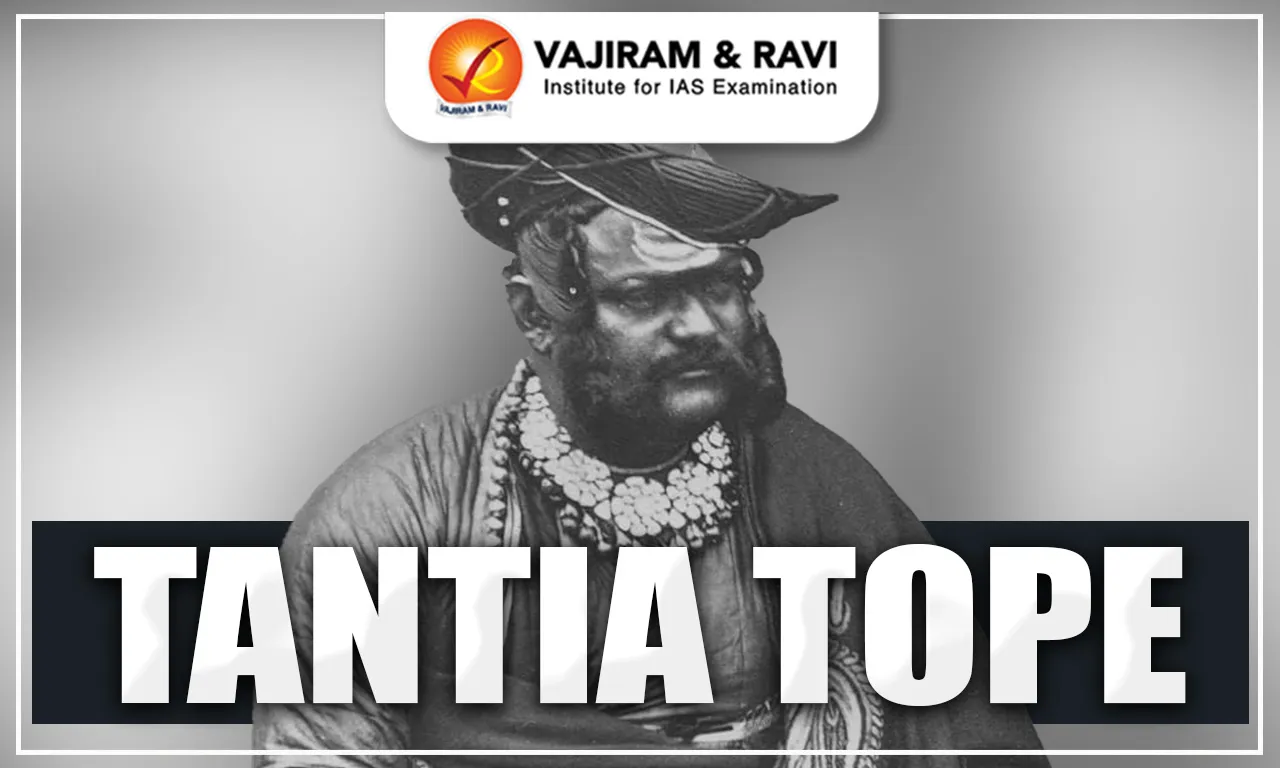
Tatya Tope

Desh Ke Liye Ladna Hai

22

Kunwar Singh

Chalo Dilli Angrezi Hatao

23

Bhikaji Cama

Vande Mataram (flag at Stuttgart, 1907)

24

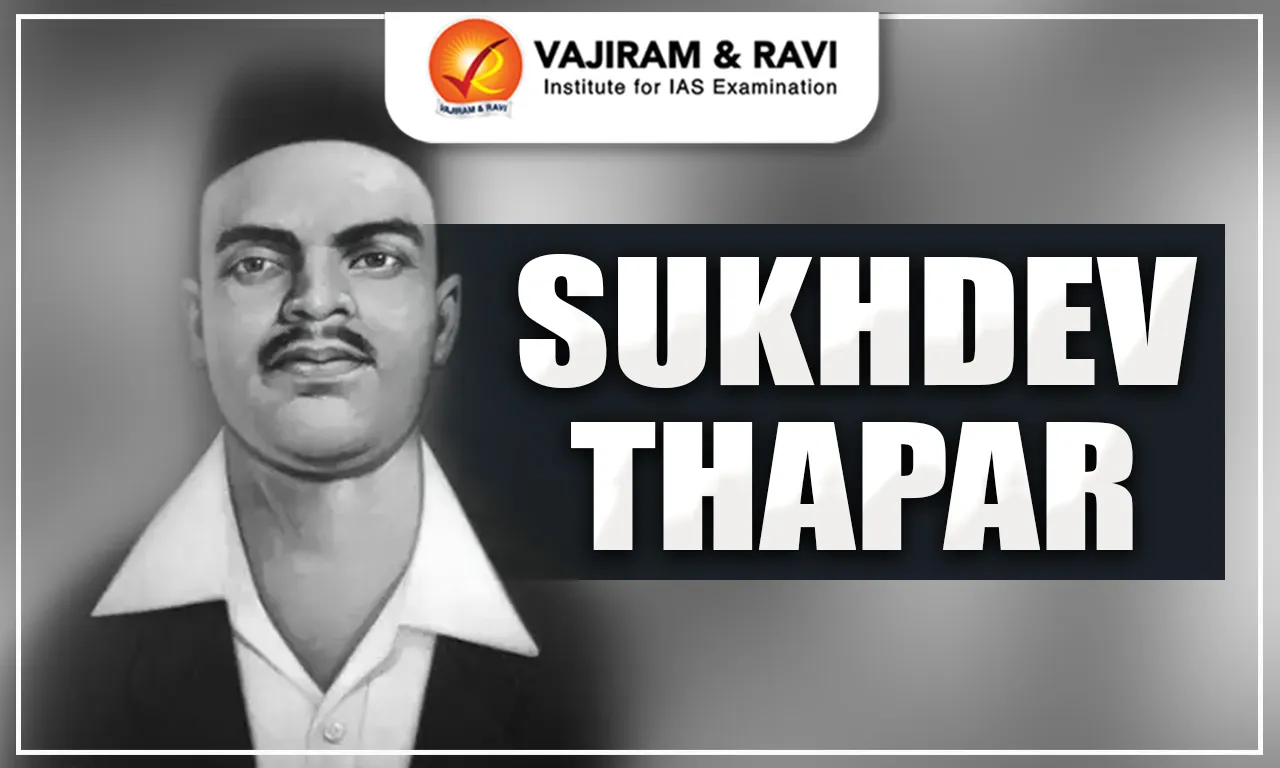
Sukhdev Thapar

Freedom Demands Courage

25

Udham Singh

I Will Avenge Jallianwala Bagh

26

Matangini Hazra

Vande Mataram (last words)

27

Sarojini Naidu

Rise for Freedom

28

Birsa Munda

Abua Dishum, Abua Raj (Our Land, Our Rule)

29

C. Rajagopalachari

Peace Leads to Freedom

30

Khan Abdul Ghaffar Khan

There is Nothing Greater than Peace

31

Vinayak Damodar Savarkar

  • Independence is never given, it is always taken
  • Better to die fighting for freedom then be a prisoner all the days of your life
  • An educated mind is the greatest weapon in the struggle for freedom

32

Pandit Madan Mohan Malaviya

  • India is for Indians
  • Let Education Build the Nation

33

Mahatma Jyotiba Phule

  • Education is the greatest weapon to eradicate social evils
  • There cannot be a nation worth the name until and unless all the people of the land become truly educated

34

Dr. B. R. Ambedkar

  • Educate, Agitate, Organise
  • Freedom of Mind is Real Freedom

35

Alluri Sitarama Raju

Fight Till Your Last Breath

36

Velu Nachiyar

Victory to My Land (battle cry)

37

Tiruppur Kumaran

Do Not Drop the National Flag

38

Surya Sen (Master-da)

Chittagong Will Be Free

39

Jatin Das

Death is Preferable to Surrender

40

Aruna Asaf Ali

March Forward With Courage

41

Durgawati Devi (Durga Bhabhi)

The Fight Must Continue

42

Tantia Bhil

We Shall Not Submit

43

Lakshmi Sahgal (INA)

March to Freedom

44

Captain Lakshmi (Azad Hind Fauj)

Women Will Fight for Freedom

45

Jhalkari Bai

Jhansi Will Never Fall

46

Chakali Ilamma

We Will Resist Oppression

47

Peer Ali Khan

We Shall Not Live as Slaves

48

Kanaklata Barua

Do Not Move, I Will Carry the Flag

49

Thakkar Bapa

Serve the Poor, Serve the Nation

50

Syama Prasad Mukherjee

  • Whatever work you undertake, do it seriously, thoroughly and well; never leave it half-done or undone 
  • Political and social justice requires... equality of opportunity for all

51

V. O. Chidambaram Pillai

Freedom Through Swadeshi

52

Lokenath Bal

Take Up Arms for Freedom

53

Benoy-Badal-Dinesh

Death Before Dishonour

54

Pritilata Waddedar

Down With Imperialism

55

Veerapandiya Kattabomman

We Shall Never Bow to the British

Slogans of Freedom Fighters Impact

The Impact of the Slogans of Freedom Fighters can be seen in several aspects as given below:

  • Political Impact
    • United people against colonial policies.
    • Strengthened the call for self-rule.
    • Created emotional pressure on the British government.
  • Social Impact
    • Spread awareness among illiterate masses.
    • Brought diverse communities together.
    • Built national identity and collective consciousness.
  • Psychological Impact
    • Boosted courage in times of suppression.
    • Made freedom fighters fearless.
    • Converted passive citizens into active participants.
  • Cultural Impact
    • Inspired literature, songs, and theatre.
    • Helped create a nationalist cultural renaissance.

Slogans of Freedom Fighters Significance

Significance of Slogans of Freedom Fighters in India’s Freedom Movement is discussed here:

  • Made the freedom struggle accessible to the masses.
  • Strengthened emotional unity across regions.
  • Served as tools of peaceful and revolutionary resistance.
  • Created memorable symbols of national identity.
  • Guided strategies of both moderate and revolutionary movements.

Slogans of Freedom Fighters UPSC

Slogans were powerful weapons in India’s freedom struggle. They shaped the political mindset of the people, awakened national consciousness, and inspired sacrifices. Each slogan carried the emotions, courage, and determination of the leaders and common citizens who fought for independence. Even today, these slogans remain part of India’s collective memory, reminding us of the values of unity, bravery, truth, and patriotism that formed the foundation of modern India.

Slogans of Freedom Fighters FAQs

Q1: Which is the most famous slogan of the freedom struggle?

Ans: "Vande Mataram" and "Inquilab Zindabad" are among the most iconic slogans of India’s freedom movement.

Q2: Who gave the slogan “Do or Die”?

Ans: Mahatma Gandhi announced it during the Quit India Movement in 1942.

Q3: Which slogan is associated with Subhas Chandra Bose?

Ans: “Give me blood, and I shall give you freedom” and “Jai Hind”.

Q4: Who popularised “Swaraj is my birthright”?

Ans: Bal Gangadhar Tilak made the slogan widely popular.

Q5: What role did slogans play in the freedom movement?

Ans: They united people, spread political awareness, and built emotional strength against British rule.

Jeevan Raksha Padak

Jeevan Raksha Padak

Jeevan Raksha Padak Latest News

Recently, the Union Minister of Road Transport and Highway conferred the Sarvottam Jeevan Raksha Padak on 12 rat miners in recognition of their exceptional courage and selfless service during the Silkyara Tunnel Rescue Operation.  

About Jeevan Raksha Padak

  • It is conferred on individuals who undertake life-saving efforts during incidents such as drowning, fire accidents, electrocution, natural calamities including landslides, animal attacks, and rescue operations in mines.
  • Categories: The Jeevan Raksha Padak series comprises three categories.
    • Sarvottam Jeevan Raksha Padak: It is awarded for conspicuous courage in saving life under circumstances of very great danger to the rescuer.
    • Uttam Jeevan Raksha Padak: It is conferred for courage and promptitude in saving life under conditions of great danger.
    • Jeevan Raksha Padak: It is awarded for courage and promptitude in life-saving acts where the rescuer sustains grievous bodily injury.

Eligibility for Jeevan Raksha Padak 

  • The awards are open to individuals from all walks of life.
  • Members of the Armed Forces, Police Forces and recognised Fire Services are also eligible, provided the act of bravery is performed beyond the call of normal duty.
  • Personnel of Central Armed Police Forces and Central Police Organisations are also eligible under the revised framework.
  • It is presented to the awardees by the respective Union Ministries/Organizations/State Government to which the awardee belongs.

Features of Jeevan Raksha Padak Awards

  • Its nominations are invited annually from States/UTs and Union Ministries.
  • The recommendations of the award are considered by the Awards Committee within a period of two calendar years from the date of performance of the act.
  • Final approval is given by the Prime Minister and the President of India.
  • Award: The decoration of the award consists of a Medal, Certificate, along with a one-time monetary allowance: Sarvottam Jeevan Raksha Padak (₹2 lakh), Uttam Jeevan Raksha Padam (₹1.5 lakh) and Jeevan Raksha (₹1 lakh).
  • No other facility/benefit in terms of any concession in Railways, Airfare etc. is provided by the Government.

Source: PIB

Jeevan Raksha Padak FAQs

Q1: How many categories are there in Jeevan Raksha Padak?

Ans: 3 categories

Q2: Which is the is the highest grade of Jeevan Raksha Padak?

Ans: Sarvottam Jeevan Raksha Padak

Vinayak Damodar Savarkar, Early Life, Contribution

Vinayak Damodar Savarkar

Vinayak Damodar Savarkar, widely known as Veer Savarkar, was a brave freedom fighter, thinker, writer, and social reformer of India. He played an important role in the struggle against British rule and is also known for his ideas about nationalism and Hindutva. His life is remembered for courage, strong beliefs, and also some controversies.

Vinayak Damodar Savarkar Early Life

Vinayak Damodar Savarkar was born on 28 May 1883 in Bhagur village in Maharashtra. From childhood, he showed qualities of leadership and bravery.

  • He lost his parents at a young age, which made him mentally strong and independent.
  • He was deeply influenced by stories of Indian heroes and the injustice of British rule.
  • During his school days, he formed groups of young students to spread patriotic ideas.
  • He believed that India should be free and encouraged others to think the same.

Savarkar later studied at Fergusson College in Pune, where his nationalist thinking became stronger. He formed a secret organization called Abhinav Bharat Society, which aimed to fight against British rule. He then went to London to study law, where he stayed at India House, a center for Indian revolutionaries. This period played a major role in shaping his revolutionary ideas.

Contribution to India’s Freedom Struggle

Savarkar was one of the early leaders who believed that India’s freedom could be achieved through strong action and sacrifice.

  • He inspired many young Indians to join the revolutionary movement.
  • He supported armed resistance against British rule.
  • In 1910, he was arrested in London for his involvement in revolutionary activities.
  • While being brought to India, he made a brave escape attempt at Marseilles (France), but he was caught again.

In 1911, he was sentenced to two life imprisonments (50 years) and sent to the Cellular Jail in the Andaman and Nicobar Islands, also known as Kala Pani.

Life in jail was extremely harsh:

  • Prisoners were forced to do hard labor.
  • They were kept in isolation and treated badly.
  • Despite this, Savarkar remained strong and continued to motivate others.

Vinayak Damodar Savarkar Writings and Books

Savarkar was not only a freedom fighter but also a powerful writer. His writings inspired many people.

  • His famous book “The Indian War of Independence 1857” described the 1857 revolt as India’s first war for freedom.
  • He wrote “Hindutva: Who is a Hindu?”, where he explained his idea of national identity.
  • He also wrote poems and essays, many of which were created during his time in jail.
  • Since writing materials were not allowed, he memorized his work and later rewrote it after release.

Vinayak Damodar Savarkar Social Reform Work

After his release from jail in 1924, Savarkar was kept under restrictions in Ratnagiri. During this time, he focused on improving society.

  • He worked against untouchability and caste discrimination.
  • He promoted equality among all sections of society.
  • He encouraged people from different castes to eat and live together.
  • He supported temple entry for lower castes.

Vinayak Damodar Savarkar Legacy

The legacy of Vinayak Damodar Savarkar is marked by his courage as a freedom fighter, his powerful writings, and his efforts for social reform. He inspired many people with his strong nationalist ideas and dedication to India’s independence. His concept of Hindutva continues to influence political and cultural discussions in India. At the same time, his life remains debated, making him one of the most important and discussed figures in Indian history.

Vinayak Damodar Savarkar FAQs

Q1: Who was Vinayak Damodar Savarkar?

Ans: He was an Indian freedom fighter, revolutionary, writer, and political thinker who played an important role in India’s struggle against British rule.

Q2: Why is he called Veer Savarkar?

Ans: He is called “Veer” (brave) because of his courage, revolutionary activities, and fearless resistance against British rule.

Q3: When and where was Savarkar born?

Ans: He was born on 28 May 1883 in Bhagur village, Maharashtra.

Q4: What was Savarkar’s role in the freedom struggle?

Ans: He promoted revolutionary activities, inspired youth, supported armed resistance, and suffered long imprisonment in the Cellular Jail.

Q5: What are Savarkar’s famous books?

Ans: His famous works include The Indian War of Independence 1857 and Hindutva: Who is a Hindu?

Sukhdev Thapar, Early Life, Revolutionary Activities, Lahore Conspiracy Cas

Sukhdev Thapar

Sukhdev Thapar was a revolutionary and a prominent figure in India’s struggle for independence. Born in Ludhiana, Punjab, he became actively involved in the freedom movement at a young age. As a dedicated member of the Hindustan Socialist Republican Association (HSRA), Sukhdev worked closely with Bhagat Singh and Rajguru, planning and executing several revolutionary activities against British rule. He was deeply committed to inspiring Indian youth to rise against colonial oppression and often organized study circles to spread nationalist ideas.

Along with Bhagat Singh and Rajguru, he was sentenced to death in the Lahore Conspiracy Case and was executed by the British on 23 March 1931. His sacrifice, remembered as Shaheed Diwas, continues to inspire generations of Indians in their pursuit of justice and freedom.

Sukhdev Thapar Early Life

Sukhdev Thapar was born on 15 May 1907 in the Naughara locality of Old Ludhiana, Punjab, then under British India. His parents were Ramlal Thapar and Ralli Devi. Following the untimely demise of his father during his childhood, he was brought up by his uncle, Lala Achintram. He hailed from a Hindu Punjabi Khatri family.

Sukhdev Thapar Revolutionary Activities

Sukhdev played an active and influential role in India’s freedom struggle. He became a member of two prominent revolutionary organisations, the Hindustan Socialist Republican Association (HSRA) and the Naujawan Bharat Sabha both committed to liberating the nation from British colonial rule through revolutionary means.

He was instrumental in initiating several nationalist activities in Punjab and other regions of northern India, and also served as the leader of the HSRA in Punjab. Sukhdev participated in a number of significant events during the movement, including the historic hunger strike undertaken by revolutionaries in prison in 1929.

Role in Saunder’s Assassination

Sukhdev was closely associated with the significant event of the assassination of British police officer J.P. Saunders on 17 December 1928. The act, carried out by Bhagat Singh and Rajguru, was intended as retribution for the death of Lala Lajpat Rai, who had suffered injuries sustained during a protest against colonial rule.

Lahore Conspiracy Case

Sukhdev was a principal accused in the Lahore Conspiracy Case, 1929, officially recorded as Crown versus Sukhdev and others. The British authorities charged him with involvement in planning the Central Legislative Assembly bomb attack in Delhi on 8 April 1929. Following his arrest, along with his companions, he was tried, found guilty, and sentenced to death.

Execution and Secret Cremation

Sukhdev, Bhagat Singh, and Rajguru were hanged in Lahore Central Jail on 23 March 1931, despite widespread appeals for clemency. The colonial government feared mass unrest, so after the execution, their bodies were smuggled out of the jail and secretly cremated near the banks of the Sutlej River under heavy police guard. Even this attempt at concealment failed to silence the people; news of the execution spread quickly, sparking grief and anger across the country. Their martyrdom transformed them into enduring symbols of courage and resistance, inspiring generations to join the struggle for independence.

Reactions to the Hanging

The execution of Bhagat Singh, Rajguru, and Sukhdev sent shockwaves across India. News of their hanging spread quickly, leaving people heartbroken and furious. The timing was significant, it coincided with the Indian National Congress session in Karachi, where leaders and citizens gathered in mourning and outrage. Demonstrations broke out in several cities, with processions, strikes, and black flags symbolizing the nation’s grief.

Even Dr. B.R. Ambedkar strongly condemned the British action, calling it a calculated move to appease public opinion in Britain and to satisfy demands within the British Parliament. To many Indians, the decision exposed the colonial government’s arrogance and cruelty, but it also turned the three martyrs into immortal symbols of courage and sacrifice in the freedom struggle.

Sukhdev Thapar Legacy

Sukhdev Thapar is remembered as one of the most courageous revolutionaries of India’s freedom struggle. His commitment to the cause of independence has earned him a place among the nation’s greatest heroes.

To honor his sacrifice, the National Martyrs Memorial was established at Hussainiwala in Punjab, the very site where Sukhdev, along with Bhagat Singh and Rajguru, was cremated after their execution in 1931. This memorial stands as a symbol of their valor and continues to inspire generations. Every year on 23 March, Shaheed Diwas (Martyrs’ Day) is observed across the country to pay tribute to these revolutionaries who gave their lives for India’s freedom.

In recognition of his legacy, several institutions and landmarks have been named after Sukhdev. The Shaheed Sukhdev College of Business Studies (SSCBS) in Delhi, founded in 1987, stands as a prestigious academic institution dedicated to his memory. Additionally, the Amar Shaheed Sukhdev Thapar Inter-State Bus Terminal in Ludhiana ensures that his name remains deeply rooted in the daily lives of the people.

Through these memorials, institutions, and annual commemorations, Sukhdev’s ideals of courage, patriotism, and sacrifice continue to live on in the collective memory of the nation.

Sukhdev Thapar FAQs

Q1: Who was Sukhdev Thapar?

Ans: Sukhdev Thapar was a revolutionary freedom fighter, member of HSRA, and close associate of Bhagat Singh and Rajguru.

Q2: When was Sukhdev Thapar born?

Ans: He was born on 15 May 1907 in Ludhiana, Punjab.

Q3: Which organization was Sukhdev associated with?

Ans: He was an active member of the Hindustan Socialist Republican Association (HSRA).

Q4: What was Sukhdev’s role in the Lahore Conspiracy Case?

Ans: He played a crucial role in planning and execution, leading to his arrest.

Q5: With whom was Sukhdev executed?

Ans: He was hanged along with Bhagat Singh and Rajguru on 23 March 1931.

Tantia Tope, Early Life, Contribution in Freedom, Role in Revolt of 1857

Tantia Tope

Tatya Tope emerged as a prominent leader during the Indian Rebellion of 1857, remembered for his exceptional courage and military expertise. Widely regarded as one of the foremost architects of the uprising, he is credited with spearheading what came to be known as the First War of Independence against British colonial authority. His strategic brilliance and leadership provided both direction and strength to the resistance movement. Tatya Tope’s spirit and sacrifice continue to symbolize the determined struggle for India’s freedom during a critical chapter of colonial oppression.

Tantia Tope

Tantia Tope, also known as Tatya Tope, was born as Ramchandra Pandurang Rao. He emerged as one of the prominent leaders of the Revolt of 1857 and took a determined stand against the English East India Company. A close companion of Nana Saheb and a favored associate of Peshwa Baji Rao, he shared deep ties with the Maratha leadership. Belonging to a Maratha Brahmin family, Tatya Tope initially served Baji Rao, the former Peshwa of the Maratha confederacy, and later extended his loyalty to Nana Saheb, the adopted son of the Peshwa.

Tatya Tope Important Facts

  • Born in Nashik, Maharashtra in 1814, to Pandurang Rao Tope and Rukhmabai.
  • Played a major role as an Indian leader of the 1857 Rebellion.
  • Defeated the East India Company’s Indian troops in Kanpur in May 1857.
  • Known for his guerrilla warfare tactics, which created fear among the British.
  • Forced General Windham to withdraw from Gwalior.
  • Fought alongside Rani Lakshmi Bai of Jhansi in capturing Gwalior.
  • Performed Rani Lakshmi Bai’s last rites after her death in battle.
  • Participated in around 150 engagements with the British.
  • Credited with causing the deaths of 10,000 British soldiers.

Tantia Tope Early Life

Tantia Tope displayed a strong inclination towards martial pursuits from an early age. He acquired proficiency in handling the rifle, sword, and horse-riding. It is believed that he briefly served with the East India Company’s artillery regiment in the Bengal Army. However, he was not retained, owing to his independent temperament and exceptional skills as a strategist.

Tantia Tope Contribution In India’s Freedom Struggle

  • From a young age, Tantia Tope displayed a strong interest in martial skills, which set the foundation for his future role as a military leader.
  • He mastered the use of rifles and swords, along with exceptional horsemanship, skills that later made him a formidable figure in the revolt of 1857.
  • Historical accounts suggest that he briefly worked with the East India Company’s artillery regiment in the Bengal Army, gaining exposure to military strategies and weaponry.
  • Despite his skill and knowledge, his independent and uncompromising nature led to his rejection for a permanent position, highlighting his strong will and self-reliance.

Tantia Tope Role in the Revolt of 1857

  • Tantia Tope was a close associate and loyal follower of Nana Sahib, one of the principal leaders of the 1857 uprising. When the revolt gathered momentum, he played a decisive role in organizing resistance against the British.
  • He initially led forces in Kanpur, where he defeated the East India Company’s troops, establishing Nana Sahib’s authority. When the British regained control of the city, Tantia Tope regrouped with the Gwalior contingent and compelled General Windham to retreat temporarily.
  • After Kanpur fell to the British, he shifted base to Kalpi, where he joined hands with Rani Lakshmibai of Jhansi. Together, they launched campaigns in Bundelkhand and posed serious challenges to British forces.
  • At Kalpi and later Gwalior, Tantia Tope and his allies confronted General Hugh Rose. In one of these battles, Rani Lakshmibai was martyred, marking a turning point in the resistance.
  • Following these defeats, Tantia Tope embarked on an extraordinary campaign of guerrilla warfare. He carried out rapid, unpredictable strikes across Malwa, Central India, Bundelkhand, Rajputana, and Khandesh, using the Vindhya and Aravali ranges as cover. His tactics frustrated and baffled some of the most seasoned British commanders.
  • Though eventually captured and executed, Tantia Tope’s resilience, mobility, and skill in irregular warfare established his reputation as one of the most resourceful and daring leaders of the Revolt of 1857.

Tantia Tope Death

  • The British forces chased Tantia Tope for nearly 2,800 miles, covering forests, hills, plains, and even across flooded rivers, yet he constantly evaded capture.
  • His deep knowledge of terrain and mastery in guerrilla tactics made him a difficult target, frustrating the British for months.
  • This long pursuit showed his determination to keep the rebellion alive even after major defeats elsewhere.
  • Eventually, he was betrayed by a local ally, which led to his arrest.
  • On April 18, 1859, the British executed him at Shivpuri, Madhya Pradesh, marking the end of one of the most remarkable rebel commanders of 1857.

Tantia Tope FAQs

Q1: Who was Tantia Tope?

Ans: Tantia Tope was a prominent leader of the 1857 Revolt against British rule in India.

Q2: When was Tantia Tope born?

Ans: He was born in 1814 in Yeola, present-day Maharashtra.

Q3: What was Tantia Tope’s role in the 1857 Revolt?

Ans: He led several battles, supported Rani Lakshmibai, and organized guerrilla warfare against the British.

Q4: Which battle made Tantia Tope famous?

Ans: He became well-known after leading forces in the Battle of Kanpur during 1857.

Q5: Was Tantia Tope connected to Rani Lakshmibai?

Ans: Yes, he fought alongside Rani Lakshmibai during the revolt and supported her campaigns.

Dr. Rajendra Prasad Biography, Contributions, Achievements

Dr. Rajendra Prasad

Dr. Rajendra Prasad Birth Anniversary is celebrated on 3rd December every year. He is a well known freedom fighter who fought for Indian Independence. A remarkable scholar, lawyer and independence activist, he was elected as the President of the Constituent Assembly in 1950 and became the longest serving head of India for about 12 years. On this day, let's look at the life and achievements of Dr. Rajendra Prasad. 

Dr. Rajendra Prasad Educational Background

  • Dr. Rajendr Prasad was well versed in Persian, Hindi and Arithmetic at an early age. 
  • He completed his graduation from Presidency College, Calcutta as a scholarship student. 
  • He completed his MA in Economics and was also a member of Servants of India Society and Dawn society during his college years. 
  • He was appointed as the Principal of Langar Singh College at Bihar.
  • In 1909 he pursued the degree of law from a college in Kolkata. 

Dr. rajendra Prasad Literary Works

As a learned activist and leader, Dr. Rajendra Prasad’s literary works are full of stories and information about the Indian Freedom struggle. Here is a list of works of Dr. Rajendra Prasad- 

  • Satyagraha at Champaran (1922)
  • Division of India (1946)
  • Atmakatha (1946) 
  • Mahatma Gandhi and Bihar, Some Reminiscences (1949)
  • Bapu Ke Qadmon Men (1954)
  • Since Independence (published in 1960)
  • Bharatiya Shiksha
  • At the feet of Mahatma Gandhi 

Dr. Rajendra Prasad’s Role during the Indian Freedom Struggle

Following are Dr. Rajendra Prasad’s Contributions to India’s National Movement

  1. Champaran Satyagraha:
    • Dr. Rajendra Prasad actively supported the Champaran Satyagraha led by Mahatma Gandhi.
    • He called for non-cooperation in Bihar as part of Gandhi’s Non-Cooperation Movement and toured the state, organizing public meetings and delivering impassioned speeches to garner support.
  2. Dedication to the Freedom Struggle:
    • In 1921, he left his flourishing law practice to establish a National College near Patna, dedicating himself fully to India’s freedom struggle.
    • Responding to Gandhi’s call to boycott Western educational institutions, he withdrew his son from school and admitted him to Bihar Vidyapeeth, an institution he helped establish based on traditional Indian education models.
  3. Imprisonment for Activism:
    • Dr. Rajendra Prasad faced imprisonment multiple times:
      • In 1931, for his participation in the Salt Satyagraha.
      • In 1942, for his active involvement in the Quit India Movement.

Through his unwavering dedication, Dr. Rajendra Prasad played a pivotal role in India’s struggle for independence. 

Dr. Rajendra Prasad’s Participation in Constitutional Making

Dr. Rajendra Prasad was elected as the President of Indian National Congress during the Bombay Session in October 1934. He later was also appointed as the President of the Constituent Assembly in July 1946. 

Under his leadership the following committees were constituted: 

  • Ad hoc Committee on the National Flag
  • Committee on the Rules of Procedure
  • Finance and Staff Committee
  • Steering Committee

Dr. Rajendra Prasad Legacy 

  • Dr. Rajendra Prasad happens to be the only President who has been re-elected as the President twice unanimously in 1952 and then in 1957. 
  • He has stayed in the office for the longest tenure of about 12 years. 
  • The tradition of opening the Mughal Gardens for visitors was initiated for the first time under his leadership. 
  • He was awarded the Bharat Ratna in 1962. 
  • He retired from Politics in 1962. 

Dr. Rajendra Prasad Birth Anniversary FAQs

Q1: What was the role of Rajendra Prasad in the national movement UPSC?

Ans: Dr. Rajendra Prasad played a pivotal role in India’s freedom struggle, supporting movements like Champaran Satyagraha, Non-Cooperation, and Quit India.

Q2: What is Dr. Rajendra Prasad famous for?

Ans: Dr. Rajendra Prasad is famous for being India’s first President and his significant contributions to the freedom movement.

Q3: What was the role of Dr. Rajendra Prasad in making the Indian Constitution?

Ans: Dr. Rajendra Prasad served as the President of the Constituent Assembly, guiding the drafting of the Indian Constitution.

Q4: What was the slogan of Rajendra Prasad?

Ans: Dr. Rajendra Prasad is not known for a specific slogan but is remembered for his ideals of selfless service and dedication to the nation.

Q5: When was Dr. Rajendra Prasad honoured with the Bharat Ratna?

Ans: Dr. Rajendra Prasad was awarded the Bharat Ratna in 1962.

National Song of India, Vande Mataram, Lyrics, Composed, Adopted

National Song of India

The National Song of India, Vande Mataram, holds a deeply rooted place in the country’s history and cultural heritage. Written by Bankim Chandra Chattopadhyay, it became a rallying cry in the freedom struggle. On 24 January 1950, the Constituent Assembly of India officially adopted it as the national song, giving it enduring significance.

National Song of India

A National Song serves as a symbol of national pride, unity and cultural identity. In India, Vande Mataram represents devotion to the mother-land and the spirit of selfless service. Composed in a mix of Sanskrit and Bengali, it reflects India’s plurality and storied past.

National Song of India Historical Background

The key milestones related to the historical background of the National Song of India has been listed below:

  • Origin (1875): Bankim Chandra Chattopadhyay wrote the poem Vande Mataram on November 07, 1885.
  • 1882: Publication of Anandamath including Vande Mataram
  • First public rendition (1896): It was sung at the 1896 session of the Indian National Congress, evoking patriotic fervour.
  • 1905: Surge of popularity during the Swadeshi Movement
  • Adoption as National Song: On 24 January 1950, the Constituent Assembly declared Vande Mataram as the national song; President Rajendra Prasad emphasised its status equal to the national anthem. 
  • 2025: Celebration of 150 years of the song’s composition.

National Song of India Lyrics

The opening lines of the National Song of India is mentioned below:

“Vande Mataram!

Sujalam, suphalam, malayaja shitalam,

Shasyashyamalam, Mataram!

Vande Mataram!

Shubhrajyotsna pulakitayaminim,

Phullakusumita drumadala shobhinim,

Suhasinim sumadhura bhashinim,

Sukhadam varadam, Mataram!

Vande Mataram, Vande Mataram!”

The meaning of the refrain “Vande Mataram” is “I bow to thee, Mother.” It captures both reverence and devotion.

National Song of India during the Freedom Struggle

National Song of India- “Vande Mataram” became a beacon of resistance against colonial rule.

  • It inspired freedom fighters to embrace national service despite repression.
  • The British government at one point banned its public singing in Bengal, which only amplified its symbolic power.
  • The song unified diverse communities under the shared aspiration of independence.
  • Many of the freedom fighters sacrificed their life while chanting “Vande Mataram” including Shirish Kumar, Babu Genu, etc.

National Song of India Significance

Even today, National Song of India Vande Mataram is sung at national events, schools and flag hoist ceremonies. It stands as:

  • A tribute to India’s cultural heritage and freedom legacy.
  • A symbol of patriotism and collective identity.
  • A reminder of service and sacrifice for the nation.
  • Although the Constitution does not explicitly mention a “national song,” the Indian government’s official portal affirms its unique status.
  • It highlights unity in diversity, written in a mixed language form and sung across communities.
  • It embodies service to the nation and respect for freedom fighters’ sacrifice.
  • It enriches India’s national identity, alongside other national symbols like the flag and anthem.

National Song of India Code of Conduct

While the National Anthem of India has formal guidelines and a legally mandated duration (52 seconds) under the Prevention of Insults to National Honour Act, 1971, the National Song of India- “Vande Mataram” does not carry mandatory legal etiquette or protocols. However, it is deeply respected and has been accorded equal honour by the President.

National Song of India Recent Develments

Prime Minister Narendra Modi will inaugurate the year-long commemoration of 150 years of the National Song “Vande Mataram” on 7th November 2025 at the Indira Gandhi Indoor Stadium, New Delhi. Written by Bankim Chandra Chatterjee on Akshaya Navami in 1875, Vande Mataram symbolizes India’s unity and patriotism. The event features mass singing of the full version nationwide at 9:50 AM and the release of a commemorative stamp and coin, marking the beginning of celebrations that will continue until 7th November 2026 across the country.

National Song of India FAQs

Q1: Who wrote the National Song of India?

Ans: Bankim Chandra Chatterjee wrote Vande Mataram in 1875, originally appearing in his novel Anandamath.

Q2: When is the 150th anniversary of Vande Mataram being celebrated?

Ans: It will be celebrated from 7th November 2025 to 7th November 2026.

Q3: What special events are planned for the commemoration of National Song of India?

Ans: The events include a mass singing of Vande Mataram, and the release of a commemorative stamp and coin by the Prime Minister.

Q4: What does the National Song of India- Vande Mataram symbolize?

Ans: It symbolizes India’s strength, unity, and devotion to the motherland.

Q5: When was the National Song of India Vande Mataram first published?

Ans: It was first published in the literary journal Bangadarshan as part of the novel Anandamath in 1882.

National Flag of India, History, Significance, Dimensions

National Flag of India

The National Flag of India, popularly known as the Tiranga, is the supreme symbol of India’s unity, freedom, and sovereignty. It reflects the long journey of the freedom struggle through its evolution, the deep significance of its colours and symbols, and its carefully defined dimensions and specifications. The present form of the flag was designed by Pingali Venkayya, whose vision gave India a simple yet powerful national emblem. The National Flag of India was adopted on 22 July 1947. The Indian National Flag continues to inspire patriotism and constitutional values among citizens.

National Flag of India

The Indian National Flag is a horizontal tricolour made up of three equal bands. The top band is saffron, the middle band is white, and the bottom band is green. In the center of the white band is a navy blue Ashoka Chakra, which has 24 spokes

National Flag of India Evolution

The Indian National Flag evolved over several decades during the freedom struggle. Each version reflected the political thinking, social unity, and aspirations of Indians at different stages of the independence movement.

1. Nivedita’s Flag (1904)

  • The first national flag of India was designed in 1904 by Sister Nivedita, a disciple of Swami Vivekananda.
  • The flag used two colours – yellow and red.
  • At the centre was the symbol of Vajra, representing strength and resilience.
  • A white lotus was depicted to symbolize purity and hope.
  • The Bengali words “Bande Mataram” were written on the flag.
  • This flag represented the early spiritual and cultural nationalism of India.

2. Flag during the Swadeshi Movement (1906)

  • In 1906, during the Swadeshi and Boycott Movement, the Indian flag was hoisted for the first time in India at Parsee Bagan Square, Calcutta.
  • The flag was designed by Sachindra Prasad Bose and Hemchandra Kanungo.
  • It consisted of three horizontal stripes:
    • Green (top) – with eight half-open lotus flowers, representing eight Indian provinces.
    • Yellow (middle) – with “Vande Mataram” written on it.
    • Red (bottom) – with symbols of the sun and crescent moon, indicating unity among communities.
  • This flag reflected mass participation and economic nationalism.

3. Saptarishi Flag – Bhikaji Cama’s Flag (1907)

  • Madam Bhikaji Cama hoisted an Indian flag on 22 August 1907 at the International Socialist Congress in Stuttgart, Germany.
  • This was the first time an Indian flag was hoisted on foreign soil.
  • The flag had three colours – green, saffron, and red.
  • Green strip (top) had eight lotus flowers, representing eight provinces of British India.
  • Saffron strip (middle) carried “Vande Mataram” in Devanagari script.
  • Red strip (bottom) had a rising sun and crescent moon, symbolizing unity of religions.
  • The flag was known as the “Saptarishi Flag”, referring to the seven sages of ancient India.

4. Flag of the Home Rule Movement (1917)

  • In 1917, Dr Annie Besant and Bal Gangadhar Tilak adopted a new flag during the Home Rule Movement.
  • The flag had:
    • Five red and four green horizontal stripes, arranged alternately.
    • Seven stars arranged in the Saptarishi pattern.
    • A white crescent and star in one corner.
    • The Union Jack in the opposite corner.
  • This flag symbolized self-government for Indians within the British Empire, not complete independence.

5. Origin of the Present National Flag (1921–1931)

  • The design of the present Indian flag is credited to Pingali Venkayya.
  • In 1921, at the Vijayawada session of the Congress, Venkayya presented a flag to Mahatma Gandhi.
  • The flag had three horizontal stripes – red, white, and green, representing different communities.
  • A spinning wheel (Charkha) was placed at the centre, symbolizing self-reliance and progress.
  • In 1931, the Congress officially adopted a modified version:
    • Saffron replaced red for courage and sacrifice.
    • White stood for peace and truth.
    • Green represented growth and prosperity.
    • The Charkha remained the central symbol.

6. Adoption of the Present National Flag (1947)

  • On 22 July 1947, the Constituent Assembly of India adopted the present National Flag.
  • The Charkha was replaced by the Ashoka Chakra (Dharma Chakra) from the Lion Capital of Ashoka.
  • The Ashoka Chakra has 24 spokes, symbolizing law, justice, and continuous movement.
  • This final version came to be known as the Tiranga (Tricolour).

National Flag of India Constitutional Status

The Constitution of India does not explicitly describe the National Flag, but its status is derived from:

  • Article 51A(a), which makes it a Fundamental Duty to respect the National Flag.
  • The Emblems and Names (Prevention of Improper Use) Act, 1950.
  • The Prevention of Insults to National Honour Act, 1971.

Together with the Flag Code of India, these legal provisions regulate the use, display, and protection of the National Flag, ensuring dignity and uniformity.

Significance of Colours and Ashoka Chakra

The colours and symbols of the Indian National Flag convey deep philosophical and moral values that guide the nation. Each colour and the Ashoka Chakra represent ideals essential for India’s unity, democracy, and progress.

Significance of Colours

Saffron (Kesaria):

  • Symbolises courage, sacrifice, and selflessness.
  • Reminds leaders and citizens to place national interest above personal gain.

White:

  • Represents peace, truth, and honesty.
  • Stands for transparency in governance and harmony among people.

Green:

  • Signifies growth, fertility, and prosperity.
  • Reflects faith in the future and India’s agricultural and ecological strength.

Significance of Ashoka Chakra

  • The Ashoka Chakra is taken from the Lion Capital of Emperor Ashoka at Sarnath.
  • It has 24 spokes, representing the principles of Dharma such as justice, equality, discipline, and moral conduct.
  • The wheel signifies constant movement and progress, teaching that stagnation leads to decay while continuous effort leads to development.
  • Its navy blue colour reflects calmness, stability, and depth of thought, essential for a democratic society.

National Flag of India Dimensions and Specifications

The National Flag of India is manufactured and displayed according to strict technical standards to maintain its dignity and uniform appearance across the country. These standards are prescribed by the Bureau of Indian Standards (BIS) and followed under the Flag Code of India.

  • The length-to-height ratio of the National Flag is 3:2, and this proportion must be maintained for all flag sizes without any alteration.
  • The flag is produced only in standard sizes, measured in centimetres, to ensure uniformity:
    • 630 cm × 420 cm – used on high masts and prominent government buildings
    • 360 cm × 240 cm – used during major national and ceremonial events
    • 270 cm × 180 cm – suitable for institutions and official buildings
    • 180 cm × 120 cm – commonly used for public display
    • 135 cm × 90 cm – medium-size flag for official use
    • 90 cm × 60 cm – small flag for indoor or limited display
    • 45 cm × 30 cm – table flag or ceremonial use
  • The National Flag consists of three equal horizontal bands of saffron, white, and green, each occupying one-third of the total height of the flag.
  • The Ashoka Chakra is placed exactly at the centre of the white band and is navy blue in colour.
  • The diameter of the Ashoka Chakra is approximately equal to the height of the white stripe, ensuring perfect visual balance.
  • The Ashoka Chakra contains 24 evenly spaced spokes, which must be clearly visible and identical on both sides of the flag.
  • The National Flag was traditionally made only of khadi fabric, symbolising self-reliance and the freedom movement.
  • The exact shades of saffron, white, green, and navy blue are fixed by BIS to avoid colour variation across flags.
  • A damaged, faded, torn, or improperly sized flag must not be displayed, as it is considered disrespectful to national honour.

Flag Code of India Rules and Provisions

The Flag Code of India lays down the rules, traditions, and guidelines for the proper display, hoisting, and use of the National Flag. It ensures that the Tricolour is always displayed with dignity, honour, and respect by citizens, institutions, and governments.

  • The Flag Code of India, 2002 came into force on 26 January 2002, replacing earlier fragmented instructions related to the National Flag.
  • It is divided into three parts dealing with the general description of the flag, its use by the public, and its use by governments and official bodies.
  • The National Flag may be hoisted by any citizen, private institution, or public body on all days, including national days, subject to respect and dignity.
  • As per recent amendments, the flag may be flown day and night, provided it is in an open place or on a flagstaff and is clearly visible.
  • The flag must not touch the ground, water, or floor, nor be used as a drapery, costume, or decorative material.
  • The National Flag should not be used for commercial purposes, advertising, or as a part of clothing below the waist.
  • When the flag is displayed with other flags, it must always occupy a position of honour and should not be smaller or lower than other flags.
  • No other flag or emblem should be placed above or to the right of the Indian National Flag.
  • A damaged, faded, or soiled flag should be disposed of respectfully, preferably by burning in private while maintaining dignity.
  • Any act of disrespect or insult to the National Flag is punishable under the Prevention of Insults to National Honour Act, 1971.

National Flag of India FAQs

Q1: When was the National Flag of India adopted?

Ans: It was adopted on 22 July 1947 by the Constituent Assembly.

Q2: Who designed the Indian National Flag?

Ans: The flag was designed by Pingali Venkayya.

Q3: What does the Ashoka Chakra represent?

Ans: It represents Dharma, law, and continuous progress.

Q4: Is it mandatory to hoist the National Flag on national days?

Ans: No, but when displayed, it must follow the Flag Code of India.

Q5: Can citizens hoist the National Flag at home?

Ans: Yes, citizens are allowed to hoist the flag, subject to rules of dignity and respect.

Bahadur Shah Zafar (1775-1862), Biography, Last Mughal, Contributions

Bahadur Shah Zafar

Bahadur Shah Zafar, also known as Abu Zafar Siraj-ud-din Muhammad and Bahadur Shah II, was the twentieth and final Mughal emperor of India. He ruled from 1837 until 1857, when the uprising against the East India Company ended his authority. His rule was mostly limited to the Walled City of Delhi yet in 1857 he was proclaimed Emperor of India by rebel forces. A noted Urdu poet writing under the title “Zafar,” he witnessed exile to Rangoon (present day Yangon) in December 1857, bringing the nearly 500 year old Timurid dynasty to the end.

Bahadur Shah Zafar Biography

Bahadur Shah Zafar was born on 24 October 1775 in Delhi to Akbar II. He was not the preferred heir as another prince, Mirza Jahangir, had earlier been projected for succession. However, after Jahangir attacked Archibald Seton, the British Resident at the Red Fort, and was exiled by the Company, Zafar’s path to the throne became clear. He succeeded his father in 1837 at the age of 62. By then, Mughal authority had shrunk to Delhi and nearby Palam. The East India Company paid him a pension and controlled revenue collection and military presence in the city. His consort was Zeenat Mahal. He passed away while being in exile at Rangoon in November 1862.

Bahadur Shah Zafar in Revolt of 1857

In 1857, rebel sepoys declared Bahadur Shah Zafar as the Emperor of India despite his limited authority and advanced age.

  • On 12 May 1857, sepoy regiments reached the Mughal court and attended his first formal audience in years. They insisted on his leadership, arguing that without his symbolic authority, their campaign against the Company would fail.
  • Initially, he expressed inability to support them due to lack of resources. However, under pressure, he allowed his name and seal to legitimize their cause, transforming a military revolt into a broader political challenge.
  • On 16 May 1857, fifty-two European prisoners were executed under a peepul tree near the palace despite his objections. Though not proven to have ordered it, he was later treated as morally responsible.
  • Delhi’s governance during the uprising became disorganized. The emperor appointed his eldest son, Mirza Mughal, as commander. Yet sepoys rejected centralized command, and city administration functioned in a disorderly manner.
  • As British forces closed in during September 1857, he sought refuge at Humayun’s Tomb. Major William Hodson captured him on 20 September. Shortly after, Hodson executed his sons Mirza Mughal and Mirza Khizr Sultan, and grandson Mirza Abu Bakht near the Delhi Gate.
  • In April 1858, he faced a 21-day trial with 19 hearings, 21 witnesses, and over 100 Persian and Urdu documents translated into English. Charges included aiding mutiny, waging war, assuming sovereignty, and involvement in killings.
  • At 82, he argued that sepoys forced decisions upon him and even used his seal without consent. Though spared execution, he was exiled on 7 October 1858 to Rangoon (Yangon) in Burma under British escort.
  • He arrived in Burma (Myanmar) at the age of 83 and lived under strict supervision. His health declined, and by November 1862 he suffered paralysis in the throat region. He died on 7 November 1862 and was buried near the Shwedagon Pagoda.

Also Read: Mughal Empire

Bahadur Shah Zafar Contributions

Despite political weakness, Bahadur Shah Zafar left enduring literary, cultural, and spiritual legacies as highlighted below:

  • Urdu Poetry and Ghazals: He composed numerous Urdu ghazals reflecting exile, faith, and loss. Though some manuscripts were destroyed in 1857, surviving works were compiled into the Kulliyyat-i-Zafar, preserving his poetic voice.
  • Patronage of Scholars: His court hosted distinguished literary figures such as Mirza Ghalib, Daagh Dehlvi, Momin Khan Momin, and Mohammad Ibrahim Zauq, who also mentored him. This made Delhi a major center of Urdu culture.
  • Sufi Identity: Regarded as a Sufi Pir, he accepted disciples and was described by Delhi Urdu Akhbaar as a leading saint of his time. Before accession, he reportedly lived like a modest scholar rather than a royal prince.
  • Religious Harmony: In his verses, he expressed that Hinduism and Islam shared a common spiritual essence. His court celebrated festivals like Holi, Diwali, and Rakhi alongside Islamic observances, reflecting composite Mughal culture.
  • Belief in Spiritual Practices: He trusted ta'aviz, charms, and spiritual remedies. During illness, he consulted Sufi pirs and even distributed cows, elephants, and horses to religious institutions and the poor as acts of devotion.
  • Symbol of Resistance: After defeat, he recited lines- “गाजियों में बू रहेगी जब तलक ईमान की, तख्त-ए- लंदन तक चलेगी तेग हिन्दुस्तान की।”. These words elevated him as a moral symbol of resistance.
  • End of Timurid Dynasty: His exile formally ended the Timurid Dynasty founded by Timur and followed by Babur as the Mughal Dynasty. With his removal, governance of India shifted fully under British Crown authority.
  • Exile: Initially buried in an unmarked grave in Yangon, his resting place later became the Bahadur Shah Zafar Dargah after restoration in 1991, symbolizing remembrance beyond imperial power.

Bahadur Shah Zafar FAQs

Q1: Who was Bahadur Shah Zafar?

Ans: Bahadur Shah Zafar was the twentieth and last Mughal emperor of India, ruling from 1837 to 1857. Born on 24 October 1775, he was also a respected Urdu poet and the symbolic leader of the Revolt of 1857.

Q2: What was the role of Bahadur Shah Zafar in the Revolt of 1857?

Ans: During the Revolt of 1857, rebel sepoys declared him Emperor of India to unite resistance against the East India Company. Though elderly and politically weak, his name gave legitimacy to the uprising.

Q3: What were the main charges against Bahadur Shah Zafar?

Ans: In 1858, he was tried at the Red Fort on four charges, including supporting mutiny, waging war against the British, claiming sovereignty, and involvement in the killing of Christians.

Q4: Where was Bahadur Shah Zafar exiled?

Ans: After his trial, he was exiled in October 1858 to Rangoon in Burma, now Yangon in Myanmar, where he lived under British supervision until his death in 1862.

Q5: Who were some famous poets in Bahadur Shah Zafar’s court?

Ans: His court included renowned Urdu poets such as Mirza Ghalib, Daagh Dehlvi, Momin Khan Momin, and Mohammad Ibrahim Zauq, making Delhi a major literary center during his reign.

White Revolution, Objectives, Significance, Challenges, Phase 2.0

White Revolution

White Revolution was initiated in India during 1970 when the National Dairy Development Board (NDDB) introduced several developments through the “Operation Flood” so as to increase the production of Milk and Dairy. The revolution was carried under the leadership of Professor Verghese Kurien, who is referred to as the Father of White Revolution in India.

White Revolution

During 1951-52, India produced only 17 tonnes of Milk, which marked the dairy production as the highly concerned area. To address this issue, the National Dairy Development Board was set up in 1965 with Prof. V. Kurien as the chairman of the organization appointed by the Prime Minister Shastri. The Revolution along with several operations led to transforming India as one of the largest producers of Milk globally.

Also Read: Blue Revolution

Operation Flood

Operation Flood was the programme that led to the major contribution for White Revolution in India. It was launched in 1970 by NDDB led by Kurien to increase the production of milk by focusing on the high yield, reasonable price for the consumers, while ensuring the producers to get fair profit without including middlemen in the process of distribution. It created a massive link between the Rural Producers and Urban Consumers. The Operation was carried under three phases:

  • Phase I: 1970-80: Improved organized dairy sector established in metropolitan cities like Mumbai, Chennai, Delhi, etc and focussed on developments of dairy in the rural areas.
  • Phase II: 1981-85: Increase in the number of- Milk Sheds (136), Urban Outlets (290) and covering more than 42 lakhs of producers.
  • Phase III: 1985-96: Strengthened the infrastructure leading to the production of large scale milk and emphasized research & development and healthcare through veterinary services.

White Revolution Objectives

The White Revolution has the major aim as given below:

  • Increasing the production of Milk and transforming India from Milk Deficit Country to a Top Producer Globally.
  • Setting Up Milk Sheds, Urban Outlets by connecting the rural and urban population directly by eliminating the middlemen.
  • Emphasize on Veterinary Health, First Aid, Artificial Insemination, and other facilities so as to improve the cattle breed.
  • Development of Chilling Centres to store milk after collecting from the producers before distribution to the urban areas along with the facility of transportation.
  • Focus on the supply of Milk as well as Dairy Products to the consumers.
  • Providing Cattle Feed to the Rural Producers.

Also Read: Golden Revolution

White Revolution Significance

The White Revolution has contributed to the robust change of the image of India in the field of production of Milk and Dairy in the World. The significance of the revolution can be highlighted below:

  • Milk Production: India has ranked top in the Production of Milk by producing 231 million tonnes during 2022-23. As per the report published by Basic Animal Husbandry Statistic 2023, the States- Uttar Pradesh, Rajasthan, Madhya Pradesh, Gujarat and Andhra Pradesh have together contributed to 53.08% of the total Milk Production.
  • Employment Generation: The operation has set up various Milk Sheds, Chilling Centres, and focussed on other activities (transportation, veterinary healthcare, etc.); this leads to the generation of various jobs at multiple levels. As per data, the dairy industries provide employment to over 8.5 crore people.
  • Woman Empowerment: The operation incorporated women in the activities highlighting growth of females in the economic, social and communal terms. This assisted many women through means of livelihood and status in the society. The 
  • Rural Development: The revolution has helped many rural producers by providing support in the distribution of milk, reducing the cost of transportation. It supported the rural households by providing job opportunities in the dairy sector.
  • Other: Few other importance of the White Revolution can be seen through-
    • Role in the Alleviation of Poverty (specifically rural)
    • Helped in Combating Malnutrition through increased milk production
    • Development of the Agriculture sector for Cattle Feed

White Revolution Challenges

Despite several advancements and achievements in the terms of production and distribution of Milk and Dairy Products, India is facing several issues at the present time such as:

  • The Rate of Production of Milk has eventually decreased from 6.47% in 2018-19 to 3.83% in 2022-23. 
  • Two-third of the marketed milk is under the unorganized sector, which is about 63% of the total production, as remaining stock is kept by the producer for their personal consumption.
  • In spite of high yield, the price of Milk has been increased per litre from 42 to 60, making it unaffordable to most consumers.
  • 32% of the Human Caused Methane Emission is due to the livestock feed (manure) and gastroenteric release, major issue for Global Warming.
  • Uneven yield of Milk particularly due to Cross Breed (8.55 kg/animal/day) and Indigenous Breed (3.44 kg/animal/day).
  • Disparity of the production of Milk in the North and Eastern states, eg: Punjab yields 13.49 kg/ animal/ day whereas West Bengal yields 6.30 kg/ animal/ day.
  • The focus on the Cross Breed or Exotic Breeds have increased the production of milk but it is leading to the decline in the number of indigenous breed which are more suitable for the local environment.

Also Read: Pink Revolution

White Revolution 2.0

To address the above listed challenges, the Ministry of Cooperation has brought the Standard Operating Procedures (SOPs) for the White Revolution 2.0. The Revolution Phase 2.0 majorly focuses on the production of Milk along with the contribution of Women Farmers, and by strengthening the infrastructure & increased export. It has targeted the procurement of Milk to 100 million kilograms within 5 years of initiating. It aims to improve the breed by Genetic Modification, Embryo Transfer and Artificial Insemination, etc. which will eventually reduce the input cost and maximize the production.

White Revolution UPSC

The White Revolution has shown a great result in the earlier phases making India the top producer of Milk among others. However the present situation faces multiple issues that can be tackled by the proper implementation of the regulations as created through the White Revolution 2.0 Margdarshika SOPs. The Programme also helps in addressing issues such as Malnutrition, Unemployment, Rural Development, Inflation, etc by sustainable development and process. It aims to increase the rate of National Per Capita Availability (current 459 grams per day).

White Revolution FAQs

Q1: What was the need for White Revolution?

Ans: White Revolution was introduced in 1970 through Operation Flood to address the issue of the deficit production of Milk Nationwide.

Q2: What are the major organizations under White Revolution 2.0?

Ans: The White Revolution 2.0 was set up by the Ministry of Cooperation along with the collaboration of NABARD and NDDB.

Q3: Which Country is the Largest Producer of Milk?

Ans: India has Ranked top in the production of Milk by producing 231 million tonnes during 2022-23, surpassing United States in 1988.

Q4: Who is the Father of White Revolution?

Ans: Professor Verghese Kurien, chairman of the National Dairy Development Board, is known as the Father of White Revolution in India.

Q5: What is the objective of White Revolution 2.0?

Ans: The major focus of the White Revolution 2.0 is on high production of milk, empowerment of female farmers and strengthening infrastructure.

Freedom Fighters of India (1857-1947), List, Contributions

Freedom Fighters of India

The independence was the result of the sacrifices of great Freedom Fighters of India who played a major role in its struggle. Prominent leaders like Bhagat Singh, Mahatma Gandhi, Subhash Chandra Bose, Jawaharlal Nehru, Dr. Rajendra Prasad, Lala Lajpat Rai, Lal Bahadur Shastri, and Bal Gangadhar Tilak united the nation. Alongside them, countless patriots also contributed to India’s struggle against British rule. All the important freedom fighters' names have been shared below in the article.

Freedom Fighters of India

India became an independent and a democratic state on 15th August 1947, marking the freedom struggle by the Freedom Fighters of India who led the great revolutions. The 78th Independence Day will be celebrated on 15th August 2024 across the nation. Freedom Fighters fought various struggles, movements, battles, and uprisings, with many of them sacrificing their lives for the nation's sovereignty. 

Also Read:- 80th Independence Day 2026

Freedom Fighters of India List

India’s struggle for independence was shaped by legendary leaders like Mahatma Gandhi, Bhagat Singh, Subhas Chandra Bose, Jawaharlal Nehru, and Chandra Shekhar Azad, among others. Each freedom fighter played an important role in the Freedom Fight of India. Check out the List of Freedom Fighters of India from 1857 to 1947 below in the table:

List of Freedom Fighters of India from 1857 to 1947
Freedom Fighters Name Contributions and Roles

Bal Gangadhar Tilak

The Maker of Modern India, Swadeshi Movement

Dr. Rajendra Prasad

First President of the Republic of India

Lal Bahadur Shastri

White Revolution

Green Revolution

Second Prime Minister of India

Sardar Vallabhbhai Bhai Patel 

Civil Disobedience Movement and Quit India Movement

Unification of India

Bhagat Singh

One of the Most Influential Revolutionary

Subhas Chandra Bose

World War II

Indian National Congress

Mahatma Gandhi

Father of the Nation,

Civil Rights Activists in South Africa,

Satyagraha,

Civil Disobedience Movement

Quit India Movement

Jawaharlal Nehru

First Prime Minister of India

Gopal Krishna Gokhale

Political guru of Mahatma Gandhi

Chandra Shekhar Azad

Reorganized the Hindustan Republican Association (HRA) under 

 the new name of the Hindustan Socialist Republican Association(HSRA)

Dadabhai Naoroji

Unofficial Ambassador of India

Tantia Tope

Indian Rebellion of 1857

Bipin Chandra Pal

Father of Revolutionary Thoughts

Swadeshi Movement

Lala Lajpat Rai

Punjab Kesari

Against Simon Commission

Ashfaqullah Khan

Member of Hindustan Republican Association

Nana Sahib

Indian Rebellion of 1857

Sukhdev

Chief of Punjab unit of HSRA(Hindustan Socialist Republican Association)

Kunwar Singh

Indian Rebellion of 1857

Mangal Pandey

Sepoy mutiny of the Revolt of 1857

Vinayak Damodar Savarkar

Leading figures of Hindu Mahasabha and formulators of Hindu Nationalist Philosophy

Rani Lakshmi Bai

Leading women in the rebellion of 1857

Begum Hazrat Mahal

First female freedom fighter

Kasturba Gandhi

Quit India movement

Kamla Nehru

Non-cooperation Movement,

Protested against foreign liquors

Vijay Laxmi Pandit

First Indian women ambassador at UN.

Sarojini Naidu

First  Indian woman who acted as governor (UP)

Aruna Asaf Ali

Inquilab (Monthly journal)

Madam Bhikaji Cama

First  Indian to hoist the Indian Non-cooperation flag on foreign soil,

Mother India’s first cultural representative of USA’

Kamla Chattopadhyay

The first woman to be elected to a legislative seat in India(madras province)

Sucheta Kriplani

First women Chief minister (UP)

Annie Besant

First woman president of INC, Home rule league.

Kittur Chennamma

First female ruler to rebel against the British

Savitribai Phule

First lady teacher in India

Usha Mehta

Organized Congress Radio popularly the Secret Congress Radio

Lakshmi Sahgal

India Democratic Women Association (IDWA) (1981 )

Dr. B.R Ambedkar

He is known as the father of the Constitution

He was the First Law Minister of India

Rani Gaidinliu

She was Naga spiritual and political leader

Prafulla Chaki

Involved in the Muzaffarpur killing

Chittaranjan Das

Leader in the Non-cooperation Movement from Bengal and Founder of the Swaraj party

Bhavabhushan Mitra

Involved in Ghadar Mutiny

Alluri Sitarama Raju

Rampa Rebellion 1922-1924

Kanneganti Hanumanthu

Palnadu Rebellion

Parbati Giri

She is also known as mother Teresa of Western Orissa.

Tirupur Kumaran

He was the founder of the DesaBandhu Youth Association

Kanaiyalal Maneklal Munshi

He was the founder of Bharatiya Vidya Bhavan

Senapati Bapat

He was the leader of the Mulshi Satyagraha

Basawon Singh (Sinha)

Lahore Conspiracy Case

Kartar Singh Sarabha

Lahore conspiracy

Bagha Jatin

The Howrah-Shibpur conspiracy case

Jogesh Chandra Chatterjee

Kakori Conspiracy

Roshan Singh

Kakori conspiracy

Pingali Venkayya

He was the designer of the flag on which our National Flag is based

Veerapandiya Kattabomman

He was an 18th-century Tamil chieftain.

He refused to accept the sovereignty of the British East India Company and raised war against them.

He was captured by the British and was hanged to death on 16 October 1799

Sachindra Bakshi

Kakori conspiracy

Rajendra Lahiri

Kakori conspiracy

Manmath Nath Gupta

Kakori conspiracy

Bahadur Shah Zafar

Indian Rebellion of 1857

Chetram Jatav

Indian Rebellion of 1857

Bakht Khan

Indian Rebellion of 1857

Famous Freedom fighters of India

Here’s a brief overview of some of the Famous Top 20 Freedom fighters of India and their contributions to the struggle for independence:

Mahatma Gandhi

Mahatma Gandhi

Mahatma Gandhi, born on 2nd October 1869 in Porbandar, Gujarat, is honored as the Father of the Nation. His birthday is celebrated as Gandhi Jayanti in India and recognized globally as the International Day of Non-Violence by the UNO. He was the son of Karamchand Gandhi and Putlibai, was mentored by Gopal Krishna Gokhale. His notable publications include Indian Opinion, Harijan, and Young India. Known as ‘Bapu’ and ‘Gandhiji’, his principles of non-violence and truth shaped India's freedom struggle.

Bal Gangadhar Tilak

Bal Gangadhar Tilak

Bal Gangadhar Tilak was known as Lokmanya Tilak, he was a teacher, nationalist, and activist, and part of the Lal-Bal-Pal trio. As the first leader of the independence movement, he was titled “The Maker of Modern India” by Mahatma Gandhi. His famous slogan, "Swaraj is my birthright, and I shall have it!", became a rallying cry for freedom.

Dr. Rajendra Prasad

Dr. Rajendra Prasad

India’s first President (1950-1962), Dr. Rajendra Prasad was a lawyer, politician, and activist. A close associate of Mahatma Gandhi, he was jailed during the Satyagraha (1931) and Quit India Movement (1942). He also served as India’s Food and Agriculture Minister. Revered as “Ajata Shatru” (one with no enemies), he played a key role in shaping the nation.

Lal Bahadur Shastri

Lal Bahadur Shastri

India’s 2nd Prime Minister and 6th Home Minister, Lal Bahadur Shastri is known for leading the White Revolution, increasing the milk production, and initiating the Green Revolution to enhance food security. He was known for his simplicity and dedication to the nation.

Sardar Vallabhbhai Bhai Patel

Sardar Vallabhbhai Bhai Patel

Sardar Vallabhbhai Patel (1875–1950), known as the "Iron Man of India", was India's first Deputy Prime Minister and Home Minister. A lawyer and statesman, he played a key role in integrating 562 princely states into India. His leadership in uniting the nation earned him the title "Unifier of India".

Bhagat Singh

Bhagat Singh

Bhagat Singh (1907-1931) became a national icon through his bravery and sacrifice. He sentenced to death of Lala Lajpat Rai by mistakenly killing a British officer and later threw bombs in the Central Legislative Assembly as a protest. His hunger strike in jail and martyrdom at 23 made him a legendary figure in India's independence movement.

Subhas Chandra Bose

Subhas Chandra Bose

Famously called "Netaji", Subhas Chandra Bose (1897-1945) was a nationalist known for his militant approach toward independence. He founded Azad Hind Fauj (Indian National Army) and inspired millions with slogans like "Tum Mujhe Khoon Do, Main Tumhe Aazadi Dunga" and "Delhi Chalo". His socialist policies and strategic alliances aimed at ending British rule.

Jawaharlal Nehru

Jawaharlal Nehru

India’s first Prime Minister, Pt. Jawaharlal Nehru (1889-1964) played a key role in shaping modern India. Educated at Cambridge and London, he returned to India in 1912 and joined the freedom struggle. His love for children earned him the title "Chacha Nehru", and his birth anniversary (14th November) is celebrated as Children’s Day in India.

Gopal Krishna Gokhale

Gopal Krishna Gokhale

A moderate nationalist and social reformer, Gopal Krishna Gokhale (1866-1915) was instrumental in promoting education, economic reforms, and self-rule. He mentored Mahatma Gandhi, shaping his early political views. His dedication to social justice and gradualist approach made him a respected leader in India's fight for freedom.

Chandra Shekhar Azad

Chandra Shekhar Azad

Chandra Shekhar Azad reorganized the Hindustan Republican Association (HRA) after Ramprasad Bismil's death. At 15, he was arrested for joining Gandhi’s Non-Cooperation Movement, famously declaring “Azad” (free) as his name.

Dadabhai Naoroji

Known as the "Grand Old Man of India," Dadabhai Naoroji was a founding member of the Indian National Congress (INC) and introduced the Drain of Wealth theory in his book Poverty and Un-British Rule in India.

Tantia Tope

Tantia Tope

A commander in the 1857 Revolt, Tantia Tope fought the British alongside Rani Lakshmibai and Nana Saheb. Though lacking formal military training, he became one of India's most skilled rebel leaders.

Bipin Chandra Pal

Bipin Chandra Pal

A member of the Lal-Bal-Pal trio, Bipin Chandra Pal was known as the "Father of Revolutionary Thoughts" and advocated Swaraj (self-rule). His works include Indian Nationalism and The Soul of India.

Lala Lajpat Rai

Lala Lajpat Rai

Nicknamed “Punjab Kesari” (Lion of Punjab), Lala Lajpat Rai was a social reformer and nationalist. He led the Simon Commission protest and surrender to injuries from police brutality.

Ashfaqullah Khan

Ashfaqullah Khan

A revolutionary involved in the Kakori Train Robbery (1925), Ashfaqullah Khan was sentenced to death for challenging British rule alongside Ram Prasad Bismil.

Nana Saheb Peshwa II

Nana Saheb Peshwa II

A leader of the 1857 Revolt, Nana Saheb fought against British injustice after being denied the pension of his adoptive father, Peshwa Baji Rao II.

Sukhdev Thapar

Sukhdev Thapar

Born on 15 May 1907 in Ludhiana, Punjab, Sukhdev Thapar was a senior member of the Hindustan Socialist Republican Association (HSRA). He played a crucial role in India's freedom struggle alongside Bhagat Singh and Rajguru. At just 23 years old, he was hanged on 23 March 1931 by the British.

Kunwar Singh

Kunwar Singh

Also known as Veer Kunwar Singh, he was a chief organizer of the 1857 Revolt in Bihar. He belonged to the Ujjainiya clan in Bhojpur, Bihar, and fought bravely against British forces despite being in his 80s.

Mangal Pandey

Mangal Pandey

A soldier in the 34th Bengal Native Infantry, Mangal Pandey played a pivotal role in sparking the 1857 Revolt. His attack on British officers is considered the first major incident of the Sepoy Mutiny. In 1984, the Indian government issued a postage stamp in his honor.

Vinayak Damodar Savarkar

Vinayak Damodar Savarkar

A revolutionary, writer, and activist, Vinayak Damodar Savarkar was a leading face of the Hindu Mahasabha. His book, The War of Independence, was banned by the British for promoting nationalist sentiments. Despite being an atheist, he advocated Hindu philosophy as a pragmatic nationalist.

Rani Velu Nachiyar

Rani Velu Nachiyar

Rani Velu Nachiyar (1730-1796) is widely regarded as India’s first female freedom fighter. The Queen of Sivaganga led an armed resistance against the British East India Company in 1780, decades before the Revolt of 1857.

Other Related Posts
Freedom Fighters of India Pingali Venkayya
Subhash Chandra Bose Madan Mohan Malviya
Forward Bloc Dadabhai Naoroji
Azad Hind Fauj Gopal Krishna Gokhale
Jawaharlal Nehru Surendranath Banerjee
Sardar Vallabhbhai Patel Rabindranath Tagore
Sarojini Naidu Acharya Vinoba Bhave
Madam Bhikaji Cama Sarvodaya Movement
Slogans of Freedom Fighters  

Freedom Fighters of India FAQs

Q1: Who is known as the Father of the Nation in India?

Ans: Mahatma Gandhi is known as the Father of the Nation for leading India's freedom struggle through non violence and Satyagraha movements.

Q2: Who founded the Azad Hind Fauj during India's Independence Movement?

Ans: Subhas Chandra Bose founded the Azad Hind Fauj (Indian National Army) to fight against British rule and achieve India's freedom.

Q3: What was the role of Bhagat Singh in the Indian Freedom Struggle?

Ans: Bhagat Singh was a revolutionary freedom fighter whose courage, sacrifice and martyrdom inspired millions of Indians during the independence movement.

Q4: Who was the first President of independent India?

Ans: Dr. Rajendra Prasad became the first President of the Republic of India and played an important role in the freedom movement.

Q5: Which Freedom Fighter gave the slogan "Swaraj is my birthright and I shall have it"?

Ans: Bal Gangadhar Tilak gave the famous slogan "Swaraj is my birthright and I shall have it," which motivated Indians to demand self rule.

Indian Pharmacopoeia Commission

Indian Pharmacopoeia Commission

Indian Pharmacopoeia Commission Latest News

Recently, the Indian Pharmacopoeia Commission (IPC) has been recognised as the World Health Organization South-East Asia Regulatory Network (WHO-SEARN) Regional Centre of Excellence in Pharmacovigilance and the Technical Centre in Quality. 

About Indian Pharmacopoeia Commission

  • It is an autonomous institution of the Ministry of Health and Family Welfare, Govt. of India.
  • It is created to set standards of drugs in the country.

Functions of Indian Pharmacopoeia Commission

  • Its basic function is to regularly update the standards of drugs commonly required for treatment of diseases prevailing in this region.
  • It publishes official documents for improving Quality of Medicines by way of adding new and updating existing monographs in the form of Indian Pharmacopoeia (IP).
  • It further promotes rational use of generic medicines by publishing National Formulary of India.
  • It prescribes standards for identity, purity and strength of drugs essentially required from the health care perspective of human beings and animals.
  • It also provides IP Reference Substances (IPRS) which act as a fingerprint for identification of an article under test and its purity as prescribed in IP.

Key Facts about World Health Organization South-East Asia Regulatory Network

  • It is a collaborative platform established by the World Health Organization (WHO) South-East Asia Regional Office (SEARO) to strengthen regulatory systems across Member States.
  • It was established in 2016.
  • SEARN has facilitated cooperation among National Regulatory Authorities through knowledge sharing, regulatory convergence, capacity building, and reliance mechanisms.
  • The network operates through thematic working groups focusing on key regulatory functions, including quality assurance, pharmacovigilance, clinical trials oversight, regulatory preparedness, and medical device regulation.

Source: PIB

Indian Pharmacopoeia Commission FAQs

Q1: Indian Pharmacopoeia Commission functions under which ministry?

Ans: Ministry of Health and Family Welfare

Q2: Where is the headquarters of Indian Pharmacopoeia Commission located?

Ans: Ghaziabad

Asiatic Lion Conservation – Achievements, Challenges and the Way Forward

Asiatic Lion Conservation

Asiatic Lion Conservation Latest News

  • A recent analysis has highlighted that while the Asiatic lion population has crossed 1,000, its long-term survival depends on strengthening landscape-level conservation and addressing risks arising from its concentration in a single geographical region.

About Asiatic Lion

  • The Asiatic lion (Panthera leo persica) is one of the world's most endangered large cat species and is found only in India in the wild. 
  • Once distributed across West Asia and northern India, the species is now confined to the Gir landscape in Gujarat.
  • Conservation Status
  • The Asiatic lion is slightly smaller than its African counterpart and is distinguished by a prominent fold of skin along its abdomen.

Recovery of the Asiatic Lion Population

  • The recovery of the Asiatic lion is regarded as one of India's major wildlife conservation successes.
  • Around six decades ago, the wild population had declined to nearly 100-150 individuals. Continuous conservation efforts have resulted in the population increasing to more than 1,000 lions today.
  • An equally significant development is that nearly half of the lion population now lives outside protected areas, indicating successful natural dispersal beyond Gir National Park and Sanctuary.

Landscape-Level Conservation

  • Lion conservation has gradually evolved from a protected-area approach to a landscape-level conservation strategy.
  • Instead of remaining confined to Gir National Park, lions now occupy a diverse range of habitats across the Saurashtra region, including:
    • Gir National Park and Sanctuary 
    • Girnar hills 
    • Mitiyala forests 
    • Savarkundla-Liliya landscape 
    • Coastal tracts extending towards Bhavnagar 
  • The surrounding agricultural fields, grasslands, riverbeds, and hilly terrain function as ecological corridors that facilitate the natural dispersal of lions.
  • A key factor behind this success has been the acceptance of dispersing lions by local communities, enabling coexistence between humans and wildlife.
  • The success of lion conservation has been supported by four major pillars:
    • Strong political commitment 
    • Efficient forest administration 
    • Sustained financial support 
    • Cooperation of local communities 

Major Conservation Challenges

  • Concentration in a Single Landscape
    • The most significant challenge is that the entire wild population continues to remain concentrated within a single geographical landscape.
    • Such concentration exposes the species to the risk of catastrophic events that could affect the entire population simultaneously.
  • Disease Outbreaks
    • The vulnerability became evident in 2018, when more than 20 Asiatic lions died due to an outbreak of Canine Distemper Virus (CDV).
    • Although the Gujarat Forest Department responded through disease surveillance, veterinary interventions, and improved monitoring, the outbreak demonstrated the risks associated with maintaining a geographically concentrated population.
  • Habitat Fragmentation
    • As lions continue to expand outside protected areas, maintaining habitat connectivity has become increasingly important.
    • Rapid infrastructure development, urbanisation, and changing land use patterns can fragment wildlife corridors, making dispersal more difficult and increasing the likelihood of human-wildlife conflict.
  • Need for Long-Term Planning
    • Conservation should not focus only on protecting Gir National Park but must also safeguard the wider network of habitats and movement corridors used by dispersing lions.

Need for a Second Free-Ranging Population

  • One of the central arguments is the need to establish a second free-ranging population of Asiatic lions.
  • At present, the species remains restricted to a single landscape despite repeated concerns expressed by wildlife scientists.
  • Developing an alternative habitat would:
    • Reduce the risk from disease outbreaks 
    • Protect the species against natural disasters 
    • Improve long-term genetic security 
    • Enhance the resilience of the wild population 
  • Resistance to creating such a second home continues despite growing scientific evidence supporting the need for geographical diversification.

Way Forward

  • Future conservation efforts should focus on strengthening the gains achieved over the past six decades. Key priorities include:
    • Conserving wildlife corridors across the Gir landscape 
    • Preventing habitat fragmentation due to infrastructure development 
    • Strengthening disease surveillance and veterinary preparedness 
    • Promoting continued coexistence between local communities and lions 
    • Establishing a second free-ranging population to reduce ecological risks 
    • Adopting a long-term landscape-based conservation strategy rather than limiting conservation to protected areas

Source: TH

Asiatic Lion Conservation FAQs

Q1: Where is the only free-ranging population of Asiatic lions found?

Ans: The only free-ranging population of Asiatic lions is found in and around the Gir landscape in Gujarat.

Q2: What is the IUCN conservation status of the Asiatic lion?

Ans: The Asiatic lion is classified as Endangered on the IUCN Red List.

Q3: Which disease caused the death of more than 20 Asiatic lions in 2018?

Ans: Canine Distemper Virus (CDV) caused the deaths of more than 20 Asiatic lions in 2018.

Q4: Why is the establishment of a second free-ranging lion population considered important?

Ans: It would reduce the risks associated with keeping the entire population concentrated in a single geographical landscape, including disease outbreaks and natural disasters.

Q5: What has been the key approach behind the recovery of the Asiatic lion?

Ans: The recovery has been driven by landscape-level conservation, supported by political commitment, effective administration, sustained funding, and cooperation from local communities.

Viksit Bharat 2047, Vision, Pillars, Policies, Challenges

Viksit Bharat 2047

Viksit Bharat 2047 is a transformative vision of the Government of India to make the country a fully developed, self-reliant, inclusive, and globally influential nation by the time it celebrates 100 years of independence in 2047. This milestone marks a historic journey since Indian Independence, reflecting India’s progress in economic growth, governance, and global standing.

India aims to expand its economy to USD 30-40 trillion, improve living standards, and ensure inclusive development across all sections of society.

Vision of Viksit Bharat 2047

The vision focuses on achieving high living standards, inclusive growth, advanced infrastructure, and strong governance for all citizens.

  • Developed Economy: Transform India into a high-income nation with a GDP of $30-40 trillion and strong global economic presence.
  • Zero Poverty Goal: Eliminate extreme poverty through inclusive policies, social welfare schemes, and financial inclusion initiatives.
  • High Per Capita Income: Raise per capita income to around $18,000-$21,000, ensuring better quality of life.
  • Quality Education & Healthcare: Ensure universal access to affordable, high-quality education and modern healthcare systems.
  • Infrastructure Development: Build world-class physical and digital infrastructure including smart cities, high-speed transport, and 5G/6G connectivity.
  • Technological Leadership: Position India as a global leader in AI, semiconductors, space technology, and innovation-driven sectors.
  • Self-Reliance (Aatmanirbharta): Reduce dependency on imports by strengthening domestic manufacturing and supply chains.
  • Environmental Sustainability: Achieve sustainable development through renewable energy, climate action, and a circular economy.
  • Good Governance: Promote transparent, efficient, and technology-driven governance systems with citizen participation.
  • Global Leadership: Enhance India’s influence in global governance, trade, diplomacy, and cultural outreach.

Pillars of Viksit Bharat 2047

Viksit Bharat 2047 is built on four core pillars that ensure inclusive and balanced development across all sections of society. These pillars focus on empowering key segments to drive India’s transformation into a developed nation.

1. Yuva (Youth)

India has one of the youngest populations in the world, making youth empowerment central to achieving the Viksit Bharat vision.

  • Skill Development & Employability: Large-scale programs like Skill India and PM Kaushal Vikas Yojana aim to equip youth with industry-relevant skills for future jobs.
  • Education Reforms: Implementation of modern education frameworks aligned with the National Education Policy 2020, focusing on critical thinking, multidisciplinary learning, and digital education.
  • Startup & Innovation Ecosystem: Initiatives like Startup India and Atal Innovation Mission promote entrepreneurship, incubation, and funding support for young innovators.
  • Digital Empowerment: Access to online learning, coding, AI tools, and digital platforms to prepare youth for Industry 4.0 jobs.
  • Employment Generation: Schemes like PM Viksit Bharat Rozgar Yojana aim to create millions of job opportunities.
  • Civic Participation: Platforms like MY Bharat encourage youth engagement in nation-building, volunteering, and leadership roles.

2. Garib (Poor)

This pillar focuses on uplifting economically weaker sections and achieving the goal of zero poverty.

  • Basic Amenities for All: Ensuring universal access to housing (PM Awas Yojana), electricity (Saubhagya), clean water (Jal Jeevan Mission), and sanitation (Swachh Bharat Mission).
  • Financial Inclusion: Expansion of banking services through PM Jan Dhan Yojana, enabling access to savings, credit, insurance, and pensions.
  • Direct Benefit Transfer (DBT): Transparent and efficient transfer of subsidies directly to beneficiaries using Aadhaar-linked systems.
  • Affordable Healthcare: Schemes like Ayushman Bharat provide free or subsidized healthcare to poor families.
  • Education Accessibility: Digital education tools and government schemes reduce barriers due to geography, language, and income.
  • Livelihood Opportunities: Employment generation through MGNREGA and urban livelihood missions.

3. Mahilayen (Women)

Empowering women is a key driver of economic growth and social transformation under Viksit Bharat 2047.

  • Economic Empowerment: Promoting women entrepreneurship through schemes like PM Mudra Yojana, Stand-Up India, and Self-Help Groups (SHGs).
  • Financial Inclusion: Massive participation of women in Jan Dhan accounts and microfinance initiatives.
  • Workforce Participation: Increasing female labor force participation with flexible work opportunities, skill development, and workplace reforms.
  • Education & Health: Improved access to education, maternal healthcare, nutrition, and sanitation facilities.
  • Safety & Legal Rights: Strengthening laws, fast-track courts, and awareness campaigns for women’s safety and empowerment.
  • Leadership & Governance: Encouraging women participation in politics, administration, and decision-making roles.

4. Annadata (Farmers)

Farmers are central to India’s economy, and this pillar focuses on modernizing agriculture and improving rural livelihoods.

  • Income Enhancement: Target to significantly increase farmers’ income through better pricing, diversification, and value addition.
  • Agri-Tech Integration: Use of AI, drones, IoT, and precision farming for improved productivity and efficiency.
  • Market Reforms: Strengthening e-NAM (National Agriculture Market) for better price discovery and direct market access.
  • Irrigation & Infrastructure: Expansion of irrigation facilities (PM Krishi Sinchai Yojana) and rural infrastructure development.
  • Crop Insurance & Risk Management: Schemes like Pradhan Mantri Fasal Bima Yojana to protect farmers against crop losses.
  • Sustainable Agriculture: Promotion of organic farming, natural farming, and climate-resilient agricultural practices.
  • Food Processing & Exports: Boosting agro-based industries and making India a global food supplier. 

Key Policies under Viksit Bharat 2047

Viksit Bharat 2047 is supported by a wide range of government policies and flagship programmes aimed at accelerating economic growth, strengthening infrastructure, promoting innovation, and ensuring inclusive development. These policies act as the execution framework of the vision.

1. PM Gati Shakti National Master Plan

PM Gati Shakti is an integrated infrastructure development initiative that brings together various ministries for coordinated planning.

  • Integrates 16+ ministries on a single digital platform for coordinated planning
  • Uses GIS-based mapping for real-time monitoring of infrastructure projects
  • Focuses on multi-modal transport connectivity (road, rail, air, waterways)
  • Reduces logistics cost from ~14% to global benchmark (~87-10%)
  • Boosts industrial corridors, economic zones, and export hubs
  • Minimizes project delays and cost overruns through centralized planning
  • Supports last-mile connectivity in rural and remote areas

2. Digital India & Digital Hub Policy

The Digital India initiative, along with the Digital Hub Policy, aims to transform India into a global digital powerhouse.

  • Expansion of high-speed internet connectivity (BharatNet in rural areas)
  • Development of data centres and cloud infrastructure
  • Incentives (tax benefits till 2047) to attract global tech companies
  • Promotion of Artificial Intelligence, Machine Learning, and semiconductor manufacturing
  • Strengthening cybersecurity frameworks and data protection laws
  • Digital governance through e-office, e-courts, and online service delivery
  • Boost to fintech ecosystem via UPI, Aadhaar, and digital payments
  • Encourages digital literacy and inclusion across all sections

3. Make in India & Aatmanirbhar Bharat

These initiatives aim to promote self-reliance and domestic manufacturing.

  • Expansion of Production Linked Incentive (PLI) schemes across sectors
  • Focus sectors: electronics, pharmaceuticals, defence, automobiles, textiles
  • Promotion of FDI inflows and ease of doing business reforms
  • Development of industrial corridors and manufacturing clusters
  • Strengthening local supply chains and export competitiveness
  • Encouraging innovation and indigenous technology development
  • Strategic push for defence indigenization and energy security

4. MSME Development & Support Policies

MSMEs are key drivers of employment and grassroots economic growth.

  • Collateral-free loans up to ₹5 crore under credit guarantee schemes
  • ₹50,000 crore Self-Reliant India Fund for equity support
  • ₹10,000 crore growth fund to scale MSMEs globally
  • Promotion of digitization and e-commerce integration
  • Support for green and sustainable manufacturing practices
  • Simplification of compliance and regulatory procedures
  • Encouragement of cluster-based development (textiles, handicrafts, etc.)
  • Integration of MSMEs into global value chains

5. Startup India & Innovation Policies

Promotes innovation-led economic growth and entrepreneurship.

  • Tax exemptions for startups for initial years
  • Creation of incubators, accelerators, and innovation hubs
  • Funding support through venture capital and government-backed funds
  • Promotion of deep-tech sectors like AI, biotech, fintech, space tech
  • Simplified regulatory compliance and faster company registration
  • Encouragement of research & development (R&D) in universities
  • Collaboration between academia, industry, and government
  • Job creation through startup ecosystem expansion

6. PM Viksit Bharat Rozgar Yojana (PMVBRY)

A large-scale employment generation initiative targeting youth.

  • Target to generate employment for 3.5 crore+ youth
  • ₹15,000 direct benefit for first-time job seekers
  • ₹3,000/month incentive to employers for new hiring
  • Focus on formal sector job creation
  • Encourages industries to expand workforce capacity
  • Promotes skill-based employment and apprenticeship programs
  • Reduces unemployment and underemployment challenges

7. Financial Inclusion & DBT Ecosystem

Ensures transparent and efficient delivery of welfare benefits.

  • Expansion of Jan Dhan accounts for universal banking access
  • Integration with Aadhaar for identity verification
  • Direct Benefit Transfer (DBT) reduces leakages and corruption
  • Promotion of digital payments ecosystem (UPI, AEPS)
  • Financial literacy programs for rural and marginalized populations
  • Access to micro-credit, insurance, and pension schemes
  • Strengthens inclusive growth and economic participation

8. Green Growth & Energy Transition Policies

Supports sustainable development and climate commitments.

  • Expansion of renewable energy capacity (solar, wind, green hydrogen)
  • National Green Hydrogen Mission for clean energy leadership
  • Promotion of electric vehicles (EVs) and charging infrastructure
  • Policies for reducing carbon emissions and pollution
  • Target of net-zero emissions by 2070
  • Encouragement of circular economy and waste management systems
  • Conservation of biodiversity and natural resources
  • Climate-resilient infrastructure development

9. Agriculture & Rural Development Policies

Focuses on improving farmers’ income and rural transformation.

  • Income support through PM-KISAN scheme
  • Crop insurance under PM Fasal Bima Yojana
  • Digital agriculture platforms like e-NAM for market access
  • Irrigation expansion through PM Krishi Sinchai Yojana
  • Promotion of agri-tech (AI, drones, precision farming)
  • Development of food processing industries and cold storage chains
  • Encouragement of organic and natural farming
  • Strengthening rural infrastructure (roads, storage, logistics)

10. Smart Cities Mission & Urban Development Policies

Focuses on building sustainable and modern urban ecosystems.

  • Development of 100+ smart cities with digital governance
  • Smart solutions for traffic, waste management, and energy use
  • Expansion of metro rail and public transport systems
  • Affordable housing under PM Awas Yojana (Urban)
  • Focus on sustainable urban planning and green spaces
  • Use of IoT and AI for efficient city management
  • Improvement in quality of life and urban services
  • Strengthening municipal governance and urban finance

Challenges in Achieving Viksit Bharat 2047

While Viksit Bharat 2047 presents an ambitious roadmap to transform India into a developed nation, several structural, economic, and social challenges may hinder its successful implementation.

  • Digital Divide: Unequal access to internet connectivity, digital infrastructure, and digital literacy, especially in rural areas, can limit inclusive growth despite initiatives like Digital India.
  • Income Inequality: The widening gap between rich and poor, along with regional disparities, may hinder equitable distribution of growth benefits and social stability.
  • Unemployment and Skill Gap: A mismatch between education and industry needs, along with limited high-quality job creation, poses a challenge in utilizing India’s demographic dividend effectively.
  • Agricultural Distress: Low farm productivity, climate dependence, rising input costs, and limited market access continue to affect farmers’ income and rural prosperity.
  • Urbanization Pressure: Rapid urban growth is leading to overcrowding, infrastructure stress, pollution, and inadequate housing in major cities.
  • Climate Change and Environmental Risks: Increasing environmental degradation, extreme weather events, and resource scarcity threaten sustainable development and long-term growth.
  • Governance and Implementation Issues: Bureaucratic delays, lack of coordination between institutions, and inefficiencies in policy execution can slow down progress toward achieving the vision.

Importance of Viksit Bharat 2047 for India

Viksit Bharat 2047 is a crucial national vision that aims to transform India into a developed, self-reliant, and globally influential country by the centenary of Indian Independence. 

  • Economic Transformation: It aims to elevate India into a $30-40 trillion economy, making it one of the world’s leading economic powers with higher income levels and stronger global competitiveness.
  • Improved Standard of Living: The vision focuses on ensuring better quality of life through access to quality education, healthcare, housing, and basic amenities for all citizens.
  • Inclusive Growth: By targeting key groups like youth, women, poor, and farmers, it ensures that development benefits reach every section of society, reducing inequality.
  • Global Leadership: It strengthens India’s position in global governance, trade, and innovation, enhancing its influence on the international stage.
  • Technological Advancement: Promotes leadership in emerging technologies like Artificial Intelligence, semiconductors, and digital infrastructure, driving future-ready growth.
  • Sustainable Development: Emphasizes environmental protection, renewable energy, and climate action to ensure long-term ecological balance.
  • National Unity and Long-Term Vision: Acts as a unifying national goal that aligns policies, institutions, and citizens toward a common purpose of building a developed India by 2047.

Viksit Bharat 2047 FAQs

Q1: What is Viksit Bharat 2047?

Ans: It is India’s long-term vision to become a developed nation by 2047, focusing on economic growth, social inclusion, and governance reforms.

Q2: What is the GDP target under Viksit Bharat 2047?

Ans: India aims to achieve a GDP of $30-40 trillion by 2047.

Q3: What are the four pillars of Viksit Bharat 2047?

Ans: The four pillars are Yuva (Youth), Garib (Poor), Mahilayen (Women), and Annadata (Farmers).

Q4: What are the main challenges?

Ans: Key challenges include digital divide, inequality, climate risks, and urbanization pressures.

Q5: Why is Viksit Bharat 2047 important?

Ans: It aligns with India’s 100th independence anniversary and aims to establish India as a global leader.

Metamorphic Rocks, Formation, Types, Characteristics, Examples

Metamorphic Rocks

Metamorphic rocks are one of the three major types of rocks found on Earth. They are formed when existing rocks are transformed due to high temperature, pressure, and chemically active fluids without melting completely. This process changes the mineral composition, texture, and structure of the original rock, creating a new rock with different physical and chemical properties.

What are Metamorphic Rocks?

The term "metamorphic" comes from the Greek words meta meaning "change" and morphe meaning "form," together meaning "change in form." These rocks are created when pre-existing rocks undergo physical and chemical changes deep within the Earth's crust due to extreme geological conditions. During this process, the minerals recrystallize and the texture of the rock changes while it remains in a solid state. Common examples include marble, slate, quartzite, gneiss, and schist.

Formation of Metamorphic Rocks

Metamorphic rocks are formed when pre-existing rocks undergo physical and chemical changes under extreme conditions deep inside the Earth's crust.

  • Existing igneous, sedimentary, or older metamorphic rocks act as the parent rocks (protoliths).
  • High temperature causes minerals to recrystallize and form new mineral combinations.
  • High pressure from tectonic movements and overlying rock layers changes the rock's texture and structure.
  • Chemically active (mineral-rich) fluids alter the mineral composition by adding or removing elements.
  • The transformation takes place without melting the parent rock.
  • Tectonic plate collisions, mountain-building processes, and magma intrusions are the main causes of metamorphism.
  • The process occurs over millions of years, producing harder, denser, and more stable rocks.

Characteristics of Metamorphic Rocks

Metamorphic rocks have distinct physical and mineralogical features that develop due to changes in temperature, pressure, and chemical conditions inside the Earth.

  • Formed from pre-existing igneous, sedimentary, or metamorphic rocks.
  • Produced under high temperature and pressure without melting.
  • Generally harder, denser, and more compact than the parent rock.
  • Minerals recrystallize, forming new mineral structures.
  • May show foliation (layering) or banding due to directed pressure.
  • Usually do not contain fossils, as they are destroyed during metamorphism.
  • Have interlocking mineral crystals, making them strong and durable.
  • Can be foliated (e.g., slate, gneiss) or non-foliated (e.g., marble, quartzite).
  • Commonly found in mountain belts, continental collision zones, and deep crustal regions.
  • Often resistant to weathering and erosion, making them suitable for construction.

Categories of Metamorphism

Metamorphism is classified into different categories based on the geological conditions, such as temperature, pressure, and tectonic forces, under which rocks are transformed.

Dynamic Metamorphism

  • Occurs mainly along fault zones and thrust boundaries.
  • Caused by high pressure and intense shearing forces.
  • Rocks are crushed, deformed, and recrystallized.
  • Common rock formed: Mylonite.

Thermal Metamorphism

  • Caused primarily by high temperatures from nearby magma.
  • Also known as contact metamorphism when caused by magma intrusion.
  • Recrystallizes minerals without significant pressure.
  • Common examples: Marble and Quartzite.

Contact Metamorphism

  • Occurs when rocks come into direct contact with hot magma or lava.
  • Limited to areas surrounding magma bodies.
  • High temperature but relatively low pressure.
  • Produces mostly non-foliated rocks such as marble and hornfels.

Regional Metamorphism

  • Affects large areas of the Earth's crust.
  • Occurs during continental collisions and mountain-building processes.
  • Involves both high temperature and high pressure.
  • Produces foliated rocks like slate, schist, and gneiss.

Metamorphic Rocks Uses

Metamorphic rocks are widely used in construction, industry, architecture, and art because of their strength, durability, and attractive appearance.

  • Marble is used for flooring, wall cladding, monuments, sculptures, and decorative items.
  • Quartzite is used as a building stone, road aggregate, railway ballast, and flooring material.
  • Slate is used for roofing tiles, flooring, blackboards, and paving stones.
  • Gneiss is used in construction, road building, and as dimension stone.
  • Schist is sometimes used as a decorative stone in landscaping and wall facades.
  • Marble powder is used in the manufacture of cement, paints, paper, plastics, cosmetics, and toothpaste.
  • Some metamorphic rocks contain valuable minerals such as graphite, garnet, talc, and asbestos, which are used in various industries.
  • Their hardness and durability make metamorphic rocks suitable for bridges, buildings, countertops, and public monuments.

Difference Between Metamorphic, Igneous, and Sedimentary Rocks

Metamorphic, igneous, and sedimentary rocks differ in their origin, formation process, texture, and characteristics, with each type representing a distinct stage in the rock cycle and contributing to the Earth's geological structure.

Difference Between Metamorphic, Igneous, and Sedimentary Rocks

Metamorphic Rocks

Igneous Rocks

Sedimentary Rocks

Formed by the transformation of existing rocks due to high heat and pressure.

Formed by the cooling and solidification of magma or lava.

Formed by the deposition, compaction, and cementation of sediments.

Parent rock can be igneous, sedimentary, or older metamorphic rocks.

Originate from magma or lava.

Originate from weathered rock fragments, minerals, and organic matter.

Have foliated or non-foliated textures with recrystallized minerals.

Usually have crystalline or glassy textures.

Generally have layered (stratified) structures.

Fossils are usually absent due to intense heat and pressure.

Fossils are absent.

Fossils are commonly present.

Form deep inside the Earth's crust under high temperature and pressure.

Form below the Earth's surface or after volcanic eruptions.

Form mainly on the Earth's surface or in rivers, lakes, and seas.

Generally hard, dense, and compact.

Generally hard and compact.

Comparatively softer and less dense.

Examples: Marble, Slate, Gneiss, Quartzite.

Examples: Granite, Basalt, Diorite.

Examples: Sandstone, Limestone, Shale.

Metamorphic Rocks FAQs

Q1: What are metamorphic rocks?

Ans: Metamorphic rocks are rocks formed when existing rocks change due to high temperature, pressure, and chemically active fluids without melting.

Q2: What is the parent rock of a metamorphic rock?

Ans: The original rock from which a metamorphic rock forms is called the parent rock or protolith.

Q3: What are the main types of metamorphism?

Ans: The major types are contact metamorphism, regional metamorphism, dynamic metamorphism, hydrothermal metamorphism, and burial metamorphism.

Q4: What is foliation?

Ans: Foliation is the parallel arrangement of minerals in a metamorphic rock caused by directed pressure.

Q5: Give examples of metamorphic rocks.

Ans: Common examples include marble, slate, schist, gneiss, quartzite, phyllite, hornfels, and anthracite.

Monetary Policy Committee (MPC) – RBI Keeps Repo Rate Unchanged Amid Global Uncertainty

Monetary Policy Committee (MPC)

Monetary Policy Committee (MPC) Latest News

  • The Monetary Policy Committee (MPC) of the Reserve Bank of India (RBI), chaired by Governor Sanjay Malhotra, has kept the repo rate unchanged at 5.25% and retained a neutral monetary policy stance. 
  • While GDP growth projection for FY2026-27 has been revised upward to 6.7% (from 6.6%), the inflation forecast has been lowered to 5.0% (from 5.1%).
  • This reflects confidence in domestic resilience despite heightened geopolitical and global economic risks.

Key Monetary Policy Decisions

  • Status quo on repo rate:
    • Repo rate retained at 5.25%, indicating that the policy stance continues to remain neutral.
    • Interest rates on home loans, gold loans, deposits and savings accounts are expected to remain broadly unchanged unless banks independently revise them.
  • Revised macro projections (FY2026-27):
    • Real GDP growth: Previous forecast was 6.6%, while the revised forecast is 6.7%.
    • CPI inflation: Previous forecast was 5.1%, while the revised forecast is 5.0%.

Why did the MPC Maintain Status Quo?

  • The MPC refrained from altering policy rates due to elevated global uncertainties, particularly -
    • Escalating conflict in West Asia, causing volatility in crude oil prices.
    • Risks to global supply chains and international trade.
    • Uncertainty surrounding the South-West Monsoon and possible El Niño conditions.
    • Persistent geopolitical tensions and evolving global trade policies.
  • Given India's dependence on imported crude oil, higher energy prices pose significant inflationary risks. 
  • The RBI chose to prioritise stability until the inflation outlook becomes clearer.

Inflation Outlook:

  • Current inflation trends:
    • Retail inflation (CPI) rose to 4.38% in June, crossing the RBI's 4% target for the first time in 17 months.
    • Inflationary pressures are primarily driven by the food and fuel prices.
    • Core inflation remains relatively moderate, indicating limited demand-side pressures.
  • RBI's inflation assessment:
    • Inflation is expected to rise during Q3 FY27 due mainly to food and fuel, while moderates thereafter as supply conditions improve.
    • Projected CPI inflation: 4.7% in Q2, 5.9% (Q3), 5.5% (Q4), and 5.3% in Q1 FY28.
    • Core inflation for FY27: Projected at 4.3%.
  • Key concern: The RBI remains alert to the possibility of second-round effects, where higher food and fuel prices translate into widespread inflation across sectors.

Growth Outlook

  • Despite global headwinds, domestic economic activity has shown resilience.
  • Reasons for improved growth projection: Strong high-frequency economic indicators during Q1, improvement in domestic demand conditions, and partial easing of earlier supply disruptions.
  • However, growth remains vulnerable to global trade slowdown, elevated crude oil prices, geopolitical instability, and adverse weather conditions affecting agriculture.

External Sector Concerns

  • The RBI highlighted several emerging external risks. 
  • For example,
    • Current account deficit (CAD): Upside risks arise from rising energy import bill, slowing global trade, and persistent trade policy uncertainties.
  • Exchange rate policy: 
    • The RBI reiterated that the rupee will remain market-determined.
    • Intervention will be limited to prevent excessive volatility, curb speculative activity, and avoid disorderly market movements.

Global Context and Major Risks Identified by RBI

  • Global context:
    • The US Federal Reserve also maintained its Federal Funds Rate at 3.50–3.75%, reflecting similar concerns over inflation persistence and global uncertainty.
  • International monetary authorities continue to adopt a cautious approach amid geopolitical tensions and inflationary pressures.
  • Risks: West Asia conflict and volatile crude oil prices, supply-chain disruptions, global trade uncertainty, south-west monsoon performance and El Niño risks, and potential spillover of food and fuel inflation into broader price levels.

Conclusion

  • The RBI has adopted a wait-and-watch approach, balancing inflation control with support for economic growth amid an uncertain global environment. 
  • Going forward, prudent monetary policy, stable energy supplies, resilient supply chains, and favourable monsoon conditions will be critical for maintaining macroeconomic stability.

Source: IE | IE

Monetary Policy Committee (MPC) FAQs

Q1: Why did the RBI Monetary Policy Committee (MPC) keep the repo rate unchanged?

Ans: The MPC retained the repo rate to balance growth and inflation amid uncertainties arising from West Asia tensions, monsoon risks, etc.

Q2: What is the difference between headline inflation and core inflation?

Ans: Headline inflation includes all items, including volatile food and fuel prices, whereas core inflation excludes these volatile components.

Q3: How do geopolitical conflicts in West Asia affect India's macroeconomic stability?

Ans: They increase crude oil prices, fuel imported inflation, widen the Current Account Deficit (CAD), disrupt supply chains, etc.

Q4: What is meant by a 'neutral monetary policy stance'?

Ans: A neutral stance implies that the RBI is neither committed to tightening nor easing monetary policy.

Q5: Why is preventing second-round inflation effects a key objective of the RBI?

Ans: It ensures that temporary increases in food and fuel prices do not translate into persistent, broad-based inflation.

Lalit Kala Akademi

Lalit Kala Akademi

Lalit Kala Akademi Latest News

Recently, the Lalit Kala Akademi celebrated its 72nd Foundation Day  at Rabindra Bhavan, New Delhi. 

About Lalit Kala Akademi

  • It was inaugurated on 5th August 1954 by the then Minister for Education, Maulana Abul Kalam Azad.
  • The Akademi was given the status of statutory authority in 1957, under the Societies Registration Act 1860.
  • Headquarters: New Delhi.
  • Regional Centres: It has regional centres situated at Chennai, Lucknow, Kolkata, Bhubaneswar, Garhi.
  • Governance: It functions through its General Council, Executive Board, and other Committees.
  • Nodal Ministry: Ministry of Culture.

Functions of Lalit Kala Akademi

  • It has been at the forefront of promoting and nurturing visual arts in India through national and international exhibitions, artists' camps, workshops, scholarships, publications, documentation, research initiatives and collaborative cultural programmes.
  • It has preserved and documented a permanent collection of the highest order that reflects the vitality, complexity, and unfolding patterns of contemporary, modern, folk, and tribal art in India. 
  • It promotes the Visual Art of India in various countries of the world through Cultural Agreements and Cultural Exchange Programmes.
  • The National Exhibition of Art is the most prestigious annual event of the Lalit Kala Akademi. 
  • It continues to provide an important platform for artists and remains committed to strengthening India's visual arts ecosystem.

Source: PIB

Lalit Kala Akademi FAQs

Q1: Lalit Kala Akademi functions under which ministry?

Ans: Ministry of Culture

Q2: Where is Lalit Kala Akademi headquarters located?

Ans: New Delhi

Quit India Movement Day 2026, Theme, History, Significance

Quit India Movement Day 2026

Quit India Movement Day 2026 will be observed on 8 August 2026 to commemorate the launch of the historic Quit India Movement (Bharat Chhodo Andolan) by Mahatma Gandhi in 1942. The movement marked one of the most decisive phases of India's freedom struggle, calling for an immediate end to British colonial rule. Every year, the day is observed to remember the sacrifices of freedom fighters and inspire citizens with the values of patriotism, unity, and democracy.

Quit India Movement Day 2026 Theme

Quit India Movement Day (August Kranti Diwas), observed every year on 8 August, does not have an officially announced national theme. Instead, the observance is dedicated to commemorating the historic Quit India Movement of 1942, honouring the sacrifices of India's freedom fighters, and reaffirming Mahatma Gandhi's powerful "Do or Die" call that inspired millions to fight for India's independence.

History of the Quit India Movement

The Quit India Movement, also known as the August Movement (August Kranti), was launched on 8 August 1942 by the Indian National Congress under the leadership of Mahatma Gandhi to demand the immediate end of British rule in India.

  • Launched on: 8 August 1942 during the Bombay Session of the All India Congress Committee (AICC).
  • Venue: Gowalia Tank Maidan (now August Kranti Maidan), Bombay (Mumbai).
  • Reason: The failure of the Cripps Mission (1942) and growing dissatisfaction with British rule during World War II.
  • Leader: Mahatma Gandhi, who gave the historic "Do or Die" call.
  • Objective: To compel the British to leave India immediately and achieve complete independence.
  • British Response: Gandhi and other Congress leaders were arrested on 9 August 1942, soon after the movement began.
  • Public Participation: Students, workers, farmers, women, and ordinary citizens participated in protests, strikes, and underground activities across the country.
  • Historical Importance: Although suppressed by the British, the movement became a turning point in India's freedom struggle and accelerated the path to Independence in 1947.

Causes of the Quit India Movement

Several political, economic, and wartime developments led to the launch of the Quit India Movement in 1942, as Indians demanded an immediate end to British colonial rule.

  • Failure of the Cripps Mission (1942): The British proposals did not promise immediate self-rule, leading to widespread disappointment among Indian leaders.
  • India's Involvement in World War II: Britain declared India a participant in the war without consulting Indian political representatives.
  • Demand for Complete Independence: The Indian National Congress intensified its demand for Purna Swaraj (Complete Independence) instead of limited constitutional reforms.
  • Economic Hardships: Wartime inflation, food shortages, unemployment, and rising prices caused severe public distress.
  • Repressive British Policies: Frequent arrests of nationalist leaders, censorship, and restrictions on civil liberties increased public anger.
  • Growing Nationalist Sentiment: Decades of freedom movements had strengthened the desire for self-governance among people across the country.
  • Japanese Advance in Asia: The rapid expansion of Japanese forces during World War II exposed Britain's weakening control and encouraged Indian leaders to press for immediate independence.
  • Mahatma Gandhi's Leadership: Gandhi believed that British rule had become morally and politically unacceptable, leading him to give the historic "Do or Die" call on 8 August 1942.

Major Leaders of the Quit India Movement

The Quit India Movement was led by Mahatma Gandhi and supported by several prominent freedom fighters who organized protests, underground resistance, and mass mobilization across India.

  • Mahatma Gandhi: Launched the Quit India Movement and gave the historic "Do or Die" call on 8 August 1942.
  • Jawaharlal Nehru: A senior Congress leader who actively supported the movement and was arrested soon after its launch.
  • Sardar Vallabhbhai Patel: Mobilized public support and encouraged nationwide participation in the movement.
  • Maulana Abul Kalam Azad: Then President of the Indian National Congress, he played a key role in adopting the Quit India Resolution.
  • Aruna Asaf Ali: Hoisted the Indian National Flag at Gowalia Tank Maidan after senior leaders were arrested, becoming a symbol of resistance.
  • Ram Manohar Lohia: Organized underground activities and spread nationalist messages despite British repression.
  • Jayaprakash Narayan: Escaped from prison and led underground resistance against British rule.
  • Usha Mehta: Operated the secret Congress Radio, which broadcast patriotic messages and movement updates across the country.
  • Achyut Patwardhan: Helped coordinate underground networks and resistance activities.
  • Yusuf Meherally: Coined the slogan "Quit India" and played an important role in mobilizing public support for the movement.

Quit India Movement Day 2026 Significance

Quit India Movement Day commemorates one of the most significant milestones in India's freedom struggle. It honours the courage, unity, and sacrifices of millions of Indians who participated in the Quit India Movement of 1942 and reaffirms the nation's commitment to the ideals of freedom and democracy.

  • Honours Freedom Fighters: Pays tribute to the countless individuals who sacrificed their lives and endured imprisonment for India's independence.
  • Commemorates the Quit India Movement: Marks the launch of the historic Bharat Chhodo Andolan on 8 August 1942 under Mahatma Gandhi's leadership.
  • Promotes Patriotism: Encourages citizens, especially the youth, to appreciate India's freedom struggle and uphold national values.
  • Highlights National Unity: Recognizes how people from different regions, communities, and backgrounds came together with a common goal of independence.
  • Strengthens Democratic Values: Reinforces the importance of freedom, justice, equality, and constitutional principles in modern India.
  • Inspires Civic Responsibility: Motivates citizens to actively contribute to nation-building and protect the country's democratic institutions.
  • Preserves Historical Legacy: Ensures that future generations remain aware of the events and sacrifices that shaped India's journey to independence.

Quit India Movement Day 2026 FAQs

Q1: When is Quit India Movement Day 2026 observed?

Ans: Quit India Movement Day 2026 will be observed on 8 August 2026 (Saturday) to commemorate the launch of the Quit India Movement in 1942.

Q2: Why is Quit India Movement Day celebrated?

Ans: The day is celebrated to honour the Quit India Movement (Bharat Chhodo Andolan), launched by Mahatma Gandhi on 8 August 1942, and to pay tribute to the sacrifices of India's freedom fighters.

Q3: Who launched the Quit India Movement?

Ans: The Quit India Movement was launched by Mahatma Gandhi under the leadership of the Indian National Congress (INC) during the Bombay Session of the All India Congress Committee (AICC).

Q4: What was the famous slogan of the Quit India Movement?

Ans: The most famous slogan of the movement was "Do or Die", given by Mahatma Gandhi, urging Indians to achieve freedom through determined non-violent resistance.

Q5: Where was the Quit India Movement launched?

Ans: The movement was launched at Gowalia Tank Maidan, now known as August Kranti Maidan, in Bombay (Mumbai) on 8 August 1942.

National Handloom Day 2026, Date, Theme, History, Significance

National Handloom Day 2026

National Handloom Day 2026 will be observed across India on 7 August 2026, to celebrate the country's rich handloom heritage and honour the invaluable contribution of handloom weavers and artisans. 

The National Handloom Day 2026 commemorates the Swadeshi Movement, which began on 7 August 1905 at Calcutta Town Hall to encourage the use of indigenous products and reduce dependence on foreign goods.

National Handloom Day 2026 Theme

The National Handloom Day 2026 Theme has not yet been announced by the Ministry of Textiles. Every year, a unique theme is chosen to highlight the importance of India's handloom heritage, support traditional weavers, and promote sustainable handwoven textiles. The 2026 celebrations are expected to focus on preserving indigenous weaving traditions, empowering artisans, and encouraging the "Vocal for Local" movement through greater public participation.

National Handloom Day 2026 History

National Handloom Day commemorates the historic Swadeshi Movement and celebrates India's rich handloom heritage by honouring the country's weaving community.

  • 7 August 1905: The Swadeshi Movement was launched at Calcutta Town Hall to boycott foreign goods and promote indigenous industries.
  • Handloom weavers played a key role in the movement by producing and promoting Indian-made textiles.
  • To commemorate this historic event, the Government of India declared 7 August as National Handloom Day.
  • The first National Handloom Day was celebrated on 7 August 2015.
  • The celebration was initiated by Prime Minister Narendra Modi to recognise the contribution of handloom weavers and artisans.
  • Since 2015, the Ministry of Textiles has organised annual events, exhibitions, and awareness campaigns across the country.
  • National Handloom Day 2026 marks the 12th edition of the annual celebration, continuing efforts to preserve traditional weaving techniques and promote Indian handloom products.

National Handloom Day 2026 Significance

National Handloom Day 2026 highlights the importance of preserving India's traditional weaving heritage while recognising the contribution of millions of handloom weavers to the country's economy, culture, and sustainable development.

  • Honours handloom weavers and artisans for preserving India's centuries-old weaving traditions.
  • Commemorates the Swadeshi Movement (1905), which promoted indigenous industries and self-reliance.
  • Preserves India's cultural heritage by encouraging traditional weaving techniques and regional textile crafts.
  • Supports sustainable and eco-friendly fashion, as handloom production requires minimal electricity and has a lower environmental impact.
  • Strengthens rural livelihoods by generating employment for millions of people in villages and semi-urban areas.
  • Empowers women, who make up nearly 70% of the handloom workforce, by providing income and entrepreneurship opportunities.
  • Promotes the "Vocal for Local" initiative by encouraging consumers to purchase authentic Indian handloom products.
  • Boosts the textile economy by increasing domestic demand and enhancing the global recognition of Indian handwoven fabrics.
  • Encourages innovation through initiatives such as the Handloom Hackathon, helping artisans adopt modern designs and market opportunities.
  • Raises awareness among younger generations about the value of traditional craftsmanship and the need to preserve India's handloom legacy for the future.

Famous Handloom Traditions of India

India is home to diverse handloom traditions, with each region producing unique handwoven textiles that reflect its history, culture, and exceptional craftsmanship.

  • Banarasi Silk (Uttar Pradesh): Famous for its luxurious silk fabric, intricate zari work, and exquisite bridal sarees.
  • Kanchipuram Silk (Tamil Nadu): Renowned for rich silk, vibrant colours, and durable gold-thread borders used in traditional sarees.
  • Jamdani (West Bengal): A fine muslin weave featuring delicate floral and geometric motifs crafted using the supplementary weft technique.
  • Sambalpuri Ikat (Odisha): Known for its distinctive tie-and-dye weaving process and intricate traditional patterns.
  • Pochampally Ikat (Telangana): Recognised for its geometric designs and colourful double ikat weaving technique.
  • Paithani (Maharashtra): Celebrated for handwoven silk sarees adorned with peacock, lotus, and floral motifs using pure zari.
  • Chanderi (Madhya Pradesh): Lightweight fabric admired for its sheer texture, elegant finish, and traditional motifs.
  • Maheshwari (Madhya Pradesh): Popular for its reversible borders, fine cotton-silk blend, and classic striped or checked patterns.
  • Muga Silk (Assam): Exclusive to Assam, this naturally golden silk is valued for its durability and natural sheen.
  • Bhagalpuri Silk (Bihar): Also called Tussar Silk, it is prized for its natural texture, softness, and eco-friendly production.
  • Kota Doria (Rajasthan): Lightweight cotton-silk fabric featuring the signature square-check pattern known as khat.
  • Kasavu (Kerala): Traditional off-white sarees with elegant golden borders, commonly worn during festivals and cultural occasions.

Government Initiatives for the Handloom Sector

The Government of India has launched several initiatives to strengthen the handloom sector by improving weavers' livelihoods, promoting traditional textiles, enhancing market access, and preserving India's rich weaving heritage.

  • National Handloom Development Programme (NHDP): Provides financial assistance for skill development, infrastructure, design innovation, and marketing support to handloom weavers.
  • India Handloom Brand (IHB): Promotes high-quality, authentic handloom products that meet strict quality standards and helps increase consumer confidence.
  • Yarn Supply Scheme (YSS): Ensures the timely availability of quality yarn at subsidised rates to reduce production costs for handloom weavers.
  • Comprehensive Handloom Cluster Development Scheme (CHCDS): Develops major handloom clusters by improving common facilities, technology, and market connectivity.
  • Raw Material Supply Scheme (RMSS): Facilitates easy access to quality raw materials, enabling artisans to maintain production and improve product quality.
  • Handloom Marketing Assistance (HMA): Supports participation in national and international exhibitions, fairs, and buyer-seller meets to expand market opportunities.
  • National Handloom Expo: Organises exhibitions across the country where artisans can directly sell their products and connect with consumers.
  • Weaver MUDRA Scheme: Provides affordable credit and financial assistance to handloom weavers for expanding their businesses and purchasing equipment.
  • Handloom Export Promotion: Encourages the export of Indian handloom products through trade fairs, branding, and international marketing initiatives.

National Handloom Day 2026 FAQs

Q1: When is National Handloom Day 2026 celebrated?

Ans: National Handloom Day 2026 will be observed on 7 August 2026 (Friday) across India to honour the country's handloom weavers and promote its rich textile heritage.

Q2: What is the theme of National Handloom Day 2026?

Ans: The National Handloom Day 2026 theme has not yet been announced by the Ministry of Textiles. It will be updated once the official theme is released.

Q3: Why is National Handloom Day celebrated on 7 August?

Ans: National Handloom Day is celebrated on 7 August to commemorate the launch of the Swadeshi Movement in 1905, which promoted indigenous industries and encouraged the use of Indian-made handloom products.

Q4: Who started National Handloom Day?

Ans: Prime Minister Narendra Modi initiated National Handloom Day in 2015, and the first celebration was held on 7 August 2015.

Q5: Which National Handloom Day will be celebrated in 2026?

Ans: India will celebrate the 12th National Handloom Day in 2026, marking twelve years of recognising the contribution of the handloom sector.

Spacex Rocket Crashes on the Moon, Causes, Latest News

Spacex Rocket Crashes on the Moon

A SpaceX Falcon 9 upper stage crashed into the Moon on 5 August 2026, attracting global attention from scientists and space agencies. The rocket stage, which had been left in an uncontrolled orbit after launching a lunar mission in January 2025, impacted the Moon after drifting through space for nearly 18 months.

Scientists estimate that the impact created a crater about 18 metres (60 feet) wide and released a cloud of lunar dust and rocks.

What is SpaceX?

SpaceX (Space Exploration Technologies Corp.) is an American private aerospace company founded by Elon Musk in 2002. The company develops reusable rockets, spacecraft, and satellite systems to reduce the cost of space travel and support future human missions to the Moon, Mars, and beyond.

  • Headquartered in Hawthorne, California, USA.
  • Develops reusable launch vehicles, including the Falcon 9, Falcon Heavy, and Starship.
  • Operates the Dragon spacecraft for transporting cargo and astronauts to the International Space Station (ISS).
  • Provides Starlink satellite internet services through a large constellation of low Earth orbit satellites.
  • Partners with NASA and other organizations for commercial crew, cargo, and deep-space exploration missions.
  • Long-term vision is to enable human settlement on Mars and support sustainable exploration of the Moon and other celestial bodies.

What is the Falcon 9 Rocket?

Falcon 9 is a partially reusable, two-stage orbital launch vehicle developed by SpaceX for launching satellites, cargo, and astronauts into space. First launched in 2010, it is one of the world's most reliable and frequently used rockets, known for significantly reducing launch costs through the reuse of its first-stage booster.

  • Developed by SpaceX to carry satellites, cargo spacecraft, and astronauts into orbit.
  • Two-stage rocket powered by Merlin engines, with a reusable first-stage booster.
  • First launched in 2010 and has completed hundreds of successful missions.
  • Supports missions for NASA, commercial customers, and international space agencies.
  • Launches the Dragon spacecraft for cargo and crew missions to the International Space Station (ISS).
  • Can place payloads into Low Earth Orbit (LEO), Geostationary Transfer Orbit (GTO), and interplanetary trajectories.
  • Known for reusability, allowing the first-stage booster to land and be flown again, reducing the cost of space missions.

What is Space Debris?

Space debris, also known as space junk, refers to non-functional human-made objects left in space after completing their missions. These objects continue to orbit the Earth or travel through deep space, posing risks to satellites, spacecraft, astronauts, and future space exploration.

  • Non-Functional Objects: Includes inactive satellites, discarded rocket stages, and spacecraft fragments that no longer serve any purpose.
  • Sources of Debris: Created by satellite failures, rocket launches, accidental collisions, explosions, and anti-satellite (ASAT) tests.
  • High-Speed Movement: Debris travels at extremely high speeds, making even small fragments capable of causing significant damage.
  • Threat to Space Missions: It can collide with operational satellites, spacecraft, and the International Space Station, disrupting missions.
  • Environmental Concern: Increasing debris raises the risk of Kessler Syndrome, where collisions generate even more debris.
  • Need for Debris Mitigation: Controlled re-entry, end-of-life disposal plans, and active debris removal technologies help reduce space junk.
  • Global Cooperation: International coordination and adherence to space debris mitigation guidelines are essential for safe and sustainable space exploration.

Spacex Rocket Crashes on the Moon FAQs

Q1: Why is the SpaceX Falcon 9 Moon crash in the news?

Ans: A discarded Falcon 9 upper stage impacted the Moon on 5 August 2026, creating a new crater and renewing discussions on space debris and sustainable lunar exploration.

Q2: What part of the rocket crashed into the Moon?

Ans: The upper stage of the Falcon 9 rocket, which had completed its mission in 2025, drifted in space before colliding with the Moon.

Q3: Where did the impact occur?

Ans: The rocket stage struck the Moon near the Einstein Crater on the Moon's western limb.

Q4: What is space debris?

Ans: Space debris consists of non-functional human-made objects such as discarded rocket stages, inactive satellites, and fragments left in space after missions.

Q5: Why is responsible space debris management important?

Ans: Effective debris management reduces risks to future space missions, protects scientific infrastructure, supports sustainable exploration, and helps preserve the space environment for future generations.

Absolute Majority, Example, Absolute vs Simple Majority

Absolute Majority

In the parliamentary system of India, different types of majorities are used to pass laws and take important constitutional decisions. One of the most important among them is the Absolute Majority. It plays a crucial role in forming the government and ensuring stability in the Parliament.

What is Absolute Majority?

Absolute Majority means a majority of more than half of the total membership of the House. The calculation is based on the total strength of the House, not just the members present and voting. 

In other words, a party or coalition must have more than 50% of the total seats in the House to achieve an absolute majority.

Formula of Absolute Majority: The formula used to calculate the absolute majority is very simple. This formula ensures that the majority is more than half of the total strength.

Absolute Majority = Total Membership of the House ÷ 2 + 1

Example of Absolute Majority in the Constitution

A clear example of absolute majority is mentioned in Article 169 of the Constitution of India. Under this article, Parliament can abolish or create a State Legislative Council.

For this process:

  • The State Legislative Assembly must pass a resolution
  • It must be approved by
    • Absolute Majority of total membership, and
    • Two-thirds majority of members present and voting (Special Majority)

This shows that both absolute majority and special majority may be required for important constitutional decisions.

Types of Majority in Indian Parliament

In the Indian parliamentary system, several types of majorities are used for different purposes. Here are types of majority in Indian Constitution.

Types of Majority in Indian Parliament

Type of Majority

Meaning

Simple Majority

More votes in favor than against among members present and voting

Absolute Majority

More than 50% of total membership of the House

Effective Majority

Majority of effective membership excluding vacant seats

Special Majority

Required for constitutional amendments and important decisions

Absolute Majority vs Simple Majority

Absolute Majority and Simple Majority are two important types of majority used in the Indian parliamentary system. While absolute majority is calculated based on the total strength of the House, simple majority depends only on the members present and voting during a decision or vote.

Basis of Difference

Absolute Majority

Simple Majority

Meaning

Absolute majority means more than 50% of the total membership of the House.

Simple majority means more votes in favour than against among members present and voting.

Calculation Basis

It is calculated on the total strength of the House, including absent members and vacancies.

It is calculated only on the members present and participating in voting.

Formula

Total membership of the House ÷ 2 + 1

Votes in favour must be greater than votes against.

Example in Lok Sabha

In Lok Sabha (545 seats), 273 seats are required for absolute majority.

If 400 members are present and 201 vote in favour, it becomes a simple majority.

Government Formation

Required to form a stable government in the Lok Sabha.

Not sufficient alone for forming a government.

Stability

Ensures strong and stable governance because the party controls more than half of total seats.

May not guarantee stability because many members may be absent.

Use in Parliament

Used mainly in government formation and important resolutions.

Used for passing ordinary bills and routine parliamentary decisions.

Dependence on Attendance

Independent of attendance since total membership is considered.

Depends on attendance because only present members are counted.

Difficulty Level

Harder to achieve because it requires majority of total seats.

Easier to achieve as it depends only on present members.

Absolute Majority FAQs

Q1: What is Absolute Majority?

Ans: Absolute majority means more than 50% of the total membership of a House.

Q2: What is the absolute majority in Lok Sabha?

Ans: The absolute majority in the Lok Sabha is 273 seats out of the total 545 members.

Q3: What is the absolute majority in Rajya Sabha?

Ans: The absolute majority in the Rajya Sabha is 123 members out of the total 245 members.

Q4: How is Absolute Majority calculated?

Ans: Absolute majority is calculated using the formula Total membership of the House ÷ 2 + 1.

Q5: Why is Absolute Majority important?

Ans: It is important because it allows a political party or coalition to form a stable government in the Lok Sabha.

National Anthem of India, Jana Gana Mana, Code of Conduct, History

National Anthem of India

The National Anthem of India, Jana Gana Mana, holds a deep place in the nation’s collective consciousness. It stands not merely as a song but as a symbol of unity, diversity, national identity and respect for our democracy. Adopted officially on 24 January 1950, the anthem is more than lyrics and melody: it reflects India’s plural heritage, cultural unity, and aspirations. 

National Anthem of India

The National Anthem of India is the first stanza (and lines) of the larger hymn titled Bharoto Bhagyo Bidhata, composed by Rabindranath Tagore on December 11, 1911. The words are in highly Sanskritised Bengali, and the official Hindi version is used for national purposes.

The anthem celebrates India’s geographical spread, cultural diversity, and spiritual unity by invoking the names of regions, rivers and mountains. It is meant to be sung standing, with respect, and evokes a sense of national pride. Also official government documentation lists how and when it must be played or sung. 

National Anthem of India Historical Background

The National Anthem of India, Jana Gana Mana, reflects unity, pride, and patriotism, evolving through history and legal recognition.

  • Composition and Origin
    • Composed by Rabindranath Tagore in Bengali on December 11, 1911.
    • It was part of a five-stanza Brahmo hymn titled "Bharoto Bhagyo Bidhata"
    • It was first sung at the Indian National Congress session in Calcutta, performed by Tagore's niece, Sarala Devi Chowdhurani, and other students on December 27, 1911.
  • Official Adoption
    • Adopted as the National Anthem on January 24, 1950, by the Constituent Assembly after independence.
    • The anthem’s authorized Hindi version retains Tagore’s poetic essence.
    • The duration is officially fixed at 52 seconds when sung in full.
  • Legal and Constitutional Recognition
    • Governed under the Prevention of Insults to National Honour Act, 1971, ensuring respect for the anthem.
    • Violations such as mocking or disrupting its performance attract legal consequences.
  • National Anthem in Cinemas (Supreme Court Directive)
    • In November 2016, the Supreme Court mandated the playing of the anthem before all movie screenings.
    • The rule aimed to instill respect and unity among citizens.
    • In January 2018, the Court revised the order, making the practice optional, but urged audiences to stand as a mark of respect. 

National Anthem of India Lyrics

The official lyrics of the National Anthem of India consist of the first stanza of Jana Gana Mana composed by Rabindranath Tagore.

Full version (52 seconds):

“Jana-gana-mana-adhinayaka jaya hey, Bharata-bhagya-vidhata;

Panjaba-Sindhu-Gujarata-Maratha, Dravida-Utkala-Banga;

Vindhya-Himachala-Yamuna-Ganga, Ucchala-Jaladhi-Taranga;

Tava Shubha Name Jage, Tava Shubha Ashisa Mage, Gahe Tava Jaya-Gatha;

Jana-gana-mangala-dayaka jaya hey, Bharata-bhagya-vidhata;

Jaya hey, Jaya hey, Jaya hey, Jaya Jaya Jaya Jaya hey.”

Short version (for selected occasions, 20 seconds):

“Jana-gana-mana-adhinayaka jaya hey,

Bharata-bhagya-vidhata;

Jaya hey, Jaya hey, Jaya hey, Jaya Jaya Jaya Jaya hey.”

National Anthem of India Meaning

The lyrics of ‘Jana Gana Mana’ contain deep meaning and symbolism. The first stanza refers to India (Bharat) by invoking different regions (Punjab, Sindh, Gujarat, Maratha, Dravid, Utkala) and physical features (Vindhya, Himachal, Yamuna, Ganga, waves of the sea). 

The National Anthem of India addresses “Thou art the Ruler of the Minds of all people, Thou Dispenser of India’s Destiny”. It acknowledges the varied regions and peoples of India and unites them in one expression of hope, destiny and victory. Language Features of National Anthem of India:

  • The song was originally written in the Bengali language in a highly Sanskritized dialect (Sadhu Bhasha), giving it a pan-Indian tone rather than being regional.
  • Every state and region is explicitly mentioned, signifying unity in diversity.
  • Musical composition: The melody is based on the Hindustani classical raga Alhaiya Bilaval. 

National Anthem of India Code of Conduct

The Government of India has laid down clear guidelines for performing the national anthem to ensure respect and decorum. 

  • Everyone present must stand at attention when the anthem is sung or played.
  • The anthem may be sung in any location- indoors or outdoors, but it must be the original version without any addition or omission.
  • The full version (~52 seconds) is played at formal state occasions; a shorter version (~20 seconds) may be used for other events.
  • It should not be used for commercial purposes or mis-appropriated so as to demean its dignity.

National Anthem of India Case Laws

The National Anthem of India has been the subject of several important judicial interpretations that define the duties, rights, and limits of citizens concerning respect and freedom of expression. Indian courts have consistently emphasized that showing respect to the National Anthem is a constitutional duty under Article 51A(a), yet individuals cannot be forced to participate in ways that violate personal beliefs or freedoms.

  • Bijoe Emmanuel vs. State of Kerala (1986)
    • Three school students belonging to the Jehovah’s Witnesses faith were expelled for not singing the National Anthem, though they stood respectfully during it.
    • The Supreme Court ruled in their favor, holding that freedom of conscience and religion (Article 25) protects individuals from being compelled to sing the anthem.
    • The Court clarified that standing in respect is sufficient and that refusal to sing does not amount to disrespect.
  • Shyam Narayan Chouksey vs. Union of India (2016-2018)
    • A petition sought mandatory playing of the anthem in cinema halls before every movie screening.
    • In 2016, the Supreme Court directed all theaters to play the National Anthem and required the audience to stand in respect.
    • However, in 2018, the Court modified its order, making it optional and allowing the government to frame suitable guidelines instead.
    • The judgement emphasized voluntary patriotism over enforced nationalism.

National Anthem of India Significance

The cultural and political significance of the National Anthem of India has been discussed below:

  • Unity, Diversity and Identity: The national anthem is a powerful expression of India’s unity in diversity: by referencing every major geographical and cultural region, it highlights that though Indians differ in language, faith and region, they share a single national identity.
  • Freedom Movement & Symbolism: While Vande Mataram played a key role during India’s freedom struggle, Jana Gana Mana became an inclusive anthem suited for a plural nation. The anthem is played at schools, stadiums, public events and international forums, reinforcing national pride.
  • International Use: The Indian anthem is used at international sporting events, diplomatic ceremonies and missions abroad to signal India’s identity. For example, Indian embassies use the anthem in their pages and videos. 
  • Symbol of Sovereignty: The anthem embodies India’s independence, Constitution and democratic identity.
  • Nation-Building Tool: It fosters respect for national symbols and creates a shared sense of belonging.
  • Cultural Soft Power: At global events, the anthem projects India’s identity and values.
  • Educational Role: At schools and institutions, it serves as a daily reminder of civic responsibility.

National Anthem of India Criticism

In contemporary India, National Anthem of India faces several backlashes for: 

  • Inclusivity and Representation: Though the anthem explicitly mentions many regions, the reference to Sindh (now in Pakistan) is sometimes discussed in debates. Yet the anthem continues to be seen as all-India inclusive.
  • Obligatory Nature and Debate: Recent government directives in states (e.g., Rajasthan) mandating anthem singing in schools stirred debate on balance between patriotism, freedom and discipline.
  • Digital Age Usage: The anthem is used widely online, in videos and social media, raising questions about proper use, copyright, and respect. Official portals provide authorized versions for download.

National Anthem of India Status in Present Day

The National Anthem of India continues to be deeply relevant in India’s evolving context. With digital media, mass participation campaigns and usage at global events, Jana Gana Mana remains a living symbol of national cohesion. In 2023-24, over millions of students in schools across India sang the anthem every morning. 

Amid social change, the anthem keeps reminding us of our collective identity and the values of the Indian Republic. It remains central to public ceremonies, educational rituals and national expressions. The Government of India launched campaigns encouraging mass singing of the national anthem. For example, in 2020 the Ministry of Culture invited citizens to sing Jana Gana Mana together, which broke records and galvanized national sentiment.

Other Related Posts
Freedom Fighters of India Pingali Venkayya
Subhash Chandra Bose Madan Mohan Malviya
Forward Bloc Dadabhai Naoroji
Azad Hind Fauj Gopal Krishna Gokhale
Jawaharlal Nehru Surendranath Banerjee
Sardar Vallabhbhai Patel Rabindranath Tagore
Sarojini Naidu Acharya Vinoba Bhave
Madam Bhikaji Cama Sarvodaya Movement
Slogans of Freedom Fighters 80th Independence Day 2026
Important Days in 2026 Republic Day 2026
  National Anthem
National Song National Flag
National Flag Code of India 2002 Indian National Movements

National Anthem of India FAQs

Q1: When was the National Anthem of India Jana Gana Mana composed and by whom?

Ans: It was composed by Rabindranath Tagore on 11 December 1911.

Q2: When was it officially adopted as the National Anthem of India?

Ans: It was adopted by the Constituent Assembly on 24 January 1950. 

Q3: What is the duration of the full National Anthem of India?

Ans: The full version takes about 52 seconds; a short version is about 20 seconds.

Q4: What is the language of the National Anthem of India?

Ans: Originally Bengali-Sanskritised; officially used in Hindi transliteration nationwide.

Q5: On what occasions is the full version of National Anthem of India played?

Ans: On state ceremonies, parades, arrival/departure of President, and other formal occasions.

Nagarjuna Sagar Dam

Nagarjuna Sagar Dam

Nagarjuna Sagar Dam Latest News

Nagarjuna Sagar, one of the most significant multipurpose irrigation projects in the country, recently completed 59 years of its existence.

About Nagarjuna Sagar Dam

  • It is the largest and highest masonry dam in the world built between the Nalgonda district of Telangana and the Guntur district of Andhra Pradesh.
  • Built across the Krishna River, it boasts of one of the largest networks of canal systems in the world. 
  • It derives its name from a nearby hillock and island called Nagarjunakonda, where an ancient Buddhist Guru had once lived. 
  • The dam is 150 m tall and 1.6 km long. The dam comprises 26 gates, which are all 45 feet tall and 42 feet wide. 
  • The dam has a storage capacity of nearly 11,472 million cubic meters and an irrigation capacity of 9.81 lakh acres of land. 
  • Considering the tourism prospects, a lake has been developed just behind the dam, which is the third largest man-made lake in the world. 
  • It is one of the earliest projects built in post-independence India for irrigation and hydroelectricity generation.
  • The construction of the dam commenced in 1956 and was completed by 1967. 
  • This dam supports the national grid with its electric power. 
  • The dam plays a crucial role for irrigation in Telangana and Andhra Pradesh states. 
  • As per the provisions of the Andhra Pradesh Reorganisation Act, 2014, the Nagarjunasagar dam is controlled and supervised by Telangana.

News: ETVB

Nagarjuna Sagar Dam FAQs

Q1: What is the Nagarjuna Sagar Dam?

Ans: It is the largest and highest masonry dam in the world.

Q2: On which river is the Nagarjuna Sagar Dam built?

Ans: The Krishna River.

Q3: Between which two States is the Nagarjuna Sagar Dam located?

Ans: Telangana and Andhra Pradesh.

Q4: Which major purposes does the Nagarjuna Sagar Dam serve?

Ans: Irrigation and hydroelectric power generation.

Effective Majority, Meaning, Uses, Importance, Key Details

Effective Majority

The concept of effective majority is an important part of the parliamentary decision-making system in India. It is applied in specific situations where the support of more than half of the currently functioning members of a legislative body is required to pass a resolution. This mechanism helps ensure stability, fairness, and responsible functioning of institutions like the Lok Sabha and Rajya Sabha, as provided under the Constitution of India.

What is Effective Majority?

Effective Majority refers to a majority of more than 50% of the effective strength of the House, where vacant seats are not included in the calculation. It means that the majority is determined based on the actual number of members currently present in the legislature rather than the total sanctioned strength. This concept is used in certain parliamentary procedures under the Constitution of India.

Where is Effective Majority Used?

Effective majority is mainly used in motions for the removal of certain presiding officers in Parliament and State Legislatures. These officials occupy important positions in the functioning of legislative bodies, and their removal requires the support of more than half of the effective members of the House.

  1. Removal of the Deputy Speaker of the Lok Sabha

The Deputy Speaker of the Lok Sabha can be removed by passing a resolution supported by an effective majority of the House.

  1. Removal of the Deputy Chairman of the Rajya Sabha

Similarly, the Deputy Chairman of the Rajya Sabha can be removed through a resolution passed by an effective majority.

  1. Removal of the Deputy Speaker of State Legislative Assemblies

In state legislatures, the Deputy Speaker of a Legislative Assembly may also be removed through a resolution supported by an effective majority.

  1. Removal of the Deputy Chairman of a Legislative Council

In states that have a bicameral legislature, the Deputy Chairman of the Legislative Council can be removed by an effective majority.

Difference between Effective Majority and Absolute Majority

Difference Between Effective Majority and Absolute Majority has been tabulated below.

Difference between Effective Majority and Absolute Majority

Feature

Effective Majority

Absolute Majority

Basis

Current working members (excluding vacancies)

Total membership of the House

Calculation

More than 50% of effective strength

More than 50% of total strength

Vacant Seats

Not counted

Counted as part of total strength

Usage

Removal of Deputy Speaker, Deputy Chairman, and other presiding officers

Formation of government, passing confidence motions

Reflects

Actual active members

Entire sanctioned strength of the House

Effective Majority Importance

Effective Majority plays an important role in the functioning of legislative bodies by ensuring that important decisions are taken based on the actual working strength of the House, excluding vacant seats. It helps maintain fairness, stability, and accountability in parliamentary procedures.

  • Ensures fair decision-making: Decisions are based on the effective membership rather than the total sanctioned strength.
  • Prevents misuse of vacancies: Vacant seats do not affect the calculation of majority in important resolutions.
  • Maintains stability in the legislature: Important positions cannot be removed without the support of a majority of active members.
  • Protects parliamentary offices: It safeguards key presiding officers from being removed without proper support.
  • Promotes democratic functioning: Ensures that the will of the majority of current members is reflected in legislative decisions.

Effective Majority FAQs

Q1: What is Effective Majority?

Ans: Effective Majority refers to a majority of more than 50% of the effective strength of the House, where vacant seats are excluded from the calculation.

Q2: How is Effective Majority calculated?

Ans: Effective Majority is calculated using the formula: Effective Majority = More than 50% of the Effective Strength of the House. Here, the effective strength is obtained by subtracting vacant seats from the total strength of the House.

Q3: Where is Effective Majority used?

Ans: Effective Majority is mainly used for the removal of presiding officers in legislative bodies, such as the Deputy Speaker of the Lok Sabha and the Deputy Chairman of the Rajya Sabha, as provided under the Constitution of India.

Q4: What is the difference between Effective Majority and Absolute Majority?

Ans: Effective Majority is more than 50% of the effective strength of the House (excluding vacancies), whereas Absolute Majority is more than 50% of the total strength of the House regardless of vacant seats.

Q5: Why is Effective Majority important?

Ans: Effective Majority is important because it ensures that significant legislative decisions are taken based on the actual working membership of the House, which helps maintain fairness, stability, and democratic accountability.

Hiroshima Day 2026, Theme, History, Consequences, Significance

Hiroshima Day 2026

Hiroshima Day 2026 is observed on August 6, 2026, marking the 81st anniversary of the atomic bombing of Hiroshima during World War II. The day honours the lives lost, remembers the suffering of survivors, and spreads awareness about the devastating consequences of nuclear warfare. It also strengthens the global commitment to peace, nuclear disarmament, and preventing such tragedies in the future.

Why is Hiroshima Day Observed?

Hiroshima Day is observed every year to commemorate the atomic bombing of Hiroshima on August 6, 1945, one of the most devastating events in human history.

The day serves as a reminder of the immense destruction caused by nuclear weapons and promotes global efforts towards peace, non-violence, and nuclear disarmament. Governments, international organisations, peace activists, and citizens across the world participate in memorial events to honour the victims.

Hiroshima Day 2026 Theme

Hiroshima Day 2026 marks the 81st anniversary of the 1945 atomic bombing of Hiroshima and is centred on the principles of Remembrance, Responsibility, and Resilience, honouring the victims while reinforcing the global commitment to peace and a world free of nuclear weapons.

Hiroshima Day 2026 History

Hiroshima Day commemorates the atomic bombing of Hiroshima on 6 August 1945, remembering the victims of the tragedy and reinforcing the global commitment to peace and nuclear disarmament.

  • 7 December 1941: Japan attacked the U.S. Naval Base at Pearl Harbor, bringing the United States into World War II.
  • 6 August 1945: The U.S. B-29 bomber Enola Gay dropped the "Little Boy" atomic bomb on Hiroshima at 8:15 a.m.
  • The bombing caused the immediate deaths of around 130,000 people, with the toll rising to nearly 140,000 by the end of 1945 due to injuries and radiation.
  • 9 August 1945: A second atomic bomb, "Fat Man," was dropped on Nagasaki.
  • 15 August 1945: Japan announced its surrender, effectively bringing World War II to an end.
  • Since then, 6 August has been observed annually as Hiroshima Day to honour the victims and promote global peace.
  • Since 1964, the Flame of Peace at Hiroshima Peace Memorial Park has burned continuously as a symbol of the world's determination to eliminate nuclear weapons.

Atomic Bombing of Hiroshima

The Atomic Bombing of Hiroshima was carried out on 6 August 1945 during the final phase of World War II. It marked the first use of a nuclear weapon in armed conflict and caused widespread destruction, immense human suffering, and long-lasting environmental and health consequences.

  • The bombing occurred during the final stages of World War II.
  • The United States targeted the Japanese city of Hiroshima with an atomic bomb.
  • The bomb, known as "Little Boy," was dropped from the B-29 bomber Enola Gay.
  • The explosion destroyed large parts of the city within moments.
  • Thousands of civilians lost their lives, while many others suffered severe injuries.
  • Survivors, known as Hibakusha, experienced lifelong physical and psychological effects due to radiation exposure.
  • Homes, hospitals, schools, and public infrastructure were extensively damaged.
  • The bombing highlighted the catastrophic humanitarian consequences of nuclear weapons.
  • It was followed by the atomic bombing of Nagasaki three days later.
  • The tragedy continues to strengthen global efforts toward peace, nuclear disarmament, and the prevention of future nuclear conflicts.

Human Consequences of Hiroshima

The atomic bombing of Hiroshima caused devastating humanitarian consequences, affecting not only those who died immediately but also generations of survivors.

  • Immediate Loss of Life: Approximately 70,000–80,000 people died instantly from the blast and intense heat.
  • Rising Death Toll: By the end of 1945, the total number of deaths had reached around 140,000 due to burns, injuries, and radiation sickness.
  • Radiation Sickness: Thousands suffered from acute radiation syndrome, causing nausea, vomiting, hair loss, internal bleeding, fever, and weakened immunity.
  • Long-Term Health Effects: Survivors experienced a significantly higher risk of leukaemia, thyroid cancer, breast cancer, lung cancer, cataracts, and other chronic illnesses.
  • Severe Burn Injuries: Many victims sustained extensive burns from the intense thermal radiation, resulting in permanent disfigurement and lifelong disabilities.
  • Psychological Trauma: Survivors endured post-traumatic stress, anxiety, depression, grief, and survivor's guilt for many years.
  • Hibakusha (Survivors): The survivors, known as Hibakusha, often faced social stigma and discrimination in employment, education, and marriage due to fears about radiation exposure.
  • Homelessness and Humanitarian Crisis: Around 90% of Hiroshima's buildings were damaged or destroyed, leaving tens of thousands homeless and without access to food, clean water, or medical care.
  • Impact on Children: Many children were orphaned, while others developed long-term health complications linked to radiation exposure.
  • Generational Effects: Scientific studies have monitored the long-term health of survivors and their children, although significant hereditary genetic effects have been found to be more limited than initially feared.
  • Environmental Damage: Fires and radioactive fallout devastated the city's infrastructure and disrupted normal life for years.

Hiroshima Day 2026 Significance

Hiroshima Day 2026 serves as a powerful reminder of the devastating consequences of nuclear warfare and reinforces the global commitment to peace, humanity, and nuclear disarmament.

  • Honours the Victims: Pays tribute to the thousands of people who lost their lives in the Hiroshima atomic bombing and remembers their suffering.
  • Raises Awareness: Educates people about the humanitarian impact of nuclear weapons on civilians and future generations.
  • Promotes Nuclear Disarmament: Strengthens global support for the elimination of nuclear weapons and the prevention of nuclear war.
  • Encourages World Peace: Inspires nations to resolve conflicts through dialogue, diplomacy, and peaceful cooperation.
  • Recognises the Hibakusha: Acknowledges the resilience of the Hibakusha (atomic bomb survivors) and preserves their testimonies for future generations.
  • Preserves Historical Memory: Ensures that the lessons of Hiroshima remain an important part of world history and peace education.
  • Supports Humanitarian Values: Reinforces the importance of protecting human rights, civilians, and human dignity during conflicts.
  • Promotes Global Unity: Brings together governments, international organisations, and communities in a shared commitment to a world free of nuclear weapons.

Hiroshima Day 2026 FAQs

Q1: When is Hiroshima Day 2026 observed?

Ans: Hiroshima Day 2026 is observed on 6 August 2026, marking the 81st anniversary of the atomic bombing of Hiroshima in 1945.

Q2: Why is Hiroshima Day observed?

Ans: Hiroshima Day is observed to remember the victims of the atomic bombing, honour the survivors (Hibakusha), and promote peace, nuclear disarmament, and awareness of the humanitarian consequences of nuclear warfare.

Q3: What is the theme of Hiroshima Day 2026?

Ans: The theme of Hiroshima Day 2026 is "Remembrance, Responsibility, and Resilience," highlighting the need to remember the past, promote peace, and prevent future nuclear conflicts.

Q4: What happened on 6 August 1945?

Ans: On 6 August 1945, the United States dropped the "Little Boy" atomic bomb on Hiroshima, Japan, causing massive destruction and the deaths of approximately 140,000 people by the end of 1945.

Q5: Who were the Hibakusha?

Ans: Hibakusha are the survivors of the atomic bombings of Hiroshima and Nagasaki. Many suffered lifelong physical illnesses, radiation-related diseases, psychological trauma, and social discrimination.

Women Freedom Fighters of India, List, Names, Contributions

Women Freedom Fighters of India

Women Freedom Fighters of India: The role of women in the Indian freedom struggle cannot be undermined. Many courageous women came forward and raised their voices against the injustices being done by the British. Women came onto the streets to hold demonstrations and raised their voices on the radio and held lectures in villages to educate the masses. This article is going to cover the women freedom fighters who dedicated their lives to our nation. These are the women who fought with bravery and ignored all their pain all for the sake of winning India’s freedom.

List of Women Freedom Fighters of India 1857 to 1947

Here is a list of our Women Freedom Fighters who fought for their nation: 

List of Women Freedom Fighters of India
Name Contributions

Rani Lakshmi Bai of Jhansi

Led the 1857 Revolt in Jhansi, symbolizing resistance against British rule.

Sarojini Naidu

The first woman President of the Indian National Congress 

Madam Bhikaji Cama

Unfurled the first Indian flag at an international platform in Germany in 1907.

Begum Hazrat Mahal

Played a pivotal role in the 1857 Revolt, leading the rebellion in Awadh (Lucknow)

Annie Besant

A prominent leader of the Home Rule Movement and the first woman President of the Indian National Congress.

Aruna Asaf Ali

Known as the "Grand Old Lady of the Independence Movement," she hoisted the Indian flag during the 1942 Quit India Movement.

Usha Mehta

Organized the underground radio station during the Quit India Movement in 1942.

Kasturba Gandhi

Actively supported Mahatma Gandhi in the Indian independence struggle through non-violent protests.

Kamala Nehru

Participated in the Non-Cooperation Movement and supported nationalist activities alongside her husband, Jawaharlal Nehru.

Vijaya Lakshmi Pandit

The first woman to become President of the United Nations General Assembly in 1953.

Top 10 Female Freedom Fighters of India

The contributions and key highlights of major important Women Freedom Fighters of India has been provided below:

1. Rani Lakshmi Bai of Jhansi

  • Remembering 19 November 1828-1858
  • Rani Lakshmi Bai of Jhansi is remembered as an important figure from the revolt of 1857. 
  • She fought against the British who wanted to annex Jhansi under Doctrine of Lapse. She is remembered as a courageous queen who showed signs of patriotism, self-respect and perseverance and courage till her very last breath. 

2. Sarojini Naidu

3. Madam Bhikaji Cama

  • Remembering 24 September 1861- 13 August 1936. 
  • Madam Bhikaji Cama unfurled the first Indian National Flag at the International Socialist Conference in Germany in 1907.

Also Read: Unification of Germany

4. Begum Hazrat Mahal (1820–1879)

  • Also known as the Begum of Awadh, Begum Hazrat Mahal played an important role in India’s First War of Independence 1847
  • She joined forces with leaders like Nana Saheb and Tantia Tope during the revolt. In 1984, the Government of India honored her legacy by issuing a stamp in her memory.

Also Read: Annexation of Awadh

5. Annie Besant (October 1, 1847 – September 20, 1933)

  • Having an Irish origin and becoming a prominent member of the Theosophical Society, Annie Besant became deeply involved in Indian politics and education.
  • Annie Besant was the first woman to serve as President of the Indian National Congress. In 1916, she launched the Indian Home Rule Movement and founded the newspaper New India. 
  • Besant also contributed to the education sector by establishing schools and colleges, including the Central Hindu College High School in Banaras (1913).

6. Aruna Asaf Ali (July 16, 1909 – July 29, 1996)

  • Aruna Asaf Ali was a key Congress Party member and an active participant in India's independence movement. She took part in public marches during the Salt Satyagraha and edited In-Qilab, a monthly journal of the Indian National Congress. Known as the Grand Old Lady of the Independence Movement, she famously hoisted the Indian National Congress flag in Bombay during the Quit India Movement.

7. Usha Mehta (March 25, 1920 – August 11, 2000)

  • Usha Mehta was a prominent freedom fighter, best known for broadcasting Congress Radio, an underground radio station during the Quit India Movement.
  • She played a crucial role in spreading the message of India's fight for independence.

8. Kasturba Gandhi (April 11, 1869 – February 22, 1944)

  • Kasturba Gandhi was an influential leader in the Women's Satyagraha movement and actively participated in the Champaran Satyagraha with indigo workers. 
  • She also contributed to the No Tax Campaign in Bihar and was part of the Rajkot Satyagraha, advocating for India's freedom.

9. Kamala Nehru (1899–1936)

  • The wife of Jawaharlal Nehru, Kamala Nehru was deeply involved in India's freedom movement. 
  • She organized parades, led protests against liquor and foreign cloth shops, and played a key role in the No Tax Campaign in the United Provinces, contributing significantly to the movement's success.

10. Vijaya Lakshmi Pandit (August 18, 1900 – December 1, 1990)

  • Daughter of Motilal Nehru, Vijaya Lakshmi Pandit was an important leader in the Indian National Congress. 
  • She joined the Non-Cooperation Movement to oppose British rule and was arrested during both the Quit India Movement (1942) and earlier in 1940. After India’s independence, she represented the nation at various international conferences.
Other Related Posts
Freedom Fighters of India Pingali Venkayya
Subhash Chandra Bose Madan Mohan Malviya
Forward Bloc Dadabhai Naoroji
Azad Hind Fauj Gopal Krishna Gokhale
Jawaharlal Nehru Surendranath Banerjee
Sardar Vallabhbhai Patel Rabindranath Tagore
Sarojini Naidu Acharya Vinoba Bhave
Madam Bhikaji Cama Sarvodaya Movement
Slogans of Freedom Fighters 80th Independence Day 2026
Important Days in 2026 Republic Day 2026
APJ Abdul Kalam National Anthem
National Song National Flag
National Flag Code of India 2002 Indian National Movements

Women Freedom Fighters FAQs

Q1: Who is the youngest female freedom fighter in India?

Ans: Kanaklata Barua, who joined the Quit India Movement at age 17.

Q2: What are the 10 female freedom fighters?

Ans: Rani Lakshmibai, Sarojini Naidu, Kasturba Gandhi, Annie Besant, Begum Hazrat Mahal, Madam Bhikaji Cama, Kamaladevi Chattopadhyay, Usha Mehta, Aruna Asaf Ali, and Vijayalakshmi Pandit.

Q3: Who was the first woman freedom fighter?

Ans: Rani Lakshmibai of Jhansi.

Q4: Who are the top 10 freedom fighters?

Ans: Mahatma Gandhi, Subhas Chandra Bose, Bhagat Singh, Jawaharlal Nehru, Sardar Patel, Rani Lakshmibai, Lala Lajpat Rai, Bal Gangadhar Tilak, Chandra Shekhar Azad, and Mangal Pandey.

Q5: Who are the great leaders of India (female)?

Ans: Indira Gandhi, Sarojini Naidu, Rani Lakshmibai, Aruna Asaf Ali, Vijayalakshmi Pandit, and Kalpana Chawla.

Torrential Rain, Causes, Consequences, Mitigation Strategies

Torrential Rain

Torrential Rain refers to extremely heavy rainfall occurring over a short period, often leading to waterlogging, flash floods, and widespread disruption. It is associated with intense weather systems such as monsoons, cyclones, or thunderstorms. In countries like India, torrential rain is a recurring phenomenon during the southwest monsoon season and plays a crucial role in agriculture while also posing significant disaster risks. With increasing climate variability, such extreme rainfall events are becoming more frequent and unpredictable.

Torrential Rain Causes

Torrential rainfall is triggered by a combination of natural and anthropogenic factors:

  • Monsoon Dynamics: The southwest monsoon winds bring moisture-laden air from oceans, leading to intense rainfall over the Indian subcontinent.
  • Cyclonic Systems: Low-pressure systems and cyclones over the Bay of Bengal and Arabian Sea often cause heavy precipitation.
  • Orographic Effect: When moist air rises over mountain ranges like the Western Ghats, it cools and condenses, causing heavy rainfall.
  • Convective Activity: High surface temperatures lead to rapid evaporation and cloud formation, resulting in sudden downpours.
  • Climate Change: Global warming increases atmospheric moisture, intensifying rainfall events.
  • Urbanization: Reduced green cover and poor drainage systems in cities exacerbate the impact of heavy rainfall.

Torrential Rain Consequences

The impacts of torrential rain are widespread and multifaceted:

  • Flooding and Waterlogging: Excess rainfall overwhelms drainage systems, leading to urban and rural flooding.
  • Loss of Life and Property: Severe floods can cause casualties and damage infrastructure.
  • Agricultural Damage: Crops may be destroyed due to waterlogging and soil erosion.
  • Disruption of Transport: Roads, railways, and air transport often face disruptions.
  • Health Hazards: Waterborne diseases like cholera and dengue increase after heavy rains.
  • Environmental Degradation: Soil erosion, landslides, and loss of biodiversity occur in vulnerable regions.

Case Studies of Torrential Rain in India

  • Mumbai Floods 2005: Mumbai received over 900 mm of rainfall in 24 hours, leading to massive flooding, loss of life, and economic paralysis.
  • Kerala Floods 2018: Unprecedented rainfall combined with dam releases caused severe flooding, affecting millions and causing extensive damage.
  • Chennai Floods 2015: Heavy rainfall and poor urban planning led to widespread inundation, highlighting the vulnerability of metropolitan cities.

Mitigation Strategies and Sustainable Solutions

To reduce the impact of torrential rain, a multi-pronged approach is essential:

  • Improved Drainage Systems: Modern and efficient urban drainage infrastructure can prevent waterlogging.
  • Afforestation: Increasing green cover helps in water absorption and reduces runoff.
  • Floodplain Zoning: Restricting construction in flood-prone areas minimizes damage.
  • Early Warning Systems: Advanced forecasting technologies can help in timely evacuation and preparedness.
  • Sustainable Urban Planning: Smart city initiatives should incorporate climate-resilient infrastructure.
  • Water Harvesting: Rainwater harvesting systems can reduce excess runoff and conserve water.
  • Disaster Management: Strengthening institutions like the National Disaster Management Authority ensures better response and recovery.

Way Forward

Addressing the challenges of torrential rain requires integrated and long-term strategies. Governments must focus on climate-resilient infrastructure, improved forecasting systems, and community awareness. Coordination between central and state agencies, investment in sustainable development, and strict enforcement of environmental regulations are crucial. Additionally, incorporating traditional knowledge with modern technology can enhance resilience against extreme weather events.

Torrential Rain FAQs

Q1: What is torrential rain?

Ans: Torrential rain is extremely heavy rainfall occurring in a short duration, often causing flooding and damage.

Q2: What causes torrential rainfall?

Ans: It is caused by monsoons, cyclones, convection, orographic effects, and climate change.

Q3: Why is torrential rain increasing in India?

Ans: Rising global temperatures and changing climate patterns are increasing the frequency of extreme rainfall events.

Q4: What are the major impacts of torrential rain?

Ans: Flooding, infrastructure damage, crop loss, and health risks are major impacts.

Q5: How can torrential rain disasters be managed?

Ans: Through early warning systems, better drainage, sustainable planning, and effective disaster management strategies.

Rajya Sabha, Seat, Election, Members, Questions, Chairman

How are Rajya Sabha Members Elected

The Rajya Sabha is an important part of India’s bicameral parliamentary system that represents the states and the Union Territories and has an extremely important role in the legislative process. The Rajya Sabha provides an important platform for regional interests and maintains a federal balance. In this article, we are going to cover all about the Rajya Sabha, its composition, structure of work, election process and special scenarios. 

Rajya Sabha

The Rajya Sabha is also known as the Upper House of India’s Parliament. Rajya Sabha means “Council of States”. The house represents the issues and interests about states and union territories of the Union of India. 

The house plays an important role of acting as a deliberative body that provides the states with a voice and platform to raise their concerns and make sure that the interests and concerns of all states are heard in the parliamentary proceedings. 

Rajya Sabha Composition

According to the Constitution of India, the Rajya Sabha consists of 250 members. These members are: 

  • 238 members are representatives of the States and Union Territories 
  • 12 are nominated by the President of India. 

Currently, the Rajya Sabha has 245 members, which include:

  • 225 members of representatives of state
  • 8 members of representatives of Union Territories 
  • 12 nominated members by the President of India

Also Read: Difference between Lok Sabha and Rajya Sabha

Representation of States in the Rajya Sabha

  • Members representing states in the Rajya Sabha are elected by the elected members of the State Legislative Assemblies.
  • The election follows the system of proportional representation by means of the single transferable vote.
  • The allocation of seats to each state in the Rajya Sabha is based on its population, so the number of representatives differs from state to state.
  • Note: The Fourth Schedule of the Indian Constitution specifies the distribution of seats in the Rajya Sabha among states and Union Territories.

Representation of Union Territories in the Rajya Sabha

  • Union Territories are represented in the Rajya Sabha through an electoral college formed specifically for this purpose.
  • These members are also elected using proportional representation through the single transferable vote system.
  • Note: Only Delhi, Puducherry, and Jammu & Kashmir currently have representation in the Rajya Sabha; the other five Union Territories have too small a population to qualify for representation.

Nominated Members in the Rajya Sabha

  • The President of India nominates 12 members to the Rajya Sabha, chosen from among individuals with special knowledge or practical experience in the fields of art, literature, science, or social service.
  • This system allows distinguished personalities to contribute to Parliament without going through elections.
  • Note: The US Senate does not have any provision for nominated members.

Duration of Rajya Sabha 

Unlike the Lok Sabha, which has a fixed term of five years, the Rajya Sabha is a continuing Chamber that does not get dissolved at any specific period of time. 

According to the Representation of the People Act (1951), the parliament enacted the following laws for the Rajya Sabha: 

  • The term of office of a member of Rajya Sabha should be six years 
  • The President of India has the power to create provisions to govern the order of retirement of the members of the Rajya Sabha. The President of India also enacted the Rajya Sabha Order, 1952. 
  • Every second year one-third members of the Rajya Sabha retire. Their existing seat is filled by fresh elections and Presidential nominations at the starting of every third year. 
  • The retiring members of the Rajya Sabha are eligible for re-election and renomination multiple times. 

Rajya Sabha System of Elections 

The elections of Rajya Sabha are conducted by the indirect method through the method of system of proportional representation by the method of single transferable vote. 

Indirect Elections to the Rajya Sabha

  • Unlike the Lok Sabha, whose members are directly elected by the people, members of the Rajya Sabha are elected indirectly.
  • From States: Elected members of the State Legislative Assemblies elect the Rajya Sabha members.
  • From Union Territories: Members are chosen by an Electoral College formed specifically for this purpose.

System of Proportional Representation

  • Rajya Sabha elections are based on the proportional representation system, where the number of seats a party wins is in proportion to the number of votes it secures.
  • This system ensures that minority and diverse viewpoints are fairly represented in the House.

Single Transferable Vote (STV) Method

  • Elections to the Rajya Sabha use the Single Transferable Vote (STV) method.
  • In this system, voters (MLAs or Electoral College members) rank candidates in order of preference.
  • To be elected, a candidate must achieve a quota of votes, calculated as:
    Quota = [Total Votes / (Total Seats + 1)] + 1
  • If no one meets the quota initially, the candidate with the fewest votes is eliminated, and their votes are transferred to the next preferences.
  • This process continues until all seats are filled.

Also Read: Lok Sabha

Rajya Sabha Qualification of Members

The Constitution of India and the Representation of People’s Act 1951,  provides many qualifications for the Members of the Rajya Sabha. These qualifications are constitutional and statutory in nature. The qualifications include: 

The Indian Constitution provides for various qualifications for the Members of the Rajya Sabha. Apart from them, the Parliament has also prescribed some qualifications for members of the Rajya Sabha under the Representation of People’s Act of 1951. These constitutional as well as statutory qualifications have been discussed as follows.

Constitutional Qualifications for Rajya Sabha Membership

As per the Indian Constitution, a person must meet the following criteria to become a Rajya Sabha member:

  • Must be a citizen of India.
  • Must take an oath or affirmation before an authority appointed by the Election Commission of India (ECI).
  • Must be at least 30 years of age.
  • Must fulfill any additional qualifications prescribed by Parliament.

Statutory Qualifications (as per Representation of the People Act, 1951)

In addition to constitutional provisions, the following statutory requirements apply:

  • Must be registered as an elector for a parliamentary constituency anywhere in India (not necessarily in the state of contest).
  • For reserved seats, the candidate must belong to a Scheduled Caste or Scheduled Tribe of any State or Union Territory.
  • SC/ST candidates are also eligible to contest from general (non-reserved) seats.

Rajya Sabha Disqualifications of Members 

The Constitution of India and the Representation of the People’s Act 1951 provides many factors of disqualifications for the Members of the Rajya Sabha. These disqualifications are both constitutional and statutory in nature. These disqualifications include: 

The Indian Constitution provides for various disqualifications for the Members of the Rajya Sabha. Apart from them, the Indian Parliament has also prescribed some disqualifications for members of the Rajya Sabha under the Representation of People’s Act of 1951. These constitutional as well as statutory disqualifications have been discussed as follows:

Constitutional Disqualifications for Rajya Sabha Membership

According to the Indian Constitution, a person is disqualified from being elected or continuing as a Member of the Rajya Sabha if:

  • Holds an office of profit under the Union or State Government (except for the post of a Minister or any office exempted by Parliament).
  • Is declared to be of unsound mind by a competent court.
  • Is an undischarged insolvent.
  • Is not a citizen of India, has voluntarily acquired foreign citizenship, or owes allegiance to a foreign state.
  • Is disqualified under any law made by Parliament.

Statutory Disqualifications under the Representation of the People Act, 1951

In addition to constitutional provisions, the following disqualifications are outlined by Parliament:

  • Convicted of electoral offences or corrupt practices.
  • Sentenced to imprisonment for two years or more (Note: Preventive detention does not count as disqualification).
  • Failure to submit election expense accounts within the stipulated time.
  • Financial interests in government contracts, works, or services.
  • Holding the post of a Director, Managing Agent, or Office of Profit in a company where the government holds 25% or more share.
  • Dismissed from government service for corruption or disloyalty.
  • Convicted for promoting enmity between groups or for bribery.
  • Punished for practising social evils like untouchability, dowry, or sati.

Disqualifications on Grounds of Defection

  • The constitution of India provides guidelines for disqualification of Rajya Sabha Members on the grounds of defection as per the provisions laid down by the tenth Schedule. 
  • A member incurs disqualification under the Anti-Defection law:
    • if he/she voluntarily gives up the membership of the political party on whose ticket he/she is elected to the House,
    • if he/she votes or abstains from voting in the House contrary to any direction given by his/her political party,
    • if any independently elected member joins any political party,
    • if any nominated member joins any political party after the expiry of six months.

Rajya Sabha Oath or Affirmation of Members 

Every Member of Rajya Sabha has to subscribe to an Oath or Affirmation in front of the President or a person appointed by him/her for the same purpose. 

  • In his/her Oath or Affirmation, a Member of Rajya Sabha swears:
    • to bear true faith and allegiance to the Constitution of India,
    • to uphold the sovereignty and integrity of India,
    • to faithfully discharge the duty upon which he/she is about to enter. 
  • Rajya Sabha members cannot vote or participate in the proceedings of the house. Members are not eligible for parliamentary privilege and immunity unless taking the oath. 
  • A person is liable to a penalty of Rs. 500 for each day he/she sits or votes as a Member in a House in the following conditions:
    • Before taking and subscribing to the prescribed Oath or Affirmation,
    • When he/she knows that he/she is not qualified or that he/she is disqualified for membership in Rajya Sabha,
    • When he/she knows that he/she is prohibited from sitting or voting in the House by virtue of any parliamentary law.

Rajya Sabha Salaries and Allowances of Members 

  • The Members of the Rajya Sabha are entitled to receive such salaries and allowances as determined by the Parliament of India.
  • However, there is no provision of pension for the Members of Rajya Sabha in the Indian Constitution.
    • However, in 1976, the Indian Parliament provided the provision of pension to the Members of the Rajya Sabha.
  • Moreover, the Members of Rajya Sabha are also provided with travelling facilities, free accommodation, telephone, vehicle advance, medical facilities and so on.

Vacating of Seats of Members of Rajya Sabha

A Member of the Rajya Sabha vacates his/her seat in the following cases:

  • Double Membership,
  • Disqualification,
  • Resignation,
  • Absence, and
  • Other Cases

Rajya Sabha Seat Distribution by States and Union Territories

The allocation of Rajya Sabha seats is based on the population of states and Union Territories, with larger states receiving more representation while 12 members are nominated by the President for their distinguished contributions to various fields.

Rajya Sabha Seat State Wise and UT
State / Union Territory Rajya Sabha Seats
Uttar Pradesh 31
Maharashtra 19
Tamil Nadu 18
Bihar 16
West Bengal 16
Karnataka 12
Andhra Pradesh 11
Gujarat 11
Madhya Pradesh 11
Odisha 10
Rajasthan 10
Kerala 9
Assam 7
Punjab 7
Telangana 7
Jharkhand 6
Chhattisgarh 5
Haryana 5
Uttarakhand 5
Jammu & Kashmir (UT) 4
Himachal Pradesh 3
NCT of Delhi (UT) 3
Arunachal Pradesh 1
Goa 1
Manipur 1
Meghalaya 1
Mizoram 1
Nagaland 1
Puducherry (UT) 1
Sikkim 1
Tripura 1
Nominated by the President 12
Total 245


Rajya Sabha FAQs

Q1: What is Rajya Sabha and Lok Sabha?

Ans: Rajya Sabha is the Upper House and Lok Sabha is the Lower House of the Indian Parliament.

Q2: Who comes under Rajya Sabha?

Ans: Members elected by State and Union Territory legislatures and 12 nominated members by the President form the Rajya Sabha.

Q3: How many members are there in Rajya Sabha – 245 or 250?

Ans: The maximum strength of Rajya Sabha is 250, but the current strength is 245.

Q4: What are the privileges of Rajya Sabha Members?

Ans: They enjoy parliamentary privileges like freedom of speech in the House, exemption from civil arrest during sessions, and immunity for actions in their legislative capacity.

Q5: What is the term of a Rajya Sabha member?

Ans: A Rajya Sabha member serves a term of six years, with one-third of members retiring every two years.

Indian Statistical Institute Bill 2026: Reform, Governance Changes and Autonomy Debate

Indian Statistical Institute Bill 2026

Indian Statistical Institute Bill 2026 Latest News

  • The Indian Statistical Institute (ISI) Bill, 2026 was introduced in the Lok Sabha recently. It seeks to replace the 67-year-old Indian Statistical Institute Act, 1959, and overhaul the institute's governance structure. 
  • The Bill has triggered protests from ISI faculty, students, and staff, who say it undermines institutional autonomy.

About the Indian Statistical Institute

  • Founded by eminent statistician P.C. Mahalanobis in 1931 as a statistical laboratory at Presidency College, Kolkata.
  • Registered as a society, first under the Societies Registration Act, 1860, later under the West Bengal Societies Registration Act, 1961.
  • Declared an Institution of National Importance through the Indian Statistical Institute Act, 1959, giving it degree-granting power and access to Central grants.
  • Headquartered in Kolkata, with centres in Delhi, Bangalore, Chennai, and Tezpur.
  • Currently governed by a 33-member Council, including an elected chairman, six Centre representatives (from MoSPI, Finance Ministry, RBI), and outside scientists. 
  • Above the Council sits a General Body of over 1,000 members, whose three-fourths approval is needed for any regulatory change.

Why the Government Wants Reform

  • The government argues the existing society-based model is too unwieldy for meaningful reform:
    • No significant changes have been made to ISI's governing instruments in the last 50 years.
    • Four Review Committees examined ISI's functioning over the years and recommended reducing the Council's size — yet it grew from a smaller body to 33 members instead of shrinking.
    • The fourth Review Committee flagged over-reliance on elections for decision-making posts rather than merit-based appointments.
    • The government wants to align ISI's structure with other Institutions of National Importance like the IITs and IIMs, which function through compact, empowered Boards.

Key Changes Proposed in the Bill

  • ISI will become a statutory body corporate, established directly by an Act of Parliament, replacing its current society status.
  • All assets, liabilities, employees, and academic programmes of the existing society will transfer to the new statutory institute, with service conditions preserved.
  • The President of India will serve as the Visitor of the institute.
  • A new 11-member Board of Governors will be the principal policy-making body, accountable to the Union government. It includes: 
    • A Chairperson nominated by the Visitor on the Centre's recommendation
    • Two government officials (Joint Secretary-level or above)
    • Four eminent persons in statistical sciences, nominated by the Chairperson
    • Four institute representatives, including two Academic Council members
    • The Registrar of ISI as Board Secretary
  • An Academic Council, headed by the Director and comprising senior faculty, will handle academic matters like courses, eligibility norms, and examinations.
  • The Director will be appointed by the Board chairperson from a panel recommended by a search-cum-selection committee constituted by the Union government.
  • The Visitor is empowered to remove the Director and order inquiries or reviews of the institute's functioning.

Concerns Raised by Critics

  • Centralisation of control: The Centre will have direct or indirect influence over 8 of the 11 Board members, raising fears of loss of institutional autonomy. 
  • Director's independence: Provisions for periodical reviews and an MoSPI nominee on the search-cum-selection committee are seen as reducing the Director to a government appointee. 
  • Inadequate consultation: Faculty, students, and researchers argue the Bill was drafted without wider stakeholder consultation, despite a petition demanding the same last year. 
    • The government counters that a brainstorming session was held in Bengaluru in July 2025 with ISI's Society President, NITI Aayog's Vice-Chairman, the Principal Scientific Advisor, and other stakeholders, and that pre-legislative consultation timelines were extended on request. 
  • Headquarters ambiguity: Unlike the 1959 Act, which explicitly names Calcutta (Kolkata) as ISI's registered office, the new Bill omits any mention of headquarters — fuelling apprehensions of a possible relocation, though the government has categorically denied any such plan.

Conclusion

  • The ISI Bill reflects a broader trend of aligning legacy research institutions with IIT/IIM-style governance. 
  • While the government frames it as overdue reform for a century-old body, critics see it as eroding academic autonomy through centralised control — a tension likely to recur across India's premier institutions.

Source: TH | IE

Indian Statistical Institute Bill 2026 FAQs

Q1: What is the Indian Statistical Institute Bill 2026?

Ans: The Indian Statistical Institute Bill 2026 seeks to replace the 1959 Act, reform ISI's governance, establish a statutory body, and introduce a new Board of Governors.

Q2: Why has the Indian Statistical Institute Bill 2026 been introduced?

Ans: The Indian Statistical Institute Bill 2026 aims to modernise governance, improve administrative efficiency, reduce reliance on elections, and align ISI with IIT- and IIM-style institutional structures.

Q3: What are the major changes proposed in the Indian Statistical Institute Bill 2026?

Ans: The Indian Statistical Institute Bill 2026 proposes an 11-member Board, Visitor's oversight, an Academic Council, statutory status, and a revised process for appointing the Director.

Q4: Why are critics opposing the Indian Statistical Institute Bill 2026?

Ans: Critics argue the Indian Statistical Institute Bill 2026 centralises government control, weakens institutional autonomy, limits the Director's independence, and was drafted without adequate stakeholder consultation.

Q5: Why is the Indian Statistical Institute Bill 2026 important?

Ans: The Indian Statistical Institute Bill 2026 could reshape governance of premier research institutions, balancing administrative reforms with concerns over academic freedom and institutional independence.

Supreme Court Gender Sensitivity Handbook: From Language Reform to Compassionate Justice

Supreme Court Gender Sensitivity Handbook

Supreme Court Gender Sensitivity Handbook Latest News

  • Recently, the Supreme Court has released a new report, "Judgments and Gender: Sensitivity and Compassion in Writing Judgments". 
  • It replaces the 2023 "Handbook on Combating Gender Stereotypes" issued during CJI D.Y. Chandrachud's tenure. The new document shifts focus from correcting judicial language to reforming how courts treat victims and witnesses.

Background: Why a New Report Was Needed

  • The trigger goes back to a March 2025 Allahabad High Court verdict. 
  • The court had ruled that acts like grabbing a woman's breasts and loosening her pyjama string amounted only to "preparation" to commit rape, not "attempt" to rape. 
  • The Supreme Court took suo motu cognisance and set aside this judgment in February 2026.
  • During the hearings, CJI Surya Kant questioned whether the 2023 handbook had actually helped prevent such insensitive rulings. He called it "too Harvard-oriented," meaning too elite and theoretical for India's ground realities. 
  • He said merely issuing a handbook to "sermonise" High Court judges served no purpose. 
  • The Court then directed the National Judicial Academy (NJA), Bhopal, to form an expert committee for practical guidelines.

Origin and Authorship of the New Handbook

  • 2023 Handbook: Conceptualised during the COVID-19 pandemic by then CJI Chandrachud, prepared by the Social Justice Sub-Committee and the e-Committee of the Supreme Court.
  • 2026 Report: Emerged from a suo motu writ petition after the Court noted a lack of "compassion and empathy" in the Allahabad High Court judgment. A five-member Committee of Experts, chaired by former Supreme Court judge Justice Aniruddha Bose (Director, NJA), including academics and social workers, drafted it.

Key Difference in Approach

  • The 2023 handbook focused on identifying and replacing patriarchal language in judgments — a cognitive and linguistic reform
  • The 2026 report goes further. It targets actual courtroom behaviour and procedure, introducing what it calls "Compassionate Court Practices." 
  • It argues judges need an "Emotional Quotient" alongside their "Intelligence Quotient" to handle cases involving crimes against women.

Methodology

  • The 2023 handbook relied on doctrinal research, drawing on existing Supreme Court precedents that had already rejected gender stereotypes.
  • The 2026 report is based on empirical research — analysis of 125 trial court judgments and a stakeholder questionnaire involving judges, victims, and witnesses. 
  • This survey found that 80.7% of respondents were unaware of the Witness Protection Scheme, 2018, directly shaping its recommendations.

Linguistic Reform: Two Different Targets

  • Both handbooks provide glossaries of terms to avoid, but their focus differs:
    • 2023 Handbook replaced stereotype-promoting terms:
      • "Adulteress" → "woman who engaged in relations outside marriage"
      • "Housewife" → "Homemaker"
      • "Eve teasing" → "Street sexual harassment"
    • 2026 Report replaced moralistic and dramatic courtroom phrases:
      • "Body of women as playground" → "Violated bodily autonomy"
      • "Destroys the very soul of a helpless woman" → "Caused severe trauma to the survivor"
      • Avoids terms like "lost her chastity" and "helpless female"
      • Explicitly discourages religious or cultural references such as "Where women are honoured, there the gods rejoice"
    • Notably, the 2026 report also asks judges to be alert to offensive expressions in local and regional dialects, not just English or foreign legal terms — a first for such guidelines.

Compassionate Court Practices: The Core Innovation

  • This is the most significant addition in the 2026 report, aimed at preventing "secondary victimisation." Key recommendations include:
    • Witness as Guest: Treating witnesses with respect so they do not "tremble on getting summons," avoiding long waits and poor treatment that discourage testimony.
    • Legal aid and support persons: Judges must proactively check if victims have legal assistance; if not, direct the District Legal Service Authority (DLSA) to ensure compliance within 48 hours. Support Persons must be available from the FIR stage onward, especially for child victims.
    • Pre-trial counselling for victims to reduce anxiety before trial.
    • Courtroom environment: Simple courtesies like offering a chair and water; removing unnecessary people from court during sensitive testimony.
    • Controlling cross-examination: Judges must not be a "silent spectator" while victims face insulting or intimidating questioning. The report invokes the Bharatiya Sakshya Adhiniyam's bar on indecent, scandalous, or irrelevant questions, particularly about a survivor's sexual history.
    • Privacy safeguards: In-camera trials, confidentiality of victim identity using initials or pseudonyms, and video-link testimony to avoid direct confrontation with the accused.
    • Victim Compensation Scheme, 2018: Its full text is annexed for ready reference — absent in the 2023 version.

Approach to Queer Issues

  • Both handbooks support non-binary inclusivity but differ in method:
    • The 2023 handbook focused on debunking myths (e.g., that transgender persons cannot be raped) and offered preferred terms like "Intersex" instead of "Hermaphrodite."
    • The 2026 report introduces the SOGIESC framework (Sexual Orientation, Gender Identity, Expression and Sex Characteristics).
    • It recognises "Partner" as an inclusive term extending to same-sex relationships, and flags regional terms like Hijra, Jogappa, and Thirunangai as pejorative, recommending "intersex" or "transgender" instead. 
    • It also includes first-hand testimony from a transgender individual on systemic discrimination faced in the justice system.

Target Audience and Intent

  • The 2023 handbook was aimed primarily at judges and the legal community
  • The 2026 report is designed to be understood by laypersons, victims, and children, explicitly avoiding "foreign" legal jargon in favour of simple, accessible language.

Conclusion

  • The 2026 report moves judicial reform beyond vocabulary to lived courtroom experience, embedding compassion, privacy, and dignity into trial procedure. 
  • By grounding guidelines in empirical data and regional realities, it aims to build a more empathetic, victim-centric criminal justice system for India.

Source: IE | TP

Supreme Court Gender Sensitivity Handbook FAQs

Q1: What is the Supreme Court Gender Sensitivity Handbook?

Ans: The Supreme Court Gender Sensitivity Handbook provides practical guidance for judges to ensure compassionate court practices, respectful language, victim dignity, and fair treatment during trials.

Q2: How does the Supreme Court Gender Sensitivity Handbook differ from the 2023 handbook?

Ans: The Supreme Court Gender Sensitivity Handbook shifts focus from correcting judicial language to promoting empathy, compassionate courtroom practices, and victim-centric procedures based on empirical research.

Q3: What are compassionate court practices in the Supreme Court Gender Sensitivity Handbook?

Ans: The Supreme Court Gender Sensitivity Handbook recommends respectful treatment of witnesses, legal aid, privacy safeguards, controlled cross-examination, counselling, and supportive courtroom environments.

Q4: How does the Supreme Court Gender Sensitivity Handbook address LGBTQIA+ issues?

Ans: The Supreme Court Gender Sensitivity Handbook adopts inclusive terminology, introduces the SOGIESC framework, discourages offensive expressions, and promotes respectful treatment of gender-diverse individual.

Q5: Why is the Supreme Court Gender Sensitivity Handbook significant?

Ans: The Supreme Court Gender Sensitivity Handbook strengthens judicial sensitivity by combining inclusive language, compassionate procedures, and victim-centred practices to improve fairness and access to justice.

Daily Editorial Analysis 6 August 2026

Daily-Editorial-Analysis

Fiscal Federalism, Efficiency Versus Equity Concerns

Context

  • The Finance Commission is a cornerstone of India’s fiscal federalism, created to correct the imbalance between a fiscally stronger Union and financially constrained States.
  • Its role extends beyond revenue distribution to promoting fiscal equity, equalisation and cooperative federalism.
  • The 16th Finance Commission (FC-16), covering 2026–31, marks a significant shift by retaining States’ tax share at 41% while restructuring grants.
  • Its emphasis on fiscal discipline and performance raises an important question: can efficiency replace equalisation?

Constitutional Logic of Grants-in-Aid

  • Article 275 recognises that formula-based tax devolution alone cannot address India’s vast inter-State disparities.
  • States face different geographical, demographic and economic challenges.
  • Kerala’s human-capital investments, Punjab’s contribution to national food security, the high infrastructure costs of hill States and connectivity constraints in the north-east illustrate these differences.
  • Grants-in-aid were therefore designed as instruments of equalisation, enabling States with special needs to maintain essential services.
  • The 14th and 15th Finance Commissions retained Revenue Deficit Grants (RDGs), sector-specific and State-specific grants for this purpose.

The FC-16’s Departure from the Traditional Approach

  • FC-16 recommends approximately ₹9.47 lakh crore in grants, compared with ₹10.1 lakh crore under FC-15.
  • Their share in total Finance Commission transfers falls sharply from 4% to 8.3%. More importantly, RDGs, sector-specific grants and State-specific grants have been removed, with grants concentrated on local bodies and disaster management.
  • The rationale is fiscal discipline: RDGs may create moral hazard by encouraging weak revenue mobilisation or excessive expenditure.
  • While this concern is legitimate, treating States as fiscally comparable overlooks major differences in their revenue capacity and structural constraints.

The Problem of Unequal Fiscal Capacity

  • Aggregate fiscal indicators can conceal serious inter-State disparities.
  • A State with strong revenues cannot compensate for another facing geographical disadvantages, weak economic capacity or high social-sector obligations.
  • RDGs were intended to address precisely these structural differences.
  • Their withdrawal could therefore disproportionately affect States whose fiscal difficulties are not necessarily the result of poor governance.
  • Fiscal discipline must distinguish between inefficiency and structural disadvantage.

The Asymmetry of Cesses and Surcharges

  • The treatment of RDGs becomes more contentious when contrasted with Union cesses and surcharges, which remain outside the divisible pool.
  • FC-16 proposes a grand bargain under which the Centre would gradually merge cesses into the divisible pool in exchange for States accepting a lower devolution share.
  • This creates an asymmetry: States face greater fiscal discipline while the Union retains fiscal flexibility.
  • Such an arrangement could reinforce rather than correct the existing vertical fiscal imbalance.

A Double Burden on Disadvantaged States

  • The States’ share remains at 41%, despite demands from 18 States to raise it to 50%.
  • At the same time, the weight assigned to income distance falls from 45% to 42.5%, while contribution to GDP receives a 10% weight.
  • Although rewarding economic performance can encourage growth, it may disadvantage poorer States with greater developmental needs.
  • Combined with the abolition of RDGs, some States could face a double burden of reduced devolution and fewer compensatory grants, potentially widening regional inequalities.

Performance-Based Grants and Local Governments

  • FC-16’s allocation of nearly ₹7.2 lakh crore to local governments is significant.
  • Linking grants to water, sanitation, revenue mobilisation and audited accounts can strengthen accountability and institutional capacity.
  • However, excessive conditionality can reduce fiscal autonomy.
  • The shift from need-based equalisation to performance- and compliance-based transfers must therefore be balanced with adequate untied resources.

Efficiency Versus Equity

  • The central challenge is balancing efficiency with equity. Performance-based transfers can encourage fiscal prudence, better governance and revenue mobilisation.
  • Yet an excessive focus on performance risks penalising States whose disadvantages are structural.
  • A sustainable model should therefore reward high-performing States while supporting structurally disadvantaged States.
  • Fiscal responsibility and equalisation should reinforce, rather than undermine, each other.

The Larger Federal Question

  • The Finance Commission’s broader purpose is to manage the economic tensions within a highly diverse federation.
  • The contrasting treatment of RDGs and cesses raises concerns that the burden of fiscal adjustment may increasingly fall on States.
  • If States are required to strengthen fiscal discipline while the Union retains considerable control over non-shareable revenues, the framework could gradually strengthen Union fiscal primacy instead of correcting vertical imbalance.

Way Forward

  • Future Finance Commissions should adopt a balanced approach.
  • Need-based transfers should coexist with performance incentives, while fiscal discipline should distinguish genuine structural constraints from poor financial management.
  • Greater transparency is needed regarding cesses and surcharges, and local governments should receive both accountability mechanisms and sufficient fiscal autonomy.

Conclusion

  • The FC-16’s emphasis on fiscal discipline, performance and accountability addresses genuine weaknesses in India’s fiscal system.
  • However, eliminating RDGs and other targeted grants amid persistent State-level disparities creates concerns about fiscal equalisation.
  • India needs a fiscal federal framework that rewards performance without abandoning solidarity, promotes discipline without undermining autonomy, and encourages growth without widening regional disparities.
  • Ultimately, fiscal federalism is an instrument of national integration. Its legitimacy depends on ensuring that States perceive the federal system as both efficient and fair.

Fiscal Federalism, Efficiency Versus Equity Concerns FAQs

Q1. What is the primary constitutional role of the Finance Commission?

Ans. The Finance Commission is responsible for promoting fiscal federalism by ensuring equitable distribution of financial resources between the Union and the States.

Q2. Why were Revenue Deficit Grants (RDGs) introduced?

Ans. Revenue Deficit Grants were introduced to provide targeted financial support to States facing structural fiscal disadvantages that tax devolution alone could not address.

Q3. Why is the removal of RDGs under the 16th Finance Commission criticised?

Ans. The removal of RDGs is criticised because it may reduce financial support for fiscally weaker States and widen regional disparities.

Q4. What concern arises from the Finance Commission's treatment of cesses and surcharges?

Ans. The Commission imposes stricter fiscal discipline on States while allowing the Union greater flexibility through cesses and surcharges, creating a potential fiscal imbalance.

Q5. What is the key lesson from the 16th Finance Commission's recommendations?

Ans. India’s fiscal federalism should balance efficiency with equity by rewarding high-performing States while supporting those with genuine structural disadvantages.

Source: The Hindu


A Climate Resilience Pathway Between India and China

Context:

  • Extreme weather has struck both India and China this year. Delayed monsoon followed by intense rainfall caused severe flooding in Mumbai, Surat, Assam, and Odisha.
  • China's Guangxi, Shaanxi, and Gansu provinces faced similar deluges. Experts link these events to climate change.
  • Against this backdrop, a Chinese climate envoy's April 2026 visit to New Delhi has revived questions about whether shared climate vulnerability can open a new, low-risk avenue for India-China cooperation.
  • This article highlights how the shared climate vulnerabilities of India and China can create a pragmatic avenue for bilateral cooperation.
  • It examines the impacts of extreme weather, the history of climate engagement, complementary strengths in resilience planning, financing challenges, and the potential for climate resilience to rebuild trust despite broader diplomatic differences.

Shared Climate Vulnerabilities

  • India and China face strikingly similar climate stress. Rapid urbanisation has eaten into wetlands, forests, and permeable land, replacing them with concrete.
  • Outdated drainage, poor waste management, and shrinking green cover have worsened flooding and waterlogging in cities.
  • Coastal megacities in both countries face compounding threats — extreme rainfall, storm surges, and rising seas.
  • Inland cities battle heatwaves, droughts, and flash floods in rapid succession.
  • Left unaddressed, these risks disrupt supply chains, dent productivity, and strain public health systems.

A History of Climate Engagement

  • Cooperation between India and China on climate issues is not new. From the early 1990s to 2020, both sides signed joint statements and MoUs on disaster management, covering floods, earthquakes, and droughts.
  • These pledged joint research, hydrological and seismic data sharing, and exchange of governance practices.
  • Sister-city agreements — Delhi-Beijing, Mumbai-Shanghai, and Chennai-Chongqing — were meant to translate these commitments into action.
  • However, recurring diplomatic tensions meant most of this cooperation stayed on paper.

Complementary Strengths

  • China and India bring different but complementary strengths to the table:
    • China has embedded resilience into core urban and rural planning, using data-driven approaches for transport, housing, and drainage systems.
    • India excels in adaptive, community-led governance — visible in early warning systems, heat action plans, cool roofs, and nature-based solutions.
  • Exchange at the municipal level — on sponge cities, drainage modernisation, and waste management — could help both sides learn from each other.
  • Rural livelihoods, agricultural resilience, and joint hydrological modelling for the shared Himalayan ecosystem also offer scope for collaboration, especially since water-sharing agreements between the two countries lapsed in 2022.

The Financing Challenge

  • Both countries depend heavily on public funds for climate adaptation, leaving a significant financing gap.
  • Bridging it requires greater private capital through blended finance, municipal bonds, and credit enhancement tools.
  • But these markets remain underdeveloped, held back by weak local capacity and regulatory gaps.
  • Knowledge exchange between India and China on financing models could help build these ecosystems and, in turn, shape climate resilience standards for the wider Global South.

Conclusion

  • Climate change respects no borders, and India and China's shared vulnerabilities offer a rare opening for trust-building.
  • Moving beyond past diplomatic setbacks, disaster resilience and urban planning present a pragmatic, low-risk pathway for renewed engagement, cooperation, and mutual learning.

A Climate Resilience Pathway Between India and China FAQs

Q1. Why is climate resilience emerging as a new area of cooperation between India and China?

Ans: Both countries face similar climate threats, making climate resilience a practical, low-risk avenue for cooperation through disaster management, urban planning, and knowledge sharing.

Q2. What common climate vulnerabilities do India and China face?

Ans: Rapid urbanisation, shrinking green spaces, outdated infrastructure, floods, heatwaves, droughts, and rising sea levels threaten cities, livelihoods, public health, and economic productivity.

Q3. What strengths can India and China contribute to climate resilience cooperation?

Ans: China contributes data-driven urban resilience planning, while India offers community-based adaptation, early warning systems, heat action plans, and nature-based climate solutions.

Q4. Why is climate adaptation financing a major challenge for both countries?

Ans: Heavy reliance on public funding, underdeveloped private finance markets, limited municipal bonds, and regulatory gaps create significant barriers to climate adaptation investments.

Q5. How can climate cooperation strengthen India-China relations?

Ans: Collaboration in disaster resilience, hydrological modelling, urban planning, and financing can build trust, encourage mutual learning, and support sustainable development despite diplomatic differences.

Source:TH

Daily Editorial Analysis 2026 FAQs

Q1: What is editorial analysis?

Ans: Editorial analysis is the critical examination and interpretation of newspaper editorials to extract key insights, arguments, and perspectives relevant to UPSC preparation.

Q2: What is an editorial analyst?

Ans: An editorial analyst is someone who studies and breaks down editorials to highlight their relevance, structure, and usefulness for competitive exams like the UPSC.

Q3: What is an editorial for UPSC?

Ans: For UPSC, an editorial refers to opinion-based articles in reputed newspapers that provide analysis on current affairs, governance, policy, and socio-economic issues.

Q4: What are the sources of UPSC Editorial Analysis?

Ans: Key sources include editorials from The Hindu and Indian Express.

Q5: Can Editorial Analysis help in Mains Answer Writing?

Ans: Yes, editorial analysis enhances content quality, analytical depth, and structure in Mains answer writing.

Enquire Now