Ahmad Shah Abdali, Durrani Empire, Indian Invasion, Death

Ahmad Shah Abdali

Ahmad Shah Abdali is also known as Ahmad Shah Durrani, who was the founder of Durrani Empire and elected as the successor of Nadir Shah after his death in 1747. Ahmad Shah Abdali invaded India 8 times during the tenure of 1748 and 1767. His campaigns were primarily driven by the aim of having quick wealth, rather than long-term control, he focused on raids and looting key cities.

Ahmad Shah Abdali Biography

Ahmad Shah Abdali was born in 1722 in Multan, then part of the Mughal Empire (now in Pakistan). His father, Mohammad Zaman Khan, was the governor of Herat and head of the Abdali clan.

  • Abdali's paternal line came from the Sadozai tribe, while his mother belonged to the Alakozai tribe.
  • In 1729, Abdali soldiers led by Zulfiqar surrendered to Nader Shah Afshar, Persia’s rising power.
  • Soon after, they rebelled and briefly took control of Herat and Mashhad.
  • In 1730, Ahmad Shah defeated Ibrahim Khan, Nader Shah’s brother and a military commander.
  • Nader Shah began integrating Abdali fighters into his forces around 1729.
  • After the capture of Kandahar in 1738, Ahmad Shah and Zulfiqar were freed and given high positions.
  • Ahmad Shah served closely as a personal attendant (yaswal) to Nader Shah, later commanding the 4,000-strong Abdali Regiment.
  • The Abdali Regiment played an active role in Nader Shah’s 1738 invasion of the Mughal Empire.

Also Read: Nadir Shah

What is Durrani Empire?

The Durrani Empire is also called the Sadozai Kingdom or Afghan Empire. It was founded by Ahmad Shah Abdali in the 18th century.

  • It spanned regions of Central, South, and West Asia, including present-day Afghanistan, Pakistan, northeastern and southeastern Iran, eastern Turkmenistan, and parts of northern India.
  • At its peak, it was the most powerful Muslim empire after the Ottoman Empire during the late 1700s.
  • Ahmad Shah unified various Pashtun tribes with the support of Baloch allies to establish the empire.
  • The Durranis were from the Popalzai branch of the Pashtun Durrani (formerly Abdali) tribe, making them the second Pashtun rulers of Kandahar after the Hotaks.
  • Kashmir and parts of Punjab also came under Durrani control during Ahmad Shah’s reign.
  • The Barakzai dynasty succeeded the Durranis in the early 19th century.
  • Ahmad Shah Durrani’s leadership was key to the empire’s rise and influence in the region.

Ahmed Shah Abdali Indian Invasion

Ahmad Shah Abdali attacked India eight times between 1748 and 1767.

  • After Nadir Shah’s death, he became ruler of Afghanistan and began raiding neighboring regions for wealth.
  • He ambushed civilians during the Chota Ghalughara and Vada Ghalughara, but eventually retreated after encountering Sikh resistance near the Chenab.
  • After his retreat, the Sikhs rose in revolt and captured towns across Punjab. His repeated invasions destroyed the Mughal Empire and weakened the Marathas, especially with his victory at Panipat in 1761, which left a major power vacuum in North India.
  • Ahmed Shah Abdali Indian Invasion reflected his relentless ambition and strategic intent. Afghanistan’s poverty and lack of resources pushed Abdali to target India’s wealth.
  • He also aimed to assert political dominance over the Indian subcontinent.
  • In 1757, he captured Delhi, installed a caretaker, and recognized Alamgir II as emperor.
  • He appointed Najib-ud-Daula as Mir Bakhshi, his key agent in the Mughal court.
  • In 1758, Maratha leader Raghunath Rao captured Punjab and expelled Najib-ud-Daula.
  • Abdali returned in 1759 to retaliate and defeat the Marathas in the Third Battle of Panipat (1761).
  • His final invasion took place in 1767, after which he stopped interfering directly in Indian affairs.

Ahmad Shah Abdali in Third Battle of Panipat

Ahmad Shah Abdali played a decisive role in the Third Battle of Panipat as highlighted below:

  • The Durrani Kingdom, also called the Sadozai Kingdom or the Afghan Empire, was a powerful empire that spanned parts of Central, South, and the Middle East Asia. 
  • It was founded by Ahmad Shah Abdali, who is credited with uniting the various Pashtun tribes under one rule.
  • At its peak, the empire covered present-day Afghanistan and Pakistan, along with parts of northeastern and southeastern Iran, eastern Turkmenistan, and northern India, including the Kashmir region. 
  • It was considered the most powerful Muslim empire of the late 18th century, after the Ottoman Empire.
  • Ahmad Shah established the empire with support from his Baloch allies and ruled as the head of the Durrani Popalzai clan, which had earlier been known as the Abdalis. 
  • His family became the second line of Pashtun rulers of Kandahar, following the Hotak dynasty.
  • After Ahmad Shah’s death, his descendants continued to rule until the early 19th century, when the Barakzai dynasty took over. 
  • Durrani's rise was largely due to Ahmad Shah’s military skill and leadership, which earned him a lasting legacy in the region’s history.
Also Read
Foreign Invasion During Medieval India Alexander Invasion of India
Medieval Kingdoms of Northern India Medieval Kingdoms of Southern India


Ahmad Shah Abdali FAQs

Q1: Who was Ahmad Shah Abdali?

Ans: Ahmad Shah Abdali, also known as Ahmad Shah Durrani, was the founder of the Durrani Empire and an Afghan ruler who invaded India multiple times.

Q2: When did Ahmad Shah Abdali invade India?

Ans: He invaded India several times between 1747 and 1769, with his most famous campaign being the Third Battle of Panipat in 1761.

Q3: What was the Third Battle of Panipat?

Ans: Fought in 1761, it was a major battle between Ahmad Shah Abdali’s forces and the Marathas, resulting in a decisive victory for Abdali.

Q4: Why did Ahmad Shah Abdali invade India?

Ans: He sought to expand his empire, secure Afghan interests, and plunder India's wealth, especially after Nadir Shah’s successful 1739 invasion.

Q5: What impact did Abdali’s invasions have on India?

Ans: His repeated invasions weakened Indian powers, especially the Marathas, disrupted trade and governance, and hastened political instability in northern India.

Equality of Treatment for Persons with Disabilities (PwDs)

Equality of Treatment for Persons with Disabilities (PwDs)

Despite India’s progress in building a digital welfare state through initiatives such as Digital India, DBT, Aadhaar and UPI, ensuring equality of treatment for Persons with Disabilities (PwDs) remains a major challenge. Fragmented disability pensions, regional disparities and limited social security continue to deny many PwDs equal access to welfare, highlighting the need for a rights-based, nationally uniform and inclusive social protection system.

About Persons with Disabilities (PwDs) in India

Persons with Disabilities (PwDs) are individuals with long-term physical, mental, intellectual or sensory impairments that limit their full and equal participation in society due to various social and physical barriers. India follows a rights-based approach to disability through the Rights of Persons with Disabilities (RPwD) Act, 2016, in line with the UN Convention on the Rights of Persons with Disabilities (UNCRPD). 

Current Status of Persons with Disabilities in India

  • According to the 2011 Census, India had 2.68 crore Persons with Disabilities, while current estimates place the figure between 4.5 crore and 6 crore owing to population growth and changing disease patterns.
  • The Indira Gandhi National Disability Pension Scheme (IGNDPS) covers only a small proportion of eligible beneficiaries.
  • Disability pensions vary widely across States, with most providing only ₹300-₹500 per month, while a few States provide between ₹1,000 and ₹3,000. Disability pensions are largely determined by State policies, domicile requirements and administrative procedures, resulting in significant regional disparities.
  • India spends only 0.02% of GDP on disability welfare, far below countries such as South Africa (0.12-0.15%), Brazil (0.45-0.50%), Australia (0.35-0.40%), and the OECD average (2.2%).

Need of Equality of Treatment for Persons with Disabilities 

Ensuring equal treatment for Persons with Disabilities is essential not only from a human rights perspective but also for inclusive economic development and constitutional governance.

  • Constitutional Mandate: Upholds the principles of equality (Article 14), dignity and the right to life (Article 21), while Article 41 directs the State to provide public assistance to persons with disabilities.
  • Rights-Based Social Security: Implements Section 24 of the RPwD Act, 2016, which guarantees adequate social security and pension benefits.
  • Inclusive Growth: Ensures that economic development benefits all sections of society without discrimination.
  • Economic Productivity: According to the World Bank and UNDP, exclusion of PwDs from education, employment and social security results in economic losses of 3-7% of GDP in low- and middle-income countries.
  • Household Stability: Disability income improves household consumption, financial security and labour force participation.
  • High Economic Returns: Studies estimate fiscal multipliers of 1.4–1.6, while the 2025 Pro Bono Economics Report found that the socio-economic returns from disability pensions exceed their costs by nearly 48%.
  • Digital Inclusion: Complements India’s expanding digital welfare infrastructure by ensuring that technology translates into meaningful inclusion.
  • International Commitments: Supports India’s obligations under the UNCRPD, ILO Recommendation No. 202, SDG Target 1.3, and the G20 New Delhi Leaders’ Declaration.

Minimum Universal Disability Pension Floor Rate (MUDPFR)

The Minimum Universal Disability Pension Floor Rate (MUDPFR) is a proposed national social security framework that seeks to guarantee a uniform minimum disability pension for all eligible Persons with Disabilities (PwDs), irrespective of their State of residence

It aims to operationalise Article 41 of the Constitution and Section 24 of the Rights of Persons with Disabilities Act, 2016, by transforming disability pensions from a discretionary welfare measure into a rights-based entitlement while allowing States to provide additional top-up benefits.

Key Features

  • Uniform National Pension: Guarantees a minimum disability pension for all eligible PwDs, irrespective of domicile or State policies.
  • State Top-ups: Allows States to provide additional financial assistance above the nationally prescribed minimum.
  • Rights-based Social Security: Shifts disability pensions from a welfare-based approach to a constitutional and legal entitlement.
  • Uniformity and Portability: Ensures equal access and portability of benefits across the country.
  • Digital Delivery: Utilises Direct Benefit Transfer (DBT), Aadhaar and UPI for transparent, efficient and timely pension disbursement.

Fiscal Feasibility

  • Providing ₹8,000 per month to 40 lakh beneficiaries would cost about ₹38,400 crore annually (around 0.08% of GDP).
  • Providing ₹10,000 per month to 65 lakh beneficiaries would cost around ₹78,000 crore annually.
  • Even a pension of ₹15,000 per month would keep total expenditure below 0.2% of GDP, making it fiscally feasible compared to expenditure on food subsidies, rural development and infrastructure.

International Best Practices

Several countries have established nationally administered disability income support systems that ensure uniform benefits across regions.

  • South Africa: National disability grants administered through the South African Social Security Agency (SASSA).
  • Brazil: Benefício de Prestação Continuada (BPC) guarantees a nationally uniform minimum income.
  • Australia: Nationwide disability support through the National Disability Insurance Agency (NDIA).
  • New Zealand: Universal disability support programmes with national eligibility standards.
  • Kenya, Rwanda, Thailand and Indonesia: National disability income support systems promoting portability and universal coverage.

Institutional Reforms Needed

Strengthening institutional mechanisms is essential to ensure a uniform, transparent and efficient disability pension system across the country.

  • National Disability Pension Authority: Establish a dedicated authority to oversee implementation, monitoring and policy coordination.
  • National Disability Registry: Develop a unified national database for accurate identification and timely delivery of benefits.
  • Portability of Benefits: Enable beneficiaries to receive disability pensions seamlessly across States, irrespective of domicile.
  • Digital Integration: Integrate disability pension delivery with digital platforms to ensure efficient, transparent and hassle-free service delivery.
  • Grievance Redressal: Create robust and accessible mechanisms for timely resolution of beneficiary grievances.
  • Performance Monitoring: Regularly monitor and evaluate State-wise implementation through transparent performance indicators.
  • Inter-ministerial Coordination: Strengthen coordination between the Ministry of Rural Development and the Department of Empowerment of Persons with Disabilities to reduce duplication, delays and improve accountability.

Government Initiatives

India has undertaken several initiatives to promote the welfare and empowerment of Persons with Disabilities.

Challenges

Despite legal protections, several barriers continue to prevent full inclusion of Persons with Disabilities.

  • Wide interstate disparities in pension eligibility and benefit amounts.
  • Low public expenditure on disability welfare.
  • Fragmented institutional framework resulting in duplication and delays.
  • Limited pension coverage.
  • Complex administrative procedures.
  • Inadequate employment opportunities and workplace accessibility.
  • Weak implementation of disability rights legislation.
  • Poor physical and digital accessibility.
  • Limited public awareness and persistent social stigma.
  • Absence of a nationally uniform disability social security framework.

Way Forward

A rights-based, inclusive and technology-enabled approach is essential to ensure equality of treatment for Persons with Disabilities.

  • Introduce a Minimum Universal Disability Pension Floor Rate (MUDPFR) applicable across India.
  • Establish a National Disability Pension Authority for uniform implementation and monitoring.
  • Increase public expenditure on disability welfare in line with international best practices.
  • Strengthen DBT-enabled, portable and transparent pension delivery.
  • Integrate disability pensions with employment, skill development and livelihood support.
  • Improve accessibility in education, healthcare, transport, workplaces and digital services.
  • Promote inclusive employment through incentives for employers.
  • Strengthen implementation of the RPwD Act, 2016.
  • Enhance Centre-State coordination for effective delivery of disability welfare programmes.
  • Adopt a rights-based approach that recognises Persons with Disabilities as equal citizens rather than beneficiaries of charity.

Equality of Treatment for Persons with Disabilities FAQs

Q1: Who are Persons with Disabilities (PwDs)?

Ans: Persons with Disabilities are individuals with long-term physical, mental, intellectual or sensory impairments that hinder their full and effective participation in society on an equal basis with others.

Q2: What is the constitutional basis for protecting the rights of Persons with Disabilities?

Ans: Articles 14, 21 and 41 of the Constitution provide the foundation by guaranteeing equality, dignity, the right to life and public assistance for persons with disabilities.

Q3: Which legislation protects the rights of Persons with Disabilities in India?

Ans: The Rights of Persons with Disabilities (RPwD) Act, 2016 is the primary legislation protecting the rights of Persons with Disabilities.

Q4: What are the major challenges faced by Persons with Disabilities in India?

Ans: Major challenges include inadequate social security, inaccessible infrastructure, limited employment opportunities, discrimination, poor accessibility and unequal access to education and healthcare.

Q5: What measures can strengthen equality of treatment for Persons with Disabilities?

Ans: Key measures include a nationally uniform disability pension, improved accessibility, inclusive education, skill development, employment opportunities, digital inclusion, stronger institutional mechanisms and effective implementation of the RPwD Act, 2016.

Nawegaon National Park, Location, Flora & Fauna, Tiger Reserve, Lake

nawegaon national park

Nawegaon National Park is a beautiful natural area located in the state of Maharashtra, India. It is known for its rich greenery, peaceful environment, and diverse wildlife. The park is an important part of nature conservation and provides a safe habitat for many animals, birds, and plant species. With its forests, water bodies, and scenic landscapes, it attracts nature lovers and tourists who want to experience wildlife and natural beauty. Overall, Nawegaon National Park plays an important role in protecting biodiversity and maintaining ecological balance

Nawegaon National Park Location and Features

  • Navegaon National Park is situated in the Gondia district of Maharashtra, mainly in the Arjuni Morgaon area, which lies in the southern part of the district. It is a well-known natural destination in eastern Maharashtra.
  • Navegaon National Park is known for its beautiful natural environment, dense forests, and rich wildlife, making it one of the most attractive forest reserves in the Vidarbha region.
  • The park spreads across an area of around 133 to 135 square kilometers, including forests, open grasslands, and water bodies that support diverse life forms.
  • One of the main highlights of the park is the Navegaon Lake, a large man-made lake covering about 11 sq. km, which adds to the scenic beauty and attracts wildlife and birds.

Also Read : National Parks in Maharashtra

Nawegaon National Park Historical Background

  • The region where the park is located has a rich historical past, as it was ruled by ancient dynasties like the Mauryas, Satavahanas, Vakatakas, and Gond rulers.
  • Navegaon was officially declared a National Park in the year 2000 with the aim of protecting its biodiversity and natural environment.
  • Later, in 2013, it became a part of the Navegaon-Nagzira Tiger Reserve under the Project Tiger initiative, which focuses on conserving tigers and their habitats.

Link with Nagzira Wildlife Sanctuary

  • Navegaon National Park is closely associated with the Nagzira Wildlife Sanctuary, which is located between Bhandara and Gondia districts.
  • Nagzira is around 120 km from Nagpur and is considered an important conservation area in Central India due to its rich biodiversity.
  • The name “Nagzira” comes from the words ‘Naag’ (snake) and ‘zira’ (a perennial water source), referring to a water stream near a temple inside the forest.
  • It was declared a wildlife sanctuary in 1970, and later it was merged into the tiger reserve to strengthen wildlife conservation efforts.

Also Read : Tiger Reserves in India

Nawegaon National Park Vegetation and Environment

  • The park mainly consists of Southern Tropical Dry Deciduous Forests, where trees shed their leaves during the dry season to conserve water.
  • The forest includes trees like teak, haldu, jamun, mahua, ain, tendu, and palas, which are commonly found in this region.
  • Apart from trees, the park also has dense bamboo forests, grasslands, and aquatic vegetation near the lake.
  • The presence of medicinal plants makes the park ecologically important, as these plants have traditional healing uses.

Nawegaon National Park Wildlife (Animals)

  • Navegaon National Park supports a wide variety of animal species due to its diverse habitats like forests, grasslands, and water sources.
  • Major animals found in the park include tigers, leopards, and panthers, which are the top predators of the ecosystem.
  • Herbivores such as gaur (bison), sambar, chital, nilgai, and barking deer are commonly seen grazing in the park.
  • Other animals like sloth bears, wild dogs, wolves, jackals, and hyenas also inhabit this region.
  • Smaller animals such as jungle cats, civets, and langurs are also present, adding to the park’s biodiversity.

Nawegaon National Park Birdlife (Avifauna)

  • The park is a major destination for bird lovers, as it includes the famous Dr. Salim Ali Bird Sanctuary.
  • Nearly 60% of the bird species found in Maharashtra can be seen in this park, making it very important for bird conservation.
  • Birds such as Scarlet Minivet, Paradise Flycatcher, and Kingfisher are commonly spotted here.
  • During the migration season, birds like Greylag Goose, Northern Pintail, and Red-crested Pochard visit the park in large numbers.
  • The sight and sound of migratory birds around the lake create a lively and beautiful environment.

Nawegaon National Park Importance

  • Navegaon National Park plays a very important role in protecting wildlife and maintaining ecological balance in the region.
  • Being part of the Central Indian Tiger Landscape, it contributes significantly to tiger conservation.
  • It is also an important place for researchers, wildlife enthusiasts, and tourists, helping people understand the value of biodiversity and conservation.

Nawegaon National Park FAQs

Q1: Where is Navegaon National Park located?

Ans: Navegaon National Park is located in the Gondia district of Maharashtra, in the Arjuni Morgaon area. It lies in the eastern part of the state and is easily accessible from Nagpur.

Q2: Which animals are found in Navegaon National Park?

Ans: The park is home to animals like tigers, leopards, gaur (bison), sambar, chital, sloth bears, wolves, and jackals, along with many smaller mammals.

Q3: What is Navegaon Lake known for?

Ans: Navegaon Lake is a large man-made lake that supports wildlife, offers boating activities, and provides a peaceful natural environment for visitors.

Q4: Is Navegaon National Park part of a Tiger Reserve?

Ans: Yes, it is part of the Navegaon-Nagzira Tiger Reserve, which was included under Project Tiger in 2013 to protect tiger habitats.

Q5: What type of vegetation is found in Navegaon National Park?

Ans: The park mainly has Southern Tropical Dry Deciduous Forests, along with bamboo groves, grasslands, and aquatic plants.

Public Sector Banks in India, 2026 List, Headquarter, Merger

Public Sector Banks in India

Public Sector Banks (PSBs) are the backbone of India's banking system because the Government of India holds more than 51% ownership in these banks. They play a major role in financial inclusion, credit delivery, savings mobilisation and implementation of government welfare schemes. Over the years, banking reforms, mergers, better governance and digital transformation have made Public Sector Banks in India financially stronger. During FY 2025-26, they recorded historic profits, improved asset quality and continued supporting India's economic growth through lending to agriculture, MSMEs, infrastructure and retail sectors.

What are Public Sector Banks?

Public Sector Banks in India are government owned commercial banks where the Government of India holds a majority stake. They operate under the regulation of the Reserve Bank of India while supporting both commercial banking activities and national development objectives.

  • Government ownership: A bank is classified as a Public Sector Bank when the Government of India owns more than 51% of its equity, ensuring public control over management and strategic decisions.
  • Regulatory framework: All PSBs function under the supervision of the Reserve Bank of India, while the Department of Financial Services under the Ministry of Finance oversees ownership and policy matters.

Functions of Public Sector Banks

The major functions and responsibilities of the Public Sector Banks in India has been discussed below:

  • Development oriented banking: Along with profit generation, PSBs focus on financial inclusion, priority sector lending, agriculture, MSMEs, education, housing and social welfare programmes.
  • Implementation of government schemes: PSBs are the primary institutions for schemes such as Pradhan Mantri Jan Dhan Yojana, Pradhan Mantri Mudra Yojana, PM Vishwakarma, Direct Benefit Transfer and other financial inclusion initiatives.
  • Economic stabilisers: During economic slowdowns or financial stress, PSBs maintain credit flow to productive sectors, supporting economic stability and employment generation.

Public Sector Banks in India Historical Background

Public Sector Banks have evolved through nationalisation, consolidation and reforms to become India's largest banking institutions. Their journey reflects the country's changing development priorities and financial sector reforms.

  • Early development: Many present day PSBs were established between the late nineteenth and early twentieth centuries to serve trade, agriculture and domestic banking needs across different regions.
  • Creation of State Bank of India: The Imperial Bank of India, established in 1921, was transformed into the State Bank of India in 1955, creating India's largest government owned commercial bank.
  • Bank Nationalisation in 1969: Fourteen major commercial banks were nationalised to expand banking services, improve rural credit availability and strengthen financial inclusion across the country.
  • Second phase of Bank Nationalisation: In 1980, six more commercial banks were nationalised, further increasing government participation and expanding institutional banking in underserved regions.
  • Economic reforms after 1991: Liberalisation introduced greater competition from private banks, leading PSBs to modernise technology, improve governance and strengthen operational efficiency.

List of Public Sector Banks in India

India currently has 12 Public Sector Banks, each playing an important role in credit delivery, financial inclusion and economic development across different regions. The list of Public Sector Banks in India with their headquarters has been provided below:

  1. State Bank of India: Headquarters at Mumbai, Maharashtra. Originally established as the Imperial Bank of India in 1921 and converted into State Bank of India in 1955. It is India's largest commercial bank.
  2. Punjab National Bank: Headquarters at New Delhi. Founded in 1894, it is among India's oldest banks and became one of the country's largest PSBs after the 2020 banking consolidation.
  3. Bank of Baroda: Headquarters at Vadodara, Gujarat. Established in 1908, it has a significant domestic and international presence with a strong corporate and retail banking network.
  4. Canara Bank: Headquarters at Bengaluru, Karnataka. Founded in 1906, it became one of India's largest PSBs after the merger of Syndicate Bank in April 2020.
  5. Union Bank of India: Headquarters at Mumbai, Maharashtra. Established in 1919, it expanded considerably after absorbing Andhra Bank and Corporation Bank during consolidation.
  6. Indian Bank: Headquarters at Chennai, Tamil Nadu. Founded in 1907, it strengthened its national presence following the merger with Allahabad Bank in 2020.
  7. Bank of India: Headquarters at Mumbai, Maharashtra. Established in 1906, it operates an extensive domestic network while maintaining an international banking presence.
  8. Central Bank of India: Headquarters at Mumbai, Maharashtra. Founded in 1911, it remains one of India's oldest public sector commercial banks with nationwide operations.
  9. Indian Overseas Bank: Headquarters at Chennai, Tamil Nadu. Established in 1937, it has specialised expertise in international banking while serving domestic retail and corporate customers.
  10. UCO Bank: Headquarters at Kolkata, West Bengal. Established in 1943, it maintains a strong presence across eastern India and supports agriculture and MSME lending.
  11. Bank of Maharashtra: Headquarters at Pune, Maharashtra. Founded in 1935, it has consistently maintained strong financial performance and serves retail, agriculture and industrial sectors.
  12. Punjab & Sind Bank: Headquarters at New Delhi. Established in 1908, it continues to expand banking services with emphasis on financial inclusion and priority sector lending.

Public Sector Banks Merger in India

Bank Consolidation has been one of the most significant banking reforms aimed at creating larger, stronger and globally competitive Public Sector Banks in India.

  • Mega Consolidation 2020: The Union Cabinet approved the merger of ten Public Sector Banks into four larger entities, with effect from 1 April 2020, to improve scale and operational efficiency.
  • Punjab National Bank Merger: Oriental Bank of Commerce and United Bank of India were merged into Punjab National Bank, creating one of India's largest government owned commercial banks.
  • Canara Bank Merger: Syndicate Bank was merged with Canara Bank, strengthening its customer base, branch network and lending capacity across multiple regions.
  • Union Bank and Indian Bank Mergers: Andhra Bank and Corporation Bank merged with Union Bank of India, while Allahabad Bank merged with Indian Bank, significantly expanding their national presence.
  • Benefits of Consolidation: The mergers created seven large PSBs with business exceeding ₹8 lakh crore each, enabling larger lending capacity, economies of scale, improved technology adoption and stronger risk management.
  • Impacts of Merger: Consolidation improved competitiveness, operational efficiency, digital capabilities, talent utilisation and the ability to finance large infrastructure and industrial projects.

Public Sector Banks Challenges

Despite major improvements, Public Sector Banks in India continue to face structural, operational and emerging challenges while balancing commercial objectives with developmental responsibilities.

  • Managing stressed assets: Although Gross NPA declined to 1.93% and Net NPA to 0.39% by 31 March 2026, maintaining high asset quality requires continuous monitoring and prudent lending.
  • Competition from private banks: Private sector banks continue to lead in innovation, customer experience and digital services, requiring PSBs to accelerate technological modernisation.
  • Cyber security risks: Growing digital banking adoption increases exposure to cyber threats, making stronger cyber resilience and operational risk management essential priorities.
  • Operational efficiency: Continuous improvement in cost management, productivity and governance remains necessary despite the cost to income ratio improving to 49.67% during FY 2025-26.
  • Global economic uncertainties: International geopolitical developments, including disruptions in the Middle East, require PSBs to remain financially resilient and maintain adequate risk preparedness.
  • Strengthening customer services: Faster grievance redressal, responsible digital lending, transparent banking practices and wider financial literacy remain important for maintaining public confidence.

Public Sector Banks in India Recent Developments 2026

Public Sector Banks in India recorded one of their strongest financial performances during FY 2025-26, supported by robust credit growth, improved profitability and major governance reforms.

  • Record business growth: Aggregate business reached ₹283.3 lakh crore as on 31 March 2026, registering 12.8% annual growth. Deposits increased with 10.6% growth, while gross advances rose 15.7% year on year.
  • Strong support to productive sectors: Retail advances grew 18.1%, agriculture advances 15.5% and MSME advances 18.2%, highlighting PSBs' continued role in entrepreneurship, financial inclusion and broad based economic development.
  • Historic improvement in asset quality: Gross NPA declined to 1.93%, Net NPA to 0.39%, provisioning coverage remained above 90% in every PSB, slippage ratio reduced to 0.7% and recoveries including written off accounts reached ₹86,971 crore.
  • Major Achievements: Aggregate operating profit reached ₹3.21 lakh crore, while net profit rose 11.1% to a record ₹1.98 lakh crore, marking the fourth consecutive year of overall profitability. Aggregate CRAR improved to 16.6%, supported by ₹50,551 crore capital raising, well above the regulatory requirement of 11.5%.
  • Digital transformation and governance reforms: PSBs expanded paperless lending through e-KYC, digital documentation, Straight Through Processing (STP), government platform integration, stronger cyber security, improved operational efficiency and citizen centric banking services.
  • Governance and financial inclusion initiatives: The Department of Financial Services reviewed PSB performance across governance, financial inclusion and digital banking. The "आपकी पूँजी, आपका अधिकार (Your Money, Your Right)" campaign helped return over ₹6,800 crore of unclaimed financial assets to nearly 29 lakh rightful claimants, while digital public service delivery was strengthened through an upgraded multilingual DFS portal.

Public Sector Banks in India FAQs

Q1: How many Public Sector Banks are there in India in 2026?

Ans: There are 12 Public Sector Banks (PSBs) in India including SBI, Punjab National Bank, Bank of Baroda, Canara Bank, Union Bank of India, Indian Bank, Bank of India, Central Bank of India, Indian Overseas Bank, UCO Bank, Bank of Maharashtra and Punjab & Sind Bank.

Q2: Which is the largest Public Sector Bank in India?

Ans: State Bank of India (SBI) is the largest Public Sector Bank in India in terms of assets, deposits, branch network and customer base.

Q3: What are Public Sector Banks in India?

Ans: Public Sector Banks are banks where the Government of India owns more than 51% of the total shareholding.

Q4: Which authority regulates Public Sector Banks in India?

Ans: The Reserve Bank of India (RBI) regulates Public Sector Banks, while the Government of India is the majority owner.

Q5: Why were Public Sector Banks merged in India?

Ans: Public Sector Banks were merged to create larger and stronger banks with better efficiency, higher lending capacity and improved competitiveness.

Joint Parliamentary Committee (JPC), Features, Recent Developments

Joint Parliamentary Committee

The Joint Parliamentary Committee (JPC) is an important ad hoc committee of the Indian Parliament formed to examine a specific Bill or matter of national importance in detail. It brings together members from both the Lok Sabha and the Rajya Sabha to conduct wider consultations before submitting recommendations. Although its recommendations are not legally binding, they carry significant parliamentary value and often influence law making and public policy decisions.

What is a Joint Parliamentary Committee?

The Joint Parliamentary Committee is a temporary parliamentary committee constituted by Parliament to conduct a detailed examination of a specific Bill, policy issue, scam or matter requiring legislative scrutiny. It functions as a fact finding and consultative body before submitting its report to Parliament. It automatically ceases to exist after completing the assigned task and presenting its report to Parliament.

Joint Parliamentary Committee Features

The key highlighting features of the Joint Parliamentary Committee has been provided below:

  • Headquarters: The JPC functions from the Parliament House Complex in New Delhi and receives secretarial and administrative assistance through the Lok Sabha Secretariat during its tenure.
  • Legal Framework: The Constitution does not specifically provide for a Joint Parliamentary Committee. It is constituted through a motion adopted by one House of Parliament and agreed to by the other House under the parliamentary rules and procedures.
  • Purpose: Parliament forms a JPC when an issue requires detailed examination beyond normal parliamentary debates, particularly for complex Bills, financial irregularities, governance reforms or matters involving significant public interest.
  • Composition: Members are nominated from both the Lok Sabha and the Rajya Sabha. The strength of the committee is decided separately for every JPC and there is no fixed limit on the number of members.
  • Chairperson: The committee is chaired by a Lok Sabha Member of Parliament appointed by the Speaker of the Lok Sabha. Members are drawn from both the ruling alliance and opposition parties.
  • Decision making: The committee studies evidence, hears stakeholders, discusses issues in detail and prepares a report containing recommendations, observations and, where applicable, dissent notes submitted by members disagreeing with the majority view.
  • Advisory Status: The recommendations of a JPC are advisory rather than legally binding. However, governments frequently accept many recommendations because they emerge from detailed parliamentary examination involving members across political parties.
  • Representation: Members belong to different political parties, including both the ruling alliance and opposition, ensuring wider parliamentary participation in discussions and recommendations on national issues.
  • Evidence Collection Powers: The committee can summon experts, government departments, public authorities, associations, organisations, private individuals and other stakeholders to present evidence, opinions and relevant documents during its examination.
  • Public Consultation: The JPC may invite written suggestions and oral submissions from interested persons and institutions, allowing broader participation in the legislative examination process wherever considered necessary.
  • Report Submission: After completing deliberations, the committee submits a detailed report to Parliament containing findings, recommendations and, if required, separate dissent notes submitted by members holding different opinions.
  • Historical Examples: Major JPCs have examined the Bofors scandal (1987), Harshad Mehta Stock Market Scam (1992), Ketan Parekh Share Market Scam (2001), National Register of Citizens (2016) and the Personal Data Protection Bill (2019).
  • Dissolution: The committee automatically stands dissolved after completing the task assigned by Parliament or after submitting its final report, making it a temporary rather than a permanent parliamentary body.

Joint Parliamentary Committee Recent Developments 2026

During 2026, the Joint Parliamentary Committee remained in focus due to its examination of major constitutional reform proposals, especially the 129th Constitutional Amendment Bill on simultaneous elections and the proposed 130th Constitution Amendment Bill.

  • 130th Constitution Amendment Bill: The 31 member JPC chaired by BJP MP Aparajita Sarangi is examining the proposed amendment that seeks to provide for removal of the Prime Minister, Chief Ministers and Union or State Ministers from office if they remain in custody for 30 consecutive days in specified serious criminal cases.
  • Likely Recommendations: After multiple meetings held since December 2025, the committee is expected to recommend retaining the proposed provision while suggesting safeguards to ensure its fair implementation and prevent misuse, before submitting its report during the Monsoon Session 2026.
  • One Nation, One Election Bills: A separate 39 member JPC headed by BJP MP P. P. Chaudhary is examining the Constitution (129th Amendment) Bill, 2024 and the Union Territories Laws (Amendment) Bill, 2024, which aim to enable simultaneous elections to the Lok Sabha and State Legislative Assemblies.
  • Nationwide Consultations: The Lok Sabha has extended the tenure of the committee to allow wider consultations with states and stakeholders. The panel has already visited 10 states and continues to gather inputs before finalising its recommendations.
  • Significance of the Review: The committee's examination is focused on constitutional, legal and administrative aspects of the proposed reforms, including governance, electoral management and implementation challenges, before placing its recommendations before Parliament for further legislative consideration.

Joint Parliamentary Committee FAQs

Q1: What is the Joint Parliamentary Committee (JPC)?

Ans: The Joint Parliamentary Committee (JPC) is an ad hoc committee of Parliament formed to examine a specific Bill or important national issue in detail.

Q2: Is the Joint Parliamentary Committee a permanent committee?

Ans: No. The JPC is a temporary committee and is dissolved after completing its assigned work and submitting its report to Parliament.

Q3: Are the recommendations of the Joint Parliamentary Committee legally binding?

Ans: No. The recommendations of the JPC are advisory in nature, although they often influence government decisions and law making.

Q4: Who appoints the Chairperson of the Joint Parliamentary Committee?

Ans: The Speaker of the Lok Sabha appoints the Chairperson, who is always a Member of the Lok Sabha.

Q5: Why is the Joint Parliamentary Committee in the news in 2026?

Ans: The JPC is in the news for examining the 130th Constitution Amendment Bill and the One Nation, One Election Bills, along with discussions on major constitutional reforms.

Animal Discoveries and Plant Discoveries 2025

Animal Discoveries and Plant Discoveries 2025

Animal Discoveries and Plant Discoveries 2025 Latest News

The Union Minister for Environment, Forest, and Climate Change recently released several critical publications, notably Animal Discoveries–2025 and Plant Discoveries–2025, during the 111th Foundation Day of the Zoological Survey of India (ZSI) in Kolkata.

About Animal Discoveries and Plant Discoveries 2025

  • The Zoological Survey of India (ZSI), the country’s premier institution for faunal exploration and research, publishes Animal Discoveries every year detailing the new discoveries of fauna. 
  • Similarly, the Botanical Survey of India (BSI), the country’s premier organisation for plant research and taxonomy, publishes Plant Discoveries every year detailing the new discoveries of flora.

Highlights of Animal Discoveries 2025

  • India added 709 new species to its fauna in 2025, which includes 483 species new to science and 226 species recorded for the first time in India.  
  • India's total faunal biodiversity now reaches 105,953 species, reinforcing its position as a global megadiverse nation.
  • Among the states, Kerala recorded the highest number of new species (98), followed by West Bengal (76), Karnataka (67), and Arunachal Pradesh (65). 
  • Among the animal groups added to the country’s fauna Hymenoptera contributed the highest number of additions (106), followed by Lepidoptera (65), Diptera (64), Arachnida (64), Coleoptera (55), and Pisces (50), reflecting the remarkable diversity and continuing discovery of India’s invertebrate fauna. 
  • Among the crucial fauna discovered in 2025 are 
    • Myotis himalaicus, a new species of Himayalan bat. 
    • Ptyctolaemus namdaphaensis and Ptyctolaemu siangensis are two newly discovered species of green fan-throated lizard from Arunachal Pradesh.
    • Lycodon irwini, a species commonly known as Irwin’s wolf snake, discovered on the remote Great Nicobar Island. 

Highlights of Plant Discoveries 2025

  • It records the addition of 353 taxa to the country’s floral inventory, comprising 339 species and 14 infraspecific taxa. 
  • Of these, 221 taxa have been described as new to science, while 132 taxa represent new distributional records for India. 
  • Among the states, Arunachal Pradesh emerged as the leading contributor with 49 discoveries, followed by Uttarakhand (39) and Kerala (37). 
  • Nearly 64 percent of all newly documented taxa were recorded from the Himalayan region, the Western Ghats, and the North-Eastern states.
  • It documents 154 angiosperms, three pteridophytes, 13 bryophytes, 62 lichens, 93 fungi, 22 algae, and six microbes.  
  • Approximately 43% of the newly described taxa belong to vascular plants.
  • Among the most notable discoveries are several wild relatives of economically and ecologically significant plant groups, including Begonia, Impatiens (balsams), legumes, and orchids. 
  • Among the crucial plants discovered are,
    • Polystichum siangense, a recently discovered species of fern belonging to the family Dryopteridaceae, found in the Siang district of Arunachal Pradesh.
    • Miliusa beddomei, a new wild member of the custard apple family discovered in the Western Ghats.
    • Hericium indicum, a recently discovered species of wild edible tooth fungus in Uttarakhand.

News: AIMA

Animal Discoveries and Plant Discoveries 2025 FAQ's

Q1: How many new animal species were discovered in India in 2025?

Ans: 483 species.

Q2: Which Indian state recorded the highest number of new animal species in 2025?

Ans: Kerala.

Q3: How many taxa were added to India's floral inventory in 2025?

Ans: 353 taxa.

Q4: Which state recorded the highest number of plant discoveries in 2025?

Ans: Arunachal Pradesh.

Caspian Cobra

Caspian Cobra

Caspian Cobra Latest News

In an intriguing development with respect to wildlife, a rare Caspian Cobra has been recently spotted in the Upper Forest Range of Chamba district in Himachal Pradesh.

About Caspian Cobra

  • The Caspian cobra, also called the Central Asian cobra, ladle snake, Oxus cobra, or Russian cobra, is a species of venomous snake in the family Elapidae.  
  • It is the most venomous cobra in the world. 
  • Scientific Name: Naja oxiana 

Caspian Cobra Habitat and Distribution

  • It is native to Central Asia.
  • It is found in parts of Turkmenistan, Uzbekistan, Kyrgyzstan, Tajikistan, the Fergana Valley, north and east Afghanistan, northeastern Iran, the northern half of Pakistan from the Kashmir region east to the state of Himachal Pradesh in India, and in southwestern Tajikistan.
  • It thrives in arid and semi-arid regions, including rocky hillsides and scrublands. 

Caspian Cobra Features

  • It averages 1-1.2 metres, with a maximum known length of 175 cm, making it slightly shorter than the Indian cobra (max 2.2 metres).  
  • Its body is slender, uniformly thick from head to midbody, and ends with a medium-length tail. 
  • It has long cervical ribs capable of expansion to form a hood. It has no hood marking, just a plain colour instead.  
  • When threatened, it will spread its hood to appear larger and more intimidating. 
  • Its coloration can vary from light brown to dark brown or even black, sometimes with a faint banding pattern. 
  • The belly is usually lighter, ranging from cream to light yellow. 
  • Its head is large, as broad as the neck, and has a rounded snout. 

Caspian Cobra Conservation Status

It is classified as 'Near Threatened' under the IUCN Red List. 

News: ETVB

Caspian Cobra FAQs

Q1: What is the scientific name of the Caspian cobra?

Ans: Naja oxiana.

Q2: Which is considered the most venomous cobra in the world?

Ans: Caspian cobra (Naja oxiana).

Q3: To which region is the Caspian cobra native?

Ans: Central Asia.

Q4: Which type of habitat is preferred by the Caspian cobra?

Ans: Arid and semi-arid regions, including rocky hillsides and scrublands.

Q5: What is the IUCN Red List status of the Caspian cobra?

Ans: Near Threatened.

Sir Creek Dispute, Map, Issue, Region, Line, Origin

Sir Creek Dispute

The Sir Creek dispute between India and Pakistan is one of the long-standing territorial disagreements between the two neighbours, with its origins tracing back to pre-independence India. While it often takes a backseat in the broader India-Pakistan relationship, the dispute is important due to its strategic, economic, and ecological implications. Understanding the issue is important for UPSC aspirants, particularly in the International Relations segment. 

What is Sir Creek Line?

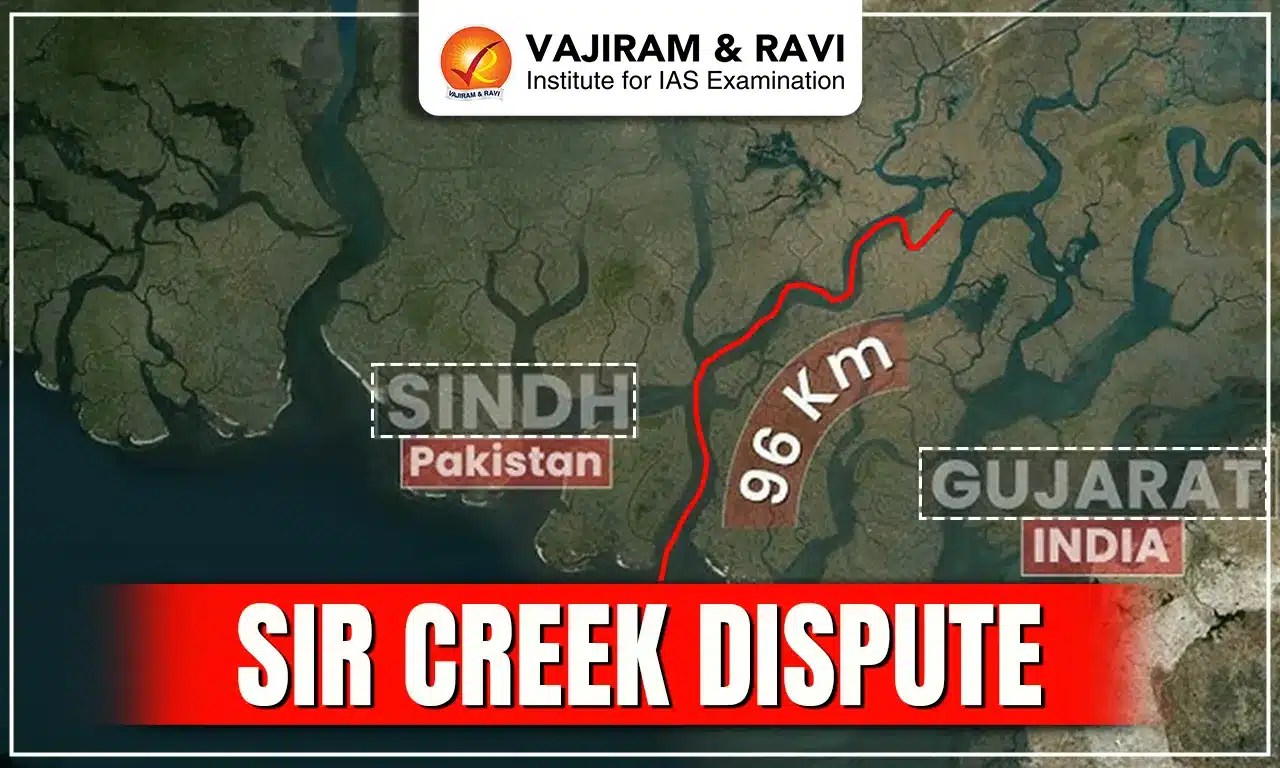
Sir Creek is a 96 kilometre strip of water located in the marshlands of the Rann of Kutch in Gujarat. Geographically, it forms a boundary between India’s Kutch region and Pakistan’s Sindh province before opening into the Arabian Sea. Historically, it was known as Ban Ganga and acquired the name “Sir Creek” during the colonial era, named after a British official.

What is Sir Creek Dispute?

  • The core of the Sir Creek Dispute lies in the differing interpretations of the maritime boundary between India and Pakistan. Before India’s independence, the region was part of the Bombay Presidency. Post-partition in 1947, Kutch remained with India while Sindh became part of Pakistan.
  • Pakistan claims the entirety of Sir Creek based on the Bombay Government Resolution of 1914, signed between the Rao of Kutch and the Sindh provincial government. According to Pakistan, the eastern flank of the creek forms the boundary. India, however, considers this green line indicative rather than definitive. Instead, India relies on a 1925 map, along with the mid-channel pillars constructed in 1924, to argue that the boundary lies along the mid-channel of the creek (red line on the map).
  • India invokes the Thalweg Principle of international law, which stipulates that the boundary between two political entities along a waterway should follow the center of the principal navigable channel. Pakistan rejects this argument, claiming that Sir Creek is non-navigable, whereas India maintains that the creek is navigable during high tides, and fishing trawlers regularly use it to reach the Arabian Sea.

Sir Creek Dispute Origin

The Sir Creek Dispute dates back to 1908, when disagreements arose between the ruler of Kutch and the Sindh government over firewood collection in the creek area. To settle the issue, the Bombay Government Resolution of 1914 was issued. The resolution contained conflicting provisions:

  • Paragraph 9 said that the boundary should be to the east of the creek, implying the entire creek would belong to Pakistan.
  • Paragraph 10, however, applied the Thalweg Principle, noting that Sir Creek is navigable most of the year, making the mid-channel the effective boundary.

This inherent contradiction has been the basis of prolonged disagreement between the two countries.

Sir Creek Significance

Sir Creek holds strategic, economic, and ecological significance as highlighted below:

  • Strategic Importance: The creek lies near the Rann of Kutch, an area where India and Pakistan clashed during the 1965 Indo-Pak War. Control over this region influences maritime security and surveillance.
  • Economic Significance: It is one of the largest fishing grounds in Asia, supporting the livelihoods of thousands of fishermen. Furthermore, potential oil and gas reserves under the seabed could provide significant economic benefits, though exploration remains stalled due to the dispute.
  • Ecological Value: Sir Creek is an ecologically sensitive area, home to flamingoes and other migratory birds during winter, making it important for biodiversity conservation.

Also Read: India Pakistan Relationship

Sir Creek Issue Resolution Attempts

Several attempts have been made to resolve the Sir Creek issue:

  • After the 1965 war, British Prime Minister Harold Wilson intervened, leading to the establishment of a tribunal. The 1968 verdict granted Pakistan only 10% of its claim.
  • During the 1997 composite dialogue, Sir Creek was discussed as a part of broader efforts to improve bilateral relations.
  • Tensions increased in 1999 when an Indian fighter plane shot down a Pakistani surveillance aircraft over the creek. India alleged an airspace violation, while Pakistan denied it.
  • Between 2005 and 2007, joint surveys were conducted to assess the area for potential resolution.

Despite these efforts, a final agreement has remained elusive, largely due to differing interpretations of historical maps and legal principles.

Way Forward:

Resolving the Sir Creek dispute is important for many reasons:

  • Humanitarian Aspect: Fishermen from both countries are frequently detained for accidentally crossing perceived borders, creating tensions and disrupting livelihoods.
  • Strategic and Economic Gains: A resolution would allow exploration of oil and gas reserves and better control of maritime boundaries.
  • Low-Hanging Fruit: Among the numerous Indo-Pakistan disputes, Sir Creek is often considered a simpler, less politically charged issue, making it a potential candidate for early resolution.

Sir Creek Dispute 2025

In 2025, Defence Minister Rajnath Singh issued a stern warning to Pakistan over its military build-up near the Sir Creek region, stating that any misadventure would invite a response so strong that it could “change both history and geography.” Speaking at a public event on the occasion of Shastra Pujan, he accused Pakistan of deliberately stirring up the long-standing Sir Creek dispute despite India’s repeated efforts to resolve it through dialogue. Singh discussed that the recent expansion of Pakistani military infrastructure in areas adjoining Sir Creek, a strategically sensitive zone along the Gujarat coastline, indicates Pakistan’s unclear intentions and provocative posture.

Sir Creek Dispute FAQs

Q1: What is the Sir Creek issue between Pakistan and India?

Ans: A long-standing border and maritime dispute over the ownership and boundary of the Sir Creek region between India and Pakistan.

Q2: Where is Sir Creek in India?

Ans: In the Rann of Kutch region of Gujarat, along the India-Pakistan border.

Q3: Is Sir Creek the westernmost point of India?

Ans: No, the westernmost point of India is Guhar Moti in Gujarat; Sir Creek lies nearby but is not the extreme point.

Q4: What is the Sir Creek Dispute?

Ans: A disagreement between India and Pakistan over the maritime boundary and territorial claims in the Sir Creek area.

Q5: When did the Sir Creek Dispute begin?

Ans: The dispute originated in 1908, during the pre-independence period over territorial and resource claims.

INS Trikand

INS Trikand

INS Trikand Latest News

Indian Navy warship INS Trikand thwarted a piracy attempt in the Gulf of Aden recently as pirates fled when it approached a bulk carrier.

About INS Trikand

  • It is a frontline guided missile frigate of the Indian Navy. 
  • It is the third and final ship of the second batch of Talwar-class frigates ordered by the Indian Navy.
  • It was built by the Yantar shipyard in Kaliningrad, Russia.
  • It was commissioned into the Indian Navy on 29 June 2013 at Kaliningrad, Russia.
  • It is part of the Indian Navy’s Western Fleet and operates under the Western Naval Command headquartered at Mumbai.

INS Trikand Features

  • It is a 4,035-ton warship measuring nearly 125 meters long, with a crew of 180, including 18 officers.  
  • It is powered by four gas turbines and is capable of speeds in excess of 30 knots.  
  • Armory: It carries a supersonic BRAHMOS missile system; advanced surface-to-air missiles, Shtil; an upgraded A190 medium-range gun; electro-optical 30 mm close-in weapon system; anti-submarine weapons such as torpedoes and rockets; and an advanced electronic warfare system.
  • The weapons and sensors are integrated through a Combat Management System, ‘Trebovanie-M’, which enables the ship to simultaneously neutralise multiple surface, sub-surface, and air threats
  • The ship also incorporates innovative features to reduce radar, magnetic, and acoustic signatures, which have earned this class of ships the sobriquet of ‘Stealth’ frigates. 
  • The ship can carry an integrated Kamov 31 helicopter, which is best suited for airborne early warning roles.

News: DH

INS Trikand FAQs

Q1: What is INS Trikand?

Ans: A frontline guided missile frigate of the Indian Navy.

Q2: To which class of warships does INS Trikand belong?

Ans: Talwar-class frigates.

Q3: Where was INS Trikand built?

Ans: Yantar Shipyard, Kaliningrad, Russia.

Q4: When was INS Trikand commissioned into the Indian Navy?

Ans: 29 June 2013.

Q5: Which fleet of the Indian Navy does INS Trikand belong to?

Ans: The Western Fleet.

Marburg Virus Disease

Marburg Virus Disease

Marburg Virus Disease Latest News

The World Health Organization (WHO) recently confirmed a case of Marburg virus disease (MVD) in Uganda.

About Marburg Virus Disease 

  • MVD, formerly known as Marburg haemorrhagic fever, is a severe, often fatal illness caused by the Marburg virus.
  • The Marburg virus is a zoonotic virus that belongs to the Filoviridae family (filovirus), the same group of viruses that includes Ebola.  
  • It is a rare disease that occurs in humans and non-human primates (chimpanzees, gorillas, and monkeys).  
  • It is named for the German city where scientists became ill with the disease's first known cases in 1967 while handling monkeys imported from Africa.
  • The Marburg virus is most commonly found in sub-Saharan Africa.  

Marburg Virus Disease Transmission

  • The Marburg virus is naturally carried by Egyptian fruit bats (Rousettus aegyptiacus), which serve as its primary reservoir.
  • People usually become infected after prolonged exposure to bat-inhabited caves or mines.
  • Once a human is infected, the virus spreads through direct contact with the blood, saliva, vomit, urine, faeces, and other bodily fluids of an infected person
  • It can also spread through contaminated objects such as bedding, clothing or medical equipment that have come into contact with infected bodily fluids.
  • Unlike some respiratory viruses, Marburg is not airborne and does not spread through casual contact
  • Transmission requires direct exposure to infected bodily fluids or contaminated materials.

Marburg Virus Disease Symptoms

  • People with Marburg usually start getting sick 2-21 days after they are infected with the virus. 
  • Initial symptoms include:
    • Fever
    • Chills
    • Headache
    • Muscle aches
    • Rash with both flat and raised bumps, often on the torso
    • Chest pain
    • Sore throat
    • Nausea, vomiting, and diarrhea
  • As the disease advances, symptoms can become more severe, including liver failure, delirium, shock, bleeding (hemorrhaging), and multi-organ dysfunction.
  • In severe cases, death generally occurs between eight and nine days after the onset of symptoms, primarily due to massive blood loss, multi-organ failure, and circulatory shock. 
  • The average MVD case fatality rate is around 50%. Case fatality rates have varied from 24% to 88% in past outbreaks.

Marburg Virus Disease Treatment

  • There is no vaccine or specific treatment for MVD.
  • Treatment focuses on relieving symptoms and supporting patients through the course of the disease.
  • Patients are typically hospitalized and treated with intravenous fluids and electrolytes to maintain hydration and pain relief medication.

News: N18

Marburg Virus Disease FAQs

Q1: What is Marburg Virus Disease (MVD)?

Ans: A severe, often fatal viral disease caused by the Marburg virus.

Q2: To which virus family does the Marburg virus belong?

Ans: It belongs to the Filoviridae family (filovirus), the same group of viruses that includes Ebola.

Q3: Which animal serves as the natural reservoir of the Marburg virus?

Ans: Egyptian fruit bat (Rousettus aegyptiacus).

Q4: What is the average case fatality rate of Marburg Virus Disease?

Ans: Around 50%.

Q5: Is there a specific antiviral treatment for Marburg Virus Disease?

Ans: No.

Hul Diwas

Default Image

Hul Diwas Latest News

Recently, the state of Jharkhand celebrated Hul Diwas to honour Santhal revolutionaries.

About Hul Diwas

  • It is observed every year on 30th June to commemorate the Santhal Rebellion of 1855.
  • In the Santhali language, the term “Hul” means revolution, uprising, or resistance.
  • It is a day of cultural pride, remembrance, and resistance for the tribal communities of Jharkhand, West Bengal, Odisha, Assam, and Bihar.

Key Facts about Santal Uprising

  • Santal Rebellion was one of the first tribal uprisings against British colonial rule and the feudal-zamindari system.
  • The movement was initiated by the Santhal tribe, primarily led by Sidho Murmu and Kanhu Murmu, with the support of thousands of tribal men and women.
  • The rebellion began on 30th June 1855 in Bhognadih village, located in present-day Sahibganj district of Jharkhand.
  • It quickly spread across parts of present-day Jharkhand, Bihar, and West Bengal. The rebellion lasted until January 3, 1856. 
  • Leaders
    • Brothers Sidho Murmu and Kanhu Murmu (main leaders)
    • Their sisters: Phulo Murmu and Jhano Murmu, who also took part in armed resistance
  • Reasons for  Santal Uprising
    • Land alienation: Santhals were displaced from their ancestral lands by outsiders.
    • Economic exploitation: Local moneylenders, zamindars, and British agents imposed harsh taxes and usurious loans.
    • Loss of tribal autonomy and interference in their traditional governance and justice systems.
    • British apathy to tribal grievances and increasing oppression.
  • Impact: The Santhal Pargana Tenancy Act of 1876 (SPT Act) enacted by the British, which prohibits the transfer of Adivasi lands (urban or rural land) to non-Adivasis, was the result of the Hul. 

Source: News On Air

Hul Diwas FAQs

Q1: What key Acts were passed after the Santhal Rebellion?

Ans: Santhal Parganas Tenancy Act, 1876

Q2: Who were the main leaders of the Santhal Hul?

Ans: Sidho Murmu & Kanhu Murmu

Top 10 Air Defence Systems in the World 2026, List, Range, Uses

Top 10 Air Defence Systems In The World

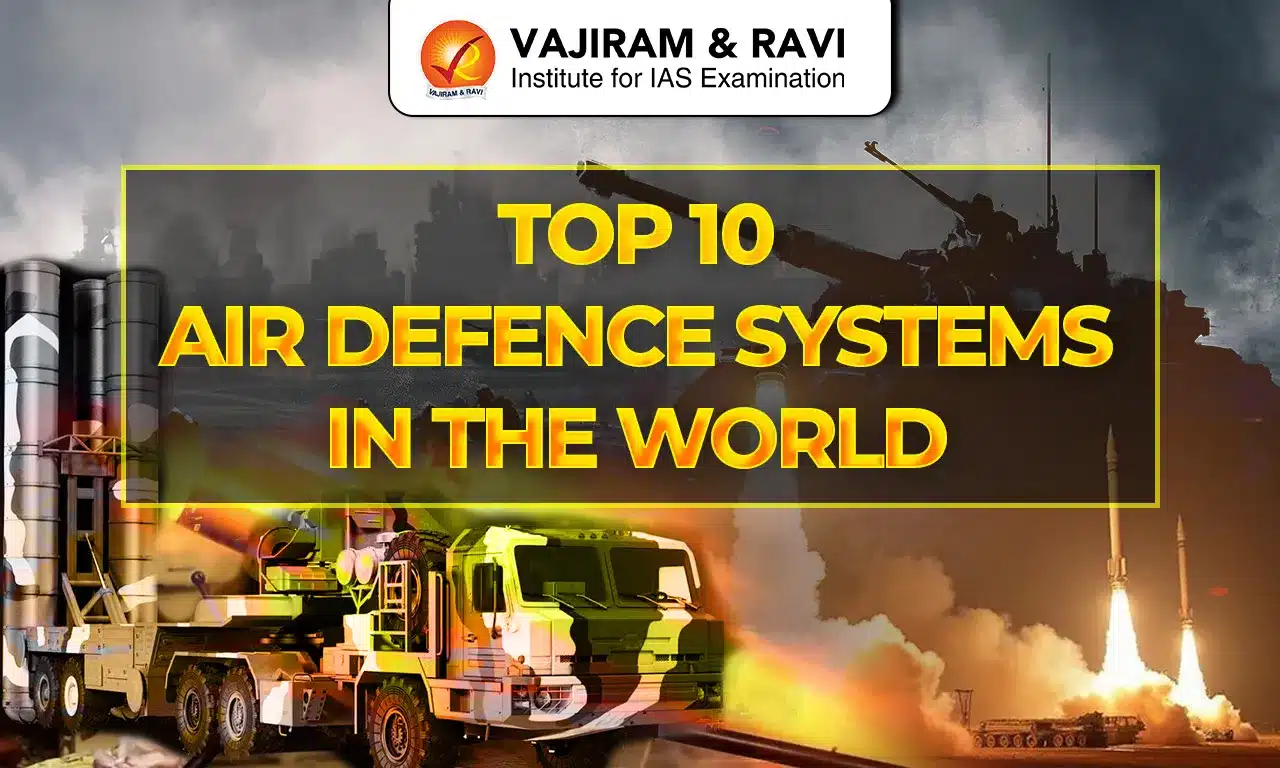
The Top 10 Air Defence Systems in the World reflect a strategic shift toward layered, networked, and high-speed interception capabilities. Modern warfare is increasingly dominated by aerial threats such as ballistic missiles, hypersonic glide vehicles, armed drones, and stealth aircraft. To counter these threats, nations rely on advanced air defence systems that integrate radars, interceptor missiles, command-and-control networks, and real-time surveillance. With rising geopolitical conflicts and missile proliferation, air defence systems now play a crucial role in protecting airspace, strategic assets, and civilian infrastructure worldwide.

What are Air Defence Systems?

Air defence systems are military technologies designed to detect, track, intercept, and destroy hostile aerial objects including aircraft, cruise missiles, ballistic missiles, and unmanned aerial vehicles. These systems combine long-range surveillance radars, fire control radars, interceptor missiles, and battle management systems into Integrated Air Defence Systems (IADS). As per global defence market estimates, the air defence systems market was valued at USD 46.55 billion in 2024 and is projected to reach USD 81.92 billion by 2035 (market projected to grow at a CAGR of 5.27% between 2025 and 2035), driven by hypersonic threats, drone warfare, and missile modernisation.

Top 10 Air Defence Systems in the World List 2026

The Top 10 Air Defence Systems in the World are ranked based on operational range, interception altitude, target spectrum, combat performance, and technological sophistication.

  1. S-500 Prometheus- Russia
  2. S-400 Triumph- Russia
  3. THAAD- United States
  4. David’s Sling- Israel/USA
  5. Patriot PAC-3- United States
  6. S-300VM/ Antey-2500- Russia
  7. Aster 30 SAMP/T- France/ Italy
  8. HQ-9- China
  9. Barak-8- India/Israel
  10. Iron Dome- Israel

1. S-500 Prometheus

The S-500 Prometheus is Russia’s most advanced strategic air and missile defence system, designed for next-generation warfare.

  • Maximum interception range of up to 600 km for ballistic targets and 500 km for aerial targets
  • Capable of intercepting targets at altitudes up to 180-200 km, including low Earth orbit threats
  • Interceptor missile speed reaches Mach 20, enabling hypersonic interception
  • Can simultaneously engage 10 hypersonic targets travelling at 7 km per second
  • Designed to counter ballistic missiles, hypersonic weapons, UAVs, and satellites

2. S-400 Triumph

The S-400 Triumph is a long-range, multi-target air defence system widely deployed globally.

  • Maximum engagement range of 400 km with altitude coverage of 30-56 km
  • Tracks and engages up to 36 targets simultaneously
  • Uses multiple interceptor missiles including 40N6, 48N6, and 9M96 variants
  • Effective against aircraft, cruise missiles, ballistic missiles, and UAVs
  • Operational in Russia, India, China, Turkey, and other countries

3. THAAD (Terminal High Altitude Area Defense)

THAAD is a high-altitude ballistic missile defence system developed by the United States.

  • Engagement range of approximately 200 km
  • Interception altitude up to 150 km, enabling exo-atmospheric kills
  • Uses hit-to-kill kinetic interceptors without explosives
  • Interceptor speed exceeds Mach 8
  • Deployed in South Korea, UAE, and integrated with Patriot and Aegis systems

4. David’s Sling

David’s Sling is a medium-to-long range missile defence system jointly developed by Israel and the United States.

  • Effective range up to 300 km
  • Designed to intercept tactical ballistic missiles, cruise missiles, drones, and aircraft
  • Uses Stunner interceptor missile with dual seeker technology
  • Interceptor speed exceeds Mach 7
  • Forms a key layer between Iron Dome and Arrow systems in Israel’s defence architecture

5. Patriot PAC-3

Patriot PAC-3 is a combat-proven air and missile defence system manufactured by Raytheon.

  • Engagement range of 160-170 km
  • Effective interception altitude up to 24 km
  • PAC-3 variant uses hit-to-kill technology
  • Widely deployed in over 17 countries, including Japan, Germany, Saudi Arabia
  • Integrated into multi-layered missile defence networks alongside THAAD

6. S-300VM/ Antey-2500

The S-300VM is a mobile long-range air and missile defence system developed by Russia.

  • Maximum engagement range of 250 km
  • Effective interception altitude up to 30 km
  • Capable of engaging aircraft, cruise missiles, and intermediate-range ballistic missiles
  • Interceptor missile speed exceeds Mach 7
  • Deployed in countries such as Egypt and Venezuela

7. Aster 30 SAMP/T

Aster 30 SAMP/T is a European air defence system developed jointly by France and Italy.

  • Operational range between 120-150 km
  • Interception altitude up to 25 km
  • Uses Aster 30 missile with active radar homing
  • Capable of engaging short-range ballistic missiles and cruise missiles
  • Deployed by France, Italy, and Singapore

8. HQ-9

HQ-9 is China’s long-range surface-to-air missile system.

  • Maximum engagement range of 200 km
  • Effective altitude of approximately 27 km
  • Incorporates phased-array radar technology
  • Designed to counter aircraft, cruise missiles, and ballistic missiles
  • Advanced variants include HQ-9B and HQ-9C

9. Barak-8

Barak-8 is a joint India-Israel air defence system designed for land and naval operations.

  • Engagement range of 70-100 km
  • Interception altitude up to 20 km
  • Uses active radar seeker missiles
  • Effective against aircraft, UAVs, cruise missiles, and anti-ship missiles
  • Deployed by Indian Navy, Indian Air Force, and Israeli Defence Forces

10. Iron Dome

Iron Dome is a short-range air defence system developed by Israel for rocket interception.

  • Effective range up to 70 km
  • Interception altitude around 10 km
  • Uses Tamir interceptor missiles
  • Achieved a combat success rate of over 90%
  • Designed to neutralise rockets, artillery shells, and mortars in real time
Also Read
Air Defence System of India Project Kusha
Defence Technology Missiles of India

Top 10 Air Defence Systems in the World FAQs

Q1: What are Top 10 Air Defence Systems in the World used for?

Ans: Air defence systems detect, track, and destroy hostile aircraft, missiles, drones, and rockets to protect national airspace and critical assets.

Q2: Which country has the most powerful among the Top 10 Air Defence Systems in the World?

Ans: The S-500 Prometheus of Russia is considered the most advanced due to its hypersonic interception and satellite-targeting capability.

Q3: Which country has the best among Top 10 Air Defence Systems in the World?

Ans: Israel’s Iron Dome has achieved a combat interception success rate of over 90 percent against rockets and artillery shells.

Q4: Which air defence system is jointly developed by India and Israel?

Ans: Barak-8 is jointly developed by India and Israel for land and naval air defence against aircraft and missile threats.

Q5: Why are air defence systems gaining global importance?

Ans: Rising use of ballistic missiles, drones, and hypersonic weapons has made air defence systems critical for modern national security.

Unification of Germany (1871), Timeline, Causes, Process, Result

Unification of Germany

The Unification of Germany was a major political transformation of Europe during the late 19th century which led to the creation of a unified German Empire in 1871 under the Prussian leadership. Before unification, the regions included 39 states under the German Confederation (1815)  for which the two dominant powers: Austria and Prussia competed for influence. The process involved wars, diplomatic and economic strategies, treaties, nationalism, etc. that was primarily led by Prussian Chancellor Bismarck, which resulted in the altered European power and shaping Modern Germany’s Territory, Polity, etc.

What is Unification of Germany?

The Unification of Germany refers to the series of political and military steps that consolidated more than 300 German Speaking States (kingdoms, duchies, principalities & free cities) into a unified German Empire under the Prussian Leadership of Emperor Wilhelm I at the Palace of Versailles (1871). The process resulted into the formation of a modern Industrial State, covering an area ~540,000 sq. km with ~41 million population. Historically the structure of the Empire evolved from the Holy Roman Empire (962-1806) to the Confederation of Rhine (1806-1813), the German Confederation (1815-1866) and the North German Confederation (1867-1871) leading to the German Empire (1871 onwards).

Unification of Germany Timeline

The Unification of Germany Timeline has been given below including the series of political and economic events that led to the creation of the German Empire:

  • 1806: Fall of Holy Roman Empire after Napoleon's Victory.
  • 1806-1813: Formation of the Confederation of Rhine
  • 1815: Establishment of German Confederation of 39 States under Austrian Presidency at the Congress of Vienna, after Napoleon's defeat.
  • 1834: Formation of the Zollverein (Customs Union) led by Prussia (25 states by 1842) which integrated economies except Austria.
  • 1848: Frankfurt Parliament attempted to unify the German Empire, but failed after the rejection of its constitution by the Prussian King.
  • 1862: Otto von Bismarck became the Prime Minister of Prussia and promoted unification by “blood and iron” strategy.
  • 1864: Second Schleswig War (Prussia + Austria vs. Denmark), resulting in Danish defeat and annexing Schleswig and Holstein.
  • 1866: Austro-Prussian War (Seven Weeks’ War), resulting- Prussian Victory at the Battle of Königgrätz and dissolution of German Confederation.
  • 1867: North Germany Confederation established under Prussian leadership.
  • 1870-71: Franco-Prussian War resulted in French defeat and joining of southern German states.
  • Jan 18, 1871: Proclamation of German Empire in the Hall of Mirrors (Versailles) and crowning of Kaiser Wilhelm I.

Unification of Germany Reasons

The Unification of Germany was the result of various factors including nationalism, economic needs, rise of Prussia, several wars and strategies of Bismarck, etc. as listed below:

  • Rise of Nationalism: The nationalism rose, inspired by the Napoleonic Occupation which dissolved the Holy Roman Empire, during 1848. It was promoted by thinkers like ‘Fichte’. The Hambach Festival (1832) united 30,000 people. The demand of the revolution was Constitutional Unity but failed after 1848 due to the failure of Frankfurt Parliament because of lack of military support and Austrian opposition.
  • Economic Integration by Zollverein: The Zollverein was formed in 1834 by Prussia which included the large economies but excluded Austria. It was the unified customs system among 25 German States by 1842. It resulted in the increase of trade volume above 80% (1834-50) due to elimination of internal tariffs across German States which eventually boosted the industrial growth by 1860. The Zollverein produced ~60% of Coal and ~55% of Steel in Europe.
  • Role of Otto Von Bismarck: Bismarck was appointed as the Prussian Minister-President (Prime Minister) in 1862. He adopted the strategy of “Blood and Iron” and followed the policy of “Realpolitik” by using diplomacy, manipulation and wars for the German Unification. He strengthened the Prussian Army under the reforms of Helmuth Von Moltke and Albrecht Von Roon. His diplomatic strategy included neutralising Russia by supporting Polish repression (1863) and Italy with secret promises (1866). He manipulated the southern German States to join the Northern Confederation by provoking nationalism through shared German Language and culture.
  • Wars Leading to Unification: The strategic wars provided territorial gains, elimination of rival influences, annexation of the German states under Prussia, which led to the rise of Industrial and Military strength under the House of Hohenzollern. The major wars indirectly paving way for the unification are:
    • Second Schleswig War (1864): In this war, Prussia and Austria together defeated the Danish Army and annexed the territories of Schleswig and Holstein under joint Prussian-Austrian rule.
    • Austro-Prussian War (1866): Also known as Seven Week War as it lasted for the same duration. In this, the Prussian Army won at the Battle of Königgrätz in July 1866. This led to the annexation of Hannover, Nassau and Frankfurt. After the annexation, German Confederation was dissolved and led to the establishment of North German Confederation (1867).
    • Franco-Prussian War (1870-71): The war was sparked by the manipulation of Ems Dispatch. In the Battle of Sedan (Sep 1870) of this war, France was defeated and the territory of Alsace-Lorraine was ceded to Prussia. Along with it, southern states like Bavaria, Württemberg, Baden, etc. joined the empire and eventually triggered the proclamation of the German Empire.
  • Decline of Austrian Power: Austria struggled with several factors including economic, internal revolts, etc. It was excluded from the Zollverein since 1834. Internal ethnic revolts in Hungary, Italy, etc. demolished its strength. The major defeat in the Austro-Prussian War (1866) eliminated Austria dominance under Habsburg.

Unification of Germany Process

The Unification of Germany included multiple aspect processes including diplomatic strategies, military combats, treaties, alliances, etc. The complete process involved in the unification is given below:

  • Modernization of Prussian Army: Prussia modernized its army (1860-62) through Krupp Steel supplied artillery that dominated battle and doubled the rail mobilization capacity to 11000 km by 1870.
  • Diplomatic Strategies: The war with Denmark was eventually for the purpose of gaining territories. Further, Bismarck isolated Austria diplomatically through the alliances (neutralisation) of Russia and Italy. The strategic defeat of France prevented the formation of anti-Prussian coalitions. 
  • Formation of North German Confederation: After defeating Austria (1866), the German Confederation was replaced by North German Confederation (1867), which created federal structures including- Reichstag (universal male suffrage), Bundesrat and federal army. It included 22 states and adopted the constitution with the Prussian King as President.
  • Inclusion of Southern German States: The Southern German States voluntarily joined after the victory in the Franco-Prussian War (1870). The States signed the November Treaties with Prussia while agreeing to unite. It signed Defence Treaties with the states of Bavaria, Baden, Württemberg (1866-67).
  • Proclamation of German Empire (1871): On Jan 18th, 1871, the Prussian King- Wilhelm I was crowned as the German Emperor (Kaiser) and Bismarck was appointed as the chancellor at Versailles. The new constitution came into force by May 1871 with strong Prussian dominance as 2/3rd of the population and 3/5th of the territory of the new empire was controlled by Prussia. The federal structure retained certain rights to the southern states (eg: postal services, excise duty, etc.).

Result of Unification of Germany

The Unification of Germany impacted the geopolitics of Europe. The outcomes of the Unification of Germany can be studied into several aspects as mentioned below:

  • The Unification led to the coverage of ~540,000 sq km area with initial population ~41 million (1871), rising to ~67 million by 1914.
  • It led to the rapid industrial growth of the German Empire, with steel production rose from 0.2 million tons (1871) to over 14 million tonnes by 1913, surpassing Britain. 
  • It became Europe’s most powerful industrial nation by 1890 and the largest economy in Europe by 1910, producing 16 percent of global manufacturing output.
  • Germany became a major continental power, replacing France as dominant land power in Europe; greatly shifted European balance-of-power politics.
  • Increased militarisation ultimately contributed to tensions leading to World War I.
Also Read
World War II Renaissance
Industrial Revolution American Revolution
French Revolution Rise of Nationalism in Europe
Unification of Italy Imperialism
Treaty of Versailles Russian Revolution
League of Nation Cold War
Fascism Nazism
Dissolution of Soviet Union Decolonization


Unification of Germany FAQs

Q1: What is meant by the Unification of Germany?

Ans: The Unification of Germany refers to the political consolidation of numerous German states into the German Empire on 18 January 1871.

Q2: Who led the Unification of Germany?

Ans: Otto von Bismarck, the Prussian Chancellor, led the unification using policies of Realpolitik, military reforms, and strategic wars.

Q3: Which wars contributed to German unification?

Ans: Three key wars contributed: the Danish War (1864), Austro Prussian War (1866), and Franco Prussian War (1870-71).

Q4: When was the German Empire proclaimed?

Ans: The German Empire was proclaimed on 18 January 1871 at the Hall of Mirrors, Palace of Versailles.

Q5: What was the major result of German unification?

Ans: Germany emerged as a major European power with strong industry, centralized authority, and significant geopolitical influence.

VPN Regulation in India, Government Weighs Stricter Rules for VPN Providers

VPN Regulation in India

VPN Regulation in India Latest News

  • The Centre is working on an expansive legal framework to regulate Virtual Private Network (VPN) providers. The proposed rules could require VPN companies to establish a local presence in India and appoint compliance officers to liaise with the government. 
  • The primary concern driving this: VPNs are increasingly being used to bypass the government's blocking of apps and online content.

What Is a VPN and Why Does It Worry the Government

  • A VPN lets users mask their IP address and route their internet traffic through servers located elsewhere, making it appear as if the traffic originates from another country while hiding the user's real location.
  • This creates two features the government finds problematic:
    • Bypassing censorship: India's blocking orders require companies to geo-block content within India's jurisdiction. But by connecting through a VPN server in, say, the US, a user can still access content blocked in India.
    • Anonymity: VPNs allow anonymous browsing and are widely regarded as privacy-enhancing tools.
  • The scale of the tension is clear from India's expanding censorship: over 24,000 blocking orders in 2025, up from over 12,000 in 2024. 
  • When the Centre temporarily blocked Telegram before the NEET-UG retest, Proton VPN reported daily sign-ups from India jumping over 120% — illustrating exactly why VPNs "defeat the purpose" of blocking, in the government's view.

What the New Framework Could Require

  • According to senior officials, the proposed rules could require VPN operators to:
    • Establish offices in India.
    • Hire compliance officers to address government grievances.
    • Face penal consequences, including possible jail terms for local employees, in case of non-compliance.
  • These requirements mirror obligations already imposed on large social media companies under India's Information Technology (IT) Rules, 2021. 
  • The core goal is to have a local point of contact the government can direct to block access to prohibited content.

The Backstory: The 2022 Cert-In Directive

  • This is not the first attempt to regulate VPNs. 
  • In 2022, the Indian Computer Emergency Response Team (Cert-In) issued a controversial directive requiring VPN providers (along with data centres and cloud service providers) to store extensive customer data — names, email IDs, contact numbers, and IP addresses — for a period of five years.
  • Why a new law is now felt necessary: There is an implicit acknowledgement that the 2022 directive did not yield satisfactory results. 
  • As per analysts, VPN companies "simply refused to comply," so a full-fledged law is being considered.

The Industry's Response Servers Moved Out

  • The 2022 directive backfired in a telling way. Rather than comply, major VPN operators — Proton VPN, NordVPN, ExpressVPN, and Surfshark — removed their physical servers from India and began routing Indian traffic through Singapore.
  • Proton VPN was blunt at the time, calling it an "invasive mass surveillance law" and saying it had no choice but to pull its servers out of Indian jurisdiction.
  • This episode highlights the core enforcement challenge: because VPN companies can operate entirely from outside India, forcing compliance is difficult — which is precisely why the government now wants a mandatory local presence.

The Underlying Tension: Security vs. Privacy

  • The story sits at the intersection of two competing concerns:
    • The government's position: VPNs undermine lawful content-blocking and enable circumvention of orders issued on security and other grounds; a local, accountable presence is needed for enforcement.
    • The privacy concern: VPNs are legitimate privacy-enhancing tools, and data-retention or localisation mandates raise fears of mass surveillance and erosion of user anonymity.

Conclusion

  • The proposed VPN framework is the government's second, tougher attempt to bring a hard-to-regulate technology under its control. 
  • Where the 2022 Cert-In data-retention directive largely failed — pushing providers to simply relocate their servers abroad — the new approach borrows the IT Rules playbook: mandate a local office, a compliance officer, and personal liability for employees. 
  • The move underscores India's expanding content-blocking regime, but it also reopens a fundamental debate. 
  • VPNs are both a tool for evading censorship and a legitimate shield for privacy. How the eventual law balances enforcement against the surveillance concerns raised by providers and civil society will be its real test.

Source: IE

VPN Regulation in India FAQs

Q1: Why is VPN Regulation in India being strengthened?

Ans: VPN Regulation in India is being strengthened because VPNs enable users to bypass government blocking orders and browse anonymously, raising national security and enforcement concerns.

Q2: What new requirements are proposed under VPN Regulation in India?

Ans: VPN Regulation in India may require providers to establish local offices, appoint compliance officers and comply with government directives or face legal penalties.

Q3: How did VPN companies respond to earlier VPN Regulation in India?

Ans: Following the 2022 CERT-In directive, several VPN providers shifted their servers outside India instead of complying with mandatory data-retention requirements.

Q4: What is the central debate surrounding VPN Regulation in India?

Ans: VPN Regulation in India highlights the tension between national security and law enforcement on one hand, and privacy, anonymity and digital rights on the other.

Q5: Why is enforcing VPN Regulation in India challenging?

Ans: VPN Regulation in India is difficult to enforce because many VPN providers operate from foreign jurisdictions, limiting India's direct regulatory control.

India-Japan Annual Summit 2026, Expanding Strategic Partnership

India-Japan Annual Summit 2026

India-Japan Annual Summit 2026 Latest News

  • The Indian PM and his Japanese counterpart (Sanae Takaichi) held the 16th India–Japan Annual Summit (in New Delhi), elevating bilateral ties through a comprehensive package of agreements.
  • The summit assumes significance amid growing geopolitical uncertainties in the Indo-Pacific, intensifying great-power competition, and the need for resilient global supply chains.

Why the Summit is Significant

  • This marks PM Sanae Takaichi's first visit to India.
  • Reinforces the India–Japan Special Strategic and Global Partnership at a time of increasing geopolitical instability.
  • Aligns with Japan's evolving Free and Open Indo-Pacific (FOIP) strategy and India's vision for a free, open, inclusive and rules-based Indo-Pacific.
  • Deepens cooperation in emerging technologies, defence manufacturing and economic resilience.

Key Outcomes of the Summit

  • Economic security becomes the new pillar of partnership:
    • India and Japan issued a Joint Declaration on Economic Security, providing a roadmap for project-based collaboration in semiconductors, critical minerals, AI, ICT, etc.
    • The initiative aims to reduce vulnerabilities arising from geopolitical disruptions and overdependence on concentrated supply chains.
  • Strong push for AI cooperation:
    • Both countries elevated their AI partnership into a strategic R&D partnership.
    • Major initiatives include: Joint roadmap covering the entire AI technology stack.
    • Collaboration between:
      • IndiaAI Mission and Japan's GENIAC initiative.
      • IIT Bombay, BharatGen and Japan's National Institute of Informatics on Large Language Models (LLMs).
      • SarvamAI and Preferred Networks for foundation models.
    • Focus on: Safe, secure and trustworthy AI; computing infrastructure; joint research; and business-to-business collaboration.
    • Significance: Combines Japan's precision manufacturing with India's software and digital capabilities, strengthening global AI innovation.
  • Defence cooperation enters a new phase:
    • The summit witnessed the first India–Japan defence co-development project.
    • Key development: Joint development of the Naval Radio Antenna "UNICORN", strengthening defence technology collaboration, maritime security, etc.
    • Japan's recent relaxation of defence export restrictions also creates opportunities for greater defence collaboration with India.
  • Major economic commitments:
    • Japan announced an investment of 10 trillion yen in India over the next decade.
    • Plan to double the number of Japanese companies operating in India.
    • The summit also operationalised the Next Generation Mobility Partnership (NGMP) covering railways, automobiles, aviation, shipbuilding, ports, logistics, and urban development.
    • This supports India's vision of "Make in India for the World."

Sector-wise Agreements

  • Energy security and resilience: Cooperation in strategic petroleum reserves, maritime energy transport, and joint investments in energy supply chain resilience.
  • Critical minerals and batteries: MoUs signed on critical mineral exploration, battery technologies, and sustainable battery supply chains for EVs, renewable energy and semiconductor manufacturing.
  • Healthcare:
    • Partnership expanded to pharmaceuticals, medical devices, biotechnology, APIs (Active Pharmaceutical Ingredients), and Key Starting Materials (KSMs).
    • Objective: Strengthen trusted pharmaceutical supply chains and contribute to global health security.
  • Bioenergy:
    • Launch of the India–Japan Cooperative Biogas for Growth (CBG) Initiative, with a target to establish 1,000 biogas and organic fertiliser plants across India using dairy cooperative networks.
    • Supports circular economy, waste-to-wealth, clean energy, and sustainable agriculture.
  • Research and innovation: Institutional partnerships include: C-CAMP–RIKEN and NCBS–RIKEN, with focus on life sciences, biotechnology, neuroscience, healthcare, agriculture, environment, and deep-tech innovation.
  • Digital infrastructure: Cooperation between the National Internet Exchange of India (NIXI) and the Japan Network Information Center (JPNIC) to focus on IPv6 adoption, internet governance, cybersecurity, etc.
  • Financial cooperation: Framework established between the International Financial Services Centres Authority (IFSCA) and the Japan Financial Services Agency (JFSA). Focus: FinTech, RegTech, and financial market regulation.

Geostrategic Importance of the Summit

  • Japan's Indo-Pacific strategy:
    • Japan's outreach is driven by growing Chinese military assertiveness, economic coercion, and perceived reduction in US regional engagement.
    • Its updated FOIP strategy prioritises economic infrastructure for the AI era, supply chain resilience, security cooperation, rule-based regional order, etc.
    • India occupies a central position in this strategy.
  • Japan's internal balancing:
    • Japan is simultaneously strengthening domestic capabilities through:
      • Record defence spending (targeting 2% of GDP)
      • Relaxation of arms export restrictions
      • Expanded Official Security Assistance (OSA)
      • Cybersecurity and intelligence reforms
    • These measures complement its growing strategic engagement with Indo-Pacific partners.

India-Japan Relations

  • Overview:
    • Ever since the establishment of diplomatic relations (in 1952), the two countries have enjoyed cordial relations. For example, the Indian PM referred to the Japanese PM as ‘younger sister’ at the 16th annual summit.
    • Evolution of relations: "Global Partnership between Japan and India" (2000), "Global and Strategic Partnership"(2006), and “Special Strategic and Global Partnership” (2014). 
    • Since 2005, Japan-India annual summit meetings have been held in respective capitals. 
    • The two nations conduct regular military drills (e.g., Malabar and Dharma Guardian), engage in regular 2+2 Ministerial Dialogues, and are core members of the Quad alliance.
    • Japan is among India's largest investors, with a bilateral trade volume exceeding $27.5 billion.
    • India remains the largest recipient of Japan’s Official Development Assistance (ODA), which funds key metro, railway, and connectivity projects across India. 
    • Challenges
      • The most prominent issue is a trade imbalance heavily skewed in Japan’s favor. 
      • Divergent strategic priorities—such as India's adherence to strategic autonomy and differing regional security concerns—sometimes limit seamless alignment on global issues like Russia sanctions.
  • Strategic significance for India:
    • Strengthens resilient supply chains under the China+1 strategy.
    • Supports Atmanirbhar Bharat and advanced manufacturing.
    • Enhances semiconductor ecosystem and critical technology capabilities.
    • Boosts defence indigenisation through co-development.
    • Improves maritime security in the Indo-Pacific.
    • Expands cooperation in clean energy, biotechnology and digital governance.
    • Reinforces a rules-based international order through convergence of democratic values.

Conclusion

  • The 16th India–Japan Annual Summit marks a decisive shift from a traditional economic partnership to a comprehensive strategic partnership.
  • As geopolitical competition intensifies in the Indo-Pacific, the two countries are positioning themselves as trusted partners committed to a rules-based international order.

Source: IE | PIB

India-Japan Annual Summit 2026 FAQs

Q1: How is the India–Japan Economic Security Partnership reshaping bilateral relations?

Ans: It strengthens cooperation in semiconductors, critical minerals, AI, clean energy and resilient supply chains.

Q2: What is the significance of the India–Japan AI partnership?

Ans: It promotes joint R&D, AI infrastructure, Large Language Models, trusted AI governance and innovation.

Q3: What is the strategic importance of the India–Japan defence partnership?

Ans: Defence co-development, maritime security cooperation and technology transfer strengthen a free, open and rules-based Indo-Pacific.

Q4: Why has economic security emerged as a central pillar of India–Japan relations?

Ans: Due to rising geopolitical uncertainties, supply chain disruptions and critical technology competition.

Q5: What is the role of the India–Japan partnership in supporting India's developmental priorities?

Ans: Japanese investments contribute to Make in India, Atmanirbhar Bharat and sustainable economic growth.

Trimbakeshwar Temple

Trimbakeshwar Temple

Trimbakeshwar Temple Latest News

A unique Shivling—which has remained hidden for centuries—has been discovered from the Amrit Kund inside the Trimbakeshwar Temple complex in the Nashik district of Maharashtra recently.

About Trimbakeshwar Temple

  • It is an ancient and historic Hindu temple dedicated to Lord Shiva.
  • It is located in Trimbak village in the Nasik district of Maharashtra.
  • It lies near the mountain named Brahamagiri, from which the river Godavari flows.
  • It is one of twelve famous Jyotirlingas in India.  
  • The spiritual history of the Trimbakeshwar Temple dates back many centuries and is mentioned in sacred texts such as the Shiva Purana, Skanda Purana, and Padma Purana.  
  • The present temple structure was constructed by the third Peshwa, Balaji Bajirao (1740-1760), on the site of an old temple.  

Trimbakeshwar Temple Architecture

  • The temple is constructed in the Hemadpanthi style, a traditional architectural form known for its strength, symmetry, and minimal use of mortar.  
  • It is built entirely from black basalt stone. 
  • Its walls and tower (shikhara) have many small carvings. 
  • The courtyard is wide, and small shrines line the outer walls.  
  • The sanctum houses the three-faced Jyotirlinga, which is adorned with a dazzling jewelled crown, believed to be from the Pandava era. 
  • Within the temple premises lies the Kushavarta Kund, a sacred pond regarded as the origin of the Godavari River

News: DH

Trimbakeshwar Temple FAQs

Q1: Where is the Trimbakeshwar Temple located?

Ans: Trimbak village in Nashik district, Maharashtra.

Q2: Near which mountain is the Trimbakeshwar Temple situated?

Ans: Brahmagiri Mountain.

Q3: Which major river originates near the Trimbakeshwar Temple?

Ans: The Godavari River.

Q4: Who built the present structure of the Trimbakeshwar Temple?

Ans: Peshwa Balaji Bajirao.

Q5: In which architectural style is the Trimbakeshwar Temple built?

Ans: It is constructed in the Hemadpanthi style, a traditional architectural form known for its strength, symmetry, and minimal use of mortar.

Temple Donation Management, How India’s Biggest Temples Safeguard Donations

Temple Donation Management

Temple Donation Management Latest News

  • Recent allegations of theft of donations at the Ram Temple in Ayodhya have brought public attention to how India's major shrines handle the vast offerings they receive. 
  • Temples like Tirupati, Jagannath, Vaishno Devi, Siddhivinayak, and Kashi Vishwanath collect hundreds of crores in cash each year, besides tonnes of gold, silver, and jewellery.

The Common Chain From Hundi to Bank

  • Across India's biggest temples, the broad donation journey is remarkably similar. Offerings placed in hundis (donation boxes) are:
    • Removed by authorised personnel
    • Shifted to counting centres
    • Segregated into cash, coins, and valuables
    • Counted and recorded
    • Deposited into designated bank accounts
  • The entire process runs under CCTV surveillance.
  • The crucial insight: temples do not differ in the journey of the donation, but in the institutions governing it — who supervises each stage, who appoints the handlers, and what legal and administrative safeguards ensure accountability.

How the Major Temples Do It

  • Ayodhya (Ram Temple)
    • A trust-led system. Around 35 hundis are opened by trust officials and an SBI representative, and taken to a counting hall in the Pilgrim Facilitation Centre. 
    • Staff outsourced by SBI and trust employees count cash and jewellery under a retired banker's supervision, with overall responsibility resting on a trust member. 
    • Verified collections go into the trust's SBI account.
  • Tirupati
    • Scale backed by institutional depth. 
    • Its famed Parakamani system involves permanent TTD finance staff, nationalised bank representatives, and vetted volunteers (mostly serving/retired government and bank employees), all under an extensive CCTV network monitored by the temple's vigilance wing
    • Personnel wear pocketless clothes, are frisked entering and leaving, cash moves in armoured transport, and access is segregated across roles.
  • Jagannath (Puri)
    • Procedure written into law. The emphasis is on codified procedure. 
    • Hundis are opened under the Temple Administrator or a gazetted officer, with a Managing Committee member as independent witness
    • Each hundi is sealed before and after opening, entries go into statutory forms, and CCTV monitors handling. It has also expanded digital donation channels.
  • Vaishno Devi
    • A corporate-style model. Donation boxes are opened by committees of accounts officers, area managers, and security personnel rather than individual trustees. 
    • Finance, security, and operations run through specialised departments under the Shrine Board, with dedicated transport (including helicopters) for the mountainous terrain.
  • Siddhivinayak (Mumbai)
    • Oversight at the counting table. The main hundi is opened every Thursday in the presence of an executive officer, a trustee, a bank representative, and an auditor under CCTV — ensuring multiple independent stakeholders witness every stage.
  • Kashi Vishwanath
    • Government inside the process. The district administration is part of the chain. 
    • The 56 donation boxes are opened under a Sub-Divisional Magistrate, counting happens before bank officials and a retired gazetted officer, deposit receipts create an audit trail, and jewellery is valued by government-approved appraisers.

Where the Ram Temple Stands Apart

  • This is the analytical heart of the piece. The key difference lies in the governing framework.

Statute vs. trust deed

  • Most older major temples are run under dedicated state legislation:
    • Tirupati (TTD) - AP Charitable and Hindu Religious Institutions and Endowments Act
    • Jagannath - Shri Jagannath Temple Act
    • Vaishno Devi - J&K Shri Mata Vaishno Devi Shrine Act
    • Siddhivinayak - Maharashtra trust law
    • Kashi Vishwanath - UP Shri Kashi Vishwanath Temple Act
  • These laws create governing bodies, define administrators' powers, prescribe financial procedures, and provide for government oversight and statutory audits.
  • The Ram Temple is different: the Shri Ram Janmabhoomi Teerth Kshetra functions through a trust deed, not a dedicated statute. 
  • Day-to-day management, appointments, and finances rest entirely with the trust.

Composition of management

  • In older temples, key financial processes involve executive officers, statutory administrators, government nominees, magistrates, and auditors whose duties are defined by law. 
  • At the Ram Temple, several key office-bearers involved in donation management have long associations with the RSS or its affiliates, and responsibility is concentrated within the trust structure rather than distributed across a broader statutory framework.

A flagged internal weakness

  • This distinction matters because a private internal audit (November 2020), commissioned by the trust itself, described the management structure as "highly unprofessional".
  • It found no systematic financial reporting, and recommended standard operating procedures, a clear hierarchy, stronger maker-checker controls, formal HR processes, jewellery inventory registers, and tighter accounting/IT oversight.

No mandatory public audit

  • Unlike many temple boards, the Ram Temple trust is not subject to mandatory financial audits by the state or central government. 
  • Questions about public audit and oversight have reached the courts, and the trust has not publicly disclosed whether the 2020 audit's recommendations were fully implemented.

Conclusion

  • Despite all the procedures, no major temple has escaped controversy. The key lesson: institutional safeguards are rarely built overnight. 
  • Many systems that now appear routine — layered oversight, codified procedures, independent verification, statutory accountability — were strengthened only after earlier controversies exposed weaknesses.
  • Whether the current investigation pushes Ayodhya towards the same kind of institutional reform that older temples adopted after their own crises may prove its most lasting consequence.

Source: IE

Temple Donation Management FAQs

Q1: What is the standard process followed in Temple Donation Management?

Ans: Temple Donation Management generally involves authorised collection, CCTV-monitored counting, segregation of valuables, documentation and deposit of donations into designated bank accounts.

Q2: How does Temple Donation Management differ at the Ram Temple in Ayodhya?

Ans: Temple Donation Management at Ayodhya is administered through a trust deed, unlike many major temples that operate under dedicated statutory frameworks with government oversight.

Q3: Why are statutory frameworks important in Temple Donation Management?

Ans: Temple Donation Management benefits from statutory frameworks because they define administrative responsibilities, financial procedures, audits and accountability through legally established mechanisms.

Q4: What safeguards are commonly used in Temple Donation Management across major temples?

Ans: Temple Donation Management incorporates CCTV surveillance, independent witnesses, bank representatives, auditors, sealed donation boxes and documented audit trails to ensure transparency.

Q5: What lesson does the Ayodhya debate offer for Temple Donation Management?

Ans: The Ayodhya debate highlights that Temple Donation Management requires strong institutional safeguards, transparent financial procedures and periodic audits to maintain public trust.

eSARAS Platform

eSARAS Platform

eSARAS Platform Latest News

eSARAS platform has significantly expanded its reach over the years and more than 8.62 crore women Self-Help Group members now have access to a digital storefront through eSARAS. 

About eSARAS Platform

  • It is developed by the Ministry of Rural Development under the Deendayal Antyodaya Yojana–National Rural Livelihoods Mission (DAY-NRLM).
  • eSARAS is the official online marketplace built exclusively for products made by women Self-Help Groups and their federations
  • It has emerged as a flagship initiative that combines Digital India’s technological framework with grassroots entrepreneurship.
  • The platform lists local products across major categories:
    • Home and Living
    • Women's Apparel and Accessories
    • Men's Apparel and Accessories
    • Personal Care
    • Food Items
    • Kids Toys & Accessories

Features of eSARAS Platform

  • It enabled artisans to sell directly to consumers without relying on multiple intermediaries. 
  • It is integrated with the Open Network for Digital Commerce (ONDC) and UMANG platform.
  • To cater to institutional and corporate buyers, the Ministry has introduced the premium “SARAS Shakti Collection”, a curated range of products.
  • Significance: It is positioning India’s rural artisans to compete in larger markets without losing the authenticity of their craft. 

Source: PIB

eSARAS Platform FAQs

Q1: Who developed the eSARAS portal?

Ans: Digital India Corporation under MoRD with National Rural Livelihoods Mission

Q2: What is the main purpose of eSARAS app?

Ans: E-commerce platform for marketing handicrafts & handlooms made by women of Self Help Groups (SHGs)

Marine Products Export Development Authority

Marine Products Export Development Authority

Marine Products Export Development Authority Latest News

Recently, the Marine Products Export Development Authority (MPEDA) concluded the second edition of the National Skill Olympiad on Seafood Value Addition which was held during Seafood Expo Bharat 2026 in Kochi. 

About Marine Products Export Development Authority

  • It is a statutory body entrusted with the primary task of promotion of export of marine products.
  • History: It was set up by an act of Parliament during 1972. The erstwhile Marine Products Export Promotion Council established by the Government of India in September, 1961 was converged into MPEDA on 24th August, 1972.
  • Functions
    • Developing and regulating off-shore and deep-sea fishing and undertaking measures for the conservation and management of off-shore and deep-sea fisheries;
    • Registering fishing vessels, processing plants or storage premises for marine products and conveyances used for the transport of marine products; fixing of standards and specifications for marine products for purposes of export;
    • Regulating the export of marine products; registering of exporters of marine products on payment of such fees as may be prescribed;
  • It has set up five full-fledged Quality Control Laboratories, at Kochi, Nellore & Bhimavaram, Bhubaneshwar and Porbandar.
  • In order to reach out to the exporters in different parts of the Country, it has set up 18 – Regional / Sub Regional Divisions / Desk offices.
  • Headquarter: Kochi, Kerala
  • It has Trade Promotion offices at New Delhi, Tokyo and New York.
  • Nodal Ministry: Ministry of Commerce and Industry

Source: PIB

Marine Products Export Development Authority FAQs

Q1: Which Ministry is the nodal Ministry for MPEDA?

Ans: Ministry of Commerce and Industry

Q2: Where is MPEDA headquartered?

Ans: Kochi, Kerala

Universal Adult Franchise, Meaning, Article, Case Laws

Universal Adult Franchise

The Universal Adult Franchise is one of the strongest pillars of Indian democracy. It grants every adult citizen the right to vote, irrespective of caste, religion, gender, income, or social status. Introduced after India’s independence, this principle reflects the ideals of equality and inclusivity enshrined in the Constitution. It ensures that political power rests with the people, enabling them to choose their representatives through free and fair elections.

Universal Adult Franchise

The Universal Adult Franchise means that every adult citizen of India who has attained the age of 18 years has the right to vote in elections without any discrimination. It is the foundation of democratic governance, ensuring political equality. Earlier, during colonial rule, voting rights in India were restricted to certain groups based on property ownership, income, or education. However, the framers of the Indian Constitution abolished such limitations and established equal voting rights for all.

Universal Adult Franchise Historical Background

The concept of universal voting rights evolved through decades of struggle and reform. During British rule, only a small section of Indians could vote, as seen in the Government of India Acts of 1919 and 1935.

  • 1919: The Montagu-Chelmsford Reforms introduced limited franchise, giving voting rights to just 3% of the population.
  • 1935: The Government of India Act expanded the electorate to around 10% of the adult population.
  • 1947: The Constituent Assembly decided to introduce universal suffrage for all adults above 21 years.
  • 1988: The voting age was reduced from 21 to 18 years by the 61st Constitutional Amendment Act, expanding the electorate significantly.

Universal Adult Franchise Constitutional Articles

The Universal Adult Franchise in India is guaranteed through various constitutional provisions that protect every citizen’s right to participate in the democratic process.

  • Article 326: Provides for elections to the Lok Sabha and State Legislative Assemblies based on adult suffrage.
  • Article 324: Empowers the Election Commission of India to supervise and conduct elections.
  • Article 325: Prohibits exclusion from electoral rolls based on religion, race, caste, or sex.
  • 61st Constitutional Amendment Act, 1988: Reduced the voting age from 21 to 18 years, enhancing youth participation.

Universal Adult Franchise Significance

The adoption of universal adult suffrage was a revolutionary step for a newly independent India. It played a transformative role in shaping the democratic structure of the nation.

  • Political Equality: Ensures every citizen has an equal say in governance.
  • Social Justice: Empowers marginalized communities, promoting social inclusion.
  • Representation: Reflects the diverse voices of India’s population.
  • Accountability: Makes governments answerable to citizens through periodic elections.
  • Nation-Building: Encourages civic participation and national integration.
  • Dr. B.R. Ambedkar called it the “heart of democracy,” emphasizing that without equal voting rights, true democracy cannot exist.

Universal Adult Franchise Global Perspective

Globally, the idea of universal suffrage evolved over centuries. Early democracies like Britain and the United States initially restricted voting rights to property-owning men.

  • Britain: Achieved universal suffrage in 1928.
  • United States: The Voting Rights Act of 1965 guaranteed universal suffrage regardless of race or gender.
  • New Zealand: First country to grant women the right to vote in 1893.
  • South Africa: Introduced universal suffrage after the end of apartheid in 1994.
  • India adopted this right in 1950, becoming one of the few post-colonial nations to grant equal voting rights from the very beginning.

Implementation of Universal Adult Franchise in India

The Election Commission of India (ECI), established under Article 324, ensures the smooth implementation of universal adult franchise across the country. Key steps include:

  • Voter Registration: Citizens aged 18 and above are eligible to be included in electoral rolls.
  • Electoral Roll Updates: Regular revisions ensure accuracy and inclusivity.
  • Awareness Programs: Initiatives like SVEEP (Systematic Voters’ Education and Electoral Participation) promote voter awareness.
  • Accessibility Measures: Special arrangements for differently-abled and senior citizens to vote easily.
  • Use of Technology: Electronic Voting Machines (EVMs) and VVPATs have improved transparency and efficiency.

Role of Universal Adult Franchise in Indian Democracy

The right to vote has empowered millions of Indians, turning democracy into a participatory process. It ensures that governance reflects public will.

  • Inclusive Representation: Ensures that women, Scheduled Castes, Scheduled Tribes, and minorities are politically represented.
  • Peaceful Political Transition: Facilitates smooth power transfers through free elections.
  • Empowerment of Grassroots: Local elections under the 73rd and 74th Amendments promote participatory democracy.
  • Policy Responsiveness: Governments must align with citizen needs to retain power.

Universal Adult Franchise Challenges

Despite being constitutionally guaranteed, the exercise of voting rights faces multiple challenges in India:

  • Low Voter Turnout: Many citizens, especially urban voters, abstain from voting.
  • Money and Muscle Power: Electoral corruption influences voting patterns.
  • Illiteracy and Awareness Gaps: Limited political awareness affects informed voting.
  • Gender Barriers: Social restrictions still discourage female participation in some regions.
  • Voter Identity Issues: Missing names and errors in electoral rolls cause exclusion.

Way Forward:

  • Voter Awareness Campaigns: Strengthen programs like SVEEP for increased participation.
  • Electoral Reforms: Enforce stricter limits on election expenditure and transparency in funding.
  • Use of Technology: Introduce online registration and remote voting for migrant workers.
  • Woman Empowerment: Conduct focused drives to enhance women’s participation.
  • Civic Education: Integrate electoral awareness in school curricula to promote responsible citizenship.

Universal Adult Franchise Impact

The Universal Adult Franchise has had a transformative impact on India’s democratic evolution:

  • Political Inclusion: Empowered marginalized groups, including Dalits, women, and minorities.
  • Democratic Deepening: Promoted multi-party democracy and coalition governments reflecting diverse interests.
  • Social Mobility: Gave voice to economically weaker sections.
  • Developmental Accountability: Governments now focus more on rural and welfare-oriented policies.
  • Youth Empowerment: Lowering the voting age increased youth engagement in political processes.
  • According to the Election Commission, the 2019 Lok Sabha elections witnessed over 61 crore voters, with 67.4% voter turnout, one of the highest globally for such a large democracy.

Universal Adult Franchise Case Laws

The case laws related to Universal Adult Franchise has been given below:

  • Kuldip Nayar v. Union of India (2006): The Supreme Court upheld the validity of open ballots in Rajya Sabha elections, stating that it does not violate the principle of free and fair elections.
  • PUCL v. Union of India (2013): Introduced the NOTA (None of the Above) option, enhancing voter choice and accountability.
  • Mohinder Singh Gill v. Chief Election Commissioner (1978): Reaffirmed the Election Commission’s powers to ensure free and fair elections.
  • Lily Thomas v. Union of India (2013): Disqualified convicted legislators from contesting elections, strengthening electoral integrity.

Universal Adult Franchise and Gender Empowerment

Women’s participation in India’s elections has seen remarkable progress since independence. In the 1951 general elections, women’s turnout was around 46%, which increased to over 67% in 2019. The Election Commission’s gender inclusion initiatives, such as “Mahila Matdata Kendras”, have enhanced female participation. Political reservation in Panchayats under the 73rd Amendment has also ensured women’s voices in decision-making.

Universal Adult Franchise FAQs

Q1: What is the meaning of Universal Adult Franchise in India?

Ans: It means every Indian citizen aged 18 or above has the right to vote without any discrimination.

Q2: When was Universal Adult Franchise introduced in India?

Ans: It was introduced in 1950 after the adoption of the Indian Constitution.

Q3: Which article of the Constitution provides for Universal Adult Franchise?

Ans: Article 326 provides for elections based on adult suffrage.

Q4: When was the voting age reduced from 21 to 18 years?

Ans: The 61st Constitutional Amendment Act of 1988 reduced the voting age.

Q5: What is the significance of Universal Adult Franchise in democracy?

Ans: It ensures political equality, representation, and active participation of all citizens in governance.

New EPF Scheme 2026, Changes for PF and Pension Subscribers

New EPF Scheme

New EPF Scheme Latest News

  • The government has notified the Employees’ Provident Funds Scheme, 2026 and the Employees’ Pension Scheme, 2026, replacing the older frameworks and bringing them under the Code on Social Security, 2020.

EPF and EPS in India

  • The Employees’ Provident Fund (EPF) is one of India’s most important social security and retirement savings mechanisms for organised sector workers. It is managed by the Employees’ Provident Fund Organisation (EPFO) under the Ministry of Labour and Employment.
  • Under the EPF system:
    • Employees contribute a fixed share of their wages every month
    • Employers make a matching contribution
    • The savings earn annual interest declared by EPFO
    • Workers can make partial withdrawals for specified purposes and receive the accumulated amount at retirement or exit
  • Alongside EPF operates the Employees’ Pension Scheme (EPS), which provides monthly pension benefits after retirement, subject to service conditions. Together, EPF and EPS form the backbone of formal sector retirement security in India.
  • The new EPF Scheme, 2026 replaces the old Employees’ Provident Funds Scheme, 1952, while the EPS 2026 replaces the earlier Employees’ Pension Scheme, 1995 and the Employees’ Family Pension Scheme, 1971.

Employees’ Provident Fund Scheme, 2026

  • The biggest change is legal and administrative, not structural. The provident fund framework has now formally moved from the old 1952 law to the Code on Social Security, 2020.
  • For existing subscribers:
    • PF balances remain unchanged
    • Universal Account Numbers (UANs) continue
    • Past contributions remain valid
    • Existing benefits continue without interruption
  • Greater Digitalisation
    • One of the major shifts under the 2026 scheme is the formal recognition of the digital systems that EPFO has gradually built over time. These include:
      • Online filing of employer returns
      • Electronic maintenance of records
      • Digital member accounts
      • Online claim processing
      • Electronic annual statements
      • Digital inspections
    • This means PF administration will increasingly rely on digital compliance and online service delivery.
  • New Withdrawal Structure Incorporated
    • Changes that EPFO had already announced in 2025 have now been formally incorporated. Withdrawal categories have been streamlined from 13 to 3 broad heads:
      • Essential needs such as illness, education, and marriage
      • Housing needs
      • Special circumstances
  • Under the new scheme:
    • For illness of self or family members, members can withdraw up to 100% of eligible member balance after 12 months of membership. Since 25% must remain as minimum balance, this effectively allows withdrawal of 75% of total funds. The full amount can be withdrawn after one year of unemployment.
    • For education of self and family members, withdrawal is allowed after 12 months of total membership, up to 10 times during membership.
    • For marriage of self or family members, members may withdraw up to 100% of eligible member balance, with such withdrawals limited to 5 times during membership.
    • For housing purposes, purchase, construction, repayment of home loan, or renovation, members can withdraw up to 75% of total funds after 12 months of membership, with withdrawals limited to 5 times.
  • Contract Workers and Principal Employer
    • For the first time, the scheme explicitly introduces the concept of the principal employer for contract workers. Where workers are employed through contractors who are not independently registered, the employer must initially pay both:
      • The employer’s contribution
      • The employee’s contribution
      • Along with applicable administrative charges, within 15 days of the close of every month.
    • Even where a contractor makes the PF payment, the ultimate responsibility remains with the principal employer.
  • Flexibility in Voluntary Contributions
    • The new scheme expressly provides that employees may:
      • Contribute on wages above the statutory wage ceiling
      • Contribute at a rate higher than 12% through Voluntary Provident Fund (VPF)
    • Employers may also choose to make matching contributions. These additional voluntary contributions may later be reduced or discontinued, providing more flexibility to employees and employers.
  • What Remains Unchanged in EPF
    • For most subscribers, the core features remain the same:
      • Employee contribution remains 12% of wages
      • Employer contribution remains equal
      • Certain notified establishments may continue with 10% contribution
      • Interest rate framework remains unchanged
      • Tax treatment remains unchanged
      • Nomination rules remain unchanged
      • Transfer of PF balance remains unchanged
    • So, the new scheme does not alter the basic retirement savings structure for salaried employees.

Employees’ Pension Scheme, 2026

  • The new EPS 2026 has also been notified under the Social Security Code.
  • What Stays the Same
    • The pension calculation formula remains unchanged:
    • Monthly pension = Pensionable Salary × Pensionable Service / 70
    • Pensionable salary will continue to be based on the average monthly salary of the last 60 months
    • Employer contribution to EPS remains 8.33% of wages, subject to the wage ceiling
    • Government contribution remains 1.16% of wages, subject to the wage ceiling
    • The minimum pension remains Rs 1,000 per month, subject to existing conditions.
  • Eligibility rules also remain unchanged:
    • At least 10 years of eligible service is required for a pension
    • Early pension can be taken from the age 50
    • Pension is reduced by 4% for every year before the normal retirement age
    • Members with less than 10 years of service can either withdraw benefits or obtain a scheme certificate
  • Faster Pension Claim Settlement
    • A notable operational reform is the introduction of a timeline for pension claim settlement. EPFO must now either:
      • Settle a complete pension claim within 20 days, or
      • Inform the applicant about deficiencies within the same period
    • If a complete claim is delayed without a valid reason, 12% annual interest will be payable on the benefit amount, and it will be recovered from the salary of the responsible EPFO official.
  • Higher Pension Provision Incorporated
    • For employees who opted for a higher pension following the Supreme Court ruling, the additional contribution provisions have now been formally incorporated into the scheme.

Overall Significance

  • The EPF Scheme 2026 and EPS 2026 are best understood as part of a broader administrative modernisation exercise under the Code on Social Security, 2020. The key changes are:
    • Shift to the new labour code framework
    • Greater digital compliance
    • Clearer rules for contract labour and exempted trusts
    • More structured withdrawal categories
    • Faster pension settlement timelines
    • Better compliance and accountability
  • At the same time, the basic savings and pension architecture remains largely intact, which means there is no immediate disruption for subscribers.

Source: IE | BS

New EPF Scheme FAQs

Q1: Has the new EPF Scheme changed PF contribution rates?

Ans: No. Employees and employers will continue contributing 12% each, with 10% continuing for certain notified establishments.

Q2: Will existing PF balances and UANs be affected?

Ans: No. Existing PF balances, UANs, past contributions, and benefits will continue without interruption.

Q3: What is the biggest change in EPF Scheme 2026?

Ans: The biggest change is the legal shift of EPF under the Code on Social Security, 2020, along with greater digital compliance and updated administrative rules.

Q4: Has the pension calculation formula changed under EPS 2026?

Ans: No. The formula remains the same: Pensionable salary multiplied by pensionable service divided by 70.

Q5: What new timeline has been introduced for pension claims?

Ans: EPFO must settle a complete pension claim within 20 days or point out deficiencies within that time, failing which 12% annual interest becomes payable.

Vikram-I Rocket

Vikram-I Rocket

Vikram-1 Rocket Latest News

India’s first privately developed orbital-class rocket is all set for its maiden launch. 

About Vikram-1 Rocket

  • It is India’s first privately developed orbital-class rocket.
  • It is developed by Skyroot Aerospace.

Features of Vikram-1 Rocket

  • Vikram-1 is a seven-storey-tall, multi-stage orbital launch vehicle.
  • Stages: It has four stages and the first three stages are solid-fuelled, providing robust initial thrust, topped by a hypergolic liquid upper stage for precise orbital adjustments.
    • Stage 4 uses a cluster of four Raman engines. These are hypergolic engines, (meaning they ignite instantly when two chemicals, MMH fuel and NTO oxidiser, come into contact).
  • It is built with an all-carbon composite structure, and powered by in-house developed propulsion systems, including 3D-printed engines and high-thrust solid-fuel rocket boosters.
  • Carrying Capacity: It is designed to carry small satellites weighing up to 350 kg to Low Earth Orbit (LEO) and 260 kg into a sun-synchronous orbit (SSO).
  • Design: The design emphasises simplicity, reliability, and the ability to launch within 24 hours from any location.
  • It is built to target the small-satellite segment and is capable of placing multiple satellites into orbit in a single mission.
  • Innovation: Other key innovations include, ultra-low-shock pneumatic separation systems, and advanced avionics for real-time guidance

Source: TH

Vikram-1 Rocket FAQs

Q1: What material is used in Vikram-1’s structure?

Ans: All-carbon composite structure for lightweight strength

Q2: What is the name of Vikram-1’s maiden orbital test flight?

Ans: Mission Aagaman

International Renewable Energy Agency

International Renewable Energy Agency

International Renewable Energy Agency Latest News

According to a new report by the International Renewable Energy Agency (IRENA) , renewable energy projects commissioned in 2025 helped avoid an estimated $480 billion in fossil fuel costs globally.

About International Renewable Energy Agency

  • It is an intergovernmental organisation that was founded in 2009 to support countries in their transition to a sustainable energy future.
  • Mandate: It serves as the principal platform for international cooperation, a centre of excellence, and a repository of policy, technology, resource and financial knowledge on renewable energy. 
  • Member countries: It has 170 Members (169 States and the European Union). India is also one of the founder members of IRENA.
  • Headquarter: Its headquarter is in Abu Dhabi, United Arab Emirates.

Governance of International Renewable Energy Agency

  • Assembly: It is IRENA’s ultimate decision-making authority, made up of one representative from each Member. 
  • Council: It is composed of 21 Member States elected for a two-year term and is accountable to the Assembly.
  • Council members serve on a rotating basis to ensure the effective participation of both developing and developed countries and a fair and equitable geographical distribution.
  • Secretariat: It comprises the Director-General and his staff, provides administrative and technical support to the Assembly, the Council and their subsidiary bodies.
  • It is an official United Nations observer.

Source: DTE

International Renewable Energy Agency FAQs

Q1: What is IRENA’s status with the United Nations?

Ans: Official UN observer

Q2: What is IRENA’s unique mandate?

Ans: World’s only intergovernmental organisation dedicated exclusively to renewable energy

NCERT Book Cites Manusmriti on Women’s Status, Notes Decline

NCERT Book Cites Manusmriti on Women's Status

The National Council of Educational Research and Training (NCERT) has introduced new Class 8 Social Science textbooks that discuss the historical position of women in ancient India by referring to Manusmriti. The textbook explains that while women enjoyed respect and rights during the early Vedic period, their social position gradually declined in later centuries. It cites verses from Manusmriti as historical evidence to illustrate these social changes rather than as an endorsement of its ideas.

According to the textbook, the decline in women's status was reflected in increasing restrictions on education, property rights, and public participation.

What is Manusmriti?

Manusmriti, also known as the Laws of Manu or Manava Dharma Shastra, is one of the oldest and most influential Hindu legal and social texts. It lays down rules related to governance, social duties, family life, morality, inheritance, education, punishment, and religious conduct.

Traditionally attributed to Sage Manu, the text is believed to have been composed between 200 BCE and 300 CE, though scholars differ on its exact date. It reflects the social and legal norms of its time rather than functioning as a universally binding law for all periods of Indian history.

What Does Manusmriti Say About Women?

Manusmriti presents a mixed perspective on women, containing verses that emphasize their respect, dignity, and importance in family life, while other passages prescribe restrictions on their independence and social roles, making it one of the most debated ancient texts in Indian history.

Positive References to Women in Manusmriti

  • Women deserve respect: A well-known verse states that where women are honored, the gods rejoice, highlighting the importance of respecting women within the family and society.
  • Foundation of family prosperity: The text suggests that the happiness and prosperity of a household depend on the well-being and dignity of its women.
  • Central role in family life: Women are described as essential to maintaining the family, raising children, and preserving cultural and religious traditions.
  • Importance of motherhood: Mothers are accorded high respect and are regarded as worthy of reverence for their role in nurturing future generations.
  • Participation in religious life: Women are considered integral to many household religious ceremonies, especially those performed jointly by husband and wife.

Restrictive Provisions in Manusmriti

  • Guardianship throughout life: Manusmriti states that a woman should remain under the protection of her father during childhood, her husband after marriage, and her sons in old age, limiting her independent status.
  • Restrictions on autonomy: The text discourages women from living independently or making certain important decisions without the guidance of male guardians.
  • Defined gender roles: It assigns women primary responsibilities related to household management, childcare, and supporting family life.
  • Marriage as a central duty: Marriage is presented as one of the most important stages in a woman's life, with significant emphasis on marital responsibilities.
  • Inheritance limitations: In several provisions, women's rights to inherit ancestral property are more limited than those of men, though practices varied across regions and historical periods.
  • Educational differences: Unlike the early Vedic tradition, Manusmriti reflects a period in which women's access to formal Vedic education became more restricted.
  • Social discipline: The text prescribes codes of conduct related to modesty, obedience, and family responsibilities, reflecting the patriarchal norms of the period.

Women's Status During the Early Vedic Period

The Early Vedic Period (c. 1500-1000 BCE) is generally regarded by historians as a time when women enjoyed a relatively respected and active position in society, participating in education, religious ceremonies, family decision-making, and intellectual life.

  • Equal access to education: Women were encouraged to pursue education, study the Vedas, and acquire knowledge alongside men in many communities.
  1. Women scholars and philosophers: Learned women, known as Brahmavadinis, participated in philosophical discussions and composed Vedic hymns. Notable examples include Gargi Vachaknavi, Maitreyi, Lopamudra, Apala, and Ghosha.
  2. Participation in religious rituals: Women actively took part in yajnas (sacrificial rituals) and other religious ceremonies, often performing them jointly with their husbands.
  3. Freedom in marriage: Adult marriage was more common, and women in certain communities had the freedom to choose their spouses through practices such as Swayamvara.
  4. Respected position in the family: Women were regarded as equal partners in household affairs and played an important role in maintaining family harmony and religious traditions.
  5. Property rights: Women could possess personal property, known as Stridhana, and in some cases enjoyed inheritance and ownership rights, although these varied across regions.
  6. Participation in public life: Some women attended assemblies such as the Sabha and Samiti, where social and political matters were discussed.
  7. Economic contribution: Women contributed to agriculture, cattle rearing, weaving, handicrafts, and other household occupations, supporting the family economy.
  8. Recognition in literature: The Rig Veda contains hymns composed by women sages, demonstrating their intellectual and spiritual contributions.
  9. Respect for motherhood: Mothers were highly respected and considered the primary educators of children and preservers of family values.
  10. No widespread practice of child marriage: Historical evidence suggests that girls generally married after attaining maturity rather than during childhood.
  11. Widow remarriage: Widow remarriage appears to have been accepted in certain Vedic communities, although practices differed across regions.
  12. Limited social restrictions: Practices such as purdah (veil system) and sati were not prevalent during the Early Vedic Period.

Reasons Behind the Decline in Women's Status in Later Vedic Period

Historians generally agree that the decline in the status of women in later Vedic and post-Vedic society was a gradual process influenced by social, economic, political, and religious changes rather than by a single event or text.

  • Rise of patriarchal social structures: Society gradually became more male-dominated, with authority within the family and community increasingly concentrated in the hands of men.
  • Codification of social norms: Dharma Shastra texts, including the Manusmriti, prescribed social rules that emphasized women's dependence on male guardians and defined gender-specific roles.
  • Decline in educational opportunities: Compared to the Early Vedic Period, fewer women received formal education or participated in Vedic learning and philosophical debates.
  • Restrictions on religious participation: Women's direct involvement in certain Vedic rituals and religious ceremonies gradually declined, reducing their public religious role.
  • Changes in marriage practices: Child marriage became more common in later periods, limiting women's access to education and personal development before marriage.
  • Reduced freedom in choosing spouses: The practice of women independently selecting their life partners became less common, with arranged marriages gaining greater prominence.
  • Inheritance and property limitations: Women's rights to inherit ancestral property became more restricted, and property ownership increasingly passed through the male lineage.
  • Emphasis on lineage and inheritance: Families placed greater importance on preserving paternal lineage, leading to stricter control over women's marriage and family life.
  • Growth of rigid social hierarchy: The caste system became more structured, and social customs governing marriage and family life became increasingly restrictive.
  • Political instability and foreign invasions: Repeated invasions and periods of political uncertainty encouraged conservative social practices aimed at protecting family and community structures.
  • Expansion of joint family system: Larger patriarchal households often limited women's decision-making authority and reinforced traditional gender roles.
  • Economic transformation: The shift from pastoral to agrarian economies increased the importance of land ownership, strengthening patriarchal inheritance systems.
  • Decline in women's participation in public life: Women gradually became less visible in assemblies, governance, and intellectual discussions.

About NCERT

The National Council of Educational Research and Training (NCERT) is an autonomous organization under the Ministry of Education, Government of India, responsible for developing school curricula, textbooks, educational research, and teacher training to improve the quality of school education nationwide.

  • Established: 27 July 1961.
  • Headquarters: New Delhi.
  • Parent Ministry: Ministry of Education, Government of India.
  • Nature: Autonomous educational organization.
  • Primary Role: Develops and publishes NCERT textbooks for Classes I to XII.
  • Curriculum Development: Prepares the National Curriculum Framework (NCF) for school education.
  • Educational Research: Conducts research to improve teaching methods, curriculum, and learning outcomes.
  • Teacher Training: Organizes training programmes and workshops for teachers and educational administrators.
  • Supports NEP 2020: Assists in implementing the National Education Policy through curriculum reforms and competency-based education.
  • Digital Learning: Develops e-learning resources through platforms such as DIKSHA, ePathshala, and PM eVIDYA.
  • Academic Support: Provides guidance to State Councils of Educational Research and Training (SCERTs) and education boards.
  • Inclusive Education: Promotes equitable and inclusive education for learners from diverse backgrounds.
  • Assessment & Evaluation: Conducts national surveys and learning assessments to enhance educational quality.

NCERT Book Cites Manusmriti on Women's Status FAQs

Q1: Why is the NCERT book citing Manusmriti in the news?

Ans: The revised NCERT Class 9 Social Science textbook is in the news because it cites Manusmriti while discussing the historical status of women in ancient India and notes that their position declined over time due to changing social and political conditions.

Q2: What is Manusmriti?

Ans: Manusmriti, also known as the Manava Dharma Shastra, is an ancient Sanskrit text that deals with law, ethics, governance, social duties, family life, and religious conduct. It is considered one of the important Dharma Shastra texts in Indian history.

Q3: What does the NCERT textbook say about women?

Ans: The textbook states that women enjoyed a respected position during the Early Vedic Period but that their social status gradually declined in later periods due to evolving social customs, political changes, and economic factors. It cites Manusmriti as one of the historical sources to explain this transition.

Q4: Does the NCERT textbook endorse Manusmriti?

Ans: No. The textbook refers to Manusmriti as a historical source to explain social developments in ancient India. It does not present the text as a legal authority or endorse all of its views.

Q5: What is NCERT?

Ans: The National Council of Educational Research and Training (NCERT) is an autonomous organization under the Ministry of Education responsible for developing school curricula, textbooks, educational research, and teacher training programmes in India.

International Plastic Bag Free Day 2026, Theme, Significance

International Plastic Bag Free Day 2026

Plastic pollution has become one of the biggest environmental challenges of the 21st century. Every year, millions of plastic bags are used for just a few minutes but remain in the environment for hundreds of years. To spread awareness about this growing problem, International Plastic Bag Free Day 2026 is observed annually on 3 July across the world. The day encourages individuals, businesses, and governments to reduce the use of single-use plastic bags and adopt sustainable alternatives such as cloth, jute, paper, and reusable bags.

International Plastic Bag Free Day 2026

International Plastic Bag Free Day 2026 will be observed on Friday, 3 July 2026. The campaign is supported by environmental organizations, governments, schools, businesses, and citizens worldwide to encourage people to refuse single-use plastic bags and switch to eco-friendly alternatives.

International Plastic Bag Free Day 2026 Theme

The International Plastic Bag Free Day 2026 theme, "Breaking Free from Single-Use Plastics: Towards a Sustainable Future," encourages people to reduce their dependence on disposable plastics by choosing reusable bags and adopting sustainable habits in their everyday lives.

International Plastic Bag Free Day 2026 Significance

International Plastic Bag Free Day 2026 highlights the urgent need to reduce single-use plastic bag consumption, protect the environment, and encourage individuals, businesses, and governments to adopt sustainable alternatives for a cleaner future.

  • Raises awareness about the harmful effects of plastic bags on land, rivers, and oceans.
  • Encourages the use of reusable cloth, jute, and eco-friendly bags.
  • Helps reduce plastic pollution and littering in public spaces.
  • Protects wildlife and marine organisms from ingestion and entanglement in plastic waste.
  • Supports sustainable consumption and responsible waste management practices.
  • Promotes community participation through clean-up drives, awareness campaigns, posters, and educational activities.
  • Encourages governments and businesses to strengthen plastic reduction policies and eco-friendly packaging initiatives.
  • Contributes to global efforts to achieve environmental sustainability and reduce plastic pollution.

Why Reducing Plastic Bag Use is Important?

Reducing the use of plastic bags is essential to minimize plastic pollution, protect ecosystems, conserve natural resources, and promote a cleaner and more sustainable environment for future generations.

  • Reduces plastic pollution in rivers, oceans, forests, and urban areas.
  • Protects marine life and wildlife from choking, entanglement, and ingestion of plastic.
  • Prevents the formation of microplastics that contaminate soil, water, and the food chain.
  • Lowers the amount of non-biodegradable waste sent to landfills.
  • Helps prevent drainage blockages, reducing the risk of urban flooding.
  • Conserves natural resources and fossil fuels used in plastic production.
  • Reduces greenhouse gas emissions associated with the manufacture and disposal of plastic bags.
  • Encourages the adoption of reusable and eco-friendly alternatives such as cloth and jute bags.
  • Supports cleaner cities and healthier ecosystems through responsible waste management.
  • Promotes sustainable lifestyles and environmentally responsible consumer behavior.

International Treaties and Global Initiatives to Reduce Plastic Pollution

International treaties and global initiatives play a vital role in combating plastic pollution by promoting international cooperation, strengthening waste management systems, and encouraging countries to reduce the production and use of single-use plastics.

  • Global Plastics Treaty (Under Negotiation): A proposed legally binding international agreement led by the United Nations to address plastic pollution throughout the entire lifecycle of plastics, from production to disposal.
  • United Nations Environment Assembly (UNEA): The world's highest decision-making body on environmental issues, which adopted a landmark resolution in 2022 to develop a global treaty to end plastic pollution.
  • Basel Convention Plastic Waste Amendments (2019): Regulates the transboundary movement of plastic waste and ensures environmentally sound management of plastic waste through international cooperation.
  • MARPOL Convention (Annex V): Prohibits ships from dumping plastics and other garbage into the sea, helping to reduce marine pollution.
  • UNEP Clean Seas Campaign: A global initiative launched by the United Nations Environment Programme (UNEP) to encourage governments, industries, and individuals to reduce marine plastic pollution.
  • Beat Plastic Pollution Campaign: An international awareness campaign that promotes reducing plastic consumption, improving recycling, and adopting sustainable alternatives. It is also the theme of many World Environment Day celebrations.
  • Sustainable Development Goals (SDGs): Several SDGs, particularly SDG 12 (Responsible Consumption and Production), SDG 13 (Climate Action), SDG 14 (Life Below Water), and SDG 15 (Life on Land), support efforts to reduce plastic pollution and protect ecosystems.
  • Global Partnership on Plastic Pollution and Marine Litter (GPML): A multi-stakeholder platform that brings together governments, businesses, researchers, and civil society to share knowledge and accelerate action against plastic pollution.
  • New Plastics Economy Global Commitment: Led by the Ellen MacArthur Foundation in collaboration with UNEP, this initiative encourages businesses and governments to eliminate unnecessary plastics, promote reuse, and improve recycling systems.

India’s Efforts to Curb Single-Use Plastic and Plastic Bag Usage

India has introduced several policies, regulations, and awareness campaigns to reduce the use of single-use plastics and promote eco-friendly alternatives. These initiatives aim to minimize plastic pollution, improve waste management, and encourage sustainable consumption across the country.

  • Nationwide Ban on Identified Single-Use Plastics (2022): India banned the manufacture, import, stocking, distribution, sale, and use of several identified single-use plastic (SUP) items from 1 July 2022 under the Plastic Waste Management Rules.
  • Plastic Waste Management Rules, 2016: These rules provide a comprehensive framework for the collection, segregation, recycling, and environmentally sound disposal of plastic waste. The rules have been amended over time to strengthen implementation.
  • Extended Producer Responsibility (EPR): Under the EPR framework, plastic producers, importers, and brand owners are responsible for collecting, recycling, and managing the plastic packaging waste generated by their products.
  • Swachh Bharat Mission: The mission promotes scientific solid waste management, cleanliness, and public participation, encouraging citizens to reduce plastic waste and maintain cleaner surroundings.
  • Awareness and Behaviour Change Campaigns: The government regularly conducts public awareness drives, educational programs, and campaigns to encourage people to carry cloth and jute bags instead of plastic bags.
  • Promotion of Eco-Friendly Alternatives: India supports the use of cloth bags, jute bags, paper bags, compostable carry bags, and other sustainable packaging materials to reduce dependence on conventional plastics.
  • Plastic Waste Collection and Recycling: Urban Local Bodies and State Pollution Control Boards have strengthened plastic waste collection, segregation, and recycling systems in many cities.
  • Support for Circular Economy: The government encourages industries to adopt recycling technologies, resource efficiency, and circular economy practices that reduce plastic waste generation.

International Plastic Bag Free Day 2026 FAQs

Q1: When is International Plastic Bag Free Day 2026 observed?

Ans: International Plastic Bag Free Day 2026 will be observed on 3 July 2026 (Friday) to encourage people worldwide to reduce the use of single-use plastic bags and adopt sustainable alternatives.

Q2: What is the purpose of International Plastic Bag Free Day?

Ans: The day aims to raise awareness about plastic pollution, promote the use of reusable bags, and inspire individuals, businesses, and governments to reduce their dependence on single-use plastics.

Q3: What is the theme of International Plastic Bag Free Day 2026?

Ans: The 2026 theme is "Breaking Free from Single-Use Plastics: Towards a Sustainable Future," encouraging people to replace disposable plastic bags with eco-friendly alternatives and adopt sustainable habits.

Q4: Why are plastic bags harmful to the environment?

Ans: Plastic bags take hundreds of years to decompose, pollute land and oceans, harm wildlife, block drainage systems, and break down into microplastics that contaminate soil, water, and the food chain.

Q5: What are the best alternatives to plastic bags?

Ans: Some of the best alternatives include cloth bags, jute bags, cotton bags, canvas bags, paper bags, and other reusable shopping bags, which are durable and environmentally friendly.

Daily Editorial Analysis 3 July 2026

Daily-Editorial-Analysis

A Shot at Life, Mandsaur’s Model for HPV Vaccination

Context

  • India bears nearly a quarter of the global cervical cancer burden, recording over 2 lakh new cases and 80,000 deaths annually.
  • As almost 95% of cases are caused by high-risk HPV, vaccination offers one of the most effective forms of preventive healthcare.
  • To address this challenge, the Government of India launched a nationwide HPV vaccination campaign targeting girls aged 14–15 years.
  • The experience of Mandsaur district demonstrates how data-driven governance, behavioural insights, and community participation can transform a public health programme into a successful mass movement.

Initial Challenges and Strengths of the Mandsaur District HPV Vaccination Campaign

  • Vaccine Hesitancy

    • Despite the availability of an effective vaccine, vaccine hesitancy, misinformation, social stigma, and gender-related taboos remained major obstacles.
    • The experience of Savita from the Banchhada community highlights how cultural beliefs and economic realities often shape health decisions.
    • Concerns about the vaccine affecting future livelihoods reflected a lack of awareness rather than outright opposition, underlining the importance of culturally sensitive communication.
  • Inclusive Identification of Beneficiaries

    • A major strength of the campaign was its inclusive and data-driven
    • Instead of relying solely on school enrolment records, the administration integrated databases such as RBSK, SAMAGRA MP, and Ladli Laxmi Yojana, along with door-to-door surveys, to identify eligible girls.
    • Village-level Master Line Lists ensured that girls from nomadic tribes, urban slums, school dropouts, and other vulnerable groups were included, reducing data invisibility and improving last-mile delivery.
  • Behavioural Interventions

    • The campaign effectively applied the Nudge Approach, making vaccination the default option rather than an active choice.
    • Families were informed that their daughters were due for vaccination, repeated counselling addressed concerns, transportation support reduced logistical barriers, and digital reminders improved monitoring.
    • Public recognition of vaccinated families and peer champions further encouraged participation through positive social influence.
  • Communication and Community Engagement

    • To counter myths regarding infertility and vaccine safety, the administration launched targeted awareness campaigns involving doctors, students, athletes, religious leaders, youth influencers, and media personalities.
    • Counselling sessions and the experiences of cervical cancer survivors strengthened public trust by replacing fear with informed dialogue.
  • Integration with Existing Healthcare Services

    • The HPV campaign was integrated with routine immunisation, antenatal care, and the Pradhan Mantri Surakshit Matritva Abhiyan.
    • This convergence improved outreach, optimised existing healthcare infrastructure, reduced implementation costs, and encouraged greater acceptance of vaccination among families already accessing healthcare services.

Outcomes and Impact

  • The campaign achieved 100% vaccination coverage within 40 days, conducting hundreds of vaccination sessions across rural and urban areas.
  • Beyond numerical success, it demonstrated the value of inclusive governance, behavioural innovation, community trust, and evidence-based planning.
  • The initiative successfully bridged the gap between policy formulation and grassroots implementation, ensuring that vulnerable populations were not left behind.

Conclusion

  • The Mandsaur HPV vaccination campaign offers a replicable model for strengthening public health governance in India.
  • Its success illustrates that effective healthcare delivery requires accurate data, behavioural change, cultural sensitivity, and active community participation alongside sound policy design.
  • By combining technology, grassroots engagement, and administrative innovation, the district transformed a vaccination programme into a movement for social inclusion, equitable healthcare, and long-term disease prevention.
  • The campaign demonstrates that when implementation is both evidence-based and people-centred, a simple vaccine can become a powerful instrument for improving public health and ensuring every child receives a fair opportunity for a healthier future.

A Shot at Life, Mandsaur’s Model for HPV Vaccination FAQs

Q1. Why is HPV vaccination important in India?
Ans. HPV vaccination prevents cervical cancer, which is a major cause of cancer-related deaths among Indian women.

Q2. What was the key strategy adopted by the Mandsaur administration?
Ans. The administration used a data-driven and inclusive approach to identify and vaccinate all eligible girls.

Q3. How did the campaign address vaccine hesitancy?
Ans. The campaign reduced vaccine hesitancy through counselling, awareness campaigns, and behavioural nudges.

Q4. Why were multiple government databases integrated?

Ans. Multiple databases were integrated to ensure that vulnerable and hard-to-reach girls were not left out of the vaccination programme.

Q5. What was the major outcome of the Mandsaur HPV vaccination campaign?

Ans. The campaign achieved 100% vaccination coverage within forty days through effective planning and community participation.

Source: The Hindu


Preparing India for China’s Missile Challenge 

Context

  • Modern warfare is increasingly shaped by advanced missiles, enabling states to achieve strategic objectives with greater speed, precision, and lower costs.
  • Conventional missiles have become instruments of political coercion, capable of disrupting critical infrastructure, military assets, and decision-making without immediately escalating into nuclear conflict.
  • China's expanding missile arsenal poses a significant challenge to India's security, making it necessary to strengthen conventional deterrence through doctrinal, organisational, and technological reforms.

China's Missile Capabilities

  • China possesses a substantial missile advantage through systems such as DF-15B, DF-16, DF-21C, DF-26, and DF-100.
  • While short- and medium-range missiles can strike military installations along the border, the DF-26 and hypersonic missiles can target strategic assets deep inside India with minimal warning.
  • This capability reduces the strategic protection traditionally offered by the Himalayas and allows China to combine border operations with long-range missile strikes.
  • Since the DF-26 is a dual-role missile, it also increases the risk of conflict escalation.

India's Strategic Vulnerabilities

  • India's missile capability is still evolving. Systems such as Agni, BrahMos, Nirbhay, and the Long-Range Land Attack Cruise Missile (LR-LACM) have not yet been fully integrated into a unified strike architecture.
  • Additional weaknesses include limited real-time targeting, finite missile stockpiles, and the absence of an operational Rocket Force.
  • Without a dedicated missile command, India may be forced to absorb a large-scale missile attack before responding effectively, weakening deterrence and increasing strategic vulnerability.

The Way Forward

  • Need for a Dedicated Rocket Force

    • A unified Rocket Force should function under the Chief of Defence Staff (CDS) and operate through a single command structure.
    • It must achieve three objectives: hold the Western Theatre Command and key military facilities in Tibet and Xinjiang at risk, degrade enemy logistics such as roads, railways, and airbases, and support battlefield commanders by targeting troop concentrations, artillery positions, and ammunition depots.
    • Such a force would establish mutual vulnerability, raising the costs of any conventional missile campaign against India.
  • Doctrinal and Technological Reform

    • India's military doctrine should incorporate counter-value strikes alongside counter-force operations to strengthen conventional deterrence.
    • A unified target list, pre-designated strike plans, and delegated launch authority would enable rapid responses during the opening phase of a conflict.
    • Technological modernisation is equally important. Greater participation by the private sector, alongside DRDO, can accelerate missile production and innovation.
    • Increased investment in research and development, hypersonic technology, semiconductors, advanced propulsion systems, and indigenous manufacturing would reduce dependence on foreign suppliers while enhancing strategic self-reliance.
  • Interim Defence Measures

    • Since establishing a Rocket Force will require time, immediate measures are essential.
    • India should disperse Indian Air Force assets, harden airbases, strengthen air defence, improve satellite surveillance, and expand long-range conventional strike capabilities.
    • These measures would reduce vulnerability, complicate enemy targeting, and improve the ability to detect and neutralize mobile missile launchers.

Conclusion

  • The growing importance of conventional missiles has transformed the character of modern warfare.
  • China's expanding missile capabilities challenge India's existing defence posture and demand a comprehensive response.
  • Building a credible conventional rocket force, modernising military doctrine, strengthening indigenous defence production, and implementing immediate defensive measures would enhance India's ability to deter coercion, maintain strategic stability, and respond effectively to future missile conflicts below the nuclear threshold.

Preparing India for China’s Missile Challenge FAQs

Q1. Why have conventional missiles become important in modern warfare?
Ans. Conventional missiles enable rapid, precise strikes that can disrupt critical infrastructure and strengthen political coercion.

Q2. Why does China's missile capability pose a challenge to India?
Ans. China's advanced missile arsenal can target both border positions and strategic assets deep inside India.

Q3. Why does India need a dedicated Rocket Force?
Ans. A dedicated Rocket Force would strengthen conventional deterrence and enable coordinated missile operations.

Q4. What doctrinal reforms are necessary for India's missile strategy?
Ans. India should adopt a unified missile doctrine with integrated targeting and rapid response capabilities.

Q5. What immediate measures can India take before establishing a Rocket Force?
Ans. India should strengthen air defence, harden airbases, improve satellite surveillance, and expand long-range strike capabilities.

Source: The Hindu

Daily Editorial Analysis 2026 FAQs

Q1: What is editorial analysis?

Ans: Editorial analysis is the critical examination and interpretation of newspaper editorials to extract key insights, arguments, and perspectives relevant to UPSC preparation.

Q2: What is an editorial analyst?

Ans: An editorial analyst is someone who studies and breaks down editorials to highlight their relevance, structure, and usefulness for competitive exams like the UPSC.

Q3: What is an editorial for UPSC?

Ans: For UPSC, an editorial refers to opinion-based articles in reputed newspapers that provide analysis on current affairs, governance, policy, and socio-economic issues.

Q4: What are the sources of UPSC Editorial Analysis?

Ans: Key sources include editorials from The Hindu and Indian Express.

Q5: Can Editorial Analysis help in Mains Answer Writing?

Ans: Yes, editorial analysis enhances content quality, analytical depth, and structure in Mains answer writing.

Enquire Now