AI in Ayurveda and Traditional Medicine, Uses & Benefits

AI in Ayurveda and Traditional Medicine

Artificial Intelligence (AI) in Ayurveda and traditional medicine is emerging as an important area of digital healthcare in India. The Ministry of Ayush is using AI to improve access to Ayurvedic knowledge, support research, strengthen healthcare services, improve education and make traditional medicine more accessible through digital platforms.

AI in Ayurveda and Traditional Medicine

Ministry of Ayush is advancing Artificial Intelligence as the next stage of digital transformation in Ayurveda and the wider Ayush sector. Several AI-based applications and collaborations have been developed to support healthcare, research, education and citizen services.

The development builds on Ayush Grid, the digital backbone of the Ayush sector. The Ministry is also working with IndiaAI and the Digital India Bhashini Division (DIBD), MeitY, to explore AI, language technologies, digital health and advanced computing for the Ayush ecosystem.

How is AI Being Used in Ayurveda and Traditional Medicine?

AI is being integrated into Ayurveda and traditional medicine to improve research, healthcare, education, medicinal plant management and digital services. AI-powered tools are helping make traditional knowledge more accessible, searchable and useful for researchers, practitioners, students and citizens.

1. AI for Ayurvedic Research

AI is helping researchers search and analyse large volumes of Ayurveda-related research and traditional medical literature more efficiently.

  • ARP Research Assistant: A Generative AI-based assistant developed for the Ayush Research Portal.
  • Faster research: Helps users find relevant Ayurveda and Ayush research more quickly.
  • Knowledge access: Makes large collections of traditional medicine literature easier to navigate.
  • Research support: Helps researchers organise and explore relevant information.

2. AI for Healthcare

AI is being explored to support digital healthcare and provide data-driven assistance to healthcare professionals.

  • Digital health records: AI can support voice-based Electronic Health Records.
  • Disease trends: It can analyse health data to identify important patterns and trends.
  • Personalised care: AI can support the development of more personalised healthcare approaches.
  • Clinical support: AI-based tools can provide information to assist healthcare professionals in decision-making.

3. AI for Ayurvedic Education

AI is being introduced into Ayurvedic education to improve access to academic and institutional information.

  • eLMS Chatbot: Supports Student Life Cycle Management for Ayurveda and other Ayush institutions.
  • Student support: Provides quick access to relevant academic and institutional information.
  • Digital learning: Helps students interact with digital educational resources.
  • Institutional efficiency: Chatbots can assist with routine queries and reduce manual processes.

4. AI for Medicinal Plants

AI is being used to improve access to information related to medicinal plants and support their trade ecosystem.

  • e-CHARAK Chatbot: Works as a medicinal-plant trade assistant.
  • Information access: Provides users with relevant information about medicinal plants.
  • Trade support: Helps stakeholders access information useful for medicinal-plant trade.
  • Knowledge management: Supports the digital organisation of medicinal-plant information.

5. AI for Yoga and Wellness

AI is also being used for yoga-related information and recommendations under the broader Ayush ecosystem.

  • Yoga Saarthi: An AI-based chatbot designed to provide yoga recommendations.
  • Digital access: Makes yoga-related information available through a conversational platform.
  • User interaction: Allows users to seek relevant information through AI-based interaction.
  • Knowledge dissemination: Supports wider access to yoga and wellness-related information.

6. AI for Investment in the Ayush Sector

AI is also being applied to facilitate investment-related information and services within the Ayush sector.

  • Nivesh Saarthi: An AI assistant designed to support investment in the Ayush sector.
  • Investor information: Helps users access relevant information about the sector.
  • Digital facilitation: Makes investment-related information easier to find and understand.
  • Sectoral development: Supports the broader digital transformation and growth of the Ayush ecosystem.

Role of Ayush Grid in AI-Based Ayurveda

Ayush Grid serves as the digital backbone of the Ayush sector, supporting the integration of AI and other emerging technologies into Ayurveda, healthcare, research, education and citizen services.

  • Digital Infrastructure: Provides a common digital framework for Ayush-related services and platforms.
  • AI Integration: Enables the adoption of AI-powered tools such as chatbots, research assistants and digital healthcare solutions.
  • Data and Knowledge Management: Helps organise and connect Ayush-related research, healthcare and traditional knowledge resources.
  • Better Accessibility: Supports digital access to Ayush information and services for practitioners, students, researchers and citizens.

AI and Evidence-Based Ayurveda

AI can help connect traditional Ayurvedic knowledge with modern research by organising large datasets, analysing scientific literature and identifying relevant patterns. It can support evidence-based research while ensuring that medical claims and treatment approaches are validated through appropriate scientific methods.

  • Research Analysis: AI can analyse large volumes of Ayurvedic research and scientific literature.
  • Knowledge Integration: Helps connect traditional knowledge with modern scientific evidence and datasets.
  • Evidence Retrieval: AI tools can quickly retrieve relevant studies and research findings for researchers.
  • Scientific Validation: AI can support research, but its outputs require validation through reliable scientific and clinical evidence.

AI-Driven Decision Support for Ayurveda

AI-driven decision support for Ayurveda uses technologies such as Retrieval-Augmented Generation (RAG) to retrieve relevant information from trusted knowledge sources and provide useful insights. The approach can support practitioners and researchers while keeping human expertise and evidence-based validation central to healthcare decisions.

  • RAG-Based Approach: Retrieves relevant information from a defined knowledge base before generating responses.
  • Clinical Support: Can provide practitioners with relevant information to support clinical decision-making.
  • Knowledge Retrieval: Makes Ayurvedic texts, research and other verified resources easier to search.
  • Human Oversight: AI-generated outputs need to be reviewed and validated by qualified professionals before being used for healthcare decisions.

AI and Traditional Medicine: Global Collaboration

The use of AI in traditional medicine is also receiving international attention.

On 11 July 2025, the WHO, International Telecommunication Union (ITU) and World Intellectual Property Organization (WIPO) jointly released a technical brief titled “Mapping the Application of Artificial Intelligence in Traditional Medicine.” The document examined the application of AI in traditional medicine and highlighted the need for responsible, evidence-informed and culturally appropriate approaches.

AI and Indian Languages

Language can be a major barrier to accessing scientific and medical information.

The Ministry of Ayush has collaborated with the Digital India Bhashini Division (DIBD), MeitY, to explore language technologies for the Ayush ecosystem.

Ayush Grid portals serving practitioners, students and citizens are available in 22 scheduled Indian languages through the Bhashini collaboration. This can help make Ayurvedic and Ayush-related digital information more accessible to people across different linguistic backgrounds.

Another important development came in March 2026, when CCRAS signed an MoU with Anuvadini AI to facilitate translation of evidence-based Ayurveda research outputs and educational materials into 13 regional languages, including Hindi.

Ayurgenomics and AI in Ayurveda

Another important area where technology and Ayurveda intersect is Ayurgenomics. Ayurgenomics combines concepts from Ayurveda, particularly Prakriti, with modern genomic science. Earlier government material has highlighted the use of AI and machine learning in exploring relationships between Ayurvedic constitutional types and disease-related biological markers.

Benefits of AI in Ayurveda and Traditional Medicine

AI can strengthen Ayurveda and traditional medicine by improving research, knowledge access, healthcare services, education and preservation of traditional knowledge through modern digital technologies.

  • Faster Research: Helps researchers search, organise and analyse large volumes of Ayurvedic literature and research.
  • Better Healthcare Support: Supports digital health records, disease-trend analysis and personalised healthcare approaches.
  • Easy Access to Knowledge: Makes traditional medical knowledge easier to search and access through AI-powered platforms.
  • Preservation of Traditional Knowledge: Helps digitally document, organise and preserve valuable traditional medicine knowledge.
  • Multilingual Access: AI-based language technologies can make Ayurvedic information available in multiple Indian languages.
  • Improved Education: AI chatbots and digital tools can provide students with easier access to educational and institutional information.
  • Medicinal Plant Support: AI-powered tools can improve access to information related to medicinal plants and their trade.
  • Global Reach: Digital and AI-based platforms can make Indian traditional medicine knowledge more accessible to researchers and users worldwide.

AI in Ayurveda and Traditional Medicine FAQs

Q1: What is AI in Ayurveda?

Ans: AI in Ayurveda refers to the use of Artificial Intelligence, Machine Learning and Generative AI to support Ayurvedic research, healthcare, education, knowledge management and digital services.

Q2: How is AI used in Ayurveda?

Ans: AI is being used for research assistance, digital healthcare, Ayurvedic education, medicinal plant information, yoga recommendations and investment facilitation within the Ayush sector.

Q3: What is Ayush Grid?

Ans: Ayush Grid is the digital backbone of the Ayush sector. It supports the integration of digital technologies, including AI, across healthcare, research, education and citizen services.

Q4: What is the ARP Research Assistant?

Ans: The ARP Research Assistant is a Generative AI-based tool developed for the Ayush Research Portal. It helps users navigate and access Ayurveda and Ayush-related research and literature.

Q5: What is AI-driven decision support in Ayurveda?

Ans: AI-driven decision support uses AI technologies such as Retrieval-Augmented Generation (RAG) to retrieve relevant information from defined knowledge sources and provide support to researchers and healthcare professionals.

UPSC Daily Quiz 22 September 2026

UPSC Daily Quiz

[WpProQuiz 260]

UPSC Daily Quiz FAQs

Q1: What is the Daily UPSC Quiz?

Ans: The Daily UPSC Quiz is a set of practice questions based on current affairs, static subjects, and PYQs that help aspirants enhance retention and test conceptual clarity regularly.

Q2: How is the Daily Quiz useful for UPSC preparation?

Ans: Daily quizzes support learning, help in revision, improve time management, and boost accuracy for both UPSC Prelims and Mains through consistent practice.

Q3: Are the quiz questions based on the UPSC syllabus?

Ans: Yes, all questions are aligned with the UPSC Syllabus 2025, covering key areas like Polity, Economy, Environment, History, Geography, and Current Affairs.

Q4: Are solutions and explanations provided with the quiz?

Ans: Yes, each quiz includes detailed explanations and source references to enhance conceptual understanding and enable self-assessment.

Q5: Is the Daily UPSC Quiz suitable for both Prelims and Mains?

Ans: Primarily focused on Prelims (MCQ format), but it also indirectly helps in Mains by strengthening subject knowledge and factual clarity.

Difference Between Bank Rate and Repo Rate, Key Differences

Difference Between Bank Rate and Repo Rate

Difference Between Bank Rate and Repo Rate is an important concept in monetary policy and banking. Both are interest rates used by the Reserve Bank of India (RBI) to influence the availability and cost of credit in the economy. However, they differ in terms of their purpose, lending mechanism, tenure and impact on liquidity. Understanding the difference between the Bank Rate and Repo Rate helps explain how the RBI manages inflation, liquidity and economic growth.

Key Difference Between Bank Rate and Repo Rate

Although both the bank rate and repo rate are set by the RBI and influence borrowing conditions, they differ in terms of duration, collateral, usage and their impact on loans.

Key Difference Between Bank Rate and Repo Rate
Parameter Repo Rate Bank Rate

Meaning

The rate at which the RBI lends short-term funds to banks against government securities under a repurchase arrangement.

The rate associated with lending by the RBI to commercial banks for longer-term borrowing without collateral.

Loan Duration

Mainly used for short-term borrowing, often overnight or for a few days.

Generally associated with long-term borrowing.

Collateral

Government securities are required as collateral.

No collateral is required.

Repurchase Agreement

Involves a repurchase agreement for the securities.

Does not involve a repurchase agreement.

Frequency of Change

Usually reviewed and revised more frequently as part of monetary policy.

Generally changes less frequently.

Main Purpose

Helps the RBI manage short-term liquidity in the banking system.

Acts as a broader tool for influencing credit conditions and inflation.

Impact on Loans

Can have a more direct and immediate impact on lending rates and EMIs.

Usually has a less immediate or indirect impact on consumer loan rates.

Relative Rate

Generally lower because borrowing is backed by collateral.

Generally higher because it does not involve collateral.

What is Bank Rate?

Bank Rate is the interest rate at which a central bank lends money to commercial banks and other eligible financial institutions. In India, it is determined by the Reserve Bank of India (RBI) and is used as an important monetary policy tool to influence credit conditions, borrowing costs and liquidity in the economy. 

Key Points About Bank Rate

  • It is generally associated with long-term borrowing by commercial banks.
  • Banks do not provide government securities as collateral for borrowing at the bank rate.
  • It can be used by the RBI to influence inflation and credit flow in the economy.
  • The bank rate usually changes less frequently than the repo rate.
  • A higher bank rate can discourage banks from borrowing and can reduce the flow of money in the economy.
  • A lower bank rate can make borrowing from the central bank relatively cheaper.
  • Its effect on consumer loans and EMIs is generally less immediate than changes in the repo rate.

What is Repo Rate?

The Repo Rate is the rate at which the RBI lends short-term funds to commercial banks against government securities. It is an important tool used by the central bank to manage liquidity and influence borrowing costs. The repo rate is closely linked with the Liquidity Adjustment Facility (LAF) and helps banks meet their short-term funding requirements.

Key Points About Repo Rate

  • It is mainly used for short-term borrowing, often overnight or for a few days.
  • Banks need to provide government securities as collateral.
  • The RBI regularly reviews the repo rate as part of its monetary policy decisions.
  • A lower repo rate can make borrowing cheaper for banks and increase liquidity in the financial system.
  • A higher repo rate can make borrowing more expensive and help reduce excess liquidity.
  • Changes in the repo rate can influence loan interest rates and EMIs, particularly for floating-rate loans.
  • The repo rate can therefore have a more direct and immediate impact on borrowers.

Also Read : Monetary Policy in India

Difference Between Bank Rate and Repo Rate FAQs

Q1: What is the difference between Bank Rate and Repo Rate?

Ans: The Bank Rate is generally associated with longer-term borrowing without collateral, while the Repo Rate is used for short-term borrowing against government securities.

Q2: What is Bank Rate?

Ans: The Bank Rate is the rate at which the RBI lends to commercial banks and eligible financial institutions, mainly for longer-term borrowing.

Q3: What is Repo Rate?

Ans: The Repo Rate is the rate at which the RBI lends short-term funds to banks against government securities under a repurchase agreement.

Q4: Is collateral required for Repo Rate and Bank Rate?

Ans: Yes. Government securities are provided as collateral for repo transactions, while borrowing under the Bank Rate does not involve the same collateral-based repurchase arrangement.

Q5: Which has a more direct impact on loan interest rates?

Ans: Changes in the Repo Rate generally have a more direct and immediate influence on lending rates and EMIs, especially for floating-rate loans.

World Tourism Day 2026, Theme, Host, Celebrations in India

world tourism day 2026

World Tourism Day 2026 will be observed on 27 September 2026 to highlight tourism’s role in economic growth, cultural exchange, employment and sustainable development. The annual observance connects global tourism with the Sustainable Development Goals and responsible travel. It also provides a platform to discuss how technology, digital innovation and changing visitor needs are reshaping tourism across countries and communities.

World Tourism Day 2026

World Tourism Day 2026 will focus on tourism’s changing role in a digitally connected world. The event will be hosted by San Salvador and Surf City, El Salvador, with global attention on innovation, sustainability and accessibility.

  • Date: World Tourism Day 2026 will be observed on 27 September 2026. 
  • Host Country: San Salvador and Surf City of El Salvador in Central America are the World Tourism Day 2026 Host Country locations.
  • International Observance: The World Tourism Day 2026 UN observance has a global scope. Governments, tourism authorities, international organisations and academic institutions may conduct institutional events, policy discussions, educational activities and public communications.
  • International Organisation: The United Nations World Tourism Organization, known as UN Tourism, serves as the primary international body documenting World Tourism Day and related global activities.
  • Purpose: World Tourism Day raises awareness about tourism’s social, cultural, political and economic effects. It also highlights tourism’s contribution to employment, local entrepreneurship, cultural exchange and sustainable development.

World Tourism Day Theme 2026

The World Tourism Day 2026 Theme is “Digital Agenda and Artificial Intelligence to Redesign Tourism”. It focuses on digital innovation and AI in creating more accessible, sustainable and globally connected tourism experiences.

  • Digital Innovation: The theme examines how digital technologies can reshape tourism experiences. It links innovation with better accessibility, stronger global engagement and improved visitor services.
  • Artificial Intelligence: Artificial intelligence is highlighted as an emerging tool for redesigning tourism. Its role is connected with technology driven services and changing ways of planning and experiencing travel.
  • Sustainable Tourism: Digital innovation is linked with sustainability by supporting tourism models that aim to use resources responsibly while improving visitor experiences and destination management.
  • Global Engagement: The theme also recognises the role of digital platforms in connecting destinations, travellers and tourism stakeholders across international markets.

UN World Tourism Day 2026 Historical Background

World Tourism Day has been observed since 1980 and commemorates the adoption of the UNWTO Statutes in 1970, a milestone in international tourism cooperation.

  • Origin: The statutes of the United Nations World Tourism Organization were adopted on 27 September 1970. This date later became the basis for World Tourism Day.
  • First Observance: World Tourism Day was celebrated for the first time in 1980. The date also falls around the transition between peak tourism seasons in the Northern and Southern Hemispheres.
  • Purpose: The observance was created to increase awareness of tourism’s importance and its influence on social, cultural, political and economic values worldwide.
  • Ignatius Atigbi: Nigerian national Ignatius Amaduwa Atigbi proposed observing 27 September annually during a 1971 meeting of the International Union of Official Travel Organisations in Ankara, Turkey. His contribution was formally recognised in 2009.
  • Host Country System: At its Twelfth Session in Istanbul in October 1997, the UNWTO General Assembly decided that a host country would be designated each year to partner in the celebration.
  • Geographical Rotation: At the Fifteenth Session in Beijing in October 2003, the Assembly established a geographical order for future celebrations. The sequence included Europe, South Asia, the Americas, Africa and the Middle East.

World Tourism Day 2026 in India

The Tourism Sector of India combines domestic travel, international arrivals, heritage, pilgrimage, nature, wellness and digital tourism with infrastructure and community focused development initiatives.

  • Tourist Visits: India recorded approximately 56 lakh Foreign Tourist Arrivals and 303.59 crore Domestic Tourist Visits till August 2025.
  • Economic Contribution: Tourism contributed ₹15.73 lakh crore to India’s GDP in 2023-24, representing 5.22% of the total economy. The sector supported 36.90 million direct and 47.72 million indirect employments.
  • Foreign Exchange: As on June 2025, inbound tourism stood at 16.5 lakh visitors and outbound tourism at 84.4 lakh travellers. Tourism activity contributed ₹51,532 crore in foreign exchange earnings.
  • International Tourism: From 2014 to 2025, India recorded 181.25 million international arrivals and 93.35 million foreign tourist arrivals. International arrivals include foreign nationals and non resident Indians.
  • Swadesh Darshan: The scheme sanctioned 76 projects worth ₹5,290.30 crore under thematic circuits. Swadesh Darshan 2.0 later adopted a destination centric approach focused on sustainable and experience based tourism.
  • PRASHAD: Launched in 2014-15, PRASHAD focuses on pilgrimage infrastructure, accessibility, cleanliness, security and visitor convenience. As of August 2025, 54 projects covering 28 states and Union Territories had been sanctioned with assistance exceeding ₹1,168 crore.
  • SASCI: Under Sustainable and Responsible Tourism initiatives through SASCI, 40 projects in 23 states were sanctioned for ₹3,295.76 crore with 100% central funding.
  • Dekho Apna Desh: Launched in January 2020, the initiative promotes domestic tourism through webinars, quizzes, seminars, promotional events, roadshows, websites and social media platforms.
  • Vibrant Villages: VVP I focuses on selected villages in 46 blocks across 19 districts near the northern border. VVP II was approved on 2 April 2025 with a budget of ₹6,839 crore until 2028-29.
  • Digital Tourism: The Incredible India Digital Platform recorded 294.76 crore domestic tourist visits in 2024. It provides destination information, itineraries, digital maps and booking services.
  • Skill Development: More than 4.5 lakh persons were trained under the Capacity Building for Service Providers scheme between 2014 and 2025. The initiative also focuses on local communities, women and tribal groups.
  • Tourism Segments: India is expanding pilgrimage, medical, wellness, rural, tribal, adventure, cruise, wedding, festival and MICE tourism. River cruise voyages on national waterways increased by 19.4% in 2024-25.

Tourism Sector in India

India is expanding tourism through destination development, connectivity, digital services, skills, heritage conservation and niche tourism while increasing community participation.

  • Tourism Infrastructure: Swadesh Darshan has developed thematic circuits covering destinations linked with Buddhist, Coastal, Eco, Himalayan, North East, Ramayana, Rural, Spiritual and Tribal tourism.
  • Challenge Based Development: The CBDD scheme covers themes including Culture and Heritage, Spiritual and Eco Tourism, Amrit Dharohar and Vibrant Villages Programme. Projects focus on destinations with tourism potential.
  • Tribal Tourism: The Development of Tribal Home Stays project provides support for village requirements, new rooms and renovation. It aims to create alternative livelihoods for tribal households and communities.
  • MICE Tourism: India is promoting Meetings, Incentives, Conferences and Exhibitions through venues such as Bharat Mandapam, Yashobhoomi and Jio World Centre. The global MICE market is projected to exceed USD 1.4 trillion by 2030.
  • Cruise Tourism: The Cruise Bharat Mission aims to strengthen cruise tourism through three phases from 1 October 2024 to 31 March 2029. It also plans 51 new cruise circuits across 14 states and 3 Union Territories by 2027.
  • Digital Services: NIDHI and NIDHI Plus support digital registration and business processes for tourism service providers. The Incredible India platform also uses an AI powered chatbot to provide traveller assistance and real time information.
  • Sustainable Tourism: Travel for LiFE encourages responsible tourism practices. Diversification into trekking, birdwatching and turtle tourism can distribute tourist flows while supporting conservation and local livelihoods.
  • Medical Tourism: In September 2026, Piyush Goyal proposed a target of 10 million international medical tourists annually. India has already served 3.5 million international patients over seven years.

World Tourism Day 2026 Significance

World Tourism Day 2026 highlights tourism as an economic, social and cultural activity while connecting digital transformation with sustainable and inclusive tourism development.

  • SDG Linkages: World Tourism Day 2026 SDG relevance is linked with SDG 8, SDG 11 and SDG 12. These cover decent work, sustainable communities and responsible consumption and production.
  • Employment and Growth: Tourism supports employment, local entrepreneurship and inclusive economic activity. Its benefits extend across hospitality, transport, food services, handicrafts, guides and local enterprises.
  • Cultural Preservation: Tourism can support cultural heritage, traditional practices and local products. Sustainable destination development also connects tourism growth with preservation of community identity.
  • Digital Transformation: The 2026 theme places digital innovation and artificial intelligence at the centre of discussions on the future of tourism. This makes technology a key part of changing tourism experiences.
  • India’s Relevance: World Tourism Day 2026 in India is significant for highlighting India’s expanding domestic tourism, destination infrastructure, digital platforms, heritage conservation, community participation and sustainable tourism initiatives.

World Tourism Day 2026 FAQs

Q1: When is World Tourism Day 2026 celebrated?

Ans: World Tourism Day 2026 will be celebrated on 27 September 2026.

Q2: What is the theme of World Tourism Day 2026?

Ans: The theme of World Tourism Day 2026 is “Digital Agenda and Artificial Intelligence to Redesign Tourism.”

Q3: Which country is the host of World Tourism Day 2026?

Ans: El Salvador, Central America has been officially designated as the host country for the World Tourism Day 2026 Celebrations and Events.

Q4: What is the significance of World Tourism Day 2026?

Ans: World Tourism Day 2026 highlights tourism’s role in economic growth, employment, cultural exchange, sustainability and digital transformation.

Q5: How is World Tourism Day 2026 connected with the SDGs?

Ans: World Tourism Day 2026 is linked with SDG 8, SDG 11 and SDG 12, covering decent work, sustainable communities and responsible consumption and production.

Asian Games 2026 Sports List, Disciplines and Medal Events

Asian Games 2026 Sports List

Asian Games 2026 Sports List includes 43 sports, 71 disciplines and 469 medal events. The 20th edition of the Asian Games will be held in Aichi-Nagoya, Japan, from September 19 to October 4, 2026. More than 11,000 athletes from 45 countries and regions are expected to participate.

The Aichi-Nagoya Asian Games will feature several traditional Asian sports such as kabaddi, wushu, kurash and sepaktakraw, along with major Olympic sports such as athletics, swimming, badminton and boxing. New sports and disciplines, including padel, teqball, surfing, BMX freestyle and mixed martial arts (MMA), will also feature in the programme.

Asian Games 2026 Sports List

The following table provides the complete list of 43 sports, their disciplines, medal events, competition dates and India's participation at Aichi-Nagoya 2026.

Asian Games 2026 Sports List

Sport

Disciplines

Medal Events

Competition Dates

India

Aquatics

Swimming, diving, artistic swimming, water polo

55

September 20-October 3

Yes

Archery

Recurve, compound

10

September 26-October 3

Yes

Athletics

1

50

September 23-29

Yes

Badminton

1

7

September 20-29

Yes

Baseball/Softball

Baseball, softball

2

September 21-October 3

No

Basketball

Basketball, 3x3 basketball

4

September 10-26

No

Boxing

1

11

September 21-October 2

Yes

Breaking

1

2

October 2-3

No

Canoe/Kayak

Canoe sprint, canoe slalom

18

September 23-October 2

Yes

Combat Sports

Jiu-jitsu, kurash, mixed martial arts

20

September 20-October 3

Yes

Cricket

T20

2

September 17-October 3

Yes

Cycling

Track, road, mountain bike, BMX racing, BMX freestyle

22

September 20-October 2

Yes

Equestrian

Dressage, eventing, jumping

7

September 21-October 4

Yes

Esports

1

11

September 23-October 2

Yes

Fencing

Foil, épée, sabre

12

September 22-27

Yes

Football

1

2

September 14-October 3

No

Golf

1

4

September 30-October 3

Yes

Gymnastics

Artistic, rhythmic, trampoline

18

September 21-October 3

Yes

Handball

1

2

September 20-29

No

Hockey

1

2

September 18-October 3

Yes

Judo

1

15

September 30-October 3

Yes

Kabaddi

1

2

September 21-26

Yes

Karate

Kata, kumite

15

September 20-23

Yes

Modern Pentathlon

1

4

September 16-20

No

Padel

1

2

September 28-October 3

No

Rowing

1

14

September 20-24

Yes

Rugby

Rugby sevens

2

October 1-3

Yes

Sailing

1

14

September 26-October 3

Yes

Sepaktakraw

1

6

September 20-October 3

Yes

Shooting

Rifle, pistol, shotgun

28

September 20-October 1

Yes

Skateboarding

1

4

September 24-27

No

Sport Climbing

1

6

September 29-October 3

Yes

Squash

1

5

September 23-October 2

Yes

Surfing

1

2

September 25-28

Yes

Table Tennis

1

7

September 20-28

Yes

Taekwondo

Kyorugi, poomsae, virtual taekwondo

11

October 1-3

Yes

Tennis

Tennis, soft tennis

10

September 18-October 3

Yes

Teqball

1

5

September 17-20

Yes

Triathlon

1

3

September 20-21

No

Volleyball

Volleyball, beach volleyball

4

September 16-October 3

Yes

Weightlifting

1

16

September 23-29

Yes

Wrestling

Freestyle, Greco-Roman

18

September 30-October 3

Yes

Wushu

Taolu, sanda

15

September 20-24

Yes

Total

71

469

September 10-October 4

34/43

How Many Sports Are There in Asian Games 2026?

Asian Games 2026 will have 43 sports, divided into 71 disciplines, with a total of 469 medal events. Sporting competitions will begin on September 10, while the official opening ceremony on September 19, 2026.

The programme includes both internationally popular sports and sports that have a strong Asian connection. Some important examples are athletics, aquatics, badminton, boxing, cricket, shooting, wrestling, kabaddi, wushu and sepaktakraw.

New Sports and Disciplines in Asian Games 2026

Asian Games 2026 programme introduces several new sports and disciplines, adding emerging competitions alongside traditional and Olympic sports.

  • Padel: Added to the Asian Games programme for the first time in 2026.
  • Teqball: Makes its Asian Games debut and has 5 medal events.
  • Surfing: Makes its debut with men's and women's shortboard events.
  • BMX Freestyle: Introduced as a new cycling discipline, featuring men's and women's park competitions.
  • Mixed Martial Arts (MMA): Makes its Asian Games debut as a combat sports discipline alongside jiu-jitsu and kurash.
  • Virtual Taekwondo: Included for the first time with one mixed individual medal event.
  • Esports: Retained after making its official Asian Games debut at Hangzhou 2023, with the number of medal events increasing to 11.

Why Will India Not Participate in Football?

The Indian football teams will not participate in the Asian Games 2026 despite football being included in the overall sports programme.

According to the source, the Ministry of Youth Affairs and Sports' selection criteria generally require teams to finish in the top eight at the latest Asian Championships or rank among the top eight Asian countries for consideration.

The Indian men's and women's football teams did not meet this top-eight performance benchmark, resulting in their non-participation at Aichi-Nagoya 2026.

Also Read:- Asian Games 2026 Medal Tally

Cricket at Asian Games 2026

Cricket will be played in the T20 format at the Aichi-Nagoya Asian Games.

There will be two medal events:

  • Men's T20 cricket
  • Women's T20 cricket

India will participate in cricket and is set to defend its men's and women's T20 gold medals from Hangzhou 2023.

The source identifies Aichi-Nagoya 2026 as the third Asian Games hosted by Japan, after Tokyo 1958 and Hiroshima 1994.

Asian Games 2026: Sports with the Most Medal Events

Some sports account for a large share of the 469 medal events. Aquatics has the highest number of medal events with 55, followed by athletics with 50. Shooting has 28 medal events and cycling has 22.

Sport

Medal Events

Aquatics

55

Athletics

50

Shooting

28

Cycling

22

Combat Sports

20

Canoe/Kayak

18

Gymnastics

18

Wrestling

18

Weightlifting

16

Judo

15

Karate

15

Wushu

15

Which Sports Will India Not Participate in at Asian Games 2026?

India will not participate in nine sports at the Aichi-Nagoya Asian Games 2026:

  1. Baseball/Softball
  2. Basketball
  3. Breaking
  4. Football
  5. Handball
  6. Modern Pentathlon
  7. Padel
  8. Skateboarding
  9. Triathlon

Thus, although the Asian Games programme contains 43 sports, India's participation is limited to 34 sports.

Also Read:- Asian Games 2026 Indian Cricket Team

Kabaddi at Asian Games 2026

Kabaddi is another important sport for India at the Asian Games.

The programme has two medal events, and India is set to defend both the men's and women's kabaddi titles won previously.

Shooting at Asian Games 2026

Shooting will have 28 medal events at Aichi-Nagoya 2026, making it one of the major medal-event sports.

The shooting programme includes:

  • Rifle
  • Pistol
  • Shotgun

Around 30 Indian shooters are expected to compete in the event. Shooting contributed 22 medals, including seven gold medals, to India's tally at Hangzhou 2023.

Athletics at Asian Games 2026

Athletics will have 50 medal events, making it the second-largest sport by number of medal events after aquatics.

For India, athletics is particularly important because it is expected to have the country's largest contingent, with more than 70 athletes competing.

At Hangzhou 2023, athletics was India's most successful sport by medal count, producing 29 medals, including six gold medals.

Also Read:- India's medals at Asian Games 2026

Changes from Hangzhou Asian Games 2023

The Aichi-Nagoya 2026 programme is different from the programme used at Hangzhou 2023.

Feature

Hangzhou 2023

Aichi-Nagoya 2026

Sports

40

43

Disciplines

61

71

Medal Events

481

469

Aichi-Nagoya will therefore have more sports and disciplines, but 12 fewer medal events than Hangzhou 2023.

Sports Removed or Changed

Bridge, chess and dragon boat, which had previously featured as sports, are not included in the Aichi-Nagoya programme.

Skateboarding, which was grouped under roller sports at Hangzhou, is listed as a standalone sport at Aichi-Nagoya.

Roller sports is no longer listed as a sport, while roller skating has been dropped. Skateboarding, however, has been retained separately.

Marathon swimming, which was previously an aquatics discipline, is also absent from the 2026 programme.

Important Facts About Asian Games 2026 Sports List

For quick revision, the following facts are important:

  • Host: Aichi-Nagoya, Japan
  • Edition: 20th Asian Games
  • Dates: September 19 to October 4, 2026
  • Sports: 43
  • Disciplines: 71
  • Medal Events: 469
  • Expected athletes: More than 11,000
  • Participating countries and regions: 45
  • India's sports participation: 34
  • New sports: Padel and teqball
  • New Asian Games disciplines: Surfing, BMX freestyle, MMA and virtual taekwondo
  • Cricket format: T20
  • Aquatics medal events: 55
  • Athletics medal events: 50
  • Shooting medal events: 28
  • Cycling medal events: 22
  • India's non-participation: 9 sports
  • Previous edition: Hangzhou 2023

Asian Games 2026 Sports List FAQs

Q1: How many sports are there in Asian Games 2026?

Ans: The Asian Games 2026 programme has 43 sports, 71 disciplines and 469 medal events.

Q2: How many sports will India participate in at Asian Games 2026?

Ans: India is scheduled to participate in 34 out of 43 sports at the Aichi-Nagoya Asian Games 2026.

Q3: Which new sports are included in Asian Games 2026?

Ans: Padel and teqball have been added as sports, while surfing, BMX freestyle, mixed martial arts and virtual taekwondo are among the new disciplines making their Asian Games debut.

Q4: How many medal events are there in Asian Games 2026?

Ans: There are 469 medal events across 43 sports and 71 disciplines.

Q5: Which sport has the highest number of medal events in Asian Games 2026?

Ans: Aquatics has the highest number of medal events, with 55 events, followed by athletics with 50.

Asian Games 2026 India Schedule, Dates, Games, Cricket Schedule

Asian Games 2026 India Schedule

Asian Games 2026 are officially known as the 20th Asian Games Aichi-Nagoya 2026. They are being held in Japan from 19 September to 4 October 2026. Aichi Prefecture and Nagoya are the host region. The Asian Games 2026 India Schedule feature 43 sports, 71 disciplines and 469 medal events. India has a 503 athletes across 36 disciplines.

Asian Games 2026 India Schedule

The Asian Games 2026 India Schedule covers India's participation across 36 disciplines at Aichi-Nagoya 2026. The Games calendar has competitions from 10 September, while the main event runs from 19 September to 4 October. India's cricket schedule includes women's matches on 18 and 20 September, with the final on 22 September. The men's cricket knockout schedule runs from 28 September to 3 October.

Also Read:- Asian Games 2026 Medal Tally

Asian Games 2026 Schedule

The complete schedule of the Games and Sports at the Asian Games 2026 has been tabulated below:

Asian Games 2026 Schedule
Date Games

10 - 13 September

Basketball

14 September

Basketball, Football 

15 September

Football

16 September

Indoor Volleyball, Modern Pentathlon, Basketball, Football

17 September

Women's Cricket, Basketball, Football, Modern Pentathlon, Indoor Volleyball, Teqball

18 September

Women's Cricket, Basketball, Football, Modern Pentathlon, Indoor Volleyball, Teqball, Soft tennis, Field hockey

19 September

Opening Ceremony, Basketball, Teqball, Handball

20 September

Women's Cricket, Basketball, Football, Modern Pentathlon, Indoor Volleyball, Teqball, Soft tennis, Field hockey, Swimming, Water polo, Badminton, Mixed Martial Arts, Road cycling, Handball, Karate, Sepak takraw, Shooting, Table Tennis, Teqball, Triathlon, Beach Volleyball, Wushu

21 September

Swimming, Water Polo, Badminton, Baseball, Basketball, Basketball 3x3, Boxing, Mixed Martial Arts, Field Hockey, Football, Artistic Gymnastics, Handball, Kabaddi, Karate, Sepak Takraw, Shooting, Table Tennis, Soft Tennis, Triathlon, Beach Volleyball, Indoor Volleyball, Wushu

22 September

Swimming, Water Polo, Badminton, Baseball, Basketball, Basketball 3x3, Boxing, Mixed Martial Arts, Cricket, Road Cycling, Equestrian, Fencing, Field Hockey, Football, Artistic Gymnastics, Handball, Kabaddi, Karate, Sepak Takraw, Shooting, Table Tennis, Soft Tennis, Beach Volleyball, Indoor Volleyball, Wushu

23 September

Wushu, Weightlifting, Beach Volleyball, Soft Tennis, Table Tennis, Squash, Shooting, Sepak Takraw, Rowing, Karate, Kabaddi, Handball, Artistic Gymnastics, Football, Field Hockey, Fencing, Esports, Equestrian, Road Cycling, Sprint, Boxing, Basketball 3x3, Baseball, Badminton, Athletics, Water Polo, Swimming

24 September

Swimming, Water Polo, Athletics, Badminton, Basketball, Basketball 3x3, Boxing, Sprint, Cricket, BMX, Mountain Biking, Esports, Fencing, Field Hockey, Artistic Gymnastics, Kabaddi, Rowing, Sepak Takraw, Shooting, Skateboarding, Squash, Table Tennis, Beach Volleyball, Weightlifting, Wushu

25 September

Weightlifting, Beach Volleyball, Table Tennis, Surfing, Squash, Skateboarding, Shooting, Sepak Takraw, Kabaddi, Handball, Artistic Gymnastic, Football, Field Hockey, Fencing, Esports, Equestrian, Mountain Biking, BMX, Sprint, Boxing, Basketball, Basketball 3x3, Baseball, Badminton, Athletics, Swimming

26 September

Artistic Swimming, Diving, Water Polo, Archery, Athletics, Badminton, Baseball, Softball, Basketball, Boxing, Sprint, Cricket, Equestrian, Esports, Fencing, Field Hockey, Football, Handball, Kabaddi, Sailing, Shooting, Skateboarding, Squash, Surfing, Table Tennis, Beach Volleyball, Weightlifting

27 September

Weightlifting, Indoor Volleyball, Beach Volleyball, Tennis, Table Tennis, Surfing, Squash, Skateboarding, Shooting, Sepak Takraw, Sailing, Handball, Trampolining, Field Hockey, Fencing, Esports, Equestrian, Kurash, Boxing, Softball, Baseball, Badminton, Athletics, Archery, Water Polo, Diving, Artistic Swimming

28 September

Artistic Swimming, Diving, Water Polo, Archery, Athletics, Badminton, Softball, Boxing, Kurash, Cricket, BMX, Esports, Field Hockey, Handball, Padel, Sailing, Sepak Takraw, Shooting, Squash, Surfing, Table Tennis, Tennis, Neach Volleyball, Indoor Volleyball, Weightlifting

29 September

Weightlifting, Indoor Volleyball, Beach Volleyball, Tennis, Squash, Sport Clibing, Shooting, Sepak Takraw, Sailing, Padel, Handball, Football, Esports, Track cycling, Cricket, Kurash, Slalom, Boxing, Softball, Badminton, Athletics, Archery, Water Polo, Diving

30 September

Diving, Water Polo, Archery, Softball, Boxing, Slalom, Track Cycling, Esports, Field Hockey, Football, Golf, Judo, Padel, Sailing, Sepak Takraw, Shooting, SPort Climbing, Squash, Tennis, Beach Volleyball, Wrestling

1 October

Wrestling, Indoor Volleyball, Beach Volleyball, Tennis, Taekwondo, Squash, Sport Climbing, Shooting, Sepak Takraw, Sailing, Rugby Sevens, Padel, Judo, Rhythmic Gymnastics, Golf, Field Hockey, Esports, Equestrian, Track Cycling, Cricket, Ju-jitsu, Slalom, Softball, Archery

2 October

Water Polo, Archery, Softball, Boxing, Breaking, Slalom, Sprint, Track Cycling, Esports, Field Hockey, Football, Golf, Rhythmic Gymnastics, Judo, Padel, Rugby Sevens, Sailing, Sepak Takraw, Sport Climbing, Squash, Taekwondo, Virtual Taekwondo, Tennis, Beach Volleyball, Indoor Volleyball, Wrestling

3 October

Wrestling, Indoor Volleyball, Beach Volleyball, Tennis, Taekwondo, Sport Climbing, Ssepak Takraw, Sailing, Rugby Sevens, Padel, Judo, GOlf, Football, Field Hockey, Equestrian, Cricket, Ju-jitsu, Breaking, Soft Ball, Archery, water Polo, 

4 October

Closing Ceremony, Equestrian

Asian Games Cricket 2026 Schedule

The Asian Games Cricket 2026 Schedule covers men's and women's T20 cricket at Korogi Athletic Park in Aichi, Japan, from September 17 to October 3.

Asian Games 2026 Women’s Cricket Schedule

The women’s cricket tournament follows a knockout format, with India beginning its title defence against Japan in the quarter-final.

Asian Games 2026 Women’s Cricket Schedule

Date

Match Type

Opponents

September 17, Thursday

Quarter-final

Bangladesh vs China

September 17, Thursday

Quarter-final

Pakistan vs Thailand

September 18, Friday

Quarter-final

Sri Lanka vs Malaysia

September 18, Friday

Quarter-final

India vs Japan

September 20, Sunday

Semi-final

Pakistan/Thailand winner vs Sri Lanka/Malaysia winner

September 20, Sunday

Semi-final

Bangladesh/China winner vs India/Japan winner

September 22, Tuesday

Third-place playoff

Bronze Medal Match

September 22, Tuesday

Final

Gold Medal Match

Asian Games 2026 Men’s Cricket Schedule

The men’s cricket competition has 10 teams, with India entering directly at the quarter-final stage as one of four seeded teams. Group A consists of Afghanistan, Japan, Nepal, Group B consists Hong Kong, China, Malaysia, Oman and the Seeding Team includes India, Pakistan, Bangladesh, Sri Lanka.

Asian Games 2026 Men’s Cricket Schedule

Date

Match Type

Opponents

September 24, Thursday

Group A

Afghanistan vs Japan

September 24, Thursday

Group B

Hong Kong China vs Malaysia

September 25, Friday

Group B

Hong Kong China vs Oman

September 25, Friday

Group A

Afghanistan vs Nepal

September 26, Saturday

Group A

Japan vs Nepal

September 26, Saturday

Group B

Malaysia vs Oman

September 28, Monday

Quarter-final

Pakistan vs B2

September 28, Monday

Quarter-final

India vs A2

September 29, Tuesday

Quarter-final

Sri Lanka vs A1

September 29, Tuesday

Quarter-final

Bangladesh vs B1

October 1, Thursday

Semi-final

Pakistan/B2 vs Bangladesh/B1

October 1, Thursday

Semi-final

India/A2 vs Sri Lanka/A1

October 3, Saturday

Third-place playoff

Bronze Medal Match

October 3, Saturday

Final

Gold Medal Match

Also Read:- Asian Games 2026 Sports List

Asian Games 2026

The Asian Games 2026 India Schedule bring together 45 countries and regions and include traditional disciplines along with newer sports. The event also marks Japan's third time hosting the Asian Games.

  • Host and Dates: Japan is hosting Aichi-Nagoya 2026 in Aichi Prefecture and Nagoya from 19 September to 4 October 2026. Nagoya previously hosted no Asian Games, while Japan hosted Tokyo in 1958 and Hiroshima in 1994.
  • Sports: The Games feature 43 sports, 71 disciplines and 469 medal events. The programme includes athletics, swimming, shooting, wrestling, hockey, cricket, badminton, football, volleyball, kabaddi and other major disciplines.
  • Indian participation: India is participating with about 500 athletes across 36 disciplines.
  • India's previous performance: India won a record 107 medals at the Hangzhou 2023 Asian Games. The tally included 28 gold, 38 silver and 41 bronze medals.
  • Asian Games 2026 Cricket Schedule: India's women's cricket team plays Japan on 18 September. The women's semi finals are scheduled for 20 September, followed by the bronze medal match and final on 22 September. India's men's quarter final is scheduled for 28 September against the second placed team from Group A.
  • Venues: The Games are spread across venues in Aichi Prefecture and Nagoya. The Nagoya City Mizuho Park Athletic Stadium hosts the opening and closing ceremonies and athletics. Other competitions are held at dedicated venues for sports such as basketball, judo, squash, shooting, sailing and cricket.
  • Asian Games History: The first Asian Games were held in New Delhi in March 1951. They had 489 athletes from 11 countries competing in 6 sports and 57 events. The Asian Games Federation was established in New Delhi in 1949, while the Olympic Council of Asia was created in 1981.

Asian Games 2026 India Schedule FAQs

Q1: When is the Asian Games 2026?

Ans: The Asian Games 2026 will be held in Japan from 19 September to 4 October 2026, with some competitions beginning from 10 September.

Q2: What is the Asian Games 2026 India Schedule?

Ans: The Asian Games 2026 India Schedule covers India's participation across 36 disciplines, with events scheduled from September to October 2026.

Q3: When is the Asian Games 2026 Opening Ceremony?

Ans: The Asian Games 2026 Opening Ceremony is scheduled for 19 September 2026 in Aichi-Nagoya, Japan.

Q4: When is the Asian Games 2026 Closing Ceremony?

Ans: The Asian Games 2026 Closing Ceremony is scheduled for 4 October 2026, marking the end of Aichi-Nagoya 2026.

Q5: When are Cricket Matches starting at Asian Games 2026?

Ans: India's women's cricket matches begin on 18 September, while the men's cricket knockout stage includes a quarter final on 28 September, with the men's final scheduled for 3 October.

Asian Games 2026 Indian Cricket Team, Squad, Schedule, Format and Players

Asian Games 2026 Indian Cricket Team

The Asian Games 2026 Indian Cricket Team will compete in Nagoya, Japan, with India defending the gold medals won in both men’s and women’s cricket at the 2022 Asian Games in Hangzhou. The women’s cricket competition is being held from September 17 to 22, while the men’s tournament will run from September 24 to October 3. Both competitions will be played in the T20 format. 

India Women Win Gold Medal at Asian Games 2026

India won the women’s cricket gold medal at the Asian Games 2026 after defeating Sri Lanka by 147 runs in the final at the Korogi Sports Park in Nisshin, Japan, on September 22.

India posted 216/3 in 20 overs, the highest team total in women’s cricket at the Asian Games. Sri Lanka were then bowled out for 69 in 15.4 overs, giving India a comprehensive 147-run victory.

The 147-run margin is India Women’s biggest victory in T20 Internationals, surpassing their previous record of a 144-run win over Malaysia in 2018.

The victory gave India its second consecutive women’s cricket gold medal at the Asian Games, following the team’s triumph over Sri Lanka in the final at the 2022 Hangzhou Games. Sri Lanka won the silver medal, while Pakistan secured bronze after defeating Bangladesh in the third-place play-off.

With this victory, India also became only the second team after Pakistan to successfully defend the women’s cricket gold medal at the Asian Games.

What are the Asian Games?

The Asian Games are a continental multi-sport event held every four years, bringing together athletes from across Asia. The 20th Asian Games, Aichi-Nagoya 2026, are being held in Japan from September 19 to October 4, with competitions taking place across Nagoya and other venues in Aichi Prefecture.

Also Read:- India's medals at Asian Games 2026

Cricket at the Asian Games

Cricket made its Asian Games debut at Guangzhou 2010. It was also included at Incheon 2014, absent from Jakarta 2018, and returned at Hangzhou 2022. The 2026 edition will therefore mark the fourth appearance of cricket in the last five Asian Games. 

Asian Games 2026 Cricket Venue

The cricket competition is being played at the Nisshin Cricket Ground in Korogi Sports Park, located in Nisshin on the outskirts of Nagoya. The venue is hosting both the men’s and women’s competitions.

Format and Qualification

The men’s and women’s tournaments follow different competition structures, with the men’s event beginning with a preliminary group stage and the women’s event starting at the quarter-final stage. 

Men's Competition

The men’s tournament features 10 teams. Six teams begin in the preliminary round, divided into two groups of three.

Group A

  • Afghanistan
  • Japan
  • Nepal

Group B

  • Hong Kong, China
  • Malaysia
  • Oman

The top two teams from each group will qualify for the quarter-finals. India, Pakistan, Sri Lanka and Bangladesh have direct entry into the quarter-finals based on their seeding.

ICC Full Members received automatic qualification, along with hosts Japan. Hong Kong, China, Malaysia, Nepal and Oman secured the remaining places through the qualification process.

Also Read:- Asian Games 2026 Medal Tally

Women's Competition

The women’s tournament features eight teams and begins directly with the quarter-finals. The winners progress to the semi-finals, followed by the bronze-medal and gold-medal matches. 

The participating teams are India, Japan, Bangladesh, China, Sri Lanka, Malaysia, Pakistan and Thailand.

Asian Games 2026 Cricket Schedule

The Asian Games 2026 cricket schedule covers the women’s competition from September 17 to 22 and the men’s tournament from September 24 to October 3. )

Women's Cricket Schedule

Date

Match

September 17

Bangladesh vs China

September 17

Pakistan vs Thailand

September 18

Sri Lanka vs Malaysia

September 18

India vs Japan

September 20

Semi-finals

September 22

Bronze-medal match

September 22

Gold-medal match

The quarter-final between India and Japan was played on September 18, with India winning by eight wickets. India then defeated Bangladesh by 114 runs in the semi-final on September 20 to reach the gold-medal match against Sri Lanka. 

Men's Cricket Schedule

The men’s preliminary round will be played from September 24 to 26, followed by the quarter-finals, semi-finals and medal matches. 

Date

Match

September 24

Afghanistan vs Japan

September 24

Hong Kong, China vs Malaysia

September 25

Hong Kong, China vs Oman

September 25

Afghanistan vs Nepal

September 26

Japan vs Nepal

September 26

Malaysia vs Oman

September 28

Pakistan vs Group B runner-up

September 28

India vs Group A runner-up

September 29

Sri Lanka vs Group A winner

September 29

Bangladesh vs Group B winner

October 1

Semi-finals

October 3

Bronze-medal and Gold-medal matches

Asian Games 2026 Indian Cricket Team

India Men's Squad

The final Asian Games 2026 Indian Cricket Team men's squad comprises 14 players:

Shreyas Iyer (Captain), Abhishek Sharma, Sanju Samson (WK), Ishan Kishan (WK), Shivam Dube, Tilak Varma (Vice-Captain), Axar Patel, Washington Sundar, Ravi Bishnoi, Jasprit Bumrah, Arshdeep Singh, Vaibhav Sooryavanshi, Yash Thakur and Vipraj Nigam.

BCCI initially named Harshit Rana and Varun Chakaravarthy in the squad. Harshit Rana was later replaced by Yash Thakur after a rectus femoris strain, while Vipraj Nigam replaced Varun Chakaravarthy after the latter was ruled out with a side strain. Nitish Kumar Reddy was also withdrawn from the Asian Games squad. 

India Women's Squad

The Asian Games 2026 Indian Cricket Team women's squad is:

Harmanpreet Kaur (Captain), Smriti Mandhana, Shafali Verma, Pratika Rawal, Deepti Sharma, Richa Ghosh, G. Kamalini, Bharti Fulmali, Sree Charani, Renuka Singh, Kranti Gaud, Arundhati Reddy, Shreyanka Patil, Radha Yadav and Nandni Sharma.

Jemimah Rodrigues was ruled out of the Asian Games because of a high-grade right hamstring tear. Pratika Rawal was named as her replacement. 

Asian Games 2026 Indian Cricket Team FAQs

Q1: When will the Asian Games 2026 cricket tournament be held?

Ans: The women’s cricket competition will be held from September 17 to 22, 2026, while the men’s competition will take place from September 24 to October 3, 2026. Both tournaments will be played in the T20 format.

Q2: Where will the Asian Games 2026 cricket matches be played?

Ans: All cricket matches at the Asian Games 2026 will be played at the Nisshin Cricket Ground in Korogi Sports Park, located in Nisshin near Nagoya, Japan.

Q3: When was cricket first played at the Asian Games?

Ans: Cricket made its Asian Games debut at the 2010 Asian Games in Guangzhou, China.

Q4: What is the format of cricket at the Asian Games 2026?

Ans: Both the men’s and women’s competitions will be played in the Twenty20 (T20) format. The women’s tournament begins with the quarter-finals, while the men’s tournament has a preliminary round followed by the quarter-finals.

Q5: Who are the defending champions in Asian Games cricket?

Ans: India are the defending champions in both men’s and women’s cricket. The Indian men’s and women’s teams won gold at the 2022 Asian Games in Hangzhou, where cricket returned to the Games after being absent from the 2018 edition.

India’s Medals at Asian Games 2026, Medal Tally, Gold, Silver, Bronze

India's medals at Asian Games 2026

India’s Medals at Asian Games 2026 have come mainly from shooting, with India winning Seven Medals so far: One Gold, Four Silver and Two Bronze as of 22 September 2026. Indian shooters have contributed five medals, while Suchika Tariyal won India’s first-ever Asian Games medal in mixed martial arts (MMA). The Indian women’s cricket team defeated Sri Lanka by 147 runs in the final to win India’s first gold medal at the 2026 Asian Games. With the Games continuing until 4 October, India’s medal tally is expected to change as athletes compete across various sports. 

India’s Medals at Asian Games 2026 Medal Tally

India has made a strong start at the Asian Games 2026 in Aichi-Nagoya, Japan. As of 22 September 2026, India has won Seven medals - One Gold, Four Silver and Two Bronze. Shooting has contributed five medals, while Suchika Tariyal has added a historic bronze in mixed martial arts. The Indian women’s cricket team defeated Sri Lanka in the final to win India’s first gold medal at the 2026 Asian Games

  • Total medals: 7
  • Gold: 1
  • Silver: 4
  • Bronze: 2
  • Shooting: 5 medals
  • Mixed Martial Arts: 1 medal
  • Women's Cricket: 1 medal
  • The medal tally is ongoing and will change as more events are completed.

Also Read: Asian Games 2026 Medal Tally

India’s Gold, Silver and Bronze Medal Winners at Asian Games 2026

India's medals so far have come mainly from shooting, along with a historic bronze in MMA. The current medal winners are:

  • Elavenil Valarivan, Sonam Maskar and Vidarsa K Vinod won silver in the women's 10m air rifle team event.
  • Elavenil Valarivan added another silver in the women's 10m air rifle individual event.
  • Rudrankksh Patil, Himanshu Dhillon and Parth Rakesh Mane won silver in the men's 10m air rifle team event.
  • Himanshu Dhillon won silver in the men's 10m air rifle individual event with a score of 252.4.
  • Rudrankksh Patil secured bronze in the men's 10m air rifle individual event with 230.9.
  • Suchika Tariyal won bronze in the women's traditional 60kg MMA event. Her medal is particularly significant as it is India's first Asian Games medal in MMA.
  • Gold medals: Indian women’s cricket team won a Gold in the Asian Games 2026 by defeating Sri Lanka by 147 runs.

India Medal Winners at Asian Games 2026 Sport-Wise

India's current medal tally is concentrated in shooting, mixed martial arts and women's cricket, while athletes from several other sports are still competing.

  • Shooting - 5 medals: Indian shooters have won four silver medals and one bronze across the women's and men's 10m air rifle events. The men's team of Dhillon, Patil and Mane also secured silver.
  • Mixed Martial Arts - 1 bronze: Suchika Tariyal secured bronze in the women's traditional 60kg category, giving India its first MMA medal at the Asian Games.
  • Women's cricket: India won the gold medal after defeating Sri Lanka by 147 runs in the final on 22 September 2026.
  • Hockey, kabaddi, badminton and table tennis: Indian teams have also recorded notable results on Day 2. The women's hockey team defeated Indonesia 17-1, while the men's kabaddi team defeated Japan 49-23. India's women's table tennis team also defeated Pakistan 3-0 to reach the quarterfinals.

India’s Performance and Medal Highlights at Asian Games 2026

India's early performance at the Asian Games 2026 has been marked by strong results in shooting and a historic achievement in MMA.

  • The Indian women’s cricket team defeated Sri Lanka by 147 runs in the final to win India’s first gold medal at the 2026 Asian Games.
  • Shooting has been the biggest contributor to India's medal tally so far, accounting for five of the six medals.
  • The men's 10m air rifle event produced three medals for India, with a team silver followed by individual silver and bronze medals for Himanshu Dhillon and Rudrankksh Patil.
  • Himanshu Dhillon made a notable Asian Games debut by winning individual silver in the men's 10m air rifle. He finished behind China's Sheng Lihao, who won gold with 254.2 points.
  • Suchika Tariyal's bronze marked a new milestone for Indian combat sports because MMA is part of the Asian Games programme for the first time at Aichi-Nagoya 2026.
  • India has also produced strong performances outside the medal events, including victories in women's hockey, men's kabaddi, badminton and women's table tennis.
  • Since the Asian Games 2026 are still underway, India's medal tally is provisional and will continue to change as more finals are completed.

India’s Medals at Asian Games 2026 FAQs

Q1: How many medals has India won at the Asian Games 2026?

Ans: As of 22 September 2026, India has won 7 medals, including 1 Gold, 4 Silver and 2 Bronze medals.

Q2: Which sport has contributed the most medals to India at Asian Games 2026?

Ans: Shooting has contributed the most, with 5 medals so far: four silver and one bronze.

Q3: Who won India’s first medal in MMA at Asian Games 2026?

Ans: Suchika Tariyal won a bronze medal in the women’s traditional 60kg MMA event. It was India’s first Asian Games medal in MMA.

Q4: Who won the silver medal in the men’s 10m air rifle at Asian Games 2026?

Ans: Himanshu Dhillon won the individual silver medal with a score of 252.4 points. Rudrankksh Patil won bronze in the same final.

Q5: Who won silver for India in women’s 10m air rifle at Asian Games 2026?

Ans: Elavenil Valarivan won the individual silver medal and was also part of the Indian women's 10m air rifle team that won silver. Sonam Maskar and Vidarsa K Vinod were the other members of the team.

Asian Games 2026 Medal Tally, Country-Wise Medals and Rankings

Asian Games 2026 Medal Tally

Asian Games 2026 Medal Tally is updated as athletes from across Asia compete for medals at the 20th Asian Games in Aichi-Nagoya, Japan. The Asian Games 2026 are being held from 19 September to 4 October 2026. The event features 43 sports, 71 disciplines and 469 medal events.

China, Japan, South Korea and other Asian countries are competing across multiple sports. The medal table ranks countries based primarily on the number of gold medals, followed by silver and bronze medals. 

India has won 7 medals at the Asian Games 2026, including 1 gold medal, 4 silver medals and 2 bronze medals. Indian athletes have earned these medals across events such as shooting and mixed martial arts.

Asian Games 2026 Medal Tally

The following is the Asian Games 2026 medal tally based on the latest figures provided as of 22nd September 2026.

Asian Games 2026 Medal Tally
Rank Country Gold 🥇 Silver 🥈 Bronze 🥉 Total
1 People's Republic of China 27 10 5 42
2 Japan 8 12 13 33
3 Republic of Korea 5 4 15 24
4 Kazakhstan 5 1 5 11
5 Thailand 4 1 0 5
6 Hong Kong, China 2 4 4 10
7 Tajikistan 2 0 1 3
8 India 1 4 2 7
9 Uzbekistan 1 4 1 6
10 Chinese Taipei 1 3 5 9
11 Macao, China 1 3 0 4
12 Jordan 1 1 1 3
12 Myanmar 1 1 1 3
14 Malaysia 1 0 3 4
14 Singapore 1 1 1 3
14 Vietnam 1 0 3 4
17 Kuwait 1 0 2 3
18 Bahrain 0 2 0 2
19 Indonesia 0 1 7 8
20 Iraq 0 1 2 3
21 Lebanon 0 1 1 2
21 Qatar 0 1 1 2
23 Afghanistan 0 1 0 1
24 Cambodia 0 0 4 4
25 Kyrgyzstan 0 0 3 3
26 Philippines 0 0 3 3
27 Saudi Arabia 0 0 2 2
27 Pakistan 0 0 2 2
29 Brunei Darussalam 0 0 1 1
29 Islamic Republic of Iran 0 0 1 1
29 Mongolia 0 0 1 1
29 Syrian Arab Republic 0 0 1 1
33 Bangladesh 0 0 0 0
34 Sri Lanka 0 0 0 0

Note: The medal tally changes throughout the Asian Games as more events are completed. The table above reflects the figures provided for this update and should be treated as a live/ongoing tally rather than the final medal standings.

Asian Games 2026 Medal Tally Highlights

Asian Games 2026 medal table shows the distribution of gold, silver and bronze medals among participating countries and regions.

  • China has 27 gold, 10 silver and 5 bronze medals, giving it 42 medals in total.
  • Japan, the host country, has 8 gold, 12 silver and 13 bronze medals.
  • South Korea has won 5 gold, 4 silver and 15 bronze medals.
  • Kazakhstan has 5 gold, 1 silver and 5 bronze medals.
  • India has won 1 gold, 4 silver and 2 bronze medals, taking its total to 7 medals.
  • Several countries have won their first medals in individual events, while some countries are yet to enter the medal table.

India in Asian Games 2026 Medal Tally

India has recorded 7 medals in the provided Asian Games 2026 medal tally, including 1 gold medal, 4 silver medals and 2 bronze medals.

India in Asian Games 2026 Medal Tally

Medal

Number

Gold

1

Silver

4

Bronze

2

Total

7

Indian Medallists at Asian Games 2026

India’s athletes delivered notable performances at the 2026 Asian Games, winning medals across disciplines and adding to the country’s medal tally. Shooting emerged as one of the key contributors, with Indian athletes securing multiple silver and bronze medals in individual and team events.

No. Athlete Sport Event Medal
1 Elavenil Valarivan, Sonam Maskar, Vidarsa Vinod Shooting Women’s 10m Air Rifle Team Silver
2 Elavenil Valarivan Shooting Women’s 10m Air Rifle Silver
3 Rudrankksh Patil, Parth Mane, Himanshu Dhillon Shooting Men’s 10m Air Rifle Team Silver
4 Himanshu Dhillon Shooting Men’s 10m Air Rifle Silver
5 Rudrankksh Patil Shooting Men’s 10m Air Rifle Bronze
6 Suchika Tariyal Mixed Martial Arts Women’s Traditional -60 kg Bronze
7 Team India Cricket Women's Gold

Which Country is Leading the Asian Games 2026 Medal Tally?

China is at the top of the Asian Games 2026 medal tally with 42 gold medals.

Japan is next with 8 gold medals, followed by South Korea with 5 gold medals and Kazakhstan with 5 gold medals.

The Asian Games medal table is generally arranged according to gold medals first, followed by silver and bronze medals. Therefore, the total number of medals alone does not determine the position of a country in the table.

Also Read:- Asian Games 2026 Indian Cricket Team

Asian Games 2026 Host Country

Japan is the host country of the 20th Asian Games. The event is officially called the Aichi-Nagoya 2026 Asian Games.

The Games are being organised in Aichi Prefecture and Nagoya, with competitions taking place across multiple venues. The official event programme includes 43 sports and 71 disciplines.

The Asian Games are being held from 19 September 2026 to 4 October 2026. The Opening Ceremony took place on 19 September 2026, while the Closing Ceremony is scheduled for 4 October 2026.

Also Read:- India's medals at Asian Games 2026

How is the Asian Games Medal Tally Calculated?

The Asian Games medal tally records the number of gold, silver and bronze medals won by each participating country or region.

The ranking generally follows this order:

  1. Number of gold medals
  2. Number of silver medals
  3. Number of bronze medals

For example, a country with 5 gold medals is placed above a country with 4 gold medals even if the second country has a higher overall medal count.

The Total column is calculated by adding: Gold + Silver + Bronze = Total Medals

Asian Games 2026 Medal Tally FAQs

Q1: What is the Asian Games 2026 Medal Tally?

Ans: The Asian Games 2026 Medal Tally is the country-wise record of gold, silver and bronze medals won at the Aichi-Nagoya 2026 Asian Games.

Q2: Which country is leading the Asian Games 2026 Medal Tally?

Ans: China is leading the medal tally with 27 gold medals and 42 total medals.

Q3: How many medals has India won in Asian Games 2026?

Ans: According to the provided update, India has won 7 medals, including 1 gold, 4 silver and 2 bronze medals.

Q4: How many gold medals has India won in Asian Games 2026?

Ans: India has won 1 gold medals in the provided medal tally.

Q5: When are the Asian Games 2026 being held?

Ans: Asian Games 2026 are being held from 19 September to 4 October 2026 in Aichi-Nagoya, Japan.

Asian Games 2026, Medal Tally, Participating Countries, Host Country

Asian Games 2026, officially known as the 20th Asian Games Aichi-Nagoya 2026, are being held in Japan from 19 September to 4 October 2026. Aichi Prefecture and Nagoya are hosting the continental multi-sport event, which brings together athletes from across Asia.

The Games feature 43 sports, 71 disciplines and 469 medal events. The official programme also includes newer sports such as teqball, padel, sport climbing, skateboarding, surfing, esports and mixed martial arts (MMA).

Asian Games 2026 Overview

The key highlights related to the Asian Games 2026 have been tabulated below.

Asian Games 2026 Overview

Particulars

Details

Event

20th Asian Games

Official Name

Aichi-Nagoya 2026

Host Country

Japan

Host Region

Aichi Prefecture and Nagoya

Dates

19 September – 4 October 2026

Total Indian Delegation

768

New and Emerging Sports at Asian Games 2026

Asian Games 2026 feature several new and emerging sports, reflecting the changing interests of athletes and younger audiences. These sports add more variety to the Games and give athletes from newer sporting disciplines an international platform.

  • Teqball: A football-based sport played on a curved table, making its Asian Games debut in 2026.
  • Mixed Martial Arts (MMA): Included in the Games for the first time, with competitions across different weight categories.
  • Padel: A racket sport combining elements of tennis and squash, included in men's and women's competitions.
  • Surfing: Features shortboard events for men and women.
  • Skateboarding: Includes different disciplines that test balance, speed and technical skills.
  • Sport Climbing: Includes speed, bouldering and lead events.
  • Esports: Continues to provide a competitive platform for digital sports and gaming.

Also Read:- India to Host Commonwealth Games 2030

Asian Games 2026 Participating Countries

Asian Games 2026 feature participation from 45 countries and regions across Asia. The participating delegations represent South Asia, Southeast Asia, East Asia, Central Asia and West Asia.

No. Country/Region No. Country/Region No. Country/Region
1 Afghanistan 16 Kazakhstan 31 Philippines
2 Bahrain 17 Kuwait 32 Qatar
3 Bangladesh 18 Kyrgyzstan 33 Korea
4 Bhutan 19 Lao PDR 34 Saudi Arabia
5 Brunei 20 Lebanon 35 Singapore
6 Cambodia 21 Macao, China 36 Sri Lanka
7 Chinese Taipei 22 Malaysia 37 Syria
8 DPR Korea 23 Maldives 38 Tajikistan
9 Hong Kong, China 24 Mongolia 39 Thailand
10 India 25 Myanmar 40 Timor-Leste
11 Indonesia 26 Nepal 41 Turkmenistan
12 Iraq 27 Oman 42 United Arab Emirates
13 IR Iran 28 Pakistan 43 Uzbekistan
14 Japan 29 Palestine 44 Vietnam
15 Jordan 30 China 45 Yemen

Asian Games 2026 Host Country

Japan is hosting the 20th Asian Games 2026 in Aichi-Nagoya, marking the third time the country has hosted the Asian Games. The event is being held from 19 September to 4 October 2026 across multiple venues in Aichi Prefecture and Nagoya. Japan previously hosted the Asian Games in Tokyo in 1958 and Hiroshima in 1994. The Games feature athletes from across Asia competing in a wide range of sports and disciplines.

Also Read:- India's medals at Asian Games 2026

India at Asian Games 2026

India is participating in the 20th Asian Games in Aichi-Nagoya with 503 athletes across 36 disciplines. The contingent includes 269 men and 234 women, supported by coaches, officials and other staff. India enters the Games after winning a record 107 medals at Hangzhou 2023, including 28 gold, 38 silver and 41 bronze medals.

India has won 7 medals at the Asian Games 2026, including 1 gold medal, 4 silver medals and 2 bronze medals. Indian athletes have earned these medals across events such as shooting and mixed martial arts.

No. Athlete Sport Event Medal
1 Elavenil Valarivan, Sonam Maskar, Vidarsa Vinod Shooting Women’s 10m Air Rifle Team Silver
2 Elavenil Valarivan Shooting Women’s 10m Air Rifle Silver
3 Rudrankksh Patil, Parth Mane, Himanshu Dhillon Shooting Men’s 10m Air Rifle Team Silver
4 Himanshu Dhillon Shooting Men’s 10m Air Rifle Silver
5 Rudrankksh Patil Shooting Men’s 10m Air Rifle Bronze
6 Suchika Tariyal Mixed Martial Arts Women’s Traditional -60 kg Bronze
7 Team India Cricket Women's Gold

Medal Tally at Asian Games 2026

As of 21 September 2026, China leads the Asian Games 2026 medal table with 23 medals, while India is ranked 12th with 6 medals, including 4 silver and 2 bronze.

Asian Games 2026 Medal Tally
Rank Country Gold 🥇 Silver 🥈 Bronze 🥉 Total
1 People's Republic of China 27 10 5 42
2 Japan 8 12 13 33
3 Republic of Korea 5 4 15 24
4 Kazakhstan 5 1 5 11
5 Thailand 4 1 0 5
6 Hong Kong, China 2 4 4 10
7 Tajikistan 2 0 1 3
8 India 1 4 2 7
9 Uzbekistan 1 4 1 6
10 Chinese Taipei 1 3 5 9
11 Macao, China 1 3 0 4
12 Jordan 1 1 1 3
12 Myanmar 1 1 1 3
14 Malaysia 1 0 3 4
14 Singapore 1 1 1 3
14 Vietnam 1 0 3 4
17 Kuwait 1 0 2 3
18 Bahrain 0 2 0 2
19 Indonesia 0 1 7 8
20 Iraq 0 1 2 3
21 Lebanon 0 1 1 2
21 Qatar 0 1 1 2
23 Afghanistan 0 1 0 1
24 Cambodia 0 0 4 4
25 Kyrgyzstan 0 0 3 3
26 Philippines 0 0 3 3
27 Saudi Arabia 0 0 2 2
27 Pakistan 0 0 2 2
29 Brunei Darussalam 0 0 1 1
29 Islamic Republic of Iran 0 0 1 1
29 Mongolia 0 0 1 1
29 Syrian Arab Republic 0 0 1 1
33 Bangladesh 0 0 0 0
34 Sri Lanka 0 0 0 0
 

About Asian Games

Asian Games, also known as the Asiad, are a major multi-sport event held every four years for athletes from across Asia. The Games have evolved significantly since their beginning in 1951.

  • Early Origins: The idea of an Asian multi-sport event was influenced by the Far Eastern Championship Games (1913) and the West Asian Games (1934).
  • 1948 Initiative: During the 1948 London Olympics, Asian representatives discussed creating a larger sporting event for Asian countries. Indian IOC representative Guru Dutt Sondhi played an important role in promoting the idea.
  • Asian Games Federation: The Asian Games Federation (AGF) was established in 1949 in New Delhi to organise and govern the new continental sporting event.
  • First Asian Games: The first Asian Games were held in New Delhi in March 1951, with 489 athletes from 11 countries competing in 6 sports and 57 events.
  • Expansion: The Games gradually expanded to more countries and sports, with editions held in Manila (1954), Tokyo (1958), Jakarta (1962), Bangkok (1966 and 1970) and other Asian cities.
  • Formation of OCA: In 1981, the Olympic Council of Asia (OCA) was created to replace the Asian Games Federation. It later became the main governing body for the Asian Games.
  • Modern Asian Games: The Games continued to grow, with recent editions held in Guangzhou (2010), Incheon (2014), Jakarta-Palembang (2018) and Hangzhou (2023).

Asian Games 2026 FAQs

Q1: When are the Asian Games 2026 being held?

Ans: Asian Games 2026 are being held from 19 September to 4 October 2026 in Aichi-Nagoya, Japan.

Q2: Where are the Asian Games 2026 being held?

Ans: The Games are being hosted by Aichi Prefecture and Nagoya in Japan, with competitions taking place across multiple venues.

Q3: How many sports are there in Asian Games 2026?

Ans: The official Aichi-Nagoya programme features 43 sports, 71 disciplines and 469 medal events.

Q4: How many athletes are representing India?

Ans: India has sent 503 athletes, comprising 269 men and 234 women, across 36 disciplines.

Q5: How many members are there in India's Asian Games contingent?

Ans: India's total approved contingent consists of 768 members, including 503 athletes and accompanying support staff and officials.

State of Global Water Resources 2025 Report

State of Global Water Resources 2025 Report

State of Global Water Resources Report Latest News

India’s groundwater levels are declining persistently, according to the State of Global Water Resources 2025 report published by the World Meteorological Organization (WMO) recently.

About State of Global Water Resources (SGWR) Report

  • It is annually published by the World Meteorological Organization (WMO)
  • It provides a comprehensive quantitative overview of global water resources, with a focus on hydrological variability and trends. 
  • SGWR 2025 Report Highlights:
    • Satellite observations and hydrological models showed that 42% of global land area had below-normal water storage in 2025. 
      • The measure covers water in rivers, streams and lakes, groundwater, soil moisture, snow and ice. 
    • Global terrestrial water storage has shown a declining trend since 2014–2016 — a persistent, decade-long signal. 
    • For the fourth consecutive year, every major glaciated region on Earth lost ice mass. 
      • The estimated loss during the 2025 hydrological year was about 408 gigatonnes, equivalent to roughly 1.1 millimetres of global sea-level rise.  
      • Central Asia, western Canada and the United States were among the regions recording particularly severe glacier losses. 
    • 2025 was one of the driest years for the world’s rivers in 35 years, with normal flows recorded across just 36% of global river basin area. 
    • Another 36% recorded below-normal or much-below-normal flows, while 21% had above-normal or much-above-normal flows. The remaining 7% was classified as having no data. 
    • The WMO found that the seven years from 2019 to 2025 had the smallest shares of river basins with normal flows since 1991. Those shares ranged from 34% to 38%, compared with an average of 46% over 1991–2020. 
    • Persistent groundwater deficits were observed during 2022–2025 in parts of the Americas, Europe, the Middle East, India, southern Africa and Australia, with over-abstraction identified as an important driver in several regions. 
    • Nearly two-thirds of monitored wells worldwide showed conditions outside the historical norm in 2025, and the balance shifted further toward deficit compared with 2024, not toward recovery.
    • Globally, 34 percent of groundwater observation stations reported below-normal to much-below-normal levels in 2025, compared with 25 per cent in 2024. 
    • Around 31 percent of observation stations reported above-normal to much-above-normal groundwater levels in 2025. 
    • Asia and Africa together accounted for at least half of all recorded water-related extreme events and more than 80% of reported associated deaths over the past five years 
    • India-Specific Findings:
      • India recorded below-normal terrestrial water storage in 2025, particularly across the northern part of the country.  
      • The report also found above- to much-above-normal reservoir inflows across India, while soil moisture was above or much above normal during both the December-February and June-August assessment periods. 
      • Among India's major river systems, the Ganges, Godavari, Krishna and Indus recorded above-normal to much-above-normal discharge in 2025. 
      • However, the higher river flows did not translate into a broad recovery of India's deeper water reserves.
      • The WMO found persistent groundwater deficits in India during 2022-2025, with widespread below-normal to much-below-normal groundwater levels, particularly in northwestern India.

News: DTE

State of Global Water Resources 2025 Report FAQs

Q1: Which organization publishes the State of Global Water Resources (SGWR) Report annually?

Ans: The World Meteorological Organization (WMO) publishes the report annually.

Q2: What percentage of global land area had below-normal water storage in 2025 according to State of Global Water Resources 2025 Report?

Ans: 42% of the global land area had below-normal water storage.

Q3: How was 2025 described in terms of global river flows according to State of Global Water Resources 2025 Report?

Ans: It was one of the driest years for the world's rivers in 35 years.

Q4: What was the status of groundwater in India during 2022–2025 according to State of Global Water Resources 2025 Report?

Ans: India experienced persistent groundwater deficits during 2022–2025.

Visegrád Group

Visegrád Group

Visegrád Group Latest News

Recently, the four members of the Visegrád Group backed India’s bid for a permanent seat on the UN Security Council at their first foreign ministers’ meeting with India.

About Visegrád Group

  • The Visegrad Group is also known as the "Visegrad Four" or simply "V4". 
  • It is a cultural and political alliance which was created in 1991.
  • It aims to advance cooperation in military, economic, cultural, and energy affairs.
  • Member Countries:  Czech Republic, Hungary, Poland, and Slovakia
  • Background
    • It was created when Polish, Czechoslovakian and Hungarian leaders met in the Hungarian town of Visegrád to promote cooperation between the three States following the Warsaw Pact. 
    • In 1993, Slovakia separated from the Czech Republic and the Group became the “V4”. 
  • Working
    • The V4 is an informal intergovernmental forum and makes its decisions by consensus.
    • It does not have any permanent structures.
    • The group’s work is centred around a presidency which rotates on an annual basis.
    • It conducts regular meetings at various levels: Heads of State, Prime Ministers, Ministers of Foreign Affairs, Ministers for European Affairs, technical ministries, etc.
    • The agenda for meetings is set by the presidency
    • The V4 occasionally works with other States, both EU and non-EU members, in formats known as “V4+”.

Source: BT

Visegrád Group FAQs

Q1: Which are the member countries of Visegrád Group?

Ans: Czech Republic, Hungary, Poland, and Slovakia

Q2: What is Visegrád Group?

Ans: It is a cultural and political alliance which was created in 1991.

Outer Space Treaty

Outer Space Treaty

Outer Space Treaty Latest News

US President Donald Trump recently posted 'The Moon Is Ours' on Truth Social, but the 1967 Outer Space Treaty rules out any country owning lunar territory.

About Outer Space Treaty

  • It is an international agreement that governs how nations act in space. 
  • Formally known as the "Treaty on Principles Governing the Activities of States in the Exploration and Use of Outer Space, including the Moon and Other Celestial Bodies," it is one of international space law’s foundational documents. 
  • Born out of the geopolitical tensions of the Cold War and the competitive spirit of the space race, the treaty emerged as a response to the potential militarization of space. 
  • The overall purpose of the Outer Space Treaty is to keep space peaceful. 
  • The treaty was adopted by the United Nations in 1967. 
  • Its first signatories were the United States, the United Kingdom, and the Soviet Union.  
  • 115 countries are parties to the treaty, including all major spacefaring nations, including India and China. Another 22 countries are signatories. 
  • It includes several important principles that guide space exploration and use to this day. 
  • According to the U.N. Office of Outer Space Affairs, the treaty’s key principles are:
    • That the exploration and use of outer space shall be carried out for the benefit and in the interests of all countries and shall be the province of all mankind;
    • That outer space shall be free for exploration and use by all states;
    • That outer space is not subject to national appropriation by claim of sovereignty, by means of use or occupation, or by any other means;
    • That states shall not place nuclear weapons or other weapons of mass destruction in orbit or on celestial bodies or station them in outer space in any other manner;
    • That the Moon and other celestial bodies shall be used exclusively for peaceful purposes; prohibits their use for testing weapons of any kind, conducting military maneuvers, or establishing military bases, installations, and fortifications;
    • That astronauts shall be regarded as the envoys of mankind;
    • That states shall be responsible for national space activities whether carried out by governmental or non-governmental entities;
    • That states shall be liable for damage caused by their space objects; and
    • That states shall avoid harmful contamination of space and celestial bodies.
    • Verification:
      • States Parties agree to inform the UN Secretary-General as well as the public and the international scientific community, to the greatest extent feasible and practicable, of the nature, conduct, locations, and results of activities covered in this treaty.
      • The Treaty sets forth that all stations, installations, equipment, and space vehicles on the Moon and other celestial bodies shall be open to representatives of other States Parties on a reciprocal basis.

News: HT

Outer Space Treaty FAQs

Q1: What is the Outer Space Treaty?

Ans: It is an international agreement governing how nations act in outer space.

Q2: In which year was the Outer Space Treaty adopted by the United Nations?

Ans: It was adopted in 1967.

Q3: Can a country claim sovereignty over outer space under the Outer Space Treaty?

Ans: No, outer space is not subject to national appropriation by claim of sovereignty or through use, occupation or other means.

Q4: What does the Outer Space Treaty prohibit states from placing in orbit or on celestial bodies?

Ans: It prohibits placing nuclear weapons or other weapons of mass destruction in orbit or on celestial bodies.

Dermatophytes

Dermatophytes

Dermatophytes Latest News

For a long time, fungal infections have meant itchy skin, discoloured nails and sometimes hair loss, a group of symptoms collectively called dermatophytosis, and are caused by a group of fungi called dermatophytes.

About Dermatophytes

  • They are a group of fungi that live off keratin, a substance in your hair, nails and the outer layer of your skin. 
  • They don’t infect living tissue. 
  • They can cause skin lesions in humans and animals. 
  • Infections caused by dermatophytes are called dermatophytosis
  • The fungi use keratin as a carbon source and colonise keratinised tissue, such as hair, skin or nails.
  • Major genera of dermatophytes include Trichophyton, Microsporum and Epidermophyton. 
  • Dermatophytes are highly contagious. 
    • Some dermatophytes are spread directly from one person to another (anthropophilic organisms). 
    • Others live in and are transmitted to humans from soil (geophilic organisms), and still others spread to humans from animal hosts (zoophilic organisms). 
    • Transmission of dermatophytes also can occur indirectly from fomites (e.g., upholstery, hairbrushes, hats). 
    • Anthropophilic organisms are responsible for most fungal skin infections.
  • Why do dermatophytes cause so many different types of disease? 
    • All dermatophytes infect host surfaces containing keratin, including skin, hair, and nails. 
    • As such, the same infecting organism could cause disease in the foot, fingernail, body, or head. 
    • Both climate and lifestyle contribute to the prevalence of dermatophyte infections. 
    • Tropical climates and overcrowding predispose populations to dermatophyte infections. 
    • Increased urbanization, including the use of occlusive footwear, community showers, and participation in sports, has been linked to higher prevalence of Tinea pedis and onychomycosis (nail infections). 
    • It is very rare for a dermatophyte to cause an invasive or disseminated infection, although cases in immunocompromised patients have been reported. 
    • Disease severity correlates with the ecological niche of the infecting dermatophyte.

News: TH

Dermatophytes FAQ's

Q1: What are dermatophytes?

Ans: Dermatophytes are a group of fungi that live off keratin found in hair, nails and the outer layer of skin.

Q2: Do dermatophytes normally infect living tissue?

Ans: No, they do not normally infect living tissue.

Q3: What are infections caused by dermatophytes called?

Ans: They are called dermatophytosis.

Q4: Which tissues are commonly infected by dermatophytes?

Ans: Skin, hair and nails are commonly infected.

National Formulary of India

National Formulary of India

National Formulary of India Latest News

Recently, the Union Minister of State for Health and Family Welfarelaunched the 7th Edition of the National Formulary of India (NFI) and also announced that the Biovigilance Programme of India has been approved by the Government of India.

About National Formulary of India

  • It has been published periodically by the Indian Pharmacopoeia Commission (IPC) since 2009.
  • The first edition of NFI was published in 1960.
  • It is a guidance document for healthcare professionals aimed at promoting the rational and safe use of medicines.
  • It is an authoritative guide to prescribing, dispensing and administering medicines for healthcare professionals.
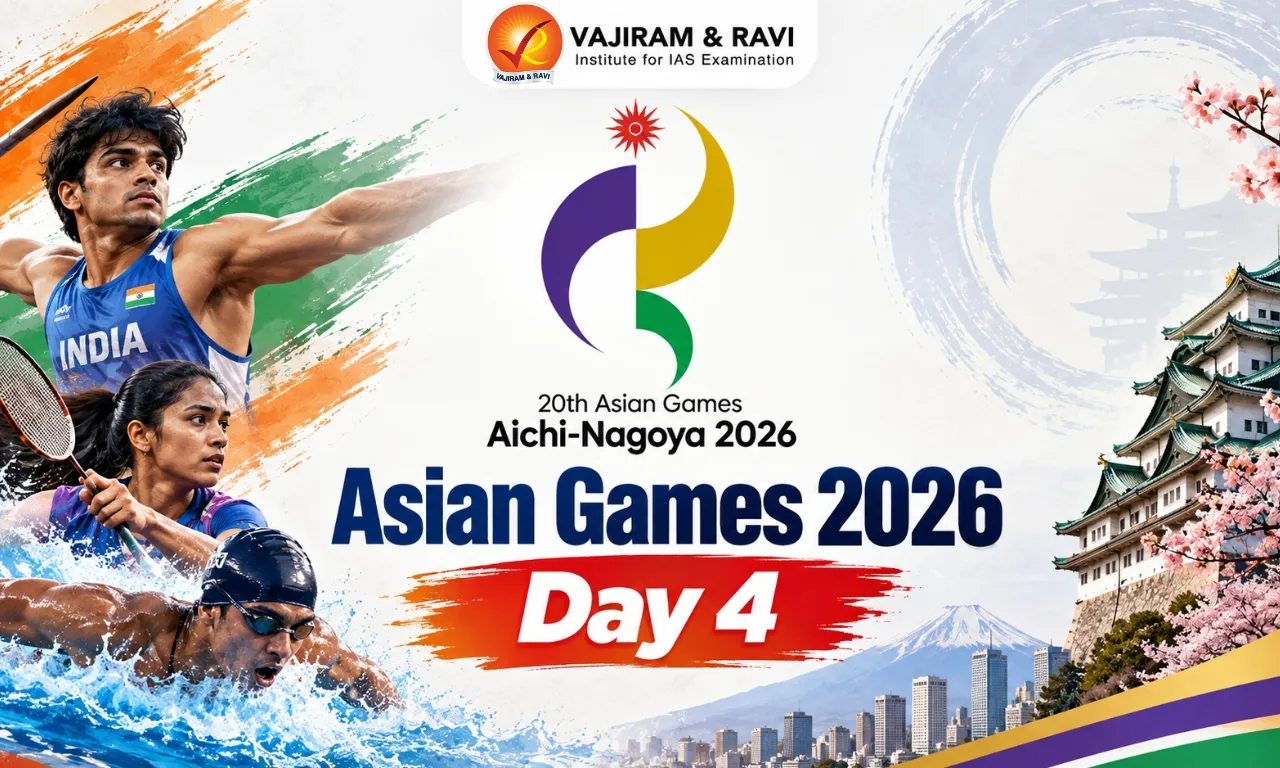
  • It will be useful for framing national drug policies in the country.
  • It serves as an important bridge between scientific standards and clinical practice, guiding healthcare professionals in the appropriate and rational use of medicines.
  • National Formulary of India 2026
    • It comprises 34 chapters, 20 appendices and 653 drugs, including 42 fixed-dose combinations and 30 immunologicals.
    • Drug monographs have been revised to align with the National List of Essential Medicines (NLEM) and National Health Programmes.
    • It provides access to links relating to National Health Programmes, immunisation schedules, Jan Aushadhi, safe disposal of unused or expired pharmaceutical products and other authoritative regulatory resources.

What is the Biovigilance Programme of India?

  • It is aimed at expanding the country’s patient-safety framework.
  • Under the programme, the Indian Pharmacopoeia Commission will monitor and prevent adverse events linked to medicines and biological products used in organ and tissue transplantation.
  • The new programme will complement existing pharmacovigilance and materiovigilance mechanisms, creating a broader safety-monitoring framework covering medicines, medical devices and transplant-related procedures.

Source: PIB

National Formulary of India FAQs

Q1: What is National Formulary of India?

Ans: It is a guidance document for healthcare professionals aimed at promoting the rational and safe use of medicines.

Q2: Who publishes National Formulary of India?

Ans: It has been published periodically by the Indian Pharmacopoeia Commission (IPC) since 2009.

Asian Games 2026 Day 3, 21 September, Games, Indian Winners

Asian Games 2026 Day 3

Asian Games 2026 Day 3 was held on 21 September 2026 in Aichi-Nagoya. India competed across shooting, mixed martial arts, hockey, kabaddi, badminton, table tennis, swimming, wushu, soft tennis and sepaktakraw. Shooting produced three medals for India. Suchika Tariyal added a historic MMA bronze. Team events also recorded important wins across hockey, kabaddi, badminton and table tennis.

Asian Games 2026 Day 3

Asian Games 2026 Day 3 featured a wide Indian schedule from early morning finals to team competitions and qualification rounds. The day brought four medals for India. Rudrankksh Patil, Himanshu Dhillon and Parth Mane won silver in the men’s 10m air rifle team event. Himanshu Dhillon won individual silver. Rudrankksh Patil secured individual bronze. Suchika Tariyal won bronze in women’s Traditional 60kg MMA. India also recorded strong results in hockey, kabaddi, badminton and table tennis.

Asian Games 2026 Day 3 Schedule

The Asian Games 2026 Day 3 Schedule covered several Indian athletes and teams across venues in Aichi-Nagoya, with events beginning at 5:30 AM IST.

Asian Games 2026 Day 3 Schedule

Time

Game/ Sports

5:30 AM

Wushu, Soft Tennis, Sepaktakraw

6:15 AM

Shooting 10m Air Rifle

6:30 AM

Shooting Skeet, Soft Tennis, Table Tennis

6:32 AM

Swimming Men’s 50m Backstroke

6:46 AM

Swimming Men’s 50m Freestyle

6:50 AM

Swimming Men’s 50m Freestyle

7:10 AM

Swimming Men’s 100m Breaststroke

7:30 AM

Soft Tennis 

7:44 AM

Swimming Men’s 4x200m Freestyle Relay

8:30 AM

MMA, Boxing

9:00 AM

Shooting 10m Air Rifle Individual Final

9:30 AM

Women’s Hockey

9:45 AM

Men’s Kabaddi

10:30 AM

Soft Tennis

11:30 AM

Men’s Badminton

12:00 PM

Soft Tennis

1:30 PM

Soft Tennis, Swimming Men’s 50m Backstroke

1:42 PM

Swimming Men’s 50m Freestyle

2:08 PM

Swimming Men’s 100m Breaststroke

2:30 PM onwards

Wushu (Men, Women)

2:43 PM

Swimming Men’s 4x200m Freestyle Relay

3:30 PM

Men’s Table Tennis

4:15 PM

Women’s Kabaddi

Asian Games 2026 Day 3 Games

Asian Games 2026 Day 3 produced four Indian medals and several important team results across the continental multi sport competition.

Esports

  • eFootball Group F: India vs Uzbekistan: Chinmay Sahoo and Shakeel Danial Patel opened India’s eFootball campaign with a 0-0 draw against Uzbekistan. India’s next group match was scheduled against Mongolia at 2 PM.

Badminton

  • Women’s Team Quarter final: India vs Japan: India lost 3-1 to Japan and exited the women’s team competition. PV Sindhu, Unnati Hooda and Tanvi Sharma lost their singles matches, while Treesa Jolly and Gayatri Gopichand won doubles.

Soft Tennis

  • Men’s Singles Group C: Aryan Thakur: Aryan Thakur defeated Mongolia’s Bold-erdene Altangerel by winning all four sets.
  • Men’s Singles Group D: Jay Meena: Jay Meena defeated Pakistan’s Hussain Arain. The result took him into the knockout stage.
  • Women’s Singles Group D: Aadhya Tiwari: Aadhya Tiwari lost to Thailand’s Alisha Ziegler. She needed a victory against Pakistan’s Kainaat Shallwani in her next match to remain in contention.

Shooting

  • Men’s 10m Air Rifle Team: Rudrankksh Balasaheb Patil, Himanshu Dhillon and Parth Rakesh Mane won the silver medal for India in the team event.
  • Men’s 10m Air Rifle Individual: Himanshu Dhillon won silver, while Rudrankksh Patil secured bronze for India in the individual final.
  • Shooting Medal Contribution: India added three medals through shooting on Day 3, with the men’s 10m air rifle events providing the main medal haul.
  • Skeet Events: Anantjeet Singh Naruka, Bhavtegh Singh Gill and Mairaj Ahmad Khan competed in the men’s skeet event. Parinaaz Dhaliwal, Raiza Dhillon and Maheshwari Chauhan competed in women’s skeet.

Mixed Martial Arts

  • Suchika Tariyal: India’s Suchika Tariyal secured bronze in the women’s Traditional 60kg category after her semifinal bout against Teo Hui Hoon of Singapore.
  • Historic Medal: Suchika Tariyal won India’s first Asian Games medal in mixed martial arts. The bronze came on Asian Games 2026 Day 3 in Aichi-Nagoya.

Kabaddi

  • Men’s Team: India defeated South Korea in the men’s Group A match. The result gave the defending champions another strong performance in the competition.

Table Tennis

  • Women’s Team: India defeated Thailand and will face Democratic People’s Republic of Korea in the Quarter Finals.

Sepaktakraw

  • Men’s Regu: India lost 3-0 to Malaysia in the men’s regu event. It was India’s second Group B defeat after the team had earlier lost 2-1 to Japan.
  • Group Position: India’s men’s regu team had one remaining group match against the Philippines after the defeats against Japan and Malaysia.

Swimming

  • Men’s 4x100m Medley Relay: India qualifies for the finals after finishing at the position of 7th out of 16.

Wushu

  • Women’s Nanquan: Hanjabam Langlentombi Devi finished ninth in the women’s nanquan final with a score of 9.403.

Soft Tennis

  • Mixed Doubles: Jay Meena and Aadhya Tiwari competed in Group B. Their schedule included matches against pairs from Cambodia, Mongolia and South Korea.
  • Jay Meena: India’s Jay Meena defeated Pakistan’s Hussain Arain 4-0 in the men’s singles Group D match. The result took him into the knockout stage.
  • Aadhya Tiwari: Aadhya Tiwari lost 4-1 to Thailand’s Alisha Ziegler in her women’s singles Group D opener. She needed a win against Pakistan’s Kainaat Shallwani to remain in contention.

Equestrian

  • Team Dressage Standings: India finished seventh in the team standings with 112.40 points. Arjan Singh Nagra scored 61.80, Ashish Limaye scored 64.47 and Fouaad Mirza recorded 61.33.

Boxing

  • Women’s 51kg: Sakshi Chaudhary: Sakshi Chaudhary defeated Olympic bronze medallist Aira Villegas of the Philippines. She advanced to face Kazakhstan’s world champion Alua Balkibekova.

Karate

  • Men’s 84kg Kumite: Chetan Bhatt: Chetan Bhatt missed a bronze medal after losing to Chinese Taipei’s Chung Meng-yu by Senshu. He had earlier lost his semifinal 8-0 to Jordan’s Mohammad Alja’Fari.

Asian Games 2026 Day 3 Medals

  • India’s Shooting Medals: India’s Rudrankksh Patil, Himanshu Dhillon and Parth Mane won silver in the men’s 10m air rifle team event with 1890.1 points. Himanshu later won individual silver and Rudrankksh won bronze.
  • Mixed Martial Arts Medal: Suchika Tariyal won bronze in the women’s Traditional  60kg division after losing her semifinal 0-2 to Singapore’s Teo Hui Hoon. The medal was India’s first Asian Games medal in mixed martial arts.
  • Day 3 Significance: Asian Games 2026 Day 3 combined four Indian medals with several knockout and qualification results. Shooting produced the main medal haul, while cricket, kabaddi, badminton, table tennis and boxing featured major team and individual contests.

Asian Games 2026 Day 3 FAQs

Q1: When was the Day 3 of Asian Games 2026 held?

Ans: Asian Games 2026 Day 3 was held on 21 September 2026 in Aichi-Nagoya, Japan, with India competing across multiple sports.

Q2: How many medals did India win on Asian Games 2026 Day 3?

Ans: India won four medals on Day 3, including three medals in shooting and a historic bronze medal in mixed martial arts.

Q3: Who won medals for India on Day 3 of Asian Games 2026?

Ans: Himanshu Dhillon won silver and Rudrankksh Patil won bronze individually. Both, along with Parth Rakesh Mane, won team silver. Suchika Tariyal won MMA bronze.

Q4: Which sports gave India medals on Asian Games 2026 Day 3?

Ans: India won medals in shooting and mixed martial arts. Shooting produced three medals, while Suchika Tariyal secured bronze in the women’s Traditional 60kg MMA category.

Q5: What were India’s major Day 3 results at Asian Games 2026?

Ans: India recorded important results in shooting, MMA, kabaddi, badminton, table tennis, soft tennis, boxing, swimming, wushu, equestrian and sepaktakraw on 21 September 2026.

Scrub Typhus

Scrub Typhus

Scrub Typhus Latest News

The recent death of an Anna University student at Government Kilpauk Medical College Hospital (KMCH) due to scrub typhus, has once again brought this bacterial infection to the fore. 

About Scrub Typhus

  • It is a bacterial infection caused by the bacterium Orientia tsutsugamushi.
  • It is spread by the bite of infected larval mites or chiggers.
  • Symptoms
    • Symptoms usually begin within 10 days of infection.
    • It includes fever and chills, headache, body aches and muscle pain, a dark, scab-like region at the site of the chigger bite (also known as eschar),
    • Mental changes ranging from confusion to coma, enlarged lymph nodes and a rash.
  • Timely treatment is critical. If left untreated, severe illness from scrub typhus infection can lead to acute respiratory distress syndrome (ARDS), shock, meningitis and kidney failure.
  • It is not a contagious disease.
  • Treatment
    • There is no vaccine as yet for scrub typhus.
    • It should be treated with the antibiotics doxycycline or azithromycin.

Key Facts about Typhus Fever

  • Typhus (or typhus fever) is the name used for several different types of bacterial infections spread by bug bites that cause similar symptoms, like high fever and rash. 
  • There are three types of illnesses commonly called typhus
    • Epidemic Typhus: It is caused by Rickettsia prowazeki and it is spread to people through contact with infected body lice. 
    • Scrub Typhus: It is caused by Orientia tsutsugamushi and spread by chiggers.
    • Murine Typhus: It is caused by Rickettsia typhi spread by fleas. It occurs in tropical and subtropical climates around the world.

Source: TH

Scrub Typhus FAQs

Q1: What is Scrub Typhus?

Ans: It is a bacterial infection caused by the bacterium Orientia tsutsugamushi.

Q2: How Scrub Typhus gets transmitted?

Ans: It is spread by the bite of infected larval mites or chiggers.

Parbati-II Hydroelectric Project

Parbati-II Hydroelectric Project

Parbati-II Hydroelectric Project Latest News

A water leakage from the Parbati-II hydropower project flooded areas near Rella village in Himachal Pradesh’s Kullu district recently, damaging houses and agriculture fields and forcing residents to flee.

About Parbati-II Hydroelectric Project

  • It is a run-of-the-river project under construction on the Parbati River (major tributary of the Beas River), in the Kullu District of Himachal Pradesh.
  • By constructing an 83.7 m high concrete gravity dam near Pulga village in the Manikaran valley, the flow of the Parbati River is diverted, and the water is being taken to Sainj Valley through a 31.56 km long headrace tunnel, where a powerhouse has been constructed at Siund village. 
  •  The 31.56 km long HRT of the project is the longest hydroelectric tunnel in India.  
  • The water flow of Parbati is further increased by the mixing of water from five nalas coming along the head race tunnel.  
  • Total Capacity: 800 MW (four units of 200 MW each)
  • Once fully commissioned, it is expected to generate approx. 3,074 million units (MU) of electricity annually.
  • The project is being developed and currently owned by National Hydroelectric Power Corporation Private Limited (NHPC). The company has a stake of 100%.
  • Himachal Pradesh will get 12% free power from the project, and the additional 1% free power will be used for the Local Area Development Fund.

News: TOI

Parbati-II Hydroelectric Project FAQs

Q1: Where is the Parbati-II Hydroelectric Project located?

Ans: It is located in Kullu district of Himachal Pradesh.

Q2: On which river is the Parbati-II Hydroelectric Project being constructed?

Ans: It is being constructed on the Parbati River.

Q3: What is the total installed capacity of the Parbati-II Hydroelectric Project?

Ans: Its total installed capacity is 800 MW.

Q4: Which company is developing the Parbati-II Hydroelectric Project?

Ans: The project is being developed by National Hydroelectric Power Corporation (NHPC).

Asian Games 2026 Day 4, India Schedule, Results, Medal Tally, Highlights

Asian Games 2026 Day 4

Asian Games 2026 Day 4 is underway in Aichi-Nagoya, Japan, with Indian athletes competing across shooting, badminton, kabaddi, table tennis, fencing, cricket and other sports on Tuesday, September 22. India entered Day 4 with six medals, including two silver and four bronze, but was still waiting for its first gold medal of the Games.

Asian Games 2026 Day 4 Highlights

ndia had a busy start to Day 4, with athletes competing in several major events.

The Indian women's badminton team faced Japan in the quarter-finals but lost 1-3. PV Sindhu won the opening singles match against Akane Yamaguchi after a closely contested first game, but Japan eventually progressed.

In shooting, Elavenil Valarivan and Parth Mane reached the final of the 10m air rifle mixed team event. The Indian pair finished fourth among the four teams in the final. China won the event, while Japan and South Korea occupied the other medal positions.

India produced a strong performance in men's kabaddi, defeating South Korea 63-31 in their Group A match. India led 34-14 at half-time and extended the advantage in the second half. The defending champions moved to the top of Group A after their second victory.

In table tennis, India's women's team defeated Thailand 3-2 in a three-hour contest to enter the quarter-finals.

Boxer Sakshi Chaudhary also made a winning start, defeating Paris Olympics light-flyweight bronze medallist Aira Cordero Villegas of the Philippines by a unanimous 5-0 decision in the women's 51kg opening round.

India at Asian Games 2026 Day 4 Medal Tally

India started Day 4 with six medals in its overall Asian Games 2026 tally. The contingent had won medals in shooting and other events but had not yet secured a gold medal.

Medal

Number

Gold

0

Silver

2

Bronze

4

Total

6

Asian Games 2026 Day 4: Shooting

Shooting was one of the main attractions for India on Day 4.

Elavenil Valarivan and Parth Mane competed in the 10m air rifle mixed team event. The Indian pair entered the final with hopes of securing India's first gold medal of the Games.

After the first series, India was fourth with 103.6 points. China led with 107.2, followed by South Korea with 104.9 and Japan with 103.9.

After the second series, China remained at the top with 211.9, followed by Japan at 209.4 and South Korea at 209.2. India was fourth with 207.9. The Indian pair eventually finished fourth.

India also had athletes competing in the men's and women's skeet events, including Anantjeet Singh Naruka, Mairaj Ahmad Khan, Bhavtegh Singh Gill, Parinaaz Dhaliwal, Raiza Dhillon and Maheshwari Chauhan.

Also Read:- Asian Games 2026 India Schedule

Asian Games 2026 Day 4: Kabaddi

The Indian men's kabaddi team continued its campaign with a commanding 63-31 victory over South Korea.

India established a strong lead in the first half, going into the break with a 34-14 advantage. The team added another 29 points in the second half while South Korea managed 17.

The win was particularly significant because India had suffered a group-stage defeat against South Korea at the 2018 Asian Games. In 2026, India entered the match as the defending champions and strengthened its position at the top of Group A with its second victory.

India's next Group A match is against Bangladesh, followed by a match against Chinese Taipei.

Asian Games 2026 Day 4: Badminton

The Indian women's badminton team faced Japan in the quarter-finals.

The Indian team featured PV Sindhu, Unnati Hooda, Devika Sihag, Tanvi Sharma, Isharani Baruah, Treesa Jolly, Gayatri Gopichand, Kavipriya, Simran and Tanisha.

PV Sindhu started the tie against Japan's Akane Yamaguchi and won the opening game 23-21 after a closely fought contest. However, Japan eventually won the quarter-final 3-1, ending India's women's team campaign in the event.

Asian Games 2026 Day 4: Table Tennis

India's women's table tennis team secured an important victory against Thailand.

The Indian team, comprising Sreeja Akula, Yashaswini Ghorpade, Diya Chitale, Sutirtha Mukherjee and Syndrela Das, won the tie 3-2 after a three-hour contest.

The victory took India into the quarter-finals of the women's team event.

Also Read:- Asian Games 2026 Sports List

Asian Games 2026 Day 4: Cricket

The Indian women's cricket team faced Sri Lanka in the women's T20 final on September 22.

The match was particularly important for India because the team was looking to win the country's first gold medal of the Aichi-Nagoya Asian Games. The final was also a rematch of the recent Women's Asia Cup final between India and Sri Lanka.

Cricket was therefore one of the biggest medal opportunities for India on Day 4.

Asian Games 2026 Day 4: Boxing

Indian boxer Sakshi Chaudhary began her women's 51kg campaign with an impressive win.

She defeated Philippines boxer Aira Cordero Villegas by a unanimous 5-0 decision. Villegas had won a bronze medal at the Paris Olympics in the light-flyweight category.

The victory allowed Sakshi to progress further in the women's 51kg competition.

Also Read:- Asian Games 2026 Medal Tally

Asian Games 2026 Day 4: Fencing

Indian fencers Hemash Sanasam Singh and Sachin progressed to the round of 32 in the men's foil individual event.

Both Indian fencers recorded three wins and two losses in their respective pools and finished fourth in their pools.

Hemash was scheduled to face Kazakhstan's Galim Nurumov, while Sachin was set to take on Kazakhstan's Timofey Semyonov in the round of 32.

Asian Games 2026 Day 4 India Schedule

Several Indian athletes were scheduled to compete across different sports on September 22.

Sport

Indian Athlete/Team

Event

Shooting

Elavenil Valarivan, Parth Mane

10m Air Rifle Mixed Team

Shooting

Anantjeet Singh Naruka, Mairaj Ahmad Khan, Bhavtegh Singh Gill

Men's Skeet

Shooting

Parinaaz Dhaliwal, Raiza Dhillon, Maheshwari Chauhan

Women's Skeet

Badminton

PV Sindhu, Unnati Hooda and others

Women's Team

Table Tennis

Sreeja Akula, Yashaswini Ghorpade and others

Women's Team

Kabaddi

Indian Men's Team

Group A

Cricket

Indian Women's Team

T20 Final

Fencing

Hemash Sanasam Singh, Sachin

Men's Foil

Boxing

Sakshi Chaudhary

Women's 51kg

Wushu

Roshibina Devi

Women's Sanda 60kg

Hockey

Indian Men's Team

Pool A

Equestrian

Fouaad Mirza, Arjan Nagra and others

Eventing

The Day 4 schedule also included Indian participation in soft tennis, sepak takraw, esports, swimming, karate and other events.

Asian Games 2026 Medal Tally

At the beginning of Day 4, China led the Asian Games 2026 medal table. China had won 38 medals, including 23 gold medals, at the end of Day 3.

The medal standings will continue to change as more finals take place during Day 4.

Also Read:- Asian Games 2026 Indian Cricket Team

Why Asian Games 2026 Day 4 Is Important for India?

Day 4 was significant for India because several medal events were scheduled across shooting, cricket, fencing and other sports.

The biggest opportunity came in women's cricket, where India faced Sri Lanka in the final. Shooting also remained a major medal source, with India's mixed air rifle pair competing for a medal.

At the same time, India's kabaddi team strengthened its campaign with a convincing victory over South Korea, while the women's table tennis team advanced to the quarter-finals.

Asian Games 2026 Day 4 FAQs

Q1: What is the date of Asian Games 2026 Day 4?

Ans: Asian Games 2026 Day 4 is being held on September 22, 2026, in Aichi-Nagoya, Japan.

Q2: Did India win a gold medal on Day 4?

Ans: India was still chasing its first gold medal during the morning updates on Day 4. The women's cricket final against Sri Lanka was one of India's major gold-medal opportunities.

Q3: How many medals did India have before Day 4?

Ans: India entered Day 4 with six medals, comprising two silver and four bronze medals.

Q4: Who were India's shooters in the 10m air rifle mixed team event?

Ans: Elavenil Valarivan and Parth Mane represented India in the 10m air rifle mixed team event. They finished fourth in the four-team final.

Q5: What was the result of India vs South Korea in kabaddi?

Ans: India defeated South Korea 63-31 in their Group A men's kabaddi match.

Pilibhit Tiger Reserve

Pilibhit Tiger Reserve

Pilibhit Tiger Reserve Latest News

Tourists will now be able to visit the Pilibhit Tiger Reserve (PTR) for nearly eight months, with the tourism season extended from November 1 to June 30, a senior forest official said recently.

About Pilibhit Tiger Reserve

  • It is situated in the Pilibhit and Lakhimpur Kheri districts of Uttar Pradesh, forming part of the Terai Arc Landscape, in the upper Gangetic Plain. 
  • It lies along the India-Nepal border in the foothills of the Himalayas.
  • Rivers: The River Gomti originates from the PTR, which is also the catchment of several others like Sharda, Chuka, and Mala Khannot.
  • The Sharda Sagar Dam, extending up to a length of 22 km, is on the boundary of the reserve.
  • It has a dry and hot climate, which brings a combination of dry teak forest and Vindhya Mountain soils.
  • Vegetation: Tropical Moist Deciduous Forests, Tropical Dry Deciduous Forests, Seasonal Swamp Forests and Tropical Semi-evergreen Forests are the major forest types found in the reserve.
  • Flora
    • The Sal woodland is very dense with good natural regeneration, amounting to almost 76% of the reserve area.
    • Other trees like teak, khair, semal and Mahua are also seen.  
  • Fauna: It is home to a myriad of wild animals, including the endangered tiger, swamp deer, Bengal florican, hog deer, leopard, etc.

News: TP

Pilibhit Tiger Reserve FAQs

Q1: Where is Pilibhit Tiger Reserve located?

Ans: It is located in the Pilibhit and Lakhimpur Kheri districts of Uttar Pradesh.

Q2: Which landscape is Pilibhit Tiger Reserve part of?

Ans: It forms part of the Terai Arc Landscape.

Q3: Along which international border is Pilibhit Tiger Reserve located?

Ans: It lies along the India-Nepal border.

Q4: Which rivers have their catchment in Pilibhit Tiger Reserve?

Ans: The reserve is the catchment of rivers such as Sharda, Chuka and Mala Khannot.

Q5: Which major forest types are found in Pilibhit Tiger Reserve?

Ans: Tropical Moist Deciduous, Tropical Dry Deciduous, Seasonal Swamp and Tropical Semi-evergreen forests are found there.

World Rhino Day 2026, Theme, Objective, Significance

World Rhino Day 2026

World Rhino Day is observed on 22nd September every year to raise awareness about the importance of rhino conservation and the urgent threats of poaching and habitat loss. It acts as a reminder of the important role rhinos play in maintaining ecological balance and the global responsibility to protect them from extinction. In this article, we are going to cover world rhino day, its protection status and conservation efforts.  

World Rhino Day 2026

World Rhino Day 2026 is celebrated on September 22 as a global initiative to highlight the plight of the five rhinoceros species and the urgent need for their protection. First marked in 2011, the day brings together conservationists, wildlife supporters, and governments to confront threats such as poaching, habitat destruction, and illegal trade. It serves as a call for collective global action to safeguard these iconic animals and secure their survival for future generations.

World Rhino Day Overview
Aspect Details

Event Name

World Rhino Day 2026

Date

September 22, 2026

Objective

Raise awareness about rhino conservation and protection

First Observed

2011

Significance

Promotes the survival of all five rhino species globally

Species all over the World

  • White Rhino
  • Black Rhino
  • Greater One-Horned
  • Javan
  • Sumatran Rhino

Main Rhino Species in India

Greater One-Horned Rhino (Indian Rhino)

Rhino Population in India 2026

Approx. 3,323 (as per the International Rhino Foundation)

Key Rhino Parks in India

Kaziranga National Park and Pobitora Wildlife Sanctuary

Major Conservation Programs

Project Rhino in India and Indian Rhino Vision 2020

IUCN Status of Indian Rhino

Vulnerable according to the IUCN Red List 

Threats to Rhinos

  • Poaching
  • Habitat loss
  • Illegal wildlife trade

World Rhino Day 2026 Theme

  • The official theme for World Rhino Day 2026 is “Keep the Five Alive”, highlighting the need to protect all five remaining rhino species and build a sustainable future for them.
  • The theme is prominently featured in campaigns by organisations such as the International Rhino Foundation.
  • Rhinos have survived for around 50 million years, but their global population has declined sharply, with fewer than 27,000 rhinos remaining.
  • Four of the five rhino species are threatened with extinction, while three are classified as Critically Endangered.

World Rhino Day Significance 

World Rhino Day is significant due to the following reasons: 

  • The initiative was first announced in 2010 by WWF-South Africa, and since then, it has grown into a global movement.
  • Conservation organizations, governments, and communities celebrate the day through awareness campaigns, educational programmes, and fundraising drives.
  • The aim is to draw attention to the plight of the five surviving rhino species and mobilize public and political support for their survival.

Facts About Rhinos

  • Relatives of Horses and Zebras: Rhinos belong to the group of odd-toed ungulates, making them evolutionary cousins of horses and zebras.
  • Horn Composition: Unlike elephant tusks, rhino horns are made of keratin, the same protein found in human hair and nails.
  • Gestation Period: Rhinos reproduce slowly; females carry calves for around 16 months, which makes population recovery difficult.
  • Traditional Medicine Demand: Rhino horns are illegally traded, especially in Asia, where they are falsely believed to have medicinal properties. This demand fuels poaching and threatens rhino survival.

One-Horned Rhinoceros 

The greater one-horned rhinoceros (Rhinoceros unicornis) is the largest among the five rhino species and the only one found in India.

  • Geographical Range: Present in India, Nepal, Bhutan, Indonesia, and Malaysia.
  • Indian Habitat: Primarily in Assam, West Bengal, and parts of Uttar Pradesh.
  • Protected Areas: Key habitats include Kaziranga National Park, Manas National Park, Pobitora Wildlife Sanctuary, and Orang National Park.
    This species is an important symbol of India’s wildlife heritage and is critical to grassland ecosystem health.

Rhinoceros Protection Status

  • IUCN Red List: Listed as Vulnerable, meaning it faces a high risk of endangerment in the wild.
  • CITES (Convention on International Trade in Endangered Species): Included in Appendix I, banning international trade of rhino parts.
  • Wildlife Protection Act, 1972: Placed in Schedule I, providing the highest degree of legal protection in India. 
  • IUCN Red List Status:
    • White Rhino: Near Threatened.
    • Black Rhino: Critically endangered.
    • Greater One Horned: Vulnerable.
    • Javan: Critically Endangered
    • Sumatran Rhino: Critically Endangered

World Rhino Day Conservation Efforts

The government has taken up the following conservation efforts

  • International Cooperation: In 2019, five rhino range nations including India, Nepal, Bhutan, Indonesia, and Malaysia signed the New Delhi Declaration on Asian Rhinos to strengthen regional conservation.
  • Project Rhino: A collaborative initiative in India aimed at tackling poaching, restoring habitats, and increasing public participation in conservation.
  • National Rhino Conservation Strategy 2019: Provides a roadmap for protecting rhino populations and habitats across India.
  • Indian Rhino Vision 2020: Targeted an increase in rhino population to 3,000 individuals across seven protected areas in Assam by 2020.
  • Population Growth: Rhino numbers in Assam rose from just 600 in the 1960s to more than 4,000 in 2024, showing remarkable success.
  • Kaziranga’s Role: The park is home to nearly 70% of the global one-horned rhino population, making it the single most important stronghold for the species.

World Rhino Day 2026 FAQs

Q1: Who first declared World Rhino Day?

Ans: World Rhino Day was first declared by WWF-South Africa in 2010.

Q2: Why do we celebrate World Rhino Day?

Ans: It is celebrated to raise awareness about rhinoceros conservation and the threats they face from poaching, habitat loss, and illegal trade.

Q3: What is the theme of World Rhino Day 2026?

Ans: The official theme for World Rhino Day 2026 is “Keep the Five Alive”.

Q4: What is IUCN Red List?

Ans: The IUCN Red List is a global inventory that assesses the conservation status of plant and animal species.

Q5: What is Wildlife Protection Act, 1972?

Ans: The Wildlife Protection Act, 1972 is an Indian law enacted to safeguard wild animals, birds, and plants through legal protection and creation of protected areas.

Sea of Japan

Sea of Japan Latest News

Recently, it was reported that North Korea fired two missiles into the Sea of Japan with the launches taking place within hours of each other.

About Sea of Japan

  • Location: The Sea of Japan, or East Sea, is a marginal sea of the western Pacific Ocean.
  • Boundaries: It is bounded by Russia and Sakhalin Island in the north, by North Korea in the west, South Korea in the southwest, and by the Japanese archipelago (Hokkaidō, Honshū, and Kyūshū islands) in the east and south.
  • Connections
    • It is connected with the East China Sea via the Tsushima and Korea straits and with the Okhotsk Sea in the north by the La Perouse and Tatar straits.
    • In the east, it is connected with the Inland Sea of Japan via the Kanmon Strait and the Pacific Ocean by the Tsugaru Strait.
  • Deepest Point: Dohoku Seamount, an underwater volcano, is its deepest point.
  • Climate: Its relatively warm waters contribute greatly to the mild climate of Japan.
  • Tides: Like the Mediterranean Sea, it has almost no tides due to its nearly complete enclosure from the Pacific Ocean. 
  • The sea is known for its high concentration of oxygen (dissolved in the seawater), which results in high biological productivity. 
  • Major Ports
    • Russia: Vladivostok, Sovetskaya Gavan, Nakhodka, Alexandrovsk-Sakhalinsky, and Kholmsk. 
    • North Korea: Hamhung, Chongjin, and Wonsan.
    • Japan: Niigata, Tsuruta, and Maizuru.

Source: HT

Sea of Japan FAQs

Q1: Where is Sea of Japan?

Ans: The Sea of Japan, or East Sea, is a marginal sea of the western Pacific Ocean.

Q2: What is the deepest point of Sea of Japan?

Ans: Dohoku Seamount

Exercise Nomadic Elephant

Exercise Nomadic Elephant

Exercise Nomadic Elephant Latest News

The 18th edition of the Exercise Nomadic Elephant 2026 commenced at the Foreign Training Node in Pithoragarh, Uttarakhand. 

About Exercise Nomadic Elephant

  • It is an annual joint military exercise conducted alternatively in India and Mongolia.
  • The last edition of the exercise was conducted at Ulaanbaatar, Mongolia.
  • Aim: To enhance the joint military capability of both sides to undertake Counter-Insurgency Operations in semi-urban and mountainous terrain under the United Nations Mandate.
  • Focus of Exercise Nomadic Elephant 2026
    • It focuses on tactical-level operations, exchange of best practices, refinement of operational drills and enhancement of interoperability between the two armies.
    • The training curriculum will include Cordon and Search Operations, Room Intervention Drills, Special Heliborne Operations, Cyber Security Training and employment of drones and counter-drone systems, among other activities.
    • These drills will provide troops of both Armies an opportunity to train together in realistic operational scenarios and strengthen their ability to operate jointly.

Source: PIB

Exercise Nomadic Elephant FAQs

Q1: Exercise Nomadic Elephant is conducted between which two countries?

Ans: India and Mongolia

Q2: What is the aim of Exercise Nomadic Elephant?

Ans: To enhance the joint military capability of both sides to undertake Counter-Insurgency Operations in semi-urban and mountainous terrain under the United Nations Mandate

Typhoon Dujuan, Causes, Effects, Formation, Latest News

Typhoon Dujuan

Typhoon Dujuan has brought strong winds, torrential rainfall, flooding and landslides to parts of Japan, particularly areas around Tokyo and the Kanto region. The storm has disrupted flights, railway services and daily life, while authorities have issued evacuation advisories in several areas.

What is Typhoon Dujuan?

Typhoon Dujuan is a tropical cyclone that moved towards the Pacific coast of Japan in September 2026. It developed in the western Pacific and strengthened before approaching eastern Japan.

The storm had sustained winds of around 130 km/h, with stronger gusts reported as it approached Japan. The Japan Meteorological Agency (JMA) warned of extremely heavy rainfall, flooding and landslides.

Typhoon Dujuan Causes

Typhoon Dujuan developed due to favourable tropical cyclone-forming conditions over the western Pacific, including warm ocean waters, abundant moisture, low atmospheric pressure and favourable wind conditions. These factors helped the system organise and intensify as it moved towards Japan.

  • Warm ocean waters: High sea-surface temperatures provided heat and moisture to the developing storm.
  • Rising moist air: Warm, humid air rose from the ocean surface, creating and strengthening a low-pressure system.
  • Latent heat release: Condensation of water vapour released latent heat, providing additional energy to the cyclone.
  • Coriolis effect: Earth's rotation caused the moving air to rotate around the low-pressure centre.
  • Low vertical wind shear: Relatively favourable wind conditions helped the storm maintain its organised structure and strengthen.

Also Read:- Asian Games 2026 Medal Tally

Impact of Typhoon Dujuan on Japan

Typhoon Dujuan caused significant disruption across eastern Japan.

  • Heavy rainfall: Several areas received very high rainfall, with some locations in the Izu Islands recording more than 300 mm of rain.
  • Flooding and landslides: Intense rainfall increased the risk of flash floods and landslides, particularly in mountainous and coastal areas.
  • Evacuation advisories: More than 1.6 million people in and around Tokyo were advised to evacuate at the height of the storm.
  • Deaths and missing people: Landslides caused by torrential rainfall resulted in deaths and left several people missing, according to Japanese authorities and NHK.
  • Power outages: Tens of thousands of households lost electricity.
  • Transport disruption: Hundreds of flights were cancelled and some railway services were suspended.

Also Read:- India's Monsoon Deficit 2026

How Do Typhoons Form?

Typhoons are regional names for tropical cyclones in the Northwest Pacific. They form when warm ocean water above 27°C heats moist air, causing it to rise and create a low-pressure area. The Coriolis effect makes the winds rotate, while the release of latent heat provides energy for the storm to strengthen.

Essential Conditions for Formation

  • Warm Sea Surface: Ocean temperatures above 27°C provide heat and moisture needed for development.
  • Coriolis Force: Earth's rotation gives the system its spin; therefore, typhoons generally do not form within 5° of the equator.
  • Low Vertical Wind Shear: Weak changes in wind speed and direction with height allow the storm to remain organised.
  • Pre-existing Low Pressure: A disturbance or cluster of thunderstorms provides the initial circulation.
  • Upper-Level Divergence: Outflow of air at higher levels helps maintain low pressure and strengthens the cyclone.

Also Read:- Asian Games 2026 Indian Cricket Team

Stages of Development

  • Formation Stage: Warm, moist air rises, condenses and releases latent heat, leading to thunderstorms and falling surface pressure.
  • Mature Stage: Winds strengthen around a central eye, surrounded by the eyewall, which has the strongest winds and heaviest rainfall.
  • Decay Stage: The typhoon weakens after moving over land or colder waters, as its supply of heat and moisture is reduced.

Typhoon Dujuan FAQs

Q1: What is Typhoon Dujuan?

Ans: Typhoon Dujuan is a tropical cyclone that affected Japan in September 2026, bringing strong winds, heavy rainfall, flooding and landslides.

Q2: Which country was mainly affected by Typhoon Dujuan?

Ans: Japan was the major country affected, particularly eastern Japan and the Kanto region.

Q3: What are the major impacts of Typhoon Dujuan?

Ans: The major impacts include heavy rainfall, landslides, flooding, power outages, flight cancellations, railway disruptions and evacuations.

Q4: How is climate change related to typhoons?

Ans: Warmer ocean temperatures can provide additional energy to tropical cyclones, while a warmer atmosphere can hold more moisture, potentially increasing extreme rainfall.

Q5: What is the difference between a typhoon and a cyclone?

Ans: Both are tropical cyclones. The term typhoon is mainly used for tropical cyclones in the western North Pacific, while cyclone is commonly used in the Indian Ocean and South Pacific.

Article 371K for Ladakh: Understanding Article 371 and Special Safeguard

Article 371K

Article 371K Latest News

  • The Union government has proposed inserting a new Article 371K in the Constitution to give special safeguards to Ladakh. 
  • The proposal follows an "in-principle understanding" between the Ministry of Home Affairs (MHA) and representatives of the Apex Body, Leh (ABL) and the Kargil Democratic Alliance (KDA). 
  • It envisages a directly elected Union Territory-level body with legislative, executive, financial and planning powers.

What Article 371 Originally Was

  • Article 371 is now associated with special protections for the Northeast and tribal regions. But that was not its original purpose.
  • At Independence, India comprised not just British-administered provinces but also hundreds of princely states that had acceded under very different circumstances. 
  • The Constitution classified these — Hyderabad, Mysore, Jammu and Kashmir, Rajasthan and others — as Part B States.
  • The original Article 371, adopted in 1950, was a transitional provision.
  • It placed Part B State governments under the general control of the President for 10 years, or a period Parliament could adjust.
  • Its purpose was Central supervision during integration, not cultural protection.

The 1956 Turning Point

  • Six years later, the States Reorganisation Act and the Seventh Constitutional Amendment of 1956 abolished the Part A, B and C classification, creating a uniform structure of states and Union Territories.
  • The original Article 371 disappeared. Parliament replaced it with a new version — the one that exists today — providing special arrangements for Maharashtra and Gujarat, focused on equitable development of regions like Vidarbha, Marathwada, Saurashtra and Kutch.

How 371 Became a Family of Provisions

  • From here, India's Constitutional system showed its flexibility. 
  • Parliament repeatedly built bespoke arrangements for regions whose history, social structure or political demands differed from the rest of the country. This is often called asymmetric federalism.

  • Each provision, notably, emerged from a distinct political settlement — an insurgency, a peace accord, a regional grievance, or an integration process. There is no single template.

What Ladakh Is Seeking

  • Ladakh's demand does not fit neatly into any existing 371 model, for a key reason: it would apply to a Union Territory without a legislature — something unprecedented.
  • The emerging proposal includes:
    • A directly elected UT-level body with legislative, executive, budgetary, planning and financial powers.
    • Legislative powers over land, culture, language, forests, environment and natural resources, and other subjects reserved for the UT under Article 240.
    • Control over civil servants, including their APARs (performance appraisals), for subjects under the elected body's jurisdiction.
    • Control over law and order — notably the opposite of Article 371H, which gives Arunachal Pradesh's Governor special responsibility over law and order.
    • Land protection resembling the philosophy of 371A and 371G, where certain Parliamentary laws don't apply automatically.

What Would Make 371K Strong or Weak

  • The final strength of 371K depends entirely on its drafting.
    • If it merely creates an elected body and lists subjects it can legislate on, protection would be relatively limited. Manipur is a cautionary example — hill tribes argue Article 371C has failed to deliver meaningful autonomy.
    • If it constitutionally protects the elected body's control over land, natural resources, recruitment and administration, it would be considerably stronger.
    • If it specifies that certain Central laws won't apply to Ladakh without the elected body's approval, it would resemble the stronger protections under 371A and 371G.
    • If law and order and the bureaucracy come under the elected executive, Ladakh's head of government would be more powerful than the J&K Chief Minister.
  • This is precisely why the promised draft matters, and why Ladakh's leaders have been pressing for it.

Conclusion

  • Article 371 was never one idea — it is a constitutional habit of bespoke bargains. Each version answered a specific political demand of its time. 
  • Ladakh's 371K would be the first attempt to give a Union Territory without legislature real legislative teeth. Its ultimate strength lies not in the number 371K, but in the words finally written into it.

Source: IE

Article 371K FAQs

Q1: What is Article 371K proposed to achieve for Ladakh?

Ans: Article 371K is proposed to provide Ladakh special safeguards through a directly elected Union Territory-level body with legislative, executive, financial and planning powers.

Q2: How is Article 371K different from the original Article 371?

Ans: The original Article 371 was a transitional provision for former Part B States, whereas Article 371K is proposed as protection for Ladakh.

Q3: What powers could Article 371K give Ladakh's elected body?

Ans: Article 371K could provide powers over land, culture, language, forests, environment, natural resources, civil servants, administration and law and order.

Q4: Why does the drafting of Article 371K matter?

Ans: The strength of Article 371K would depend on whether constitutional protection covers land, resources, recruitment, administration and applicability of Central laws.

Q5: Why would Article 371K be significant in India's constitutional system?

Ans: Article 371K would represent an unprecedented attempt to provide meaningful legislative powers to a Union Territory currently without its own legislature.

India-New Zealand Bilateral Relationship – Free Trade Agreement

Free Trade Agreement

Free Trade Agreement Latest News

  • The India-New Zealand Free Trade Agreement has been ratified and will come into effect on October 20, with both sides aiming to double bilateral trade to Rs. 35,000 crore over the next four to five years.

India-New Zealand Bilateral Relationship

  • India and New Zealand share a relationship grounded in Commonwealth membership, parliamentary democracy, and growing economic complementarity, though the two countries have historically engaged less intensively than India has with other partners in the region.

Trade and Economic Ties

  • Bilateral trade between the two countries stood at $1.3 billion in 2024-25, with India being New Zealand's 9th largest export market.
  • India's exports to New Zealand include pharmaceuticals, engineering goods, textiles, ceramics, carpets, automobiles and auto components. 
  • New Zealand's exports to India consist largely of agricultural products, timber, wool and specialised manufactured goods.
  • New Zealand currently maintains tariffs of up to 10% on key Indian goods, including ceramics, carpets, automobiles, textiles and auto components, precisely the categories where the FTA delivers gains.

Agriculture and Sensitive Sectors

  • Agriculture has been the most delicate area in negotiations. New Zealand is a highly competitive agricultural exporter with advanced dairy and horticultural capabilities. India has consistently protected its dairy sector and vulnerable farm segments in trade negotiations, and this agreement follows that pattern.
  • New Zealand's expertise in specific areas, notably kiwifruit farming and apiculture, offers potential for technology collaboration rather than purely commercial competition.

People-to-People and Diaspora Links

  • The Indian community is the third-largest ethnic group in New Zealand.
  • Cricket and Commonwealth sporting ties sustain regular contact, and New Zealand has been a preferred destination for Indian skilled migrants in sectors such as IT, healthcare and engineering.

News Summary: The FTA and Its Provisions

  • Union Commerce and Industry Minister Piyush Goyal announced the agreement's entry into force, describing it as the next important milestone in the bilateral economic partnership.

Trade Liberalisation

  • According to New Zealand's foreign trade office, the agreement is set to:
    • Erase import levies on all Indian goods entering New Zealand
    • Allow 95% of New Zealand's exports to India to enter either tariff-free or at sharply reduced levies
  • For India, this provides duty-free access to 100% of its exports, a substantial improvement given existing tariffs of up to 10% on major categories.

Protection of Sensitive Sectors

  • The Union Minister emphasised that India has safeguarded its sensitive sectors, granting no concessions on: Dairy, Onions, Almonds, Chickpeas, Peas, Artificial honey, Sugar and other agricultural produce.
  • This is significant because dairy access has been the single most contentious issue in India's recent trade negotiations, including with the European Union and in the India-EFTA talks.

Investment Commitments

  • New Zealand has committed $20 billion in foreign direct investment into India as part of the deal, directed toward sectors including startups, manufacturing & infrastructure.
  • The investment is expected to flow over the next 15 years.

Agricultural Productivity Partnership

  • The agreement establishes an agricultural productivity partnership, under which New Zealand's technology will combine with India's scale and growing demand. 
  • The Union Minister pointed to kiwi farming and apiculture as areas of particular promise.

Benefits for MSMEs and Artisans

  • The Minister noted that the deal will benefit India's micro, medium and small enterprises, along with farmers, handloom artisans and weavers, sectors where New Zealand's tariff structures have previously created barriers.

Technology and Manufacturing Collaboration

  • The Minister observed that New Zealand possesses technological expertise in engineering and other manufacturing. 
  • He suggested that New Zealand companies could support Indian firms, invest, or set up manufacturing in India to capture global markets.
  • A key argument he advanced was that in several countries, including New Zealand, labour is scarce and expensive, making manufacturing in India more economical. 
  • Partner countries, he said, are looking for destinations where they can export technology to a trusted partner where intellectual property is respected.
  • He added that global investors are interested in manufacturing in India not only for the large domestic market but also to export seamlessly to about two-thirds of the global economy where India has preferential market access.

Significance

  • For India's export sectors: Duty-free access removes a competitive disadvantage for ceramics, carpets, textiles and auto components, categories where Indian producers compete directly with suppliers from countries already having preferential access to New Zealand.
  • For sensitive agriculture: By excluding dairy and major farm products, India has demonstrated a consistent negotiating template, liberalising manufactured goods while protecting politically sensitive agricultural segments.
  • For investment diversification: The $20 billion commitment adds to India's efforts to attract FDI amid weak global flows, though the fifteen-year horizon means the impact will be gradual.
  • For India's broader trade strategy: The simultaneous progress with New Zealand, Canada and Chile suggests an accelerating push to expand preferential market access, reflecting a strategic response to global tariff uncertainty and the disruption of established trade patterns.

Source: TOI | TH

Free Trade Agreement FAQs

Q1: When does the India-New Zealand FTA come into effect?

Ans: It comes into effect on October 20, following ratification.

Q2: What are the key tariff outcomes of the agreement?

Ans: India's exports get duty-free access to 100% of the New Zealand market, while 95% of New Zealand's exports to India will be tariff-free or at sharply reduced levies.

Q3: Which sectors has India protected in the deal?

Ans: Dairy, onions, almonds, chickpeas, peas, artificial honey, sugar and other sensitive agricultural produce.

Q4: How much investment has New Zealand committed?

Ans: $20 billion in FDI into India over the next 15 years, in sectors including startups, manufacturing and infrastructure.

Q5: What is the bilateral trade target under the agreement?

Ans: Doubling bilateral trade to ₹35,000 crore over the next four to five years.

Article 22: Supreme Court Rules on Illegal Arrest and Re-Arrest

Article 22

Article 22 Latest News

  • The Supreme Court has held that an arrested person denied the grounds of arrest or access to a lawyer must be released immediately. 
  • A Bench of Justices Ujjal Bhuyan and Atul S. Chandurkar delivered a 69-page ruling that also laid down strict guidelines for when such a person can be re-arrested.

What Article 22(1) Guarantees

  • Article 22 is a fundamental right protecting personal liberty at the moment of arrest. It requires that an accused be:
    • Produced before a magistrate within 24 hours of arrest.
    • Informed of the grounds of arrest, in writing, in a language they understand.
    • Given access to a lawyer of their choice.
  • The Court called these "fundamental principles" governing personal liberty, not mere procedural requirements.

"Sacrosanct" and Non-Negotiable

  • SC bench said that the Article 22(1) "cannot be breached under any situation." Any violation makes the arrest itself unconstitutional, entitling the person to immediate release.
  • Key clarifications from the judgment:
    • The right applies across the board — ordinary offences under the BNS as well as special laws like those on terrorism and money laundering. It is not statute-specific.
    • Probe agencies cannot dismiss a breach as a "mere procedural lapse."
    • A violation does not depend on the gravity of the offence or on proving actual prejudice to the accused.
    • Even a later chargesheet or cognisance order cannot cure an illegal arrest.
  • Crucial distinction: When a person is released for this reason, they are not "enlarged on bail." They are released from illegal and unconstitutional detention — a fundamentally different legal status.

Rules for Re-Arrest

  • The Court accepted that a blanket immunity from future arrest cannot exist, since some cases involve grave offences. 
  • But it insisted that any re-arrest must pass through strict judicial oversight, so the same authority that violated the right does not also decide on re-arrest.
  • The procedure laid down:
    • The accused must first be given the written grounds of arrest.
    • The police must file an application before a magistrate, giving recorded reasons for seeking re-arrest and explaining why grounds were not furnished the first time.
    • The application must be endorsed by a senior/immediate superior officer, so the superior is put on notice of the earlier lapse.
    • The magistrate may permit re-arrest only if satisfied there were bona fide reasons for the earlier failure.
    • The magistrate must decide the application within a week.
    • The investigation must be handed to another officer, and a departmental inquiry ordered into the original lapse. An adverse finding brings departmental action, recorded in the officer's service book.
  • As per the apex court, once Article 22(1) is breached, the power to re-arrest "must not be left to the discretion of the very same authority who had violated" it. It must carry "judicial imprimatur."
  • The Bench also directed High Courts to grant "suitable mandatory compensation" wherever arrests violate these procedural safeguards.

Background: The Case Behind the Ruling

  • The judgment arose from a POCSO case in Punjab. The accused was released by a magistrate for not being given arrest grounds. 
  • The police then sought to re-arrest him the same day; a different magistrate dismissed that plea. The matter went to the Punjab and Haryana High Court, which allowed re-arrest, and the accused then approached the Supreme Court.

Building on Recent Precedent

  • This ruling is the latest in a line of cases over the past three years strengthening the requirement to communicate arrest grounds in writing.

  • Monday's judgment builds directly on this trajectory, extending it specifically to the question of re-arrest after an illegal arrest.

Conclusion

  • The ruling closes a loophole where police could treat an illegal arrest as a technical error to be quietly corrected. 
  • By requiring magisterial sanction, a senior officer's endorsement, and a departmental inquiry before any re-arrest, the Court has placed liberty above administrative convenience. Article 22, the Bench makes clear, is a wall, not a formality.

Source: IE | TH

Article 22 FAQs

Q1: What does Article 22 guarantee to an arrested person?

Ans: Article 22 guarantees timely production before a magistrate, written grounds of arrest in an understood language, and access to a lawyer.

Q2: What happens when Article 22 is violated during arrest?

Ans: When Article 22 is violated, the arrest becomes unconstitutional and the person must be immediately released from illegal detention.

Q3: Does Article 22 apply to special laws?

Ans: Yes, Article 22 applies across ordinary offences and special laws, including terrorism and money-laundering statutes, regardless of the offence's seriousness.

Q4: What are the Supreme Court's rules for re-arrest after violating Article 22?

Ans: Re-arrest requires written grounds, a police application to the magistrate, senior-officer endorsement, judicial approval, and an inquiry into the original violation.

Q5: Why is Article 22 important for personal liberty?

Ans: Article 22 protects personal liberty by preventing authorities from treating constitutional safeguards as procedural formalities and requiring judicial oversight after unlawful detention.

Daily Editorial Analysis 22 September 2026

Daily-Editorial-Analysis

Missing Measure in India’s Magnet Mission

Context

  • India’s ambition to become a global manufacturing and technology leader depends not only on large industrial projects but also on critical components embedded within advanced technologies.
  • Permanent magnets, particularly Neodymium-Iron-Boron (NdFeB) magnets, are essential for electric vehicles, renewable energy, precision machinery, robotics and advanced manufacturing.
  • India has strengthened its critical-mineral strategy through the National Critical Mineral Mission, overseas mineral acquisitions, geological exploration and PLI schemes.
  • However, China’s April 2025 export controls on rare-earth magnets and materials exposed a deeper vulnerability: India lacks a comprehensive understanding of dependence across the entire permanent-magnet value chain.
  • The challenge is therefore not merely securing minerals but developing the technological, industrial and statistical capacity to convert resources into strategically important products.

The Strategic Importance of Permanent Magnets

  • Permanent magnets translate material properties into technological capabilities.
  • While ferrite, Alnico and Samarium-Cobalt magnets remain important, NdFeB magnets offer an exceptional combination of magnetic strength, compactness and high power-to-weight efficiency.
  • They are increasingly important for electric motors, wind turbines, automation, robotics and precision equipment.
  • Consequently, disruptions in their supply can affect entire manufacturing ecosystems, increase costs and expose strategic industries to external shocks.
  • Control over a small component can therefore influence much larger technological systems.

Beyond Minerals: Understanding the Complete Value Chain

  • The permanent-magnet ecosystem extends far beyond mining:
  • Exploration → Mining → Mineral Processing → Chemical Separation → Oxides → Metal Refining → Alloys → Magnetic Materials → Finished Magnets → Industrial Applications
  • Every stage requires different scientific knowledge, infrastructure, investment and technological maturity.
  • Possessing rare-earth deposits does not guarantee industrial self-reliance if processing, separation, refining or magnet manufacturing remains dependent on foreign suppliers.
  • India must therefore identify where capabilities are competitive, where technological gaps exist, how dependence accumulates and which stages offer the greatest strategic returns.

The Visibility Gap in India’s Industrial System

  • India’s Annual Survey of Industries estimates the domestic permanent-magnet market at around ₹750 crore, while international trade data indicate substantially larger import values.
  • Differences in statistical coverage, industrial classification and supply-chain accounting may explain part of the gap.
  • However, the discrepancy indicates that policymakers cannot fully track where magnets enter the economy or how they move through different industries.
  • Magnets may be embedded in motors, machinery, automotive components and electronic equipment, making technological dependence difficult to identify through conventional trade statistics.
  • Without reliable measurement, strategic vulnerabilities cannot be accurately identified or managed.

The Way Forward

  • Integrated Techno-Economic Mapping as a Policy Solution
  • An Integrated Techno-Economic Mapping (ITEM) framework could bridge this information gap by connecting engineering knowledge with economic and industrial data.
  • It could map the complete journey of a magnet from mineral resources to final applications, identifying:
    • domestic industrial capabilities;
    • critical technological bottlenecks;
    • import dependencies;
    • globally competitive stages;
    • investment opportunities;
    • areas requiring international partnerships; and
    • downstream industries exposed to supply disruptions.
  • ITEM would integrate critical-mineral policy, manufacturing strategy and technology policy rather than treating them as separate domains.
  • From Resource Security to Technological Capability

    • India’s objective should extend beyond simply replacing imports because import substitution alone cannot ensure technological resilience.
    • Sustainable strategic autonomy requires capabilities in processing, refining, materials science, alloy production, engineering and magnet manufacturing.
    • International partnerships will remain useful where domestic capabilities are limited, but they should be guided by a clear understanding of technological dependence and realistic opportunities for indigenous capacity building.
    • The permanent-magnet ecosystem demonstrates the importance of moving from resource security to value-chain security.

Conclusion

  • Permanent magnets illustrate how a relatively small industrial component can become foundational to clean energy, electric mobility, precision engineering and advanced manufacturing.
  • India therefore needs to understand not merely how much rare-earth material it possesses, but how resources move through the entire technological value chain.
  • An ITEM framework could provide the visibility required to identify vulnerabilities, prioritise investment and strengthen domestic capabilities.
  • India’s manufacturing transformation ultimately requires understanding what production depends upon, where those dependencies originate and how they can be strategically reduced.
  • The lesson is simple: seeing one component is not enough; India must understand the entire industrial ecosystem.

Missing Measure in India’s Magnet Mission FAQs

Q1. Why are NdFeB magnets strategically important?
Ans. They are essential for electric vehicles, renewable energy, robotics and advanced manufacturing.

Q2. What is India’s main vulnerability in permanent magnets?
Ans. India lacks a comprehensive understanding of dependence across the entire permanent-magnet value chain.

Q3. Why is mineral ownership alone insufficient?
Ans. Mineral ownership is insufficient because processing, refining, alloy production and magnet manufacturing also require advanced capabilities.

Q4. What is Integrated Techno-Economic Mapping (ITEM)?
Ans. ITEM is a framework for mapping technological capabilities, economic dependencies and industrial bottlenecks across the magnet value chain.

Q5. What should India’s long-term strategy focus on?
Ans. India should focus on building value-chain security, technological capability and reliable industrial data.

Source: The Hindu


A Malacca-Singapore Model for Resolving Hormuz

Context

  • The Strait of Hormuz and the Straits of Malacca and Singapore demonstrate how narrow maritime corridors can acquire enormous strategic importance.
  • Both connect major waterways and involve overlapping questions of territorial sovereignty and international navigation.
  • The Malacca-Singapore experience shows that sovereignty, freedom of navigation, environmental protection and international cooperation can coexist through negotiated rules.
  • Hormuz, however, remains more difficult because its central dispute involves national security, military presence and geopolitical rivalry.

The Strategic Importance of Maritime Chokepoints

  • The Malacca Strait extends roughly 800 km between the Malay Peninsula and Sumatra, while the approximately 105-km Strait of Singapore connects it to the South China Sea.
  • Together, they form a vital global shipping route.
  • The Strait of Hormuz similarly connects the Persian Gulf with the Gulf of Oman and the wider Indian Ocean.
  • Disruption in either corridor can affect energy supplies, shipping costs, insurance and global markets.
  • Thus, geography gives narrow waterways disproportionate geopolitical significance. Their security becomes an international concern even when they fall within national territorial waters.

From International Waters to Territorial Sovereignty

  • The Malacca experience reflects the transition from unrestricted international navigation towards stronger coastal-state sovereignty.
  • Indonesia's 1957 archipelagic principle declared waters surrounding and connecting its islands to be Indonesian waters, partly to protect territorial integrity and limit external interference.
  • Malaysia later adopted a 12-nautical-mile territorial sea, while Singapore supported arrangements safeguarding navigation.
  • Because parts of the Straits are less than 24 nautical miles wide, the territorial seas of the littoral states meet, leaving no intervening high seas.
  • The challenge became balancing national sovereignty with uninterrupted international navigation.

UNCLOS and the Compromise of Transit Passage

  • The United Nations Convention on the Law of the Sea (UNCLOS) provided an important compromise through the concept of transit passage.
  • Unlike innocent passage, transit passage permits vessels, including warships, to navigate international straits continuously and expeditiously.
  • This arrangement allowed coastal states to retain sovereignty while preserving predictable international access.
  • Indonesia accepted the principle with reservations, while Malaysia emphasised environmental protection, insurance and vessel-safety concerns.
  • The experience demonstrates that legal compromise and reciprocal concessions can reconcile competing maritime interests.

Cooperation among Littoral States and Major Powers

  • Indonesia, Malaysia and Singapore developed mechanisms for navigation safety and maritime security.
  • Japan supported cooperation through the Malacca Strait Council, while even the United States and Soviet Union shared an interest in maintaining reliable maritime transit.
  • The 2007 Cooperative Mechanism expanded this approach by enabling user states, industries and other stakeholders to contribute voluntarily to navigation aids, hydrographic surveys and safety projects.
  • The arrangement illustrates how shared practical interests can promote cooperation despite political differences.
  • Importantly, the littoral states did not impose tolls on vessels exercising transit-passage rights.

Why Hormuz Is Different

  • Hormuz presents a comparable territorial situation because Iranian and Omani territorial waters intersect in parts of the Strait.
  • However, its political and legal circumstances differ considerably.
  • Iran has not ratified UNCLOS and enacted a 1993 requirement for foreign warships to obtain authorisation for passage.
  • More significantly, Hormuz is closely connected with Iran's security concerns and its confrontation with external military powers, particularly the United States.
  • Consequently, navigation arrangements alone cannot resolve disputes rooted in sovereignty, military presence and strategic insecurity.

The Role of Great Powers

  • The Malacca experience benefited from a broader international maritime-law process in which major powers were willing to accept compromises within UNCLOS.
  • This created relatively predictable rules governing navigation.
  • Hormuz operates within a more polarised geopolitical environment.
  • Even if Iran and Oman establish an arrangement for reopening the Strait, its effectiveness may depend on whether major external powers recognise and accept it.
  • Therefore, regional agreements may remain fragile without wider international acceptance.

Lessons for Hormuz

  • The Malacca-Singapore experience offers several lessons for Hormuz. First, littoral states should remain central to maritime governance.
  • Second, sovereignty need not imply unrestricted control over international navigation.
  • Third, clear legal rules can reduce uncertainty for commercial and military vessels.
  • Fourth, navigation safety, environmental protection and hydrographic cooperation can create common interests even amid political disagreements.
  • Finally, durable arrangements require confidence-building and participation by major user states.
  • However, Malacca cannot simply be transplanted to Hormuz.
  • The former evolved through prolonged legal negotiation and cooperation, whereas the latter is deeply embedded in regional and global security competition.

Conclusion

  • The comparison demonstrates that maritime chokepoints are governed by geography, international law and geopolitics simultaneously.
  • Malacca succeeded through negotiation, legal compromise, regional cooperation and stakeholder participation.
  • Hormuz presents a more difficult challenge because its governance is inseparable from Iran's security concerns and tensions with the United States.
  • The Malacca-Singapore experience therefore offers a framework rather than a ready-made solution.

A Malacca-Singapore Model for Resolving Hormuz FAQs

Q1. What makes the Straits of Malacca and Singapore strategically important?
Ans. They form a vital global shipping route connecting the Indian and Pacific Oceans.

Q2. How did UNCLOS address the issue of maritime passage?
Ans. UNCLOS established the principle of transit passage, allowing continuous and expeditious navigation through international straits.

Q3. Why is the Strait of Hormuz more difficult to regulate?
Ans. Hormuz is closely linked to Iran's security concerns, military presence and geopolitical rivalry.

Q4. What is the major lesson of the Malacca-Singapore model?
Ans. It shows that sovereignty and freedom of navigation can coexist through negotiated cooperation.

Q5. Why may a regional agreement not be sufficient for Hormuz?
Ans. Its success may depend on the acceptance of major external powers, particularly the United States.

Source: The Hindu

Daily Editorial Analysis 2026 FAQs

Q1: What is editorial analysis?

Ans: Editorial analysis is the critical examination and interpretation of newspaper editorials to extract key insights, arguments, and perspectives relevant to UPSC preparation.

Q2: What is an editorial analyst?

Ans: An editorial analyst is someone who studies and breaks down editorials to highlight their relevance, structure, and usefulness for competitive exams like the UPSC.

Q3: What is an editorial for UPSC?

Ans: For UPSC, an editorial refers to opinion-based articles in reputed newspapers that provide analysis on current affairs, governance, policy, and socio-economic issues.

Q4: What are the sources of UPSC Editorial Analysis?

Ans: Key sources include editorials from The Hindu and Indian Express.

Q5: Can Editorial Analysis help in Mains Answer Writing?

Ans: Yes, editorial analysis enhances content quality, analytical depth, and structure in Mains answer writing.

Enquire Now