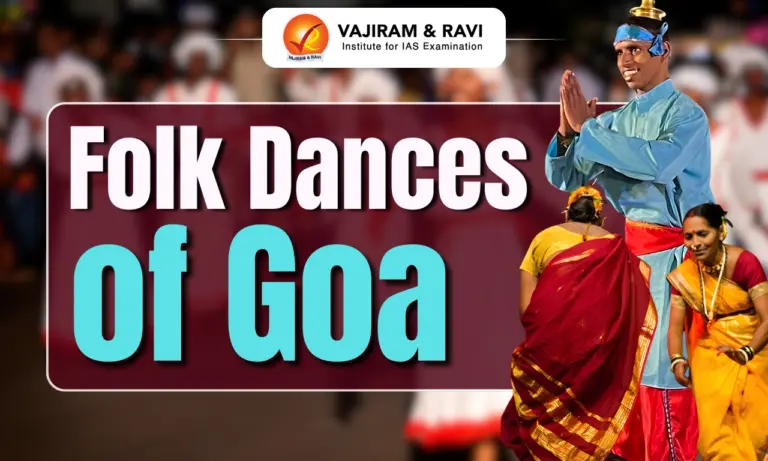
Folk dances of Goa represent the state’s rich cultural heritage and traditional diversity, shaped by a blend of local customs and historical influences. They form an essential part of festivals, celebrations, and community interactions, where people express their culture through energetic movements, traditional attire, music, and narrative elements, reflecting the spirit of Goan life.
Famous Folk Dances of Goa
The well-known folk dances of Goa serve as a strong medium of cultural expression and social identity, deeply rooted in religious beliefs, customs, and Portuguese influence. These dances are performed on various occasions and rituals, with each form carrying its own distinct style, theme, and cultural meaning, highlighting different dimensions of Goan society and traditions.
1. Ghode Modni (Horse Dance)
- Ghode Modni is one of the most popular and visually striking folk dances of Goa, closely associated with its martial history.
- The term “Ghode Modni” literally means “horse dance”, and it represents the bravery and valor of ancient warriors.
- In this dance, performers tie decorated dummy horses around their waist, creating the illusion that they are riding horses.
- They also carry swords and perform vigorous movements, mimicking battle scenes and warrior actions.
- The dance is mainly performed during the Shigmo festival, which celebrates the arrival of spring.
- It is accompanied by the energetic beats of dhol, tashe, and other percussion instruments.
- The performance creates a dramatic and powerful atmosphere, symbolizing strength, courage, and pride.
- It also serves as a way to remember and honor the warrior traditions of Goa.
2. Dhangar Dance
- The Dhangar Dance is a traditional religious dance performed by the Dhangar community, who are shepherds by occupation.
- This dance is dedicated to their folk deity Bhira Deva, and is performed as an act of devotion and gratitude.
- It is especially popular during the Navratri festival, when people worship local deities.
- The dancers wear simple white traditional attire, along with turbans and colorful handkerchiefs.
- The movements are rhythmic and energetic, often performed in groups.
- The dance is accompanied by the beats of the dhol and other traditional instruments.
- It reflects the simple lifestyle, faith, and unity of the Dhangar community.
- It combines spiritual devotion with cultural expression, making it both meaningful and lively.
3. Lamp Dance (Deepak Nritya / Divlyan Nach)
- The Lamp Dance is one of the most graceful and skill-based folk dances of Goa.
- In this dance, performers balance lit brass lamps (diyas) on their head and sometimes hands while dancing.
- It requires a high level of balance, concentration, and body control.
- The dance is commonly performed during Shigmo and Diwali festivals, especially at night.
- Despite the difficulty, dancers move with smooth and controlled steps, ensuring the lamps remain steady.
- The performance is accompanied by traditional instruments like ghumat, cymbals, harmonium, and samel.
- The glowing lamps create a beautiful and mesmerizing visual effect in the dark.
- This dance symbolizes devotion, discipline, patience, and artistic excellence.
4. Dekhni
- Dekhni is one of the most elegant and refined dance forms of Goa.
- The word “Dekhni” means “beautiful” or “graceful” in the Konkani language.
- It is a semi-classical dance that combines elements of folk traditions and classical expressions.
- Usually performed by women, it focuses on graceful movements, facial expressions, and storytelling.
- The dance reflects a blend of Indian and Portuguese cultural influences, making it unique.
- It is often performed during festivals, weddings, and cultural programs.
- Through gestures and expressions, the dance often narrates stories of love, longing, or social life.
- Dekhni represents the artistic richness and cultural fusion of Goa.
5. Fugdi (Foogdi)
- Fugdi is a lively and energetic folk dance performed mainly by women.
- It is especially popular during Hindu festivals and the harvest season, particularly in August and September.
- Women dance in circles or rows, performing fast spinning and rhythmic movements.
- The name “Fugdi” comes from the “Foo” sound made by dancers as they exhale while moving.
- This dance usually does not require musical instruments, as the rhythm is created through clapping and breathing sounds.
- It reflects the joy, happiness, and unity of women in the community.
- The dance is often performed in villages, strengthening social bonds and togetherness.
- Fugdi celebrates nature, fertility, and festive spirit.
6. Dhalo
- Dhalo is one of the most important traditional dances performed by women in Goa.
- It takes place during the Dhalo festival in December, usually at night under the moonlight.
- Women gather in courtyards and form two parallel rows to perform the dance.
- The dance is accompanied by folk songs that include religious, social, and emotional themes.
- Songs often talk about family life, relationships, traditions, and moral values.
- The movements are slow, graceful, and synchronized, creating a peaceful atmosphere.
- Dhalo is not just a dance but also a cultural ritual that brings women together.
- It reflects community bonding, shared traditions, and cultural continuity.
7. Goff Dance
- The Goff Dance is a colorful and coordinated folk dance associated with the harvest season.
- It is performed during the Shigmo festival, celebrating prosperity and happiness.
- Each dancer holds a long, colorful cord tied to a central point.
- As they dance, they create intricate braided patterns, showing teamwork and coordination.
- In the later part of the dance, the patterns are carefully untangled, which requires skill and timing.
- The dance symbolizes unity, cooperation, and harmony among people.
- It is visually attractive due to the patterns and synchronized movements.
- Goff dance highlights the importance of collective effort in society.
8. Kunbi Dance
- The Kunbi Dance is performed by the Kunbi tribe, the earliest settlers of Goa.
- It is considered one of the oldest and most authentic folk dances of the region.
- The dance reflects the simple lifestyle, agricultural practices, and daily life of the people.
- It is usually performed during harvest festivals and community celebrations.
- The costumes are simple and traditional, with women wearing sarees and men in basic attire.
- The movements are natural, rhythmic, and expressive of everyday activities.
- Songs associated with the dance are mostly social rather than religious.
- Kunbi dance represents the pre-Portuguese cultural traditions of Goa.
9. Musalam Khel
- Musalam Khel is a traditional war dance with strong historical significance.
- It celebrates the victory of King Harihara II of the Vijayanagar Empire over his enemies.
- The dance includes dramatic storytelling, symbolic characters, and martial movements.
- One performer often represents the enemy (symbolized as a bear).
- The performance is led by a village elder or gaunkar.
- It combines elements of dance, drama, and history, making it unique.
- The dance reflects themes of victory, bravery, and pride in heritage.
- It helps preserve historical memories through performance.
10. Dashavatara
- Dashavatara is a traditional dance-drama based on the ten incarnations of Lord Vishnu.
- It originated in Kerala and later spread to the Konkan region, including Goa.
- The performance includes acting, dancing, dialogue, and music.
- Artists wear bright makeup and elaborate costumes to represent different characters.
- It is usually performed during temple festivals and religious occasions.
- The stories are based on mythology and religious teachings.
- It serves both as entertainment and education, especially in rural areas.
- Dashavatara is an important example of folk theatre tradition in Goa.
11. Veerbhadra
- Veerbhadra is a devotional dance dedicated to Veerbhadra, a figure associated with Lord Shiva.
- The performer wears a royal costume and carries swords.
- The dance includes strong and energetic movements, symbolizing battle and power.
- It is accompanied by the beats of dhol and cymbals.
- Often performed during religious festivals and temple ceremonies.
- The dance expresses devotion, strength, and heroism.
- It also reflects the mythological traditions of Hindu culture.
12. Coridinho
- Coridinho is a lively folk dance influenced by Portuguese culture.
- It is performed mainly by Christian communities.
- The dance includes quick steps, turns, and circular formations.
- Dancers usually wear Western-style costumes.
- It is performed during social gatherings, feasts, and celebrations.
- The music is lively and cheerful, creating a festive mood.
- Coridinho reflects Goa’s colonial past and cultural blending.
13. Mando
- Mando is a slow, graceful, and romantic dance form of Goa.
- It is often performed during weddings and special occasions.
- The dance is accompanied by soft music, usually played on the violin and guitar.
- The movements are elegant and expressive, focusing on emotions and storytelling.
- Songs often revolve around love, longing, and social life.
- It shows strong Portuguese influence in both music and style.
- Mando represents the refined and artistic aspect of Goan culture.
Folk Dances of Goa Cultural Significance
- Folk dances like Ghode Modni and Veerbhadra reflect Goa’s martial history and bravery, showcasing stories of warriors, battles, and heroism.
- Dances such as Dhangar Dance and Dashavatara highlight religious devotion and mythology, connecting people with local deities and Hindu traditions.
- Traditional forms like Kunbi Dance and Fugdi represent rural life and agricultural practices, celebrating harvests, nature, and community bonding.
- Women-centric dances like Dhalo and Fugdi strengthen social unity and cultural participation among women, especially during festivals and rituals.
- Dance forms such as Dekhni, Mando, and Coridinho show the influence of Portuguese culture, reflecting Goa’s historical cultural fusion.
- Group performances like Goff Dance emphasize teamwork, coordination, and harmony, symbolizing the importance of collective effort in society.


 Last updated on Sep, 2026
→ UPSC 2027 Notification will be released on 13 January 2027 at upsconline.nic.in.
→ Asian Games 2026 are being held in Aichi-Nagoya, Japan, from 19 September to 4 October.
→ Check out the latest UPSC Syllabus here.
→ Download UPSC Model Answers for Mains 2026
→ UPSC Mains Question Paper 2026 is out now for Essay & GS Paper 1, 2, 3 & 4.
→ UPSC Calendar 2027 has been released.
→ Enroll in Vajiram & Ravi’s UPSC Mains Test Series 2027 for structured answer writing practice, expert evaluation, and exam-oriented feedback.
→ Join Vajiram & Ravi’s UPSC Mentorship Program 2027 for personalized guidance, strategy planning, and one-to-one support from experienced mentors.
→ Go through the UPSC Mains Previous Year Papers to enhance your preparation.
→ UPSC has released UPSC Toppers List 2025 with the Civil Services final result on its official website.
→ Also check Best UPSC Coaching in India
Folk Dances of Goa FAQs
Q1. What are the famous folk dances of Goa?+
Q2. What is the cultural significance of folk dances in Goa?+
Q3. Which dance is performed by women in Goa?+
Q4. What is the Kunbi Dance of Goa?+
Q5. Which Goan dance shows Portuguese influence?+
Q6. What is the theme of the Dekhni dance?+
Q7. Why is Fugdi dance important in Goa?+
Tags: art and culture art and culture notes folk dances of goa