Hindu Kush Himalaya

Hindu Kush Himalaya (HKH)

Hindu Kush Himalaya Latest News

According to a new report by the International Centre for Integrated Mountain Development Hindu Kush Himalaya (HKH) region sees a record 27% drop in snow persistence.

About Hindu Kush Himalaya

  • It extends around 3,500 km over eight countries — Afghanistan, Bangladesh, Bhutan, China, India, Nepal, Myanmar, and Pakistan.
  • It runs northeast to southwest and divides the valley of the Amu Darya (the ancient Oxus River) to the north from the Indus River valley to the south. 
  • It is considered the Third Pole (after the North and South Poles) and has significant implications for climate.
  • The HKH forms the largest area of permanent ice cover outside of the North and South Poles and is home to 4 global biodiversity hotspots. 
  • Mountains: The range has numerous high snow-capped peaks, with the highest point being Tirich Mir or Terichmir at 7,708 meters (25,289 ft) in Chitral, Pakistan.
  • The HKH region is the source of ten large Asian river systems: the Amu Darya, Indus, Ganges, Brahmaputra, Irrawaddy, Salween, Mekong, Yangtse, Yellow River, and Tarim.
  • Ecosystems: It contains a diverse ecosystem which includes glaciers, alpine meadows, forests, wetlands, and grasslands.
  • HKH may be divided into three main sections: the eastern Hindu Kush, the central Hindu Kush, and the western Hindu Kush, also known as the Bābā Mountains.
  • The inner valleys of the Hindu Kush see little rain and have desert vegetation.

Source: DTE

Hindu Kush Himalaya FAQs

Q1: How many countries does the Hindu Kush Himalaya (HKH) region span?

Ans: Afghanistan, Bangladesh, Bhutan, China, India, Myanmar, Nepal, Pakistan

Q2: Which organization is the nodal knowledge centre for HKH region?

Ans: International Centre for Integrated Mountain Development

Wheat Crop

Wheat Crop

Wheat Crop Latest News

Recently, the government clarified the current wheat production scenario of 2025-26 and said that the crop remains resilient despite weather variations.

About Wheat Crop

  • Wheat is the second most important staple food crop in India after rice.
  • It is a temperate crop that thrives in cool and dry climates.
  • It is primarily grown as a Rabi crop, meaning it is sown in the winter season and harvested in spring.
  • Required climatic conditions for wheat cultivation
    • Temperature: A cool temperature (10°C to 15°C) during sowing and 21°C to 26°C during ripening ensures optimum growth and grain quality.
    • Rainfall: Wheat requires 50-75 cm of well-distributed rainfall.
    • Excessive rain or humidity during the ripening period can harm the crop, while drizzles brought by Western Disturbances in northwestern India during winter significantly improve yields.
    • Sunlight: Bright sunshine during ripening improves grain formation and quality.
    • Frost: Frost or hailstorms during the flowering stage can damage the crop severely.
    • Soil: It grows well in a clay loam or loam texture soil.
  • Major Wheat Producing Countries: China, India, Russia and the United States.
  • Major Wheat Producing States: Punjab, Haryana, Uttar Pradesh, and Bihar

Source: PIB

Wheat Crop FAQs

Q1: Wheat is classified as which type of crop in India?

Ans: Rabi crop

Q2: Which type of soil is best suited for wheat?

Ans: Well-drained loamy & clay loam soil

Mali

Mali

Mali Latest News

Recently, India advised its nationals in Mali to remain highly vigilant, exercise utmost caution and stay indoors due to recent security developments in the West African nation.

About Mali

  • Location: It is a landlocked country in West Africa.
  • Bordering Countries: It shares its border with Algeria (north), Niger and Burkina Faso (east), Côte d’Ivoire and Guinea (south), and Senegal and Mauritania (west).
  • Capital City: Bamako 

Geographical Features

  • Climate: It experiences a tropical savanna climate in the south becoming a desert climate in the north. 
  • Terrain: Approximately 65% of the country is covered by desert or semi-desert.
  • The Sahara Desert makes up a large portion of Mali’s total land area. 
  • The landscape transitions from the Sahara Desert in the north through the Sahel to the zone of Sudanian savanna in the south.
  • River: The Niger River flows through its interior, serving as its main source of water. 
  • Highest point:  Hombori Tondo at 3,789 ft (1,155 m).
  • Natural Resources: It includes gold, uranium, diamonds, copper, iron ore, precious stones, zinc, manganese, bauxite etc.

Source: TH

Mali FAQs

Q1: Mali is a landlocked country located in which region of Africa?

Ans: West Africa

Q2: What is the capital of Mali?

Ans: Bamako

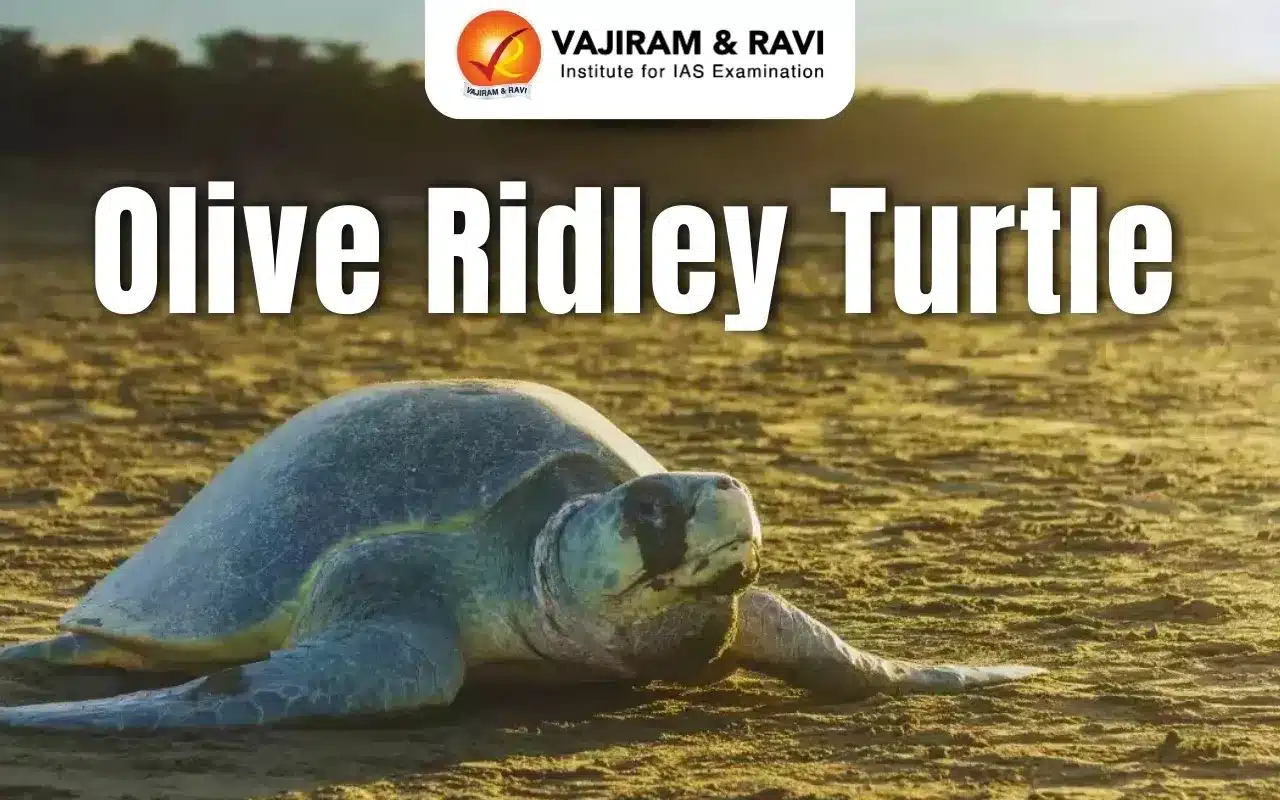
Olive Ridley Turtle

Olive Ridley Turtles

Olive Ridley Turtle Latest News

Olive Ridley turtles from Tamil Nadu have begun migrating towards the Sri Lanka Dome, a little-known but highly productive ocean region.

About Olive Ridley Turtle

  • It is the smallest and most abundant of all sea turtles found in the world.
  • It gets its name from the olive green colouration of its carapace (shell). 
  • It is best known for its unique mass nesting, called Arribada, where thousands of females come together on the same beach to lay eggs.

Distribution of Olive Ridley Turtle

  • They are mainly found in the warm waters of the Pacific, Atlantic, and Indian oceans.
  • Odisha’s Gahirmatha Marine Sanctuary is known as the world’s largest rookery (a colony of breeding animals) of sea turtles.

Features of Olive Ridley Turtle

  • They are omnivorous, meaning they feed on both plants and animals.
  • They are solitary, preferring the open ocean.
  • These turtles spend their entire lives in the ocean, and migrate thousands of kilometers between feeding and mating grounds in the course of a year.

Conservation Status of Olive Ridley Turtle

  • IUCN Red List: Vulnerable
  • CITES: Appendix I
  • Wildlife Protection Act, 1972: Schedule 1

What is the Sri Lanka Dome?

  • It is considered one of the most productive regions in the Indian Ocean.
  • Formation: It is formed by seasonal upwelling that brings cool, nutrient-rich waters to the surface, triggering plankton blooms that attract turtles, fish, whales, and seabirds.
  • This phenomenon typically begins in May, peaks in July, and declines by September, after which the turtles disperse and begin their return migration.

Source: TH

Olive Ridley Turtle FAQs

Q1: What is the IUCN Red List status of Olive Ridley Turtle?

Ans: Vulnerable

Q2: Under which Schedule of Wildlife Protection Act, 1972 is Olive Ridley protected in India?

Ans: Schedule I

Bhoramdeo Wildlife Sanctuary

Bhoramdeo Wildlife Sanctuary

Bhoramdeo Wildlife Sanctuary Latest News

The Chhattisgarh government is set to launch a new jungle safari in the Bhoramdeo Wildlife Sanctuary soon.

About Bhoramdeo Wildlife Sanctuary

  • Bhoramdeo Wildlife Sanctuary, also known as Bhoramdev Wildlife Sanctuary, is located in the Kawardha district of Chhattisgarh.
  • It is part of the larger Maikal range of the Satpura hills, which is known for its unique ecosystem. 
  • It is part of the Kanha-Achanakmar Corridor, which connects Kanha National Park in Madhya Pradesh with Achanakmar Wildlife Sanctuary in Chhattisgarh. 
  • Named after the famous Bhoramdeo Temple situated nearby, the sanctuary covers an area of approximately 352 sq.km.
    • Bhoramdeo Temple, an ancient temple complex dating back to the 7th to 11th centuries, was built by the Nagvanshi dynasty
    • The temple is dedicated to Lord Shiva and is often referred to as the “Khajuraho of Chhattisgarh,”.
  • The sanctuary’s terrain is characterized by undulating hills, dense forests, and numerous streams.
  • The region surrounding Bhoramdev Wildlife Sanctuary is inhabited by various tribal communities, including the Baiga, Gond, and Kanwar tribes.
  • Rivers: This wildlife sanctuary is the origin of the Fen and Sankari rivers.
  • Vegetation: The sanctuary’s diverse ecosystem includes tropical moist and dry deciduous forests. 
  • Flora: Lush forests of Saaj, Sal, Tendu, and Nilgiri trees.
  • Fauna: It is home to a variety of wildlife, including tigers, leopards, sloth bears, and various species of deer and birds.

Source: ETVB


Bhoramdeo Wildlife Sanctuary FAQs

Q1: Where is Bhoramdeo Wildlife Sanctuary located?

Ans: Kawardha district of Chhattisgarh

Q2: Bhoramdeo Wildlife Sanctuary is part of which mountain range?

Ans: Maikal Range

Q3: Bhoramdeo Wildlife Sanctuary is part of which ecological corridor?

Ans: Kanha-Achanakmar Corridor

Q4: After which temple is Bhoramdeo Wildlife Sanctuary named?

Ans: Bhoramdeo Temple

Q5: Which rivers originate from Bhoramdeo Wildlife Sanctuary?

Ans: Fen River and Sankari River

Gond Tribe

Gond Tribe

Gond Tribe Latest News

Recently, the Gond tribe travelled from Bastar, Chhattisgarh to the heart of Delhi with one message: protect the earth, stop the destruction.

About Gond Tribe

  • The Gond or Gondi (Gōndi) or Koitur are a Dravidian ethno-linguistic group. 
  • Distribution: The states of Madhya Pradesh, Chhattisgarh, Maharashtra, and Odisha are home to the largest Gond populations. 
    • Gond tribes also live in the states of Uttar Pradesh, Telangana, Andhra Pradesh, Bihar, Karnataka, Jharkhand, West Bengal, and Gujarat.
  • Gonds are mainly divided into four tribes, namely Raj Gonds, Madia Gonds, Dhurve Gonds, and Khatulwar Gonds.
  • Language
    • The majority of Gond people speak dialects of Gondi, an unwritten language of the Dravidian language family. 
    • Some Gonds have lost their own language and speak Hindi, Marathi, or Telugu, depending on which is dominant in their area. 
  • Economy: The basis of the Gond economy is agriculture, but they also practice animal husbandry.  Some Gonds also gather wild plants to eat. 
  • Belief and Traditions
    • Religion: The religion of the Gond tribes centers on clan and village gods, together with ancestor worship.
    • Customs and Festivals: Keslapur Jathra and Madai are important festivals of the Gonds. 

Source: DTE

Gond Tribe FAQs

Q1: What is the traditional dwelling of Gonds called?

Ans: Gondi house

Q2: Which Gond art form received GI tag in 2023?

Ans: Gond painting

Artemis Accord

Artemis Accord

Artemis Accord Latest News

Recently, Jordan signed the Artemis Accords at NASA Headquarters.

About Artemis Accord

  • It was launched in 2020.
  • The Artemis Accords are a non-binding set of principles designed to guide civil space exploration.
  • It provides a common set of principles to enhance the governance of the civil exploration and use of outer space.
  • It was co-led by NASA and the U.S. Department of State, together with seven other founding member nations (Australia, Canada, Italy, Japan, Luxembourg, the United Arab Emirates, and the United Kingdom).
  • India is also a signatory to this accord.
  • The principles of the Artemis Accords include:
    • Peaceful exploration, 
    • Full transparency in space activity, including public release of scientific data, 
    • Interoperability of systems to enhance safety and sustainability, 
    • Emergency assistance to personnel in distress, 
    • Preserving outer space heritage, 
    • Extracting and utilising space resources in compliance with the Outer Space Treaty, and 
    • The safe disposal of orbital debris.

Source: NASA

Artemis Accords FAQs

Q1: Which space agency initiated the Artemis Accords?

Ans: NASA – Launched in 2020

Q2: What are the Artemis Accords?

Ans: Set of non-binding principles for civil space exploration of Moon, Mars, comets, asteroids

Malaria

Malaria

Malaria Latest News

Recently, the World Health Organization announced that it had given prequalification approval to a malaria treatment for newborns and infants for the first time.

About Malaria

  • Malaria is a life-threatening febrile illness caused by Plasmodium parasites.
  • Transmission: It is transmitted through the bites of infected female Anopheles mosquitoes.
  • It is not contagious, but can be spread through infected blood or contaminated needles.
  • Risk: Infants, children under 5 years, pregnant women and girls, travellers and people with HIV or AIDS are at higher risk of severe infection. 
  • Symptoms
    • Symptoms appear 10–15 days after infection and include fever, chills, and headache.
    • Severe symptoms can include seizures, difficulty breathing, jaundice, dark urine, and death if untreated.
  • Treatments include
    • ACTs (Artemisinin-based Combination Therapies) for P. falciparum.
    • Chloroquine for P. vivax 
    • Primaquine to prevent relapses in P. vivax and P. ovale infections.

Source: TH

Malaria FAQs

Q1: Malaria is caused by which type of organism?

Ans: Protozoan parasite – Plasmodium species

Q2: Which mosquito is the vector for malaria?

Ans: Female Anopheles mosquito

Luzon Island

Key Facts about Luzon Island

Luzon Island Latest News

China’s military recently said it conducted military drills including live-fire exercises in waters east of the Philippines’ Luzon Island.

About Luzon Island

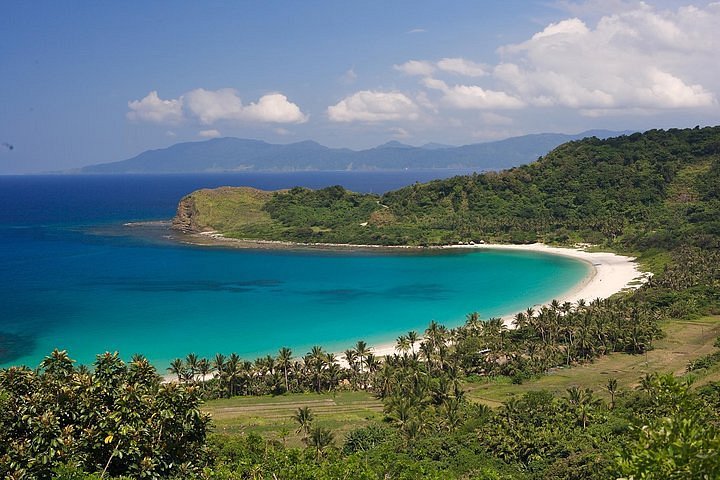
  • It is the largest and most important island of the Philippines
  • It is found in the northern part of the country.
  • More than half of the Filipino population lives on Luzon.
  • Manila, the capital city of the Philippines, is located on this island.
  • It is bounded by the Philippine Sea (east), Sibuyan Sea (south), and the South China Sea (west). 
  • To the north, the Luzon Strait separates Luzon from Taiwan.
  • Luzon’s coastline, more than 5,000 km long, is indented by many fine bays and gulfs, including Lingayen Gulf and Manila Bay on the west and Lamon Bay and Lagonoy Gulf on the east. 
  • The important ranges are the Cordillera Central in the north; the Sierra Madre, following much of the east coast; and the Zambales Mountains on the central-western coast. 
  • Mount Pulog (2,930 metres) is the island’s highest peak.
  • There are also famous volcanoes like Mount Mayon (known for its perfect cone shape) and Mount Pinatubo. 
  • Luzon has the largest lake in the Philippines, the Laguna de Bay.
  •  The major rivers are Cagayan, Abra, Agno, Pampanga, and Bicol.
  • In addition to Manila, the main cities of Luzon are Quezon City, Pasay, Cabanatuan, Legaspi, Baguio, Batangas, and Laoag. 
  • Luzon leads the country both in industry (concentrated near Manila) and in agriculture (rice, corn [maize], coconuts, sugarcane, mangoes, bananas).

Source: TP


Luzon Island FAQs

Q1: What is the largest island of the Philippines?

Ans: Luzon Island

Q2: Which sea lies to the east of Luzon Island?

Ans: Philippine Sea

Q3: Which sea lies to the west of Luzon Island?

Ans: South China Sea

Q4: What is the highest peak on Luzon Island?

Ans: Mount Pulog

Q5: Which volcano on Luzon is famous for its perfect cone shape?

Ans: Mount Mayon

Kanha Tiger Reserve

Kanha Tiger Reserve (KTR)

Kanha Tiger Reserve Latest News

Recent back-to-back cub deaths in Kanha put the spotlight on tiger monitoring systems.

About Kanha Tiger Reserve

  • Location: It is located in the “Maikal” ranges of the Satpuras in the state of Madhya Pradesh.
  • Corridor: It has an active corridor between Kanha and Pench Tiger Reserves. Kanha is also connected with the Achanakmar Tiger Reserve of Chhattisgarh State. 
  • Terrain: It is characterized mainly by forested shallow undulations, hills with varying degrees of slopes, plateaus, and valleys.
  • Tribal Communities: The region is known for some of the ancient tribal communities, like the Gond and Baiga still inhabit the region. 
  • It is also the first tiger reserve in India to officially introduce a mascot, “Bhoorsingh the Barasingha”. 
  • Vegetation: It primarily consists of a moist Sal and moist mixed deciduous forest.
  • Flora: Bamboo, Tendu, Sal, Jamun, Arjun, and Lendia flourish.
  • Fauna: The Park has a significant population of Royal Bengal Tigers, leopards, sloth bears, and Indian wild dogs.

Source: IE

Kanha Tiger Reserve FAQs

Q1: Kanha Tiger Reserve is located in which state?

Ans: Madhya Pradesh

Q2: Kanha Tiger Reserve forms part of which larger landscape?

Ans: Satpura-Maikal Landscape

Testing the Limits of Anti-Defection Law

Anti-Defection Law

Anti-Defection Law Latest News

  • Recently, seven of AAP's ten Rajya Sabha members — including Raghav Chadha, who had been removed as the party's deputy leader in the Upper House just weeks prior — announced their merger with the BJP. 
  • This development has reignited a long-standing constitutional debate around the Tenth Schedule of the Indian Constitution, popularly known as the Anti-Defection Law.

The Anti-Defection Law

  • Enshrined through the 52nd Constitutional Amendment Act, 1985, the Tenth Schedule was enacted to curb floor-crossing — the practice of elected representatives switching parties for personal or political gain. 
  • A legislator faces disqualification if they:
    • Voluntarily relinquish membership of the party on whose ticket they were elected, or
    • Vote or abstain from voting against the directions of their party or authorised functionary.

Two Exceptions to Disqualification Under the Anti-Defection Law

  • The split exception (Paragraph 3): 
    • Protected legislators from disqualification if at least one-third of the legislature party defected together. 
    • This was removed by the 91st Constitutional Amendment, 2003, owing to its systematic misuse to engineer defections.
  • The merger exception (Paragraph 4)
    • Still in force, this protects legislators who join another party as part of a genuine merger of their original party. 
    • Two sub-paragraphs govern this:
      • Paragraph 4(1): A member is protected if the original political party merges with another.
      • Paragraph 4(2): Such a merger is valid only if at least two-thirds of the legislature party consents to this merger.
  • Significance of exceptions: The exception was intended, as reflected in parliamentary debates, to protect principled defections rooted in ideological differences.

The Legal Ambiguity

  • The crux of the current controversy lies in how Paragraph 4's two sub-paragraphs are interpreted.
  • Conjunctive vs disjunctive reading:
    • Conjunctive: Both a national-level merger of the original party and two-thirds consent of the legislature party are required.
    • Disjunctive: A "deemed merger" is triggered by two-thirds consent alone, even without a formal merger at the national party level.

Judicial Precedents

  • Rajendra Singh Rana v. Swamy Prasad Maurya (2007)
    • The Supreme Court, while interpreting the now-deleted split exception, endorsed a conjunctive reading.
    • It held that a split in the legislature party must stem from a corresponding split in the original political party.
  • Goa Congress Merger Case (2019–2022): 
    • Ten Congress MLAs in Goa joined the BJP, claiming they constituted two-thirds of the 15-member Congress legislature party. 
    • The Speaker upheld the merger; the Bombay High Court (February 2022) affirmed this, adopting a disjunctive reading.
    • It ruled that a "deemed merger" occurs once two-thirds of a legislature party agrees to join another, without requiring national-level party approval.

Expert Opinions

  • P.D.T. Achary (former Lok Sabha Secretary-General) — Conjunctive view:
    • A valid merger requires the original party to first merge at the national level, followed by two-thirds support from the legislature party. 
    • In the AAP case, this would necessitate Arvind Kejriwal's consent to a merger with the BJP. 
    • He noted that any member may now file a disqualification petition before the Rajya Sabha Chairman, whose ruling would be subject to judicial review.
  • Vidhi Centre for Legal Policy — Disjunctive view with caveats:
    • The two-thirds threshold being met could allow the move to qualify as a "deemed merger." 
    • However, he flagged a deeper anomaly — Rajya Sabha MPs are elected by State MLAs, and the AAP MLAs in Punjab who elected these members continue to belong to AAP. 
    • This creates a disconnect between the electoral base and party affiliation of the MPs, undermining the very logic of Rajya Sabha representation.

Challenges

  • Ambiguous drafting: For example, Paragraph 4 leaves room for contradictory judicial interpretations, which could be misused to legitimise opportunistic defections dressed up as mergers.
  • Absence of the split exception post-2003: This means there is no explicit provision for partial defections, making the merger route the only legal pathway.
  • Structural anomaly: 
    • MPs switch parties while the MLAs who elected them remain in the original party, weakening the principle of representative accountability.
    • The Rajya Sabha Chairman, as the adjudicating authority, may face questions of political impartiality.

Way Forward

  • Definitive ruling: The Supreme Court needs to end interpretive uncertainty on the conjunctive vs. disjunctive reading of Paragraph 4.
  • Legislative clarification: Through a fresh constitutional amendment that explicitly defines the conditions for a valid merger.
  • Structural reforms
    • Strengthening the independence of the presiding officer (Speaker/Chairman) in adjudicating disqualification petitions — or vesting such powers in an independent tribunal.
    • This has been a long-standing reform recommendation of the Election Commission, the Dinesh Goswami Committee (1990) and the Law Commission's 170th Report (1999).

Conclusion

  • The AAP Rajya Sabha episode is not merely a political event — it is a constitutional stress test
  • It exposes the unresolved tension at the heart of the Tenth Schedule: whether the merger exception is a safeguard for principled ideological realignment or a loophole enabling opportunistic party-switching. 
  • The case is ripe for Supreme Court adjudication and legislative clarification. Until then, India's anti-defection framework remains vulnerable to the very malaise it was designed to cure.

Source: TH

Anti-Defection Law FAQs

Q1: What are the challenges in the implementation of the Anti-Defection Law?

Ans: The law aims to ensure political stability, but ambiguity, partisan decisions, and delayed adjudication weaken its effectiveness.

Q2: What is the ‘merger exception’ under the Tenth Schedule?

Ans: The merger exception protects legislators from disqualification if two-thirds members support a party merger.

Q3: What is the role of the Speaker/Chairman in deciding defection cases in India?

Ans: While they act as adjudicating authority under the 10th Schedule, concerns of bias and delay have raised demands for an independent tribunal.

Q4: How do defections by Rajya Sabha members raise concerns regarding representative democracy?

Ans: Since Rajya Sabha MPs are elected by State MLAs, post-election party switching can weaken federal representation.

Q5: What reforms are needed in India’s Anti-Defection Law?

Ans: Reforms should include clearer merger rules, time-bound decisions, independent adjudication, etc.

Supreme Court on Road Safety – Article 142 and Highway Regulation

Road Safety

Road Safety Latest News

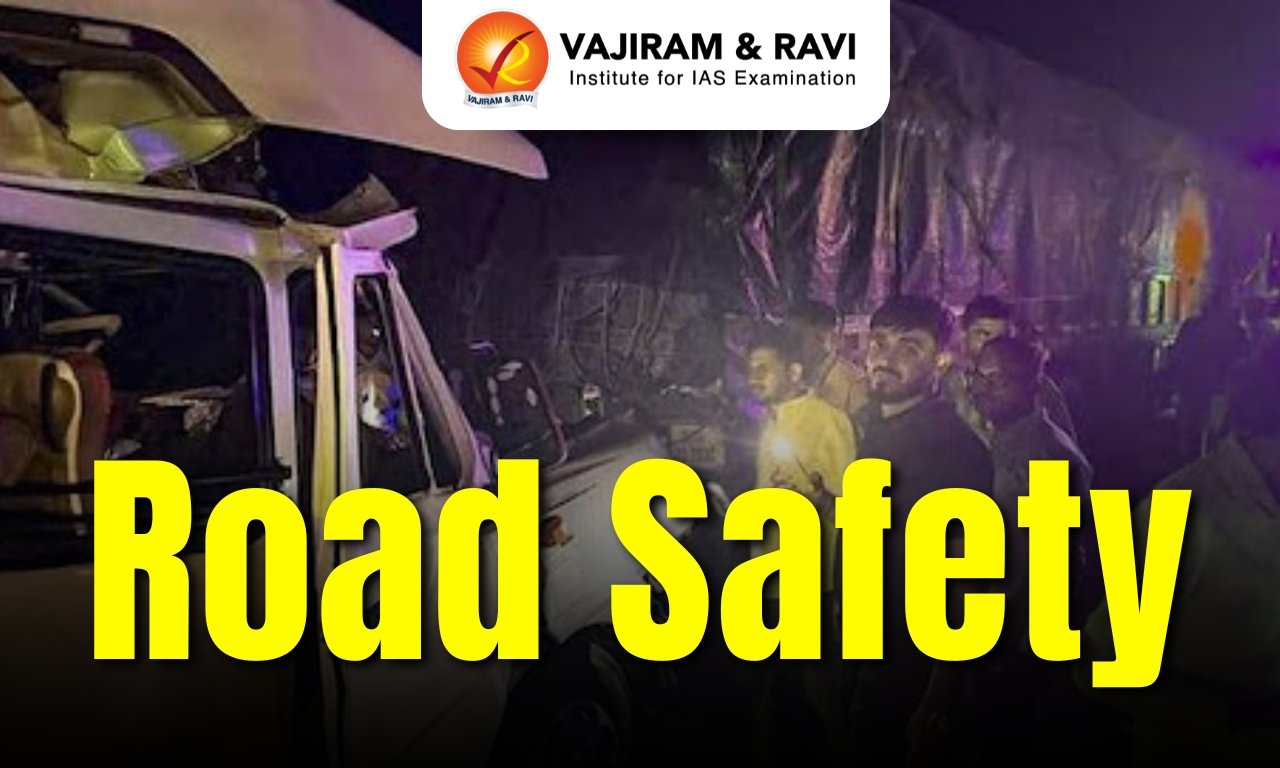
  • The Supreme Court invoked its extraordinary powers under Article 142 to issue directions on highway safety following two fatal road accidents.

Article 142 and Complete Justice

  • Article 142 of the Constitution empowers the Supreme Court to pass any order necessary to ensure “complete justice” in a case.
  • This provision is unique as it allows the Court to go beyond existing statutory frameworks when required. 
  • It is often used in situations where legislative or administrative gaps exist, and immediate intervention is necessary.
  • The power is discretionary but must align with constitutional principles. Over time, it has been used in matters relating to environmental protection, governance reforms, and public safety.

Link with Right to Life under Article 21

  • The Supreme Court has consistently interpreted Article 21 broadly.
  • It includes not only protection against unlawful deprivation of life but also the right to live with dignity and safety.
  • In the context of road safety, the Court has clarified that ensuring safe infrastructure and preventing avoidable accidents is a positive obligation of the State. 

Road Safety in India: Structural Concerns

  • India records a high number of road accidents annually.
  • National Highways constitute only about 2% of total road length but account for nearly 30% of road fatalities, indicating severe safety gaps. 
  • Key issues include: 
    • Poor enforcement, 
    • Unsafe parking practices, 
    • Lack of surveillance and 
    • Inadequate infrastructure, such as lighting and emergency services.

News Summary

  • Background of the Case
    • The case originated from two major accidents in November 2025.
    • One incident involved a bus hitting a stationary trailer on the Bharatmala Expressway in Rajasthan, killing 15 people. Another accident in Telangana resulted in 19 deaths when a lorry collided with a bus while avoiding a pothole. 
    • These incidents prompted the Supreme Court to take suo motu cognisance of road safety issues.
  • Observations of the Supreme Court
    • The Court criticised the National Highways Authority of India (NHAI) and state public works departments for lapses in safety management.
    • The Court observed that highways must not become “corridors of peril” due to administrative negligence or infrastructural gaps. 
    • The Court also highlighted the dangers of illegal parking of heavy vehicles, particularly near roadside establishments, which significantly increases accident risks. 
  • Key Directions Issued by the Court
    • The Supreme Court issued a comprehensive set of directives.
    • Parking of heavy and commercial vehicles on highways has been prohibited except in designated areas such as lay-bys and wayside amenities. 
    • The Court directed the use of Advanced Traffic Management Systems (ATMS) to monitor highways and detect violations through GPS-enabled systems. 
    • It mandated the deployment of ambulances and recovery vehicles at intervals of 75 km to ensure quick response in emergencies. 
    • Further, authorities have been instructed to identify accident-prone black spots within 45 days and install safety measures such as lighting, cameras, and warning signs. 
  • Regulation of Roadside Activities
    • The Court has prohibited the construction of new dhabas and commercial establishments within the Right of Way (ROW) of highways.
    • It also directed the demolition of unauthorised structures and imposed restrictions on land use within a specified distance from highways. 
    • These measures aim to reduce roadside congestion and unsafe practices.
  • Strengthening Enforcement Mechanisms
    • The Court called for the creation of dedicated highway surveillance teams involving police and transport departments for round-the-clock monitoring. 
    • Integration of surveillance systems with e-challan mechanisms has been emphasised to ensure effective enforcement.

Source: TH | IE

Road Safety FAQs

Q1: What is Article 142 of the Constitution?

Ans: It empowers the Supreme Court to pass orders necessary to ensure complete justice.

Q2: Why did the Supreme Court take suo motu action on road safety?

Ans: Two fatal accidents in November 2025 highlighted systemic safety failures.

Q3: What is the significance of Article 21 in this case?

Ans: It establishes road safety as part of the Right to Life.

Q4: What major restriction did the Court impose on highways?

Ans: Parking of heavy vehicles on highways is prohibited except in designated areas.

Q5: What proportion of road deaths occur on National Highways?

Ans: Nearly 30% of fatalities occur on National Highways despite their small share in total road length.

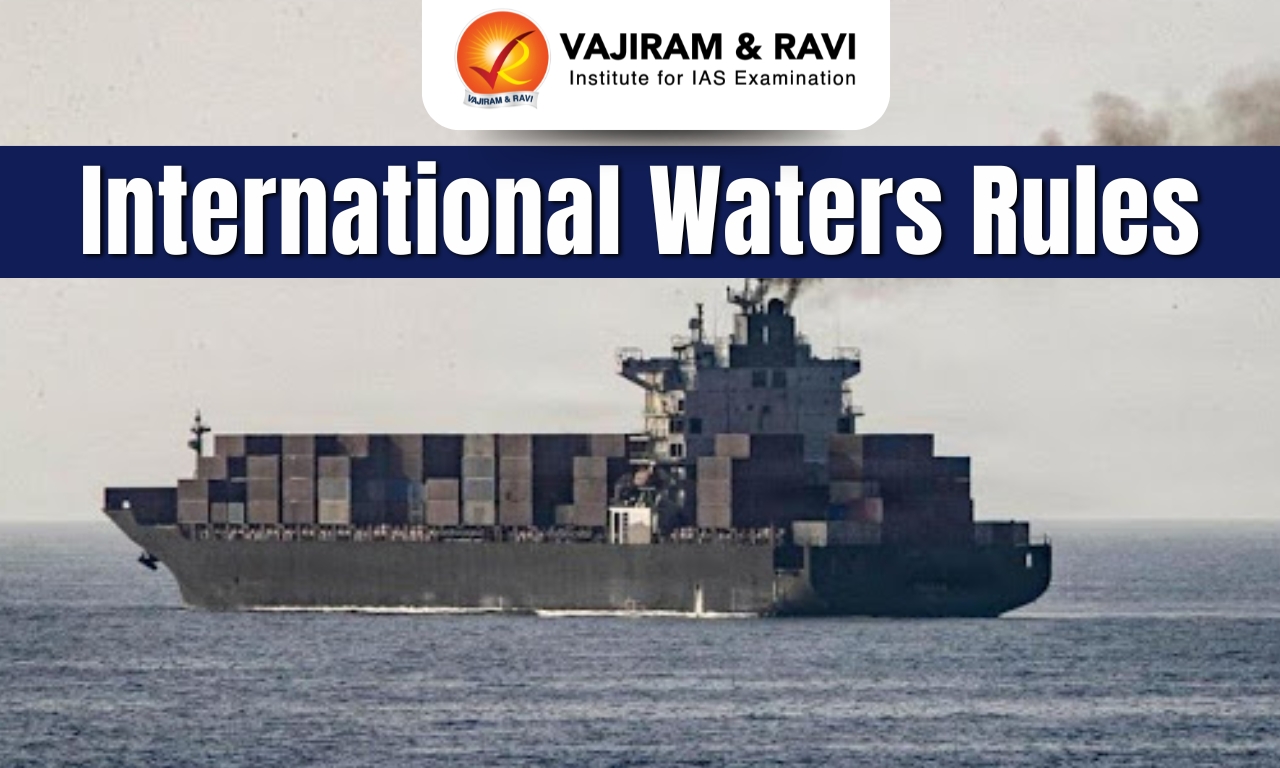
International Waters Rules Explained: Understanding International Waters Rules and Maritime Law

International Waters Rules

International Waters Rules Latest News

  • The incident marks a sharp escalation in tensions in the Strait of Hormuz, where Iran attacked three ships and detained two within its territorial waters. This action is seen as retaliation for U.S. seizures of Iranian-linked vessels on the high seas, including a major crude carrier intercepted between Sri Lanka and Indonesia.
  • Overall, the developments highlight a cycle of tit-for-tat maritime actions between Iran and the United States, further destabilising a critical global energy route.

Strait of Hormuz During the War: Restricted Transit and Strategic Control

  • At the onset of the conflict on February 28, vessel movement through the Strait of Hormuz dropped sharply from around 100 ships daily to only a few. 
  • Iran introduced a system regulating passage based on geopolitical considerations, reportedly charging high tolls, though India maintained it did not pay any fee and exercised its right to free navigation under international law. 
  • Despite restrictions, several Indian-linked and Iranian vessels were allowed transit, reflecting a selective and strategic control of this critical maritime route.

U.S. Actions in the Strait of Hormuz Conflict: Escalation and Maritime Control

  • Breakdown of Negotiations with Iran - During talks, Iran sought the right to regulate ship movement and impose tolls in the Strait of Hormuz. After negotiations collapsed on April 12, tensions escalated sharply.
  • Declaration of a Strategic Blockade - Donald Trump announced a blockade of Iranian ships, not through physical naval barriers but via control measures like radio warnings, aiming to restrict Iran’s influence over maritime traffic.

Interception and Seizure of Iranian-Linked Vessels

  • U.S. forces intensified action by:
    • Boarding and seizing the container ship Touska, suspected of carrying military-use cargo 
    • Intercepting the crude carrier Tifani in international waters, allegedly linked to Iran’s oil trade 
    • Both vessels are now under U.S. custody.
  • These measures are part of a broader U.S. strategy to disrupt Iran’s oil exports and revenue streams, weaken its control over the strait, and deter its maritime activities.

Legal Framework for Interceptions at Sea: UNCLOS and Key Principles

  • Strategic straits have historically been flashpoints in conflicts, leading to treaties governing navigation in regions like Turkey and Egypt. 
  • These agreements laid the groundwork for a broader global legal framework.
  • The United Nations Convention on the Law of the Sea established that the oceans are a shared global commons
  • Its core principle is the freedom of navigation, especially for merchant ships, with minimal restrictions.

High Seas: Freedom with Limited Exceptions

  • On the high seas, which lie beyond national jurisdiction, ships enjoy unrestricted navigation rights. Interception is allowed only under specific conditions:
    • Hot pursuit of vessels involved in crimes 
    • Authorisation by the United Nations Security Council 
    • Ships without nationality 
    • Consent from the ship’s flag state
  • Within a country’s territorial waters, ships retain the right of “innocent passage”, meaning transit is allowed as long as it does not threaten the coastal state’s security.

U.S. Sanctions vs International Law

  • The United States often uses sanctions and ship interceptions as tools of economic pressure. 
  • However, these actions are based on domestic law rather than international law, and are not necessarily backed by UN authorisation.

Iran’s Rights in the Strait of Hormuz Under International Law

  • The Strait of Hormuz is classified as an international strait, where the territorial waters of Iran and Oman overlap, leaving no high seas zone. 
  • Under the United Nations Convention on the Law of the Sea, the principle of “transit passage” applies—ensuring free and uninterrupted movement of ships.
  • This means Iran cannot block, regulate, or deny passage to merchant vessels
  • However, it can enforce limited conditions: ships must move continuously without delay, follow designated routes, use the strait only for transit, and avoid violating local laws such as illegal loading or unloading.

What Lies Ahead: IMO’s Role and Possible Resolution

  • The International Maritime Organization is expected to play a key role in de-escalating tensions in the Strait of Hormuz. 
  • It is working with Iran to facilitate safe passage and evacuation of ships while upholding freedom of navigation. 
  • The IMO has opposed tolls and permit-based restrictions, and has formally condemned Iran’s actions against commercial vessels, though it has not similarly criticised U.S. measures. 
  • Overall, diplomatic engagement through the IMO may shape the next phase of resolution.

Source: TH

International Waters Rules FAQs

Q1: What are international waters rules?

Ans: International waters rules refer to legal principles under UNCLOS that govern navigation, ship conduct, and rights of nations on the high seas beyond national jurisdiction.

Q2: What does UNCLOS say about international waters rules?

Ans: UNCLOS establishes international waters rules by defining oceans as global commons and ensuring freedom of navigation for merchant ships with only limited exceptions.

Q3: When can ships be intercepted under international waters rules?

Ans: Under international waters rules, interception is allowed during hot pursuit, with UN approval, for stateless vessels, or with consent from the ship’s flag state.

Q4: What rights does Iran have under international waters rules in the Strait of Hormuz?

Ans: International waters rules allow Iran limited control under transit passage but prohibit it from blocking or regulating free movement of ships through the Strait of Hormuz.

Q5: What role does IMO play in international waters rules?

Ans: The International Maritime Organization helps enforce international waters rules by promoting safe navigation, resolving disputes, and upholding freedom of navigation globally.

100% Ethanol Blending India: Challenges and Prospects of 100% Ethanol Blending India

Ethanol Blending

Ethanol Blending Latest News

  • Recently, Union Road Transport and Highways Minister advocated for 100% ethanol blending in India, linking it to the country’s broader goal of achieving energy self-reliance and reducing dependence on fossil fuel imports.

Understanding 100% Ethanol Blending in India

  • 100% blending refers to the use of pure ethanol (E100) as fuel. 
  • Unlike petrol, ethanol has lower energy density, meaning it delivers 45–55% less energy per litre, which can affect vehicle performance and fuel efficiency.
  • Most conventional petrol vehicles in India are designed for E20 (20% ethanol blending) or lower. 
  • Higher blends like E85 or E100 require flex-fuel engines, which can operate on varying ethanol-petrol mixtures.

Need for Flex-Fuel Vehicles

  • To support high ethanol blends, vehicles must be specially designed with:
    • Corrosion-resistant fuel systems 
    • Advanced sensors and engine control units 
    • Optimised tuning for ethanol combustion 
  • While countries like Brazil have widely adopted such vehicles, India currently has limited availability, with models from companies like Toyota and prototypes from Maruti Suzuki and Hyundai expected in the coming years.

Infrastructure and Supply Chain Requirements

  • Achieving 100% ethanol blending would require not just new vehicles, but also significant changes in fuel supply chains, storage, and distribution systems, aligned with initiatives like domestic manufacturing.

Ethanol Production in India: Sources, Challenges, and Implications

  • India largely produces ethanol from sugarcane, making it the dominant feedstock for blending. 
  • However, sugarcane is water-intensive and often grown in water-stressed regions, raising concerns about sustainability and its impact on food supply and prices.

Shift to Second-Generation Ethanol

  • To address these concerns, the government is promoting second-generation (2G) ethanol made from crop residues like rice straw, with support from entities such as Indian Oil Corporation. 
  • This approach also aims to reduce stubble burning, a major source of air pollution in North India.

Cost and Policy Support

  • Ethanol production remains costlier or comparable to petrol, necessitating government support and administered pricing to ensure viability and encourage adoption.

Environmental Trade-offs

  • While ethanol combustion leads to lower emissions of carbon monoxide and particulate matter, its overall environmental impact depends on:
    • Land use changes 
    • Use of fertilisers and pesticides 
    • High water consumption, especially for sugarcane

CAFE III and Ethanol Blending in India: Linkages and Implications

  • India introduced Corporate Average Fuel Efficiency (CAFE) norms in 2017 to limit the average CO₂ emissions of a manufacturer’s vehicle fleet. 
  • This pushed automakers to design more fuel-efficient vehicles, especially those producing high-emission models like SUVs.

Evolution from CAFE I to CAFE III

  • CAFE I: Implemented in 2017 
  • CAFE II: Enforced in 2022 
  • CAFE III: To be enforced from April 1, 2027, with ~30% stricter emission targets. 
    • CAFE III significantly tightens emission limits, compelling manufacturers to adopt cleaner technologies.

Indirect Link with Ethanol Blending (E100)

  • While CAFE norms do not directly mandate ethanol use, CAFE III could incentivise higher ethanol blends (E85/E100) as a way to reduce emissions and meet stricter targets. 
  • This may help overcome public resistance to ethanol fuels, which currently offer lower mileage.

Efficiency and Consumer Concerns

  • E20 fuel delivers 6–7% lower mileage compared to petrol. This raises concerns about higher fuel costs for consumers.
  • Adoption of higher blends depends on balancing cost, efficiency, and environmental benefits.

Progress of Ethanol Blending in India

  • Ethanol Blending Programme launched in 2003.
  • Blending increased from ~2% (2014) to: 
    • E10 by 2022 
    • E20 rollout from 2023, replacing earlier blends by 2025 
  • Target of nationwide E20 originally set for 2030, achieved earlier due to policy push.

Infrastructure and Industry Challenges

  • Aggressive blending targets have raised concerns about:
    • Fuel storage and transportation infrastructure 
    • Vehicle compatibility and readiness 
  • These remain key bottlenecks for scaling up ethanol use.
  • CAFE III, though not directly linked to E100, can act as a policy lever to accelerate ethanol adoption, but its success will depend on addressing efficiency concerns, infrastructure gaps, and consumer acceptance.

India’s Path to Energy Security: Strategies and Challenges

  • Diversifying Energy Sources
    • India has been working to reduce dependence on imported fossil fuels by exploring alternative oil sources, securing uranium for nuclear energy, and expanding renewable energy deployment. 
    • However, efforts are often constrained by geopolitical factors like sanctions.
  • Limits of Domestic Production
    • Initiatives to boost indigenous oil and gas output under the Hydrocarbon Exploration and Licensing Policy (HELP) have delivered limited results, while domestic manufacturing in key energy technologies remains underdeveloped.
  • Transition to a Hydrogen Economy
    • India is increasingly focusing on green hydrogen as a long-term solution. Under the National Green Hydrogen Mission, the aim is to:
      • Produce hydrogen at $1 per kg (globally $3–6/kg) 
      • Compete with conventional fuels like diesel 
      • Potentially become an energy exporter
    • Circular Economy and Alternative Feedstocks
      • The strategy includes producing hydrogen from municipal waste and sewage, aligning energy goals with a circular economy approach to improve sustainability.
  • Infrastructure and Technological Challenges
    • Despite policy push, the hydrogen sector faces major bottlenecks:
      • Lack of commercial-scale transport and storage systems 
      • Limited readiness for large-scale deployment

Source: TH

Ethanol Blending FAQs

Q1: What is 100% ethanol blending India?

Ans: 100% ethanol blending India refers to using pure ethanol (E100) as fuel, requiring flex-fuel vehicles and major infrastructure changes to replace conventional petrol usage.

Q2: What challenges does 100% ethanol blending India face?

Ans: 100% ethanol blending India faces challenges like low fuel efficiency, need for new vehicles, high production costs, and inadequate supply chains and infrastructure readiness.

Q3: How is ethanol produced for 100% ethanol blending India?

Ans: 100% ethanol blending India relies mainly on sugarcane-based ethanol, while promoting second-generation ethanol from crop residues to improve sustainability and reduce environmental impact.

Q4: What is the role of CAFE III in 100% ethanol blending India?

Ans: CAFE III indirectly supports 100% ethanol blending India by pushing automakers toward cleaner technologies and encouraging adoption of higher ethanol blends to reduce emissions.

Q5: How does 100% ethanol blending India relate to energy security?

Ans: 100% ethanol blending India supports energy security by reducing fossil fuel imports, promoting domestic production, and complementing long-term strategies like green hydrogen development.

Monthly Current Affairs April 2026 for UPSC Prelims and Mains

Monthly Current Affairs April 2026

Monthly Current Affairs April 2026 are a vital component of the UPSC Civil Services Examination (CSE) Syllabus. Current affairs refer to important events and developments taking place in India as well as globally across areas like polity, economy, society, culture, environment, science, technology and sports. In this article, we present a detailed compilation of UPSC Current Affairs for April 2026, covering topics relevant for both Prelims and Mains examination.

Monthly Current Affairs April 2026

Monthly Current Affairs April 2026 play a significant role in UPSC preparation. To assist aspirants, Vajiram & Ravi provide the Monthly Current Affairs Magazine- The Recitals, along with Daily Prelims Pointers, Mains Articles, Daily Editorial Analysis and The Analyst- Newspaper Analysis Video. These resources compile important issues of the month in a structured and easy to understand format. The content is prepared using authentic sources such as PIB, Yojana, Kurukshetra, The Hindu, Indian Express, Economic Times and Down to Earth. It is presented through simple text, charts, tables and infographics to improve clarity and retention.

Monthly Current Affairs April 2026 for Prelims & Mains

The UPSC Current Affairs for April 2026 include Daily Prelims Pointers, Mains Articles and Editorial Analysis, which are curated by subject experts and updated daily. These topics are mainly sourced from The Hindu and The Indian Express, ensuring relevance to the UPSC syllabus. Prelims Pointers provide short and fact based notes for objective questions, while Mains Articles help aspirants develop analytical and answer writing skills. The Analyst- Newspaper Analysis Video explains important news in detail and includes a summarized handout in bullet points for quick revision and better understanding.

UPSC Current Affairs April 2026

Each day, the platform releases ten Prelims Pointers, four Mains Articles and three Editorial Analyses to ensure complete monthly coverage. Along with this, a Daily MCQ Quiz and The Analyst- Newspaper Analysis Video are provided for practice and conceptual strengthening. Below is the complete list of links for Daily Prelims Pointers, Mains Articles, Editorial Analysis and The Analyst Videos for April 2026:

Monthly Current Affairs April 2026

April 2026 Date

Prelims Pointers Link

Mains Articles Link

Editorial Analysis

The Analyst- Newspaper Analysis Video

1 April 2026

Link

Link

Link

Link

2 April 2026

Link

Link

Link

Link

3 April 2026

Link

Link

Link

Link

4 April 2026

Link

Link

Link

Link

5 April 2026

Link

Link

To be Updated

Link

6 April 2026

Link

Link

Link

Link

7 April 2026

Link

Link

Link

Link

8 April 2026

Link

Link

Link

Link

9 April 2026

Link

Link

Link

Link

10 April 2026

Link

Link

Link

Link

11 April 2026

Link

Link

Link

Link

12 April 2026

Link

Link

To be Updated

Link

13 April 2026

Link

Link

Link

Link

14 April 2026

Link

Link

Link

Link

15 April 2026

Link

Link

Link

Link

16 April 2026

Link

Link

Link

Link

17 April 2026

Link

Link

Link

Link

18 April 2026

Link

Link

Link

Link

19 April 2026

Link

Link

To be Updated

Link

20 April 2026

Link

Link

Link

Link

21 April 2026

Link

Link

Link

Link

22 April 2026

Link

Link

Link

Link

23 April 2026

Link

Link

Link

Link

24 April 2026

Link

Link

Link

Link

25 April 2026

Link

Link

Link

Link

26 April 2026

Link

Link

To be Updated

Link

27 April 2026

Link

Link

Link

Link

28 April 2026

Link

Link

Link

Link

29 April 2026

Link

Link

Link

Link

30 April 2026

To be Updated

To be Updated

To be Updated

To be Updated

Importance of Current Affairs April 2026 for UPSC Aspirants

Current Affairs continue to form the core of UPSC preparation, reflecting ongoing developments in India and across the world. Covering diverse areas such as governance, economy, environment, science and social issues, the Current Affairs for April 2026 help aspirants enhance their knowledge base, improve analytical ability and stay updated with real world situations, an essential requirement for both Prelims and Mains examination.

Testing Awareness and Analytical Ability

Current Affairs for April 2026 go beyond factual learning and emphasize understanding the context and impact of major events. They assess an aspirant’s awareness of national and international developments and their ability to analyze causes, effects and possible outcomes. This strengthens critical thinking and decision making skills, which are essential qualities for a civil servant.

Linking Static and Dynamic Syllabus

April 2026 Current Affairs act as a connecting link between static subjects and current developments. Topics like government policies, international relations and economic changes can be linked with subjects such as polity, geography, history and economy. This integration helps aspirants apply theoretical concepts in practical scenarios and improves the quality of answers in the Mains examination.

Dynamic Nature of UPSC Preparation

The importance of Current Affairs April 2026 lies in their continuously evolving nature. Since current events change regularly, aspirants need to stay updated on a daily basis. This dynamic aspect of preparation ensures that candidates develop adaptability and remain prepared for unexpected questions in the examination. It also encourages continuous learning rather than rote memorization.

Relevance to Civil Services and Administration

Current Affairs April 2026 are directly linked to real life governance and administration. They provide insights into policy making, socio-economic challenges, environmental concerns and global relations. These topics are particularly important for the UPSC interview stage, where aspirants are evaluated on their awareness, opinions and ability to present balanced and informed views on current issues.

Monthly Current Affairs April 2026 FAQs

Q1: How to prepare Current Affairs for UPSC CSE?

Ans: Regularly read newspapers, follow monthly compilations and revise key topics with answer writing practice.

Q2: Why are Current Affairs important for UPSC?

Ans: They connect static subjects with real world events and are important for Prelims, Mains and Interview stages.

Q3: What are Vajiram & Ravi Prelims Pointers?

Ans: They are concise daily notes covering important current affairs topics for quick revision for UPSC Prelims.

Q4: Which newspaper should be followed for UPSC preparation?

Ans: The Hindu and The Indian Express are the most recommended newspapers for UPSC aspirants.

Q5: How to make effective newspaper notes?

Ans: Focus on relevant issues, summarize them in points and organize under GS topics for easy revision.

Enquire Now