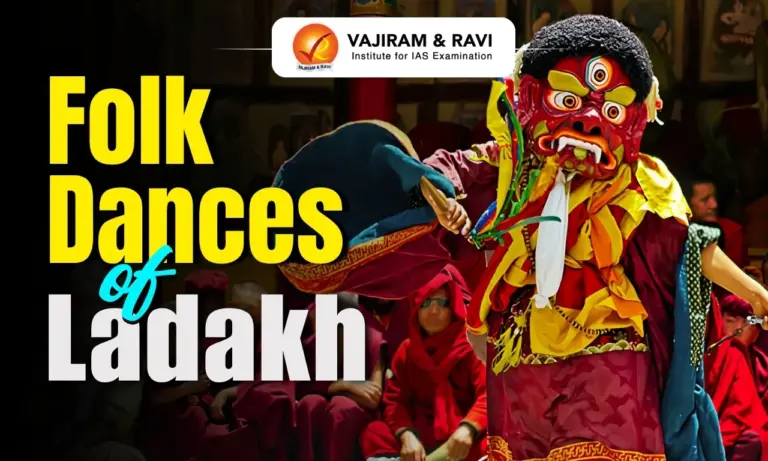
The Folk Dances of Ladakh are an important part of the region’s rich cultural heritage and traditional way of life. They combine music, rhythmic movements, traditional costumes and community participation, reflecting the diverse cultural influences of the Himalayan region. These dances are performed on different festivals, celebrations and social occasions, helping preserve the unique cultural identity of Ladakh.
Traditional Dance Forms and Cultural Traditions of Ladakh
- Ladakh has a wide variety of traditional dances and many of them are performed during religious festivals, weddings, harvest celebrations and other community occasions.
- Traditional Ladakhi dances are generally accompanied by instruments such as the Dhaman (drum) and Surna (oboe), which provide rhythm and support the coordinated movements of the performers.
- Some dances are traditionally performed mainly by women, while others are performed by men or by both men and women, reflecting the diverse customs of different communities.
- Many performances begin with a gesture of respect towards the Three Jewels of Buddhism – Buddha, Dharma and Sangha, highlighting the spiritual influence on Ladakhi cultural traditions.
Major Folk Dances of Ladakh
The Major Folk Dances of Ladakh represent the region’s rich cultural traditions, social customs and artistic heritage. Each dance has its own style, purpose and traditional significance and many are performed during festivals, weddings, harvest celebrations and other community occasions. The major Folk Dances of Ladakh discussed below highlight the diverse cultural expressions and traditions of the region.
1. Shondol Dance of Ladakh
- Shondol is traditionally associated with the royal culture of Ladakh and was historically performed by selected women to entertain and honour the king and his court.
- The dance is known for its graceful movements, slow rhythm and elegant style, with performers dressed in traditional Ladakhi attire.
- Over time, Shondol has become an important symbol of Ladakhi cultural heritage and is performed during cultural celebrations and festivals.
- The dance reflects the region’s royal traditions, artistic expression and community spirit.
2. Jabro Dance of Ladakh
- Jabro is a traditional dance associated particularly with the Changpa nomadic community of Changthang and has strong influences from Tibetan culture.
- Both men and women participate in the dance, usually forming a line or semi-circle while holding hands and moving together to traditional music.
- The dance is accompanied by instruments such as the Dram-nyan (lute) and folk songs, creating a lively yet coordinated performance.
- Jabro is performed during festivals, celebrations and social occasions and reflects the close connection between Ladakhi communities and their cultural traditions.
3. Spao Dance of Ladakh
- Spao, also known as the Warrior Dance, represents the courage and heroic qualities of warriors in Ladakhi folklore.
- The dance is closely linked with the legendary King Kesar, whose stories have been passed down through generations in Ladakh and other parts of Central Asia.
- Performers use traditional props such as swords, bows, arrows and quivers while enacting scenes connected with the heroic exploits of warriors.
- Through energetic movements and dramatic presentation, Spao preserves important folk stories, traditions and ideas of bravery.
4. Kathok Chenmo Dance of Ladakh
- Kathok Chenmo was traditionally a royal dance performed in honour of the kings of Ladakh and their families.
- The name is associated with the large balcony or roof of Leh Palace, reflecting its connection with Ladakh’s royal heritage.
- During the period of the Ladakhi kings, performers were specially selected and patronised by the royal court.
- The dance represents the royal traditions and cultural history of Ladakh and remains an important part of the region’s traditional performing arts.
5. Mentok Stanmo Dance of Ladakh
- Mentok Stanmo is particularly associated with the Dha-Hanu region and is performed to celebrate the blooming of flowers in the valley.
- The dance is connected with the local community’s relationship with nature, agriculture and seasonal celebrations.
- During the performance, participants traditionally offer the first flowers or harvest to the Buddha, local gods and deities as an expression of gratitude.
- The colourful presentation makes Mentok Stanmo an important example of how nature and traditional beliefs are reflected in Ladakhi folk culture.
6. Koshan Dance of Ladakh
- Koshan is a traditional community dance associated with horse-racing events and festivals in Leh.
- It is performed as part of celebrations surrounding the region’s long-standing horse-riding and equestrian traditions.
- Dancers wear colourful traditional clothes, brocade silk and jewellery, giving the performance a rich and festive appearance.
- The dance adds to the excitement of community gatherings and highlights the importance of horses and traditional sporting culture in Ladakh.
7. Nyopa Dance of Ladakh
- Nyopa Dance is traditionally associated with marriage ceremonies in the Buddhist communities of Ladakh.
- A group of young men from the groom’s side, known as Nyopas, perform the dance while helping bring the bride from her home to the groom’s house.
- The performers wear distinctive yellow gowns and pointed, colourful hats and accompany their movements with traditional wedding songs.
- The dance adds a playful and festive element to the marriage ceremony while reflecting the community participation and social traditions of Ladakh.
8. Loshon Dance of Ladakh
- Loshon is a traditional harvest dance, particularly associated with Shey village, which was once the capital of Ladakh.
- It is performed after the completion of the harvest season as a community celebration and expression of gratitude.
- Both men and women participate in the festivities, which are connected with thanksgiving to the Buddha and local deities.
- Loshon reflects the importance of agriculture, seasonal cycles and community participation in the traditional life of Ladakh.
9. Brokpa Dance of Ladakh
- The Brokpa Dance represents the distinctive cultural traditions of the Brokpa community living mainly along the Indus River belt of Ladakh.
- The dance is especially known for its traditional costumes, flowers and elaborate silver and copper jewellery worn by the performers.
- The colourful appearance of the dancers gives the performance a unique identity and reflects the community’s distinct cultural heritage.
- The dance is an important expression of Brokpa traditions, customs and cultural identity within the diverse society of Ladakh.
10. Alley Yato Dance of Ladakh
- Alley Yato is a traditional dance associated with the Zanskar region of Ladakh and is performed by both men and women.
- The name refers to a friend, companion or trusted partner, reflecting the central idea of friendship and companionship.
- The dance is performed along with songs that celebrate camaraderie, trust and togetherness.
- It represents the importance of social bonds and community relationships in Ladakhi folk culture.
11. Chabskyan Dance of Ladakh
- Chabskyan is a distinctive Ladakhi dance known for its unusual use of a Chang pitcher placed on the dancer’s head.
- Traditionally performed by men, the dancers wear a special black hat that helps hold the pitcher securely during the performance.
- The dance begins with a slow salutation and gradually becomes faster as the rhythm of the Dhaman and Surna develops.
- The performance ends with the dancers offering a salute to the guests and audience, adding a ceremonial character to the dance.
12. Balti Dance of Ladakh
- Balti Dance is associated with the Balti Muslim communities of Kargil and Turtuk and has its own distinctive cultural style.
- The dance is performed during festivals, ceremonies and other special occasions, accompanied by traditional songs in the Balti language.
- Its costumes, music and movements reflect the unique Balti cultural heritage of the region.
- Some forms of the dance are also performed during religious occasions, highlighting the diversity of traditions found across Ladakh.
13. Cham Dance of Ladakh
- Cham Dance is a prominent Buddhist ritual dance performed by monks during religious festivals and important monastery celebrations.
- The performers wear colourful costumes and masks and use traditional Tibetan musical instruments during the performance.
- The dance symbolises the victory of good over evil and is associated with the removal of negative forces and the promotion of peace and well-being.
- Cham is an important part of Ladakh’s Buddhist cultural heritage and is especially associated with monastery festivals and celebrations such as Losar.
Also Read : Folk Dances of India


Cultural Significance of Folk Dances of Ladakh
- The Folk Dances of Ladakh help preserve the region’s traditional stories, beliefs, customs and community values, while passing them from one generation to another.
- These dances also showcase Ladakh’s rich cultural diversity, with influences from Tibetan, Balti, Brokpa and other communities contributing to its distinctive performing arts.
- Traditional costumes, jewellery, musical instruments and group movements make Ladakhi dances an important expression of the region’s cultural identity and heritage.
- Performances during festivals and social occasions bring communities together and create a strong sense of celebration, participation and cultural belonging.
- Folk dances of Ladakh are more than forms of entertainment; they represent the region’s history, spirituality, traditions and close connection with community life.

 Last updated on Oct, 2026
→ UPSC 2027 Notification will be released on 13 January 2027 at upsconline.nic.in.
→ Check Nobel Prize 2026 Winners List here.
→ Download PIB PRiSM Monthly Magazine 2026 here.
→ Check UPSC Monthly Current Affairs Magazine The Recitals here.
→ Check out the latest UPSC Syllabus here.
→ Download UPSC Model Answers for Mains 2026
→ UPSC Mains Question Paper 2026 is out now for Essay & GS Paper 1, 2, 3 & 4.
→ UPSC Calendar 2027 has been released.
→ Enroll in Vajiram & Ravi’s UPSC Mains Test Series 2027 for structured answer writing practice, expert evaluation, and exam-oriented feedback.
→ Join Vajiram & Ravi’s UPSC Mentorship Program 2027 for personalized guidance, strategy planning, and one-to-one support from experienced mentors.
→ Go through the UPSC Mains Previous Year Papers to enhance your preparation.
→ UPSC has released UPSC Toppers List 2025 with the Civil Services final result on its official website.
→ Also check Best UPSC Coaching in India
Folk Dances of Ladakh FAQs
Q1. What are the major Folk Dances of Ladakh?+
Q2. Which is the famous royal dance of Ladakh?+
Q3. What is Jabro Dance of Ladakh?+
Q4. What is Spao Dance in Ladakh?+
Q5. Which Ladakh dance is associated with harvest celebrations?+
Q6. What is Nyopa Dance of Ladakh?+
Q7. What is Cham Dance of Ladakh?+
Q8. What is the cultural significance of Folk Dances of Ladakh?+
Tags: art and culture art and culture notes folk dances folk dances of ladakh