Rung Community, History, Origin, Culture, Traditions, Festivals

Rung Community

The Rung community, also called Rang or Shauka, is an indigenous Tibeto-Burman tribal community living in the high Himalayan border valleys of Pithoragarh district, Uttarakhand. They are recognised as a Scheduled Tribe and are grouped under the wider Bhotia label. For centuries they earned their living from trans-Himalayan trade with Tibet and moved between summer and winter settlements. This trade was cut off after the 1962 India-China War, and the community shifted to education, jobs, herb collection and tourism. Today they are also known for their nature worship and the Kandali festival. 

Who Are the Rung Community?

The Rung Community are a mountain people with their own language, customs and way of life. They are one of the many Himalayan communities that have lived along the India-Tibet-Nepal border for generations.

  • The Rung are also called Rang or Shauka, and they are an indigenous, Tibeto-Burman community of the Kumaon Himalayas.
  • They are legally recognised as a Scheduled Tribe (ST) in India. They are commonly grouped under the broader Bhotia ST category, but they keep their own cultural and linguistic identity.
  • The name Bhotia comes from Bod, the Tibetan name for Tibet. It was the term the British used for border people who seemed to resemble Tibetans. Kumaonis call them Shauka, a word linked to “money” or “rich”.
  • They speak West Himalayish languages, collectively called Runglo (Rangkas). The main dialects are Byansi, Chaudangsi and Darmiya. These languages are linked to the old Zhangzhung language family.
  • They live in the high border valleys of Vyans, Darma, Chaudans and Johar, in the Dharchula and Munsiyari areas of Pithoragarh.
  • Traditionally they were traders, pastoralists and farmers. They practised transhumance, which means moving seasonally between higher and lower settlements.
  • They are nature worshippers. They honour Lord Shiva through sacred mountains, rivers and forests.

Also Read : Tribes of Uttarakhand

Rung Community History and Origin

The Rung Community has long been a border and trading people. Their history is closely tied to the passes and markets between the Kumaon Himalayas and Tibet.

  • The Rung Community is a Tibeto-Burman group. Their language family and culture show long-standing links with the Himalayan and Tibetan world.
  • For centuries they ran trans-Himalayan trade between India and Tibet. Each of the Bhotia valleys had its own passes, including Lipulekh, Darma, Limpiya Dhura, Kungri-Bingri, Untadhura and Jayanti.
  • Indian traders carried grain, sugar, jaggery, spices, tobacco, cotton, cloth, corals and beads to Tibet.
  • They brought back salt, wool, borax and other goods, including pashmina and dried yak cheese.
  • Trade was conducted at Tibetan markets such as Gyanima Mandi and Taklakot (Purang). Traders often worked through trusted Tibetan partners called “mitra”.
  • Trade opened each year around April or May. A representative of the Tibetan governor of Ngari would travel to the Bhotia villages to announce the start of the season.
  • Milam in the Johar valley was a major trading depot. A special census in 1900 recorded about 1,733 residents there, almost all Shauka traders.
  • Because of this travel-based trade, families developed two settlements. They lived in the upper settlement during summer (about May-June to October-November) to trade and grow crops like buckwheat and hill wheat. They spent the rest of the year in the lower, winter settlement.
  • The Rung also fought for their land. According to tradition, they defeated the army of Zorawar Singh, which attacked the Chaudans area from Ladakh in 1841. This victory is remembered in the Kandali festival.
  • A border trade agreement between India and China in 1954, named Lipulekh as a trade and pilgrimage route.
  • During 1959-1962, China’s control over Tibet and the 1962 India-China War closed the border. This abruptly ended the centuries-old trade and badly hurt the economy of the Bhotia and Shauka communities. Some trade continued through Tinkar Pass and with Nepal.
  • After 1962 the community moved towards education, government jobs, herb collection (such as Yartsa Gumbu, Kutki and Gandrayan) and more recently, homestays for pilgrims.
  • Limited, state-regulated trade reopened in the early 1990s through Lipulekh. It was suspended again in 2020. Reports from mid-2026 describe efforts to restart it, with the first batches of traders facing delays, so the situation is still developing.

Rung Community Culture, Traditions and Festivals

Rung culture is shaped by the mountains. Their beliefs, festivals and daily life all show respect for nature and for the land they depend on.

  • Nature worship: The Rung honour Lord Shiva through sacred rivers, mountains and forests. Their worship centres on natural landscapes and not on man-made structures.
  • Kandali festival: This is their best-known festival. It is celebrated once every 12 years, when the Kandali plant (Strobilanthes wallichii) flowers in the Chaudans valley.
  • The Kandali festival is held between August and October and lasts about a week. The last blooming was recorded in 1999, and the festival was celebrated again in the years that followed.
  • It begins with the worship of a Shiva linga made of barley and buckwheat flour. Families pray for prosperity, and a community feast follows.
  • People dress in traditional clothes and gold and silver ornaments, gather around a tree on sacred ground, tie white cloth strips to it, and hoist a flag. The festival is linked to the 1841 victory over Zorawar Singh’s army. 
  • Language and dialects: Runglo, Byansi, Chaudangsi and Darmiya keep the community’s identity alive.
  • Seasonal life: Families move between summer and winter settlements, growing grains and looking after livestock.
  • Herb gathering: Many families collect Yartsa Gumbu (caterpillar fungus), Kutki and Gandrayan, following community rules on harvesting.
  • Traditional governance: Village institutions and Gram Sabhas decide who can graze animals and when herbs can be collected.
  • Recent example of tradition in action: In mid-2026, the community opposed a proposal to install a three-tonne artificial Shivling and Nandi statue near Om Parvat. They said it went against their tradition of revering natural Himalayan landscapes.

Also Read : Festivals of Uttarakhand

Geographical Distribution of the Rung Community in India

The Rung Community live in the remote border valleys of Pithoragarh district in the Kumaon Himalayas, close to the India-Nepal-Tibet region.

  • Their main home is Pithoragarh district, Uttarakhand, especially around Dharchula and Munsiyari.
  • They live in four valleys: Vyans, Darma, Chaudans and Johar.
  • Johar valley (near Munsiyari): The Rung here are commonly called Shauka. Milam, once a major trade centre, is now sparsely inhabited.
  • Darma, Chaudans and Vyans valleys (near Dharchula): these are home to the Darmiya, Chaudangsi and Byansi groups.
  • Gunji, at about 10,500 feet, is among the last Indian villages near Lipulekh Pass, and it is a key base for border trade and pilgrim routes.
  • The Bhotia communities of Uttarakhand live in seven river valleys: Jadh, Mana and Niti in Garhwal, and Johar, Darma, Byans and Chaudans in Kumaon. The Rung belong to the Kumaon valleys.
  • Rung and related groups are also found in parts of Nepal, across the border.

Rung Community FAQs

Q1: Who are the Rung community?

Ans: The Rung (also called Rang or Shauka) are an indigenous Tibeto-Burman tribal community of the Kumaon Himalayas in Uttarakhand. They are recognised as a Scheduled Tribe and are known for their trans-Himalayan trade and nature worship.

Q2: Where do the Rung people live?

Ans: They mainly live in the Vyans, Darma, Chaudans and Johar valleys of Pithoragarh district, Uttarakhand, around Dharchula and Munsiyari. Related groups also live in parts of Nepal.

Q3: What language do the Rung people speak?

Ans: They speak West Himalayish languages known as Runglo (Rangkas), with dialects like Byansi, Chaudangsi and Darmiya. In the Johar valley, many speak Johari, a Kumaoni dialect.

Q4: What is the Kandali festival?

Ans: Kandali is a week-long festival of the Rung, held once every 12 years in the Chaudans valley when the Kandali plant flowers. It includes Shiva worship, a community feast, flag hoisting and reenactments of a historic victory.

Q5: How did the 1962 India-China War affect the Rung community?

Ans: It closed the border and ended their traditional trade with Tibet, which hurt their economy. Many families turned to education, government jobs, herb collection and later tourism.
Subramania Siva, Biography, Role in the Indian Freedom Struggle

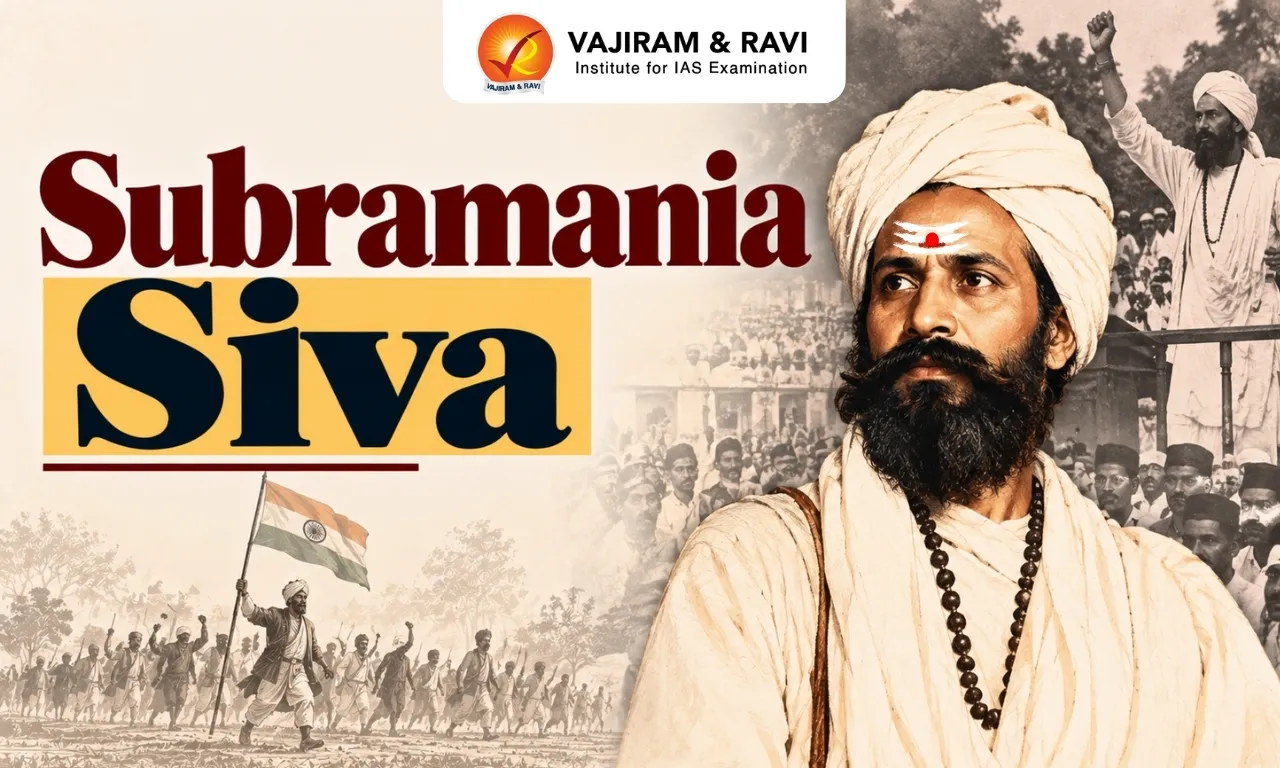
Subramania Siva

Subramania Siva (1884-1925) was a fiery orator, writer and Swadeshi-era freedom fighter from the Madras Presidency. Working closely with V.O. Chidambaram Pillai and Subramania Bharati, he took the message of freedom to workers and ordinary people through his speeches and writings. He was jailed for sedition and contracted leprosy in prison, yet kept working for the cause until his death in 1925. He also founded the journal Gnanabhanu and laid the foundation of the Bharat Mata Temple. 

Subramania Siva Biography

Subramania Siva was a nationalist speaker, author and organiser who made the idea of freedom meaningful to everyday people. He is remembered in Tamil Nadu as a fearless voice of radical nationalism.

  • Subramania Siva was born on 4 October 1884 at Batlagundu, Dindigul district, Tamil Nadu. His parents were Rajam Iyer and Nagalakshmi.
  • He studied in Madurai and later in Trivandrum. He worked briefly as a clerk in the Trivandrum police department before giving it up for the freedom movement.
  • In 1902, he became a disciple of Sadananda Swami and adopted the name “Sivam”. This shaped his spiritual-nationalist outlook.
  • He was fluent in Tamil, English and Sanskrit. He followed Bal Gangadhar Tilak as his political guru and drew inspiration from Swami Vivekananda and Ramakrishna Paramahansa.
  • He is also known as Siva, Sivam, “Swatantra Sivam” and was honoured as “Veeramurasu”.
  • He is often called the first recognised political prisoner of the Madras Presidency for sedition.
  • He belonged to the same circle as V.O. Chidambaram Pillai, Subramania Bharati and Pasumpon Muthuramalinga Thevar, the freedom fighters of the Pandya land.

Role of Subramania Siva in the Indian Freedom Struggle

Subramania Siva’s main weapon was his voice. He travelled from town to town, turning big political ideas like Swaraj, boycott and self-reliance into simple messages people could connect with.

  • Two events lit the spark for him: Japan’s victory over Russia (1904-05), which gave Asians hope against European powers, and the partition of Bengal (1905), which triggered the Vande Mataram wave.
  • In 1906, while in Thiruvananthapuram, he was drawn to the movement after hearing the speeches of Arya Samaj leaders such as Thakur Kahan Chandra Verma. He began organising rallies and speeches, and was soon asked to leave Travancore, which was under British control.
  • In 1906-07, he founded the Dharma Paripalana Samajam to promote social reform, self-reliance and patriotism.
  • He used Tamil speeches, poems and articles to reach traders, workers and rural people, well beyond the educated urban class.
  • He also helped spread Subramania Bharati’s poems among the masses.
  • In 1908, he was arrested for sedition and sentenced to ten years’ transportation, later reduced to six years of rigorous imprisonment. He was kept in the Trichy, Salem and Vellore jails and forced into hard labour, including pulling an oil press like cattle.
  • Later he was released in 1912 a broken man. His wife Meenakshi died in 1915.
  • He returned to public life, mobilised workers for better pay and conditions, started the magazine Indian Desantheri (1919), and took part in the Non-Cooperation Movement (1920).
  • In 1921, he went to Kolkata, joined protests, and was again arrested for sedition and jailed for about two and a half years.
  • Jail left him with leprosy, and the British banned him from using public transport. He walked from place to place to keep spreading the message.

Subramania Siva and the Swadeshi Movement

The Swadeshi years were the high point of Siva’s public life. In Tirunelveli and Tuticorin, he and VOC turned a boycott campaign into a mass movement.

  • In 1907, Siva moved to Tuticorin and met V.O. Chidambaram Pillai, who was then setting up the Swadeshi Steam Navigation Company.
  • The two divided the work well. VOC handled the organisation and business side, while Siva was the chief propagandist, speaking at rallies on the banks of the Thamirabarani River.
  • Their speeches backed national enterprise and challenged colonial economic control. They also organised many meetings in Tirunelveli on British exploitation and the value of freedom.
  • In February 1908, they organised about four thousand workers at the British-owned Coral Mills in Tuticorin. The workers demanded higher wages, better conditions and weekly holidays.
  • The nine-day strike ended with the management accepting all the demands, a major early win for organised labour in South India.
  • In March 1908, Siva and VOC organised celebrations for the release of Bipin Chandra Pal. On 12 March 1908, District Collector Robert Ashe arrested Siva, VOC and Padmanabha Iyengar for sedition.
  • The arrests sparked the Tinnevelly Riots, and police firing killed four civilians.
  • Siva was tried under Section 124A of the IPC. His speeches had made Tirunelveli one of the strongest centres of nationalist activity in the South.

Contributions of Subramania Siva to India's Independence Movement

Siva’s contribution went beyond speeches. He worked as a writer, journalist, labour organiser, social reformer and institution builder.

  • Writer and author: He wrote over 30 books, including Ramanuja Vijayam and Madhva Vijayam (on two Vaishnava saints), Sachidananda Sivam, Gnanaratnam, and Vitutalaipporil Tamil Valarnta Varalaru.
  • Journalism: He launched the monthly Gnanabhanu in 1913, covering literature, nationalist thought and social reform, with writers like Subramania Bharati contributing. He also started the weekly Prabhanja Mithran (1916) and wrote under the pen name Naradhar.
  • Theatre: He wrote historical plays to build national pride, using performances as a way around limits on public gatherings.
  • Tanittamil movement: He was a pioneer of the Pure Tamil movement, which urged Tamil free from excessive Sanskrit influence.
  • Labour rights: He helped lead the 1908 Coral Mills Strike, linking the Swadeshi movement with workers’ demands.
  • Social reform: Through the Dharma Paripalana Samajam, he promoted reform along with patriotism.
  • Bharat Mata Temple: He dreamed of a temple to Bharat Mata as a symbol of unity across caste lines. On 23 January 1923, he founded the Bharat Mata Ashram at Papparapatti in Dharmapuri district.
  • Final years and legacy: He died on 23 July 1925, aged 40. The Dindigul district collector’s office is named Thiagi Subramanya Siva Maaligai after him, and so is the Batlagundu bus stand.
  • Wider significance: His life shows how regional languages, print culture and local networks widened the base of Indian nationalism.

Subramania Siva FAQs

Q1: Who was Subramania Siva?

Ans: Subramania Siva was a freedom fighter, orator, author and journalist from Tamil Nadu. He worked with V.O. Chidambaram Pillai and Subramania Bharati during the Swadeshi movement.

Q2: When and where was Subramania Siva born?

Ans: He was born on 4 October 1884 at Batlagundu in Dindigul district, Tamil Nadu.

Q3: What was Subramania Siva’s role in the Swadeshi Movement?

Ans: He was the chief propagandist of the movement in Tirunelveli and Tuticorin. He addressed rallies, supported VOC’s Swadeshi Steam Navigation Company, and helped lead the 1908 Coral Mills Strike.

Q4: Why was Subramania Siva arrested?

Ans: He was arrested on 12 March 1908 on charges of sedition for his speeches. He was sentenced to ten years, later reduced to six years of rigorous imprisonment.

Q5: What is the Coral Mills Strike of 1908?

Ans: It was a nine-day strike by about 4,000 workers at British-owned Coral Mills in Tuticorin, led by Siva and VOC. The management accepted all the workers’ demands.

Hero Stone, Meaning, Origin, Distribution, Inscription

Hero Stone

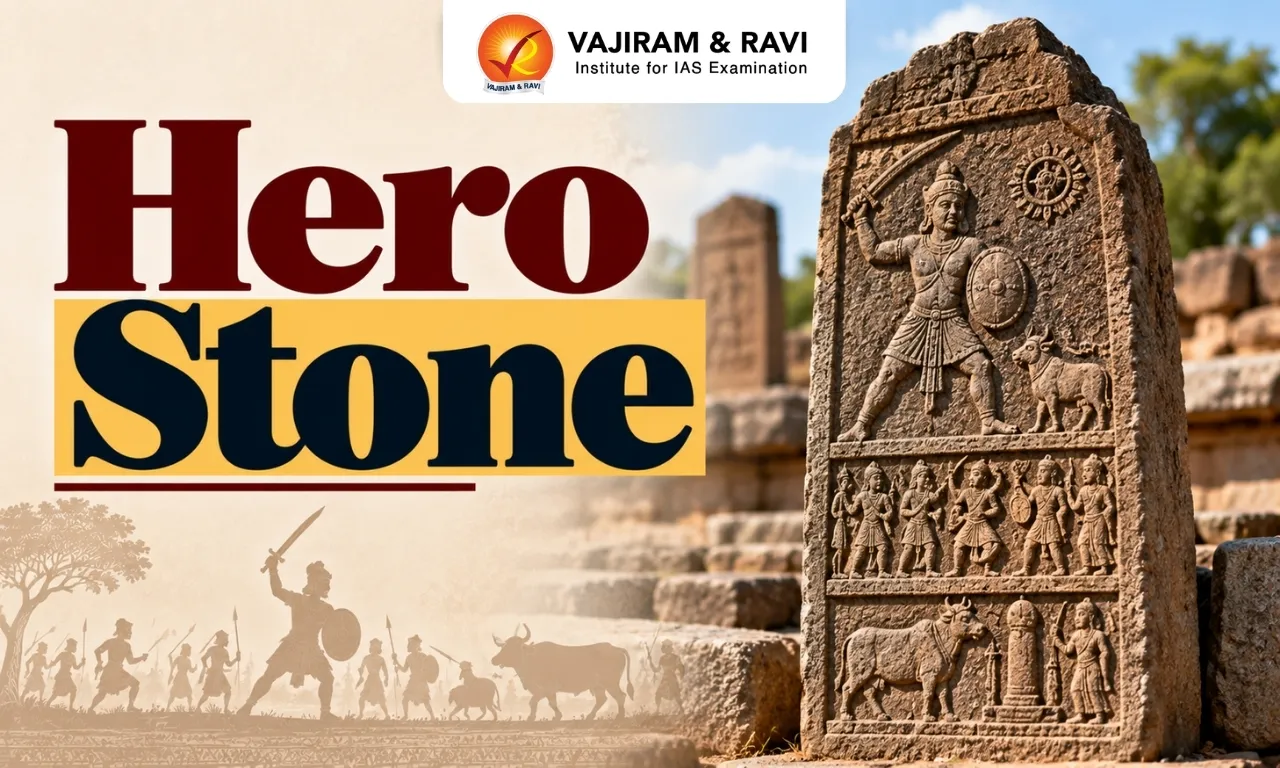
A Hero Stone, known as veeragallu in Kannada and nadukal in Tamil, is a carved memorial stone raised in honour of a warrior or villager who died bravely in battle, in a cattle raid, or while protecting a village. These stones usually show the hero’s death, journey to heaven and worship of a deity in three panels. The tradition began in the Sangam period and continued until about the 19th century CE. Hero Stones are found across India, mainly in Karnataka, Tamil Nadu, Andhra Pradesh, Telangana and Maharashtra. 

What Is a Hero Stone?

A Hero Stone is a carved memorial stone raised to honour someone who died bravely while protecting others. It is the village’s way of saying, “we will never forget this sacrifice.”

  • A Hero Stone is called veeragallu in Kannada, nadukal (meaning “planted stone”) in Tamil, and virgal in some other places.
  • It honours a warrior, hero or chieftain who died in battle, in a cattle raid, or while protecting a village, its women or its livestock.
  • Such people were treated almost like demigods. Villagers or relatives placed the stone in front of a temple or in the village meeting place.
  • Most Hero Stones have three panels:
    • The bottom panel shows how the hero died, such as fighting enemies or saving cattle.
    • The middle panel shows apsaras carrying the hero to heaven (swarga).
    • The top panel shows the hero worshipping a deity, often with the sun and moon for lasting glory.
  • Some stones carry inscriptions in scripts like Old Kannada, Tamil-Brahmi or Vattezhuthu, naming the hero, the ruling king and the event. About half of all Hero Stones have no inscription.
  • In Karnataka, Hero Stones are grouped by the cause of death:
    • Yuddha (battle)
    • Ooralivu (defending the village)
    • Gadi Kalaga (defending the border)
    • Go Grahana or Thurugol (protecting cattle)
    • Pendirudeyurchu (protecting women)
    • Bete (hunting)
  • Cattle were seen as wealth in those days, so a cattle raid was a serious insult to a village. Even the Mahabharata mentions one at Viratanagari.
  • Hero Stones were not only for humans. The Atakur inscription (949 CE) honours a brave dog that died killing a wild boar. At Melagani in Kolar, two 10th-century stones honour the hounds Loga and Dhalaga.

Hero Stones in India Origin

The tradition began in the early historic period of South India, with its oldest known examples in Tamil Nadu. It then spread and continued for about two thousand years.

  • Most Hero Stones were raised between the second half of the first millennium BCE and the 18th century CE. The practice is also described as going back to the Sangam period and lasting until the 19th century.
  • The oldest inscribed examples come from Tamil Nadu. In 2006, Tamil-Brahmi stones were found at Puliyamkombai in Theni district, and one records a man who died in a cattle raid at Kudalur.
  • Scholars dated four such stones to the 2nd or 3rd century BCE. Most were set up for men who died in cattle raids, which matches what Sangam poems describe.
  • The custom is thought to be linked to the funeral practices of the Megalithic period. Many early Hero Stones were built like small shrines, with upright stones and a capstone.
  • Early stones from the Sangam and post-Sangam period carried no figure of the warrior. Examples at Pulimankombai, Aappanur and Mallikapuram show this.
  • A Sangam-period Hero Stone was found at Malayadipatti in Tenkasi district, Tamil Nadu, in a brick well with steps. It measures about 1 m by 0.30 m.
  • Its four-line inscription is in a script between Tamil-Brahmi and Vattezhuthu. It names Karukkan, Sulagan, Nannang and Kodiyan, and is read as a memorial to Nannang Kodiyan, son of Karukkan Sulagan.
  • The earliest Hero Stone in Karnataka dates to the 5th century CE.
  • The art reached its peak between the 5th and 14th centuries CE, under dynasties like the Chalukyas, Gangas and Hoysalas. This is when the detailed three-panel carvings became common.

Hero Stones Geographical Distribution

Hero Stones are found across India, but the largest numbers are in Karnataka, Tamil Nadu, Andhra Pradesh, Telangana and Maharashtra.

  • Karnataka has the richest collection, and Hero Stones are called a unique feature of its inscription tradition. Major clusters are in Kolar, Shimoga, Tumkur, Bangalore and Haveri.
  • Tamil Nadu, Andhra Pradesh and Maharashtra also have many Hero Stones, partly because of their closeness to Karnataka.
  • In western India, the tradition appears as the paliya or khambhi, which is similar to South Indian Hero Stones. These are most common in Saurashtra and Kutch in Gujarat.
  • Rajasthan has its own types, mainly paliyas (single-panel stones) and sculpted pillars. Odisha calls them Veer Shila.
  • Famous examples include the Begur Veeragallu, now in the Bangalore Museum, and the Dekabbe memorial at Belathur (1057 CE). Some of these are regarded as unmatched in India for their detailed scenes and inscriptions.
  • Many Karnataka stones show attacks on forts. Examples are at Abblur, Mavali, Hamsabhavi and Lakshmeshwar in Gadag district.
  • The Doddahundi memorial (9th century) shows the ritual death of the Western Ganga king Ereganga Nitimarga I.
  • Hero Stones usually stand in front of village temples, in village squares, at borders, or beside ponds. Many are still worshipped as village deities.
  • A recent find at Neeragunda in Karnataka turned up two Hero Stones during temple renovation. One inscription is dated 11 December 1141 CE and mentions a soldier who sacrificed his life after the death of the Hoysala king Vishnuvardhana at Bankapura.

Significance of Hero Stones in Indian History

Hero Stones are real historical records. They tell us about wars, rulers, village life, art and beliefs, including the lives of ordinary people that royal records often skipped.

  • Evidence for dates and events: Inscribed stones name kings, dates and battles. The Neeragunda stone may help settle the long-standing confusion about when Vishnuvardhana died.
  • Remembering ordinary people: They keep alive the stories of villagers and soldiers who would otherwise be forgotten. Rulers often rewarded the families of fallen men with land, titles or wealth, and paid for a Hero Stone to honour the dead.
  • Beliefs about life after death: The three panels show the journey from death to heaven to worship, which tells us how people imagined what came after life.
  • Values of the time: They reflect loyalty, integrity and sacrifice for one’s community, master or land. The idea behind them can be summed up as “Duty Before Self.”
  • Other memorial stones: Hero Stones belong to a wider family of memorials, especially in Karnataka.
    • Masti stones are for women who ended their lives after their husbands’ deaths. They usually show a raised right hand. Historians note that in Karnataka this was voluntary and not forced.
    • Keelgunte stones are for those who gave their lives on the death of their master or king.
    • Sidithale stones are for ritual self-sacrifice by beheading.
    • Dharmika stones are for religious deaths, such as the Jain Sallekhana (marked by nisidi stones), and Jataka stones are linked to Buddhist tales.
  • Art and writing: The carvings show weapons, horses, elephants, forts, and even ships. On the western coast, some stones show naval battles on the lowest panel. Early Tamil-Brahmi stones also suggest that writing was not limited to a small elite in ancient Tamil Nadu.
  • Pastoral and tribal history: The many cattle-raid stones show how important herding communities were. They also help us study regions and groups that written histories rarely cover.

Hero Stone FAQs

Q1: What is a Hero Stone in simple words?

Ans: A Hero Stone is a carved memorial stone placed in honour of a person who died bravely in battle, in a cattle raid, or while protecting a village, its women or its animals.

Q2: What is a Hero Stone called in Kannada and Tamil?

Ans: It is called veeragallu in Kannada and nadukal (planted stone) in Tamil. In some other regions it is known as virgal.

Q3: What do the three panels of a Hero Stone show?

Ans: The bottom panel shows how the hero died, the middle panel shows the hero being carried to heaven by apsaras, and the top panel shows the hero worshipping a deity.

Q4: How old are Hero Stones in India?

Ans: The tradition goes back to the Sangam period. The oldest inscribed stones from Tamil Nadu are dated to about the 2nd to 3rd century BCE, and the practice continued until about the 19th century CE.

Q5: Where are Hero Stones mainly found in India?

Ans: Mainly in Karnataka, Tamil Nadu, Andhra Pradesh, Telangana and Maharashtra. Similar memorial stones, such as paliyas, are found in Gujarat and Rajasthan, and Veer Shila in Odisha.

UPSC Daily Quiz 15 October 2026

UPSC Daily Quiz

[WpProQuiz 279]

UPSC Daily Quiz FAQs

Q1: What is the Daily UPSC Quiz?

Ans: The Daily UPSC Quiz is a set of practice questions based on current affairs, static subjects, and PYQs that help aspirants enhance retention and test conceptual clarity regularly.

Q2: How is the Daily Quiz useful for UPSC preparation?

Ans: Daily quizzes support learning, help in revision, improve time management, and boost accuracy for both UPSC Prelims and Mains through consistent practice.

Q3: Are the quiz questions based on the UPSC syllabus?

Ans: Yes, all questions are aligned with the UPSC Syllabus 2025, covering key areas like Polity, Economy, Environment, History, Geography, and Current Affairs.

Q4: Are solutions and explanations provided with the quiz?

Ans: Yes, each quiz includes detailed explanations and source references to enhance conceptual understanding and enable self-assessment.

Q5: Is the Daily UPSC Quiz suitable for both Prelims and Mains?

Ans: Primarily focused on Prelims (MCQ format), but it also indirectly helps in Mains by strengthening subject knowledge and factual clarity.

Festivals of Uttarakhand, Major List, Traditions, Religious Importance

Festivals of Uttarakhand

The festivals of Uttarakhand reflect the state’s agrarian traditions, Himalayan ecology, religious beliefs, folk culture and tribal heritage. Major festivals are closely linked to seasonal changes, agricultural activities, local deities and the cultural traditions of different regions and communities.

List of Major Festivals of Uttarakhand

Major festivals of Uttarakhand are closely associated with its seasonal cycle, agriculture, local deities, tribal traditions and regional history. The important festivals and fairs of the state are given below.

Seasonal and Agricultural Festivals of Uttarakhand 

These festivals are linked to the arrival of seasons, agricultural activities, harvest cycles and traditional community practices of the Himalayan region.

Harela

  • Harela is an important agricultural festival, particularly associated with the Kumaon region.
  • It is celebrated during the monsoon season, especially in the month of Shravan, and symbolises greenery, prosperity and a good harvest.
  • Five or seven varieties of seeds are sown in small containers of soil. The green shoots that emerge are known as Harela. These shoots are traditionally placed on the head or behind the ears as a symbol of prosperity and well-being.
  • The festival is also associated with the worship of Lord Shiva and Goddess Parvati.
  • Its agricultural and ecological significance is reflected in contemporary tree-plantation activities associated with the festival.

Phool Dei

  • Phool Dei marks the arrival of spring and is celebrated on the first day of the month of Chaitra.
  • Children, particularly young girls known as Phoolyaris, visit homes and place seasonal flowers, rice and other auspicious items at the doorsteps.
  • The festival is associated with wishes for prosperity, happiness and well-being.

Ghughutia (Kale Kauva)

  • Ghughutia, also known as Kale Kauva, is a traditional festival of the Kumaon region celebrated around Makar Sankranti.
  • Children wear garlands made of Ghughute, specially prepared deep-fried sweet dough items made from wheat flour and jaggery. The sweetmeats are shaped into forms such as birds, knots and spindles.
  • Some of these sweets are offered to crows while children sing traditional songs.
  • The festival is associated with the broader celebration of Uttarayani, marking the Sun’s northward movement.

Igas Bagwal

  • Igas Bagwal, also called Budhi Diwali, is traditionally celebrated in the Garhwal region on the eleventh day after Diwali.
  • According to local tradition, news of Lord Rama’s return to Ayodhya reached the remote hill villages late, leading them to celebrate Diwali after the usual date.
  • The festival is marked by the spinning and twirling of Bhailo, a traditional lighted torch made of dry wood tied with ropes.
  • Traditional folk dances such as Thadya and Chauphula are also performed.
  • The festival represents the preservation of regional folk traditions and community memory.

Religious Festivals and Pilgrimages

The religious festivals of Uttarakhand are closely associated with local deities, sacred rivers, pilgrimage traditions and important religious sites of the state.

Nanda Devi Raj Jat

  • Nanda Devi Raj Jat is a major high-altitude pilgrimage associated with Goddess Nanda Devi.
  • It is held approximately once every twelve years and covers nearly 280 km through the Himalayan region.
  • The pilgrimage traditionally begins from Nauti village in Chamoli district and proceeds towards the high-altitude Himalayan areas.
  • A four-horned ram, known as Chausingha Khadu, traditionally accompanies the procession.
  • The yatra represents the symbolic journey of Goddess Nanda Devi from her parental home to her marital home and is an important expression of Himalayan religious and folk traditions.

Nanda Devi Mela

  • Nanda Devi Mela is an annual festival celebrated mainly in the Kumaon region, particularly at places such as Almora and Nainital.
  • It is associated with Nandashtami and the worship of Goddess Nanda Devi.
  • The tradition is historically associated with the Chand rulers of Kumaon.

Kumbh Mela, Haridwar

  • Haridwar is one of the four major sites of the Kumbh Mela, along with Prayagraj, Nashik and Ujjain.
  • The festival is centred on ritual bathing in the Ganga, particularly at Har Ki Pauri.
  • It is one of the largest religious congregations in the world and is an important part of India’s intangible cultural heritage.

Ganga Dussehra

  • Ganga Dussehra commemorates the descent of the River Ganga to Earth.
  • It is particularly significant in Haridwar and Rishikesh, where devotees participate in ritual bathing and religious ceremonies along the Ganga.

Folk, Tribal and Regional Festivals

These festivals highlight Uttarakhand’s folk traditions, tribal culture, agricultural practices and pastoral life.

Kandali Festival

  • Kandali Festival is associated with the Shauka (Rung) community of the Chaundas Valley in Pithoragarh district.
  • It is linked to the flowering of the Kandali plant (Strobilanthes wallichii), which blooms approximately once every twelve years.
  • The festival reflects the community’s relationship with the unique ecological cycle of the Himalayan region.
  • Local traditions also associate it with the historical resistance of local women against invading forces.

Hilljatra

  • Hilljatra is a traditional monsoon festival of the Sor Valley in Pithoragarh.
  • It is associated with the agricultural cycle, particularly paddy transplantation.
  • The festival features masked folk performances and processions.
  • Lakhia Bhoot, regarded as a divine follower (Gan) of Lord Shiva, is a prominent character in the traditional performance.

Bissu Mela

  • Bissu Mela is celebrated by the Jaunsari tribal community of the Jaunsar-Bawar region of Dehradun district.
  • It is associated with the local New Year and is marked by traditional cultural performances, including the Harul dance.

Anduri Utsav

  • Anduri Utsav, also known as the Butter Festival, is celebrated at Dayara Bugyal in Uttarkashi district.
  • It is associated with the traditional pastoral culture of the high-altitude Himalayan meadows.
  • The festival reflects the importance of cattle-rearing and alpine pasture-based livelihoods in the region.

Important Fairs and Cultural Festivals of Uttarakhand 

Uttarakhand’s fairs and cultural festivals reflect its regional history, religious traditions, folk practices and historical trade networks. Several of these events also preserve the memory of important social movements and traditional cultural practices.

Uttarayani Mela, Bageshwar

  • The Uttarayani Mela is held at Bageshwar, near the confluence of the Saryu and Gomti rivers, during Makar Sankranti.
  • It is an important religious, cultural and traditional trade fair of the Kumaon region.
  • The fair has historical significance because the 1921 Coolie-Begar Movement against forced labour gained decisive momentum at Bageshwar.

Devidhura Bagwal Mela

  • Devidhura Bagwal Mela is held at the Varahi Devi Temple in Devidhura, Champawat district, on the occasion of Raksha Bandhan.
  • The traditional Bagwal involved a ritual contest between four traditional groups or Khams, with participants using wooden shields for protection.
  • The ritual is associated with the traditional memory of practices involving the sacrifice of human life and the subsequent substitution of such practices.
  • In recent years, measures have been encouraged to reduce injuries, including the use of flowers and fruits in place of stones in some forms of the ritual.

Syalde-Bikhauti Mela

  • Syalde-Bikhauti Mela is an important annual fair held at Dwarahat in Almora district around Vishuvat Sankranti (Vaisakhi).
  • The celebrations are associated with places including Vimandeshwar Temple and the Dwarahat market.
  • A distinctive ritual associated with the fair is Oda Bhetna, involving the symbolic striking of a stone with sticks.

Jauljibi Mela

  • Jauljibi Mela is held annually in Pithoragarh district at the confluence of the Kali and Gori rivers.
  • It has historically served as a centre of trade and cultural exchange among communities from India, Nepal and the trans-Himalayan region.
  • The fair is particularly associated with the Shauka (Bhotiya) community and reflects the historical importance of trans-Himalayan trade routes.

Festivals of Uttarakhand Significance

The festivals of Uttarakhand are important because they preserve the state’s distinct cultural traditions while reflecting its close relationship with agriculture, ecology, tribal communities and regional history.

  • Agricultural significance: Harela, Phool Dei and Hilljatra are closely linked to seasonal changes, sowing, paddy transplantation and the agricultural cycle.
  • Ecological significance: Harela reflects the importance of greenery and plantation, while the Kandali Festival is linked to the unique 12-year flowering cycle of Strobilanthes wallichii.
  • Cultural significance: Festivals such as Ghughutia, Igas Bagwal and Hilljatra preserve traditional songs, dances, rituals and folk performances.
  • Tribal significance: Kandali, Bissu Mela and Jauljibi Mela preserve the cultural traditions and historical identity of communities such as the Shauka and Jaunsari tribes.
  • Religious significance: Nanda Devi Raj Jat, Kumbh Mela and Ganga Dussehra highlight Uttarakhand’s importance as a major centre of pilgrimage and religious traditions.
  • Historical significance: The Uttarayani Mela at Bageshwar is associated with the 1921 Coolie-Begar Movement, while fairs such as Syalde-Bikhauti preserve regional historical traditions.
  • Economic significance: Fairs such as Jauljibi Mela historically promoted trade and cultural exchange across the India-Nepal-trans-Himalayan region, while major festivals also support local tourism and livelihoods.
Related Post for festivals in states
Festivals of Kerala Festivals of Sikkim
Festivals of Chhattisgarh Festivals of Himachal Pradesh
Festivals of Maharashtra Festivals of Odisha
Festivals of Karnataka Festivals of Punjab
Festivals of Andhra Pradesh Festivals of Tamil Nadu
Festivals of Haryana Festivals of West Bengal
Festivals of Arunachal Pradesh Festivals of Ladakh
Festivals of Rajasthan Festivals of Nagaland
Festivals of Jharkhand Festivals of Uttarakhand
Festivals of Telangana Festivals of Manipur
Festivals of Bihar Festivals of Gujarat
Festivals of Goa Festivals of Assam
Festivals of Meghalaya
Festivals of Uttar Pradesh
Festivals of Tripura Festivals of Delhi
Festivals of Madhya Pradesh Festivals of Jammu and Kashmir
Festivals of Puducherry Festivals of Dadra and Nagar Haveli and Daman and Diu
Festivals of Andaman and Nicobar Islands Festivals of Lakshadweep
Fairs and Festivals of India
Harvest Festivals in India

Festivals of Uttarakhand FAQs

Q1: Which festival of Uttarakhand is associated with sowing five or seven varieties of seeds?

Ans: Harela, an agricultural festival of Kumaon, symbolises greenery, prosperity and a good harvest.

Q2: Which festival of Uttarakhand is held approximately once every 12 years and features the Chausingha Khadu?

Ans: Nanda Devi Raj Jat is a high-altitude pilgrimage in which a four-horned ram, called Chausingha Khadu, traditionally accompanies the procession.

Q3: Which festival of Uttarakhand is linked to the 12-year flowering cycle of Strobilanthes wallichii?

Ans: The Kandali Festival, associated with the Shauka (Rung) community of Pithoragarh, is linked to the flowering of the Kandali plant.

Q4: Which festival of Uttarakhand is associated with the 1921 Coolie-Begar Movement?

Ans: The Uttarayani Mela at Bageshwar is associated with the historic movement against forced labour.

Q5: Which festival of Uttarakhand reflects historic trans-Himalayan trade?

Ans: The Jauljibi Mela, held at the confluence of the Kali and Gori rivers in Pithoragarh, reflects historic trade and cultural exchange between India, Nepal and the trans-Himalayan region.

95th Birth Anniversary of Dr. APJ Abdul Kalam 2026, Biography

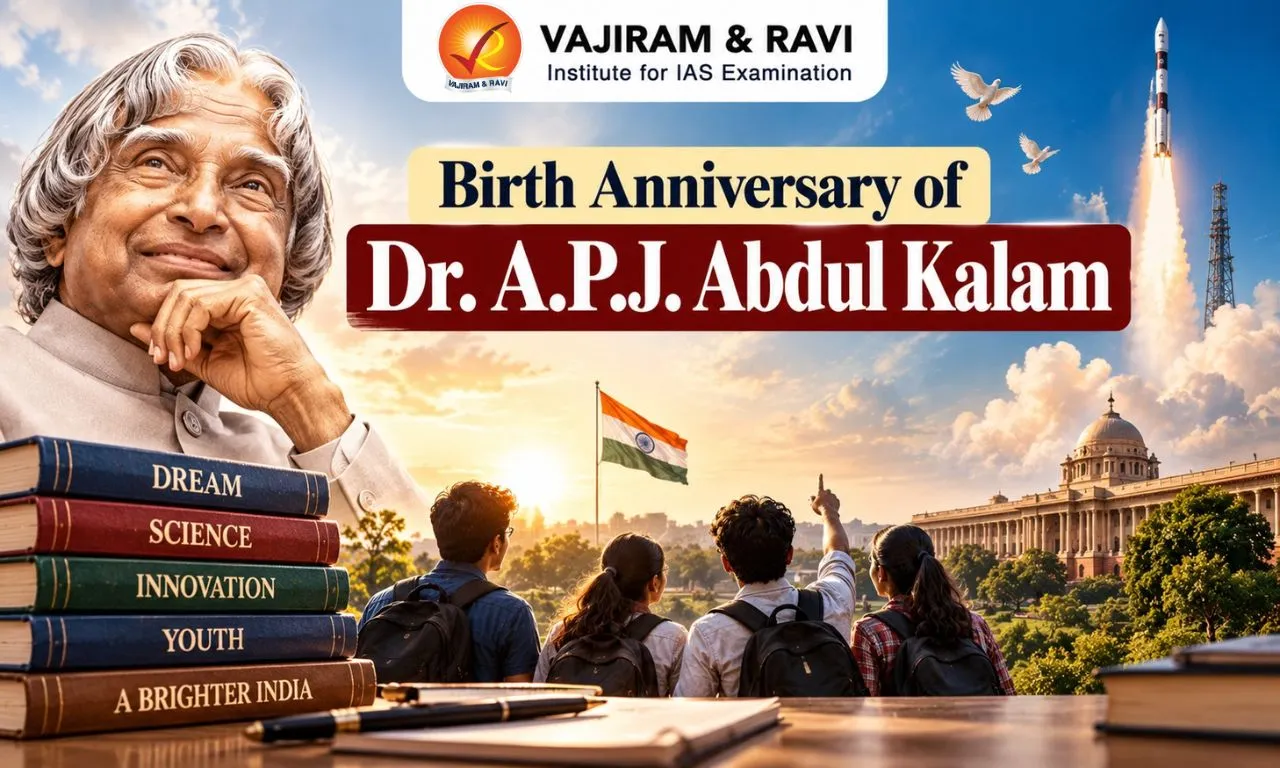
Birth Anniversary of Dr. A.P.J. Abdul Kalam

The Birth Anniversary of Dr. APJ Abdul Kalam is observed on 15 October every year to remember one of India's most respected scientists, teachers and former Presidents. Popularly known as the Missile Man of India and the People's President, Dr. Kalam made significant contributions to space research, missile technology, defence capabilities and healthcare innovation. His life reflected simplicity, dedication, scientific thinking and a strong commitment to national development. His inspiring journey continues to motivate students and young people.

APJ Abdul Kalam Birth Anniversary 2026

The 95th Birth Anniversary of Dr. APJ Abdul Kalam falls on 15 October 2026. The day is associated with World Students' Day in recognition of his dedication to education, teaching and youth empowerment. Dr. Kalam believed that knowledge, innovation and hard work were essential for national progress. His contributions as a scientist, author and the 11th President of India continue to inspire generations to pursue their goals and contribute to society.

Dr. APJ Abdul Kalam Biography

Dr. APJ Abdul Kalam was born on October 15 1931 into a modest family in Rameswaram, Tamil Nadu. Despite financial difficulties, he pursued education with determination and developed a strong interest in science and technology.

  • Full Name: The full name of Abdul Kalam was “Dr. Avul Pakir Jainulabdeen Abdul Kalam”.
  • Early Life and Family: Dr. Kalam's father, Jainulabdeen, was a boat owner, while his mother, Ashiamma, was a homemaker. His early experiences taught him discipline, humility and the importance of hard work.
  • Education: He completed his bachelor's degree in physics from St. Joseph's College, Tiruchirappalli, in 1954 and later studied aeronautical engineering at the Madras Institute of Technology.
  • Scientific Career: He joined the Defence Research and Development Organisation (DRDO) in 1960 and later moved to the Indian Space Research Organisation (ISRO) in 1969. His work strengthened India's space research and defence technology programmes.
  • Presidency of India: Dr. Kalam served as the 11th President of India from 2002 to 2007. He became widely known as the People's President because of his approachable nature and close engagement with students.
  • Vision for India: Through Technology Vision 2020, Dr. Kalam proposed a roadmap for transforming India into a developed nation by improving agriculture, healthcare, education and technological capabilities.
  • Death: Dr. APJ Abdul Kalam died on 27 July 2015 while delivering a lecture at the Indian Institute of Management Shillong in Meghalaya. He collapsed during his address and was declared dead following a cardiac arrest at the age of 83. 

Dr. APJ Abdul Kalam Contributions

Dr. APJ Abdul Kalam's Contributions covered space research, missile development, nuclear technology, healthcare innovation and education. His work helped strengthen India's scientific capabilities and promoted the use of technology for national development.

  • Space Technology: As project director of the Satellite Launch Vehicle III (SLV III), Dr. Kalam contributed to the successful launch of the Rohini satellite into near Earth orbit in July 1980. He also supported the development of India's launch vehicle programme, including the Polar Satellite Launch Vehicle (PSLV).
  • Missile Development: He led the Integrated Guided Missile Development Programme (IGMDP), which contributed to the development of Agni and Prithvi missiles. His leadership in indigenous missile technology earned him the title Missile Man of India.
  • Nuclear Capabilities: Dr. Kalam played a significant technical and organisational role in the Pokhran II nuclear tests of 1998. His contribution strengthened India's strategic capabilities and established his position as a leading figure in defence research.
  • Healthcare Innovation: In collaboration with cardiologist B. Soma Raju, he developed the Kalam-Raju Stent, a cost effective coronary stent that helped make cardiac treatment more affordable. They also developed the Kalam-Raju Tablet for healthcare workers in rural areas.
  • Technology Vision 2020: Dr. Kalam presented a development roadmap focused on agricultural productivity, technological advancement, accessible healthcare and quality education. The vision emphasised the role of scientific innovation in improving living standards and promoting national progress.
  • Rural Development: Through the concept of Providing Urban Amenities to Rural Areas (PURA), Dr. Kalam advocated better infrastructure, services and economic opportunities in rural regions. The approach aimed to reduce the development gap between rural and urban communities.
  • Education and Youth Empowerment: Dr. Kalam devoted much of his public life to interacting with students and encouraging scientific curiosity. He believed that education, creativity and innovation could help young people become active contributors to national development.
  • Literary Contributions: Books such as Wings of Fire, Ignited Minds and India 2020 communicated his ideas on personal development, scientific progress and India's future. His writings continue to encourage ambition, responsibility and lifelong learning.

Dr. APJ Abdul Kalam Awards and Honours

Dr. APJ Abdul Kalam received several prestigious awards and honours for his contributions to science, defence technology and national development. His recognitions reflected his achievements as a scientist, administrator, author and President of India.

  • Bharat Ratna (1997): India awarded Dr. Kalam its highest civilian honour in recognition of his contributions to scientific research and the modernisation of defence technology.
  • Padma Bhushan (1981): He received this civilian award for his contributions to science, engineering and India's technological development.
  • Padma Vibhushan (1990): This honour recognised his continued contributions to scientific research, space programmes and defence capabilities.
  • Indira Gandhi Award for National Integration: Dr. Kalam received this award in recognition of his contributions associated with national development and integration.
  • Veer Savarkar Award: This recognition formed part of the honours he received for his contributions to the country.
  • Honorary Doctorates: Numerous universities and institutions in India and abroad awarded him honorary degrees in recognition of his scientific achievements and public service.
  • Recognition of His Legacy: 
    • Abdul Kalam Island: Wheeler Island, a missile test site in Odisha, was renamed Abdul Kalam Island in his honour. 
    • Solibacillus Kalamii: A bacterial species discovered on the International Space Station was also named Solibacillus Kalamii in recognition of his legacy.
  • APJ Abdul Kalam Birth Anniversary: The Birth Anniversary of APJ Abdul Kalam is celebrated each year as World Student's Day to honour his contributions towards the students and their education.

Birth Anniversary of Dr. APJ Abdul Kalam 2026 FAQs

Q1: When is the Birth Anniversary of Dr. APJ Abdul Kalam celebrated?

Ans: The Birth Anniversary of Dr. APJ Abdul Kalam is celebrated on 15 October every year. He was born in 1931 in Rameswaram, Tamil Nadu.

Q2: What was the full name of Dr. APJ Abdul Kalam?

Ans: His full name was Avul Pakir Jainulabdeen Abdul Kalam. He was an eminent aerospace scientist and served as the 11th President of India.

Q3: Why is Dr. APJ Abdul Kalam known as the Missile Man of India?

Ans: Dr. Kalam is known as the Missile Man of India for his major contributions to indigenous missile development, particularly through the Integrated Guided Missile Development Programme.

Q4: Why is 15 October celebrated as World Students' Day?

Ans: World Students' Day is observed on 15 October in recognition of Dr. Kalam's birth anniversary and his dedication to education, teaching and inspiring students. It is not officially designated as an international day by the United Nations.

Q5: What were the major awards received by Dr. APJ Abdul Kalam?

Ans: Dr. Kalam received the Padma Bhushan in 1981, the Padma Vibhushan in 1990 and the Bharat Ratna in 1997. These honours recognised his contributions to science, defence technology and national development.

Communal Award, Provisions, Gandhi-Ambedkar Debate, Poona Pact

Communal Award

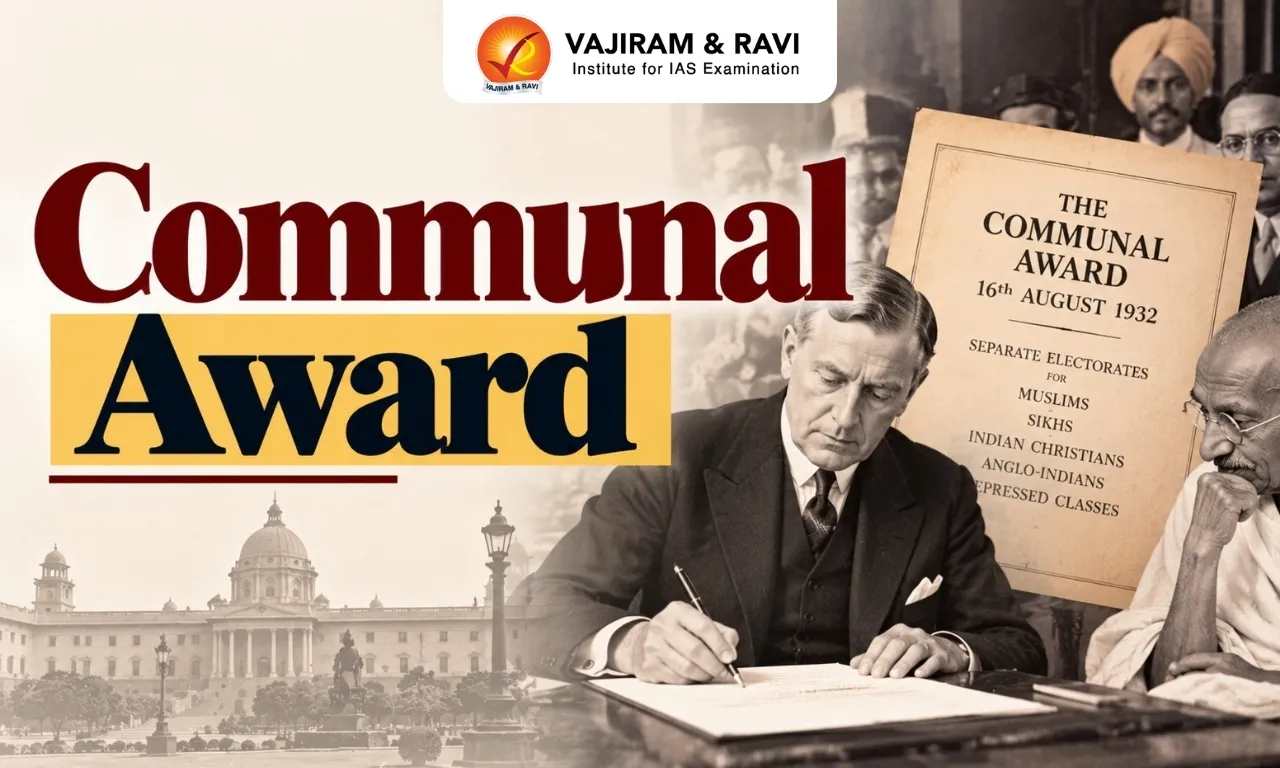
Communal Award was a British government decision that shaped the debate over political representation in colonial India. Announced by British Prime Minister Ramsay MacDonald, it extended separate electorates to the Depressed Classes, leading to a major disagreement between Mahatma Gandhi and Dr. B. R. Ambedkar and eventually to the Poona Pact.

What Was the Communal Award of 1932?

The Communal Award, also known as the MacDonald Award, was announced on 16 August 1932 to determine the representation of different communities in British India's legislatures.

  • It provided separate electorates for several religious minorities and the Depressed Classes.
  • It recognised the Depressed Classes as a distinct category for electoral representation and allotted them 71 special seats in provincial legislatures.
  • The Award was intended to address disagreements over minority representation that remained unresolved during the Round Table Conferences.

It became a turning point in the debate over separate electorates, caste discrimination and the political rights of the Depressed Classes.

Communal Award Background

The Communal Award emerged from constitutional negotiations over how different communities would be represented in India's legislatures under British rule.

  • Indian Councils Act, 1909: The Morley-Minto Reforms introduced separate electorates for Muslims.
  • Government of India Act, 1919: The Montagu–Chelmsford Reforms extended separate representation to additional communities, including Sikhs.
  • Round Table Conferences (1930-1932): The conferences discussed India's constitutional future and the representation of minorities and the Depressed Classes.
  • Second Round Table Conference (1931): Gandhi and Ambedkar disagreed over whether the Depressed Classes should have separate electorates.
  • British government's decision: With no agreement among the principal stakeholders, Ramsay MacDonald announced the Communal Award in August 1932.

Main Provisions of the Communal Award 

Announced by British Prime Minister Ramsay MacDonald on 16 August 1932, the Communal Award introduced separate electorates and communal representation for various groups in British India.

  • Separate electorates: Muslims, Sikhs, Indian Christians, Anglo-Indians, Europeans and the Depressed Classes were granted separate electorates. The arrangement for the Depressed Classes was to remain in force for 20 years. Women and Marathas also received specific electoral provisions.
  • Communal representation: Seats in provincial legislatures were allocated on a communal basis.
  • Increase in legislative seats: The number of seats in provincial legislatures was to be doubled.
  • Weightage for Muslims: Muslims were granted weightage in provinces where they were in a minority.
  • Reservation for women: Three per cent of seats were reserved for women in all provinces except the North-West Frontier Province.
  • Status of the Depressed Classes: The Depressed Classes were recognised as a minority for electoral purposes.
  • Double vote for the Depressed Classes: They could vote in elections through their separate electorate and also participate in the general electorate.
  • Representation of special interests: Seats were allocated to groups such as labourers, landlords, traders and industrialists.
  • Representation of Marathas: Seven seats were allocated to the Marathas in the Bombay Presidency.

Congress Stand on the Communal Award

The Indian National Congress opposed separate electorates but did not support changing the Communal Award without the consent of minorities. It therefore neither accepted nor rejected the Award.

Congress nationalists also opposed treating the Depressed Classes as a separate political entity distinct from the rest of the Hindu community.

Mahatma Gandhi’s Response to the Communal Award

Mahatma Gandhi viewed the Communal Award as a threat to Indian unity and nationalism, particularly because it granted separate electorates to the Depressed Classes.

  • Opposition to separate electorates: Gandhi argued that treating the Depressed Classes as a separate political entity would weaken efforts to abolish untouchability.
  • Concern about untouchability: He believed that separate electorates would perpetuate the social separation of the Depressed Classes rather than address their degraded social position.
  • Demand for joint electorates: Gandhi supported electing representatives of the Depressed Classes through joint electorates, preferably with a wider electorate based on universal adult franchise. He did not oppose granting them a larger number of reserved seats.
  • Fast unto death: To oppose separate electorates for the Depressed Classes, Gandhi began an indefinite fast on 20 September 1932.

B. R. Ambedkar’s Response to the Communal Award

Dr. B. R. Ambedkar supported separate electorates for the Depressed Classes, arguing that they needed independent political representation to protect their interests and challenge caste-based discrimination.

  • Political representation: Ambedkar believed that separate electorates would enable the Depressed Classes to elect their own representatives without depending on the support of the caste Hindu majority.
  • Independent leadership: He argued that political safeguards were necessary for the Depressed Classes to develop independent leadership and effectively raise their concerns.

Gandhi-Ambedkar Debate on Separate Electorates

While Gandhi opposed separate electorates for the Depressed Classes on grounds of Hindu and national unity, Ambedkar prioritised their political autonomy and protection against caste-based domination.

Mahatma Gandhi

Dr. B. R. Ambedkar

Opposed separate electorates for the Depressed Classes.

Supported separate electorates to ensure independent political representation.

Believed separate electorates would divide Hindu society.

Believed joint electorates could leave representatives dependent on dominant-caste voters.

Emphasised social unity and the eradication of untouchability.

Emphasised political safeguards and the independent voice of the Depressed Classes.

Favoured representation within a common electorate.

Initially demanded a separate electorate for the Depressed Classes.

The debate culminated in the Poona Pact of September 1932, which replaced separate electorates with joint electorates and reserved seats.

What Was the Poona Pact of 1932?

The Poona Pact was signed on 24 September 1932 by Dr. B. R. Ambedkar on behalf of the Depressed Classes. It abandoned separate electorates for the Depressed Classes but increased their representation through reserved seats in legislatures.

  • Provincial legislatures: The number of reserved seats for the Depressed Classes increased from 71 under the Communal Award to 147 under the Poona Pact.
  • Central Legislature: The Pact provided for 18% of the seats allotted to the general electorate in British India to be reserved for the Depressed Classes.
  • Acceptance by the British government: The government accepted the Poona Pact as an amendment to the Communal Award.

Impact of the Poona Pact on Dalits

Although the Poona Pact granted certain political rights to the Depressed Classes, critics argued that it failed to achieve their emancipation and allowed the existing Hindu social order to continue.

  • Political dependence: The Pact made the Depressed Classes vulnerable to political influence from majoritarian caste Hindu organisations.
  • Weakening of independent leadership: Critics argued that genuine representatives of the Depressed Classes could lose elections to candidates supported by caste Hindu organisations.
  • Continuation of the status quo: The system hindered the development of independent leadership capable of challenging the Brahminical social order in political, ideological and cultural spheres.
  • Loss of a distinct political identity: Critics argued that the Pact incorporated the Depressed Classes into the existing Hindu social order without recognising their separate political identity.
  • Challenges to social justice: Critics maintained that the Pact obstructed the development of a society based on equality, liberty, fraternity and justice. They also argued that denying Dalits a distinct place in national life weakened the protection of their rights and safeguards in independent India.

Joint Electorates and Their Impact on the Depressed Classes

The Working Committee of the All India Scheduled Caste Federation criticised the joint-electorate system following elections held under the Government of India Act, 1935.

  • Ineffective representation: The Federation argued that joint electorates prevented Scheduled Castes from electing representatives who could effectively voice their interests.
  • Influence of the Hindu majority: It contended that the system allowed the Hindu majority to influence the election of Scheduled Caste representatives who were dependent on its support.
  • Demand for separate electorates: The Federation called for the restoration of separate electorates and the abolition of the joint-electorate system with reserved seats.
  • Ambedkar’s continued criticism: Dr. B. R. Ambedkar continued to criticise the Poona Pact until 1947.

Difference Between the Communal Award and the Poona Pact

The principal difference was that the Communal Award provided separate electorates for the Depressed Classes, whereas the Poona Pact introduced joint electorates with reserved seats.

Basis

Communal Award, 1932

Poona Pact, 1932

Electoral system

Separate electorates for the Depressed Classes

Joint electorates with reserved seats

Provincial seats

71

148

Candidate selection

Separate electorate for the Depressed Classes

Primary election to select a panel of candidates, followed by a joint electorate

Central representation

Separate-electorate arrangements

18% of seats allotted to the general electorate for British India reserved for the Depressed Classes

Outcome

Recognised the Depressed Classes as a separate electoral category

Increased reserved seats while retaining a common electorate

Significance of the Communal Award in Indian History

The Communal Award was an important development in the Indian national movement because it brought political representation, caste inequality and minority rights to the centre of constitutional negotiations.

  • Political representation: It highlighted the demand for independent representation by communities that feared domination by numerical majorities.
  • Gandhi-Ambedkar relationship: It exposed fundamental differences between Gandhi and Ambedkar over the political safeguards required by the Depressed Classes.
  • Poona Pact: The resulting agreement increased reserved legislative seats while replacing separate electorates with joint electorates.
  • Constitutional legacy: The debate provides historical context for understanding reserved seats for Scheduled Castes in independent India.
  • Social justice: The episode highlights the relationship between political representation, caste discrimination and the protection of disadvantaged communities.

Reservation for Scheduled Castes in Independent India

The Poona Pact forms an important part of the historical background to the system of reserved legislative seats for Scheduled Castes in India.

  • The Constitution provides for the reservation of seats for Scheduled Castes and Scheduled Tribes in the Lok Sabha and State Legislative Assemblies.
  • Article 330 provides for the reservation of seats for Scheduled Castes and Scheduled Tribes in the Lok Sabha.
  • Article 332 provides for reservation of seats for Scheduled Castes and Scheduled Tribes in State Legislative Assemblies.

Unlike the separate-electorate system proposed under the Communal Award, reserved seats in independent India operate through joint electorates.

Communal Award FAQs

Q1: What was the Communal Award?

Ans: The Communal Award was a decision announced by British Prime Minister Ramsay MacDonald on 16 August 1932 to provide separate electorates and representation for different communities in British India's legislatures.

Q2: Why did Gandhi oppose the Communal Award?

Ans: Gandhi opposed separate electorates for the Depressed Classes because he believed they would divide Hindu society and hinder efforts to eradicate untouchability.

Q3: Why did Dr. B. R. Ambedkar support separate electorates?

Ans: Dr. B. R. Ambedkar believed separate electorates would allow the Depressed Classes to elect representatives independently and protect their political interests.

Q4: What was the Poona Pact of 1932?

Ans: The Poona Pact was an agreement signed on 24 September 1932 that replaced separate electorates for the Depressed Classes with joint electorates and reserved seats.

Q5: What was the difference between the Communal Award and the Poona Pact?

Ans: The Communal Award provided separate electorates for the Depressed Classes, whereas the Poona Pact introduced joint electorates and increased their reserved provincial seats from 71 to 148.

Leave India Notice, Meaning, Legal Provisions, Reasons, Significance

Leave India Notice

Why in News?

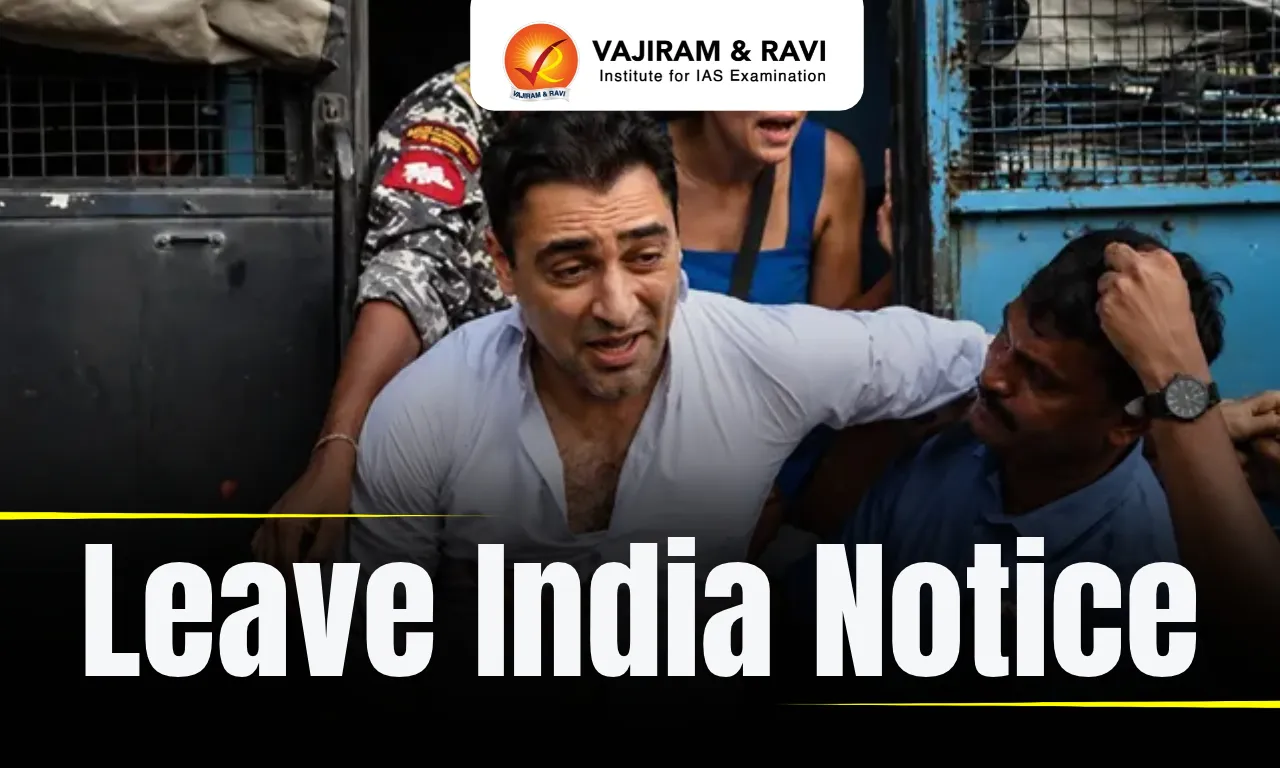
Actor Imran Khan was reportedly issued a Leave India Notice following his participation in a protest against Chief Election Commissioner Gyanesh Kumar in Mumbai. The incident brought attention to the legal powers of Indian authorities to require foreign nationals to leave the country for violating visa conditions or engaging in activities considered contrary to public order or national security.

What is a Leave India Notice?

A Leave India Notice is an administrative direction issued by the competent Indian authorities requiring a foreign national to leave the country within a specified period. The deadline depends on the circumstances and the terms of the order.

It may be issued for reasons such as visa violations, overstaying, prohibited activities or security concerns. The notice is an administrative measure and does not, by itself, amount to a criminal conviction.

Legal Framework Governing Leave India Notices

The legal framework governing the entry, stay and departure of foreign nationals in India includes the following:

  • Immigration and Foreigners Act, 2025: Provides a consolidated legal framework for regulating immigration and the entry, stay and departure of foreigners in India.
  • Foreigners Act, 1946: Previously served as a key law governing foreigners and the powers of the Central Government over their presence in India. The 2025 legislation replaced the earlier framework, subject to applicable transitional provisions.
  • Citizenship Act, 1955: Contains provisions concerning citizenship and Overseas Citizen of India (OCI) registration, including the cancellation of OCI registration under specified circumstances.
  • Constitution of India: Articles 14 and 21 provide protections that extend to persons, including foreign nationals, while Article 19 grants specified fundamental freedoms exclusively to citizens.

Reasons for Issuing a Leave India Notice

A foreign national may be directed to leave India in circumstances such as:

  • Visa violations: Engaging in activities prohibited by the visa, such as unauthorised employment or commercial activities.
  • Overstaying: Remaining in India beyond the permitted period of stay.
  • Violation of immigration rules: Breaching the conditions attached to entry, residence or registration.
  • Public order concerns: Participating in activities that authorities consider a threat to public order, subject to applicable law.
  • National security concerns: Adverse security assessments or activities considered harmful to India's sovereignty, integrity or security.
  • Prohibited political activities: Engaging in activities that violate applicable visa conditions or other legal restrictions.

Legal and Administrative Nature of a Leave India Notice

A Leave India Notice is generally an administrative action rather than a criminal sentence. Its legal consequences depend on the order issued and the relevant immigration provisions.

  • Government powers: The competent authorities have statutory powers to regulate the entry, stay and departure of foreign nationals.
  • Visa validity: The notice or accompanying order may restrict or terminate the permission to remain in India, depending on its terms and the applicable law.
  • Opportunity to respond: Whether a prior show-cause notice or hearing is required depends on the governing provision, the circumstances and applicable judicial principles.
  • Judicial review: An affected person may approach the relevant High Court under Article 226 of the Constitution to challenge an order on legally sustainable grounds, such as arbitrariness, lack of authority or procedural unfairness.
  • National security: Courts recognise the government's role in protecting national security, while the exercise of statutory powers remains subject to applicable constitutional and legal limits.

Leave India Notice and OCI Cardholders

An Overseas Citizen of India (OCI) cardholder is a foreign citizen who holds a special immigration status under Indian law. Despite the name, an OCI card does not confer Indian citizenship.

Key points about OCI status include:

  • OCI cardholders generally receive a lifelong, multiple-entry visa for India, subject to applicable rules and restrictions.
  • They do not have the right to vote in Indian elections or hold constitutional offices reserved for Indian citizens.
  • They remain subject to Indian laws and applicable immigration conditions.
  • OCI registration may be cancelled under Section 7D of the Citizenship Act, 1955, on specified statutory grounds.
  • Activities prohibited under applicable law or immigration conditions may lead to scrutiny or other legal action.

Constitutional Provisions Related to Foreign Nationals

The Constitution distinguishes between rights available to all persons and rights reserved for citizens.

  • Article 14: Guarantees equality before the law and equal protection of the laws to every person within India's territory.
  • Article 19: Protects specified freedoms, including speech and peaceful assembly, for Indian citizens.
  • Article 21: Protects life and personal liberty, except according to procedure established by law.
  • Article 226: Empowers High Courts to issue writs for the enforcement of fundamental rights and for other legal purposes.

Significance of the Issue

Leave India Notices highlight the balance between immigration control, national security, public order and individual legal protections. They also demonstrate why foreign nationals, including OCI cardholders, must comply with applicable immigration laws and visa conditions while in India.

The issue is relevant to understanding executive powers, constitutional safeguards, judicial review and the distinction between citizenship and immigration status.

Leave India Notice FAQs

Q1: What is a Leave India Notice?

Ans: A Leave India Notice is an administrative direction requiring a foreign national to leave India within the period specified by the competent authority.

Q2: Why was Imran Khan asked to leave India?

Ans: Actor Imran Khan was reportedly asked to leave India by October 28, 2026, following his participation in a protest against Chief Election Commissioner Gyanesh Kumar in Mumbai. The notice followed allegations of immigration-law violations.

Q3: Which law governs Leave India Notices in India?

Ans: The Immigration and Foreigners Act, 2025, which came into force on September 1, 2025, provides the current consolidated legal framework for immigration and the regulation of foreigners. It repealed the Foreigners Act, 1946, subject to applicable savings provisions.

Q4: Do OCI cardholders have Indian citizenship?

Ans: No. OCI cardholders are foreign citizens who receive specified immigration privileges in India. They do not enjoy all the rights available to Indian citizens.

Q5: Can a foreign national challenge a Leave India Notice?

Ans: An affected person may approach a High Court under Article 226 of the Constitution, subject to the applicable law and the facts of the case.

10th National Convention of Agrivision 2026, Farmers, Income

10th National Convention of Agrivision 2026

The 10th National Convention of Agrivision was held on 13-14 October 2026 at the ICAR-National Agricultural Science Complex (NASC), Pusa, New Delhi, to discuss agricultural education, modern farming technologies, entrepreneurship and farmers’ welfare.

About the 10th National Convention of Agrivision 2026

The 10th National Convention of Agrivision brought together students, scientists, policymakers, agricultural entrepreneurs and farmers to discuss the future of Indian agriculture.

  • It was organised under the aegis of Agrivision and the Agricultural Education Division of the Indian Council of Agricultural Research (ICAR).
  • Around 450 students from agriculture and allied sciences, representing 25 states, participated in the convention.
  • The inaugural session was attended by Dr. M. L. Jat, Secretary of the Department of Agricultural Research and Education (DARE) and Director General of ICAR.
  • Other participants included senior ICAR officials, agricultural scientists and the vice-chancellors of Central Agricultural University, Imphal, and Rani Lakshmi Bai Central Agricultural University.

10th National Convention of Agrivision 2026 Key Highlights 

The 10th National Convention of Agrivision focused on improving farmers’ incomes, promoting modern technologies and creating new opportunities in agriculture.

  • Market-oriented agriculture: Aligning crop production with market demand and improving marketing and value addition to increase farmers’ incomes.
  • Agricultural diversification: Combining food-grain cultivation with horticulture, medicinal plants, animal husbandry, fisheries, beekeeping and natural farming to create additional sources of income.
  • Modern farming technologies: Using Artificial Intelligence (AI), machine learning and robotics to improve farm efficiency and productivity.
  • Agricultural education and entrepreneurship: Encouraging students to pursue careers in agricultural research, teaching, extension services and entrepreneurship.
  • Regulation of agricultural institutions: Announcing plans to establish an Agriculture Council to monitor private agricultural colleges and address concerns about poor standards and fake degrees.
  • Growth in food production: The Agriculture Minister stated that India’s food production increased by 49% between 2014 and 2024. He also highlighted India’s position as the world’s largest rice producer.
  • Agrivision’s 10-year journey: Releasing a special booklet documenting the organisation’s decade-long journey.

10th National Convention of Agrivision Significance 

The 10th National Convention of Agrivision highlighted the need to connect agricultural education, technology and market opportunities to make Indian agriculture more productive and improve farmers’ livelihoods.

  • Farmers’ income: Diversification and better market access can help farmers earn more and reduce dependence on a single crop.
  • Agricultural modernisation: New technologies can improve farm efficiency and support better decision-making.
  • Youth employment: Entrepreneurship and allied agricultural activities can create employment opportunities.
  • Quality of education: Better regulation can help maintain standards in agricultural institutions and protect students’ interests.
  • Food security: Higher productivity and diversified farming can strengthen India’s agricultural system.

10th National Convention of Agrivision 2026 FAQs

Q1: When and where was the 10th National Convention of Agrivision 2026 held?

Ans: 10th National Convention of Agrivision 2026 was held on 13-14 October 2026 at the ICAR-National Agricultural Science Complex (NASC), Pusa, New Delhi.

Q2: Who organised the 10th National Convention of Agrivision 2026?

Ans: The convention was organised under the aegis of Agrivision and the Agricultural Education Division of the Indian Council of Agricultural Research (ICAR).

Q3: What were the key themes of the 10th National Convention of Agrivision 2026?

Ans: The key themes included market-oriented agriculture, agricultural diversification, modern farming technologies, agricultural education, entrepreneurship and farmers’ welfare.

Q4: What key technologies were highlighted at Agrivision 2026?

Ans: Artificial Intelligence (AI), machine learning and robotics were highlighted for their potential to improve agricultural efficiency and productivity.

Q5: How can agricultural diversification improve farmers’ incomes?

Ans: Agricultural diversification allows farmers to earn income from multiple activities, such as horticulture, animal husbandry, fisheries and beekeeping, reducing dependence on a single crop.

Southern Indian Ocean Fisheries Agreement

Southern Indian Ocean Fisheries Agreement

Southern Indian Ocean Fisheries Agreement Latest News

Recently, the central government has approved India’s accession to the Southern Indian Ocean Fisheries Agreement (SIOFA). 

About Southern Indian Ocean Fisheries Agreement

  • It is an international fishing agreement signed in Rome on 7th July 2006 and entered into force in June 2012.
  • It is aimed at enhancing its role in managing ocean resources and creating opportunities for Indian fishing vessels to operate in the southern Indian Ocean while adhering to international regulations.
  • Objectives
    • To ensure the long-term conservation and sustainable use of the fishery resources in the area through cooperation among the Contracting Parties.
    • To promote the sustainable development of fisheries in the Area
    • The SIOFA Agreement covers fishery resources including fish, molluscs, crustaceans and other sedentary species within the area, but excluding highly migratory species (Annex I of UNCLOS).
  • Structure
    • Meeting of the Parties: It is the governing body of SIOFA and is composed of all the Contracting Parties. It meets at least annually.
    • Scientific Committee: It is a subsidiary body that acts as an advisory body to the Meeting of the Parties. It conducts scientific assessment, encourages and promotes cooperation and provides scientific advice.
    • Secretariat: Implements and coordinates the administrative provisions of the Agreement and maintains records of the proceedings of the Meeting of the Parties and its subsidiary bodies.

India and SIOFA

  • As of now, India is classified as a Cooperating Non-Contracting Party (CNCP) to the SIOFA, which limits its participation in decision-making processes from 2022.
  • Significance to India
    • Accession as a Contracting Party would enable India to participate fully in these bodies and provide access to scientific data, research programmes, and stock assessments.
    • It will open up new fishing opportunities for the Indian fishers and entrepreneurs.
    • India will also play a key role in preserving marine resources, ensuring their long-term viability and supporting the livelihoods of Indian fishing communities.

Source: PIB

Southern Indian Ocean Fisheries Agreement FAQs

Q1: When was Southern Indian Ocean Fisheries Agreement entered into force?

Ans: It entered into force in June 2012.

Q2: What is the aim of Southern Indian Ocean Fisheries Agreement?

Ans: It is aimed at enhancing its role in managing ocean resources and creating opportunities for Indian fishing vessels.

Mount Girnar, Location, History and Religious Significance

Mount Girnar

Mount Girnar is an important religious and historical site in Gujarat, known for its Jain and Hindu temples and ancient inscriptions. 

Mount Girnar Location and Geographical Features

Mount Girnar is located near Junagadh in the Saurashtra region of Gujarat and is an important pilgrimage destination.

  • It is also known as Revatak or Raivataka Parvata.
  • Gorakhnath Peak, at about 1,100 metres above sea level, is the highest peak of the Girnar massif.
  • The mountain consists of several peaks, steep slopes and religious sites connected by stone steps.
  • It is an important pilgrimage centre for both Jain and Hindu traditions.

Mount Girnar Religious Significance

Mount Girnar is sacred to Jainism and Hinduism and is known for its temples dedicated to Jain Tirthankaras and Hindu deities.

Mount Girnar Significance in Jainism

  • Mount Girnar is traditionally regarded as the nirvana bhumi of Lord Neminath, the 22nd Jain Tirthankara.
  • The Neminath Temple is the largest and oldest among the Jain temples on Girnar. It is attributed to Sajjana, a minister of Chaulukya ruler Siddharaja Jayasimha, and dates to the early 12th century.
  • The Mallinath Temple is dedicated to Mallinath, the 19th Jain Tirthankara. It forms part of the triple temple complex known as Vastupala Vihara, built by the ministers Vastupala and Tejapala around 1231–1232 CE.

These temples reflect the development of Jain religious architecture and pilgrimage traditions in medieval Gujarat.

Mount Girnar Significance in Hinduism

Mount Girnar is an important Hindu pilgrimage site, with temples dedicated to various deities located across its peaks.

  • The Amba Mata Temple is dedicated to Goddess Amba and is associated with marriage-related religious traditions.
  • The Gorakhnath Temple is situated on the highest peak of the Girnar massif.
  • The Dattatreya Temple is dedicated to Lord Dattatreya, a deity traditionally associated with the combined aspects of Brahma, Vishnu and Shiva.
  • The Kalika Temple is dedicated to Goddess Kali and is located on another peak of the mountain.

Mount Girnar Historical Significance

The foothills of Mount Girnar are historically significant because the Junagadh rock bears inscriptions issued by rulers from different periods of ancient Indian history.

Ashoka's Rock Edicts

The Junagadh rock bears Ashoka's Major Rock Edicts, which provide insights into Mauryan administration and the principles of Dhamma.

  • Dating to the third century BCE, the edicts are written in Prakrit using the Brahmi script.
  • They emphasise moral conduct, compassion and respect for different religious traditions.
  • They are an important source for understanding Ashoka's policies and the spread of his ideas.

Junagadh Inscription of Rudradaman I

The inscription of Rudradaman I of the Western Kshatrapas is an important source for understanding the political and administrative history of western India.

  • Dating to approximately 150 CE, it is written in Sanskrit using the Brahmi script.
  • It is an important early example of extensive royal prose in Sanskrit.
  • It records the repair of the embankment of Sudarshana Lake after damage caused by heavy rains.

Skandagupta's Inscription

The Junagadh inscription of Gupta emperor Skandagupta provides further evidence of irrigation management and public works in ancient India.

  • Dating to approximately 455-458 CE, it records repairs to the embankment of Sudarshana Lake.
  • It demonstrates the continued maintenance of irrigation infrastructure under successive ruling dynasties.

Sudarshana Lake and Ancient Water Management

Sudarshana Lake is historically connected to Mount Girnar because its construction and subsequent repairs are recorded in inscriptions on the Junagadh rock at the mountain's foothills.

  • The lake was originally constructed during Chandragupta Maurya's reign by his provincial governor, Pushyagupta.
  • During Ashoka's reign, the Yavana official Tushaspa undertook additional works associated with the lake.
  • Rudradaman I repaired the lake's embankment in the second century CE.
  • Further repairs were undertaken during the reign of Skandagupta in the fifth century CE.
  • These records provide evidence of irrigation, public works and administrative continuity under successive dynasties.

Mount Girnar FAQs

Q1: Where is Mount Girnar located?

Ans: Mount Girnar is located near Junagadh in Gujarat.

Q2: What is Mount Girnar famous for?

Ans: Mount Girnar is famous for its Jain and Hindu temples, religious significance and ancient inscriptions.

Q3: What is the other name of Mount Girnar?

Ans: Mount Girnar is also known as Revatak or Raivataka Parvata.

Q4: Which is the highest peak of Mount Girnar?

Ans: Gorakhnath Peak is the highest peak of the Girnar massif.

Q5: Which Jain Tirthankara is associated with Mount Girnar?

Ans: Mount Girnar is traditionally regarded as the nirvana bhumi of Lord Neminath, the 22nd Jain Tirthankara.

Jeypore Ground Gecko

Jeypore Ground Gecko

Jeypore Ground Gecko  Latest News

Recently, herpetologists raised concern that a bauxite mining project in Odisha threatens the future of rare Jeypore ground gecko (Cyrtodactylus jeyporensis).

About Jeypore Ground Gecko   

  • It is a reptile found in India.
  • It is also known as the Jeypore Indian gecko or the Patinghe Indian gecko.
  • It was originally described as far back as 1878 by the British naturalist Richard Henry Beddome. 
  • Appearance: The nocturnal gecko, some 3.6 inches long, with a comparatively large head, and a yellow-orange body.
  • Habitat: It inhabits semi-evergreen forests.
  • Distribution: It is a relatively range-restricted species that is only found in high-elevation (900–1,400 metres) forests in the northern Eastern Ghats of southern Odisha and northern Andhra Pradesh. 
  • Threats: Habitat loss and degradation, forest fires, tourism, quarrying and mining activity among the reasons for the species’ decline.
  • Conservation Status
    • IUCN Red List: Endangered
    • CITES: Appendix II

Source: TH

Jeypore Ground Gecko FAQs

Q1: What is Jeypore Ground Gecko ?

Ans: It is a reptile found in India.

Q2: Which is the preferred habitat of Jeypore Ground Gecko ?

Ans: It inhabits semi-evergreen forests.

Magnesium Hydridomethylzincate

Magnesium Hydridomethylzincate

Magnesium Hydridomethylzincate Latest News

Scientists at the Indian Institute of Science Education and Research, Thiruvananthapuram, have developed a chemical compound named magnesium hydridomethylzincate.

About Magnesium Hydridomethylzincate

  • It is a crystalline, hydride-rich organometallic compound that does not rely on bulky supporting ligands.
  • It is a compound of magnesium, zinc, hydrogen, and carbon.
  • Properties
    • Under solvent-free, anaerobic conditions, it releases hydrogen and methane at temperatures as low as 80°C via reductive elimination, leaving behind elemental magnesium and zinc. 
    • When the compound is heated in solution to 100° C, it releases hydrogen.
    • It is solid at room temperature.
    • It is revealed that each unit of the compound’s paired molecular structure could produce two molecules each of hydrogen and methane.
    • It is established that methane emerged before hydrogen, indicating the compound was releasing the gases through successive chemical reactions.
  • Potential Applications
    • This organometallic compound could potentially provide molecular platforms for the storage and controlled release of fuel gases.
    • It could offer an alternative to transporting methane and hydrogen as compressed gases.

Source: TH

Magnesium Hydridomethylzincate FAQs

Q1: What is Magnesium Hydridomethylzincate?

Ans: It is a crystalline, hydride-rich organometallic compound that does not rely on bulky supporting ligands.

Q2: What is the application of Magnesium Hydridomethylzincate?

Ans: It could potentially provide molecular platforms for the storage and controlled release of fuel gases.

Combined Task Force 154

Combined Task Force 154

Combined Task Force 154 Latest News

The Indian Navy is scheduled to hand over command of Combined Task Force 154 (CTF 154) at a ceremony in Manama, Bahrain. 

About Combined Task Force 154

  • It is the Combined Maritime Forces’ (CMF) dedicated multinational maritime training task force.
  • It was established in May 2023.
  • It is dedicated to enhancing maritime security through multinational training programs across the Middle East and the wider region.
  • It operates alongside CMF’s other task forces: CTF 150 (Maritime Security), CTF 151 (Counter-Piracy), CTF 152 (Maritime Security in Arabian Gulf) and CTF 153 (Maritime Security in Red Sea).
  • Training: The training focuses on five core pillars: Maritime Domain Awareness (MDA), Law of the Sea, Maritime Interdiction Operations, Maritime Rescue and Assistance, and Leadership Development.
  • It focuses on professional training and capacity building to strengthen interoperability and operational readiness among the 47 nations associated with the maritime partnership.
  • CTF 154 trains partner navies and improves operational capabilities to enhance maritime security in the Middle East.
  • India joined the Combined Maritime Forces as an associate partner in 2022 and became a full member in 2023.

Source: DD News

Combined Task Force 154 FAQs

Q1: What is Combined Task Force 154 ?

Ans: It is the Combined Maritime Forces’ (CMF) dedicated multinational maritime training task force.

Q2: What is the role of Combined Task Force 154 ?

Ans: It is dedicated to enhancing maritime security through multinational training programs across the Middle East and the wider region.

Soybean Cultivation

Soybean Cultivation

Soybean Cultivation Latest News

Recently, the ICAR–National Soybean Research Institute (ICAR-NSRI) in Indore assessed the yield potential of improved soybean varieties NRC 268 and NRC 270. 

About Soybean 

  • Soybean, (Glycine max), sometimes called soja bean, is an annual legume of the pea family (Fabaceae). 
  • In agriculture, soybean enhances soil fertility through nitrogen fixation.
  • It is a major crop cultivated during the kharif season (July-October) in the rainfed (dryland) areas of central and peninsular India.
  • Required Climatic Conditions for Soybean
    • Climate: Soybean grows well in warm and moist climate.
    • Temperature: A temperature of 26.5 to 30°C appears to be the optimum for most of the varieties.
    • Rainfall: Soybean is highly sensitive to water stress, particularly during critical growth phases such as flowering, pod development, and seed filling.
    • Soil: Well drained and fertile loam soils with a pH between 6.0 and 7.5
  • Major Soyabean Growing States: Madhya Pradesh, Maharashtra, Rajasthan, Karnataka, Chhattisgarh, Telangana, Karnataka and Chhattisgarh.

Source: PIB

Soybean Cultivation FAQs

Q1: What is Soybean ?

Ans: Soybean, (Glycine max), sometimes called soja bean, is an annual legume of the pea family (Fabaceae). 

Q2: What is the environmental role of Soybean ?

Ans: In agriculture, soybean enhances soil fertility through nitrogen fixation.

Measles

Key Facts about Measles

Measles  Latest News

Recently, one death due to measles, 161 confirmed cases have been reported in Kozhikode district so far this year. 

About Measles    

  • It is a highly contagious, serious airborne disease caused by a virus.
  • Cause: It is caused by a virus in the paramyxovirus family.
  • Transmission of Measles
    • It spreads by contact with infected nasal or throat secretions (coughing or sneezing) or breathing the air that was breathed by someone with measles. 
    • The virus remains active and contagious in the air or on infected surfaces for up to two hours. 
    • The virus infects the respiratory tract, then spreads throughout the body, causing severe disease, complications, and even death.

Symptoms of Measles

  • The first sign of measles is usually high fever, beginning about 10 to 14 days after exposure to the virus and lasting four to seven days.
  • A runny nose, cough, red and watery eyes, and small white spots inside the cheeks can develop in the initial stage.
  • A rash erupts after several days, usually on the face and upper neck.

Treatment for Measles

  • No specific antiviral treatment exists for measles.
  • It can be prevented with a safe and effective measles-rubella (MR) vaccine that gives long-term immunity.

Source: TH

Measles FAQs

Q1: What is Measles ?

Ans: It is a highly contagious, serious airborne disease.

Q2: What is the cause for Measles ?

Ans: It is caused by a virus in the paramyxovirus family.

Wild Buffalo Reintroduction in Kanha Tiger Reserve, Species

Wild Buffalo Reintroduction in Kanha Tiger Reserve

Wild Buffalo Reintroduction in Kanha Tiger Reserve is an important wildlife conservation initiative in Madhya Pradesh. The state has started restoring the species after its disappearance from local forests for nearly 100 years. Eight Wild Buffaloes brought from Assam’s Kaziranga National Park have been shifted to a larger enclosure in the Supkhar range. The programme aims to help them adapt to the local environment and gradually restore their population in their historical habitat.

Wild Buffalo Reintroduction in Kanha Tiger Reserve

Wild Buffalo Reintroduction in Kanha Tiger Reserve aims to restore the species in Madhya Pradesh through a phased process of acclimatisation and eventual release into the wild.

  • Objective of the Initiative: The programme aims to bring Wild Buffaloes back to Madhya Pradesh’s forests after nearly a century and strengthen biodiversity conservation by restoring the species to its historical habitat.
  • Source Population: Eight Wild Buffaloes were brought from Kaziranga National Park in Assam, covering approximately 2,200 km. The group consists of six females and two males.
  • Phased Arrival of Buffaloes: The first group of four animals, comprising three females and one male, arrived on April 28. Another four, including three females and one male, arrived on May 9.
  • Initial Quarantine: The animals were initially kept in a specially constructed one hectare enclosure in the Supkhar range to complete quarantine and adjust to local climatic and environmental conditions.
  • Selection of Supkhar: The Supkhar range was selected because evidence indicates that Wild Buffaloes were historically present in this region. The site supports efforts to restore the species within its former distribution area.
  • Population Target: The state government aims to establish a population of 50 Wild Buffaloes in the Kanha region over the next three years.
  • Conservation Significance: The project seeks to restore a locally disappeared species, strengthen biodiversity and improve the ecological value of the region through the recovery of its historical wildlife population.

Wild Buffalo in India

The Wild Buffalo (Bubalus arnee), also known as the wild water buffalo, is a large wild bovine associated primarily with grasslands and wetlands in Northeast India.

  • Scientific Name: The scientific name of the Wild Buffalo is Bubalus arnee. It is also commonly known as the wild water buffalo and is an important species for wildlife conservation in India.
  • Natural Distribution: The species is primarily associated with Northeast India, particularly Assam. Its historical distribution also included parts of Madhya Pradesh, Maharashtra, Chhattisgarh, Odisha, Telangana, Andhra Pradesh and Jharkhand.
  • Habitat: Wild Buffaloes inhabit grasslands, swamps, marshes and river valleys. Historically, they were also found in the sal forests and grasslands of Central India, particularly in present day Chhattisgarh.
  • IUCN Conservation Status: The Wild Buffalo is classified as Endangered on the International Union for Conservation of Nature (IUCN) Red List.
  • Legal Protection in India: Under the Wild Life (Protection) Act 1972, the Wild Buffalo is listed in Schedule I, which provides it with the highest level of legal protection under the Act.
  • Ecological Importance: Wild Buffaloes are associated with grassland and wetland ecosystems. Conserving the species and restoring its historical distribution can contribute to biodiversity conservation and the protection of natural habitats.

Wild Buffalo Reintroduction in Kanha Tiger Reserve FAQs

Q1: Why is the Wild Buffalo being reintroduced in Kanha Tiger Reserve?

Ans: Wild Buffaloes are being reintroduced to restore the species in Madhya Pradesh after its disappearance from the state's forests for nearly 100 years and to strengthen biodiversity conservation.

Q2: How many Wild Buffaloes have been brought to Kanha Tiger Reserve?

Ans: Eight Wild Buffaloes, comprising six females and two males, have been brought from Kaziranga National Park in Assam.

Q3: Where are the Wild Buffaloes being kept in Kanha Tiger Reserve?

Ans: The eight buffaloes are being kept in a 17 hectare enclosure in the Supkhar range after completing quarantine in a smaller, one hectare enclosure.

Q4: What is the target population for Wild Buffalo reintroduction in Kanha?

Ans: Madhya Pradesh aims to establish a population of 50 Wild Buffaloes in the Kanha region over the next three years.

Q5: What is the conservation status of the Wild Buffalo in India?

Ans: The Wild Buffalo (Bubalus arnee) is classified as Endangered on the IUCN Red List and is listed in Schedule I of the Wild Life (Protection) Act, 1972.

Jhijhiya Dance of Bihar, Region, Performance, Song, Features

Jhijhiya Dance of Bihar

Jhijhiya Dance of Bihar is a traditional folk dance of the Mithila region of India and Nepal. It is primarily performed by women and girls of the Musahar community. This dance is dedicated to Goddess Durga Bhairavi. It is celebrated during the Dussehra festival in the Hindu month of Ashwin. The dance reflects regional beliefs, devotion and the traditional practice of seeking protection for children, families and society from evil forces.

Jhijhiya Dance Features

Jhijhiya Folk Dance combines devotional songs, rhythmic movements and traditional rituals, reflecting the cultural heritage and beliefs of the Mithila region.

  • Region: Jhijhiya originates in the Mithila region of Bihar, India and Nepal and is associated with Maithili folk culture.
  • Religious Significance: The dance is dedicated to Goddess Durga Bhairavi and expresses devotion and prayers for protection from evil forces.
  • Occasion: It is performed during Navaratri and Dussehra, from Ghatasthapana to Vijayadashami, for ten consecutive evenings.
  • Performance: Women and girls perform in groups of five to fifteen, dancing in circular movements while balancing earthen pitchers on their heads.
  • Traditional Pots: The pitchers contain a burning lamp and have multiple holes. Traditional beliefs associate them with protection against witches and black magic.
  • Music and Jhijhiya Songs: Dhol and Manjira accompany the dance. Jhijhiya Songs praise the goddess and seek protection for children, families and society.

Also Read:- Folk Dances of Bihar 2026

Jhijhiya Dance of Bihar FAQs

Q1: What is Jhijhiya Dance of Bihar?

Ans: Jhijhiya is a traditional folk dance of the Mithila region of India and Nepal, performed by women and girls during Navaratri and Dussehra.

Q2: Jhijhiya Dance is associated with which region?

Ans: Jhijhiya Dance is associated with the Mithila region, which includes parts of Bihar in India and Nepal.

Q3: What is the religious significance of Jhijhiya Dance?

Ans: Jhijhiya Dance expresses devotion to Goddess Durga Bhairavi and is traditionally performed to seek protection for children, families and society from witches and evil forces.

Q4: What are the main features of the Jhijhiya Folk Dance?

Ans: Its main features include women dancing in groups with perforated earthen pots containing lamps on their heads, circular movements and folk songs accompanied by instruments such as Dhol and Manjira.

Q5: When is the Jhijhiya Dance performed?

Ans: Jhijhiya is performed during Navaratri and Dussehra in the Hindu month of Ashwin, traditionally from Ghatasthapana to Bijaya Dashami.

Trishna Wildlife Sanctuary

Trishna Wildlife Sanctuary

Trishna Wildlife Sanctuary Latest News

Recently, a rare sighting of Phayre’s Leaf Monkeys, popularly known as Spectacle Monkeys, has been captured on camera at Trishna Wildlife Sanctuary in South Tripura. 

About Trishna Wildlife Sanctuary

  • Location: It is situated in the state of Tripura.
  • It was established in 1988. 
  • Vegetation: Three types of forests are found in the Sanctuary: Tropical Semi evergreen Forest, Moist Mixed Deciduous Forest, and Savanah woodland. 
  • Flora: It is home to 230 tree species, 400 herbs, 110 shrubs, and 150 climbers. 
    • Some of the prominent medicinal plant species are Kurcha, Tulsi, Vasak, Sarpaganda, Rudraksha, Bel, etc.
    • One species of Bamboo Oxytenanthera nigrociliata, locally known as Kaillai, is common here
  • Fauna: It is home to Gaur or Indian Bison and to highly endangered only ape species of the Indian subcontinent i.e, the Hoolock Gibbon, and primates like Capped Langur and Golden Langur.

Key Facts about Phayre’s Leaf Monkey

  • It is a distinctive primate recognised by the pale markings around its eyes, which resemble a pair of spectacles.
  • Its characteristic appearance has earned it the popular name Spectacle Monkey.
  • Behavior: The species is primarily arboreal, spending much of its time in trees, where it feeds mainly on leaves and other plant matter.
  • Conservation Status: IUCN Red List: Endangered
  • Threats: Habitat destruction, forest degradation, fragmentation and other human-induced pressures are among the major challenges facing its survival.

Source: TI

Trishna Wildlife Sanctuary FAQs

Q1: Whaere is Trishna Wildlife Sanctuary located?

Ans: Tripura

Q2: What type of vegetation is found in Trishna Wildlife Sanctuary?

Ans: Tropical Semi evergreen Forest, Moist Mixed Deciduous Forest, and Savanah woodland. 

Alpine Musk Deer

Alpine Musk Deer

Alpine Musk Deer Latest News

A recent report said that the alpine musk deer faces mounting conservation concerns, with India’s recognised zoos reporting just two living captive Himalayan musk deer—both male—and no females. 

About Alpine Musk Deer

  • The Alpine musk deer (Moschus chrysogaster) is a musk deer species found only in Asia.
  • It is not a true deer, but rather its family is closely related to Bovidae, the group that contains antelopes, bovines, sheep, and goats.
  • Alpine musk deer are named for having an externally visible musk sac between the male testes. Its fangs grow during mating season and are used for sparring with other males.
  • Habitat: It inhabits coniferous and deciduous forests in the mountain regions at elevations of 3,000–5,000 m.
  • Distribution: It is mainly found in India, Nepal, Bhutan and China.
  • Characteristics
    • Behavior: It is generally solitary and a crepuscular animal.
    • Diet: It is a ruminant herbivore, foremost a browser and feeds mainly on forbs, grasses, moss, lichens, and shoots, leaves and twigs of shrubs.
  • Threats: The main threat to the Alpine musk deer is poaching for its musk, which is used in cosmetic products.

Conservation Status of Alpine Musk Deer

Source: NIE

Alpine Musk Deer FAQs

Q1: What is Alpine Musk Deer?

Ans: The Alpine musk deer (Moschus chrysogaster) is a musk deer species found only in Asia.

Q2: Where do we find Alpine Musk Deer?

Ans: It is mainly found in India, Nepal, Bhutan and China.

Supreme Court Tightens Safeguards on Arrest

Safeguards on Arrest

Safeguards on Arrest Latest News

  • The Supreme Court has progressively strengthened the constitutional protection available to an arrested person by making the communication of grounds of arrest a meaningful and enforceable safeguard. 
  • The issue is rooted in Article 21 (right to life and personal liberty) and Article 22(1) (protection against arbitrary arrest and right to legal counsel), read with the statutory safeguards under the Bharatiya Nagarik Suraksha Sanhita (BNSS), 2023.

Provisions Governing Communication of Grounds of Arrest

  • Article 22(1) provides that a person arrested cannot be detained without being informed, as soon as may be, of the grounds of arrest and cannot be denied the right to consult and be defended by a legal practitioner of choice.
  • Under Section 47 of the BNSS, corresponding to Section 50 of the CrPC, an officer arresting a person without warrant must communicate the grounds of arrest.
  • However, neither Article 22(1) nor Section 47 BNSS originally prescribed the precise mode of communication.

Need for Written Grounds

  • In Pankaj Bansal v. Union of India (2023), while dealing with arrest under the PMLA 2002, the Supreme Court held that written grounds of arrest must be furnished to the arrested person as a matter of course. 
  • Merely reading out the grounds orally could create a dispute about whether they were actually communicated. 
  • Written grounds also enable the accused to consult counsel, understand the allegations and effectively seek bail. 
  • The principle was subsequently reinforced in Prabir Purkayastha v. State (NCT of Delhi) (2024) in the context of UAPA 1967, with the Court holding that the right to receive written grounds extends across offences and statutes. 

Evolution of the Supreme Court’s Jurisprudence

  • Pankaj Bansal (2023):
    • Written grounds of arrest should be furnished without exception.
    • The purpose is not merely procedural compliance but to enable the accused to effectively exercise the right to legal defence and bail.
  • Prabir Purkayastha (2024): The Court expanded the principle beyond PMLA and held that communication of grounds of arrest is a fundamental and statutory right. Failure to comply can vitiate the arrest and subsequent remand. 
  • Rajesh Mihir Shah (2024):
    • The Court clarified that grounds must ordinarily be communicated in writing and in a language understood by the arrested person (this requirement applies across offences and statutes). 
    • If immediate written communication is impracticable, they may initially be conveyed orally, but the written grounds must reach the arrestee at least two hours before production before the Magistrate for remand. 
    • Non-compliance renders the arrest illegal. 
  • Vihaan Kumar (2025):
    • The Court emphasised that the communication must be effective and meaningful, so that the accused actually understands the basic facts constituting the grounds of arrest. 
    • The burden of proving effective compliance lies on the arresting agency once non-communication is alleged. 

Latest Strengthening - Jaskaran Jeet Singh Deol Case

  • In this case (September 2026), the SC dealt with an arrest where written grounds were not supplied and also considered violation of the 24-hour production requirement under Article 22(2).
  • Article 22(2) requires every arrested person to be produced before the nearest Magistrate within 24 hours, excluding necessary travel time. Detention beyond this period requires the Magistrate's authority.
    • The court held that violation of Article 22(2) can render the arrest and continued detention illegal, strengthening judicial oversight over police custody.
  • The Court also reaffirmed that -
    • Grounds of arrest are a fundamental and statutory right;
    • Violation can invalidate the arrest and subsequent remand;
    • An accused released because of such violation cannot simply be re-arrested at the discretion of the same investigating authority;
    • Where re-arrest is sought, the investigating agency must approach the Magistrate, provide the grounds and reasons for the earlier non-compliance, and obtain judicial approval. 
  • The Court also stressed accountability of erring officials; in the case, departmental proceedings were initiated against the concerned police officers (IO). 

Conclusion

  • The jurisprudence represents a shift from formal compliance to substantive protection of personal liberty. 
  • It strengthens rule of law, due process, right to legal aid and fair procedure, and protection against arbitrary arrest and custodial excesses.
  • Arrest is a serious deprivation of personal liberty; therefore, the State must strictly comply with constitutional and statutory safeguards, and procedural violations cannot be treated as mere technicalities.

Source: TH

Safeguards on Arrest FAQs

Q1: How has the Supreme Court strengthened safeguards against arbitrary arrest?

Ans: By treating communication of written grounds of arrest as a substantive constitutional safeguard.

Q2: Why is written communication of grounds of arrest important under Articles 21 and 22?

Ans: It enables the arrested person to understand the allegations, consult legal counsel, effectively seek bail, etc.

Q3: What is the significance of Pankaj Bansal and Prabir Purkayastha judgments in protecting personal liberty?

Ans: They transformed communication of arrest grounds from a procedural formality into an enforceable safeguard.

Q4: What is the significance of Article 22(2) in preventing arbitrary detention?

Ans: Article 22(2) mandates production of an arrested person before the nearest Magistrate within 24 hours.

Q5: How does the Supreme Court’s recent arrest jurisprudence strengthen the Rule of Law?

Ans: By subjecting police powers to strict constitutional scrutiny, ensuring judicial oversight, protecting due process, etc.

Rupee Depreciation – RBI Measures to Control Forex Volatility

Rupee Depreciation

Rupee Depreciation Latest News

  • On October 10, 2026, the Reserve Bank of India announced regulatory measures to curb speculative activity in the foreign exchange market and manage volatility amid geopolitical uncertainty and elevated crude oil prices.

Causes of Rupee Depreciation

  • Rupee depreciation refers to a decline in the value of the Indian rupee relative to another currency, such as the US dollar. The rupee's value is influenced by domestic economic conditions, international capital flows and global currency movements.
  • As per the RBI’s latest report, the rupee had depreciated by approximately 7% since the beginning of 2026, reflecting several structural and external pressures.
    • Strong US dollar: Global demand for the dollar and elevated international yields make dollar-denominated assets more attractive.
    • High crude oil prices: India's dependence on imported energy increases its dollar demand and import expenditure when oil prices rise.
    • Foreign portfolio outflows: Withdrawals by foreign investors from Indian equity and debt markets increase demand for foreign currency.
    • Geopolitical uncertainty: The prolonged conflict in West Asia has disrupted energy supply chains and contributed to fluctuations in crude oil prices.
    • Interest rate differentials: Differences between interest rates in advanced and emerging economies influence international investment decisions and currency movements.

RBI’s Measures to Manage Forex Volatility

  • The RBI has announced regulatory changes aimed at improving market discipline and reducing speculative demand for foreign currency.
  • Restrictions on cancelled derivative contracts
    • Authorised Dealers (ADs) will not permit users to rebook INR-linked foreign exchange derivative contracts cancelled after the directions were issued. Contract rollovers at maturity remain permitted, subject to regulatory requirements.
  • Reduction in the exposure threshold
    • The threshold for undertaking foreign exchange derivative transactions without establishing an underlying exposure was reduced from $100 million to $5 million. 
    • The corresponding threshold for INR-linked exchange-traded currency derivatives was also reduced to $5 million across recognised stock exchanges.
  • Additional documentation requirements
    • ADs must obtain and retain an undertaking from users confirming that the same underlying exposure has not been hedged through another dealer.
  • Foreign Exchange Risk Reserve
    • For eligible INR-linked foreign exchange derivative contracts with a notional value exceeding $2 million, Authorised Dealers must maintain a Foreign Exchange Risk Reserve (FERR) with the RBI in cash, equivalent to 20% of the rupee value of the notional amount. 
  • Together, these measures seek to discourage excessive speculative positions, improve transparency and strengthen risk management in the foreign exchange market.

Other RBI Interventions

  • The RBI has also used several measures to address currency volatility and improve the availability of foreign exchange.
    • Dedicated dollar facility for oil marketing companies: Direct dollar supplies to oil marketing companies (OMCs) are intended to divert their bulk crude purchases away from the interbank market and moderate short-term currency pressure.
    • Foreign exchange swaps: Sell-buy swaps in the forward market help manage rupee liquidity and foreign exchange conditions.
    • External Commercial Borrowings: Liberalisation of ECB rules can expand access to foreign funding for eligible Indian borrowers.
    • NRI deposits: Measures to encourage Non-Resident Indian deposits can help mobilise foreign currency resources.
    • Position limits on banks: Restrictions on banks' net open foreign exchange positions aim to curb excessive proprietary trading.
    • International rupee invoicing: Vostro account arrangements can facilitate international trade settlements in rupees.

Implications for the Economy

  • Benefits of intervention
    • RBI intervention can reduce excessive currency volatility and limit the impact of abrupt exchange-rate movements on businesses and households.
    • A more stable rupee can help moderate imported inflation, particularly for crude oil, electronics and edible oils. It can also reduce uncertainty for companies with foreign currency liabilities and improve the predictability of international transactions.
  • Costs and limitations
    • Foreign exchange reserves: Direct dollar supplies to OMCs may initially place pressure on reserves, even as they reduce demand in the interbank market.
    • Higher hedging costs: The new reserve requirement and tighter derivative rules may increase banks' funding costs, potentially widening spreads for customers.
    • Temporary relief: Currency interventions cannot eliminate India's underlying oil import bill or prevent foreign investors from withdrawing capital.
    • Future repayment risks: Foreign currency deposits and associated swaps can create maturity-related liquidity pressures if large amounts fall due together.

Economic Significance of Rupee Stability

  • Exchange-rate stability matters for India's macroeconomic management through several channels.
  • Inflation: A weaker rupee increases the domestic cost of imported goods and commodities, potentially contributing to inflation.
  • Current account balance: Higher oil import expenditure increases the value of imports and can widen the current account deficit if export earnings and other receipts do not offset the increase.
  • Corporate and banking stability: Companies with unhedged foreign currency borrowings face higher repayment costs when the rupee depreciates, potentially increasing credit risks for lenders.
  • Capital flows: Sharp currency movements and expectations of further depreciation can influence investor sentiment and encourage additional capital outflows.

Source: TH

Rupee Depreciation FAQs

Q1: What is rupee depreciation?

Ans: Rupee depreciation occurs when the Indian rupee loses value relative to another currency, such as the US dollar.

Q2: Why does a weaker rupee increase inflationary pressure?

Ans: A weaker rupee raises the domestic cost of imports, including crude oil and electronics, which can increase production costs and consumer prices.

Q3: What is the Foreign Exchange Risk Reserve (FERR)?

Ans: FERR is a cash reserve that Authorised Dealers must maintain with the RBI for specified INR-linked foreign exchange derivative contracts exceeding the prescribed threshold.

Q4: Why does the RBI intervene in the foreign exchange market?

Ans: The RBI intervenes to curb excessive volatility, maintain orderly market conditions, manage imported inflation and limit risks to financial stability.

Q5: Can RBI intervention permanently strengthen the rupee?

Ans: RBI intervention can moderate short-term volatility, but sustained currency strength depends on factors such as crude oil prices, capital flows, export performance and global dollar movements.

Sir Syed Day 2026, Syed Ahmad Khan Birth Anniversary, Biography

Sir Syed Day 2026

Sir Syed Day 2026 will be observed on 17 October to mark the Birth Anniversary of Sir Syed Ahmad Khan, a prominent 19th century Indian educationist, social reformer, jurist and author. He played a significant role in promoting modern education, scientific thinking and social reform among Indian Muslims.

Sir Syed Day 2026

Sir Syed Day 2026 or Sir Syed Ahmad Khan Birth Anniversary 2026 will be celebrated on 17 October. The occasion recognises his contributions to education, social reform and intellectual development. His initiatives, particularly the Aligarh Movement, encouraged modern scientific learning and English education. His political thought, educational philosophy and views on Hindu-Muslim relations remain important for understanding social and political developments in colonial India.

Sir Syed Ahmad Khan Biography

Sir Syed Ahmad Khan was a 19th century Indian reformer who promoted modern education, rational thinking and social change among Muslims.

  • Early Life: Sir Syed was born on 17 October 1817 in Delhi. He belonged to a family associated with the Mughal court and received education in traditional and intellectual subjects.
  • Career in Administration: He joined the East India Company in 1838 and later served as a subjudge at different places, balancing judicial responsibilities with literary and educational interests.
  • Final Years and Death: He devoted his later years to expanding the Aligarh educational institution and died on 27 March 1898 in Aligarh, leaving a lasting educational legacy.

Sir Syed Ahmad Khan Contributions

Sir Syed Ahmad Khan's contributions focused on modern education, social reform, religious interpretation and the changing political position of Indian Muslims.

  • Role in the Revolt of 1857: He wrote The Causes of the Indian Revolt, explaining administrative failures and British policies that contributed to widespread dissatisfaction during the uprising.
  • Literary Contributions: His notable works included Athar al-Sanadid which documented Delhi's historical monuments and Tahdhib al-Akhlaq which was an influential journal.
  • Aligarh Movement: He led an educational and social reform movement that encouraged Muslims to adopt modern learning, scientific knowledge and English education to improve their social and economic conditions.
  • Muhammadan Anglo Oriental College: Established at Aligarh in 1875, the institution promoted modern education alongside cultural learning and later developed into Aligarh Muslim University.
  • Scientific Society: Founded in 1864, the society translated Western educational works into Indian languages and encouraged scientific awareness, rational thinking and access to modern knowledge.
  • Political Thought: He advised Muslims to prioritise education over active politics and opposed their participation in the Indian National Congress, reflecting his concerns about representation and communal differences.
  • Two Nation Theory and Communal Politics: His later political views contributed to the development of separate Muslim political consciousness. His ideas are often discussed as an intellectual precursor to the Two Nation Theory, although its later development involved several other leaders and historical factors.

Sir Syed Day 2026 FAQs

Q1: When is Sir Syed Day 2026 observed?

Ans: Sir Syed Day 2026 will be observed on 17 October to mark the birth anniversary of Sir Syed Ahmad Khan.

Q2: Who was Sir Syed Ahmad Khan?

Ans: Sir Syed Ahmad Khan was an Indian educationist, jurist, author and social reformer who promoted modern education and scientific thinking.

Q3: Why is Sir Syed Day celebrated?

Ans: Sir Syed Day is celebrated to honour his contributions to education, social reform and the intellectual development of Indian Muslims.

Q4: What was the Aligarh Movement?

Ans: The Aligarh Movement was a social, educational and intellectual reform movement led by Sir Syed Ahmad Khan to encourage modern education and scientific learning among Muslims.

Q5: What was the contribution of Sir Syed Ahmad Khan to modern education?

Ans: Sir Syed Ahmad Khan established the Scientific Society and the Muhammadan Anglo Oriental College for promoting modern education.

Kigali Amendment: India’s Cooling Choices and Global Climate Goals

Kigali Amendment

Kigali Amendment Latest News

  • The Kigali Amendment to the Montreal Protocol turned 10 years old on October 15, 2026. It committed nations to phase down hydrofluorocarbons (HFCs) — potent greenhouse gases used widely in refrigeration and air-conditioning. 
  • While the amendment could prevent up to 0.5°C of warming by 2100, India now faces this challenge at an unusual scale: its cooling demand is projected to more than double by 2035. 
  • What happens next in India’s cooling choices may matter as much as what Kigali has already achieved.

What Is the Kigali Amendment, and Why Was It Needed?

  • The Montreal Protocol (1987) originally phased out chlorofluorocarbons (CFCs) and other ozone-depleting substances. Countries have since eliminated nearly 99% of controlled substances, and the ozone layer is recovering.
  • HFCs became the common replacement refrigerant since they don’t deplete ozone — but they carry a massive climate cost: many have hundreds to thousands of times the warming impact of CO2 (weight for weight) over a century, if they escape into the atmosphere.
  • Federated States of Micronesia and Mauritius proposed bringing HFCs under the Protocol in 2009.
  • The amendment was adopted in Kigali, Rwanda, on October 15, 2016, entering into force in January 2019. It sets binding schedules to reduce HFC production/consumption — a “phase-down,” not a complete ban, since limited use continues.

How Much Warming Could It Prevent?

  • Full implementation could avoid 0.3°C to 0.5°C of global warming by 2100, as per UN-backed scientific assessment.
  • This matters significantly given the Paris Agreement’s goal of keeping warming well below 2°C, pursuing a 1.5°C limit.

Why Cooling Is Central to Kigali’s Next Decade

  • Cooling drives warming through two channels:
    • Refrigerant leakage directly into the atmosphere.
    • Electricity consumption to run cooling equipment — causing emissions wherever fossil fuels power the grid.
  • Switching refrigerants addresses the first problem; improving appliance efficiency addresses the second.
  • The UN Environment Programme (UNEP) and International Energy Agency (IEA) estimate combining the HFC transition with efficiency improvements could roughly double the climate benefit.
  • India’s Specific Stakes
    • Cooling already accounts for over 10% of India’s annual electricity demand (as per IEA).
    • On hot summer nights, air-conditioners can account for up to a third of power consumption.
    • Under current policies, India’s cooling demand is projected to more than double by 2035.

What Must India Do Under Kigali?

  • India ratified the amendment in 2021, with a clear compliance timeline:
    • 2028: Freeze HFC production and consumption at an agreed baseline.
    • 2032: First cut — 10% below baseline.
    • 2047: Reductions reach 85%.
  • Equipment purchased before the first cuts may remain in use well into the 2030s — making its efficiency crucial for household electricity bills and the country’s generating-capacity needs. 
  • This gives India strong incentive to improve appliance standards early, rather than waiting for treaty deadlines. 
  • Weak standards also create an import risk — inefficient appliances rejected by stricter markets may be dumped into India, saddling buyers with years of high electricity bills.

What Remains Unfinished After 10 Years?

  • Universal participation is still incomplete: 175 parties had joined by early October 2026.
  • Existing refrigerants inside equipment also need management — they can leak during servicing or escape when appliances are scrapped. Recovery and safe destruction of refrigerants is essential, since production restrictions alone can’t address this.
  • The “Friends of the Kigali Amendment” coalition was revived in New York recently, backed by the Climate and Clean Air Coalition, to push for wider participation, more financing, and better refrigerant recovery.

Who Pays for the Transition?

  • The Protocol’s Multilateral Fund (established 1990, operational since 1991) helps developing countries meet additional compliance costs — funded by developed countries.
  • The Fund’s work helped avoid emissions equivalent to ~50 billion tonnes of CO2 between 1995–2021, at a cost of just ~7 US cents per tonne.
  • The same financing mechanism supports the HFC phase-down — crucial for Indian manufacturers navigating the transition.

Why Has the Montreal Protocol Succeeded? Lessons for the Future

  • Analysts described the Protocol’s approach as “start and strengthen” — beginning with a modest target (50% CFC reduction) and progressively tightening controls as alternatives became available. 
  • Key success factors:
    • Binding schedules gave manufacturers certainty to invest in substitutes.
    • Expert panels assessed available technology to guide decisions.
    • Developing countries received longer timetables, backed by the Fund.

Could This Model Work for Other Pollutants?

  • The four main Short-Lived Climate Pollutants (SLCPs) — methane, black carbon, HFCs, and tropospheric (ground-level) ozone — have strong warming effects but shorter atmospheric lifetimes than CO2, making their reduction a fast lever against near-term warming.
  • Methane (lifespan ~12 years) from oil and gas operations is a prime candidate for a Montreal-style binding agreement — leak repairs can prevent emissions while preserving saleable gas.
  • The EU’s 27 member states already have an international methane agreement requiring leak detection/repair and restricting routine gas flaring — a possible template for wider adoption.
  • For India specifically, methane from cattle requires balancing emission cuts with small farmers’ incomes and food security, while black carbon (soot) requires tackling diesel engines and household cooking fuels — underscoring the need for sector-specific agreements.

Source: IE

Kigali Amendment FAQs

Q1: What is the Kigali Amendment, and why was it adopted?

Ans: The Kigali Amendment, adopted on October 15, 2016, requires countries to phase down hydrofluorocarbons, powerful greenhouse gases widely used in refrigeration and air-conditioning.

Q2: How can the Kigali Amendment help limit global warming?

Ans: The Kigali Amendment could prevent 0.3°C to 0.5°C of global warming by 2100 through reduced HFC production and consumption worldwide.

Q3: Why are India’s cooling choices important for climate goals?

Ans: The Kigali Amendment matters for India because cooling demand is projected to more than double by 2035, while cooling already consumes over 10% of annual electricity demand.

Q4: What is India’s HFC phase-down timeline under the Kigali Amendment?

Ans: Under the Kigali Amendment, India must freeze HFC production and consumption in 2028, cut levels by 10% in 2032, and achieve an 85% reduction by 2047.

Q5: How does the Kigali Amendment support developing countries during the transition?

Ans: The Kigali Amendment uses the Montreal Protocol’s Multilateral Fund, financed by developed countries, to help developing nations meet additional compliance costs and transition to alternatives.

Fairfax IDBI Bank Deal: India’s Largest Financial Sector FDI

Fairfax IDBI Bank Deal

Fairfax IDBI Bank Deal Latest News

  • The Cabinet Committee on Economic Affairs (CCEA), chaired by PM Modi, has approved the sale of a 60.72% stake in IDBI Bank to Toronto-based Fairfax Financial Holdings for ₹52,878 crore (~$5.56 billion). 
  • Once completed, this will be India’s largest-ever FDI transaction in the financial sector, marking a major milestone in the government’s strategic disinvestment programme.

The Deal: Key Numbers

  • Buyer: Fairfax Financial Holdings, founded and led by Indian-Canadian billionaire Prem Watsa.
  • Stake acquired: 60.72%, jointly held by the Government of India (45.48%) and LIC (49.24%). Government will sell 30.48% of its stake, retaining 15%; LIC will divest 30.24%, retaining 19%.
  • Expected completion: By March 2027.
  • FM Nirmala Sitharaman’s clarification: “It is not a disinvestment, but a restructuring” — since the government remains invested in the bank.

Regulatory Conditions Attached to the Deal

  • Stake reduction: Fairfax must cut its holding to 26% over a 15-year glide path, to be finalised with the RBI.
  • Name retention: Fairfax must retain the “IDBI Bank” name for 3 years from deal completion (as per the share purchase agreement).
  • Capital lock-in: Fairfax’s invested capital must remain locked in for 5 years.
  • LIC’s residual stake: Must be reduced from 19% to 15% within 2 years.
  • One-bank rule: Since RBI norms bar an entity from owning two banks, Fairfax — which already holds 40% of Kerala’s CSB Bank (via FIH Mauritius Investments Ltd) — must either merge CSB Bank with IDBI Bank or exit CSB Bank within 2 years.
  • Fit-and-proper assessment: Fairfax must clear RBI’s regulatory compliance process and submit a roadmap for meeting conditions before the deal closes.
  • Open offer: The transaction includes an open offer, giving minority shareholders an exit option.

Government’s Residual Stake: What Happens Next

  • The CCEA has delegated powers to an Alternative Mechanism / Empowered Group of Ministers (headed by FM Sitharaman) to sell the government’s residual 15% stake through the open market, as per standard operating procedure.
  • This will allow the Centre to monetise future value appreciation.
  • LIC will manage its residual stake independently, as per its own internal procedures and regulatory compliance.

Why This Matters: Context and Significance

  • IDBI Bank’s journey: Originally an apex Development Financial Institution (DFI), set up in 1964, converted into a banking company in 2004. It became a private bank in 2019 after LIC stepped in as promoter amid poor financial health.
  • Fiscal significance: The ₹52,878 crore proceeds will help the Centre approach its ₹80,000 crore disinvestment target for FY27 — the government has so far raised ₹55,757 crore this fiscal year.
  • Part of a larger trend: This follows other major foreign investments in Indian banking/finance: 
    • Emirates NBD — 60% stake in RBL Bank (~$3 billion, June 2026).
    • Japan’s MUFG — 20% stake in Shriram Finance ($4.4 billion).
    • Japan’s SMBC — 24.2% stake in YES Bank (~$2 billion, previous year).
  • Recent Disinvestments: Air India, Neelachal Ispat Nigam Ltd (2022), Ferro Scrap Nigam Ltd (early 2025), Indian Medicines Pharmaceuticals Corporation Ltd (May 2026).
  • Experts called the deal strategically significant — less about acquiring a bank, more about acquiring the “distribution and funding engine” for a broader financial-services ecosystem.

Employee and Union Concerns

  • Government officials confirmed employee service conditions remain unchanged, and pension benefits are fully funded via a separate dedicated fund.
  • IDBI Bank’s officers and employees’ union have opposed the sale, arguing the price is too low.

Conclusion

  • The Fairfax-IDBI deal is more than a disinvestment milestone — it signals growing global investor confidence in India’s banking sector and completes a process that took over four years to materialise. 
  • While the government frames it as “restructuring” rather than exit, the regulatory conditions — stake caps, lock-ins, and the CSB Bank resolution — show how carefully India is balancing foreign capital inflows with systemic banking safeguards. 
  • For the Centre, it is also a timely fiscal win, bringing its FY27 disinvestment target within reach.

Source: IE | BS

Fairfax IDBI Bank deal FAQs

Q1: What is the value of the Fairfax IDBI Bank deal?

Ans: The Fairfax IDBI Bank deal involves the sale of a 60.72% stake for ₹52,878 crore, making it India’s largest financial-sector FDI transaction.

Q2: Who is acquiring the controlling stake in IDBI Bank?

Ans: The Fairfax IDBI Bank deal involves Toronto-based Fairfax Financial Holdings, founded and led by Indian-Canadian billionaire Prem Watsa, acquiring a majority stake in the lender.

Q3: What regulatory conditions apply to the Fairfax IDBI Bank deal?

Ans: The Fairfax IDBI Bank deal requires a gradual reduction of Fairfax’s stake to 26%, a five-year capital lock-in, and compliance with RBI regulatory conditions.

Q4: Why must Fairfax resolve its existing investment in CSB Bank?

Ans: The Fairfax IDBI Bank deal must comply with RBI norms restricting ownership of two banks, requiring Fairfax to merge CSB Bank with IDBI Bank or exit within two years.

Q5: How will the Fairfax IDBI Bank deal affect the government’s disinvestment target?

Ans: The Fairfax IDBI Bank deal will generate ₹52,878 crore for the Centre, helping it move closer to its ₹80,000 crore disinvestment target for FY2027.

Brunei

Brunei

Brunei Latest News

Recently, the third meeting of the India–Brunei Darussalam Joint Trade Committee (JTC) was convened to review bilateral trade and economic cooperation and identify avenues for strengthening commercial ties between the two countries.  

About Brunei

  • Location: It is located along the northern coast of Borneo Island in Southeast Asia.
  • Bordered by: Brunei is bordered by the South China Sea in the north and on all other sides by Malaysia.
  • Brunei is divided into two non-contiguous parts by a portion of the Malaysian State of Sarawak.
  • Capital: Bander Seri Begawan
  • It is a member country of the Commonwealth and ASEAN.

Geographical Features of Brunei

  • Terrain: It consists of flat coastal plain rises to mountains in the east; hilly lowland in the west.
  • Climate: The climate of Brunei (or Brunei Darussalam) is equatorial, i.e. hot, humid and rainy throughout the year. 
  • Mountain: Bukit Pagon is the highest point in the country at 6,069 ft along the border with Malaysia in the eastern mountainous region.
  • Rivers: Numerous rivers drain the land, including the Belait, Pandaruan, and Tutong.
  • Natural Resources: It mainly consists of crude oil, natural gas, and tropical timber.

Source: PIB

Brunei FAQs

Q1: What is the capital city of Brunei ?

Ans: Bander Seri Begawan

Q2: Which rivers flows in Brunei ?

Ans: Belait, Pandaruan, and Tutong.

World Food Day 2026, Theme, History, SDG, Significance

World Food Day 2026

World Food Day is observed every year on 16 October to raise awareness about hunger, food security and access to healthy food. It is led by the Food and Agriculture Organization (FAO) of the United Nations. This year’s theme is “Innovate today. Nourish tomorrow.” The world already produces enough food, but millions still go hungry or cannot afford a healthy diet. The day encourages new ideas, better technology and teamwork between farmers, governments, businesses and communities to build a stronger food future for everyone. 

World Food Day 2026 Theme

  • The theme is “Innovate today. Nourish tomorrow.” The Food and Agriculture Organization (FAO) chose it to show that the ideas we put to work now decide whether people have enough good food in the years ahead. 
  • Hunger is a problem of access, not production: The world grows enough food, but not everyone can reach it. Around 645 million people faced hunger in 2025, and about 2.69 billion, nearly one in three, could not afford a healthy diet. Conflict, economic instability and climate shocks continue to worsen the situation.
  • A broad understanding of innovation: The theme covers far more than advanced technology. It includes digital advisory services for farmers, improved seeds and biotechnology, and data systems. It also covers farmer field schools, cooperatives, traditional land and water management practices, and new approaches to finance, markets and distribution.
  • Inclusive participation: Farmers, fishers, herders and foresters are central to the idea. Women, youth and Indigenous Peoples contribute knowledge built over generations, and investors, policymakers and entrepreneurs must work alongside them.
  • Prevention over cure: Addressing risks before a crisis emerges builds resilience and costs far less than responding after the damage is done. This is a core principle of disaster risk reduction and climate adaptation.

World Food Day 2026 History

  • Origin in 1945: The FAO was founded on 16 October 1945 to improve nutrition, raise agricultural productivity and support rural communities. World Food Day marks this anniversary. The FAO is a specialised agency of the UN, headquartered in Rome.
  • Proposal in 1979: FAO member states established the observance in November 1979 at the organisation’s 20th General Conference, asking countries to observe it from 16 October 1981 and every year thereafter.
  • UN General Assembly endorsement, 1980: On 5 December 1980, the General Assembly endorsed the decision and urged governments and organisations at all levels to participate.
  • Annual observance since 1981: 2026 marks the 46th observance, counting 1981 as the first. A new theme is chosen each year to highlight a specific dimension of the food challenge.
  • Growth into a global movement: The main programme is held at FAO headquarters in Rome and is aimed at leaders and the press. Universities and UN bodies worldwide organise symposia, workshops and conferences.
  • Campaigns on food crops: Examples include the International Year of Rice (2004) and the International Year of the Potato (2008).
  • Fundraising and grassroots support: Initiatives such as TeleFood fund small projects that help small-scale farmers raise productivity and income. Sponsored sports events, charity auctions, concerts and marches also raise funds.

World Food Day 2026 and the Goal of Zero Hunger

  • Sustainable Development Goal 2: Zero hunger means access to safe, nutritious food for everyone at all times. SDG 2 aims to end hunger, achieve food security and improved nutrition, and promote sustainable agriculture by 2030.
  • Food loss and waste: About 13% of food produced is lost after harvest, before reaching retail, and another 19% is wasted at retail and consumer levels. Better storage, cold chains and processing can recover much of this.
  • Gender gap in agriculture: Women-managed farms of the same size as men’s show 24% lower land productivity, mainly because of limited access to skills, finance, technology and innovation. Closing this gap is central to women’s empowerment.
  • Role of youth: Around 1.3 billion people aged 15-24 are involved in agrifood systems globally, making them a major source of employment, innovation and transformation.
  • Investment in research: Agricultural R&D yields some of the highest returns among rural development investments, yet annual growth in agrifood R&D spending slowed from 2.7% (1980-2015) to 1.9% (2015-2021).
  • Water efficiency: Agrifood systems account for about 70% of global freshwater withdrawals, so smart farming and efficient irrigation are essential.
  • Land degradation: Over 60% of land degraded by human activity is agricultural land. Integrated management of land, soil and water is necessary for lasting food security.
  • Food safety: Contaminated food causes roughly 420,000 deaths a year and makes about 600 million people ill, which makes food safety standards and regulation an essential part of food security.

World Food Day 2026 Significance

  • Hunger is a solvable problem: Because enough food is produced worldwide, the gap lies in access, affordability and fair systems. The day keeps this fact in front of the public and policymakers.
  • Multi-stakeholder cooperation: Governments invest in research and rural infrastructure and set enabling policies. The private sector contributes investment, jobs and scalable solutions. Research institutions, civil society, producer groups and UN agencies turn solutions into action.
  • Recognition of Indigenous knowledge: Indigenous Peoples make up about 6% of the global population, yet they are among the most effective custodians of the world’s remaining biodiversity through food systems developed over generations.
  • Individual responsibility: Choosing varied, nutritious diets, reducing food waste, protecting soil, water and biodiversity, and staying informed shape a more sustainable food system.
  • Global reach: Events take place in about 150 countries and up to 50 languages, involving governments, cities, businesses, civil society, media and youth. It is a global observance, not a public holiday.

World Food Day 2026 FAQs

Q1: When is World Food Day 2026 observed?

Ans: World Food Day 2026 will be observed on 16 October 2026, which falls on a Friday.

Q2: What is the theme of World Food Day 2026?

Ans: The theme is “Innovate today. Nourish tomorrow.” It highlights the role of innovation in building sustainable food systems and improving access to nutritious food.

Q3: Why is World Food Day celebrated?

Ans: World Food Day raises awareness about hunger, malnutrition and food security and encourages global efforts to ensure access to safe and nutritious food for everyone.

Q4: Which organisation leads World Food Day celebrations?

Ans: The Food and Agriculture Organization (FAO) of the United Nations leads World Food Day celebrations every year.

Q5: When was World Food Day first observed?

Ans: World Food Day was first observed on 16 October 1981 to mark the founding of the FAO in 1945 and promote action against hunger.

UPI Merchant Charges Above ₹2,000, New MDR Rules After Diwali

UPI MDR 2026

National Payments Corporation of India (NPCI) has deferred the implementation of the proposed 0.4% Merchant Discount Rate (MDR) on selected UPI person-to-merchant (P2M) transactions above ₹2,000. The framework was originally scheduled to take effect on October 15, 2026. On October 13, NPCI announced that the revised charges would be implemented immediately after Diwali, with the exact date to be notified separately. The decision aims to provide relief to merchants during the festive shopping season.

What is UPI MDR?

Merchant Discount Rate (MDR) is a fee associated with accepting digital payments. It is generally paid within the payment ecosystem by the merchant side and is distributed among participating entities such as banks, payment service providers and payment application providers.

In the case of UPI, MDR is being introduced for a specified category of person-to-merchant transactions above ₹2,000. It is important to note that MDR is not a tax collected by the government. The revenue remains within the payment ecosystem to support its functioning and expansion.

Why has NPCI Introduced MDR on UPI Transactions?

UPI has grown into a large-scale digital payment infrastructure handling billions of transactions every month. With the expansion of the network, payment infrastructure requires continued investment in technology, cybersecurity, fraud prevention, server capacity and customer support.

The new MDR framework provides a revenue mechanism within the payment ecosystem while keeping everyday low-value transactions free. NPCI and the government have also emphasised the need to protect small merchants and ordinary users from additional costs.

Major reasons behind the introduction of MDR

  • Financial sustainability: A revenue mechanism can support the continued operation and expansion of the UPI ecosystem.
  • Infrastructure development: UPI requires continuous investment in payment infrastructure and technology.
  • Cybersecurity: Growing digital payments require stronger systems for preventing fraud and cyber threats.
  • Innovation: Revenue can support technological improvements and new payment solutions.
  • Consumer protection: The framework keeps P2P payments and low-value merchant payments free.
  • Support for small businesses: Eligible small merchants continue to receive zero-MDR benefits.
  • Reduced dependence on government incentives: A payment ecosystem with its own revenue mechanism can reduce dependence on continued public funding.

What is the New 0.4% UPI MDR Rule?

Under the UPI New Rules 2026 framework, a 0.4% MDR will apply to specified person-to-merchant UPI transactions above ₹2,000 after Diwali.

For example, if an eligible merchant receives a ₹3,000 UPI payment, the standard MDR would be ₹12. Similarly, a ₹50,000 eligible transaction would attract ₹200 MDR. For transactions of ₹75,000 and above, the MDR is capped at ₹300 per transaction.

Impact of UPI MDR on Merchants and Consumers

The new UPI MDR framework will mainly affect eligible merchants receiving higher-value UPI payments, while ordinary consumers will continue to use most UPI services without direct charges. The policy aims to maintain affordable digital payments while supporting the financial sustainability of the UPI ecosystem.

  • Consumers: P2P transactions and merchant payments up to ₹2,000 remain free.
  • Merchants: Eligible P2M transactions above ₹2,000 will attract 0.4% MDR.
  • Small merchants: Eligible small merchants continue to benefit from zero MDR.
  • No direct consumer charge: MDR is not intended to be separately recovered from customers.
  • Digital payment ecosystem: MDR can provide a revenue stream for maintaining payment infrastructure, cybersecurity and innovation.
  • Higher-value transactions: Transactions of ₹75,000 and above have an MDR cap of ₹300 per transaction.

Significance of UPI MDR for India’s Digital Payments Ecosystem

The introduction of UPI MDR is significant because it creates a revenue mechanism for supporting the rapidly expanding digital payments infrastructure while keeping most everyday UPI transactions free.

  • Financial sustainability: Provides a revenue stream to support the long-term functioning of the UPI ecosystem.
  • Stronger infrastructure: Can support investment in payment technology, processing capacity and system upgrades.
  • Better cybersecurity: Growing digital transactions require continuous investment in fraud prevention and cybersecurity.
  • Continued innovation: Revenue within the ecosystem can support development of new digital payment solutions.
  • Protection of small users: P2P payments and merchant transactions up to ₹2,000 remain free.
  • Support for small merchants: Eligible small merchants continue to receive zero-MDR benefits.
  • Growth of Digital Public Infrastructure: Strengthens the sustainability of UPI as a major component of India's Digital Public Infrastructure (DPI).
  • Balanced approach: The framework attempts to combine affordable digital payments with the long-term sustainability of payment infrastructure.

About National Payment Corporation of India (NPCI)

National Payments Corporation of India (NPCI) is an umbrella organisation for operating and developing retail payment and settlement systems in India, established as an initiative of the Reserve Bank of India (RBI) and the Indian Banks’ Association (IBA).

  • Established: 2008
  • Headquarters: Mumbai, Maharashtra
  • Legal status: Section 8 company under the Companies Act, 2013
  • Key role: Develops and operates retail payment systems in India.
  • Major payment systems: UPI, RuPay, IMPS, Bharat BillPay, FASTag (NETC) and AePS.
  • Ownership: Promoted by RBI and IBA, with ownership held by member banks.
  • Importance: Acts as a key institution in India's digital payments ecosystem.

UPI MDR 2026 FAQs

Q1: What is UPI MDR?

Ans: UPI MDR (Merchant Discount Rate) is the fee charged to eligible merchants for accepting certain UPI payments. A 0.4% MDR will apply to specified person-to-merchant transactions above ₹2,000 after Diwali.

Q2: When will the new UPI MDR rule come into effect?

Ans: The new UPI MDR rule will come into effect immediately after Diwali 2026, on a date to be announced separately by the National Payments Corporation of India (NPCI). It was originally scheduled for October 15, 2026, but was deferred to avoid disrupting transactions during the festive season.

Q3: Will UPI payments above ₹2,000 be charged to consumers?

Ans: No. The MDR is a merchant-side charge, and consumers will continue to make UPI payments without a separate transaction fee.

Q4: What is the MDR rate for UPI transactions above ₹2,000?

Ans: The standard MDR is 0.4% for eligible person-to-merchant UPI transactions above ₹2,000.

Q5: What is the maximum UPI MDR that can be charged?

Ans: For transactions of ₹75,000 and above, the MDR is capped at ₹300 per transaction.

Daily Editorial Analysis 15 October 2026

Daily-Editorial-Analysis

A Split Verdict, Faltering Remedies and People’s Power

Context

  • The independence of electoral institutions is essential for parliamentary democracy.
  • The Supreme Court’s split verdict of September 23, 2026, in Dr. Jaya Thakur vs Union of India, concerning the 2023 law governing appointments to the Election Commission of India (ECI), has renewed debates over electoral independence, judicial accountability and constitutional democracy.
  • The case raises concerns about executive influence, judicial intervention, conflicts of interest and the role of peaceful public movements in protecting democratic values.

The Legal Background and the Split Verdict

  • In Anoop Baranwal vs Union of India (2023), a Constitution Bench prescribed an interim selection committee comprising the Prime Minister, the Leader of the Opposition and the Chief Justice of India (CJI).
  • However, the 2023 Appointment Act replaced the CJI with a Union Cabinet Minister nominated by the Prime Minister.
  • Consequently, the government holds two of the three positions on the selection committee, raising concerns about executive dominance.
  • On September 23, 2026, Justice Dipankar Datta argued that the legislation should be examined according to the principles established in Anoop Baranwal.
  • Justice Satish Chandra Sharma favoured referring the matter to a larger Constitution Bench. Both judges supported an expeditious hearing.
  • The split verdict reflects differing judicial approaches to resolving a significant constitutional question.

There Will Be a Further Delay

  • The referral means that the constitutional validity of the 2023 law remains unresolved.
  • Critics argue that executive predominance undermines the institutional independence of the Election Commission, while the Opposition's participation may offer limited influence over appointments.
  • The controversy has intensified public criticism of the ECI, with opposition parties and protest groups questioning its credibility and demanding the resignation of Chief Election Commissioner Gyanesh Kumar.
  • However, allegations of unconstitutionality must be distinguished from a final judicial determination.
  • Nevertheless, prolonged uncertainty can weaken public confidence in electoral institutions and the credibility of democratic processes.

The Impact

  • Institutional Reform Beyond Individual Resignations

    • Replacing an individual office-holder cannot resolve structural weaknesses.
    • A durable solution requires a neutral and balanced selection mechanism that protects electoral authorities from partisan influence.
    • The legal protections and immunities available to election commissioners also require scrutiny to ensure that independence does not undermine accountability.
    • Additionally, the Special Intensive Revision (SIR) of electoral rolls demands transparent procedures, effective grievance redressal and safeguards against the wrongful exclusion of eligible voters.
  • B.R. Ambedkar’s Warning and Democratic Responsibility

    • Justice Datta quoted Dr. B.R. Ambedkar's 1951 warning that government servants could influence elections in favour of the ruling party.
    • Ambedkar cautioned that the failure of parliamentary democracy could lead to rebellion, anarchy and Communism.
    • His observations underline the importance of impartial administration, fair political competition and the prevention of partisan misuse of state machinery.
    • Allegations of institutional capture and mass disenfranchisement require evidence and legal scrutiny.
    • Democratic legitimacy depends on both fair procedures and public confidence in electoral outcomes.
  • Judicial Impartiality and Conflict of Interest

    • Justice Sharma's son reportedly served as an empanelled standing counsel for the ECI before the Madhya Pradesh High Court.
    • This association has raised questions about potential conflict of interest and whether disclosure was necessary.
    • The Bangalore Principles of Judicial Conduct require judges to avoid impropriety and even its appearance.
    • The Supreme Court's Restatement of Values of Judicial Life similarly emphasises judicial ethics.
    • In Rupa Ashok Hurra vs Ashok Hurra (2002), the Court considered exceptional circumstances in which a concluded judgment could be reconsidered.
    • Petitions seeking recall of Justice Sharma's referral order have reportedly been filed.
    • Nevertheless, a family member's professional association does not automatically establish bias. The matter requires proper judicial examination.
    • Transparency, impartiality and accountability remain essential to judicial credibility.

The Path Forward: Beyond the Courts

  • Constitutional democracy is sustained not only by courts but also by legislation and peaceful public participation.
  • The Terrorist and Disruptive Activities (Prevention) Act (TADA) was allowed to lapse, while the Prevention of Terrorism Act (POTA) was repealed in 2004.
  • These developments demonstrate Parliament's power to reconsider laws despite earlier judicial approval.
  • During the Emergency of 1975–77, the Supreme Court's decision in ADM Jabalpur vs Shivkant Shukla (1976) upheld restrictions on the judicial enforcement of certain fundamental rights.
  • The electorate subsequently voted the Indira Gandhi government out of power in 1977.
  • Similarly, mass farmers' protests contributed to the repeal of the three farm laws in 2021.
  • These examples demonstrate that peaceful people's movements, parliamentary action and democratic participation can contribute to constitutional reform.
  • Such action must remain within constitutional limits and respect the rights of others.

Conclusion

  • The Jaya Thakur case raises fundamental questions about electoral independence, judicial ethics and institutional accountability.
  • Resolving the constitutional challenge, reforming the appointment process and ensuring fair electoral-roll revisions are essential to strengthening democracy.
  • Ultimately, free and fair elections, independent institutions and an informed citizenry form the foundation of constitutional government.
  • Courts, legislatures and citizens must work within their respective roles to protect democratic values and sustain public trust.

A Split Verdict, Faltering Remedies and People’s Power FAQs

Q1. What was the main issue in the Dr. Jaya Thakur case?

Ans. The case challenged the constitutionality of the 2023 law governing the appointment of the CEC and ECs.

Q2. Why is the 2023 Appointment Act controversial?

Ans. The Act gives the government two of the three positions on the selection committee.

Q3. What was the outcome of the Supreme Court's split verdict?

Ans. The judges disagreed, and the matter was referred to a larger Constitution Bench.

Q4. Why is judicial impartiality important?

Ans. Judicial impartiality ensures fairness, transparency and public confidence in the justice system.

Q5. How can people's movements protect democracy?

Ans. Peaceful people's movements can encourage legislative reforms and protect constitutional values.

Source: The Hindu


A Common Language For Justice

Context

  • A Public Interest Litigation (PIL) filed before the Supreme Court recently, sought a direction to the Union Government to constitute a commission recommending Hindi as the official language of the Supreme Court.
  • The petitioner argued this was firmly grounded in constitutional provisions.
  • The Court’s response — and the constitutional framework behind it — raises a deeper question: who decides the language in which Indian courts function, and can accessibility be achieved without replacing one language with another?

The Supreme Court’s Response

  • The SC Bench — comprising CJI Surya Kant and Justices Joymalya Bagchi and V. Mohana — made several key observations:
    • Language reforms are already underway in a phased manner through administrative measures.
    • Justice V. Mohana clarified that granting the relief sought would require a constitutional amendment.
    • The CJI noted the Court is already providing brief descriptions of its reports in Hindi, as part of preserving linguistic diversity and respecting regional languages — with plans to extend this to other regional languages.
  • The key distinction drawn: Between changing the judiciary’s official language regime versus making judicial work more accessible in Indian languages — two very different propositions.

Who Decides? The Constitutional Framework

  • Article 348(1)(a): Until Parliament legislates otherwise, English is the prescribed language for all proceedings before the Supreme Court and every High Court. Parliament has never enacted a law under this provision to replace English.
  • Article 348(2): A State Governor, with the President’s prior consent, may authorise use of Hindi or another regional official language in High Court proceedings. However, such authorisation does NOT extend to judgments, decrees, or orders — these must still be in English.
  • Section 7, Official Languages Act, 1963: Provides an additional mechanism allowing judgments, decrees, or orders in Hindi/regional languages, provided an authoritative English translation accompanies them.
  • Rajasthan, Uttar Pradesh, Madhya Pradesh, and Bihar — each using Hindi in their respective High Courts, subject to presidential consent and other constitutional/statutory safeguards.

Separation of Powers: Why Courts Can’t Simply Order a Change

  • The question of who has authority to alter the language regime invokes the doctrine of separation of powers between legislature, executive, and judiciary.
  • Generally, courts cannot issue a writ of mandamus compelling Parliament to enact a law, amend the Constitution, or establish a commission for this purpose.
  • Such matters fall squarely within Parliament’s legislative domain — explaining why the Supreme Court declined to direct the formation of a commission.

The Deeper Dilemma: One Language vs. Many Tongues

  • Even if constitutional authority is settled, a practical dilemma remains: must a court speak in one language to communicate with a nation of many tongues?
  • Judicial precedent on this — Madhu Limaye & Anr v. Ved Murti & Ors (1970):
    • The Supreme Court held: “the language of this Court is English.”
    • An intervener who insisted on arguing in Hindi was not permitted to participate, since Bench members could not follow his arguments.
    • This reinforces the Court’s practical recognition that a common language is essential for coherent judicial proceedings.

The Way Forward: Accessibility Without Replacement

  • Analysts argue the solution isn’t replacing English with Hindi or any single language, but making judicial work accessible in multiple Indian languages while preserving a common working language for consistency.
  • Key initiative — SUVAS:
    • SUVAS (Supreme Court Vidhik Anuvaad Software) is an AI-based translation tool.
    • It enables Supreme Court judgments to be translated into 16 languages.
    • This approach respects linguistic diversity while preserving consistency in how justice is administered.

Conclusion

  • The push for Hindi as the Supreme Court’s official language runs into a firm constitutional wall — Article 348 reserves this change for Parliament, not the judiciary, and courts have historically insisted on a single working language for coherent proceedings.
  • Yet the Court’s own incremental steps, from Hindi report summaries to AI-powered translation via SUVAS, suggest a more workable path: not swapping one language for another, but ensuring justice speaks in many tongues even as it is delivered in one.
  • For justice to be truly accessible, it must not only be pronounced — it must be understood.

A Common Language For Justice FAQs

Q1. Why did the Supreme Court decline to direct the formation of a commission on Hindi as its official language?

Ans. The Court observed that changing its official language regime would require constitutional amendment, while directing Parliament to legislate falls outside judicial authority.

Q2. What does Article 348 of the Indian Constitution provide regarding court languages?

Ans. Article 348 prescribes English for Supreme Court and High Court proceedings, while permitting certain High Court proceedings in Hindi or regional languages under specified conditions.

Q3. How does the doctrine of separation of powers apply to judicial language reform?

Ans. The separation of powers prevents courts from compelling Parliament to enact legislation or amend the Constitution, placing fundamental changes to judicial language rules within Parliament’s domain.

Q4. Why is a common working language considered important for judicial proceedings?

Ans. A common working language helps judges and lawyers understand arguments consistently, reducing communication barriers and supporting coherent judicial proceedings across India’s diverse linguistic communities.

Q5. How can the SUVAS initiative improve access to justice in India?

Ans. SUVAS uses artificial intelligence to translate Supreme Court judgments into 16 languages, improving accessibility while preserving consistency in judicial administration and respecting linguistic diversity.

Source: TH

Daily Editorial Analysis 2026 FAQs

Q1: What is editorial analysis?

Ans: Editorial analysis is the critical examination and interpretation of newspaper editorials to extract key insights, arguments, and perspectives relevant to UPSC preparation.

Q2: What is an editorial analyst?

Ans: An editorial analyst is someone who studies and breaks down editorials to highlight their relevance, structure, and usefulness for competitive exams like the UPSC.

Q3: What is an editorial for UPSC?

Ans: For UPSC, an editorial refers to opinion-based articles in reputed newspapers that provide analysis on current affairs, governance, policy, and socio-economic issues.

Q4: What are the sources of UPSC Editorial Analysis?

Ans: Key sources include editorials from The Hindu and Indian Express.

Q5: Can Editorial Analysis help in Mains Answer Writing?

Ans: Yes, editorial analysis enhances content quality, analytical depth, and structure in Mains answer writing.

Enquire Now