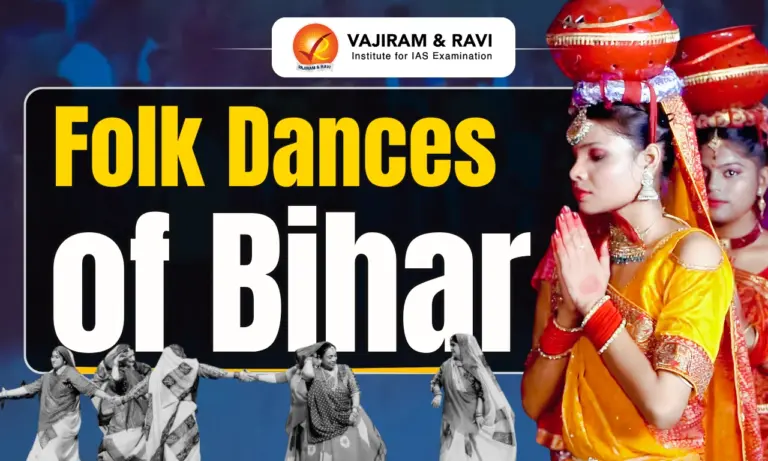
Folk Dances of Bihar represent the state’s rich cultural traditions, social values, agricultural life and religious practices. These dance forms have developed over generations in regions such as Mithila, Kosi, Bhojpuri, Anga, Magadh and West Champaran. They are closely associated with festivals, marriages, childbirth, harvest, seasonal changes and community celebrations. These dances are performed with traditional music, local dialects and simple costumes.
Folk Dances of Bihar 2026
Bihar has one of India’s richest traditions of Folk Dances in India, where every region has its own unique performance style linked with local customs and rituals.
- Most dances combine singing folk songs, storytelling, rhythmic movements and traditional musical instruments such as the dholak, harmonium, flute, manjira, mridanga, jhal, nagara and mandar.
- Themes commonly include migration, love, devotion, rainfall, harvest, family celebrations, social harmony, bravery and rural life.
- These performances continue to remain an important medium for preserving local languages, customs, folklore and collective cultural identity across the state.
Top 30 Popular Folk Dances of Bihar List 2026
The most popular Top 30 Folk Dances of Bihar 2026 include:
1. Bidesia Dance:
- A famous folk theatre tradition of the Bhojpuri speaking region pioneered by Bhikhari Thakur.
- Bidesia combines dance, drama, music and Biraha songs to portray migration, family separation, social inequality, caste discrimination and conflicts between rural and urban life.
- Male performers traditionally portray female characters while wearing dhoti based costumes.
2. Jat-Jatin Dance:
- One of North Bihar’s best known folk dances, Jat-Jatin is mainly performed in the Mithila and Kosi regions as a couple dance.
- Originally depicting the separation of lovers Jat and Jatin, it later expanded to portray drought, floods, poverty, social struggles, love and family relationships.
3. Jhijhia Dance:
- Jhijhia is a devotional women’s dance performed to seek rainfall during drought conditions.
- Women sing and dance while praying to Lord Indra, the rain deity, reflecting Bihar’s strong agricultural traditions where timely rainfall determines farming success and rural livelihoods.
4. Jumari Dance:
- Popular in Mithilanchal, Jumari closely resembles Gujarat’s Garba in circular movements.
- It is performed exclusively by married women during the Kartik month after Ashvin when clear skies and the full moon create an auspicious atmosphere for seasonal celebrations.
5. Kajari Dance:
- Kajari is associated with the Shravan month and the monsoon season.
- Women perform graceful dances accompanied by Kajari songs that celebrate rainfall, lush greenery, natural beauty, emotional longing and the joy brought by the arrival of the rainy season.
6. Sohar-Khilouna Dance:
- This ceremonial women’s dance celebrates the birth of a child.
- Traditional Sohar songs bless the newborn and mother while family members gather to express happiness, prosperity, good health and wishes for the child’s bright future through music and rhythmic movements.
7. Fagua Dance:
- Fagua is performed during the Holi festival and celebrates the arrival of spring. Villagers sing traditional Dhamar Holi songs accompanied by dholak and jhal manjeera while dancing together.
- The performances are inspired by the story of Bhakt Prahlad and Hiranyakashipu, symbolising the victory of good over evil.
8. Domkach Dance:
- A popular marriage dance of the Mithila region, Domkach is mainly performed by women after the wedding procession leaves for the bride’s house.
- Women often dress as men and present humorous mimicry, social satire and dramatic performances reflecting village life.
9. Bakho Nach:
- Bakho Nach is performed by husband and wife during childbirth celebrations and important family functions.
- The dance expresses family happiness, togetherness and gratitude while marking significant milestones in domestic and social life.
10. Paika Dance:
- Paika is Bihar’s traditional martial dance performed using swords and shields.
- Historically associated with warriors, its energetic movements were intended to develop courage, discipline, physical fitness and combat skills.
- Performers usually wear colourful turbans with tightly fitted dhotis.
11. Nardi Dance:
- Nardi is a devotional Kirtaniya dance accompanied by mridanga and jhal.
- Performers sing religious chants and slogans while dancing, making it an important expression of Bihar’s spiritual and devotional musical traditions.
12. Gangiya Dance:
- Gangiya is performed by women as a form of Ganga Stuti.
- Since the Ganga River is regarded as sacred and culturally significant in Bihar, the dance expresses reverence for the river and symbolises purification, devotion and gratitude.
13. Bolbai Dance:
- Bolbai is prevalent in the Anga region, particularly around Bhagalpur.
- The dance reflects the emotional experience of husbands migrating away from home for work, expressing separation, longing and the impact of migration on rural families.
14. Sama-Chakewa Dance:
- An important tradition of Mithilanchal, Sama-Chakewa is celebrated during the month of Kartik.
- Women perform this dance while praying for the protection, prosperity and well being of their brothers, highlighting strong family relationships.
15. Ghanto Dance:
- Ghanto portrays the emotional struggles of a married woman living at her in laws’ house.
- The dance expresses both happiness on hearing about her brother’s arrival and anxiety over the inability to properly welcome guests because of poverty.
16. Irni-Birni Dance:
- A significant dance of the Angika cultural tradition, Irni-Birni focuses on misunderstandings and emotional separation between husband and wife, presenting domestic relationships through expressive songs and graceful dance movements.
17. Jharni Dance:
- Jharni is traditionally performed by the Muslim community during Muharram.
- Combining dance with devotional songs, it reflects Bihar’s diverse cultural traditions and the contribution of different communities to the state’s folk heritage.
18. Deohar Dance:
- Deohar is one of Bihar’s ancient devotional dances representing various gods and goddesses.
- Also known as Bhagta Naach in some areas, it remains an important part of traditional religious celebrations in Bihar and neighbouring Jharkhand.
19. Bagulo Dance:
- Popular in North Bihar, Bagulo depicts the experiences and emotions of women travelling between their parental and marital homes.
- The performance reflects family relationships, customs and social traditions of rural communities.
20. Jogira Dance:
- Jogira is performed mainly during Holi, where men disguise themselves as women and entertain audiences through humorous songs, lively dance movements and playful performances celebrating the festive spirit.
21. Hori Dance:
- Hori is another Holi related folk dance celebrating the arrival of spring.
- It combines festive songs, rhythmic dancing and community participation while reflecting seasonal joy and religious harmony.
22. Natua Dance:
- In the Mithila region, Natua is a traditional performance in which male dancers portray female characters.
- It highlights theatrical expression, folk entertainment and the artistic diversity of Bihar’s performance traditions.
23. Launda Dance:
- Launda Dance is one of Bihar’s oldest folk performance traditions in which men dress as women and perform energetic dances.
- It remains popular during weddings, village festivals and community celebrations for its dramatic and entertaining style.
24. Godni Dance:
- Godni presents scenes involving fish sellers and customers, portraying everyday occupations and rural marketplaces.
- The dance reflects ordinary social interactions through simple storytelling and expressive movements.
25. Gho-Gho Rani Dance:
- This children’s folk dance involves one girl standing in the centre while others form a circle around her, singing traditional songs and moving rhythmically.
- It represents Bihar’s playful folk traditions passed across generations.
26. Dhankatni Dance:
- Dhankatni is performed after the harvest season when farmers celebrate successful crop collection.
- The dance symbolises agricultural prosperity, gratitude and collective happiness among farming communities.
27. Manjhi Dance:
- Manjhi Dance is associated with boatmen living along Bihar’s rivers.
- Performers sing while dancing, reflecting the close relationship between river based livelihoods, local traditions and community life.
28. Pawadiya Dance:
- Pawadiya is traditionally performed by eunuchs to celebrate the birth of a child.
- The congratulatory songs and dances express blessings, happiness and good wishes for the newborn and the family.
29. Jhamta Dance:
- Jhamta belongs to the Tharu tribal community of West Champaran.
- It represents the unique cultural identity, traditional customs and indigenous heritage of Bihar’s only recognised tribal community in the region.
30. Vidyapat Dance:
- Vidyapat Dance is performed in Mithila using the devotional and literary compositions of Maithil Kokil Vidyapati.
- It combines poetry, music and dance to preserve one of the region’s most respected literary traditions.


 Last updated on Sep, 2026
→ UPSC 2027 Notification will be released on 13 January 2027 at upsconline.nic.in.
→ Asian Games 2026 are being held in Aichi-Nagoya, Japan, from 19 September to 4 October.
→ Check out the latest UPSC Syllabus here.
→ Download UPSC Model Answers for Mains 2026
→ UPSC Mains Question Paper 2026 is out now for Essay & GS Paper 1, 2, 3 & 4.
→ UPSC Calendar 2027 has been released.
→ Enroll in Vajiram & Ravi’s UPSC Mains Test Series 2027 for structured answer writing practice, expert evaluation, and exam-oriented feedback.
→ Join Vajiram & Ravi’s UPSC Mentorship Program 2027 for personalized guidance, strategy planning, and one-to-one support from experienced mentors.
→ Go through the UPSC Mains Previous Year Papers to enhance your preparation.
→ UPSC has released UPSC Toppers List 2025 with the Civil Services final result on its official website.
→ Also check Best UPSC Coaching in India
Folk Dances of Bihar 2026 FAQs
Q1. Which is the most famous Folk Dance of Bihar 2026?+
Q2. Which Folk Dance of Bihar is a traditional martial dance?+
Q3. Which Folk Dance of Bihar is performed to pray for rain?+
Q4. Which folk dance is performed during Holi in Bihar?+
Q5. Which Folk Dance of Bihar is associated with childbirth celebrations?+
Tags: folk dance folk dances of bihar folk dances of india