Light-Activated Nanobots for Targeted Breast Cancer Therapy

Light-Activated Nanobots for Targeted Breast Cancer Therapy

Scientists from the Institute of Nano Science and Technology (INST), Mohali, and the Bhabha Atomic Research Centre (BARC), Mumbai, have developed tiny light-activated nanobots that could help target breast cancer cells more precisely. The research was led by Dr Jiban Jyoti Panda (INST) and Dr Santosh K. Gupta (BARC), with Swapnil Srivastava as the first author, and was published in ACS Applied Materials & Interfaces.

About Light-Activated Nanobots for Targeted Breast Cancer Therapy

Light-activated nanobots are tiny therapeutic particles that can be directed using light and can help deliver cancer treatment closer to breast cancer cells.

  • What makes them different: Ordinary nanoparticles mainly carry a drug and rely on natural processes to reach the tumour, whereas these nanobots can be guided towards a desired area using near-infrared (NIR) light.
  • How they respond to light: The nanobots are made using upconversion nanoparticles (UCNPs) that respond to NIR light and help the nanobots move towards the light source.
  • Why this matters: This gives researchers greater control over where the nanobots move and where the treatment is activated, which can support more targeted breast cancer therapy.
  • Fuel-free movement: Unlike some nanorobots that need a chemical fuel to move, these nanobots use energy from externally applied NIR light to generate the heat and movement needed for their motion.

Why are Light-Activated Nanobots Needed for Targeted Breast Cancer Therapy?

The main aim is to make breast cancer treatment more targeted, so that the therapy acts more strongly on cancer cells while limiting its effect on healthy tissues.

  • Problem with chemotherapy: Conventional chemotherapy circulates through the body, so the medicines can affect healthy cells as well as cancer cells, causing side effects.
  • Problem with passive nanomedicine: Many nanoparticle-based treatments depend on the nanoparticles naturally reaching and accumulating in the tumour, giving limited control over their movement and precise localisation.

Light-activated nanobots for targeted breast cancer therapy can be guided using NIR light and can recognise specific cancer cells, offering greater control over where the treatment acts.

How Do Light-Activated Nanobots Work?

The nanobots combine three functions-movement, targeting and cancer-cell destruction.

  • Step 1 – Movement: When a 980-nanometre NIR laser is applied, the nanobots absorb the light and produce heat. This creates a temperature difference that makes them move towards the light source. This light-directed movement is called phototaxis.
  • Step 2 – Cancer-cell recognition: The surface of the nanobots is modified with folic acid. Breast cancer cells with high levels of folate receptors can recognise and interact with the folic acid on the nanobots.
  • Step 3 – Cancer-cell destruction: The NIR light produces heat that damages cancer cells. This is called photothermal therapy (PTT).
  • Step 4 – Additional damage: The nanobots also contain the photosensitiser rose bengal. When activated by light, it helps produce Reactive Oxygen Species (ROS), which damage cancer cells. This process is called photodynamic therapy (PDT).
  • Step 5 – Combined action: Heat and ROS attack cancer cells through different mechanisms, producing a stronger therapeutic effect than either treatment alone in the study.

What Did the Researchers Find?

The researchers tested the light-activated nanobots for targeted breast cancer therapy in laboratory cell models and in mice carrying breast tumours.

The nanobots showed therapeutic activity against breast cancer cells. In the mouse model, treatment activated by NIR light led to reduced tumour growth. The combination of photothermal and photodynamic effects produced a stronger tumour-inhibiting effect than either approach used separately.

These findings show the potential of the technology, but they do not yet establish it as a treatment for human patients.

Light-Activated Nanobots Significance

Light-activated nanobots can make cancer treatment more precise and controlled by combining light-guided movement, cancer-cell recognition and localised therapy in one system. This may help reduce damage to healthy tissues, improve the effectiveness of treatment and advance precision medicine in cancer care.

Light-Activated Nanobots Limitations 

Light-activated nanobots for targeted breast cancer therapy are still at the preclinical stage. Their use in humans may be limited by poor NIR-light penetration into deep tumours, difficulty in controlling nanobots inside the body, and the need to establish their long-term safety and toxicity through further studies and clinical trials.

Further preclinical studies and human clinical trials are needed to establish the safety and effectiveness of light-activated nanobots, along with improvements in NIR-light delivery and precise control of nanobots inside the human body, before their wider clinical use.

Light-Activated Nanobots for Targeted Breast Cancer Therapy FAQs

Q1: What are Light-Activated Nanobots for Targeted Breast Cancer Therapy?

Ans: Light-Activated Nanobots for Targeted Breast Cancer Therapy are tiny particles that use near-infrared (NIR) light to move towards cancer cells and activate treatment.

Q2: Who developed Light-Activated Nanobots for Targeted Breast Cancer Therapy?

Ans: Scientists from INST, Mohali, and BARC, Mumbai, developed the technology under the leadership of Dr Jiban Jyoti Panda and Dr Santosh K. Gupta.

Q3: How do Light-Activated Nanobots target breast cancer cells?

Ans: They are coated with folic acid, which helps them interact with breast cancer cells that have higher levels of folate receptors.

Q4: How does light activate these nanobots?

Ans: A 980-nanometre NIR laser provides energy that produces heat and helps drive the nanobots towards the light source.

Q5: What are upconversion nanoparticles (UCNPs)?

Ans: UCNPs are materials that can absorb NIR light and convert it into higher-energy light, helping activate light-sensitive components such as the photosensitiser Rose Bengal.

Sri Aurobindo Birth Anniversary 2026, Life, Works, Contributions

Sri Aurobindo Birth Anniversary 2026

The 154th birth anniversary of Sri Aurobindo will be observed on 15 August 2026, which coincides with India’s Independence Day. Sri Aurobindo was a revolutionary nationalist, philosopher, poet, yogi and spiritual thinker who played an important role in the early freedom movement before turning fully towards spiritual work. His ideas on nationalism, human evolution, Integral Yoga and spiritual transformation continue to influence Indian thought. 

Sri Aurobindo Birth Anniversary 2026 History and Significance

  • Sri Aurobindo Ghose was born on 15 August 1872 in Calcutta, and his birth anniversary is observed every year to remember his contributions to India's freedom struggle, literature, philosophy and spiritual thought.
  • His birth anniversary has a special significance because 15 August is also India's Independence Day. Sri Aurobindo saw India's freedom not merely as a political achievement but as part of a larger spiritual and civilisational mission.
  • Sri Aurobindo was one of the early nationalists who openly advocated complete independence from British rule at a time when many political leaders still demanded gradual constitutional reforms.
  • He later moved away from active politics and devoted himself to yoga, philosophy and spiritual transformation in Pondicherry. His later work developed a vision of human progress through the evolution of consciousness.
  • In 2026, his 154th birth anniversary is being commemorated through spiritual programmes, meditation sessions, cultural activities and other events.
  • The occasion is significant because it brings together the different dimensions of his life, as a freedom fighter, thinker, writer, yogi and advocate of India's spiritual heritage.

Sri Aurobindo Birth Anniversary 2026 Early Life and Background

  • Sri Aurobindo was born as Aurobindo Ghose on 15 August 1872 in Calcutta. His father, Dr. Krishna Dhun Ghose, encouraged Western education, and Aurobindo spent an important part of his childhood and youth in England.
  • His early education began in India, after which he studied at St. Paul's School in London and later at King's College, Cambridge. He became proficient in Latin, Greek and several modern European languages.
  • Aurobindo qualified through the competitive examination for the Indian Civil Service, but he did not enter the colonial administration. He failed to complete the required horse-riding test and eventually chose a different path.
  • He returned to India in 1893 and joined the Baroda State Service under Maharaja Sayajirao Gaekwad III. He later worked as a teacher and held academic positions, including at Baroda College.
  • During his years in Baroda, he developed a deeper interest in Indian culture, Sanskrit, Indian philosophy and yoga. These interests later became central to his political and spiritual ideas.
  • In 1906, he moved to Calcutta after the Partition of Bengal and became associated with the emerging Swadeshi Movement and Nationalist Movement. He also became the first principal of Bengal National College.

Sri Aurobindo Birth Anniversary 2026 Contributions to India’s Freedom Struggle

  • Sri Aurobindo was an important leader of radical nationalism during the early phase of India's freedom movement. He believed that Indians should seek complete independence, rather than limited political reforms under British rule.
  • Through his writings, speeches and political activities, he encouraged national awakening, self-reliance and mass participation in the freedom struggle.
  • His series of articles “New Lamps for Old” criticised the moderate approach of the early Indian National Congress and called for a more active national movement.
  • He became closely associated with nationalist newspapers such as Vande Mataram, where he expressed strong views on nationalism, Swaraj and resistance to colonial rule.
  • He was also associated with revolutionary organisations and youth groups, including the Anushilan Samiti, and supported efforts to prepare young Indians for resistance against British rule.
  • During the Swadeshi movement, he promoted ideas such as Swadeshi, boycott, national education and passive resistance, which became important features of the nationalist movement.
  • In 1908, Sri Aurobindo was arrested in connection with the Alipore Bomb Case. He spent about a year in prison and was later acquitted after his defence was led by Chittaranjan Das.
  • His imprisonment became a major turning point in his life. He later described experiencing a profound spiritual transformation during his time in prison, which influenced his subsequent journey.
  • In 1910, he withdrew from active politics and moved to Pondicherry, where he devoted the rest of his life primarily to spiritual practice, philosophy and writing.

Sri Aurobindo Birth Anniversary 2026 Philosophy, Teachings and Works

  • Sri Aurobindo developed the philosophy of Integral Yoga, which seeks the transformation of the whole human being by bringing together the body, mind and spirit rather than treating spiritual life as separate from everyday existence.
  • His philosophy focused on the idea of spiritual evolution. He believed that human consciousness could develop towards a higher state and ultimately lead to a more harmonious and divine life on Earth.
  • A central concept in his philosophy was the Supermind, which he described as a higher level of consciousness capable of bridging the ordinary human mind and the divine or infinite reality.
  • Unlike approaches that view spiritual liberation mainly as withdrawal from worldly life, Sri Aurobindo emphasised the transformation of life itself. His vision involved combining spiritual development with human progress.
  • In 1926, the Sri Aurobindo Ashram took shape in Pondicherry as a community of spiritual seekers. Mirra Alfassa, popularly known as The Mother, played a central role in its development and continued his work after his death.
  • His major philosophical works include The Life Divine, The Synthesis of Yoga, Essays on the Gita, The Human Cycle and The Ideal of Human Unity.
  • His most famous literary work, Savitri: A Legend and a Symbol, is a long philosophical and spiritual epic poem that explores themes such as love, death, human destiny and spiritual transformation.
  • Through works such as The Life Divine, he presented his ideas about human evolution, consciousness and the possibility of a higher form of life.
  • In his 15 August 1947 message, Sri Aurobindo outlined five dreams: a free and united India, the resurgence of Asia, world union, India’s spiritual contribution to humanity, and the evolution of human consciousness

Sri Aurobindo Birth Anniversary 2026 Legacy and Importance

  • Sri Aurobindo's legacy extends beyond the freedom movement. He is remembered as a nationalist, philosopher, poet, yogi and spiritual thinker whose ideas connected India's political freedom with wider cultural and spiritual development.
  • His concept of spiritual nationalism linked India's freedom with the revival of its cultural identity and civilisational consciousness.
  • The Sri Aurobindo Ashram in Puducherry continues to serve as an important centre for spiritual practice, education and the study of his teachings.
  • Auroville, established in 1968 by The Mother, was inspired by Sri Aurobindo's vision of a universal community. It seeks to represent ideals of human unity, cooperation and sustainable living.
  • His writings remain relevant to discussions on human unity, education, culture, spirituality, nationalism and the future evolution of humanity.
  • Sri Aurobindo's life demonstrates a unique transition from revolutionary politics to spiritual philosophy. His journey shows that his concern for India's freedom eventually developed into a broader concern for the transformation of human society.
  • His birth anniversary is therefore not only a celebration of an important historical personality but also an opportunity to reflect on his ideas of freedom, self-development, national awakening, human unity and higher consciousness.
  • Sri Aurobindo passed away on 5 December 1950 in Pondicherry, but his philosophical and spiritual work continues through his writings, institutions and followers.

Sri Aurobindo Birth Anniversary 2026 FAQs

Q1: When is Sri Aurobindo Birth Anniversary 2026 observed?

Ans: Sri Aurobindo Birth Anniversary 2026 will be observed on 15 August 2026. It marks the 154th birth anniversary of Sri Aurobindo.

Q2: When and where was Sri Aurobindo born?

Ans: Sri Aurobindo was born as Aurobindo Ghose on 15 August 1872 in Calcutta, now Kolkata, West Bengal.

Q3: Why is Sri Aurobindo Birth Anniversary significant?

Ans: The day honours Sri Aurobindo’s contributions as a freedom fighter, nationalist, philosopher, poet and yogi. It also highlights his ideas on spiritual evolution and human unity.

Q4: What was Sri Aurobindo’s role in India’s freedom struggle?

Ans: Sri Aurobindo was an important leader of radical nationalism who openly advocated complete independence from British rule. He promoted Swadeshi, national education and active resistance through his writings and political work.

Q5: What was the Alipore Bomb Case involving Sri Aurobindo?

Ans: In 1908, Sri Aurobindo was arrested in connection with the Alipore Bomb Case. He spent about a year in prison and was later acquitted, with Chittaranjan Das leading his defence.

Tribes of Himachal Pradesh, List, Culture, Major Tribes

Tribes of Himachal Pradesh

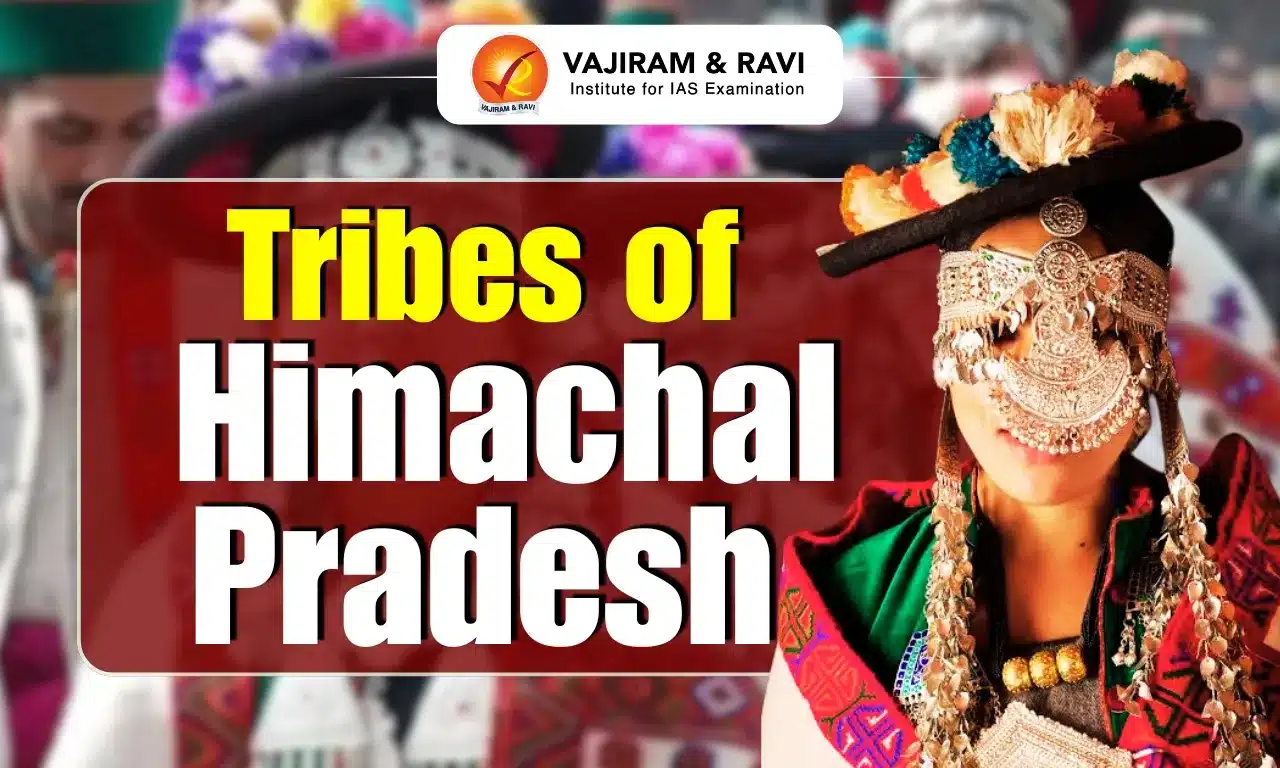
The tribes of Himachal Pradesh are an important part of the state's rich cultural heritage. Living mainly in the high-altitude Himalayan regions, these tribal communities have preserved their unique languages, traditions, customs, festivals, and traditional occupations for centuries. The tribal population is concentrated mainly in Kinnaur, Lahaul-Spiti, Pangi, and Bharmour. These regions have been notified as Scheduled Areas under the Constitution because of their significant tribal population.

Major Tribes of Himachal Pradesh

The major tribes of Himachal Pradesh have preserved their unique traditions, languages, festivals, and livelihoods for generations, contributing significantly to the state's cultural diversity and Himalayan heritage.

1. Gaddi Tribe

The Gaddi Tribe is one of the largest and most prominent tribal communities of Himachal Pradesh, known for its pastoral lifestyle, rich traditions, and strong connection with the Himalayan region.

  • Primarily found in Chamba, Kangra, and Bharmour regions.
  • Traditionally practice pastoralism, rearing sheep and goats.
  • Follow seasonal migration (transhumance) to access grazing lands.
  • Also engage in agriculture and horticulture for livelihood.
  • Mostly follow Hinduism, with Lord Shiva as their chief deity.
  • Wear traditional woollen cholas, colourful caps, and shawls.
  • Speak the Gaddi dialect, along with Hindi and Pahari.
  • Known for preserving folk music, dances, and cultural traditions.

2. Gujjar Tribe

The Gujjar Tribe is a pastoral community known for its expertise in buffalo rearing, dairy farming, and seasonal migration across the Himalayan foothills.

  • Mainly inhabits Chamba, Kangra, Una, and Sirmaur districts.
  • Traditionally engaged in buffalo and cattle rearing.
  • Produce milk, ghee, curd, and other dairy products.
  • Practice nomadic or semi-nomadic migration for grazing.
  • Majority follow Islam, while some practice Hinduism.
  • Speak Gojri, Hindi, and local Pahari dialects.
  • Live in temporary shelters during migration.
  • Livestock forms the backbone of their economy.

3. Kinnaura (Kanaura) Tribe

The Kinnaura Tribe is famous for its unique blend of Hindu and Buddhist traditions, colourful culture, and thriving horticulture in the Kinnaur region.

  • Primarily resides in Kinnaur district.
  • Follows both Hinduism and Buddhism.
  • Known for apple orchards, terrace farming, and horticulture.
  • Skilled in handloom weaving and woollen handicrafts.
  • Recognized for the famous green Kinnauri cap.
  • Celebrate festivals like Losar and Phulaich.
  • Speak the Kinnauri language along with Hindi.
  • Preserve rich traditions through folk songs and dances.

4. Lahaula Tribe

The Lahaula Tribe inhabits the cold desert region of Lahaul and is known for its resilience, agricultural practices, and Tibetan cultural influence.

  • Mainly found in Lahaul Valley.
  • Live in high-altitude cold desert conditions.
  • Cultivate potatoes, peas, barley, and other hardy crops.
  • Rear yaks, sheep, and other livestock.
  • Follow both Buddhism and Hinduism.
  • Practice traditional wool weaving and handicrafts.
  • Houses are built using stone and mud to withstand harsh winters.
  • Tibetan culture significantly influences their lifestyle and customs.

5. Pangwala Tribe

The Pangwala Tribe is a tribal community of the remote Pangi Valley, known for its simple lifestyle, traditional farming, and vibrant folk culture.

  • Mainly inhabits the Pangi Valley of Chamba district.
  • Depends on agriculture and animal husbandry.
  • Rears sheep and goats for income.
  • Skilled in traditional weaving and handicrafts.
  • Wear distinctive woollen dresses suited to cold climates.
  • Celebrate local fairs and community festivals.
  • Preserve unique folk music, dances, and oral traditions.
  • Maintain close-knit family and community relationships.

6. Swangla Tribe

The Swangla Tribe is an agricultural community of Lahaul Valley that has preserved its traditional customs, religious practices, and mountain lifestyle.

  • Found mainly in Lahaul Valley.
  • Engaged in farming, trade, and livestock rearing.
  • Cultivate crops suitable for high-altitude regions.
  • Follow Hinduism and worship local deities.
  • Live in traditional wooden and stone houses.
  • Skilled in weaving woollen garments and handicrafts.
  • Preserve traditional folk songs, dances, and festivals.
  • Community life is based on strong social and cultural values.

7. Bhot (Bodh) Tribe

The Bhot (Bodh) Tribe is a Buddhist community of the trans-Himalayan region, recognized for its monasteries, wool production, and Tibetan cultural heritage.

  • Primarily found in Lahaul-Spiti district.
  • Follow Tibetan Buddhism and monastic traditions.
  • Rear yaks, sheep, and goats for livelihood.
  • Produce high-quality wool, carpets, and handicrafts.
  • Practice agriculture despite harsh climatic conditions.
  • Celebrate Buddhist festivals such as Losar.
  • Speak Bhoti (Tibetan dialects) and Hindi.
  • Preserve centuries-old Buddhist art, architecture, and customs.

8. Jad, Lamba, and Khampa Tribe

The Jad, Lamba, and Khampa Tribes are small Himalayan tribal communities known for their Tibetan heritage, pastoral economy, and distinct cultural identity.

  • Inhabit the border regions adjoining Tibet.
  • Strongly influenced by Tibetan culture and Buddhism.
  • Traditionally engaged in cross-border trade before border restrictions.
  • Depend on animal husbandry and livestock rearing.
  • Rear yaks, sheep, and goats in high-altitude pastures.
  • Wear thick woollen clothing to withstand extreme cold.
  • Preserve unique languages, customs, and religious traditions.
  • Continue to maintain their traditional way of life while adapting to modern development.

Government Schemes Related to Tribal Welfare

The Government of India and the Himachal Pradesh Government implement various welfare schemes to improve the education, healthcare, livelihood, infrastructure, and socio-economic development of tribal communities while preserving their cultural heritage.

  • Pradhan Mantri Janjati Adivasi Nyaya Maha Abhiyan (PM-JANMAN): Improves housing, roads, healthcare, education, and basic services for Particularly Vulnerable Tribal Groups (PVTGs).
  • Dharti Aaba Janjatiya Gram Utkarsh Abhiyan (DAJGUA): Focuses on the holistic development of tribal villages through better infrastructure, education, healthcare, and livelihood opportunities.
  • Eklavya Model Residential Schools (EMRS): Provides quality residential education to Scheduled Tribe students in tribal-dominated areas.
  • Pradhan Mantri Adi Adarsh Gram Yojana (PMAAGY): Develops tribal villages by improving roads, drinking water, sanitation, schools, and healthcare facilities.
  • Post-Matric Scholarship for Scheduled Tribe Students: Offers financial assistance to ST students pursuing higher education.
  • National Fellowship and Scholarship for Higher Education of ST Students: Supports Scheduled Tribe students in postgraduate and doctoral studies.
  • Forest Rights Act, 2006 (FRA): Recognizes the land and forest rights of forest-dwelling Scheduled Tribes and other traditional forest dwellers.
  • Minimum Support Price (MSP) for Minor Forest Produce Scheme: Ensures fair prices for tribal communities selling minor forest produce.
  • Pradhan Mantri Van Dhan Yojana (PMVDY): Promotes value addition, processing, and marketing of tribal forest products to increase tribal incomes.
  • Tribal Sub-Plan (TSP) / Development Action Plan for Scheduled Tribes (DAPST): Allocates dedicated funds for the socio-economic development of Scheduled Tribe communities.
Related Post
Tribes of Andaman and Nicobar Islands Tribes of Sikkim
Tribes of Assam Tribes of Manipur
Tribes of Jharkhand Tribes of Meghalaya
Tribes of Nagaland Tribes of Madhya Pradesh
Tribes of Karnataka Tribes of Arunachal Pradesh
Tribes of Odisha Tribes of Gujarat
Tribes of Telangana Tribes of Uttarakhand
Tribes of Bihar Tribes of Goa
Tribes of Tripura Tribes of Chhattisgarh
Tribes of Kerala
Tribes of Haryana
Tribes of Himachal Pradesh Tribes of Maharashtra
Tribes of Mizoram Tribes of Tamil Nadu
Tribes of West Bengal Tribes of Jammu and Kashmir
Tribes of Rajasthan Tribes of Uttar Pradesh
Tribes of Dadra and Nagar Haveli and Daman and Diu Tribes of Andhra Pradesh
Tribes of Ladakh Tribes of Lakshadweep
Tribes of Puducherry

Tribes of Himachal Pradesh FAQs

Q1: Which are the major tribes of Himachal Pradesh?

Ans: The major tribes of Himachal Pradesh include Gaddi, Gujjar, Kinnaura (Kanaura), Lahaula, Pangwala, Swangla, Bhot (Bodh), and Jad-Lamba-Khampa.

Q2: Which district has the highest tribal population in Himachal Pradesh?

Ans: Lahaul and Spiti has the highest proportion of Scheduled Tribe population, while Kinnaur is another major tribal district in the state.

Q3: What is the main occupation of the tribes of Himachal Pradesh?

Ans: The tribal communities primarily depend on agriculture, horticulture, animal husbandry, sheep and yak rearing, dairy farming, handicrafts, and wool weaving.

Q4: Which religion is mainly followed by the tribes of Himachal Pradesh?

Ans: Most tribes follow Hinduism or Buddhism, while many Gujjars primarily follow Islam.

Q5: Which are the Scheduled Tribal Areas in Himachal Pradesh?

Ans: The Scheduled Tribal Areas include the entire districts of Kinnaur and Lahaul-Spiti, along with the Bharmour and Pangi subdivisions of Chamba district.

Digital Transformation of the Indian Judiciary, Initiatives, Impact

Digital Transformation of the Indian Judiciary

An efficient judiciary is essential for rule of law, protection of rights and public confidence, but high judicial pendency and procedural delays continue to make timely justice a challenge. At the same time, dependence on physical files, in-person procedures and fragmented information systems can add to the time and cost of litigation.

The Digital Transformation of the Indian Judiciary is a response to these structural challenges. It involves shifting from traditional, paper-based and physically dependent processes towards a digital, paperless, integrated and citizen-centric justice system.

Major Digital Initiatives under the Digital Transformation of the Indian Judiciary

The Digital Transformation of the Indian Judiciary is being carried out through the e-Courts Mission and a wider digital ecosystem covering court processes, records, case information, criminal justice institutions, citizen services and emerging technologies.

e-Courts Mission Mode Project

The e-Courts Mission Mode Project, launched in 2007, is the backbone of judicial digitalisation.

  • Phase I focused on basic computerisation, Phase II expanded citizen-centric services, while Phase III (2023–27) aims to create digital, paperless and intelligent courts through digitisation, virtual hearings, interoperability, AI and analytics.
  • Impact: Shifts courts from paper-based and physically dependent processes towards faster, more accessible and citizen-centric justice delivery.

National Judicial Data Grid (NJDG)

The National Judicial Data Grid (NJDG) is a public online repository containing information on pending and disposed cases, their stages, categories and reasons for delay. 

  • Impact: It enables citizens, judges and court administrators to monitor judicial performance and pendency.

e-Filing and e-Payments

e-Filing allows petitions, applications and other documents to be submitted electronically, while e-Payments enable online payment of court fees and fines. The system also provides e-signatures, portfolio management, case dashboards and other filing facilities; more than 1.25 crore cases have been filed through e-Filing.

  • Impact: Reduces physical visits, paperwork, travel and transaction costs involved in approaching courts.

Digitisation of Court Records

Under Phase III, crores of legacy court records are being digitised and made searchable, with the larger vision of creating paperless courts. More than 753 crore pages of old court records have already been digitised.

  • Impact: Makes judicial records easier and faster to retrieve, preserves old records and reduces delays caused by physical files.

e-Courts Services Portal, Mobile App and JustIS

The e-Courts Services Portal, mobile application and JustIS app provide access to case status, cause lists, orders, judgments and other court-related information, including through multilingual services.

  • Impact: Gives citizens direct access to judicial information from anywhere and reduces dependence on repeated court visits or intermediaries.

e-Sewa Kendras

e-Sewa Kendras provide assisted access to digital judicial services, including e-Filing, case status, certified copies, e-Payments, digital signatures, virtual hearings and legal-aid services. They also facilitate services such as e-Mulakat appointments for jail visits.

  • Impact: Bridges the digital divide by helping citizens who lack digital literacy or access to technology use judicial services.

Virtual Courts and Video Conferencing

Virtual Courts enable selected matters, particularly traffic challans, to be resolved online, while video conferencing allows litigants, lawyers, witnesses, prisoners and other stakeholders to participate remotely. 

  • More than 4.18 crore remote hearings have been conducted, while 31 Virtual Courts have been established.
  • Impact: Removes geographical barriers and reduces the time, travel and cost involved in participating in court proceedings.

Livestreaming of Court Proceedings

Court proceedings are increasingly being made available to the public through livestreaming, which is operational in 11 High Courts.

  • Impact: Improves transparency and public access to judicial proceedings and strengthens public confidence in the justice system.

NSTEP and e-Summons

The National Service and Tracking of Electronic Processes (NSTEP) enables electronic generation, transmission and GPS-based tracking of summons and other judicial processes, while e-Summons facilitates their electronic delivery and execution.

  • Impact: Makes the service of summons faster and more traceable, reducing procedural delays that can hold up cases.

Inter-operable Criminal Justice System (ICJS)

The Inter-operable Criminal Justice System (ICJS) digitally connects police, prosecution, courts, prisons and forensic institutions, allowing them to share case information quickly.

  • Crime and Criminal Tracking Network and Systems (CCTNS): Digitises FIRs and police investigation records.
  • Investigation Tracking System for Sexual Offences (ITSSO): Monitors sexual-offence investigations to ensure timely completion.
  • e-Sakshya: Digitally records and manages evidence.
  • Medico-Legal Examination and Postmortem Reporting (MedLEaPR): Digitises medical and post-mortem reports.
  • e-Forensic: Enables digital sharing of forensic reports.
  • e-Prosecution: Improves coordination between police and prosecutors.
  • e-Prison: Provides digital prisoner and prison-related information.
  • National Automated Fingerprint Identification System (NAFIS): Enables quick fingerprint-based identification.
  • Nyaya Shruti: Enables witnesses to provide testimony virtually.

Impact: Creates a connected investigation–prosecution–trial chain, reducing information gaps and procedural delays and enabling faster criminal justice delivery.

AI and Machine Learning

AI and Machine Learning (ML) are the next phase of the Digital Transformation of the Indian Judiciary under e-Courts Phase III, supporting legal research, case management, transcription, translation and e-Filing.

  • LegRAA: Assists judges in legal research and document analysis.
  • Digital Courts 2.1: Provides a single-window, paperless platform for case management.
  • ASR-SHRUTI & PANINI: Support voice-to-text and translation for orders and judgments.
  • eSCR: Translates Supreme Court judgments into 18 Indian languages; over 83,000 judgments had been translated by March 2025.
  • AI-based e-Filing: An IIT Madras-developed tool identifies filing defects and extracts case data, helping reduce procedural delays.
  • AI-based transcription: Converts oral arguments in Constitutional Bench cases into text, improving documentation and accessibility.

Multilingual Digital Justice

Through eSCR and language-technology initiatives, Supreme Court judgments are being translated into 18 Indian languages, while PANINI supports translation and multilingual judicial services.

  • Impact: Reduces language barriers and enables more citizens to understand judgments and judicial reasoning.

AI-based e-Filing Assistance

An AI tool developed with IIT Madras can identify defects in e-filed petitions and extract relevant case data and metadata, with integration into e-Filing and case-management systems.

  • Impact: Identifies filing defects at an early stage, reducing avoidable procedural delays and improving the efficiency of case processing.

S3WAAS for Court Websites

The Secure, Scalable and Sugamya Website as a Service (S3WAAS) platform is being used to modernise and standardise court websites; 734 court websites have been migrated to the platform.

Impact: Provides citizens with more uniform, accessible and user-friendly digital access to court information and services.

Digital Infrastructure and Connectivity

The transformation is supported by expansion of ICT infrastructure, including additional hardware for courts, Software Defined Wide Area Network (SD-WAN) connectivity and reliable digital infrastructure. 1,626 court complexes have also been equipped with solar facilities to support uninterrupted digital operations.

Impact: Strengthens the technological foundation needed to ensure that digital judicial services remain reliable and available.

Training and Digital Capacity Building

Digital transformation is accompanied by training of judges, lawyers and other judicial stakeholders; the PIB reports 2,372 training programmes to build digital capacity.

Impact: Ensures that technological infrastructure translates into effective use of digital judicial services rather than remaining merely a technical upgrade.

Impact of the Digital Transformation of the Indian Judiciary

The Digital Transformation of the Indian Judiciary is shifting justice delivery from a paper-based, physically dependent system towards a more accessible, transparent, efficient and citizen-centric system.

  • Wider access to justice: e-Filing, virtual hearings and online services reduce geographical and physical barriers to courts.
  • Lower cost of litigation: Digital filing, e-Payments and remote hearings reduce travel, paperwork and procedural costs.
  • Faster justice delivery: Digitised records, e-Summons, NSTEP and AI-assisted processes reduce avoidable procedural delays.
  • Greater transparency: NJDG, online case-status services and livestreaming make judicial processes more visible and accountable.
  • Better judicial administration: Real-time data helps courts monitor pendency, workload and delays, enabling data-driven management.
  • Integrated criminal justice: ICJS connects police, prosecution, courts, prisons and forensic institutions, reducing information gaps.
  • Inclusive justice: e-Sewa Kendras bridge the digital divide, while multilingual technology reduces language barriers.
  • Improved judicial efficiency: AI-assisted research, transcription, translation and document analysis reduce repetitive work and support judges in judicial functions.
  • Resilient justice delivery: Digital records, video conferencing and stronger ICT infrastructure help courts function even when physical access is disrupted.

Overall, digital transformation is moving India from merely providing “access to courts” towards ensuring more effective “access to justice” by reducing barriers of distance, cost, information and procedural delay.

Challenges of the Digital Transformation of the Indian Judiciary

  • Digital divide: Unequal access to internet, devices and digital literacy can exclude rural and vulnerable litigants.
  • Infrastructure gaps: Poor connectivity, unreliable power supply and inadequate hardware can disrupt digital court services.
  • Cybersecurity risks: Digitised case records, personal data and electronic evidence are vulnerable to cyberattacks and data breaches.
  • Privacy concerns: Wider digital access to judicial information must be balanced with protection of sensitive personal and case-related data.
  • AI-related risks: Algorithmic bias, inaccurate outputs and lack of transparency can affect the fairness and reliability of AI-assisted processes.
  • Interoperability issues: Different digital systems across courts, police, prosecution, prisons and forensic agencies may not always exchange information seamlessly.
  • Skill deficit: Judges, lawyers and court staff need continuous training to effectively use rapidly evolving digital technologies.
  • Technical disruptions: Network failures, software glitches and inadequate technical support can interrupt hearings and delay proceedings.
  • Risk of digital exclusion: Excessive dependence on online processes may disadvantage people who need physical assistance or face language and accessibility barriers.
  • Judicial independence: Technology and AI must remain supportive tools and should not influence or replace the independent application of judicial mind.

Way Forward

  • Bridge the digital divide: Expand connectivity and e-Sewa Kendras to ensure digitally disadvantaged citizens are not excluded from justice.
  • Adopt a hybrid model: Retain physical and assisted services so that digitalisation does not create new barriers for vulnerable litigants.
  • Strengthen cybersecurity: Use encryption, access controls and regular audits to protect sensitive case records and digital evidence.
  • Ensure responsible AI: Keep human oversight and test AI for bias and accuracy to improve efficiency without compromising judicial independence and fairness.
  • Improve interoperability: Adopt common standards across courts, police, prosecution and prisons to reduce information gaps and procedural delays.
  • Build digital capacity: Train judges, lawyers and court staff to ensure effective use of digital platforms and AI tools.
  • Make platforms citizen-friendly: Use simple, multilingual and accessible interfaces to reduce dependence on intermediaries.
  • Use judicial data better: Apply data analytics to identify bottlenecks and pendency to improve case management and resource allocation.

Overall, the focus should shift from merely digitising courts to redesigning judicial processes around citizens, using technology to reduce delay, cost and exclusion while protecting constitutional values.

Digital Transformation of the Indian Judiciary FAQs

Q1: What is the Digital Transformation of the Indian Judiciary?

Ans: The Digital Transformation of the Indian Judiciary is the shift from paper-based and physically dependent processes towards a digital, paperless, integrated and citizen-centric justice system.

Q2: Why is the Digital Transformation of the Indian Judiciary needed?

Ans: The Digital Transformation of the Indian Judiciary seeks to address judicial pendency, procedural delays, high litigation costs and barriers to physical access by making judicial processes more efficient and accessible.

Q3: What are the major initiatives under the Digital Transformation of the Indian Judiciary?

Ans: Major initiatives include the e-Courts Mission Mode Project, National Judicial Data Grid (NJDG), e-Filing, digitisation of records, virtual courts, e-Sewa Kendras, ICJS, AI-based tools and multilingual judicial services.

Q4: How does the Digital Transformation of the Indian Judiciary improve access to justice?

Ans: It reduces barriers of distance, cost, physical access, information and language through online filing, virtual hearings, digital case information, assisted digital services and multilingual judgments.

Q5: What are the major challenges to the Digital Transformation of the Indian Judiciary?

Ans: Key challenges include the digital divide, infrastructure gaps, cybersecurity and privacy risks, AI-related concerns, interoperability problems, skill gaps and technical disruptions.


India Formally Identifies 27 Places in Arunachal Pradesh on Official Map

India Formally Identifies 27 Places in Arunachal Pradesh on Official Map

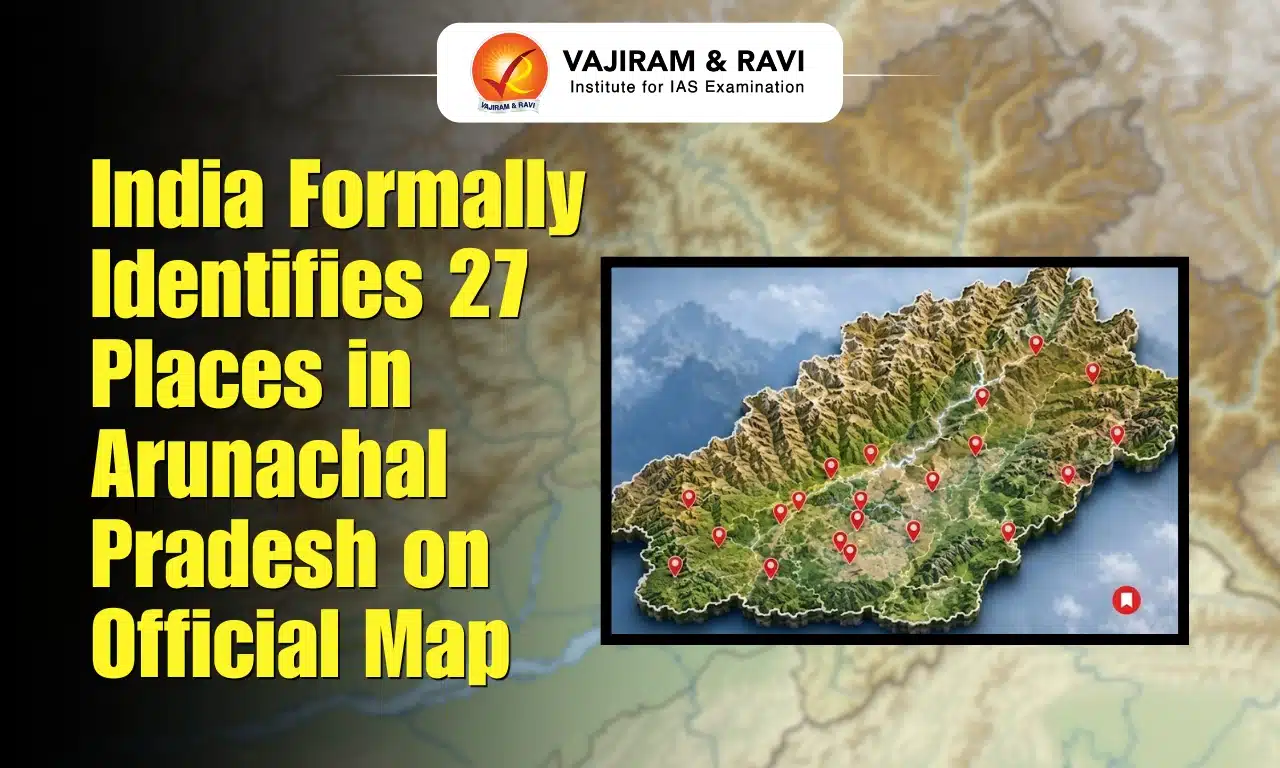
The Government of India has formally identified 27 geographical and strategic locations in Arunachal Pradesh by their standard Indian names on the official Survey of India map. The move comes in response to China’s repeated attempts to assign its own names to places in the State.

Background

China claims Arunachal Pradesh as “Zangnan” or “Southern Tibet” and does not recognise the State as part of India. Since 2017, China has repeatedly announced its own names for places in Arunachal Pradesh as part of its broader territorial claim.

  • 2017: China released its first list, assigning names to six locations.
  • 2021: A second list covered 15 locations.
  • 2023: China announced names for another 11 locations.
  • By April 2026: China had reportedly announced 112 standardised names through six batches, covering villages, mountain passes, rivers and peaks.

India has consistently rejected these moves, describing them as “fictitious” and “vain and preposterous”, and maintaining that changing geographical names cannot alter the territorial status of Arunachal Pradesh.

India’s Response 

India has now formally marked 27 places and geographical features using their standard Indian names on the official Survey of India map of Arunachal Pradesh.

According to the government, the exercise is intended to ensure accurate recognition of these locations and improve public awareness of strategically important areas.

The 27 locations include:

  • Villages and settlements: Long Ju, Maja, Bisa, Sagar, Padma, Jyotinagar, Baisakhi and Sunpura.
  • Mountain passes: Thag La, Dzo La, Riza La and Pukur La.
  • Lakes and other geographical features: Sambho Sarovar, Bara Kundun, Chhota Kundun, Chhota Ropuk and Bara Ropuk.
  • Strategic and logistical locations: Jairampur, Dhan Bari, Pritnagar, Teritnagar, Ramnagar, Shivaji Nagar and Kamlang Nagar.
  • Military and historical sites: Jaswant Garh and Sher-e-Thapa Memorial.
  • Other important locations: Buddhamandir.

Strategic Significance of the 27 Locations

The locations are significant because several are connected with India’s border security, earlier military confrontations and access to the eastern frontier.

  • Long Ju: Located near the LAC, it was the site of an early India-China confrontation in 1959, when Chinese forces entered the area.
  • Thag La: A strategically important high-altitude pass associated with the opening phase of the 1962 India-China War.
  • Jairampur: An important logistics hub in Changlang district that supports movement towards eastern Arunachal Pradesh and the Myanmar frontier.
  • Jaswant Garh: A memorial dedicated to Rifleman Jaswant Singh Rawat, associated with the 1962 war.
  • Sher-e-Thapa Memorial: Commemorates Trilok Singh Thapa, another Indian soldier associated with the 1962 conflict.
  • Kamlang Nagar: Located near the Kamlang Wildlife Sanctuary, linking the exercise to strategically important areas of eastern Arunachal Pradesh.

Significance of India’s Move

  • Administrative clarity: Standard names create consistency across official maps and records.
  • Cartographic assertion: The official map reinforces India's administrative and territorial position.
  • Public awareness: Formal recognition improves knowledge of strategically important border locations.
  • Narrative response: It counters attempts to establish an alternative nomenclature for Indian territory.

India Formally Identifies 27 Places in Arunachal Pradesh on Official Map FAQs

Q1: Why has India formally identified 27 places in Arunachal Pradesh?

Ans: India has formally identified the 27 locations by their standard Indian names on the Survey of India map to ensure accurate recognition, improve public awareness and reinforce consistency in official geographical records.
Q2: Why does China rename places in Arunachal Pradesh?

Ans: China claims Arunachal Pradesh as “Zangnan” or “Southern Tibet” and uses standardised Chinese and Tibetan names for places in the State to support its territorial claims. India rejects these naming exercises as having no bearing on the actual territorial status of Arunachal Pradesh.
Q3: When did China begin renaming places in Arunachal Pradesh?

Ans: China released its first list of six standardised names in 2017, followed by lists covering 15 places in 2021 and 11 places in 2023. By April 2026, it had reportedly announced 112 names through six batches.

Q4: Which strategically important locations are among the 27 places identified by India?

Ans: The list includes Long Ju, Thag La, Jairampur, Jaswant Garh and Sher-e-Thapa Memorial. Several of these locations are associated with India's border security, the Line of Actual Control (LAC), logistical access and the 1962 India-China War.

Q5: Does naming a place determine its sovereignty?

Ans: No. Changing or standardising a geographical name does not by itself determine territorial sovereignty. The naming exercise is primarily an administrative and cartographic measure, while the India-China boundary dispute ultimately requires diplomatic engagement and negotiations.

Tribes of Andhra Pradesh, Major List, Development Initiatives

Tribes of Andhra Pradesh

Tribes of Andhra Pradesh form an important part of the State’s social and cultural landscape. According to the 2011 Census, the tribal population of Andhra Pradesh was 27.39 lakh, accounting for 5.53% of the State population. Tribal communities are spread across forest, hill, river and plain areas. Major groups include Koya, Konda Reddi, Savara, Jatapu, Gadaba, Konda Dora, Chenchu, Yanadi, Yerukula and Lambada communities.

Tribes of Andhra Pradesh

The Tribes of Andhra Pradesh show considerable diversity in language, livelihood, settlement and cultural practices. Tribal regions can be grouped into Koya-Konda Reddi, Khond-Savara, Chenchu and plain area regions. The Godavari region is associated with Koyas and Konda Reddis. Northern districts have Savara, Jatapu, Gadaba and Konda Dora communities. Yanadi and Yerukula groups are widely found in plain areas.

Tribes of Andhra Pradesh Features

The major highlighting features of the Tribes of Andhra Pradesh has been listed below:

  • Cultural traditions: Tribal communities preserve distinctive festivals, dances, religious practices and traditional institutions. Dimsa is particularly associated with tribal communities of northern Andhra, while festivals such as Kandi Pandaga and Pillipandaga remain culturally significant.
  • Social institutions: Gadabas maintain a traditional village council headed by a Kulapedda. Desari or Pujaria performs religious duties, while marriage customs include negotiation and mutual choice.
  • Literacy: Literacy among tribal communities remains a development concern. The recorded literacy rate for the Nellore tribal population is 40.49%, highlighting the continuing need for educational support.
  • Settlement pattern: Tribal settlements occur across forests, hills, riverbanks and plain areas. Yanadis commonly inhabit river and canal banks, while several northern groups live in hill slopes and forest interiors.
  • Economic transition: Traditional livelihoods are gradually changing. Yanadis combine fishing, agricultural labour and small farming, while Yerukulas and Nakkalas increasingly travel outside their local areas for commercial activities.
  • Distribution: 
    • Visakhapatnam tribal groups: Major communities include Bagata, Gadaba, Kammara, Konda Dora, Kotia, Khond, Mali, Manne Dora, Mukha Dora, Reddi Dora, Porja, Valmiki, Goud and Kulia.
    • Northern Andhra concentration: Srikakulam and Vizianagaram have important populations of Savara, Jatapu, Gadaba and Konda Dora communities. These groups are strongly associated with hill and forest environments.
    • Godavari tribal region: East Godavari has Koya, Konda Reddi, Kammara and Konda Dora communities. West Godavari includes Koya, Konda Reddi, Yerukula and Yanadi populations.

List of Major Tribes of Andhra Pradesh

The major tribal communities of Andhra Pradesh have distinct geographical concentrations, traditional occupations, languages, festivals and social practices across the State.

Koya

  • Koyas mainly inhabit areas along the Godavari River in East Godavari and West Godavari districts. 
  • Bhudevi Panduga is an important festival dedicated to the Earth Goddess.

Konda Reddi

  • Konda Reddis mainly live in interior forest and hill areas of East Godavari and West Godavari. 
  • Shifting cultivation remains important, while Telugu is their mother tongue.

Savara

  • Savaras are concentrated in Srikakulam and Vizianagaram and are also found in hill areas. 
  • They speak their own dialect, associated with the Mundari linguistic family. 
  • Savaras depend on agriculture, horticulture, Podu cultivation, terrace farming and minor forest produce. 
  • They cultivate Red Gram, Ragi, Jowar and pulses, while rice remains their staple food.

Jatapu

  • Jatapus mainly reside in forest and hill areas of Vizianagaram, especially GLPuram, Kurupam and Komarada. 
  • They constitute 44% of the district’s total tribal population. 
  • Jatapus traditionally practise shifting cultivation or Podu cultivation. Red Gram, Ragi, Jowar, Bajra and other millets are cultivated, while Tamarind, Gum and hill brooms are collected.

Gadaba

  • Gadabas are concentrated in Saluru, Pachipenta, JMvalasa and Parvathipuram. 
  • Their population is 19,164, representing 9.5% of the district’s ST population. 
  • Gadaba is their traditional dialect. 
  • Gadabas work mainly as cultivators and agricultural labourers. 
  • Those living in hilly areas practise Podu cultivation and grow Ragi, Red Gram and Niger.

Konda Dora

  • Konda Doras are mainly found in Saluru, Pachipenta and Makkuva, besides Parvathipuram and other tribal areas. 
  • Agriculture and fishing are important livelihood activities.

Chenchu

  • Chenchus traditionally inhabit the Nallamalai hills across Guntur, Prakasam and Kurnool areas. 
  • Hunting, gathering roots, tubers and honey historically formed important parts of their economy.

Yanadi

  • Yanadis mainly settle along river, canal and tank areas because fishing is an important livelihood. 
  • Their traditional occupations also include agricultural labour, scavenging and small scale farming. 
  • Yanadis are traditionally divided into Reddi Yanadi, Adavi Yanadi, Paki Yanadi and Challa Yanadi groups based on occupation and dietary practices.

Yerukula

  • Yerukula communities are distributed across different areas and traditionally depend on small businesses. 
  • Many members travel to other States to conduct small scale commercial activities.

Nakkala

  • Nakkala communities traditionally manufacture small toys and sell them on city platforms. 
  • Some members travel to other States to market these toys and earn livelihoods.

Lambada

  • Lambadas traditionally lived in separate hamlets called tandas near hills and pastures. 
  • They were formerly nomadic, but many have become settled cultivators, with cattle rearing as a secondary occupation.

Tribes of Andhra Pradesh Development Measures

Development measures for the Tribes of Andhra Pradesh focus on education, livelihoods, infrastructure, PVTG support, forest produce marketing and preservation of tribal culture.

  • DAPST: Development Action Plan for Scheduled Tribes requires 41 Ministries and Departments to allocate a prescribed share of their budgets for tribal development covering education, health, roads, housing, irrigation and employment.
  • Article 275(1): These 100% Central grants support Scheduled Areas and tribal welfare through infrastructure in education, health, drinking water, sanitation, skill development and livelihoods according to local requirements.
  • Dharti Aaba Abhiyan: Launched on 2 October 2024, the initiative covers 63,843 villages through 25 interventions of 17 Ministries. It has an outlay of ₹79,156 crore.
  • PM JANMAN: Launched on 15 November 2023, PM JANMAN has an approximate ₹24,000 crore outlay for PVTGs, covering housing, water, sanitation, education, healthcare, nutrition, roads, telecom and livelihoods.
  • PMJVM: Pradhan Mantri Janjatiya Vikas Mission supports tribal livelihoods through Minimum Support Price for selected Minor Forest Produce, value addition, infrastructure, sustainable collection and better market access.
  • EMRS: Eklavya Model Residential Schools provide quality residential education to tribal children. The scheme targets 728 schools nationally, with an intended benefit for around 3.5 lakh ST students.
  • Scholarships: Pre Matric scholarships support eligible ST students in Classes IX and X, while Post Matric scholarships provide assistance for higher education, including reimbursement of eligible fees and monthly scholarship support.
  • Higher education support: National Overseas Scholarships provide 20 annual awards, including 17 for ST candidates and 3 for PVTGs. National Fellowship provides 750 fellowships annually for higher studies.
  • PVTG development: Savara and Gadaba communities are identified as Particularly Vulnerable Tribal Groups in the provided reference. Development measures therefore require focused education, livelihood, health and infrastructure interventions.
  • Tribal education: Government programmes support tribal welfare residential schools and ashram schools. Savara language teachers have also been provided in selected primary schools to strengthen learning through the community’s own language.
  • Cultural preservation: The Tribal Cultural Research and Training Mission is working on documenting tribal artistes, preserving traditional musical instruments and supporting training for emerging artistes and instructors.
  • Tribal research: Support to Tribal Research Institutes promotes research, documentation, tribal museums, preservation of art and artefacts, cultural festivals and exchange programmes to protect tribal heritage.
  • Livelihood protection: Better marketing of forest products, value addition and Minimum Support Price mechanisms can improve returns from products such as Tamarind, Gum and other minor forest produce.
  • State priority: The State has emphasised quality education, employment opportunities and preservation of tribal traditions. Efforts also include improving residential school infrastructure and seeking wider recognition for tribal art and dance forms.
Related Post
Tribes of Andaman and Nicobar Islands Tribes of Sikkim
Tribes of Assam Tribes of Manipur
Tribes of Jharkhand Tribes of Meghalaya
Tribes of Nagaland Tribes of Madhya Pradesh
Tribes of Karnataka Tribes of Arunachal Pradesh
Tribes of Odisha Tribes of Gujarat
Tribes of Telangana Tribes of Uttarakhand
Tribes of Bihar Tribes of Goa
Tribes of Tripura Tribes of Chhattisgarh
Tribes of Kerala
Tribes of Haryana
Tribes of Himachal Pradesh Tribes of Maharashtra
Tribes of Mizoram Tribes of Tamil Nadu
Tribes of West Bengal Tribes of Jammu and Kashmir
Tribes of Rajasthan Tribes of Uttar Pradesh
Tribes of Dadra and Nagar Haveli and Daman and Diu Tribes of Andhra Pradesh
Tribes of Ladakh Tribes of Lakshadweep
Tribes of Puducherry

Tribes of Andhra Pradesh FAQs

Q1: Which are the major tribes of Andhra Pradesh?

Ans: Major tribes of Andhra Pradesh include Koya, Konda Reddi, Savara, Jatapu, Gadaba, Konda Dora, Chenchu, Yanadi, Yerukula and Lambada.

Q2: What is the tribal population of Andhra Pradesh?

Ans: According to the 2011 Census, the tribal population of Andhra Pradesh was 27.39 lakh, forming 5.53% of the State’s total population.

Q3: Which tribe is mainly found along the Godavari River?

Ans: Koya and Konda Reddi communities are mainly associated with the Godavari River region of East Godavari and West Godavari districts.

Q4: Where are the Chenchu Tribes of Andhra Pradesh mainly found?

Ans: Chenchus traditionally inhabit the Nallamalai hills across areas of Guntur, Prakasam and Kurnool and depend mainly on forest based livelihoods.

Q5: Which tribes are mainly found in northern Andhra Pradesh?

Ans: Savara, Jatapu, Gadaba and Konda Dora are important tribal communities found mainly in the northern districts of Andhra Pradesh.

Tribes of West Bengal, Name List, Regions, Culture, History

Tribes of West Bengal

West Bengal has 40 constitutionally notified Scheduled Tribes (STs), with a population of 52.97 lakh, accounting for about 5.8% of the State’s population as per Census 2011. Major tribes include Santhal , Oraon, Munda, Bhumij, Kora, Lodha, Toto, Birhor, Sabar, Rabha, Lepcha, Bhutia, Mahali and Bedia. Toto, Birhor and Lodha are the three PVTGs of the State.

Major Tribal Regions of West Bengal

  • Jangalmahal: Purulia, Bankura, Jhargram and parts of Paschim Medinipur have a high concentration of Santhal , Munda, Bhumij, Kora, Lodha, Sabar and Mahali communities.
  • Dooars and North Bengal: Oraon and Rabha are prominent, particularly in the tea-garden belt of Jalpaiguri and adjoining areas.
  • Darjeeling-Kalimpong Hills: Lepcha and Bhutia are the major Himalayan tribal communities.
  • Alipurduar: Toto, one of the smallest and most vulnerable tribal communities, is concentrated mainly in Totopara.

Major Tribes of West Bengal

Major tribes include Santhal , Oraon, Munda, Bhumij, Kora, Lodha, Toto, Birhor, Sabar, Rabha, Lepcha, Bhutia, Mahali and Bedia, Toto, Birhor and Lodha etc 

Santhal 

Santhal  is the largest Scheduled Tribe of West Bengal and one of the most important tribal communities of eastern India.

  • Distribution: Mainly Purulia, Bankura, Jhargram and Paschim Medinipur, with a presence in parts of North Bengal.
  • Language: Santhali, an Austroasiatic language, written in the Ol Chiki script developed by Pandit Raghunath Murmu.
  • Constitutional status: Santhali was included in the Eighth Schedule through the 92nd Constitutional Amendment Act, 2003.
  • Culture: Traditional religious practices emphasise nature worship and sacred groves known as Jaher.
  • Historical significance: The Santhal Hul of 1855-56, led by Sidhu, Kanhu, Chand and Bhairav Murmu, was a major tribal resistance against colonial exploitation.

Oraon

The Oraon are a major tribal community of North Bengal, particularly the Dooars and tea-garden belt.

  • Distribution: Mainly Jalpaiguri, Alipurduar and adjoining areas, with settlements in parts of southern West Bengal.
  • Language: Kurukh, belonging to the Dravidian language family.
  • Livelihood: Agriculture and tea-garden labour are important sources of livelihood.
  • Culture: Sarhul and Karma are important festivals associated with nature, agriculture and community life.

Munda

The Munda are an important Austroasiatic-speaking tribal community found mainly in western and southern West Bengal and the tea-garden belt.

  • Language: Mundari, an Austroasiatic language.
  • Traditional organisation: The Munda-Manki system formed part of their traditional village-level organisation.
  • Belief system: Nature worship is central, with Singbonga occupying an important place in traditional beliefs.
  • Livelihood: Agriculture, wage labour and forest-based activities are significant.

Bhumij

The Bhumij are concentrated mainly in the Jangalmahal region and have close historical and cultural links with the Munda group.

  • Distribution: Mainly Purulia, Bankura, Jhargram and Paschim Medinipur.
  • Livelihood: Agriculture and forest-based activities.
  • Historical significance: The Bhumij Revolt of 1832 was directed against colonial land and revenue policies.
  • Culture: Traditional practices include worship of Sing Bonga and local deities.

Kora

Kora is a relatively less-known but significant tribal community of western and central West Bengal.

  • Distribution: Bankura, Birbhum, Purulia, Paschim Medinipur, Hooghly and Bardhaman.
  • Traditional occupation: Earthwork, including soil digging, tank construction and road building.
  • Livelihood: Agriculture, agricultural labour and wage employment are increasingly important.

The community has historical links with the wider Munda tribal group.

PVTGs of West Bengal

West Bengal has three Particularly Vulnerable Tribal Groups (PVTGs): Toto, Birhor and Lodha. Their small populations and socio-economic vulnerabilities make them particularly important for targeted tribal-development policies.

Toto

Toto is one of the smallest tribal communities in India and is concentrated mainly in Totopara of Alipurduar district.

  • The community has a distinctive Tibeto-Burman linguistic and cultural identity.
  • Historically, the Totos depended on agriculture, livestock and local natural resources.
  • Their small population makes demographic security, healthcare, education and cultural preservation key concerns.

Birhor

Birhor is a small, traditionally semi-nomadic and forest-dependent PVTG found mainly in Purulia.

  • Traditional livelihoods included rope-making from forest fibres, forest collection and hunting.
  • Their vulnerability is linked to a small population, limited livelihood opportunities and dependence on natural resources.

Lodha

Lodha is a forest-dependent PVTG concentrated mainly in Paschim Medinipur and Jhargram.

  • Traditional livelihoods were closely connected with forest resources.
  • The community was affected by the colonial Criminal Tribes Act, 1871, resulting in long-term social stigma.
  • Although the Act was repealed in 1952, socio-economic marginalisation remains an important concern.

Other Important Tribal Communities

The tribal landscape of West Bengal extends beyond the major groups and PVTGs.

  • Sabar/Savar: Found mainly in Purulia, Bankura, Jhargram and Paschim Medinipur; traditionally dependent on forests and forest-based livelihoods.
  • Rabha: Concentrated in the Dooars, particularly Jalpaiguri and Cooch Behar; traditionally known for elements of matrilineal social organisation and the Baikho festival.
  • Lepcha: A major Himalayan tribal community of Darjeeling and Kalimpong, with a strong cultural relationship with mountains, forests and nature.
  • Bhutia: A Himalayan community with Tibetan origins, strongly influenced by Buddhist traditions and historically associated with the Darjeeling region.
  • Mahali: Traditionally associated with bamboo and cane craftsmanship, especially basket and mat making.
  • Bedia: A smaller tribal community concentrated largely in the southwestern parts of the State, with agriculture and wage employment becoming important livelihoods.

Tribal Movements and Historical Significance

West Bengal has an important place in the history of tribal resistance to colonial rule.

  • Santhal  Hul (1855-56): A major uprising against moneylenders, zamindars and colonial administrative structures in the Santhal  region.
  • Bhumij Revolt (1832): Resistance against colonial revenue and land policies in the Jungle Mahals.

These movements highlight the centrality of land, forests, livelihood security and autonomy in tribal resistance.

Related Post
Tribes of Andaman and Nicobar Islands Tribes of Sikkim
Tribes of Assam Tribes of Manipur
Tribes of Jharkhand Tribes of Meghalaya
Tribes of Nagaland Tribes of Madhya Pradesh
Tribes of Karnataka Tribes of Arunachal Pradesh
Tribes of Odisha Tribes of Gujarat
Tribes of Telangana Tribes of Uttarakhand
Tribes of Bihar Tribes of Goa
Tribes of Tripura Tribes of Chhattisgarh
Tribes of Kerala
Tribes of Haryana
Tribes of Himachal Pradesh Tribes of Maharashtra
Tribes of Mizoram Tribes of Tamil Nadu
Tribes of West Bengal Tribes of Jammu and Kashmir
Tribes of Rajasthan Tribes of Uttar Pradesh
Tribes of Dadra and Nagar Haveli and Daman and Diu Tribes of Andhra Pradesh
Tribes of Ladakh Tribes of Lakshadweep
Tribes of Puducherry

Tribes of West Bengal FAQs

Q1: How many Scheduled Tribes are there in West Bengal?

Ans: West Bengal has 40 constitutionally notified Scheduled Tribes, with a total Scheduled Tribe population of about 52.97 lakh (5.8% of the State’s population) according to Census 2011.

Q2: Which is the largest tribal community in West Bengal?

Ans: The Santhal is the largest tribal community in West Bengal. It is concentrated mainly in the Jangalmahal region, including Purulia, Bankura, Jhargram and Paschim Medinipur.

Q3: Which are the major tribes of West Bengal?

Ans: The major tribal communities include Santhal , Oraon, Munda, Bhumij, Kora, Lodha, Toto, Birhor, Sabar, Rabha, Lepcha, Bhutia, Mahali and Bedia. Their distribution broadly reflects the Jangalmahal, Dooars and Darjeeling-Kalimpong regions.

Q4: Which tribes are classified as Particularly Vulnerable Tribal Groups in West Bengal?

Ans: West Bengal has three Particularly Vulnerable Tribal Groups (PVTGs): Toto, Birhor and Lodha. They are characterised by small populations, socio-economic vulnerability and, in varying degrees, dependence on traditional and natural-resource-based livelihoods.

Q5: Which West Bengal tribes are associated with the Darjeeling-Kalimpong hills?

Ans: The Lepcha and Bhutia are the principal Scheduled Tribe communities associated with the Darjeeling-Kalimpong Himalayan region. The Lepcha have a strong cultural relationship with the mountains and forests, while the Bhutia have historical and cultural links with Tibet and Tibetan Buddhism.

Tribes of Bihar, Traditions, Languages, Festivals, Livelihoods

Tribes of Bihar

Bihar is home to a diverse tribal heritage shaped by its geographical proximity to the Chotanagpur Plateau, Rajmahal Hills and the Terai region. Although the formation of Jharkhand in 2000 transferred most tribal-dominated areas to the new state, Bihar continues to have a significant tribal population. The state is home to 32 Scheduled Tribes, each with its own distinct language, culture, traditional institutions and way of life.

Major Tribes of Bihar

According to the Census 2011, Scheduled Tribes account for about 1.3% of Bihar’s population. The largest concentrations of the tribal population are found in West Champaran, Katihar, Purnea, Banka and Jamui district.

The major tribes of Bihar include the Santhal, Oraon, Kharwar, Tharu, Munda, Chero, Kora, Korwa, Lohra and Mal Paharia. Each has a distinct cultural identity reflected in its language, social institutions, festivals and traditional way of life.

Santhal Tribe

The Santhals are the largest Scheduled Tribe of Bihar and belong to the Austroasiatic (Munda) linguistic family. They are mainly concentrated in Katihar, Banka, Purnea, Kishanganj, Bhagalpur, Jamui, Araria and Madhepura districts.

  • Speak Santali, written in the Ol Chiki script developed by Pandit Raghunath Murmu.
  • Traditionally practise settled agriculture along with collection of forest produce and wage labour.
  • Their village administration is headed by the Manjhi (village headman), assisted by officials such as Jog Manjhi and Naeke (village priest).
  • Follow the Sarna faith, centred on the worship of nature and sacred groves, while many also practise Hinduism.
  • Major festivals include Sohrai (harvest festival), Baha (flower festival) and Karam.
  • Renowned for their vibrant folk dances, music and traditional wall paintings.

Oraon (Kurukh) Tribe

The Oraons are the second-largest tribal community in Bihar and belong to the Dravidian linguistic family. They are mainly found in Rohtas, Kaimur, Katihar, Purnea, Supaul, West Champaran and Bhagalpur districts.

  • Speak the Kurukh language.
  • Traditionally organised under the Parha system, an inter-village council that regulates customary and social affairs.
  • Follow the Sarna religion, which emphasises the worship of nature and sacred Sal groves.
  • Agriculture and wage labour are the principal occupations.
  • Major festivals include Sarhul, celebrating the flowering of the Sal tree, and Karam.

Kharwar Tribe

The Kharwar are one of the major tribal communities of Bihar, primarily concentrated in Rohtas, Kaimur, Purnea and Bhagalpur districts. They have a strong historical association with the Kaimur Plateau and trace their ancestry to the former Kharwar rulers of the region.

  • Traditionally they depend on agriculture, animal husbandry and collection of forest produce for their livelihood.
  • Follow Sarna traditions alongside Hindu religious practices, with nature worship occupying an important place in their culture.
  • Celebrate major festivals such as Sarhul, Karam and Sohrai, reflecting their close relationship with forests and agriculture.
  • Known for their rich oral traditions, folk songs and community dances, which preserve their history and cultural identity.

Tharu Tribe

The Tharu inhabit the Terai (Tharuhat) region of West Champaran along the India-Nepal border and are among Bihar’s most distinctive tribal communities.

  • Traditionally it depends on agriculture, fishing and livestock rearing.
  • Their settlements and lifestyle are closely adapted to the Terai ecosystem.
  • Known for colourful traditional attire, decorative wall paintings and rich folk traditions.
  • Major festivals include Maghi, Holi, Diwali and Jitiya.

Munda Tribe

The Mundas belong to the Austroasiatic (Munda) linguistic family and are found mainly in Katihar district, with smaller populations elsewhere.

  • Traditionally organised under the Khuntkatti system of joint clan-based land ownership.
  • Follow the Sarna faith, centred on nature worship.
  • Agriculture remains the primary occupation.
  • Major festivals include Mage Parab, Sarhul and Karam.

Chero Tribe

The Chero tribe is mainly found in Rohtas, Bhojpur and Gaya districts. Historically, the Cheros established a powerful kingdom centred in Palamu (present-day Jharkhand), whose influence later extended into parts of present-day south-western Bihar.

  • Raja Medini Rai was the most prominent ruler of the Chero dynasty.
  • Traditionally practise agriculture, animal husbandry and wage labour.
  • Follow both tribal customs and Hindu religious traditions.
  • Rich oral traditions, folk songs and community festivals remain important aspects of their cultural heritage

Kora Tribe

The Kora tribe is mainly concentrated in Munger, Jamui and Katihar districts.

  • Traditionally engaged in agriculture and wage labour.
  • Speak the Kora language along with regional languages.
  • Celebrate Karam and Sohrai festivals.

Korwa Tribe

The Korwa tribe is found in Rohtas, Bhojpur, Purnea, Munger and Katihar districts.

  • Traditionally depended on forests, shifting cultivation and collection of minor forest produce.
  • Many families have gradually shifted to settled agriculture and wage labour.

Lohra Tribe

The Lohra tribe is mainly found in Purnea district.

  • Traditionally known as skilled blacksmiths and iron craftsmen.
  • Manufacture agricultural tools and household implements.
  • Agriculture and wage labour increasingly supplement their traditional occupation.
  • Preserve distinct tribal customs alongside local cultural influences.

Mal Paharia Tribe

The Mal Paharias are primarily found in Bhagalpur and adjoining areas historically connected with the Rajmahal Hills.

  • Traditionally inhabited hilly forest regions and practised shifting cultivation.
  • Depend on agriculture, forest produce and wage labour.
  • Possess rich traditions of folk songs, dances and oral folklore.

Other Scheduled Tribes in Bihar

Apart from the major tribes, Bihar also has smaller populations of Scheduled Tribes such as Bedia, Baiga, Bathudi, Bhumij, Birhor, Birjia, Binjhia, Chick Baraik, Gond, Gorait, Ho, Kisan, Mahli, Sauria Paharia, Savar, Asur, Kharia, Karmali, Khond, Nagesia, Parhaiya. Many of these communities have very small populations in present-day Bihar, as a large proportion of their population now resides in Jharkhand following the state’s bifurcation in 2000.

Tribal Culture of Bihar

Despite their diversity, the tribal communities of Bihar share several common cultural features.

  • Nature worship and reverence for sacred groves remain central to tribal belief systems.
  • Traditional village institutions continue to regulate social and customary affairs.
  • Folk dances, music and oral traditions play an important role in preserving cultural identity.
  • Agriculture, forest resources and seasonal labour continue to support rural livelihoods.
  • Tribal festivals strengthen community cohesion and preserve indigenous knowledge across generations.
Related Post
Tribes of Andaman and Nicobar Islands Tribes of Sikkim
Tribes of Assam Tribes of Manipur
Tribes of Jharkhand Tribes of Meghalaya
Tribes of Nagaland Tribes of Madhya Pradesh
Tribes of Karnataka Tribes of Arunachal Pradesh
Tribes of Odisha Tribes of Gujarat
Tribes of Telangana Tribes of Uttarakhand
Tribes of Bihar Tribes of Goa
Tribes of Tripura Tribes of Chhattisgarh
Tribes of Kerala
Tribes of Haryana
Tribes of Himachal Pradesh Tribes of Maharashtra
Tribes of Mizoram Tribes of Tamil Nadu
Tribes of West Bengal Tribes of Jammu and Kashmir
Tribes of Rajasthan Tribes of Uttar Pradesh
Tribes of Dadra and Nagar Haveli and Daman and Diu Tribes of Andhra Pradesh
Tribes of Ladakh Tribes of Lakshadweep
Tribes of Puducherry

Tribes of Bihar FAQs

Q1: Which are the major tribes of Bihar?

Ans: The major Scheduled Tribes of Bihar are Santhal, Oraon, Kharwar, Tharu, Munda, Chero, Kora, Korwa, Lohra and Mal Paharia.

Q2: How many Scheduled Tribes are notified in Bihar?

Ans: Bihar has 32 Scheduled Tribes notified under the Constitution (Scheduled Tribes) Order.

Q3: Which is the largest tribe in Bihar?

Ans: The Santhal tribe is the largest Scheduled Tribe in Bihar.

Q4: Which tribe follows the Parha system?

Ans: The Oraon tribe is traditionally organised under the Parha inter-village council system.

Q5: What is the Khuntkatti system?

Ans: Khuntkatti system is the traditional clan-based joint land ownership system followed by the Munda tribe.

Tribes of Gujarat, Major Communities, Culture, Constitutional Safeguards

Tribes of Gujarat

Tribes of Gujarat include a variety of indigenous communities that live mainly in the forest, hilly, and rural regions of the state. They are known for their simple lifestyle, strong connection with nature, and rich cultural traditions, and play an important role in the social and cultural diversity of Gujarat

Major Tribes of Gujarat

  • Gujarat is home to around 29 major Scheduled Tribes, including Bhil, Gamit, Dhodia, Rabari, and Siddi, reflecting significant ethnic and cultural diversity in western India.
  • These tribes have diverse origins, some are indigenous, while others like the Siddis (African origin) and Rabaris (Central Asian links) migrated historically.
  • Tribal life is deeply rooted in nature worship, where elements like forests, rivers, mountains, and stones are considered sacred and form part of their belief system.
  • Their primary occupations include agriculture, animal husbandry, fishing, hunting, and handicrafts, showing a strong dependence on natural resources.
  • Institutional support for tribal welfare was strengthened through the creation of the Tribal Development Department (1972), Commissionerate (1976), and separate department (1984).

Bhil Tribe

  • The Bhil tribe is one of the largest and most widely distributed tribal groups in India, found across Gujarat, Rajasthan, Madhya Pradesh, and Maharashtra, which reflects their historical expansion and demographic significance.
  • Traditionally, Bhils have been forest dwellers and subsistence agriculturists, relying on shifting cultivation, hunting, and collection of forest produce, which connects their livelihood closely with the forest ecosystem.
  • Their housing pattern typically consists of kutcha houses made from bamboo, wood, and mud, designed to suit local environmental conditions and resource availability.
  • A distinctive cultural feature is the Gol Gadhedo marriage system, which highlights their unique customs, social norms, and community-based traditions.
  • Although Bhil society is largely patriarchal, women play a significant economic role, actively participating in farming, household management, and local economic activities.

Gamit Tribe

  • The Gamit tribe is primarily concentrated in South Gujarat, especially in districts like Surat, Tapi, Bharuch, and Valsad, where they form an important regional tribal population.
  • Their religious beliefs are centered around Sun worship and nature-based practices, indicating a strong connection with natural cycles and agricultural seasons.
  • Housing structures are typically made using locally available eco-friendly materials such as bamboo, mud, and grass, often located in hilly or forested regions.
  • The cultural life of the Gamits is vibrant, with folk songs, dances, and traditional musical instruments playing an essential role during festivals like Holi, reflecting their rich oral traditions.
  • Women wear traditional ornaments like Kanthi and Donto, which not only signify cultural identity but also reflect their artistic traditions and craftsmanship.

Dhodia Tribe

  • The Dhodia tribe is considered relatively more advanced in terms of education, economic conditions, and social development, compared to many other tribal groups in Gujarat.
  • Their customs and traditions show a strong influence of mainstream Hindu culture, including practices like Kanyadaan, structured marriage rituals, and festival celebrations.
  • The tribe is engaged in diverse occupations, including agriculture, fishing, wage labour, and increasingly modern employment sectors, indicating a transition towards a mixed economy.
  • Women in the Dhodia tribe enjoy a comparatively better social status, with active participation in family decisions and economic activities, reflecting gradual social progress.
  • Housing conditions are relatively better, with many families living in semi-pucca or pucca houses equipped with electricity, showing improved living standards.

Bawcha Tribe

  • The Bawcha tribe has an uncertain origin, with most of its history preserved through oral traditions rather than written records, making it less documented.
  • They are believed to have migrated from Maharashtra due to socio-political reasons, which reflects the mobility and adaptive nature of tribal communities.
  • Traditionally, they were known for bamboo basket-making, but over time many members have shifted to industrial work and service sector jobs, especially in urban areas.
  • Their housing pattern has evolved, with many families now living in pucca houses, particularly those settled in towns and cities.
  • Certain traditional beliefs related to menstruation and pregnancy continue to influence their social customs and practices, indicating persistence of cultural norms.

Kunbi Tribe

  • The Kunbi tribe is primarily an agrarian community, with agriculture forming the backbone of their economic life and social structure.
  • Their customs and traditions are closely aligned with mainstream Hindu society, including rituals like Sagai (engagement) and marriage ceremonies, showing cultural integration.
  • The social system is largely patriarchal, where men dominate decision-making, and women have limited autonomy in social and economic matters.
  • Festivals such as Diwali and Nag Panchami are celebrated with community participation, music, and dance, reflecting their cultural vibrancy.
  • Their settlements are generally located in electrified villages with basic infrastructure, indicating moderate levels of development.

Rabari Tribe

  • The Rabari tribe is traditionally pastoralist, engaged in rearing camels, sheep, and cattle, and producing milk and dairy products, which form the basis of their economy.
  • They are believed to have migrated from regions like Afghanistan or Central Asia, reflecting historical migration and cultural diffusion.
  • Women enjoy a relatively strong position within society, actively participating in both household decision-making and economic activities.
  • Rabari women are particularly known for their intricate embroidery work, which has gained recognition as a form of traditional art and livelihood support.
  • Cultural traditions include Siya folk songs and traditional dances, which help preserve their unique identity and heritage.

Siddi Tribe

  • The Siddi tribe is unique due to its African origin, with ancestors believed to have arrived in India centuries ago through migration and trade routes.
  • They are mainly concentrated in the Junagadh and Gir forest regions, often living in rural and forest-based settlements.
  • Their culture represents a blend of African, Hindu, and Islamic traditions, making them a distinct example of cultural fusion.
  • The Dhamal dance is a significant cultural expression that reflects their African roots and musical heritage.
  • Despite their unique identity, the community faces challenges such as low literacy, poverty, and limited access to development opportunities, requiring targeted policy support.

Patelia Tribe

  • The Patelia tribe is considered relatively economically better-off, with improvements in education, occupation, and living standards.
  • They are mainly found in Panchmahal, Surat, and Ahmedabad regions, where they actively participate in agriculture and modern employment sectors.
  • Both men and women contribute to economic activities, indicating a more balanced gender role in livelihood generation.
  • There is a noticeable emphasis on education for both boys and girls, which has contributed to their social advancement.
  • Festivals such as Holi and Navratri (Garba dance) are celebrated with enthusiasm, reflecting their cultural integration with mainstream society.

Naikda Tribe

  • The Naikda tribe is spread across South and Central Gujarat, with internal divisions based on regional and social variations.
  • Their society allows greater participation of women in both economic and social activities, indicating a relatively inclusive social structure.
  • Traditional attire includes ornaments like payal, earrings, and sindoor, which symbolize their cultural identity and traditions.
  • Social and religious gatherings such as Shivratri fairs play an important role in maintaining community bonds and cultural continuity.
  • Literacy levels have historically been low, but there is a gradual improvement due to government education initiatives and awareness.

Chaudhary Tribe

  • The Chaudhary tribe is relatively well-organized and socially progressive, with a history of active participation in social and political movements.
  • They contributed to social reforms and the freedom movement, indicating an early sense of political awareness and leadership.
  • The tribe is divided into subgroups based on endogamy and social customs, which helps maintain internal social structure.
  • Literacy rates are comparatively higher, supported by better educational access and awareness.
  • Traditional beliefs related to spirits and supernatural elements still exist, showing a blend of modernity and tradition.

Other Important Tribes

  • Rathwa - Known for Pithora painting, an important form of tribal art and ritual expression.
  • Warli - Famous for Warli art, depicting daily life and nature in geometric patterns.
  • Halpati (Dubla) - Historically economically weaker, often engaged in agricultural labour.
  • Kukana - Limited documentation, but culturally linked with Kunbi traditions.
  • Tadvi - A subgroup of Bhils with distinct identity and customs.

Constitutional Safeguards for the Tribes of Gujarat

  • Political and Administrative Safeguards
    • Article 164 provides for a Minister in charge of Tribal Welfare in states like Gujarat, where there is a significant tribal population. This ensures focused governance, policy implementation, and administrative attention toward tribal development.
    • Article 330 & Article 332 ensure reservation of seats for Scheduled Tribes (STs) in the Lok Sabha and Gujarat Legislative Assembly, enabling political representation and participation in decision-making processes at both national and state levels.
    • The Fifth Schedule applies to Scheduled Areas in Gujarat (such as districts like Dahod, Narmada, Chhota Udepur, Tapi, and parts of Valsad), giving special powers to the Governor to protect tribal land and restrict its transfer to non-tribals.
    • It also provides for the establishment of Tribes Advisory Councils (TAC), which play a crucial role in advising the state government on tribal welfare policies, administration, and protection of tribal interests.
  • Educational and Economic Safeguards
    • Article 46 directs the state to promote the educational and economic interests of Scheduled Tribes and protect them from social injustice and exploitation, forming the basis of many welfare schemes in Gujarat.
    • Article 15(4) empowers the state to make special provisions such as reservation in educational institutions, helping improve access to education among tribal communities.
    • Article 16(4) ensures reservation in public employment, which enhances job opportunities, economic security, and social mobility for tribal populations.
    • Various initiatives in Gujarat, such as scholarships, hostels, skill development programs, and financial assistance schemes, help reduce inequality and improve educational outcomes among tribal youth.
    • Article 23 & Article 24 prohibit forced labour (begar) and child labour, especially in hazardous industries, thereby protecting basic human rights, dignity, and labour security of tribal communities.
  • Grassroots Governance and Cultural Autonomy
    • Article 243D provides for reservation of Scheduled Tribes in Panchayati Raj Institutions (PRIs), ensuring their participation in local self-governance and decentralized decision-making.
    • The PESA Act, 1996 (Panchayats Extension to Scheduled Areas) is applicable in Scheduled Areas of Gujarat, granting Gram Sabhas significant powers over local resources, minor forest produce, land use, and dispute resolution.
    • This strengthens grassroots democracy, allowing tribal communities to govern according to their traditional customs and socio-cultural practices.
    • It also helps in ensuring community ownership of natural resources, promoting sustainable development and protection of tribal livelihoods.
  • Identification and Cultural Safeguards
    • Article 342 provides for the official identification of Scheduled Tribes, including tribes in Gujarat such as Bhil, Gamit, Dhodia, Rabari, and Siddi, enabling them to access constitutional protections and welfare benefits.
    • Article 29 safeguards the language, script, and culture of tribal communities, ensuring the preservation of their unique cultural identity and heritage.
    • It also guarantees that no citizen is denied admission to state-funded educational institutions on grounds of religion, caste, or language, promoting inclusivity and equality.
    • These provisions are essential for maintaining cultural diversity while enabling integration with mainstream development.
  • Institutional Mechanisms for Protection
    • Article 338A establishes the National Commission for Scheduled Tribes (NCST), which monitors the implementation of safeguards, investigates complaints, and advises the government on tribal welfare policies.
    • The Commission plays a key role in ensuring accountability, protection of rights, and policy effectiveness for tribal communities in Gujarat and across India.
    • Article 275 provides for grants-in-aid from the Union Government to support development programs in Scheduled Areas and tribal welfare schemes in Gujarat.
    • The Forest Rights Act, 2006 (FRA) recognizes the rights of tribal communities over forest land and resources, which is particularly relevant in Gujarat’s forest regions like Dang and Narmada, supporting livelihood and traditional practices.
    • The SC/ST (Prevention of Atrocities) Act, 1989 provides legal protection against violence, discrimination, and exploitation, ensuring justice, dignity, and social security for tribal populations.

Key Government Schemes for Tribal Empowerment

  • Dharti Aaba Janjatiya Gram Utkarsh Abhiyan - This scheme focuses on holistic development of tribal villages by improving infrastructure, healthcare, education, and livelihood opportunities, covering around 63,000 villages and benefiting over 5 crore tribal people.
  • Eklavya Model Residential Schools (EMRS) - Provides quality residential education to tribal students from Class VI to XII, with modern facilities aimed at improving academic performance, skill development, and access to higher education.
  • Pradhan Mantri Janjati Adivasi Nyaya Maha Abhiyan (PM-JANMAN) - Targets Particularly Vulnerable Tribal Groups (PVTGs) by improving road connectivity, housing, electrification, healthcare, and basic services in remote tribal regions.
  • National Overseas Scholarship for ST Students - Enables meritorious tribal students to pursue higher education abroad, promoting global exposure and academic excellence.
  • Particularly Vulnerable Tribal Groups (PVTGs) Development Program - Focuses on the most vulnerable tribal communities by improving access to healthcare, education, housing, and livelihood opportunities.
  • Support to Tribal Research Institutes (TRIs) - Promotes research, documentation, and preservation of tribal culture, traditions, and languages while supporting policy development.
  • Development Action Plan for Scheduled Tribes (DAPST) - Ensures coordinated efforts across ministries for tribal welfare, focusing on filling gaps in education, healthcare, and infrastructure.
  • National Fellowship for ST Students - Provides financial assistance for higher education and research through a transparent digital system, encouraging advanced studies among tribal students.
  • National Scheduled Tribes Finance and Development Corporation (NSTFDC) - Offers concessional financial support to tribal individuals for self-employment and income-generating activities.
  • Tribal Cooperative Marketing Development Federation of India (TRIFED) - Promotes tribal products through marketing platforms, supporting artisans and creating sustainable livelihood opportunities.
  • Aadi Mahotsav and Cultural Initiatives - Organizes cultural festivals to showcase tribal heritage, promote handicrafts, and generate economic opportunities through cultural promotion.
  • Pradhan Mantri Adi Adarsh Gram Yojana (PMAAGY) - Aims to develop tribal-majority villages by providing basic infrastructure such as roads, drinking water, and housing.
  • National Health Mission (NHM) - Tribal Focus - Strengthens healthcare services in tribal areas, addressing major health issues and improving access to medical facilities.
Related Post
Tribes of Andaman and Nicobar Islands Tribes of Sikkim
Tribes of Assam Tribes of Manipur
Tribes of Jharkhand Tribes of Meghalaya
Tribes of Nagaland Tribes of Madhya Pradesh
Tribes of Karnataka Tribes of Arunachal Pradesh
Tribes of Odisha Tribes of Gujarat
Tribes of Telangana Tribes of Uttarakhand
Tribes of Bihar Tribes of Goa
Tribes of Tripura Tribes of Chhattisgarh
Tribes of Kerala
Tribes of Haryana
Tribes of Himachal Pradesh Tribes of Maharashtra
Tribes of Mizoram Tribes of Tamil Nadu
Tribes of West Bengal Tribes of Jammu and Kashmir
Tribes of Rajasthan Tribes of Uttar Pradesh
Tribes of Dadra and Nagar Haveli and Daman and Diu Tribes of Andhra Pradesh
Tribes of Ladakh Tribes of Lakshadweep
Tribes of Puducherry

Tribes of Gujarat FAQs

Q1: What are the major tribes of Gujarat?

Ans: Gujarat has around 29 Scheduled Tribes, including Bhil, Gamit, Dhodia, Rabari, and Siddi, reflecting rich ethnic diversity and varied cultural traditions.

Q2: What is the lifestyle of tribes in Gujarat?

Ans: Tribal communities follow a simple, nature-dependent lifestyle, relying on agriculture, forest resources, animal husbandry, and handicrafts for livelihood.

Q3: Why is nature important in tribal culture of Gujarat?

Ans: Tribal beliefs are based on nature worship, where forests, rivers, mountains, and stones are considered sacred, shaping their cultural and spiritual practices.

Q4: What is unique about the Siddi tribe of Gujarat?

Ans: The Siddi tribe has African origin and represents a unique cultural fusion of African, Hindu, and Islamic traditions, making it distinct in India.

Q5: What constitutional provisions protect tribes in Gujarat?

Ans: Key safeguards include Article 46 (welfare), Article 330 & 332 (political reservation), Fifth Schedule (land protection), and Article 342 (ST identification) ensuring rights and development.

Tribes of Madhya Pradesh, List, PVTGs, Culture & Schemes

Tribes of Madhya Pradesh

Madhya Pradesh has the largest tribal population in India, with Scheduled Tribes (STs) constituting about 21.1% of the state's population (Census 2011). The state is home to 46 notified Scheduled Tribes, each with its distinct language, culture, traditions, and livelihood practices. These communities have played a significant role in preserving India's biodiversity, indigenous knowledge, and cultural heritage.

Major Tribes of Madhya Pradesh

Madhya Pradesh is home to 46 Scheduled Tribes, each contributing to the state's rich cultural diversity and traditional knowledge systems. These communities preserve unique customs, languages, art forms, and livelihoods while playing an important role in forest conservation and rural development.

Major Tribes of Madhya Pradesh

Tribe

Key Features

Gond

The largest tribal community in Madhya Pradesh, known for Gond paintings, agriculture, and rich cultural heritage.

Bhil

One of India's largest tribal groups, recognised for the Bhagoria Festival, traditional archery, and farming.

Baiga

A Particularly Vulnerable Tribal Group (PVTG) famous for indigenous medicinal knowledge, forest-based livelihood, and traditional tattoo art.

Korku

Primarily dependent on agriculture and the collection of Minor Forest Produce (MFP), with a distinct language and customs.

Kol

Traditionally engaged in farming and labour, with a rich heritage of folk songs and community traditions.

Sahariya

A PVTG facing socio-economic challenges, supported through special government welfare programmes.

Bharia

A PVTG renowned for its knowledge of medicinal plants and traditional healing practices.

Halba

Known for agriculture, weaving, bamboo craft, and preservation of tribal customs.

Oraon (Kurukh)

An agriculture-based tribe recognised for vibrant festivals, folk dances, and community life.

Pardhan

Traditionally associated with the Gond community as musicians, storytellers, and custodians of oral traditions.

Bhilala

A sub-group of the Bhils, primarily engaged in agriculture and known for blending tribal and regional cultural traditions.

Barela

Recognised for farming, folk music, colourful attire, and vibrant community festivals.

Particularly Vulnerable Tribal Groups (PVTGs) in Madhya Pradesh

Madhya Pradesh is home to three Particularly Vulnerable Tribal Groups (PVTGs). These communities are identified by the Government of India based on factors such as declining or stagnant population, pre-agricultural technology, low literacy levels, and dependence on forest resources.

1. Baiga

The Baiga tribe mainly inhabits Dindori, Mandla, Balaghat, and Umaria districts. Traditionally practising shifting cultivation, the Baigas possess extensive knowledge of medicinal herbs and forest biodiversity. They are renowned for their unique tattoo traditions, folk dances, and nature-based lifestyle.

2. Bharia

The Bharia tribe primarily resides in Patalkot Valley of Chhindwara district. They are famous for their indigenous healthcare practices, herbal medicine, and conservation of medicinal plants. Agriculture and forest produce remain their primary sources of livelihood.

3. Sahariya

The Sahariya tribe is concentrated in Sheopur, Shivpuri, and Guna districts. They depend on agriculture, wage labour, and forest produce collection. Due to poor socio-economic conditions, the community receives special assistance through nutrition, healthcare, education, and livelihood development programmes.

Culture and Traditions of the Tribes of Madhya Pradesh

The tribes of Madhya Pradesh have a rich cultural heritage shaped by their close relationship with forests, nature, and traditional community life. Their unique customs, festivals, art forms, and indigenous knowledge have been preserved and passed down through generations.

  • Languages: Major tribal languages include Gondi, Bhili, Korku, Baigani, Bharia, and Bareli, along with Hindi and regional dialects.
  • Traditional Occupations: Agriculture, collection of Minor Forest Produce (MFP), animal husbandry, bamboo craft, weaving, fishing, and traditional medicine are the primary occupations.
  • Festivals: Popular tribal festivals include Bhagoria, Karma, Madai, Hareli, Navakhani, and Pola, celebrated with music, dance, and community gatherings.
  • Folk Dances: Saila, Karma Dance, Bhagoria Dance, Matki Dance, and Gond Dance are performed during festivals and social occasions.
  • Art and Handicrafts: The state is famous for Gond paintings, bamboo handicrafts, wood carving, terracotta, bead jewellery, and traditional weaving.
  • Religious Beliefs: Most tribes practise nature worship, ancestor worship, and revere village deities, sacred groves, rivers, hills, and forests.
  • Traditional Housing: Houses are typically built using mud, bamboo, wood, stone, and thatched roofs, reflecting eco-friendly indigenous architecture.
  • Food Habits: The staple diet includes maize, millet (jowar and kodo), rice, pulses, forest tubers, wild fruits, mahua flowers, and leafy vegetables.
  • Traditional Attire: Tribal communities wear colourful garments and ornaments made from silver, beads, shells, and brass, especially during festivals.
  • Music and Instruments: Folk music is an integral part of tribal life, with instruments such as the Mandar, Dhol, Timki, Flute, and Thali accompanying songs and dances.

Constitutional Safeguards for the Tribes of Madhya Pradesh

The Constitution of India provides special provisions to safeguard the rights, culture, land, education, and socio-economic development of the Scheduled Tribes (STs) in Madhya Pradesh.

  • Article 46: Promotes the educational and economic interests of Scheduled Tribes and protects them from social injustice and exploitation.
  • Article 244: Provides for the administration of Scheduled Areas under the Fifth Schedule.
  • Fifth Schedule: Ensures special governance, protection of tribal land, and the establishment of the Tribes Advisory Council (TAC).
  • Article 275(1): Provides grants-in-aid from the Union Government for tribal welfare and development.
  • Articles 330 & 332: Reserve seats for Scheduled Tribes in the Lok Sabha and State Legislative Assemblies.
  • Article 335: Ensures due consideration for Scheduled Tribes in public employment while maintaining administrative efficiency.
  • Article 338A: Establishes the National Commission for Scheduled Tribes (NCST) to protect tribal rights and monitor welfare measures.
  • Article 339: Authorises the Union Government to oversee the administration and welfare of Scheduled Tribes.
  • Panchayats (Extension to Scheduled Areas) Act, 1996 (PESA): Empowers Gram Sabhas to govern local resources, preserve traditions, and participate in decision-making in Scheduled Areas.
  • Forest Rights Act, 2006 (FRA): Recognises individual and community forest rights, including ownership and use of forest resources by tribal communities.

Government Schemes for Tribal Development in Madhya Pradesh

The Central and Madhya Pradesh Governments implement several schemes to improve the education, healthcare, livelihood, infrastructure, and socio-economic development of Scheduled Tribes and Particularly Vulnerable Tribal Groups (PVTGs).

  • Pradhan Mantri Janjati Adivasi Nyaya Maha Abhiyan (PM-JANMAN): Focuses on the holistic development of PVTGs through housing, drinking water, healthcare, education, roads, electricity, and livelihood support.
  • Dharti Aaba Janjatiya Gram Utkarsh Abhiyan (DAJGUA): Aims to improve infrastructure and basic services in tribal-majority villages through convergent development.
  • Eklavya Model Residential Schools (EMRS): Provides quality residential education to tribal students from Classes VI to XII in remote areas.
  • PM Van Dhan Yojana: Promotes value addition, processing, and marketing of Minor Forest Produce (MFP) to enhance tribal incomes.
  • Pre-Matric and Post-Matric Scholarship Schemes: Offer financial assistance to Scheduled Tribe students for school and higher education.
  • National Fellowship and National Overseas Scholarship for STs: Supports higher education, research, and overseas studies for eligible tribal students.
  • Minimum Support Price (MSP) for Minor Forest Produce Scheme: Ensures remunerative prices for tribal gatherers selling notified forest produce.
  • Special Central Assistance to Tribal Sub-Scheme (SCA to TSS): Funds income-generating activities, skill development, and infrastructure in tribal areas.
  • Pradhan Mantri Aadi Adarsh Gram Yojana (PMAAGY): Promotes integrated development of tribal villages by improving education, health, sanitation, and connectivity.
Related Post
Tribes of Andaman and Nicobar Islands Tribes of Sikkim
Tribes of Assam Tribes of Manipur
Tribes of Jharkhand Tribes of Meghalaya
Tribes of Nagaland Tribes of Madhya Pradesh
Tribes of Karnataka Tribes of Arunachal Pradesh
Tribes of Odisha Tribes of Gujarat
Tribes of Telangana Tribes of Uttarakhand
Tribes of Bihar Tribes of Goa
Tribes of Tripura Tribes of Chhattisgarh
Tribes of Kerala
Tribes of Haryana
Tribes of Himachal Pradesh Tribes of Maharashtra
Tribes of Mizoram Tribes of Tamil Nadu
Tribes of West Bengal Tribes of Jammu and Kashmir
Tribes of Rajasthan Tribes of Uttar Pradesh
Tribes of Dadra and Nagar Haveli and Daman and Diu Tribes of Andhra Pradesh
Tribes of Ladakh Tribes of Lakshadweep
Tribes of Puducherry

Tribes of Madhya Pradesh FAQs

Q1: Which state has the largest tribal population in India?

Ans: Madhya Pradesh has the largest tribal population in India in absolute numbers, with Scheduled Tribes constituting about 21.1% of the state's population (Census 2011).

Q2: How many Scheduled Tribes are there in Madhya Pradesh?

Ans: There are 46 notified Scheduled Tribes in Madhya Pradesh under the Constitution (Scheduled Tribes) Order, 1950.

Q3: Which is the largest tribe in Madhya Pradesh?

Ans: The Gond tribe is the largest tribal community in Madhya Pradesh and one of the largest tribal groups in India.

Q4: How many Particularly Vulnerable Tribal Groups (PVTGs) are there in Madhya Pradesh?

Ans: Madhya Pradesh has three PVTGs: Baiga, Bharia, and Sahariya.

Q5: Which are the major tribes of Madhya Pradesh?

Ans: The major tribes include Gond, Bhil, Baiga, Korku, Kol, Sahariya, Bharia, Halba, Oraon, Pardhan, Bhilala, and Barela.

Tribes of Odisha, Major Tribes, Culture, PVTGs, Safeguards, Schemes

Tribes of Odisha

Odisha is home to a large number of tribal communities, each with its own unique culture, traditions, and way of life. These tribes mainly live in forest and hilly regions and depend on nature, agriculture, and forest resources for their livelihood. They have rich traditions of dance, music, festivals, and handicrafts, which reflect their close connection with nature and community life. Some of the Major Tribes of Odisha are discussed in detail in this article.

Major Tribes of Odisha

Major Tribes of Odisha include several important tribal communities that are discussed below, each having their own distinct culture, language, lifestyle, and traditions, and together they form an essential part of the state’s rich tribal heritage and diversity

  • Santals
    • The Santals are one of the largest tribal communities in Odisha and are mainly found in Mayurbhanj, Keonjhar, and Sundargarh districts, where they form an important part of the local population.
    • They speak the Santali language, which belongs to the Austroasiatic family, and have a strong tradition of oral storytelling and folklore.
    • Their main occupation is agriculture, especially rice cultivation, along with collection of forest produce for daily needs.
    • Santals are widely known for their rich cultural life, particularly their dance and music traditions, which are closely linked to festivals and rituals.
    • Popular dance forms like Jhumar and Chhau are performed during celebrations, showing community unity and joy.
    • Their festivals reflect a deep connection with nature, seasons, and agricultural cycles, making their culture vibrant and community-oriented.
  • Gonds
    • The Gonds are a significant tribal group mainly living in Koraput, Kalahandi, and Nabarangpur, mostly in forested and hilly regions.
    • They speak the Gondi language, which is part of the Dravidian language family, and maintain strong traditional practices.
    • Traditionally, they are forest dwellers and farmers, depending on agriculture, forest resources, and livestock for their livelihood.
    • Their lifestyle shows a deep respect for nature, and they follow practices that support sustainable use of forest resources.
    • Gonds are highly skilled in traditional arts and crafts, especially wood carving and painting, which also reflect their cultural beliefs.
    • Their social life is simple yet deeply rooted in customs, rituals, and close-knit community living.
  • Oraons
    • The Oraons are mainly found in Sundargarh, Keonjhar, and Balangir districts and are an important agricultural community.
    • Their primary occupation is farming, especially rice cultivation, along with seasonal labor and forest-based activities.
    • They are known for their colorful dances, folk music, and festivals, which play a key role in their social life.
    • The Oraons follow animistic beliefs, meaning they worship nature and natural forces like trees, rivers, and the earth.
    • Their important festival Sarhul celebrates nature, new beginnings, and community bonding.
    • Their culture reflects a strong sense of tradition, spirituality, and harmony with nature.
  • Kondh (Konds)
    • The Kondh tribe is one of the largest and most historically significant tribes in Odisha, mainly living in Kandhamal, Gajapati, and Rayagada.
    • A special subgroup, the Dongria Kondh, lives in the Niyamgiri Hills and is known for protecting forests and practicing horticulture.
    • They worship a local deity called Penu, showing strong religious beliefs and spiritual traditions.
    • Their major festival Sohara marks seasonal changes and agricultural activities, reflecting their dependence on nature.
    • Kondhs are also known for their historical resistance against British rule, especially against forced land acquisition and taxes.
    • Their lifestyle highlights a deep connection with land, forests, and traditional cultural values.
  • Saoras
    • The Saoras are an ancient tribal community mainly found in Ganjam, Gajapati, and Rayagada, living close to hills and forests. They are classified as a Particularly Vulnerable Tribal Group (PVTG).
    • They primarily depend on agriculture, especially millet cultivation and terrace farming, adapted to hilly terrain.
    • Saoras are famous for their unique ritual wall paintings called Idital, which are symbolic and connected to religious practices.
    • They follow traditional beliefs and ancestor worship, including practices like Marang Buru.
    • Their art, rituals, and daily life are closely linked, showing a strong blend of culture, religion, and livelihood.
    • Their traditions have been preserved over generations, maintaining their distinct identity and heritage.
  • Bondas
    • The Bonda tribe lives in the remote hill regions of Malkangiri district and is one of the most isolated tribal groups in Odisha.
    • They are classified as a Particularly Vulnerable Tribal Group (PVTG) due to their unique culture and limited interaction with the outside world.
    • Bondas are well known for their distinct traditional dress, especially colorful bead necklaces and brass ornaments worn by women.
    • Their society shows matriarchal features, where women often play a dominant role in social and economic life.
    • They depend on forest resources, small-scale farming, and local produce for their survival.
    • Despite modern influences, they have successfully preserved their traditional lifestyle, customs, and strong cultural identity.

Particularly Vulnerable Tribal Groups (PVTGs) in Odisha

  • Particularly Vulnerable Tribal Groups (PVTGs) are those tribal communities that are extremely marginalized, isolated, and socio-economically backward compared to other tribes, making them the most disadvantaged section within the tribal population.
  • These groups usually live in remote, forested, and inaccessible areas, often in small and scattered settlements, which limits their access to education, healthcare, and basic services.
  • Their traditional livelihoods based on hunting, gathering, and minor forest produce have become highly vulnerable over time, mainly due to encroachment by dominant tribal and non-tribal populations on their natural resources.
  • Despite the implementation of various government welfare schemes, the overall development outcomes have remained limited, and many of these communities still face poverty, malnutrition, and low literacy levels.
  • The identification of such groups began during the 5th Five Year Plan, under the Tribal Sub Plan (TSP) approach, where they were initially classified as Primitive Tribal Groups (PTGs) based on specific criteria like low population, pre-agricultural technology, and low literacy.
  • Later, to adopt a more sensitive and inclusive terminology, these groups were re-designated as Particularly Vulnerable Tribal Groups (PVTGs) by the Government of India to ensure focused attention and targeted development interventions.
  • In Odisha, which has one of the highest numbers of PVTGs in India, the recognized groups include: Birhor, Bondo, Chuktia Bhunjia, Didayi, Juang, Kharia, Dongria Khond, Kutia Khond, Lanjia Saora, Lodha, Mankidia, Paudi Bhuyan, and Saora.
  • These communities are now the focus of special development programs, aimed at improving their livelihoods, health, education, and overall quality of life, while also preserving their unique culture and identity.

Constitutional Safeguards for the Tribes of Odisha

  • Political and Administrative Safeguards
    • Article 164 ensures that Odisha has a separate Minister for Tribal Welfare, which helps in focused attention on tribal development and policy implementation.
    • Article 330 & Article 332 provide reservation of seats for Scheduled Tribes (STs) in the Lok Sabha and Odisha Legislative Assembly, ensuring their political representation and participation in decision-making.
    • The Fifth Schedule applies to Scheduled Areas in Odisha and gives special powers to the Governor to restrict transfer of tribal land to non-tribals and protect their interests.
    • It also provides for the formation of Tribes Advisory Councils (TAC), which advise the government on tribal welfare and administration in these areas.
  • Educational and Economic Safeguards
    • Article 46 directs the state to promote the educational and economic interests of Scheduled Tribes and protect them from social injustice and exploitation.
    • Article 15(4) allows the government to make special provisions, such as reservation in educational institutions, for the advancement of tribal communities.
    • Article 16(4) ensures reservation in public employment, helping improve job opportunities and economic security.
    • Various support measures like scholarships, financial assistance, and welfare programs help reduce inequality and improve access to education.
    • Article 23 & 24 protect tribal people from forced labour (begar) and child labour in hazardous industries, ensuring their basic human rights and dignity.
  • Grassroots and Cultural Governance
    • Article 243D provides reservation for Scheduled Tribes in Panchayati Raj Institutions, ensuring their participation in local self-governance.
    • The PESA Act, 1996 (Panchayats Extension to Scheduled Areas) gives Gram Sabhas (village assemblies) real power over local resources, minor forest produce, and dispute resolution.
    • This strengthens grassroots democracy and allows tribes to govern according to their traditional practices and needs.
    • It also helps in protecting community ownership of resources and promoting sustainable development.
  • Identification and Cultural Safeguards
    • Article 342 provides official recognition of communities as Scheduled Tribes, enabling them to access constitutional benefits and protections.
    • Article 29 protects the language, script, and culture of tribal communities, helping preserve their unique identity.
    • It also ensures that no citizen is denied admission to state-funded educational institutions on grounds like religion, caste, or language.
    • These provisions help maintain cultural diversity and heritage of tribal societies.
  • Institutional Mechanisms for Protection
    • Article 338A establishes the National Commission for Scheduled Tribes (NCST), which monitors and safeguards tribal rights.
    • The Commission works to investigate complaints, monitor safeguards, and advise the government on tribal welfare policies.
    • Article 275 provides grants-in-aid from the Union Government for the development of Scheduled Areas and tribal welfare programs.
    • The Forest Rights Act, 2006 recognizes the rights of tribal communities over forest land and resources, supporting their livelihood and traditional practices.
    • The SC/ST (Prevention of Atrocities) Act, 1989 protects tribal people from violence, discrimination, and exploitation, ensuring legal protection and justice.

Key Government Schemes for Tribal Empowerment

  • Dharti Aaba Janjatiya Gram Utkarsh Abhiyan - This scheme focuses on holistic development of tribal villages by improving infrastructure, healthcare, education, and livelihood opportunities, covering around 63,000 villages and benefiting over 5 crore tribal people.
  • Eklavya Model Residential Schools (EMRS) - Provides quality residential education to tribal students from Class VI to XII, with modern facilities aimed at improving academic performance, skill development, and access to higher education.
  • Pradhan Mantri Janjati Adivasi Nyaya Maha Abhiyan (PM-JANMAN) - Targets Particularly Vulnerable Tribal Groups (PVTGs) by improving road connectivity, housing, electrification, healthcare, and basic services in remote tribal regions.
  • Odisha Tribal Empowerment and Livelihoods Programme (OTELP / OTELP Plus) focuses on improving food security, sustainable livelihoods, and natural resource management among tribal communities in remote and backward areas, with support from state government and international funding agencies.
  • National Overseas Scholarship for ST Students - Enables meritorious tribal students to pursue higher education abroad, promoting global exposure and academic excellence.
  • Particularly Vulnerable Tribal Groups (PVTGs) Development Program - Focuses on the most vulnerable tribal communities by improving access to healthcare, education, housing, and livelihood opportunities.
  • Support to Tribal Research Institutes (TRIs) - Promotes research, documentation, and preservation of tribal culture, traditions, and languages while supporting policy development.
  • Development Action Plan for Scheduled Tribes (DAPST) - Ensures coordinated efforts across ministries for tribal welfare, focusing on filling gaps in education, healthcare, and infrastructure.
  • National Fellowship for ST Students - Provides financial assistance for higher education and research through a transparent digital system, encouraging advanced studies among tribal students.
  • National Scheduled Tribes Finance and Development Corporation (NSTFDC) - Offers concessional financial support to tribal individuals for self-employment and income-generating activities.
  • Tribal Cooperative Marketing Development Federation of India (TRIFED) - Promotes tribal products through marketing platforms, supporting artisans and creating sustainable livelihood opportunities.
  • Aadi Mahotsav and Cultural Initiatives - Organizes cultural festivals to showcase tribal heritage, promote handicrafts, and generate economic opportunities through cultural promotion.
  • Pradhan Mantri Adi Adarsh Gram Yojana (PMAAGY) - Aims to develop tribal-majority villages by providing basic infrastructure such as roads, drinking water, and housing.
  • National Health Mission (NHM) - Tribal Focus - Strengthens healthcare services in tribal areas, addressing major health issues and improving access to medical facilities.
Related Post
Tribes of Andaman and Nicobar Islands Tribes of Sikkim
Tribes of Assam Tribes of Manipur
Tribes of Jharkhand Tribes of Meghalaya
Tribes of Nagaland Tribes of Madhya Pradesh
Tribes of Karnataka Tribes of Arunachal Pradesh
Tribes of Odisha Tribes of Gujarat
Tribes of Telangana Tribes of Uttarakhand
Tribes of Bihar Tribes of Goa
Tribes of Tripura Tribes of Chhattisgarh
Tribes of Kerala
Tribes of Haryana
Tribes of Himachal Pradesh Tribes of Maharashtra
Tribes of Mizoram Tribes of Tamil Nadu
Tribes of West Bengal Tribes of Jammu and Kashmir
Tribes of Rajasthan Tribes of Uttar Pradesh
Tribes of Dadra and Nagar Haveli and Daman and Diu Tribes of Andhra Pradesh
Tribes of Ladakh Tribes of Lakshadweep
Tribes of Puducherry

Tribes of Odisha FAQs

Q1: What are the major tribes of Odisha?

Ans: The major tribes include Santals, Gonds, Oraons, Kondhs, Saoras, and Bondas, each known for their distinct culture, language, and traditions.

Q2: What are constitutional safeguards for tribes in Odisha?

Ans: Provisions like Article 46, Fifth Schedule, and PESA Act, 1996 ensure protection, welfare, and self-governance of tribal communities.

Q3: What are the important festivals of Odisha tribes?

Ans: Festivals like Sarhul (Oraons) and Sohara (Kondhs) celebrate nature, seasons, and agriculture.

Q4: Which tribe is known for wall paintings in Odisha?

Ans: The Saora tribe is famous for Idital wall paintings, which have religious and symbolic significance.

Q5: What is OTELP / OTELP Plus?

Ans: It is a program aimed at improving food security, sustainable livelihoods, and natural resource management in tribal areas with government and international support.

Tribes of Uttarakhand, Traditions, Livelihoods, Distribution

Tribes of Uttarakhand

Uttarakhand, known as the “Land of the Gods”, has a rich tribal heritage shaped by its Himalayan ecology, traditional livelihoods and unique cultural practices. According to the Census 2011, Scheduled Tribes form around 2.89% of the state’s population. They mainly live in the Terai-Bhabar region and Himalayan border areas and have unique cultural traditions and livelihood practices.

Major Tribes of Uttarakhand

The major tribal communities of Uttarakhand include Bhotia, Jaunsari, Tharu, Buksa and Raji. 

Jaunsari Tribe

The Jaunsari tribe is one of the prominent tribal communities of Uttarakhand, mainly inhabiting the Jaunsar-Bawar region of Dehradun district.

  • They are also found in parts of Uttarkashi and Tehri Garhwal districts.
  • Mahasu Devta is the principal deity, whose temple at Hanol is an important cultural and religious centre of the Jaunsar-Bawar region.
  • Traditionally, they practised fraternal polyandry, where brothers shared a common wife, though the practice has declined significantly.
  • Their traditional social institution is known as the Khat system, which functions as a community-based decision-making mechanism.
  • Agriculture, animal husbandry and forest-based activities are important sources of livelihood.
  • The community is known for its rich folk traditions, including Barada Nati dance performed during local festivals.

Tharu Tribe

The Tharu are among the largest tribal communities of Uttarakhand and mainly inhabit the Terai region.

  • They are concentrated in districts such as Udham Singh Nagar, Nainital, Dehradun and Pauri Garhwal.
  • Traditionally, they are an agricultural community dependent on fertile Terai lands.
  • A distinctive social custom is the Badla marriage system, an exchange marriage in which a brother and sister from one family marry a sister and brother from another family, strengthening kinship ties and reducing marriage-related expenses.
  • Major festivals celebrated by the community include Diwali, Dussehra and Janmashtami.
  • They face challenges related to land rights, displacement and socio-economic development.

Buksa (Bhoksa) Tribe

The Buksa tribe mainly resides in the Terai and Bhabar regions of Uttarakhand. It is recognised as a Particularly Vulnerable Tribal Group (PVTG) in Uttarakhand. 

  • They are found mainly in Udham Singh Nagar, Nainital, Dehradun, Pauri Garhwal and Haridwar districts.
  • Traditionally associated with hunting and forest-based activities, they are now primarily engaged in agriculture.
  • They have a traditional community institution called the Biradari Panchayat, which helps resolve social disputes.
  • The community traditionally follows endogamy, with marriages generally taking place within the tribe.
  • Rice, wheat and maize cultivation are important economic activities.
  • Issues such as land alienation, poverty and limited access to education remain major concerns.

Bhotia Tribe

The Bhotia tribe represents the Himalayan tribal communities living in the high-altitude border regions of Uttarakhand. Different Bhotia groups include the Marcha, Tolcha and Johari, inhabiting different Himalayan valleys.

  • They inhabit areas of Uttarkashi, Chamoli, Pithoragarh, Bageshwar and Almora districts near the Tibet border.
  • Traditionally, they practised transhumance, involving seasonal migration between high-altitude summer settlements and lower winter settlements.
  • Before the closure of the India-Tibet border after 1962, they were involved in trans-Himalayan trade.
  • They are known for wool-based handicrafts, especially Bhotia carpets (Bhotia Dann).
  • They worship Nanda Devi, along with local deities. 
  • Important cultural festivals include Losar (Tibetan New Year) and Kandali festival.

Raji Tribe 

The Raji are the smallest tribal community of Uttarakhand and are recognised as a Particularly Vulnerable Tribal Group (PVTG).

  • They are mainly found in Pithoragarh and Champawat districts near the India-Nepal border.
  • They are also known by names such as Van Raji, Van Rawat and Banraut. 
  • They are also known as the “Kings of the Forest” because of their traditional dependence on forests. 
  • Historically, they followed a forest-dependent hunter-gatherer lifestyle.
  • At present, many have shifted towards subsistence agriculture and wage labour.
  • Due to their small population, geographical isolation and socio-economic vulnerability, they were classified as a PVTG in 1975.

Government Initiatives for Tribal Development

The government has adopted constitutional, institutional and welfare measures for the socio-economic development and cultural preservation of tribal communities.

  • Tribal Welfare Department, Uttarakhand: Implements schemes related to education, healthcare, livelihood and infrastructure development for tribal communities.
  • Tribal Research Institute (TRI), Uttarakhand: Promotes tribal research, documentation and preservation of cultural heritage.
  • Eklavya Model Residential Schools (EMRS): Provides quality education to tribal students, especially in remote areas.
  • Van Dhan Vikas Yojana: Supports tribal livelihoods through value addition and marketing of forest-based products.
  • Pradhan Mantri Adi Adarsh Gram Yojana (PMAAGY): Focuses on integrated development of tribal villages through improved basic facilities.
  • Forest Rights Act, 2006: Recognises the rights of forest-dwelling tribal communities over traditional forest resources.
  • Constitutional safeguards: Articles 15(4), 16(4), 46, 244, 275(1) and 342 provide protection, reservation and welfare measures for Scheduled Tribes.
  • National Commission for Scheduled Tribes (Article 338A): Monitors implementation of tribal safeguards and protects tribal rights.
Related Post
Tribes of Andaman and Nicobar Islands Tribes of Sikkim
Tribes of Assam Tribes of Manipur
Tribes of Jharkhand Tribes of Meghalaya
Tribes of Nagaland Tribes of Madhya Pradesh
Tribes of Karnataka Tribes of Arunachal Pradesh
Tribes of Odisha Tribes of Gujarat
Tribes of Telangana Tribes of Uttarakhand
Tribes of Bihar Tribes of Goa
Tribes of Tripura Tribes of Chhattisgarh
Tribes of Kerala
Tribes of Haryana
Tribes of Himachal Pradesh Tribes of Maharashtra
Tribes of Mizoram Tribes of Tamil Nadu
Tribes of West Bengal Tribes of Jammu and Kashmir
Tribes of Rajasthan Tribes of Uttar Pradesh
Tribes of Dadra and Nagar Haveli and Daman and Diu Tribes of Andhra Pradesh
Tribes of Ladakh Tribes of Lakshadweep
Tribes of Puducherry

Tribes of Uttarakhand FAQs

Q1: Which are the major tribes of Uttarakhand?

Ans: The major Scheduled Tribes of Uttarakhand are Bhotia, Buksa, Jaunsari, Raji and Tharu.

Q2: Which tribe of Uttarakhand is classified as a Particularly Vulnerable Tribal Group (PVTG)?

Ans: The Raji tribe is a Particularly Vulnerable Tribal Group (PVTG) of Uttarakhand.

Q3: Which is the largest tribal community in Uttarakhand?

Ans: According to Census 2011, the Tharu tribe is the largest Scheduled Tribe community in Uttarakhand.

Q4: Which tribe of Uttarakhand traditionally practised transhumance?

Ans: The Bhotia tribe traditionally practised transhumance, involving seasonal migration between high-altitude and low-altitude settlements.

Q5: What is unique about the Jaunsari tribe?

Ans: The Jaunsari tribe is known for its traditional Khat social system and historical practice of fraternal polyandry.

Tribes of Maharashtra, List of Major Community, Significance

Tribes of Maharashtra

Tribes of Maharashtra are communities with a common language, culture, traditions and historical identity. They have traditionally lived in forest, hill and remote regions of the state. Maharashtra has 36 districts and the largest tribal population is concentrated in the eastern forest belt of Chandrapur, Gadchiroli, Bhandara, Gondia, Nagpur, Amravati and Yavatmal, along with the western hilly districts of Dhule, Nandurbar, Jalgaon, Nashik, Palghar and Thane. Their cultural diversity and traditional knowledge form an important part of the state's social heritage.

Tribes of Maharashtra

A tribe is a social group that shares common ancestry, language, customs and cultural practices. In India, tribal communities notified under Article 342 of the Constitution are recognised as Scheduled Tribes (STs). Maharashtra has more than 50 tribal communities, with several classified as Particularly Vulnerable Tribal Groups (PVTGs). The state has 29 Integrated Tribal Development Project (ITDP) Offices for tribal welfare. Among these, Nashik, Kalwan, Taloda, Jawhar, Dahanu, Dhaarani, Kinwat, Pandharkavda, Gadchiroli, Aheri and Bhamragad are identified as the most sensitive tribal development areas.

List of Major Tribes of Maharashtra 2026

The major Tribes of Maharashtra mainly inhabit the Western Ghats, Satpura Range, Sahyadri Hills and eastern forest regions. They preserve distinct languages, customs, festivals and traditional occupations.

Bhil

  • It is one of the largest tribal communities of Maharashtra. 
  • Major sub groups include Bhilala, Vasava, Pawara, Kokna, Bhil Mavchi, Pardhi Bhil, Bhil Garasia, Bhil Gamit, Barda Bhil and Dhanka Bhil. 
  • Bhils mainly inhabit Dhule, Nandurbar, Nashik, Jalgaon, Ahmednagar and Pune. 
  • They celebrate traditional harvest festivals and maintain strong folk dance and archery traditions.

Gond

  • Maharashtra's largest forest tribe includes Maria Gond, Raj Gond, Dorla Gond, Dhurve Gond, Pardhan Gond, Naikpod Gond and Khatola Gond. 
  • They are concentrated in Gadchiroli, Chandrapur, Gondia, Nagpur, Bhandara, Wardha and Yavatmal. 
  • Nature worship, clan based traditions and festivals linked with agriculture remain central to Gond culture.

Kolam

  • A recognised PVTG in Maharashtra. Major groups include Kolam, Gondhali Kolam, Pardhan Kolam, Dorla Kolam and Raj Kolam. 
  • They mainly live in Yavatmal, Chandrapur, Nanded and Wardha. 
  • Shifting cultivation, forest produce collection and traditional spiritual practices remain important.

Korku

  • Found mainly in Amravati and Akola districts. Important groups include Bhil Korku, Halam Korku, Nihal Korku, Bharia Korku and Nahul Korku. 
  • Agriculture, forest resources and colourful community festivals shape their traditional lifestyle.

Warli

  • Famous worldwide for Warli painting, an important tribal folk art using simple geometric designs.
  • Major groups include Warli, Dhodi Warli, Kholcha Warli, Kudala Warli and Mokhada Warli. 
  • They mainly reside in Palghar, Thane, Nashik and nearby hill regions.

Mahadeo Koli

  • Found across western Maharashtra, especially Nashik, Pune, Satara and Ahmednagar. 
  • Important groups include Thakur Koli, Kadam Koli, Rathod Koli, Dhangar Koli and Dhuri Koli. 
  • Farming, hunting traditions and local village festivals remain significant.

Katkari

  • Also recognised as a PVTG.
  • Important groups include Rajkatkari, Dhor Kathkari, Son Kathkari, Toli Kathkari and Dhankar Kathkari. 
  • They are mainly distributed in Raigad, Palghar, Thane, Ratnagiri and Sindhudurg. 
  • Bamboo work, forest produce collection and seasonal labour support their livelihoods.

Thakar

  • Major groups include Thakar, Thakar Vareli, Thakar Dhodia, Thakar Kholcha and Thakar Kudala. 
  • They are largely concentrated in western Maharashtra and continue traditional farming, folk songs and religious celebrations.

Dhangar

  • Important groups include Hatkar Dhangar, Ahir Dhangar, Khutekar Dhangar, Khatik Dhangar and Gavli Dhangar. 
  • Many communities traditionally practise sheep and goat rearing, pastoralism and seasonal migration across Maharashtra.

Tribes of Maharashtra Significance

  • Constitutional Recognition: Scheduled Tribe status provides constitutional safeguards, reservation benefits, welfare programmes and focused development through tribal specific schemes.
  • Geographical Distribution: Tribal communities are concentrated in eastern forests and western hills, making these regions important for biodiversity conservation and balanced regional development.
  • Integrated Tribal Development: Maharashtra operates 29 ITDP Offices. Eleven offices, including Gadchiroli, Aheri, Jawhar, Dahanu, Taloda, Nashik, Kalwan, Dhaarani, Kinwat, Pandharkavda and Bhamragad, receive priority attention because of higher developmental challenges.
  • Cultural Heritage: Tribal communities preserve unique languages, folk music, dances, rituals, oral traditions, handicrafts and world famous Warli painting, enriching Maharashtra's cultural identity.
  • Traditional Knowledge: Indigenous knowledge of forests, medicinal plants, biodiversity conservation and sustainable resource use continues to support environmental protection and local livelihoods.
  • Economic Importance: Agriculture, animal husbandry, bamboo crafts, forest produce collection, fishing and handicrafts remain major livelihood sources and contribute to the rural economy.
  • Social Challenges: Limited education, seasonal migration, temporary settlements and dependence on forests continue to affect socio-economic development in several tribal regions.
Related Post
Tribes of Andaman and Nicobar Islands Tribes of Sikkim
Tribes of Assam Tribes of Manipur
Tribes of Jharkhand Tribes of Meghalaya
Tribes of Nagaland Tribes of Madhya Pradesh
Tribes of Karnataka Tribes of Arunachal Pradesh
Tribes of Odisha Tribes of Gujarat
Tribes of Telangana Tribes of Uttarakhand
Tribes of Bihar Tribes of Goa
Tribes of Tripura Tribes of Chhattisgarh
Tribes of Kerala
Tribes of Haryana
Tribes of Himachal Pradesh Tribes of Maharashtra
Tribes of Mizoram Tribes of Tamil Nadu
Tribes of West Bengal Tribes of Jammu and Kashmir
Tribes of Rajasthan Tribes of Uttar Pradesh
Tribes of Dadra and Nagar Haveli and Daman and Diu Tribes of Andhra Pradesh
Tribes of Ladakh Tribes of Lakshadweep
Tribes of Puducherry

Tribes of Maharashtra FAQs

Q1: How many Integrated Tribal Development Project (ITDP) Offices are there in Maharashtra?

Ans: Maharashtra has 29 Integrated Tribal Development Project (ITDP) Offices, of which 11 are identified as the most sensitive for focused tribal development.

Q2: Which are the major tribes of Maharashtra?

Ans: The major tribes of Maharashtra include Bhil, Gond, Kolam, Korku, Warli, Mahadeo Koli, Katkari, Thakar and Dhangar.

Q3: Which districts have the highest concentration of tribal population in Maharashtra?

Ans: Major tribal populations are concentrated in Gadchiroli, Chandrapur, Gondia, Bhandara, Nagpur, Amravati, Yavatmal, Dhule, Nandurbar, Nashik, Palghar and Thane.

Q4: What is a Particularly Vulnerable Tribal Group (PVTG) in Maharashtra?

Ans: A PVTG is a Scheduled Tribe identified for special protection due to low population, economic vulnerability and limited access to education and healthcare.

Q5: What is the most famous tribal art of Maharashtra?

Ans: Warli painting is Maharashtra's most renowned tribal art. It uses simple geometric figures to depict nature, daily life, farming and community celebrations.

Tribes of Jammu and Kashmir, Culture, List, Lifestyle, Schemes

Tribes of Jammu and Kashmir

Tribes of Jammu and Kashmir form an important part of the region’s identity, as it is home to a variety of tribal communities living across mountains, valleys, and high-altitude regions, contributing to its rich cultural diversity, traditions, and heritage. Many of these tribes follow a nomadic or semi-nomadic lifestyle, mainly engaged in animal rearing and pastoral activities. Major tribes such as Gujjar, Bakarwal, Gaddi, Sippi, Balti, Changpa, and Brokpa have their own distinct language, customs, and way of life, and are recognized as Scheduled Tribes (STs), playing an important role in the social and economic structure of the region.

Tribes of Jammu and Kashmir

  • Jammu and Kashmir are a land inhabited by various Tribal groups, spread across the Hill State, making its culture and tradition richer and colourful.
  • Eight communities - Balti, Beda, Bot, Brookpa, Changpa, Garra, Mon, Purigpa and Bakarwals, Gujjars, Gaddis, Sippis were notified as Scheduled Tribes under the Constitution (Scheduled Tribes) Order (Amendment) Act, 1991.
  • All the twelve (12) Scheduled Tribes (STs) were first enumerated in the 2001 Census with population 1,105,979, forming 10.9% of the State population and 1.3% of the country’s tribal population.
  • Major tribes: Balti, Beda, Bot/Boto, Brokpa/Drokpa/Dard/Shin, Changpa, Garra, Mon, Purigpa, Gujjar, Bakarwal, Gaddi, Sippi.

Bakarwal Tribe

  • The Bakarwal Tribe is a nomadic pastoral community mainly found in the Pir Panjal Range of Jammu & Kashmir and nearby Himalayan regions.
  • They are widely distributed across Jammu, Kashmir Valley, Himachal Pradesh, Uttarakhand, and Punjab, showing a strong pattern of seasonal movement.
  • The term “Bakarwal” comes from “Bakri/Bakar” (goat) and “Wal” (caretaker), meaning “goat herder”, which reflects their traditional identity.
  • Their main occupation is animal husbandry, especially rearing sheep and goats for milk, wool, and meat.
  • They practice transhumance (seasonal migration), moving to high-altitude pastures in summer and returning to lowlands in winter.
  • Their lifestyle is simple, mobile, and isolated, as they live in temporary shelters or tents during migration.
  • They usually travel in small family groups along with their livestock, ensuring survival in harsh conditions.
  • Their culture, language, and dress show strong similarities with the Gujjar community, indicating close ethnic connections.
  • Bakarwal men are often identified by their long beards and traditional attire, reflecting their cultural identity.

Balti Tribe

  • The Balti Tribe is a Scheduled Tribe mainly settled in the Suru Valley of Ladakh and Kargil region.
  • They are believed to have a mixed origin of Dardic and Tibetan (Mongoloid) ancestry, making their identity culturally unique.
  • The majority of Baltis follow Shia Islam, along with the Noorbakshi Sufi order, which plays an important role in their spiritual life.
  • They speak the Balti language, which has strong roots in the Tibetan linguistic family.
  • Their primary occupation is animal husbandry, along with horticulture, trade, and labor work.
  • Their culture reflects a rich blend of Tibetan, Islamic, and Indian influences, visible in daily life and traditions.
  • Their traditional houses are flat-roofed, white-painted, and inward sloping, showing strong Tibetan architectural influence.
  • They also follow Muta (temporary marriage) and participate in Sufi spiritual practices in Khankahs.
  • The Baltis are known for being hospitable, culturally rich, and deeply rooted in tradition, while still preserving elements of pre-Islamic beliefs.

Dogra Tribe

  • The Dogra Tribe mainly inhabits the Jammu region and forms a significant cultural group of the area.
  • They are believed to be descendants of Aryan settlers who migrated and settled in the southern hills of Kashmir.
  • The community includes both Hindu and Muslim Dogras, reflecting religious diversity within the same cultural group.
  • Their primary language is Dogri, which has a rich tradition of folk literature, songs, and oral storytelling.
  • Dogri folk songs express themes of love, bravery, sacrifice, and family relationships, forming an important part of their culture.
  • Marriage customs include practices like Dohry (exchange marriage) and Chadar Pana (widow remarriage), along with clan exogamy.
  • Their traditional dress includes kurta-pajama and turban for men and pheran and headgear for women, suited to the climate.
  • The Dogras are known for their strong social structure, martial traditions, and rich cultural heritage.

Changpa Tribe

  • The Changpa Tribe is a nomadic tribal community living in the Changthang Plateau of Ladakh, one of the harshest regions.
  • They survive in extreme climatic conditions, where temperatures can drop to -50°C and altitude ranges between 3600-4500 meters.
  • Their main occupation is animal husbandry, especially rearing Pashmina goats, which produce valuable Pashmina wool.
  • They also practice barley cultivation, salt collection, and small trade to support their livelihood.
  • They live in portable tents made of yak hair, which help them adapt to their mobile lifestyle.
  • Their society is divided into regional groups, each with its own grazing land and leadership system.
  • Most Changpas follow Tibetan Buddhism (Drukpa sect), while some have adopted Islam.
  • They strongly believe in a three-tier cosmic system (heaven, earth, and underworld) connected with colors and spiritual meaning.
  • Animals are treated as sacred beings, and special animals are blessed and never harmed, reflecting deep spiritual beliefs.
  • Their wealth and social status are measured in terms of livestock ownership, especially sheep, goats, and yaks.

Brokpa Tribe

  • The Brokpa Tribe is mainly found in the Dras Valley and Dah-Hanu region of Ladakh.
  • They are believed to be descendants of the Dardic (Indo-Aryan) people, giving them a distinct historical identity.
  • The Brokpa are known for their unique physical features, preserved traditions, and cultural isolation.
  • Their language is Shina, which belongs to the Indo-European language family, and some also speak Balti.
  • Their main occupations include agriculture, animal husbandry, and allied activities.
  • They are famous for their colorful traditional dress, especially the floral headgear worn by women.
  • Their culture includes festivals, ornaments, music, and strong community traditions.
  • They follow both Buddhism and Islam, along with local customs and spiritual beliefs.
  • The Brokpa tribe is considered one of the most culturally distinct and well-preserved tribal communities in India.

Constitutional Safeguards for the Tribes of Jammu and Kashmir

  • Recognition under Scheduled Tribe framework: Tribal communities in Jammu and Kashmir are recognized through the Constitution (Jammu and Kashmir) Scheduled Tribes Order, 1989, which formally identifies them as Scheduled Tribes and enables access to constitutional protections and welfare measures.
  • Equality and protective discrimination: Articles 14, 15, and 16 of the Indian Constitution guarantee equality before law while allowing the State to make special provisions for the advancement of Scheduled Tribes, ensuring balanced social justice.
  • Directive for welfare and development: Article 46 directs the State to promote the educational and economic interests of Scheduled Tribes and protect them from social injustice and exploitation.
  • Political representation: Provisions under Articles 330 and 332 ensure reservation of seats for Scheduled Tribes in legislative bodies, including representation in the Jammu and Kashmir Legislative Assembly after delimitation.
  • Reservation in employment and education: Constitutional provisions support affirmative action policies, providing reservation for Scheduled Tribes in government jobs and educational institutions, improving access to opportunities.
  • Forest Rights Act, 2006: The extension of the Forest Rights Act (FRA) to Jammu and Kashmir recognizes the rights of forest-dwelling tribal communities over land, forest resources, and traditional habitats, ensuring legal protection of their livelihood base.
  • Protection from exploitation: Constitutional safeguards, along with supporting laws, aim to prevent social discrimination, economic exploitation, and land alienation of tribal communities.
  • Administrative and welfare provisions: Various government schemes and institutional mechanisms operate under constitutional provisions to support healthcare, education, housing, and livelihood development for Scheduled Tribes in the region.

Key Government Schemes for Tribal Empowerment

  • Dharti Aaba Janjatiya Gram Utkarsh Abhiyan - This scheme focuses on holistic development of tribal villages by improving infrastructure, healthcare, education, and livelihood opportunities, covering around 63,000 villages and benefiting over 5 crore tribal people.
  • Eklavya Model Residential Schools (EMRS) - Provides quality residential education to tribal students from Class VI to XII, with modern facilities aimed at improving academic performance, skill development, and access to higher education.
  • Pradhan Mantri Janjati Adivasi Nyaya Maha Abhiyan (PM-JANMAN) - Targets Particularly Vulnerable Tribal Groups (PVTGs) by improving road connectivity, housing, electrification, healthcare, and basic services in remote tribal regions.
  • National Overseas Scholarship for ST Students - Enables meritorious tribal students to pursue higher education abroad, promoting global exposure and academic excellence.
  • Support to Tribal Research Institutes (TRIs) - Promotes research, documentation, and preservation of tribal culture, traditions, and languages while supporting policy development.
  • Development Action Plan for Scheduled Tribes (DAPST) - Ensures coordinated efforts across ministries for tribal welfare, focusing on filling gaps in education, healthcare, and infrastructure.
  • National Fellowship for ST Students - Provides financial assistance for higher education and research through a transparent digital system, encouraging advanced studies among tribal students.
  • National Scheduled Tribes Finance and Development Corporation (NSTFDC) - Offers concessional financial support to tribal individuals for self-employment and income-generating activities.
  • Tribal Cooperative Marketing Development Federation of India (TRIFED) - Promotes tribal products through marketing platforms, supporting artisans and creating sustainable livelihood opportunities.
  • Aadi Mahotsav and Cultural Initiatives - Organizes cultural festivals to showcase tribal heritage, promote handicrafts, and generate economic opportunities through cultural promotion.
  • Pradhan Mantri Adi Adarsh Gram Yojana (PMAAGY) - Aims to develop tribal-majority villages by providing basic infrastructure such as roads, drinking water, and housing.
  • National Health Mission (NHM) - Tribal Focus - Strengthens healthcare services in tribal areas, addressing major health issues and improving access to medical facilities.
Related Post
Tribes of Andaman and Nicobar Islands Tribes of Sikkim
Tribes of Assam Tribes of Manipur
Tribes of Jharkhand Tribes of Meghalaya
Tribes of Nagaland Tribes of Madhya Pradesh
Tribes of Karnataka Tribes of Arunachal Pradesh
Tribes of Odisha Tribes of Gujarat
Tribes of Telangana Tribes of Uttarakhand
Tribes of Bihar Tribes of Goa
Tribes of Tripura Tribes of Chhattisgarh
Tribes of Kerala
Tribes of Haryana
Tribes of Himachal Pradesh Tribes of Maharashtra
Tribes of Mizoram Tribes of Tamil Nadu
Tribes of West Bengal Tribes of Jammu and Kashmir
Tribes of Rajasthan Tribes of Uttar Pradesh
Tribes of Dadra and Nagar Haveli and Daman and Diu Tribes of Andhra Pradesh
Tribes of Ladakh Tribes of Lakshadweep
Tribes of Puducherry

Tribes of Jammu and Kashmir FAQs

Q1: Who are the major Tribes of Jammu and Kashmir?

Ans: The major tribes include Gujjar, Bakarwal, Gaddi, Sippi, Balti, Changpa, and Brokpa, each with distinct culture, language, and traditions.

Q2: What is the lifestyle of tribes in Jammu and Kashmir?

Ans: Many tribes follow a nomadic or semi-nomadic lifestyle, mainly dependent on animal husbandry and seasonal migration (transhumance).

Q3: Which tribe is known for pastoral nomadism in Jammu and Kashmir?

Ans: The Bakarwal tribe is widely known for its pastoral nomadic lifestyle, rearing sheep and goats.

Q4: What is the significance of the Changpa tribe?

Ans: The Changpa tribe is famous for producing Pashmina wool and living in the high-altitude Changthang region.

Q5: Where is the Balti tribe mainly located?

Ans: The Balti tribe is primarily found in the Kargil and Suru Valley regions of Ladakh.

Tribes of Haryana, List, Culture, Communities, Social Structure

Tribes of Haryana

The Tribes of Haryana refer to the various traditional communities and social groups that have been living in the region for generations. These groups are mostly connected with agriculture, trade, and rural life, and each has its own unique culture, customs, and traditions. Even though Haryana does not have officially recognized Scheduled Tribes, these communities play an important role in shaping the state’s social structure, economy, and cultural identity

Major Tribes of Haryana

The Tribes of Haryana mainly belong to Indo-Aryan and Indo-Dravidian backgrounds. Most of these communities are actually agricultural and pastoral groups rather than officially recognized tribes. They are deeply connected with farming, trade, and rural life, and each group has its own unique culture, traditions, and customs. Haryana does not have officially listed Scheduled Tribes (STs), but it is home to many important ethnic and agrarian communities. Some of the major Tribes of Haryana are discussed below:

1. Jat Tribe

  • The Jats are one of the largest and most dominant communities in Haryana, especially in districts like Hisar, Rohtak, and Karnal.
  • They are mainly known as hardworking farmers and play a major role in the state’s agricultural economy.
  • Jats are divided into several clans, each with its own identity and traditions.
  • Apart from farming, many Jats are also involved in trade, local businesses, and production activities in rural areas.
  • They have a strong presence in government services, especially in the army, police, and civil services, showing their contribution to national service.

2. Rajput Tribe

  • The Rajputs are traditionally known as a warrior class (Kshatriyas) and have a long history of bravery and leadership.
  • In Haryana, important Rajput clans include Chauhans, Mandhars, Badgujars, and Tunwars.
  • They have historically been associated with land ownership and military roles.
  • Today, Rajputs are involved in agriculture, administration, and modern professions, while still maintaining their cultural pride and traditions.

3. Ahir Tribe

  • The Ahir community is mainly found in Mahendragarh and Rewari regions of Haryana.
  • They are closely related to Jats in terms of lifestyle and clan structure.
  • Traditionally, Ahirs are known for cattle rearing and dairy farming, making them important to the rural economy.
  • They are also engaged in agriculture and local trade, contributing to village life and development.

4. Ror Tribe

  • The Ror community is a relatively small but important agricultural group, mainly concentrated in Karnal district.
  • They are primarily involved in farming and allied agricultural activities.
  • Despite their smaller population, Rors have a strong identity and are known for their simple lifestyle and dedication to agriculture.

5. Gujjar Tribe

  • The Gujjars are traditionally pastoral and agricultural people, often associated with cattle rearing and dairy activities.
  • They are found in canal-side villages and rural areas, especially in Karnal and nearby regions.
  • Gujjars are believed to have connections with both Kshatriya and Brahmin traditions.
  • Many Gujjars also participate in farming, livestock management, and local trade, supporting the rural economy.

6. Harijan Communities

  • The Harijan communities make up a significant portion (around one-fifth) of Haryana’s population.
  • Major groups include Chamars, Chhuras, Dhanaks, and Julahas.
  • These communities have traditionally been involved in various occupations, including agriculture, craftsmanship, and labor work.
  • Over time, they have made progress in education, employment, and social development, contributing to the state’s growth.

7. Bania Community

  • The Bania community is traditionally known as the main trading and business class in Haryana.
  • Major sub-groups include Aggarwalas, Oswals, and Maheshwaris.
  • They play a key role in trade, commerce, and finance, both in rural and urban areas.
  • Despite being smaller in number, Banias have strong influence in business, markets, and even politics.

8. Meo Tribe

  • The Meo community mainly lives in the Mewat region (covering parts of Gurgaon, Alwar, and Bharatpur).
  • They are known for their unique cultural blend of Hindu and Islamic traditions.
  • Meos are primarily engaged in agriculture and pastoral activities.
  • Their identity is closely linked to the region of Mewat, from which they get their name.

Nomadic and Denotified Tribes of Haryana

  • Haryana is also home to several nomadic and semi-nomadic groups, recognized for state welfare support.
  • These include communities like Jogi, Bhat, Madari, Sapera (snake charmers), Bazigar, and Bauria.
  • Traditionally, they were involved in performing arts, animal handling, storytelling, and mobile occupations.
  • Today, many of these groups are working towards social inclusion, education, and stable livelihoods.
  • There are no Particularly Vulnerable Tribal Groups (PVTGs) identified or residing in the state of Haryana

Constitutional Safeguards for the Tribes of Haryana

  • Educational and Economic Safeguards
    • Article 46 directs the state to promote the educational and economic interests of Scheduled Tribes and protect them from social injustice and exploitation.
    • Article 15(4) allows the government to make special provisions, such as reservation in educational institutions, for the advancement of tribal communities.
    • Article 16(4) ensures reservation in public employment, helping improve job opportunities and economic security.
    • Various support measures like scholarships, financial assistance, and welfare programs help reduce inequality and improve access to education.
    • Article 23 & 24 protect tribal people from forced labour (begar) and child labour in hazardous industries, ensuring their basic human rights and dignity.
  • Identification and Cultural Safeguards
    • Article 342 provides official recognition of communities as Scheduled Tribes, enabling them to access constitutional benefits and protections.
    • Article 29 protects the language, script, and culture of tribal communities, helping preserve their unique identity.
    • It also ensures that no citizen is denied admission to state-funded educational institutions on grounds like religion, caste, or language.
    • These provisions help maintain cultural diversity and heritage of tribal societies.
  • Institutional Mechanisms for Protection
    • Article 338A establishes the National Commission for Scheduled Tribes (NCST), which monitors and safeguards tribal rights.
    • The Commission works to investigate complaints, monitor safeguards, and advise the government on tribal welfare policies.
    • Article 275 provides grants-in-aid from the Union Government for the development of Scheduled Areas and tribal welfare programs.
    • The Forest Rights Act, 2006 recognizes the rights of tribal communities over forest land and resources, supporting their livelihood and traditional practices.
    • The SC/ST (Prevention of Atrocities) Act, 1989 protects tribal people from violence, discrimination, and exploitation, ensuring legal protection and justice.

Key Government Schemes for Tribal Empowerment

  • Dharti Aaba Janjatiya Gram Utkarsh Abhiyan - This scheme focuses on holistic development of tribal villages by improving infrastructure, healthcare, education, and livelihood opportunities, covering around 63,000 villages and benefiting over 5 crore tribal people.
  • Eklavya Model Residential Schools (EMRS) - Provides quality residential education to tribal students from Class VI to XII, with modern facilities aimed at improving academic performance, skill development, and access to higher education.
  • Pradhan Mantri Janjati Adivasi Nyaya Maha Abhiyan (PM-JANMAN) - Targets Particularly Vulnerable Tribal Groups (PVTGs) by improving road connectivity, housing, electrification, healthcare, and basic services in remote tribal regions.
  • National Overseas Scholarship for ST Students - Enables meritorious tribal students to pursue higher education abroad, promoting global exposure and academic excellence.
  • Support to Tribal Research Institutes (TRIs) - Promotes research, documentation, and preservation of tribal culture, traditions, and languages while supporting policy development.
  • Development Action Plan for Scheduled Tribes (DAPST) - Ensures coordinated efforts across ministries for tribal welfare, focusing on filling gaps in education, healthcare, and infrastructure.
  • National Fellowship for ST Students - Provides financial assistance for higher education and research through a transparent digital system, encouraging advanced studies among tribal students.
  • National Scheduled Tribes Finance and Development Corporation (NSTFDC) - Offers concessional financial support to tribal individuals for self-employment and income-generating activities.
  • Tribal Cooperative Marketing Development Federation of India (TRIFED) - Promotes tribal products through marketing platforms, supporting artisans and creating sustainable livelihood opportunities.
  • Aadi Mahotsav and Cultural Initiatives - Organizes cultural festivals to showcase tribal heritage, promote handicrafts, and generate economic opportunities through cultural promotion.
  • Pradhan Mantri Adi Adarsh Gram Yojana (PMAAGY) - Aims to develop tribal-majority villages by providing basic infrastructure such as roads, drinking water, and housing.
  • National Health Mission (NHM) - Tribal Focus - Strengthens healthcare services in tribal areas, addressing major health issues and improving access to medical facilities.
Related Post
Tribes of Andaman and Nicobar Islands Tribes of Sikkim
Tribes of Assam Tribes of Manipur
Tribes of Jharkhand Tribes of Meghalaya
Tribes of Nagaland Tribes of Madhya Pradesh
Tribes of Karnataka Tribes of Arunachal Pradesh
Tribes of Odisha Tribes of Gujarat
Tribes of Telangana Tribes of Uttarakhand
Tribes of Bihar Tribes of Goa
Tribes of Tripura Tribes of Chhattisgarh
Tribes of Kerala
Tribes of Haryana
Tribes of Himachal Pradesh Tribes of Maharashtra
Tribes of Mizoram Tribes of Tamil Nadu
Tribes of West Bengal Tribes of Jammu and Kashmir
Tribes of Rajasthan Tribes of Uttar Pradesh
Tribes of Dadra and Nagar Haveli and Daman and Diu Tribes of Andhra Pradesh
Tribes of Ladakh Tribes of Lakshadweep
Tribes of Puducherry

Tribes of Haryana FAQs

Q1: What are the Tribes of Haryana?

Ans: The Tribes of Haryana refer to traditional communities and social groups living in the region, mainly involved in agriculture, trade, and rural occupations.

Q2: Does Haryana have any Scheduled Tribes (STs)?

Ans: No, Haryana does not have any officially recognized Scheduled Tribes (STs).

Q3: Are there any PVTGs in Haryana?

Ans: No, there are no Particularly Vulnerable Tribal Groups (PVTGs) identified in Haryana.

Q4: Which is the largest community in Haryana?

Ans: The Jat community is one of the largest and most dominant groups in Haryana.

Q5: What is the main occupation of tribes in Haryana?

Ans: Most communities are engaged in agriculture, cattle rearing, trade, and rural-based activities.

Tribes of Goa, Name List, History, Culture, Festivals

Tribes of Goa

Goa has a rich tribal heritage shaped by its forests, agrarian traditions and indigenous village communities. The state has eight notified Scheduled Tribes, of which Gawda, Kunbi and Velip are the principal tribal communities.

Major Tribes of Goa

The major tribes of Goa are Gawda, Kunbi and Velip, each preserving distinct traditions, customary institutions, festivals and traditional occupations.

Gawda Tribe

The Gawdas are regarded as one of the oldest indigenous communities of Goa and constitute the largest Scheduled Tribe in the state.

  • They mainly inhabit Sanguem, Quepem, Canacona, Ponda, Dharbandora and Sattari.
  • Traditionally practised kumeri (shifting cultivation) before gradually adopting settled agriculture.
  • Rice cultivation, horticulture, cashew farming and collection of forest produce are the principal occupations.
  • Speak Konkani with local dialectal variations.
  • Celebrate Shigmo, Dhalo, Diwali and village temple festivals.
  • Known for bamboo and cane handicrafts, folk music and traditional dances.
  • Follow both Hinduism and Christianity.

Kunbi Tribe

The Kunbis are among Goa’s oldest agrarian communities and have contributed significantly to the state’s agricultural heritage.

  • Found across several parts of North and South Goa.
  • Cultivate paddy, millets, vegetables and horticultural crops.
  • Known for the distinctive Kunbi sari, one of Goa’s oldest traditional handwoven garments.
  • Perform the famous Kunbi Dance, an important folk dance of Goa.
  • Worship village deities, Mahadev, Hanuman, Khandoba and ancestral spirits.
  • Celebrate Shigmo, Chavath (Ganesh Chaturthi) and Diwali.

Velip Tribe

The Velips are a forest-based tribal community mainly concentrated in southern Goa and share close cultural ties with the Kunbis.

  • Primarily found in Sanguem, Quepem, Canacona and Dharbandora.
  • Traditionally it depends on agriculture, forest produce and shifting cultivation.
  • Possess extensive indigenous knowledge of forests, biodiversity and medicinal plants.
  • In many villages, Velip men traditionally serve as temple priests and perform ritual duties.
  • Speak Konkani with local dialectal influences.
  • Celebrate Shigmo, Dhalo and village temple festivals.

Other Scheduled Tribes of Goa

Besides the three major tribes, Goa’s notified Scheduled Tribes include Dhodia, Dubla (Halpati), Naikda (Talavia), Siddi (Nayaka) and Varli. These communities are primarily concentrated in neighbouring states and have only a limited population in Goa.

Traditional Tribal Culture of Goa

Goa’s tribal communities have preserved a rich cultural heritage that reflects their close relationship with nature, agriculture and traditional village life.

  • The Gaonkari (Comunidade) system is a traditional form of community-based village administration and collective land management.
  • Devrai (sacred groves) are protected forest patches worshiped by local communities and help conserve biodiversity.
  • Shigmo, Dhalo and Fugdi are important tribal festivals and folk traditions celebrated through colourful music, dance and community participation.
  • The Ghumat, a traditional earthen percussion instrument, is an integral part of Goa’s tribal folk music and cultural performances.
  • Agriculture, forests, traditional crafts and indigenous ecological knowledge continue to shape the lifestyle and cultural identity of Goa’s tribal communities.
Related Post
Tribes of Andaman and Nicobar Islands Tribes of Sikkim
Tribes of Assam Tribes of Manipur
Tribes of Jharkhand Tribes of Meghalaya
Tribes of Nagaland Tribes of Madhya Pradesh
Tribes of Karnataka Tribes of Arunachal Pradesh
Tribes of Odisha Tribes of Gujarat
Tribes of Telangana Tribes of Uttarakhand
Tribes of Bihar Tribes of Goa
Tribes of Tripura Tribes of Chhattisgarh
Tribes of Kerala
Tribes of Haryana
Tribes of Himachal Pradesh Tribes of Maharashtra
Tribes of Mizoram Tribes of Tamil Nadu
Tribes of West Bengal Tribes of Jammu and Kashmir
Tribes of Rajasthan Tribes of Uttar Pradesh
Tribes of Dadra and Nagar Haveli and Daman and Diu Tribes of Andhra Pradesh
Tribes of Ladakh Tribes of Lakshadweep
Tribes of Puducherry

Tribes of Goa FAQs

Q1: How many Scheduled Tribes are notified in Goa?

Ans: Goa has eight notified Scheduled Tribes - Gawda, Kunbi, Velip, Dhodia, Dubla (Halpati), Naikda (Talavia), Siddi (Nayaka) and Varli.

Q2: Which are the major tribes of Goa?

Ans: The principal tribal communities of Goa are Gawda, Kunbi and Velip, which together constitute the overwhelming majority of the state’s Scheduled Tribe population.

Q3: Which is the largest Scheduled Tribe in Goa?

Ans: The Gawda is the largest Scheduled Tribe in Goa.

Q4: When were the Gawda, Kunbi and Velip recognised as Scheduled Tribes?

Ans: They were included in Goa’s Scheduled Tribe list in 2003 under the Scheduled Castes and Scheduled Tribes Orders (Amendment) Act, 2002.

Q5: What is the traditional cultivation system followed by Goa’s tribes?

Ans: Traditionally, the Gawda, Kunbi and Velip communities practised kumeri, a form of shifting cultivation, before gradually adopting settled agriculture.

Tribes of Tripura, List of 19 Tribal Communities, Significance

Tribes of Tripura

Tripura is one of India's most culturally diverse northeastern states. The state has 19 notified tribal communities that have shaped its history, language, traditions and social life. Most Tribes of Tripura belong to the Tibeto-Burman linguistic and Indo-Mongoloid ethnic groups, while several immigrant communities trace their origins to Central India, the Chotanagpur Plateau, the Arakan region and the Himalayan belt. Agriculture, especially jhum cultivation, traditional village institutions, folk dances and community festivals remain central to the identity of these tribal societies.

Tribes of Tripura

The Tribes of Tripura display remarkable diversity in language, religion, livelihood and cultural practices while preserving strong traditional institutions. 

  • Tripuri is the largest tribe, followed by Reang (Riang), Jamatia, Chakma, Halam and Mog. 
  • Several communities speak Kok-Borok, whereas others use languages belonging to the Tibeto-Burman, Kuki-Chin, Austro-Asiatic or Indo-Aryan groups. 
  • The state's tribal areas fall under the Sixth Schedule of the Constitution, which provides autonomous governance through District and Regional Councils for protecting tribal identity, customs and local administration.
  • Tripura's tribal communities collectively preserve distinctive folk dances including Garia, Lebang Boomani, Hozagiri, Bizu, Cheraw, Wangala, Hai-Hak, Sangraiaka, Chimithang, Padisha and Abhangma. 
  • Traditional instruments such as Khamb, bamboo flute, Sarinda, Dotara, Lebang and Khengrong remain important elements of community celebrations.
  • A proposed 125th Constitutional Amendment Bill seeks stronger financial powers, elected village councils, greater local planning authority, Finance Commission support and one-third reservation for women in village and municipal councils.

List of 19 Tribes of Tripura

The following are the major notified Tribes of Tripura along with their important characteristics, population, settlement pattern, language, livelihood, religion and cultural identity.

1. Tripuri

  • The largest tribal community with 5,43,843 people (2001 Census), considered the original inhabitants of Tripura. 
  • They speak Kok-Borok, mainly follow Hinduism with Shakti and Vaishnav traditions.
  • They celebrate Garia, Kharchi and Ker festivals and perform Garia, Lebang, Mamita and Tangbiti dances.

2. Reang (Riang)

  • The second largest tribal community with 1,65,103 people, traditionally associated with hill jhum cultivation and forest based livelihood. 
  • They belong to the Indo-Mongoloid group, speak Kaubru with Kok-Borok affinity. 
  • They follow Hindu traditions mixed with indigenous deity worship and are famous for the Hozagiri dance.

3. Jamatia

  • The fourth largest tribe with 74,949 people, speaking Kok-Borok and belonging to the Mongoloid group. 
  • Historically they formed an important section of the Tripura royal army, practise settled cultivation.
  • They follow Hinduism and preserve customary laws through the traditional institution called Hoda Akra.

4. Chakma

  • With a population of 61,793, Chakmas migrated through the Arakan Hills and Chittagong Hill Tracts before settling in Tripura. 
  • They are known for agriculture, vegetable cultivation, fishing, elephant trapping, the Bizu festival, weaving traditions and their historical use of a script derived from Burmese alphabets.

5. Halam

  • Numbering 47,261, Halams belong to the Kuki-Chin cultural group and consist of 16 major sub clans, including Kaloi, Rupini, Ranglong and Hrangkhawl. 
  • They practise both jhum and settled cultivation, live in bamboo Tong houses and maintain customary village councils for dispute settlement.

6. Mog

  • The Mog tribe has a population of 30,385 and traces its origin to the Arakan region. 
  • They are followers of Buddhism and mainly live in Sabroom and Belonia. 
  • They depend on jhum cultivation, celebrate Sangrai and Wah festivals and preserve rich Burmese inspired folk traditions and indigenous medicinal knowledge.

7. Munda

  • The Munda community numbers 12,416 and migrated from the Chotanagpur region during the nineteenth century to work in tea gardens and brickfields. 
  • They speak Mundari, maintain institutions such as Sarana, Akhra and Sasan and continue to observe traditional village rituals under the guidance of the Pahan priest.

8. Kuki

  • The Kuki population is 11,674, including groups such as Darlong and Lushai. 
  • They speak Kuki-Chin languages, traditionally depended on jhum cultivation, hunting and fruit cultivation, follow village administration under a chief called Lal and today many families practise Christianity.

9. Garo

  • The Garo community has 11,180 people and migrated mainly from the Garo Hills, Kamrup, Goalpara and Mymensingh. 
  • They are known for their matrilineal society, Wangala harvest festival, colourful dances accompanied by drums and buffalo horn instruments and gradual conversion to Christianity during the last five decades.

10. Noatia

  • Numbering 6,655, Noatias are closely related to the Tripuri community but developed distinct cultural features after a long stay in the Arakan region. 
  • They speak Kok-Borok, possess 11 major clans, celebrate Garia and Baisu festivals and are concentrated in South Tripura and Longtharai Valley.

11. Orang

  • The Orang tribe has 6,223 people and migrated from Bihar, Madhya Pradesh and West Bengal. 
  • They mainly work in agriculture, tea plantations and brickfields, live in compact villages, perform the popular Jhumur dance and traditionally use village elders and priests to regulate social affairs.

12. Lushai (Mizo)

  • The Lushai population is 4,777, mainly living in the Jampui Hills of North Tripura. 
  • They belong to the Kuki-Chin group, practise jhum cultivation, have comparatively higher literacy, largely follow Christianity and are internationally recognised for the famous Cheraw bamboo dance.

13. Bhil

  • The Bhil community numbers 2,336 and migrated from Bihar and Madhya Pradesh. 
  • They work mainly in tea gardens, brickfields and agriculture, worship Hindu deities along with forest spirits, cremate their dead according to customary practices and maintain a vibrant tradition of music and dance.

14. Uchai

  • With 2,103 people, the Uchai community traces its migration to the Arakan Hills. 
  • They speak Kok-Borok, continue jhum cultivation, reside in clustered bamboo villages, follow Hindu beliefs alongside indigenous deities such as Garia and Ker and maintain strong family participation in agricultural work.

15. Santal

  • The Santal population is 2,151, having migrated from West Bengal, Bihar and Madhya Pradesh for employment in tea gardens. 
  • They follow Hindu traditions with Shakti worship, celebrate Holi through music and dance and continue to combine plantation work with agriculture and hunting.

16. Khasia

  • The Khasia tribe has 630 people, mainly living in Kailashahar and Dharmanagar. 
  • They belong to the Austro-Asiatic linguistic family, are known for their matrilineal social structure, cultivate the famous Khasia Pan (betel leaf) and today most families follow Christianity.

17. Chaimal

  • Chaimal is one of Tripura's smallest tribal communities with only 226 people. 
  • They call themselves Saimar, speak a Kuki-Chin language closely related to Halam, practise both jhum and settled cultivation and mainly reside in Ambassa of Dhalai district.

18. Lepcha

  • The Lepcha community comprises 105 people, mostly residing in Dhalai district. 
  • They identify themselves as Rong, belong to the Mongoloid group, traditionally practised cattle rearing and horticulture and gradually shifted from nature worship to Buddhism while maintaining close links with Nepali communities.

19. Bhutia

  • The smallest recorded Himalayan tribal community in Tripura has only 29 people. 
  • Earlier valued for military service in the Tripura royal army, present members are mainly employed in government and paramilitary services while maintaining links with relatives outside the state.
Related Post
Tribes of Andaman and Nicobar Islands Tribes of Sikkim
Tribes of Assam Tribes of Manipur
Tribes of Jharkhand Tribes of Meghalaya
Tribes of Nagaland Tribes of Madhya Pradesh
Tribes of Karnataka Tribes of Arunachal Pradesh
Tribes of Odisha Tribes of Gujarat
Tribes of Telangana Tribes of Uttarakhand
Tribes of Bihar Tribes of Goa
Tribes of Tripura Tribes of Chhattisgarh
Tribes of Kerala
Tribes of Haryana
Tribes of Himachal Pradesh Tribes of Maharashtra
Tribes of Mizoram Tribes of Tamil Nadu
Tribes of West Bengal Tribes of Jammu and Kashmir
Tribes of Rajasthan Tribes of Uttar Pradesh
Tribes of Dadra and Nagar Haveli and Daman and Diu Tribes of Andhra Pradesh
Tribes of Ladakh Tribes of Lakshadweep
Tribes of Puducherry

Tribes of Tripura FAQs

Q1: How many tribal communities are officially recognized in Tripura?

Ans: Tripura has 19 officially recognized tribal communities, each with its own language, customs, festivals and traditional cultural practices.

Q2: Which is the largest tribe in Tripura?

Ans: The Tripuri community is the largest tribe in Tripura, with a population of 5,43,843 according to the 2001 Census.

Q3: Which is the second largest tribe in Tripura?

Ans: The Reang (Riang) community is the second largest tribal group in Tripura, with a population of 1,65,103 as per the 2001 Census.

Q4: Which constitutional provision protects the tribal areas of Tripura?

Ans: The tribal areas of Tripura are protected under the Sixth Schedule of the Constitution, which provides Autonomous District and Regional Councils with administrative and legislative powers.

Q5: Which are the major traditional dances of the tribes of Tripura?

Ans: Major tribal dances of Tripura include Garia, Lebang Boomani, Hozagiri, Bizu, Cheraw, Wangala, Hai-Hak, Sangraiaka, Chimithang, Padisha and Abhangma.

Tribes of Meghalaya, Khasi, Garo, Jaintia, Sixth Schedule, Culture

Tribes of Meghalaya

The Tribes of Meghalaya form an important part of the state’s culture and identity. The major tribes include the Khasi, Garo, and Jaintia, each having their own language, traditions, and customs. These tribes mainly live in close connection with nature and follow a simple lifestyle based on agriculture and community life. They are also known for their unique social systems, rich folk traditions, and strong sense of cultural heritage, which make Meghalaya one of the most culturally diverse states in India.

Tribes of Meghalaya

The Tribes of Meghalaya form the core of the state’s social and cultural life. These communities have their own distinct traditions, languages, and customs, and many of them follow a matrilineal system, where lineage and property pass through the mother’s side. The major tribes of the state - Khasi, Garo, and Jaintia are discussed below in detail, highlighting their unique lifestyles, beliefs, and cultural practices.

Khasi Tribe

  • The Khasi tribe is one of the major Tribes of Meghalaya, forming a significant part of the population and mainly living in the Khasi Hills and Jaintia Hills. They belong to the larger group called “Hynniew Trep” (Seven Huts), which also includes sub-groups like Pnar, Bhoi, War, and Lyngngam.
  • They are considered among the earliest settlers of the Indian subcontinent. Traditionally, they followed their indigenous religion known as Ka Niam Khasi / Ka Niam Tre, but with the arrival of missionaries, a large number have converted to Christianity.
  • The Khasi language belongs to the Mon-Khmer branch of the Austro-Asiatic language family, which is unique compared to neighboring tribes.
  • Khasi society follows a matrilineal system, where descent and inheritance pass through women, and the youngest daughter (Ka Khadduh) inherits family property. Women hold an important position in both family and social life.
  • Music and dance are central to Khasi culture. A unique musical form called “Phawar” (improvised chant) is commonly performed during gatherings.
  • The most important festival is Nongkrem (Ka Pom-Blang Nongkrem), a five-day harvest festival celebrated in Smit village during October-November, where people pray for peace, prosperity, and good harvest.

Garo Tribe

  • The Garo tribe is the second largest tribal group in Meghalaya, mainly residing in the Garo Hills, and also found in parts of Assam and West Bengal. They call themselves “Achik Mande”, meaning hill people.
  • Historically, they are believed to have migrated from Tibet and belong to the Tibeto-Burman racial and linguistic group. Their language is the Garo language, which has several dialects.
  • Traditionally, they followed an animist religion called Songsarek, but with the arrival of missionaries, most Garos have converted to Christianity.
  • Like the Khasi, the Garo society is also matrilineal, where lineage is traced through the mother, and the youngest daughter inherits property. After marriage, the husband usually lives in the wife’s house, which is a distinct social feature.
  • Women play a dominant role in society, especially in matters of property and family decisions.
  • The Garo people are great lovers of music and dance, using various traditional instruments such as stringed, wind, and percussion instruments.
  • The most important festival is Wangala, also known as the “100-drum festival”, celebrated in October as a harvest thanksgiving festival dedicated to the deity Salijong.

Jaintia (Pnar) Tribe

  • The Jaintia tribe, also known as Pnar, mainly inhabits the Jaintia Hills of Meghalaya. They are closely related to the Khasi but maintain their distinct identity, customs, and traditions.
  • Historically, they were part of the powerful Jaintia Kingdom, which later came under British rule after the Treaty of Yandaboo (1826) and was annexed in 1835.
  • The tribe includes sub-groups like Pnar (central region), War (southern region), and Bhoi (northern region), all collectively referred to as Jaintias.
  • They follow a matrilineal system, where property is inherited by daughters, especially the youngest daughter, who also performs family rituals. After marriage, the husband lives in the wife’s house.
  • In family structure, the mother is the most important figure, followed by the maternal uncle, who plays a key role in family decisions.
  • Many Jaintias still follow their traditional religion called Niamtre, although some have adopted Christianity. Their religious practices include worship of nature, such as rivers, mountains, and forests.
  • Their festivals are mainly agricultural in nature. Important ones include Behdienkhlam (harvest and disease prevention festival) and Raliang rituals, along with Siat Khnam (archery festival) popular among youth.
  • Dance and music are an integral part of their culture. Popular dances include Laho Dance and Shad Pliang (plate dance). Instruments like Duitara (string instrument) and various drums and flutes are widely used.

Constitutional Safeguards for the Tribes of Meghalaya

  • Core Constitutional Provisions
    • Article 244(2) and the Sixth Schedule provide a framework for the administration of tribal areas in Meghalaya, ensuring a degree of autonomy in governance.
    • Article 342 empowers the President of India to notify specific communities, such as the Khasi, Garo, and Jaintia, as Scheduled Tribes, enabling them to access special protections and benefits.
    • Article 46 directs the State to promote the educational and economic interests of Scheduled Tribes and protect them from social injustice and exploitation.
  • Autonomous Governance under the Sixth Schedule
    • The Sixth Schedule establishes Autonomous District Councils (ADCs) in the Khasi Hills, Jaintia Hills, and Garo Hills.
    • These councils possess legislative, executive, and limited judicial powers.
    • ADCs can make laws on matters such as:
      • Land use and land transfer
      • Forest management
      • Shifting cultivation
      • Marriage, divorce, and inheritance
      • Customary laws and social practices
    • A key feature is land protection, which restricts the transfer of tribal land to non-tribal individuals, thereby preserving indigenous ownership and identity.
  • Identification and Cultural Safeguards
    • Article 342 ensures official recognition of tribal communities as Scheduled Tribes.
    • Article 29 safeguards the rights of these communities to preserve their distinct language, script, and culture.
    • It also ensures that no citizen is denied admission to state-funded educational institutions on grounds of religion, race, caste, or language.
  • Educational and Social Safeguards
    • Article 15(4) enables the State to make special provisions for the advancement of socially and educationally backward classes, including Scheduled Tribes.
    • This includes measures such as:
      • Reservation in educational institutions
      • Scholarships and financial assistance
      • Targeted welfare programs
    • Article 350(A) promotes the provision of primary education in the mother tongue for children belonging to linguistic minorities.
  • Reservation and Political Representation
    • Article 16(4) allows reservation for Scheduled Tribes in public employment.
    • Article 330 provides for reservation of seats for Scheduled Tribes in the Lok Sabha.
    • Article 334 originally set a time limit for such reservations, though it has been periodically extended to ensure continued representation.
  • Institutional Mechanisms for Protection
    • Article 338A establishes the National Commission for Scheduled Tribes (NCST).
    • The Commission is responsible for:
      • Monitoring safeguards provided to Scheduled Tribes
      • Investigating complaints regarding rights violations
      • Advising the government on policy matters related to tribal welfare
  • Article 275 provides for grants-in-aid from the Union to states for the welfare of Scheduled Tribes and the development of Scheduled Areas. 
  • Forest Rights Act, 2006 : Recognizes the rights of forest-dwelling Scheduled Tribes and traditional forest dwellers over land and forest resources. 
  • Scheduled Castes and Scheduled Tribes (Prevention of Atrocities) Act, 1989.

Key Government Schemes for Tribal Empowerment

  • Dharti Aaba Janjatiya Gram Utkarsh Abhiyan - This scheme focuses on holistic development of tribal villages by improving infrastructure, healthcare, education, and livelihood opportunities, covering around 63,000 villages and benefiting over 5 crore tribal people.
  • Eklavya Model Residential Schools (EMRS) - Provides quality residential education to tribal students from Class VI to XII, with modern facilities aimed at improving academic performance, skill development, and access to higher education.
  • Pradhan Mantri Janjati Adivasi Nyaya Maha Abhiyan (PM-JANMAN) - Targets Particularly Vulnerable Tribal Groups (PVTGs) by improving road connectivity, housing, electrification, healthcare, and basic services in remote tribal regions.
  • Pre-Matric and Post-Matric Scholarship Schemes - Offer financial assistance to tribal students to reduce dropout rates and support education from secondary level to higher studies.
  • National Overseas Scholarship for ST Students - Enables meritorious tribal students to pursue higher education abroad, promoting global exposure and academic excellence.
  • Particularly Vulnerable Tribal Groups (PVTGs) Development Program - Focuses on the most vulnerable tribal communities by improving access to healthcare, education, housing, and livelihood opportunities.
  • Support to Tribal Research Institutes (TRIs) - Promotes research, documentation, and preservation of tribal culture, traditions, and languages while supporting policy development.
  • Development Action Plan for Scheduled Tribes (DAPST) - Ensures coordinated efforts across ministries for tribal welfare, focusing on filling gaps in education, healthcare, and infrastructure.
  • National Fellowship for ST Students - Provides financial assistance for higher education and research through a transparent digital system, encouraging advanced studies among tribal students.
  • National Scheduled Tribes Finance and Development Corporation (NSTFDC) - Offers concessional financial support to tribal individuals for self-employment and income-generating activities.
  • Tribal Cooperative Marketing Development Federation of India (TRIFED) - Promotes tribal products through marketing platforms, supporting artisans and creating sustainable livelihood opportunities.
  • Aadi Mahotsav and Cultural Initiatives - Organizes cultural festivals to showcase tribal heritage, promote handicrafts, and generate economic opportunities through cultural promotion.
  • Pradhan Mantri Adi Adarsh Gram Yojana (PMAAGY) - Aims to develop tribal-majority villages by providing basic infrastructure such as roads, drinking water, and housing.
  • National Health Mission (NHM) - Tribal Focus - Strengthens healthcare services in tribal areas, addressing major health issues and improving access to medical facilities.
  • Sickle Cell Anaemia Elimination Mission - Focuses on screening, awareness, and treatment to eliminate sickle cell disease, which is prevalent among tribal populations.
Related Post
Tribes of Andaman and Nicobar Islands Tribes of Sikkim
Tribes of Assam Tribes of Manipur
Tribes of Jharkhand Tribes of Meghalaya
Tribes of Nagaland Tribes of Madhya Pradesh
Tribes of Karnataka Tribes of Arunachal Pradesh
Tribes of Odisha Tribes of Gujarat
Tribes of Telangana Tribes of Uttarakhand
Tribes of Bihar Tribes of Goa
Tribes of Tripura Tribes of Chhattisgarh
Tribes of Kerala
Tribes of Haryana
Tribes of Himachal Pradesh Tribes of Maharashtra
Tribes of Mizoram Tribes of Tamil Nadu
Tribes of West Bengal Tribes of Jammu and Kashmir
Tribes of Rajasthan Tribes of Uttar Pradesh
Tribes of Dadra and Nagar Haveli and Daman and Diu Tribes of Andhra Pradesh
Tribes of Ladakh Tribes of Lakshadweep
Tribes of Puducherry

Tribes of Meghalaya FAQs

Q1: Who are the major Tribes of Meghalaya?

Ans: The major Tribes of Meghalaya are the Khasi, Garo, and Jaintia, who form the core of the state’s tribal population.

Q2: What is unique about the social structure of Meghalaya tribes?

Ans: Most tribes, especially the Khasi and Garo, follow a matrilineal system, where lineage and inheritance pass through the mother.

Q3: Which language is spoken by the Tribes of Meghalaya?

Ans: The tribes speak languages like Khasi, Garo, and Pnar (Jaintia), along with English as an official language.

Q4: What are the traditional occupations of Meghalaya tribes?

Ans: They mainly depend on agriculture, shifting cultivation (jhum farming), handicrafts, and forest-based activities.

Q5: What religions are followed by the Tribes of Meghalaya?

Ans: Many tribal communities follow Christianity, while some still practice indigenous tribal beliefs and customs.

Tribes of Tamil Nadu, Name List, PVTGs, Development Measures

Tribes of Tamil Nadu

Tribes of Tamil Nadu form an important part of the state’s social and cultural diversity. According to the 2011 Census, Tamil Nadu had 794,697 Scheduled Tribe population. Scheduled Tribes accounted for 1.1% of the state’s total population. Major tribal areas include the Nilgiris, Jawadhu Hills, Kalrayan Hills, Kolli Hills, Yercaud, Anamalai and Palani Hills.

Tribes of Tamil Nadu

Tribes of Tamil Nadu are mainly concentrated in hilly, forested and plain regions. The state has 36 Scheduled Tribe groups living across 38 districts. Their occupations, food habits, languages and religious practices reflect close links with forests, hills and natural resources. Important communities include Malayali, Toda, Kota, Kurumba, Irular, Paniyan, Kattunayakan, Kadar and Palliyan. These communities have preserved distinct cultural traditions despite gradual social and economic changes.

List of Major Tribes of Tamil Nadu 2026

The major Tribes of Tamil Nadu show wide variation in settlement, occupation, food, language, religious practices and interaction with forests.

Malayali

  • The Malayali are among the major tribal communities and are associated with hill regions including the Jawadhu Hills, Elagiri Hills, Kalrayan Hills and Kolli Hills. 
  • Agriculture and forest based activities are important.

Toda

  • Toda communities are mainly associated with the Nilgiris. They traditionally practise dairy based pastoral activities and commercial agriculture
  • Cabbage and potatoes are important cultivated crops. 
  • They largely follow a vegetarian food pattern.

Kota

  • Kota communities are closely associated with the Nilgiris. Traditional occupations include pottery, carpentry and blacksmith work. 
  • Their staple food includes ragi, samai, wheat and rice. 
  • They also consume various non vegetarian foods.

Kurumba

  • Kurumbas include groups such as Betta Kurumbas, Jenu or Teen Kurumbas, Mullu Kurumbas and Urali Kurumbas. 
  • Traditional livelihoods include hunting, food gathering and forest based activities. 
  • Ragi, bamboo seeds, edible roots and wild yams are important foods.

Irular

  • The Irular are traditionally linked with forests and hill areas. 
  • Rat and snake catching, fishing and forest based activities have been important occupations. 
  • Their diet includes rice, ragi, pulses, vegetables, roots and different animal foods.

Paniyan

  • The Paniyan are associated mainly with agricultural and forest environments. 
  • Their traditional food includes tapioca, vegetables, roots, fish and animal flesh. 
  • Tea, coffee, toddy and other beverages also form part of their food culture.

Kattunayakan

  • Kattunayakan means “Chief of the forest”. 
  • Traditional occupations include hunting, food gathering and collection of honey and wax. 
  • Ragi and millets are important staples, along with pulses, vegetables, roots, tubers and fruits.

Kadar

  • Kadar communities have traditionally maintained strong links with forests. 
  • Forest resources, food gathering and knowledge of the natural environment have played an important role in their traditional livelihood and cultural practices.

Palliyan

  • Palliyans are traditionally associated with forest environments and forest based food gathering. 
  • Honey collection is an important traditional activity. 
  • Seasonal availability strongly influences their food habits and use of natural resources.

Kanikkar

  • Kanikkar are among the recognised Scheduled Tribe communities of Tamil Nadu. 
  • Their traditional life is closely linked with forest and hill environments, where natural resources have historically supported livelihood and subsistence.

Muthuvan

  • Muthuvan communities are associated with hilly forest regions. 
  • Their traditional lifestyle reflects dependence on agriculture, forests and locally available resources. 
  • Their cultural practices have developed in close association with the surrounding mountain environment.

Sholagar

  • Sholagar communities traditionally depend on forest surroundings and natural resources. 
  • Their food and livelihood patterns reflect seasonal availability of plants, roots, forest products and other resources found in their local environment.

Mala Malasar

  • Mala Malasar communities are traditionally associated with forest and hill areas. 
  • Their livelihood has historically included forest based activities and collection of naturally available resources for food and household needs.

Urali

  • Urali communities are among the recognised Scheduled Tribe groups of Tamil Nadu. 
  • Their traditional livelihood and cultural practices are connected with hill environments, forests, agriculture and locally available natural resources.

Palliyar

  • Palliyar communities have traditionally depended on forest resources and seasonal food gathering. 
  • Their food culture includes naturally available products, showing the wider relationship between southern tribal communities and their surrounding ecosystems.

Other Tribes

  • Adiyan, Aranadan, Eravallan, Kammara, Kaniyan, Kochuvelan, Konda Kapus, Konda Reddi, Koraga, Kudiya, Kurichchan, Kurumans, Malai Arayan, Malai Pandaram, Malai Vedan, Malakkuravan, Malaekandi, Mannan, Mudugar, Palleyan, Narikoravan, Kuruvikkaran and other listed communities add further diversity to the tribal population.

Particularly Vulnerable Tribal Groups (PVTGs) in Tamil Nadu

Tamil Nadu has 6 Particularly Vulnerable Tribal Groups identified for focused welfare, livelihood support, infrastructure development and protection of their traditional ways of life.

  • List of PVTGs in Tamil Nadu: Toda, Kota, Kurumbas, Irular, Paniyan and Kattunayakan are the six PVTGs of Tamil Nadu. They are mainly associated with the Nilgiris and adjoining hilly areas.
  • Population and livelihood status: These communities have historically shown population decline or stagnancy in the state. Many depend on traditional occupations, forest resources and pre agricultural methods of cultivation.
  • Economic vulnerability: Low income, limited infrastructure and dependence on natural resources have contributed to economic backwardness among several PVTG communities. Agricultural and cattle development are important welfare measures.
  • Development objective: PVTG welfare programmes aim to improve income, agriculture, livestock, infrastructure and access to basic services while supporting the overall development of vulnerable tribal settlements.
  • Health and social challenges: Limited medical facilities, sanitation problems, poverty and low awareness can affect tribal health. Traditional medicinal knowledge based on locally available plants remains important in several communities.

Tribes of Tamil Nadu Development Measures

Several initiatives and measures associated with the development of the Tribes in Tamil Nadu are:

  • Housing and basic facilities: Government grants support traditional house construction, drinking water facilities, street lights, roads, bore wells and other basic infrastructure in PVTG settlements.
  • Livelihood support: Development measures include distribution of milch animals, fishing nets, two wheelers, beehive boxes and support for economic activities suited to local conditions.
  • Irrigation development: Check dams and other irrigation facilities are developed to improve agricultural opportunities. Brick kilns and related livelihood activities are also supported under development programmes.
  • Education facilities: A school building was planned for the EMR School started in June 2018 at Pattipulam in Kancheepuram District. Such facilities aim to improve access to education.
  • Nilgiris connectivity: Two Eicher Cab shuttle services were provided in the Nilgiris District to help people and students travel between hill settlements and plain areas.

Tribes of Tamil Nadu Significance

The significance of Tribes of Tamil Nadu extends across culture, ecology, traditional knowledge, food systems, livelihoods and conservation of local heritage.

  • Cultural diversity: Tribal communities preserve distinct customs, rituals, languages, social practices, religious traditions and food systems. Their traditions contribute substantially to Tamil Nadu’s diverse cultural heritage.
  • Tribal food culture: Seasonal cereals, mushrooms, potatoes, yams, vegetables, greens, roots and tubers form important food sources. Fish, crabs, snails and other animal foods are also traditionally consumed by several communities.
  • Honey and forest foods: Honey is an important traditional food and livelihood product. Communities such as the Palliyans have traditionally collected honey from forests. It is valued for its long shelf life and nutritional properties.
  • Traditional medicine: Several tribal communities possess knowledge of medicinal plants used traditionally for conditions such as cough, fever, indigestion, jaundice, joint pain, skin problems, wounds and stomach disorders.
  • Religious practices: Tribal religious traditions commonly involve nature, mountains, trees, animals and local deities. Toda worship includes Shiva and mountains, while Kota traditions include reverence for fire, moon and nature.
  • Languages: Most tribal languages belong to the Dravidian language family. Tamil, Malayalam, Kannada, Telugu and other regional linguistic influences are found among different communities according to their geographical location.
  • Economic contribution: Agriculture, forest produce collection, honey and wax collection, pottery, carpentry, blacksmithing, fishing and other traditional occupations support tribal livelihoods and contribute to local rural economies.
  • Geographical importance: Tribal settlements occur across major hill systems including Jawadhu, Elagiri, Kalrayan, Pachamalai, Kolli, Yercaud, Sitteri, Anamalai, Palani, Elumalai and Varshanad Hills.
  • Heritage conservation: The continued preservation of tribal languages, food traditions, crafts, rituals and ecological knowledge is important for protecting the living cultural heritage of Tamil Nadu.
Related Post
Tribes of Andaman and Nicobar Islands Tribes of Sikkim
Tribes of Assam Tribes of Manipur
Tribes of Jharkhand Tribes of Meghalaya
Tribes of Nagaland Tribes of Madhya Pradesh
Tribes of Karnataka Tribes of Arunachal Pradesh
Tribes of Odisha Tribes of Gujarat
Tribes of Telangana Tribes of Uttarakhand
Tribes of Bihar Tribes of Goa
Tribes of Tripura Tribes of Chhattisgarh
Tribes of Kerala
Tribes of Haryana
Tribes of Himachal Pradesh Tribes of Maharashtra
Tribes of Mizoram Tribes of Tamil Nadu
Tribes of West Bengal Tribes of Jammu and Kashmir
Tribes of Rajasthan Tribes of Uttar Pradesh
Tribes of Dadra and Nagar Haveli and Daman and Diu Tribes of Andhra Pradesh
Tribes of Ladakh Tribes of Lakshadweep
Tribes of Puducherry

Tribes of Tamil Nadu FAQs

Q1: How many Scheduled Tribes are there in Tamil Nadu?

Ans: Tamil Nadu has 36 Scheduled Tribe groups, with tribal communities living across 38 districts of the state.

Q2: How many PVTGs are found in Tamil Nadu?

Ans: Tamil Nadu has six PVTGs: Toda, Kota, Kurumbas, Irular, Paniyan and Kattunayakan.

Q3: Which is the largest tribal community in Tamil Nadu?

Ans: Malayali is one of the major tribal communities of Tamil Nadu and is concentrated mainly in several northern and western hill regions.

Q4: Where do most Tribes of Tamil Nadu live?

Ans: Most tribal communities live in hilly and forested areas, particularly the Nilgiris, Jawadhu, Kalrayan, Kolli, Anamalai and Palani Hills.

Q5: What are the main occupations of tribes in Tamil Nadu?

Ans: Major traditional occupations include agriculture, hunting, food gathering, fishing, honey collection, forest produce collection, pottery, carpentry and blacksmithing.

Old Pension Scheme (OPS), Key Features, Issues, Details

Old Pension Scheme

Old Pension Scheme (OPS) was the traditional pension system for government employees in India before 1 January 2004. Its origin can be traced to the colonial period under the Pensions Act, 1871. After Independence, the scheme continued as a welfare measure to provide social security to retired government employees.

Key Features of Old Pension Scheme (OPS)

Features of Old Pension Scheme (OPS) are as follows:

  • Defined Benefit System: OPS guarantees a fixed pension. The pension is generally 50% of the last drawn basic salary. For example, if a government officer retires with a last basic salary of ₹60,000 per month, the pension will be around ₹30,000 per month for life.
  • No Employee Contribution: Employees do not contribute separately towards pension. The government pays pensions from its budget under a “pay-as-you-go” system. This means the pension of today’s retirees is paid from current tax revenues.
  • Dearness Relief (DR): Pension increases with inflation through Dearness Relief. For instance, if DR increases by 4%, the pension of ₹30,000 will also increase accordingly, protecting the retiree from rising prices.
  • Family Pension: After the death of the pensioner, the spouse receives a portion of the pension. For example, if the pension was ₹30,000, the spouse may receive around ₹18,000-₹20,000 as family pension.
  • General Provident Fund (GPF): Employees contribute to GPF during service, and this amount is returned with interest at retirement as a lump sum.If an employee saved ₹5,000 per month in GPF for 30 years, this accumulated amount would be paid at retirement along with pension. OPS therefore provides certainty, stability, and social security.

Issues with Old Pension Scheme (OPS)

Despite its welfare benefits, OPS faced serious financial challenges.

  • First, it was an unfunded scheme. No separate pension corpus was created in advance. Pensions were paid directly from government revenues.
  • Second, pension expenditure kept rising over time due to the increasing number of retirees and longer life expectancy. According to Union Budget data, pension expenditure of the Central Government has grown sharply over the decades and now runs into lakhs of crores annually.
  • Third, it raised concerns of intergenerational equity. Since employees did not contribute to a pension fund, future taxpayers had to bear the cost of past pension commitments.

Because of these fiscal pressures, the Government of India replaced OPS with the National Pension System (NPS) in 2004 for new entrants. In recent years, several States such as Rajasthan, Chhattisgarh, Punjab, Himachal Pradesh and Jharkhand have chosen to revert to OPS for their employees. Employee unions argue that OPS provides social security and protects retirees from market risks associated with NPS.

On the other hand, institutions like the Reserve Bank of India (RBI) have cautioned that returning fully to OPS may create large future fiscal liabilities for States.

Old Pension Scheme FAQs

Q1: What is the Old Pension Scheme (OPS)?

Ans: OPS was a retirement system for government employees before 1 January 2004, under which retirees received a fixed monthly pension, generally 50% of their last drawn basic salary, along with Dearness Relief and family pension benefits.

Q2: How was the pension calculated under the Old Pension Scheme (OPS)?

Ans: The pension was a defined benefit, usually 50% of the last drawn basic salary. For example, if a retiree’s last basic pay was ₹60,000 per month, the pension would be ₹30,000 per month for life, adjusted for inflation through Dearness Relief.

Q3: Did employees contribute to Old Pension Scheme (OPS)?

Ans: No. OPS was fully funded by the government under a “pay-as-you-go” system. Employees did not make separate contributions; pensions were paid from current tax revenues.

Q4: Why was the Old Pension Scheme (OPS) discontinued?

Ans: OPS was unfunded, and rising pension obligations created a heavy fiscal burden. The growing number of retirees and longer life expectancy increased costs, placing future liabilities on taxpayers. This led to the replacement of OPS with the National Pension System (NPS) in 2004.

Q5: Can employees still benefit from the Old Pension Scheme (OPS) today?

Ans: Yes, employees who joined government service before 1 January 2004 continue to receive OPS benefits. Some States, like Rajasthan and Chhattisgarh, have even reverted to OPS for their employees, citing better financial security for retirees compared to NPS.

Tribes of Rajasthan, 12 Scheduled Tribe List, Govt. Measures

Tribes of Rajasthan

Tribes of Rajasthan form an important part of the state's social, cultural and economic landscape. According to Census 2011, Rajasthan had 92,38,534 Scheduled Tribe people, forming 13.48% of the state population. Tribal communities are concentrated mainly in southern and southeastern Rajasthan. Banswara, Dungarpur, Pratapgarh, Sirohi and Udaipur have major tribal populations. About 95% of Rajasthan's tribal population lives in rural areas.

Tribes of Rajasthan

The Tribes in Rajasthan include Bhil, Mina, Garasia, Damor, Sahariya, Kathodi and several other communities. Census 2011 recorded 18,30,092 tribal households. The total tribal literacy rate was 52.8% with male literacy at 67.6% and female literacy at 37.3%. The tribal work participation rate was 48.3%.

List of Tribes of Rajasthan

The list of 12 Scheduled Tribes of Rajasthan has been provided below along with their culture, traditions, social structure, occupation, etc.:

1. Bhil

  • Bhils are one of Rajasthan's oldest and largest tribal communities. 
  • They include: Bhil, Bhil Garasia, Dholi Bhil, Dungri Bhil, Dungari Garasia, Mewasi Bhil, Rawal Bhil, Tadvi Bhil, Bhagalia, Bhilala, Pawra, Vasava and Vasave.
  • They mainly live in Udaipur, Banswara, Dungarpur and surrounding areas. 
  • Their traditional houses are called Tapra or Koo. Smaller settlements are called Fala. 
  • The village head is known as Gameti. 
  • Their traditional livelihood includes farming, animal husbandry, forest produce collection and shifting cultivation
  • Chimata refers to farming on hills, while Dajiya is practiced in plains and Walra refers to shifting agriculture. 
  • Gawri and Ghoomar are important dances. 
  • Beneshwar Fair is held at the confluence of Mahi, Som and Jakham rivers. 
  • Local worship includes Dharal, Kalaji Goraji, Govind Guru and other deities.

2. Bhil Mina

  • Bhil Mina is a distinct tribal community with 21,720 households and a population of 1,05,393 recorded in Census 2011. 
  • Its literacy rate was 52.5%. Male literacy stood at 66.0%, while female literacy was 38.9%. 
  • The community had a work participation rate of 45.5%. 
  • Its social and economic life is linked mainly with rural occupations, agriculture and community based traditions.

3. Damor

  • Damors and Damaria are concentrated mainly in Dungarpur, with the Seemalwara area known as the Damaria Area. 
  • They traditionally depend on agriculture, animal husbandry and supplementary forest resources. 
  • Their language is strongly influenced by Gujarati. 
  • The community follows customs such as Dapa, Nata and Chadiya during Holi. 
  • The community head is called Mukhi. Holi, Diwali and local fairs are important occasions. 
  • Their worship includes Bhavani Mata, Kali and Dev Narayan, along with nature and ancestor worship.

4. Dhanka

  • Dhanka, Tadvi, Tetaria and Valvi are recorded together in Rajasthan's Scheduled Tribe data. 
  • This group had 18,791 households and 96,737 people in Census 2011. 
  • Its literacy rate was 70.0%, including 81.5% male and 57.6% female literacy. 
  • Agriculture and rural occupations remain important. 
  • The group recorded a work participation rate of 36.4%, with 74.8% of workers classified as main workers.

5. Garasia

  • Garasia communities are concentrated in Abu Road and Pindwara of Sirohi, Bali of Pali and Gogunda and Kotra areas of Udaipur. 
  • Their houses are called Gher and settlements are known as Faliya. Valar, Gair, Moriya and Gaur are important dances. 
  • Agriculture, animal husbandry, forest collection and labour provide livelihoods. 
  • Love marriage, widow remarriage and Nata are prevalent. 
  • Important fairs include Koteshwar, Chetar Vichitar, Mankha ro Melo and Gangaur. 
  • Nakki Lake is a major sacred site. 
  • Shiva, Bhairav, Durga and local deities are worshipped.

6. Kathodi

  • Kathodi communities have historical links with Maharashtra and are mainly associated with Udaipur in Rajasthan. 
  • They include: Kathodi, Katkari, Dhor Kathodi, Dhor Katkari, Son Kathodi, Son Katkari. 
  • Their traditional occupation was making katha from the khair tree. 
  • Their huts are called Kholra and the community head is known as Nayak. Dungardev, Vastu Dev, Gam Dev, Bharti Mata and Kansari Mata are worshipped. 
  • Tattooing is common among women. Mavaliya and Holi dances form part of their cultural life. 
  • Agriculture and cattle rearing are important livelihoods. 
  • The community has faced considerable socio-economic vulnerability.

7. Kokna

  • Kokna, Kokni and Kukna are recorded together in Rajasthan's Scheduled Tribe data. 
  • Census 2011 recorded 99 households and 361 people in this group. 
  • Its literacy rate was 57.2%, with male literacy at 67.7% and female literacy at 45.3%. 
  • The recorded work participation rate was 38.5%. 
  • Main workers formed 94.2% of workers, showing a high share of regular main work within the recorded workforce.

8. Koli Dhor

  • Koli Dhor, Tokre Koli, Kolcha and Kolgha are included as one Scheduled Tribe entry. 
  • Census 2011 recorded 808 households and 1,535 people. 
  • The group had 65.8% literacy, including 77.9% male and 52.2% female literacy. 
  • Its work participation rate was 41.0%. Main workers accounted for 80.5% of workers. 
  • The recorded sex ratio was 907 females per 1,000 males, while the child sex ratio was 976.

9. Mina

  • Mina is the most populous tribal community in Rajasthan. Census 2011 recorded 8,40,219 households and a population of 43,45,528. 
  • The community had 61.1% literacy, including 76.9% male and 44.0% female literacy. 
  • Major concentrations include Jaipur, Dausa, Sawai Madhopur, Sikar, Jhunjhunu, Kota, Bundi, Baran and Karauli. 
  • Jamindar Meena and Chaukidar Meena are important social divisions. 
  • Agriculture is the main traditional occupation. 
  • Meena society follows gotra based marriage rules and has rich oral traditions.

10. Naikda

  • Naikda, Nayaka, Cholivala Nayaka, Kapadia Nayaka, Mota Nayaka and Nana Nayaka are grouped together in Rajasthan's Scheduled Tribe records. 
  • Census 2011 recorded 4,381 households and 8,355 people. Literacy stood at 49.6%, with male literacy at 61.0% and female literacy at 37.3%. 
  • Agriculture and rural work form important parts of livelihood. 
  • The work participation rate was 44.5%, while 68.0% of workers were main workers.

11. Patelia

  • Patelia is a small tribal community in Rajasthan. 
  • Census 2011 recorded 210 households and a population of 797 people. 
  • Its literacy rate was 55.0%, with male literacy at 67.3% and female literacy at 39.2%. 
  • The work participation rate was 51.6%. Main workers accounted for 71.8% of workers. 
  • The recorded child sex ratio was 1,098, making it notably higher than the overall tribal child sex ratio.

12. Sahariya

  • Sahariya, also known as Sehria/ Sehariya, is concentrated mainly in Shahbad and Kishanganj of Baran district. 
  • Census 2011 recorded 23,419 households and 1,11,377 people. 
  • Literacy was 48.0%, with male literacy at 61.9% and female literacy at 33.7%. 
  • Traditional livelihoods included forest produce collection, hunting, gathering and agriculture. 
  • Today, agriculture and wage labour are important. Valmiki is revered as Adipurush, while Kodia Mata is a clan deity. 
  • Lathmar Holi, Heed songs, Alha and Lenghi are important cultural traditions. 
  • The village head is called Kotwal.

Tribes of Rajasthan Development Measures and Initiatives

Tribal development in Rajasthan focuses on education, healthcare, livelihoods, infrastructure, skill development, financial support and protection of tribal culture.

  • Tribal Area Development Programme: TADP promotes integrated development in tribal areas through interventions covering education, healthcare, infrastructure and basic living conditions.
  • Sahariya Vikas Karyakram: This programme focuses on the welfare of the Sahariya community and addresses its socio-economic vulnerability through targeted development support.
  • Rajasthan Skill Development Programme: Skill training and employment opportunities are promoted for tribal youth to improve employability and reduce dependence on traditional low income occupations.
  • Financial and Cooperative Support: Rajas Sangh works against exploitation by moneylenders and supports consumer protection. Anuja Nigam provides loans and grants through Rajasthan SC/ST Finance and Development Cooperative Corporation Limited.
  • Education Initiatives: Kalibai Bhil Medhavi Chhatra Scooty Yojana supports meritorious ST girls. 
  • Health Measures: Ayushman Model Health Centres strengthen healthcare services in tribal regions. Sickle Cell Anaemia Programme and TB Mukt Banswara address major health concerns.
  • Development Funds and Regional Schemes: Rajasthan State SC, ST Development Fund Act, 2022 provides population linked fund allocation. Scheduled Tribes Development Fund supports skill development through Samarth Yojana. Dang, Magra and Mewat Regional Development Schemes support infrastructure and welfare.
  • Institutional Protection: The Tribal Advisory Council functions under Article 244(1) and the Fifth Schedule. Rajasthan Scheduled Tribes Commission was established in 2016 for tribal welfare and removal of backwardness under Article 46.
  • Cultural Preservation: The Manikya Lal Verma Tribal Research and Training Institute promotes research, training and documentation of tribal life. Cultural heritage programmes help preserve traditional customs, arts and community knowledge.

Tribes of Rajasthan Significance

The Tribes of Rajasthan are important for the state's cultural diversity, rural economy, traditional knowledge, folk traditions and social history. 

  • Cultural Heritage: Bhil, Mina, Garasia, Sahariya and other communities preserve distinctive folk dances, songs, languages, festivals, marriage customs, traditional clothing and worship practices.
  • Traditional Knowledge: Tribal communities possess practical knowledge of forests, local crops, medicinal resources, livestock and ecological conditions. This knowledge remains important for sustainable rural livelihoods.
  • Agricultural Economy: Agriculture remains a major livelihood among tribal communities. Bhils, Meenas, Damors and Garasias have developed farming practices suited to hills, plains and monsoon dependent environments.
  • Forest Based Livelihoods: Forest produce has traditionally supported communities through collection of food, fuel, honey, medicinal resources and other materials. Mahua and khair have particular cultural and economic importance.
  • Rural Social Structure: Around 95% of Rajasthan's tribal population lives in rural areas. Tribal development is therefore closely connected with rural infrastructure, agricultural productivity, employment and access to public services.
Related Post
Tribes of Andaman and Nicobar Islands Tribes of Sikkim
Tribes of Assam Tribes of Manipur
Tribes of Jharkhand Tribes of Meghalaya
Tribes of Nagaland Tribes of Madhya Pradesh
Tribes of Karnataka Tribes of Arunachal Pradesh
Tribes of Odisha Tribes of Gujarat
Tribes of Telangana Tribes of Uttarakhand
Tribes of Bihar Tribes of Goa
Tribes of Tripura Tribes of Chhattisgarh
Tribes of Kerala
Tribes of Haryana
Tribes of Himachal Pradesh Tribes of Maharashtra
Tribes of Mizoram Tribes of Tamil Nadu
Tribes of West Bengal Tribes of Jammu and Kashmir
Tribes of Rajasthan Tribes of Uttar Pradesh
Tribes of Dadra and Nagar Haveli and Daman and Diu Tribes of Andhra Pradesh
Tribes of Ladakh Tribes of Lakshadweep
Tribes of Puducherry

Tribes of Rajasthan FAQs

Q1: Which is the largest Tribe in Rajasthan?

Ans: Mina is the largest Tribe in Rajasthan, with a population of 43,45,528 according to Census 2011.

Q2: What percentage of Rajasthan's population is tribal?

Ans: Scheduled Tribes constituted 13.48% of Rajasthan's total population, with 92,38,534 people recorded in Census 2011.

Q3: Where is the Sahariya Tribe of Rajasthan mainly distributed?

Ans: Sahariya is mainly concentrated in Shahbad and Kishanganj areas of Baran district in southeastern Rajasthan.

Q4: Which tribe has the largest population among Rajasthan's Scheduled Tribes?

Ans: Mina has the largest population among Rajasthan's Scheduled Tribes, accounting for about 43.46% of the state's tribal population.

Q5: Which districts have major tribal populations in Rajasthan?

Ans: Banswara, Dungarpur, Pratapgarh, Sirohi and Udaipur have major concentrations of tribal communities in Rajasthan.

Tribes of Dadra and Nagar Haveli and Daman and Diu

Tribes of Dadra and Nagar Haveli and Daman and Diu

The Union Territory of Dadra and Nagar Haveli and Daman and Diu is home to a rich and diverse tribal population, particularly in Dadra and Nagar Haveli. Tribal communities form a significant part of the region's population and have preserved their traditional customs, languages, folk dances, festivals, art forms, and livelihood practices over generations. The major tribal communities include the Varli, Dhodia, Kokna, Dubla, Naika, Koli, and Kathodi.

Major Tribes of Dadra and Nagar Haveli and Daman and Diu

The tribal population of Dadra and Nagar Haveli and Daman and Diu is mainly concentrated in Dadra and Nagar Haveli, with communities known for their rich traditions, agriculture-based livelihoods, folk dances, and close relationship with nature.

1. Varli Tribe

The Varli or Warli are among the most prominent tribal communities of Dadra and Nagar Haveli. They have traditionally depended on agriculture, forests, and seasonal work.

The Varli community is particularly famous for Warli painting, a traditional art form that uses simple geometric shapes such as circles, triangles and squares. These paintings commonly represent human beings, animals, trees, farming activities, festivals, hunting, dancing and everyday village life.

Nature occupies an important place in traditional Varli beliefs. Their cultural practices and rituals demonstrate a strong connection with the forest, land, animals and natural surroundings.

2. Dhodia Tribe

The Dhodia are another important tribal community of the region. They have traditionally been associated with settled agriculture and village-based livelihoods.

Agriculture has played an important role in their social and economic life. The community also has its own traditions, festivals, customs and folk practices, which contribute to the cultural diversity of Dadra and Nagar Haveli.

3. Kokna Tribe

The Kokna or Kokana are primarily an agrarian tribal community. Farming has traditionally been an important source of livelihood, along with forest resources and seasonal employment.

The Kokna community is also known for its folk traditions, dances, songs and community celebrations. Their cultural life is closely linked with agricultural cycles and important social occasions.

4. Dubla Tribe

The Dubla are found mainly in rural areas and have historically depended on agriculture, cultivation and agricultural labour.

Like several other tribal communities in the region, their traditional economy has been closely linked to rural occupations. Changes in agriculture and the growth of nearby urban and industrial areas have gradually diversified their livelihood opportunities.

5. Naika Tribe

The Naika are one of the smaller tribal communities of the region. Traditionally, their livelihood has been connected with agriculture, forests and rural occupations.

Their customs and community traditions form part of the wider tribal cultural landscape of Dadra and Nagar Haveli.

6. Koli Tribe

The Koli are another community found in the region. Traditionally, agriculture and other rural occupations have been important to sections of the community.

Their presence adds to the social and cultural diversity of the Union Territory.

7. Kathodi Tribe

The Kathodi are a smaller tribal community with traditional links to forest-based livelihoods. Historically, forests provided food, raw materials and other resources that supported their way of life.

Like other tribal groups, the community has experienced changes due to economic development, modern employment opportunities and changing access to traditional resources.

8. Siddi Community

A small Siddi population is also found in the broader region. The Siddis have a distinctive historical and cultural background and are known for their unique traditions, music and dance practices.

Tribal Art, Folk Dances and Festivals

The tribal communities of Dadra and Nagar Haveli and Daman and Diu have a rich cultural heritage expressed through traditional paintings, folk dances, music, festivals, and community celebrations.

  • Warli Painting: A famous tribal art form using geometric shapes to depict nature, farming, animals, rituals, and everyday village life.
  • Tarpa Dance: A popular community dance performed in a circle around the Tarpa, a traditional wind instrument.
  • Dhol Dance: A lively folk dance performed with the accompaniment of traditional drums, especially during celebrations.
  • Bhawada: A traditional folk performance combining dance, music, and community entertainment.
  • Tribal Festivals: Festivals, harvest celebrations, weddings, and religious occasions are marked by folk songs, dances, rituals, traditional food, and community gatherings.
  • Nature-Based Traditions: Many tribal customs and celebrations reflect a deep respect for nature, forests, land, and agricultural cycles.
Related Post
Tribes of Andaman and Nicobar Islands Tribes of Sikkim
Tribes of Assam Tribes of Manipur
Tribes of Jharkhand Tribes of Meghalaya
Tribes of Nagaland Tribes of Madhya Pradesh
Tribes of Karnataka Tribes of Arunachal Pradesh
Tribes of Odisha Tribes of Gujarat
Tribes of Telangana Tribes of Uttarakhand
Tribes of Bihar Tribes of Goa
Tribes of Tripura Tribes of Chhattisgarh
Tribes of Kerala
Tribes of Haryana
Tribes of Himachal Pradesh Tribes of Maharashtra
Tribes of Mizoram Tribes of Tamil Nadu
Tribes of West Bengal Tribes of Jammu and Kashmir
Tribes of Rajasthan Tribes of Uttar Pradesh
Tribes of Dadra and Nagar Haveli and Daman and Diu Tribes of Andhra Pradesh
Tribes of Ladakh Tribes of Lakshadweep
Tribes of Puducherry

Tribes of Dadra and Nagar Haveli and Daman and Diu FAQs

Q1: Which are the major tribes of Dadra and Nagar Haveli and Daman and Diu?

Ans: The major tribal communities include the Varli, Dhodia, Kokna, Dubla, Naika, Koli, and Kathodi. A small Siddi community is also found in the region.

Q2: Which is the largest tribal community in Dadra and Nagar Haveli?

Ans: The Varli (Warli) are among the largest and most prominent tribal communities of Dadra and Nagar Haveli.

Q3: Where is the tribal population mainly concentrated?

Ans: The tribal population is mainly concentrated in Dadra and Nagar Haveli, where tribal communities form a significant share of the population.

Q4: What are the main occupations of the tribes?

Ans: The traditional occupations include agriculture, cultivation, collection of forest produce, agricultural labour, animal husbandry, and seasonal work.

Q5: What is the famous art form of the tribal communities?

Ans: The Warli painting is the most famous tribal art form associated with the region. It uses simple geometric figures to depict nature, farming, animals, rituals, and everyday village life.

Tribes of Sikkim, Name List, Culture, Language, Festivals

Tribes of Sikkim

Tribes of Sikkim are an integral part of the state’s history, culture and social fabric. They have preserved distinct languages, scripts, religious traditions, festivals and customary institutions, contributing significantly to Sikkim’s unique Himalayan identity. The tribal communities of the state also enjoy special constitutional safeguards under Article 371F of the Constitution. 

List of Major Tribes of Sikkim

The four major Scheduled Tribes of Sikkim are Lepcha, Bhutia, Limboo (Limbu) and Tamang. Lepcha and Bhutia were the original recognised Scheduled Tribes of Sikkim. Limboo (Limbu) and Tamang were added to the Scheduled Tribe list in 2003 through the Constitution (Scheduled Tribes) Order (Amendment) Act, 2002.

Lepcha Tribe

  • The Lepchas are the indigenous and earliest known tribal community of Sikkim, mainly residing in the Dzongu Reserve of North Sikkim.
  • They speak the Lepcha (Rong) language, which is written in the Lepcha (Rong) script.
  • They primarily follow Vajrayana Buddhism along with their traditional animistic (nature-worship) beliefs. Religious rituals are performed by Bongthing (male shaman) and Mun (female shaman).
  • Their traditional occupations include agriculture, shifting cultivation, forest-based livelihoods and large-cardamom cultivation. They worship Mount Khangchendzonga as their guardian deity.
  • Major festivals include Pang Lhabsol, Tendong Lho Rum Faat and Namsoong.
  • The Lepchas call themselves Rongkup, which means “children of the Róng (Lepcha people).” Their traditional ceremonial name is Mútuncí Róngkup Rumkup, meaning “beloved children of the Róng and of God.”

Bhutia Tribe

  • The Bhutias are of Tibetan origin and are mainly concentrated in North and East Sikkim, especially in Lachen and Lachung.
  • They speak Sikkimese (Dranjongke/Lhokey), which is written in the Tibetan script.
  • The community predominantly follows Vajrayana Buddhism, and monasteries, lamas and Guru Padmasambhava (Guru Rinpoche) occupy an important place in their religious life.
  • Their traditional occupations include trans-Himalayan trade, yak pastoralism, agriculture, livestock rearing and large-cardamom cultivation.
  • The Dzumsa system, a traditional village self-governance institution, continues to function in Lachen and Lachung, managing local administration, natural resources and dispute resolution.
  • Major festivals include Losar, Pang Lhabsol, Bumchu, Lossong, Saga Dawa and Lhabab Duchen.

Limboo (Limbu) Tribe 

  • The Limboos, also known as Tsong, are mainly concentrated in West and South Sikkim and trace their origin to the historic Limbuwan region of eastern Nepal.
  • They speak the Limbu language, which is written in the indigenous Sirijonga script.
  • The community follows the indigenous Yuma Samyo (Kirati) faith along with Hindu and Buddhist traditions, and religious rituals are conducted by Phedangba and Samba priests.
  • Agriculture, horticulture and livestock rearing constitute their traditional occupations, while their rich heritage of folk music, dance and oral literature remains an important part of Sikkim’s cultural landscape.
  • Chasok Tangnam is the principal harvest festival celebrated by the Limboo community.
  • The Limboo community was granted Scheduled Tribe status in 2003. 

Tamang Tribe 

  • The Tamangs are a Tibeto-Burman tribal community distributed mainly across West, South and Central Sikkim.
  • They speak the Tamang language, which is generally written using the Tibetan-based script.
  • The community predominantly follows Tibetan Buddhism, while preserving several customary practices influenced by the ancient Bon tradition.
  • Their traditional occupations include agriculture, livestock rearing, handicrafts and other rural occupations.
  • Sonam Lhochhar is the most important festival of the Tamang community and marks the Tamang New Year.
  • The Tamang community was included in the Scheduled Tribe list in 2003.
Related Post
Tribes of Andaman and Nicobar Islands Tribes of Sikkim
Tribes of Assam Tribes of Manipur
Tribes of Jharkhand Tribes of Meghalaya
Tribes of Nagaland Tribes of Madhya Pradesh
Tribes of Karnataka Tribes of Arunachal Pradesh
Tribes of Odisha Tribes of Gujarat
Tribes of Telangana Tribes of Uttarakhand
Tribes of Bihar Tribes of Goa
Tribes of Tripura Tribes of Chhattisgarh
Tribes of Kerala
Tribes of Haryana
Tribes of Himachal Pradesh Tribes of Maharashtra
Tribes of Mizoram Tribes of Tamil Nadu
Tribes of West Bengal Tribes of Jammu and Kashmir
Tribes of Rajasthan Tribes of Uttar Pradesh
Tribes of Dadra and Nagar Haveli and Daman and Diu Tribes of Andhra Pradesh
Tribes of Ladakh Tribes of Lakshadweep
Tribes of Puducherry

Tribes of Sikkim FAQs

Q1: Which are the major Tribes of Sikkim?

Ans: The four major Scheduled Tribes of Sikkim are Lepcha, Bhutia, Limboo (Limbu) and Tamang.

Q2: Which protected tribal reserve is associated with the Lepcha community?

Ans: The Dzongu Reserve in North Sikkim is an exclusive protected reserve for the Lepcha tribe.

Q3: Which tribe follows the traditional Dzumsa system of self-governance?

Ans: The Bhutia tribe follows the Dzumsa system, which continues to function in Lachen and Lachung.

Q4: Which language and script are used by the Lepcha tribe?

Ans: The Lepchas speak the Lepcha (Rong) language and use the Lepcha (Rong) script.

Q5: Which tribe uses the Sirijonga script?

Ans: The Limboo (Limbu) tribe uses the Sirijonga script.

Tribes of Uttar Pradesh, Major Tribes, Population & Distribution

Tribes of Uttar Pradesh

Uttar Pradesh has a relatively small tribal population of over 1.1 million people, accounting for around 0.5% of the state’s population, with more than 15 recognised Scheduled Tribe communities. The major groups include the Tharu in the Terai belt, Gond and Kharwar in the southern Sonbhadra and Mirzapur regions, along with smaller communities such as the Agariya and Baiga. These tribes have distinct traditions, cultural practices, and livelihoods closely linked to agriculture, forests, and natural resources.

Major Tribes of Uttar Pradesh

Uttar Pradesh has a relatively small tribal population, mainly concentrated in southern districts such as Sonbhadra, Mirzapur, Chandauli and Lalitpur, with communities known for their distinct culture, traditional knowledge and forest-based livelihoods.

1. Gond

  • The Gond are one of the most prominent tribal communities of Uttar Pradesh.
  • They are mainly found in Sonbhadra, Mirzapur and surrounding areas.
  • Traditionally, their livelihood has depended on agriculture, forest resources and wage labour.
  • They have a rich tradition of folk songs, dances, festivals and community customs.
  • The community has a strong cultural connection with forests and natural resources.

2. Kol

  • The Kol community is mainly found in Sonbhadra, Mirzapur and nearby regions.
  • Agriculture and daily wage labour are important sources of livelihood.
  • Traditionally, many Kol families have depended on forest products and local natural resources.
  • Their social and cultural life is closely connected with community traditions and rural practices.

3. Kharwar

  • The Kharwar are primarily concentrated in Sonbhadra and adjoining areas.
  • Agriculture, forest-based activities and wage labour are important occupations.
  • They have traditionally maintained a close relationship with the forest and surrounding natural environment.
  • Their culture includes distinctive customs, festivals and traditional practices.

4. Chero

  • The Chero community is mainly found in Sonbhadra and Mirzapur.
  • Agriculture is an important source of livelihood, along with wage labour and forest-based activities.
  • They have a distinct social and cultural identity.
  • Their traditional practices are influenced by the rural and forest environment of southern Uttar Pradesh.

5. Baiga

  • The Baiga are a tribal community associated particularly with the forest regions of Sonbhadra.
  • Traditionally, they have had a strong dependence on forests and natural resources.
  • They possess traditional knowledge related to medicinal plants and forest resources.
  • Their culture includes distinctive rituals, beliefs, folk traditions and community practices.
  • Forest conservation and livelihood security are important issues for the community.

6. Parahiya

  • The Parahiya are mainly found in Sonbhadra and surrounding forest areas.
  • Their traditional livelihood includes agriculture, forest resources and wage labour.
  • They have distinctive customs, traditions and social practices.
  • Improving access to education, healthcare, employment and basic infrastructure is important for their socio-economic development.

Culture and Traditions of Uttar Pradesh Tribes

The tribal communities of Uttar Pradesh have a rich cultural heritage shaped by their close relationship with nature, forests, agriculture, community life, and traditional beliefs.

  • Folk Music and Dance: Traditional songs and dances are performed during festivals, marriages, harvests, and other community celebrations.
  • Festivals: Many tribal festivals are linked to agriculture, seasons, nature, and religious beliefs.
  • Traditional Knowledge: Communities possess valuable knowledge of medicinal plants, forest products, agriculture, and local biodiversity.
  • Art and Handicrafts: Tribal communities practise traditional forms of painting, handicrafts, basket-making, pottery, and other local crafts.
  • Nature Worship: Forests, rivers, trees, animals, and other elements of nature hold an important place in many tribal traditions.
  • Community Life: Community institutions and collective participation play an important role in social decision-making and maintaining traditions.
  • Language and Oral Traditions: Folk stories, songs, legends, and traditional knowledge are often passed from one generation to another through oral traditions.
  • Traditional Customs: Marriage ceremonies, birth rituals, festivals, and other social practices reflect the distinct identity and heritage of different tribal groups.

Government Initiatives for Tribal Development in Uttar Pradesh

The government has introduced several initiatives to improve the education, healthcare, livelihoods, housing, and social security of tribal communities in Uttar Pradesh, with special focus on remote and economically weaker tribal populations.

  • Tribal Sub-Plan (TSP): Focuses on the socio-economic development of Scheduled Tribes through targeted funding.
  • Post-Matric Scholarship: Provides financial support to tribal students pursuing higher education.
  • Pre-Matric Scholarship: Supports the education of tribal students at the school level.
  • Eklavya Model Residential Schools (EMRS): Provide quality residential education to students from Scheduled Tribe communities.
  • Pradhan Mantri Janjati Adivasi Nyaya Maha Abhiyan (PM-JANMAN): Focuses on improving basic facilities and livelihoods of Particularly Vulnerable Tribal Groups (PVTGs).
  • Forest Rights Act, 2006: Recognises eligible traditional forest and land rights of forest-dwelling tribal communities.
  • Livelihood and Skill Development: Promotes employment, entrepreneurship, skill training, and income generation among tribal communities.
  • Healthcare and Infrastructure: Government programmes aim to improve access to healthcare, drinking water, housing, roads, and other basic services in tribal areas.
Related Post
Tribes of Andaman and Nicobar Islands Tribes of Sikkim
Tribes of Assam Tribes of Manipur
Tribes of Jharkhand Tribes of Meghalaya
Tribes of Nagaland Tribes of Madhya Pradesh
Tribes of Karnataka Tribes of Arunachal Pradesh
Tribes of Odisha Tribes of Gujarat
Tribes of Telangana Tribes of Uttarakhand
Tribes of Bihar Tribes of Goa
Tribes of Tripura Tribes of Chhattisgarh
Tribes of Kerala
Tribes of Haryana
Tribes of Himachal Pradesh Tribes of Maharashtra
Tribes of Mizoram Tribes of Tamil Nadu
Tribes of West Bengal Tribes of Jammu and Kashmir
Tribes of Rajasthan Tribes of Uttar Pradesh
Tribes of Dadra and Nagar Haveli and Daman and Diu Tribes of Andhra Pradesh
Tribes of Ladakh Tribes of Lakshadweep
Tribes of Puducherry

Tribes of Uttar Pradesh FAQs

Q1: How many Scheduled Tribes are there in Uttar Pradesh?

Ans: Uttar Pradesh has more than 15 recognised Scheduled Tribe communities, including Gond, Tharu, Kharwar, Baiga, Agariya, Chero, Kol and Parahiya.

Q2: Which is the major tribe of Uttar Pradesh?

Ans: The Gond is one of the major tribal communities of Uttar Pradesh, particularly concentrated in the Sonbhadra and Mirzapur regions.

Q3: Where do tribal communities mainly live in Uttar Pradesh?

Ans: Tribal communities are mainly concentrated in southern and eastern Uttar Pradesh, especially Sonbhadra, Mirzapur, Chandauli and Lalitpur, while the Tharu are mainly found in the Terai region.

Q4: Which tribe is found in the Terai region of Uttar Pradesh?

Ans: The Tharu are an important tribal community found mainly in the Terai belt of northern Uttar Pradesh, particularly near the Nepal border.

Q5: Which tribes are found in Sonbhadra?

Ans: Important tribal communities found in Sonbhadra include Gond, Kharwar, Chero, Baiga, Parahiya and Agariya.

Tribes of Manipur, List of Scheduled Tribes, Ethnic Violence

Tribes of Manipur

Manipur is a multi-ethnic state in northeastern India with a geographical area of 22,327 square kilometres and a population of 28,55,794 according to the 2011 Census. The state has a distinct valley-hill settlement pattern. Most settlements of Tribes of Manipur are located in the hill districts, where agriculture remains the primary occupation.

Tribes of Manipur

Manipur has 33 recognised Scheduled Tribes, most of which belong to the broader Naga and Kuki tribal groups. These communities have distinct dialects, customs, traditional attire and cultural practices, yet they share common Mongoloid ethnic roots. 

Rice is the staple food, while meat, fish and seasonal vegetables form an important part of the traditional diet. Communication within communities is generally through native dialects, whereas Meitei (Manipuri) serves as the common language between different tribes.

Scheduled Tribes of Manipur

Manipur officially recognises 33 Scheduled Tribes, providing constitutional safeguards related to education, employment and political representation while protecting the cultural identity of tribal communities.

Scheduled Tribes of Manipur
S. No Scheduled Tribes S. No. Scheduled Tribes

1

Aimol

2

Anal

3

Angami

4

Chiru

5

Chothe

6

Gangte

7

Hmar

8

Kabui

9

Kacha Naga

10

Koirao

11

Koireng

12

Kom

13

Lamgang

14

Mizo

15

Lushai

16

Maram

17

Maring

18

Mao

19

Monsang

20

Moyon

21

Paite

22

Ralte

23

Sema

24

Simte

25

Suhte

26

Tangkhul

27

Thadou

28

Vaiphei

29

Zou

30

Poumei Naga

31

Tarao

32

Kharam

33

Kuki Tribes

The state also recognises 7 Scheduled Castes namely Loi, Yaithabi, Dhobi, Muchi or Rabidas, Namsudra, Patni and Sutradhar.

Major Tribes of Manipur List

The recognised Scheduled Tribes of Manipur are distributed across different hill districts and preserve distinct cultural identities. The major Tribes of Manipur include:

Mao Tribe 

  • The Mao community is concentrated mainly in Senapati district and forms one of the major Naga tribes. 
  • Agriculture is their traditional occupation.
  • Chiithuni and Saleni are among their important cultural festivals.

Tangkhul Tribe

  • The Tangkhuls primarily inhabit Ukhrul and Kamjong districts. 
  • They were the first community in Manipur to adopt Christianity.
  • They celebrate festivals such as Luira Phanit, Dhareo and Shirui Festival.

Kabui (Rongmei) Tribe

  • The Kabui or Rongmei tribe is centred in Tamenglong district, with settlements in several other districts. 
  • Cultivation, weaving and post harvest celebrations like Chakan Gaan-Ngai remain important cultural features.

Anal Tribe

  • The Anal tribe mainly resides in the southern hills of Tengnoupal district. 
  • Recognised as a Scheduled Tribe in 1951, the community is now generally identified within the Naga tribal group.

Maring Tribe

  • The Maring community is concentrated in Chandel district, although smaller settlements exist elsewhere. 
  • Agriculture remains their principal livelihood. 
  • Hnungkaap is their major traditional festival celebrated every five years.

Thadou Tribe

  • The Thadou tribe is widely distributed across Manipur, with major settlements in Churachandpur and Senapati districts. 
  • Farming, traditional weaving and the Chavang-kut post harvest festival are central to community life.

Aimol Tribe

  • Aimols mainly inhabit parts of Chandel, Senapati and areas around Loktak Lake in Bishnupur district. 
  • They speak the Aimol language of the Kuki-Chin-Mizo language family and traditionally practise shifting cultivation.

Hmar Tribe

  • The Hmar community belongs to the Kuki-Chin-Mizo group and is concentrated in Churachandpur district. 
  • Agriculture and weaving are major occupations, while village administration traditionally functions under a chief and council.

Gangte Tribe

  • The Gangte tribe is found mainly in Churachandpur, Tamenglong and Senapati districts. 
  • With an estimated global population of around 40,000 (2018) and nearly 99% literacy, it is regarded as one of the more educated tribal communities.

Paite Tribe

  • The Paite community is dominant in Churachandpur district. 
  • Jhum cultivation, oral traditions, folk songs and the Paite language continue to play an important role in preserving their cultural identity.

Poumai Naga Tribe

  • The Poumai community is concentrated in Senapati district. 
  • They speak the Poula language and celebrate Thounii, the traditional New Year festival, while preserving distinctive traditional costumes and ornaments.

Koirao (Thangal) Tribe

  • The Koirao, also known as Thangals, mainly live in Senapati district along National Highway 2 (NH 2). 
  • Their colourful attire, close knit settlements and unique traditions distinguish the community.

Chiru and Chothe Tribes

  • Chirus are distributed across Tamenglong, Kangpokpi, Churachandpur and Thoubal.
  • Chothes mainly inhabit Chandel and Bishnupur districts
  • They are known for traditionally practising cultivation, weaving, livestock rearing and blacksmithing.

Other Recognised Tribes

  • Communities such as Kharam, Khoibu, Lamkang, Liangmai, Mate, Monsang, Moyon, Ralte, Simte, Suhte, Tarao, Vaiphei, Zeme and Zou contribute to Manipur's linguistic and cultural diversity through their distinct dialects, festivals and customary practices.

Tribes of Manipur Ethnic Violence

The recent ethnic conflict reflects long standing geographical, political and socio-economic differences between major communities living in Manipur.

  • Immediate Trigger: The immediate catalyst was the April 2023 Manipur High Court direction asking the state government to consider recommending Scheduled Tribe status for the Meitei community, which was strongly opposed by Kuki-Zo tribal organisations.
  • Land and Resource Concerns: Tribal communities feared that granting ST status to Meiteis could enable land ownership in constitutionally protected hill areas and increase competition for reservation benefits, government jobs and educational opportunities.
  • Forest Evictions and Anti Drug Campaign: Eviction drives in protected forests and action against illegal poppy cultivation led to allegations from Kuki groups that their settlements were being selectively targeted during the government's anti drug campaign.
  • Myanmar Border Factor: Following the 2021 military coup in Myanmar, thousands of Chin refugees entered Manipur through the porous border, adding demographic and security concerns because of their close ethnic links with Kuki-Zo communities.
  • Geographical Divide: The Imphal Valley occupies only about 10% of Manipur's land area but contains most of the population, while the surrounding 90% hill region is inhabited mainly by Scheduled Tribe communities.
  • Political Representation: The valley elects 40 of the 60 Members of the Legislative Assembly, whereas the much larger hill districts elect only 20 MLAs, contributing to long standing concerns over political representation and regional development.
  • Land Law Difference: Existing laws protect tribal land in the hills by restricting purchase by non tribals, while tribal communities are allowed to acquire land in the valley, creating continuing debates over land ownership and resource access.
  • Implementation of Section 43A of UAPA: The Home Department implemented Section 43A of the Unlawful Activities (Prevention) Act 1967, allowing police officers not below the rank of Head Constable or Havildar to conduct arrests, searches and seizures under specified conditions.
  • Security and Human Rights Debate: Expanded enforcement powers under the UAPA, continued weapon proliferation, community segregation and public mistrust have highlighted the need for balanced legal safeguards, dialogue, rehabilitation and equitable development for lasting peace.

Also Read: Kuki-Zo Groups Renew Demand for Union Territory Status

Related Post
Tribes of Andaman and Nicobar Islands Tribes of Sikkim
Tribes of Assam Tribes of Manipur
Tribes of Jharkhand Tribes of Meghalaya
Tribes of Nagaland Tribes of Madhya Pradesh
Tribes of Karnataka Tribes of Arunachal Pradesh
Tribes of Odisha Tribes of Gujarat
Tribes of Telangana Tribes of Uttarakhand
Tribes of Bihar Tribes of Goa
Tribes of Tripura Tribes of Chhattisgarh
Tribes of Kerala
Tribes of Haryana
Tribes of Himachal Pradesh Tribes of Maharashtra
Tribes of Mizoram Tribes of Tamil Nadu
Tribes of West Bengal Tribes of Jammu and Kashmir
Tribes of Rajasthan Tribes of Uttar Pradesh
Tribes of Dadra and Nagar Haveli and Daman and Diu Tribes of Andhra Pradesh
Tribes of Ladakh Tribes of Lakshadweep
Tribes of Puducherry

Tribes of Manipur FAQs

Q1: How many Scheduled Tribes are there in Manipur?

Ans: Manipur has 33 recognised Scheduled Tribes, mainly belonging to the Naga and Kuki tribal groups, as notified by the Government of India.

Q2: Which are the Major Tribes of Manipur?

Ans: Major Tribes of Manipur include Mao, Tangkhul, Kabui (Rongmei), Thadou, Paite, Hmar, Anal, Maring, Aimol and Gangte, among several other recognised tribes.

Q3: Which districts have the largest tribal population in Manipur?

Ans: Most tribal communities live in the hill districts, including Senapati, Ukhrul, Tamenglong, Chandel, Churachandpur, Kamjong and Tengnoupal.

Q4: What are the main occupations of the Tribes of Manipur?

Ans: Agriculture is the primary occupation of most tribes. Many communities also practise jhum (shifting) cultivation, weaving, livestock rearing and traditional handicrafts.

Q5: What are the main reasons behind the Manipur Ethnic Conflict?

Ans: The Manipur Violence is linked to the Meitei ST status demand, land ownership issues, political representation, forest evictions, resource competition and the influx of refugees from Myanmar.

Tribes of Kerala, List, Distribution, Culture, Govt. Schemes

Tribes of Kerala

The Tribes of Kerala are among the oldest inhabitants of the state and have preserved their unique customs, languages, and traditions for generations. While many tribal communities continue to depend on agriculture and forests for their livelihood, several have also benefited from education, healthcare, and government welfare programmes. Their cultural practices, festivals, and indigenous knowledge play an important role in Kerala's diverse heritage.

Distribution of Tribes in Kerala

Most tribal communities in Kerala are concentrated in the hilly and forest regions of the Western Ghats. Their settlements are generally located near forests, rivers, and wildlife-rich areas, allowing them to maintain their traditional way of life.

  • Wayanad has the highest tribal population in Kerala and is home to communities such as Paniyan, Kurichiyan, Adiya, and Kattunayakan.
  • Idukki has a large population of Muthuvan, Mannan, Malayarayan, and Malapandaram tribes.
  • Palakkad, especially Attappadi, is inhabited by Irular, Muduga, and Kurumba tribes.
  • Kasaragod has communities like Koraga, Marati, and Malavettuvan.
  • Malappuram and Nilambur have significant populations of Paniyan and Kattunayakan tribes.
  • Smaller tribal settlements are also found in Kannur, Pathanamthitta, Kollam, Ernakulam, and Thiruvananthapuram.
  • More than 70% of Kerala's tribal population lives in Wayanad, Idukki, Palakkad, and Kasaragod districts.

Major Tribes of Kerala

Kerala has several important tribal communities, each with its own language, traditions, customs, and occupations.

Paniyan

The Paniyan are the largest Scheduled Tribe in Kerala and are mainly found in Wayanad, Malappuram, Kannur, and Kozhikode districts. Traditionally associated with agriculture, they are one of the most prominent tribal communities in the state.

  • Largest tribal community in Kerala.
  • Primarily live in Wayanad, Malappuram, Kannur, and Kozhikode.
  • Traditionally worked as agricultural labourers and plantation workers.
  • Speak the Paniya language along with Malayalam.
  • Celebrate traditional festivals with folk songs and dances.
  • Benefit from government schemes focused on education, housing, and livelihood.

Kattunayakan

The Kattunayakan are one of Kerala's oldest forest-dwelling communities and are recognized as a Particularly Vulnerable Tribal Group (PVTG). They have a deep connection with forests and traditional ecological knowledge.

  • Mainly inhabit Wayanad and Nilambur forest regions.
  • Classified as a PVTG by the Government of India.
  • Traditionally depend on honey collection, hunting, and forest produce.
  • Possess extensive knowledge of medicinal plants and wildlife.
  • Live in small settlements close to forests.
  • Continue to practice nature-based customs and beliefs.

Kurichiyan

The Kurichiyan tribe is well known for its agricultural skills and historical reputation as skilled archers. They have one of the highest literacy rates among Kerala's tribal communities.

  • Mostly found in Wayanad district.
  • Practice paddy cultivation and mixed farming.
  • Famous for their traditional archery skills.
  • Follow a strong joint-family system.
  • Enjoy comparatively higher literacy levels.
  • Preserve unique festivals, rituals, and cultural traditions.

Muthuvan

The Muthuvan tribe mainly lives in the hill ranges of Idukki district. They are known for their traditional lifestyle and close association with forests.

  • Primarily found in Idukki and nearby hill regions.
  • Cultivate cardamom, pepper, banana, and food crops.
  • Collect minor forest produce sustainably.
  • Maintain distinct traditional attire and customs.
  • Possess rich knowledge of forest biodiversity.
  • Continue to live in remote mountainous settlements.

Irular

The Irular community mainly resides in Attappadi of Palakkad district. They are known for dryland farming and traditional medicinal practices.

  • Concentrated in Attappadi (Palakkad).
  • Practice dryland agriculture and livestock rearing.
  • Grow millets, pulses, vegetables, and maize.
  • Have traditional knowledge of herbal medicine.
  • Celebrate festivals linked to agriculture.
  • Preserve their own customs and cultural identity.

Mannan

The Mannan tribe is known for its unique traditional governance system and rich cultural heritage. They are among the important tribal communities of central Kerala.

  • Mainly found in Idukki district.
  • Follow a traditional hereditary leadership system.
  • Depend on agriculture and forest-based livelihoods.
  • Celebrate community festivals with music and dance.
  • Preserve unique customs, rituals, and oral traditions.
  • Actively participate in eco-conservation activities.

Malayarayan

The Malayarayan tribe mainly inhabits Idukki, Pathanamthitta, and Kottayam districts. They are engaged in farming and have gradually integrated with mainstream education.

  • Live in Idukki, Pathanamthitta, and Kottayam.
  • Depend on agriculture and plantation work.
  • Worship local deities and ancestral spirits.
  • Preserve traditional dances and folk songs.
  • Increasing participation in education and government employment.
  • Maintain a rich cultural and religious heritage.

Adiya

The Adiya tribe is one of the major tribal communities of Wayanad and has traditionally been engaged in agriculture.

  • Primarily found in Wayanad district.
  • Traditionally work in paddy cultivation and plantations.
  • Celebrate harvest festivals and cultural events.
  • Preserve folk music and dance traditions.
  • Benefit from tribal welfare and educational programmes.
  • Actively participate in self-help groups and livelihood projects.

Kurumba

The Kurumba are one of Kerala's oldest indigenous communities and are recognized as a PVTG. They are well known for their traditional medicinal knowledge.

  • Mainly reside in Attappadi and Wayanad.
  • Classified as a Particularly Vulnerable Tribal Group.
  • Experts in herbal medicine and forest conservation.
  • Traditionally depended on hunting and gathering.
  • Produce bamboo and cane handicrafts.
  • Maintain strong cultural and spiritual traditions.

Muduga

The Muduga tribe is mainly found in Attappadi, Palakkad, and is also recognized as a PVTG. They continue to preserve their traditional agricultural practices.

  • Primarily inhabit Attappadi (Palakkad).
  • Classified as a PVTG.
  • Practice subsistence farming and livestock rearing.
  • Cultivate millets, pulses, and vegetables.
  • Preserve traditional music, dance, and rituals.
  • Continue to follow a close-knit community lifestyle.

Cholanaickan

The Cholanaickan are one of the smallest and most isolated tribal communities in Kerala. They are also recognized as a Particularly Vulnerable Tribal Group (PVTG).

  • Mainly inhabit the Nilambur forests of Malappuram.
  • One of the smallest tribal communities in Kerala.
  • Traditionally depend on hunting, gathering, and forest resources.
  • Live in natural rock shelters and simple forest dwellings.
  • Speak the unique Cholanaickan language.
  • Receive special protection and welfare support from the government.

Also Read : Festivals of Kerala

Particularly Vulnerable Tribal Groups (PVTGs) in Kerala

Kerala has five Particularly Vulnerable Tribal Groups (PVTGs) identified by the Government of India. These communities have relatively small populations, lower literacy rates, and limited access to modern infrastructure. They receive special support through targeted development programmes. The PVTGs in Kerala are:

  • Kattunayakan
  • Cholanaickan
  • Kurumba
  • Koraga
  • Muduga

Culture and Traditions of Kerala Tribes

The tribes of Kerala have a rich cultural heritage rooted in nature, community living, and centuries-old traditions that continue to shape their identity.

  • Nature Worship: Most tribes worship forests, hills, rivers, ancestral spirits, and local deities as part of their spiritual beliefs.
  • Traditional Festivals: Festivals are celebrated with rituals, community feasts, folk music, and dances, often linked to harvests and seasonal changes.
  • Folk Music and Dance: Tribal communities perform traditional dances and songs during festivals, marriages, and religious ceremonies to preserve their cultural heritage.
  • Traditional Dress and Ornaments: Men and women wear simple attire made from locally available materials and decorate themselves with handmade ornaments and beads.
  • Community Living: Most tribes follow a close-knit social structure where families work together and decisions are taken collectively by village elders.
  • Indigenous Knowledge: Kerala's tribal communities possess extensive knowledge of herbal medicine, medicinal plants, wildlife, and forest conservation passed down through generations.
  • Handicrafts: Many tribes make bamboo, cane, wood, and leaf handicrafts, baskets, mats, and household items using traditional techniques.
  • Traditional Food Habits: Their diet mainly includes millets, rice, tubers, wild fruits, honey, mushrooms, and forest produce, reflecting a sustainable lifestyle.
  • Agricultural Practices: Several tribes practice traditional farming methods and cultivate crops such as paddy, millets, spices, banana, and vegetables.

Government Schemes for Tribal Welfare in Kerala

The Government of Kerala and the Government of India implement several welfare schemes to improve the education, healthcare, livelihood, housing, and socio-economic development of tribal communities across the state.

  • Integrated Tribal Development Programme (ITDP): Promotes the overall development of tribal communities through education, healthcare, housing, and livelihood support.
  • Tribal Sub-Plan (TSP): Allocates dedicated funds for tribal welfare projects, infrastructure, skill development, and social development.
  • PM-JANMAN Scheme: Focuses on the holistic development of Particularly Vulnerable Tribal Groups (PVTGs) by improving housing, healthcare, education, roads, electricity, and drinking water facilities.
  • Eklavya Model Residential Schools (EMRS): Provides quality residential education to tribal students from Class VI onwards.
  • Forest Rights Act, 2006 (FRA): Recognizes the rights of Scheduled Tribes over forest land and forest resources, ensuring livelihood security and sustainable forest management.
  • Pre-Matric and Post-Matric Scholarships: Financial assistance is provided to tribal students to support school and higher education.
  • Hostels and Residential Schools: The state operates hostels and residential institutions to improve access to education for tribal children living in remote areas.
  • Healthcare and Nutrition Programmes: Special health camps, maternal and child healthcare services, immunization, and nutrition initiatives are implemented in tribal settlements.
Related Post
Tribes of Andaman and Nicobar Islands Tribes of Sikkim
Tribes of Assam Tribes of Manipur
Tribes of Jharkhand Tribes of Meghalaya
Tribes of Nagaland Tribes of Madhya Pradesh
Tribes of Karnataka Tribes of Arunachal Pradesh
Tribes of Odisha Tribes of Gujarat
Tribes of Telangana Tribes of Uttarakhand
Tribes of Bihar Tribes of Goa
Tribes of Tripura Tribes of Chhattisgarh
Tribes of Kerala
Tribes of Haryana
Tribes of Himachal Pradesh Tribes of Maharashtra
Tribes of Mizoram Tribes of Tamil Nadu
Tribes of West Bengal Tribes of Jammu and Kashmir
Tribes of Rajasthan Tribes of Uttar Pradesh
Tribes of Dadra and Nagar Haveli and Daman and Diu Tribes of Andhra Pradesh
Tribes of Ladakh Tribes of Lakshadweep
Tribes of Puducherry

Tribes of Kerala FAQs

Q1: How many Scheduled Tribes are there in Kerala?

Ans: Kerala has 36 officially recognized Scheduled Tribes (STs), constituting around 1.5% of the state's total population.

Q2: Which is the largest tribe in Kerala?

Ans: The Paniyan is the largest tribal community in Kerala, mainly residing in Wayanad, Malappuram, Kannur, and Kozhikode districts.

Q3: Which district has the highest tribal population in Kerala?

Ans: Wayanad has the highest tribal population in Kerala and is home to several major tribes, including the Paniyan, Kurichiyan, Adiya, and Kattunayakan.

Q4: What are the major tribes of Kerala?

Ans: Some of the major tribes of Kerala are Paniyan, Kattunayakan, Kurichiyan, Muthuvan, Irular, Mannan, Malayarayan, Adiya, Kurumba, Muduga, and Cholanaickan.

Q5: How many Particularly Vulnerable Tribal Groups (PVTGs) are there in Kerala?

Ans: Kerala has five Particularly Vulnerable Tribal Groups (PVTGs): Kattunayakan, Cholanaickan, Kurumba, Koraga, and Muduga.

Tribes of Lakshadweep, Major Tribes, Culture, Language

Tribes of Lakshadweep

Tribes of Lakshadweep have a distinctive social and cultural identity shaped by the islands’ geography, Islamic traditions, matrilineal family system, and dependence on the sea. Unlike many other parts of India, the native population of Lakshadweep is broadly recognized as a Scheduled Tribe, and the traditional society is divided into social groups such as the Koyas, Malmis and Melacheris rather than into completely separate tribes.

Major Tribes of Lakshadweep

The indigenous population of Lakshadweep is recognized as a Scheduled Tribe, with its traditional society historically divided into groups such as the Koyas, Malmis and Melacheris. These communities share common cultural features, including Islamic traditions, matrilineal social practices, Malayalam-based dialects, and livelihoods linked to fishing and coconut cultivation.

1. Koyas

  • Koyas have traditionally been regarded as the landowning and socially influential group in Lakshadweep.
  • They were historically associated with land ownership, local administration and community leadership.
  • Coconut cultivation has been an important traditional occupation among them.
  • Koyas also participated in sailing and maritime activities because of the islands' dependence on the sea.
  • Their traditional social position was linked to ownership of land and other economic resources.
  • They form an important part of the historical social structure of Lakshadweep.

2. Malmis

  • Malmis have traditionally been associated with sailing, navigation and maritime activities.
  • They developed specialized knowledge of the Arabian Sea and local waterways, which was important for travel between islands.
  • Traditional occupations included fishing, sailing and handling boats.
  • Malmis also contributed to boat-related activities and maritime trade.
  • Their skills were particularly important in communities where transportation and economic activity depended heavily on the sea.
  • The group reflects the strong maritime heritage of Lakshadweep.

3. Melacheris

  • Melacheris traditionally worked mainly in coconut-related occupations.
  • They were particularly associated with coconut climbing, harvesting and processing.
  • Coir production and twisting were also important traditional activities.
  • Coconut products provided both household resources and economic opportunities for island communities.
  • Their traditional occupations supported the wider coconut-based economy of Lakshadweep.
  • The community's traditional skills remain an important part of the islands' cultural and occupational history.

4. Aminidivi

  • Aminidivi refers to the traditional population associated with the Aminidivi group of islands, including Amini, Kadmat, Kiltan, Chetlat and Bitra.
  • Their traditional lifestyle has been strongly influenced by fishing and other maritime activities.
  • Coconut cultivation has also been an important part of their local economy.
  • Traditional handicrafts and island-based skills form part of their cultural heritage.
  • The community shares many broader cultural characteristics with other indigenous groups of Lakshadweep.
  • The Aminidivi islands also have their own local linguistic and cultural traditions.

Important Cultural Features of Tribes of Lakshadweep

The cultural identity of the Tribes of Lakshadweep is shaped by their island environment, Islamic traditions, matrilineal social system, maritime lifestyle, and dependence on fishing and coconut-based livelihoods.

  • Islamic Traditions: Islam is the dominant religion and strongly influences social customs, festivals, food habits, and daily life.
  • Matrilineal Society: Traditional family lineage and inheritance are generally traced through the female line.
  • Malayalam-Based Languages: Malayalam and local dialects such as Jeseri are widely used among the indigenous communities.
  • Mahl Language: The Mahl language is predominantly spoken by the people of Minicoy.
  • Fishing Tradition: Tuna fishing is one of the most important traditional occupations and forms a major part of the island's maritime culture.
  • Coconut Culture: Coconut cultivation, harvesting and processing are closely connected with traditional livelihoods.
  • Coir Making: Coir extraction and twisting have traditionally been important household and economic activities.
  • Maritime Heritage: Sailing, navigation, boat building and knowledge of the sea are important elements of the traditional culture.
  • Traditional Handicrafts: Local communities have maintained traditional skills related to coir products, coconut-based items and boat making.
  • Community Life: Strong family and community networks play an important role in maintaining social traditions and cultural practices.
Related Post
Tribes of Andaman and Nicobar Islands Tribes of Sikkim
Tribes of Assam Tribes of Manipur
Tribes of Jharkhand Tribes of Meghalaya
Tribes of Nagaland Tribes of Madhya Pradesh
Tribes of Karnataka Tribes of Arunachal Pradesh
Tribes of Odisha Tribes of Gujarat
Tribes of Telangana Tribes of Uttarakhand
Tribes of Bihar Tribes of Goa
Tribes of Tripura Tribes of Chhattisgarh
Tribes of Kerala
Tribes of Haryana
Tribes of Himachal Pradesh Tribes of Maharashtra
Tribes of Mizoram Tribes of Tamil Nadu
Tribes of West Bengal Tribes of Jammu and Kashmir
Tribes of Rajasthan Tribes of Uttar Pradesh
Tribes of Dadra and Nagar Haveli and Daman and Diu Tribes of Andhra Pradesh
Tribes of Ladakh Tribes of Lakshadweep
Tribes of Puducherry

Tribes of Lakshadweep FAQs

Q1: What are the major tribes of Lakshadweep?

Ans: The major traditional social groups of Lakshadweep are Koyas, Malmis and Melacheris. The indigenous population of the islands is recognized as a Scheduled Tribe.

Q2: What is the main religion of the tribes of Lakshadweep?

Ans: Islam is the predominant religion among the indigenous population of Lakshadweep. Islamic traditions have a strong influence on their social and cultural practices.

Q3: What is the traditional social system of Lakshadweep tribes?

Ans: The traditional society of Lakshadweep follows a matrilineal system, in which family lineage and inheritance have historically been associated with the female line.

Q4: What are the main occupations of Lakshadweep tribes?

Ans: Traditional occupations include tuna fishing, coconut cultivation, coconut harvesting, coir making, sailing, boat building and other maritime activities.

Q5: Who are the Koyas of Lakshadweep?

Ans: The Koyas have traditionally been associated with land ownership, local administration, coconut cultivation and sailing and historically occupied an influential position in island society.

UPSC Daily Quiz 11 August 2026

UPSC Daily Quiz

[WpProQuiz 229]

UPSC Daily Quiz FAQs

Q1: What is the Daily UPSC Quiz?

Ans: The Daily UPSC Quiz is a set of practice questions based on current affairs, static subjects, and PYQs that help aspirants enhance retention and test conceptual clarity regularly.

Q2: How is the Daily Quiz useful for UPSC preparation?

Ans: Daily quizzes support learning, help in revision, improve time management, and boost accuracy for both UPSC Prelims and Mains through consistent practice.

Q3: Are the quiz questions based on the UPSC syllabus?

Ans: Yes, all questions are aligned with the UPSC Syllabus 2025, covering key areas like Polity, Economy, Environment, History, Geography, and Current Affairs.

Q4: Are solutions and explanations provided with the quiz?

Ans: Yes, each quiz includes detailed explanations and source references to enhance conceptual understanding and enable self-assessment.

Q5: Is the Daily UPSC Quiz suitable for both Prelims and Mains?

Ans: Primarily focused on Prelims (MCQ format), but it also indirectly helps in Mains by strengthening subject knowledge and factual clarity.

Tribes of Jharkhand, Name, Culture, Language, Festivals, Traditions

Tribes of Jharkhand

Jharkhand is one of India’s most tribal-dominated states and is home to 33 Scheduled Tribes, accounting for 26.21% of the state’s population (Census 2011). Most tribes inhabit the Chotanagpur Plateau and Santhal Pargana, where they have preserved their distinct languages, traditional institutions and rich cultural heritage. The tribes belong mainly to the Austroasiatic (Munda) and Dravidian language families. Nature worship through the Sarna faith, agriculture, forest-based livelihoods, colourful festivals and strong community institutions continue to shape tribal life. 

Major Tribes of Jharkhand

The major tribes of Jharkhand include the Santhal, Munda, Oraon, Ho, Kharia, Bhumij, Gond, Baiga, Khond, Lohra, Birhor, Birjia, Asur, Mal Paharia, Sauria Paharia, Parhaiya and Korwa. Each tribe has a distinct identity reflected in its language, traditional institutions, livelihood, customs and historical significance. Jharkhand is also home to eight Particularly Vulnerable Tribal Groups (PVTGs) - Asur, Birhor, Birjia, Hill Kharia, Korwa, Mal Paharia, Parhaiya and Sauria Paharia.

Santhal (Santal)

The Santhals are the largest Scheduled Tribe of Jharkhand and the dominant community of the Santhal Pargana region.

  • It mainly inhabits Dumka, Sahibganj, Pakur, Godda, Deoghar and Jamtara districts.
  • Speak Santali, an Austroasiatic (Munda) language written in the Ol Chiki script.
  • Traditionally follow the Sarna faith, while some practise Christianity and Hinduism.
  • Agriculture, animal husbandry and collection of minor forest produce are their principal occupations.
  • Major festivals include Sohrai, Baha, Karam, Erok and Magh Sim.
  • Village administration follows the Manjhi-Pargana system headed by the Manjhi.
  • Led the historic Santhal Hul (1855-56) against British rule under Sidho Murmu, Kanho Murmu, Chand Murmu and Bhairav Murmu.

Munda

The Mundas are among the oldest tribes of the Chotanagpur Plateau and are closely associated with the life and legacy of Birsa Munda.

  • Concentrated in Ranchi, Khunti, Gumla, Simdega and West Singhbhum.
  • Speak Mundari, an Austroasiatic language.
  • Predominantly follow the Sarna faith, with a significant Christian population.
  • Agriculture, livestock rearing and forest-based activities are the main occupations.
  • Celebrate Sarhul, Mage Parab, Karam and Sohrai.
  • It traditionally followed the Khuntkatti community land tenure system and the Manki-Munda administrative system.
  • Associated with Birsa Munda’s Ulgulan (1899-1900), which influenced the enactment of the Chotanagpur Tenancy Act, 1908.

Oraon (Kurukh)

The Oraons are one of Jharkhand’s largest tribal communities and are known for their organised social institutions.

  • Mainly found in Ranchi, Lohardaga, Gumla, Simdega and Latehar.
  • Speak Kurukh, a Dravidian language.
  • Follow the Sarna faith as well as Christianity.
  • Agriculture and animal husbandry are their principal occupations.
  • Celebrate Sarhul, Karma, Khaddi and Sohrai.
  • Traditional governance is organised through the Parha Panchayat, while Dhumkuria serves as the traditional youth institution.
  • The Tana Bhagat Movement (1914), led by Jatra Oraon, promoted social reform, non-violence and resistance to colonial rule.

Ho

The Ho are the principal tribe of the Kolhan region and are known for their strong community organisation.

  • Mainly inhabit West Singhbhum, East Singhbhum and Saraikela-Kharsawan.
  • Speak the Ho language; Warang Citi is its indigenous script.
  • Predominantly follow the Sarna faith.
  • Agriculture and forest-based livelihoods remain their primary occupations.
  • Celebrate Mage Parab, Baa Parab, Sohrai and Karam.
  • Their traditional Manki-Munda system received official recognition under Wilkinson’s Rules (1837).

Kharia

The Kharias are divided into Hill Kharia, Dudh Kharia and Dhelki Kharia, each with distinct socio-economic characteristics.

  • Mainly distributed across Simdega, Gumla, Ranchi and West Singhbhum.
  • Speak Kharia, an Austroasiatic language.
  • Follow Sarna and Christianity.
  • Traditionally it depends on agriculture, hunting and collection of forest produce.
  • Celebrate Sarhul, Karma and Sohrai.
  • Hill Kharia is recognised as one of Jharkhand’s PVTGs.

Bhumij

The Bhumij are a Munda tribe inhabiting eastern Jharkhand and adjoining regions.

  • Mainly found in East Singhbhum, West Singhbhum and Saraikela-Kharsawan.
  • Speak Bhumij, an Austroasiatic language.
  • Agriculture is their principal occupation.
  • Predominantly follow the Sarna faith.
  • Celebrate Baha, Karam and Sohrai.
  • Associated with the Bhumij Rebellion (1832-33) led by Ganga Narayan Singh.

Birhor 

The Birhors are a Particularly Vulnerable Tribal Group traditionally known for their nomadic forest-based lifestyle.

  • One of India’s 75 PVTGs.
  • Found mainly in Latehar, Gumla, Hazaribagh, Giridih and Chatra.
  • Speak the Birhor language of the Munda family.
  • Traditionally they survive through hunting, gathering and rope-making from forest fibres.
  • Follow Sarna and ancestor worship.

Birjia 

The Birjia are among the smallest tribal communities of Jharkhand.

  • Mainly inhabit Gumla, Latehar and Lohardaga districts.
  • Speak Birjia, closely related to Asuri.
  • Traditionally depend on forest produce and small-scale agriculture.
  • Follow the Sarna faith and ancestor worship.
  • Recognised as one of Jharkhand’s eight PVTGs.

Asur 

The Asurs are renowned for their ancient indigenous iron-smelting tradition.

  • Mainly inhabit Gumla, Lohardaga, Latehar and Palamu.
  • Speak Asuri, a Munda language.
  • Traditionally produced iron using indigenous clay furnaces and charcoal.
  • Agriculture and forest-based livelihoods are now their main occupations.
  • Follow the Sarna faith and celebrate Sarhul and Karam.
  • One of Jharkhand’s PVTGs.

Mal Paharia 

The Mal Paharias are among the earliest inhabitants of the Rajmahal Hills.

  • Mainly found in Sahibganj, Pakur, Dumka and Godda.
  • Speak Malto, a Dravidian language.
  • Traditionally practise shifting cultivation and forest-based livelihoods.
  • Follow nature and ancestor worship.
  • The Rajmahal Hills form their traditional homeland.
  • One of Jharkhand’s PVTGs.

Sauria Paharia 

The Sauria Paharias inhabit the remote hill tracts of the Rajmahal Hills.

  • Mainly distributed in Sahibganj, Pakur and Dumka.
  • Speak Malto.
  • Traditionally practise shifting cultivation and collection of forest produce.
  • Follow nature and ancestor worship.
  • One of Jharkhand’s PVTGs.

Parhaiya 

The Parhaiya are a forest-dependent tribal community of western Jharkhand.

  • It mainly inhabits Latehar, Garhwa, Palamu and Chatra.
  • Speak Sadri, Hindi and local dialects.
  • Traditionally depend on hunting, gathering and forest resources.
  • Follow the Sarna faith.
  • One of Jharkhand’s PVTGs.

Korwa 

The Korwa are a Particularly Vulnerable Tribal Group closely associated with forests.

  • Mainly found in Garhwa, Latehar and Palamu.
  • Speak Korwa along with Sadri and Hindi.
  • Traditionally practise hunting, gathering and shifting cultivation.
  • Follow the Sarna faith.
  • One of Jharkhand’s PVTGs.

Gond

The Gonds are one of India’s largest tribal communities, with a smaller population in Jharkhand.

  • Mainly found in Palamu, Garhwa and adjoining districts.
  • Speak Gondi, a Dravidian language, besides Hindi.
  • Traditionally it depends on agriculture and forest resources.
  • Follow traditional tribal beliefs along with Hinduism.
  • Known for their rich oral traditions and folk dances.

Baiga

The Baiga are an ethnic group found in central India primarily in the state of Madhya Pradesh, and in smaller numbers in the surrounding states of Uttar Pradesh, Chhattisgarh and Jharkhand

  • Mainly found in Palamu and neighbouring districts.
  • Traditionally depended on forests, shifting cultivation and herbal medicine.
  • Follow nature worship along with Hindu traditions.
  • Known for their extensive knowledge of medicinal plants.
  • Recognised as a Scheduled Tribe in Jharkhand but not as a PVTG in the state.

Khond (Kondh)

The Khonds are a small tribal community found mainly near the Odisha border.

  • Mainly inhabit southern Jharkhand.
  • Speak Kui and regional languages.
  • Traditionally practise shifting cultivation and forest-based livelihoods.
  • Follow nature worship centred on village deities.
  • Known for their strong clan organisation and community traditions.

Lohra

The Lohras are a traditional artisan tribe known for blacksmithing.

  • Found across Ranchi, Gumla, Khunti and Lohardaga.
  • Traditionally, they manufacture agricultural implements and iron tools.
  • Speak Sadri, Nagpuri and Hindi.
  • Follow Sarna and Hindu traditions.
  • Their craftsmanship has historically supported the agrarian economy of tribal villages.

Other Important Tribes of Jharkhand 

Other Tribes of Jharkhand include Banjara, Bathudi, Bedia, Binjhia, Chero, Chik Baraik (traditional weavers), Gorait, Kanwar, Karmali (traditional iron artisans), Kharwar, Kisan, Kora, Kol, Mahli (traditional bamboo craftsmen), Sabar and Puran. Together, these communities enrich Jharkhand’s tribal diversity through their distinct languages, occupations, customs and cultural traditions.

Related Post
Tribes of Andaman and Nicobar Islands Tribes of Sikkim
Tribes of Assam Tribes of Manipur
Tribes of Jharkhand Tribes of Meghalaya
Tribes of Nagaland Tribes of Madhya Pradesh
Tribes of Karnataka Tribes of Arunachal Pradesh
Tribes of Odisha Tribes of Gujarat
Tribes of Telangana Tribes of Uttarakhand
Tribes of Bihar Tribes of Goa
Tribes of Tripura Tribes of Chhattisgarh
Tribes of Kerala
Tribes of Haryana
Tribes of Himachal Pradesh Tribes of Maharashtra
Tribes of Mizoram Tribes of Tamil Nadu
Tribes of West Bengal Tribes of Jammu and Kashmir
Tribes of Rajasthan Tribes of Uttar Pradesh
Tribes of Dadra and Nagar Haveli and Daman and Diu Tribes of Andhra Pradesh
Tribes of Ladakh Tribes of Lakshadweep
Tribes of Puducherry

Tribes of Jharkhand FAQs

Q1: How many Scheduled Tribes are there in Jharkhand?

Ans: Jharkhand has 33 Scheduled Tribes, as recognised under the Constitution (Scheduled Castes and Scheduled Tribes) Orders (Amendment) Act, 2022.

Q2: Which are the major tribes of Jharkhand?

Ans: The major tribes of Jharkhand include Santhal, Munda, Oraon, Ho, Kharia, Bhumij, Gond, Baiga, Birhor, Asur, Mal Paharia and Sauria Paharia.

Q3: Which is the largest tribe in Jharkhand?

Ans: The Santhal (Santal) is the largest Scheduled Tribe in Jharkhand, mainly concentrated in the Santhal Pargana region.

Q4: How many Particularly Vulnerable Tribal Groups (PVTGs) are found in Jharkhand?

Ans: Jharkhand has eight PVTGs - Asur, Birhor, Birjia, Hill Kharia, Korwa, Mal Paharia, Parhaiya and Sauria Paharia.

Q5: What is the traditional religion followed by most tribes of Jharkhand?

Ans: Most tribes traditionally follow the Sarna faith, which centres on the worship of nature and sacred groves, while some also practise Christianity and Hinduism.

Tribes of Arunachal Pradesh, Complete List, Article 371H, ILP

Tribes of Arunachal Pradesh

Tribes of Arunachal Pradesh refer to the diverse indigenous communities living in this northeastern state of India. The state is home to many tribes with distinct cultures, languages, and traditions, making it one of the most culturally rich regions of the country. These tribes mainly depend on agriculture, forests, and local resources for their livelihood and follow unique customs, festivals, and social practices that reflect a close connection with nature and community life

Major Tribes of Arunachal Pradesh

Arunachal Pradesh has a diverse population of tribal communities, each with its own distinct culture and traditions. The major tribes discussed below highlight the state’s rich cultural and social diversity

  • Adi Tribe (Siang Valley)
    • The Adi tribe is one of the major agrarian communities of Arunachal Pradesh, mainly found in the Siang Valley
    • They follow a collective farming system, showing strong unity and cooperation in society. Agriculture, especially wet rice cultivation, is their main occupation. They are also known for their warrior traditions and rich cultural life. 
    • Their important festivals include Solung (agriculture festival) and Aran (related to hunting). Traditional dance like Ponung and a strong oral tradition of myths and folktales are key cultural features.
  • Apatani Tribe (Ziro Valley)
    •  The Apatani tribe lives in the Ziro Valley and is famous for its sustainable farming system, especially paddy-cum-fish cultivation.
    •  This method efficiently uses land and water and is globally recognized. Their major festivals are Dree (for good harvest) and Myoko (for social bonding). Traditionally, women had facial tattoos and nose plugs, though this practice is now declining. Their lifestyle shows a deep balance with nature and resource management.
  • Nyishi Tribe (Central Arunachal Pradesh)
    •  The Nyishi tribe is the largest tribe in Arunachal Pradesh and mainly lives in the central region. 
    • They depend on agriculture and forest resources. A unique identity marker is their cane helmet decorated with hornbill beaks
    • Their main festival, Nyokum Yullo, is a nature-worship festival that promotes harmony and prosperity. They are also known for their folk music, hunting skills, and bamboo craftsmanship.
  • Monpa Tribe (Tawang & West Kameng)
    • The Monpa tribe lives in high-altitude areas like Tawang and West Kameng and follows Tibetan Buddhism. Their culture is centered around monasteries, especially the famous Tawang Monastery
    • They are skilled in Thangka painting, wood carving, and weaving. Their main festival is Losar (New Year festival), celebrated with prayers, dances, and feasts. Their lifestyle reflects a strong spiritual and monastic influence.
  • Mishmi Tribe (Dibang & Lohit Regions)
    • The Mishmi tribe includes three sub-groups - Idu, Digaru, and Miju. They are known for weaving, agriculture, and unique rituals
    • Their major festival is Reh, which symbolizes fertility and prosperity. The Idu Mishmis are famous for their role in funeral rituals and are sometimes called “priests of the dead.” Their culture is deeply connected with nature and spiritual beliefs.
  • Galo Tribe (West Siang District)
    • The Galo tribe is closely related to the Adi tribe and shares similar traditions. They mainly practice agriculture and believe in community living
    • Their important festival is Mopin, celebrated to bring prosperity and remove evil spirits. Their dances, rituals, and traditions reflect strong social unity and cultural continuity.
  • Tagin Tribe (Upper Subansiri District)
    • The Tagin tribe mainly depends on agriculture and follows animistic beliefs, worshipping natural forces like the sun and earth
    • Their main festival is Si-Donyi, dedicated to these deities. They are known for their colorful costumes, ornaments, and storytelling traditions, which help preserve their cultural heritage.
  • Wancho Tribe (Longding District)
    • The Wancho tribe is known for its wood carving, beadwork, and traditional village administration led by chiefs. They earlier practiced headhunting, which has now been completely abandoned. 
    • Their major festival Oriah celebrates the agricultural cycle with music, dance, and feasting. Their culture shows a mix of tradition, art, and social structure.
  • Nocte Tribe (Tirap District)
    • The Nocte tribe shares cultural similarities with tribes of Nagaland and is known for its folk songs, dances, and bamboo crafts
    • They mainly practice agriculture. Their festival Loku is a harvest festival, celebrated with community gatherings and rituals. Their colorful traditional attire adds to their cultural richness.
  • Sherdukpen Tribe (West Kameng District)
    • The Sherdukpen tribe is a small but culturally rich community. They follow a mix of Buddhism and animism
    • Their main festival is Chhosskar, celebrated after harvest. They are known for their elaborate marriage customs, traditional dresses, and peaceful lifestyle.
  • Singpho Tribe (Changlang District)
    • The Singpho tribe is closely connected with nature and follows sustainable agricultural practices. They are historically important because they introduced tea cultivation in India
    • Their major festival is Shapawng Yawng Manau Poi, celebrated in honor of their ancestors. Their culture reflects simplicity, tradition, and environmental awareness.
  • Tai-Khampti Tribe (Namsai District)
    • The Tai-Khampti tribe follows Theravada Buddhism and has a well-developed cultural system. 
    • Their festival Sangken is a water festival symbolizing purification and new beginnings. They are skilled in gold craftsmanship, silk weaving, and handicrafts, showing a refined artistic culture.
  • Meyor Tribe (Anjaw District - Walong Region)
    • The Meyor tribe is a small community living near the Indo-China border. Their culture is a mix of Tibetan Buddhism and animistic traditions
    • Their main festival is Losar, celebrated with rituals and feasts. They are known for their beautiful traditional attire and strong cultural identity despite their small population.

Constitutional Safeguards for the Tribes of Arunachal Pradesh

  • Special Constitutional Status - Article 371H
    • Article 371H provides Arunachal Pradesh with a special governance structure considering its strategic location and tribal composition. It gives the Governor special powers over law and order, allowing quick decisions in sensitive situations. This ensures peace, security, and protection of tribal interests, especially in border areas.
  • Recognition of Scheduled Tribes - Article 342
    • Under Article 342, the President of India has the authority to identify and notify communities as Scheduled Tribes (STs) in Arunachal Pradesh. This recognition allows these tribes to receive constitutional benefits like reservation in education, jobs, and political representation, helping in their overall development and inclusion.
  • Inner Line Permit (ILP) System
    • The Inner Line Permit (ILP), introduced under the Bengal Eastern Frontier Regulation, 1873, regulates the entry of outsiders into the state. Non-residents must take permission before entering Arunachal Pradesh. This system helps in protecting tribal culture, preventing illegal settlement, and maintaining demographic balance.
  • Protection of Land and Resource Rights
    • Tribal communities enjoy strong protection over their ancestral land and natural resources. Laws and customary practices restrict outsiders from buying tribal land, ensuring that land remains within the community. This helps preserve traditional livelihoods, identity, and economic security of tribes.
  • Recognition of Customary Laws and Practices
    • The Constitution of India and local governance systems respect customary laws, traditions, and dispute resolution mechanisms of tribes. Village councils and traditional institutions play an important role in social regulation and justice delivery, maintaining harmony within communities.
  • Political Representation and Autonomy
    • Tribal communities are given political representation through reserved seats in legislative bodies. This ensures their voice in decision-making. Additionally, local governance systems provide a level of autonomy, allowing tribes to manage their internal affairs according to traditions.
  • Identification and Cultural Safeguards
    • Article 342 ensures official recognition of tribal communities as Scheduled Tribes.
    • Article 29 safeguards the rights of these communities to preserve their distinct language, script, and culture.
    • It also ensures that no citizen is denied admission to state-funded educational institutions on grounds of religion, race, caste, or language.
  • Educational and Social Safeguards
    • Article 15(4) enables the State to make special provisions for the advancement of socially and educationally backward classes, including Scheduled Tribes.
    • This includes measures such as:
      • Reservation in educational institutions
      • Scholarships and financial assistance
      • Targeted welfare programs
    • Article 350(A) promotes the provision of primary education in the mother tongue for children belonging to linguistic minorities.
  • Reservation and Political Representation
    • Article 16(4) allows reservation for Scheduled Tribes in public employment.
    • Article 330 provides for reservation of seats for Scheduled Tribes in the Lok Sabha.
    • Article 334 originally set a time limit for such reservations, though it has been periodically extended to ensure continued representation.
  • Institutional Mechanisms for Protection
    • Article 338A establishes the National Commission for Scheduled Tribes (NCST).
    • The Commission is responsible for:
      • Monitoring safeguards provided to Scheduled Tribes
      • Investigating complaints regarding rights violations
      • Advising the government on policy matters related to tribal welfare
  • Article 275 provides for grants-in-aid from the Union to states for the welfare of Scheduled Tribes and the development of Scheduled Areas. 
  • Forest Rights Act, 2006 : Recognizes the rights of forest-dwelling Scheduled Tribes and traditional forest dwellers over land and forest resources. 
  • Scheduled Castes and Scheduled Tribes (Prevention of Atrocities) Act, 1989.

Key Government Schemes for Tribal Empowerment

  • Dharti Aaba Janjatiya Gram Utkarsh Abhiyan - This scheme focuses on holistic development of tribal villages by improving infrastructure, healthcare, education, and livelihood opportunities, covering around 63,000 villages and benefiting over 5 crore tribal people.
  • Eklavya Model Residential Schools (EMRS) - Provides quality residential education to tribal students from Class VI to XII, with modern facilities aimed at improving academic performance, skill development, and access to higher education.
  • Pradhan Mantri Janjati Adivasi Nyaya Maha Abhiyan (PM-JANMAN) - Targets Particularly Vulnerable Tribal Groups (PVTGs) by improving road connectivity, housing, electrification, healthcare, and basic services in remote tribal regions.
  • Pre-Matric and Post-Matric Scholarship Schemes - Offer financial assistance to tribal students to reduce dropout rates and support education from secondary level to higher studies.
  • National Overseas Scholarship for ST Students - Enables meritorious tribal students to pursue higher education abroad, promoting global exposure and academic excellence.
  • Particularly Vulnerable Tribal Groups (PVTGs) Development Program - Focuses on the most vulnerable tribal communities by improving access to healthcare, education, housing, and livelihood opportunities.
  • Support to Tribal Research Institutes (TRIs) - Promotes research, documentation, and preservation of tribal culture, traditions, and languages while supporting policy development.
  • Development Action Plan for Scheduled Tribes (DAPST) - Ensures coordinated efforts across ministries for tribal welfare, focusing on filling gaps in education, healthcare, and infrastructure.
  • National Fellowship for ST Students - Provides financial assistance for higher education and research through a transparent digital system, encouraging advanced studies among tribal students.
  • National Scheduled Tribes Finance and Development Corporation (NSTFDC) - Offers concessional financial support to tribal individuals for self-employment and income-generating activities.
  • Tribal Cooperative Marketing Development Federation of India (TRIFED) - Promotes tribal products through marketing platforms, supporting artisans and creating sustainable livelihood opportunities.
  • Aadi Mahotsav and Cultural Initiatives - Organizes cultural festivals to showcase tribal heritage, promote handicrafts, and generate economic opportunities through cultural promotion.
  • Pradhan Mantri Adi Adarsh Gram Yojana (PMAAGY) - Aims to develop tribal-majority villages by providing basic infrastructure such as roads, drinking water, and housing.
  • National Health Mission (NHM) - Tribal Focus - Strengthens healthcare services in tribal areas, addressing major health issues and improving access to medical facilities.
  • Sickle Cell Anaemia Elimination Mission - Focuses on screening, awareness, and treatment to eliminate sickle cell disease, which is prevalent among tribal populations.
Related Post
Tribes of Andaman and Nicobar Islands Tribes of Sikkim
Tribes of Assam Tribes of Manipur
Tribes of Jharkhand Tribes of Meghalaya
Tribes of Nagaland Tribes of Madhya Pradesh
Tribes of Karnataka Tribes of Arunachal Pradesh
Tribes of Odisha Tribes of Gujarat
Tribes of Telangana Tribes of Uttarakhand
Tribes of Bihar Tribes of Goa
Tribes of Tripura Tribes of Chhattisgarh
Tribes of Kerala
Tribes of Haryana
Tribes of Himachal Pradesh Tribes of Maharashtra
Tribes of Mizoram Tribes of Tamil Nadu
Tribes of West Bengal Tribes of Jammu and Kashmir
Tribes of Rajasthan Tribes of Uttar Pradesh
Tribes of Dadra and Nagar Haveli and Daman and Diu Tribes of Andhra Pradesh
Tribes of Ladakh Tribes of Lakshadweep
Tribes of Puducherry

Tribes of Arunachal Pradesh FAQs

Q1: What are the major tribes of Arunachal Pradesh?

Ans: Major tribes include Adi, Apatani, Nyishi, Monpa, Mishmi, Galo, Tagin, Wancho, Nocte, Sherdukpen, Singpho, Tai-Khampti, and Meyor, each having distinct cultures and traditions.

Q2: What are the constitutional safeguards for tribes in Arunachal Pradesh?

Ans: Constitutional safeguards include Article 371H, Article 342, Inner Line Permit (ILP), land protection laws, and various welfare schemes that protect tribal rights, culture, and governance.

Q3: What is the role of Article 371H in Arunachal Pradesh?

Ans: Article 371H gives special powers to the Governor, especially over law and order, to maintain peace and protect tribal interests in sensitive border areas.

Q4: How does Article 342 benefit tribal communities?

Ans: Article 342 allows the President to identify Scheduled Tribes, enabling them to access reservations, scholarships, and other government benefits.

Q5: What is the Inner Line Permit (ILP) system?

Ans: The ILP system restricts entry of outsiders into Arunachal Pradesh to protect tribal culture, land, and population balance.

Tribes of Nagaland, List, Culture, Article 371A & Govt Initiatives

Tribes of Nagaland

The Tribes of Nagaland are among India's most diverse indigenous communities, known for their distinct languages, customs, traditional institutions, festivals, and rich cultural heritage. Nagaland, located in the northeastern region of India, is home to 17 officially recognised major tribes and several sub-tribes, each with its own identity and traditions. Protected under special constitutional provisions, the Naga tribes have preserved their unique way of life while adapting to modern development.

Tribes of Nagaland

Nagaland is often referred to as the "Land of Festivals" due to the cultural richness of its tribal communities. Most tribes traditionally lived in autonomous villages governed by customary laws and village councils. Although Christianity is the predominant religion today, many traditional customs, folklore, dances, and social institutions continue to shape Naga society.

Major Tribes of Nagaland

Nagaland officially recognises 17 major tribes, each possessing distinct cultural traditions, attire, dialects, and festivals.

Major Tribes of Nagaland

Tribe

Primary District/Region

Distinctive Features

Angami

Kohima

Terrace farming, Sekrenyi Festival, traditional architecture

Ao

Mokokchung

Moatsu Festival, literature and education

Chakhesang

Phek

Colourful shawls, Sukhrunye Festival

Chang

Tuensang

Naknyulum Festival and rich folklore

Kachari

Dimapur

Agricultural traditions and river valley settlements

Khiamniungan

Noklak

Border tribe known for unique customs and ornaments

Konyak

Mon

Former headhunters, facial tattoos, wood carving, Aoleang Festival

Kuki

Various districts

Traditional dance, agriculture, rich oral traditions

Lotha

Wokha

Tokhu Emong Festival and vibrant weaving

Phom

Longleng

Monyu Festival and skilled artisans

Pochury

Meluri

Indigenous customs and traditional festivals

Rengma

Tseminyu

Ngada Festival and community traditions

Sangtam

Kiphire

Mongmong Festival and agricultural practices

Sumi (Sema)

Zunheboto

Tuluni Festival and warrior traditions

Tikhir

Kiphire

Distinct dialect and cultural identity

Yimkhiung

Shamator

Metumnyo Festival and handicrafts

Zeliang

Peren

Hega Festival, bamboo and cane craftsmanship

Constitutional Safeguards for the Tribes of Nagaland

The Constitution of India provides special protection to the tribal communities of Nagaland to preserve their identity, customs, and traditional institutions.

  • Article 371A grants Nagaland special constitutional status.
  • Naga customary laws and social practices cannot be altered by Parliament unless approved by the Nagaland Legislative Assembly.
  • Ownership and transfer of land and natural resources remain protected under customary practices.
  • Religious and social customs of the Naga tribes receive constitutional protection.
  • Village Councils function according to customary laws and continue to play an important role in local governance.
  • The tribes are recognised as Scheduled Tribes under the Constitution, making them eligible for reservations in education, employment, and political representation.
  • Various welfare schemes under the Fifth Schedule and tribal development programmes support socio-economic development, although Nagaland itself is not covered under the Fifth Schedule due to its special constitutional status.

Government Initiatives for Tribal Development

The Government of India and the Government of Nagaland have implemented several programmes to improve education, healthcare, livelihoods, infrastructure, and cultural preservation among the tribal communities.

  • Article 371A safeguards Naga customary laws, land rights, religious practices, and traditional institutions.
  • Ministry of Tribal Affairs implements welfare schemes for education, healthcare, infrastructure, and livelihood development.
  • Eklavya Model Residential Schools (EMRS) provide quality residential education to tribal students.
  • Pradhan Mantri Janjatiya Vikas Mission (PMJVM) promotes tribal entrepreneurship, value addition, and market access.
  • Van Dhan Vikas Kendras (VDVKs) strengthen forest-based livelihoods through processing and marketing of minor forest produce.
  • PM JANMAN (Pradhan Mantri Janjati Adivasi Nyaya Maha Abhiyan) improves housing, roads, drinking water, healthcare, digital connectivity, and education in vulnerable tribal areas.
  • National Scheduled Tribes Finance and Development Corporation (NSTFDC) provides concessional finance and skill development support to tribal entrepreneurs.
  • TRIFED promotes tribal handicrafts, handloom products, bamboo crafts, and traditional art at national and international markets.
  • Nagaland State Rural Livelihoods Mission (NSRLM) supports women's Self-Help Groups (SHGs), financial inclusion, and livelihood generation.
  • Various cultural programmes encourage the preservation of Naga festivals, indigenous languages, traditional music, dances, weaving, and handicrafts.
Related Post
Tribes of Andaman and Nicobar Islands Tribes of Sikkim
Tribes of Assam Tribes of Manipur
Tribes of Jharkhand Tribes of Meghalaya
Tribes of Nagaland Tribes of Madhya Pradesh
Tribes of Karnataka Tribes of Arunachal Pradesh
Tribes of Odisha Tribes of Gujarat
Tribes of Telangana Tribes of Uttarakhand
Tribes of Bihar Tribes of Goa
Tribes of Tripura Tribes of Chhattisgarh
Tribes of Kerala
Tribes of Haryana
Tribes of Himachal Pradesh Tribes of Maharashtra
Tribes of Mizoram Tribes of Tamil Nadu
Tribes of West Bengal Tribes of Jammu and Kashmir
Tribes of Rajasthan Tribes of Uttar Pradesh
Tribes of Dadra and Nagar Haveli and Daman and Diu Tribes of Andhra Pradesh
Tribes of Ladakh Tribes of Lakshadweep
Tribes of Puducherry

Tribes of Nagaland FAQs

Q1: How many official tribes are there in Nagaland?

Ans: Nagaland has 17 officially recognised major tribes, each having distinct languages, customs, festivals, and traditional governance systems.

Q2: Which is the largest tribe in Nagaland?

Ans: The Konyak Tribe is generally regarded as the largest tribe in Nagaland by population and geographical distribution.

Q3: Which constitutional provision protects the tribes of Nagaland?

Ans: Article 371A of the Indian Constitution provides special constitutional protection to Nagaland by safeguarding Naga customary laws, social practices, religious traditions, and land ownership.

Q4: What is the famous festival of the Naga tribes?

Ans: The Hornbill Festival, celebrated every year in December, showcases the culture, traditions, dances, music, cuisine, and handicrafts of all major Naga tribes.

Q5: What are the traditional occupations of the Naga tribes?

Ans: Traditional occupations include jhum (shifting) cultivation, terrace farming, weaving, bamboo and cane crafts, wood carving, hunting, livestock rearing, and handicraft production.

Tribes of Assam, List of Major Tribes, Government Initiatives

Tribes of Assam

The Tribes of Assam form an important part of the state's social, cultural and historical identity. Assam is home to a diverse population with Mongoloid, Indo-Burmese, Indo-Iranian and Aryan origins. The native people are known as Asomiya and Assamese serves as their principal language. The tribal communities preserve their own languages, customs, festivals, traditional occupations and cultural practices alongside the broader Assamese heritage.

Tribes of Assam

Assam has one of the richest tribal populations in India. According to the 2011 Census, the Scheduled Tribe population of Assam accounts for 12.44% of the state's total population. The Constitution classifies these communities into Scheduled Tribes (Plains) and Scheduled Tribes (Hills).

Among Scheduled Tribes, majority of them speak Bodo and Assamese, while rest of the population speaks several other indigenous languages including- Mising, Karbi, Garo, Dimasa, Rabha, Deori, Hajong, Lalung, Zemi, Kuki, Hmar, Khasi and Bengali.

Major Tribes of Assam List

The List of Major Tribes of Assam has been provided below:

Bodo

  • The Bodos are the largest Scheduled Tribe in Assam, constituting 35.06% of the ST population. 
  • Belonging to the Indo-Mongoloid Bodo group, they primarily practice agriculture, bamboo and cane craftsmanship, weaving and sericulture. 
  • Major festivals include Baisagu, Domashi, Katrigacha and the important religious festival Kherai.

Mising (Miri/ Mishing)

  • The Mising are the second largest tribal community, accounting for 17.52% of Assam's Scheduled Tribe population. 
  • Traditionally settled along the Brahmaputra riverbanks, they depend mainly on agriculture, fishing, bamboo crafts and weaving. 
  • Their important festivals are Ali-Aye-Ligang and Porag.

Karbi

  • Representing 11.08% of Assam's ST population, the Karbis belong to the Tibeto-Burman linguistic family. 
  • Agriculture remains their primary occupation.
  • Rongker and Hacha Kekan are their major agricultural festivals celebrated before cultivation and after planting seasons.

Rabha

  • The Rabhas account for 7.63% of the Scheduled Tribe population and are mainly concentrated in Goalpara, Kamrup and Darrang districts. 
  • Traditionally dependent on agriculture, forest resources and weaving, they combine indigenous religious practices with Hindu traditions, while music and dance remain integral to every ritual.

Kachari and Sonowal Kachari

  • Constituting 6.52% of Assam's Scheduled Tribe population, the Kachari communities have deep historical roots. 
  • Sonowal Kacharis, a branch of the Bodo-Kachari group, are concentrated in Dhemaji, Lakhimpur, Tinsukia and Dibrugarh. 
  • Most follow Vaishnavism and celebrate Bohag, Magh and Kati Bihu.

Deori

  • The Deori community mainly inhabits riverbank settlements across Assam, Nagaland and Arunachal Pradesh. 
  • They have preserved their tribal identity through limited inter community marriages. 
  • Their major agricultural festivals include Bohagi Bisu, Magiyo Bisu and Joydam Festival, promoting cultural unity.

Dimasa

  • One of the oldest tribal communities of Northeast India, the Dimasa mainly inhabit Dima Hasao while also residing in Nagaland and Manipur. 
  • Agriculture is their principal occupation. 
  • Bushu, celebrated after harvesting every year on 27 January, is their most significant community festival.

Also Read: Festivals of Assam

Tiwa (Lalung)

  • The Tiwas are divided into Hill Tiwas and Plains Tiwas, reflecting different cultural traditions. 
  • Hill Tiwas largely speak Tibeto-Burman languages, while Plains Tiwas predominantly use Assamese. 
  • The Jonbeel Mela highlights their historical role in facilitating trade between hill and plain communities.

Tai-Phake

  • The Tai-Phake community settled in Assam after migrating from the Shan Kingdom of Myanmar during the eighteenth century. 
  • Concentrated mainly in Dibrugarh and Tinsukia, they practice agriculture and fishing. 
  • Poi Sangken, Buddha Purnima and Poi Mai-ko-chum-fai are their principal festivals.

Singpho

  • The Singpho community lives in Assam's Tinsukia, Sivasagar, Jorhat and Golaghat districts besides Arunachal Pradesh. 
  • They practice Theravada Sect of Buddhism alongside animistic beliefs. 
  • The community introduced traditional tea cultivation methods that later influenced commercial tea production.

Tea Tribes (Adivasi)

  • Tea Tribes comprise 106 sub groups and form about 18% of Assam's population. 
  • Their ancestors were brought by the British from Odisha, Madhya Pradesh, Bihar, Andhra Pradesh and West Bengal during the mid nineteenth century. 
  • They contribute nearly 53% of India's total tea production and are currently recognised as Other Backward Classes in Assam.

Koch-Rajbongshi

  • Originating from the ancient Koch Kingdom, the Koch-Rajbongshi community inhabits Assam, West Bengal, Arunachal Pradesh, Meghalaya, Bangladesh and Nepal. 
  • They speak the Rajbongshi language and historically practiced animism before many adopted Shaiva and Vaishnava traditions of Hinduism.

Moran

  • The Moran community is among the indigenous groups of Assam and earlier maintained an independent kingdom in the southeastern Brahmaputra valley before the Ahoms. 
  • During the early seventeenth century, Aniruddhadeva introduced Vaishnavism, significantly influencing their cultural development.

Other Recognised Tribes

  • Assam's Scheduled Tribe communities also include Hajong, Garo, Mech, Hmar, Chakma, Khasi, Jaintia, Synteng, Pnar, War, Bhoi, Lyngngam, Lakher, Pawi, Mizo tribes, Naga tribes, Kuki tribes, Barmans and several other notified tribal groups across hill and plain regions.

Tribes of Assam Government Initiatives

The Government of India and the Government of Assam have introduced several policy measures for tribal welfare, Scheduled Tribe development, infrastructure creation and examination of proposals related to Scheduled Tribe recognition. These initiatives include:

  • Communities Under Consideration: The Assam Government has recommended Chutiya, Koch-Rajbongshi, Matak, Moran, Tai-Ahom and Tea Tribe communities for inclusion in the Scheduled Tribe list. These proposals continue to undergo examination under the approved constitutional process.
  • State Committee on Reservation: Assam constituted a Group of Ministers to determine reservation for six communities, revise OBC reservation after any new Scheduled Tribe category and safeguard the rights of existing Scheduled Tribes. The committee was reconstituted on 4 July 2024 and 1 March 2025.
  • Development Action Plan for Scheduled Tribes (DAPST): The Ministry of Tribal Affairs implements DAPST through 41 Ministries and Departments, supporting education, healthcare, agriculture, irrigation, roads, housing, electrification, employment generation and skill development to reduce development gaps between Scheduled Tribes and non Scheduled Tribe populations.
  • Dharti Aaba Janjatiya Gram Utkarsh Abhiyan: Launched on 2 October 2024, the programme covers 25 interventions implemented by 17 Ministries. It aims to benefit over five crore tribal people across 63,843 villages, 549 districts and 2,911 blocks within five years.
Related Post
Tribes of Andaman and Nicobar Islands Tribes of Sikkim
Tribes of Assam Tribes of Manipur
Tribes of Jharkhand Tribes of Meghalaya
Tribes of Nagaland Tribes of Madhya Pradesh
Tribes of Karnataka Tribes of Arunachal Pradesh
Tribes of Odisha Tribes of Gujarat
Tribes of Telangana Tribes of Uttarakhand
Tribes of Bihar Tribes of Goa
Tribes of Tripura Tribes of Chhattisgarh
Tribes of Kerala
Tribes of Haryana
Tribes of Himachal Pradesh Tribes of Maharashtra
Tribes of Mizoram Tribes of Tamil Nadu
Tribes of West Bengal Tribes of Jammu and Kashmir
Tribes of Rajasthan Tribes of Uttar Pradesh
Tribes of Dadra and Nagar Haveli and Daman and Diu Tribes of Andhra Pradesh
Tribes of Ladakh Tribes of Lakshadweep
Tribes of Puducherry

Tribes of Assam FAQs

Q1: What are the Major Tribes of Assam?

Ans: Major Tribes of Assam include Bodo, Mising, Karbi, Rabha, Kachari, Deori, Dimasa, Tiwa, Singpho, Tai-Phake, Koch-Rajbongshi, Moran and Tea Tribes.

Q2: What is the difference between Scheduled Tribes (Plains) and Scheduled Tribes (Hills) in Assam?

Ans: The Constitution classifies Assam's tribal communities into Scheduled Tribes (Plains) and Scheduled Tribes (Hills) based on their notified geographical areas and constitutional recognition.

Q3: Which government scheme supports tribal development in Assam?

Ans: The Development Action Plan for Scheduled Tribes (DAPST) and Dharti Aaba Janjatiya Gram Utkarsh Abhiyan (DAJGUA) support tribal development through education, healthcare, infrastructure, livelihood and skill development initiatives.

Q4: Who are the Tea Tribes of Assam?

Ans: The Tea Tribes of Assam are communities whose ancestors were brought by the British to work in tea plantations and later settled permanently across the state.

Q5: Who are the Koch-Rajbongshi people of Assam?

Ans: The Koch-Rajbongshi are an indigenous community with historical roots in the ancient Koch Kingdom, known for their distinct language, cultural traditions and heritage across northeastern India.

Tribes of Chhattisgarh, List, Culture, PVTGs, Government Schemes

Tribes of Chhattisgarh

Chhattisgarh is one of India's most tribal-dominated states, with 42 recognized Scheduled Tribes (STs) constituting nearly 30.6% of the state's population (Census 2011). The tribal communities are primarily concentrated in the Bastar division in southern Chhattisgarh and the Surguja division in the north. These indigenous groups have preserved their unique languages, customs, traditional governance systems, and forest-based lifestyles for centuries.

Major Tribes of Chhattisgarh

Chhattisgarh is home to several indigenous tribal communities, each with its own language, customs, traditions, and livelihood practices. These tribes have played a significant role in preserving the state's rich cultural heritage, biodiversity, and traditional knowledge systems.

1. Gond Tribe

The Gond is the largest and most populous tribal community in Chhattisgarh and one of the largest tribal groups in India. They are primarily concentrated in Bastar, Kanker, Rajnandgaon, Kabirdham, Kondagaon, and Dantewada districts.

  • Largest Scheduled Tribe in Chhattisgarh, accounting for a significant share of the state's tribal population.
  • Speak the Gondi language along with Chhattisgarhi and Hindi.
  • Traditionally engaged in settled agriculture, animal husbandry, and collection of forest produce.
  • Worship Bada Dev (Persa Pen) and several village deities associated with nature.
  • Famous for Gond paintings, wood carving, traditional folklore, and rich oral mythology.
  • Practice clan-based social organization with well-defined customary laws.
  • Celebrate festivals such as Madai, Nawakhani, and local harvest festivals.
  • Their traditional houses are built using mud, bamboo, and thatched roofs.
  • Known for their deep understanding of forests, wildlife, and medicinal plants.

2. Abhuj Maria Tribe

The Abhuj Maria are a primitive sub-group of the Gond tribe living mainly in the remote Abujhmad forests of Narayanpur district. Due to their geographical isolation, they have preserved many traditional customs and indigenous practices.

  • Classified as a Particularly Vulnerable Tribal Group (PVTG).
  • Inhabit the dense forests and hilly terrain of the Abujhmad region.
  • Practice Penda (shifting cultivation) and depend heavily on forest resources.
  • Continue to follow traditional community governance systems.
  • Live in small, scattered settlements with minimal outside influence.
  • Collect honey, fruits, medicinal herbs, bamboo, and other forest products.
  • Follow animistic beliefs and worship natural forces and ancestral spirits.
  • Traditional lifestyle remains largely self-sufficient and nature-oriented.
  • Government initiatives focus on healthcare, education, and livelihood development while preserving their cultural identity.

3. Bison Horn Maria Tribe

The Bison Horn Maria are another important sub-group of the Gond tribe, mainly found in Bastar and Dantewada. They are internationally known for their colourful festivals and unique cultural performances.

  • Named after the ceremonial headgear made from wild bison horns worn during dances.
  • Best known for performing the famous Gaur Dance, symbolizing bravery and unity.
  • Depend on agriculture, fishing, and collection of minor forest produce.
  • Skilled in making traditional musical instruments and bamboo crafts.
  • Community festivals are accompanied by drums, flutes, and folk songs.
  • Follow traditional village councils for resolving disputes.
  • Worship local deities and sacred groves.
  • Their colourful attire and ornaments are an important feature of Bastar's tribal culture.

4. Baiga Tribe

The Baiga are among India's oldest tribal communities and are revered for their exceptional knowledge of forests, biodiversity, and herbal medicine. They are mainly found in Kabirdham, Bilaspur, and surrounding forest regions.

  • Recognized as a Particularly Vulnerable Tribal Group (PVTG).
  • Traditionally avoided plough cultivation, considering the earth sacred.
  • Depend on forest produce, medicinal plants, and subsistence farming.
  • Renowned for their expertise in traditional herbal healing practices.
  • Women are known for distinctive tattoo art (Godna), considered culturally significant.
  • Worship forests, hills, rivers, and ancestral spirits.
  • Practice sustainable use of natural resources without disturbing ecological balance.
  • Continue to preserve traditional songs, dances, and rituals despite modernization.
  • Government welfare programmes aim to improve health, nutrition, and education.

5. Halba Tribe

The Halba (Halbi) tribe is one of the relatively advanced tribal communities in Chhattisgarh, with greater participation in agriculture, education, and trade. They are mainly concentrated in Bastar, Kanker, Durg, and Raipur districts.

  • Primarily engaged in settled agriculture and cultivation of paddy and other crops.
  • Speak the Halbi language, widely used in the Bastar region.
  • Considered economically better off than many other tribal communities.
  • Actively participate in local markets and commercial farming.
  • Celebrate traditional festivals along with regional Hindu festivals.
  • Skilled in weaving, bamboo work, and traditional handicrafts.
  • Maintain strong community institutions and social customs.
  • Increasing participation in higher education and government employment.

6. Korva Tribe

The Korva tribe mainly inhabits the northern districts of Surguja, Balrampur, and Jashpur. They have traditionally depended on forests for their livelihood.

  • Classified as a Particularly Vulnerable Tribal Group (PVTG).
  • Traditionally practiced hunting, gathering, and collection of forest produce.
  • Gradually shifting towards settled agriculture through government assistance.
  • Collect tendu leaves, mahua flowers, lac, and medicinal herbs.
  • Live in small villages surrounded by forests.
  • Follow indigenous religious beliefs and ancestral worship.
  • Face socio-economic challenges due to geographical isolation.
  • Government schemes focus on housing, education, healthcare, and livelihood support.

7. Kamar Tribe

The Kamar tribe is a small tribal community mainly found in Gariaband, Dhamtari, and adjoining forest areas. They have traditionally lived close to forests and relied on natural resources.

  • Recognized as a Particularly Vulnerable Tribal Group (PVTG).
  • Historically depended on hunting, fishing, and gathering forest produce.
  • Skilled in bamboo weaving, basket making, and wooden handicrafts.
  • Practice small-scale agriculture alongside forest-based occupations.
  • Worship nature, village deities, and ancestral spirits.
  • Maintain unique folk traditions, songs, and dances.
  • Government programmes aim to improve literacy, healthcare, and sustainable livelihoods.
  • Efforts are being made to preserve their language and cultural heritage.

8. Oraon Tribe

The Oraon tribe is mainly found in northern Chhattisgarh, especially in Jashpur and Surguja districts. They are known for their agricultural skills and vibrant cultural traditions.

  • Primarily engaged in agriculture and livestock rearing.
  • Speak Kurukh along with Hindi and regional languages.
  • Celebrate festivals such as Karma and Sarhul with traditional dances.
  • Known for strong community institutions and social organization.
  • Worship nature and ancestral deities.
  • Preserve rich traditions of folk music, dance, and handicrafts.
  • Increasing literacy has improved their participation in education and public services.

9. Kanwar Tribe

The Kanwar tribe is widely distributed across central and northern Chhattisgarh and is primarily dependent on agriculture.

  • One of the major agricultural tribal communities in the state.
  • Cultivate paddy, maize, pulses, and vegetables.
  • Collect forest produce to supplement household income.
  • Celebrate harvest festivals with traditional music and dance.
  • Follow customary village administration systems.
  • Maintain rich oral traditions and folklore.
  • Benefit from government schemes for irrigation, education, and rural development.

Culture and Traditions of Chhattisgarh Tribes

The tribal communities of Chhattisgarh possess a rich cultural heritage rooted in nature, community living, and centuries-old customs that continue to shape their identity and way of life.

  • Nature Worship: Most tribes worship forests, rivers, hills, trees, and ancestral spirits, considering nature sacred and central to their spiritual beliefs.
  • Traditional Attire: Men and women wear colourful traditional clothing adorned with bead necklaces, silver ornaments, bangles, and distinctive headgear during festivals.
  • Folk Music and Dance: Dances such as Gaur, Karma, Saila, and Raut Nacha, accompanied by traditional instruments like the mandhar and dhol, are integral to celebrations.
  • Festivals: Tribal festivals such as Madai, Bastar Dussehra, Hareli, Goncha, and Nawakhani celebrate harvests, local deities, and community unity.
  • Traditional Art and Crafts: Tribes are renowned for Dhokra metal casting, bamboo crafts, wood carving, terracotta work, and Gond paintings, reflecting their close relationship with nature.
  • Language and Oral Traditions: Languages such as Gondi, Halbi, and Kurukh are widely spoken, while folk tales, legends, songs, and myths are passed down through generations.
  • Community Life: Tribal societies follow collective decision-making through village councils and emphasize cooperation, mutual support, and social harmony.
  • Marriage and Social Customs: Marriages are conducted according to customary tribal traditions, with elaborate rituals, music, dancing, and community participation.
  • Traditional Knowledge: Indigenous knowledge of herbal medicine, forest conservation, sustainable farming, and biodiversity has been preserved for generations.

Government Schemes for Tribal Welfare in Chhattisgarh

The Central and Chhattisgarh Governments have introduced several welfare schemes to promote the socio-economic development of tribal communities through improved education, healthcare, livelihoods, infrastructure, and protection of tribal rights.

  • Pradhan Mantri Janjati Adivasi Nyaya Maha Abhiyan (PM-JANMAN): Focuses on the holistic development of Particularly Vulnerable Tribal Groups (PVTGs) by providing housing, roads, drinking water, electricity, healthcare, education, and digital connectivity.
  • Dharti Aaba Janjatiya Gram Utkarsh Abhiyan (DAJGUA): Aims to improve infrastructure and essential services in tribal villages through better schools, healthcare facilities, roads, sanitation, drinking water, and livelihood opportunities.
  • Eklavya Model Residential Schools (EMRS): Provides free, quality residential education to Scheduled Tribe students from Class VI to XII in tribal-dominated areas.
  • Forest Rights Act (FRA), 2006: Recognizes the individual and community rights of Scheduled Tribes over forest land and minor forest produce while promoting sustainable forest management.
  • Van Dhan Vikas Yojana: Encourages tribal self-help groups to process, add value to, and market Minor Forest Produce (MFP), thereby increasing household incomes.
  • Minimum Support Price (MSP) for Minor Forest Produce: Ensures remunerative prices for forest products such as tendu leaves, mahua flowers, sal seeds, tamarind, and lac collected by tribal communities.
  • Pradhan Mantri Aadi Adarsh Gram Yojana (PMAAGY): Supports integrated development of villages with a significant Scheduled Tribe population by improving basic infrastructure and public services.
  • Tribal Sub-Plan (TSP): Earmarks dedicated financial resources for tribal welfare in sectors such as education, healthcare, agriculture, irrigation, skill development, and infrastructure.
  • National Scheduled Tribes Finance and Development Corporation (NSTFDC): Offers concessional loans, entrepreneurship support, and skill development programmes to promote self-employment among tribal communities.
  • Integrated Tribal Development Projects (ITDPs): Implements area-specific development programmes in tribal regions focusing on agriculture, irrigation, healthcare, education, housing, and livelihood enhancement.
Related Post
Tribes of Andaman and Nicobar Islands Tribes of Sikkim
Tribes of Assam Tribes of Manipur
Tribes of Jharkhand Tribes of Meghalaya
Tribes of Nagaland Tribes of Madhya Pradesh
Tribes of Karnataka Tribes of Arunachal Pradesh
Tribes of Odisha Tribes of Gujarat
Tribes of Telangana Tribes of Uttarakhand
Tribes of Bihar Tribes of Goa
Tribes of Tripura Tribes of Chhattisgarh
Tribes of Kerala
Tribes of Haryana
Tribes of Himachal Pradesh Tribes of Maharashtra
Tribes of Mizoram Tribes of Tamil Nadu
Tribes of West Bengal Tribes of Jammu and Kashmir
Tribes of Rajasthan Tribes of Uttar Pradesh
Tribes of Dadra and Nagar Haveli and Daman and Diu Tribes of Andhra Pradesh
Tribes of Ladakh Tribes of Lakshadweep
Tribes of Puducherry

Tribes of Chhattisgarh FAQs

Q1: How many Scheduled Tribes are there in Chhattisgarh?

Ans: Chhattisgarh has 42 recognized Scheduled Tribes, which constitute about 30.6% of the state's population according to the 2011 Census.

Q2: Which is the largest tribe in Chhattisgarh?

Ans: The Gond tribe is the largest and most populous tribal community in Chhattisgarh, mainly residing in the Bastar, Kanker, Kondagaon, and Rajnandgaon districts.

Q3: Which are the Particularly Vulnerable Tribal Groups (PVTGs) in Chhattisgarh?

Ans: The major PVTGs in Chhattisgarh include the Baiga, Abhuj Maria, Kamar, Pahari Korwa, and Birhor tribes.

Q4: What are the major occupations of the tribes in Chhattisgarh?

Ans: Most tribal communities depend on agriculture, collection of minor forest produce, animal husbandry, fishing, handicrafts, and bamboo-based occupations for their livelihood.

Q5: Which famous tribal festival is celebrated in Chhattisgarh?

Ans: Bastar Dussehra is the most famous tribal festival in Chhattisgarh. Other important festivals include Madai, Hareli, Goncha, and Nawakhani.

State Bank of India Act 1955, Provision, Background, Significance

State Bank of India Act 1955

The State Bank of India Act 1955 is a key law that established the State Bank of India and provided for transfer of the undertaking of the Imperial Bank of India. The Act is Act No. 23 of 1955 and received assent on 8 May 1955. It was enacted to expand banking facilities, especially in rural and semi urban areas and to serve wider public purposes.

What is State Bank of India Act 1955?

The State Bank of India Act 1955 created a statutory framework for the establishment, ownership, management, business, capital, accounts and audit of the State Bank. It came into force on 1 July 1955. Section 3 constituted the State Bank of India as a body corporate with perpetual succession. The Act also provided for transfer of the Imperial Bank's undertaking to the new State Bank.

State Bank of India Act 1955 Background

The State Bank of India Act 1955 was designed around the simultaneous transition from the Imperial Bank of India to the State Bank of India. Its provisions covered the transfer of assets, liabilities, employees and related institutional arrangements.

  • Imperial Bank transfer: Section 6 transferred the undertaking of the Imperial Bank to the State Bank, including property, investments, books, rights, debts, liabilities and existing obligations.
  • Employee protection: Section 7 transferred eligible Imperial Bank officers and employees to the State Bank with the same tenure, remuneration and service related rights, subject to the Act.
  • Shareholder compensation: Section 9 provided compensation to Imperial Bank shareholders according to the First Schedule. The Schedule prescribed ₹1,765.10 per fully paid up share and ₹431.12.4 per partly paid up share.
  • Amending history: The Act has been amended through several laws, including amendments in 1955, 1957, 1959, 1964, 1973, 1983, 1993, 2007, 2010, 2018 and 2025.

Also Read:- Banking System in India

State Bank of India Act 1955 Provisions

The State Bank of India Act 1955 contains 57 sections arranged across eight chapters, covering incorporation, shares, management, banking business, funds, audit and miscellaneous matters.

  • Capital structure: Section 4 fixes authorised capital at ₹5,000 crore, divided into 500 crore fully paid up shares of ₹10 each. Section 5 requires the Central Government to hold at least 51% of issued equity capital.
  • Branch expansion: Section 16 provides for the central office at Mumbai and local head offices at Mumbai, Kolkata and Chennai. It also required at least 400 additional branches within five years of the appointed day.
  • Central Board: Section 17 entrusts general management and direction to the Central Board. Section 18 requires the State Bank to follow Central Government directions on policy matters involving public interest.
  • Board composition: Section 19 provides for the chairman, managing directors, elected shareholder directors, employee directors and government nominated directors. The framework also includes representation based on rural economy, banking, finance and related expertise.
  • Banking functions: Section 32 enables the State Bank to act as an agent of the Reserve Bank. Section 33 permits banking activities and other forms of business allowed under the Banking Regulation Act, 1949.
  • Funds and profits: Sections 36 to 38 provide for the Integration and Development Fund, Reserve Fund and disposal of profits. The Integration and Development Fund can support losses or expenditure connected with specified branch expansion and approved purposes.
  • Audit and secrecy: Chapter VII covers books, returns and audit. Section 44 imposes obligations of fidelity and secrecy, while the Second Schedule contains the prescribed declaration for directors, auditors, officers and employees.

Also Read: Nationalisation of Banks

State Bank of India Act 1955 Significance

The State Bank of India Act 1955 created an institutional framework for expanding organised banking and connecting banking operations with wider public and development objectives.

  • Rural banking expansion: The Act specifically recognised the need for large scale banking facilities, particularly in rural and semi urban areas, making branch expansion an important statutory objective.
  • Public interest framework: Sections 17 and 18 combine commercial management with consideration of public interest and provide a role for Central Government policy directions.
  • Institutional continuity: Transfer provisions ensured continuity of Imperial Bank assets, liabilities, contracts, legal proceedings and employee related arrangements during the creation of the State Bank.
  • Financial safeguards: Reserve funds, profit provisions, annual balancing, returns and audit requirements established financial discipline within the statutory banking framework.
  • Confidentiality and accountability: The Act combines management controls with fidelity, secrecy, audit and regulatory provisions. The Second Schedule formalises confidentiality obligations for key personnel.
  • Historical transformation: The Act marked the legal transition from the Imperial Bank of India to the State Bank of India and provided the foundation for a wider state oriented banking structure.

State Bank of India Act 1955 FAQs

Q1: What is the State Bank of India Act 1955?

Ans: The State Bank of India Act 1955 established the State Bank of India and provided for transfer of the Imperial Bank of India undertaking.

Q2: When did the State Bank of India Act 1955 come into force?

Ans: The State Bank of India Act 1955 came into force on 1 July 1955 through a Central Government notification.

Q3: Which bank was transformed into State Bank of India?

Ans: The Imperial Bank of India was transformed through transfer of its undertaking to the newly constituted State Bank of India.

Q4: What does Section 32 of the State Bank of India Act 1955 provide?

Ans: Section 32 enables the State Bank to act as an agent of the Reserve Bank for specified banking and government related transactions.

Q5: What is the significance of the First Schedule of the State Bank of India Act 1955?

Ans: The First Schedule provides the framework for compensation to shareholders of the Imperial Bank whose shares were transferred under the Act.

Minimum Wages Act 1948, Features, Objectives, and Challenges

Minimum Wages Act 1948

The Minimum Wages Act, 1948 is an important labour law in India that provides a legal framework for ensuring workers receive fair and adequate wages. The Act aims to protect workers from unduly low wages and exploitation, particularly in employment where workers may be more vulnerable. It empowers the appropriate government to fix and revise minimum wage rates by considering factors such as the nature of work, skill level, and prevailing economic conditions. 

Minimum Wages Act 1948 Key Features

  • The Minimum Wages Act, 1948 is an important labour law in India that ensures workers receive a minimum level of wages for their work, whether they are skilled, semi-skilled, or unskilled. It was introduced to prevent exploitation of workers and guarantee a basic standard of living.
  • The Act makes it legally compulsory for employers to pay wages not less than the fixed minimum rate, and no agreement or contract can reduce this amount.
  • It empowers both the Central and State Governments to fix and revise minimum wages depending on factors like nature of work, skill level, and location.
  • The Act provides for different types of wages, such as time rate, piece rate, overtime rate, and guaranteed time rate, ensuring flexibility across industries.
  • It also lays down rules regarding working hours, limiting work to 9 hours per day and 48 hours per week, with extra wages (overtime) for additional work.
  • A system of inspection and enforcement is created where inspectors are appointed to ensure compliance and penalise violations.
  • The Act introduced the concept of Tripartite Committees (government, employers, workers) to make wage determination more balanced and fair.

Objectives of the Minimum Wages Act 1948

  • The primary objective is to protect workers from exploitation, especially those in low-paying and unorganised sectors, where bargaining power is weak.
  • It aims to ensure a minimum standard of living, covering basic needs like food, shelter, clothing, and health.
  • The Act seeks to promote social justice and economic equality by reducing income disparities between workers.
  • It ensures that workers receive fair compensation for their labour, thereby improving their quality of life and dignity.
  • Another key goal is to bring uniformity and regulation in wage structure, which earlier varied widely and led to unfair practices.
  • It also encourages industrial peace and stability, as fair wages reduce labour disputes and dissatisfaction.

Scope and Applicability of the Minimum Wages Act 1948

  • The Act applies to scheduled employment, which include industries or sectors identified by the government where workers are vulnerable to low wages.
  • Over time, the scope has expanded, and governments can add new employment during revision cycles to cover more workers.
  • It covers factories, businesses, and various enterprises, especially in sectors like construction, agriculture, manufacturing, and services.
  • However, many workers in the informal and unorganised sector (like domestic workers, gig workers) still face limited coverage, which remains a challenge.
  • The Act gives power to both Central and State Governments:
    • The Central Government fixes wages for sectors under its authority (e.g., railways, mines).
    • State Governments fix wages for other employment within their jurisdiction.
  • It also mandates that employers must maintain records of wages, work hours, and payments, ensuring transparency.

Minimum Wage Determination and Revision under Minimum Wages Act 1948

  • The government fixes minimum wages based on factors like cost of living, inflation, nature of work, and region.
  • Wages can be different for:
    • Different skills (unskilled, semi-skilled, skilled)
    • Different regions (urban, rural, difficult areas)
    • Different industries
  • The Act provides for two methods:
  • Committee Method: Expert committees study and recommend wage rates.
  • Notification Method: Government publishes proposals and invites public feedback.
  • Minimum wages must be revised at least every 5 years, but Dearness Allowance (DA) may be adjusted more frequently to match inflation.
  • The concept of National Floor Level Minimum Wage (NFLMW) ensures that no state fixes wages below a certain level, though it is non-statutory.
  • Wage fixation is linked to the Cost of Living Index, ensuring wages remain relevant over time.

Important Provisions and Benefits of the Minimum Wages Act 1948

  • The Act ensures minimum wages are paid in cash, though in some cases payment in kind is allowed if approved by the government.
  • Workers are entitled to:
    • Overtime wages for extra work
    • Weekly rest day with pay
    • Fair wage for multiple types of work if engaged in different tasks
  • Employers are required to:
    • Maintain proper records of wages and working hours
    • Follow prescribed working conditions
    • Pay wages on time and as per law
  • The Act provides penalties for violations:
    • Fine up to ₹10,000
    • Imprisonment up to 5 years (as per Section 22)
  • In cases of underpayment, workers may receive up to 10 times the wage difference as compensation.
  • It helps in reducing poverty, improving living standards, and ensuring economic security for workers.
  • Despite its importance, challenges remain such as:
    • Low wage levels in some states
    • Poor enforcement
    • Lack of awareness among workers
    • Irregular revisions
  • The Act laid the foundation for modern wage laws and has now been subsumed under the Code on Wages, 2019, which aims to universalise wage protection.

Minimum Wages Act 1948 Challenges

  • In India, the minimum wage is often too low compared to the rising cost of living, especially in cities, making it difficult for workers to afford basic needs like food, housing, healthcare, and education, which leads to financial stress and sometimes forces them to continue working under poor conditions.
  • The variation in minimum wages across states and industries creates inequality, where workers doing similar work may receive very different wages depending on their location, leading to unfair treatment and confusion.
  • A large number of workers in the informal and unorganised sector, such as domestic workers, construction labourers, and gig workers, are not properly covered under minimum wage laws, making them more vulnerable to exploitation.
  • Many workers are not aware of their legal rights regarding minimum wages, which allows employers to sometimes pay less than the prescribed amount, and workers are unable to question or demand fair wages.
  • The process of fixing minimum wages is often not transparent, and there is limited involvement of workers or their representatives, which raises doubts about whether the wages truly reflect the real cost of living.
  • Even when minimum wages are paid, workers often do not receive basic benefits like social security, health insurance, or paid leave, which increases their economic insecurity during emergencies or unemployment.
  • There is weak enforcement of the law in many areas, and inspections are not always effective, allowing some employers to violate wage rules without facing strict penalties.
  • Minimum wages are not revised regularly in line with inflation, so over time their real value decreases, reducing the purchasing power of workers and affecting their standard of living.

Measures for better implementation of Minimum Wage Laws in India

  • There is a need to strictly enforce minimum wage laws by improving monitoring systems and increasing penalties for employers who do not comply, while also encouraging the active involvement of labour unions and civil society to ensure workers actually receive fair wages.
  • The coverage of minimum wage laws should be expanded to include all types of workers, especially those in the informal sector, gig economy, and other vulnerable jobs, so that no worker is left without protection.
  • India should move towards a more uniform and structured wage system across states, which can reduce confusion and inequality while ensuring that workers across the country receive a fair and basic level of income.
  • The process of fixing minimum wages should be made more transparent and inclusive, with participation from workers, employers, and other stakeholders, so that wage decisions are fair and reflect real economic conditions.
  • Workers must be educated and made aware of their rights, including the minimum wage they are entitled to, so they can demand fair treatment and avoid being exploited.
  • Minimum wages should be revised regularly based on inflation, cost of living, and productivity, so that their real value does not decline over time and workers can maintain a decent standard of living.
  • Along with wages, workers should also be provided with basic benefits and social security, such as health insurance, paid leave, and financial protection, to improve their overall well-being and reduce economic vulnerability.

Minimum Wages Act 1948 FAQs

Q1: What is the Minimum Wages Act, 1948?

Ans: It is a law in India that ensures workers are paid a minimum wage set by the government to prevent exploitation and support a basic standard of living.

Q2: Who is covered under the Minimum Wages Act?

Ans: It mainly applies to workers in scheduled employments like construction, agriculture, and manufacturing, though coverage is expanding over time.

Q3: Who fixes minimum wages in India?

Ans: Both Central and State Governments fix minimum wages depending on the type of employment and sector.

Q4: What factors are considered while fixing minimum wages?

Ans: Factors like cost of living, inflation, type of work, skill level, and location are considered.

Q5: How often are minimum wages revised?

Ans: Minimum wages should be revised at least every 5 years, but some components like DA may be updated more frequently.

Tribes of Andaman and Nicobar Islands, List, Onges, Jarawa

Tribes of Andaman and Nicobar Islands

The Andaman and Nicobar Islands are home to some of the world's oldest surviving indigenous communities. The Tribes of Andaman and Nicobar Islands have preserved their unique cultures, languages and traditional lifestyles for thousands of years despite major social and environmental changes. The planned 16th Census of India (2026-27) will enumerate six major indigenous tribes of the islands. Among them, five are classified as Particularly Vulnerable Tribal Groups (PVTGs), highlighting their small population and need for special protection.

Tribes of Andaman and Nicobar Islands

The indigenous Tribes of Andaman and Nicobar Islands are broadly divided into six major tribes based on their geographical distribution, physical features, culture and way of life. The islands were originally inhabited only by these native communities before the establishment of the Penal Settlement at Port Blair in 1858, after which settlers from mainland India and other regions arrived. 

The four Andaman tribes are generally associated with the Negrito group, while the Nicobarese and Shompen belong to the Mongoloid group. These communities differ significantly in language, customs, social organisation and traditional occupations.

List of Major Tribes of Andaman and Nicobar Islands

There are six recognised indigenous Tribes of Andaman and Nicobar Islands with distinct histories, lifestyles, settlements, cultures and demographic characteristics. These communities include:

Great Andamanese Tribe of Andaman and Nicobar Islands

  • Distribution: The Great Andamanese presently live on Strait Island after being resettled by the Andaman and Nicobar Administration. They were once the largest indigenous tribe across the Andaman Islands.
  • Population: Their population declined drastically due to diseases, especially influenza, following the establishment of the Penal Settlement. As per Census 2001, only 43 Great Andamanese remained.
  • Historical significance: The tribe is remembered for resisting British occupation during the Battle of Aberdeen on 14 May 1859, where nearly 400-600 tribal warriors fought against better equipped British forces using bows and arrows.
  • Present lifestyle: They are no longer completely nomadic. Government support includes housing, coconut plantations, clothing, free rations and medical assistance, although hunting and fishing are still practiced occasionally.
  • Language: Members of the community communicate among themselves in the Jeru language, one of the traditional languages of the Great Andamanese people.
  • Protection status: The Great Andamanese are recognised as a Particularly Vulnerable Tribal Group (PVTG) because of their extremely small population and vulnerable socio-economic condition.

Onges Tribe of Andaman and Nicobar Islands

  • Distribution: The Onge tribe lives on Little Andaman Island, mainly in the settlements of Dugong Creek and South Bay, where they have been rehabilitated by the administration.
  • Population: According to Census 2001, the Onge population stood at 96, making them one of India's smallest surviving indigenous communities.
  • Traditional occupation: The Onges are semi nomadic hunter gatherers who depend on hunting, fishing and forest resources while also producing traditional canoes and handicrafts.
  • Government support: Coconut plantations, healthcare facilities, free rations and other welfare measures have been introduced to improve their living conditions without completely replacing traditional practices.
  • Cultural identity: The Onge call themselves En-iregale, meaning "perfect person." They traditionally make community decisions through group consensus and practice ancestor worship along with animistic beliefs.
  • Protection status: The Onge are classified as a Particularly Vulnerable Tribal Group (PVTG) because of their limited population and dependence on traditional subsistence practices.

Jarawa Tribe of Andaman and Nicobar Islands

  • Distribution: The Jarawa inhabit the western coast of Middle Andaman and South Andaman Islands and continue to occupy dense forest areas within their traditional territory.
  • Population: Census 2011 recorded the Jarawa population at 380. Earlier Census 2001 recorded around 240 individuals, indicating gradual demographic improvement.
  • Lifestyle: The Jarawa remain a nomadic hunting and gathering community. They build temporary huts, move frequently and depend largely on forest resources for survival.
  • Food and hunting: They hunt wild pigs and monitor lizards using bows and arrows fitted with iron tipped arrows. Unlike the Onges and Great Andamanese, they do not use dogs for hunting.
  • Fishing and gathering: Men fish using bows and arrows, while women catch fish with baskets. Molluscs, forest fruits, roots and honey form an important part of their diet.
  • Contact with outsiders: The administration began periodic Contact Expeditions in the 1970s. The first friendly interaction took place in 1974, after which the tribe gradually accepted gifts like coconuts, bananas and fruits from official teams.
  • Protection status: The Jarawa are recognised as a Particularly Vulnerable Tribal Group (PVTG) because of their isolated lifestyle and dependence on traditional forest based livelihoods.

Sentinelese Tribe of Andaman and Nicobar Islands

  • Distribution: The Sentinelese inhabit North Sentinel Island and remain one of the world's most isolated indigenous communities with minimal interaction outside their island.
  • Population: Census 2001 recorded their population at 39, although other estimates suggest around 100-150 individuals due to the absence of complete enumeration.
  • Traditional lifestyle: The Sentinelese depend entirely on hunting, fishing and food gathering. Wild pigs, fish and forest resources remain their primary sources of livelihood.
  • Fishing and transport: They use dugout canoes in shallow coastal waters. These canoes are moved with long poles instead of oars because they generally remain close to the shoreline.
  • Contact history: The first recorded friendly interaction occurred on 4 January 1991 during an official Contact Expedition. Despite briefly accepting gifts, they continue to avoid sustained contact with outsiders.
  • Housing and clothing: The Sentinelese build temporary shelters and traditionally do not wear stitched clothing, maintaining their long established indigenous way of life.
  • Protection status: The Sentinelese are listed as a Particularly Vulnerable Tribal Group (PVTG) and remain protected through strict restrictions on outside access to their island.

Shompen Tribe of Andaman and Nicobar Islands

  • Distribution: The Shompen inhabit the forests of Great Nicobar Island and are divided into Mawa Shompens living near coastal river valleys and more isolated interior forest groups.
  • Population: Census 2011 estimated the Shompen population at 229, making them one of the smallest indigenous communities in the Nicobar Islands.
  • Physical features: Unlike the Negrito tribes of the Andaman Islands, the Shompen possess Mongoloid features and belong to a different ethnic group.
  • Lifestyle: They are highly isolated, semi nomadic hunter gatherers who depend mainly on forest produce, hunting and gathering, with pandanus fruit forming an important staple food.
  • Social organisation: Families are generally headed by the eldest male member. Monogamy is common, although polygamy is socially accepted within the community.
  • Research status: The Shompen are among India's least studied indigenous communities because of their remote habitat and limited interaction with the outside world.
  • Protection status: The Shompen are recognised as a Particularly Vulnerable Tribal Group (PVTG) owing to their isolation, low population and dependence on traditional forest ecosystems.

Nicobarese Tribe of Andaman and Nicobar Islands

Tribes of Andaman and Nicobar Islands FAQs

Q1: How many indigenous tribes are found in the Andaman and Nicobar Islands?

Ans: The Andaman and Nicobar Islands have six major indigenous tribes: Great Andamanese, Onge, Jarawa, Sentinelese, Shompen and Nicobarese.

Q2: Which tribes of the Andaman and Nicobar Islands are classified as PVTGs?

Ans: The Great Andamanese, Onge, Jarawa, Sentinelese and Shompen are classified as Particularly Vulnerable Tribal Groups (PVTGs). Only the Nicobarese are not.

Q3: Which tribe lives on North Sentinel Island?

Ans: The Sentinelese tribe inhabits North Sentinel Island. They remain highly isolated and generally avoid contact with outsiders to protect their traditional way of life.

Q4: Which is the largest indigenous tribe of the Andaman and Nicobar Islands?

Ans: The Nicobarese are the largest indigenous tribe of the Andaman and Nicobar Islands, with a population of over 27,000 living across 19 Nicobar Islands.

Q5: Which tribe fought in the Battle of Aberdeen in 1859?

Ans: The Great Andamanese fought against British forces in the Battle of Aberdeen on 14 May 1859, making it a significant event in the history of the islands.

Tribes of Ladakh, Major Tribes, Culture, Lifestyle & Traditions

Tribes of Ladakh

Ladakh is not only known for its high mountains, monasteries and beautiful landscapes. It is also home to several tribal communities with distinct languages, traditions, occupations and ways of life. Living in one of the world's harshest high-altitude environments, these communities have developed unique ways to adapt to cold weather, limited vegetation and difficult terrain.

The major Scheduled Tribe communities of Ladakh include Balti, Beda, Bot/Boto, Brokpa/Drokpa/Dard/Shin, Changpa, Garra, Mon and Purigpa. The 2011 Census recorded 2,18,193 Scheduled Tribe people in Ladakh, while the Ministry of Tribal Affairs places Ladakh's ST population at about 79.5% of its population based on Census 2011.

Major Tribes of Ladakh

Ladakh is home to several Scheduled Tribe communities, each with its own language, traditions, occupations and cultural practices. The major communities officially listed for Ladakh include Balti, Beda, Bot/Boto, Brokpa/Drokpa/Dard/Shin, Changpa, Garra, Mon and Purigpa.

1. Changpa

The Changpa are traditionally semi-nomadic pastoralists mainly found in the Changthang region of eastern Ladakh. Their lifestyle is closely connected with livestock, high-altitude pastures and the production of Pashmina wool.

  • Major region: Changthang, eastern Ladakh
  • Traditional occupation: Pastoralism and livestock rearing
  • They rear Changthangi goats, sheep, yaks and horses.
  • They are especially famous for producing high-quality Pashmina wool.
  • Many families traditionally move seasonally in search of grazing pastures and water.
  • Their traditional portable tents are known as Rebo.
  • Their lifestyle is closely adapted to the cold and dry high-altitude environment.
  • Pashmina production remains an important source of livelihood for Changpa pastoralists.

2. Brokpa

The Brokpa, also known as Drokpa, Dard or Shin, are an important tribal community associated with the Dha-Hanu region of Ladakh. They are known for their distinctive cultural traditions, traditional dress and strong Dardic heritage.

  • Major region: Dha, Hanu, Garkone and Darchik areas
  • Traditional occupations: Agriculture, livestock rearing and horticulture
  • The community has a distinct Dardic linguistic and cultural heritage.
  • Brokpa villages are often associated with the area popularly known as the Aryan Valley.
  • They are known for their colourful traditional dress and jewellery.
  • Women traditionally wear distinctive floral headgear, which is an important cultural symbol.
  • Folk songs, dances and festivals help preserve their traditional identity.
  • Their settled lifestyle differs from the more mobile pastoral lifestyle of the Changpa.

3. Bot or Boto

The Bot/Boto are one of the important tribal communities of Ladakh and are closely associated with the region's traditional Ladakhi Buddhist and agrarian culture. Their way of life has historically centred around settled villages, farming and livestock.

  • Major region: Leh and other parts of Ladakh
  • Religion: Predominantly Tibetan Buddhism
  • Traditional occupations: Agriculture and animal husbandry
  • They traditionally cultivate crops such as barley, wheat and peas.
  • Livestock provides important products such as milk, meat and wool.
  • Their cultural life is closely connected with Buddhist monasteries and festivals.
  • Traditional Ladakhi architecture, food, clothing and folk traditions are important parts of their cultural identity.
  • The community represents an important part of the settled agrarian society of Ladakh.

4. Balti

The Balti are an important tribal community mainly associated with Kargil and the western parts of Ladakh. They have a distinctive language and cultural identity shaped by the historical connections of Ladakh with Tibet, Central Asia and the Himalayan region.

  • Major region: Kargil and surrounding areas
  • Religion: Predominantly Islam
  • Language: Balti
  • Traditional occupations: Agriculture, horticulture, livestock rearing and trade
  • Fruit cultivation and horticulture are important in several Balti settlements.
  • The community has a rich tradition of folk music, food, clothing and cultural practices.
  • Balti cuisine reflects the region's mountain environment and historical cultural connections.
  • Their language and traditions form an important part of Kargil's cultural diversity.

5. Purigpa

The Purigpa are traditionally associated with the Purig region of Kargil. They have a distinct cultural identity and speak Purgi, a language widely used in the region.

  • Major region: Purig and Kargil areas
  • Religion: Predominantly Islam
  • Language: Purgi
  • Traditional occupations: Agriculture, livestock rearing and local trade
  • Farming is supported by the relatively fertile valleys of the Purig region.
  • The community has historically maintained cultural links with Tibet and Central Asia.
  • Folk songs, traditional food, clothing and local customs form an important part of Purigpa culture.
  • The Purigpa community contributes significantly to the cultural heritage of Kargil.

6. Mon

The Mon are a traditional community of Ladakh associated historically with skilled crafts and occupational activities. Historical accounts of Ladakh mention Mon settlements in different parts of the region.

  • Major region: Different parts of Ladakh
  • Traditional occupations: Craftsmanship and skilled occupations
  • They have historically been associated with carpentry, music and other traditional skills.
  • Their skills were important in traditional village economies.
  • Woodwork and craftsmanship were particularly useful in constructing houses and making household items.
  • The community reflects the importance of traditional occupational groups in Ladakhi society.
  • Modern education and changing employment patterns have gradually transformed many traditional occupations.

7. Beda

The Beda are traditionally associated with music, performing arts and entertainment in Ladakhi society. Their contribution is particularly important to the region's folk and cultural traditions.

  • Major occupation: Music and performing arts
  • Traditionally performed at festivals, celebrations and community gatherings.
  • They helped preserve folk songs, music and oral traditions.
  • Traditional musical performances formed an important part of local social events.
  • Their cultural role demonstrates the importance of occupational communities in Ladakhi society.
  • Modernisation has changed many traditional occupations, but their historical contribution remains an important part of Ladakh's cultural heritage.

8. Garra

The Garra are traditionally associated with blacksmithing and metalworking. Their skills were important in traditional Ladakhi villages, where locally produced and repaired tools were essential for agriculture and everyday life.

  • Traditional occupation: Blacksmithing and metalworking
  • They traditionally made and repaired agricultural tools and household implements.
  • Their skills supported farming and other local occupations.
  • Metal craftsmanship was an important traditional skill in rural Ladakh.
  • The Garra represent the role of traditional artisans in Ladakh's village economy.
  • Modern tools and manufactured products have reduced the dependence on some traditional metalworking practices.
  • Preserving such skills is important for maintaining Ladakh's traditional craft heritage.

Government Schemes and Initiatives for Tribal Communities

The government has introduced various welfare, livelihood, education and development initiatives to improve the socio-economic conditions of tribal communities in Ladakh while also supporting their traditional livelihoods, culture and heritage.

  • Tribal Sub-Plan (TSP): Focuses on directing development resources towards Scheduled Tribe communities and improving their access to education, healthcare, infrastructure and livelihood opportunities.
  • Pashmina Development Initiatives: Special attention is given to Changpa pastoralists through support for Pashmina goat rearing, animal health, breeding, processing and market access.
  • Ladakh Pashmina Development Board: The board aims to strengthen the Pashmina value chain and improve income opportunities for pastoral communities involved in Pashmina production.
  • Production-Based Incentives for Pashmina Herders: Financial incentives have been introduced to encourage Pashmina production and provide better returns to local herders.
  • Tribal Welfare and Education Support: Government programmes support scholarships, hostels, educational facilities and skill development for students belonging to Scheduled Tribes.
  • Healthcare and Basic Infrastructure: Development efforts focus on improving healthcare, roads, drinking water, electricity and connectivity in remote tribal settlements.
  • Livelihood and Skill Development: Tribal communities are encouraged to develop handicrafts, handlooms, tourism, agriculture, horticulture and other income-generating activities.
  • Support for Traditional Crafts: Initiatives promote Ladakhi handicrafts, weaving, wool products and traditional skills, helping artisans preserve their cultural heritage while generating income.
  • Self-Help Groups (SHGs): Tribal women and rural communities are encouraged to form Self-Help Groups to improve financial independence, entrepreneurship and access to livelihood opportunities.
  • Cultural Preservation: Government programmes also focus on protecting tribal languages, traditional knowledge, folk arts, crafts and cultural practices while integrating communities into modern development.
Related Post
Tribes of Andaman and Nicobar Islands Tribes of Sikkim
Tribes of Assam Tribes of Manipur
Tribes of Jharkhand Tribes of Meghalaya
Tribes of Nagaland Tribes of Madhya Pradesh
Tribes of Karnataka Tribes of Arunachal Pradesh
Tribes of Odisha Tribes of Gujarat
Tribes of Telangana Tribes of Uttarakhand
Tribes of Bihar Tribes of Goa
Tribes of Tripura Tribes of Chhattisgarh
Tribes of Kerala
Tribes of Haryana
Tribes of Himachal Pradesh Tribes of Maharashtra
Tribes of Mizoram Tribes of Tamil Nadu
Tribes of West Bengal Tribes of Jammu and Kashmir
Tribes of Rajasthan Tribes of Uttar Pradesh
Tribes of Dadra and Nagar Haveli and Daman and Diu Tribes of Andhra Pradesh
Tribes of Ladakh Tribes of Lakshadweep
Tribes of Puducherry

Tribes of Ladakh FAQs

Q1: How many Scheduled Tribes are there in Ladakh?

Ans: There are eight major communities traditionally listed as Scheduled Tribes specifically associated with Ladakh: Balti, Beda, Bot/Boto, Brokpa/Drokpa/Dard/Shin, Changpa, Garra, Mon and Purigpa.

Q2: Which is the most famous tribal community of Ladakh?

Ans: The Changpa are one of the most well-known tribal communities of Ladakh. They are famous for their semi-nomadic lifestyle, Pashmina goats and high-quality Pashmina wool.

Q3: Where do the Changpa tribe live?

Ans: The Changpa mainly live in the Changthang region of eastern Ladakh, where they traditionally depend on livestock rearing and seasonal movement between grazing areas.

Q4: Which tribe of Ladakh is famous for Pashmina?

Ans: The Changpa community is particularly famous for Pashmina production. Changthangi goats, reared by Changpa pastoralists, produce the fine fibre used to make Pashmina products.

Q5: Which tribes of Ladakh mainly follow Islam?

Ans: The Balti and Purigpa communities are predominantly associated with Islam, particularly in the Kargil region.

Betwa River

Betwa River

Betwa River Latest News

In Vidisha, Madhya Pradesh, the water level of the Betwa River has risen rapidly following continuous rainfall, increasing concerns in areas along the river.

About Betwa River

  • It is a significant river in central and northern India.
  • It is an important right-bank tributary of the Yamuna River.
  • Course: 
    • It originates from Jhirri village in Raisen District, near Bhopal, Madhya Pradesh. 
    • It begins at an elevation of around 460 metres in the Vindhya Hills.  
    • It flows generally northeast through Madhya Pradesh and Uttar Pradesh states and empties into the Yamuna River near Hamirpur town in Uttar Pradesh.  
    • Nearly half of its course, which is not navigable, runs over the Malwa Plateau before it breaks into the upland of Bundelkhand
  • The River's total length is 590 km, of which 358 km flows in Uttar Pradesh and 232 km in Madhya Pradesh.
  • In the active monsoon season, the Betwa River discharges exceptionally high levels, while in the summer; it discharges extremely low levels
  • Tributaries: The Jamni and Dhasan rivers are its major tributaries. 
  • Dams: The Betwa is dammed at Dukwan and Deogarh for irrigation and water management. 
  • Significance
    • It has been mentioned in the Mahabharata and once supported the Chedi Kingdom, whose capital Suktimati stood on its banks. 
    • It is part of the Ken-Betwa Link Project, a major interlinking initiative designed to transfer surplus water from the Ken River to the Betwa River for irrigation and drinking purposes.
    • The Indian Navy named one of its frigates INS Betwa in honour of the river.
    • The historical little town of Orchha is famous for its architectural glory and graceful Betwa River.  
      • The town is landlocked and primarily fed by the Betwa River.  
      • Orchha Wildlife Sanctuary lies within the area through which the Betwa River flows.

News: ANI

Betwa River FAQ's

Q1: The Betwa River is a major tributary of which river?

Ans: It is an important right-bank tributary of the Yamuna River.

Q2: Where does the Betwa River originate?

Ans: It originates from Jhirri village in Raisen district, near Bhopal, Madhya Pradesh.

Q3: Through which states does the Betwa River flow?

Ans: It flows through Madhya Pradesh and Uttar Pradesh.

Q4: What is the total length of the Betwa River?

Ans: The Betwa River is approximately 590 km long.

Q5: Which ancient city stood on the banks of the Betwa River?

Ans: Suktimati, the capital of the Chedi Kingdom, stood on its banks.

Code on Wages 2019, Meaning, Objectives, Provisions, Significance

Code on Wages 2019

The Code on Wages, 2019 is an important labour law introduced to create a uniform and transparent system for wages in India. It brings together various wage-related laws under one framework and aims to ensure that workers receive fair, timely and adequate wages. The Code also focuses on reducing wage discrimination, protecting workers from exploitation and simplifying compliance for employers. Overall, it seeks to balance workers’ welfare with ease of doing business and promote a fairer and more organised labour market. 

Code on Wages 2019 Meaning and Objective

  • The Code on Wages, 2019 is a major labour reform aimed at creating a simple, uniform and transparent wage system in India. It seeks to ensure fair and timely wages while making compliance easier for employers.
  • The Code was introduced on the recommendation of the Second National Commission on Labour, which suggested grouping the existing labour laws into a few broad Labour Codes. The Code on Wages is one of the four Labour Codes introduced for this purpose.
  • Its main objective is to promote fair wages, social justice and dignity of labour while balancing the interests of workers and employers. It aims to protect workers from exploitation without creating unnecessary compliance burdens for businesses.
  • The Code combines four earlier laws: the Payment of Wages Act, 1936, Minimum Wages Act, 1948, Payment of Bonus Act, 1965 and Equal Remuneration Act, 1976.
  • It expands the scope of minimum wage protection, promotes equal pay and non-discrimination, and provides a more consistent framework for wage-related matters.
  • The Code also promotes transparent and technology-based labour administration through the Inspector-cum-Facilitator system, which combines enforcement with guidance and awareness.

Code on Wages 2019 Key Provisions

  • The Code introduces a uniform definition of wages, broadly covering basic pay, dearness allowance and retaining allowance. If excluded allowances exceed 50% of total remuneration, the excess amount is added to wages as prescribed.
  • It provides for minimum wages for employees across sectors, moving beyond the earlier system of limiting minimum wages mainly to scheduled employment.
  • The Code introduces a floor wage fixed by the Central Government. Minimum wages fixed by the appropriate government cannot be lower than the applicable floor wage.
  • Minimum wages may be fixed according to skill level, geographical area and arduousness of work, with rates determined on an hourly, daily or monthly basis.
  • Minimum wages must ordinarily be reviewed or revised at intervals not exceeding five years, helping them respond to changes in living costs.
  • Workers engaged in piece-rate work are also protected through minimum wage provisions so that their earnings do not fall below the prescribed minimum.
  • Employees working beyond normal working hours are entitled to overtime wages of at least twice the normal wage rate.
  • The Code ensures timely payment of wages and protection against unauthorised deductions, with these provisions extended to employees irrespective of the earlier wage ceiling.
  • Employers must provide wage slips in physical or electronic form, creating transparency and documentary proof of employment and payment.
  • Eligible employees who have worked for at least 30 days in an accounting year can receive an annual bonus, generally ranging from 8⅓% to 20% of wages, subject to prescribed conditions.
  • The limitation period for filing wage-related claims has been increased to three years, giving employees more time to seek remedies.
  • Certain first-time offences can be compounded, shifting the focus towards correcting non-compliance while retaining stronger action for repeated violations.
  • The Inspector-cum-Facilitator system replaces the traditional inspector-only approach and combines regulatory enforcement with guidance to employers and workers.
  • The Code prohibits gender discrimination in recruitment, wages and employment conditions for the same or similar work, including discrimination based on transgender identity.
  • At least one-third of the members of Central and State Advisory Boards must be women, strengthening women's participation in wage-related policy discussions.

Also Read:- Lok Sabha Passes Bill To Allow Charges On UPI

Code on Wages 2019 Minimum Wages and Payment of Wages

  • One of the major changes under the Code on Wages, 2019 is the universalisation of minimum wages. Minimum wage protection is extended to all employees rather than being limited to workers in specific scheduled employment.
  • The appropriate government can fix minimum wages for time work and piece work, with rates based on factors such as skill, geographical area and arduousness of work.
  • The Code introduces floor wages as a common minimum benchmark. This helps prevent wage rates from falling below a basic level and reduces differences in wage protection across States.
  • For piece-rate workers, the Code ensures that workers receive at least the prescribed minimum time rate where applicable. This provides protection against underpayment in jobs where wages depend on the quantity of work completed.
  • Employers are required to make timely payment of wages. Depending on the wage period, payment must be made at the prescribed time, while wages due on termination or resignation are required to be paid within two working days.
  • The Code makes employers responsible for the payment of wages and strengthens accountability where wages remain unpaid.
  • Overtime work must be compensated at a rate of at least twice the normal wage, ensuring that employees receive fair compensation for additional working hours.
  • These provisions together aim to ensure income security, fair compensation, timely payment and protection from exploitation, particularly for vulnerable and low-income workers.

Code on Wages 2019 Applicability and Coverage

  • The Code aims to provide wage protection to employees across different sectors, including the organised and unorganised workforce, subject to the specific provisions applicable to them.
  • A major change is the wider application of minimum wage protection, moving away from the earlier scheduled-employment approach.
  • It covers major wage-related matters such as minimum wages, floor wages, payment of wages, overtime, bonus, deductions and equal remuneration under one framework.
  • The Code is especially important for casual, daily-wage, migrant and other low-paid workers, who often have weaker bargaining power.
  • It applies gender-equality principles by prohibiting discrimination in recruitment, wages and employment conditions for the same or similar work.
  • Labour compliance is also intended to become simpler through measures such as Single Registration, Single Licence and Single Return, reducing repetitive paperwork for establishments.
  • The Inspector-cum-Facilitator and technology-based inspection system aim to make labour administration more transparent, predictable and compliance-oriented.

Code on Wages 2019 Importance and Significance

  • The Code on Wages, 2019 is significant because it brings four separate wage-related laws under one comprehensive framework, making the wage system simpler and more consistent.
  • It strengthens worker protection by ensuring minimum wages, timely payment, protection against unauthorised deductions, overtime payment and access to wage-related remedies.
  • The universalisation of minimum wages can improve income security and living standards, particularly for workers in vulnerable and low-paid employment.
  • The introduction of floor wages helps create a common baseline for wage protection and can reduce wage disparities between different regions.
  • The Code promotes gender equality by ensuring equal treatment in wages and employment and by increasing women’s representation in advisory bodies concerned with wage fixation.
  • It also seeks to make labour compliance easier for employers through simplified procedures, standardised definitions and technology-based inspections.
  • The replacement of the traditional Inspector approach with an Inspector-cum-Facilitator gives greater emphasis to guidance, awareness and compliance along with enforcement.
  • The Code promotes a balance between workers’ rights and ease of doing business by protecting employees while simplifying compliance for employers.
  • The Code on Wages, 2019 aims to strengthen economic justice, labour welfare, workplace equality and formal employment, while contributing to a more transparent and organised labour market.

Code on Wages 2019 FAQs

Q1: What is the Code on Wages 2019?

Ans: The Code on Wages 2019 is a labour law that aims to create a uniform wage system in India. It focuses on minimum wages, timely payment of wages, bonus, equal remuneration and protection of workers' rights.

Q2: What are the main objectives of the Code on Wages 2019?

Ans: The main objectives are to ensure fair and timely wages, provide wider minimum wage protection, prevent wage discrimination, simplify labour laws and promote social justice and ease of doing business.

Q3: Which laws are replaced by the Code on Wages 2019?

Ans: The Code combines four earlier laws: the Payment of Wages Act, 1936; Minimum Wages Act, 1948; Payment of Bonus Act, 1965; and Equal Remuneration Act, 1976.

Q4: What is the minimum wage under the Code on Wages 2019?

Ans: The Code provides for minimum wages for employees and introduces a floor wage as a basic benchmark. The minimum wage fixed by the appropriate government cannot be lower than the applicable floor wage.

Q5: What is the floor wage under the Code on Wages 2019?

Ans: A floor wage is a minimum wage benchmark fixed by the Central Government. State or appropriate governments cannot fix minimum wages below the applicable floor wage.

Permanent Pictorial Cancellation (PPC)

Permanent Pictorial Cancellation

Permanent Pictorial Cancellation Latest News

The Department of Posts, Kerala Circle, released the permanent pictorial cancellation (PPC) and premium special cover to commemorate the religious, cultural, historical, and architectural significance of the Sree Padmanabhaswamy temple recently.

About Permanent Pictorial Cancellation

  • It is a postmark, which shows a replica/photo/design or a picture highlighting a tourist, religious, historical, or an important place or a living/non-living thing. 
  • PPCs give wide publicity to many places of historical, cultural, and tourist interest.
  • It is one of the accepted methods of cancellation at post offices. 
  • They are provided at the post offices, which are located near such significant places.
  • In PPC, the replica/photo/design or a picture is used as the cancellation seal.
  • However, the regular features of the cancellation, the zip code, and date will be included in the seal. 
  • Unlike an ordinary cancellation used to cancel postage stamps on a particular day, a PPC is available for use on a permanent basis at a designated post office. 
  • The sender can have his mail sealed pictorially by postal staff by placing an oral request, provided a proper number of stamps are affixed on the mail. 
  • The pictorial cancellation can also be imprinted on postcards and inland letters. Once the pictorial cancellation is made, no normal cancellation is needed.
  • It is of particular interest to philatelists (stamp collectors) because it provides a distinctive and lasting postal marking associated with a specific subject or location. 

Key Facts about Sree Padmanabhaswamy Temple

  • It is a Hindu temple dedicated to Lord Vishnu located in Thiruvananthapuram (Trivandrum), Kerala.
  • The name of the city of Thiruvananthapuram in Malayalam translates to “The City of Lord Ananta, ”referring to the deity of Padmanabhaswamy Temple.
  • The earliest recorded mention of the temple is from the 8th or 9th century CE, although the temple is likely older. 
  • The temple was built and rebuilt over the centuries, most recently by Martanda Varma, king of Travancore, who in 1750 donated the kingdom to the deity.
  • Architecture:
    • It is a blend of Kerala and Dravidian styles of architecture.
    • The idol of Vishnu is in the Anantha shayanam posture, the eternal yogic rest posture on his serpent Adisheshan. 
    • It has a seven-tier-high gopuram, which is decorated with delicate designs and carvings. 
    • Along with exquisite and intricate works on stone and bronze, the interior of the temple is adorned by exquisite paintings and murals, most of which are life-sized depictions of Lord Vishnu in the reclining posture, Lord Ganapati, Gaja Lakshmi, and Narasimha Swamy (half-lion, half-man incarnation of Lord Vishnu). 
    • The flag post of the temple (dhwaja stamba) is covered with gold-plated copper sheets and is about 80 ft high.
  • The temple has around 3 million palm leaf manuscripts dating back to the 14th century CE.
    • Known as Mathilakam records, they contain the administrative and financial details of the temple town and Travancore kingdom spread over six centuries.
  • In 2011 the temple was the subject of international news when an exploration of its vaults revealed a wealth of jewels, precious metals, and other treasures.
  • It is also widely believed to be the world’s richest temple.

News: NIE

Permanent Pictorial Cancellation FAQs

Q1: What is a Permanent Pictorial Cancellation (PPC)?

Ans: It is a postmark that features a replica, photograph, design or picture highlighting a tourist, religious, historical or other important place, or a living or non-living thing.

Q2: Is Permanent Pictorial Cancellation an accepted method of postal cancellation?

Ans: Yes, it is one of the accepted methods of cancellation at post offices.

Q3: Where are Permanent Pictorial Cancellations provided?

Ans: They are provided at post offices located near significant places.

Q4: How does a Permanent Pictorial Cancellation differ from an ordinary cancellation?

Ans: Unlike an ordinary cancellation used for a particular day, a PPC is available for use on a permanent basis at a designated post office.

Kalaburagi Fort

Kalaburagi Fort

Kalaburagi Fort Latest News

The MP for Kalaburagi recently met with Union Culture Minister and submitted a letter seeking urgent approval for the proposed ₹20 crore conservation and rejuvenation project for the historic Kalaburagi fort.

About Kalaburagi Fort

  • Kalaburagi Fort, also known as Gulbarga Fort, is a historic fort located in Kalaburagi (Gulbarga), Karnataka
  • It was initially constructed by Raja Gulchand, a feudatory of the Kakatiya dynasty of Warangal, in the 12th century.   
  • It was later strengthened by Alauddin Hasan Bahman Shah, the ruler of the Bahmani dynasty
  • Bahmani Sultans had the longest rule in Kalaburagi between the 14th and 16th century.
  • It served as the capital of the Bahmani Sultanate, one of the most powerful Muslim kingdoms in the Deccan region during the mediaeval period.  

Kalaburagi Fort Architecture

  • The architecture showcases a blend of Hindu and Islamic styles, reflecting the diverse cultural influences of its builders and occupants over the centuries. 
  • Being positioned atop a hill, the fort provided a strategic advantage for defence.
  • The fort's structures include mosques, palaces, tombs, and other buildings, built using materials like granite and limestone. 
  • Notable features include massive walls, bastions, ornate gateways, and intricate carvings, showcasing the craftsmanship of the artisans of that era. 
  • The fort's layout reflects its strategic importance, with a series of concentric walls and defensive structures designed to withstand sieges.  
  • The fort is a monumental structure highly fortified with 15 towers mounted with 26 guns; each gun located inside the fort is 8 metres (26 ft) long and is still well preserved.

News: TH

Kalaburagi Fort FAQs

Q1: Where is Kalaburagi Fort located?

Ans: It is located in Kalaburagi (Gulbarga), Karnataka.

Q2: Who initially constructed Kalaburagi Fort?

Ans: It was initially constructed by Raja Gulchand, a feudatory of the Kakatiya dynasty of Warangal, in the 12th century.

Q3: Who later strengthened Kalaburagi Fort?

Ans: It was later strengthened by Alauddin Hasan Bahman Shah, the ruler of the Bahmani dynasty.

Q4: Which dynasty ruled Kalaburagi for the longest period?

Ans: Bahmani Sultans had the longest rule in Kalaburagi between the 14th and 16th century.

Q5: What architectural styles are blended in Kalaburagi Fort?

Ans: Hindu and Islamic architectural styles.

Hunger Strikes as a Tool of Protest, Constitutional Basis

Hunger Strikes as a Tool of Protest

Hunger strikes have long been one of the most powerful forms of non-violent protest in India and across the world. By voluntarily refusing food, protesters seek to draw public attention, create moral pressure, and compel authorities to respond to their demands. From India's freedom movement to contemporary social and environmental campaigns, hunger strikes continue to influence public discourse and democratic accountability.

Why in News?

Environmental activist Sonam Wangchuk is once again in the spotlight after continuing his indefinite hunger strike at Jantar Mantar, New Delhi. The protest has attracted nationwide attention due to concerns over his deteriorating health and the Delhi High Court's direction for regular medical monitoring.

What is a Hunger Strike?

A hunger strike is a peaceful form of protest in which a person or group voluntarily refuses to eat food to express dissent or demand action from authorities. It is a non-violent method used to draw public attention to an issue. Hunger strikes aim to create moral and political pressure rather than using force. They have been widely used in democratic movements and social campaigns across the world.

Constitutional Basis of Peaceful Protest in India

The Constitution of India does not explicitly mention the "right to protest," but it protects peaceful protest through various Fundamental Rights under Part III. These rights enable citizens to express dissent, assemble peacefully, and participate in a democratic society, subject to reasonable restrictions.

  • Article 19(1)(a): Guarantees the freedom of speech and expression, allowing citizens to voice their opinions and dissent peacefully.
  • Article 19(1)(b): Guarantees the right to assemble peacefully and without arms, forming the constitutional basis for protests and demonstrations.
  • Article 19(1)(c): Provides the right to form associations or unions, enabling citizens to organize protest movements.
  • Article 19(2): Allows reasonable restrictions on free speech in the interests of sovereignty, security, public order, decency, morality, etc.
  • Article 19(3): Permits reasonable restrictions on the right to peaceful assembly to maintain public order and protect national interests.
  • Article 21: Guarantees the right to life and personal liberty, balancing an individual's right to protest with the State's duty to protect life.

Reasonable Restrictions on the Right to Protest

The right to protest is a Fundamental Right, but it is not absolute. Under Articles 19(2) and 19(3) of the Constitution, the State can impose reasonable restrictions to protect public interest and maintain law and order.

  • Sovereignty and Integrity of India: To safeguard the unity and integrity of the nation.
  • Security of the State: To prevent activities that threaten national security.
  • Public Order: To maintain peace and prevent violence or disruption.
  • Friendly Relations with Foreign States: To avoid actions that may harm India's diplomatic relations.
  • Decency and Morality: To prevent obscene or immoral acts during protests.
  • Contempt of Court: To protect the authority and dignity of the judiciary.
  • Defamation: To prevent harm to the reputation of individuals or organizations.
  • Incitement to an Offence: To prohibit speeches or actions that encourage criminal activities.
  • Regulation of Time and Place: Authorities may regulate the venue, timing, and manner of protests to ensure public convenience and safety.

Peaceful Protests Supreme Court Judgments

The Supreme Court has consistently upheld peaceful protest as an essential part of democracy while emphasizing that it must be exercised within constitutional and legal limits.

  • Kameshwar Prasad v. State of Bihar (1962): Peaceful demonstrations are protected under Articles 19(1)(a) and 19(1)(b), but violent demonstrations are not.
  • Himat Lal K. Shah v. Commissioner of Police (1973): Citizens have the right to hold public meetings on public streets, subject to reasonable regulations.
  • Ramlila Maidan Incident v. Home Secretary, Union of India (2012): Peaceful protest is a fundamental democratic right, and police action must be fair, reasonable, and proportionate.
  • Mazdoor Kisan Shakti Sangathan (MKSS) v. Union of India (2018): The right to protest is a constitutional right, but authorities may regulate it to maintain public order.
  • Amit Sahni v. Commissioner of Police (Shaheen Bagh Case) (2020): Public spaces cannot be occupied indefinitely for protests, and the right to protest must be balanced with the rights of others.

Hunger Strike in Indian Freedom Movement

Hunger strikes played a significant role during India's freedom struggle as a powerful tool of non-violent resistance. Freedom fighters used fasting to protest against colonial policies, demand justice, and mobilize public support.

  • Mahatma Gandhi: Used fasting as part of Satyagraha to oppose British rule, communal violence, and social injustice through moral persuasion.
  • Bhagat Singh (1929): Along with fellow revolutionaries, undertook a historic hunger strike in Lahore Jail demanding equal treatment and better conditions for Indian political prisoners.
  • Jatin Das (1929): Participated in the Lahore Jail hunger strike and died after a 63-day fast, becoming a symbol of sacrifice in the freedom movement.
  • Potti Sriramulu (1952): Went on a prolonged hunger strike demanding a separate Telugu-speaking state. His death led to the formation of Andhra State in 1953 and later influenced the linguistic reorganization of states.

Significance of Hunger Strikes in Democracy

Hunger strikes are a powerful form of peaceful and non-violent protest that allow citizens to raise important public issues and hold governments accountable. They reflect the democratic values of dialogue, dissent, and constitutional participation.

  • Provide a peaceful means of expressing dissent without the use of violence.
  • Draw public and media attention to social, political, environmental, or human rights issues.
  • Create moral pressure on governments and authorities to engage in dialogue.
  • Strengthen participatory democracy by giving citizens a voice in public affairs.
  • Encourage government accountability and transparency in decision-making.
  • Uphold the constitutional values of freedom of speech and peaceful assembly.
  • Help mobilize public support for important causes and reforms.
  • Serve as a last resort when petitions, negotiations, and other peaceful methods fail to achieve results.
  • Reinforce the principles of non-violence (Ahimsa) and democratic engagement.
  • Demonstrate the importance of balancing the right to protest, public order, and the State's duty to protect life under the Constitution.

Hunger Strikes as a Tool of Protest FAQs

Q1: Is the right to protest a Fundamental Right?

Ans: Yes. While not expressly mentioned, peaceful protest is derived from Articles 19(1)(a), 19(1)(b), and 19(1)(c) of the Constitution, subject to reasonable restrictions.

Q2: Is a hunger strike legal in India?

Ans: There is no specific law prohibiting hunger strikes. However, authorities may regulate such protests to maintain public order and may intervene on medical grounds when life is at risk.

Q3: Which constitutional article protects peaceful assembly?

Ans: Article 19(1)(b) guarantees the right to assemble peacefully and without arms.

Q4: Can the government stop a hunger strike?

Ans: Authorities may regulate protests or intervene if public order is affected or if the protester's health reaches a critical stage, consistent with constitutional and legal principles.

Q5: Why are hunger strikes considered effective?

Ans: They attract public attention, create moral pressure on authorities, and serve as a powerful form of non-violent civil resistance.

Merchant Discount Rate

Merchant Discount Rate

Merchant Discount Rate Latest News

The Govt recently said the proposed merchant discount rate (MDR) for UPI transactions will be nominal and apply only to a limited set of merchants for transactions above a threshold.

About Merchant Discount Rate 

  • It is the fee charged to a merchant for accepting a digital payment.  
  • When a customer pays a business digitally, multiple parties may be involved in completing that transaction. 
  • Depending on the payment mode, these may include the merchant, payment gateway or payment aggregator, acquiring bank, issuing bank, card network or payment network, and other payment infrastructure participants. 
  • MDR is part of the commercial structure that supports this payment acceptance chain. 
  • For a merchant, MDR is best understood as a cost of accepting a particular type of payment. 
  • When a customer makes a payment, the merchant usually receives the transaction amount after deduction of MDR.
  • The MDR fees cover a variety of costs, including:
    • Payment processor fee: These fees are charged by payment processors (companies that handle transactions between merchants and banks like Razorpay) for their services.
    • Interchange fee: These are fees charged by card issuers (banks) to merchants for processing transactions.
    • Assessment fee: These are fees charged by card networks (like Visa, RuPay and Mastercard) to merchants for using their payment processing services.
    • Markup fee: These are fees that are divided among the different entities involved in the transaction.
    • Additional fees: Some payment processors may charge additional fees for services like fraud prevention, chargeback handling, and customer support.
  • MDR is not a single fixed rate that applies to every business or every payment. 
  • It may apply differently across cards, net banking, wallets, UPI, EMI, BNPL, QR, and other payment modes, depending on the provider and the applicable arrangement. 
  • The MDR typically comes in the form of a percentage of the transaction amount. It is typically between 1% and 3%.
  • Merchants must consider these fees as part of managing their business costs and setting their prices.
  • MDR charges are automatically deducted from the merchant’s account at the time of settling the transaction batch.

MDR on UPI

  • When UPI was launched in 2016, MDR was applicable. 
  • But in January 2020, the government removed MDR on UPI and RuPay debit cards to push mass adoption of digital payments. 
  • But zero MDR also meant banks, the National Payments Corporation of India (NPCI) and fintech startups got nothing from the transaction. 
  • The government has compensated the industry through subsidies. 

Recent Changes Introduced in the Taxation and Other Laws (Amendment) Bill, 2026

  • It empowers the government to levy an MDR on select electronic payment modes, with a potential MDR of 0.25 percent to 0.4 percent on business-directed UPI transactions
  • The finance ministry said consumers will face no transaction charges and that all person-to-person (P2P) transfers will continue to be free.
  • The government says it will apply only to a limited set of merchant transactions above a certain value threshold, at a nominal rate, which will be far lower than existing debit or credit card MDRs.   
  • Small merchants and person-to-merchant payments below that threshold are expected to remain free, to protect the digital-payments push among small businesses.

News: ET

Merchant Discount Rate FAQs

Q1: What is Merchant Discount Rate (MDR)?

Ans: MDR is the fee charged to a merchant for accepting a digital payment.

Q2: Who pays the Merchant Discount Rate (MDR)?

Ans: The merchant bears the MDR as a cost of accepting a particular type of digital payment.

Q3: How is Merchant Discount Rate (MDR) typically calculated?

Ans: MDR is typically calculated as a percentage of the transaction amount.

Q4: Is Merchant Discount Rate (MDR) a single fixed rate applicable to all businesses and payment modes?

Ans: MDR is not a single fixed rate that applies to every business or every payment.

Q5: Why should merchants consider Merchant Discount Rate (MDR) while managing their businesses?

Ans: Merchants should consider MDR as part of their business costs when managing expenses and setting prices.

Pteris madhusoodananii

Pteris madhusoodananii

Pteris madhusoodananii Latest News

A team of Indian botanists recently discovered a rare new species of fern named Pteris madhusoodananii within the misty Kolli hills of the Eastern Ghats.

About Pteris madhusoodananii

  • It is a new species of fern.
  • It was discovered within the misty Kolli hills of the Eastern Ghats in Tamil Nadu
  • It is currently known to exist in only two small sites covering just 8 sq.km.
  • It has been immediately classified as ‘Critically Endangered’ due to its extremely small habitat and the threat of human encroachment. 
  • While it looks similar to other ferns in the Pteris family, Pteris madhusoodananii is characterised by stiff, leathery leaves with a lustrous, deep green colour. 
  • Unlike its closest relatives, it features a very prominent lobe at the base of its lower segments and a unique pinna-pinnule architecture, in which its smaller leaflets are arranged along the stem. 
  • At a microscopic level, its spores possess a narrow, wavy-edged belt called a cingulum, a feature distinct from the smooth, wider belts found on similar species.

News: RM

Pteris madhusoodananii FAQs

Q1: What is Pteris madhusoodananii?

Ans: It is a newly discovered species of fern.

Q2: Where was Pteris madhusoodananii discovered?

Ans: It was discovered in the Kolli Hills of the Eastern Ghats in Tamil Nadu.

Q3: What is the conservation status of Pteris madhusoodananii?

Ans: It has been classified as Critically Endangered.

Q4: What type of leaves does Pteris madhusoodananii possess?

Ans: It has stiff, leathery leaves with a lustrous, deep green colour.

Dirac Medal

Dirac Medal

Dirac Medal Latest News

Recently, Deepak Dhar, a theoretical physicist from Uttar Pradesh has been named the co-recipient of Dirac Medal.  

About Dirac Medal

  • It was first awarded in 1985.
  • It is given in honor of P.A.M. Dirac, one of the greatest physicists of the 20th century.
  • It is awarded annually on Dirac's birthday (August 8), to scientists who have made significant contributions to theoretical physics.
  • It is awarded by the International Centre for Theoretical Physics (ICTP).
  • Selection Process: An international committee of distinguished scientists selects the winners from a list of nominated candidates.
  • The Dirac Medal is not awarded to Nobel Laureates, Fields Medallists, or Wolf Foundation Prize winners, although several past Dirac medallists later went on to receive those honours.
  • Cash Prize: The Medalist also receives a prize of US $5,000.

What is the International Centre for Theoretical Physics?

  • It is an international research institute for physical and mathematical sciences.
  • The centre was founded in 1964.
  • It operates under a tripartite agreement between the Italian Government, United Nations Educational, Scientific and Cultural Organization (UNESCO), and International Atomic Energy Agency (IAEA).
  • ICTP is a UNESCO Category 1 Institute.
  • It is located in Trieste, Italy.

Source: IE

Dirac Medal FAQs

Q1: Dirac Medal is awarded by which organisation?

Ans: International Centre for Theoretical Physics

Q2: Dirac Medal is given for contributions in which field?

Ans: Theoretical Physics

Eco-Educational Hub

Eco-Educational Hub

Eco-Educational Hub Latest News

Recently, the Union Minister of State for Science and Technology dedicated the first-of-its-kind eco-educational hub ‘Prakriti Gyan Dham’.

About Eco-Educational Hub

  • It is developed by the CSIR-National Botanical Research Institute (CSIR-NBRI). 
  • It provides a direct interface between scientific knowledge and public engagement, by making it accessible through experiential and interactive learning.
  • Features of the Eco-Educational Hub
    • PAaVan Path (Plants and Associated Vegetations for Appreciating Nature): It is an interpretive heritage trail. The trail takes visitors through curated plant collections representing diverse ecological regions and associated vegetation.
    • Vibhav Enclave: It is a Threatened Plants of India Garden provides a dedicated space for rare, endangered and threatened plant species
      • It promotes awareness about biodiversity loss, habitat degradation, climate change and the need to conserve plant genetic resources.
    • Bhairav Enclave: State Plants of India Garden brings together officially designated State Plants of States and Union Territories, presenting their ecological, cultural and symbolic significance.

Source: PIB

Eco-Educational Hub FAQs

Q1: What is the Main objective of Eco-Educational Hub?

Ans: Environmental education and sustainability awareness

Q2: What is Prakriti Gyan Dham?

Ans: India’s first Eco-Educational Hub

Explosive Ordnance Disposal Exercise

Explosive Ordnance Disposal Exercise

Explosive Ordnance Disposal Exercise Latest News

The Indian Navy–US Navy Explosive Ordnance Disposal (EOD) Exercise 2026 is scheduled to be conducted at Southern Naval Command, Kochi till the 14th of this month.

About Explosive Ordnance Disposal Exercise

  • It is a bilateral exercise conducted between the Indian Navy and US Navy.
  • It aims to enhance interoperability and strengthen professional cooperation between the specialist diving and EOD teams of the two navies.
  • It has been conducted by both countries since 2005.
  • The forthcoming engagement marks the eighth edition of this specialised bilateral training exercise.
  • Features
    • It will comprise Subject Matter Expert Exchanges (SMEEs), cross-training, equipment demonstrations and scenario-based practical exercises.
    • It will facilitate the exchange of contemporary EOD methodologies, emerging technologies and Best Practices.
    • It is designed to promote collaborative learning and operational synergy, enabling personnel from both navies to refine procedures, enhance mutual understanding and strengthen their ability to respond effectively to complex and evolving EOD challenges.
  • Significance: It underscores the enduring commitment of the two navies towards enhancing interoperability, sharing operational expertise and strengthening cooperation in specialised maritime operations.

Source: PIB

Explosive Ordnance Disposal Exercise FAQs

Q1: Explosive Ordnance Disposal Exercise is conducted between which countries?

Ans: Indian Navy and US Navy

Q2: What is the main objective of India-US EOD Exercise?

Ans: Interoperability in explosive ordnance disposal

Tribes of Karnataka, Lists, PVTGs, Culture, Constitutional Safeguards

Tribes of Karnataka

The Tribes of Karnataka are an important part of the state's cultural and social heritage. Karnataka is home to several tribal communities that have preserved their unique traditions, languages, customs, and lifestyles for centuries. 

According to the 2011 Census, Scheduled Tribes (STs) constitute 6.95% of Karnataka's population, with more than 42 notified Scheduled Tribes residing across the state. 

Most tribal communities are concentrated in the Western Ghats, Mysuru region, Chamarajanagar, Kodagu, Uttara Kannada, Raichur, Ballari, and Kalaburagi districts.

Major Tribes of Karnataka

Karnataka is home to a diverse range of tribal communities, each with its own distinct culture, traditions, language, and livelihood practices. Some tribes continue to live in forested regions, while others have gradually integrated into mainstream society.

Major Tribes of Karnataka

Tribe

Major Areas

Key Features

Soliga (Sholaga)

Chamarajanagar, Mysuru

Depend on forest produce, known for traditional medicinal knowledge

Jenu Kuruba

Kodagu, Mysuru, Hassan

Honey collectors and forest dwellers

Betta Kuruba

Kodagu, Chamarajanagar

Practice agriculture and animal husbandry

Koraga

Dakshina Kannada, Udupi

One of Karnataka's PVTGs, skilled in basket weaving

Hakki Pikki

Mysuru, Bengaluru, Shivamogga

Traditionally nomadic hunters, now engaged in trade and handicrafts

Gowli

Uttara Kannada

Primarily involved in cattle rearing and farming

Siddi

Uttara Kannada, Belagavi

African-origin tribal community known for rich cultural heritage

Kadu Kuruba

Nagarhole region

Forest-based lifestyle and traditional conservation practices

Yerava (Adiya)

Kodagu

Agricultural labour and plantation work

Marati

Northern Karnataka

Agriculture and traditional occupations

Particularly Vulnerable Tribal Groups (PVTGs) in Karnataka

Particularly Vulnerable Tribal Groups (PVTGs) are tribal communities identified by the Government of India as the most socio-economically disadvantaged sections among Scheduled Tribes. Karnataka has two recognised PVTGs, which receive focused assistance through special development programmes.

1. Koraga

  • Mainly found in Dakshina Kannada and Udupi districts.
  • Traditionally engaged in basket weaving and bamboo crafts.
  • Face socio-economic challenges and require focused welfare measures.
  • Benefit from education, housing, healthcare, and livelihood programmes.

2. Jenu Kuruba

  • Mainly inhabit Kodagu, Mysuru, and Chamarajanagar districts.
  • Traditionally collect honey and other forest produce.
  • Possess rich knowledge of forests and wildlife.
  • Supported through rehabilitation, education, healthcare, and skill development initiatives.

Culture and Traditions of the Tribes of Karnataka

The culture and traditions of the Tribes of Karnataka reflect a deep connection with nature, forests, and community life.

  • Nature Worship: Many tribes worship forests, hills, rivers, trees, and ancestral spirits, considering nature sacred.
  • Traditional Festivals: Festivals are celebrated to mark harvests, seasonal changes, and religious occasions with rituals, music, and community feasts.
  • Folk Music and Dance: Tribal dances such as Dollu Kunitha, local folk performances, and traditional songs are performed during festivals and ceremonies.
  • Traditional Dress: Men and women wear simple traditional attire adorned with beads, shells, bamboo ornaments, silver jewellery, and handmade accessories.
  • Languages: Tribal communities speak their own dialects along with Kannada, Tulu, Kodava, and other regional languages.
  • Food Habits: Their diet includes millets, rice, honey, forest fruits, roots, tubers, edible leaves, mushrooms, and locally grown vegetables.
  • Traditional Medicine: Many tribes possess extensive knowledge of medicinal plants and herbal remedies, which are used for treating common ailments.
  • Handicrafts: They are skilled in basket weaving, bamboo crafts, wood carving, mat weaving, pottery, and making household utility items.
  • Community Living: Tribal societies emphasize collective decision-making, cooperation, and respect for village elders in resolving disputes and managing community affairs.

Constitutional Safeguards for the Tribes of Karnataka

The Constitutional Safeguards for the Tribes of Karnataka aim to protect the rights, identity, culture, and socio-economic interests of Scheduled Tribes while ensuring their equal participation in the country's development.

  • Article 14: Guarantees equality before law and equal protection of laws.
  • Article 15(4): Permits the State to make special provisions for the educational and social advancement of Scheduled Tribes.
  • Article 16(4): Provides reservation in public employment for Scheduled Tribes.
  • Article 46: Directs the State to promote the educational and economic interests of Scheduled Tribes and protect them from exploitation.
  • Article 244: Deals with the administration of Scheduled Areas and tribal areas.
  • Article 275(1): Provides Central grants to states for tribal welfare and development.
  • Article 330: Reserves seats for Scheduled Tribes in the Lok Sabha.
  • Article 332: Provides reservation of seats for Scheduled Tribes in State Legislative Assemblies.
  • Article 338A: Establishes the National Commission for Scheduled Tribes (NCST) to safeguard tribal rights.
  • Article 342: Empowers the President to notify Scheduled Tribes for each state and Union Territory.
  • Fifth Schedule: Provides for the administration and protection of Scheduled Areas and tribal interests in applicable states.
  • Forest Rights Act, 2006: Recognises the forest land and resource rights of Scheduled Tribes and other traditional forest dwellers.
  • SC/ST (Prevention of Atrocities) Act, 1989: Protects Scheduled Tribes from discrimination, violence, and social atrocities through stringent legal provisions.

Government Schemes for Tribal Development in Karnataka

The Government Schemes for Tribal Development in Karnataka aim to improve the socio-economic conditions of Scheduled Tribes by promoting education, healthcare, livelihood, housing, infrastructure, and the preservation of tribal culture through initiatives of both the Central and Karnataka Governments.

  • Pradhan Mantri Janjati Adivasi Nyaya Maha Abhiyan (PM-JANMAN): Focuses on the holistic development of Particularly Vulnerable Tribal Groups (PVTGs) through better housing, healthcare, education, roads, drinking water, and digital connectivity.
  • Development Action Plan for Scheduled Tribes (DAPST): Allocates dedicated funds for the welfare and socio-economic development of Scheduled Tribes.
  • Eklavya Model Residential Schools (EMRS): Provides quality residential education to tribal students from Class VI to XII.
  • Pre-Matric and Post-Matric Scholarship Schemes: Offer financial assistance to Scheduled Tribe students for school and higher education.
  • National Overseas Scholarship for ST Students: Supports eligible tribal students pursuing higher studies abroad.
  • Van Dhan Vikas Kendras (VDVKs): Promote value addition, processing, and marketing of Minor Forest Produce (MFP) to increase tribal incomes.
  • Forest Rights Act (FRA), 2006: Recognises individual and community forest rights of Scheduled Tribes and other traditional forest dwellers.
  • Dharti Aaba Janjatiya Gram Utkarsh Abhiyan: Improves infrastructure, livelihoods, education, healthcare, and basic services in tribal villages.
  • Tribal Sub-Plan (TSP): Ensures targeted allocation of funds for the socio-economic development of Scheduled Tribes in Karnataka.
  • Hostels for ST Students: Provides residential facilities to encourage higher enrolment and reduce school dropout rates.
  • Skill Development and Livelihood Programmes: Offer vocational training, entrepreneurship support, and employment opportunities for tribal youth.
Related Post
Tribes of Andaman and Nicobar Islands Tribes of Sikkim
Tribes of Assam Tribes of Manipur
Tribes of Jharkhand Tribes of Meghalaya
Tribes of Nagaland Tribes of Madhya Pradesh
Tribes of Karnataka Tribes of Arunachal Pradesh
Tribes of Odisha Tribes of Gujarat
Tribes of Telangana Tribes of Uttarakhand
Tribes of Bihar Tribes of Goa
Tribes of Tripura Tribes of Chhattisgarh
Tribes of Kerala
Tribes of Haryana
Tribes of Himachal Pradesh Tribes of Maharashtra
Tribes of Mizoram Tribes of Tamil Nadu
Tribes of West Bengal Tribes of Jammu and Kashmir
Tribes of Rajasthan Tribes of Uttar Pradesh
Tribes of Dadra and Nagar Haveli and Daman and Diu Tribes of Andhra Pradesh
Tribes of Ladakh Tribes of Lakshadweep
Tribes of Puducherry

Tribes of Karnataka FAQs

Q1: How many Scheduled Tribes are there in Karnataka?

Ans: Karnataka has 42 notified Scheduled Tribes recognised under Article 342 of the Constitution of India.

Q2: Which are the major tribes of Karnataka?

Ans: Some of the major tribes of Karnataka are Soliga, Jenu Kuruba, Betta Kuruba, Koraga, Hakki Pikki, Siddi, Kadu Kuruba, Yerava, Gowli, and Marati.

Q3: Which are the Particularly Vulnerable Tribal Groups (PVTGs) in Karnataka?

Ans: The two recognised PVTGs in Karnataka are Koraga and Jenu Kuruba.

Q4: Which districts have a significant tribal population in Karnataka?

Ans: Major tribal populations are found in Mysuru, Chamarajanagar, Kodagu, Uttara Kannada, Dakshina Kannada, Udupi, Hassan, Ballari, Raichur, and Kalaburagi districts.

Q5: What are the main occupations of the tribes of Karnataka?

Ans: The primary occupations include agriculture, honey collection, collection of minor forest produce, animal husbandry, handicrafts, bamboo weaving, fishing, and plantation work.

Philippines

Philippines

Philippines Latest News

The enhanced southwest monsoon and tropical cyclones have affected more than 3.8 lakh people across eight regions in the Philippines. 

About Philippines

  • Location: It is an island country of Southeast Asia in the western Pacific Ocean.
  • Water Bodies: It is surrounded by the South China (north and west); Philippine Sea (east); Celebes Sea (south); and by the Sulu Sea to the (southwest). 
  • Capital city: Manila.

Geographical Features of Philippines

  • Climate: It majorly consists of tropical and monsoonal types of climate.
  • Highest Point: Mount Apo.
  • Major Rivers: Cagayan River (Philippines’ longest river), Mindanao, Agusan etc.
  • Major Lake: Laguna de Bay
  • Volcano: Mayon Volcano, one of the most active in the country. Other volcanoes are Bulusan and Kanlaon.
  • Natural resources: It mainly consists of Timber, petroleum, nickel, cobalt, silver, gold, salt, copper
    • The Philippines is the third-largest producer of geothermal energy globally, after the United States and Indonesia.

Source: New On Air

Philippines FAQs

Q1: What is the Capital of Philippines?

Ans: Manila

Q2: Mount Mayon is a famous volcano located in which country?

Ans: Philippines

Tribes of Mizoram, Culture, Population, Major Tribes, Schemes

Tribes of Mizoram

Tribes of Mizoram are at the heart of the state’s identity and way of life. The population is largely made up of Scheduled Tribes, each with its own unique culture, traditions, language, and customs. These tribes share a strong sense of community, unity, and respect for tradition, which is reflected in their daily lives. Despite modernization, they have successfully preserved their rich heritage and social values, making Mizoram one of the most culturally vibrant states in India. 

Tribes of Mizoram

  • Mizoram is a tribal-dominated state located in the southern part of Northeast India, known for its rich cultural diversity and strong community traditions. According to the 2011 Census, the state had a population of about 10.97 lakh, out of which nearly 94.43% (10.36 lakh people) belong to Scheduled Tribes (STs).
  • The tribal population in Mizoram has shown significant growth, with a 23.45% increase between 2001 and 2011. The state officially recognizes 15 different tribal communities, reflecting its diverse ethnic composition.
  • Among these, the Lushai (Mizo) tribe is the largest, making up around 70.9% of the total tribal population. The Chakma tribe is the second largest group, contributing about 9.35%. Other important tribes like Pawi (Lai), Lakher (Mara), Kuki, and Hmar together form a considerable share of the population.
  • Religion plays an important role in the lives of people in Mizoram. A large majority of the tribal population, about 90.07%, follow Christianity. Buddhism is the second most practiced religion (around 8.78%), mainly followed by the Chakma community.
  • The tribes of Mizoram can broadly be divided into Mizo tribes and non-Mizo tribes. The term “Mizo” comes from two words - “mi” (people) and “zo” (hill or highland), which together mean “people of the hills” or “highlanders.”
  • However, the word “Mizo” is not limited to a single tribe. It is a collective or umbrella term used for groups that share similar culture, traditions, and historical background. In this way, it acts as a unifying identity for many tribes in the state.
  • Over time, some smaller sub-tribes have gradually merged into larger groups, adopting their customs, language, and way of life. As a result, a few tribes have lost their separate identities.
  • Some of the major tribes in Mizoram today include Mizo (Lushai), Pawi (Lai), Lakher (Mara), and Chakma, each contributing to the state’s unique cultural richness and heritage.
  • Mizoram does not have any officially recognized Particularly Vulnerable Tribal Groups (PVTGs). 

Major Tribes of Mizoram

Major Tribes of Mizoram play a vital role in shaping the state’s culture and identity. The population is largely made up of Scheduled Tribes, each with distinct traditions, languages, and social practices. Prominent groups like the Lushai (Mizo), Pawi (Lai), Lakher (Mara), and Chakma are discussed below, highlighting their key features and cultural significance. Some of the Major Tribes of Mizoram are discussed below:

1. Lushai Tribe

  • The Lushai Tribe (also called Lusei) is the largest Mizo tribe, mainly found in Aizawl and Lunglei districts of Mizoram.
  • The term “Lushai” is a British-adopted version of the original “Lusei”.
  • They migrated from Myanmar during the 17th-18th century along with other Mizo sub-tribes.
  • Society was clan-based with 6 chief clans and 10 commoner clans; the Sailo clan dominated and held hereditary chieftainship.
  • The Duhlian dialect became the lingua franca of Mizos and belongs to the Kuki-Chin group of the Tibeto-Burman family.
  • British colonial rule (1890s) and Christian missionaries brought major changes, leading to widespread conversion to Christianity by the 1930s.
  • Traditional practices like Zu (rice beer), Zawlbuk, and animal sacrifice declined; replaced by tea, modern education, and YMA (Young Mizo Association).
  • The family system is patrilocal and patrilineal, with ultimogeniture (youngest son inherits), later partly replaced by primogeniture under British rule.
  • Women traditionally had no inheritance rights, but later legal reforms allowed them property rights.
  • Marriage involves bride-price (formerly mithun, now cash) and is now conducted under Christian rites.
  • Agriculture (jhum/shifting cultivation) is the main occupation, though economic diversification is increasing.
  • The Mautam famine (1959) led to insurgency (1966) by the Mizo National Front, ending with the 1986 Peace Accord.
  • Village grouping during insurgency disrupted traditional social harmony and changed community structures.
  • The tribe has a high literacy rate (95.6%), though higher education levels remain low.

2. Pawi Tribe

  • The Pawi (Lai) Tribe forms about 5% of Mizoram’s population (51,406) as per the 2011 Census.
  • They are mainly concentrated in Lawngtlai District and around Phawngpui (Blue Mountain), with many also in Chin State (Myanmar).
  • Lawngtlai town is the seat of the Pawi (Lai) Autonomous District Council.
  • Almost all Pawis are Christians (99.28%), with a high literacy rate (91.6%).
  • Villages are located on hilltops (2500-4000 ft) with a moderate climate.
  • They have four main dialects: Khuofo, Thantlang (Mizoram) and Halkha (Haka), Laizo (Myanmar) under the Tibeto-Burman language family.
  • Originally no script, later written using Roman script by Christian missionaries.
  • Many Pawis now speak Duhlian (Mizo dialect) due to missionary influence and education.
  • The Church (Biakin) is the central institution; pastors and elders are key leaders.
  • Traditional dances like Rawkha Tlak and Chawnglaizawn declined but are now being revived.
  • Society follows monogamy, patrilocal residence, and patrilineal descent.
  • Traditionally, the eldest son inherited property, but now property is shared, including with daughters.
  • The economy is based on land and forest, mainly jhum (shifting) cultivation.
  • Land is community-owned, and the village council allocates plots annually.

3. Lakher Tribe

  • The Lakher (Mara) Tribe is a Scheduled Tribe mainly inhabiting the Mara Autonomous District Council (Mizoram), with populations also in Chin State and Rakhine State (Myanmar).
  • The name “Mara” replaced “Lakher” officially in 1978; earlier names included Shendu, Zho, Tlosai, Khongzai.
  • As per 2011 Census, population is 42,855 (4.13%) of Mizoram.
  • The region has 50 villages and 59 village councils, with Saiha as the capital.
  • They belong to the Kuki-Chin group of the Tibeto-Burman family and are believed to have migrated from Southern China via Tibet and Myanmar in the 17th century.
  • Major sub-groups: Tlosaih-Siaha, Zyhno, Hawthai, Chapi, Vytu, each with distinct dialects; Tlosai-Siaha dialect acts as lingua franca.
  • Literacy rate is 81.93%, and Mara language is used as medium of instruction (up to class VI).
  • Before British rule, there was frequent inter-village conflict; British rule (till 1924) brought peace, end of slavery, and economic changes.
  • Post-independence, the chief’s power declined, and modern administrative councils were established.
  • Society is rural, with strong kinship ties and community cooperation.
  • The family system is nuclear, with patrilocal residence and patrilineal descent; father is head.
  • Inheritance follows primogeniture (eldest son inherits), though the youngest son gets a share.
  • With Christianity (introduced 1907, fully adopted by 1959), major changes occurred: decline of raiding, superstitions, and traditional hierarchy.
  • Adoption of Western lifestyle and values, while still retaining some traditional customs.

4. Chakma Tribe

  • The Chakma Tribe (Changma) is the second largest Scheduled Tribe in Mizoram (9.35%).
  • They are mainly settled in the south-western and western parts of Mizoram, bordering Tripura and Bangladesh.
  • They have an Autonomous District Council (since 1972) under the Sixth Schedule, headquartered at Kamalanagar (Chawngte).
  • The Chakmas migrated from the Chittagong Hill Tracts (Bangladesh) and belong to the Tibeto-Burman group (ethnically), though linguistically different.
  • Their language, Chakma (Changma Vaj/Kodha), belongs to the Indo-Aryan (Southeastern Bengali branch), showing a shift from original roots.
  • They primarily follow Theravada Buddhism, mixed with Hindu elements (e.g., worship of Lakshmi) and traditional practices.
  • Each village has a Buddhist temple (Kaang), and monks (Bhikhus) lead religious ceremonies.
  • Despite Buddhism, animal sacrifice is practiced to appease spirits causing illness.
  • Society is divided into clans (gojas) and sub-clans (guttis) with strict endogamy (no marriage within the same clan).
  • Marriage (Chumulong) is arranged, involves bride-price (now symbolic), and is performed by Buddhist priests.
  • Polygyny is allowed but rare; remarriage and elopement (with fines) are accepted.
  • Family structure includes nuclear and extended families, with growing preference for nuclear families.
  • The majority live in rural areas (only 0.8% urban), indicating low development levels.
  • Main occupation is agriculture (shifting + semi-permanent cultivation) with no individual land ownership.
  • Some have moved to labor and white-collar jobs, but most remain in farming due to limited opportunities.
  • The literacy rate is low (45.3%), with male 56.2% and female 33.6%, the lowest among Mizoram tribes.

Constitutional Safeguards for the Tribes of Mizoram

  • Strong Constitutional Protection: The tribes of Mizoram are safeguarded by special provisions in the Indian Constitution, which help protect their culture, land, and traditional way of life while supporting their overall development. 
  • Article 371G - Protection of Traditions and Land: This provision ensures that laws made by Parliament on matters like religious practices, social customs, customary laws, and land ownership do not automatically apply to Mizoram. Such laws can only be implemented if the Mizoram Legislative Assembly agrees, thereby preserving the unique identity of the tribal communities.
  • Sixth Schedule - Self-Governance (Article 244): Under this provision, Autonomous District Councils (ADCs) are established to give tribes the power to govern themselves at the local level. In Mizoram, important councils include the Lai, Mara, and Chakma Autonomous District Councils.
  • Powers of Autonomous District Councils: These councils have the authority to make decisions on important local matters such as:
    • Land use and management
    • Shifting cultivation (jhum) 
    • Forest resources (excluding reserved forests)
    • Marriage, divorce, and inheritance laws
    • Social customs and traditions
  •  This ensures that decisions are made according to local needs and customs.
  • Traditional Justice System: The councils can also set up village courts to settle disputes among local people based on customary laws and practices, making justice more accessible and culturally relevant.
  • Financial Independence (District Funds): Each Autonomous District Council maintains its own District Fund, where it collects revenue from sources like taxes, land fees, and markets. This helps in carrying out local development activities independently.
  • Control Over Trade and Money Lending: The councils can regulate trading activities and money-lending by outsiders to prevent exploitation of tribal communities and ensure fair economic practices.
  • Protection of Identity and Culture: Overall, these provisions help protect the distinct identity, traditions, and community systems of the tribes, ensuring that modernization does not harm their cultural roots.

Key Government Schemes for Tribal Empowerment

  • Dharti Aaba Janjatiya Gram Utkarsh Abhiyan - This scheme focuses on holistic development of tribal villages by improving infrastructure, healthcare, education, and livelihood opportunities, covering around 63,000 villages and benefiting over 5 crore tribal people.
  • Eklavya Model Residential Schools (EMRS) - Provides quality residential education to tribal students from Class VI to XII, with modern facilities aimed at improving academic performance, skill development, and access to higher education.
  • Pradhan Mantri Janjati Adivasi Nyaya Maha Abhiyan (PM-JANMAN) - Targets Particularly Vulnerable Tribal Groups (PVTGs) by improving road connectivity, housing, electrification, healthcare, and basic services in remote tribal regions.
  • National Overseas Scholarship for ST Students - Enables meritorious tribal students to pursue higher education abroad, promoting global exposure and academic excellence.
  • Support to Tribal Research Institutes (TRIs) - Promotes research, documentation, and preservation of tribal culture, traditions, and languages while supporting policy development.
  • Development Action Plan for Scheduled Tribes (DAPST) - Ensures coordinated efforts across ministries for tribal welfare, focusing on filling gaps in education, healthcare, and infrastructure.
  • National Fellowship for ST Students - Provides financial assistance for higher education and research through a transparent digital system, encouraging advanced studies among tribal students.
  • National Scheduled Tribes Finance and Development Corporation (NSTFDC) - Offers concessional financial support to tribal individuals for self-employment and income-generating activities.
  • Tribal Cooperative Marketing Development Federation of India (TRIFED) - Promotes tribal products through marketing platforms, supporting artisans and creating sustainable livelihood opportunities.
  • Aadi Mahotsav and Cultural Initiatives - Organizes cultural festivals to showcase tribal heritage, promote handicrafts, and generate economic opportunities through cultural promotion.
  • Pradhan Mantri Adi Adarsh Gram Yojana (PMAAGY) - Aims to develop tribal-majority villages by providing basic infrastructure such as roads, drinking water, and housing.
  • National Health Mission (NHM) - Tribal Focus - Strengthens healthcare services in tribal areas, addressing major health issues and improving access to medical facilities.
Related Post
Tribes of Andaman and Nicobar Islands Tribes of Sikkim
Tribes of Assam Tribes of Manipur
Tribes of Jharkhand Tribes of Meghalaya
Tribes of Nagaland Tribes of Madhya Pradesh
Tribes of Karnataka Tribes of Arunachal Pradesh
Tribes of Odisha Tribes of Gujarat
Tribes of Telangana Tribes of Uttarakhand
Tribes of Bihar Tribes of Goa
Tribes of Tripura Tribes of Chhattisgarh
Tribes of Kerala
Tribes of Haryana
Tribes of Himachal Pradesh Tribes of Maharashtra
Tribes of Mizoram Tribes of Tamil Nadu
Tribes of West Bengal Tribes of Jammu and Kashmir
Tribes of Rajasthan Tribes of Uttar Pradesh
Tribes of Dadra and Nagar Haveli and Daman and Diu Tribes of Andhra Pradesh
Tribes of Ladakh Tribes of Lakshadweep
Tribes of Puducherry

Tribes of Mizoram FAQs

Q1: What is the demographic composition of tribes in Mizoram?

Ans: Mizoram is a tribal-dominated state, where about 94.43% of the population belongs to Scheduled Tribes (STs) as per the 2011 Census.

Q2: Which is the largest tribe in Mizoram?

Ans: The Lushai (Mizo) tribe is the largest, forming nearly 70.9% of the total tribal population.

Q3: Which is the second largest tribe in Mizoram?

Ans: The Chakma tribe is the second largest, contributing around 9.35% of the population.

Q4: What does the term “Mizo” mean?

Ans: The word “Mizo” comes from “mi” (people) and “zo” (hill), meaning “people of the hills”.

Q5: How are tribes of Mizoram broadly classified?

Ans: They are broadly divided into Mizo tribes and non-Mizo tribes, based on cultural and ethnic identity.

Export Promotion Capital Goods Scheme

Export Promotion Capital Goods Scheme

Export Promotion Capital Goods Scheme Latest News

Recently, the Directorate General of Foreign Trade (DGFT) has removed the requirement of submitting physical duty payment challans while applying for Export Obligation Discharge Certificates (EODC) under the Advance Authorisation and Export Promotion Capital Goods (EPCG) Schemes. 

About Export Promotion Capital Goods Scheme

  • It is a trade promotion scheme implemented by the Indian government.
  • It allows the duty-free import of capital goods for the purpose of export production in India.
  • It was first operationalized on 1 April 2015.
  • Objective: The objective of the scheme is to facilitate import of capital goods for producing quality goods and services and enhance India's manufacturing competitiveness. 
  • The EPCG scheme is administered by the Directorate General of Foreign Trade (DGFT) and is governed by the Foreign Trade Policy of India.
  • Features
    • EPCG Scheme allows import of capital goods for pre-production, production and post-production at zero customs duty.
    • It covers manufacturer exporters with or without supporting manufacturer(s), merchant exporters tied to supporting manufacturer(s) and service providers.
    • Second-hand goods of any nature will not be permitted under the EPCG scheme.

Source: PIB

Export Promotion Capital Goods Scheme FAQs

Q1: Export Promotion Capital Goods scheme covers which sectors?

Ans: Both Goods and Services

Q2: EPCG scheme is implemented by which ministry?

Ans: Ministry of Commerce & Industry

Handloom Sector in India – Economic Significance, Challenges, and the Road Ahead

Handloom Sector

Handloom Sector Latest News

  • National Handloom Day, observed on August 7, has drawn attention to the continuing economic significance of India's handloom sector and the challenges of declining returns, fragmented markets, and vanishing weaving traditions.

Historical Background

  • Handloom weaving in India has a legacy that stretches far beyond craft. Long before the Industrial Revolution transformed manufacturing in Europe, Indian handlooms were among the world's greatest industrial enterprises. 
  • Indian textiles travelled across continents, powered global trade, and established India's reputation as one of history's foremost manufacturing economies.
  • During the freedom struggle, weaving became an instrument of economic resistance and national identity. 
  • The Swadeshi Movement of 1905 called for a boycott of British textiles, and Mahatma Gandhi adopted the spinning wheel as a symbol of self-reliance. 
  • National Handloom Day, marked on August 7, commemorates the launch of the Swadeshi Movement and honours generations of Indian weavers.

Economic Significance of Handloom

  • The handloom sector is often viewed as a small artisanal activity, culturally important but economically peripheral. The data suggests otherwise.
    • It provides livelihoods to more than 35 lakh weavers and allied workers.
    • These workers belong to over 31 lakh households.
    • Women constitute nearly 70% of the workforce.
    • It remains one of rural India's largest sources of non-farm employment.
    • It produces nearly 15% of the country's cloth, despite relying largely on manual technology.
  • This makes handloom particularly valuable in a country where employment generation remains a central policy challenge.

Challenges Facing the Sector

  • While a few celebrated weaving traditions continue to enjoy strong recognition, hundreds of lesser-known traditions face gradual extinction.
  • The main pressures include declining returns for weavers, fragmented markets that limit access to buyers, and the breakdown of skill transmission within families. 
  • Younger generations are leaving the profession as incomes fall and the work is no longer seen as viable or aspirational.
  • Every disappearing weave represents more than the loss of a product. It marks the disappearance of centuries of accumulated knowledge, a distinctive design vocabulary, and a form of cultural identity. 
  • Protecting handloom heritage is therefore both an economic necessity and a civilisational responsibility.

Government Support and Recent Progress

  • Policy and programme support appears to be making a difference.
  • The National Handloom Development Programme has focused on skill development, design innovation, technology adoption, branding, and improved market access. 
  • Greater integration with e-commerce platforms and expanding export opportunities have enabled many artisan clusters to reach consumers who were previously inaccessible.
  • The Office of the Development Commissioner for Handlooms, in collaboration with UNESCO, has begun identifying and documenting India's languishing and endangered weaves. There is a case for extending this documentation across every region of the country.
  • Alongside this, there is a policy focus on promoting Geographical Indication (GI)-tagged handloom and handicraft products and strengthening their presence in both domestic and international markets.

Success Stories

  • The revival of Tangaliya weaving in Gujarat shows how a near-forgotten tradition can be brought back into circulation. 
  • The transformation of Badturang village in Odisha's Sambalpur district demonstrates the impact of cluster-level support. 
  • The growing popularity of Siddipet Gollabhama sarees reflects how design and market access can create fresh demand.
  • These cases share a common pattern: traditional crafts thrive when design, market access, and institutional support converge.
  • The global visibility of Indian weaves has also grown. When a handcrafted shirt in the traditional Tangaliya weave appeared in an international film, it was more than a fashion statement, it signalled the global appeal such crafts can command.

Making Handloom Aspirational

  • The next phase of policy must shift from preservation to aspiration.
  • For younger consumers, particularly Gen Z, handloom needs to be seen as contemporary, fashionable, and aspirational rather than merely traditional. 
  • Celebrity ambassadors, collaborations with leading designers, limited-edition collections, digital storytelling, and partnerships with influencers can reposition India's weaves as premium lifestyle products.
  • The objective should not be to celebrate handloom because it is old, but because it represents craftsmanship, sustainability, and exclusivity. 
  • Limited production, often treated as a constraint, should be repositioned as a premium feature.

Expanding Global Reach

  • India must also think beyond domestic markets. Global consumers increasingly value authenticity, sustainability, and handcrafted luxury, all areas where Indian handlooms enjoy a natural competitive advantage.
  • Expanding exports, however, will require consistent quality standards, stronger branding, better GI protection, and vigilant action against cultural misappropriation. 
  • India can also leverage its traditional weaves, which for some global markets are ancient imports, to build its soft power.

Need for Better Measurement

  • Unlike most manufacturing sectors, India's handloom economy is inadequately measured.
  • Policymakers need reliable data on its contribution to GDP, exports, tax revenues, employment, and household incomes. 
  • Better measurement will enable better policy and allow the sector to be recognised for the economic value it already creates.
  • Establishing a national platform through which States, producer organisations, and cooperatives can exchange successful practices would also accelerate innovation across the sector.

Source: TH

Handloom Sector FAQs

Q1: When is National Handloom Day observed and why?

Ans: It is observed on August 7 to commemorate the launch of the Swadeshi Movement in 1905 and to honour Indian weavers.

Q2: How many people depend on the handloom sector for livelihood?

Ans: More than 35 lakh weavers and allied workers across over 31 lakh households depend on the sector.

Q3: What share of India's cloth production comes from handloom?

Ans: The handloom sector produces nearly 15% of the country's cloth.

Q4: What is the share of women in the handloom workforce?

Ans: Women constitute nearly 70% of the handloom workforce.

Q5: Which programme supports handloom development in India?

Ans: The National Handloom Development Programme supports skill development, design innovation, technology adoption, branding, and market access.

Mecca Agreement: Saudi Arabia, Turkey and Pakistan’s New Defence Pact and India

Mecca Agreement

Mecca Agreement Latest News

  • Recently, Saudi Arabia, Turkey and Pakistan signed the Mecca (Makkah) Joint Defence Agreement in the presence of Crown Prince Mohammed bin Salman.
  • The pact declares that an armed attack on any one of the three states will be treated as an attack on all three, marking a significant new trilateral security arrangement in West Asia with direct implications for India.

Background: From Bilateral Pact to Trilateral Compact

  • The agreement builds on the September 2025 Saudi-Pakistan Strategic Mutual Defence Agreement (SMDA), now widened to include Turkey's NATO-integrated military capabilities and defence-industrial base.
  • Notably, as with the original Saudi-Pakistan pact, the full text of the Mecca Agreement has not been made public — only a joint press release describing its collective-deterrence intent has been issued.

What the Pact Actually Covers

  • According to officials, the agreement rests on four pillars:
    • a collective-deterrence clause modelled on Article 51 of the UN Charter,
    • joint training and military exercises,
    • intelligence-sharing mechanisms, and
    • defence-industrial integration — particularly Turkish drone production feeding into Saudi capacity.
  • Equally significant is what is missing: there is no integrated command headquarters, no standing joint force, no common budget, and crucially, no explicit nuclear-sharing clause.
  • A reported exclusionary clause also denies protection to any member that initiates aggression or allows its territory to be used to attack another state, underlining the pact's defensive character.

Why Now: Three Converging Pressures

  • The timing reflects three factors.
  • First, the widening US-Israel-Iran confrontation since late February 2026 exposed the limits of relying solely on US security guarantees, especially after Saudi Arabia reportedly depleted a large share of its Patriot missile interceptor stockpile defending against Iranian and Houthi strikes.
  • Second, post-October 7 regional recalibration pushed Riyadh to diversify its security partners.
  •  Third, the three states bring complementary strengths:
    • Saudi financial depth and geography astride the Hormuz and Bab el-Mandeb chokepoints,
    • Turkish NATO-standard doctrine and drone/naval industry (Baykar's Akinci drones, the KAAN fighter programme), and
    • Pakistan's manpower and status as the only nuclear-armed Muslim-majority state.

Not Quite a "NATO of the East"

  • Comparisons with NATO's Article 5 are analytically weak. NATO's guarantee rests on a standing treaty organisation, integrated command, and decades of tested doctrine.
  • The Mecca pact instead relies on Article 51 self-defence logic, leaves geographic scope and response triggers undefined, and gives each signatory full discretion over whether to respond at all.
  • Historically, mutual defence pacts are rarely invoked militarily — Pakistan did not act when Saudi Arabia came under missile and drone attack during the SMDA's first year, choosing mediation over military response.

 Who Is It Really Aimed At?

  • While the pact is framed as deterrence against Iran, its deeper subtext may be directed at Israel.
  • Turkey views Israel as a greater long-term security threat than Iran, especially given clashing interests in post-Assad Syria.
  • Israeli figures, including former PM Naftali Bennett, have already labelled Turkey "the new Iran" and accused it of building a "hostile Sunni axis" with nuclear-armed Pakistan.

Global Reactions

  • China has responded with calculated silence, seeing benefit in a stabilised Pakistan-Gulf security architecture that protects its Belt and Road investments without cost.
  • Russia is watching with pragmatic neutrality, balancing its Iran partnership against interest in reduced US centrality in the Gulf.
  • India has adopted a non-committal closely following" posture.

Implications for India

  • For India, the pact signals deeper strategic integration between Saudi Arabia and the Pakistan-Turkey-China axis.
  • Turkey has historically been diplomatically hostile to India and has already demonstrated military cooperation with Pakistan, including during the India-Pakistan conflict of April/May 2025.
  • Saudi Arabia, in contrast, has invested significantly in ties with India over the past decade despite its closeness to Pakistan.
  • However, growing Saudi security dependence may now give Islamabad greater leverage in that relationship, potentially straining India's long-term strategic partnership with Riyadh.
  • Three imperatives follow for India to prevent this grouping from consolidating into a coordinated front against Indian interests:
    • Insulating its bilateral relationship with Saudi Arabia (built on energy, expatriate welfare and counterterrorism cooperation) from spillover effects;
    • Intensifying bilateral defence engagement with Gulf states to prevent diplomatic isolation on Kashmir-related narratives; and
    • Calibrating its own extended-neighbourhood posture — Quad engagement, Indian Ocean naval presence, and defence diplomacy with Israel and moderate Arab states.

Conclusion

  • The Mecca Agreement reflects eroding confidence in single-power security guarantees rather than a fully realised alliance.
  • For India, the sensible course lies not in alarm but in sustained, calibrated diplomatic engagement — ensuring the pact reshapes West Asia's security map without reshaping India's strategic space.

Source: IE | FP | TP 

Mecca Agreement FAQs

Q1: What is the Mecca Agreement?

Ans: The Mecca Agreement is a trilateral defence pact between Saudi Arabia, Turkey and Pakistan treating an armed attack on one member as an attack on all.

Q2: What does the Mecca Agreement cover?

Ans: The Mecca Agreement covers collective deterrence, joint military exercises, intelligence sharing, and defence-industrial cooperation, particularly involving Turkish drone capabilities.

Q3: Why was the Mecca Agreement signed now?

Ans: The Mecca Agreement reflects regional security pressures, concerns over US guarantees, post-October 7 recalibration, and complementary military and strategic capabilities among its members.

Q4: Is the Mecca Agreement similar to NATO?

Ans: The Mecca Agreement is not equivalent to NATO because it lacks integrated command, standing forces, common funding, and clearly defined collective military response mechanisms.

Q5: What are the implications of the Mecca Agreement for India?

Ans: The Mecca Agreement could increase Pakistan's leverage with Saudi Arabia, requiring India to strengthen Gulf defence ties and carefully manage its wider regional partnerships.

Creamy Layer for SC/ST Reservations: Centre Opposes Extension Beyond OBCs

Creamy Layer for SC/ST Reservations

Creamy Layer for SC/ST Reservations Latest News

  • The Union government has filed a counter-affidavit in the Supreme Court opposing petitions that seek to extend the "creamy layer" exclusion — currently applicable to Other Backward Classes (OBCs) — to Scheduled Caste (SC) and Scheduled Tribe (ST) reservations. 
  • The government has argued that historical disadvantage suffered by SCs and STs cannot be equated with the economic backwardness criterion used for OBCs.

Background: How the Issue Arose

  • The current round of litigation traces back to the Supreme Court's August 2024 Davinder Singh judgment, delivered by a seven-judge Bench headed by then Chief Justice D.Y. Chandrachud. 
  • That verdict recognised the heterogeneity within SC and ST communities and permitted State governments to sub-categorise within these lists so that more backward groups are not crowded out by relatively advanced ones. 
  • In his opinion, Justice B.R. Gavai went further, suggesting the government seriously consider a creamy layer exclusion for SC/STs too, similar to what exists for OBCs.
  • This observation triggered a debate around this issue.

The Present Petition Before the Court

  • The present petition, filed by advocate Ashwini Kumar Upadhyay, alleges "elite capture" of SC/ST reservation benefits by affluent families, seeking income-based exclusions across all reserved categories. 
  • It cites four of seven Davinder Singh judges who favoured extending the creamy layer principle to SC/STs.

Understanding the Concepts: Sub-Categorisation vs Creamy Layer

  • These two tools are often discussed together but serve different purposes:
    • Sub-categorisation divides an existing reservation quota into smaller shares within a category, ensuring more backward groups get guaranteed representation. It does not deny reservation to anyone; it only redistributes the existing pie.
    • Creamy layer exclusion identifies individuals or families who have already achieved sufficient social and economic advancement and excludes them entirely from availing reservation benefits.
  • The creamy layer concept originated in the 1992 Indra Sawhney judgment, which upheld OBC reservations based on the Mandal Commission report. 
  • Crucially, that judgment explicitly stated the creamy layer test has no relevance for SCs and STs, since their backwardness stems from untouchability and social exclusion rather than economic status alone.

The Centre's Legal Arguments

  • The government's affidavit rests on several strands of reasoning. 
  • First, it draws a distinction in the basis of identification: SCs are marked by "historical disadvantage" from untouchability, while STs are identified by distinct culture, geographical isolation and backwardness — neither is an economic classification like OBC status. 
  • Second, it cites settled precedent: the 2008 Ashoka Kumar Thakur case confirmed creamy layer does not apply to SC/STs, and the 2005 E.V. Chinnaiah judgment held that any such exclusion, if ever required, could only be introduced by Parliament, not the courts.
  • Third, the Centre invokes separation of powers. Under Articles 341 and 342, only the President notifies SC/ST lists, and any inclusion or exclusion requires an Act of Parliament — no other authority, including State governments or courts, can alter these lists. 
  • On this basis, the government contends that the petition effectively seeks a writ of mandamus asking courts to direct executive policy, which is impermissible since reservation policy requires a holistic review and empirical data, not judicial intervention. 
  • It has also questioned the petition's maintainability under Article 32, arguing no fundamental right violation has been shown.
  • Notably, the Centre has left open a conditional pathway: any change to reservation policy would require a "holistic review and thorough empirical study" of socio-economic data — but such a review must be initiated by the government, not ordered by the judiciary.

Where Sub-Categorisation Has Actually Been Used

  • Unlike creamy layer, sub-categorisation has already been implemented at the State level — for instance, Telangana, Haryana and Punjab have sub-classified their SC category, while Mizoram has done so for STs. 
  • At the Central level, the clearest example is the sub-division of the ST quota in Eklavya Model Residential Schools to ensure representation for Particularly Vulnerable Tribal Groups (PVTGs). 
  • Meanwhile, the Centre has still not acted on the 2017 G. Rohini Commission report on OBC sub-categorisation, nor made its national stance clear.

Conclusion

  • The debate underscores a fundamental distinction between economic and historical-social backwardness in India's reservation framework. 
  • While sub-categorisation strengthens equitable distribution within categories, the Centre insists creamy layer exclusion is constitutionally and legally confined to OBCs, leaving any change to Parliament's exclusive domain.

Source: IE | TH

Creamy Layer for SC/ST Reservations FAQs

Q1: What is the Centre's position on Creamy Layer for SC/ST Reservations?

Ans: The Centre opposes Creamy Layer for SC/ST Reservations, arguing that SC/ST disadvantage is rooted in historical social exclusion rather than economic backwardness.

Q2: How does Creamy Layer for SC/ST Reservations differ from OBC reservations?

Ans: Creamy Layer for SC/ST Reservations differs because SC/ST status reflects historical and social disadvantage, while the OBC creamy layer addresses economic and social advancement.

Q3: What is the difference between sub-categorisation and Creamy Layer for SC/ST Reservations?

Ans: Sub-categorisation redistributes existing quotas among groups, whereas Creamy Layer for SC/ST Reservations would exclude socially and economically advanced individuals from reservation benefits.

Q4: What did the Davinder Singh judgment say about SC/ST reservations?

Ans: The Davinder Singh judgment permitted SC/ST sub-categorisation, while Justice B.R. Gavai suggested considering Creamy Layer for SC/ST Reservations to address unequal benefit distribution.

Q5: Who can change the rules concerning Creamy Layer for SC/ST Reservations?

Ans: The Centre argues that changes involving Creamy Layer for SC/ST Reservations require Parliament's action following comprehensive empirical study, rather than judicial intervention.

Khudiram Bose Martyrdom Day 2026, Date, History, Legacy

Khudiram Bose Martyrdom Day

Khudiram Bose Martyrdom Day 2026 will be observed on August 11, 2026, to commemorate the sacrifice of one of India's youngest revolutionary freedom fighters. Khudiram Bose was executed by the British colonial government on August 11, 1908, at the age of just 18 years, making him a timeless symbol of courage, patriotism, and youthful resistance against British rule.

His fearless commitment to India's freedom inspired generations of revolutionaries and continues to remind the nation of the immense sacrifices made during the Indian independence movement.

Khudiram Bose Martyrdom Day 2026

Khudiram Bose Martyrdom Day is observed every year on August 11 to pay tribute to the extraordinary courage and sacrifice of Khudiram Bose. He became one of the earliest revolutionary martyrs of India's freedom struggle after being executed by the British for his role in an attempted assassination of a British judge. 

Also Read:- Important Days in August 2026

Khudiram Bose Biography

Khudiram Bose was one of the youngest revolutionary freedom fighters of the Indian independence movement, whose extraordinary courage and supreme sacrifice at the age of 18 made him a lasting symbol of patriotism, youthful bravery, and resistance against British colonial rule.

  • Date of Birth: 3 December 1889, during the period of British colonial administration in India.
  • Birthplace: Habibpur village, Midnapore district (now Paschim Medinipur, West Bengal).
  • Parents: Born to Trailokyanath Bose, a revenue official, and Lakshmipriya Devi. He lost both parents at a young age and was raised by his elder sister.
  • Early Life: Deeply influenced by the growing nationalist movement, the slogan "Vande Mataram," and the widespread resentment against British policies following the Partition of Bengal (1905).
  • Education: Studied at Hamilton High School, Tamluk, but left formal education to dedicate himself to the cause of India's freedom.
  • Revolutionary Organization: Joined the Jugantar revolutionary group, where he received training in secret operations, arms handling, and anti-colonial activities.
  • Role in the Freedom Movement: Participated in distributing revolutionary pamphlets, organizing nationalist campaigns, and supporting revolutionary efforts against oppressive British officials.
  • Famous Mission: Along with fellow revolutionary Prafulla Chaki, he attempted to assassinate British Magistrate Douglas Kingsford on 30 April 1908 in Muzaffarpur, Bihar, due to Kingsford's harsh treatment of Indian nationalists.
  • Muzaffarpur Bomb Incident: The bomb accidentally struck a different carriage, leading to the deaths of Mrs. and Miss Kennedy, while Kingsford escaped unharmed.
  • Arrest: After the incident, Khudiram fled on foot for several kilometers before being arrested near Waini Railway Station on 1 May 1908. He reportedly remained calm and fearless during his arrest.
  • Trial: Faced trial under the British judicial system for murder and waging revolutionary activities against the colonial government. Despite appeals, the death sentence was upheld.
  • Execution: Executed by hanging on 11 August 1908 at Muzaffarpur Jail, Bihar, at the age of just 18 years, becoming one of the youngest martyrs of India's freedom struggle.
  • Fearless Personality: Historical accounts describe that he walked to the gallows with a smile, displaying exceptional courage and unwavering commitment to the cause of India's independence.
  • Contribution to Indian Independence: His sacrifice strengthened the revolutionary movement in Bengal and inspired many young Indians to join the struggle against British rule.

Legacy of Khudiram Bose

The legacy of Khudiram Bose lives on as a symbol of courage, patriotism, and selfless sacrifice in India's freedom struggle. His fearless martyrdom at the age of 18 inspired countless young revolutionaries to join the fight against British rule. He remains one of the youngest martyrs of India, remembered through memorials, educational institutions, and annual tributes. His life continues to motivate generations to uphold the values of nationalism, bravery, and dedication to the nation.

Khudiram Bose Martyrdom Day 2026 FAQs

Q1: When is Khudiram Bose Martyrdom Day 2026 observed?

Ans: Khudiram Bose Martyrdom Day 2026 will be observed on 11 August 2026 (Tuesday) to commemorate the 118th anniversary of his martyrdom.

Q2: Why is Khudiram Bose Martyrdom Day celebrated?

Ans: The day is observed to honor Khudiram Bose's supreme sacrifice and to remember his contribution to India's freedom struggle against British colonial rule.

Q3: Who was Khudiram Bose?

Ans: Khudiram Bose was one of India's youngest revolutionary freedom fighters, associated with the Jugantar organization, who was executed by the British at the age of 18.

Q4: How old was Khudiram Bose when he was executed?

Ans: Khudiram Bose was 18 years old when he was hanged on 11 August 1908 at Muzaffarpur Jail in Bihar.

Q5: What was the Muzaffarpur Bomb Incident?

Ans: The Muzaffarpur Bomb Incident took place on 30 April 1908, when Khudiram Bose and Prafulla Chaki attempted to assassinate British Magistrate Douglas Kingsford, but the bomb mistakenly hit another carriage.

Daily Editorial Analysis 11 August 2026

Daily-Editorial-Analysis

Do Not Write the Obituary of International Law Yet

Context

  • Recurring conflicts in Ukraine, Gaza and West Asia have revived an old debate: is international law losing its relevance?
  • Critics point to the failure of international institutions to stop these wars as proof that legal norms no longer restrain state behaviour.
  • This article argues that such a conclusion is premature, and that international law continues to function quietly even as headline conflicts suggest otherwise.

Why Wars Do Not Disprove International Law

  • Even states accused of violating international law rarely say the law itself is meaningless.
  • Instead, they justify their actions using the very vocabulary of international law — the UN Charter, sovereignty, territorial integrity, self-defence and humanitarian law.
  • This tendency to seek legal justification, rather than reject legality altogether, shows that the framework still commands authority.
  • UN Secretary-General António Guterres captured this in July 2026 when he told the International Law Commission that international law is under pressure but will prevail.
  • Scholars offered a useful explanation for this behaviour: states often comply with international law not out of fear of punishment, but because of the pull created by the treaty regimes they belong to.
    • Compliance is thus less about coercion and more about embedded expectations.

The Quiet, Unnoticed Successes

  • Compliance rarely makes news, while violations dominate it. Yet ordinary international life depends on legal cooperation working smoothly:
    • Aircraft cross borders safely because of international aviation regulations;
    • Ships sail the seas under international maritime law;
    • Diplomacy, trade and travel function through thousands of routine legal obligations;
    • Individuals rely on international law daily — passports, consular assistance, air travel and refugee protection are all governed by it.
  • Even amid conflict, states keep negotiating new multilateral agreements — the High Seas Treaty, pandemic preparedness efforts and the UN Convention against Cybercrime are recent examples of continued faith in a rules-based system.

Relevance for India and the Global South

  • Peace itself is built through legal instruments — ceasefires, peace agreements and negotiated settlements all rest on legal commitments.
  • India's Indus Waters Treaty shows that legal frameworks can sustain engagement between states even during political discord.
  • For India and the wider Global South, international law matters because it offers smaller and developing states a way to protect their interests through negotiation rather than raw power.
  • Shared global challenges — climate change, pandemics, cyberattacks and economic instability — cannot be solved unilaterally and require cooperation rooted in agreed rules.

Acknowledging the Flaws

  • International law was never a perfect system. It has long coexisted with power politics and has been criticised for reflecting unequal structures, including the limitations of the UN Security Council.
  • But imperfection is not the same as irrelevance — no legal system guarantees full compliance.
  • Its real value lies in providing standards against which state conduct can be judged.
  • Historically, crises have driven the adaptation of international law, not its collapse.

Conclusion

  • International law is strained but not extinguished.
  • Its true strength lies not in preventing every violation, but in remaining the shared language states use to justify, contest and eventually resolve their conduct — a framework still indispensable for a just, cooperative world order.

Do Not Write the Obituary of International Law Yet FAQs

Q1. Why does the article argue that international law remains relevant despite ongoing wars?

Ans: States accused of violations still invoke sovereignty, self-defence, territorial integrity, and humanitarian law, showing that international law continues to command authority.

Q2. What are the quiet successes of international law?

Ans: International law enables safe aviation, maritime navigation, diplomacy, trade, travel, consular assistance, refugee protection, and routine cooperation that rarely receives public attention.

Q3. Why is international law important for India and the Global South?

Ans: International law allows smaller and developing states to protect interests through negotiation and agreed rules rather than relying solely on economic or military power.

Q4. What does India's Indus Waters Treaty demonstrate about international law?

Ans: India's Indus Waters Treaty demonstrates that legal frameworks can sustain cooperation and engagement between states even when broader political relations remain strained.

Q5. Does the imperfection of international law make it irrelevant?

Ans: No. International law need not guarantee complete compliance; its value lies in establishing standards against which state conduct can be assessed and contested.

Source: TH


GeM at 10 - Transforming Public Procurement through Transparency and Digital Governance

Context

  • The Government e-Marketplace (GeM), launched on 9 August 2016, has completed a decade of operations.
  • It has emerged as India's flagship digital public procurement platform, replacing the erstwhile Directorate General of Supplies and Disposals (DGS&D).
  • There is the need to highlight GeM's contribution to transparent governance, Ease of Doing Business (EoDB), MSME promotion, and Viksit Bharat 2047.

Government e-Marketplace (GeM) - An Overview

  • GeM is a one-stop digital platform for public procurement by Central and State governments, PSUs and autonomous bodies.
  • It connects 1.37 lakh government buyers with 25 lakh sellers and service providers.
  • It integrates the entire procurement cycle, for example, product discovery, e-bidding, contract award, digital payments, and audit trail.
  • The erstwhile DGS&D was criticised for opaque and non-competitive procurement practices.

Key Achievements in a Decade

  • Enhancing transparency and accountability:
    • The entire procurement process has been digitised, reducing human discretion.
    • Every transaction leaves a traceable digital audit trail, strengthening accountability.
    • It minimises corruption, favouritism and procedural delays in government procurement.
  • Promoting EoDB:
    • Introduced a single-window digital marketplace for procurement, simplifying registration and standardised procurement procedures.
    • Policy reforms include: Removal of Caution Money Deposit, rationalisation of transaction charges, and lower compliance costs have widened participation.
  • Boosting inclusive economic growth:
    • GeM has expanded market access for traditionally underrepresented groups, for example, MSMEs; Start-ups; women entrepreneurs; and businesses from Tier-II, Tier-III cities and rural areas.
    • These enterprises can directly sell to government buyers without intermediaries, creating a more level playing field.

Performance Indicators

  • Contribution to 'Make in India' and Atmanirbhar Bharat:
    • Preference for domestic manufacturers and service providers strengthens indigenous production.
    • Reinforces local value chains and reduces dependence on imports.
    • MSEs account for nearly 60% of total orders (by volume) and over 45% of Gross Merchandise Value (GMV) on GeM.
  • Other indicators:
    • Annual GMV has crossed ₹5 lakh crore in each of the last two financial years.
    • Cumulative procurement value has reached around ₹20 lakh crore.
    • The platform now hosts approximately 10,644 product categories, and 350 service categories.
    • These figures reflect GeM's growing role in India's public procurement ecosystem.

Improving Public Service Delivery and its Impact

  • Efficient procurement through GeM:
    • It has enhanced delivery across critical sectors, including healthcare (medicines and vaccines), defence procurement (including drones), infrastructure development, and rural public services.
    • Transparent procurement ensures better utilisation of taxpayer funds while improving the quality and timeliness of public services.
  • Economic impact:
    • According to an IIT Delhi study, GeM generated an estimated ₹86,571.69 crore in monetised benefits over the last three financial years.
    • Gains arose from lower procurement prices, greater process efficiency, reduced transaction costs and delays.
  • GeM and digital governance:
    • GeM exemplifies India's expanding Digital Public Infrastructure (DPI) model by combining e-governance, transparency, data-driven decision-making, competitive procurement, and inclusive participation.
    • It advances constitutional principles of good governance, accountability and efficient utilisation of public resources.

Future Vision

  • Priorities as GeM enters its 2nd decade:
    • Adoption of emerging technologies for smarter procurement.
    • Building a globally benchmarked digital procurement platform.
    • Promoting green and sustainable procurement.
    • Expanding participation of Start-ups, innovators, women entrepreneurs, youth, MSMEs, and entrepreneurs from smaller towns and disadvantaged communities.
    • These objectives align with the broader vision of Viksit Bharat 2047.
  • Way forward: Despite its achievements, sustained reforms are necessary for -
    • Improve digital accessibility and awareness among small suppliers.
    • Strengthen cybersecurity and data privacy safeguards.
    • Enhance procurement capacity at State and local government levels.
    • Ensure timely payments to vendors.
    • Expand green procurement standards and AI-enabled procurement analytics.

Conclusion

  • GeM has transformed India's public procurement system by making it transparent, competitive, technology-driven and inclusive.
  • Its success demonstrates how digital governance can simultaneously improve public service delivery, promote entrepreneurship, empower MSMEs, and ensure efficient use of public resources.
  • Continued innovation and wider stakeholder participation will be crucial for making GeM a global benchmark in digital public procurement and advancing the vision of Viksit Bharat 2047.

GeM at 10 FAQs

Q1. How has the GeM enhanced transparency in public procurement?

Ans. By digitising the entire procurement lifecycle, creating auditable digital trails, etc.

Q2. What is the role of GeM in promoting inclusive economic growth in India?

Ans. GeM empowers MSMEs, startups, women entrepreneurs and businesses from smaller towns.

Q3. What is the contribution of GeM to the objectives of Atmanirbhar Bharat?

Ans. GeM prioritises domestic manufacturers, strengthens local value chains, and expands market opportunities for MSEs.

Q4. What are the major economic benefits of the GeM?

Ans. GeM reduces procurement costs, improves process efficiency, ensures better utilisation of public funds, etc.

Q5. Why is GeM regarded as an important DPI initiative?

Ans. It integrates end-to-end public procurement on a single digital platform.

Source: IE

Daily Editorial Analysis 2026 FAQs

Q1: What is editorial analysis?

Ans: Editorial analysis is the critical examination and interpretation of newspaper editorials to extract key insights, arguments, and perspectives relevant to UPSC preparation.

Q2: What is an editorial analyst?

Ans: An editorial analyst is someone who studies and breaks down editorials to highlight their relevance, structure, and usefulness for competitive exams like the UPSC.

Q3: What is an editorial for UPSC?

Ans: For UPSC, an editorial refers to opinion-based articles in reputed newspapers that provide analysis on current affairs, governance, policy, and socio-economic issues.

Q4: What are the sources of UPSC Editorial Analysis?

Ans: Key sources include editorials from The Hindu and Indian Express.

Q5: Can Editorial Analysis help in Mains Answer Writing?

Ans: Yes, editorial analysis enhances content quality, analytical depth, and structure in Mains answer writing.

Enquire Now