UPSC Daily Quiz 3 August 2026

UPSC Daily Quiz

[WpProQuiz 222]

UPSC Daily Quiz FAQs

Q1: What is the Daily UPSC Quiz?

Ans: The Daily UPSC Quiz is a set of practice questions based on current affairs, static subjects, and PYQs that help aspirants enhance retention and test conceptual clarity regularly.

Q2: How is the Daily Quiz useful for UPSC preparation?

Ans: Daily quizzes support learning, help in revision, improve time management, and boost accuracy for both UPSC Prelims and Mains through consistent practice.

Q3: Are the quiz questions based on the UPSC syllabus?

Ans: Yes, all questions are aligned with the UPSC Syllabus 2025, covering key areas like Polity, Economy, Environment, History, Geography, and Current Affairs.

Q4: Are solutions and explanations provided with the quiz?

Ans: Yes, each quiz includes detailed explanations and source references to enhance conceptual understanding and enable self-assessment.

Q5: Is the Daily UPSC Quiz suitable for both Prelims and Mains?

Ans: Primarily focused on Prelims (MCQ format), but it also indirectly helps in Mains by strengthening subject knowledge and factual clarity.

Fiscal Prudence, Meaning, Importance, Principles, Challenges

Fiscal Prudence

Fiscal Prudence refers to the responsible management of government finances by maintaining a balance between public expenditure, revenue, borrowing, and debt. It aims to ensure economic stability, promote sustainable growth, and use public resources efficiently without creating an excessive financial burden. Fiscal prudence helps governments achieve long-term development while maintaining fiscal discipline and preparing for future economic challenges.

What is Fiscal Prudence?

Fiscal Prudence means managing government finances in a responsible and sustainable manner. It involves ensuring that government spending, borrowing, and taxation remain balanced so that the economy grows without creating excessive debt or financial instability.

In simple words, fiscal prudence means "spending wisely today without creating financial problems for tomorrow." It ensures that public money is used efficiently while maintaining economic stability and promoting long-term development.

Fiscal Prudence Objectives

Fiscal prudence aims to ensure responsible management of public finances by maintaining financial stability, promoting sustainable economic growth, and using government resources efficiently.

  • Maintain Fiscal Stability: Keep the fiscal deficit and public debt within sustainable limits.
  • Promote Sustainable Growth: Support long-term economic development through balanced public spending.
  • Ensure Efficient Resource Utilisation: Use public funds effectively and minimize wasteful expenditure.
  • Control Inflation: Prevent excessive government borrowing that may lead to inflationary pressures.
  • Strengthen Investor Confidence: Maintain sound public finances to attract domestic and foreign investments.
  • Improve Revenue Collection: Enhance tax compliance, broaden the tax base, and reduce tax evasion.
  • Create Fiscal Space: Build financial capacity to respond to economic crises, pandemics, or natural disasters.
  • Reduce Debt Burden: Ensure government borrowing remains manageable for future generations.
  • Support Inclusive Development: Balance social welfare spending with capital investment for equitable growth.

Key Principles of Fiscal Prudence

Fiscal prudence is based on principles that ensure responsible management of public finances while promoting sustainable economic growth and long-term financial stability.

  • Sustainable Borrowing: Borrow only when necessary and keep public debt at manageable levels to ensure long-term fiscal sustainability.
  • Controlled Fiscal Deficit: Maintain the fiscal deficit within acceptable limits to reduce excessive borrowing and support macroeconomic stability.
  • Efficient Public Expenditure: Prioritize productive spending on sectors such as infrastructure, education, healthcare, and agriculture that generate long-term economic benefits.
  • Revenue Enhancement: Improve tax collection, widen the tax base, and reduce tax evasion to strengthen government finances.
  • Transparency and Accountability: Ensure transparent budgeting, regular financial reporting, and effective auditing for responsible use of public funds.
  • Fiscal Responsibility and Long-Term Sustainability: Follow fiscal rules, maintain debt sustainability, and create fiscal space to address future economic challenges and emergencies.

Why is Fiscal Prudence Important?

Fiscal prudence is essential for maintaining economic stability, ensuring sustainable public finances, and supporting long-term development while safeguarding the interests of future generations.

  • Ensures Economic Stability: Maintains balanced public finances, reducing the risk of financial crises and economic instability.
  • Controls Inflation: Limits excessive government borrowing and spending, helping to keep inflation under control.
  • Promotes Sustainable Economic Growth: Supports long-term growth by encouraging productive public investment and efficient resource allocation.
  • Strengthens Investor Confidence: Sound fiscal management attracts domestic and foreign investors by creating a stable economic environment.
  • Maintains Debt Sustainability: Keeps public debt and interest obligations within manageable levels, reducing the burden on future generations.
  • Creates Fiscal Space for Emergencies: Enables the government to respond effectively to economic downturns, pandemics, and natural disasters without severely impacting public finances.

Indicators of Fiscal Prudence

The following indicators help assess whether a government is managing its finances responsibly and maintaining long-term fiscal sustainability.

  • Fiscal Deficit: Measures the gap between the government's total expenditure and total receipts (excluding borrowings).
  • Revenue Deficit: Indicates whether the government's revenue receipts are sufficient to meet its revenue expenditure.
  • Primary Deficit: Shows the fiscal deficit excluding interest payments, reflecting current borrowing requirements.
  • Debt-to-GDP Ratio: Measures the total public debt as a percentage of GDP to assess debt sustainability.
  • Interest Payments: Indicates the share of government revenue used to service public debt, reflecting the debt burden.
  • Capital Expenditure Ratio: Measures the proportion of spending on productive assets such as infrastructure, education, and healthcare, indicating the quality of public expenditure.

Fiscal Responsibility and Budget Management (FRBM) Act, 2003

The Fiscal Responsibility and Budget Management (FRBM) Act, 2003 aims to promote fiscal discipline, reduce deficits, and ensure sustainable management of public finances through responsible budgeting and debt management.

  • Promotes Fiscal Discipline: Encourages the government to maintain responsible fiscal management by controlling excessive expenditure, borrowing, and public debt.
  • Fiscal Deficit Target: Seeks to reduce the fiscal deficit to 3% of GDP (as recommended under the revised FRBM framework) to maintain macroeconomic stability.
  • Debt Target: The N.K. Singh Committee recommended reducing the general government debt to 60% of GDP (40% for the Centre and 20% for the States) over the medium term.
  • Revenue Deficit Management: Encourages reducing the revenue deficit and using borrowings primarily for capital expenditure rather than day-to-day expenses.
  • Transparency in Fiscal Management: Requires the government to present Medium-Term Fiscal Policy, Fiscal Policy Strategy, and Macro-Economic Framework Statements along with the Union Budget.
  • Escape Clause: Permits temporary deviation from fiscal targets during exceptional circumstances such as war, national security concerns, natural disasters, or severe economic crises.
  • Enhances Accountability: Mandates regular reporting of fiscal performance to Parliament, ensuring transparency and accountability in public financial management.

Fiscal Prudence FAQs

Q1: What is Fiscal Prudence?

Ans: Fiscal prudence is the responsible management of government finances by maintaining a balance between public expenditure, revenue, borrowing, and debt to ensure long-term economic stability and sustainable growth.

Q2: Why is Fiscal Prudence important?

Ans: Fiscal prudence helps maintain macroeconomic stability, control inflation, reduce excessive public debt, attract investments, and create fiscal space to handle economic crises and developmental needs.

Q3: What are the key indicators of Fiscal Prudence?

Ans: The main indicators include the Fiscal Deficit, Revenue Deficit, Primary Deficit, Debt-to-GDP Ratio, Interest Payments, and Capital Expenditure Ratio.

Q4: What is the objective of the FRBM Act, 2003?

Ans: The Fiscal Responsibility and Budget Management (FRBM) Act, 2003 aims to promote fiscal discipline, reduce the fiscal deficit, ensure sustainable public debt, and improve transparency and accountability in fiscal management.

Q5: What is the difference between Fiscal Prudence and Fiscal Deficit?

Ans: Fiscal prudence is a broader concept of responsible financial management, whereas the fiscal deficit is the gap between the government's total expenditure and total receipts (excluding borrowings) in a financial year.

12 Jyotirlingas in India, List, Locations, States, History

12 Jyotirlingas in India

The 12 Jyotirlingas are the most sacred shrines dedicated to Lord Shiva in Hinduism. According to the Shiva Purana, these shrines mark the places where Lord Shiva manifested as an infinite pillar of divine light (Jyoti), symbolizing his eternal and limitless nature. Spread across eight Indian states, the Jyotirlingas are significant from the perspectives of Indian culture, history, geography, art and architecture, and religious heritage.

What Are the 12 Jyotirlingas?

A Jyotirlinga is a sacred representation of Lord Shiva in the form of a divine pillar of light.

The term is derived from:

  • Jyoti - Divine Light
  • Linga - Symbol of Lord Shiva

According to Hindu tradition, Lord Shiva appeared as an endless column of light to demonstrate his supreme and infinite form. The twelve Jyotirlingas commemorate this manifestation and are regarded as the holiest Shiva temples in India.

List of 12 Jyotirlingas in India

The 12 Jyotirlingas are the holiest shrines of Lord Shiva, located across different parts of India, each holding unique religious, historical, and cultural significance in Hindu tradition. Here we have provided the List of 12 Jyotirlingas in India.

List of 12 Jyotirlingas in India

Jyotirlinga

Location

State

Somnath

Prabhas Patan, Gir Somnath

Gujarat

Mallikarjuna

Srisailam, Nallamala Hills

Andhra Pradesh

Mahakaleshwar

Ujjain

Madhya Pradesh

Omkareshwar

Mandhata Island, Narmada River

Madhya Pradesh

Kedarnath

Rudraprayag

Uttarakhand

Bhimashankar

Pune

Maharashtra

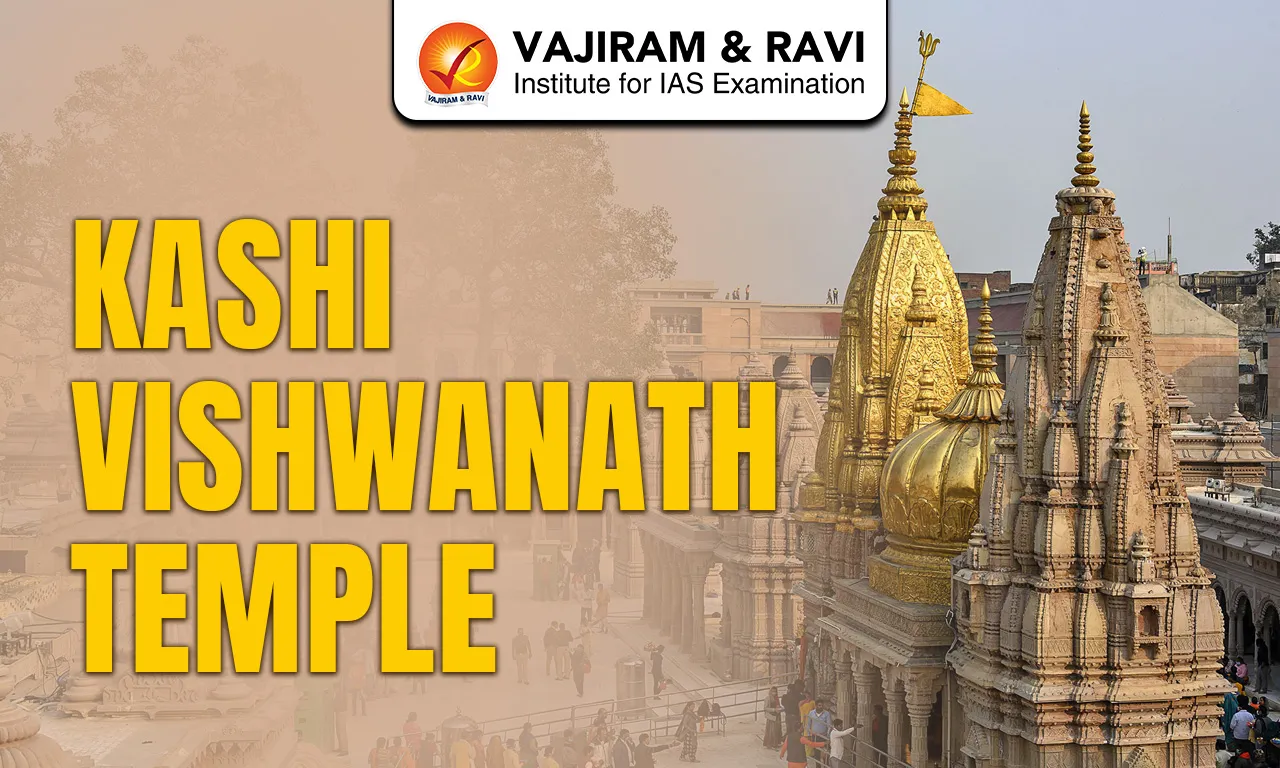
Kashi Vishwanath

Varanasi

Uttar Pradesh

Trimbakeshwar

Nashik

Maharashtra

Vaidyanath (Baidyanath)

Deoghar

Jharkhand

Nageshwar

Dwarka

Gujarat

Rameshwaram (Ramanathaswamy)

Rameswaram Island

Tamil Nadu

Grishneshwar

Chhatrapati Sambhajinagar (Aurangabad)

Maharashtra

1. Somnath Jyotirlinga (Gujarat)

  • Located at Prabhas Patan in the Gir Somnath district of Gujarat, on the western coast of the Arabian Sea.
  • Traditionally regarded as the first Jyotirlinga mentioned in Hindu scriptures.
  • According to legend, Chandra (Moon God) worshipped Lord Shiva here to regain his lost radiance after being cursed by Sage Daksha.
  • The temple has been destroyed and rebuilt multiple times following repeated invasions, making it a symbol of faith and resilience.
  • The present temple was reconstructed in the Chalukya architectural style and inaugurated in 1951.
  • The temple stands near the Triveni Sangam, where the Hiran, Kapila, and the mythical Saraswati rivers meet.
  • It is one of the most visited Shiva pilgrimage sites in western India.

2. Mallikarjuna Jyotirlinga (Andhra Pradesh)

  • Situated at Srisailam in the Nallamala Hills of Andhra Pradesh.
  • Located on the banks of the Krishna River within the Nagarjunasagar-Srisailam Tiger Reserve.
  • Dedicated to Lord Mallikarjuna (Shiva) and Goddess Bhramaramba (Parvati), making it one of the few temples housing both deities.
  • It is also one of the 18 Shakti Peethas, enhancing its religious significance.
  • The temple has been patronized by the Satavahanas, Chalukyas, Kakatiyas, Vijayanagara rulers, and the Reddi dynasty.
  • It is an important centre of Shaivism in South India.

3. Mahakaleshwar Jyotirlinga (Madhya Pradesh)

  • Located in Ujjain, one of India's Sapta Puri (Seven Sacred Cities).
  • Famous for its unique south-facing (Dakshinamukhi) Jyotirlinga, a rare feature among Shiva temples.
  • Renowned for the daily Bhasma Aarti, performed before sunrise using sacred ash.
  • Situated near the Shipra River, which hosts the Simhastha Kumbh Mela every 12 years.
  • The temple has references in ancient Hindu literature and has been rebuilt several times.
  • Mahakaleshwar is worshipped as the Lord of Time (Mahakaal).

4. Omkareshwar Jyotirlinga (Madhya Pradesh)

  • Located on Mandhata (Shivapuri) Island in the Narmada River.
  • The island is believed to resemble the sacred symbol "Om" when viewed from above.
  • One of the two major Shiva temples on the island, the other being Mamleshwar Temple.
  • The temple has architectural influences from the Paramara and Maratha periods.
  • Omkareshwar is considered an important centre of pilgrimage along the Narmada River.
  • It attracts devotees throughout the year, especially during Mahashivratri.

5. Kedarnath Jyotirlinga (Uttarakhand)

  • Located in the Rudraprayag district of Uttarakhand at an altitude of about 3,583 metres.
  • One of the highest Jyotirlingas and part of the Char Dham Yatra.
  • Situated near the Mandakini River amidst the Garhwal Himalayas.
  • According to tradition, the temple was originally built by the Pandavas and later revived by Adi Shankaracharya.
  • The temple remains open only between April/May and October/November due to heavy snowfall.
  • Built using massive stone slabs without modern binding materials, showcasing remarkable ancient engineering.

6. Bhimashankar Jyotirlinga (Maharashtra)

  • Located in the Sahyadri Hills near Pune in Maharashtra.
  • Surrounded by the Bhimashankar Wildlife Sanctuary, known for its rich biodiversity.
  • Believed to be the origin of the Bhima River, a major tributary of the Krishna River.
  • Built primarily in the Nagara style of temple architecture.
  • Associated with the legend of Lord Shiva defeating the demon Bhima.
  • The temple is an important pilgrimage and eco-tourism destination.

7. Kashi Vishwanath Jyotirlinga (Uttar Pradesh)

  • Situated in Varanasi, one of the oldest continuously inhabited cities in the world.
  • Located on the western bank of the River Ganga.
  • The present temple was rebuilt by Queen Ahilyabai Holkar in 1780.
  • The temple complex is connected to the Kashi Vishwanath Corridor, enhancing accessibility for pilgrims.
  • Considered one of the holiest Shiva temples where devotees seek spiritual liberation (Moksha).
  • Mentioned extensively in Hindu scriptures and devotional literature.

8. Trimbakeshwar Jyotirlinga (Maharashtra)

  • Located near Nashik at the foothills of the Brahmagiri Hills.
  • Close to the origin of the Godavari River, often called the "Ganga of South India."
  • The Jyotirlinga is unique because it consists of three small lingas, representing Brahma, Vishnu, and Shiva.
  • Constructed using black basalt stone in traditional architecture.
  • Nashik hosts the Kumbh Mela, making the temple an important pilgrimage centre.
  • Known for performing rituals such as Narayan Nagbali and Kaal Sarp Dosha Puja.

9. Vaidyanath (Baidyanath) Jyotirlinga (Jharkhand)

  • Located at Deoghar in Jharkhand.
  • Lord Shiva is worshipped here as Vaidyanath, meaning the "Divine Physician."
  • Associated with the legend of Ravana, who performed severe penance to please Lord Shiva.
  • The temple complex consists of 22 temples dedicated to different deities.
  • Hosts the famous Shravani Mela, attracting millions of Kanwariyas every year.
  • It is one of the most significant Shiva temples in eastern India.

10. Nageshwar Jyotirlinga (Gujarat)

  • Located near Dwarka in Gujarat, along the Arabian Sea coast.
  • Associated with protection from fear, poison, and negative forces.
  • Houses one of the tallest statues of Lord Shiva in India.
  • Mentioned in the Shiva Purana as an important Jyotirlinga.
  • Closely linked with the Krishna pilgrimage circuit due to its proximity to Dwarka.
  • The temple receives a large number of devotees during Mahashivratri.

11. Rameshwaram (Ramanathaswamy) Jyotirlinga (Tamil Nadu)

  • Situated on Rameswaram Island in Tamil Nadu.
  • Associated with the Ramayana, where Lord Rama worshipped Lord Shiva before crossing to Lanka.
  • Part of the Char Dham pilgrimage circuit.
  • Famous for having one of the longest temple corridors in the world, measuring over 1,200 metres.
  • The temple contains 22 sacred wells (Theerthams) used for ritual purification.
  • Built mainly in the Dravidian style of architecture.

12. Grishneshwar Jyotirlinga (Maharashtra)

  • Located at Verul (Ellora) in Chhatrapati Sambhajinagar district (formerly Aurangabad).
  • Considered the twelfth and final Jyotirlinga.
  • Situated close to the Ellora Caves, a UNESCO World Heritage Site.
  • The present structure was rebuilt by Queen Ahilyabai Holkar in the 18th century.
  • Constructed in the Hemadpanthi architectural style using red basalt stone.
  • Known for its intricate carvings depicting scenes from Hindu mythology and remains one of the most important pilgrimage centres in Maharashtra.

12 Jyotirlingas in India FAQs

Q1: How many Jyotirlingas are there in India?

Ans: There are 12 Jyotirlingas dedicated to Lord Shiva, located across eight states of India.

Q2: Which scripture mentions the Jyotirlingas?

Ans: The Shiva Purana is the primary scripture that describes the origin and significance of the twelve Jyotirlingas.

Q3: Which state has the highest number of Jyotirlingas?

Ans: Maharashtra has the highest number of Jyotirlingas with three—Bhimashankar, Trimbakeshwar, and Grishneshwar.

Q4: Which is considered the first Jyotirlinga?

Ans: Somnath in Gujarat is traditionally regarded as the first Jyotirlinga.

Q5: Which Jyotirlinga is located in the Himalayas?

Ans: Kedarnath, located in Uttarakhand, is the Himalayan Jyotirlinga.

Chauhan Dynasty, Founder, Timeline, Kingdom, Rulers, Decline

Chauhan Dynasty

The Chauhan Dynasty, also known as the Chahamana dynasty, was one of the most influential Rajput dynasties of early medieval northern India. It ruled large parts of present day Rajasthan and neighbouring regions between the 7th and 12th centuries CE. The dynasty emerged from Shakambhari and later made Ajmer its political centre. It became famous for military strength, territorial expansion, temple patronage and the reign of Prithviraj III, whose battles against Muhammad Ghori marked a major turning point in the political history of northern India.

Chauhan Dynasty

The Chauhan Dynasty grew from a regional ruling house into one of the strongest powers of north-western India. Its rule extended across Rajasthan, Delhi, Haryana and nearby regions before the main Shakambhari branch declined after 1192 CE.

  • Timeline: The dynasty flourished from the 7th century CE until the late 12th century. Later branches continued to rule several regional kingdoms until the modern period in Rajasthan and other parts of India.
  • Founder: Vasudeva is regarded as the earliest known ruler and founder of the Shakambhari branch. According to Prabandha-Kosha, he ascended the throne around 551 CE, although this date remains historically disputed.
  • Kingdom and Capital: The early capital was Shakambhari (modern Sambhar). Ajayaraja II later established Ajayameru (Ajmer) as the principal capital during the early 12th century, making it the dynasty's political centre.
  • Territorial Expansion: At its height under Vigraharaja IV and Prithviraj III, the kingdom included Ajmer, Sambhar, Delhi, Hansi, Nagaur, Ranthambore, parts of Haryana, eastern Rajasthan and areas along the Yamuna River.
  • Major Ruling Branches: Important branches included the Chahamanas of Shakambhari, Naddula (Nadol), Jalor and Ranastambhapura (Ranthambore). These branches later gave rise to states such as Bundi, Kota, Sirohi and others.
  • Major Battles: The dynasty is best remembered for the First Battle of Tarain (1191), where Prithviraj III defeated Muhammad Ghori and the Second Battle of Tarain (1192), where Ghori returned with improved cavalry tactics and defeated the Chauhan forces.
  • Political Importance: Initially feudatories of the Gurjara-Pratiharas, the Chauhans gradually became independent after the decline of Pratihara authority and emerged as one of the leading Rajput powers of northern India.

Chauhan Dynasty Background

The Chauhans developed from regional chiefs into an important ruling dynasty by combining military strength, strategic location and political independence in early medieval Rajasthan.

  • Early Homeland: Early inscriptions connect the dynasty with Ahichchhatrapura, identified with modern Nagaur. The rulers later shifted their political centre to Shakambhari and eventually to Ajmer.
  • Association with Gurjara-Pratiharas: During their early history, the Chauhans served as feudatories of the Gurjara-Pratiharas and supported Nagabhata I in defending the north-western frontier against Arab attacks.
  • Rise as Independent Power: Simharaja became one of the earliest rulers to assert independence after the decline of the Gurjara-Pratiharas and adopted the title Maharajadhiraja, marking the dynasty's emergence as a sovereign power.

Chauhan Dynasty Historical Sources

Knowledge about the Chauhan Dynasty comes from inscriptions, literary works and later historical traditions that together provide information about its genealogy, administration and political achievements.

  • Inscriptions: Important inscriptions include the Hansot copper plate, Sevadi inscription (1119 CE), Bijolia rock inscription (1170 CE), Sundha Hill inscription (1262 CE), Ajmer inscription and Mount Abu inscription.
  • Court Literature: Prithviraja Vijaya, written by court poet Jayanaka, provides valuable contemporary information about Prithviraj III and presents the dynasty as descendants of the solar lineage.
  • Jain Literature: Works such as Prabandha-Kosha by Rajashekhara Suri and Hammira Mahakavya by Nayachandra Suri preserve important traditions regarding Chauhan rulers and their genealogy.
  • Bardic Traditions: Prithviraj Raso, attributed to Chand Bardai, became the most famous literary source associated with Prithviraj III, although many legendary additions appeared in later versions.
  • Temple Records: Temple inscriptions from Pushkar, Ajmer, Harshanatha and other religious centres provide evidence regarding donations, temple construction and royal patronage.

Chauhan Dynasty Prominent Rulers

Several Chauhan rulers strengthened the kingdom through military victories, administrative reforms, territorial expansion and cultural patronage.

  • Vasudeva: Considered the earliest known ruler, Vasudeva laid the foundation of the Shakambhari branch. Later traditions also associate him with Sambhar Salt Lake and the Sapadalaksha region.
  • Ajayaraja II: He defeated the Paramaras, expanded Chauhan influence and established Ajayameru (Ajmer) as the new capital, transforming it into an important political and cultural centre.
  • Arnoraja: Arnoraja fought repeated conflicts with the Chaulukyas of Gujarat. He also confronted Ghaznavid attacks and strengthened Chauhan authority despite facing military setbacks against Kumarapala.
  • Vigraharaja IV: Widely regarded as the greatest Chauhan ruler, he captured Delhi from the Tomaras, extended authority towards eastern Punjab, defeated Muslim rulers and authored the Sanskrit drama Harikeli Nataka.
  • Prithviraj III (Rai Pithora): He ruled from about 1177 to 1192 CE, defeated Muhammad Ghori in the First Battle of Tarain, fought the Chandelas, expanded the kingdom and became the dynasty's most celebrated ruler.
  • Hariraja: After Prithviraj's defeat, Hariraja attempted to restore Chauhan authority by recovering Ajmer and resisting the Ghurid advance before being defeated by Qutb-ud-din Aibak.
  • Hammiradeva: The Ranthambore branch reached prominence under Hammiradeva, who resisted the Delhi Sultanate until Alauddin Khalji captured Ranthambore in 1301 CE.

Chauhan Dynasty Administration

The Chauhan rulers maintained a hereditary monarchy supported by feudatories, military chiefs and provincial officers for effective governance across their expanding territories.

  • Monarchical System: The king held supreme authority over administration, justice, military affairs and land grants, while members of the royal family often governed strategic regions.
  • Provincial Administration: The kingdom was divided into administrative units managed by local nobles and feudatories who collected revenue and maintained law and order while remaining loyal to the ruler.
  • Feudal Structure: Samantas and local chiefs formed the backbone of administration and military organisation. They supplied troops during campaigns and managed regional territories.
  • Military Organisation: The army mainly consisted of cavalry, infantry, elephants and feudatory contingents. Strong forts such as Ajmer, Taragarh and Ranthambore strengthened frontier defence.
  • Justice and Governance: Royal courts administered justice according to traditional customs, while inscriptions indicate grants to temples, Brahmins and religious institutions under royal supervision.

Chauhan Dynasty Economy

Agriculture, trade, land revenue and control over strategic commercial routes formed the economic foundation of the Chauhan kingdom.

  • Agriculture: Farming remained the principal occupation. Revenue from cultivated land formed the largest source of royal income across the Sapadalaksha region.
  • Salt Trade: Control over Sambhar Salt Lake gave the Chauhans an important economic advantage, as salt was one of the most valuable commercial commodities of medieval Rajasthan.
  • Trade Routes: Ajmer's location connected Rajasthan with Gujarat, Delhi, Malwa and northern India, encouraging long distance trade and commercial prosperity.
  • Land Grants: Kings frequently donated villages and agricultural lands to temples, Brahmins and Jain institutions, promoting both religious activities and local economic development.
  • Urban Growth: Centres such as Ajmer, Sambhar, Nagaur and Delhi developed as administrative, commercial and cultural towns under Chauhan rule.

Chauhan Dynasty Art and Architecture

The Chauhans promoted temple construction, forts and literary activities, leaving a lasting architectural and cultural legacy across Rajasthan.

  • Ajmer Development: Ajayaraja II developed Ajmer into a fortified capital with important religious and administrative buildings, increasing its political importance.
  • Temple Construction: Simharaja is associated with temple construction at Pushkar. Chamundaraja built a Vishnu temple at Narapura, while Someshvara commissioned five temples at Ajmer.
  • Harshanatha Temple: Several Chauhan rulers contributed to the development of the Harshanatha temple, reflecting sustained royal patronage of religious architecture.
  • Adhai Din Ka Jhonpra: Vigraharaja IV constructed an educational and religious structure at Ajmer, which was later converted into the Adhai Din Ka Jhonpra during the Delhi Sultanate period.
  • Literary Patronage: Vigraharaja IV composed Harikeli Nataka, while the period also witnessed works such as Prithviraja Vijaya and the later celebrated Prithviraj Raso.

Chauhan Dynasty Culture and Religion

The Chauhan rulers encouraged religious tolerance, supported temple institutions and promoted Sanskrit and regional literary traditions.

  • Religious Beliefs: Most Chauhan rulers followed Hindu traditions and patronised both Shaivism and Vaishnavism while extending support to Jain religious institutions.
  • Jain Patronage: Ajayaraja II permitted Jain temple construction in Ajmer, while Prithviraja III presented a golden kalasha to a Parshvanatha temple, reflecting continued Jain patronage.
  • Pilgrim Welfare: Prithviraj I established a food distribution centre for pilgrims travelling towards the Somnath temple, demonstrating organised royal support for religious activities.
  • Literary Culture: Royal courts encouraged Sanskrit scholars, poets and dramatists, contributing significantly to medieval literary traditions of north-western India.
  • Cultural Legacy: The dynasty became closely associated with ideals of bravery, honour and chivalry, themes that remained central to later Rajput literary traditions.

Chauhan Dynasty Decline

The decline of the Chauhan Dynasty resulted from military defeat, political divisions and the expansion of Ghurid power into northern India.

  • Internal Divisions: Rivalries among Rajput kingdoms weakened collective resistance, preventing the formation of a united military front against external invasions.
  • Second Battle of Tarain: In 1192 CE, Muhammad Ghori adopted flexible cavalry tactics and defeated Prithviraj III at Tarain, ending Chauhan control over Delhi and Ajmer.
  • Ghurid Expansion: After the victory, Muhammad Ghori installed Govindaraja as a vassal before Qutb-ud-din Aibak consolidated Ghurid authority over Ajmer and surrounding regions.
  • Regional Survival: Although the main Shakambhari branch declined, branches at Ranthambore, Jalor, Sirohi, Bundi and Kota continued ruling regional states for several centuries.
  • End of Major Resistance: The capture of Ranthambore by Alauddin Khalji in 1301 CE ended the strongest remaining Chauhan resistance, though several descendant lineages survived into the princely state period.

Chauhan Dynasty FAQs

Q1: Who founded the Chauhan Dynasty?

Ans: Vasudeva is regarded as the earliest known ruler and founder of the Chauhan Dynasty. According to Prabandha-Kosha, he ascended the throne around 551 CE, although the exact date remains disputed.

Q2: Who was the most famous ruler of the Chauhan Dynasty?

Ans: Prithviraj III, also known as Rai Pithora, was the most famous Chauhan ruler. He defeated Muhammad Ghori in the First Battle of Tarain (1191) but was defeated in the Second Battle of Tarain (1192).

Q3: What was the capital of the Chauhan Dynasty?

Ans: The early capital of the Chauhan Dynasty was Shakambhari (modern Sambhar). During the reign of Ajayaraja II, the capital shifted to Ajmer, which became the dynasty's main political centre.

Q4: Which regions were ruled by the Chauhan Dynasty?

Ans: The Chauhan Dynasty ruled large parts of present day Rajasthan, Delhi, Haryana and neighbouring regions. At its peak, the kingdom also controlled Ajmer, Sambhar, Nagaur, Ranthambore and Hansi.

Q5: Why did the Chauhan Dynasty decline?

Ans: The Chauhan Dynasty declined mainly due to internal disunity among Rajput kingdoms and the defeat of Prithviraj III in the Second Battle of Tarain in 1192 CE against Muhammad Ghori.

India’s Double Burden of Malnutrition, Tackling Obesity & Unhealthy Diets

India’s Double Burden of Malnutrition

India’s nutrition challenge is undergoing a major transition, with rising obesity and unhealthy diets emerging alongside persistent undernutrition. Recently, the Parliamentary Standing Committee on Consumer Affairs, Food and Public Distribution recommended mandatory Front-of-Pack Nutrition Labelling (FoPNL), while the ICMR–National Institute of Nutrition (ICMR-NIN) led “Let’s Fix Our Food” consortium proposed a health tax on High Fat, Salt and Sugar (HFSS) foods, stricter regulation of junk food advertising and healthier school food environments.

India’s Double Burden of Malnutrition

India is facing a double burden of malnutrition, where persistent undernutrition coexists with rising overweight, obesity and diet-related non-communicable diseases (NCDs). Addressing this nutrition transition requires public health policies that ensure both food security and healthy diets.

  • Persistent Undernutrition: Stunting, wasting, anaemia and micronutrient deficiencies continue to affect children, women and economically vulnerable populations.
  • Rising Overnutrition: NFHS data shows a steady increase in overweight and obesity among adults due to changing diets and sedentary lifestyles.
    • According to ICMR-NIN, over 17 million children and adolescents are affected by obesity, a figure projected to exceed 27 million by 2030.
  • Growing NCD Burden: Unhealthy diets are driving the rapid increase in diabetes, cardiovascular diseases, hypertension and certain cancers.
  • Changing Food Environment: Easy availability of ultra-processed foods, urbanisation and aggressive food marketing have altered traditional dietary habits.

Policy Measures to Promote Healthier Diets

India requires regulatory, fiscal and behavioural interventions to reduce obesity and encourage healthier food choices.

Front-of-Pack Nutrition Labelling (FoPNL)

Front-of-Pack Nutrition Labelling (FoPNL) is a system of displaying key nutrition information on the front of packaged food products to help consumers quickly identify foods high in sugar, salt and saturated fat.

Mandatory front-of-pack labels can empower consumers to make informed dietary decisions.

  • Informed Consumer Choice: Clearly identifies foods high in sugar, salt and saturated fat before purchase.
  • Promotes Healthier Products: Encourages food manufacturers to reformulate products with lower levels of unhealthy ingredients.
  • Protects Children: Mandatory disclosure of sugar content in baby foods can discourage unhealthy dietary habits from early childhood.
  • Improves Transparency: Simplifies nutritional information that is often difficult for consumers to interpret.

Health Tax on HFSS Foods

The ICMR-NIN consortium has recommended a health tax on High Fat, Salt and Sugar (HFSS) foods

to reduce their excessive consumption as they are associated with obesity, diabetes, hypertension and other non-communicable diseases.

  • Discourages Unhealthy Consumption: Higher prices can reduce demand for foods linked to obesity and NCDs.
  • Corrects Negative Externalities: Applies the principle of Pigouvian taxation, where products imposing long-term public health costs are taxed.
  • Encourages Industry Reform: Incentivises manufacturers to develop healthier food alternatives.
  • Supports Public Health Financing: Additional revenue can strengthen nutrition and preventive healthcare programmes.

Healthier School Food Environment

Healthy dietary habits should begin during childhood.

  • Restricts HFSS Foods: Limits the availability of unhealthy foods in and around educational institutions.
  • Promotes Nutrition Education: Encourages lifelong healthy eating habits among children and adolescents.
  • Supports Early Prevention: Reduces the long-term risk of obesity and metabolic disorders.

Regulation of Junk Food Advertising

Marketing practices significantly influence food choices, especially among children.

  • Protects Vulnerable Consumers: Restricts advertisements targeting children and adolescents.
  • Prevents Misleading Claims: Ensures responsible marketing of packaged food products.
  • Promotes Responsible Consumption: Reduces exposure to unhealthy food marketing across digital and conventional media.

Global Best Practices

Several countries have adopted fiscal and regulatory measures to reduce unhealthy food consumption and promote healthier diets.

  • The World Health Organization (WHO) reports that since 2017, more than 133 countries have introduced or increased health taxes on unhealthy products.
  • Colombia introduced a phased junk food tax in 2023, raising the tax rate from 10% to 15% and then 20%, along with stronger front-of-pack nutrition labelling.
  • Chile introduced mandatory front-of-pack warning labels and imposed strict restrictions on the marketing of unhealthy foods to children.
  • Mexico levied a tax on sugar-sweetened beverages, leading to a decline in their consumption and encouraging healthier dietary choices.
  • Norway, Hungary and Denmark have imposed taxes on sugar and other unhealthy foods to discourage excessive consumption and improve public health.

Key lesson for India: International experience shows that a combination of front-of-pack nutrition labelling, health taxes, marketing regulations and public awareness campaigns is more effective than any single policy measure in promoting healthy diets and preventing obesity.

Challenges in Promoting Healthy Diets and Preventing Obesity

Several institutional and behavioural barriers continue to limit the effectiveness of obesity prevention policies.

  • Weak Regulatory Enforcement: Delays in implementing mandatory nutrition labelling reduce consumer awareness.
  • Food Industry Resistance: Commercial interests may oppose stricter regulations and fiscal measures.
  • Low Nutrition Literacy: Consumers often lack awareness of healthy dietary practices and nutritional information.
  • Affordability of Healthy Diets: Nutritious foods remain relatively expensive for low-income households.
  • Behavioural Change: Sustainable dietary improvements require long-term awareness and lifestyle changes.
  • Inter-sectoral Coordination: Effective implementation requires collaboration among the Ministries of Health, Education, Consumer Affairs and Food Processing.

Way Forward

India’s nutrition strategy should move beyond calorie security towards ensuring healthy and sustainable diets.

  • Implement Mandatory FoPNL based on simple and scientifically validated nutrition indicators.
  • Adopt Evidence-Based Health Taxes on HFSS foods while protecting vulnerable consumers.
  • Strengthen FSSAI Enforcement to ensure compliance with food safety and labelling standards.
  • Create Healthy School Food Environments through nutrition standards and awareness programmes.
  • Regulate Junk Food Advertising, particularly advertisements targeting children.
  • Promote Healthier Food Reformulation through incentives and regulatory standards.
  • Strengthen Public Awareness Campaigns on balanced diets, physical activity and healthy lifestyles.

India’s Double Burden of Malnutrition FAQs

Q1: What is the double burden of malnutrition?

Ans: It is the coexistence of undernutrition (stunting, wasting and anemia) with rising overweight, obesity and diet-related non-communicable diseases (NCDs).

Q2: What is Front-of-Pack Nutrition Labelling (FoPNL)?

Ans: FoPNL is a front-facing label on packaged foods that provides simple nutrition information to help consumers identify products high in sugar, salt and saturated fat.

Q3: What are High Fat, Salt and Sugar (HFSS) foods?

Ans: HFSS foods are processed foods high in fat, salt and sugar that increase the risk of obesity, diabetes, hypertension and other NCDs.

Q4: Why is a health tax on HFSS foods recommended?

Ans: It discourages unhealthy food consumption, promotes healthier product reformulation and helps reduce the burden of obesity and NCDs.

Q5: Which countries have successfully used health tax to reduce unhealthy food consumption?

Ans: Mexico, Chile, Colombia, Norway, Hungary and Denmark.

Solicitor General of India, List, Role, Functions, Provisions

Solicitor General of India

The Solicitor General of India is an important law officer of the Union Government who assists the Attorney General of India and represents the government in legal matters before courts.

About Solicitor General of India

The Solicitor General of India is the second-highest law officer of the Government of India, after the Attorney General of India. The office assists the Attorney General in legal matters and represents the Union Government before the Supreme Court, High Courts and other judicial forums.  The office of Solicitor General was established in 1950. C.K. Daphtary became the first Solicitor General of India.

The hierarchy of Union Law Officers is: Attorney General of India → Solicitor General of India → Additional Solicitors General of India

Solicitor General of India Provisions

The provisions related to the Solicitor General of India are governed by executive rules rather than constitutional provisions.

  • Non-Constitutional Office: The Solicitor General is not mentioned in the Constitution of India, unlike the Attorney General who is provided under Article 76. The office derives its authority from executive action of the Government of India.
  • Legal Framework: The appointment and service conditions of the Solicitor General are governed by the Law Officers (Conditions of Service) Rules, 1987. These rules are framed under the proviso to Article 309 of the Constitution, which empowers regulation of service conditions of persons serving the Union.
  • Appointment: The Solicitor General is appointed by the Appointments Committee of the Cabinet (ACC). The appointment process is carried out through the Department of Legal Affairs, Ministry of Law and Justice.
  • Qualification: The Constitution does not prescribe specific qualifications for the Solicitor General. Generally, a senior advocate with expertise in constitutional and public law is appointed to the office.
  • Tenure: The Solicitor General generally holds office for a term of three years. The tenure is not constitutionally fixed and the officer may be reappointed.
  • Remuneration: The remuneration of the Solicitor General of India is governed by the Law Officers (Conditions of Service) Rules, 1987, as amended in 2026.
    • The Solicitor General receives a monthly retainer of ₹96,000 (effective from 1 February 2026).
    • The office also receives professional fees for appearances before courts, making it a fee-based remuneration system rather than a fixed salary.

Solicitor General of India Role and Functions

The role of the Solicitor General of India is to provide legal advice to the Union Government and represent it in important legal proceedings before courts.

  • Legal Advice to Government: The Solicitor General advises the Government of India on constitutional, civil, criminal and administrative matters referred by ministries and departments.
  • Representation Before Courts: The Solicitor General represents the Government of India before the Supreme Court, High Courts and other judicial forums in cases where the Union Government is a party or has an interest, including matters relating to constitutional interpretation, government policies, legislation and executive actions.
  • Assistance to Attorney General: The Solicitor General assists the Attorney General of India in discharging official duties and handling important legal matters of national significance.
  • Presidential References: The Solicitor General represents the Government of India in Presidential References made to the Supreme Court under Article 143 of the Constitution.

Restrictions on Solicitor General 

The restrictions on the Solicitor General ensure professional integrity and prevent conflicts of interest

  • The Solicitor General cannot appear against the Government of India or any State Government.
  • The Solicitor General cannot advise or represent private parties in matters where the Government of India has an interest.
  • The Solicitor General cannot defend an accused person in criminal proceedings without prior government permission.
  • The Solicitor General cannot accept certain offices or directorships without government approval.

Difference Between Attorney General of India and Solicitor General of India

The Attorney General of India and the Solicitor General of India are the two highest law officers of the Union Government, but they differ in their constitutional status, powers and functions.

Basis Attorney General of India Solicitor General of India

Constitutional Status

Constitutional office under Article 76

Non-constitutional office created through executive rules

Position

Highest law officer of India

Second-highest law officer of India

Legal Framework

Constitution of India

Law Officers (Conditions of Service) Rules, 1987

Appointment

Appointed by the President of India

Appointed by the Appointments Committee of the Cabinet (ACC).

Tenure

Holds office during the pleasure of the President

Generally appointed for three years and holds office during the pleasure of the President

Parliamentary Rights

Can participate in the proceedings of Parliament and its Committees under Article 88, but cannot vote

No right to participate in Parliament

Primary Role

Chief legal adviser to the Union Government

Assists the Attorney General and represents the Union Government before courts

Constitutional Duties

Advises the Government and performs duties assigned under the Constitution and other laws

Performs functions assigned under the Law Officers (Conditions of Service) Rules, 1987

List of Solicitors General of India (1950-Present)

The office of the Solicitor General of India has been held by several distinguished jurists since its establishment in 1950, reflecting its important role in representing the Union Government before courts. The present Solicitor General of India is Tushar Mehta, who has been holding the office since 2018.

No. Name Tenure

1

C.K. Daphtary

1950-1963

2

H.N. Sanyal

1963-1964

3

S.V. Gupte

1964-1967

4

Niren De

1967-1968

5

Jagadish Swarup

1969-1972

6

Lal Narayan Sinha

1972-1977

7

S.N. Kacker

1977-1979

8

Soli Sorabjee

1979-1980

9

K. Parasaran

1980-1983

10

Milon K. Banerji

1986-1989

11

Ashok Desai

1989-1990

12

A.D. Giri

1990-1991

13

Dipankar P. Gupta

1992- 1997

14

T.R. Andhyarujina

1997-1998

15

N. Santosh Hegde

1998 - 1999

16

Harish Salve

1999 - 2002

17

Kirit Rawal

2002 - 2004

18

Goolam E. Vahanvati

2004-2009

19

Gopal Subramaniam

2009-2011

20

Rohinton F. Nariman

2011-2013

21

Mohan Parasaran

2013-2014

22

Ranjit Kumar

2014-2017

23

Tushar Mehta

2018-Present

Solicitor General of India FAQs

Q1: Who is the Solicitor General of India?

Ans: The Solicitor General of India is the second-highest law officer of the Union Government, who assists the Attorney General and represents the Government of India before courts.

Q2: Is the Solicitor General of India a constitutional office?

Ans: No. The Solicitor General is a non-constitutional and non-statutory office, governed by the Law Officers (Conditions of Service) Rules, 1987.

Q3: Who appoints the Solicitor General of India?

Ans: The Solicitor General is appointed by the Appointments Committee of the Cabinet (ACC).

Q4: What are the main functions of the Solicitor General of India?

Ans: The Solicitor General advises the Government of India on legal matters, represents it before courts, assists the Attorney General, and appears in Presidential References under Article 143.

Q5: Who is the present Solicitor General of India?

Ans: Tushar Mehta is the present Solicitor General of India and has been reappointed for a three-year term from 1 July 2026 to 30 June 2029.

Atomic Energy Act 1962, Background, Objectives, Provisions

Atomic Energy Act 1962

The Atomic Energy Act, 1962 was the principal legislation governing the development, control and peaceful use of atomic energy in India for more than six decades. Enacted to ensure the safe and strategic utilisation of nuclear energy, it established the legal framework for regulating nuclear materials, atomic research, radiation safety and related activities under the control of the Central Government. In December 2025, the Act was repealed and replaced by the Sustainable Harnessing and Advancement of Nuclear Energy for Transforming India (SHANTI) Act, 2025.

About the Atomic Energy Act, 1962

The Atomic Energy Act, 1962 provides the legal framework for the development, control and use of atomic energy in India for peaceful purposes and public welfare.

  • The Act was enacted by Parliament in 1962 and came into force on 21 September 1962, replacing the Atomic Energy Act, 1948.
  • It extends to the whole of India and is administered by the Department of Atomic Energy under the Central Government.
  • The Act derived constitutional authority from Entry 6 of the Union List (List I, Seventh Schedule), which places atomic energy and mineral resources necessary for its production under the exclusive jurisdiction of the Union.
  • It vested extensive powers in the Central Government to regulate atomic energy, prescribed substances, radioactive materials and nuclear installations.
  • The Act served as the foundational legislation governing India’s civilian nuclear programme until it was repealed by the SHANTI Act, 2025.

Atomic Energy Act, 1962 Background

Soon after Independence, India recognised atomic energy as a strategic resource essential for national development, scientific progress and energy security. To regulate this emerging sector, Parliament enacted the Atomic Energy Act, 1948, which laid the foundation for India’s nuclear programme. During this period, the Atomic Energy Commission (AEC) was established in 1948 to guide nuclear policy, followed by the creation of the Department of Atomic Energy (DAE) in 1954 under the direct charge of the Prime Minister. As India’s nuclear research and peaceful applications expanded, the 1948 law became inadequate. To provide a stronger and more comprehensive legal framework, Parliament enacted the Atomic Energy Act, 1962, replacing the 1948 Act. The new law vested exclusive control over atomic energy and strategic nuclear materials in the Central Government while promoting the peaceful development and use of nuclear energy for the welfare of the people.

Atomic Energy Act, 1962 Objectives

The Atomic Energy Act, 1962 aimed to:

  • Promote the peaceful development and use of atomic energy for national development and public welfare.
  • Ensure exclusive Central Government control over atomic energy and strategic nuclear materials.
  • Regulate the production, possession, transport, import, export and use of prescribed and radioactive substances.
  • Develop nuclear science and technology by promoting research, innovation and technical advancement.
  • Ensure radiation safety and provide for the safe handling and disposal of radioactive substances and waste.
  • Protect national security by restricting access to sensitive nuclear information and strategic installations.
  • Support the generation of electricity from atomic energy and promote the growth of India’s civilian nuclear power programme.
  • Provide a legal framework for licensing, inspection, acquisition and regulation of activities connected with atomic energy.

Atomic Energy Act, 1962 Key Provisions 

The Atomic Energy Act, 1962 vested exclusive control over the development, regulation and peaceful use of atomic energy in the Central Government.

  • General Powers of the Central Government (Section 3): Empowers the Central Government to develop, produce, use and regulate atomic energy. It can establish nuclear organisations, conduct research, manufacture nuclear materials, declare restricted information and prohibited areas, regulate radiation safety, ensure safe disposal of radioactive waste and generate electricity from atomic energy.
  • Reporting of Uranium and Thorium Deposits (Section 4): Makes it mandatory for any person who discovers, or has reason to believe that uranium or thorium deposits exist, to report the information to the Central Government.
  • Control over Mining (Section 5): Authorises the Central Government to regulate, impose conditions on or prohibit the mining, treatment and concentration of uranium-bearing minerals in the national interest.
  • Disposal of Uranium (Section 6): Prohibits disposal of uranium-bearing minerals without prior approval of the Central Government and empowers it to compulsorily acquire such minerals by paying compensation.
  • Information, Inspection and Exploration (Sections 7-9): Empower the Central Government to obtain information on prescribed substances, inspect mines and nuclear facilities, and undertake surveys and exploration to locate strategic nuclear minerals.
  • Compulsory Acquisition (Sections 10-12): Enable the Central Government to acquire mining rights, prescribed substances, nuclear equipment, plants and mines required for atomic energy purposes, with compensation provided under the Act.
  • Transfer of Contracts (Section 13): Allows the Central Government to take over rights and liabilities under contracts relating to nuclear minerals, atomic energy or nuclear research in the national interest, with compensation where applicable.
  • Licensing of Nuclear Activities (Section 14): Establishes a licensing system under which mining of specified minerals, possession or use of prescribed substances, import or export of nuclear materials, and operation of nuclear plants can be carried out only with a licence from the Central Government.
  • Requisition of Nuclear Materials (Section 15): Empowers the Central Government to require delivery of substances containing uranium or plutonium, extract these strategic materials, and return the remaining substance after paying compensation.
  • Radiation Safety (Sections 16-17): Empowers the Central Government to regulate the manufacture, transport, storage, use and disposal of radioactive substances, prescribe radiation safety standards, protect workers and the public, and ensure safe disposal of radioactive waste.
  • Secrecy and Security (Sections 18-19): Restrict disclosure of sensitive nuclear information and regulate entry into prohibited nuclear areas. Prosecution for offences under Section 18 requires the consent of the Attorney General of India.
  • Patent Restrictions (Section 20): Prohibits the grant of patents for inventions relating to atomic energy and requires prior approval of the Central Government before filing such patent applications abroad.
  • Compensation (Section 21): Lays down the principles for determining compensation in cases of compulsory acquisition under the Act.
  • Atomic Power Generation (Section 22): Empowers the Central Government to formulate national policy on atomic power, establish and operate atomic power stations, regulate electricity supply and coordinate with electricity authorities.
  • Administration of Nuclear Factories (Section 23): Vests the Central Government with the authority to administer and enforce the Factories Act, 1948 in factories engaged in atomic energy activities.
  • Offences and Penalties (Sections 24-26): Prescribe punishments for unauthorised nuclear activities, violation of licence conditions, breach of safety rules and disclosure of restricted information, and lay down the procedure for prosecution.
  • Delegation and Rule-making (Sections 27-31): Empower the Central Government to delegate powers, frame rules for implementing the Act, ensure the Act overrides inconsistent laws and protect actions taken in good faith. Section 27 also served as the enabling provision under which the Atomic Energy Regulatory Board (AERB) was constituted in 1983 through an executive order.

Atomic Energy Act, 1962 Key Amendments and Current Status 

The Atomic Energy Act, 1962 was amended from time to time to strengthen India’s nuclear governance framework and facilitate the peaceful development of atomic energy.

  • Atomic Energy (Amendment) Act, 1986: Revised provisions relating to compulsory acquisition and clarified regulatory provisions concerning prescribed substances.
  • Atomic Energy (Amendment) Act, 1987: Expanded the powers of the Central Government, enabled authorities, corporations and Government companies to undertake atomic energy activities, and introduced the definition of a Government Company under the Act.
  • Atomic Energy (Amendment) Act, 2015 (Act No. 5 of 2016): Expanded the definition of Government Company to facilitate joint ventures between the Nuclear Power Corporation of India Limited (NPCIL) and other public sector undertakings for establishing and operating nuclear power projects under Central Government control.

Atomic Energy Act, 1962 Current Status

The Atomic Energy Act, 1962 has been repealed and replaced by the Sustainable Harnessing and Advancement of Nuclear Energy for Transforming India (SHANTI) Act, 2025, which received Presidential assent on 20 December 2025. The SHANTI Act also repealed the Civil Liability for Nuclear Damage Act, 2010, creating a unified legal framework for India’s nuclear sector.

Key features of the SHANTI Act, 2025:

  • Statutory status to AERB: Grants statutory status to the Atomic Energy Regulatory Board (AERB), India’s nuclear safety regulator, which was originally constituted by the Central Government in 1983 under Section 27 of the Atomic Energy Act, 1962 through an executive order.
  • Limited private sector participation: Permits limited private sector participation in nuclear power generation and selected fuel-cycle activities, while retaining Central Government control over strategic areas such as uranium mining, fissile materials, spent fuel management and heavy water.
  • New nuclear liability framework: Replaces the Civil Liability for Nuclear Damage Act, 2010 with a graded system to determine liability and provide compensation in case of nuclear accidents.
  • Supports Nuclear Energy Mission: Provides the legal framework to support the target of achieving 100 GW of nuclear power capacity by 2047.

Atomic Energy Act 1962 FAQs

Q1: What was the Atomic Energy Act, 1962?

Ans: The Atomic Energy Act, 1962 was the principal law governing the development, control and peaceful use of atomic energy in India.

Q2: When did the Atomic Energy Act, 1962 come into force?

Ans: The Atomic Energy Act, 1962 came into force on 21 September 1962, replacing the Atomic Energy Act, 1948.

Q3: What were the main objectives of the Atomic Energy Act, 1962?

Ans: To regulate atomic energy, ensure its peaceful use, promote nuclear research, and maintain Central Government control over strategic nuclear resources.

Q4: Which authority administered the Atomic Energy Act, 1962?

Ans: The Atomic Energy Act, 1962 was administered by the Department of Atomic Energy (DAE) under the Central Government.

Q5: Is the Atomic Energy Act, 1962 still in force?

Ans: No. The Atomic Energy Act, 1962 was repealed in December 2025 and replaced by the SHANTI Act, 2025.

Perennial Rivers, Meaning, Perennial Vs Seasonal, Significance

Perennial Rivers

Perennial Rivers are rivers that flow throughout the year, providing a steady source of water even during dry seasons. They are an important part of our natural environment and support daily life in many ways from supplying drinking water and irrigation to sustaining plants, animals, and ecosystems. These rivers depend on a combination of rainfall, groundwater, and sometimes glacier or snowmelt, which helps them maintain continuous flow. Due to their constant presence, perennial rivers have always played a vital role in shaping human settlements, culture, and economic activities. Perennial rivers are discussed in detail in this article.

Perennial River

  • Perennial rivers are rivers that flow continuously throughout the year, regardless of the season, though in severe drought conditions their flow may reduce or temporarily stop.
  • The term “perennial” comes from the Latin word perennis, meaning lasting throughout the year, which is why these rivers are also called permanent rivers.
  • Most perennial rivers originate in mountainous regions, especially where there is snow and glaciers.
  • Their water supply comes from multiple sources such as:
    • Melting glaciers and snow in summer
    • Rainfall during the monsoon
    • Snow accumulation in winter
    • Underground water and springs
  • Because they receive water from different sources across seasons, these rivers do not dry up like seasonal rivers.
  • In India, perennial rivers are mainly found in North India due to the presence of the Himalayas, which are covered with snow.
  • In contrast, South India does not have snow-covered mountains, so most rivers there are non-perennial (seasonal).
  • Some of the important perennial rivers include:
    • Indus and its tributaries: Chenab, Jhelum, Beas, Ravi, Sutlej
    • Ganga and its tributaries: Gandak, Yamuna, Gomti, Ghaghara, Kosi
    • Brahmaputra and its tributaries: Torsa, Teesta, Manas, Jaldhaka, Subansiri, Dibang, Lohit

Key Characteristics of Perennial Rivers

  • Perennial rivers flow throughout the year, meaning they do not dry up in any particular season under normal conditions. This continuous flow makes them reliable and consistent water bodies.
  • They are often called permanent rivers because their water supply is not dependent on just one source, but a combination of multiple sources working together.
  • One of the key features is that they are mainly fed by melting glaciers and snow, especially those originating in high mountain regions like the Himalayas. During summer, melting ice ensures a steady flow of water even when rainfall is low.
  • These rivers are also supported by groundwater (underground aquifers). Water slowly seeps into the river from below, which helps maintain flow even during dry periods when there is no rain.
  • Rainfall, especially monsoon rains, further increases the water level. During the rainy season, these rivers become fuller and stronger, but unlike seasonal rivers, they still have water even without rain.
  • Another important characteristic is that they have a stable and continuous flow pattern, rather than sudden drying or extreme fluctuations like seasonal rivers.
  • Perennial rivers support rich and stable ecosystems. Because they do not dry up, they provide a permanent habitat for aquatic life, plants, and animals along the riverbanks.
  • They play a crucial role in agriculture, as they provide year-round water for irrigation, making farming more reliable and productive, especially in fertile plains.
  • Another key feature is that they usually have large river systems with many tributaries, which help in maintaining their continuous flow and expanding their reach across regions.

Difference Between Perennial Rivers and Seasonal Rivers

Rivers can be broadly classified based on their flow pattern and source of water into two main types: perennial rivers and seasonal rivers. While both are important for ecosystems and human use, they differ significantly in terms of water availability, sources, and consistency of flow. The key differences between perennial and seasonal rivers are discussed below.

Difference Between Perennial Rivers and Seasonal Rivers

Basis

Perennial Rivers

Seasonal Rivers

Flow of Water

Flow continuously throughout the year

Flow only during a particular season (mostly rainy season)

Water Availability

Always have water, even in dry seasons

May dry up completely during summer or drought

Source of Water

Fed by glaciers, snowmelt, groundwater, and rainfall

Mainly depend on rainfall (monsoon)

Consistency of Flow

Have a steady and reliable flow

Flow is irregular and changes with seasons

Presence During Drought

Continue to flow, though water level may reduce

Often shrink into small streams or dry up completely

Geographical Location

Common in regions with mountains and glaciers (e.g., North India)

Common in regions without snow-fed sources (e.g., parts of South India)

Impact on Agriculture

Provide year-round water, making farming reliable

Farming depends heavily on rainfall timing and amount

River Size and Shape

Maintain size and flow throughout the year

Become narrow, shallow, or dry in non-rainy seasons

Ecosystem Support

Support stable and rich biodiversity all year

Organisms adapt to wet and dry cycles

Examples

Ganga, Brahmaputra, Indus, Godavari

Sabarmati, Banas

Hydropower Potential

Suitable due to continuous water flow

Limited due to irregular water availability

Nature of Flow Cycle

Continuous, no dry phase under normal conditions

Cyclical flow (flows in rainy season, dries later)

Major Perennial Rivers in India

  • Ganga (Ganges): Originates from the Gangotri Glacier (Himalayas) and flows about 2,525 km through northern India into Bangladesh, finally draining into the Bay of Bengal; it is a sacred river and supports agriculture, drinking water, and cultural life.
  • Yamuna: Rises from the Yamunotri Glacier (Uttarakhand) and flows around 1,376 km; it is a major tributary of the Ganga and meets it at the Triveni Sangam (Prayagraj), an important religious site.
  • Brahmaputra: Originates in Tibet (Tsangpo River) and flows about 2,900 km through Arunachal Pradesh, Assam, and Bangladesh; known for fertile floodplains and frequent monsoon floods.
  • Indus: Begins in the Tibetan Plateau and flows about 3,180 km through Ladakh into Pakistan; has major tributaries like Sutlej, Beas, Chenab, Ravi, and Jhelum and is linked to the Indus Valley Civilization.
  • Godavari: Originates in Maharashtra and flows about 1,465 km; it is the largest river of Peninsular India and mainly monsoon-fed, supporting agriculture and settlements.
  • Krishna: Starts near Mahabaleshwar (Western Ghats) and flows about 1,400 km; important for irrigation and water supply in central and southern India.
  • Mahanadi: Originates in Chhattisgarh and flows about 858 km through Odisha into the Bay of Bengal; important for irrigation and hydroelectric power (notably Hirakud Dam).
  • Sutlej: Rises in Tibet and flows about 1,550 km through Himachal Pradesh and Punjab; an important tributary of the Indus used for irrigation and power generation.
  • Tapti (Tapi): Originates in the Satpura Range and flows about 724 km through Maharashtra and Gujarat into the Arabian Sea; supports agriculture and industry.

Challenges Faced by Perennial Rivers

  • Overuse and over-allocation of water: Rivers are heavily used for agriculture, industry, and domestic purposes, reducing their natural flow.
  • Declining flow and seasonal transformation: Many perennial rivers are turning into seasonal rivers due to reduced water availability and interrupted flow.
  • Excessive groundwater extraction: Overuse of borewells and pumps lowers the water table, reducing groundwater that naturally feeds rivers.
  • Dams, diversions, and infrastructure pressure: Dams, canals, and urban development disturb the natural flow and alter river ecosystems.
  • Urbanisation and loss of floodplains: Expansion of cities leads to encroachment on riverbanks and floodplains, reducing space for rivers to flow naturally.
  • Pollution and habitat degradation: Industrial waste, sewage, and agricultural runoff degrade water quality and harm aquatic life.
  • Decline of tributaries and natural channels: Smaller rivers and feeder streams are drying up, weakening major river systems.
  • Climate variability and rainfall dependency: Changing rainfall patterns and increased droughts affect rivers, especially those dependent on rain.
  • Weak policies and poor river management: Lack of proper restoration plans and focus on ecology has worsened river conditions.

Government Initiatives for Conservation and Management of Perennial Rivers

  • National River Conservation Plan (NRCP): A centrally sponsored scheme focused on pollution abatement in major rivers through setting up sewage treatment plants (STPs), interception and diversion of drains, and riverfront development, aiming to improve overall water quality and ecological health of rivers.
  • Namami Gange Programme: An integrated flagship programme for the conservation and rejuvenation of the Ganga basin, covering pollution control, river surface cleaning, biodiversity conservation, afforestation, and public participation, with a strong emphasis on sustainable river basin management.
  • Atal Bhujal Yojana (ABHY): A World Bank-supported scheme aimed at sustainable groundwater management in water-stressed areas through community participation, water budgeting, and demand-side interventions, helping in restoring baseflow to rivers.
  • Jal Shakti Abhiyan: A time-bound campaign focusing on water conservation and rainwater harvesting, promoting efficient water use, reuse of treated wastewater, watershed development, and intensive afforestation in water-stressed districts across India.
  • Wetlands (Conservation and Management) Rules, 2017: Provides a regulatory framework for protection, conservation, and wise use of wetlands, restricting encroachments, pollution, and destructive activities, while recognizing wetlands as crucial for maintaining river flows, groundwater recharge, and biodiversity.

Significance of Perennial Rivers

  • Ensures Water Security: Maintains continuous availability of freshwater for agriculture, drinking, and industry, which is crucial for a growing population and economy.
  • Maintains Ecological Balance: Supports aquatic biodiversity, wetlands, and riparian ecosystems, ensuring the survival of fish, plants, and other organisms dependent on river systems.
  • Sustains Baseflow and Groundwater Linkages: Healthy rivers help in recharging groundwater, while adequate groundwater levels ensure perennial flow during dry seasons, maintaining the hydrological cycle.
  • Supports Livelihoods: Provides livelihood opportunities through fishing, agriculture, tourism, and traditional occupations, especially for rural and river-dependent communities.
  • Reduces Disaster Risks: Well-managed rivers and floodplains help in flood regulation, drought mitigation, and prevention of land degradation, enhancing climate resilience.
  • Preserves Cultural and Social Values: Rivers in India hold immense religious, cultural, and historical significance, and their conservation ensures continuation of these traditions.
  • Prevents Desertification and Land Degradation: Sustained river flows help in maintaining soil moisture and fertility, preventing the conversion of fertile land into arid regions.
  • Promotes Sustainable Development: Balances economic development with environmental conservation, ensuring that river resources are used without compromising future needs.
  • Improves Water Quality: Effective management reduces pollution load, leading to safer water for human use and healthier ecosystems.
  • Strengthens Climate Change Adaptation: Conserved river systems enhance the ability to withstand variability in rainfall, glacier melt, and extreme weather events.

Perennial Rivers FAQs

Q1: What are Perennial Rivers?

Ans: Perennial rivers flow continuously throughout the year, even during dry seasons, because they are fed by multiple sources such as rainfall, groundwater, and melting snow or glaciers.

Q2: Why are perennial rivers called permanent rivers?

Ans: Perennial rivers are often referred to as permanent rivers because they maintain a steady flow in all seasons and do not dry up like seasonal rivers, due to their constant water supply from various natural sources.

Q3: What are the main sources of water for perennial rivers?

Ans: The main sources of water for perennial rivers include glacier and snowmelt, rainfall, and groundwater discharge, all of which together ensure that the river continues to flow even during periods of low rainfall.

Q4: What is the difference between perennial and seasonal rivers?

Ans: The key difference lies in their flow pattern, as perennial rivers flow throughout the year, while seasonal rivers depend mainly on rainfall and may dry up during dry seasons, making their flow irregular and unreliable.

Q5: What are some examples of perennial rivers?

Ans: Examples of perennial rivers include the Ganga, Brahmaputra, and Indus river systems in India, which flow throughout the year.

Land Reclamation, Concept, Impacts and Sustainable Management

Land Reclamation

Land reclamation is the process of converting water-covered areas such as seas, rivers, lakes and wetlands into usable land through engineering methods. It supports urban growth, infrastructure development and strategic projects in land-scarce regions. However, if not scientifically planned, it can disrupt ecosystems, increase climate and disaster risks, and threaten coastal and inland environments.

What is Land Reclamation?

Land reclamation is the process of creating new, usable land by converting areas covered by water bodies such as seas, rivers, lakes, marshes and wetlands into dry land through filling, drainage and land stabilisation techniques. According to standard geographical understanding, it involves altering the natural landscape to increase the availability of land for human activities.

  • Coastal reclamation is the most common form, where shallow seas, tidal areas and coastal wetlands are converted into land for ports, airports, industries, housing and urban infrastructure.
  • Inland reclamation involves converting lakes, marshes, floodplains and other water bodies into usable land, often for agriculture or urban development.

Land Reclamation Methods

Land reclamation methods have evolved with technological advancement, moving from simple filling techniques to modern engineering approaches that ensure land stability and long-term usability.

  • Traditional Fill-and-Raise Method: Earlier reclamation involved gradually depositing soil, sediments or rocks over shallow water bodies to raise land levels and create dry land.
  • Polder System: A specialised traditional method where land is enclosed using dykes or embankments and then drained to remove water. This method is widely used in the Netherlands.
  • Dry Reclamation: A modern extension of the filling approach, where rock, clay or soil is transported and mechanically compacted to raise land elevation. It is suitable where the seabed is relatively stable and was used in early coastal expansion projects such as Mumbai.
  • Hydraulic Reclamation: A widely used modern technique in which dredged seabed sediments are mixed with water and pumped into the reclamation site, where they settle to form new land. It is commonly used for large-scale projects due to its efficiency, including reclamation projects in Singapore.
  • Ground Stabilisation Techniques: Since reclaimed land often has weak soil conditions, supporting techniques such as sand compaction piles and deep cement mixing are used to improve soil strength, reduce settlement and minimise liquefaction risks.

Why is Land Reclamation Undertaken?

Land reclamation is driven by economic, urban and strategic requirements, especially in land-scarce regions.

  • Urban expansion: Coastal cities such as Mumbai, Singapore and Hong Kong use reclamation to create additional space for growing populations.
  • Infrastructure development: Reclaimed land supports ports, airports, industrial zones and logistics hubs.
  • Trade promotion: Many global ports have expanded through reclamation to handle increasing maritime trade.
  • Strategic importance: Countries use artificial islands and reclaimed areas to strengthen maritime presence and geopolitical influence.
  • Tourism development: Waterfront projects and luxury real estate developments often depend on reclaimed land.

Global Examples of Land Reclamation

Land reclamation has significantly transformed coastal landscapes across the world.

  • China: Created large reclaimed coastal areas mainly for industrial zones and port infrastructure.
  • Singapore: Expanded its territory through extensive reclamation due to limited land availability.
  • South Korea: Incheon’s coastal reclamation supported industrial and urban development.
  • Netherlands: The traditional polder system converted low-lying coastal areas into productive land.
  • Dubai: Artificial islands such as Palm Islands demonstrate tourism-oriented reclamation.

Land Reclamation in India

India has used reclamation for urban expansion, ports and strategic infrastructure development.

  • Mumbai: The original seven islands were gradually connected through reclamation projects such as the Hornby Vellard project, creating the modern Mumbai landmass.
  • Kochi and Kolkata: Reclamation supported port expansion and urban development.
  • Urban wetlands: Cities like Bengaluru, Chennai and Mumbai have witnessed conversion of lakes, marshes and floodplains into built-up areas.

Great Nicobar Island Project: A Contemporary Example

The Great Nicobar Island Development Project represents one of India’s largest reclamation-linked infrastructure initiatives. Located in the Andaman and Nicobar Islands near the strategic Six Degree Channel, the project aims to develop a transshipment port, airport, power infrastructure and township.

  • The project is linked with India’s Act East Policy and aims to reduce dependence on foreign transshipment hubs such as Singapore and Colombo.
  • Land reclamation is proposed for infrastructure components, including the International Container Transshipment Terminal and airport facilities.

The project has raised concerns regarding forest diversion, biodiversity conservation, tribal rights and coastal ecosystem protection. Galathea Bay, known for leatherback turtle nesting and rich marine biodiversity, remains a major ecological concern.

Land Reclamation Regulatory Framework in India 

Land reclamation in India is regulated through multiple environmental laws and policies depending on the ecosystem involved.

  • Coastal Regulation Zone (CRZ) Framework: Reclamation is restricted in sensitive coastal areas and allowed mainly for projects like ports, harbours and strategic infrastructure.
    • Coastal reclamation is regulated under the CRZ Notifications issued under the Environment (Protection) Act, 1986. 
    • National Coastal Zone Management Authority (NCZMA) and State Coastal Zone Management Authorities (SCZMAs) monitor compliance with coastal regulations. 
  • Wetlands (Conservation and Management) Rules, 2017: Reclamation of wetlands, lakes and marshes is regulated to protect biodiversity, groundwater recharge and flood management functions.
  • Forest Conservation Framework: Reclamation involving forest land requires approval under the Forest (Conservation) Act, 1980 and compliance with the Forest Rights Act, 2006 where tribal and forest-dependent communities are affected.
  • Environmental Clearance: Large reclamation projects require prior environmental clearance under the EIA Notification, 2006, along with assessment of ecological impacts and mitigation measures.
  • Judicial Oversight: The National Green Tribunal (NGT) ensures enforcement of environmental laws and addresses disputes related to ecological damage.

Land Reclamation Environmental and Geographical Impacts 

While land reclamation helps in expanding land availability and supporting economic development, excessive and poorly planned reclamation can disturb ecological systems, alter natural processes and increase vulnerability to climate and disaster risks.

Loss of Coastal Ecosystems: 

  • Degradation of natural coastal buffers: Reclamation often results in the destruction of mangroves, coral reefs, salt marshes and estuaries that protect coastlines from erosion and storms.
  • Decline in biodiversity: Loss of wetlands and coastal habitats affects marine species, fish breeding grounds and the livelihoods of fishing communities.

Increased Coastal Flooding and Climate Vulnerability: 

  • Higher exposure to climate risks: Many reclaimed areas are low-lying and face increased threats from sea-level rise, storm surges and land subsidence.
  • Future flood risks: A large share of recently created coastal land globally is projected to face high flooding risks due to climate change and increasing extreme weather events.

Disturbance of Marine Ecosystems: 

  • Damage due to sand extraction: Reclamation requires large quantities of sand and sediments, leading to seabed mining and degradation of marine ecosystems.
  • Impact on aquatic life: Removal of seabed materials destroys habitats and breeding grounds of marine organisms.

Disruption of Coastal Processes: 

  • Alteration of sediment movement: Artificial barriers and coastal structures interfere with natural longshore drift and sediment circulation.
  • Increased erosion risk: Changes in coastal processes can accelerate erosion in neighbouring areas while causing abnormal sediment accumulation elsewhere.

Geological and Disaster Risks: 

  • Soil liquefaction: Reclaimed land with poorly compacted, water-saturated soil may lose its strength during earthquakes and behave like a liquid.
  • Earthquake vulnerability: Such risks were witnessed during the Kobe Earthquake (1995) and San Francisco Earthquake (1989), where reclaimed areas suffered significant damage.

Urban Environmental Challenges: 

  • Loss of inland water bodies: Conversion of lakes, marshes and floodplains into urban land reduces groundwater recharge and natural flood storage capacity.
  • Urban flooding: Encroachment on wetlands, such as Chennai’s Pallikaranai Marshland and Bengaluru’s lake systems, has contributed to increased flood vulnerability.
  • Urban Heat Island effect: Reduction in water bodies and green spaces raises urban temperatures and worsens local climate conditions.

Way Forward: Sustainable Land Reclamation

Future reclamation projects require balancing development needs with ecological sustainability.

  • Integrated coastal planning: Develop science-based coastal zone management plans considering climate risks and ecological carrying capacity.
  • Nature-based solutions: Promote mangrove restoration, living shorelines and eco-friendly coastal protection instead of excessive hard engineering.
  • Sponge city approach: Adopt urban designs that preserve wetlands, improve water absorption and reduce flooding.
  • Room for the River approach: Restore floodplains and allow controlled flooding instead of continuous conversion of water spaces.
  • Advanced monitoring: Use satellite technology, Geographic Information System (GIS) and Artificial Intelligence for coastal mapping, erosion prediction and impact assessment.
  • Strong environmental assessment: Ensure cumulative impact studies, biodiversity assessment and community participation before approving major projects.

Land Reclamation FAQs

Q1: What is Land Reclamation?

Ans: Land reclamation is the process of creating usable land by converting water-covered areas such as seas, rivers, lakes and wetlands into land through filling, drainage and stabilisation methods.

Q2: Why is Land Reclamation undertaken?

Ans: Land Reclamation is undertaken to overcome land scarcity, support urban expansion, develop ports, airports, industries and strengthen strategic infrastructure in coastal regions.

Q3: What are the major methods of Land Reclamation?

Ans: Major methods of Land Reclamation include dry reclamation using soil and rocks, hydraulic reclamation using dredged sediments, and the polder system where water bodies are enclosed and drained.

Q4: What are the environmental impacts of Land Reclamation?

Ans: Unplanned reclamation can destroy wetlands and coastal ecosystems, disturb sediment movement, increase flood risks, reduce groundwater recharge and threaten biodiversity.

Q5: How can Land Reclamation be made sustainable?

Ans: Sustainable reclamation requires scientific assessment, protection of wetlands and mangroves, climate-resilient planning, nature-based solutions and advanced monitoring technologies.

Sabang Port, Location, Features, Strategic Significance

Sabang Port

Sabang Port is located on Weh Island in Indonesia's Aceh Province at the northern tip of Sumatra. It is one of the most strategically located ports in the Indo-Pacific region because it lies close to the Strait of Malacca. The port has gained major importance due to growing India-Indonesia maritime cooperation. Its location supports trade, regional connectivity, maritime security and strategic partnerships. The joint development of Sabang Port is also expected to strengthen logistics, shipping and economic links across the eastern Indian Ocean and Southeast Asia.

Sabang Port Features

Sabang Port is a strategically located maritime facility with strong geographical, commercial and connectivity advantages for the Indo-Pacific region.

  • Strategic Location: Sabang Port is situated on Weh Island in Aceh Province at the northern end of Sumatra. It lies close to the northern entrance of the Strait of Malacca, making it geographically significant.
  • Near the Strait of Malacca: The port is located beside one of the world's busiest maritime chokepoints. The Strait of Malacca connects the Andaman Sea of the Indian Ocean with the South China Sea and the Pacific Ocean.
  • Close to Great Nicobar: Sabang Port is around 160 kilometres from India's upcoming international transshipment terminal at Great Nicobar. The two locations can together strengthen maritime connectivity across the eastern Indian Ocean and Southeast Asia.
  • Major Shipping Route: Thousands of ships carrying crude oil, liquefied natural gas, manufactured products, raw materials and other cargo move through the nearby Strait of Malacca every year, making the port commercially valuable.
  • Regional Connectivity Potential: The port can improve shipping links across the Bay of Bengal and support the movement of containers, petroleum products, coal, iron ore, fertilisers and agricultural cargo while reducing logistics costs.
  • Transshipment Opportunities: Future development plans aim to establish Sabang as a regional transshipment hub serving Southeast Asia by improving cargo handling and maritime trade between neighbouring economies.
  • India-Indonesia Relations: India and Indonesia agreed to jointly develop Sabang Port during Prime Minister Narendra Modi's visit to Indonesia. The renewed commitment follows a joint feasibility study completed in 2023 after the shared maritime vision announced in 2018.

Sabang Port Significance

Sabang Port has emerged as an important strategic and economic asset because of its role in maritime security, regional trade and Indo-Pacific cooperation.

  • Strengthens Maritime Presence: Development of Sabang Port along with the Great Nicobar project gives India a stronger presence near the northern entrance of the Strait of Malacca, improving maritime awareness and regional engagement.
  • Supports Indo-Pacific Strategy: The port complements India's Act East Policy and wider Indo-Pacific Vision by expanding maritime connectivity, strengthening regional partnerships and improving cooperation with Indonesia.
  • Enhances Trade Connectivity: Better links between Aceh Province and the Andaman and Nicobar Islands can increase trade, tourism, fisheries cooperation and people to people exchanges while supporting regional economic growth.
  • Improves Maritime Logistics: Sabang can serve as a logistics, refuelling and maintenance facility for naval deployments, humanitarian assistance, disaster relief operations and other non combat missions in the eastern Indian Ocean.
  • Counters Strategic Challenges: The port enhances India's maritime position near a globally important sea route. It also provides greater strategic balance against China's expanding network of ports, trade facilities and maritime links known as the "String of Pearls."
  • Supports Regional Security: A stronger maritime partnership between India and Indonesia improves coordination in one of the world's busiest sea lanes, contributing to secure navigation, stable supply chains and safer regional waters.
  • Boosts Bilateral Infrastructure Cooperation: The project reflects deeper India-Indonesia infrastructure cooperation through initiatives such as the joint task force established in 2018 and the India-Indonesia Infrastructure Forum, encouraging long term investment and connectivity.

Sabang Port FAQs

Q1: Where is Sabang Port located?

Ans: Sabang Port is located on Weh Island in Aceh Province, Indonesia, at the northern tip of Sumatra near the Strait of Malacca.

Q2: Why is Sabang Port strategically important?

Ans: Sabang Port is important because it is located near the Strait of Malacca, one of the world's busiest maritime trade routes connecting the Indian and Pacific Oceans.

Q3: How does Sabang Port benefit India?

Ans: Sabang Port improves maritime connectivity, strengthens regional cooperation, supports logistics and enhances India's strategic presence in the Indo-Pacific region.

Q4: What is the significance of the Strait of Malacca?

Ans: The Strait of Malacca is a major global shipping route carrying large volumes of crude oil, LNG, manufactured goods and other international trade cargo.

Q5: What is the current status of the Sabang Port project?

Ans: India and Indonesia have completed a joint feasibility study and renewed their commitment to jointly develop Sabang Port and strengthen maritime cooperation.

Hindushahi Dynasty, Rulers, Timeline, Kingdom, Architecture

Hindushahi Dynasty

The Hindushahi Dynasty was one of the last major native kingdoms to rule the north-western frontier of the Indian subcontinent before the expansion of the Ghaznavids. It controlled Kabulistan, Gandhara and parts of Punjab between the 9th and early 11th centuries CE. The dynasty emerged after the decline of the Turk Shahis and defended the region against repeated invasions from Central Asia. Its rulers also supported Hindu and Buddhist traditions while preserving political authority over a culturally diverse population.

Hindushahi Dynasty

The Hindushahi Dynasty succeeded the Turk Shahi rulers and became a major political power across Kabul, Gandhara and western Punjab. It ruled from about the 9th century until 1026 CE and played an important role in resisting foreign invasions.

  • Timeline: The Hindu Shahis ruled approximately from c. 822 CE to 1026 CE. Their rule followed the Turk Shahis and ended after continuous Ghaznavid campaigns led to the collapse of their kingdom.
  • Founder: The dynasty was founded by Kallar or Kalarapala, a Brahmin minister of the last Turk Shahi ruler Lagaturman. He removed Lagaturman from power during the second half of the 9th century and established Hindu Shahi rule.
  • Kingdom and Territory: The kingdom covered Kabulistan, Gandhara and parts of western Punjab. At different times it also controlled regions extending from Kabul to the Indus basin and parts of the upper Gangetic region.
  • Capital: Kabul was the early capital during the Kabul Shahi period. After Arab and Saffarid pressure, the political centre shifted to Udabhanda or Hund near present day Rawalpindi on the banks of the Indus River.
  • Political Importance: The Hindushahi rulers formed the last major indigenous barrier against Turkic expansion into north-western India. Their kingdom acted as a strategic frontier between Central Asia and the Indian subcontinent.
  • Dynastic Transition: The dynasty represented the second phase of the Shahi rulers. The earlier phase consisted of the Buddhist Shahis, while the later phase became known as the Hindu Shahis after Kallar established Brahmin rule.
  • Military Conflicts: The dynasty fought against the Abbasids, Saffarids, Samanids and especially the Ghaznavids. These continuous wars shaped its political history and gradually weakened its territorial control.

Hindushahi Dynasty Background

The Hindushahi Dynasty emerged during a period of major political changes in Afghanistan and north-western India. The weakening of earlier kingdoms created conditions for the rise of a new ruling house.

  • Decline of Kabul Shahis: After the decline of the Kushana Empire, the Kabul Shahis ruled Kabul and Gandhara until around 870 CE. Internal weakness and external invasions eventually reduced their power.
  • Abbasid Pressure: In 814-815 CE, Abbasid Caliph Al-Ma'mun defeated the Kabul Shahis. The defeated rulers accepted heavy tribute, reportedly including 1,500,000 dirhams annually and 2,000 slaves for the governor of Khorasan.
  • Rise of Kallar: Political instability after Abbasid attacks weakened the Turk Shahis. Kallar, serving as the Brahmin minister of Lagaturman, replaced his ruler and established a new dynasty.
  • Shift of Political Centre: The capital moved from Kabul to Udabhanda because it offered better security against repeated Arab and Central Asian attacks while maintaining access to Gandhara and Punjab.
  • Strategic Position: The kingdom occupied important trade and military routes connecting Central Asia with the Indian plains, making it a key regional power despite constant external pressure.

Hindushahi Dynasty Historical Sources

Knowledge about the Hindushahi Dynasty comes mainly from inscriptions, coins, archaeological discoveries and writings produced outside the royal court because almost no court literature has survived.

  • Literary Sources: Kalhana's Rajatarangini, Al-Biruni's Tarikh al-Hind, Al-Utbi's Kitab-i-Yamini, Abu'l-Fazl Bayhaqi's Tarikh-i Bayhaqi and Gardezi's Zayn al-Akhbar provide valuable historical information. [my_image src="https://vajiramias.sgp1.cdn.digitaloceanspaces.com/wp/current-affairs/2026/08/Hindushahi-Dynasty-Coin.webp?v=1785756549" size="full" align="right" width="auto" height="270px" alt="Hindushahi Dynasty Coin" title="Hindushahi Dynasty Coin"]
  • Coins: The dynasty issued silver jital coins featuring a recumbent bull on one side and a horseman on the other. Early issues carried titles such as "Sri Spalapati" instead of personal names.
  • Inscriptions: Important inscriptions include the Hund Stone Inscription, Mir Ali Inscription, Dewal Inscription, Ratnamanjari Inscription, Barikot Inscription and Kamesvaridevi Inscription. Most are written in the Sharada script. 
  • Archaeological Evidence: Excavations at Hund, Kafir Kot, Barikot and the Salt Range have revealed temples, forts and settlement remains that improve understanding of Hindu Shahi political and religious life.
  • Scholarly Research: Modern studies by Abdur Rehman, Ahmad Hasan Dani and Michael W. Meister have significantly expanded knowledge about Hindu Shahi history, archaeology, architecture and coinage.

Hindushahi Dynasty Prominent Rulers

Several rulers strengthened the Hindushahi Dynasty kingdom through military campaigns, territorial expansion and resistance against foreign invasions despite increasing external pressure.

  • Kallar (c. 890-895 CE): Kallar founded the dynasty after overthrowing Lagaturman. He shifted the capital to Udabhanda following defeat by Yaqub ibn al-Layth and established Brahmin rule over the former Turk Shahi kingdom.
  • Lalliya: Rajatarangini describes him as a powerful ruler. He regained Kabul from the Saffarids, subdued Zabulistan, resisted Kashmir's Utpala rulers and restored Hindu Shahi authority across important frontier regions.
  • Bhimadeva: Bhimadeva defeated Abu Ishaq Ibrahim and briefly restored Shahi influence around Ghazni. The Hund Slab Inscription praises his courage and records his achievements as an outstanding ruler.
  • Jayapala (c. 964-1001 CE): Jayapala repeatedly fought Sabuktigin and Mahmud of Ghazni. After successive defeats, especially the Battle of Peshawar in 1001 CE, he abdicated and performed self immolation according to historical accounts.
  • Anandapala (c. 1001-1010 CE): Anandapala strongly resisted Mahmud of Ghazni. During the Battle of Chach, the Ghaznavids suffered heavy losses before ultimately winning. Some historians compare his determination with King Porus.
  • Trilochanpala (c. 1010-1022 CE): Trilochanpala expanded into the Shivalik Hills and ruled from the Indus to parts of the upper Gangetic valley. He continued resistance against Mahmud before being assassinated by mutinous troops.
  • Bheempala (c. 1022-1026 CE): Described by Al-Utbi as "the fearless", Bheempala fought bravely at Nandana and reportedly wounded Ghaznavid commander Muhammad bin Ibrahim. He became the last Shahi emperor before the dynasty ended.

Hindushahi Dynasty Administration

The Hindushahi Dynasty rulers maintained an organised administration suited to a frontier kingdom that constantly faced military threats while governing different religious communities.

  • Monarchical System: The king exercised supreme authority over administration, military affairs and diplomacy while regional officials managed local territories under royal supervision.
  • Provincial Governance: Governors and subordinate chiefs controlled frontier districts, protected trade routes and defended strategic forts across Kabul, Gandhara and Punjab.
  • Military Organisation: The army included local tribal groups such as the Gakhars and Khokhars. War elephants, cavalry and fortified positions formed important components of military defence.
  • Political Alliances: Marriage alliances with Kashmir and neighbouring kingdoms strengthened diplomatic relations and helped create temporary coalitions against common external enemies.
  • Royal Titles: The title "Shahi" continued earlier political traditions used by Sakas, Kushanas, Hunas and Bactrians, reflecting continuity in regional kingship rather than ethnic identity.

Hindushahi Dynasty Economy

The Hindushahi Dynasty economy depended on agriculture, trade, mining and coinage. Its location along major commercial routes supported economic activity despite repeated invasions.

  • Trade Networks: Kabul connected Central Asia with the Indian plains. Trade routes carried textiles, precious metals and other goods between Khorasan, China and north-western India.
  • Textile Production: Contemporary accounts mention high quality cotton and wool industries. Cotton cloth and indigo became important export commodities during Hindu Shahi rule.
  • Mining Activities: Silver ore was processed in Andarab, while mining operations also functioned in the Panjshir region, providing valuable resources for the kingdom.
  • Coinage: Silver jital coins circulated widely from Sindh to north-eastern Europe. Their gradual reduction in silver content helps historians establish the chronological sequence of rulers.
  • Agricultural Base: River valleys around the Indus and surrounding fertile regions supported farming, taxation and the maintenance of forts, armies and administrative institutions.

Hindushahi Dynasty Art and Architecture

The Hindushahi Dynasty rulers promoted temple construction, fortification and regional architectural styles that combined local traditions with influences from neighbouring kingdoms. Hindushahi Dynasty Architecture

  • Temple Architecture: New temples were built inside forts, while older religious structures were renovated. Hindu Shahi temples generally contained two ground level chambers beneath tall tower like superstructures.
  • Architectural Style: The Gandhara-Nagara style evolved further under Hindu Shahi patronage and displayed distinctive features that separated it from earlier regional traditions.
  • Major Temples: Kallar Temple, Amb Temples, Malot Temple, Nandana Temple, Kafirkot Temple and Bilot Temple represent important surviving examples linked with Hindu Shahi architecture.
  • Cultural Exchange: The sandstone temples at Malot and Shiv-Ganga display a combination of Hindu Shahi and Kashmiri architectural features, showing close artistic interaction between neighbouring kingdoms.
  • Fortifications: Forts at Hund, Odigram, Kafirkot and Barikot served both military and religious purposes. Excavations reveal that some earlier Buddhist sites were later converted into defensive centres.

Hindushahi Dynasty Culture and Religion

The Hindushahi Dynasty rulers governed a culturally diverse population and supported different religious traditions while encouraging regional artistic and linguistic developments.

  • Religious Policy: Although the ruling family mainly followed Shaivism, Buddhism, Saura worship and Islam also existed within the kingdom. The rulers extended patronage to multiple religious communities.
  • Language and Script: The Sharada script replaced the earlier Bactrian script for inscriptions, reflecting administrative and cultural changes under Hindu Shahi authority.
  • Court Culture: Although royal literature has not survived, the rulers were recognised as patrons of scholars and maintained close intellectual links with neighbouring Kashmir.
  • Dress and Society: Contemporary descriptions mention cotton garments, trousers and shoes. A gold coin of Bhimadeva depicts the ruler wearing a dhoti and uttariya.
  • Religious Monuments: Temples, sculptures and inscriptions demonstrate continued patronage of Hindu religious traditions while preserving older Buddhist sacred centres within the kingdom.

Hindushahi Dynasty Decline

The Hindushahi Dynasty gradually weakened because of continuous invasions, territorial losses and internal instability before disappearing in the early 11th century.

  • Continuous Warfare: Constant conflicts against the Saffarids, Samanids and Ghaznavids exhausted military strength and reduced the kingdom's ability to defend frontier territories.
  • Losses under Jayapala: Defeats against Sabuktigin and Mahmud of Ghazni resulted in the loss of territories west of the Indus and seriously weakened royal authority.
  • Failure of Resistance: Anandapala and Trilochanpala continued resistance but repeated defeats, including the Battle of Chach and later Ghaznavid campaigns, caused heavy financial and territorial losses.
  • Internal Weakness: Political instability increased after repeated wars. The assassination of Trilochanpala by mutinous troops reflected growing internal divisions within the kingdom.
  • End of the Dynasty: Bheempala became the last Shahi ruler. By 1026 CE, the Hindushahi kingdom had collapsed under Ghaznavid expansion, bringing nearly two centuries of Hindu Shahi rule to an end.

Hindushahi Dynasty FAQs

Q1: Who founded the Hindushahi Dynasty?

Ans: Kallar, a Brahmin minister of the last Turk Shahi ruler Lagaturman, founded the Hindushahi Dynasty after overthrowing him during the late 9th century CE.

Q2: Where was the capital of the Hindushahi Dynasty?

Ans: The early capital was Kabul. Later, it shifted to Udabhanda (Hund) near the Indus River in present day Pakistan for better strategic defence.

Q3: Who was the most famous ruler of the Hindushahi Dynasty?

Ans: Jayapala is considered the most well known ruler because of his repeated resistance against Sabuktigin and Mahmud of Ghazni despite several military defeats.

Q4: What was the main religion of the Hindushahi rulers?

Ans: The rulers mainly followed Shaivism. However, they also supported Buddhism and other religious communities, promoting a policy of religious coexistence.

Q5: When did the Hindushahi Dynasty end?

Ans: The Hindushahi Dynasty came to an end in 1026 CE after continuous Ghaznavid invasions weakened the kingdom and led to the fall of the last Shahi ruler, Bheempala.

Qeshm Island, Iran’s Strategic Gateway to the Strait of Hormuz

Qeshm Island

Qeshm Island has recently been in the news after U.S. military strikes reportedly targeted Iranian military facilities on the island, bringing global attention to its strategic location near the Strait of Hormuz and its importance in the ongoing geopolitical tensions in West Asia.

Qeshm Island is the largest island in the Persian Gulf and occupies a strategically vital position at the entrance of the Strait of Hormuz, one of the world’s busiest energy corridors. Qeshm Island is important for its unique geological heritage, rich biodiversity, trade history and growing geopolitical significance.

About Qeshm Island

Qeshm Island is a strategically important territory of Iran, located near the Strait of Hormuz.

  • It is situated off the southern coast of Iran in Hormozgan Province, separated from the mainland by the Clarence Strait (Khuran Channel).
  • Covering about 1,491 sq. km, it is the largest island in both the Persian Gulf and West Asia.
  • The island has been an important maritime centre since ancient times due to its location on historic trade routes connecting Persia, Arabia and the Indian Ocean.
  • In 1622, the Safavid Empire, with assistance from the English East India Company, expelled the Portuguese and restored the island to Persian (Iranian) control, where it has remained ever since.
  • In 1991, Iran declared Qeshm a Free Trade Zone (FTZ) to promote trade, industry, tourism and investment.
  • The island hosts important ports, fisheries, shipping facilities and commercial infrastructure alongside military installations.
  • It is administered by Iran but also serves as a key operational area for the Islamic Revolutionary Guard Corps (IRGC) Navy.
  • The island’s strategic position enables Iran to monitor and influence maritime movement through the Strait of Hormuz.

Conflict Related to Qeshm Island

Qeshm Island has become an important centre of regional tensions because of its location near the Strait of Hormuz, one of the world’s busiest oil shipping routes. As relations between Iran, the United States and Israel have become more strained, the island has gained greater military importance. Recently, reports of U.S. strikes on Iranian military facilities on Qeshm Island brought it into international focus. Any conflict around the island could disrupt oil shipments through the Strait of Hormuz, increase global oil prices and affect peace and stability in West Asia.

Qeshm Island Geographical Features

Qeshm Island possesses diverse geological and ecological features that make it environmentally significant.

  • It lies in the Persian Gulf near the narrow entrance of the Strait of Hormuz.
  • The island has an arid climate with rugged hills, limestone formations, coastal plains and mangrove ecosystems.
  • It is home to the Hara Mangrove Forests, one of the largest mangrove ecosystems in the Persian Gulf.
  • The island contains several unique geological formations, including valleys, caves, salt domes and canyons shaped by erosion.
  • The Qeshm Island UNESCO Global Geopark, designated in 2006 and revalidated periodically, is the first UNESCO Global Geopark in the Middle East, recognised for its exceptional geological heritage and geodiversity.
  • Rich marine biodiversity supports fisheries, migratory birds, dolphins, turtles and coral ecosystems.

Qeshm Island Strategic Significance 

Qeshm Island occupies a central place in Iran’s security, economic and maritime strategy.

  • Controls access to the Strait of Hormuz, one of the world’s most critical maritime chokepoints for oil and LNG trade.
  • Strengthens Iran’s maritime defence by hosting IRGC naval assets, coastal missile batteries, drones and surveillance systems.
  • Supports Anti-Access/Area Denial (A2/AD) strategy, enabling Iran to deter hostile naval operations.
  • Enhances maritime domain awareness through radar, intelligence and coastal monitoring infrastructure.
  • Acts as a logistics and operational hub for Iranian naval and coast guard activities.
  • Supports Iran’s economy through its Free Trade Zone, ports, fisheries and tourism.
  • Provides strategic depth during periods of regional conflict by integrating military, commercial and civilian infrastructure.

Why Does Qeshm Island Matter for India?

Qeshm Island is strategically important for India’s energy security, trade and regional interests.

  • Nearly 20% of global crude oil trade passes through the nearby Strait of Hormuz, making uninterrupted maritime navigation vital for India.
  • India imports a significant share of its crude oil and LNG from the West Asian region, much of which transits through this route.
  • Any disruption around Qeshm could increase energy prices, freight costs and supply-chain risks.
  • Stability in the Persian Gulf is essential for safeguarding the interests of the Indian diaspora working across Gulf countries.
  • The island’s proximity to India’s western maritime approaches underscores the importance of maritime security cooperation and freedom of navigation.
  • Developments around Qeshm have implications for India’s broader engagement with West Asia under the Link West Policy and its objective of ensuring secure sea lanes in the Indian Ocean Region (IOR).

Qeshm Island FAQs

Q1: What is Qeshm Island?

Ans: Qeshm Island is the largest island in the Persian Gulf, belonging to Iran. Located near the Strait of Hormuz, it is strategically important for maritime security and is also known for its UNESCO Global Geopark, mangrove ecosystems and rich geological heritage.

Q2: Why has Qeshm Island recently been in the news?

Ans: Qeshm Island has recently been in the news after US military strikes targeted Iranian military facilities on the island, highlighting its strategic role in the Strait of Hormuz and the growing geopolitical tensions in West Asia.

Q3: Why is Qeshm Island strategically important?

Ans: Qeshm Island overlooks the Strait of Hormuz, through which nearly one-fifth of global seaborne oil trade passes. Its location enables Iran to monitor maritime traffic and strengthen its naval presence in one of the world’s most important energy corridors.

Q4: Why is Qeshm Island important for India?

Ans: Qeshm Island lies close to the Strait of Hormuz, a critical route for India’s crude oil and LNG imports from West Asia. Any disruption around Qeshm Island can affect India’s energy security, shipping costs and overall economy.

Q5: What is the ecological significance of Qeshm Island?

Ans: Qeshm Island is home to the UNESCO-recognised Qeshm Global Geopark, Hara Mangrove Forests, wetlands and diverse coastal ecosystems that support marine biodiversity, protect coastlines and promote sustainable tourism.

NASA’s Curiosity Mars Rover Discovers Field of Honeycomb Textures

nasa’s curiosity mars rover discovers field of honeycomb textures

NASA's Curiosity Mars Rover has discovered an extensive field of honeycomb-like polygonal fractures in a Martian valley called Valle Grande. While similar patterns had been observed earlier in small patches, this is the largest continuous field recorded by the rover since it landed on Mars in 2012. Scientists believe these formations could reveal important clues about ancient water activity, climate cycles, and the geological evolution of Mars, helping researchers better understand whether the Red Planet once had conditions suitable for life.

What are the Honeycomb Textures on Mars?

The newly discovered honeycomb textures are interconnected polygon-shaped rock patterns found in the Valle Grande region of Gale Crater. Scientists suggest these formations developed due to repeated environmental changes over millions of years.

Key Features

  • Located in Valle Grande on the lower slopes of Mount Sharp.
  • Largest continuous field of polygonal textures found by Curiosity.
  • Individual polygons are approximately 4-8 cm wide.
  • Formed within sulfate-rich sedimentary rocks.
  • Indicate repeated wetting, drying, and mineral deposition processes.
  • May have originated from ancient mud cracks or groundwater-related activity.
  • Help scientists reconstruct the climatic history of ancient Mars.

About Mars

  • Position in the Solar System: Mars is the fourth planet from the Sun.
  • Nickname: Known as the Red Planet due to iron oxide (rust) covering its surface.
  • Planet Type: A terrestrial (rocky) planet with a thin atmosphere.
  • Diameter: Approximately 6,779 km, about half the size of Earth.
  • Moons: Mars has two natural satellites, Phobos and Deimos.
  • Atmosphere: Composed mainly of carbon dioxide (about 95%), with nitrogen and argon.
  • Surface Features: Home to Olympus Mons, the largest volcano in the Solar System, and Valles Marineris, one of the largest canyon systems.
  • Polar Ice Caps: Contains permanent polar caps made of water ice and frozen carbon dioxide (dry ice).
  • Evidence of Water: Geological features indicate that ancient Mars once had rivers, lakes, and possibly oceans, making it a key target in the search for past life.
  • Exploration: Mars has been explored by multiple orbiters, landers, and rovers, including NASA's Curiosity and Perseverance, to study its geology, climate, and habitability.
  • Day and Year: A Martian day (sol) lasts about 24 hours 39 minutes, while one Martian year is approximately 687 Earth days.
  • Importance: Mars is considered the most promising planet for future human exploration due to its relatively accessible environment and evidence of past water.

About NASA

The National Aeronautics and Space Administration (NASA) is the United States' civil space agency responsible for space exploration, scientific research, aeronautics, and Earth observation.

  • Established: 29 July 1958 under the National Aeronautics and Space Act, 1958.
  • Headquarters: Washington, D.C., United States.
  • Nature: The U.S. government's civilian space and aeronautics agency.
  • Primary Objective: To conduct space exploration, scientific research, aeronautics, and Earth observation.
  • Major Programmes: Artemis Programme (Moon exploration), Mars Exploration Programme, Earth Science Missions, Hubble Space Telescope, James Webb Space Telescope, and International Space Station (ISS) collaborations.
  • Mars Missions: Operates robotic missions such as Curiosity, Perseverance, and Ingenuity (helicopter), along with several Mars orbiters.
  • Scientific Contributions: Studies planets, the Sun, asteroids, galaxies, climate change, and the universe using satellites, telescopes, spacecraft, and robotic missions.
  • International Collaboration: Partners with global space agencies, including ESA, JAXA, CSA, and other international organizations for scientific and space exploration missions.

Honeycomb Textures on Mars FAQs

Q1: What are the honeycomb textures discovered on Mars?

Ans: The honeycomb textures are interconnected polygon-shaped rock patterns discovered by NASA's Curiosity Rover in the Valle Grande region of Gale Crater. Scientists believe they formed due to ancient environmental processes involving water and climate changes.

Q2: Where were the honeycomb textures found on Mars?

Ans: The textures were discovered in Valle Grande, a channel on the slopes of Mount Sharp inside Gale Crater on Mars.

Q3: Which mission discovered the honeycomb textures on Mars?

Ans: The discovery was made by NASA's Curiosity Mars Rover, which has been exploring Gale Crater since its landing in 2012.

Q4: Why are the honeycomb textures important?

Ans: They provide valuable evidence about Mars' ancient climate, water activity, and geological evolution, helping scientists understand whether the planet once had conditions suitable for life.

Q5: When did Curiosity land on Mars?

Ans: NASA's Curiosity Rover successfully landed on 6 August 2012 as part of the Mars Science Laboratory (MSL) mission.

Karwar Port, Location, Importance, Trade & Sagarmala Project

Karwar Port

Karwar Port is an important natural port located in Karnataka, along the Arabian Sea. It is known for its deep-water harbour and strategic location, which makes it suitable for both commercial trade and naval activities. It is situated close to the banks of the Kali River. The port plays a key role in handling cargo like iron ore and also supports the Indian Navy, contributing to both economic development and maritime security. 

Karwar Port

  • Location: Karwar Port is located at the northern end of Karnataka on the Arabian Sea coast giving it a strategically important coastal position.
  • Administrative Structure: It is one of the four divisions of the state port department, which includes Karwar, Sadashivgad, Belekeri, with the headquarters at Karwar itself.
  • Type of Port: The port is an I.S.P.S compliant and all-weather port, meaning it operates throughout the year and follows international maritime safety standards.
  • Natural Advantage: Karwar is regarded as one of the best natural all-weather ports on the West Coast due to its safe and deep harbour conditions, which reduce the need for heavy artificial infrastructure.
  • Strategic Importance: It lies midway between Mumbai and Mangalore ports, and since Mormugao is the only major port in between, Karwar plays a key role in regional trade connectivity.
  • Connectivity: The port enjoys strong connectivity via NH-66 (the Mumbai-Kochi corridor) and is situated close to the Konkan Railway, enabling efficient and seamless transportation of goods.
  • Utilisation Status: Despite strong advantages, the port is currently underutilised, indicating huge untapped potential for future growth.
  • Development Projects: To improve capacity, the Government of Karnataka is developing it under the Sagarmala Scheme.
  • Trade Growth: Non-major ports in Karnataka, including Karwar, have shown consistent growth in EXIM (export-import) trade, especially over the last few years.
  • Export Items: Major exports include sugar, alumina, food grains, maize, granite, horticulture and agricultural products, along with liquid cargo like molasses and phosphoric acid.
  • Import Items: Imports handled include cement, fertilizers, industrial salts, rock phosphate, raw sugar, caustic soda, and liquid cargo such as HSD, furnace oil, kerosene, palm oil, and chemicals.
  • Container Facility: Karwar has been declared a Container Freight Station (CFS), and container-handling infrastructure is currently being developed.
  • Geographical Features: It is located in Uttara Kannada district, near the Kali River, and is uniquely positioned between the Arabian Sea and the Western Ghats.
  • Tourism Identity: Karwar is also known as the “Kashmir of Karnataka” because of its rich biodiversity, scenic beauty, and diverse flora and fauna.

Sagarmala Scheme

  • The Sagarmala Project was approved in 2015 by the Union Cabinet with the aim of promoting port-led development along India’s long coastline through modernisation, mechanisation and computerisation of ports.
  • Objective: The main goal is to develop a holistic maritime infrastructure and increase cargo traffic up to three times, making ports more efficient and globally competitive.
  • India’s Maritime Importance: India has a coastline of about 11,099 km and nearly 14,500 km of navigable waterways, making the maritime sector crucial for trade and economic growth.
  • Trade Dependency: Around 95% of India’s trade by volume and about 70% by value is carried through maritime routes, highlighting the importance of ports.
  • Port Structure: India has 12 major ports (under the Ministry of Ports, Shipping and Waterways) and 200+ non-major ports (under State Governments/Maritime Boards).
  • Need for Sagarmala: Ports handle diverse cargo like crude oil, coal, fertilizers, containers, and agricultural goods, so improving port efficiency is essential for reducing logistics cost and boosting trade.
  • Connectivity Focus: The project emphasises last-mile connectivity by linking ports with railways, roads, inland waterways and coastal shipping, ensuring smooth cargo movement.
  • Multimodal Transport: It promotes integrated transport systems, combining rail, road, coastal and inland water transport for faster and cost-effective logistics.
  • Key Components (5 Pillars)
    • Port Modernization and New Port Development: This focuses on upgrading existing ports and building new ports by improving infrastructure, increasing capacity, and using modern technology and digital systems.
    • Port Connectivity Enhancement: Aims to strengthen links between ports and hinterland regions through multimodal connectivity, reducing delays and transportation costs.
    • Port-Led Industrialization: Encourages setting up industrial clusters near ports, which helps industries reduce logistics costs and improves access to global markets.
    • Coastal Community Development: Focuses on improving the livelihood of coastal populations through skill development, fisheries support, tourism promotion, and sustainable development.
    • Coastal Shipping and Inland Waterways: Promotes use of coastal shipping and inland waterways as cheaper and eco-friendly alternatives to road and rail transport.
  • Sagarmala 2.0 (Next Phase)
    • Vision Expansion: Sagarmala 2.0 builds on the original programme with a broader vision aligned with Maritime India Vision (MIV) 2030 and Maritime Amrit Kaal Vision (MAKV) 2047.
    • Key Aim: To make India a global maritime hub by improving ports, connectivity, industrialization, and maritime services.
    • Development Focus: Includes modern ports, better hinterland connectivity, inland waterways development, coastal community growth, and innovation.
    • Economic Impact: Aims to promote inclusive growth, job creation, and reduction in logistics costs, supporting the vision of Viksit Bharat 2047.
    • Investment Plan: The project proposes ₹85,482 crore budgetary support with a total investment of about ₹3.6 lakh crore across sectors like ports, waterways, coastal infrastructure, R&D, and institutional strengthening.

Karwar Port FAQs

Q1: What is Karwar Port and where is it located?

Ans: Karwar Port is a natural deep-water port located on the western coast of India in Karnataka, along the Arabian Sea, known for its strategic and commercial importance.

Q2: Why is Karwar Port strategically important?

Ans: It lies midway between Mumbai and Mangalore ports, filling a crucial gap and supporting both trade connectivity and naval operations.

Q3: What makes Karwar Port unique among Indian ports?

Ans: It is an all-weather natural port with a deep harbour, reducing the need for artificial infrastructure and allowing year-round operations.

Q4: What are the major exports and imports at Karwar Port?

Ans: Exports include sugar, alumina, food grains, granite, while imports include cement, fertilizers, crude products, and chemicals.

Q5: Why is Karwar Port underutilised?

Ans: Despite advantages, it faces limitations in berth capacity, draft, and depth, leading cargo to shift to nearby ports like Mormugao and New Mangalore.

Pir Panjal Pass, Location, Height, Connectivity, Valley, Range

Pir Panjal Pass

Mountain Passes are natural routes that cross mountain ranges and connect valleys, regions and trade corridors. They have played an important role in transport, defence, trade and cultural exchange for centuries. The Pir Panjal Pass is one of the most important mountain passes in Jammu and Kashmir. It connects the Kashmir Valley with the Rajouri and Poonch regions through the historic Mughal Road and has great geographical, historical and strategic importance.

What is Pir Panjal Pass?

The Pir Panjal Pass is also known as Peer Ki Gali or Peer Gali. It is located in the Pir Panjal Range of the Lesser Himalayas in Jammu and Kashmir. It stands at an elevation of 3,490 metres (11,450 feet), making it the highest point on the Mughal Road. The pass lies southwest of the Kashmir Valley and has served as an important route linking Kashmir with the plains for many centuries.

Pir Panjal Pass Features

The Pir Panjal Pass is a historic mountain crossing with significant geographical, climatic, cultural and transport importance.

  • Location: The pass is situated in the Pir Panjal Range of Jammu and Kashmir.
  • Height: It is located at an elevation of 3,490 metres (11,450 feet) and is the highest point on the Mughal Road.
  • Connectivity: It connects the Kashmir Valley with Rajouri and Poonch districts.
  • Historic Mughal Road: The modern Mughal Road, constructed between 2005 and 2009, follows almost the same route used during the Mughal period. It reconnects Kashmir Valley with the Jammu region through this historic mountain corridor.
  • Geographical Route: The pass extends between Peer Ki Gali on the western side and Aliabad Sarai at 3,115 metres on the eastern side. The original Mughal route passed in front of Aliabad Sarai, while the present road runs behind it.
  • Drainage System: The Pir Panjal Stream flows eastward through the pass and later becomes the Rambi Ara River in Shopian district. On the western side, another mountain stream joins the Poonch River.
  • Climate: Winters are extremely harsh. Night temperatures at Peer Ki Gali frequently fall below -15°C. The area remains snow covered for long periods, affecting transport and tourism during winter.
  • Nearby Places: Peer Ki Gali is located around Shopian and Poonch. The modern Mughal Road reaches Bufliaz, which is connected further through National Highway 144A towards Poonch and Rajouri.
  • Religious Heritage: The pass is associated with Sheikh Ahmed Karim and Mir Sayyid Ali Hamadani. A shrine at Peer Ki Gali marks the meditation site of Sheikh Ahmed Karim, where a stone believed to carry his handprint is preserved.
  • Aliabad Sarai: This historic Mughal rest house was built during the reign of Emperor Jahangir as one of the 14 halting stations on the Mughal Road between Lahore and Srinagar. It was constructed under the supervision of Ali Mardan Khan.

Pir Panjal Mountain Range

The Pir Panjal Range is the largest mountain range of the Lesser Himalayas and forms an important geographical barrier between Jammu and the Kashmir Valley.

  • Extent: The range stretches across Himachal Pradesh, Jammu and Kashmir and Pakistan administered Kashmir. It begins near Ramban and extends westward towards the Muzaffarabad region.
  • Average Height: The range rises sharply to an average elevation of over 4,000 metres (13,000 feet). It separates the Jammu Hills from the Vale of Kashmir, beyond which lie the Great Himalayas.
  • River Divide: The range separates the Beas and Ravi River systems from the Chenab basin. Tributaries of the Jhelum and Indus Rivers also originate from this mountain system.
  • Important Peaks: Indrasan (6,221 metres) and Deo Tibba (6,001 metres) are the major peaks at the eastern end of the Pir Panjal Range and are among its highest summits.
  • Major Passes: Important passes include Pir Panjal Pass, Banihal Pass (2,835 metres), Gulabgarh Pass (3,812 metres), Bidil Pass (4,270 metres), Hajipir Pass, Ratanpir Pass and Bairam Gala Pass.
  • Transport Links: The Jawahar Tunnel, measuring 2.5 km, passes beneath the Banihal Pass and connects Banihal with Qazigund, providing an important road link between Jammu and the Kashmir Valley.

Pir Panjal Valley

The Pir Panjal Valley forms an important geographical and strategic region along the Lesser Himalayas with strong historical links to the Kashmir Valley.

  • Geographical Setting: The valley lies along the Pir Panjal Range and has historically connected the Kashmir Valley with the Jammu region through the Mughal Road crossing at Peer Ki Gali.
  • Tourism: The valley includes Gulmarg, one of the most famous hill resorts in Jammu and Kashmir. Snow covered landscapes, alpine meadows and mountain scenery attract visitors throughout the year.
  • Strategic Importance: The valley has witnessed important security operations, including the 15 day Poonch encounter, one of the longest anti terror operations conducted in the forests south of the Pir Panjal Range in nearly a decade.
  • Border Significance: The Chakkan Da Bagh area in Poonch district, located within the Pir Panjal Valley, has hosted meetings between Indian and Pakistani brigade commanders to reduce tensions and reinforce ceasefire agreements.

Pir Panjal Pass Significance

The Pir Panjal Pass has remained an important geographical, historical, cultural and strategic corridor connecting Kashmir with surrounding regions.

  • Historical Importance: Historians identified the Pir Panjal Pass as one of the main gateways into the Kashmir Valley. Emperor Akbar upgraded the ancient route into an Imperial Road connecting Lahore and Kashmir, later known as the Mughal Road.
  • Gateway to Kashmir: For centuries, the pass served as one of the principal land routes into the Kashmir Valley. It greatly influenced trade, administration, military movement and cultural interaction across northern India.
  • Historical Trade Route: The ancient route through the pass connected Hirpora, Rajouri, Bhimber, Lahore and Srinagar. It later became the famous Mughal Road after its development under Emperor Akbar.
  • Military Importance: During Maharaja Ranjit Singh's 1814 campaign against the Durrani rulers, one section of the Sikh army advanced through the Pir Panjal Pass under Dewan Ram Dayal, highlighting its strategic military value.
  • Cultural Heritage: The pass preserves a unique blend of history and faith through Peer Ki Gali, Aliabad Sarai and the shrine of Sheikh Ahmed Karim, reflecting centuries of religious and cultural traditions.
  • Modern Connectivity: The Mughal Road, National Highway 144A and the proposed Pir Ki Gali Tunnel (Pir Panjal Pass Tunnel) continue to strengthen transport, tourism, regional development and year round accessibility between the Kashmir Valley and the Jammu region.

Pir Panjal Pass FAQs

Q1: Where is the Pir Panjal Pass located?

Ans: Pir Panjal Pass is located in the Pir Panjal Range of Jammu and Kashmir. It connects the Kashmir Valley with Rajouri and Poonch through the historic Mughal Road.

Q2: What is the height of the Pir Panjal Pass?

Ans: Pir Panjal Pass is situated at an elevation of 3,490 metres (11,450 feet). It is the highest point on the Mughal Road in Jammu and Kashmir.

Q3: Why is Pir Panjal Pass historically important?

Ans: Pir Panjal Pass was a major route linking Kashmir with the plains. Emperor Akbar developed it into the Mughal Road, which connected Lahore with Srinagar.

Q4: What is another name of the Pir Panjal Pass?

Ans: Pir Panjal Pass is also known as Peer Ki Gali or Peer Gali. The pass is named after a revered Muslim saint and is an important landmark on the Mughal Road.

Q5: Which districts are connected by the Pir Panjal Pass?

Ans: Pir Panjal Pass connects the Kashmir Valley with the Rajouri and Poonch districts of Jammu and Kashmir through the historic Mughal Road.

World Breastfeeding Week 2026, Theme, Dates, History, Significance

World Breastfeeding Week 2026

World Breastfeeding Week 2026 is observed from 1 August to 7 August 2026 across the globe to raise awareness about the importance of breastfeeding for the health and well-being of both babies and mothers. Supported by the World Health Organization (WHO), UNICEF, Ministries of Health, and civil society organizations, the campaign encourages governments, healthcare providers, workplaces, and communities to create a supportive environment for breastfeeding.

What is World Breastfeeding Week?

World Breastfeeding Week (WBW) is an annual global awareness campaign observed every year from 1 to 7 August to promote breastfeeding as the best source of nutrition for infants. The campaign highlights the need for families, healthcare professionals, employers, and governments to work together to create an environment where mothers can breastfeed successfully.

World Breastfeeding Week 2026 Theme

The World Breastfeeding Week 2026 theme, "Breastfeeding for a Sustainable Start in Life: Strengthen What Works," emphasizes the importance of strengthening the policies, healthcare services, and community support systems that help mothers breastfeed successfully. It encourages governments, healthcare professionals, workplaces, and families to build on proven initiatives that promote breastfeeding and ensure every mother receives the support she needs.

World Breastfeeding Week History

World Breastfeeding Week has been observed annually since 1992 to promote breastfeeding and improve the health and well-being of mothers and children worldwide.

  • 1990: The Innocenti Declaration was adopted to protect, promote, and support breastfeeding globally.
  • 1991: The World Alliance for Breastfeeding Action (WABA) was established to coordinate global breastfeeding advocacy.
  • 1992: The first World Breastfeeding Week was celebrated from 1-7 August in over 120 countries.
  • The campaign commemorates the 1990 Innocenti Declaration, signed by WHO and UNICEF policymakers.
  • Every year, a new theme is introduced to address emerging breastfeeding challenges and priorities.
  • The campaign is supported by WHO, UNICEF, Ministries of Health, healthcare professionals, and civil society organizations.
  • 2018: The World Health Assembly (WHA) officially endorsed World Breastfeeding Week as an important global health promotion strategy.
  • Today, World Breastfeeding Week is observed in more than 170 countries, raising awareness about exclusive breastfeeding, maternal support, and child nutrition.

Benefits of Breastfeeding for Mothers & Babies

Breastfeeding offers lifelong health benefits for both mothers and babies by providing optimal nutrition, strengthening immunity, and supporting healthy growth and development.

Benefits for Babies

  • Provides complete nutrition required for the first six months of life.
  • Strengthens the immune system and protects against infections.
  • Reduces the risk of diarrhoea, pneumonia, ear infections, and allergies.
  • Supports healthy brain development and cognitive function.
  • Lowers the risk of obesity, type 1 and type 2 diabetes, and certain childhood illnesses.
  • Promotes healthy digestion and overall physical growth.
  • Strengthens the emotional bond between mother and baby through skin-to-skin contact.

Benefits for Mothers

  • Helps the uterus return to its normal size after childbirth.
  • Reduces postpartum bleeding and supports faster recovery.
  • Lowers the risk of breast and ovarian cancer.
  • Reduces the risk of type 2 diabetes and cardiovascular diseases.
  • Helps burn extra calories, supporting healthy postpartum weight loss.
  • Promotes emotional bonding and may reduce the risk of postpartum depression.
  • Offers a convenient, safe, and cost-effective way to feed infants while benefiting maternal health.

World Breastfeeding Week and Sustainable Development Goals (SDGs)

World Breastfeeding Week highlights how breastfeeding contributes to achieving several United Nations Sustainable Development Goals (SDGs) by improving health, nutrition, gender equality, and sustainable development.

  • SDG 2 – Zero Hunger: Breastfeeding provides complete nutrition for infants and helps reduce malnutrition.
  • SDG 3 – Good Health and Well-being: It lowers infant mortality, prevents diseases, and improves maternal health.
  • SDG 5 – Gender Equality: Supportive maternity policies and breastfeeding-friendly workplaces empower women to balance motherhood and employment.
  • SDG 8 – Decent Work and Economic Growth: Paid maternity leave and workplace breastfeeding support improve women's participation in the workforce.
  • SDG 10 – Reduced Inequalities: Equal access to breastfeeding support helps reduce health disparities among communities.
  • SDG 12 – Responsible Consumption and Production: Breastfeeding is a natural, renewable source of nutrition that requires no packaging, manufacturing, or transportation.
  • SDG 13 – Climate Action: Breastfeeding has a low environmental impact by reducing waste, energy use, and carbon emissions associated with infant formula production.
  • SDG 17 – Partnerships for the Goals: WHO, UNICEF, governments, healthcare providers, and civil society organizations work together to promote breastfeeding worldwide.

WHO Recommendations on Breastfeeding

The World Health Organization (WHO) recommends breastfeeding as the ideal source of nutrition for infants and advises practices that support healthy growth, development, and long-term well-being.

  • Initiate breastfeeding within one hour of birth.
  • Exclusively breastfeed infants for the first six months, without giving water, formula, or other foods unless medically indicated.
  • Introduce safe and nutritious complementary foods at six months while continuing breastfeeding.
  • Continue breastfeeding up to two years of age or beyond, alongside appropriate complementary feeding.
  • Encourage skin-to-skin contact immediately after birth to help establish breastfeeding.
  • Feed babies on demand, whenever they show signs of hunger, rather than following a strict schedule.
  • Avoid the unnecessary use of feeding bottles, teats, and pacifiers during the early months, as they may interfere with breastfeeding.
  • Provide breastfeeding counselling and support through trained healthcare professionals to help mothers overcome challenges and continue breastfeeding successfully.

World Breastfeeding Week 2026 Significance

World Breastfeeding Week 2026 highlights the importance of breastfeeding in ensuring the healthy growth and development of children while improving maternal health and strengthening public health systems worldwide.

  • Raises awareness about the benefits of exclusive breastfeeding for the first six months of life.
  • Encourages governments to implement breastfeeding-friendly policies, including paid maternity leave and workplace support.
  • Promotes maternal and child health by reducing the risk of infections, malnutrition, and infant mortality.
  • Strengthens community and family support for breastfeeding mothers.
  • Encourages healthcare providers to offer proper breastfeeding guidance and counselling.
  • Supports the achievement of the United Nations Sustainable Development Goals (SDGs) related to health, nutrition, and gender equality.
  • Helps combat misinformation and promotes evidence-based breastfeeding practices.
  • Reinforces global collaboration among WHO, UNICEF, WABA, governments, and civil society organizations to improve breastfeeding rates.

About World Health Organisation (WHO)

The World Health Organization (WHO) is the specialized agency of the United Nations that works to promote global health, prevent diseases, and improve healthcare systems worldwide.

  • Established on 7 April 1948, WHO is headquartered in Geneva, Switzerland and has 194 Member States.
  • It develops international health guidelines and standards to help countries improve public health and healthcare services.
  • WHO coordinates global efforts to prevent and control infectious diseases, respond to health emergencies, and combat pandemics.
  • The organization promotes maternal, newborn, and child health, including nutrition, immunization, and breastfeeding initiatives.
  • WHO recommends exclusive breastfeeding for the first six months, followed by continued breastfeeding up to two years or beyond with appropriate complementary feeding.
  • It works closely with UNICEF, governments, healthcare institutions, and civil society organizations to improve health outcomes worldwide.
  • WHO supports World Breastfeeding Week (1–7 August) every year to raise awareness about the importance of breastfeeding and encourage policies that protect and support breastfeeding mothers.

World Breastfeeding Week 2026 FAQs

Q1: When is World Breastfeeding Week 2026 observed?

Ans: World Breastfeeding Week 2026 is observed from 1 August to 7 August 2026 worldwide.

Q2: Who organizes World Breastfeeding Week?

Ans: The campaign is supported by the World Health Organization (WHO), UNICEF, the World Alliance for Breastfeeding Action (WABA), Ministries of Health, and numerous civil society organizations.

Q3: What is the purpose of World Breastfeeding Week?

Ans: Its purpose is to promote breastfeeding, improve maternal and child health, raise awareness about exclusive breastfeeding, and encourage supportive policies in communities and workplaces.

Q4: Why is exclusive breastfeeding recommended for six months?

Ans: Exclusive breastfeeding provides complete nutrition, strengthens immunity, supports healthy growth and brain development, and protects infants from infections during the first six months of life.

Q5: What are the benefits of breastfeeding for mothers?

Ans: Breastfeeding helps mothers recover after childbirth, reduces postpartum bleeding, supports weight loss, and lowers the risk of breast cancer, ovarian cancer, and type 2 diabetes.

State Legislature, Composition, Powers, Functions, Role of Governor

state legislature

The State Legislature is the legislative organ of the state government in India. It is responsible for making laws, approving the state budget, ensuring the accountability of the executive, and representing the interests of the people at the state level. Established under Part VI of the Indian Constitution (Articles 168 to 212), the State Legislature plays a vital role in India's federal system by legislating on matters included in the State List and, in certain cases, the Concurrent List of the Seventh Schedule.

State Legislature

The State Legislature is the law-making body of a state and an essential part of India's federal system. It is responsible for enacting laws on State and Concurrent List subjects, approving the state budget, and holding the state government accountable. The State Legislature consists of the Governor, the Legislative Assembly (Vidhan Sabha), and, in some states, the Legislative Council (Vidhan Parishad).

Legislative Assembly (Vidhan Sabha)

The Legislative Assembly (Vidhan Sabha) is the lower house of the State Legislature and the primary law-making body at the state level, with members directly elected by the people through universal adult franchise.

  • Mandatory House: Every Indian state must have a Legislative Assembly under the Constitution.
  • Directly Elected: Members (MLAs) are elected directly by the people through periodic elections.
  • Composition: The strength generally ranges from 60 to 500 members, although some smaller states have fewer members as permitted by Parliament.
  • Term: The normal tenure of the Legislative Assembly is five years, unless dissolved earlier.
  • Minimum Age: A person must be at least 25 years old to become an MLA.
  • Presiding Officer: The proceedings of the House are conducted by the Speaker, who is elected by its members.
  • Legislative Powers: It passes ordinary Bills and plays the primary role in making state laws.
  • Financial Powers: Money Bills can be introduced only in the Legislative Assembly with the Governor's recommendation.
  • Executive Control: The Council of Ministers is collectively responsible to the Legislative Assembly, making it the key body for executive accountability.
  • Oversight Functions: It monitors the government through Question Hour, debates, motions, and committee reports.
  • Electoral Functions: It elects the Speaker, Deputy Speaker, members of the Rajya Sabha, and participates in the election of the President of India.
  • Representative Role: MLAs represent the interests, issues, and aspirations of the people of their respective constituencies.

Legislative Council (Vidhan Parishad)

permanent legislative body that reviews, debates, and suggests improvements to Bills passed by the Legislative Assembly.

  • Optional House: The Legislative Council is not compulsory and exists only in a few Indian states.
  • Permanent Body: It is a continuing House and cannot be dissolved.
  • Tenure of Members: Each member serves a six-year term, with one-third of the members retiring every two years.
  • Composition: The total strength of the Council cannot exceed one-third of the Legislative Assembly's strength and cannot be less than 40 members, except where Parliament provides otherwise.
  • Indirect Election: Most members are elected indirectly by local authorities, graduates, teachers, and members of the Legislative Assembly, while some are nominated by the Governor.
  • Minimum Age: A person must be at least 30 years old to become a member of the Legislative Council.
  • Presiding Officer: The House is chaired by the Chairman, who conducts its proceedings and maintains order.
  • Legislative Role: It reviews, debates, and recommends amendments to Bills passed by the Legislative Assembly.
  • Limited Financial Powers: It cannot introduce or reject Money Bills and must return them within 14 days with recommendations, which the Legislative Assembly may accept or reject.
  • Limited Executive Control: The Council of Ministers is not collectively responsible to the Legislative Council, and it cannot pass a no-confidence motion.
  • Revisory Chamber: It acts as a revising House by carefully examining proposed laws and helping improve the quality of legislation through detailed discussion.

Qualification and Tenure of Members of the State Legislature

The qualification and tenure of members of the State Legislature are governed by the Constitution of India to ensure that only eligible individuals represent the people and perform legislative duties effectively.

  • Qualifications: A member must be an Indian citizen, possess the qualifications prescribed by Parliament, and must not hold an office of profit, be of unsound mind, or be an undischarged insolvent.
  • Minimum Age: A person must be at least 25 years to contest for the Legislative Assembly (Vidhan Sabha) and 30 years for the Legislative Council (Vidhan Parishad).
  • Tenure: The Legislative Assembly has a normal term of five years, unless dissolved earlier, while the Legislative Council is a permanent House, with members serving six-year terms and one-third retiring every two years.
  • Disqualification: A member may lose their seat due to resignation, disqualification under the Anti-Defection Law (Tenth Schedule), conviction for certain offences, or other grounds specified by the Constitution or Parliament.

Powers and Functions of the State Legislature

The State Legislature performs legislative, financial, executive, electoral, and constitutional functions to ensure effective governance, democratic accountability, and the welfare of the state.

  • Legislative Powers: Makes laws on subjects listed in the State List and, along with Parliament, on matters in the Concurrent List.
  • Financial Powers: Passes the State Budget, approves taxation proposals, and authorizes government expenditure through Money and Appropriation Bills.
  • Executive Control: Holds the Council of Ministers accountable through Question Hour, debates, motions, and committee reports.
  • Electoral Functions: Elects the Speaker, Deputy Speaker, members of the Rajya Sabha, and participates in the election of the President of India.
  • Constitutional Functions: Ratifies certain Constitutional Amendment Bills that require the approval of at least half of the state legislatures.
  • Deliberative Functions: Discusses important public issues, government policies, and development programmes affecting the state.
  • Representative Role: Represents the interests and concerns of the people by debating issues raised by elected members and ensuring responsive governance.

Legislative Procedure in the State Legislature

The legislative procedure in the State Legislature is the constitutional process through which a Bill is introduced, debated, passed, and receives the Governor's assent before becoming a law.

  • Introduction of the Bill: A Bill may be introduced as a Government Bill or a Private Member's Bill. A Money Bill can be introduced only in the Legislative Assembly with the Governor's prior recommendation.
  • First Reading: The Bill is introduced in the House, and its title and objectives are presented without detailed discussion.
  • Second Reading: The Bill is debated in detail, examined clause by clause, and members may propose amendments before voting.
  • Third Reading: The final version of the Bill is discussed and put to vote. If approved, it is sent to the other House (in bicameral states) for consideration.
  • Approval by the Other House: The other House may pass the Bill, suggest amendments, or delay it within the limits prescribed by the Constitution. For Money Bills, the Legislative Council can only make recommendations within 14 days.
  • Governor's Assent: After being passed by the Legislature, the Bill is sent to the Governor, who may give assent, withhold assent, return it for reconsideration (except a Money Bill), or reserve it for the President's consideration.

Role of the Governor in the State Legislature

The Governor is an integral part of the State Legislature and performs important constitutional functions related to legislation, financial matters, and the functioning of the Legislature.

  • Summons and Dissolves the Legislature: The Governor summons, prorogues, and may dissolve the Legislative Assembly on the advice of the Council of Ministers.
  • Assent to Bills: Every Bill passed by the State Legislature requires the Governor's assent. The Governor may give assent, withhold assent, return a Bill (except a Money Bill), or reserve it for the President's consideration.
  • Recommendation for Money Bills: A Money Bill can be introduced in the Legislative Assembly only with the Governor's prior recommendation.
  • Promulgates Ordinances: Under Article 213, the Governor can issue an Ordinance when the Legislature is not in session, which has the same force as a law until approved by the Legislature.

Difference Between Legislative Assembly and Legislative Council

The Legislative Assembly (Vidhan Sabha) and Legislative Council (Vidhan Parishad) are the two Houses of a bicameral State Legislature, differing in their composition, tenure, powers, and method of election.

Difference Between Legislative Assembly and Legislative Council

Feature

Legislative Assembly (Vidhan Sabha)

Legislative Council (Vidhan Parishad)

Position

Lower House

Upper House

Status

Mandatory in every state

Optional; exists only in some states

Election

Members are directly elected by the people

Members are indirectly elected and partly nominated

Nature

Temporary House

Permanent House

Tenure

Five years (unless dissolved earlier)

Six years; one-third members retire every two years

Minimum Age

25 years

30 years

Presiding Officer

Speaker

Chairman

Money Bills

Can introduce and pass Money Bills

Can only recommend changes to Money Bills

Executive Responsibility

Council of Ministers is collectively responsible to it

Council of Ministers is not responsible to it

Powers

Exercises greater legislative and financial powers

Primarily acts as a revising and advisory House

State Legislature FAQs

Q1: What is the State Legislature?

Ans: The State Legislature is the law-making body of a state that enacts laws on State and Concurrent List subjects, approves the state budget, and oversees the functioning of the state government.

Q2: What are the components of the State Legislature?

Ans: The State Legislature consists of the Governor and the Legislative Assembly (Vidhan Sabha). In states with a bicameral legislature, it also includes the Legislative Council (Vidhan Parishad).

Q3: Which Articles of the Constitution deal with the State Legislature?

Ans: The State Legislature is governed by Articles 168 to 212 under Part VI of the Indian Constitution.

Q4: What is the difference between a unicameral and bicameral State Legislature?

Ans: A unicameral legislature has only the Legislative Assembly, while a bicameral legislature consists of both the Legislative Assembly and the Legislative Council, along with the Governor.

Q5: Which states have a Legislative Council in India?

Ans: Currently, Andhra Pradesh, Bihar, Karnataka, Maharashtra, Telangana, and Uttar Pradesh have a Legislative Council (Vidhan Parishad).

National Roll-out Plan for the Vessel Communication and Support System

National Roll-out Plan for the Vessel Communication and Support System

National Roll-out Plan for the Vessel Communication and Support System Latest News

Recently, the Union Department of Fisheries approved the national rollout of the Vessel Communication and Support System (VCSS) under the Pradhan Mantri Matsya Sampada Yojana.

About National Roll-out Plan for the Vessel Communication and Support System

  • It envisages installation of indigenously developed transponders on one lakh marine fishing vessels covering mechanized and motorized vessels of all 13 coastal states and UTs
  • It also focuses on establishment of the required earth station and associated communication infrastructure and development of the 'Nabhmitra' application in regional languages.
  • The transponders are provided free of cost to eligible fishermen under the project. 
  • Financial Assistance: The project will be implemented on a 60:40 cost-sharing basis between the Centre and the states, while Union Territories will receive 100 per cent central assistance.
  • Nodal Ministry: Ministry of Fisheries, Animal Husbandry & Dairying
  • The Vessel Communication and Support System is a satellite based two-way communication system.
    • It helps the fishers out at sea for sea-safety and security, provides alerts during adverse weather conditions, ‘No Fishing Zones’,  International Maritime Boundary Line (IMBL) with geo-fencing and integration with the Nabhmitra App. 
    • It is being implemented with technical support of Indian Space Research Organization (ISRO). 
    • ISRO has also developed the ‘Nabhmitra’ application to provide real-time communication and support services to the marine fishing community.
    • Nabhmitra’ application offers a range of features including  periodic position reporting, two-way messaging, emergency and SOS alerts, automatic geo-fencing-based boundary crossing warnings, weather and cyclone advisories, emergency weather alerts, Potential Fishing Zone (PFZ) information, navigational assistance, and an e-Token/Trip Declaration system.

Source: DD News

National Roll-out Plan for the Vessel Communication and Support System FAQs

Q1: Vessel Communication and Support System uses satellite communication provided by which organisation?

Ans: ISRO

Q2: What is PFZ in context of VCSS?

Ans: Potential Fishing Zone

Rakthamichthys anchi

Rakthamichthys anchi

Rakthamichthys anchi Latest News

Scientists have discovered a new species of blind and blood-red eel from two non-descript dug-out wells located in a village in Assam’s Goalpara district and has been given the name Rakthamichthys anchi. 

About Rakthamichthys anchi

  • It is a new species of phreatobitic synbranchid eel discovered in Assam.
  • The name anchi is a Garo word meaning ‘blood’.
  • The Rakthamichthys genus of phreatobitic (residing exclusively within the phreatic zone of groundwater aquifers) swamp eels (Synbranchidae) is endemic to India.
  • It is now the second swamp eel of the genus to be discovered in the Northeast.
  • Characteristics
    • Its body carries no pigment at all.
    • Its blood red colour, which gives the species its name, actually comes from blood vessels showing through its almost transparent skin.

What are Eels?

  • Eels are elongated, slender fish, of which there are over 500 species characterized by elongate wormlike bodies. 
  • They lack scales, and their dorsal and anal fins run continuously around their tail.
  • Habitat: Eels can be found in oceans across the globe, and many species can be found in freshwater habitats as well. 
  • Diet: Eels are primarily predatory fish with carnivorous diets. Some eel species are cannibalistic. Their diet typically consists of smaller fish, invertebrates, crustaceans etc.

Source: DTE

Rakthamichthys anchi FAQs

Q1: What is Rakthamichthys anchi?

Ans: Phreatobitic swamp eel

Q2: Rakthamichthys anchi was discovered in which state?

Ans: Assam

Asiatic Wild Buffalo

Asiatic Wild Buffalo

Asiatic Wild Buffalo Latest News

The Chhattisgarh Forest Department is planning to translocate wild buffaloes from Assam and keep them in enclosures at the Pamed Wildlife Sanctuary, the Udanti Sitanadi Tiger Reserve and the Indravati Tiger Reserve (ITR).  

About Asiatic Wild Buffalo

  • It is the largest wild bovine in the world.
  • Other Names: Asiatic buffalo, Wild water buffalo, Asian buffalo, Wild Asian buffalo
  • Habitat: It includes swamps, flooded grasslands, other wetlands, alluvial plains, and densely vegetated river valleys.
  • Distribution: It is found in Southern Nepal, eastern and central India, southern Bhutan and western Thailand.
    • India is home to more than 90% of the global wild water buffalo population (3,500-3,700 individuals), with most found in Assam (3,000-3,500) and smaller populations in Meghalaya, Chhattisgarh and Maharashtra’s Kolamarka forests.
  • These are diurnal and nocturnal animals.
  • Reproduction: Male buffaloes reach reproductive maturity at the age of 1.5 years while females do at the age of 3 years.
  • Diet: These are herbivorous (folivorous, graminivorous) animals and regular diet includes aquatic plants, crops, grasses, herbs, leaves, and bark of trees.
  • Threats: Parasites and diseases, hunting, loss of habitat, interbreeding of wild buffaloes with domestic.
  • Conservation Status

Source: IE

Asiatic Wild Buffalo FAQs

Q1: Which protected area in Chhattisgarh is known for Asiatic Wild Buffalo?

Ans: Udanti-Sitanadi tiger reserve

Q2: Asiatic Wild Buffalo is listed as which category in IUCN Red List?

Ans: Endangered

Kashi Vishwanath Temple, History, Architecture, Corridor Project

Kashi Vishwanath Temple

Kashi Vishwanath Temple is one of the most sacred Hindu temples dedicated to Lord Shiva and located in Varanasi, Uttar Pradesh situated on the western bank of the holy River Ganga. It is among the twelve Jyotirlingas considered the holiest shrines of Shiva worship. The temple has immense historical, cultural, and spiritual significance and has been rebuilt multiple times across centuries by various rulers and devotees, reflecting the enduring faith of pilgrims. Known as the Golden Temple because of its gold plated spire, it continues to attract millions of devotees every year.

Kashi Vishwanath Temple Historical Background

The history of Kashi Vishwanath Temple reflects centuries of faith, destruction, and reconstruction, supported by rulers, merchants, and devotees.

  • The temple is mentioned in ancient Hindu scriptures such as the Skanda Purana, especially in the Kashi Khanda section. Archaeological excavations at Rajghat indicate that Varanasi existed as early as the 9th-10th century BCE, highlighting the antiquity of the sacred site associated with Lord Shiva worship.
  • The earliest known structure of the temple was destroyed in 1194 when the army of Qutb-ud-Din Aibak defeated the Raja of Kannauj. Aibak served as the slave general of Muhammad Ghori, and the temple suffered major damage during this conquest.
  • Around 1230, a Gujarati merchant rebuilt the temple during the reign of Sultan Iltutmish of the Slave Dynasty. However, the structure was again destroyed during the rule of regional rulers such as Hussain Shah Sharqi or Sikandar Lodhi in the late medieval period.
  • The temple complex saw restoration efforts by Raja Man Singh of Amer. In 1585, during Emperor Akbar’s reign, Raja Todar Mal carried out significant renovations that revived temple worship and supported the religious traditions of the city.
  • In 1669, Mughal emperor Aurangzeb ordered the demolition of the temple and constructed the Gyanvapi Mosque at the site. The mosque derived its name from the nearby Gyan Vapi well, where devotees reportedly hid the Jyotirlinga to protect it.
  • The current temple was built in 1780 by the Maratha queen Ahilyabai Holkar of Indore adjacent to the mosque complex. Later contributions included a one-ton gold plating on the temple dome donated by Maharaja Ranjit Singh in 1835.

Kashi Vishwanath Temple Corridor Project

The Kashi Vishwanath Corridor Project aims to improve pilgrim access and restore the temple’s historic connection with the Ganga riverfront.

  • Foundation and Budget: The project foundation was laid in March 2019 with a financial allocation of about ₹800 crore. It represents the largest redevelopment effort around the temple since the reconstruction undertaken by Ahilyabai Holkar in the eighteenth century.
  • Inauguration of Phase One: On 13 December 2021, Prime Minister Narendra Modi inaugurated the first phase of the corridor in Varanasi. The initiative created a direct and spacious connection between the temple complex and the ghats of the River Ganga.
  • Infrastructure and Buildings: The project includes 23 newly constructed buildings such as a tourist facilitation centre, Vedic Kendra, Mumukshu Bhavan, Bhogshala, city museum, viewing gallery, and food court designed to improve facilities for pilgrims and visitors.
  • Rediscovery of Ancient Temples: During construction work, more than 40 previously hidden temples were discovered within the congested neighbourhood surrounding the shrine. These structures were carefully restored while preserving their original architectural forms and historical character.
  • Tourism and Urban Development: The corridor transformed narrow lanes into wider walkways and improved lighting, drinking water supply, and visitor movement. It is expected to increase tourism in Varanasi and nearby religious centres such as the Buddhist pilgrimage site of Sarnath.
  • Cultural Interpretation Facilities: Smart signages and digital displays were installed across the city to explain the historical significance of Varanasi’s heritage sites and its famous 84 ghats, enhancing the educational experience for visitors.

Kashi Vishwanath Temple Architecture

The temple’s architectural design follows the traditional Nagara style of North Indian temple construction with distinctive religious and artistic elements.

  • Nagara Style Structure: The temple is constructed according to the Nagara architectural style commonly found in northern India. The sacred Jyotirlinga made of dark brown stone is installed inside the sanctum on a silver platform, symbolizing Lord Shiva as the cosmic ruler.
  • Temple Layout and Quadrangle Design: The main shrine is built in a quadrangular layout surrounded by smaller shrines dedicated to several deities. These include Kaalbhairav, Dhandapani, Avimukteshwara, Vishnu, Vinayaka, Sanishwara, Virupaksha, and Virupaksha Gauri within the temple complex.
  • Sanctum and Sabha Griha: A Sabha Griha or congregation hall leads devotees toward the Garbha Griha, the innermost sanctum where the Shiva lingam is placed. This arrangement allows pilgrims to gather for worship before entering the sacred inner chamber.
  • Golden Spire and Domes: The temple skyline features three domes and a prominent golden shikhara. In 1835, Sikh ruler Maharaja Ranjit Singh donated nearly one tonne of gold to cover the temple tower, giving it the famous title of the Golden Temple of Varanasi.
  • Jnana Vapi Well: To the north of the temple lies the Jnana Vapi well, meaning “Well of Wisdom.” Historically, it holds religious importance and is believed to have sheltered the Jyotirlinga during periods of invasion and destruction.

Kashi Vishwanath Temple FAQs

Q1: Where is Kashi Vishwanath Temple located?

Ans: Kashi Vishwanath Temple is located in Varanasi, Uttar Pradesh, on the western bank of the holy River Ganga. It is one of the most important pilgrimage sites for Hindus.

Q2: Why is Kashi Vishwanath Temple famous?

Ans: The temple is famous because it is one of the twelve sacred Jyotirlingas of Lord Shiva and is considered among the holiest Shiva temples in Hinduism.

Q3: Who built the present structure of Kashi Vishwanath Temple?

Ans: The present structure of the temple was constructed in 1780 by Ahilyabai Holkar, the Maratha queen of Indore.

Q4: What is the Kashi Vishwanath Corridor Project?

Ans: The Kashi Vishwanath Corridor Project is a redevelopment initiative launched in 2019 to connect the temple directly with the Ganga ghats and improve facilities for pilgrims.

Q5: What architectural style is used in Kashi Vishwanath Temple?

Ans: The temple is built in the traditional Nagara style of North Indian temple architecture and features a gold-plated spire donated by Maharaja Ranjit Singh.

Lepidoptera

Lepidoptera

Lepidoptera Latest News

Scientists of the Zoological Survey of India (ZSI) have come out with a detailed Catalogue of Lepidoptera (Butterflies & Moths) of India recently.

About Lepidoptera

  • It is an insect order comprising about 180,000 species of butterflies and moths.
  • This order of insects is second in size only to Coleoptera, the beetles. 
  • The name ‘’Lepidoptera’’ is derived from the Greek, meaning “scaly winged,” and refers to the characteristic covering of microscopic dustlike scales on the wings. 
  • With the exception of a few moths, all adult lepidopterans have two pairs of wings. 
  • Because of their day-flying habits and bright colors, the butterflies are more familiar than the chiefly night-flying and dull-colored moths, but the latter are far more varied and abundant. 
  • Distribution:
    • Lepidopterans live on every continent except Antarctica. 
    • Though they are far more numerous and diversified in the tropics, some species survive at the limits of polar vegetation. 
  • The life cycle of lepidopterans consists of four stages: egg, larva (caterpillar), pupa, and adult. 
  • They are mostly herbivorous (folivorous) as caterpillars and nectarivorous as adults. 
  • They play an important role in the natural ecosystem as pollinators and serve as primary consumers in the food chain.
  • Conversely, their larvae (caterpillars) are considered very problematic to vegetation in agriculture, as they consume large quantities of plant matter (mostly foliage) to sustain growth. 
  • Silkworm (Bombyx mori), a moth, is the source of commercial silk. 

Catalogue of Lepidoptera (Butterflies & Moths) of India

  • India is home to 13,703 species of lepidoptera, which is about 8.25% of the total lepidoptera found across the globe. 
  • Of the 13,703 species of lepidoptera, 1,417 are butterflies, and the remaining 12,286 are moths.
  • Among the 13,703 species of lepidoptera, the scientists have identified and catalogued 2,205 species of Geometroidea, nocturnal pollinators taking over the “night shift” when daytime butterflies rest. 
    • These 2,205 species account for 8.8% of the world’s known species in this superfamily.

News: TH

Lepidoptera FAQs

Q1: What is Lepidoptera?

Ans: Lepidoptera is an order of insects comprising butterflies and moths.

Q2: What is the meaning of the word "Lepidoptera"?

Ans: It is derived from the Greek meaning "scaly-winged."

Q3: Why are Lepidopterans called "scaly-winged" insects?

Ans: Because their wings are covered with microscopic dust-like scales.

Q4: What are the four stages in the life cycle of Lepidopterans?

Ans: Egg, larva (caterpillar), pupa, and adult.

Amboseli National Park

Amboseli National Park

Amboseli National Park Latest News

Wildlife authorities in Kenya have launched an investigation after 15 elephants died over the past month in Amboseli National Park, with preliminary tests detecting a potential toxic substance in samples collected from the animals.

About Amboseli National Park

  • It is located in southern Kenya near the border with Tanzania.
  • The name ‘’Amboseli’’ comes from the Maasai (nomadic pastoralists of East Africa) word "Empusel," which means "salty, dusty place." 
  • It covers approximately 392 sq.km. 
  • Though relatively small in size, the park is part of a much larger ecosystem that extends across the Kenya–Tanzania border, linking with protected areas surrounding Mount Kilimanjaro. 
  • Mount Kilimanjaro, Africa’s highest peak, rises dramatically just beyond the park’s boundary and provides one of the most recognizable backdrops in all of Africa. 
  • Amboseli is best known for its large herds of free-ranging African elephants.
  • The geography of Amboseli is defined by a mix of dry lakebeds, open savannas, acacia woodlands, and lush wetlands fed by underground water flowing from the melting snow of Mount Kilimanjaro. 
  • The remnants of an ancient lake basin form the park’s central plains, which can appear dusty and arid for much of the year. 
  • Biodiversity: 
    • In addition to its famous elephants, the park is home to lions, cheetahs, hyenas, and a variety of herbivores including zebras, wildebeest, buffalo, and giraffes. 
    • The wetlands attract numerous bird species, making Amboseli an important site for birdwatching, with flamingos, pelicans, and many migratory birds frequently observed. 
  • The Amboseli ecosystem was officially designated a UNESCO Biosphere Reserve in 1991.

News: OUT

Amboseli National Park FAQs

Q1: Where is Amboseli National Park located?

Ans: Amboseli National Park is located in southern Kenya, near the border with Tanzania.

Q2: Which international border ecosystem is Amboseli National Park a part of?

Ans: It is part of the Kenya–Tanzania transboundary ecosystem linked with protected areas around Mount Kilimanjaro.

Q3: Which famous mountain forms the backdrop of Amboseli National Park?

Ans: Mount Kilimanjaro.

Q4: What is Amboseli National Park best known for?

Ans: It is best known for its large herds of free-ranging African elephants.

PowerBank-50

PowerBank-50

PowerBank-50 Latest News

Hyderabad-based space startup TakeMe2Space recently announced that its PowerBank-50 satellite battery pack has now earned the ‘flight heritage’ tag.

About PowerBank-50

  • It is an indigenously built satellite battery pack developed by Hyderabad-based spacetech startup TakeMe2Space.
  • It is India's first indigenously developed satellite battery to earn the coveted 'flight heritage' status. 
  • The recognition comes after the battery pack has successfully completed its first mission aboard Skyroot Aerospace's Vikram-1 on its maiden flight -- Mission 'Aagaman'.
    • Vikram-1 became the first privately developed Indian rocket to reach orbit, making India only the third country in the world, after the United States and China, where a private company has achieved orbital launch capability. 
  • A PowerBank-50 unit powered Cosmoserve Space’s experimental payload aboard the rocket’s Orbital Adjustment Module (OAM) at an altitude of 450 km. 
  • The battery performed as designed throughout launch and in the harsh conditions of space, including vacuum, radiation, and extreme temperature fluctuations. 

PowerBank-50 Features

  • It is a compact lithium-ion battery pack designed specifically for small satellites. 
  • Weighing just 380 grams and roughly the size of a paperback book, it stores over 50 Wh of energy and is equipped with an intelligent battery management system, onboard heaters, and an aluminium flight enclosure. 
  • Multiple PowerBank-50 units can be stacked together to power CubeSats and microsatellites, with an operational life of up to five years in low-Earth orbit. 

Why ‘Flight Heritage’ Matter?

  • In the satellite industry, ‘flight heritage’ is the hardest credential to earn. 
  • Satellite builders, launch providers, and insurers are deeply reluctant to fly components that have never flown, because a single subsystem failure can end a multi-crore mission. 
  • This creates a well-known barrier for new suppliers: you cannot get ‘heritage’ without flying, and you cannot fly without that tag. 
  • The bar is highest of all for batteries that are among the most safety scrutinised components on any rocket. 
  • Batteries must survive intense launch vibration and shock, then operate reliably in vacuum through extreme hot and cold cycles every orbit.

News: TOI

PowerBank-50 FAQs

Q1: What is PowerBank-50?

Ans: PowerBank-50 is an indigenously developed satellite battery pack designed for small satellites.

Q2: Which company developed PowerBank-50?

Ans: PowerBank-50 was developed by Hyderabad-based spacetech startup TakeMe2Space.

Q3: Why is PowerBank-50 significant?

Ans: It is India's first indigenously developed satellite battery to receive 'flight heritage' status.

Q4: What is meant by 'flight heritage' status?

Ans: It signifies that a space component has successfully operated during an actual space mission.

Ujh Multipurpose Project

Ujh Multipurpose Project

Ujh Multipurpose Project Latest News

The Union Minister of State for Prime Minister’s Office recently reviewed the status and phased implementation roadmap of the Ujh Multipurpose Project in the Kathua district of Jammu and Kashmir.

About Ujh Multipurpose Project

  • It is a multipurpose (Hydropower, Irrigation, and Drinking) project in the Kathua District of Jammu and Kashmir  on the River Ujh, which is a major tributary of River Ravi. 
  • The project, which was declared as a “national project” in the year 2008, involves the construction of a 116-metre-high concrete-faced rockfill dam.
  • It is expected to generate between 186 MW and 212 MW of hydroelectric power. 
  • It is designed to provide irrigation to nearly 90,000 hectares of agricultural land across Kathua and Samba districts in Jammu and Kashmir, besides Pathankot and Gurdaspur districts in Punjab. 
  • The project will also supply drinking water to the Kathua district and make water available for industrial use. 
  • Apart from its developmental significance, the project also has a crucial strategic dimension. 
    • Backed by the Ministry of Home Affairs, the project is expected to regulate water flows more effectively and help plug vulnerable cross-border infiltration routes along the riverbed. 
  • After construction of the project, utilization of waters of Eastern Rivers allotted to India as per the Indus Water Treaty would be enhanced by utilizing the flow that presently goes across the border unutilized.

News: NOA

Ujh Multipurpose Project FAQs

Q1: Where is the Ujh Multipurpose Project located?

Ans: The project is located in Kathua district, Jammu and Kashmir.

Q2: On which river is the Ujh Multipurpose Project being constructed?

Ans: It is being constructed on the Ujh River, a major tributary of the Ravi River.

Q3: What type of dam is being constructed under the Ujh Multipurpose Project?

Ans: A 116-metre-high concrete-faced rockfill dam is being constructed.

Q4: What is the expected hydropower generation capacity of the Ujh Multipurpose Project?

Ans: The project is expected to generate 186 MW to 212 MW of hydroelectric power.

Cholanaikkan Tribe

Cholanaikkan Tribe

Cholanaikkan Tribe Latest News

Recently, members of the Cholanaikkan tribe came out from the forest to receive essential government documents at an event organised by the district administration in Kerala. 

About Cholanaikkan Tribe

  • Cholanaikkans are an ethnic tribal community distributed only in the Nilambur valley of Nilgiri Biosphere Reserve, Western Ghats of Kerala state.
  • The Cholanaikkans (coolanaaykkan) are called the Cavemen of Kerala.
  • These people are regarded as one of Asia’s last surviving cave-dwelling indigenous communities.
  • They call themselves as Malanaikan or Sholanaikan. Shola or chola means deep thicket in the forest and naikan means king.
  • They live deep in dense forest, mostly in rock caves called Kallulai (Kallu - rock, aalai - cave), near the banks of streams.
  • They are divided into smaller groups called Jenmam. They have no fixed dwellings but prefer to live close to water sources.
  • Language: They speak the Cholanaikkan language, which is categorised into the Dravidian family by linguistic experts,
  • Occupation: They are largely depending on collecting forest produce for their livelihood, rarely coming out of the forest.
  • They are classified as a Particularly Vulnerable Tribal Group (PVTG).

Source: TP

Cholanaikkan Tribe FAQs

Q1: Cholanaikkan Tribe is primarily found in which state?

Ans: Kerala

Q2: Cholanaikkan Tribe is found in which forest range?

Ans: Nilambur

Government School Closures in India – Implications for Equity, Access and the Right to Education

Government School Closures in India

Government School Closures in India Latest News

  • A recent NITI Aayog report highlights that around 94,000 government schools have been closed over the last decade—an average of 25 schools per day. 
  • During the same period, government school enrolment declined by 2.26 crore students, with their share in total enrolment falling from 71% (2005) to 49.24% (2024-25).
  • The trend has raised concerns over educational access, social equity and compliance with the Right to Education (RTE) Act, 2009.

Key Initiatives Related to Education in India

  • NEP 2020:
    • It replaces the older 1986 policy with a comprehensive framework for education from age 3 to higher education.
    • It introduces the 5+3+3+4 curricular and pedagogical school structure, and extends the focus to early childhood care and education (ECCE).
  • Right to Education (RTE) Act, 2009:
    • Enacted on August 4, 2009, it guarantees free and compulsory elementary education for children aged 6 to 14 under Article 21A.
    • It mandates 25% reservation for disadvantaged groups in private schools.
    • Prohibits physical punishment, detention, and screening procedures during admission.
  • UDISE+ (Unified District Information System for Education Plus):
    • Launched in 2018-2019 by the Ministry of Education as a real-time online management information system.
    • It collects comprehensive data on school infrastructure, teacher profiles, and student enrollment.
    • Tracks parameters across government and private schools to measure progress and policy execution.

Extent and Reasons for School Closures

  • Rationalisation under NEP 2020:
    • Most closures are justified by States as school rationalisation, aimed at consolidating institutions with low enrolment.
    • While the National Education Policy (NEP) 2020 supports rationalisation, it explicitly states that the principle of neighbourhood schools should not be compromised.
    • The scale of closures suggests an administrative policy decision rather than merely demographic changes or urban migration.
  • National trend:
    • According to UDISE+, government schools declined from 11.07 lakh (2014-15) to 10.17 lakh (2023-24).
    • During the same period, private schools increased from 2.88 lakh to 3.31 lakh, indicating a gradual shift towards private schooling.

States Most Affected

  • Madhya Pradesh:
    • Identified 7.37 lakh children without school records.
    • 11.38 lakh children are classified under the "Drop Box" category (at risk of dropping out). 
    • 1.23 lakh children are already dropouts.
    • 1.55 lakh children discontinued education due to migration or displacement.
    • Over 3,500 government schools reported zero new admissions, while 6,500 schools admitted fewer than ten students.
    • Government outreach initiatives such as School Chalen Hum and the Home Contact Campaign failed to reach nearly 7.5 lakh children, according to the State's own audit.
  • Uttar Pradesh: Government schools declined from 1.63 lakh to 1.38 lakh within a year (2018-19 to 2019-20), reflecting one of the largest reductions.
  • Jammu & Kashmir:
    • More than 4,300 schools were merged or closed under rationalisation.
    • School numbers reduced from 23,167 (2020-21) to 18,785 (2022-23).
    • Many children now travel 4–6 km daily, undermining the neighbourhood school principle under the RTE Act.
    • Around 13,000 teaching posts remain vacant, aggravating learning deficits.

Impact of Government School Closures

  • Educational inequality:
    • Government schools primarily serve economically weaker sections, including Scheduled Castes (SCs), Scheduled Tribes (STs), Other Backward Classes (OBCs) and other disadvantaged communities.
    • Closure of nearby schools disproportionately affects children who lack access to private education or transportation.
  • Rise in dropouts:
    • Increased travel distances and reduced accessibility contribute to higher dropout rates, especially in rural and tribal regions.
    • Migration, displacement and poverty further weaken educational continuity.
  • Gender impact: Girls are more vulnerable, as families are more likely to withdraw them from education when schools become distant due to safety and mobility concerns.
  • Decline in educational quality:
    • Consolidated schools often face teacher shortages, with single teachers handling multiple classes simultaneously.
    • Such arrangements violate RTE norms on pupil-teacher ratio and compromise personalised learning.
  • Marginalisation of vulnerable communities: Earlier National Sample Survey (2019) analyses indicate declining access to free education for Muslim, SC and ST households, widening existing educational inequalities.

Governance and Accountability Issues

  • Role of States: Since education is in the Concurrent List, States administer schools and implement rationalisation policies.
  • Role of the Union Government:
    • The RTE Act, 2009 is a Central legislation guaranteeing free and compulsory education for children aged 6–14 years.
    • The Centre also influences State education through the -
      • Conditional funding linked to NEP implementation. 
      • National policy directives, including language-related reforms.
    • Therefore, responsibility for ensuring equitable school access is shared by both the Centre and States.

Limitations of the Right to Education (RTE) Framework

  • RTE guarantees access but provides limited enforceable provisions regarding quality of education.
  • Poor and rural parents often lack the legal or institutional capacity to enforce their children's educational rights.
  • School Management Committees (SMCs), intended to ensure community participation and accountability, remain weak and often inactive.
  • Consequently, the effective implementation of RTE remains limited despite statutory guarantees.

Way Forward

  • School rationalisation should prioritise educational access, equity and learning outcomes rather than administrative efficiency alone. 
  • Strengthening neighbourhood schools, filling teacher vacancies, revitalising SMCs, improving monitoring of out-of-school children and ensuring cooperative Centre-State action.
  • These steps are essential to uphold the constitutional vision of universal, inclusive and quality education.

Source: TH

Government School Closures in India FAQs

Q1: How has large-scale government school rationalisation affected educational equity in India?

Ans: It has reduced access to neighbourhood schools, disproportionately affecting poor, rural, SC/ST, OBC and girl students.

Q2: Why is the closure of government schools considered inconsistent with the objectives of the RTE Act?

Ans: It undermines the guarantee of accessible neighbourhood schools and weakens universal access to free and compulsory education.

Q3: What are the major limitations of the RTE Act in ensuring quality education?

Ans: The Act focuses primarily on access, and has weak enforceability regarding quality standards.

Q4: What are the respective roles of the Centre and States in addressing the decline of government schools?

Ans: While States administer school education under the Concurrent List, the Centre shares responsibility through the RTE Act, etc.

Q5: What measures are needed to balance school rationalisation with inclusive education objectives?

Ans: Preserve neighbourhood schools, fill teacher vacancies, strengthen SMCs, track out-of-school children, etc.

Dr. A.P.J. Abdul Kalam Death Anniversary, Date, Life, Achievements and Legacy

Dr. A.P.J. Abdul Kalam Death Anniversary

Dr. A.P.J. Abdul Kalam Death Anniversary is observed every year on 27th July to remember and honor the life and contributions of one of India’s most respected leaders and scientists. Known as the “Missile Man of India” and the 11th President of India, he inspired millions with his vision, humility, and dedication to the nation. This day serves as a reminder of his values, achievements, and lasting legacy, encouraging people especially the youth to follow his path of knowledge, hard work, and service to society. 

About Dr. A.P.J. Abdul Kalam

  • Dr. A.P.J. Abdul Kalam was born on 15th October 1931 in Rameswaram, Tamil Nadu, into a humble family. Despite limited resources, he showed great dedication towards education and learning from a young age.
  • He completed his graduation in Science from St. Joseph’s College, Tiruchirappalli (1954) and later specialized in Aeronautical Engineering from Madras Institute of Technology (1957).
  • He became one of India’s most respected scientists and received honorary doctorates from around 48 universities across India and abroad, recognizing his immense contributions.
  • Due to his major role in India’s missile development programs, he earned the title of “Missile Man of India.”

Life Journey of Dr. A.P.J. Abdul Kalam

  • Dr. Kalam’s journey from a small-town boy to the 11th President of India is truly inspiring and motivational, especially for the youth.
  • He was known for his simplicity, humility, and strong vision for India’s development.
  • His life stands as a powerful example of how hard work, determination, and education can help achieve great success.
  • He always encouraged young people to dream big and work towards their goals, making him a beloved teacher and guide.

Major Achievements and Contributions

  • Dr. Kalam made significant contributions to India’s space and defence programs, playing a key role in strengthening the country’s technological capabilities.
  • He was instrumental in the development of PSLV (Polar Satellite Launch Vehicle) and India’s first satellite launch vehicle SLV-III, which successfully launched the Rohini satellite.
  • Under his leadership, important missiles like Agni and Prithvi were developed as part of the Integrated Guided Missile Development Programme (IGMDP).
  • He also played a crucial role in Pokhran-II nuclear tests (1998), contributing to India’s strategic strength.
  • Apart from defence, he worked in healthcare innovations, such as the Kalam-Raju Stent and Kalam-Raju Tablet, making medical technology more accessible.

Career Highlights

  • Dr. Kalam began his career in 1960 at Defence Research and Development Organisation (DRDO) as a scientist.
  • He later joined ISRO in 1969, where he led the development of India’s space launch vehicles.
  • He worked closely with renowned scientist Vikram Sarabhai and contributed to India’s early space missions.
  • From 1999 to 2001, he served as the Principal Scientific Advisor to the Prime Minister of India.
  • In 2002, he became the 11th President of India, and he was the first scientist without a political background to hold this position.

Awards and Honours

  • Dr. Kalam received many prestigious awards for his contributions, including:
    • Padma Bhushan (1981)
    • Padma Vibhushan (1990)
    • Bharat Ratna (1997) - India’s highest civilian award
  • He was also honored internationally with awards like the Hoover Medal, Von Braun Award, and King Charles II Medal.
  • Many universities worldwide awarded him honorary degrees, recognizing his impact on science, technology, and education.

Death of Dr. A.P.J. Abdul Kalam

  • Dr. Kalam passed away on 27th July 2015 while delivering a lecture at IIM Shillong.
  • He suffered a sudden cardiac arrest, and despite immediate medical help, he could not be saved.
  • His sudden demise was a great loss to the nation, and it deeply saddened millions of people across the world.

Death Anniversary Observance

  • Dr. A.P.J. Abdul Kalam’s death anniversary is observed every year on 27th July with great respect.
  • Schools, colleges, and organizations conduct seminars, lectures, and events to remember his contributions.
  • The day is dedicated to spreading his message of education, innovation, and nation-building.

Legacy of Dr. A.P.J. Abdul Kalam

  • Dr. Kalam’s legacy goes beyond science; he was also a great teacher, writer, and motivator.
  • He wrote inspiring books like “Wings of Fire,” “Ignited Minds,” and “India 2020”, which continue to motivate generations.
  • He strongly believed in the power of youth and encouraged them to contribute to the nation’s growth.
  • His vision of a developed and self-reliant India continues to guide the country even today.
  • He remains a symbol of knowledge, humility, dedication, and inspiration for people around the world.

Dr. A.P.J. Abdul Kalam Death Anniversary FAQs

Q1: When is Dr. A.P.J. Abdul Kalam Death Anniversary observed?

Ans: It is observed every year on 27th July to honor his life and contributions.

Q2: Why is Dr. A.P.J. Abdul Kalam known as the “Missile Man of India”?

Ans: He earned this title for his key role in developing India’s missile programs, including Agni and Prithvi.

Q3: When and where was Dr. A.P.J. Abdul Kalam born?

Ans: He was born on 15th October 1931 in Rameswaram, Tamil Nadu.

Q4: What are the major contributions of Dr. A.P.J. Abdul Kalam?

Ans: He contributed to India’s space and defence programs, including PSLV, SLV-III, and missile development, and played a role in Pokhran-II tests.

Q5: What books were written by Dr. A.P.J. Abdul Kalam?

Ans: Some famous books include “Wings of Fire,” “Ignited Minds,” and “India 2020.”

National Flag Day 2026, Date, Celebration, Role in Freedom Movement

National Flag Day 2026

National Flag Day 2026, also known as National Flag Adoption Day, is observed in India on 22 July 2026 to commemorate the adoption of the Tiranga by the Constituent Assembly on 22 July 1947, just weeks before India's independence. The day honors the national flag as a symbol of the country's unity, sovereignty, freedom, and democratic values. It also pays tribute to the sacrifices of countless freedom fighters who fought for an independent India under the tricolour.

Why is National Flag Day Celebrated?

National Flag Day is observed to commemorate the adoption of the Tiranga on 22 July 1947, ahead of India's independence. It celebrates the national flag as a symbol of freedom, unity, and national pride. The day also remembers the courage and sacrifices of India's freedom fighters. It encourages every citizen to respect the National Flag and the ideals it represents.

National Flag Day History

The history of National Flag Day is closely linked to the adoption of India's present National Flag by the Constituent Assembly on 22 July 1947. The day commemorates the evolution of the Tiranga and its role in inspiring India's freedom movement before becoming the official flag of independent India.

  • 1904-1906: Sister Nivedita designed one of the earliest Indian nationalist flags featuring a lotus and Vajra.
  • 1906: The Calcutta Flag was hoisted at Parsee Bagan Square, introducing the tricolour concept.
  • 1907: Madam Bhikaji Cama unfurled the Indian flag at Stuttgart, Germany, making it the first Indian flag hoisted on foreign soil.
  • 1917: The Home Rule Movement Flag, led by Annie Besant and Bal Gangadhar Tilak, represented India's demand for self-governance.
  • 1921: Pingali Venkayya designed a new flag, later modified by Mahatma Gandhi with the addition of the white stripe and Charkha.
  • 1931: The Indian National Congress adopted the saffron, white, and green tricolour, which became the basis of today's flag.
  • 22 July 1947: The Constituent Assembly officially adopted the present National Flag with the Ashoka Chakra replacing the Charkha.
  • 15 August 1947: The Tiranga was first hoisted as the National Flag of independent India.

Role of the National Flag in India's Freedom Movement

The Indian National Flag became the most powerful symbol of India's struggle against British colonial rule. It united people across regions, religions, and communities, inspiring millions to fight for independence and national unity.

  • Symbol of National Unity: The National Flag united Indians from diverse backgrounds under one common goal of achieving Swaraj (self-rule).
  • Inspired the Freedom Movement: The Tricolour became a symbol of hope and determination, encouraging people to participate in protests, marches, and civil disobedience movements.
  • Emblem of Resistance Against British Rule: Hoisting the National Flag was considered an act of defiance against the British government and often led to arrests, imprisonment, and police action.
  • Played a Key Role in the Swadeshi Movement: The flag inspired people to boycott foreign goods and support indigenous products as part of the movement for economic self-reliance.
  • Dandi March (1930): During Mahatma Gandhi's historic Salt March, thousands of volunteers carried the Tricolour, making it a powerful symbol of peaceful resistance against unjust colonial laws.
  • Civil Disobedience Movement: Protesters proudly displayed the National Flag during demonstrations demanding equal rights and complete independence from British rule.
  • Quit India Movement (1942): The Tiranga became the rallying symbol of the Quit India Movement, motivating millions to demand an immediate end to British rule despite widespread repression.
  • Courage of Freedom Fighters: Revolutionaries, students, women, and ordinary citizens risked imprisonment and even death while protecting or hoisting the National Flag during protests.
  • Expression of National Identity: The flag gave Indians a common identity beyond regional, linguistic, or religious differences, strengthening the spirit of nationalism.
  • International Recognition: Leaders such as Madam Bhikaji Cama unfurled an early version of the Indian flag abroad, drawing international attention to India's freedom struggle.
  • Representation of Sacrifice: Every version of the evolving National Flag reflected the sacrifices made by countless freedom fighters who dedicated their lives to the cause of independence.
  • Official Adoption Before Independence: On 22 July 1947, the Constituent Assembly adopted the present Tricolour with the Ashoka Chakra, making it the official symbol of the soon-to-be independent nation.
  • First Hoisting After Independence: On 15 August 1947, the National Flag was proudly hoisted across India, marking the end of colonial rule and the birth of an independent nation.

Also Read:- Important Days in July 2026

National Flag Adoption Day 2026 Significance

National Flag Adoption Day 2026 highlights the importance of the Tiranga as the symbol of India's freedom, sovereignty, and national identity.

  • Commemorates the adoption of the Indian National Flag by the Constituent Assembly on 22 July 1947.
  • Honours the sacrifices of freedom fighters who fought under the Tiranga for India's independence.
  • Symbolizes national unity, bringing together people of diverse cultures, religions, and languages.
  • Strengthens patriotism by encouraging pride and respect for the nation.
  • Represents India's sovereignty, independence, and democratic values.
  • Promotes constitutional ideals of justice, liberty, equality, and fraternity.
  • Highlights the meaning of the flag's colours and the Ashoka Chakra.
  • Encourages citizens to follow the Flag Code of India and maintain the dignity of the National Flag.
  • Educates the younger generation about the history and evolution of the Tiranga.
  • Preserves the legacy of India's freedom movement for future generations.
  • Promotes civic responsibility and inspires citizens to contribute to nation-building.
  • Celebrates India's national identity and the values that unite the country.
  • Reinforces respect for national symbols and the Constitution.
  • Reminds citizens of the importance of unity, integrity, and harmony.

Flag Code of India

The Flag Code of India lays down the rules for the display, use, dimensions, and respectful handling of the Indian National Flag, ensuring that the Tiranga is always treated with dignity and honor.

  • Legal Framework: The Flag Code of India came into effect on 26 January 2002 and was amended in 2021 and 2022.
  • Flag Ratio: The length-to-width ratio of the National Flag must always be 3:2.
  • Colour Order: The flag consists of three equal horizontal bands—India Saffron (top), White (middle), and India Green (bottom).
  • Ashoka Chakra: A navy blue 24-spoke Ashoka Chakra is placed at the center of the white band.
  • Correct Hoisting: The saffron band must always remain at the top when hoisted or displayed horizontally.
  • Vertical Display: When displayed vertically, the saffron band must be on the observer's left.
  • Position of Honour: The National Flag should always occupy the highest and most prominent position among flags.
  • 24×7 Display: As per the 2022 amendment, the flag may be displayed day and night, provided it is properly illuminated during nighttime.
  • Material: The flag may be made from hand-spun, handwoven, cotton, wool, silk, khadi, polyester, or machine-made fabric.
  • Respect for the Flag: The flag must not touch the ground, floor, water, or trail from vehicles.
  • No Commercial Use: It cannot be used for advertisements, commercial branding, packaging, or trade purposes.
  • Restrictions on Use: The flag must not be used as drapery, tablecloth, costume, uniform, cushion, or clothing below the waist.

National Flag Day 2026 FAQs

Q1: When is National Flag Day 2026 celebrated?

Ans: National Flag Day 2026 is observed on 22 July 2026 (Wednesday) to commemorate the adoption of the Indian National Flag by the Constituent Assembly.

Q2: Why is National Flag Day celebrated?

Ans: It is celebrated to mark the adoption of the Tiranga on 22 July 1947 and to honor India's freedom struggle, national unity, and sovereignty.

Q3: Who designed the Indian National Flag?

Ans: The original design of the Indian National Flag was created by Pingali Venkayya. The final version with the Ashoka Chakra was adopted by the Constituent Assembly in 1947.

Q4: What do the three colours of the National Flag represent?

Ans: Saffron: Courage and sacrifice, White: Peace and truth, and Green: Faith, prosperity, and growth.

Q5: What does the Ashoka Chakra symbolize?

Ans: The 24-spoke Ashoka Chakra represents Dharma (righteousness), justice, progress, and continuous movement.

World Population Day 2026, Theme, Objectives, Significance

World Population Day 2026

World Population Day 2026 will be observed on Saturday, July 11, 2026, to raise awareness about population-related issues, including reproductive health, gender equality, maternal healthcare, family planning, and sustainable development. The day also highlights the opportunities and challenges associated with a growing global population.

World Population Day 2026

World Population Day 2026 comes at a time when the world's population is projected to exceed 8.3 billion, making population planning, education, healthcare, employment, and environmental sustainability more important than ever. Through World Population Day 2026, the United Nations (UN) and the United Nations Population Fund (UNFPA) encourage governments, organizations, and individuals to work together to ensure that every person, especially young people, has the opportunity to lead a healthy, dignified, and fulfilling life.

World Population Day 2026 Overview

World Population Day is observed annually on 11 July to spread awareness about global population challenges and promote sustainable, inclusive, and people-centered development through informed policy and public participation.

Particular Details
Event Name World Population Day 2026
Date 11 July 2026 (Saturday)
Observed By United Nations (UN), United Nations Population Fund (UNFPA), governments, NGOs, educational institutions, and civil society organizations
Origin Inspired by the "Day of Five Billion" on 11 July 1987, when the world's population reached approximately 5 billion. The United Nations established World Population Day in 1989.
First Observed 11 July 1990
Objective To raise awareness about global population issues and their impact on sustainable development, reproductive health, gender equality, education, and resource management.
World Population Day 2026 Theme "Realizing the hopes and aspirations of young people – today and for the future."
Theme Selection The annual theme is announced by the United Nations Population Fund (UNFPA) in coordination with the United Nations.
Significance Encourages informed discussions on population growth, youth empowerment, family planning, maternal health, and achieving the Sustainable Development Goals (SDGs).
Key Focus Areas Population dynamics, reproductive rights, women's empowerment, youth development, healthcare access, education, and environmental sustainability.

World Population Day 2026 Theme

The World Population Day 2026 Theme is "Realizing the hopes and aspirations of young people – today and for the future." The theme highlights the importance of youth empowerment, reproductive rights, maternal health, education, and gender equality in building a sustainable future. It encourages governments and communities to invest in young people so they can achieve their goals and contribute to sustainable development.

History of World Population Day

The history of World Population Day began after the world's population reached 5 billion on 11 July 1987, an event known as the "Day of Five Billion." In response to growing concerns about population growth, the United Nations Development Programme (UNDP) established World Population Day in 1989, and it has been observed every year on 11 July since then.

  • The milestone sparked global discussions on population growth and development.
  • 1989: The United Nations Development Programme (UNDP) officially established World Population Day.
  • The day has been observed annually on 11 July since 1989.
  • It aims to raise awareness about population issues, reproductive health, and family planning.
  • Today, UNFPA leads global campaigns highlighting population, youth, gender equality, and sustainable development.

World Population Day 2026 Objectives

World Population Day 2026 aims to raise awareness about population-related issues and promote sustainable development by ensuring better health, education, and equal opportunities for everyone.

  • To raise awareness about global population challenges and their impact on society.
  • To promote family planning and informed reproductive choices.
  • To improve access to quality reproductive and maternal healthcare services.
  • To empower young people to achieve their hopes and aspirations.
  • To promote gender equality and protect the rights of women and girls.
  • To encourage responsible parenthood and healthy family practices.
  • To ensure universal access to education, healthcare, and essential services.
  • To support adolescent health and informed decision-making.
  • To promote the sustainable use of natural resources and protect the environment.
  • To contribute to achieving the Sustainable Development Goals (SDGs) through inclusive and sustainable population policies.

How World Population Day 2026 is Celebrated?

World Population Day is celebrated every year on 11 July to raise awareness about population-related issues, including reproductive health, gender equality, sustainable development, and access to education and healthcare. Governments, educational institutions, NGOs, and international organizations organize various activities to encourage informed discussions and public participation.

  • Awareness Campaigns: Seminars, workshops, rallies, and social media campaigns highlight population issues and sustainable development.
  • Educational Programs: Schools, colleges, and universities conduct essay writing, debates, quizzes, and poster-making competitions.
  • Health Camps: Free health check-ups, family planning counseling, maternal healthcare, and reproductive health services are organized.
  • Community Outreach: NGOs and local bodies conduct awareness drives in rural and urban communities on population management and women's health.
  • Policy Dialogues: Governments and experts hold discussions on demographic trends, population policies, and inclusive development.
  • Youth Engagement: Interactive sessions encourage young people to discuss gender equality, reproductive rights, and responsible parenthood.
  • Media Initiatives: Television, radio, newspapers, and digital platforms share informative content and expert opinions on population challenges.
  • UN-Led Events: International organizations host conferences and campaigns to promote global cooperation on population and development issues.

World Population Day 2026 Significance

World Population Day 2026 highlights the importance of addressing population-related challenges while ensuring that every individual has access to healthcare, education, and equal opportunities. It also emphasizes youth empowerment, reproductive rights, and sustainable development as the global population surpasses 8.3 billion.

  • Promotes awareness about global population growth and its impact.
  • Highlights the need for reproductive health and family planning services.
  • Encourages maternal and child healthcare for healthier communities.
  • Supports youth empowerment and the aspirations of young people.
  • Promotes gender equality and the protection of reproductive rights.
  • Raises awareness about the sustainable use of natural resources.
  • Encourages governments to adopt people-centric population policies.
  • Supports progress towards the Sustainable Development Goals (SDGs).
  • Draws attention to challenges such as urbanization, unemployment, poverty, and climate change linked to population dynamics.
  • Inspires individuals and communities to contribute to a healthy, inclusive, and sustainable future.

Global Population Statistics in 2026

In 2026, the global population is estimated to be approximately 8.3 billion, growing at an annual rate of around 0.83%. Although the world's population continues to increase, the pace of growth has slowed significantly compared to previous decades. 

According to current projections, the global population is expected to reach 9 billion by 2037, highlighting the need for sustainable development, improved healthcare, and efficient resource management.

  • Population Increase: Nearly 68.87 million people are added every year.
  • Future Projection: The global population is expected to reach 9 billion by 2037.
  • Most Populous Country: India remains the world's most populous country with over 1.47 billion people.
  • Second Most Populous Country: China ranks second, followed by the United States.
  • Most Populous Continent: Asia is home to about 4.85 billion people, accounting for more than half of the world's population.
  • Population Growth Trend: The global population growth rate has been steadily declining since reaching its peak in 1963.
  • Key Challenges: Rapid urbanization, aging populations in some regions, youth employment, food security, climate change, and sustainable resource management remain major global concerns.
  • Importance: These statistics emphasize the need for balanced population policies, investment in education and healthcare, and progress toward the Sustainable Development Goals (SDGs).

Challenges of Rapid Population Growth

Rapid population growth continues to place significant pressure on economies, public services, and the environment. In 2026, the global population is estimated at around 8.3 billion, with nearly 68.87 million people added every year. Although the global population growth rate has slowed to around 0.83% annually, rising population levels continue to create challenges for governments in ensuring sustainable development and improving the quality of life.

  • Pressure on Natural Resources: More than 8.3 billion people increase the demand for fresh water, agricultural land, energy, and minerals, putting natural resources under stress.
  • Food Security: Feeding a growing global population requires higher agricultural productivity while protecting forests, soil, and biodiversity.
  • Housing and Urbanization: Rapid population growth contributes to urban overcrowding, the expansion of informal settlements, and increased demand for affordable housing.
  • Healthcare Burden: More people require greater investment in hospitals, healthcare workers, medicines, and maternal and child health services.
  • Education Challenges: Growing populations increase the need for schools, teachers, digital education, and skill development, particularly in developing countries.
  • Unemployment: Millions of young people enter the workforce every year, making job creation essential for economic stability.
  • Environmental Degradation: Increased consumption leads to deforestation, air and water pollution, loss of biodiversity, and land degradation.
  • Climate Change: Higher population levels increase energy consumption and greenhouse gas emissions, making climate action more urgent.
  • Pressure on Infrastructure: Governments must expand roads, public transport, sanitation systems, electricity, and clean drinking water to meet rising demand.
  • Waste Management: Larger populations generate more solid waste, plastic waste, and wastewater, requiring efficient recycling and disposal systems.
  • Poverty and Inequality: Rapid population growth can widen income inequality and strain social welfare programs if economic growth does not keep pace.

World Population Day 2026 FAQs

Q1: When is World Population Day 2026 observed?

Ans: World Population Day 2026 will be observed on 11 July 2026.

Q2: What is the theme of World Population Day 2026?

Ans: The official theme is "Realizing the hopes and aspirations of young people – today and for the future."

Q3: Why is World Population Day celebrated?

Ans: It is celebrated to raise awareness about population growth, reproductive health, family planning, gender equality, and sustainable development.

Q4: Who started World Population Day?

Ans: World Population Day was established by the United Nations Development Programme (UNDP) in 1989 following the success of the Day of Five Billion observed on 11 July 1987.

Q5: Which organization leads World Population Day campaigns?

Ans: The United Nations Population Fund (UNFPA) leads global campaigns and awareness programs for World Population Day.

National Commission for Men Bill 2025, Objectives, Provisions, Criticism

National Commission for Men Bill 2025

Rajya Sabha MP Ashok Kumar Mittal introduced the National Commission for Men Bill 2025, in Parliament, stating that the recent Pune Ketan Agarwal case underscored the urgent need for an institutional body to provide legal protection, address grievances, and ensure support for male victims facing harassment and discrimination. 

What is National Commission for Men Bill 2025?

The National Commission for Men Bill, 2025 is a Private Member's Bill introduced in Parliament to establish a dedicated statutory body for safeguarding the rights and welfare of men in India. The proposed commission aims to address issues such as false legal cases, domestic violence against men, mental health concerns, workplace harassment, and discrimination. It seeks to provide a platform for receiving complaints, conducting investigations, and recommending policy reforms related to men's welfare. The Bill also aims to promote gender-neutral justice while ensuring that the rights of all citizens are protected under the law.

National Commission for Men Bill 2025 Objectives

The National Commission for Men Bill 2025 aims to create a statutory institution to protect men’s rights and address systemic legal and social challenges.

  • Establish an independent National Commission for Men
  • Review laws that disproportionately impact men
  • Address mental health and suicide among men
  • Ensure gender-neutral access to justice
  • Promote fairness in family and criminal laws

National Commission for Men Bill 2025 Provisions

The National Commission for Men Bill 2025 introduces structural, legal, social, and financial reforms to address men’s welfare comprehensively.

  1. Institutional Structure
  • Statutory body under the Ministry of Law and Justice
  • Chairperson appointed by the President of India
  • Six members with gender balance (three men, three women)
  • Legal Advisor nominated by the Chief Justice of India
  • Powers similar to existing statutory commissions
  1. Section 498A IPC Safeguards
  • However replaced by- Section 85 (and 86) of the Bharatiya Nyaya Sanhita (BNS)
  • Mandatory preliminary police investigation within 30 days before arrest
  • Section 498A to be made bailable and compoundable
  • Penalties for proven false complaints:
    • Up to five years’ imprisonment
    • Fine up to ₹25 lakh
    • Compensation for reputational and career damage
  1. Gender-Neutral Legal Reforms
  • Extension of domestic violence protections to male victims
  • Gender-neutral framework for workplace sexual harassment
  • Gender-neutral sexual offence provisions
  • Punishment for false rape allegations:
    • Seven to ten years’ imprisonment
    • Fine up to ₹10 lakh
  1. Child Custody and Family Law Reforms
  • Shared parenting as the default arrangement after separation
  • Equal parental rights unless abuse or neglect is proven
  • Anti-parental alienation provisions:
    • Up to two years’ imprisonment
    • Fine up to ₹10 lakh
  • Continued focus on the welfare of the child
  1. Rapid Courts Jurisdictions
  • Special courts for false accusation cases and custody disputes
  • Mandatory disposal within six months
  • Faster relief for both genuine victims and falsely accused persons
  1. Media Regulation
  • Ban on declaring guilt before judicial determination
  • Penalties for prejudicial reporting:
    • ₹50 lakh fine for media houses
    • Mandatory public apology
  • Social media penalties for spreading unverified allegations:
    • Three years’ imprisonment
    • Fine up to ₹25 lakh
  • Platforms to remove defamatory content within 24 hours of court orders
  1. Financial Allocation
  • ₹3,650 crore allocated for 2025-2030

National Commission for Men Bill 2025 Significance

The National Commission for Men Bill 2025 seeks to address documented legal, mental health, and family law challenges affecting men through institutional reform.

  • Responds to rising male suicide rates
  • Codifies judicial safeguards into legislation
  • Promotes constitutional equality under Article 14
  • Addresses custody and parental alienation concerns
  • Fills the institutional gap in gender-focused policymaking

National Commission for Men Bill 2025 Criticism

The National Commission for Men Bill 2025 faces several criticisms, with debates that it may unintentionally weaken existing protections and overlook structural gender inequalities.

  • Fear of discouraging genuine complaints
  • Risk of counter-case intimidation
  • Concerns over dilution of women-centric laws
  • Mandatory shared parenting may endanger abuse victims
  • Private Member Bill faces low legislative success rate

National Commission for Men Bill 2025 FAQs

Q1: Who introduced the National Commission for Men Bill 2025?

Ans: The Bill was introduced by Rajya Sabha Member of Parliament Dr. Ashok Kumar Mittal as a private member bill.

Q2: Does the National Commission for Men Bill 2025 remove protections for women?

Ans: No, it proposes additional safeguards for men without repealing existing protections for women.

Q3: What is the proposed budget for the National Commission for Men Bill 2025?

Ans: A financial allocation of ₹3,650 crore is proposed for the period 2025-2030.

Q4: Why is Section 498A addressed in the National Commission for Men Bill 2025?

Ans: Due to high acquittal rates, misuse concerns, and repeated judicial calls for procedural safeguards under the Section 498A of IPC (85-86 of BNS).

Q5: What is the current status of the National Commission for Men Bill 2025?

Ans: It is a Private Member Bill introduced in the Rajya Sabha in Dec 2025 and requires broad parliamentary support to pass.

Leptospirosis

Leptospirosis

Leptospirosis Latest News

Leptospirosis, which began to be reported in Kerala since 1989, has been endemic in the State for the past three decades or more and has now become the communicable disease with the highest mortality profile.

About Leptospirosis

  • It is a flu-like bacterial disease that affects both humans and animals. 
  • It is caused by the bacterium Leptospira that can be found in contaminated water or soil. 
  • It is a zoonotic disease. This means it’s transmitted between animals and humans.  

Leptospirosis Transmission

  • Contact with water or soil containing urine or body fluids from infected animals, especially after hurricanes, flooding, or heavy rainfall.
  • Directly touching body fluids from an infected animal.
  • Eating food or drinking water contaminated by the urine of an infected animal.
  • The bacteria enter the body through cuts or abrasions on the skin or through the mucous membranes of the mouth, nose, and eyes. 
  • Person-to-person transmission is rare. 

Leptospirosis High Risk Groups

  • Leptospirosis has a global distribution but is most common in tropical and subtropical regions, where warm temperatures, high humidity, and heavy rainfall favor the survival of Leptospira bacteria. 
  • People who work outdoors, such as those engaged in hiking, gardening, outdoor cleaning and maintenance, or handling animals, as well as people who participate in outdoor water sports like swimming or wading in contaminated lakes and rivers, are at higher risks of the disease.

Leptospirosis Symptoms

  • Common symptoms include high fever, severe headache, chills, muscle aches, and vomiting. 
  • Other symptoms, including jaundice, red eyes, abdominal pain, diarrhoea, or rash, may also occur. 
  • Without treatment, leptospirosis in people can lead to kidney damage, meningitis (inflammation of the membrane around the brain and spinal cord), liver failure, trouble breathing, and even death. 

Leptospirosis Treatment 

  • It is treated with antibiotics, such as doxycycline or penicillin.  
  • Intravenous (IV) antibiotics may be needed for people who have more severe leptospirosis symptoms.

News: TH

Leptospirosis FAQs

Q1: What is Leptospirosis?

Ans: A bacterial disease

Q2: What are the common symptoms of Leptospirosis?

Ans: Fever, headache, and muscle pain

Anti Paper Leak Bill 2026 Passed, Objectives, Features, Challenges

Anti-Paper Leak Bill 2026

The Anti Paper Leak Bill 2026 refers to the Public Examinations (Prevention of Unfair Means) Amendment Bill, 2026, which aims to strengthen the legal framework against question paper leaks, organised cheating, and other unfair practices in public examinations. The proposed amendment seeks to amend the Public Examinations (Prevention of Unfair Means) Act, 2024 by introducing stricter penalties, fast-track courts, and enhanced accountability to ensure fair and transparent examinations.

Why Anti Paper Leak Bill 2026 in News?

The Public Examinations (Prevention of Unfair Means) Amendment Bill, 2026 is in the news after it was passed by the Lok Sabha and subsequently cleared by a voice vote in the Rajya Sabha amid an Opposition walkout. The Bill has now received President Droupadi Murmu's assent, making it law. It strengthens the Public Examinations (Prevention of Unfair Means) Act, 2024 by introducing fast-track courts, stricter punishments, and stronger measures to curb question paper leaks and organized examination-related offences.

What is the Public Examinations (Prevention of Unfair Means) Amendment Bill, 2026?

The Public Examinations (Prevention of Unfair Means) Amendment Bill, 2026 is a proposed legislation that seeks to amend the Public Examinations (Prevention of Unfair Means) Act, 2024. Its objective is to create a stronger legal framework to prevent paper leaks, impersonation, organised cheating, and other unfair means adopted during public examinations.

The amendment focuses on ensuring speedy investigation, stronger punishment, improved examination security, and better institutional accountability to preserve the credibility of recruitment and entrance examinations.

Anti Paper Leak Bill 2026 Objectives

The Anti Paper Leak Bill 2026 aims to ensure a transparent, secure, and merit-based examination system across the country.

  • Prevent question paper leaks and examination malpractices.
  • Deter organised cheating through stricter legal provisions.
  • Ensure fair and merit-based recruitment.
  • Protect the interests of honest candidates.
  • Improve transparency in public examinations.
  • Strengthen digital security and confidentiality of examination papers.
  • Enhance accountability of examination agencies and officials.
  • Enable speedy justice through fast-track courts.
  • Restore public confidence in recruitment and entrance examinations.

Anti Paper Leak Bill 2026 Key Features

The Anti Paper Leak Bill 2026 strengthens the existing legal framework by introducing stricter penalties, faster judicial processes, enhanced examination security, and greater accountability to prevent paper leaks and ensure fair public examinations.

  • Fast-Track Courts: Establishes special courts for the speedy trial and disposal of paper leak and examination malpractice cases.
  • Stricter Punishments: Provides enhanced imprisonment and higher monetary penalties for individuals and organised groups involved in examination fraud.
  • Action Against Organised Syndicates: Targets criminal networks involved in paper leaks through stricter investigation and prosecution.
  • Enhanced Digital Security: Promotes secure handling and transmission of question papers using advanced cybersecurity measures and encryption.
  • Institutional Accountability: Fixes responsibility on examination authorities and service providers for maintaining examination integrity.
  • Protection of Genuine Candidates: Ensures fair opportunities by safeguarding the examination process from unfair practices.
  • Improved Investigation Mechanism: Strengthens coordination among investigating agencies for effective detection and prosecution of offences.
  • Deterrence Against Malpractices: Creates a stronger legal deterrent to reduce cheating, impersonation, and question paper leaks in public examinations.

Also Read: Jan Vishwas (Amendment of Provisions) Bill 2026

Need for the Amendment

The Public Examinations (Prevention of Unfair Means) Amendment Bill, 2026 has been proposed to address the growing menace of paper leaks and organised examination fraud, which have undermined the credibility of public examinations and delayed recruitment processes across the country.

  • Rising Paper Leak Incidents: Frequent leaks have compromised the integrity of recruitment and entrance examinations.
  • Stronger Legal Deterrence: Existing provisions require tougher penalties to discourage organised examination fraud.
  • Speedy Justice: Fast-track courts are needed for the timely investigation and disposal of paper leak cases.
  • Protection of Merit: Ensures that deserving candidates are selected based on merit rather than unfair practices.
  • Prevent Organised Crime: Targets criminal syndicates involved in paper leaks, impersonation, and cheating.
  • Restore Public Trust: Rebuilds confidence in the fairness and transparency of public examinations.
  • Strengthen Digital Security: Addresses evolving cyber threats through enhanced security measures for examination systems.

Also Read: UGC Rules 2026

Challenges in Implementation

While the Anti Paper Leak Bill 2026 strengthens the legal framework against examination malpractices, its effective implementation will require robust coordination, technological capacity, and timely enforcement across the country.

  • Organised Paper Leak Networks: Criminal syndicates use sophisticated methods, making detection and prosecution challenging.
  • Insider Involvement: Leaks may occur due to the involvement of officials, printing staff, or other personnel with access to confidential examination materials.
  • Cybersecurity Threats: Digital examination systems remain vulnerable to hacking, data breaches, and cyberattacks.
  • Coordination Among Agencies: Effective implementation requires seamless coordination between central agencies, state governments, police, and examination authorities.
  • Timely Investigation and Trial: Ensuring fast-track courts function efficiently without creating case backlogs may be challenging.
  • Capacity Constraints: Investigating examination fraud requires trained personnel, digital forensic experts, and modern technological infrastructure.
  • Uniform Implementation Across States: Differences in administrative capacity and enforcement mechanisms may lead to inconsistent implementation.
  • Protection of Genuine Candidates: Authorities must ensure that strict enforcement does not unfairly impact innocent candidates during investigations or re-examinations.
Also Check Other Related Posts

7th Schedule of Indian Constitution

44th Constitutional Amendment Act

42nd Constitutional Amendment Act

103rd Constitutional Amendment Act

73rd Constitutional Amendment Act

74th Constitutional Amendment Act

Anti Paper Leak Bill 2026 FAQs

Q1: What is the Anti Paper Leak Bill 2026?

Ans: The Anti Paper Leak Bill 2026 refers to the Public Examinations (Prevention of Unfair Means) Amendment Bill, 2026, which seeks to amend the Public Examinations (Prevention of Unfair Means) Act, 2024 to strengthen measures against paper leaks and examination malpractices.

Q2: Why was the Anti Paper Leak Bill 2026 introduced?

Ans: The Bill was introduced to curb the increasing incidents of paper leaks, organised cheating, and examination fraud by providing stricter punishments, fast-track courts, and enhanced security measures for public examinations.

Q3: What are the key features of the Anti Paper Leak Bill 2026?

Ans: The Bill proposes fast-track courts, stricter penalties, stronger cybersecurity measures, greater accountability of examination authorities, action against organised paper leak syndicates, and better protection for genuine candidates.

Q4: Which Act does the Anti Paper Leak Bill 2026 amend?

Ans: It seeks to amend the Public Examinations (Prevention of Unfair Means) Act, 2024, which provides the legal framework to prevent unfair means in public examinations.

Q5: Who introduced the Anti Paper Leak Bill 2026?

Ans: The Public Examinations (Prevention of Unfair Means) Amendment Bill 2026, will be introduced in the Lok Sabha during the Monsoon Session of Parliament.

Nasha Mukt Yuva Campaign – PM Modi’s Vision for a Drug-Free India

Nasha Mukt Yuva Campaign

Nasha Mukt Yuva Campaign Latest News

  • Prime Minister Narendra Modi has launched the nationwide "Nasha Mukt Yuva for Viksit Bharat Sankalp Abhiyan" campaign, calling for a drug-free youth population essential for building a developed India by 2047.

The Drug Menace in India

  • Drug abuse has emerged as one of India's most serious social and public health challenges, affecting individuals, families, and national security. 
  • The problem is particularly acute among the youth, who are the most vulnerable to substance abuse and also the demographic most critical to India's future.
  • Scale of the Problem
    • India has a large youth population, making it a major target for drug traffickers.
    • Commonly abused substances include cannabis, opioids, heroin, and increasingly, synthetic drugs.
    • Border states are particularly vulnerable due to proximity to drug production regions.
    • The "Golden Crescent" (Afghanistan, Pakistan, Iran) and "Golden Triangle" (Myanmar, Laos, Thailand) are major sources of drugs entering India.
  • Impact of Drug Abuse
    • Individual level: Physical and mental health deterioration, loss of productivity, and diminished career prospects.
    • Family level: Emotional distress, financial burden, and often family breakdown.
    • Society level: Rising crime, loss of human capital, and weakening of social fabric.
    • National security: Drug trafficking is often linked to terror financing and cross-border conspiracies to weaken the country.

Steps Taken by the Government

  • Legal and Institutional Framework
    • Narcotic Drugs and Psychotropic Substances (NDPS) Act, 1985: The principal law governing drug control, prohibiting production, sale, and consumption of narcotics.
    • Narcotics Control Bureau (NCB): The apex agency for coordinating anti-drug efforts and enforcement.
    • Prevention of Illicit Trafficking in NDPS Act, 1988: Provides for preventive detention of drug traffickers.
    • Exclusive Courts for Narcotic-related Cases: With about 3.96 lakh cases under the NDPS Act pending across the country, the Ministry of Home Affairs has asked all states and Union Territories to set up exclusive courts for narcotics-related cases.
  • Key Programmes and Campaigns
    • Nasha Mukt Bharat Abhiyaan (NMBA): Launched in 2020, focusing on awareness generation, community outreach, and rehabilitation in vulnerable districts.
    • National Action Plan for Drug Demand Reduction (NAPDDR): Aimed at reducing both demand and supply through education, treatment, and rehabilitation.
    • De-addiction and rehabilitation centres: Set up across the country to help those struggling with addiction recover.
    • Awareness campaigns: In schools, colleges, and communities to educate youth about the dangers of drugs.
  • Enforcement Measures
    • Increased seizures of drugs worth thousands of crores of rupees.
    • Significant rise in arrests of traffickers and dealers.
    • Strengthened border surveillance and coordination among agencies.
    • Use of technology and intelligence to track drug networks.

News Summary

  • Prime Minister Narendra Modi launched the "Nasha Mukt Yuva for Viksit Bharat Sankalp Abhiyan" (Drug-Free Youth for Developed India Pledge Campaign), laying out a national vision for building a drug-free youth population as the foundation of "Viksit Bharat" (developed India).
  • Scale of the Launch
    • The programme was conducted at over 28,000 locations across the country.
    • It saw participation from over one crore youth, along with several Chief Ministers and Governors.
    • It was supported by more than 125 spiritual and public organisations, educational institutions, and industrial associations.
    • Participating youth took a pledge to make India drug-free before the PM's address.

Key Highlights of the PM's Speech

  • Youth as Foundation of Viksit Bharat
    • PM Modi emphasised that as India aims to become a developed country by 2047, it is essential for the youth to remain physically and mentally fit and stay away from drug abuse. 
    • He noted that today's youth would eventually lead India to developed nation status and enjoy the fruits of that achievement.
  • Cost of Addiction
    • The PM stated that when a young person falls into drug addiction:
      • It is not only the individual who loses.
      • A dream dies before it can be fulfilled.
      • An entire family suffers and often falls apart.
      • The strength of the country is weakened.
    • He said, "Drugs give a temporary high, but they cause a long-term low in your career and family life."
  • National Security Dimension
    • PM Modi warned that hostile countries conspire to lure Indian youth into drug addiction as part of their malicious agenda, profiting from drug trafficking while weakening the country. 
    • He described this as part of a terror conspiracy, since enemy countries know that "youth are the future of our country."
  • Second Chances for Those Recovering
    • The PM urged people not to hide cases of addiction and to seek professional help. He appealed to parents to:
      • Maintain open communication with their children to detect early signs of addiction.
      • Not hide addiction under the guise of social prestige.
      • Enlist the help of experts and medical assistance.
    • He described those who overcome addiction as "real warriors" whose courage is their true identity, urging society to respect them, embrace them, and give them a second chance.
  • 100-Week Roadmap
    • PM Modi outlined that the pledge would continue over the next 100 weeks. Every Sunday, activities related to art, culture, sports, meditation, spirituality, and service would be organised to spread the message of a drug-free life. 
    • He said, "The coming 100 Sundays will absolutely become 100 strong steps in the direction of a completely drug-free India."
  • Government's Commitment
    • The PM noted that the government has been taking stringent action against drug traffickers and dealers:
    • Arrests have increased significantly compared to previous years.
    • Drugs worth thousands of crores of rupees have been seized.
    • This reflects how seriously the government is tackling the issue.

Significance of the Campaign

  • Youth-centric approach: Recognises the youth as both the most vulnerable group and the key to India's future.
  • Community participation: Involves spiritual organisations, educational institutions, and industry for a whole-of-society effort.
  • Sustained engagement: The 100-week roadmap ensures continuous action rather than a one-time event.
  • Rehabilitation focus: Emphasises treatment and second chances alongside prevention and enforcement.
  • National security link: Connects the fight against drugs to protecting the country from hostile external conspiracies.

Source: TH | IE

Nasha Mukt Yuva Campaign FAQs

Q1: What is the Nasha Mukt Yuva for Viksit Bharat Sankalp Abhiyan?

Ans: It is a nationwide pledge campaign launched by PM Modi to build a drug-free youth population as the foundation of a developed India by 2047.

Q2: How many people participated in the campaign launch?

Ans: Over one crore youth participated from more than 28,000 locations across the country.

Q3: What is the duration of the campaign roadmap?

Ans: The campaign has a 100-week roadmap, with activities organised every Sunday spanning art, culture, sports, meditation, and service.

Q4: Which law is the principal legislation against drugs in India?

Ans: The Narcotic Drugs and Psychotropic Substances (NDPS) Act, 1985 is the principal law governing drug control in India.

Q5: How did PM Modi describe those who overcome addiction?

Ans: He described them as "real warriors" whose courage is their true identity, urging society to respect them and give them a second chance.

Brewing Trouble: Why India’s Tea Giants Face Rising Competition from Cheaper Alternatives and Imports

Brewing Trouble

Brewing Trouble Latest News

  • India's tea market has been in a deflationary phase for the past four to five quarters, driven by adverse weather, cheap imports, and a consumer shift toward lower-priced sub-brands and the unorganised sector — squeezing revenues of major listed players and forcing them to rethink strategy.

India's Tea Sector: Production, Regional Concentration and Trade Performance

  • India's tea production has shown resilience with fluctuations, reflecting exposure to weather shocks, pest pressure, ageing tea bushes, and labour constraints.
  • Production trajectory: 1,267.36 million kg (2016) → 1,390.08 million kg (2019) → dipped to 1,257.53 million kg (2020), the pandemic year → recovered to 1,393.66 million kg (2023) → moderated to 1,303.53 million kg (2024) → rose to 1,369.98 million kg (2025).

Regional Concentration of Production

  • Tea production in India remains sharply concentrated in a handful of states, making national output highly sensitive to state-specific climatic and logistical conditions.
  • Assam and West Bengal together account for over 80% of national production — underscoring why disruptions in these two states (heatwaves, erratic monsoons, landslides) have an outsized impact on overall supply and prices.

Trade Performance: Exports

  • Tea exports have shown an upward trajectory in both volume and value.
    • 2024-25: India exported 262.98 million kg of tea, worth Rs 7,817.58 crore (US$ 923.89 million).
    • April-December 2025-26: Exports reached 223.53 million kg, worth Rs 6,880.53 crore.
  • Rising export value reflects both quantity growth and improvements in product mix and pricing.
  • Global standing (2024): India's share in world tea exports was 13.13%, while its share in world tea production was 18.43% — indicating India produces more than its export share, pointing to scope for improving export competitiveness.
  • Key Export Destinations (April-December 2025-26) - Leading markets included the UAE, Iraq, Russia, China, the US, Iran, the UK, Germany, Saudi Arabia, and Turkey.
    • The top 20 markets accounted for 88.21% of total exports — highlighting significant market concentration and the importance of targeted trade diplomacy.

Trade Performance: Imports

  • Tea imports remain limited, typically 2-3% of domestic production, used mainly for value addition and specific domestic requirements.
  • Import trend: 29.97 million kg (2022-23) → 25.21 million kg (2023-24) → 50.14 million kg (2024-25) → 30.47 million kg (April-December 2025-26).
  • The sharp rise in 2024-25 makes import management a matter of both market balance and quality protection for the domestic industry.

Why the Tea Market Is Slowing Down

  • Adverse Weather
    • Summer heatwaves led to prolonged dry spells, causing higher pest infestations and affecting crop quality, while extreme heat also dampened consumer demand.
    • Erratic monsoon rainfall over recent years caused both shortages and landslides in hilly tea-growing regions, lowering yields of high-quality tea and affecting auction prices where companies like HUL and Tata Consumer source leaf.
  • Cheaper Imports and Commodity Nature of Tea
    • A rise in cheaper tea imports from countries like Nepal and Kenya has pushed down domestic prices.
    • Since tea is largely a commodity business with relatively low brand loyalty, falling prices have fuelled growth in the unorganised sector, forcing larger companies to cut prices and accept lower realisations.
  • LPG Shortage Impact
    • A temporary LPG (liquefied petroleum gas) shortage, linked to the West Asia conflict, led households to cut back on fuel use — and consequently, tea purchases, according to Tata Consumer's management.
  •  
  •  

Strategic Response: Premiumisation

  • Companies like Tata Consumer and HUL are struggling because regular, everyday tea sales are weak. 
  • So instead of just competing on price, they're pushing their fancier, more expensive tea products — like Tetley Premium, Tata Tea Gold, and premium versions of Brooke Bond. 
  • The idea is: if cheap tea isn't making much money, sell more expensive tea instead.
  • Challenge: Tea consumers have rigid taste habits, making it far easier for them to trade down to cheaper, unorganised alternatives than to trade up. Experts believe premiumisation may unlock value, but results could take considerable time.
  • With limited scope in a commodity-linked segment, major players are diversifying:
    • Tata Consumer: revenue from "growth businesses" (Tata Sampann, Soulful, cold beverages) surpassed tea/coffee revenue for the first time in Q1, making it the fastest-growing segment.
    • Goodricke: expanding into dairy, alternative crops, solar energy, and select hospitality ventures.

Conclusion

  • India's tea industry is navigating a difficult phase shaped by climate volatility, rising cheap imports, and a structurally price-sensitive consumer base. 
  • While premiumisation and diversification offer partial relief for major players, the commodity nature of tea and consumers' resistance to trading up mean recovery is likely to be gradual, with future shocks like El Niño posing continued risk to price stability.

Source: IE | PIB

Brewing Trouble FAQs

Q1: What is Brewing Trouble and why is India's tea industry under pressure?

Ans: Brewing Trouble explains that India's tea industry faces pressure from adverse weather, cheaper imports, weak consumer demand, and rising competition from the unorganised tea sector.

Q2: How do imports contribute to Brewing Trouble in India's tea market?

Ans: Brewing Trouble highlights that low-priced tea imports from Nepal and Kenya have reduced domestic prices, forcing major tea brands to compete with cheaper alternatives.

Q3: Why are leading tea companies adopting premiumisation in Brewing Trouble?

Ans: Brewing Trouble shows that companies like Tata Consumer and HUL are promoting premium tea brands to improve margins as sales of regular tea remain sluggish.

Q4: How does climate change influence Brewing Trouble in the tea sector?

Ans: Brewing Trouble explains that heatwaves, erratic monsoons, pest infestations, and landslides reduce tea quality, lower production, and create uncertainty in tea prices.

Q5: What is the long-term outlook presented in Brewing Trouble?

Ans: Brewing Trouble suggests gradual recovery through premiumisation, diversification, improved export competitiveness, and better climate resilience, though commodity pricing will remain a major challenge.

Doxxing at Jantar Mantar: The Legal Grey Zone Facing Protest Victims in India Explained

Doxxing at Jantar Mantar

Doxxing at Jantar Mantar Latest News

  • Women who participated in protests at New Delhi's Jantar Mantar have faced an online backlash — with social media accounts sharing their videos, photographs, and personal details like phone numbers and home addresses, resulting in harassment including rape and death threats. 
  • This has spotlighted a critical legal gap: doxxing is not explicitly defined or criminalised under Indian law.

What is Doxxing?

  • Doxxing refers to the act of publicly revealing someone's private personal information to intimidate or shame them.
  • Despite severe real-world consequences, victims must navigate a patchwork of existing laws under the Bharatiya Nyaya Sanhita (BNS) and the Information Technology (IT) Act, since no dedicated law addresses doxxing directly.
  • Two Dimensions of the Problem
    • Dissemination of personal information — legally uncertain and hard to prosecute.
    • Subsequent threats or harassment based on that information — easier to prosecute under existing criminal law.

Applicable Legal Provisions

  • Under the Bharatiya Nyaya Sanhita (BNS)
    • Section 78 (Stalking): Applies if doxxing leads to monitoring a woman's internet use or repeated unwanted contact.
    • Section 351 (Criminal Intimidation): Covers rape and death threats.
    • Section 79: Punishes acts "intended to insult the modesty of a woman" and those that "intrude upon... privacy" — applicable when doxxing involves publishing humiliating images.
    • Criminal defamation provisions: Can be invoked if published content damages reputation.
    • Section 12, POCSO Act: Applies additionally if the victim is a minor, penalising sexual harassment of minors.
  • Under the Information Technology Act
    • Section 66E: Criminalises capturing or publishing images of private body parts without consent.
    • Section 72A: The main recourse for unauthorised disclosure of general personal data — but this only provides for a financial penalty of up to Rs 5 lakh, making it a civil wrong rather than a criminal offence.
    • Legal experts note that mere publication of personal data is treated as a civil matter under the IT Act, "unless intimate images are shared."

Platform Accountability

  • Under the Information Technology (Intermediary Guidelines and Digital Media Ethics Code) Rules, 2021, social media platforms must make reasonable efforts to prevent hosting content that is "invasive of another's privacy... insulting or harassing on the basis of gender."
  • Timelines for platforms: Acknowledge complaints within 24 hours; resolve general complaints within 7 days; resolve severe cases (privacy invasion, harassment) within 36 hours.
  • Non-compliance risks a platform losing its "safe harbour" protection — the legal immunity shielding tech companies from prosecution over user-posted content.
  • In practice, responsiveness varies significantly across platforms.

Recourse for Victims

  • Preserve all evidence — screenshots and URLs of abusive posts.
  • Report content using platform-internal tools.
  • File a formal complaint on the government's National Cyber Crime Reporting Portal.
  • Reach out to digital security helplines run by non-profits for preventive and remedial assistance.

Conclusion

  • The Jantar Mantar doxxing cases reveal a stark legal vacuum — while threats and harassment stemming from doxxing can be prosecuted under existing criminal law, the act of publishing private information itself remains largely a civil offence carrying only monetary penalties. 
  • This patchwork approach, combined with inconsistent platform accountability, leaves victims — particularly women protesters — inadequately protected, underscoring the need for a dedicated legal framework explicitly recognising and criminalising doxxing.

Source: IE

Doxxing at Jantar Mantar FAQs

Q1: What does Doxxing at Jantar Mantar reveal about Indian law?

Ans: Doxxing at Jantar Mantar reveals that India has no dedicated law criminalising doxxing, leaving victims to rely on scattered provisions under the BNS and IT Act.

Q2: Which legal provisions are discussed in Doxxing at Jantar Mantar?

Ans: Doxxing at Jantar Mantar highlights BNS provisions on stalking, criminal intimidation, privacy, defamation, along with Sections 66E and 72A of the Information Technology Act.

Q3: Which legal provisions are discussed in Doxxing at Jantar Mantar?

Ans: Doxxing at Jantar Mantar highlights BNS provisions on stalking, criminal intimidation, privacy, defamation, along with Sections 66E and 72A of the Information Technology Act.

Q4: What remedies are available to victims according to Doxxing at Jantar Mantar?

Ans: Doxxing at Jantar Mantar advises victims to preserve evidence, report abusive content to platforms, file complaints through the National Cyber Crime Reporting Portal, and seek digital security assistance.

Q5: Why is Doxxing at Jantar Mantar significant for digital rights in India?

Ans: Doxxing at Jantar Mantar highlights the urgent need for a dedicated legal framework that criminalises doxxing and strengthens protection against online harassment and privacy violations.

Monthly Current Affairs June 2026 for Prelims and Mains

Monthly Current Affairs June 2026

UPSC Current Affairs for June 2026 are one of the most important and widely studied parts of the UPSC Syllabus. Current affairs include major events and developments taking place in India and around the world in areas such as polity, economy, society, culture, environment, science, technology, sports, and international relations. In this article, we are going to discuss the Monthly Current Affairs for June 2026 relevant for both Prelims and Mains preparation.

Monthly Current Affairs June 2026

Monthly Current Affairs June 2026 play a significant role in UPSC CSE preparation, and to support aspirants, Vajiram & Ravi provide the Monthly Current Affairs Magazine, The Recitals, along with daily prelims pointers, mains articles, editorial analysis, and daily newspaper analysis video - The Analyst. These resources gather and simplify all the important current affairs topics of the month into well structured and high quality study material. Using trusted sources such as PIB, Yojana, Kurukshetra, The Hindu, Indian Express, Economic Times, and Down to Earth, the information is presented through text, charts, tables, and infographics for better understanding and quick revision.

Monthly Current Affairs June 2026 for Prelims & Mains

Monthly Current Affairs June 2026 for Prelims & Mains include Daily Prelims Pointers, Mains Articles, and Daily Editorial Analysis prepared by experts and uploaded regularly on the website. These topics are mainly derived from The Hindu and Indian Express newspapers and help aspirants understand current developments. The Prelims Pointers are concise and exam oriented, while the Mains Articles are designed to help aspirants improve answer writing and analytical skills. The Daily Editorial Analysis covers important editorials from The Hindu and Indian Express newspapers. The Analyst - Daily Newspaper Analysis Video by Vajiram & Ravi provides detailed discussions on important news events along with handouts.

UPSC Current Affairs June 2026

We publish ten Prelims Pointers, four Mains Articles, and three Editorial Analyses every day. Apart from this, aspirants can also access the Daily MCQ Quiz for practice along with The Analyst - Newspaper Analysis Video. Below is the list of Daily Prelims Pointers, Mains Articles, Editorial Analysis, Daily Quiz, and The Analyst Video prepared using multiple reliable sources to simplify UPSC 2027 preparation for aspirants:

Monthly Current Affairs June 2026
June 2026 Date Prelims Pointers Link Mains Articles Link Editorial Analysis The Analyst- Newspaper Analysis Video

1 June 2026

Link

Link

Link

Link

2 June 2026

Link

Link

Link

Link

3 June 2026

Link

Link

Link

Link

4 June 2026

Link

Link

Link

Link

5 June 2026

Link

Link

Link

Link

6 June 2026

Link

Link

Link

Link

7 June 2026

Link

Link

Link

Link

8 June 2026

Link

Link

Link

Link

9 June 2026

Link

Link

Link

Link

10 June 2026

Link

Link

Link

Link

11 June 2026

Link

Link

Link

Link

12 June 2026

Link

Link

Link

Link

13 June 2026

Link

Link

Link

Link

14 June 2026

Link

Link

Link

Link

15 June 2026

Link

Link

Link

Link

16 June 2026

Link

Link

Link

Link

17 June 2026

Link

Link

Link

Link

18 June 2026

Link

Link

Link

Link

19 June 2026

Link

Link

Link

Link

20 June 2026

Link

Link

Link

Link

21 June 2026

Link

Link

Link

Link

22 June 2026

Link

Link

Link

Link

23 June 2026

Link

Link

Link

Link

24 June 2026

Link

Link

Link

Link

25 June 2026

Link

Link

Link

Link

26 June 2026

Link

Link

Link

Link

27 June 2026

Link

Link

Link

Link

28 June 2026

Link

Link

Link

Link

29 June 2026

Link

Link

Link

Link

30 June 2026

Link

Link

Link

Link

Monthly Current Affairs June 2026 Importance

Current affairs continue to remain one of the most important sections of the UPSC Syllabus as they cover important national and international developments. These topics include politics, economy, social issues, culture, environment, science, technology, and sports. The importance of Current Affairs June 2026 lies in their direct contribution to improving awareness, analytical ability, and understanding of real world issues, making them essential for success in the UPSC 2026 examination.

Testing Awareness and Understanding of the Contemporary World

Monthly Current Affairs June 2026 are not limited to remembering facts and events. They also examine an aspirant’s ability to understand issues and analyze their broader impact. These topics test awareness of important developments taking place in India and across the world while also helping aspirants understand their causes, consequences, and possible solutions. This develops analytical thinking and a balanced perspective, which are important qualities required in civil services.

Connecting Static and Dynamic Portions of the Syllabus

Current Affairs June 2026 help aspirants connect static subjects with current developments. Events such as international meetings, policy decisions, economic reforms, and social changes can be linked with subjects like history, polity, geography, economy, and environment. This integration improves conceptual understanding and also strengthens answer writing by helping aspirants relate theoretical concepts with practical examples.

Unpredictable and Dynamic Nature of UPSC Preparation

The importance of Current Affairs June 2026 also comes from their continuously changing nature. Unlike static subjects, current affairs evolve daily and require regular updates and revision. This dynamic aspect of UPSC 2026 preparation encourages aspirants to remain aware, adaptable, and informed. It also helps students move beyond rote learning and develop analytical flexibility required to tackle unpredictable UPSC questions.

Also Check: UPSC Prelims Question Paper 2026

Relevance to Civil Services and Real World Administration

Most importantly, Current Affairs June 2026 are highly relevant to real world governance and administration. They highlight policy issues, governance challenges, social concerns, and economic developments that future civil servants may directly deal with in their careers. Current affairs are also extremely important during the UPSC interview stage, where aspirants are assessed on their awareness, opinions, and understanding of contemporary national and international issues.

Monthly Current Affairs June 2026 FAQs

Q1: How to prepare current affairs for UPSC CSE?

Ans: By regularly reading newspapers, following monthly current affairs magazines, and revising concise notes along with answer writing practice.

Q2: What is the importance of studying current affairs for UPSC CSE?

Ans: Current affairs connect static subjects with ongoing developments, improve analytical skills, and form a major part of Prelims, Mains, and Interview preparation.

Q3: What are Vajiram & Ravi Prelims Pointers?

Ans: They are short and exam oriented current affairs notes prepared by Vajiram & Ravi for UPSC Prelims revision and uploaded daily on their website.

Q4: Which newspaper to read to prepare UPSC Current Affairs?

Ans: The Hindu and The Indian Express are the most recommended newspapers for UPSC current affairs preparation.

Q5: How to prepare newspaper notes for UPSC CSE?

Ans: Focus on important exam related topics, prepare concise bullet point notes, and organize them according to the GS syllabus for quick revision.

Daily Editorial Analysis 3 August 2026

Daily-Editorial-Analysis

Strong Health Systems for All with Better Public Spending

Context

  • Strong public health systems are essential for human development, economic productivity and social stability.
  • Yet low- and middle-income countries (LMICs) face persistent health-financing gaps.
  • While inadequate funding remains a fundamental challenge, declining international assistance, rising public debt and growing healthcare needs make it difficult to rely solely on higher expenditure.
  • The priority must therefore shift from merely spending more to spending better, while ensuring adequate investment in health.

The Global Health-Financing Gap

  • According to the World Bank, per-capita public spending for universal health coverage in LMICs remains significantly below minimum benchmarks.
  • Although the health expenditure gap between LMICs and high-income countries as a share of GDP narrowed between 2000 and 2023, the per-capita spending gap widened substantially.
  • This apparent convergence is misleading because similar shares of GDP can represent vastly different absolute resources.
  • Hence, expenditure ratios do not necessarily indicate comparable healthcare capacity or outcomes.
  • The situation has worsened with the decline in development assistance for health (DAH) after its pandemic-era peak.
  • Reduced foreign assistance by major donors threatens an important supplementary source of financing for LMIC health systems.

Debt and Shrinking Fiscal Space

  • Declining international assistance coincides with rising public debt and debt-servicing costs.
  • Developing countries face growing fiscal pressures, leaving fewer resources for health, education, infrastructure and social protection.
  • Governments therefore face a difficult balancing act between financing essential services and servicing debt.

Steps to Maximise the Health Impact of Every Unit of Public Expenditure

  • Spend What Is Allocated

    • The first priority is improving budget execution. Allocations that remain unspent cannot translate into medicines, infrastructure, equipment or healthcare services.
    • Under-execution may result from administrative delays, procurement bottlenecks, weak planning, staffing shortages and inefficient fund flows.
    • Governments should consequently assess not only how much is allocated but also how efficiently allocations are converted into actual services and outcomes.
  • Spend on the Right Things

    • The second priority is allocative efficiency, directing scarce resources towards interventions generating the greatest health and social returns.
    • Health budgets often adequately fund salaries while underfunding medicines, equipment and operational supplies.
    • Healthcare workers without adequate resources cannot deliver quality care.
    • Public spending also needs greater emphasis on primary and preventive healthcare rather than excessive concentration on secondary and tertiary treatment.
    • Strong primary care can facilitate early diagnosis, health education and continuity of care while reducing unnecessary pressure on hospitals.
  • Prioritising Public Goods and Prevention

    • Government spending is particularly valuable where market failure limits private provision.

    • Vaccination, sanitation, infectious disease surveillance and prevention generate positive externalities and therefore justify strong public financing.
    • At the same time, demographic and epidemiological transitions are increasing the burden of non-communicable and chronic diseases.
    • Health systems must strengthen screening, risk-factor management, early detection and long-term care.
    • The objective should be an integrated system in which prevention, primary care and appropriate curative services complement one another.
  • Better Governance, Better Health

    • The third priority is good governance. The impact of public expenditure depends heavily on institutional quality.
    • Corruption, inefficiency and weak administrative capacity can significantly reduce the benefits of additional spending.
    • Conversely, stronger bureaucracies, transparent institutions and effective accountability can improve health outcomes without proportionately increasing expenditure.
    • With growing decentralisation, strengthening subnational health governance at state, district and local levels is equally important.
  • Strengthening Public Finance Management

    • Effective health financing requires more than a well-formulated budget.
    • Governments must strengthen budget credibility, timely cash disbursement, procurement and expenditure monitoring.
    • Greater participation of frontline health providers in budgeting can improve accountability and ownership, while transparent and competitive procurement can deliver better value for money.
    • Health budgets must also retain sufficient flexibility during emergencies, as demonstrated by the COVID-19 pandemic, when rigid financial systems proved inadequate for rapidly changing needs.

Conclusion

  • In an era of shrinking development assistance, rising debt and expanding healthcare needs, the crucial question is how effectively resources are transformed into health outcomes.
  • LMICs need a combination of adequate financing, efficient execution, strategic allocation and strong governance.
  • Greater investment in prevention and primary healthcare, better public finance management, efficient procurement and responsive institutions can make scarce resources go further.
  • Ultimately, every unit of public health expenditure should generate the maximum possible improvement in population health, strengthening resilience, reducing inequalities and ensuring sustainable progress towards universal health coverage.

Strong Health Systems for All with Better Public Spending FAQs

Q1. What is the major health-financing challenge for LMICs?
Ans. LMICs face inadequate funding alongside shrinking foreign health assistance and rising debt.

Q2. Why is budget execution important?
Ans. Effective budget execution converts financial allocations into actual healthcare services.

Q3. What should public health spending prioritise?
Ans. Public spending should prioritise prevention, primary healthcare and high-impact public goods.

Q4. How does governance affect health outcomes?

Ans. Better governance improves the efficiency and impact of public health spending.

Q5. What is the key strategy for sustainable health financing?
Ans. Sustainable health financing requires adequate funding, efficient spending and strong governance.

Source: The Hindu


Analysing the Supreme Court’s Judgment on Sex Work

Context

  • For decades, anti-trafficking policies have relied on rescue, rehabilitation and institutional control.
  • Although designed to protect vulnerable women, such interventions have sometimes resulted in forced raids, detention, separation from children and prolonged legal proceedings.
  • The Supreme Court’s May 29, 2026 judgment marks a significant constitutional shift by recognising that agency and vulnerability can coexist and that consenting adult sex workers cannot automatically be subjected to forced rescue.

Recognising Agency Alongside Vulnerability

  • The judgment rejects the assumption that every person engaged in sex work lacks agency.
  • Poverty, caste discrimination, social exclusion and limited livelihood opportunities can influence entry into sex work, but structural vulnerability does not necessarily eliminate individual choice.
  • This distinction is crucial because sex work and trafficking are not synonymous.
  • Trafficking involves coercion, force, deception or exploitation, whereas consensual adult sex work cannot automatically be classified as trafficking.
  • State intervention must therefore begin with an examination ofconsent rather than presumed victimhood.

Constitutional Rights Beyond Social Morality

  • Constitutional rights cannot disappear because society disapproves of an occupation.
  • Dignity, equality, personal liberty and bodily autonomy must remain available to every citizen.
  • The invocation of Article 142 gives legal force to the Court’s directions and strengthens the movement from morality-based intervention towards a rights-based constitutional framework.

The Institutional Challenge

  • Legal recognition does not automatically guarantee rights in practice. Police, courts, shelter homes and welfare institutions may themselves reproduce existing social prejudices.
  • For marginalised women, particularly those affected by caste and economic exclusion, the state may not function as a neutral institution.
  • Therefore, reform must address not only legal standards but also institutional discrimination, bureaucratic delays and lack of accountability.

Caste and the Structure of Justice

  • Caste must be understood both as a cause of vulnerability and as a factor shaping interactions with state institutions.
  • Women facing caste-based exclusion may encounter further discrimination in police stations, courts, prisons and welfare systems.
  • Recognising caste as a reason for vulnerability is insufficient unless implementation also tackles caste-based institutional discrimination through sensitisation, legal aid and independent monitoring.

When Rescue Becomes Another Form of Control

  • The concept of rescue requires fundamental reconsideration.
  • Shelter homes intended to protect vulnerable women can become sites of indefinite confinement and loss of autonomy when residents have little control over their movement or duration of stay.
  • Thus, rescue can itself become coercion. Shelter homes should instead operate as voluntary, rights-based support systems providing safety, healthcare, counselling, legal assistance and livelihood opportunities while respecting adult autonomy.

Recognising the Knowledge of Affected Communities

  • Sex workers and their collectives have long contributed experiential knowledge on forced rescue, detention and legal rights.
  • Yet affected communities often remain under-recognised as legitimate contributors to policy and jurisprudence.
  • Implementation must therefore ensure meaningful participation of sex workers and their unions in drafting guidelines, monitoring police conduct, designing training and establishing shelter standards.

Accountability in Anti-Trafficking Interventions

  • The anti-trafficking sector also requires greater scrutiny. Civil society organisations can protect vulnerable persons, but humanitarian objectives cannot justify coercive practices.
  • Organisations involved in raids, rescues and shelter management should face transparent funding, independent oversight, community participation and rights-based standards.
  • Accountability is particularly important where organisations exercise significant control over vulnerable women's liberty.

Building a Rights-Based Welfare Framework

  • India already has an extensive welfare architecture. The priority should be ensuring access to healthcare, education, housing, social security, financial inclusion and livelihood opportunities.
  • Sex workers should access these services as rights-bearing citizens rather than objects of charity.
  • Confidentiality, non-discrimination and simplified procedures are essential to prevent bureaucratic exclusion.

Way Forward

  • First, participation: sex workers and their organisations must participate in policymaking, implementation and monitoring.
  • Second, accountability: police, shelter homes, NGOs and anti-trafficking actors must be subject to independent scrutiny and rights-based standards.
  • Third, social protection: poverty, caste discrimination and social exclusion must be addressed through accessible welfare systems rather than coercive rescue.

Conclusion

  • The Supreme Court’s judgment challenges the assumption that protection necessarily requires control.
  • Its success will depend on translating constitutional principles into institutional practice.
  • True justice requires a transition from paternalism to participation, from rescue to rights, and from victimhood to citizenship.
  • Consenting adult sex workers must be recognised as citizens whose choice, dignity and autonomy deserve equal constitutional protection.
  • Only then can anti-trafficking policy become genuinely protective rather than reproduce the coercion it seeks to eliminate.

Analysing the Supreme Court’s Judgment on Sex Work FAQs

Q1. What is the key shift in the Supreme Court’s judgment?
Ans. The judgment shifts the approach from forced rescue towards rights, dignity and autonomy.

Q2. Are sex work and trafficking synonymous?
Ans. No, consensual adult sex work is distinct from trafficking involving force, coercion or exploitation.

Q3. Why is caste important in implementation?
Ans. Caste can influence both economic vulnerability and institutional discrimination.

Q4. How can shelter homes become harmful?
Ans. Shelter homes can become harmful when protection turns into indefinite confinement and loss of autonomy.

Q5. What is essential for effective implementation?
Ans. Effective implementation requires participation, accountability and accessible social protection.

Source: The Hindu

Daily Editorial Analysis 2026 FAQs

Q1: What is editorial analysis?

Ans: Editorial analysis is the critical examination and interpretation of newspaper editorials to extract key insights, arguments, and perspectives relevant to UPSC preparation.

Q2: What is an editorial analyst?

Ans: An editorial analyst is someone who studies and breaks down editorials to highlight their relevance, structure, and usefulness for competitive exams like the UPSC.

Q3: What is an editorial for UPSC?

Ans: For UPSC, an editorial refers to opinion-based articles in reputed newspapers that provide analysis on current affairs, governance, policy, and socio-economic issues.

Q4: What are the sources of UPSC Editorial Analysis?

Ans: Key sources include editorials from The Hindu and Indian Express.

Q5: Can Editorial Analysis help in Mains Answer Writing?

Ans: Yes, editorial analysis enhances content quality, analytical depth, and structure in Mains answer writing.

Enquire Now