Heat Budget of Earth, Definition, Components, Impact, Significance

Heat Budget of Earth

The Heat Budget of Earth, also called Energy or Radiation Budget, is the important balance between the incoming solar radiation (energy from the Sun) and the outgoing infrared radiation (heat energy leaving the Earth and Atmosphere). The dynamic equilibrium maintains the stability of the climate and average temperature of the earth (15° C). Without this balance, the earth would continuously heat or cool, making life difficult. Even a small imbalance of 0.5 to 1 W/m² can intensify global warming, as highlighted by IPCC AR6.

Heat Budget of Earth

The concept of the Heat Budget of Earth is governed by the First Law of Thermodynamics, which states that energy cannot be created or destroyed, only transformed. To maintain the thermal equilibrium of the Earth over a long duration, the total energy received must be equal to the total energy lost. The Sun is the primary source of energy for the Earth, supplying around 1,361 W/m² of solar radiation at the top of the atmosphere (Solar Constant). This energy undergoes reflection, scattering, absorption, and re-emission, creating this balance.

Heat Budget of Earth Components

The Heat Budget of Earth explains how incoming solar energy is balanced by outgoing heat, helping maintain the planet’s overall temperature and climatic stability. The major components are listed below:

  • Insolation: Solar energy reaching Earth’s surface from the Sun, influencing heating patterns and driving atmospheric processes that keep the planet’s thermal system regulated.
  • Reflection: A portion of sunlight bounces off clouds, land, or water back to space, preventing heat absorption and helping regulate Earth’s temperature naturally.
  • Absorption: Land, water, and atmospheric gases take in solar radiation, convert it into heat, and warm the surface and lower atmosphere effectively.
  • Scattering: Tiny particles and air molecules spread incoming sunlight in various directions, reducing direct solar intensity and affecting sky brightness and visibility.
  • Terrestrial Radiation: Earth’s surface releases longwave infrared heat back toward the atmosphere and space, maintaining balance between absorbed solar energy and outgoing heat.
  • Latent Heat Transfer: Heat energy moves during evaporation or condensation processes, carrying stored heat through atmospheric moisture and redistributing energy without temperature change.
  • Sensible Heat Transfer: Heat shifts between Earth’s surface and air when temperatures differ, warming or cooling the atmosphere without any change in physical state.
  • Emission by Vapour and Clouds: Water vapour and clouds release infrared radiation, contributing to Earth’s outgoing heat and helping moderate atmospheric temperatures day and night.

Heat Budget of Earth Mechanism

The balance is often expressed in terms of 100 units (as 100%) of incoming solar radiation to track how this energy is distributed. The total 100 units of incoming shortwave solar radiation are processed by the Earth and its atmosphere in the following manner:

  • Incoming Solar Radiation (Insolation)

The total solar radiation is 35 (reflected) + 14 (atmospheric absorption) + 51 (surface absorption) = 100 units.

  • Scattering and Reflection: Around 35 units of the Sun’s energy is lost to space due to reflection and scattering, forming the Earth’s overall albedo. 
      • Nearly 27 units are bounced back by cloud tops.
      • Close to 2 units are reflected from bright surfaces such as ice sheets, snowfields, and land.
      • About 6 units are scattered in different directions by atmospheric dust, aerosols, and air molecules.
  • Absorption: The remaining 65 units enter and warm the Earth system.
    • Roughly 14 units are taken up by atmospheric gases including water vapour, ozone, and clouds.
    • About 51 units are absorbed by the planet’s surface, mainly by oceans and landmasses.
  • Outgoing Terrestrial Radiation

The 51 units gained by the surface and 14 units absorbed by the atmosphere must eventually exit as longwave radiation to keep thermal balance. Overall Outgoing Budget:

35 (reflected solar) + 17 (surface radiation) + 48 (atmospheric radiation) = 100 units. Globally, the polar ice caps and fresh snow have the highest albedo (80-90%), while the ocean surface has the lowest (2-10%), making the oceans the primary heat sink.

  • Direct Radiation to Space: Roughly 17 units of heat from the surface escape straight to space through the atmospheric window.
  • Transfer from Surface to Atmosphere: The remaining 34 units held by the surface move upward to the atmosphere through:
  • 19 units of sensible heat carried upward by convection and turbulence.
  • 9 units of latent heat released when water vapour condenses into droplets.
  • 6 units of longwave radiation absorbed by greenhouse gases.
  • Transfer from Radiation to Space: The atmosphere releases 48 units of longwave energy to space after absorbing 14 units from sunlight and 34 units from the surface.

Heat Budget of Earth Calculation

The Heat Budget of Earth is calculated by observing how much solar energy enters the planet and how much heat leaves it. Satellites equipped with radiometers, such as those used in the ERBE mission and later programs, track incoming sunlight and outgoing infrared radiation. Scientists compare these energy flows to check whether Earth is gaining or losing heat. The Global Energy balance equation is:

Net Energy Flow = Incoming Solar Energy - Reflected Solar Energy - Outgoing Terrestrial Radiation

For a balanced budget, the Net Energy Flow should be zero. However, modern measurements show a small positive net energy flow, suggesting the Earth system is currently accumulating heat (evidence of global warming).

Heat Budget of Earth Significance

The significances of the heat budget of earth can be discussed below:

  • Climate Regulation: The heat budget controls global temperatures, influencing weather patterns, rainfall, and seasonal variations.
  • Ocean Currents: Imbalances in heat absorption and radiation drive ocean circulation, affecting marine ecosystems and coastal climates.
  • Glacial Melting: Excess heat accumulation leads to polar ice melting, causing sea-level rise and altering Earth’s albedo.
  • Extreme Weather: Changes in energy distribution can intensify storms, heatwaves, and other extreme weather events.
  • Ecosystem Balance: Proper heat distribution maintains habitats, plant growth, and animal survival across different regions.

Heat Budget of Earth Variations

The Earth’s heat budget varies regionally and seasonally due to factors like latitude, surface type, cloud cover, and solar angle:

  • Equatorial regions receive more solar energy, creating warmer climates than polar areas.
  • Seasonal changes shift sunlight intensity, affecting temperature and rainfall patterns.
  • Snow and ice increase reflection, reducing local heat absorption (high albedo).
  • Oceans store heat differently than land, causing regional temperature differences.
  • Volcanic eruptions or dust storms temporarily reduce incoming solar radiation, altering heat balance.
  • Greenhouse gases trap outgoing infrared radiation, disrupting the natural heat budget and causing global warming effects worldwide.

Heat Budget of Earth Impact on Climate

The Earth’s energy balance directly influences climate systems, regulating weather patterns, atmospheric circulation, and ocean currents globally.

  • Heat imbalances drive winds and jet streams across continents.
  • Ocean currents transport heat, stabilizing coastal climates and influencing monsoon systems.
  • Polar warming accelerates ice melting, altering global sea levels.
  • Regional energy variations affect precipitation patterns and drought frequency.
  • Persistent heat accumulation can intensify storms, hurricanes, and cyclones.

Heat Budget of Earth FAQs

Q1: What is the Heat Budget of Earth?

Ans: The Heat Budget of Earth is the balance between incoming solar radiation and outgoing heat, maintaining Earth’s average temperature at 15° C.

Q2: Why is the Earth’s Heat Budget important?

Ans: It regulates global climate, weather patterns, ocean currents, and ecosystems, keeping conditions suitable for life.

Q3: How is the Heat Budget calculated?

Ans: Satellites measure incoming solar energy and outgoing infrared radiation. The formula used is: Net Energy Flow = Incoming Solar Energy - Reflected Solar Energy - Outgoing Terrestrial Radiation

Q4: What are the main components of the Heat Budget?

Ans: Key components include insolation, reflection, absorption, scattering, terrestrial radiation, latent heat, sensible heat, and emission by clouds and water vapour.

Q5: How do greenhouse gases affect the Heat Budget?

Ans: Greenhouse gases trap outgoing infrared radiation, reduce heat loss, and cause global warming by disturbing Earth’s natural energy balance.

PM Modi Conferred with Namibia’s Highest Civilian Award 2025

PM Modi Conferred with Namibia’s Highest Civilian Award 2025

On 9 July 2025, during his official visit to Namibia, Prime Minister Narendra Modi was awarded The Order of the Most Ancient Welwitschia Mirabilis, the country’s highest civilian honour, by President Netumbo Nandi‑Ndaitwah. This recognition marked his 27th global honour, underscoring India’s growing diplomatic and strategic ties with African nations. The award acknowledged PM Modi’s contribution to democracy, sustainable development, and South-South cooperation. He dedicated the award to the 1.4 billion people of India, emphasizing the strength of the India-Namibia partnership built on mutual respect, development cooperation, and cultural ties.

PM Modi Conferred with Namibia’s Highest Civilian Award 2025

PM Modi Conferred with Namibia’s Highest Civilian Award 2025 which is named after the Welwitschia mirabilis, a rare and long-living desert plant that symbolizes resilience and endurance. It is one of the most prestigious recognitions in the country and is reserved for global leaders who have made significant contributions to Namibia or to international cooperation. 

Prime Minister Narendra Modi is the first Indian leader to receive this award, signifying his role as a transformative global figure. The conferment of this honour also highlights how India is increasingly seen as a dependable partner across Africa in areas such as infrastructure, education, and climate sustainability.

Facts About PM Modi and Namibia Civilian Honour
Element Details

Award Name

The Order of the Most Ancient Welwitschia Mirabilis

Awarded To

Prime Minister Narendra Modi

Awarded By

President of Namibia, Nangolo Mbumba

Date of Honour

July 9, 2025

Occasion

PM Modi’s official state visit to Namibia

Other African Awards Received

Highest civilian honours from Egypt, Kenya, and Tanzania

PM Modi Visit to Namibia 2025

PM Modi’s 2025 visit to Namibia marked the first by an Indian Prime Minister in nearly three decades. It was a key part of his multi-nation African tour aimed at enhancing India’s partnership across the continent. During the visit, he held bilateral talks with Namibian President Netumbo Nandi-Ndaitwah and addressed a joint session of the Namibian Parliament. 

The two leaders signed multiple MoUs in sectors like digital public infrastructure, fintech (including UPI rollout), renewable energy, healthcare, disaster management, and education. The visit reflected India’s commitment to Africa through capacity building, skill development, and technology partnerships while promoting mutual growth and regional peace.

The Order of the Most Ancient Welwitschia Mirabilis

This award is Namibia’s highest civilian honour, named after a plant endemic to the Namib Desert that thrives in extreme conditions for over a thousand years, symbolizing endurance, uniqueness, and strength. The award is typically given to heads of state and distinguished international personalities who have shown commitment to Namibia’s development or to international peace and cooperation. 

PM Modi received the Grand Commander grade of this honour, joining a select list of global statespersons. The award recognizes Modi’s contributions to India-Namibia relations, his support for Africa’s development, and collaborative projects such as Project Cheetah, where Namibia provided cheetahs to India for conservation efforts.

India-Namibia Relations

  1. Diplomatic Ties: Established in 1990, soon after Namibian independence; India was a vocal supporter of Namibia at the UN .
  2. Project Cheetah: Namibia gifted cheetahs to India for the historic reintroduction project at Kuno National Park-described by Modi as “a powerful story of cooperation, conservation, and compassion”.
  3. Economic & Tech Ties: Agreements signed for UPI rollout, critical minerals, healthcare, education, and digital infrastructure.
  4. Strategic Cooperation: Includes initiatives under Coalition for Disaster Resilient Infrastructure (CDRI) and the Global Biofuels Alliance.
  5. This visit signals a mutual push for deeper economic integration-bilateral trade is approaching USD 800 million, with ambitions to further diversify cooperation.

PM Modi Conferred with Namibia’s Highest Civilian Award 2025 FAQs

Q1: What is the name of the award conferred to PM Modi by Namibia?

Ans: The award is called The Order of the Most Ancient Welwitschia Mirabilis, Namibia’s Highest Civilian Award 2025.

Q2: Why was PM Modi given this award?

Ans: PM Modi received the honour in recognition of his contributions to South-South cooperation, sustainable development, democracy, and India’s developmental assistance to Namibia.

Q3: When did PM Modi receive this award?

Ans: He was awarded on 9 July 2025 during his official state visit to Namibia.

Q4: Is PM Modi the first Indian to receive this award?

Ans: Yes, he is the first Indian Prime Minister to receive Namibia’s highest civilian honour.

World Nature Conservation Day 2026, Date, History, Importance

World Nature Conservation Day 2026

World Nature Conservation Day is observed every year on 28 July to raise awareness about the importance of protecting the Earth's natural resources and biodiversity. The day encourages people, communities, governments, and organizations to conserve forests, wildlife, water, soil, and other natural ecosystems that sustain life on the planet.

World Nature Conservation Day 2026

World Nature Conservation Day 2026 will be observed on 28 July 2026 to promote the conservation of natural resources, biodiversity, and ecosystems. The day encourages individuals, communities, governments, and organizations to adopt sustainable practices that protect the environment. It also raises awareness about the importance of preserving nature to ensure a healthier and more sustainable future for generations to come.

World Nature Conservation Day 2026 History

World Nature Conservation Day has its roots in the global environmental movement that promotes the conservation of natural resources, biodiversity, and ecosystems through collective awareness and sustainable action.

  • The modern conservation movement gained global recognition with the 1972 United Nations Conference on the Human Environment held in Stockholm, Sweden.
  • The conference emphasized that environmental protection is a shared global responsibility requiring international cooperation.
  • There is no officially documented founding declaration establishing World Nature Conservation Day on 28 July.
  • Over time, environmental organizations, educational institutions, and conservation groups adopted 28 July as an annual awareness day.
  • The observance encourages the responsible use of natural resources and the protection of forests, wildlife, water, soil, and biodiversity.
  • Its mission closely aligns with the work of the International Union for Conservation of Nature (IUCN) and its Red List of Threatened Species.
  • The day also supports the goals of the Kunming-Montreal Global Biodiversity Framework, adopted in 2022, which aims to halt and reverse biodiversity loss by 2030.
  • World Nature Conservation Day 2026 marks the halfway point toward achieving the global biodiversity targets set for 2030, reinforcing the urgency of conservation efforts.

Also Read:- Important Days in July 2026

Why World Nature Conservation Day Matters?

The importance of World Nature Conservation Day has increased due to the growing pressure on ecosystems worldwide.

According to global conservation assessments:

  • More than 48,000 species are currently threatened with extinction.
  • Nearly half of all migratory species are experiencing population decline.
  • Around 4.3 million hectares of tropical rainforest were lost in 2025.
  • Climate change is increasing the frequency and intensity of wildfires, floods, droughts, and extreme weather events.

Healthy ecosystems perform essential functions that support life:

  • Forests absorb carbon dioxide and regulate rainfall.
  • Wetlands filter water and reduce flood risks.
  • Healthy soils support agriculture and food production.
  • Pollinators are essential for global crop production and biodiversity.

World Nature Conservation Day 2026 Importance

World Nature Conservation Day 2026 highlights the urgent need to conserve natural resources, biodiversity, and ecosystems while encouraging sustainable practices to ensure a healthier and more resilient planet for future generations.

  • Promotes the conservation of forests, wildlife, water, soil, and natural resources.
  • Raises awareness about biodiversity loss, climate change, and environmental degradation.
  • Encourages sustainable development and responsible use of natural resources.
  • Inspires individuals and communities to adopt eco-friendly lifestyles and reduce pollution.
  • Supports the protection of endangered species and their natural habitats.
  • Highlights the role of healthy ecosystems in ensuring food security, clean water, and climate stability.
  • Encourages governments, businesses, and organizations to strengthen environmental conservation policies.
  • Motivates global cooperation to achieve the 2030 Global Biodiversity Framework targets.
  • Promotes environmental education and public participation in conservation initiatives.
  • Reinforces the message that protecting nature is essential for human well-being and sustainable economic growth.

World Nature Conservation Day 2026 Significance

World Nature Conservation Day 2026 serves as a global reminder that protecting nature, biodiversity, and natural resources is essential for environmental sustainability, climate resilience, and human well-being.

  • Highlights the importance of conserving biodiversity and protecting endangered species.
  • Encourages the sustainable use of natural resources for present and future generations.
  • Raises awareness about the impacts of climate change, deforestation, and pollution.
  • Promotes the conservation of forests, wetlands, rivers, oceans, and wildlife habitats.
  • Inspires individuals and communities to adopt environmentally responsible practices.
  • Emphasizes the role of healthy ecosystems in ensuring clean air, clean water, food security, and climate stability.
  • Encourages governments, businesses, and organizations to strengthen environmental conservation initiatives.
  • Promotes environmental education and public participation in nature conservation activities.

World Nature Conservation Day 2026 FAQs

Q1: When is World Nature Conservation Day 2026 observed?

Ans: World Nature Conservation Day 2026 will be observed on 28 July 2026.

Q2: Why is World Nature Conservation Day celebrated?

Ans: The day is celebrated to raise awareness about the conservation of natural resources, biodiversity, and ecosystems, and to encourage sustainable environmental practices.

Q3: What is the objective of World Nature Conservation Day?

Ans: The main objective is to promote the protection of nature, responsible use of natural resources, and collective action to preserve the environment for future generations.

Q4: Why is biodiversity important?

Ans: Biodiversity maintains ecological balance, supports food production, provides clean air and water, and strengthens ecosystems against climate change.

Q5: How can people participate in World Nature Conservation Day?

Ans: People can plant trees, reduce plastic use, conserve water and energy, participate in clean-up drives, create wildlife-friendly spaces, and support conservation organizations.

UPSC Daily Quiz 1 August 2026

UPSC Daily Quiz

[WpProQuiz 221]

UPSC Daily Quiz FAQs

Q1: What is the Daily UPSC Quiz?

Ans: The Daily UPSC Quiz is a set of practice questions based on current affairs, static subjects, and PYQs that help aspirants enhance retention and test conceptual clarity regularly.

Q2: How is the Daily Quiz useful for UPSC preparation?

Ans: Daily quizzes support learning, help in revision, improve time management, and boost accuracy for both UPSC Prelims and Mains through consistent practice.

Q3: Are the quiz questions based on the UPSC syllabus?

Ans: Yes, all questions are aligned with the UPSC Syllabus 2025, covering key areas like Polity, Economy, Environment, History, Geography, and Current Affairs.

Q4: Are solutions and explanations provided with the quiz?

Ans: Yes, each quiz includes detailed explanations and source references to enhance conceptual understanding and enable self-assessment.

Q5: Is the Daily UPSC Quiz suitable for both Prelims and Mains?

Ans: Primarily focused on Prelims (MCQ format), but it also indirectly helps in Mains by strengthening subject knowledge and factual clarity.

Biodiversity Hotspots in India, List, Criteria, Importance, Threats

Biodiversity Hotspots in India

Biodiversity Hotspots in India are regions with exceptionally rich biodiversity and a high number of endemic plant and animal species that are under serious threat from habitat loss. India is home to four of the world's 36 biodiversity hotspots, making these areas crucial for ecological balance and wildlife conservation. Understanding their list, criteria, importance, and threats is essential for environmental awareness and competitive examinations.

What are Biodiversity Hotspots?

Biodiversity Hotspots are regions of the world that have an exceptionally high concentration of endemic plant and animal species and are under serious threat due to habitat loss and human activities. These areas are considered global priorities for conservation because they contain unique biodiversity that cannot be found anywhere else on Earth.

The concept of Biodiversity Hotspots was introduced by Norman Myers in 1988 and was later expanded by Conservation International to identify regions that require urgent protection.

Criteria for Biodiversity Hotspots

A region is recognized as a Biodiversity Hotspot only if it meets specific scientific criteria established by Conservation International. These criteria ensure that the area has both exceptional biodiversity and faces serious threats, making it a global conservation priority.

  • Must contain at least 1,500 endemic vascular plant species, representing 0.5% of the world's total.
  • Must have lost at least 70% of its original natural vegetation due to human activities or environmental changes.
  • Should have high species richness with a large number of unique and endemic plants and animals.
  • Must face significant threats, such as deforestation, habitat fragmentation, climate change, urbanization, and pollution.
  • Requires urgent conservation measures to protect its unique ecosystems and endangered species.
  • Plays a vital role in maintaining ecological balance, genetic diversity, and ecosystem services.

Biodiversity Hotspots in India

India is one of the 17 megadiverse countries in the world and is home to four of the world's 36 Biodiversity Hotspots. These hotspots support a rich variety of endemic flora and fauna, making them crucial for biodiversity conservation and ecological sustainability.

Biodiversity Hotspots in India

Biodiversity Hotspot

Location in India

Major States/UTs Covered

Key Features

Himalaya

Northern India

Jammu & Kashmir (UT), Ladakh (UT), Himachal Pradesh, Uttarakhand, Sikkim, Arunachal Pradesh, Northern West Bengal

Alpine meadows, temperate forests, glaciers, high endemism

Indo-Burma

Northeast India and Andaman Islands

Assam, Meghalaya, Manipur, Mizoram, Nagaland, Tripura, parts of Arunachal Pradesh, Andaman Islands

Tropical rainforests, wetlands, orchids, rich freshwater biodiversity

Western Ghats and Sri Lanka

Western Peninsular India

Maharashtra, Goa, Karnataka, Kerala, Tamil Nadu

Evergreen forests, UNESCO World Heritage Sites, numerous endemic species

Sundaland

Nicobar Islands

Nicobar Islands (Andaman & Nicobar Islands)

Tropical rainforests, mangroves, coral reefs, island endemism

1. Himalaya Biodiversity Hotspot

The Himalaya Biodiversity Hotspot is one of the world's most biologically diverse regions, covering the Indian Himalayan Region and supporting thousands of unique plant and animal species. Its varied climate, altitude, and ecosystems make it a global priority for biodiversity conservation.

  • Covers parts of Jammu & Kashmir (UT), Ladakh (UT), Himachal Pradesh, Uttarakhand, Sikkim, Arunachal Pradesh, and Northern West Bengal.
  • Extends across India, Nepal, Bhutan, China (Tibet), Pakistan, and Myanmar.
  • Characterized by alpine meadows, temperate forests, subtropical forests, glaciers, and snow-covered mountains.
  • Recognized for its high level of endemic flora and fauna due to diverse climatic and altitudinal zones.
  • Serves as the source of major rivers, including the Ganga, Brahmaputra, and Indus.
  • Rich in plant species such as Rhododendron, Himalayan Yew, Deodar Cedar, Oak, Pine, Fir, Juniper, Birch, and Bamboo.
  • Home to iconic wildlife including the Snow Leopard, Red Panda, Himalayan Musk Deer, Himalayan Tahr, Asiatic Black Bear, Blue Sheep (Bharal), Himalayan Monal, and Western Tragopan.
  • Includes important protected areas such as Great Himalayan National Park, Valley of Flowers National Park, Nanda Devi National Park, Khangchendzonga National Park, and Namdapha National Park.
  • Plays a crucial role in climate regulation, carbon storage, soil conservation, and freshwater supply.
  • Supports the livelihoods of millions through agriculture, forestry, medicinal plants, and ecotourism.

2. Indo-Burma Biodiversity Hotspot

The Indo-Burma Biodiversity Hotspot is one of the richest biodiversity regions in Asia, covering Northeast India and the Andaman Islands. It is renowned for its tropical forests, exceptional species diversity, and high level of endemism, making it a globally important conservation area.

  • Covers Northeast India and the Andaman Islands, along with parts of Myanmar, Thailand, Cambodia, Laos, Vietnam, southern China, and Bangladesh.
  • In India, it includes Assam, Meghalaya, Manipur, Mizoram, Nagaland, Tripura, parts of Arunachal Pradesh, and the Andaman Islands.
  • Characterized by tropical evergreen forests, moist deciduous forests, wetlands, grasslands, and extensive river systems.
  • Recognized for its rich freshwater biodiversity and one of the highest diversities of orchids in the world.
  • Home to thousands of endemic plant, bird, reptile, amphibian, and freshwater fish species.
  • Rich in flora such as Bamboo, Orchids, Dipterocarp trees, Cane, Ferns, Magnolia, and Wild Banana.
  • Supports iconic wildlife including the Hoolock Gibbon, Clouded Leopard, Asian Elephant, Bengal Tiger, Slow Loris, Hornbills, Gaur, and Bengal Florican.
  • Includes important protected areas such as Kaziranga National Park, Manas National Park, Namdapha National Park, Dibru-Saikhowa National Park, Nokrek National Park, and Keibul Lamjao National Park.
  • Provides vital ecosystem services such as water conservation, carbon storage, climate regulation, and pollination.
  • Supports the livelihoods of local and indigenous communities through forestry, agriculture, fisheries, and ecotourism.

3. Western Ghats Biodiversity Hotspot

The Western Ghats Biodiversity Hotspot is one of the world's eight "hottest hotspots" of biological diversity and stretches along the western coast of India. It is renowned for its exceptional endemism, evergreen forests, and diverse ecosystems, making it one of India's most important conservation regions.

  • Extends across Gujarat, Maharashtra, Goa, Karnataka, Kerala, Tamil Nadu, and parts of southern India.
  • Runs parallel to the Arabian Sea for about 1,600 km, covering approximately 160,000 sq. km.
  • Characterized by tropical evergreen forests, moist deciduous forests, montane grasslands, shola forests, and river valleys.
  • Recognized as a UNESCO World Heritage Site for its outstanding biodiversity and ecological significance.
  • Home to a large number of endemic plants, amphibians, reptiles, birds, and mammals.
  • Acts as the origin of major peninsular rivers such as the Godavari, Krishna, Kaveri, and Tungabhadra.
  • Rich in flora including Sandalwood, Rosewood, Ebony, Wild Pepper, Cardamom, Myristica, Bamboo, and Teak.
  • Supports iconic wildlife such as the Lion-tailed Macaque, Nilgiri Tahr, Nilgiri Langur, Malabar Giant Squirrel, Malabar Civet, Great Indian Hornbill, Purple Frog, Bengal Tiger, and Asian Elephant.
  • Includes major protected areas such as Silent Valley National Park, Periyar National Park, Eravikulam National Park, Bandipur National Park, Nagarhole National Park, Anamalai Tiger Reserve, and Kudremukh National Park.
  • Plays a vital role in water security, climate regulation, carbon sequestration, soil conservation, and hydropower generation.
  • Supports millions of people through agriculture, plantations, forestry, medicinal plants, and ecotourism.

4. Sundaland Biodiversity Hotspot

The Sundaland Biodiversity Hotspot is a globally important biodiversity region, with India's Nicobar Islands forming its only Indian component. It is known for its tropical rainforests, mangroves, coral reefs, and high level of island endemism, making it a critical area for biodiversity conservation.

  • In India, the hotspot is represented only by the Nicobar Islands of the Andaman and Nicobar Islands.
  • Extends beyond India to include Indonesia (Sumatra, Java, Borneo, Bali), Brunei, Malaysia, Singapore, and southern Thailand.
  • Characterized by tropical evergreen rainforests, mangrove forests, coastal ecosystems, coral reefs, and seagrass beds.
  • Supports a high number of endemic plant and animal species found only on the islands.
  • Rich in flora such as Pandanus, Mangroves, Coconut, Dipterocarp trees, Tropical hardwoods, and Coastal vegetation.
  • Home to unique wildlife including the Nicobar Megapode, Nicobar Tree Shrew, Crab-eating Macaque, Saltwater Crocodile, Leatherback Sea Turtle, Green Sea Turtle, Dugong, and Nicobar Pigeon.
  • Includes important protected areas such as Campbell Bay National Park, Galathea National Park, and the Great Nicobar Biosphere Reserve.
  • Plays a crucial role in marine biodiversity conservation, coastal protection, carbon storage, and climate regulation.
  • Provides habitat for several rare, endangered, and migratory species.
  • Supports the livelihoods of indigenous communities through fisheries, forest resources, and sustainable tourism.

Why are Biodiversity Hotspots Important?

Biodiversity Hotspots are among the most biologically rich regions on Earth and are essential for preserving endemic species, maintaining ecological balance, and supporting human well-being. Conserving these areas helps protect unique ecosystems while ensuring the sustainable use of natural resources.

  • Conserve Endemic Species: Protect thousands of plants and animals found nowhere else in the world.
  • Maintain Ecological Balance: Support healthy ecosystems by preserving food chains, pollination, and nutrient cycling.
  • Protect Endangered Wildlife: Provide safe habitats for many rare, threatened, and endangered species.
  • Climate Regulation: Forests in biodiversity hotspots act as carbon sinks, helping reduce the impacts of climate change.
  • Water Security: Protect watersheds, rivers, and groundwater sources, ensuring a continuous supply of freshwater.
  • Support Livelihoods: Provide food, timber, medicinal plants, fuelwood, and other forest resources to millions of people.
  • Promote Ecotourism: Attract tourists and researchers, generating employment and supporting local economies.
  • Preserve Genetic Diversity: Safeguard valuable genetic resources that are important for agriculture, medicine, and scientific research.
  • Reduce Natural Disasters: Healthy forests help prevent soil erosion, floods, landslides, and desertification.
  • Ensure Sustainable Development: Conserving biodiversity hotspots supports environmental sustainability and contributes to achieving the Sustainable Development Goals (SDGs).

Major Threats to Biodiversity Hotspots in India

India's Biodiversity Hotspots face increasing pressure from human activities, climate change, and unsustainable resource use, leading to habitat degradation and species decline. Addressing these threats is essential to protect the country's unique ecosystems and endemic biodiversity.

  • Deforestation: Large-scale clearing of forests for agriculture, infrastructure, and settlements destroys natural habitats.
  • Habitat Fragmentation: Construction of roads, dams, railways, and urban projects breaks continuous habitats into smaller patches, affecting wildlife movement.
  • Climate Change: Rising temperatures, changing rainfall patterns, and extreme weather events alter ecosystems and threaten sensitive species.
  • Urbanization: Rapid expansion of cities and towns leads to the loss of forests, wetlands, and other natural ecosystems.
  • Mining and Quarrying: Extraction of minerals and natural resources damages forests, pollutes water bodies, and disturbs wildlife habitats.
  • Illegal Wildlife Trade: Poaching and illegal trafficking of plants and animals threaten many endangered species.
  • Overexploitation of Natural Resources: Excessive harvesting of timber, fuelwood, medicinal plants, and non-timber forest products depletes biodiversity.
  • Invasive Alien Species: Non-native plants and animals compete with native species, disrupting ecological balance.
  • Pollution: Industrial waste, agricultural chemicals, plastic pollution, and untreated sewage degrade soil, water, and air quality.
  • Forest Fires: Frequent natural and human-induced fires destroy vegetation, reduce habitat quality, and threaten wildlife.
  • Unsustainable Tourism: Poorly managed tourism increases waste generation, habitat disturbance, and pressure on natural resources.
  • Human–Wildlife Conflict: Encroachment into forest areas results in increased conflicts between people and wild animals, threatening both livelihoods and wildlife conservation.

Conservation Efforts for Biodiversity Hotspots

Protecting Biodiversity Hotspots is essential for conserving endemic species, restoring ecosystems, and ensuring sustainable development. India has adopted several legal, institutional, and community-based conservation measures to safeguard these ecologically sensitive regions.

  • Establishment of National Parks, Wildlife Sanctuaries, Biosphere Reserves, and Conservation Reserves to protect critical habitats.
  • Implementation of the Wildlife (Protection) Act, 1972 to conserve endangered species and regulate hunting and wildlife trade.
  • Enforcement of the Biological Diversity Act, 2002 to promote biodiversity conservation and the sustainable use of biological resources.
  • Expansion of Protected Area Networks in ecologically important regions such as the Western Ghats, Himalayas, Northeast India, and Nicobar Islands.
  • Launch of species-specific conservation programmes such as Project Tiger, Project Elephant, Project Snow Leopard, and Project Dolphin.
  • Promotion of afforestation, reforestation, and habitat restoration to recover degraded ecosystems.
  • Creation of Eco-Sensitive Zones (ESZs) around protected areas to minimize developmental pressures.
  • Community participation through Joint Forest Management (JFM) and involvement of indigenous and local communities in conservation.
  • Strengthening measures to control illegal wildlife trade, poaching, and deforestation through improved monitoring and law enforcement.

Biodiversity Hotspots in India FAQs

Q1: What are Biodiversity Hotspots?

Ans: Biodiversity Hotspots are regions with exceptionally high biodiversity and a large number of endemic species that have lost at least 70% of their original natural vegetation, making them global conservation priorities.

Q2: How many Biodiversity Hotspots are there in India?

Ans: India is home to four global biodiversity hotspots: Himalaya, Indo-Burma, Western Ghats and Sri Lanka and Sundaland (Nicobar Islands).

Q3: Who introduced the concept of Biodiversity Hotspots?

Ans: The concept of Biodiversity Hotspots was introduced by Norman Myers in 1988 and was later adopted and expanded by Conservation International.

Q4: What are the criteria for a Biodiversity Hotspot?

Ans: A region must: Have at least 1,500 endemic vascular plant species. Have lost at least 70% of its original natural vegetation.

Q5: Which Biodiversity Hotspot covers the Western Ghats?

Ans: The Western Ghats and Sri Lanka Biodiversity Hotspot includes the Western Ghats of India and Sri Lanka and is one of the world's richest biodiversity regions.

Volcanism, Causes, Process, Effects, Distribution, Terminology 

Volcanism

Volcanism is a geological process in which magma, gases and volcanic materials erupt from beneath the Earth’s crust to its surface. Natural forces shape landforms, create new terrains and trigger ecological shifts, volcanism, likewise contributes to generating energy sources, enriching soils and offers clues to Earth’s internal activity. In this article, we are going to cover volcanism, its causes, process and effects. 

Volcanism 

Volcanism refers to processes where magma, gases, and volcanic materials rise from the Earth’s interior to the surface. Driven mainly by tectonic plate movement, it occurs at divergent boundaries, subduction zones, and hotspots. When magma erupts, it appears as lava, which cools to form igneous rocks. Volcanoes are surface expressions of volcanism including shield volcanoes, stratovolcanoes, and cinder cones, each with unique eruption styles.
Eruptions may be explosive, releasing ash, pyroclastic flows, and gases, or effusive, marked by steady lava outpour. Though often destructive causing deaths, property loss, and climatic shifts volcanism also matures soils, provides geothermal energy, and continuously reshapes Earth. Studying it helps predict eruptions, reduce hazards, and strengthen resilience.

Volcanism Important Terminology 

The following terms are important when it comes to terminology: 

  • Magma: Molten rock beneath Earth’s crust.
  • Lava: Magma reaching the surface.
  • Volcano: Landform from accumulated lava, ash, and pyroclasts.
  • Vent: Opening where magma and gases escape.
  • Crater: Bowl-shaped depression at the summit.
  • Caldera: Large depression from magma chamber collapse.
  • Pyroclastic Flow: Fast, hot current of ash, gases, and debris.
  • Tephra: Rock and ash fragments ejected.
  • Volcanic Ash: Fine material (<1 mm) dispersed widely.
  • Hotspot: Magma upwelling away from boundaries (e.g., Hawaii).
  • Fissure: Long crack releasing lava.
  • Pumice: Light, porous volcanic rock.
  • Basalt: Dense, dark volcanic rock from effusive eruptions.
  • Andesite/Rhyolite: Silica-rich volcanic rocks causing explosive activity.
  • Volcanic Dome: Steep mound of viscous lava.
  • Lahar: Mudflow of volcanic ash and water.
  • Plume: Vertical column of volcanic material.
  • Geyser: Periodic eruption of water/steam in volcanic regions.
  • Tuff: Rock from compacted volcanic ash.
  • Volcanic Arc: Chain of volcanoes along subduction zones.

Volcanism Causes

Following are the causes of volcanism: 

  • Tectonic Plates: Divergent ridges (e.g., Iceland) form new crust; convergent zones (Pacific Ring of Fire) drive subduction-related volcanism.
  • Hotspots: Mantle plumes form volcanic islands (Hawaii, Yellowstone).
  • Mantle Convection: Heat-driven movement generates magma.
  • Magma Pressure: Overfilled chambers fracture crust, causing eruptions.
  • Crustal Weaknesses: Faults and fractures act as magma pathways.
  • Volatile Gases: Expanding gases trigger explosive activity.
  • Thermal Anomalies: Radioactive heat fosters magma formation.
  • Asthenosphere Melting: Partial melting from pressure/temperature shifts fuels volcanism.

Volcanism Process

A volcano erupts by the following process: 

  1. Magma Generation: Melting in mantle/crust due to heat, pressure drop, or volatiles.
  2. Magma Accumulation: Rising magma collects in chambers.
  3. Pressure Build-Up: Expanding gases raise chamber pressure.
  4. Crustal Fracturing: Pressure fractures crust, opening paths.
  5. Eruption: Magma erupts as lava, effusive (steady flow) or explosive (violent).
  6. Landform Formation: Volcanoes, domes, calderas, plateaus take shape.
  7. Cooling: Lava solidifies, ash enriches soils.
  8. Post-Volcanic Activity: Geysers, fumaroles, hot springs may persist.

Volcanism Effects

The impact of volcanism are: 

  • Shapes landscapes, alters climate, enriches soils, impacts ecosystems.
  • Destroys property, endangers lives, displaces populations, causes health hazards.
  • Damages infrastructure, but supports tourism, mineral resources, and energy.
  • Geological/Hydrological impact that triggers landslides, tsunamis, and river changes.
  • Holds spiritual value, enables research and hazard prediction.
  • Super-eruptions may alter climate and agriculture worldwide.

Volcanism Distribution 

The volcanoes are divided into the following areas: 

  • Ring of Fire: Most active belt, with 75% of active volcanoes (Japan, Indonesia, US West Coast)
  • Mid-Ocean Ridges: Continuous volcanic activity along ocean ridges (Mid-Atlantic Ridge).
  • Hotspots: Intraplate volcanism forming islands (Hawaii, Iceland, Yellowstone).
  • Continental Boundaries: Tectonic collisions or separations drive volcanism (Himalayan region)
  • Rift Zones: Regions like East African Rift allow magma upwelling

Subduction Zones: Converging plates create explosive volcanoes (Mount Fuji, St. Helens)

Volcanism FAQs

Q1: What is the definition of volcanism?

Ans: Volcanism is the process of magma, gases, and volcanic materials erupting from beneath the Earth’s crust to its surface.

Q2: What are the processes of volcanism?

Ans: The processes include magma generation, accumulation, pressure build-up, crustal fracturing, eruption, landform formation, and post-volcanic activity.

Q3: What are the main causes of volcanism?

Ans: The main causes are tectonic plate movements, hotspots, mantle convection, magma pressure, crustal weaknesses, and volatile gases.

Q4: What are the three types of volcanism?

Ans: The three types are fissure volcanism, central/vent volcanism, and intrusive volcanism.

Q5: What are the effects of volcanoes?

Ans: Volcanoes cause landscape formation, soil fertility, climate change, natural hazards, destruction of life and property, and provide geothermal energy.

Garhwal Himalaya, Features, Location, Peaks, Climate, Significance

Garhwal Himalaya

The Garhwal Himalaya is one of the most important regions of the Indian Himalayas, located in the state of Uttarakhand. It is famous for its snow-covered mountains, glaciers, holy rivers, forests, and pilgrimage sites. The region is home to some of India's highest peaks and is the source of major rivers like the Ganga and Yamuna.

Garhwal Himalaya

The Garhwal Himalaya forms the western part of the Central Himalayas and lies mainly in the Garhwal region of Uttarakhand. It stretches from the Tons River in the west to the Kali River in the east. The region shares its northern boundary with Tibet (China) and the southern boundary with the Shivalik Hills.

Physical Features of Garhwal Himalaya

The Garhwal Himalaya is characterized by rugged mountains, glaciers, deep valleys, and fast-flowing rivers. The landscape varies from subtropical foothills to permanently snow-covered mountain peaks, making it one of the most diverse Himalayan regions.

  • High mountain ranges with snow-covered peaks.
  • Large glaciers such as the Gangotri Glacier and Yamunotri Glacier.
  • Deep valleys and river gorges formed by Himalayan rivers.
  • Alpine meadows (Bugyals) that bloom with wildflowers during summer.
  • Dense forests of pine, oak, deodar, fir, and rhododendron.
  • Numerous rivers including the Bhagirathi, Alaknanda, Mandakini, and Yamuna.
  • Steep slopes that make the region prone to landslides.
  • Rich deposits of medicinal plants and diverse wildlife.

Major Mountain Peaks in Garhwal Himalaya

The Garhwal Himalaya contains several of the highest mountain peaks in India. These peaks attract mountaineers, trekkers, and pilgrims from around the world.

Major Mountain Peaks in Garhwal Himalaya

Peak

Height (Approx.)

Importance

Nanda Devi

7,816 m

Second-highest peak in India

Kamet

7,756 m

Third-highest peak in India

Chaukhamba I

7,138 m

Sacred peak near Badrinath

Trisul I

7,120 m

Famous three-peaked mountain

Satopanth

7,075 m

Located near Satopanth Glacier

Neelkanth

6,596 m

Overlooks Badrinath Temple

Shivling

6,543 m

Popular among mountaineers

Garhwal Himalaya Climate & Vegetation

The Garhwal Himalaya Climate & Vegetation vary significantly with altitude, ranging from subtropical forests in the foothills to snow-covered alpine regions at higher elevations, supporting rich biodiversity and unique Himalayan ecosystems.

  • Lower elevations experience a subtropical climate with warm summers and moderate winters.
  • Middle elevations have a temperate climate with pleasant summers and cold winters.
  • Higher regions remain cold throughout the year and receive heavy snowfall during winter.
  • The region receives moderate to heavy monsoon rainfall, especially between June and September.
  • Climate change has accelerated glacier melting and increased the risk of landslides and flash floods.
  • Sal and Chir Pine forests dominate the lower Himalayan slopes.
  • Oak, Deodar, Fir, and Spruce forests are found in the middle and higher elevations.
  • Rhododendron forests add to the region's rich floral diversity.
  • Alpine meadows (Bugyals) occur above the tree line and bloom with seasonal wildflowers.
  • The region provides habitat for Snow Leopard, Himalayan Musk Deer, Himalayan Monal, Black Bear, and many endemic plant species.

Garhwal Himalaya Significance

The Garhwal Himalaya is important for its geographical, ecological, religious, economic, and strategic value. It supports major river systems, rich biodiversity, and millions of people across northern India.

  • Source of Major Rivers: The Bhagirathi, Alaknanda, and Yamuna rivers originate here, providing water for drinking, irrigation, and hydropower.
  • Climate & Ecology: Helps regulate the Indian monsoon, stores freshwater in glaciers, and supports diverse forests, alpine meadows, and wildlife.
  • Religious Importance: Home to the Char Dham shrines, Badrinath, Kedarnath, Gangotri, and Yamunotri, making it a major pilgrimage destination.
  • Biodiversity Conservation: Includes protected areas such as Nanda Devi National Park and Valley of Flowers National Park, which conserve rare flora and fauna.
  • Economic Importance: Boosts the economy through tourism, adventure sports, hydropower, horticulture, and medicinal plant cultivation.
  • Strategic Importance: Shares a border with China (Tibet), making it crucial for national security and border management.

Garhwal Himalaya FAQs

Q1: What is the Garhwal Himalaya?

Ans: The Garhwal Himalaya is a mountain region in Uttarakhand, forming the western part of the Central Himalayas. It is known for its high peaks, glaciers, rivers, forests, and sacred pilgrimage sites.

Q2: Where is the Garhwal Himalaya located?

Ans: The Garhwal Himalaya is located in Uttarakhand, extending from the Tons River in the west to the Kali River in the east, with Tibet (China) to the north.

Q3: Which is the highest peak in the Garhwal Himalaya?

Ans: Nanda Devi (7,816 m) is the highest peak in the Garhwal Himalaya and the second-highest mountain in India.

Q4: Which are the major rivers originating from the Garhwal Himalaya?

Ans: The major rivers originating from the Garhwal Himalaya are the Bhagirathi, Alaknanda, Yamuna, Mandakini, and Pindar.

Q5: Why is the Garhwal Himalaya important?

Ans: The Garhwal Himalaya is important because it is the source of major rivers, supports rich biodiversity, houses the Char Dham pilgrimage sites, and contributes to tourism, hydropower, and national security.

Veto Power of President, Meaning, Types, Article

Veto Power of President

As per Article 111 of the Indian Constitution, the President of India holds three types of Veto Power while approving bills. For any bill to become law, it must first be passed by both Houses of Parliament and then receive the President’s assent. If the President chooses to withhold approval, the bill cannot be enacted. The Veto Power of President serves as a constitutional safeguard to ensure that legislation is carefully examined and does not conflict with the principles and spirit of the Constitution.

Veto Power of President

In legislative terms, Veto Power of the President refers to the authority of an executive head, such as the President or a Governor, to withhold approval of a bill passed by the legislature. This power enables the executive to unilaterally reject or return legislation for reconsideration. It functions as a safeguard against one-sided legislative actions and ensures that proposed laws undergo a thorough review. By doing so, the Veto Power upholds the principle of checks and balances between the legislature and the executive.

The President of India, as the Head of State, holds a crucial position in the legislative framework of India. To ensure the effective exercise of this role, the Constitution of India confers upon the Veto Power of President. The Veto Power of the President of India refers to the constitutional authority to withhold assent to, or reject, legislation enacted by Parliament or State Legislatures. This power serves as an important instrument for maintaining checks and balances within the law-making process.

Veto Power of President Types

The Veto Power of President is generally divided into four types:

  • Absolute Veto - This refers to the complete rejection of a bill. The Executive withholds assent, and the bill fails to become law.
  • Qualified Veto - In this case, the Executive’s veto can be overturned if the legislature re-passes the bill with a higher majority than usual.
  • Suspensive Veto - Here, the Executive returns the bill for reconsideration. If the legislature passes it again with an ordinary majority, the veto is set aside.
  • Pocket Veto - This occurs when the Executive chooses not to take any action on the bill. By neither approving nor rejecting it, the bill remains pending indefinitely.

Veto Power of President Constitutional Articles

The Constitution of India lays down clear provisions regarding the Veto Power of President of India:

  • Article 111 - Grants the President veto power over bills passed by Parliament.
  • Article 201 - Grants the President veto power over bills passed by State Legislatures that are reserved for the President’s consideration.

Veto Power of President Objectives

The Veto Power of President serves several important purposes within the constitutional framework:

  • To prevent hasty or ill-conceived legislation passed by Parliament.
  • To check legislation that may be unconstitutional in nature.
  • To safeguard the Rule of Law by ensuring that all laws conform to the Constitution.
  • To provide a corrective mechanism against possible legislative errors during the law-making process.
  • To encourage more thorough deliberation and revision of bills within Parliament before they become law.

Absolute Veto Power of President

The Absolute Veto is the power of the President of India to withhold assent to a bill passed by Parliament. Once exercised, the bill lapses and does not become law. The President generally uses the Absolute Veto in two circumstances:

  • When the bill is a Private Member’s Bill, introduced by a Member of Parliament who is not a minister.
  • When it is a Government Bill, but the Cabinet that introduced and passed it resigns before it receives assent, and the succeeding Cabinet advises the President to withhold approval.

Suspensive Veto Power of President

The Suspensive Veto is the power of the President to return a bill to Parliament for reconsideration. If the bill is passed again whether with amendments or in its original form and presented to the President, he is bound to give his assent. This means the Presidential veto is overridden by a simple majority, unlike in the USA where a higher majority is needed.

However, this veto does not apply to Money Bills. In their case, the President must either give assent or withhold it but cannot return the bill. Usually, assent is given since a Money Bill can be introduced only with the President’s prior approval.

Pocket Veto Power of President

The Pocket Veto is the power of the President to keep a bill pending indefinitely without approving, rejecting, or returning it. Unlike the United States, where the President must act within 10 days, the Indian Constitution does not specify any time limit for the President to decide on a bill. This absence of a deadline effectively allows the Indian President to withhold a decision indefinitely. Hence, it is often said that the "pocket" of the Indian President is larger than that of the American President.

Veto Power of President over State Legislation

If a bill passed by a State Legislature is reserved by the Governor for the consideration of the President, it can become an Act only upon receiving the President’s assent. In this regard, the Veto Power of President in relation to State legislation as well.

According to Article 201 of the Indian Constitution, when a bill is reserved by the Governor for the President’s consideration, the President has three alternatives before him:

  • To give his assent to the bill
  • To withhold his assent to the bill - This reflects the President’s power of absolute veto over State legislation.
  • To direct the Governor to return the bill (if it is not a Money Bill) for reconsideration by the State Legislature - This reflects the President’s power of suspensive veto.

In the third case, if the State Legislature passes the bill again, with or without amendments, and resubmits it to the President, he is not bound to provide assent. Hence, the State Legislature cannot overrule the President’s veto power.

The Constitution does not prescribe any time limit within which the President must take a decision on such bills. Consequently, the President may also exercise a pocket veto with respect to State legislation.

Veto Power of President FAQs

Q1: What is the veto power of the President of India?

Ans: It is the authority of the President to withhold or refuse assent to bills passed by Parliament.

Q2: How many types of veto powers exist in India?

Ans: Three, Absolute Veto, Suspensive Veto, and Pocket Veto.

Q3: What is Absolute Veto?

Ans: The President rejects a bill completely; it does not become law.

Q4: What is Suspensive Veto?

Ans: The President returns a bill for reconsideration; if Parliament passes it again, he must give assent.

Q5: What is Pocket Veto?

Ans: The President takes no action on a bill indefinitely; the bill remains pending.

Agro Climatic Zones of India, Meaning, Classification & Key Benefits

Agro Climatic Zones of India

Agro Climatic Zones of India are regions classified based on similarities in climate, soil, and agricultural conditions. These zones help in understanding which types of crops can grow best in different parts of the country. By dividing India into such zones, it becomes easier for farmers and planners to use resources efficiently, improve crop production, and promote sustainable agriculture.

About Agro Climatic Zone of India

  • Meaning of Agro-Climatic Zones: Agro-climatic zones are regions divided based on similar climate, soil type, rainfall, and water availability. These factors help decide which crops can grow best in a particular area.
  • Number of Zones in India: India has been divided into 15 major agro-climatic zones, which are further divided into 72 smaller sub-zones for better planning and management.
  • Basis of Classification: These zones are formed by considering factors like:
    • Soil type
    • Rainfall pattern
    • Temperature
    • Water availability
    • Physical and socio-economic conditions
  • Introduction of the Concept: The classification of agro-climatic zones was introduced by the Planning Commission in 1989, with support from the National Remote Sensing Agency (NRSA).
  • Purpose of Agro-Climatic Zoning: The main aim is to ensure better use of natural resources and improve agricultural productivity without harming the environment.

Objectives of Agro Climatic Zoning

  • Increase Agricultural Production: Agro-climatic zoning helps in identifying the most suitable crops for a particular region based on climate and soil conditions. This ensures better crop growth, higher productivity, and efficient use of inputs like seeds and fertilizers.
  • Improve Farmers’ Income: By promoting the cultivation of crops that are best suited to local conditions, farmers can achieve better yields and reduce losses. This ultimately leads to higher profits and improved economic conditions for farmers.
  • Generate Rural Employment: Increased agricultural activities and diversification into allied sectors like horticulture, dairy, and fisheries create more job opportunities in rural areas, helping to reduce unemployment.
  • Efficient Use of Water Resources: Agro-climatic zoning encourages proper planning of irrigation based on rainfall and water availability. This helps in conserving water and using it more efficiently, especially in water-scarce regions.
  • Reduce Regional Imbalance in Agriculture: Different regions have varying levels of agricultural development. Agro-climatic planning helps in focusing on underdeveloped areas, ensuring balanced growth and reducing disparities between regions.

List of Agro Climatic Zones in India

  • Western Himalayan Region: Includes Jammu & Kashmir and nearby hilly areas
  • Eastern Himalayan Region: Covers Assam, Sikkim, West Bengal, and North-Eastern states
  • Lower Gangetic Plains: Mainly West Bengal
  • Middle Gangetic Plains: Uttar Pradesh and Bihar
  • Upper Gangetic Plains: Parts of Uttar Pradesh
  • Trans-Gangetic Plains: Punjab, Haryana, Delhi, and parts of Rajasthan
  • Eastern Plateau and Hills: Parts of Maharashtra, Odisha, and West Bengal
  • Central Plateau and Hills: Madhya Pradesh, Rajasthan, Uttar Pradesh
  • Western Plateau and Hills: Maharashtra, Madhya Pradesh, Rajasthan
  • Southern Plateau and Hills: Andhra Pradesh, Karnataka, Tamil Nadu
  • East Coast Plains and Hills: Odisha, Andhra Pradesh, Tamil Nadu
  • West Coast Plains and Ghats: Kerala, Goa, Karnataka, Maharashtra
  • Gujarat Plains and Hills: Gujarat region
  • Western Dry Region: Rajasthan (arid/desert area)
  • Islands Region: Andaman & Nicobar and Lakshadweep

Western Himalayan Region

  • Location and Coverage: The Western Himalayan Region includes Jammu & Kashmir, Himachal Pradesh, and the hilly areas of Uttarakhand. It is a mountainous region with great natural diversity.
  • Topography and Physical Features: This region has high mountains, deep valleys, steep slopes, and uneven landforms. Snow-covered peaks, river valleys, and forest-covered hills are common features. Soil is generally thin on slopes but fertile alluvial soil is found in valleys and duns.
  • Climate Conditions: The climate varies greatly due to differences in height.
    • Summers: Mild and pleasant (around 5°C to 30°C)
    • Winters: Very cold with snowfall (0°C to below freezing)
    • Harsh winters often affect farming activities.
  • Rainfall Pattern: The region receives moderate to high rainfall (75-150 cm annually). However, areas like Ladakh receive very low rainfall, making them dry and cold deserts.
  • Water Resources: Many perennial rivers such as the Ganga, Yamuna, Jhelum, Chenab, Satluj, and Beas flow through this region. These rivers provide irrigation water and support hydroelectric power generation.
  • Soil Type:
    • Valleys: Rich alluvial soil, suitable for farming
    • Hill slopes: Thin, brown, and less fertile soil
    • Soil erosion is a common issue due to steep slopes.
  • Agricultural Practices: Farming is mainly done in valleys, river terraces, and gentle slopes.
    • Kharif crops: Rice in valleys, maize in hilly areas
    • Rabi crops: Wheat, barley, oats, and peas
    • Farming is limited due to cold weather and difficult terrain.
  • Horticulture and Fruits: The region is famous for temperate fruits like apples, pears, peaches, plums, apricots, almonds, and walnuts.
    • Areas like Kashmir, Kullu-Manali, Shimla, and Almora are well known for orchards. High-quality saffron is also grown in some parts.
  • Vegetation: Vegetation varies with height, including evergreen forests, deciduous forests, and alpine pastures at higher altitudes.
  • Pastoral Activities: High-altitude grasslands called “Dhoks” or “Margs” are used by communities like Gujjars, Bakarwals, and Gaddis for grazing sheep, goats, and cattle.
  • Cropping and Land Use Pattern:
    • Gentle slopes: Suitable for terrace farming
    • Moderate slopes: Used for horticulture and grazing
    • Steep slopes: Covered with forests
  • Economic Conditions: The economy is mainly agriculture-based, with a large part of the population depending on farming and animal husbandry for their livelihood.
  • Major Problems:
    • Poor transport and connectivity
    • Soil erosion and landslides
    • Harsh weather conditions
    • Lack of storage and marketing facilities
    • Limited use of modern farming techniques

Eastern Himalayan Region

  • Location and Topography: This region includes states like Arunachal Pradesh, Sikkim, Nagaland, Manipur, Mizoram, Tripura, Meghalaya, the hill areas of Assam, and Darjeeling (West Bengal). The land here is mostly hilly and rugged, with steep slopes, dense forests, and fast-flowing rivers.
  • Climate: The climate is generally warm and humid. Summers are moderately warm (25°C to 30°C), while winters are mild (10°C to 20°C). The region receives heavy rainfall (200 cm to 400 cm annually).
  • Soil: The soil is mainly red-brown soil and found in thick layers, but it is less fertile, which affects agricultural productivity.
  • Agricultural Practices: A common farming method is shifting cultivation (jhum cultivation), where land is used temporarily and then left. This type of farming is mainly for subsistence agriculture.
  • Major Crops: Important crops include rice, maize, and potato. Tea is also widely grown. Fruits like orange, pineapple, litchi, and lime are cultivated in orchards.
  • Socio-Economic Conditions: The region lacks proper infrastructure like roads, markets, and storage facilities. Farmers mostly depend on traditional farming methods.
  • Problems: Major issues include soil erosion, deforestation, and the negative impact of shifting cultivation on soil and forests.

Lower Gangetic Plain Region

  • Location and Topography: This region includes West Bengal (except hilly areas), eastern Bihar, and parts of the Assam valley. The land is mostly flat with gentle slopes and is formed by river deposits (alluvial soil). Many areas also have oxbow lakes and low-lying lands.
  • Climate: The climate is generally hot and humid. The average annual rainfall is 100 cm to 200 cm. Summer temperatures range from 26°C to 41°C, while winter temperatures range from 9°C to 24°C.
  • Soil: The soil is mainly alluvial soil, which is fertile and suitable for agriculture. It is usually fine clay to silty clay in texture.
  • Water Resources: The region has a high water table and plenty of groundwater availability. Wells and canals are the main sources of irrigation. However, some areas face problems of waterlogging and marshy land.
  • Agricultural Practices: Farming is well developed due to good water availability and fertile soil. Multiple cropping is possible in many areas.
  • Major Crops: The main crop is rice, which is sometimes grown three times a year (Aman, Aus, and Boro). Other important crops include jute, maize, potato, and pulses. Wheat is also grown in the winter season.
  • Socio-Economic Conditions: Agriculture plays a major role in the economy of this region. However, issues like flooding, waterlogging, and lack of proper infrastructure affect farmers.

Middle Gangetic Plain Region

  • Location and Topography: This region includes eastern Uttar Pradesh and most parts of Bihar (except the Chotanagpur Plateau). It is a fertile alluvial plain formed by the Ganga River and its tributaries, with flat and gently sloping land, making it suitable for agriculture.
  • Climate: The climate is hot and humid in summers and mild in winters. Summer temperatures range from 26°C to 41°C, while winter temperatures range from 9°C to 24°C. The region receives moderate to high rainfall (100 cm to 200 cm annually).
  • Soil: The soil is mainly alluvial soil, which is very fertile and ideal for growing a variety of crops. However, in some areas, problems like alkaline and saline soils (usar land) are found.
  • Water Resources: The region has abundant groundwater and perennial rivers. Irrigation is done through tube wells, canals, and wells, making farming more reliable. The area has good irrigation potential and fairly high cropping intensity.
  • Agricultural Practices: Agriculture is the main occupation, with intensive farming and multiple cropping practiced widely. Both traditional and modern methods are used, but there is still scope for improvement.
  • Major Crops: In the Kharif season, crops like rice, maize, and millets are grown. In the Rabi season, important crops include wheat, gram, barley, peas, mustard, and potato. The region also grows fruits like mango, banana, litchi, and guava.
  • Socio-Economic Conditions: Most of the population depends on agriculture for livelihood. However, issues like small landholdings, poverty, and limited access to modern technology affect farmers’ income and productivity.
  • Problems: Major challenges include soil erosion, waterlogging, and salinity/alkalinity of soil. Zinc deficiency in soil, especially for rice, is also common. Fragmented landholdings make farming less efficient.

Upper Gangetic Plains Region

  • Location and Topography: This region includes the central and western parts of Uttar Pradesh and districts like Haridwar and Udham Singh Nagar in Uttarakhand. It is mostly a flat and fertile plain, part of the Ganga-Yamuna Doab, which is highly suitable for agriculture.
  • Climate: The climate is sub-humid continental. Summers are hot, with temperatures ranging from 26°C to 41°C, while winters are cool, with temperatures between 7°C and 23°C. The region receives moderate rainfall (75 cm to 150 cm annually).
  • Soil: The soil is mainly sandy loam to clayey loam, which is fertile and suitable for a variety of crops. However, in some areas, excessive irrigation has led to saline and alkaline soils.
  • Water Resources: The region has well-developed irrigation facilities. Canals, tube wells, and wells are the main sources of irrigation, ensuring a reliable water supply for farming.
  • Agricultural Practices: This is an intensive agricultural region with high cropping intensity. Modern farming methods are widely used, and the region has greatly benefited from the Green Revolution.
  • Major Crops: In the Kharif season, crops like rice, sugarcane, maize, pulses, and millets are grown. In the Rabi season, important crops include wheat, gram, barley, oilseeds, potato, and vegetables. Cotton is also grown in some areas. The region is also known for fruits like mango, guava, peach, and litchi.
  • Socio-Economic Conditions: Agriculture is the main source of livelihood. The region is relatively more developed due to better irrigation, infrastructure, and use of modern technology, but some farmers still face issues related to income and resources.
  • Problems: Major problems include fluctuation in sugarcane prices, lack of proper storage and marketing facilities, and soil degradation due to overuse of water. Excessive irrigation has led to salinity and alkalinity in soil.

Trans-Ganga Plains Region

  • Location and Topography: This region, also known as the Sutlej-Yamuna Plains, includes Punjab, Haryana, Delhi, Chandigarh, and the Ganganagar district of Rajasthan. The land is mostly flat and fertile, with alluvial soil, making it highly suitable for agriculture.
  • Climate: The climate is semi-arid with some continental features. Summers are hot (around 25°C to 40°C), while winters are cool (around 10°C to 20°C). The region receives moderate rainfall (65 cm to 125 cm annually), mainly from the southwest monsoon and some winter rainfall from western disturbances.
  • Soil: The soil is mainly alluvial soil, which is highly fertile and productive. However, in some areas, soil quality is affected by salinity and alkalinity due to over-irrigation.
  • Water Resources: The region has well-developed irrigation facilities. Canals, tube wells, and pumping sets are widely used by farmers, ensuring good water supply for crops.
  • Agricultural Practices: This is one of the most intensive agricultural regions in India with a high level of mechanisation. The region played a major role in the Green Revolution, with the use of HYV seeds, fertilizers, and modern techniques.
  • Major Crops: Important crops include wheat, rice, sugarcane, cotton, gram, maize, millets, pulses, and oilseeds. The region is also known for dairy farming as an important allied activity.
  • Socio-Economic Conditions: The region is relatively developed in agriculture, with good infrastructure and technology use. Farmers generally have better access to markets and irrigation, but sustainability issues are increasing.
  • Problems: Major problems include waterlogging, soil salinity and alkalinity, soil erosion, and a declining water table due to overuse of groundwater. Continuous cultivation of rice-wheat crops has also affected soil health.

Eastern Plateau and Hills Region

  • Location and Topography: This region includes the Chotanagpur Plateau, Rajmahal Hills, Chhattisgarh plains, and Dandakaranya. It covers areas of Jharkhand, Odisha, and Chhattisgarh. The land is mostly plateau and hilly, with uneven and rugged terrain.
  • Climate: The climate is generally warm. During summer (July), temperatures range from 26°C to 34°C, while in winter (January), they range from 10°C to 27°C. The region receives moderate rainfall (80 cm to 150 cm annually).
  • Soil: The soil is mainly red and yellow soil, with some areas having laterite and alluvial soil. Most soils are acidic and less fertile, so lime is often needed to improve soil quality.
  • Water Resources: The region faces shortage of water resources due to its plateau structure and non-perennial rivers. Groundwater availability is also limited, making irrigation difficult.
  • Agricultural Practices: Agriculture is mostly rainfed, depending on monsoon rains. A large part of farming is done in the kharif season, especially for rice cultivation.
  • Major Crops: Important crops include rice, millets, maize, ragi, oilseeds, gram, and potato. Rice is the dominant crop, especially during the kharif season.
  • Problems: Major issues include low soil fertility, nutrient loss due to leaching, water scarcity, and poor irrigation facilities. The rugged terrain also makes farming and development difficult.
  • Socio-Economic Conditions: Most people depend on agriculture and allied activities, but due to limited resources and poor infrastructure, the income levels are low and development is slow.

Central Plateau and Hills Region

  • Location and Topography: This region includes areas like Bundelkhand, Baghelkhand, Bhander Plateau, Malwa Plateau, and the Vindhyachal Hills. It covers parts of Madhya Pradesh, Uttar Pradesh, and Rajasthan. The land is mostly plateau and hilly, with uneven terrain.
  • Climate: The climate is mostly semi-arid, though some eastern parts are slightly more humid. Summer temperatures range from 26°C to 40°C, while winter temperatures range from 7°C to 24°C. The region receives low to moderate rainfall (50 cm to 100 cm annually).
  • Soil: The soil is a mix of red, yellow, and black soils. These soils vary in fertility but are generally suitable for certain types of crops.
  • Water Resources: The region faces a shortage of water resources. Groundwater availability is limited due to hard rock formations, and agriculture mostly depends on monsoon rainfall.
  • Agricultural Practices: Farming is mainly rainfed, and dry farming practices are important in this region due to low rainfall.
  • Major Crops: In the kharif season, crops like millets, maize, pulses, cotton, and soybean are grown. In the rabi season, crops include wheat, gram, lentil, oilseeds, and sunflower.
  • Problems: Major challenges include water scarcity, low groundwater levels, and dependence on rainfall. The region is also less developed agriculturally, and productivity is relatively low.
  • Socio-Economic Conditions: Most people depend on agriculture, but due to limited water and resources, income levels are not very high. Development is slower compared to more fertile regions.

Western Plateau and Hills Region

  • Location and Topography: This region includes the southern part of the Malwa Plateau and the Deccan Plateau (mainly in Maharashtra). It is known for its black soil (regur soil), which is suitable for crops like cotton.
  • Climate: The climate is generally semi-arid to hot. Summer temperatures (July) range from 24°C to 41°C, while winter temperatures (January) range from 6°C to 23°C. The region receives low rainfall (25 cm to 75 cm annually), mainly due to its location in the rain shadow area of the Western Ghats.
  • Soil: The soil is mainly black (regur) soil, which has good moisture retention but requires proper management for better productivity.
  • Water Resources: The region has limited water resources, and only about 12% of the area is irrigated. Most farming depends on rainfall, making agriculture vulnerable to drought.
  • Agricultural Practices: Agriculture is largely rainfed, and farmers grow drought-resistant crops. In irrigated areas, more water-demanding crops are cultivated.
  • Major Crops: In rainfed areas, crops like jowar, bajra, wheat, gram, pulses, cotton, groundnut, and oilseeds are grown. In irrigated areas, crops include sugarcane, rice, and wheat. The region is also known for fruits like oranges, grapes, and bananas.
  • Socio-Economic Conditions: Most people depend on agriculture and allied activities, but due to low rainfall and limited irrigation, income levels are moderate. The region has potential for improvement with better resource management.
  • Problems: Major issues include water scarcity, low irrigation coverage, and dependence on rainfall. Being a rain shadow region, drought conditions are common.

Southern Plateau and Hills Region

  • Location and Topography: This region includes parts of southern Maharashtra, Karnataka, Telangana, Andhra Pradesh, and northern Tamil Nadu. It lies in the interior Deccan Plateau, extending from Adilabad in the north to Madurai in the south. The land mainly consists of uplands and plateau areas.
  • Climate: The climate is mostly semi-arid with high temperatures. In July, temperatures range from 25°C to 40°C (sometimes up to 42°C), while in January they range between 10°C and 20°C (around 13°C-21°C). The region receives moderate rainfall of about 50 cm to 100 cm annually.
  • Rainfall and Farming Nature: Due to limited rainfall and high temperatures, farming here is mainly dry farming. About 81% of the agriculture is rainfed, making it dependent on monsoon rains.
  • Agricultural Practices: Only about 50% of the land is cultivated, and the cropping intensity is low (around 111%). Farmers mostly grow crops that can survive in dry conditions.
  • Major Crops: The main crops include low-value cereals and minor millets, along with pulses and oilseeds. In the hilly slopes of the Karnataka plateau, crops like coffee, tea, cardamom, and spices are grown.
  • Water Resources and Irrigation: There is a lack of proper irrigation facilities, which makes agriculture uncertain and less sustainable. Most crops depend on rainfall.
  • Socio-Economic Conditions: People mainly depend on agriculture, but due to dry conditions and low productivity, income levels are not very high. The region has scope for development with better planning.
  • Problems: Major issues include low rainfall, high dependence on dryland farming, limited irrigation, and low cropping intensity. These factors make agriculture less stable and risky.

Eastern Coastal Plains and Hills Region

  • Location and Topography: This region includes the Coromandel Coast and Northern Circar Coast of Andhra Pradesh and Odisha. It extends along the eastern coastline of India from Odisha to Kanyakumari. The region is formed by the deposition of rivers like Mahanadi, Godavari, Krishna, and Kaveri, which create large delta areas.
  • Climate: The climate is sub-humid maritime (coastal climate) with a small range of temperature. In summer (May/July), temperatures range from 25°C to 35°C (or 26°C-32°C), while in winter (January), they range from 20°C to 30°C (or 20°C-29°C).
  • Rainfall: The region receives moderate to high rainfall, ranging between 75 cm and 150 cm annually, which supports agriculture.
  • Soil: The soil is mainly alluvial, loamy, and clayey, which is generally fertile. However, a major problem in this region is soil alkalinity, which affects productivity.
  • Agricultural Importance: This region is very important for agriculture and contributes about 20.33% of India’s rice production and 17.05% of groundnut production.
  • Major Crops: The main crops grown here include rice, jute, tobacco, sugarcane, maize, millets, pulses, groundnut, and oilseeds. The region is also known for fruits and plantation crops like banana, coconut, cashew nut, areca nut, and citrus fruits.
  • Agricultural Practices: Farming is supported by fertile delta soils and good rainfall, but some areas face challenges due to soil conditions and over-dependence on certain crops.
  • Problems: The major issue is soil alkalinity, which reduces soil fertility. Another problem is mono-cropping of rice, which can reduce soil health over time.

Western Coastal Plains and Ghats Region

  • Location and Topography: This region stretches along the western coast of India from the Tapi estuary in the north to Kanyakumari in the south. It includes the Konkan coast (Maharashtra) in the north and the Malabar coast (Karnataka and Kerala) in the south, along with the Western Ghats (Sahyadris). The area consists of coastal plains and hilly slopes.
  • Climate: The climate is humid throughout the year. In July, temperatures range from 25°C to 30°C (around 26°C-32°C), while in January, they range from 18°C to 30°C (around 19°C-28°C).
  • Rainfall: This region receives very high rainfall, with an average of more than 200 cm annually, making it one of the wettest regions in India.
  • Soil: The soil is mainly laterite and coastal alluvial, which supports a variety of crops but requires proper management for better productivity.
  • Agricultural Practices: Due to heavy rainfall and humid conditions, agriculture is diverse and supports both food crops and plantation crops.
  • Major Crops: The main crops grown here include rice, coconut, oilseeds, sugarcane, millets, pulses, and cotton. The region is also well known for plantation crops and spices grown along the slopes of the Western Ghats.
  • Agricultural Importance: The region plays an important role in the production of spices and plantation crops, which are valuable for both domestic use and export.
  • Problems: Despite good rainfall, issues like poor drainage, soil erosion, and lack of proper infrastructure can affect agricultural productivity.

Gujarat Plains and Hills Region

  • Location and Topography: This region includes the plains and hills of Kathiawar and the fertile valleys of the Mahi and Sabarmati rivers. The land consists of a mix of hilly areas and flat plains, making it suitable for different types of agriculture.
  • Climate: The climate is arid to semi-arid, with generally high temperatures. The average temperature in July is around 30°C (sometimes up to 42°C), while in January it is about 25°C (or between 13°C-29°C).
  • Rainfall: The region receives moderate rainfall, ranging between 50 cm and 100 cm annually, which is not very high and makes agriculture somewhat dependent on water management.
  • Soil: Different types of soil are found here. The plateau region has black (regur) soil, the coastal plains have alluvial soil, and areas like Jamnagar have red and yellow soils.
  • Water Resources: Only about 22.5% of the area is irrigated, mainly through wells and tube wells. This makes proper water management very important for farming.
  • Agricultural Practices: Agriculture in this region includes both rainfed and irrigated farming. In irrigated areas, crops like wheat (main rabi crop) are grown more successfully.
  • Major Crops: The main crops grown in this region are groundnut, cotton, rice, millets, oilseeds, wheat, and tobacco. The region is especially known as an important producer of oilseeds.
  • Agricultural Importance: Gujarat Plains and Hills is one of the major oilseed producing regions in India, contributing significantly to the country’s agricultural output.
  • Problems: The region faces challenges like low rainfall, limited irrigation facilities, and water scarcity, which affect agricultural productivity.

Western Dry Region

  • Location and Topography: This region covers western Rajasthan, mainly the area west of the Aravalli Range. It is mostly a sandy desert region with very little vegetation.
  • Climate: The climate is hot and arid (desert type). Summers are extremely hot with temperatures between 28°C and 45°C, while winters can be quite cold, ranging from 5°C to 22°C.
  • Rainfall and Water Availability: Rainfall is uncertain and uneven, and there are no perennial rivers in most parts, with an average of less than 25 cm annually. Groundwater is very deep and often salty (brackish), making it difficult to use for farming.
  • Soil: The soil is mainly sandy, which has low water-holding capacity and is less fertile.
  • Agricultural Practices: Due to harsh conditions, agriculture is limited and mainly dependent on rainfall. Only about 44.4% of the land is cultivated, and irrigation covers only around 6.3% of the net sown area.
  • Major Crops: In the kharif season, crops like bajra, jowar, and moth are grown. In the rabi season, crops include wheat and gram.
  • Role of Livestock: Livestock rearing is very important in this region and plays a major role in the desert economy and ecology. Many people depend more on animals than on farming.
  • Problems: The region faces serious issues like frequent droughts and famine, low rainfall, and poor soil quality. There is a high land-man ratio, very low forest cover (about 1.2%), and low pasture land (around 4.3%). A large part of land (about 42%) is wasteland or fallow land, which reduces agricultural productivity.
  • Agricultural Changes: Projects like the Indira Gandhi Canal have helped improve irrigation in some areas, changing cropping patterns and increasing farmers’ income.

Island Region

  • Location and Topography: This region includes the Andaman and Nicobar Islands (in the Bay of Bengal) and the Lakshadweep Islands (in the Arabian Sea). These are island groups surrounded by water and covered with dense forests.
  • Climate: The climate is equatorial, which means it remains warm and humid throughout the year. Temperatures usually stay between 23°C and 31°C.
  • Rainfall: The region receives high rainfall, generally between 160 cm and 300 cm annually, which supports vegetation and agriculture.
  • Soil: Soil types vary across the region. Coastal areas have sandy soil, while valleys and lower slopes have clayey loam soil. In Lakshadweep, soils are calcareous and sandy, whereas in Andaman and Nicobar, soils are red, loamy and alluvial.
  • Agricultural Practices: Agriculture is still not highly developed (backward stage) due to thick forests and geographical challenges. However, farming is practiced in suitable areas.
  • Major Crops: The main crops include rice, maize, millets, pulses, areca nut, turmeric, and cassava. A large part of the cultivated land (almost half) is under coconut cultivation.
  • Natural Vegetation: The region is covered with dense forests, which limits the availability of land for agriculture but also provides opportunities for silviculture (forest-based activities).
  • Socio-Economic Conditions: People depend on agriculture, fishing, and forest resources. The region has good potential but needs better development in farming and infrastructure.
  • Problems: Agriculture is less developed, and challenges include limited cultivable land, dense forests, and lack of advanced infrastructure.

Agro Climatic Zone of India FAQs

Q1: What are Agro-Climatic Zones of India?

Ans: Agro-climatic zones are regions divided based on climate, soil, rainfall, and water availability. These zones help identify the most suitable crops for each region and improve agricultural planning.

Q2: How many Agro-Climatic Zones are there in India?

Ans: India has 15 major agro-climatic zones, which are further divided into 72 sub-zones for better agricultural planning and resource management.

Q3: Why are Agro-Climatic Zones important for agriculture?

Ans: These zones help in efficient use of resources, selecting the right crops, improving crop productivity, and promoting sustainable agriculture.

Q4: What factors are used to classify Agro-Climatic Zones?

Ans: The classification is based on factors like soil type, rainfall, temperature, water availability, and physical and socio-economic conditions.

Q5: Which crops are commonly grown in Agro-Climatic Zones of India?

Ans: Different zones grow different crops such as rice, wheat, millets, pulses, oilseeds, cotton, sugarcane, and plantation crops depending on climate and soil conditions.

Index of Eight Core Industries, Significance, Index of Industrial Production (IIP)

Index of Core Industries (ICI)

The Index of Eight Core Industries (ICI) measures the production performance of eight key sectors that drive India’s industrial growth, including Coal, Steel, Electricity, and Refinery Products. These core industries are significant as they contribute 40.27% to the IIP and influence overall economic activity and other industries.

The Index of Industrial Production (IIP) complements the ICI by tracking short-term changes in the volume of production across manufacturing, mining, and electricity sectors. Together, the ICI and IIP provide a clear picture of industrial trends and economic health in India. The Index of Industrial Production (IIP) in India is compiled and published monthly by the National Statistical Office (NSO), under the Ministry of Statistics and Programme Implementation (MoSPI).

The Eight Core Industries

The eight core industries are considered drivers of industrial growth due to their large contribution to economic activity. These industries collectively account for 40.27% of the weight of items in the Index of Industrial Production (IIP).

  1. Refinery Products
  2. Electricity
  3. Steel
  4. Coal
  5. Crude Oil
  6. Natural Gas
  7. Cement
  8. Fertilizers

Index of Eight Core Industries

The weightage of the eight core industries in the ICI indicates their relative contribution to overall industrial production, with Refinery Products having the highest weightage (28.04%) and Fertilisers the lowest (2.63%). These weights help assess the impact of each sector on the economy.

Index of Eight Core Industries
Industry Weightage (%)

Refinery Products Industry

28.04

Electricity Industry

19.85

Steel Industry

17.92

Coal Industry

10.33

Crude Oil Industry

8.98

Natural Gas Industry

6.88

Cement Industry

5.37

Fertilizers Industry

2.63

Significance of the Eight Core Industries in India

The eight core industries are considered the backbone of India’s industrial sector, as they have a direct impact on overall economic growth and industrial output.

  • These industries form the backbone of India’s industrial sector.
  • They contribute 40.27% to the Index of Industrial Production (IIP).
  • Their performance acts as a leading indicator of economic health.
  • Growth in these sectors supports employment, energy supply, and manufacturing.
  • They have a major influence on other industries in the economy.
  • Performance impacts GDP growth, inflation, and trade balance.

About Index of Industrial Production (IIP)

The Index of Industrial Production (IIP) is an economic indicator that measures the short-term changes in the volume of production of a basket of industrial goods in India. It reflects the performance of the industrial sector, which includes manufacturing, mining, and electricity.

  • Published by: National Statistical Office (NSO), Ministry of Statistics and Programme Implementation (MoSPI), Government of India.
  • Base Year: 2011-12 (revised from earlier 2004-05).
  • Sectors Covered: Mining, Manufacturing, and Electricity.
  • Purpose: To monitor industrial performance, inform policy decisions, and act as a leading indicator of economic activity.
  • Release Frequency: Monthly, with a one-month lag.
  • Use in Economy: Helps in analysing sectoral growth, inflation trends, and overall industrial development.

Index of Eight Core Industries FAQs

Q1: What is the Index of Eight Core Industries (ICI)?

Ans: The ICI is a production volume index that measures the collective and individual performance of eight key industries driving India’s industrial growth.

Q2: Which are the eight core industries included in the ICI?

Ans: The eight industries are: Natural Gas, Coal, Refinery Products, Crude Oil, Cement, Electricity, Steel, and Fertilizers.

Q3: Who releases the Index of Eight Core Industries?

Ans: It is released by the Office of the Economic Adviser (OEA), under the Department of Industrial Policy and Promotion (DIPP), Ministry of Commerce and Industry.

Q4: What is the significance of the eight core industries?

Ans: They form the backbone of industrial activity, contribute 40.27% to the IIP, and influence economic growth, inflation, and other industries.

Q5: How is the ICI calculated?

Ans: The ICI is calculated using the Laspeyres formula, which uses the weighted arithmetic mean of quantity relatives, with weights aligned to the Index of Industrial Production (IIP).

Judicial Review, Definition, Evolution, Types, Constitutional Provisions

Judicial Review

Judicial Review is a process that courts use to review the laws made by the government to check whether they are made based on the basic structure of the Constitution. If any law is found to be inconsistent with the Constitution, the courts can cancel it or modify it, or ask the government to make better laws. This system of judicial review safeguards citizens' rights, upholds the rule of law in the country.

Judicial Review Evolution

The concept of Judicial Review evolved gradually through constitutional debates and landmark judgments. It originated from the U.S. case Marbury v. Madison (1803), which heavily influenced Indian constitutional framers.

In India, the Supreme Court expanded Judicial Review through cases such as Shankari Prasad (1951), Golaknath (1967), and the historic Kesavananda Bharati (1973) judgment.

  • 1950s: Courts upheld Parliament’s power to amend Fundamental Rights (Shankari Prasad, 1951).
  • 1960s: SC restricted this power, stating Parliament cannot amend Fundamental Rights (Golaknath, 1967).
  • 1970s: Judicial Review became part of the Basic Structure (Kesavananda Bharati, 1973).
  • 1980s-1990s: Review strengthened in areas like judicial appointments, environment, elections, and rights expansion.
  • 2000s-2020s: Courts expanded review over ordinances, privacy, Aadhaar, electoral bonds, and constitutional amendments.

Types of Judicial Review

Judicial Review in India operates at multiple levels. Each type helps check different types of governmental actions. Courts use these powers to strike down unconstitutional, arbitrary, or ultra vires decisions.

  • Constitutional Judicial Review: Courts examine whether legislative acts, executive orders, and administrative decisions are consistent with the Constitution. If any action violates constitutional provisions, courts can strike it down.
  • Statutory Judicial Review: Courts interpret and assess the validity of statutes, rules, and regulations. This ensures that laws are applied correctly and remain consistent with other legal provisions.
  • Administrative Judicial Review: Courts review decisions and actions taken by administrative or regulatory agencies. The review checks if agencies followed the law, maintained fairness, and stayed within their authority.
  • Procedural Judicial Review: It focuses on whether proper legal procedures and due process were followed while making decisions. It ensures fairness, transparency, and adherence to established rules.
  • Substantive Judicial Review: Courts examine the content, fairness, and reasonableness of laws or decisions. It goes beyond procedure and evaluates whether the decision is just and lawful in substance.

Judicial Review Constitutional Provisions

Judicial Review in India is supported by various constitutional provisions that empower the Supreme Court and High Courts to examine the constitutionality of laws, executive actions, and state-centred disputes.

Judicial Review Constitutional Provisions
Article Provision / Role in Judicial Review

Article 13

Declares that all laws inconsistent with Fundamental Rights are null and void.

Article 32

Guarantees the right to move the Supreme Court for the enforcement of Fundamental Rights and empowers SC to issue writs.

Article 131

Provides original jurisdiction of the Supreme Court in Centre-State and inter-state disputes.

Article 132

Provides appellate jurisdiction of the Supreme Court in constitutional cases.

Article 133

Provides appellate jurisdiction of the Supreme Court in civil cases.

Article 134

Provides appellate jurisdiction of the Supreme Court in criminal cases.

Article 134A

Deals with the certificate for appeal to the Supreme Court from High Courts.

Article 135

Empowers the Supreme Court to exercise powers of the Federal Court under any constitutional law.

Article 136

Authorizes the Supreme Court to grant special leave to appeal from any court or tribunal (except military courts).

Article 143

Authorizes the President to seek the Supreme Court’s opinion on any question of law or fact, including pre-constitution matters.

Article 226

Empowers High Courts to issue directions, orders, or writs for enforcement of Fundamental Rights or other legal purposes.

Article 227

Vests High Courts with power of superintendence over all courts and tribunals within their jurisdiction (except military courts).

Article 245

Deals with the territorial extent of laws made by Parliament and State Legislatures.

Article 246

Defines subjects of laws made by Parliament and State Legislatures (Union List, State List, Concurrent List).

Articles 251 & 254

Provide that in case of conflict between central and state laws, central law prevails; state law becomes void.

Article 372

Deals with continuance in force of pre-constitution laws.

Judicial Review and Basic Structure Doctrine

Judicial Review in India is closely linked with the Basic Structure Doctrine, which ensures that certain fundamental features of the Constitution cannot be altered by Parliament, even through constitutional amendments.

Features of the Basic Structure Doctrine

  • Introduced by the Supreme Court in Kesavananda Bharati v. State of Kerala (1973).
  • Parliament can amend the Constitution, but cannot alter its “basic structure”.
  • Protects fundamental elements like:
    • Supremacy of the Constitution
    • Rule of Law
    • Separation of Powers
    • Judicial Review
    • Fundamental Rights
    • Federalism
    • Democracy and Free Elections
  • Acts as a check on arbitrary amendments by Parliament.

Judicial Review in the Ninth Schedule

The Ninth Schedule of the Indian Constitution was added by the First Amendment (1951) to protect certain laws, primarily land reform and agrarian legislation, from judicial review.

  • Purpose: To ensure smooth implementation of socio-economic reforms, especially land redistribution, without being struck down by courts.
  • Scope of Judicial Review: Originally, laws in the Ninth Schedule could not be challenged under Articles 14, 19, or 31 (Fundamental Rights).
  • Judicial Intervention: In I.R. Coelho v. State of Tamil Nadu (2007), the Supreme Court ruled that even laws in the Ninth Schedule are subject to judicial review if they violate the basic structure of the Constitution.
  • Criteria for Review: Laws added after April 24, 1973 (Kesavananda Bharati case) are subject to judicial review and can be declared unconstitutional if they violate the basic structure of the Constitution.

Judicial Review vs Judicial Activism

Judicial Review is the power of courts to examine laws and government actions for constitutionality, while Judicial Activism involves proactive intervention by courts to protect rights, fill legal gaps, or address social issues. Here are the key differences between Judicial Review and Judicial Activism.

Judicial Review vs Judicial Activism
Aspect Judicial Review Judicial Activism

Nature

Reactive power to check constitutionality

Proactive judicial intervention

Scope

Limited to legality and constitutionality

Broader, can address policy, rights, and welfare

Initiation

Usually on petition by affected party

Can be suo motu or public interest litigation

Objective

Ensure laws and actions follow the Constitution

Protect rights, fill gaps, promote justice

Example

Kesavananda Bharati v. State of Kerala (1973) - Supreme Court struck down constitutional amendments that violated the Basic Structure.

Vishaka v. State of Rajasthan (1997) - Supreme Court laid down guidelines to prevent sexual harassment at workplace through proactive intervention (PIL)

Judicial Review in India vs USA

Judicial Review exists in both India and the USA, but its scope, origin, and application differ. In the USA, it originated through judicial precedent (Marbury v. Madison, 1803). 

In India, it is constitutionally embedded through Articles 13, 32, 226, and 368, and covers not only laws and executive actions but also constitutional amendments.

Judicial Review in India vs USA
Feature India USA

Scope

Narrower

Broader

Basis

"Procedure established by law"

"Due process of law"

Grounds for Review

Primarily substantive (e.g., unconstitutional)

Both substantive (e.g., illegal) and procedural (e.g., unreasonable)

Judicial Activism

Judiciary has used activism to broaden scope, sometimes adopting "due process" concept

"Due process" clause gives broad power to review laws for reasonableness and fairness

Judicial Review of Constitutional Amendments

Supreme Court and High Courts can review amendments on procedural and substantive grounds

Courts generally refrain from reviewing constitutional amendments on either ground

Judicial Review Importance

Judicial Review is important because it protects the Constitution and Fundamental Rights, ensures that laws and government actions follow the Constitution, and prevents misuse of power.

  • Protection of Fundamental Rights: Ensures that citizens’ rights are not violated by laws, executive actions, or policies.
  • Supremacy of the Constitution: Keeps all laws and government actions in line with constitutional provisions.
  • Check on Arbitrary Power: Prevents the legislature or executive from acting beyond their authority.
  • Ensures Justice and Fairness: Makes sure decisions are reasonable, fair, and follow the rule of law.
  • Maintains Federal Balance: Resolves conflicts between Centre and State laws, ensuring harmony in a federal system.
  • Promotes Accountability and Transparency: Holds government and public authorities responsible for their actions.
  • Safeguards Democracy: Acts as a guardian of democratic principles and prevents authoritarian misuse of power.

Contemporary Issues Related to Judicial Review

Judicial Review protects the Constitution and Fundamental Rights, but modern challenges affect its effectiveness in India.

  • Legitimacy vs Majority Rule: Unelected judges striking down laws can seem to undermine elected representatives. Judicial review ensures protection of Fundamental and minority rights against “tyranny of the majority.”
  • Activism vs Overreach: Courts act proactively to protect rights or fill gaps, but excessive intervention can be seen as overreach.
  • Intervention occurs mainly when the legislature or executive fail in their duties.
  • Separation of Powers: Judicial Review maintains checks and balances, but repeated or broad interventions can create conflicts with other government branches.
  • Policy and Economic Decisions: Courts review complex matters like infrastructure projects or economic reforms.
  • Appointments and Accountability: India’s collegium system ensures judicial independence but raises concerns about limited accountability and transparency.
  • Backlog and Access to Justice: Over 5 crore cases pending in India; 88,000+ in SC, 63 lakh in High Courts.

Conclusion

Judicial Review is a key part of India’s democracy that makes sure all laws and government actions follow the Constitution. It protects citizens’ Fundamental Rights, preserves the core principles of the Constitution, and keeps a balance between the legislature, executive, and judiciary. Despite challenges like case backlogs and judicial overreach, Judicial Review is essential for ensuring justice, democracy, and the rule of law in India.

Judicial Review FAQs

Q1: What is Judicial Review?

Ans: Judicial Review is the power of courts to examine laws, executive actions, and constitutional amendments to ensure they comply with the Constitution.

Q2: Which courts can exercise Judicial Review in India?

Ans: Both the Supreme Court (Articles 32, 136) and High Courts (Article 226) can exercise Judicial Review.

Q3: What is the Basic Structure Doctrine?

Ans: The Basic Structure Doctrine prevents Parliament from altering the core features of the Constitution, such as Fundamental Rights, separation of powers, and democracy, even through constitutional amendments.

Q4: Can laws in the Ninth Schedule be reviewed?

Ans: Yes. After I.R. Coelho v. State of Tamil Nadu (2007), laws in the Ninth Schedule can be reviewed if they violate the basic structure of the Constitution.

Q5: What is the difference between Judicial Review and Judicial Activism?

Ans: Judicial Review is the reactive power to check constitutionality of laws, while Judicial Activism is proactive intervention by courts to protect rights, fill gaps, or address social issues.

Pangsau Pass, Location, Height, International Festival 2026

Pangsau Pass

Pangsau Pass is also known as ‘Pan Saung Pass’, ‘Hell Pass’ and ‘Hell Gate’. It is a historic mountain pass located on the crest of the Patkai Hills along the India-Myanmar border in Changlang district of Arunachal Pradesh. It is situated at an altitude of 1,136 metres. It is one of the easiest natural routes connecting the Assam plains with Myanmar. It is an important geographical, historical, cultural and strategic landmark.

Pangsau Pass

Pangsau Pass lies on the ridge of the Patkai Hills at the India-Myanmar border in Arunachal Pradesh. It is named after Pangsau, the nearest Myanmar village located about 2 km east of the pass. The pass is closely associated with the Stilwell Road, the Second World War, the Shan tribe's movement into Assam and the famous Lake of No Return. It provides one of the most accessible land routes between the Assam plains and Myanmar and has remained an important border gateway for centuries.

Pangsau Pass Features

Pangsau Pass is known for its geographical, historical and strategic importance. It also attracts visitors because of its natural beauty and wartime heritage.

  • Height: Located at 3,727 feet (1,136 metres), the pass lies across densely forested Patkai Hills
  • Terrain: Its steep slopes, heavy rainfall and muddy tracks earned it the wartime nickname "Hell Pass" or "Hell Gate."
  • Mountain Range: Pangsau Pass lies on the Patkai Hills (Patkai Range), a mountain system forming part of the eastern extension of the Himalayan ranges. The pass stands on the ridge along the India-Myanmar border and serves as a natural corridor between the Assam plains and Myanmar.
  • Historic route into Assam: The pass is recognised as the route used by the Ahoms, a Shan tribe, during their 13th century entry into Assam, making it an important historical corridor connecting Northeast India with Myanmar.
  • Role in World War II: During the Second World War, the pass became the first major obstacle faced by General "Vinegar Joe" Stilwell while constructing the Stilwell (Ledo) Road to reconnect Allied forces with China after Burma fell to Japanese control.
  • Connectivity: The historic road started from Ledo and passed through Lekhapani, Jagun, Jairampur and Nampong before climbing to Pangsau Pass, strengthening wartime logistics and regional connectivity.
  • Lake of No Return: The famous Lake of No Return, located on the Myanmar side of the border, is visible from the pass. It is one of the best known natural landmarks associated with the region.

Pangsau Pass Festival 2026

The Pangsau Pass International Festival promotes cultural interaction, border tourism and economic cooperation between India and Myanmar.

  • Venue: The festival is organised every year at Nampong in Changlang district, Arunachal Pradesh. 
  • Celebration: It returned after a four year gap, highlighting renewed cultural and tourism activities in the border region.
  • Cross border cultural exchange: The event brings together tribes from Northeast India and Myanmar, providing a platform to present traditional music, folk dance, handicrafts, ethnic food, local products and indigenous customs.
  • Trade and community participation: Besides cultural programmes, the festival encourages cross border trade, strengthens people to people relations and promotes cooperation between communities living on both sides of the India-Myanmar border.

Also Read: Festivals of Arunachal Pradesh 2026

Pangsau Pass Significance

Pangsau Pass remains important because of its geographical position, historical legacy, cultural connections and tourism opportunities.

  • Strategic Border Location: Situated on the India-Myanmar frontier, the pass supports border connectivity, facilitates cross border interaction and holds long term importance for regional cooperation and frontier management.
  • Historical Importance: The pass preserves the legacy of the Stilwell Road and the Allied campaign during the Second World War while also representing the historic movement of the Shan people into Assam.
  • Tourism Significance: Surrounded by forests, hills, wartime sites and the nearby Lake of No Return, the region has strong potential for eco-tourism, heritage tourism and border tourism.
  • Shared Indigenous Heritage of India and Myanmar: The pass reflects long standing cultural links between indigenous communities of Northeast India and Myanmar, where traditions, customs and festivals continue to strengthen cross border cultural identity.
  • Economic Opportunities: Tourism, cultural festivals, handicrafts, local markets and improved infrastructure can generate employment, encourage regional development and support sustainable economic growth in the border region.

Pangsau Pass FAQs

Q1: Where is Pangsau Pass located?

Ans: Pangsau Pass is located on the Patkai Hills along the India-Myanmar border in Changlang district of Arunachal Pradesh at an altitude of 3,727 feet (1,136 metres).

Q2: What is the Lake of No Return?

Ans: The Lake of No Return is a famous lake located on the Myanmar side of Pangsau Pass and is one of the region's best known natural landmarks.

Q3: What is the Pangsau Pass International Festival?

Ans: The Pangsau Pass International Festival is an annual event held at Nampong in Arunachal Pradesh that promotes cultural exchange, cross border trade and tourism between India and Myanmar.

Q4: Why is Pangsau Pass strategically important?

Ans: Pangsau Pass is an important border gateway connecting the Assam plains with Myanmar. It supports cross border connectivity, cultural interaction, tourism and regional cooperation.

Q5: Why is Pangsau Pass called Hell Pass?

Ans: Pangsau Pass was called "Hell Pass" during World War II because its steep slopes, dense forests and muddy terrain made road construction extremely difficult.

Jurisdiction of Supreme Court, Original, Appellate, Writ & Advisory

Jurisdiction of Supreme Court

The Jurisdiction of Supreme Court of India means the kinds of cases it has the authority to hear. As the highest court, it deals with important matters like disputes between governments, appeals from lower courts, and cases involving the protection of fundamental rights. The Jurisdiction of Supreme Court covering Original, Appellate, Writ and Advisory Jurisdiction have been discussed in detail in this article.

Original Jurisdiction of the Supreme Court of India

  • Original jurisdiction means a case can be filed directly in the Supreme Court of India without going to lower courts first. The Court acts as the first court to hear the case.
  • It mainly deals with disputes between different governments in India, such as:
    • Between the Central Government and one or more States
    • Between the Centre and States on one side and other States on the other side
    • Between two or more States
  • In these matters, the Supreme Court has exclusive original jurisdiction, which means:
    • Only the Supreme Court can hear these cases (no other court can).
    • The case starts here directly, not as an appeal.
  • These disputes must involve a legal right (not just political issues) and can include questions of law or facts.
  • This power is important because it:
    • Helps in resolving serious disputes quickly
    • Maintains balance between Centre and States
    • Has a major impact on laws and governance in India
  • However, this power has a limitation. The Supreme Court will not have jurisdiction over disputes that arise from:
    • Any treaty, agreement, covenant, engagement, sanad, or similar arrangement
    • If such arrangements were made before the Constitution of India came into force (1950) and are still in effect, or
    • If the agreement itself clearly states that such disputes should not be handled by the Supreme Court

Appellate Jurisdiction of the Supreme Court of India

  • Appellate jurisdiction refers to the power of the Supreme Court of India to hear and decide appeals against the judgments of lower courts, especially the High Courts. This means the Supreme Court does not hear the case for the first time, but reviews decisions already given.
  • The Supreme Court acts as the highest court of appeal in India, so if a person is not satisfied with a High Court decision, they can approach the Supreme Court, making it the final authority in the judicial system.
  • This jurisdiction covers constitutional, civil, and criminal matters, ensuring that laws are interpreted in a uniform manner across the country and that justice is consistently delivered.
  • In constitutional matters (Article 132), an appeal can be made if the High Court certifies that the case involves a substantial question of law related to the interpretation of the Constitution, meaning the issue is serious and affects how the Constitution is understood.
  • In civil matters (Article 133), an appeal is allowed when the High Court certifies that the case involves a substantial question of law of general importance, and that the matter should be decided by the Supreme Court. This ensures that only significant civil cases reach the Supreme Court.
  • In criminal matters (Article 134), appeals can be made in serious situations, such as when the High Court:
    • Reverses a lower court’s decision of acquittal and sentences the accused to death, or
    • Takes up a case from a lower court and directly awards a death sentence.
  • Under Article 136, the Supreme Court has a special power called Special Leave Petition (SLP), which allows it to hear appeals from any court or tribunal (except military courts). This is a discretionary power, meaning the Court can choose whether or not to accept the case, usually in situations where justice demands intervention.
  • The Supreme Court mainly focuses on questions of law, meaning it checks whether legal principles were correctly applied. It usually does not re-examine all the facts unless there is a clear mistake or injustice.
  • India has a three-tier judicial system - District Courts, High Courts, and the Supreme Court and appellate jurisdiction ensures a proper system of review at each level.
  • In some cases, interlocutory appeals are allowed, which means appeals can be made against certain decisions during the ongoing trial, such as orders related to bail or evidence.
  • The appellate jurisdiction of the Supreme Court is very important because it:
    • Helps in correcting errors made by lower courts
    • Ensures justice and fairness in decisions
    • Maintains uniform interpretation of laws across India
    • Strengthens the rule of law and constitutional values

Writ Jurisdiction of the Supreme Court of India

  • Writ jurisdiction refers to the power of the Supreme Court of India to issue special legal orders called writs, which direct a person, authority, or government body to either do something or stop doing something, especially when someone’s rights are violated.
  • This power is given under Article 32 of the Constitution of India, which is considered a very important provision because it allows citizens to directly approach the Supreme Court if their fundamental rights are violated.
  • Dr. B. R. Ambedkar called Article 32 the “heart and soul” of the Constitution, as it provides a strong mechanism for the protection of rights.
  • The Supreme Court can issue five types of writs, each serving a different purpose:
    • Habeas Corpus: This writ is used to protect personal liberty. It orders that a person who is detained must be brought before the court, and if the detention is illegal, the person must be released.
    • Mandamus: This writ is issued to compel a public authority or government official to perform a duty that they are legally required to perform but have failed or refused to do.
    • Prohibition: This writ is issued by a higher court to a lower court or tribunal to stop it from continuing proceedings in a case where it is acting beyond its powers or violating legal principles.
    • Certiorari: This writ is used to cancel or quash the order of a lower court or tribunal when it has acted without proper authority or violated the rules of natural justice.
    • Quo Warranto: This writ is used to question the legality of a person holding a public office, asking by what authority they are occupying that position.
  • The writ jurisdiction of the Supreme Court plays a crucial role in:
    • Protecting fundamental rights of citizens
    • Ensuring that government authorities act within legal limits
    • Preventing misuse or abuse of power
    • Upholding the rule of law in the country
  • However, this power is not exclusive to the Supreme Court. The High Courts of India also have the power to issue writs.
  • There is an important difference between the powers of the Supreme Court and High Courts:
    • The Supreme Court can issue writs only for the enforcement of Fundamental Rights (Article 32).
    • High Courts can issue writs for Fundamental Rights as well as for other legal rights (Article 226).
  • Because of this, the writ jurisdiction of High Courts is considered wider in scope, although the Supreme Court remains the highest authority.

Advisory Jurisdiction of the Supreme Court of India

  • Advisory jurisdiction means the power of the Supreme Court of India to give its opinion or advice on important legal or constitutional questions when such questions are referred to it by the President of India, mainly to help in decision-making at the highest level.
  • This power is given under Article 143 of the Constitution of India, which allows the President to seek the Court’s opinion on any matter involving questions of law or fact that are of public importance or may affect the country as a whole, especially in situations where there is confusion or lack of clarity.
  • Under this jurisdiction, the Supreme Court does not act like a regular court deciding disputes between parties; instead, it works in a consultative role, where it carefully examines the issue and provides its expert legal opinion to guide the executive.
  • The President may refer matters to the Court in various situations, such as:
    • When there is doubt about the validity of a law, whether it is constitutional or not
    • When there is a need to interpret provisions of the Constitution clearly
    • When questions arise regarding the legality of ordinances or orders issued by the government
    • When there is confusion about the powers or jurisdiction of courts or authorities
    • When disputes arise from agreements, treaties, or arrangements made before the Constitution came into force in 1950
  • There are broadly two kinds of references under this jurisdiction:
    • In matters of general public importance, the Supreme Court has the discretion to accept or refuse to give its opinion depending on whether it finds the issue suitable for judicial consideration
    • In matters related to pre-Constitution treaties or agreements, the Court is generally expected to give its opinion, as these often involve significant legal implications
  • The opinion given by the Supreme Court under advisory jurisdiction:
    • Is not binding on the President or the government, meaning they are not legally required to follow it
    • However, it carries great authority and persuasive value, and is usually respected and followed in practice due to the Court’s position as the highest judicial body
  • This jurisdiction plays an important role because it:
    • Helps in clearing legal and constitutional doubts before they turn into disputes
    • Assists the government in taking well-informed and legally sound decisions
    • Reduces the chances of future litigation and conflicts
    • Strengthens the working of the Constitution and governance system

Jurisdiction of Supreme Court FAQs

Q1: What is the jurisdiction of the Supreme Court of India?

Ans: It means the types of cases the Supreme Court can hear, such as original, appellate, writ, and advisory matters.

Q2: What is the original jurisdiction of the Supreme Court?

Ans: It allows cases to be filed directly in the Supreme Court, mainly for disputes between the Centre and States or between States.

Q3: What is appellate jurisdiction of the Supreme Court?

Ans: It is the power to hear appeals against High Court decisions in constitutional, civil, and criminal cases.

Q4: What is a Special Leave Petition (SLP)?

Ans: It is a special power that allows the Supreme Court to hear appeals from any court or tribunal in exceptional cases.

Q5: What is the writ jurisdiction of the Supreme Court?

Ans: It is the power to issue writs under Article 32 to protect fundamental rights of citizens.

Indo-Gangetic Plains, Feature, Location, Formation, States

Indo-Gangetic Plains

The Indo-Gangetic Plain, spanning India, Bangladesh, and Nepal, faces recurrent floods due to heavy monsoon rains, glacial melt, deforestation, and urbanization. These floods damage lives, agriculture, and infrastructure. Effective management demands an integrated approach combining sustainable land use, afforestation, advanced forecasting technologies, and active community participation. Building resilience through coordinated planning and environmental conservation is essential to reduce flood impacts and safeguard livelihoods in this densely populated region. 

The Indo-Gangetic Plains are known by several other names such as North Indian Plain, the North Indian River Plain, the Indus-Ganga Plain, Indo-Gangetic-Brahmaputra Plain, Great Plains of Northern India, Northern Plains of India, etc.

What is the Indo-Gangetic Plain?

The Indo-Gangetic Plains are vast aggradational plains formed by alluvial deposits from the Indus, Ganga, Brahmaputra, and their tributaries. The Northern Plains of India are one of the five physiographic divisions of India and represent its youngest landform. Spanning a massive area, they hold the title of the world’s largest alluvial plain, supporting dense populations, fertile agriculture, and a rich cultural history shaped by these mighty river systems. 

Indo-Gangetic Plains Features

The Indo-Gangetic Plains has some unique geographical, climatic, and socio-economic characteristics. The table below includes the Indo-Gangetic Plains Features for better understanding:

Indo-Gangetic Plains Features

Aspect

Description

North-South Extension

They extend from the south of the Himalayas upto the edge of the Peninsular Plateau.

East-West Extension

They extend from the mouth of the Indus in the west to the mouth of the Ganga in the east.

Boundaries

They are bounded by the Shiwalik range to the north, the Desert to the west, the Peninsular Plateau to the south, and the Puruvachal Hills to the east.

Length

The total length of this tract is 3200 km, of which around 2400 km lies in India and the rest lies in Bangladesh.

Width

The average width of the Great Northern Plains is 150-300 km. They are widest in the west where their width goes up to 500 km, and narrow down towards the east where their width shrinks down to 60-100 km.

Area

They occupy an area of around 7.8 lakh sq. km, making it the largest alluvial plain in the world.

States Covered

The Great Northern Plains of India spread over the states- Punjab, Haryana, Delhi, Uttar Pradesh, Bihar, parts of Jharkhand and West Bengal, and Assam.

Extreme Horizontality

Extreme horizontality is an important feature of this plain. With an average elevation of around 200 m and the highest elevation of about 291 m above the mean sea level, its average gradient range is just 15-20 cm.

Soil Cover

The rivers coming from the northern mountain carry a huge load of sediments which get deposited over these plains. Thus, these plains have a rich and fertile soil cover.

Indo-Gangetic Plains Formation

The Indo-Gangetic Plains were formed by the deposition of sediments from the Indus, Ganga, and Brahmaputra river systems, which filled a vast depression between the Peninsular Plateau and the Himalayas. During the Tertiary Period, the collision of the Indo-Australian and Eurasian plates created the Himalayas and a large syncline to the south. Over time, rivers from the Himalayas deposited immense alluvial material into this depression, giving rise to the Northern Plains of India.

Indo-Gangetic Plains Regional Division

Regionally, the Indo-Gangetic Plains are divided into four major sections:

  1. Rajasthan Plain - Occupies the arid western part, largely desert with some fertile tracts along river channels.
  2. Punjab-Haryana Plain - Known for extensive alluvial deposits and intensive agriculture, supported by canal irrigation.
  3. Ganga Plain - The largest and most fertile stretch, spanning several states from Uttarakhand to West Bengal.
  4. Brahmaputra Plain - A flood-prone yet highly fertile region in Assam, shaped by the Brahmaputra River and its tributaries.

Rajasthan Plain

Forming the western edge of the Indo-Gangetic Plains, this region includes the Thar or Great Indian Desert, extending across western Rajasthan and into Pakistan. It has two main parts:

Marusthali 

The true desert area in the east covers much of the Marwar plain. While it appears as an aggradational plain, geologically it belongs to the Peninsular Plateau, evident from scattered outcrops of gneiss, schist, and granite. Its eastern side is rocky; the west is dominated by shifting sand dunes called Dhrian.

Rajasthan Bagar

A semi-arid tract between the Thar desert and the Aravalli Range. Seasonal streams from the Aravallis create fertile patches called Rohi. The Luni River, flowing southwest into the Rann of Kutch, is the main watercourse. North of the Luni lies the sandy plain called Thali. The region also has saline lakes such as Sambhar, Didwana, and Khatu.

Punjab-Haryana Plain

Located east and northeast of the Rajasthan Plain, this region stretches about 640 km from northwest to southeast, with an average width of 300 km. It slopes gently southwest, so rivers follow the same direction. The soil is mainly silty and porous.

Key subdivisions and features:

  • Bet - Floodplain areas near riverbanks formed by new alluvium.
  • Bhabar Plain - Foothill zone with boulders, gravel, sand, and clay that cannot retain water.
  • Punjab Plain - Formed by the alluvium of the Satluj, Beas, Ravi, Chenab, and Jhelum; hence called the Land of Five Rivers. Divided into five Doabs:
    1. Bist-Jalandhar Doab - Between Beas and Satluj
    2. Bari Doab - Between Beas and Ravi
    3. Rachna Doab - Between Ravi and Chenab
    4. Chaj Doab - Between Chenab and Jhelum
    5. Sind Sagar Doab - Between Jhelum-Chenab and the Indus

Other notable features:

  • Bet Lands - Khadar-rich fertile floodplains replenished annually.
  • Dhayas - Broad Khadar floodplains bordered by bluffs.
  • Chos - Eroded tracts in the north near the Shiwalik Hills caused by seasonal streams.

Ganga Plain

The largest unit of the Indo-Gangetic Plains, covering about 3.75 lakh sq. km, formed by the alluvium of the Ganga and its Himalayan and Peninsular tributaries. It stretches from Delhi to Kolkata across Uttar Pradesh, Bihar, and West Bengal, sloping east and southeast.

Upper Ganga Plain

  • Location: Westernmost part, bounded by the Shiwaliks (north), Peninsular boundary (south), Yamuna River (west). Eastern limit unclear.
  • Gradient: ~25 cm/km; sluggish rivers.
  • Features: River bluffs, meanders, oxbow lakes, levees, abandoned channels, sandy bhurs.
  • Major Units: Ganga-Yamuna Doab, Rohilkhand Plains, Avadh Plains.

Middle Ganga Plain

  • Location: East of the Upper Ganga Plain; covers eastern Uttar Pradesh and Bihar.
  • Boundaries: Himalayas (north), Peninsular edge (south).
  • Features: Levees, bluffs, oxbow lakes, marshes, tals, ravines; highly flood-prone due to shifting river courses—Kosi, the “Sorrow of Bihar,” is most notorious.
  • Major Units: Ganga-Ghaghara Doab, Ghaghara-Gandak Doab, Gandak-Kosi Doab (Mithila Plain).

Lower Ganga Plain

  • Location: Eastern Bihar, West Bengal, most of Bangladesh.
  • Boundaries: Darjeeling Himalaya (north), Bay of Bengal (south), Chotanagpur Highlands (west), Bangladesh (east).
  • Features: Dominated by deltaic landforms. The Ganga-Brahmaputra Delta, the world’s largest is rich in mangroves and home to the Royal Bengal Tiger.

Brahmaputra Plain

  • Location & Names: Northeastern India; also called Brahmaputra Valley or Assam Valley.
  • Boundaries: Eastern Himalayas of Arunachal Pradesh (north), Patkai Bum & Naga Hills (east), Garo-Khasi-Jaintia & Mikir Hills (south), Indo-Bangladesh border and lower Ganga Plain (west).
  • Formation: An aggradational plain formed by the depositional work of the Brahmaputra and its tributaries.
  • Riverine Features: Alluvial fans, sandbars, meanders, oxbow lakes formed as northern tributaries enter the valley abruptly.
  • Notable Facts: Majuli Island, the world’s largest riverine island, lies here. The valley is also famous for its tea plantations.

Indo-Gangetic Plains Geomorphology

The table of the distinctive geomorphological features of the Indo-Gangetic Plains is shared below:

Indo-Gangetic Plains Geomorphology
Feature Location & Extent Composition Key Characteristics Fertility / Use

Bhabar

8–16 km belt along Shiwalik foothills (Indus to Tista)

Unassorted gravel and pebbles

Streams disappear underground due to porous sediments

Poor for cultivation

Tarai

South of Bhabar; 15-30 km wide

Finer alluvium

Marshy, waterlogged; streams re-emerge

Fertile; much converted to farmland

Khadar

Along river floodplains

New alluvium

Renewed annually; no calcareous deposits

Very fertile; intensively cultivated

Bhangar

Terraces above floodplains

Older alluvium with kankar

Not renewed frequently; higher than Khadar

Less fertile

Reh / Kallar

Dry tracts of UP and Haryana

Saline/alkaline efflorescence

Generally barren

Unfit for cultivation

Bhur

Elevated sandy ridges along Ganga

Wind-blown sand

Formed in hot, dry months

Limited agricultural use

Indo-Gangetic Plains Significance

The major highlighting features and importance of the Indo-Gangetic Plains has been discussed below:

  • Although the Northern Plains of India cover less than one-third of India’s total area, they support over 40% of the country’s population.
  • Fertile alluvial soils, flat terrain, slow-moving perennial rivers, and a favorable climate enable intensive agriculture, earning the northern plains the title of Granary of India.
  • The flat relief supports a dense network of roads and railways, promoting rapid urbanization and industrial growth.
  • The banks of rivers like the Ganga and Yamuna host numerous pilgrimage sites, adding deep cultural and spiritual significance to the region.

Indo-Gangetic Plains FAQs

Q1: What are the Indo-Gangetic Plains?

Ans: The Indo-Gangetic Plains are a vast, fertile lowland region stretching across northern India, Pakistan, and Bangladesh, formed by the Indus, Ganga, and Brahmaputra rivers.

Q2: Where are the Indo-Gangetic Plains located?

Ans: They extend from Punjab in the west to Assam in the east, covering major states like Punjab, Haryana, Uttar Pradesh, Bihar, and West Bengal.

Q3: How were the Indo-Gangetic Plains formed?

Ans: They were formed by alluvial deposits brought by rivers from the Himalayas over millions of years, creating fertile soil ideal for agriculture.

Q4: Why are the Indo-Gangetic Plains important?

Ans: They are India’s agricultural heartland, supporting dense populations, rich biodiversity, and major cultural and historical centers.

Q5: What type of soil is found in the Indo-Gangetic Plains?

Ans: Primarily alluvial soil, which is highly fertile and suitable for crops like wheat, rice, sugarcane, and pulses.

Important Tunnels in India 2026, List, Location, Length, Famous

Important Tunnels in India

India’s challenging terrains, especially in the Himalayas and the Western Ghats, have necessitated the construction of tunnels for road, rail, and metro connectivity. These tunnels not only reduce travel time but also enhance strategic and economic connectivity. Here’s a detailed guide to the most Important Tunnels in India 2026.

Important Tunnels in India 2026

India has developed an extensive network of tunnels across its challenging terrains to ensure all-weather connectivity, reduced travel time, and strategic mobility. These tunnels exemplify India’s engineering excellence, strategic foresight, and commitment to boosting regional development and national connectivity. The Famous Tunnels of India 2026 have been discussed below in detail.

1. Atal Tunnel (Rohtang Tunnel), Himachal Pradesh

  • Location: Rohtang Pass, Lahaul-Spiti Valley, Himachal Pradesh.
  • Length: 9.02 km – the world’s longest high-altitude tunnel above 3,000 meters.
  • Purpose: Provides year-round connectivity between Manali and Lahaul-Spiti, bypassing snow-blocked routes and reducing travel distance by 46 km.
  • Importance: Enhances strategic military mobility by allowing rapid troop and equipment movement in a sensitive Himalayan region. It also supports tourism and local trade, improving the regional economy.
  • Significance: An engineering marvel due to construction at extreme altitude, in avalanche-prone terrain, with advanced ventilation, lighting, fire safety, and surveillance systems. It was named after former Prime Minister Atal Bihari Vajpayee, reflecting India’s commitment to Himalayan infrastructure development.

2. Pir Panjal Railway Tunnel, Jammu & Kashmir

  • Location: Pir Panjal Range, between Banihal and Qazigund, Jammu & Kashmir.
  • Length: 11.215 km – one of India’s longest railway tunnels.
  • Purpose: Provides all-weather rail connectivity to the Kashmir Valley, reducing travel time in snow-bound Himalayan regions.
  • Importance: Plays a critical role in strategic defense logistics, enabling rapid troop and equipment movement, while also facilitating smooth passenger and freight transport.
  • Significance: An engineering marvel of Himalayan rail infrastructure, constructed using modern tunneling techniques. It is part of the Jammu–Baramulla rail link, ensuring safe and reliable train operations throughout the year, even during extreme winter conditions.

3. Jawahar Tunnel, Jammu & Kashmir

Location: Banihal Pass, Jammu & Kashmir, on NH-44.

  • Length: 2.85 km – one of the earliest highway tunnels in India.
  • Purpose: Provides year-round road connectivity between Jammu and Srinagar, bypassing heavy snowfall zones in the Himalayas.
  • Importance: Ensures continuous transport for civilians, trade, and strategic movement in winter months when snow blocks mountain passes.
  • Significance: Constructed in 1956, it is a historic tunnel in India’s Himalayan infrastructure, modernized with improved lighting, ventilation, and safety systems, demonstrating early engineering ingenuity in high-altitude tunneling.

4. Dr. Syama Prasad Mookerjee Tunnel (Chenani-Nashri), J&K

  • Location: Between Chenani and Nashri, Jammu & Kashmir, on NH-44.
  • Length: 9.28 km – currently India’s longest road tunnel.
  • Purpose: Reduces the distance between Chenani and Nashri by 30 km, saving nearly 2 hours of travel time and bypassing landslide-prone mountainous stretches.
  • Importance: Enhances all-weather connectivity, supports regional trade, tourism, and ensures strategic troop and supply movement in sensitive Himalayan areas.
  • Significance: Inaugurated in 2017, the tunnel features modern tunnel control systems, advanced ventilation, fire safety, and emergency management. It is considered a benchmark for road tunnel safety and engineering in India.

5. Z-Morh Tunnel, Jammu & Kashmir

  • Location: Near Sonamarg, Jammu & Kashmir, on the Srinagar-Leh highway.
  • Length: 6.5 km – a significant all-weather road tunnel in the Himalayas.
  • Purpose: Provides year-round connectivity between Srinagar and Kargil by bypassing avalanche-prone stretches that are often blocked in winter.
  • Importance: Ensures uninterrupted civilian travel, trade, and tourism while also supporting strategic military logistics in this sensitive Himalayan region.

6. Zoji La Tunnel, Ladakh

  • Location: Between Sonamarg (Jammu & Kashmir) and Drass (Ladakh) on the Srinagar-Leh highway.
  • Length: 14.2 km – set to be Asia’s longest bi-directional road tunnel.
  • Purpose: Provides year-round, weather-proof connectivity on a highway that is often blocked by snow and avalanches, reducing travel time between Srinagar and Leh.
  • Importance: Enhances strategic defense mobility, allowing rapid troop and equipment movement in the border-sensitive Ladakh region, while also supporting tourism and trade.

7. Sangaldan Railway Tunnel, Jammu & Kashmir

  • Location: Katra–Banihal section, Jammu & Kashmir, part of the Jammu–Baramulla rail link.
  • Length: 7.1 km – one of the longest railway tunnels in India.
  • Purpose: Provides all-weather railway connectivity through the snow-laden Himalayan terrain, ensuring safe and fast train movement between Katra and Banihal.
  • Importance: Plays a vital role in strategic logistics, allowing rapid movement of troops and military equipment to sensitive border regions, while also supporting passenger and freight transport in the Kashmir Valley.

8. Andhra Pradesh Electrified Rail Tunnel

  • Location: Cherlopalli–Rapuru section, Andhra Pradesh.
  • Length: 6.6 km – India’s longest electrified railway tunnel.
  • Purpose: Supports freight and passenger train movement, particularly enabling efficient transport of goods to Krishnapatnam Port.
  • Importance: Enhances logistics and regional economic connectivity, reducing transit times for freight and strengthening trade routes along the southeastern coast.

9. Sela Tunnel, Arunachal Pradesh

  • Location: Sela Pass, Arunachal Pradesh, connecting Dirang and Tawang.
  • Length: 1.79 km + 475 m (twin-section tunnel).
  • Purpose: Provides all-weather road connectivity to Tawang, bypassing snow and landslide-prone stretches that often block the highway in winter.
  • Importance: Enhances strategic defense mobility in the sensitive Northeast region, ensures smooth transport for civilians, and supports tourism and local trade.

10. Chamba Tunnel, Uttarakhand

  • Location: Chamba, Uttarakhand, on NH 94 as part of the Chardham Highway project.
  • Length: 440 meters.
  • Purpose: Ensures safer and faster road travel through hilly regions prone to landslides and heavy rainfall.
  • Importance: Facilitates religious tourism, local trade, and transportation, connecting key destinations in Uttarakhand’s Himalayan region.

11. Nechiphu Tunnel, Arunachal Pradesh

  • Location: Arunachal Pradesh, part of strategic road networks in the Eastern Himalayas.
  • Length: 450 meters.
  • Purpose: Provides continuous road connectivity by bypassing steep and dangerous mountain stretches.
  • Importance: Enhances strategic military movement, local transportation, and accessibility for remote communities in Arunachal Pradesh.

12. Karbude Railway Tunnel, Maharashtra

  • Location: Western Ghats, Konkan Railway, Maharashtra.
  • Length: 6.5 km (approx.) – the longest tunnel on the Konkan Railway route.
  • Purpose: Enables smooth passenger and freight train movement through the rugged Western Ghats.
  • Importance: Supports coastal logistics and economic connectivity between Mumbai and Mangalore, aiding port transport and trade.
  • Significance: A critical engineering achievement in Western Ghats railway infrastructure, overcoming steep gradients and difficult terrain to maintain efficient rail operations.
Also Check Other Posts
Biosphere Reserves in India National Parks in India
Waterfalls in India Highest Peak in India
Ramsar Sites in India Wildlife Sanctuaries in India
Dams in India Tiger Reserves in India
Mountain Passes in India Longest Bridge in India

Important Tunnels in India 2026 FAQs

Q1: What is the longest tunnel in India 2026?

Ans: The USBRL Tunnel 50 (Udhampur–Srinagar–Baramulla Rail Link) in Jammu & Kashmir is the longest tunnel in India, measuring 12.775 km.

Q2: Which is the world’s longest high-altitude tunnel in India 2026?

Ans: The Atal Tunnel (Rohtang Tunnel) in Himachal Pradesh is the world’s longest high-altitude tunnel above 3,000 meters, spanning 9.02 km.

Q3: Which tunnel connects Banihal and Qazigund?

Ans: The Pir Panjal Railway Tunnel, 11.215 km long, connects Banihal and Qazigund and provides all-weather railway connectivity to the Kashmir Valley.

Q4: What is the significance of Zoji La Tunnel?

Ans: The Zoji La Tunnel (14.2 km, under construction) will provide year-round, weather-proof connectivity between Sonamarg and Drass in Ladakh.

Q5: Which tunnels improve strategic defense mobility in the Himalayas?

Ans: Tunnels like Atal Tunnel, Zoji La Tunnel, Chenani–Nashri Tunnel, Z-Morh Tunnel, and Sela Tunnel are crucial for rapid troop movement and supply logistics in sensitive border regions.

Types of Clouds, Classification Based on Height and Shape

Types of Clouds

Clouds are visible masses of tiny water droplets or ice crystals suspended in the Earth’s atmosphere, formed when water vapour cools and condenses around particles like dust or salt. Common examples include cirrus, cumulus, stratus and nimbus. Clouds play a crucial role in regulating Earth’s temperature by reflecting sunlight during the day and trapping heat at night. They are essential to the water cycle, enabling rainfall and snowfall, which sustain ecosystems and human life.

Clouds

The study of Clouds is part of Nephology that helps understand weather forecasting and climate dynamics. The modern classification system was developed in 1803 by Luke Howard and later standardized in the International Cloud Atlas.

Understanding Types of Clouds also helps in predicting weather events such as storms, rainfall and temperature changes. For example, cirrus clouds may indicate stable weather, while cumulonimbus clouds warn of severe thunderstorms. Similarly, nimbostratus clouds suggest prolonged precipitation and stratus clouds indicate overcast conditions.

Also Check: Cloud Formation

Types of Clouds

Clouds are classified mainly on the basis of height and physical shape, which together explain their structure, formation process and associated weather conditions.

  • Classification based on Height: Clouds are grouped as high, middle, low and vertical types based on altitude, ranging from near the surface up to above 12,000 metres depending on region and atmospheric conditions.
  • Classification based on Shape: Clouds are divided into cirrus, cumulus, stratus and nimbus forms depending on their appearance such as feathery, puffy, layered, or rain bearing structures. Latin terms like cirro, cumulo, strato and nimbo describe cloud features such as height, shape, layering and precipitation.

Types of Clouds Based on Shape

Cloud classification by shape depends on structure, density and appearance, reflecting atmospheric processes like convection, turbulence and condensation patterns.

  1. Cirrus Clouds: Cirrus clouds form at high altitudes between 8,000 and 12,000 metres and appear thin, white and feathery due to ice crystals. They often indicate fair weather but may signal an approaching warm front or change in weather conditions.
  2. Cumulus Clouds: Cumulus clouds develop at heights of about 4,000 to 7,000 metres and look like cotton balls with flat bases and rounded tops. They form due to convection and can grow into storm clouds under unstable atmospheric conditions.
  3. Stratus Clouds: Stratus clouds are low, horizontal and layered clouds that cover large portions of the sky, giving overcast conditions. They form due to cooling or mixing of air masses and often bring dull, cloudy weather with possible drizzle.
  4. Nimbus Clouds: Nimbus clouds are dense, dark clouds found mostly at lower altitudes and are associated with heavy rainfall and thunderstorms. They block sunlight and include types like nimbostratus and cumulonimbus, which produce intense precipitation and lightning.

Types of Clouds Based on Height

Clouds are grouped into categories based on altitude, which varies with latitude, temperature and atmospheric conditions, influencing their composition and weather effects.

  • High Level Clouds: These clouds form above 5,000 metres in temperate regions and up to 18,300 metres in tropical areas, mainly composed of ice crystals due to low temperatures, appearing thin and white.
    • Cirrus: Thin, wispy clouds made entirely of ice crystals, often the first sign of a changing weather system such as an approaching warm front.
    • Cirrostratus: Thin, sheet like clouds covering the sky, often producing halo effects around the sun or moon due to light refraction through ice crystals.
    • Cirrocumulus: Small, patchy, ripple like clouds arranged in rows or waves, indicating atmospheric instability at high altitudes but generally not producing precipitation.
  • Middle Level Clouds: These clouds form between 2,000 and 7,600 metres depending on region and contain water droplets, ice crystals, or both, often indicating developing weather systems.
    • Altostratus: Grey or bluish uniform clouds covering large sky areas, allowing diffused sunlight and often preceding widespread rain or snow events.
    • Altocumulus: Puffy, patchy clouds with shading, often arranged in rows, indicating moisture and instability that may lead to thunderstorms later in the day.
  • Low Level Clouds: These clouds occur from the surface up to about 2,000 metres and are mainly composed of water droplets, often producing precipitation or overcast conditions.
    • Stratus: Uniform grey clouds forming a continuous layer, often bringing drizzle or light rain and creating dull weather conditions over extended periods.
    • Stratocumulus: Low clouds with rounded masses or rolls, sometimes with gaps, commonly seen before or after weather fronts and usually producing little precipitation.
    • Nimbostratus: Thick, dark clouds with diffuse bases, producing continuous rainfall or snowfall over long durations, often associated with widespread weather systems.
  • Clouds with Vertical Development: These clouds extend through multiple altitude levels due to strong convection, often associated with severe weather and intense atmospheric activity.
    • Cumulus: Vertically growing clouds with flat bases and rounded tops, indicating rising warm air and fair weather, but capable of developing into storm clouds.
    • Cumulonimbus: Massive towering clouds reaching up to 16 kilometres, producing thunderstorms, heavy rain, lightning, hailstorm and sometimes tornadoes, representing the most intense weather systems.

Types of Clouds FAQs

Q1: What are the main Types of Clouds?

Ans: The main Types of Clouds are cirrus, cumulus, stratus and nimbus, classified based on their shape and appearance in the atmosphere.

Q2: Which Types of Clouds bring rainfall?

Ans: Nimbus clouds, especially nimbostratus and cumulonimbus, are the main Types of Clouds that produce rainfall and snowfall.

Q3: What are high level Types of Clouds?

Ans: High level Types of Clouds include cirrus, cirrostratus and cirrocumulus, usually forming above 5,000 metres and made of ice crystals.

Q4: What are low level Types of Clouds?

Ans: Low level Types of Clouds include stratus, stratocumulus and nimbostratus, forming below about 2,000 metres and often bringing overcast skies and light to continuous precipitation.

Q5: Which Types of Clouds cause thunderstorms?

Ans: Cumulonimbus clouds are the Types of Clouds responsible for thunderstorms, producing heavy rain, lightning, strong winds and sometimes hail or tornadoes.

Difference between 5th and 6th Schedule

Difference between 5th and 6th Schedule

The Difference between 5th and 6th Schedule of the Constitution of India is mainly about the level of autonomy given to tribal areas. The 5th Schedule applies to tribal areas in mainland India and gives special powers to the Governor for their administration. The 6th Schedule applies to certain tribal areas in Northeast India and provides Autonomous District Councils with legislative and financial powers. Thus, the 6th Schedule grants greater self-governance compared to the 5th Schedule.

Difference between 5th and 6th Schedule

The Difference Between 5th and 6th Schedule of the Constitution of India mainly lies in the level of autonomy, administrative structure, and legislative powers granted to tribal areas which has been discussed below.

Difference between 5th and 6th Schedule

Basis of Comparison

5th Schedule

6th Schedule

Constitutional Provision

Covered under Article 244(1).

Covered under Article 244(2) and Article 275(1).

Geographical Coverage

Applies to tribal areas in mainland India.

Applies to specific tribal areas in Northeast India.

States Covered

10 states including Jharkhand, Chhattisgarh, Odisha, etc.

4 states – Assam, Meghalaya, Tripura, and Mizoram.

Administrative Authority

Governor has special powers for administration of Scheduled Areas.

Autonomous District Councils (ADCs) administer tribal areas.

Autonomous Councils

No provision for Autonomous District Councils.

Provides for elected Autonomous District Councils and Regional Councils.

Legislative Powers

Governor can make regulations to restrict land transfer and money lending.

Councils can make laws on land, forest, agriculture, marriage, inheritance, and customs.

Judicial Powers

No separate judicial system; regular courts function.

ADCs can establish village courts for tribal dispute resolution.

Financial Powers

Limited financial autonomy; funds mainly through state government.

Councils can levy and collect taxes on land, markets, tolls, etc.

Tribes Advisory Council (TAC)

Mandatory TAC to advise on tribal welfare matters.

No Tribes Advisory Council; governance through ADCs.

Level of Autonomy

Moderate autonomy under state supervision.

High degree of autonomy with legislative and financial powers.

Objective

Protect tribal interests and prevent exploitation in Scheduled Areas.

Preserve tribal identity and ensure self-rule in Northeast India.

5th Schedule of Indian Constituion

The 5th Schedule of the Indian Constitution deals with the administration and control of Scheduled Areas and Scheduled Tribes in states other than the Northeast. It provides special powers to the Governor to ensure protection of tribal land, culture, and welfare under Article 244(1) of the Constitution of India.

  • Applies to tribal areas in mainland India (10 states which includes ).
  • President declares Scheduled Areas.
  • Governor has special powers to make regulations for peace and good governance.
  • Governor can restrict transfer of tribal land to non-tribals.
  • Governor can regulate money-lending activities in tribal areas.
  • Mandatory establishment of Tribes Advisory Council (TAC).
  • Governor submits annual report to the President regarding administration.
  • Provides moderate autonomy under state government supervision.
  • Aims to protect tribal communities from exploitation and displacement.

6th Schedule of Indian Constituion

The 6th Schedule of the Indian Constitution provides special autonomy to tribal areas in Northeast India. It ensures self-governance through Autonomous District Councils under Article 244(2) and Article 275(1) of the Constitution of India.

  • Applies to four states: Assam, Meghalaya, Tripura, and Mizoram.
  • Provides for Autonomous District Councils (ADCs) and Regional Councils.
  • Councils have legislative powers on land, forest, agriculture, customs, and marriage.
  • Councils can establish village courts for dispute resolution.
  • Councils have financial powers to levy and collect certain taxes.
  • Greater autonomy compared to the 5th Schedule.
  • Protects tribal identity, culture, and traditions.
  • Allows self-governance at district and regional levels.

Difference between 5th and 6th Schedule FAQs

Q1: Which Article of the Constitution deals with the 5th and 6th Schedule?

Ans: Both are covered under Article 244 of the Constitution of India; Article 244(1) for the 5th Schedule and Article 244(2) for the 6th Schedule.

Q2: What is the main difference between the 5th and 6th Schedule?

Ans: The 5th Schedule provides protection to tribal areas through the Governor’s powers, while the 6th Schedule grants greater autonomy through Autonomous District Councils (ADCs).

Q3: How many states are covered under the 6th Schedule?

Ans: Four states; Assam, Meghalaya, Tripura, and Mizoram are covered under the 6th Schedule.

Q4: Does the 5th Schedule provide Autonomous District Councils?

Ans: No, the 5th Schedule does not provide for Autonomous District Councils; it mainly relies on the Governor and Tribes Advisory Council.

Q5: Which Schedule provides more autonomy to tribal areas?

Ans: The 6th Schedule provides greater legislative, financial, and judicial autonomy compared to the 5th Schedule.

Boko Haram, Meaning, Founder, Objectives, Activities, Nigeria

Boko Haram

Boko Haram is an extremist Islamist militant organization that emerged in northeastern Nigeria. The group seeks to establish an Islamic state governed strictly by Sharia law and rejects Western-style education, democracy, and secular governance.

The name "Boko Haram" is often translated as "Western education is forbidden". Although this is not the group's official name, it reflects its opposition to Western cultural and educational influences.

Founded in 2002 by Mohammed Yusuf, Boko Haram initially operated as a religious movement but gradually transformed into a violent insurgent group after clashes with Nigerian security forces.

About Boko Haram

Boko Haram is an extremist Islamist terrorist organization that originated in northeastern Nigeria and seeks to establish an Islamic state while opposing Western education and secular governance.

  • The group promotes a radical interpretation of Islam and aims to impose strict Sharia law.
  • It emerged from social, economic, and political grievances in northern Nigeria.
  • Boko Haram became highly violent after a government crackdown and the death of its founder in 2009.
  • The organization is known for terrorist attacks, bombings, kidnappings, and assaults on security forces.
  • It operates mainly in Borno, Yobe, Kano, Bauchi, and Kaduna states of Nigeria.
  • The group's activities have spread across neighboring countries, including Niger, Chad, and Cameroon.
  • Boko Haram gained global attention after the 2014 Chibok schoolgirls kidnapping.
  • It has caused the deaths of tens of thousands of people and displaced millions across the Lake Chad Basin region.
  • In 2015, a faction of Boko Haram pledged allegiance to Islamic State, leading to the emergence of the Islamic State West Africa Province (ISWAP).
  • The group remains one of the deadliest terrorist organizations in Africa, posing significant security and humanitarian challenges.

About Nigeria

Nigeria is the largest country in Africa by population and one of the continent's leading economic powers, often referred to as the "Giant of Africa."

  • Nigeria is a country located in West Africa with a strategic position along the Gulf of Guinea.
  • It is the most populous country in Africa and among the most populous nations in the world.
  • The country gained independence from Britain in 1960 and became a republic in 1963.
  • Abuja is the capital city, while Lagos is the largest city and major commercial center.
  • Nigeria shares borders with Niger, Chad, Cameroon, and Benin.
  • The country covers an area of approximately 923,768 square kilometers.
  • Nigeria is home to over 250 ethnic groups, with the Hausa-Fulani, Yoruba, and Igbo being the largest communities.
  • English is the official language, while several indigenous languages are widely spoken.
  • The economy is driven by petroleum, natural gas, agriculture, telecommunications, and services.
  • Nigeria possesses some of the largest oil and natural gas reserves in Africa.
  • Major rivers include the Niger River and the Benue River, which play an important role in agriculture and transportation.
  • The country features diverse landscapes, including savannas, rainforests, wetlands, and highland regions.
  • Nigeria is an influential member of organizations such as the African Union, Economic Community of West African States, and the United Nations.
  • Due to its large population, abundant natural resources, and economic influence, Nigeria plays a key role in the political and economic affairs of Africa.

Boko Haram FAQs

Q1: What is Boko Haram?

Ans: Boko Haram is an extremist Islamist terrorist organization that originated in northeastern Nigeria in 2002. The group opposes Western education and seeks to establish an Islamic state governed by strict Sharia law.

Q2: Who founded Boko Haram?

Ans: Boko Haram was founded by Mohammed Yusuf in 2002 in northeastern Nigeria.

Q3: What does the name Boko Haram mean?

Ans: The name "Boko Haram" is commonly translated as "Western education is forbidden." It reflects the group's opposition to Western-style education and secular institutions.

Q4: Where does Boko Haram operate?

Ans: Boko Haram mainly operates in Nigeria, particularly in Borno, Yobe, and surrounding states. It also carries out activities in Niger, Chad, and Cameroon.

Q5: What are the main objectives of Boko Haram?

Ans: The group aims to establish an Islamic state, enforce strict Sharia law, reject Western education, and oppose secular governance.

Aravalli Range, Map, Location, Highest Peak, Map, Drainage

Aravalli Range

The Aravalli Range is one of the oldest mountain systems in the world and stretches about 670 km from Delhi to Gujarat. It plays an important role in climate, rivers, groundwater, biodiversity, and mineral resources. The range also acts as a natural barrier against the eastward spread of the Thar Desert and supports many ecologically important landscapes.

Aravalli Range

The Aravalli Range, also called the Aravali Hills, is among the oldest surviving mountain systems on Earth and forms a major physiographic division of north-western India. Although heavily eroded over geological time, the range continues to exert a strong influence on climate, drainage, mineral resources, ecology, and human settlement patterns across Rajasthan, Haryana, Gujarat, and adjoining regions.

The Map of the Aravalli Range has been provided below:

[my_image src="https://vajiramias.sgp1.cdn.digitaloceanspaces.com/wp/current-affairs/2025/12/Aravalli-Range-Map.webp?v=2" size="full" align="none" width="auto" height="659px" alt="Aravalli Range Map" title="Aravalli Range Map"]

Aravalli Range Supreme Court Guidelines

The Guidelines and Definition of Aravalli Hills and Range has been laid down by the Supreme Court of India in November 2025 after the Aravalli Range Controversy as discussed below:

  • Aravalli Hills Definition: Any landform rising 100 metres or more above the surrounding local terrain. Local relief is measured using the lowest contour line encircling the hill. Protection applies to the entire hill system, including supporting slopes and associated landforms, regardless of height.
  • Aravalli Ranges Definition: Clusters of two or more such hills located within 500 metres of each other. The entire intervening area, including slopes and smaller hillocks, is considered part of the range.
  • SC Directions on Mining:
    • Temporary ban on issuing new mining leases in areas falling under the Aravalli definition.
    • Existing legal mining allowed but under strict regulation.
    • The ban remains until a Management Plan for Sustainable Mining (MPSM) is prepared by the Indian Council of Forestry Research and Education (ICFRE).
  • Requirements for the Management Plan (MPSM):
    • Identify no-mining zones and strictly regulated mining areas.
    • Map sensitive habitats and wildlife corridors.
    • Assess cumulative ecological impacts and carrying capacity.
    • Prescribe restoration and rehabilitation measures for mined areas.
  • SC Observations:
    • Recognized that blanket bans can fuel illegal mining.
    • Adopted a calibrated approach combining temporary pause on new mining, regulated continuation of existing legal mining, and permanent protection of ecologically sensitive areas.

Aravalli Range Location

The Location and extent of the Aravalli Range and Hills has been discussed below:

  • The Aravalli Range is located in north-western India, forming one of the most prominent physiographic features of the region.
  • The range extends in a south-west to north-east orientation, which is distinct from most other Indian mountain ranges.
  • Its northernmost extension begins near Delhi, where the hills appear as discontinuous ridges.
  • From Delhi, the range passes through southern Haryana, influencing the drainage and ecological conditions of the region.
  • It then traverses through central and southern Rajasthan, where it is most extensive and prominent in height and width.
  • The Aravalli Range finally terminates near Ahmedabad in Gujarat, gradually merging with the surrounding plains.

Drainage System of the Aravalli Range

The key rivers originating or crossing through the Aravalli Range has been discussed below:

  • The Aravalli Range is a major watershed, with rivers from western slopes draining into inland basins/Arabian Sea and eastern slopes feeding the Yamuna system.
  • Western-slope rivers like Luni, Sakhi, and Sabarmati flow through arid regions, ending in marshes such as the Rann of Kutch, and host historical Indus Valley sites.
  • The Sahibi River and tributaries (Dohan, Sota, Krishnavati) flow northwest into Yamuna, with paleochannels containing key wetlands like Bhindawas and Sultanpur.
  • Eastern-slope rivers like Chambal, Banas, and Berach drain northeast into the Yamuna, with tributaries such as Ahar River forming lakes like Pichola.
  • The drainage system features seasonal flows, wide sandy channels, and paleochannels, supporting biodiversity, wetlands, and human settlements.

[youtube url="https://www.youtube.com/watch?v=pXLfgAR6D6I" width="560" height="315"]

Aravalli Range Characteristics

The key highlighting features of the Aravalli Hills has been listed below:

  • Composed of discontinuous ridges, hills, and residual mountains, forming a rugged terrain rather than a continuous chain.
  • Width varies between 6 to 60 miles, with average elevations of 1,000–3,000 feet, and the highest peak Guru Shikhar at 5,650 feet.
  • The range stretches 670 km in a south-west to north-east orientation, from Delhi to Ahmedabad (Gujarat).
  • Divides Rajasthan into two distinct regions:
    • North-western arid zone dominated by sand dunes and sparse vegetation.
    • South-eastern fertile zone with better drainage and denser population.
  • Terrain features steep slopes, ridges, hillocks, and low plateaus, with local variations in relief contributing to diverse microclimates.
  • Acts as a climatic and hydrological barrier, influencing rainfall patterns and river courses.

Aravalli Range Formation

The Geological Formation and Evolution of the Aravalli Range has been discussed here:

  • Formed during the Proterozoic Era, making it one of the oldest fold mountain systems globally.
  • Part of the Aravalli–Delhi Orogenic Belt and integral to the Indian Shield, showcasing ancient cratonic collisions.
  • Initially consisted of very high fold mountains, which have been extensively worn down by weathering, denudation, and erosion over millions of years.
  • Displays gneiss, schist, quartzite, and marble formations, reflecting complex geological history.
  • Provides crucial evidence of ancient tectonic activity, plate movements, and early Earth processes.
  • The landscape contains paleochannels and river valleys, indicating former extensive drainage systems.

Mineral Resources of the Aravalli Range

The key highlighting mineral resources found in the Aravalli Range has been discussed below:

  • Recognized as one of India’s oldest mineral belts with continuous mining since ancient times.
  • Rich in economically important minerals:
    • Copper, zinc, and lead – mined historically and in modern times.
    • Marble and other building stones – extensively used in construction and handicrafts.
  • Mining has contributed to historical metallurgy, trade, and settlement development.
  • Current regulations emphasize sustainable mining, especially in ecologically sensitive areas.
  • Mineral-rich zones influence regional industrial growth, employment, and economic planning.

Aravalli Range Significance

The major economic and historical importance of the Aravalli Range has been listed below:

  • Serves as a natural barrier preventing the spread of the Thar Desert eastward, mitigating desertification.
  • Supports critical wetlands, lakes, and wildlife habitats, including bird sanctuaries and protected forests.
  • Influences river origin, groundwater recharge, and soil fertility, crucial for agriculture and settlements.
  • Holds archaeological and historical importance:
    • Sites along Luni, Sahibi, and Krishnavati rivers linked to Indus Valley Civilisation.
    • Ochre Coloured Pottery (OCP) culture sites indicate Late Harappan phase settlements.
  • The Aravalli ecosystem guides land use, conservation, and sustainable development policies.
  • Provides scenic and tourism value, with Mount Abu and Guru Shikhar being key hill-station and pilgrimage destinations.

Aravalli Range Challenges

The Aravalli Range faces increasing pressure from mining, urbanisation, deforestation, and ecological degradation, threatening its environmental stability.

  • Illegal and Excessive Mining: Large-scale extraction of marble, stone, copper, zinc, and other minerals damages hills, weakens ecosystems, and increases land degradation across Rajasthan, Haryana, and Gujarat.
  • Deforestation and Habitat Loss: Continuous removal of forest cover reduces biodiversity, destroys wildlife habitats, and weakens the Aravallis' role in preventing desertification and maintaining ecological balance.
  • Urbanisation and Encroachment: Rapid expansion of cities, roads, industries, and settlements has fragmented the hill system, reducing natural green cover and disrupting wildlife corridors.
  • Groundwater Depletion: Degradation of the Aravallis affects groundwater recharge capacity, leading to declining water tables and increasing water stress in surrounding regions.
  • Desertification Risk: Weakening of the natural mountain barrier can accelerate the eastward spread of the Thar Desert, affecting agriculture, soil quality, and local climate conditions.
  • Loss of Biodiversity: Wetlands, forests, river systems, and protected habitats linked to the Aravallis face increasing pressure from human activities, threatening several plant and animal species.
  • Sustainable Mining Challenges: Balancing economic benefits from mineral resources with conservation needs remains difficult, requiring strict implementation of sustainable mining and ecological restoration measures.

Aravalli Hills Conservation Government Measures

Government Conservation Measures for the Aravalli Range focus on scientific protection, sustainable mining, biodiversity conservation and preventing ecological degradation.

  • Ban on New Mining Leases: No new mining leases can be granted in Aravalli areas until a Management Plan for Sustainable Mining (MPSM) is prepared.
  • Scientific Mapping of Aravallis: Aravalli Hills and Ranges must be identified and marked using Survey of India maps to ensure transparent protection and enforcement.
  • Protection of Core Ecological Areas: Mining is prohibited in protected areas, tiger reserves, eco sensitive zones, wetlands, wildlife corridors and CAMPA plantation sites.
  • Sustainable Mining Framework: Existing legal mines can operate only under strict environmental conditions, regular inspections and continuous monitoring by authorities.
  • Preparation of MPSM: The Indian Council of Forestry Research and Education (ICFRE) has been directed to prepare a landscape wide sustainable mining plan.
  • Illegal Mining Control: Drones, CCTV cameras, weighbridges, district task forces and monitoring systems are being used to prevent illegal mining activities.
  • Restoration of Mined Areas: The government has directed post mining restoration, rehabilitation, afforestation and ecological recovery measures in affected regions.
  • Biodiversity and Water Conservation: Measures focus on protecting wildlife habitats, groundwater recharge zones, forests and ecological corridors across the Aravalli landscape.
  • Landscape Level Conservation: The entire Aravalli ridge from Gujarat to Delhi is being treated as one ecological unit to prevent fragmentation and desertification.

Aravalli Range FAQs

Q1: Where is the Aravalli Range located?

Ans: It stretches 670 km across Delhi, Haryana, Rajasthan, and Gujarat in north-western India.

Q2: What are the major characteristics of Aravalli Hills?

Ans: The range runs south-west to north-east, with widths from 6 to 60 miles and elevations of 1,000–3,000 feet.

Q3: What is the highest peak of Aravalli Range?

Ans: Guru Shikhar (5,650 feet) on Mount Abu is the highest peak.

Q4: How does Aravalli Range affect Rajasthan’s geography?

Ans: It divides Rajasthan into arid north-west and fertile south-east and acts as a barrier against desertification.

Q5: What is the geological significance of Aravalli Range?

Ans: Formed in the Proterozoic Era, it is one of the oldest fold mountain systems in the world.

Cooperative Banks, Structure, Functions, Regulation, Impact

Cooperative Banks

Cooperative banks form a vital part of India’s financial system, combining the goals of banking and social welfare. They operate on the principle of mutual assistance and democratic control, providing credit and banking services primarily to farmers, small businesses, and rural communities.

These banks are crucial for financial inclusion, especially where commercial banks have limited penetration. They not only promote savings and credit but also play a key role in agriculture, rural industries, and small-scale enterprises, thereby strengthening the rural economy.

Cooperative Banks

Cooperative banks are member-owned financial institutions registered under the Cooperative Societies Act and governed by banking regulations of the Reserve Bank of India (RBI). Their operations are guided by the principles of cooperation, self-help, and mutual benefit.

They accept deposits, provide loans, and extend banking services to members and the public. Unlike commercial banks, cooperative banks are non-profit entities, and their primary objective is to serve members rather than maximize profit.

Cooperative Banks Structure

The structure of Cooperative Banks in India is a well-defined multi-tiered network designed to serve both urban and rural populations. As of 2025, there are around 96,000 PACS, 370 DCCBs, and 33 SCBs operating under NABARD’s supervision. (Source: NABARD Annual Report 2024).

It is broadly divided into two main categories: Urban Cooperative Banks (UCBs) and Rural Cooperative Banks (RCBs).

1. Urban Cooperative Banks (UCBs)

  • Operates mainly in urban and semi-urban areas.
  • Provide services like housing finance, personal loans, MSME credit, and deposits to small borrowers, traders, and small-scale industries.
  • As of 2025, India has over 1,500 Urban Cooperative Banks, of which more than 90% operate under Core Banking Solutions (CBS). (Source: RBI & NABARD Reports, 2024-25)
  • Categorized as:
    • Scheduled UCBs- Listed under the Second Schedule of the RBI Act, 1934.
    • Non-Scheduled UCBs- Not included in the Schedule but regulated by the RBI.

2. Rural Cooperative Banks (RCBs)

These serve the agricultural and rural sectors and are further divided into:

(a) Short-Term Cooperative Credit Structure (3-Tier System)

  • State Cooperative Banks (SCBs)- Apex body at the state level; acts as a link between RBI/NABARD and DCCBs/PACS.
  • District Cooperative Central Banks (DCCBs)- Operate at the district level; finance PACS.
  • Primary Agricultural Credit Societies (PACS)- Base-level institutions at village/gram panchayat level providing short-term loans (1-3 years).

(b) Long-Term Cooperative Credit Structure (2-Tier System)

  • State Cooperative Agriculture and Rural Development Banks (SCARDBs)- Provide long-term credit (up to 25 years) for agricultural and rural development.
  • Primary Cooperative Agriculture and Rural Development Banks (PCARDBs)- Offer medium and long-term finance to small farmers and rural artisans.

Cooperative Banks Functions

Cooperative banks perform multiple economic and social functions in the Indian banking landscape. These functions make cooperative banks a pillar of the rural credit system, contributing directly to inclusive economic growth.

  • Credit Provision: Provide short-term and medium-term loans to farmers, artisans, traders, and small entrepreneurs.
  • Deposit Mobilization: Collect savings through current, savings, and fixed deposit schemes.
  • Rural Development: Promote agricultural and allied activities, self-employment, and cottage industries.
  • Implementation of Government Schemes: Channel credit for programs like PM-Kisan, KCC (Kisan Credit Card), and PMFME.
  • Financial Literacy & Inclusion: Spread awareness and provide financial services in remote and unbanked villages.

Cooperative Banks Regulation

Cooperative banks are regulated by multiple authorities, depending on their type and jurisdiction.

  • RBI: Oversees banking operations under the Banking Regulation Act, 1949.
  • NABARD: Supervises rural cooperative banks and provides refinance support.
  • Registrar of Cooperative Societies (RCS): Handles registration and administrative control at the state level.
  • Ministry of Cooperation (Government of India): Formed in 2021 to strengthen cooperative institutions across India.
  • Amendment to the Banking Regulation Act, 2020: Empowered RBI to exercise control over both urban and multi-state cooperative banks.
  • Digitization Drive (NABARD, 2024): All cooperative banks to be fully digitized by March 2025, including PACS under Core Banking Solution (CBS). (Source: Business Standard, Nov 2024)
  • Cooperative Policy Framework (2023): Proposed to streamline governance and accountability in cooperatives under a single code.

Cooperative Banks Challenges

Despite their outreach, cooperative banks face numerous systemic and operational challenges.

Challenges:

  • Governance and Political Interference: Frequent political influence in management and lending decisions reduces professionalism.
  • Dual Control Confusion: Shared oversight between RBI and state governments often delays corrective action.
  • Financial Weakness: Many banks suffer from low Capital Adequacy Ratio (CAR) and high Non-Performing Assets (NPAs).
  • Technological Backwardness: Lack of digital banking infrastructure and cybersecurity frameworks.
  • Frauds and Mismanagement: Scandals such as PMC Bank (2019) and New India Cooperative Bank (2025) damaged depositor trust.
  • Limited Profitability: Focus on social objectives and concessional lending reduces revenue margins.

Way Forward:

  • Strengthen governance and accountability with professional management.
  • Complete digitization under NABARD’s Core Banking Solutions initiative.
  • Promote mergers and consolidation to improve financial strength.
  • Enforce uniform audit and transparency standards.
  • Encourage capacity building and training for staff and directors.
  • Introduce a Cooperative Banks Credit Guarantee Scheme for depositor safety.

Cooperative Banks Impacts

Cooperative banks have a deep impact on rural development, credit availability, and economic equality, especially in rural India. Below are key impact areas:

  1. Expansion of Agricultural & Rural Credit
  • In FY 2024, NABARD’s short-term refinance to cooperative banks increased by 15 % over FY 2023, with 73.3 % of that amount directed to State Cooperative Banks (StCBs).
  • SCARDBs (long-term cooperative banks) remain heavily reliant on borrowings: as of 31 March 2023, borrowings made up 45.2 % of their liabilities; 83.6 % of those borrowings came from NABARD.
  1. Improved Profitability & Financial Health
  • According to NABARD key statistics, the consolidated operating profits of StCBs rose by 50.5 %, and for DCCBs by 24.8 % (year not specified, but recent reporting period).
  • In Uttar Pradesh, the UP Cooperative Bank (UPCB) saw its net profit tripling since 2017, with business at DCCBs crossing ₹41,234 crores credited to digital initiatives like “Sahkar Sarthi”.
  1. Strengthening Financial Inclusion Metrics
  • The RBI Financial Inclusion Index climbed from 64.2 in March 2024 to 67 in March 2025, registering a 4.3 % growth across segments. This reflects deeper reach of banking and cooperative services in underserved regions.
  • Cooperative banks now number 1,457 Urban Cooperative Banks, along with 34 State Cooperative Banks and 351 DCCBs, according to PIB (2025).
  1. Governance & Regulatory Oversight Impact
  • In FY 2024-25, RBI imposed 264 penalties on cooperative banks across India, higher in number than for any other banking category, with total fines amounting to ₹15.63 crore. This underscores the regulatory tightening and demand for better governance. 
  • RBI also recently imposed individual penalties on UCBs in Maharashtra and Karnataka (total ~ ₹9.20 lakh) for non-compliance, indicating granular supervisory action.

Cooperative Banks Significances

The significance of cooperative banks lies in their inclusive character, grass-root penetration, and socio-economic contribution.

  • Bridging the Rural-Urban Divide: They ensure flow of funds from surplus urban sectors to rural needs.
  • Supporting Agricultural Growth: By offering timely and affordable credit.
  • Empowering Local Economies: Encourage local savings and investment.
  • Reducing Income Inequality: By promoting equitable access to financial services.
  • Complementing Government Schemes: Facilitate the success of schemes like PM-KISAN and Atmanirbhar Bharat.
  • Strengthening Self-Reliance (Atmanirbharta): Promotes community-driven development and local entrepreneurship.

Cooperative Banks Legal Framework

Cooperative banks are governed by a mix of constitutional, legal, and policy provisions, reflecting their unique socio-economic role.

Constitutional Provisions

  • 97th Constitutional Amendment Act (2011):
    • Added Part IX-B (Articles 243-ZH to 243-ZT), granting constitutional status to cooperatives.
    • Ensured autonomous functioning, democratic management, and regular elections.
  • Entry 32, State List (Seventh Schedule): “Incorporation, regulation and winding up of cooperative societies” is a state subject.
  • Entry 43, Union List: Covers “Incorporation, regulation of cooperative societies operating in more than one state.”

Legal Provisions

  • Banking Regulation Act, 1949: Applicable to cooperative banks post-2020 amendments.
  • Multi-State Cooperative Societies Act, 2002: Governs cooperatives operating across states.
  • Cooperative Societies Acts (State-specific): Define structure, registration, and governance.
  • Deposit Insurance and Credit Guarantee Corporation (DICGC) Act, 1961: Provides deposit insurance up to ₹5 lakh per depositor.

Government Policies and Initiatives

  1. Ministry of Cooperation (2021): Created to strengthen cooperative institutions, improve oversight, and modernize governance.
  2. Computerization of PACS (NABARD, 2024): Project to digitize 63,000 PACS with ₹2,516 crore outlay.
  3. National Cooperative Policy (Proposed 2024): Aims to unify cooperative laws and promote efficiency.
  4. Formation of National Cooperative Export Society (NCES) and National Cooperative Organic Society (NCOS): To expand cooperatives’ market access.
  5. Financial Assistance through NABARD: Refinance and liquidity support to cooperative credit institutions.

Cooperative Banks UPSC

The cooperative banking sector is witnessing rapid modernization and regulatory tightening.

  1. Digitization Deadline: NABARD directed all cooperative banks to achieve 100% digital operations by March 2025.
  2. Merger of New India Cooperative Bank with Saraswat Bank (2025): Approved by RBI after governance failures to protect depositor interests.
  3. Deposit Growth: Cooperative banks’ deposits increased by 10.34%, reaching ₹4.47 lakh crore by Sept 2025. 
  4. New Cooperative Code: Several states (like Rajasthan and Maharashtra) initiated frameworks to improve transparency and governance in cooperatives. 
  5. Ministry of Cooperation Initiatives: Under the leadership of Amit Shah, projects like Computerization of 63,000 PACS and formation of multi-state cooperative societies for dairy and seeds were launched in 2024.
  6. Cooperative banks account for nearly 11% of India’s rural credit.
  7. There are over 1 lakh cooperative credit institutions operating under NABARD’s supervision.
  8. Deposits with cooperative banks grew by 10.3% in FY2024-25, surpassing commercial bank growth.

Cooperative Banks FAQs

Q1: What Are Cooperative Banks?

Ans: Cooperative Banks Are Member-Owned Financial Institutions Promoting Rural Credit, Savings, Financial Inclusion, And Supporting Agriculture, Small Businesses, And Local Economies.

Q2: How Are Cooperative Banks Regulated?

Ans: Cooperative Banks Are Regulated By RBI, NABARD, And State Registrars, Ensuring Compliance With Banking Laws, Governance, And Financial Stability.

Q3: What Is The Structure Of Cooperative Banks?

Ans: Cooperative Banks Structure Includes Urban Cooperative Banks, Rural Cooperative Banks, SCBs, DCCBs, PACS, SCARDBs, And PCARDBs For Inclusive Credit.

Q4: What Are Cooperative Banks Challenges?

Ans: Cooperative Banks Face Governance Issues, Political Interference, Financial Weakness, Technological Backwardness, Fraud Risk, And Low Profitability Hindering Growth.

Q5: How Do Cooperative Banks Promote Financial Inclusion?

Ans: Cooperative Banks Promote Financial Inclusion By Providing Rural Credit, Implementing Government Schemes, Digitizing Services, Encouraging Savings, And Supporting Local Economies.

Weathering, Types, Significance, Benefits, Process Challenges

Weathering

Weathering is the breakdown of rocks, minerals and other materials at or near the Earth’s surface due to natural forces. Unlike erosion, that is the removal and transportation of materials, weathering occurs in the same place. It is caused due to climate that is temperature, rainfall and humidity, topography, biological activity and time. This process is important to the Earth system because it contributes to the formation of soil, carbon balance. Weathering helps in the fertilisation of soil, agriculture practices and landscapes maintenance. 

Weathering 

Weathering is the process of transforming rocks into soil and sediments. It is the disintegration and decomposition of rocks through mechanical, chemical and biological agents. The process helps in maintaining: 

  • Geological role: helps shape Earth's surface and creating distinctive landforms. 
  • Ecological role: releasing minerals for soil fertility and sustaining ecosystems. 

Thus, weathering is the link between the solid rocks of the lithosphere and the life-supporting soil of the biosphere.

Weathering Types 

The process of weathering can be sub-divided into three types: 

1. Physical (Mechanical) Weathering

This type of weathering involves the fragmentation of rocks into smaller particles without altering their chemical composition. It is dominant in arid and cold climates, where temperature fluctuations and freeze-thaw cycles are common.

Processes include:

  • Frost Wedging : Water enters cracks, freezes, expands, and breaks rocks apart.
  • Thermal Expansion: Heating and cooling cause rock layers to expand and contract, leading to cracking.
  • Abrasion: Rocks are worn down by wind-blown sand, moving glaciers, or flowing rivers.
  • Exfoliation: Large sheets peel off due to pressure release from overlying rocks.

2. Chemical Weathering

Chemical weathering alters the mineral composition of rocks through reactions with water, oxygen, carbon dioxide, and acids. It is most effective in warm and humid climates.

Processes include:

  • Oxidation: Reaction of oxygen with minerals like iron, producing rust.
  • Hydrolysis: Reaction of water with minerals, forming new compounds (e.g., feldspar becomes clay).
  • Carbonation: Carbon dioxide dissolved in water forms weak carbonic acid that dissolves rocks like limestone.
  • Dissolution: Minerals dissolve completely in water (e.g., salts, gypsum).

3. Biological Weathering

This type of weathering is caused by the activities of plants, animals, and microorganisms. Living organisms break down rocks either mechanically or chemically.

Examples include:

  • Plant roots penetrating cracks and widening them.
  • Lichens and microbes release organic acids that dissolve minerals.
  • Burrowing animals (earthworms, rodents) exposing rocks to air and moisture.

Weathering Significance

The process of weathering has the following significance: 

  1. Soil Formation: Weathering is the primary source of soil particles. It releases minerals like potassium, magnesium, and calcium, enriching soil fertility.
  2. Landform Development: Weathering weakens rock structures, paving the way for erosion and the creation of valleys, cliffs, caves, and plateaus. Unique features such as spires, arches, and mushroom rocks arise from differential weathering.
  3. Nutrient Cycling: Weathering ensures continuous supply of minerals to ecosystems. Nutrients released enter rivers, lakes, and soils, sustaining life cycles.
  4. Erosion and Sedimentation: Weathering provides loose material that erosion transports to form deltas, floodplains, sand dunes, and beaches.
  5. Climate Regulation: Through chemical weathering of silicates, CO₂ is consumed and stored in rocks, reducing greenhouse gas levels and stabilizing Earth’s climate.

Factors Affecting Weathering 

There are many factors affecting weathering. These include: 

  1. Climate: Extreme temperature causes physical weathering and high rainfall and humidity cause chemical weathering. Biological weathering is caused due to tropical climate. 
  2. Rock Type and Composition: Hard rocks like granite don't get affected by weathering whereas soft rocks like limestone weather quickly. Rocks that have many joints and fractures disintegrate faster. 
  3. Surface Area: Cracked rocks or smaller fragments of rocks have more surface area exposed that causes faster weathering of rocks. 
  4. Topography: Steep slopes help in physical weathering and erosion and flat regions promote water accumulation and chemical weathering. 
  5. Time: Rocks exposed for a longer time causing a higher degree of rock breakdown. 
  6. Biological Activity: Roots, burrowing animals, and microbes enhance rock disintegration.
  7. Water Availability: Extremely important for frost action, hydrolysis, carbonation, and dissolution.

Weathering Benefits

The process of weathering has the following benefits: 

  • Helps create fertile soils essential for agriculture and vegetation.
  • The process of weathering helps supply vital minerals for ecosystems.
  • Shapes diverse landscapes with ecological and aesthetic value.
  • Provides sediments like clay, sand, and gravel for construction and industries.
  • Weathered soils act as filters for groundwater.
  • Helps regulate atmospheric CO₂ through chemical processes.

Weathering Process Challenges 

Weathering Process also possesses the following challenges: 

  • Weakens rocks, leading to landslides and building deterioration.
  • Accelerates soil erosion and desertification when vegetation is removed.
  • Contributes to infrastructure damage in regions of intense weathering.

Weathering FAQs

Q1: What do you mean by weathering?

Ans: Weathering is the natural process of breaking down rocks and minerals on Earth’s surface into smaller particles by physical, chemical, or biological means.

Q2: What are the three types of weathering?

Ans: The three types of weathering are Physical (Mechanical), Chemical, and Biological weathering.

Q3: What are the 4 causes of weathering?

Ans: The main causes of weathering are climate (temperature and rainfall), water, biological activity, and time.

Q4: What are the challenges caused due to weathering?

Ans: Weathering causes soil erosion, landslides, loss of fertile soil, and damage to infrastructure and monuments.

Q5: Which rocks get affected most by weathering?

Ans: Soft rocks like limestone, shale, and sandstone are most affected due to their solubility and weak structure.

Heat Index, Meaning, Calculation, Impact on Human Health

Heat Index

The Heat Index is a simple way to describe how hot the weather actually feels when both temperature and humidity are considered together. Instead of relying only on the temperature, it gives a more realistic idea of how warm or uncomfortable the air may feel in general conditions. This concept helps people better understand everyday weather and stay aware of how the heat might affect them. 

Heat Index

  • The heat index, also called apparent temperature or real feel, explains how hot the weather actually feels to the human body when air temperature and relative humidity are combined. It goes beyond the thermometer reading and gives a more realistic idea of how uncomfortable or stressful the heat can be.
  • In simple terms, it helps us understand why the same temperature can feel very different in different places. For example, a dry heat may feel tolerable, while a humid heat can feel exhausting and intense.

How the Human Body Reacts to Heat?

  • The human body maintains its internal temperature through a natural process called thermoregulation, and one of the key mechanisms is sweating. When the body temperature rises, sweat is released onto the skin surface.
  • This sweat cools the body through evaporation, which removes heat energy and helps bring the body temperature back to normal. This is why sweating is essential during hot weather.
  • However, when humidity levels are high, the air already contains a large amount of moisture, making it difficult for sweat to evaporate. As a result, the body retains more heat and feels hotter than usual.
  • In contrast, in low-humidity or dry conditions, sweat evaporates quickly, allowing the body to cool more efficiently. This is why people often say that “dry heat is more bearable” than humid heat.

Relationship Between Temperature, Humidity and Heat Index

  • The heat index is based on a direct and proportional relationship between temperature and humidity. When both increase together, the heat index rises sharply, increasing discomfort and health risks.
  • Even a moderate rise in humidity at high temperatures can significantly increase the felt temperature, making conditions more dangerous.
  • On the other hand, when humidity decreases, the body cools more effectively, and the apparent temperature may feel lower than the actual temperature.
  • This relationship explains why coastal areas with high humidity often feel hotter than inland areas with the same temperature.

Measurement of Heat Index

  • The heat index is calculated using a combination of actual air temperature and relative humidity, usually through a standard formula or heat index chart.
  • Meteorological agencies use this data to estimate how the temperature will feel under normal human conditions, assuming moderate activity and typical clothing.
  • For example, a temperature of 100°F with high humidity can feel like over 120°F, showing how humidity intensifies heat stress.
  • It is important to note that these values are generally measured in shaded conditions, and exposure to direct sunlight can increase the heat index by up to 10-15°F or more.

Different Names of Heat Index

  • The heat index is known by several commonly used terms, including:
    • Apparent Temperature - the perceived temperature felt by humans
    • Real Feel Temperature - often used in weather forecasts
    • Felt Air Temperature - describing how the air actually feels
  • Although the names differ, they all represent the same concept of human-perceived heat rather than actual temperature.

History and Development of Heat Index

  • The concept of the heat index was developed in 1978 by George Winterling, who aimed to better represent how humans experience heat.
  • It was officially adopted by the US National Weather Service in 1979, making it a standard part of weather reporting.
  • In India, the India Meteorological Department (IMD) introduced the heat index in 2016 to improve public awareness about heat stress.
  • Later, IMD introduced interactive maps and color-coded warning systems, allowing people to easily understand heat conditions in their specific regions.

Heat Index Warning Levels and Alerts

  • The heat index is divided into categories to indicate levels of risk and potential health impacts:
    • Caution (80°F - 90°F): Prolonged exposure may cause fatigue, especially during physical activity.
    • High Alert (90°F - 103°F): Risk of heat cramps and heat exhaustion increases.
    • Danger (103°F - 124°F): Heat exhaustion is likely, and continued exposure may lead to heat stroke.
    • Extreme Danger (125°F and above): Heat stroke is highly probable and can be life-threatening.
  • These categories are often represented using color-coded systems (green, yellow, orange, red) to make warnings easy to understand for the general public.

Heat Index and Its Impact on Health

  • A high heat index affects the body’s ability to cool itself, increasing the risk of heat-related illnesses such as dehydration, heat cramps, heat exhaustion, and heat stroke.
  • When sweating does not effectively cool the body, internal body temperature rises, which can become dangerous if not managed.
  • Children and elderly individuals are more vulnerable because their bodies may not regulate temperature efficiently, and they may not recognize early warning signs.
  • People with conditions like obesity, heart disease, or diabetes are also at higher risk, as their bodies may struggle to cope with extreme heat.

Factors Considered in Heat Index

  • The heat index is calculated based on several assumptions and influencing factors, including:
    • Average human body size and metabolism
    • Type of clothing worn
    • Level of physical activity
    • Exposure to sunlight and UV radiation
    • Wind speed and airflow
  • Since these factors vary from person to person, the heat index provides a general estimate rather than an exact personal experience.

Heat Index in India and IMD’s Role

  • The India Meteorological Department (IMD) is responsible for monitoring and reporting heat index values across the country.
  • It provides location-specific updates, helping people understand how hot it feels in their area rather than relying only on temperature readings.
  • IMD has introduced color-coded alerts and experimental heat index systems, especially for regions prone to heatwaves.
  • These initiatives aim to improve public awareness, preparedness, and safety during extreme heat conditions.

Significance of Heat Index

  • The heat index is important because it gives a more accurate picture of heat stress on the human body, rather than just numerical temperature values.
  • It plays a key role in heatwave warnings, helping authorities and individuals take timely precautions.
  • Since heatwaves are not visually dramatic like storms or floods, the heat index acts as an essential invisible indicator of danger.
  • It helps in protecting public health, planning outdoor activities, and reducing risks during extreme weather.

Limitations of Heat Index

  • The heat index may not be accurate in extreme conditions, such as when humidity exceeds normal levels or in highly unusual weather situations.
  • It assumes that individuals are healthy, hydrated, and have access to shade, which may not always be true in real-life situations.
  • In many regions, lack of precise humidity data can affect the accuracy of heat index calculations.
  • Therefore, it should be used as a guideline for awareness and safety, rather than an exact measurement of how every individual will feel.

Heat Index FAQs

Q1: What is the Heat Index?

Ans: The heat index is the temperature that the human body actually feels when air temperature and humidity are combined. It gives a more realistic idea of how hot and uncomfortable the weather is compared to just the thermometer reading.

Q2: Why does humidity make the weather feel hotter?

Ans: High humidity slows down the evaporation of sweat, which is the body’s natural cooling process. When sweat cannot evaporate properly, the body retains heat and feels much hotter than the actual temperature.

Q3: How is the Heat Index calculated?

Ans: The heat index is calculated using a formula or chart that combines air temperature and relative humidity. These values are used to estimate how hot it feels under normal conditions.

Q4: What is considered a dangerous Heat Index level?

Ans: A heat index above 103°F (39°C) is considered dangerous, as it can lead to heat exhaustion or heat stroke with prolonged exposure or physical activity.

Q5: Who developed the Heat Index concept?

Ans: The heat index concept was developed in 1978 by George Winterling and later adopted by the US National Weather Service in 1979.

Disaster Management Act 2005, Background, Objectives, Key Provisions

Disaster Management Act 2005

The Disaster Management Act, 2005 (DM Act) was enacted by the Government of India to provide a legal framework for the efficient management of disasters, including natural and man-made calamities. Although passed in 2005, the Act came into force in January 2006. It marks a significant step in transforming India’s approach from reactive disaster response to proactive disaster management.

Definition of “Disaster”

Section 2(d) of the Disaster Management Act, 2005 defines a disaster as:

“A catastrophe, mishap, calamity, or grave occurrence in any area, arising from natural or man-made causes.”

This broad definition includes floods, earthquakes, industrial accidents, epidemics, and other serious events that threaten human life and property.

Disaster Management Act, 2005 Background

  • Indian Ocean Tsunami 2004 – The devastating tsunami on 26th December 2004 affected the coasts of Tamil Nadu, Andhra Pradesh, and other parts of India, killing over 10,000 people and causing widespread destruction. This disaster highlighted the lack of a coordinated disaster management framework in India.
  • Need for Legal Framework – The tsunami exposed gaps in disaster preparedness, early warning systems, and response mechanisms, prompting the government to formulate a comprehensive law for disaster management.
  • Enactment of the Act – In response, the Disaster Management Act was passed in 2005, providing a legal and institutional structure for disaster preparedness, mitigation, and relief.
  • Shift from Relief to Preparedness – Prior to the Act, India’s approach was largely reactive, focusing on relief and rehabilitation. The Act introduced a proactive approach, emphasizing prevention, mitigation, capacity-building, and risk assessment.

Disaster Management Act, 2005 Objectives

  1. Efficient Disaster Management – To ensure effective management of disasters, including natural and man-made calamities.
  2. Mitigation Strategies – To prepare and implement strategies to reduce the impact of disasters.
  3. Capacity Building – To set up authorities at national, state, and district levels, such as the National Disaster Management Authority (NDMA), State Disaster Management Authorities (SDMAs), and District Disaster Management Authorities (DDMAs).
  4. Preparedness and Response – To establish a framework for timely and coordinated disaster response.
  5. Risk Assessment and Planning – To identify disaster-prone areas and formulate plans for disaster prevention, mitigation, and relief.
  6. Research and Training – To promote research, awareness, and training programs for improving disaster management capabilities.
  7. Coordination Among Agencies – To ensure cooperation and coordination between government bodies, NGOs, and civil society during disasters.
  8. Financial Preparedness – To provide funding mechanisms like the National Disaster Response Fund for emergency response and rehabilitation.

Provisions of Disaster Management Act, 2005 

The Disaster Management Act, 2005 provides a detailed legal and institutional framework for disaster preparedness, mitigation, and response in India. Key sections of the Act focus on national, state, and district-level authorities, their functions, and specialized bodies like the National Disaster Response Force (NDRF).

1. National Disaster Management Authority (NDMA)

Relevant Sections:

  • Section 6 – Empowers NDMA to formulate national disaster management plans and ensure state agencies implement them.
  • Section 10 – Authorizes the National Executive Committee (NEC) to direct government actions during disasters.
  • Section 33 – Allows District Authorities to direct local officers or departments to take necessary measures to prevent or reduce disaster impact.

Composition of NDMA:

  • Headed by the Prime Minister of India.
  • Can have up to 9 members, including a Vice-Chairperson designated by the Chairperson.
  • Members have a term of 5 years.
  • The Authority meets as needed and can form advisory committees of experts.

Functions and Duties of NDMA:

  1. Formulate disaster management policies.
  2. Approve the National Plan and plans from other central ministries.
  3. Set standards for state agencies and departments.
  4. Coordinate implementation of disaster management plans.
  5. Recommend financial resources for mitigation measures.
  6. Assist other nations during disasters, if needed.
  7. Promote preparedness, mitigation, prevention, and capacity building.
  8. Establish operational rules for the National Institute of Disaster Management (NIDM)

2. National Executive Committee (NEC)

Relevant Sections:

  • Section 8 – Constitutes the NEC to assist NDMA in its functions.
  • Section 10 – Outlines the NEC’s powers and responsibilities.

Composition of NEC:

  • Chairperson: Secretary of the Ministry/Department handling disaster management.
  • Members include:
    • Chief of Integrated Defence Staff of the Chiefs of Staff Committee.
    • Secretaries of relevant central ministries and departments.
    • Other central and state government officials as necessary.

Functions and Duties of NEC:

  1. Coordinate and monitor disaster management across the country.
  2. Prepare the National Disaster Management Plan for NDMA approval.
  3. Monitor implementation of the National Policy.
  4. Lay down guidelines for state and central ministries to prepare disaster plans.
  5. Promote public awareness and education on disaster management.
  6. Advise, assist, and coordinate NGOs and other authorities involved in disaster management.
  7. Provide technical support to states for disaster preparedness.
  8. Assess the readiness of government machinery at all levels.
  9. Organize specialized training programs in disaster management.
  10. Request personnel and resources from the government during emergencies.
  11. Form sub-committees to effectively discharge its duties.

3. State Disaster Management Authority (SDMA)

Relevant Sections:

  • Section 14 – Requires each state to establish a SDMA.
  • Section 22 – State Executive Committee is responsible for preparing the State Disaster Management Plan and implementing the National Plan.

Composition:

  • Ex-officio Chairperson: Chief Minister (states) or Lieutenant Governor (UTs).
  • Members: Maximum of 8 nominated by the Chairperson.
  • Vice-Chairperson: One nominee of the Chairperson.
  • Chief Executive Officer (CEO): Also chairs the State Executive Committee.

Functions and Duties of SDMA (Section 18):

  1. Formulate the state’s disaster management strategy.
  2. Approve the state plan and departmental plans.
  3. Set rules for state departments regarding disaster preparedness.
  4. Coordinate implementation of disaster management plans.
  5. Advise on fund allocation for mitigation measures.
  6. Review departmental preparedness and provide directives for capacity building and mitigation.

4. District Disaster Management Authority (DDMA)

Relevant Section:

  • Section 25 – Provides for the establishment of DDMA in each district.

Composition:

  • Ex-officio Chairperson: District Collector, Magistrate, or Deputy Commissioner.
  • Co-Chairperson: Elected representative of local authority.
  • Members:
    • Chief Executive Officer of the District Authority.
    • Police Superintendent.
    • Chief Medical Officer of the district.
    • Up to 2 additional officers nominated by the state government.

5. National Disaster Response Force (NDRF)

  • Section 44 – Establishes the NDRF for effective disaster response.
  • NDRF is composed of trained professional units for specialized disaster response.
  • Operates under the control and direction of NDMA.
  • Command and supervision rest with the Director General of NDRF, appointed by the Central Government.

Challenges Towards Disaster Management Act 2005

  • The Act lacks provisions for declaring disaster-prone zones, making proactive planning and resource allocation difficult.
  • It focuses mainly on sudden disasters, ignoring gradual or progressive disasters like dengue and tuberculosis that cause significant annual deaths.
  • Multiple national bodies like NDMA, NEC, NIDM, and NDRF have overlapping functions, creating coordination challenges.
  • Procedural delays in decision-making and implementation reduce the effectiveness of disaster response, as seen in events like the 2019 Bihar floods.
  • India has limited technological capacity for early warning and accurate prediction, increasing the impact of disasters, especially in rural areas.
  • Financial, resource, and awareness gaps exist, with funds sometimes delayed and public knowledge of disaster preparedness remaining low (only 30–35% of rural populations aware, according to NDMA 2022).

Way Forward

  • Strengthen local authorities as first responders by providing training, resources, and clear operational roles.
  • Integrate technology for early warning systems, accurate disaster prediction, and real-time monitoring.
  • Increase public awareness through education campaigns and community-level disaster preparedness programs.
  • Enhance coordination between national, state, and district authorities, NGOs, and private sectors for faster response.
  • Ensure timely funding and resource allocation through NDRF and SDRF to improve disaster mitigation and relief.
  • Include progressive and climate-related disasters in planning to address emerging risks like epidemics, heatwaves, and cyclones.

Disaster Management Act, 2005 FAQs

Q1: When was the Disaster Management Act passed and implemented?

Ans: The Act was passed in 2005 and came into force in January 2006.

Q2: What is the main objective of the Disaster Management Act, 2005?

Ans: Its main objective is to ensure efficient disaster management, including preparedness, mitigation, capacity building, and coordinated response to natural and man-made disasters.

Q3: Who heads the NDMA?

Ans: The Prime Minister of India serves as the Chairperson of NDMA. It can have up to 9 members, including a Vice-Chairperson.

Q4: Which ministry is the nodal agency for disaster management in India?

Ans: The Ministry of Home Affairs (MHA) is designated as the nodal ministry to coordinate disaster management activities at the national level.

Q5: How does the Act define a “disaster”?

Ans: Section 2(d) defines a disaster as a catastrophe, mishap, calamity, or grave occurrence in any area, arising from natural or man-made causes.

Solar System, Planets, Satellites, Components, Characteristics

Solar System

The universe consists of numerous planetary systems, each with planets rotating/revolving around a central star. Our planetary system is called the Solar System because the Sun is named "Sol," derived from the Latin word “sols.” As a result, anything related to the Sun is referred to as "solar." The Solar System comprises our star, the Sun, along with all celestial bodies bound to it by gravity. The Solar System includes eight planets, multiple asteroids, comets, meteoroids, dwarf planets like Pluto, and various moons. Located in one of the outer spiral arms of the Milky Way galaxy, the Solar System is a fascinating and dynamic system that continues to be a subject of extensive scientific exploration.

The Solar System

The Solar System consists of the Sun, eight planets (Mercury, Venus, Earth, Mars, Jupiter, Saturn, Uranus and Neptune), their satellites, asteroids, comets, meteoroids, and interplanetary dust. Pluto, once a part of the Solar System, is now classified as a dwarf planet.

The Sun makes up 99.85% of the Solar System’s mass and is primarily composed of hydrogen and helium. The Photosphere is the Sun’s visible surface, surrounded by the Chromosphere and the Corona (visible during eclipses). The Sun's surface is dynamic, with bright plages and dark sunspots that frequently form and disappear.

Sun

The Sun is a 4.5 billion-year-old star which is the center of the Solar System, located 93 million miles from Earth. It is composed mainly of hydrogen and helium, making life on Earth possible. Being the largest object in the solar system, it could fit 1.3 million Earths inside it. The Sun's gravitational pull keeps all celestial bodies in orbit, while its eruptions and charged particles influence the solar system. The core is the hottest part, reaching 15 million degrees Celsius. Space agencies like NASA study the Sun using spacecraft like Solar Orbiter, Parker Solar Probe, and STEREO.

Solar System Planets

The Solar System contains more planets than stars. The solar system has eight planets after Pluto's exclusion. Mercury, Venus, Earth, and Mars are rocky inner planets, while Jupiter and Saturn are gas giants. Uranus and Neptune are ice giants. Beyond Neptune, dwarf planets like Pluto exist. The list of Solar System Planets in Order has been provided below:

Mercury

Mercury is the closest planet to the Sun, and is also the smallest in the solar system. Its close proximity makes it hard to see due to the Sun’s glare. It completes one revolution in 88 days and has no satellites or atmosphere. One day on Mercury equals 90 Earth days, and its mass is 1/18 of Earth's mass. Mariner-10 was the only artificial satellite to survey its surface.

Venus

Venus is the closest planet to Earth, and is often called its twin planet due to their similar sizes. It is the brightest planet in the sky and is known as the "morning star" and "evening star" because it is visible just before sunrise and after sunset. Venus completes one revolution in 225 days and rotates in 243 days, making it the only planet with a rotation period longer than its revolution. It has no moons and, like Uranus, rotates from east to west, opposite to Earth's rotation. Venus is also the hottest planet in the solar system.

Earth

Earth is the only known planet that supports life due to its optimal distance from the Sun, moderate temperature, presence of water, life-supporting atmosphere, and ozone layer. About 71% of Earth’s surface is covered in water, giving it a blue-green appearance from space. The Moon is Earth's only satellite.

Earth’s 23.5° axial tilt causes seasonal changes. It is the 5th largest planet in the solar system. Its equatorial radius is 6,378 km, polar radius is 6,356 km, and its perimeter is approximately 40,000 km. The exoplanet Kepler-452b is considered Earth's closest cousin.

Mars

Mars, the first planet discovered outside Earth’s orbit, is known as the “Red Planet” due to its reddish appearance, caused by iron oxide (rust). It takes 687 days to complete one revolution around the Sun.

Mars has two small natural satellites, Phobos and Deimos, with Deimos being the smallest satellite in the universe. The highest point on Mars is Olympus Mons, the tallest volcano in the solar system.

India's ISRO launched Mangalyaan (Mars Orbiter Mission) on November 5, 2013, and it successfully entered Mars' orbit on September 24, 2014. India became the first nation to reach Mars on its first attempt.

Jupiter

Jupiter is the largest planet in the solar system, 1300 Earths could fit inside it. It rotates rapidly on its axis and is surrounded by faint rings. Jupiter takes 11.9 years to complete one revolution around the Sun and has 92 known satellites. Ganymede, the largest of them, is also the biggest satellite in the solar system. The planet's atmospheric pressure is 10 million times higher than Earth's. Jupiter's Great Red Spot is a continuous high-pressure storm, creating asymmetric storms on the planet.

Saturn

Saturn is considered the most beautiful planet in the Solar System and is the second-largest after Jupiter. It takes 29.5 years to complete one revolution around the Sun and has a yellowish appearance. Saturn is famous for its four stunning rings, which are not visible to the naked eye. It has 147 natural satellites, with Titan being the largest, nearly the size of Mercury. Saturn is the least dense planet in the solar system, with a density lower than water, meaning it would float if placed in a large enough water body.

Uranus

Uranus was discovered in 1791 by William Herschel. It is the third-largest planet in the solar system and is named after the Greek god of the sky.

Uranus takes 84 years to complete one revolution around the Sun and, like Venus, it rotates from East to West. Its bluish-green color is due to the presence of methane in its atmosphere. Through a telescope, it appears greenish. Uranus has five rings named Alpha, Beta, Gamma, Delta, and Epsilon and 27 known satellites.

Neptune

Neptune is named after the Roman God of the Sea and was discovered by German astronomer Johann Galle. It takes 165 years to complete one revolution around the Sun, making it the planet with the longest year in the solar system. Neptune is the 8th and farthest planet from the Sun and the 4th largest planet in the solar system. It has 14 known natural satellites, with Triton being the largest.

Moons

Moons are also known as natural satellites, are celestial bodies that orbit planets and asteroids. Our Solar System hosts over 200 moons, each varying in size, shape, and composition. While Mercury and Venus lack moons, other planets, including Earth, have one or more. Some moons, like Jupiter’s Ganymede and Saturn’s Titan, are larger than Mercury, while others are tiny, irregularly shaped bodies. 

Moons of Each Planets

Planets

Moons

Mercury

0

Venus

0

Earth

1

Mars

2

Jupiter

79 (53 confirmed, 26 provisional)

Saturn

82 (53 confirmed, 29 provisional)

Uranus

27

Neptune

14

Solar System Components

The Solar System in addition to the Sun, Planets, Moons also consist of the other components of celestial bodies. These leftover celestial bodies, including asteroids, comets, and meteors, are remains of the early solar system. While planets formed through accretion, billions of smaller fragments never merged into large planetary bodies. 

Asteroids, primarily found in the asteroid belt between Mars and Jupiter, are rocky objects that vary in size. Comets, composed of ice, dust, and rock, originate from the Kuiper Belt and Oort Cloud, developing bright tails when approaching the Sun. 

As of now, there are 1,113,527 known asteroids and 3,743 identified comets in our solar system, continuously providing insights into its formation and evolution.

Solar System Characteristics

The major highlighting features of the Solar System of the Earth has been tabulated below:

Facts related to Solar System
Aspect Name Description

Biggest Planet

Jupiter

Jupiter is the largest planet in the Solar System by size and mass.

Biggest Satellite

Ganymede

Ganymede, a moon of Jupiter, is the largest natural satellite in the Solar System.

Blue Planet

Earth

Earth is called the Blue Planet because about 71% of its surface is covered with water.

Green Planet

Uranus

Uranus is popularly known as the Green Planet due to the presence of methane in its atmosphere, which gives it a greenish-blue appearance.

Brightest Planet

Venus

Venus is the brightest planet visible from Earth because its thick clouds reflect most sunlight.

Brightest Star Outside the Solar System

Sirius

Sirius is the brightest star in the night sky outside our Solar System.

Closest Star to the Solar System

Proxima Centauri

Proxima Centauri is the nearest known star to the Solar System after the Sun.

Coldest Planet

Neptune

Neptune has some of the lowest atmospheric temperatures among the planets.

Evening Star

Venus

Venus is called the Evening Star when it appears in the western sky after sunset.

Farthest Planet from the Sun

Neptune

Neptune is the eighth and most distant recognised planet from the Sun.

Planet with Maximum Satellites

Saturn

Saturn currently has the highest number of confirmed natural satellites among all planets.

Fastest Revolution in the Solar System

Mercury

Mercury completes one orbit around the Sun in about 88 Earth days.

Hottest Planet

Venus

Venus is the hottest planet because its dense carbon dioxide atmosphere creates an extreme greenhouse effect.

Densest Planet

Earth

Earth has the highest average density among all planets in the Solar System.

Fastest Rotation in the Solar System

Jupiter

Jupiter rotates on its axis in about 10 hours, making it the fastest-spinning planet.

Morning Star

Venus

Venus is known as the Morning Star when visible in the eastern sky before sunrise.

Nearest Planet to Earth

Venus

Venus is generally regarded as Earth's nearest neighbouring planet.

Nearest Planet to the Sun

Mercury

Mercury is the closest planet to the Sun.

Red Planet

Mars

Mars is called the Red Planet because of iron oxide (rust) on its surface.

Slowest Revolution in the Solar System

Neptune

Neptune takes about 165 Earth years to complete one orbit around the Sun.

Slowest Rotation in the Solar System

Venus

Venus rotates very slowly, taking about 243 Earth days to complete one rotation.

Smallest Planet

Mercury

Mercury is the smallest planet in the Solar System.

Smallest Satellite

Deimos

Deimos, one of Mars' moons, is among the smallest known natural satellites in the Solar System.

Earth's Twin

Venus

Venus is often called Earth's Twin because of its similar size and mass.

Only Moon with a Dense Atmosphere Similar to Earth

Titan

Titan, Saturn's largest moon, is the only moon with a thick atmosphere similar in many ways to Earth's.


Solar System FAQs

Q1: What are 9 planets in order?

Ans: Mercury, Venus, Earth, Mars, Jupiter, Saturn, Uranus, and Neptune.

Q2: Are there 8 or 9 planets in the solar system?

Ans: The solar system has eight planets.

Q3: Why is Pluto no longer a planet?

Ans: Pluto is now classified as a dwarf planet because, while it is large enough to have become spherical, it is not big enough to exert its orbital dominance and clear the neighborhood surrounding its orbit.

Q4: Which is the hottest planet?

Ans: Venus is the hottest planet.

Q5: Which planet is the biggest?

Ans: Jupiter is the largest planet in the solar system.

Asmita Dey and Harsh Singh Win India’s First-Ever Judo Gold Medals

Asmita Dey and Harsh Singh Win India’s First-Ever Judo Gold Medals

India created history at the Commonwealth Games 2026 in Glasgow as Asmita Dey and Harsh Singh became the country’s first-ever judokas to win gold medals at the Commonwealth Games. Their victories marked a major milestone for Indian judo and highlighted the steady progress of the sport on the international stage.

India’s First-Ever Commonwealth Games Judo Gold Medals

The Glasgow Commonwealth Games witnessed the biggest achievement in the history of Indian judo.

  • Asmita Dey won the women’s 48 kg gold medal after defeating Heidi Quach of Canada in the final.
  • Harsh Singh secured the men’s 60 kg gold medal by defeating Joshua Katz of Australia, an Olympian and one of the tournament favourites.
  • Yamini Mourya added to India’s success by winning the silver medal in the women’s 57 kg category.

These victories gave India its first-ever gold medals in judo at the Commonwealth Games.

About Asmita Dey

Asmita Dey became the first Indian judoka to win a Commonwealth Games gold medal after an outstanding performance in the women’s 48 kg category.

  • She defeated Heidi Quach of Canada by Yuko (2-1) in the final after the match went into Golden Score, the tie-break period in judo.
  • She made a strong comeback after trailing early and secured the winning point in Golden Score.
  • She reached the final by defeating Eva Ewing of Scotland by Ippon in the quarter-finals and Summer Shaw of Scotland by Yuko in the semi-finals.
  • The 23-year-old from Tripura started her sporting career as an 800-metre runner before switching to judo.
  • She joined Tripura Sports School in 2015 and later trained at the Sports Authority of India (SAI) National Centre of Excellence, Bhopal.
  • She has represented India in several international tournaments and has won medals at the Asian Open, Commonwealth Judo Championships, Junior Asian Championships, 2025 African Open (Casablanca) and the 2023 Junior Asia Cup (Macau).

About Harsh Singh

Harsh Singh became the first Indian male judoka to win a Commonwealth Games gold medal after a brilliant performance in the men’s 60 kg category.

  • He defeated Joshua Katz of Australia by Waza-ari (10-0) in the final to win the gold medal.
  • Competing in his first Commonwealth Games, Harsh remained calm against the experienced Australian Olympian and secured the decisive score late in the contest.
  • Before the winning move, both judokas were locked in a closely fought contest, with Harsh defending strongly against Katz’s attacks.
  • Harsh has represented India in several international competitions, including the IJF World Tour, Tokyo Grand Slam, Asian Judo Championships and various IJF Grand Prix events.
  • His Commonwealth Games gold medal is the biggest achievement of his career so far and marks a historic milestone for Indian judo.

Important Judo Terms

  • Ippon: The highest score in judo, awarded for a perfect throw, submission or 20-second hold, resulting in an immediate victory.
  • Waza-ari: The second-highest score, awarded for a near-perfect throw or a hold lasting 10-19 seconds. Two Waza-ari are equivalent to one Ippon.
  • Yuko: A scoring technique used in the Commonwealth Games competition format for successful attacks that do not qualify for Waza-ari or Ippon.
  • Shido: A penalty awarded for rule violations or passive play. Repeated penalties can influence the outcome of a contest.
  • Golden Score: A sudden-death extra period played when the scores are level after regulation time. The first score or penalty determines the winner.

Significance

India’s historic success in judo reflects the steady improvement of the country’s high-performance sports ecosystem and the growing competitiveness of Indian athletes in combat sports.

  • It marks India’s first-ever Commonwealth Games gold medals in judo, creating a new milestone in the sport.
  • The achievements strengthen India’s prospects in future international events, including the Asian Games, World Judo Championships and the Olympic Games.
  • They also encourage greater participation in judo and reinforce India’s efforts to diversify its sporting success beyond traditional medal-winning disciplines.

Asmita Dey and Harsh Singh Win Gold Medals FAQs

Q1: Who became India’s first Commonwealth Games judo gold medallists?

Ans: Asmita Dey and Harsh Singh became India’s first-ever Commonwealth Games judo gold medallists at the Glasgow 2026 Commonwealth Games.

Q2: Which events did Asmita Dey and Harsh Singh win?

Ans: Asmita Dey won the women’s 48 kg event, while Harsh Singh won the men’s 60 kg event.

Q3: What is the Golden Score in judo?

Ans: Golden Score is a sudden-death extra period in which the first score or penalty decides the winner when the match is tied after regulation time.

Q4: What is Waza-ari in judo?

Ans: Waza-ari is the second-highest score in judo awarded for a near-perfect throw or a hold lasting 10-19 seconds. Two Waza-ari equal one Ippon.

Q5: Why are Asmita Dey and Harsh Singh’s victories significant?

Ans: Their victories secured India’s first-ever Commonwealth Games judo gold medals and marked a major milestone in the country’s sporting history.

Later Mughals (1707-1858), Decline, Rulers, Causes & Key Events

Later Mughals

The period of the Later Mughals (1707-1858) marks the gradual disintegration of one of India’s greatest empires. After the death of Aurangzeb in 1707 CE, the Mughal Empire entered a phase of political instability, weak leadership, and regional fragmentation. This era is often contrasted with the earlier “Great Mughals” and is characterized by declining central authority, rise of regional powers, and increasing interference of foreign invaders and European trading companies.

1. Bahadur Shah I / Shah Alam I / Muazzam (1707-1712)

  • Ascended the throne at the age of 63 after the death of Aurangzeb following a war of succession.
  • Adopted a liberal and conciliatory policy towards nobles by granting jagirs and promotions, which weakened the financial condition of the empire.
  • Real administrative power was largely exercised by his wazir Zulfiqar Khan, indicating declining imperial authority.
  • Followed a policy of religious tolerance, but did not abolish jizya, showing a balanced but cautious approach.
  • Recognized the independence of Marwar and Mewar, but failed to secure their full loyalty to the Mughal cause.
  • Adopted a half-hearted policy towards the Marathas:
    • Released Shahu but did not recognize him as the rightful ruler
    • Granted Sardeshmukhi but denied Chauth, leading to dissatisfaction
  • Continued conflicts with Marathas, who also fought among themselves
  • Allied with Jat chief Churaman and Chhatrasal against the Sikhs
  • Granted high mansab to Guru Gobind Singh
  • Faced rebellion from Banda Singh Bahadur
  • Died in 1712 during a campaign against Banda Bahadur
  • Nicknamed “Shah-i-Bekhabar” by historian Khafi Khan

2. Jahandar Shah (1712-1713)

  • First “puppet ruler” of the Mughal Empire, marking the rise of nobles as kingmakers
  • Dependent on wazir Zulfiqar Khan, who controlled administration
  • Zulfiqar Khan’s policies:
    • Established friendly relations with Marathas, Rajputs, and Hindu chiefs
    • Abolished jizya and promoted Hindu nobles
    • Granted titles:
      • “Maharaja” to Ajit Singh (Marwar)
      • “Mirza Raj Sawai” to Jai Singh of Amber
    • Granted Chauth and Sardeshmukhi to Marathas
  • Continued suppression of Sikhs under Banda Bahadur
  • Introduced Ijarah system (revenue farming), which led to peasant exploitation
  • Tried to improve finances by:
    • Controlling jagir grants
    • Enforcing troop quotas for mansabdars
  • Court dominated by his favourite Lal Kanwar, showing moral and political decline
  • Defeated by Farrukh Siyar

3. Farrukh Siyar (1713-1719)

  • Farrukh Siyar came to power with help of the Sayyid Brothers:
    • Abdullah Khan (Wazir)
    • Hussain Ali Khan (Mir Bakshi)
  • Sayyid Brothers became powerful “kingmakers”
  • Executed Zulfiqar Khan and dominated administration
  • Followed a policy of reconciliation:
    • Made peace with Marathas, Rajputs, Jats
    • Suppressed Sikh revolt; executed Banda Singh Bahadur
  • Issued 1717 Farman granting major trade privileges to East India Company:
    • Duty-free trade in Bengal
    • Strengthened British economic power
  • Abolished jizya and pilgrimage taxes
  • Conflict with Sayyid Brothers:
    • Attempted to overthrow them multiple times
    • Failed due to their military and political strength
  • In 1719, Sayyid Brothers allied with Balaji Vishwanath
  • Farrukh Siyar was killed by Sayyid Brothers

4. Rafi-ud-Darajat (1719)

  • Installed by Sayyid Brothers as a puppet ruler
  • One of the three short-lived emperors in 1719
  • Reign lasted only a few months
  • Faced rebellion by Nikusiyar, grandson of Aurangzeb
  • Died due to ill health

5. Rafi-ud-Daulah / Shah Jahan II (1719)

  • Rafi-ud-Daulah was the brother of Rafi-ud-Darajat
  • Also controlled by Sayyid Brothers
  • Hussain Ali Khan suppressed Nikusiyar’s revolt
  • Died shortly due to tuberculosis
  • Another example of political instability and puppet rule

6. Muhammad Shah (1719-1748)

  • Original name Roshan Akhtar, grandson of Bahadur Shah I, ascended the throne in 1719 during a period of political instability and puppet rulers.
  • Initially remained under the control of the Sayyid Brothers (kingmakers), who dominated Mughal administration and decision-making.
  • In 1720, he overthrew the Sayyid Brothers with the help of Nizam-ul-Mulk, Chin Qilich Khan, and Muhammad Amin Khan, and ended their dominance after the assassination of Hussain Ali Khan.
  • Known for his indulgence in music, dance (especially Kathak), and courtly pleasures, which earned him the title “Rangeela” (colourful).
  • The Mughal court became a centre of cultural activities, art, and literature, leading to a revival of Hindustani classical music, despite declining political strength.
  • Failed to manage powerful nobles, resulting in the rise of semi-independent regional states such as Hyderabad under Nizam-ul-Mulk, Awadh under Saadat Khan, and Bengal under Murshid Quli Khan.
  • These provinces remained nominally under Mughal authority but functioned independently in practice, weakening the empire’s unity.
  • The Mughal military became inefficient, undisciplined, and outdated, with a declining mansabdari system and lack of proper leadership and coordination.
  • The most significant event of his reign was the invasion of Nadir Shah in 1739, which marked a major turning point in Mughal decline.
  • Causes of invasion included breakdown of diplomatic relations, shelter given to Afghan rebels, detention of Persian envoys, and internal disunity among Mughal nobles.
  • Nadir Shah captured key regions like Kabul, Peshawar, and Lahore, and decisively defeated the Mughal army in the Battle of Karnal.
  • Muhammad Shah was forced to surrender and accompany Nadir Shah to Delhi, where a massive massacre and plunder took place.
  • The Persian army looted enormous wealth including the Kohinoor diamond and Peacock Throne, severely damaging the Mughal treasury.
  • The invasion resulted in huge economic loss, population suffering, and complete humiliation of the Mughal Empire.
  • He was compelled to cede territories west of the Indus River, reducing Mughal territorial control.
  • The invasion exposed the empire’s weaknesses to rising powers like the Marathas and foreign entities such as the East India Company.
  • Overall, his period accelerated the decline of centralized authority, couraged the rise of regional kingdoms, and paved the way for British political expansion in India.

7. Ahmad Shah (1748-1754)

  • Ascended throne (1748) as son of Muhammad Shah; lacked administrative and military ability.
  • Became a puppet ruler, with real power in hands of nobles, especially Imad-ul-Mulk (wazir).
  • Faced repeated invasions by Ahmad Shah Abdali, exposing Mughal military weakness.
  • Lost Punjab and Multan to Abdali, leading to major territorial decline.
  • Marathas expanded and captured Malwa and Bundelkhand, reducing Mughal influence further.
  • Marked by court intrigues, factionalism, and weak governance, causing administrative collapse.
  • Deposed, blinded, and imprisoned by Imad-ul-Mulk, symbol of complete decline of Mughal authority.

8. Alamgir II (1754-1759)

  • Ascended throne (1754) after the deposition of Ahmad Shah Bahadur; placed on throne by Imad-ul-Mulk (wazir), a puppet ruler.
  • Real authority remained with Imad-ul-Mulk, reflecting extreme decline of central power.
  • Faced repeated invasions by Ahmad Shah Abdali, further weakening the empire.
  • During his reign, the Battle of Plassey took place, enabling the East India Company to gain control over Bengal.
  • Mughal Empire suffered from political instability, foreign invasions, and loss of territories.
  • Emperor had no real administrative or military control, reduced to a symbolic figure.
  • Murdered by Imad-ul-Mulk (1759), highlights the dominance of nobles and collapse of imperial authority. 

9. Shah Alam II (1759-1806)

  • Ascended throne (1759) as Ali Gauhar during a period of extreme Mughal decline and instability.
  • Faced conflict with nobles; fled to Awadh (1761–1764) due to lack of control over Delhi.
  • His reign saw the Third Battle of Panipat between Marathas and Ahmad Shah Abdali.
  • Defeated in the Battle of Buxar against the East India Company.
  • Under the Treaty of Allahabad (1765), granted Diwani rights of Bengal, Bihar, and Orissa to the Company.
  • Became the first Mughal emperor to receive a pension from the East India Company, showing loss of sovereignty.
  • Mughal authority reduced to Delhi region only reflected in saying “Kingdom from Delhi to Palam”.

10. Akbar II (1806-1837)

  • Ascended the throne (1806) as the son of Shah Alam II, during a time when Mughal power was almost nominal.
  • Functioned under the protection and control of the East India Company, with no real political authority.
  • In 1835, the Company stopped issuing coins in the Mughal emperor’s name, symbolizing the end of Mughal sovereignty.
  • Conferred the title “Raja” on Raja Ram Mohan Roy and sent him as an ambassador to Britain.
  • Known for promoting Hindu-Muslim unity, associated with the Phool Walon Ki Sair festival.
  • A patron of poetry and culture, though politically weak.
  • His reign reflects the stage where the Mughal emperor was merely a symbolic figure under British dominance.

11. Bahadur Shah II (1837-1858)

  • Ascended the throne (1837) as the son of Akbar II; the last Mughal emperor with only nominal authority under the East India Company.
  • A distinguished poet, calligrapher, and patron of culture, wrote under the pen name “Zafar”.
  • Had no real political or military power; authority limited mainly to Red Fort (Delhi).
  • Became the symbolic leader of the Revolt of 1857, as rebels sought legitimacy under the Mughal name.
  • After suppression of the revolt, he was captured by the British, and his sons were executed.
  • Exiled to Rangoon (Myanmar) in 1858, marking the formal end of Mughal rule in India.
  • Died in 1862 in exile, symbolizing the complete collapse of the Mughal Empire.

Causes of Decline of Mughal Empire

The decline of the Mughal Empire began after the death of Aurangzeb in 1707, when strong centralized control weakened and internal conflicts intensified. Over time, administrative inefficiency, economic crisis, regional revolts, and foreign invasions led to the gradual collapse of imperial authority.

  • Responsibility of Aurangzeb’s Policies
    • Over-expansion of the empire made administration difficult.
    • Continuous Deccan campaigns drained treasury and resources.
    • Religious policies created discontent among Sikhs, Jats, and Rajputs.
  • Weak Successors
    • Later rulers lacked leadership and administrative ability.
    • Focus shifted to luxury and court pleasures instead of governance.
    • Central authority weakened rapidly.
  • Rise of Powerful Nobles
    • Nobles became “kingmakers” and controlled emperors.
    • Formation of factions and court intrigues destabilized administration.
    • Many nobles established independent states.
  • Military Weakness
    • Army became undisciplined, outdated, and inefficient.
    • Mansabdari system weakened loyalty to the emperor.
    • Lack of modern weapons and poor coordination.
  • Financial Crisis
    • Empty treasury due to wars and lavish lifestyle of rulers.
    • Decline in agriculture and trade revenue.
    • Excessive jagir grants reduced state income.
  • Rise of Regional Powers
    • Emergence of Marathas, Sikhs, Jats challenged Mughal authority.
    • Provinces like Hyderabad, Awadh, Bengal became independent.
  • Foreign Invasions
    • Invasion of Nadir Shah (1739) devastated Delhi and treasury.
    • Repeated invasions by Ahmad Shah Abdali weakened northern India.
  • Growth of European Powers
    • East India Company gained economic and political power.
    • Superior naval strength and trade control helped Europeans dominate India.
  • Administrative Weakness
    • Corruption, inefficiency, and lack of control over provinces.
    • Communication and coordination problems in a vast empire.

Rise of Regional Powers

The decline of the Mughal Empire after the death of Aurangzeb led to the weakening of central authority and inability to control distant provinces. This resulted in the emergence of powerful regional states that asserted independence while the Mughal emperor became only a nominal ruler.

States Formed by Former Mughal Nobles

  • These states were founded by powerful Mughal governors (subedars) and mansabdars who took advantage of imperial weakness.
  • They maintained nominal allegiance to the Mughal emperor but exercised complete administrative and military autonomy.
  • Developed efficient revenue systems and strong regional administration.
  • Controlled rich agricultural and trade regions, which strengthened their economic base.

Bengal (Murshid Quli Khan)

  • Founded by Murshid Quli Khan, originally a Mughal diwan.
  • Shifted capital from Dhaka to Murshidabad for better control.
  • Introduced strict revenue reforms and increased state income.
  • Became one of the richest provinces due to flourishing trade and agriculture.
  • Maintained internal stability but became vulnerable to the East India Company, leading to loss after the Battle of Plassey.

Awadh (Saadat Khan)

  • Founded by Saadat Khan Burhan-ul-Mulk.
  • Established a strong administrative and military system.
  • Controlled fertile Gangetic plains, ensuring high revenue.
  • Maintained a semi-independent status while recognizing Mughal authority.
  • Became a major political center and later came under British influence after the Battle of Buxar.

Hyderabad (Nizam-ul-Mulk)

  • Founded by Nizam-ul-Mulk in the Deccan.
  • Established Asaf Jahi dynasty with Hyderabad as capital.
  • Exercised complete independence in administration while maintaining formal ties with Mughals.
  • Built a powerful army and bureaucracy.
  • Frequently engaged in conflicts with Marathas and other regional powers. 

Watan Jagir States (Rajput States)

  • These were hereditary kingdoms that had accepted Mughal suzerainty earlier.
  • Enjoyed internal autonomy and governed their territories independently.
  • Provided military service to the Mughals when required.
  • Maintained strong regional identity and traditions.

Rajput States (Marwar, Mewar, Amber)

  • Ruled by powerful Rajput clans like Rathores and Sisodias.
  • Asserted independence during Mughal decline.
  • Maintained diplomatic relations and occasional alliances with Mughals.
  • Played a key role in regional politics of North India.

Rebellion-Based States

  • Emerged through armed resistance against Mughal authority.
  • Based on ethnic, regional, or religious unity.
  • Became powerful military forces challenging Mughal supremacy.

Marathas

  • Emerged as the strongest regional power under the Peshwas.
  • Followed expansionist policy aiming at a Hindu Empire.
  • Introduced systems like Chauth and Sardeshmukhi.
  • Extended control over large parts of India including Malwa, Bundelkhand, and Deccan.
  • Played a decisive role in weakening the Mughal Empire.

Sikhs

  • Organized under leaders after Guru Gobind Singh.
  • Strengthened by resistance against Mughal oppression.
  • Under leaders like Banda Bahadur, challenged Mughal authority in Punjab.
  • Later evolved into a powerful political force in North India.

Jats

  • Peasant-based uprising turned into a regional power.
  • Established control in areas around Bharatpur and Mathura.
  • Played an important role in weakening Mughal authority in North India. 

Later Mughals FAQs

Q1: Who were the Later Mughals?

Ans: The Later Mughals were the rulers of the Mughal Empire after the death of Aurangzeb in 1707, marking a period of decline, weak rulers, and loss of central authority.

Q2: Who was the first ruler of the Later Mughal period?

Ans: Bahadur Shah I was the first ruler of the Later Mughal period, ruling from 1707 to 1712.

Q3: Why did the Mughal Empire decline after 1707?

Ans: The decline was due to weak successors, rise of nobles, financial crisis, military weakness, regional revolts, and foreign invasions, which gradually weakened the empire.

Q4: Who were the Sayyid Brothers?

Ans: The Sayyid Brothers were powerful nobles who acted as “kingmakers”, controlling and appointing Mughal emperors in the early 18th century.

Q5: What was the impact of Nadir Shah’s invasion?

Ans: The invasion by Nadir Shah in 1739 led to the loot of Delhi, loss of treasury, and decline in Mughal prestige, exposing the empire’s weakness.

Landforms of the Earth, Types, Significance, Formation

Landforms of the Earth

Landforms of the Earth are the natural physical features found on the Earth’s surface, shaped over time by geomorphic processes such as tectonic movements, weathering, erosion, and deposition. They include a wide variety of features, from mountains, valleys, and plateaus to plains, deserts, and coastal formations. Landforms of the Earth not only reflect the geological history of the planet but also influence climate, biodiversity, resource availability, and patterns of human settlement. Studying them is essential for understanding Earth’s evolution, managing natural resources, and planning sustainable development.

Landforms of the Earth

Landforms of the Earth are the natural physical features of the Earth’s surface, shaped by the continuous interaction of internal and external forces. They range from vast plains, high mountain ranges, and extensive plateaus to smaller features like valleys, sand dunes, and coastal formations. Even the ocean floor hosts striking landforms such as ridges, trenches, and seamounts.

Endogenic forces, including tectonic plate movements and volcanic activity, create primary landforms like mountains, rift valleys, and volcanic islands. On the other hand, exogenic processes such as weathering, erosion, and deposition modify these features into secondary landforms like deltas, beaches, floodplains, and canyons.

Landforms directly influence climate, ecosystems, and human life. They determine soil fertility, water flow, vegetation cover, and settlement patterns, making them central to agriculture, infrastructure, and resource use. 

Landforms of the Earth Types

Landforms of the Earth are classified based on their origin, structure, and the processes that shape them. Broadly, they can be grouped into the following categories:

Landforms of the Earth Types

Category

Types

Examples

Major Landforms

Mountains, Plateaus, Plains

Himalayas, Deccan Plateau (India), Great Plains (USA)

Minor Landforms

Hills, Valleys, Canyons

Aravalli Hills (India), Rhine Valley (Europe), Grand Canyon (USA)

Fluvial Landforms (River Action)

Erosional: V-shaped valleys, waterfalls, gorges Depositional: Floodplains, deltas, levees

Nile Delta, Mississippi Floodplains

Aeolian Landforms (Wind Action)

Erosional: Deflation hollows, yardangs

Depositional: Sand dunes, loess deposits

Thar Desert dunes, Chinese Loess Plateau

Glacial Landforms (Ice Action)

Erosional: Cirques, U-shaped valleys, fjords Depositional: Moraines, drumlins, eskers

Fjords of Norway, Moraines in the Alps

Coastal Landforms (Wave Action)

Erosional: Sea cliffs, arches, stacks Depositional: Beaches, spits, barrier islands

White Cliffs of Dover (UK), Long Beach (USA)

Karst Landforms (Solution Action)

Sinkholes, caves, limestone pavements

Carlsbad Caverns (USA), Chocolate Hills (Philippines)

Volcanic Landforms

Extrusive: Lava plateaus, volcanic cones Intrusive: Batholiths, dykes

Mount Kilimanjaro (Tanzania), Deccan Traps (India), Sierra Nevada Batholiths

Man-Made Landforms

Terraces, dams, mines

Tehri Dam (India), Bingham Canyon Mine (USA)

Landforms of the Earth Significance

Landforms of the Earth are significant because they shape the environment, economy, and human life in multiple ways. 

  • They create diverse habitats that support a wide range of plant and animal species, and they influence climate by acting as barriers to winds and rainfall or by moderating temperatures in plains and plateaus. 
  • Fertile river valleys and plains provide the foundation for agriculture, while plateaus and flatlands serve as stable grounds for cities and infrastructure. Mountains and plateaus are rich in minerals, coal, and ores, while rivers and lakes supply vital water resources for drinking, farming, and hydropower. 
  • Landforms also contribute to economic activities, tourism thrives around unique landscapes like the Grand Canyon or Mount Everest, while forestry and fishing are supported by coastal and forested regions. 
  • Studying landforms helps in predicting and managing natural hazards such as floods, landslides, and earthquakes
  • Beyond practical uses, they serve as natural laboratories for scientific study, hold cultural and spiritual significance for many communities, and enhance the bond between humans and nature.

Landforms of the Earth Formation Process

Landforms of the Earth are shaped by a combination of internal and external processes that continuously modify the Earth’s surface. These geomorphic processes range from tectonic activity deep within the Earth to surface actions like weathering, erosion, and deposition. To understand them clearly, the following table summarizes the key processes, their mechanisms, and the landforms they produce.

Landforms of the Earth Process

Process Type

Sub-Process

Description

Examples of Resulting Landforms

Endogenic Processes (Internal forces)

Folding

Compression of Earth’s crust forms ridges and mountains.

Himalayas, Alps

Faulting

Movement of crustal blocks along fractures creates rift valleys or escarpments.

East African Rift, Narmada Rift Valley

Volcanism

Eruption of magma forms volcanic cones and lava plateaus.

Mount Fuji, Deccan Plateau

Isostatic Movements

Crust adjusts due to loading/unloading (e.g., glaciers).

Glacial rebound in Scandinavia

Exogenic Processes (External forces)

Weathering

Breakdown of rocks by physical, chemical, or biological means.

Limestone caves (chemical), frost-shattered rocks (physical)

Fluvial Processes

Rivers erode, transport, and deposit sediments.

Deltas (Nile Delta), floodplains, V-shaped valleys

Aeolian Processes

Wind action shapes landscapes in arid regions.

Sand dunes, yardangs, loess deposits

Glacial Processes

Ice erodes and deposits material, carving landscapes.

U-shaped valleys, fjords, moraines

Marine Processes

Waves erode and deposit material along coasts.

Sea cliffs, beaches, spits

Mass Wasting

Downslope movement of material due to gravity.

Landslides, talus slopes, debris flows

Biological & Human Influence

Biological Processes

Living organisms form or modify landforms.

Coral reefs, mangroves

Human Activities

Mining, deforestation, and construction reshape landscapes.

Terraces, reservoirs, mines

Also Check Other Posts
Geomorphology Major Dams in India
Composition and Structure of Atmosphere Major Ports in India
Types of Forests in India Coastal States of India
Ocean Acidification Migration in India
Deep Ocean Mission Natural Vegetation of India

Landforms of the Earth FAQs

Q1: What are the 5 landforms of the earth?

Ans: Mountains, plateaus, plains, valleys, and deserts are the five basic landforms.

Q2: What are the main major landforms?

Ans: The three major landforms are mountains, plateaus, and plains.

Q3: What are the 5 types of landforms class 6 answer?

Ans: Mountains, plateaus, plains, hills, and valleys are the five types.

Q4: What are the 1st, 2nd, and 3rd order landforms?

Ans: 1st: Continents and oceans. 2nd: Mountains, plateaus, plains. 3rd: Valleys, dunes, deltas, beaches.

Q5: How many landforms are there on Earth?

Ans: There are countless landforms, but geographers group them into major categories like mountains, plateaus, plains, hills, valleys, deserts, and coastal forms.

Part 5 of Indian Constitution, The Union (Articles 52 to 151)

Part 5 of Indian Constitution

Part V of Indian Constitution deals with the Union Government of India. It explains the structure, powers, functions, and responsibilities of the Executive, Legislature, and Judiciary at the Union level. Articles 52 to 151 fall under this part, making it one of the most important sections of the Constitution for understanding how the Central Government works.

Part 5 of Indian Constitution Overview

The overview table of Part 5 of Indian Constitution is given below.

Part 5 of Indian Constitution Overview

Chapter

Subject

Articles

Chapter I

The Executive

52–78

Chapter II

Parliament

79–122

Chapter III

Legislative Powers of the President

123

Chapter IV

The Union Judiciary

124–147

Chapter V

Comptroller and Auditor-General of India

148–151

Chapter I The Union Executive (Articles 52-78)

This chapter establishes the executive branch of the Union Government. It defines the roles and powers of the President, Vice-President, Prime Minister, Council of Ministers, and Attorney General.

President of India (Articles 52-62)

  • Constitutional head of the Union.
  • Elected indirectly by an Electoral College.
  • Holds office for 5 years.
  • Can be removed through impeachment.
  • Exercises executive, legislative, judicial, diplomatic, and emergency powers.
  • Acts on the aid and advice of the Council of Ministers (Article 74).

Vice-President of India (Articles 63-71)

  • Ex-officio Chairman of Rajya Sabha.
  • Elected by both Houses of Parliament.
  • Term of 5 years.
  • Can act as President in case of vacancy.

Prime Minister and Council of Ministers (Articles 74-75)

  • Real executive authority lies with them.
  • Council of Ministers collectively responsible to Lok Sabha.
  • Prime Minister is head of government and policy leader.

Attorney General of India (Article 76)

  • Chief legal advisor to the Government of India.
  • Appointed by the President.
  • Has right to speak in Parliament but no voting right.

Chapter II Parliament (Articles 79-122)

This chapter deals with the Union Legislature and its structure, composition, powers, and procedures. It establishes a bicameral Parliament at the Centre.

Composition of Parliament (Article 79)

Consists of the President + Lok Sabha + Rajya Sabha.

Lok Sabha (House of the People)

  • Directly elected by citizens.
  • Maximum strength 552.
  • Tenure of 5 years (unless dissolved earlier).
  • Controls the executive through no-confidence motion.

Rajya Sabha (Council of States)

  • Permanent body; not dissolved.
  • Maximum strength 250.
  • One-third members retire every two years.

Legislative Procedures

  • Ordinary Bills passed by both Houses.
  • Money Bills introduced only in Lok Sabha (Article 110).
  • Joint sitting provision under Article 108.

Parliamentary Privileges (Article 105)

  • Freedom of speech in Parliament.
  • Protection from court proceedings for parliamentary acts.

Quorum (Article 100)

  • One-tenth of total membership required to conduct business.

Chapter III Legislative Powers of the President (Article 123)

This chapter provides the President with ordinance-making power when Parliament is not in session. It ensures urgent legislative action during emergencies or special situations.

  • President can promulgate an Ordinance when either House is not in session.
  • Ordinance has the same force as an Act of Parliament.
  • Must be approved within 6 weeks of reassembly of Parliament.
  • Can be withdrawn anytime by the President.
  • Subject to judicial review.

Chapter IV The Union Judiciary (Articles 124-147)

This chapter establishes the apex judicial body of India and defines its composition, powers, and jurisdiction.

Supreme Court of India

The Supreme Court is the guardian of the Constitution and protector of Fundamental Rights.

    • Established under Article 124.
    • Chief Justice of India + other judges (number decided by Parliament).
    • Judges appointed by the President.
    • Retirement age: 65 years.
    • Removal by impeachment on grounds of proved misbehavior or incapacity.
  • Jurisdictions:
  • Original Jurisdiction (Article 131) – Centre-State disputes.
  • Appellate Jurisdiction – Appeals from High Courts.
  • Advisory Jurisdiction (Article 143).
  • Writ Jurisdiction under Article 32.
  • Power of Judicial Review.
  • Court of Record (Article 129).

Chapter V Comptroller and Auditor-General of India (Articles 148-151)

This chapter ensures financial accountability of the Union Government. It provides for an independent constitutional authority to audit public expenditure. The CAG safeguards public funds and ensures transparency in government spending.

  • Appointed by the President.
  • Holds office for 6 years or until age 65 years.
  • Cannot be removed except like a Supreme Court judge.
  • Audits accounts of Union and State governments.
  • Submits reports to the President, who places them before Parliament.
  • Ensures financial discipline and accountability.

Part V of Indian Constitution lays down the complete framework of the Union Government. It ensures separation of powers among Executive, Legislature, and Judiciary while maintaining accountability through institutions like the CAG. This part forms the foundation of democratic governance at the national level.

Part of Indian Constitution
Part 1 of Indian Constitution Part 12 of Indian Constitution
Part 2 of Indian Constitution Part 13 of Indian Constitution
Part 3 of Indian Constitution Part 14 of Indian Constitution
Part 4 of Indian Constitution Part 14A of Indian Constitution
Part 5 of Indian Constitution Part 4A of Indian Constitution
Part 6 of Indian Constitution Part 15 of Indian Constitution
Part 7 of Indian Constitution Part 16 of Indian Constitution
Part 8 of Indian Constitution Part 17 of Indian Constitution
Part 9 of Indian Constitution Part 18 of Indian Constitution
Part 10 of Indian Constitution Part 19 of Indian Constitution
Part 11 of Indian Constitution
Part 20 of Indian Constitution
Part 21 of Indian Constitution
Part 22 of Indian Constitution
Part 9A of Indian Constitution
Part 9B of Indian Constitution

Part 5 of Indian Constitution FAQs

Q1: What does Part V of the Indian Constitution deal with?

Ans: Part V deals with the Union Government of India. It covers the Executive, Parliament, President’s legislative powers, Union Judiciary, and Comptroller and Auditor-General of India.

Q2: Which Articles are included in Part V of the Constitution?

Ans: Part V includes Articles 52 to 151.

Q3: Who is the head of the Union Executive under Part V?

Ans: The President of India is the constitutional head of the Union Executive under Article 52.

Q4: Who exercises the real executive powers at the Union level?

Ans: The Prime Minister and the Council of Ministers exercise the real executive authority. They are collectively responsible to the Lok Sabha (Article 75).

Q5: Which Article gives the President ordinance-making power?

Ans: Article 123 empowers the President to promulgate Ordinances when Parliament is not in session.

Dutch East India Company (1602-1799), Timeline, Settlement, Decline

Dutch East India Company

The Dutch East India Company was one of the most powerful trading corporations in world history and a defining force of early modern globalisation. It combined private capital with state authority, creating a corporate entity that could trade, wage wars, govern territories, mint coins and administer justice. It operated across Asia, Africa and the Asia-Pacific region as a result it dominated the spice trade and pioneered institutional innovations such as joint stock ownership, permanent capital and secondary share markets.

Dutch East India Company

The Dutch East India Company was founded on 20 March 1602 through a government directed merger of competing Dutch trading firms called voorcompagnieën. It was initiated by Johan van Oldenbarnevelt and authorised by the States General of the Dutch Republic (Netherlands). It was formally named the “Vereenigde Nederlandsche Geoctroyeerde Oostindische Compagnie”, popularly known as the “VOC”. Its Global Headquarter was at Amsterdam and Batavia was its Asian administrative centre. The company was granted a 21 year Trade Monopoly over Asia. It began administration with its own Flag from 1630, which bore a distinctive ‘V-O-C’ monogram that became one of the world’s earliest corporate symbols.

Dutch East India Company Timeline

The historical evolution and origin of the Dutch East India Company can be seen through the timeline given below:

  • Formation in 1602: The States General consolidated pre-companies into one chartered entity to end internal rivalry and strengthen Dutch overseas trade.
  • Asian expansion from 1605: The VOC established its first Asian factories and trading posts, beginning systematic penetration into Indian Ocean commerce.
  • Batavia founded in 1619: Jayakarta was seized and renamed Batavia, becoming the central headquarters of Dutch operations in Asia.
  • 17th Century Peak: During the 1600s, the VOC dominated spice monopolies and paid average annual dividends of around 18%.
  • Late 18th Century Crisis: Rising corruption, administrative costs and declining trade competitiveness weakened the company.
  • Dissolution in 1799: The VOC was formally dissolved on 31 December 1799 and its assets were nationalised as the Dutch East Indies.

Read about: British East India Company

Dutch East India Company Settlement

The settlements of Dutch East India Company functioned as fortified trading, administrative and military centres across multiple continents. Along with Amsterdam and Batavia, it had established various settlements across Java, Mauritius and various regions for trade ports in Japan,Taiwan, etc.
Dutch Settlements in India were primarily commercial in nature, designed to secure textiles, spices and strategic ports rather than territorial rule. The major Indian Settlements are listed below:

  • Masulipatnam Settlement: Established in 1605, it was the first Dutch factory in India and became a key centre for textile and spice procurement on the Coromandel Coast.
  • Pulicat Headquarters: Pulicat emerged as the capital of Dutch Coromandel, coordinating regional trade, warehouses, shipping and diplomatic relations with local rulers.
  • Surat Settlement: Founded in 1616, Surat connected the VOC to western Indian textile markets and Indo-Persian trade routes.
  • Bengal Settlements: Factories at Hugli, Chinsura, Patna, Dacca and Kasimbazar supported large scale trade in silk, saltpetre, rice and indigo.
  • Malabar Coast Bases: Nagapattinam, Cochin and other ports enabled Dutch control over black pepper exports after displacing the Portuguese.

Rise of Dutch East India Company in India

The rise of Dutch East India Company in India was driven by textile demand, spice trade routes and rivalry with other European powers.

  • Entry in 1605: The first Dutch factory was established at Masulipatnam, marking the start of sustained Dutch commercial presence.
  • Textile driven expansion: Indian cotton, silk and indigo became crucial for VOC re-export trade across Southeast Asia.
  • Bengal operations from 1627: Bengal emerged as a key centre for silk, saltpetre and textile procurement.
  • Malabar dominance: The Dutch displaced Portuguese control to monopolise black pepper and spice exports.
  • Defeat of Portuguese power: Strategic victories allowed the VOC to replace Portuguese trade networks in southern India.
  • Gradual retreat: Anglo Dutch Agreements and British military victories reduced Dutch influence after the mid-eighteenth century.

Dutch East India Company Administration

The Dutch East India Company operated as a corporate-state with extensive political, military and economic authority.

  • Heeren XVII leadership: The company was governed by the Lords Seventeen, representing six Dutch chambers.
  • Quasi Sovereign powers: The VOC could wage war, sign treaties, administer justice and establish colonies.
  • Governor General system: Batavia based Governors General supervised regional officials and enforced company policies.
  • Joint Stock structure: Permanent capital and limited liability applied to both investors and managing directors.
  • Diverse workforce: At its peak, over 25,000 employees worked in Asia and 11,000 were en route.
  • Slavery practices: The Company institutionalised slavery across its colonies, relying on forced labour in agriculture, trade and logistics.

Read about: British Rule in India

Dutch East India Company Factories

Factories were commercial and logistical centres that enabled regional trade coordination.

  • Masulipatnam factory: Established in 1605, it was the VOC’s first Indian trading post.
  • Pulicat centre: Pulicat became the capital of Dutch Coromandel and a major textile hub.
  • Surat factory: Opened in 1616, Surat facilitated cotton and silk trade from western India.
  • Bengal factories: Centres at Hugli, Chinsura, Patna and Dacca supported textile and saltpetre exports.
  • Malacca factory: Captured in 1641, Malacca controlled crucial Southeast Asian maritime routes.
  • Dejima post: The Japanese factory ensured exclusive European access to Japanese trade under strict regulation.

Dutch East India Company Economy

The Dutch East India Company built a complex global economy integrating trade, agriculture, shipping and finance.

  • Capitalisation scale: Initial capital worth reached over 6.4 million guilders, dwarfing European competitors.
  • Trade volume: Nearly one million Europeans were transported on 4785 Ships between 1602 and 1796.
  • Commodity diversity: Spices, silk, porcelain, tea, coffee, sugar, rice and metals formed core trade goods.
  • Spice monopoly profits: Control of nutmeg, cloves and pepper generated extraordinary 17th century revenues.
  • Dividend policy: Average annual dividends of about 18% attracted broad public investment.
  • Slave trade role: The Dutch East India Company enslaved labour supported plantations, shipping and colonial economies across VOC territories.

Anglo Dutch Rivalry

The rivalry between the Dutch East India Company and British East India Company reshaped global trade and colonial power balances.

  • Economic competition: Both powers competed intensely for spice, textile and maritime trade dominance.
  • Amboyna incident: In 1623, Dutch officials executed English traders in Ambon, permanently damaging trust and escalating hostility between the two companies.
  • First Anglo Dutch War: Fought between 1652 and 1654 over naval supremacy and commerce.
  • Second Anglo Dutch War: The 1665 to 1667 conflict ended with the Treaty of Breda.
  • Third Anglo Dutch War: From 1672 to 1674, conflicts extended to colonial possessions worldwide.
  • Battle of Colachel: In 1741, Travancore’s victory over the Dutch weakened VOC power in India.
  • Shift of priorities: After 1667, the Dutch gradually withdrew from India to focus on their more profitable Indonesian spice trade.
  • Final confrontations: British victories, including the Battle of Hooghly in 1759, effectively ended Dutch commercial ambitions in India.

Dutch East India Company Decline

Multiple internal and external pressures led to the gradual collapse of the Dutch East India Company. The reasons behind the decline of the company has been listed below:

  • Administrative corruption: Widespread graft reduced profitability and undermined central control.
  • Smuggling losses: Illegal private trade eroded official revenues and monopolies.
  • Rising costs: Military campaigns and colonial administration became increasingly expensive.
  • Competitive pressure: British and French companies outperformed the VOC in key markets.
  • Military defeats: Losses in India and Asia reduced strategic credibility.
  • Bankruptcy: By 1799, insolvency forced state takeover and dissolution.

Dutch East India Company Criticism

The legacy of Dutch East India Company is deeply controversial due to exploitation, violence and environmental damage.

  • Monopoly abuse: Enforced trade monopolies suppressed local economies and competitors.
  • Colonial violence: Mass killings occurred in Banda Islands, Ambon, Batavia and Taiwan.
  • Slave exploitation: Enslaved populations formed the backbone of VOC colonial labour systems.
  • High mortality: Disease, shipwrecks and conflict caused extreme employee death rates.
  • Environmental harm: Forced crop destruction and deforestation disrupted ecological systems.
  • Governance failures: Bureaucratic rigidity and secrecy undermined accountability and social responsibility.

Dutch East India Company FAQs

Q1: When was the Dutch East India Company established?

Ans: It was established in 1602 by the States General of the Dutch Republic to expand Asian maritime trade.

Q2: What was the main objective of the Dutch East India Company?

Ans: Its main objective was to control Asian trade, especially spices, through monopoly rights and overseas settlements.

Q3: Which was the headquarters of the Dutch East India Company in Asia?

Ans: The Global Headquarter of the Dutch East India Company was situated in Amsterdam while Batavia (present day Jakarta) served as the administrative and political headquarters of the VOC in Asia.

Q4: What were the major battles fought between the Dutch East India Company and British East India Company?

Ans: Major conflicts include the Battle of Colachel (1741), Battle of Hooghly (1759) and engagements during Anglo Dutch Wars affecting Indian settlements.

Q5: When and why did the Dutch East India Company decline?

Ans: It declined in the late eighteenth century due to corruption, rising costs, competition and was dissolved in 1799.

Births and Deaths Registration Amendment Bill 2026, Provision, Criticism

Births and Deaths Registration Amendment Bill 2026

The Registration of Births and Deaths (Amendment) Bill 2026 was passed by the Lok Sabha on 31 July 2026 to make delayed registration of births and deaths more stringent. The Bill further amends the Registration of Births and Deaths Act 1969, which was last amended in 2023. The main objective of Births and Deaths Registration Amendment Bill 2026 is to strengthen verification, reduce fraudulent registrations and introduce stricter legal scrutiny for registrations made after long delays.

Births and Deaths Registration Amendment Bill 2026

The Births and Deaths Registration Amendment Bill 2026 was introduced in the Lok Sabha by the Minister of State for Home Affairs after receiving Union Cabinet approval on 20 July 2026. It was passed by the Lok Sabha on 31 July 2026 through a voice vote. The bill is being criticised as it was approved without debate as Opposition members continued protests over the alleged police crackdown on students during the 20 July Parliament march, resulting in repeated disruptions inside the House.

Births and Deaths Registration Amendment Bill 2026 Provisions

The Births and Deaths Registration Amendment Bill 2026 revises the approval process for delayed registration and introduces stronger verification and judicial oversight.

  • Stricter delayed registration: The Bill amends Section 13(3) of the Registration of Births and Deaths Act 1969 (as amended in 2023) to strengthen verification before delayed birth or death registration.
  • Approval for 1-2 years delay: Birth or death registration delayed for more than one year but up to two years requires prior approval from the District Magistrate (DM), Sub Divisional Magistrate (SDM), or an authorised Executive Magistrate.
  • Mandatory verification process: The competent authority must verify the accuracy of the reported birth or death details before granting approval. Registration is allowed only after verification and payment of the prescribed fee.
  • Judicial approval after two years: Applications submitted more than two years after the occurrence of a birth or death require an order from a Judicial Magistrate First Class (JMFC), making judicial verification compulsory.

Births and Deaths Registration Amendment Bill 2026 Criticism

The Births and Deaths (Amendment) Bill 2026 has raised concerns regarding implementation, accessibility, verification procedures and delays in registration services.

  • Longer Registration Process: Requiring approval from multiple authorities for delayed birth or death registration may increase the time needed to obtain official registration certificates.
  • Higher Procedural Burden: People applying after long delays may need to submit additional documents and complete several verification stages, making the registration process more complicated.
  • Increased Judicial Workload: Assigning registration cases delayed by more than two years to the Judicial Magistrate First Class (JMFC) may increase the workload of judicial authorities.
  • Challenges for Rural Areas: Applicants from remote and rural regions may face difficulties in reaching magistrates, arranging required documents and completing legal procedures for delayed registration.
  • Need for Uniform Implementation: Experts have highlighted the need for clear guidelines, standard verification methods, adequate administrative capacity and public awareness to ensure genuine applicants are not affected while preventing fraudulent registrations.

Births and Deaths Registration Amendment Bill 2026 FAQs

Q1: What is the Births and Deaths (Amendment) Bill 2026?

Ans: The Bill amends the Registration of Births and Deaths Act 1969 to introduce stricter rules for delayed registration of births and deaths.

Q2: When was the Births and Deaths Registration Amendment Bill 2026 passed?

Ans: The Lok Sabha passed the Registration of Births and Deaths (Amendment) Bill 2026 on 31 July 2026 by a voice vote.

Q3: What is the new rule for registration of birth or death after two years?

Ans: If a birth or death is reported more than two years after its occurrence, registration requires approval from a Judicial Magistrate First Class (JMFC).

Q4: Who can approve registrations for birth and death delayed between one and two years?

Ans: Registrations delayed between one and two years require approval from the District Magistrate, Sub Divisional Magistrate, or an Executive Magistrate authorised by the District Magistrate.

Q5: Why was the Births and Deaths (Amendment) Bill 2026 introduced?

Ans: The Bill was introduced to strengthen verification of delayed registrations, prevent fraudulent entries and make the registration process more legally robust.

Gender Inequality in India, Causes, Challenges, Government Initiatives

Gender Inequality

Gender Inequality remains one of the most pressing socio-economic challenges in India. Despite steady progress in education, health, and political participation, disparities between men and women persist across multiple dimensions. According to the WEF Gender Gap Report 2025, India ranks 131 out of 148 countries, highlighting significant gaps in economic participation, health, and political empowerment. Moreover, NITI Aayog (2023-24) identifies SDG 5 (Gender Equality) as the only goal where India continues to remain in the “aspirant” category.

Gender Inequality in India

Gender inequality in India is reflected in disparities across education, employment, health, and political participation. While some states have made remarkable progress, significant regional and structural gaps continue to persist.

  • Female Literacy Gap: Kerala leads with 95.2% female literacy, while Bihar remains low at 63.8%, highlighting strong regional disparity.
  • Improving State Parity: States like Himachal Pradesh and Uttarakhand have crossed 80% literacy, reducing the traditional north-south divide.
  • Low Female Labour Force Participation (FLFP): Women’s participation is only 23%, compared to 76% for men, indicating economic inequality.
  • Top Performing States in FLFP: Himachal Pradesh (56.2%) and Tamil Nadu (35.2%) show relatively higher female workforce participation.
  • Declining Employment Trends: States like Karnataka and Andhra Pradesh are witnessing a decline in FLFP due to rural job loss and lack of support systems.
  • Maternal Health Inequality: Kerala and Tamil Nadu report low MMR (46–60), while UP, Bihar, MP have high MMR (118–173), showing healthcare gaps.
  • High Institutional Deliveries in Some States: Kerala and Tamil Nadu have over 98% institutional deliveries, improving maternal and child health outcomes.
  • Political Representation Gap: Women hold only ~10% seats in Lok Sabha, indicating limited national-level participation.
  • State-Level Political Variation: Chhattisgarh (21%) and Uttar Pradesh (15%) perform better, while Telangana (5%) and Himachal Pradesh (1%) lag behind.

Gender Inequality Causes

Gender Inequality in India stems from a complex mix of social, economic, cultural, and institutional factors that have evolved over time.

  • Patriarchal Society: Deep-rooted patriarchal norms prioritize men over women, restricting freedom, mobility, and decision-making.
  • Son Preference: A strong cultural bias toward male children leads to gender imbalance, neglect of girl children, and skewed sex ratio.
  • Lack of Education: Limited access to education and high dropout rates among girls reduce awareness, skills, and employment opportunities.
  • Early Marriage: Child marriage disrupts education, health, and economic independence, reinforcing the cycle of inequality.
  • Economic Dependence: Women’s reliance on male family members for income limits their financial autonomy and bargaining power.
  • Workplace Discrimination: Gender bias in hiring, promotions, and wages leads to lower participation and pay gaps.
  • Unpaid Care Work: Women bear a disproportionate burden of household chores and caregiving, leaving less time for paid employment.
  • Limited Access to Resources: Women often lack access to land ownership, credit, technology, and financial services.
  • Violence and Safety Concerns: Fear of harassment and violence restricts mobility, education, and employment opportunities.
  • Weak Policy Implementation: Gaps in execution and awareness of laws and schemes reduce their effectiveness on ground level.

Government Initiatives to Reduce Gender Inequality

The Government of India has launched multiple schemes and policy interventions to address gender disparities in education, health, safety, and economic participation.

  • Beti Bachao Beti Padhao (BBBP): Promotes girl child education and improves the child sex ratio through awareness and coordinated action.
  • Pradhan Mantri Mudra Yojana (PMMY): Provides collateral-free loans to women entrepreneurs, boosting self-employment and small businesses.
  • Stand Up India Scheme: Offers bank loans from ₹10 lakh to ₹1 crore to women for greenfield enterprises, promoting entrepreneurship.
  • Pradhan Mantri Jan Dhan Yojana (PMJDY): Expands financial inclusion by providing zero-balance bank accounts, enabling women to access savings, credit, insurance, and DBT benefits.
  • Self Help Groups (SHGs) – DAY-NRLM: Under Deendayal Antyodaya Yojana, women in rural areas form SHGs to access credit, skill development, and livelihood opportunities.
  • Saansad Adarsh Gram Yojana (SAGY): Focuses on holistic rural development, including women’s empowerment, sanitation, education, and livelihood opportunities in villages.
  • One Stop Centres (OSCs): Provide legal, medical, and psychological support to women facing violence under one roof.
  • Sukanya Samriddhi Yojana (SSY): Encourages long-term savings for girl children, ensuring financial security for education and future needs.
  • National Creche Scheme: Supports working mothers by providing childcare facilities, enabling better workforce participation.
  • Maternity Benefit (Amendment) Act, 2017: Ensures 26 weeks of paid maternity leave, supporting maternal health and job security.
  • POSHAN Abhiyaan: Aims to improve nutritional outcomes for women and children, reducing anemia and malnutrition.
  • Mission Shakti: Integrates multiple schemes for women’s safety, protection, and empowerment under a unified framework.

Gender Equality and SDG 5

Gender Equality is a central goal under the Sustainable Development Goals (SDG 5), aiming to eliminate discrimination and empower women and girls in all spheres of life. It is closely linked with other SDGs like education, health, and economic growth, making it essential for overall development. Achieving gender equality ensures equal access to opportunities, resources, and decision-making.

Challenges in Achieving Gender Equality in India

  • Patriarchal Social Structure: Deep-rooted cultural norms continue to favor men over women, limiting decision-making power and autonomy for women.
  • Low Female Labour Force Participation: Women’s workforce participation remains around 23%, restricted by lack of opportunities, safety concerns, and unpaid care work.
  • Gender Wage Gap: Women earn nearly 19% less than men on average, reflecting discrimination and occupational segregation.
  • Educational Inequality and Dropouts: High dropout rates among girls, especially after secondary level, due to early marriage, poverty, and social barriers.
  • Poor Health and Nutrition: Issues like maternal mortality, anemia, and malnutrition disproportionately affect women, particularly in rural areas.
  • Violence Against Women: Rising cases of domestic violence, sexual harassment, and trafficking create insecurity and restrict mobility.
  • Political Underrepresentation: Women hold only about 10% of Lok Sabha seats, limiting their role in policymaking and governance.
  • Limited Access to Resources: Women have restricted access to land ownership, credit, technology, and financial services.
  • Digital Gender Divide: Lower access to internet and digital devices reduces women’s participation in the digital economy.

Way Forward

  • Change Social Attitudes: Launch sustained awareness campaigns to challenge patriarchal norms, gender stereotypes, and son preference.
  • Promote Girls’ Education: Ensure universal access to quality education, reduce dropout rates, and encourage STEM participation among girls.
  • Enhance Women’s Workforce Participation: Create safe workplaces, flexible work policies, and equal pay opportunities to increase female labour force participation.
  • Strengthen Skill Development: Provide vocational training and digital skills to improve employability and entrepreneurship among women.
  • Expand Financial Inclusion: Improve women’s access to banking, credit, and digital financial services through schemes like Jan Dhan and SHGs.
  • Improve Healthcare Access: Focus on maternal health, nutrition, and reproductive healthcare services, especially in rural areas.
  • Increase Political Representation: Encourage greater participation of women in Parliament, state assemblies, and leadership roles.
  • Bridge the Digital Gender Divide: Expand access to internet, smartphones, and digital literacy programs for women.
  • Strengthen Legal Framework and Implementation: Ensure effective enforcement of laws related to domestic violence, workplace harassment, and child marriage.
  • Encourage Men’s Participation: Promote shared responsibilities in household work, childcare, and gender sensitization efforts.

Gender Inequality FAQs

Q1: What is gender inequality?

Ans: Gender inequality refers to the unequal treatment or discrimination based on gender, where women often have less access to education, employment, healthcare, and decision-making power compared to men.

Q2: What is India’s rank in the Gender Gap Report 2025?

Ans: India ranks 131 out of 148 countries in the WEF Gender Gap Report 2025, indicating significant gaps in economic and political empowerment.

Q3: What are the main causes of gender inequality in India?

Ans: Key causes include patriarchal norms, educational disparities, economic inequality, gender-based violence, and limited political representation.

Q4: What are some major government schemes for women empowerment?

Ans: Schemes like Beti Bachao Beti Padhao, Pradhan Mantri Jan Dhan Yojana, Mudra Yojana, and Mission Shakti aim to improve education, financial inclusion, and safety.

Q5: What is SDG 5 and why is it important?

Ans: SDG 5 (Gender Equality) aims to eliminate discrimination and empower women, which is essential for sustainable and inclusive development.

Lesser Himalayas (Himachal), Geography, Ranges, Significance

Lesser Himalayas

The Lesser Himalayas, popularly known as Himachal, Middle Himalayas, or Lower Himalayas, form the middle section of the Himalayan mountain system. They are situated between the Greater Himalayas (Himadri) in the north and the Shiwalik Range in the south. Stretching for nearly 2,500 km across the northern part of the Indian subcontinent, these mountains are known for their breathtaking valleys, famous hill stations, dense forests, and snow-clad peaks.

Lesser Himalayas Location and Extent

The Lesser Himalayas form the middle Himalayan belt and run almost parallel to both the Greater Himalayas and the Shiwalik Range.

  • Length: Around 2,500 km
  • Width: 60-80 km
  • Average Elevation: 3,500-4,500 metres
  • Situated between:
    • Greater Himalayas (Himadri) to the north
    • Shiwalik Range (Outer Himalayas) to the south

The range passes through several regions, including Jammu & Kashmir, Ladakh, Himachal Pradesh, Uttarakhand, Nepal, Sikkim, Bhutan, and Arunachal Pradesh.

Physical Features of the Lesser Himalayas

The Lesser Himalayas (Himachal) are characterised by rugged mountain ranges, deep valleys, steep slopes, and dense forests, making them one of the most diverse and geologically active regions of the Himalayan mountain system.

  • Rock Composition: Mainly composed of metamorphic, sedimentary, and crystalline rocks such as schists, quartzites, slates, limestones, and gneisses.
  • Mountain Relief: Features rugged ridges, sharp peaks, deep gorges, and narrow river valleys formed by tectonic activity and erosion.
  • Slopes: The southern slopes are generally steep and rocky, while the northern slopes are comparatively gentle and densely forested.
  • Snow Cover: Many high-altitude peaks remain snow-covered during winter, with a few areas supporting small glaciers.
  • River Valleys: Home to fertile valleys such as the Kashmir Valley, Kangra Valley, and Kullu Valley, carved by major Himalayan rivers.
  • Forest Cover: Rich in oak, pine, deodar, fir, spruce, and rhododendron forests, supporting high biodiversity.
  • Seismic Activity: Being part of the young fold mountains, the region is geologically active and prone to earthquakes, landslides, and soil erosion.

Important Ranges of the Lesser Himalayas

The Lesser Himalayas consist of several prominent mountain ranges that extend across India, Nepal, Bhutan, and Pakistan. These ranges are known for their high peaks, scenic valleys, important river systems, hill stations, and strategic mountain passes, making them significant from geographical, ecological, and economic perspectives.

1. Pir Panjal Range

  • Longest and largest range of the Lesser Himalayas.
  • Extends for about 300 km from the Jhelum River to the Upper Beas River.
  • Average elevation is around 5,000 metres.
  • Composed mainly of volcanic and metamorphic rocks.
  • Separates the Kashmir Valley from the Himachal and Punjab regions.
  • Important passes include Pir Panjal Pass and Banihal Pass.
  • Rich in coniferous forests, alpine meadows, and tourist destinations.

2. Zanskar (Zaskar) Range

  • Located mainly in Ladakh and parts of Himachal Pradesh.
  • Forms a natural boundary between Ladakh and the Kashmir Valley.
  • Source region of rivers such as the Zanskar, Suru, and Shingo.
  • Contains several snow-covered peaks, glaciers, and high-altitude passes.
  • Popular for trekking, mountaineering, and adventure tourism.

3. Dhauladhar Range

  • Extends across Himachal Pradesh from Dalhousie to Kullu.
  • Lies immediately north of the Kangra Valley.
  • Known for its steep granite cliffs and snow-covered summits.
  • Forms the scenic backdrop of Dharamshala and McLeod Ganj.
  • Supports rich forests and attracts trekkers throughout the year.

4. Mussoorie Range

  • Located in Uttarakhand and forms part of the central Lesser Himalayas.
  • Includes the famous hill station Mussoorie, known as the Queen of the Hills.
  • Lal Tibba (2,275 metres) is the highest point in the range.
  • Overlooks the Doon Valley and is covered with dense forests.
  • Home to several educational institutions and tourist attractions.

5. Mahabharat Lekh (Mahabharat Range)

  • Extends across Nepal and continues into Sikkim and Bhutan.
  • Elevation generally ranges from 1,500 to 3,000 metres.
  • Runs parallel to the Greater Himalayas and the Shiwalik Range.
  • Acts as an important watershed for rivers like the Karnali, Gandaki, and Kosi.
  • Supports forests, agriculture, and rural settlements across the Himalayan region.

6. Nag Tibba Range

  • Located in Uttarakhand near Mussoorie.
  • Named after Nag Tibba Peak, the highest peak in the lower Garhwal Himalayas.
  • Offers panoramic views of the Bandarpunch, Swargarohini, and Gangotri peaks.
  • Popular destination for trekking and eco-tourism.

7. Miri, Abor, and Mishmi Hills

  • Located in Arunachal Pradesh, representing the eastern extension of the Lesser Himalayas.
  • Characterised by dense forests, rugged terrain, and rich biodiversity.
  • Home to several indigenous tribal communities.
  • Play an important role in conserving the fragile Himalayan ecosystem.

8. Sapta Kosi Hills

  • Located in eastern Nepal.
  • Associated with the Sapta Kosi River system.
  • Form part of the eastern continuation of the Lesser Himalayas.
  • Important for watershed management and biodiversity conservation.

Lesser Himalayas Climate and Natural Vegetation

The Lesser Himalayas experience a moderate mountain climate with variations in temperature and rainfall based on altitude, supporting diverse forest ecosystems, rich biodiversity, and a wide range of natural vegetation.

  • Climate: Characterised by cool summers, cold winters, and heavy snowfall at higher elevations.
  • Rainfall: Receives significant rainfall from the Southwest Monsoon, especially on the southern slopes, while the northern slopes receive comparatively less rainfall.
  • Temperature Variation: Temperatures decrease with increasing altitude, resulting in different climatic zones within the region.
  • Snowfall: Higher mountain areas remain snow-covered during winter, and some peaks retain snow throughout the year.
  • Tropical Forests: Lower elevations are covered with subtropical broadleaf and mixed deciduous forests.
  • Temperate Forests: Mid-altitude regions support dense oak, chestnut, and maple forests.
  • Coniferous Forests: Higher elevations are dominated by deodar, pine, fir, spruce, and cedar forests.
  • Alpine Vegetation: Areas near the snowline contain alpine meadows, grasses, juniper shrubs, and rhododendron vegetation.
  • Biodiversity: The forests provide habitat for wildlife such as the Himalayan black bear, musk deer, snow leopard, red panda (eastern Himalayas), and numerous bird species.
  • Medicinal Plants: Rich in valuable medicinal herbs and aromatic plants used in traditional and modern medicine.
  • Agriculture and Horticulture: The favourable climate supports the cultivation of apples, tea, citrus fruits, plums, pears, and other temperate crops.

Lesser Himalayas Significance

The Lesser Himalayas are of immense geographical, ecological, economic, cultural, and strategic importance.

  • Natural Barrier: Act as a protective mountain barrier between the Greater Himalayas and the Indo-Gangetic Plains, influencing regional climate and weather.
  • Source of Rivers: Give rise to and support numerous tributaries of the Indus, Ganga, and Brahmaputra river systems, ensuring a year-round water supply.
  • Climate Regulation: Influence the Southwest Monsoon, regulate local temperatures, and help maintain the water cycle.
  • Rich Biodiversity: Home to diverse flora and fauna, including several endemic and endangered species, making the region a biodiversity hotspot.
  • Forest Resources: Dense coniferous, temperate, and broadleaf forests provide timber, medicinal plants, fuelwood, and other forest products.
  • Agriculture and Horticulture: Fertile valleys and favourable climatic conditions support terrace farming, apple orchards, tea plantations, and cultivation of temperate fruits and vegetables.
  • Hydropower Potential: Fast-flowing Himalayan rivers offer immense potential for hydroelectric power generation, supporting India's renewable energy sector.
  • Tourism and Recreation: Famous hill stations, trekking routes, pilgrimage sites, and adventure sports attract millions of domestic and international tourists every year.
  • Strategic Importance: Located near India's international borders with China, Pakistan, and Nepal, making the region significant for national security and defence.
  • Cultural Heritage: Home to ancient temples, monasteries, indigenous communities, and unique Himalayan traditions that enrich India's cultural diversity.

Lesser Himalayas FAQs

Q1: What are the Lesser Himalayas?

Ans: The Lesser Himalayas, also known as Himachal or the Middle Himalayas, are the middle mountain range of the Himalayan system located between the Greater Himalayas (Himadri) and the Shiwalik Range.

Q2: Where are the Lesser Himalayas located?

Ans: The Lesser Himalayas extend for about 2,500 km from the Indus River in the northwest to the Brahmaputra Valley in the east, passing through India, Nepal, Bhutan, and Pakistan.

Q3: What is the average height of the Lesser Himalayas?

Ans: The average elevation of the Lesser Himalayas ranges between 3,500 and 4,500 metres above sea level, with several peaks rising above 5,000 metres.

Q4: Which is the longest range in the Lesser Himalayas?

Ans: The Pir Panjal Range is the longest and largest mountain range of the Lesser Himalayas.

Q5: Which are the major ranges of the Lesser Himalayas?

Ans: The major ranges include the Pir Panjal Range, Zanskar Range, Dhauladhar Range, Mussoorie Range, and Mahabharat Lekh.

Foreign Ministers of India, List from 1946 to 2026, Tenure

Foreign Ministers of India

The Ministry of External Affairs (MEA) is headed by the Minister of External Affairs, who is also a member of the Union Cabinet. While the minister sets the direction, the day-to-day administration is overseen by the Foreign Secretary, a senior officer from the Indian Foreign Service and Foreign Ministers of India. The MEA manages India’s representation in the United Nations and other international bodies, oversees embassies and commissions around the world, and advises other ministries and state governments on matters related to foreign affairs.

Foreign Ministers of India

The Foreign Minister of India holds one of the most important portfolios in the Union Cabinet. This role is central to shaping India’s foreign policy and maintaining diplomatic relations with the rest of the world. The position is usually allocated to a senior or highly experienced member of the cabinet.

The Foreign Minister represents India on the global stage, attending international summits, negotiating treaties, and fostering bilateral ties. So far, 29 individuals have held this post. Notably, Indira Gandhi was the First Woman Foreign Minister of India, from 6 September 1967 to 13 February 1969.

Foreign Ministers of India History

The Ministry of External Affairs (MEA) was originally known as the Ministry of External Affairs and Commonwealth Relations when it was established in 1948. First Prime Minister of India, Jawaharlal Nehru, personally handled this portfolio until his death in 1964.

Over time, the Ministry’s responsibilities expanded beyond diplomatic relations. It took charge of the Protection of Pilgrims Act, 1887, the Indian Pilgrim Shipping Rules 1933, and the Mohammedan Pilgrims Act, 1896. It was also responsible for the administration of Naga Hill’s Tuensang Area.

Today, the Ministry of External Affairs remains the central authority for managing India’s foreign relations and diplomatic missions worldwide.

List of Foreign Ministers of India

Here’s the List of Foreign Ministers of India from 1964 to the present.

List of Foreign Minister of India
Foreign Minister Tenure Prime Minister

1. Jawahar Lal Nehru

2 Sept. 1946 to 27 May 1964

Himself

2. Gulzarilal Nanda

27 May 1964 to 9 June 1964

Himself (acting)

3. Lal Bahadur Shastri

9 June 1964 to 17 July 1964

Himself

4. Swaran Singh

18 July 1964 to 14 Nov. 1966

Lal Bahadur Shastri, Indira Gandhi

5. M. C. Chagla

14 Nov. 1966 to 5 Sept. 1967

Indira Gandhi

6. Indira Gandhi

6 Sept. 1967 to 13 Feb. 1969

Indira Gandhi

7. Dinesh Singh

14 Feb. 1969 to 27 June 1970

Indira Gandhi

Swaran Singh  (reappointed)

27 June 1970 to 10 Oct. 1974

Indira Gandhi

8. Yashwantrao Chavan

10 Oct. 1974 to 24 March 1977

Indira Gandhi

9.Atal Bihari Vajpayee  (Janata Party )

26 March 1977 28 to July 1979

Morarji Desai

10. Shyam Nandan Prasad Mishra (Janata Party (Secular))

28 July 1979 to 13 January 1980


Charan Singh

11. P. V. Narasimha Rao

14 Jan. 1980 to 19 July 1984

Indira Gandhi

Indira Gandhi (reappointed)

19 July 1984 to 31 Oct. 1984

Herself

12. Rajiv Gandhi

31 Oct. 1984 to 24 Sept. 1985

Himself

13. Bali Ram Bhagat

25 Sept. 1985 to 12 May 1986

Rajiv Gandhi

14. P. Shiv Shankar

12 May 1986 to 22 Oct. 1986

Rajiv Gandhi

15.N. D. Tiwari

22 Oct. 1986 to 25 July 1987

Rajiv Gandhi

Rajiv Gandhi (Repeated)

25 July 1987 to 25 June 1988

Himself

P. V. Narasimha Rao (reappointed)

25 June 1988 to 2 Dec. 1989

Rajiv Gandhi

16. V. P. Singh (Janta Dal)

2 Dec. 1989 to 5 Dec. 1989

Himself

17. I. K. Gujral  (Janata Dal (National Front))

5 Dec. 1989 to 10 Nov. 1990

V. P. Singh

18. Vidya Charan Shukla (Samajwadi Janata Party)

21 Nov. 1990 to 20 Feb. 1991

Chandra Shekhar


19. Madhavsinh Solanki

21 June 1991 to 31 March 1992

P. V. Narasimha Rao

P. V. Narasimha Rao (reappointed))

31 March 1992 to 18 January 1993

Himself

Dinesh Singh (reappointed)

18 January 1993 to 10 February 1995

P. V. Narasimha Rao

20. Pranab Mukherjee

10 February 1995 to 16 May 1996

P. V. Narasimha Rao

21. Sikander Bakht

21 May 1996 to 1 June 1996

Atal Bihari Vajpayee

I. K. Gujral (Janata Dal )

1 June 1996 to 18 March 1998

H. D. Deve Gowda & I. K. Gujral

Atal Bihari Vajpayee (reappointed)

19 March 1998 to 5 December 1998

Atal Bihari Vajpayee

22. Jaswant Singh

5 Dec. 1998 to 23 June 2002

Atal Bihari Vajpayee

23.Yashwant Sinha

1 July 2002 to 22 May 2004

Atal Bihari Vajpayee

24. Natwar Singh

22 May 2004 TO 6 Nov. 2005

Manmohan Singh

25. Manmohan Singh

6 Nov. 2005 to 24 Oct. 2006

himself

Pranab Mukherjee (reappointed)

24 Oct. 2006 to 22 May 2009

Manmohan Singh

26. S. M. Krishna

22 May 2009 to 26 Oct. 2012

Manmohan Singh

27. Salman Khurshid

28 Oct. 2012 to 26 May 2014

Manmohan Singh

28. Sushma Swaraj

26 May 2014 to 30 May 2019

Narendra Modi

29. Subrahmanyam Jaishankar

30 May 2019 -- Incumbent

Narendra Modi

Longest Serving External Affairs Minister of India

Jawaharlal Nehru, India’s first Prime Minister, also served as the External Affairs Minister (earlier known as the External & Commonwealth Affairs portfolio). He held this charge continuously from 1946-47 until his death in 1964, alongside the prime ministership. This made him the longest-serving External Affairs Minister in India’s history.

First Foreign Minister of India

  • Jawaharlal Nehru served as First Foreign Minister of India from 1947 to 1964, while also being the First Prime Minister of India.
  • He was a central figure in India’s independence movement and deeply committed to non-alignment and peaceful diplomacy.
  • Born in 1889 in Allahabad, he studied in England at Harrow and Trinity College, Cambridge, before returning to India in 1912.
  • Nehru joined the Indian National Congress and quickly rose to prominence, facing multiple imprisonments during the struggle for freedom.
  • After independence, he led the formation of modern India's foreign policy and laid the foundation for its global diplomatic presence.
Also Check Related Post
Vice Presidents of India Education Ministers of India
Foreign Ministers of India Finance Ministers of India
Cabinet Ministers of India Prime Ministers of India
Deputy Prime Minister of India Presidents of India
Ministry of External Affairs

Foreign Ministers of India FAQs

Q1: Who is the current Foreign Minister of India (2026)?

Ans: Dr. Subrahmanyam Jaishankar is the Current External Affairs Minister of India, serving since May 2019.

Q2: Who was the first Foreign Minister of India?

Ans: Jawaharlal Nehru was the first Foreign Minister of India, holding the position from 1947 to 1964.

Q3: Who was the first woman Foreign Minister of India?

Ans: Indira Gandhi became the first woman to hold the post in 1967, while serving as Prime Minister.

Q4: Who served the longest tenure as Foreign Minister of India?

Ans: Jawaharlal Nehru served the longest, from 1947 until his death in 1964.

Q5: Has any Prime Minister served as Foreign Minister?

Ans: Yes, several Prime Ministers including Nehru and Indira Gandhi also held the Foreign Ministry portfolio.

Green Revolution in India, Father, Started, Impact

Green Revolution in india

The Green Revolution brought a major shift in the agriculture sector during the 1960s and 70s, especially in countries like India. It introduced high-yielding crop varieties, chemical fertilizers, improved irrigation, and machines like tractors. This helped in increasing the food production and reduced dependence on imports. Regions like Punjab and Haryana saw huge gains in production. Poorer farmers who weren’t financially stable were deprived of the benefits and over time, the heavy use of chemicals damaged soil and water though the Green Revolution helped prevent famines and made India self-sufficient in grains.

Green Revolution In India

The Green Revolution was a turning point for agriculture in many developing countries, especially during the 1960s and 70s. It focused on increasing food production using high-yielding seeds, chemical fertilizers, pesticides, and modern irrigation techniques. Tractors and other machines also replaced traditional farming tools in several regions. 

The Green Revolution Objectives were to avoid food shortages and make countries less dependent on imports. This initiative helped to increase the food production and reduce hunger crisis, it also created gaps, small farmers couldn’t always afford the new methods, and the overuse of chemicals harmed the environment and the soil.

Green Revolution In India History

The Green Revolution in India was introduced during the 1960s when food scarcity had become a serious national concern. To tackle this, scientists introduced high-yielding seeds for crops like wheat and rice, which were first developed in places like Mexico and the Philippines.

Dr. M.S. Swaminathan, the Father of Green Revolution played a key role in bringing these changes to India, with support from Norman Borlaug. Farmers in regions like Punjab, Haryana, and western Uttar Pradesh quickly adopted the new methods using chemical fertilizers, pesticides, and better irrigation. It helped India achieve food security, but over time, problems like soil damage and water overuse also came to light.

Green Revolution in India Components

Several key factors laid the foundation for the Green Revolution in India which includes:

  • High-Yielding Varieties (HYVs): The revolution focused on the use of HYV seeds mainly for wheat and rice. These were dwarf, high-output varieties that produced 2 to 3 times more than traditional crops. But they weren’t low-maintenance. These seeds needed more water, more fertiliser, and more protection from pests.
  • Irrigation Facilities: In 1960, only about 30 million hectares of land in India were irrigated. Expanding irrigation was essential to support the water-intensive HYVs. 
  • Credit and Financing: Farmers couldn’t afford modern seeds, fertilisers, or machinery on their own. A strong rural credit system, including co-operative banks and microfinance institutions, became important to fund the shift.
  • Commercialisation of Agriculture: For the first time, farming became market-driven. With the government introducing Minimum Support Prices (MSP), farmers now had guaranteed returns. This changed their approach from growing just enough for survival to growing for profit.
  • Farm Mechanisation: New technology like tractors, threshers, and harvesters became part of the farming landscape. Mechanisation saved time, reduced labour costs, and made large-scale farming feasible.
  • Command Area Development Programme (CADP) - 1974: The CADP pushed for infrastructure development in irrigated areas. It had two parts:
  • On-farm development like levelling land, building water channels, and preparing the soil.
  • Off-farm development, by improving the infrastructure such as roads, markets, and rural transport to move produce efficiently.
  • Chemical Fertilisers and Pesticides: Indian soils, especially in intensively farmed regions, lacked sufficient nitrogen. To address this, NPK (Nitrogen-Phosphorus-Potassium) fertilisers were recommended in a 4:2:1 ratio. Alongside, insecticides and herbicides were used to protect crops.

Also Read: Colour Revolution

Green Revolution in India Phases

The Green Revolution evolved in phases, each responding to the needs and challenges of the time. It started as a response to food shortages and gradually expanded to tackle regional differences, ecological concerns, and the diversification of agriculture.

Phase I (1965-66 to 1980)

India's first phase of the Green Revolution was driven by an urgent need for food security. The country was heavily dependent on food imports, and the threat of famine was high. This phase focused on wheat production and was largely limited to regions like Punjab, Haryana, and Western Uttar Pradesh, where irrigation and infrastructure were already in place, and natural hazards were minimal.

Programs like the Intensive Agriculture Development Program (IADP) and Intensive Agriculture Area Programme (IAAP) were launched. But the real game-changer was the High-Yielding Varieties (HYV) program introduced in 1965-66. By 1980, food grain production had around 100 million tonnes, up from just 33 MT in 1965 and 25 MT in 1950.

Phase II (1980-1991)

With wheat production stable, attention turned to rice production during the 6th and 7th Five-Year Plans. This phase aimed to replicate the success of Phase I in wetter regions like West Bengal, Bihar, Eastern UP, Assam, and coastal areas with over 100 cm of rainfall.

While areas like the Krishna-Godavari delta, Cauvery basin, and parts of West Bengal saw progress, the impact was uneven. In Bihar, only a few regions like Bhojpur benefitted.

Phase III (1991-2003)

By the 1990s, the revolution aimed to reach India's semi-arid and dryland regions. Crops like cotton, oilseeds, pulses, and millets were targeted under the 8th and 9th Five-Year Plans.

Efforts like the Integrated Watershed Management Programme tried to improve water usage in dry areas. A few regions like the Narmada-Tapi doab, Tungabhadra basin, and Bhima-Krishna basin showed success but overall, the results were limited.

Also Read: Blue Revolution

Green Revolution in India Impact

The Green Revolution may have solved India’s immediate food crisis, but it came with long-term impact. It mostly benefited a few regions like Punjab, Haryana, and western UP, leaving other parts of the country behind. Rich farmers grew richer; small ones lost land and became labourers. Heavy use of chemicals damaged soil and water, and mechanisation reduced rural jobs.

Economic Impact

The Green Revolution increased social and economic differences. As some regions like Punjab and western UP prospered, others like eastern UP and Bihar were left behind. This growth created interpersonal, inter-regional, and interstate disparities. People in high-yield areas earned more, invested more, and pulled further ahead. Meanwhile, farmers in left-out zones struggled to compete.

In regions including Punjab and Bihar during 1960, both had similar crop output. By 1990, Punjab was miles ahead by utilising early access to HYVs, irrigation, and capital. On the other hand, many small farmers took informal credit to keep up, falling into debt cycles.

Social Impact

Rural landlessness increased as small and marginal farmers, unable to purchase new technology instruments, sold their land. Many ended up working as agricultural labourers in wealthy owner’s fields. That shift increased poverty, worsened health conditions, and made rural communities more vulnerable.

Machines including tractors, harvesters, and threshers contributed to utilise less human capital needed in the field, so the lands became efficient yet the employment level declined Rural unemployment increased especially among the unskilled.

Ecological Impact

Initially soil degradation was a serious problem, the push for higher yields led to farming practices that ignored the land’s natural limits. Over-irrigation, poor drainage, and heavy chemical use resulted in salinisation, alkalisation, and the formation of unproductive soils like reh and kallar especially in regions like Punjab and Haryana.

Waterlogging became another side-effect. Excessive canal irrigation, without proper drainage systems which damaged soil structure over time. The chemical overload by the utilisation of synthetic fertilisers, pesticides, and weedicides poisoned the soil. Over time, soil microbes died off, fertility declined, and the land became dependent on chemical inputs to stay productive.

Rivers, ponds, tanks, and reservoirs in the Green Revolution started showing signs of pollution. There was large-scale deforestation. Forests in the Punjab, Tarai, and Bhabhar zones were cleared to make way for farmland. This wiped out biodiversity and weakened ecological balance in those regions.

Also Read: Pink Revolution

Green Revolution in India Advantages

The major advantages of the Green Revolution has been listed below:

  • The Green Revolution helped in tackling the chronic food shortage during a time of rapid population growth in India.
  • Eliminated recurring famines and brought food security to millions allowing farmers to generate surplus production, which led to agricultural commercialisation.
  • The government improved rural infrastructure including roads, irrigation, storage which became essential support systems for the producers.
  • The Green Revolution made India self-sufficient in food grain production which reduced the import dependence, freeing up funds for poverty alleviation schemes like IRDP and Tribal Area Development.
  • Rising farm wages increased rural cash flow which helped in promoting the agro and food-processing industries. It also enabled land reforms like land consolidation and ceiling implementation.

Also Read: Yellow Revolution

Green Revolution in India Challenges

The key highlighting challenges associated with the Green Revolution has been listed below:

  • Overuse of chemical fertilisers and pesticides degraded soil health and polluted water bodies like rivers and canals through disposals of the chemicals.
  • Intensive irrigation practices led to groundwater depletion and even the surface water sources such as wells.
  • Majorly wealthy farmers with the benefits of the initiatives introduced by the government with land and capital, leaving small and marginal farmers behind.
  • Economic inequality in rural areas increased, with resource-rich regions advancing while others stagnated.
  • Crop diversity declined due to the focus on a few high-yield varieties, increasing vulnerability to pests and diseases.

Also Read: White Revolution

Green Revolution in India FAQs

Q1: Who is the Father of the Green Revolution in India?

Ans: Dr. M. S. Swaminathan, supported by Norman Borlaug’s work on wheat HYVs, led the efforts.

Q2: What crops were central to the Green Revolution?

Ans: Primarily wheat and rice; later phases included jowar, bajra, maize, and dryland crops like pulses and oilseeds.

Q3: Why did the Green Revolution succeed only in parts of India?

Ans: Failure to implement irrigation, credit and land reforms limited adoption in rain‑fed and eastern regions.

Q4: What is meant by monoculture in this context?

Ans: Growing the same crop (wheat or rice) repeatedly over large areas leading to biodiversity loss and increased vulnerability to pests.

Q5: Can India feed itself indefinitely with Green Revolution methods?

Ans: Not sustainably. Groundwater depletion, soil degradation, and climate stress mean that India needs a new, eco‑sensitive model often called Green Revolution 2.0 or Evergreen Revolution.

Festivals of Manipur 2026, Famous Fairs and Festivals List

Festivals of Manipur

Manipur’s festivals reflect the cultural diversity of its valley and hill communities. They are closely linked to indigenous religious traditions, agriculture, seasonal cycles, community life and the state’s unique biodiversity. 

List of Major Festivals of Manipur

The major festivals of Manipur, along with their community, cultural, agricultural and ecological associations, are given below.

Festivals of the Meitei Community

These festivals reflect the indigenous traditions, religious practices and social customs of the Meitei community, which is predominantly associated with the Manipur Valley.

Lai Haraoba

  • Lai Haraoba is an important traditional festival of the Meitei community.
  • It is associated with the worship of Umang Lai, the traditional sylvan or forest deities.
  • Maibis, the priestesses, perform ritual dances representing aspects of the creation of the world and the traditional way of life of the Meitei people.
  • The festival is closely associated with the indigenous religious traditions of Manipur, including Sanamahism

Yaoshang

  • Yaoshang is one of the most important festivals of Manipur and is celebrated for five days from the full-moon day of Phalguna.
  • The festival is particularly known for Thabal Chongba, a traditional circular dance in which participants hold hands and dance to folk music.
  • It is also associated with community celebrations, sports and cultural activities.

Also Read: Festivals of Sikkim

Cheiraoba

  • Sajibu Cheiraoba is the traditional Manipuri New Year.
  • It is celebrated in April, during the month of Sajibu.
  • People clean and decorate their houses and prepare special food offerings for deities.
  • A distinctive tradition is hill climbing, which symbolises the aspiration for progress and higher achievements in life. 

Ningol Chak-kouba

  • Ningol Chak-kouba is an important social festival that strengthens family bonds.
  • Married daughters, known as Ningols, are invited to their parental homes for a family feast and are traditionally given gifts.
  • It reflects the importance of family and kinship networks in Manipuri society. 

Kang Chingba

  • Kang Chingba is the Manipuri form of Ratha Yatra.
  • It is celebrated for about ten days, generally during June-July.
  • Lord Jagannath is taken out in a chariot known locally as Kang, which is pulled by devotees. 

Heikru Hitongba

  • Heikru Hitongba is a traditional boat race held annually in September.
  • It is conducted at the moat near the Sri Bijoy Govindajee Temple in Imphal.
  • The boat race is accompanied by traditional religious rituals. 

Festivals of Naga and Other Hill Communities

These festivals are closely linked to agriculture, harvest, tribal identity and community traditions in the hill regions of Manipur.

Gaan-Ngai

  • Gaan-Ngai is an important post-harvest festival of the Zeliangrong/Kabui Naga community.
  • It is celebrated during December-January.
  • The festival includes community feasts, traditional dances and ceremonies associated with the community’s cultural traditions. 

Lui-Ngai-Ni

  • Lui-Ngai-Ni is a collective festival of the Naga communities of Manipur.
  • It is observed annually on 15 February.
  • It is a seed-sowing festival that marks the beginning of the agricultural season for several Naga communities.
  • The festival also promotes social and cultural solidarity among the Naga tribes. 

Chavang Kut

  • Chavang Kut is an important harvest festival of the Kuki-Chin-Mizo tribal communities.
  • It is celebrated as a thanksgiving festival after the completion of agricultural activities.
  • The festival showcases the traditional dances, music and cultural heritage of the participating communities. 

Paoki Festival

  • Paoki Festival is a traditional paddy-transplantation festival celebrated at Purul village in Senapati district.
  • It reflects the close relationship between agricultural activities and community traditions in the hill regions of Manipur. 

Festivals Promoting Inter-Community and Cultural Unity

Mera Hou Chongba

  • Mera Hou Chongba is an important festival that symbolises cultural interaction between the hill and valley communities of Manipur.
  • It is held during the month of Mera.
  • The festival promotes social interaction and cultural exchange between different communities of the state.

Festivals Linked to Manipur’s Biodiversity and Tourism

Sangai Festival

  • The Sangai Festival is a state-promoted cultural and tourism festival.
  • It is named after the Sangai, the endangered brow-antlered deer and state animal of Manipur.
  • The Sangai is associated with Keibul Lamjao National Park, the world’s only floating national park, located on Loktak Lake.
  • The festival showcases Manipur’s cultural diversity, indigenous traditions, handicrafts, cuisine and tourism potential. 

Shirui Lily Festival

  • The Shirui Lily Festival is held in Ukhrul district to celebrate the state flower, the endangered Shirui Lily (Lilium mackliniae).
  • The flower is endemic to the Shirui Hills.
  • The festival combines cultural activities with awareness about the conservation of the rare flower and promotes sustainable tourism in the region.
  • It also highlights the cultural heritage of the Tangkhul Naga community. 

Significance of Festivals of Manipur 

The festivals of Manipur are important for understanding the state’s cultural diversity and regional traditions.

  • Cultural significance: Festivals such as Lai Haraoba, Yaoshang and Cheiraoba preserve the traditional culture of the Meitei community.
  • Agricultural significance: Lui-Ngai-Ni, Gaan-Ngai, Chavang Kut and Paoki are closely associated with sowing, harvest and agricultural activities.
  • Tribal significance: Festivals such as Gaan-Ngai, Lui-Ngai-Ni and Chavang Kut reflect the distinct traditions of the Naga and Kuki-Chin-Mizo communities.
  • Social significance: Mera Hou Chongba promotes cultural interaction between the hill and valley communities.
  • Ecological significance: The Sangai and Shirui Lily festivals link cultural celebrations with awareness about Manipur’s unique biodiversity.
  • Tourism significance: Festivals such as the Sangai Festival and Shirui Lily Festival promote Manipur’s cultural heritage, local communities and tourism potential.
Related Post for festivals in states
Festivals of Kerala Festivals of Sikkim
Festivals of Chhattisgarh Festivals of Himachal Pradesh
Festivals of Maharashtra Festivals of Odisha
Festivals of Karnataka Festivals of Punjab
Festivals of Andhra Pradesh Festivals of Tamil Nadu
Festivals of Haryana Festivals of West Bengal
Festivals of Arunachal Pradesh Festivals of Ladakh
Festivals of Rajasthan Festivals of Nagaland
Festivals of Jharkhand Festivals of Uttarakhand
Festivals of Telangana Festivals of Manipur
Festivals of Bihar Festivals of Gujarat
Festivals of Goa Festivals of Assam
Festivals of Meghalaya
Festivals of Uttar Pradesh
Festivals of Tripura Festivals of Delhi
Festivals of Madhya Pradesh Festivals of Jammu and Kashmir
Festivals of Puducherry Festivals of Dadra and Nagar Haveli and Daman and Diu
Festivals of Andaman and Nicobar Islands Festivals of Lakshadweep
Fairs and Festivals of India
Harvest Festivals in India

Festivals of Manipur FAQs

Q1: Which festival is an important cultural symbol of Manipur?

Ans: Yaoshang is one of the most prominent Festivals of Manipur, celebrated with Thabal Chongba and traditional sports.

Q2: Which festival of Manipur symbolises unity between the hill and valley communities?

Ans: Mera Hou Chongba symbolises cultural unity and social exchange between the hill tribes and the Meitei community of the valley.

Q3: Which festival of Manipur is associated with the Naga tribes?

Ans: Lui-Ngai-Ni is a major seed-sowing festival celebrated by the Naga tribes of Manipur.

Q4: Which festival of Manipur is a harvest festival of the Kuki-Chin-Mizo communities?

Ans: Chavang Kut is a major harvest festival celebrated by the Kuki-Chin-Mizo communities.

Q5: Which festival of Manipur is named after its state animal?

Ans: The Sangai Festival is named after the Sangai deer, the state animal of Manipur, found in Keibul Lamjao National Park.

Difference Between Money Bill & Financial Bill, Articles, Key Points

Difference Between Money Bill & Financial Bill

Understanding the difference between Money Bills and Financial Bills is essential because these bills form the backbone of India’s budgeting and taxation process. While both deal with government revenue and expenditure, the Constitution lays down distinct procedures, powers, and limitations for each. Money Bills enjoy a special status under Article 109 and Article 110, whereas Financial Bills are governed by Article 117 with broader legislative implications. The Difference Between Money Bill & Financial Bill have been discussed below in detail.

What is Money Bill?

Money Bill refers to a special category of legislation that deals exclusively with financial matters such as taxation, borrowing, expenditure from the Consolidated Fund of India, and other related fiscal provisions. It is defined under Article 110, which clearly states what qualifies as a Money Bill. The unique feature of a Money Bill is that it can be introduced only in the Lok Sabha, and the Rajya Sabha has limited powers, as explained under Article 109, which allows the Upper House only to make recommendations but not to amend or reject it. 

What is Finance Bill?

A Finance Bill is a legislative proposal presented every year to implement the government’s financial measures announced in the Union Budget. It deals with taxation, alteration of existing tax laws, and other revenue-related provisions. Unlike a Money Bill, a Finance Bill can include both financial and non-financial matters depending on its category (Finance Bill I or II).

Types of Finance Bill

The Constitution classifies Finance Bills into two types, based on the nature of provisions they contain and the procedure required for their passage. All Finance Bills deal with taxation or revenue matters, but not all qualify as Money Bills.

1. Financial Bills (i): Article 117 (1)

This category contains all Money Bill provisions as defined under Article 110, but it also includes additional matters that do not strictly fall under the Money Bill definition. Since it contains non-Money Bill provisions, it is not treated as a Money Bill, even if a large part is financial.

  • Introduced under Article 117(1)
  • Requires President’s recommendation
  • Rajya Sabha can amend or reject (unlike a Money Bill)
    Must be passed in both Houses

2. Financial Bills (ii): Article 117 (3)

This category contains provisions related to taxation or expenditure, but none of the provisions fall under Article 110 (Money Bill definition). Therefore, it is simply an Ordinary Bill dealing with finances and follows the normal legislative procedure.

  • Introduced under Article 117(3)
  • the recommendation of the President is not required at the introduction stage but is required at the consideration stage
  • Must be passed by both Houses of Parliament
  • Rajya Sabha has full powers to amend, reject, or delay

Difference Between Money Bill & Financial Bill

The difference between a Money Bill and a Financial Bill lies in their scope and constitutional treatment: Money Bills contain only Article 110 matters, while Financial Bills may include additional legislative provisions.

Difference Between Money Bill & Financial Bill
Feature Money Bill Finance Bill – I Finance Bill – II

President’s Recommendation

Required before introduction.

Required before introduction.

the recommendation of the President is not required at

the introduction stage but is required at the consideration stage

Role of Rajya Sabha

Cannot amend or reject; can only recommend changes.

Can amend or reject the bill.

Can amend or reject the bill.

Speaker’s Certification

Speaker of Lok Sabha decides whether it is a Money Bill.

No certification from Speaker is needed.

No certification from Speaker is needed.

Place of Introduction

Can be introduced only in Lok Sabha.

Can be introduced only in Lok Sabha.

Can be introduced in Lok Sabha or Rajya Sabha.

Joint Sitting Provision

No joint sitting allowed for resolving deadlock.

Joint sitting can be summoned by the President.

Joint sitting can be summoned by the President.

Constitutional Article

Governed by Article 110.

Governed by Article 117(1).

Governed by Article 117(3).

Scope of Provisions

Contains only matters listed in Article 110.

Contains Article 110 provisions + general legislative matters.

Relates to expenditure from Consolidated Fund of India but not covered under Article 110.

Constitutional Provisions Related to Money and Financial Bills

The Constitution of India lays down a structured framework to regulate how Parliament introduces, debates, and passes Money Bills and Financial Bills. Articles 110 and 117 clearly define the nature, scope, and conditions attached to each category of financial legislation.

Constitutional Provisions Related to Money and Financial Bills
Articles Category What It Defines / Regulates Key Points

Article 110

Money Bill

Specifies which subjects qualify a bill as a Money Bill.

Covers taxation, government borrowings, appropriation of funds, Consolidated Fund withdrawals, and audit-related provisions.

Article 109

Money Bill

Outlines the special procedure in Rajya Sabha for Money Bills.

Rajya Sabha cannot amend or reject; may only recommend changes within 14 days.

Article 117(1)

Finance Bill - I

Financial Bills containing provisions of Article 110 plus other matters.

Requires President’s recommendation and can be introduced only in Lok Sabha.

Article 117(3)

Finance Bill - II

Financial Bills that involve expenditure from Consolidated Fund but do not fall under Article 110.

Can be introduced in either House; requires President’s recommendation if expenditure is involved.

Article 117(2)

General Financial Procedure

Restricts introduction of certain amendment bills without President’s recommendation.

Ensures executive oversight on proposals involving increased expenditure.

Article 111

Assent to Bills

Lays down the President’s power to give, withhold, or return a bill.

Money Bills cannot be returned for reconsideration.

Article 265

Taxation

States that no tax can be levied or collected without authority of law.

Forms constitutional basis for taxation powers exercised through these bills.

Article 114

Appropriation Bills

Deals with withdrawal of money from Consolidated Fund for government expenditure.

Appropriation Bills must follow the passage of the Budget.

Article 112

Annual Financial Statement

Presents the government's estimated receipts and expenditures (Union Budget).

Forms the foundation for subsequent Money and Financial Bills.

Similarities Between Money Bills and Financial Bills

Money Bills and Financial Bills share a common purpose in shaping India’s financial governance and ensuring that public revenue and expenditure follow constitutional norms. Both types of bills deal with subjects that affect the nation’s fiscal structure, such as taxation, spending, and usage of the Consolidated Fund of India.

Similarities Between Money Bills and Financial Bills
Similarity Explanation

Financial Nature

Both relate to financial matters such as taxation, government spending, borrowings, or fiscal administration.

Introduction During Budget Cycle

Both are commonly introduced as part of the government’s annual financial exercise and align with budget-related proposals.

Parliamentary Approval Required

Both must pass through parliamentary scrutiny and cannot become law without approval from Parliament.

Impact on Consolidated Fund of India

Both can include provisions that affect the Consolidated Fund, either by imposing charges or authorizing withdrawals.

President’s Assent Required

Both types of bills require the assent of the President before becoming law.

Can Be Government Bills

Both are introduced by the government, since financial legislation is primarily an executive responsibility.

Lok Sabha’s Primacy in Finance

In both cases, the Lok Sabha plays a central role because financial accountability is anchored in the directly elected House.

Cannot Be Ordinances Without Financial Justification

If promulgated as ordinances, both require clear financial justification and constitutional backing.

Difference Between Money Bill & Financial Bill FAQs

Q1: Can a Money Bill be introduced in the Rajya Sabha?

Ans: No. A Money Bill can be introduced only in the Lok Sabha.

Q2: Is every Finance Bill a Money Bill?

Ans: No. Only those Finance Bills that contain exclusively Article 110 provisions can be certified as Money Bills. The moment a bill includes even one clause outside Article 110, it becomes a Finance Bill Category I, not a Money Bill.

Q3: Who certifies a bill as a Money Bill?

Ans: The Speaker of the Lok Sabha certifies a bill as a Money Bill, and this decision is final and cannot be challenged in Parliament.

Q4: Can the Rajya Sabha amend a Money Bill?

Ans: No. Rajya Sabha can only make recommendations, which the Lok Sabha may accept or reject. For Finance Bills (Category I and II), Rajya Sabha can amend, reject or delay the bill like any ordinary bill.

Q5: What happens if the Rajya Sabha does not return a Money Bill within 14 days?

Ans: If Rajya Sabha does not return the Money Bill within 14 days, the bill is considered passed by both Houses, exactly in the form approved by the Lok Sabha.

Festivals of Assam 2026, Famous Fairs and Festivals List

Festivals of Assam

Assam, the gateway to Northeast India, is renowned for its vibrant culture, rich traditions, and diverse ethnic communities. The festivals of Assam beautifully reflect the state's agricultural heritage, religious beliefs, tribal customs, and spirit of unity. In this article, we have discussed the Major Festivals of Assam.

Top 10 Famous Festivals of Assam 2026

The major festivals of Assam reflect the state's rich cultural heritage, agricultural traditions, and ethnic diversity. Celebrations such as Bihu, Ambubachi Mela, Baishagu, Me-Dam-Me-Phi, Ali-Ai-Ligang, and Jonbeel Mela are marked by vibrant folk dances, music, rituals, and community feasts. These festivals promote unity, cultural preservation, and tourism, showcasing the unique traditions and harmonious lifestyle of the people of Assam. 

1. Bihu Festival

Bihu is the most important and widely celebrated festival of Assam, symbolizing the state's agricultural heritage, prosperity, and the Assamese New Year.

  • Celebrated three times a year as Bohag (Rongali) Bihu, Kati (Kongali) Bihu, and Magh (Bhogali) Bihu.
  • Bohag Bihu marks the Assamese New Year and the beginning of the sowing season.
  • Kati Bihu is observed for the protection and healthy growth of crops.
  • Magh Bihu celebrates the harvest with community feasts and bonfires.
  • Famous for Bihu dance, Bihu songs, traditional attire, and festive cuisine.
  • Promotes unity, cultural identity, and community bonding.

2. Ambubachi Mela

Ambubachi Mela is a renowned religious festival celebrated annually at the Kamakhya Temple in Guwahati, attracting devotees and pilgrims from across the country.

  • Held every year during mid-June (monsoon season).
  • Celebrated according to Tantric traditions dedicated to Goddess Kamakhya.
  • The temple remains closed for three days, symbolizing the annual menstruation of the Goddess.
  • Devotees are allowed to offer prayers on the fourth day after the temple reopens.
  • Thousands of saints, sadhus, and pilgrims participate in the festival.
  • It is one of the largest spiritual gatherings in Northeast India.

3. Me-Dam-Me-Phi

Me-Dam-Me-Phi is the most significant festival of the Ahom community, dedicated to honoring ancestors and preserving cultural traditions.

  • Celebrated annually on 31 January.
  • Ancestors are worshipped through traditional rituals and prayers.
  • Strengthens family values and community harmony.
  • Traditional processions feature people dressed in colorful Assamese attire.
  • Cultural programs and religious ceremonies are organized.
  • Reflects the Ahom community's respect for their heritage and forefathers.

4. Baishagu Festival

Baishagu is the principal festival of the Bodo community, celebrating the arrival of spring and the Bodo New Year.

  • Celebrated every year during mid-April.
  • Marks the Bodo New Year and the beginning of the agricultural season.
  • Features traditional Bodo folk dances, songs, and cultural performances.
  • Musical instruments like Kham, Siphung, Gogona, Jotha, and Khawbang are played.
  • Ends with a community prayer known as Garjasali.
  • Promotes peace, prosperity, and social unity among the Bodo people.

5. Ali-Ai-Ligang

Ali-Ai-Ligang is the major agricultural festival of the Mishing tribe, marking the beginning of paddy cultivation in Assam.

  • Celebrated annually in February.
  • Marks the start of the sowing season for farmers.
  • Traditional Gumrag dance and folk songs are performed during the celebrations.
  • Families prepare traditional delicacies and Apong (rice beer).
  • Farmers offer prayers for a good harvest and agricultural prosperity.
  • Preserves the rich cultural traditions and identity of the Mishing community.

6. Jonbeel Mela

Jonbeel Mela is a unique traditional fair of Assam, famous for its centuries-old barter system, where goods are exchanged without the use of money.

  • Held annually in January near Jagiroad in Morigaon district.
  • Brings together Tiwa, Karbi, Khasi, Jaintia, and other tribal communities.
  • Traders exchange agricultural produce, handicrafts, and household items through barter.
  • Features traditional folk dances, music, and cultural performances.
  • Preserves Assam's ancient trading traditions and cultural heritage.
  • Promotes community harmony and inter-tribal cooperation.

7. Rongker Festival

Rongker Festival is an important religious and cultural festival celebrated by the Karbi tribe for the protection and well-being of the village community.

  • Celebrated annually in January or February.
  • Dedicated to village deities and ancestral spirits.
  • Rituals are performed to seek protection from diseases and natural calamities.
  • Community prayers strengthen social unity and peace.
  • Traditional Karbi dances, songs, and rituals are an integral part of the festival.
  • Reflects the tribe's close relationship with nature and spirituality.

8. Baikho Festival

Baikho Festival is a major harvest festival of the Rabha community, celebrated to express gratitude for a good harvest and pray for prosperity.

  • Celebrated after the harvesting season.
  • Devotees worship local deities for peace and agricultural abundance.
  • Traditional Rabha folk dances and songs are performed.
  • Community feasts and cultural programs bring people together.
  • Elders bless the younger generation for a prosperous future.
  • Preserves the customs and cultural identity of the Rabha tribe.

9. Bohaggiyo Bishu

Bohaggiyo Bishu is the traditional New Year and spring festival of the Dimasa community, celebrated with joy and cultural enthusiasm.

  • Celebrated during April with the arrival of spring.
  • Marks the beginning of the Dimasa New Year.
  • People perform traditional dances and folk songs in colorful attire.
  • Families prepare festive meals and participate in community gatherings.
  • Rituals are conducted to seek peace, prosperity, and a good harvest.
  • Strengthens cultural identity and social bonding within the community.

10. Rajini Gabra Harni Gabra

Rajini Gabra Harni Gabra is a traditional festival of the Dimasa tribe, celebrated to honor deities and seek the welfare of the community.

  • Observed according to the traditional Dimasa calendar.
  • Religious rituals are performed to invoke divine blessings.
  • Traditional music, dances, and cultural ceremonies are organized.
  • Elders pass on customs and folklore to younger generations.
  • Reinforces social unity and tribal heritage.
  • Reflects the Dimasa community's deep respect for tradition, culture, and spirituality.

Festivals of Assam Cultural Significance

The festivals of Assam are an integral part of the state's cultural identity, reflecting its rich traditions, agricultural heritage, and ethnic diversity. Celebrated by various communities and tribes, these festivals strengthen social bonds, preserve age-old customs, and showcase Assam's vibrant folk music, dances, rituals, and cuisine.

  • Preserve Cultural Heritage: Festivals help protect and promote Assam's rich traditions, folklore, languages, and indigenous customs for future generations.
  • Celebrate Agricultural Life: Festivals like Bihu, Baishagu, and Ali-Ai-Ligang are closely linked to the agricultural cycle, expressing gratitude for nature and good harvests.
  • Promote Unity in Diversity: Assam's festivals are celebrated by different ethnic groups and religious communities, fostering communal harmony and mutual respect.
  • Showcase Folk Arts: Traditional Bihu dance, Gumrag dance, folk songs, music, and indigenous musical instruments are performed during festivals, preserving Assam's artistic heritage.
  • Strengthen Community Bonds: Community feasts, fairs, prayers, and cultural gatherings encourage cooperation, social interaction, and collective celebrations.
  • Promote Religious and Spiritual Values: Festivals such as Ambubachi Mela and Me-Dam-Me-Phi reflect deep spiritual beliefs, devotion, and respect for ancestors and deities.
  • Boost Tourism and Local Economy: Major festivals attract thousands of domestic and international tourists, supporting local artisans, craftsmen, performers, and small businesses.
  • Preserve Tribal Traditions: Tribal festivals like Rongker, Baikho, and Bohaggiyo Bishu help safeguard the unique customs, rituals, and cultural identity of Assam's indigenous communities.
  • Encourage Cultural Exchange: Festivals provide a platform for different communities to share their traditions, strengthening Assam's multicultural identity.
Related Post for festivals in states
Festivals of Kerala Festivals of Sikkim
Festivals of Chhattisgarh Festivals of Himachal Pradesh
Festivals of Maharashtra Festivals of Odisha
Festivals of Karnataka Festivals of Punjab
Festivals of Andhra Pradesh Festivals of Tamil Nadu
Festivals of Haryana Festivals of West Bengal
Festivals of Arunachal Pradesh Festivals of Ladakh
Festivals of Rajasthan Festivals of Nagaland
Festivals of Jharkhand Festivals of Uttarakhand
Festivals of Telangana Festivals of Manipur
Festivals of Bihar Festivals of Gujarat
Festivals of Goa Festivals of Assam
Festivals of Meghalaya
Festivals of Uttar Pradesh
Festivals of Tripura Festivals of Delhi
Festivals of Madhya Pradesh Festivals of Jammu and Kashmir
Festivals of Puducherry Festivals of Dadra and Nagar Haveli and Daman and Diu
Festivals of Andaman and Nicobar Islands Festivals of Lakshadweep
Fairs and Festivals of India
Harvest Festivals in India

Festivals of Assam FAQs

Q1: Which is the most famous festival of Assam?

Ans: Bihu is the most famous festival of Assam. It is celebrated three times a year, Bohag (Rongali) Bihu, Kati (Kongali) Bihu, and Magh (Bhogali) Bihu to mark different stages of the agricultural cycle.

Q2: What are the major festivals celebrated in Assam?

Ans: Some of the major festivals of Assam include Bihu, Ambubachi Mela, Me-Dam-Me-Phi, Baishagu, Ali-Ai-Ligang, Jonbeel Mela, Rongker Festival, Baikho Festival, Bohaggiyo Bishu, and Rajini Gabra Harni Gabra.

Q3: What is the significance of Ambubachi Mela?

Ans: Ambubachi Mela is a famous religious festival held at the Kamakhya Temple in Guwahati. It celebrates the annual menstruation of Goddess Kamakhya and attracts lakhs of devotees, saints, and pilgrims from across India.

Q4: Why is Bihu celebrated in Assam?

Ans: Bihu is celebrated to mark the Assamese New Year, the beginning of the agricultural season, crop growth, and the harvest. It symbolizes prosperity, happiness, and cultural unity.

Q5: Which community celebrates Baishagu?

Ans: The Baishagu Festival is celebrated by the Bodo community of Assam as their traditional New Year and spring festival.

Kautilya’s Arthashastra, Features, Administration, Importance

Kautilya's Arthashastra

Kautilya’s Arthashastra is one of the most important ancient Indian texts on governance, economics, politics, and strategy. It was written by Kautilya (also known as Chanakya or Vishnugupta), who was the chief advisor to Chandragupta Maurya, the founder of the Maurya Empire.

This text acts as a complete manual for ruling a state, covering administration, law, diplomacy, taxation, military strategy, and social order.

Kautilya's Arthashastra

The term Arthashastra comes from two Sanskrit words, Artha meaning wealth, prosperity, or material well-being, and Shastra, meaning science or treatise. Thus, Arthashastra means “The Science of Wealth and Statecraft.” It was written by Kautilya around the 4th century BCE and serves as a comprehensive guide for rulers. 

Kautilya's Arthashastra Key Features

Kautilya’s Arthashastra is a comprehensive and practical guide that explains governance, economy, diplomacy, and military strategy in a systematic way.

  • Comprehensive Treatise on Statecraft: Covers politics, administration, economics, military strategy, and social organization in a unified framework by Kautilya.
  • Role in Mauryan Establishment: Kautilya played a key role in establishing the rule of Chandragupta Maurya and shaping early imperial governance.
  • Saptanga Theory of State: Defines seven essential elements of a state: King, Ministers, Territory, Fort, Treasury, Army, and Allies.
  • Strong Administrative System: Emphasizes efficient governance through trained officials, proper hierarchy, and strict supervision.
  • Economic Management: Focuses on agriculture, trade, taxation, and state control over key industries to ensure economic stability.
  • Taxation Policy: Advocates fair and systematic tax collection without overburdening citizens.
  • Espionage System: Introduces a well-organized spy network to monitor internal administration and external threats.
  • Law and Justice: Promotes strict legal systems with defined punishments to maintain order and discipline.
  • Foreign Policy (Mandala Theory): Explains inter-state relations, alliances, and rivalries based on strategic interests.
  • Military Strategy: Highlights the importance of a strong army, planning, and use of tactics in warfare.
  • Public Welfare Focus: Encourages development of infrastructure, irrigation, trade routes, and citizen welfare.
  • Concept of Slavery: Mentions that individuals could become slaves through means such as judicial punishment. It also provided certain rights; if a female slave bore her master’s son, she could gain freedom, and the child was entitled to legal recognition.
  • Practical and Realistic Approach: Unlike idealistic texts, it focuses on real-world governance, power management, and decision-making.

Administration in Kautilya’s Arthashastra

  • Centralized Administration: Kautilya advocated a strong centralized system where the king was the supreme authority, but governance was carried out through a structured bureaucracy.
  • Role of the King: The king was the head of administration and responsible for law, order, security, and welfare of the people. He was expected to be disciplined, accessible, and guided by advisors.
  • Council of Ministers (Mantriparishad): A group of wise and experienced ministers assisted the king in decision-making. Policies were formed through consultation and collective wisdom.
  • Well-Defined Bureaucracy: Arthashastra describes a detailed administrative system with officials like:
    • Amatyas (Ministers)
    • Samaharta (Revenue Collector)
    • Sannidhata (Treasurer)
      Each official had clearly defined roles and responsibilities.
  • Departmental Administration: The state was divided into various departments such as:
    • Agriculture
    • Trade and commerce
    • Mining
    • Forests
    • Defense
      Each department was supervised by a superintendent (Adhyaksha).
  • Provincial and Local Administration: The empire was divided into provinces, districts, and villages for better governance. Local officers managed day-to-day administration and reported to higher authorities.
  • Revenue Administration: Efficient tax collection was a key feature. The state collected revenue from:
    • Agriculture
    • Trade
    • Customs duties
    • Mines and forests
  • Law and Order System: Strict laws and punishments were enforced to maintain discipline. Officials were responsible for preventing crime and ensuring justice.
  • Espionage and Intelligence System: A strong network of spies was used to monitor:
    • Officials
    • Public opinion
    • Enemy activities
      This helped in maintaining internal security and preventing corruption.
  • Anti-Corruption Measures: Kautilya emphasized strict supervision of officials. Regular audits and severe punishments were used to control corruption.
  • Record Keeping and Accountability: Detailed records of revenue, expenses, and administrative activities were maintained. Officials were held accountable for their performance.
  • Public Welfare Administration: The state was responsible for:
    • Building roads and irrigation systems
    • Supporting farmers and traders
    • Managing disasters and crises
  • Military Administration: A separate administrative system managed the army, including recruitment, training, and logistics.
  • Judicial Administration: Courts and judges were appointed to handle disputes. Justice was expected to be fair but strict.
  • Efficiency and Discipline: Overall administration focused on efficiency, discipline, and stability, ensuring smooth functioning of the state under rulers like Chandragupta Maurya.

Importance of Arthashastra

  • Foundation of Political Science in India: The Arthashastra by Kautilya is one of the earliest and most systematic works on governance, making it a cornerstone of ancient Indian political thought.
  • Practical Guide to Governance: Unlike purely philosophical texts, it provides real-world solutions on administration, law, taxation, and state management, helping rulers govern effectively.
  • Insight into Mauryan Administration: It offers a detailed understanding of how the Maurya Empire functioned under Chandragupta Maurya, including bureaucracy and decision-making.
  • Economic Planning and Resource Management: Arthashastra explains taxation, trade regulation, agriculture, and state control over resources, making it an early text on economic policy.
  • Development of Foreign Policy Concepts: Concepts like the Mandala Theory provide insights into diplomacy, alliances, and international relations, many of which are still relevant today.
  • Emphasis on Law and Order: It highlights the importance of a strong legal system with clear rules and punishments to maintain stability in society.
  • Focus on Public Welfare: The text stresses that the king’s duty is the welfare and happiness of his people, including infrastructure development and disaster management.
  • Use in Modern Administration and Strategy: Many ideas from Arthashastra are still applicable in public administration, management, and strategic planning.

About Kautilya (Chanakya)

  • Identity and Names: Kautilya was also known as Chanakya and Vishnugupta in ancient texts.
  • Time Period: Lived around the 4th century BCE, a crucial period in Indian history.
  • Author of Arthashastra: Wrote the famous Arthashastra, a detailed guide on governance, economics, and statecraft.
  • Advisor to Chandragupta Maurya: Served as the chief mentor and strategist to Chandragupta Maurya.
  • Role in Empire Building: Played a key role in the establishment of the Maurya Empire.
  • Political and Economic Thinker: Known for his deep understanding of administration, diplomacy, and economic policies.
  • Strategic Mindset: Famous for practical, result-oriented strategies rather than idealistic theories.
  • Association with Education: Believed Zto be linked with the ancient university of Takshashila.
  • Focus on Governance: Emphasized discipline, efficient administration, and welfare of the people.
  • Lasting Legacy: His ideas still influence modern governance, management, and political studies.

UPSC CSE Prelims PYQs

According to Kautilya’s Arthashastra, which of the following are correct?

  1. A person could be a slave as a result of a judicial punishment.
  2. If a female slave bore her master a son, she was legally free.
  3. If a son born to a female slave was fathered by her master, the son was entitled to the legal status of the master's son.

Which of the statements given above are correct?

  1. 1 and 2 only
  2. 2 and 3 only
  3. 1 and 3 only
  4. 1, 2 and 3

Kautilya's Arthashastra FAQs

Q1: Who wrote Kautilya’s Arthashastra?

Ans: It was written by Kautilya, also known as Chanakya or Vishnugupta.

Q2: What is Arthashastra about?

Ans: Arthashastra is a detailed text on governance, politics, economics, military strategy, law, and administration.

Q3: When was Arthashastra written?

Ans: It was written around the 4th century BCE during the time of Chandragupta Maurya.

Q4: Why is Arthashastra important?

Ans: It is one of the earliest and most comprehensive works on statecraft and public administration, still relevant today.

Q5: What is the main objective of Arthashastra?

Ans: Its main aim is to guide rulers on how to govern efficiently, maintain law and order, and ensure the welfare of the state.

Longest Highway in India, Top 10 List, Map, Name, Route

Longest Highway in India

Highways in India form the backbone of the country's road network, connecting various regions and facilitating trade and transportation. The Longest Highway in India is NH 44, spanning 3,745 km from Srinagar (Jammu & Kashmir) to Kanyakumari (Tamil Nadu). Other major highways include NH 6 (1,873 km), NH 53 (1,781 km), NH 16 (1,711 km), NH 66 (1,622 km), and NH 19 (1,435 km). These highways play an important role in economic growth, infrastructure development, and seamless transportation across the country, enhancing connectivity between states and regions.

Longest Highway In India

National Highway 44 (NH 44) is the Longest National Highway In India, connecting Srinagar (Jammu & Kashmir) to Kanyakumari (Tamil Nadu). It was previously known as National Highway 7. NH 44 is an important part of the North-South Corridor of the National Highways Development Project (NHDP). This highway was formed by merging seven major national highways from the old numbering system, including NH 1A, NH 1, NH 2, NH 3, NH 75, NH 26, and NH 7. NH 44 plays an important role in connecting the northernmost and southernmost parts of India, facilitating trade, travel, and economic growth across multiple states.

Route of Longest Highway of India

NH 44 serves as a crucial transportation corridor, linking Srinagar in Jammu & Kashmir to Kanyakumari in Tamil Nadu. Spanning the entire length of India, it provides a direct north-south route, enhancing connectivity across multiple states. The highway travels through Punjab, Haryana, Maharashtra, Telangana, Andhra Pradesh, and Karnataka, making it the best route for trade, travel, and economic activities. Its extensive reach ensures smooth movement of goods and people, significantly contributing to national integration and infrastructure development.

Also Read: Highest Peak in India

List of Longest Highway in India

India has an extensive network of national highways that connect various cities and states, facilitating smooth transportation and trade. These highways play a major role in India's infrastructure, ensuring efficient movement of goods and people. The National Highways Authority of India (NHAI) is responsible for their construction and maintenance, contributing significantly to economic growth and regional connectivity.

The list of the Top 10 Longest Highway in India has been tabulated below:

Longest Highway in India List
S. No National Highway Distance (in km) Route

1

NH 44 (old NH 7)

3,745

Srinagar to Kanyakumari

2

NH 27

3,507

Porbandar in Gujarat to Silchar in Assam

3

NH 48 (old NH 8)

2,807

Delhi to Chennai

4

NH 52

2,317

Sangrur, Punjab to Ankola, Karnataka

5

NH 30 (Old NH 221)

2,040

Sitarganj in Uttarakhand to Ibrahimpatnam in Andhra Pradesh.

6

NH 6

1,873

Jorabat in Meghalaya and terminates at Selling in Mizoram

7

NH 53

1,781

Hajira in Gujarat and Pradip port in Odisha.

8

NH 16 (Old NH 5)

1,711

East coast of West Bengal to Chennai in Tamil Nadu.

9

NH 66 (Old NH 17)

1,622

Panvel and terminates at Kanyakumari

10

NH 19 (Old NH 20)

1,435

Delhi to Kolkata

Also Read: Smallest State in India

Longest Highway in India Interesting Facts

India has an extensive road network, making it the second-largest in the world. With over 200 national highways covering 1,31,899 km, these roads play a crucial role in transportation. The development of national highways has significantly reduced traffic congestion by 40%. While NH 44 is the longest highway, the shortest ones include NH 118 and NH 548. NH 30 is considered one of the safest highways due to its simple connectivity. Highways are numbered systematically; two-digit numbers represent main highways, while three-digit numbers indicate branches of major routes.

Longest Highway In India FAQs

Q1: Which is longest, NH 7 or NH 44?

Ans: National Highway 44 (NH 44), formerly known as National Highway 7, is the longest national highway in India.

Q2: Why is NH 44 famous?

Ans: NH44 covers a total of 11 Indian states, making it famous according to the country's vastness and diversity.

Q3: What is the length of NH 27?

Ans: The overall length of the national highway 27 is 3507 kilometres.

Q4: What is the new name of NH 44?

Ans: NH44, also known as the Old NH 7, is the longest national highway in India.

Q5: What is NH 7 also known as?

Ans: The longest National highway in India is NH-7 which is now called NH 44.

List of Home Minister of India 1946 to 2026, First and Current 

Home Minister of India

Home Ministers of India have played an important role in maintaining internal security, public order and domestic administration since Independence. The Union Home Minister heads the Ministry of Home Affairs and is one of the senior most members of the Union Council of Ministers. The office has been held by several distinguished leaders from different political parties. The Home Minister also supervises important departments related to border management, internal security, police administration, law and order and rehabilitation.

At present , Amit Shah is serving as the Home Minister of India 2026.

Home Minister of India

The Home Minister of India is the head of the Ministry of Home Affairs (MHA) in the Government of India. The Home Minister is appointed as a Union Cabinet Minister and functions as part of the Union Council of Ministers under the constitutional framework. The Minister is responsible for India's internal security, domestic policy, law and order and border management. The Home Minister is assisted by Ministers of State, civil servants and scientific and professional advisers for effective administration.

Home Minister of India List 2026

The following table presents the complete list of Home Ministers of India from 1946 to the present including their tenure and political party:

Home Minister of India List 1946 to 2026
Name Duration Political Party

Sardar Vallabhbhai Patel

2 September 1946 - 15 December 1950

Indian National Congress

C. Rajagopalachari

26 December 1950 - 25 October 1951

Indian National Congress

Kailash Nath Katju

5 November 1951 - 10 January 1955

Indian National Congress

G. B. Pant

10 January 1955 - 7 March 1961

Indian National Congress

Lal Bahadur Shastri

4 April 1961 - 29 August 1963

Indian National Congress

Gulzarilal Nanda

29 August 1963 - 14 November 1966

Indian National Congress

Yashwantrao Chavan

14 November 1966 - 27 June 1970

Indian National Congress

Indira Gandhi

27 June 1970 - 4 February 1973

Indian National Congress

Uma Shankar Dikshit

4 February 1973 - 1974

Indian National Congress

Kasu Brahmananda Reddy

10 October 1974 - 24 March 1977

Indian National Congress

Charan Singh

24 March 1977 - 1 July 1978

Janata Party

Morarji Desai

1 July 1978 - 28 July 1979

Janata Party

Yashwantrao Chavan

1 July 1978 - 28 July 1979

Janata Party (Secular)

Giani Zail Singh

14 January 1980 - 22 June 1982

Indian National Congress

Ramaswamy Venkataraman

22 June 1982 - 2 September 1982

Indian National Congress

Prakash Chandra Sethi

2 September 1982 - 19 July 1984

Indian National Congress

P. V. Narasimha Rao

19 July 1984 - 31 December 1984

Indian National Congress

Shankarrao Chavan

31 December 1984 - 12 March 1986

Indian National Congress

P. V. Narasimha Rao

12 March 1986 - 12 May 1986

Indian National Congress

Sardar Buta Singh

12 May 1986 - 2 December 1989

Indian National Congress

Mufti Mohammad Sayeed

2 December 1989 - 10 November 1990

Janata Dal

Chandra Shekhar

10 November 1990 - 21 June 1991

Samajwadi Janata Party

Shankarrao Chavan

21 June 1991 - 16 May 1996

Indian National Congress

Murli Manohar Joshi

16 May 1996 - 1 June 1996

Bharatiya Janata Party

Indrajit Gupta

29 June 1996 - 19 March 1998

Communist Party of India

Lal Krishna Advani

19 March 1998 - 22 May 2004

Bharatiya Janata Party

Shivraj Patil

22 May 2004 - 30 November 2008

Indian National Congress

P. Chidambaram

30 November 2008 - 31 July 2012

Indian National Congress

Sushilkumar Shinde

31 July 2012 - 26 May 2014

Indian National Congress

Rajnath Singh

27 May 2014 - 29 May 2019

Bharatiya Janata Party

Amit Shah

30 May 2019 - Present

Bharatiya Janata Party

Who is the Current Home Minister of India 2026?

The current Union Home Minister of India is Amit Shah. He has served as the Home Minister since 30 May 2019. He continued in the office after the National Democratic Alliance (NDA) formed the government for a third consecutive term following the 2024 General Elections. Before becoming Home Minister, Amit Shah held important organisational responsibilities in the Bharatiya Janata Party and served as its National President.

Who was the First Home Minister of India?

Sardar Vallabhbhai Patel was the first Home Minister of independent India. He also served as the first Deputy Prime Minister. He is widely known as the "Iron Man of India." One of his greatest contributions was the integration of more than 560 princely states into the Indian Union. He also played a major role in strengthening national unity, establishing the administrative framework of independent India and maintaining internal security during the country's early years.

Home Minister of India FAQs

Q1: Who is the current Home Minister of India?

Ans: Amit Shah is the present Union Home Minister of India. He has been serving in the office since 30 May 2019.

Q2: Who was the first Home Minister of India?

Ans: Sardar Vallabhbhai Patel was the first Home Minister of independent India. He is also known as the Iron Man of India.

Q3: What is the role of the Home Minister of India?

Ans: The Home Minister heads the Ministry of Home Affairs and is responsible for internal security, law and order, domestic policy and border management.

Q4: Which ministry is headed by the Home Minister?

Ans: The Home Minister heads the Ministry of Home Affairs (MHA), which manages internal security, police administration and border management.

Q5: When did Amit Shah become the Home Minister of India?

Ans: Amit Shah became the Union Home Minister of India on 30 May 2019 and continues to hold the office.

Important Days in June 2026, National and International Days

Important Days in June 2026

June is an important month that highlights major global issues related to the environment, health, oceans, refugees, sustainable development and human welfare. Important Days in June 2026 include several national and international observances that spread awareness about climate change, food safety, yoga, child rights, blood donation and social justice. 

Important Days in June 2026

Important Days in June 2026 include many awareness campaigns, international observances and national events connected with health, ecology, social equality, science and economic development. The month is also significant because it includes globally recognized events led by the United Nations and international organizations.

List of Important Days in June 2026

The complete list tabulated below covers all major June 2026 observances with their significance.

List of Important Days in June 2026

Date

Event / Occasion

Significance

1 June

World Milk Day

Established by UN and FAO in 2001. Highlights the importance of milk, dairy farming and nutrition worldwide.

1 June

Global Day of Parents

The United Nations General Assembly established this day in 2012 to honour parents for their lifelong care, sacrifices and contribution to families.

2 June

International Sex Workers Day

Also known as International Whores' Day. Raises awareness about the rights and safety of sex workers.

3 June

World Bicycle Day

The United Nations General Assembly established this day in 2018. Promotes cycling as an eco-friendly and healthy mode of transport.

4 June

International Day of Innocent Children Victims of Aggression

Supports children affected by violence and conflict. Established in August 1982 by the United Nations.

5 June

World Environment Day

Declared by the United Nations General Assembly in 1973. Encourages environmental protection and action against pollution and climate change.

5 June

International Day for the Fight against Illegal, Unreported and Unregulated Fishing

Focuses on protecting marine resources and sustainable fishing practices. Declared by UN General Assembly in 2017.

5 June

World Day Against Speciesism

Promotes ethical treatment and protection of animals.

6 June

UN Russian Language Day

Celebrates multilingualism and the Russian language at the United Nations. Established by UNESCO in 2010.

6 June

World Pest Day

Raises awareness about pest control and public health protection.

7 June

World Food Safety Day

Declared by the UN in 2018. Promotes safe food practices to prevent food-related diseases.

8 June

World Oceans Day

Recognised by the UN General Assembly in 2018. Highlights the importance of oceans and marine conservation.

8 June

World Brain Tumour Day

Spreads awareness about brain tumours and treatment support.

9 June

World Accreditation Day

Promotes accreditation standards for quality and safety systems.

9 June

International Archives Day

Recognizes the importance of preserving historical records and documents. The day commemorates the formation of International Council on Archives (ICA) by UNESCO in 1948.

11 June

International Day of Play

Encourages the importance of play for children’s growth and learning.

12 June

World Day Against Child Labour

Initiated by International Labour Organization (ILO) in 2002 to raise awareness about ending child labour and protecting children’s rights.

13 June

International Albinism Awareness Day

Promotes inclusion and protection of people with albinism. Recognised by the UN General Assembly in 2014.

14 June

World Blood Donor Day

Encourages voluntary blood donation to save lives. It marks the birth anniversary of Karl Landsteiner (discovered ABO Blood Group System).

15 June

World Elder Abuse Awareness Day

Highlights violence and abuse faced by older people. Recognised by the United Nations in 2011.

15 June

Global Wind Day

Established by European Wind Energy Association in 2007. Promotes awareness about wind energy and renewable power.

15 June

ASEAN Dengue Day

Focuses on preventing dengue fever and improving public health awareness.

16 June

International Day of Family Remittances

Recognizes migrant workers sending money to support families.

16 June

World Sea Turtle Day

Promotes conservation of sea turtles and marine ecosystems.

17 June

World Day to Combat Desertification and Drought

Established by the UN General Assembly in 1994. Encourages sustainable land management and climate action.

17 June

World Crocodile Day

Raises awareness about crocodile conservation.

18 June

Sustainable Gastronomy Day

Promotes sustainable cooking and food traditions.

18 June

International Picnic Day

Celebrates social bonding and outdoor recreation.

18 June

Autistic Pride Day

Supports acceptance and inclusion of autistic individuals.

18 June

International Day for Countering Hate Speech

Promotes tolerance and peaceful communication. Established by the UN General Assembly in 2021.

19 June

National Reading Day

Encourages reading habits and literacy awareness in India. It honors P.N. Panicker (father of Indian Library Movement).

19 June

World Sickle Cell Day

Raises awareness about sickle cell disease and healthcare support.

19 June

International Day for the Elimination of Sexual Violence in Conflict

Highlights the need to end violence during conflicts and wars.

20 June

World Refugee Day

Honors refugees and spreads awareness about displacement crises.

21 June

International Day of Yoga

Promotes physical fitness, mental wellness and healthy living through yoga. Established  by the United Nation after the proposal of Prime Minister Narendra Modi in 2014.

21 June

World Music Day

Celebrates music and cultural expression worldwide.

21 June

International Day of the Celebration of the Solstice

Recognizes cultural traditions linked to the solstice.

21 June

World Hydrography Day

Highlights hydrography and safe navigation in oceans and waterways.

23 June

International Olympic Day

Promotes sports participation and Olympic values. Established by IOC in 1948.

23 June

United Nations Public Service Day

Recognizes the contribution of public services to society. Declared by the UN General Assembly in 2002.

23 June

International Widows’ Day

Established by the United Nations in 2011 to raise awareness about the challenges faced by widows globally.

24 June

International Day of Women in Diplomacy

Declared by the UN General Assembly in 2022. Promotes women’s participation in diplomacy and international relations.

25 June

Day of the Seafarer

Honors the contribution of seafarers to global trade and transport.

25 June

World Vitiligo Day

Raises awareness about vitiligo and skin health.

26 June

International Day in Support of Victims of Torture

Supports victims of torture and promotes human rights.

26 June

World Drug Day

Recognised by the UN General Assembly in 1987. Raises awareness against drug abuse and illegal trafficking.

26 June

World Refrigeration Day

Highlights the importance of refrigeration in food and healthcare systems. Observed to honor Lord Kelvin (invented Absolute Temperature Scale)

27 June

World MSME Day

Recognizes the contribution of micro, small and medium enterprises to the economy. Declared by the United Nations in 2017.

28 June

National Insurance Awareness Day

Promotes awareness about financial security and insurance.

29 June

National Statistics Day (India)

Honors P. C. Mahalanobis and promotes the role of statistics in planning and policy.

29 June

International Day of the Tropics

Highlights the importance of tropical regions and their challenges.

30 June

International Asteroid Day

Spreads awareness about asteroids and planetary science.

30 June

International Day of Parliamentarism

Recognizes the role of parliaments in democracy and governance. Established by the UN General Assembly and marks the anniversary of foundation of Inter-Parliamentary Union (IPU) in 1889.

Major Important Days in June 2026

The major important days in the month of June 2026 has been explained below:

June 5: World Environment Day

World Environment Day is one of the most important global environmental observances. It was started by the United Nations in 1972 after the Stockholm Conference on the Human Environment. The day encourages people to protect forests, reduce pollution, conserve biodiversity and fight climate change.

June 12: World Day Against Child Labour

This day was launched by the International Labour Organization to spread awareness about child labour across the world. It promotes education, child protection and the rights of children to live and study in a safe environment instead of working in harmful conditions.

June 14: World Blood Donor Day

World Blood Donor Day is observed on the birth anniversary of Karl Landsteiner, the scientist who discovered the ABO blood group system. The day thanks voluntary blood donors and highlights the importance of safe blood donation in saving lives.

June 17: World Day to Combat Desertification and Drought

This observance focuses on land degradation, drought management and sustainable use of natural resources. It reminds countries about the importance of protecting soil, water resources and agricultural land.

June 21: International Day of Yoga

International Yoga Day celebrates yoga as India’s ancient gift to the world. The United Nations officially recognized this observance in 2014. June 21 was selected because it is the longest day in the Northern Hemisphere. The day promotes physical fitness, mental peace and healthy living.

June 20: World Refugee Day

World Refugee Day recognizes the courage and resilience of refugees who are forced to leave their homes due to war, violence, or disasters. It highlights the need for humanitarian support and international cooperation.

June 27: World MSME Day

MSME Day recognizes the role of micro, small and medium enterprises in employment generation, industrial growth, exports and economic development. Small businesses are considered the backbone of many economies.

June 29: National Statistics Day

National Statistics Day in India marks the birth anniversary of Professor P. C. Mahalanobis, a noted statistician and economist. The day highlights the role of statistics in planning, governance, economic policy and development programs.

Related Post
Important Days in January 2026 Important Days in 2026
Important Days in February 2026 Important Days in March 2026
Important Days in April 2026 Important Days in May 2026
Important Days in June 2026 Important Days in July 2026
Important Days in August 2026  

Important Days in June 2026 FAQs

Q1: Why is World Environment Day celebrated on June 5?

Ans: World Environment Day is observed to spread awareness about environmental protection and climate action worldwide.

Q2: When is the International Yoga Day celebrated?

Ans: International Yoga Day is observed each year on June 21st, and promotes physical health, mental wellness and the global practice of yoga.

Q3: Why is National Statistics Day celebrated in India?

Ans: It marks the birth anniversary of statistician P. C. Mahalanobis and highlights the importance of statistics in national planning.

Q4: What is World Refugee Day?

Ans: World Refugee Day honors refugees and spreads awareness about displacement caused by conflict and disasters.

Q5: What is the purpose of World Blood Donor Day?

Ans: The day encourages voluntary blood donation and recognizes donors who help save lives.

Defence Ministers of India (1947-2026), List, Roles & Responsibilities

Defence Minister of India

The Defence Minister of India is the head of the Ministry of Defence (MoD) and is responsible for managing the country's defence and national security. The Defence Minister oversees the Indian Army, Indian Navy, Indian Air Force, and other defence organizations, formulates defence policies, supervises military preparedness, and advises the Prime Minister on strategic and security matters. The current Defence Minister of India is Rajnath Singh.

Who is the Defence Minister of India?

The Defence Minister is a senior member of the Union Council of Ministers and is appointed by the President of India on the advice of the Prime Minister. The minister is responsible for safeguarding India's sovereignty, strengthening the armed forces, promoting defence production, and ensuring national security.

List of Defence Ministers of India (1947-2026)

India has had 39 Defence Ministers from 1947 to 2026, who have played a vital role in shaping the country's defence policies, military modernization, and national security since Independence. Here is the List of Defence Ministers of India from 1947 to 2026 (till now).

List of Defence Ministers of India (1947-2026)

S. No.

Defence Minister

Tenure

1

Baldev Singh

15 August 1947 - 13 May 1952

2

N. Gopalaswami Ayyangar

13 May 1952 - 10 February 1953

3

Jawaharlal Nehru

10 February 1953 - 10 January 1955

4

Kailash Nath Katju

10 January 1955 - 30 January 1957

5

Jawaharlal Nehru

30 January 1957 - 17 April 1957

6

V. K. Krishna Menon

17 April 1957 - 31 October 1962

7

Jawaharlal Nehru

31 October 1962 - 14 November 1962

8

Yashwantrao Chavan

14 November 1962 - 13 November 1966

9

Swaran Singh

13 November 1966 - 27 June 1970

10

Jagjivan Ram

27 June 1970 - 10 October 1974

11

Swaran Singh

10 October 1974 - 1 December 1975

12

Indira Gandhi

1 December 1975 - 20 December 1975

13

Bansi Lal

21 December 1975 - 24 March 1977

14

Jagjivan Ram

24 March 1977 - 28 July 1979

15

C. Subramaniam

28 July 1979 - 14 January 1980

16

Indira Gandhi

14 January 1980 - 15 January 1982

17

R. Venkataraman

15 January 1982 - 2 August 1984

18

Shankarrao Chavan

2 August 1984 - 31 December 1984

19

P. V. Narasimha Rao

1 January 1985 - 25 September 1985

20

Rajiv Gandhi

25 September 1985 - 24 January 1987

21

V. P. Singh

24 January 1987 - 12 April 1987

22

K. C. Pant

13 April 1987 - 1 December 1989

23

V. P. Singh

2 December 1989 - 10 November 1990

24

Chandra Shekhar

10 November 1990 - 21 June 1991

25

P. V. Narasimha Rao

21 June 1991 - 26 June 1991

26

Sharad Pawar

26 June 1991 - 6 March 1993

27

P. V. Narasimha Rao

6 March 1993 - 16 May 1996

28

Pramod Mahajan

16 May 1996 - 1 June 1996

29

Mulayam Singh Yadav

1 June 1996 - 19 March 1998

30

George Fernandes

19 March 1998 - 16 March 2001

31

Jaswant Singh

16 March 2001 - 21 October 2001

32

George Fernandes

21 October 2001 - 22 May 2004

33

Pranab Mukherjee

22 May 2004 - 26 October 2006

34

A. K. Antony

26 October 2006 - 26 May 2014

35

Arun Jaitley

26 May 2014 - 9 November 2014

36

Manohar Parrikar

9 November 2014 - 13 March 2017

37

Arun Jaitley

13 March 2017 - 3 September 2017

38

Nirmala Sitharaman

3 September 2017 - 30 May 2019

39

Rajnath Singh

30 May 2019 - Present

Current Defence Minister of India

Rajnath Singh is the current Defence Minister of India, serving in the office since 30 May 2019. He is responsible for overseeing the Ministry of Defence, strengthening India's national security, and supervising the Indian Army, Indian Navy, and Indian Air Force. Under his leadership, the government has focused on defence modernization, indigenous defence manufacturing (Atmanirbhar Bharat), border infrastructure development, and increasing defence exports.

First Defence Minister of India

Baldev Singh was the first Defence Minister of independent India, serving from 15 August 1947 to 13 May 1952. He played a crucial role in reorganizing the Indian Armed Forces after Independence and supervised defence matters during the First Indo-Pak War (1947-48). His leadership laid the foundation for India's modern defence administration and military structure,

Constitutional Position of the Defence Minister

The Defence Minister of India derives their authority from the Constitution of India and functions as the political head of the Ministry of Defence, advising the President and the Prime Minister on defence and national security matters.

  • Article 53: Vests the executive power of the Union in the President, who is the Supreme Commander of the Armed Forces.
  • Article 74: The President acts on the aid and advice of the Council of Ministers, headed by the Prime Minister.
  • Article 75: The Defence Minister is appointed by the President on the advice of the Prime Minister as a member of the Union Council of Ministers.
  • Collective Responsibility: The Defence Minister is collectively responsible to the Lok Sabha along with the Council of Ministers.
  • Political Head of the Ministry of Defence: Oversees defence administration, policy-making, and coordination with the Chief of Defence Staff (CDS) and the three Service Chiefs.
  • Parliamentary Accountability: Answers questions in Parliament, presents defence-related policies, and is accountable for the functioning of the Ministry of Defence.

Roles and Responsibilities of the Defence Minister

The Defence Minister of India is responsible for formulating defence policies, strengthening national security, and ensuring the operational readiness of the country's armed forces.

  • Heads the Ministry of Defence: Provides overall leadership and supervises the functioning of the Ministry of Defence.
  • Oversees the Armed Forces: Ensures the effective functioning of the Indian Army, Indian Navy, and Indian Air Force.
  • Formulates Defence Policies: Frames and implements policies related to national security, defence strategy, and military preparedness.
  • Coordinates with Military Leadership: Works closely with the Chief of Defence Staff (CDS) and the Chiefs of the Army, Navy, and Air Force on strategic and operational matters.
  • Defence Procurement: Oversees the acquisition of weapons, military equipment, aircraft, warships, and advanced defence technologies.
  • Promotes Indigenous Defence Production: Encourages Atmanirbhar Bharat by supporting domestic defence manufacturing, research, and innovation.
  • Defence Budget Management: Plans and monitors the allocation and utilization of the defence budget.
  • National Security Management: Reviews security preparedness during wars, border tensions, counter-terrorism operations, and national emergencies.
  • International Defence Cooperation: Represents India in bilateral and multilateral defence agreements, military exercises, and strategic partnerships.
  • Parliamentary Responsibilities: Presents defence-related policies and answers questions on defence matters in Parliament.

Defence Ministers of India FAQs

Q1: Who is the current Defence Minister of India?

Ans: Rajnath Singh is the current Defence Minister of India. He has been serving in the position since 30 May 2019.

Q2: Who was the first Defence Minister of India?

Ans: Baldev Singh was the first Defence Minister of independent India, serving from 15 August 1947 to 13 May 1952.

Q3: Who was the first woman Defence Minister of India?

Ans: Nirmala Sitharaman became the first full-time woman Defence Minister of India on 3 September 2017.

Q4: Who has been the longest-serving Defence Minister of India?

Ans: K. Antony is the longest-serving full-time Defence Minister of India, holding office from 26 October 2006 to 26 May 2014.

Q5: Which Defence Minister served during the 1971 Indo-Pak War?

Ans: Jagjivan Ram was the Defence Minister during the 1971 Indo-Pak War, which led to the liberation of Bangladesh.

Festivals of Rajasthan 2026, Famous Fairs and Festivals List

Festivals of Rajasthan

Rajasthan, the Land of Kings, is famous for its grand forts, royal heritage, vibrant folk traditions, and colorful festivals. The Festivals of Rajasthan reflect the state's rich cultural diversity, religious harmony, and centuries-old customs. These celebrations showcase traditional folk music, dance, camel fairs, local handicrafts, and spiritual rituals that attract thousands of visitors from India and around the world.

Top 10 Famous Festivals of Rajasthan 2026

The Major Festivals of Rajasthan reflect the state's rich cultural heritage, royal traditions, and religious diversity. These festivals are celebrated with vibrant processions, folk music, traditional dances, fairs, and rituals across different regions. Popular celebrations such as Gangaur, Teej, Pushkar Camel Fair, Desert Festival, Mewar Festival, Urs Festival, Camel Festival, and Marwar Festival attract thousands of devotees and tourists every year.

1. Gangaur Festival

The Gangaur Festival is one of the most important festivals of Rajasthan, dedicated to Goddess Gauri (Parvati). It symbolizes marital happiness, prosperity, and the arrival of spring, and is celebrated with great devotion across the state.

  • Celebrated during the Hindu month of Chaitra (March-April).
  • Dedicated to Goddess Gauri, the consort of Lord Shiva.
  • Married women pray for their husbands' well-being, while unmarried women seek a suitable life partner.
  • Grand processions carrying the idols of Shiva and Gauri are organized.
  • Women wear traditional attire, apply mehendi, and sing folk songs.
  • Major celebrations take place in Jaipur, Udaipur, Jodhpur, and Bikaner.

2. Teej Festival

The Teej Festival marks the arrival of the monsoon and celebrates the divine union of Lord Shiva and Goddess Parvati. It is one of the most vibrant festivals celebrated by women in Rajasthan.

  • Celebrated during the monsoon season (July-August).
  • Women observe fasts for marital happiness and family prosperity.
  • Flower-decorated swings are installed in homes and gardens.
  • Women wear green traditional attire and beautiful jewelry.
  • Mehendi, folk songs, and folk dances are central to the celebrations.
  • The Jaipur Teej Procession is one of the festival's biggest attractions.

3. Pushkar Camel Fair

The Pushkar Camel Fair is one of the world's largest livestock fairs, held annually in Pushkar. It combines camel trading, religious rituals, and Rajasthani cultural performances.

  • Held during Kartik Purnima (October-November).
  • Thousands of camels, horses, and cattle are traded.
  • Features camel races, camel beauty contests, and cultural competitions.
  • Showcases folk music, folk dances, and traditional performances.
  • Local handicrafts, textiles, and Rajasthani cuisine attract visitors.
  • Pilgrims take a holy dip in Pushkar Lake during the fair.

4. Desert Festival

The Desert Festival is a famous cultural celebration held in Jaisalmer, showcasing the rich traditions of the Thar Desert. It highlights Rajasthan's folk culture, music, dance, and desert lifestyle.

  • Celebrated annually in Jaisalmer, usually in February.
  • Organized by the Rajasthan Tourism Department.
  • Famous for camel races, camel polo, and camel dance performances.
  • Includes turban-tying and longest moustache competitions.
  • Features Ghoomar, Kalbelia, puppet shows, and folk music.
  • Attracts thousands of domestic and international tourists every year.

5. Mewar Festival

The Mewar Festival is one of the most popular spring festivals of Rajasthan, celebrated mainly in Udaipur. It marks the arrival of spring and honors Goddess Gauri, symbolizing prosperity and marital bliss.

  • Celebrated during March-April after Gangaur.
  • Dedicated to Goddess Gauri (Parvati).
  • Grand idol processions are carried through the streets of Udaipur.
  • Lake Pichola hosts beautifully decorated boats and cultural events.
  • Features folk music, Ghoomar dance, and traditional performances.
  • Attracts thousands of domestic and international tourists.

6. Urs Festival

The Urs Festival is a significant Sufi festival celebrated at the Ajmer Sharif Dargah in memory of Khwaja Moinuddin Chishti. It symbolizes peace, devotion, and communal harmony.

  • Held annually at the Ajmer Sharif Dargah.
  • Commemorates the death anniversary (Urs) of Khwaja Moinuddin Chishti.
  • Devotees from different religions participate in the celebrations.
  • Special prayers, Qawwali performances, and religious gatherings are organized.
  • Langar (community meals) is distributed to devotees.
  • Promotes religious harmony and Sufi traditions.

7. Elephant Festival

The Elephant Festival is a colorful cultural event celebrated in Jaipur, usually around Holi. It showcases Rajasthan's royal heritage through beautifully decorated elephants and traditional performances.

  • Celebrated in Jaipur during the Holi season.
  • Elephants are decorated with traditional ornaments and colorful designs.
  • Features elephant parades, folk dances, and music performances.
  • Includes elephant polo and friendly cultural competitions.
  • Highlights Rajasthan's royal traditions and heritage.
  • Attracts large numbers of tourists and photographers.

8. Camel Festival

The Camel Festival is an iconic celebration held in Bikaner to honor the camel, known as the "Ship of the Desert." The festival highlights the animal's importance in Rajasthan's desert economy and culture.

  • Organized annually in Bikaner.
  • Celebrates the role of the camel in desert life.
  • Features camel races, camel dances, and camel beauty contests.
  • Showcases Rajasthani folk music and traditional dances.
  • Includes exhibitions of local handicrafts and traditional cuisine.
  • Organized by the Rajasthan Tourism Department.

9. Marwar Festival

The Marwar Festival is celebrated in Jodhpur to commemorate the valor and bravery of Rajput warriors. It reflects the rich history, music, and cultural traditions of the Marwar region.

  • Celebrated annually in Jodhpur.
  • Dedicated to the heroism of Rajput rulers and warriors.
  • Folk artists perform ballads of Rajput heroes.
  • Includes horse-riding events, folk dances, and musical performances.
  • Traditional puppet shows and cultural competitions are organized.
  • Promotes the heritage of the Marwar region.

10. Brij Festival

The Brij Festival is a vibrant religious and cultural festival celebrated in Bharatpur before Holi. It is dedicated to Lord Krishna and recreates the joyful traditions of the Braj region.

  • Celebrated annually in Bharatpur.
  • Dedicated to Lord Krishna and Radha.
  • Features Raslila performances depicting Krishna's life.
  • Colorful processions, folk dances, and devotional songs are organized.
  • Marks the arrival of spring and the festive spirit of Holi.
  • Attracts pilgrims, devotees, and tourists from across the country.

Festivals of Rajasthan Significance

The Festivals of Rajasthan are an integral part of the state's cultural identity and showcase its rich traditions, royal heritage, and diverse religious practices. These festivals not only preserve age-old customs but also strengthen social harmony, promote tourism, and support the local economy.

  • Preserve Cultural Heritage: Safeguard Rajasthan's centuries-old traditions, customs, and folk practices.
  • Promote Folk Arts: Provide a platform for traditional Ghoomar, Kalbelia, Bhavai, folk music, and puppet shows.
  • Boost Tourism: Attract millions of domestic and international tourists, contributing significantly to the tourism sector.
  • Support Local Economy: Increase income for artisans, craftsmen, traders, hoteliers, and transport services.
  • Strengthen Social Harmony: Bring together people from different communities through shared celebrations and cultural events.
  • Promote Religious Values: Festivals such as Gangaur, Teej, Urs, and Brij Festival reflect the state's spiritual and religious diversity.
  • Encourage Traditional Handicrafts: Create opportunities for the sale of textiles, jewelry, pottery, leather goods, and handicrafts.
  • Preserve Indigenous Traditions: Keep alive Rajasthan's unique customs, rituals, attire, cuisine, and folklore.
  • Generate Employment: Create seasonal employment in tourism, hospitality, event management, and handicraft industries.
  • Enhance Rajasthan's Global Image: Showcase the state's vibrant culture, royal legacy, and desert heritage on the international stage.
Related Post for festivals in states
Festivals of Kerala Festivals of Sikkim
Festivals of Chhattisgarh Festivals of Himachal Pradesh
Festivals of Maharashtra Festivals of Odisha
Festivals of Karnataka Festivals of Punjab
Festivals of Andhra Pradesh Festivals of Tamil Nadu
Festivals of Haryana Festivals of West Bengal
Festivals of Arunachal Pradesh Festivals of Ladakh
Festivals of Rajasthan Festivals of Nagaland
Festivals of Jharkhand Festivals of Uttarakhand
Festivals of Telangana Festivals of Manipur
Festivals of Bihar Festivals of Gujarat
Festivals of Goa Festivals of Assam
Festivals of Meghalaya
Festivals of Uttar Pradesh
Festivals of Tripura Festivals of Delhi
Festivals of Madhya Pradesh Festivals of Jammu and Kashmir
Festivals of Puducherry Festivals of Dadra and Nagar Haveli and Daman and Diu
Festivals of Andaman and Nicobar Islands Festivals of Lakshadweep
Fairs and Festivals of India
Harvest Festivals in India

Festivals of Rajasthan FAQs

Q1: Which is the most famous festival of Rajasthan?

Ans: Gangaur Festival is considered the most famous festival of Rajasthan. It is celebrated with great enthusiasm in cities like Jaipur, Udaipur, and Jodhpur, especially by women who worship Goddess Gauri for marital happiness and prosperity.

Q2: What are the major festivals of Rajasthan?

Ans: Some of the major festivals of Rajasthan include Gangaur Festival, Teej Festival, Pushkar Camel Fair, Desert Festival, Mewar Festival, Urs Festival, Elephant Festival, Camel Festival, Marwar Festival, and Brij Festival.

Q3: Why is the Pushkar Camel Fair famous?

Ans: The Pushkar Camel Fair is famous for being one of the world's largest livestock fairs. It features camel trading, camel races, folk performances, handicraft exhibitions, and attracts tourists from across the globe.

Q4: Where is the Desert Festival celebrated?

Ans: The Desert Festival is celebrated in Jaisalmer, Rajasthan. It showcases the rich culture of the Thar Desert through camel races, folk music, dance performances, and traditional competitions.

Q5: What is the significance of the Urs Festival in Rajasthan?

Ans: The Urs Festival is celebrated at the Ajmer Sharif Dargah to commemorate the death anniversary of Khwaja Moinuddin Chishti. It promotes Sufi traditions, peace, and communal harmony.

Principle of Natural Justice, Meaning, Features, Case Laws

Principle of Natural Justice

The Principle of Natural Justice is a fundamental concept in law that ensures fairness, transparency, and equality in decision-making. It is not codified in a single statute but has evolved through judicial interpretations and is deeply embedded in administrative, constitutional, and procedural law systems. In India, it plays a crucial role in safeguarding individual rights against arbitrary actions of authorities. 

Principle of Natural Justice Background

The Principle of Natural Justice originates from ancient ideas of fairness, morality, and equity, and has evolved through different legal systems into a core component of modern administrative law in India. Today, it derives constitutional strength from the Constitution of India and judicial interpretations.

  • Ancient India: Concepts of Dharma emphasized fairness, impartiality, and justice in governance as seen in texts like Arthashastra
  • Roman Law: Introduced the idea of Jus Naturale (natural law), focusing on universal principles of justice
  • Medieval England: Development of common law principles ensuring fairness in judicial decisions
  • British India: Natural Justice principles were applied in colonial administration and courts
  • Post-Independence India: Expanded significantly through judicial activism and constitutional interpretation
  • Strengthened by landmark rulings of the Supreme Court of India
  • Integrated with Fundamental Rights, especially Articles 14 and 21
  • Now applicable to administrative, quasi-judicial, and judicial bodies to prevent arbitrariness and uphold rule of law

Principle of Natural Justice under Indian Constitution

Although Principle of Natural Justice is not explicitly mentioned in the Constitution, its principles are deeply embedded within various Fundamental Rights:

Article 14 – Equality Before Law

  • Ensures that every individual is treated equally and protects against arbitrary state action. Any violation of Natural Justice is often seen as a violation of equality.

Article 19 – Protection of Freedoms

  • Administrative actions restricting freedoms must follow fair procedures aligned with Natural Justice.

Article 21 – Right to Life and Personal Liberty

  • Expanded through judicial interpretation to include the right to a fair procedure. The landmark case of Maneka Gandhi v. Union of India established that any procedure affecting life or liberty must be “just, fair, and reasonable.”

Principle of Natural Justice Key Features

The Principle of Natural Justice is built on core rules that ensure fairness, transparency, and accountability in decision-making by authorities. These features are essential for maintaining the rule of law under the Constitution of India.

  • Rule Against Bias (Nemo Judex in Causa Sua): No person should act as a judge in their own case; ensures impartial and unbiased decisions
  • Right to Fair Hearing (Audi Alteram Partem): Every individual must be given a reasonable opportunity to present their case before a decision is made
  • Reasoned Decision (Speaking Order): Authorities must provide clear and logical reasons for their decisions to ensure transparency
  • Fair and Just Procedure: The process followed must be reasonable, non-arbitrary, and in line with principles of justice
  • Applicability to All Authorities: Extends to judicial, quasi-judicial, and administrative bodies
  • Protection of Fundamental Rights: Closely linked with Articles 14 and 21, safeguarding equality and personal liberty
  • Prevention of Arbitrary Power: Acts as a check against misuse or abuse of authority
  • Flexibility in Application: Not rigid; can be adapted based on the nature of the case and circumstances

Principle of Natural Justice Exceptions

Although the Principle of Natural Justice ensures fairness and due process, it is not absolute. Courts, including the Supreme Court of India, have recognized certain situations where these principles may be limited or excluded to serve larger public or legal interests.

  • Emergency Situations: In urgent cases requiring immediate action (e.g., preventive detention), prior hearing may not be feasible
  • Public Interest and National Security: Confidential matters involving state security or sensitive information may justify restricting a fair hearing
  • Impracticability: In cases involving a large number of people (e.g., mass cancellations or policy decisions), individual hearings may not be possible
  • Interim or Preventive Actions: Temporary decisions can be taken without prior hearing, but a post-decisional hearing is usually required
  • Confidentiality Concerns: Disclosure of certain information may be restricted to protect privacy or public interest
  • Academic and Administrative Decisions: Courts may limit interference in specialized domains like academic evaluations unless clear injustice is shown
  • Doctrine of Necessity: If no alternative authority is available, a biased authority may decide the matter to prevent failure of justice

Principle of Natural Justice Important Case Laws

The evolution of Natural Justice in India has been significantly shaped by judicial pronouncements of the Supreme Court of India and various High Courts.

  • Maneka Gandhi v. Union of India: A landmark judgment that expanded the scope of Article 21, stating that any procedure affecting life and liberty must be just, fair, and reasonable, firmly embedding Natural Justice into constitutional law.
  • Swadeshi Cotton Mills v. Union of India: The Supreme Court observed that the Principles of Natural Justice are fundamental in nature and are implicitly present in all decision-making functions unless expressly excluded by law.
  • Union of India v. W.N. Chadha: The Court clarified that while Natural Justice aims to ensure fairness and prevent miscarriage of justice, it is not applicable in situations where its enforcement may itself lead to injustice or hinder effective action.

Principle of Natural Justice vs Due Process of Law

The Principle of Natural Justice and Due Process of Law are doctrines aimed at ensuring fairness in legal and administrative actions. The key differences between the two have been highlighted below.

Principle of Natural Justice vs Due Process of Law

Basis

Principle of Natural Justice

Due Process of Law

Origin

Evolved from British common law principles

Originated in the U.S. Constitution

Meaning

Ensures fairness in procedure and decision-making

Ensures fairness in both law (substantive) and procedure

Scope

Narrower; mainly procedural safeguards

Wider; includes reasonableness of law itself

Core Elements

Rule against bias, fair hearing, reasoned decision

Fair procedure + fairness of the law

Application in India

Directly applied by courts and authorities

Indirectly applied through judicial interpretation

Constitutional Basis

Derived from Articles 14 and 21 of the Constitution of India

Not explicitly mentioned, but read into Article 21

Judicial Role

Ensures fair administrative action

Allows courts to examine validity of laws and procedures

Objective

Prevent arbitrary decisions

Ensure overall justice, both legal and procedural

Principle of Natural Justice FAQs

Q1: What is the Principle of Natural Justice?

Ans: It refers to the basic rules of fairness that must be followed in decision-making, ensuring that no one is judged unfairly and every person gets a fair opportunity to be heard.

Q2: What are the main principles of Natural Justice?

Ans: The core principles are: Rule against bias (Nemo Judex in Causa Sua), Right to fair hearing (Audi Alteram Partem) and Reasoned or speaking order

Q3: Is Natural Justice mentioned in the Constitution?

Ans: It is not explicitly mentioned but is derived from Articles 14 and 21 of the Constitution of India through judicial interpretation.

Q4: Where does Natural Justice apply?

Ans: It applies to judicial, quasi-judicial, and administrative actions, especially where decisions affect rights or have civil consequences.

Q5: Can Natural Justice be excluded?

Ans: Yes, in exceptional situations like emergencies, national security, or when a statute expressly excludes its application.

Interlinking of Rivers in India, Objectives, History, Challenges

Interlinking of Rivers in India

India faces extreme water stress due to its large population, uneven rainfall distribution, and seasonal variation in river flows. The Interlinking of Rivers (ILR) is an ambitious initiative aimed at transferring water from water-surplus regions to water-deficient areas to solve problems like droughts, floods, irrigation shortage, and energy scarcity.

This article provides an in-depth analysis of the interlinking of Rivers, its objectives, historical background, major projects, challenges, and the future way forward.

Interlinking of Rivers in India

The Interlinking of Rivers in India is an ambitious project to transfer water from rivers with surplus flow to drought-prone and water-scarce regions. It aims to improve irrigation, provide drinking water, generate hydropower, and control floods. Projects like the Ken-Betwa link demonstrate the plan’s potential to boost agriculture, support livelihoods, and promote regional development.

Interlinking of Rivers in India Objectives

The main objectives of Interlinking of Rivers in Indiainclude:

  • Equitable Water Distribution - Ensuring year-round availability of water in deficit regions.
  • Flood Control - Minimizing flood damage in rivers prone to seasonal flooding.
  • Drought Mitigation - Supplying water to drought-prone areas for irrigation and domestic use.
  • Irrigation Expansion - Bringing millions of hectares of additional agricultural land under reliable irrigation; ILR could benefit up to 35 million hectares.
  • Hydropower Generation - Creating up to 34,000 MW of renewable energy potential through reservoirs and canals.
  • Inland Navigation - Developing canals for transportation to reduce dependency on road and rail transport.
  • Socio-Economic Development - Reducing rural migration, improving livelihoods, and enhancing industrial development.

Read about: Indian River Systems

Interlinking of Rivers in India Historical Background

The idea of interlinking rivers in India has evolved over more than a century, shaped by visionary engineers, planners, and policymakers. Key milestones are:

  • The concept of river interlinking in India was first proposed by Sir Arthur Cotton around 130 years ago, who designed irrigation dams and canals in the Godavari and Krishna river valleys to improve water management and agricultural productivity in southern India.
  • In 1972, Dr. K.L. Rao suggested the idea of a National Water Grid to connect major rivers, linking the Ganga in the north with the Cauvery in the south. The proposal aimed to transfer surplus water to drought-prone areas but was criticized for its high cost and technical complexity.
  • Captain Dastur, in 1977, proposed the Garland Canal scheme, which sought to connect Himalayan rivers with Peninsular rivers to control floods, provide irrigation, and generate hydropower. However, it faced technical and logistical challenges that delayed its implementation.
  • The National Perspective Plan (NPP) was launched in 1980, identifying 30 river links for inter-basin water transfer, including 14 Himalayan links and 16 Peninsular links. The plan aimed at irrigation expansion, drought mitigation, flood control, and hydropower generation.
  • In 1982, the National Water Development Agency (NWDA) was established to conduct detailed feasibility studies, surveys, and technical evaluations for river linking projects, while also assessing environmental impacts and coordinating with states.
  • In 2002, the Supreme Court of India, through a Public Interest Litigation (PIL), directed the government to expedite river interlinking projects to address recurring floods and droughts, giving legal and administrative momentum to initiatives like the Ken-Betwa Project.

Ken-Betwa River Linking Project

The Ken-Betwa River Linking Project (KBLP) is the first national river interlinking initiative under India’s National Perspective Plan (NPP). It aims to transfer surplus water from the Ken River, a tributary of the Yamuna in Madhya Pradesh, to the Betwa River, which flows through both Madhya Pradesh and Uttar Pradesh, addressing water scarcity in the drought-prone Bundelkhand region.

  • The Union Cabinet approved Rs 44,605 crore for the Ken-Betwa Link Project (KBLP) in December 2021, making it the first major national river linking project to receive full government sanction.
  • A Special Purpose Vehicle (SPV), the Ken-Betwa Link Project Authority (KBLPA), has been established to oversee the planning, implementation, and management of the project.
  • The link canal of the project is 221 km long, which includes a 2-km tunnel, connecting the Ken and Betwa rivers for effective water transfer.
  • The project is divided into two phases.
    • Phase I includes the construction of the Daudhan Dam complex and its subsidiary units, such as the Low-Level Tunnel, High-Level Tunnel, the Ken-Betwa Link Canal, and associated powerhouses.
    • Phase II involves the development of Lower Orr Dam, Bina Complex Project, and the Kotha Barrage, completing the full river linking infrastructure.
  • In terms of irrigation benefits, the project is expected to provide annual irrigation to 10.62 lakh hectares of land, with 8.11 lakh hectares in Madhya Pradesh and 2.51 lakh hectares in Uttar Pradesh.
  • The project will also provide drinking water to approximately 62 lakh people, ensuring better water security for urban and rural communities across the region.
  • For power generation, the Ken-Betwa Project is designed to produce over 103 MW of hydropower along with 27 MW of solar energy, integrating renewable energy generation with water management.

About National Perspective Plan (NPP)

  • The National Perspective Plan (NPP) was formulated in 1980 by the Ministry of Irrigation (now Ministry of Jal Shakti) to provide a comprehensive roadmap for interlinking rivers across India and addressing regional water imbalances.
  • The plan identified 30 potential river links for inter-basin water transfer, including 14 Himalayan links (such as rivers from the Ganga and Brahmaputra basins) and 16 Peninsular links (including Godavari, Krishna, Mahanadi, and their tributaries).
  • The NPP aimed to maximise the use of India’s freshwater resources by transferring surplus water from water-rich basins to water-deficient areas, mitigating floods and droughts simultaneously.
  • One of the primary objectives of the NPP was to expand irrigation, targeting an additional 35 million hectares of farmland, particularly in drought-prone regions of western and southern India.
  • The plan also emphasised hydropower generation, with an estimated potential of 34,000 MW, along with improvements in drinking water supply, inland navigation, and industrial water availability.
  • To implement and study the NPP, the National Water Development Agency (NWDA) was established in 1982 to conduct feasibility studies, technical surveys, and environmental assessments for proposed river links.

Challenges Associated with Interlinking of Rivers in India

  • Large dams and canals can submerge forests and wildlife areas, including the Panna Tiger Reserve, affecting biodiversity.
  • Thousands of people may lose homes, farmland, and livelihoods, especially in rural and tribal areas.
  • The cost of national river linking projects can exceed ₹5 lakh crore, with long construction and maintenance periods.
  • Water sharing disputes can occur between states like Madhya Pradesh, Uttar Pradesh, Maharashtra, and Karnataka.
  • Difficult terrains require tunnels, long canals, and complex engineering, making construction challenging.
  • Transferring water can disturb ecosystems, sediment flow, and introduce invasive species.
  • Unpredictable rainfall, droughts, and glacier melt due to climate change may reduce water availability.
  • Legal and environmental approvals under forest, wildlife, and water laws can delay projects.

Way Forward

  • Pilot Projects First - Begin with smaller and manageable projects like the Ken-Betwa link, which covers 221 km of canals and tunnels and provides irrigation to 10.62 lakh hectares, to test technical, social, and environmental feasibility before scaling up nationally.
  • Use Advanced Technology - Employ hydrological modelling, GIS mapping, and satellite data to plan water transfers, monitor river flows, predict floods and droughts, and reduce project risks caused by climate variability.
  • Environmental Protection - Implement strict safeguards to protect forests, wildlife, and river ecosystems, such as compensatory afforestation, measures to safeguard the Panna Tiger Reserve, and monitoring of aquatic biodiversity during and after project construction.
  • Community Involvement - Include local communities, farmers, and tribal populations in project planning, rehabilitation, and monitoring to reduce displacement impacts and improve social acceptance.
  • Inter-State Coordination - Strengthen governance mechanisms to resolve water-sharing disputes between states like Madhya Pradesh, Uttar Pradesh, Maharashtra, Karnataka, and Andhra Pradesh, ensuring fair allocation and timely decision-making.
  • Cost and Resource Management - Optimise project costs through phased implementation, public-private partnerships, and efficient engineering, as national interlinking projects may cost over ₹5 lakh crore, making cost management essential for long-term sustainability.

Interlinking of Rivers in India FAQs

Q1: What is river interlinking?

Ans: Connecting rivers via canals and reservoirs to transfer water from surplus to deficit regions.

Q2: How will it help agriculture?

Ans: By providing reliable irrigation, it reduces dependence on monsoon rains and increases crop yields.

Q3: Which is the first operational river linking project?

Ans: Ken-Betwa Project, benefiting drought-prone Bundelkhand region.

Q4: What are the major concerns associated with interlinking of rivers in India?

Ans: Environmental damage, social displacement, high costs, and inter-state water conflicts.

Q5: Can it prevent floods and droughts?

Ans: Yes, it can significantly reduce extremes if properly planned with ecological safeguards.

Festivals of Nagaland 2026, Famous Fairs and Festivals List

Festivals of Nagaland

The Festivals of Nagaland showcase the rich cultural heritage, traditions, and customs of the state's diverse Naga tribes. Celebrated throughout the year, these festivals are closely linked to agriculture, harvest, thanksgiving, and community life. They play an important role in preserving tribal culture, promoting unity, and attracting tourists from across the world.

Top 10 Famous Festivals of Nagaland 2026

The major festivals of Nagaland include the Hornbill Festival, Moatsu Festival, Sekrenyi Festival, Tokhu Emong Festival, Tuluni Festival, Aoling Festival, Naknyulem Festival, Tsokum Festival, Mimkut Festival, and Monyu Festival. These festivals are celebrated by different Naga tribes to mark important agricultural seasons, express gratitude for a good harvest, and preserve their unique cultural traditions. They are known for colorful folk dances, traditional music, community feasts, and tribal rituals.

1. Hornbill Festival

The Hornbill Festival is the most famous festival of Nagaland, celebrated as the "Festival of Festivals." It showcases the culture, traditions, music, dance, cuisine, and handicrafts of all major Naga tribes.

  • Celebration: Held annually from 1-10 December.
  • Venue: Organized at Kisama Heritage Village near Kohima.
  • Participation: Brings together all major Naga tribes.
  • Cultural Events: Features folk dances, tribal music, and cultural performances.
  • Traditional Attire: Participants wear colorful tribal costumes and ornaments.
  • Handicrafts: Showcases bamboo crafts, handloom products, and tribal artifacts.
  • Food Festival: Offers authentic Naga cuisine and local delicacies.
  • Indigenous Sports: Includes archery, Naga wrestling, and traditional games.
  • Tourism: Attracts thousands of domestic and international tourists.
  • Importance: Promotes Naga culture, tribal unity, and tourism.

2. Moatsu Festival

The Moatsu Festival is celebrated by the Ao Tribe after the completion of the sowing season. It is a thanksgiving festival that celebrates friendship, prosperity, and community harmony.

  • Celebration: Observed in the first week of May.
  • Tribe: Celebrated by the Ao Naga Tribe.
  • Purpose: Marks the end of the sowing season.
  • Thanksgiving: Prayers are offered for a good harvest and prosperity.
  • Community Feasts: Families and villagers celebrate with traditional meals.
  • Cultural Performances: Includes folk dances, songs, and music.
  • Traditional Customs: Elders share tribal traditions with younger generations.
  • Social Bonding: Strengthens friendship and community relationships.
  • Importance: Preserves the heritage of the Ao Tribe.

3. Sekrenyi Festival

The Sekrenyi Festival is the principal festival of the Angami Tribe, celebrated as a purification and renewal festival. It symbolizes good health, courage, prosperity, and spiritual well-being.

  • Celebration: Celebrated every year in February.
  • Tribe: Observed by the Angami Naga Tribe.
  • Purpose: Marks purification and a new beginning.
  • Rituals: Traditional cleansing ceremonies are performed.
  • Prayers: People seek blessings for health and prosperity.
  • Cultural Events: Features folk dances, songs, and tribal music.
  • Traditional Dress: Participants wear colorful tribal attire.
  • Community Feasts: Families gather for celebrations and meals.
  • Youth Participation: Young people learn tribal customs and traditions.
  • Importance: Preserves the cultural identity of the Angami Tribe.

4. Tokhu Emong Festival

The Tokhu Emong Festival is the main harvest festival of the Lotha Tribe. It celebrates a successful harvest while promoting gratitude, forgiveness, and community harmony.

  • Celebration: Held annually in November.
  • Tribe: Celebrated by the Lotha Naga Tribe.
  • Purpose: Marks the completion of the harvest season.
  • Community Feasts: Families enjoy traditional meals together.
  • Reconciliation: Old disputes are resolved during the festival.
  • Cultural Programs: Includes folk dances and traditional music.
  • Traditional Attire: People wear colorful tribal costumes.
  • Social Unity: Strengthens friendship and village harmony.
  • Importance: Preserves the traditions of the Lotha Tribe.

5. Tuluni Festival

The Tuluni Festival is one of the most important festivals of the Sumi Tribe, celebrated during the peak agricultural season. It symbolizes prosperity, abundance, friendship, and strong community ties.

  • Celebration: Celebrated annually in July.
  • Tribe: Observed by the Sumi Naga Tribe.
  • Purpose: Marks the mid-agricultural season.
  • Community Feasts: Families gather for traditional meals.
  • Rice Beer: Sharing Tuluni (rice beer) symbolizes friendship and unity.
  • Marriage Ceremonies: Engagements and weddings are commonly held.
  • Cultural Events: Features folk dances, songs, and music.
  • Community Bonding: Promotes peace, cooperation, and social harmony.
  • Importance: Preserves the cultural heritage of the Sumi Tribe.

6. Aoling Festival

The Aoling Festival is the most important festival of the Konyak Tribe, celebrated to welcome the spring season and the beginning of a new agricultural year. It marks the end of the old year and prays for a prosperous harvest.

  • Celebration: Celebrated annually in the first week of April.
  • Tribe: Observed by the Konyak Naga Tribe.
  • Purpose: Welcomes spring and the new agricultural cycle.
  • Agricultural Significance: Farmers pray for a good harvest and prosperity.
  • Traditional Rituals: Special ceremonies are performed for peace and well-being.
  • Cultural Performances: Features warrior dances, folk songs, and tribal music.
  • Traditional Attire: People wear colorful Konyak costumes, bead necklaces, and headgear.
  • Community Feasts: Families and villagers celebrate with traditional food.
  • Social Unity: Strengthens friendship and community bonding.
  • Importance: Preserves the rich cultural heritage and traditions of the Konyak Tribe.

7. Naknyulem Festival

The Naknyulem Festival is the main festival of the Chang Tribe, celebrated to strengthen friendship, unity, and community harmony. It is observed after the completion of agricultural activities and reflects the tribe's rich cultural traditions.

  • Celebration: Celebrated annually in July.
  • Tribe: Observed by the Chang Naga Tribe.
  • Purpose: Celebrates friendship, unity, and social harmony.
  • Traditional Rituals: Special customs are performed for peace and prosperity.
  • Community Feasts: Families gather to enjoy traditional meals.
  • Cultural Performances: Includes folk dances, songs, and tribal music.
  • Traditional Attire: Participants wear colorful tribal costumes and ornaments.
  • Community Bonding: Encourages cooperation and strengthens social ties.
  • Importance: Preserves the cultural heritage of the Chang Tribe.

8. Tsokum Festival

The Tsokum Festival is an important harvest festival of the Khiamniungan Tribe, celebrated to express gratitude for nature's blessings and a successful harvest. It reflects the tribe's close connection with agriculture and community life.

  • Celebration: Celebrated after the harvest season.
  • Tribe: Observed by the Khiamniungan Naga Tribe.
  • Purpose: Offers thanksgiving for a good harvest and prosperity.
  • Traditional Rituals: Ceremonies are performed to seek future blessings.
  • Community Feasts: Villagers celebrate with traditional food and gatherings.
  • Cultural Performances: Features folk dances, songs, and tribal music.
  • Traditional Attire: People wear colorful tribal dresses and ornaments.
  • Social Unity: Strengthens cooperation and community relationships.
  • Agricultural Importance: Highlights the importance of farming in tribal life.
  • Importance: Preserves the traditions and customs of the Khiamniungan Tribe.

9. Mimkut Festival

The Mimkut Festival is a traditional harvest festival celebrated by the Kuki Tribe after the maize harvest. It is observed to thank nature for a successful crop and to honor ancestors.

  • Celebration: Celebrated after the maize harvest.
  • Tribe: Observed by the Kuki Tribe.
  • Purpose: Expresses gratitude for a good harvest and remembers ancestors.
  • Traditional Rituals: Ceremonies are performed to honor departed family members.
  • Community Feasts: Families gather for festive meals and celebrations.
  • Cultural Performances: Includes folk dances, songs, and traditional music.
  • Traditional Attire: Participants wear colorful tribal costumes.
  • Social Bonding: Strengthens unity among families and the community.
  • Agricultural Significance: Celebrates the successful maize harvest.
  • Importance: Preserves the cultural heritage and traditions of the Kuki Tribe.

10. Monyu Festival

The Monyu Festival is the principal festival of the Phom Tribe, celebrated after the completion of the sowing season. It marks the beginning of a new agricultural cycle and symbolizes peace, prosperity, and community harmony.

  • Celebration: Celebrated annually in April.
  • Tribe: Observed by the Phom Naga Tribe.
  • Purpose: Marks the completion of the sowing season and welcomes a prosperous year.
  • Traditional Rituals: Special ceremonies are performed for peace, good health, and prosperity.
  • Community Feasts: Families and villagers celebrate with traditional food and local delicacies.
  • Cultural Performances: Features folk dances, songs, and tribal music.
  • Traditional Attire: Participants wear colorful Phom tribal costumes and ornaments.
  • Social Bonding: Strengthens friendship, unity, and cooperation within the community.
  • Agricultural Significance: Celebrates the beginning of a successful farming season.
  • Importance: Preserves the rich cultural heritage and traditional customs of the Phom Tribe.

Festivals of Nagaland Significance

The Festivals of Nagaland are a vibrant expression of the state's tribal heritage, cultural diversity, and agricultural traditions. Celebrated by different Naga tribes throughout the year, these festivals preserve ancient customs, strengthen community bonds, and showcase the unique identity of Nagaland.

  • Preserve Tribal Heritage: Help protect the traditions, customs, languages, and rituals of various Naga tribes.
  • Promote Cultural Identity: Reflect the unique cultural values and way of life of different tribal communities.
  • Celebrate Agriculture: Mark important farming activities such as sowing, harvesting, and thanksgiving for a good crop.
  • Strengthen Community Bonds: Bring families and villages together through feasts, dances, and cultural celebrations.
  • Promote Peace and Harmony: Encourage friendship, cooperation, forgiveness, and unity among communities.
  • Preserve Folk Arts: Keep traditional folk dances, music, songs, and indigenous games alive for future generations.
  • Support Local Artisans: Provide a platform to showcase and sell handicrafts, handloom products, and traditional artworks.
  • Pass on Traditional Knowledge: Allow elders to share cultural values, customs, and tribal history with younger generations.
  • Strengthen State Identity: Showcase Nagaland's rich cultural diversity and promote pride in its unique tribal heritage.
Related Post for festivals in states
Festivals of Kerala Festivals of Sikkim
Festivals of Chhattisgarh Festivals of Himachal Pradesh
Festivals of Maharashtra Festivals of Odisha
Festivals of Karnataka Festivals of Punjab
Festivals of Andhra Pradesh Festivals of Tamil Nadu
Festivals of Haryana Festivals of West Bengal
Festivals of Arunachal Pradesh Festivals of Ladakh
Festivals of Rajasthan Festivals of Nagaland
Festivals of Jharkhand Festivals of Uttarakhand
Festivals of Telangana Festivals of Manipur
Festivals of Bihar Festivals of Gujarat
Festivals of Goa Festivals of Assam
Festivals of Meghalaya
Festivals of Uttar Pradesh
Festivals of Tripura Festivals of Delhi
Festivals of Madhya Pradesh Festivals of Jammu and Kashmir
Festivals of Puducherry Festivals of Dadra and Nagar Haveli and Daman and Diu
Festivals of Andaman and Nicobar Islands Festivals of Lakshadweep
Fairs and Festivals of India
Harvest Festivals in India

Festivals of Nagaland FAQs

Q1: Which is the most famous festival of Nagaland?

Ans: The Hornbill Festival is the most famous festival of Nagaland. It is celebrated every year from 1-10 December at Kisama Heritage Village near Kohima.

Q2: Why is the Hornbill Festival called the "Festival of Festivals"?

Ans: It is called the "Festival of Festivals" because it brings together all major Naga tribes to showcase their culture, traditions, music, dance, handicrafts, and cuisine on one platform.

Q3: How many major festivals are celebrated in Nagaland?

Ans: Nagaland celebrates many tribal festivals throughout the year. Some of the major festivals include Hornbill, Moatsu, Sekrenyi, Tokhu Emong, Tuluni, Aoling, Naknyulem, Tsokum, Mimkut, and Monyu.

Q4: Why are the Festivals of Nagaland celebrated?

Ans: The Festivals of Nagaland are celebrated to mark agricultural seasons, give thanks for a good harvest, preserve tribal traditions, strengthen community bonds, and promote peace and prosperity.

Q5: Which tribe celebrates the Moatsu Festival?

Ans: The Moatsu Festival is celebrated by the Ao Tribe after the completion of the sowing season.

Forest Conservation Act 1980, Objectives, Provisions, Framework

Forest Conservation Act 1980

The Forest Conservation Act, 1980 is one of India’s most important environmental laws, enacted to prevent the large-scale diversion of forest land for non-forest purposes. It aims to balance ecological protection with the country’s developmental needs. By regulating deforestation and encouraging sustainable land use, the Act plays a crucial role in conserving India’s forest cover and biodiversity. This article explains the Forest Conservation Act 1980, its objectives, provisions, amendments, implementation, and impact on forest management in India.

Forest Conservation Act 1980

The Forest Conservation Act (FCA), 1980, was passed by the Indian Parliament to curb deforestation and protect India’s rapidly depleting forests. Before this law, states had unrestricted powers to divert forest land for agriculture, industries, or infrastructure. This led to large-scale loss of forest areas.

To stop this, the Central Government took charge of forest conservation under the 1980 Act, ensuring that any diversion of forest land for non-forest use requires prior approval from the Ministry of Environment, Forest and Climate Change (MoEFCC).

Forest Conservation Act 1980 Objectives

The main goals of the Forest Conservation Act 1980 are:

  • To restrict the diversion of forest land for non-forest purposes.
  • To preserve the ecological balance and protect wildlife habitats.
  • To ensure afforestation and compensatory forestation where diversion is unavoidable.
  • To centralize decision-making on forest land diversion under the Central Government.
  • To promote sustainable forest management and prevent exploitation of natural resources.

Forest Conservation Act 1980 Background

During the 1950s to 1970s, India experienced a massive decline in forest cover due to agriculture expansion, mining, and industrial development. The National Commission on Agriculture (1976) reported that the country was losing forests at an alarming rate.

To address this, the Government of India enacted the Forest Conservation Ordinance, 1980, which was later replaced by the Forest Conservation Act, 1980. This marked a shift in forest management from exploitation to conservation. The Act made it mandatory for states to seek prior approval from the Central Government before using forest land for any non-forest purpose.

Forest Conservation Act 1980 Provisions

The Forest Conservation Act, 1980, consists of a few concise yet powerful sections:

  1. Restriction on De-reservation of Forests (Section 2): No state government or authority can de-reserve any forest land or use it for non-forest purposes without the approval of the Central Government.
  2. Non-Forest Use (Definition): “Non-forest purpose” includes activities such as agriculture, construction, mining, or any purpose other than reforestation or forest management.
  3. Approval of Central Government: The Act centralizes power with the Union Government, making its approval mandatory for clearing or leasing forest lands.
  4. Advisory Committee (Section 3): The Central Government may constitute an Advisory Committee to advise on proposals for forest land diversion and to recommend measures for sustainable management.
  5. Rule-Making Power (Section 4): The Central Government has the authority to make rules for the implementation of the Act.

Forest Conservation Act 1980 Amendments

Over the years, the Act has been amended to address changing environmental and developmental needs.

  1. Forest Conservation (Amendment) Act, 1988
  • Strengthened the powers of the Central Government.
  • Introduced the concept of “compensatory afforestation.”
  • Mandated that equivalent non-forest land be afforested in case of forest diversion.
  1. Forest (Conservation) Rules, 2003
  • Established the Forest Advisory Committee (FAC) for examining forest diversion proposals.
  • Introduced clear guidelines for project clearance, afforestation, and monitoring.
  1. Forest Conservation (Amendment) Bill, 2023
  • Renamed the Act as the Van (Sanrakshan Evam Samvardhan) Adhiniyam, 1980.
  • Allowed the use of forest land for national security, defence projects, and public utilities near international borders.
  • Provided clarity on what constitutes “forest land” following the 1996 Supreme Court judgment in the T.N. Godavarman Thirumulpad case.

Forest Conservation Act 1980 Implementation

Implementation of the Act is overseen by the Ministry of Environment, Forest and Climate Change (MoEFCC) and respective State Forest Departments. The process involves:

  1. Submission of forest diversion proposals by project authorities.
  2. Scrutiny by the Forest Advisory Committee (FAC).
  3. Site inspection and review by regional offices.
  4. Approval or rejection based on environmental impact assessments (EIA).
  5. Monitoring and compliance through forest officers and remote sensing data.

Forest Conservation Act 1980 Case Laws

Several court rulings have strengthened the implementation of the Forest Conservation Act 1980:

  • T.N. Godavarman Thirumulpad v. Union of India (1996): The Supreme Court expanded the definition of “forest” to include all areas that match the dictionary meaning of the term, regardless of ownership.
  • Centre for Environmental Law v. Union of India (2013): The court emphasized that compensatory afforestation funds should be used strictly for ecological restoration.

Forest Conservation Act 1980 Impact

The Forest Conservation Act 1980 has had a significant positive impact on India’s forest cover:

  • Forest Cover Increase: According to the Forest Survey of India (FSI) Report 2023, India’s forest cover has increased to 21.71% of its geographical area, up from 19.45% in 1980.
  • Reduction in Illegal Diversion: Unregulated forest land use by industries and private projects has been curbed.
  • Strengthened Environmental Governance: The Central Government’s approval mechanism ensures national-level scrutiny.
  • Promotion of Compensatory Afforestation: Thousands of hectares of land have been afforested to compensate for diverted forest areas.

Forest Conservation Act 1980 Legal Framework

India has a strong legal structure to support the Forest Conservation Act 1980, ensuring the protection, management, and restoration of forests.

  • Indian Forest Act, 1927: Governs forest classification and regulates forest produce, offences, and rights.
  • Wildlife Protection Act, 1972: Protects forest fauna and establishes sanctuaries and national parks.
  • Environment Protection Act, 1986: Provides a broad legal framework for environmental safeguards.
  • Forest Rights Act, 2006: Recognizes the traditional rights of forest-dwelling Scheduled Tribes and other forest-dependent communities.
  • Biological Diversity Act, 2002: Conserves biological diversity and ensures sustainable use of biological resources.

Forest Conservation Act 1980 Constitutional Provisions

The Indian Constitution provides several directives and duties related to forest and environmental protection:

  • Article 48A (Directive Principles of State Policy): It directs the State to protect and improve the environment and to safeguard forests and wildlife.
  • Article 51A(g) (Fundamental Duty of Citizens): It makes it the duty of every citizen to protect and improve the natural environment, including forests, lakes, rivers, and wildlife.
  • Article 21 (Right to Life): The Supreme Court has interpreted the right to life to include the right to a healthy environment and clean air.
  • Seventh Schedule (Distribution of Powers): Forests and wildlife were moved from the State List to the Concurrent List by the 42nd Constitutional Amendment (1976), empowering both the Centre and States to make forest-related laws.

Forest Conservation Act 1980 Government Initiatives

India has launched several policies and programs that work alongside the Forest Conservation Act to promote afforestation, biodiversity protection, and sustainable forest management:

  1. National Forest Policy (1988): Emphasizes maintaining one-third of the country’s land under forest cover and encourages community participation.
  2. Green India Mission (GIM): Aims to increase forest cover by 5 million hectares and improve the quality of existing forests.
  3. Compensatory Afforestation Fund Management and Planning Authority (CAMPA): Utilizes funds collected from industries for compensatory afforestation and forest restoration projects.
  4. National Afforestation Programme (NAP): Focuses on regenerating degraded forest land through Joint Forest Management Committees (JFMCs).
  5. Van Mahotsav: Annual tree plantation drive celebrated across India to encourage public participation in reforestation.
  6. Integrated Development of Wildlife Habitats (IDWH): Supports the protection of endangered species and restoration of critical habitats.
  7. Eco-Task Forces (ETFs): Run by the Indian Army and Ministry of Environment, these units undertake ecological restoration in degraded forest areas.
  8. National Afforestation and Eco-Development Board (NAEB): Coordinates and funds afforestation programs at the national level.
  9. Digital Forest Monitoring (e-Green Watch & PARIVESH): Platforms for transparent monitoring of forest clearance proposals and plantation data.
  10. Sub-Mission on Agroforestry (SMAF): Encourages farmers to grow trees on agricultural land, combining productivity with environmental sustainability.

Forest Conservation Act 1980 Global Aspects

The Forest Conservation Act 1980 aligns with India’s commitments under several global environmental agreements, such as:

  • United Nations Framework Convention on Climate Change (UNFCCC)
  • Convention on Biological Diversity (CBD)
  • Paris Climate Agreement (2015)
  • India’s commitment to increase its green cover and reduce carbon emissions by 2070 is supported by the effective implementation of this Act.

Forest Conservation Act 1980 Challenges

The Forest Conservation Act 1980 has played a vital role in protecting India’s forests, but several challenges still limit its full potential. Addressing these gaps through technology, community participation, and stronger policies is essential for sustainable forest management. Below are the key challenges and possible ways forward.

  • Delays in Project Approvals: Many infrastructure and industrial projects face long delays in obtaining forest clearance, leading to financial losses and bottlenecks in development.
  • Encroachment on Forest Land: Illegal encroachment and conversion of forest areas for agriculture, mining, or settlements continue despite legal restrictions.
  • Conflict with Local Communities: Tribal and forest-dwelling communities often feel alienated when forest land is diverted for projects, leading to loss of livelihood and displacement.
  • Misuse of Compensatory Afforestation Funds: In several states, CAMPA funds meant for afforestation are either underutilized or diverted for unrelated projects.
  • Lack of Coordination Between Central and State Governments: Delays often occur due to poor coordination and conflicting priorities between the Central and State Governments.
  • Forest Fires and Degradation: According to FSI data (2023), over 36% of India’s forest cover is prone to fires, causing biodiversity loss and carbon emissions.
  • Pressure from Development and Mining Projects: Increasing industrialization, road projects, and mining in forest regions put pressure on biodiversity and local communities.
  • Lack of Awareness and Community Participation: Local communities are sometimes unaware of their rights and responsibilities in forest conservation, leading to poor participation.
  • Weak Monitoring and Data Transparency: There are gaps in real-time monitoring of forest diversion, afforestation progress, and biodiversity health.
  • Climate Change and Biodiversity Threats: Changing rainfall patterns, droughts, and rising temperatures threaten forest ecosystems and wildlife habitats.

Way Forward:

  • Digitizing the clearance process through portals like PARIVESH and using GIS-based monitoring can ensure faster, transparent approvals while maintaining environmental checks.
  • Strict enforcement through satellite mapping, eviction drives, and cooperation between the Forest Survey of India (FSI) and state authorities can reduce encroachment.
  • Implementing the Forest Rights Act (2006) effectively and involving Gram Sabhas in forest decisions can ensure inclusive and fair conservation practices.
  • Strengthen monitoring mechanisms, ensure independent audits, and link fund usage with measurable forest regeneration outcomes.
  • Regular joint reviews, inter-governmental committees, and online tracking systems can improve coordination and ensure smooth project execution.
  • Modern fire detection systems, drone surveillance, community-based firefighting training, and promoting fire-resistant species can reduce the impact.
  • Prioritize environmental impact assessments (EIA), promote sustainable mining practices, and ensure compensatory afforestation before project approval.
  • Awareness programs, eco-education in schools, and training through Joint Forest Management (JFM) committees can encourage community involvement.
  • Use satellite imagery, remote sensing, and AI-based analytics for real-time tracking of deforestation and compliance with the Act.
  • Adopt climate-resilient forest planning, promote indigenous species, and integrate forest conservation with India’s Nationally Determined Contributions (NDCs) under the Paris Agreement.

Forest Conservation Act 1980 UPSC

The Forest Conservation Act, 1980, stands as a landmark law in India’s environmental history. It brought about a paradigm shift in forest governance by emphasizing preservation over exploitation. While balancing development and conservation remains challenging, the Act continues to be a strong legal safeguard for India’s forests.

With new technologies, stricter monitoring, and community participation, India is moving toward achieving its global environmental goals. Strengthening implementation and addressing local concerns will ensure the Forest Conservation Act 1980 remains effective in protecting India’s green heritage for future generations.

  • In 2023, the government introduced the Van (Sanrakshan Evam Samvardhan) Adhiniyam, focusing on forest restoration, national security, and border development.
  • The use of geo-tagging and satellite monitoring has improved transparency in forest clearance processes.
  • Integration of CAMPA funds with local development projects has accelerated afforestation drives.
  • The National Afforestation Programme (NAP) and Green India Mission have been strengthened under this Act.

Forest Conservation Act 1980 FAQs

Q1: What is the main purpose of the Forest Conservation Act 1980?

Ans: The main purpose is to prevent deforestation and regulate the use of forest land for non-forest purposes through central government approval.

Q2: Who implements the Forest Conservation Act?

Ans: The Act is implemented by the Ministry of Environment, Forest and Climate Change (MoEFCC) in coordination with state forest departments.

Q3: What are the key amendments in the Forest Conservation Act?

Ans: The 1988 and 2023 amendments introduced compensatory afforestation, defined forest land more clearly, and allowed limited use for national projects.

Q4: What is compensatory afforestation under Forest Conservation Act 1980?

Ans: It means planting new trees on non-forest land or degraded forest land to compensate for forest areas diverted for other purposes.

Q5: Why is the Forest Conservation Act important?

Ans: It helps in preserving biodiversity, maintaining ecological balance, and ensuring sustainable development by controlling forest land diversion.

Festivals of Lakshadweep 2026, Famous Fairs and Festivals List

Festivals of Lakshadweep

Lakshadweep, India’s smallest Union Territory, is an archipelago of 36 coral islands in the Arabian Sea, with Kavaratti as its capital. It became a Union Territory on 1 November 1956. The population is predominantly Muslim, and its festivals reflect Islamic traditions, maritime heritage, and strong cultural links with Kerala and the Maldives.

Major Festivals of Lakshadweep

The major festivals of Lakshadweep are predominantly Islamic, reflecting the Union Territory’s Muslim-majority population, while national and cultural celebrations reinforce its rich heritage and strong spirit of national integration. 

Id-ul-Fitr

Id-ul-Fitr is the most widely celebrated festival in Lakshadweep and marks the end of the holy month of Ramzan

  • It signifies the completion of fasting, spiritual purification and gratitude to Allah. 
  • People gather in mosques for special prayers, wear new clothes, prepare traditional delicacies and exchange sweets and gifts with relatives and neighbours. 
  • Zakat-ul-Fitr (charity) is distributed to the needy, reinforcing the values of charity, equality and community harmony.

Bakrid (Id-ul-Adha)

Bakrid commemorates the willingness of Prophet Ibrahim to sacrifice his son in obedience to God. 

  • The festival begins with congregational prayers, followed by Qurbani (animal sacrifice). 
  • The meat is shared with family members, neighbours and the poor, emphasising sacrifice, generosity, compassion and community welfare.

Milad-un-Nabi

Milad-un-Nabi celebrates the birth anniversary of Prophet Muhammad. 

  • Mosques organise prayers, Quran recitations and religious discourses.
  • Sweets are distributed, and families participate in community prayers and charitable activities.
  • The festival inspires people to follow the Prophet’s teachings of peace, compassion, brotherhood and service.

Muharram

Muharram is observed with solemnity in memory of the martyrdom of Imam Hussain, the grandson of Prophet Muhammad, at the Battle of Karbala. 

  • The day begins with special prayers in mosques, followed by Majlis (religious gatherings), Quran recitations, sermons and remembrance of the events of Karbala. 
  • Many devotees engage in charitable activities, distribute food and drinking water (Sabeel) to the public, and spend the day in prayer and reflection. 
  • The observance emphasises the values of justice, sacrifice, courage, perseverance and moral integrity, making it a period of remembrance and spiritual reflection rather than celebration.

National Minicoy Festival

The National Minicoy Festival is Lakshadweep’s flagship cultural festival, celebrated on Minicoy Island to showcase its distinctive island traditions, maritime heritage and vibrant folk culture.

  • Organised annually by the Department of Tourism, Lakshadweep Administration.
  • The highlight of the festival is the Jahadhoni Boat Race, where long, colourfully decorated traditional boats are rowed by skilled teams representing Minicoy’s 11 traditional villages (Ava’h).
  • The festival features the Jala Mela, with swimming competitions, canoeing, kayaking and other lagoon-based water sports.
  • Traditional folk dances such as Lava, Thaara, Dandi, Fuli and Bandiya are performed in colourful local attire, accompanied by indigenous music and drums.
  • Cultural programmes include traditional songs, storytelling, maritime folklore and performances depicting the islanders’ seafaring heritage.
  • Handicraft and food exhibitions showcase Minicoy’s coir products, coconut-based crafts, tuna delicacies and other traditional island cuisine.
  • Community participation is a defining feature, with all age groups taking part in cultural events, sports and exhibitions, reflecting Minicoy’s rich cultural identity.

Cultural and Seasonal Celebrations

Beyond Islamic festivals, Lakshadweep also celebrates a few cultural and seasonal traditions shaped by its close ties with Kerala and its maritime lifestyle.

  • Onam is celebrated in several islands, especially among the Malayali population, with traditional feasts, cultural programmes and community gatherings.
  • Some fishing communities observe harvest and fishing-season festivals marking the end of the season and the beginning of a new year through community celebrations.
  • These are local cultural traditions rather than officially recognised territory-wide festivals.

Festivals of Lakshadweep Significance

The festivals of Lakshadweep are an integral part of the islands’ social and cultural life, reflecting their history, traditions and close relationship with the sea.

  • Festivals of Lakshadweep play a vital role in preserving Lakshadweep’s rich cultural heritage by keeping its traditional music, folk dances, handicrafts, local cuisine and maritime customs alive. 
  • They provide a platform for communities to celebrate their shared identity, strengthen social bonds and transmit indigenous knowledge, values and cultural traditions from one generation to the next. 
  • Festivals also promote cultural tourism and help safeguard the unique island heritage of Lakshadweep in the face of rapid modernisation

Festivals of Lakshadweep FAQs

Q1: Which are the major festivals of Lakshadweep?

Ans: Id-ul-Fitr, Bakrid (Id-ul-Adha), Milad-un-Nabi, Muharram, Independence Day, Republic Day and the National Minicoy Festival.

Q2: Why are Islamic festivals dominant in Lakshadweep?

Ans: Lakshadweep has a predominantly Muslim population (mainly Sunni Muslims following the Shafi’i school), making Islamic festivals the principal celebrations across the islands.

Q3: What is the National Minicoy Festival?

Ans: National Minicoy Festival is Lakshadweep’s flagship cultural and tourism festival organised by the Department of Tourism to showcase the unique culture, maritime heritage and traditions of Minicoy Island.

Q4: What is the main attraction of the National Minicoy Festival?

Ans: The Jahadhoni Boat Race, featuring traditional decorated racing boats rowed by teams from Minicoy’s eleven traditional villages.

Q5: What role do festivals play in preserving Lakshadweep’s cultural heritage?

Ans: Festivals help preserve traditional music, dance, handicrafts, cuisine, maritime practices and indigenous customs while strengthening community identity and passing cultural traditions to younger generations.

Artificial Sun, Nuclear Fusion vs Fission, Tokamak, China’s HL-2M

Artificial Sun

The Artificial Sun is a term used to describe advanced scientific experiments that try to recreate the energy of the Sun on Earth. Scientists do this using a process called nuclear fusion, where small atoms combine to release a huge amount of clean energy, just like what happens inside the real Sun. The main aim of creating an Artificial Sun is to develop a safe, sustainable, and pollution-free source of energy for the future. In simple words, it is an effort by humans to bring the power of the Sun into controlled laboratory conditions to solve the world’s growing energy needs. 

Artificial Sun

  • The HL-2M Tokamak reactor is China’s largest and most advanced nuclear fusion research device, developed to explore a powerful source of clean energy for the future.
  • This device works by trying to replicate the nuclear fusion process that naturally takes place inside the Sun, where energy is produced on a massive scale.
  • It uses a strong magnetic field to control and fuse extremely hot plasma (fourth state of matter), allowing it to reach temperatures of over 150 million°C, which is about ten times hotter than the Sun’s core.
  • The reactor is located in Sichuan province, China, and is often called an “Artificial Sun” because it produces immense heat and energy similar to the Sun.

Other Similar Experiment

  • The International Thermonuclear Experimental Reactor (ITER) is a major global project involving 35 countries, launched in 1985.
  • It is located in France and aims to build the world’s largest tokamak reactor.
  • The main goal of ITER is to prove that nuclear fusion can be used as a large-scale, carbon-free energy source.
  • A tokamak is a special experimental machine designed to harness fusion energy. The heat produced during fusion is absorbed by the reactor walls and then used to generate steam, turbines, and electricity, similar to a conventional power plant.

Nuclear Fusion vs Nuclear Fission

  • Nuclear fission is a process in which heavy atomic nuclei (e.g., Uranium-235) are split into smaller nuclei, releasing energy. This process is currently used in nuclear power plants, but it produces radioactive waste and carries risks like meltdown accidents.
  • Nuclear fusion is the opposite process, where light nuclei (such as isotopes of hydrogen like deuterium and tritium) combine to form a heavier nucleus (helium), releasing much larger amounts of energy per reaction.
  • Fusion is considered superior because it produces minimal long-lived radioactive waste, has lower risk of catastrophic failure, and uses abundant fuel sources (like hydrogen from water).
  • However, fusion requires extreme conditions (temperature, pressure, and confinement), making it far more difficult to achieve and sustain compared to fission.

Also Read : Difference Between Nuclear Fission and Nuclear Fusion 

Why Fusion is Difficult on Earth?

  • In stars like the Sun, fusion occurs naturally due to immense gravitational pressure, which forces atomic nuclei close enough to overcome their natural repulsion and fuse together.
  • On Earth, since such gravitational forces are absent, scientists must artificially create similar conditions by heating fuel to over 100 million°C, increasing particle speed and collision probability.
  • Even if fusion is initiated, the main difficulty lies in sustaining the reaction for long durations, which is essential for generating continuous energy.
  • Another major challenge is energy balance. Scientists must ensure that the energy produced by fusion is greater than the energy used to initiate and maintain it, which is still a work in progress.

Role of Plasma in Fusion

  • Plasma is the fourth state of matter, formed when a gas is heated to extremely high temperatures, causing electrons to separate from atomic nuclei, resulting in a collection of charged particles.
  • Fusion reactions occur only in the plasma state, as particles need to move freely at high speeds to collide and fuse.
  • Plasma is highly unstable and turbulent, making it extremely difficult to control and confine within a reactor.
  • One of the key research goals is achieving plasma stability and confinement for longer durations, which directly impacts the efficiency and feasibility of fusion energy.

Importance of Superconducting Magnets

  • The 582-tonne superconducting magnet developed by China is a core component of a fusion reactor, responsible for generating the strong magnetic fields required to confine plasma.
  • These magnets create an invisible magnetic confinement system, preventing the plasma from touching the reactor walls, which would otherwise lead to energy loss and structural damage.
  • The magnet’s large size (about 21 metres in length) and high capacity make it one of the most advanced fusion magnets globally, capable of storing massive magnetic energy.
  • Superconducting magnets are essential because they can carry extremely high electrical currents with zero resistance, enabling the creation of powerful and stable magnetic fields needed for fusion.

What Is a Tokamak?

  • A tokamak is a toroidal (doughnut-shaped) fusion reactor that uses a combination of magnetic fields and electric currents to confine and control plasma.
  • It consists of several key components, including toroidal field magnets, a central solenoid, vacuum chamber, and plasma heating systems.
  • The tokamak design ensures that plasma moves in a circular path, reducing energy loss and increasing the chances of sustained fusion reactions.
  • The heat generated from fusion is absorbed by the reactor walls and can eventually be used to produce steam and generate electricity through turbines, similar to conventional thermal power plants.

Extreme Temperature Conditions

  • Fusion reactors operate under extreme dual conditions, where the plasma core reaches over 100 million°C, while surrounding superconducting systems are cooled to -269°C (near absolute zero).
  • This massive temperature difference is managed using advanced cryogenic systems, vacuum insulation, and heat shielding technologies, which prevent heat transfer between components.
  • Maintaining these conditions requires precise engineering and continuous monitoring, as even small fluctuations can destabilize the system.
  • This “hot inside, cold outside” setup is one of the most complex engineering challenges in modern science.

China’s Progress in Fusion Research

  • China has made rapid advancements through its EAST reactor, which has achieved long-duration plasma confinement, including maintaining plasma at 100 million°C for over 1,000 seconds.
  • The development of the BEST (Burning Plasma Experimental Superconducting Tokamak) represents the next phase, aiming to achieve self-sustaining fusion reactions (burning plasma).
  • China’s approach emphasizes domestic manufacturing and supply chain control, ensuring that critical components like superconductors and magnets are produced within the country.
  • The long-term goal is to demonstrate practical fusion electricity generation by around 2030, although significant technical hurdles remain.

ITER - International Fusion Effort

  • The International Thermonuclear Experimental Reactor (ITER) is a multinational collaboration involving 35 countries, including major economies like the US, EU members, China, India, Japan, and Russia.
  • Located in France, ITER aims to build the world’s largest tokamak and demonstrate that fusion can produce more energy than it consumes (positive energy gain).
  • ITER is not designed to produce electricity but to serve as a proof-of-concept reactor, paving the way for future commercial fusion power plants.
  • The project represents global scientific cooperation, combining expertise, technology, and funding to tackle one of the most complex challenges in energy science.

Why Fusion Is the Future of Energy?

  • Fusion has the potential to provide virtually unlimited energy, as its fuel sources (like deuterium from seawater) are abundant and widely available.
  • It produces no greenhouse gas emissions during operation, making it a key solution for addressing climate change and global warming.
  • Compared to fission, fusion generates much less long-lived radioactive waste and has a lower risk of accidents, making it safer.
  • Although still in the experimental stage, continued progress in plasma physics, superconducting technology, and reactor design is steadily bringing fusion closer to becoming a practical and sustainable energy source.

Artificial Sun FAQs

Q1: What is an Artificial Sun?

Ans: An Artificial Sun is an experimental fusion reactor that replicates the nuclear fusion process of the Sun on Earth to produce clean, sustainable, and high-energy power under controlled conditions.

Q2: What is the HL-2M Tokamak reactor?

Ans: The HL-2M Tokamak is China’s most advanced nuclear fusion research device, designed to study fusion energy by creating and controlling ultra-hot plasma using strong magnetic fields.

Q3: Why is the HL-2M called an Artificial Sun?

Ans: It is called an Artificial Sun because it can generate temperatures of over 150 million°C, enabling fusion reactions similar to those occurring inside the Sun.

Q4: What is nuclear fusion and how does it work?

Ans: Nuclear fusion is a process where light atoms (like hydrogen isotopes) combine to form heavier atoms (helium), releasing a massive amount of clean energy.

Q5: What is the difference between nuclear fusion and nuclear fission?

Ans: Nuclear fission splits heavy atoms and produces radioactive waste, while nuclear fusion combines light atoms, producing more energy with less waste and no carbon emissions.

Classical Dances of India 2026, State Wise List, Recognition Criteria

Classical Dances of India

India’s classical dances are a rich embodiment of the country’s cultural, spiritual, and artistic heritage. Rooted in ancient texts like the Natyashastra and Abhinaya Darpana, these dance forms combine rhythm, expression, and storytelling to convey emotions, mythology, and devotion. Each dance is recognized for its codified technique, expressive gestures, music, and regional identity.

This article discusses the Classical Dances of India along with the criteria for recognition as a classical dance form and the elements of classical dance forms.

How Many Classical Dances in India 2026?

As of 2026, there are total 8 officially recognized Classical Dances of India. These Dance Forms are recognized by the Sangeet Natak Akademi based on their cultural and historical significances.

List of Classical Dances of India State Wise 2026

India has eight recognized classical dance forms, each deeply rooted in the cultural, spiritual, and artistic traditions of its region. These dances evolved through temple rituals, royal patronage, and codified training systems.

8 Classical Dances of India with States list 2026
S.No. Classical Dance State

1

Bharatanatyam

Tamil Nadu

2

Kathak

Uttar Pradesh

3

Kathakali

Kerala

4

Mohiniyattam

Kerala

5

Odissi

Odisha

6

Kuchipudi

Andhra Pradesh

7

Manipuri

Manipur

8

Sattriya

Assam

Also Read: Folk Dances of India

Criteria for Recognition of Classical Dance in India

The recognition of a dance form as classical is based on well-established artistic, theoretical, and cultural parameters that distinguish it from folk or contemporary styles. These criteria ensure that the dance form possesses depth, continuity, and a codified structure.

  • Textual Foundation: Rooted in Bharata Muni’s Natyashastra or allied classical dance treatises.
  • Threefold Structure: Presence of Nritta (pure dance), Nritya (expressive dance), and Natya (dramatic narration).
  • Rasa-Bhava Framework: Ability to evoke prescribed rasas through controlled emotional expression (bhava).
  • Lasya-Tandava Balance: Integration of graceful (Lasya) and vigorous (Tandava) movement styles.
  • Codified Technique: Fixed grammar of postures, footwork, gestures, and body movements.
  • Abhinaya System: Structured use of facial expressions, eye movements, and hand gestures (mudras).
  • Guru-Shishya Parampara: Transmission through an established teacher-disciple lineage.
  • Spiritual/Thematic Depth: Themes drawn from mythology, epics, or philosophical traditions.
  • Regional Character: Distinct identity reflected in music, costume, makeup, and instruments.
  • Historical Continuity: Sustained practice and evolution over a long period.
  • Institutional Recognition: Official acknowledgment by the Sangeet Natak Akademi.

8 Classical Dances of India 2026

India has eight classical dance forms, each reflecting a unique regional, cultural, and spiritual tradition. Though diverse in form and expression, all classical dances share a common foundation in ancient aesthetic principles, codified techniques, and devotional themes.

1. Bharatanatyam (Tamil Nadu)

  • Bharatanatyam is one of the oldest surviving classical dance forms, with origins in temple traditions of South India.
  • Based on the Natyashastra and Abhinaya Darpana of Nandikesvara, which define body movements, gestures, and expressions.
  • An Ekaharya style where a single dancer portrays multiple characters in one performance.
  • Strong emphasis on geometric precision, symmetry, and rhythmic footwork (adavus).
  • Uses expressive eye movements (drishti bheda) and codified hand gestures (hasta mudras).
  • Aims to evoke all Navarasas, with special emphasis on Shringara and Bhakti.
  • Accompanied by a Carnatic orchestra consisting of vocalist, mridangam, violin or veena, flute, and cymbals, led by the Nattuvanar.
  • The traditional margam includes Alarippu, Jatiswaram, Shabdam, Varnam, Padam, Tillana, and Sloka.
  • Sculptural evidence of Bharatanatyam poses is found on the gopurams of the Chidambaram Temple.
  • Revived and institutionalized in the modern period by E. Krishna Iyer and Rukmini Devi Arundale.
  • Important Personalities: Balasaraswati, Yamini Krishnamurthy, and Padma Subrahmanyam

2. Kathak (Uttar Pradesh)

  • The name Kathak is derived from Katha (story), reflecting its narrative foundation.
  • Originated as a temple and village performance where storytellers narrated episodes from epics and Puranas.
  • Evolved into a classical form during the Bhakti movement of the 15th-16th centuries.
  • Legends of Radha and Krishna were performed through Rasa Lila, blending folk and classical elements.
  • Received strong court patronage under Mughal rulers, leading to refinement in technique, costume, and musical accompaniment.
  • Reached artistic maturity under Wajid Ali Shah, the last Nawab of Awadh.
  • Characterized by intricate footwork (tatkar), rapid spins (chakkars), and rhythmic complexity.
  • Dancers wear heavy ankle bells (ghungroos) and perform with straight legs and controlled movements.
  • Unique among classical dances for its close association with Hindustani classical music.
  • Revived in the 20th century by Lady Leela Sokhey (Menaka); eminent exponents include Birju Maharaj, Sitara Devi, and Shambhu Maharaj.

3. Kathakali (Kerala)

  • The Kathakali Dance developed in Kerala under the influence of ritual theatre forms such as Chakiarkoothu, Koodiyattam, Krishnattam, and Ramanattam.
  • A highly stylized dance-drama combining dance, music, acting, and elaborate visual design.
  • Themes are primarily drawn from the Ramayana, Mahabharata, and Puranic legends.
  • Noted for its elaborate costumes, massive skirts, ornate headgear, and dramatic facial makeup.
  • Facial colors symbolize character traits: green for virtue and heroism, red for aggression, and black for evil.
  • Communication relies heavily on codified hand gestures, facial expressions, and intense eye movements.
  • The body posture places weight on the outer edges of bent feet, creating a powerful and grounded stance.
  • Musical accompaniment includes chenda, maddalam, cymbals, and vocal narration.
  • Renowned exponents include Ramankutty Nair and Kalamandalam Gopi.

4. Mohiniyattam (Kerala)

  • Mohiniyattam is a classical solo dance form of Kerala named after Mohini, the enchanting female avatar of Vishnu.
  • Literary references appear in Vyavaharamala (1709) and Ghoshayatra by Kunjan Nambiar.
  • Received royal patronage and formal structuring under Maharaja Kartika Tirunal and Maharaja Swati Tirunal.
  • Characterized by gentle, circular movements, soft footwork, and subtle facial expressions.
  • Movements draw influence from Nangiar Koothu and folk dances like Kaikottikali and Tiruvatirakali.
  • Combines the grace of Bharatanatyam with the vigor of Kathakali, yet remains predominantly Lasya-oriented.
  • Costume consists of the traditional white and gold Kasavu saree with minimal ornaments.
  • Lyrics are composed in Manipravala, blending Tamil-Malayalam and Sanskrit.
  • Notable exponents include Sunanda Nair, Kalamandalam Kalyanikutty Amma, and Pallavi Krishnan.

5. Odissi (Odisha)

  • Odissi is one of the oldest classical dance traditions, with origins in temple rituals of Odisha.
  • Themes focus on Vaishnavism, especially stories of Lord Krishna and verses from Jayadeva’s Gita Govinda.
  • A lyrical and graceful dance style supported by Odissi classical music.
  • Known as a “mobile sculpture” due to its sculptural poses and fluid torso movements.
  • Characterized by the Tribhanga posture and the Chowk stance.
  • Shares similarities with Bharatanatyam in mudras and expressive techniques but retains a distinct regional identity.
  • Emphasizes devotional storytelling and emotional depth.
  • Eminent performers include Kelucharan Mohapatra, Sanjukta Panigrahi, and Sonal Mansingh.

6. Kuchipudi (Andhra Pradesh)

  • The Dance Kuchipudi originated in Kuchipudi village of Krishna district and was earlier known as Yakshagaana.
  • Systematized in the 17th century by Siddhendra Yogi as a devotional dance-drama tradition.
  • Inspired by literary works such as Krishna-Leelatarangini by Tirtha Narayana Yogi.
  • Performed both as group dance-dramas and as solo presentations.
  • Known for brisk movements, expressive abhinaya, and dramatic storytelling.
  • Costumes are colorful and light, allowing flexibility and fast footwork.
  • Unique solo items include Manduka Shabdam, Balgopala Taranga, and Tala Chitra Nritya.
  • Musical accompaniment follows the Carnatic tradition.
  • Prominent dancers include Yamini Krishnamurthy, Raja Reddy, and Radha Reddy.

7. Manipuri (Manipur)

  • Manipuri is one of the most ancient dance traditions, with origins predating recorded history.
  • Closely associated with rituals, festivals, and mythological narratives of Manipur.
  • Lai Haraoba is the earliest form, symbolizing the creation of the universe through dance.
  • Performed by Maibas and Maibis, who reenact cosmic creation myths.
  • Ras Leela was systematized under King Bhagyachandra in the 18th century.
  • Major forms include Ras, Sankirtana, and Thang-Ta.
  • Sankirtana combines dance with devotional congregational singing.
  • Male dancers perform while playing the Pung (drum) and Kartal (cymbals).
  • Ankle bells are avoided to preserve the softness, fluidity, and delicacy of movements.

8. Sattriya (Assam)

  • Sattriya Dance was introduced in the 15th century by the Vaishnava saint and reformer Srimanta Sankaradeva.
  • Developed as a medium for propagating Vaishnavism through dance and drama.
  • Evolved within Sattras (Vaishnava monasteries), giving the dance its name.
  • Governed by strictly codified principles related to mudras, footwork, costume, and music.
  • Features two major streams: Bhaona-based dance-dramas and independent dance numbers.
  • Chali emphasizes grace and lyrical beauty, while Jhumura highlights vigor and majesty.
  • Music and rhythm play a central role in performance.
  • Recognized as a classical dance form in the modern period.

Elements of Classical Dance

  • Natyashastra-Based Framework: Classical dances follow the principles of Bharata Muni’s Natyashastra, which codifies technique, expression, rhythm, and aesthetics.
  • Trinity of Nritta-Nritya-Natya: Nritta focuses on pure rhythmic movement, Nritya on expressive interpretation through gestures and emotions, and Natya on dramatic storytelling.
  • Abhinaya (Modes of Expression): Expression is conveyed through Angika (body), Vachika (music/recitation), Aharya (costume and makeup), and Sattvika (inner emotion).
  • Rasa-Bhava Theory: Dancers express bhavas (emotions) to evoke rasas (aesthetic experience) in the audience, which is the ultimate goal of performance.
  • Rhythm and Musical Structure: Dance movements are synchronized with tala (rhythm) and raga (melody), integrating closely with Indian classical music traditions.
  • Lasya-Tandava and Codified Technique: Classical dance balances graceful (Lasya) and vigorous (Tandava) movements using structured postures, mudras, and footwork.

Role of Sangeet Natak Akademi in Promoting Classical Dances

  • Preservation and Recognition: Identifies and preserves classical dance forms and traditional techniques.
  • Training and Education: Conducts workshops, masterclasses, and supports the Guru-Shishya parampara.
  • Financial Support: Provides scholarships, grants, and fellowships to dancers and institutions.
  • Promotion of Performances: Organizes national and international festivals and dance tours.
  • Research and Documentation: Archives performances, publishes books, and supports scholarly research.
  • Awards and Incentives: Honors outstanding artists with awards and fellowships to encourage excellence.
Also Check Other Posts
Biosphere Reserves in India National Parks in India
Waterfalls in India Highest Peak in India
Ramsar Sites in India Wildlife Sanctuaries in India
Dams in India Tiger Reserves in India
Mountain Passes in India Longest Bridge in India

Classical Dances of India 2026 FAQs

Q1: How many classical dances are recognized in India?

Ans: India recognizes eight classical dance forms, each representing a distinct regional tradition.

Q2: Which is the oldest classical dance of India?

Ans: Bharatanatyam is considered one of the oldest surviving classical dance forms with ancient textual references.

Q3: Are classical dances only religious in nature?

Ans: While rooted in religious and spiritual traditions, classical dances also depict social themes, nature, and human emotions.

Q4: What is the importance of Natya Shastra in classical dance?

Ans: The Natya Shastra provides the theoretical foundation for movements, expressions, gestures, and aesthetics in classical dance.

Q5: Can classical dances be performed on modern themes?

Ans: Yes, many contemporary performers creatively adapt classical techniques to express modern ideas while maintaining traditional grammar.

Fairs and Festivals of India 2026, List of Famous Celebrations

Fairs and Festivals of India

India is often described as a land of festivals because its cultural life is deeply rooted in traditions, religion, and community celebrations. Fairs and festivals in India are not merely occasions of joy; they reflect the country’s diversity, social cohesion, agricultural cycles, and spiritual beliefs. They play an important role in preserving cultural heritage and promoting unity in diversity.

Fairs of India 2026

Fairs in India are large public gatherings that combine religious rituals, trade, entertainment, and cultural exchange. They often have historical origins and are linked with pilgrimage sites, seasonal changes, or local traditions.

Kumbh Mela

  • Location: Prayagraj (Uttar Pradesh), Haridwar (Uttarakhand), Ujjain (Madhya Pradesh), Nashik (Maharashtra)
  • Kumbh Mela is the largest religious gathering in the world, attended by millions of devotees over several weeks.
  • It is based on the myth of Samudra Manthan, where Lord Vishnu spilled drops of amrit (nectar) from a kumbh (pot). These drops are believed to have fallen at four places - Prayagraj, Haridwar, Ujjain, and Nashik, making them sacred pilgrimage sites.
  • Devotees take a holy dip during the Mela, which is believed to purify sins and help attain salvation (moksha).
  • The Kumbh Mela is held every 3 years in rotation among the four locations.
  • The Maha Kumbh Mela takes place once every 12 years at Triveni Sangam, considered the holiest site.
  • The timing and location are determined by the astrological positions of the Sun, Moon, and Jupiter.
  • It has been recognized by UNESCO as an Intangible Cultural Heritage of Humanity.

Sonepur Mela

  • Location: Sonepur, Bihar
  • Sonepur Mela is one of Asia’s largest cattle fairs and is held annually on Kartik Purnima.
  • It has ancient origins, with Chandragupta Maurya buying elephants and horses from across the Ganges. 
  • Today, it includes traditional bathing, temple visits, stalls, and amusement parks.

Chitra Vichitra Fair

  • Location: Sabarkantha, Gujarat
  • This tribal fair is held near the Gujarat-Rajasthan border and is associated with ancestral rituals.
  • People mourn the death of their loved ones and then celebrate life through fairs and cultural events.
  • The fair takes place near the confluence of the Sabarmati, Wakal, and Aakal rivers.

Shamlaji Mela

  • Location: Shamlaji, Gujarat
  • Shamlaji Mela is held near the Shamlaji Temple during Kartik Purnima.
  • Tribal communities, including Bhils and Garasias, actively participate in the fair.
  • Devotees perform ritual bathing in the Meshwo river as part of the celebrations.

Pushkar Fair

  • Location: Pushkar, Rajasthan
  • Pushkar Fair is one of the largest camel and livestock fairs in the world.
  • The fair combines livestock trading with cultural events, competitions, and entertainment.
  • It attracts both Indian and international tourists for its vibrant atmosphere and traditional festivities.

Jaisalmer Desert Festival

  • Location: Jaisalmer, Rajasthan
  • The festival is held in the Thar Desert before the full moon in the month of Magh.
  • It showcases Rajasthani culture through folk music, dance, and traditional performances.
  • Unique competitions such as turban tying, camel races, and longest moustache contests are key attractions.

Kolayat Fair

  • Location: Kolayat, Bikaner, Rajasthan.
  • Kolayat Fair is held in honour of Sage Kapil, who is believed to have performed ‘tapasya’ here for the redemption of humanity.
  • Devotees take ritual baths at the 52 ghats surrounding the lake.

Surajkund Crafts Mela

  • Location: Surajkund, Haryana
  • Surajkund Crafts Mela is one of the largest handicraft fairs in the world.
  • It showcases traditional handicrafts, handlooms, and cultural performances from across India.

Gangasagar Mela

  • Location: Gangasagar, West Bengal
  • Gangasagar Mela is held at the confluence of the Ganga and Bay of Bengal during Makar Sankranti.
  • It is the second-largest religious gathering in India after Kumbh Mela.
  • Devotees take a holy dip in the waters and visit the Kapil Muni Ashram for blessings.

Goa Carnival

  • Location: Goa
  • The Goa Carnival is a pre-Lenten festival introduced by the Portuguese.
  • It features colourful parades, music, dances, and cultural performances led by King Momo.
  • The festival reflects Goa’s unique Indo-Portuguese heritage and attracts tourists from around the world.

Joydev Kenduli Mela

  • Location: Birbhum, West Bengal
  • This fair is famous for gatherings of Baul singers and mystic musical performances.
  • It is held at the birthplace of poet Jayadeva, who composed the Gita Govinda.
  • The fair celebrates the Baul tradition, which is recognized by UNESCO as intangible cultural heritage.

Chillai Kalan

  • Location: Kashmir Valley
  • Chillai Kalan is a 40-day period of severe winter in Kashmir, from December 21 to late January.
  • During this period, temperatures drop drastically, and heavy snowfall occurs.
  • Local traditions include preparing special winter foods and adapting daily life to harsh weather conditions.

Major Festivals of India 2026

India is a land of vibrant festivals, where every celebration reflects the country’s rich cultural heritage, religious diversity, seasonal cycles, and social traditions.”

Hindu Festivals

  • Diwali: A five-day festival celebrating the victory of light over darkness and good over evil, associated with Lord Rama’s return to Ayodhya and the worship of Goddess Lakshmi for prosperity.
  • Holi: Known as the festival of colors, it marks the arrival of spring and celebrates joy, social harmony, and the triumph of good over evil through the story of Prahlad.
  • Navratri and Dussehra: Navratri involves nine days of worship of Goddess Durga, symbolizing feminine power, and concludes with Dussehra, commemorating Lord Rama’s victory over Ravana.
  • Makar Sankranti: Celebrated as the Sun enters Capricorn, this festival marks the end of winter and is observed with kite flying, feasts, and ritual dips in holy rivers.
  • Chhath Puja: Dedicated to the Sun God, mainly celebrated in Bihar and eastern India, it involves rigorous fasting and offering prayers at riverbanks.
  • Onam: Kerala’s harvest festival celebrating the homecoming of King Mahabali, marked with cultural programs, feasts, and traditional games.
  • Pongal: Tamil Nadu’s harvest festival, expressing gratitude to the Sun God, involving preparation of the Pongal dish and thanksgiving rituals.
  • Ratha Yatra: Held in Puri, Odisha, this festival features grand chariot processions of Lord Jagannath, attracting thousands of devotees.

Islamic Festivals

  • Eid-ul-Fitr: Celebrated at the end of Ramadan, it involves prayers, charity (Zakat), and festive feasting.
  • Eid-ul-Adha: Commemorates Prophet Ibrahim’s willingness to sacrifice his son in obedience to God, marked by sacrificial offerings and charitable acts.
  • Muharram: A period of mourning for Shia Muslims, remembering the martyrdom of Imam Hussain at the Battle of Karbala.

Christian Festivals

  • Christmas: Celebrates the birth of Jesus Christ, observed with prayers, decorations, and exchange of gifts.
  • Good Friday and Easter: Good Friday commemorates the crucifixion of Jesus, while Easter celebrates his resurrection and victory over death.

Sikh Festivals

  • Gurpurab: Marks the birth anniversaries of Sikh Gurus, especially Guru Nanak, with kirtans, processions, and community meals (langar).
  • Baisakhi: Celebrates the formation of the Khalsa and the harvest season in Punjab.

Jain Festivals

  • Mahavir Jayanti: Commemorates the birth of Lord Mahavira with processions, prayers, and religious gatherings.
  • Paryushana: A major festival emphasizing fasting, self-discipline, and forgiveness, observed by Jains across India.

Buddhist Festivals

  • Buddha Purnima: Marks the birth, enlightenment, and Mahaparinirvana of Gautama Buddha.
  • Losar and Hemis Festival: Celebrated in Himalayan regions, these festivals reflect Tibetan Buddhist traditions and local culture.

Regional and Tribal Festivals

  • Bihu: Assam’s agricultural festival celebrating the harvest season, music, and dance.
  • Hornbill Festival: Nagaland’s festival showcasing Naga traditions, culture, and heritage.
  • Bathukamma: Telangana’s floral festival highlighting women’s participation and regional culture.

Fairs and Festivals of India FAQs

Q1: Where is Kumbh Mela celebrated and how?

Ans: Kumbh Mela is held at Prayagraj (Uttar Pradesh), Haridwar (Uttarakhand), Ujjain (Madhya Pradesh), and Nashik (Maharashtra). Devotees take holy dips in rivers, perform rituals, and attend spiritual discourses.

Q2: Where is Pushkar Fair held?

Ans: Pushkar Fair takes place in Pushkar, Rajasthan.

Q3: Where is Sonepur Mela celebrated and how?

Ans: Sonepur Mela is celebrated in Sonepur, Bihar. It is held on Kartik Purnima. It is famous for cattle trading, temple visits, ritual bathing, and fairs with entertainment and stalls.

Q4: Where is Pongal celebrated and how?

Ans: Pongal is in Tamil Nadu, observed during the harvest season. People prepare the sweet dish Pongal, worship the Sun God, and perform thanksgiving rituals.

Q5: Where is Bihu celebrated?

Ans: Bihu is primarily celebrated in Assam but is also observed in other northeastern regions within Assamese communities.

Special Leave Petition (SLP), Constitutional Provisions, Judgements

Special Leave Petition

A Special Leave Petition (SLP) is a unique legal remedy that allows a person to approach the Supreme Court of India against a judgment, decree, determination, sentence, or order passed by any court or tribunal in the country. It is governed by Article 136 of the Indian Constitution, which grants the Supreme Court discretionary powers to hear appeals in exceptional cases where substantial injustice may have occurred.

What is Special Leave Petition (SLP)?

A Special Leave Petition (SLP) is a petition filed before the Supreme Court of India seeking permission (leave) to appeal against a judgment or order passed by any High Court or tribunal in India. The Court has complete discretion to accept or reject the petition after examining whether the case involves serious legal or constitutional issues or a grave miscarriage of justice.

Special Leave Petition Constitutional Provisions

The constitutional basis of the Special Leave Petition is found in Article 136 of the Constitution of India.

  • Article 136(1): Empowers the Supreme Court to grant special leave to appeal against any judgment, decree, determination, sentence, or order passed by any court or tribunal in India.
  • The power under Article 136 is discretionary, meaning no person can claim it as a legal right.
  • It applies to both civil and criminal matters.
  • The provision is intended to correct grave errors of law or miscarriage of justice.
  • The Supreme Court generally exercises this power sparingly and only in exceptional circumstances.
  • Article 136(2) excludes judgments, determinations, sentences, or orders passed by courts or tribunals constituted under laws relating to the Armed Forces.
  • Article 136 supplements the Court's appellate jurisdiction and strengthens its role as the guardian of justice.

Special Leave Petition Supreme Court Judgements

The Supreme Court has, through various landmark judgments, clarified the scope, purpose, and limitations of Special Leave Petitions (SLPs) under Article 136, emphasizing that this extraordinary power should be exercised only in exceptional cases to ensure justice.

  • Pritam Singh v. State (1950): The Court held that Article 136 is an extraordinary discretionary power and should be invoked only in cases involving grave injustice.
  • Durga Shankar Mehta v. Raghuraj Singh (1954): The Court ruled that although Article 136 provides wide appellate powers, they must be exercised with judicial restraint.
  • Kunhayammed v. State of Kerala (2000): The Supreme Court clarified that dismissal of an SLP without a reasoned order does not result in the merger of the lower court's judgment with the Supreme Court's order.
  • Khoday Distilleries Ltd. v. Mahadeshwara SSK Ltd. (2019): The Court held that dismissal of an SLP by a non-speaking order does not amount to a declaration of law under Article 141 and does not affirm the lower court's reasoning.

Importance of Special Leave Petition in the Indian Judicial System

The Special Leave Petition (SLP) is an important constitutional remedy that enables the Supreme Court of India to correct serious judicial errors, uphold the rule of law, and ensure that justice is delivered even in exceptional cases where no regular appeal is available.

  • Ensures Access to Justice: Provides individuals with an opportunity to approach the Supreme Court against judgments of lower courts or tribunals in exceptional cases.
  • Prevents Miscarriage of Justice: Enables the Court to correct grave legal errors and protect individuals from unjust decisions.
  • Strengthens Judicial Review: Reinforces the Supreme Court's role as the guardian of the Constitution and the final interpreter of law.
  • Maintains Uniformity in Law: Helps ensure the consistent interpretation and application of laws across the country.
  • Protects Fundamental Rights: Offers relief in cases where judicial decisions may adversely affect constitutional or legal rights.
  • Covers a Wide Range of Cases: Can be invoked in civil, criminal, constitutional, taxation, labour, and administrative matters, subject to Article 136.
  • Acts as an Extraordinary Remedy: Provides a constitutional safeguard when no statutory appeal is available under ordinary law.
  • Enhances Public Confidence: Promotes trust in the judicial system by ensuring that deserving cases receive the attention of the highest court of the country.

Special Leave Petition FAQs

Q1: What is a Special Leave Petition (SLP)?

Ans: A Special Leave Petition (SLP) is a petition filed before the Supreme Court of India under Article 136 seeking permission to appeal against a judgment, decree, order, or sentence passed by a court or tribunal.

Q2: Which Article of the Constitution deals with Special Leave Petition?

Ans: Article 136 of the Constitution of India empowers the Supreme Court to grant special leave to appeal against decisions of courts and tribunals in exceptional cases.

Q3: Is filing a Special Leave Petition a legal right?

Ans: No. Filing an SLP is not a matter of right. The Supreme Court has discretionary power to decide whether to grant or reject special leave.

Q4: Who can file a Special Leave Petition?

Ans: Any person who is aggrieved by the judgment or order of a court or tribunal may file an SLP before the Supreme Court, subject to the conditions under Article 136.

Q5: Can an SLP be filed in both civil and criminal cases?

Ans: Yes. An SLP can be filed in both civil and criminal matters, provided the case satisfies the conditions laid down under Article 136.

Important Days in April 2026, National & International Days

Important Days in April 2026

The month of April is known for a mix of cultural festivals, religious observances and important national as well as international days. Important Days in April 2026 highlight themes such as heritage, social reform, harvest celebrations and spiritual traditions. April is a vibrant month that marks the peak time of the spring season in India. Understanding these important days helps in staying informed about major significant events.

Important Days in April 2026

Important Days in April 2026 include a variety of gazetted, restricted and regional holidays observed across different parts of India. These days are associated with festivals, historical personalities and seasonal celebrations. They reflect India’s cultural diversity and traditional values. The complete list below includes all major holidays and observances in April 2026 along with their significance.

List of Important Days in April 2026

The list for the Important Days in April 2026 has been tabulated below:

List of Important Days in April 2026 in India

Date

Event / Occasion

Significance

1 April

Odisha Day, Guru Ravidas Jayanti, Union Budget Context

Marks the formation of Odisha state and honors Guru Ravidas; also associated with annual financial planning in India.

1 April - 7 April

Prevention of Blindness Week

Observed in India to raise awareness related to preventive blindness and eye health.

2 April

World Autism Awareness Day

It raises awareness along people for combating Autism.

2 April

Hanuman Jayanti

Celebrated to mark the birth anniversary of Hindu Deity Lord Hanuman.

3 April

Good Friday

Observed by Christians to remember the crucifixion of Jesus Christ.

5 April

Easter

Celebrates the resurrection of Jesus Christ and symbolizes hope and renewal.

5 April

National Maritime Day

Commemorates the voyage of first Indian Owned Ship- SS Loyalty from India to London 1919

5 April

International Day of Conscience

Established by United Nations in 2019 to promote peace, love, conscience and human rights.

6 April

International Day of Sport for Development and Peace

Observed to promote global peace and mindfulness through sport and activities

7 April

World Health Day

Established in 1950 and raises awareness for Healthy Lifestyle as well as disease eradications

10 April

World Homoeopathy Day (WHD)

Commemorate the birth anniversary of the founder of homeopathy Dr. Christian Friedrich Samuel Hahnemann

11 April

National Safe Motherhood Day (NSMD)

Raise Awareness regarding the health of Lactating and Pregnant woman 

11 April

World Parkinson's Day

Raising awareness about Parkinson’s disease worldwide

13 April

Jallianwala Bagh Massacre

Marks 1919 massacre where British troop under General Dyer killed unarmed Indians

14 April

Vaisakhi

Harvest festival in Punjab

14 April

Vishu

New Year festival in Kerala.

14 April

Meshadi

Marks the solar new year as the Sun enters Aries (Mesha).

14 April

Dr. B.R. Ambedkar Jayanti

Honors the birth anniversary of the architect of the Indian Constitution.

15 April

Bohag Bihu

Assamese New Year and harvest festival celebrated with joy and cultural events.

15 April

Himachal Day

Celebrates the formation of Himachal Pradesh as a separate province.

17 April

World Haemophilia Day

Raises awareness about haemophilia and inherited bleeding disorders; started in 1989 by World Federation of Haemophilia

18 April

World Heritage Day

Observed to preserve human heritage; started by ICOMOS in 1982, approved by UNESCO in 1983

19 April

World Liver Day

Observed to raise awareness about liver diseases and its vital body functions

21 April

Civil Services Day

Observed each year to honour the Civil Servants of India for their contributions

22 April

World Earth Day

Started in 1970 to raise environmental awareness and promote sustainable growth on the earth

23 April

World Book and Copyright Day

Celebrated to promote reading and books and recognizes their role linking generations and cultures

23 April

English Language Day

Celebrated as UN observance to promote global use and significance of English language

24 April

National Panchayati Raj Day

Observed to mark 73rd Amendment 1993 establishing Panchayats; first celebrated in 2010

24 April

World Day For Animals in Laboratories

Observed to raise awareness about suffering and killing of laboratory animals worldwide

25 April

World Malaria Day

Observed to raise awareness about malaria; started in 2008 replacing Africa Malaria Day

25 April

World Penguin Day

Celebrated to raise awareness about penguin conservation and protect their natural habitats

26 April

World Intellectual Property Day

Celebrated to raise awareness on intellectual property; started in 2000 by World Intellectual Property Organization

27 April

World Tapir Day

Observed to raise awareness about endangered tapirs and promote their protection worldwide

27 April

World Design Day

Celebrated to promote design awareness and highlight its role in communication and innovation

28 April

World Day for Safety and Health at Work

Observed to promote workplace safety and health; started in 2003 by International Labour Organization

29 April

International Dance Day

Observed to promote importance of dance and encourage recognition by governments and institutions

29 April

International Sculpture Day

Celebrated to honor sculpture art and recognize works created by sculptors worldwide

30 April

World Veterinary Day

Observed to raise awareness about veterinarians’ role in animal health worldwide

30 April

International Jazz Day

Observed to honour jazz music’s global impact; started in 2011 by United Nations and Herbie Hancock (Jazz Musician)

Major Important Days in April 2026 Explained

Significant Days of April 2026 has been explained here:

April 1: Odisha Day

Odisha Day is also known as Utkala Divas (Dibasa). It is celebrated to mark the formation of the state of Odisha in 1936. The day reflects the cultural identity and heritage of the region. People celebrate it with parades, cultural programs and traditional performances.

April 3: Good Friday

Good Friday is a significant day for Christians. It marks the crucifixion of Jesus Christ and is observed with prayers, fasting and church services. The day teaches values of sacrifice, faith and forgiveness.

April 5: Easter

Easter celebrates the resurrection of Jesus Christ. It symbolizes hope, renewal and new beginnings. People attend church services, share festive meals and exchange gifts such as Easter eggs.

April 14: Vaisakhi / Vishu / Meshadi / Ambedkar Jayanti

April 14 is one of the most important days in April as multiple festivals and observances fall on this date.

  • Vaisakhi marks the harvest season in Punjab and the formation of the Khalsa Panth.
  • Vishu is celebrated in Kerala as the Malayalam New Year with rituals and feasting.
  • Meshadi represents the solar new year in many regions of India.
  • Ambedkar Jayanti honors Dr. B.R. Ambedkar, who played a key role in drafting the Indian Constitution and promoting social equality.

April 15: Bohag Bihu and Himachal Day

Bohag Bihu is celebrated in Assam as the Assamese New Year and marks the beginning of the harvest season. It includes music, dance and community celebrations. On the same day, Himachal Day is observed to mark the creation of Himachal Pradesh as a separate province in 1948.

April 19: Akshaya Tritiya

Akshaya Tritiya is considered one of the most auspicious days in the Hindu calendar. It is believed that any activity started on this day brings long lasting success. People invest in gold, begin new ventures and perform religious rituals for prosperity.

Related Post
Important Days in January 2026 Important Days in 2026
Important Days in February 2026 Important Days in March 2026
Important Days in April 2026 Important Days in May 2026
Important Days in June 2026 Important Days in July 2026
Important Days in August 2026  

Important Days in April 2026 FAQs

Q1: Why is April important in India?

Ans: April includes major festivals, cultural events and national observances that reflect India’s diversity and traditions.

Q2: What are the major Important Days in April 2026 in India?

Ans: April 14 is very important as it includes Ambedkar Jayanti and major festivals like Vaisakhi and Vishu.

Q3: What is the significance of Good Friday?

Ans: Good Friday marks the crucifixion of Jesus Christ and is observed with prayers and fasting.

Q4: Why is Akshaya Tritiya considered auspicious?

Ans: It is believed that any work started on this day brings success and prosperity.

Q5: What festivals are celebrated on April 15?

Ans: Bohag Bihu in Assam and Himachal Day are celebrated on April 15.

Types of Democracy, Meaning, List, Direct and Indirect Model

Types of Democracy

Types of Democracy explain different ways people exercise political power in a state system. Democracy as an idea has evolved from ancient republics to modern nation states with diverse structures. The concept focuses on participation, representation and accountability. Understanding Models of Democracy is essential to analyse governance systems, institutions and political processes across countries in a clear and factual manner.

Democracy

Democracy means rule by the people where authority ultimately lies with citizens. The term comes from Greek words ‘demos’ meaning people and ‘kratos’ meaning power. According to Abraham Lincoln, democracy is "Government of the people, by the people, for the people". Merriam Webster defines it as a system where people exercise power directly or through elected representatives via free elections. In Mohan Lal v. District Magistrate (1993), it was described as a political philosophy based on representative governance.

Types of Democracy List

Types of Democracy are classified based on participation, structure, authority and functioning of institutions in governance systems worldwide. The two major Types of Democracy include:

  • Direct Democracy (Deliberative and Participatory)
  • Representative Democracy (Presidential and Parliamentary)
  • Other Models of Democracy (Authoritarian, Constitutional, Monitory, Religious, Substantive, Procedural, Social, Cosmopolitan, etc.)

Direct Democracy

Direct Democracy is a system where citizens directly participate in decision making without intermediaries, historically seen in Athens and currently practiced partially in Switzerland and some regions globally.

  • Referendum: Public votes directly on laws or policies with yes or no options, widely used in Switzerland and New Zealand, including citizen initiated and government initiated referendums requiring significant voter participation thresholds.
  • Initiative: Citizens propose laws through petitions, either directly voted by people or reviewed by legislature, as seen in California’s high speed rail initiative and Argentina’s agenda initiative cases.
  • Recall: Voters remove elected officials before term completion, ensuring accountability and public control over governance decisions in democratic frameworks.
  • Sub types: Includes Deliberative Democracy focusing on rational debate and Participatory Democracy encouraging active citizen involvement in policy making processes.

Deliberative Democracy

Deliberative Democracy emphasizes decision making through discussion, debate and reasoned arguments among citizens and representatives.

  • Reason Based Decisions: Policies are justified through logical reasoning and public debate rather than majority dominance.
  • Inclusiveness: Ensures accessibility of arguments and participation for all citizens in decision making processes.
  • Binding Outcomes: Decisions reached through deliberation are accepted as legitimate and binding for a period.
  • Thinkers’ Contribution: Developed by scholars like John Rawls, Joshua Cohen and Amy Gutmann focusing on fairness and rational discourse.

Participatory Democracy

Participatory Democracy promotes active involvement of citizens in governance beyond voting, inspired by thinkers like Rousseau, J.S. Mill and G.D.H. Cole.

  • Active Participation: Citizens directly engage in policy making and implementation processes rather than passive voting.
  • Decentralization: Local governance systems like Panchayati Raj enhance grassroots participation and decision making.
  • Political Engagement: Encourages continuous interaction between government and citizens for accountability and responsiveness.
  • Challenges: Large population size and lack of motivation can limit effective participation.

Representative Democracy

Representative Democracy, also known as Indirect Democracy, involves elected officials making decisions on behalf of citizens, forming the most common system globally, including countries like India, USA, UK, Canada and Australia.

  • Elections: Representatives are chosen through universal adult franchise, ensuring equal voting rights regardless of caste, gender, religion, or region, forming the electorate base.
  • Institutional Structure: Governance operates through legislature, executive and judiciary under constitutional principles ensuring organized functioning and separation of powers.
  • Representation Types: Territorial representation divides regions into constituencies, while functional representation allows occupational groups to elect representatives based on interests.
  • Sub types: Includes Parliamentary and Presidential systems, both functioning under indirect Democracy principles with variations in executive authority and accountability.

Presidential Democracy

Presidential Democracy is a system where the President is both head of state and government, exercising significant executive powers independently of the legislature, seen in USA, Brazil and Sri Lanka.

  • Executive Authority: President holds real executive power, acting as both de jure and de facto leader of the state and government simultaneously.
  • Cabinet Formation: President appoints cabinet members independently, often selecting experts without legislative interference, enhancing administrative efficiency.
  • Legislative Relation: Executive is not directly accountable to legislature and cannot be removed through no confidence motions, ensuring stability in governance.
  • Policy Role: President plays a major role in policy formulation and governance direction, influencing legislative decisions significantly.

Parliamentary Democracy

Parliamentary Democracy is a system where the executive derives authority from the legislature and remains accountable to it, followed in India, UK, Canada, Netherlands and Italy.

  • Executive Accountability: Council of Ministers is responsible to Parliament and must maintain majority support to remain in power.
  • Head of State: President or monarch acts as nominal head, while the Prime Minister exercises real executive authority.
  • Collective Responsibility: Ministers function as a unified body, supporting majority decisions or resigning collectively in case of disagreement.
  • Legislative Dominance: Parliament holds greater authority in law making and can remove the government through no confidence motions.

Other Types of Democracy

The list of various other Models of Democracy has been explained here:

Authoritarian Democracy

Authoritarian Democracy is a system where elections exist but political power is concentrated among elite groups, limiting genuine public participation despite democratic structures.

  • Elite Dominance: Wealthy or influential groups dominate political representation, restricting competition to a limited pool of candidates.
  • Controlled Choice: Citizens vote among selected elites rather than having open democratic competition, reducing inclusiveness.
  • Structural Democracy: Maintains executive and legislative institutions but limits real democratic freedom and participation.
  • Efficiency: Decision making is faster due to fewer actors involved, reducing time and cost in elections and governance.

Constitutional Democracy

Constitutional Democracy emphasizes rule of law and protection of rights by limiting government power through constitutional provisions, followed in the USA, Germany, Japan and Israel.

  • Rule of Law: Government operates under constitutional limits ensuring legal accountability and structured governance.
  • Minority Protection: Focuses on safeguarding rights of minorities against majority dominance in decision making processes.
  • Separation of Powers: Divides authority among legislature, executive and judiciary with checks and balances to prevent misuse.
  • g: Guarantees fundamental rights like freedom of expression, equality and privacy under constitutional framework.

Monitory Democracy

Monitory Democracy refers to systems where multiple institutions continuously monitor government actions, a concept developed after World War II by John Keane.

  • Watchdog Bodies: Includes ombudsmen, audits, commissions and public inquiries ensuring accountability and transparency in governance processes.
  • Guide Institutions: Anti corruption agencies and regulatory bodies supervise government functioning and prevent misuse of power.
  • Civil Society Role: NGOs, think tanks and forums actively monitor policies and inform citizens, strengthening democratic accountability.
  • Expanded Oversight: Uses tools like petitions, media scrutiny and citizen forums to maintain constant checks on authorities.

Religious Democracy

Religious Democracy is a system where governance is based on religious principles or scriptures while maintaining elements of democratic representation.

  • Religious Basis: Laws and policies are framed according to religious doctrines, such as Islamic principles in Islamic democracies.
  • Representation: Elected representatives function within religious frameworks, aligning governance with faith based values.
  • Hybrid Structure: Combines democratic institutions with religious authority influencing political decisions.
  • Legal Framework: Secular laws often coexist but remain subordinate to religious guidelines in governance.

Substantive Democracy

Substantive Democracy focuses on actual outcomes and equality rather than just procedures, ensuring real participation and welfare of citizens.

  • Equality Focus: Ensures equal participation and benefits across social, economic and political spheres beyond formal rights.
  • Outcome Based: Evaluates Democracy based on results such as justice, fairness and welfare rather than electoral processes alone.
  • Public Interest: Government policies aim to reflect true will and needs of the people in decision making.
  • Thinkers’ Views: Scholars like Dahl emphasized collective decision making outcomes, while critics like Fareed Zakaria highlighted challenges in defining good governance.

Procedural Democracy

Procedural Democracy emphasizes processes like elections and institutional frameworks rather than outcomes, focusing on legality and structure of governance.

  • Electoral Process: Free and fair elections with universal suffrage form the core of procedural Democracy.
  • Institutional Focus: Emphasizes systems like legislatures, constitutions and political parties as essential democratic components.
  • Limitations: May ignore social inequalities affecting real participation despite formal equality.
  • Thinkers’ Perspective: Robert Dahl highlighted citizen control over leaders, while Schumpeter emphasized competition for votes.

Social Democracy

Social Democracy combines democratic governance with social justice, aiming to reduce inequalities and ensure welfare through state intervention.

  • Welfare Focus: Ensures economic and social rights along with political rights for citizens.
  • Equality Measures: Promotes redistribution policies to reduce income and opportunity disparities.
  • State Role: Government actively provides resources to make rights meaningful in real life.
  • Thinkers’ Ideas: Thomas Meyer emphasized combining liberal rights with social justice for effective Democracy.

Cosmopolitan Democracy

Cosmopolitan Democracy seeks to extend democratic principles beyond nation states to global governance and international institutions.

  • Global Governance: Focuses on democratic decision making at international level addressing global issues like human rights and peace.
  • Ethical Framework: Promotes moral obligations across borders ensuring justice beyond national boundaries.
  • Peace Objective: Aims to prevent conflicts through democratic cooperation among nations.
  • Thinkers’ Views: Supported by Immanuel Kant, David Held and Daniele Archibugi emphasizing global democratic expansion.

Types of Democracy FAQs

Q1: What are Types of Democracy?

Ans: Types of Democracy refer to different forms of governance based on how people participate and how power is exercised, such as direct, representative, parliamentary and presidential systems.

Q2: What is the Type of Democracy in India?

Ans: India follows a representative democracy with a parliamentary system. Citizens elect representatives through universal adult franchise, and the government is formed by the majority in Parliament, with the Prime Minister as the executive head.

Q3: What is the main difference between Direct and Indirect (Representative) Democracy?

Ans: In Direct Democracy, people take decisions themselves, while in Indirect or Representative Democracy, elected leaders make decisions for the people.

Q4: What is Constitutional Democracy?

Ans: Constitutional Democracy is a system where government powers are limited by a constitution that protects citizens' rights and ensures rule of law.

Q5: Can a country follow more than one Type of Democracy?

Ans: Yes, many countries combine different Types of Democracy, such as representatives with parliamentary or presidential features, depending on their political system.

Ethanol Blending in India, Benefits, Challenges, Concerns

Ethanol Blending in India

Recently, the nationwide rollout of E20 fuel under the National Policy on Biofuels has renewed the debate on balancing India’s energy security objectives with sustainable management of water resources. While ethanol blending promises lower crude oil imports, reduced emissions and higher farm incomes, its increasing dependence on water-intensive agricultural crops has raised concerns regarding groundwater depletion, food security and long-term environmental sustainability.

What is Ethanol Blending?

Ethanol blending refers to the process of mixing ethanol, a renewable biofuel produced from agricultural feedstocks, with petrol to reduce fossil fuel consumption, lower greenhouse gas emissions and enhance energy security.

  • India is implementing the E20 programme, under which petrol contains 20% ethanol and 80% petrol, as part of the National Policy on Biofuels.
  • The programme aims to reduce crude oil imports, promote cleaner transportation, lower vehicular emissions and support India’s climate commitments.
  • India currently relies predominantly on first-generation biofuels produced from food-based agricultural crops, with sugarcane, rice and maize serving as the principal feedstocks for ethanol production.
  • According to the All India Distillers’ Association (AIDA), grain-based feedstocks account for around 67% of India’s ethanol production, while sugarcane-based feedstocks contribute about 33%.

Ethanol Blending in India Benefits 

Ethanol blending provides multiple economic, environmental and strategic benefits for India while strengthening the country’s energy security.

  • It reduces India’s dependence on imported crude oil, as the country imports more than 85% of its crude oil requirement, making the economy vulnerable to global price fluctuations.
  • India imported 234.3 million tonnes of crude oil worth nearly US$137 billion in FY 2024-25, and achieving 20% ethanol blending is expected to save around ₹40,000 crore annually in foreign exchange.
  • Ethanol improves fuel combustion because of its oxygen content, thereby reducing emissions of carbon monoxide, particulate matter and other harmful pollutants from vehicles.
  • The programme creates a stable market for agricultural produce such as sugarcane, rice and maize, providing an additional source of income for farmers and supporting the rural economy.

Ethanol Blending in India Concerns 

Despite these benefits, India’s ethanol programme raises important concerns because it relies predominantly on food-based agricultural crops that require large quantities of water.

  • India currently produces most of its ethanol from sugarcane, rice and maize, with grain-based ethanol contributing around 67% of total production and sugarcane-based feedstocks accounting for the remaining 33%, according to the All India Distillers’ Association (AIDA).
  • The recent decline in kharif maize acreage may further increase the diversion of rice towards ethanol production, raising concerns over food security and food price inflation.
  • Producing ethanol from these crops has a very high water footprint, making large-scale expansion environmentally challenging in a water-stressed country.
  • Producing one litre of sugarcane-based ethanol requires nearly 3,630 litres of water, while rice-based ethanol consumes around 10,790 litres, making it one of the most water-intensive biofuels.
  • Even maize-based ethanol requires approximately 4,670 litres of water per litre of ethanol, highlighting the significant pressure on freshwater resources.
  • Agriculture already consumes more than 85% of India’s available freshwater, and expanding the cultivation of ethanol feedstocks could further accelerate groundwater depletion.
  • According to the Central Ground Water Board (2024), states such as Punjab, Haryana, western Uttar Pradesh, Gujarat, Maharashtra and Tamil Nadu already face alarming levels of groundwater extraction.
  • The Central Water Commission has projected that India’s water demand could exceed available supply before 2050, while the NITI Aayog’s Composite Water Management Index (2018) has highlighted the growing severity of water scarcity across several regions.
  • Subsidised electricity for irrigation and assured procurement by distilleries may encourage cultivation of water-intensive crops, further increasing pressure on groundwater resources.

Way Forward

India’s biofuel policy should adopt a resource-efficient approach that balances energy security with water conservation and long-term agricultural sustainability.

  • Greater emphasis should be placed on second-generation (2G) biofuels produced from agricultural residues, crop waste and other non-food biomass instead of relying predominantly on food crops.
  • Policy incentives should encourage cultivation of low water-consuming crops such as bajra, jowar and ragi, which require significantly less water and can be grown under rainfed conditions.
  • Expansion of ethanol feedstock cultivation should be accompanied by mandatory adoption of micro-irrigation technologies, which can save 40–50% of irrigation water while improving crop productivity.
  • Government incentives, procurement support and distillery licensing should be linked to the adoption of water-efficient farming practices.
  • Ethanol distilleries should be required to adopt Zero Liquid Discharge (ZLD) systems to recycle and reuse water during production.
  • Ethanol policy should be implemented through an integrated approach involving the energy, agriculture and water sectors, ensuring that energy security objectives do not compromise long-term water sustainability.

Ethanol blending is an important pillar of India’s strategy for reducing crude oil imports, promoting cleaner fuels and strengthening energy security. However, its long-term success will depend on balancing these gains with sustainable use of water resources, diversified feedstocks and integrated policy planning so that India’s clean energy transition does not come at the cost of food and water security.

Ethanol Blending in India FAQs

Q1: What is Ethanol Blending?

Ans: Ethanol blending refers to the process of mixing ethanol, a renewable biofuel produced from agricultural feedstocks, with petrol to reduce fossil fuel consumption and greenhouse gas emissions.

Q2: What is E20 fuel?

Ans: E20 is a fuel containing 20% ethanol blended with 80% petrol.

Q3: Which policy guides ethanol blending in India?

Ans: The National Policy on Biofuels guides ethanol blending and biofuel development in India.

Q4: Which are the major feedstocks used for ethanol production in India?

Ans: Sugarcane, rice and maize are the major feedstocks used for ethanol production.

Q5: Which feedstock accounts for the largest share of ethanol production in India?

Ans: Grain-based feedstocks account for around 67% of ethanol production, while sugarcane-based feedstocks contribute about 33%.

Festivals of Uttar Pradesh 2026, Famous Fair and Festival List

Festivals of Uttar Pradesh

Festivals of Uttar Pradesh showcase the state's rich cultural heritage, deep-rooted traditions, and spiritual diversity. Celebrated with great devotion and enthusiasm, these festivals bring together people from different communities and faiths. From the grand Kumbh Mela and vibrant Barsana Holi to the sacred celebrations of Diwali, Janmashtami, and Ram Navami, each festival has its own unique significance. These celebrations also promote tourism, preserve traditional customs, and reflect the cultural identity of Uttar Pradesh. 

Top 10 Famous Festivals of Uttar Pradesh 2026

The festivals of Uttar Pradesh are celebrated with great enthusiasm across villages, towns, and cities. Many of these festivals are associated with important religious events, harvest seasons, mythological stories, and historical traditions. They not only strengthen spiritual beliefs but also promote social harmony, local arts, handicrafts, music, dance, and tourism.

1. Kumbh Mela

The Kumbh Mela is the largest religious gathering in the world and one of the most significant festivals celebrated in Uttar Pradesh.

According to Hindu mythology, the Kumbh Mela commemorates the celestial battle between gods and demons for the Amrit Kalash (pot of nectar). During this battle, drops of nectar are believed to have fallen at four places, including Prayagraj. Taking a holy dip in the Sangam during the Kumbh is believed to cleanse sins and help attain spiritual liberation (Moksha).

  • Prayagraj hosts the Kumbh Mela every 12 years, while the Ardh Kumbh is celebrated every 6 years.
  • The festival takes place at the sacred Triveni Sangam, where three rivers meet.
  • Millions of Hindu devotees, pilgrims, saints, and tourists participate in the event.
  • The Shahi Snan (Royal Bath) performed by different Akharas is the main attraction.
  • Pilgrims believe that taking a dip during auspicious dates washes away sins and grants spiritual purification.
  • Religious discourses, Bhajan-Kirtans, meditation sessions, and cultural performances are organized throughout the festival.
  • Temporary tent cities, medical camps, security arrangements, and public facilities are established to accommodate visitors.
  • The festival significantly boosts religious tourism, local businesses, handicrafts, and employment.
  • UNESCO has recognized the Kumbh Mela as an Intangible Cultural Heritage of Humanity.
  • The Kumbh Mela symbolizes India's rich spiritual traditions and cultural diversity.

2. Diwali

Diwali, also known as the Festival of Lights, is among the most widely celebrated festivals in Uttar Pradesh. It marks the return of Lord Rama, Goddess Sita, and Lord Lakshmana to Ayodhya after fourteen years of exile and the defeat of Ravana. The people of Ayodhya welcomed them by lighting thousands of oil lamps (Diyas), giving rise to the tradition of Diwali.

  • Celebrated on the Amavasya (new moon) of the Hindu month of Kartik.
  • Commemorates the return of Lord Rama to Ayodhya after defeating Ravana.
  • Homes, temples, streets, and marketplaces are decorated with earthen lamps, candles, and decorative lights.
  • Devotees perform Lakshmi Puja and worship Lord Ganesha for prosperity and wisdom.
  • Families exchange sweets, gifts, and festive greetings.
  • Colorful Rangoli designs are created at the entrances of homes.
  • Ayodhya celebrates Deepotsav, where millions of diyas are lit, creating a spectacular world-famous event.
  • Cultural performances based on the Ramayana are organized in many towns.
  • Diwali promotes family bonding, generosity, and the triumph of good over evil.

3. Buddha Purnima

Buddha Purnima is one of the most important Buddhist festivals celebrated in Uttar Pradesh, especially in Sarnath, where Lord Buddha delivered his first sermon after attaining enlightenment. The festival commemorates the birth, enlightenment, and Mahaparinirvana of Gautama Buddha.

  • Celebrated on the full moon day (Purnima) of the Hindu month of Vaishakha.
  • Marks the birth, enlightenment, and Mahaparinirvana of Gautama Buddha.
  • Sarnath, Kushinagar, and Shravasti are major celebration centers.
  • Buddhist monasteries organize meditation sessions, prayer meetings, and sermons.
  • Devotees offer flowers, candles, fruits, and incense before Buddha's statues.
  • Acts of charity, donations, and community service are encouraged.
  • Pilgrims visit important Buddhist archaeological sites across Uttar Pradesh.
  • Cultural events highlight the teachings of peace, compassion, and mindfulness.
  • International Buddhist pilgrims from many countries visit Uttar Pradesh during the festival.
  • Buddha Purnima strengthens Uttar Pradesh's position as an important center of Buddhist pilgrimage tourism.

4. Janmashtami

Janmashtami celebrates the birth of Lord Krishna, one of the most revered deities in Hinduism. Since Mathura is believed to be Krishna's birthplace and Vrindavan is associated with his childhood, Uttar Pradesh witnesses some of the most magnificent Janmashtami celebrations in the country.

  • Celebrated on the eighth day (Ashtami) of Krishna Paksha in the month of Bhadrapada.
  • Mathura, Vrindavan, Gokul, and Govardhan host grand celebrations.
  • Devotees observe day-long fasts and perform prayers until midnight, believed to be Krishna's birth time.
  • Temples organize Jhankis, depicting scenes from Krishna's childhood.
  • Bhajans, Raslila, and devotional dances continue throughout the night.
  • The idol of infant Krishna is placed in beautifully decorated cradles and ceremonially worshipped.
  • Holy scriptures like the Bhagavad Gita and Bhagavata Purana are recited.
  • Pilgrims from across India and abroad visit Krishna temples.
  • Special sweets, especially Makhan Mishri, Panjiri, and Peda, are prepared as offerings.
  • Janmashtami symbolizes love, devotion, righteousness, and divine joy.

5. Barsana and Braj Holi

The Barsana and Braj Holi celebrations are among the most unique and internationally famous Holi festivals in India. Celebrated across Barsana, Nandgaon, Mathura, Vrindavan, and surrounding Braj villages, these festivities recreate the playful legends of Lord Krishna and Radha.

  • Celebrated primarily in Barsana, Nandgaon, Mathura, Vrindavan, Gokul, and Govardhan.
  • Lathmar Holi is the most famous event, where women playfully strike men with sticks while men protect themselves with shields.
  • Phoolon Ki Holi is celebrated using flower petals instead of colors, especially at temples in Vrindavan.
  • Laddu Holi involves showering devotees with laddus as part of traditional festivities.
  • Temples organize Raslila, devotional singing, and Krishna-themed cultural performances.
  • Natural colors (Gulal) are used during celebrations, symbolizing joy and togetherness.
  • Thousands of pilgrims and international visitors participate every year.
  • Local markets flourish with traditional sweets, handicrafts, festive clothing, and souvenirs.
  • The celebrations preserve the centuries-old cultural traditions of the Braj region.

6. Navratri and Durga Puja

Navratri and Durga Puja are among the most significant Hindu festivals celebrated across Uttar Pradesh with immense devotion and cultural enthusiasm. While Navratri is dedicated to the worship of the nine forms of Goddess Durga, Durga Puja commemorates the victory of Goddess Durga over the demon Mahishasura, symbolizing the triumph of good over evil.

  • Devotees observe fasts (Vrat) and offer fruits, milk, and sattvic food to the Goddess.
  • Special prayers, Durga Saptashati recitations, and Aarti are performed daily.
  • Beautifully decorated Durga Pandals attract thousands of visitors across the state.
  • Garba and Dandiya Raas events are organized in many urban areas.
  • Kanya Pujan, where young girls are worshipped as forms of the Goddess, is performed on Ashtami or Navami.
  • The festival concludes with Vijayadashami (Dussehra), marking Lord Rama's victory over Ravana and Goddess Durga's victory over Mahishasura.
  • Cultural performances based on the Ramayana and Devi Mahatmya are organized.

7. Ganga Dussehra

Ganga Dussehra is a sacred Hindu festival celebrated to commemorate the descent of the holy River Ganga from heaven to Earth. Since Uttar Pradesh is blessed with the sacred flow of the Ganga through cities such as Varanasi, Prayagraj, Kanpur, and Garhmukteshwar, the festival is observed with exceptional devotion.

  • Celebrated on the Dashami (10th day) of the bright fortnight of Jyeshtha.
  • Marks the descent of Goddess Ganga to Earth.
  • Holy bathing (Snan) in the River Ganga is considered highly auspicious.
  • Major celebrations take place in Varanasi, Prayagraj, Kanpur, and Garhmukteshwar.
  • Devotees offer flowers, diyas, milk, and prayers to the sacred river.
  • Evening Ganga Aarti attracts thousands of devotees and tourists.
  • Religious discourses and devotional singing are organized near riverbanks.
  • The festival highlights the importance of river conservation and environmental awareness.

8. Kartik Purnima

Kartik Purnima is one of the holiest full moon festivals in Hinduism and is celebrated with great devotion throughout Uttar Pradesh. The festival falls in the Hindu month of Kartik, which is considered highly auspicious for worship, pilgrimage, and charity.

  • Celebrated on the full moon day of Kartik.
  • Holy bathing in sacred rivers is considered highly auspicious.
  • Dev Deepawali in Varanasi is the festival's biggest attraction.
  • Devotees light thousands of earthen lamps (Diyas) on river ghats and temple premises.
  • Temples organize special pujas, bhajans, and devotional processions.
  • Many pilgrims undertake visits to important temples and pilgrimage sites.
  • Traditional fairs and cultural programs are organized in several districts.
  • Kartik Purnima symbolizes light, devotion, gratitude, and spiritual awakening.

9. Eid-ul-Fitr

Eid-ul-Fitr is one of the most important Islamic festivals celebrated across Uttar Pradesh after the completion of the holy month of Ramadan. The festival marks the end of a month-long period of fasting, prayer, charity, and self-discipline observed by Muslims worldwide.

  • Celebrated after the sighting of the Shawwal crescent moon.
  • Marks the completion of the holy month of Ramadan.
  • Muslims offer special Eid prayers (Namaz) in mosques and Eidgahs.
  • Zakat-ul-Fitr (charitable donation) is given before the Eid prayer to help the needy.
  • Families prepare traditional dishes such as Sheer Khurma, Biryani, and various sweets.
  • People wear new clothes and exchange greetings of "Eid Mubarak."
  • Friends and relatives visit each other and share festive meals.
  • Markets witness high demand for clothes, perfumes, sweets, and gifts.
  • The festival promotes brotherhood, generosity, compassion, and unity.

10. Ram Navami

Ram Navami celebrates the birth of Lord Rama, the seventh incarnation of Lord Vishnu, and is one of the most sacred festivals in Uttar Pradesh. Since Ayodhya is regarded as the birthplace of Lord Rama, the city becomes the focal point of grand religious celebrations attended by lakhs of devotees. 

  • Celebrated on the ninth day (Navami) of Chaitra Navratri.
  • Ayodhya hosts the largest Ram Navami celebrations in Uttar Pradesh.
  • Devotees observe fasts and perform special prayers.
  • Temples organize continuous recitations of the Ramayana and Ramcharitmanas.
  • Colorful religious processions carrying idols of Lord Rama are taken out.
  • Bhajans, kirtans, and cultural performances continue throughout the day.
  • Devotees visit important temples dedicated to Lord Rama and Lord Hanuman.
  • Community feasts (Bhandaras) and charitable activities are organized.
  • Pilgrims from across India visit Ayodhya to seek blessings.

Cultural Significance of Festivals in Uttar Pradesh

The festivals of Uttar Pradesh reflect the state's rich cultural heritage, spiritual traditions, and communal harmony, preserving age-old customs while strengthening social bonds and promoting cultural tourism.

  • Celebrate the state's diverse religious and cultural heritage.
  • Promote unity, brotherhood, and communal harmony among different communities.
  • Preserve ancient traditions, rituals, and folklore for future generations.
  • Strengthen family values and community participation through collective celebrations.
  • Showcase folk music, dance, theatre, and traditional art forms.
  • Boost religious tourism by attracting millions of pilgrims and visitors each year.
  • Support local artisans, craftsmen, and businesses through increased festive demand.
  • Encourage charity, compassion, and social service during religious occasions.
  • Highlight the historical importance of sacred cities like Ayodhya, Varanasi, Mathura, Prayagraj, and Sarnath.
  • Enhance Uttar Pradesh's identity as one of India's leading cultural and spiritual destinations.
Related Post for festivals in states
Festivals of Kerala Festivals of Sikkim
Festivals of Chhattisgarh Festivals of Himachal Pradesh
Festivals of Maharashtra Festivals of Odisha
Festivals of Karnataka Festivals of Punjab
Festivals of Andhra Pradesh Festivals of Tamil Nadu
Festivals of Haryana Festivals of West Bengal
Festivals of Arunachal Pradesh Festivals of Ladakh
Festivals of Rajasthan Festivals of Nagaland
Festivals of Jharkhand Festivals of Uttarakhand
Festivals of Telangana Festivals of Manipur
Festivals of Bihar Festivals of Gujarat
Festivals of Goa Festivals of Assam
Festivals of Meghalaya
Festivals of Uttar Pradesh
Festivals of Tripura Festivals of Delhi
Festivals of Madhya Pradesh Festivals of Jammu and Kashmir
Festivals of Puducherry Festivals of Dadra and Nagar Haveli and Daman and Diu
Festivals of Andaman and Nicobar Islands Festivals of Lakshadweep
Fairs and Festivals of India
Harvest Festivals in India

Festivals of Uttar Pradesh FAQs

Q1: Which is the most famous festival of Uttar Pradesh?

Ans: The Kumbh Mela held in Prayagraj is the most famous festival of Uttar Pradesh and is recognized as the world's largest religious gathering.

Q2: Which city is famous for Janmashtami celebrations in Uttar Pradesh?

Ans: Mathura and Vrindavan are renowned for their grand Janmashtami celebrations as they are closely associated with the life of Lord Krishna.

Q3: Why is Ayodhya famous during Diwali?

Ans: Ayodhya celebrates Deepotsav, during which millions of earthen lamps are lit to commemorate the return of Lord Rama after defeating Ravana.

Q4: Where is Barsana Holi celebrated?

Ans: Barsana Holi is celebrated in Barsana, Nandgaon, Mathura, Vrindavan, and other towns of the Braj region.

Q5: Which festival is celebrated in Sarnath by Buddhists?

Ans: Buddha Purnima is celebrated in Sarnath to commemorate the birth, enlightenment, and Mahaparinirvana of Gautama Buddha.

Open Defecation in India, Status, Causes, Impacts, Initiatives

Open Defecation

Open Defecation remains one of the most important sanitation and public health challenges in many developing countries. It affects human health, environmental quality, dignity, gender safety and economic development. Although major progress has been achieved during the last decade, especially through large scale sanitation programmes, sustaining toilet usage, ensuring safe waste management and providing equitable sanitation services continue to require strong policy support, community participation and continuous behavioural change.

What is Open Defecation in India?

Open Defecation is the practice of defecating in open fields, forests, bushes, riverbanks, water bodies, or other open places instead of using a toilet. It is considered a major sanitation problem because it contaminates soil and water, spreads infectious diseases, threatens the safety of women and children and weakens overall public health. Eliminating Open Defecation is also essential for achieving Sustainable Development Goal (SDG) 6, which aims to provide safe water and sanitation for everyone by 2030.

Open Defecation Causes

Open Defecation continues because sanitation challenges involve infrastructure, behaviour, governance and social inequalities together.

  • Poverty and inadequate infrastructure: Poor households often lack financial resources for toilet construction and maintenance. Remote rural regions also receive limited sanitation infrastructure and waste management facilities.
  • Water scarcity: Many areas experience serious water shortages. Even where toilets exist, inadequate water supply discourages regular usage and affects hygiene practices.
  • Behavioural and cultural practices: Long standing social habits and cultural beliefs continue to encourage Open Defecation in some communities despite improved toilet availability.
  • Weak sanitation awareness: Limited understanding of disease transmission, hygiene and health impacts reduces consistent toilet usage, particularly where awareness campaigns remain inadequate.
  • Governance and implementation gaps: Fragmented institutional responsibilities, weak local capacity and inconsistent monitoring reduce the effectiveness of sanitation programmes in several regions.

Open Defecation Impacts

Open Defecation creates serious consequences for health, society, economy, environment and human dignity.

  • Public health burden: Open Defecation contaminates drinking water and soil, increasing diarrhoea, malaria, intestinal infections, child stunting and other waterborne diseases, particularly among children below five years.
  • Women and child safety: Women and girls often travel long distances for Open Defecation, increasing risks of harassment, physical attacks, snake bites, reduced privacy and poor menstrual hygiene management.
  • Economic losses: Poor sanitation increases household medical expenditure, reduces productivity, affects school attendance and diverts family income from education and other productive investments.
  • Environmental pollution: Unsafe disposal of human waste contaminates groundwater, rivers, agricultural land and nearby ecosystems, reducing environmental quality and increasing disease transmission.
  • Global development challenge: According to the 2025 WHO-UNICEF Joint Monitoring Programme, Open Defecation rates in low income regions remain nearly four times higher than the global average, slowing progress towards SDG 6.
  • Fatality: WHO estimates that inadequate water, sanitation and hygiene contribute to more than 8 lakh deaths annually in low and middle income countries.

Open Defecation Challenges

Despite major progress, sustaining ODF status requires addressing several long term sanitation issues.

  • Unsafe faecal sludge management: Many toilets only contain waste rather than safely treating or disposing it. Poor quality septic tanks and unsafe dumping by tanker operators continue contaminating land and water bodies.
  • Risk of behavioural reversal: Communities may return to Open Defecation if toilet maintenance, awareness campaigns and community monitoring gradually weaken over time.
  • Inclusive sanitation gaps: Rural populations, Scheduled Tribes, economically weaker households, persons with disabilities and elderly people continue facing unequal access to quality sanitation facilities.
  • Monitoring and accountability: Weak data systems, outdated surveys and insufficient local monitoring reduce transparency and delay corrective action in sanitation governance.

Open Defecation Government Initiatives

Governments and international organisations continue strengthening sanitation through infrastructure development, behavioural change and sustainable waste management.

  • Swachh Bharat Mission (SBM): Launched on 2 October 2014, SBM expanded toilet access, promoted behaviour change, trained over five lakh Swachhagrahis, mobilised public participation and invested more than ₹1 lakh crore in sanitation.
  • SBM Phase II: Introduced in 2020, it focuses on sustaining ODF achievements through solid and liquid waste management, visual cleanliness and development of ODF Plus Model villages.
  • Jal Jeevan Mission: Launched in August 2019, the mission provides piped drinking water to rural households, supporting sanitation by ensuring reliable water availability for toilet usage and maintaining ODF villages.
  • AMRUT and AMRUT 2.0: These programmes strengthen sewerage, septage management, drainage and sewage treatment infrastructure. As of August 2025, approved projects added 6,964 MLD sewage treatment capacity with significant reuse provisions.
  • International support: WHO and UNICEF support Water, Sanitation and Hygiene (WASH) programmes, monitor global sanitation through the Joint Monitoring Programme and assist countries in achieving universal sanitation under SDG 6 by 2030.
  • World Toilet Day: Observed annually on 19 November since its United Nations recognition in 2013, it raises awareness about sanitation, safe toilets, dignity, equality and sustainable development worldwide.

Open Defecation in India Achievements

India has made remarkable progress in expanding sanitation coverage, but maintaining long term ODF status remains an important challenge.

  • During the last four years, nearly 100 million toilets were constructed across about 6 lakh villages and around 6.3 million toilets in urban areas. India declared itself Open Defecation Free (ODF), making the Swachh Bharat Mission one of the world's largest sanitation campaigns.
  • The Economic Survey 2018-19 reported substantial reductions in diarrhoea and malaria cases among children below five years in districts where household toilet coverage increased significantly under the sanitation programme.
  • NFHS 5 showed that more than 25% of rural households still practised Open Defecation. Bihar and Jharkhand recorded over 40% rural Open Defecation, highlighting regional inequalities despite the national ODF declaration.
  • NFHS 5 reported that only around 65% of rural Scheduled Tribe households had toilet access compared to more than 85% among non SC, non ST and non OBC households. Only about 52% of households in the poorest wealth group had toilet access.
  • The National Statistical Office survey released in November 2019 found that about 28.7% of rural households still lacked toilets, while nearly 3.5% of households with toilets continued practising Open Defecation.
  • More than 95% of Indian villages have achieved ODF Plus status. ODF Plus villages increased from 1 lakh in December 2022 to 5.67 lakh villages, while ODF Plus Model Villages reached 4,85,818.
  • As of 19 November 2025, 4,692 cities achieved ODF status, 4,314 became ODF+ and 1,973 cities reached ODF++ standards. Household toilet construction exceeded 108% of the target, while community and public toilets achieved over 125% of the target.

Open Defecation FAQs

Q1: What is open defecation?

Ans: Open defecation is the practice of defecating in open places such as fields, forests, bushes, or water bodies instead of using a toilet.

Q2: Why is open defecation a major problem?

Ans: Open defecation spreads diseases, contaminates soil and water, threatens women's safety, increases healthcare costs and harms the environment and public health.

Q3: What is the Swachh Bharat Mission?

Ans: The Swachh Bharat Mission is India's flagship sanitation programme launched on 2 October 2014 to eliminate open defecation and improve sanitation and hygiene across rural and urban areas.

Q4: What is ODF Plus?

Ans: ODF Plus refers to villages or urban areas that sustain open defecation free status while ensuring proper solid and liquid waste management and maintaining overall cleanliness.

Q5: How does open defecation affect Sustainable Development Goal 6?

Ans: Reducing open defecation supports Sustainable Development Goal 6 by improving access to safe sanitation, protecting public health and ensuring clean water and hygiene for all by 2030.

Festivals of Arunachal Pradesh 2026, Famous Fairs and Festivals List

Festivals of Arunachal Pradesh

Festivals of Arunachal Pradesh reflect the state’s rich tribal diversity, indigenous belief systems, agricultural traditions and Buddhist cultural heritage. The state’s festivals are celebrated by different tribal communities through rituals, prayers, traditional music, dances, feasts and community participation. Many festivals are connected with agriculture and are observed as expressions of thanksgiving for a good harvest and the well-being of the community.

Major Festivals of Arunachal Pradesh

The festivals of Arunachal Pradesh are closely associated with the cultural traditions of its numerous tribal communities. The Donyi-Polo tradition is important among several tribes, while Buddhism has a strong influence among communities such as the Monpas, Sherdukpens, Khamptis and Singphos. Agricultural festivals such as Solung, Mopin, Nyokum and Dree are important expressions of indigenous traditions, while Losar and Torgya reflect the Buddhist heritage of the Monpa community. 

List of Major Festivals of Arunachal Pradesh

The major festivals of Arunachal Pradesh and their important cultural, religious and geographical features are given below:

Nyokum

  • Nyokum is an important festival of the Nyishi community.
  • It is associated with the worship of agricultural and nature-related deities.
  • The festival is connected with prayers for good harvest, prosperity, peace and social harmony.
  • Traditional rituals, prayers, dances and community participation are important features of the festival.

Solung

  • Solung is an important agricultural festival of the Adi community.
  • It is associated with agricultural prosperity and the well-being of the community.
  • The festival includes traditional rituals, community feasts, songs and dances.
  • It reflects the close relationship between agriculture, nature and indigenous beliefs. 

Mopin

  • Mopin is an important festival of the Galo community.
  • It is associated with prayers for prosperity, happiness and a good harvest.
  • Traditional dances, songs, rituals and community celebrations are important features of the festival.
  • It is one of the major cultural festivals of the Galo people. 

Dree

  • Dree is an important agricultural festival of the Apatani community.
  • It is celebrated in the Ziro Valley of Lower Subansiri district.
  • The festival is associated with agricultural prosperity, protection of crops and the well-being of the community.
  • It reflects the close connection between Apatani cultural traditions and agriculture. 

Si-Donyi

  • Si-Donyi is an important festival of the Tagin community.
  • It is associated with the traditional belief system of the community and the worship of natural forces.
  • The festival is celebrated through rituals, prayers and community participation.
  • It reflects the continuing importance of indigenous belief systems in Arunachal Pradesh. 

Losar

  • Losar is the Tibetan Buddhist New Year and an important festival of the Monpa community.
  • It is celebrated particularly in the Tawang region.
  • The festival marks the beginning of the New Year.
  • Traditional Buddhist rituals, prayers and cultural practices form part of the celebrations. 

Torgya

  • Torgya is an important annual Buddhist festival of the Monpa community.
  • It is celebrated at Tawang Monastery.
  • The festival includes traditional monastic rituals and masked dances.
  • Every third year, the more elaborate Dungyur festival is celebrated in connection with Torgya. 

Tawang Festival

  • The Tawang Festival is a major cultural and tourism festival held in Tawang.
  • It showcases the cultural heritage of the Monpa community and other traditions of Arunachal Pradesh.
  • Traditional dances, music, costumes and cultural performances are important features.
  • It promotes the state’s tribal and cultural heritage through tourism. 

Sangken

  • Sangken is the traditional New Year and water festival of the Tai Khampti community.
  • It is associated with Theravada Buddhist traditions.
  • Water-related rituals and community celebrations are important features of the festival.
  • It reflects the cultural links of the Tai Khampti community with the wider Buddhist traditions of Southeast Asia.

Chalo Loku

  • Chalo Loku is an important festival of the Nocte community.
  • It is associated with agricultural and community traditions.
  • The festival includes traditional rituals, cultural activities and community participation.
  • It reflects the cultural heritage of the tribal communities of eastern Arunachal Pradesh. 

Oriah

  • Oriah is an important festival of the Wancho community.
  • It is associated with traditional community life and indigenous cultural practices.
  • The festival includes traditional rituals, dances, songs and community celebrations.
  • It forms an important part of the cultural heritage of the Wancho people. 

Other Important Festivals of Arunachal Pradesh 

Arunachal Pradesh also celebrates several other important tribal and cultural festivals, including:

  • Pongtu – associated with the Tutsa community.
  • Moh-Mol – associated with the Tangsa community.
  • Boori-Boot Yullo – associated with the Hill Miri community.
  • Si-Donyi – associated with the Tagin community.
  • Reh – associated with the Idu Mishmi community.
  • Podi-Barbi – associated with the Aka/Hrusso community.
  • Khikshaba – associated with the Sherdukpen community.
  • Poi-Pee Mau – associated with the Tai Khampti community.
  • Dree – associated with the Apatani community.
  • Mopin – associated with the Galo community.
  • Solung – associated with the Adi community.

Festivals of Arunachal Pradesh Significance 

The festivals of Arunachal Pradesh are significant because they:

  • Preserve tribal identity: Each community maintains its own traditions, rituals, songs, dances and cultural practices.
  • Reflect indigenous belief systems: Festivals such as Nyokum and Si-Donyi reflect the importance of nature and traditional beliefs.
  • Support agricultural traditions: Solung, Mopin, Dree and Nyokum are closely connected with agriculture, harvest and prayers for prosperity.
  • Showcase religious diversity: The state reflects the coexistence of indigenous belief systems, Donyi-Polo traditions and Buddhist practices.
  • Promote community participation: Rituals, feasts, dances and collective celebrations strengthen social bonds.
  • Promote cultural tourism: Events such as the Tawang Festival showcase the state’s tribal traditions, music, dance and cultural heritage to visitors.
Related Post for festivals in states
Festivals of Kerala Festivals of Sikkim
Festivals of Chhattisgarh Festivals of Himachal Pradesh
Festivals of Maharashtra Festivals of Odisha
Festivals of Karnataka Festivals of Punjab
Festivals of Andhra Pradesh Festivals of Tamil Nadu
Festivals of Haryana Festivals of West Bengal
Festivals of Arunachal Pradesh Festivals of Ladakh
Festivals of Rajasthan Festivals of Nagaland
Festivals of Jharkhand Festivals of Uttarakhand
Festivals of Telangana Festivals of Manipur
Festivals of Bihar Festivals of Gujarat
Festivals of Goa Festivals of Assam
Festivals of Meghalaya
Festivals of Uttar Pradesh
Festivals of Tripura Festivals of Delhi
Festivals of Madhya Pradesh Festivals of Jammu and Kashmir
Festivals of Puducherry Festivals of Dadra and Nagar Haveli and Daman and Diu
Festivals of Andaman and Nicobar Islands Festivals of Lakshadweep
Fairs and Festivals of India
Harvest Festivals in India

Festivals of Arunachal Pradesh FAQs

Q1: Which festival is associated with the Nyishi community of Arunachal Pradesh?

Ans: Nyokum is an important festival of the Nyishi community and is associated with prayers for agricultural prosperity, peace and the well-being of the community.

Q2: Which festivals are associated with the Adi, Galo and Apatani communities?

Ans: Solung is associated with the Adi community, Mopin with the Galo community, and Dree with the Apatani community.

Q3: Which festivals of Arunachal Pradesh are associated with the Monpa Buddhist tradition?

Ans: Losar and Torgya are important festivals of the Monpa community. Torgya is celebrated at Tawang Monastery, and every third year the Dungyur festival is associated with it.

Q4: Which festival is associated with the Apatani community and Ziro Valley?

Ans: Dree is an important agricultural festival of the Apatani community and is associated with the Ziro Valley.

Q5: Which festival is associated with the Nocte community?

Ans: Chalo Loku is an important traditional festival of the Nocte community of Arunachal Pradesh.

Important Days in March 2026, National and International Days List

Important Days in March 2026

March 2026 includes several national and international important days observed for awareness, historical remembrance, environmental protection and cultural celebrations. The month of March marks the end of India’s financial year and the beginning of the spring season. From global campaigns on wildlife and water conservation to national observances honouring freedom fighters and security forces. Important Days in March 2026 carries academic, cultural and social importance for students and aspirants preparing for competitive examinations.

Important Days in March 2026 List

The list for the National and International Important Days in March 2026 has been tabulated below:

Important Days in March 2026

Dates

Events

1 March

World Civil Defence Day; Zero Discrimination Day

3 March

World Wildlife Day; Holi (Holika Dahan)

4 March

National Safety Day; Dhulandi

8 March

International Women’s Day

12 March

CISF Raising Day; Anniversary of Dandi March

15 March

Pi Day; World Consumer Rights Day; International Day of Action for Rivers

16 March

National Vaccination Day

18 March

National Vaccination Day (awareness observance reference)

20 March

Ordnance Factory Day; International Day of Happiness; World Sparrow Day; Eid-ul-Fitr (Tentative)

21 March

International Day of Forests; World Poetry Day

22 March

World Water Day

23 March

World Meteorological Day; Shaheed Diwas (Martyrs’ Day)

24 March

World Tuberculosis Day

27 March

World Theatre Day; Ram Navami

31 March

Mahavir Jayanti

Important Days in March 2026 in India and World

March is widely recognised for global awareness campaigns, national commemorations and religious festivals. Below is a date-wise explanation of the major observances. The major Important Days in March 2026 in India and World include:

1 March: Zero Discrimination Day and World Civil Defence Day

Zero Discrimination Day promotes equality and inclusion without bias based on gender, caste, race, or background. World Civil Defence Day recognises the efforts of organisations working to protect people from disasters and emergencies.

3 March: World Wildlife Day and Holika Dahan

World Wildlife Day highlights the importance of conserving wild animals and plant species. On the same day, Holika Dahan marks the symbolic victory of good over evil and begins the festival of colours in India.

4 March: National Safety Day and Dhulandi (Holi)

National Safety Day, also known as Rashtriya Suraksha Diwas, spreads awareness about workplace safety and accident prevention. Dhulandi is the main Holi celebration when people play with colours and water.

8 March: International Women’s Day

This global observance celebrates the achievements of women in social, political, economic and cultural fields. It also promotes gender equality and woman empowerment.

12 March: CISF Raising Day and Dandi March Anniversary

CISF Raising Day honours the Central Industrial Security Force for safeguarding vital institutions. The anniversary of the Dandi March commemorates the day Mahatma Gandhi began the Salt Satyagraha in 1930.

15 March: Pi Day, World Consumer Rights Day and International Day of Action for Rivers

Pi Day recognises the mathematical constant π (3.14). World Consumer Rights Day promotes awareness about consumer protection and fair trade practices. The International Day of Action for Rivers focuses on protecting rivers and freshwater ecosystems.

16 March: National Vaccination Day

First observed in 1995 when the Oral Polio Vaccine was administered in India, this day stresses the importance of immunisation in preventing life-threatening diseases.

20 March: Ordnance Factory Day, International Day of Happiness and World Sparrow Day

Ordnance Factory Day acknowledges India’s defence manufacturing sector. The International Day of Happiness promotes well-being. World Sparrow Day raises awareness about conserving urban bird populations. Eid-ul-Fitr may also fall around this date depending on moon sighting.

21 March: International Day of Forests and World Poetry Day

International Day of Forests emphasises the importance of forest conservation and sustainable management. World Poetry Day celebrates creative literary expression across cultures.

22 March: World Water Day

World Water Day focuses on freshwater conservation and sustainable water management practices worldwide.

23 March: World Meteorological Day and Shaheed Diwas

World Meteorological Day commemorates the establishment of the World Meteorological Organization and highlights climate and weather awareness. Shaheed Diwas honours the sacrifices of Bhagat Singh, Sukhdev Thapar and Shivaram Rajguru.

24 March: World Tuberculosis Day

This day marks the discovery of the TB bacillus and spreads awareness about prevention and treatment of tuberculosis.

27 March: World Theatre Day and Ram Navami

World Theatre Day celebrates performing arts and cultural expression. Ram Navami marks the birth anniversary of Lord Rama.

31 March: Mahavir Jayanti

Mahavir Jayanti commemorates the birth of Lord Mahavir and holds great significance for the Jain community.

Related Post
Important Days in January 2026 Important Days in 2026
Important Days in February 2026 Important Days in March 2026
Important Days in April 2026 Important Days in May 2026
Important Days in June 2026 Important Days in July 2026
Important Days in August 2026  


Important Days in March 2026 FAQs

Q1: Why is National Vaccination Day observed in March?

Ans: National Vaccination Day is observed on 16 March to highlight the importance of immunisation, first marked in 1995 with the administration of the Oral Polio Vaccine in India.

Q2: Which major international days are observed in March 2026?

Ans: Important global observances include World Wildlife Day (3 March), International Women’s Day (8 March), World Water Day (22 March) and World Tuberculosis Day (24 March).

Q3: What is the significance of 23 March in India?

Ans: 23 March is observed as Shaheed Diwas to honour the sacrifices of Bhagat Singh, Sukhdev Thapar and Shivaram Rajguru.

Q4: Which environmental awareness days are celebrated in March 2026?

Ans: World Wildlife Day, International Day of Forests, World Water Day and World Sparrow Day focus on wildlife, forests, water conservation and bird protection.

Q5: What major festivals will be celebrated in March 2026?

Ans: Holi, Chaitra Navratri, Gudi Padwa, Ugadi, Ram Navami, Eid-ul-Fitr (tentative) and Mahavir Jayanti are key festivals observed in March 2026.

National Statistical Office (NSO), Structure, Functions, Reports

National Statistical Office

The National Statistical Office (NSO) is the central statistical agency of India responsible for collecting, processing, and disseminating official statistical data. It functions under the Ministry of Statistics and Programme Implementation and plays a crucial role in evidence-based policymaking, planning, and governance. The NSO was formed in 2019 by merging two key statistical bodies to improve efficiency, coordination, and data quality in India’s statistical system.

Structure of National Statistical Office

The National Statistical Office (NSO) is structured to ensure efficient collection, processing, and dissemination of statistical data across India.

  • The NSO is headed by the Chief Statistician of India (CSI), who oversees all statistical activities and ensures coordination between departments.
  • The Economic Statistics Division (ESD) handles national income accounts, GDP estimation, industrial production, and economic indicators.
  • The Social Statistics Division (SSD) focuses on social sector data such as health, education, employment, gender statistics, and human development indicators.
  • The Field Operations Division (FOD) is responsible for conducting nationwide surveys, collecting primary data from households, enterprises, and institutions.
  • The Data Processing Division (DPD) manages data entry, validation, processing, and tabulation using advanced statistical tools and software.
  • The Survey Design and Research Division (SDRD) develops methodologies, sampling techniques, and survey frameworks to improve the quality and reliability of data.
  • The NSO ensures coordination between central ministries, state governments, and international statistical organizations for standardization of data.

National Statistical Office Functions

The National Statistical Office performs a wide range of functions that are essential for economic planning, governance, and policy formulation. It acts as the backbone of India’s statistical system by providing reliable and timely data to various stakeholders.

  • Conducts large-scale national surveys on employment, consumption, health, education, and socio-economic conditions.
  • Compiles and releases national income statistics, including GDP, GNP, and per capita income.
  • Collects and analyzes data related to industries, agriculture, and services sectors.
  • Publishes official statistical reports, databases, and periodic publications for public and government use.
  • Develops statistical standards, concepts, definitions, and classifications to maintain uniformity across data systems.
  • Provides technical guidance and support to state statistical departments and other government agencies.
  • Ensures data quality, accuracy, and reliability through proper validation and verification processes.
  • Promotes the use of modern technology and digital tools in data collection and analysis.

Major Reports and Publications by NSO

The National Statistical Office regularly publishes a wide range of reports and datasets that are crucial for understanding India’s economic and social conditions. These publications are widely used by policymakers, researchers, economists, and students.

  • National Accounts Statistics (NAS): Provides comprehensive data on GDP, sector-wise growth, savings, and capital formation in the economy.
  • Periodic Labour Force Survey (PLFS): Offers detailed information on employment, unemployment rates, and labour force participation in both rural and urban areas.
  • Consumer Expenditure Survey: Highlights spending patterns of households, which helps in assessing poverty levels and consumption trends.
  • Annual Survey of Industries (ASI): Covers industrial performance, production levels, employment, and investment in the manufacturing sector.
  • Index of Industrial Production (IIP): Measures short-term changes in industrial output across various sectors.
  • Statistical Year Book of India: A comprehensive compilation of data across sectors like agriculture, health, education, and infrastructure.
  • Energy Statistics: Provides data on production, consumption, and distribution of energy resources in India.
  • Social Consumption Reports: Focus on sectors like health and education, providing insights into access and utilization of services.

National Statistical Office FAQs

Q1: What is the National Statistical Office (NSO)?

Ans: The National Statistical Office is India’s central agency responsible for collecting and publishing official statistics related to the economy, population, and social sectors.

Q2: When was the NSO established?

Ans: The NSO was established in 2019 after merging the Central Statistics Office (CSO) and the National Sample Survey Office (NSSO).

Q3: Under which ministry does NSO function?

Ans: The NSO works under the Ministry of Statistics and Programme Implementation.

Q4: Who heads the National Statistical Office?

Ans: The NSO is headed by the Chief Statistician of India (CSI).

Q5: What type of data does NSO provide?

Ans: NSO provides data on GDP, employment, inflation, industries, social sectors, and population statistics.

Lok Adalats, Meaning, Types, Framework, Organizations, Powers

Lok Adalats

Lok Adalats represent one of India’s most people-centric justice delivery mechanisms as Alternative Dispute Redressal (ADR), designed to resolve disputes through mutual agreement rather than prolonged litigation. It is rooted in the constitutional mandate of access to justice under Article 39A. Lok Adalats aim to reduce judicial backlog while offering fast, affordable, and amicable dispute resolution. It operates across national, state, district, and taluk levels. They resolved over 10.5 crore cases in 2025 alone and 23.58 crore cases between 2022-25, according to the Ministry of Law and Justice.

Lok Adalats

Lok Adalats means “People’s Courts,” are informal forums where disputes are resolved through conciliation and consensus instead of adversarial proceedings. It is recognised statutorily under the Legal Services Authorities Act 1987. It ensures that settlements carry the legal status of a civil court decree. They function without rigid procedural laws, charge no court fees, and emphasise cooperative dialogue. Their expanding reach through National Lok Adalats, Permanent Lok Adalats, Mobile Lok Adalats, and E-Lok Adalats has significantly improved justice accessibility across India.

Also Read: Lok Sabha

Lok Adalats Framework

Lok Adalats operate under a clear statutory framework that ensures legality, uniformity, and enforceability of settlements nationwide. The major legal aspects governing the Lok Adalats have been listed below:

  1. Statutory Basis: Established under Legal Services Authorities Act 1987 for institutional dispute resolution.
  2. Constitutional Link: Strengthens Article 39A guaranteeing equal access to justice and free legal aid.
  3. Legal Status: Lok Adalat awards are deemed equivalent to civil court decree.
  4. Appeal Bar: No appeal allowed, ensuring finality and speedy closure.
  5. Court Fee: No court fee charged; paid fees refunded after settlement.

Lok Adalats Organizations

Multiple legal service institutions coordinate Lok Adalats to ensure nationwide reach and effective implementation. The major organizations regulating the Lok Adalats are:

  1. National Legal Services Authority (NALSA): Frames policy, issues calendars, monitors National Lok Adalats.
  2. State Legal Services Authorities: Organise state-level Lok Adalats headed by member secretary.
  3. High Court Legal Services Committee: Constitute benches of the Lok Adalat comprising Judges, Legal Professionals and Social workers.
  4. District Legal Services Authorities: Conduct district-level Lok Adalats and legal aid programmes.
  5. Taluk Legal Services Committees: Provide grassroots dispute resolution access.
  6. Judicial Leadership: Headed by Chief Justices or senior judicial officers.
  7. National Judicial Data Grid: Disposed off cases are updated on NJDG portal.

Also Read: Functions of Parliament

Lok Adalats Cases

Lok Adalats deal with a wide range of disputes while excluding serious non-compoundable offences. Annually it dispose off about 10 crore cases that are pending for various matters such as:

  1. Civil Disputes: Property, money recovery, and contractual matters.
  2. Family Matters: Matrimonial disputes and maintenance cases.
  3. Labour Issues: Workmen compensation and employment disputes.
  4. Criminal Cases: Only compoundable offences permitted.
  5. Excluded Matters: Non-compoundable criminal offences and constitutional cases are barred.

Lok Adalats Types

Lok Adalats have evolved into diverse formats to meet changing justice delivery needs. As of 2015, more than 14.15 Lok Adalats have been established in India, which includes:

    1. Regular Lok Adalat: Regular Lok Adalats are organized periodically by Legal Services Authorities to dispose of pending court cases and pre-litigation disputes through settlement. They function on the principle of mutual consent and cover civil cases, compoundable criminal cases, and public utility disputes. These Adalats help reduce court pendency and promote amicable dispute resolution without formal procedures.
      • Continuous Lok Adalat: Conducted at regular intervals throughout the year in court complexes to settle pending cases in a sustained manner.
      • Daily Lok Adalat: Held on a day-to-day basis in certain courts to resolve petty civil disputes and minor compoundable offences.
      • Mobile Lok Adalat: Organized in remote and rural areas using mobile units to provide legal services and dispute resolution at the doorstep of people.
      • Mega Lok Adalat: Conducted on a large scale at district or state levels, involving multiple benches to dispose of a high volume of cases in a single day.
    2. National Lok Adalat: National Lok Adalats are held across the country on a single day, usually once every quarter, under the guidance of the National Legal Services Authority. They focus on mass disposal of cases related to motor accident claims, bank recovery, matrimonial disputes, and cheque bounce cases, contributing significantly to reducing judicial backlog nationwide.
    3. Permanent Lok Adalat: Permanent Lok Adalats are statutory bodies established under Section 22B of the Legal Services Authorities Act 1987, for public utility services. They can adjudicate disputes even when parties fail to reach a settlement, provided the dispute value does not exceed the prescribed limit. They handle matters such as transport, electricity, water supply, postal services, and insurance.
    4. State Lok Adalat: State Lok Adalats are organized at the state level under the supervision of State Legal Services Authorities. They coordinate district-level Lok Adalats and focus on resolving cases involving state-level public institutions, government departments, and large-scale civil disputes.
    5. District Lok Adalat: District Lok Adalats are conducted by District Legal Services Authorities in district courts. They address civil disputes, family matters, land disputes, and compoundable criminal cases pending in district courts or at the pre-litigation stage.
    6. Taluk/ Tehsil Lok Adalat: Taluk or Tehsil Lok Adalats operate at the grassroots level under Taluk Legal Services Committees. They provide easy access to justice for rural populations by resolving local disputes, minor civil cases, and pre-litigation matters in a cost-free and informal manner.
    7. E-Lok Adalat: E-Lok Adalat is a digital dispute resolution mechanism where cases are settled through online platforms, enabling remote participation, faster disposal, reduced costs, and wider access to justice. It was established during 2019-20 amid COVID-19 pandemic.

Lok Adalats Jurisdictions

The jurisdiction of the Lok Adalats defines the scope, reach, and limits of Lok Adalats across India.

  1. Pending Court Cases: Matters already filed before any court.
  2. Pre-Litigation Disputes: Conflicts resolved before formal court filing.
  3. Territorial Reach: Jurisdiction aligned with organising authority’s area.
  4. Public Utility Services: Permanent Lok Adalats handle essential services disputes.
  5. Monetary Limit: Permanent Lok Adalats handle cases up to ₹1 Crore financial limits.

Lok Adalats Powers

Lok Adalats possess specific judicial and procedural powers ensuring enforceable outcomes. The main powers of the adalat are:

  1. Civil Court Powers: Equivalent powers under Code of Civil Procedure.
  2. Procedural Flexibility: Freedom to adopt informal settlement procedures.
  3. Judicial Proceedings Status: Proceedings treated as judicial in nature.
  4. Binding Nature: Decisions binding on all involved parties.
  5. Execution Authority: Awards executable like civil court decrees.

Also Read: Rajya Sabha

Lok Adalats Significance

Lok Adalats play a transformative role in strengthening India’s justice ecosystem through:

  1. Case Backlog Reduction: Crores of cases settled, easing court congestion.
  2. Cost Efficiency: Eliminates litigation expenses for common citizens.
  3. Speedy Justice: Disputes resolved in a single sitting.
  4. Social Harmony: Encourages amicable settlements and reconciliation.
  5. Access Expansion: Justice reaches rural and marginalised populations.

Lok Adalats Challenges

Several Challenges faced by the Lok Adalats has been discussed here:

  1. Limited Public Awareness: Many citizens, especially in rural areas, remain unaware of Lok Adalat procedures and legal validity of awards.
  2. Dependence on Mutual Consent: Cases cannot be decided unless both parties voluntarily agree, restricting dispute resolution outcomes.
  3. Exclusion of Serious Criminal Cases: Non-compoundable offences are outside jurisdiction, limiting scope in criminal justice.
  4. Inadequate Institutional Capacity: Shortage of trained conciliators and judges affects quality of settlements.
  5. Pressure for High Disposal Numbers: Emphasis on volume sometimes compromises depth of dispute resolution.
  6. Limited Suitability for Complex Cases: High-value, technical, or constitutional disputes are unsuitable for Lok Adalats.
  7. Uneven Performance Across States: Variation in infrastructure and administrative support impacts effectiveness.
  8. Digital Access Constraints: E-Lok Adalats face limitations due to internet access gaps and low digital literacy.

Way Forward

To address the challenges faced by Lok Adalats, several measures has been listed below:

  1. Legal Awareness Campaigns: Systematic outreach through Legal Services Authorities to improve citizen participation.
  2. Capacity Building: Regular training programmes for judges, lawyers, and mediators in conciliation techniques.
  3. Quality-Focused Evaluation: Shift performance metrics from case numbers to durability of settlements.
  4. Expansion of Permanent Lok Adalats: Increase coverage for public utility service disputes.
  5. Standardised Operating Procedures: Uniform guidelines to ensure consistency in settlement processes nationwide.
  6. Technology Integration: Strengthen digital platforms and hybrid models for E-Lok Adalats.
  7. Institutional Funding Support: Dedicated budgetary allocations for infrastructure and manpower.

Monitoring and Review Mechanism: Periodic assessment of awards to ensure fairness and compliance.

Lok Adalats FAQs

Q1: What are Lok Adalats?

Ans: A Lok Adalat is an alternative dispute resolution forum that settles cases through mutual consent, saving time and legal costs.

Q2: Are the decisions of Lok Adalats legally binding?

Ans: Yes, Lok Adalat awards are final, legally binding, and enforceable like a civil court decree.

Q3: Which cases can be taken up in Lok Adalats?

Ans: Civil cases, compoundable criminal cases, and disputes pending or pre-litigation stages can be resolved.

Q4: Can Lok Adalat awards be appealed?

Ans: No, there is no appeal against Lok Adalat awards, as settlements are reached with parties’ consent.

Q5: Who organizes Lok Adalats in India?

Ans: Lok Adalats are organized by Legal Services Authorities under the Legal Services Authorities Act 1987.

Lily Thomas vs Union of India 2013, Background, SC Judgement

Lily Thomas vs Union of India

Lily Thomas vs Union of India (2013) is a landmark judgment that transformed the legal framework governing the disqualification of elected representatives in India. The case is widely discussed in the context of electoral reforms because it directly addressed whether convicted legislators should continue to hold office.

The Supreme Court’s ruling in this case strengthened democratic accountability and brought clarity to the provisions of the Representation of the People Act, 1951.

Lily Thomas vs Union of India Background

The case was filed by advocate Lily Thomas and NGO Lok Prahari challenging the constitutional validity of Section 8(4) of the Representation of the People Act (RPA), 1951. This provision allowed sitting MPs and MLAs to retain their seats even after being convicted of certain criminal offences, provided they filed an appeal within three months.

  • Section 8 of the RPA outlines offences that lead to disqualification.
  • Section 8(4) carved out an exception for sitting legislators, giving them immunity from immediate disqualification.
  • Petitioners argued that this was discriminatory because ordinary citizens faced immediate consequences, while elected representatives enjoyed special protection.
  • The case questioned whether Parliament had the authority to postpone the disqualification of convicted legislators.
  • The matter raised concerns about electoral integrity and the criminalisation of politics.

Supreme Court Judgement on Lily Thomas vs Union of India

The Supreme Court delivered its judgment on 10 July 2013, striking down Section 8(4) of the RPA, 1951 as unconstitutional.

  • The Court held that Parliament cannot defer the date of disqualification of a convicted representative through legislation.
  • Once convicted for offences listed under Section 8(1), 8(2), or 8(3), the MP or MLA stands immediately disqualified.
  • The Court clarified that Articles 101(3)(a) and 190(3)(a) of the Constitution provide for disqualification from the date of conviction.
  • The exception created for sitting legislators under Section 8(4) was held to violate the principle of equality.
  • The judgment emphasized the need for maintaining the purity of the legislative process.

Disqualification of MPs and MLAs under RPA, 1951

  • Section 8(3) of the Representation of the People Act, 1951 mandates that any MP or MLA convicted of an offence and sentenced to two years or more of imprisonment is automatically disqualified.
  • The disqualification under Section 8(3) continues for the entire duration of imprisonment and further extends for six additional years after the individual’s release.
  • After such a conviction, the individual cannot contest elections, hold legislative office, or continue as a sitting representative.
  • Even if the convicted individual is out on bail, the disqualification remains effective as long as the conviction stands.
  • Candidates who have filed an appeal against their conviction and are on bail are still ineligible to contest elections unless a court specifically stays the conviction, not just the sentence.
  • Before 2013, Section 8(4) created an exception for sitting MPs and MLAs, allowing them to continue in office if they filed an appeal against their conviction within three months.
  • This provision provided a legal shield to elected representatives, preventing immediate disqualification and creating an unequal advantage over ordinary citizens.

Representation of the People Act, 1951

The Representation of the People Act, 1951 lays down the legal framework for conducting elections to Parliament and state legislatures in India. It defines the qualifications, disqualifications, and procedures governing elected representatives.

  • Provides the rules and procedures for conducting elections to Lok Sabha and state assemblies.
  • Defines qualifications and disqualifications for candidates and elected members.
  • Regulates corrupt practices, electoral offences, and penalties.
  • Lays down the framework for election petitions and resolution of electoral disputes.
  • Empowers the Election Commission to ensure fair conduct of elections.
  • Includes provisions relating to vacancies, by-elections, and conduct of polls.
  • Contains mechanisms to address malpractices such as bribery, intimidation, and misuse of official machinery.
  • Provides for maintenance of electoral rolls and registration of voters.

Lily Thomas vs Union of India FAQs

Q1: What is the Lily Thomas vs Union of India case about?

Ans: It is a landmark 2013 Supreme Court case that challenged Section 8(4) of the Representation of the People Act, 1951, which allowed convicted legislators to continue in office if they filed an appeal.

Q2: What was Section 8(4) of the RPA, 1951?

Ans: Section 8(4) allowed sitting MPs and MLAs to avoid immediate disqualification after conviction by giving them three months to appeal, during which their membership remained intact.

Q3: Why was Section 8(4) declared unconstitutional?

Ans: The Court held that Parliament cannot postpone disqualification and that the special protection for sitting legislators violated the principle of equality before the law.

Q4: What happens to MPs/MLAs convicted for 2 or more years?

Ans: Under Section 8(3), they face immediate disqualification and remain disqualified for the duration of imprisonment plus six years after release.

Q5: Does filing an appeal stop the disqualification?

Ans: No. Only a stay on conviction from a higher court can stop disqualification; mere bail or suspension of sentence is not enough.

Largest Country in the World by Population and Area, Top 5 List

Largest Country in the World

The largest country in the world refers to a nation with the greatest total land area. Earth’s land surface spans around 148 million square kilometers, and a handful of countries occupy most of it. From Russia’s icy frontiers to Brazil’s rainforests, these countries shape global trade, climate, and politics. Understanding their size helps explain how geography influences economic and environmental power worldwide.

Largest Country in the World

The largest country in the world is Russia, spanning 17.1 million square kilometers and stretching across Europe and Asia. This means it covers 11% of Earth’s total land area and spans 11 time zones, more than any other nation. Russia’s immense landmass includes forests, lakes, mountains, and permafrost regions, giving it immense natural resources but also governance challenges.

Read About: Most Populated Country in the World

Largest Country in the World List by Area

These five countries occupy nearly one-third of the Earth’s landmass. The top 5 largest countries based on the area has been tabulated below:

Rank Country Total Area (sq km) Continent / Region Distinctive Feature
1 Russia 17,098,246 Europe & Asia Largest country; spans 11 time zones and has vast, varied landscapes.
2 Canada 9,984,670 North America Rich in forests and freshwater; has the longest coastline in the world.
3 China 9,596,960 Asia Large and diverse geography; highly populous and a major global economic power.
4 United States 9,525,067 North America Diverse landscapes including forests, deserts, and mountains; globally influential.
5 Brazil  8,510,346 South America Largest country in South America; home to the Amazon rainforest and river basin.

Top 5 Largest Countries of the World

1. Russia- The Largest Country in the World

  • Russia remains the world’s largest nation, extending from the Baltic Sea to the Pacific Ocean.
  • Area: 17.1 million sq km
  • Capital: Moscow
  • Population (2025): ~144 million
  • Natural Wealth: Oil, gas, coal, forests (20% of global coverage)
  • Its vast expanse allows major influence over trade routes, energy supply, and global politics, though managing remote regions remains a challenge.

2. Canada- The Second Largest Country

  • Canada ranks second among the largest countries in the world, with 9.98 million sq km.
  • Population: ~40 million
  • Unique Feature: World’s longest coastline- 243,000 km
  • Resource Strength: Freshwater reserves, minerals, and Arctic oil
  • Canada’s northern territories remain largely uninhabited, highlighting its contrast between size and population density

3. China- The Largest in Asia

  • China, covering 9.6 million sq km, ranks fourth globally (However it is disputed till date).
  • Population: ~1.4 billion
  • Geography: Plateau, plains, deserts, and mountains
  • Key Fact: Shares borders with 14 countries
  • Despite being smaller than Russia and Canada in area, its vast population and economic scale make China a global powerhouse.

4. United States- The Third Largest

  • The United States extends across 9.8 million sq km with varied landscapes, from Alaska’s tundra to Florida’s beaches.
  • Population: ~340 million
  • Economy: Largest nominal GDP in the world
  • Environment: Diverse biomes including deserts, forests, and grasslands
  • Its large area allows vast agricultural productivity, industrial growth, and cultural diversity.

5. Brazil- The Largest in South America

  • Brazil, at 8.5 million sq km, ranks fifth.
  • Population: ~213 million
  • Unique Feature: Amazon Rainforest covering 60% of its land
  • Biodiversity: Home to 10% of Earth’s species
  • Brazil’s large geography plays a crucial role in regulating the global carbon cycle through its Amazon ecosystem.

7th Largest Country in the World

India ranks seventh among the largest countries in the world, covering 3.29 million sq km. Though smaller than Russia or Canada, India’s geographic diversity, ranging from the Himalayas to coastal plains, supports one of the world’s richest ecosystems. Key features of the 7th largest country of the world include:

  • Population (2026): With about1.46 billion population globally India is the Largest Country in the World by Population.
  • Coastline: 7,516 km
  • Climate Zones: India experiences a wide range of climate zones, from tropical monsoon in the south to alpine/ tundra in the Himalayas and arid desert in the west.
  • Economic Impact: Fifth-largest global economy
  • India’s geographical advantage aids its agricultural productivity, renewable energy expansion, and trade through key ports like Mumbai, Chennai, and Kochi.

Largest Country in the World FAQs

Q1: Which is the Largest Country in the World?

Ans: Russia is the largest country in the world, covering about 17.1 million square kilometers.

Q2: What are the top five Largest Country in the World by area?

Ans: Russia, Canada, the United States, China and Brazil are the top five largest countries in the world.

Q3: How does India rank globally by Area?

Ans: India ranks seventh in the world with a total area of 3.29 million square kilometers.

Q4: Which country has the longest coastline among the top five?

Ans: Canada has the longest coastline in the world, measuring about 243,000 kilometers.

Q5: What role do large countries play in global climate regulation?

Ans: They host major forests, rivers, and ecosystems that regulate carbon dioxide, rainfall, and temperature worldwide.

Wood’s Dispatch, Objectives, Recommendation, Impact

Wood's Dispatch

Wood’s Dispatch was introduced by Sir Charles Wood in 1854. Sir Charles Wood was the president of the Board of Control of the East India Company and he addressed a letter to Lord Dalhousie, then Governor- General of India and proposed a blueprint for education in India. He focused on a three-tier language policy with vernacular languages at the primary level, anglo-vernacular at the secondary stage and English as the medium of higher education. This important document, informally called Wood’s dispatch, is called the “Magna Carta of English Education in India.” In this article, we are going to cover Wood's Dispatch, its objectives, its recommendation and its impact.  

Wood’s Dispatch

The Wood’s Dispatch was also known as the “Magna Carta of English Education in India” and was a significant landmark in shaping modern education. The act placed the responsibility of Indian Education on the company and focused on spreading European Literature, science and philosophy through English while promoting Indian language at the primary level. The Dispatch recommended the creation of a Department of Public Instruction in every province and setting up of a graded school system and introduction of a grant-in-aid system for private institutions. 

While the Dispatch gave a strong push to secondary and higher education and laid the foundation of an organized system, many of its provisions were delayed or implemented in a distorted form. Mass education and vernacular high schools were neglected, and universal literacy remained unrealized. After the 1857 Revolt, education took a backseat as the British Crown focused more on consolidating power than on reform.

Wood’s Dispatch Objectives 

The Wood’s Dispatch was introduced for the purpose of introducing bridging cultures and promoting growth. These objectives include: 

  • To provide western knowledge and cultural ideas to Indians. 
  • To prepare a class of Indians who serve as efficient government officials. 
  • To motivate intellectual and moral growth of Indian youth. 
  • Promotes vocational and practical skills and boosts indigenous industries and markets. 

Wood’s Dispatch Recommendation

The recommendations made by wood’s dispatch helped lay down foundations for modern learning. These recommendations include: 

  • Proposed departments of public instruction in Bengal, Bombay, Madras, Punjab and North-western provinces. 
  • Focused on mass education and expansion of primary, middle and high schools. 
  • Advocated universities in Calcutta, Bombay and Madras modeled on the University of London. 
  • Suggested the establishment of faculties for law, civil engineering, Arabic, Sanskrit and Persian. 
  • Introduced the grant-in-aid system to support private education. 
  • Stressed on the importance of dual vernaculars and English in instruction. 
  • Motivated women to seek education and teacher-training institutes in every province. 
  • Proposed a graded system of schools all over the country to provide uniform learning. 

Wood’s Dispatch Impact 

Introduced in 1854, by Charles Wood, the wood’s dispatch had an impact of shaping India’s educational future. This includes: 

  • Universities were established in Bombay, Madras and Calcutta in 1857. 
  • Provincial education departments were set up. 
  • Bethune School in Calcutta focused on women’s education. 
  • Agricultural and engineering institutes were set up at Pusa(Bihar)n and Roorkee. 
  • British India’s education was increasingly westernised with European faculty heading institutions.

Wood's Dispatch FAQs

Q1: What are the main objectives of Wood's Dispatch?

Ans: To spread Western education, promote Indian languages, expand mass education, train teachers, and create a class of educated Indians for administration.

Q2: What was the Wood's Dispatch 1857?

Ans: It led to the establishment of the first three universities in Calcutta, Bombay, and Madras in 1857.

Q3: What was Wood's Despatch 1854 called?

Ans: It was called the “Magna Carta of English Education in India”.

Q4: Why is Wood's Despatch called Magna Carta?

Ans: Because it laid the foundation of a systematic, organized, and comprehensive education policy in India.

Q5: Who founded Wood's Despatch?

Ans: It was authored by Sir Charles Wood, the President of the Board of Control of the East India Company.

Comparison of the Indian Constitution with Other Countries

Comparison of the Indian Constitution with Other Countries

The Indian Constitution is a unique blend of global constitutional ideas adapted to suit India’s diverse society and governance needs. It borrows features from countries like the United Kingdom, United States, France, Russia and Canada while maintaining its own identity. Unlike many nations, it combines federalism with a strong central authority and ensures detailed provisions for governance. The detailed comparison of the Indian Constitution with Other Countries is discussed below in the article.

Borrowed Features of the Indian Constitution

The framers drew inspiration from multiple countries to incorporate best practices. The table below provides a structured overview: 

Borrowed Features of the Indian Constitution

Source

Features Borrowed

Government of India Act, 1935

Federal Scheme, Office of Governor, Judiciary, Public Service Commissions, Emergency Provisions, Administrative Details

United Kingdom

Parliamentary Government, Rule of Law, Legislative Procedure, Single Citizenship, Cabinet System, Parliamentary Privileges, Bicameralism

United States

Fundamental Rights, Judicial Review, Independence of Judiciary, Impeachment of President, Vice-President Post

Ireland

Directive Principles of State Policy (DPSP), Election of President, Nomination to Rajya Sabha

Canada

Strong Centre, Residuary Powers with Centre, Appointment of Governors

Australia

Concurrent List, Freedom of Trade and Commerce, Joint Sitting

Germany (Weimar)

Emergency Provisions, Suspension of Fundamental Rights

Russia (USSR)

Fundamental Duties, Social Justice ideals

France

Republic system, Liberty, Equality, Fraternity

South Africa

Constitutional Amendment Procedure, Rajya Sabha Election

Japan

Procedure Established by Law

Comparison of the Indian Constitution with United States

The Indian Constitution and that of the United States are both written and federal in nature, with provisions for fundamental rights and judicial review. The similarities and differences between the indian Constitution and United States have been highlighted below.

Similarities between Indian Constitution and United States

  • Both India and the United States have written constitutions, where India’s is the most detailed and extensive, while the US Constitution is among the oldest and more concise in structure.
  • Both countries follow a federal system, where powers are divided between the central authority and states, with India specifying this division through the Seventh Schedule and the US through constitutional provisions.
  • Both provide constitutional protection of citizens’ rights, with India guaranteeing Fundamental Rights (Articles 12-35) and the US ensuring freedoms through the Bill of Rights.
  • In both systems, the judiciary has the power of judicial review, allowing courts to interpret the Constitution and invalidate laws that violate constitutional principles.
  • Both nations have a bicameral legislature, where India has Lok Sabha and Rajya Sabha, while the US has the House of Representatives and the Senate to ensure balanced law-making.
  • India and the US are republics, meaning the head of state is elected rather than hereditary, reflecting democratic governance.
  • Both constitutions begin with a Preamble, expressing core ideals and values, with the phrase “We the People” highlighting the principle of popular sovereignty.

Differences between Indian Constitution and United States

  • The Indian Constitution is extensive and highly detailed, containing numerous articles, parts, and schedules, whereas the US Constitution is brief and compact, with only a few articles and amendments.
  • The United States established its constitutional system in 1789, while India adopted its Constitution in 1950, defining itself as a sovereign, socialist, secular, and democratic republic.
  • The US follows a strict federal model, whereas India has a quasi-federal structure where the Centre can exercise overriding powers in certain situations.
  • The American federation was formed through an agreement among independent states, while India’s federation was created by the Constitution itself, not by state consent.
  • India provides for single citizenship, ensuring uniform national identity, while the US allows dual citizenship at both state and federal levels, and even internationally.
  • In India, representation in Parliament is largely population-based, whereas in the US, each state has equal representation in the Senate regardless of size.
  • The Indian Constitution divides legislative powers into Union, State, and Concurrent Lists, while in the US, powers are clearly separated between federal and state governments.
  • Indian states do not have the right to secede, whereas the US system historically emerged from a union where states had greater autonomy in theory.
  • Residuary powers lie with the Centre in India, whereas in the US, such powers are reserved for the states.
  • India operates under a single constitutional framework for both the Union and the states, while in the US, each state has its own constitution in addition to the federal Constitution.
  • India maintains uniformity in major laws, especially criminal laws, whereas in the US, laws vary significantly from state to state.
  • The Indian Parliament has the authority to alter state boundaries and names, while in the US, the federal government cannot unilaterally change state boundaries.
  • The Indian Constitution uses the term “Union of States”, while the US Constitution explicitly emphasizes the term “federal” structure.
  • India follows a parliamentary system, where the Prime Minister is the real executive, whereas the US follows a presidential system, where the President holds executive authority.
  • Judges in the US enjoy lifetime tenure, whereas in India, judges have fixed retirement ages, ensuring periodic judicial turnover.

Comparison of the Indian Constitution with United Kingdom

The Indian Constitution and that of the United Kingdom share features like a parliamentary system and rule of law, though their structural nature differs. The similarities and differences between the Indian Constitution and the United Kingdom have been highlighted below.

Similarities between Indian Constitution and United Kingdom

  • Both countries follow a cabinet form of government, where the Council of Ministers functions on the principle of collective responsibility to the lower house.
  • India and the United Kingdom adopt a parliamentary system, in which the executive is accountable to the legislature and remains in power only with majority support.
  • The presence of a nominal and real executive exists in both systems, with the President/Monarch as the ceremonial head and the Prime Minister as the real authority.
  • Both nations have a bicameral legislature, ensuring checks and balance in the law-making process through two houses.
  • The Prime Minister is typically the leader of the majority party in the lower house in both countries, and plays a central role in governance.
  • The Indian system has borrowed heavily from the British model in terms of the role and powers of the Prime Minister and cabinet functioning.
  • The civil services structure in India reflects the British system, emphasizing merit-based recruitment and neutrality in administration.
  • Judges in both countries enjoy security of tenure, with removal only through a formal parliamentary procedure.
  • Elections to the lower house in both India and the UK follow the first-past-the-post system, ensuring direct representation.

Differences between Indian Constitution and United Kingdom

  • India has a written and codified constitution, while the United Kingdom follows an uncodified constitution based on conventions and statutes.
  • The Indian Constitution was framed by a Constituent Assembly, whereas the British Constitution has evolved gradually over centuries.
  • India follows constitutional supremacy, while the UK is based on the principle of parliamentary sovereignty.
  • The amendment process in India is structured and partly rigid, while in the UK, the Constitution is highly flexible and can be changed through ordinary laws.
  • India is a republic with an elected President, whereas the UK is a constitutional monarchy with a hereditary ruler.
  • In India, the Prime Minister can be a member of either house, whereas in the UK, the Prime Minister is generally from the House of Commons.
  • India allows a non-member to become a minister temporarily, while in the UK, only elected members of Parliament can hold ministerial positions.
  • The scope of judicial review is extensive in India, whereas in the UK it is limited due to parliamentary supremacy.
  • The UK does not include Directive Principles or Fundamental Duties, whereas India incorporates both as guiding principles and citizen responsibilities.
  • The UK has a formal Shadow Cabinet system, while India does not have such an institutional arrangement.
  • The Speaker in the UK maintains strict neutrality and resigns from party affiliation, whereas in India such resignation is not compulsory.
  • In the UK, ministers may have legal obligations such as countersigning acts of the monarch, while this is not required in India.
  • The UK allows dual citizenship, whereas India follows a system of single citizenship.
  • Constitutional conventions play a dominant role in the UK, while in India, governance is largely guided by written provisions.

Comparison of the Indian Constitution with France

The Indian Constitution and that of France are both written and based on democratic principles, with provisions for rights and governance. The similarities and differences between the Indian Constitution and France have been highlighted below.

Similarities between Indian Constitution and France

  • Both India and France have written constitutions, providing a formal legal framework for governance, although France has witnessed multiple constitutional phases before establishing its present system in 1958.
  • Both countries follow a republican system, where the head of state is not hereditary but holds office under constitutional provisions.
  • India and France have a bicameral legislative structure, ensuring deliberation and balance in the law-making process.
  • Both constitutional systems provide for a structured amendment procedure, allowing adaptation to changing political and social needs.
  • The constitutions of both nations include emergency provisions, enabling the state to respond effectively to crises.
  • Both systems recognize the presence of a President and a Prime Minister, reflecting a dual executive framework in governance.

Differences between Indian Constitution and France

  • India follows a parliamentary system, whereas France operates under a semi-presidential system, where executive powers are shared between the President and the Prime Minister.
  • The Indian President performs a largely ceremonial role, while the French President exercises significant executive authority, including policy and administrative powers.
  • In India, the President is indirectly elected and can serve multiple terms, whereas in France, the President is directly elected by the people and is limited to two consecutive terms.
  • India has a federal structure with division of powers between Centre and States, whereas France follows a unitary system with centralized authority.
  • India practices inclusive secularism, allowing state interaction with all religions, while France follows strict secularism, maintaining a rigid separation between religion and the state.
  • India has an integrated judicial system, whereas France follows a dual judicial structure with separate administrative and civil courts.
  • France provides for institutional involvement of civil society through bodies like advisory councils, while India does not constitutionally mandate such structured participation.
  • France permits dual citizenship, whereas India follows a system of single citizenship.

Comparison of the Indian Constitution with Canada

The Indian Constitution and that of Canada are both written and federal in structure, with a strong central authority and parliamentary system of governance. The similarities and differences between the Indian Constitution and Canada have been highlighted below.

Similarities between Indian Constitution and Canada

  • Both countries follow a federal system with a strong central government, ensuring national unity while allowing regional governance
  • Both have a written constitution that clearly defines the structure and powers of government institutions
  • Both adopt a parliamentary form of government, where the executive is responsible to the legislature
  • Both maintain a bicameral legislature, ensuring checks and balance in law-making
  • Both provide for an independent judiciary to interpret the Constitution and safeguard rights
  • Both systems include a division of powers between the Centre and provinces/states
  • Both recognize the concept of constitutional supremacy, where laws must conform to the Constitution
  • Both allow for judicial interpretation and review of laws to maintain constitutional order
  • Both systems reflect a centralized federation, where the Centre has comparatively stronger powers
  • Both provide mechanisms to resolve Centre-State disputes through courts

Differences between Indian Constitution and Canada

  • India is a republic with an elected President, whereas Canada is a constitutional monarchy with the British monarch as the head of state
  • In Canada, the monarch is represented by the Governor General, while in India, the President is the constitutional head
  • India has a single, detailed constitutional document, whereas Canada’s Constitution is a combination of statutes, conventions, and legal documents
  • India has an integrated judicial system, while Canada follows a federal judicial structure with separate provincial courts
  • India provides single citizenship, whereas Canada allows dual citizenship
  • The Indian Parliament has the power to alter state boundaries, whereas such powers are limited in Canada
  • India includes Directive Principles of State Policy and Fundamental Duties, which are not present in the same form in Canada
  • Canada’s provinces enjoy greater practical autonomy, whereas India’s Centre is comparatively stronger
  • In India, Governors are appointed by the Centre, while in Canada, provincial arrangements function differently under federal principles
  • The Indian Constitution is more detailed and comprehensive, while Canada’s framework is relatively less elaborate

Comparison of the Indian Constitution with Other Countries FAQs

Q1: Why is the Indian Constitution compared with other countries?

Ans: The Indian Constitution is compared with other nations to understand its borrowed features, unique structure, and how it combines global best practices with Indian needs.

Q2: Which countries influenced the Indian Constitution the most?

Ans: Major influences came from the United Kingdom (parliamentary system), United States (Fundamental Rights, judicial review), Canada (federalism with strong centre), and Ireland (Directive Principles).

Q3: How is the Indian Constitution different from the US Constitution?

Ans: India follows a parliamentary system with a strong Centre and single citizenship, while the United States follows a presidential system with strict federalism and dual citizenship.

Q4: What similarities exist between India and the UK Constitution?

Ans: Both India and the United Kingdom follow a parliamentary system, cabinet responsibility, bicameral legislature, and rule of law.

Q5: How does the Indian Constitution differ from the UK Constitution?

Ans: India has a written and supreme Constitution, whereas the United Kingdom has an unwritten constitution based on parliamentary sovereignty and conventions.

Kulgam Terror Attack 2026, Place, Implication, Latest News

Kulgam Terror Attack

The Kulgam Terror Attack has once again highlighted the security challenges in Jammu and Kashmir. The targeted killing of migrant workers has raised concerns over the safety of non-local labourers, terrorist activities, and the need for stronger counter-terrorism measures in the Kashmir Valley.

Why Kulgam Terror Attack in News?

The Kulgam Terror Attack is in the news after two migrant workers from Chhattisgarh were shot by terrorists at a brick kiln in Kelam (Kilam) village of Kulgam district, Jammu and Kashmir, on 31 July 2026. One worker died on the spot, while the second succumbed to injuries during treatment.

Terrorism in Jammu and Kashmir

Terrorism in Jammu and Kashmir has remained a major internal security challenge, involving cross-border infiltration, militant activities, and targeted attacks that threaten peace, development, and civilian safety.

  • Cross-Border Infiltration: Terrorists attempt to infiltrate into Jammu and Kashmir through the Line of Control (LoC) to carry out attacks.
  • Targeted Attacks: Terrorist groups often target security personnel, civilians, migrant workers, and government infrastructure to create fear and instability.
  • Terrorist Organisations: Groups such as Lashkar-e-Taiba (LeT), Jaish-e-Mohammed (JeM), and The Resistance Front (TRF) have been involved in several attacks in the region.
  • Radicalisation: Terrorist outfits use social media, online propaganda, and local networks to recruit and radicalise vulnerable youth.
  • Use of Technology: Terrorists increasingly use drones, encrypted communication, GPS devices, and modern weapons for infiltration and attacks.
  • Terror Financing: Funding through hawala networks, narcotics trafficking, and cross-border support sustains terrorist activities.
  • Counter-Terrorism Operations: The Indian Army, Jammu and Kashmir Police, CRPF, and other CAPFs conduct intelligence-based operations to eliminate terrorist networks.

Also Read: Pahalgam Terror Attack

Government Measures to Counter Terrorism

The Government of India has adopted a multi-pronged strategy combining military operations, intelligence, border management, technology, and development initiatives to counter terrorism in Jammu and Kashmir.

  • Operation Sindoor (2025): India launched Operation Sindoor in May 2025, carrying out precision strikes on terrorist infrastructure in Pakistan and Pakistan-occupied Jammu and Kashmir (PoJK) following the Pahalgam terror attack. The operation targeted terror camps linked to groups such as Jaish-e-Mohammed (JeM) and Lashkar-e-Taiba (LeT).
  • Intelligence-Based Counter-Terrorism Operations: The Indian Army, Jammu and Kashmir Police, CRPF, BSF, and other CAPFs conduct coordinated intelligence-led operations to neutralise terrorists and dismantle their networks.
  • Strengthening Border Security: Enhanced border fencing, electronic surveillance, thermal imaging cameras, drones, and anti-infiltration grids are deployed along the Line of Control (LoC) and the International Border (IB) to prevent cross-border infiltration.
  • Action Against Terror Financing: Agencies such as the National Investigation Agency (NIA) and the Enforcement Directorate (ED) investigate hawala networks, illegal funding, and properties linked to terrorist organisations.
  • Modernisation of Security Forces: Security agencies are equipped with advanced weapons, surveillance drones, artificial intelligence-based monitoring systems, and improved communication equipment to enhance operational effectiveness.
  • Anti-Radicalisation Measures: The government promotes community engagement, awareness campaigns, and youth development programmes to prevent radicalisation and recruitment by terrorist organisations.
  • Development and Employment Initiatives: Investments in infrastructure, tourism, education, healthcare, and employment generation aim to improve livelihoods and reduce the influence of extremist elements.
  • Legal and Administrative Measures: Strict implementation of laws such as the Unlawful Activities (Prevention) Act (UAPA), 1967, along with the designation of terrorist organisations and individuals, strengthens India's legal framework against terrorism.

Kulgam Terror Attack 2026 FAQs

Q1: Why is the Kulgam Terror Attack in the news?

Ans: The Kulgam Terror Attack is in the news because two migrant workers from Chhattisgarh were shot dead by terrorists in Kelam village of Kulgam district, Jammu and Kashmir, on 31 July 2026, prompting a large-scale counter-terrorism operation by security forces.

Q2: Where did the Kulgam Terror Attack take place?

Ans: The attack took place in Kelam (Kilam) village of Kulgam district in the Union Territory of Jammu and Kashmir.

Q3: Who were the victims of the Kulgam Terror Attack?

Ans: The victims were two migrant labourers from Chhattisgarh who were working at a brick kiln in Kulgam district.

Q4: Which terrorist groups are active in Jammu and Kashmir?

Ans: Major terrorist organisations active in the region include Lashkar-e-Taiba (LeT), Jaish-e-Mohammed (JeM), and The Resistance Front (TRF), which have been linked to several attacks in Jammu and Kashmir.

Important Days in July 2026, National and International Days

Important Days in July 2026

July is an important month that includes several national and international observances related to health, education, environment, science, peace, culture and global development. Important Days in July 2026 help spread awareness about major global challenges, honour inspiring personalities and remember significant historical events. These observances also improve general awareness and encourage responsible citizenship.

Important Days in July 2026

Important Days in July 2026 include awareness days, commemorative events and national observances celebrated across the world. These July Special Days 2026 focus on topics such as healthcare, population, youth empowerment, environmental protection, justice, friendship and sustainable development.

List of Important Days in July 2026

The following table includes the major national and international Important Days in July 2026 along with their significance and historical background.

Important Days in July 2026
Date Day Significance

1 July

National Doctor's Day (India)

Observed to honour doctors and commemorate the contribution of Dr. Bidhan Chandra Roy towards healthcare and medical education in India.

1 July

Chartered Accountants Day

Marks the establishment of the Institute of Chartered Accountants of India (ICAI) in 1949 and recognises the contribution of chartered accountants to the economy.

1 July

National Postal Worker Day

Appreciates postal employees for ensuring reliable delivery of letters and parcels across the country.

2 July

World UFO Day

The day began in 2001 to mark the incident of 1947 when a mysterious object was crashed at Roswell, New Mexico. The day highlights the awareness of UFO and life possibilities beyond Earth.

4 July

International Day of Cooperatives

Celebrates the contribution of cooperative societies in promoting sustainable development, employment and community welfare.

6 July

World Rural Development Day

Highlights the importance of rural development, inclusive growth and improving the quality of life in rural communities.

6 July

World Zoonoses Day

Commemorates the first successful rabies vaccination by Louis Pasteur in 1885 and spreads awareness about diseases transmitted from animals to humans.

7 July

World Kiswahili Language Day

Promotes the Kiswahili language as a tool for cultural exchange, education and international cooperation. It is the first African language to receive official recognition from the UN.

7 July Global Forgiveness Day

The day originated in Canada and promotes forgiveness as a core human value and encourages people for letting go so as to lead for a peaceful co-existence.

11 July

World Population Day

Started by the UN in 1989. Draws attention to population related issues such as family planning, sustainable development and gender equality.

11 July

World Horse Day

Adopted by the UN General Assembly in 2025 to recognise the historical and economic importance of horses in agriculture, transport, sports and culture.

11 July

International Day of Reflection and Commemoration of the 1995 Genocide in Srebrenica

Remembers the victims of the 1995 Srebrenica genocide and promotes peace, justice and prevention of future atrocities.

12 July

International Day of Combating Sand and Dust Storms

Raises awareness about the environmental and economic impact of sand and dust storms across affected regions.

12 July

International Day of Hope

Encourages hope, resilience and international cooperation during global challenges.

12 July

NABARD Foundation Day

The day commemorates the establishment of the National Bank for Agriculture and Rural Development in 1982.

14 July

Bastille Day (French National Day)

The day commemorates the Bastille prison event of 1789 which lead to the beginning of the French Revolution.

15 July

World Youth Skills Day

Promotes skill development among youth to improve employability and support sustainable economic growth.

17 July

World Day for International Justice

Marks the adoption of the Rome Statute and promotes international criminal justice and accountability.

18 July

Nelson Mandela International Day

Celebrates the life and values of Nelson Mandela and encourages voluntary service for society.

20 July

World Chess Day

Marks the establishment of the International Chess Federation (FIDE) and promotes chess as a game of strategy and learning.

20 July

International Moon Day

Commemorates the first human landing (Apollo 11) on the Moon in 1969 and celebrates achievements in space exploration.

22 July

National Flag Adoption Day (India)

Marks the adoption of the Indian National Flag by the Constituent Assembly on 22 July 1947 and celebrates national unity.

25 July

World Drowning Prevention Day

Promotes measures to prevent drowning and improve water safety across the world.

25 July

International Day for Judicial Well being

Highlights the importance of the physical and mental well being of judges and judicial professionals.

26 July

Kargil Vijay Diwas

Commemorates India's victory in the Kargil War of 1999 and honours the courage and sacrifice of Indian Armed Forces.

26 July

International Day for Conservation of Mangrove Ecosystem


The day was recognised by UNESCO in 2015 to highlight the importance of the mangroves in maintaining global carbon sink, coastal ecosystem and environmental protection across world. 

27 July

APJ Abdul Kalam Death Anniversary

Pays tribute to former President Dr. A.P.J. Abdul Kalam for his contribution to science, education and national development.

27 July

CRPF Foundation Day

The day marks the establishment of CRPF as Crown's Representative Police in 1939.

28 July

World Hepatitis Day

Raises awareness about hepatitis prevention, early diagnosis and treatment to reduce liver diseases.

28 July

World Nature Conservation Day

Encourages conservation of natural resources and protection of biodiversity for future generations.

29 July

International Tiger Day

Promotes tiger conservation and protection of their natural habitats worldwide.

29 July

Guru Purnima

Celebrates teachers and spiritual gurus for their guidance and contribution to knowledge and values.

30 July

International Day of Friendship

Adopted by the UN General Assembly in 2011. Promotes friendship, mutual respect and peaceful relations among people and nations.

30 July

World Day Against Trafficking in Persons

Raises awareness about human trafficking and supports the protection of victims' rights.

31 July

World Ranger Day

The day commemorates the Park rangers for their contributions. It was established by International Ranger Federation (IRF) in 2007.

Important Days in July 2026 in India and World

The following Important Days in July 2026 are among the most significant events celebrated during July and are widely recognised for their historical, national and global importance. The detailed highlghts of the Special Days in July in India and the world has been provided below:

National Doctor's Day- 1 July

National Doctor's Day in India honours the dedication of doctors and commemorates the birth and death anniversary of Dr. Bidhan Chandra Roy. The day recognises the vital role of medical professionals in protecting public health.

Chartered Accountants Day- 1 July

Chartered Accountants Day marks the establishment of the Institute of Chartered Accountants of India in 1949. It recognises the contribution of accounting professionals in financial management, taxation, auditing and economic development.

International Day of Cooperatives- 5 July

This day recognises the role of cooperative organisations in reducing poverty, creating employment and supporting sustainable economic and social development through collective efforts.

World Rural Development Day- 6 July

World Rural Development Day highlights the importance of improving rural infrastructure, agriculture, education, healthcare and livelihoods to achieve balanced and inclusive development.

World Population Day- 11 July

Observed every year on 11 July, World Population Day focuses on population growth, reproductive health, gender equality and sustainable development. It encourages governments to address demographic challenges through informed policies.

World Youth Skills Day- 15 July

World Youth Skills Day promotes technical, vocational and digital education that prepares young people for employment, entrepreneurship and changing workplace demands in the modern economy.

World Day for International Justice- 17 July

This day commemorates the adoption of the Rome Statute in 1998, which established the International Criminal Court. It supports accountability, justice and the rule of law for serious international crimes.

Nelson Mandela International Day- 18 July

Observed on Nelson Mandela's birth anniversary, this day encourages individuals to contribute positively to society through voluntary service, equality, peace and social justice.

World Chess Day- 20 July

World Chess Day marks the foundation of the International Chess Federation (FIDE). It promotes logical thinking, strategic planning, concentration and intellectual development through the game of chess.

International Moon Day- 20 July

International Moon Day commemorates the first human landing on the Moon on 20 July 1969. It celebrates scientific achievements, peaceful space exploration and international cooperation in space research.

National Flag Adoption Day- 22 July

This day remembers the adoption of India's National Flag by the Constituent Assembly on 22 July 1947. It symbolises national unity, freedom, democracy and constitutional values.

Kargil Vijay Diwas- 26 July

Kargil Vijay Diwas commemorates India's victory in the 1999 Kargil War under Operation Vijay. The day honours the bravery, courage and supreme sacrifice of Indian soldiers in defending the nation's borders.

World Hepatitis Day- 28 July

World Hepatitis Day spreads awareness about hepatitis infections, their prevention, early diagnosis, vaccination and treatment. It aims to reduce liver related diseases and improve public health globally.

International Tiger Day- 29 July

International Tiger Day promotes conservation of tigers and their habitats. The observance encourages wildlife protection and highlights the ecological importance of maintaining healthy tiger populations.

International Day of Friendship- 30 July

International Day of Friendship recognises friendship as a powerful force for promoting peace, cooperation, mutual understanding and harmony among individuals, communities and nations.

Related Post
Important Days in January 2026 Important Days in 2026
Important Days in February 2026 Important Days in March 2026
Important Days in April 2026 Important Days in May 2026
Important Days in June 2026 Important Days in July 2026
Important Days in August 2026  

Important Days in July 2026 FAQs

Q1: Which are the most Important Days in July 2026?

Ans: Some major observances include National Doctor's Day, World Population Day, Kargil Vijay Diwas, World Hepatitis Day and International Day of Friendship.

Q2: When is World Population Day observed?

Ans: World Population Day raises awareness about population growth, reproductive health, gender equality and sustainable development.

Q3: Why is Kargil Vijay Diwas celebrated on 26 July?

Ans: Kargil Vijay Diwas commemorates India's victory in the 1999 Kargil War and honours the bravery and sacrifice of Indian soldiers.

Q4: What is the World Youth Skills Day?

Ans: World Youth Skills Day promotes technical, vocational and digital skills to improve employment opportunities and prepare young people for future careers.

Q5: When is International Day of Friendship celebrated?

Ans: International Day of Friendship encourages peace, mutual respect and stronger relationships among individuals, communities and nations across the world.

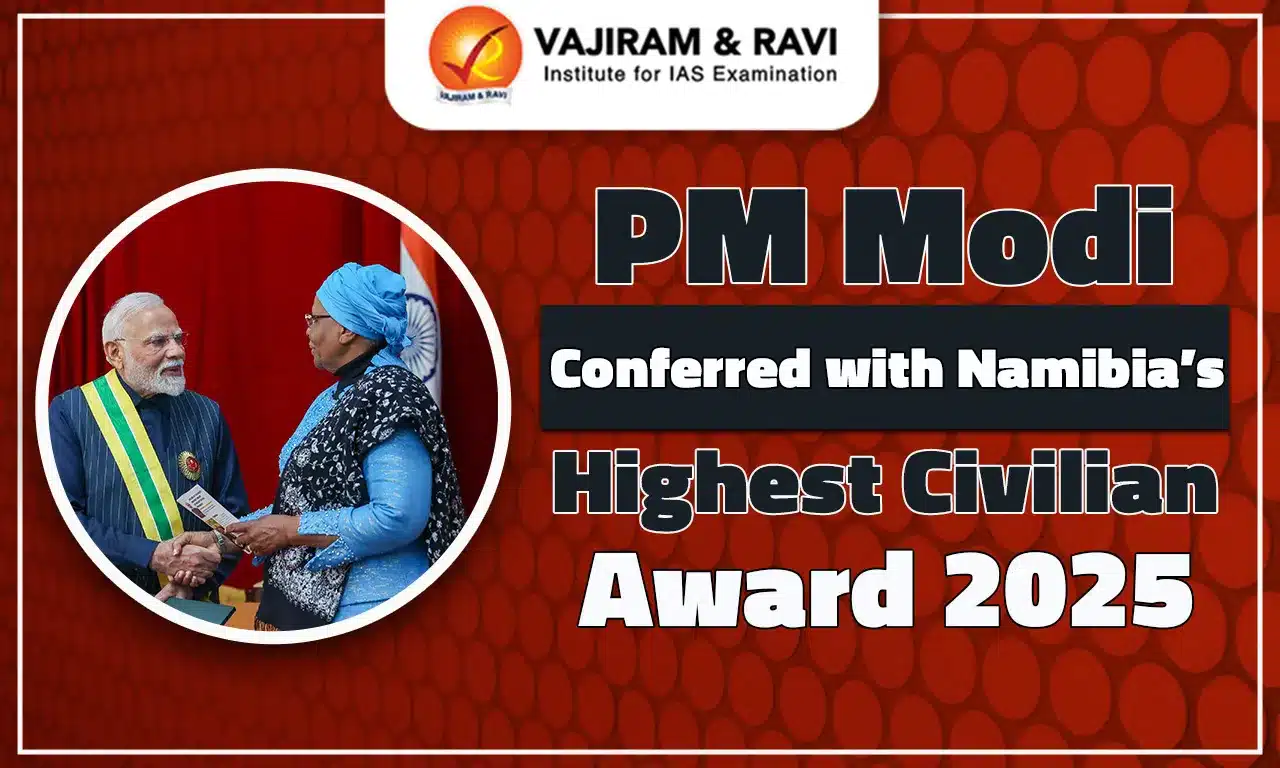
Bagdara Wildlife Sanctuary

Bagdara Wildlife Sanctuary

Bagdara Wildlife Sanctuary Latest News

The Standing Committee of the National Board for Wildlife (SC-NBWL) recently told the Madhya Pradesh government to explore alternative areas for compensatory notification, while deliberating on the proposed denotification of the Bagdara Wildlife Sanctuary.

About Bagdara Wildlife Sanctuary

  • It is situated in the Sidhi and Singrauli districts of Madhya Pradesh.   
  • Encompassing an area of approximately 478 sq.km., the sanctuary was established in 1978 for the conservation of blackbuck and other wildlife species, including wild boar, jackal, fox, porcupine, hyena, and sambar. 
  • Son River makes the southern boundary of the sanctuary. 
  • Natural caves and rock shelters are part of the Sanctuary. 
  • Vegetation: The sanctuary hosts a very dense cover of dry deciduous mixed forest.
  • Flora
    • The dominant trees include Gigantic Creepers, Mango Groves, Orchids, Teak Trees, and many more. 
    • Lendia, Khair, Dhawda, and Tendu are also common.  
  • Fauna: It boasts a number of wild animals, including Tiger, Panther, Deer, Sambhar, Hyenas, Chinkara, Cheetal, Wild Boar, Black Buck, along with an incredible diversity of birds.

News: TP

Bagdara Wildlife Sanctuary FAQs

Q1: Where is Bagdara Wildlife Sanctuary located?

Ans: It is located in the Sidhi and Singrauli districts of Madhya Pradesh.

Q2: What is the area of Bagdara Wildlife Sanctuary?

Ans: Approximately 478 square kilometres.

Q3: Which river forms the southern boundary of Bagdara Wildlife Sanctuary?

Ans: The Son River.

Q4: What type of vegetation is found in Bagdara Wildlife Sanctuary?

Ans: Dense dry deciduous mixed forest.

Republic of Naoero

Republic of Naoero

Republic of Naoero Latest News

The Pacific island nation of Nauru has officially changed its name to the Republic of Naoero recently reverting to its traditional designation in a move it said was aimed at strengthening national identity and cultural heritage.

About Republic of Naoero

  • It is an island republic located in the southwestern Pacific Ocean. 
  • It consists of a raised coral island located in southeastern Micronesia, 40 km south of the Equator. 
  • It is the world’s smallest independent republic, with a population of approximately 12,000 and a land area of just 21 sq.km. 
  • The island is about 1,300 km northeast of the Solomon Islands; its closest neighbor is the island of Banaba, in Kiribati, some 300 km to the east. 
  • It has no rivers or lakes. 
  • Nauru has no official capital, but government offices are located in the district of Yaren. 
  • Nauruan is the national language. 
  • Currency: Australian dollar 
  • Political System:
    • Its constitution, adopted upon gaining independence in 1968, established it as a republic with a Westminster-style parliamentary system of government. 
    • The President is elected by, and responsible to, the unicameral parliament and is both head of government and head of state.
    • As there are no political parties in Naoero, all Members of Parliament (MPs) stand as independents. 
  • Economy: 
    • Historically one of the world's wealthiest countries per capita because of phosphate mining.
    • Phosphate reserves have been largely depleted, leading to economic challenges.
    • Agriculture (with the exception of coffee and copra plantations along the coastal and lagoon perimeters), fishing, manufacturing, and tourism are of minor value to the overall economy. 
    • However, Nauru has an exclusive economic zone extending 200 miles (320 km) offshore. 
    • The sale of commercial fishing licenses began to bring in a steady revenue during the 1990s.

News: TP

Republic of Naoero FAQs

Q1: Where is the Republic of Naoero located?

Ans: It is located in the southwestern Pacific Ocean.

Q2: What type of island is the Republic of Naoero?

Ans: It is a raised coral island.

Q3: What is the official capital of the Republic of Naoero?

Ans: It has no official capital.

Q4: What form of government does the Republic of Naoero have?

Ans: A republic with a Westminster-style parliamentary system.

Social Issues in India, Poverty, Caste, Top 10 Problems List

Social Issues in India

Social Issues in India are deeply interconnected and rooted in historical, economic, and structural factors. While constitutional safeguards, government schemes, and civil society efforts have brought measurable progress, persistent inequalities remain. These problems are interconnected and influence education, health, employment, safety, and social harmony. Addressing these challenges requires inclusive growth, effective governance, social awareness, and sustained investment in education, healthcare, employment, and environmental protection.

Social Issues in India

Social Issues in India arise from historical inequalities, rapid urbanisation, population pressure, economic disparities, and uneven access to public services. Challenges such as caste discrimination, gender inequality, poverty, healthcare gaps, education disparities, environmental degradation, unemployment, crime, and digital exclusion continue to shape daily life. Government interventions, legal reforms, and civil society movements have shown progress, but structural problems persist, requiring sustained policy focus and public participation.

Top 10 Social Issues in India List

The detailed discussion of major List of Social Problems in India has been provided below:

Caste System and Discrimination

The caste system continues to shape access to education, employment, housing, and social dignity across regions.

  • Historical Origins: Varna-based hierarchy emerged in ancient society, later becoming rigid birth-based stratification.
  • Scheduled Castes Impact: SC communities face higher poverty, lower literacy, and employment discrimination.
  • Educational Barriers: Dropout rates remain higher among SC and ST students.
  • Employment Inequality: Informal and hazardous jobs dominate lower-caste employment patterns.
  • Social Exclusion: Residential segregation persists in rural and urban settlements.
  • Legal Safeguards: Untouchability is abolished under Article 17 of the Constitution.
  • Reservation Policy: Quotas exist for SCs, STs, and OBCs in education and public employment.
  • Atrocity Laws: SC/ST Prevention of Atrocities Act criminalises caste-based violence.
  • Awareness Campaigns: Government-led social justice programs promote inclusion.
  • Continuing Challenge: Social mobility remains uneven despite constitutional protections.

Gender Inequality

Gender inequality affects workforce participation, safety, health outcomes, and decision-making power.

  • Economic Participation: Women contribute about 17% to India’s GDP.
  • Missing Women: Census and survey data indicate 63 million missing women nationally.
  • Wage Gap: Women earn significantly less than men for similar work.
  • Workplace Barriers: Promotion and leadership opportunities remain limited.
  • Gender Violence: High incidence of domestic violence and sexual crimes reported annually.
  • Safety Concerns: Public transport and workplaces remain unsafe for many women.
  • Legal Protection: Sexual Harassment at Workplace Act enacted in 2013.
  • Girl Child Schemes: Beti Bachao Beti Padhao addresses declining child sex ratio.
  • Marriage Rights: Triple Talaq law strengthened women’s legal security.
  • Social Change Need: Cultural attitudes slow progress despite strong legal framework.

Poverty Issues

Economic inequality remains a core social challenge despite poverty reduction efforts.

  • Rural Poverty: Rural households face limited employment and infrastructure access.
  • Urban Inequality: Urban poverty exists alongside concentrated wealth.
  • Basic Amenities: Clean water and sanitation remain inaccessible for many rural families.
  • COVID Impact: Pew Research reported 75 million Indians pushed into poverty.
  • Shrinking Middle Class: Nearly 32 million people slipped out of middle-income status.
  • Employment Guarantee: MGNREGA provides 100 days of wage employment.
  • Food Security: Public Distribution System supplies subsidised food grains.
  • Housing Support: Indira Awaas Yojana targets rural housing shortages.
  • Regional Gaps: Eastern and central states show higher poverty ratios.
  • Inclusive Growth Need: Growth benefits remain uneven across social groups.

Healthcare Challenges in India

Healthcare access and affordability remain unequal across regions and income groups.

  • Rural Access Gap: Rural areas face shortages of doctors and hospitals.
  • Urban Cost Burden: High out-of-pocket expenditure dominates private healthcare.
  • Mental Health Prevalence: Over 10.6% adults face mental health disorders.
  • Treatment Gap: Mental healthcare gap ranges between 70 and 92%.
  • Economic Loss: Mental illness reduces productivity and workforce participation.
  • Ayushman Bharat: Provides health insurance coverage to vulnerable families.
  • National Health Mission: Strengthens primary healthcare infrastructure.
  • Hospital Sector: Accounts for nearly 80% of healthcare services.
  • Industry Size: Healthcare market approached USD 132 billion by 2023.
  • Awareness Deficit: Stigma limits healthcare-seeking behaviour.

Education System

Education quality and access vary widely across geography, gender, and income.

  • Literacy Growth: National literacy improved to nearly 77.7%.
  • Urban Advantage: Urban literacy exceeds rural literacy by over 14 percentage points.
  • School Infrastructure: Many rural schools lack teachers and basic facilities.
  • Dropout Rates: Economic pressure increases school dropout risk.
  • Gender Gap: Female literacy lags behind male literacy.
  • Right to Education: Guarantees free education for ages 6 to 14.
  • Mid-Day Meals: Improves attendance and child nutrition.
  • NEP Reform: National Education Policy focuses on inclusivity and skills.
  • Digital Divide: Online learning widened inequality during pandemic.
  • Outcome Disparity: Learning outcomes remain inconsistent nationwide.

Environmental Issues

Environmental degradation directly impacts health, livelihoods, and food security.

  • Air Pollution: Urban air quality frequently exceeds safe limits.
  • Health Impact: Pollution increases respiratory and cardiovascular diseases.
  • Water Pollution: Industrial discharge contaminates rivers and groundwater.
  • Climate Vulnerability: India faces floods, droughts, and heatwaves.
  • Agricultural Risk: Erratic monsoons threaten farmer incomes.
  • NCAP Program: Targets reduction in urban air pollution levels.
  • Swachh Bharat: Improves sanitation and waste management.
  • Biodiversity Plan: Protects ecosystems and endangered species.
  • Urban Pressure: Unplanned growth worsens environmental stress.
  • Sustainability Need: Long-term development requires ecological balance.

Religious and Ethnic Conflicts

Social harmony is challenged by periodic religious and ethnic tensions.

  • Colonial Legacy: Historical divisions intensified during colonial rule.
  • Identity Politics: Religion and ethnicity influence political mobilisation.
  • Community Violence: Conflicts disrupt social and economic stability.
  • Trust Deficit: Inter-community mistrust affects coexistence.
  • Economic Loss: Violence damages livelihoods and infrastructure.
  • Legal Safeguards: Laws prohibit hate speech and communal violence.
  • Education Role: Civic education promotes tolerance.
  • Community Dialogue: Peace initiatives encourage reconciliation.
  • Security Concerns: Religious sites face heightened risk during unrest.
  • Unity Priority: Social cohesion remains essential for national stability.

Urbanization

Rapid urban growth reshapes social structures and public service demand.

  • Urban Shift: Half of India’s population expected urban by 2031.
  • Rural Migration: Job search drives large-scale migration.
  • Economic Opportunity: Cities offer employment and services.
  • Overcrowding: Housing shortages worsen urban living conditions.
  • Slum Growth: Informal settlements lack sanitation and healthcare.
  • Transport Stress: Infrastructure struggles with rising population.
  • Affordable Housing: Shortage affects low-income migrants.
  • Planning Gaps: Weak urban governance worsens inequality.
  • Public Services: Education and health facilities face pressure.
  • Sustainable Cities: Planned growth essential for livability.

Social Movements

Social movements have driven legal reforms and public awareness.

  • Women’s Movements: Advanced gender equality and legal reforms.
  • Dalit Assertion: Challenged caste-based oppression.
  • Environmental Movements: Protected forests and rivers.
  • RTI Movement: Increased government transparency.
  • Civil Society Role: Acts as bridge between state and citizens.
  • Grassroots Advocacy: Mobilises marginalised communities.
  • Policy Influence: Shapes legislative and administrative reforms.
  • Public Awareness: Strengthens democratic participation.
  • Legal Victories: Courts influenced by sustained activism.
  • Social Accountability: Movements improve governance outcomes.

Unemployment

Youth unemployment poses economic and social risks.

  • Unemployment Rate: Youth unemployment reached 8.1% in 2022.
  • Educated Joblessness: Degrees do not guarantee employment.
  • Gender Gap: Young women face higher unemployment rates.
  • Skill Mismatch: Education not aligned with market needs.
  • Skill India: Targets large-scale workforce training.
  • PMKVY Scheme: Supports vocational certification.
  • Apprenticeship Program: Encourages industry-based training.
  • Startup India: Promotes entrepreneurship among youth.
  • Digital Jobs: IT sector offers emerging opportunities.
  • Demographic Dividend: Employment critical for harnessing youth potential.

Impact of Technology on Society

Technology reshapes education, employment, and social interaction.

  • Digital Divide: Rural areas lag in internet connectivity.
  • Economic Barriers: Device affordability limits access.
  • Education Impact: Online learning benefits digitally connected students.
  • Social Media Reach: Expands awareness and mobilisation.
  • Misinformation Risk: Rapid spread affects social trust.
  • Cyber Harassment: Online abuse disproportionately targets women.
  • Digital India: Expands digital infrastructure nationwide.
  • E-Governance: Improves service delivery transparency.
  • Skill Training: Focus on digital literacy.
  • Inclusive Tech Need: Equitable access essential for social equity.

Crime and Public Safety

Public safety challenges affect trust in institutions.

  • Crime Rate: Reported crime rate stood near 445 per 100,000 population.
  • Violence Against Women: Remains a major safety concern.
  • Cybercrime Rise: Digital fraud and identity theft increasing.
  • Urban Crime: Migration and inequality influence crime patterns.
  • Police Shortage: Staffing gaps reduce enforcement capacity.
  • Judicial Backlog: Delayed justice weakens deterrence.
  • Legal Reforms: New criminal laws aim faster trials.
  • Community Policing: Improves local trust.
  • Technology Use: Surveillance aids crime prevention.
  • Public Confidence: Law enforcement reform essential.
Also Check
Learning Poverty Woman Empowerment
Feminization of Poverty Domestic Violence


Social Issues in India FAQs

Q1: What are major Social Issues in India?

Ans: Major social issues include caste discrimination, gender inequality, poverty, unemployment, healthcare gaps, education inequality, and environmental degradation.

Q2: Why does caste system remain a Social Issues in India?

Ans: The caste system continues due to historical hierarchy, social practices, economic inequality, and uneven implementation of constitutional safeguards.

Q3: How does gender inequality affect India’s development?

Ans: Gender inequality reduces workforce participation, lowers GDP contribution, increases violence, and limits education and leadership opportunities for women.

Q4: What role does poverty play in Social Issues in India?

Ans: Poverty restricts access to education, healthcare, nutrition, and employment, reinforcing intergenerational inequality across rural and urban regions.

Q5: How is the government addressing Social Issues in India?

Ans: The government uses laws, welfare schemes, reservations, education reforms, healthcare programs, and digital initiatives to promote social inclusion.

Important Days in February 2026, National and International Days List

Important Days in February 2026

February is an important month that focuses on health, science, language, social justice and cultural awareness. The Important Days in February 2026 include many national and international observances that highlight critical global and Indian issues, even though it is the shortest month of the year. In India, February is also the last month of winter and is marked by festivals, cultural events and historical commemorations that make it significant.

Important Days in February 2026

Important Days in February 2026 include several national, international, cultural and awareness days. These days are observed to educate people about health issues, scientific achievements, social equality, environmental protection and historical personalities. Major Festivals that fall in the month of February include: Mahashivaratri, Ramadan and other regional festive events.

List of Important Days in February 2026

The list of Important Days in February 2026 has been tabulated below:

Important Days in February 2026
Date Event Significance

1 February

Union Budget (India)

Since 2017, the Government of India releases Union Budget on this day each year

1 February

Indian Coast Guard Day

Marks the foundation day (Feb 1, 1977) of the Indian Coast Guard and its role in maritime security.

1 February

Guru Ravidas Jayanti

Celebrates the birth of saint and social reformer Guru Ravidas.

1-7 February

International Development Week

Highlights global development efforts and career opportunities in development sectors.

2 February

World Wetlands Day

Raises awareness about the importance of wetlands and environmental conservation.

2 February

Rheumatoid Arthritis Awareness Day

Spreads awareness about Rheumatoid Arthritis and its impact on health.

4 February

World Cancer Day

Promotes awareness, prevention and control of cancer worldwide.

4 February

Independence Day of Sri Lanka

Celebrates Sri Lanka’s independence from British rule in 1948.

6 February

International Day of Zero Tolerance for Female Genital Mutilation

Educates about the harmful effects of female genital mutilation.

9 February

Baba Amte’s Death Anniversary

Remembers the social reformer known for work with leprosy patients.

9 February (Second Monday of the Month)

International Epilepsy Day

Raises awareness about epilepsy and the need for better treatment, observed on second Monday of February

10 February

National Deworming Day

Government initiative to protect children from parasitic worm infections, celebrated biannually on Feb 10 and Aug 10.

10 February

World Pulses Day

Highlights the nutritional and environmental benefits of pulses.

10 February

Safer Internet Day

Encourages safer and responsible use of the internet, especially for children. Observed on Second Tuesday of the Month

11 February

World Day of the Sick

Observed to pray and care for people suffering from illness.

11 February

International Day of Women and Girls in Science

Promotes gender equality in science and technology fields.

12 February

Darwin Day

Commemorates the birth of Charles Darwin and his contribution to science.

12 February

Abraham Lincoln’s Birthday

Honors the former US President known for ending slavery.

12 February

National Productivity Day

Promotes productivity awareness in India.

13 February

World Radio Day

Highlights the importance of radio as a mass communication medium.

13 February

Sarojini Naidu Birth Anniversary

Celebrates the birth of the Nightingale of India and freedom fighter.

14 February

Black Day

Commemorates the sacrifice of Indian Soldiers in the Pulwama Attack of 2019

14 February

World Congenital Heart Defect Awareness Day

Raises awareness about congenital heart defects.

15 February

Mahashivratri

Major Hindu festival dedicated to Lord Shiva.

18-27 February

Taj Mahotsav

Cultural festival showcasing India’s heritage at Agra.

17 February

Ramadan Begins

Marks the beginning of the holy fasting month for Muslims.

19 February

World Anthropology Day

Promotes awareness about anthropology and human societies. Observed on Third Thursday of the Month

20 February

Arunachal Pradesh Foundation Day

Celebrates the formation of Arunachal Pradesh.

20 February

Mizoram Foundation Day

Marks Mizoram becoming a full fledged Indian state.

20 February

World Day of Social Justice

Promotes equality, employment and social inclusion.

21 February

International Mother Language Day

Encourages linguistic diversity and multilingual education.

22 February

World Thinking Day

Observed by Girl Guides and Girl Scouts worldwide. This year marks the 100th Anniversary of the day.

23 February

World Peace and Understanding Day

Promotes peace and international understanding.

24 February

Central Excise Day

Encourages efficient functioning of the excise department in India.

26 February

Veer Savarkar’s Death Anniversary

This day remembers freedom fighter Vinayak Damodar Savarkar.

27 February

World NGO Day

Recognizes the contribution of non-governmental organizations.

28 February

National Science Day (India)

Marks the discovery of the Raman Effect by C.V. Raman.

28 February

Rare Disease Day

Raises awareness about rare diseases and affected individuals. Observed on the last day of February.

Major Important Days in February 2026 Explained

The significance and background of the days celebrated in the month of February has been detailed below:

February 1: Union Budget and Indian Coast Guard Day

February 1 is important in India as the Union Budget is presented on this day. It outlines government policies, expenditure and development plans. The same day is also celebrated as Indian Coast Guard Day, honoring the force that protects India’s maritime boundaries.

February 4: World Cancer Day

World Cancer Day is observed to spread awareness about cancer prevention, early detection and treatment. It encourages global efforts to reduce cancer related deaths.

February 6: Zero Tolerance for Female Genital Mutilation

This international observance highlights the harmful effects of female genital mutilation and promotes human rights and women’s health.

February 10: National Deworming Day and World Pulses Day

National Deworming Day focuses on improving child health in India, while World Pulses Day promotes pulses as a sustainable and nutritious food source.

February 11: Women and Girls in Science

This day recognizes the achievements of women in science and encourages equal participation in scientific research and education.

February 12: Darwin Day

Darwin Day celebrates the birth of Charles Darwin and his contribution to evolutionary science through the theory of natural selection.

February 13: Sarojini Naidu Birth Anniversary

Sarojini Naidu was a freedom fighter, poet and the first woman Governor of an Indian state. Her birth anniversary honors her contribution to India’s freedom struggle.

February 15: Mahashivratri

Mahashivratri is a major Hindu festival dedicated to Lord Shiva. Devotees observe fasting and night long prayers.

February 20: State Foundation Days and Social Justice

Arunachal Pradesh and Mizoram celebrate their foundation days on February 20. The same day is also observed as World Day of Social Justice, promoting equality and inclusion.

February 28: National Science Day

National Science Day commemorates the discovery of the Raman Effect by C.V. Raman in 1928 and promotes scientific thinking among students and citizens.

Related Post
Important Days in January 2026 Important Days in 2026
Important Days in February 2026 Important Days in March 2026
Important Days in April 2026 Important Days in May 2026
Important Days in June 2026 Important Days in July 2026
Important Days in August 2026  

Important Days in February 2026 FAQs

Q1: Why is February important for awareness campaigns?

Ans: February includes many health, science and social justice observances that focus on public awareness.

Q2: Which is the most important national day in February in India?

Ans: National Science Day on February 28 is one of the most important national observances.

Q3: Why is February 21 celebrated as International Mother Language Day?

Ans: It promotes linguistic diversity and the protection of mother languages worldwide.

Q4: What is the significance of World Cancer Day?

Ans: World Cancer Day spreads awareness about cancer prevention and treatment.

Q5: Which cultural festival is celebrated in February in Agra?

Ans: Taj Mahotsav is celebrated in February to showcase India’s cultural heritage.

Pseudolaguvia khairii

Pseudolaguvia khairii

Pseudolaguvia khairii Latest News

Researchers recently discovered a new species of freshwater catfish named Pseudolaguvia khairii in Odisha.

About Pseudolaguvia khairii

  • It is a new species of freshwater catfish.
  • It was discovered in the Budhabalanga River in the Mayurbhanj district, Odisha
  • It was named in honour of the legendary tigress Khairi, who became the face of wildlife conservation and a unique human-animal bond in Odisha nearly five decades ago.
  • It belongs to the genus Pseudolaguvia, a group of small hillstream catfishes inhabiting the clear, fast-flowing rivers of India, Bangladesh, Nepal, and Myanmar. 
  • Only a few centimetres long, Pseudolaguvia khairii can be distinguished from all its known relatives by a unique fleshy protuberance at the base of its dorsal fin, a feature not previously recorded in the genus. 

News: NIE

Pseudolaguvia khairii FAQs

Q1: What is Pseudolaguvia khairii?

Ans: Pseudolaguvia khairii is a newly discovered species of freshwater catfish.

Q2: Where was Pseudolaguvia khairii discovered?

Ans: It was discovered in the Budhabalanga River in Mayurbhanj district, Odisha.

Q3: It was discovered in the Budhabalanga River in Mayurbhanj district, Odisha. Why was Pseudolaguvia khairii named "khairii"?

Ans: It was named in honour of the legendary tigress Khairi, who became a symbol of wildlife conservation and the unique human-animal bond in Odisha.

Q4: Where are catfishes of the genus Pseudolaguvia commonly found?

Ans: They are found in the clear, fast-flowing rivers of India, Bangladesh, Nepal, and Myanmar.

Magellanic Bridge

Magellanic Bridge

Magellanic Bridge Latest News

A team led by Inter-University Centre for Astronomy and Astrophysics (IUCAA) team has discovered the first known system of its kind in the Magellanic Bridge by using eROSITA X-ray telescope.

About Magellanic Bridge

  • It is a stream of stars and gas created by the close encounter of two nearby galaxies, the Large and Small Magellanic Clouds.
  • It is mainly a gaseous feature connecting the two galaxies, with a small fraction of in situ formed young stars.
  • The MB is believed to be composed of tidally stripped material from the SMC during its last encounter with the LMC, approximately 200-300 Myr ago.
  • Significance
    • Magellanic Bridge can help us understand how close encounters between galaxies influence the way binary stars form, evolve and survive.
    • Researchers will be able to compare stellar evolution in the Bridge with that in the Large and Small Magellanic Clouds, and gain a clearer picture of how interactions between neighbouring galaxies shape their stars over time.

Key Features of eROSITA X-ray Telescope

  • eROSITA (extended ROentgen Survey with an Imaging Telescope Array) is a wide-field X-ray telescope on-board the Russian-German "Spectrum-Roentgen-Gamma" (SRG) observatory.
  • It was developed under the leadership of the Max-Planck Institute for extraterrestrial Physics (MPE) in Germany (DE).
  • eROSITA is a sensitive X-ray telescope capable of delivering deep, sharp images over very large areas of the sky in the energy range ~0.2-8 keV. 
  • It is placed in a halo orbit around the L2 point
  • It has been performing an all-sky survey, in which the whole celestial sphere is mapped once every six months.

Source: IE

Magellanic Bridge FAQs

Q1: The Magellanic Bridge connects which two objects?

Ans: Large Magellanic Cloud and Small Magellanic Cloud

Q2: What is the advantage of studying Magellanic Bridge?

Ans: Galaxy formation and interaction

Dhimsa Dance

Dhimsa Dance

Dhimsa Dance Latest News

A recent performance of the traditional Dhimsa dance by more than 13,000 tribal women and girl students at the Alluri Sitarama Raju International Airport in Bhogapuram was recognised by Guinness World Records as the “largest Dhimsa dance”.

About Dhimsa Dance

  • It is a popular tribal dance performed by tribes, including Bagata, Valmiki, Poraja, Khond, Gadaba, Kondadora, Mukadora, and Kotia in Andhra Pradesh .
  • It is performed during festivals, weddings, and at the time of the “hunting festival” in April when men and women dance for hours together.
  • There are 12 varieties of Dhimsa and the origin can be traced to the Koraput area, the home of the Ghond Tribe.
  • Performance
    • Typically performed by a group of 15 to 20 women dressed in traditional, colorful ethnic sarees and ornaments, the dancers move in synchronous circles to the rhythm of native instruments played by male community members.  
    • The beauty of this dance centres on the movements of the dancers without much emphasis on expression or literary texts. 
    • The feet and the hand movements dominate the dance.  
    • It is accompanied by wind and percussion instruments; the dance changes with the music.
    • Unique tribal musical instruments accompanying this dance form include the Mori (a wind instrument), Thudum (drum), and Dappu. 
  • Themes: Various themes of the Dhimsa, are woven around their mythologies, folktales, ethos, mores, economic activities, and kinship and marital life, etc.

News: TH

Dhimsa Dance FAQs

Q1: What is Dhimsa Dance?

Ans: Dhimsa is a popular tribal dance performed by several tribal communities in Andhra Pradesh.

Q2: Which tribes traditionally perform Dhimsa Dance?

Ans: Tribes such as the Bagata, Valmiki, Poraja, Khond, Gadaba, Kondadora, Mukadora, and Kotia perform Dhimsa Dance.

Q3: On what occasions is Dhimsa Dance performed?

Ans: It is performed during festivals, weddings, and the hunting festival held in April.

Q4: Who usually performs Dhimsa Dance?

Ans: It is typically performed by a group of 15 to 20 women.

Q5: What is the main beauty of Dhimsa Dance?

Ans: The beauty of the dance lies in the graceful movements of the dancers rather than facial expressions or literary texts.

Samudra Manthan Scheme

Samudra Manthan Scheme

Samudra Manthan Scheme Latest News

Recently, the Union Cabinet has approved 'Samudra Manthan' – the National Offshore Exploration Scheme with a total outlay of ₹84,084 crore. 

About Samudra Manthan Scheme

  • It is also called the National Offshore Exploration Scheme.
  • Nodal Ministry: It is a Central Sector Scheme of the Ministry of Petroleum & Natural Gas.
  • Implementation Period: Up to FY 2030–31.
  • The scheme aims at unlocking India’s vast offshore energy potential.

Features of Samudra Manthan Scheme

  • It encompasses a comprehensive set of interventions across the offshore exploration value chain.
  • It provides for large-scale acquisition, processing and interpretation of high-quality seismic data, accelerated deepwater and ultra-deepwater exploratory drilling, and scientific drilling in frontier basins.
  • It involves development of common offshore production and evacuation infrastructure, and establishment of an integrated Oil & Gas Manufacturing and Services Zone.
  • It also includes dedicated provisions for digital programme management, capacity building, technology adoption, stakeholder engagement and international outreach, creating an integrated ecosystem to accelerate offshore exploration and production in the country.

Source: PIB

Samudra Manthan Scheme FAQs

Q1: Samudra Manthan Scheme is implemented by which Ministry?

Ans: Ministry of Petroleum & Natural Gas

Q2: What is the implementation period of Samudra Manthan Scheme ?

Ans: FY 2030-31

Pradhan Mantri Surya Sarovar Yojana

Pradhan Mantri Surya Sarovar Yojana

About Pradhan Mantri Surya Sarovar Yojana Latest News

It is a scheme for the development of Floating Solar Photovoltaic (FSPV) Projects with Energy Storage Systems (ESS).

Features  of Pradhan Mantri Surya Sarovar Yojana

  • It envisages the development of 5,000 MW of Floating Solar Photovoltaic projects with co-located Energy Storage Systems having a minimum storage capacity of two hours i.e.,10,000 MWh.
  • Time Period: The projects will be sanctioned during FY 2026-27 to FY 2030-31, with disbursement of financial support continuing up to FY 2032-33.
  • Financial Assistance: Central Financial Assistance (CFA) of Rs. One crore per MW will be provided for eligible Floating Solar Photovoltaic projects after successful commissioning.
  • In addition, CFA of up to Rs.50 lakh per project will be available for undertaking feasibility studies, including bathymetry and hydrography assessments, environmental studies, and other preparatory activities required for de-risking the project development.

Significance of  Pradhan Mantri Surya Sarovar Yojana

  • It would enhance the floating Solar PV capacity in the country by 5,000 MW, which is presently around 700 MW only.
  • It would provide an opportunity to gainfully utilize existing reservoirs & industrial ponds, and eliminate competition for scarce land resources.
  • The integration of an energy storage system will help strengthen grid reliability.
  • It would help in the reduction of around 10 million tonnes of CO₂ emissions annually.
  •  It would help in the generation of approximately 16,000–17,000 full-time equivalent employment opportunities across the project value chain.
  • The scheme would also promote domestic manufacturing of floatation systems as well as the entire value chain of the projects.

Source: PIB

Pradhan Mantri Surya Sarovar Yojana FAQs

Q1: Which is the nodal Ministry for Pradhan Mantri Surya Sarovar Yojana?

Ans: Ministry of New and Renewable Energy

Q2: What is the main advantage of floating solar over ground-mounted solar ?

Ans: Saves land and reduces water evaporation

Cholera

Cholera

Cholera Latest News

While cholera has nearly disappeared from wealthy countries, it remains one of the world’s deadliest waterborne diseases in places where clean water and basic healthcare are unreliable.

About Cholera

  • Cholera is a disease that is caused by the bacteria Vibrio cholerae. 
  • Cholera can cause serious diarrhea and dehydration. Without treatment, the disease can be fatal within hours, even in people who are healthy. 
  • Transmission:
    • People can get cholera by drinking water or eating food contaminated with cholera bacteria. 
    • The disease is most common in places with poor sanitation, crowding, war, and famine. Cholera outbreaks are more common in warm climates.
    • Cholera bacteria also can live in brackish (slightly salty) and coastal waters. Eating raw shellfish like shrimp and crab can be a source of cholera. 
    • Cholera is not likely to spread from person to person or from casual contact with someone with cholera. 
    • It is often predictable and preventable. It can ultimately be eliminated where access to clean water and sanitation facilities, as well as good hygiene practices, are ensured and sustained for the whole population.
  • Symptoms:
    • Most people infected with V. cholerae do not develop symptoms but can spread the bacteria through their faeces for 1–10 days. 
    • Symptoms appear 12 hours to 5 days after infection.
    • Most people with the disease have mild or moderate symptoms. 
    • A minority of patients develop severe acute watery diarrhoea and life-threatening dehydration.
  • Treatment:
    • Treatment for cholera includes drinking plenty of fluids or getting intravenous fluids to prevent dehydration. 
    • Healthcare providers also sometimes prescribe antibiotics like doxycycline, erythromycin, or azithromycin to help you feel better.
    • Providers also treat kids between the ages of 6 months and 5 years with zinc supplements.
    • Antidiarrheal medicines aren’t recommended for cholera and could make symptoms worse.

News: DTE

Cholera FAQs

Q1: What is cholera?

Ans: Cholera is a disease caused by the bacterium Vibrio cholerae.

Q2: What are the major health effects of cholera?

Ans: Cholera can cause severe diarrhoea and dehydration.

Q3: How is cholera transmitted?

Ans: It is transmitted by consuming water or food contaminated with Vibrio cholerae.

Q4: Where are cholera outbreaks most common?

Ans: They are most common in places with poor sanitation, overcrowding, war, and famine.

Q5: What is the primary treatment for cholera?

Ans: Drinking plenty of fluids or receiving intravenous fluids to prevent dehydration.

Vishwas 2026

Vishwas 2026

Vishwas 2026 Latest News

The Employees’ Provident Fund Organisation (EPFO) recently launched VISHWAS, 2026 to facilitate amicable settlement of disputes relating to levy of damages and penalty-related disputes. 

About Vishwas 2026

  • It was launched by the Employees’ Provident Fund Organisation (EPFO), under the Ministry of Labour & Employment.
  • It is a one-time dispute resolution initiative to facilitate amicable settlement of disputes relating to levy of damages and penalty-related disputes. 
  • The scheme provides employers with an opportunity to settle eligible cases through a transparent, fully digital and time-bound process.
  • It has been introduced with the objective of promoting voluntary compliance, reducing litigation, and enabling speedy resolution of long-pending disputes relating to penalty/damages while safeguarding the interests of employees.   
  • The VISHWAS scheme came into effect on June 29, 2026. It will remain operational for six months from the date of notification. 
  • The scheme will broadly cover four categories of cases, including:
    • Cases where orders for penalty or damages are under challenge before a judicial forum.
    • Final damages or penalty orders where recovery is pending or only partly made, including Recovery Certificate (RRC) cases.
    • Cases where notices have been issued but final orders for damages or penalty are yet to be passed.
    • Cases where notices for penalty or damages are yet to be issued.
  • Exclusion: 
    • Cases where damages or penalties have already been fully recovered.
    • Cases involving fraud, misappropriation or deliberate falsification of records.
    • Cases where the applicable statutory interest has not been fully deposited.
  • Eligible employers with pending disputes can apply through the EPFO Employer Portal using a Digital Signature Certificate (DSC) or e-Sign.
  • Applicants must also furnish an undertaking that no further appeal will be pursued in respect of the dispute settled under the scheme.
  • Benefits:
    • It enables eligible employers to settle disputes by offering substantially reduced rates for historical defaults (prior to 14 June 2024), subject to payment of the applicable statutory interest and compliance with prescribed conditions.
    • For employers, the scheme presents a valuable opportunity to regularise legacy EPF compliance issues at a significantly lower financial cost.
    • Although the scheme is primarily directed at employers, employees stand to benefit through quicker resolution of long-pending EPF disputes and improved compliance by establishments.

News: NOA

Vishwas 2026 FAQs

Q1: What is Vishwas 2026?

Ans: It is a one-time dispute resolution initiative launched by the Employees’ Provident Fund Organisation (EPFO).

Q2: What is the primary purpose of Vishwas 2026?

Ans: To facilitate the amicable settlement of disputes relating to levy of damages and penalties.

Q3: How does Vishwas 2026 benefit employers?

Ans: It enables them to regularise legacy EPF compliance issues at a significantly lower financial cost.

Q4: How does Vishwas 2026 benefit employees?

Ans: It leads to quicker resolution of long-pending EPF disputes and improves compliance by establishments.

Xtreme Weather Grade Diesel

Xtreme Weather Grade Diesel

Xtreme Weather Grade Diesel Latest News

Recently, the Chief of the Army Staff (COAS) launched the indigenously developed Xtreme Weather Grade (XWG) Diesel in New Delhi. 

About Xtreme Weather Grade Diesel

  • It is a specialised diesel fuel developed for operations in extremely low temperatures.
  • It is designed to remain usable at temperatures as low as minus 42 degrees Celsius.
  • It is developed jointly by the Indian Army and Oil Marketing Companies.

Characteristics Xtreme Weather Grade Diesel

  • It can withstand a wide temperature range, with a pour point of minus 42 degrees Celsius and a flash point of around 50 degrees Celsius.
  • It is also compliant with BS-VI emission standards and IS 1460:2025 specifications.
  • It allows it to be used in the Indian Army's existing fleet without requiring engine modifications or re-homologation.
  • It is the specialised fuel that will enhance the mobility, safety and operational availability of combat and logistics vehicles in extreme climatic conditions.
  • Significance: The technology also has wider civilian use in high-altitude and severe winter regions and represents a significant step towards Atmanirbhar Bharat.

Source: PIB

Xtreme Weather Grade Diesel FAQs

Q1: Xtreme Weather Grade Diesel was launched by which company?

Ans: Indian Oil Corporation

Q2: What is the main purpose of Xtreme Weather Grade Diesel?

Ans: To be used in extremely cold regions without gelling

1st Constitutional Amendment Act, Features, Importance

1st Constitutional Amendment Act

The 1st Constitutional Amendment Act also known as the Constitutional (First Amendment) Act, was enacted in 1951, making many changes to the fundamental rights provisions of the Indian Constitution. This amendment brought in a meaning to restrict freedom of speech and expression, validation of zamindari abolition laws and provided a clarification for right to equality and a special consideration for weaker sections of society. In this article, we are going to cover all about the 1st Constitutional Amendment Act, 1951. 

First Constitutional Amendment Act 1951

The Constitution (First Amendment) Act, 1951 was introduced by Prime Minister Jawaharlal Nehru on 10 May and passed by Parliament on 18 June as the first major constitutional change in India. This amendment set a precedent for amending the Constitution of India to override judicial rulings that hindered the government's policy objectives especially in land reform and freedom of speech.

Important highlights of the amendment include:

  • Amendment to Fundamental Rights: It imposed reasonable restrictions on freedom of speech and expression on new grounds like public order, friendly relations with foreign states, and incitement to an offence.
  • Support for Land Reforms: Allowed abolition of zamindari and protected agrarian laws from being struck down by courts.
  • Explained Article 15: Allowed special provisions for weaker sections without violating the right to equality.
  • Article Additions: Introduced Articles 31A and 31B, and created the Ninth Schedule to shield specific laws from judicial review.
  • Trade and Business: Stated that nationalization or state trading cannot be challenged as violating the right to trade or business.

It amended Articles 15, 19, 85, 87, 174, 176, 341, 342, 372, and 376, reshaping India’s legal and political landscape.

Also Check: 103rd Constitutional Amendment Act

1st Constitutional Amendment Act Features

The First Amendment to the Indian Constitution was enacted to tackle legal and constitutional challenges faced by the nascent Republic. Its purpose was to adapt key constitutional provisions in line with the emerging socio-political realities and the State’s policy goals, particularly around land reforms and social justice.

  • Land Reform and Right to Property
    • Amended Articles 19(1)(f) and 31 to empower the State to impose reasonable restrictions on the right to property.
    • Enabled land reform and acquisition for public welfare, essential to dismantle the zamindari system.
  • Freedom of Speech and Expression
    • Revised Article 19(2) to expand the grounds for restrictions on free speech.
    • Included public order, security of the state, and foreign relations as valid reasons for imposing limitations.
  • Social Justice for SCs and STs
    • Inserted Articles 15(4) and 16(4) to allow reservations in education and employment for Scheduled Castes, Scheduled Tribes, and other socially and educationally backward classes.
  • Validation of Land Reform Laws
    • Added Article 31A to protect agrarian reform laws from being struck down for violating property rights.
    • Inserted Article 31B and the Ninth Schedule to insulate such laws from judicial review.
  • Directive for Upliftment of Weaker Sections
    • Strengthened Article 46, directing the State to promote the educational and economic interests of SCs, STs, and other weaker sections with special care.

1st Constitutional Amendment Act FAQs

Q1: What was the First Amendment Act of 1951?

Ans: It was the first change to the Indian Constitution, enacted to overcome judicial challenges and facilitate land reforms and social justice measures.

Q2: What was the main object of the First Constitutional Amendment in 1951?

Ans: To enable land reforms, impose reasonable restrictions on fundamental rights, and introduce reservations for backward classes.

Q3: What is Amendment 1 in the Indian Constitution?

Ans: The First Amendment added Articles 15(4), 31A, and 31B, and modified Articles 19 and 31 to support land reforms and social equity.

Q4: Why was the First Amendment Act 1951 implemented?

Ans: It was implemented to resolve legal obstacles in enforcing land reform laws and to clarify limits on fundamental rights like free speech and property rights.

Q5: What was the 2nd Amendment Act Features?

Ans: The Second Amendment (1952) modified Article 81(1)(b) to remove the population cap for Lok Sabha seat allocation, ensuring proportional representation.

Kimi K3 – Evolving US-China Artificial Intelligence Race

Kimi K3

Artificial Intelligence Race Latest News

  • Chinese start-up Moonshot AI has launched Kimi K3, an advanced AI model that is being compared with OpenAI's ChatGPT and Anthropic's Claude, intensifying the global AI race between China and the United States.

Artificial Intelligence Models: Closed vs Open-Weight

  • Modern Large Language Models (LLMs) can broadly be classified into closed (proprietary) models and open-weight models based on how much of their underlying technology is made publicly available.
  • Closed (Proprietary) Models:
    • Closed models are developed and controlled by private companies. Their model parameters, source code, and training methods are not publicly released.
    • Key characteristics include:
      • Access is usually provided through APIs or subscription services
      • Model parameters remain confidential 
      • Companies retain full commercial control 
      • Generally considered easier to secure and monetise 
    • Examples include:
      • OpenAI's GPT models 
      • Anthropic's Claude 
      • Google's Gemini 
  • Open-Weight Models
    • An open-weight model allows developers to download and use the model's trained parameters (weights) while the company may still retain parts of the training code or datasets.
    • Unlike fully open-source software, open-weight models do not necessarily disclose every component used to build the model.
    • Advantages include:
      • Greater customisation by developers 
      • Faster innovation through community contributions 
      • Wider adoption across industries 
      • Lower deployment costs 
  • However, they also raise concerns regarding:
    • Misuse by malicious actors 
    • Security risks 
    • Intellectual property protection 
    • Commercial monetisation 
  • Many Chinese AI companies have increasingly adopted the open-weight approach to rapidly expand their developer ecosystem.

About Kimi K3

  • Kimi K3 is the latest AI model developed by Moonshot AI, a Chinese start-up founded in 2023 by Yang Zhilin, a graduate of Tsinghua University and Carnegie Mellon University.
  • According to the company, Kimi K3 is among the world's largest open-weight AI models, containing approximately 2.8 trillion parameters.
  • In AI systems, parameters are the numerical values learned during training that determine how the model processes information and generates responses. 
  • A larger number of parameters generally reflects greater computational investment, although model performance also depends on factors such as data quality, architecture, and training techniques.
  • Kimi K3 offers capabilities across multiple domains, including:
    • Coding assistance 
    • Financial consulting 
    • Deep research 
    • Video editing 
    • General conversational AI 
  • Following its launch, demand reportedly surged to such an extent that Moonshot AI temporarily paused new user registrations.

Significance of Kimi K3

  • Narrowing the Technological Gap
    • Earlier, the release of DeepSeek R1 in January 2025 challenged the perception that the United States held an unassailable lead in frontier AI models.
    • The launch of Kimi K3 further reinforces the view that Chinese AI companies are rapidly closing the performance gap with leading American models such as ChatGPT and Claude.
    • Experts note that Chinese AI models are no longer isolated successes but are becoming increasingly competitive across multiple application areas.
  • Strengthening China's AI Ecosystem
    • Unlike many American companies that rely on proprietary models, several Chinese AI firms have adopted open-weight models as a strategic choice.
    • According to analysts, this approach helps Chinese companies:
      • Reach developers more quickly 
      • Build larger software ecosystems 
      • Encourage third-party innovation 
      • Expand adoption despite limited access to global cloud infrastructure 
    • The strategy aligns with China's broader objective of accelerating AI adoption across manufacturing, public administration, and smaller enterprises.

The Open-Weight Strategy

  • Distribution Strategy
    • Experts argue that open-weight models function primarily as a distribution strategy.
    • Since leading US firms already possess strong cloud infrastructure and enterprise customer bases, Chinese firms use open-weight releases to attract developers and encourage widespread adoption of their platforms.
  • Response to Technology Restrictions
    • Chinese AI developers continue to face restrictions on access to advanced semiconductor chips because of US export controls, particularly on high-end AI chips produced by companies such as NVIDIA.
    • These restrictions have encouraged Chinese firms to pursue alternative strategies centred on efficient models and broader developer participation.
  • Commercial Monetisation
    • Kimi K3 follows a custom licensing model.
    • While most developers can access the model's weights, large commercial users are required to enter into licensing agreements with Moonshot AI.
    • This hybrid approach seeks to balance openness with commercial sustainability.

AI and the US-China Technology Rivalry

  • The emergence of Kimi K3 reflects the broader technological competition between China and the United States.
  • Alongside competition over advanced semiconductor chips and AI infrastructure, both countries are increasingly seeking leadership in AI governance and innovation.
  • China recently supported the establishment of the World AI Cooperation Organisation, with President Xi Jinping advocating international cooperation in AI development rather than dominance by a single country.
  • At the same time, debates within the United States have intensified regarding whether American firms should move towards more open AI models.
  • A recent open letter supported by industry leaders, including Microsoft's Satya Nadella, NVIDIA's Jensen Huang, and OpenAI, argued that open-weight AI could strengthen innovation and maintain American technological leadership.
  • However, experts caution that a genuine shift would require major US companies to consistently release competitive open-weight models rather than relying primarily on proprietary systems.

Concerns and Challenges

  • Despite its technological progress, Kimi K3 has also become the centre of controversy.
  • Anthropic has accused Moonshot AI of unlawfully extracting capabilities from its Claude model. 
  • A US government official described such practices as unfair competition. 
  • In response, China's Commerce Ministry accused the United States of pursuing "AI hegemonism." 
  • These developments highlight the growing intersection of artificial intelligence, intellectual property rights, trade policy, and national security.

Source: IE | TH

Artificial Intelligence Race FAQs

Q1: What is Kimi K3?

Ans: Kimi K3 is a large open-weight artificial intelligence model developed by the Chinese startup Moonshot AI.

Q2: What is an open-weight AI model?

Ans: An open-weight model allows developers to access and use the model's trained parameters while not necessarily making the entire source code or training data publicly available.

Q3: Who developed Kimi K3?

Ans: Kimi K3 was developed by Moonshot AI, a Chinese startup founded in 2023 by Yang Zhilin.

Q4: Why is Kimi K3 significant?

Ans: It demonstrates China's growing capability in frontier AI and is considered a strong competitor to leading models such as ChatGPT and Claude.

Q5: Why are open-weight AI models gaining importance?

Ans: They enable wider developer participation, faster innovation, and broader adoption while reducing barriers to AI deployment.

The SHANTI Act and Nuclear Liability Reform in India

SHANTI Act

SHANTI Act Latest News

  • The SHANTI Act, recently passed in Parliament, has opened India’s nuclear power sector to private players and significantly altered the nuclear liability framework. 

Background of Nuclear Liability in India

  • India’s nuclear liability regime was primarily governed by the Civil Liability for Nuclear Damage Act (CLNDA), 2010
  • The Act was enacted after India signed the Convention on Supplementary Compensation (CSC) for Nuclear Damage. 
  • Its key objective was to ensure prompt compensation to victims in case of a nuclear accident while also holding responsible parties accountable.
  • A distinctive feature of India’s framework was the “right of recourse”, which allowed the nuclear operator to seek compensation from suppliers if an accident occurred due to defective equipment or services. 
  • Additionally, Section 46 of the CLNDA permitted victims to pursue remedies under other laws, including criminal law. 
  • This structure was seen as strengthening accountability but was criticised by international suppliers who feared unlimited liability exposure.
  • Nuclear energy currently contributes only around 3% of India’s electricity generation. 
  • Despite ambitious targets, 10 GW by 2000 and 20 GW by 2020, actual capacity reached only 2.86 GW in 2000 and 6.78 GW in 2020. 
  • High capital costs, safety concerns, and liability issues have been key constraints.

Key Features of the SHANTI Act

  • Opening the Sector to Private Entities
    • The Act allows private companies to operate nuclear power plants, ending the Union government’s exclusive control over the sector. 
    • This marks a structural shift in India’s atomic energy governance model.
  • Supplier Indemnity and Removal of Right of Recourse
    • The Act channels liability entirely to the operator and removes the operator’s “right of recourse” against suppliers. 
    • This means suppliers cannot be sued for defects in equipment, even if such defects contribute to an accident. 
  • Liability Caps and Changes to CLNDA
    • The operator’s liability is capped between Rs. 100 crore (for small plants) and Rs. 3,000 crore (for large plants). 
    • The total liability for a nuclear accident, including the Centre’s contribution, is capped at 300 million Special Drawing Rights (approximately Rs. 3,900 crore). 
    • The Act also omits Clause 46 of the CLNDA, thereby limiting victims’ ability to seek remedies under other laws. 
    • Additionally, it provides a legislative framework for the Atomic Energy Regulatory Board (AERB), but its independence is limited as members are selected by a committee constituted by the Atomic Energy Commission. 

Rationale Behind Supplier Indemnity

  • Major nuclear accidents such as Three Mile Island (1979), Chornobyl (1986), and Fukushima (2011) involved design flaws and equipment vulnerabilities. 
  • Reports highlighted issues such as reactor design weaknesses, deficient emergency systems, and communication failures by suppliers.
  • Despite this historical evidence, multinational suppliers, particularly from the U.S., have consistently argued that India’s liability framework discouraged investment. 
  • International nuclear liability conventions generally channel liability exclusively to operators and shield suppliers.
  • The SHANTI Act aligns India’s domestic framework with these international norms by indemnifying suppliers from civil and criminal consequences.

Comparison of Liability Caps with Potential Damages

  • The liability caps under the SHANTI Act are significantly lower than the economic costs of past nuclear disasters.
    • The Fukushima accident’s total cost has been estimated at around Rs. 46 lakh crore.
    • Belarus alone estimated losses from Chornobyl at approximately Rs. 21 lakh crore.
  • In contrast, India’s total liability cap of around Rs. 3,900 crore is nearly a thousand times smaller than these figures. 
  • Even with additional funds from the CSC mechanism, compensation would likely cover only a fraction of actual damages in the event of a major disaster. 
  • This raises concerns that victims may bear a substantial share of losses beyond the statutory cap.

Safety and Moral Hazard Concerns

  • The Act introduces the concept of indemnifying operators for accidents caused by “grave natural disasters.” 
  • This departs from India’s earlier “absolute liability” principle for hazardous industries.
  • Such liability caps and indemnities may create a moral hazard. When operators and suppliers are insulated from full financial consequences, they may have weaker incentives to invest in maximum safety and resilience measures.
  • Given that Fukushima was triggered by a tsunami, critics argue that natural disasters cannot be treated as unforeseeable risks in nuclear plant design.

Economic and Strategic Implications

  • Despite contributing only a small share of electricity, nuclear energy projects involve enormous capital investments. 
  • For example, two Westinghouse AP1000 reactors in the U.S. cost about $18 billion each.
  • The SHANTI Act potentially facilitates greater private and foreign participation in India’s nuclear sector, including plans for 100 GW capacity by 2047. However, small modular reactors, often presented as the future of nuclear energy, remain largely untested and may have higher per-unit capital costs.
  • Thus, while the Act may unlock commercial opportunities and attract foreign suppliers, it simultaneously raises questions about regulatory independence, financial risk distribution, and long-term energy viability.

Source: TH

SHANTI Act FAQs

Q1: What is the SHANTI Act?

Ans: It is a law that opens India’s nuclear sector to private players and modifies the nuclear liability framework.

Q2: What major change does the Act make to supplier liability?

Ans: It removes the operator’s right of recourse against suppliers for defective equipment.

Q3: What is the total liability cap under the Act?

Ans: The total cap is 300 million SDRs, roughly Rs. 3,900 crore.

Q4: How much electricity does nuclear energy contribute in India?

Ans: Nuclear energy accounts for about 3% of India’s electricity generation.

Q5: Why has the Act raised safety concerns?

Ans: Because liability caps and supplier indemnity may create moral hazard and weaken safety incentives.

BIMSTEC Countries 2026, Area of Cooperation, Significance, Challenges

Bimstec Countries

The Bay of Bengal Initiative for Multi-Sectoral Technical and Economic Cooperation (BIMSTEC) is a regional organisation that brings together countries from South Asia and Southeast Asia, united by the Bay of Bengal. Formed in 1997, it was envisioned as an alternative to SAARC, with a focus on promoting collaboration across key sectors such as trade, transport, energy, and security.

BIMSTEC has gained strategic importance, especially in the context of shifting global alliances and rising tensions in the Indo-Pacific. In this evolving landscape, BIMSTEC is positioning itself as an important forum for enhancing regional connectivity, promoting economic integration, and maintaining geopolitical balance.

The headquarters for the Bay of Bengal Initiative for Multi-Sectoral Technical and Economic Cooperation (BIMSTEC) is located in Dhaka, Bangladesh.

BIMSTEC Countries 2026

BIMSTEC is a multilateral regional organisation that brings together countries located along the coastlines and surrounding regions of the Bay of Bengal. It serves as a bridge between South and Southeast Asia, while also being surrounded by the ecological diversity of both the Himalayan region and the Bay of Bengal basin. 

BIMSTEC Countries 2026

Full Form

Bay of Bengal Initiative for Multi-Sectoral Technical and Economic Cooperation

Established

1997 (as BIST-EC); Renamed BIMSTEC in 2004

Headquarters

Dhaka, Bangladesh

Total Members

7

Member Countries

Bangladesh, Bhutan, India, Nepal, Myanmar, Sri Lanka, Thailand

Regions Covered

South Asia & Southeast Asia

Population (2026)

Over 1.7 billion (~22% of the global population)

Combined GDP (2026)

Approx. $4 trillion

Key Waterbody

Bay of Bengal (connects the Indian Ocean to Southeast Asia)

Official Language

English

BIMSTEC Charter Signed

March 2022 (at the 5th Summit in Sri Lanka)

BIMSTEC History

The table below includes the BIMSTEC History from its establishment till the present day scenario.

BIMSTEC History

Year

Milestone

1997

Formation as BIST-EC (Bangladesh, India, Sri Lanka, Thailand Economic Cooperation).

1998

Renamed to BIMST-EC with the addition of Myanmar.

2004

Fully transformed into BIMSTEC (Bay of Bengal Initiative for Multi-Sectoral Technical and Economic Cooperation).

2022

BIMSTEC Charter signed at the 5th Summit in Sri Lanka, formally institutionalizing the organization.

2025

BIMSTEC enhances sectoral cooperation, with each member state leading specific areas of collaboration.

BIMSTEC Objectives

The BIMSTEC Objectives are to strengthen technical and economic cooperation among its seven member nations situated around the Bay of Bengal. By leveraging shared resources and regional strengths, the organisation aims to deepen integration across key sectors. Its broader mission is to advance peace, prosperity, and sustainable development throughout South and Southeast Asia, promoting collaboration in areas such as trade, connectivity, energy, environment, and security.

BIMSTEC Objectives

Objective

Explanation

Accelerated Economic Growth

Promote regional prosperity by enhancing trade, investment, and technology-sharing to uplift socio-economic conditions.

Regional Connectivity

Strengthen links via roads, railways, ports, and energy grids to enable smoother trade and people-to-people movement.

Multisectoral Cooperation

Deepen collaboration across 14 sectors such as trade, transport, energy, agriculture, health, and security.

Poverty Alleviation

Reduce poverty through inclusive growth strategies, joint projects, and economic reforms.

Bridge Between South & Southeast Asia

Serve as a strategic connector between SAARC and ASEAN, fostering deeper regional integration.

Sustainable Development

Work together on climate action, disaster resilience, environmental protection, and marine sustainability.

Peace and Security

Address terrorism, cross-border crimes, and cyber threats via intelligence-sharing and joint capacity-building efforts.

People-to-People Contact

Promote cultural ties, tourism, academic exchange, and local diplomacy to foster mutual trust and understanding.

BIMSTEC Countries Origin

BIMSTEC was originally established as BIST-EC (Bangladesh, India, Sri Lanka, and Thailand Economic Cooperation) through the Bangkok Declaration in June 1997. Later that year, with the inclusion of Myanmar, the group was renamed BIMST-EC. In 2004, the entry of Nepal and Bhutan expanded the organisation further, and it officially became the Bay of Bengal Initiative for Multi-Sectoral Technical and Economic Cooperation (BIMSTEC). BIMSTEC consists of the following seven member countries:

  • Bangladesh
  • India
  • Bhutan
  • Nepal
  • Myanmar
  • Sri Lanka
  • Thailand

BIMSTEC Full Form

BIMSTEC stands for the Bay of Bengal Initiative for Multi-Sectoral Technical and Economic Cooperation. The organisation was initially formed as BIST-EC in 1997. It was officially renamed to BIMSTEC during the First BIMSTEC Summit held in Bangkok on 31 July 2004, marking the formal inclusion of all seven member countries and expanding the group's vision to cover a broader multi-sectoral agenda.

BIMSTEC Countries List with Capital City

BIMSTEC comprises a total of seven member countries, strategically located around the Bay of Bengal. Among them, five nations belong to South Asia, The remaining two countries are from Southeast Asia:

BIMSTEC Countries List with Capital City

S. No.

Name of BIMSTEC Countries

Capital City

1.

Bangladesh

Dhaka/Dacca

2.

Bhutan

Thimphu

3.

India

New Delhi

4.

Nepal

Kathmandu

5.

Sri Lanka

Colombo (Executive and Judicial);

Sri Jayewardenepura Kotte (Legislative)

6.

Myanmar

Naypyidaw

7.

Thailand

Bangkok

BIMSTEC Countries Map

BIMSTEC Countries Map highlights the seven member nations across South and Southeast Asia, all linked through the Bay of Bengal region. This map helps illustrate BIMSTEC’s strategic position as a bridge between the two subregions.


Area of Cooperation in BIMSTEC

BIMSTEC operates as a sector-driven organisation, with each member country taking the lead in specific areas of cooperation. Initially, in 1997, collaboration focused on six core sectors: trade, technology, energy, transport, tourism, and fisheries. As the organisation evolved, its scope broadened. In 2008, new sectors were added, including agriculture, public health, poverty alleviation, counterterrorism, environment, culture, people-to-people contact, and climate change.

Area of Cooperation in BIMSTEC

Member Country

Sectors

Bangladesh

Trade, Investment and Development

Bhutan

Environment & Climate Change

India

Security: Counter-Terrorism and Transnational Crime, Energy and Disaster Management

Nepal

People-to-People Contact: Tourism, Culture, (forums of think tanks, media etc.)

Sri Lanka

Science, Technology & Innovation (Human Resource Development, Health, Technology)

Myanmar

Agriculture and Food Security (Agriculture, Livestock, Fisheries)

Thailand

Connectivity

BIMSTEC Working Mechanism

Policy-Making in BIMSTEC is structured through a tiered system of regular meetings that ensure coordination, decision-making, and implementation across all sectors:

  • Summit Meetings: These are held every two years at the level of Heads of State or Government. They provide overall direction and make key strategic decisions for the grouping.
  • Ministerial Meetings: Foreign Ministers and Commerce Ministers convene annually to review progress, set priorities, and address major policy and economic matters.
  • Senior Official’s Meetings: These are held twice a year, bringing together high-level bureaucrats from each member country to monitor, evaluate, and coordinate the implementation of BIMSTEC’s initiatives.

Institutional Mechanisms of BIMSTEC

  • BIMSTEC Summit
  • Ministerial Meeting
  • Senior Officials’ Meeting
  • BIMSTEC Working Group
  • Business Forum & Economic Forum

BIMSTEC for India Significance

  • Facilitates Key Foreign Policy Objectives: BIMSTEC supports India in advancing three major foreign policy strategies-
    • Act East Policy: Strengthens economic and strategic ties with Southeast Asia.
    • Neighborhood First Policy: Reinforces cooperation with India’s immediate neighbours.
    • Development of the Northeast Region: Enhances connectivity of northeastern states to the Bay of Bengal through Bangladesh and Myanmar.
  • Alternative to SAARC: With SAARC’s functionality weakening due to political friction, particularly the India-Pakistan divide-BIMSTEC serves as a more practical and cooperation-oriented regional platform.
  • Counterbalancing China: The grouping allows India to counter China’s growing influence in the Bay of Bengal littoral states, especially in light of the Belt and Road Initiative’s expanding footprint in the region.

Challenges in India - BIMSTEC Relations

India have faced various challenges while being a part of BIMSTEC which are discussed in the table below:

Challenges in India - BIMSTEC Relations

Challenge

Description

Example

Economic Disparities

Wide gap between member economies makes equitable implementation of projects difficult.

India has far more economic resources than Bhutan or Nepal, leading to funding and implementation issues.

Infrastructure & Connectivity

Poor roads, ports, and communication systems limit regional trade and collaboration.

Kaladan project between India and Myanmar delayed due to weak infrastructure and coordination problems.

Institutional Weaknesses

BIMSTEC’s Secretariat lacks adequate staff and resources, reducing efficiency.

Dhaka-based Secretariat struggles to coordinate initiatives due to capacity constraints.

Political Instability

Frequent regime changes and internal conflicts disrupt cooperation.

Political unrest in Myanmar hinders regional projects and policy alignment.

Security Concerns

Maritime threats like piracy, trafficking, and illegal fishing affect trade and stability.

Piracy and unregulated fishing in Bay of Bengal require better joint maritime security efforts.

Environmental Issues

Climate risks like cyclones and sea-level rise demand regional disaster response.

Coastal nations like Bangladesh and Sri Lanka frequently suffer cyclone damage, affecting regional planning.

Geopolitical Challenges

China's growing influence undercuts India’s regional position and leadership ambitions.

China’s investments in Myanmar and Bangladesh challenge India’s strategic leverage.

Uneven Member Engagement

Some countries show more interest in ASEAN or SAARC, weakening BIMSTEC’s unity.

Inconsistent participation affects policy follow-through and trust in BIMSTEC’s effectiveness.

BIMSTEC Countries 2026 FAQs

Q1: What is BIMSTEC?

Ans: BIMSTEC is the Bay of Bengal Initiative for Multi-Sectoral Technical and Economic Cooperation, a regional organization for cooperation among South and Southeast Asian countries.

Q2: How many countries are in BIMSTEC?

Ans: There are 7 member countries in BIMSTEC.

Q3: Which countries are members of BIMSTEC?

Ans: Bangladesh, Bhutan, India, Myanmar, Nepal, Sri Lanka, and Thailand are BIMSTEC members.

Q4: When was BIMSTEC established?

Ans: BIMSTEC was established on June 6, 1997.

Q5: Where is the BIMSTEC headquarters?

Ans: BIMSTEC headquarters is located in Dhaka, Bangladesh.

India-Australia Relations – Strategic Partnership Enters a New Phase

India-Australia Relations

India-Australia Relations Latest News

  • At the 3rd India–Australia Annual Summit (2026) in Melbourne, the Indian PM and Australian PM (Anthony Albanese) signed a series of landmark agreements.
  • The summit reflects the growing convergence between the two Indo-Pacific democracies amid evolving geopolitical challenges, particularly China's assertiveness and disruptions to maritime trade.

Strategic Significance of the Summit

  • India and Australia reaffirmed their commitment to:
    • A free, open, inclusive and rules-based Indo-Pacific.
    • Freedom of navigation and adherence to UNCLOS (United Nations Convention on the Law of the Sea).
    • Strengthening cooperation as Quad partners.
    • Resolving global conflicts through dialogue and diplomacy.
    • Joint efforts against cross-border terrorism.
  • The leaders described the partnership as one between vibrant democracies, multicultural societies and major maritime powers with shared regional and global interests.

Major Defence and Maritime Outcomes

  • Joint declaration on defence and security cooperation: A new declaration was adopted to significantly deepen defence ties through - 
    • Enhanced strategic consultations.
    • Greater interoperability between armed forces.
    • Expansion of bilateral and multilateral military exercises.
    • Collaboration in defence science, technology and industrial supply chains.
    • Stronger defence industrial partnerships.
  • India–Australia defence innovation corridor: The initiative aims to connect defence start-ups and industries, promote co-development and innovation in defence technologies, and strengthen indigenous defence manufacturing.
  • Maritime security roadmap: Both countries agreed to expand maritime domain cooperation in the Indo-Pacific; collaborate in shipbuilding, ship repair and maintenance; and enhance maritime security and regional stability.

Civil Nuclear Cooperation

  • A major breakthrough was the operationalisation of the 2014 India–Australia Civil Nuclear Agreement through the finalisation of an administrative arrangement.
  • Key significance: This will -
    • Enable Australian uranium exports to India for peaceful purposes.
    • Support India's clean energy transition by expanding non-fossil fuel electricity generation.
    • Provide Australia with a stable export market while strengthening India's long-term energy security.

Economic, Trade and Investment Cooperation

  • Fast-tracking CECA: 
    • Both sides agreed to accelerate negotiations on the Comprehensive Economic Cooperation Agreement (CECA), and the Bilateral Investment Treaty (BIT).
    • The objective is to create a balanced, ambitious and mutually beneficial economic partnership.
  • Building on ECTA: The leaders acknowledged positive outcomes from the India–Australia Economic Cooperation and Trade Agreement (ECTA) and agreed to:
    • Reduce non-tariff barriers.
    • Improve institutional financing.
    • Encourage greater private-sector investment.

Other Agreements

  • Energy security: 
    • Critical minerals for strategic security: The two countries expanded cooperation in critical mineral supply chains, renewable energy technologies, and energy security.
    • A joint rooftop solar training academy: It will be established in Gujarat under the PM Surya Ghar Yojana to train women and youth, and to build technical skills in rooftop solar installation and maintenance.
  • Technology and supply chain resilience:
    • PACTS initiative: The Partnership on Cyber, Critical Technologies and Supply Chains (PACTS) is launched focusing on cybersecurity, digital resilience, semiconductor research, etc.
    • ACITI trilateral MoU: Australia, Canada and India signed the Australia–Canada–India Technology and Innovation (ACITI) framework to strengthen trusted technology cooperation among the three Commonwealth partners.
    • Education and skill development: The summit expanded educational collaboration (to strengthen higher education, vocational training and workforce development) through:
      • Flinders University receiving a Letter of Intent to establish a campus in Bengaluru.
      • Victoria University obtaining approval for a campus in Gurgaon.
      • Establishing a National Centre of Excellence for Skilling in Mining at the National Skill Training Institute, Bhubaneswar.
  • Cultural diplomacy and repatriation of antiquities:
    • Australia agreed to return three stolen antiquities from Tamil Nadu after provenance verification:
      • Granite Nandi sculpture (11th–12th century).
      • Bronze Trident with Bhadrakali (11th century).
      • Basalt six-headed Skanda (Karthikeya) (12th century).
    • Reciprocal gesture: India agreed to repatriate the remains of an Australian First Nations ancestor currently housed in the Government Museum, Chennai.

India-Australia Relations

  • Since both nations were part of the British Empire, they are members of the Commonwealth of Nations.
  • Sharing a "Comprehensive Strategic Partnership", trade and migration, security, lingual and sporting ties have emerged as a strong foundation of cultural connection between the two nations. 
  • Bilateral trade stands at approx. US$32.6 billion (with India having a trade deficit of ~US$14 billion). 
  • Australia is a vital supplier of natural resources (coal, LNG, and uranium), while India acts as a major market for Australian higher education, IT services, and pharmaceuticals.
  • Military cooperation between Australia and India includes the regular joint naval exercise AUSINDEX (Navy) and AUSTRAHIND (Army)
  • Both countries are part of the Quad along with the US and Japan.
  • The relationship is supported by the Centre for Australia-India Relations, a government centre within Australia’s foreign affairs portfolio.

Conclusion

The agreements reinforce both nations' shared commitment to a stable, rules-based Indo-Pacific, resilient supply chains and sustainable economic growth, making the partnership a key pillar of India's Act East policy and Indo-Pacific strategy.

Source: IE | IE

India-Australia Relations

Q1: How does the 2026 India–Australia Summit strengthen India's Indo-Pacific strategy?

Ans: It enhances strategic coordination, defence interoperability, maritime security, defence innovation and industrial collaboration.

Q2: What is the significance of operationalising the India–Australia Civil Nuclear Agreement?

Ans: It enables secure Australian uranium supplies, and strengthens India's energy security.

Q3: What is the strategic importance of India–Australia cooperation in critical minerals?

Ans: It diversifies supply chains, supports semiconductor and clean energy industries.

Q4: How do education, skill development and technology partnerships contribute to the India–Australia partnership?

Ans: University campuses, mining skill centres and cooperation in cyber and critical technologies promote innovation, human capital development.

Q5: What is the role of cultural diplomacy in strengthening bilateral relations between India and Australia?

Ans: The mutual repatriation of antiquities fosters trust, respects cultural heritage and deepens people-to-people ties.

Article 16 of Indian Constitution, Clauses, Provisions, Case Laws

Article 16 of Indian Constitution

Article 16 of Indian Constitution comes under Part III of the Constitution. The article guarantees equality in matters of public employment and makes sure that citizens don't face any discrimination in government appointments based on religion, caste, sex, descent, place of birth or residence. The goal is to uphold the fundamental right to equality, create a fair and just society and ensure employment opportunities. In this article, we are going to cover Article 16 of the Indian Constitution, its interpretation and significance. 

Article 16 of Indian Constitution

The Constitution of India under the Part 3 interprets Article 16 in the following manner: 

Equality of opportunity in matters of public employment

  • There shall be equality of opportunity for all citizens in matters relating to employment or appointment to any office under the State.
  • No citizen shall, on grounds only of religion, race, caste, sex, descent, place of birth, residence, or any of them, be ineligible for, or discriminated against in respect of, any employment or office under the State.
  • Nothing in this article shall prevent Parliament from making any law prescribing, in regard to a class or classes of employment or appointment to an office under the Government of, or any local or other authority within, a State or Union territory, any requirement as to residence within that State or Union territory prior to such employment or appointment.
  • Nothing in this article shall prevent the State from making any provision for the reservation of appointments or posts in favor of any backward class of citizens which, in the opinion of the State, is not adequately represented in the services under the State.
  • 4A. Nothing in this article shall prevent the State from making any provision for reservation in matters of promotion, with consequential seniority, to any class or classes of posts in the services under the State in favor of Scheduled Castes and the Scheduled Tribes which, in the opinion of the State, are not adequately represented in the services under the State.
  • 4B. Nothing in this article shall prevent the State from considering any unfilled vacancies of a year which are reserved for being filled up in that year in accordance with any provision for reservation made under clause (4) or clause (4A) as a separate class of vacancies to be filled up in any succeeding year or years and such class of vacancies shall not be considered together with the vacancies of the year in which they are being filled up for determining the ceiling of fifty percent reservation on the total number of vacancies of that year.
  • Nothing in this article shall affect the operation of any law which provides that the incumbent of an office in connection with the affairs of any religious or denominational institution or any member of the governing body thereof shall be a person professing a particular religion or belonging to a particular denomination.
  • Nothing in this article shall prevent the State from making any provision for the reservation of appointments or posts in favor of any economically weaker sections of citizens other than the classes mentioned in clause (4), in addition to the existing reservation and subject to a maximum of ten percent of the posts in each category.

Article 16 of Indian Constitution Clauses

The major Constitutional Provisions of the Article 16 of Indian Constitution has been listed below:

  • Article 16(1): Ensures equal opportunity for all citizens in public employment or appointments under the State.
  • Article 16(2): Prohibits discrimination in government jobs based on religion, race, caste, sex, descent, place of birth, or residence.
  • Article 16(3): Empowers Parliament to make laws allowing residence-based criteria for certain public jobs, promoting local representation.
  • Article 16(4): Allows the State to reserve posts for backward classes that are inadequately represented in public services.
  • Article 16(4A): Provides for reservation in promotions for SCs and STs if they are underrepresented in higher posts.
  • Article 16(4B): Permits the carry-forward of unfilled reserved vacancies without breaching the 50% reservation cap.
  • Article 16(5): Exempts religious or denominational institutions from general equality provisions, allowing them to appoint persons of their faith for religious roles.
  • Article 16(6): Introduced by the 103rd Constitutional Amendment, it enables up to 10% reservation for Economically Weaker Sections (EWS) in addition to existing quotas.

Article 16 of Indian Constitution Provisions

The key highlighting features and provisions of the Article 16 of Indian Constitution has been discussed below:

  • Equality of Opportunity: Article 16(1) ensures equal opportunity for all citizens in matters of public employment and appointments under the State.
  • Ban on Discrimination: Article 16(2) prohibits discrimination in public employment on grounds of religion, race, caste, sex, descent, place of birth, or residence.
  • Provision for Reservation: The State is empowered to make reservations in government jobs for backward classes that are underrepresented.
  • Coverage of Reserved Categories: Reservations apply to Scheduled Castes (SCs), Scheduled Tribes (STs), and Economically Weaker Sections (EWS).
  • Legislative Authority: Parliament can make laws to regulate and define reservation policies in public employment.
  • Consequential Seniority: Reserved category candidates promoted earlier retain seniority over general candidates, a practice upheld as constitutionally valid.

Article 16 of Indian Constitution Case Laws

Several pivotal Supreme Court rulings have influenced the interpretation and application of Article 16 of Indian Constitution. Key judgments include:

  • State of Madras v. Champakam Dorairajan (1951): The Court struck down caste-based reservations in educational institutions, prompting the First Constitutional Amendment, which added Article 15(4) to enable such reservations.
  • Indra Sawhney v. Union of India (1992): Popularly known as the Mandal Commission case, the Court upheld 27% reservations for OBCs but introduced the 'creamy layer' concept to exclude the more advanced sections within OBCs from availing reservation benefits.
  • M. Nagaraj v. Union of India (2006): The Court upheld constitutional amendments allowing reservation in promotions for SCs and STs but made it conditional upon the State proving backwardness, inadequate representation, and maintaining administrative efficiency.
  • Jarnail Singh v. Lachhmi Narain Gupta (2018): The Court extended the 'creamy layer' principle to SCs and STs in promotions, ensuring that only truly disadvantaged individuals benefit from reservation in advancement.
Also Check Related Articles
Article 167 of Indian Constitution Article 93 of Indian Constitution
Article 141 of Indian Constitution Article 47 of Indian Constitution
Article 84 of Indian Constitution Article 174 Of Indian Constitution
Article 128 of Indian Constitution Article 114 of Indian Constitution
Article 17 of Indian Constitution Article 32 of Indian Constitution
Article 21 of Indian Constitution Article 19 of indian constitution
Article 14 of indian constitution Article 18 of Indian Constitution
Article 23 of Indian Constitution Article 24 of Indian Constitution
Article 3 of Indian Constitution Article 38 of Indian Constitution
Article 43 of Indian Constitution Article 48 of Indian Constitution
Article 143 of Indian Constitution Article 326 of Indian Constitution
Article 124 of indian constitution Article 45 of Indian Constitution
Article 41 of Indian Constitution Article 160 of Indian Constitution
Article 340 of Indian Constitution Article 43b of Indian Constitution
Article 156 of Indian Constitution Article 144 of Indian Constitution
Article 365 of Indian Constitution
Article 201 of Indian Constitution
Article 140 of Indian Constitution Article 35 of Indian Constitution
Article 166 of Indian Constitution Article 102 of Indian Constitution
Article 83 of Indian Constitution Article 88 of Indian Constitution
Article 28 of Indian Constitution Article 103 of Indian Constitution
Article 36 of Indian Constitution Article 62 of Indian Constitution
Article 82 of Indian Constitution Article 97 of Indian Constitution
Article 224 of Indian Constitution Article 251 of Indian Constitution
Article 13 of Indian Constitution Article 29 & 30 of Indian Constitution
Article 15 of Indian Constitution Article 4 of Indian Constitution
Article 85 of Indian Constitution Article 27 of Indian Constitution
Article 238 of Indian Constitution Article 312 of Indian Constitution
Article 137 of Indian Constitution Article 118 of Indian Constitution
Article 353 of Indian Constitution Article 111 of Indian Constitution
Article 113 of Indian Constitution Article 76 of Indian Constitution
Article 44 of Indian Constitution Article 50 of Indian Constitution
Article 295 of Indian Constitution Article 194 of Indian Constitution
Article 39 of Indian Constitution Article 191 of Indian Constitution
Article 20 of Indian Constitution Article 16 of Indian Constitution
Article 67 of Indian Constitution Article 40 of Indian Constitution
Article 78 of Indian Constitution


Article 16 of Indian Constitution FAQs

Q1: What is the Article 16 of the Constitution of India?

Ans: Article 16 guarantees equal opportunity for all citizens in matters of public employment under the State.

Q2: What is Article 16 and Article 17?

Ans: Article 16 ensures equal opportunity in public employment, while Article 17 abolishes untouchability and forbids its practice in any form.

Q3: What is Indra Sawhney vs. Union of India case?

Ans: The Indra Sawhney case (1992) upheld 27% OBC reservations and introduced the 'creamy layer' concept to exclude the advanced sections of OBCs.

Q4: What is Right to Equality in Indian Constitution?

Ans: The Right to Equality (Articles 14–18) ensures equal treatment before the law and prohibits discrimination on various grounds.

Vikram-I Rocket

Vikram-I Rocket

Vikram-1 Rocket Latest News

India’s first privately developed orbital-class rocket is all set for its maiden launch. 

About Vikram-1 Rocket

  • It is India’s first privately developed orbital-class rocket.
  • It is developed by Skyroot Aerospace.

Features of Vikram-1 Rocket

  • Vikram-1 is a seven-storey-tall, multi-stage orbital launch vehicle.
  • Stages: It has four stages and the first three stages are solid-fuelled, providing robust initial thrust, topped by a hypergolic liquid upper stage for precise orbital adjustments.
    • Stage 4 uses a cluster of four Raman engines. These are hypergolic engines, (meaning they ignite instantly when two chemicals, MMH fuel and NTO oxidiser, come into contact).
  • It is built with an all-carbon composite structure, and powered by in-house developed propulsion systems, including 3D-printed engines and high-thrust solid-fuel rocket boosters.
  • Carrying Capacity: It is designed to carry small satellites weighing up to 350 kg to Low Earth Orbit (LEO) and 260 kg into a sun-synchronous orbit (SSO).
  • Design: The design emphasises simplicity, reliability, and the ability to launch within 24 hours from any location.
  • It is built to target the small-satellite segment and is capable of placing multiple satellites into orbit in a single mission.
  • Innovation: Other key innovations include, ultra-low-shock pneumatic separation systems, and advanced avionics for real-time guidance

Source: TH

Vikram-1 Rocket FAQs

Q1: What material is used in Vikram-1’s structure?

Ans: All-carbon composite structure for lightweight strength

Q2: What is the name of Vikram-1’s maiden orbital test flight?

Ans: Mission Aagaman

Union Budget 2026, Key Highlights, Constitutional Provisions, Stages

Union Budget 2026-27

The Union Budget 2026 is India’s annual financial statement presented by the Central Government that lays down plans for revenue and expenditure for the next financial year from 1 April 2026 to 31 March 2027. It is the most important financial instrument of the government, reflecting priority sectors, economic strategy, taxation policy, social welfare, and fiscal discipline.

The budget determines how India mobilises resources, spends on defence, health, education, infrastructure, and social sectors, and balances growth with fiscal prudence.

What is Union Budget of India?

The Union Budget of India is the annual financial statement of the Government of India, which presents a detailed account of the estimated revenues and expenditures of the Central Government for a particular financial year, running from 1st April to 31st March.

The Union Budget is presented every year by the Union Finance Minister in the Lok Sabha, on 1st February, and it requires approval from Parliament before implementation.

Also Read: New Income Tax Slab 2026-27

Union Budget 2026-27 PDF Download

Union Budget 2026-27 PDF presents the Government of India’s roadmap for sustained economic growth, fiscal discipline, and inclusive development under the vision of Viksit Bharat. It highlights key policy measures across manufacturing, infrastructure, agriculture, services, taxation, and social sectors with a strong focus on reform-led growth.

Download Union Budget 2026-27 Key Highlights PDF

Union Budget 2026 Highlights

Union Budget 2026 has been presented by Finance Minister Nirmala Sitharaman on 1st Februaury, 2026 (Sunday). Aligned with the Viksit Bharat@2047 vision, the budget seeks to balance fiscal discipline with strategic investments that promise strong long-term economic returns. The key highlights of the Union Budget 2026-27 has been discussed below in detail.

Rupee Comes From

Rupee Comes from 

Rupee Goes to 

Rupee Goes to

Receipts

Receipts

Expenditures

Expenditure 

1. Overall Vision and Economic Philosophy

  • The Union Budget 2026–27 is guided by the theme “Action over Ambivalence, Reform over Rhetoric, People over Populism”, aligning with the long-term vision of Viksit Bharat
  • The budget focuses on moderate inflation, sustained high growth (~7%), fiscal discipline, and macroeconomic stability, while balancing ambition with social inclusion.
  • Strong emphasis is placed on reduced import dependence, energy security, domestic manufacturing capacity, and public investment-led growth.

2. Yuva Shakti & Inclusive Growth Focus

  • The budget is Yuva Shakti-driven, targeting employment generation, skill development, and entrepreneurship for youth.
  • Priority is given to poor, underprivileged, and disadvantaged sections, reinforcing the vision of Sabka Saath, Sabka Vikas.
  • The government outlines three Kartavyas:
    • First Kartavya: Accelerate and sustain economic growth
    • Second Kartavya: Fulfil aspirations of our people
    • Third Kartavya: Vision of Sabka Saath, Sabka Vikas

3. Sustaining Momentum of Structural Reforms

  • Over 350 structural reforms have been implemented, including GST simplification, labour code notification, and quality control rationalisation.
  • High Level Committees have been formed.
  • Central Government is working with the State Governments on deregulation and reducing compliance requirements.

4. Manufacturing Push: Strategic & Frontier Sectors

  • Major schemes announced for strengthening high-value and technology-intensive manufacturing, including:

    • Revival of 200 legacy industrial clusters
    • India Semiconductor Mission (ISM) 2.0
    • Electronics Components Manufacturing Scheme
    • Biopharma SHAKTI
    • Dedicated Chemical Parks, Container Manufacturing, and Rare Earth Permanent Magnets initiatives
    • Hi-Tech Tool Rooms in CPSEs
    • Scheme for Container Manufacturing
    • Dedicated initiative for the manufacturing of affordable Sports Goods

5. Tax & Customs Reforms to Boost Manufacturing

  • Five-year income tax exemption for non-residents supplying capital goods to toll manufacturers in bonded zones.
  • Expansion of duty-free import limits for seafood, footwear, leather, and textile exporters.
  • Deferred duty payment facilities for trusted manufacturers and recognition of regular importers with trusted supply chains.
  • One-time concessional duty window for eligible SEZ manufacturing units to sell in Domestic Tariff Area

6. MSME Growth as ‘Champions’

  • Introduction of a ₹10,000 crore SME Growth Fund and ₹2,000 crore top-up to the Self-Reliant India Fund.
  • Mandatory use of TReDS by CPSEs for MSME procurement, with CGTMSE-backed credit guarantee for invoice discounting.
  • Linking GeM with TReDS to ensure faster and cheaper MSME financing.
  • Development of Corporate Mitras in Tier-II and Tier-III towns for affordable compliance support 

7. Services Sector as a Growth Engine

  • Establishment of a High-Powered Education-to-Employment Committee focusing on services.
  • Five Medical Value Tourism Hubs to be developed in partnership with states and the private sector.
  • Expansion of AYUSH infrastructure, allied health institutions, caregiver training, and AVGC creator labs.
  • Strong push to sports, design, healthcare, and the orange economy through institutional strengthening
  • Khelo India Mission - integrated talent development pathweay, systematic coaching development, intergration of science & technology and development of sports infrastructure.

8. Tourism, Education & Culture

  • Development of 15 archaeological sites into experiential destinations and a National Destination Digital Knowledge Grid.
  • Pilot upskilling of 10,000 tourist guides and setting up a National Institute of Hospitality.
  • Establishment of 5 University Townships, girls’ hostels in STEM institutions, and telescope infrastructure facilities
  • India to host the first-ever Global Big Cat Summit.
  • Development of Buddhist Circuits in the North East Region.

9. Financial Sector Reforms

  • Setting up the High Level Committee on Banking for Viksit Bharat to align with India’s next growth phase.
  • Incentive of ₹100 crore for the single issuance of municipal bonds of more than ₹1000 crore and continuation of AMRUT-linked support.
  • Introduction of market-making framework and total return swaps in corporate bonds.
  • Restructuring Power Finance Corporation (PFC) and Rural Electrification Corporation (REC).
  • Review of FEMA (Non-debt Instruments) Rules and restructuring of PFC and REC.
  • Increase in Securities Transaction Tax (STT) on futures and options 

10. Agriculture & Allied Sectors

  • Integrated development of 500 reservoirs and Amrit Sarovars.
  • Targeted programmes for fisheries, horticulture, cashew, cocoa, coconut, sandalwood, and animal husbandry.
  • Launch of Bharat-VISTAAR integrating AgriStack and ICAR practices with AI system.

11. Infrastructure & Public Capital Expenditure

  • Continued sharp rise in public capex, supported through REITs, InVITs, NIIF, and NABFID.
  • New Dedicated Freight Corridors, 20 New National Waterways, and coastal cargo promotion.
  • ₹2 lakh crore support to states under SASCI Scheme.
  • Focus on Tier-II and Tier-III city infrastructure and logistics corridors 

12. Energy Security & Climate Action

  • ₹20,000 crore for the Carbon Capture Utilization and Storage (CCUS) Scheme.
  • BCD exemptions for lithium-ion batteries, solar glass, nuclear projects (extended till 2035), and critical minerals.
  • Excise duty relief on biogas-blended CNG to promote clean energy 

13. People-Centric Development

  • Creation of a Care Ecosystem with training of 1.5 lakh caregivers.
  • Launch of SHE Marts, Divyangjan Kaushal Yojana, and Divyang Sahara Yojana.
  • Expansion of mental health institutions and trauma care centres at district hospitals
  • Supporting Artificial Limbs Manufacturing Corporation of India (ALIMCO) to scale up production of assistive devices, invest in R&D and AI integration.

14. Ease of Doing Business & Trust-Based Governance

  • Automated customs, single digital cargo clearance window, and extended validity of advance rulings.
  • Simplification of TDS/TCS, extended return filing timelines, and decriminalisation of minor tax offences.
  • MAT rationalisation and immunity schemes to encourage voluntary compliance

15. Fiscal Discipline & Deficit Targets

  • Fiscal deficit targeted at 4.3% of GDP in BE 2026–27, continuing the consolidation path.
  • Debt-to-GDP ratio projected at 55.6%, with a medium-term target of 50±1% by 2030.
  • 16th Finance Commission Recommendation: ₹1.4 lakh crore Finance Commission grants to states; vertical devolution share retained at 41%.

[youtube url="https://www.youtube.com/live/q15M7tR1obs" width="560" height="315"]

Union Budget History

India’s budgetary tradition began during the colonial era and has grown into a vital instrument guiding the country’s economic and social policies. From the first budget in 1860 to modern times, it reflects India’s evolving fiscal priorities and development goals.

  • Colonial Era Beginnings: The first budget in India was presented on 7th April 1860 by James Wilson, the first Finance Member of the Viceroy’s Council.
  • Purpose in Early Times: Initially, the budget mainly focused on revenue collection and expenditure for administration under British rule.
  • First Post-Independence Budget: After India gained independence, the first budget was presented on 26th November 1947 by R. K. Shanmukham Chetty, setting the foundation for India’s sovereign fiscal policy.
  • Evolution Over Time: The Union Budget transformed from a simple statement of revenue and expenditure to a comprehensive economic policy instrument.
  • Policy and Social Impact: Today, the budget influences economic growth, social welfare, taxation, infrastructure development, and national priorities.
  • Annual Significance: The budget is presented every year, on 1st February, marking the beginning of discussions on economic strategies for the upcoming fiscal year.
  • Modern Innovations: Over decades, the budget has incorporated reforms like digital reporting, gender budgeting, environmental considerations, and sector-specific allocations.
  • Public Engagement: With growing transparency, the budget now engages citizens, experts, and industries through detailed presentations, press releases, and live sessions.

Union Budget Constitutional Provisions

The Union Budget of India is prepared, presented, and implemented strictly according to the constitutional framework laid down in the Indian Constitution. These provisions ensure financial accountability, legislative control, and transparency in the use of public money.

Note: The term ‘budget’ is nowhere mentioned in the Constitution of India.

Union Budget Constitutional Provisions
Article Provision Explanation

Article 112

Annual Financial Statement

Mandates the presentation of the Union Budget showing estimated receipts and expenditures of the Government of India for the financial year.

Article 113

Voting on Demands for Grants

Requires Lok Sabha approval for all expenditure demands of ministries; Rajya Sabha has no voting power.

Article 114

Appropriation Bill

Authorizes withdrawal of money from the Consolidated Fund of India after demands are passed.

Article 110

Finance Bill (Money Bill)

Contains tax proposals; can be introduced only in Lok Sabha and cannot be rejected by Rajya Sabha.

Article 117

Financial Bills

Deals with bills involving expenditure from the Consolidated Fund other than Money Bills.

Article 266

Consolidated Fund of India

All revenues, loans, and repayments go into this fund; money can be withdrawn only with parliamentary approval.

Article 267

Contingency Fund of India

Used to meet unforeseen expenditure, placed at the disposal of the President.

Article 109

Role of Rajya Sabha

Rajya Sabha can only discuss the Budget and must return Money Bills within 14 days.

Article 111

Presidential Assent

Budget becomes law only after President gives assent to Appropriation and Finance Bills.

Article 116

Vote on Account

Allows government to meet expenses temporarily if Budget is not passed in time.

Stages of Budget Session in Indian Parliament

The Budget Session of the Indian Parliament is a special session conducted to discuss, scrutinize, and approve the Union Budget for the upcoming financial year. The stages of Budget Session 2026-27 have been discussed below.

  1. Presentation of the Budget: The Union Budget is presented in the Lok Sabha on 1st February every year by the Finance Minister of India. During the presentation, the Finance Minister delivers the budget speech. After the speech, the budget is formally laid before both Houses of Parliament.
  2. General Discussion: Members of the Lok Sabha discuss the budget as a whole or on any principle involved in it. However, no cut motions can be moved, and the budget is not submitted to a vote at this stage. The Finance Minister has the right to reply at the end of the discussion, clarifying policies and addressing members’ concerns.
  3. Scrutiny by Departmental Committees: Each departmental standing committee conducts an in-depth examination of the Demands for Grants of its respective ministry. This process lasts three to four weeks, during which the House remains in recess. At the end of this period, the committees submit their reports to Parliament, suggesting reductions, modifications, or reallocations if necessary.
  4. Voting on Demands for Grants: The Lok Sabha votes on the individual demands for grants of each ministry. Only Lok Sabha members can vote on these demands. Expenditure charged on the Consolidated Fund of India is excluded and does not require voting.
  5. Passing of Appropriation Bill: No money can be withdrawn from the Consolidated Fund of India except through an Appropriation Bill. This bill authorises the government to withdraw funds and meet its approved expenditures for the financial year.
  6. Passing of Finance Bill: The Finance Bill is introduced to give legal effect to the financial proposals of the government, including taxation and revenue measures, for the upcoming year. It is presented as a Money Bill under Article 110 and requires Lok Sabha approval followed by Presidential assent to become the Finance Act.

Documents Presented in Parliament Along with the Union Budget

When the Union Budget is presented in Parliament, it is accompanied by several mandatory documents that provide detailed information on government finances, allocations, and fiscal policies. These documents ensure transparency, accountability, and detailed scrutiny of government expenditure and revenue.

Budget Documents:

  • Annual Financial Statement (AFS): The primary budget document detailing the estimated receipts and expenditures of the Government of India, prepared under Article 112 of the Constitution.
  • Demands for Grants (DGs): Ministry-wise requests for funds for specific services and schemes, which must be voted upon by the Lok Sabha.
  • Finance Bill: Introduces new taxes or amendments to existing tax laws to implement the government’s revenue proposals.
  • Appropriation Bill: Authorizes the withdrawal of funds from the Consolidated Fund of India to meet expenditure approved through the budget.

FRBM Act Mandated Statements (Fiscal Responsibility and Budget Management)

  • Macro-Economic Framework Statement (MEFS): Evaluates economic growth prospects, fiscal balance, and external sector position for the upcoming year.
  • Fiscal Policy Strategy Statement (FPSS): Outlines the government’s fiscal policies and priorities for the financial year.
  • Medium-Term Fiscal Policy Statement (MTFPS): Presents medium-term fiscal targets and strategies to ensure sustainable public finances over the next 3 years.
Other Related Posts
National Income UPSC Economy Notes 2026
Inflation Monetary Policy in India
Sectors of Indian Economy Balance of Payments
Economic Growth and Development Indirect Tax
Fiscal Policy in India Financial Market
Reserve Bank of India MSME
Poverty and Developmental Issues Green GDP

Union Budget 2026 FAQs

Q1: What is the Union Budget 2026-27?

Ans: The Union Budget 2026-27 is the annual financial statement of the Government of India for the fiscal year 1st April 2026 to 31st March 2027.

Q2: Who presents the Union Budget 2026-27?

Ans: The Finance Minister of India, currently Nirmala Sitharaman, presents the budget in the Lok Sabha.

Q3: When is the Union Budget 2026-27 presented?

Ans: Union Budget 2026-27 has been presented on 1st February 2026.

Q4: Under which Article of the Constitution is the Union Budget presented?

Ans: The budget is presented under Article 112 (Annual Financial Statement) of the Indian Constitution.

Q5: What are Demands for Grants?

Ans: Demands for Grants (DGs) are ministry-wise requests for funds for specific services or schemes. The Lok Sabha votes on them to authorise spending; the Rajya Sabha can only discuss them.

Difference Between Western Ghats and Eastern Ghats

Difference between Western Ghats and Eastern Ghats

The Western and Eastern Ghats are prominent mountain ranges flanking the western and eastern coasts of India, respectively. The Difference Between Western Ghats and Eastern Ghats lies in the features that the Western Ghats are geologically older and more continuous in structure compared to the Eastern Ghats. In contrast, the Eastern Ghats are fragmented and less elevated, primarily due to prolonged erosion by rivers such as the Godavari, Mahanadi, and Krishna, which have carved through the range over time. Both ranges play a crucial role in shaping India’s climate, biodiversity, and watershed systems.

Physiographic Divisions of India

To understand the Difference Between Western Ghats and Eastern Ghats, it is crucial to know the physiographic divisions of India. The Western Ghats and Eastern Ghats are part of the Peninsular Plateau region, forming the major mountain systems along India's western and eastern coasts respectively. India can be broadly divided into the following physiographic divisions:

  • The Northern and Northeastern Mountains
  • The Northern Plains
  • The Peninsular Plateau
  • The Indian Desert
  • The Coastal Plains
  • The Islands

Difference Between Western Ghats and Eastern Ghats

The table below includes the Difference Between Western Ghats and Eastern Ghats:

Difference Between Western Ghats and Eastern Ghats
Feature Western Ghats Eastern Ghats

Location

Run parallel to the western coast of India

Run parallel to the eastern coast of India

Extent

From Gujarat to Kerala (through Maharashtra, Goa, Karnataka, and Tamil Nadu)

From Odisha to Tamil Nadu (via Andhra Pradesh)

Continuity

Continuous mountain chain with few passes

Discontinuous, broken by rivers like Mahanadi, Godavari, Krishna, and Cauvery

Average Elevation

Higher (900–1600 meters)

Lower (600–900 meters)

Highest Peak

Anamudi (2,695 m) in Kerala

Arma Konda (1,680 m) in Andhra Pradesh

Drainage

Source of west-flowing rivers like Mandovi, Zuari, and Periyar

Rivers cut through and drain into the Bay of Bengal

Rainfall

Heavy rainfall due to southwest monsoon

Less rainfall due to distance from monsoon winds

Ecological Importance

Rich biodiversity; UNESCO World Heritage Site

Comparatively less biodiversity

Climatic Impact

Blocks monsoon winds, causing heavy rainfall on windward side

Allows monsoon winds to pass; hence less rainfall

Soil Type

Laterite and red soils

Red and alluvial soils

Agriculture

Plantation crops like tea, coffee, spices

Rice, millets, pulses

What are Western Ghats?

The Western Ghats, also known as the Sahyadri Hills, stretch along the western edge of the Deccan Plateau. They are well-known for their biodiversity and serve as the origin point for several important rivers. Due to their steep slopes, they are less suitable for large-scale settlements but ideal for plantation farming. The region is also home to several national parks and wildlife sanctuaries.

What are Eastern Ghats?

The Eastern Ghats are older and more eroded compared to the Western Ghats. They are not continuous and have been dissected by major rivers that drain into the Bay of Bengal. These hills are rich in minerals and support agriculture, particularly rice cultivation. While their biodiversity is lower than that of the Western Ghats, they still host several endemic species and protected areas.

Also Check Related Articles
Difference between NITI Aayog and Inter-State Council Difference Between Economic Survey and Union Budget
Difference Between Tropical Evergreen and Tropical Deciduous Forests Difference Between Ordinary Bill and Money Bill
Difference Between Legislative and Executive Difference between Himalayan and Peninsular Plateau
Difference Between Vedas and Upanishads Difference Between Scheduled and Non-Scheduled Banks
Difference Between Written and Unwritten Constitution Difference between NITI Aayog and Planning Commission
Difference between Colonialism and Imperialism Difference between Fundamental Rights and Directive Principles of State Policy
Difference between Procedure Established by Law and Due Process of Law Difference Between Democracy and Republic
Difference between Creamy Layer and Non-Creamy Layer of OBC Difference between Rajya Sabha and Vidhan Sabha
Difference Between Western Ghats and Eastern Ghats

Difference Between Western Ghats and Eastern Ghats FAQs

Q1: What is the Difference Between Western Ghats and Eastern Ghats in terms of height?

Ans: Western Ghats are higher, with an average elevation of 900-1600 meters.

Q2: What is the highest peak of the Western Ghats?

Ans: Anamudi in Kerala is the highest peak at 2,695 meters.

Q3: Are the Eastern Ghats continuous?

Ans: No, the Eastern Ghats are discontinuous and are cut through by several rivers.

Q4: Which ghats receive more rainfall?

Ans: The Western Ghats receive more rainfall due to their proximity to monsoon winds.

Q5: Why are the Western Ghats ecologically important?

Ans: They are one of the world’s eight "hottest hotspots" of biodiversity and a UNESCO World Heritage Site.

Pygmy Hog

Pygmy Hog

Pygmy Hog Latest News

The Standing Committee of the National Board for Wildlife (SC-NBWL) has recommended the inclusion of the pygmy hog in the list of critically endangered species under Integrated Development of Wildlife Habitats (IDWH).  

About Pygmy Hog

  • It is the smallest and rarest species of wild pig.
  • It is one of the very few mammals that build its own home, or nest, complete with a ‘roof’.
  • It is an indicator species as its presence reflects the health of its primary habitat.
  • Habitat: It prefers undisturbed patches of grassland dominated by early succession riverine communities, typically comprising dense tall grass intermixed with a wide variety of herbs, shrubs and young trees.
  • Distribution: Currently, they survive only in the grasslands of Assam’s Manas and Orang national parks.
  • Diet: They feed on roots, tubers, shoots and ground vegetation, along with worms and other invertebrates.

Ecological Role of Pygmy Hog

  • Enhances Soil Quality: It digs for roots, tubers, wild fruits, termites, earthworms, eggs and other food sources found in grasslands which aerates the soil and enhances its quality.
  • Disperses Seeds: It also helps dispersing seeds through its dietary and foraging habits.

Conservation Status of Pygmy Hog

Integrated Development of Wildlife Habitats Scheme

  • It is a centrally sponsored scheme that provides financial assistance to states to protect certain species or wildlife areas through its recovery programme for critically endangered species and habitats.
  • Components of the scheme
    • Support to Protected Areas (National Parks, Wildlife Sanctuaries, Conservation Reserves and Community Reserves)
    • Protection of Wildlife Outside Protected Areas
    • Recovery programmes for saving critically endangered species and habitat

Source: TH

Pygmy Hog FAQs

Q1: What is the conservation status of Pygmy Hog as per IUCN ?

Ans: Critically Endangered

Q2: Pygmy Hog is found only in which Indian state?

Ans: Assam

Babasaheb Purandare (1922-2021), Biography, Contributions, Awards

Babasaheb Purandare

Babasaheb Purandare was a renowned historian, author, playwright, poet and orator best known for documenting the life and legacy of Chhatrapati Shivaji Maharaj. He was popularly called "Shiv Shahir" or "Shivaji's poet" as he dedicated his life to researching Maratha history through books, lectures, historical plays and extensive field visits to forts associated with Shivaji.

Babasaheb Purandare Biography

Babasaheb Purandare was born as Balwant Moreshwar Purandare on 29 July 1922 in Maharashtra. He developed a deep interest in Maharashtra's history from an early age and began writing about Chhatrapati Shivaji Maharaj while still young. He travelled extensively across Maharashtra, studying forts, manuscripts and historical sites to strengthen his research. His writings and public lectures made Maratha history accessible to ordinary people in simple language. He passed away on 15 November 2021 at the age of 99 after undergoing treatment for age related illnesses and pneumonia in Pune Maharashtra.

Babasaheb Purandare Contributions

Babasaheb Purandare devoted his life to preserving and popularising the history of Chhatrapati Shivaji Maharaj through research, literature, theatre and public outreach.

Historical Research

He became one of the most recognised authorities on Chhatrapati Shivaji Maharaj, researching the king's life, administration, military campaigns and forts through extensive field visits across Maharashtra and historical source material.

Literary Contributions

He began writing on Shivaji at a young age and authored Thinagya (Sparks on Shivaji), Raja Shiva Chatrapati, Kesari, Narayanrao Peshwa and the acclaimed two volume biography Raje Shivchhatrapati, besides numerous historical publications.

Publications

His prolific writing career produced works including Maharaj, Shelar Khind, Gadkot Kille, Agra, Lal Mahal, Purandar, Rajgad, Panhalgad, Sinhagad, Pratapgad, Fulwanti, Purandaryanchi Daulat, Mujaryache Mankari, Savitri and Kalawantinicha Sajja.

Theatre and Cultural Revival

Inspired by large scale Roman open air performances during his 1978 Europe tour, he conceptualised the grand historical drama Jaanta Raja, which premiered in 1984 and has completed more than 1,550 performances over four decades.

Documentation of Fort Heritage

He had a lifelong interest in Maharashtra's forts and personally visited numerous historical forts connected with Shivaji. His studies documented their historical importance and strengthened public awareness of Maratha heritage.

Babasaheb Purandare Awards and Honors

Babasaheb Purandare received several prestigious honours for his contribution to Indian history, literature and theatre.

  • Padma Vibhushan (2019): The Government of India honoured him with the Padma Vibhushan, the country's second highest civilian award, recognising his lifelong contribution to historical research, literature and preservation of Maratha heritage.
  • Maharashtra Bhushan Award (2015): He received the Maharashtra Bhushan, the state's highest civilian honour, for his exceptional work in documenting and popularising the history of Chhatrapati Shivaji Maharaj.
  • Kalidas Samman (2007-08): The Government of Madhya Pradesh conferred the Kalidas Samman for his celebrated historical drama Jaanta Raja, which became one of India's most successful large scale theatrical productions.
  • Recognition as "Shiv Shahir": Babasaheb Purandare earned the widely respected title "Shiv Shahir" because of his lifelong dedication to researching, writing and narrating the life and achievements of Chhatrapati Shivaji Maharaj.

Babasaheb Purandare FAQs

Q1: Who was Babasaheb Purandare?

Ans: Babasaheb Purandare was an Indian historian, author, playwright and orator, widely known for his extensive research and writings on Chhatrapati Shivaji Maharaj.

Q2: Why was Babasaheb Purandare called "Shiv Shahir"?

Ans: He was called "Shiv Shahir" because he dedicated his life to researching, writing and presenting the history and achievements of Chhatrapati Shivaji Maharaj.

Q3: Which is the most famous play written by Babasaheb Purandare?

Ans: Babasaheb Purandare's most famous play is Jaanta Raja, a grand historical drama first staged in 1984 and later performed in five languages.

Q4: Which major awards were received by Babasaheb Purandare?

Ans: He received the Maharashtra Bhushan Award (2015), Padma Vibhushan (2019) and Kalidas Samman (2007-08) for his literary and theatrical contributions.

Q5: When was Babasaheb Purandare born and when did he pass away?

Ans: Babasaheb Purandare was born on 29 July 1922 and passed away on 15 November 2021 at the age of 99.

Government Bans 16 Fixed-Dose Combination Drugs Over Safety and Efficacy Concerns

Combination Drugs

Combination Drugs Latest News

  • The government has banned 16 fixed-dose combination (FDC) drugs, including certain antibiotic combinations and various dermatological products containing aloe vera and herbal ingredients, over concerns of irrational formulation and lack of scientific justification.

About Fixed-Dose Combination (FDC) Drugs

  • A Fixed-Dose Combination drug is a formulation that contains two or more active pharmaceutical ingredients in a single dosage form, such as a tablet, capsule, or cream. FDCs are widely used across a range of conditions, including:
    • Infections (antibiotic combinations)
    • Pain management
    • Skin ailments
    • Diabetes and cardiovascular diseases
    • Cough, cold, and fever

Rational vs Irrational FDCs

  • A rational FDC is one where each ingredient contributes meaningfully to the therapeutic effect, ingredients have compatible pharmacological properties, and clinical evidence shows the combination is more beneficial than using the drugs separately.
  • An irrational FDC is one where the ingredients have no scientifically established rationale for being combined, or where there is little or no evidence from clinical trials to support the combination.

Regulatory Framework in India

  • The Central Drugs Standard Control Organisation (CDSCO), under the Ministry of Health and Family Welfare, is the apex regulator for pharmaceuticals in India.
  • The Drugs and Cosmetics Act, 1940 and its rules govern the approval, manufacture, and sale of drugs.
  • The government has periodically banned irrational FDCs based on recommendations from expert committees, including a landmark ban in 2016 that affected hundreds of formulations.
  • Public health experts, including scientists at the Indian Council of Medical Research (ICMR), have long warned that irrational combinations expose patients to unnecessary risks and contribute to antimicrobial resistance (AMR).

News Summary: Ban on 16 FDC Drugs

  • The government has banned 16 FDC drugs, citing lack of scientific evidence, potential safety risks, and the threat of fuelling antimicrobial resistance. 
  • The banned products include certain antibiotic combinations and a range of dermatological products containing aloe vera and herbal ingredients.

Key Rationale for the Ban

  • Public health experts explain that:
    • Irrational combinations expose patients to unnecessary drugs.
    • They increase treatment costs.
    • In the case of antibiotics, they contribute to antimicrobial resistance (AMR), a growing global health concern where bacteria, viruses, fungi, and parasites no longer respond to medicines designed to kill them.
  • Combinations often lack robust clinical trial evidence showing that the ingredients work better together than when used separately.

Examples of Problematic Combinations

  • Amoxicillin + Serratiopeptidase
    • One of the banned products combines amoxicillin (an antibiotic) with serratiopeptidase (a proteolytic enzyme).
    • Serratiopeptidase is acid-labile, meaning it can be degraded in the stomach before reaching the bloodstream.
    • No peer-reviewed randomised controlled trial has shown that adding serratiopeptidase improves bacterial clearance or reduces the amount of antibiotic required.
    • Claims of enhanced penetration are largely based on laboratory studies, not human clinical evidence.
    • No major treatment guideline recommends serratiopeptidase as an adjunct to antibiotics.
  • Norfloxacin + Tinidazole
    • Norfloxacin treats bacterial infections, while tinidazole targets protozoal infections.
    • Patients rarely suffer from bacterial and protozoal infections simultaneously.
    • Unnecessary exposure to both drugs promotes bacterial resistance without added benefit.
  • Amoxicillin + Clavulanic Acid (Augmentin)
    • Clavulanic acid blocks enzymes that resistant bacteria use to destroy amoxicillin.
    • However, if the bacteria causing infection are not resistant, clavulanic acid is unnecessary.
    • Widespread and indiscriminate use accelerates AMR.

Antimicrobial Resistance Concern

  • Antimicrobial resistance is one of the most serious public health threats today. When antibiotic combinations are marketed as being more effective without sufficient evidence:
    • They encourage unnecessary or prolonged antibiotic use.
    • They increase antibiotic exposure in the community.
    • They create selective pressure on bacteria, allowing resistant organisms to survive and multiply.
  • The antibiotic pipeline is running dangerously dry, making it critical to preserve the effectiveness of existing drugs.

Aloe Vera-Based Dermatological Products

  • Several banned products are dermatological creams containing aloe vera along with Vitamin E, jojoba oil, olive oil, tea tree oil, and other moisturising or herbal components.
  • Longevity in the market does not automatically establish scientific validity.
  • Robust evidence demonstrating the superior efficacy of these combinations over individual ingredients is often lacking.
  • Steroid-antifungal combinations are particularly concerning, while they provide temporary relief, steroids can suppress the skin's immune response, causing fungal infections to worsen, spread, or develop resistance.

Risks to Patients

  • Using irrational FDCs exposes patients to several risks:
    • Adverse effects and drug interactions
    • Allergic reactions to unnecessary components
    • Inability to adjust individual doses, doctors cannot increase one ingredient without overdosing on the other
    • Masking underlying complications, reducing precision in treatment
    • Higher costs without added benefit

Way Forward

  • For Patients
    • Understand that a medicine containing multiple ingredients is not necessarily more effective than a targeted treatment.
    • Consult doctors about appropriate alternatives if currently using banned products.
    • Stopping an irrational FDC does not mean stopping treatment; safer, evidence-based alternatives are available.
  • For Doctors
    • De-escalate patients to rational therapies.
    • Prescribe medicines supported by strong clinical evidence.
    • Avoid combination products unless the combination has clear scientific support.
  • For Pharmacists
    • Stay aware of the drug regulator's list of banned FDCs.
    • Flag irrational prescriptions where appropriate.
    • Educate patients about available alternatives.
  • For the Health System
    • Strengthen antimicrobial stewardship programmes.
    • Enhance surveillance of AMR and irrational prescribing.
    • Promote rational use of medicines through medical education and public awareness.
    • Continue periodic review of FDCs in the market.

Broader Considerations on Vitamins and Probiotics with Antibiotics

  • Experts also note that automatically combining antibiotics with vitamins or probiotics is not evidence-based:
    • Probiotics may be advised by doctors on a case-specific basis.
    • Vitamins may not be needed for short antibiotic courses, except for vulnerable groups.
    • Patients should follow their doctor's specific advice rather than relying on assumed benefits.

Source: IE | TH

Combination Drugs FAQs

Q1: What is a fixed-dose combination (FDC) drug?

Ans: An FDC is a medicine that contains two or more active pharmaceutical ingredients in a single formulation, such as a tablet, capsule, or cream.

Q2: What makes an FDC "irrational"?

Ans: An FDC is considered irrational when there is no scientifically established rationale for combining the ingredients or when clinical evidence does not show the combination is more beneficial than using the drugs separately.

Q3: Why is the ban on certain antibiotic combinations significant?

Ans: Irrational antibiotic combinations expose patients to unnecessary drugs and contribute to antimicrobial resistance, a major global public health threat.

Q4: Which regulator oversees drug approvals and bans in India?

Ans: The Central Drugs Standard Control Organisation (CDSCO) under the Ministry of Health and Family Welfare is the apex regulator for pharmaceuticals in India.

Q5: What should patients using banned FDC drugs do?

Ans: They should consult their doctor about safer, evidence-based alternatives rather than stopping treatment on their own.

Crude Language and the Law: Decoding the Noida FIR, Obscenity Test and Free Speech in India

Crude Language and the Law

Crude Language and the Law Latest News

  • Recently, Noida Police registered a Zero FIR against 25-year-old Ruchika Singh over remarks she allegedly made against PM Modi during a protest at Delhi's Jantar Mantar on July 23. 
  • The case, filed on a complaint by a Supreme Court advocate, has reignited debate on whether crude language against public figures constitutes a crime in India — and the legal answer is narrower than public sentiment suggests.

The Case: Key Facts

  • The Zero FIR was filed at Expressway police station, Noida, on a complaint by advocate Smriti Singh, who found the language in a video of the incident objectionable.
    • Zero FIR: An FIR that can be filed at any police station regardless of jurisdiction, later transferred to the station with actual jurisdiction.
  • It invokes Sections 352, 353(1), and 356(1) of the Bharatiya Nyaya Sanhita (BNS) — covering intentional insult, public mischief, and defamation respectively.
  • Since the alleged incident occurred in Delhi, the case has been transferred to Delhi Police for investigation.

Obscenity as a Legal Concept: How the Test Evolved

  • The commonly invoked provision in such disputes — Section 296, BNS (Section 294 of the Indian Penal Code, or IPC) — punishes obscene acts or words in public "to the annoyance of others" with up to three months' jail. 
  • Notably, this section was not invoked in the Noida case.
  • 1965 — Ranjit D. Udeshi v State of Maharashtra: The SC banned Lady Chatterley's Lover, adopting the Hicklin test (1868, English origin) — whether isolated passages could corrupt the "most vulnerable reader."
  • 2006 — Doordarshan v Anand Patwardhan: SC cleared the broadcast of a censored documentary, ruling obscenity must be judged by viewing a work as a whole, through an average viewer's eyes.
  • 2014 — Aveek Sarkar v State of West Bengal: SC discarded the Hicklin test entirely, adopting a "community standards" test (drawn from the US case Roth v United States, 1957) — material is obscene only if it tends to arouse sexual/lustful feelings by contemporary community standards.

Criticism of 2014 Judgement 

  • Legal scholars contend that the original American test (Roth case) had three parts. 
  • For something to be called "obscene" in the US, it had to fail all three checks:
    • It goes against community standards;
    • It's clearly and obviously offensive (not just borderline);
    • It has no redeeming value — no artistic, literary, scientific, or social worth at all.
  • However, SC borrowed only the first part — "community standards" — and left out the other two safety checks.
  • By dropping the other two parts, India's test became much looser and easier to misuse
  • Something could now be called obscene just because it seems to go against "community standards" — even if it has genuine artistic or social value, and even if it's not blatantly offensive.

Profanity Is Not Obscenity: Recent Rulings

  • The Supreme Court has repeatedly clarified that vulgar or abusive language, however distasteful, does not automatically amount to obscenity:
    • 2024 — College Romance case: SC quashed an IT Act case against the web series, holding that swear words reflect emotions like anger or frustration, not sexual intent.
    • April 2026 — Sivakumar v State: SC acquitted a man for calling someone "bastard" during an argument, holding it insufficient to constitute obscenity.
    • July 2026 — Mani v State: SC reiterated, "obscenity is not synonymous with vulgarity, abuse or profanity."
  • Legal test: For speech to be obscene, it must be shown to be lascivious (expressing inappropriate sexual desire). Mere insult or vulgarity falls short of this threshold.

Why the Noida Case Involves a Different, Higher Bar

  • The sections invoked against Ruchika Singh are unrelated to obscenity and each carry a stricter test:
    • Section 352 (Insult): Requires proof the accused intended, or knew it was likely, that the insult would provoke an actual breach of public peace — not merely that someone felt offended.
    • Section 353(1) (Public Mischief): Aimed at incitement — such as mutiny, enmity between communities, or offences against the state — a considerably higher threshold than criticism of a leader.
    • Section 356(1) (Defamation): Carries long-standing exceptions for good-faith comment on a public figure's conduct in their public role.

Conclusion

  • Indian courts have consistently narrowed the scope of "obscenity" from the archaic Hicklin test to a contemporary community-standards approach, while clarifying that mere vulgarity or insult does not meet this threshold. 
  • In the Noida case, the actual charges — insult, public mischief, and defamation — demand proof of intent to breach public peace or incite unrest, not just offensive language, placing the burden on investigators and courts to distinguish sharp political criticism from genuine criminal conduct.

Source: IE | ToI

Crude Language and the Law FAQs

Q1: What does Crude Language and the Law explain about the Noida FIR?

Ans: Crude Language and the Law explains that the Noida FIR invokes provisions relating to insult, public mischief, and defamation rather than obscenity under the Bharatiya Nyaya Sanhita.

Q2: How has the Supreme Court shaped Crude Language and the Law on obscenity?

Ans: Crude Language and the Law highlights that the Supreme Court replaced the Hicklin test with community standards and clarified that obscenity requires sexual content, not merely offensive language.

Q3: Why does Crude Language and the Law distinguish profanity from obscenity?

Ans: Crude Language and the Law notes that recent Supreme Court judgments hold vulgarity, abusive language, or profanity alone does not amount to obscenity without lascivious or sexually explicit content.

Q4: Which legal provisions are discussed in Crude Language and the Law?

Ans: Crude Language and the Law discusses Sections 352, 353(1), and 356(1) of the Bharatiya Nyaya Sanhita, covering intentional insult, public mischief, and defamation.

Q5: Why is Crude Language and the Law important for understanding free speech?

Ans: Crude Language and the Law clarifies the legal limits of political speech, emphasising that criminal liability requires proof beyond merely offensive or insulting remarks.

India’s IIP Growth Hits 23-Month High: Industrial Growth Strong but Consumer Demand Remains Weak

India's IIP Growth

India's IIP Growth Latest News

  • India's Index of Industrial Production (IIP) grew 7.3% year-on-year in June 2026 — its highest in 23 months — even as most observers expect India's overall growth to slow this year. 
  • This contrast prompts a closer look at which sectors are driving growth and which are lagging.

What is the IIP?

  • The IIP tracks changes in the volume of production across Indian industries.
  • It selects a basket of industrial products — spanning manufacturing, mining, and energy — and assigns different weights to each sector to build a composite index.
  • Production is tracked monthly and compared with the same month in the previous year to gauge industrial health.

Two Ways to Read IIP Data

  • Sectoral Classification
    • [my_image src="https://vajiramias.sgp1.cdn.digitaloceanspaces.com/wp/current-affairs/2026/08/Sectoral-Classification.jpg?v=2" size="full" align="none" width="auto" height="195px" alt="" title="Sectoral Classification"]
    • Manufacturing, with the largest weight, drove overall growth, while mining lagged significantly.
  • Use-Based Classification
    • This method categorises goods by their end-use, offering insight into the nature of demand:
      • Primary goods: Natural resources (minerals, fossil fuels) used in industry.
      • Intermediate goods: Incomplete goods (e.g., cotton yarn) used to produce other goods.
      • Capital goods: Manufactured goods (e.g., tractors, commercial vehicles) used in production, but not as inputs.
      • Infrastructure/construction goods: Finished goods used mainly in infrastructure.
      • Consumer durables: Longer life-span goods (e.g., TVs, cars).
      • Consumer non-durables: Goods for immediate consumption (e.g., milk, biscuits).
    • In June 2026, capital goods (14.23%) and intermediate goods (9.33%) posted the strongest growth, while consumer non-durables (4.91%) lagged well behind.

The Real Story: A Quarterly Trend Reveals a Demand Divide

  • Looking at quarterly data over the past nine months reveals a consistent pattern:
    • Capital, infrastructure, and intermediate goods have shown strong, sustained growth — reflecting robust government infrastructure spending.
    • Consumer goods, especially non-durables, have shown persistently weak growth — signalling soft demand.
    • Since April 2024, capital and intermediate goods have consistently outperformed consumer goods, with trend growth rates of 9.6% and 5.9% respectively.

Expert Insights

  • Weak consumer demand persists in both rural and urban India, driven by higher prices — visible in the corporate earnings of FMCG (fast-moving consumer goods) companies. 
  • Strong capital/infrastructure goods growth aligns with government infrastructure spending, which also lifts intermediate goods (metals, machinery).
  • Weakness in consumer goods IIP through FY26 was largely driven by pharmaceuticals, electronics, apparel, and leather — sectors most exposed to tariff-related uncertainties. 
  • Consumer goods underperforming capital/intermediate goods is "more the norm than an exception."
  • Weak primary goods growth is linked to supply disruptions and higher prices stemming from events in West Asia.
  • The IIP trend is consistent with the broader picture shown by India's GDP growth data.

Conclusion

  • India's 23-month-high IIP growth presents a deceptively rosy picture. 
  • A sectoral breakdown shows the surge is driven chiefly by government-backed capital and infrastructure spending, while consumer demand — especially for non-durables — remains weak amid high prices and global tariff uncertainties. 
  • This divergence suggests India's industrial recovery is uneven, with production growth not yet translating into broad-based consumption strength.

Source: IE

India's IIP Growth FAQs

Q1: Why has India's IIP Growth Hits 23-Month High despite slowing economic expectations?

Ans: India's IIP Growth Hits 23-Month High because capital goods, infrastructure, and manufacturing recorded strong production growth, largely supported by government investment and infrastructure spending.

Q2: What does India's IIP Growth Hits 23-Month High reveal about consumer demand?

Ans: India's IIP Growth Hits 23-Month High reveals that consumer non-durables continue to show weak growth, indicating subdued consumer demand despite strong industrial production.

Q3: How does India's IIP Growth Hits 23-Month High measure industrial performance?

Ans: India's IIP Growth Hits 23-Month High is based on the Index of Industrial Production, which tracks monthly production across manufacturing, mining, and electricity sectors.

Q4: Which sectors are driving India's IIP Growth Hits 23-Month High?

Ans: India's IIP Growth Hits 23-Month High is primarily driven by capital goods, intermediate goods, and infrastructure-related industries, reflecting sustained public investment and industrial activity.

Q5: What economic message emerges from India's IIP Growth Hits 23-Month High?

Ans: India's IIP Growth Hits 23-Month High indicates that industrial expansion remains uneven, with strong investment-led production but continued weakness in broad-based consumer demand.

Samudra Manthan – National Offshore Exploration Scheme (NOES) to Strengthen India’s Energy Security

Samudra Manthan

Samudra Manthan Latest News

  • The Union Cabinet has approved the National Offshore Exploration Scheme (NOES), titled ‘Samudra Manthan’, with an outlay of ₹84,084 crore for implementation until FY 2030-31. 
  • The scheme seeks to accelerate offshore oil and natural gas exploration, particularly in deepwater and ultra-deepwater basins, reduce import dependence, and enhance India's long-term energy security.

Need for the NOES

  • India is the world’s third-largest consumer of crude oil and a major consumer of natural gas. However,
    • Over 88% of crude oil requirements are met through imports.
    • Around 50% of natural gas demand is import-dependent.
    • Domestic production has stagnated, while existing oil and gas fields witness a 6–7% annual natural decline in output.
    • Geopolitical disruptions, such as the West Asia crisis, expose India to supply and price volatility.
  • The scheme addresses these challenges by promoting domestic hydrocarbon exploration in offshore regions.

Key Components of Samudra Manthan

  • Deepwater and ultra-deepwater exploratory drilling (₹43,200 crore):
    • Financial support for drilling 60 exploration wells, with a government assistance of up to 50% of eligible drilling cost or ₹675 crore per well, whichever is lower.
    • Intended to reduce investment risks associated with expensive and uncertain offshore exploration.
  • Offshore data acquisition (₹28,534 crore):
    • Large-scale acquisition, processing and interpretation of high-quality seismic data.
    • Scientific drilling in frontier basins to reduce geological uncertainty and improve exploration success.
  • Common offshore infrastructure (₹10,000 crore): Development of shared offshore production and evacuation infrastructure to facilitate commercial production from discovered hydrocarbon reserves.
  • Oil and gas manufacturing and services zones (₹2,000 crore): Establishment of integrated manufacturing and service hubs to promote domestic manufacturing, localisation of critical equipment, and development of indigenous capabilities.

Major Objectives

  • The scheme aims to catalyse over 600 Million Metric Tonnes of Oil Equivalent (MMTOE) in additional reserves.
  • Increase domestic hydrocarbon production from around 62 MTOE to nearly 80 MTOE annually, subject to successful exploration.
  • Expand India's hydrocarbon resource base from 1,600 MTOE to 2,200 MTOE.
  • Reduce annual crude oil imports by nearly ₹1 lakh crore.
  • Attract substantial investments across the exploration and production (E&P) value chain.
  • Promote technological innovation and employment in the upstream petroleum sector.

Focus Areas for Exploration and Need for Government Support

  • Focus areas:
    • The scheme prioritises exploration in frontier offshore basins, including -
      • Krishna-Godavari Basin
      • Cauvery Basin
      • Mahanadi Basin
      • Andaman Offshore Region
    • These regions are believed to possess significant untapped hydrocarbon potential but require advanced technology and large capital investments.
  • Government support:
    • Deepwater exploration is characterised by -
      • Extremely high drilling costs (US$100–250 million per well).
      • Long gestation period of 5–10 years before commercial production.
      • High geological and commercial risks, as discoveries may not occur or may not be economically viable.
    • By adopting a risk-sharing approach, the government seeks to encourage greater participation by public and private upstream companies.

Expected Benefits

  • Energy security: Lower dependence on imported crude oil and natural gas. Greater resilience against global supply disruptions and price shocks.
  • Economic benefits: 
    • Potential annual savings of nearly ₹1 lakh crore in import expenditure. 
    • Increased investment across the hydrocarbon value chain. 
    • Employment generation in exploration, engineering, manufacturing and offshore services.
  • Industrial development: Development of indigenous manufacturing ecosystem for offshore equipment. Enhanced localisation and reduced reliance on imported technologies.
  • Technology and capacity building: 
    • Adoption of advanced seismic imaging, digital programme management and offshore drilling technologies. 
    • Strengthening India's technical capabilities in deepwater exploration.

Challenges and Reforms

  • Challenges:
    • High geological uncertainty and exploration failure risks.
    • Capital-intensive nature of offshore drilling.
    • Requirement of sophisticated technology and specialised expertise.
    • Environmental concerns related to offshore drilling and marine ecosystems.
    • Commercial viability of discovered reserves remains uncertain.
  • Expert views:
    • Extensive seismic surveys and exploratory drilling will reduce geological uncertainty and encourage greater private investment.
    • The scheme could improve exploration in previously underexplored offshore areas and modestly reduce import dependence by 3–5% through incremental production.
  • Government reforms supporting the scheme:
    • Samudra Manthan builds upon recent upstream sector reforms, including -
      • Opening nearly the entire offshore acreage for exploration.
      • Modernisation of the legislative and contractual framework.
      • Strengthening of the National Data Repository (NDR).
      • Promotion of advanced technologies and digital programme management.
    • The scheme was first envisioned by the Prime Minister during his last year Independence Day address, calling for a modern "Samudra Manthan" to unlock India's offshore energy potential.

Conclusion

  • The Samudra Manthan scheme represents a strategic shift towards unlocking India's offshore hydrocarbon resources through public investment, risk-sharing, advanced technology and infrastructure development. 
  • While exploration outcomes remain uncertain, successful implementation can significantly strengthen energy security, reduce import dependence, promote domestic manufacturing under Atmanirbhar Bharat.

Source: TH | IE

Samudra Manthan FAQs

Q1: What is Samudra Manthan (National Offshore Exploration Scheme)?

Ans: It promotes deepwater hydrocarbon exploration to enhance domestic production, reduce import dependence.

Q2: Why has the Government adopted a risk-sharing approach under the Samudra Manthan?

Ans: Because deepwater exploration involves high capital costs, long gestation periods, etc.

Q3: What is the significance of offshore seismic data acquisition in hydrocarbon exploration?

Ans: It reduces geological uncertainty, improves exploration success rates, and facilitates informed investment decisions.

Q4: What are the major economic benefits expected from the Samudra Manthan scheme?

Ans: It is expected to reduce crude oil import bills, attract investments, generate employment, promote domestic manufacturing, etc.

Q5: Why are deepwater and ultra-deepwater basins strategically important for India's future hydrocarbon production?

Ans: They contain significant untapped hydrocarbon potential capable of offsetting declining production from ageing oil and gas fields.

Daojali Hading, Neolithic Site, Artefacts & Significance

Daojali Hading

Daojali Hading is an important archaeological site located in present-day Assam, which helps us understand the life of early human settlements in Northeast India. It is mainly known for its connection with the Neolithic period, when people started using stone tools, practicing early forms of agriculture, and living in settled communities. The site gives us a glimpse of how ancient people lived, their tools, and their cultural practices, making it significant for studying the prehistory of India

About Daojali Hading

  • Daojali Hading is an important Neolithic archaeological site located in the Langting-Mupa Reserve Forest in Dima Hasao district of Assam, known for providing valuable insights into early human settlements in Northeast India.
  • The site was first discovered in the 1960s during the construction of the Lumding-Haflong Road, and later systematically excavated by T.C. Sharma and M.C. Goswami (1962-64).
  • Archaeological findings confirm that Daojali Hading dates back to over 2700 years, making it a significant site for understanding the Neolithic period in this region.
  • Several important artefacts have been recovered from the site, including polished double-shouldered celts (a type of chiselled stone tool), cord-marked pottery, mortars and pestles, grinding stones, low-fired potsherds, and charcoal samples, which reflect the daily life and practices of early communities.
  • The discovery of jadeite stones, which are also found in China and are considered unique in the Indian context, suggests the existence of ancient trade links with East and Southeast Asia.
  • Evidence such as the presence of a furnace and iron slag indicates that people at Daojali Hading were engaged in early metallurgical activities, showing technological advancement.
  • These findings strongly support the idea that Daojali Hading was a major prehistoric settlement in Northeast India with a well-developed cultural setup.
  • The artefacts and cultural materials unearthed from the site show clear connections with the broader Eastern and Southeastern Asian Neolithic cultural complex, highlighting its wider historical significance.

Also Read:- Climate of India

Neolithic Age

  • The Neolithic Age (New Stone Age) began around 10,000 years ago (about 9000 BCE) and continued until the use of metal tools started around 3000 BCE, marking a major turning point in human history.
  • This period saw a significant climatic change, as the world became warmer, which helped in the growth of grasslands and created better conditions for human survival and development.
  • One of the most important changes was the domestication of animals. Instead of only hunting, people started rearing animals like sheep, goats, cattle, deer, and antelope, and fishing also became an important activity.
  • The beginning of agriculture was another major development. People started growing crops like wheat, barley, rice, and lentils, which gradually became a regular part of their diet. The earliest domesticated crops were wheat and barley, while sheep and goats were among the first animals to be domesticated.
  • With farming, people began to live a more settled life. They stayed in one place to take care of crops, which led to the need for storage. As a result, they started making clay pots, baskets, and even dug pits to store grains for future use.
  • Archaeological sites from this period provide evidence like plant remains, animal bones, and burnt grains, which help us understand the types of crops grown and food habits of the people.
  • Remains of houses and huts have also been found. For example, at Burzahom, people lived in pit-houses dug into the ground with steps, which helped protect them from the cold climate.
  • Cooking hearths found both inside and outside houses show that people cooked food in different ways depending on their needs.
  • In terms of material culture, tools became more advanced. People used polished stone tools with sharper edges, along with mortars and pestles for grinding grains. They also made different types of earthen pots for cooking and storage.
  • The potter’s wheel became known after around 4500 BCE, improving the making of pottery.
  • This period also saw the emergence of early social structures, as seen from burials, rituals, and religious symbols, showing the beginning of more organized societies.
  • Important Neolithic sites in the Indian subcontinent include:
    • Northwest: Mehrgarh (Pakistan)
    • North India: Burzahom, Gufkral (Kashmir)
    • Northern & Central India: Senuwar (Bihar), Koldihwa & Mahagara (Uttar Pradesh), Bagor (Rajasthan), Adamgarh (Madhya Pradesh)
    • Northeast India: Daojali Hading, Sarutaru (Assam), Napachik & Laimanai (Manipur)
    • South India: Brahmagiri, Maski (Karnataka), Paiyampalli (Tamil Nadu)
  • The Neolithic Age marks the shift from a food-gathering lifestyle to a food-producing economy, laying the foundation for civilization and settled human life.

Daojali Hading FAQs

Q1: What is Daojali Hading and why is it important?

Ans: Daojali Hading is an important Neolithic archaeological site in Assam that provides insights into early human settlements, their tools, lifestyle, and cultural practices in Northeast India.

Q2: Where is Daojali Hading located?

Ans: It is located in the Langting-Mupa Reserve Forest in Dima Hasao district of Assam, in Northeast India.

Q3: When was Daojali Hading discovered?

Ans: The site was discovered in the 1960s during the construction of the Lumding-Haflong Road and later excavated by T.C. Sharma and M.C. Goswami.

Q4: What artefacts were found at Daojali Hading?

Ans: Important artefacts include polished celts, cord-marked pottery, mortars and pestles, grinding stones, potsherds, and charcoal remains.

Q5: What do jadeite stones found at Daojali Hading indicate?

Ans: The presence of jadeite stones suggests ancient trade links with East and Southeast Asia, especially regions like China.

Important Days in May 2026, National and International Days

Important Days in May 2026

May is an important month that includes a wide range of national and international observances related to labour, health, environment, culture, science and global awareness. Important Days in May 2026 help people understand key global issues such as biodiversity, press freedom, tobacco control and sustainable development. In India, this month also includes important festivals, public holidays and historical commemorations.

Important Days in May 2026

Important Days in May 2026 include global awareness days, national observances, cultural festivals and international campaigns. These days focus on themes like environmental protection, public health, communication, agriculture and peace. The list below provides a complete and structured view of all major days in May 2026 that are important for knowledge and awareness.

List of Important Days in May 2026

The List of Important Days in May 2026 has been tabulated below:

Important Days in May 2026

Date

Event / Occasion

Significance

May 1

Labour Day, Maharashtra Day, Gujarat Day, Buddha Purnima (Vesak)

Honors workers’ contributions, marks state formation and celebrates Buddha’s life and teachings.

May 2

World Tuna Day

Promotes sustainable fishing and conservation of tuna species.

May 3

World Laughter Day

Observed on the first Sunday of May to promote health wellness and positivity

May 3

World Press Freedom Day

Highlights the importance of free and independent media.

May 5

World Asthma Day

Organized by the Global Initiative for Asthma to raise awareness for Asthma

May 5

World Portuguese Language Day

Promotes the Portuguese language and cultural diversity.

May 7

World Athletics Day

Raises awareness for Sports, fitness and heath among youth globally

May 8

World Red Cross Day

Observed as celebration of the principles of the International Red Cross and Red Crescent Movement on H. Dunant’s birthday.

May 8-9

Time of Remembrance and Reconciliation (WWII)

Honors victims of the Second World War.

May 9

World Migratory Bird Day

Observed on Second Saturday of May, Raises awareness about protection of migratory birds.

May 9

Maharana Pratap Jayanti

The birth anniversary of Maharana Pratap, also celebrated on May 22 in some regions

May 10

Mother’s Day

Celebrated on the 2nd Sunday of May to honor mothers worldwide.

May 10

International Day of Argania

Promotes sustainable use of argan trees and their products.

May 11

National Technology Day

Commemorates the Operation Shakti conducted under Pokhran Nuclear Test 1988.

May 12

International Nurses Day

Celebrated on the birth anniversary of Florence Nightingale.

May 12

International Day of Plant Health

Focuses on protecting plants and agriculture from pests and diseases.

May 15

International Day of Families

Highlights the importance of family values and social support.

May 16

International Day of Living Together in Peace

Encourages unity, tolerance and peaceful coexistence.

May 16

International Day of Light

Celebrates the role of light in science and development.

May 16

Statehood Day of Sikkim

Commemorates the integration of Sikkim as 22nd state of India

May 17

World Hypertension Day

Initiated by World Hypertension League (WHL) to promote awareness of High BP screening, prevention and control.

May 17

World Telecommunication and Information Society Day

Promotes digital communication and technology development.

May 18

International Museum Day

Initiated by International Council of Museums (ICOM) to promote Museum as part of cultural exchange, education and development.

May 19

World Fair Play Day

Encourages honesty and fairness in sports and life.

May 20

World Bee Day

Highlights the importance of bees in pollination and ecosystem balance.

May 21

International Tea Day

Recognizes tea as an important agricultural and cultural product.

May 21

World Day for Cultural Diversity

Promotes cultural understanding and dialogue.

May 22

International Day for Biological Diversity

Focuses on protecting biodiversity and ecosystems.

May 23

International Day to End Obstetric Fistula

Raises awareness about maternal health issues.

May 24

International Day of the Markhor

Promotes conservation of the endangered markhor species.

May 25

World Football Day

Celebrates football as a global sport.

May 25

Ganga Dussehra

The day is also called Gangavataran and marks the day when Goddess Ganga descended on the Earth.

May 25-31

Week of Solidarity with Non Self Governing Territories

Supports people living in non self governing regions.

May 26

Eid al Adha

It is the festival of sacrifice among Muslims and observed based on the sighting of the moon.

May 28

Menstrual Hygiene Day

Initiated by WASH United in 2013 to promote awareness for Menstrual Health and Hygiene.

May 29

International Day of UN Peacekeepers

Honors peacekeepers working in conflict zones.

May 30

International Day of Potato

Highlights the importance of potato in food security.

May 31

World No Tobacco Day

Spreads awareness about harmful effects of tobacco.

Major Important Days in May 2026 Explained

The significant days that fall in the month of May 2026 has been explained below:

May 1 - Labour Day, Maharashtra Day and Buddha Purnima

May 1 is widely recognized as Labour Day, which honors workers and their contribution to society. In India, it is also celebrated as Maharashtra Day, marking the formation of the state in 1960. Buddha Purnima, observed on the same day, commemorates the birth, enlightenment and teachings of Lord Buddha, making it a spiritually significant day.

May 3 - World Press Freedom Day

World Press Freedom Day highlights the importance of a free and independent media in a democratic society. It reminds governments to respect freedom of expression and ensures the safety of journalists.

May 10 - World Migratory Bird Day

This day focuses on protecting migratory birds and their habitats. It spreads awareness about environmental conservation and the need to maintain ecological balance.

May 12 - International Day of Plant Health

This day emphasizes the importance of protecting plants from pests and diseases. Healthy plants are essential for food security, agriculture and environmental sustainability.

May 15 - International Day of Families

International Day of Families highlights the role of families in building strong societies. It encourages awareness about issues affecting families and promotes social development.

May 16 - International Day of Light

This day celebrates the importance of light in science, technology and daily life. It recognizes contributions in fields like physics, medicine and communication.

May 17 - World Telecommunication Day

World Telecommunication and Information Society Day focuses on the importance of communication technologies. It highlights how digital connectivity helps in development and global communication.

May 20 - World Bee Day

World Bee Day raises awareness about the role of bees in pollination and agriculture. It encourages efforts to protect bees, which are essential for food production and biodiversity.

May 21 - International Tea Day

Tea is one of the most consumed beverages in the world. This day recognizes the importance of tea production and supports workers involved in the tea industry.
May 22 - International Day for Biological Diversity

This day focuses on protecting plants, animals and ecosystems. It highlights the importance of biodiversity for maintaining ecological balance and sustainable development.

May 29 - International Day of UN Peacekeepers

This day honors the contribution of peacekeepers who work in conflict areas to maintain peace and security. It recognizes their dedication and sacrifices.

May 31 - World No Tobacco Day

World No Tobacco Day spreads awareness about the harmful effects of tobacco use. It encourages people to quit smoking and promotes healthier lifestyles.

Related Post
Important Days in January 2026 Important Days in 2026
Important Days in February 2026 Important Days in March 2026
Important Days in April 2026 Important Days in May 2026
Important Days in June 2026 Important Days in July 2026
Important Days in August 2026  

Important Days in May 2026 FAQs

Q1: Why are Important Days in May 2026 significant?

Ans: They spread awareness about global issues like health, environment and social development.

Q2: Which is the most Important Day in May 2026 in India?

Ans: Labour Day on May 1 is one of the most important observances in India.

Q3: What is the purpose of World No Tobacco Day 2026?

Ans: It raises awareness about the harmful effects of tobacco and promotes quitting.

Q4: Why is International Tea Day 2026 celebrated?

Ans: It highlights the importance of tea production and supports workers in the tea industry.

Q5: What does World Bee Day 2026 represent?

Ans: It focuses on protecting bees and their role in pollination and food production.

How Are Ministers Removed from Office in India? Latest News

Removal of Ministers

Ministers in India can be removed from office through constitutional provisions, parliamentary accountability, voluntary resignation, or legal disqualification. While the Constitution empowers the President and Governor to appoint and remove ministers, they exercise this power on the aid and advice of the Prime Minister or Chief Minister.

Why in News?

Union Education Minister Dharmendra Pradhan resigned on 25 July 2026 following widespread student protests and mounting political pressure over the alleged NEET 2026 paper leak and examination irregularities. His resignation came after days of nationwide demonstrations demanding accountability and reforms in the examination system. The development has intensified discussions on strengthening the integrity, transparency, and governance of India's competitive examination process.

How Are Ministers Removed from Office in India?

The Council of Ministers at both the Union and State levels is collectively responsible to the Lok Sabha or the State Legislative Assembly. Ministers remain in office only as long as they enjoy the confidence of the legislature and the support of the Prime Minister or Chief Minister.

Also Read:- Dharmendra Pradhan Resigns

Constitutional Methods of Removal of Ministers

The Constitution of India provides multiple mechanisms through which a minister can be removed from office, ensuring executive accountability, collective responsibility, and democratic governance.

1. Removal Under the Pleasure Doctrine

The Pleasure Doctrine provides that Union and State ministers hold office during the pleasure of the President or Governor, who act on the advice of the Prime Minister or Chief Minister.

  • Governed by Article 75(2) for Union Ministers and Article 164(1) for State Ministers.
  • The President removes a Union Minister only on the advice of the Prime Minister.
  • The Governor removes a State Minister only on the advice of the Chief Minister.
  • Ministers may be dismissed if they lose the confidence of the Prime Minister or Chief Minister.

2. Resignation by the Minister

A minister may voluntarily resign from office or resign when directed by the Prime Minister or Chief Minister to maintain cabinet discipline and political accountability.

  • Ministers can resign due to personal reasons, health issues, or retirement.
  • Resignation may follow policy disagreements with the government.
  • Ministers often resign over ethical concerns, public controversies, or administrative failures.
  • The Prime Minister or Chief Minister may ask a minister to resign during a cabinet reshuffle.
  • The resignation is formally submitted to the President or Governor through the head of the government.

3. Removal Due to Loss of Confidence

The Council of Ministers is collectively responsible to the Lok Sabha or the State Legislative Assembly. If the government loses the confidence of the House, it must resign.

  • Based on Article 75(3) for the Union and Article 164(2) for the States.
  • A No-Confidence Motion passed by the legislature requires the entire Council of Ministers to resign.
  • Defeat in a Confidence Motion may also lead to the government's removal.
  • Losing an important Money Bill or confidence-related bill may indicate loss of majority support.

Statutory Disqualification of Ministers

Apart from constitutional provisions, a minister may also lose office due to statutory disqualification under the Representation of the People Act, 1951 (RPA).

Representation of the People Act, 1951

Section 8 of the Representation of the People Act, 1951 provides for the disqualification of legislators upon conviction for certain criminal offences.

  • A legislator is disqualified immediately upon conviction for specified offences if sentenced to two years or more of imprisonment.
  • Once disqualified as an MP or MLA, the individual also ceases to hold the office of Minister.
  • This provision aims to uphold the integrity and credibility of public office.
  • The Supreme Court's judgment in Lily Thomas v. Union of India (2013) confirmed that such disqualification takes effect immediately upon conviction.
  • Ministers appointed without being members of the legislature must become an MP or MLA within six months under Articles 75(5) and 164(4); failing to do so results in their removal from ministerial office.

Judicial Decisions Related to Removal and Disqualification

The Supreme Court of India has played a significant role in interpreting constitutional provisions relating to the appointment, removal, and disqualification of ministers.

1. Lily Thomas v. Union of India (2013)

The Supreme Court held that legislators convicted and sentenced to two years or more are immediately disqualified under Section 8 of the Representation of the People Act, 1951. Consequently, a Minister losing legislative membership cannot continue in office.

2. B.R. Kapur v. State of Tamil Nadu (2001)

The Supreme Court ruled that a person disqualified from being a legislator cannot be appointed or continue as the Chief Minister, reaffirming that constitutional offices must comply with legal qualifications.

3. Manoj Narula v. Union of India (2014)

The Supreme Court emphasised constitutional morality and observed that persons facing serious criminal charges should ideally not be appointed as ministers, while leaving the final decision to the Prime Minister or Chief Minister unless the person is legally disqualified.

Proposed Legal Framework for Removal of Ministers

The Constitution (130th Amendment) Bill proposes a stricter legal framework for the removal of ministers facing serious criminal charges. Although not enacted, the Bill aims to enhance transparency, accountability, and integrity in public office.

  • Proposes the automatic suspension or removal of the Prime Minister, Chief Minister, or Minister.
  • Applies where the individual is accused of an offence punishable with imprisonment of five years or more.
  • The provision is triggered if the person remains in judicial custody for 30 consecutive days.
  • Removal or suspension would automatically take effect on the 31st day of custody.
  • The Bill seeks to strengthen ethical governance and public confidence in the executive, but it has not been passed and is not part of the Constitution.

How Are Ministers Removed from Office in India? FAQs

Q1: Who can remove a Union Minister in India?

Ans: A Union Minister is formally removed by the President under Article 75(2), acting on the aid and advice of the Prime Minister.

Q2: Who can remove a State Minister?

Ans: A State Minister is removed by the Governor under Article 164(1) on the advice of the Chief Minister.

Q3: Can the President or Governor remove a minister independently?

Ans: No. Under the parliamentary system, the President and Governor act on the aid and advice of the Prime Minister and Chief Minister, respectively.

Q4: Can a minister be removed after a criminal conviction?

Ans: Yes. Under Section 8 of the Representation of the People Act, 1951, a minister who is convicted and sentenced to two years or more is disqualified from the legislature and cannot continue in office.

Q5: What happens if the government loses a no-confidence motion?

Ans: If the Lok Sabha or State Legislative Assembly passes a no-confidence motion, the entire Council of Ministers must resign as it loses the confidence of the House.

Maharatna Companies in India 2026, List, Eligibility, Benefits

Maharatna Company in India

The Government of India classifies Central Public Sector Enterprises (CPSEs) into three categories: Maharatna, Navratna, and Miniratna based on specific eligibility criteria. As of 2026, there are 14 Maharatna Companies in India with the latest addition of Hindustan Aeronautics Limited (HAL) in the year 2024. This article outlines the criteria for achieving these statuses and provides a detailed list of Maharatna companies, along with key information about each.

Maharatna Company Eligibility Criteria

Public Sector Undertakings (PSUs) in India are also classified based on their specific non-financial objectives and are registered under Section 8 of the Companies Act, 2013 (formerly Section 25 of the Companies Act, 1956). In 2010, the government introduced the Maharatna category to recognise higher-performing PSUs.

Eligibility Criteria for a Maharatna Company:

  • Must hold Navratna status.
  • Listed on the Indian stock exchange with the required minimum public shareholding as per Securities and Exchange Board of India (SEBI) regulations.
  • Should have an average annual net profit after tax exceeding Rs. 5,000 crore over the last three years.
  • Must maintain an average annual turnover of Rs. 25,000 crore for three years, or
  • An average annual net worth of Rs. 15,000 crore for three years.
  • Must demonstrate a global presence or international operations.

Maharatna Companies Benefits

Maharatna status is a prestigious designation granted to select Central Public Sector Enterprises (CPSEs) in India. Here are some key benefits of Maharatna status:

  1. Greater Autonomy: Maharatna companies enjoy greater operational and financial autonomy compared to other CPSEs. This allows them to make quicker and more efficient decisions.
  2. Investment Capabilities: These companies can invest up to ₹5,000 crore or 15% of their net worth in a single project without requiring government approval.
  3. Strategic Flexibility: Maharatna companies have the freedom to undertake mergers, acquisitions, and strategic investments both domestically and internationally.
  4. Human Resource Management: The Board of Directors of Maharatna companies has the authority to create posts below the level of the Board of Directors and make decisions related to human resource management and training.
  5. Global Expansion: The status aims to empower these companies to expand their operations and emerge as global giants.
  6. Financial Performance: To qualify for Maharatna status, companies must demonstrate exceptional financial performance, including high turnover, net worth, and profitability over the past three years.

List of 14 Maharatna Companies in India

Here is the list of 14 Central Public Sector Enterprises that are classified as Maharatna Companies: 

Sl.No

Central Public Sector Enterprises (CPSE – Maharatna Company)

1

NTPC Limited (NTPC)

2

Oil and Natural Gas Corporation Limited (ONGC)

3

Steel Authority of India Limited (SAIL)

4

Bharat Heavy Electricals Limited (BHEL)

5

Indian Oil Corporation Limited (IOCL)

6

Hindustan Petroleum Corporation Limited (HPCL)

7

Coal India Limited (CIL)

8

GAIL India Limited (GAIL)

9

Bharat Petroleum Corporation Limited (BPCL)

10

Power Grid Corporation of India Limited (POWERGRID)

11

Power Finance Corporation

12

Rural Electrification Corporation Limited

13

Oil India Ltd

14

Hindustan Aeronautics Limited (HAL)

14 Maharatna Company in India Details 

Brief Details about 14 Public Sector Maharatna Companies: 

  • National Thermal Power Corporation (NTPC)
    NTPC, founded on 7th November 1975, was granted Maharatna status in May 2010 by the Government of India. Operating from 70 locations in India and abroad (Sri Lanka and Bangladesh), NTPC has five regional headquarters. It offers services in electricity generation, distribution, and natural gas exploration, production, and distribution.
  • Oil and Natural Gas Corporation (ONGC)
    Established on 14th August 1956, ONGC is India’s largest crude oil and natural gas company, responsible for 75% of the country’s domestic production. With over 11,000 km of pipelines, it holds Maharatna status since 2010. ONGC has subsidiaries like ONGC Videsh Limited (OVL), Hindustan Petroleum Corporation Limited (HPCL), and ONGC Mangalore Petrochemicals Limited (OMPL).
  • Steel Authority of India Limited (SAIL)
    SAIL, based in New Delhi, is the 20th largest steel producer in the world and the third largest in India. It operates five integrated steel plants and three special steel plants across the country.
  • Bharat Heavy Electricals Limited (BHEL)
    BHEL specializes in the design, engineering, and servicing of products for core sectors such as power, transportation, renewable energy, oil & gas, and defense. It supplies locomotives to Indian Railways and defense equipment like naval guns and simulators.
  • Indian Oil Corporation Limited (IOCL)
    IOCL is India’s largest commercial oil company, with ventures into alternative energy and international downstream operations. It operates across the entire hydrocarbon value chain, including refining, pipeline transportation, and petrochemicals.
  • Coal India Limited (CIL)
    CIL, granted Maharatna status in 2011, is the world’s largest coal producer. Founded in 1975, it is headquartered in Kolkata and operates through subsidiaries like Western Coalfields Limited (WCL), Central Coalfields Limited (CCL), and others.
  • Gas Authority of India Limited (GAIL)
    Founded in 1984, GAIL is India’s largest state-owned natural gas processing and distribution company. It received Maharatna status in February 2013 and is under the Ministry of Petroleum and Natural Gas.
  • Bharat Petroleum Corporation Limited (BPCL)
    BPCL, India’s second-largest fuel retailer, was granted Maharatna status in 2017.
  • Power Grid Corporation of India Limited (POWERGRID)
    Incorporated in 1989, POWERGRID handles electric power distribution, transmission, and energy trading. It is headquartered in Gurugram and holds Maharatna status.
  • Power Finance Corporation (PFC)
    PFC, a non-banking financial corporation established in 1986, serves as the financial backbone of India’s power sector.
  • Rural Electrification Corporation Limited (REC)
    REC, incorporated in 1969, provides long-term financing for infrastructure projects. It is a Public Financial Institution (PFI) and a Non-Banking Finance Company (NBFC) under the Ministry of Power.
  • Oil India Ltd (OIL)
    OIL, founded in 1959, is India’s second-largest national oil and gas company, engaged in the exploration and production of crude oil, natural gas, and LPG. It operates under the Ministry of Petroleum and Natural Gas.
  • Hindustan Aeronautics Limited (HAL) Founded in 1940 and granted Maharatna status in 2024, Hindustan Aeronautics Limited (HAL) is a Bengaluru-based government-owned aerospace and defence giant that designs, manufactures, and maintains aircraft, helicopters, engines, avionics, and related systems. It plays a crucial role in strengthening India’s military and civil aviation capabilities while also supporting ISRO in key space missions through advanced engineering and collaborative technology development.

Maharatna Companies in India FAQs

Q1: What is the 12th Maharatna company in India?

Ans: Power Finance Corporation (PFC) is the 12th Maharatna company in India.

Q2: Which is the 13th Maharatna company?

Ans: Rural Electrification Corporation Limited (REC) is the 13th Maharatna company.

Q3: How many Maharatna companies are there in India now?

Ans: There are 14 Maharatna companies in India now.

PM Kisan Samman Nidhi Yojana 2026, Eligibility Beneficiary, Benefits

PM Kisan Samman Nidhi Yojana

The Central Sector Scheme named PM Kisan Samman Nidhi Yojana was introduced under the Government of India to facilitate income support to farmers and their families. The scheme was implemented as the Rythu Bandhu Scheme in Telangana by their state government where a fixed amount was transferred directly to the farmers who were eligible for the scheme. During the Interim Union Budget of India on 1 February 2019, Piyush Goyal announced the project as a country wise project.

Pradhan Mantri Kisan Samman Nidhi Yojana was launched on 24th February 2019 by the Prime Minister Narendra Modi in Gorakhpur, Uttar Pradesh. 

What is PM Kisan Samman Nidhi Yojana?

The Pradhan Mantri Kisan Samman Nidhi (PM-KISAN) was launched in February 2019 to offer direct financial aid to small and marginal farmers. Under this scheme, eligible farming families receive ₹6,000 a year, paid in three instalments of ₹2,000 each, credited into their bank accounts directly.

The core idea behind PM Kisan Samman Nidhi Yojana is to promote farmer’s income, helping them manage agricultural costs and household needs more effectively. It specifically targets those with limited land, aiming to improve rural livelihoods and strengthen the rural economy. PM KISAN also aligns with the broader goal of increasing the farmer’s income and tackling rural struggles, making it a pillar in the country’s agricultural support system.

PM Kisan Samman Nidhi Yojana 24th Installment 2026

The PM Kisan Samman Nidhi Yojana (PM KISAN) Installment provides ₹2,000 to each eligible small and marginal farmer as part of the annual ₹6,000 aid. More than 10 crore farmers across the country benefit from this direct financial transfer. The scheme plays a crucial role in empowering farmers and promoting sustainable growth in the agricultural sector. The PM Kisan Samman Nidhi Yojana (PM KISAN) 23rd Installment of ₹2,000 is released in the month of June 2026. while the next PM Kisan Samman Nidhi Yojana 24th Installment is expected to be released in the month of October 2026. The scheme ensures that farmers receive timely monetary support to manage agricultural expenses and household needs.

PM Kisan Samman Nidhi Yojana 2026

The key highlights of the PM Kisan Samman Nidhi Yojana 2026 has been tabulated below:

PM Kisan Samman Nidhi Yojana Overview
Aspect Description

Name of the scheme

PM-KISAN Yojana

Full-Form

Pradhan Mantri Kisan Samman Nidhi Yojana

Date of launch

24th February 2019

Government Ministry

Ministry of Agriculture and Farmers Welfare

Official Website

https://pmkisan.gov.in/

PM Kisan Samman Nidhi Yojana 2026 Features

The key features of the PM Kisan Samman Nidhi Yojana 2026 has been listed below:

  • The PM Kisan Samman Nidhi Yojana is introduced to support around 12 crore small and marginal farmers across India. With an annual budget of ₹75,000 crore, it stands as one of the largest direct income support programs in the country.
  • Every farmer who is eligible receives ₹6,000 per year, distributed in three equal instalments of ₹2,000. This amount is transferred straight into their bank accounts via Direct Benefit Transfer (DBT), cutting out delays and eliminating middlemen.
  • This scheme ensures a basic, reliable income for farming families. With timely payments every four months, it provides expected support for managing agricultural and household expenses.
  • There are no restrictions on how the money should be spent. Whether it’s seeds, fertilizers, family needs, or medical expenses, farmers are free to use the funds as they see fit.
  • The scheme is entirely financed by the central government. From its introduction, the Centre has committed ₹75,000 crore annually, ensuring a consistent flow of funds through the DBT system.
  • To access the benefits of PM Kisan Samman Nidhi Yojana, Aadhaar authentication is required. Farmers without Aadhaar can get enrolled at the nearest Common Service Centre (CSC) to become eligible for the scheme.
  • The process has been made user-friendly. Farmers can register themselves using the PM-KISAN mobile app or visit a CSC for assistance. This self-registration setup ensures broader and quicker access.
  • A centralized call center has been established to handle queries, resolve issues, and assist farmers with registration or any problems they might face with the scheme.

PM Kisan Samman Nidhi Yojana Objectives

The Pradhan Mantri Kisan Samman Nidhi Yojana (PM-KISAN) is a scheme launched by the Government of India to increase the income of small and marginal farmers. It serves as a direct support mechanism for rural households dependent on agriculture. PM Kisan Samman Nidhi Yojana Objectives are as follow:

  • The PM Kisan Samman Nidhi Yojana aims to provide assured income support to eligible farmer families with cultivable land, helping them manage both agricultural and household expenses.
  • PM-KISAN also helps farmers purchase essential inputs like seeds, fertilizers, and equipment. The goal is to promote better crop health and improve farm productivity, thereby stabilizing farm income.
  • The government plans to expand the scheme’s coverage to nearly 14.5 crore farmers, up from the current base, with a target of including 2 crore more beneficiaries.
  • PM Kisan Samman Nidhi Yojana coverage is expected to cost ₹87,217.50 crore, fully financed by the Central Government.

PM Kisan Samman Nidhi Yojana Eligibility Criteria 2026

To be eligible for the Pradhan Mantri Kisan Samman Nidhi Yojana 2026 (PM KISAN 2026), small and marginal farmers must not fall under certain exclusion categories. The scheme is meant for land-owning farmers, and specific individuals and groups are banned from receiving its benefits.

  • Institutional landholders - Any land owned by institutions rather than individuals is excluded.
  • High-ranking public officials which includes:
    • Former and current holders of constitutional posts.
    • Ex or current Union and State Ministers.
    • Sitting or former Members of Parliament (Lok Sabha or Rajya Sabha) or State Legislatures.
    • Former and present Mayors of Municipal Corporations.
    • Former and current Chairpersons of District Panchayats.
  • Government employees and retirees - Any serving or retired employee of Central or State Government departments, offices, or ministries is ineligible. This also applies to retirees drawing a monthly pension of ₹10,000 or more.
  • Income taxpayers - Anyone who paid income tax in the most recent assessment year is automatically excluded.
  • Professionals practicing independently - Registered doctors, engineers, lawyers, chartered accountants, and architects actively practicing their profession are not eligible, even if they own agricultural land.

PM Kisan Samman Nidhi Yojana Verification 2026

Documents required for verification by eligible farmers under the PM Kisan Samman Nidhi Yojana 2026 are:

  • Valid proof of Indian citizenship
  • Landholding documents to prove ownership
  • Aadhaar card for identity authentication
  • Active bank account details to receive DBT transfers

PM Kisan Samman Nidhi Yojana Benefits

The major benefits, advantages and significance of the PM Kisan Samman Nidhi Yojana 2026 has been provided below:

  • One of the PM Kisan Samman Nidhi Yojana Advantages is the direct transfer of money to farmer’s bank accounts. An example was on December 25, 2020, when ₹18,000 crore was deposited into the accounts of 9 crore farmers in the presence of Prime Minister Narendra Modi. This kind of direct benefit transfer ensures speed, transparency, and zero leakage.
  • All beneficiary details are maintained on a central digital platform. This has streamlined both registration and fund distribution, making the process more efficient and reliable. The digital shift has also helped in reducing errors and eliminating duplication.
  • By providing timely financial assistance, PM Kisan Samman Nidhi Yojana helps ease the cash issues that farmers often face, especially during sowing or harvest seasons. This support can make a real difference in managing day-to-day farming and household expenses.
  • With improved financial support, farmers are in a better position to adopt improved practices, invest in inputs, or even explore new technologies.
  • The selection of beneficiaries is based on eligibility criteria, leaving no room for bias or political interference.

PM Kisan Samman Nidhi Yojana 2026 Challenges

  • While the intent is to offer income support, the ₹6,000 annual aid may not be enough to meaningfully improve the financial stability of small farmers. The fixed amount also doesn’t consider the size of landholding or varying cost of living across regions, limiting its real impact.
  • Despite being positioned as a poor welfare scheme, data suggests that the benefits often reach relatively better-off farmers, those who already had access to land and resources even before the pandemic, leaving out some of the most vulnerable rural households.
  • One of the major drawbacks is the exclusion of landless agricultural workers. Since eligibility is only restricted to land ownership, millions of rural households who work on leased land or as laborers don’t qualify, even though they form a critical part of the rural economy.
  • The PM Kisan Samman Nidhi Yojana follows a top-down structure, where the central government funds and directs it while states identify beneficiaries. This model often faces coordination issues, delays in updating records, and gaps in last-mile delivery which reduces its overall effectiveness.
  • As more focus and funding shift toward cash transfer schemes like PM-KISAN, there’s growing concern that critical long-term investments like those in irrigation, infrastructure, and market support which will affect the agricultural sector in a longer run.
Related Post
PM Awas Yojana PM Uday Yojana
PMGSY (Pradhan Mantri Gram Sadak Yojana) PM Vishwakarma Scheme
Amrit Bharat Station Scheme PM Schools for Rising India
Pradhan Mantri Surya Ghar Yojana Ayushman Bharat Pradhan Mantri Jan Aarogya Yojana
Pradhan Mantri Swasthya Suraksha Yojna Pradhan Mantri Matru Vandana Yojna
Pradhan Mantri Kaushal Vikas Yojna Pradhan Mantri Garib Kalyan Rojgar Yojana
Pradhan Mantri Gramodaya Yojana Pradhan Mantri Viksit Bharat Rozgar Yojana
Pradhan Mantri Jan Dhan Yojana PM Matru Vandana Yojana
Pradhan Mantri Vaya Vandana Yojana Pradhan Mantri Viksit Bharat Rozgar Yojana
Pradhan Mantri Shram Yogi Maan Dhan Yojana Pradhan Mantri Van Dhan Vikas Yojna
Pradhan Mantri Van Dhan Yojana Pradhan Mantri Ujjwala Yojana
Pradhan Mantri Fasal Bima Yojana
Pradhan Mantri Bhartiya Jan Aushadhi Kendras
Ayushman Bharat Pradhan Mantri Jan Arogya Yojana Pradhan Mantri Bhartiya Janaushadhi Pariyojana
PM VIKAS Scheme Pradhan Mantri Kaushal Vikas Yojana
Pradhan Mantri Jeevan Jyoti Bima Yojana PM Kisan Samman Nidhi Yojana

PM Kisan Samman Nidhi Yojana 2026 FAQs

Q1: What is PM Kisan Samman Nidhi Yojana 2026?

Ans: It is a Central Sector Scheme launched by the Government of India that provides ₹6,000 per year to eligible farmers in three equal installments directly into their bank accounts.

Q2: What is the PM Kisan Samman Nidhi Yojana Eligibility 2026

Ans: All landholding farmer families with cultivable land, as per official land records, are eligible. However, income tax payers, institutional landholders, and professionals like doctors or engineers are excluded.

Q3: How can a farmer register for PM Kisan?

Ans: Farmers can register through the official PM Kisan portal (pmkisan.gov.in), local CSC centers, or through the agriculture department of their respective states.

Q4: What documents are required for PM Kisan registration?

Ans: Aadhaar card, bank account details, land ownership proof, and mobile number are required for registration.

Q5: How is the PM Kisan amount disbursed?

Ans: The amount of ₹2,000 is transferred thrice a year, usually in April-July, August-November, and December-March directly into the beneficiary’s Aadhaar-linked bank account.

National Scholarship Portal (NSP) 2026, Eligibility, Features, Objectives

National Scholarship Portal (NSP) 2025

The National Scholarship Portal (NSP) 2026 is India’s flagship digital scholarship platform, streamlining financial aid for students from school to doctoral levels. It simplifies application, verification, and fund transfer, promoting transparency and inclusion through a unified system. It uses Direct Benefit Transfer (DBT), the portal ensures that scholarship funds are transferred directly into the bank accounts seeded with Aadhaar, reducing intermediaries and potential leakage.

National Scholarship Portal (NSP) 2026

The National Scholarship Portal (NSP) 2026 is an integrated online portal operated by the Government of India that brings together more than 140 scholarship schemes under one roof. Designed for students from Class 1 to Ph.D., NSP 2026 aims to provide a one-stop, transparent, and efficient way to apply for government scholarships.

National Scholarship Portal (NSP) 2026 Objectives

The National Scholarship Portal (NSP) 2026 has several well-defined objectives:

  1. Centralization: To unify multiple central, state, UGC, and AICTE scholarship schemes in a single online platform, avoiding fragmentation.
  2. Efficiency: To make the application-to-disbursal process smoother, faster, and less dependent on paperwork.
  3. Transparency: To maintain a clear audit trail by integrating with systems like PFMS (Public Financial Management System) and DBT.
  4. Accountability: To track applications at multiple verification stages (institute, district, state) and reduce fraud.
  5. Inclusivity: To ensure students from marginalized backgrounds (SC/ ST/ OBC/ Minorities/ PwD) have easier access to scholarships.
  6. Real-time Monitoring: To provide live dashboards and status updates for both students and administrators.
  7. Simplified User Experience: To provide a single application form, auto-matching of eligible scholarship schemes, and status tracking.
  8. Prevent Duplication: To avoid the same student applying for or receiving multiple scholarships for the same period.
  9. Secure Fund Transfer: To leverage Aadhaar-seeded bank accounts for DBT, minimizing risk of misdirection.
  10. Policy Support: To provide data-driven insights for policy makers based on application trends and disbursal statistics.

National Scholarship Portal (NSP) 2026 Purpose

The purpose of National Scholarship Portal (NSP) 2026 can be understood through its social, economic, and governance motivations:

  • Promoting Social Equity: By enabling scholarships for historically marginalized communities (SC/ ST/ OBC, minorities, PwD), NSP 2026 helps reduce financial barriers to education.
  • Reducing Dropout Rates: Financial assistance encourages students from low-income families to complete school, college, and higher studies.
  • Ease of Access: The portal replaces complex, paper-based scholarship systems with a single, user-friendly digital interface.
  • Direct Benefit Transfer (DBT): By channeling funds directly into students’ bank accounts, NSP 2026 minimizes delays and corruption.
  • Accountable Governance: With two-level verification (Institute Nodal Officer and District Nodal Officer), NSP reinforces accountability in scholarship awarding.
  • Data-Driven Planning: Aggregated data on scholarship demand and distribution can guide government policy and budget allocation.
  • Administrative Efficiency: NSP reduces the administrative burden on ministries, states, and educational institutions by consolidating processes.

National Scholarship Portal (NSP) 2026 Eligibility

Eligibility for scholarships on National Scholarship Portal (NSP) 2026 depends on the individual scheme, but there are common criteria across many programs:

  1. Educational Level: Students from Class 1 to Ph.D. are eligible, depending on scheme. 
  2. Income Ceiling:
    • For many schemes, family income must be below a threshold (e.g., ≤ ₹ 2.5 lakh per annum for some pre-matric and disability scholarships).
    • For the National Means-cum-Merit Scholarship (NMMSS), parental income must not exceed ₹ 3.50 lakh per annum according to the Ministry of Education.
  3. Academic Performance:
    • Minimum marks requirement (for instance, 55% or equivalent in certain schemes like NMMSS).
    • For selection test schemes, students may need to pass eligibility exams.
  4. Category: Eligibility may be reserved for specific social categories (SC, ST, OBC, Minorities, PwD) depending on the scholarship.
  5. Aadhaar / Bank Account: Students generally need an Aadhaar-linked bank account for DBT.
  6. Institution: Enrollment in recognized school, college, or university may be required per the scheme guidelines.
  7. Renewal Criteria: For renewal, students often need to meet academic progress criteria and have received the scholarship in the prior year.
  8. Nationality: Indian citizenship is typically required for most NSP-administered scholarships.
  9. Other Documents: Income certificate, caste/domicile certificate, and student’s previous mark sheets are commonly required.

Types of Scholarships under NSP 2026

The National Scholarship Portal (NSP) 2026 consolidates a wide range of scholarships, categorized roughly into the following types:

  • Central Government Scholarships:
    • Schemes offered by ministries like Minority Affairs, Higher Education, Tribal Affairs, Home Affairs, etc.
    • Examples: Pre-Matric and Post-Matric Minority Scholarships, Merit-cum-Means Scholarship (professional/technical), Central Sector Scholarship Scheme (CSS) for college students.
  • State Government Scholarships:
    • State-level scholarship schemes for students belonging to their respective states or UTs.
  • UGC / AICTE Schemes:
    • Scholarships for higher education and technical studies.
    • Examples: AICTE Pragati Scholarship for girl students, AICTE Saksham Scholarship for students with disabilities.
  • Pre-Matric Scholarships:
    • Financial aid for school-level students (classes 1–10) under various socio-economic and special categories.
  • Post-Matric Scholarships:
    • For students in class 11, 12, college, and higher education under reserved or economically backward categories.
  • Merit-cum-Means Scholarships:
    • Based on both merit and family income, commonly for professional and technical courses.
  • Special Scholarships:
    • For persons with disabilities (PwD), tribal students (ST), minority students, etc.
  • National Means-cum-Merit Scholarship (NMMSS):
    • For students in class 8 (or other class, depending on the scheme) from low-income families to continue education through class 12

Steps to Apply for National Scholarship Portal (NSP) 2026

Applying for scholarships on NSP 2026 involves several systematic steps:

  1. Visit NSP Portal: Go to the official website: scholarships.gov.in.
  2. New Registration / OTR:
    • Click “New Registration” and fill in personal details, Aadhaar number, mobile number, bank account details.
    • A One-Time Registration (OTR) ID is generated after face-authentication, which is valid for all future applications.
  3. Receive Credentials: Upon registration, you receive a Temporary ID and password via SMS, which becomes a Permanent Registration ID after final submission.
  4. Login: Use your registration credentials to log in. The portal might ask you to change the default password.
  5. Fill Application Form:
    • Enter academic details, contact information, and choose the scholarship scheme(s) you want to apply for.
    • The system automatically filters eligible schemes based on your data.
  6. Upload Documents:
    • Required documents: income certificate, caste certificate (if applicable), mark sheets, Aadhaar, bank passbook.
    • Some schemes (e.g., NEC) may ask for additional documentation like PRC (Permanent Residential Certificate) for NE states.
  7. Review & Final Submission:
    • Check all the entries carefully before final submission, because once “Final Submit” is clicked, no edits are allowed.
  8. Institute Verification:
    • After submission, your application is forwarded to the Institute Nodal Officer (INO) for first-level verification.
    • Then, it goes to District Nodal Officer (DNO) or State Nodal Officer (SNO) for second-level verification.
  9. Ministry Approval: Once verified by institute and district/state, the application is reviewed by the concerned ministry or department.
  10. Fund Disbursal: Approved scholarships are disbursed via DBT directly into the student’s bank account, tracked via PFMS.
  11. Status Tracking:
    • Students can log in any time to check their application status (“Under Review,” “Verified,” etc.).
    • Payment status can also be tracked via PFMS using NSP ID.

National Scholarship Portal (NSP) 2026 Features

The National Scholarship Portal (NSP) 2026 incorporates several important provisions to make the system robust, transparent, and inclusive:

  • DBT and PFMS Integration: Scholarship amounts are disbursed via Direct Benefit Transfer, tracked through the Public Financial Management System, ensuring funds reach beneficiaries.
  • Two-Level Verification: Institute-level verification (INO) followed by District or State-level verification (DNO/SNO) ensures checks and balances.
  • Eligibility Matching: The portal suggests relevant scholarship schemes based on students’ profile (category, income, course, institution).
  • One-Time Registration (OTR): Students register once (with face authentication), and the same ID can apply for multiple scholarships over the years. 
  • Real-Time Status Tracking: Applicants can monitor the progress of their application and payment status in real time. 
  • Secure and Transparent Process: Use of Aadhaar-linked bank accounts, verified institutes, and electronic documentation minimizes chances of fraud.
  • Inclusive Reach: Schemes cover various social categories (SC, ST, OBC, Minorities, PwD) and all educational levels. 
  • Policy Feedback: The portal’s backend provides data analytics for policymakers on scheme uptake, demographic outreach, and fund utilization.
  • Helpdesk Support: NSP offers a helpdesk (e.g., contact number 0120-6619540) to resolve applicant queries.

National Scholarship Portal (NSP) 2026 Challenges

Ensuring the National Scholarship Portal remains effective involves tackling a number of challenges and proposing strategic solutions.

Challenges:

The NSP 2026 faces several operational and systemic hurdles:

  1. Digital Divide: Many students in rural or remote areas may lack reliable internet or digital literacy.
  2. Delayed Verification: Institute-level and district-level verification can be slow, delaying fund disbursal.
  3. Income Certificate Authenticity: Verifying income certificates is complex, leading to misuse or exclusion of deserving students.
  4. Aadhaar and Bank Linking Issues: Not all students have Aadhaar-seeded bank accounts, or there may be mismatches, creating disbursal failures.
  5. Over-Dependence on Self-Reported Data: Students’ data entry errors (marks, income) may lead to misallocation or rejection.
  6. Capacity Constraints in Nodal Offices: District or state nodal officers may be overburdened with large application volumes.
  7. Fraudulent Applications: Risk of fake institutes or misrepresentation by students.
  8. Lack of Awareness: Many eligible students may be unaware of NSP or specific scholarship schemes.
  9. Technical Glitches: Portal downtime, bugs, or slowness during peak application periods.
  10. Delayed Payments: Even after approval, disbursal through DBT via PFMS might be delayed due to bureaucratic or technical issues.

Way Forward: 

To strengthen NSP 2026, the following strategic measures can be considered:

  1. Digital Outreach Programs: Conduct camps in rural areas, schools, and colleges to educate students about NSP and assist with registration.
  2. Capacity Building: Train institute nodal officers (INOs) and district nodal officers (DNOs) to manage verification efficiently and quickly.
  3. Robust Income Verification: Leverage data integration (e.g., income tax or social welfare databases) to validate income certificates.
  4. Aadhaar-Bank Integration Campaign: Facilitate linking of Aadhaar with bank accounts via banking partners to ensure smooth DBT.
  5. Form Validation: Add error-checking and auto-validation features in the application form to reduce data entry mistakes.
  6. Incentivize Verification: Provide performance-based incentives to nodal officers for timely verification.
  7. Anti-Fraud Measures: Use data analytics to flag suspicious applications and conduct spot checks on institutes.
  8. Awareness Drives: Use social media, school outreach, and radio/print media to raise awareness about NSP schemes.
  9. Technical Upgrades: Scale up the portal infrastructure to handle high traffic, and offer mobile app support for better accessibility.
  10. Faster Disbursal Cycle: Streamline the DBT-PFMS pipeline and set strict internal SLAs (Service-Level Agreements) for payment after approval.

National Scholarship Portal (NSP) 2026 FAQs

Q1: What is the National Scholarship Portal (NSP) 2026?

Ans: It is a unified online platform for applying to over 140 government scholarship schemes, covering students from Class 1 to Ph.D.

Q2: How do I apply on the National Scholarship Portal (NSP) 2026?

Ans: Register on scholarships.gov.in, complete one-time registration (OTR), fill in application form, upload documents, and submit for verification.

Q3: What is the eligibility for National Scholarship Portal (NSP) 2026?

Ans: Eligibility depends on the scheme, but common criteria include income ceiling (e.g., ≤ ₹ 2.5-3.5 lakh), minimum academic marks, and category (SC/ ST/ OBC/ Minority/ PwD).

Q4: What is the official website of the National Scholarship Portal (NSP) 2026?

Ans: The official website of the National Scholarship Portal (NSP) is www.scholarships.gov.in.

Q5: How are payments done via National Scholarship Portal (NSP)?

Ans: Approved scholarships are disbursed via Direct Benefit Transfer (DBT) into the student’s Aadhaar-seeded bank account, tracked on PFMS.

Enquire Now