Bagdara Wildlife Sanctuary

Bagdara Wildlife Sanctuary

Bagdara Wildlife Sanctuary Latest News

The Standing Committee of the National Board for Wildlife (SC-NBWL) recently told the Madhya Pradesh government to explore alternative areas for compensatory notification, while deliberating on the proposed denotification of the Bagdara Wildlife Sanctuary.

About Bagdara Wildlife Sanctuary

  • It is situated in the Sidhi and Singrauli districts of Madhya Pradesh.   
  • Encompassing an area of approximately 478 sq.km., the sanctuary was established in 1978 for the conservation of blackbuck and other wildlife species, including wild boar, jackal, fox, porcupine, hyena, and sambar. 
  • Son River makes the southern boundary of the sanctuary. 
  • Natural caves and rock shelters are part of the Sanctuary. 
  • Vegetation: The sanctuary hosts a very dense cover of dry deciduous mixed forest.
  • Flora
    • The dominant trees include Gigantic Creepers, Mango Groves, Orchids, Teak Trees, and many more. 
    • Lendia, Khair, Dhawda, and Tendu are also common.  
  • Fauna: It boasts a number of wild animals, including Tiger, Panther, Deer, Sambhar, Hyenas, Chinkara, Cheetal, Wild Boar, Black Buck, along with an incredible diversity of birds.

News: TP

Bagdara Wildlife Sanctuary FAQs

Q1: Where is Bagdara Wildlife Sanctuary located?

Ans: It is located in the Sidhi and Singrauli districts of Madhya Pradesh.

Q2: What is the area of Bagdara Wildlife Sanctuary?

Ans: Approximately 478 square kilometres.

Q3: Which river forms the southern boundary of Bagdara Wildlife Sanctuary?

Ans: The Son River.

Q4: What type of vegetation is found in Bagdara Wildlife Sanctuary?

Ans: Dense dry deciduous mixed forest.

Republic of Naoero

Republic of Naoero

Republic of Naoero Latest News

The Pacific island nation of Nauru has officially changed its name to the Republic of Naoero recently reverting to its traditional designation in a move it said was aimed at strengthening national identity and cultural heritage.

About Republic of Naoero

  • It is an island republic located in the southwestern Pacific Ocean. 
  • It consists of a raised coral island located in southeastern Micronesia, 40 km south of the Equator. 
  • It is the world’s smallest independent republic, with a population of approximately 12,000 and a land area of just 21 sq.km. 
  • The island is about 1,300 km northeast of the Solomon Islands; its closest neighbor is the island of Banaba, in Kiribati, some 300 km to the east. 
  • It has no rivers or lakes. 
  • Nauru has no official capital, but government offices are located in the district of Yaren. 
  • Nauruan is the national language. 
  • Currency: Australian dollar 
  • Political System:
    • Its constitution, adopted upon gaining independence in 1968, established it as a republic with a Westminster-style parliamentary system of government. 
    • The President is elected by, and responsible to, the unicameral parliament and is both head of government and head of state.
    • As there are no political parties in Naoero, all Members of Parliament (MPs) stand as independents. 
  • Economy: 
    • Historically one of the world's wealthiest countries per capita because of phosphate mining.
    • Phosphate reserves have been largely depleted, leading to economic challenges.
    • Agriculture (with the exception of coffee and copra plantations along the coastal and lagoon perimeters), fishing, manufacturing, and tourism are of minor value to the overall economy. 
    • However, Nauru has an exclusive economic zone extending 200 miles (320 km) offshore. 
    • The sale of commercial fishing licenses began to bring in a steady revenue during the 1990s.

News: TP

Republic of Naoero FAQs

Q1: Where is the Republic of Naoero located?

Ans: It is located in the southwestern Pacific Ocean.

Q2: What type of island is the Republic of Naoero?

Ans: It is a raised coral island.

Q3: What is the official capital of the Republic of Naoero?

Ans: It has no official capital.

Q4: What form of government does the Republic of Naoero have?

Ans: A republic with a Westminster-style parliamentary system.

Pseudolaguvia khairii

Pseudolaguvia khairii

Pseudolaguvia khairii Latest News

Researchers recently discovered a new species of freshwater catfish named Pseudolaguvia khairii in Odisha.

About Pseudolaguvia khairii

  • It is a new species of freshwater catfish.
  • It was discovered in the Budhabalanga River in the Mayurbhanj district, Odisha
  • It was named in honour of the legendary tigress Khairi, who became the face of wildlife conservation and a unique human-animal bond in Odisha nearly five decades ago.
  • It belongs to the genus Pseudolaguvia, a group of small hillstream catfishes inhabiting the clear, fast-flowing rivers of India, Bangladesh, Nepal, and Myanmar. 
  • Only a few centimetres long, Pseudolaguvia khairii can be distinguished from all its known relatives by a unique fleshy protuberance at the base of its dorsal fin, a feature not previously recorded in the genus. 

News: NIE

Pseudolaguvia khairii FAQs

Q1: What is Pseudolaguvia khairii?

Ans: Pseudolaguvia khairii is a newly discovered species of freshwater catfish.

Q2: Where was Pseudolaguvia khairii discovered?

Ans: It was discovered in the Budhabalanga River in Mayurbhanj district, Odisha.

Q3: It was discovered in the Budhabalanga River in Mayurbhanj district, Odisha. Why was Pseudolaguvia khairii named "khairii"?

Ans: It was named in honour of the legendary tigress Khairi, who became a symbol of wildlife conservation and the unique human-animal bond in Odisha.

Q4: Where are catfishes of the genus Pseudolaguvia commonly found?

Ans: They are found in the clear, fast-flowing rivers of India, Bangladesh, Nepal, and Myanmar.

Magellanic Bridge

Magellanic Bridge

Magellanic Bridge Latest News

A team led by Inter-University Centre for Astronomy and Astrophysics (IUCAA) team has discovered the first known system of its kind in the Magellanic Bridge by using eROSITA X-ray telescope.

About Magellanic Bridge

  • It is a stream of stars and gas created by the close encounter of two nearby galaxies, the Large and Small Magellanic Clouds.
  • It is mainly a gaseous feature connecting the two galaxies, with a small fraction of in situ formed young stars.
  • The MB is believed to be composed of tidally stripped material from the SMC during its last encounter with the LMC, approximately 200-300 Myr ago.
  • Significance
    • Magellanic Bridge can help us understand how close encounters between galaxies influence the way binary stars form, evolve and survive.
    • Researchers will be able to compare stellar evolution in the Bridge with that in the Large and Small Magellanic Clouds, and gain a clearer picture of how interactions between neighbouring galaxies shape their stars over time.

Key Features of eROSITA X-ray Telescope

  • eROSITA (extended ROentgen Survey with an Imaging Telescope Array) is a wide-field X-ray telescope on-board the Russian-German "Spectrum-Roentgen-Gamma" (SRG) observatory.
  • It was developed under the leadership of the Max-Planck Institute for extraterrestrial Physics (MPE) in Germany (DE).
  • eROSITA is a sensitive X-ray telescope capable of delivering deep, sharp images over very large areas of the sky in the energy range ~0.2-8 keV. 
  • It is placed in a halo orbit around the L2 point
  • It has been performing an all-sky survey, in which the whole celestial sphere is mapped once every six months.

Source: IE

Magellanic Bridge FAQs

Q1: The Magellanic Bridge connects which two objects?

Ans: Large Magellanic Cloud and Small Magellanic Cloud

Q2: What is the advantage of studying Magellanic Bridge?

Ans: Galaxy formation and interaction

Dhimsa Dance

Dhimsa Dance

Dhimsa Dance Latest News

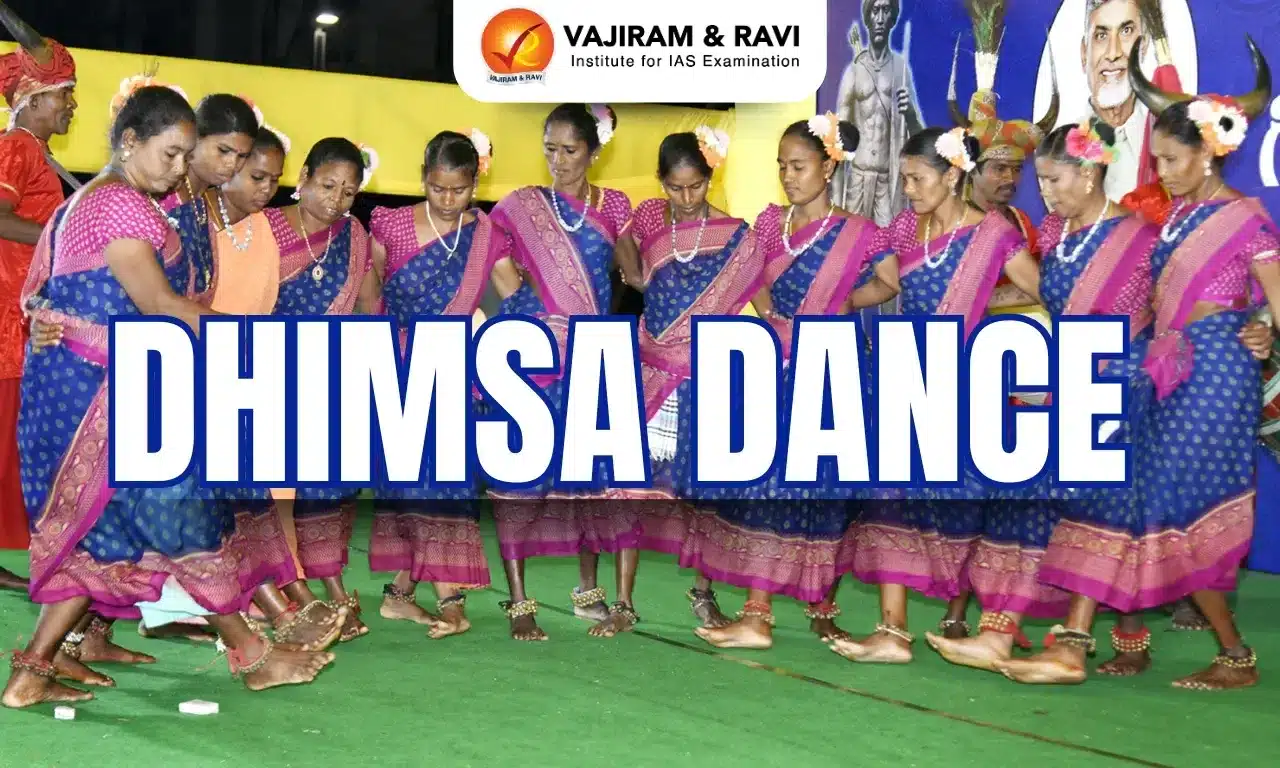
A recent performance of the traditional Dhimsa dance by more than 13,000 tribal women and girl students at the Alluri Sitarama Raju International Airport in Bhogapuram was recognised by Guinness World Records as the “largest Dhimsa dance”.

About Dhimsa Dance

  • It is a popular tribal dance performed by tribes, including Bagata, Valmiki, Poraja, Khond, Gadaba, Kondadora, Mukadora, and Kotia in Andhra Pradesh .
  • It is performed during festivals, weddings, and at the time of the “hunting festival” in April when men and women dance for hours together.
  • There are 12 varieties of Dhimsa and the origin can be traced to the Koraput area, the home of the Ghond Tribe.
  • Performance
    • Typically performed by a group of 15 to 20 women dressed in traditional, colorful ethnic sarees and ornaments, the dancers move in synchronous circles to the rhythm of native instruments played by male community members.  
    • The beauty of this dance centres on the movements of the dancers without much emphasis on expression or literary texts. 
    • The feet and the hand movements dominate the dance.  
    • It is accompanied by wind and percussion instruments; the dance changes with the music.
    • Unique tribal musical instruments accompanying this dance form include the Mori (a wind instrument), Thudum (drum), and Dappu. 
  • Themes: Various themes of the Dhimsa, are woven around their mythologies, folktales, ethos, mores, economic activities, and kinship and marital life, etc.

News: TH

Dhimsa Dance FAQs

Q1: What is Dhimsa Dance?

Ans: Dhimsa is a popular tribal dance performed by several tribal communities in Andhra Pradesh.

Q2: Which tribes traditionally perform Dhimsa Dance?

Ans: Tribes such as the Bagata, Valmiki, Poraja, Khond, Gadaba, Kondadora, Mukadora, and Kotia perform Dhimsa Dance.

Q3: On what occasions is Dhimsa Dance performed?

Ans: It is performed during festivals, weddings, and the hunting festival held in April.

Q4: Who usually performs Dhimsa Dance?

Ans: It is typically performed by a group of 15 to 20 women.

Q5: What is the main beauty of Dhimsa Dance?

Ans: The beauty of the dance lies in the graceful movements of the dancers rather than facial expressions or literary texts.

Samudra Manthan Scheme

Samudra Manthan Scheme

Samudra Manthan Scheme Latest News

Recently, the Union Cabinet has approved 'Samudra Manthan' – the National Offshore Exploration Scheme with a total outlay of ₹84,084 crore. 

About Samudra Manthan Scheme

  • It is also called the National Offshore Exploration Scheme.
  • Nodal Ministry: It is a Central Sector Scheme of the Ministry of Petroleum & Natural Gas.
  • Implementation Period: Up to FY 2030–31.
  • The scheme aims at unlocking India’s vast offshore energy potential.

Features of Samudra Manthan Scheme

  • It encompasses a comprehensive set of interventions across the offshore exploration value chain.
  • It provides for large-scale acquisition, processing and interpretation of high-quality seismic data, accelerated deepwater and ultra-deepwater exploratory drilling, and scientific drilling in frontier basins.
  • It involves development of common offshore production and evacuation infrastructure, and establishment of an integrated Oil & Gas Manufacturing and Services Zone.
  • It also includes dedicated provisions for digital programme management, capacity building, technology adoption, stakeholder engagement and international outreach, creating an integrated ecosystem to accelerate offshore exploration and production in the country.

Source: PIB

Samudra Manthan Scheme FAQs

Q1: Samudra Manthan Scheme is implemented by which Ministry?

Ans: Ministry of Petroleum & Natural Gas

Q2: What is the implementation period of Samudra Manthan Scheme ?

Ans: FY 2030-31

Pradhan Mantri Surya Sarovar Yojana

Pradhan Mantri Surya Sarovar Yojana

About Pradhan Mantri Surya Sarovar Yojana Latest News

It is a scheme for the development of Floating Solar Photovoltaic (FSPV) Projects with Energy Storage Systems (ESS).

Features  of Pradhan Mantri Surya Sarovar Yojana

  • It envisages the development of 5,000 MW of Floating Solar Photovoltaic projects with co-located Energy Storage Systems having a minimum storage capacity of two hours i.e.,10,000 MWh.
  • Time Period: The projects will be sanctioned during FY 2026-27 to FY 2030-31, with disbursement of financial support continuing up to FY 2032-33.
  • Financial Assistance: Central Financial Assistance (CFA) of Rs. One crore per MW will be provided for eligible Floating Solar Photovoltaic projects after successful commissioning.
  • In addition, CFA of up to Rs.50 lakh per project will be available for undertaking feasibility studies, including bathymetry and hydrography assessments, environmental studies, and other preparatory activities required for de-risking the project development.

Significance of  Pradhan Mantri Surya Sarovar Yojana

  • It would enhance the floating Solar PV capacity in the country by 5,000 MW, which is presently around 700 MW only.
  • It would provide an opportunity to gainfully utilize existing reservoirs & industrial ponds, and eliminate competition for scarce land resources.
  • The integration of an energy storage system will help strengthen grid reliability.
  • It would help in the reduction of around 10 million tonnes of CO₂ emissions annually.
  •  It would help in the generation of approximately 16,000–17,000 full-time equivalent employment opportunities across the project value chain.
  • The scheme would also promote domestic manufacturing of floatation systems as well as the entire value chain of the projects.

Source: PIB

Pradhan Mantri Surya Sarovar Yojana FAQs

Q1: Which is the nodal Ministry for Pradhan Mantri Surya Sarovar Yojana?

Ans: Ministry of New and Renewable Energy

Q2: What is the main advantage of floating solar over ground-mounted solar ?

Ans: Saves land and reduces water evaporation

Cholera

Cholera

Cholera Latest News

While cholera has nearly disappeared from wealthy countries, it remains one of the world’s deadliest waterborne diseases in places where clean water and basic healthcare are unreliable.

About Cholera

  • Cholera is a disease that is caused by the bacteria Vibrio cholerae. 
  • Cholera can cause serious diarrhea and dehydration. Without treatment, the disease can be fatal within hours, even in people who are healthy. 
  • Transmission:
    • People can get cholera by drinking water or eating food contaminated with cholera bacteria. 
    • The disease is most common in places with poor sanitation, crowding, war, and famine. Cholera outbreaks are more common in warm climates.
    • Cholera bacteria also can live in brackish (slightly salty) and coastal waters. Eating raw shellfish like shrimp and crab can be a source of cholera. 
    • Cholera is not likely to spread from person to person or from casual contact with someone with cholera. 
    • It is often predictable and preventable. It can ultimately be eliminated where access to clean water and sanitation facilities, as well as good hygiene practices, are ensured and sustained for the whole population.
  • Symptoms:
    • Most people infected with V. cholerae do not develop symptoms but can spread the bacteria through their faeces for 1–10 days. 
    • Symptoms appear 12 hours to 5 days after infection.
    • Most people with the disease have mild or moderate symptoms. 
    • A minority of patients develop severe acute watery diarrhoea and life-threatening dehydration.
  • Treatment:
    • Treatment for cholera includes drinking plenty of fluids or getting intravenous fluids to prevent dehydration. 
    • Healthcare providers also sometimes prescribe antibiotics like doxycycline, erythromycin, or azithromycin to help you feel better.
    • Providers also treat kids between the ages of 6 months and 5 years with zinc supplements.
    • Antidiarrheal medicines aren’t recommended for cholera and could make symptoms worse.

News: DTE

Cholera FAQs

Q1: What is cholera?

Ans: Cholera is a disease caused by the bacterium Vibrio cholerae.

Q2: What are the major health effects of cholera?

Ans: Cholera can cause severe diarrhoea and dehydration.

Q3: How is cholera transmitted?

Ans: It is transmitted by consuming water or food contaminated with Vibrio cholerae.

Q4: Where are cholera outbreaks most common?

Ans: They are most common in places with poor sanitation, overcrowding, war, and famine.

Q5: What is the primary treatment for cholera?

Ans: Drinking plenty of fluids or receiving intravenous fluids to prevent dehydration.

Xtreme Weather Grade Diesel

Xtreme Weather Grade Diesel

Xtreme Weather Grade Diesel Latest News

Recently, the Chief of the Army Staff (COAS) launched the indigenously developed Xtreme Weather Grade (XWG) Diesel in New Delhi. 

About Xtreme Weather Grade Diesel

  • It is a specialised diesel fuel developed for operations in extremely low temperatures.
  • It is designed to remain usable at temperatures as low as minus 42 degrees Celsius.
  • It is developed jointly by the Indian Army and Oil Marketing Companies.

Characteristics Xtreme Weather Grade Diesel

  • It can withstand a wide temperature range, with a pour point of minus 42 degrees Celsius and a flash point of around 50 degrees Celsius.
  • It is also compliant with BS-VI emission standards and IS 1460:2025 specifications.
  • It allows it to be used in the Indian Army's existing fleet without requiring engine modifications or re-homologation.
  • It is the specialised fuel that will enhance the mobility, safety and operational availability of combat and logistics vehicles in extreme climatic conditions.
  • Significance: The technology also has wider civilian use in high-altitude and severe winter regions and represents a significant step towards Atmanirbhar Bharat.

Source: PIB

Xtreme Weather Grade Diesel FAQs

Q1: Xtreme Weather Grade Diesel was launched by which company?

Ans: Indian Oil Corporation

Q2: What is the main purpose of Xtreme Weather Grade Diesel?

Ans: To be used in extremely cold regions without gelling

Kimi K3 – Evolving US-China Artificial Intelligence Race

Kimi K3

Artificial Intelligence Race Latest News

  • Chinese start-up Moonshot AI has launched Kimi K3, an advanced AI model that is being compared with OpenAI's ChatGPT and Anthropic's Claude, intensifying the global AI race between China and the United States.

Artificial Intelligence Models: Closed vs Open-Weight

  • Modern Large Language Models (LLMs) can broadly be classified into closed (proprietary) models and open-weight models based on how much of their underlying technology is made publicly available.
  • Closed (Proprietary) Models:
    • Closed models are developed and controlled by private companies. Their model parameters, source code, and training methods are not publicly released.
    • Key characteristics include:
      • Access is usually provided through APIs or subscription services
      • Model parameters remain confidential 
      • Companies retain full commercial control 
      • Generally considered easier to secure and monetise 
    • Examples include:
      • OpenAI's GPT models 
      • Anthropic's Claude 
      • Google's Gemini 
  • Open-Weight Models
    • An open-weight model allows developers to download and use the model's trained parameters (weights) while the company may still retain parts of the training code or datasets.
    • Unlike fully open-source software, open-weight models do not necessarily disclose every component used to build the model.
    • Advantages include:
      • Greater customisation by developers 
      • Faster innovation through community contributions 
      • Wider adoption across industries 
      • Lower deployment costs 
  • However, they also raise concerns regarding:
    • Misuse by malicious actors 
    • Security risks 
    • Intellectual property protection 
    • Commercial monetisation 
  • Many Chinese AI companies have increasingly adopted the open-weight approach to rapidly expand their developer ecosystem.

About Kimi K3

  • Kimi K3 is the latest AI model developed by Moonshot AI, a Chinese start-up founded in 2023 by Yang Zhilin, a graduate of Tsinghua University and Carnegie Mellon University.
  • According to the company, Kimi K3 is among the world's largest open-weight AI models, containing approximately 2.8 trillion parameters.
  • In AI systems, parameters are the numerical values learned during training that determine how the model processes information and generates responses. 
  • A larger number of parameters generally reflects greater computational investment, although model performance also depends on factors such as data quality, architecture, and training techniques.
  • Kimi K3 offers capabilities across multiple domains, including:
    • Coding assistance 
    • Financial consulting 
    • Deep research 
    • Video editing 
    • General conversational AI 
  • Following its launch, demand reportedly surged to such an extent that Moonshot AI temporarily paused new user registrations.

Significance of Kimi K3

  • Narrowing the Technological Gap
    • Earlier, the release of DeepSeek R1 in January 2025 challenged the perception that the United States held an unassailable lead in frontier AI models.
    • The launch of Kimi K3 further reinforces the view that Chinese AI companies are rapidly closing the performance gap with leading American models such as ChatGPT and Claude.
    • Experts note that Chinese AI models are no longer isolated successes but are becoming increasingly competitive across multiple application areas.
  • Strengthening China's AI Ecosystem
    • Unlike many American companies that rely on proprietary models, several Chinese AI firms have adopted open-weight models as a strategic choice.
    • According to analysts, this approach helps Chinese companies:
      • Reach developers more quickly 
      • Build larger software ecosystems 
      • Encourage third-party innovation 
      • Expand adoption despite limited access to global cloud infrastructure 
    • The strategy aligns with China's broader objective of accelerating AI adoption across manufacturing, public administration, and smaller enterprises.

The Open-Weight Strategy

  • Distribution Strategy
    • Experts argue that open-weight models function primarily as a distribution strategy.
    • Since leading US firms already possess strong cloud infrastructure and enterprise customer bases, Chinese firms use open-weight releases to attract developers and encourage widespread adoption of their platforms.
  • Response to Technology Restrictions
    • Chinese AI developers continue to face restrictions on access to advanced semiconductor chips because of US export controls, particularly on high-end AI chips produced by companies such as NVIDIA.
    • These restrictions have encouraged Chinese firms to pursue alternative strategies centred on efficient models and broader developer participation.
  • Commercial Monetisation
    • Kimi K3 follows a custom licensing model.
    • While most developers can access the model's weights, large commercial users are required to enter into licensing agreements with Moonshot AI.
    • This hybrid approach seeks to balance openness with commercial sustainability.

AI and the US-China Technology Rivalry

  • The emergence of Kimi K3 reflects the broader technological competition between China and the United States.
  • Alongside competition over advanced semiconductor chips and AI infrastructure, both countries are increasingly seeking leadership in AI governance and innovation.
  • China recently supported the establishment of the World AI Cooperation Organisation, with President Xi Jinping advocating international cooperation in AI development rather than dominance by a single country.
  • At the same time, debates within the United States have intensified regarding whether American firms should move towards more open AI models.
  • A recent open letter supported by industry leaders, including Microsoft's Satya Nadella, NVIDIA's Jensen Huang, and OpenAI, argued that open-weight AI could strengthen innovation and maintain American technological leadership.
  • However, experts caution that a genuine shift would require major US companies to consistently release competitive open-weight models rather than relying primarily on proprietary systems.

Concerns and Challenges

  • Despite its technological progress, Kimi K3 has also become the centre of controversy.
  • Anthropic has accused Moonshot AI of unlawfully extracting capabilities from its Claude model. 
  • A US government official described such practices as unfair competition. 
  • In response, China's Commerce Ministry accused the United States of pursuing "AI hegemonism." 
  • These developments highlight the growing intersection of artificial intelligence, intellectual property rights, trade policy, and national security.

Source: IE | TH

Artificial Intelligence Race FAQs

Q1: What is Kimi K3?

Ans: Kimi K3 is a large open-weight artificial intelligence model developed by the Chinese startup Moonshot AI.

Q2: What is an open-weight AI model?

Ans: An open-weight model allows developers to access and use the model's trained parameters while not necessarily making the entire source code or training data publicly available.

Q3: Who developed Kimi K3?

Ans: Kimi K3 was developed by Moonshot AI, a Chinese startup founded in 2023 by Yang Zhilin.

Q4: Why is Kimi K3 significant?

Ans: It demonstrates China's growing capability in frontier AI and is considered a strong competitor to leading models such as ChatGPT and Claude.

Q5: Why are open-weight AI models gaining importance?

Ans: They enable wider developer participation, faster innovation, and broader adoption while reducing barriers to AI deployment.

Kulgam Terror Attack 2026, Terrorism, Govt. Measures, Latest News

Kulgam Terror Attack

The Kulgam Terror Attack has once again highlighted the security challenges in Jammu and Kashmir. The targeted killing of migrant workers has raised concerns over the safety of non-local labourers, terrorist activities, and the need for stronger counter-terrorism measures in the Kashmir Valley.

Why Kulgam Terror Attack in News?

The Kulgam Terror Attack is in the news after two migrant workers from Chhattisgarh were shot by terrorists at a brick kiln in Kelam (Kilam) village of Kulgam district, Jammu and Kashmir, on 31 July 2026. One worker died on the spot, while the second succumbed to injuries during treatment.

Terrorism in Jammu and Kashmir

Terrorism in Jammu and Kashmir has remained a major internal security challenge, involving cross-border infiltration, militant activities, and targeted attacks that threaten peace, development, and civilian safety.

  • Cross-Border Infiltration: Terrorists attempt to infiltrate into Jammu and Kashmir through the Line of Control (LoC) to carry out attacks.
  • Targeted Attacks: Terrorist groups often target security personnel, civilians, migrant workers, and government infrastructure to create fear and instability.
  • Terrorist Organisations: Groups such as Lashkar-e-Taiba (LeT), Jaish-e-Mohammed (JeM), and The Resistance Front (TRF) have been involved in several attacks in the region.
  • Radicalisation: Terrorist outfits use social media, online propaganda, and local networks to recruit and radicalise vulnerable youth.
  • Use of Technology: Terrorists increasingly use drones, encrypted communication, GPS devices, and modern weapons for infiltration and attacks.
  • Terror Financing: Funding through hawala networks, narcotics trafficking, and cross-border support sustains terrorist activities.
  • Counter-Terrorism Operations: The Indian Army, Jammu and Kashmir Police, CRPF, and other CAPFs conduct intelligence-based operations to eliminate terrorist networks.

Government Measures to Counter Terrorism

The Government of India has adopted a multi-pronged strategy combining military operations, intelligence, border management, technology, and development initiatives to counter terrorism in Jammu and Kashmir.

  • Operation Sindoor (2025): India launched Operation Sindoor in May 2025, carrying out precision strikes on terrorist infrastructure in Pakistan and Pakistan-occupied Jammu and Kashmir (PoJK) following the Pahalgam terror attack. The operation targeted terror camps linked to groups such as Jaish-e-Mohammed (JeM) and Lashkar-e-Taiba (LeT).
  • Intelligence-Based Counter-Terrorism Operations: The Indian Army, Jammu and Kashmir Police, CRPF, BSF, and other CAPFs conduct coordinated intelligence-led operations to neutralise terrorists and dismantle their networks.
  • Strengthening Border Security: Enhanced border fencing, electronic surveillance, thermal imaging cameras, drones, and anti-infiltration grids are deployed along the Line of Control (LoC) and the International Border (IB) to prevent cross-border infiltration.
  • Action Against Terror Financing: Agencies such as the National Investigation Agency (NIA) and the Enforcement Directorate (ED) investigate hawala networks, illegal funding, and properties linked to terrorist organisations.
  • Modernisation of Security Forces: Security agencies are equipped with advanced weapons, surveillance drones, artificial intelligence-based monitoring systems, and improved communication equipment to enhance operational effectiveness.
  • Anti-Radicalisation Measures: The government promotes community engagement, awareness campaigns, and youth development programmes to prevent radicalisation and recruitment by terrorist organisations.
  • Development and Employment Initiatives: Investments in infrastructure, tourism, education, healthcare, and employment generation aim to improve livelihoods and reduce the influence of extremist elements.
  • Legal and Administrative Measures: Strict implementation of laws such as the Unlawful Activities (Prevention) Act (UAPA), 1967, along with the designation of terrorist organisations and individuals, strengthens India's legal framework against terrorism.

Also Read: Pahalgam Terror Attack

Kulgam Terror Attack 2026 FAQs

Q1: Why is the Kulgam Terror Attack in the news?

Ans: The Kulgam Terror Attack is in the news because two migrant workers from Chhattisgarh were shot dead by terrorists in Kelam village of Kulgam district, Jammu and Kashmir, on 31 July 2026, prompting a large-scale counter-terrorism operation by security forces.

Q2: Where did the Kulgam Terror Attack take place?

Ans: The attack took place in Kelam (Kilam) village of Kulgam district in the Union Territory of Jammu and Kashmir.

Q3: Who were the victims of the Kulgam Terror Attack?

Ans: The victims were two migrant labourers from Chhattisgarh who were working at a brick kiln in Kulgam district.

Q4: Which terrorist groups are active in Jammu and Kashmir?

Ans: Major terrorist organisations active in the region include Lashkar-e-Taiba (LeT), Jaish-e-Mohammed (JeM), and The Resistance Front (TRF), which have been linked to several attacks in Jammu and Kashmir.

Pygmy Hog

Pygmy Hog

Pygmy Hog Latest News

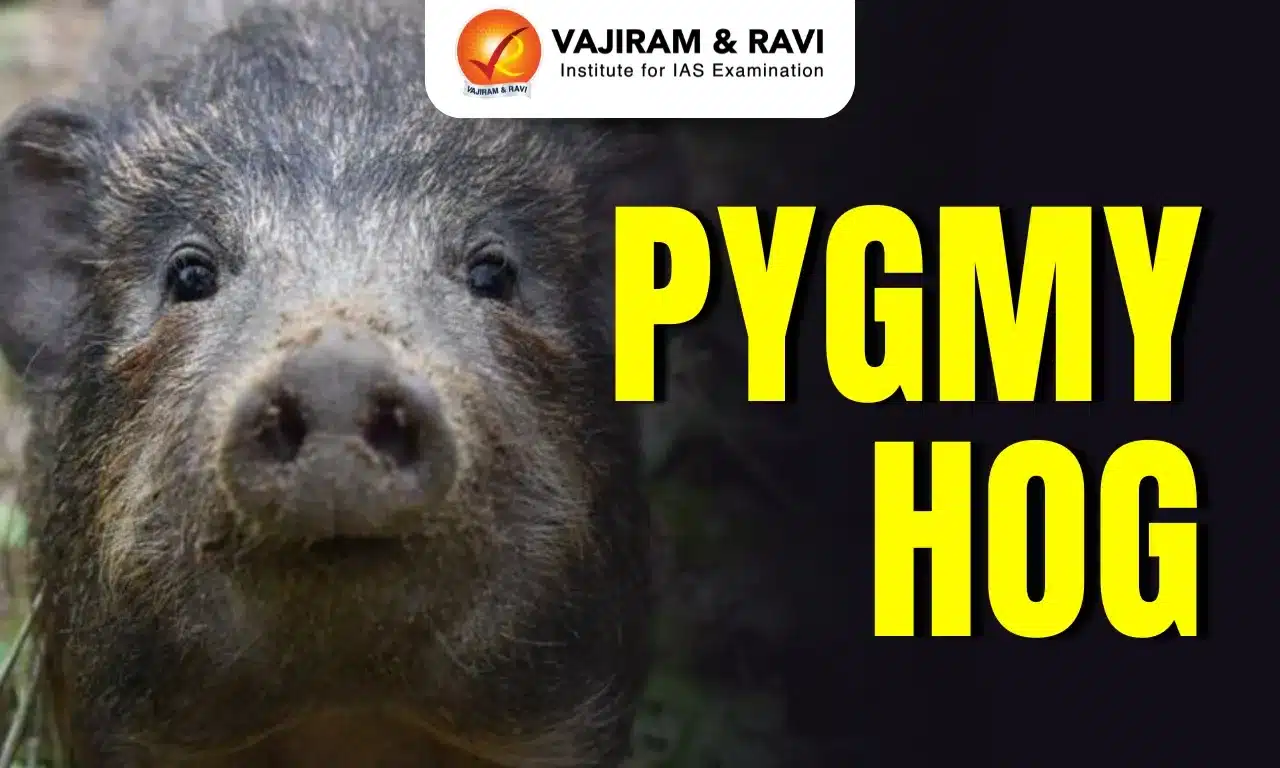
The Standing Committee of the National Board for Wildlife (SC-NBWL) has recommended the inclusion of the pygmy hog in the list of critically endangered species under Integrated Development of Wildlife Habitats (IDWH).  

About Pygmy Hog

  • It is the smallest and rarest species of wild pig.
  • It is one of the very few mammals that build its own home, or nest, complete with a ‘roof’.
  • It is an indicator species as its presence reflects the health of its primary habitat.
  • Habitat: It prefers undisturbed patches of grassland dominated by early succession riverine communities, typically comprising dense tall grass intermixed with a wide variety of herbs, shrubs and young trees.
  • Distribution: Currently, they survive only in the grasslands of Assam’s Manas and Orang national parks.
  • Diet: They feed on roots, tubers, shoots and ground vegetation, along with worms and other invertebrates.

Ecological Role of Pygmy Hog

  • Enhances Soil Quality: It digs for roots, tubers, wild fruits, termites, earthworms, eggs and other food sources found in grasslands which aerates the soil and enhances its quality.
  • Disperses Seeds: It also helps dispersing seeds through its dietary and foraging habits.

Conservation Status of Pygmy Hog

Integrated Development of Wildlife Habitats Scheme

  • It is a centrally sponsored scheme that provides financial assistance to states to protect certain species or wildlife areas through its recovery programme for critically endangered species and habitats.
  • Components of the scheme
    • Support to Protected Areas (National Parks, Wildlife Sanctuaries, Conservation Reserves and Community Reserves)
    • Protection of Wildlife Outside Protected Areas
    • Recovery programmes for saving critically endangered species and habitat

Source: TH

Pygmy Hog FAQs

Q1: What is the conservation status of Pygmy Hog as per IUCN ?

Ans: Critically Endangered

Q2: Pygmy Hog is found only in which Indian state?

Ans: Assam

Babasaheb Purandare (1922-2021), Biography, Contributions, Awards

Babasaheb Purandare

Babasaheb Purandare was a renowned historian, author, playwright, poet and orator best known for documenting the life and legacy of Chhatrapati Shivaji Maharaj. He was popularly called "Shiv Shahir" or "Shivaji's poet" as he dedicated his life to researching Maratha history through books, lectures, historical plays and extensive field visits to forts associated with Shivaji.

Babasaheb Purandare Biography

Babasaheb Purandare was born as Balwant Moreshwar Purandare on 29 July 1922 in Maharashtra. He developed a deep interest in Maharashtra's history from an early age and began writing about Chhatrapati Shivaji Maharaj while still young. He travelled extensively across Maharashtra, studying forts, manuscripts and historical sites to strengthen his research. His writings and public lectures made Maratha history accessible to ordinary people in simple language. He passed away on 15 November 2021 at the age of 99 after undergoing treatment for age related illnesses and pneumonia in Pune Maharashtra.

Babasaheb Purandare Contributions

Babasaheb Purandare devoted his life to preserving and popularising the history of Chhatrapati Shivaji Maharaj through research, literature, theatre and public outreach.

Historical Research

He became one of the most recognised authorities on Chhatrapati Shivaji Maharaj, researching the king's life, administration, military campaigns and forts through extensive field visits across Maharashtra and historical source material.

Literary Contributions

He began writing on Shivaji at a young age and authored Thinagya (Sparks on Shivaji), Raja Shiva Chatrapati, Kesari, Narayanrao Peshwa and the acclaimed two volume biography Raje Shivchhatrapati, besides numerous historical publications.

Publications

His prolific writing career produced works including Maharaj, Shelar Khind, Gadkot Kille, Agra, Lal Mahal, Purandar, Rajgad, Panhalgad, Sinhagad, Pratapgad, Fulwanti, Purandaryanchi Daulat, Mujaryache Mankari, Savitri and Kalawantinicha Sajja.

Theatre and Cultural Revival

Inspired by large scale Roman open air performances during his 1978 Europe tour, he conceptualised the grand historical drama Jaanta Raja, which premiered in 1984 and has completed more than 1,550 performances over four decades.

Documentation of Fort Heritage

He had a lifelong interest in Maharashtra's forts and personally visited numerous historical forts connected with Shivaji. His studies documented their historical importance and strengthened public awareness of Maratha heritage.

Babasaheb Purandare Awards and Honors

Babasaheb Purandare received several prestigious honours for his contribution to Indian history, literature and theatre.

  • Padma Vibhushan (2019): The Government of India honoured him with the Padma Vibhushan, the country's second highest civilian award, recognising his lifelong contribution to historical research, literature and preservation of Maratha heritage.
  • Maharashtra Bhushan Award (2015): He received the Maharashtra Bhushan, the state's highest civilian honour, for his exceptional work in documenting and popularising the history of Chhatrapati Shivaji Maharaj.
  • Kalidas Samman (2007-08): The Government of Madhya Pradesh conferred the Kalidas Samman for his celebrated historical drama Jaanta Raja, which became one of India's most successful large scale theatrical productions.
  • Recognition as "Shiv Shahir": Babasaheb Purandare earned the widely respected title "Shiv Shahir" because of his lifelong dedication to researching, writing and narrating the life and achievements of Chhatrapati Shivaji Maharaj.

Babasaheb Purandare FAQs

Q1: Who was Babasaheb Purandare?

Ans: Babasaheb Purandare was an Indian historian, author, playwright and orator, widely known for his extensive research and writings on Chhatrapati Shivaji Maharaj.

Q2: Why was Babasaheb Purandare called "Shiv Shahir"?

Ans: He was called "Shiv Shahir" because he dedicated his life to researching, writing and presenting the history and achievements of Chhatrapati Shivaji Maharaj.

Q3: Which is the most famous play written by Babasaheb Purandare?

Ans: Babasaheb Purandare's most famous play is Jaanta Raja, a grand historical drama first staged in 1984 and later performed in five languages.

Q4: Which major awards were received by Babasaheb Purandare?

Ans: He received the Maharashtra Bhushan Award (2015), Padma Vibhushan (2019) and Kalidas Samman (2007-08) for his literary and theatrical contributions.

Q5: When was Babasaheb Purandare born and when did he pass away?

Ans: Babasaheb Purandare was born on 29 July 1922 and passed away on 15 November 2021 at the age of 99.

Crude Language and the Law: Decoding the Noida FIR, Obscenity Test and Free Speech in India

Crude Language and the Law

Crude Language and the Law Latest News

  • Recently, Noida Police registered a Zero FIR against 25-year-old Ruchika Singh over remarks she allegedly made against PM Modi during a protest at Delhi's Jantar Mantar on July 23. 
  • The case, filed on a complaint by a Supreme Court advocate, has reignited debate on whether crude language against public figures constitutes a crime in India — and the legal answer is narrower than public sentiment suggests.

The Case: Key Facts

  • The Zero FIR was filed at Expressway police station, Noida, on a complaint by advocate Smriti Singh, who found the language in a video of the incident objectionable.
    • Zero FIR: An FIR that can be filed at any police station regardless of jurisdiction, later transferred to the station with actual jurisdiction.
  • It invokes Sections 352, 353(1), and 356(1) of the Bharatiya Nyaya Sanhita (BNS) — covering intentional insult, public mischief, and defamation respectively.
  • Since the alleged incident occurred in Delhi, the case has been transferred to Delhi Police for investigation.

Obscenity as a Legal Concept: How the Test Evolved

  • The commonly invoked provision in such disputes — Section 296, BNS (Section 294 of the Indian Penal Code, or IPC) — punishes obscene acts or words in public "to the annoyance of others" with up to three months' jail. 
  • Notably, this section was not invoked in the Noida case.
  • 1965 — Ranjit D. Udeshi v State of Maharashtra: The SC banned Lady Chatterley's Lover, adopting the Hicklin test (1868, English origin) — whether isolated passages could corrupt the "most vulnerable reader."
  • 2006 — Doordarshan v Anand Patwardhan: SC cleared the broadcast of a censored documentary, ruling obscenity must be judged by viewing a work as a whole, through an average viewer's eyes.
  • 2014 — Aveek Sarkar v State of West Bengal: SC discarded the Hicklin test entirely, adopting a "community standards" test (drawn from the US case Roth v United States, 1957) — material is obscene only if it tends to arouse sexual/lustful feelings by contemporary community standards.

Criticism of 2014 Judgement 

  • Legal scholars contend that the original American test (Roth case) had three parts. 
  • For something to be called "obscene" in the US, it had to fail all three checks:
    • It goes against community standards;
    • It's clearly and obviously offensive (not just borderline);
    • It has no redeeming value — no artistic, literary, scientific, or social worth at all.
  • However, SC borrowed only the first part — "community standards" — and left out the other two safety checks.
  • By dropping the other two parts, India's test became much looser and easier to misuse
  • Something could now be called obscene just because it seems to go against "community standards" — even if it has genuine artistic or social value, and even if it's not blatantly offensive.

Profanity Is Not Obscenity: Recent Rulings

  • The Supreme Court has repeatedly clarified that vulgar or abusive language, however distasteful, does not automatically amount to obscenity:
    • 2024 — College Romance case: SC quashed an IT Act case against the web series, holding that swear words reflect emotions like anger or frustration, not sexual intent.
    • April 2026 — Sivakumar v State: SC acquitted a man for calling someone "bastard" during an argument, holding it insufficient to constitute obscenity.
    • July 2026 — Mani v State: SC reiterated, "obscenity is not synonymous with vulgarity, abuse or profanity."
  • Legal test: For speech to be obscene, it must be shown to be lascivious (expressing inappropriate sexual desire). Mere insult or vulgarity falls short of this threshold.

Why the Noida Case Involves a Different, Higher Bar

  • The sections invoked against Ruchika Singh are unrelated to obscenity and each carry a stricter test:
    • Section 352 (Insult): Requires proof the accused intended, or knew it was likely, that the insult would provoke an actual breach of public peace — not merely that someone felt offended.
    • Section 353(1) (Public Mischief): Aimed at incitement — such as mutiny, enmity between communities, or offences against the state — a considerably higher threshold than criticism of a leader.
    • Section 356(1) (Defamation): Carries long-standing exceptions for good-faith comment on a public figure's conduct in their public role.

Conclusion

  • Indian courts have consistently narrowed the scope of "obscenity" from the archaic Hicklin test to a contemporary community-standards approach, while clarifying that mere vulgarity or insult does not meet this threshold. 
  • In the Noida case, the actual charges — insult, public mischief, and defamation — demand proof of intent to breach public peace or incite unrest, not just offensive language, placing the burden on investigators and courts to distinguish sharp political criticism from genuine criminal conduct.

Source: IE | ToI

Crude Language and the Law FAQs

Q1: What does Crude Language and the Law explain about the Noida FIR?

Ans: Crude Language and the Law explains that the Noida FIR invokes provisions relating to insult, public mischief, and defamation rather than obscenity under the Bharatiya Nyaya Sanhita.

Q2: How has the Supreme Court shaped Crude Language and the Law on obscenity?

Ans: Crude Language and the Law highlights that the Supreme Court replaced the Hicklin test with community standards and clarified that obscenity requires sexual content, not merely offensive language.

Q3: Why does Crude Language and the Law distinguish profanity from obscenity?

Ans: Crude Language and the Law notes that recent Supreme Court judgments hold vulgarity, abusive language, or profanity alone does not amount to obscenity without lascivious or sexually explicit content.

Q4: Which legal provisions are discussed in Crude Language and the Law?

Ans: Crude Language and the Law discusses Sections 352, 353(1), and 356(1) of the Bharatiya Nyaya Sanhita, covering intentional insult, public mischief, and defamation.

Q5: Why is Crude Language and the Law important for understanding free speech?

Ans: Crude Language and the Law clarifies the legal limits of political speech, emphasising that criminal liability requires proof beyond merely offensive or insulting remarks.

India’s IIP Growth Hits 23-Month High: Industrial Growth Strong but Consumer Demand Remains Weak

India's IIP Growth

India's IIP Growth Latest News

  • India's Index of Industrial Production (IIP) grew 7.3% year-on-year in June 2026 — its highest in 23 months — even as most observers expect India's overall growth to slow this year. 
  • This contrast prompts a closer look at which sectors are driving growth and which are lagging.

What is the IIP?

  • The IIP tracks changes in the volume of production across Indian industries.
  • It selects a basket of industrial products — spanning manufacturing, mining, and energy — and assigns different weights to each sector to build a composite index.
  • Production is tracked monthly and compared with the same month in the previous year to gauge industrial health.

Two Ways to Read IIP Data

  • Sectoral Classification
    • [my_image src="https://vajiramias.sgp1.cdn.digitaloceanspaces.com/wp/current-affairs/2026/08/Sectoral-Classification.jpg?v=2" size="full" align="none" width="auto" height="195px" alt="" title="Sectoral Classification"]
    • Manufacturing, with the largest weight, drove overall growth, while mining lagged significantly.
  • Use-Based Classification
    • This method categorises goods by their end-use, offering insight into the nature of demand:
      • Primary goods: Natural resources (minerals, fossil fuels) used in industry.
      • Intermediate goods: Incomplete goods (e.g., cotton yarn) used to produce other goods.
      • Capital goods: Manufactured goods (e.g., tractors, commercial vehicles) used in production, but not as inputs.
      • Infrastructure/construction goods: Finished goods used mainly in infrastructure.
      • Consumer durables: Longer life-span goods (e.g., TVs, cars).
      • Consumer non-durables: Goods for immediate consumption (e.g., milk, biscuits).
    • In June 2026, capital goods (14.23%) and intermediate goods (9.33%) posted the strongest growth, while consumer non-durables (4.91%) lagged well behind.

The Real Story: A Quarterly Trend Reveals a Demand Divide

  • Looking at quarterly data over the past nine months reveals a consistent pattern:
    • Capital, infrastructure, and intermediate goods have shown strong, sustained growth — reflecting robust government infrastructure spending.
    • Consumer goods, especially non-durables, have shown persistently weak growth — signalling soft demand.
    • Since April 2024, capital and intermediate goods have consistently outperformed consumer goods, with trend growth rates of 9.6% and 5.9% respectively.

Expert Insights

  • Weak consumer demand persists in both rural and urban India, driven by higher prices — visible in the corporate earnings of FMCG (fast-moving consumer goods) companies. 
  • Strong capital/infrastructure goods growth aligns with government infrastructure spending, which also lifts intermediate goods (metals, machinery).
  • Weakness in consumer goods IIP through FY26 was largely driven by pharmaceuticals, electronics, apparel, and leather — sectors most exposed to tariff-related uncertainties. 
  • Consumer goods underperforming capital/intermediate goods is "more the norm than an exception."
  • Weak primary goods growth is linked to supply disruptions and higher prices stemming from events in West Asia.
  • The IIP trend is consistent with the broader picture shown by India's GDP growth data.

Conclusion

  • India's 23-month-high IIP growth presents a deceptively rosy picture. 
  • A sectoral breakdown shows the surge is driven chiefly by government-backed capital and infrastructure spending, while consumer demand — especially for non-durables — remains weak amid high prices and global tariff uncertainties. 
  • This divergence suggests India's industrial recovery is uneven, with production growth not yet translating into broad-based consumption strength.

Source: IE

India's IIP Growth FAQs

Q1: Why has India's IIP Growth Hits 23-Month High despite slowing economic expectations?

Ans: India's IIP Growth Hits 23-Month High because capital goods, infrastructure, and manufacturing recorded strong production growth, largely supported by government investment and infrastructure spending.

Q2: What does India's IIP Growth Hits 23-Month High reveal about consumer demand?

Ans: India's IIP Growth Hits 23-Month High reveals that consumer non-durables continue to show weak growth, indicating subdued consumer demand despite strong industrial production.

Q3: How does India's IIP Growth Hits 23-Month High measure industrial performance?

Ans: India's IIP Growth Hits 23-Month High is based on the Index of Industrial Production, which tracks monthly production across manufacturing, mining, and electricity sectors.

Q4: Which sectors are driving India's IIP Growth Hits 23-Month High?

Ans: India's IIP Growth Hits 23-Month High is primarily driven by capital goods, intermediate goods, and infrastructure-related industries, reflecting sustained public investment and industrial activity.

Q5: What economic message emerges from India's IIP Growth Hits 23-Month High?

Ans: India's IIP Growth Hits 23-Month High indicates that industrial expansion remains uneven, with strong investment-led production but continued weakness in broad-based consumer demand.

Samudra Manthan – National Offshore Exploration Scheme (NOES) to Strengthen India’s Energy Security

Samudra Manthan

Samudra Manthan Latest News

  • The Union Cabinet has approved the National Offshore Exploration Scheme (NOES), titled ‘Samudra Manthan’, with an outlay of ₹84,084 crore for implementation until FY 2030-31. 
  • The scheme seeks to accelerate offshore oil and natural gas exploration, particularly in deepwater and ultra-deepwater basins, reduce import dependence, and enhance India's long-term energy security.

Need for the NOES

  • India is the world’s third-largest consumer of crude oil and a major consumer of natural gas. However,
    • Over 88% of crude oil requirements are met through imports.
    • Around 50% of natural gas demand is import-dependent.
    • Domestic production has stagnated, while existing oil and gas fields witness a 6–7% annual natural decline in output.
    • Geopolitical disruptions, such as the West Asia crisis, expose India to supply and price volatility.
  • The scheme addresses these challenges by promoting domestic hydrocarbon exploration in offshore regions.

Key Components of Samudra Manthan

  • Deepwater and ultra-deepwater exploratory drilling (₹43,200 crore):
    • Financial support for drilling 60 exploration wells, with a government assistance of up to 50% of eligible drilling cost or ₹675 crore per well, whichever is lower.
    • Intended to reduce investment risks associated with expensive and uncertain offshore exploration.
  • Offshore data acquisition (₹28,534 crore):
    • Large-scale acquisition, processing and interpretation of high-quality seismic data.
    • Scientific drilling in frontier basins to reduce geological uncertainty and improve exploration success.
  • Common offshore infrastructure (₹10,000 crore): Development of shared offshore production and evacuation infrastructure to facilitate commercial production from discovered hydrocarbon reserves.
  • Oil and gas manufacturing and services zones (₹2,000 crore): Establishment of integrated manufacturing and service hubs to promote domestic manufacturing, localisation of critical equipment, and development of indigenous capabilities.

Major Objectives

  • The scheme aims to catalyse over 600 Million Metric Tonnes of Oil Equivalent (MMTOE) in additional reserves.
  • Increase domestic hydrocarbon production from around 62 MTOE to nearly 80 MTOE annually, subject to successful exploration.
  • Expand India's hydrocarbon resource base from 1,600 MTOE to 2,200 MTOE.
  • Reduce annual crude oil imports by nearly ₹1 lakh crore.
  • Attract substantial investments across the exploration and production (E&P) value chain.
  • Promote technological innovation and employment in the upstream petroleum sector.

Focus Areas for Exploration and Need for Government Support

  • Focus areas:
    • The scheme prioritises exploration in frontier offshore basins, including -
      • Krishna-Godavari Basin
      • Cauvery Basin
      • Mahanadi Basin
      • Andaman Offshore Region
    • These regions are believed to possess significant untapped hydrocarbon potential but require advanced technology and large capital investments.
  • Government support:
    • Deepwater exploration is characterised by -
      • Extremely high drilling costs (US$100–250 million per well).
      • Long gestation period of 5–10 years before commercial production.
      • High geological and commercial risks, as discoveries may not occur or may not be economically viable.
    • By adopting a risk-sharing approach, the government seeks to encourage greater participation by public and private upstream companies.

Expected Benefits

  • Energy security: Lower dependence on imported crude oil and natural gas. Greater resilience against global supply disruptions and price shocks.
  • Economic benefits: 
    • Potential annual savings of nearly ₹1 lakh crore in import expenditure. 
    • Increased investment across the hydrocarbon value chain. 
    • Employment generation in exploration, engineering, manufacturing and offshore services.
  • Industrial development: Development of indigenous manufacturing ecosystem for offshore equipment. Enhanced localisation and reduced reliance on imported technologies.
  • Technology and capacity building: 
    • Adoption of advanced seismic imaging, digital programme management and offshore drilling technologies. 
    • Strengthening India's technical capabilities in deepwater exploration.

Challenges and Reforms

  • Challenges:
    • High geological uncertainty and exploration failure risks.
    • Capital-intensive nature of offshore drilling.
    • Requirement of sophisticated technology and specialised expertise.
    • Environmental concerns related to offshore drilling and marine ecosystems.
    • Commercial viability of discovered reserves remains uncertain.
  • Expert views:
    • Extensive seismic surveys and exploratory drilling will reduce geological uncertainty and encourage greater private investment.
    • The scheme could improve exploration in previously underexplored offshore areas and modestly reduce import dependence by 3–5% through incremental production.
  • Government reforms supporting the scheme:
    • Samudra Manthan builds upon recent upstream sector reforms, including -
      • Opening nearly the entire offshore acreage for exploration.
      • Modernisation of the legislative and contractual framework.
      • Strengthening of the National Data Repository (NDR).
      • Promotion of advanced technologies and digital programme management.
    • The scheme was first envisioned by the Prime Minister during his last year Independence Day address, calling for a modern "Samudra Manthan" to unlock India's offshore energy potential.

Conclusion

  • The Samudra Manthan scheme represents a strategic shift towards unlocking India's offshore hydrocarbon resources through public investment, risk-sharing, advanced technology and infrastructure development. 
  • While exploration outcomes remain uncertain, successful implementation can significantly strengthen energy security, reduce import dependence, promote domestic manufacturing under Atmanirbhar Bharat.

Source: TH | IE

Samudra Manthan FAQs

Q1: What is Samudra Manthan (National Offshore Exploration Scheme)?

Ans: It promotes deepwater hydrocarbon exploration to enhance domestic production, reduce import dependence.

Q2: Why has the Government adopted a risk-sharing approach under the Samudra Manthan?

Ans: Because deepwater exploration involves high capital costs, long gestation periods, etc.

Q3: What is the significance of offshore seismic data acquisition in hydrocarbon exploration?

Ans: It reduces geological uncertainty, improves exploration success rates, and facilitates informed investment decisions.

Q4: What are the major economic benefits expected from the Samudra Manthan scheme?

Ans: It is expected to reduce crude oil import bills, attract investments, generate employment, promote domestic manufacturing, etc.

Q5: Why are deepwater and ultra-deepwater basins strategically important for India's future hydrocarbon production?

Ans: They contain significant untapped hydrocarbon potential capable of offsetting declining production from ageing oil and gas fields.

Narendra Modi Biography, Birth Date, Education and Political Career

Narendra Modi Biography

Narendra Modi, born on 17 September 1950 in Vadnagar, Gujarat, is the Current Prime Minister of India. Rising from humble beginnings, he became an RSS member and later joined the BJP. He served as Chief Minister of Gujarat (2001-2014) before becoming India’s 14th Prime Minister in 2014, known for his dynamic leadership and development-focused governance.

An early member of the Rashtriya Swayamsevak Sangh (RSS), Modi later joined the Bharatiya Janata Party (BJP), where his organisational skills and leadership quickly gained recognition. He holds a degree in Political Science, which laid the foundation for his deep interest in governance and public policy.

Narendra Modi Birthday

Narendra Modi, born on September 17, 1950, has turned 75 on Wednesday, September 17, 2025. His birthday is observed as Sewa Diwas by the BJP and its supporters through social service activities like health camps, cleanliness drives, and blood donation. This year, a special Sewa Pakhwada (Sept 17-Oct 2) will be launched, focusing on Swadeshi and Aatmanirbhar Bharat. On his birthday, Narendra Modi will inaugurate a mega textile park in Dhar, Madhya Pradesh.

Narendra Modi Biography

Narendra Modi, born on September 17, 1950, in Vadnagar, Gujarat, is an Indian politician serving as the Prime Minister of India since May 2014. He represents the Bharatiya Janata Party (BJP), one of the major national parties known for its right-of-center ideology. Modi’s life story reflects a journey from modest beginnings to national leadership. His rise in politics, shaped by discipline, organizational skills, and strong oratory, has made him one of the most prominent and influential figures in contemporary Indian politics.

Narendra Modi Facts

Narendra Modi’s journey from a small town in Gujarat to becoming the Prime Minister of India has been remarkable. Below is a quick overview of Narendra Modi Facts and political details about him.

Narendra Modi Facts

Date of Birth

PM Modi was born on September 17, 1950.

Age

In Vadnagar, Gujarat, on September 17, 1950, the current Prime Minister, Narendra Modi, was born; hence, PM Modi’s Age is 75 years.

Full Name of Narendra Modi

His full name is Narendra Damodardas Modi.

Constituency

He serves as the Lok Sabha representative for the Varanasi constituency and is recognised as a strong party strategist.

Narendra Modi Early Life

Narendra Modi, the Current Prime Minister of India, was born and raised in a small village in northern Gujarat. He went on to pursue higher education at Gujarat University in Ahmedabad, where he earned a Master’s degree in Political Science.

In the early 1970s, Modi became associated with the Rashtriya Swayamsevak Sangh (RSS), a pro-Hindu nationalist organisation. He quickly became active in the Akhil Bharatiya Vidyarthi Parishad (ABVP), the student wing of the RSS, and soon began climbing the organisation’s ranks. His long association with the RSS played a key role in shaping his ideological foundation and proved instrumental in his later political rise.

By 1987, Modi transitioned to formal politics when he joined the Bharatiya Janata Party (BJP). Within the same year, he was appointed General Secretary of the Gujarat unit of the party. Over the next decade, he was deeply involved in expanding the BJP’s influence in Gujarat.

Modi’s organisational skills and political strategy helped the BJP secure a major win in the Gujarat Legislative Assembly Elections 1995, enabling the party to form its first-ever government in the state. Earlier, in 1990, he had also been part of the BJP’s role in forming a coalition government in Gujarat. However, the BJP’s hold on the state was short-lived, lasting only until September 1996.

Narendra Modi Education

Narendra Damodardas Modi, born on 17 September 1950 in Vadnagar, Gujarat, comes from a humble background. He grew up in a lower-middle-class family of grocers, where financial struggles were part of daily life. His early years instilled in him the values of hard work, perseverance, and discipline.

Primary and Secondary Education: Modi completed his primary and higher secondary schooling in Vadnagar. Teachers recall him as a bright and curious student with a deep interest in debates and theatre.

Higher Education:

  • Bachelor’s Degree (BA): Modi pursued Political Science at the University of Delhi, earning his degree in 1978.
  • Master’s Degree (MA): He continued his academic journey at Gujarat University in Ahmedabad, where he completed a Master’s in Political Science in 1983.

After completing his studies, Modi dedicated himself to public service. He became a pracharak (campaigner) for the Rashtriya Swayamsevak Sangh (RSS), where he developed his organisational skills and political ideology. His active involvement in the RSS eventually paved the way for his political career in the Bharatiya Janata Party (BJP).

Narendra Modi Political Timeline

The journey of Narendra Modi of becoming the Longest-Serving Prime Minister outside the Congress party, is marked by significant milestones. The timeline below highlights the key events in his life and career, showcasing how he rose through the ranks, took on leadership roles in Gujarat, and eventually emerged as a national leader.

Narendra Modi Political Timeline

Years

Events

2024

After another strong electoral performance, Narendra Modi was sworn in for a third consecutive term as Prime Minister on June 9, 2024.

2019

Narendra Modi, the prime minister of India, has been elected for a second five-year term.

2014

The 14th and current Prime Minister of India is Narendra Modi. On May 26, 2014, Modi took the oath of office as India’s prime minister. After India gained its independence from the British Empire, he became the country’s first prime minister.

2012

Modi won re-election in Maninagar. This time, he won by 34097 votes over Bhatt Shweta Sanjiv. In his fourth stint as chief minister, he again took the oath. Later, in 2014, he left the assembly.

2007

The third term of Modi’s leadership as CM began on December 23, 2007, and it ended on December 20, 2012. Once more, he prevailed over Maninagar. Dinsha Patel of Congress lost to him.

2002

The assembly election was won by him, who ran from Maninagar. By 38256 votes, he defeated Congressman Oza Yatinbhai Narendrakumar. He continued to serve as Gujarat’s chief minister (his second term).

2001

Keshubhai Patel’s health was deteriorating, and the BJP suffered a couple of losses in by-elections for state assembly seats. Modi took over as Gujarat’s Chief Minister after Patel was ousted by the BJP’s national leadership. Modi took his oath as Gujarat’s chief executive on October 7, 2001. He won the Rajkot II constituency’s by-election on February 24, 2002. By 14,728 votes, he defeated Ashwin Mehta of the INC. This was his first and only temporary position.

1995

He moved to New Delhi after being appointed the BJP national secretary. He oversaw the Himachal Pradesh and Haryana electoral campaigns. In 1996, Modi was allowed to become the BJP’s general secretary.

1990

Modi participated in the planning of L. K. Advani’s 1990 Ram Rath Yatra and Murli Manohar Joshi’s 1991–1992 Ekta Yatra.

1987

Modi was chosen to serve as the Gujarat branch of the BJP’s organising secretary.

1986

Modi succeeded L. K. Advani as BJP president. At that time, the RSS decided to give its members key posts within the BJP.

1985

Modi was given to the BJP by RSS. Modi assisted in planning the BJP’s campaign for the Ahmedabad municipal election later in 1987. The BJP won that election.

1979

He relocated to Delhi and started working with the RSS, where he was assigned to write and do research for the RSS’s account of the Emergency.

1978

He became an “RSS sambhag pracharak,” associated with RSS activity in the Surat and Vadodara regions.

1975

The RSS chose Narendra Modi to be the organisation’s general secretary, or “Gujarat Lok Sangharsh Samiti”. In order to avoid being arrested during the Emergency, Modi was compelled to hide. Printing pamphlets critical of the government was something he did.

Narendra Modi as Chief Minister of Gujarat

Narendra Modi as Chief Minister of Gujarat branded Gujarat as “Vibrant Gujarat,” highlighting economic growth and infrastructure development. Critics, however, point to persistent poverty, malnutrition, and low literacy in the state. According to data in 2014, Gujarat ranked 18th in literacy and 14th in poverty as of 2013. While women’s education and maternal health showed improvement, rural and lower-caste communities reportedly saw little benefit from the state’s progress.

Narendra Modi as Chief Minister of Gujarat

Term

Period

Key Events & Initiatives

Achievements

Controversies / Criticism

First Term

2001-2002

Took oath as CM on 7 Oct 2001; organized BJP for 2002 elections

Initiated privatization of small government institutions

2002 Godhra train incident & subsequent anti-Muslim riots; SIT later found no evidence against Modi, though allegations of concealed evidence emerged

Second Term

2002-2007

Focused on economic development and investment promotion; Vibrant Gujarat Summit 2007

Established financial and technological parks; signed real estate investments worth Rs. 6,600 billion; served 2,063 consecutive days as CM

Critics argued benefits mainly went to urban areas; rural and marginalized communities less affected

Third Term

2007-2012

Strengthened agriculture & rural infrastructure; micro-irrigation; power supply improvements; Sadbhavana Mission launched

500,000 infrastructure projects including 113,738 check dams; normalized groundwater in 60 tehsils; Bt cotton production increased; agriculture growth rate 9.6%; CAGR 10.97%

Critics highlighted continuing rural poverty and marginalization of Dalit & tribal communities; growth seen as benefiting mostly urban middle class

Fourth Term

2012-2014

Elected from Maninagar by a large margin; continued infrastructure & investment focus

Prepared Gujarat for economic growth & smooth transition to national politics

Limited time for term-specific controversies; ongoing criticism about uneven development across social groups

Narendra Modi Major Achievement

The following table provides a detailed overview of the major milestones, initiatives, and achievements of Narendra Modi throughout his political career. It covers his tenure as Chief Minister of Gujarat and as the Prime Minister of India, highlighting key economic reforms, social programs, infrastructure projects, legislative decisions, foreign policy actions, and environmental initiatives. The table is organised chronologically and categorically to give a clear and comprehensive picture of his contributions to India’s development and governance.

Narendra Modi Major Achievement

Category

Initiative / Reform

Launched / Implemented

Objective / Significance

Economic Reforms

Goods and Services Tax (GST)

July 1, 2017

Streamline India’s tax structure into a unified system; improve compliance and ease of doing business

Make in India

September 25, 2014

Encourage domestic & international manufacturing; boost jobs and industrial growth

Digital India

July 1, 2015

Build digitally empowered society; improve e-governance and digital literacy

Atmanirbhar Bharat

May 12, 2020

Promote self-reliance; reduce import dependence, especially post-COVID-19

Social Initiatives

Swachh Bharat Mission

October 2, 2014

Improve sanitation and cleanliness; eliminate open defecation; manage solid waste

Pradhan Mantri Jan Dhan Yojana (PMJDY)

August 28, 2014

Financial inclusion; provide banking services for the unbanked, including zero-balance accounts

Ayushman Bharat

September 23, 2018

Health insurance coverage of ₹5 lakh per family/year; improve healthcare access for economically weaker sections

Infrastructure Development

Pradhan Mantri Awas Yojana (PMAY)

June 25, 2015

Provide affordable housing to urban poor; ensure basic amenities for every family

Ujjwala Yojana

May 1, 2016

Free LPG connections for BPL women; improve health and reduce use of traditional fuels

Foreign Policy & Diplomacy

Strengthening Global Relations

Ongoing

Enhance trade, strategic partnerships, and cooperation with US, Japan, Russia, and others

Act East Policy

Ongoing

Strengthen strategic & economic ties with Indo-Pacific countries, especially ASEAN nations

Legislative / Policy Decisions

Abrogation of Article 370

August 5, 2019

Revoke special status of Jammu & Kashmir; reorganize it into two Union Territories

Citizenship Amendment Act (CAA)

December 12, 2019

Provide citizenship pathway for non-Muslim refugees from Pakistan, Bangladesh, Afghanistan

COVID-19 Response

Vaccine Rollout

January 16, 2021

Phase-wise vaccination starting with healthcare workers and high-risk groups

Economic Stimulus Packages

2020–2021

Financial support for businesses, workers, and healthcare during pandemic

Environmental / Climate Initiatives

International Solar Alliance (ISA)

November 30, 2015

Promote global solar energy use; promotes international collaboration in solar power

Bharat Stage VI (BS-VI) Emission Norms

April 1, 2020

Improve air quality; mandate stricter vehicle emission standards

Narendra Modi Books

Narendra Modi is not only a political leader but also a prolific writer. Over the years, he has authored several books and collections of stories that reflect his thoughts, experiences, and values. These works provide insight into his personal philosophy, social beliefs, and formative influences from his early days as a labourer and RSS pracharak to his vision for education, social harmony, and leadership. The following table summarises his notable literary contributions.

Book Title

Theme / Focus

Key Highlights

Jyotipunj

Inspirational figures

Modi describes the people who inspired him and shaped his life, including reflections from these individuals themselves.

Abode of Love

Short stories on love

A collection of eight stories highlighting the tender, compassionate side of Modi; explores motherly love as the root of all other forms of love.

Premtirth

Maternal feelings

A heartfelt portrayal of maternal emotions through simple yet impactful storytelling.

Kelve Te Kelavani

Education and knowledge

Focuses on the importance of nurturing education, presenting Modi’s vision for a knowledge revolution in Gujarat.

Sakshibhav

Personal reflections

A collection of letters to Jagat Janani Maa, revealing Modi’s emotional journey and inner self during his time with the RSS.

Samajik Samarasata

Social harmony

Papers and talks on social reform, caste equality, and Modi’s encounters with Dalits, reflecting his belief in social peace and action-oriented principles.

Narendra Modi FAQs

Q1: What is the salary of Modi?

Ans: The Prime Minister of India earns ₹2,80,000 per month (basic salary plus allowances), excluding perks and official residence.

Q2: Where is Narendra Modi's birthday?

Ans: Narendra Modi was born on 17 September 1950 in Vadnagar, Gujarat.

Q3: Who is India's Prime Minister in 2025?

Ans: As of 2025, Narendra Modi continues as India’s Prime Minister.

Q4: What is the qualification of Modi?

Ans: Narendra Modi holds a Master’s degree in Political Science from Gujarat University (correspondence program).

Q5: Whose salary is highest in India?

Ans: The Chief Justice of India and the President of India receive higher salaries than the Prime Minister, approximately ₹2.5-5 lakh/month plus allowances.

Daojali Hading, Neolithic Site, Artefacts & Significance

Daojali Hading

Daojali Hading is an important archaeological site located in present-day Assam, which helps us understand the life of early human settlements in Northeast India. It is mainly known for its connection with the Neolithic period, when people started using stone tools, practicing early forms of agriculture, and living in settled communities. The site gives us a glimpse of how ancient people lived, their tools, and their cultural practices, making it significant for studying the prehistory of India

About Daojali Hading

  • Daojali Hading is an important Neolithic archaeological site located in the Langting-Mupa Reserve Forest in Dima Hasao district of Assam, known for providing valuable insights into early human settlements in Northeast India.
  • The site was first discovered in the 1960s during the construction of the Lumding-Haflong Road, and later systematically excavated by T.C. Sharma and M.C. Goswami (1962-64).
  • Archaeological findings confirm that Daojali Hading dates back to over 2700 years, making it a significant site for understanding the Neolithic period in this region.
  • Several important artefacts have been recovered from the site, including polished double-shouldered celts (a type of chiselled stone tool), cord-marked pottery, mortars and pestles, grinding stones, low-fired potsherds, and charcoal samples, which reflect the daily life and practices of early communities.
  • The discovery of jadeite stones, which are also found in China and are considered unique in the Indian context, suggests the existence of ancient trade links with East and Southeast Asia.
  • Evidence such as the presence of a furnace and iron slag indicates that people at Daojali Hading were engaged in early metallurgical activities, showing technological advancement.
  • These findings strongly support the idea that Daojali Hading was a major prehistoric settlement in Northeast India with a well-developed cultural setup.
  • The artefacts and cultural materials unearthed from the site show clear connections with the broader Eastern and Southeastern Asian Neolithic cultural complex, highlighting its wider historical significance.

Also Read:- Climate of India

Neolithic Age

  • The Neolithic Age (New Stone Age) began around 10,000 years ago (about 9000 BCE) and continued until the use of metal tools started around 3000 BCE, marking a major turning point in human history.
  • This period saw a significant climatic change, as the world became warmer, which helped in the growth of grasslands and created better conditions for human survival and development.
  • One of the most important changes was the domestication of animals. Instead of only hunting, people started rearing animals like sheep, goats, cattle, deer, and antelope, and fishing also became an important activity.
  • The beginning of agriculture was another major development. People started growing crops like wheat, barley, rice, and lentils, which gradually became a regular part of their diet. The earliest domesticated crops were wheat and barley, while sheep and goats were among the first animals to be domesticated.
  • With farming, people began to live a more settled life. They stayed in one place to take care of crops, which led to the need for storage. As a result, they started making clay pots, baskets, and even dug pits to store grains for future use.
  • Archaeological sites from this period provide evidence like plant remains, animal bones, and burnt grains, which help us understand the types of crops grown and food habits of the people.
  • Remains of houses and huts have also been found. For example, at Burzahom, people lived in pit-houses dug into the ground with steps, which helped protect them from the cold climate.
  • Cooking hearths found both inside and outside houses show that people cooked food in different ways depending on their needs.
  • In terms of material culture, tools became more advanced. People used polished stone tools with sharper edges, along with mortars and pestles for grinding grains. They also made different types of earthen pots for cooking and storage.
  • The potter’s wheel became known after around 4500 BCE, improving the making of pottery.
  • This period also saw the emergence of early social structures, as seen from burials, rituals, and religious symbols, showing the beginning of more organized societies.
  • Important Neolithic sites in the Indian subcontinent include:
    • Northwest: Mehrgarh (Pakistan)
    • North India: Burzahom, Gufkral (Kashmir)
    • Northern & Central India: Senuwar (Bihar), Koldihwa & Mahagara (Uttar Pradesh), Bagor (Rajasthan), Adamgarh (Madhya Pradesh)
    • Northeast India: Daojali Hading, Sarutaru (Assam), Napachik & Laimanai (Manipur)
    • South India: Brahmagiri, Maski (Karnataka), Paiyampalli (Tamil Nadu)
  • The Neolithic Age marks the shift from a food-gathering lifestyle to a food-producing economy, laying the foundation for civilization and settled human life.

Daojali Hading FAQs

Q1: What is Daojali Hading and why is it important?

Ans: Daojali Hading is an important Neolithic archaeological site in Assam that provides insights into early human settlements, their tools, lifestyle, and cultural practices in Northeast India.

Q2: Where is Daojali Hading located?

Ans: It is located in the Langting-Mupa Reserve Forest in Dima Hasao district of Assam, in Northeast India.

Q3: When was Daojali Hading discovered?

Ans: The site was discovered in the 1960s during the construction of the Lumding-Haflong Road and later excavated by T.C. Sharma and M.C. Goswami.

Q4: What artefacts were found at Daojali Hading?

Ans: Important artefacts include polished celts, cord-marked pottery, mortars and pestles, grinding stones, potsherds, and charcoal remains.

Q5: What do jadeite stones found at Daojali Hading indicate?

Ans: The presence of jadeite stones suggests ancient trade links with East and Southeast Asia, especially regions like China.

80th Independence Day 2026 (15th August), Theme, Celebrations

80th Independence Day 2026

India will celebrate its 80th Independence Day on Saturday, August 15, 2026. The main national event will be held at the Red Fort in New Delhi, where the Prime Minister will hoist the National Flag and address the nation. The celebrations will also include the Har Ghar Tiranga campaign and patriotic events across the country, marking 80 years of India's independence while reaffirming the vision of Viksit Bharat by 2047.

80th Independence Day 2026 (15th August)

India is moving steadily towards its vision of Viksit Bharat 2047, and to celebrate this journey, the Ministry of Defence along with MyGov has launched the Independence Day Celebrations 2026 campaign. This initiative aims to celebrate the spirit of freedom while motivating citizens, especially the youth, to actively contribute to building a strong and self-reliant nation.

  • The campaign is deeply based on the values of patriotism, constitutional ideals, women-led development, scientific growth, and technological advancement, encouraging people across the country to reflect on India’s progress and future goals.
  • India’s Independence Day celebrations do not have a chief guest; instead, the Prime Minister hoists the national flag at the Red Fort and addresses the nation, making it a purely national event focused on India’s freedom and unity. 
  • Along with technology, there is a strong focus on Green Transition, including initiatives like Mission LiFE, Solar-Powered Villages, and the Green Hydrogen Mission, reflecting India’s commitment to sustainable development.
  • A major highlight of 2026 celebrations is Atmanirbhar Defence, where for the first time, all equipment used at the Red Fort will be completely indigenous equipment, showcasing the country’s growing defence capabilities.
  • The government will use Digital India Bhashini (AI-based translation tool) to translate the Prime Minister’s speech in real time into 22+ Indian languages, ensuring that people across the country can understand the vision of Viksit Bharat in their own mother tongue.
  • Another important event during this week is the Young Leaders Dialogue, where Gen-Z and young entrepreneurs will present innovative solutions in areas like agriculture, fitness, and startups directly to national leaders, highlighting the role of youth in shaping India’s future.
  • This year’s Independence Day also coincides with Navroz (Parsi New Year), bringing a unique cultural blend, especially visible in states like Maharashtra and Gujarat, where celebrations of both occasions take place together.

Independence Day 2026 Theme

The theme of Independence Day 2026 has not been officially announced yet, but it is expected to revolve around key values like patriotism, unity, national growth, and the legacy of freedom fighters, reflecting India’s journey and aspirations.

The celebration aims to highlight India’s progress through unity, innovation, and inclusive development, as the country moves towards its vision of becoming a $5 trillion economy by 2047.

Independence Day 2026 Historical Background

  • India’s First Independence Day (1947): India celebrated its first Independence Day on 15 August 1947, marking the end of British rule and the beginning of a free and sovereign nation.
  • Nehru’s Historic “Tryst with Destiny” Speech: On the midnight of independence, Jawaharlal Nehru, India’s first Prime Minister, delivered the iconic “Tryst with Destiny” speech, symbolizing the start of a new era.
  • First Flag Hoisting at Red Fort: The raising of the Indian tricolour at the Red Fort for the first time represented the end of colonial rule and the birth of self-governance.
  • Tradition of National Celebrations: Since 1947, Independence Day has been celebrated every year with official ceremonies across India, honoring the sacrifices of freedom fighters.
  • Prime Minister’s Role in Celebrations: A key tradition includes the Prime Minister hoisting the National Flag of India at the Red Fort, followed by an address to the nation.
  • Honouring Freedom Fighters of India: The day serves as a reminder of the courage, struggles, and vision of leaders and freedom fighters who played a crucial role in India’s independence.

Independence Day 2026 Events & Celebrations

  • Flag Hoisting at Red Fort: On Independence Day, the Prime Minister of India hoists the National Flag at the Red Fort in New Delhi, followed by the National Anthem and a Guard of Honour, symbolizing the nation’s pride and sovereignty.
  • Prime Minister’s Address: The Prime Minister delivers a national speech highlighting India’s achievements, challenges, and future goals, with a strong focus on development, unity, and progress.
  • Cultural Performances: Students, artists, and cultural groups present patriotic songs, dances, and performances, showcasing India’s rich cultural diversity and heritage.
  • Tribute to Freedom Fighters: Special programs and ceremonies are organized to honour the sacrifices of freedom fighters, including flower tributes and remembrance events across the country.
  • Public Participation Campaigns: Platforms like MyGov and My Bharat host competitions such as essays, quizzes, and photography, encouraging citizens to actively engage in the celebrations.
  • Red Fort Ceremony Highlights: The national event includes a 21-gun salute and the presence of special invitees, such as grassroots workers, youth achievers, and women contributors, recognizing their role in nation-building.
  • Local Celebrations Across India: Schools, colleges, and offices conduct flag hoisting, National Anthem singing, and cultural programs, making it a truly nationwide celebration.
  • Global Recognition of India’s Independence Day: India’s Independence Day is also acknowledged internationally, with global institutions and landmarks recognizing the occasion, reflecting India’s growing global presence.

Importance of National Flag and Flag Hoisting Ceremony

  • Meaning of the Independence Day Flag: The National Flag hoisted on Independence Day represents India’s freedom from colonial rule. On 15 August 1947, India became an independent nation, and the flag stands as a symbol of that historic moment and national pride.
  • Symbol of Rising Nation: During the ceremony, the flag is raised from the bottom to the top of the flagpole, which reflects the idea of India rising steadily and confidently in the world. This act represents progress, growth, and self-governance.
  • Beyond Just a Ceremony: Flag hoisting is not just a formal event; it is a reminder of the sacrifices made during the freedom struggle and the importance of protecting the freedom we have today.
  • Process of Flag Hoisting: The flag is first tied at the base of the pole and then pulled up to the top, after which it is secured so that it can fly freely in the air, showing dignity and respect.
  • Symbolism of the Act: This upward movement of the flag represents achievement, independence, and the birth of a free nation, making it a powerful and emotional moment for citizens.
  • Celebration Across the Country: People across India follow this tradition in schools, homes, offices, and public places, making it a collective expression of patriotism and unity.
  • Importance of Understanding the Tradition: When people understand the meaning behind flag hoisting, it becomes more than a ritual and helps them connect with the country’s history and values.
  • Message of Responsibility: The flag and its ceremony remind citizens not only of their freedom but also their responsibilities, highlighting that nation-building is an ongoing process that requires awareness, respect, and active participation from everyone.

Role of Freedom Fighters in India’s Independence

  • Uniting the Nation for a Common Goal: Freedom fighters brought people from different regions, religions, and backgrounds together with one shared aim, freedom from British rule. Their efforts helped create a strong sense of national unity and identity.
  • Leading Non-Violent Movements: Leaders like Mahatma Gandhi inspired millions through peaceful protests and Civil Disobedience Movement, Non-Cooperation Movement, Dandi March, and Quit India Movement, proving that change could be achieved without violence.
  • Organizing Mass Movements and Protests: Leaders like Sardar Vallabhbhai Patel led farmer-based movements such as the Kheda Satyagraha and Bardoli Satyagraha, helping people stand up against unfair taxes and British policies.
  • Shaping Political Vision and Leadership: Jawaharlal Nehru played a key role in shaping India’s political direction and strongly advocated for complete independence (Purna Swaraj), motivating people to strive for full freedom.
  • Taking Up Armed Resistance: Some revolutionaries chose a more direct approach. Subhas Chandra Bose formed the Indian National Army (INA) to fight British rule, while Bhagat Singh, Shivaram Rajguru, and Sukhdev sacrificed their lives to inspire courage and patriotism among the youth.
  • Inspiring Youth and National Pride: Revolutionary leaders like Chandra Shekhar Azad and Bhagat Singh motivated young Indians to actively participate in the freedom struggle and stand against injustice.
  • Promoting Social Reform and Inclusion: Leaders such as Sarojini Naidu encouraged women to take part in the freedom movement, while many others worked to reduce caste and religious divisions, promoting equality and unity.
  • Spreading National Awareness: Leaders like Bal Gangadhar Tilak, Bipin Chandra Pal, and Lala Lajpat Rai spread awareness through movements like Swadeshi and public gatherings, encouraging people to boycott British goods and support Indian products.
  • Strengthening Regional Movements: Freedom fighters like Chittaranjan Das led movements at the regional level, especially in Bengal, ensuring that the struggle for independence reached every corner of the country.
  • Making Sacrifices for Freedom: Above all, freedom fighters made immense sacrifices, including imprisonment and even giving up their lives, to ensure that future generations could live in a free and independent India.

Patriotic Activities and Celebrations Across India

  • Grand National Celebrations in New Delhi: The main Independence Day event takes place in the capital, where the Prime Minister hoists the national flag at the Red Fort and delivers a speech to the nation, reflecting on achievements and future goals.
  • Military Parades and Gun Salute: The celebration includes a 21-gun salute, National Anthem, and impressive parades by the armed forces and NCC cadets, showcasing India’s strength and discipline.
  • Flag Hoisting Across the Country: Schools, colleges, offices, and residential societies organize flag hoisting ceremonies, followed by singing the National Anthem and patriotic programs.
  • Kite Flying Tradition: In many parts of India, especially in the north, people celebrate by flying colorful kites, symbolizing freedom, joy, and the spirit of independence.
  • Tricolour Decorations Everywhere: Homes, streets, and public places are decorated with the colors of the national flag - saffron, white, and green along with lights, rangoli designs, and flags.
  • School and Youth Activities: Students actively participate in competitions like speeches, quizzes, fancy dress as freedom fighters, and group dances, helping them connect with the country’s history.
  • State-Level Celebrations: In different states, Chief Ministers lead local parades and events, which include police marches, cultural performances, and traditional folk dances.
  • Community and Public Participation: People come together in communities to celebrate with patriotic songs, cultural events, and social gatherings, making Independence Day a truly nationwide festival of unity and pride.

India at 80 Years of Independence: Achievements and Challenges

As India marks 80 years since independence, the country's journey from a newly freed, largely agrarian nation to one of the world's largest economies offers a striking contrast of progress and persistent gaps. 

  • Key Achievements
    • Strong Economic Growth: India’s GDP has reached approximately $3.5-4 trillion (2024-2025), making it the 5th largest economy in the world.
    • High Growth Rate: Real GDP growth is running at 6.5-7.4%, among the highest of any major economy and the fastest-growing large economy per IMF's 2025-26 outlook. 
    • Improved Literacy Rate: Literacy has climbed from ~18% (1951 Census) to 74.04%  (2011 Census)  nearly a fourfold rise.
    • Large Education Network: India now has 1,000+ universities, 40,000+ colleges, and over 1.5 million schools, making it one of the largest education systems globally.
    • Space and Technology Success: India has successfully launched 100+ satellites and completed landmark missions like Chandrayaan and Mangalyaan, establishing itself as a leading space power, while the upcoming Gaganyaan mission aims to mark India’s entry into human spaceflight.
    • Digital Growth: India passed 1 billion internet users in 2025 (~70% penetration), fueled by Digital India, cheap mobile data, and Indic-language content growth. 
  • Ongoing Challenges 
    • Low Per Capita Income: GDP per capita sits at just $2,700-2,900 (2025) outside the global top 140, showing growth hasn't yet translated into broad prosperity. 
    • Income Inequality: Wealth remains concentrated among a small share of the population, a well-documented risk to inclusive growth. 
    • Unemployment Issues: Youth unemployment remains a concern, with rates often estimated between 7-8%, depending on surveys and periods.
    • Low Investment in R&D: India spends just 0.6-0.7% of GDP on R&D, versus 2-3%+ in the US and China and 4%+ in South Korea and Israel, hampered by weak private-sector participation. 
    • Urban-Rural Divide: Differences in education and living standards remain, with urban literacy around 88-90% and rural literacy around 75-77%.
    • Environmental Challenges: India faces serious issues like air pollution, water scarcity, and climate change, affecting health and sustainability.

Independence Day 2026 Significance

  • 80th Independence Day 2026 - A Major Milestone: India will celebrate its 80th Independence Day on 15 August 2026, marking 80 years of freedom and sovereignty. The occasion highlights the country’s journey and its strong push towards becoming a developed and self-reliant nation.
  • Focus on Viksit Bharat 2047: The celebrations emphasize the vision of Viksit Bharat 2047, which aims at achieving overall economic growth, social development, and global leadership in the coming years.
  • Rise of Indigenous Technology: A key highlight is the focus on home-grown innovations, including 6G technology trials, the Semiconductor Mission, and the use of Artificial Intelligence, showing India’s growing strength in advanced technology.
  • Digital India and Language Inclusion: Through Digital India Bhashini, the Prime Minister’s speech will be translated in real time into more than 22 Indian languages, making it accessible to people across different regions and languages.
  • Atmanirbhar Defence Initiative: The celebrations showcase self-reliance in defence, where for the first time, equipment used during the Red Fort ceremony will be fully indigenously made, reflecting India’s defence capabilities.
  • Green Growth and Sustainability: There is a strong focus on environment-friendly development, with initiatives like Mission LiFE, solar-powered villages, and the Green Hydrogen Mission, promoting a sustainable and cleaner future.
  • Towards a Self-Reliant and Developed India: Independence Day 2026 highlights India’s commitment to innovation, sustainability, and self-reliance, as the country continues its journey towards becoming a developed nation by 2047.
Also Check
Important Days in 2026 Republic Day 2026
Freedom Fighters National Anthem
National Song National Flag
National Flag Code of India 2002 Indian National Movements

80th Independence Day 2026 FAQs

Q1: What is the significance of 80th Independence Day 2026 in India?

Ans: Independence Day 2026 marks 80 years of India’s freedom from British rule, highlighting the nation’s journey of growth, unity, and progress toward becoming a developed country.

Q2: When will India celebrate its 80th Independence Day?

Ans: India will celebrate its 80th Independence Day on 15th August 2026, commemorating its independence achieved in 1947.

Q3: Who hoists the national flag on Independence Day?

Ans: The Prime Minister of India hoists the national flag at the Red Fort in New Delhi and addresses the nation.

Q4: Is there a chief guest on Independence Day celebrations?

Ans: No, Independence Day is a purely national event with no chief guest, unlike Republic Day celebrations.

Q5: What is the theme of Independence Day 2026?

Ans: The official theme is not announced yet, but it is expected to focus on patriotism, unity, innovation, and India’s growth journey.

Delhi Lakshmi Yojana 2026, Eligibility, Benefits ₹2500 Per Month

Delhi Lakshmi Yojana

Delhi Lakshmi Yojana 2026 is a women focused welfare scheme approved by the Delhi Government to strengthen economic empowerment and social security. The scheme provides eligible women with monthly financial assistance of ₹2,500. The government has allocated ₹5,110 crore in the 2026-27 Budget for its implementation. Registration starts from 1 August and the scheme is expected to benefit more than 17 lakh women by improving financial security, savings, education, healthcare, skill development and social participation.

Delhi Lakshmi Yojana 2026

The Delhi Lakshmi Yojana aims to provide regular financial support while encouraging long term savings and financial inclusion among eligible women.

  • Monthly Financial Assistance: Every eligible woman will receive financial assistance of ₹2,500 per month under the scheme. The initiative has been introduced to improve women's economic security and increase their financial independence.
  • Budget Allocation: The Delhi Government has earmarked ₹5,110 crore in the 2026-27 Budget for implementing the scheme, making it one of the major welfare initiatives focused on women in the national capital.
  • Registration Date: The online registration portal opens on 1 August. Applicants must complete online registration and document verification before becoming eligible for receiving financial assistance.
  • Expected Beneficiaries: The government estimates that more than 17 lakh women across Delhi will benefit from the scheme, making it one of the largest direct financial support programmes for women in the city.
  • Savings Based Payment Model: Beneficiaries can choose between depositing ₹1,500 into a Recurring Deposit (RD) or Fixed Deposit (FD) and ₹1,000 into a Digital Rupee wallet, or depositing the full ₹2,500 into an RD or FD to promote long term savings.
  • Three Year Lock in: Money deposited in the Recurring Deposit remains locked for three years, after which the accumulated amount along with earned interest is credited to the beneficiary's bank account.
  • Direct Benefit Transfer: Financial assistance is expected to be transferred directly into Aadhaar linked bank accounts after successful verification, ensuring transparent and efficient benefit delivery.

Delhi Lakshmi Yojana Eligibility Criteria 2026

Eligible applicants must satisfy the prescribed age, income, residence and family related conditions before receiving benefits under the Delhi Lakshmi Yojana 2026.

  • Age Requirement: Women between 21 and 60 years of age are eligible under the approved scheme. As per the detailed operational guidelines, only one eligible woman from each family can receive the benefit.
  • Income Limit: Applicants must belong to families having an annual income of up to ₹2.5 lakh. Income verification is a mandatory part of the application process before financial assistance is approved.
  • Delhi Residency: The applicant should have been a resident of Delhi for at least 10 years and must submit a self declaration confirming continuous residence during registration.
  • Family Conditions: Only the eldest eligible woman in a family can receive benefits where multiple women qualify. The applicant and family members should not have any criminal record.

Who is Not Eligible for Delhi Lakshmi Yojana 2026?

  • Government Employees and Pensioners: Women who are government employees, receive government pensions, or already receive regular financial assistance under another government scheme are not eligible.
  • Taxpayers and High Income Households: Women from families paying income tax, filing GST returns, owning a four wheeler, or consuming more than 2,400 electricity units annually are excluded from the scheme.
  • Family Restrictions: Women with more than three living children are not eligible. Families having members employed in Central Government, State Government, Public Sector Undertakings, or other government organisations are also excluded.

Delhi Lakshmi Yojana Benefits 2026

The Delhi Lakshmi Yojana Scheme combines direct financial assistance with savings incentives to improve household financial stability and women's long term economic security.

  • Regular Financial Support: A monthly assistance of ₹2,500 provides eligible women with a reliable source of financial support for household needs and greater financial independence.
  • Promotes Savings: Mandatory or voluntary deposits into RD or FD accounts encourage disciplined savings and help beneficiaries build long term financial assets through accumulated interest.
  • Supports Social Development: The scheme is designed to improve access to education, healthcare, skill development, savings and greater participation of women in economic and social activities.
  • Strengthens Financial Inclusion: Aadhaar linked Direct Benefit Transfer and digital payment options encourage formal banking, digital financial participation and transparent fund distribution.

Delhi Lakshmi Yojana Apply Online Process 2026

Applicants must complete online registration and verification before receiving benefits under the Delhi Lakshmi Yojana scheme.

  • Portal Registration: Eligible women should visit the official registration portal from 1 August, complete the application form and provide all required personal, income and family information.
  • Document Submission: Applicants must upload prescribed documents, submit the required self declaration and provide Aadhaar linked bank account details for verification and fund transfer.
  • Verification and Payment: Government authorities will verify eligibility, residence, income and other conditions before approving applications. The first instalment is expected around Raksha Bandhan, tentatively on 28 August.

Delhi Lakshmi Yojana Documents Required

Applicants must submit valid identity, residence and financial documents to establish eligibility under the Delhi Lakshmi Yojana.

  • Identity Documents: Aadhaar Card and Voter Identity Card are required to establish identity during online registration and verification.
  • Residence and Income Proof: Applicants must submit proof of residence, income related documents and a self declaration confirming at least 10 years of Delhi residence and absence of any criminal record.
  • Bank and Family Details: Aadhaar linked bank account details, information about family members and other supporting documents are required for eligibility verification and Direct Benefit Transfer.

Delhi Lakshmi Yojana Significance

The Delhi Lakshmi Yojana is expected to strengthen women's financial security by combining monthly income support with long term savings. 

  • With a budget allocation of ₹5,110 crore and an expected coverage of over 17 lakh women, the scheme focuses on Women Empowerment, social security, financial inclusion and household stability. 
  • Its emphasis on Direct Benefit Transfer, digital payments and savings based financial support seeks to improve women's participation in economic activities while encouraging responsible financial planning and self reliance.

Delhi Lakshmi Yojana 2026 FAQs

Q1: What is the Delhi Lakshmi Yojana 2026?

Ans: Delhi Lakshmi Yojana is a Delhi Government scheme that provides eligible women with ₹2,500 per month to promote economic empowerment and social security.

Q2: Who is eligible for the Delhi Lakshmi Yojana 2026?

Ans: Women aged 21 to 60 years with an annual family income of up to ₹2.5 lakh and meeting the prescribed eligibility conditions can apply.

Q3: When will Delhi Lakshmi Yojana registration begin?

Ans: The online registration portal for the Delhi Lakshmi Yojana will open on 1 August 2026, after which eligible women can submit applications.

Q4: What documents are required for Delhi Lakshmi Yojana 2026?

Ans: Applicants generally need an Aadhaar Card, Voter ID, income proof, residence proof, Aadhaar linked bank account details and the required self declaration.

Q5: Who is not eligible for Delhi Lakshmi Yojana 2026?

Ans: Women with more than three children, government employees, pensioners, taxpayers, GST filers and families not meeting prescribed eligibility conditions are ineligible.

Commonwealth Games 2026, Host, Schedule, Indian Medal Tally

Commonwealth Games 2026

The Commonwealth Games 2026 is the latest edition of the Commonwealth's premier multi sport event, bringing together athletes from 72 Commonwealth nations and territories. The 2026 Commonwealth is scheduled in Glasgow, Scotland from 23 July to 2 August 2026. The Games continue a tradition that began in 1930 managed by the Commonwealth Games Federation (CGF). The event promotes sporting excellence, international cooperation and cultural exchange while providing a major platform for elite athletes across multiple disciplines.

As of 28 July 2026, India is placed 8th in the medal standings with 2 gold, 5 silver and 3 bronze medals, taking the total medal count to 10.

What are Commonwealth Games?

The Commonwealth Games are a quadrennial international multi sport competition contested by athletes representing Commonwealth nations and territories. The event is organised by the Commonwealth Games Federation, headquartered in London. The Games were created to strengthen sporting ties among Commonwealth members. Over time, the event has evolved from the British Empire Games into a modern sporting competition featuring able bodied and para athletes competing together, reflecting inclusivity, equality and the growing diversity of the Commonwealth.

Also Read:- Top 10 Countries With the Most Olympic Medals Till 2026

Glasgow Commonwealth Games 2026

The Glasgow Commonwealth Games 2026 marks the return of the Commonwealth Games to Scotland, bringing together athletes from across the Commonwealth in a compact, sustainable sporting model.

  • Host and Schedule: Glasgow, Scotland, is hosting the Commonwealth Games 2026 from 23 July to 2 August 2026, welcoming athletes from 72 Commonwealth countries and territories for eleven days of international sporting competition.
  • Mascot: Finnie is the official mascot of the Commonwealth Games 2026. Inspired by Scotland's national animal, the unicorn, Finnie features a distinctive traffic cone horn and succeeds Clyde, Glasgow's 2014 Commonwealth Games mascot.
  • Organising Body: The Games are conducted under the supervision of the Commonwealth Games Federation (CGF).
  • Participating Countries: A total of 72 Commonwealth Nations and territories are taking part in Glasgow 2026.
  • Indoor bowls debut: Glasgow 2026 introduces indoor bowls for both able bodied and para competitions. Earlier editions featured lawn bowls on outdoor greens, making this a significant operational change without altering the sport's basic rules.
  • Opening ceremony: The Games officially begin with the traditional opening ceremony featuring the host nation's flag, athlete parade, artistic performances and the arrival of the Queen's Baton, which concludes its relay at the host city.
  • Queen's Baton Relay: The Baton Relay, introduced during the 1958 Cardiff Commonwealth Games, remains one of the event's most recognised traditions, symbolising unity before the official opening of every Commonwealth Games.
  • Closing Ceremony: The Games conclude with athletes entering the stadium together regardless of nationality. The Commonwealth Games flag is then handed over to the representatives of the next host city before the Games officially close.
  • Overall medals record: Across all editions through 2018, Australia remains the most successful nation with highest medals, followed by England, Canada and India in the all time medal standings.

Also Read:- Winter Olympics 2026

Commonwealth Games 2026 Medal Tally

As of now, Indian athletes have brought total 4 medals as tabulated below:

Commonwealth Games 2026 Indian Medal Tally
Indian Athletes Games Medals Medals Count
Mirabai Chanu Women's 48kg Weightlifting Gold 2
Sharmila Dhankar Women's Shot Put F57 Para-Athletics
Muthupandi Raja Men's 65kg Weightlifting Silver 5
Rishikanta Singh Men's 60kg Weightlifting
Sarvesh Kushare Men's High Jump Athletics
Valluri Ajaya Babu Men's 79kg Weightlifting
Gyaneshwari Yadav Women's 53kg Weightlifting
Jhandu Kumar Men's Heavyweight Para Powerlifting Bronze 3
Bindyarani Devi Women's 58kg Weightlifting
Shilpa Shyla Women's Shot Put F57 Para-Athletics
Total Medals 10

Commonwealth Games History

The history and evolution of the Commonwealth Games has been discussed below:

  • The Commonwealth Games originated after Australian born Astley Cooper proposed an imperial sporting festival in 1891. 
  • The first British Empire Games were held at Hamilton, Canada, in 1930, featuring 11 countries and around 400 athletes. 
  • The Games adopted the title British Empire and Commonwealth Games in 1954, became the British Commonwealth Games in 1970 and have officially been known simply as the Commonwealth Games since 1978. 
  • Women initially competed only in swimming during the 1930 Games. Athletics for women was introduced in 1934 and the Games achieved an equal number of medal events for men and women at Gold Coast 2018. 
  • Over the decades, the Games added several disciplines, including badminton and shooting in 1966, team sports in 1998 and fully integrated para sports from 2002. 
  • Separate Commonwealth Paraplegic Games were organised between 1962 and 1974. 
  • Para events became demonstration sports in 1994 and have formed part of the main Commonwealth Games programme since 2002.

Commonwealth Games 2026 Indian Participation

India begins its 19th Commonwealth Games appearance in Glasgow 2026 with a strong contingent featuring Olympic champions, experienced medal winners and several emerging athletes.

  • India's participation: India is competing in its 19th Commonwealth Games after making its debut at the 1934 Games, continuing a long history of participation in one of the Commonwealth's biggest sporting events.
  • Indian Representation: The Sports Ministry approved a 191 member contingent, including 126 athletes and 65 overall team officials, while Indian athletes represent multiple sports during the Glasgow 2026 competition.
  • Leading Athletes: Olympic Champion Neeraj Chopra, Olympic silver medallist Mirabai Chanu and Olympic bronze winning boxer Lovlina Borgohain headline India's athlete contingent for the Glasgow Commonwealth Games.
  • Opening Ceremony Roles: Mirabai Chanu serves as India's flag bearer, while Lovlina Borgohain carries the Queen's Baton during the opening ceremony, representing Indian sport on the international stage.
  • Sustainable Indian Uniforms: India is introducing jute viscose blended apparel, developed by the National Jute Board under the Ministry of Textiles, making Glasgow 2026 the first international multi sport event to feature such clothing. The biodegradable sportswear supports the Make in India initiative.
  • 2030 Hosting: India will host the Commonwealth Games 2030 in Ahmedabad, Gujarat, marking the country's second time hosting the Games after Delhi 2010.

Commonwealth Games 2026 Indian Winners

The Commonwealth Games 2026 Indian Winners have been highlighted below:

Mirabai Chanu 

Mirabai Chanu won India's first gold medal at Glasgow 2026 and secured her third consecutive Commonwealth Games title. She broke the Games snatch record twice with 82kg and 85kg, and lifted 105kg while becoming only the second Indian to claim three successive individual Commonwealth Games gold medals.

Rishikanta Singh

Rishikanta Singh earned India's first able-bodied medal by winning silver in the men's 60kg category. He also created a new Commonwealth Games record in the snatch event, highlighting India's continued strength in weightlifting despite narrowly missing the gold medal.

Muthupandi Raja

Muthupandi Raja secured silver after achieving a combined lift of 286kg. He successfully lifted 160kg and contributed to the Indian Medal Tally list of the Glasgow CWG 2026.

Jhandu Kumar

Bronze (Men's Heavyweight Para Powerlifting): Jhandu Kumar opened India's medal account by winning bronze in the men's heavyweight para powerlifting event. His podium finish marked India's first medal of the Games and underlined the important contribution of Indian para athletes to the country's overall medal tally.

Sharmila Dhankar

Sharmila Dhankar is an Indian para shot put athlete who won the women’s shot put F57 gold medal at the Commonwealth Games 2026, becoming India’s first-ever para athletics gold medallist at the Games.

Sarvesh Kushare

Indian high jumper Sarvesh Kushare won the silver medal after clearing 2.25 metres in the men’s high jump final. Sarvesh became the first Indian to win a Commonwealth Games silver medal in men’s high jump.

Valluri Ajaya Babu

He finished second in the men’s 79kg category and won Silver Medal. He missed gold by just 1kg to Malaysia’s Muhammad Erry Hidayat.

Gyaneshwari Yadav

She claimed silver in the women’s 53kg event on her Commonwealth Games debut.

Shilpa Shyla

She is an Indian shot putter and secured the bronze medal in the women’s shot put F57 event.

Bindyarani Devi

She won Silver Medal in Weightlifting Women's 53kg category at Commonwealth Games 2026 at Glasgow.

Lovlina Borgohain

Lovlina Borgohain has already secured at least a bronze medal after receiving a quarter-final bye. Since both losing semi-finalists receive bronze medals in Commonwealth Games boxing, she is assured of a podium finish and will compete for a place in the final to challenge for gold.


Commonwealth Games 2026 FAQs

Q1: When will the Commonwealth Games 2026 be held?

Ans: The Commonwealth Games 2026 are scheduled to be held in Glasgow, Scotland, from 23 July to 2 August 2026, with athletes from 72 Commonwealth countries and territories participating.

Q2: How many times has India participated in the Commonwealth Games?

Ans: India is making its 19th appearance at the Commonwealth Games in 2026 after debuting at the 1934 Commonwealth Games.

Q3: Which city is hosting the Commonwealth Games 2026?

Ans: Glasgow, Scotland, is hosting the Commonwealth Games 2026, marking the return of the Games to the city from 23 July to 2 August 2026.

Q4: Who organises the Commonwealth Games?

Ans: The Commonwealth Games Federation (CGF), headquartered in London, England, organises and governs the Commonwealth Games, overseeing its planning, rules and overall management.

Q5: When were the first Commonwealth Games held?

Ans: The first Commonwealth Games, then called the British Empire Games, were held in Hamilton, Canada, in 1930, with 11 countries and around 400 athletes participating.

Important Days in August 2026, National and International Dates List

Important Days in August 2026

August is one of the most significant months of the year, bringing together important national days, international observances, cultural festivals and awareness campaigns. Important Days in August 2026 cover themes such as India's freedom movement, health, environment, renewable energy, sports, humanitarian work and social harmony.

Important Days in August 2026

Important Days in August 2026 include several nationally and internationally recognised observances that celebrate India's history, cultural traditions, scientific progress and global initiatives. The month also features major festivals such as Onam and Raksha Bandhan, along with days dedicated to youth, indigenous communities, sports, humanitarian work and environmental conservation.

List of Important Days in August 2026

The List of August Important Days 2026 includes many national, international, cultural and awareness days that have been tabulated below:

List of Important Days in August 2026
Date Special Days of August Significance

1-7 August

World Breastfeeding Week

Supported by WHO and UNICEF to promote breastfeeding as one of the most effective ways to improve child health and survival.

2 August

Friendship Day

Celebrated on the first Sunday of August in India to honour friendship, mutual trust and lifelong relationships.

2 August

World Anglo Indian Day

Recognises the history, heritage and contribution of the Anglo Indian community.

6 August

Hiroshima Day

Observed to remember the victims of the atomic bombing of Hiroshima and spread awareness about peace and nuclear disarmament.

6 August

International Day of Awareness of the Special Development Needs and Challenges of Landlocked Developing Countries

Highlights the development challenges faced by landlocked developing nations and encourages international cooperation.

7 August

National Handloom Day

Commemorates the beginning of the Swadeshi Movement in 1905 and recognises India's handloom weavers and textile heritage.

8 August

Quit India Movement Day

Marks the launch of the Quit India Movement by Mahatma Gandhi in 1942 against British rule.

8 August

International Cat Day

Celebrates the welfare and protection of cats while promoting responsible pet care.

9 August

Nagasaki Day

Remembers the victims of the atomic bombing of Nagasaki and reinforces the message of global peace.

9 August

International Day of the World's Indigenous Peoples

Recognises the rights, cultures and traditions of indigenous communities across the world.

10 August

World Biofuel Day

Promotes the importance of biofuels as cleaner and sustainable alternatives to conventional fuels.

11 August

World Steelpan Day

Celebrates the cultural importance of the steelpan musical instrument.

12 August

International Youth Day

Encourages youth participation in social, economic and sustainable development.

12 August

World Elephant Day

Raises awareness about elephant conservation and habitat protection.

13 August

International Left Handers Day

Celebrates left handed individuals and spreads awareness about their uniqueness.

13 August

World Organ Donation Day

Encourages organ donation to save lives and spread awareness about transplantation.

15 August

Independence Day

Celebrates India's independence from British rule on 15 August 1947 and honours the sacrifices of freedom fighters.

16-28 August

Onam

Festival of Kerala and a major harvest festival celebrating the annual homecoming of King Mahabali.

16 August

Parsi New Year

Marks the beginning of the New Year for the Parsi community.

17 August

Naag Panchami

Hindu festival dedicated to the worship of snakes and seeking protection and prosperity.

19 August

World Photography Day

Celebrates photography as a medium for creativity, communication and historical documentation.

19 August

World Humanitarian Day

Honours humanitarian workers who provide assistance during conflicts and disasters worldwide.

20 August

World Mosquito Day

Spreads awareness about mosquito borne diseases and disease prevention.

20 August

Sadbhavna Diwas

Observed on the birth anniversary of former Prime Minister Rajiv Gandhi to promote national unity and harmony.

20 August

Indian Akshay Urja Day

Promotes renewable energy sources such as solar, wind and hydropower in India.

21 August

World Senior Citizen Day

Recognises the contribution of senior citizens and highlights their welfare.

21 August

World Entrepreneurs' Day

Celebrates entrepreneurship, innovation and business leadership.

21 August

International Day of Remembrance and Tribute to the Victims of Terrorism

Pays tribute to victims and survivors of terrorist attacks.

22 August

Madras Day

Celebrates the foundation and history of the city of Chennai.

22 August

International Day Commemorating the Victims of Acts of Violence Based on Religion or Belief

Promotes religious freedom, tolerance and respect for all communities.

23 August

International Day for the Remembrance of the Slave Trade and Its Abolition

UNESCO observance remembering the history of the slave trade and its abolition.

26 August

Women's Equality Day

Highlights equal rights and opportunities for women empowerment.

27 August

World Lake Day

Raises awareness about protecting lakes from pollution, overuse and climate change.

28 August

Raksha Bandhan

Celebrates the bond between brothers and sisters through the tradition of tying a sacred thread.

28 August

World Sanskrit Day

Promotes Sanskrit language, literature and India's classical knowledge tradition.

29 August

Telugu Language Day

Celebrates the Telugu language and its literary heritage.

29 August

National Sports Day

Marks the birth anniversary of hockey legend Major Dhyan Chand and promotes sports and fitness.

29 August

International Day against Nuclear Tests

Raises awareness about the harmful effects of nuclear weapon testing and supports a nuclear weapon free world.

30 August

International Day of the Victims of Enforced Disappearances

Raises awareness about enforced disappearances and human rights protection.

30 August

National Small Industry Day

Recognises the contribution of small scale industries to India's economy.

31 August

International Day for People of African Descent

Celebrates the culture, heritage and contributions of people of African descent.

Important Days in August 2026 Explained

These important observances represent India's historical legacy, cultural diversity, environmental conservation, health awareness, humanitarian values and international cooperation.

1-7 August- World Breastfeeding Week

World Breastfeeding Week is supported by WHO, UNICEF and health ministries worldwide. It promotes breastfeeding as one of the most effective ways to improve child health and survival while encouraging supportive policies and workplaces for mothers.

7 August- National Handloom Day

National Handloom Day commemorates the beginning of the Swadeshi Movement in 1905. It recognises the contribution of India's handloom weavers and highlights the economic, cultural and traditional importance of the country's handloom industry.

8 August- Quit India Movement Day

Quit India Movement Day marks Mahatma Gandhi's launch of the Quit India Movement on 8 August 1942. The movement became one of the strongest phases of India's Freedom Struggle against British colonial rule.

12 August- International Youth Day

International Youth Day recognises the important role of young people in building inclusive societies. It encourages youth participation in education, innovation, leadership and sustainable development across the world.

15 August- Independence Day

India celebrates Independence Day on 15 August every year to commemorate its freedom from British Rule in 1947. The national flag is hoisted at the Red Fort and the sacrifices of Freedom Fighters are remembered across the country.

19 August- World Humanitarian Day

World Humanitarian Day honours humanitarian workers who risk their lives during conflicts and disasters to help affected communities. The observance also highlights the growing challenges faced by aid workers worldwide.

20 August- Sadbhavna Diwas

Sadbhavna Diwas is observed on the birth anniversary of former Prime Minister of India Rajiv Gandhi. The day promotes national integration, communal harmony, peace and mutual understanding among people.

20 August- Indian Akshay Urja Day

Indian Akshay Urja Day creates awareness about renewable energy sources, including Solar Energy, Wind Energy and Hydropower. It encourages sustainable energy development and reduces dependence on conventional fuels.

27 August- World Lake Day

World Lake Day highlights the ecological and economic importance of Lakes in the World as sources of freshwater, biodiversity, flood control and climate regulation. The observance also raises awareness about Pollution, Overuse and Climate Change affecting lakes.

28 August- Raksha Bandhan

Raksha Bandhan celebrates the strong bond between brothers and sisters. It is a major Festival of India in which sisters tie a sacred thread called Rakhi on their brothers' wrists, while brothers promise lifelong care and protection.

29 August- National Sports Day

National Sports Day is celebrated on the birth anniversary of hockey legend Major Dhyan Chand. The day promotes sports culture, physical fitness and the importance of an active lifestyle.

29 August- International Day against Nuclear Tests

Observed by the United Nations, this day spreads awareness about the devastating effects of nuclear weapon testing. It encourages global efforts to eliminate nuclear tests and supports international peace and security.

30 August- National Small Industry Day

National Small Industry Day recognises the role of Small Scale Industries in generating employment, promoting entrepreneurship and strengthening India's economic development.

30 August- International Day of the Victims of Enforced Disappearances

This international observance highlights the issue of enforced disappearances and stresses the importance of protecting human rights, justice and accountability.

31 August- International Day for People of African Descent

This day recognises the achievements, heritage and cultural contributions of people of African descent while promoting equality, dignity and inclusion across societies.


Important Days in August 2026 FAQs

Q1: Which are the most important days in August 2026?

Ans: Some of the most important days in August 2026 are Independence Day (15 August), National Handloom Day (7 August), Quit India Movement Day (8 August), National Sports Day (29 August) and World Breastfeeding Week (1-7 August).

Q2: Why is 15 August celebrated in India?

Ans: India celebrates Independence Day on 15 August every year to mark its freedom from British rule in 1947 and honour the sacrifices of the freedom fighters.

Q3: Why is National Sports Day observed on 29 August?

Ans: National Sports Day is observed on 29 August to commemorate the birth anniversary of hockey legend Major Dhyan Chand and promote sports and physical fitness.

Q4: What is the significance of World Breastfeeding Week?

Ans: World Breastfeeding Week, observed from 1 to 7 August, promotes breastfeeding as an essential practice for improving child health, nutrition and early development.

Q5: Which major festivals are celebrated in August 2026?

Ans: The major festivals in August 2026 include Onam (16-28 August), Raksha Bandhan (28 August), Parsi New Year (16 August) and Naag Panchami (17 August).

PM Kisan Samman Nidhi Yojana 2026, Eligibility Beneficiary, Benefits

PM Kisan Samman Nidhi Yojana

The Central Sector Scheme named PM Kisan Samman Nidhi Yojana was introduced under the Government of India to facilitate income support to farmers and their families. The scheme was implemented as the Rythu Bandhu Scheme in Telangana by their state government where a fixed amount was transferred directly to the farmers who were eligible for the scheme. During the Interim Union Budget of India on 1 February 2019, Piyush Goyal announced the project as a country wise project.

Pradhan Mantri Kisan Samman Nidhi Yojana was launched on 24th February 2019 by the Prime Minister Narendra Modi in Gorakhpur, Uttar Pradesh. 

What is PM Kisan Samman Nidhi Yojana?

The Pradhan Mantri Kisan Samman Nidhi (PM-KISAN) was launched in February 2019 to offer direct financial aid to small and marginal farmers. Under this scheme, eligible farming families receive ₹6,000 a year, paid in three instalments of ₹2,000 each, credited into their bank accounts directly.

The core idea behind PM Kisan Samman Nidhi Yojana is to promote farmer’s income, helping them manage agricultural costs and household needs more effectively. It specifically targets those with limited land, aiming to improve rural livelihoods and strengthen the rural economy. PM KISAN also aligns with the broader goal of increasing the farmer’s income and tackling rural struggles, making it a pillar in the country’s agricultural support system.

PM Kisan Samman Nidhi Yojana 24th Installment 2026

The PM Kisan Samman Nidhi Yojana (PM KISAN) Installment provides ₹2,000 to each eligible small and marginal farmer as part of the annual ₹6,000 aid. More than 10 crore farmers across the country benefit from this direct financial transfer. The scheme plays a crucial role in empowering farmers and promoting sustainable growth in the agricultural sector. The PM Kisan Samman Nidhi Yojana (PM KISAN) 23rd Installment of ₹2,000 is released in the month of June 2026. while the next PM Kisan Samman Nidhi Yojana 24th Installment is expected to be released in the month of October 2026. The scheme ensures that farmers receive timely monetary support to manage agricultural expenses and household needs.

PM Kisan Samman Nidhi Yojana 2026

The key highlights of the PM Kisan Samman Nidhi Yojana 2026 has been tabulated below:

PM Kisan Samman Nidhi Yojana Overview
Aspect Description

Name of the scheme

PM-KISAN Yojana

Full-Form

Pradhan Mantri Kisan Samman Nidhi Yojana

Date of launch

24th February 2019

Government Ministry

Ministry of Agriculture and Farmers Welfare

Official Website

https://pmkisan.gov.in/

PM Kisan Samman Nidhi Yojana 2026 Features

The key features of the PM Kisan Samman Nidhi Yojana 2026 has been listed below:

  • The PM Kisan Samman Nidhi Yojana is introduced to support around 12 crore small and marginal farmers across India. With an annual budget of ₹75,000 crore, it stands as one of the largest direct income support programs in the country.
  • Every farmer who is eligible receives ₹6,000 per year, distributed in three equal instalments of ₹2,000. This amount is transferred straight into their bank accounts via Direct Benefit Transfer (DBT), cutting out delays and eliminating middlemen.
  • This scheme ensures a basic, reliable income for farming families. With timely payments every four months, it provides expected support for managing agricultural and household expenses.
  • There are no restrictions on how the money should be spent. Whether it’s seeds, fertilizers, family needs, or medical expenses, farmers are free to use the funds as they see fit.
  • The scheme is entirely financed by the central government. From its introduction, the Centre has committed ₹75,000 crore annually, ensuring a consistent flow of funds through the DBT system.
  • To access the benefits of PM Kisan Samman Nidhi Yojana, Aadhaar authentication is required. Farmers without Aadhaar can get enrolled at the nearest Common Service Centre (CSC) to become eligible for the scheme.
  • The process has been made user-friendly. Farmers can register themselves using the PM-KISAN mobile app or visit a CSC for assistance. This self-registration setup ensures broader and quicker access.
  • A centralized call center has been established to handle queries, resolve issues, and assist farmers with registration or any problems they might face with the scheme.

PM Kisan Samman Nidhi Yojana Objectives

The Pradhan Mantri Kisan Samman Nidhi Yojana (PM-KISAN) is a scheme launched by the Government of India to increase the income of small and marginal farmers. It serves as a direct support mechanism for rural households dependent on agriculture. PM Kisan Samman Nidhi Yojana Objectives are as follow:

  • The PM Kisan Samman Nidhi Yojana aims to provide assured income support to eligible farmer families with cultivable land, helping them manage both agricultural and household expenses.
  • PM-KISAN also helps farmers purchase essential inputs like seeds, fertilizers, and equipment. The goal is to promote better crop health and improve farm productivity, thereby stabilizing farm income.
  • The government plans to expand the scheme’s coverage to nearly 14.5 crore farmers, up from the current base, with a target of including 2 crore more beneficiaries.
  • PM Kisan Samman Nidhi Yojana coverage is expected to cost ₹87,217.50 crore, fully financed by the Central Government.

PM Kisan Samman Nidhi Yojana Eligibility Criteria 2026

To be eligible for the Pradhan Mantri Kisan Samman Nidhi Yojana 2026 (PM KISAN 2026), small and marginal farmers must not fall under certain exclusion categories. The scheme is meant for land-owning farmers, and specific individuals and groups are banned from receiving its benefits.

  • Institutional landholders - Any land owned by institutions rather than individuals is excluded.
  • High-ranking public officials which includes:
    • Former and current holders of constitutional posts.
    • Ex or current Union and State Ministers.
    • Sitting or former Members of Parliament (Lok Sabha or Rajya Sabha) or State Legislatures.
    • Former and present Mayors of Municipal Corporations.
    • Former and current Chairpersons of District Panchayats.
  • Government employees and retirees - Any serving or retired employee of Central or State Government departments, offices, or ministries is ineligible. This also applies to retirees drawing a monthly pension of ₹10,000 or more.
  • Income taxpayers - Anyone who paid income tax in the most recent assessment year is automatically excluded.
  • Professionals practicing independently - Registered doctors, engineers, lawyers, chartered accountants, and architects actively practicing their profession are not eligible, even if they own agricultural land.

PM Kisan Samman Nidhi Yojana Verification 2026

Documents required for verification by eligible farmers under the PM Kisan Samman Nidhi Yojana 2026 are:

  • Valid proof of Indian citizenship
  • Landholding documents to prove ownership
  • Aadhaar card for identity authentication
  • Active bank account details to receive DBT transfers

PM Kisan Samman Nidhi Yojana Benefits

The major benefits, advantages and significance of the PM Kisan Samman Nidhi Yojana 2026 has been provided below:

  • One of the PM Kisan Samman Nidhi Yojana Advantages is the direct transfer of money to farmer’s bank accounts. An example was on December 25, 2020, when ₹18,000 crore was deposited into the accounts of 9 crore farmers in the presence of Prime Minister Narendra Modi. This kind of direct benefit transfer ensures speed, transparency, and zero leakage.
  • All beneficiary details are maintained on a central digital platform. This has streamlined both registration and fund distribution, making the process more efficient and reliable. The digital shift has also helped in reducing errors and eliminating duplication.
  • By providing timely financial assistance, PM Kisan Samman Nidhi Yojana helps ease the cash issues that farmers often face, especially during sowing or harvest seasons. This support can make a real difference in managing day-to-day farming and household expenses.
  • With improved financial support, farmers are in a better position to adopt improved practices, invest in inputs, or even explore new technologies.
  • The selection of beneficiaries is based on eligibility criteria, leaving no room for bias or political interference.

PM Kisan Samman Nidhi Yojana 2026 Challenges

  • While the intent is to offer income support, the ₹6,000 annual aid may not be enough to meaningfully improve the financial stability of small farmers. The fixed amount also doesn’t consider the size of landholding or varying cost of living across regions, limiting its real impact.
  • Despite being positioned as a poor welfare scheme, data suggests that the benefits often reach relatively better-off farmers, those who already had access to land and resources even before the pandemic, leaving out some of the most vulnerable rural households.
  • One of the major drawbacks is the exclusion of landless agricultural workers. Since eligibility is only restricted to land ownership, millions of rural households who work on leased land or as laborers don’t qualify, even though they form a critical part of the rural economy.
  • The PM Kisan Samman Nidhi Yojana follows a top-down structure, where the central government funds and directs it while states identify beneficiaries. This model often faces coordination issues, delays in updating records, and gaps in last-mile delivery which reduces its overall effectiveness.
  • As more focus and funding shift toward cash transfer schemes like PM-KISAN, there’s growing concern that critical long-term investments like those in irrigation, infrastructure, and market support which will affect the agricultural sector in a longer run.
Related Post
PM Awas Yojana PM Uday Yojana
PMGSY (Pradhan Mantri Gram Sadak Yojana) PM Vishwakarma Scheme
Amrit Bharat Station Scheme PM Schools for Rising India
Pradhan Mantri Surya Ghar Yojana Ayushman Bharat Pradhan Mantri Jan Aarogya Yojana
Pradhan Mantri Swasthya Suraksha Yojna Pradhan Mantri Matru Vandana Yojna
Pradhan Mantri Kaushal Vikas Yojna Pradhan Mantri Garib Kalyan Rojgar Yojana
Pradhan Mantri Gramodaya Yojana Pradhan Mantri Viksit Bharat Rozgar Yojana
Pradhan Mantri Jan Dhan Yojana PM Matru Vandana Yojana
Pradhan Mantri Vaya Vandana Yojana Pradhan Mantri Viksit Bharat Rozgar Yojana
Pradhan Mantri Shram Yogi Maan Dhan Yojana Pradhan Mantri Van Dhan Vikas Yojna
Pradhan Mantri Van Dhan Yojana Pradhan Mantri Ujjwala Yojana
Pradhan Mantri Fasal Bima Yojana
Pradhan Mantri Bhartiya Jan Aushadhi Kendras
Ayushman Bharat Pradhan Mantri Jan Arogya Yojana Pradhan Mantri Bhartiya Janaushadhi Pariyojana
PM VIKAS Scheme Pradhan Mantri Kaushal Vikas Yojana
Pradhan Mantri Jeevan Jyoti Bima Yojana PM Kisan Samman Nidhi Yojana

PM Kisan Samman Nidhi Yojana 2026 FAQs

Q1: What is PM Kisan Samman Nidhi Yojana 2026?

Ans: It is a Central Sector Scheme launched by the Government of India that provides ₹6,000 per year to eligible farmers in three equal installments directly into their bank accounts.

Q2: What is the PM Kisan Samman Nidhi Yojana Eligibility 2026

Ans: All landholding farmer families with cultivable land, as per official land records, are eligible. However, income tax payers, institutional landholders, and professionals like doctors or engineers are excluded.

Q3: How can a farmer register for PM Kisan?

Ans: Farmers can register through the official PM Kisan portal (pmkisan.gov.in), local CSC centers, or through the agriculture department of their respective states.

Q4: What documents are required for PM Kisan registration?

Ans: Aadhaar card, bank account details, land ownership proof, and mobile number are required for registration.

Q5: How is the PM Kisan amount disbursed?

Ans: The amount of ₹2,000 is transferred thrice a year, usually in April-July, August-November, and December-March directly into the beneficiary’s Aadhaar-linked bank account.

Daily Editorial Analysis 1 August 2026

Daily-Editorial-Analysis

Western Ghats Conservation with Science and Dialogue

Context

  • The Western Ghats, one of the world's eight major biodiversity hotspots, extend across six Indian States and host 39 UNESCO World Heritage Sites, rich endemic flora and fauna, and vital watersheds.
  • Recognising its ecological significance, the Western Ghats Ecology Expert Panel (WGEEP) recommended declaring the region an Ecologically Sensitive Area (ESA) under the Environment (Protection) Act, 1986.
  • However, concerns over livelihoods, development, and local participation have delayed its implementation, highlighting the challenge of balancing environmental conservation with inclusive development.

Ecological Significance of the Western Ghats

  • The Western Ghats perform indispensable ecological functions:
    • A global biodiversity hotspot with numerous endemic species.
    • Source of major peninsular rivers, ensuring water security.
    • Regulates climate, rainfall, and carbon sequestration.
    • Supports agriculture, forestry, and livelihoods for millions.
  • Houses protected areas including national parks, wildlife sanctuaries, and UNESCO World Heritage Sites.

Evolution of the ESA Proposal

  • The journey of the ESA proposal reflects the difficulty of reconciling conservation with development.
  • WGEEP (Madhav Gadgil Committee, 2011) recommended classifying almost the entire Western Ghats into three Ecologically Sensitive Zones (ESZs) with varying levels of regulation.
  • Due to widespread resistance, the Kasturirangan Committee (2012) reduced the ESA coverage to around 37% of the Western Ghats, limiting restrictions mainly to natural landscapes.
  • Between 2014 and 2026, several draft notifications were issued, but disagreements among States prevented finalisation.
  • In 2022, an expert committee headed by Sanjay Kumar was formed to address State concerns, with discussions continuing through a phased implementation

Major Concerns of Stakeholders

  • Livelihood and Development Issues
    • States, particularly Karnataka, fear that ESA notification may adversely affect:
      • Agriculture and plantations.
      • Mining and quarrying.
      • Infrastructure and tourism projects.
      • Rural employment and economic opportunities.
    • With nearly one-fourth of Karnataka's population residing in the Western Ghats region, livelihood concerns remain politically significant.
  • Implementation Challenges
    • Local communities have expressed several concerns:
      • Dependence on satellite imagery, which may incorrectly classify plantations as forests.
      • Lack of ground verification and consultation.
      • Fear of eviction and expansion of buffer zones.
      • Restrictions on minor forest produce, agriculture, and forest rights.
      • These issues have generated distrust despite conservation objectives.

Need for Ecological Conservation

  • Despite opposition, conservation remains imperative because:
    • The Western Ghats face threats from deforestation, quarrying, unplanned tourism, and habitat fragmentation.
    • Ecological degradation increases risks of landslides, floods, and biodiversity loss.
    • Healthy ecosystems strengthen climate resilience and water security.
    • Delayed action may irreversibly damage fragile ecosystems that extend beyond State boundaries.

Role of Indigenous Communities

  • An effective ESA framework must recognise the contribution of indigenous communities.
  • Traditional forest-dwelling communities have historically practised sustainable resource management, protected sacred groves, and preserved bio cultural diversity.
  • Their knowledge systems complement scientific conservation and should be integrated into decision-making rather than treating them as obstacles.

Way Forward

  • A balanced approach should focus on:
    • Participatory governance involving local communities and Gram Sabhas.
    • Ground-based ecological surveys alongside satellite mapping.
    • Clear communication to eliminate misconceptions regarding eviction and land rights.
    • Strict regulation of environmentally destructive activities such as illegal mining, stone quarrying, and unplanned tourism, while permitting sustainable livelihoods.
    • Protection of Forest Rights Act
    • Promotion of eco-tourism, sustainable agriculture, and community-based conservation.
    • Adoption of a phased and State-specific implementation strategy with periodic review.

Conclusion

  • The debate over the Western Ghats ESA is not a choice between development and conservation, but an opportunity to achieve both through sustainable governance.
  • Protecting this globally significant ecosystem requires scientific planning, cooperative federalism, community participation, and respect for the rights of indigenous and local populations.
  • A well-designed ESA framework can ensure that ecological security and livelihood security reinforce rather than undermine each other.

Western Ghats Conservation with Science and Dialogue FAQs

Q1. What is the objective of declaring the Western Ghats as an Ecologically Sensitive Area (ESA)?
Ans. The objective is to protect fragile ecosystems by regulating environmentally harmful activities while promoting sustainable development.

Q2. Why did the Kasturirangan Committee modify the Gadgil Committee's recommendations?
Ans. It reduced the ESA area and limited restrictions mainly to ecologically sensitive natural landscapes to balance conservation with livelihoods.

Q3. Why has Karnataka opposed the ESA notification?
Ans. Karnataka fears that ESA regulations may negatively affect agriculture, plantations, mining, infrastructure development, and local livelihoods.

Q4. Why are indigenous communities important for Western Ghats conservation?
Ans. Indigenous communities practise sustainable resource management and help preserve the region's ecological and biocultural diversity.

Q5. What is the most suitable approach for implementing the ESA proposal?
Ans. The proposal should be implemented through scientific assessment, community participation, protection of livelihood rights, and phased State-wise implementation.

Source: The Hindu

Daily Editorial Analysis 2026 FAQs

Q1: What is editorial analysis?

Ans: Editorial analysis is the critical examination and interpretation of newspaper editorials to extract key insights, arguments, and perspectives relevant to UPSC preparation.

Q2: What is an editorial analyst?

Ans: An editorial analyst is someone who studies and breaks down editorials to highlight their relevance, structure, and usefulness for competitive exams like the UPSC.

Q3: What is an editorial for UPSC?

Ans: For UPSC, an editorial refers to opinion-based articles in reputed newspapers that provide analysis on current affairs, governance, policy, and socio-economic issues.

Q4: What are the sources of UPSC Editorial Analysis?

Ans: Key sources include editorials from The Hindu and Indian Express.

Q5: Can Editorial Analysis help in Mains Answer Writing?

Ans: Yes, editorial analysis enhances content quality, analytical depth, and structure in Mains answer writing.

Enquire Now