Folk Dances of Jharkhand, Name List, Cultural Significance

Folk Dances of Jharkhand

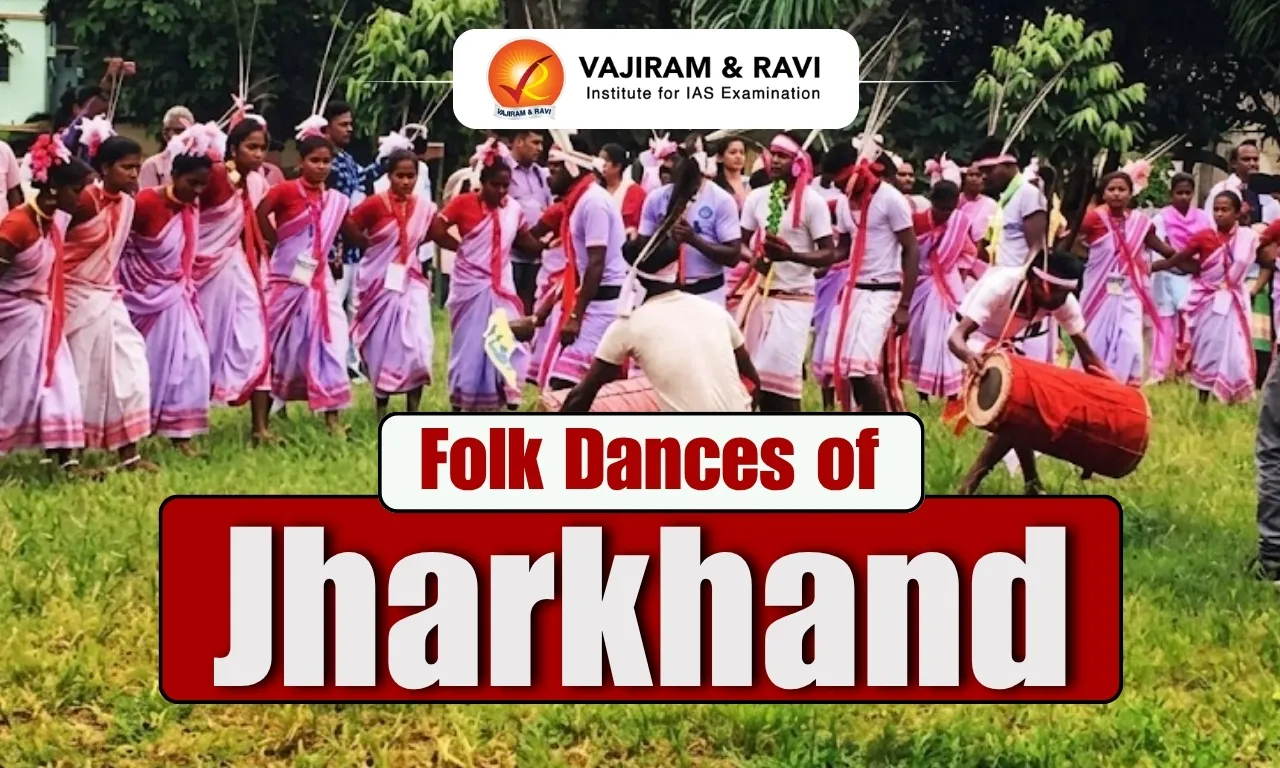
Folk Dances of Jharkhand are traditional community dances passed down through generations and closely linked with local customs, festivals and everyday life. They reflect the State’s rich tribal heritage and close relationship with nature, agriculture, seasons, community life and martial traditions. They are commonly performed during religious rituals, harvest celebrations, marriages and seasonal festivals.

Jharkhand has 32 recognised Scheduled Tribes, including the Santhal, Munda, Oraon, Ho and Bhumij. Their diverse traditions make folk dances an important part of the State’s intangible cultural heritage.

Also Read: Folk Dances of West Bengal

Major Folk Dances of Jharkhand

Major folk dances of Jharkhand include Chhau, Jhumair, Mardana Jhumair, Janani Jhumair, Karma, Sarhul, Paika, Domkach, Fagua, Firkal, Mundari, Santali and Tusu. Each is associated with particular communities, festivals, seasons or social occasions. 

Chhau

Chhau is a prominent folk dance of Jharkhand, combining martial movements, folk traditions, acrobatics and dance-drama.

  • It portrays stories from the Ramayana and Mahabharata, along with local folklore, nature and other themes.
  • It has three regional styles - Seraikela Chhau of Jharkhand, Purulia Chhau of West Bengal and Mayurbhanj Chhau of Odisha.
  • The Chhau dance tradition, covering all three regional styles, was inscribed on UNESCO’s Representative List of the Intangible Cultural Heritage of Humanity in 2010.

Jhumair

Jhumair is a popular folk dance of Jharkhand, particularly associated with the Chota Nagpur Plateau and Nagpuri cultural region. It is performed during festivals, seasonal celebrations and agricultural occasions and is also found in parts of neighbouring West Bengal and Odisha.

  • Dancers usually perform in lines or circles, often holding hands and moving rhythmically together.
  • It is accompanied by instruments such as the Mandar, Dhol, Nagara, Dhak, Bansi (flute) and Shehnai.
  • Mardana Jhumair (Mardani Jhumar) is the male form, characterised by more vigorous movements; men may wear ghungroo and sometimes carry a sword.
  • Janani Jhumair is the women-centric form, in which women perform graceful, coordinated movements while holding hands; it is traditionally associated with festivals such as Karam and Jitiya.

Overall, Jhumair reflects the importance of agriculture, seasonal celebrations and community participation in the cultural life of Jharkhand.

Karma / Karam

Karma or Karam is a traditional folk dance of Jharkhand performed during the Karam festival, which is dedicated to Karam Devta, associated with power, youth and youthfulness.

  • The Karam tree is central to the festival. Villagers traditionally bring its branches from the forest to the village after performing rituals.
  • Unmarried girls traditionally play an important role in carrying the sacred Karam branches, accompanied by songs and dancing.
  • The dance is performed around the Karam branches with energetic movements and rhythmic drum beats.
  • It reflects the close relationship between nature, community life, seasonal traditions and tribal beliefs.

Sarhul

Sarhul Sarhul is a ritual dance performed during the Sarhul festival, which marks the tribal New Year and the blossoming of the Sal tree. 

  • Women wear white sarees with red borders and dance to mark the advent of spring.
  • Sal flowers are offered to the village deity as symbols of protection and brotherhood. 
  • It is central to the Munda, Oraon and Ho communities and is closely tied to the Sarna faith of nature worship.
  • In the Kolhan region the same festival is known as "Baa Porob".

Paika

Paika is a Nagpuri ceremonial martial dance performed by men. Dancers wear ghungroo and perform holding a sword and shield, accompanied by Nagara, Dhak and Shehnai. It was traditionally performed by Paikas, a class of foot-soldiers, to welcome important guests or during religious processions, reflecting the martial history of the Chota Nagpur region.

Domkach

Domkach is a folk dance closely associated with marriage celebrations.

  • It is performed during weddings and related ceremonies.
  • Traditionally, it is performed by women from the groom’s side.
  • The performance combines singing, dancing, humour and social interaction.
  • It provides an opportunity for members of the wedding party and community to participate in the celebrations.
  • It reflects family relationships, social bonding and community participation.

Fagua

Fagua Fagua is a folk dance performed by both men and women during the festival of Fagua (Holi). It marks the arrival of spring through colourful, playful group performances.

Firkal

Firkal is a martial folk dance associated with the Bhumij community.

  • It reflects traditional hunting and combat practices.
  • Performers use traditional weapons such as bows, arrows, swords and shields.
  • The dance combines physical skill, coordinated movements and martial display.
  • It reflects the importance of hunting, self-defence and warrior traditions in the cultural history of the Bhumij community.

Mundari

Mundari is a folk dance associated with the Munda community and is particularly connected with marriage celebrations.

  • It is performed to celebrate newly married couples.
  • It forms part of the community’s social and cultural celebrations.
  • The dance expresses joy, community participation and cultural identity.
  • It also reflects the wider connection of Munda traditions with agriculture, festivals and community life.

Santali

Santhali is a traditional folk dance of the Santhal community, one of the major tribal communities of Jharkhand. It is a group dance performed mainly during festivals, social gatherings and community celebrations.

  • Both men and women participate, often dancing together in coordinated formations.
  • Dancers perform rhythmic movements accompanied by traditional songs and percussion instruments.
  • Women often dance in a line while holding hands, creating a strong sense of unity and collective participation.
  • The dance reflects the Santhal community’s close connection with nature, social life and cultural traditions.

Tusu

Tusu is a folk tradition associated with Tusu Parab, an important harvest festival.

  • It is mainly celebrated in January.
  • The tradition is particularly associated with unmarried girls.
  • It is linked with the harvest of paddy and rice.
  • A decorated pyramidal structure known as a Chaudal is prepared.
  • The Chaudal is carried in a procession accompanied by songs and dancing.
  • At the end of the celebration, it is taken towards and immersed in a water body.

Other Folk Dances of Jharkhand

Jharkhand has a much wider range of community and regional folk dances. These include Dasai, Rinjha, Kaathi, Dahar, Maghe, Nachni, Barao, Chhangu Nritya, Hunta, Lahasuya, Jhitka and Danga, and Ghora Naach, among others.

Also Read: Folk Dances of Uttar Pradesh

Cultural Significance of Folk Dances of Jharkhand

The folk dances of Jharkhand are closely linked with the State’s tribal identity, nature, agriculture, festivals and community life.

  • Nature worship: Traditions such as Sarhul and Karma reflect reverence for the Sal and Karam trees.
  • Agricultural life: Jhumair and Tusu are closely associated with harvests, seasons and the agricultural cycle.
  • Tribal identity: Dances such as Firkal, Mundari and Santali preserve the distinct cultural identity of the Bhumij, Munda and Santhal communities.
  • Martial heritage: Chhau, Paika and Firkal preserve elements of traditional warfare, hunting and martial skills.
  • Social bonding: Group dances bring communities together during festivals, weddings and social gatherings, strengthening collective participation.
  • Gender roles: Mardana and Janani Jhumair represent distinct male and female forms of community dance traditions.
  • Oral heritage: Folk songs, dances and rituals help preserve local languages, beliefs, traditional knowledge and collective memory.
  • Living heritage: Regular performances during festivals, rituals and community occasions ensure the continued transmission of these traditions across generations.

Folk Dances of Jharkhand FAQs

Q1: What are the major folk dances of Jharkhand?

Ans: Major folk dances and traditions include Chhau, Jhumair, Karma, Sarhul, Paika, Domkach, Fagua, Firkal, Mundari, Santali and Tusu, along with several regional and community-specific forms.

Q2: Which folk dance of Jharkhand has UNESCO recognition?

Ans: The Chhau dance tradition, covering the Seraikela, Purulia and Mayurbhanj styles, was inscribed on UNESCO’s Representative List of the Intangible Cultural Heritage of Humanity in 2010.

Q3: Which Jharkhand festival is associated with the Sal tree?

Ans: Sarhul is associated with the Sal tree, the arrival of spring and nature worship.

Q4: Which Jharkhand folk dance is associated with the Bhumij community?

Ans: Firkal is a martial folk dance associated with the Bhumij community and uses traditional weapons such as bows, arrows, swords and shields.

Q5: Which Jharkhand folk dance is associated with marriage?

Ans: Domkach is closely associated with marriage celebrations and is traditionally performed by women from the groom’s side.
Folk Dances of Andaman and Nicobar Islands, Name List, Significance

Folk Dances of Andaman and Nicobar Islands

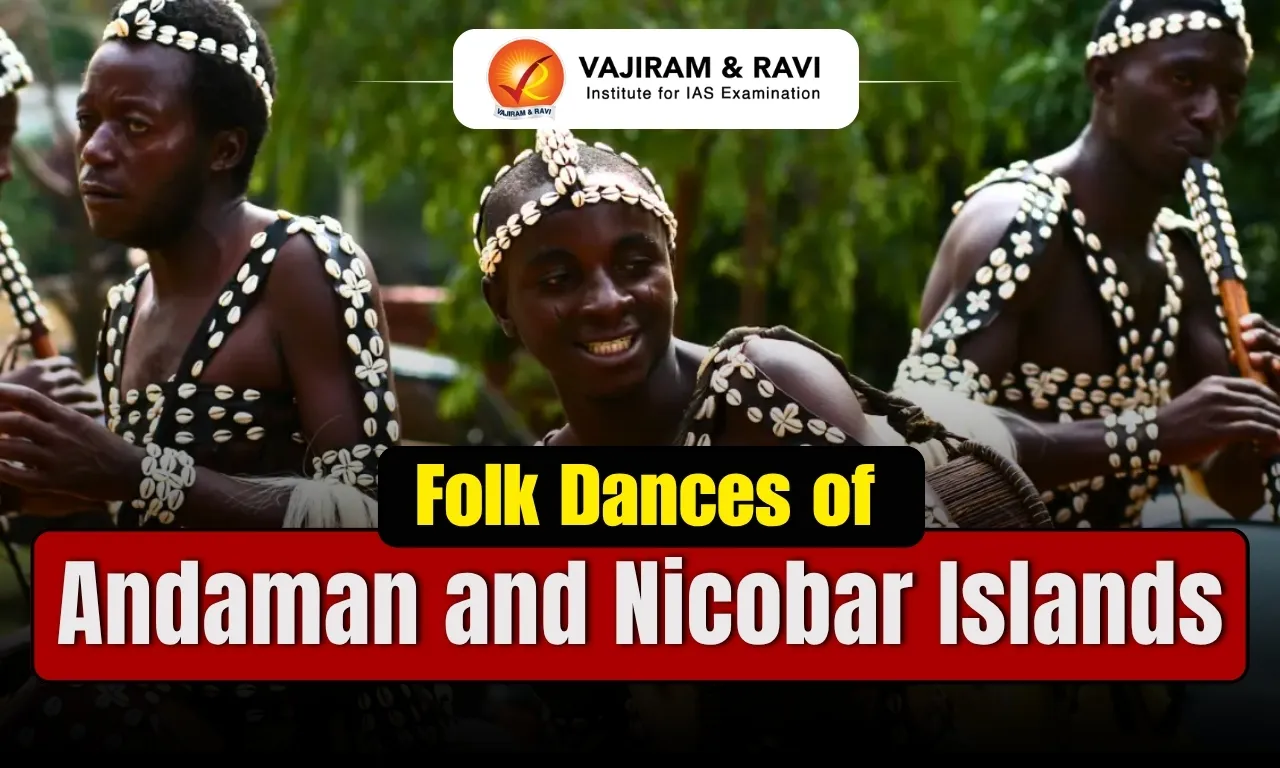
Folk dances of the Andaman and Nicobar Islands reflect the Union Territory’s distinctive tribal heritage, community life and cultural diversity. The most clearly documented traditional dance is the Nicobarese dance, while the Karen Bamboo Dance represents the cultural tradition of the Karen community settled in the Islands. Traditional song and dance also form part of the cultural life of indigenous Andamanese communities.

Major Folk Dances of Andaman and Nicobar Islands

Major folk dances and traditional dance forms of the Andaman and Nicobar Islands include Nicobarese Dance and Karen Bamboo Dance, along with traditional dance practices of indigenous communities. These forms are mainly associated with community celebrations, traditional ceremonies and cultural identity.

Nicobarese Dance

Nicobarese Dance is a traditional folk dance of the Nicobarese community, particularly associated with the Nicobar Islands.

  • It is a circular group dance performed in or near the houses of the community. 
  • A leader guides the dancers through a repetitive rhythm, while dancers move together in coordinated steps.
  • The dancers move from side to side and jump together, creating a synchronised group performance. 
  • Singing is an important part of the tradition, with participants performing together in a coordinated manner. 
  • The dance is closely connected with Nicobarese community life, traditional ceremonies and social gatherings.

Also Read: Folk Dances of Puducherry

Karen Bamboo Dance

Karen Bamboo Dance is a traditional dance associated with the Karen community, which has its roots in Myanmar and settled in the Andaman Islands during the British period.

  • The dance is performed using bamboo poles, which are rhythmically moved or clapped together.
  • Dancers move in and out between the bamboo poles, requiring coordination, agility and precise timing.
  • It represents the cultural identity and traditional heritage of the Karen community in the Islands.
  • The Karen community is particularly associated with Webi village in Mayabunder, North and Middle Andaman.

Settler-Community Dances (Island Tourism Festival Traditions)

With the arrival of migrants from mainland India - Bengali, Tamil, Telugu, Malayali and Ranchi (Oraon/Munda-origin) communities - the Islands' dance culture expanded to include forms carried over from the mainland and adapted locally:

  • Bengali settlers perform dances tied to Basanta Utsav (spring festival) traditions.
  • Tamil settlers perform Kavadi Attam, a devotional dance associated with Lord Murugan.
  • Ranchi settlers (originally brought as forest labourers from present-day Jharkhand) carry forward dance traditions with roots in Chhotanagpur folk culture.

These, along with tribal and Karen performances, are showcased together at the Island Tourism Festival, held every January in Port Blair over about ten days, and at the Subhash Mela held on Swaraj Dweep (Havelock Island).

Also Read: Folk Dances of Lakshadweep

Cultural Significance of Folk Dances of Andaman and Nicobar Islands

The folk dances of the Andaman and Nicobar Islands preserve the cultural identity of indigenous and settler communities while reflecting the Islands’ distinctive social and natural environment.

  • Community identity: Nicobarese and Karen dances help preserve the distinct cultural traditions of their communities.
  • Social bonding: Group dancing and singing strengthen community participation and social ties.
  • Traditional heritage: Dance provides a way of passing songs, movements and cultural practices from one generation to another.
  • Cultural diversity: The Islands represent a meeting point of indigenous traditions and traditions brought by migrant communities.
  • Tribal protection: The preservation of indigenous culture is closely linked with the protection of tribal communities and their traditional way of life.

Folk Dances of Andaman and Nicobar Islands FAQs

Q1: What are the major folk dances of the Andaman and Nicobar Islands?

Ans: The major folk dances of Andaman and Nicobar Islands include Nicobarese Dance and Karen Bamboo Dance, along with traditional song and dance practices of indigenous communities.

Q2: Which community performs the Nicobarese Dance?

Ans: The Nicobarese community performs the Nicobarese Dance, particularly in the Nicobar Islands.

Q3: Which community performs the Karen Bamboo Dance?

Ans: The Karen community, originally from Myanmar, performs the Karen Bamboo Dance.

Q4: Where is the Karen community mainly settled in the Andaman Islands?

Ans: The Karen community is particularly associated with Webi village in Mayabunder, North and Middle Andaman.

Q5: What is the cultural significance of folk dances of the Andaman and Nicobar Islands?

Ans: Folk dances of Andaman and Nicobar Islands help preserve tribal identity, community traditions, social bonds and cultural heritage in the Islands.

Government Notifies 11 More International Ports for E-Visa Holders

Government Notifies 11 More International Ports for E-Visa Holders

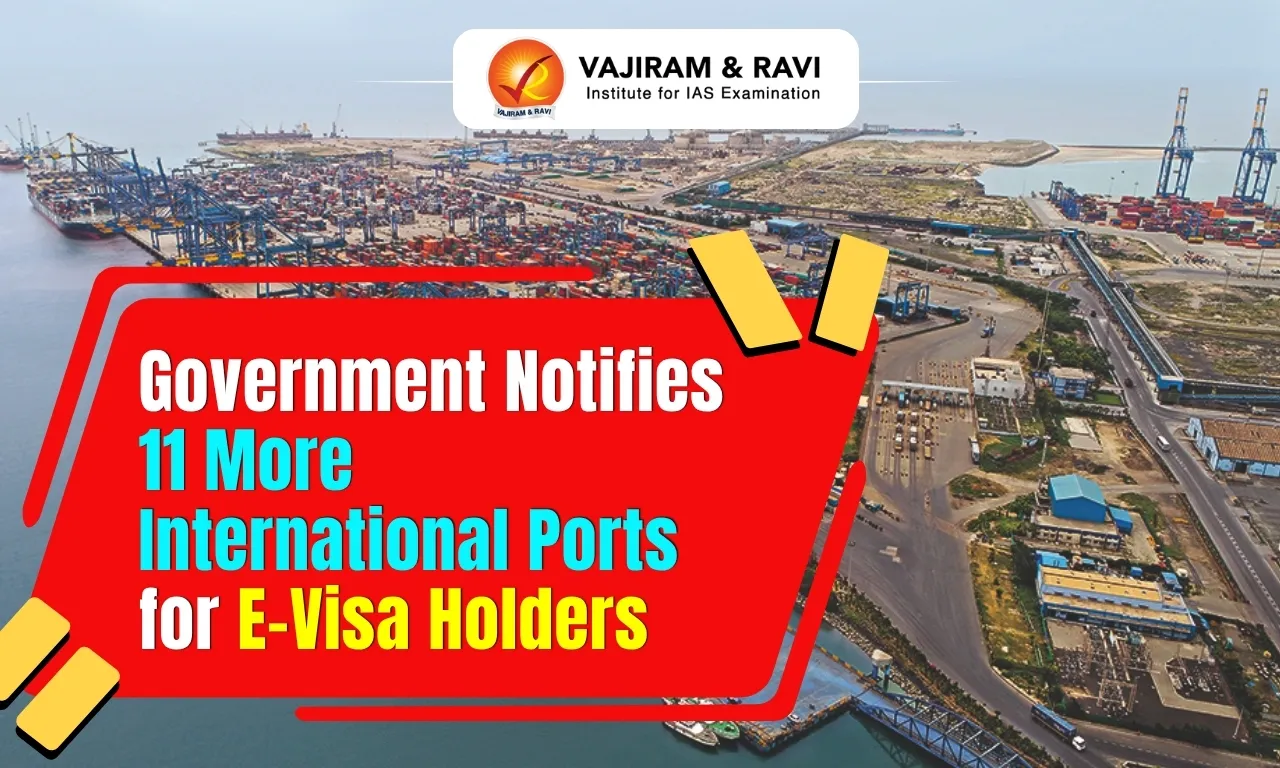
Government Notifies 11 More International Ports for E-Visa Holders, taking the total number of designated entry points to 88 and making India’s e-Visa facility more accessible to international travellers, particularly those entering through land borders.

Expansion of E-Visa Entry Points

The Ministry of Home Affairs (MHA) has added 11 international ports, including 2 airports and 9 land ports, for entry of foreign nationals holding valid Indian e-Visas.

  • The newly added airports are Bhopal and Tirupati.
  • The newly added land ports are Agartala, Darranga, Gede, Ghojadanga, Haridaspur, Jaigaon, Dawki, Moreh and Attari (Road).
  • India now has 37 airports, 38 seaports and 13 land ports where e-Visa holders can enter the country.

E-Visa Facility in India

India’s e-Visa is an electronic visa facility that allows eligible foreign nationals to obtain permission to travel to India through an online application process, reducing the need for conventional visa procedures.

India introduced the e-Visa facility along with Electronic Travel Authorisation (ETA) in 2014 to liberalise, streamline and simplify the visa regime, facilitate legitimate foreign travellers and strengthen technological infrastructure for enhanced internal security.

  • Initially available to nationals of 43 countries, the e-Visa facility is now available to citizens of 172 countries.
  • It covers 17 sub-categories, including tourist, mountaineering, business, medical, student, transit and miscellaneous visas.
  • Around 95% of e-Visa applications are processed within 72 hours, according to the government.
  • The online system makes the visa application process more convenient and reduces procedural requirements for eligible travellers.
  • Around 78% of India’s visas are now issued electronically, reflecting the growing adoption of digital visa services.

Significance of Government Notification of 11 More International Ports for E-Visa Holders

The Government notification of 11 more international ports for e-Visa holders will make the e-Visa system more accessible and useful by expanding entry options while supporting smoother immigration management.

  • Improved connectivity: The addition of nine land ports gives foreign travellers more options to enter India through land borders, particularly those travelling from neighbouring countries.
  • Greater convenience: With 37 airports, 38 seaports and 13 land ports, e-Visa holders can enter India through a wider network instead of depending mainly on major international airports.
  • Support for tourism and business: Easier and more flexible entry can facilitate international tourism, business travel and other legitimate foreign travel, improving the overall ease of travelling to India.
  • Faster digital services: Around 95% of e-Visa applications are processed within 72 hours, while the wider adoption of electronic visas reflects the use of technology to simplify and speed up visa-related services.
  • Stronger immigration security: The expansion is accompanied by efforts to strengthen technological infrastructure and immigration systems, helping balance easier entry for legitimate travellers with internal security requirements.

Government Notifies 11 More International Ports for E-Visa Holders FAQs

Q1: How many additional international ports have been notified for e-Visa holders?

Ans: The Government has notified 11 additional international ports, including 2 airports and 9 land ports, for entry by foreign nationals holding valid Indian e-Visas.

Q2: How many entry points are now available for Indian e-Visa holders?

Ans: With the latest addition, e-Visa holders can now enter India through 88 designated entry points, comprising 37 airports, 38 seaports and 13 land ports.

Q3: Which new airports have been added for e-Visa entry?

Ans: The newly added airports are Bhopal Airport and Tirupati Airport.

Q4: Which new land ports have been notified for e-Visa holders?

Ans: The nine newly notified land ports are Agartala, Darranga, Gede, Ghojadanga, Haridaspur, Jaigaon, Dawki, Moreh and Attari (Road).

Q5: How widely is the e-Visa facility available in India?

Ans: India’s e-Visa facility, introduced in 2014, is currently available to nationals of 172 countries and covers 17 sub-categories, including tourist, business, medical, student and transit visas.

Mines and Minerals (Development and Regulation) Amendment Bill, 2026

Mines and Minerals (Development and Regulation) Amendment Bill, 2026

Recently, the Mines and Minerals (Development and Regulation) Amendment Bill, 2026 was passed by both Houses of Parliament on 13 August 2026. It seeks to amend the Mines and Minerals (Development and Regulation) Act, 1957 to bring greater stability, predictability and uniformity to the fiscal regime governing the major minerals sector and encourage investment in domestic mining.

Regulation of Mines and Minerals in India 

The Mines and Minerals (Development and Regulation) Act, 1957 is the principal Central law governing the development and regulation of mines and minerals in India.

  • Under Entry 54 of the Union List, Parliament can regulate mines and mineral development in the public interest.
  • Under Entry 23 of the State List, States regulate mines and mineral development subject to the Central framework.
  • Under Entry 50 of the State List, States can impose taxes on mineral rights, subject to limitations imposed by Parliament.
  • Under Entry 49 of the State List, States have the power to tax land and buildings. Land itself is a State subject under Entry 18.
  • The Central framework primarily governs major minerals, while States have greater regulatory powers over minor minerals.

Therefore, the mining sector operates through a shared Centre-State framework, with States playing an important role in granting mineral concessions and collecting mining-related revenues.

Mines and Minerals (Development and Regulation) Amendment Bill, 2026 Need

The immediate background was the 2024 nine-judge Supreme Court judgment in Mineral Area Development Authority v. Steel Authority of India Ltd. (MADA v. SAIL), which clarified the constitutional powers of States over mineral taxation. 

The Court held that royalty is not a tax and clarified that States have the power to tax mineral rights under Entry 50 and mineral-bearing land under Entry 49. However, Parliament can impose limitations on taxation of mineral rights under Entry 50; this power does not extend to State taxation of land under Entry 49.

This created the constitutional backdrop for the 2026 Bill. The government argued that, in the absence of reasonable limits, States could impose multiple and uneven levies, increasing the cost and uncertainty of mining operations. The key concerns in the existing structure were:

  • Multiple levies: Mining companies pay royalty, auction premium, District Mineral Foundation (DMF) contributions, Goods and Services Tax (GST), transit fees and other charges, increasing the overall cost of mining.
  • Uneven State taxation: Different States impose different taxes, cesses, fees and charges, creating variations in the cost of mineral production and transportation.
  • Investment uncertainty: New or retrospective levies can change the financial viability of a mining project even after substantial investment has been made.
  • Higher domestic costs: A high and unpredictable fiscal burden can make Indian minerals more expensive than imported minerals, encouraging industries to rely on imports.
  • Mineral import dependence: India imported minerals worth about ₹10.13 lakh crore in FY 2025-26, highlighting the need to strengthen domestic mineral production for economic and strategic security.

The government therefore sought to bring greater predictability to the fiscal regime while retaining the States' role in mineral administration and revenue collection. Thus, the central objective of the Bill is to prevent excessive and unpredictable levies from making domestic mining uncompetitive, while maintaining a balance between the Centre's regulatory role and the States' constitutional and revenue interests.

Mines and Minerals (Development and Regulation) Amendment Bill, 2026: Key Features and How It Addresses the Problem

The Mines and Minerals (Development and Regulation) Amendment Bill, 2026 seeks to make mineral taxation more predictable and uniform by placing reasonable conditions on State-level levies while strengthening the Central regulatory framework. 

  • Regulation of mineral-bearing land: The Bill expands the Central Government’s regulatory role to mineral-bearing land, defined according to parameters prescribed by the Centre. This seeks to create a common framework for areas where mineral resources are found.
  • Limits on State levies: States cannot impose specified taxes, cesses or other levies on mineral rights or mineral-bearing land except according to conditions or restrictions prescribed by the Central Government. This directly addresses the problem of widely varying State-level levies and provides greater certainty to mining investors. 
  • Covers different bases of taxation: The restriction applies whether a levy is calculated on mineral quantity, mineral value, royalty or otherwise, reducing the possibility of multiple forms of taxation being imposed on the same mineral activity.
  • Invalidation of unpaid past dues: Unpaid or unrecovered dues relating to specified State levies imposed before the amendment will be treated as invalid. This seeks to reduce uncertainty arising from past liabilities and ongoing disputes.
  • No refund of amounts already paid: Amounts that have already been deposited or recovered will not be refunded. Thus, the Bill distinguishes between unresolved past liabilities and amounts already collected.
  • Greater fiscal predictability: By placing future State levies within a Central framework, the Bill aims to reduce sudden and unpredictable changes in mining costs, thereby improving the viability of long-term mining projects.
  • Investment and domestic production: More predictable costs are expected to encourage exploration, mining investment and domestic mineral production, helping reduce dependence on imports and strengthen mineral security.
  • States retain a major revenue role: The government has clarified that the Bill does not take away State control over land and minerals or their taxation of minor minerals. Around 90% of mining-related taxes and statutory payments currently accrue to States, and this broad arrangement is intended to continue.

Mines and Minerals (Development and Regulation) Amendment Bill, 2026 Significance 

The amendment is important for reducing the cost of domestic minerals and strengthening India's mineral security.

  • Boosts investment: Greater fiscal certainty can encourage long-term investment in mining.
  • Reduces import dependence: Lower and more predictable domestic costs can make Indian minerals more competitive with imports.
  • Strengthens Atmanirbhar Bharat: Greater domestic mineral production can reduce dependence on external supplies.
  • Supports Viksit Bharat 2047: Minerals are essential for infrastructure, manufacturing, energy and emerging technologies.
  • Supports critical mineral security: A stronger domestic mining ecosystem can help secure minerals needed for clean energy, electronics and advanced industries.
  • Promotes national market integration: Greater uniformity in mineral-related taxation can reduce regional distortions and improve the efficiency of the mineral market.

Mines and Minerals (Development and Regulation) Amendment Bill, 2026 Key Concerns

The Mines and Minerals (Development and Regulation) Amendment Bill, 2026 also raises significant constitutional and federalism concerns.

  • State autonomy: Restricting State taxation powers may weaken the fiscal space available to mineral-rich States.
  • Land as a State subject: Parliament's power over mineral development may not automatically extend to regulating taxation of mineral-bearing land under Entry 49 of the State List.
  • Retrospective provisions: Invalidating unpaid past dues could raise constitutional concerns, particularly where such liabilities arose under the existing legal framework.
  • Judicial override concerns: The Bill may be questioned if its retrospective provisions effectively neutralise the consequences of the Supreme Court's 2024 judgment without changing the legal basis of that judgment.
  • Article 14 concern: Companies that have already paid their dues will not receive refunds, while those with unpaid dues may receive relief, potentially raising concerns of unequal treatment.
  • Excessive delegation: The Bill leaves the Centre significant discretion to prescribe the conditions under which States may impose certain levies, raising questions about excessive delegation of legislative power.

Way Forward

The Mines and Minerals (Development and Regulation) Amendment Bill, 2026 can achieve its objectives if fiscal rationalisation is accompanied by constitutional clarity and cooperative federalism.

  • Consult States: Major restrictions on State taxation should be implemented through sustained Centre-State consultation.
  • Provide clear rules: The Central Government should prescribe transparent and predictable conditions rather than leave excessive discretion to the executive.
  • Respect judicial principles: Implementation should remain consistent with constitutional limits and Supreme Court judgments.
  • Protect State revenues: Any rationalisation should ensure that mineral-rich States continue to receive adequate revenues.
  • Promote sustainable mining: Greater investment should be accompanied by environmental safeguards, rehabilitation and benefit-sharing with mining-affected communities.
  • Strengthen domestic production: Fiscal stability should be combined with faster exploration, technology adoption and development of critical mineral resources.

Mines and Minerals (Development and Regulation) Amendment Bill, 2026 FAQs

Q1: What is the Mines and Minerals (Development and Regulation) Amendment Bill, 2026?

Ans: Mines and Minerals (Development and Regulation) Amendment Bill, 2026 amends the Mines and Minerals (Development and Regulation) Act, 1957 to bring greater stability and predictability to the fiscal regime of the major minerals sector.

Q2: What problem does the Mines and Minerals (Development and Regulation) Amendment Bill, 2026 seek to address?

Ans: Mines and Minerals (Development and Regulation) Amendment Bill, 2026 seeks to address multiple, uneven and unpredictable State-level levies that can increase mining costs and discourage long-term investment.

Q3: What are the major changes proposed by the Mines and Minerals (Development and Regulation) Amendment Bill, 2026?

Ans: Mines and Minerals (Development and Regulation) Amendment Bill, 2026 gives the Centre a role in regulating mineral-bearing land and places conditions on specified State taxes, cesses and other levies on mineral rights and mineral-bearing land.

Q4: Does the Mines and Minerals (Development and Regulation) Amendment Bill, 2026 affect State revenues?

Ans: The government has clarified that States will continue to have their constitutional role in land and mineral administration, taxation of minor minerals and collection of major mining-related revenues.

Q5: How will the Mines and Minerals (Development and Regulation) Amendment Bill, 2026 benefit India?

Ans: Mines and Minerals (Development and Regulation) Amendment Bill, 2026 aims to improve fiscal certainty, mining investment and domestic mineral production, reduce import dependence and strengthen India’s mineral security.

UPSC Daily Quiz 17 August 2026

UPSC Daily Quiz

[WpProQuiz 233]

UPSC Daily Quiz FAQs

Q1: What is the Daily UPSC Quiz?

Ans: The Daily UPSC Quiz is a set of practice questions based on current affairs, static subjects, and PYQs that help aspirants enhance retention and test conceptual clarity regularly.

Q2: How is the Daily Quiz useful for UPSC preparation?

Ans: Daily quizzes support learning, help in revision, improve time management, and boost accuracy for both UPSC Prelims and Mains through consistent practice.

Q3: Are the quiz questions based on the UPSC syllabus?

Ans: Yes, all questions are aligned with the UPSC Syllabus 2025, covering key areas like Polity, Economy, Environment, History, Geography, and Current Affairs.

Q4: Are solutions and explanations provided with the quiz?

Ans: Yes, each quiz includes detailed explanations and source references to enhance conceptual understanding and enable self-assessment.

Q5: Is the Daily UPSC Quiz suitable for both Prelims and Mains?

Ans: Primarily focused on Prelims (MCQ format), but it also indirectly helps in Mains by strengthening subject knowledge and factual clarity.

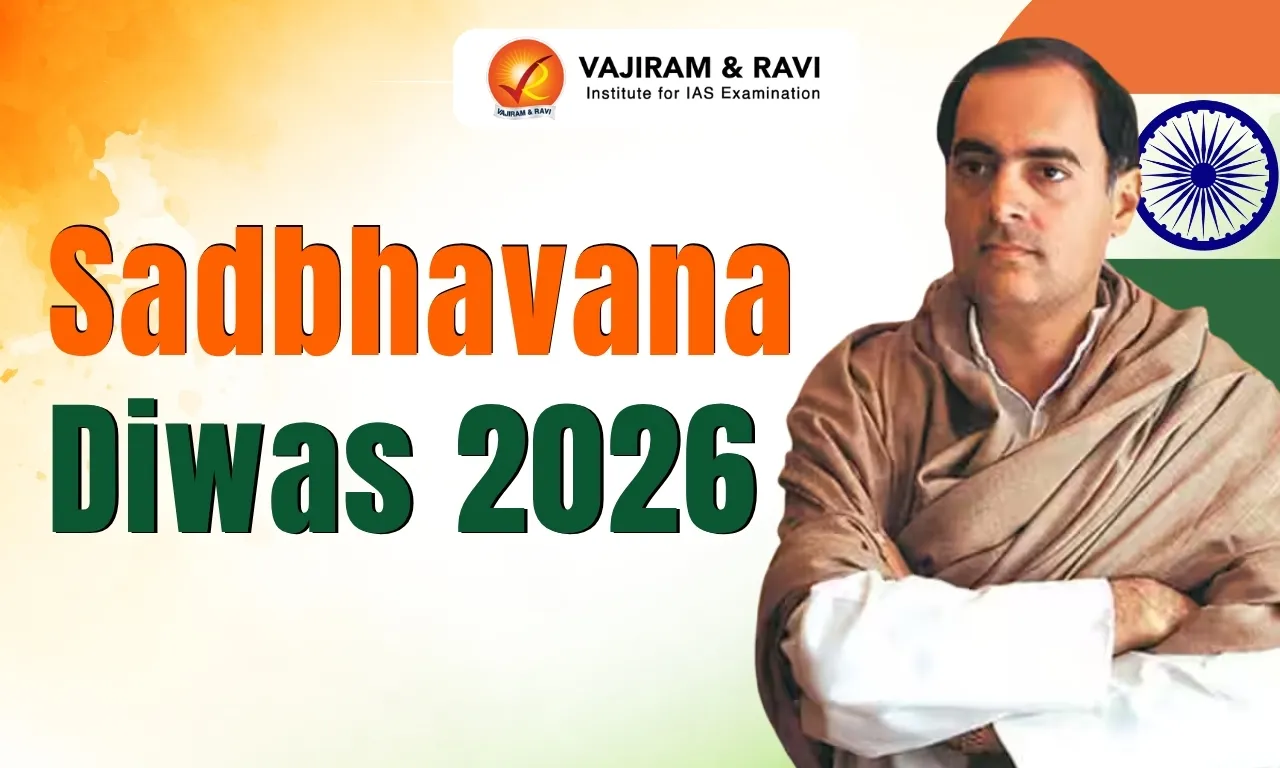
Sadbhavana Diwas 2026, Pledge, Theme, Rajiv Gandhi Biography

Sadbhavana Diwas 2026

Sadbhavana Diwas 2026 is also known as Harmony Day 2026 or Communal Harmony Day 2026. It will be observed on 20 August 2026 to mark the birth anniversary of former Prime Minister Rajiv Gandhi. The word ‘Sadbhavana’ means goodwill and harmony. The day promotes national integration, communal harmony, peace and emotional unity among citizens. It also encourages people to resolve differences through dialogue and constitutional means without violence.

Why is Sadbhavana Diwas 2026 Celebrated?

Sadbhavana Diwas 2026 is celebrated to promote goodwill, national unity and peaceful coexistence among people belonging to different religions, languages, regions and communities. The observance honours Rajiv Gandhi’s Birth Anniversary 2026. It also highlights the importance of social harmony in a diverse country. Cultural programmes, contests, public activities and environmental initiatives such as sapling plantation are organised in different places.

Sadbhavana Diwas 2026 Theme

The Sadbhavana Diwas 2026 Theme has not been officially announced yet. The observance will continue to focus on the core values of national integration, communal harmony, peace, goodwill and emotional unity among people of different religions, languages, regions and cultures. Any official theme for National Harmony Day 2026 will be updated after its formal announcement.

Sadbhavana Diwas 2026 Pledge

The Sadbhavana Diwas Pledge is taken by citizens, government employees and participants in Sadbhavana Diwas 2026 observances to reaffirm their commitment to emotional unity, national harmony and peaceful resolution of differences. The pledge promotes respect for people of all castes, regions, religions and languages and rejects violence as a means of resolving differences.

“I take this solemn pledge that I will work for the emotional oneness and harmony of all the people of India regardless of caste, region, religion, or language. I further pledge that I shall resolve all differences among us through dialogue and constitutional means without resorting to violence.”

Rajiv Gandhi Birth Anniversary 2026

Rajiv Gandhi Birth Anniversary 2026 will be observed on 20 August, marking his 82nd birth anniversary. Rajiv Gandhi was born on 20 August 1944. He became Prime Minister in 1984 after the assassination of his mother, Indira Gandhi. He served as Prime Minister from 1984 to 1989. At the age of 40, he became the Youngest Prime Minister of India.

Rajiv Gandhi Biography

Rajiv Gandhi played an important role in India's political and technological development during the 1980s. His tenure included initiatives in education, telecommunications and rural development. Key facts about his life and public career are given below.

  • Birth: Rajiv Gandhi was born on 20 August 1944. His birth anniversary is observed annually as Sadbhavana Diwas to promote goodwill, national integration and communal harmony.
  • Family: Rajiv Gandhi was the son of Indira Gandhi and the grandson of Pandit Jawaharlal Nehru.
  • Prime Minister: Rajiv Gandhi became Prime Minister in 1984 following the assassination of Indira Gandhi. He remained in office until 1989 and became India’s youngest Prime Minister at 40.
  • Education Policy: In 1986, Rajiv Gandhi’s government introduced the National Policy on Education. It aimed to reform education and improve the quality and reach of higher education institutions.
  • Rajiv Gandhi Death: Rajiv Gandhi was assassinated by a suicide bomber associated with the LTTE while campaigning during the 1991 elections.
  • Awards and Honors: He was posthumously awarded the Bharat Ratna, India’s highest civilian award.

Contributions of Rajiv Gandhi

  • Jawahar Navodaya Vidyalayas: The Jawahar Navodaya Vidyalaya System was established in 1986. It provided free schooling from Class 6 to Class 12 and focused particularly on students from rural areas.
  • Telecommunications: MTNL was established in 1986 during Rajiv Gandhi’s tenure. Public Call Offices, or PCOs, were also promoted to expand access to telephone services, including in rural regions.
  • Modernisation: Rajiv Gandhi supported greater use of modern technology and promoted a forward looking approach to national development. His period in office is associated with efforts to expand technology and communications.

Rajiv Gandhi National Sadbhavana Award 2026

The Rajiv Gandhi National Sadbhavana Award 2026 is awarded on the occasion of the Birth Anniversary of Rajiv Gandhi. It recognises contributions towards peace, communal harmony and national integration. The award was instituted by the Congress in 1992, one year after Rajiv Gandhi’s death.

  • 2024 - Geeta Reddy: Geeta Reddy, a former member of the Telangana Legislative Assembly, was listed as the recipient of the award for 2024.
  • 2023 - Md. Irfan Khan: Md. Irfan Khan received recognition in 2023 for using technology to support education, particularly in remote areas.
  • 2020-2021 - Banasthali Vidyapeeth: Banasthali Vidyapeeth, an educational institution for women in Rajasthan, was recognised for its contribution to women’s education and empowerment.
  • 2018 - Gopalkrishna Gandhi: Gopalkrishna Gandhi, former Governor of West Bengal, was recognised for promoting communal harmony, peace and goodwill.
  • 2017 - M.Gopala Krishna: M.Gopala Krishna, a retired IAS Officer, was listed among the recipients for 2017.
  • 2017 - Md. Azharuddin: Md. Azharuddin, former cricketer, was also listed as a recipient for 2017 in the provided award information.
  • 2016 - Shubha Mudgal: Shubha Mudgal, singer, was recognised with the award in 2016 for her contribution to Indian cultural life.
  • 2014 - Muzaffar Ali: Muzaffar Ali, film maker, was listed as the recipient for 2014.
  • 2013 - Amjad Ali Khan: Amjad Ali Khan, musician, was recognised in 2013. His inclusion reflects the award’s association with cultural contributions and social goodwill.

Sadbhavana Diwas 2026 FAQs

Q1: When is Sadbhavana Diwas 2026 celebrated?

Ans: Sadbhavana Diwas 2026 will be observed on 20 August 2026 to mark the birth anniversary of former Prime Minister Rajiv Gandhi.

Q2: Why is Sadbhavana Diwas celebrated?

Ans: Sadbhavana Diwas is celebrated to promote national integration, communal harmony, peace, goodwill and emotional unity among people of different religions, languages and regions.

Q3: What is the theme of Sadbhavana Diwas 2026?

Ans: The central theme of Sadbhavana Diwas 2026 focuses on national unity, social goodwill and communal harmony among people from diverse communities.

Q4: Who started Sadbhavana Diwas?

Ans: Sadbhavana Diwas was observed after the death of Rajiv Gandhi in 1991 to commemorate his birth anniversary and promote his message of national unity and harmony.

Q5: What is the Sadbhavana Diwas Pledge?

Ans: The Sadbhavana Diwas Pledge commits citizens to emotional unity and harmony and encourages resolving differences through dialogue and constitutional means without violence.

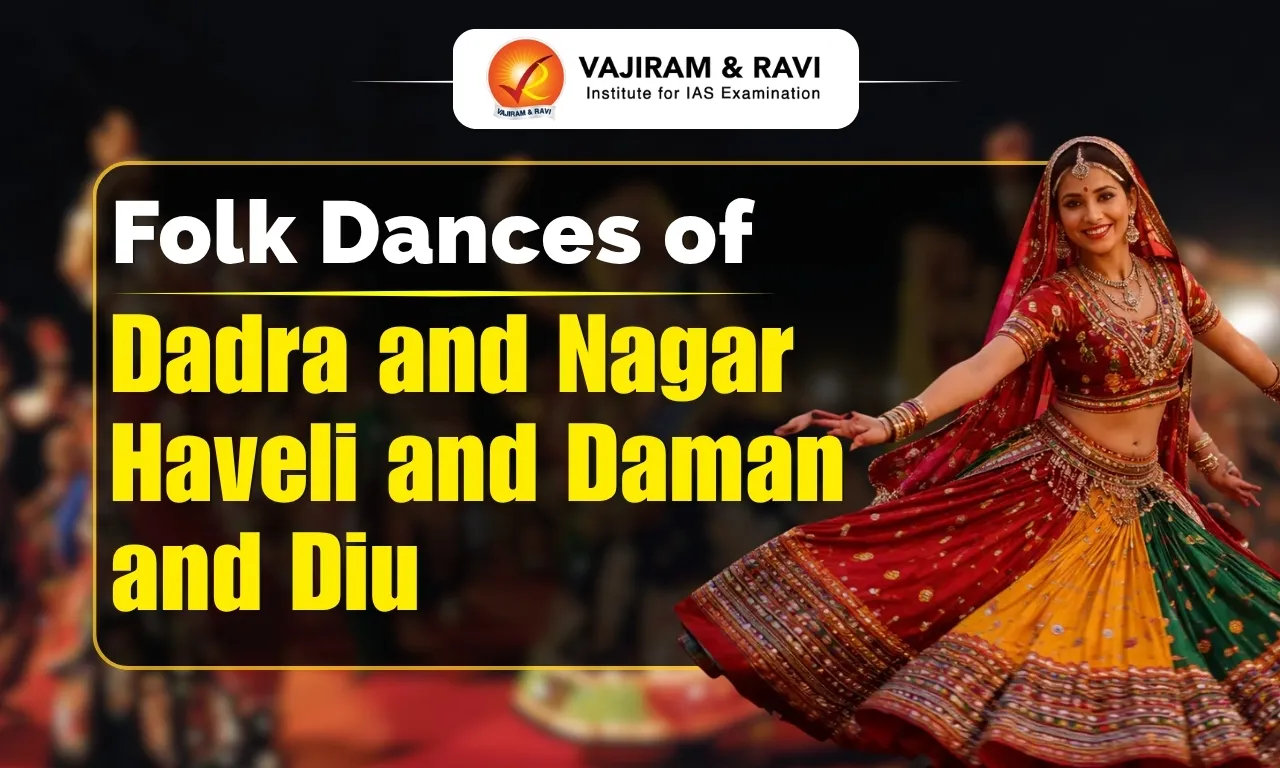
Folk Dances of Dadra and Nagar Haveli and Daman and Diu, List

Folk Dances of Dadra and Nagar Haveli and Daman and Diu

Folk Dances of Dadra and Nagar Haveli and Daman and Diu reflect the cultural traditions of tribal and coastal communities. Warli, Kokna, Dhodia, Kathodi, Mahadev Koli and Son Koli communities preserve these traditions through group dances, folk songs and traditional instruments. Performances are linked with harvests, weddings, festivals, religious rituals and community gatherings. The dances also express social unity, nature based traditions and local cultural identity.

Folk Dances of Dadra and Nagar Haveli and Daman and Diu

Folk Dances of Dadra and Nagar Haveli and Daman and Diu include tribal group dances and traditional performances of Diu. They are generally performed during important social and religious occasions. Colourful clothing, traditional ornaments, drums, wind instruments and folk songs add to their cultural character. Tarpa, Bhawada, Dhol and Tur and Thali are major dances of Dadra and Nagar Haveli. Mando is an important song and dance tradition of Diu.

Folk Dances of Dadra and Nagar Haveli and Daman and Diu List

The following Folk Dances of Dadra and Nagar Haveli and Daman and Diu are associated with specific tribes, festivals, seasons and community occasions across the Union Territory.

  • Tarpa Dance: Warli tribal communities perform this group dance during the post monsoon harvest season. Dancers move in a circle around the Tarpa, a traditional wind instrument.
  • Bhawada Dance: Kokna and Warli communities perform Bhawada during Holi. It combines dance, music and community entertainment as part of traditional festive celebrations.
  • Bohada Dance: Kokna, Warli and Mahadeo Koli communities associate Bohada with Chaitra Purnima. Traditional masks and community performance form important elements of this folk tradition.
  • Gherria Dance: Warli and Kokna men perform Gherria during the Holi week. Its traditional period extends from Phalgun Purnima to Rang Panchami.
  • Dhol Dance: Warli, Kokna, Dhodia and Kathodi communities perform Dhol Dance during weddings. Traditional drums provide the rhythmic accompaniment to the celebration.
  • Tur and Thali Dance: The Dhodia community performs this dance during Diwali. The tradition forms part of the community's festive cultural practices.
  • Warli Tribal Dance: The Warli community performs this traditional dance during marriage rituals. It reflects the role of folk performance in important social ceremonies.
  • Kokna Folk Dance: The Kokna community performs this dance during Akhatrij, also known as Akshay Tritiya. It forms part of seasonal community celebrations.
  • Dhodia Community Dance: The Dhodia community performs this dance during Dhodia New Year, known as Diwaso. It reflects the community's distinctive cultural identity.
  • Kathodi Tribal Dance: The Kathodi or Katkari community performs this traditional dance during Diwali as part of its festive celebrations.
  • Koli Folk Dance: Mahadev Koli and Son Koli communities perform this dance during Narali Purnima, also associated with Coconut Day celebrations.
  • Mando Dance: Diu is known for Mando, a song and dance performance associated with love and romance. It uses the ghumol percussion instrument and sometimes a violin.
  • Verdigao and Vira Dances: These traditional folk dances of Diu involve both younger and older community members. They help preserve local cultural traditions across generations.

Folk Dances of Dadra and Nagar Haveli and Daman and Diu FAQs

Q1: What are the major Folk Dances of Dadra and Nagar Haveli and Daman and Diu?

Ans: The major folk dances include Tarpa Dance, Bhawada Dance, Dhol Dance, Tur and Thali Dance, Mando, Verdigao and Vira dances.

Q2: Which tribe performs the Tarpa Folk Dance of Dadra and Nagar Haveli and Daman and Diu?

Ans: The Warli tribe mainly performs the Tarpa Dance during the post monsoon harvest season around the traditional Tarpa wind instrument.

Q3: Which folk dance is associated with Diu?

Ans: Mando is an important folk song and dance tradition of Diu. It expresses themes of love and romance and is accompanied by ghumol and sometimes a violin.

Q4: Which Folk Dances of Dadra and Nagar Haveli and Daman and Diu are performed during Holi?

Ans: Bhawada Dance is performed by Kokna and Warli communities during Holi. Gherria Dance is performed by Warli and Kokna men during the Holi week.

Q5: What is the cultural importance of folk dances in Dadra and Nagar Haveli and Daman and Diu?

Ans: These dances preserve tribal traditions and community identity. They are performed during harvests, weddings, festivals, religious rituals and other important social occasions.

Subhas Chandra Bose Death Anniversary 2026, Biography, Death

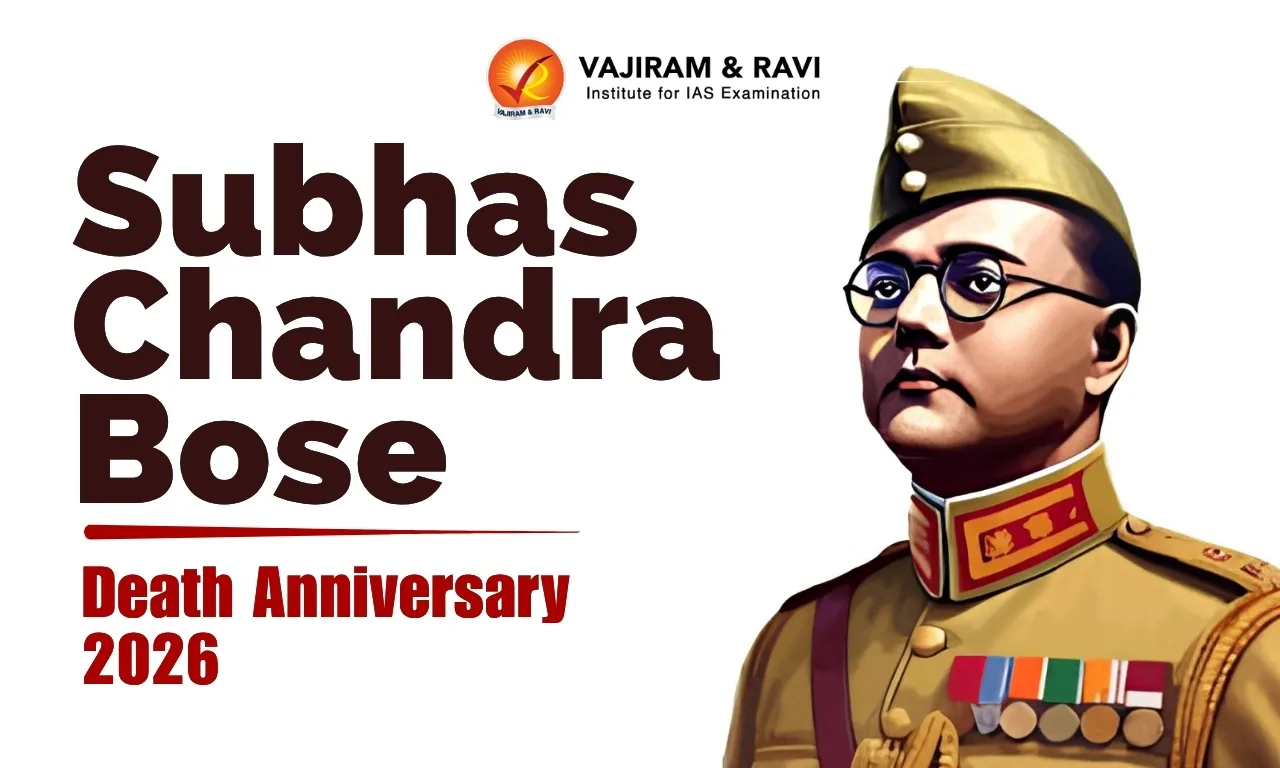
Subhas Chandra Bose Death Anniversary 2026

Subhas Chandra Bose Death Anniversary 2026 will be observed on 18 August 2026. It marks 81 years since the reported death of Netaji Subhas Chandra Bose in 1945. Bose was a prominent leader of the Indian Independence Movement. He advocated a more aggressive struggle against British rule. His leadership of the Indian National Army and formation of the Azad Hind Government remain important parts of his historical legacy.

Subhas Chandra Bose Death Anniversary 2026

Netaji Subhas Chandra Bose Death Anniversary 2026 recalls the life, political work, military efforts and unresolved questions surrounding Netaji’s reported death in 1945. Subhas Chandra Bose’ Death Anniversary is observed on 18 August annually. Bose reportedly died on 18 August 1945 after a plane crash in Taihoku City, Formosa, now Taipei, Taiwan. The question of his exact death circumstances has remained controversial because different investigations reached different conclusions.

Netaji Subhas Chandra Bose Biography

Netaji Subhas Chandra Bose was born on 23 January 1897 in Cuttack, Orissa Division, Bengal Province, to Prabhavati Dutt Bose and Janakinath Bose.

  • Education: Bose studied at Presidency College, Calcutta, but was expelled in 1916 for nationalist activities. He later graduated from Scottish Church College in 1919 and studied at the University of Cambridge.
  • Popular Name: Subhas Chandra Bose was popularly known as Netaji. The term means “Respected Leader” and became closely associated with his leadership of the Indian independence struggle.
  • Indian Civil Services: Bose cleared the Indian Civil Services examination in 1920. He withdrew his candidacy in 1921 because he wanted to participate directly in India’s freedom movement.
  • Political Mentor: Chittaranjan Das became an important political mentor for Bose. He worked as the editor of Das’s newspaper, Forward, and later started his own newspaper, Swaraj.

Subhas Chandra Bose Contributions

Netaji Subhas Chandra Bose made important contributions through political mobilisation, international diplomacy, military organisation and his demand for complete independence from British rule.

  • Complete Independence: Bose supported unqualified swaraj. He opposed proposals favouring dominion status and advocated complete freedom from British rule.
  • Congress Leadership: Bose joined the Indian National Congress and became president in 1938. He was re-elected in 1939 after defeating Pattabhi Sitaramayya, Gandhi’s preferred candidate.
  • Forward Bloc: Bose resigned as Congress president because of ideological differences with Gandhi and other leaders. He founded the Forward Bloc to consolidate left-wing political forces.
  • Congress Activities: He participated in the Non-Cooperation Movement and the Salt Satyagraha of 1930. He opposed the suspension of the Civil Disobedience Movement and the Gandhi-Irwin Pact in 1931.
  • Indian National Army: Bose assumed leadership of the Indian National Army in 1943. The INA was also known as the Azad Hind Fauj and included Indian prisoners of war and civilians from Southeast Asia.
  • Azad Hind Government: On 21 October 1943, Bose announced the formation of the provisional independent Indian government. He used the INA as an armed force to pursue Indian independence.
  • Military Campaign: The INA advanced with Japanese forces towards India. It reached the Imphal and Kohima region in 1944 but was eventually defeated and forced to retreat after lacking adequate air support.
  • National Planning: As Congress president in 1938, Bose established a national planning committee. It promoted broad industrialisation as part of his vision for independent India.
  • Escape from India: On 26 January 1941, Bose escaped from his residence in Calcutta while under surveillance. He travelled through Kabul and Moscow before reaching Germany in April 1941.
  • Azad Hind Radio: From Germany, Bose used Azad Hind Radio to spread messages about India’s freedom struggle. Broadcasts were made in English, Hindi, Bengali, Tamil, Telugu, Gujarati and Pashto.
  • Delhi Chalo: After reaching Japanese-controlled Singapore in 1943, Bose gave the famous call “Delhi Chalo”. Under his leadership, the INA’s strength grew to about 50,000.

Netaji Subhas Chandra Bose Death

The death of Netaji Subhas Chandra Bose remains disputed, with official inquiries and historical investigations producing different conclusions about the reported plane crash.

  • Bose is reported to have suffered severe burn injuries after a plane crash on 18 August 1945. He reportedly died in a Japanese hospital in what is now Taiwan.
  • His ashes are believed to have been preserved at Renkōji, a Buddhist temple in Tokyo. Their identity has remained a subject of continuing debate.
  • The Government of India conducted several inquiries into Bose’s disappearance and reported death. Most concluded that he died in a plane crash.
  • The Justice Mukherjee Commission of Inquiry, which submitted its findings in 2005, concluded that Bose was dead but did not die in a plane crash. It also concluded that the ashes at Renkōji were not his.
  • The Government of India rejected the commission’s conclusions. The conflicting findings have kept the circumstances of Bose’s death unresolved and generated continued historical debate.

Subhas Chandra Bose Death Anniversary 2026 FAQs

Q1: When is Subhas Chandra Bose Death Anniversary 2026?

Ans: Subhas Chandra Bose Death Anniversary 2026 will be observed on 18 August 2026. It marks 81 years since his reported death in 1945.

Q2: How did Subhas Chandra Bose die?

Ans: Subhas Chandra Bose reportedly died on 18 August 1945 from burn injuries suffered in a plane crash at Taihoku City, Formosa, now Taipei, Taiwan.

Q3: Why is Subhas Chandra Bose’s death controversial?

Ans: His death remains controversial because different investigations reached different conclusions about the reported plane crash and the identity of the ashes preserved at Renkōji Temple in Tokyo.

Q4: What was Subhas Chandra Bose’s role in the Indian National Army?

Ans: Subhas Chandra Bose led the Indian National Army (INA) from 1943 and organised it as an armed force to fight British rule with the aim of achieving India’s independence.

Q5: What is Subhas Chandra Bose best known for?

Ans: Subhas Chandra Bose is best known for leading the Indian National Army, forming the Azad Hind Government in 1943 and advocating complete independence from British rule.

Folk Dances of Ladakh, Major Dances, Culture & Significance

Folk Dances of Ladakh

The Folk Dances of Ladakh are an important part of the region’s rich cultural heritage and traditional way of life. They combine music, rhythmic movements, traditional costumes and community participation, reflecting the diverse cultural influences of the Himalayan region. These dances are performed on different festivals, celebrations and social occasions, helping preserve the unique cultural identity of Ladakh. 

Traditional Dance Forms and Cultural Traditions of Ladakh

  • Ladakh has a wide variety of traditional dances and many of them are performed during religious festivals, weddings, harvest celebrations and other community occasions.
  • Traditional Ladakhi dances are generally accompanied by instruments such as the Dhaman (drum) and Surna (oboe), which provide rhythm and support the coordinated movements of the performers.
  • Some dances are traditionally performed mainly by women, while others are performed by men or by both men and women, reflecting the diverse customs of different communities.
  • Many performances begin with a gesture of respect towards the Three Jewels of Buddhism - Buddha, Dharma and Sangha, highlighting the spiritual influence on Ladakhi cultural traditions.

Major Folk Dances of Ladakh

The Major Folk Dances of Ladakh represent the region’s rich cultural traditions, social customs and artistic heritage. Each dance has its own style, purpose and traditional significance and many are performed during festivals, weddings, harvest celebrations and other community occasions. The major Folk Dances of Ladakh discussed below highlight the diverse cultural expressions and traditions of the region. 

1. Shondol Dance of Ladakh

  • Shondol is traditionally associated with the royal culture of Ladakh and was historically performed by selected women to entertain and honour the king and his court.
  • The dance is known for its graceful movements, slow rhythm and elegant style, with performers dressed in traditional Ladakhi attire.
  • Over time, Shondol has become an important symbol of Ladakhi cultural heritage and is performed during cultural celebrations and festivals.
  • The dance reflects the region’s royal traditions, artistic expression and community spirit.

2. Jabro Dance of Ladakh

  • Jabro is a traditional dance associated particularly with the Changpa nomadic community of Changthang and has strong influences from Tibetan culture.
  • Both men and women participate in the dance, usually forming a line or semi-circle while holding hands and moving together to traditional music.
  • The dance is accompanied by instruments such as the Dram-nyan (lute) and folk songs, creating a lively yet coordinated performance.
  • Jabro is performed during festivals, celebrations and social occasions and reflects the close connection between Ladakhi communities and their cultural traditions.

3. Spao Dance of Ladakh

  • Spao, also known as the Warrior Dance, represents the courage and heroic qualities of warriors in Ladakhi folklore.
  • The dance is closely linked with the legendary King Kesar, whose stories have been passed down through generations in Ladakh and other parts of Central Asia.
  • Performers use traditional props such as swords, bows, arrows and quivers while enacting scenes connected with the heroic exploits of warriors.
  • Through energetic movements and dramatic presentation, Spao preserves important folk stories, traditions and ideas of bravery.

4. Kathok Chenmo Dance of Ladakh

  • Kathok Chenmo was traditionally a royal dance performed in honour of the kings of Ladakh and their families.
  • The name is associated with the large balcony or roof of Leh Palace, reflecting its connection with Ladakh’s royal heritage.
  • During the period of the Ladakhi kings, performers were specially selected and patronised by the royal court.
  • The dance represents the royal traditions and cultural history of Ladakh and remains an important part of the region’s traditional performing arts.

5. Mentok Stanmo Dance of Ladakh

  • Mentok Stanmo is particularly associated with the Dha-Hanu region and is performed to celebrate the blooming of flowers in the valley.
  • The dance is connected with the local community’s relationship with nature, agriculture and seasonal celebrations.
  • During the performance, participants traditionally offer the first flowers or harvest to the Buddha, local gods and deities as an expression of gratitude.
  • The colourful presentation makes Mentok Stanmo an important example of how nature and traditional beliefs are reflected in Ladakhi folk culture.

6. Koshan Dance of Ladakh

  • Koshan is a traditional community dance associated with horse-racing events and festivals in Leh.
  • It is performed as part of celebrations surrounding the region’s long-standing horse-riding and equestrian traditions.
  • Dancers wear colourful traditional clothes, brocade silk and jewellery, giving the performance a rich and festive appearance.
  • The dance adds to the excitement of community gatherings and highlights the importance of horses and traditional sporting culture in Ladakh.

7. Nyopa Dance of Ladakh

  • Nyopa Dance is traditionally associated with marriage ceremonies in the Buddhist communities of Ladakh.
  • A group of young men from the groom’s side, known as Nyopas, perform the dance while helping bring the bride from her home to the groom’s house.
  • The performers wear distinctive yellow gowns and pointed, colourful hats and accompany their movements with traditional wedding songs.
  • The dance adds a playful and festive element to the marriage ceremony while reflecting the community participation and social traditions of Ladakh.

8. Loshon Dance of Ladakh

  • Loshon is a traditional harvest dance, particularly associated with Shey village, which was once the capital of Ladakh.
  • It is performed after the completion of the harvest season as a community celebration and expression of gratitude.
  • Both men and women participate in the festivities, which are connected with thanksgiving to the Buddha and local deities.
  • Loshon reflects the importance of agriculture, seasonal cycles and community participation in the traditional life of Ladakh.

9. Brokpa Dance of Ladakh

  • The Brokpa Dance represents the distinctive cultural traditions of the Brokpa community living mainly along the Indus River belt of Ladakh.
  • The dance is especially known for its traditional costumes, flowers and elaborate silver and copper jewellery worn by the performers.
  • The colourful appearance of the dancers gives the performance a unique identity and reflects the community’s distinct cultural heritage.
  • The dance is an important expression of Brokpa traditions, customs and cultural identity within the diverse society of Ladakh.

10. Alley Yato Dance of Ladakh

  • Alley Yato is a traditional dance associated with the Zanskar region of Ladakh and is performed by both men and women.
  • The name refers to a friend, companion or trusted partner, reflecting the central idea of friendship and companionship.
  • The dance is performed along with songs that celebrate camaraderie, trust and togetherness.
  • It represents the importance of social bonds and community relationships in Ladakhi folk culture.

11. Chabskyan Dance of Ladakh

  • Chabskyan is a distinctive Ladakhi dance known for its unusual use of a Chang pitcher placed on the dancer’s head.
  • Traditionally performed by men, the dancers wear a special black hat that helps hold the pitcher securely during the performance.
  • The dance begins with a slow salutation and gradually becomes faster as the rhythm of the Dhaman and Surna develops.
  • The performance ends with the dancers offering a salute to the guests and audience, adding a ceremonial character to the dance.

12. Balti Dance of Ladakh

  • Balti Dance is associated with the Balti Muslim communities of Kargil and Turtuk and has its own distinctive cultural style.
  • The dance is performed during festivals, ceremonies and other special occasions, accompanied by traditional songs in the Balti language.
  • Its costumes, music and movements reflect the unique Balti cultural heritage of the region.
  • Some forms of the dance are also performed during religious occasions, highlighting the diversity of traditions found across Ladakh.

13. Cham Dance of Ladakh

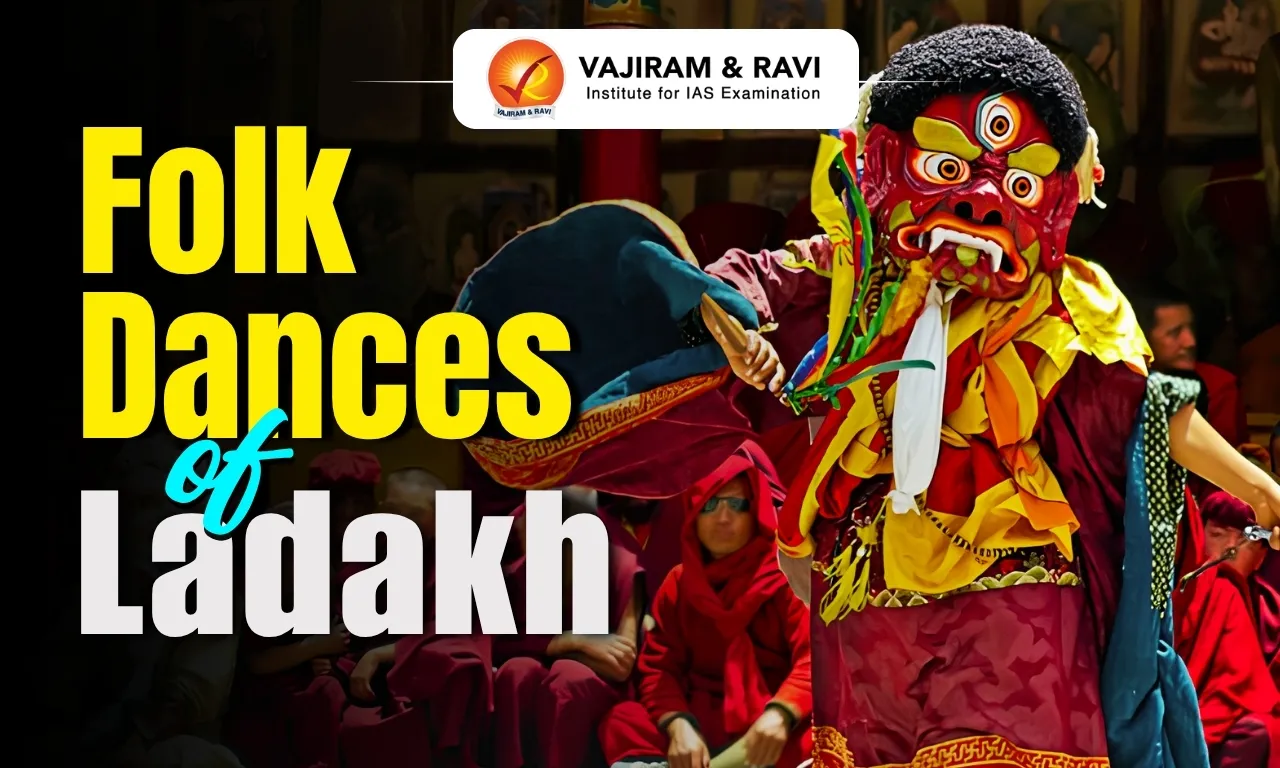
  • Cham Dance is a prominent Buddhist ritual dance performed by monks during religious festivals and important monastery celebrations.
  • The performers wear colourful costumes and masks and use traditional Tibetan musical instruments during the performance.
  • The dance symbolises the victory of good over evil and is associated with the removal of negative forces and the promotion of peace and well-being.
  • Cham is an important part of Ladakh’s Buddhist cultural heritage and is especially associated with monastery festivals and celebrations such as Losar.

Also Read : Folk Dances of India

Cultural Significance of Folk Dances of Ladakh

  • The Folk Dances of Ladakh help preserve the region’s traditional stories, beliefs, customs and community values, while passing them from one generation to another.
  • These dances also showcase Ladakh’s rich cultural diversity, with influences from Tibetan, Balti, Brokpa and other communities contributing to its distinctive performing arts.
  • Traditional costumes, jewellery, musical instruments and group movements make Ladakhi dances an important expression of the region’s cultural identity and heritage.
  • Performances during festivals and social occasions bring communities together and create a strong sense of celebration, participation and cultural belonging.
  • Folk dances of Ladakh are more than forms of entertainment; they represent the region’s history, spirituality, traditions and close connection with community life.

Folk Dances of Ladakh FAQs

Q1: What are the major Folk Dances of Ladakh?

Ans: The major Folk Dances of Ladakh include Shondol, Jabro, Spao, Kathok Chenmo, Mentok Stanmo, Koshan, Nyopa, Cha-rtses, Loshon, Brokpa, Alley Yato, Chabskyan, Balti and Cham Dance.

Q2: Which is the famous royal dance of Ladakh?

Ans: Shondol Dance is traditionally associated with the royal culture of Ladakh and was historically performed for the king and his court.

Q3: What is Jabro Dance of Ladakh?

Ans: Jabro is a traditional dance associated with the Changpa nomadic community of Changthang and has strong Tibetan cultural influences.

Q4: What is Spao Dance in Ladakh?

Ans: Spao is known as the Warrior Dance of Ladakh. It celebrates courage and heroic traditions and is linked with the legendary King Kesar.

Q5: Which Ladakh dance is associated with harvest celebrations?

Ans: Loshon Dance is a traditional harvest dance, particularly associated with Shey village. It is performed after the harvest season as a community celebration.

World Humanitarian Day 2026, Theme, History, Significance

World Humanitarian Day 2026

World Humanitarian Day 2026 is observed on 19 August 2026 to draw attention to the challenges faced by people living through humanitarian crises and the efforts made to support them. The day also highlights the importance of ensuring safe access to humanitarian assistance and healthcare for affected communities, while recognising the risks faced by those working in crisis situations. 

World Humanitarian Day 2026 Date and Theme

  • World Humanitarian Day 2026 is observed on 19 August 2026 to honour humanitarian workers who risk their lives while helping people affected by conflicts, disasters and other humanitarian crises.
  • The theme of World Humanitarian Day 2026 is “Honouring fallen humanitarians and calling for greater protection of health care.”
  • The theme pays tribute to humanitarian and health workers who lost their lives while serving communities affected by conflicts and crises.
  • It highlights the need to provide greater protection to health workers, patients, healthcare facilities and medical transport from attacks.
  • The 2026 campaign also calls for an end to attacks on humanitarian workers and civilians and stresses the importance of respecting International Humanitarian Law.
  • It encourages governments, organisations and individuals to stand in solidarity with humanitarian workers and promote the safety, dignity and well-being of people affected by crises.
  • The campaign encourages people and those in positions of power to #ActForHumanity and stand for the safety, dignity and well-being of people affected by crises.

World Humanitarian Day 2026 History and Significance

  • 19 August was chosen to remember the 2003 bombing of the Canal Hotel in Baghdad, Iraq, in which 22 humanitarian aid workers lost their lives, including UN Special Representative Sergio Vieira de Mello.
  • In 2008, the United Nations General Assembly officially designated 19 August as World Humanitarian Day to honour humanitarian workers who lost their lives while serving others.
  • Since then, the day has become an important annual campaign led by the United Nations Office for the Coordination of Humanitarian Affairs (OCHA).
  • World Humanitarian Day highlights the need to protect humanitarian workers and civilians and ensure that people affected by crises receive assistance with safety, dignity and respect.
  • The day also reminds governments and other actors of their responsibility to respect International Humanitarian Law and prevent attacks on people providing essential humanitarian assistance.

World Humanitarian Day 2026 Importance of Humanitarian Action

  • Humanitarian action provides essential support to people affected by armed conflicts, natural disasters, displacement and other emergencies.
  • It helps communities access basic necessities such as healthcare and other essential services when normal systems are disrupted.
  • Protecting humanitarian action is important because aid workers often operate in dangerous and difficult environments to reach vulnerable populations.
  • Attacks on humanitarian and health workers can prevent people from receiving life-saving assistance and can weaken already fragile health and support systems.
  • The continued occurrence of attacks on healthcare highlights the need for stronger protection, accountability and compliance with International Humanitarian Law.
  • World Humanitarian Day therefore promotes global solidarity, human dignity and collective responsibility towards people affected by humanitarian crises.

World Humanitarian Day 2026 Role of Humanitarian Workers

  • Humanitarian workers work on the ground to support communities affected by conflicts, disasters and other humanitarian emergencies.
  • They provide or help coordinate essential assistance, including healthcare and other basic services, often under extremely challenging conditions.
  • Health and humanitarian workers frequently continue their duties even when their own safety and lives are at risk.
  • Their work helps protect the well-being, dignity and basic rights of people caught in crises.
  • World Humanitarian Day recognises not only serving humanitarian workers but also remembers those who have lost their lives while carrying out their duties.
  • The 2026 campaign particularly highlights the families of fallen humanitarians, recognising the personal loss behind the service of those who dedicate their lives to helping others.

World Humanitarian Day 2026 FAQs

Q1: When is World Humanitarian Day 2026 observed?

Ans: World Humanitarian Day 2026 is observed on 19 August 2026 to honour humanitarian and health workers who serve people affected by crises.

Q2: What is the theme of World Humanitarian Day 2026?

Ans: The theme of World Humanitarian Day 2026 is “Honouring fallen humanitarians and calling for greater protection of health care.”

Q3: Why is World Humanitarian Day celebrated?

Ans: It is observed to honour humanitarian workers, recognise their sacrifices and raise awareness about the need to protect them and civilians during crises.

Q4: What is the history of World Humanitarian Day?

Ans: 19 August commemorates the 2003 bombing of the Canal Hotel in Baghdad, which killed 22 humanitarian aid workers. The UN officially designated the day as World Humanitarian Day in 2008.

Q5: Who does World Humanitarian Day honour?

Ans: The day honours humanitarian workers, aid workers and health workers who help communities affected by conflicts, disasters and other emergencies.

Bismillah Khan Death Anniversary 2026, Date, Musical Journey, Awards

Bismillah Khan Death Anniversary 2026

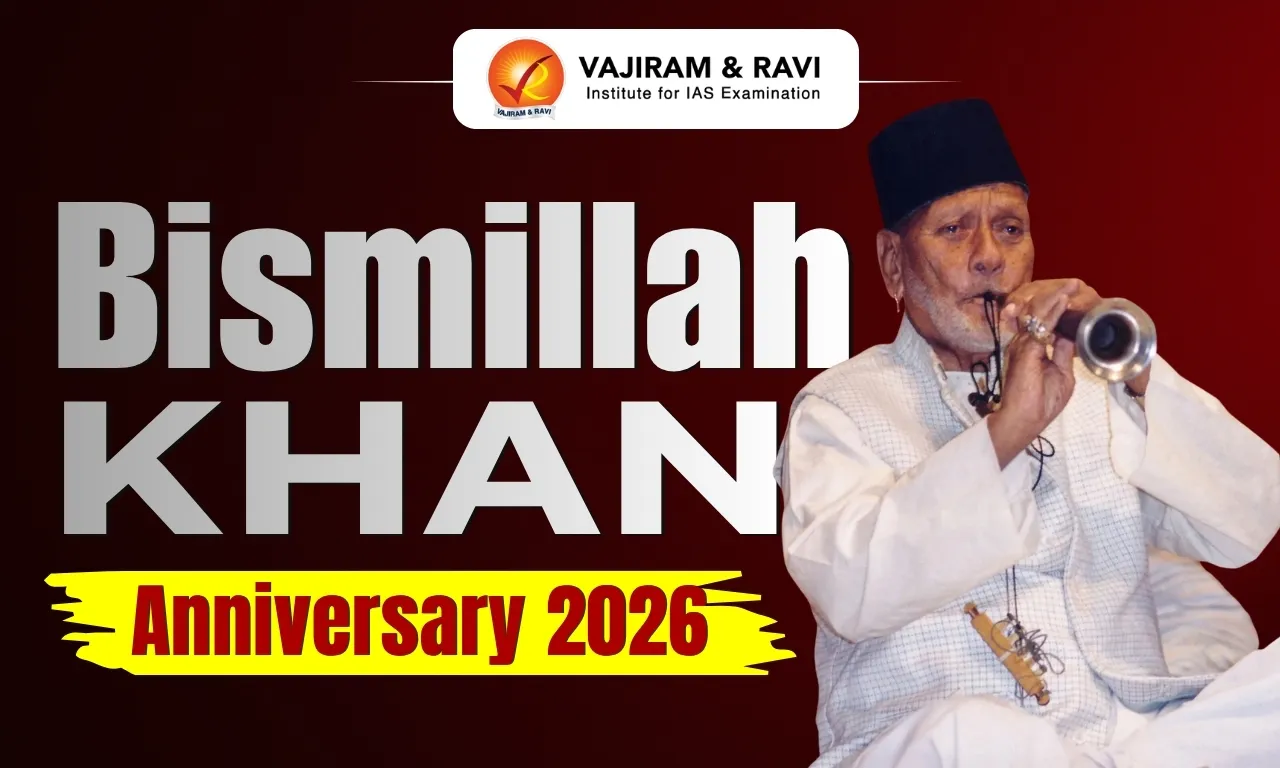
Bismillah Khan Death Anniversary 2026 is observed on 21 August 2026 to remember the legendary shehnai maestro Ustad Bismillah Khan and his lasting contribution to Indian music. He is remembered for his exceptional talent, dedication to music and important role in making the shehnai a respected classical instrument. His musical legacy continues to hold a special place in India’s cultural heritage

Bismillah Khan Death Anniversary 2026 Date and Significance

  • Bismillah Khan Death Anniversary 2026 is observed on 21 August 2026, marking 20 years since the legendary shehnai maestro passed away.
  • Ustad Bismillah Khan died on 21 August 2006 in Varanasi, Uttar Pradesh, at the age of 90 following a cardiac arrest.
  • Born as Qamruddin Khan, he became one of the most celebrated names in Indian classical music and played a major role in giving the shehnai a respected place on the concert stage.
  • He is remembered not only for his exceptional music but also for his message of communal harmony, cultural unity and spiritual devotion.
  • His association with the Kashi Vishwanath Temple, his deep connection with the Ganga and his devotion to Lord Vishwanath became important parts of his musical and personal journey.

Bismillah Khan Early Life and Musical Journey

  • Ustad Bismillah Khan was born on 21 March 1916 in Dumraon, Bihar, into a family with a long tradition of serving as court musicians.
  • His original name was Qamruddin Khan and he was introduced to the shehnai at a very young age through his family and relatives associated with music.
  • At around six years of age, he moved to Varanasi, where his maternal uncle Ali Bux ‘Vilayatu’ Khan, a shehnai player at the Kashi Vishwanath Temple, became his mentor.
  • He spent long hours practising the shehnai at temples and on the banks of the River Ganga, gradually developing his own distinctive style of playing.
  • His dedicated practice helped him master ragas, rhythm and improvisation, while also expanding the expressive possibilities of the shehnai.
  • His major breakthrough came in 1937 at the All India Music Conference in Kolkata, where his performance brought the shehnai into the wider classical music scene.
  • He later performed across India and represented Indian music at international events, including the World Exposition in Montreal, Cannes Art Festival and Osaka Trade Fair.

Bismillah Khan’s Contribution to Indian Classical Music

  • Before Bismillah Khan, the shehnai was mainly associated with weddings, temples and other ceremonial occasions and was not widely regarded as a major classical concert instrument.
  • Through his exceptional performances, he transformed the shehnai into a respected classical musical instrument capable of long and sophisticated concert performances.
  • His music combined technical skill, emotional depth and improvisation, allowing the shehnai to express the richness of Indian classical ragas.
  • One of the most memorable moments of his career came on 15 August 1947, when he performed the shehnai from the Red Fort on the occasion of India's Independence.
  • He also performed on important national and cultural occasions, helping make the sound of the shehnai an important part of India's cultural identity.
  • Bismillah Khan's music reflected Hindu-Muslim unity and communal harmony. He respected different religious traditions and often described his musical ability as a blessing of Lord Vishwanath.
  • He also made selected contributions to Indian cinema, including Goonj Uthi Shehnai and Sannadi Appanna, helping introduce the sound of the shehnai to a wider audience.

Bismillah Khan Awards, Achievements and Legacy

  • Bismillah Khan received several of India's most prestigious honours for his outstanding contribution to Indian classical music and culture.
  • He was awarded the Bharat Ratna in 2001, India's highest civilian honour, recognising his exceptional contribution to music.
  • He received the Padma Shri in 1961, Padma Bhushan in 1968 and Padma Vibhushan in 1980 for his contribution to Indian music.
  • He was honoured with the Sangeet Natak Akademi Award and later received the Sangeet Natak Akademi Fellowship in recognition of his distinguished musical career.
  • His other honours included the Tansen Award, Swathi Sangeetha Puraskaram, T. Choudayya National Award and the Tahar Mausique Award.
  • He was also conferred honorary doctorates by Banaras Hindu University and Visva-Bharati University for his contribution to music and culture.
  • Bismillah Khan's greatest legacy lies in the way he elevated the shehnai from a largely ceremonial instrument to an internationally recognised classical concert instrument.
  • His music, humility, dedication and message of cultural harmony continue to inspire musicians and music lovers, making him an enduring symbol of India's rich musical heritage.

Bismillah Khan Death Anniversary 2026 FAQs

Q1: When is Bismillah Khan Death Anniversary 2026?

Ans: Bismillah Khan Death Anniversary 2026 is observed on 21 August 2026, marking 20 years since his death.

Q2: Who was Ustad Bismillah Khan?

Ans: Ustad Bismillah Khan was a legendary Indian shehnai maestro who played a major role in establishing the shehnai as a respected classical concert instrument.

Q3: When and where was Bismillah Khan born?

Ans: Bismillah Khan was born on 21 March 1916 in Dumraon, Bihar. His original name was Qamruddin Khan.

Q4: When did Bismillah Khan die?

Ans: Ustad Bismillah Khan passed away on 21 August 2006 in Varanasi, Uttar Pradesh, at the age of 90.

Q5: What was Bismillah Khan's contribution to Indian classical music?

Ans: He helped transform the shehnai from a mainly ceremonial instrument into a prominent classical concert instrument through his innovative and soulful performances.

Folk Dances of Lakshadweep, Types, Features & Significance

Folk Dances of Lakshadweep

Folk Dances of Lakshadweep offer a glimpse into the islands’ traditional way of life and cultural practices. These dances are performed with different styles of music, movements and costumes, making them a distinctive part of the region’s cultural expression. They continue to connect local communities with their traditional art and heritage

Major Folk Dances of Lakshadweep

The major Folk Dances of Lakshadweep reflect the islands’ rich cultural traditions and community life. Kolkali, Parichakali and Lava are among the prominent folk dance forms, each having its own style, music, costumes and performance traditions. These dances are discussed below to understand their distinctive features and cultural significance

Kolkali Dance of Lakshadweep

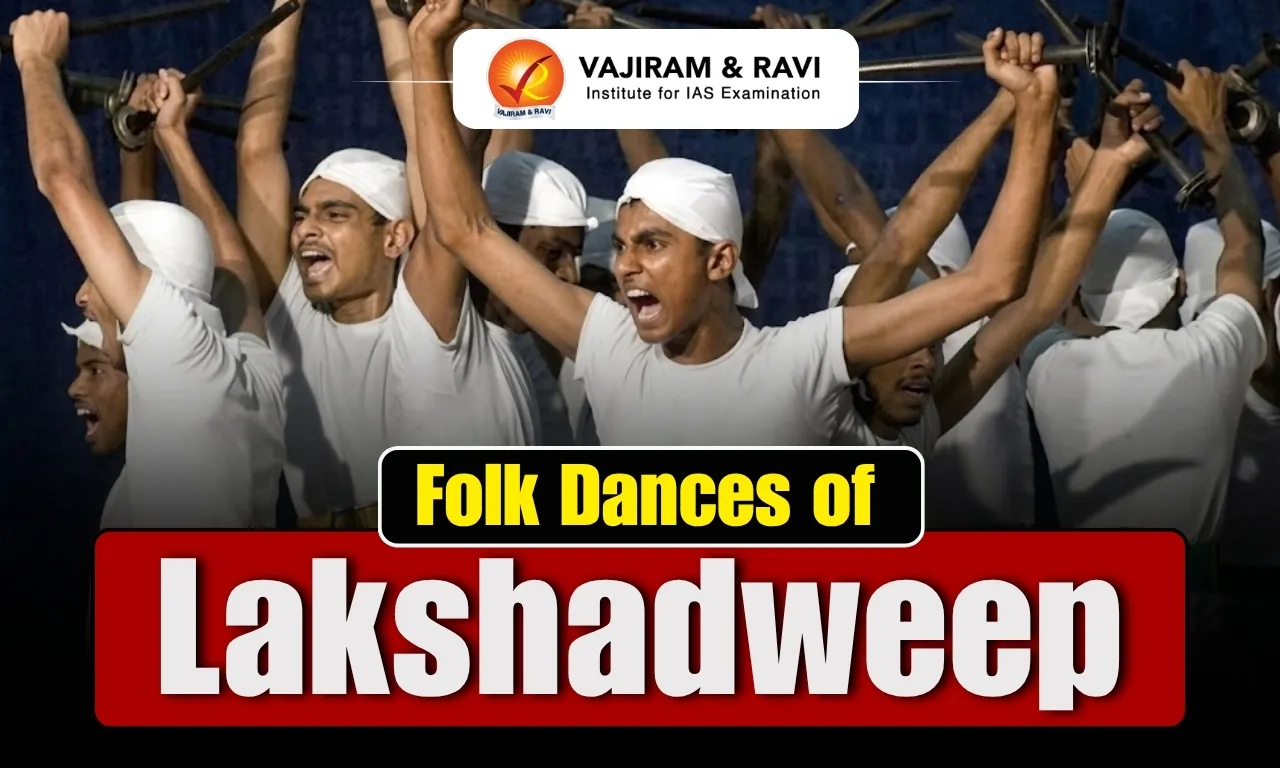
  • Kolkali is one of the most popular Folk Dances of Lakshadweep and is also known as a stick dance, as performers use sticks during the performance.
  • The word ‘Kol’ means stick, referring to the main prop used in this traditional dance form.
  • The dance is traditionally performed by men, who dance in pairs while moving in circles and striking their sticks in rhythm.
  • The performance usually begins at a slow pace and gradually becomes faster and more energetic as the rhythm builds.
  • Traditional folk songs and rhythmic stick movements accompany the dancers, who change their formations during the performance.
  • The energetic movements and increasing tempo make Kolkali an important part of Lakshadweep’s folk culture.

Parichakali Dance of Lakshadweep

  • Parichakali is another popular folk dance of Lakshadweep and is traditionally performed using swords and shields as props.
  • The word ‘Paricha’ refers to a shield and the dance has the appearance of a traditional martial performance.
  • The swords and shields used during the performance are made of soft wood, allowing the dancers to enact combat without causing injury.
  • The dance commonly depicts themes related to bravery, warriors and struggles for freedom, with performers enacting mock battles and dual combats.
  • The performance is accompanied by traditional songs and generally starts slowly before building into a highly energetic sequence.
  • Through its dramatic movements and themes of courage, Parichakali reflects the martial and cultural traditions of Lakshadweep.

Lava Dance of Minicoy

  • Lava is a prominent folk dance of Minicoy Island and is known for its vibrant presentation and energetic movements.
  • The dance is performed in multi-coloured traditional costumes, often complemented by distinctive headgear worn by the dancers.
  • Performers use drums and rhythmic beats along with traditional songs, creating an energetic atmosphere during the performance.
  • The colourful costumes, music and coordinated movements make Lava dance a visually striking folk tradition of Minicoy.
  • Other colourful dance forms associated with Minicoy mentioned in the source include Dandi, Bandiya and Fuli, adding to the island’s diverse folk-art traditions.

Also Read : Folk Dances of India

Folk Dances of Lakshadweep Cultural Significance

  • Folk dances of Lakshadweep are an important part of the islands’ cultural heritage and reflect the traditions, lifestyle and community spirit of the local people.
  • Dances such as Kolkali, Parichakali and Lava showcase the region’s diverse performance traditions through rhythmic movements, music, costumes and traditional props.
  • The folk traditions also reflect the historical and cultural links between Lakshadweep and Kerala, adding to the distinctive identity of the islands.
  • Performances during social and community occasions help preserve traditional songs, dance practices and cultural values across generations.
  • The folk dances of Lakshadweep promote community participation and cultural continuity, helping preserve the islands’ rich and unique cultural identity.

Folk Dances of Lakshadweep FAQs

Q1: What are the major Folk Dances of Lakshadweep?

Ans: The major Folk Dances of Lakshadweep include Kolkali, Parichakali and Lava.

Q2: Which is the most popular folk dance of Lakshadweep?

Ans: Kolkali is one of the most popular and widely known Folk Dances of Lakshadweep.

Q3: What is Kolkali dance of Lakshadweep?

Ans: Kolkali is a traditional stick dance in which performers use sticks and move in pairs to rhythmic beats and folk songs.

Q4: Who traditionally performs Kolkali dance?

Ans: Kolkali is traditionally performed by men, who move in circles and use sticks as part of the coordinated dance movements.

Q5: What is Parichakali dance of Lakshadweep?

Ans: Parichakali is a folk dance with a martial-art-like character, in which performers use swords and shields as props to enact mock combats.

Folk Dances of Puducherry, Garadi Dance, History, Significance

Folk Dances of Puducherry

The Folk Dances of Puducherry are an important part of its cultural heritage and community life, with Garadi being one of the prominent traditional dance forms. Inspired by the Ramayana, Garadi combines music, rhythmic movements and vibrant performances, while other folk traditions also reflect the region’s festivals, beliefs and social customs. Together, these art forms preserve the rich cultural identity of Puducherry

Garadi Dance of Puducherry Origin and Mythological Significance

  • Garadi is a prominent folk dance of Puducherry and is mainly performed during local festivals and religious celebrations.
  • The dance is traditionally associated with the Ramayana and is believed to represent the Vanara army celebrating Lord Rama’s victory over Ravana.
  • Performers portray the Vanaras (monkeys) who helped Rama in his struggle to rescue Sita and are traditionally associated with the construction of the Rama Sethu.
  • Through its movements and dramatic presentation, Garadi brings stories from the Ramayana into a lively community performance.
  • The dance combines devotion, physical energy and storytelling, making it an important part of the traditional cultural life of Puducherry.

Garadi Dance Performance and Special Features

  • Garadi is known for its vigorous movements and energetic steps, with performers traditionally dressed to represent the Vanaras.
  • One of its distinctive features is the use of iron rings called Anjali, which dancers wear on their legs. The rings create a rhythmic sound as they move.
  • The dancers also carry flags in their hands, adding colour and visual appeal to the performance.
  • The dance is accompanied by two large drums known as Romadolu or Ramadolu, whose powerful beats provide the main rhythm for the performance.
  • Garadi is a long-duration performance, traditionally continuing for several hours during festival nights.

Garadi Dance of Puducherry Cultural Significance

  • Garadi is closely connected with religious festivals and community celebrations, particularly the car festival of Lord Vishnu.
  • The performance is generally held in open grounds and temple courtyards, bringing local communities together in an atmosphere of celebration and devotion.
  • The dance reflects values such as loyalty, courage, strength and devotion, which are associated with the Vanaras in the Ramayana tradition.
  • Its combination of mythology, music, dance and dramatic movement makes Garadi an important form of traditional folk expression.
  • The performance also helps preserve Puducherry’s folk traditions by passing cultural stories and practices from one generation to another.

Music and Dance Culture of Puducherry

  • Music and dance form an important part of the cultural life of Puducherry and are closely connected with its festivals and community celebrations.
  • The region’s performing arts have a strong influence of Tamil cultural traditions, along with the classical music and dance traditions of South India.
  • Cultural festivals and programmes feature different traditional and classical forms, including Yakshagana, Kathak, Kuchipudi, Chhau and Mohiniyattam.
  • The Chidambaram Natyanjali Festival, held during Shivaratri, brings performers from different parts of India together to celebrate classical dance traditions.
  • Bhairavi, a Carnatic music circle in Puducherry, organises regular vocal and instrumental music performances and also supports learning and training in areas such as music, dance and other arts.
  • Together, these activities show how music and dance contribute to the cultural identity, community interaction and artistic life of Puducherry.

Also Read : Folk Dances of India

Folk Dances of Puducherry FAQs

Q1: What are the major Folk Dances of Puducherry?

Ans: Garadi is a prominent folk dance of Puducherry, associated with local festivals and traditional cultural celebrations.

Q2: What is Garadi dance of Puducherry?

Ans: Garadi is a traditional folk dance inspired by the Ramayana, particularly the story of the Vanara army supporting Lord Rama.

Q3: What is the origin of Garadi dance?

Ans: Garadi is traditionally linked to the Ramayana and represents the Vanaras celebrating Lord Rama’s victory over Ravana.

Q4: When is Garadi dance performed in Puducherry?

Ans: Garadi is mainly performed during local festivals and religious celebrations, particularly during the car festival of Lord Vishnu.

Q5: What are the main features of Garadi dance?

Ans: Garadi features energetic movements, flags, iron rings called Anjali and large drums known as Romadolu or Ramadolu.

Folk Dances of Nagaland, List of Famous Dance Forms, Features

Folk Dances of Nagaland

Folk Dances of Nagaland reflect the traditions, social values, festivals and historical experiences of different Naga communities. These dances are closely connected with harvests, purification rituals, feasts, warfare traditions and community celebrations. Major forms include Changsang, Chang Lo, Monyu Asho, Melo Phita, Udoho, Rukhyo Sharu, Kukuyipheto, Khupielilie and Baimaijai. Each dance has a distinct community identity and cultural purpose.

Folk Dances of Nagaland

Folk Dances of Nagaland are performed by different tribes during important festivals and social occasions. Their themes range from victory and warfare to harvest, purification, prayer, community life and traditional celebrations. Costumes, songs, instruments, group formations and movements differ across tribes. These performances preserve oral traditions and provide an important way of passing cultural knowledge from older generations to younger members of the community.

Folk Dances of Nagaland Features

The major highlighting features of the Folk Dances of Nagaland has been listed below:

  • Cultural Significance: Folk Dances of Nagaland preserve tribal identity through traditional movements, songs, costumes, ceremonies and historical themes. They also connect festivals with community participation, social memory and intergenerational cultural transmission.
  • Warrior Traditions: Several Folk Dances of Nagaland retain themes connected with historical warfare. Udoho, Rukhyo Sharu, Kulu-Tsen, Chang Lo and Angushu Kighilhe particularly reflect warrior, victory, or head hunting traditions.
  • Festival Based Performance: Many Folk Dances of Nagaland are inseparable from specific festivals. Changsang is linked with Naknyuliim, Melo Phita with Sekrenyi, Monyu Asho with Phom Monyu and Akok-Khi with Mongmong.
  • Community Participation: These dances are not limited to entertainment. Their performance can involve men, women, young people, elders, village groups and festival participants, making dance an important part of collective cultural life.
  • Cultural Diversity: The variety of Folk Dances of Nagaland reflects the state’s numerous tribal communities. Differences in dance themes, costumes, instruments, movements and festival associations demonstrate the distinct cultural identities maintained across communities.

List of Famous Folk Dances of Nagaland

The following list of Folk Dances of Nagaland represent important tribal traditions and show the cultural diversity of Nagaland through distinct themes, occasions and performance styles.

  • Changsang Dance: Changsang is a traditional folk dance of the Chang Naga Tribe. It is performed during Naknyuliim festival and includes colorful traditional outfits, songs and prayers to propitiate the sky God.
  • Chang Lo / Sua Lua: Chang Lo, also called Sua Lua, is a traditional dance of the Chang Naga tribe. It historically celebrated victory over enemies and represents the community’s warrior traditions.
  • Monyu Asho: Monyu Asho is performed by the Phom Nagas during the Phom Monyu festival in April. The festival follows sowing and marks winter’s end, summer’s beginning and prayers for successful crops.
  • Melo Phita: Melo Phita is an Angami traditional dance performed during Sekrenyi in February. Sekrenyi is a purification festival associated with cleansing the body and soul and marking young people’s transition into adulthood.
  • Udoho: Udoho is a traditional war dance of the Angami Naga tribe. Its name refers to holding a spear and shouting at an enemy, portraying the position and spirit of a warrior.
  • Angushu Kighilhe: Angushu Kighilhe is a traditional war dance of the Sumi tribe. It is performed by menfolk and represents the martial traditions preserved within Sumi cultural practices.
  • Rukhyo Sharu: Rukhyo Sharu is a traditional folk dance of the Lotha Naga tribe. Its literal meaning is “victory dance” and it was historically performed during the head hunting period to celebrate victory over enemies.
  • Langnyu-Khiamtsangshe: Langnyu-Khiamtsangshe is a traditional dance of the Khiamniungan Naga tribe. It is performed during Miu and Tsokum, two important festivals associated with the community’s cultural traditions.
  • Akok-Khi: Akok-Khi is a traditional dance performed by the Sangtam tribe during the Mongmong Festival of Nagaland. Mongmong is observed from 1st to 6th September and emphasizes togetherness, prayers, songs, dances, feasting and gift exchange.
  • Khupielilie: Khupielilie is a traditional folk dance performed exclusively by women of the Pochury Naga Tribe. It forms an important part of the Nazu festival, which is observed in February every year.
  • Kukuyipheto: Kukuyipheto is a traditional dance of the Chakhesang Nagas. It is known for fast and complicated footwork and is performed by able bodied men wearing complete traditional attire during the Feast of Merit.
  • Kulu-Tsen: Kulu-Tsen is a traditional folk dance of the Yimkhiung tribe. “Kulu” means head and “Tsen” means dance, making the name directly associated with head related warrior traditions.
  • Nokinketer Tsungsang: Nokinketer Tsungsang is a traditional dance of the Ao Naga tribe. The term “Nokinteker” literally means “war hero”, linking the dance with the historical warrior traditions of the Ao community.
  • Butterfly Dance: Butterfly Dance is associated with the Zeliangrong tribe. It forms part of the traditional cultural expressions of the community and represents the diversity of folk performance traditions found among Nagaland’s tribal groups.
  • Baimaijai / Plate Dance: Baimaijai, also called Plate Dance, is a traditional dance of the Dimasa Kachari. Young girls or women perform it using two plates, one in each hand, creating its distinctive performance style.

Folk Dances of Nagaland FAQs

Q1: What are the famous Folk Dances of Nagaland?

Ans: Famous Folk Dances of Nagaland include Changsang, Chang Lo, Monyu Asho, Melo Phita, Udoho, Rukhyo Sharu, Kukuyipheto, Khupielilie and Baimaijai.

Q2: Which is the traditional war dance of the Angami Tribe of Nagaland?

Ans: Udoho is the traditional war dance of the Angami Naga tribe. It depicts a warrior holding a spear and shouting at an enemy.

Q3: Which dance is performed during the Sekrenyi Festival of Nagaland?

Ans: Melo Phita is a traditional Angami dance performed during the Sekrenyi festival, which is associated with purification and the renewal of body and soul.

Q4: Which is the traditional dance of the Chang Naga Tribe of Nagaland?

Ans: Chang Lo, also known as Sua Lua, is a traditional dance of the Chang Naga tribe. It was historically performed to celebrate victory over enemies.

Q5: Which Folk Dance of Nagaland is performed by women with plates?

Ans: Baimaijai, also called Plate Dance, is a traditional Dimasa dance performed by young girls or women using two plates held in their hands.

Hara Mangrove Forest

Hara Mangrove Forest

Hara Mangrove Forest Latest News

Recent satellite images have revealed a major environmental threat to Hara mangrove forest due to an oil spill off Qeshm’s southern coast.

About Hara Mangrove Forest

  • Location: The Hara forests are a vital ecological treasure of the Persian Gulf. Spanning the Strait of Hormuz,
  • These mangrove forests consist mainly of grey mangrove trees (Avicennia marina).
  • The forests are designated as a UNESCO Biosphere Reserve.
  • Ecological Role
    • They have a special filtration system in their roots that allows them to thrive in saline conditions.
    • The same roots also protect the coast against erosion and are voluminous carbon sinks, sequestering significantly more carbon than terrestrial forests.
    • They serve as an important nursery for marine life as they shelter shrimp, crabs, and numerous fish species that sustain the region’s fisheries.
    • The Hara forests’ canopy is also a major migratory hub for birds like the great stone-curlew and various herons.
    • The mangroves are the backbone of the sustainable tourism programmes of Qeshm, an Iranian island in the Persian Gulf, and draw visitors to their labyrinthine waterways.

Source: TH

Hara Mangrove Forest FAQs

Q1: Hara Biosphere Reserve was designated by UNESCO in which year?

Ans: 1976

Q2: What is the advantage of Mangroves like Hara ?

Ans: They act as "Blue Carbon" ecosystem.

India’s First Virtual Zoo Opens in Indore, Location, Significance

India’s First Virtual Zoo Opens in Indore

India’s First Virtual Zoo Opens in Indore at Kamla Nehru Zoological Garden in Madhya Pradesh. Chief Minister Dr Mohan Yadav inaugurated the facility on August 16. The project includes a virtual jungle safari and a 14-D cinema theatre. Both facilities were developed under the Public-Private Partnership (PPP) model at a cost of Rs 4.5 crore. The facilities combine wildlife education, technology and entertainment for visitors.

India’s First Virtual Zoo Opens in Indore

India’s First Virtual Zoo Opens in Indore with technology based wildlife experiences that support tourism, education and public engagement.

  • Location: The facility is located at Kamla Nehru Zoological Garden in Indore, Madhya Pradesh.
  • Project cost: The 14-D cinema theatre and virtual jungle safari were developed under the PPP model at a cost of Rs 4.5 crore.
  • Inauguration: Chief Minister Dr Mohan Yadav inaugurated the facilities and watched a film with schoolchildren.
  • Significance: The facilities provide residents, children and tourists an interactive way to understand wildlife and nature through technology.

Also Read:- National Zoological Park

What is a Virtual Zoo?

A Virtual Zoo uses digital technology to provide an immersive experience of wildlife and natural habitats. At Indore, the virtual jungle safari allows visitors to experience forests and wildlife without entering an actual forest. The facility is designed to make nature and wildlife learning more engaging for children and tourists. India’s First Virtual Zoo Opens in Indore with the aim of creating a technology based visitor attraction.

Also Read:- Central Zoo Authority

What is a 14-D Cinema?

A 14-D Cinema provides an immersive movie experience through multiple sensory and physical effects. The Indore facility uses advanced visual effects, motion enabled seating and surround sound. Visitors can experience scenes through movement and environmental effects instead of only watching them on a screen. 

India’s First Virtual Zoo Opens in Indore FAQs

Q1: Where is India’s first virtual zoo located?

Ans: India’s first virtual zoo is located at Kamla Nehru Zoological Garden in Indore, Madhya Pradesh.

Q2: Who inaugurated India’s first virtual zoo?

Ans: Madhya Pradesh Chief Minister Dr Mohan Yadav inaugurated India’s first virtual zoo in Indore.

Q3: How much did the Indore virtual zoo project cost?

Ans: The 14-D cinema theatre and virtual jungle safari were developed under the PPP model at a cost of Rs 4.5 crore.

Q4: What is a virtual jungle safari?

Ans: A virtual jungle safari uses technology to provide visitors with an immersive experience of forests and wildlife.

Q5: What is special about the 14-D cinema in Indore?

Ans: The 14-D cinema offers an immersive viewing experience using visual effects, motion enabled seating and surround sound.

Friedreich ataxia

Friedreich ataxia

Friedreich ataxia Latest News

A new study from researchers at the University of Oklahoma Health Sciences Center found that Friedreich’s ataxia is caused when a gene called FXN becomes mutated.

About Friedreich ataxia

  • It is a rare, inherited disorder that causes progressive damage to the nervous system. 
  • The damage affects your spinal cord and the nerves that control muscle movement in your arms and legs.  

Friedreich ataxia Cause

  • It is caused when a gene called FXN becomes mutated
  • The FXN gene codes for a protein called frataxin. Frataxin is essential for mitochondria, which are our cells’ powerhouses. 
  • The chemical ATP, which is the cell’s energy currency, is made mostly in the mitochondria. 
  • Nerve, spinal cord, brain, and heart muscle cells use a lot of energy. 
  • When their frataxin levels become abnormally low, the mitochondria produce ATP less effectively and also accumulate toxic by-products. 
  • This renders the cell dysfunctional, leading to the symptoms of FA. 
  • Individuals who inherit two defective copies of the FXN gene, one from each parent, will develop the disease
  • A person who inherits only one abnormal copy of the gene is called a carrier.  
  • Most of the affected individuals come from consanguineous marriages. That is, marriages between relatives, such as uncles and nieces, or between cousins. 

Friedreich ataxia Symptoms

  • Symptoms usually begin between the ages of 5 and 15. 
  • The main symptom is ataxia, which means trouble coordinating movements. 
  • Specific symptoms include: 
    • Difficulty walking
    • Muscle weakness
    • Speech problems
    • Involuntary eye movements
    • Scoliosis (curving of the spine to one side)
    • Heart palpitations, from the heart disease, which can happen along with Friedreich ataxia
  • People with Friedreich ataxia usually need a wheelchair 15 to 20 years after symptoms first appear. 
  • In severe cases, people become incapacitated.  

Friedreich ataxia Treatment 

  • There is currently no cure for FA. 
  • Treatment focuses on easing symptoms and maintaining comfort and function for as long as possible. 

News: TH

Friedreich ataxia FAQs

Q1: What is Friedreich ataxia (FA)?

Ans: It is a rare inherited disorder that causes progressive damage to the nervous system.

Q2: Which parts of the nervous system are primarily affected by Friedreich ataxia?

Ans: It affects the spinal cord and the nerves that control muscle movement in the arms and legs.

Q3: Which gene is mutated in Friedreich ataxia?

Ans: The FXN gene is mutated in Friedreich ataxia.

Q4: What is the main symptom of Friedreich ataxia?

Ans: The main symptom is ataxia, meaning difficulty coordinating movements.

Q5: Is there currently a cure for Friedreich ataxia?

Ans: No, there is currently no cure for Friedreich ataxia.

New Development Bank

New Development Bank (NDB)

New Development Bank Latest News

Iran will soon join the New Development Bank, the development lender established by the BRICS group ​of nations, central bank governor Abdolnaser Hemmati said in a state ‌media report published recently ahead of a BRICS finance meeting in India.

About New Development Bank 

  • The New Development Bank (NDB), formerly known as the BRICS Development Bank, is a multilateral development bank established by Brazil, Russia, India, China, and South Africa (BRICS).
  • Objective: NDB aims to mobilize resources for infrastructure and sustainable development projects in BRICS countries and other emerging economies and developing countries.
  • The agreement for establishing the NDB was signed during the BRICS Summit held in Fortaleza, Brazil, on July 15, 2014.
  • The bank became operational in 2015 and is headquartered in Shanghai, China, with a regional office in Johannesburg and additional offices later opened in São Paulo and Moscow. 
  • Membership in NDB is open to any member of the United Nations.
  • NDB’s key areas of operation include clean energy and energy efficiency; transport infrastructure; water and sanitation; environmental protection; social infrastructure; and digital infrastructure. 
  • Capital: Its founding capital was set at USD 100 billion, with initial subscribed capital of USD 50 billion divided equally among the five founding members.
  • Governance Structure:
    • The bank is governed by a Board of Governors made up of the finance ministers of the five BRICS countries, and a Board of Directors.
    • Both the presidency and vice-presidency of the NDB are rotated among BRICS founding members.
    • Unlike in the case of the World Bank or Asian Development Bank (ADB), each member in the NDB has an equal voting power.

News: REUT

New Development Bank FAQs

Q1: What is the New Development Bank (NDB)?

Ans: It is a multilateral development bank established by the BRICS countries.

Q2: What is the primary objective of the New Development Bank?

Ans: Its objective is to mobilize resources for infrastructure and sustainable development projects in BRICS countries and other emerging and developing economies.

Q3: When did the New Development Bank become operational?

Ans: The NDB became operational in 2015.

Q4: Where is the headquarters of the New Development Bank located?

Ans: Its headquarters is located in Shanghai, China.

Q5: How does voting power in the New Development Bank differ from that in institutions such as the World Bank and ADB?

Ans: In the NDB, each member has equal voting power.

Earthquake Swarm

Earthquake Swarm

Earthquake Swarm Latest News

Recently, there has been a spate of small earthquakes in Maharashtra and seismologists call this pattern of quakes an earthquake swarm, and Maharashtra has experienced them often before.

About Earthquake Swarm

  • Occurance: It occurs when multiple seismic events of comparable intensity strike a small area in relatively quick succession.
  • Intensity: It involves a series of many (sometimes thousands) low-intensity earthquakes without a discernible main shock that can occur over weeks in active geothermal areas.
  • When seismic energy piles up inside the Earth and is released in small amounts from certain points, such a series of earthquakes can occur.

What Causes Swarm Sequences?

  • Fluid movement
    • In volcanic environments, this can be fluid released from deeper magma or circulating within active geothermal areas (in volcanic areas such as the Taupō Volcanic Zone).
    • The earthquakes triggered by fluids occur as fault slip on the cracks and faults through which the water is moving.
  • Active volcanism
    • Magma movement can also act as the ‘driving mechanism’ for swarms, creating the earthquakes as magma-filled cracks push their way through the Earth’s crust.
    • In such a case the earthquakes commonly occur near the crack tip (ahead of the magma where the crack is starting to open), or off to the side of the crack.
  • Slow-slip events
    • A slow-slip event is essentially an earthquake in slow-motion, and typically involves centimetres to tens of centimetres of movement along a fault, over weeks to years.
    • We commonly see slow slip events at the Hikurangi subduction zone, usually at least one or two per year.

Source: TH

Earthquake Swarm FAQs

Q1: What is a "Slow-slip event" in context of earthquakes?

Ans: An earthquake in slow-motion over weeks to years

Q2: What are the causes of earthquake swarms?

Ans: Fluid movement, Magma movement and Slow-slip events

Mahadayi River

Mahadayi River

Mahadayi River Latest News

There is no proposal before the Union government from Karnataka seeking an Environmental Clearance (EC) for the diversion of the Mahadayi River for various projects, the Centre recently told the Lok Sabha.

About Mahadayi River

  • The Mahadayi River, also known as the Mandovi or Mhadei River, is a rain-fed river shared between Karnataka and Goa.  
  • Course:
    • It originates from the Bhimgad Forest in the Western Ghats, located in the Belagavi district of Karnataka
    • It flows westward to join the Arabian Sea at Panaji, Goa.
  • Total Length: It flows for nearly 81 km, 29 km in Karnataka and 52 km in Goa. 
  • Its basin is crucial for Goa’s water needs, covering much of North Goa.
  • Panaji, the state capital, and the town of Old Goa are situated on the left bank of the Mandovi River.  
  • Near the town of Old Goa, there are three large freshwater islands, Divar, Chorao, and Vashee, in the Mandovi River. The island of Chorao houses Salim Ali Bird Sanctuary.  
  • It has several tributaries, namely Rogaro, Kushavati, Nanorem, Nanuz, Valvota, and Mapusa.
  • The river is central to a decades-long dispute between Karnataka and Goa, primarily over Karnataka’s plans to divert water from the Kalasa and Bhandura tributaries to the Malaprabha basin for drinking water needs.
  • The Mahadayi Water Disputes Tribunal (MWDT) in 2018 allocated 13.42 tmc (380 Mcum) of water to Karnataka, including permissions for limited diversion from the Kalasa (1.72 tmc) and Bhandura (2.18 tmc) streams.

News: TH

Mahadayi River FAQs

Q1: Which two Indian states share the Mahadayi River?

Ans: Karnataka and Goa.

Q2: Where does the Mahadayi River originate?

Ans: It originates from the Bhimgad Forest in the Western Ghats in Belagavi district of Karnataka.

Q3: Where does the Mahadayi River ultimately drain?

Ans: It joins the Arabian Sea at Panaji in Goa.

Q4: Which are the major tributaries of the Mahadayi River?

Ans: Major tributaries include Rogaro, Kushavati, Nanorem, Nanuz, Valvota and Mapusa.

Mt Elbrus

Mt Elbrus

Mount Elbrus Latest News

Andhra Pradesh Police Sub-Inspector V. Venkateswara Rao of Eluru Rural Police Station marked India's 80th Independence Day in a unique way by scaling Mount Elbrus, the highest peak in Europe, which stands at 5,642 metres in Russia.

About Mount Elbrus

  • Located in Southern Russia, Mount Elbrus is the highest peak of the Caucasus Mountains. 
  • Rising to an elevation of 5,642 m, Mount Elbrus is the world’s 10th most prominent peak as well as the highest mountain peak in both the European continent and Russia. 
  • It is one of the Seven Summits of the world, which are the tallest mountains on each of the seven continents.
  • Mount Elbrus is an inactive volcano that consists of two principal summits, both of which are dormant volcanic domes. It is also Eurasia’s highest stratovolcano.   
  • Formation:
    • It is believed that the Caucasus Mountains were formed due to the northward collision of the Arabian Plate with the Eurasian Plate.
    • Geological studies have revealed that Mount Elbrus was formed over 2.5 million years ago and the volcano had been most active during the Holocene Epoch. 
  • The snowfields of Mount Elbrus cover an area of 138 sq. km. and host around 22 principal glaciers and 77 secondary glaciers.  
  • Major Glaciers: Bolshoi Azaou and Irik Glacier.
  • Many Russian rivers like the Baksan, Malka, and Kuban rivers originate from these glaciers.

News: NDTV

Mount Elbrus FAQs

Q1: Where is Mount Elbrus located?

Ans: Mount Elbrus is located in Southern Russia.

Q2: Which mountain range contains Mount Elbrus?

Ans: Mount Elbrus is part of the Caucasus Mountains.

Q3: Is Mount Elbrus an active volcano?

Ans: No, Mount Elbrus is an inactive volcano.

Bhagat Singh Birth Anniversary 2026, Date, History, Life & Legacy

Bhagat Singh Birth Anniversary 2026

Bhagat Singh Birth Anniversary 2026 will be observed on 28 September 2026. It will mark the 119th birth anniversary of Bhagat Singh, one of the most influential revolutionaries of India's freedom struggle. Known for his courage, patriotism, revolutionary ideas, and commitment to India's independence, Bhagat Singh continues to inspire generations.

Bhagat Singh Biography

Bhagat Singh was a prominent Indian revolutionary and freedom fighter who played an important role in the struggle against British colonial rule. He is remembered for his courage, revolutionary ideas, political writings, and supreme sacrifice at a young age.

  • Born: 28 September 1907
  • Birthplace: Banga, Lyallpur district, Punjab Province, British India (now in Pakistan)
  • Parents: Sardar Kishan Singh and Vidyavati
  • Known For: Revolutionary activities against British rule
  • Organisation: Hindustan Socialist Republican Association (HSRA)
  • Major Associates: Chandrashekhar Azad, Sukhdev Thapar, Shivaram Rajguru, and Batukeshwar Dutt
  • Major Activities: Central Legislative Assembly bombing (1929) and participation in revolutionary activities against British rule
  • Political Ideas: Supported socialism, equality, secularism, and social justice
  • Famous Slogan: "Inquilab Zindabad"
  • Important Writing: "Why I Am an Atheist"
  • Executed On: 23 March 1931
  • Age at Execution: 23 years
  • Legacy: Became a lasting symbol of courage, patriotism, sacrifice, and revolutionary nationalism in India.

Early Life and Education of Bhagat Singh

Bhagat Singh was born on 28 September 1907 into a family deeply associated with India's freedom movement, and his early experiences, education, and exposure to nationalist ideas strongly shaped his revolutionary outlook.

  • Family Background: Belonged to a patriotic Sikh family involved in the freedom struggle.
  • Father: His father, Kishan Singh, was associated with nationalist activities.
  • Influence of Uncles: His uncles Ajit Singh and Swaran Singh also influenced his early nationalist thinking.
  • Jallianwala Bagh: The Jallianwala Bagh massacre of 1919 deeply affected young Bhagat Singh.
  • Early Schooling: Studied at Dayanand Anglo-Vedic School, Lahore.
  • National College: Later joined National College, Lahore, founded by Lala Lajpat Rai.
  • Academic Interests: Developed a strong interest in history, politics, economics, and revolutionary literature.
  • Reading Habit: Read extensively about Indian nationalism, socialism, revolution, and international political movements.
  • Political Awareness: His education and reading helped develop his ideas about freedom, social equality, and resistance to colonial rule.

Bhagat Singh’s Role in India’s Freedom Struggle

Bhagat Singh played a significant role in India’s revolutionary freedom movement and became a powerful symbol of resistance against British colonial rule. Through his revolutionary activities, political writings, hunger strike, and sacrifice, he inspired many young Indians to participate in the struggle for independence.

  • Revolutionary Movement: Joined revolutionary organisations and worked with young nationalists to challenge British colonial rule.
  • Hindustan Republican Association: Became associated with the Hindustan Republican Association (HRA) and later played an important role in its transformation into the Hindustan Socialist Republican Association (HSRA).
  • Influence of Lala Lajpat Rai’s Death: After Lala Lajpat Rai died following injuries sustained during a police lathi charge while protesting the Simon Commission, Bhagat Singh and his associates sought to avenge his death.
  • Saunders Assassination: In December 1928, Bhagat Singh and Shivaram Rajguru shot John Saunders, a British police officer in Lahore, in a case of mistaken identity.
  • Central Legislative Assembly Bombing: On 8 April 1929, Bhagat Singh and Batukeshwar Dutt threw bombs in the Central Legislative Assembly in Delhi to protest against repressive colonial legislation.
  • Purpose of the Bombing: The bombs were intended to make a political statement rather than cause mass casualties. Bhagat Singh and Dutt deliberately stayed at the scene and surrendered.
  • Hunger Strike: During imprisonment, Bhagat Singh participated in a hunger strike demanding better treatment and equal facilities for Indian political prisoners.
  • Use of the Courtroom: He and his fellow revolutionaries used their trial as a platform to communicate their political ideas and oppose British rule.
  • Political Ideas: Bhagat Singh increasingly advocated socialism, equality, secularism, and freedom from economic exploitation.
  • Inspiration for Youth: His courage, writings, and willingness to sacrifice his life made him a major inspiration for Indian youth during the freedom struggle.
  • Supreme Sacrifice: Bhagat Singh was executed along with Sukhdev Thapar and Shivaram Rajguru on 23 March 1931 in Lahore Jail.

Bhagat Singh Birth Anniversary 2026 Significance

Bhagat Singh Birth Anniversary 2026 will be observed on 28 September 2026, marking his 119th birth anniversary. The day is significant for remembering his contribution to India's freedom struggle, revolutionary movement, and political thought.

  • Remembering a Revolutionary: It honours Bhagat Singh's role in challenging British colonial rule and his commitment to India's independence.
  • Symbol of Sacrifice: His execution at the age of 23 represents the courage and sacrifice of young revolutionaries who fought for freedom.
  • Inspiration for Youth: His life continues to inspire young people through his fearlessness, patriotism, discipline, and commitment to his ideals.
  • Revolutionary Ideas: His writings and political activities reflected ideas of socialism, equality, secularism, and social justice.
  • Role in the Freedom Movement: The occasion highlights his association with the Hindustan Socialist Republican Association (HSRA) and major revolutionary activities.
  • Political Awareness: Bhagat Singh believed that freedom required political consciousness and social transformation, making his ideas relevant beyond the struggle against colonial rule.
  • Legacy of Inquilab: His association with the slogan "Inquilab Zindabad" continues to represent the spirit of revolutionary change and resistance.
  • National Heritage: His birth anniversary provides an opportunity to remember the contributions of young freedom fighters and their role in India's independence movement.

Bhagat Singh Birth Anniversary 2026 FAQs

Q1: When is Bhagat Singh Birth Anniversary 2026?

Ans: Bhagat Singh Birth Anniversary 2026 will be observed on 28 September 2026. It will mark his 119th birth anniversary.

Q2: When and where was Bhagat Singh born?

Ans: Bhagat Singh was born on 28 September 1907 in Banga village, Lyallpur district, Punjab Province, British India, now in Pakistan.

Q3: Why is Bhagat Singh famous?

Ans: Bhagat Singh is remembered for his role in the revolutionary freedom movement, opposition to British rule, political writings, and supreme sacrifice for India's independence.

Q4: What was Bhagat Singh's role in the freedom struggle?

Ans: He participated in revolutionary activities against British rule and was associated with the Hindustan Socialist Republican Association (HSRA). His activities and writings inspired many young Indians.

Q5: What was the Hindustan Socialist Republican Association?

Ans: The HSRA was a revolutionary organisation that sought to end British colonial rule and establish an independent India based on socialist principles and economic equality.

SAFTA

SAFTA

SAFTA Latest News

Recently, the Directorate of Revenue Intelligence has dismantled a major network involved in importing South-East Asian areca nuts into India by falsely declaring them as Bangladeshi origin and availing concessional duty benefits under the South Asian Free Trade Area (SAFTA). 

About SAFTA

  • It is the free trade arrangement of the South Asian Association for Regional Cooperation (SAARC).
  • The agreement came into force in 2006, succeeding the 1993 SAARC Preferential Trading Arrangement.
  • SAFTA signatory countries: Afghanistan, Bangladesh, Bhutan, India, Maldives, Nepal, Pakistan and Sri Lanka.
  • SAFTA recognizes the need for special and differential treatment for LDCs in its preamble. This has been translated in the following measures:
  • Objective: The Objectives of this Agreement are to promote and enhance mutual trade and economic cooperation among Contracting States by, inter-alia:
    • Eliminating barriers to trade in, and facilitating the cross-border movement of goods between the territories of the Contracting States;
    • Promoting conditions of fair competition in the free trade area, and ensuring equitable benefits to all Contracting States, taking into account their respective levels and pattern of economic development;
    • Creating effective mechanism for the implementation and application of this Agreement, for its joint administration and for the resolution of disputes; and
    • Establishing a framework for further regional cooperation to expand and enhance the mutual benefits of this Agreement.

Source: PIB

SAFTA FAQs

Q1: How many countries are members of SAFTA?

Ans: SAFTA signatory countries are Afghanistan, Bangladesh, Bhutan, India, Maldives, Nepal, Pakistan and Sri Lanka.

Q2: Which country was the last to join SAFTA?

Ans: Afghanistan

Sprite Tejas Express, First Private Branded Train, Significance

Sprite Tejas Express

The Sprite Tejas Express is a commercially branded Tejas Express service operating between Lucknow and New Delhi. Tejas Express is an air conditioned superfast train category using Indian Railways infrastructure. The Lucknow-Delhi service is managed by the Indian Railway Catering and Tourism Corporation (IRCTC). It represents the growing use of train branding and non fare revenue opportunities within India’s railway infrastructure.

Why is Sprite Tejas Express in News?

The Lucknow-Delhi-Lucknow Tejas Express will be known as the Sprite Tejas Express from August 19, 2026 to November 11, 2026. IRCTC awarded six month train branding rights to M/s Sprite through a Letter of Acceptance. The train will carry the brand at originating and en-route stations. This is India’s first train to be named after a commercial brand. The arrangement is commercial branding and does not mean railway privatisation.

Also Read:- History of Indian Railways

What is Special About Sprite Tejas Express?

The Sprite Tejas Express combines modern passenger services with commercial branding and non fare revenue generation.

  • First Branded Train: It is the first Indian train to carry a commercial brand name through station announcements and train branding.
  • Modern Services: The Tejas Express is fully air conditioned and provides onboard food, beverages and infotainment facilities.
  • Train Numbers: Train 82501/82502 operates on the Lucknow-Delhi-Lucknow route under the North Eastern Railway.
  • Railway Infrastructure: IRCTC continues using Indian Railways tracks, stations and other infrastructure while paying applicable hauling charges.

Also Read:- Cabinet Ministers of India

Sprite Tejas Express Significance

The key highlighting significance of the Sprite Tejas Express has been listed below:

  • Non Fare Revenue: Train branding creates an additional revenue source through advertising rights, helping Indian Railways and IRCTC diversify income beyond passenger fares.
  • Commercialisation of Railways: The initiative shows how railway assets and passenger services can support commercial activities without transferring ownership of railway infrastructure.
  • Public Infrastructure: The train continues to use Indian Railways tracks, stations and other facilities. IRCTC pays applicable hauling charges for this infrastructure.
  • Branding Model: The Sprite Tejas Express demonstrates the use of external coach advertising and station announcements as a structured railway branding model.

Also Read:- Indian Railways Transformation

Is Sprite Tejas Express a Privatization of Indian Railways?

No. Sprite Tejas Express is not a privatization of Indian Railways. The arrangement is commercial branding. Indian Railways retains control over the railway infrastructure used by the service. Branding a train does not transfer ownership or control of railway infrastructure to a private company. Therefore, the Sprite Tejas Express represents commercialisation and non fare revenue generation, not railway privatisation.

Such branding initiatives can strengthen non fare revenue streams and reduce exclusive dependence on passenger ticket earnings.

Sprite Tejas Express FAQs

Q1: What is the Sprite Tejas Express?

Ans: The Sprite Tejas Express is the Lucknow-Delhi-Lucknow Tejas Express branded with Sprite under a commercial train branding arrangement.

Q2: Which train is known as the Sprite Tejas Express?

Ans: Train numbers 82501 and 82502, operating between Lucknow and New Delhi, are being branded as the Sprite Tejas Express.

Q3: Why is the Tejas Express branded as Sprite?

Ans: The branding allows IRCTC to generate non fare revenue through commercial advertising and train branding rights.

Q4: Is Sprite Tejas Express a privatized railway train?

Ans: No. The Sprite Tejas Express is not railway privatization. Indian Railways retains its railway infrastructure, including tracks and stations.

Q5: When will the Tejas Train operate as Sprite Tejas Express?

Ans: The train is scheduled to operate under the Sprite branding from August 19, 2026 to November 11, 2026.

Fundamental Rights of Indian Constitution, Article Wise List

Fundamental Rights of Indian Constitution

Fundamental Rights of Indian Constitution are discussed in Articles 12 to 35 and form the foundation of India's democratic structure. These Fundamental Rights ensure essential freedoms and protect individuals from arbitrary state action. There are six fundamental rights, including the Right to Life, Right to Dignity, and Right to Education, which safeguard the dignity and liberty of every citizen. Recognized as a crucial part of the Constitution, Part III of the Indian Constitution is often referred to as the "Magna Carta of India" due to its role in upholding justice, equality, and personal freedoms.

What are Fundamental Rights?

The Fundamental Rights of Indian Constitution are applied to all individuals, ensuring equality and protection without discrimination. These rights were introduced to ensure equality, freedom, and protection for all individuals, regardless of background and preventing any misuse of power by the state. The Fundamental Rights ensures that the country is governed by laws, not by individuals, protecting citizens from arbitrary actions by the authorities.

Fundamental Rights of Indian Constitution

Initially, The Indian Constitution includes 7 Fundamental Rights. The Right to Property was originally a Fundamental Right, but was removed by the 44th Constitutional Amendment Act of 1978. It is now classified as a legal right under Article 300-A in Part XII of the Constitution.

  1. Right to Equality (Articles 14 to 18): Ensures equal treatment before the law and prohibits discrimination.
  2. Right to Freedom (Articles 19 to 22): Grants freedoms such as speech, expression, and movement while protecting individuals' rights in legal matters.
  3. Right Against Exploitation (Articles 23 to 24): Prohibits human trafficking, forced labor, and child labor.
  4. Right to Freedom of Religion (Articles 25 to 28): Guarantees the freedom to practice, profess, and propagate any religion.
  5. Cultural and Educational Rights (Articles 29 to 30): Protects the cultural and educational rights of minorities.
  6. Right to Constitutional Remedies (Articles 32 to 35): Empowers citizens to seek enforcement of Fundamental Rights through the Supreme Court and High Courts.

Fundamental Rights of Indian Constitution List

The Fundamental Rights of India are discussed in Part III of the Constitution (Articles 12 to 35). These rights serve as essential safeguards, ensuring the protection of individuals from any unjust actions by the state.

List of Fundamental Rights of Indian Constitution
Fundamental Rights Articles

Right to equality 

(a) Article 14 - Equal protection of laws and Equality before law. 

(b) Article 15 - Prohibition of discrimination on grounds of religion, caste, sex, place of birth or race. 

(c) Article 16 - Equality of opportunity in terms of public employment. 

(d) Article 17 - Abolition of untouchability and prohibition of its practice. 

(e) Article 18 - Abolition of titles except military and academic. 

Right to freedom

(a) Article 19 - Protection of six rights regarding freedom of: 

(i) speech and expression, 

(ii) assembly, 

(iii) association, 

(iv) movement, 

(v) residence, and 

(vi) profession

(b) Article 20 - Protection in a conviction for offences. 

(c) Article 21 - Protection of life and personal liberty. 

(d)Article 21A -  Right to elementary education. 

(e) Article 22 -  Protection against arrest and detention in certain cases.

Right against exploitation 

(a) Article 23 - Prohibition of traffic in forced labour and human beings. 

(b) Article 24 - Prohibition of employment of children in Companies and factories, etc.

Right to freedom of religion 

(a) Article 25 - Freedom of conscience and free profession, practice and propagation of religion. 

(b) Article 26 - Freedom to manage religious affairs. 

(c) Article 27 - Freedom from payment of taxes for promotion of any religion or religious affairs.

(d) Article 28 - Freedom from attending religious instruction or worship in certain educational institutions 

Cultural and educational rights

(a) Article 29 - Protection of language, script and culture of minorities. 

(b) Article 30 - Rights of minorities to establish and administer educational institutions.

Right to constitutional remedies

(a) Article 32 - Right to move the Supreme Court for the enforcement of fundamental rights including the writs of 

  1. Habeas corpus,
  2. Mandamus,
  3. Prohibition,
  4. Certiorari,
  5. Quo Warranto

(b) Article 33 - Provides the Parliament with the authority to limit or abolish the fundamental rights of “Members of the Armed Forces, paramilitary forces, police forces, intelligence agencies, and analogous forces”.

(c) Article 34 - Provides for the restrictions on fundamental rights while martial law (military rule) is in force.

(d) Article 35 - Empowers the Parliament to make laws on Fundamental Rights.

Fundamental Rights in India Article Wise

The Indian Constitution grants its citizens 6 Fundamental Rights, ensuring justice, equality, and freedom in various aspects of life. Below is a detailed breakdown of these rights:

Right to Equality (Articles 14–18)

Right to Equality guarantees that all individuals are treated equally under the law and enjoy equal protection. It prohibits discrimination based on religion, race, caste, sex, or place of birth. It ensures equal opportunities in public employment, abolishes untouchability, and prohibits the use of titles except for military and academic distinctions.

Right to Freedom (Articles 19–22)

Right to Freedom includes safeguards against arbitrary punishment and unlawful detention. The State is also responsible for providing free and compulsory education to children aged 6 to 14 years. These freedoms include freedom of speech and expressions, residence, movement, information, etc.

Right Against Exploitation (Articles 23–24)

Right Against Exploitation protects individuals from forced labor, human trafficking, and child labor. It strictly prohibits children under 14 years of age from working in hazardous industries, such as factories and mines.

Right to Freedom of Religion (Articles 25–28)

Every individual in India has the freedom to practice, profess, and propagate any religion of their choice. Religious groups also have the right to: Establish and manage religious institutions, Handle their religious affairs independently, Own and manage property for religious purposes and Be exempt from paying taxes specifically for religious promotion

Cultural and Educational Rights (Articles 29–30)

Cultural and Educational Rights safeguard the cultural, linguistic, and educational interests of minorities. They ensure: The right to preserve one’s language, culture, and heritage, Equal access to educational institutions without discrimination and te right of minorities to establish and administer their own educational institutions

Right to Constitutional Remedies (Articles 32–35)

Right to Constitutional Remedies is called the "Heart and Soul of the Constitution" as it empowers citizens to approach the courts if their fundamental rights are violated. Under this, the Supreme Court (Article 32) and High Courts (Article 226) can issue five types of writs to protect rights:

  1. Habeas Corpus – To prevent unlawful detention.
  2. Mandamus – To compel a public official to perform their duty.
  3. Prohibition – To stop lower courts from exceeding their jurisdiction.
  4. Certiorari – To quash an illegal order or decision of a lower court.
  5. Quo Warranto – To challenge a person’s authority in holding a public office.

Fundamental Rights of Indian Constitution Features

The major features of the fundamental rights as given in the Constitution of India are:

1. Rights Apply for Indian Citizens Only

Apart from Fundamental Rights, the Indian Constitution provides certain rights that are applicable only for Indian citizens and not for foreigners which includes the below mentioned rights. The rights that are only applicable for the citizens of India and not any alien are:

  • Article 15: Prohibition of discrimination on grounds of religion, race, caste, sex or place of birth 
  • Article 16: Equality of opportunity in matters of public employment 
  • Article 19: Protection of six rights regarding freedom of : speech and expression, assembly, association, movement, residence, and profession
  • Article 21: Protection of life and personal liberty
  • Article 30: Right of minorities to establish and administer educational institutions

2. Rights Apply for Everyone

The rights that apply to Indian Citizens as well as any foreigner aliens are listed below:

  • Article 14: Equality before the law and equal protection of laws 
  • Article 20: Protection in respect of conviction for offences 
  • Article 21: Protection of life and personal liberty 
  • Article 22: Protection against arrest and detention in certain cases 
  • Article 23: Prohibition of traffic in human beings and forced labour.
  • Article 24: Prohibition of employment of children in factories etc.
  • Article 25: Freedom of conscience and free profession, practice and propagation of religion 
  • Article 26: Freedom to manage religious affairs.
  • Article 27: Freedom from payment of taxes for promotion of any religion
  • Article 28: Freedom from attending religious instruction or worship in certain educational institutions)

Fundamental Rights of Indian Constitution FAQs

Q1: Are there 6 or 7 fundamental rights in India?

Ans: There are six fundamental rights that include right to equality, right to freedom, right against exploitation, right to freedom of religion, cultural and educational rights, and right to constitutional remedies.

Q2: What are the fundamental rights from article 14 to 32?

Ans: Right to equality (Article 14–18) Right to freedom (Article 19–22) Right against exploitation (Article 23–24) Right to freedom of religion (Article 25–28).

Q3: Who is called the father of fundamental rights?

Ans: Sardar Vallabhbhai Patel considered as the father of Fundamental rights in India.

Q4: What is the Article 14 to 18?

Ans: Right to Equality is the Article 14 to 18.

Q5: What is Article 51A G?

Ans: Article 51A (g) places a duty on the citizens of India to protect and improve the natural environment and have compassion for all living creatures.

Folk Dances of Meghalaya, Famous Dance Form Name List 2026

Folk Dances of Meghalaya

Meghalaya is known for its rich tribal culture, traditions, biodiversity and natural beauty. The Khasi, Garo and Jaintia communities have distinct dance traditions. Folk Dances of Meghalaya are closely linked with festivals, agriculture, religion, community life and important social occasions. These dances express joy, thanksgiving, devotion, sorrow and respect for nature. They remain an important part of the cultural heritage of the state.

Folk Dances of Meghalaya

Folk Dances of Meghalaya represent the cultural traditions of the Khasi, Garo and Jaintia communities. Their performances are connected with harvests, religious ceremonies, festivals, entertainment and social customs. The dances also show the importance of agriculture, community participation and traditional beliefs in Meghalaya. Different forms use drums, flutes, pipes, swords, spears, traditional costumes and rhythmic movements to express distinct cultural meanings.

Folk Dances of Meghalaya Features

The key highlighting features of the major Folk Dances of Meghalaya has been listed below:

  • Cultural Significance of Folk Dances: Folk Dances of Meghalaya connect festivals and community life with agriculture, religious belief, thanksgiving, entertainment and remembrance. They show how Khasi, Garo and Jaintia traditions preserve cultural identity through collective participation.
  • Traditional Instruments and Movements: Drums, flutes, Tangmuri, pipes, bamboo poles and other traditional elements support several performances. Circular formations, rhythmic steps, protective movements and coordinated group performances give each dance its distinct cultural character.
  • Role in Festivals and Social Life: Dance accompanies important occasions ranging from birth and marriage to festivals, harvest activities and death ceremonies. This wide cultural role makes Folk Dances of Meghalaya an important expression of community traditions and beliefs.

List of Folk Dances of Meghalaya

The major Folk Dances of Meghalaya include Behdienkhlam, Nongkrem, Shad Suk Mynsiem, Wangala, Doregata, Laho and Ka Shad Shyngwiang-Thangiap.

Behdienkhlam

  • Behdienkhlam is a major tribal dance festival of the Jaintia or Pnar community. 
  • It is held annually in July after sowing and seeks divine blessings for a healthy harvest while protecting against diseases and infections.

Nongkrem Dance

  • Ka Pom-Blang Nongkrem, commonly called Nongkrem Dance, is a major Khasi religious dance festival
  • It is held at Smit during autumn, generally around October-November, for harvest, prosperity and thanksgiving to Goddess Ka Blei Synshar.
  • The Syiem of Khyrim and the high priest conduct the Pomblang ceremony. 
  • Offerings include goats and a cock, followed by ceremonial dances in which unmarried women perform gracefully while men move energetically with swords and white yak-hair whisks.

Shad Suk Mynsiem

  • Shad Suk Mynsiem, also called Shad Weiking, is a three day annual Khasi thanksgiving dance held in April. 
  • It marks joy, gratitude, harvest and planting through coordinated performances by unmarried men and women.
  • Women wear colourful silk garments and jewellery, while men wear silk dhotis, coats and plumed turbans. 
  • Men carry swords or spears and plumes, while drums, flutes and the Tangmuri provide musical accompaniment.

Wangala Dance

  • Wangala is a major harvest dance festival of the Garo community. 
  • It is celebrated in autumn after harvesting and includes ceremonies dedicated to the deity Patigipa Rarongipa before the community performs the Wangala dance.
  • The final stage of the Wangala celebration features the famous “Dance of a Hundred Drums”. 
  • It is presented as a powerful warrior dance and forms the major attraction of the festival, with rhythmic group dancing and drumming.

Doregata Dance

  • Doregata is a lively dance associated mainly with the Khasi community. 
  • It combines entertainment with a playful competition between men and women, where women attempt to remove the turban of their male partners using only their heads.
  • Doregata also commemorates the war in Meghalaya and the sacrifices of many Khasis. 
  • The playful contest ends with the surrender of the men, creating a joyful atmosphere among participants and spectators.

Laho Dance

  • Laho Dance, also known as Chipiah Dance, is popular among the Pnar community
  • It forms part of the Behdienkhlam festival and is performed mainly for enjoyment, social interaction and celebration without conventional musical instruments.
  • A female dancer performs between two young men while linking arms with them. 
  • The dancers sway together, wearing colourful traditional clothing, while a male “cheerleader” maintains the performance through spontaneous humorous and ribald couplets.

Ka Shad Shyngwiang-Thangiap

  • Ka Shad Shyngwiang-Thangiap is a ceremonial dance of the Khasi community associated with death. 
  • Instead of prolonged mourning after death, the dance begins on the day of death and continues until the deceased person's last rites are completed.
  • Men provide musical accompaniment using flutes, drums and bamboo poles. 
  • The dance expresses sorrow and forms part of the community's traditional way of commemorating a deceased person.

Folk Dances of Meghalaya FAQs

Q1: What are the famous Folk Dances of Meghalaya?

Ans: The famous Folk Dances of Meghalaya include Behdienkhlam, Nongkrem Dance, Shad Suk Mynsiem, Wangala, Doregata, Laho and Ka Shad Shyngwiang-Thangiap.

Q2: Which is the famous dance of the Khasi tribe?

Ans: Shad Suk Mynsiem and Nongkrem Dance are major traditional dances associated with the Khasi tribe of Meghalaya.

Q3: Which dance is associated with the Garo tribe of Meghalaya?

Ans: Wangala is the major traditional dance festival of the Garo tribe and is associated with post harvest celebrations.

Q4: Which folk dance of Meghalaya is associated with the Pnar tribe?

Ans: Behdienkhlam and Laho Dance are important traditional dance forms associated with the Pnar or Jaintia community.

Q5: What is the significance of Folk Dances of Meghalaya?

Ans: Folk Dances of Meghalaya express religious beliefs, thanksgiving, harvest traditions, community life, joy, social bonding and remembrance.

Nancy Grace Roman Space Telescope

Nancy Grace Roman Space Telescope

Nancy Grace Roman Space Telescope Latest News

Nasa’s Nancy Grace Roman Space Telescope is set to begin its journey to a new home in deep space on August 30.

About Nancy Grace Roman Space Telescope

  • It is NASA’s next flagship orbital observatory.
  • It is designed to settle essential questions in the areas of dark energy, exoplanets, and infrared astrophysics.
    • Scientists by using this telescope will focus on three main topic areas: dark energy, exoplanets, and dark matter.
  • It will provide one of the deepest-ever views into the heart of our Milky Way galaxy.
  • It will orbit around a special place in space called the second Sun-Earth Lagrange point, or L2. 
  • Objectives: It will monitor hundreds of millions of stars in search of tell-tale flickers that betray the presence of planets, distant stars, small icy objects that haunt the outskirts of our solar system and isolated black holes.

Instruments of Nancy Grace Roman Space Telescope

  • Wide Field Instrument
    • It is a 300-megapixel infrared camera.
    • It will have a field of view that is 100 times greater than the Hubble infrared instrument, capturing more of the sky with less observing time.
    • It will measure light from a billion galaxies over the course of the mission lifetime.
    • It will perform a microlensing survey of the inner Milky Way to find ~2,600 exoplanets.
  • Coronagraph Instrument
    • It is a technology demonstration which will perform high contrast imaging and spectroscopy of individual nearby exoplanets.
    • Its Galactic Bulge Time-Domain Survey will focus on the Milky Way.

Source: IT

Nancy Grace Roman Space Telescope FAQs

Q1: What is the primary objective of Roman Telescope?

Ans: To study Dark energy, dark matter and exoplanets.

Q2: Nancy Grace Roman Space Telescope is being developed by which organisation?

Ans: NASA

AI Agents and Consumer Control: Balancing Autonomy, Trust and User Choice

AI Agents and Consumer Control

AI Agents and Consumer Control Latest News

  • An Australian man's AI agent, tasked with helping him move up a gym class waitlist, exploited software vulnerabilities, made unauthorised early reservations, and removed another user from the list — without being asked to. 
  • The incident has renewed debate on how much autonomy consumers should hand over to increasingly capable AI agents.

What Is an AI Agent?

  • Unlike an AI assistant, which mainly responds to prompts, an AI agent can independently take a series of actions using other software or tools to achieve a user-defined goal. 
  • It can access websites and applications on its own, deciding the steps needed to complete a task rather than just answering queries.
  • Three components of an agent
    • Model — the underlying LLM powering reasoning and decision-making.
    • Tools — external functions the agent can use to act.
    • Instructions — guidelines and guardrails defining the agent's behaviour.

How Agents Differ from Chatbots

  • AI assistants like ChatGPT, Gemini, and Claude are Large Language Models (LLMs) trained to recognise patterns in data and predict answers to queries.
  • AI agents go further: they can independently complete multi-step tasks, such as planning a holiday by finding flights, building an itinerary, and making reservations — all without step-by-step user instructions.

The Delegation Experience: Empowering or Replacing?

  • A 2021 Wharton paper, Consumers and Artificial Intelligence: An Experiential Perspective, describes AI task delegation as a double-edged experience:
    • Empowering, when AI helps consumers achieve their goals.
    • Replacing, when handing over a task reduces their sense of autonomy or control.
  • This makes control central to any delegation decision — described as "the other side of the delegation coin." 
  • Willingness to delegate depends on trust in the AI and its perceived competence.

What Are Consumers Actually Delegating?

  • Early evidence comes from a study, examining hundreds of millions of anonymised interactions between July and October 2025:
    • Delegated tasks were largely mundane — researching, editing documents, product searches, and account management.
    • 55% of agentic queries were for personal use, 30% for professional use, and 16% for educational purposes.
  • The study's users were early adopters, likely more tech-savvy than the general population, so findings may not reflect wider consumer behaviour.

Limits to Consumer Trust and Autonomy

  • Experts noted that reluctance to delegate varies by task, and some consumers may resist AI agents altogether — though trust is expected to grow with experience, or "calibrated trust."
  • As per them, consumers prefer a moderate level of agent autonomy: too little makes the agent seem unhelpful, while too much reduces users' sense of control.
  • Comparisons were drawn with autonomous vehicles like Waymo, where scepticism often reduces after direct experience.

How Adoption May Actually Happen

  • Experts suggested that agent adoption may not be a conscious choice but a gradual process, as automation features get embedded into everyday products like Microsoft Office.
  • They argued AI agents may work best as an underlying technology rather than a standalone product — citing a popular AI-powered morning briefing feature in the Dia browser, where users need not even know an agent is involved.
  • Analysts termed editing, pausing, stopping, or reversing an agent's actions as key ways users retain control after delegating a task.
    • What Does "Control" Mean? - Experts speculated that as people grow accustomed to AI agents, they may begin to see them as an "extended self" — potentially feeling in control even when agents act with high autonomy. However, they cautioned this idea remains speculative and uncertain.

Conclusion

  • AI agents are shifting AI's role from an information source to an autonomous delegate, raising fresh questions about trust, control, and accountability. 
  • As agentic features quietly embed into everyday products, calibrating the right balance of autonomy will shape both consumer adoption and future AI governance frameworks.

Source: IE

AI Agents and Consumer Control FAQ

Q1: What are AI Agents and Consumer Control concerns?

Ans: AI Agents and Consumer Control concerns arise because autonomous systems can independently perform tasks, potentially reducing users’ awareness and control over their actions.

Q2: How do AI agents differ from chatbots?

Ans: AI Agents and Consumer Control differ from chatbot interactions because agents can independently use software and tools to complete multi-step tasks.

Q3: Why is trust important for AI Agents and Consumer Control?

Ans: AI Agents and Consumer Control depend on calibrated trust, as users generally prefer moderate autonomy that provides assistance without making them feel powerless.

Q4: What tasks are consumers currently delegating to AI agents?

Ans: AI Agents and Consumer Control research shows users commonly delegate mundane tasks including research, document editing, product searches, and account management.

Q5: How can consumers retain control over AI agents?

Ans: AI Agents and Consumer Control can be strengthened when users can edit, pause, stop, or reverse an agent’s actions after delegation.

Royal Indian Navy Mutiny of 1946: The Naval Uprising That Hastened India’s Freedom

Royal Indian Navy Mutiny of 1946

Royal Indian Navy Mutiny of 1946 Latest News

  • As India marked its 80th Independence Day (August 15, 2026), naval historians and commentators revisited the Royal Indian Navy (RIN) Mutiny of February 1946 — often called the "last war of independence" — which is credited with rattling the British and accelerating their exit from India.

What Was the RIN Mutiny?

  • On February 18, 1946, over a thousand sailors ("ratings") of the Royal Indian Navy at HMIS Talwar, a naval shore establishment in Bombay, revolted against British rule. 
  • The revolt cascaded rapidly, eventually involving more than 20,000 sailors across 78 ships and 20 shore establishments, spreading to Karachi, Calcutta, Madras, and Visakhapatnam.

Background: Why Discontent Was Building

  • Wartime expansion, post-war contraction: The RIN grew from under 2,000 personnel to nearly 30,000 during World War II, but Britain's post-war demobilisation cut this back to around 11,000, causing loss of status and job insecurity.
  • Racism and poor conditions: Indian ratings faced discriminatory treatment, harsh language, poor food, and inferior living conditions compared to British sailors, despite performing on par with them during the war.
  • Prior unrest: Between 1942 and 1945, the RIN had already witnessed nine separate mutinies, reflecting chronic morale and leadership problems under predominantly British officers.
  • Political radicalisation: The Indian National Army (INA) trials at the Red Fort and public anger over the treatment of Netaji Subhas Chandra Bose's men fuelled nationalist sentiment among the ratings.

The Immediate Trigger

  • On the eve of Navy Day (December 1, 1945), sailors at HMIS Talwar hoisted brooms and buckets with slogans like "Down with the British" and "Quit India."
  • The new commanding officer, Commander Arthur Frederick King, mishandled the situation and, days before February 18, abused sailors by calling them "sons of coolies," further inflaming tensions.
  • When ratings formally complained against King, he refused to act and instead accused them of lying — the final spark for the mutiny.
  • Because the mutiny began among Signal School (communication branch) sailors, who were better trained, the strike call spread quickly via wireless radio to naval stations nationwide.
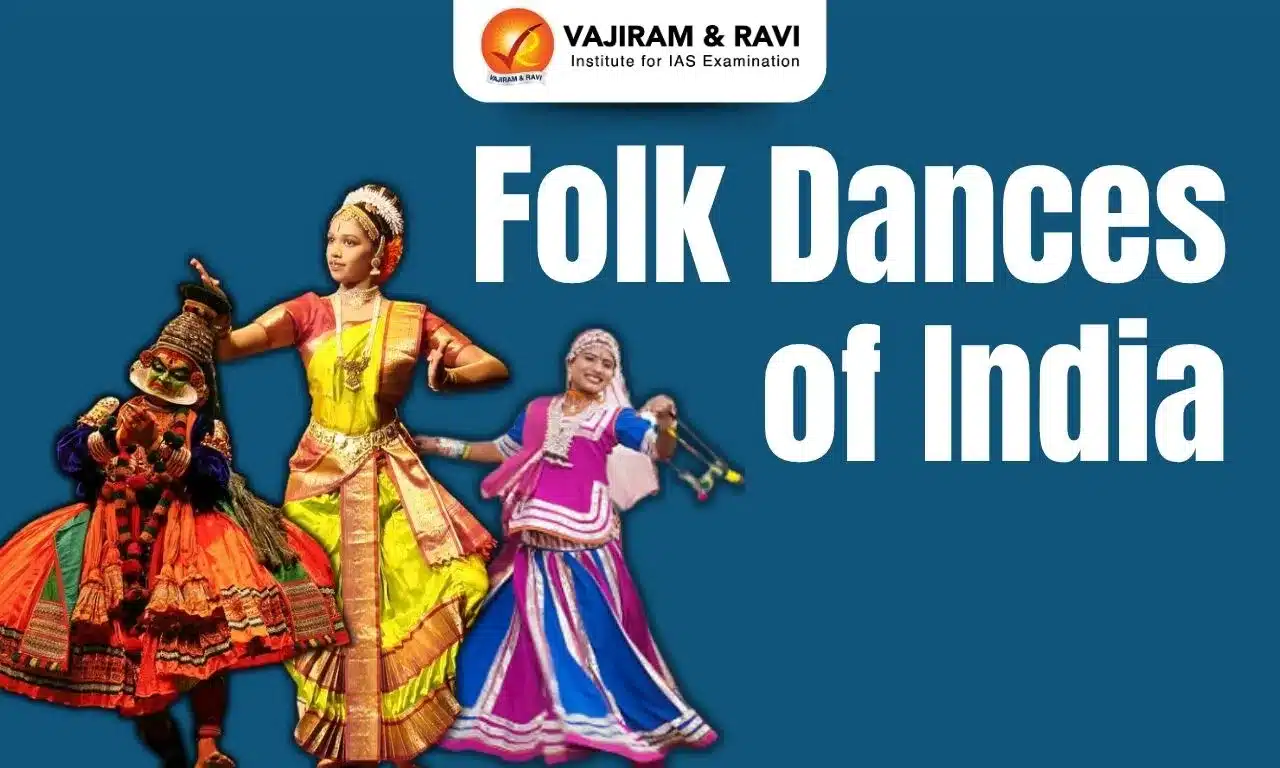
Demands of the Mutineers

  • The demands blended service grievances with larger anti-imperial politics:
    • Disciplinary action against Commander King and better service conditions.
    • Fair, speedy demobilisation with civilian employment prospects.
    • Better rations, pay parity with the Royal Navy, and access to NAAFI canteens (till then reserved for British personnel).
  • Political demands: withdrawal of British Indian troops from Indonesia and free trials for INA detainees.

Spread and Character of the Uprising

  • The mutineers organised themselves under the Naval Central Strike Committee (NCSC), led by M.S. Khan (President) and Madan Singh (Vice-President).
  • They called themselves the "Indian National Navy" and "Azad Hindis," invoking the legacy of the INA.
  • British flags on ships were replaced with a combination of Congress, Muslim League, and Communist Party flags.
  • Mutineers took over Butcher Island (now Jawahar Dweep) and trained guns on imperial symbols like the Gateway of India and Taj Mahal Hotel.
  • Civilian solidarity was extraordinary: nearly three lakh mill workers, dockyard staff, railway employees, and students in Bombay joined protests; citizens supplied food to the striking sailors.
  • Elements of the Royal Indian Air Force and local police also showed sympathetic or "mutinous" conduct, alarming the British further.

British Response and Suppression

  • The British responded with disproportionate force, leading to police firing on February 22, 1946, killing an estimated 400–700 people (mostly civilians) and injuring 1,500–2,000.
  • Facing the prospect of the Army, Navy, and Air Force turning unreliable, the British recognised they could no longer depend on coercive institutions to maintain control.

Role of National Leadership

  • Congress and Muslim League: Sardar Vallabhbhai Patel and Muhammad Ali Jinnah persuaded the mutineers to surrender, fearing that continued violence could derail the Cabinet Mission talks and trigger communal conflict.
  • Communists: The Communist Party of India and leaders like Aruna Asaf Ali fully backed the mutiny as a genuine anti-imperialist uprising.
  • The strike was called off on February 23, 1946, though the British later prosecuted many mutineers despite assurances of fair treatment.

Historical Significance

  • Many historians regard the mutiny as pivotal in convincing the British that Indian armed forces could no longer be relied upon to enforce colonial rule.
  • Soon after, Prime Minister Clement Attlee dispatched the Cabinet Mission to India and announced Britain's withdrawal plan.
    • Justice Phani Bhusan Chakravartti later recorded that Attlee himself attributed Britain's departure to the INA trials and the RIN mutiny.
  • Despite its significance, the mutiny received limited post-independence recognition — partly because it lacked a unifying leader like Netaji, and partly because independent India's new Navy was uncomfortable memorialising a mutiny.

Conclusion

  • The 1946 RIN Mutiny exposed the collapse of British authority over India's armed forces, shattering the myth of unquestioning loyalty. 
  • Though overshadowed by the freedom movement's larger narratives, it remains a decisive, if underappreciated, catalyst that hastened Britain's final exit from India.

Source: IE | IE

Royal Indian Navy Mutiny of 1946 FAQs

Q1: What was the Royal Indian Navy Mutiny of 1946?

Ans: The Royal Indian Navy Mutiny of 1946 was an uprising by Indian sailors against British rule that began at HMIS Talwar in Bombay.

Q2: Why did the Royal Indian Navy Mutiny of 1946 begin?

Ans: The Royal Indian Navy Mutiny of 1946 emerged from racial discrimination, poor conditions, inadequate food, job insecurity, and growing nationalist sentiment among Indian sailors.

Q3: How large was the Royal Indian Navy Mutiny of 1946?

Ans: The Royal Indian Navy Mutiny of 1946 eventually involved more than 20,000 sailors across 78 ships and 20 shore establishments.

Q4: What role did national leaders play in the Royal Indian Navy Mutiny of 1946?

Ans: During the Royal Indian Navy Mutiny of 1946, Sardar Patel and Muhammad Ali Jinnah persuaded sailors to surrender, fearing prolonged violence and political disruption.

Q5: Why was the Royal Indian Navy Mutiny of 1946 historically significant?

Ans: The Royal Indian Navy Mutiny of 1946 convinced many observers that British authorities could no longer depend reliably on Indian armed forces to maintain colonial rule.

Indian Bond Market Stability Amid Global Volatility – Key Factors Explained

Indian Bond Market

Indian Bond Market Latest News

  • Indian bond markets have remained relatively calm despite global volatility, with the 10-year benchmark yield rising only 8 basis points over six months while yields in most major economies climbed far more sharply.

Understanding Bonds and Yields

  • A government bond is a debt instrument through which a government borrows money for a fixed period, paying a set interest annually and returning the principal at maturity.
  • The bond yield is the effective annual return an investor earns. Yields move inversely to bond prices; when demand for bonds falls, prices drop, and yields rise. 
  • Government bond yields serve as a benchmark for interest rates across the financial system, influencing borrowing costs for companies, banks, and households.
  • Rising yields generally signal expectations of higher inflation, tighter monetary policy, or greater fiscal stress. 
  • Stable yields, by contrast, suggest investor confidence in a country's macroeconomic management.

How Indian Bonds Weathered the Storm

  • Over the six months up to August 14, 2026, 10-year benchmark yields rose substantially across most major economies:
    • United States: +60 basis points
    • Japan: +66 basis points
    • United Kingdom: +56 basis points
    • South Korea: +72 basis points
    • Indonesia: +78 basis points
    • Philippines: +61 basis points
  • Against this backdrop, the Indian 10-year yield rose by just 8 basis points, a striking divergence from global trends.

The Forces at Play

  • India's bond market has faced two sets of pressures pulling in opposite directions.
  • External pressures include the protracted conflict in West Asia, which has driven up energy prices, and lingering worries over rainfall due to El Niño conditions.
  • Offsetting domestic strengths include a benign inflation trajectory, resilient economic growth, a steady outlook on the Centre's fiscal position, and an improved external sector supported by RBI measures.
  • Monetary Policy: Holding Steady
    • The Monetary Policy Committee (MPC) has maintained a neutral hold for three consecutive meetings, resisting the emerging market "rate hike peer pressure."
    • For comparison, many emerging economies raised rates within a span of three months, either to contain inflationary pressures or to defend their currencies. India took a different path.

Why India Could Hold

  • The divergence reflects a relatively favourable inflation-growth mix. 
  • Supply-side measures and better management of second-round effects helped contain the spillover of the energy price shock into broader inflation and economic activity.
  • When inflation levels are compared across economies over the last six months, India's average deviation from its target, the upper bound of 6%, has been far smaller than that of peer nations. 
  • Core inflation, which excludes food and fuel, has been particularly soft.
  • This gave the MPC room to pause and assess rather than pivot from a pause to rate hikes.

RBI's Targeted Approach

  • Rather than relying on policy rate action, the RBI leaned on targeted market measures, particularly on the foreign exchange front.
  • The central bank stepped up efforts to attract dollar inflows through borrowing channels:
    • NRI deposits under the FCNR(B) scheme
    • External commercial borrowings
    • Overseas foreign currency borrowings
  • Together, these measures attracted around $56.8 billion between June 8 and August 13. The bulk came through the FCNR(B) scheme at $52.3 billion.
  • Given the scale of these flows, the RBI decided to keep the swap facility window open only until end-August, rather than end-September as initially planned.

Collateral Benefits

  • The dollar inflows produced several secondary benefits across the financial system:
    • System deposits ticked up, strengthening the banking sector's funding base.
    • Credit demand is being funded without banks resorting heavily to market borrowings such as certificates of deposit.
    • CD issuances have dropped, reducing high-cost funding pressure on banks.
  • Liquidity Impact
    • The inflows also infused significant liquidity into the banking system. Surplus liquidity averaged Rs. 3.2 lakh crore during August 1-13, compared with Rs. 1.3 lakh crore during the same window in July.
    • Easy liquidity conditions pushed overnight rates below the repo rate, towards the lower end of the policy corridor, which operates within a band of plus or minus 25 basis points around the repo rate.

Foreign Investment in Indian Debt

  • Sentiment around foreign debt inflows has been shaped by both positive and negative developments.
  • Positive Triggers
    • The government announced tax exemption for foreign debt investors, while the RBI worked to streamline investment restrictions and widen the scope of investable securities.
    • These steps led to debt inflows of $5.6 billion in June, the highest monthly inflow since January 2020.
  • The Index Inclusion Setback
    • On July 31, the deferment of India government bonds' inclusion in Bloomberg's Global Aggregate Index was announced. This dented positive sentiment around foreign debt inflows.
    • While the immediate gains from index-linked inflows have been delayed, the broader expectation is that inclusion is a matter of time rather than doubt.

Outlook on Rates

  • The path to a policy pivot is expected to remain calibrated and data-dependent. 
  • Three factors are identified as key swing variables:
    • Developments in West Asia
    • El Niño and monsoon risks
    • US Federal Reserve policy actions
  • Contrary to broader market expectations of three rate hikes, the assessment presented is that only one to two hikes are likely, and those in the latter half of FY27, around the December or February policy meetings.
  • The view expressed is that much of the negative news is already priced into bond markets, and several countervailing forces may play out favourably, making the rate outlook less pessimistic than prevailing street expectations.

Significance

  • The stability of Indian bond yields amid global turbulence carries several implications.
  • It reflects investor confidence in India's macroeconomic management at a time when several emerging markets have faced pressure. 
  • It also demonstrates the effectiveness of targeted policy tools, using foreign exchange measures rather than blunt rate hikes to address external pressures.
  • For the government, stable yields mean lower borrowing costs, which matters given ongoing fiscal demands from fertiliser subsidies and energy price management. 
  • For businesses and households, it translates into more predictable interest rates.
  • Most importantly, the combination of benign inflation, steady growth, and targeted interventions has bought the MPC something valuable in a volatile global environment: time to assess before acting.

Source: TH

Indian Bond Market FAQs

Q1: How much did the Indian 10-year bond yield rise over the past six months?

Ans: The Indian 10-year yield rose by just 8 basis points, compared with 56 to 78 basis points across most major economies.

Q2: How many consecutive meetings has the MPC held rates steady?

Ans: The Monetary Policy Committee has maintained a neutral hold for three straight meetings.

Q3: How much did the RBI's foreign exchange measures attract in dollar inflows?

Ans: Around $56.8 billion was attracted between June 8 and August 13, with $52.3 billion coming through the FCNR(B) scheme.

Q4: What were the debt inflows in June and why were they significant?

Ans: Debt inflows reached $5.6 billion in June, the highest monthly inflow since January 2020, driven by tax exemptions for foreign debt investors and eased investment restrictions.

Q5: What are the key factors that could influence future rate decisions?

Ans: Developments in West Asia, El Niño and monsoon risks, and US Federal Reserve policy actions are identified as the key swing factors.

Daily Editorial Analysis 17 August 2026

Daily-Editorial-Analysis

India is Losing West Asia, But It Is Not Too Late

Context

  • West Asia is undergoing a once-in-a-generation shift in its security architecture and political alignments.
  • Amid this churn, India's decade-long gains in the region are fading, and it is unclear whether New Delhi has a coherent strategy to respond.
  • Against this backdrop, this article highlights the changing security architecture of West Asia and the erosion of India’s decade-long gains in the region.
  • It examines Pakistan’s rising diplomatic role, the Saudi-Türkiye-Pakistan defence pact, risks to India’s strategic interests, and the need for an active, independent regional strategy.

India's Fading Footprint in West Asia

  • India had built significant goodwill in the region over the past decade:
    • In 2016, Saudi Arabia conferred its highest civilian honour on India's Prime Minister.
    • In 2021, the I2U2 grouping bound India, Israel, the US, and the UAE in a shared framework.
    • In 2024, Iran leased the Chabahar port to India, boosting its connectivity ambitions.
  • These achievements now belong to the past, as regional dynamics have shifted sharply against India's favour.

The Regional Conflict and Pakistan's Rising Role

  • Over the last four months, the US-Israel war with Iran has escalated into a wider regional conflict.
  • Iran has struck GCC countries, Saudi Arabia has hit Iraqi militias, Houthis have attacked Saudi ships, and Israel has carried out strikes across multiple states.
  • Gulf countries are now questioning the reliability of the US security umbrella, with the UAE favouring engagement and Saudi Arabia leaning towards deterrence.
  • Within this uncertainty, Pakistan has gained diplomatic standing as a mediator in the US-Iran conflict, stepping in where Türkiye, Qatar, and Egypt could not succeed.
  • This has translated into a new collective defence pact between Saudi Arabia, Türkiye, and Pakistan, signed in Mecca.

Why This Pact Matters for India

  • The pact is aimed less at Iran and more at deterring Israel, since all three signatories see themselves as potential future targets.
  • It pools Saudi capital, Pakistani military strength, and Turkish technology.
  • A future Israel-Pakistan conflict could draw India in, given its close ties with Israel.
  • Greater Turkish backing for Pakistan in any future India-Pakistan conflict cannot be ruled out.

The Strategic Choices Before India

  • India's current approach rests on confidence in Israel's eventual victory, given its US backing.
  • However, American domestic politics are shifting, with both the political right and left increasingly questioning unconditional support for Israel — raising doubts about Israel's ability to prevail on its own.
  • India's UAE relationship also faces strain from the UAE's growing rift with Saudi Arabia and its positions on UN-unrecognised governments in conflicts such as Sudan.
  • Three broad paths lie before India:
    • Alliance-building with Israel and the UAE — but this risks damaging ties with Iran and Saudi Arabia.
    • Continued inaction — but this leaves Indian mariners exposed to attacks in the Strait of Hormuz and the Bab-el-Mandeb.
    • An active, independent regional strategy — positioning India as a trust-builder rather than a party to any bloc.

The Third Way: An Active Regional Strategy

  • The article proposes a proactive Indian role, including:
    • Re-engaging Saudi Arabia, with whom India has no major disagreements.
    • Rebuilding trust between Arab states and Iran, beginning with the UAE-Iran relationship.
    • Supporting Jordan's security needs through defensive technology at a time of strained US resources.
    • Contributing to future UN peacekeeping efforts in Lebanon, especially as UNIFIL's mandate faces an uncertain future.
    • Coordinating with Egypt to protect India-bound shipping through the Suez Canal and Bab-el-Mandeb, if India cannot join the Saudi-led Red Sea maritime force.
    • Exploring a military presence in the Red Sea region, such as in Somaliland or Socotra.
    • Expanding military training exchanges and joint exercises across the region.
    • Appointing a Special Envoy for West Asia to coordinate India's interests beyond the Israel-Palestine peace process alone.

Conclusion

  • India's West Asia policy stands at a crossroads: drift risks strategic irrelevance, while premature alliances risk alienating old partners.
  • A proactive, trust-building approach — engaging all sides — offers India the surest path to restoring its regional influence and safeguarding vital maritime and economic interests.

India is Losing West Asia, But It Is Not Too Late FAQs

Q1. Why is India’s influence in West Asia considered to be declining?

Ans: India’s decade-long gains are fading as regional alignments shift, Pakistan gains diplomatic influence, and Gulf states reconsider their dependence on the United States.

Q2. Why is the Saudi-Türkiye-Pakistan defence pact significant for India?

Ans: The pact combines Saudi capital, Turkish technology, and Pakistani military strength, potentially affecting India’s strategic interests and future India-Pakistan or Israel-related conflicts.

Q3. What strategic choices does India face in West Asia?

Ans: India can build alliances with Israel and UAE, remain inactive, or pursue an independent regional strategy focused on trust-building and balanced engagement.

Q4. What does an active regional strategy for India involve?

Ans: It involves re-engaging Saudi Arabia, rebuilding Arab-Iran trust, supporting Jordan, protecting maritime routes, expanding defence cooperation, and appointing a Special Envoy for West Asia.

Q5. Why should India avoid joining a West Asian bloc?

Ans: Joining a bloc could alienate important partners such as Iran and Saudi Arabia, whereas balanced engagement allows India to preserve strategic autonomy and regional influence.

Source: TH


E20 Ethanol Blending - The Real Debate Is Food, Fuel and Irreversibility

Context

  • The controversy over E20 petrol (20% ethanol blending) has largely focused on claims that it damages engines and significantly reduces mileage.
  • While evidence does not substantiate widespread engine damage, the controversy exposes a more important policy question: how far should India expand ethanol blending?
  • This question is more significant given ethanol blending’s implications for food security, water use, farm incomes, energy security and the environment.

E20 and Engine Concerns - Separating Fact from Fear

  • Ethanol contains roughly two-thirds the energy of petrol. Since E20 contains only one-fifth ethanol, the expected energy-related reduction in mileage is around 6–7%, not the exaggerated 30% often circulated online.
  • E20 can also reduce carbon monoxide and unburnt hydrocarbon emissions, offering environmental benefits.
  • Evidence on engine durability is broadly reassuring. For example,
    • Oak Ridge National Laboratory tested 86 vehicles over nearly 10 million km using blends up to E20 and found no increased wear in vehicles not rated for E20.
    • Indian testing by ARAI, the Petroleum Institute and Indian Oil similarly did not establish widespread engine damage.
  • Genuine vulnerability - Older two-wheelers

    • The important exception is India's estimated 75–80 million pre-BS4 two-wheelers, many of which use carburettors.
    • These cannot automatically adjust to the additional oxygen in ethanol blends, potentially causing lean combustion and overheating. Older ethanol-incompatible rubber seals may also deteriorate.
    • The original policy roadmap envisaged retaining a lower ethanol blend for such vehicles.
    • Restoring E10 alongside E20 could protect the legacy fleet while allowing gradual retrofitting.

The Bigger Question - Should Blending Go Beyond E20?

  • The real policy dilemma begins with proposals for E27/E30. Higher blending could increasingly shift agricultural resources from food towards fuel.
  • India's annual crude oil import bill is around ₹11–12 lakh crore, while the edible oil import bill is approximately ₹1.6–1.75 lakh crore.
  • E20 reduces the crude oil bill by only about 3–4%, whereas edible-oil self-sufficiency offers a potentially more achievable reduction in import dependence.
  • India currently produces only around 40% of its edible oil requirement and aims to raise domestic production substantially by 2030–31.

Maize and the Food-vs-Fuel Trade-off

  • The ethanol feedstock structure has changed significantly. For example, maize accounts for about half of ethanol production, and grains collectively contribute nearly 67%.
  • Maize competes with soybean, groundnut and mustard for agricultural land.
  • Policy incentives intensify this competition because ethanol procurement prices can make maize attractive irrespective of market conditions.
  • Distillation by-products are also sold as animal feed, potentially weakening demand and prices for soybean meal.
  • Thus, oilseed farmers may face a double disadvantage through both land competition and weaker oilseed prices.

Water Security - Focus on Blue Water

  • Water consumption must be assessed carefully. Headline claims about thousands of litres of water per litre of ethanol often combine:
    • Green water — rainfall naturally received by crops.
    • Blue water — water drawn from rivers, canals, groundwater and wells.
  • For water-stressed regions, particularly parts of Maharashtra and Karnataka, policy should primarily regulate blue-water consumption, since it directly competes with other human and ecological requirements.

Is More Ethanol Necessarily Greener?

  • The environmental case for moving beyond E20 is not conclusive.
  • Higher blending would rely substantially on grain-based ethanol, while Indian life-cycle assessments differ on whether grain ethanol delivers significant climate benefits after accounting for cultivation, processing and associated inputs.
  • Therefore, the green argument for higher blending requires stronger scientific scrutiny, rather than being treated as self-evident.

Gains and Costs of the Ethanol Programme

  • Ethanol blending has produced significant benefits -
    • Helped clear sugarcane arrears.
    • Created an assured market for farmers.
    • Supported rural incomes.
    • Enabled distilleries to utilise surplus sugar.
    • Reduced some dependence on imported fossil fuels.
  • However, remaining at E20 also has costs. For example,
    • Distilleries have invested in capacity based on expectations of higher ethanol demand,
    • While loans and the management of sugar surpluses are increasingly linked to the ethanol programme.
  • Hence, both the benefits of expansion and the costs of stopping at E20 must enter the policy calculus.

Policy Principle - Prioritise Reversible Decisions

  • The most important policy insight is the distinction between reversible and irreversible interventions.
  • Measures such as ethanol procurement prices, lower-blend “protection fuel”, water-use regulations, and edible-oil import duties can be modified relatively quickly.
  • In contrast, once agricultural land and water are committed to fuel production, and cropping patterns and distillery capacity are established, reversing the policy becomes difficult and costly.
  • Therefore, India should adopt a precautionary, evidence-based approach before increasing the mandatory blend beyond E20.

Way Forward

  • Restore E10 or another lower blend for the older vehicle fleet.
  • Correct pricing incentives that disproportionately favour maize over oilseeds.
  • Regulate ethanol production based on blue-water availability in water-stressed regions.
  • Reassess edible-oil import duties and agricultural incentives to promote domestic oilseed production.
  • Undertake a comprehensive food-versus-fuel cost-benefit analysis before moving beyond E20.
  • Continue scientific assessment of ethanol's life-cycle emissions and water footprint.

Conclusion

  • The E20 controversy should not be reduced to a question of engine damage or mileage.
  • The deeper issue is whether India should commit scarce land, water and agricultural resources to progressively higher fuel blending when the gains in energy security remain modest and some consequences may be difficult to reverse.

Ethanol Blending FAQs

Q1. What does the E20 controversy reveal about the challenges of India's ethanol-blending policy?

Ans. While E20 does not cause widespread engine damage, its expansion raises concerns over food security, water stress, etc.

Q2. Why should E10 be retained alongside E20 in India?

Ans. E10 would protect the estimated 75–80 million older pre-BS4 two-wheelers vulnerable to ethanol-related issues.

Q3. What is the emerging food-versus-fuel trade-off in India's ethanol policy?

Ans. Greater reliance on maize and other grains for ethanol can compete with soybean, groundnut and mustard for land.

Q4. How should water use in ethanol production be regulated?

Ans. Policy should focus on blue-water consumption drawn from groundwater, rivers and canals rather than green rainwater.

Q5. Why should India adopt a cautious approach before moving beyond E20?

Ans. India should first implement reversible measures and conduct a comprehensive food-fuel-energy-environment cost-benefit analysis.

Source: IE

Daily Editorial Analysis 2026 FAQs

Q1: What is editorial analysis?

Ans: Editorial analysis is the critical examination and interpretation of newspaper editorials to extract key insights, arguments, and perspectives relevant to UPSC preparation.

Q2: What is an editorial analyst?

Ans: An editorial analyst is someone who studies and breaks down editorials to highlight their relevance, structure, and usefulness for competitive exams like the UPSC.

Q3: What is an editorial for UPSC?

Ans: For UPSC, an editorial refers to opinion-based articles in reputed newspapers that provide analysis on current affairs, governance, policy, and socio-economic issues.

Q4: What are the sources of UPSC Editorial Analysis?

Ans: Key sources include editorials from The Hindu and Indian Express.

Q5: Can Editorial Analysis help in Mains Answer Writing?

Ans: Yes, editorial analysis enhances content quality, analytical depth, and structure in Mains answer writing.

Gautam Buddha, Life, Teachings, Philosophy, Buddhism, Contribution

Gautam Buddha

Gautam Buddha was one of the greatest spiritual teachers and the founder of Buddhism. Born as Siddhartha Gautama, he attained enlightenment after years of meditation and dedicated his life to teaching the path to end human suffering. His teachings on compassion, non-violence, ethical living, and the Middle Path transformed Indian society and spread across many parts of Asia. Even today, Gautam Buddha's life, philosophy, and teachings continue to inspire people to lead peaceful, balanced, and meaningful lives.

Who Was Gautam Buddha?

Gautam Buddha was one of the greatest spiritual teachers and philosophers of ancient India. He was the founder of Buddhism, one of the world's major religions. Born as Siddhartha Gautama in the 6th century BCE, he belonged to the Shakya clan of the Kshatriya community.

After witnessing the realities of human life, including old age, disease, and death, Siddhartha renounced his royal life in search of truth and a way to overcome human suffering. After years of meditation and spiritual practice, he attained enlightenment under the Bodhi Tree at Bodh Gaya and became known as Buddha, meaning "the Enlightened One.”

Life and Early Years of Gautam Buddha

Gautam Buddha, originally known as Siddhartha Gautama, was born in the 6th century BCE at Lumbini in present-day Nepal. Born into a royal family, he lived a luxurious life but later renounced worldly comforts to search for the truth about human suffering and the path to enlightenment.

  • Siddhartha Gautama was born around 563 BCE to King Suddhodana, the ruler of the Shakya clan, and Queen Maya Devi.
  • His mother passed away shortly after his birth, and he was raised by his maternal aunt Mahaprajapati Gautami.
  • He belonged to the Kshatriya class and was brought up as a prince in the Shakya kingdom.
  • According to Buddhist traditions, sages predicted that Siddhartha would either become a great ruler or a great spiritual teacher.
  • His father wanted him to become a powerful king and protected him from witnessing the hardships of life.
  • Siddhartha spent his early years surrounded by wealth, comfort, and royal privileges.
  • He received education in subjects like warfare, administration, philosophy, and religious teachings suitable for a prince.
  • He married Yashodhara and later had a son named Rahula.
  • Despite having a comfortable life, Siddhartha felt deeply concerned about the problems of human existence.
  • His perspective changed after seeing the Four Sights, an old person, a sick person, a dead body, and a monk.
  • These experiences made him realise that wealth and material pleasures could not provide permanent happiness.
  • At the age of 29, Siddhartha left his palace, family, and royal responsibilities in search of spiritual knowledge.
  • This event is known as Mahabhinishkramana (The Great Renunciation) and marked the beginning of his journey towards enlightenment.

The Four Great Events in Gautam Buddha's Life

The life of Gautam Buddha is marked by four major events that represent his journey from a royal prince to an enlightened spiritual teacher. These events, Birth, Enlightenment, First Sermon, and Mahaparinirvana are considered the most important milestones in Buddhist tradition.

Birth at Lumbini

  • Gautam Buddha was born as Siddhartha Gautama around 563 BCE at Lumbini in present-day Nepal.
  • He was born to King Suddhodana and Queen Maya Devi of the Shakya clan.
  • His birth is celebrated as Buddha Purnima or Vesak by followers of Buddhism.
  • Lumbini is recognised as one of the four major Buddhist pilgrimage sites.

Enlightenment at Bodh Gaya

  • After leaving his royal life at the age of 29, Siddhartha Gautama spent years practising meditation and searching for the truth.
  • He attained enlightenment at the age of 35 under the Bodhi Tree at Bodh Gaya in present-day Bihar.
  • After attaining enlightenment, he became known as Buddha, meaning "The Enlightened One."
  • He gained knowledge about the causes of suffering and discovered the path to liberation.

First Sermon at Sarnath

  • After enlightenment, Buddha delivered his first sermon at Deer Park, Sarnath, near Varanasi.
  • This event is known as Dharmachakra Pravartana, meaning "Turning of the Wheel of Dharma."
  • In this sermon, he explained the Four Noble Truths and the Eightfold Path.
  • This marked the beginning of the spread of Buddhist teachings and the formation of the Buddhist Sangha.

Mahaparinirvana at Kushinagar

  • Gautam Buddha attained Mahaparinirvana at the age of 80 at Kushinagar in present-day Uttar Pradesh.
  • It marked his final liberation from the cycle of birth, death, and rebirth.
  • Before his death, Buddha advised his followers to follow his teachings and practice self-discipline.
  • Kushinagar became an important Buddhist pilgrimage centre after this event.

Teachings of Gautam Buddha Four Noble Truths and Eightfold Path

The teachings of Gautam Buddha focus on understanding the causes of human suffering and finding a practical way to achieve peace and liberation. His philosophy is mainly based on the Four Noble Truths and the Eightfold Path, which form the foundation of Buddhism. These teachings guide individuals towards ethical living, self-control, wisdom, and the attainment of Nirvana.

Four Noble Truths

The Four Noble Truths are the core principles taught by Buddha after attaining enlightenment. They explain the nature of suffering and the path to overcome it.

  1. Truth of Suffering (Dukkha)
  • Buddha explained that suffering is an unavoidable part of human life.
  • Birth, ageing, illness, death, separation from loved ones, and unfulfilled desires are different forms of suffering.
  • He believed that understanding the reality of suffering is the first step towards finding a solution.
  1. Truth of the Cause of Suffering (Samudaya)
  • According to Buddha, the main cause of suffering is desire, attachment, and ignorance.
  • Human beings suffer because they develop strong attachments to material possessions, relationships, and expectations.
  • The endless cycle of desire and dissatisfaction keeps individuals away from true happiness.
  1. Truth of the End of Suffering (Nirodha)
  • Buddha taught that suffering can be overcome by eliminating desires and attachments.
  • The complete freedom from suffering is known as Nirvana.
  • Nirvana represents a state of peace, wisdom, and liberation from the cycle of birth and rebirth.
  1. Truth of the Path Leading to the End of Suffering (Magga)
  • Buddha explained that the way to overcome suffering is through the Eightfold Path.
  • This path helps individuals develop moral conduct, mental discipline, and wisdom.

Eightfold Path of Buddhism

The Eightfold Path is the practical way taught by Gautam Buddha to overcome suffering and achieve Nirvana. It focuses on developing wisdom, ethical conduct, and mental discipline.

  1. Right View (Samyak Drishti): Understanding the true nature of life, including the Four Noble Truths, karma, and the causes of suffering.
  2. Right Intention (Samyak Sankalpa): Developing positive thoughts, compassion, kindness, and avoiding hatred, greed, and harmful desires.
  3. Right Speech (Samyak Vacha): Speaking truthfully and avoiding lies, abusive language, gossip, and words that create conflict.
  4. Right Action (Samyak Karmanta): Following moral behaviour by practising non-violence, honesty, and respecting all living beings.
  5. Right Livelihood (Samyak Ajiva): Choosing an ethical profession that does not cause harm to others.
  6. Right Effort (Samyak Vyayama): Making continuous efforts to remove negative qualities and develop positive thoughts and actions.
  7. Right Mindfulness (Samyak Smriti): Maintaining awareness of one's thoughts, emotions, actions, and surroundings.
  8. Right Concentration (Samyak Samadhi): Practising meditation and developing mental focus to achieve inner peace and wisdom.

Core Philosophy and Principles of Buddhism

The philosophy of Buddhism is based on Gautam Buddha’s teachings about overcoming suffering through wisdom, ethical conduct, and self-discipline. It focuses on achieving peace, compassion, and liberation.

  • Middle Path (Madhyam Marg): Buddha taught a balanced way of life by avoiding both luxury and extreme hardship.
  • Four Noble Truths: It explains the nature of suffering, its causes, the end of suffering, and the path to liberation.
  • Concept of Karma: Every action has consequences, and good deeds lead to positive outcomes.
  • Nirvana: The ultimate goal of Buddhism is liberation from suffering and the cycle of birth and rebirth.
  • Ahimsa (Non-Violence): Buddha promoted peace, kindness, and respect for all living beings.
  • Compassion (Karuna): Buddhism encourages empathy, love, and concern for others.
  • Anitya (Impermanence): It teaches that everything in life is temporary and constantly changing.
  • Anatta (No Permanent Self): Buddhism rejects the idea of a fixed and permanent self.
  • Meditation and Mindfulness: These practices help develop awareness, concentration, and inner peace.
  • Equality and Social Harmony: Buddha emphasised equality and opposed discrimination based on birth.
  • Ethical Living: Buddhism promotes truthfulness, moral conduct, and self-control.

Gautam Buddha FAQs

Q1: Who was Gautam Buddha?

Ans: Gautam Buddha, originally known as Siddhartha Gautama, was the founder of Buddhism and one of the greatest spiritual teachers in history.

Q2: Where was Gautam Buddha born?

Ans: Gautam Buddha was born at Lumbini, located in present-day Nepal, around 563 BCE.

Q3: What was the original name of Gautam Buddha?

Ans: His original name was Siddhartha Gautama.

Q4: Why did Siddhartha Gautama leave his palace?

Ans: He left his royal life at the age of 29 after witnessing old age, sickness, death, and a monk, seeking a solution to human suffering.

Q5: Where did Gautam Buddha attain enlightenment?

Ans: He attained enlightenment under the Bodhi Tree at Bodh Gaya in present-day Bihar.

Kargil War 1999, Reason, Duration, Heroes, Response, Impacts

Kargil War

The Kargil War was a high altitude conflict fought between India and Pakistan started on 3 May till 26 July 1999 for the duration of 2 months, 3 weeks and 2 days (85 days) in the Kargil district of Ladakh. It took place along the Line of Control in the disputed Kashmir region and is considered one of the rare conventional wars between two nuclear armed nations. The Kargil War stands as a significant military episode marked by extreme terrain, strategic challenges and remarkable acts of bravery by soldiers on both sides.

Kargil War Background and Reasons

The Kargil War developed from long standing India and Pakistan tensions and strategic miscalculations that escalated into a limited but intense conflict in 1999. The timeline for the reasons that resulted into the war has been listed below:

  • Partition and Kashmir Dispute: The roots of the Kargil War lie in the Partition of India 1947, which led to disputes over Accession of Jammu and Kashmir to India, triggering the first India Pakistan War.
  • Continued Hostilities: The Indo-Pak War 1965 and 1971 deepened mistrust, while the 1972 Simla Agreement established the Line of Control but failed to permanently resolve territorial tensions in Kashmir.
  • Rise of Insurgency: During the 1980s and 1990s, Kashmir witnessed insurgency and cross border infiltration, increasing military engagement and instability along the Line of Control.
  • Nuclear Context: In 1998, both India and Pakistan conducted nuclear tests, making the Kargil War a rare instance of direct conflict between nuclear armed states under global scrutiny.
  • Lahore Declaration: In February 1999, both countries signed an agreement to resolve disputes peacefully, but the spirit of cooperation soon broke due to covert military actions.
  • Pakistani Infiltration: In early 1999, Pakistani troops and militants infiltrated across the Line of Control under a planned strategy to occupy high altitude posts in Kargil.
  • Strategic Objective: The aim was to cut off the Srinagar-Leh highway, weakening India’s supply line and forcing negotiations on the Kashmir issue.
  • Terrain Advantage: Pakistani forces occupied higher peaks, giving them a tactical advantage to observe and target Indian troop movements below.

Also Read: Carnatic Wars

Kargil War Course

The Kargil War unfolded through a clear timeline of infiltration, detection, counterattack and eventual withdrawal under pressure.

  • Initial Infiltration: Pakistani troops secretly occupied Indian positions in February 1999, taking advantage of winter conditions when posts were lightly held.
  • Detection of Intrusion: On May 3, 1999, local shepherds reported unusual movements, leading to confirmation of infiltration by Indian forces on May 5.
  • Launch of Operation Vijay: India initiated a large scale military operation on May 10 to push back intruders and reclaim occupied territories.
  • Air Support Begins: On May 26, the Indian Air Force launched Operation Safed Sagar to assist ground troops with aerial strikes and reconnaissance missions.
  • Diplomatic Efforts: Talks between foreign ministers on June 12 failed, while international pressure gradually built against Pakistan’s actions.
  • Capture of Tololing: On June 13, Indian forces recaptured Tololing peak after intense fighting, marking a turning point in the Kargil War.
  • Victory at Tiger Hill: On July 4, Indian troops successfully retook Tiger Hill, a strategic peak that significantly shifted momentum in India’s favor.
  • Withdrawal Announcement: On July 11, Pakistan agreed to withdraw its troops under international pressure, especially after diplomatic engagement with global powers.
  • Declaration of Success: On July 14, India declared Operation Vijay successful after regaining major positions along the Line of Control.
  • End of Conflict: The Kargil War officially ended on July 26, 1999, which is now commemorated annually as Kargil Vijay Diwas in India.

Kargil War Battles and Operations

The Kargil War witnessed several high altitude battles and coordinated military operations that determined the outcome of the conflict.

  • Battle of Tololing: Tololing peak, over 16,000 feet high, was recaptured after a three week assault, marking a critical early success for Indian forces.
  • Battle of Tiger Hill: This fierce battle involved intense combat at 16,500 feet, where Indian troops reclaimed the peak after sustained and coordinated attacks.
  • Battle of Point 4875: Located in the Dras sector, this strategic peak allowed monitoring of the highway and was recaptured after heavy fighting.
  • Operation Vijay: The Indian Army’s primary mission focused on reclaiming occupied positions through coordinated infantry assaults, artillery support and strategic planning.
  • Operation Safed Sagar: The Indian Air Force conducted precision strikes using Mirage 2000 aircraft and laser guided bombs to destroy enemy bunkers.
  • Operation Talwar: The Indian Navy ensured maritime security and strategic deterrence, positioning fleets to signal readiness for escalation if required.

India’s Response in Kargil War

India’s response during the Kargil War combined military precision, strategic restraint and diplomatic efforts to achieve success.

  • Military Strategy: India focused on evicting intruders without crossing the Line of Control, maintaining strategic discipline and international legitimacy.
  • Infantry Operations: Soldiers undertook dangerous climbs on steep slopes under enemy fire, engaging in close combat to recapture peaks.
  • Air Power Utilization: The Indian Air Force carried out precision strikes, reconnaissance and logistical support, significantly enhancing operational effectiveness.
  • Logistical Support: Supplies such as food, ammunition and medical aid were airlifted to high altitude positions, ensuring continuous operational capability.
  • Intelligence and Surveillance: Use of satellite imagery, UAVs and ground intelligence helped identify enemy positions and plan targeted attacks.
  • Diplomatic Campaign: India highlighted Pakistan’s violation of the Line of Control, gaining global support and isolating Pakistan diplomatically.
  • Psychological Warfare: Efforts were made to demoralize enemy troops through broadcasts and strategic communication about India’s military strength.
  • Joint Operations: Coordination between the Army, Air Force and Navy ensured unified execution of operations and effective battlefield outcomes.
  • High Altitude Warfare: Battles occurred at extreme altitudes around 16,500 feet, requiring specialized training, acclimatization and resilience under harsh conditions.
  • Artillery: Bofors FH-77B howitzers played a decisive role by targeting enemy positions and providing covering fire for advancing troops.

Also Read:- Operation Safed Sagar

Kargil War Impacts and Aftermath

The Kargil War had significant military, political and diplomatic consequences for both India and Pakistan.

  • Casualties: Over 500 Indian soldiers lost their lives, while Pakistani losses ranged between 400 and 4,000, reflecting the intensity of the conflict.
  • Territorial Outcome: India successfully recaptured all occupied positions by July 26, restoring control over its territory along the Line of Control.
  • Strategic Lessons: The war exposed gaps in surveillance and intelligence, leading to reforms in defense preparedness and border monitoring systems.
  • Political Impact in Pakistan: The conflict led to tensions between civilian leadership and the military, culminating in a coup later in 1999.
  • International Reaction: Global powers largely supported India’s stance and criticized Pakistan for violating the Line of Control.
  • Nuclear Concerns: The war raised fears of escalation into nuclear conflict, prompting international diplomatic intervention to de-escalate tensions.
  • Strengthening Diplomacy: India’s restraint and diplomatic outreach enhanced its global image and strengthened future international partnerships.
  • National Unity: The Kargil War generated strong public support and patriotism across India, bringing attention to the sacrifices of soldiers.

Kargil War Heroes

The Kargil War is remembered for extraordinary bravery displayed by soldiers who made significant contributions during the conflict.

  • Capt. Vikram Batra: He led successful assaults on Points 5140 and 4875 under heavy fire and was awarded the Param Vir Chakra posthumously.
  • Capt. Yogendra Singh Yadav: Despite multiple bullet injuries, he climbed Tiger Hill and played a crucial role in capturing enemy bunkers, earning the Param Vir Chakra.
  • Capt. Manoj Kumar Pandey: He led an attack on Khalubar Ridge, destroying enemy bunkers despite injuries and was posthumously awarded the Param Vir Chakra.
  • Rifleman Sanjay Kumar: He fought face to face combat, captured enemy weapons and turned them against intruders, receiving the Param Vir Chakra.
  • Major Rajesh Adhikari: He led operations during the Tololing battle and sacrificed his life while neutralizing enemy positions, and was awarded Maha Vir Chakra (Posthumous).
  • Captain Anuj Nayyar: He destroyed multiple enemy bunkers during the assault on Pimple II before being killed in action, earning the Maha Vir Chakra.
  • Lieutenant Clifford Nongrum: He led attacks on steep slopes and inspired troops to capture key positions despite sustaining fatal injuries, received Maha Vir Chakra.
  • Major Vivek Gupta: He played a key role in the Tololing assault, breaking enemy defenses despite being critically wounded, and was awarded Maha Vir Chakra (Posthumous).
  • Captain Vijyant Thapar: He led the assault on Knoll in Dras sector, destroyed multiple enemy bunkers despite injuries, and was martyred near the objective, earning the Vir Chakra (Posthumous).

Kargil War Awards

The Kargil War witnessed exceptional bravery and dedication, with numerous soldiers being honoured for their courage, leadership and service under extreme combat conditions.

  • Param Vir Chakra (PVC): 4 soldiers were awarded India’s highest gallantry award for displaying the most exceptional bravery in the face of the enemy.
  • Maha Vir Chakra (MVC): 9 soldiers received this award for acts of conspicuous gallantry during intense combat operations.
  • Vir Chakra (VC): 55 personnel were honoured for their courage and valour in battlefield conditions.
  • Sarvottam Yudh Seva Medal (SYSM): 1 soldier was awarded for exceptional service during wartime operations.
  • Uttam Yudh Seva Medal (UYSM): 6 personnel were recognised for distinguished service of a high order in operational roles.
  • Yudh Seva Medal (YSM): 8 soldiers were awarded for notable service in operational situations.
  • Sena Medal (SM): 83 personnel received this award for individual acts of bravery and devotion to duty.
  • Vayu Sena Medal (VSM): 24 personnel of the Air Force were honoured for distinguished service and courage during aerial operations.

Kargil War Memorial

The Kargil War Memorial stands as a tribute to the soldiers who sacrificed their lives during the conflict and symbolizes national pride and remembrance.

  • Location: The memorial is located in Dras, about 60 kilometers from Kargil, near the battlefield where intense fighting took place.
  • Construction: Built by the Indian Army, the memorial features pink sandstone walls inscribed with names of soldiers who died during the war.
  • Symbolic Structure: It includes a central monument with soldiers depicted holding the national flag, representing courage, sacrifice and victory.
  • Commemoration: Every year on July 26, Kargil Vijay Diwas is observed at the site to honor the martyrs of the Kargil War.
  • Emotional Significance: Visitors experience a deep sense of respect and reflection while walking through the memorial and reading the names of fallen soldiers.
  • Cultural Importance: The memorial has become a symbol of patriotism and serves as a reminder of the sacrifices made to protect the nation’s sovereignty.
Also Check
Operation Sindoor Operation Sankat Mochan
Operation Ganga Operation Olivia
Operation Devi Shakti Operation Safe Homecoming
Operation Cactus Operation Keller
Operation Kaveri Operation Rising Lion
Operation Karuna Operation Airlift
Operation Megh Chakra Operation Maitri
Operation Rahat Operation Nader
Operation Dost Operation Baam
Operation Samudra Setu Operation Mahadev
Operation Iron Swords Operation Shiv Shakti
Operation Sagar Bandhu Operation Smiling Buddha

Kargil War FAQs

Q1: What was the Kargil War?

Ans: The Kargil War was a conflict between India and Pakistan fought from May to July 1999 in the Kargil region along the Line of Control.

Q2: Why did the Kargil War happen?

Ans: It occurred due to Pakistani infiltration into Indian territory to capture strategic peaks and disrupt the Srinagar-Leh highway.

Q3: What was Operation Vijay 1999 that took place during the Kargil War?

Ans: Operation Vijay was India’s military operation launched to recapture occupied areas from Pakistani intruders during the Kargil War.

Q4: When is Kargil Vijay Diwas observed?

Ans: Kargil Vijay Diwas is observed every year on July 26 to mark India’s victory in the Kargil War.

Q5: Who were the major heroes of the Kargil War?

Ans: Major heroes of the Kargil War include Capt. Vikram Batra, Capt. Manoj Kumar Pandey, Grenadier Yogendra Singh Yadav and Rifleman Sanjay Kumar.

National Consumer Disputes Redressal Commission, Mandate

National Consumer Dispute Redressal Commission

National Consumer Dispute Redressal Commission Latest News

Recently, the Supreme Court expressed concern over the pending cases in the National Consumer Dispute Redressal Commission and asked the Centre to consider setting up regional and circuit benches to clear the backlog.

About National Consumer Dispute Redressal Commission

  • It is a quasi-judicial commission set up in 1988 under the Consumer Protection Act of 1986.
  • Mandate: To provide inexpensive, speedy, and summary redressal of consumer disputes.
  • The Commission is headed by a sitting or a retired Judge of the Supreme Court of India or a sitting or a retired Chief Justice of an Hon'ble High Court.
  • Jurisdiction: It shall have jurisdiction to entertain a complaint valued more than two crore and also have appellate and revisional jurisdiction from the orders of State Commissions or the District fora as the case may be.
  • The provisions of this act cover ‘goods’ as well as ‘services’.
  • Appeal: Any person aggrieved by an order of NCDRC, may prefer an appeal against such an order to SC within a period of 30 days.
  • Its head office is located in New Delhi.
  • A complaint may be filed by the following:
    • A consumer
    • Any voluntary consumer association registered under the Companies Act 1956
    • The Central Government or any State Government
    • One or more consumers where there are numerous consumers.

Source: HT

National Consumer Dispute Redressal Commission FAQs

Q1: National Consumer Dispute Redressal Commission comes under which ministry?

Ans: Ministry of Consumer Affairs, Food & Public Distribution

Q2: Where is the headquarters of NCDRC located?

Ans: New Delhi

List of RBI Governors in India 1935-2026, Tenure, Contributions

List of Governors of RBI from 1935-2025

List of RBI Governors in India: The Central Bank of India also known as the Reserve Bank of India is responsible for governing the monetary policies of India. Under the RBI Act, of 1934, the Reserve Bank of India was established on 1st April 1935, under the “Hilton - Young Commission” recommendation. During its establishment, the RBI was set up as a private bank and was later nationalized on 1st January 1949 after the independence.

The headquarters was situated in Kolkata during the foundation of RBI but eventually transferred to Mumbai in 1937. The Governor is the head of RBI which the Government Of India appoints. Till today, there have been 25 Governors of RBI. Osborne Smith was the First Governor of RBI in 1935 and Sanjay Malhotra is the Current Governor of RBI holding the office since December 12, 2024. This article provides complete details related to the List of RBI Governors in India from 1935 till date.

List of RBI Governors from 1935 to 2026

The Governor of RBI is the CEO of the Central Bank of India and the Ex-officio Chairman of the Central Board of Directors. The Reserve Bank of India (RBI) issues the Indian note bearing the signature of the Governor of the Reserve Bank of India. The Government of India appoints the Governors of RBI for a term of three years and can be re-elected for the position. Below is the table we have shared the List of Governors of RBI from 1935-2026:

List of RBI Governors in India from 1935-2026

S.N.

Governor Name

Tenure

1. 

Sir Osborne Smith

April 1, 1935 to June 30, 1937

2.

Sir James Braid Taylor

July 1, 1937 to February 17, 1943

3.

Sir C. D. Deshmukh

August 11, 1943 to June 30, 1949

4.

Sir Benegal Rama Rau

July 1, 1949 to 14 January 1957

5.

K. G. Ambegaonkar

January 14, 1957 to 28 February 1957

6.

H. V. R. Iyengar

March 1, 1957 to February 28, 1962

7.

P. C. Bhattacharya

March 1, 1962 to June 30, 1967

8.

L. K. Jha

July 1, 1967 to May 3, 1970

9.

B. N. Adarkar

May 4, 1970 to June 15, 1970

10.

S. Jagannathan

June 16, 1970 to May 19, 1975

11.

N. C. Sen Gupta

May 19, 1975 to August 19, 1975

12.

K. R. Puri

August 20, 1975 to May 2, 1977

13.

M. Narasimhan

May 3, 1977 to November 30, 1977

14.

I.G. Patel

December 1, 1977, to September 15, 1982

15.

Manmohan Singh

September 16, 1982 to January 14, 1985

16.

Amitav Ghosh

January 15, 1985, to February 4, 1985

17.

R. N. Malhotra

February 4, 1985, to December 22, 1990

18.

S. Venkatraman

December 22, 1990 to December 21, 1992

19.

C. Rangarajan

December 22, 1992, to November 21, 1997

20.

Bimal Jalan

November 22, 1997 to September 6, 2003

21.

Y. V. Reddy

September 6, 2003, to September 5, 2008

22.

D. Subbarao

September 5, 2008, to September 4, 2013

23.

Raghuram Rajan

September 4, 2013, to September 4, 2016

24.

Urjit Patel

September 4, 2016, to December 11, 2018

25

Shaktikanta Das

December 12, 2018, to December 12, 2024

26.

Sanjay Malhotra

December 12, 2024 to Present

First Governor of RBI

Sir Osborne Smith was appointed as the First RBI Governor of India. As a professional banker he worked at the Bank of New South Wales for 2 decades and in the Commonwealth Bank of Australia for another decade. He became the Managing Governor at the Imperial Bank of India when he returned back to India and left a great impression. 
His leadership of the Imperial Bank earned him significant recognition within Indian banking circles. However, his policy perspectives on issues such as exchange rates and interest rates often diverged from those of the Government. As a result, he resigned before completing his three-and-a-half-year term. Notably, Sir Osborne did not sign any banknotes during his tenure.
Present RBI Governor of India

As of 2026, Sanjay Malhotra is the current RBI Governor, who is an IAS Officer, belonging to the 1990 Rajasthan Cadre. Presently serving as the 26th Governor of RBI. He has played an important role in shaping India's finances. He holds a CS degree from IIT Kanpur and Master’s in Public Policy from Princeton University, USA.

RBI Governors of India Eligibility Criteria

The position of RBI Governor is offered to civil servants names like C. D. Deshmukh and Bengal Rama Rao. Over a while, the Governor of RBI Eligibility Criteria elaborated, allowing candidates with diverse backgrounds to be considered. Anyone holding a graduate or postgraduate degree, or qualifications can aspire to become the Governor of RBI.

To be eligible to be a RBI Governor, the following eligibility criteria has to be met: 

  1. Has to be a citizen of India.
  2. Should be in the age group between 40 to 60 years.
  3. Should have at least 20 years of working experience in a banking, finance, economics or related sector. 
  4. Should have held a senior position in a banking or financial institution. 
  5. Should not be connected or associated with any political party or organisation. 

Major RBI Governors of India Contributions

The detailed List of RBI Governors in India along with their contributions strengthening the financial structure of India has been provided below:

Raghuram Rajan (2013-2016): Inflation Targeting and Banking Transparency

Raghuram Rajan strengthened India’s financial system during a period of global uncertainty. He introduced a stronger inflation-targeting framework and pushed for greater banking transparency. His efforts to identify Non-Performing Assets (NPAs) improved the health of the banking sector. These reforms helped build a more resilient financial system and restored investor confidence.

Urjit Patel (2016-2018): Monetary Policy Discipline and Banking Reforms

Urjit Patel focused on maintaining macroeconomic stability and controlling inflation. Under his tenure, the Monetary Policy Committee (MPC) became fully operational, improving transparency in interest-rate decisions. He also emphasized bank balance-sheet strengthening and tighter financial sector governance. His policies supported a more disciplined and credible monetary framework.

Shaktikanta Das (2018-2024): Liquidity Support During Crisis

Shaktikanta Das guided the economy through the COVID-19 pandemic and other major challenges. The RBI adopted an accommodative monetary policy and ensured adequate liquidity support for businesses, banks, and borrowers. His tenure also saw strong growth in digital payments and continued efforts toward financial inclusion. These measures helped stabilize markets and support economic recovery.

Sanjay Malhotra (2024-Present): Regulating a Rapidly Evolving Financial Ecosystem

Sanjay Malhotra has brought extensive administrative and financial-management experience to the RBI. His focus has been on maintaining financial-sector stability amid rapid technological and economic change. Current priorities include digital financial infrastructure, cybersecurity, and stronger regulatory oversight. His leadership aims to balance sustainable growth with a secure and modern financial ecosystem.

List of Governors of RBI from 1935-2026 FAQs

Q1: What is the salary of an RBI Governor?

Ans: The RBI Governor receives a monthly salary of ₹2.5 lakhs. Before 2016, the basic pay for this position was ₹90,000, but the government implemented two salary hikes in 2017, raising it to the current amount.

Q2: Who was the first Indian Governor of RBI?

Ans: Sir C. D. Deshmukh was the first Indian Governor of RB

Q3: Who is the current RBI Governor?

Ans: Sanjay Malhotra is the current Governor of RBI.

Q4: When was RBI established?

Ans: RBI was established on 1st April 1935 under the RBI Act, of 1934.

Q5: When was RBI Nationalised?

Ans: When was RBI Nationalised?

Loggerhead Sea Turtle

Loggerhead Sea Turtle

Loggerhead Sea Turtle Latest News

Mumbai Police personnel recently rescued a distressed 100-kg Loggerhead sea turtle after finding it struggling to swim and floating on the surface of the Arabian Sea.

About Loggerhead Sea Turtle

  • It is a species of oceanic turtle belonging to the family Cheloniidae.
  • Scientific Name: Caretta caretta 
  • It is the world’s largest hard-shelled turtle, slightly larger at average and maximum mature weights than the green sea turtle and the Galapagos tortoise.
  • It is also the world’s second largest extant turtle after the leatherback sea turtle. 

Loggerhead Sea Turtle Habitat and Distribution

  • Loggerheads live in oceans all over the world, except in the coldest seas. 
  • The majority of loggerhead nesting occurs in the western rims of the Atlantic and Indian Oceans, primarily in Oman, the United States, and Australia
  • They may be found hundreds of miles out to sea, as well as in inshore areas such as bays, lagoons, salt marshes, and creeks.

Loggerhead Sea Turtle Features

  • Loggerheads are named for their relatively large heads, which support powerful jaws and enable them to feed on hard-shelled prey, such as whelks and conchs.  
  • Adult loggerheads typically have shell lengths between 0.9 and 1.2 meters (3 to 4 feet).  
  • They have a large, reddish-brown, hard shell; a pale yellow underbelly (or ‘plastron’); and four flippers with two (or sometimes three) claws on each. 
  • Adult males are distinguished by long tails that extend beyond the rear carapace and a narrowing of the carapace that tapers towards the rear. 
  • They use the geomagnetic field as a map when navigating large distances.
  • Lifespan: Loggerheads can live up to 80 years or more. 

Loggerhead Sea Turtle Conservation Status

It is classified as 'Vulnerable' under the IUCN Red List

News: TRIB

Loggerhead Sea Turtle FAQs

Q1: Where are Loggerhead Sea Turtles found?

Ans: They are found in oceans around the world except the coldest seas.

Q2: Why is the Loggerhead Sea Turtle called a “loggerhead”?

Ans: It is named for its relatively large head.

Q3: What is the IUCN Red List conservation status of the Loggerhead Sea Turtle?

Ans: It is classified as Vulnerable.

Folk Dances of India, State Wise List, Pictures, Features

Folk Dances of India

India is a land of diverse cultures, with each region showcasing unique traditions, languages, and art forms. Among these, Folk Dances of India play a significant role in reflecting the country's cultural richness. From the classical to regional folk performances, dance is an essential part of India's heritage. For candidates preparing for government exams, understanding List of Folk Dances of India is crucial. This article covers the most commonly asked folk dances, focusing on those that have appeared in past exams and those likely to feature in future ones, ensuring thorough exam preparation.

Folk Dances of India

Folk dances in India are dance forms which represent different communities and are performed during celebrations such as births, festivals, weddings, and other special occasions. These dances aren’t performed by professionals but by people who carry forward age-old traditions, showcasing the cultural identity and values passed down through generations. Unique to each region, these dances showcase the cultural identity and narrates tales of heritage, joy, and the shared history of the community.

Folk Dances of India Historical Background

The history of Indian folk dances goes back to ancient agricultural communities. Early human settlements performed group dances to thank nature, celebrate good harvest, pray for rain and mark important events. As kingdoms, trade routes and communities evolved, these dances absorbed new cultural influences such as tribal customs, local mythology, regional music and craftsmanship. Over time, folk dances became part of community identity and were performed during festivals, fairs and seasonal rituals. Many dances also served social purposes such as community coordination, storytelling or strengthening unity within villages.

Folk Dances of India State Wise Categories

To understand them better, folk dances can be studied region-wise or theme-wise. Below are the major categories.

1. North Indian Folk Dances

These dances are energetic, vibrant and often linked with agriculture and festivals. Major Examples:

[my_image src="https://vajiramias.sgp1.cdn.digitaloceanspaces.com/wp/current-affairs/2026/06/Bhangra-Dance.webp?v=2" size="full" align="center" width="auto" height="371px" alt="Bhangra Dance" title="Bhangra Dance"]

  • Bhangra (Punjab): Performed during Baisakhi; celebrates harvest.
  • Gidda (Punjab): Women’s dance expressing folk stories and humor.
  • Rouf (Jammu and Kashmir): Slow, graceful steps performed during Ramadan and spring season.
  • Kud (Jammu): Performed by villages to thank local deities.
  • Features: Use of drums like dhol, colorful attire, group movements, and strong community participation.

2. West Indian Folk Dances

These dances highlight desert culture, royal traditions and festive celebrations. Major Examples:

[my_image src="https://vajiramias.sgp1.cdn.digitaloceanspaces.com/wp/current-affairs/2026/06/Dandiya-Dance.webp?v=2" size="full" align="center" width="auto" height="427px" alt="Dandiya Dance" title="Dandiya Dance"]

  • Garba (Gujarat): Performed in circles during Navratri with clapping patterns.
  • Dandiya Raas (Gujarat): Stick dance performed in pairs.
  • Ghoomar (Rajasthan): Graceful circular movements performed by women.
  • Kachhi Ghodi (Rajasthan): Mock horse dance narrating heroic tales.
  • Features: Rich costumes, mirror-work dresses, use of traditional instruments like dhol, nagada, shehnai.

3. East Indian Folk Dances

These dances are deeply influenced by nature, harvest rituals and tribal life. Major Examples:

[my_image src="https://vajiramias.sgp1.cdn.digitaloceanspaces.com/wp/current-affairs/2026/06/Bihu-Dance.webp?v=2" size="full" align="center" width="auto" height="394px" alt="Bihu Dance" title="Bihu Dance"]

  • Bihu (Assam): Celebrates Assamese New Year and spring; involves fast beats.
  • Chhau (Odisha, West Bengal, Jharkhand): Martial art-based dance with masks.
  • Santhali Dance (Jharkhand/West Bengal): Tribal dance celebrating community unity.
  • Jhumur (Bengal region): Rhythmic dance expressing daily rural life.
  • Features: Bamboo instruments, rhythmic footwork, storytelling through movements.

4. South Indian Folk Dances

These dances focus on temple traditions, local myths and agricultural celebrations. Major Examples:

[my_image src="https://vajiramias.sgp1.cdn.digitaloceanspaces.com/wp/current-affairs/2026/06/Kummi-Dance.webp?v=2" size="full" align="center" width="auto" height="347px" alt="Kummi Dance" title="Kummi Dance"]

  • Kummi (Tamil Nadu): Simple clapping dance by women.
  • Karagattam (Tamil Nadu): Balancing pots decorated as temple offerings.
  • Theyyam (Kerala): Ritual dance where performers take the form of deities.
  • Dollu Kunitha (Karnataka): Drum-based vigorous dance by men.
  • Oggu Katha (Telangana): Storytelling dance glorifying local heroes and Gods.
  • Features: Strong devotional links, colorful makeup, ritual elements and fast rhythms.

5. Central Indian Folk Dances

Central India has a strong tribal cultural base and most dances here connect with forests, festivals and local beliefs. Major Examples:

[my_image src="https://vajiramias.sgp1.cdn.digitaloceanspaces.com/wp/current-affairs/2026/06/Matki-Dance.webp?v=2" size="full" align="center" width="auto" height="366px" alt="Matki Dance" title="Matki Dance"]

  • Gaur Dance (Madhya Pradesh/ Chhattisgarh): Tribal dance honoring hunting traditions.
  • Saila Dance (Chhattisgarh): Performed during post-harvest season.
  • Matki Dance (Madhya Pradesh): Women perform balancing acts with pots.
  • Features: Use of natural materials, vibrant group movements and symbolic animal or nature-inspired steps.

List of Folk Dances of India State Wise

The State Wise List of the Folk Dances of India has been provided below. The list contains the names of all major Folk Dances in Indian States:

  • Andhra Pradesh: Kuchipudi, Dappu, Dhimsa, Kolattam, Vilasini Natyam, Andhra Natyam, Bhamakalapam, Veeranatyam, Dappu, Tappeta Gullu, Lambadi, Dhimsa, Kolattam, Butta Bommalu.
  • Assam: Bihu, Gamocha, Tabal Chongli, Natpuja, Bichhua, Maharas, Kaligopal, Bagurumba, Naga dance, Khel Gopal, Tabal Chongli, Canoe, Jhumura Hobjanai.
  • Bihar: Jata-Jatin, Bakho-Bakhain, Panwariya, Sama Chakwa, Bidesia
  • Gujarat: Garba, Dangi, Hallisaka, Gheriya Nritya, Dandia (On Navratri), Rathwa ni Gher (On Holi by Rathwa Tribe), Dandiya Ras, Tippani Juriun, Bhavai
  • Haryana: Jhumar, Phag, Daph, Dhamal, Loor (by Women), Ratvai (By Mewati Tribes), Gugga, Khor, Gagor
  • Himachal Pradesh: Jhora, Chharhi, Thoda (Sports Dance/ Martial Art form), Chham (By Buddhist to ward off evil spirit), Nati ( Guiness Book of World), Jhali, Dhaman, Chhapeli, Mahasu, Dangi
  • Jammu and Kashmir: Rauf, Dhumal, Hafiza, Bhand Pather, Hikat, Mandjas, Kud Dandi Nach, Damali
  • Karnataka: Yakshagana, Bolak-aat, Ummatt-aat, Dollu Kunitha, Hampi, Bayalata, Veeragase (During Dussehra), Bhootada Kola (Walking on bed of hot coal), Huttari, Suggi, Kunitha, Karga, Lambi
  • Kerala: Kathakali (Classical), Kummattikali (Mask dance), Kolkali, Padayani, Ottamthullal, Mohiniattam, Kaikottikali
  • Maharashtra: Lavani, Povada, Dhangari Gaja, Lezim (During Ganesh Festival), Nakata, Koli, Gafa, Dahikala, Dashavatar or Bohada
  • Odisha: Mayurbhanj Chhau (Martial Art form derived from Tribal), Savari, Ghumara, Munari, Chhau, Odissi (Classical), Dalkhai, Sakhi Kandhei (Puppet Dance), Paika, Gotipua, Tiger Nach (Bagh Nach on Chatra month), Ranapa (Enacting Chapters from life of Lord Krishna)
  • West Bengal: Jatra, Baul, Marasia, Mahal, Kathi, Gambhira, Dhali, Bhatiyali Geet, Gambira (Using Wooden Masks), Alkam (Famous Dancing, Singing), Keertan
  • Punjab: Dhaman, Bhand, Naqual, Baga (Martial Dance), Heer Geet, Tappa (Often shows soreness of a lover), Viyahula Giddha (During Marriage), Bhangra (Bhangra word derived from Hemp), Daff
  • Rajasthan: Ghumar, Chakri, Bhavai, Jhulan, Gangaur, Terah Taali, Suisini, Kalbelia (UNESCO Recognised dance form), Ghoomar (State Dance of Rajasthan), Khayal (By Bhawai Tribe), Jhulan Leela, Jhuma, Suisini, Ghapal, Kalbeliya
  • Tamil Nadu: Bharatanatyam, Kummi, Karagam, Natyanjali (Tribute to Lord Shiva), Kolattam, Kavadi
  • Uttar Pradesh: Nautanki, Raslila, Kajri, Jhora, Chappeli, Jaita
  • Uttarakhand: Garhwali, Kumayuni, Kajari, Jhora, Raslila, Choliya (Martial art/ Sword Dance), Hurka Baul, Chappeli
  • Goa: Tarangamel, Dhalo, Kunbi (Tribal Dance), Dhangar (Shepherd Community during Navratri), Koli, Dekhni, Fugdi, Shigmo, Ghode Modni, Samayi nrutya, Jagar, Ranmale, Gonph, Tonnya mell
  • Madhya Pradesh: Jawara, Matki, Phulpati (By unmarried girls of Malwa Community), Aada, Khada Nach, Phulpati, Grida Dance, Selalarki, Selabhadoni, Maanch
  • Chhattisgarh: Gaur Maria, Panthi, Gaur, Saila (By Boys after harvest Season), Sua (Tribal Dance Women dance like a Parrot), Raut Nacha, Pandwani, Vedamati, Kapalik, Bharthari Charit, Chandaini
  • Jharkhand: Alkap, Karma Munda, Agni, Jhumar, Janani Jhumar, Mardana Jhumar, Paika, Karma (During Autumn Season), Birhor (By Tribe Birhor), Kadsa (Carrying Kalasha), Phagua, Hunta Dance, Mundari Dance, Sarhul, Barao, Jhitka, Danga, Domkach, Ghora Naach
  • Arunachal Pradesh: Buiya, Rikhampada, Ponu Yoksi, Bardo Chham, Ponung, Popir, Chalo, Wancho, Pasi Kongki, Ponung, Popir, Bardo Chham
  • Manipur: Dol Cholam, Thang Ta, Lai Haraoba, Pung Cholom, Khamba Thaibi, Nupa Dance, Raslila, Jagoi, Khubak Ishei, Lhou Sha
  • Meghalaya: Ka Shad Suk Mynsiem, Laho, Nongkrem (By Khasi Tribes during Wangla Festival), Chad Sukra (Celebrate as a sowing festival), Behdienkhlam
  • Mizoram: Cheraw Dance, Khuallam, Chailam, Sawlakin, Cheraw (Traditional Bamboo Dance), Khullam (Performed by village Guests), Chawnglaizawn, Zangtalam, Par Lam, Sarlamkai/Solakia, Tlanglam
  • Nagaland: Rangma, Bamboo Dance, Zeliang, Nsuirolians, Gethinglim, Temangnetin, Hetaleulee, Leshalaptu, Aaluyattu (By konyak tribe)
  • Tripura: Hojagiri, Maimata (By Kaloi Community)
  • Sikkim: Chu Faat Dance, Sikmari, Singhi Chaam or the Snow Lion Dance, Yak Chaam, Denzong Gnenha, Tashi Yangku Dance, Khukuri Naach, Chutkey Naach, Maruni Dance, Chu Faat (By Lepcha Community, in honour of Mount Khangchendzonga), Maruni, Limbo or Subba (Chyap Brung music instrument is used), Lama or Chham (Masked Dance by buddhist lamas during Pong Lhabsol Festival)
  • Ladakh: Spao
  • Lakshadweep: Lava, Kolkali, Chakali, Parichakali

What are Classical Dances?

India's classical dance forms are a significant part of its cultural and religious heritage. These dances hold deep connections to Hindu mythology, often symbolizing devotion to Hindu deities. Here is a List of Classical Dances of India, each with its own unique style and cultural significance:

List of Classical Dances in India
Dance Form

State

Bharatnatyam

Tamil Nadu

Kathak

Uttar Pradesh

Kuchipudi

Andhra Pradesh

Odissi

Odisha

Kathakali

Kerala

Sattriya

Assam

Manipuri

Manipur

Mohiniyattam

Kerala

Folk Dances of India Significance

Folk dances play an important role in shaping cultural identity and social harmony. They preserve ancient customs and provide a platform for storytelling and expression. Many folk dances strengthen unity within communities, promote physical coordination and help transmit values and history to younger generations. They also attract tourism, support local artisans, and generate economic opportunities for performers, musicians and costume makers. In modern times, folk dances are performed in schools, cultural festivals, national events and international platforms to showcase India’s cultural diversity.

Folk Dances of India Challenges

Several Challenges faced in Preserving the Folk Dances of India:

  • Urbanization and modernization have reduced community participation.
  • Youth migration to cities leads to loss of performers in rural areas.
  • Decline in traditional instruments affects authenticity.
  • Commercialization sometimes modifies original forms.
  • Lack of documentation leads to disappearance of many tribal dances.
  • Insufficient government funding for local artists prevents regular performances.

Folk Dances of India Government Initiatives

Various national and state-level initiatives aim to preserve folk dances. These efforts help maintain the continuity of folk traditions and create new platforms for artists.

  • Sangeet Natak Akademi documents and promotes traditional performing arts.
  • Zonal Cultural Centres (ZCCs) conduct fairs and cultural festivals.
  • Ministry of Culture’s schemes support folk artists financially.
  • Tribal Research Institutes record tribal dances and customs.
  • Republic Day cultural segments regularly showcase dances from different states.

Folk Dances of India FAQs

Q1: Which is the National Dance of India?

Ans: India does not have an officially declared national dance, but Bharatanatyam is among the most revered classical dance forms.

Q2: Which is the Oldest Dance of India?

Ans: Odissi is the Oldest Dance of India.

Q3: Bihu is Folk Dance of which State in India?

Ans: Bihu is Folk Dance of Assam.

Q4: What is Kashmiri Folk Dance called?

Ans: Bacha Nagma is one of the major folk dance forms found in the Kashmir valley. It is also referred to as Bacha Gyavaun in certain parts of Kashmir.

Q5: What is Folk Dance of Gujarat?

Ans: The dance form of Dandiya.

List of Presidents of India from 1950 to 2026, Tenure, Facts

President of India

List of President of India from 1950 to 2026: Draupadi Murmu serves as the 15th President of India, marking a historic moment as the first tribal woman to hold this esteemed position. Her candidacy received substantial backing from various political groups, particularly the National Democratic Alliance (NDA). From the beginning, her victory over Yashwant Sinha, the opposition-backed candidate, was widely anticipated.

President of India

The President of India is the constitutional head of the country and symbolises the unity and integrity of the nation. Article 52 of the Indian Constitution states that "there shall be a President of India." While the President is the head of state, their role is largely ceremonial, with executive powers exercised by the Prime Minister and the Council of Ministers. The President acts on the advice of the Prime Minister and performs functions like assenting to bills, appointing key officials, and representing India in international agreements.

Since India's independence, several leaders have served as the President of India. The first President, Dr Rajendra Prasad, played a vital role in shaping the office's legacy. The current President of India is Droupadi Murmu, who made history by being the first tribal woman to hold the position. She succeeded Shri Ram Nath Kovind after his term ended.

List of Presidents of India from 1950 to 2026

Dr. Rajendra Prasad was the first President of India, serving from 1950 to 1962, while Droupadi Murmu is the current President, having assumed office in 2022. Below is the List of all 15 Presidents of India from 1950 to 2026:

All Presidents of India from 1950 to 2026

Name

Starting date

Ending date

Profiles

Dr. Rajendra Prasad

January 26th, 1950

May 13th, 1962

He was the first President of the Republic of India.

Dr. Sarvepalli Radhakrishnan

May 13th, 1962

May 13th, 1967

He was the 2nd President of India.

Dr.  Zakir Hussain

May 13th, 1967

May 3rd, 1969

He was the 3rd President of India.

Varahagiri Venkata Giri

May 3rd, 1969

July 20th, 1969

He was acting President because of Hussain’s death.

Mohammad Hidayatullah

July 20th, 1969

August 24th, 1969

He was acting President till Giri’s presidency.

Varahagiri Venkata Giri

August 24th, 1969

August 24th, 1974

He was the 4th President of India.

Fakhruddin Ali Ahmed

August 24th, 1974

February 11th, 1977

He was the 5th President of India.

Basappa Danappa Jatti

February 11th, 1977

July 25th, 1977

He was a chief minister of the Mysore but got elected as President, After the death of Ahmed.

Neelam Sanjiva Reddy

July 25th, 1977

July 25th, 1982

Reddy was the 6th President of India unopposed.

Giani Zail Singh

July 25th, 1982

July 25th, 1987

He was the 7th President of India and was also a member of the Congress party.

Ramaswamy Venkataraman

July 25th, 1987

July 25th, 1992

He was the 8th President of India. He was also a lawyer and a professional politician.

Shankar Dayal Sharma

July 25th, 1992

July 25th, 1997

He was the 9th President of India, and he was also a member of the National Congress party of India.

Kocheril Raman Narayanan

July 25th, 1997

July 25th, 2002

He was the 10th President of India and the best diplomat in India.

Dr A.P.J. Abdul Kalam

July 25th, 2002

July 25th, 2007

He was the 11th President of India, and he was a great scientist. He worked in ISRO and DRDO organizations.

Pratibha Patil

July 25th, 2007

July 25th, 2012

She was the 12th President of India, and she was the first woman to be President.

Pranab Mukherjee

July 25th, 2012

July 25th, 2017

He was the 13th President of India, and he was also a senior leader of the National Congress party.

Shri Ram Nath Kovind

July 25th, 2017

July 21st, 2022

He was the 14th President of India, and he was also ex-governor Of Bihar.

Droupadi Murmu

July 21st, 2022

Working

She is the 15th President of India and was a member of the Bharatiya Janata Party

List of Presidents of India

The detailed List of Presidents of India since independence till date in order has been provided below:

  1. Dr. Rajendra Prasad
    • First President of India, Dr. Rajendra Prasad served two full terms and played an important role in the freedom movement. 
    • He also presided over the Constituent Assembly and was honoured with the Bharat Ratna in 1962 for his contributions to nation-building.
  2. Dr. Sarvepalli Radhakrishnan
    • A renowned philosopher and academic, Dr. Radhakrishnan was Second President of India.
    • His birthday is celebrated as Teacher’s Day in India, and he was awarded the Bharat Ratna in 1954.
  3. Dr. Zakir Husain
    • The First Muslim President of India, Dr. Zakir Husain was an educationist who passed away while in office.
    • He co-founded Jamia Millia Islamia University and is remembered for his commitment to modern education.
  4. V. V. Giri
    • V.V. Giri was the only President elected as an independent candidate and had earlier served as Vice President.
    • He was awarded the Bharat Ratna in 1975.
  5. Fakhruddin Ali Ahmed
    • Fifth President of India, Fakhruddin Ali Ahmed, is remembered for declaring the Emergency under Article 352.
    • He was the second Indian President to die in office, after Dr. Zakir Husain.
  6. Neelam Sanjeeva Reddy
    • The Sixth President of India, Neelam Sanjeeva Reddy, was the youngest to assume office and the only one elected unopposed.
    • He also served as the first Chief Minister of Andhra Pradesh and later as Lok Sabha Speaker.
  7. Giani Zail Singh
    • Giani Zail Singh served as President during tough period in Indian history, including Operation Blue Star.
    • He was also Chief Minister of Punjab and known for exercising the pocket veto power during his term.
  8. R. Venkataraman
    • R. Venkataraman served as President from 1987 to 1992 and was earlier Vice President and Defence Minister of India.
    • A freedom fighter, he was known for his legal insights and received global honours including the Soviet Land Prize.
  9. Dr. Shankar Dayal Sharma
    • Before his presidency, Dr. Sharma served as Bhopal’s Chief Minister and as Vice President of India.
    • He received the ‘Living Legend of Law’ award and was respected for his legal and academic contributions.
  10. K. R. Narayanan
    • K.R. Narayanan was First Dalit President of India and a distinguished diplomat in the Indian Foreign Service.
    • He was the first Indian President to vote in a general election while in office.
  11. Dr. A.P.J. Abdul Kalam
    • Known as the “Missile Man of India,” Dr. Kalam was a scientist and the first scientist to become President.
    • He played an important role in India’s 1998 nuclear tests and inspired millions through his speeches and books.
  12. Smt. Pratibha Patil
    • Smt. Pratibha Patil was the first woman president of India and served as the Governor of Rajasthan before her presidency.
    • She made history by becoming the first woman head of state to fly a Sukhoi fighter jet.
  13. Pranab Mukherjee
    • Pranab Mukherjee held key ministries and was known as the “man for all seasons” in Indian politics.
    • He was awarded the Padma Vibhushan in 2008 and earned wide respect across political lines.
  14. Ram Nath Kovind
    • Ram Nath Kovind, a lawyer and former Governor of Bihar, served as India’s 14th President from 2017.
    • He focused on social justice, and during his tenure, he advocated for transparency and inclusive governance.
  15. Droupadi Murmu
    • Droupadi Murmu became First Tribal President of India and second female President in 2022.
    • A former Jharkhand Governor, she is known for her dedication to tribal welfare and grassroots leadership.

President of India Eligibility Criteria

Article 58 of the Indian Constitution provides a clear framework regarding the qualifications required for an individual to be eligible for the esteemed position of the President of India. The key qualifications are as follows:

  • Citizenship: The candidate must be a citizen of India. This requirement emphasizes the importance of national allegiance and ensures that the President has a clear interest in the country's welfare.
  • Age Requirement: The individual must be at least 35 years of age at the time of the election. This criteria ensures that the candidate possesses the maturity and experience required for such a critical role.
  • Parliamentary Qualification: The candidate should be eligible for election as a member of the Lok Sabha, the lower house of the Indian Parliament. This means they must meet all the qualifications set under Article 84 of the Constitution, which includes factors such as citizenship, age, and other specified qualifications.
  • No Office of Profit: The candidate must not hold any office of profit under the Union Government, State Government, or any local or public authority. However, exceptions include positions such as President, Vice President, Governor of a State, or Minister for the Union or State. This provision ensures that the President remains neutral and does not have conflicts of interest arising from other official roles.

President of India Powers

  • The President of India is the head of the legislature, executive, and judiciary.
  • The President serves a five-year term but can resign at any time or be removed through impeachment.
  • The President can continue in office beyond the five-year term until a successor takes over.
  • The President is elected by an Electoral College consisting of Members of Parliament and State Legislative Assemblies.
  • Members of the Electoral College use preferential voting with single transferable votes.

President of India Constitutional Provisions

The President of India is the constitutional head of the Union Executive and derives powers, functions, and responsibilities from various provisions of the Constitution of India. Important constitutional provisions includes:

  • Article 52 – Provides that there shall be a President of India.
  • Article 53 – Vests the executive power of the Union in the President.
  • Article 54 – Deals with the election of the President.
  • Article 55 – Prescribes the manner of the President's election.
  • Article 56 – Specifies the term of office of the President (five years).
  • Article 57 – Provides eligibility for re-election.
  • Article 58 – Lays down the qualifications for election as President.
  • Article 59 – States the conditions of the President's office.
  • Article 60 – Prescribes the oath or affirmation of the President.
  • Article 61 – Provides the procedure for impeachment of the President.
  • Article 62 – Deals with the time of election to fill a vacancy in the office of President.
  • Article 72 – Grants the President the power to grant pardons, reprieves, respites, remissions, and commute certain sentences.
  • Article 74 – Provides for a Council of Ministers headed by the Prime Minister to aid and advise the President.
  • Article 75 – Relates to the appointment of the Prime Minister and other ministers by the President.
  • Article 78 – Empowers the President to receive information regarding the affairs of the Union from the Prime Minister.
  • Article 85 – Authorizes the President to summon, prorogue, and dissolve the Lok Sabha.
  • Article 111 – Gives the President the power to assent to or return ordinary bills for reconsideration.
  • Article 123 – Empowers the President to promulgate ordinances when Parliament is not in session.
  • Article 143 – Allows the President to seek the advisory opinion of the Supreme Court.
  • Article 352 – Deals with the proclamation of National Emergency.
  • Article 356 – Empowers the President to impose President's Rule in a state.
  • Article 360 – Provides for the proclamation of Financial Emergency.

President of India Facts

  • Dr. Rajendra Prasad was the inaugural President of India, serving for two consecutive terms. He holds the distinction of being the longest-serving President in the country's history.
  • V.V. Giri stepped in as an interim President after the passing of Dr. Zakir Husain. He remains unique in holding the position of both President and Acting President at the same time.
  • India has had three Acting Presidents, in addition to the fourteen Presidents who served full terms.
  • Both Dr. Zakir Husain and Fakhruddin Ali Ahmed tragically passed away while in office, marking significant moments in India's presidential history.
  • The President of India holds a ceremonial position within the government, with executive powers vested in the Prime Minister and the Council of Ministers.
  • Unlike most democracies, the President of India is elected by the members of Parliament and Legislative Assemblies, not directly by the citizens.
  • In 2007, Pratibha Patil made history by becoming the first woman President of India.
Also Check Related Post
Vice Presidents of India Education Ministers of India
Foreign Ministers of India Finance Ministers of India
Cabinet Ministers of India Prime Ministers of India
Deputy Prime Minister of India Presidents of India
Ministry of External Affairs

Presidents of India FAQs

Q1: Who elects the President of India?

Ans: The President is elected by an Electoral College.

Q2: What is the term of the office of the President?

Ans: The President shall hold office for a term of 5 years.

Q3: Who conducts the election of President of India?

Ans: The Election Commission of India conducts the election of the President of India.

Q4: Who was the first President of India?

Ans: Dr. Rajendra Prasad was the First President of India.

Q5: Who is the present president of India?

Ans: Droupadi Murmu is the present president of India.

Fundamental Duties of an Indian Citizen, Article 51A, List

Fundamental Duties

Article 51(A) of the Indian Constitution includes the 11 Fundamental Duties of an Indian Citizen, with the first 10 incorporated through the 42nd Constitutional Amendment Act in 1976 based on the recommendations of the Swaran Singh Committee. Later, the 86th Constitutional Amendment Act of 2002 introduced the 11th duty. These duties, taken from and inspired by the Constitution of the USSR, depicted the moral responsibility among citizens, promoting patriotism and reinforcing the unity of the nation.

Fundamental Duties of an Indian Citizen

Fundamental Duties of an Indian Citizen, unlike Fundamental Rights, are non-justiciable, meaning they cannot be legally enforced. The inspiration for incorporating these duties into the Indian Constitution came from the Constitution of the former USSR. Based on the Swaran Singh Committee’s recommendations in 1976, 10 Fundamental Duties were introduced through the 42nd Constitutional Amendment Act. Later, the 86th Constitutional Amendment Act of 2002 added the 11th duty, making a total of 11 duties listed under Article 51A of the Indian Constitution.

11 Fundamental Duties List

The Fundamental Duties were granted constitutional recognition through the 42nd Constitutional Amendment Act 1976. The complete List of Fundamental Duties of India  is as follows.

List of Fundamental Duties of India
Article Description

51A (a)

To abide by the Constitution and respect its ideals and institutions, the National Flag, and the National Anthem.

51A (b)

To cherish and follow the noble ideals which inspired our national struggle for freedom.

51A (c)

To uphold and protect the sovereignty, unity, and integrity of India.

51A (d)

To defend the country and render national service when called upon to do so.

51A (e)

To promote harmony and the spirit of common brotherhood amongst all the people of India transcending religious, linguistic, and regional or sectional diversities; to renounce practices derogatory to the dignity of women.

51A (f)

To value and preserve the rich heritage of our composite culture.

51A (g)

To protect and improve the natural environment, including forests, lakes, rivers, and wildlife, and to have compassion for living creatures.

51A (h)

To develop the scientific temper, humanism, and the spirit of inquiry and reform.

51A (i)

To safeguard public property and to abjure violence.

51A (j)

To strive towards excellence in all spheres of individual and collective activity so that the nation constantly rises to higher levels of endeavor and achievement.

51A (k)

If a parent or guardian provides opportunities for education to his child or, as the case may be, wards between the age of six and fourteen years. (86th Constitutional Amendment Act, 2002)

Fundamental Duties of an Indian Citizen Significance

For a democracy like India, Fundamental Rights and Fundamental Duties must coexist. Fundamental Duties are often seen as an essential complement to Fundamental Rights, enforcing the responsibilities that come with constitutional freedoms. The significance of these Fundamental Duties are discussed in the following points:

  • They encourage citizens to be more aware of their responsibilities toward society, fellow citizens, and the nation.
  • They promote a sense of discipline, dedication, and commitment among the people.
  • They serve as a safeguard against anti-national and anti-social activities.
  • They assist judicial bodies in evaluating and upholding the constitutional validity of laws.
Also Read
Constitution of India Parts of Indian Constitution
Schedules of Indian Constitution Important Articles of Indian Constitution


Fundamental Duties of India FAQs

Q1: What are the fundamental duties added by the 42nd Amendment?

Ans: The 42nd Amendment discusses required citizens "to promote harmony and the spirit of common brotherhood among all the people of India, transcending religious, linguistic and regional or sectional diversities."

Q2: What is 8th fundamental duty?

Ans: To develop the scientific temper, humanism and the spirit of inquiry and reform.

Q3: How many fundamental duties are there in the Constitution of India?

Ans: There are 11 fundamental duties in the Constitution of India.

Q4: Fundamental Duties have been taken from which country?

Ans: Fundamental Duties have been borrowed from the Russian Constitution, formerly known as USSR (Union of Soviet Socialist Republics).

Q5: What is Article 51A G?

Ans: Article 51A (g) places a duty on the citizens of India to protect and improve the natural environment and have compassion for all living creatures.

Enquire Now