Major Committees of the Indian Constituent Assembly, List, Objectives

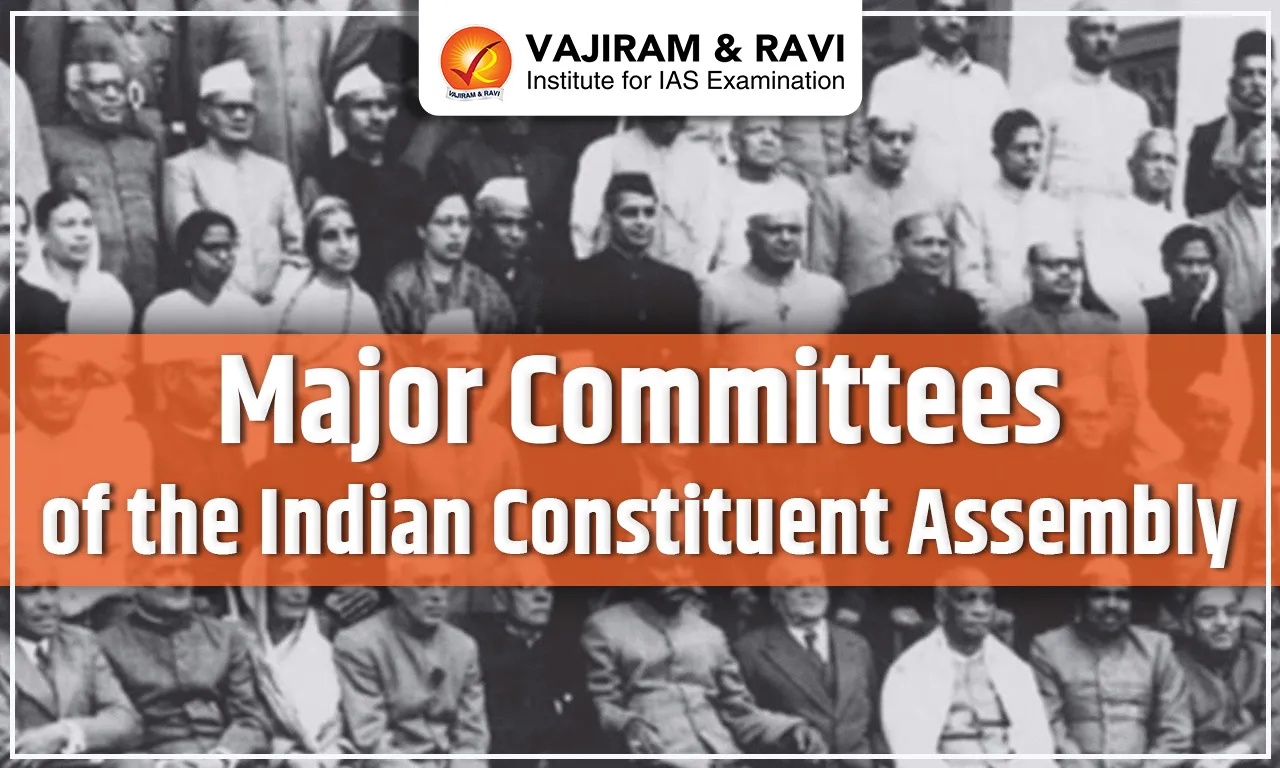
The Constituent Assembly of India was a landmark body responsible for framing the Constitution of independent India. It represented diverse regions, social groups, and political perspectives, ensuring that the Constitution was inclusive, coherent, and forward-looking. The Major Committees of the Indian Constituent Assembly has been discussed in detail in this article.

Constituent Assembly

The Constituent Assembly of India was established to draft the Constitution and prepare for independent governance. Initially guided by the Cabinet Mission Plan of 1946, it later gained full legislative powers through the Indian Independence Act of 1947. The Assembly represented provinces, princely states, and diverse communities, ensuring an inclusive constitution. Its first session was held on 9 December 1946, with Dr. Rajendra Prasad elected as President.

  • Initial Strength: 389 members (292 from provinces, 93 from princely states, 4 from Chief Commissioner provinces)
  • Post-Partition Strength: 299 members
  • First Meeting: 9 December 1946 (Interim President: Dr. Sachchidananda Sinha)
  • President: Dr. Rajendra Prasad (elected 11 December 1946)
  • Functioning Period: December 1946 - November 1949
  • Adoption of Constitution: 26 November 1949

Cabinet Mission Plan of 1946

The Cabinet Mission Plan was the blueprint for the Constituent Assembly’s formation. It outlined the composition, election procedure, and federal structure for India, ensuring fair representation of all provinces and communities. The plan also recommended committees to streamline constitution drafting. It emphasized consensus-building and a federal framework with Union and provincial autonomy.

  • Provided framework for formation and composition of the Assembly.
  • Determined method of election of members from provinces and princely states.
  • Recommended committees for specific constitutional tasks.
  • Emphasized federal structure and provincial autonomy.
  • Ensured representation of minorities and diverse communities.

Indian Independence Act of 1947

The Indian Independence Act legally empowered the Constituent Assembly as a sovereign legislative body. Passed by the British Parliament, it confirmed the Assembly’s authority to draft the Constitution and enact laws. The Act also made the Assembly the successor to British legislative powers in India. 

  • Confirmed Constituent Assembly’s sovereign status.
  • Granted full legislative authority to draft laws and Constitution.
  • Recognized Assembly as successor to British legislative powers.
  • Enabled Assembly to act independently during transition.
  • Provided legal legitimacy for constitution-making and governance.

Committees of the Indian Constituent Assembly Objectives

The Constituent Assembly formed 22 committees to ensure systematic drafting and inclusive deliberation. Their objectives were:

  • Structured Drafting: Divide the complex task into manageable parts
  • Expert Consultation: Involve specialists in law, administration, and governance
  • Inclusivity: Represent different social groups, regions, and minorities
  • Deliberation & Review: Examine, debate, and refine proposals before Assembly approval
  • Efficiency: Reduce the workload on the main Assembly by pre-processing issues

Major Committees of the Indian Constituent Assembly List

Major Committees of the Indian Constituent Assembly handled the core aspects of the Constitution, including Union-State relations, fundamental rights, and governance structures.

Major Committees of the Indian Constituent Assembly List
Name of Major Committee Chairperson Function / Focus

Union Powers Committee

Pandit Jawaharlal Nehru

Examined the distribution of powers between Union and States; recommended legislative and executive powers for the Union government.

Union Constitution Committee

Pandit Jawaharlal Nehru

Drafted provisions for the structure and functioning of the Union government, including Parliament and executive authorities.

States Committee

Pandit Jawaharlal Nehru

Focused on relations between Centre and States, integration of princely states, and state autonomy.

Provincial Constitution Committee

Sardar Vallabhbhai Patel

Drafted a constitutional framework for provinces, including legislative and administrative powers at the provincial level.

Drafting Committee

B.R. Ambedkar

Drafted the Constitution of India, prepared and finalised clauses, and incorporated recommendations from other committees.

Advisory Committee

Sardar Vallabhbhai Patel

Provided advice on policy matters, governance issues, and constitutional proposals from other committees.

Fundamental Rights Sub-Committee

J.B. Kripalani

Formulated provisions on Fundamental Rights to safeguard civil liberties and individual freedoms.

Minorities Sub-Committee

H.C. Mukherjee

Examined safeguards for religious and cultural minorities and recommended protective measures.

North East Frontier Tribal Areas & Assam Excluded & Partially Excluded Areas Sub-Committee

A.V. Thakkar

Addressed administration and special constitutional provisions for tribal areas in North East India.

Excluded & Partially Excluded Areas Sub-Committee

A.V. Thakkar

Examined governance and legal provisions for areas excluded or partially excluded from regular provincial administration.

Rules and Procedure Committee

Dr. Rajendra Prasad

Determined rules and procedures for the Constituent Assembly’s functioning and legislative processes.

Steering Committee

Dr. Rajendra Prasad

Coordinated the work of all committees, prioritised the agenda, and ensured smooth workflow and reporting.

Minor Committees of the Indian Constituent Assembly List

The Minor Committees of the Indian Constituent Assembly assisted the major committees by handling administrative, procedural, and technical tasks. They ensured the smooth functioning of the Assembly and provided expert input for specialised areas such as finance, national symbols, citizenship, and media coverage.

Minor Committees of the Indian Constituent Assembly List
Name of Minor Committee Chairperson Function / Focus

Finance and Staff Committee

Dr. Rajendra Prasad

Managed administrative and financial arrangements of the Assembly, including salaries, staff appointments, and budgetary provisions.

Credentials Committee

Alladi Krishnaswami Ayyar

Verified the credentials of Assembly members to ensure proper representation and legitimacy of membership.

House Committee

Pattabhi Sitaramayya

Oversaw accommodation, facilities, and logistical arrangements for members within the Assembly premises.

Order of Business Committee

Dr. K.M. Munshi

Scheduled the Assembly’s agenda, organized debates, and managed the flow of legislative business.

Ad Hoc Committee on National Flag

Dr. Rajendra Prasad

Recommended the design and adoption of the Indian national flag and its symbolic elements.

Committee on Functions of Constituent Assembly

G.V. Malvankar

Defined the operational functions, responsibilities, and procedural framework of the Assembly.

Ad Hoc Committee on Supreme Court

S. Varadachari

Drafted provisions and guidelines for the formation, powers, and functioning of the Supreme Court of India.

Committee on Chief Commissioners’ Provinces

Pattabhi Sitaramayya

Examined governance and administrative arrangements for Chief Commissioner provinces.

Expert Committee on Financial Provisions of the Union Constitution

Nalini Ranjan Sarkar

Drafted detailed financial provisions for the Union government, including revenue distribution and budgetary rules.

Linguistic Provinces Commission

S.K. Dhar

Proposed recommendations for the formation of language-based provinces and administrative divisions.

Special Committee to Examine Draft Constitution

Jawaharlal Nehru

Reviewed the draft Constitution, suggested revisions, and coordinated inputs from other committees.

Press Gallery Committee

Usha Nath Sen

Managed media access, press coverage, and reporting of Assembly proceedings.

Ad Hoc Committee on Citizenship

S. Varadachari

Drafted provisions related to citizenship, rights, and eligibility criteria for Indian citizens.

Women in the Indian Constituent Assembly

Women played a significant role in shaping India’s Constitution by participating actively in debates and committees. They contributed to issues related to fundamental rights, social justice, minority protection, and governance. Out of 299 members, 15 were women, representing various regions, communities, and professional backgrounds.

Women in the Indian Constituent Assembly
Name of Member Committee(s) Contribution / Focus

Ammu Swaminathan

Steering Committee, Fundamental Rights discussions

Contributed to policy and procedural deliberations on rights and governance

Annie Mascarene

Minor Committees

Assisted in administrative and procedural tasks of Assembly

Begum Aizaz Rasul

Advisory and Minor Committees

Advocated for minority rights and social justice provisions

Sarojini Naidu

Various Debates

Provided inputs on social reform, civil liberties, and governance

Sucheta Kripalani

Drafting Committee member

Worked on drafting provisions related to rights and governance

Vijaya Lakshmi Pandit

Advisory roles

Contributed to discussions on foreign policy and administrative issues

Hansa Mehta

Fundamental Rights Sub-Committee

Played a key role in drafting gender equality and civil rights provisions

Renuka Ray

Minor Committees

Focused on procedural and legislative matters

Purnima Banerji

Steering and Procedural Committees

Assisted in operational coordination of Assembly and debates

Drafting Committee

The Drafting Committee was the most important Major Committees of the Indian Constituent Assembly, tasked with preparing the final draft of the Constitution. Formed on 29 August 1947, it was chaired by Dr. B.R. Ambedkar and included six other members with expertise in law, administration, and governance.

  • Chairman: Dr. B.R. Ambedkar, considered the chief architect of the Constitution.
  • Members: K.M. Munshi, N. Gopalaswami Ayyangar, Alladi Krishnaswamy Ayyar, Syed Mohammed Sadulla, B.L. Mitter (replaced by N. Madhava Rau), D.P. Khaitan (replaced by T.T. Ramakrishna Chari).
  • Formation Date: 29 August 1947.
  • Responsibilities: Drafted, reviewed, and finalized the Constitution, incorporating inputs from all other committees.
  • Key Milestones: First draft - Feb 1948, Second draft - Oct 1948, Final draft introduced - 4 Nov 1948, Adopted - 26 Nov 1949.

Major Committees of the Indian Constituent Assembly FAQs

Q1: How many Major Committees were there?

Ans: There were 12 Major Committees, including the Drafting Committee, Union Powers Committee, Advisory Committee, Fundamental Rights Sub-Committee, and committees for minorities and excluded areas.

Q2: Who chaired the Drafting Committee?

Ans: Dr. B.R. Ambedkar chaired the Drafting Committee, which was responsible for preparing the final draft of the Constitution.

Q3: What was the role of the Union Powers Committee?

Ans: The Union Powers Committee, chaired by Jawaharlal Nehru, examined the distribution of powers between the Union and the States and recommended legislative and executive powers for the Union government.

Q4: Which committee dealt with Fundamental Rights?

Ans: The Fundamental Rights Sub-Committee, chaired by J.B. Kripalani, was responsible for formulating provisions on fundamental rights to protect civil liberties and individual freedoms.

Q5: What was the function of the Advisory Committee?

Ans: Chaired by Sardar Vallabhbhai Patel, the Advisory Committee provided guidance on policy matters, governance issues, and constitutional proposals from other committees.
Maharatna Companies in India 2026, List, Eligibility, Benefits

Maharatna Company in India

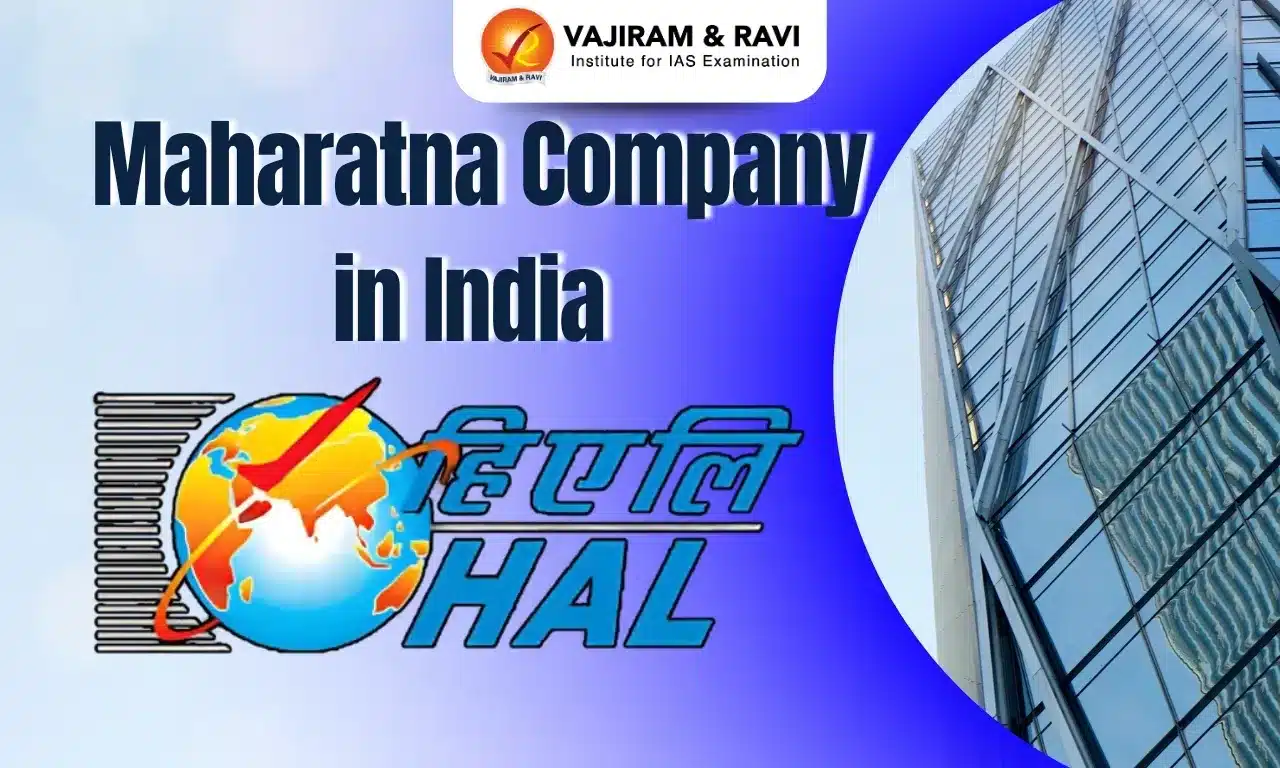
The Government of India classifies Central Public Sector Enterprises (CPSEs) into three categories: Maharatna, Navratna, and Miniratna based on specific eligibility criteria. As of 2026, there are 14 Maharatna Companies in India with the latest addition of Hindustan Aeronautics Limited (HAL) in the year 2024. This article outlines the criteria for achieving these statuses and provides a detailed list of Maharatna companies, along with key information about each.

Maharatna Company Eligibility Criteria

Public Sector Undertakings (PSUs) in India are also classified based on their specific non-financial objectives and are registered under Section 8 of the Companies Act, 2013 (formerly Section 25 of the Companies Act, 1956). In 2010, the government introduced the Maharatna category to recognise higher-performing PSUs.

Eligibility Criteria for a Maharatna Company:

  • Must hold Navratna status.
  • Listed on the Indian stock exchange with the required minimum public shareholding as per Securities and Exchange Board of India (SEBI) regulations.
  • Should have an average annual net profit after tax exceeding Rs. 5,000 crore over the last three years.
  • Must maintain an average annual turnover of Rs. 25,000 crore for three years, or
  • An average annual net worth of Rs. 15,000 crore for three years.
  • Must demonstrate a global presence or international operations.

Maharatna Companies Benefits

Maharatna status is a prestigious designation granted to select Central Public Sector Enterprises (CPSEs) in India. Here are some key benefits of Maharatna status:

  1. Greater Autonomy: Maharatna companies enjoy greater operational and financial autonomy compared to other CPSEs. This allows them to make quicker and more efficient decisions.
  2. Investment Capabilities: These companies can invest up to ₹5,000 crore or 15% of their net worth in a single project without requiring government approval.
  3. Strategic Flexibility: Maharatna companies have the freedom to undertake mergers, acquisitions, and strategic investments both domestically and internationally.
  4. Human Resource Management: The Board of Directors of Maharatna companies has the authority to create posts below the level of the Board of Directors and make decisions related to human resource management and training.
  5. Global Expansion: The status aims to empower these companies to expand their operations and emerge as global giants.
  6. Financial Performance: To qualify for Maharatna status, companies must demonstrate exceptional financial performance, including high turnover, net worth, and profitability over the past three years.

List of 14 Maharatna Companies in India

Here is the list of 14 Central Public Sector Enterprises that are classified as Maharatna Companies: 

Sl.No

Central Public Sector Enterprises (CPSE – Maharatna Company)

1

NTPC Limited (NTPC)

2

Oil and Natural Gas Corporation Limited (ONGC)

3

Steel Authority of India Limited (SAIL)

4

Bharat Heavy Electricals Limited (BHEL)

5

Indian Oil Corporation Limited (IOCL)

6

Hindustan Petroleum Corporation Limited (HPCL)

7

Coal India Limited (CIL)

8

GAIL India Limited (GAIL)

9

Bharat Petroleum Corporation Limited (BPCL)

10

Power Grid Corporation of India Limited (POWERGRID)

11

Power Finance Corporation

12

Rural Electrification Corporation Limited

13

Oil India Ltd

14

Hindustan Aeronautics Limited (HAL)

14 Maharatna Company in India Details 

Brief Details about 14 Public Sector Maharatna Companies: 

  • National Thermal Power Corporation (NTPC)
    NTPC, founded on 7th November 1975, was granted Maharatna status in May 2010 by the Government of India. Operating from 70 locations in India and abroad (Sri Lanka and Bangladesh), NTPC has five regional headquarters. It offers services in electricity generation, distribution, and natural gas exploration, production, and distribution.
  • Oil and Natural Gas Corporation (ONGC)
    Established on 14th August 1956, ONGC is India’s largest crude oil and natural gas company, responsible for 75% of the country’s domestic production. With over 11,000 km of pipelines, it holds Maharatna status since 2010. ONGC has subsidiaries like ONGC Videsh Limited (OVL), Hindustan Petroleum Corporation Limited (HPCL), and ONGC Mangalore Petrochemicals Limited (OMPL).
  • Steel Authority of India Limited (SAIL)
    SAIL, based in New Delhi, is the 20th largest steel producer in the world and the third largest in India. It operates five integrated steel plants and three special steel plants across the country.
  • Bharat Heavy Electricals Limited (BHEL)
    BHEL specializes in the design, engineering, and servicing of products for core sectors such as power, transportation, renewable energy, oil & gas, and defense. It supplies locomotives to Indian Railways and defense equipment like naval guns and simulators.
  • Indian Oil Corporation Limited (IOCL)
    IOCL is India’s largest commercial oil company, with ventures into alternative energy and international downstream operations. It operates across the entire hydrocarbon value chain, including refining, pipeline transportation, and petrochemicals.
  • Coal India Limited (CIL)
    CIL, granted Maharatna status in 2011, is the world’s largest coal producer. Founded in 1975, it is headquartered in Kolkata and operates through subsidiaries like Western Coalfields Limited (WCL), Central Coalfields Limited (CCL), and others.
  • Gas Authority of India Limited (GAIL)
    Founded in 1984, GAIL is India’s largest state-owned natural gas processing and distribution company. It received Maharatna status in February 2013 and is under the Ministry of Petroleum and Natural Gas.
  • Bharat Petroleum Corporation Limited (BPCL)
    BPCL, India’s second-largest fuel retailer, was granted Maharatna status in 2017.
  • Power Grid Corporation of India Limited (POWERGRID)
    Incorporated in 1989, POWERGRID handles electric power distribution, transmission, and energy trading. It is headquartered in Gurugram and holds Maharatna status.
  • Power Finance Corporation (PFC)
    PFC, a non-banking financial corporation established in 1986, serves as the financial backbone of India’s power sector.
  • Rural Electrification Corporation Limited (REC)
    REC, incorporated in 1969, provides long-term financing for infrastructure projects. It is a Public Financial Institution (PFI) and a Non-Banking Finance Company (NBFC) under the Ministry of Power.
  • Oil India Ltd (OIL)
    OIL, founded in 1959, is India’s second-largest national oil and gas company, engaged in the exploration and production of crude oil, natural gas, and LPG. It operates under the Ministry of Petroleum and Natural Gas.
  • Hindustan Aeronautics Limited (HAL) Founded in 1940 and granted Maharatna status in 2024, Hindustan Aeronautics Limited (HAL) is a Bengaluru-based government-owned aerospace and defence giant that designs, manufactures, and maintains aircraft, helicopters, engines, avionics, and related systems. It plays a crucial role in strengthening India’s military and civil aviation capabilities while also supporting ISRO in key space missions through advanced engineering and collaborative technology development.

Maharatna Companies in India FAQs

Q1: What is the 12th Maharatna company in India?

Ans: Power Finance Corporation (PFC) is the 12th Maharatna company in India.

Q2: Which is the 13th Maharatna company?

Ans: Rural Electrification Corporation Limited (REC) is the 13th Maharatna company.

Q3: How many Maharatna companies are there in India now?

Ans: There are 14 Maharatna companies in India now.

Highest Peak in India 2026, List, State, Height, K2 or Kanchenjunga

Highest Peak in India

India is a land full of diversity, known not only for its rich culture and history but also for its amazing landscapes. The country has everything from high mountain peaks and deep valleys to flowing rivers and lush vegetation. Some of the world's Highest Peak in India are found, especially in the Karakoram, Garhwal, and Kangchenjunga ranges. These ranges hold peaks like Nanda Devi and Kangchenjunga, located mainly in the states of Uttarakhand and Sikkim. The beauty of these mountains, along with the unique plants and animals found here, makes India a true natural wonder. This article provides complete detail on Highest Peak in India 2026.
Highest Peak in India 2026

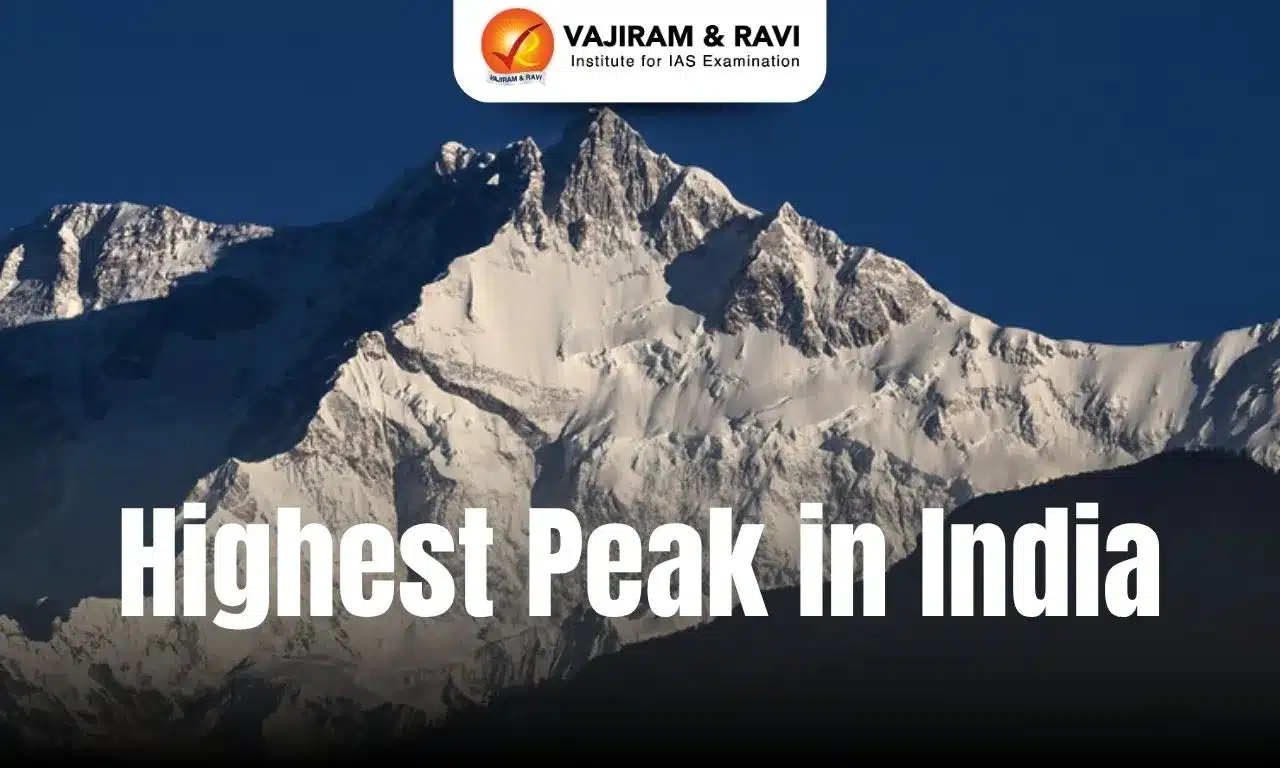
The Mount Godwin-Austen (K2) is the 2nd Highest Peak in the World. Although it is under located PoK but it is officially claimed by India. Kanchenjunga, reaching a height of 8,586 meters (28,169 feet), is the undisputed Highest Peak in India located on the border between India and Nepal in the Himalayan range, this peak towers over Sikkim with its impressive elevation. It’s the 3rd Highest Mountain worldwide. Nanda Devi (7,816 metres) is the Highest Mountain Peak located entirely within India's territory, while Anamudi (2,695 metres) is the highest peak in Peninsular India and the Western Ghats, showcasing the natural beauty of southern India.

Which is the Highest Peak in India K2 or Kanchenjunga?

According to India's official claim, K2 (8,611 metres) is the highest peak associated with India. It is the highest mountain in the Karakoram Range and lies between Baltistan and Xinjiang, although it is presently located in Pakistan-Occupied Kashmir (PoK). However, Kanchenjunga (8,586 metres) is the highest peak located on India's border with Nepal and the highest peak in the Indian Himalayas. 

List of Highest Peak in India 2026

The List of Highest Peaks in India 2026, their heights, and the states they are in are shown in the table below.

List of Highest Peaks in India 2026
Rank in India Mountain Name Mountain Range Height (m) State/UT
1 K2 (Godwin-Austen) Karakoram Range 8611 Ladakh
2 Kangchenjunga Himalayas 8,586 Sikkim
3 Nanda Devi Garhwal Himalaya 7,816 Uttarakhand
4 Kamet Garhwal Himalaya 7,756 Uttarakhand
5 Saltoro Kangri (K10) Saltoro Karakoram 7,742 Ladakh
6 Saser Kangri I (K22) Saser Karakoram 7,672 Ladakh
7 Mamostong Kangri (K35) Rimo Karakoram 7,516 Ladakh
8 Saser Kangri II East Saser Karakoram 7,513 Ladakh
9 Saser Kangri III Saser Karakoram 7,495 Ladakh
10 Teram Kangri I Siachen Karakoram 7,462 Ladakh
11 Jongsong Peak Kangchenjunga Himalaya 7,462 Sikkim
12 K12 Saltoro Karakoram 7,428 Ladakh
13 Kabru North Kangchenjunga Himalaya 7,412 Sikkim
14 Ghent Kangri Saltoro Karakoram 7,401 Ladakh
15 Rimo I Rimo Karakoram 7,385 Ladakh
16 Teram Kangri III Siachen Karakoram 7,382 Ladakh
17 Kirat Chuli Kangchenjunga Himalaya 7,362 Sikkim
18 Mana Peak Garhwal Himalaya 7,272 Uttarakhand
19 Apsarasas Kangri Siachen Karakoram 7,245 Ladakh
20 Mukut Parbat Garhwal Himalaya 7,242 Uttarakhand

2nd Highest Peak in India

Kanchenjunga is officially claimed 2nd Highest Peak in India. It has the height of 8,586 meters and is located in the state of Sikkim. However due to K2 PoK dispute Nanda Devi is sometimes considered as the second highest mountain peak in India. It the 23rd highest peak in the world, with an elevation of 7,816 meters (25,643 feet) above sea level. It is located in the Chamoli district of Uttarakhand and forms part of the Garhwal Himalayas. Nanda Devi is considered a sacred mountain and is named after the goddess Nanda Devi, believed to be the patron goddess of the region. The Nanda Devi National Park, surrounding the peak, is a UNESCO World Heritage Site known for its unique flora and fauna and stunning Himalayan landscapes.

Top 10 Highest Peaks in India 2026

Here are the Top 10 Highest Peaks in India 2026, each with its own story and breathtaking elevation.

1. K2 (Godwin-Austen)

  • State: Ladakh
  • Height: 8,611 meters
  • It is disputed highest mountain peak in india located in Ladakh region of India but controlled under PoK by Pakistan.

2. Kangchenjunga

  • State: Sikkim
  • Height: 8,586 meters
  • Known as the "Five Treasures of Snows," this is India's tallest mountain and the third-highest in the world, standing majestically on the India-Nepal border.

3. Nanda Devi

  • State: Uttarakhand
  • Height: 7,816 meters
  • The tallest peak entirely within India, Nanda Devi is revered locally and stands as a symbol of Uttarakhand’s natural beauty.

4. Kamet

  • State: Uttarakhand
  • Height: 7,756 meters
  • The highest peak in the Zaskar range, Kamet is remote and challenging, making it a favorite among seasoned mountaineers.

5. Saltoro Kangri

  • State: Jammu & Kashmir
  • Height: 7,742 meters
  • This peak dominates the Saltoro range in the Karakoram, known for its closeness to the Siachen Glacier.

6. Saser Kangri

  • State: Jammu & Kashmir
  • Height: 7,672 meters
  • Located in the Saser Muztagh range, this peak is one of five towering summits that add to the beauty of the Karakoram.

7. Mamostong Kangri

  • State: Jammu & Kashmir
  • Height: 7,516 meters
  • Rising in the Rimo range, Mamostong Kangri is known for its proximity to Siachen and is India’s sixth-highest peak.

8. Rimo

  • State: Jammu & Kashmir
  • Height: 7,385 meters
  • Near the Karakoram Pass, Rimo I is the tallest of the Rimo peaks, historically part of ancient trade routes.

9. Hardeol

  • State: Uttarakhand
  • Height: 7,151 meters
  • Often called the "Temple of God," Hardeol stands in the Kumaon Himalayas, neighboring the Nanda Devi sanctuary.

10. Chaukhamba

  • State: Uttarakhand
  • Height: 7,138 meters
  • The highest peak in the Gangotri group, Chaukhamba is recognized for its four-pointed structure and scenic prominence in Garhwal.

Highest Peak in the Western Ghats 2026

The highest mountain peak in the Western Ghats is Anamudi, located in the Idukki district of Kerala. It stands at an impressive height of 2,695 meters (8,842 feet) above sea level. Anamudi is often called the “Everest of South India” due to its towering height and prominence. The peak lies within the Eravikulam National Park and is home to rich biodiversity, including the endangered Nilgiri Tahr and Neelakurinji flowers.

Highest Peak in the Eastern Ghats 2026

The highest mountain peak in the Eastern Ghats is Arma Konda, also known as Jindhagada Peak, located in the Alluri Sitharama Raju district of Andhra Pradesh. It rises to an elevation of about 1,680 meters (5,512 feet) above sea level. Arma Konda is part of the hilly terrain of the Araku Valley region and is surrounded by lush forests and tribal villages. The area is known for its scenic beauty and rich biodiversity, making it a popular trekking and nature exploration destination.

Mountain Peaks in India

India is home to some of the world's highest mountain peaks, primarily located in the Himalayan and Karakoram ranges, which play a crucial role in the country's geography, climate, biodiversity, and water resources.

  • Most of India's highest peaks are found in Ladakh, Uttarakhand, and Sikkim.
  • The Himalayas and Karakoram Range contain the majority of India's high-altitude peaks.
  • Mountain peaks are the source of many major rivers, including the Ganga, Yamuna, Indus, and Brahmaputra systems.
  • These peaks influence the Indian monsoon by acting as a natural climatic barrier.
  • High-altitude regions support unique flora, fauna, and fragile mountain ecosystems.
  • Several peaks, such as Nanda Devi and Kamet, are important destinations for mountaineering and adventure tourism.
  • Nanda Devi National Park, surrounding Nanda Devi Peak, is a UNESCO World Heritage Site.
  • Mountain ranges provide strategic and ecological significance, contributing to national security, water security, and biodiversity conservation.
Also Check Other Posts
Biosphere Reserves in India National Parks in India
Waterfalls in India Highest Peak in India
Ramsar Sites in India Wildlife Sanctuaries in India
Dams in India Tiger Reserves in India
Mountain Passes in India Longest Bridge in India
 

Highest Peak in India 2026 FAQs

Q1: Which is the Highest Peak in India K2 or Kanchenjunga 2026?

Ans: K2 is the highest claimed peak of India however due to PoK dispute, Kangchenjunga is widely considered as the highest peak in India. It is the third highest mountain in the world with an elevation of 8,586 meters.

Q2: What is the height of Kanchenjunga 2026?

Ans: The height of Kanchenjunga is 8586 meters.

Q3: Is k2 the highest mountain peak in India 2026?

Ans: Mount K2 also known as Godwin-Austen is taller than Kangchenjunga, it is located in Pak occupied Kashmir (POK). K2 is the world's second tallest mountain.

Q4: Which is the highest mountain peak in the world 2026?

Ans: Mount Everest is the highest peak in the world. It is 8,848 meters (29,029 feet) above sea level.

Q5: Which is the 2nd highest peak in India 2026?

Ans: Kanchenjunga is officially claimed 2nd highest peak in India.

Major Crops of India, State Wise List, Classification, Government Initiatives

Major Crops of India

India is one of the largest agricultural countries in the world, producing a wide variety of crops due to its diverse climate, soil, and irrigation facilities. Crops in India are mainly classified into food crops, cash crops, fibre crops, oilseeds, and plantation crops. These crops not only meet the country’s domestic consumption needs but also contribute to exports and rural employment. Understanding the Major Crops of India and their distribution is essential for food security and economic planning.

Classification of Major Crops in India

The types of Crops Produced in India include:

  • Food Crops: Crops grown primarily for human consumption, including cereals like rice, wheat, and millets, as well as pulses.
  • Cash Crops: Crops cultivated for commercial purposes, such as cotton, sugarcane, and tobacco.
  • Fibre Crops: Crops like cotton, jute, and hemp used in textiles and industrial applications.
  • Plantation Crops: Long-duration crops like tea, coffee, rubber, and spices grown mainly in hilly regions.
  • Oilseed Crops: Crops like groundnut, mustard, soybean, and sunflower cultivated for oil extraction.
  • Horticultural Crops: Fruits, vegetables, and flowers grown for domestic consumption and export.

Major Crops of India

The Major Crops in India consist of the following examples:

1. Rice

  • Rice is a staple food crop for a large part of India, especially in eastern and southern states.
  • Requires high temperature (20-37°C), high humidity, and abundant water for cultivation.
  • India is the second-largest producer of rice in the world.
  • Primarily a Kharif crop, sown with the onset of monsoon and harvested in autumn.
  • Important varieties include Basmati, Sona Masuri, Ponni, and non-Basmati hybrids.
  • Grown in alluvial soils of river valleys and irrigated plains.
  • Major Producing States: West Bengal, Uttar Pradesh, Punjab, Andhra Pradesh, Tamil Nadu

Also Read: Rice Cultivation in India

2. Wheat

  • Wheat is a Rabi crop and staple food in northern and north-western India.
  • Requires cool and dry climate with moderate rainfall (50-75 cm) and fertile, well-drained loamy soil.
  • Grown under irrigated conditions, making it suitable for areas like Punjab, Haryana, and Uttar Pradesh.
  • India ranks among the top three wheat-producing countries globally.
  • Varieties include Sharbati, Lok-1, PBW-343, and HD-2967.
  • Plays a major role in food security and national buffer stocks.
  • Major Producing States: Uttar Pradesh, Punjab, Haryana, Madhya Pradesh, Rajasthan, Bihar and Gujarat.

Also Read: Wheat Cultivation in India

3. Maize (Corn)

  • Maize is a versatile crop used for human consumption, animal feed, and industrial purposes.
  • Can be cultivated in both Kharif and Rabi seasons depending on climatic conditions.
  • Requires moderate rainfall (50-100 cm), well-drained fertile soil, and warm temperature.
  • Varieties include sweet corn, hybrid maize, and popcorn, with high-yield hybrids increasing productivity.
  • India is among the top 10 maize-producing countries.
  • Contributes to processed foods, poultry feed, and starch industries.
  • Major Producing States: Karnataka, Madhya Pradesh, Bihar, Tamil Nadu, Telangana, Maharashtra and Andhra Pradesh.

Also Read: Maize Cultivation in India

4. Millets (Jowar, Bajra, Ragi)

  • Millets are drought-resistant cereals suitable for semi-arid and arid regions.
  • Require minimal irrigation, grow in poor or less fertile soils, and are nutritionally rich.
  • Includes Jowar, Bajra, and Ragi, widely used for human consumption and fodder.
  • Serve as subsistence crops in dry regions, ensuring food security.
  • Can withstand high temperatures and low rainfall, making them climate-resilient.
  • India is a major producer of millets, supporting rural livelihoods.
  • Major Producing States: Rajasthan is the largest producer, followed by Uttar Pradesh, Karnataka, and Maharashtra.

Also Read: Millets in India

5. Pulses

  • Pulses are a vital protein source, complementing cereals in the Indian diet.
  • Mostly grown as Rabi crops, requiring moderate water and well-drained soil.
  • Improve soil fertility by nitrogen fixation, making them important in crop rotation.
  • Common varieties: Gram (chana), Moong, Urad, Arhar (Tur), Masoor.
  • Essential for nutrition, protein supply, and soil conservation.
  • India is the largest producer of pulses, contributing 25% of global production, the largest consumer with 27% of world consumption, and also accounts for 14% of global imports.
  • Major Producing States: Madhya Pradesh, Maharashtra, Rajasthan, Uttar Pradesh, Karnataka

6. Sugarcane

  • Sugarcane is a major cash crop cultivated for sugar, jaggery, and ethanol.
  • Requires tropical to subtropical climate, high temperature, and abundant water.
  • Long-duration crop grown mainly in irrigated regions due to high water requirement.
  • Varieties include Co 86032, Co 0238, and others suitable for sugar mills.
  • Supports sugar, ethanol, and paper industries, generating rural employment.
  • India ranks second globally in sugarcane production.
  • Major Producing States: Uttar Pradesh, Maharashtra, Karnataka, Tamil Nadu, Andhra Pradesh

7. Cotton

  • Cotton is the primary fibre crop for India’s textile industry.
  • Requires warm, frost-free climate and moderate rainfall (50-100 cm).
  • Can be grown under rainfed or irrigated conditions depending on region.
  • Varieties include Hirsutum (long-staple) and Desi cotton (short-staple).
  • Supports cotton textile industry, exports, and employment in rural areas.
  • India is among the top five cotton-producing countries globally.
  • Major Producing States: Gujarat, Maharashtra, Telangana, Punjab, Haryana

Also Read: Cotton Production in India

8. Tea

  • Tea is a plantation crop grown mainly in hilly and high rainfall areas.
  • Requires acidic soil, humidity, well-distributed rainfall (200-250 cm), and cool climate.
  • Varieties include Assam, Darjeeling, Nilgiri, each with unique characteristics.
  • India is the second-largest tea producer and a major exporter.
  • Plantation sector provides employment in rural and tribal areas.
  • Tea is used domestically and internationally as a beverage commodity.
  • Major Producing States: Assam, West Bengal, Tamil Nadu, Kerala

9. Coffee

  • Coffee is grown in tropical regions with high rainfall and shade conditions.
  • Requires well-drained soil, moderate temperature (15-28°C), and humidity.
  • Produces Arabica and Robusta varieties, used domestically and exported.
  • Plantation crop providing employment in hilly and forested areas.
  • India ranks among top 10 coffee producers globally.
  • Major for export revenue and specialty coffee industry.
  • Major Producing States: Karnataka, Kerala, Tamil Nadu

10. Rubber

  • Rubber is a plantation crop cultivated for latex production.
  • Requires tropical climate, rainfall above 2000 mm, and temperatures 25-35°C.
  • Supports industrial sectors like tires, gloves, and adhesives.
  • Plantation cultivation ensures employment in rural southern India.
  • India is among the top 10 rubber producers, mainly in tropical south.
  • Varieties include RRII 105, RRII 414, and high-yield clones.
  • Major Producing States: Kerala, Tamil Nadu, Karnataka

Major Crops Producing States in India​

India’s diverse climate and fertile soils support the cultivation of a wide variety of crops across different states. Each state specialises in certain major crops based on regional climate, soil type, and irrigation facilities, contributing significantly to national agricultural production. Here is the List of Major Crops Producing States in India​.

Major Crops Producing States in India​
State Major Crops Produced

Uttar Pradesh

Wheat, Sugarcane, Rice, Maize

Punjab

Wheat, Rice, Cotton

Madhya Pradesh

Soybean, Wheat, Rice, Pulses

Maharashtra

Sugarcane, Cotton, Rice

West Bengal

Rice, Jute, Pulses, Oilseeds

Rajasthan

Bajra (Pearl Millet), Wheat, Pulses, Oilseeds

Bihar

Rice, Wheat, Maize

Karnataka

Coffee, Sugarcane, Rice, Oilseeds

Andhra Pradesh

Rice, Sugarcane, Cotton

Tamil Nadu

Rice, Sugarcane, Banana, Oilseeds

Major Crops and Cropping Seasons

India’s agriculture follows three main cropping seasons: Kharif, Rabi, and Zaid, determined by the monsoon and climatic conditions. Different crops are cultivated in these seasons based on temperature, rainfall, and soil requirements.

Major Crops and Cropping Seasons (Kharif, Rabi, Zaid)
Season Months Major Crops Features

Kharif

June - October

Rice, Maize, Cotton, Sugarcane, Soybean, Millets

Sown with the onset of monsoon; requires high rainfall and warm temperature; harvested in autumn

Rabi

November - April

Wheat, Barley, Gram, Mustard, Peas

Sown after monsoon; requires cool, dry climate; harvested in spring

Zaid

March - June

Watermelon, Muskmelon, Cucumber, Maize, Vegetables

Short-duration crops grown between Rabi and Kharif; require warm and sunny climate

Perennial/Plantation

Year-round (specific to crop)

Tea, Coffee, Rubber, Sugarcane

Long-duration crops grown in tropical/hilly regions; require specific climatic and soil conditions

Factors Influencing Crop Distribution in India

Crop Distribution in India is influenced by natural and human factors, determining which crops are suitable for different regions. Key factors include:

  • Climate: Temperature, rainfall, and humidity directly affect crop growth.
    • Example: Rice requires annual rainfall above 100 cm and temperatures of 20-37°C, which is why it is mainly grown in West Bengal, Uttar Pradesh, and Punjab.
    • Wheat grows best in cool, dry climates with rainfall 50-75 cm, making Punjab, Haryana, and Madhya Pradesh major producers.
  • Soil Type: Fertility and soil texture influence crop suitability.
    • Example: Alluvial soils of the Indo-Gangetic plains support rice and wheat, while black soils of Maharashtra and Gujarat are ideal for cotton cultivation.
    • Laterite soils in Kerala and Tamil Nadu are suited for tea and coffee plantations.
  • Irrigation Availability: Access to water determines high-yield crop cultivation.
    • Example: Sugarcane, which requires 150-250 cm of water, is grown in Uttar Pradesh and Maharashtra, where irrigation infrastructure is well-developed.
  • Topography: Landforms and elevation impact crop choice.
    • Example: Hilly areas like Assam, Darjeeling, and Nilgiris grow tea due to sloping terrain and high rainfall, while the plains of Punjab and Haryana favour wheat and rice.
  • Technology and Inputs: High-yield varieties (HYVs), fertilisers, pesticides, and mechanisation improve productivity.
    • Example: Adoption of HYV wheat and rice varieties during the Green Revolution doubled yields in Punjab and Haryana between 1965-1975.
  • Socio-Economic Factors: Market demand, government policies, and cropping patterns influence decisions.
    • Example: Cotton cultivation in Gujarat and Maharashtra is promoted due to domestic textile industry demand and government support for cash crops.

Government Initiatives Related to Major Crops

The Indian government has implemented several schemes and programs to enhance crop production, improve farmers’ income, and ensure food security. These initiatives focus on insurance, diversification, technology adoption, and crop management.

  • Pradhan Mantri Fasal Bima Yojana (PMFBY):
    • Provides crop insurance against natural calamities, pests, and diseases.
    • Ensures farmers receive compensation for crop losses, reducing financial risk.
    • In 2022-23, over 50 million farmers were covered under this scheme, with claims of around ₹30,000 crore paid.
  • National Food Security Mission (NFSM):
    • Aims to increase production of rice, wheat, pulses, and coarse cereals.
    • Promotes high-yield varieties, improved seeds, fertilizers, and crop management practices.
    • Between 2019-2023, NFSM contributed to ~10-15% increase in pulse production in targeted districts.
  • Rashtriya Krishi Vikas Yojana (RKVY):
    • Encourages crop diversification, modernization, and infrastructure development.
    • Supports irrigation projects, farm machinery, and post-harvest storage.
    • States like Maharashtra and Madhya Pradesh used RKVY funds for modern storage and drip irrigation projects.
  • Soil Health Card Scheme:
    • Provides farmers with soil nutrient status and fertilizer recommendations.
    • Promotes balanced fertilization and enhances crop productivity.
    • As of 2023, 12 crore soil health cards were issued to farmers across India.
  • National Mission on Oilseeds and Oil Palm (NMOOP):
    • Focuses on increasing oilseed crop production to reduce dependency on imports.
    • Supports high-yielding varieties, technology, and extension services.
    • Oilseed production increased from 27 million tonnes in 2014-15 to 35 million tonnes in 2023.

Challenges Related to Crop Production in India

The challenges associated with the Major Crops Production in India has been discussed below:

  • Climate change and erratic rainfall reduce crop yields; e.g., 2022 monsoon caused an almost 15% decline in Kharif rice in eastern states.
  • Soil degradation and nutrient depletion from monocropping and overuse of fertilisers affect fertility; Punjab and Haryana face declining soil health.
  • Water scarcity and inefficient irrigation limit high-water crops like sugarcane; Maharashtra suffers from falling water tables.
  • Post-harvest losses due to inadequate storage and transport infrastructure lead to 20-25% loss in fruits and vegetables.
  • Low mechanisation and limited technology adoption reduce productivity, especially in rainfed regions of Rajasthan and Madhya Pradesh.
  • Pest and disease outbreaks damage crops; e.g., 2020 locust swarms affected wheat and millet in Rajasthan and Madhya Pradesh.
  • Market and price volatility impact farmers’ income; cotton and soybean farmers in Maharashtra faced losses due to low MSP in 2021-22.

Way Forward

  • Promote climate-resilient and drought-tolerant crop varieties to withstand erratic weather, as seen with drought-resistant jowar and pulses in Maharashtra, increasing yields by 15–20%.
  • Improve irrigation efficiency through drip, sprinkler systems, and watershed management, like the Mula Pravara project in Maharashtra, reducing water use by 40% for sugarcane.
  • Encourage modern farming techniques such as mechanisation, precision agriculture, and high-yield seeds, similar to Punjab’s adoption of PBW-343 wheat during the Green Revolution.
  • Strengthen storage, cold chain, and processing infrastructure to reduce post-harvest losses, exemplified by the Amul cold chain system in Gujarat.
  • Provide better market access, MSP support, and crop insurance to stabilize farmers’ income, as under PMFBY where 50 million farmers received ₹30,000 crore in claims in 2022–23.
  • Enhance research, extension services, and farmer training for sustainable agriculture practices, like ICAR-KVK programs increasing yields by 10–15%.
  • Promote crop diversification and organic farming to improve soil health and reduce dependency on a few crops, following Sikkim’s 100% organic farming policy.

Major Crops of India FAQs

Q1: What are the main food crops of India?

Ans: Rice, wheat, maize, millets (jowar, bajra, ragi), and pulses (gram, moong, urad, arhar, masoor).

Q2: Which crops are grown in Kharif season?

Ans: Rice, maize, cotton, sugarcane, soybean, and millets; sown with the onset of monsoon and harvested in autumn.

Q3: Which crops are grown in Rabi season?

Ans: Wheat, barley, gram, mustard, peas; sown after monsoon and harvested in spring.

Q4: Which crops are grown in Zaid season?

Ans: Watermelon, muskmelon, cucumber, maize, and vegetables; grown between Rabi and Kharif seasons.

Q5: Which states are major rice producers?

Ans: West Bengal, Uttar Pradesh, Punjab, Andhra Pradesh, and Tamil Nadu.

Article 142 of Indian Constitution, Definition, Powers, Latest News

Article 142

Article 142 Latest News

The Supreme Court invoked Article 142 to quash FIRs against Gen Z protesters involved in NEET-UG protests held between July 20 and 25, 2026. The Court cited the future of young protesters who participated bona fide in the demonstrations. However, the relief does not cover individuals with serious criminal antecedents.

What is Article 142 of Indian Constitution?

  • Article 142 empowers the Supreme Court to pass any order or decree necessary for complete justice in any pending case before it. This power is discretionary and unique to the apex court.
  • The concept of complete justice means ensuring justice beyond technicalities by filling legislative gaps, and interpreting or even overriding laws when necessary to protect constitutional valuesfundamental rights, and social welfare.
  • The framers of the Constitution, especially Dr. B.R. Ambedkar, intentionally entrusted this extraordinary power only to the Supreme Court. The jurisprudence under Article 142 has developed over 50+ years, with the Court maintaining self-imposed limits.
  • Article 142 elevates the Supreme Court’s role as the guardian of the Constitution, enabling it to intervene in cases involving public interesthuman rights, or democratic breakdown, ensuring justice where legislative or executive action is lacking.
  • The Article strengthens democracy by protecting the rights of minorities, ensuring equal treatment before the law, and acting as a check on executive and legislative overreach.
  • Article 142 promotes judicial innovation by allowing the Court to create guidelines and direct government authorities, especially in cases involving public interest and constitutional values.
  • The lack of a clear definition of “complete justice” can lead to subjectivityinconsistent rulings, and unaccountable discretion. This raises concerns under the basic structure doctrine, particularly the separation of powers.

Article 142 of Indian Constitution FAQs

Q1: What is Article 142?

Ans: Article 142 empowers the Supreme Court of India to pass any decree or order necessary for doing “complete justice” in any pending matter before it.

Q2: Why is Article 142 considered unique?

Ans: Article 142 is unique because it gives wide discretionary powers to the Supreme Court, even allowing it to fill legal gaps or override statutory limitations for ensuring justice.

Q3: Can Article 142 override existing laws?

Ans: Yes, temporarily, the Supreme Court can override laws if necessary to ensure complete justice in individual cases, but it cannot permanently alter the law.

Parts of Indian Constitution, Check All 25 Parts Subject, Key Details

Parts of Indian Constitution

The Constitution of India, adopted in 1950, originally consisted of 395 Articles, 22 Parts, and 8 Schedules. Over time, through amendments, its scope has expanded to address emerging needs of governance and society. Today, the Constitution contains 448 Articles, 25 Parts, and 12 Schedules.

The Parts of Indian Constitution serve as the backbone, organizing its provisions into broad themes such as fundamental rights, directive principles, governance structure, and emergency provisions. Later additions like Part IXA (Municipalities), Part IXB (Co-operative Societies), and Part XIVA (Tribunals) highlight the evolving nature of constitutional law in India.

It’s also important to note that when new Articles or Parts are inserted, they are numbered alphabetically (like Article 21A) to maintain the document’s structure without disrupting the original sequence.

Parts of Indian Constitution 

The Constitution of India is not just a legal document but also the supreme law of the land. It lays down the framework of governance by defining the roles of people in positions of authority and clearly outlining the limitations on their power. At the same time, it secures the rights, powers, procedures, and duties of both the government and the citizens.

What makes it unique is its emphasis on the supremacy of the Constitution itself, rather than the supremacy of the legislature. This ensures that every law and every action of the government remains within the constitutional framework.

To understand this structure better, here’s an overview of the Parts of the Indian Constitution presented in a table:

Parts of Indian Constitution Overview

Particulars

Details

Constitution formed on

26th November 1949

Parts of Indian Constitution Originally

22 Parts

Parts of Indian Constitution at Present

25 Parts

New Parts added in Constitution

  • Part IX A of the Constitution was inserted by the Constitution (74th Amendment) Act, 1992. It contains provisions for local self government at the urban level.
  • Part IXB of the Constitution grants constitutional status to co-operative societies and contains provisions for their democratic functioning. It was inserted by the Constitution (97th, Amendment) Act, 2011.
  • Part XIVA of the Indian Constitution provides for the appointment of tribunals for administrative and other disputes. It was not a part of the Constitution of India 1950, but was added by the Constitution (Forty-second Amendment) Act, 1942.

List of Parts of Indian Constitution

The Indian Constitution is a written document that serves as the supreme law of the land. It was drafted by the Constituent Assembly, with key contributions from leaders like Dr. B.R. Ambedkar, Rajendra Prasad, and Jawaharlal Nehru, and came into effect on January 26, 1950.

To ensure clarity and proper governance, the Constitution is divided into distinct sections that address specific subjects. Over time, it has expanded and now consists of 25 Parts, each focusing on different aspects of governance, rights, and duties.

List of Parts of Indian Constitution

Parts and Subject

Articles

Part I - The Union and its Territories

1 - 4

Part II - Citizenship

5 -11

Part III - Fundamental Rights

12 - 35

Part IV - Directive Principles of State Policy

36 - 51

Part IV A - Fundamental Duties

51A

Part V - The Union

52 - 151

Part VI - The States

152 - 237

Part VII - The States in Part B of First Schedule

238 [Repealed]

Part VIII - The Union Territories

239 - 242

Part IX - The Panchayats

243 - 243O

Part IXA - The Municipalities

243P - 243ZG

Part IXB - The Co-operative Societies

243ZH - 243ZT

Part X - The Scheduled and Tribal Areas

244 - 244A

Part XI - Relation between the Union and the States

245 - 263

Part XII - Finance, Property, Contracts and Suits

264 - 300A

Part XIII - Trade, Commerce and Intercourse within the territory of India

301 - 307

Part XIV - Services Under the Union and the States

308 - 323

Part XIVA - Tribunals

323A - 323B

Part XV - Elections

324 - 329A

Part XVI - Special provisions relating to certain classes

330 - 342

Part XVII - Official language

343 - 351

Part XVIII - Emergency Provisions

352 - 360

Part XIX - Miscellaneous

361 - 367

Part XX - Amendment of the Constitution

368

Part XXI - Temporary, Transitional and Special Provisions

369 - 392

Part XXII - Short Title, Commencement, Authoritative Text in Hindi and Repeals

393 - 395

Parts of Indian Constitution Details

The Constitution of India is the supreme law of the land. It was adopted on 26 January 1950 and originally contained 395 Articles, 22 Parts, and 8 Schedules. Today, through amendments, it has expanded to 448 Articles, 25 Parts, and 12 Schedules.

Each Part of the Constitution deals with a specific subject - from Union and State structures to rights, duties, emergency provisions, and governance frameworks. 

Parts of Indian Constitution Details

Part

Articles Covered

Subject / Theme

Brief Explanation

Part I

Articles 1 - 4

The Union and its Territory

Defines India as a Union of States; regulates formation of new states and alteration of boundaries.

Part II

Articles 5 - 11

Citizenship

Lays down provisions for citizenship at the commencement of the Constitution and rules for acquisition/termination.

Part III

Articles 12 - 35

Fundamental Rights

Guarantees six categories of Fundamental Rights to citizens, inspired by the US Bill of Rights.

Part IV

Articles 36 - 51

Directive Principles of State Policy (DPSP)

Guidelines for the State to establish a just society; non-justiciable but fundamental to governance.

Part IVA

Article 51A

Fundamental Duties

Lists 11 duties of citizens, added by the 42nd Amendment (1976) on recommendation of Swaran Singh Committee.

Part V

Articles 52 - 151

The Union

Deals with the Union Government - Executive (President, PM, Council of Ministers), Parliament, and Judiciary.

Part VI

Articles 153 - 237

The States

Deals with State Governments - Governors, State Legislature, and High Courts.

Part VII

[Repealed]

States in Part B

Dealt with Part B states; repealed by the 7th Amendment (1956).

Part VIII

Articles 239 - 242

Union Territories

Provides for administration of Union Territories by the President through Administrators.

Part IX

Articles 243 - 243O

The Panchayats

Establishes Panchayati Raj system (73rd Amendment, 1992) for rural local self-government.

Part IXA

Articles 243P - 243ZG

The Municipalities

Establishes urban local bodies (74th Amendment, 1992) with structure, powers, and responsibilities.

Part IXB

Articles 243ZH - 243ZT

Co-operative Societies

Provides for regulation and management of co-operatives (97th Amendment, 2011).

Part X

Articles 244 - 244A

Scheduled and Tribal Areas

Deals with administration of Scheduled Areas (Fifth Schedule) and Tribal Areas (Sixth Schedule).

Part XI

Articles 245 - 263

Relations between the Union and States

Lays down legislative, administrative, and financial relations between the Centre and States.

Part XII

Articles 264 - 300A

Finance, Property, Contracts, and Suits

Covers distribution of revenues, borrowing powers, property rights, and legal suits involving government.

Part XIII

Articles 301 - 307

Trade, Commerce, and Intercourse

Ensures freedom of trade and commerce across India; modeled on Australian Constitution.

Part XIV

Articles 308 - 323

Services under Union and States

Covers recruitment, conditions of service, and role of Public Service Commissions.

Part XIVA

Articles 323A - 323B

Tribunals

Provides for Administrative Tribunals and other tribunals for speedy justice (42nd Amendment, 1976).

Part XV

Articles 324 - 329A

Elections

Deals with conduct of elections; empowers Election Commission of India.

Part XVI

Articles 330 - 342

Special Provisions for Certain Classes

Safeguards for SCs, STs, and Anglo-Indians, including reservation of seats.

Part XVII

Articles 343 - 351

Official Language

Declares Hindi in Devanagari script as official language; provides for use of English and development of regional languages.

Part XVIII

Articles 352 - 360

Emergency Provisions

Provides for National Emergency, President’s Rule, and Financial Emergency.

Part XIX

Articles 361 - 367

Miscellaneous

Covers protection of President/Governors, privy purses, interpretation of Constitution, etc.

Part XX

Article 368

Amendment of the Constitution

Provides the procedure for constitutional amendments - flexible yet rigid.

Part XXI

Articles 369 - 392

Temporary, Transitional, and Special Provisions

Deals with temporary and special provisions for certain states and union territories.

Part XXII

Articles 393 - 395

Short title, Commencement, Authoritative Text, Repeals

Specifies short title, date of commencement, authoritative text in Hindi, and repeals of previous laws.

Parts of Indian Constitution FAQs

Q1: Are there 22 or 25 parts in the Indian Constitution?

Ans: Originally, the Constitution had 22 parts, but after subsequent amendments and additions, it now has 25 parts.

Q2: Why is part 7 removed?

Ans: Part 7 dealt with Part-B states. After the 7th Constitutional Amendment, 1956, Part-B states were merged with others, making this part redundant, so it was repealed.

Q3: What is part 8 of the Indian Constitution?

Ans: Part 8 (Articles 239-242) deals with Union Territories, their administration, governance, and special provisions.

Q4: What are the articles 1, 2, 3, 4, 5 of the Constitution?

Ans: Article 1 - India, that is Bharat, is a Union of States, Article 2 - Admission/establishment of new States, Article 3 - Formation of new States and alteration of areas/boundaries, Article 4 - Laws under Articles 2 & 3 not amendments under Article 368, Article 5 - Citizenship at the commencement of the Constitution.

Q5: How to remember 25 parts of the Indian Constitution?

Ans: Use a mnemonic chain technique. For example: “The Union’s State Needs Citizenship, Directive Policies, Emergency Provisions, Panchayati Raj, Tribunals...” linking each part in order with keywords.

Delimitation Commission, Chairman, Members, Act, Appointed By

Delimitation Commission

The Delimitation Commission is a statutory body constituted by the Union Government to redraw the boundaries of Lok Sabha and State Assembly constituencies based on Census data, ensuring equal representation. Its formation is guided by Articles 82 and 170, with Articles 330 and 332 covering SC/ST seat reservations. The Commission is chaired by a retired Supreme Court judge, with the Chief Election Commissioner and State Election Commissioners as members.

What is Delimitation Commission?

The Delimitation Commission is a statutory and quasi-judicial body established by the Government of India to redraw the boundaries of Lok Sabha and State Assembly constituencies based on the latest Census. This process ensures that each constituency represents roughly equal population size, maintaining the principle of democratic equality. The Commission’s decisions are final, have the force of law, and cannot be challenged in any court, ensuring independence and integrity in the process.

Delimitation Commission Constitutional Provisions

India’s Constitution contains detailed provisions to ensure population-based representation. These provisions guide how Parliament and the Commission undertake delimitation.

Delimitation Commission Constitutional Provisions
Article Provision

Article 82

Parliament to enact a Delimitation Act after every Census.

Article 170

Readjustment of State Legislative Assembly seats after every Census.

Articles 330 & 332

Reservation of seats for Schedule Castes and Schedule Tribes based on population proportion.

Article 327

Parliament’s power to make laws regarding elections.

Article 329(a)

Delimitation orders cannot be challenged in any court.

Delimitation Commission Members

The Delimitation Commission consists of a retired Supreme Court judge as the Chairperson (Chairman), along with the Chief Election Commissioner and State Election Commissioners as members. This structure ensures neutrality and legal oversight in redrawing constituency boundaries. Associate Members (MPs/MLAs) may participate, but the final authority rests solely with the Commission.

  • Chairman: Retired Judge of the Supreme Court
  • Member: Chief Election Commissioner (CEC) of India
  • Members: State Election Commissioners of concerned states
  • Associate Members: Selected MPs/MLAs (consultative only, no voting power)
  • Decisions: Final and legally binding; cannot be challenged in court

Delimitation Commission Objectives

The primary objective of the Delimitation Commission is to ensure fair and equal representation by redrawing constituency boundaries based on the latest population data. It aims to correct population imbalances, allocate seats proportionately for SC/ST communities, and improve the administrative coherence of electoral divisions.

  • Ensure equal population representation across constituencies.
  • Allocate SC/ST reserved seats as per their population proportion.
  • Maintain electoral fairness by preventing over- or under-representation.
  • Promote balanced federal representation among states.

Delimitation Commission Functions

  • Redraw boundaries of Lok Sabha and State Assembly constituencies.
  • Fix the total number of seats allocated to each state.
  • Determine SC/ST seat reservation based on Census data.
  • Ensure compact, contiguous, and administratively coherent constituencies.
  • Publish draft proposals, invite public objections, and finalise orders.
  • Implement seat rotation for reserved constituencies where applicable.

Delimitation Acts in India

The Delimitation Acts provide the legal framework for periodically redrawing Lok Sabha and State Assembly constituencies based on Census data. These Acts ensure equal population representation, update SC/ST reserved seats, and maintain electoral fairness across states. India has enacted four major Delimitation Acts in 1952, 1962, 1972, and 2002, each corresponding to a national Census and leading to the formation of a Delimitation Commission

Delimitation Acts in India
Delimitation Act Year of Commission Census Used Key Features

Delimitation Act 1952

1952

1951 Census

First Delimitation Commission; created initial LS & Assembly constituencies; set SC/ST reserved seats.

Delimitation Act 1962

1963

1961 Census

Redefined constituencies based on population changes; ensured updated SC/ST reservation.

Delimitation Act 1972

1973

1971 Census

Third Commission; boundaries readjusted; total seats later frozen by 42nd Amendment (1976).

Delimitation Act 2002

2002

2001 Census

Fourth Commission; updated boundaries & reserved seats; total seats unchanged due to freeze until 2026.

Delimitation Commission Amendments

Delimitation in India has been influenced by key constitutional amendments aimed at ensuring fair representation while encouraging population control. These amendments froze or adjusted the number of seats and guided the process of redrawing constituency boundaries. Major changes were brought by the 42nd, 84th, and 87th Amendments, which continue to shape delimitation today.

  • 42nd Amendment (1976): Froze total Lok Sabha and Assembly seats until 2001 to promote population control.
  • 84th Amendment (2002): Extended the freeze until 2026 and allowed internal readjustments using the 1991 Census.
  • 87th Amendment (2003): Mandated use of the 2001 Census for SC/ST seat allocation and constituency rationalisation.
  • Impact: Ensures stability in seat allocation but delays adjustment to reflect population changes.

Criteria Used for Delimitation of Constituencies

Delimitation of constituencies is guided by clear criteria to ensure fair representation, administrative efficiency, and electoral equity. The process considers population distribution, geographic contiguity, natural and administrative boundaries, and the proportion of SC/ST population for reserved seats.

  • Population Equality: Each constituency should represent roughly the same number of people.
  • Geographical Compactness: Constituencies must be contiguous and not fragmented.
  • Natural Boundaries: Rivers, hills, and other natural features are considered while drawing boundaries.
  • Administrative Convenience: Districts, blocks, and tehsils should not be unnecessarily split.
  • SC/ST Representation: Reserved seats are allocated in proportion to the SC/ST population in the area.
  • Public Feedback: Draft proposals are published for objections before finalisation.

International Practices Related to Delimitation

Delimitation, or the redrawing of electoral boundaries, is practiced worldwide to ensure fair and equal representation. Different countries adopt various methods, including independent commissions, proportional representation, and legal safeguards to prevent gerrymandering.

International Practices Related to Delimitation
Country Delimitation/Redistricting Authority Key Features

USA

State legislatures, some with independent commissions

Boundaries redrawn every 10 years after Census; gerrymandering is a major concern.

UK

Boundary Commissions

Independent commissions review and propose boundaries; public consultations are mandatory.

Canada

Independent Electoral Boundaries Commissions

Boundaries reviewed every 10 years; transparency and population equality emphasized.

Australia

Australian Electoral Commission (Independent)

Uses strict population quotas; public objections invited; legal challenges allowed.

South Africa

Independent Electoral Commission

Reviews boundaries before general elections; ensures minority and regional representation.

Lessons for India

  • Use independent commissions to reduce political bias.
  • Ensure public consultation and transparency in the delimitation process.
  • Maintain strict population equality with flexibility for geography and administrative convenience.
  • Consider minority representation to protect marginalised communities.

Impact of Delimitation on Political Representation

Delimitation significantly influences political representation by adjusting constituency boundaries to reflect population changes. It ensures that each vote has roughly equal value, enhances fair representation for SC/ST communities, and can alter the political strength of parties across regions.

  • Equal Representation: Balances voter population across constituencies, upholding the principle of “one person, one vote.”
  • SC/ST Reservation Adjustment: Ensures reserved seats reflect current demographic proportions.
  • Shift in Political Power: States or regions may gain or lose influence based on population changes.
  • Effect on Party Strongholds: Traditional strongholds may be altered, influencing election outcomes.
  • Administrative Efficiency: Constituencies become more manageable, improving governance and electoral management.
  • Federal Balance: Adjusts representation among states, preserving equity in Parliament and Assemblies.

Impact of Delimitation on Southern & North-Eastern States

Delimitation has had a significant impact on Southern and North-Eastern states due to differences in population growth compared to the national average. Southern states, which successfully implemented population control measures, retained fewer parliamentary seats relative to their population, while North-Eastern states often maintained smaller constituencies due to geographic and administrative considerations.

Southern States (e.g., Kerala, Tamil Nadu, Karnataka, Andhra Pradesh)

  • Population control led to smaller seat share relative to Northern states despite stable population growth.
  • Political influence in Lok Sabha remains limited due to fixed seat allocation under the freeze (until 2026).
  • Encouraged efficient constituency management with relatively smaller populations per seat.

North-Eastern States (e.g., Nagaland, Manipur, Mizoram, Meghalaya)

  • Constituencies are smaller in population due to difficult terrain and scattered settlements.
  • Seat allocation ensures regional representation despite low population density.
  • Helps preserve minority and tribal representation, maintaining political and cultural inclusivity.

Delimitation Commission Issues

Delimitation faces challenges such as population imbalances, unequal constituency sizes, and political resistance from states fearing loss of seats. Delays and outdated boundaries also affect fair representation and SC/ST seat allocation.

  • Population Imbalance Across States: Southern states successfully controlled population growth, while Northern states have higher growth, creating disparities in representation. The freeze on seats until 2026 prevents proportional adjustment based on current population.
  • Political Sensitivity and Resistance: States fearing loss of seats or political influence often resist delimitation. Redistribution of constituencies may alter party strongholds, causing political friction.
  • Unequal Constituency Sizes: Northern states like Uttar Pradesh have overpopulated constituencies, while North-Eastern states have very small populations per seat. This affects voter equality, with some votes carrying more weight than others.
  • Delayed Delimitation: Lack of regular delimitation results in stale constituency boundaries that no longer reflect demographic realities.
  • SC/ST Reservation Issues: Reserved constituencies for Scheduled Castes and Tribes may not reflect current population distribution, leading to under- or over-representation.
  • Geographical and Administrative Challenges: North-Eastern states and hill regions pose terrain and accessibility challenges, complicating boundary rationalization.

Delimitation Commission Way Forward

To ensure fair and equitable representation, delimitation should be conducted after 2026 using the latest Census data. Greater use of technology, periodic reviews, public consultation, and special attention to Southern and North-Eastern states can enhance transparency, accuracy, and political equity.

  • Conduct delimitation using the latest Census post-2026.
  • Implement periodic delimitation every 10 years.
  • Use GIS and digital mapping for precise boundaries.
  • Ensure public participation and transparency.
  • Protect representation for states with population control.
  • Consider terrain, accessibility, and tribal representation in the North-Eastern and hill regions.

Delimitation Commission UPSC Prelims PYQs

Que. How many Delimitation Commissions have been constituted by the Government of India till December 2023? [UPSC Prelims 2024]

a). One

b). Two

c). Three

d). Four

Ans d Four

Explanation: Delimitation Commissions have been established under the Delimitation Acts of 1952, 1962, 1972, and 2002, leading to commissions being set up in 1952, 1963, 1973, and 2002. Notably, no commissions were created following the 1981 and 1991 Censuses due to political considerations and a nationwide freeze on seat allocation aimed at encouraging population control, which was first introduced by the 42nd Amendment (1976).

The process also considers the reservation of seats for Scheduled Castes (SCs) and Scheduled Tribes (STs) as mandated by Articles 330 and 332 of the Constitution, ensuring proportional representation based on population. Delimitation has a direct impact on political representation, electoral competitiveness, and federal balance among states, making it a crucial mechanism in India’s democratic framework. The next major delimitation is expected after 2026, once the freeze on seat allocation ends, potentially reshaping political dynamics across the country.

Delimitation Commission FAQs

Q1: What is the Delimitation Commission?

Ans: A statutory body constituted by the Union Government to redraw Lok Sabha and State Assembly constituency boundaries based on Census data.

Q2: Under which constitutional provisions does Delimitation Commission function?

Ans: Articles 82 and 170 (delimitation) and Articles 330 and 332 (SC/ST reservations).

Q3: Who are the members of the Delimitation Commission?

Ans: Chairperson (retired Supreme Court judge), Chief Election Commissioner, State Election Commissioners, and Associate MPs/MLAs (consultative role).

Q4: Are the orders of Delimitation Commission legally binding?

Ans: Yes. Under Article 329(a), its decisions cannot be challenged in any court.

Q5: When was the last delimitation conducted?

Ans: The last Delimitation was conducted between 2002 and 2008, based on the 2001 Census.

Fiscal Policy in India, Objectives, Instruments, Types, Role

Fiscal Policy in India

Fiscal Policy in India forms the bedrock of the nation’s economic governance, guiding the country through various stages of growth, development, and challenges. It acts as a vital instrument in achieving macroeconomic stability, ensuring inclusive development, and addressing socio-economic inequalities. By controlling government expenditure, taxation, and public debt, fiscal policy determines how the state intervenes in the economy to promote sustainable growth and stability. In this article, we are going to cover Fiscal Policy in India, its meaning, objectives, instruments, types and cyclical nature of Fiscal Policy in India along with important concepts that shape India’s economic policy framework. 

Fiscal Policy in India

Fiscal Policy refers to the policy decisions of the government concerning public expenditure, taxation, and public borrowing. It is the mechanism through which the government adjusts its spending and taxation levels to influence a nation’s overall economic activity.

The concept is rooted in Keynesian economics, which argues that during periods of economic instability like recessions or inflation government intervention through fiscal measures can help restore balance. For instance, increasing spending or cutting taxes can boost demand during a slowdown, while reducing spending or raising taxes can help cool inflationary pressures.

Thus, Fiscal Policy acts as both a stabilizing and developmental tool, shaping India’s economic trajectory and ensuring that growth translates into social welfare.

Fiscal Policy in India Objectives

The objectives of India’s Fiscal Policy are wide-ranging and interlinked, reflecting both developmental and stabilizing roles:

  1. Mobilization of Resources: To channel financial resources into socially necessary and productive sectors such as infrastructure, education, and health.
  2. Economic Stability: To counter cyclical fluctuations and maintain macroeconomic balance.
  3. Price Stability: To control inflationary and deflationary trends and ensure stable purchasing power.
  4. Sustained Growth Rate: To maintain a consistent and balanced rate of economic growth.
  5. Balance of Payments Equilibrium: To prevent excessive dependence on foreign capital and ensure external stability.
  6. Raising Living Standards: To improve public welfare through employment generation and social development.
  7. Reducing Inequality: To minimize disparities in income and wealth through progressive taxation and redistributive policies.
  8. Encouraging Private Sector Growth: To provide incentives and a conducive environment for private investment and entrepreneurship.

Fiscal Policy in India Instruments

Fiscal Policy operates mainly through three major instruments that includes Public Expenditure, Taxation, and Public Borrowing along with other supplementary measures.

1. Public Expenditure

This includes all government spending on goods, services, infrastructure, and welfare programmes.

  • Role: By altering expenditure levels, the government can directly affect economic activity.
  • Example: During slowdowns, higher public spending on rural employment or infrastructure creates jobs and boosts demand.

2. Taxation

Taxation is one of the most powerful fiscal tools that influences disposable income, investment, and savings.

  • Reducing Taxes: Increases consumption and investment, spurring growth.
  • Increasing Taxes: Helps curb inflation and reduce excessive demand.

3. Public Borrowing

When expenditures exceed revenues, governments borrow internally (from citizens, banks, etc.) or externally (from foreign institutions).

  • Purpose: To fund infrastructure, welfare schemes, or deficit financing.
  • Instruments: Bonds, Treasury Bills, National Savings Certificates, etc.

4. Other Fiscal Measures

Additional tools include:

  • Price and wage controls
  • Subsidy reforms
  • Encouragement of production and exports
  • Regulation of consumption through duties and levies

Difference between Fiscal Policy and Monetary Policy 

Fiscal Policy and Monetary Policy have the following differences: 

Aspect Fiscal Policy Monetary Policy

Definition

Government’s policy related to expenditure, taxation, and borrowing to influence the economy.

Policy framed by the Central Bank to regulate money supply and interest rates.

Authority

Managed by the Government (Ministry of Finance).

Managed by the Reserve Bank of India (RBI).

Objective

To influence overall economic activity and achieve growth and stability.

To control inflation and ensure monetary stability.

Major Tools

Public expenditure, taxation, and borrowing.

Bank Rate, Cash Reserve Ratio (CRR), Statutory Liquidity Ratio (SLR), etc.

Both policies work in coordination. Fiscal Policy ensures demand creation and developmental spending, while Monetary Policy maintains liquidity and price stability.

Fiscal Policy in India Types

Depending on economic conditions and objectives, Fiscal Policy can be classified into three types:

1. Expansionary Fiscal Policy

  • Mechanism: Involves higher government spending or lower taxes to stimulate demand.
  • Objective: To reduce unemployment and boost GDP growth.
  • When Used: During recessions or economic slowdowns.
  • Caution: May lead to inflation if demand exceeds supply.

2. Contractionary (Tight) Fiscal Policy

  • Mechanism: Reduces spending or increases taxes to lower aggregate demand.
  • Objective: To control inflation and reduce fiscal deficit.
  • When Used: During periods of high inflation or overheating economy.
  • Caution: May increase unemployment temporarily.

3. Neutral Fiscal Policy

  • Mechanism: Keeps government revenue and expenditure balanced.
  • Objective: To maintain economic stability without stimulating or restricting growth.
  • When Used: When the economy is in equilibrium.

Cyclicality of Fiscal Policy

Fiscal Policy often responds to the phases of the business cycle—expansion, peak, contraction, and trough. Its direction of influence gives rise to two types of cyclical behavior:

1. Counter-Cyclical Fiscal Policy

  • Moves opposite to the business cycle.
  • During a slowdown, the government increases spending and reduces taxes (expansionary).
  • During a boom, it cuts spending or raises taxes (contractionary).
  • Example: India’s fiscal stimulus packages during the 2008 global financial crisis and COVID-19 pandemic.

2. Pro-Cyclical Fiscal Policy

  • Moves in the same direction as the business cycle.
  • Expansionary in booms and contractionary during recessions.
  • Considered risky as it may deepen economic volatility and social distress.

Fiscal Policy in India Key Related Concepts

1. Fiscal Deficit

The Fiscal Deficit is the difference between the government’s total expenditure and total non-borrowed revenue in a financial year.
It is expressed as a percentage of GDP and serves as a key indicator of fiscal health. A high deficit implies greater borrowing, which may increase future debt burden.

2. Fiscal Consolidation

Refers to the process of improving government finances by reducing fiscal deficit through prudent spending, better revenue collection, and structural reforms.
India’s Fiscal Responsibility and Budget Management (FRBM) Act aims to institutionalize fiscal discipline and reduce deficits sustainably.

3. Fiscal Drag

Fiscal Drag occurs when inflation or income growth pushes taxpayers into higher tax brackets without a real increase in purchasing power reducing disposable income and demand.
This phenomenon often occurs under progressive taxation systems.

4. Fiscal Neutrality

When the government’s taxing and spending decisions are designed to have no net effect on overall demand. For example, if new welfare spending is exactly matched by equivalent tax revenue, the fiscal stance remains neutral.

5. Crowding Out Effect

This theory suggests that excessive government borrowing or spending can reduce private investment. When the government borrows heavily, interest rates rise, making it costlier for businesses to borrow and invest.

6. Pump Priming

Pump Priming refers to the government’s deliberate effort to inject funds into a sluggish economy through public expenditure or tax incentives to stimulate growth.mIt was first used during the Great Depression to describe Keynesian-style economic recovery measures.

7. Economic Stimulus

An economic stimulus package involves fiscal or monetary interventions aimed at reviving growth during a slowdown. For instance, during the COVID-19 pandemic, India launched the Atma Nirbhar Bharat Abhiyan, comprising three tranches of stimulus measures, to support businesses, workers, and vulnerable populations.

Fiscal Policy in India UPSC

Fiscal Policy in India remains the government’s most powerful economic instrument—balancing the dual objectives of growth and stability. It not only helps in managing inflation and unemployment but also plays a transformative role in achieving social equity and sustainable development.

In recent years, India’s fiscal strategy has evolved towards greater transparency, efficiency, and responsibility under frameworks like the FRBM Act, targeted subsidies, and digital reforms. Going forward, a well-calibrated fiscal policy complemented by effective monetary measures will continue to steer India toward inclusive growth, fiscal prudence, and long-term economic resilience.

Also Check Other Posts
Care Economy Mutual Funds
Alternative Investment Funds GDP Deflator

Fiscal Policy in India FAQs

Q1: What are the fiscal policies of India?

Ans: Fiscal policies of India are government strategies involving taxation, public expenditure, and borrowing to influence the country’s economy.

Q2: What are the three types of fiscal policy?

Ans: The three types are Expansionary, Contractionary (Tight), and Neutral fiscal policies.

Q3: What is fiscal policy?

Ans: Fiscal policy is the government’s use of spending, taxation, and borrowing to manage and influence economic activity.

Q4: What is monetary policy?

Ans: Monetary policy is the central bank’s regulation of money supply and interest rates to control inflation and stabilize the economy.

Q5: What are the objectives of fiscal policy?

Ans: The objectives include promoting economic growth, maintaining price stability, ensuring employment, reducing income inequality, and managing public resources efficiently.

Origin and Evolution of Earth, Theories, Process, Timeline

Origin and Evolution of Earth

The Origin and Evolution of Earth explains how a hot, barren planet transformed into a life supporting world over billions of years. Earth formed about 4.6 billion years ago from cosmic material within the solar system. Scientific theories and geological evidence describe its gradual development through stages of planetary formation, atmospheric changes and biological evolution. 

Origin and Evolution of Earth Theories

Various theories explain the Origin and Evolution of Earth, from early philosophical ideas to modern scientific explanations based on observations, experiments and astronomical evidence.

  • Nebular Hypothesis: Proposed by Immanuel Kant and revised by Laplace in 1796, it states that planets formed from a rotating cloud of gas and dust linked with a young Sun, gradually condensing into planetary bodies.
  • Revised Nebular Theory: Otto Schmidt (1950) and Carl Weizascar suggested that the Sun was surrounded by hydrogen, helium and dust. Collisions and friction formed a disk shaped cloud, leading to planetary formation through accretion.
  • Planetesimal Theory: Chamberlin and Moulton (1905) proposed that a nearby star caused solar material to be pulled out, forming small bodies called planetesimals, which later combined to form planets.
  • Tidal Hypothesis: Sir James Jeans (1919) explained that gravitational interaction between the Sun and a passing star pulled out gaseous material, which later condensed to form planets.
  • Protoplanet Hypothesis: H. McCrea suggested that rotating gas clouds formed vortex like structures that condensed into protoplanets, eventually becoming planets and their satellites.
  • Binary Theories: These theories proposed that the Sun had a companion star composed of hydrogen and helium, whose material contributed to the formation of planets through dust accumulation.
  • Big Bang Theory: Proposed by Georges Lemaitre and supported by Edwin Hubble (1920), it explains the origin of the universe from a dense, hot singularity about 13.7 billion years ago, followed by continuous expansion and Formation of Stars, Galaxies and Planets.
  • Steady State Theory: Proposed by Hoyle, it suggested the universe remains constant over time, but it is now largely rejected due to strong evidence supporting the expanding universe model.

Also Check: Geological Time Scale

Origin of Earth

The Origin and Evolution of Earth begins with cosmic events that led to the formation of The Universe, solar system and finally the Earth through gradual accumulation processes.

  • Big Bang Event: Around 13.7 billion years ago, the universe began as a tiny, dense, hot point. Rapid expansion created matter and energy and within three minutes, the first atomic particles formed.
  • Formation of Atoms: About 300,000 years after the Big Bang, temperature dropped to around 4,500 Kelvin, allowing atoms to form and the universe became transparent, enabling radiation to travel freely.
  • Galaxy Formation: Uneven distribution of matter created gravitational differences, leading to clustering of matter and formation of galaxies containing billions of stars spread across thousands of light years.
  • Star Formation: Around 5-6 billion years ago, dense hydrogen gas clouds collapsed under gravity forming nebulae. These condensed into protostars where nuclear fusion began at approximately 15 million degrees Celsius.
  • Solar System Formation: A rotating nebula formed the Sun at the center, surrounded by a disk of gas and dust. This disk provided the material for planetary formation.
  • Formation of Planetesimals: Dust particles collided and stuck together forming small rounded bodies called planetesimals through cohesion and gravitational attraction.
  • Accretion into Planets: Planetesimals combined into larger bodies through continuous collisions, eventually forming planets including Earth through a process known as accretion.
  • Formation of Earth: About 4.6 billion years ago, Earth formed as a hot, molten mass composed mainly of hydrogen, helium and heavier elements gathered from the solar nebula.

Also Check: Cloud Formation

Evolution of Earth

The Origin and Evolution of Earth continued through cooling, differentiation, atmospheric changes and biological development that transformed Earth into a habitable planet.

  • Early Earth Condition: Initially, Earth was extremely hot, rocky and barren with a thin atmosphere composed mainly of hydrogen and helium, making it unsuitable for life.
  • Loss of Primordial Atmosphere: Solar winds stripped away the early hydrogen-helium atmosphere, similar to other terrestrial planets, leading to the need for a secondary atmosphere.
  • Planetary Differentiation: As Earth cooled, heavier elements like iron sank to the core, while lighter materials rose to the surface, forming distinct layers through a process called differentiation.
  • Formation of Lithosphere: Cooling of the outer surface led to solidification, forming the crust. The Earth developed layered structure including crust, mantle, outer core and inner core with increasing density inward.
  • Giant Impact and Heating: The formation of the Moon due to a massive collision further heated Earth, accelerating internal differentiation and structural development.
  • Degassing Process: Volcanic activity released gases like water vapour, carbon dioxide, nitrogen, methane and ammonia from Earth’s interior, contributing to the formation of a secondary atmosphere.
  • Evolution of Early Atmosphere: The early atmosphere contained very little free oxygen and was dominated by Water Vapour, carbon dioxide and nitrogen.
  • Formation of Hydrosphere: As Earth cooled, water vapour condensed into rain. Continuous rainfall filled surface depressions, forming oceans within 500 million years of Earth’s formation.
  • Age of Oceans: Oceans are estimated to be about 4 billion years old, indicating early establishment of water bodies crucial for life development.
  • Carbon Dioxide Reduction: Carbon dioxide dissolved in rainwater, reducing atmospheric CO₂ levels and contributing to further cooling of the planet.
  • Beginning of Life: Around 3.8 billion years ago, simple life forms began to evolve in oceans through chemical reactions that produced complex organic molecules.
  • Fossil Evidence: Geological records contain fossils of microscopic organisms, including blue-green algae like structures dating back over 3 billion years, confirming early life existence.
  • Photosynthesis Evolution: Between 2.5 to 3 billion years ago, Photosynthesis began, allowing organisms to convert sunlight into energy and release oxygen.
  • Oxygenation of Oceans: Oxygen produced by photosynthetic organisms first accumulated in oceans, gradually saturating them over time.
  • Oxygen in the Atmosphere: Around 2 billion years ago, oxygen began to accumulate in the atmosphere, transforming it into an oxygen rich environment suitable for complex life.
  • Development of Water Cycle: Interaction between land and water, including freshwater systems, may have started as early as 4 billion years ago, supporting early life conditions.
  • Formation of Landmasses: Cooling and solidification led to the emergence of continental crust and dry land, providing diverse environments for life evolution.
  • Biological Evolution: Life gradually evolved from simple unicellular organisms to more complex forms, aided by oxygen availability and stable environmental conditions.
  • Atmospheric Stabilization: Nitrogen and oxygen became dominant gases, forming the present atmospheric composition essential for sustaining life.
  • Modern Earth System: Continuous geological and biological processes shaped Earth into a dynamic system with lithosphere, hydrosphere, atmosphere and biosphere interacting in balance.

Also Check: Mountain Building Theories

Origin and Evolution of Earth FAQs

Q1: What is the age of Earth?

Ans: Earth is about 4.6 billion years old, formed from dust and gas in the solar nebula through accretion.

Q2: What is the Nebular Hypothesis?

Ans: It explains that planets formed from a rotating cloud of gas and dust surrounding a young Sun.

Q3: How were oceans formed on Earth?

Ans: Oceans formed when water vapour condensed into rain and filled surface depressions about 4 billion years ago.

Q4: When did Origin and Evolution of Life on Earth take place?

Ans: Life began around 3.8 billion years ago in oceans through chemical processes forming simple organisms.

Q5: What led to oxygen in the atmosphere?

Ans: Photosynthesis by early organisms released oxygen, which accumulated in the atmosphere around 2 billion years ago.

42nd Constitutional Amendment Act 1976, Provisions, Case Law

42nd Constitutional Amendment Act

The 42nd Constitutional Amendment Act 1976 is the most important constitutional amendment and also known as the ‘Mini Constitution’ of India. Indira Gandhi was heading the Indian Congress when these changes were implemented. In this article, we are going to cover the 42nd Constitutional Amendment Act 1976 and its importance and major changes that were implemented. 

42nd Constitutional Amendment Act 1976

The 42nd Constitutional Amendment Act 1976 introduced some major changes in the Constitution of India. Also known as the Constitution Act of 1976, this act made the following changes in the constitution: 

  • Reduce the power of the supreme court and the high court
  • Laid down fundamental duties for citizens
  • Terms- socialist, secular and integrity were added to the Preamble 

42nd Constitutional Amendment Act Provisions

The 42nd Constitutional Amendment Act 1976 altered the basic structure of the Constitution of India. The changes include: 

42nd Constitutional Amendment Act Provisions
Changes introduced Details of the Amendment

Preamble

  • For the words “Sovereign Democratic Republic”, the words “Sovereign
    Socialist Secular Democratic Republic” was substituted
  • For the words “unity of the Nation”, the words “unity and
    integrity of the Nation” was substituted.

7th Schedule

Transferred five subjects from the state list to the concurrent list:

  1. Education
  2. Forests
  3. Weights & Measures
  4. Protection of Wild Animals and Birds
  5. Administration of Justice

Article 51A

10 Fundamental Duties added for the citizens. (The Fundamental Duties of citizens were added upon the recommendations of the Swaran Singh Committee that was constituted by the government in 1976)

Parliament

  1. Made President bound to the advice of the cabinet
  2. Allowed Centre to deploy central forces in State to deal with the conflicting situations of law and order (Article 257A)
  3. Gave special discretionary powers to the speaker of  the Lok Sabha and Prime Minister (Article 329A)
  4. Directive Principles were given precedence over Fundamental Rights and any law made to this effect by the Parliament was kept beyond the scope of judicial review by the Court

Judicial Powers of HC

Curtailed the judicial review power of the High Courts

Articles 323A and 323B, Part XIV-A 

Part XIV-A added entitled as ‘Tribunals dealing with Administrative matters’ and ‘Tribunals for other matters’

DPSPs 

Three new DPSPs (Directive Principles of State Policy) were added to the existing list of DPSPs and one was amended:

  1. To secure opportunities for the healthy development of children (Article 39)
  2. To promote equal justice and to provide free legal aid to the poor (Article 39 A)
  3. To take steps to secure the participation of workers in the management of industries (Article 43 A)
  4. To protect and improve the environment and to safeguard forests and wildlife (Article 48 A)

42nd Constitutional Amendment Act Case Law

The 42nd Constitutional Amendment Act faced major judicial review, leading to landmark rulings that restored constitutional balance and judicial powers.

  • In the Minerva Mills v. Union of India Case (1980), the Supreme Court became the most important judicial check on the 42nd Amendment and protected the Constitution's basic structure. 
  • The Court struck down Section 4 of the 42nd Amendment, which gave Directive Principles priority over Fundamental Rights in many cases. 
  • The Court invalidated Section 55, which attempted to give Parliament unlimited power to amend the Constitution under Article 368.
  • The judgment reaffirmed that judicial review is a basic feature of the Constitution and cannot be removed by constitutional amendments.
  • The Court relied on the Kesavananda Bharati judgment and held that Parliament cannot alter the Constitution’s basic structure.
  • The Janata Government reversed several Emergency-era changes, restored powers of the Supreme Court and High Courts, and replaced "Internal Disturbance" with "Armed Rebellion" for National Emergency through 43rd and 44th Amendments.

42nd Constitutional Amendment Act FAQs

Q1: What is the 42nd amendment of India?

Ans: It is the Constitutional (42nd Amendment) Act 1976, which made extensive changes to the Indian Constitution during the Emergency.

Q2: Which words are added in the Preamble by the 42nd amendment?

Ans: The words "Socialist", "Secular", and "Integrity" were added to the Preamble.

Q3: When was the 42nd amendment Act implemented?

Ans: It came into effect on 3 January 1977.

Q4: What were the major changes of the 42nd Constitutional Amendment?

Ans: It added Fundamental Duties, strengthened Directive Principles, curtailed judicial review, extended legislatures’ terms, and altered the Preamble.

Q5: Why is the 42nd amendment act also called a mini constitution?

Ans: The 42nd Constitutional amendment brought the most comprehensive and wide-ranging changes to the Constitution since its adoption.

Monsoon in India 2026, Types, Map, Impacts, Prediction 2026

Monsoon in India

The Monsoon in India is one of the most defining climatic phenomena of the subcontinent. It shapes not only the weather patterns but also the socio-economic fabric of the country. Bringing life-giving rainfall, the monsoon is important for agriculture, water resources, and daily life. Understanding the monsoon's origins, mechanisms, variations, and impacts is important for appreciating how this seasonal wind system influences India’s environment, economy, and society. In this article, we are going to cover about the Indian Monsoon, its characteristics, types, driving forces, regional variations, historical importance, impacts, challenges and measures taken to manage it effectively. 

What is Monsoon?

The term monsoon is derived from the Arabic word mausim, meaning "season." In meteorological terms, a monsoon is a seasonal reversal of wind direction accompanied by significant changes in precipitation. It is not just a period of heavy rain but a complex climatic phenomenon involving interactions between land, ocean, and atmosphere. Monsoon systems exist in many parts of the world, including Southeast Asia, West Africa, and Australia, but the Indian monsoon is particularly significant due to its scale and socio-economic impact.

In India, the monsoon represents a lifeline that sustains the agricultural economy and replenishes rivers, lakes, and groundwater reserves. The monsoon is closely tied to the livelihoods of millions of people, as around 60% of India’s population depends on agriculture, much of which is rain-fed. Additionally, the monsoon influences hydroelectric power generation, industrial production, and food security.

Monsoon in India 2026

The Indian monsoon is characterized by seasonal wind reversals that bring heavy rainfall to different parts of the subcontinent. Broadly, Monsoon in India is divided into two major systems: Southwest Monsoon (June to September), this phase brings moisture-laden winds from the Indian Ocean to the Indian mainland, marking the onset of the primary rainy season. Northeast Monsoon (October to December) which is also known as the retreating monsoon, it mainly affects southeastern India, bringing rainfall to regions like Tamil Nadu, Andhra Pradesh, and parts of Kerala.

The monsoon is important not only for agriculture but also for maintaining water resources, influencing rural and urban livelihoods, and impacting economic growth. In years of deficient monsoon, India has historically experienced droughts, famine-like situations, and economic setbacks, whereas a good monsoon leads to record harvests, stable food prices, and improved rural incomes.

Features of Monsoon in India

The major important Features of Monsoon in India include: 

  • Seasonal Rainfall: Heavy rainfall occurs predominantly from June to September during the southwest monsoon.
  • Two Distinct Phases: Southwest and Northeast monsoons mark the two major phases, with differing wind patterns, rainfall intensity, and regional impacts.
  • Geographical Influence: The Himalayas, the Thar Desert, the Indian Ocean, and the Western Ghats influence rainfall distribution and wind directions.
  • Rainfall Diversity: Coastal regions and the Western Ghats receive extremely high rainfall, while arid and semi-arid regions such as Rajasthan receive sparse rain.
  • Wind Reversal: The hallmark of the monsoon is the seasonal reversal of wind direction, bringing moisture-laden winds during the wet season and dry winds during the retreating phase.
  • Sudden Onset and Withdrawal: The southwest monsoon typically arrives in Kerala by early June and withdraws from northern India by late September. The retreating monsoon in the south is comparatively gradual. 

Monsoon in India Map

Here is a geographical representation of Monsoon in India: 

Types of Monsoon in India

India experiences two types of monsoon:

  • Southwest Monsoon
  • Northeast Monsoon

Southwest Monsoon in India

  • The Southwest Monsoon in India occurs from June to mid-September. During the summer months, the northern and central parts of India, particularly the Thar Desert region, heat up rapidly. This heating creates a low-pressure zone over the northern Indian subcontinent. 
  • At the same time, the relatively cooler Indian Ocean maintains high-pressure conditions. The pressure difference causes winds to blow from the ocean towards the land.
  • This monsoon onset is often sudden, leading to a rapid fall in temperature and a sharp rise in humidity. It marks the hot-wet season in India, supporting extensive agricultural activities.
  • Rainfall is particularly heavy along the western coast and the Western Ghats due to orographic lifting, while the northeastern states experience intense rainfall due to their proximity to the Bay of Bengal.
  • The southwest monsoon accounts for nearly 80% of India’s annual rainfall, making it the primary driver of the country’s agricultural calendar. Crops like rice, sugarcane, maize, pulses, and millets depend heavily on the monsoon. 
  • The variability in monsoon onset, duration, and intensity directly affects food production, water availability, and rural income.

Northeast Monsoon in India

  • The Northeast Monsoon in India occurs from October to December. As the sun moves southwards, the monsoon troughs shift toward the southern hemisphere. 
  • The withdrawal of southwest monsoon winds creates a high-pressure system over northern India. Cold, dry winds from the Himalayas and the Indo-Gangetic plains blow toward the Indian Ocean, while moisture-laden winds bring rainfall to southeastern India, particularly Tamil Nadu and Andhra Pradesh.
  • Although the northeast monsoon contributes only about 10-15% of India’s annual rainfall, it is crucial for regions like Tamil Nadu, which receives scant rainfall during the southwest monsoon. Farmers in these regions rely on this rain for paddy cultivation and other crops. 
  • The retreating monsoon also replenishes groundwater reserves in southern India.

Factors Affecting Monsoon in India

The Monsoon in India is driven by complex interactions between atmospheric pressure systems, jet streams, and ocean currents. Major factors include:

  • Inter-Tropical Convergence Zone (ITCZ): The ITCZ shifts northward during summer, moving over India as far as 30°N. This shift is intensified by the rapid heating of the Indian landmass. The resulting low-pressure zone draws moist air from the Indian Ocean, which is deflected by the Coriolis force, causing heavy rainfall over India. During winter, the ITCZ shifts southward, bringing dry conditions to the subcontinent.
  • Tibetan Plateau: The Tibetan Plateau acts as a heat source, heating the air above it and creating a tropical easterly jet that aids monsoon circulation. As a mechanical barrier, it forces the subtropical westerly jet to bifurcate, which affects the timing and distribution of rainfall over India.
  • Jet Streams: Jet streams are fast-flowing air currents in the upper atmosphere, which can influence monsoon onset and withdrawal. The subtropical westerly jet moves south in summer, facilitating the southwest monsoon, while its northward retreat in winter supports the northeast monsoon.
  • Somali Jet: The Somali Jet is a low-level wind current originating near Somalia and the Arabian Sea. It reverses its direction with seasonal changes, bringing moisture-laden winds from the Indian Ocean towards India, accelerating the arrival of the southwest monsoon.
  • El Niño and La Niña Phenomena: The warming or cooling of the Pacific Ocean can significantly influence monsoon rainfall in India, causing floods or droughts.
  • Indian Ocean Dipole (IOD): The variation in sea surface temperatures in the western and eastern Indian Ocean can amplify or weaken monsoon rains.

Monsoon in India Regional Variations

The Indian monsoon witnesses many important regional variations due to topography and proximity to water bodies:

  • Western Ghats and Coastal Areas: Receive heavy rainfall due to orographic lift. Some regions, like Mawsynram and Cherrapunji in Meghalaya, are among the wettest places on Earth, receiving more than 11,000 mm of rain annually.
  • Northern Plains: Moderate to heavy rainfall influenced by monsoon progression from the southwest. States like Uttar Pradesh, Bihar, and Punjab benefit from monsoon-fed rivers like the Ganges and Yamuna.
  • Northeast India: Extremely high rainfall due to Bay of Bengal proximity and Himalayan foothills, supporting lush forests and fertile soils.
  • Deccan Plateau: Receives lower rainfall as monsoon winds weaken while crossing the plateau. Regions like Telangana and Karnataka experience moderate rainfall suitable for crops like millets and pulses.
  • Arid and Semi-Arid Regions: Rajasthan and parts of Gujarat receive minimal and erratic rainfall, making them highly dependent on water conservation and irrigation practices.

Monsoon in India Impacts

Monsoon in India has the following impact on different sectors like agriculture, economy, health and infrastructure: 

  • Agriculture: The monsoon is critical for agriculture, influencing crop selection, sowing, and irrigation. A good monsoon ensures abundant harvests of staples such as rice, wheat, and pulses, while a poor monsoon can lead to drought, crop failures, and food insecurity.
  • Water Resources: Monsoon rains replenish rivers, lakes, reservoirs, and groundwater, essential for irrigation, drinking water, and hydroelectric power generation.
  • Economy: Agriculture-dependent rural areas are particularly sensitive to monsoon performance. A robust monsoon can boost rural incomes, food supply, and overall GDP growth, whereas deficient rainfall may negatively affect economic stability and inflation.
  • Health: Monsoon brings both benefits and risks to public health. While rainfall is essential for water supply and sanitation, stagnant water can lead to outbreaks of waterborne diseases like cholera, dengue, and malaria. Proper sanitation and public health measures are crucial.
  • Infrastructure: Excessive rainfall can damage roads, bridges, and urban infrastructure, highlighting the importance of effective drainage systems and resilient planning.
  • Environment: Monsoon sustains ecological balance, replenishing soil moisture, supporting flora and fauna, and maintaining wetland ecosystems. However, extreme rainfall events can lead to soil erosion, landslides, and habitat loss.

Prediction of Monsoon in India 2026

Advanced weather forecasting systems help improve monsoon prediction, rainfall monitoring, flood preparedness, agricultural planning, and disaster management across India during 2026.

  • According to the India Meteorological Department (IMD), the Southwest Monsoon reached Kerala in May 2026, earlier than normal, and covered the entire country by June 2026.
  • During July 2026, the monsoon remained active over most parts of the country. The monsoon trough persisted near its normal position, while multiple upper-air cyclonic circulations and western disturbances continued to strengthen rainfall activity across northern, eastern and northeastern India.
  • Rainfall distribution during July 2026 remained uneven across the country. East and Northeast India recorded about 330.9 mm rainfall against the normal 513.2 mm, while India as a whole received around 222.4 mm compared with the normal 275.7 mm, showing nearly 19% below normal rainfall.
  • The active monsoon phase brought heavy to very heavy rainfall over Assam, Meghalaya, Bihar, Odisha, Jharkhand, West Bengal, Sub-Himalayan West Bengal and Sikkim.
  • The IMD also highlighted the possibility of extremely heavy rainfall at isolated locations, especially across Bihar, Odisha, Assam and Meghalaya, increasing the risk of flooding, waterlogging and disruption of transport and agricultural operations in vulnerable areas.
  • Despite the active monsoon, heat and humid weather conditions continued over isolated parts of Odisha, Rayalaseema, Tamil Nadu and Puducherry, reflecting the seasonal transition where monsoon rainfall and high humidity occurred simultaneously across different regions.
  • Strong thunderstorms accompanied by lightning and gusty winds reaching 30-40 kmph remained likely over parts of Bihar, Jharkhand, Gangetic West Bengal and Northeast India, while squally winds over the Arabian Sea and Bay of Bengal continued to influence maritime weather conditions.
  • The July 2026 monsoon pattern remained significant for kharif crop sowing, reservoir replenishment, groundwater recharge and water resource management, while highlighting the importance of continuous weather monitoring, flood preparedness and climate-resilient agricultural planning across India.

Monsoon in India FAQs

Q1: What is the duration of Southwest Monsoon in India?

Ans: The Southwest Monsoon lasts from June to September.

Q2: What is the duration of Northeast Monsoon in India?

Ans: The Northeast Monsoon occurs from October to December.

Q3: What is Somali Jet?

Ans: The Somali Jet is a seasonal, strong wind that reverses direction from south to north during the summer monsoon, aiding rainfall in India.

Q4: What are jet streams?

Ans: Jet streams are narrow, fast-flowing air currents in the upper atmosphere that influence weather and monsoon patterns.

Q5: What is El Nino Effect?

Ans: El-Nino Effect is a periodic warming of the central and eastern Pacific Ocean that disrupts global weather, often reducing monsoon rainfall in India.

Monthly Current Affairs July 2026 for UPSC Prelims and Mains

Monthly Current Affairs July 2026

Monthly Current Affairs July 2026 are one of the most important and scoring components of the UPSC Civil Services Examination (CSE) syllabus. Current affairs include significant events and developments taking place in India and across the world. They cover a wide range of subjects, including polity, economy, society, culture, environment, science, technology, international relations and sports. In this article, we cover the UPSC Current Affairs for July 2026 to help aspirants prepare effectively for both the Prelims and Mains examinations.

Monthly Current Affairs July 2026

UPSC Current Affairs July 2026 play a vital role in UPSC CSE preparation. To support aspirants, Vajiram & Ravi publish the Monthly Current Affairs Magazine- The Recitals, along with Daily Prelims Pointers, Mains Articles, Editorial Analysis and The Analyst- Daily Newspaper Analysis Video. These resources compile all the important developments of the month into well structured and research based study material. The content is prepared using trusted sources such as PIB, Yojana, Kurukshetra, The Hindu, Indian Express, Economic Times and Down to Earth.

Monthly Current Affairs July 2026 for Prelims & Mains

Monthly Current Affairs July 2026 for Prelims & Mains include Daily Prelims Pointers, Mains Articles and Daily Editorial Analysis that are prepared by experienced faculty members and uploaded on the website every day. These resources are mainly based on important news published in The Hindu and The Indian Express. The coverage includes both backward and forward linkages, providing complete conceptual clarity. While the Prelims Pointers focus on factual and objective preparation, the Mains Articles explain topics in detail to improve answer writing skills. The Analyst- Daily Newspaper Analysis Video offers comprehensive discussions on important news stories from The Hindu and Indian Express, supported by concise handouts for quick revision.

UPSC July Current Affairs 2026

Every day, we publish ten Prelims Pointers, four Mains Articles and three Editorial Analyses to ensure comprehensive coverage of important current affairs. Along with these, aspirants can also access the Daily MCQ Quiz for practice and The Analyst- Newspaper Analysis Video for in depth understanding of major developments. 

Below is the complete list of Daily Prelims Pointers, Mains Articles, Editorial Analysis, and The Analyst Video links:

Monthly Current Affairs July 2026
July 2026 Date Prelims Pointers Link Mains Articles Link Editorial Analysis The Analyst- Newspaper Analysis Video

1 July 2026

Link

Link

Link

Link

2 July 2026

Link

Link

Link

Link

3 July 2026

Link

Link

Link

Link

4 July 2026

Link

Link

Link

Link

5 July 2026

Link

Link

Link

Link

6 July 2026

Link

Link

Link

Link

7 July 2026

Link

Link

Link

Link

8 July 2026

Link

Link

Link

Link

9 July 2026

Link

Link

Link

Link

10 July 2026

Link

Link

Link

Link

11 July 2026

Link

Link

Link

Link

12 July 2026

Link

Link

Link

Link

13 July 2026

Link

Link

Link

Link

14 July 2026

Link

Link

Link

Link

15 July 2026

Link

Link

Link

Link

16 July 2026

Link

Link

Link

Link

17 July 2026

Link

Link

Link

Link

18 July 2026

Link

Link

Link

Link

19 July 2026

Link

Link

Link

Link

20 July 2026

Link

Link

Link

Link

21 July 2026

Link

Link

Link

Link

22 July 2026

Link

Link

Link

Link

23 July 2026

Link

Link

Link

Link

24 July 2026

Link

Link

Link

Link

25 July 2026

Link

Link

Link

Link

26 July 2026

Link

Link

Link

Link

27 July 2026

Link

Link

Link

Link

28 July 2026

Link

Link

Link

Link

29 July 2026

Link

Link

Link

Link

30 July 2026

Link

Link

Link

Link

31 July 2026

Link

Link

Link

Link

Importance of Monthly Current Affairs July 2026

Current affairs continue to be among the most significant parts of the UPSC CSE syllabus because they reflect the latest developments taking place across India and the world. The Monthly Current Affairs July 2026 strengthen both knowledge and analytical ability, making them an indispensable part of UPSC 2027 preparation for Prelims, Mains and the Personality Test.

Testing Awareness and Understanding of Contemporary Issues

Current Affairs July 2026 assess much more than factual knowledge. They examine an aspirant's understanding of recent national and international events, their causes, impacts and possible solutions. This approach develops critical thinking and encourages aspirants to analyse issues from multiple perspectives. Such awareness is essential not only for clearing the examination but also for performing effectively as a future civil servant.

Connecting Static and Dynamic Parts of the Syllabus

Monthly Current Affairs July 2026 help aspirants relate static subjects with ongoing developments. Government schemes, Supreme Court judgments, international meetings, environmental concerns and economic reforms can all be connected with subjects such as Polity, History, Geography, Economy and Environment. This integrated approach strengthens conceptual understanding and improves the quality of answers written in the Mains examination.

Dynamic and Evolving Nature of UPSC Preparation

One of the biggest reasons why UPSC Current Affairs July 2026 are important is their constantly changing nature. Unlike static subjects, current affairs evolve every day and require regular study and revision. This continuous learning process helps aspirants remain updated with the latest developments while improving adaptability, analytical skills and the ability to handle unexpected questions in the UPSC examination.

Importance for Civil Services and Governance

Monthly Current Affairs July 2026 also provide insights into the practical challenges faced by administrators and policymakers. They help aspirants understand government initiatives, policy reforms, economic decisions, environmental concerns and social issues that influence governance. Moreover, these topics play an important role during the UPSC Personality Test, where candidates are expected to express informed, balanced and well reasoned views on contemporary matters.

Monthly Current Affairs July 2026 FAQs

Q1: How to prepare Current Affairs for UPSC CSE?

Ans: Prepare current affairs by reading newspapers regularly, following trusted monthly magazines, revising consistently and practising answer writing based on important issues.

Q2: Why are Current Affairs important for UPSC CSE?

Ans: Current affairs connect static concepts with recent developments, improve analytical ability and form an important part of the Prelims, Mains and Interview stages.

Q3: What are Vajiram & Ravi Prelims Pointers?

Ans: They are concise daily current affairs notes prepared by Vajiram & Ravi to help aspirants revise important topics for the UPSC Prelims examination.

Q4: Which newspapers should be read for UPSC Current Affairs?

Ans: The Hindu and The Indian Express are the most recommended newspapers because they provide reliable and comprehensive coverage of issues relevant to the UPSC syllabus.

Q5: How should newspaper notes be prepared for UPSC CSE?

Ans: Prepare short notes by focusing on exam relevant topics, writing concise bullet points and organising them according to the General Studies syllabus for easy revision.

How are Rajya Sabha Members Elected? Detailed Process Explained

How are Rajya Sabha Members Elected

India follows the British parliamentary system, so the Rajya Sabha, or the Upper House of Parliament, is equivalent to the House of Lords in the United Kingdom. The Rajya Sabha currently has 245 members, including 233 elected members and 12 nominated. As per the constitutional limit, the Upper House strength cannot exceed 250. While 233 members are elected from states and Union Territories (UTs), President of India nominates the remaining 12 from from the fields of art, literature, science and social services. Every Rajya Sabha MP has a tenure of six years and elections to one-third seats are held every two years. According to Section 154 of the Representation of the People Act 1951, a member chosen to fill a casual vacancy will serve for the remainder of his predecessor's term of office. The Indian vice-president is chairperson of the Upper House, while it also has a deputy chair.

How are Rajya Sabha Members Elected?

Check How are Rajya Sabha Members Elected in the points provided below:

  • While Lok Sabha members are elected directly by the voters, Rajya Sabha members are elected indirectly by the people, that is, by the elected Members of a state's Legislative Assembly (MLAs).
  • How many Rajya Sabha members a state can send depends on its population.
  • MLAs vote in the Rajya Sabha elections in what is called proportional representation with the single transferable vote (STV) system. Each MLA’s vote is counted only once.
  • In this system, MLAs don’t vote for each seat.
  • Instead, the MLAs are given a paper with the names of all candidates. They have to give their order of preference for each candidate, marking 1,2,3… against their names.
  • The ballot is open but MLAs have to show their ballots to an authorised agent from their party to prevent practices such as cross-voting. A vote cannot be counted if the ballot is not shown to the agent. Independent MLAs cannot show their ballot to anyone.
  • If a qualifying number of voters choose a candidate as their first choice, he or she is elected. 
  • The remaining votes go to the next candidates, but with a lesser value. So, MLAs also vote for candidates from other parties. 
  • The candidate that gets rank 1 from an MLA secures a first preference vote. In order to win, a candidate needs a specific number of such first preference votes. This number depends on the strength of the state Assembly and the number of MPs it sends to Rajya Sabha.
  • To win, a candidate should get a required number of votes which is known as quota or preference vote. The formula is = [Total number of votes/(Number of Rajya Sabha seats + 1)] + 1.
  • However, the formula is changed in case more than one seat needs to be filled. The total number of votes required for a candidate in the case is = [(Number of votes x 100) / (Vacancies + 1)] + 1.

How are Rajya Sabha Members Elected? FAQs

Q1: How are Rajya Sabha members Elected in India?

Ans: Rajya Sabha members are elected indirectly by elected MLAs through the proportional representation and single transferable vote system.

Q2: How many members are there in the Rajya Sabha?

Ans: The Rajya Sabha has 245 members, including 233 elected members and 12 nominated members.

Q3: What is the tenure of a Rajya Sabha MP?

Ans: A Rajya Sabha Member of Parliament serves a term of six years, with one-third members retiring every two years.

Q4: Who nominates members to the Rajya Sabha?

Ans: The President of India nominates 12 Rajya Sabha members from fields like art, literature, science, and social service.

Q5: What is the minimum vote quota required to win a Rajya Sabha election?

Ans: A candidate must secure the required quota of first preference votes, calculated using the prescribed election formula.

Agriculture in India, Types, Features, Challenges, Government Schemes

Agriculture in India

Agriculture in India is an important sector that underpins the country’s economy and sustains the livelihoods of millions. It provides food, fibre, and other essential commodities, playing an important role in employment, cultural practices, and socio-economic development. Despite the growing prominence of the industrial and service sectors, agriculture continues to be the backbone of the Indian economy, supporting nearly half of the country’s population directly or indirectly. In this article, we are going to cover agriculture in India, its features, historical evolution, determinants, challenges and future prospects. 

What is Agriculture?

Agriculture is the practice of cultivating land, growing crops, and raising livestock for food, fibre, and other products used to sustain human life. It encompasses the art and science of managing soil, seeds, and animals to ensure an adequate supply of agricultural products. It also involves preparing these products for human use, distributing them to markets, and supporting various industries such as textiles, leather, and paper. Beyond its economic importance, agriculture sustains cultural traditions, rural livelihoods, and food security.

In India, approximately two-thirds of the population depends on agriculture, either directly through farming or indirectly through allied sectors such as dairy, fisheries, and agro-based industries.

Agriculture in India Historical Development

Agriculture in India has evolved over millennia, shaped by geography, climate, political regimes, and technological advancements:

  • Ancient Agriculture: The Indus Valley Civilization (circa 2500-1900 BCE) showed advanced agricultural practices, including ploughing, irrigation, and crop rotation. Early farmers cultivated wheat, barley, peas, and cotton, laying the foundation for food and textile production.
  • Medieval Period: During the Mughal era, agriculture became more systematic with land revenue systems such as the Zamindari and Jagirdari, which influenced cropping patterns and taxation. Cash crops like indigo, sugarcane, and cotton gained importance in certain regions.
  • Colonial Period: British colonial policies emphasized cash crops for export, leading to a decline in food security in some areas. Traditional irrigation systems were neglected, and large estates replaced smallholdings, often causing rural distress.
  • Post-Independence Agriculture: India’s agricultural policies post-1947 focused on self-sufficiency. The Green Revolution in the 1960s introduced high-yielding varieties (HYV) of wheat and rice, irrigation infrastructure, and chemical fertilisers, transforming food production. The White Revolution improved dairy production, while the Horticulture Revolution expanded fruit and vegetable cultivation.

Agriculture in India Types

India practices different forms of agriculture based on climatic, soil, and socio-economic conditions:

  1. Subsistence Agriculture: This is prevalent in rainfed and marginal areas, focusing primarily on producing food for family consumption. Surplus for sale is minimal.
  2. Commercial Agriculture: Practiced in states like Assam (tea), Karnataka (coffee), and Kerala (coconut), commercial agriculture aims to generate profits through marketable crops.
  3. Shifting Cultivation (Jhum): Common in northeastern states such as Nagaland, Mizoram, and Arunachal Pradesh, shifting cultivation involves clearing forested land for temporary farming and moving periodically to allow soil regeneration.
  4. Mixed Farming: Combines crops and livestock, diversifying income sources and reducing risk.
  5. Plantation Agriculture: Includes large-scale cultivation of tea, coffee, spices, and rubber, primarily for domestic and export markets.
  6. Horticulture: Encompasses fruits, vegetables, flowers, and medicinal plants. India ranks among the top global producers of mangoes, bananas, and spices.
  7. Organic Farming: Growing globally, organic farming emphasizes chemical-free cultivation, environmental sustainability, and access to premium markets.

Agriculture in India Features

Agriculture of India has the following features: 

  • Monsoon Dependence: Two-thirds of Indian agriculture still relies on seasonal rainfall due to limited irrigation infrastructure.
  • Predominance of Food Crops: Food security is a priority, with rice, wheat, pulses, and coarse cereals forming the primary crops.
  • Variety of Crops: Diverse soil types (alluvial, black, red) and climates allow regional specialization, such as tea in hilly regions and rice in plains.
  • Mechanisation: Mechanisation increased after the Green Revolution, especially in Punjab, Haryana, and Western Uttar Pradesh.
  • Subsistence and Commercial Mix: While subsistence agriculture dominates, commercial crops contribute to the economy and exports.

Agriculture in India Determinants

Agriculture is shaped by physical, socio-economic, technological, and institutional factors:

Physical Factors

  1. Terrain, Topography, and Altitude: Flat plains like the Indo-Gangetic belt are ideal for rice and wheat, whereas hilly areas suit tea, coffee, and horticulture. Steep slopes hinder mechanisation and promote soil erosion.
  2. Climate: Temperature, rainfall, wind, snow, and drought directly influence cropping patterns. For example, wheat thrives in Punjab’s cool climate, while apples grow in Himachal Pradesh’s higher altitudes. Erratic rainfall and droughts in regions like Rajasthan, Maharashtra, and Bundelkhand challenge agriculture.
  3. Soil: Soil fertility, texture, and humus content determine crop productivity. Alluvial soils support cereals and pulses, black soil supports cotton, and sandy soils are suited for pulses and guar. Saline and alkaline soils require reclamation through fertilisers.

Institutional Factors

  1. Land Holdings: Fragmented and small holdings dominate India. Over 70% of farmers hold less than one hectare, limiting mechanisation and modern farming adoption.
  2. Land Reforms: Efforts like the abolition of intermediaries and redistribution of land seek social justice and efficiency. Initiatives like Karnataka’s Bhoomi Portal and the National Land Records Modernisation Programme aim to modernize land administration.

Technological Factors

  1. Seeds: HYV and GM seeds have increased productivity but require more water, fertilisers, and careful management. Monocropping and regional disparities are challenges.
  2. Fertilisers: Chemical fertilisers are important for modern agriculture. India subsidises fertilisers, introduces neem-coated urea, and promotes balanced nutrient use through soil testing.
  3. Mechanisation and Precision Technology: Tractors, harvesters, drip irrigation, vertical farming, and drones have improved efficiency, though adoption is uneven among smallholders.

Infrastructural Factors

  1. Irrigation: Essential to mitigate monsoon variability. Projects like canals, tube wells, and micro-irrigation systems have transformed productivity in states like Punjab, Haryana, and Tamil Nadu.
  2. Electricity: Supports irrigation and post-harvest operations. Subsidised electricity helps small farmers, but overuse has led to sustainability concerns.
  3. Credit Availability: Timely credit through schemes like PM-Kisan, Kisan Credit Cards, and institutional loans is vital. Indebtedness remains a challenge, particularly in Vidarbha and other drought-prone regions.
  4. Roads, Storage, and Marketing: Connectivity through PMGSY roads, storage facilities by FCI and WCI, and market access through APMC and e-NAM are crucial for farmer income and reducing post-harvest losses.

Agriculture in India Government Schemes and Policies

The government supports agriculture through multiple schemes:

  • PM-Kisan: Direct income support for farmers.
  • Rashtriya Krishi Vikas Yojana: Holistic development of agriculture and allied sectors.
  • Soil Health Card Scheme: Optimizes fertilizer use.
  • PM Fasal Bima Yojana: Crop insurance against climate risks.
  • e-NAM: Online platform for transparent sale and market access.

These initiatives aim to improve productivity, reduce risk, and ensure farmer welfare.

Importance of Agriculture in Indian Economy 

Agriculture in India has the following importance:

  • Employment: Agriculture is the largest employment provider, sustaining rural livelihoods and reducing seasonal migration.
  • Food Security: Ensures domestic availability of cereals, pulses, fruits, and vegetables.
  • Industrial Linkages: Supports agro-based industries like sugar, textiles, dairy, and food processing.
  • Exports: Rice, spices, cotton, tea, and coffee contribute to foreign exchange.
  • Socio-economic Development: Reduces poverty, empowers women, and fosters rural economic stability.

Agriculture in India Challenges

The Agriculture in India has faced the following challenges: 

  • Climate Change: Increasing floods, droughts, and erratic rainfall.
  • Soil Degradation: Overuse of chemical fertilisers and monocropping reduces fertility.
  • Water Scarcity: Over-extraction of groundwater in states like Punjab and Haryana.
  • Small Landholdings: Limit mechanisation and efficiency.
  • Market Access: Price volatility and limited storage facilities affect farmer income.

Agriculture in India Case Studies 

  1. Punjab and Haryana: Green Revolution success led to self-sufficiency in wheat and rice.
  2. Kerala: Plantation crops like coconut, spices, and rubber generate export revenue.
  3. Vidarbha, Maharashtra: High farmer suicides due to drought and debt illustrate socio-economic vulnerability.
  4. Andhra Pradesh & Telangana: Irrigation projects and horticulture have enhanced productivity.

Agriculture in India Future

The future of Agriculture in India depends on sustainability, resilience, and technology:

  • Sustainable Practices: Organic farming, crop rotation, and integrated pest management.
  • Climate-Resilient Crops: Drought-tolerant and flood-resistant varieties.
  • Digital Agriculture: Precision farming, IoT, drones, and data-driven decision-making.
  • Infrastructure & Market Access: Better storage, cold chains, and e-commerce platforms.

By embracing these measures, India can ensure food security, enhance exports, empower farmers, and make agriculture a foundation for socio-economic growth.

Agriculture in India UPSC

Indian agriculture is a dynamic sector influenced by physical, technological, infrastructural, and institutional factors. Despite challenges like climate variability, fragmented landholdings, and resource limitations, agriculture remains central to India’s economy and rural livelihoods. Continued investment in irrigation, mechanisation, crop diversification, modern technology, and policy reforms will strengthen productivity, sustainability, and resilience. By fostering innovation, equitable land distribution, and market access, India can transform agriculture into a robust, future-ready sector that supports national development and global food security.

Also Check Other Posts
Geomorphology Major Dams in India
Composition and Structure of Atmosphere Major Ports in India
Types of Forests in India Coastal States of India
Ocean Acidification Migration in India
Deep Ocean Mission Natural Vegetation of India

Agriculture in India FAQs

Q1: What is agriculture in India?

Ans: Agriculture in India is the practice of cultivating land, growing crops, and raising livestock to provide food, fibre, and other products, supporting the livelihoods of millions.

Q2: What is e-NAM?

Ans: e-NAM (National Agriculture Market) is an online trading platform that connects farmers with buyers across India to enable transparent and competitive sale of agricultural produce.

Q3: Why is India famous for agriculture?

Ans: India is famous for agriculture due to its diverse crops, fertile soils, favourable climate, and status as one of the largest producers of cereals, fruits, spices, and cash crops globally.

Q4: Which is the most grown crop in India?

Ans: Rice is the most widely grown crop in India, especially in states like West Bengal, Uttar Pradesh, Punjab, and Andhra Pradesh.

Q5: What is PM-Kisan scheme?

Ans: The PM-Kisan scheme provides direct income support to small and marginal farmers to supplement their agricultural income and ensure financial security.

Chhatrapati Sambhaji Maharaj, Biography, Role in Maratha Empire

Chhatrapati Sambhaji Maharaj Biography

Chhatrapati Sambhaji Maharaj was the son of Shivaji Maharaj who was the founder of Maratha Empire. He was a warrior known for his bravery and focused on Maratha heritage and swarajya. He was the descendant of the 96 Maratha Clans well known as 'Kshatriyas' or brave fighters. Sambhaji Maharaj, took the responsibility of safeguarding the Maratha Empire against the Mughal Empire in Delhi as well as carrying and promoting the ideologies of Shivaji Maharaj ahead to the future generation.

Chhatrapati Sambhaji Maharaj Early Life

Chhatrapati Sambhaji Maharaj was the son of Chhatrapati Shivaji Maharaj. His mother's name was Saibai who passed away in 1659 after that he was raised by his grandmother Jijabai. He was well-educated with several languages such as Sanskrit, marathi and hindi.

When Sambhaji was nine years old, he was sent to Raja Jai Singh I of Amber as a political hostage under the Treaty of Purandar (1665) between the Marathas and the Mughals. During his time with the Mughals, he was given the rank of Mansabdar. In 1666 with his father, Shivaji, managed to escape from Mughal captivity. 

Sambhaji Maharaj Role in Maratha Empire

After their escape from the Mughal Captivity, Sambhaji actively supported Shivaji Maharaj in military campaigns. Between 1666 and 1670, he assisted the Mughals against the Sultan of Bijapur before joining his father in expanding the Maratha Empire.

When Chhatrapati Shivaji passed away in April 1680, some court ministers attempted to crown his half-brother, Rajaram, as king. However, Sambhaji quickly took control of key forts like Raigad and Panhala, preventing the capture of these important forts. On 20 July 1680, he was crowned as the Chhatrapati of the Maratha Empire.

Chhatrapati Sambhaji Maharaj Important Events

  • Capture of Torna Fort (1645)

At the age of 16, Shivaji captured Torna Fort, marking his first major conquest and showcasing his courage and strategic skills. Encouraged by this success, he went on to capture forts like Raigad and Pratapgad. These victories caused panic in the Sultan of Bijapur mind, who imprisoned Shivaji’s father, Shahaji. In 1659, when Shivaji attempted another attack on Bijapur, the Sultan sent Afzal Khan to stop him. In 1662, the Sultan of Bijapur signed a peace treaty, recognizing Shivaji as an independent ruler.

  • Battle for Kondana Fort

Kondana Fort was controlled by Nilkanth Rao and later defended by Udaybhan Rathod under Mughal commander Jai Singh I. In a battle, Tanaji Malusare, one of Shivaji’s trusted commanders, led the Maratha forces to capture the fort. Though Tanaji lost his life in battle, the Marathas ultimately secured victory. In his honor, the fort was renamed Sinhagad (Lion’s Fort).

  • Shivaji’s Coronation (1674)

In 1674, Shivaji established himself as an independent ruler and was crowned as Chhatrapati at Raigad. His coronation ceremony symbolized the rise of regional powers challenging Mughal dominance. He was given the title "Haidava Dharmodharka" (Protector of Hindu Dharma) and gained the authority to collect land revenue and taxes, strengthening the newly formed Hindavi Swarajya.

  • Alliance with the Qutb Shahi Dynasty of Golconda

Shivaji allied with the rulers of Golconda, which helped him launch a successful military campaign in Bijapur Karnataka (1676–1679). Through this alliance, he expanded Maratha influence by capturing important forts like Gingee (Jingi), Vellore, and several strongholds in Karnataka.

The Battle of Wai

The Battle of Wai was a significant Maratha War with the Mughals during the late 17th century. It took place near the town of Wai in Maharashtra, a region strategically important for both sides. The Marathas successfully defeated the Mughal forces in the dense forests of Wai and Mahabaleshwar. The victory came at a great cost, as their commander-in-chief, Hambirrao Mohite, was killed. His loss was a major setback for the Marathas, impacting their military leadership.

The Battle of Wai Aftermath

After the Battle of Wai, Sambhaji faced the loss of his court member against the victory in Maratha War. In February 1689, he was captured at Sangameshwar along with 25 close advisors, including his trusted companion, Kavi Kalash.

He was taken to Bahadurgad in Ahmednagar, where Aurangzeb’s forces subjected him to severe humiliation and torture. Despite this, he refused to surrender or convert to Islam. On 11 March 1689, he was executed by beheading at Tulapur. His courage and sacrifice earned him the title “Dharmaveer”, meaning the Protector of Religion in Maratha history.

Chhatrapati Sambhaji Maharaj as a Scholar

Sambhaji Maharaj was not only a brave warrior but also a learned scholar. He was fluent in Marathi, Sanskrit, and Hindi. He authored the Sanskrit book Budhbhushanam, which covers politics and military strategies. He wrote Hindi publications such as Saatsatak, Nayikabhed, and Nakhshikha, depicting his deep knowledge of literature and leadership.

Chhatrapati Sambhaji Maharaj FAQs

Q1: What is Sambhaji Maharaj famous for?

Ans: Chhatrapati Sambhaji Maharaj is renowned for his bravery, military prowess, and unwavering defense of the Maratha Empire against the Mughal Empire, particularly under Aurangzeb, earning him the title of a "dharmaveer" (protector of dharma).

Q2: How did Shivaji's brother Sambhaji die?

Ans: Sambhaji Maharaj was captured by the Mughals in 1689, tortured, and executed by beheading at Tulapur on Aurangzeb’s orders for refusing to convert to Islam.

Q3: How was Sambhaji caught?

Ans: Sambhaji was captured in February 1689 at Sangameshwar after being betrayed by his own court members. Mughal forces, led by Muqarrab Khan, seized him and his advisors.

Q4: Who died first, Shivaji or Sambhaji?

Ans: Shivaji passed away first, on 3 April 1680, at Raigad Fort. His son, Sambhaji, was later captured and executed by the Mughals on 11 March 1689.

Q5: What was the biggest war of Sambhaji?

Ans: Sambhaji’s biggest war was the Maratha-Mughal War (1681–1689), where he fiercely resisted Aurangzeb’s massive invasion of the Deccan, defending Maratha territory until his capture in 1689.

Planning Commission of India 1950, Established, Chairman, Article

Planning Commission of India

The Planning Commission of India was formed on 15th March 1950 and marked a landmark institution that laid the foundation of India’s economic and social development in the post-independence era. Its responsibilities included formulating and overseeing the five year plans and taking the nation towards planned development, resource mobilization and focusing on socio-economic growth objectives. In this article, we are going to cover all about the Planning Commission, its historical background, its functions and objectives. 

Planning Commission of India

The Planning Commission was an apex body established by a Government of India resolution in 1950, under the chairmanship of Prime Minister Jawaharlal Nehru. It was a non-constitutional and non-statutory body. Its purpose was to guide India’s economic development through structured Five-Year Plans. Its responsibilities included:

  • Assessing national resources (natural, financial, and human).
  • Formulating plans and setting developmental priorities.
  • Allocating resources for different sectors and ministries.
  • Monitoring plan implementation and making mid-course corrections.
  • Advising the government on policy matters concerning development.
  • In essence, the Commission worked as the chief architect of India’s post-independence economic strategy.

Planning Commission of India Historical Background

The creation of Planning Commission of India can be traced back on the lines of the following historical background: 

  • First Five-Year Plan (1951–1956): Focused on agriculture, irrigation, and energy to address food security and basic needs.
  • Second Plan (1956–1961): Inspired by the Mahalanobis model, it emphasized rapid industrialization and the growth of the public sector.
  • Third Plan (1961–1966): Aimed at making India self-reliant but was disrupted by wars with China (1962) and Pakistan (1965), along with a severe drought.
  • Plan Holiday (1966–1969): Annual plans were introduced due to resource constraints, inflation, and currency depreciation.
  • Fourth Plan (1969–1974): Restarted the planned development framework with a focus on growth with stability and self-reliance.
  • Eighth Plan (1992–1997): Introduced after the 1991 economic crisis and liberalization, focusing on modernization, privatization, and globalization.
  • Ninth Plan onwards (1997–2002): Shifted attention towards social justice, poverty alleviation, and decentralized planning.
  • The Planning Commission continued its work until the Twelfth Five-Year Plan (2012–2017), after which it was abolished and replaced by NITI Aayog

Planning Commission of India Composition

The Planning Commission of India consists of the following members: 

  • Chairman: The Prime Minister of India served as the ex-officio Chairman of Planning Commission of India.
  • Deputy Chairman: The de facto executive head responsible for drafting and presenting the Five-Year Plans. Equivalent in status to a Cabinet Minister but without voting powers.
  • Full-time Members: Experts in economics, planning, agriculture, industry, and administration.
  • Part-time Members: Central Ministers holding key portfolios.
  • Ex-Officio Members: The Finance Minister and Planning Minister. 

Planning Commission of India Functions

The Planning Commission body of India served the following functions: 

  • Formulating Five-Year Plans: Designing developmental blueprints with clear objectives, targets, and investment patterns.
  • Resource Assessment: Evaluating India’s financial, natural, and human resources.
  • Prioritization: Allocating resources to sectors based on national priorities.
  • Monitoring and Evaluation: Reviewing implementation, identifying bottlenecks, and suggesting corrective action.
  • Inter-Ministerial Coordination: Ensuring policy alignment across ministries and departments.
  • Research and Innovation: Encouraging scientific research and supporting institutions.
  • Policy Advisory Role: Advising the government on economic, industrial, and social development strategies.
  • Regional Balance: Promoting equitable development among states and regions.
  • Social Justice: Emphasizing inclusion of marginalized sections – women, minorities, and disadvantaged communities.
  • Stakeholder Participation: Involving experts, industries, and citizens in shaping policies.

Difference Between the Planning Commission and NITI Aayog 

The Planning Commission of India was finally dissolved in 2014 and taken over by the NITI Aayog. This new planning body reflects India’s shift from centralised, top-down planning to a more flexible, decentralised and participatory policy framework. Here is a list of differences between the Planning Commission of India and the NITI Aayog.

Planning Commission of India
Feature Planning Commission NITI Aayog

Nature

Centralized, top-down approach

Decentralized, cooperative federalism

Role

Drafted and enforced Five-Year Plans

Acts as think tank & policy advisory body

States’ Role

Limited, indirect via National Development Council

Direct, full participation of states & UTs

Functioning

Resource allocation and plan implementation

Knowledge hub, innovation, and strategy

Leadership

PM as Chairman, Deputy Chairman as executive head

PM as Chairman, supported by Vice-Chairperson, CEO, and experts

Approach

One-size-fits-all

Flexible, state-specific policy tailoring

Planning Commission of India FAQs

Q1: Who is the current Planning Commission of India?

Ans: The Planning Commission no longer exists; it was replaced by NITI Aayog in 2015.

Q2: Why did NITI Aayog replace the Planning Commission?

Ans: NITI Aayog replaced the Planning Commission to promote cooperative federalism, decentralized planning, and flexible policy-making suited to contemporary needs.

Q3: In which year was the Planning Commission of India set up?

Ans: The Planning Commission was established in 1950.

Q4: What is the difference between the Planning Commission and NITI Aayog?

Ans: The Planning Commission followed a centralized, top-down approach with Five-Year Plans, while NITI Aayog is a decentralized think tank promoting state participation and policy innovation.

Q5: What are the functions of the NITI Aayog?

Ans: NITI Aayog functions as a policy think tank, focusing on strategy formulation, innovation, cooperative federalism, monitoring developmental programs, and fostering sustainable growth.

Top 10 Longest Rivers in India 2026, List, Largest, Widest, Origin

Longest Rivers in India

Top 10 Longest Rivers in India: India, known for its rich network of rivers, depends on these waterways for both its environment and economy. Indian rivers are broadly classified into two types: Himalayan Rivers, which are fed year-round by melting glaciers, and Peninsular Rivers, which rely on seasonal rainfall. Leading them all, the Ganga stretches over 2,525 km, making it the Longest River in India. In this article, we’ll explore the Top 10 Longest Rivers in India List and their importance.

Longest Rivers in India

The Ganges River, or Ganga, stands as the longest river in India, spanning roughly 2,525 kilometers from the Himalayas to the Bay of Bengal. Beyond its length, the Ganga holds deep cultural and spiritual significance, impacting the lives and beliefs of millions across the country. The Ganges River originates high in the Himalayas, beginning its journey at the Gangotri Glacier in Uttarakhand, India. The Ganges River travels through multiple states, starting from Uttarakhand and flowing through Uttar Pradesh, Bihar, Jharkhand, and West Bengal, before merging with the Bay of Bengal. A detailed map of the Ganges highlights its path and the diverse regions it nourishes along the way.

Longest Rivers of India 2026

The Top 10 Longest Rivers of India ranked by their length order:

Top 10 Longest Rivers of India 2026

S.No

River

Length in India (km)

Total Length (km)

Origin

Drains Into

1

Ganga

2,525

2,525

Gangotri Glacier, Uttarakhand

Bay of Bengal

2

Godavari

1,464

1,465

Trimbak, Maharashtra

Bay of Bengal

3

Krishna

1,400

1,400

Mahabaleshwar, Maharashtra

Bay of Bengal

4

Yamuna

1,376

1,376

Yamunotri Glacier, Uttarakhand

Confluence with Ganga

5

Narmada

1,312

1,312

Amarkantak Plateau, Madhya Pradesh

Arabian Sea

6

Indus

1,114

3,180

Tibet (near Lake Mansarovar)

Arabian Sea

7

Brahmaputra

916

2,900

Angsi Glacier, Tibet

Bay of Bengal

8

Mahanadi

890

890

Sihawa Hills, Chhattisgarh

Bay of Bengal

9

Cauvery

800

800

Brahmagiri Hills, Karnataka

Bay of Bengal

10

Tapi (Tapti)

724

724

Satpura Range, Madhya Pradesh

Arabian Sea

Top 10 Longest Rivers in India 2026

Top 10 Longest Rivers of India each tell a unique story as they flow across the country, sustaining its people, culture, and rich history. From the mighty Ganga, the longest, to the more modest Tapi, these rivers shape India’s landscapes and heritage. Here’s a closer look at the Top 10 Longest Rivers of India 2026:

1. Ganga River

The Ganga River, with a total length of 2,525 kilometers, holds the title of the Longest River in India, flowing entirely through the mainland. It originates from the Gangotri Glacier in Uttarakhand and travels across multiple states, including Uttar Pradesh, Bihar, and West Bengal, before merging with the Bay of Bengal. Along its journey, the Ganga is fed by numerous tributaries. On the left bank, it receives waters from the Ramganga, Garra, Gomti, Ghaghara, Gandak, Burhi Gandak, Koshi, and Mahananda rivers. Its right bank tributaries include the Yamuna, Tamsa, Son, Punpun, Kiul, Karmanasa, and Chandan rivers.

2. Godavari River

The Godavari River, spanning a length of 1,464 kilometers, holds the title of the Longest Rivers in India in Peninsular Region and 2nd Longest River in India. It originates from the Triambakeshwar region near Nashik in Maharashtra. The river flows through the states of Chhattisgarh, Telangana, and Andhra Pradesh before emptying into the Bay of Bengal. Along its journey, the Godavari is joined by several tributaries: the left bank tributaries include the Banganga, Kadva, Shivana, and Purna rivers, while the right bank tributaries are Nasardi, Darna, and Pravara.

3. Krishna River

The Krishna River spans 1,400 kilometers, originating from the Western Ghats at an elevation of approximately 1,337 meters, just north of Mahabaleshwar, about 64 kilometers from the Arabian Sea. It is the 3rd Longest River in India. Its left bank tributaries include the Bhima, Dindi Musi, Paleru, and Munneru rivers, while the right bank is fed by the Vienna, Koyna, and Panchganga rivers. The Krishna River ultimately flows into the Bay of Bengal. Known for its vital role in irrigation, it is a major water source for the states of Maharashtra, Karnataka, Telangana, and Andhra Pradesh.

4. Yamuna River

The Yamuna River, spanning a length of 1,376 kilometers, originates from the Yamunotri Glacier, located at the Banderpoonch Peak in Uttarkashi district, Uttarakhand. It is the 4th Longest River in India. As one of the primary tributaries of the Ganges, the Yamuna’s tributaries include Hindon, Sharda on the left bank, and Chambal, Betwa, and Ken on the right. The river flows through several key states, including Uttarakhand, Himachal Pradesh, Delhi, Haryana, and Uttar Pradesh.

5. Narmada River

The Narmada River, stretching over 1,312 kilometers, originates from the Amarkantak Peak in Madhya Pradesh. It is the 5th Longest River in India. Its left-bank tributaries include Burhner, Banjar, Sher, and Karjan, while the right bank tributaries consist of Hiran, Tendoni, and Choral. The river flows westward, ultimately emptying into the Arabian Sea. Often referred to as the "Lifeline of Madhya Pradesh and Gujarat," the Narmada plays a crucial role in the agricultural and economic development of both states.

6. Indus River

The Indus River holds the distinction of being the longest river in terms of the total distance it covers, stretching over 3,180 kilometers. However, within India, it flows for approximately 1,114 kilometers, with the majority of the river's course running through present-day Pakistan. It is considered as the 6th Longest River in India. Originating from the northern slopes of the Kailash Range in Tibet, near Lake Manasarovar, the river traverses vast regions. Prominent cities situated along its banks include Leh and Skardu. The river is fed by several tributaries, with the left bank contributing Zanskar, Suru, Soan, Jhelum, Chenab, and Luni, while the right bank is nourished by Shyok, Hunza, Gilgit, Gomal, and Zhob. Ultimately, the Indus River empties into the Arabian Sea.

7. Brahmaputra River

The Brahmaputra River, stretching 2,900 kilometers from Tibet’s Kailash Ranges, flows 916 kilometers through India, entering via Arunachal Pradesh. It is the Widest River in India and the 7th Longest River in India. Its left bank tributaries include Dibang, Lohit, and Dhansiri, while the right bank is fed by Kameng, Manas, Jaldhaka, Teesta, and Subansiri. In Bangladesh, it becomes the Jamuna River, merging with the Padma (Ganges) before emptying into the Bay of Bengal. Majuli, an island in Assam’s Brahmaputra, became India’s first river island district in 2016, once covering 880 square kilometers at the turn of the 20th century.

8. Mahanadi River

The Mahanadi River, stretching 890 km, begins its journey in the Raipur district of Chhattisgarh. It is the 8th Longest River in India. Its left bank tributaries include the Mand, Ib, and Hasdeo rivers, while its right bank tributaries are the Ong and Parry. The river ultimately empties into the Bay of Bengal. Due to its impact on Odisha, it has historically been referred to as "the distress of Odisha." However, the construction of the Hirakud Dam has significantly changed the situation, providing much-needed regulation and flood control.

9. Cauvery River

The Cauvery River, spanning 800 km, originates from the Brahmagiri Range in the Western Ghats, located in the Coorg District of Karnataka. It is the 9th Longest River in India. On its left bank lies the Harangi Reservoir, while its primary right bank tributary is the Lakshmana Tirtha. The river ultimately flows toward the Grand Anicut in the south, before branching into numerous distributaries. These tributaries form a vast delta, often referred to as the "Garden of Southern India," before the Cauvery empties into the Bay of Bengal, in Tamil Nadu.

10. Tapi River

The Tapi River, stretching over 724 kilometers, begins its journey from the Satpura Range. It is the 10th Longest River in India. It flows through the states of Madhya Pradesh, Maharashtra, and Gujarat before emptying into the Gulf of Khambhat, part of the Arabian Sea. The river is fed by six tributaries, including Purna and Girna.

Largest River in India 2026

  • The Ganga is the Longest and the Largest River in India By Length 2026, stretching for about 2,525 kilometers entirely within the country's main drainage. However, the Indus (3,180 km total and only 1,114 km in India) and Brahmaputra (2,900 km total and only 916 km in India) are longer overall before leaving India's borders.
  • The Brahmaputra is the Largest River in India By Volume 2026 with water discharging roughly 59,000 m³/sec at its peak.

Widest River in India 2026

The Brahmaputra is the Widest River in India 2026. It originates in the tibet region of Himalayas. It's width is approximately 8 to 10 km which eventually extends during monsoon season. The river forms a massive braided channel with numerous islands.

Importance of Rivers in India

Rivers are the lifeline of India, supporting agriculture, livelihoods, ecosystems, industries, and cultural traditions across the country.

  • Provide Water for Agriculture by irrigating millions of hectares of farmland and supporting food production.
  • Supply Drinking Water to urban and rural populations for domestic use.
  • Generate Hydroelectric Power through dams and river valley projects, contributing to energy security.
  • Support Industries by providing water for manufacturing, processing, and other industrial activities.
  • Facilitate Transportation through inland waterways, reducing transportation costs and promoting trade.
  • Sustain Biodiversity by providing habitats for numerous aquatic and terrestrial plant and animal species.
  • Recharge Groundwater through seepage and natural water infiltration processes.
  • Prevent Soil Degradation by depositing fertile alluvial soil, especially in river plains.
  • Promote Economic Development by supporting agriculture, fisheries, tourism, and various river-based activities.
  • Hold Cultural and Religious Significance as many rivers are considered sacred and are central to festivals, rituals, and pilgrimages.
  • Help Maintain Ecological Balance by regulating water cycles and supporting natural ecosystems.
  • Support Fisheries and Livelihoods for millions of people dependent on river resources for income and sustenance.

Top 10 Longest Rivers in India FAQs

Q1: Which is the longest river in India 2026?

Ans: The Ganges River is the longest river in India with a length of 2525 Kms.

Q2: Which is the inland longest river of India 2026?

Ans: Ganges is the longest inland river of India.

Q3: Which is the longest tributary river of India 2026?

Ans: Yamuna is the longest tributary river of India.

Q4: Which is the longest river of South India 2026?

Ans: Godavari is the longest river of South India.

Q5: Which is the largest river island of India 2026?

Ans: Majuli is the largest river island of India.

Monetary Policy in India, Types, Objectives, Significance

Monetary Policy in India

Monetary Policy in India frames an important outline of the Indian economy as it helps the RBI as well as the government in controlling the supply of money, inflation and the stability of the Indian economy. In this article, we are going to cover all about the Monetary Policy in India, its types, important monetary tools and related concepts. 

Monetary Policy in India

Monetary Policy is a macroeconomic policy tool used by the Central Bank to manage the money supply in the Indian economy in order to achieve the macroeconomic goals of the country. The central bank uses various monetary instruments to manage the credit availability in the market to fulfil all the objectives of the economic policy. 

The Reserve Bank of India Act 1934 makes it necessary for the Reserve Bank of India to create monetary policies of India. Before 2016, the governor of RBI was responsible for formulating Monetary Policy in India and after 2016, the Finance Act of India 2016 was enacted that led to the creation of the Monetary Policy Committee. This committee is responsible for formulating the monetary policy of India. 

Monetary Policy Objectives 

The Monetary Policy of India has the following objectives: 

  • Maintaining price balance
  • Provide employment opportunities 
  • Managing the exchange rates 
  • Accelerating the growth of economy

Monetary Policy Types 

There are two types of Monetary Policy- Expansionary Monetary Policy and Contractionary Monetary Policy

Expansionary Monetary Policy

Also known as Accommodative Monetary Policy, its primary objective is to increase the money supply in the economy to stimulate growth. The key measures include:

  • Decreasing interest rates – Makes borrowing cheaper for consumers and businesses, encouraging spending and investment.
  • Lowering reserve requirements for banks – Allows commercial banks to lend more, increasing liquidity in the market.
  • Purchasing government securities – The RBI injects money into the economy by buying securities, thereby increasing available funds.

This policy is aimed at boosting economic activity, encouraging consumer spending, and reducing unemployment. However, if overused, it can lead to inflationary pressures or even hyperinflation.

Contractionary Monetary Policy

This policy is designed to reduce the money supply in the economy, primarily to control inflation. The key measures include:

  • Raising interest rates – Makes borrowing costlier, discouraging excessive spending and investment.
  • Increasing reserve requirements for banks – Limits the amount banks can lend, tightening liquidity in the market.
  • Selling government bonds – Withdraws money from the economy as buyers pay the RBI for these securities.

The primary goal is to control rising prices and maintain economic stability.

Monetary Policy Committee (MPC)

Features of Indian Monetary Policy Committee include:

  • The setting of MPC  was recommended by the Urjit Patel Committee. 
  • Section 45ZB of amended RBI Act 1934, provides for the establishment of 6-member monetary policy committee. 
  • MPC has to meet at least 4 times a year. 
  • The committee consists of 6 members. 
  • The MPC members can hold the office for a term of 4 years and are not eligible for re-appointment. 
  • The RBI Governor has a casting vote in the case of a tie. 

Monetary Policy Tools in India 

Various instruments used by the RBI to control the money supply can be categorized into two categories:

  • Quantitative Tools – Quantitative tools of monetary policy are aimed at controlling the cost and quantity of credit.
  • Qualitative Tools – Qualitative tools of monetary policy are aimed at controlling the use and direction of credit.
    • The qualitative measures do not regulate the total amount of credit created by commercial banks. Rather, they make a distinction between good credit and bad credit and regulate only such credit which creates economic instability. Therefore, qualitative measures are known as the selective measures of credit control.

Monetary Policy Quantitative Tools

Major instruments coming in this category are explained below:

  1. Bank Rate (Discount Rate) 

  • Bank Rate is the rate at which the RBI buys or rediscounts Bills of Exchange or Commercial Papers from Scheduled Commercial Banks. 
  • Higher Bank Rate means banks avoid borrowing money from RBI and the money supply decreases. 
  • Lower Bank Rate means banks borrow more money and the money supply increases. 
  1. Reserve Requirements

A regulation that specifies the minimum reserves banks must maintain.
Two components:

a) Cash Reserve Ratio (CRR)

  • Percentage of a bank’s total Demand and Time Liabilities (DTL) deposited with RBI in cash.
  • No interest is paid on CRR deposits.

  • When CRR increases, there is less money available for lending and money supply decreases. 
  • When the CRR decreases, money money is available for lending and the money supply in the economy increases. 

b) Statutory Liquidity Ratio (SLR)

  • Percentage of Net Demand and Time Liabilities (NDTL) maintained by banks in cash, gold, SLR securities, or a combination.
  • It is not mandatory to deposit SLR to the RBI. 
  • Range prescribed by RBI: 0%–40%.
  • When SLR increases, banks have less lending capacity and money supply decreases. 
  • When SLR decreases, banks have more lending capacity and the money supply increases. 

3. Liquidity Adjustment Facility (LAF)

Helps banks manage daily liquidity mismatches via:

  1. a) Repo Rate – Interest rate at which RBI lends short-term funds to SCBs against approved securities.
  2. b) Reverse Repo Rate – Interest rate at which RBI borrows from SCBs (banks park excess funds with RBI).

4. Marginal Standing Facility (MSF)

  • Introduced in 2011 by the Narasimhan Committee recommendation.
  • Allows SCBs to borrow overnight loans (up to 1% of NDTL) from RBI at Repo Rate + 0.25%.
  • Marginal Standing Facility is used when funds via LAF are exhausted.
  • Minimum: ₹1 crore, in multiples thereof.

5. Open Market Operations (OMOs)

  • Buying/selling of government securities by RBI.
  • Buy securities in order toInject liquidity into the economy.
  • Sell securities in order to withdraw liquidity from the economy.

6. Market Stabilization Scheme (MSS)

  • RBI sells Market Stabilization Bonds (MSBs) to absorb excess liquidity.
  • Mainly used for sterilization of surplus funds in the system.

7. Term Repos

  • Introduced in Oct 2013 for tenors of 7, 14, or 28 days.
  • Provides liquidity for longer than overnight.
  • Helps develop the inter-bank money market and improve monetary policy transmission.

Monetary Policy Qualitative Tools

Major instruments coming in this category are explained below

  1. Margin Requirements

  • Margin Requirements is the difference between the value of securities offered as collateral and the actual value of the loan granted.
  • Introduced to control credit flow to specific sectors.
  • High margin leads to less loan sanctioned and reduced credit to that sector.

2. Consumer Credit Regulation

  • Consumer credit regulation means loans given by banks in installments for purchasing consumer durables.
  • RBI’s Control Measures:
    • Increase down payment required.
    • Reduce the number of repayment installments.
  • Used when excess demand for consumer goods pushes prices upward.

3. Moral Suasion

  • Moral Suasion means persuasion and requests by RBI to banks to follow monetary policy guidelines.
  • Relies on cooperation rather than compulsion to maintain desired money supply levels.

4. Direct Action

  • Direct Action means penal or restrictive measures against non-cooperative banks.
  • Examples include: 
    • Refusal to rediscount bills.
    • Charging penal interest rates.

5. Rationing of Credit (Credit Ceiling)

  • Rationing of credit means RBI sets a maximum limit on loans that Scheduled Commercial Banks (SCBs) can grant.
  • This tightens lending and controls credit expansion.

6. Priority Sector Lending

  • RBI mandates banks to allocate a specific portion of lending to sectors like:
    • Agriculture & allied activities
    • Micro & small enterprises
    • Housing for low-income groups
  • Ensures credit availability to socially important but underfunded sectors.

Monetary Policy Significance

Introduction of Monetary Policy on India has the following significance: 

  • Helps maintain price stability and economic growth of the country. 
  • Helps in managing inflation. 
  • Helps determine variables like consumption, savings, investment and capital formation. 
  • Control over the money supply market helps in balancing the currency exchange rates.

Monetary Policy in India FAQs

Q1: What is the Monetary Policy of India?

Ans: It is the process by which the Reserve Bank of India manages money supply and interest rates to achieve economic objectives like growth, inflation control, and financial stability.

Q2: What is Fiscal Policy?

Ans: It refers to the government's use of taxation, spending, and borrowing to influence the economy.

Q3: What is the meaning of Bank Rate?

Ans: It is the rate at which the RBI is willing to buy or rediscount bills of exchange from commercial banks.

Q4: What do you mean by Moral Suasion?

Ans: It is the RBI’s method of persuading banks to follow its monetary policy guidelines without using legal force.

Q5: What is Expansionary Monetary Policy?

Ans: It is a policy aimed at increasing money supply and stimulating economic growth, often by lowering interest rates and reserve requirements.

Money Supply, Types, Components, Role of RBI, Impact

Money Supply

Money Supply refers to the total amount of money available in an economy at a given time. It includes currency held by the public and deposits in banks. The money supply is regulated by the Reserve Bank of India to maintain economic stability. Changes in money supply influence inflation, interest rates, investment, and overall economic growth.

Characteristics and Functions of Money

  • Medium of Exchange: Money eliminates the inefficiencies of barter trade by providing a common standard accepted by all for buying and selling goods and services.
  • Unit of Account: Money provides a consistent measure to value goods and services, enabling price comparison and economic calculation.
  • Store of Value: Money retains its value over time, allowing individuals and businesses to save and plan for the future.
  • Standard of Deferred Payment: Money is used to settle debts and contractual obligations, facilitating credit and lending.
  • Liquidity: Money is the most liquid asset, easily convertible into goods, services, or other forms of wealth.
  • Acceptability: Money is widely accepted within an economy for transactions and payments.

Types of Money

Money exists in different forms depending on its nature, acceptability, and the way it is used in the economy. Understanding the different types of money is essential to study money supply, monetary policy, and banking.

1. Commodity Money

Commodity money is a form of money that has intrinsic value, meaning it is valuable in itself and can be used for purposes other than trade. Historically, people used metals or goods as a medium of exchange. Examples: Gold coins, silver coins, copper coins, salt, or cattle in ancient economies.

2. Fiat Money

Fiat money is money issued by a government and accepted as legal tender, even though it has no value in itself. Its value comes entirely from the trust people place in the issuing authority and its legal acceptance for payments. Examples: Indian rupee notes and coins, US dollar bills.

3. Representative Money

Representative money consists of paper or tokens that represent a claim on a physical commodity, which can be exchanged on demand. It allows people to trade easily without carrying heavy commodities. Examples: Gold certificates, silver certificates, old currency notes backed by gold reserves.

4. Bank Money

Bank money exists as deposits in banks that can be transferred electronically or through instruments like cheques. This type of money is created when banks lend money, effectively increasing the money available in the economy. Examples: Savings account deposits, current account balances, demand deposits.

5. Digital Money

Digital money is money that exists only in electronic form. It is used for online transactions, mobile payments, and cashless banking. This form of money has become increasingly important in modern economies. Examples: UPI transfers, Paytm balances, Google Pay, cryptocurrencies like Bitcoin.

Components of Money Supply

Money supply refers to the total amount of money circulating in an economy at a particular time. Economists classify money into different categories, called aggregates, to measure liquidity and help the Reserve Bank of India (RBI) regulate the economy effectively.

  • M0 (Reserve Money/Base Money):
    • Includes all currency notes and coins in circulation with the public.
    • Includes deposits of commercial banks held with the RBI.
    • Forms the foundation for all other money supply measures.
  • M1 (Narrow Money):
    • Consists of currency held by the public, demand deposits in banks, and other liquid deposits.
    • Used for day-to-day transactions and payments.
  • M2:
    • Includes all of M1 plus savings deposits with post offices.
    • Represents slightly less liquid money than M1 but still readily accessible.
  • M3 (Broad Money):
    • Includes M1 plus time deposits with commercial banks.
    • Widely used to measure total money available in the economy.
  • M4:
    • Includes M3 plus total deposits with post office savings institutions (excluding National Savings Certificates).
    • Represents the broadest measure of money supply in the economy.

Here’s the money supply hierarchy arranged from most liquid to least liquid: M0 > M1 > M2 > M3 > M4

Factors Affecting Money Supply

The total money circulating in an economy depends on several key factors that influence liquidity, inflation, and economic growth:

  1. Banks create money by giving loans and advances, which increases deposits and circulation in the economy.
  2. The Reserve Bank of India controls money supply through tools like Cash Reserve Ratio (CRR), Statutory Liquidity Ratio (SLR), and repo/reverse repo rates.
  3. Government borrowing absorbs money from the economy, while government spending injects money into circulation.
  4. Foreign inflows like exports, foreign investment, and remittances increase money supply, while imports and capital outflows reduce it.
  5. Public preference for cash or bank deposits affects liquidity; more cash holdings reduce deposits, while more deposits increase money supply.
  6. Economic activity and business confidence affect circulation; during growth, borrowing and spending increase money supply, while in slowdown, saving increases and circulation decreases.

Role of Reserve Bank of India in Controlling Money Supply

The Reserve Bank of India (RBI) plays a key role in managing the money supply to ensure economic stability, control inflation, and support growth.

  1. RBI uses the Cash Reserve Ratio (CRR) to control the amount of money banks can lend, affecting liquidity in the economy.
  2. The Statutory Liquidity Ratio (SLR) requires banks to maintain a certain percentage of deposits in approved government securities, regulating credit availability.
  3. Through repo and reverse repo rates, RBI controls borrowing and lending rates, influencing money supply and interest rates.
  4. Open Market Operations (OMO) involve buying or selling government securities to inject or absorb money from the economy.
  5. RBI monitors and regulates credit creation by banks to prevent excessive or inadequate money supply.
  6. By maintaining price stability and controlling inflation, RBI ensures that money supply supports sustainable economic growth without destabilizing the economy.

Money Supply Impact on Inflation and Economic Growth

  • Excessive money supply increases aggregate demand for goods and services, leading to higher prices and inflation, which reduces the real purchasing power of money.
  • A low or shrinking money supply decreases spending and demand, slowing down production, reducing employment, and potentially causing deflation.
  • Adequate money supply encourages borrowing and lending by businesses and individuals, promoting investment, industrial growth, and capital formation.
  • Increased money circulation stimulates consumption, trade, and entrepreneurship, contributing to higher GDP and overall economic development.
  • Changes in money supply influence interest rates; higher liquidity lowers borrowing costs, while lower liquidity increases interest rates, affecting investment and consumption.
  • Maintaining a balanced money supply ensures price stability, prevents financial crises, supports smooth functioning of markets, and promotes long-term sustainable economic growth.

Money Supply FAQs

Q1: What is money supply?

Ans: Money supply is the total amount of money available in an economy at a given time, including currency, deposits, and other liquid forms.

Q2: What are the main components of money supply?

Ans: The main components are M0 (currency in circulation + bank reserves), M1 (narrow money), M2 (M1 + savings deposits), M3 (M1 + time deposits), and M4 (M3 + post office deposits).

Q3: How does RBI control money supply?

Ans: RBI controls money supply using tools like Cash Reserve Ratio (CRR), Statutory Liquidity Ratio (SLR), repo and reverse repo rates, and open market operations.

Q4: How does money supply affect inflation?

Ans: An excessive money supply can increase demand, causing prices to rise (inflation), while low money supply can reduce demand, potentially causing deflation.

Q5: Can digital money impact money supply?

Ans: Yes, digital money in bank accounts and electronic payments contributes to M1 and M3, affecting overall liquidity.

Human Development Index (HDI), Meaning, Calculation, Components

The Human Development Index (HDI) is a composite indicator developed by the United Nations Development Programme to measure a country's overall level of human development. It evaluates progress based on three key dimensions: health (life expectancy), education, and standard of living (per capita income). HDI provides a broader assessment of development than economic growth alone by focusing on people's well-being and quality of life.

Human Development Index (HDI)

The Human Development Index is a summary measure of average achievement in three basic dimensions of human development:

  • A long and healthy life (measured by life expectancy at birth)
  • Access to knowledge (measured by expected years of schooling for children and mean years of schooling for adults)
  • A decent standard of living (measured by Gross National Income (GNI) per capita, adjusted for purchasing-power parity)

In effect, the HDI uses the geometric mean of these three dimension-indices to compute a composite score between 0 and 1, where a higher number indicates higher human development.

Human Development Index Calculation

The Human Development Index 2025 is calculated in three steps:

  • Compute Dimension Indices
    • Health Index = (Life Expectancy - 20) / (85 -20)
    • Education Index = (Mean Years of Schooling Index + Expected Years of Schooling Index) / 2
    • Income Index = (log(GNI per capita) - log(100)) / (log(75,000) - log(100))
  • Combine Indices
    • HDI = (Health Index × Education Index × Income Index)^(1/3)
  • Rank Countries
    • Countries are ranked based on their HDI score and grouped into development categories.

Human Development Index Historical Background

The idea of measuring development through people’s well-being, rather than only economic output, gained importance in the late 20th century. The United Nations Development Programme (UNDP) introduced the Human Development Index (HDI) in 1990, inspired by the works of Dr. Mahbub ul Haq and Amartya Sen. Dr. Haq argued that development should expand people’s choices and freedoms, not just increase national income. The first Human Development Report published in 1990 introduced HDI as a new approach to understanding development, focusing on health, knowledge, and income as key pillars.

Since then, the HDI has become a central feature of UNDP’s annual Human Development Reports (HDRs) and is used by governments, economists, and researchers worldwide to evaluate progress and inequalities among countries.

Human Development Index Classification of Countries

The United Nations Development Programme (UNDP) categorizes countries into four groups based on HDI values:

  • Very High Human Development: HDI of 0.800 and above
  • High Human Development: HDI between 0.700 and 0.799
  • Medium Human Development: HDI between 0.550 and 0.699
  • Low Human Development: HDI below 0.550

Human Development Index Components

The major dimensions of the Human Development Index is distributed into three components as given below:

  1. Health Dimension
    • Represented by life expectancy at birth, which reflects the average number of years a person is expected to live under current conditions.
    • Higher life expectancy indicates better health services, nutrition, and living conditions.
  2. Education Dimension
    • Measured using mean years of schooling (average years of education received by adults aged 25 and above) and expected years of schooling (years of schooling a child entering the education system can expect).
    • Education enhances human capabilities and contributes to individual and national growth.
  3. Standard of Living
    • Measured by Gross National Income (GNI) per capita (PPP), adjusted for purchasing power parity to reflect real living standards.
    • This captures the economic capacity and access to resources available to citizens.

Inequality Adjusted Human Development Index (IHDI)

The Inequality-Adjusted Human Development Index (IHDI) shows how unequal access to opportunities lowers overall development. For India, the IHDI shows nearly 31% loss in HDI value due to inequality in income, health, and education. The Gender Development Index (GDI) and Gender Inequality Index (GII) highlight gender-based disparities:

  • India ranked 108th on GII (UNDP 2024).
  • Women’s labor participation rate is below 30%.
  • Access to higher education and political representation still needs improvement.

Human Development Index India’s Performance

India’s experience with the Human Development Index offers interesting insights:

  • According to UNDP, India’s HDI value rose from 0.676 in 2022 to 0.685 in 2023, placing the country at 130th out of 193 countries in the 2025 Human Development Report.
  • Between 1990 and 2022, India’s HDI value increased from 0.434 to 0.644, a rise of about 48.4%.
  • The improvement has been driven by gains in life expectancy (from 58.6 years in 1990 to around 72 years in 2023), education (schooling years increasing) and income (GNI per capita rising).
  • Life expectancy: Increased from 58.6 years (1990) to 72 years (2023).
  • Education: Mean years of schooling rose from 3.0 years to 6.2 years.
  • Income: GNI per capita (PPP) increased from US$2,000 in 1990 to about US$9,000 in 2023.
  • Despite these gains, India still falls under the Medium Human Development category.
  • States like Kerala, Goa, and Himachal Pradesh show higher HDI, while Bihar, Uttar Pradesh, and Jharkhand lag behind.

Government Policies to Improve HDI in India

India has introduced several national programs to improve its HDI indicators. Together, these schemes aim to raise living standards and human capital, both essential for improving the Human Development Index.

  • Ayushman Bharat Yojana (2018): Provides free healthcare coverage to over 10 crore families.
  • National Education Policy (2020): Focuses on inclusive, skill-based, and flexible education.
  • Skill India Mission (2015): Aims to provide vocational training to millions of youth.
  • PM-KISAN and PM Awas Yojana: Support rural income and housing.
  • Beti Bachao Beti Padhao (2015): Promotes education and safety of girls.
  • Digital India Mission: Expands access to technology and e-governance, improving service delivery.

UNDP Indices

To overcome Human Development Index’s limitations, UNDP introduced related indices:

  • Inequality-adjusted HDI (IHDI)- Adjusts HDI based on inequality levels in each dimension.
  • Gender Development Index (GDI)- Compares HDI values for men and women.
  • Gender Inequality Index (GII)- Measures gender-based disadvantages in health, empowerment, and labor.
  • Multidimensional Poverty Index (MPI)- Measures overlapping deprivations in health, education, and living standards.

Human Development Index Challenges

While the HDI is a powerful tool, there are well-recognised limitations:

  • Simplification: It condenses complex realities into a single number, which can mask internal disparities and context.
  • Data Lag and Quality: Some critics argue that HDI data may be outdated or not fully represent the current situation, particularly in countries with rapid change.
  • Exclusion of Important Dimensions: HDI does not directly capture environmental sustainability, governance quality, informal work, and the distribution of development. Although complementary indices exist, they are not always emphasised.
  • Comparability Issues: Methodological changes over time, and differing national circumstances, complicate direct comparisons across years or countries.

Way Forward:

  • Focus on Quality Education: Mere enrolment is not sufficient; improving learning outcomes and mean years of schooling should be a priority.
  • Health Equity: Strengthening primary health-care networks, reducing malnutrition, and improving maternal and child health will push life-expectancy gains further.
  • Growth with Inclusivity: Economic growth must translate into improved living standards for marginalised communities for the standard-of-living dimension to keep rising.
  • Addressing Inequality: Losses in HDI due to inequality suggest that targeted programmes for vulnerable groups (women, rural, SC/ST, minorities) will deliver better human development.
  • State-Level Variation: Sub-national HDI shows vast gaps between Indian states (for example, Goa or Kerala perform much better than others), policy must recognise regional diversity.
  • Beyond HDI: Integrate sustainability and climate resilience into human development planning, as climate change increasingly threatens human life and well-being.

Human Development Index Significance

While Gross Domestic Product (GDP) and per capita income remain important, they don’t tell the full story about human welfare. The HDI matters because:

  • It highlights people’s opportunities, not just their income or output.
  • It allows cross-country comparison and shows broader social progress.
  • It directs attention to education, health and standard of living as core development components.
  • It enables policy makers to identify weak areas (for example schooling or income) and design targeted interventions.

Human Development Index Future Aspects

As India and the world navigate 21st-century challenges, the Human Development Index remains relevant but requires evolution:

  • Technological Change: The UNDP’s 2025 Report emphasises how AI and digital inclusion can shape future human development opportunities.
  • Climate and Environment: Human development must increasingly account for environmental resilience, because climate vulnerabilities affect health, livelihood and education.
  • Data Disaggregation: More granularity at district and city-level HDI, and inclusion of informal work and technology access, will improve relevance.
  • Inclusive Growth: The focus will shift to not just raising HDI values but ensuring equitable and sustainable human development.
  • Global Interdependence: India’s progress in HDI ties into global goals like the Sustainable Development Goal 10 (reduced inequalities) and SDG 3, 4 (health and education).

Human Development Index FAQs

Q1: What is the Human Development Index (HDI)?

Ans: The Human Development Index (HDI) is a composite measure developed by UNDP in 1990 to assess health, education, and income levels in countries.

Q2: Who introduced the Human Development Index?

Ans: HDI was introduced by economist Dr. Mahbub ul Haq and Nobel Laureate Amartya Sen in 1990 through the United Nations Development Programme (UNDP).

Q3: What is India’s rank in the Human Development Index 2024?

Ans: According to the UNDP Human Development Report 2024, India ranks 134th with an HDI value of 0.644.

Q4: What are the three main components of Human Development Index?

Ans: The three main components of HDI are life expectancy at birth, mean and expected years of schooling, and Gross National Income per capita.

Q5: How is the Human Development Index different from GDP?

Ans: GDP measures only economic output, while HDI assesses overall human well-being by combining health, education, and income indicators.

National Sport of India, is Hockey the National Sport of India?

National Sport of India

The concept of a national sport holds cultural and emotional value for any country. There is a widespread belief that hockey is the National Sport of India due to its glorious history. However, the Government of India has clarified that no sport has been officially designated as the National Game. Despite this, hockey remains deeply rooted in India’s sporting history. This article discusses how national symbols are interpreted beyond legal declarations.

National Sport of India

India does not have an officially recognized National Sport of India. While hockey is commonly believed to hold this status, the Ministry of Youth Affairs and Sports has denied this in response to an RTI filed in 2020. The assumption began from India’s exceptional past performances in hockey, especially during the Olympic games. Cricket, kabaddi, and other sports are also popular but have no official status assigned to them. This reflects India's diverse sporting culture and the government's inclusive approach to promoting multiple disciplines.

Hockey as Indian Legacy

From 1928 to 1980, India won 8 gold medals, with a record six consecutive wins from 1928 to 1956. Globally recognised players like Dhyan Chand, Balbir Singh Sr., and Dhanraj Pillai contributed to this golden era. Hockey was not just a sport but a symbol of national pride during the pre- and post-independence era. This legacy, more than anything else, explains why hockey is often viewed as the National Sport of India.

Common Misconceptions Hockey as National Sport of India

A common misconception is that hockey is the National Sport of India. This belief is not legally or constitutionally supported. No official government notification has declared hockey or any sport as National Sport of India. Similarly, cricket, though the Most Popular Sport in India, has never held official status. Kabaddi, despite India’s dominance at international events, is also not recognized officially.

National Game of India

Hockey was regarded as the de facto National Game of India due to India’s strong international presence. The Indian Hockey Federation was formed in 1925, and the country’s first international tour against New Zealand marked the beginning of a winning streak. However, the Indian government promotes all sports equally, aiming to create a multi-disciplinary sporting environment. This balanced approach encourages equal opportunity for growth in every sport rather than prioritizing one.

No National Game in India-Why?

In 2020, a teacher filed an RTI asking when hockey was declared National Sport of India. The Ministry of Youth Affairs responded that India does not have any officially designated National Game of India. The reason lies in the government's inclusive sports policy that seeks to promote all disciplines instead of favoring one. Recognizing only one sport could undermine others that are also flourishing, such as wrestling, badminton, and athletics. Thus, India celebrates sporting diversity rather than limiting itself to one symbol.

Calls for Official Recognition

India's historic performance at the Tokyo Olympics 2020, where the men’s hockey team won a bronze medal, revived public calls to officially declare hockey as the National Sport of India. A PIL was filed seeking government intervention, but the Supreme Court dismissed the petition, stating the matter lies within the government's purview. While emotional sentiments support hockey’s recognition, official status remains unprovided. The debate highlights the interplay between public opinion, legal frameworks, and cultural pride.

National Sports Day of India

National Sports Day of India is celebrated on August 29th every year, marking the birth anniversary of Major Dhyan Chand, India's legendary hockey player. The day was first observed in 2012 and focuses on promoting physical fitness and sporting spirit. Various events are organized across the country, including awards like the Rajiv Gandhi Khel Ratna (now Major Dhyan Chand Khel Ratna). It reflects India’s commitment to honoring its sports heritage and encouraging youth participation in athletics.

Father of Indian Hockey

Major Dhyan Chand, a three-time Olympic gold medalist, is revered as the Father of Indian Hockey. His dominance in international matches, especially at the 1928, 1932, and 1936 Olympics, remains unmatched in hockey history. His exceptional dribbling skills and goal-scoring abilities earned him global admiration. Dhyan Chand’s contributions turned hockey into a symbol of Indian excellence and earned the sport a special place in the country’s heart. His legacy continues to inspire generations of Indian athletes.

Hockey Team of India Achievements

The Hockey Team of India is one of the most successful in Olympic history. Between 1928 and 1980, India won eight gold, one silver, and three bronze medals. The golden period saw six consecutive gold medals, an achievement unparalleled in world hockey. After a long medal drought, the team returned to the Olympic podium with a bronze medal at Tokyo 2020 and again at Paris 2024.

Hockey Team of India Achievements

Venue/Olympics Name

Year

Achievements

Amsterdam Olympics

1928

Gold Medal

Los Angeles Olympics

1932

Gold Medal

Berlin Olympics

1936

Gold Medal

London Olympics

1948

Gold Medal

Helsinki Olympics

1952

Gold Medal

Melbourne Olympics

1956

Gold Medal

Rome Olympics

1960

Silver Medal

Tokyo Olympics

1964

Gold Medal

Mexico City Olympics

1968

Bronze Medal

Munich Olympics

1972

Bronze Medal

Montreal Olympics

1976

7th Position

Moscow Olympics

1980

Gold Medal

Los Angeles Olympics

1984

5th Position

Seoul Olympics

1988

5th Position

Barcelona Olympics

1992

6th Position

Atlanta Olympics

1996

8th Position

Sydney Olympics

2000

7th Position

Athens Olympics

2004

7th Position

Beijing Olympics

2008

Did Not Qualify

London Olympics

2012

12th Position

Rio Olympics

2016

8th position

Tokyo Olympics

2021

Bronze Medal

Paris Olympics

2024

Bronze Medal

National Game of India Important Facts

  • No official National Game of India has been declared by the Government of India.
  • Hockey is widely regarded as the National Sport of India due to historical dominance.
  • India won 8 Olympic gold medals in hockey, most between 1928 and 1980.
  • The Bengal Hockey Association was India’s first governing body for hockey.
  • The Khelo India scheme promotes grassroots sports development across the country.
  • Other popular sports in India include cricket, kabaddi, badminton, and wrestling.
  • The Ministry of Youth Affairs and Sports encourages multi-sport development, not just hockey.
  • Dhyan Chand’s birth anniversary is celebrated as National Sports Day.

National Sport of India FAQs

Q1: Is hockey the national sport of India?

Ans: No, hockey is not officially recognized as the national sport of India.

Q2: Why is hockey considered India’s national game?

Ans: Due to India’s Olympic achievements and legendary players like Dhyan Chand, hockey is widely regarded as the de facto national sport.

Q3: Has the Indian government declared any national game?

Ans: No, the government has clarified that no sport holds the status of a national game.

Q4: What is National Sports Day in India?

Ans: It is celebrated on August 29, the birth anniversary of Major Dhyan Chand, to promote sports and fitness.

Q5: Who is called the Father of Indian Hockey?

Ans: Major Dhyan Chand is honored as the Father of Indian Hockey due to his remarkable achievements.

Top 10 Most Populated Country in the World, Rank Wise List

Top 10 Most Populated Country in the World

In 2026, the world's population is estimated to be around 8.16 billion people. A significant share of this population is concentrated in a few countries, with more than half of the global population living in just ten nations. The most populous countries are India, China, the United States, Indonesia, Pakistan, Nigeria, Brazil, Bangladesh, Russia, and Ethiopia. These ten countries together represent nearly 46% of the world's total population, making them key drivers of global demographic trends.

Top 10 Most Populated Countries in the World

As per the latest data from the World Population Review, India holds the top position in the term of population size, with over 1.46 billion people. China is at the second position with 1.42 billion. The projections suggest that India will not only maintain its lead but is also expected to witness continued population growth, reaching an estimated peak of 1.65 billion by around 2060.

While the global population continues to rise, the annual growth rate is gradually slowing. In 2026, the global population growth rate stands at approximately 0.85%, down from 0.97% in 2020 and 1.25% in 2015. Currently, the world population is about 8.2 billion, increasing by roughly 70 million people each year. If trends continue, the global population is projected to reach 9 billion by the year 2037.

Top 10 Most Populated Country in the World
Rank Country Population (2026) Yearly Change Net Change World Share

1

India

1,463,865,525

0.89%

12,929,734

17.78%

2

China

1,416,096,094

-0.23%

-3,225,184

17.20%

3

United States

347,275,807

0.54%

1,849,236

4.22%

4

Indonesia

285,721,236

0.79%

2,233,305

3.47%

5

Pakistan

255,219,554

1.57%

3,950,390

3.10%

6

Nigeria

237,527,782

2.08%

4,848,304

2.89%

7

Brazil

212,812,405

0.38%

813,832

2.59%

8

Bangladesh

175,686,899

1.22%

2,124,535

2.13%

9

Russia

143,997,393

-0.57%

-823,030

1.75%

10

Ethiopia

135,472,051

2.58%

3,412,284

1.65%

India

  1. Population (2026): ~1.464 billion; share ~17.8%.
  2. Growth Rate: ~0.89% annually, adding ~13 million people .
  3. Median Age: ~28.8 years; ~37% urban.
  4. Positioned to become the world’s most populous nation by 2030, according to UN projections.
  5. Expected to peak at ~1.68 billion by 2050 and around 1.65 billion by 2060 .
  6. The demographic dividend is strong, yet urbanisation, food security, and ageing pose multifaceted challenges ahead.

China

  1. Population (2026): ~1.416 billion; ~17.2% global share.
  2. Growth Rate: Slight decline of -0.23%, losing ~3 million people .
  3. Median Age: ~40.1 years; ~67.5% urban.
  4. Faces demographic ageing and low fertility, with the UN projecting a peak by 2035, followed by a sustained decline.
  5. Key global issues include ageing population, workforce constraints, and regional economic impact due to population decline.

United States

  1. Population (2026): ~347.3 million; ~4.22% of world total.
  2. Growth Rate: ~0.54%, fueled by migration and natural growth.
  3. Median Age: ~38.5 years; ~82.8% urban.
  4. Recognised as a migration-driven society with diverse demographics; projected to remain steadily populous (~380 million by 2050).
  5. Demographic stability will support continuous economic strength, but ageing and healthcare strain remain major concerns.

Indonesia

  1. Population (2026): ~285.7 million; ~3.5% share.
  2. Growth Rate: ~0.79% annually .
  3. Median Age: ~30.4 years; ~59.6% urban .
  4. Fertility rate around 2.1; population projected at ~320 million by 2050 .
  5. As the world’s largest archipelagic country, Indonesia’s challenges include urban planning, climate resilience, and youth employment.

Pakistan

  • Population (2026): ~255.2 million; ~3.10% share.
  • Growth Rate: ~1.57%; ~3.95 million annual increase.
  • Median Age: ~20.6 years; ~34.4% urban .
  • Fertility rate ~3.5; projected population ~372 million by 2050 .
  • Pakistan sees both potential demographic dividend and challenges including education and healthcare delivery.

Nigeria

  1. Population (2026): ~237.5 million; ~2.89% share .
  2. Growth Rate: ~2.08%; ~4.85 million rise annually .
  3. Median Age: ~18.1 years; ~54.9% urban.
  4. Fertility rate ~4.3; forecasted ~359 million by 2050, overtaking Indonesia by growth terms.
  5. Nigeria leads Africa in demographic growth, facing infrastructure, unemployment, and educational expansion challenges.

Brazil

  1. Population (2026): ~212.8 million; ~2.59% share.
  2. Growth Rate: ~0.38% annually .
  3. Median Age: ~34.8 years; ~91.4% urban.
  4. Population projected ~217 million by 2050 .
  5. While relatively stable, Brazil grapples with urban inequality, environmental sustainability in the Amazon region, and demographic ageing.

Bangladesh

  1. Population (2026): ~175.7 million; ~2.13% share.
  2. Growth Rate: ~1.22% annually .
  3. Median Age: ~26 years; ~42.6% urban .
  4. Fertility ~2.11; population to reach ~214 million by 2050 .
  5. Governance, cyclone resilience, urbanisation, rural poverty, and Rohingya refugee issues are critical policy areas.

Russia

  1. Population (2026): ~144.0 million; ~1.75% share .
  2. Growth Rate: -0.57%, shrinking by ~823,000 people .
  3. Median Age: ~40.3 years; ~75% urban .
  4. Projected at ~136 million by 2050 .
  5. Confronts serious demographic decline, ageing, health challenges, and low fertility with migration offsetting some decline.

Ethiopia

  1. Population (2026): ~135.5 million; ~1.65% share .
  2. Growth Rate: ~2.58% annually .
  3. Median Age: ~19.1 years; ~22.5% urban .
  4. Fertility ~3.81; estimated ~225 million by 2050 .
  5. Rapid demographic expansion brings challenges in food security, infrastructure, and governance, but also a potential for future workforce gains.

Most Populous Countries in 2050

By 2050, the global population landscape is expected to shift significantly. Projections indicate that India and China will continue to lead as the most populous countries, together comprising more than 30% of the world’s total population. 

Much of the population growth is anticipated to occur in developing nations across Asia and Africa, driven by higher fertility rates and younger demographics. Meanwhile, notable changes in the rankings of the top 20 most populous countries are expected, reflecting broader demographic trends such as urbanization, aging populations, and migration patterns.

Most Populous Countries in 2050 (Projections)
Rank Country Population (2050) World Share 2050 Rank

1

India

1,679,589,259

17.38%

(1)

2

China

1,260,289,093

13.04%

(2)

3

United States

380,846,910

3.94%

(3)

4

Pakistan

371,863,793

3.85%

(5)

5

Nigeria

359,185,556

3.72%

(6)

6

Indonesia

320,712,949

3.32%

(4)

7

Ethiopia

225,021,875

2.33%

(10)

8

DR Congo

218,246,072

2.26%

(15)

9

Brazil

217,489,299

2.25%

(7)

10

Bangladesh

214,709,097

2.22%

(8)

11

Egypt

161,630,192

1.67%

(13)

12

Mexico

148,946,274

1.54%

(11)

13

Russia

136,132,775

1.41%

(9)

14

Philippines

134,373,439

1.39%

(14)

15

Tanzania

129,621,102

1.34%

(21)

16

Vietnam

110,008,908

1.14%

(16)

17

Japan

105,123,167

1.09%

(12)

18

Iran

101,861,993

1.05%

(17)

19

Turkey

91,258,061

0.94%

(18)

20

Uganda

85,431,202

0.88%

(31)

Top 10 Most Populated Country in the World FAQs

Q1: Which country has the largest population in 2026?

Ans: India: ~1.464 billion, leading the world in population share (~17.8%).

Q2: Is China’s population still growing?

Ans: No, China’s population is declining slightly, with a negative growth rate (~-0.23%) and projected future decrease after peaking around 2035.

Q3: Which African country is most populous?

Ans: Nigeria, with nearly 237.5 million people, is the most populous in Africa and sixth globally.

Q4: How does the US population growth compare?

Ans: The US grows at a modest 0.54% annually, primarily driven by immigration; projected to reach ~381 million by 2050.

Q5: Which countries are rising in rankings by 2050?

Ans: Pakistan (4th), Nigeria (5th), Ethiopia (7th), and DR Congo (8th) are expected to climb, driven by high fertility and youthful populations.

National Scholarship Portal (NSP) 2026, Eligibility, Features, Objectives

National Scholarship Portal (NSP) 2025

The National Scholarship Portal (NSP) 2026 is India’s flagship digital scholarship platform, streamlining financial aid for students from school to doctoral levels. It simplifies application, verification, and fund transfer, promoting transparency and inclusion through a unified system. It uses Direct Benefit Transfer (DBT), the portal ensures that scholarship funds are transferred directly into the bank accounts seeded with Aadhaar, reducing intermediaries and potential leakage.

National Scholarship Portal (NSP) 2026

The National Scholarship Portal (NSP) 2026 is an integrated online portal operated by the Government of India that brings together more than 140 scholarship schemes under one roof. Designed for students from Class 1 to Ph.D., NSP 2026 aims to provide a one-stop, transparent, and efficient way to apply for government scholarships.

National Scholarship Portal (NSP) 2026 Objectives

The National Scholarship Portal (NSP) 2026 has several well-defined objectives:

  1. Centralization: To unify multiple central, state, UGC, and AICTE scholarship schemes in a single online platform, avoiding fragmentation.
  2. Efficiency: To make the application-to-disbursal process smoother, faster, and less dependent on paperwork.
  3. Transparency: To maintain a clear audit trail by integrating with systems like PFMS (Public Financial Management System) and DBT.
  4. Accountability: To track applications at multiple verification stages (institute, district, state) and reduce fraud.
  5. Inclusivity: To ensure students from marginalized backgrounds (SC/ ST/ OBC/ Minorities/ PwD) have easier access to scholarships.
  6. Real-time Monitoring: To provide live dashboards and status updates for both students and administrators.
  7. Simplified User Experience: To provide a single application form, auto-matching of eligible scholarship schemes, and status tracking.
  8. Prevent Duplication: To avoid the same student applying for or receiving multiple scholarships for the same period.
  9. Secure Fund Transfer: To leverage Aadhaar-seeded bank accounts for DBT, minimizing risk of misdirection.
  10. Policy Support: To provide data-driven insights for policy makers based on application trends and disbursal statistics.

National Scholarship Portal (NSP) 2026 Purpose

The purpose of National Scholarship Portal (NSP) 2026 can be understood through its social, economic, and governance motivations:

  • Promoting Social Equity: By enabling scholarships for historically marginalized communities (SC/ ST/ OBC, minorities, PwD), NSP 2026 helps reduce financial barriers to education.
  • Reducing Dropout Rates: Financial assistance encourages students from low-income families to complete school, college, and higher studies.
  • Ease of Access: The portal replaces complex, paper-based scholarship systems with a single, user-friendly digital interface.
  • Direct Benefit Transfer (DBT): By channeling funds directly into students’ bank accounts, NSP 2026 minimizes delays and corruption.
  • Accountable Governance: With two-level verification (Institute Nodal Officer and District Nodal Officer), NSP reinforces accountability in scholarship awarding.
  • Data-Driven Planning: Aggregated data on scholarship demand and distribution can guide government policy and budget allocation.
  • Administrative Efficiency: NSP reduces the administrative burden on ministries, states, and educational institutions by consolidating processes.

National Scholarship Portal (NSP) 2026 Eligibility

Eligibility for scholarships on National Scholarship Portal (NSP) 2026 depends on the individual scheme, but there are common criteria across many programs:

  1. Educational Level: Students from Class 1 to Ph.D. are eligible, depending on scheme. 
  2. Income Ceiling:
    • For many schemes, family income must be below a threshold (e.g., ≤ ₹ 2.5 lakh per annum for some pre-matric and disability scholarships).
    • For the National Means-cum-Merit Scholarship (NMMSS), parental income must not exceed ₹ 3.50 lakh per annum according to the Ministry of Education.
  3. Academic Performance:
    • Minimum marks requirement (for instance, 55% or equivalent in certain schemes like NMMSS).
    • For selection test schemes, students may need to pass eligibility exams.
  4. Category: Eligibility may be reserved for specific social categories (SC, ST, OBC, Minorities, PwD) depending on the scholarship.
  5. Aadhaar / Bank Account: Students generally need an Aadhaar-linked bank account for DBT.
  6. Institution: Enrollment in recognized school, college, or university may be required per the scheme guidelines.
  7. Renewal Criteria: For renewal, students often need to meet academic progress criteria and have received the scholarship in the prior year.
  8. Nationality: Indian citizenship is typically required for most NSP-administered scholarships.
  9. Other Documents: Income certificate, caste/domicile certificate, and student’s previous mark sheets are commonly required.

Types of Scholarships under NSP 2026

The National Scholarship Portal (NSP) 2026 consolidates a wide range of scholarships, categorized roughly into the following types:

  • Central Government Scholarships:
    • Schemes offered by ministries like Minority Affairs, Higher Education, Tribal Affairs, Home Affairs, etc.
    • Examples: Pre-Matric and Post-Matric Minority Scholarships, Merit-cum-Means Scholarship (professional/technical), Central Sector Scholarship Scheme (CSS) for college students.
  • State Government Scholarships:
    • State-level scholarship schemes for students belonging to their respective states or UTs.
  • UGC / AICTE Schemes:
    • Scholarships for higher education and technical studies.
    • Examples: AICTE Pragati Scholarship for girl students, AICTE Saksham Scholarship for students with disabilities.
  • Pre-Matric Scholarships:
    • Financial aid for school-level students (classes 1–10) under various socio-economic and special categories.
  • Post-Matric Scholarships:
    • For students in class 11, 12, college, and higher education under reserved or economically backward categories.
  • Merit-cum-Means Scholarships:
    • Based on both merit and family income, commonly for professional and technical courses.
  • Special Scholarships:
    • For persons with disabilities (PwD), tribal students (ST), minority students, etc.
  • National Means-cum-Merit Scholarship (NMMSS):
    • For students in class 8 (or other class, depending on the scheme) from low-income families to continue education through class 12

Steps to Apply for National Scholarship Portal (NSP) 2026

Applying for scholarships on NSP 2026 involves several systematic steps:

  1. Visit NSP Portal: Go to the official website: scholarships.gov.in.
  2. New Registration / OTR:
    • Click “New Registration” and fill in personal details, Aadhaar number, mobile number, bank account details.
    • A One-Time Registration (OTR) ID is generated after face-authentication, which is valid for all future applications.
  3. Receive Credentials: Upon registration, you receive a Temporary ID and password via SMS, which becomes a Permanent Registration ID after final submission.
  4. Login: Use your registration credentials to log in. The portal might ask you to change the default password.
  5. Fill Application Form:
    • Enter academic details, contact information, and choose the scholarship scheme(s) you want to apply for.
    • The system automatically filters eligible schemes based on your data.
  6. Upload Documents:
    • Required documents: income certificate, caste certificate (if applicable), mark sheets, Aadhaar, bank passbook.
    • Some schemes (e.g., NEC) may ask for additional documentation like PRC (Permanent Residential Certificate) for NE states.
  7. Review & Final Submission:
    • Check all the entries carefully before final submission, because once “Final Submit” is clicked, no edits are allowed.
  8. Institute Verification:
    • After submission, your application is forwarded to the Institute Nodal Officer (INO) for first-level verification.
    • Then, it goes to District Nodal Officer (DNO) or State Nodal Officer (SNO) for second-level verification.
  9. Ministry Approval: Once verified by institute and district/state, the application is reviewed by the concerned ministry or department.
  10. Fund Disbursal: Approved scholarships are disbursed via DBT directly into the student’s bank account, tracked via PFMS.
  11. Status Tracking:
    • Students can log in any time to check their application status (“Under Review,” “Verified,” etc.).
    • Payment status can also be tracked via PFMS using NSP ID.

National Scholarship Portal (NSP) 2026 Features

The National Scholarship Portal (NSP) 2026 incorporates several important provisions to make the system robust, transparent, and inclusive:

  • DBT and PFMS Integration: Scholarship amounts are disbursed via Direct Benefit Transfer, tracked through the Public Financial Management System, ensuring funds reach beneficiaries.
  • Two-Level Verification: Institute-level verification (INO) followed by District or State-level verification (DNO/SNO) ensures checks and balances.
  • Eligibility Matching: The portal suggests relevant scholarship schemes based on students’ profile (category, income, course, institution).
  • One-Time Registration (OTR): Students register once (with face authentication), and the same ID can apply for multiple scholarships over the years. 
  • Real-Time Status Tracking: Applicants can monitor the progress of their application and payment status in real time. 
  • Secure and Transparent Process: Use of Aadhaar-linked bank accounts, verified institutes, and electronic documentation minimizes chances of fraud.
  • Inclusive Reach: Schemes cover various social categories (SC, ST, OBC, Minorities, PwD) and all educational levels. 
  • Policy Feedback: The portal’s backend provides data analytics for policymakers on scheme uptake, demographic outreach, and fund utilization.
  • Helpdesk Support: NSP offers a helpdesk (e.g., contact number 0120-6619540) to resolve applicant queries.

National Scholarship Portal (NSP) 2026 Challenges

Ensuring the National Scholarship Portal remains effective involves tackling a number of challenges and proposing strategic solutions.

Challenges:

The NSP 2026 faces several operational and systemic hurdles:

  1. Digital Divide: Many students in rural or remote areas may lack reliable internet or digital literacy.
  2. Delayed Verification: Institute-level and district-level verification can be slow, delaying fund disbursal.
  3. Income Certificate Authenticity: Verifying income certificates is complex, leading to misuse or exclusion of deserving students.
  4. Aadhaar and Bank Linking Issues: Not all students have Aadhaar-seeded bank accounts, or there may be mismatches, creating disbursal failures.
  5. Over-Dependence on Self-Reported Data: Students’ data entry errors (marks, income) may lead to misallocation or rejection.
  6. Capacity Constraints in Nodal Offices: District or state nodal officers may be overburdened with large application volumes.
  7. Fraudulent Applications: Risk of fake institutes or misrepresentation by students.
  8. Lack of Awareness: Many eligible students may be unaware of NSP or specific scholarship schemes.
  9. Technical Glitches: Portal downtime, bugs, or slowness during peak application periods.
  10. Delayed Payments: Even after approval, disbursal through DBT via PFMS might be delayed due to bureaucratic or technical issues.

Way Forward: 

To strengthen NSP 2026, the following strategic measures can be considered:

  1. Digital Outreach Programs: Conduct camps in rural areas, schools, and colleges to educate students about NSP and assist with registration.
  2. Capacity Building: Train institute nodal officers (INOs) and district nodal officers (DNOs) to manage verification efficiently and quickly.
  3. Robust Income Verification: Leverage data integration (e.g., income tax or social welfare databases) to validate income certificates.
  4. Aadhaar-Bank Integration Campaign: Facilitate linking of Aadhaar with bank accounts via banking partners to ensure smooth DBT.
  5. Form Validation: Add error-checking and auto-validation features in the application form to reduce data entry mistakes.
  6. Incentivize Verification: Provide performance-based incentives to nodal officers for timely verification.
  7. Anti-Fraud Measures: Use data analytics to flag suspicious applications and conduct spot checks on institutes.
  8. Awareness Drives: Use social media, school outreach, and radio/print media to raise awareness about NSP schemes.
  9. Technical Upgrades: Scale up the portal infrastructure to handle high traffic, and offer mobile app support for better accessibility.
  10. Faster Disbursal Cycle: Streamline the DBT-PFMS pipeline and set strict internal SLAs (Service-Level Agreements) for payment after approval.

National Scholarship Portal (NSP) 2026 FAQs

Q1: What is the National Scholarship Portal (NSP) 2026?

Ans: It is a unified online platform for applying to over 140 government scholarship schemes, covering students from Class 1 to Ph.D.

Q2: How do I apply on the National Scholarship Portal (NSP) 2026?

Ans: Register on scholarships.gov.in, complete one-time registration (OTR), fill in application form, upload documents, and submit for verification.

Q3: What is the eligibility for National Scholarship Portal (NSP) 2026?

Ans: Eligibility depends on the scheme, but common criteria include income ceiling (e.g., ≤ ₹ 2.5-3.5 lakh), minimum academic marks, and category (SC/ ST/ OBC/ Minority/ PwD).

Q4: What is the official website of the National Scholarship Portal (NSP) 2026?

Ans: The official website of the National Scholarship Portal (NSP) is www.scholarships.gov.in.

Q5: How are payments done via National Scholarship Portal (NSP)?

Ans: Approved scholarships are disbursed via Direct Benefit Transfer (DBT) into the student’s Aadhaar-seeded bank account, tracked on PFMS.

World Organisations and Their Headquarters, List, Established Date

World Organisations and Their Headquarters

A World Organisation is a grouping composed of member states from multiple countries. These organisations serve as catalysts for collaboration, incorporating cooperation among their member nations. Their primary role is to promote the welfare and development of these nations, often by offering financial support to countries in need. Here in this article, we have shared a list of World Organisations and Their Headquarters. 

World Organisations and Their Headquarters

In today’s world, creating unity in the world to maintain peace, the International Organisation came into existence and has functioned since then. One of the key objectives of such organisations is to ensure peace among the member countries while contributing to their economic and social progress. These organisations tackle the conflicts where more than one country is being affected and the diversity is being hampered. 

List of World Organisations and Their Headquarters

In recent days where there are conflicts going on in various nations, these organisations are the incharge to maintaining the peace and improving the quality of lives of the citizens of that country. Below in the table we have shared the List of World Organisations and Their Headquarters to know which organisations work for which concern and are there any similar common goals to address.

List of International Organisations and Their Headquarters

Organisation 

Headquarters

Established

United Nations Development Programme (UNDP)

New York City, USA

1965

United Nations Environment Programme (UNEP)

Nairobi, Kenya

1972

United Nations Population Fund (UNPF)

New York City, USA

1969

United Nations Human Settlement Programme (UN-Habitat)

Nairobi, Kenya

1978

United Nations Children's Fund (UNICEF)

New York City, USA

1946

World Food Programme (WFP)

Rome, Italy

1961

Food and Agriculture Organization (FAO)

Rome, Italy

1945

International Civil Aviation Organization (ICAO)

Montreal, Canada

1947

International Fund for Agricultural Development (IFAD)

Rome, Italy

1977

International Labour Organization (ILO)

Geneva, Switzerland

1919

International Monetary Fund (IMF)

Washington, DC, USA

1944

International Maritime Organization (IMO)

London, United Kingdom

1948

International Telecommunication Union (ITU)

Geneva, Switzerland

1865

United Nations Educational, Scientific and Cultural Organization (UNESCO)

Paris, France

1945

United Nations Industrial Development Organization (UNIDO)

Vienna, Austria

1966

World Tourism Organization (UNWTO)

Madrid, Spain

1974

Universal Postal Union (UPU)

Bern, Switzerland

1874

World Health Organization (WHO)

Geneva, Switzerland

1948

World Intellectual Property Organization (WIPO)

Geneva, Switzerland

1967

World Meteorological Organization (WMO)

Geneva, Switzerland

1950

World Bank

Washington, DC, USA

1944

Joint United Nations Programme on HIV/AIDS (UNAIDS)

Geneva, Switzerland

1994

United Nations High Commissioner for Refugees (UNHCR)

Geneva, Switzerland

1950

United Nations Institute for Disarmament Research (UNIDIR)

Geneva, Switzerland

1980

United Nations Institute for Training and Research (UNITAR)

Geneva, Switzerland

1963

United Nations Office for Project Services (UNOPS)

Copenhagen, Denmark

1973

United Nations Relief and Works Agency for Palestine Refugees (UNRWA)

Amman, Jordan

1949

United Nations System Staff College (UNSSC)

Turin, Italy

2002

United Nations University (UNU)

Tokyo, Japan

1973

UN Women

New York City, USA

2010

International Atomic Energy Agency (IAEA)

Vienna, Austria

1957

International Organization for Migration (IOM)

Geneva, Switzerland

1951

Organization for the Prohibition of Chemical Weapons (OPCW)

The Hague, Netherlands

1997

United Nations Framework Convention on Climate Change (UNFCCC)

Bonn, Germany

1994 (Signed in 1993)

World Trade Organization (WTO)

Geneva, Switzerland

1995

International Trade Centre (ITC)

Geneva, Switzerland

1964

African Development Bank Group

Abidjan, Cote d'Ivoire

1964

African Union (AU)

Addis Abab, Ethiopia

2002

Amnesty International (AI)

London, United Kingdom

1961

Andean Community 

Lima, Peru

1969

Arctic Council

Tromso, Norway

1996

Asia-Pacific Economic Cooperation (APEC)

Queenstown, Singapore

1989

Asian Development Bank (ADB)

Mandaluyong, Philippines

1966

Association of Caribbean States (ACS)

Port of Spain, Trinidad, Tobago

1994

Association of Southeast Asian Nations (ASEAN)

Jakarta, Indonesia

1967

Bank for International Settlements (BIS)

Basel, Switzerland

1930

Black Sea Economic Cooperation (BSEC)

Istanbul, Turkey

1992

Caribbean Community (CARICOM)

Georgetown, Guyana

1973

Central American Bank for Economic Integration 

Tegucigalpa, Honduras

1960

Common Market for Eastern and Southern Africa (COMESA)

Lusaka, Zambia

1994

Commonwealth Secretariat

London, United Kingdom

1965

Council of Europe

Strasbourg, France

1949

Council of European Municipalities and Regions (CEMR)

Geneva, Switzerland

1951

Council of the Baltic Sea States (CBSS)

Stockholm, Switzerland

1992

Economic Community of West African States (ECOWAS)

Federal Capital Territory, Nigeria

1975

European Bank for Reconstruction and Development (EBRD)

London, United Kingdom

1991

European Central Bank (ECB)

Frankfurt, Germany

1998

European Free Trade Association (EFTA)

Geneva, Switzerland

1960

Association of European Parliamentarians with Africa (AWEPA)

Amsterdam, Netherlands

1984

European Space Agency (ESA)

Paris, France

1975

European Union (EU)

Brussels, Belgium

1993

Group of Eight (G8)

New York, USA

1975

G-15 Summit

Geneva, Switzerland

1990

Inter-American Development Bank (IDB)

Washington, DC, USA

1959

Intergovernmental Authority on Development (IGAD)

Djibouti, Djibouti

1986

International Atomic Energy Agency (IAEA)

Vienna, Austria

1957

International Civil Aviation Organization (ICAO)

Montreal, Canada

1947

International Chamber of Commerce (ICC)

Paris, France

1919

International Committee of the Red Cross (ICRC)

Geneva, Switzerland

1863

International Court of Justice (ICJ)

The Hague, Netherlands

1945

International Development Association (IDA)

Washington, DC, USA

1960

International Federation of Red Cross and Red Crescent Societies (IFRC)

Geneva, Switzerland

1919

International Finance Corporation (IFC)

Washington, DC, USA

1956

International Labour Organization (ILO)

Geneva, Switzerland

1919

International Olympic Committee (IOC)

Lausanne, Switzerland

1894

International Organization for Standardization (ISO)

Geneva, Switzerland

1947

International Peace Bureau (IPB)

Geneva, Switzerland

1891

International Seabed Authority (ISA)

Kingston, Jamaica

1994

International Service for Human Rights (ISHR)

Geneva, Switzerland

1984

Inter-Parliamentary Union

Geneva, Switzerland

1889

League of Arab States

Cairo, Egypt

1945

Multilateral Investment Guarantee Agency (MIGA)

Washington, DC, USA

1988

The Non-Aligned Movement (NAM)

Central Jakarta, Indonesia

1961

Nordic Council of Ministers

Copenhagen, Denmark

1971

North Atlantic Treaty Organization (NATO)

Washington, DC, USA

1949

Organisation for Economic Co-operation and Development (OECD)

Paris, France

1961

Organisation for Security and Co-operation in Europe (OSCE)

Vienna, Austria

1975

Organization of Arab Petroleum Exporting Countries (OAPEC)

Kuwait, Middle East

1968

Organization of the Islamic Conference (OIC)

Jeddah, Saudi Arabia

1969

Organization of the Petroleum Exporting Countries (OPEC)

Vienna, Austria

1960

Secretariat of the Pacific Community (SPC)

Noumea, New Caledonia

1947

South Asian Association for Regional Cooperation (SAARC)

Kathmandu, Nepal

1985

Unión Latina

Paris, France

1954

United Cities & Local Governments (UCLG)

Barcelona, Spain

2004

United Nations Economic and Social Commission for Asia and the Pacific (ESCAP)

Bangkok, Thailand

1947

United Nations Economic and Social Commission for Western Asia (ESCWA)

Beirut, Lebanon

1973

United Nations Environmental Program (UNEP)

Nairobi, Kenya

1972

United Nations Food and Agriculture Organization (FAO)

Rome, Italy

1945

United Nations High Commissioner for Human Rights (UNHCHR)

Geneva, Switzerland and New York City, USA

1993

United Nations Office on Drugs and Crime (UNODC)

Vienna, Austria

1997

United Nations International Research and Training Institute for the Advancement of Women (INSTRAW)

Santo Domingo, Dominican Republic

1975

United Nations Office for the Coordination of Humanitarian Affairs (OCHA)

Geneva, Switzerland and New York City, USA

1991

United Nations Relief and Works Agency for Palestine Refugees in the Near East (UNRWA)

Amman, Jordan

1949

Western European Union (WEU)

Paris, France

1954

World Federation of United Nations Associations (WFUNA)

Geneva, Switzerland and New York City, USA

1946

World Organization Against Torture (OMCT)

Geneva, Switzerland

1985

World Wide Fund for Nature (WWF)

Gland, Switzerland

1961

List of International Organisations where India is Member

India's membership in various international organisations plays an important role in its development and global standing. Although the United States has re-classified India from a developing nation to a developed one. These international organisations offer crucial aid, making it essential to acknowledge the key global bodies to which India belongs.

List of International Organizations where India is Member

International Organization

Headquarters

Year of Foundation

AALCO - Asian-African Legal Consultative Organization

New Delhi

1956

ADB - Asian Development Bank

Manila, Philippines 

1956

AfDB - African Development Bank (non-regional members)

Tunis, Tunisia

1964

AG - Australia Group

Brussels, Belgium

1985

ASEAN Regional Forum - The Association of Southeast Asian Nations

Jakarta, Indonesia

1967

BIMSTEC - Bay of Bengal Initiative for Multi-Sectoral Technical and Economic Cooperation

Dhaka, Bangladesh

1997

BIS - Bank for International Settlements

Basel, Switzerland

1930

BRICS - Brazil, Russia, India, China, and South Africa

Shanghai, China

2006

CoN - Commonwealth of Nations

London, UK

1931

CERN - European Organization for Nuclear Research 

Geneva, Switzerland

1954

CP - Colombo Plan

Colombo, Srilanka

1950

EAS - East Asia Summit

Colombo, Sri Lanka

1950

FAO - Food and Agriculture Organization of the United Nations

Rome, Itlay

1945

G-15 - Group of 15

Geneva, Switzerland

1989

G-20 - Group of 20

Cancun, Mexico

1999

G-77 - Group of 77

New York

1964

IAEA - International Atomic Energy Agency

Vienna, Austria

1957

IBRD - International Bank for Reconstruction and Development (World Bank)

Washington DC, US

1944

ICAO - International Civil Aviation Organization

Montreal, Canada

1944

ICC - International Chamber of Commerce

Paris, France

1919

IDA - International Development Association

Washington DC

1950

IEA - International Energy Agency

Paris, France

1974

IFAD - International Fund for Agricultural Development

Rome, Italy

1977

IFC - International Finance Corporation

Washington DC, US

1956

ILO - International Labour Organization

Geneva, Switzerland

1919

IMF - International Monetary Fund

Washington DC, US

1945

IMO - International Maritime Organization

London, UK

1948

IMSO - International Mobile Satellite Organization

London, UK

1999

Interpol - International Criminal Police Organization

Lyon, France

1923

IOC - International Olympic Committee

Lausanne, Switzerland

1894

IPEEC - International Partnership for Energy Efficiency Cooperation

Paris, France

2009

ISO - International Organization for Standardization

Geneva, Switzerland

1947

ITSO - International Telecommunications Satellite Organization

Washington DC

1964

ITU - International Telecommunication Union

Geneva, Switzerland

1864

ITUC - International Trade Union Confederation (the successor to ICFTU (International Confederation of Free Trade Unions) and the WCL (World Confederation of Labour))

Brussels, Belgium

2006

MTCR Missile Technology Control Regime

Japan

1987

NAM - Non-Aligned Movement

Jakarta, Indonesia

1961

OPCW - Organisation for the Prohibition of Chemical Weapons

Hague, Netherland

1997

PCA - Permanent Court of Arbitration

Hague, Netherland

1899

PIF - Pacific Islands Forum (partner)

Suva, Fiji

1971

SAARC - South Asian Association for Regional Cooperation

Kathmandu, Nepal

1985

SACEP  - South Asia Co-operative Environment Programme

Colombo, Sri Lanka

1982

SCO - Shanghai Cooperation Organisation (member)

Beijing, China

1996

UN - United Nations

New York

1945

UNAIDS  - United Nations Programme on HIV/AIDS

New York

1994

UNESCO - United Nations Educational, Scientific and Cultural Organisation

London, Uk

1946

WHO- World Health Organization

Geneva, Switzerland

1948

Types of International Organisation

The several types of International Organisations include:

  • Intergovernmental Organizations (IGOs):
    • IGOs are formed through agreements between sovereign nations to address common global or regional concerns. They play a vital role in fostering international cooperation on matters such as health, development, trade, and security. Notable examples include the United Nations (UN), World Health Organization (WHO), International Monetary Fund (IMF), World Bank, and World Trade Organization (WTO).
  • Non-Governmental Organizations (NGOs):
    • NGOs are independent, non-state entities that operate across borders to advocate for social, humanitarian, and environmental causes. Though not affiliated with governments, their influence in shaping policy and delivering aid is significant. Prominent examples include Amnesty International, Greenpeace, and Médecins Sans Frontières (Doctors Without Borders).
  • Regional Organizations:
    • These organizations focus on strengthening political, economic, and cultural ties within a specific geographic area. They are designed to address regional challenges through dialogue and cooperation among member states. Examples include the European Union (EU), African Union (AU), and the Association of Southeast Asian Nations (ASEAN).

International OrganiSation and Their Headquarters Features

  • International Organizations are established through multilateral agreements among sovereign states, allowing member countries to collaborate on shared interests and global challenges. Participation is voluntary, and cooperation is based on mutually agreed principles.
  • While International Organizations promote collective decision-making, member states maintain their sovereign authority. Most decisions are made through consensus or voting systems to ensure fair representation and respect for each nation’s autonomy.
  • Each organization operates under clearly defined objectives and mandates, as outlined in its founding charter. These goals shape the organization’s strategies, programs, and areas of engagement.
  • Most international Organizations have permanent headquarters in key global cities. Their governance structures typically include bodies such as a General Assembly, Executive Council, Secretariat, and specialized agencies tailored to their operational needs.
  • International Organizations are funded through contributions from member states, as well as grants and voluntary donations. The financial contribution from each country is usually determined by its economic capacity or agreed-upon criteria.

International Organisations and Their Headquarters Roles

  • International Organizations such as the United Nations play a vital role in promoting peace and stability across the globe. Through peacekeeping missions, diplomatic interventions, and mediation efforts, they help manage and resolve political and armed conflicts.
  • In times of natural disasters, armed conflicts, or humanitarian crises, international bodies provide essential relief, including food, shelter, medical care, and logistical support, to affected populations.
  • Institutions like the World Bank and the International Monetary Fund (IMF) assist developing nations by offering financial aid, policy advice, and infrastructure development programs aimed at promoting sustainable economic growth.
  • Organizations such as the World Health Organization (WHO) and the United Nations Environment Programme (UNEP) address cross-border health challenges and environmental concerns, promoting global public health standards and environmental sustainability.
  • The World Trade Organization (WTO) and similar institutions work to streamline international trade, reduce barriers, and ensure fair and equitable trade practices among member countries.

World Organisations and Their Headquarters FAQs

Q1: How many international organisations and their headquarters are there?

Ans: There are 107 international organisations.

Q2: How many organisations are there in the world?

Ans: There are more than 300 intergovernmental organisations around the world.

Q3: What is the world's largest organisation?

Ans: The United Nations is the largest organisation having 193 member states and 2 observer states.

Q4: What is the world No 1 organisation?

Ans: The United Nations (UN) is considered as the world’s no. 1 organisation.

Q5: What are the 8 agencies of the UN and their headquarters?

Ans: FAO. Headquarters: Rome, Italy ICAO. Headquarters: Montreal, Canada IFAD. Headquarters: Rome, Italy ILO. Headquarters: Geneva, Switzerland IMF. Headquarters: Washington, DC, USA IMO. Headquarters: London, United Kingdom ITU. Headquarters: Geneva, Switzerland UNESCO. Headquarters: Paris, France

Kabir Das, Early Life, Teachings, Bhakti Movement, Literary Works

Kabir Das

Kabir Das was a mystic poet and a popular Bhakti saint of medieval India. He is regarded as one of the most influential figures of the Bhakti movement, which sought to bring religion closer to the common people through devotion, ethical living, and social reform. 

Kabir Das Early Life and Background 

While the exact details of Kabir’s birth remain unclear, he is believed to have lived between 1440 and 1518. He was born in the city of Varanasi, Uttar Pradesh, with some stories suggesting he was born to a Brahmin mother but raised by a Muslim weaver.

Though he didn’t receive any formal education but from an early age, he was deeply drawn to spiritual inquiry. In his quest for spiritual enquiry, he became a disciple of Saint Ramananda, a prominent Hindu Bhakti saint of medieval India. 

Kabir and the Bhakti Movement

The Bhakti movement was a religious and cultural movement in India that emphasized personal devotion over caste, rituals, and orthodoxy. It promoted equality, religious harmony, and devotion as the path to salvation. It began in the 7th century in South India and began to spread across north India in the 14th and the 15th centuries. 

One school within the Bhakti movement was the Nirguni tradition and Kabir Das was a prominent member of it. In this tradition, God was understood to be a universal and formless being.

Kabir Das Teachings 

Kabir Das' teachings were secular and universal and therefore he was respected across different religious traditions. Sikhs regard him as a precursor to Guru Nanak, Muslims associate him with Sufi lineages, and Hindus venerate him as a Nirguna saint.

His teachings are as follows: 

  • Monotheism: There is only one God (Nirguna), who is formless and resides within the heart of every living being.
  • Rejection of Rituals: Kabir rejected formal worship, idolatry, scriptural knowledge and emphasised on personal spiritual experience as the true path to knowledge. 
  • Social Equality: He opposed the caste system and other forms of discrimination. For Kabir, the divine (Brahman) and truth (Satya) exist in all living beings (jiva), and therefore humans must transcend the divisions of “me” and “you”. 
  • Simple living: He believed in simple living as a householder and rejected severe asceticism.

Kabir Das preached his teachings in simple vernacular language like Awadhi, Bhojpuri, and Braj, making his ideas accessible to common people.

After his death, his teachings were carried forward by his followers, who formed the Kabir Panth, a community that believes in devotion to a formless God, rejecting idol worship and caste distinctions. Two major centres emerged -Kabir Chaura at Banaras, established by his disciple Surat Gopal, and Dham Khera in Chhattisgarh, founded by Dharamdas. 

Kabir Das was a mystic poet and a popular Bhakti saint of medieval India. He is regarded as one of the most influential figures of the Bhakti movement, which sought to bring religion closer to the common people through devotion, ethical living, and social reform. 

Kabir Das Early Life and Background 

While the exact details of Kabir’s birth remain unclear, he is believed to have lived between 1440 and 1518. He was born in the city of Varanasi, Uttar Pradesh, with some stories suggesting he was born to a Brahmin mother but raised by a Muslim weaver.

Though he didn’t receive any formal education but from an early age, he was deeply drawn to spiritual inquiry. In his quest for spiritual enquiry, he became a disciple of Saint Ramananda, a prominent Hindu Bhakti saint of medieval India. 

Kabir and the Bhakti Movement

The Bhakti movement was a religious and cultural movement in India that emphasized personal devotion over caste, rituals, and orthodoxy. It promoted equality, religious harmony, and devotion as the path to salvation. It began in the 7th century in South India and began to spread across north India in the 14th and the 15th centuries. 

One school within the Bhakti movement was the Nirguni tradition and Kabir Das was a prominent member of it. In this tradition, God was understood to be a universal and formless being.

Kabir Das Teachings 

Kabir Das' teachings were secular and universal and therefore he was respected across different religious traditions. Sikhs regard him as a precursor to Guru Nanak, Muslims associate him with Sufi lineages, and Hindus venerate him as a Nirguna saint.

His teachings are as follows: 

  • Monotheism: There is only one God (Nirguna), who is formless and resides within the heart of every living being.
  • Rejection of Rituals: Kabir rejected formal worship, idolatry, scriptural knowledge and emphasised on personal spiritual experience as the true path to knowledge. 
  • Social Equality: He opposed the caste system and other forms of discrimination. For Kabir, the divine (Brahman) and truth (Satya) exist in all living beings (jiva), and therefore humans must transcend the divisions of “me” and “you”. 
  • Simple living: He believed in simple living as a householder and rejected severe asceticism.

Kabir Das preached his teachings in simple vernacular language like Awadhi, Bhojpuri, and Braj, making his ideas accessible to common people.

After his death, his teachings were carried forward by his followers, who formed the Kabir Panth, a community that believes in devotion to a formless God, rejecting idol worship and caste distinctions. Two major centres emerged -Kabir Chaura at Banaras, established by his disciple Surat Gopal, and Dham Khera in Chhattisgarh, founded by Dharamdas. 

Kabir Das Literary Works 

Kabir Das writings were not composed as formal books but were orally transmitted and later compiled by his followers in works such as the Bijak, Kabir Granthavali, and Anurag Sagar. A large amount of Kabir’s works were compiled by the fifth Sikh Guru, Guru Arjan Dev, and placed in the Sikh scripture, Guru Granth Sahib.

Sant Kabir Das used everyday metaphors, sharp satire, and paradoxes to criticise caste discrimination, ritualism, and religious hypocrisy in both Hinduism and Islam. 

His dohas, also known as shabad or sakhi, played a major role in the growth of vernacular literature.

He employed a unique literary technique called ulatbansi (upside-down language) to convey deeper spiritual meanings. 

Relevance of Kabir Das Teachings in Today’s World

Kabir’s ideas are highly relevant in contemporary society 

  • His rejection of caste is relevant in addressing social inequality
  • Message of religious unity counters communalism and extremism
  • Emphasis on inner ethics supports moral governance and integrity
  • Simplicity and humanism align with constitutional values
  • Encourages critical thinking against blind traditions

In an age of polarization, Kabir’s teachings promote tolerance, harmony, and shared humanity.

Kabir Das writings were not composed as formal books but were orally transmitted and later compiled by his followers in works such as the Bijak, Kabir Granthavali, and Anurag Sagar. A large amount of Kabir’s works were compiled by the fifth Sikh Guru, Guru Arjan Dev, and placed in the Sikh scripture, Guru Granth Sahib.

Sant Kabir Das used everyday metaphors, sharp satire, and paradoxes to criticise caste discrimination, ritualism, and religious hypocrisy in both Hinduism and Islam. 

His dohas, also known as shabad or sakhi, played a major role in the growth of vernacular literature.

He employed a unique literary technique called ulatbansi (upside-down language) to convey deeper spiritual meanings. 

Relevance of Kabir Das Teachings in Today’s World

Kabir’s ideas are highly relevant in contemporary society 

  • His rejection of caste is relevant in addressing social inequality
  • Message of religious unity counters communalism and extremism
  • Emphasis on inner ethics supports moral governance and integrity
  • Simplicity and humanism align with constitutional values
  • Encourages critical thinking against blind traditions

In an age of polarization, Kabir’s teachings promote tolerance, harmony, and shared humanity.

Kabir Das FAQs

Q1: Who was Kabir Das?

Ans: Kabir Das was a 15th-century mystic poet and Bhakti saint from Varanasi, known for his devotional poetry, social reform, and emphasis on a formless God.

Q2: Whose disciple was Kabir Das?

Ans: Sant Kabir Das was a disciple of Saint Ramananda, a prominent Bhakti saint of medieval India, from whom he learned devotion to a formless God and spiritual inquiry.

Q3: What were the core teachings of Kabir Das?

Ans: He taught monotheism, rejected rituals and idol worship, promoted social equality, simple living, and stressed personal spiritual experience over dogma.

Q4: Which literary works preserve Kabir’s teachings?

Ans: His teachings were compiled orally by followers into texts like the Bijak, Kabir Granthavali, Anurag Sagar, and included in the Guru Granth Sahib of Sikhism.

Q5: How did Kabir influence the Bhakti movement?

Ans: As a member of the Nirguna tradition, Kabir emphasized devotion to a formless God, criticized caste and ritualism, and inspired religious harmony and vernacular literature.

List of Government Schemes in India 2026, Centre and State, Benefits

Important Government Schemes

Government Schemes in India are important policy tools used to improve social welfare, economic growth, infrastructure, education, healthcare, employment, and financial inclusion. These schemes are launched by different ministries to address specific national priorities and support various sections of society. From housing and healthcare to entrepreneurship and renewable energy, government schemes play a major role in improving living standards and promoting inclusive development across urban and rural India. This article provides detailed List of Government Schemes in India 2026.

What are Government Schemes?

Government schemes are organized programmes launched by the Central Government to achieve specific developmental goals. These initiatives provide financial assistance, infrastructure support, social security, skill development, healthcare services, and livelihood opportunities to targeted beneficiaries. Schemes are implemented through ministries, departments, state governments, and local bodies. They help bridge development gaps, strengthen public services, encourage economic participation, and support sustainable growth while addressing the needs of vulnerable and underprivileged communities.

List of Government Schemes in India 2026

Below in the table including newly launched and strategically Important Government Schemes List 2026:

List of Government Schemes in India 2026

Scheme Name

Launch Date

Department

Key Features

Budget

Beneficiaries

Completion Date

PM Awas Yojana

2015

Ministry of Housing & Urban Affairs

Affordable housing for all by 2022

₹6.85 lakh crore

Urban and rural poor

2022

Model Skill Loan Scheme

2015

Ministry of Skill Development

Provides loans for skill development courses

N/A

Students pursuing skill development

Ongoing

Mudra Yojana

2015

Ministry of Finance

Financial support to small businesses

₹3 lakh crore

Small entrepreneurs

Ongoing

PMGSY (Pradhan Mantri Gram Sadak Yojana)

2000

Ministry of Rural Development

Rural road connectivity

₹1.8 lakh crore

Rural population

Ongoing

Urban 2.0 Initiative

2021

Ministry of Housing & Urban Affairs

Urban renewal and smart city development

₹2.05 lakh crore

Urban residents

Ongoing

PM Vishwakarma Scheme

2023

Ministry of MSME

Skill enhancement for traditional artisans

₹13,000 crore

Traditional artisans

Ongoing

Amrit Bharat Station Scheme

2023

Ministry of Railways

Redevelopment of railway stations

₹10,000 crore

Railway passengers

2025

Mission LiFE (Lifestyle for Environment)

2022

Ministry of Environment

Promoting sustainable living practices

N/A

General public

Ongoing

National Logistics Policy (NLP)

2022

Ministry of Commerce & Industry

Improve efficiency in logistics sector

N/A

Logistics companies

Ongoing

PM Gati Shakti National Master Plan

2021

Ministry of Commerce & Industry

Integrated infrastructure planning

₹100 lakh crore

Infrastructure sector

2025

PM Schools for Rising India (PM SHRI)

2022

Ministry of Education

Strengthen schools with modern facilities

₹27,360 crore

Students and educators

2026-27

Rashtriya Udyamita Vikas Pariyojana

2024

Ministry of Skill Development

Entrepreneurship development for youth

N/A

Young entrepreneurs

Ongoing

Pradhan Mantri Janjatiya Unnat Gram Abhiyan

2024

Ministry of Tribal Affairs

Development of tribal villages

₹7,000 crore

Tribal communities

2026

Vatsalya Scheme

2024

Ministry of Women & Child Development

Child welfare and protection

N/A

Children in need

Ongoing

Purvodaya

2024

Ministry of Steel

Boosting Eastern India's steel sector

N/A

Steel industry

2030

Pradhan Mantri Surya Ghar Yojana

2024

Ministry of New & Renewable Energy

Solar energy adoption in households

₹75,000 crore

Residential households

2027

Electric Mobility Promotion Scheme

2024

Ministry of Heavy Industries

Promotion of electric vehicles

₹10,000 crore

EV manufacturers and buyers

2030

Pradhan Mantri Swasthya Suraksha Nidhi

2021

Ministry of Health & Family Welfare

Health infrastructure funding

₹64,180 crore

Health institutions

Ongoing

Ayushman Bharat Pradhan Mantri Jan Aarogya Yojana

2018

Ministry of Health & Family Welfare

Health insurance for the poor

₹64,180 crore

Low-income families

Ongoing

National Digital Health Mission

2020

Ministry of Health & Family Welfare

Digital health records for all citizens

₹1,600 crore

General public

Ongoing

Pradhan Mantri Swasthya Suraksha Yojna

2006

Ministry of Health & Family Welfare

Establish AIIMS-like institutions across India

₹14,970 crore

Medical students, patients

Ongoing

Intensified Mission Indradhanush 3.0

2021

Ministry of Health & Family Welfare

Immunization drive for children and pregnant women

N/A

Children and pregnant women

Ongoing

STARS Project

2020

Ministry of Education

Strengthening teaching-learning outcomes

$500 million (World Bank)

School students

2025

Institutions of Eminence Scheme

2018

Ministry of Education

Promote world-class higher education institutions

₹10,000 crore

Universities

Ongoing

Mid-Day Meal

1995

Ministry of Education

Free meals to school children

₹11,000 crore

School students

Ongoing

Swach Vidyalaya Abhiyan

2014

Ministry of Education

Build separate toilets for boys and girls in schools

N/A

School students

Completed 2019

Kala Utsav

2015

Ministry of Education

Promote art and cultural activities in schools

N/A

School students

Ongoing

Shikshav Parv Initiative

2020

Ministry of Education

Discuss and implement NEP 2020

N/A

Educators, students

Ongoing

Scheme for Promotion of Academic and Research Collaboration (SPARC)

2018

Ministry of Education

Promote research collaboration between Indian and foreign institutions

₹418 crore

Researchers

Ongoing

Higher Education Financing Agency (HEFA)

2017

Ministry of Education

Finance infrastructure projects in higher education

₹1 lakh crore

Educational institutions

Ongoing

Pradhan Mantri Matru Vandana Yojna

2017

Ministry of Women & Child Development

Maternity benefit scheme for pregnant and lactating women

₹12,661 crore

Pregnant women

Ongoing

Poshan Abhiyan

2018

Ministry of Women & Child Development

Improve nutritional outcomes for children, pregnant women, and lactating mothers

₹9,046 crore

Women and children

Ongoing

Rashtriya Poshan Maah

2018

Ministry of Women & Child Development

Nutrition awareness campaign

N/A

General public

Annual event

Pradhan Mantri Kaushal Vikas Yojna

2015

Ministry of Skill Development

Skill development and certification

₹12,000 crore

Youth

Ongoing

Unique Land Parcel Identification Number (ULPIN) Scheme

2021

Ministry of Rural Development

Assign unique IDs to land parcels

N/A

Landowners

Ongoing

National Social Assistance Programme (NSAP)

1995

Ministry of Rural Development

Social pensions for elderly, widows, and disabled persons

₹9,200 crore

Vulnerable groups

Ongoing

Mahatma Gandhi National Rural Employment Guarantee Scheme (MGNREGS)

2006

Ministry of Rural Development

Guarantee 100 days of wage employment to rural households

₹1.11 lakh crore

Rural workers

Ongoing

Rashtriya Aajivika Mission

2011

Ministry of Rural Development

Promote self-employment and skilled wage employment

₹5,000 crore

Rural poor

Ongoing

Gram Panchayat Development Plans

2015

Ministry of Panchayati Raj

Bottom-up planning at Gram Panchayat level

N/A

Rural population

Ongoing

Startup Village Entrepreneurship Programme

2016

Ministry of Rural Development

Promote entrepreneurship in rural areas

₹700 crore

Rural entrepreneurs

Ongoing

DDU Grameen Kaushalya Yojna

2014

Ministry of Rural Development

Skill training for rural youth

₹1,500 crore

Rural youth

Ongoing

Global Housing Technology Challenge

2019

Ministry of Housing & Urban Affairs

Promote innovative construction technologies

N/A

Construction sector

Ongoing

Safaimitra Suraksha Challenge

2020

Ministry of Housing & Urban Affairs

Promote mechanized cleaning of sewers

N/A

Sanitation workers

Ongoing

PM SVANIDI

2020

Ministry of Housing & Urban Affairs

Micro-credit scheme for street vendors

₹10,000 crore

Street vendors

Ongoing

Climate-Smart City Assessment Framework

2021

Ministry of Housing & Urban Affairs

Evaluate climate actions in cities

N/A

Urban residents

Ongoing

Swachh Sarvekshan

2016

Ministry of Housing & Urban Affairs

Annual cleanliness survey

N/A

Urban population

Annual event

Rashtriya Swachhta Kendra

2020

Ministry of Housing & Urban Affairs

National center for cleanliness awareness

N/A

General public

Ongoing

Grand ICT Challenge

2020

Ministry of Electronics & IT

Promote innovative ICT solutions

N/A

Tech startups

Ongoing

Ambekar Social Innovation & Incubation Mission

2019

Ministry of Social Justice & Empowerment

Promote social entrepreneurship

N/A

Social entrepreneurs

Ongoing

Saral Jeevan Bima

2021

IRDAI

Standard term life insurance policy

N/A

Insurance buyers

Ongoing

One District One Product Scheme

2018

Ministry of Commerce & Industry

Promote district-specific products

₹6,000 crore

Local entrepreneurs

Ongoing

PRARAMBH: Startup India International Summit

2021

Ministry of Commerce & Industry

Global platform for startups

N/A

Startups

Annual event

Merchandise Export From India Scheme

2015

Ministry of Commerce & Industry

Incentives for goods exporters

₹40,000 crore

Exporters

Ongoing

SAMARTH Scheme

2017

Ministry of Textiles

Skill development in textile sector

₹1,300 crore

Textile workers

Ongoing

National Technical Textile Mission

2020

Ministry of Textiles

Promote technical textiles

₹1,480 crore

Textile industry

2024

Sagarmala Sea Plane Services

2020

Ministry of Ports, Shipping & Waterways

Enhance coastal and inland water connectivity

N/A

Tourists, travelers

Ongoing

Atal Beemit Vyakti Kalyan Yojna

2018

Ministry of Labour & Employment

Provide financial support to unemployed insured persons

₹6,500 crore

Unemployed persons

Ongoing

Nation Career Service Project

2015

Ministry of Labour & Employment

Employment services and career counseling

₹1,000 crore

Job seekers

Ongoing

Vision 2035

2020

NITI Aayog

Long-term policy vision for India

N/A

Policy makers

2035

NPMPF (‘National Program and Project Management Policy Framework’)

2020

NITI Aayog

Improve project management practices

N/A

Government agencies

Ongoing

Aatmanirbhar Bharat ARISE-Atal New India Challenge

2020

Atal Innovation Mission

Support startups with innovative solutions

₹500 crore

Startups

Ongoing

Startup India Seed Fund Scheme (SISFS)

2021

Department for Promotion of Industry & Internal Trade

Financial support to early-stage startups

₹945 crore

Startups

2025

Government Schemes in India 2026 UPSC

List of Government Schemes in India 2026 are an important part of UPSC CSE preparation because they explain how the government addresses development and welfare challenges.

  • Government Schemes for UPSC Prelims: UPSC Prelims frequently asks questions on scheme objectives, launch year, target beneficiaries, implementing ministry, funding pattern, and major features announced through government policy updates.
  • Government Schemes for UPSC Mains: Government schemes strengthen answers in Governance, Social Justice, Economy, Agriculture, Health, and Environment topics by providing relevant examples, policy measures, and practical solutions.
  • Government Schemes for UPSC Interview: Interview questions often focus on recent schemes, their impact, implementation challenges, and relevance to the candidate’s state, background, or current national issues.
  • Benefits of Government Schemes in UPSC: Government schemes help aspirants understand public administration, welfare delivery, social inclusion, transparency, accountability, and the functioning of different ministries and departments.
  • How to Prepare Government Schemes for UPSC? Aspirants should study schemes from PIB releases, Union Budget, Economic Survey, Yojana, Kurukshetra, and official ministry reports for accurate and updated information. In addition to this candidates are also suggested to go through the Prelims Pointer, Mains Article, Daily Editorial and Monthly Current Affairs curated by Vajiram and Ravi Experts.
  • Government Schemes Study Strategy: Focus on objectives, beneficiaries, features, achievements, challenges, and recent updates. Preparing short notes, tables, and mind maps helps quick revision before exams.

List of Government Schemes in India 2026 FAQs

Q1: How many government schemes should I study for UPSC 2026?

Ans: Focus on 80–100 current and flagship schemes, especially those mentioned in PIB, Budget, and Economic Survey.

Q2: Which government source is best for reading about schemes?

Ans: Use PIB, Yojana magazine, Kurukshetra, and ministry websites. Avoid relying solely on coaching material.

Q3: How to remember so many List of Government Schemes in India 2026 effectively?

Ans: Use short notes, categorization (GS Paper-wise), and visual tools like flowcharts or tables for memory retention.

Q4: Should I quote schemes in Ethics and Essay papers?

Ans: Yes, referring to schemes in Ethics case studies or Essay themes like social justice enhances answer quality.

Q5: Are schemes relevant for all UPSC stages?

Ans: Absolutely. Schemes play a key role in Prelims (MCQs), Mains (GS, Essay, Ethics), and even in Interview discussions.

Bureaucracy, Evolution, Characteristics, Role in Governance

Bureaucracy

Bureaucracy refers to a system of administration characterized by hierarchical structure, formal rules, division of work, and impersonality in decision-making. It is an essential component of modern governance and plays a crucial role in policy implementation, administration, and public service delivery.

Bureaucracy Historical Evolution

The evolution of bureaucracy reflects the gradual development of organized administrative systems to manage complex societies and states.

  • Ancient Civilizations: Early forms of bureaucracy existed in civilizations like Egypt, Mesopotamia, China, and the Roman Empire, where officials were appointed to manage taxation, law, and public administration.
  • Chinese Imperial Bureaucracy: One of the earliest structured bureaucratic systems emerged in ancient China with a merit-based civil service examination system, ensuring recruitment based on knowledge and ability rather than birth.
  • Medieval Period: Administration during feudal times was less structured and often based on loyalty and personal relationships rather than formal rules and institutions.
  • Rise of Nation-States (16th–18th Century): With the emergence of centralized states in Europe, rulers developed organized administrative machinery to collect taxes, maintain armies, and govern efficiently.
  • Industrial Revolution: The growth of industries and urbanization increased administrative complexity, leading to the need for specialized roles, standardized procedures, and professional management.
  • Modern Bureaucracy and Max Weber: In the late 19th and early 20th centuries, Weber conceptualized bureaucracy as a rational-legal system based on hierarchy, rules, and merit, shaping modern administrative theory.
  • Colonial Bureaucracy in India: During British rule, a centralized and hierarchical administrative system was established, particularly through the Indian Civil Services (ICS), focused on control and revenue collection.
  • Post-Independence India: After 1947, India adopted a democratic and welfare-oriented bureaucracy, transforming the ICS into the Indian Administrative Service (IAS) and other civil services to focus on development and public service.

Max Weber’s Theory of Bureaucracy

Max Weber’s theory of bureaucracy presents it as a rational and efficient system of administration based on clearly defined rules, hierarchy, and merit. He viewed bureaucracy as the most effective organizational structure for managing large-scale modern institutions.

  • Hierarchy of Authority: A well-defined chain of command exists where each lower office is under the control and supervision of a higher authority, ensuring discipline and accountability.
  • Division of Work (Specialization): Tasks are divided into smaller, specialized functions, allowing officials to develop expertise and improve efficiency.
  • Rule-based Functioning: Administration operates according to a set of formal rules and procedures, ensuring consistency, predictability, and uniformity in decision-making.
  • Impersonality: Decisions are made objectively without personal bias, favoritism, or emotional influence, ensuring fairness and equality before administration.
  • Merit-based Recruitment: Officials are selected based on qualifications, skills, and competitive examinations rather than personal connections.
  • Career Orientation: Bureaucracy provides fixed salaries, promotions, and job security, encouraging professionalism and long-term commitment.
  • Written Documentation: All decisions, rules, and procedures are recorded in written form, ensuring transparency, accountability, and continuity.
  • Legal Authority (Rational-Legal Authority): Authority is derived from legal rules and not from tradition or charisma, making the system more stable and legitimate.

Bureaucracy Impact

Bureaucracy has a profound impact on governance, administration, and society by shaping how policies are implemented and public services are delivered.

Positive Impact:

  • Efficient Policy Implementation: Bureaucracy ensures that government policies and programs are executed systematically across different levels of administration.
  • Continuity in Governance: It provides stability and consistency in administration, even when political leadership changes.
  • Rule of Law: By functioning on established rules and procedures, bureaucracy strengthens legal governance and reduces arbitrariness.
  • Professional Administration: Trained and skilled officials contribute to informed decision-making and effective management of public resources.
  • Public Service Delivery: It plays a key role in delivering essential services like education, healthcare, welfare schemes, and infrastructure development.
  • National Integration: A uniform administrative system helps maintain unity and coordination across diverse regions.

Negative Impact:

  • Red Tapism: Excessive rules and procedures often lead to delays and inefficiency in decision-making.
  • Corruption: Misuse of authority and lack of transparency can result in corrupt practices.
  • Lack of Flexibility: Rigid adherence to rules may hinder innovation and quick decision-making in dynamic situations.
  • Alienation from Citizens: Impersonal functioning can create a gap between officials and the public, reducing trust.
  • Inefficiency and Delay: Multiple layers of approval can slow down administrative processes.
  • Resistance to Change: Bureaucratic systems may resist reforms due to fear of losing control or comfort with existing processes.

Role of Bureaucracy in Governance

Bureaucracy forms the backbone of governance by acting as the permanent executive that ensures continuity, stability, and effective functioning of the state. It bridges the gap between policy formulation by political leaders and its implementation on the ground.

  • Policy Implementation: Bureaucracy translates laws and policies into action by executing government schemes and programs at national, state, and local levels.
  • Advisory Function: Civil servants provide expert advice, data, and policy inputs to political executives, helping in informed decision-making.
  • Administrative Continuity: It ensures stability in governance despite changes in political leadership, maintaining institutional memory and consistency.
  • Public Service Delivery: Bureaucracy delivers essential services such as healthcare, education, sanitation, and welfare schemes to citizens.
  • Regulation and Enforcement: It enforces laws, maintains law and order, and regulates economic and social activities through rules and monitoring mechanisms.
  • Development Administration: Bureaucrats play a key role in planning and implementing development programs, poverty alleviation schemes, and infrastructure projects.
  • Financial Administration: It manages public finances, including budgeting, taxation, and expenditure control, ensuring proper use of resources.
  • Crisis and Disaster Management: Bureaucracy coordinates relief and rehabilitation efforts during emergencies such as natural disasters, pandemics, and conflicts.
  • Link Between Government and Citizens: It acts as an interface between the state and the public, addressing grievances and ensuring citizen participation.
  • Promotion of Good Governance: Through transparency, accountability, and efficiency, bureaucracy contributes to achieving good governance.

Reforms Needed in Bureaucracy in India

  • Administrative Simplification: Reduce excessive procedures, minimize file movement, and eliminate redundant rules to curb red tapism and speed up decision-making.
  • E-Governance and Digitalization: Use technology platforms (online services, digital records, dashboards) to improve transparency, reduce human interface, and enhance efficiency in service delivery.
  • Performance-based Evaluation: Shift from seniority-based promotions to performance-linked appraisal systems with measurable outcomes and Key Performance Indicators (KPIs).
  • Capacity Building and Training: Regular training programs to upgrade skills in areas like technology, public policy, data analysis, and leadership for modern governance needs.
  • Lateral Entry in Civil Services: Induct domain experts from the private sector and academia to bring specialized knowledge and innovation into policymaking.
  • Strengthening Accountability Mechanisms: Empower institutions like vigilance bodies, anti-corruption agencies, and audit systems to ensure responsibility and transparency.
  • Fixed Tenure for Officials: Ensure stability in postings to reduce political interference and allow officers to implement policies effectively.
  • Citizen-Centric Approach: Promote responsiveness, grievance redressal mechanisms, and service delivery standards (Citizen Charters) to improve public trust.
  • Decentralization of Power: Empower local governments and field-level officials for quicker and context-specific decision-making.
  • Ethics and Integrity Measures: Strengthen ethical standards through codes of conduct, transparency laws, and strict action against corruption.

Bureaucracy FAQs

Q1: What is bureaucracy?

Ans: Bureaucracy is a system of administration based on hierarchy, rules, specialization, and impersonal decision-making, used to manage government functions efficiently.

Q2: Who gave the theory of bureaucracy?

Ans: The theory of bureaucracy was developed by Max Weber, who described it as the most rational and efficient form of organization.

Q3: What are the main features of bureaucracy?

Ans: Key features include hierarchy, division of work, rule-based functioning, impersonality, merit-based recruitment, and written documentation.

Q4: What is the role of bureaucracy in governance?

Ans: Bureaucracy implements policies, advises political leaders, delivers public services, maintains law and order, and ensures administrative continuity.

Q5: What are the major problems in bureaucracy?

Ans: Major issues include red tapism, corruption, lack of accountability, delay in decision-making, and resistance to change.

Mountain Passes in India 2026, State Wise List, Connecting Places

Mountain Passes in India

Mountain Passes in India is a natural route through or across a mountain range, often formed by geological activity, glacial movement, or erosion from rain and snow. At lower elevations, such routes are commonly referred to as hill passes. Mountain Passes in India may range from narrow high-altitude mountains to wide valleys stretching across several miles. They are commonly located near rivers fed by precipitation and snowmelt. While a Mountain Passes in India need not be entirely flat, it is characteristically much lower in elevation compared to the surrounding peaks, providing a navigable pathway through otherwise difficult terrain.

What are Mountain Passes in India?

Mountain Passes in India are navigable routes through mountainous terrain formed due to natural gaps or breaks. These serve as vital connectors between regions separated by mountain ranges. In India, passes such as Khardung La, Nathu La, and Rohtang Pass hold strategic, commercial, and touristic significance. Many of these are located in geopolitically sensitive areas, influencing defense strategy and international diplomacy. Mountain Passes in India are also crucial for supply chains and emergency access. Their accessibility often depends on weather, especially in snow-bound regions.

Mountain Passes in India Features

Mountain Passes in India act as vital links between geographically isolated regions. Many are located in the Himalayas, connecting India to countries like China, Nepal, and Pakistan. These passes support military logistics, border management, and trade. Some like Rohtang and Zoji La also serve as popular tourist routes. The below table includes the Mountain Passes in India Overview:

Mountain Passes in India Features

Key Aspect

Details

Geopolitical Importance

Mountain passes such as Nathu La and Khardung La connect India to neighbouring countries and act as strategic international borders. These passes are crucial for maintaining diplomatic and military relations, especially with countries like China, Nepal, and Pakistan.

Tourism and Adventure

Passes like Rohtang and Zojila attract tourists for their beauty and adventure activities like trekking, biking, and snow sports. These passes are major for tourism, especially in the Himalayan regions, promoting the local economy.

Weather Conditions

Mountain passes experience extreme weather with heavy snowfall and frequent landslides, especially during winter. Passes like Baralacha La and Zoji La often become unreachable due to harsh conditions, requiring road closures.

Military Significance

Passes such as Karakoram Pass and Bomdi-La are critical for military operations and supply chains. These high-altitude passes are vital for army movements and maintaining defence strategies along India’s borders.

Cultural Exchange

Historically, passes like Shipki La facilitated trade and cultural exchanges through routes such as the ancient Silk Route. These routes played a key role in the movement of goods, ideas, and cultures between India and its neighbours.

Environmental Challenges

High-altitude passes are prone to climate extremes, and their accessibility is often limited by changing weather patterns. Passes also face environmental concerns like glacial melts and landslides, impacting transportation and local communities.

Also Read: Mountain Ranges in India

List of Mountain Passes in India State Wise 2026

There are various Mountain Passes in India across the Himalayas, Western Ghats, and Eastern Ghats. Some of the most prominent ones include Khardung La (Ladakh), Zoji La (Jammu & Kashmir), Nathu La (Sikkim), and Rohtang Pass (Himachal Pradesh). The passes have historically enabled the movement of armies, traders, and pilgrims across the subcontinent.

The List of Important Passes in India 2026 has been tabulated below state wise and connecting places:

List of Mountain Passes in India State Wise 2026

State

Mountain Pass

Significance

Leh-Ladakh

Chang La

One of the highest motorable passes (17,590 ft), connecting Leh to Pangong Lake. Known for its extreme cold and low oxygen; DRDO center is nearby.

Bara-Lacha La

Connects Lahaul (Himachal) with Leh; considered the “Gateway to Ladakh.” Once a vital trade route.

Khardung La

Among the world’s highest motorable roads. Managed by BRO, it provides access to Nubra Valley and supports Siachen supply.

Imis La

Connects Ladakh with Tibet; opens into the historic and spiritually significant Hanle Valley.

Tanglang La

At 17,480 ft, it's one of the highest passes, linking Debring and Gya. Offers stunning Himalayan views.

Zoji La

Connects Kashmir Valley with Ladakh. Faces heavy snowfall; Zoji La Tunnel construction is underway to ease access.

Jammu & Kashmir

Karakoram Pass

Located in the Karakoram range, it links India and China. Once a major trade route, it's now a high-altitude barren corridor.

Pir Panjal Pass

Connects Kashmir Valley to Rajouri. Part of the Mughal Road. Significant for India-Pakistan connectivity.

Banihal Pass

Located in the Pir Panjal range. Once a key route from Jammu to Srinagar; now bypassed by Jawahar Tunnel.

Burzail Pass

Connects Astore Valley (Kashmir) with Deosai Plains (Ladakh); strategically important and scenic.

Pensi La

Connects Kashmir to Kargil through the Zanskar Range; vital route for transportation and tourism.

Himachal Pradesh

Rohtang Pass

Connects Kullu Valley with Lahaul-Spiti; heavily congested due to short open period (May–Oct).

Shipki La

On the India–Tibet border in Kinnaur; mostly used for Indo-Tibetan trade. Entry restricted for civilians.

Bara-Lacha La

Also lies partly in Himachal; important for connecting Manali to Leh via Zanskar Range.

Debsa Pass

Discovered in 1995 by Joydeep Sircar’s team; links Kullu to Spiti, offering trekking potential.

Uttarakhand

Mana Pass

At 18,478 ft, it connects Uttarakhand to Tibet; part of Nanda Devi Biosphere Reserve. Very strategic.

Niti Pass

Historic Indo-Tibet route closed since 1962. Lies in Chamoli district.

Lipu Lekh

A tri-junction between India, Tibet, and Nepal. Crucial for the Kailash Mansarovar Yatra and India-China trade.

Traill’s Pass

Located at the Pindari Glacier's end. Links Pindari and Milam valleys; difficult and steep trek.

Mangsha Dhura

Strategic Himalayan pass connecting India and Tibet; relevant during Kailash Yatra.

Muling La

Seasonal pass north of Gangotri at 5669m. Snow-covered in winter; links Uttarakhand and Tibet.

North-Eastern States

Nathu La (Sikkim)

Connects Sikkim with Tibet. Important for Indo-China trade and military communication; requires permit for civilians.

Jelep La (Sikkim)

Historic Indo-Tibet trade route, now closed since 1962. Offers smoother terrain.

Bom Di La (Arunachal)

Connects Arunachal Pradesh to Tibet. Located at 8,556 ft; key military post.

Diphu Pass (Arunachal)

Located on tri-junction of India, China, and Myanmar. Important strategic and trade route.

Dihang La (Arunachal)

Connects Arunachal with Burma; lies at 4000 m. Less used, but geopolitically important.

Pangsau Pass (Arunachal)

Connects Arunachal with Myanmar; offers direct access to Burma from Assam plains. Also called "Hell’s Pass" during WWII.

Western Ghats

Bhor Ghat (Maharashtra)

Important rail-road link between Palasdari and Khandala; vital for Mumbai-Pune route.

Thal Ghat (Maharashtra)

On the Mumbai–Nashik highway. Noted for steep gradient and scenic train route.

Palakkad Gap (Kerala-TN)

A low mountain pass at 460 ft that links Tamil Nadu and Kerala through the Nilgiri range.

Shencottah Gap (TN-Kerala)

Connects Madurai (TN) with Kottayam (Kerala). Second-largest pass in Western Ghats.

Also Read: Lakes in India

Mountain Passes in India Importance

The major significance of the Mountain Passes in India has been listed below:

  • Mountain Passes in India are the most convenient routes for crossing difficult mountainous terrain, aiding human movement and migration.
  • Historically, they played a crucial role in trade, cultural exchange, and settlement between regions separated by mountains.
  • Mountain Passes in India often provide the only flat or gentle terrain in mountainous regions, making them ideal for building villages or defensive outposts.
  • Their strategic locations made them easier to defend, often serving as military checkpoints or fortified locations in ancient and modern conflicts.
  • Mountain Passes in India act as vital links between different civilizations and cultures, promoting socio-economic interaction.
  • Example: Khyber Pass has connected Central and South Asia for thousands of years, linking modern-day Kabul and Peshawar and serving as a critical trade and invasion route.

List of Important Passes in India 2026

List of Mountain Passes in India - State Wise helps understand their geographical distribution. For instance, Ladakh has Khardung La and Chang La; Sikkim has Nathu La and Jelep La; Himachal Pradesh hosts Baralacha La and Rohtang Pass. In the Western Ghats, Maharashtra has Thal Ghat and Bhor Ghat, while Kerala and Tamil Nadu share the Palakkad and Shenkottai Passes. Eastern Ghats include passes like Panchpatmali (Odisha) and Ganjikunta (Andhra Pradesh).

List of Mountain Passes in India 2026

Mountain Pass

State/Region

Height (m)

Area

Significance

Aghil Pass

Jammu and Kashmir

4,885

Karakoram Range

Links Ladakh with Xinjiang, China

Auden’s Col

Uttarakhand

5,490

Garhwal Himalayas

Popular trekking route, but difficult to access

Banihal Pass

Jammu and Kashmir

2,832

Pir Panjal Range

Links Jammu with Srinagar

Bara-lacha-la

Himachal Pradesh

4,890

Zanskar Range

Connects Lahaul district in Himachal to Ladakh

Bilafond La

Jammu and Kashmir

5,450

Siachen Glacier

Critical pass in the India-Pakistan border conflict zone

Bomdila

Arunachal Pradesh

2,217

Eastern Himalayas

Strategic military pass linking Tawang with the rest of India

Changla Pass

Ladakh

5,360

Ladakh Range

Links Leh to Pangong Lake

Chankan Pass

Jammu and Kashmir

4,900

Ladakh

Important route towards China’s border

Chanshal Pass

Himachal Pradesh

4,520

Shimla

Connects Rohru with Dodra Kwar

Dehra Compass

Uttarakhand

N/A

Garhwal Himalayas

Trekking route

Debsa Pass

Himachal Pradesh

5,360

Spiti Valley

High-altitude trekking pass

Dihang Pass

Arunachal Pradesh

4,049

Eastern Himalayas

Connects India with Tibet

Diphu Pass (Dipher Pass)

Arunachal Pradesh

4,587

Indo-Myanmar-China tri-junction

Tri-junction of India, Myanmar, and China

Dongkhala

Sikkim

4,880

Himalayas

Strategic importance near Indo-China border

Fotu La

Ladakh

4,108

Zanskar Range

The highest point on the Srinagar-Leh highway

Goecha La

Sikkim

4,940

Himalayas

Gateway to Kanchenjunga Base Camp

Gyong La

Jammu and Kashmir

5,680

Siachen Glacier

Critical in the India-Pakistan border conflict

Haldighati Pass

Rajasthan

607

Aravalli Range

Historical battlefield between Maharana Pratap and the Mughals

Hpungan Pass

Arunachal Pradesh

4,488

Eastern Himalayas

Links India with Myanmar

Imis La

Jammu and Kashmir

5,350

Karakoram Range

Located near the Siachen Glacier

Indrahar Pass

Himachal Pradesh

4,342

Dhauladhar Range

Popular trekking pass between Kangra and Chamba

Jalori Pass

Himachal Pradesh

3,120

Kullu Valley

The scenic route connecting Kullu to Shimla

Jelep La

Sikkim

4,267

Indo-China border

Ancient Indo-Tibet trade route

Kalindi Pass

Uttarakhand

5,950

Garhwal Himalayas

High-altitude trekking route

Karakoram Pass (Qara Tagh La)

Jammu and Kashmir

5,540

Karakoram Range

Strategic Indo-China trade route

Khardung La

Ladakh

5,359

Ladakh Range

World’s highest motorable road

Khunjerab Pass

Jammu and Kashmir

4,693

Karakoram Range

Connects Gilgit-Baltistan with China

Kongka Pass

Jammu and Kashmir

5,171

Aksai Chin

The disputed region between India and China

Kumjawng Pass

Arunachal Pradesh

N/A

Eastern Himalayas

Close to Indo-China border

Kaldang Kildang La

Himachal Pradesh

5,300

Zanskar Range

Trekking route

Kunzum Pass

Himachal Pradesh

4,590

Lahaul and Spiti

Links Lahaul to Spiti Valley

Lamkhaga Pass

Uttarakhand

5,282

Garhwal Himalayas

High-altitude trekking pass connecting Uttarakhand and Himachal

Lanak Pass

Jammu and Kashmir

5,409

Aksai Chin

The disputed area between India and China

Lekhapani Pass

Arunachal Pradesh

N/A

Indo-Myanmar border

Entry point to the Stilwell Road

Lipulekh Pass

Uttarakhand

5,334

Indo-China-Nepal tri-junction

The trade route to Tibet

Lungalacha La

Himachal Pradesh

5,059

Zanskar Range

Part of the Leh-Manali highway

Mana Pass

Uttarakhand

5,545

Indo-Tibet border

Highest vehicle-accessible pass in India

Mangsha Dhura

Uttarakhand

N/A

Garhwal Himalayas

Trekking route

Marsimik La

Ladakh

5,582

Ladakh Range

Higher than Khardung La, important for defence

Mayodia Pass

Arunachal Pradesh

2,655

Eastern Himalayas

Known for snowfall and strategic military importance

Mintaka Pass

Jammu and Kashmir

4,709

Karakoram Range

Old Silk Route link

Muling La

Himachal Pradesh

5,700

Zanskar Range

Trekking route

Nama Pass

Uttarakhand

N/A

Kumaon Range

Historical trade route

Namika La

Ladakh

3,700

Zanskar Range

Part of the Srinagar-Leh highway

Nathu La

Sikkim

4,310

Indo-China border

Trade route between India and China

Niti Pass

Uttarakhand

5,070

Indo-Tibet border

Important for defence and trade

Palakkad Gap

Kerala-Tamil Nadu

300

Western Ghats

The widest gap in the Western Ghats connects Kerala and Tamil Nadu

Pangsau Pass

Arunachal Pradesh

1,136

Indo-Myanmar border

Part of the Stilwell Road

Parpik Pass

Jammu and Kashmir

N/A

Karakoram Range

Important for trekking

Pensi La

Ladakh

4,400

Zanskar Range

Connects the Zanskar Valley with the Suru Valley

Pir-Panjal Pass

Jammu and Kashmir

3,490

Pir Panjal Range

Historic route linking Jammu with the Kashmir Valley

Rezang La

Jammu and Kashmir

5,500

Ladakh Range

Site of a famous battle in the 1962 Indo-China war

Rohtang Pass

Himachal Pradesh

3,978

Pir Panjal Range

Links Manali to Lahaul and Spiti

Sasser Pass

Jammu and Kashmir

5,411

Karakoram Range

Part of the route to the Siachen Glacier

Sela Pass

Arunachal Pradesh

4,170

Eastern Himalayas

Connects Tawang to the rest of Arunachal Pradesh

Sengottai

Tamil Nadu-Kerala

1,300

Western Ghats

Important transport route between Tamil Nadu and Kerala

Shashi La

Jammu and Kashmir

4,900

Karakoram Range

Strategic pass near Siachen

Shingo La

Himachal Pradesh

5,091

Zanskar Range

Important for trekking and border patrols

Shipki La

Himachal Pradesh

4,722

Indo-Tibet border

The trade route between India and Tibet

Sia La

Jammu and Kashmir

5,490

Siachen Glacier

Part of the Siachen conflict zone

Sin La

Uttarakhand

5,495

Garhwal Himalayas

Trekking route

Spangur Gap

Jammu and Kashmir

5,230

Indo-China border

Strategic military importance

Tanglang La (Thang La)

Ladakh

5,328

Ladakh Range

Second-highest motorable pass in India

Thamarassery

Kerala

900

Western Ghats

The scenic route connecting Kozhikode with Wayanad

Traill’s Pass

Uttarakhand

5,200

Kumaon Himalayas

High-altitude trekking pass

Umling La

Ladakh

5,882

Ladakh Range

Highest motorable road in the world

Yonggyap Pass

Himachal Pradesh

5,090

Zanskar Range

Remote trekking route

Zojila Pass

Jammu and Kashmir

3,528

Zanskar Range

Connects the Kashmir Valley to Ladakh

Also Check Other Posts
Biosphere Reserves in India National Parks in India
Waterfalls in India Highest Peak in India
Ramsar Sites in India Wildlife Sanctuaries in India
Dams in India Tiger Reserves in India
Mountain Passes in India Longest Bridge in India


Mountain Passes in India 2026 FAQs

Q1: How many mountain passes are there in India?

Ans: India has more than 100 mountain passes, spanning the Himalayas, Western and Eastern Ghats, and other ranges, serving vital roles in trade, defense, and connectivity.

Q2: What are the 7 mountain ranges of India?

Ans: The seven major mountain ranges in India are the Himalayas, Aravalli, Western Ghats, Eastern Ghats, Satpura, Vindhya, and Purvanchal ranges, each holding geographical and ecological significance.

Q3: Which is the highest pass in India 2026?

Ans: Khardung La in Ladakh is considered the highest motorable pass in India, at around 5,359 meters, crucial for strategic defense and access to Nubra Valley.

Q4: What are the passes of India?

Ans: India’s famous passes include Khardung La, Zoji La, Nathu La, Shipki La, and Rohtang Pass, enabling transport across mountain ranges and linking various cultural regions.

Q5: What is a mountain pass called?

Ans: A mountain pass is often called a "La" in Tibetan regions or simply a "ghati" in local languages; it’s a navigable route through mountain terrain.

Difference between Procedure Established by Law and Due Process of Law

Difference between Procedure Established by Law and Due Process of Law

The principles of "Procedure Established by Law" and "Due Process of Law" are pivotal in shaping the constitutional and legal frameworks of democratic nations. While both terms deal with protecting the life and liberty of individuals, their scope, interpretation, and application vary significantly.

Procedure Established by Law

The phrase "Procedure Established by Law" is discussed in Article 21 of the Indian Constitution, which guarantees protection of life and personal liberty. According to this principle:

"No person shall be deprived of his life or personal liberty except according to the procedure established by law."

This means that if a law is duly enacted by the legislature and proper procedure is followed, the state can deprive a person of life or liberty. It does not require that the law itself be just, fair, or reasonable.

Key Features

  • Emphasis on legislative procedure.
  • Focuses on enacted law, not its fairness.
  • More narrow and formalistic in approach.

Due Process of Law

Due Process of Law, a broader concept primarily used in the United States Constitution, ensures not only that a law is followed but also that it is just, fair, and reasonable. It contains two components:

  1. Procedural Due Process - Whether fair procedures were followed.
  2. Substantive Due Process - Whether the law itself is fair and just.

In India, though not explicitly mentioned in the Constitution, the Supreme Court has gradually incorporated Due Process principles through judicial interpretations of Article 21.

Difference between Procedure Established by Law and Due Process of Law

The Difference between Procedure Established by Law and Due Process of Law reflects the evolution of constitutional protection in India. What began as a strict adherence to legislative procedure has transformed into a more people-centric approach, ensuring that laws do not merely exist, but that they also uphold the values of justice, fairness, and liberty. The table below includes the Difference between Procedure Established by Law and Due Process of Law:

Difference between Procedure Established by Law and Due Process of Law
Aspect Procedure Established by Law Due Process of Law

Origin

Derived from British legal system

Originates from the U.S. Constitution

Mention in Indian Constitution

Explicitly mentioned in Article 21

Not mentioned directly; interpreted by judiciary

Focus

Checks if the procedure is legally enacted

Checks if the law is fair, just, and not arbitrary

Scope

Narrower; focuses on legal procedure

Broader; includes substantive fairness

Judicial Review

Limited; courts can’t question the morality of law

Extensive; courts can strike down unfair laws

Protection of Rights

Weaker protection against unjust laws

Stronger protection of individual rights and liberty

Current Application in India

Interpreted broadly post-Maneka Gandhi case (1978)

Partially adopted in Indian jurisprudence via Article 21

Important Supreme Court Judgments

A.K. Gopalan v. State of Madras (1950):

  • Held that any law made by the legislature is valid if the procedure is followed.
  • Applied narrow interpretation of Article 21—Procedure Established by Law only.

Maneka Gandhi v. Union of India (1978)

  • Landmark case where the Supreme Court ruled that the procedure must be fair, just, and reasonable, not arbitrary.
  • Expanded Article 21 to include Due Process elements.
  • Connected Article 21 with Articles 14 and 19, making fundamental rights more integrated and powerful.

Justice K.S. Puttaswamy v. Union of India (2017)

  • Recognized Right to Privacy as a part of Article 21.
  • Reinforced the need for laws to meet the test of reasonableness and fairness.

Difference between Procedure Established by Law and Due Process of Law Key Points

  • India originally adopted only the “Procedure Established by Law”, unlike the U.S., which follows “Due Process of Law”.
  • Through judicial activism and progressive interpretations, Indian courts have incorporated the essence of due process.
  • Today, Article 21 is not limited to procedural legality; it also ensures fairness and non-arbitrariness of laws.
  • This evolution has strengthened the protection of civil liberties in India.
Also Check Related Articles
Difference between NITI Aayog and Inter-State Council Difference Between Economic Survey and Union Budget
Difference Between Tropical Evergreen and Tropical Deciduous Forests Difference Between Ordinary Bill and Money Bill
Difference Between Legislative and Executive Difference between Himalayan and Peninsular Plateau
Difference Between Vedas and Upanishads Difference Between Scheduled and Non-Scheduled Banks
Difference Between Written and Unwritten Constitution Difference between NITI Aayog and Planning Commission
Difference between Colonialism and Imperialism Difference between Fundamental Rights and Directive Principles of State Policy
Difference between Procedure Established by Law and Due Process of Law Difference Between Democracy and Republic
Difference between Creamy Layer and Non-Creamy Layer of OBC Difference between Rajya Sabha and Vidhan Sabha
Difference Between Western Ghats and Eastern Ghats

Difference between Procedure Established by Law and Due Process of Law FAQs

Q1: Which article of the Indian Constitution mentions Procedure Established by Law?

Ans: Article 21 states that no person shall be deprived of life or liberty except according to the procedure established by law.

Q2: Is Due Process of Law part of the Indian Constitution?

Ans: While not explicitly stated, the Supreme Court has read the principles of Due Process into Article 21 through judgments like Maneka Gandhi v. Union of India.

Q3: What is the main drawback of Procedure Established by Law?

Ans: It can allow unfair or unjust laws to be enforced as long as proper legislative procedure is followed.

Q4: Which case introduced Due Process-like interpretation in India?

Ans: The Maneka Gandhi case (1978) was a turning point, interpreting Article 21 to require that the procedure must be just, fair, and reasonable.

Q5: How do these doctrines affect individual rights?

Ans: Due Process offers stronger protection as it questions both the law and its implementation, ensuring fairness in both substance and procedure.

Gross Value Added (GVA), Meaning, Formula, Example, Importance

Gross Value Added

Gross Value Added (GVA) is one of the most crucial indicators used to measure the economic performance of a nation. It reflects how much value different producers, industries, or sectors add to the economy by generating goods and services. Unlike measures that focus on expenditure or taxes, GVA captures the pure productive contribution of the economy’s supply side.

In 2015, India revamped its national accounts system to align with the United Nations System of National Accounts (SNA), 2008, ensuring that its economic measurement practices matched global standards. This reform not only updated the methodology but also shifted the base year and refined how GVA and related indicators are calculated.

What is Gross Value Added (GVA)?

Gross Value Added (GVA) represents the value of output minus the value of intermediate consumption. It tells us how much new value is created in the production process after deducting the value of inputs used in production.

GVA highlights the contribution of each sector, whether agriculture, manufacturing, or services, to the economy’s overall output.

It forms the supply-side measure in national accounts and is a key entry on the income side of the country’s economic balance sheet.

Formula: GVA=GDP−Taxes on Products+Subsidies on Products

How is Gross Value Added (GVA) Calculated?

Gross Value Added (GVA) is calculated to measure the actual value created during the production of goods and services. It captures how much a sector or industry contributes to the economy after subtracting the cost of inputs used in production.

    • The basic formula for calculating GVA is: GVA = Output Value - Intermediate Consumption.
  • Formula: GVA=GDP−Taxes on Products+Subsidies on Products
  • GVA is also used to derive GDP using the formula: GDP = GVA + (Taxes on Products – Subsidies on Products).

Why India Adopted SNA 2008 Framework

To improve the quality of its economic statistics, India aligned its accounting system with United Nations System of National Accounts (SNA), 2008. This global standard ensures consistency, comparability, and uniformity in national income computation across countries. It also makes Indian data more reliable for international investors and economic bodies.

  • Ensures India follows global best practices.
  • Provides integrated and consistent macroeconomic accounts.
  • Enhances credibility of national income estimates.
  • Enables better policy decisions through improved data quality.

Evolution of GVA Measurement in India

Before 2015, India used GVA at “factor cost,” which excluded all taxes and subsidies. After the methodological revision, GVA at “basic prices” became the primary measure, making the data more reflective of production realities. This shift also accompanied a change in the base year from 2004-05 to 2011-12 for better accuracy.

GVA at Basic Prices vs Factor Cost
Aspect GVA at Basic Prices GVA at Factor Cost

Includes

Production taxes

None

Excludes

Production subsidies

All subsidies

Reflects

Output valued at actual producer prices

Output valued without taxes/subsidies

Used Today

Yes

No

Sectoral Classification of Gross Value Added (GVA) in India

The National Statistical Office (NSO) computes Gross Value Added (GVA) at both quarterly and annual intervals. For accuracy and clarity, the Indian economy is divided into eight major sectors. Each sector’s performance helps understand growth patterns and identify areas that require policy intervention.

Sector Nature of Activities

Agriculture, Forestry & Fishing

Farming, livestock, forestry, fishing

Mining & Quarrying

Extraction of minerals, ores

Manufacturing

Industrial production & processing

Electricity, Gas, Water Supply & Utilities

Power generation & distribution

Construction

Infrastructure, real estate development

Trade, Hotels, Transport & Communication

Retail, logistics, tourism, telecom

Financial, Real Estate & Professional Services

Banking, insurance, real estate

Public Administration, Defence & Other Services

Government & social services

Difference between GDP and GVA

Although both GDP and GVA measure economic activity, their perspectives differ. GDP reflects demand-side expenditure, while GVA highlights supply-side production. The inclusion of taxes and exclusion of subsidies in GDP makes it a less precise measure of actual productive contribution compared to GVA.

  • GDP may rise due to higher taxes even when production stagnates.
  • GVA provides a clearer picture of real output.
  • GVA is preferred for analyzing sectoral dynamics.
Difference between GDP and GVA
Aspect GDP GVA

Focus

Demand-side measurement

Supply-side measurement

Includes

Taxes on products

Does NOT include taxes

Excludes

Subsidies

Subsidies are ADDED

Utility

Best for global comparison

Best for domestic policy decisions

Formula

C + I + G + (X − M)

GDP − Taxes + Subsidies

Gross Value Added (GVA) Importance

Gross Value Added (GVA) is important because it offers a clear and accurate picture of the real production happening in an economy. By excluding the impact of taxes and subsidies, it reflects the actual value created by different sectors.

  • GVA provides a precise measure of sector-wise production by focusing purely on value creation rather than tax-driven distortions.
  • It gives a detailed breakdown of how each major sector, such as agriculture, industry, and services, contributes to overall economic growth.
  • Policymakers rely on GVA data to design targeted schemes, allocate resources effectively, and support sectors that require urgent intervention.
  • It helps track short-term and long-term economic trends, showing which sectors are rising, slowing, or undergoing structural changes.
  • Since it measures value added at each stage of production, it becomes a key tool for assessing productivity levels across industries.
  • By removing the influence of taxes and subsidies, GVA presents a clearer and more unbiased picture of the economy’s real performance.
  • It highlights sectoral imbalances, making it easier for the government to promote balanced and inclusive growth across regions and industries.
  • GVA aligns with global SNA 2008 standards, ensuring that India’s economic data is comparable with international norms.

Gross Value Added (GVA) Issues

Gross Value Added (GVA) faces several issues that can affect the accuracy and reliability of economic estimates. Since GVA depends heavily on the quality of data collected from various sectors, any gaps or errors can distort the overall picture of production.

  • GVA estimates rely on multiple data sources, and any inaccuracies in surveys, reporting, or sectoral data can lead to misleading results.
  • The informal sector, which forms a large part of India's economy, is difficult to measure accurately, creating gaps in GVA calculations.
  • Differences in data collection methods, outdated sampling frames, or flawed estimation techniques can weaken the reliability of GVA figures.
  • GVA does not reflect non-market activities like household work, which can be significant in developing economies.
  • It does not capture inter-sectoral linkages, meaning that value added in one sector may depend heavily on another but remains unreported in the final figure.
  • Sudden policy changes, technological shifts, or global disruptions may influence sectoral GVA unevenly, making comparisons over time challenging.

Role of GVA in Economic Policy and Planning

Gross Value Added (GVA) plays a crucial role in shaping national economic policies by providing a clear understanding of sector-wise productivity. It helps policymakers identify strengths, weaknesses, and priority areas for targeted intervention.

  • It assists the government in designing sector-specific policies by showing which industries contribute the most to economic growth.
  • It helps in evaluating the impact of fiscal measures like subsidies, tax changes, and investment incentives on sector performance.
  • It guides planning bodies in resource allocation by highlighting high-performing and underperforming sectors.
  • It supports the formulation of employment strategies by identifying labor-intensive and productivity-driven sectors.
  • It aids in regional planning by showing GVA distribution across states and helping bridge inter-state economic disparities.
  • It helps monitor the real-time health of the economy, allowing timely corrective actions during slowdown phases.
Other Related Posts
New Economic Policy 1991 Green GDP
Care Economy Securities and Exchange Board of India
National Income Foreign Portfolio Investment
Gross Domestic Product (GDP) Foreign Direct Investment
GDP Deflator

Gross Value Added (GVA) FAQs

Q1: What is Gross Value Added (GVA)?

Ans: GVA is the measure of the value of goods and services produced in an economy after deducting the cost of inputs. It reflects the contribution of individual sectors to overall economic output.

Q2: How is GVA calculated?

Ans: GVA = Output Value – Intermediate Consumption. This helps determine the net value created during the production process.

Q3: How is GVA different from GDP?

Ans: GVA shows the value added by each sector, while GDP is GVA plus taxes and minus subsidies on products.

Q4: Why is GVA important?

Ans: It helps assess sector-wise performance, productivity levels, and economic health, making it crucial for policy planning and analysis.

Q5: Who releases GVA data in India?

Ans: The National Statistical Office (NSO) under the Ministry of Statistics and Programme Implementation (MoSPI) releases GVA estimates.

List of Prime Ministers of India from 1947-2026, Tenure, Party

Prime Ministers of India

List of Prime Ministers of India 2026: The Prime Minister of India is the head of the government and plays a crucial role in shaping the nation’s policies, governance, and international relations. They lead the Council of Ministers, make key decisions, and ensure the smooth functioning of the administration. Narendra Modi is the current Prime Minister of India, serving since 2014. He took the oath for his third term on June 9, 2024, making him the second longest-serving Prime Minister after Jawaharlal Nehru. This article provides a List of Prime Ministers of India from 1947-2026 highlighting their contributions and leadership.

Prime Ministers of India 2026

India has seen 15 Prime Ministers since independence, each shaping the nation’s progress. Narendra Modi, currently serving his third term in 2024, began his leadership in 2014 and has introduced transformative reforms like GST, Make in India, and Swachh Bharat Abhiyan. His tenure also witnessed major decisions, including the revocation of Article 370, digital advancements, and a push for self-reliance (Atmanirbhar Bharat).

List of Prime Ministers of India from 1947-2026

Jawaharlal Nehru, India’s first Prime Minister, took office on 15th August 1947. Currently, Narendra Modi serves as India’s 15th Prime Minister. Below is a detailed List of Prime Ministers of India from 1947-2026 along with their tenure and political parties.

List of Prime Ministers of India from 1947-2026
No. Name Start of Term End of Term Duration in years and days Party

1

Jawaharlal Nehru (1889–1964)

15 August 1947 

27 May 1964

16 years, 286 days

Indian National Congress

2

Gulzarilal Nanda (1898–1998)

27 May 1964 

9 June 1964

13 days

3

Lal Bahadur Shastri (1904–1966)

9 June 1964

11 January 1966

1 year, 216 days

4

Indira Gandhi (1917–1984)

24 January 1966

24 March 1977

11 years, 59 days

Indian National Congress (R)

5

Morarji Desai (1896–1995)

24 March 1977

28 July 1979

2 years, 126 days

Janata Party

6

Charan Singh (1902–1987)

28 July 1979 

14 January 1980

170 days

Janata Party (Secular)

7

Indira Gandhi (1917–1984)

14 January 1980

31 October 1984

4 years, 291 days

Indian National Congress (I)

8

Rajiv Gandhi (1944–1991)

31 October 1984

2 December 1989

5 years, 32 days

Indian National Congress

9

Vishwanath Pratap Singh (1931–2008)

2 December 1989

10 November 1990

343 days

Janata Dal

10

Chandra Shekhar (1927–2007)

10 November 1990 

21 June 1991

223 days

Samajwadi Janata Party (Rashtriya)

11

P. V. Narasimha Rao (1921–2004)

21 June 1991

16 May 1996

4 years, 330 days

Indian National Congress (I)

12

Atal Bihari Vajpayee (1924–2018)

16 May 1996

1 June 1996

16 days

Bharatiya Janata Party

13

H. D. Deve Gowda (born 1933)

1 June 1996 

21 April 1997

324 days

Janata Dal

14

Inder Kumar Gujral (1919–2012)

21 April 1997 

19 March 1998

332 days

15

Atal Bihari Vajpayee (1924–2018)

19 March 1998 

22 May 2004

6 years, 64 days

Bharatiya Janata Party (NDA)

16

Manmohan Singh (1932-2024)

22 May 2004

26 May 2014

10 years, 4 days

Indian National Congress (UPA)

17

Narendra Modi (born 1950)

26 May 2014

May 30, 2019

10 years, 192 days

Bharatiya Janata Party (NDA)

May 30, 2019

June 9, 2024

June 9, 2024

Incumbent

Prime Ministers of India Contributions

From Jawaharlal Nehru’s vision for a modern India to Narendra Modi’s digital and economic transformation, each leader has played a significant role in nation-building. Check out the contribution of each leader in shaping the independent India. The detailed list of Prime Minister of India in chronological order with their contributions, tenure and party has been provided here:

Narendra Modi (2014 - Present)

Narendra Modi became India’s 14th Prime Minister in 2014 and has served three consecutive terms. His tenure has been marked by bold economic and policy reforms such as GST (Goods and Services Tax), Digital India, Make in India, and Swachh Bharat Abhiyan. He also played a crucial role in revoking Article 370 in Jammu & Kashmir, the implementation of the CAA.

Dr. Manmohan Singh (2004-2014)

Dr. Manmohan Singh served as India’s 13th Prime Minister and was a respected economist. He is known for introducing economic liberalization in 1991 as Finance Minister. As Prime Minister, he launched schemes like MNREGA, Right to Information (RTI), and the Indo-US Nuclear Deal. His tenure saw significant economic growth, but it was also affected by corruption scandals such as 2G, Commonwealth Games, and Coalgate.

Atal Bihari Vajpayee (1996, 1998-99, 1999-2004)

Atal Bihari Vajpayee was the 10th Prime Minister of India and served three terms. He is remembered for Pokhran-II nuclear tests (1998), the Kargil War (1999), and the Golden Quadrilateral highway project. His tenure strengthened India's defense and infrastructure. In 2014, he was honored with the Bharat Ratna, India’s highest civilian award.

Inder Kumar Gujral (1997-1998)

Inder Kumar Gujral, the 12th Prime Minister of India, is best known for his Gujral Doctrine, which promoted good relations with India's neighbors. His tenure was short-lived, but his diplomatic initiatives aimed at improving relations with Pakistan, Nepal, and Bangladesh had a long-term impact.

H.D. Deve Gowda (1996-1997)

H.D. Deve Gowda served as India’s 11th Prime Minister and was a leader from Karnataka. He focused on agriculture and irrigation projects, benefiting farmers across the country. His tenure was part of a coalition government formed by the United Front.

P.V. Narasimha Rao (1991-1996)

P.V. Narasimha Rao was the 10th Prime Minister of India and is regarded as the architect of India’s economic liberalization. His government introduced Liberalization, Privatization, and Globalization (LPG) reforms, which transformed India into a free-market economy. His leadership helped India recover from an economic crisis and improved foreign relations.

Chandra Shekhar (1990-1991)

Chandra Shekhar served as the 8th Prime Minister of India for a brief period. His government struggled with a weak coalition, leading to political instability. His tenure was marked by the 1991 economic crisis and the assassination of Rajiv Gandhi.

V.P. Singh (1989-1990)

V.P. Singh was the 7th Prime Minister of India and is most remembered for implementing the Mandal Commission Report, which introduced reservations for OBCs in government jobs and educational institutions. His tenure also saw political turbulence due to caste-based reservations and protests.

Rajiv Gandhi (1984-1989)

Rajiv Gandhi, the 6th Prime Minister of India, was the youngest to hold office at 40 years old. His tenure focused on modernizing India’s technology and telecom sector. He introduced computerization, reduced the voting age to 18, and initiated the Panchayati Raj system. However, his term was marred by the Bofors scandal, Shah Bano case, and Bhopal Gas Tragedy. He was assassinated by an LTTE suicide bomber in 1991.

Chaudhary Charan Singh (1979-1980)

Chaudhary Charan Singh served as the 5th Prime Minister of India. Coming from a farmer’s background, he championed agricultural and land reforms. His tenure was short-lived due to lack of parliamentary support.

Morarji Desai (1977-1979)

Morarji Desai, the 4th Prime Minister of India, was the first non-Congress Prime Minister. He led the Janata Party government after Indira Gandhi’s Emergency. He worked on dismantling the Emergency laws and improving India’s foreign relations, including with Pakistan and China.

Indira Gandhi (1966-1977, 1980-1984)

Indira Gandhi was India’s 3rd and first woman Prime Minister. She is best known for leading India during the 1971 Bangladesh Liberation War and implementing the Green Revolution to achieve self-sufficiency in food production. However, her decision to impose Emergency (1975-1977) remains controversial. She was assassinated in 1984 following Operation Blue Star.

Gulzarilal Nanda (1964, 1966 - Interim PM)

Gulzarilal Nanda served as interim Prime Minister twice (1964, 1966) after the deaths of Jawaharlal Nehru and Lal Bahadur Shastri. His tenure lasted only 13 days each time, but he played a role in ensuring political stability.

Lal Bahadur Shastri (1964-1966)

Lal Bahadur Shastri was the 2nd Prime Minister of India. He is famous for the slogan "Jai Jawan, Jai Kisan", which honored soldiers and farmers. He led India during the 1965 Indo-Pakistan War. His tenure ended abruptly due to his mysterious death in Tashkent after signing a peace agreement.

Jawaharlal Nehru (1947-1964)

Jawaharlal Nehru was India’s first and longest-serving Prime Minister. A key figure in the Indian independence movement, he played a major role in shaping modern India. His contributions include establishing IITs, AIIMS, the Planning Commission, and a non-aligned foreign policy. He was popularly called "Chacha Nehru" for his love for children.

Current Prime Minister of India 2026

The current Prime Minister of India is Shri Narendra Modi, serving his third consecutive term after winning the 2024 general elections. He first took office on May 26, 2014, and has continued to lead the nation with a focus on development, digital transformation, and global diplomacy. His leadership marks one of the longest continuous tenures in independent India’s history.

First Prime Minister of India

Pandit Jawaharlal Nehru was the first Prime Minister of India, serving from 1947 to 1964. He played a pivotal role in shaping modern India through his vision of democracy, secularism, and industrial development. Under his leadership, India laid the foundation for progress in science, education, and international diplomacy.

Second Prime Minister of India

Shri Gulzarilal Nanda served as the Second Prime Minister of India, holding office for two brief terms. He played a key role in the establishment and organization of the Indian National Trade Union Congress (INTUC). In recognition of his remarkable contributions to the nation, he was honoured with the Bharat Ratna, India’s highest civilian award, in 1997.

Prime Ministers of India Important Facts

  • Jawaharlal Nehru is recognized as the architect of modern India and holds the longest tenure as Prime Minister, serving 16 years and 286 days.
  • Indira Gandhi was India’s first and only female Prime Minister, holding office for 15 years and 350 days across two terms.
  • Rajiv Gandhi became India’s youngest Prime Minister at age 40, assuming office on October 31, 1984.
  • Morarji Desai was India’s first non-Congress Prime Minister, serving from March 24, 1977, to July 28, 1979.
  • Atal Bihari Vajpayee had the shortest tenure of 16 days during his first term in 1996.
  • Manmohan Singh was India’s first Sikh Prime Minister, serving from May 22, 2004, to May 26, 2014.
  • P. V. Narasimha Rao was the first Prime Minister from South India, serving from June 21, 1991, to May 16, 1996.
  • Gulzarilal Nanda served as acting Prime Minister twice, each time for just 13 days.
  • Narendra Modi has been in office since May 26, 2014, and is currently serving his third consecutive term after being re-elected in June 2024.

Who is the Prime Minister of India 2026?

The Prime Minister of India is the head of the Government and the chief executive authority responsible for leading the Union Council of Ministers and administering the country.

  • Constitutional Basis: The office of the Prime Minister is provided under Articles 74 and 75 of the Constitution of India.
  • Appointment: Appointed by the President of India, usually the leader of the majority party or coalition in the Lok Sabha.
  • Qualifications: Must be a citizen of India and a member of either the Lok Sabha or Rajya Sabha, or become a member within six months of appointment.
  • Council of Ministers: Heads and leads the Council of Ministers and allocates portfolios among ministers.
  • Chief Advisor to the President: Acts as the principal advisor to the President on governmental matters.
  • Parliamentary Leader: Leads the majority party or coalition and guides legislative business in Parliament.
  • Policy Formulation: Plays a central role in framing and implementing national policies and development programs.
  • Administrative Functions: Coordinates the work of various ministries and ensures smooth functioning of the government.
  • Emergency Role: Provides leadership and coordination during national emergencies and crises.
  • Foreign Affairs: Represents India in international forums and oversees major foreign policy decisions.
  • Collective Responsibility: Ensures that the Council of Ministers remains collectively responsible to the Lok Sabha.
  • Tenure: Holds office as long as they enjoy the confidence of the majority in the Lok Sabha.
  • Removal: Can resign voluntarily or cease to hold office if they lose the confidence of the Lok Sabha.

Prime Minister Constitutional Provisions

Important Constitutional Provisions Related to the Prime Minister has been provided below:

  • Article 74: Provides for a Council of Ministers with the Prime Minister as its head to aid and advise the President.
  • Article 75: Deals with the appointment, tenure, salaries, and collective responsibility of ministers.
  • Article 78: Specifies the duties of the Prime Minister in communicating decisions of the Council of Ministers to the President.
  • Article 88: Grants ministers, including the Prime Minister, the right to participate in parliamentary proceedings.
Also Check Related Post
Vice Presidents of India Education Ministers of India
Foreign Ministers of India Finance Ministers of India
Cabinet Ministers of India Prime Ministers of India
Deputy Prime Minister of India Presidents of India
Ministry of External Affairs

List of Prime Ministers of India 2026 FAQs

Q1: Who is the Prime Minister 2026 in India?

Ans: Narendra Modi, currently serving his third term in 2026.

Q2: Who was the first CM of India?

Ans: The first chief minister in India was Pandit Govind Ballabh Pant.

Q3: Who is the longest serving PM?

Ans: The longest-serving prime minister was Jawaharlal Nehru, also the first prime minister, whose tenure lasted 16 years and 286 days.

Q4: Who is the first lady Prime Minister of India?

Ans: Indira Gandhi was the first woman Prime Minister of India and served the nation for two terms.

Q5: Who is the 12th Prime Minister of India?

Ans: Shri Inder Kumar Gujral was sworn in as the 12th Prime Minister of India on 21st April, 1997.

Difference between National Anthem and National Song

National Anthem and National Song

The ‘Azad Hind’ team decided “Jana Gana Mana” as India’s National Anthem and “Vande Mataram” as the National Song, representing the country’s culture/history. Check out Difference between National Anthem and National Song in the article below.

The terms National Anthem and National Song are often mentioned together, leading many to overlook confusions in the differences between them. However, for UPSC CSE aspirants, understanding these distinctions is essential as they can be relevant to questions on Indian polity, history, or culture. So, to make that easier for you we have created an elaborated Difference between National Anthem and National Song for your ease, which includes not only the difference but other important facts that an aspiring candidate should know.

Difference between National Anthem and National Song

In most countries, the topic Difference between National Anthem and National Song is a bit confusing as they don’t have the National Song separately and usually mix up the terms as well. In the table below, we have highlighted the major Difference between National Anthem and National Song for your reference. 

Difference between National Anthem and National Song
National Anthem National Song

A National Anthem reflects the history and culture of the country.

A country’s population will strongly relate to a National Song due to many different factors.

A National Anthem will have a particular pronunciation, specific tune and specified timings which must be adhered to by those singing it.

A National Song will have different variations depending on language and other cultural factors.

The National Anthem of India is the “Jana Gana Mana” composed by Rabindranath Tagore in 1911.

The National Song is “Vande Mataram” composed by Bankim Chandra Chatterjee in the 1870.

As per Article 51A of the Constitution of India, honouring the National Anthem is one of the fundamental duties of a citizen of India.

The National Song does not have such constitutional privileges where honouring it is listed as a fundamental duty of a citizen of India.

The Parliament of India has exercised its right to make the singing of the National Anthem mandatory on select occasions.

The National Song is held in equal reverence to the national anthem, but it is not mandatory to sing it at any given occasion.

The custom of officially adopting patriotic hymns as national anthems became a trend during the 19th century.

At the time, National Songs that were widely known and sung by the majority population of a country were at times adopted as the National Anthem. An example of this is the “La Marseillaise”, written in 1792 by Claude Claude Joseph Rouget de Lisle. It was composed during the initial years of the French Revolution as a means to inspire the population.

Meaning of National Anthem

In India’s democracy, the true ruler is not a king or a government, but the people, the citizens who form the backbone of this vibrant nation. Rabindranath Tagore, in his masterpiece Jana Gana Mana, beautifully expresses this sentiment, invoking Kala (Time) as the destiny maker of India, symbolising the collective will of its people. 

This national anthem is more than just a song; it is a tribute to India’s unity, diversity, and shared heritage. It tunes the nation to move forward and still stay united, celebrating the cultural and geographical richness of regions like Punjab, Sindh, Gujarat, Bengal, and the Dravidian heartlands. The anthem's words honour the sacred rivers, mighty mountains, and the unbreakable spirit of the land. It acknowledges the courage of soldiers guarding the borders and the efforts of farmers sustaining the nation. Tagore’s words remind us that India’s strength lies in its citizens, those shaping the nation’s future.

Key Features of Jana Gana Mana

  • Title: Jana Gana Mana
  • Composer and Lyricist: Rabindranath Tagore
  • Musical Scale: Based on Raag Alhiya Bilawal, blending classical melody with universal appeal.
  • Date of Composition: December 11, 1911
  • First Performance: December 27, 1911, at the Indian National Congress session in Kolkata.
  • Adopted as National Anthem: January 24, 1950
  • Duration: 52 seconds, embodying profound meaning in brevity.
  • Original Language: Bengali (Bharoto Bhagyo Bidhata)
  • Theme: Unity in Diversity

About the National Song

"Vande Mataram," written by Bankim Chandra Chatterjee in a blend of Sanskrit and Bengali, is the National Song of India. First featured in his novel Anand Math in 1882, with its tune composed by Yadunath Bhattacharya, it became a symbol of patriotism during India’s freedom struggle. 

Adopted as the national song by the Congress in 1905 and officially recognized in 1950, its powerful verses inspired unity and resistance during movements like Bengal’s partition and Gandhi’s non-cooperation. Even today, it evokes pride and devotion during national celebrations. Globally, it gained recognition when ranked second in a 2003 BBC poll of the world's greatest songs, reflecting its enduring legacy as a unifying anthem for India.

Why is Jana Gana Mana the National Anthem but not Vande Mataram?

In 1941, after escaping to Berlin, Subhas Chandra Bose formed a group of Indians determined to challenge British rule. During a meeting on November 2, 1941, the ‘Azad Hind’ team decided that “Jana Gana Mana” would be India’s National Anthem and “Jai Hind” its greeting, as these represented the country’s culture and history. 

There was debate over "Vande Mataram," which was opposed by Abid Hasan for being difficult for the masses to sing. Bose, however, believed "Jana Gana Mana" better represented India’s diverse regions. Months later, Bose introduced the 55-second version of the anthem at the inauguration of the German-Indian Society, where both Indian and German National Anthems were played by the Chamber Orchestra of Radio Hamburg.

Other Related Posts
Freedom Fighters of India Pingali Venkayya
Subhash Chandra Bose Madan Mohan Malviya
Forward Bloc Dadabhai Naoroji
Azad Hind Fauj Gopal Krishna Gokhale
Jawaharlal Nehru Surendranath Banerjee
Sardar Vallabhbhai Patel Rabindranath Tagore
Sarojini Naidu Acharya Vinoba Bhave
Madam Bhikaji Cama Sarvodaya Movement
Slogans of Freedom Fighters 80th Independence Day 2026
Important Days in 2026 Republic Day 2026
  National Anthem
National Song National Flag
National Flag Code of India 2002 Indian National Movements
Also Check
Difference Between Cabinet and Council of Ministers Difference between National Anthem and National Song
Difference Between GMT and IST Difference Between Citizenship and Nationality
Difference Between District Collector and District Magistrate Difference Between Kumbh and Mahakumbh
Difference Between Fundamental Rights and Fundamental Duties Differences Between Censure and No-Confidence Motion
Differences Between Absolute Poverty and Relative Poverty Difference Between Wildlife Sanctuary and National Park

Difference between National Anthem and National Song FAQs

Q1: Which is the National Song and National Anthem of India?

Ans: The National Anthem of India is Jana Gana Mana, composed by Rabindranath Tagore. The National Song of India is Vande Mataram which was written by Bankimchandra Chatterji.

Q2: When was the National Anthem written?

Ans: The National Anthem of India is the “Jana Gana Mana” which was composed by Rabindranath Tagore in 1911.

Q3: What is the difference between Rashtra Geet and Rashtra Gaan?

Ans: The meaning of the word 'Rashtra' is Nation. Rashtra Gaan is the National Anthem and Rashtra Geet is the National Song

Q4: Why does India have both national songs and national anthems?

Ans: National anthem and national song both refer to patriotic songs that describe the culture and pride associated with the country.

Slogans of Freedom Fighters, List, History, Impact, Significance

Slogans of Freedom Fighters

India’s freedom struggle was shaped not only by movements, protests, and sacrifices but also by powerful slogans that inspired millions. These slogans created emotional unity, political awareness, and national identity during the long battle against British colonial rule. They helped mobilize masses, strengthen resistance, and communicate complex ideas in simple words. Many of these slogans continue to guide India even today, reminding us of the courage and vision of our freedom fighters.

Slogans of Freedom Fighters

Slogans were short, impactful statements used to motivate people, communicate political messages, and unify the masses. During the independence movement, leaders used slogans to demand freedom, oppose injustice, and awaken national consciousness. These slogans played a major role in public mobilization and collective action, making them an essential part of India’s political history.

Slogans of Freedom Fighters Historical Background

The use of Slogans of Freedom Fighters intensified during the major phases of India’s freedom movement. These slogans became symbolic expressions of resistance and courage.

Major Slogans of Freedom Fighters

The major Slogans of Freedom Fighters with their background and significance has been listed below:

  • “Do or Die”
    • Given by Mahatma Gandhi on 8 August 1942 during Quit India Movement.
    • Called for complete commitment to independence.
    • Aimed to push British rule out of India immediately.
  • “Satyameva Jayate”
    • Promoted by Gandhi during social and political reform.
    • Originally from the Mundaka Upanishad.
    • Meaning- Truth Alone Triumphs
  • “Give me blood and I shall give you freedom”
    • Delivered by Netaji Subhash Chandra Bose at a rally in Burma in 1944.
    • Encouraged Indians to join the INA.
  • “Jai Hind”
    • Adopted by the INA under Bose.
    • Earlier used by Chempakaraman Pillai
    • Later became India’s national salutation.
  • “Inquilab Zindabad” 
    • Meaning- Long Live the Revolution
    • Popularised by Bhagat Singh, used first by Maulana Hasrat Mohani.
    • Became the rallying cry of revolutionary nationalism.
  • “Down with Imperialism”
    • Used by Bhagat Singh during trials and writings.
    • Represented resistance to colonial oppression.
  • “Simon Go Back”
    • Lala Lajpat Rai delivered it during protests against the Simon Commission (1928).
    • Became a symbol of rejecting imperial policies without Indian participation.
  • “Swaraj is my birthright and I shall have it”
  • “Aaram haram hai”
    • Meaning- Rest is forbidden
    • Used by Nehru to motivate youth for national service.
  • “Jana Gana Mana” (National Anthem)
    • Delivered by Rabindranath Tagore
    • A patriotic composition expressing India’s unity.
    • Publicly adopted as the national anthem in 1950.
  • “Vande Mataram”
    • Written in the novel Anandamath (1882) by Bankim Chandra Chattopadhyay.
    • Became a national song inspiring Swadeshi and early nationalism.
  • “We will face bullets but will not bow before the British”
    • Strongly associated with Chandrashekhar Azad’s revolutionary ideology.
  • “I am proud to die for my motherland”
    • Ashfaqulla Khan expressed before his execution.
    • Symbolised sacrifice and unity beyond religion.
  • “Quit India”
    • Used widely by masses during the 1942 uprising.
  • “Britishers Leave India”
    • Demonstrated urgency for independence.

Slogans of Freedom Fighters Classification

India’s freedom movement witnessed a wide range of slogans that inspired courage, unity, and resistance against British rule. These slogans can be understood better when grouped into meaningful categories, as each reflects a specific phase, emotion, or ideological direction of the struggle.

1. Revolutionary Nationalist Slogans

This category includes slogans that sparked aggressive resistance and encouraged people to rise against colonial oppression. They were powerful calls for immediate action and sacrifice. 

Examples:

  • “Inquilab Zindabad”
  • “Vande Mataram”

2. Non-Violent Mass Mobilization Slogans

These slogans promoted peace, truth, and civil disobedience. They were central to movements like Non-Cooperation and Quit India, helping mobilize millions without violence.

Examples:

  • “Do or Die”
  • “Satyameva Jayate”

3. Social Reform and Unity Slogans

These slogans highlighted equality, harmony, and the need to break social barriers that weakened national unity.

Examples:

  • “Sarfaroshi ki Tamanna”
  • “Jai Hind”

Slogans of Freedom Fighters List

The List for the Slogans of Freedom Fighters based on the Personalities has been given below:

List of Freedom Fighters and Their Slogans
S. No. Freedom Fighter Slogans

1

Mahatma Gandhi

  • Do or Die- Quit India speech (1942)
  • Satyameva Jayate (promoted from Mundaka Upanishad)
  • Ahimsa Parmo Dharma (Gandhian principle)
  • Sarvodaya
  • My Life is My Message

2

Subhas Chandra Bose

  • Give Me Blood and I Shall Give You Freedom – INA speech
  • Jai Hind (earlier used by Chempakaraman Pillai)
  • Dilli Chalo
  • It is Blood Alone That Can Avenge the Blood
  • We Shall Not Rest Until Delhi Is Ours

3

Bhagat Singh

  • Inquilab Zindabad
  • Down With Imperialism – leaflet trial papers
  • Revolution is an Inalienable Right
  • The Sword of Revolution is Sharpened on the Whetting-Stone of Ideas

4

Chandra Shekhar Azad

  • We Will Face Bullets but Will Not Bow
  • I Will Never Be Captured Alive

5

Ram Prasad Bismil

  • Sarfaroshi Ki Tamanna Ab Hamare Dil Mein Hai (coined by Bismil Azimabadi)
  • Hum Desh Ke Liye Marenge

6

Ashfaqulla Khan

Our Blood Will Bring Freedom One Day

7

Sardar Vallabhbhai Patel

  • Work is Worship
  • Forget Self for the Nation

8

Bal Gangadhar Tilak

  • Swaraj is My Birthright and I Shall Have It
  • Freedom is Life

9

Lala Lajpat Rai

  • Simon Go Back
  • Every Blow on My Body Will Break the Chains of Slavery

10

Bipin Chandra Pal

  • We shall be free not because we claim freedom, but because we practice it 
  • The meaning of Nationalism is not that one nation is against another, but that every nation is for itself

11

Gopal Krishna Gokhale

What Bengal Thinks Today, India Thinks Tomorrow

12

Jawaharlal Nehru

  • Aaram Haram Hai
  • Unity is the Greatest Strength
  • The Light Has Gone Out of Our Lives

13

Rabindranath Tagore

  • Jana Gana Mana
  • Amar Sonar Bangla

14

Bankim Chandra Chattopadhyay

Vande Mataram

15

Sri Aurobindo

  • India Will Rise, India Will Be Great
  • Swaraj We Must Have

16

Annie Besant

Better remain silent, better not even think, if you are not prepared to act

17

Maulana Abul Kalam Azad

  • Unity is the Strength of India
  • Hindustan is One Nation

18

Hasrat Mohani

Inquilab Zindabad (original coinage)

19

Mangal Pandey

Maaro Firangi Ko (war cry, 1857)

20

Rani Lakshmibai

Main Apni Jhansi Nahi Doongi

21

Tatya Tope

Desh Ke Liye Ladna Hai

22

Kunwar Singh

Chalo Dilli Angrezi Hatao

23

Bhikaji Cama

Vande Mataram (flag at Stuttgart, 1907)

24

Sukhdev Thapar

Freedom Demands Courage

25

Udham Singh

I Will Avenge Jallianwala Bagh

26

Matangini Hazra

Vande Mataram (last words)

27

Sarojini Naidu

Rise for Freedom

28

Birsa Munda

Abua Dishum, Abua Raj (Our Land, Our Rule)

29

C. Rajagopalachari

Peace Leads to Freedom

30

Khan Abdul Ghaffar Khan

There is Nothing Greater than Peace

31

Vinayak Damodar Savarkar

  • Independence is never given, it is always taken
  • Better to die fighting for freedom then be a prisoner all the days of your life
  • An educated mind is the greatest weapon in the struggle for freedom

32

Pandit Madan Mohan Malaviya

  • India is for Indians
  • Let Education Build the Nation

33

Mahatma Jyotiba Phule

  • Education is the greatest weapon to eradicate social evils
  • There cannot be a nation worth the name until and unless all the people of the land become truly educated

34

Dr. B. R. Ambedkar

  • Educate, Agitate, Organise
  • Freedom of Mind is Real Freedom

35

Alluri Sitarama Raju

Fight Till Your Last Breath

36

Velu Nachiyar

Victory to My Land (battle cry)

37

Tiruppur Kumaran

Do Not Drop the National Flag

38

Surya Sen (Master-da)

Chittagong Will Be Free

39

Jatin Das

Death is Preferable to Surrender

40

Aruna Asaf Ali

March Forward With Courage

41

Durgawati Devi (Durga Bhabhi)

The Fight Must Continue

42

Tantia Bhil

We Shall Not Submit

43

Lakshmi Sahgal (INA)

March to Freedom

44

Captain Lakshmi (Azad Hind Fauj)

Women Will Fight for Freedom

45

Jhalkari Bai

Jhansi Will Never Fall

46

Chakali Ilamma

We Will Resist Oppression

47

Peer Ali Khan

We Shall Not Live as Slaves

48

Kanaklata Barua

Do Not Move, I Will Carry the Flag

49

Thakkar Bapa

Serve the Poor, Serve the Nation

50

Syama Prasad Mukherjee

  • Whatever work you undertake, do it seriously, thoroughly and well; never leave it half-done or undone 
  • Political and social justice requires... equality of opportunity for all

51

V. O. Chidambaram Pillai

Freedom Through Swadeshi

52

Lokenath Bal

Take Up Arms for Freedom

53

Benoy-Badal-Dinesh

Death Before Dishonour

54

Pritilata Waddedar

Down With Imperialism

55

Veerapandiya Kattabomman

We Shall Never Bow to the British

Slogans of Freedom Fighters Impact

The Impact of the Slogans of Freedom Fighters can be seen in several aspects as given below:

  • Political Impact
    • United people against colonial policies.
    • Strengthened the call for self-rule.
    • Created emotional pressure on the British government.
  • Social Impact
    • Spread awareness among illiterate masses.
    • Brought diverse communities together.
    • Built national identity and collective consciousness.
  • Psychological Impact
    • Boosted courage in times of suppression.
    • Made freedom fighters fearless.
    • Converted passive citizens into active participants.
  • Cultural Impact
    • Inspired literature, songs, and theatre.
    • Helped create a nationalist cultural renaissance.

Slogans of Freedom Fighters Significance

Significance of Slogans of Freedom Fighters in India’s Freedom Movement is discussed here:

  • Made the freedom struggle accessible to the masses.
  • Strengthened emotional unity across regions.
  • Served as tools of peaceful and revolutionary resistance.
  • Created memorable symbols of national identity.
  • Guided strategies of both moderate and revolutionary movements.

Slogans of Freedom Fighters UPSC

Slogans were powerful weapons in India’s freedom struggle. They shaped the political mindset of the people, awakened national consciousness, and inspired sacrifices. Each slogan carried the emotions, courage, and determination of the leaders and common citizens who fought for independence. Even today, these slogans remain part of India’s collective memory, reminding us of the values of unity, bravery, truth, and patriotism that formed the foundation of modern India.

Slogans of Freedom Fighters FAQs

Q1: Which is the most famous slogan of the freedom struggle?

Ans: "Vande Mataram" and "Inquilab Zindabad" are among the most iconic slogans of India’s freedom movement.

Q2: Who gave the slogan “Do or Die”?

Ans: Mahatma Gandhi announced it during the Quit India Movement in 1942.

Q3: Which slogan is associated with Subhas Chandra Bose?

Ans: “Give me blood, and I shall give you freedom” and “Jai Hind”.

Q4: Who popularised “Swaraj is my birthright”?

Ans: Bal Gangadhar Tilak made the slogan widely popular.

Q5: What role did slogans play in the freedom movement?

Ans: They united people, spread political awareness, and built emotional strength against British rule.

National Flag of India, History, Significance, Dimensions

National Flag of India

The National Flag of India, popularly known as the Tiranga, is the supreme symbol of India’s unity, freedom, and sovereignty. It reflects the long journey of the freedom struggle through its evolution, the deep significance of its colours and symbols, and its carefully defined dimensions and specifications. The present form of the flag was designed by Pingali Venkayya, whose vision gave India a simple yet powerful national emblem. The National Flag of India was adopted on 22 July 1947. The Indian National Flag continues to inspire patriotism and constitutional values among citizens.

National Flag of India

The Indian National Flag is a horizontal tricolour made up of three equal bands. The top band is saffron, the middle band is white, and the bottom band is green. In the center of the white band is a navy blue Ashoka Chakra, which has 24 spokes

National Flag of India Evolution

The Indian National Flag evolved over several decades during the freedom struggle. Each version reflected the political thinking, social unity, and aspirations of Indians at different stages of the independence movement.

1. Nivedita’s Flag (1904)

  • The first national flag of India was designed in 1904 by Sister Nivedita, a disciple of Swami Vivekananda.
  • The flag used two colours – yellow and red.
  • At the centre was the symbol of Vajra, representing strength and resilience.
  • A white lotus was depicted to symbolize purity and hope.
  • The Bengali words “Bande Mataram” were written on the flag.
  • This flag represented the early spiritual and cultural nationalism of India.

2. Flag during the Swadeshi Movement (1906)

  • In 1906, during the Swadeshi and Boycott Movement, the Indian flag was hoisted for the first time in India at Parsee Bagan Square, Calcutta.
  • The flag was designed by Sachindra Prasad Bose and Hemchandra Kanungo.
  • It consisted of three horizontal stripes:
    • Green (top) – with eight half-open lotus flowers, representing eight Indian provinces.
    • Yellow (middle) – with “Vande Mataram” written on it.
    • Red (bottom) – with symbols of the sun and crescent moon, indicating unity among communities.
  • This flag reflected mass participation and economic nationalism.

3. Saptarishi Flag – Bhikaji Cama’s Flag (1907)

  • Madam Bhikaji Cama hoisted an Indian flag on 22 August 1907 at the International Socialist Congress in Stuttgart, Germany.
  • This was the first time an Indian flag was hoisted on foreign soil.
  • The flag had three colours – green, saffron, and red.
  • Green strip (top) had eight lotus flowers, representing eight provinces of British India.
  • Saffron strip (middle) carried “Vande Mataram” in Devanagari script.
  • Red strip (bottom) had a rising sun and crescent moon, symbolizing unity of religions.
  • The flag was known as the “Saptarishi Flag”, referring to the seven sages of ancient India.

4. Flag of the Home Rule Movement (1917)

  • In 1917, Dr Annie Besant and Bal Gangadhar Tilak adopted a new flag during the Home Rule Movement.
  • The flag had:
    • Five red and four green horizontal stripes, arranged alternately.
    • Seven stars arranged in the Saptarishi pattern.
    • A white crescent and star in one corner.
    • The Union Jack in the opposite corner.
  • This flag symbolized self-government for Indians within the British Empire, not complete independence.

5. Origin of the Present National Flag (1921–1931)

  • The design of the present Indian flag is credited to Pingali Venkayya.
  • In 1921, at the Vijayawada session of the Congress, Venkayya presented a flag to Mahatma Gandhi.
  • The flag had three horizontal stripes – red, white, and green, representing different communities.
  • A spinning wheel (Charkha) was placed at the centre, symbolizing self-reliance and progress.
  • In 1931, the Congress officially adopted a modified version:
    • Saffron replaced red for courage and sacrifice.
    • White stood for peace and truth.
    • Green represented growth and prosperity.
    • The Charkha remained the central symbol.

6. Adoption of the Present National Flag (1947)

  • On 22 July 1947, the Constituent Assembly of India adopted the present National Flag.
  • The Charkha was replaced by the Ashoka Chakra (Dharma Chakra) from the Lion Capital of Ashoka.
  • The Ashoka Chakra has 24 spokes, symbolizing law, justice, and continuous movement.
  • This final version came to be known as the Tiranga (Tricolour).

National Flag of India Constitutional Status

The Constitution of India does not explicitly describe the National Flag, but its status is derived from:

  • Article 51A(a), which makes it a Fundamental Duty to respect the National Flag.
  • The Emblems and Names (Prevention of Improper Use) Act, 1950.
  • The Prevention of Insults to National Honour Act, 1971.

Together with the Flag Code of India, these legal provisions regulate the use, display, and protection of the National Flag, ensuring dignity and uniformity.

Significance of Colours and Ashoka Chakra

The colours and symbols of the Indian National Flag convey deep philosophical and moral values that guide the nation. Each colour and the Ashoka Chakra represent ideals essential for India’s unity, democracy, and progress.

Significance of Colours

Saffron (Kesaria):

  • Symbolises courage, sacrifice, and selflessness.
  • Reminds leaders and citizens to place national interest above personal gain.

White:

  • Represents peace, truth, and honesty.
  • Stands for transparency in governance and harmony among people.

Green:

  • Signifies growth, fertility, and prosperity.
  • Reflects faith in the future and India’s agricultural and ecological strength.

Significance of Ashoka Chakra

  • The Ashoka Chakra is taken from the Lion Capital of Emperor Ashoka at Sarnath.
  • It has 24 spokes, representing the principles of Dharma such as justice, equality, discipline, and moral conduct.
  • The wheel signifies constant movement and progress, teaching that stagnation leads to decay while continuous effort leads to development.
  • Its navy blue colour reflects calmness, stability, and depth of thought, essential for a democratic society.

National Flag of India Dimensions and Specifications

The National Flag of India is manufactured and displayed according to strict technical standards to maintain its dignity and uniform appearance across the country. These standards are prescribed by the Bureau of Indian Standards (BIS) and followed under the Flag Code of India.

  • The length-to-height ratio of the National Flag is 3:2, and this proportion must be maintained for all flag sizes without any alteration.
  • The flag is produced only in standard sizes, measured in centimetres, to ensure uniformity:
    • 630 cm × 420 cm – used on high masts and prominent government buildings
    • 360 cm × 240 cm – used during major national and ceremonial events
    • 270 cm × 180 cm – suitable for institutions and official buildings
    • 180 cm × 120 cm – commonly used for public display
    • 135 cm × 90 cm – medium-size flag for official use
    • 90 cm × 60 cm – small flag for indoor or limited display
    • 45 cm × 30 cm – table flag or ceremonial use
  • The National Flag consists of three equal horizontal bands of saffron, white, and green, each occupying one-third of the total height of the flag.
  • The Ashoka Chakra is placed exactly at the centre of the white band and is navy blue in colour.
  • The diameter of the Ashoka Chakra is approximately equal to the height of the white stripe, ensuring perfect visual balance.
  • The Ashoka Chakra contains 24 evenly spaced spokes, which must be clearly visible and identical on both sides of the flag.
  • The National Flag was traditionally made only of khadi fabric, symbolising self-reliance and the freedom movement.
  • The exact shades of saffron, white, green, and navy blue are fixed by BIS to avoid colour variation across flags.
  • A damaged, faded, torn, or improperly sized flag must not be displayed, as it is considered disrespectful to national honour.

Flag Code of India Rules and Provisions

The Flag Code of India lays down the rules, traditions, and guidelines for the proper display, hoisting, and use of the National Flag. It ensures that the Tricolour is always displayed with dignity, honour, and respect by citizens, institutions, and governments.

  • The Flag Code of India, 2002 came into force on 26 January 2002, replacing earlier fragmented instructions related to the National Flag.
  • It is divided into three parts dealing with the general description of the flag, its use by the public, and its use by governments and official bodies.
  • The National Flag may be hoisted by any citizen, private institution, or public body on all days, including national days, subject to respect and dignity.
  • As per recent amendments, the flag may be flown day and night, provided it is in an open place or on a flagstaff and is clearly visible.
  • The flag must not touch the ground, water, or floor, nor be used as a drapery, costume, or decorative material.
  • The National Flag should not be used for commercial purposes, advertising, or as a part of clothing below the waist.
  • When the flag is displayed with other flags, it must always occupy a position of honour and should not be smaller or lower than other flags.
  • No other flag or emblem should be placed above or to the right of the Indian National Flag.
  • A damaged, faded, or soiled flag should be disposed of respectfully, preferably by burning in private while maintaining dignity.
  • Any act of disrespect or insult to the National Flag is punishable under the Prevention of Insults to National Honour Act, 1971.

National Flag of India FAQs

Q1: When was the National Flag of India adopted?

Ans: It was adopted on 22 July 1947 by the Constituent Assembly.

Q2: Who designed the Indian National Flag?

Ans: The flag was designed by Pingali Venkayya.

Q3: What does the Ashoka Chakra represent?

Ans: It represents Dharma, law, and continuous progress.

Q4: Is it mandatory to hoist the National Flag on national days?

Ans: No, but when displayed, it must follow the Flag Code of India.

Q5: Can citizens hoist the National Flag at home?

Ans: Yes, citizens are allowed to hoist the flag, subject to rules of dignity and respect.

Women Freedom Fighters of India 1857 to 1947, List, Names, Contributions

Women Freedom Fighters of India

Women Freedom Fighters of India: The role of women in the Indian freedom struggle cannot be undermined. Many courageous women came forward and raised their voices against the injustices being done by the British. Women came onto the streets to hold demonstrations and raised their voices on the radio and held lectures in villages to educate the masses. This article is going to cover the women freedom fighters who dedicated their lives to our nation. These are the women who fought with bravery and ignored all their pain all for the sake of winning India’s freedom.

List of Women Freedom Fighters of India 1857 to 1947

Here is a list of our Women Freedom Fighters who fought for their nation: 

List of Women Freedom Fighters of India
Name Contributions

Rani Lakshmi Bai of Jhansi

Led the 1857 Revolt in Jhansi, symbolizing resistance against British rule.

Sarojini Naidu

The first woman President of the Indian National Congress 

Madam Bhikaji Cama

Unfurled the first Indian flag at an international platform in Germany in 1907.

Begum Hazrat Mahal

Played a pivotal role in the 1857 Revolt, leading the rebellion in Awadh (Lucknow)

Annie Besant

A prominent leader of the Home Rule Movement and the first woman President of the Indian National Congress.

Aruna Asaf Ali

Known as the "Grand Old Lady of the Independence Movement," she hoisted the Indian flag during the 1942 Quit India Movement.

Usha Mehta

Organized the underground radio station during the Quit India Movement in 1942.

Kasturba Gandhi

Actively supported Mahatma Gandhi in the Indian independence struggle through non-violent protests.

Kamala Nehru

Participated in the Non-Cooperation Movement and supported nationalist activities alongside her husband, Jawaharlal Nehru.

Vijaya Lakshmi Pandit

The first woman to become President of the United Nations General Assembly in 1953.

Top 10 Female Freedom Fighters of India

The contributions and key highlights of major important Women Freedom Fighters of India has been provided below:

1. Rani Lakshmi Bai of Jhansi

  • Remembering 19 November 1828-1858
  • Rani Lakshmi Bai of Jhansi is remembered as an important figure from the revolt of 1857. 
  • She fought against the British who wanted to annex Jhansi under Doctrine of Lapse. She is remembered as a courageous queen who showed signs of patriotism, self-respect and perseverance and courage till her very last breath. 

2. Sarojini Naidu

3. Madam Bhikaji Cama

  • Remembering 24 September 1861- 13 August 1936. 
  • Madam Bhikaji Cama unfurled the first Indian National Flag at the International Socialist Conference in Germany in 1907.

Also Read: Unification of Germany

4. Begum Hazrat Mahal (1820–1879)

  • Also known as the Begum of Awadh, Begum Hazrat Mahal played an important role in India’s First War of Independence 1847
  • She joined forces with leaders like Nana Saheb and Tantia Tope during the revolt. In 1984, the Government of India honored her legacy by issuing a stamp in her memory.

Also Read: Annexation of Awadh

5. Annie Besant (October 1, 1847 – September 20, 1933)

  • Having an Irish origin and becoming a prominent member of the Theosophical Society, Annie Besant became deeply involved in Indian politics and education.
  • Annie Besant was the first woman to serve as President of the Indian National Congress. In 1916, she launched the Indian Home Rule Movement and founded the newspaper New India. 
  • Besant also contributed to the education sector by establishing schools and colleges, including the Central Hindu College High School in Banaras (1913).

6. Aruna Asaf Ali (July 16, 1909 – July 29, 1996)

  • Aruna Asaf Ali was a key Congress Party member and an active participant in India's independence movement. She took part in public marches during the Salt Satyagraha and edited In-Qilab, a monthly journal of the Indian National Congress. Known as the Grand Old Lady of the Independence Movement, she famously hoisted the Indian National Congress flag in Bombay during the Quit India Movement.

7. Usha Mehta (March 25, 1920 – August 11, 2000)

  • Usha Mehta was a prominent freedom fighter, best known for broadcasting Congress Radio, an underground radio station during the Quit India Movement.
  • She played a crucial role in spreading the message of India's fight for independence.

8. Kasturba Gandhi (April 11, 1869 – February 22, 1944)

  • Kasturba Gandhi was an influential leader in the Women's Satyagraha movement and actively participated in the Champaran Satyagraha with indigo workers. 
  • She also contributed to the No Tax Campaign in Bihar and was part of the Rajkot Satyagraha, advocating for India's freedom.

Also Read:- 150 Years of Vande Mataram

9. Kamala Nehru (1899–1936)

  • The wife of Jawaharlal Nehru, Kamala Nehru was deeply involved in India's freedom movement. 
  • She organized parades, led protests against liquor and foreign cloth shops, and played a key role in the No Tax Campaign in the United Provinces, contributing significantly to the movement's success.

10. Vijaya Lakshmi Pandit (August 18, 1900 – December 1, 1990)

  • Daughter of Motilal Nehru, Vijaya Lakshmi Pandit was an important leader in the Indian National Congress. 
  • She joined the Non-Cooperation Movement to oppose British rule and was arrested during both the Quit India Movement (1942) and earlier in 1940. After India’s independence, she represented the nation at various international conferences.
Other Related Posts
Freedom Fighters of India 80th Independence Day 2026
Vande Mataram To Be Sung at Red Fort For First Time Har Ghar Tiranga Campaign 2026
Women Freedom Fighters of India Dadabhai Naoroji
Subhash Chandra Bose Gopal Krishna Gokhale
Jawaharlal Nehru Surendranath Banerjee
Sardar Vallabhbhai Patel Rabindranath Tagore
Sarojini Naidu Independence Day 2026
Madam Bhikaji Cama Sarvodaya Movement
Slogans of Freedom Fighters Indian National Movements 
Important Days in 2026 Republic Day 2026
National Song National Anthem
National Flag Code of India 2002 National Flag
Indian Independence Act 1947  Revolt of 1857 
Swadeshi Movement  Home Rule Movement 
Non-Cooperation Movement Civil Disobedience Movement 
Azad Hind Fauj and INA Trials Azad Hind Fauj
Partition of India 1947 Mountbatten Plan 
Constituent Assembly of India Fundamental Duties 
Constitutional Values Preamble of the Indian
National Symbols of India Madan Mohan Malviya
Pingali Venkayya APJ Abdul Kalam 

Women Freedom Fighters FAQs

Q1: Who is the youngest female freedom fighter in India?

Ans: Kanaklata Barua, who joined the Quit India Movement at age 17.

Q2: What are the 10 female freedom fighters?

Ans: Rani Lakshmibai, Sarojini Naidu, Kasturba Gandhi, Annie Besant, Begum Hazrat Mahal, Madam Bhikaji Cama, Kamaladevi Chattopadhyay, Usha Mehta, Aruna Asaf Ali, and Vijayalakshmi Pandit.

Q3: Who was the first woman freedom fighter?

Ans: Rani Lakshmibai of Jhansi.

Q4: Who are the top 10 freedom fighters?

Ans: Mahatma Gandhi, Subhas Chandra Bose, Bhagat Singh, Jawaharlal Nehru, Sardar Patel, Rani Lakshmibai, Lala Lajpat Rai, Bal Gangadhar Tilak, Chandra Shekhar Azad, and Mangal Pandey.

Q5: Who are the great leaders of India (female)?

Ans: Indira Gandhi, Sarojini Naidu, Rani Lakshmibai, Aruna Asaf Ali, Vijayalakshmi Pandit, and Kalpana Chawla.

Mahatma Gandhi 1869-1948, Biography, Death, Contributions

Mahatma Gandhi

Mahatma Gandhi was born on 2nd October 1869 in Porbandar, Gujarat. When born he was named Mohandas Karamchand Gandhi. Also known as the Father of the Nation, his life was based on the ideals of truth, nonviolence and self-reliance. Mahatma Gandhi’s leadership not only shaped India’s freedom struggle but also inspired global movements for justice, equality and peace. His principles continue to guide humanity in addressing conflict and oppression through moral courage rather than violence. In this article, we are going to cover all about Mahatma Gandhi, his life, education, philosophy and his teachings. 

Mahatma Gandhi Biography

Mahatma Gandhi was born in a Hindu family and grew up with deeply rooted values of morality, discipline and compassion. His background of growing up in a simple, truthful and empathetic family. He pursued his early education in Porbandar and later in Rajkot and left for London at the age of 18 to study law at University College London and the Inner Temple. During his stay in England, he adopted vegetarianism, studied world religions and refined his moral outlook, laying the groundwork for his future philosophy.  

Mahatma Gandhi in South Africa

Mahatma Gandhi came back to India in 1891 and struggled to establish a legal practice. He moved to South Africa on a legal assignment and encountered the harsh realities of racial discrimination. Gandhiji faced humiliation when he was thrown out of the train at Pietermaritzburg for refusing to leave the “whites only” compartment despite having a valid ticket. These experiences of alienation awakened in him a spirit of resistance. In South Africa, Mahatma Gandhi practiced Satyagraha, a method of non violent resistance against injustice. For over two decades, he held campaigns for the rights of Indian immigrants against discriminatory laws, laid the foundation for his leadership style based on civil disobedience and moral strength. 

Mahatma Gandhi Return to India

Mahatma Gandhi returned to India in 1915 and was welcomed by Gopal Krishna Gokhale, his political mentor. As soon as he entered India, Gandhi started working on grassroot levels and transformed India’s national struggle into a mass movement of the people. Some of these movements included: 

  • Champaran Satyagraha (1917): Mahatma Gandhi’s first Satyagrapha movement took place in India where he fought for the rights of indigo farmers in Bihar who were being exploited by European planters. The success of this movement gave Gandhiji the status of a national leader. 
  • Non- Cooperation Movement (1920-22): Gandhi motivated Indians to boycott British goods, schools, courts and titles. This marked the first nationwide participation of masses in the freedom struggle. 
  • Salt March/ Dandi March: A 240 mile march from Sabarmati Ashram to Dandi took place with the goal of breaking the salt law imposed by the British. This symbolised mass defiance of colonial authority and caught global attention. 
  • Quit India Movement: The Quit India Movement was launched during the time of World War II and demanded the immediate withdrawal of the British from India. While the whole movement was met with brutal repression, it galvanized with the slogan- “Do or Die”. 

Mahatma Gandhi Teachings and Gandhian Philosophy

Gandhi’s ideology was rooted in ancient Indian values and universal human ethics. His major principles, teachings and Gandhian Philosophy include:

  • Ahimsa (Nonviolence): Belief in non-harming as the most powerful weapon.
  • Satyagraha: Resistance based on truth, courage, and moral force rather than violence.
  • Sarvodaya: Welfare of all, especially the weakest sections of society.
  • Swadeshi and Self-Reliance: Promoted indigenous industries like khadi to empower rural India and reduce dependency on foreign goods.
  • Communal Harmony: Advocated religious tolerance and social unity, fighting against caste-based discrimination.

Mahatma Gandhi’s Influence on the World 

Mahatma Gandhi’s fight for India’s independence came to fruition with India getting finally independent on 15 August, 1947. His teachings and influence is still remembered all over the world as an eternal force. 

  • In India: Gandhi remains the Father of the Nation. His birthday, October 2, is celebrated as Gandhi Jayanti and also observed globally as the International Day of Nonviolence. His emphasis on decentralization, village economy, and self-reliance continue to influence policies.
  • Globally: Leaders such as Martin Luther King Jr., Nelson Mandela, and Dalai Lama drew inspiration from Gandhi’s nonviolent struggles. His methods have shaped civil rights and liberation movements across continents.

Mahatma Gandhi Literary Contributions

Gandhi was a prolific writer. His major literary works include:

  • “Hind Swaraj” (1909): A critique of modern civilization and vision of self-rule.
  • Autobiography – “The Story of My Experiments with Truth.”
  • Edited journals such as Young India, Harijan, Indian Opinion, and Navajivan.These writings remain key sources of his philosophy and political thought.

Mahatma Gandhi Awards and Achievements

Mahatma Gandhi was nominated five times for the Nobel Peace Prize but never received one. However his contributions were globally recognised and he was also declared the “Man of the Year” (1930) by the Times Magazine. In 2011, he was listed among the Top 25 Political Icons of all time. 

Mahatma Gandhi Timeline

The time line for the major events happened during the life of Mahatma Gandhi has been tabulated below in chronological order: 

Mahatma Gandhi Timeline
Year Event Significance

1869

Birth of Mohandas Karamchand Gandhi on 2 October at Porbandar, Gujarat

Beginning of the life of India’s “Father of the Nation.”

1883

Married Kasturba Gandhi at age 13

Early marriage, common in that era.

1888

Left for London to study law at Inner Temple

Exposure to Western education and values.

1891

Returned to India after completing law studies

Began legal practice in Rajkot and Bombay.

1893

Went to South Africa for legal work

Faced racial discrimination; foundation of Satyagraha laid.

1894

Founded the Natal Indian Congress in South Africa

Organized Indians against racial discrimination.

1906

First Satyagraha launched in South Africa

Experimented with nonviolent resistance.

1915

Returned to India

Joined Indian freedom struggle; established Sabarmati Ashram.

1917

Champaran Satyagraha

First successful Satyagraha in India, for indigo farmers.

1919

Jallianwala Bagh massacre

Intensified Gandhi’s opposition to British rule.

1920

Launched the Non-Cooperation Movement

First mass movement under Gandhi’s leadership.

1930

Dandi March (Salt March)

Symbolic protest against salt tax; part of Civil Disobedience Movement.

1931

Attended Second Round Table Conference in London

Represented Indian National Congress.

1942

Launched Quit India Movement

Mass movement demanding immediate British withdrawal.

1947

India achieved Independence on 15 August

Culmination of Gandhi’s lifelong struggle.

1948

Assassinated on 30 January by Nathuram Godse in New Delhi

End of an era; Gandhi remembered as apostle of peace and nonviolence.

Mahatma Gandhi Death and Assassination

Mahatma Gandhi was assassinated on 30 January 1948 after an evening prayer meeting at Birla House, New Delhi. He was 78 years old when Nathuram Vinayak Godse shot him at close range. Gandhi had dedicated his life to truth, non violence (Ahimsa) and Satyagraha and was actively working to promote peace during the communal tensions that followed the Partition of India. His death deeply shocked the nation and the world.

Also Read: Sardar Vallabhai Patel

Mahatma Gandhi FAQs

Q1: Who is Mahatma Gandhi in history?

Ans: Mahatma Gandhi was the leader of India’s freedom struggle against British rule, known for his philosophy of nonviolence and truth.

Q2: What was the name of the book written by Mahatma Gandhi?

Ans: His famous book is The Story of My Experiments with Truth, an autobiography.

Q3: How did Mahatma Gandhi change the world?

Ans: Gandhi inspired global movements for civil rights and freedom through nonviolence and peaceful resistance.

Q4: What was the civil disobedience movement?

Ans: The Civil Disobedience Movement (1930) was Gandhi’s campaign of mass nonviolent resistance against unjust British laws, notably marked by the Salt March.

Q5: Which round table conference did Gandhiji attend?

Ans: Mahatma Gandhi attended the Second Round Table Conference in 1931 as the sole representative of the Indian National Congress.

Har Ghar Tiranga Campaign 2026, Certificate, Dates, & Vande Mataram

Har Ghar Tiranga Campaign 2026

The Har Ghar Tiranga Campaign 2026 is a nationwide initiative by the Government of India that encourages citizens to proudly hoist the Indian National Flag (Tiranga) at their homes, workplaces, and institutions. The fifth edition of the campaign started on 9th August and will continue until 17 August 2026 as part of the Independence Day celebrations. Dedicated to the Spirit of Vande Mataram, it aims to strengthen patriotism, national unity, and citizens' emotional connection with the Tiranga.

What is Har Ghar Tiranga Campaign 2026?

The Har Ghar Tiranga Campaign 2026 is a nationwide initiative by the Government of India that encourages citizens to proudly hoist the Indian National Flag (Tiranga) at their homes, workplaces, and institutions from 9 August to 17 August 2026. The campaign is being organized as part of the celebrations of India's 80th Independence Day, which will be observed on 15 August 2026.

Har Ghar Tiranga 2026 Theme

The theme of Har Ghar Tiranga Campaign 2026 is "Spirit of Vande Mataram." The campaign celebrates India's unity, patriotism, and national pride by encouraging every citizen to proudly hoist the National Flag. It also pays tribute to the nation's freedom struggle and inspires people to reaffirm their commitment to the values of unity, sovereignty, and nation-building through active public participation.

Download Har Ghar Tiranga Certificate 2026

The Online Link to Download the Har Ghar Tiranga Certificate 2026 is activated at the official designated portal of Har Ghar Tiranga Campaign 2026 at harghartiranga.com. To Download the Flag ID Card for Har Ghar Tiranga, citizens are required to follow the given instructions at the official website. These guidelines are also discussed below in a step by step method.

150 Years of Vande Mataram

Har Ghar Tiranga Campaign 2026 carries added significance as it coincides with the 150th anniversary of Vande Mataram, India's National Song. The Ministry of Culture is combining flag-hoisting with mass singing programmes of Vande Mataram across the country, uniting the Tiranga as the visual symbol of the nation with Vande Mataram as its national consciousness. This dual celebration is reflected in the campaign's official theme, “Spirit of Vande Mataram.”

Suryapath Tiranga - The Global Relay

A new addition to the 2026 edition is Suryapath Tiranga, an international relay that carries the spirit of Har Ghar Tiranga beyond India's borders. As the sun rises across different time zones, the Tiranga is unfurled successively at Indian missions in 54 countries, creating a continuous global chain that symbolises India's unity and its growing presence on the world stage, while connecting the Indian diaspora with the campaign.

How to Download Har Ghar Tiranga Certificate 2026?

Citizens can take part in the campaign through the official portal, harghartiranga.com, by following these steps:

  1. Visit the official campaign portal, harghartiranga.com.
  2. Hoist the National Flag at your home, workplace, or institution between 9 and 17 August 2026.
  3. Take a photograph with the Tiranga and upload it as your ‘Selfie with Tiranga’ on the portal.
  4. Register as a Har Ghar Tiranga Ambassador to encourage participation in your community.
  5. Join local Tiranga Yatras, mass Vande Mataram singing programmes, and other cultural events organised in
    your area.

Also Read: Vande Mataram to be sung at Red Fort for the First Time

Har Ghar Tiranga Campaign History

The Har Ghar Tiranga Campaign was launched by the Government of India in 2022 under the Azadi Ka Amrit Mahotsav initiative to strengthen citizens' emotional connection with the Indian National Flag and encourage mass participation in celebrating Independence Day.

  • Har Ghar Tiranga Movement was launched in 2022 as part of the Azadi Ka Amrit Mahotsav, commemorating 75 years of India's Independence.
  • Introduced to encourage every citizen to bring the Tiranga home and proudly hoist it during Independence Day celebrations.
  • Aimed to transform the National Flag from a symbol seen mainly at official institutions into a personal symbol of patriotism for every household.
  • The campaign seeks to promote awareness about the history, significance, and proper display of the Indian National Flag.
  • It is coordinated by the Ministry of Culture, Government of India, which serves as the nodal ministry.
  • The initiative has witnessed millions of participants across villages, towns, and cities through flag-hoisting drives and public events.
  • Citizens actively participate by uploading selfies with the Tiranga on the official campaign portal and becoming Har Ghar Tiranga Ambassadors.
  • Educational institutions, government offices, public sector organizations, and community groups organize awareness programmes, rallies, and cultural events during the campaign.
  • Since its launch, Har Ghar Tiranga has evolved into an annual nationwide movement, reinforcing patriotism, national unity, and citizens' commitment to nation-building.

Who Organizes Har Ghar Tiranga Campaign?

The Har Ghar Tiranga Campaign is organized by the Ministry of Culture, Government of India, which serves as the nodal ministry for its nationwide implementation. The campaign is conducted in collaboration with state governments, educational institutions, government departments, local bodies, and various public organizations.

Har Ghar Tiranga Campaign 2026 Objectives

The Har Ghar Tiranga Movement 2026 aims to strengthen every citizen's emotional connection with the Indian National Flag, promote patriotism, and encourage active public participation in celebrating India's independence.

  • Encourage every household to proudly hoist the Tiranga during the campaign period.
  • Foster a deeper sense of patriotism and national pride among citizens.
  • Strengthen the emotional bond between people and the Indian National Flag.
  • Promote awareness about the history, significance, and symbolism of the Tiranga.
  • Educate citizens about the Flag Code of India and the proper display of the National Flag.
  • Honor the sacrifices and contributions of India's freedom fighters.
  • Encourage Jan Bhagidari (people's participation) in national celebrations.
  • Promote the values of unity, integrity, and social harmony across the country.
  • Inspire young people to actively contribute to nation-building.
  • Reinforce respect for constitutional values and democratic ideals.
  • Encourage schools, colleges, government offices, and organizations to organize patriotic activities.
  • Celebrate India's cultural diversity under the shared identity of the National Flag.

Flag Code Guidelines for Har Ghar Tiranga Campaign 2026

The Indian National Flag (Tiranga) is the foremost symbol of India's sovereignty, unity, and national pride. It reflects the sacrifices of countless freedom fighters, the values of the Constitution, and the aspirations of every Indian citizen. To preserve its dignity and honor, the display and use of the National Flag are governed by the Prevention of Insults to National Honour Act, 1971 and the Flag Code of India, 2002, along with its subsequent amendments.

  • National Flag Material: Following the amendments to the Flag Code of India, 2002 (December 2021), the National Flag may be made of hand-spun, handwoven, or machine-made cotton, polyester, wool, silk, or khadi bunting.
  • Who Can Hoist the Flag: Every citizen, private organization, educational institution, and government body may hoist or display the National Flag on all days and occasions, provided it is done with dignity and respect.
  • Day and Night Display: As per the July 2022 amendment, citizens are permitted to fly the National Flag both during the day and at night, provided it is displayed in a respectful manner.
  • Correct Dimensions: The National Flag must always be rectangular in shape, with the length-to-width ratio maintained at 3:2.
  • Position of Honour: Whenever displayed, the Tiranga should always occupy the highest position of honor and be clearly visible.
  • Damaged Flags: A torn, faded, dirty, or damaged National Flag should never be hoisted or displayed.
  • No Simultaneous Hoisting: The National Flag should not be flown on the same flagpole with any other flag at the same time.
  • Display on Vehicles: The Tiranga may only be displayed on the vehicles of dignitaries authorized under the Flag Code of India, such as the President, Vice-President, Prime Minister, Governors, and other specified constitutional authorities.
  • No Flag Above the Tiranga: No other flag, banner, or decorative bunting should be placed above, higher than, or alongside the National Flag in a manner that diminishes its dignity.
  • Respectful Handling: The National Flag should never touch the ground, floor, or water, nor should it be used as clothing, table covers, drapery, packaging material, or decoration.
  • Proper Disposal: When the National Flag becomes damaged or unfit for display, it should be disposed of respectfully, preferably by private burning or another dignified method in accordance with the Flag Code.

Har Ghar Tiranga Campaign 2026 and Nation Building

The Har Ghar Tiranga Campaign 2026 encourages every citizen to actively participate in strengthening the nation by proudly hoisting the Indian National Flag. It promotes patriotism, unity, and respect for the values enshrined in the Constitution. The campaign reminds people that nation-building is a shared responsibility and that every individual has a role in India's progress. By bringing the Tiranga into every home, the initiative reinforces the spirit of unity, civic responsibility, and national pride.

Other Related Posts
Freedom Fighters of India Independence Day 2026
Vande Mataram To Be Sung at Red Fort For First Time Har Ghar Tiranga Campaign 2026
Women Freedom Fighters of India Dadabhai Naoroji
Subhash Chandra Bose Gopal Krishna Gokhale
Jawaharlal Nehru Surendranath Banerjee
Sardar Vallabhbhai Patel Rabindranath Tagore
Sarojini Naidu Bankim Chandra Chatterjee
Madam Bhikaji Cama Sarvodaya Movement
Slogans of Freedom Fighters Indian National Movements 
Important Days in 2026 Republic Day 2026
National Song National Anthem
National Flag Code of India 2002 National Flag
Indian Independence Act 1947  Revolt of 1857 
Swadeshi Movement  Home Rule Movement 
Non-Cooperation Movement Civil Disobedience Movement 
Azad Hind Fauj and INA Trials Azad Hind Fauj
Partition of India 1947 Mountbatten Plan 
Constituent Assembly of India Fundamental Duties 
Constitutional Values Preamble of the Indian
National Symbols of India Madan Mohan Malviya
Pingali Venkayya APJ Abdul Kalam 

Har Ghar Tiranga Campaign 2026 FAQs

Q1: What is the Har Ghar Tiranga Campaign 2026?

Ans: The Har Ghar Tiranga Campaign 2026 is a nationwide initiative by the Government of India that encourages citizens to hoist the Indian National Flag at their homes, workplaces, and institutions to celebrate Independence Day and promote patriotism.

Q2: When will the Har Ghar Tiranga Campaign 2026 be held?

Ans: The campaign will be observed from 9 August to 17 August 2026 across India.

Q3: What is the theme of Har Ghar Tiranga Campaign 2026?

Ans: The official theme of the campaign is "Spirit of Vande Mataram."

Q4: Which ministry organizes the Har Ghar Tiranga Campaign?

Ans: The Ministry of Culture, Government of India, is the nodal ministry responsible for organizing and coordinating the campaign.

Q5: When was the Har Ghar Tiranga Campaign first launched?

Ans: The campaign was first launched in 2022 under the Azadi Ka Amrit Mahotsav initiative to commemorate 75 years of India's Independence.

Prime Minister Internship Scheme

PM Internship Scheme

Prime Minister Internship Scheme Latest News

Recently, the government has expanded eligibility criteria of the Prime Minister Internship Scheme to include final-year graduate and post-graduate students.

About Prime Minister Internship Scheme

  • It is a Government of India initiative aimed at providing internship opportunities to youth in top companies of India.
  • These internships span 24 sectors, including oil, gas, energy, travel, hospitality, automotive, banking, and financial services.
  • Financial Assistance: Interns will receive minimum financial assistance of ₹9,000 per month

Eligibility Criteria for Prime Minister Internship Scheme

  • Passed 10th, 12th, ITI, Polytechnic, or Diploma courses.
  • Fresh graduates from non-premier institutions.
    • Students from IITs, IIMs, National Law Universities, and individuals with professional degrees like CA, MBA, MBBS, etc., are excluded.
  • It provides young individuals aged 21-25 years from low-income households with 12-month internship opportunities in the country’s top 500 companies. 
  • The income of any of your family members (self, parents, or spouse) should not exceed ₹12 lakh in the preceding financial year
  • No family member has a government job.
  • New Changes
    • Final-year undergraduate and postgraduate students are now eligible to apply under PMIS
    • Students are required to submit a No Objection Certificate (NOC) from their respective educational institutions during the application process

Source: News On Air

Prime Minister Internship Scheme FAQs

Q1: What is the age limit for PMIS as per revised 2026 guidelines?

Ans: 18-25 years

Q2: What is the monthly stipend + one-time grant under PMIS?

Ans: Rs 9,000/month + Rs 6,000 one-time

Enquire Now