Vajiram and Ravi provide Current Affairs of 3 August 2026 for UPSC aspirants. We cover all relevant news and important events crucial for the exam, helping you stay updated and well prepared.
Ans: The Daily UPSC Quiz is a set of practice questions based on current affairs, static subjects, and PYQs that help aspirants enhance retention and test conceptual clarity regularly.
Q2: How is the Daily Quiz useful for UPSC preparation?
Ans: Daily quizzes support learning, help in revision, improve time management, and boost accuracy for both UPSC Prelims and Mains through consistent practice.
Q3: Are the quiz questions based on the UPSC syllabus?
Ans: Yes, all questions are aligned with the UPSC Syllabus 2025, covering key areas like Polity, Economy, Environment, History, Geography, and Current Affairs.
Q4: Are solutions and explanations provided with the quiz?
Ans: Yes, each quiz includes detailed explanations and source references to enhance conceptual understanding and enable self-assessment.
Q5: Is the Daily UPSC Quiz suitable for both Prelims and Mains?
Ans: Primarily focused on Prelims (MCQ format), but it also indirectly helps in Mains by strengthening subject knowledge and factual clarity.
Fiscal Prudence refers to the responsible management of government finances by maintaining a balance between public expenditure, revenue, borrowing, and debt. It aims to ensure economic stability, promote sustainable growth, and use public resources efficiently without creating an excessive financial burden. Fiscal prudence helps governments achieve long-term development while maintaining fiscal discipline and preparing for future economic challenges.
What is Fiscal Prudence?
Fiscal Prudence means managing government finances in a responsible and sustainable manner. It involves ensuring that government spending, borrowing, and taxation remain balanced so that the economy grows without creating excessive debt or financial instability.
In simple words, fiscal prudence means "spending wisely today without creating financial problems for tomorrow." It ensures that public money is used efficiently while maintaining economic stability and promoting long-term development.
Fiscal Prudence Objectives
Fiscal prudence aims to ensure responsible management of public finances by maintaining financial stability, promoting sustainable economic growth, and using government resources efficiently.
Maintain Fiscal Stability: Keep the fiscal deficit and public debt within sustainable limits.
Promote Sustainable Growth: Support long-term economic development through balanced public spending.
Ensure Efficient Resource Utilisation: Use public funds effectively and minimize wasteful expenditure.
Control Inflation: Prevent excessive government borrowing that may lead to inflationary pressures.
Strengthen Investor Confidence: Maintain sound public finances to attract domestic and foreign investments.
Improve Revenue Collection: Enhance tax compliance, broaden the tax base, and reduce tax evasion.
Create Fiscal Space: Build financial capacity to respond to economic crises, pandemics, or natural disasters.
Reduce Debt Burden: Ensure government borrowing remains manageable for future generations.
Support Inclusive Development: Balance social welfare spending with capital investment for equitable growth.
Key Principles of Fiscal Prudence
Fiscal prudence is based on principles that ensure responsible management of public finances while promoting sustainable economic growth and long-term financial stability.
Sustainable Borrowing: Borrow only when necessary and keep public debt at manageable levels to ensure long-term fiscal sustainability.
Controlled Fiscal Deficit: Maintain the fiscal deficit within acceptable limits to reduce excessive borrowing and support macroeconomic stability.
Efficient Public Expenditure: Prioritize productive spending on sectors such as infrastructure, education, healthcare, and agriculture that generate long-term economic benefits.
Revenue Enhancement: Improve tax collection, widen the tax base, and reduce tax evasion to strengthen government finances.
Transparency and Accountability: Ensure transparent budgeting, regular financial reporting, and effective auditing for responsible use of public funds.
Fiscal Responsibility and Long-Term Sustainability: Follow fiscal rules, maintain debt sustainability, and create fiscal space to address future economic challenges and emergencies.
Why is Fiscal Prudence Important?
Fiscal prudence is essential for maintaining economic stability, ensuring sustainable public finances, and supporting long-term development while safeguarding the interests of future generations.
Ensures Economic Stability: Maintains balanced public finances, reducing the risk of financial crises and economic instability.
Controls Inflation: Limits excessive government borrowing and spending, helping to keep inflation under control.
Promotes Sustainable Economic Growth: Supports long-term growth by encouraging productive public investment and efficient resource allocation.
Strengthens Investor Confidence: Sound fiscal management attracts domestic and foreign investors by creating a stable economic environment.
Maintains Debt Sustainability: Keeps public debt and interest obligations within manageable levels, reducing the burden on future generations.
Creates Fiscal Space for Emergencies: Enables the government to respond effectively to economic downturns, pandemics, and natural disasters without severely impacting public finances.
Indicators of Fiscal Prudence
The following indicators help assess whether a government is managing its finances responsibly and maintaining long-term fiscal sustainability.
Fiscal Deficit: Measures the gap between the government's total expenditure and total receipts (excluding borrowings).
Revenue Deficit: Indicates whether the government's revenue receipts are sufficient to meet its revenue expenditure.
Primary Deficit: Shows the fiscal deficit excluding interest payments, reflecting current borrowing requirements.
Debt-to-GDP Ratio: Measures the total public debt as a percentage of GDP to assess debt sustainability.
Interest Payments: Indicates the share of government revenue used to service public debt, reflecting the debt burden.
Capital Expenditure Ratio: Measures the proportion of spending on productive assets such as infrastructure, education, and healthcare, indicating the quality of public expenditure.
Fiscal Responsibility and Budget Management (FRBM) Act, 2003
Promotes Fiscal Discipline: Encourages the government to maintain responsible fiscal management by controlling excessive expenditure, borrowing, and public debt.
Fiscal Deficit Target: Seeks to reduce the fiscal deficit to 3% of GDP (as recommended under the revised FRBM framework) to maintain macroeconomic stability.
Debt Target: The N.K. Singh Committee recommended reducing the general government debt to 60% of GDP (40% for the Centre and 20% for the States) over the medium term.
Revenue Deficit Management: Encourages reducing the revenue deficit and using borrowings primarily for capital expenditure rather than day-to-day expenses.
Transparency in Fiscal Management: Requires the government to present Medium-Term Fiscal Policy, Fiscal Policy Strategy, and Macro-Economic Framework Statements along with the Union Budget.
Escape Clause: Permits temporary deviation from fiscal targets during exceptional circumstances such as war, national security concerns, natural disasters, or severe economic crises.
Enhances Accountability: Mandates regular reporting of fiscal performance to Parliament, ensuring transparency and accountability in public financial management.
Fiscal Prudence FAQs
Q1: What is Fiscal Prudence?
Ans: Fiscal prudence is the responsible management of government finances by maintaining a balance between public expenditure, revenue, borrowing, and debt to ensure long-term economic stability and sustainable growth.
Q2: Why is Fiscal Prudence important?
Ans: Fiscal prudence helps maintain macroeconomic stability, control inflation, reduce excessive public debt, attract investments, and create fiscal space to handle economic crises and developmental needs.
Q3: What are the key indicators of Fiscal Prudence?
Ans: The main indicators include the Fiscal Deficit, Revenue Deficit, Primary Deficit, Debt-to-GDP Ratio, Interest Payments, and Capital Expenditure Ratio.
Q4: What is the objective of the FRBM Act, 2003?
Ans: The Fiscal Responsibility and Budget Management (FRBM) Act, 2003 aims to promote fiscal discipline, reduce the fiscal deficit, ensure sustainable public debt, and improve transparency and accountability in fiscal management.
Q5: What is the difference between Fiscal Prudence and Fiscal Deficit?
Ans: Fiscal prudence is a broader concept of responsible financial management, whereas the fiscal deficit is the gap between the government's total expenditure and total receipts (excluding borrowings) in a financial year.
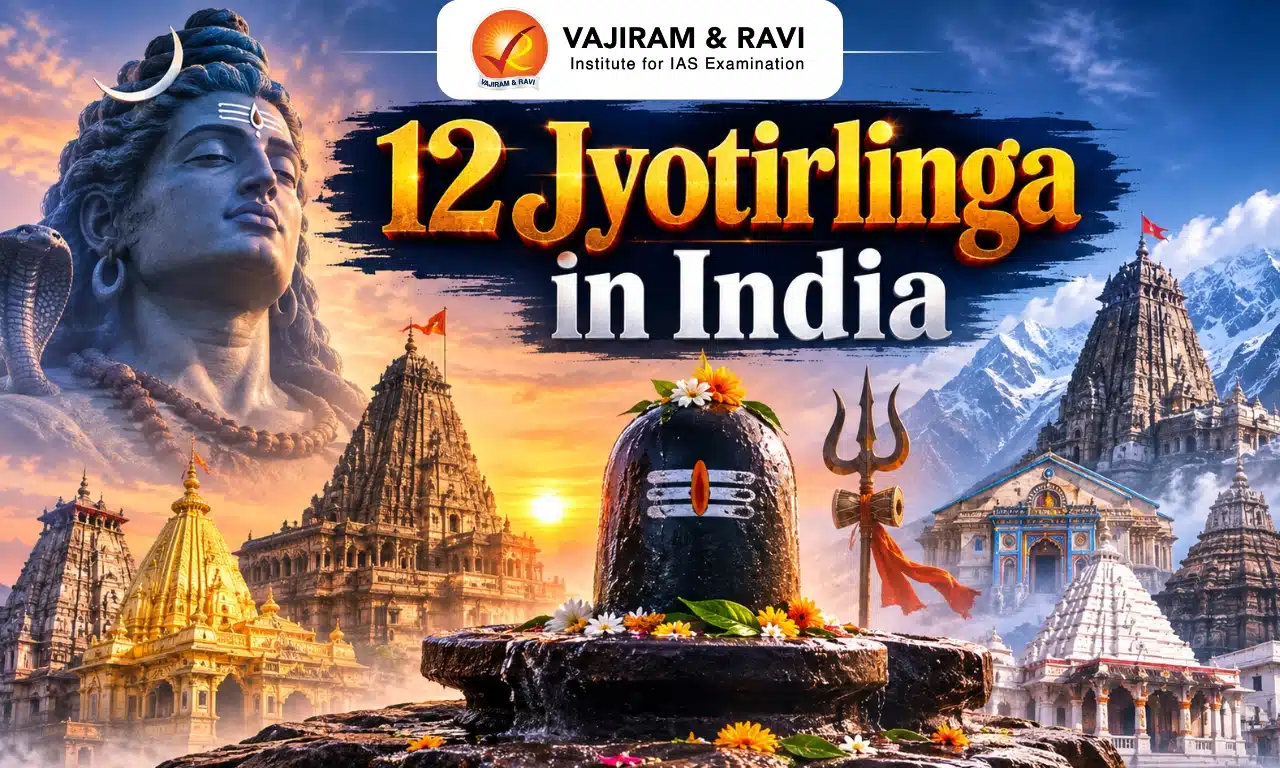
The 12 Jyotirlingas are the most sacred shrines dedicated to Lord Shiva in Hinduism. According to the Shiva Purana, these shrines mark the places where Lord Shiva manifested as an infinite pillar of divine light (Jyoti), symbolizing his eternal and limitless nature. Spread across eight Indian states, the Jyotirlingas are significant from the perspectives of Indian culture, history, geography, art and architecture, and religious heritage.
What Are the 12 Jyotirlingas?
A Jyotirlinga is a sacred representation of Lord Shiva in the form of a divine pillar of light.
The term is derived from:
Jyoti - Divine Light
Linga - Symbol of Lord Shiva
According to Hindu tradition, Lord Shiva appeared as an endless column of light to demonstrate his supreme and infinite form. The twelve Jyotirlingas commemorate this manifestation and are regarded as the holiest Shiva temples in India.
List of 12 Jyotirlingas in India
The 12 Jyotirlingas are the holiest shrines of Lord Shiva, located across different parts of India, each holding unique religious, historical, and cultural significance in Hindu tradition. Here we have provided the List of 12 Jyotirlingas in India.
List of 12 Jyotirlingas in India
Jyotirlinga
Location
State
Somnath
Prabhas Patan, Gir Somnath
Gujarat
Mallikarjuna
Srisailam, Nallamala Hills
Andhra Pradesh
Mahakaleshwar
Ujjain
Madhya Pradesh
Omkareshwar
Mandhata Island, Narmada River
Madhya Pradesh
Kedarnath
Rudraprayag
Uttarakhand
Bhimashankar
Pune
Maharashtra
Kashi Vishwanath
Varanasi
Uttar Pradesh
Trimbakeshwar
Nashik
Maharashtra
Vaidyanath (Baidyanath)
Deoghar
Jharkhand
Nageshwar
Dwarka
Gujarat
Rameshwaram (Ramanathaswamy)
Rameswaram Island
Tamil Nadu
Grishneshwar
Chhatrapati Sambhajinagar (Aurangabad)
Maharashtra
1. Somnath Jyotirlinga (Gujarat)
Located at Prabhas Patan in the Gir Somnath district of Gujarat, on the western coast of the Arabian Sea.
Traditionally regarded as the first Jyotirlinga mentioned in Hindu scriptures.
According to legend, Chandra (Moon God) worshipped Lord Shiva here to regain his lost radiance after being cursed by Sage Daksha.
The temple has been destroyed and rebuilt multiple times following repeated invasions, making it a symbol of faith and resilience.
The present temple was reconstructed in the Chalukya architectural style and inaugurated in 1951.
The temple stands near the Triveni Sangam, where the Hiran, Kapila, and the mythical Saraswati rivers meet.
It is one of the most visited Shiva pilgrimage sites in western India.
2. Mallikarjuna Jyotirlinga (Andhra Pradesh)
Situated at Srisailam in the Nallamala Hills of Andhra Pradesh.
Located on the banks of the Krishna River within the Nagarjunasagar-Srisailam Tiger Reserve.
Dedicated to Lord Mallikarjuna (Shiva) and Goddess Bhramaramba (Parvati), making it one of the few temples housing both deities.
It is also one of the 18 Shakti Peethas, enhancing its religious significance.
The temple has been patronized by the Satavahanas, Chalukyas, Kakatiyas, Vijayanagara rulers, and the Reddi dynasty.
It is an important centre of Shaivism in South India.
3. Mahakaleshwar Jyotirlinga (Madhya Pradesh)
Located in Ujjain, one of India's Sapta Puri (Seven Sacred Cities).
Famous for its unique south-facing (Dakshinamukhi) Jyotirlinga, a rare feature among Shiva temples.
Renowned for the daily Bhasma Aarti, performed before sunrise using sacred ash.
Situated near the Shipra River, which hosts the Simhastha Kumbh Mela every 12 years.
The temple has references in ancient Hindu literature and has been rebuilt several times.
Mahakaleshwar is worshipped as the Lord of Time (Mahakaal).
4. Omkareshwar Jyotirlinga (Madhya Pradesh)
Located on Mandhata (Shivapuri) Island in the Narmada River.
The island is believed to resemble the sacred symbol "Om" when viewed from above.
One of the two major Shiva temples on the island, the other being Mamleshwar Temple.
The temple has architectural influences from the Paramara and Maratha periods.
Omkareshwar is considered an important centre of pilgrimage along the Narmada River.
It attracts devotees throughout the year, especially during Mahashivratri.
5. Kedarnath Jyotirlinga (Uttarakhand)
Located in the Rudraprayag district of Uttarakhand at an altitude of about 3,583 metres.
One of the highest Jyotirlingas and part of the Char Dham Yatra.
Situated near the Mandakini River amidst the Garhwal Himalayas.
According to tradition, the temple was originally built by the Pandavas and later revived by Adi Shankaracharya.
The temple remains open only between April/May and October/November due to heavy snowfall.
Built using massive stone slabs without modern binding materials, showcasing remarkable ancient engineering.
6. Bhimashankar Jyotirlinga (Maharashtra)
Located in the Sahyadri Hills near Pune in Maharashtra.
Surrounded by the Bhimashankar Wildlife Sanctuary, known for its rich biodiversity.
Believed to be the origin of the Bhima River, a major tributary of the Krishna River.
Built primarily in the Nagara style of temple architecture.
Associated with the legend of Lord Shiva defeating the demon Bhima.
The temple is an important pilgrimage and eco-tourism destination.
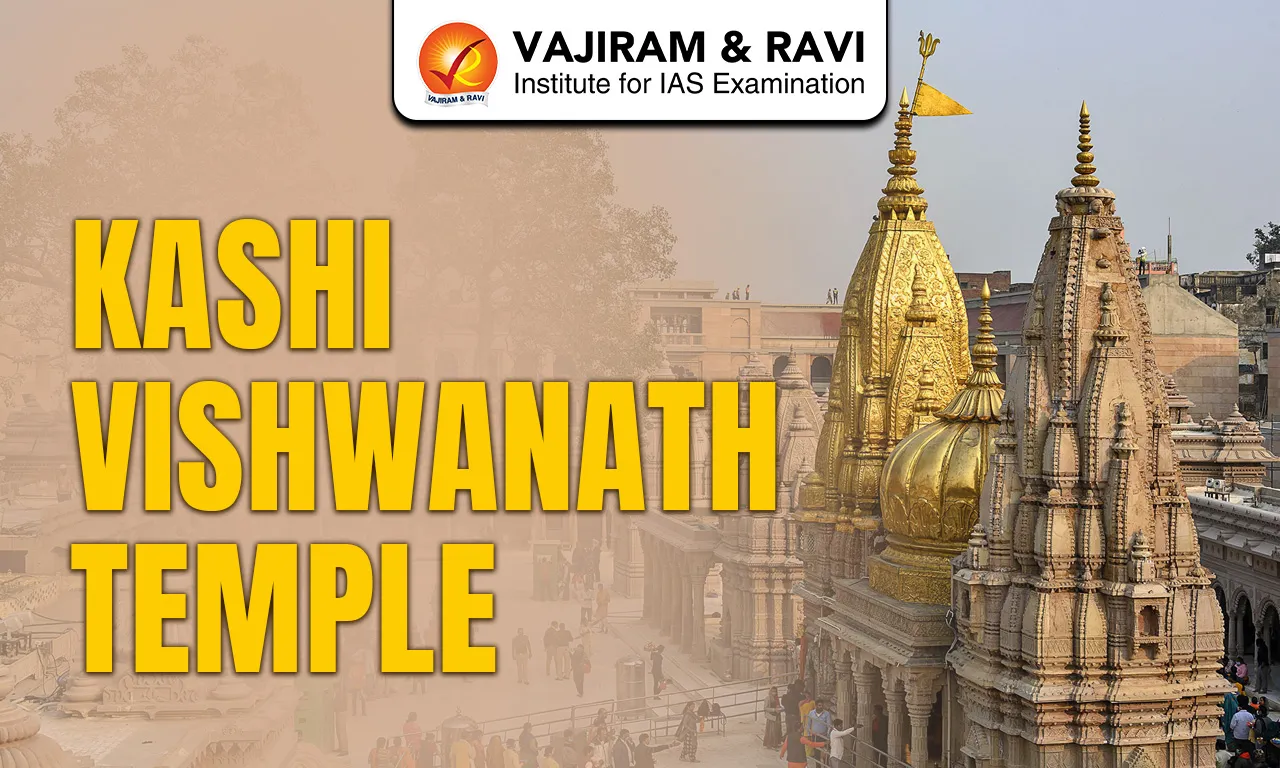
7. Kashi Vishwanath Jyotirlinga (Uttar Pradesh)
Situated in Varanasi, one of the oldest continuously inhabited cities in the world.
Located on the western bank of the River Ganga.
The present temple was rebuilt by Queen Ahilyabai Holkar in 1780.
The temple complex is connected to the Kashi Vishwanath Corridor, enhancing accessibility for pilgrims.
Considered one of the holiest Shiva temples where devotees seek spiritual liberation (Moksha).
Mentioned extensively in Hindu scriptures and devotional literature.
8. Trimbakeshwar Jyotirlinga (Maharashtra)
Located near Nashik at the foothills of the Brahmagiri Hills.
Close to the origin of the Godavari River, often called the "Ganga of South India."
The Jyotirlinga is unique because it consists of three small lingas, representing Brahma, Vishnu, and Shiva.
Constructed using black basalt stone in traditional architecture.
Nashik hosts the Kumbh Mela, making the temple an important pilgrimage centre.
Known for performing rituals such as Narayan Nagbali and Kaal Sarp Dosha Puja.
The Chauhan Dynasty, also known as the Chahamana dynasty, was one of the most influential Rajput dynasties of early medieval northern India. It ruled large parts of present day Rajasthan and neighbouring regions between the 7th and 12th centuries CE. The dynasty emerged from Shakambhari and later made Ajmer its political centre. It became famous for military strength, territorial expansion, temple patronage and the reign of Prithviraj III, whose battles against Muhammad Ghori marked a major turning point in the political history of northern India.
Chauhan Dynasty
The Chauhan Dynasty grew from a regional ruling house into one of the strongest powers of north-western India. Its rule extended across Rajasthan, Delhi, Haryana and nearby regions before the main Shakambhari branch declined after 1192 CE.
Timeline: The dynasty flourished from the 7th century CE until the late 12th century. Later branches continued to rule several regional kingdoms until the modern period in Rajasthan and other parts of India.
Founder: Vasudeva is regarded as the earliest known ruler and founder of the Shakambhari branch. According to Prabandha-Kosha, he ascended the throne around 551 CE, although this date remains historically disputed.
Kingdom and Capital: The early capital was Shakambhari (modern Sambhar). Ajayaraja II later established Ajayameru (Ajmer) as the principal capital during the early 12th century, making it the dynasty's political centre.
Territorial Expansion: At its height under Vigraharaja IV and Prithviraj III, the kingdom included Ajmer, Sambhar, Delhi, Hansi, Nagaur, Ranthambore, parts of Haryana, eastern Rajasthan and areas along the Yamuna River.
Major Ruling Branches: Important branches included the Chahamanas of Shakambhari, Naddula (Nadol), Jalor and Ranastambhapura (Ranthambore). These branches later gave rise to states such as Bundi, Kota, Sirohi and others.
Major Battles: The dynasty is best remembered for the First Battle of Tarain (1191), where Prithviraj III defeated Muhammad Ghori and the Second Battle of Tarain (1192), where Ghori returned with improved cavalry tactics and defeated the Chauhan forces.
Political Importance: Initially feudatories of the Gurjara-Pratiharas, the Chauhans gradually became independent after the decline of Pratihara authority and emerged as one of the leading Rajput powers of northern India.
Chauhan Dynasty Background
The Chauhans developed from regional chiefs into an important ruling dynasty by combining military strength, strategic location and political independence in early medieval Rajasthan.
Early Homeland: Early inscriptions connect the dynasty with Ahichchhatrapura, identified with modern Nagaur. The rulers later shifted their political centre to Shakambhari and eventually to Ajmer.
Association with Gurjara-Pratiharas: During their early history, the Chauhans served as feudatories of the Gurjara-Pratiharas and supported Nagabhata I in defending the north-western frontier against Arab attacks.
Rise as Independent Power: Simharaja became one of the earliest rulers to assert independence after the decline of the Gurjara-Pratiharas and adopted the title Maharajadhiraja, marking the dynasty's emergence as a sovereign power.
Chauhan Dynasty Historical Sources
Knowledge about the Chauhan Dynasty comes from inscriptions, literary works and later historical traditions that together provide information about its genealogy, administration and political achievements.
Inscriptions: Important inscriptions include the Hansot copper plate, Sevadi inscription (1119 CE), Bijolia rock inscription (1170 CE), Sundha Hill inscription (1262 CE), Ajmer inscription and Mount Abu inscription.
Court Literature: Prithviraja Vijaya, written by court poet Jayanaka, provides valuable contemporary information about Prithviraj III and presents the dynasty as descendants of the solar lineage.
Jain Literature: Works such as Prabandha-Kosha by Rajashekhara Suri and Hammira Mahakavya by Nayachandra Suri preserve important traditions regarding Chauhan rulers and their genealogy.
Bardic Traditions: Prithviraj Raso, attributed to Chand Bardai, became the most famous literary source associated with Prithviraj III, although many legendary additions appeared in later versions.
Temple Records: Temple inscriptions from Pushkar, Ajmer, Harshanatha and other religious centres provide evidence regarding donations, temple construction and royal patronage.
Chauhan Dynasty Prominent Rulers
Several Chauhan rulers strengthened the kingdom through military victories, administrative reforms, territorial expansion and cultural patronage.
Vasudeva: Considered the earliest known ruler, Vasudeva laid the foundation of the Shakambhari branch. Later traditions also associate him with Sambhar Salt Lake and the Sapadalaksha region.
Ajayaraja II: He defeated the Paramaras, expanded Chauhan influence and established Ajayameru (Ajmer) as the new capital, transforming it into an important political and cultural centre.
Arnoraja: Arnoraja fought repeated conflicts with the Chaulukyas of Gujarat. He also confronted Ghaznavid attacks and strengthened Chauhan authority despite facing military setbacks against Kumarapala.
Vigraharaja IV: Widely regarded as the greatest Chauhan ruler, he captured Delhi from the Tomaras, extended authority towards eastern Punjab, defeated Muslim rulers and authored the Sanskrit drama Harikeli Nataka.
Prithviraj III (Rai Pithora): He ruled from about 1177 to 1192 CE, defeated Muhammad Ghori in the First Battle of Tarain, fought the Chandelas, expanded the kingdom and became the dynasty's most celebrated ruler.
Hariraja: After Prithviraj's defeat, Hariraja attempted to restore Chauhan authority by recovering Ajmer and resisting the Ghurid advance before being defeated by Qutb-ud-din Aibak.
Hammiradeva: The Ranthambore branch reached prominence under Hammiradeva, who resisted the Delhi Sultanate until Alauddin Khalji captured Ranthambore in 1301 CE.
Chauhan Dynasty Administration
The Chauhan rulers maintained a hereditary monarchy supported by feudatories, military chiefs and provincial officers for effective governance across their expanding territories.
Monarchical System: The king held supreme authority over administration, justice, military affairs and land grants, while members of the royal family often governed strategic regions.
Provincial Administration: The kingdom was divided into administrative units managed by local nobles and feudatories who collected revenue and maintained law and order while remaining loyal to the ruler.
Feudal Structure: Samantas and local chiefs formed the backbone of administration and military organisation. They supplied troops during campaigns and managed regional territories.
Military Organisation: The army mainly consisted of cavalry, infantry, elephants and feudatory contingents. Strong forts such as Ajmer, Taragarh and Ranthambore strengthened frontier defence.
Justice and Governance: Royal courts administered justice according to traditional customs, while inscriptions indicate grants to temples, Brahmins and religious institutions under royal supervision.
Chauhan Dynasty Economy
Agriculture, trade, land revenue and control over strategic commercial routes formed the economic foundation of the Chauhan kingdom.
Agriculture: Farming remained the principal occupation. Revenue from cultivated land formed the largest source of royal income across the Sapadalaksha region.
Salt Trade: Control over Sambhar Salt Lake gave the Chauhans an important economic advantage, as salt was one of the most valuable commercial commodities of medieval Rajasthan.
Trade Routes: Ajmer's location connected Rajasthan with Gujarat, Delhi, Malwa and northern India, encouraging long distance trade and commercial prosperity.
Land Grants: Kings frequently donated villages and agricultural lands to temples, Brahmins and Jain institutions, promoting both religious activities and local economic development.
Urban Growth: Centres such as Ajmer, Sambhar, Nagaur and Delhi developed as administrative, commercial and cultural towns under Chauhan rule.
Chauhan Dynasty Art and Architecture
The Chauhans promoted temple construction, forts and literary activities, leaving a lasting architectural and cultural legacy across Rajasthan.
Ajmer Development: Ajayaraja II developed Ajmer into a fortified capital with important religious and administrative buildings, increasing its political importance.
Temple Construction: Simharaja is associated with temple construction at Pushkar. Chamundaraja built a Vishnu temple at Narapura, while Someshvara commissioned five temples at Ajmer.
Harshanatha Temple: Several Chauhan rulers contributed to the development of the Harshanatha temple, reflecting sustained royal patronage of religious architecture.
Adhai Din Ka Jhonpra: Vigraharaja IV constructed an educational and religious structure at Ajmer, which was later converted into the Adhai Din Ka Jhonpra during the Delhi Sultanate period.
Literary Patronage: Vigraharaja IV composed Harikeli Nataka, while the period also witnessed works such as Prithviraja Vijaya and the later celebrated Prithviraj Raso.
Chauhan Dynasty Culture and Religion
The Chauhan rulers encouraged religious tolerance, supported temple institutions and promoted Sanskrit and regional literary traditions.
Religious Beliefs: Most Chauhan rulers followed Hindu traditions and patronised both Shaivism and Vaishnavism while extending support to Jain religious institutions.
Jain Patronage: Ajayaraja II permitted Jain temple construction in Ajmer, while Prithviraja III presented a golden kalasha to a Parshvanatha temple, reflecting continued Jain patronage.
Pilgrim Welfare: Prithviraj I established a food distribution centre for pilgrims travelling towards the Somnath temple, demonstrating organised royal support for religious activities.
Literary Culture: Royal courts encouraged Sanskrit scholars, poets and dramatists, contributing significantly to medieval literary traditions of north-western India.
Cultural Legacy: The dynasty became closely associated with ideals of bravery, honour and chivalry, themes that remained central to later Rajput literary traditions.
Chauhan Dynasty Decline
The decline of the Chauhan Dynasty resulted from military defeat, political divisions and the expansion of Ghurid power into northern India.
Internal Divisions: Rivalries among Rajput kingdoms weakened collective resistance, preventing the formation of a united military front against external invasions.
Second Battle of Tarain: In 1192 CE, Muhammad Ghori adopted flexible cavalry tactics and defeated Prithviraj III at Tarain, ending Chauhan control over Delhi and Ajmer.
Ghurid Expansion: After the victory, Muhammad Ghori installed Govindaraja as a vassal before Qutb-ud-din Aibak consolidated Ghurid authority over Ajmer and surrounding regions.
Regional Survival: Although the main Shakambhari branch declined, branches at Ranthambore, Jalor, Sirohi, Bundi and Kota continued ruling regional states for several centuries.
End of Major Resistance: The capture of Ranthambore by Alauddin Khalji in 1301 CE ended the strongest remaining Chauhan resistance, though several descendant lineages survived into the princely state period.
Chauhan Dynasty FAQs
Q1: Who founded the Chauhan Dynasty?
Ans: Vasudeva is regarded as the earliest known ruler and founder of the Chauhan Dynasty. According to Prabandha-Kosha, he ascended the throne around 551 CE, although the exact date remains disputed.
Q2: Who was the most famous ruler of the Chauhan Dynasty?
Ans: Prithviraj III, also known as Rai Pithora, was the most famous Chauhan ruler. He defeated Muhammad Ghori in the First Battle of Tarain (1191) but was defeated in the Second Battle of Tarain (1192).
Q3: What was the capital of the Chauhan Dynasty?
Ans: The early capital of the Chauhan Dynasty was Shakambhari (modern Sambhar). During the reign of Ajayaraja II, the capital shifted to Ajmer, which became the dynasty's main political centre.
Q4: Which regions were ruled by the Chauhan Dynasty?
Ans: The Chauhan Dynasty ruled large parts of present day Rajasthan, Delhi, Haryana and neighbouring regions. At its peak, the kingdom also controlled Ajmer, Sambhar, Nagaur, Ranthambore and Hansi.
Q5: Why did the Chauhan Dynasty decline?
Ans: The Chauhan Dynasty declined mainly due to internal disunity among Rajput kingdoms and the defeat of Prithviraj III in the Second Battle of Tarain in 1192 CE against Muhammad Ghori.
India’s nutrition challenge is undergoing a major transition, with rising obesity and unhealthy diets emerging alongside persistent undernutrition. Recently, the Parliamentary Standing Committee on Consumer Affairs, Food and Public Distribution recommended mandatory Front-of-Pack Nutrition Labelling (FoPNL), while the ICMR–National Institute of Nutrition (ICMR-NIN) led “Let’s Fix Our Food” consortium proposed a health tax on High Fat, Salt and Sugar (HFSS) foods, stricter regulation of junk food advertising and healthier school food environments.
India’s Double Burden of Malnutrition
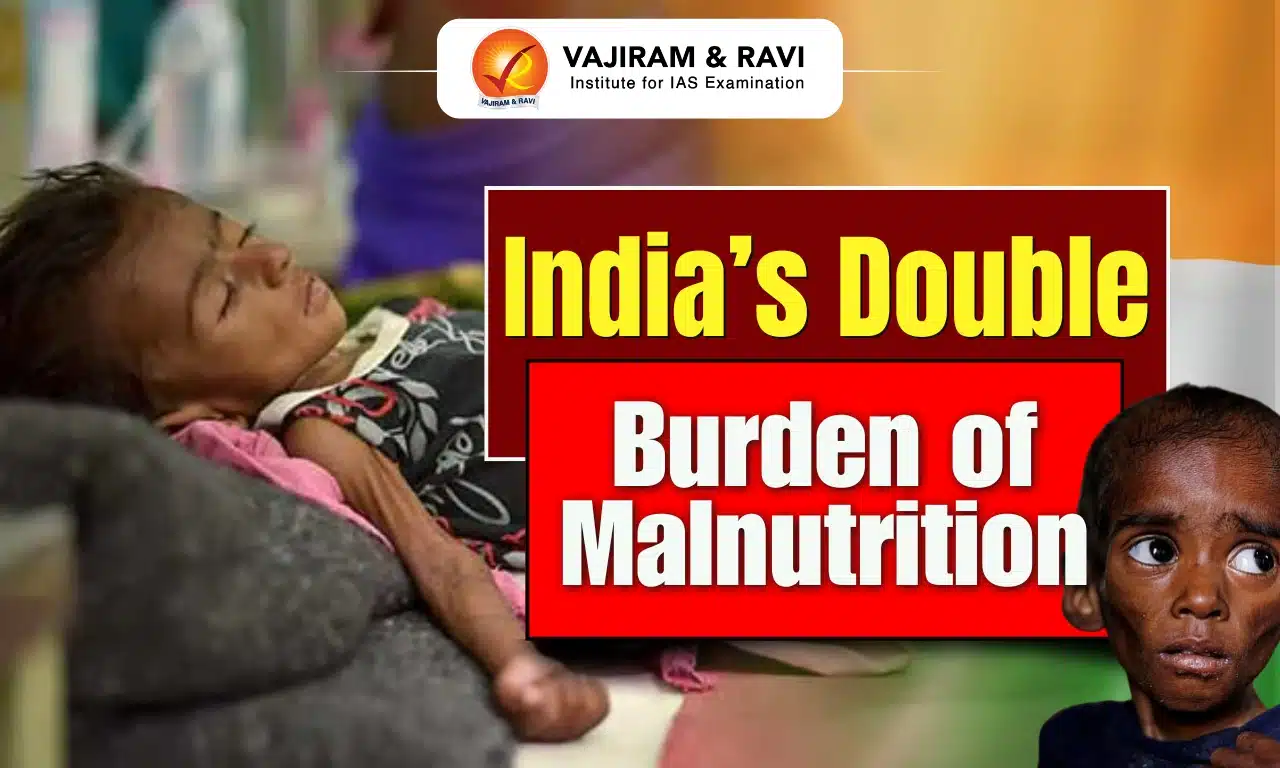
India is facing a double burden of malnutrition, where persistent undernutrition coexists with rising overweight, obesity and diet-related non-communicable diseases (NCDs). Addressing this nutrition transition requires public health policies that ensure both food security and healthy diets.
Persistent Undernutrition: Stunting, wasting, anaemia and micronutrient deficiencies continue to affect children, women and economically vulnerable populations.
Rising Overnutrition: NFHS data shows a steady increase in overweight and obesity among adults due to changing diets and sedentary lifestyles.
According to ICMR-NIN, over 17 million children and adolescents are affected by obesity, a figure projected to exceed 27 million by 2030.
Growing NCD Burden: Unhealthy diets are driving the rapid increase in diabetes, cardiovascular diseases, hypertension and certain cancers.
Changing Food Environment: Easy availability of ultra-processed foods, urbanisation and aggressive food marketing have altered traditional dietary habits.
Policy Measures to Promote Healthier Diets
India requires regulatory, fiscal and behavioural interventions to reduce obesity and encourage healthier food choices.
Front-of-Pack Nutrition Labelling (FoPNL)
Front-of-Pack Nutrition Labelling (FoPNL) is a system of displaying key nutrition information on the front of packaged food products to help consumers quickly identify foods high in sugar, salt and saturated fat.
Mandatory front-of-pack labels can empower consumers to make informed dietary decisions.
Informed Consumer Choice: Clearly identifies foods high in sugar, salt and saturated fat before purchase.
Promotes Healthier Products: Encourages food manufacturers to reformulate products with lower levels of unhealthy ingredients.
Protects Children: Mandatory disclosure of sugar content in baby foods can discourage unhealthy dietary habits from early childhood.
Improves Transparency: Simplifies nutritional information that is often difficult for consumers to interpret.
Health Tax on HFSS Foods
The ICMR-NIN consortium has recommended a health tax on High Fat, Salt and Sugar (HFSS) foods
to reduce their excessive consumption as they are associated with obesity, diabetes, hypertension and other non-communicable diseases.
Discourages Unhealthy Consumption: Higher prices can reduce demand for foods linked to obesity and NCDs.
Corrects Negative Externalities: Applies the principle of Pigouvian taxation, where products imposing long-term public health costs are taxed.
Encourages Industry Reform: Incentivises manufacturers to develop healthier food alternatives.
Supports Public Health Financing: Additional revenue can strengthen nutrition and preventive healthcare programmes.
Healthier School Food Environment
Healthy dietary habits should begin during childhood.
Restricts HFSS Foods: Limits the availability of unhealthy foods in and around educational institutions.
Promotes Nutrition Education: Encourages lifelong healthy eating habits among children and adolescents.
Supports Early Prevention: Reduces the long-term risk of obesity and metabolic disorders.
Regulation of Junk Food Advertising
Marketing practices significantly influence food choices, especially among children.
Protects Vulnerable Consumers: Restricts advertisements targeting children and adolescents.
Prevents Misleading Claims: Ensures responsible marketing of packaged food products.
Promotes Responsible Consumption: Reduces exposure to unhealthy food marketing across digital and conventional media.
Global Best Practices
Several countries have adopted fiscal and regulatory measures to reduce unhealthy food consumption and promote healthier diets.
The World Health Organization (WHO) reports that since 2017, more than 133 countries have introduced or increased health taxes on unhealthy products.
Colombia introduced a phased junk food tax in 2023, raising the tax rate from 10% to 15% and then 20%, along with stronger front-of-pack nutrition labelling.
Chile introduced mandatory front-of-pack warning labels and imposed strict restrictions on the marketing of unhealthy foods to children.
Mexico levied a tax on sugar-sweetened beverages, leading to a decline in their consumption and encouraging healthier dietary choices.
Norway, Hungary and Denmark have imposed taxes on sugar and other unhealthy foods to discourage excessive consumption and improve public health.
Key lesson for India: International experience shows that a combination of front-of-pack nutrition labelling, health taxes, marketing regulations and public awareness campaigns is more effective than any single policy measure in promoting healthy diets and preventing obesity.
Challenges in Promoting Healthy Diets and Preventing Obesity
Several institutional and behavioural barriers continue to limit the effectiveness of obesity prevention policies.
Inter-sectoral Coordination: Effective implementation requires collaboration among the Ministries of Health, Education, Consumer Affairs and Food Processing.
Way Forward
India’s nutrition strategy should move beyond calorie security towards ensuring healthy and sustainable diets.
Implement Mandatory FoPNL based on simple and scientifically validated nutrition indicators.
Adopt Evidence-Based Health Taxes on HFSS foods while protecting vulnerable consumers.
Strengthen FSSAI Enforcement to ensure compliance with food safety and labelling standards.
Create Healthy School Food Environments through nutrition standards and awareness programmes.
Promote Healthier Food Reformulation through incentives and regulatory standards.
Strengthen Public Awareness Campaigns on balanced diets, physical activity and healthy lifestyles.
India’s Double Burden of Malnutrition FAQs
Q1: What is the double burden of malnutrition?
Ans: It is the coexistence of undernutrition (stunting, wasting and anemia) with rising overweight, obesity and diet-related non-communicable diseases (NCDs).
Q2: What is Front-of-Pack Nutrition Labelling (FoPNL)?
Ans: FoPNL is a front-facing label on packaged foods that provides simple nutrition information to help consumers identify products high in sugar, salt and saturated fat.
Q3: What are High Fat, Salt and Sugar (HFSS) foods?
Ans: HFSS foods are processed foods high in fat, salt and sugar that increase the risk of obesity, diabetes, hypertension and other NCDs.
Q4: Why is a health tax on HFSS foods recommended?
Ans: It discourages unhealthy food consumption, promotes healthier product reformulation and helps reduce the burden of obesity and NCDs.
Q5: Which countries have successfully used health tax to reduce unhealthy food consumption?
Ans: Mexico, Chile, Colombia, Norway, Hungary and Denmark.
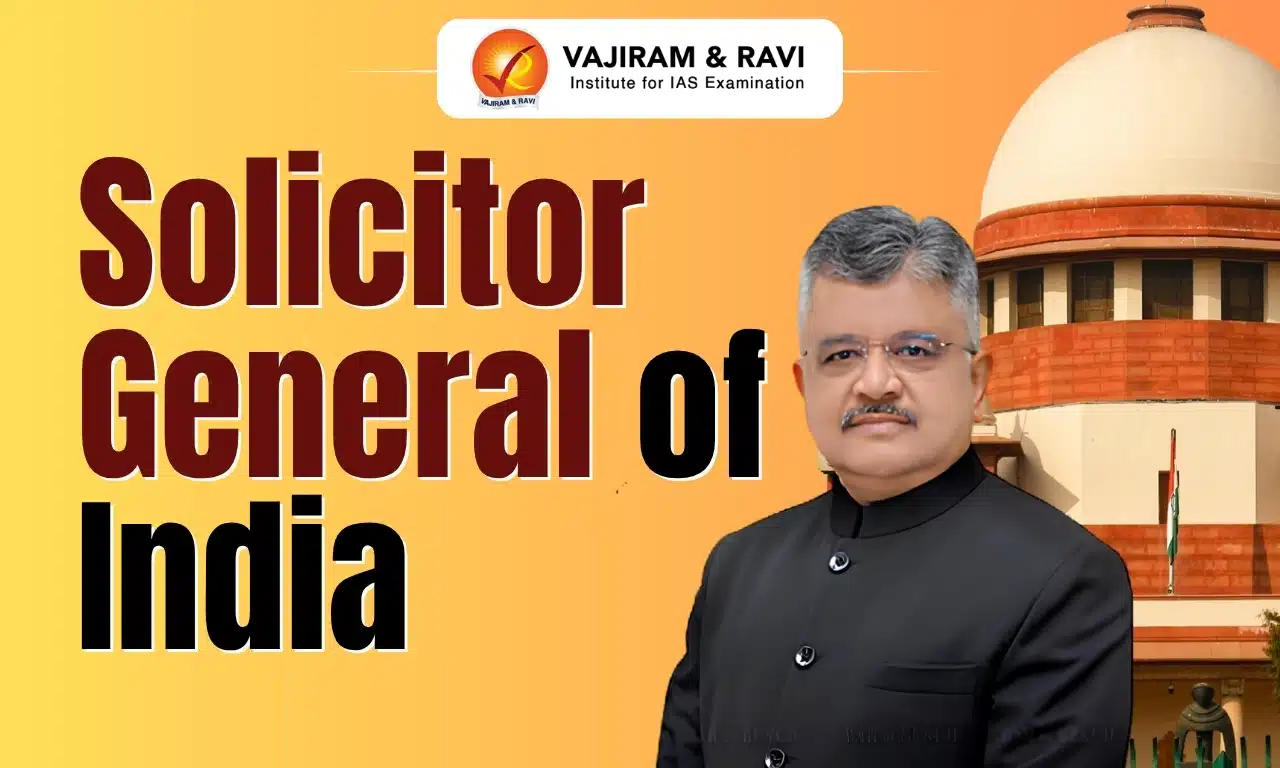
The Solicitor General of India is an important law officer of the Union Government who assists the Attorney General of India and represents the government in legal matters before courts.
About Solicitor General of India
The Solicitor General of India is the second-highest law officer of the Government of India, after the Attorney General of India. The office assists the Attorney General in legal matters and represents the Union Government before the Supreme Court, High Courts and other judicial forums. The office of Solicitor General was established in 1950. C.K. Daphtary became the first Solicitor General of India.
The hierarchy of Union Law Officers is: Attorney General of India → Solicitor General of India → Additional Solicitors General of India
Solicitor General of India Provisions
The provisions related to the Solicitor General of India are governed by executive rules rather than constitutional provisions.
Non-Constitutional Office: The Solicitor General is not mentioned in the Constitution of India, unlike the Attorney General who is provided under Article 76. The office derives its authority from executive action of the Government of India.
Legal Framework: The appointment and service conditions of the Solicitor General are governed by the Law Officers (Conditions of Service) Rules, 1987. These rules are framed under the proviso to Article 309 of the Constitution, which empowers regulation of service conditions of persons serving the Union.
Appointment: The Solicitor General is appointed by the Appointments Committee of the Cabinet (ACC). The appointment process is carried out through the Department of Legal Affairs, Ministry of Law and Justice.
Qualification: The Constitution does not prescribe specific qualifications for the Solicitor General. Generally, a senior advocate with expertise in constitutional and public law is appointed to the office.
Tenure: The Solicitor General generally holds office for a term of three years. The tenure is not constitutionally fixed and the officer may be reappointed.
Remuneration: The remuneration of the Solicitor General of India is governed by the Law Officers (Conditions of Service) Rules, 1987, as amended in 2026.
The Solicitor General receives a monthly retainer of ₹96,000 (effective from 1 February 2026).
The office also receives professional fees for appearances before courts, making it a fee-based remuneration system rather than a fixed salary.
Solicitor General of India Role and Functions
The role of the Solicitor General of India is to provide legal advice to the Union Government and represent it in important legal proceedings before courts.
Legal Advice to Government: The Solicitor General advises the Government of India on constitutional, civil, criminal and administrative matters referred by ministries and departments.
Representation Before Courts: The Solicitor General represents the Government of India before the Supreme Court, High Courts and other judicial forums in cases where the Union Government is a party or has an interest, including matters relating to constitutional interpretation, government policies, legislation and executive actions.
Assistance to Attorney General: The Solicitor General assists the Attorney General of India in discharging official duties and handling important legal matters of national significance.
Presidential References: The Solicitor General represents the Government of India in Presidential References made to the Supreme Court under Article 143 of the Constitution.
Restrictions on Solicitor General
The restrictions on the Solicitor General ensure professional integrity and prevent conflicts of interest
The Solicitor General cannot appear against the Government of India or any State Government.
The Solicitor General cannot advise or represent private parties in matters where the Government of India has an interest.
The Solicitor General cannot defend an accused person in criminal proceedings without prior government permission.
The Solicitor General cannot accept certain offices or directorships without government approval.
Difference Between Attorney General of India and Solicitor General of India
The Attorney General of India and the Solicitor General of India are the two highest law officers of the Union Government, but they differ in their constitutional status, powers and functions.
Basis
Attorney General of India
Solicitor General of India
Constitutional Status
Constitutional office under Article 76
Non-constitutional office created through executive rules
Position
Highest law officer of India
Second-highest law officer of India
Legal Framework
Constitution of India
Law Officers (Conditions of Service) Rules, 1987
Appointment
Appointed by the President of India
Appointed by the Appointments Committee of the Cabinet (ACC).
Tenure
Holds office during the pleasure of the President
Generally appointed for three years and holds office during the pleasure of the President
Parliamentary Rights
Can participate in the proceedings of Parliament and its Committees under Article 88, but cannot vote
No right to participate in Parliament
Primary Role
Chief legal adviser to the Union Government
Assists the Attorney General and represents the Union Government before courts
Constitutional Duties
Advises the Government and performs duties assigned under the Constitution and other laws
Performs functions assigned under the Law Officers (Conditions of Service) Rules, 1987
List of Solicitors General of India (1950-Present)
The office of the Solicitor General of India has been held by several distinguished jurists since its establishment in 1950, reflecting its important role in representing the Union Government before courts. The present Solicitor General of India is Tushar Mehta, who has been holding the office since 2018.
No.
Name
Tenure
1
C.K. Daphtary
1950-1963
2
H.N. Sanyal
1963-1964
3
S.V. Gupte
1964-1967
4
Niren De
1967-1968
5
Jagadish Swarup
1969-1972
6
Lal Narayan Sinha
1972-1977
7
S.N. Kacker
1977-1979
8
Soli Sorabjee
1979-1980
9
K. Parasaran
1980-1983
10
Milon K. Banerji
1986-1989
11
Ashok Desai
1989-1990
12
A.D. Giri
1990-1991
13
Dipankar P. Gupta
1992- 1997
14
T.R. Andhyarujina
1997-1998
15
N. Santosh Hegde
1998 - 1999
16
Harish Salve
1999 - 2002
17
Kirit Rawal
2002 - 2004
18
Goolam E. Vahanvati
2004-2009
19
Gopal Subramaniam
2009-2011
20
Rohinton F. Nariman
2011-2013
21
Mohan Parasaran
2013-2014
22
Ranjit Kumar
2014-2017
23
Tushar Mehta
2018-Present
Solicitor General of India FAQs
Q1: Who is the Solicitor General of India?
Ans: The Solicitor General of India is the second-highest law officer of the Union Government, who assists the Attorney General and represents the Government of India before courts.
Q2: Is the Solicitor General of India a constitutional office?
Ans: No. The Solicitor General is a non-constitutional and non-statutory office, governed by the Law Officers (Conditions of Service) Rules, 1987.
Q3: Who appoints the Solicitor General of India?
Ans: The Solicitor General is appointed by the Appointments Committee of the Cabinet (ACC).
Q4: What are the main functions of the Solicitor General of India?
Ans: The Solicitor General advises the Government of India on legal matters, represents it before courts, assists the Attorney General, and appears in Presidential References under Article 143.
Q5: Who is the present Solicitor General of India?
Ans: Tushar Mehta is the present Solicitor General of India and has been reappointed for a three-year term from 1 July 2026 to 30 June 2029.
The Atomic Energy Act, 1962 was the principal legislation governing the development, control and peaceful use of atomic energy in India for more than six decades. Enacted to ensure the safe and strategic utilisation of nuclear energy, it established the legal framework for regulating nuclear materials, atomic research, radiation safety and related activities under the control of the Central Government. In December 2025, the Act was repealed and replaced by the Sustainable Harnessing and Advancement of Nuclear Energy for Transforming India (SHANTI) Act, 2025.
About the Atomic Energy Act, 1962
The Atomic Energy Act, 1962 provides the legal framework for the development, control and use of atomic energy in India for peaceful purposes and public welfare.
The Act was enacted by Parliament in 1962 and came into force on 21 September 1962, replacing the Atomic Energy Act, 1948.
It extends to the whole of India and is administered by the Department of Atomic Energy under the Central Government.
The Act derived constitutional authority from Entry 6 of the Union List (List I, Seventh Schedule), which places atomic energy and mineral resources necessary for its production under the exclusive jurisdiction of the Union.
It vested extensive powers in the Central Government to regulate atomic energy, prescribed substances, radioactive materials and nuclear installations.
The Act served as the foundational legislation governing India’s civilian nuclear programme until it was repealed by the SHANTI Act, 2025.
Atomic Energy Act, 1962 Background
Soon after Independence, India recognised atomic energy as a strategic resource essential for national development, scientific progress and energy security. To regulate this emerging sector, Parliament enacted the Atomic Energy Act, 1948, which laid the foundation for India’s nuclear programme. During this period, the Atomic Energy Commission (AEC) was established in 1948 to guide nuclear policy, followed by the creation of the Department of Atomic Energy (DAE) in 1954 under the direct charge of the Prime Minister. As India’s nuclear research and peaceful applications expanded, the 1948 law became inadequate. To provide a stronger and more comprehensive legal framework, Parliament enacted the Atomic Energy Act, 1962, replacing the 1948 Act. The new law vested exclusive control over atomic energy and strategic nuclear materials in the Central Government while promoting the peaceful development and use of nuclear energy for the welfare of the people.
Atomic Energy Act, 1962 Objectives
The Atomic Energy Act, 1962 aimed to:
Promote the peaceful development and use of atomic energy for national development and public welfare.
Ensure exclusive Central Government control over atomic energy and strategic nuclear materials.
Regulate the production, possession, transport, import, export and use of prescribed and radioactive substances.
Develop nuclear science and technology by promoting research, innovation and technical advancement.
Ensure radiation safety and provide for the safe handling and disposal of radioactive substances and waste.
Protect national security by restricting access to sensitive nuclear information and strategic installations.
Support the generation of electricity from atomic energy and promote the growth of India’s civilian nuclear power programme.
Provide a legal framework for licensing, inspection, acquisition and regulation of activities connected with atomic energy.
Atomic Energy Act, 1962 Key Provisions
The Atomic Energy Act, 1962 vested exclusive control over the development, regulation and peaceful use of atomic energy in the Central Government.
General Powers of the Central Government (Section 3): Empowers the Central Government to develop, produce, use and regulate atomic energy. It can establish nuclear organisations, conduct research, manufacture nuclear materials, declare restricted information and prohibited areas, regulate radiation safety, ensure safe disposal of radioactive waste and generate electricity from atomic energy.
Reporting of Uranium and Thorium Deposits (Section 4): Makes it mandatory for any person who discovers, or has reason to believe that uranium or thorium deposits exist, to report the information to the Central Government.
Control over Mining (Section 5): Authorises the Central Government to regulate, impose conditions on or prohibit the mining, treatment and concentration of uranium-bearing minerals in the national interest.
Disposal of Uranium (Section 6): Prohibits disposal of uranium-bearing minerals without prior approval of the Central Government and empowers it to compulsorily acquire such minerals by paying compensation.
Information, Inspection and Exploration (Sections 7-9): Empower the Central Government to obtain information on prescribed substances, inspect mines and nuclear facilities, and undertake surveys and exploration to locate strategic nuclear minerals.
Compulsory Acquisition (Sections 10-12): Enable the Central Government to acquire mining rights, prescribed substances, nuclear equipment, plants and mines required for atomic energy purposes, with compensation provided under the Act.
Transfer of Contracts (Section 13): Allows the Central Government to take over rights and liabilities under contracts relating to nuclear minerals, atomic energy or nuclear research in the national interest, with compensation where applicable.
Licensing of Nuclear Activities (Section 14): Establishes a licensing system under which mining of specified minerals, possession or use of prescribed substances, import or export of nuclear materials, and operation of nuclear plants can be carried out only with a licence from the Central Government.
Requisition of Nuclear Materials (Section 15): Empowers the Central Government to require delivery of substances containing uranium or plutonium, extract these strategic materials, and return the remaining substance after paying compensation.
Radiation Safety (Sections 16-17): Empowers the Central Government to regulate the manufacture, transport, storage, use and disposal of radioactive substances, prescribe radiation safety standards, protect workers and the public, and ensure safe disposal of radioactive waste.
Secrecy and Security (Sections 18-19): Restrict disclosure of sensitive nuclear information and regulate entry into prohibited nuclear areas. Prosecution for offences under Section 18 requires the consent of the Attorney General of India.
Patent Restrictions (Section 20): Prohibits the grant of patents for inventions relating to atomic energy and requires prior approval of the Central Government before filing such patent applications abroad.
Compensation (Section 21): Lays down the principles for determining compensation in cases of compulsory acquisition under the Act.
Atomic Power Generation (Section 22): Empowers the Central Government to formulate national policy on atomic power, establish and operate atomic power stations, regulate electricity supply and coordinate with electricity authorities.
Administration of Nuclear Factories (Section 23): Vests the Central Government with the authority to administer and enforce the Factories Act, 1948 in factories engaged in atomic energy activities.
Offences and Penalties (Sections 24-26): Prescribe punishments for unauthorised nuclear activities, violation of licence conditions, breach of safety rules and disclosure of restricted information, and lay down the procedure for prosecution.
Delegation and Rule-making (Sections 27-31): Empower the Central Government to delegate powers, frame rules for implementing the Act, ensure the Act overrides inconsistent laws and protect actions taken in good faith. Section 27 also served as the enabling provision under which the Atomic Energy Regulatory Board (AERB)was constituted in 1983 through an executive order.
Atomic Energy Act, 1962 Key Amendments and Current Status
The Atomic Energy Act, 1962 was amended from time to time to strengthen India’s nuclear governance framework and facilitate the peaceful development of atomic energy.
Atomic Energy (Amendment) Act, 1986: Revised provisions relating to compulsory acquisition and clarified regulatory provisions concerning prescribed substances.
Atomic Energy (Amendment) Act, 1987: Expanded the powers of the Central Government, enabled authorities, corporations and Government companies to undertake atomic energy activities, and introduced the definition of a Government Company under the Act.
Atomic Energy (Amendment) Act, 2015 (Act No. 5 of 2016): Expanded the definition of Government Company to facilitate joint ventures between the Nuclear Power Corporation of India Limited (NPCIL) and other public sector undertakings for establishing and operating nuclear power projects under Central Government control.
Atomic Energy Act, 1962 Current Status
The Atomic Energy Act, 1962 has been repealed and replaced by the Sustainable Harnessing and Advancement of Nuclear Energy for Transforming India (SHANTI) Act, 2025, which received Presidential assent on 20 December 2025. The SHANTI Act also repealed the Civil Liability for Nuclear Damage Act, 2010, creating a unified legal framework for India’s nuclear sector.
Key features of the SHANTI Act, 2025:
Statutory status to AERB: Grants statutory status to the Atomic Energy Regulatory Board (AERB), India’s nuclear safety regulator, which was originally constituted by the Central Government in 1983 under Section 27 of the Atomic Energy Act, 1962 through an executive order.
Limited private sector participation: Permits limited private sector participation in nuclear power generation and selected fuel-cycle activities, while retaining Central Government control over strategic areas such as uranium mining, fissile materials, spent fuel management and heavy water.
New nuclear liability framework: Replaces the Civil Liability for Nuclear Damage Act, 2010 with a graded system to determine liability and provide compensation in case of nuclear accidents.
Supports Nuclear Energy Mission: Provides the legal framework to support the target of achieving 100 GW of nuclear power capacity by 2047.
Atomic Energy Act 1962 FAQs
Q1: What was the Atomic Energy Act, 1962?
Ans: The Atomic Energy Act, 1962 was the principal law governing the development, control and peaceful use of atomic energy in India.
Q2: When did the Atomic Energy Act, 1962 come into force?
Ans: The Atomic Energy Act, 1962 came into force on 21 September 1962, replacing the Atomic Energy Act, 1948.
Q3: What were the main objectives of the Atomic Energy Act, 1962?
Ans: To regulate atomic energy, ensure its peaceful use, promote nuclear research, and maintain Central Government control over strategic nuclear resources.
Q4: Which authority administered the Atomic Energy Act, 1962?
Ans: The Atomic Energy Act, 1962 was administered by the Department of Atomic Energy (DAE) under the Central Government.
Q5: Is the Atomic Energy Act, 1962 still in force?
Ans: No. The Atomic Energy Act, 1962 was repealed in December 2025 and replaced by the SHANTI Act, 2025.
Perennial Rivers are rivers that flow throughout the year, providing a steady source of water even during dry seasons. They are an important part of our natural environment and support daily life in many ways from supplying drinking water and irrigation to sustaining plants, animals, and ecosystems. These rivers depend on a combination of rainfall, groundwater, and sometimes glacier or snowmelt, which helps them maintain continuous flow. Due to their constant presence, perennial rivers have always played a vital role in shaping human settlements, culture, and economic activities. Perennial rivers are discussed in detail in this article.
Perennial River
Perennial rivers are rivers that flow continuously throughout the year, regardless of the season, though in severe drought conditions their flow may reduce or temporarily stop.
The term “perennial” comes from the Latin word perennis, meaning lasting throughout the year, which is why these rivers are also called permanent rivers.
Most perennial rivers originate in mountainous regions, especially where there is snow and glaciers.
Their water supply comes from multiple sources such as:
Melting glaciers and snow in summer
Rainfall during the monsoon
Snow accumulation in winter
Underground water and springs
Because they receive water from different sources across seasons, these rivers do not dry up like seasonal rivers.
In India, perennial rivers are mainly found in North India due to the presence of the Himalayas, which are covered with snow.
In contrast, South India does not have snow-covered mountains, so most rivers there are non-perennial (seasonal).
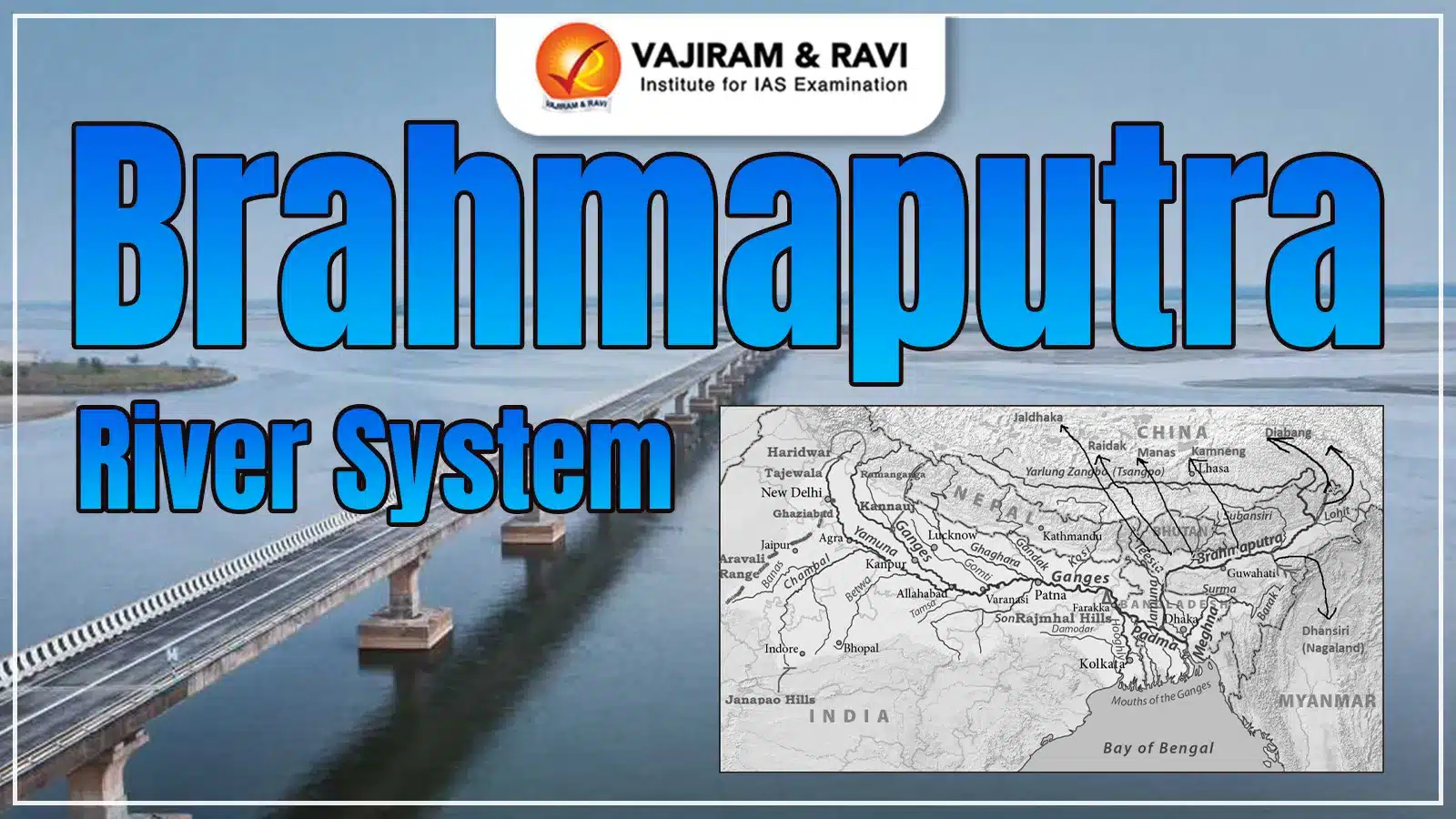
Ganga and its tributaries: Gandak, Yamuna, Gomti, Ghaghara, Kosi
Brahmaputra and its tributaries: Torsa, Teesta, Manas, Jaldhaka, Subansiri, Dibang, Lohit
Key Characteristics of Perennial Rivers
Perennial rivers flow throughout the year, meaning they do not dry up in any particular season under normal conditions. This continuous flow makes them reliable and consistent water bodies.
They are often called permanent rivers because their water supply is not dependent on just one source, but a combination of multiple sources working together.
One of the key features is that they are mainly fed by melting glaciers and snow, especially those originating in high mountain regions like the Himalayas. During summer, melting ice ensures a steady flow of water even when rainfall is low.
These rivers are also supported by groundwater (underground aquifers). Water slowly seeps into the river from below, which helps maintain flow even during dry periods when there is no rain.
Rainfall, especially monsoon rains, further increases the water level. During the rainy season, these rivers become fuller and stronger, but unlike seasonal rivers, they still have water even without rain.
Another important characteristic is that they have a stable and continuous flow pattern, rather than sudden drying or extreme fluctuations like seasonal rivers.
Perennial rivers support rich and stable ecosystems. Because they do not dry up, they provide a permanent habitat for aquatic life, plants, and animals along the riverbanks.
They play a crucial role in agriculture, as they provide year-round water for irrigation, making farming more reliable and productive, especially in fertile plains.
Another key feature is that they usually have large river systems with many tributaries, which help in maintaining their continuous flow and expanding their reach across regions.
Difference Between Perennial Rivers and Seasonal Rivers
Rivers can be broadly classified based on their flow pattern and source of water into two main types: perennial rivers and seasonal rivers. While both are important for ecosystems and human use, they differ significantly in terms of water availability, sources, and consistency of flow. The key differences between perennial and seasonal rivers are discussed below.
Difference Between Perennial Rivers and Seasonal Rivers
Basis
Perennial Rivers
Seasonal Rivers
Flow of Water
Flow continuously throughout the year
Flow only during a particular season (mostly rainy season)
Water Availability
Always have water, even in dry seasons
May dry up completely during summer or drought
Source of Water
Fed by glaciers, snowmelt, groundwater, and rainfall
Mainly depend on rainfall (monsoon)
Consistency of Flow
Have a steady and reliable flow
Flow is irregular and changes with seasons
Presence During Drought
Continue to flow, though water level may reduce
Often shrink into small streams or dry up completely
Geographical Location
Common in regions with mountains and glaciers (e.g., North India)
Common in regions without snow-fed sources (e.g., parts of South India)
Impact on Agriculture
Provide year-round water, making farming reliable
Farming depends heavily on rainfall timing and amount
River Size and Shape
Maintain size and flow throughout the year
Become narrow, shallow, or dry in non-rainy seasons
Ecosystem Support
Support stable and rich biodiversity all year
Organisms adapt to wet and dry cycles
Examples
Ganga, Brahmaputra, Indus, Godavari
Sabarmati, Banas
Hydropower Potential
Suitable due to continuous water flow
Limited due to irregular water availability
Nature of Flow Cycle
Continuous, no dry phase under normal conditions
Cyclical flow (flows in rainy season, dries later)
Major Perennial Rivers in India
Ganga (Ganges): Originates from the Gangotri Glacier (Himalayas) and flows about 2,525 km through northern India into Bangladesh, finally draining into the Bay of Bengal; it is a sacred river and supports agriculture, drinking water, and cultural life.
Yamuna: Rises from the Yamunotri Glacier (Uttarakhand) and flows around 1,376 km; it is a major tributary of the Ganga and meets it at the Triveni Sangam (Prayagraj), an important religious site.
Brahmaputra: Originates in Tibet (Tsangpo River) and flows about 2,900 km through Arunachal Pradesh, Assam, and Bangladesh; known for fertile floodplains and frequent monsoon floods.
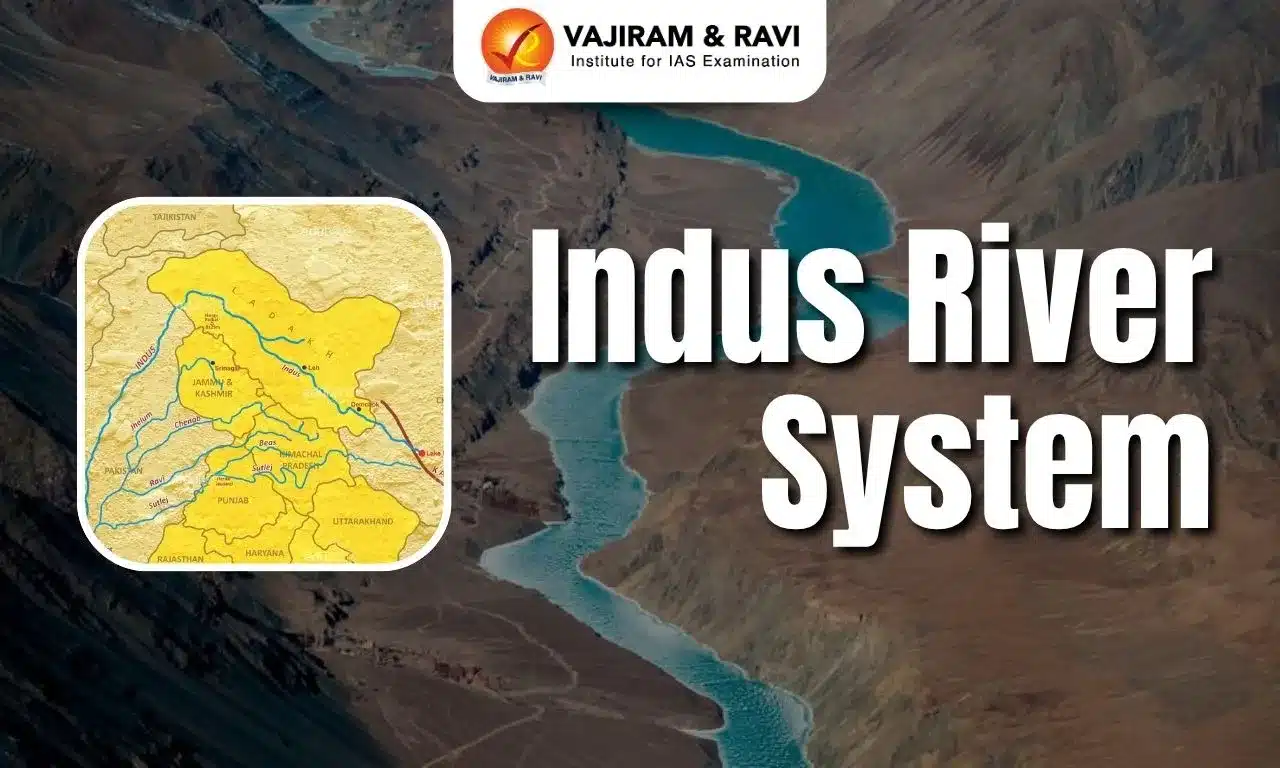
Indus: Begins in the Tibetan Plateau and flows about 3,180 km through Ladakh into Pakistan; has major tributaries like Sutlej, Beas, Chenab, Ravi, and Jhelum and is linked to theIndus Valley Civilization.
Godavari: Originates in Maharashtra and flows about 1,465 km; it is the largest river of Peninsular India and mainly monsoon-fed, supporting agriculture and settlements.
Krishna: Starts near Mahabaleshwar (Western Ghats) and flows about 1,400 km; important for irrigation and water supply in central and southern India.
Mahanadi: Originates in Chhattisgarh and flows about 858 km through Odisha into the Bay of Bengal; important for irrigation and hydroelectric power (notably Hirakud Dam).
Sutlej: Rises in Tibet and flows about 1,550 km through Himachal Pradesh and Punjab; an important tributary of the Indus used for irrigation and power generation.
Tapti (Tapi): Originates in the Satpura Range and flows about 724 km through Maharashtra and Gujarat into the Arabian Sea; supports agriculture and industry.
Challenges Faced by Perennial Rivers
Overuse and over-allocation of water: Rivers are heavily used for agriculture, industry, and domestic purposes, reducing their natural flow.
Declining flow and seasonal transformation: Many perennial rivers are turning into seasonal rivers due to reduced water availability and interrupted flow.
Excessive groundwater extraction: Overuse of borewells and pumps lowers the water table, reducing groundwater that naturally feeds rivers.
Dams, diversions, and infrastructure pressure:Dams, canals, and urban development disturb the natural flow and alter river ecosystems.
Urbanisation and loss of floodplains: Expansion of cities leads to encroachment on riverbanks and floodplains, reducing space for rivers to flow naturally.
Pollution and habitat degradation:Industrial waste, sewage, and agricultural runoff degrade water quality and harm aquatic life.
Decline of tributaries and natural channels: Smaller rivers and feeder streams are drying up, weakening major river systems.
Climate variability and rainfall dependency: Changing rainfall patterns and increased droughts affect rivers, especially those dependent on rain.
Weak policies and poor river management: Lack of proper restoration plans and focus on ecology has worsened river conditions.
Government Initiatives for Conservation and Management of Perennial Rivers
National River Conservation Plan (NRCP): A centrally sponsored scheme focused on pollution abatement in major rivers through setting up sewage treatment plants (STPs), interception and diversion of drains, and riverfront development, aiming to improve overall water quality and ecological health of rivers.
Namami Gange Programme: An integrated flagship programme for the conservation and rejuvenation of the Ganga basin, covering pollution control, river surface cleaning, biodiversity conservation, afforestation, and public participation, with a strong emphasis on sustainable river basin management.
Atal Bhujal Yojana (ABHY): A World Bank-supported scheme aimed at sustainable groundwater management in water-stressed areas through community participation, water budgeting, and demand-side interventions, helping in restoring baseflow to rivers.
Jal Shakti Abhiyan: A time-bound campaign focusing on water conservation and rainwater harvesting, promoting efficient water use, reuse of treated wastewater, watershed development, and intensive afforestation in water-stressed districts across India.
Wetlands (Conservation and Management) Rules, 2017: Provides a regulatory framework for protection, conservation, and wise use of wetlands, restricting encroachments, pollution, and destructive activities, while recognizing wetlands as crucial for maintaining river flows, groundwater recharge, and biodiversity.
Significance of Perennial Rivers
Ensures Water Security: Maintains continuous availability of freshwater for agriculture, drinking, and industry, which is crucial for a growing population and economy.
Maintains Ecological Balance: Supports aquatic biodiversity, wetlands, and riparian ecosystems, ensuring the survival of fish, plants, and other organisms dependent on river systems.
Sustains Baseflow and Groundwater Linkages: Healthy rivers help in recharging groundwater, while adequate groundwater levels ensure perennial flow during dry seasons, maintaining the hydrological cycle.
Supports Livelihoods: Provides livelihood opportunities through fishing, agriculture, tourism, and traditional occupations, especially for rural and river-dependent communities.
Reduces Disaster Risks: Well-managed rivers and floodplains help in flood regulation, drought mitigation, and prevention of land degradation, enhancing climate resilience.
Preserves Cultural and Social Values: Rivers in India hold immense religious, cultural, and historical significance, and their conservation ensures continuation of these traditions.
Prevents Desertification and Land Degradation: Sustained river flows help in maintaining soil moisture and fertility, preventing the conversion of fertile land into arid regions.
Promotes Sustainable Development: Balances economic development with environmental conservation, ensuring that river resources are used without compromising future needs.
Improves Water Quality: Effective management reduces pollution load, leading to safer water for human use and healthier ecosystems.
Strengthens Climate Change Adaptation: Conserved river systems enhance the ability to withstand variability in rainfall, glacier melt, and extreme weather events.
Perennial Rivers FAQs
Q1: What are Perennial Rivers?
Ans: Perennial rivers flow continuously throughout the year, even during dry seasons, because they are fed by multiple sources such as rainfall, groundwater, and melting snow or glaciers.
Q2: Why are perennial rivers called permanent rivers?
Ans: Perennial rivers are often referred to as permanent rivers because they maintain a steady flow in all seasons and do not dry up like seasonal rivers, due to their constant water supply from various natural sources.
Q3: What are the main sources of water for perennial rivers?
Ans: The main sources of water for perennial rivers include glacier and snowmelt, rainfall, and groundwater discharge, all of which together ensure that the river continues to flow even during periods of low rainfall.
Q4: What is the difference between perennial and seasonal rivers?
Ans: The key difference lies in their flow pattern, as perennial rivers flow throughout the year, while seasonal rivers depend mainly on rainfall and may dry up during dry seasons, making their flow irregular and unreliable.
Q5: What are some examples of perennial rivers?
Ans: Examples of perennial rivers include the Ganga, Brahmaputra, and Indus river systems in India, which flow throughout the year.
Land reclamation is the process of converting water-covered areas such as seas, rivers, lakes and wetlands into usable land through engineering methods. It supports urban growth, infrastructure development and strategic projects in land-scarce regions. However, if not scientifically planned, it can disrupt ecosystems, increase climate and disaster risks, and threaten coastal and inland environments.
What is Land Reclamation?
Land reclamation is the process of creating new, usable land by converting areas covered by water bodies such as seas, rivers, lakes, marshes and wetlands into dry land through filling, drainage and land stabilisation techniques. According to standard geographical understanding, it involves altering the natural landscape to increase the availability of land for human activities.
Coastal reclamation is the most common form, where shallow seas, tidal areas and coastal wetlands are converted into land for ports, airports, industries, housing and urban infrastructure.
Inland reclamation involves converting lakes, marshes, floodplains and other water bodies into usable land, often for agriculture or urban development.
Land Reclamation Methods
Land reclamation methods have evolved with technological advancement, moving from simple filling techniques to modern engineering approaches that ensure land stability and long-term usability.
Traditional Fill-and-Raise Method: Earlier reclamation involved gradually depositing soil, sediments or rocks over shallow water bodies to raise land levels and create dry land.
Polder System: A specialised traditional method where land is enclosed using dykes or embankments and then drained to remove water. This method is widely used in the Netherlands.
Dry Reclamation: A modern extension of the filling approach, where rock, clay or soil is transported and mechanically compacted to raise land elevation. It is suitable where the seabed is relatively stable and was used in early coastal expansion projects such as Mumbai.
Hydraulic Reclamation: A widely used modern technique in which dredged seabed sediments are mixed with water and pumped into the reclamation site, where they settle to form new land. It is commonly used for large-scale projects due to its efficiency, including reclamation projects in Singapore.
Ground Stabilisation Techniques: Since reclaimed land often has weak soil conditions, supporting techniques such as sand compaction piles and deep cement mixing are used to improve soil strength, reduce settlement and minimise liquefaction risks.
Why is Land Reclamation Undertaken?
Land reclamation is driven by economic, urban and strategic requirements, especially in land-scarce regions.
Urban expansion: Coastal cities such as Mumbai, Singapore and Hong Kong use reclamation to create additional space for growing populations.
Infrastructure development: Reclaimed land supports ports, airports, industrial zones and logistics hubs.
Trade promotion: Many global ports have expanded through reclamation to handle increasing maritime trade.
Strategic importance: Countries use artificial islands and reclaimed areas to strengthen maritime presence and geopolitical influence.
Tourism development: Waterfront projects and luxury real estate developments often depend on reclaimed land.
Global Examples of Land Reclamation
Land reclamation has significantly transformed coastal landscapes across the world.
China: Created large reclaimed coastal areas mainly for industrial zones and port infrastructure.
Singapore: Expanded its territory through extensive reclamation due to limited land availability.
South Korea: Incheon’s coastal reclamation supported industrial and urban development.
Netherlands: The traditional polder system converted low-lying coastal areas into productive land.
Dubai: Artificial islands such as Palm Islands demonstrate tourism-oriented reclamation.
Land Reclamation in India
India has used reclamation for urban expansion, ports and strategic infrastructure development.
Mumbai: The original seven islands were gradually connected through reclamation projects such as the Hornby Vellard project, creating the modern Mumbai landmass.
Kochi and Kolkata: Reclamation supported port expansion and urban development.
Urban wetlands: Cities like Bengaluru, Chennai and Mumbai have witnessed conversion of lakes, marshes and floodplains into built-up areas.
Great Nicobar Island Project: A Contemporary Example
The Great Nicobar Island Development Project represents one of India’s largest reclamation-linked infrastructure initiatives. Located in the Andaman and Nicobar Islands near the strategic Six Degree Channel, the project aims to develop a transshipment port, airport, power infrastructure and township.
The project is linked with India’s Act East Policy and aims to reduce dependence on foreign transshipment hubs such as Singapore and Colombo.
Land reclamation is proposed for infrastructure components, including the International Container Transshipment Terminal and airport facilities.
The project has raised concerns regarding forest diversion, biodiversity conservation, tribal rights and coastal ecosystem protection. Galathea Bay, known for leatherback turtle nesting and rich marine biodiversity, remains a major ecological concern.
Land Reclamation Regulatory Framework in India
Land reclamation in India is regulated through multiple environmental laws and policies depending on the ecosystem involved.
Coastal Regulation Zone (CRZ) Framework: Reclamation is restricted in sensitive coastal areas and allowed mainly for projects like ports, harbours and strategic infrastructure.
National Coastal Zone Management Authority (NCZMA) and State Coastal Zone Management Authorities (SCZMAs) monitor compliance with coastal regulations.
Wetlands (Conservation and Management) Rules, 2017: Reclamation of wetlands, lakes and marshes is regulated to protect biodiversity, groundwater recharge and flood management functions.
Forest Conservation Framework: Reclamation involving forest land requires approval under the Forest (Conservation) Act, 1980 and compliance with the Forest Rights Act, 2006 where tribal and forest-dependent communities are affected.
Environmental Clearance: Large reclamation projects require prior environmental clearance under the EIA Notification, 2006, along with assessment of ecological impacts and mitigation measures.
Judicial Oversight: The National Green Tribunal (NGT) ensures enforcement of environmental laws and addresses disputes related to ecological damage.
Land Reclamation Environmental and Geographical Impacts
While land reclamation helps in expanding land availability and supporting economic development, excessive and poorly planned reclamation can disturb ecological systems, alter natural processes and increase vulnerability to climate and disaster risks.
Loss of Coastal Ecosystems:
Degradation of natural coastal buffers: Reclamation often results in the destruction of mangroves, coral reefs, salt marshes and estuaries that protect coastlines from erosion and storms.
Decline in biodiversity: Loss of wetlands and coastal habitats affects marine species, fish breeding grounds and the livelihoods of fishing communities.
Increased Coastal Flooding and Climate Vulnerability:
Higher exposure to climate risks: Many reclaimed areas are low-lying and face increased threats from sea-level rise, storm surges and land subsidence.
Future flood risks: A large share of recently created coastal land globally is projected to face high flooding risks due to climate change and increasing extreme weather events.
Disturbance of Marine Ecosystems:
Damage due to sand extraction: Reclamation requires large quantities of sand and sediments, leading to seabed mining and degradation of marine ecosystems.
Impact on aquatic life: Removal of seabed materials destroys habitats and breeding grounds of marine organisms.
Disruption of Coastal Processes:
Alteration of sediment movement: Artificial barriers and coastal structures interfere with natural longshore drift and sediment circulation.
Increased erosion risk: Changes in coastal processes can accelerate erosion in neighbouring areas while causing abnormal sediment accumulation elsewhere.
Geological and Disaster Risks:
Soil liquefaction: Reclaimed land with poorly compacted, water-saturated soil may lose its strength during earthquakes and behave like a liquid.
Earthquake vulnerability: Such risks were witnessed during the Kobe Earthquake (1995) and San Francisco Earthquake (1989), where reclaimed areas suffered significant damage.
Urban Environmental Challenges:
Loss of inland water bodies: Conversion of lakes, marshes and floodplains into urban land reduces groundwater recharge and natural flood storage capacity.
Urban flooding: Encroachment on wetlands, such as Chennai’s Pallikaranai Marshland and Bengaluru’s lake systems, has contributed to increased flood vulnerability.
Urban Heat Island effect: Reduction in water bodies and green spaces raises urban temperatures and worsens local climate conditions.
Way Forward: Sustainable Land Reclamation
Future reclamation projects require balancing development needs with ecological sustainability.
Integrated coastal planning: Develop science-based coastal zone management plans considering climate risks and ecological carrying capacity.
Nature-based solutions: Promote mangrove restoration, living shorelines and eco-friendly coastal protection instead of excessive hard engineering.
Sponge city approach: Adopt urban designs that preserve wetlands, improve water absorption and reduce flooding.
Room for the River approach: Restore floodplains and allow controlled flooding instead of continuous conversion of water spaces.
Strong environmental assessment: Ensure cumulative impact studies, biodiversity assessment and community participation before approving major projects.
Land Reclamation FAQs
Q1: What is Land Reclamation?
Ans: Land reclamation is the process of creating usable land by converting water-covered areas such as seas, rivers, lakes and wetlands into land through filling, drainage and stabilisation methods.
Q2: Why is Land Reclamation undertaken?
Ans: Land Reclamation is undertaken to overcome land scarcity, support urban expansion, develop ports, airports, industries and strengthen strategic infrastructure in coastal regions.
Q3: What are the major methods of Land Reclamation?
Ans: Major methods of Land Reclamation include dry reclamation using soil and rocks, hydraulic reclamation using dredged sediments, and the polder system where water bodies are enclosed and drained.
Q4: What are the environmental impacts of Land Reclamation?
Ans: Unplanned reclamation can destroy wetlands and coastal ecosystems, disturb sediment movement, increase flood risks, reduce groundwater recharge and threaten biodiversity.
Q5: How can Land Reclamation be made sustainable?
Ans: Sustainable reclamation requires scientific assessment, protection of wetlands and mangroves, climate-resilient planning, nature-based solutions and advanced monitoring technologies.
Sabang Port is located on Weh Island in Indonesia's Aceh Province at the northern tip of Sumatra. It is one of the most strategically located ports in the Indo-Pacific region because it lies close to the Strait of Malacca. The port has gained major importance due to growing India-Indonesia maritime cooperation. Its location supports trade, regional connectivity, maritime security and strategic partnerships. The joint development of Sabang Port is also expected to strengthen logistics, shipping and economic links across the eastern Indian Ocean and Southeast Asia.
Sabang Port Features
Sabang Port is a strategically located maritime facility with strong geographical, commercial and connectivity advantages for the Indo-Pacific region.
Strategic Location: Sabang Port is situated on Weh Island in Aceh Province at the northern end of Sumatra. It lies close to the northern entrance of the Strait of Malacca, making it geographically significant.
Near the Strait of Malacca: The port is located beside one of the world's busiest maritime chokepoints. The Strait of Malacca connects the Andaman Sea of the Indian Ocean with the South China Sea and the Pacific Ocean.
Close to Great Nicobar: Sabang Port is around 160 kilometres from India's upcoming international transshipment terminal at Great Nicobar. The two locations can together strengthen maritime connectivity across the eastern Indian Ocean and Southeast Asia.
Major Shipping Route: Thousands of ships carrying crude oil, liquefied natural gas, manufactured products, raw materials and other cargo move through the nearby Strait of Malacca every year, making the port commercially valuable.
Regional Connectivity Potential: The port can improve shipping links across the Bay of Bengal and support the movement of containers, petroleum products, coal, iron ore, fertilisers and agricultural cargo while reducing logistics costs.
Transshipment Opportunities: Future development plans aim to establish Sabang as a regional transshipment hub serving Southeast Asia by improving cargo handling and maritime trade between neighbouring economies.
India-Indonesia Relations: India and Indonesia agreed to jointly develop Sabang Port during Prime MinisterNarendra Modi's visit to Indonesia. The renewed commitment follows a joint feasibility study completed in 2023 after the shared maritime vision announced in 2018.
Sabang Port Significance
Sabang Port has emerged as an important strategic and economic asset because of its role in maritime security, regional trade and Indo-Pacific cooperation.
Strengthens Maritime Presence: Development of Sabang Port along with the Great Nicobar project gives India a stronger presence near the northern entrance of the Strait of Malacca, improving maritime awareness and regional engagement.
Supports Indo-Pacific Strategy: The port complements India's Act East Policy and wider Indo-Pacific Vision by expanding maritime connectivity, strengthening regional partnerships and improving cooperation with Indonesia.
Enhances Trade Connectivity: Better links between Aceh Province and the Andaman and Nicobar Islands can increase trade, tourism, fisheries cooperation and people to people exchanges while supporting regional economic growth.
Improves Maritime Logistics: Sabang can serve as a logistics, refuelling and maintenance facility for naval deployments, humanitarian assistance, disaster relief operations and other non combat missions in the eastern Indian Ocean.
Counters Strategic Challenges: The port enhances India's maritime position near a globally important sea route. It also provides greater strategic balance against China's expanding network of ports, trade facilities and maritime links known as the "String of Pearls."
Supports Regional Security: A stronger maritime partnership between India and Indonesia improves coordination in one of the world's busiest sea lanes, contributing to secure navigation, stable supply chains and safer regional waters.
Boosts Bilateral Infrastructure Cooperation: The project reflects deeper India-Indonesia infrastructure cooperation through initiatives such as the joint task force established in 2018 and the India-Indonesia Infrastructure Forum, encouraging long term investment and connectivity.
Sabang Port FAQs
Q1: Where is Sabang Port located?
Ans: Sabang Port is located on Weh Island in Aceh Province, Indonesia, at the northern tip of Sumatra near the Strait of Malacca.
Q2: Why is Sabang Port strategically important?
Ans: Sabang Port is important because it is located near the Strait of Malacca, one of the world's busiest maritime trade routes connecting the Indian and Pacific Oceans.
Q3: How does Sabang Port benefit India?
Ans: Sabang Port improves maritime connectivity, strengthens regional cooperation, supports logistics and enhances India's strategic presence in the Indo-Pacific region.
Q4: What is the significance of the Strait of Malacca?
Ans: The Strait of Malacca is a major global shipping route carrying large volumes of crude oil, LNG, manufactured goods and other international trade cargo.
Q5: What is the current status of the Sabang Port project?
Ans: India and Indonesia have completed a joint feasibility study and renewed their commitment to jointly develop Sabang Port and strengthen maritime cooperation.
The Hindushahi Dynasty was one of the last major native kingdoms to rule the north-western frontier of the Indian subcontinent before the expansion of the Ghaznavids. It controlled Kabulistan, Gandhara and parts of Punjab between the 9th and early 11th centuries CE. The dynasty emerged after the decline of the Turk Shahis and defended the region against repeated invasions from Central Asia. Its rulers also supported Hindu and Buddhist traditions while preserving political authority over a culturally diverse population.
Hindushahi Dynasty
The Hindushahi Dynasty succeeded the Turk Shahi rulers and became a major political power across Kabul, Gandhara and western Punjab. It ruled from about the 9th century until 1026 CE and played an important role in resisting foreign invasions.
Timeline: The Hindu Shahis ruled approximately from c. 822 CE to 1026 CE. Their rule followed the Turk Shahis and ended after continuous Ghaznavid campaigns led to the collapse of their kingdom.
Founder: The dynasty was founded by Kallar or Kalarapala, a Brahmin minister of the last Turk Shahi ruler Lagaturman. He removed Lagaturman from power during the second half of the 9th century and established Hindu Shahi rule.
Kingdom and Territory: The kingdom covered Kabulistan, Gandhara and parts of western Punjab. At different times it also controlled regions extending from Kabul to the Indus basin and parts of the upper Gangetic region.
Capital: Kabul was the early capital during the Kabul Shahi period. After Arab and Saffarid pressure, the political centre shifted to Udabhanda or Hund near present day Rawalpindi on the banks of the Indus River.
Political Importance: The Hindushahi rulers formed the last major indigenous barrier against Turkic expansion into north-western India. Their kingdom acted as a strategic frontier between Central Asia and the Indian subcontinent.
Dynastic Transition: The dynasty represented the second phase of the Shahi rulers. The earlier phase consisted of the Buddhist Shahis, while the later phase became known as the Hindu Shahis after Kallar established Brahmin rule.
Military Conflicts: The dynasty fought against the Abbasids, Saffarids, Samanids and especially the Ghaznavids. These continuous wars shaped its political history and gradually weakened its territorial control.
Hindushahi Dynasty Background
The Hindushahi Dynasty emerged during a period of major political changes in Afghanistan and north-western India. The weakening of earlier kingdoms created conditions for the rise of a new ruling house.
Decline of Kabul Shahis: After the decline of the Kushana Empire, the Kabul Shahis ruled Kabul and Gandhara until around 870 CE. Internal weakness and external invasions eventually reduced their power.
Abbasid Pressure: In 814-815 CE, Abbasid Caliph Al-Ma'mun defeated the Kabul Shahis. The defeated rulers accepted heavy tribute, reportedly including 1,500,000 dirhams annually and 2,000 slaves for the governor of Khorasan.
Rise of Kallar: Political instability after Abbasid attacks weakened the Turk Shahis. Kallar, serving as the Brahmin minister of Lagaturman, replaced his ruler and established a new dynasty.
Shift of Political Centre: The capital moved from Kabul to Udabhanda because it offered better security against repeated Arab and Central Asian attacks while maintaining access to Gandhara and Punjab.
Strategic Position: The kingdom occupied important trade and military routes connecting Central Asia with the Indian plains, making it a key regional power despite constant external pressure.
Hindushahi Dynasty Historical Sources
Knowledge about the Hindushahi Dynasty comes mainly from inscriptions, coins, archaeological discoveries and writings produced outside the royal court because almost no court literature has survived.
Coins: The dynasty issued silver jital coins featuring a recumbent bull on one side and a horseman on the other. Early issues carried titles such as "Sri Spalapati" instead of personal names.
Inscriptions: Important inscriptions include the Hund Stone Inscription, Mir Ali Inscription, Dewal Inscription, Ratnamanjari Inscription, Barikot Inscription and Kamesvaridevi Inscription. Most are written in the Sharada script.
Archaeological Evidence: Excavations at Hund, Kafir Kot, Barikot and the Salt Range have revealed temples, forts and settlement remains that improve understanding of Hindu Shahi political and religious life.
Scholarly Research: Modern studies by Abdur Rehman, Ahmad Hasan Dani and Michael W. Meister have significantly expanded knowledge about Hindu Shahi history, archaeology, architecture and coinage.
Hindushahi Dynasty Prominent Rulers
Several rulers strengthened the Hindushahi Dynasty kingdom through military campaigns, territorial expansion and resistance against foreign invasions despite increasing external pressure.
Kallar (c. 890-895 CE): Kallar founded the dynasty after overthrowing Lagaturman. He shifted the capital to Udabhanda following defeat by Yaqub ibn al-Layth and established Brahmin rule over the former Turk Shahi kingdom.
Lalliya: Rajatarangini describes him as a powerful ruler. He regained Kabul from the Saffarids, subdued Zabulistan, resisted Kashmir's Utpala rulers and restored Hindu Shahi authority across important frontier regions.
Bhimadeva: Bhimadeva defeated Abu Ishaq Ibrahim and briefly restored Shahi influence around Ghazni. The Hund Slab Inscription praises his courage and records his achievements as an outstanding ruler.
Jayapala (c. 964-1001 CE): Jayapala repeatedly fought Sabuktigin and Mahmud of Ghazni. After successive defeats, especially the Battle of Peshawar in 1001 CE, he abdicated and performed self immolation according to historical accounts.
Anandapala (c. 1001-1010 CE): Anandapala strongly resisted Mahmud of Ghazni. During the Battle of Chach, the Ghaznavids suffered heavy losses before ultimately winning. Some historians compare his determination with King Porus.
Trilochanpala (c. 1010-1022 CE): Trilochanpala expanded into the Shivalik Hills and ruled from the Indus to parts of the upper Gangetic valley. He continued resistance against Mahmud before being assassinated by mutinous troops.
Bheempala (c. 1022-1026 CE): Described by Al-Utbi as "the fearless", Bheempala fought bravely at Nandana and reportedly wounded Ghaznavid commander Muhammad bin Ibrahim. He became the last Shahi emperor before the dynasty ended.
Hindushahi Dynasty Administration
The Hindushahi Dynasty rulers maintained an organised administration suited to a frontier kingdom that constantly faced military threats while governing different religious communities.
Monarchical System: The king exercised supreme authority over administration, military affairs and diplomacy while regional officials managed local territories under royal supervision.
Provincial Governance: Governors and subordinate chiefs controlled frontier districts, protected trade routes and defended strategic forts across Kabul, Gandhara and Punjab.
Military Organisation: The army included local tribal groups such as the Gakhars and Khokhars. War elephants, cavalry and fortified positions formed important components of military defence.
Political Alliances: Marriage alliances with Kashmir and neighbouring kingdoms strengthened diplomatic relations and helped create temporary coalitions against common external enemies.
Royal Titles: The title "Shahi" continued earlier political traditions used by Sakas, Kushanas, Hunas and Bactrians, reflecting continuity in regional kingship rather than ethnic identity.
Hindushahi Dynasty Economy
The Hindushahi Dynasty economy depended on agriculture, trade, mining and coinage. Its location along major commercial routes supported economic activity despite repeated invasions.
Trade Networks: Kabul connected Central Asia with the Indian plains. Trade routes carried textiles, precious metals and other goods between Khorasan, China and north-western India.
Textile Production: Contemporary accounts mention high quality cotton and wool industries. Cotton cloth and indigo became important export commodities during Hindu Shahi rule.
Mining Activities: Silver ore was processed in Andarab, while mining operations also functioned in the Panjshir region, providing valuable resources for the kingdom.
Coinage: Silver jital coins circulated widely from Sindh to north-eastern Europe. Their gradual reduction in silver content helps historians establish the chronological sequence of rulers.
Agricultural Base: River valleys around the Indus and surrounding fertile regions supported farming, taxation and the maintenance of forts, armies and administrative institutions.
Hindushahi Dynasty Art and Architecture
The Hindushahi Dynasty rulers promoted temple construction, fortification and regional architectural styles that combined local traditions with influences from neighbouring kingdoms.
Temple Architecture: New temples were built inside forts, while older religious structures were renovated. Hindu Shahi temples generally contained two ground level chambers beneath tall tower like superstructures.
Architectural Style: The Gandhara-Nagara style evolved further under Hindu Shahi patronage and displayed distinctive features that separated it from earlier regional traditions.
Major Temples: Kallar Temple, Amb Temples, Malot Temple, Nandana Temple, Kafirkot Temple and Bilot Temple represent important surviving examples linked with Hindu Shahi architecture.
Cultural Exchange: The sandstone temples at Malot and Shiv-Ganga display a combination of Hindu Shahi and Kashmiri architectural features, showing close artistic interaction between neighbouring kingdoms.
Fortifications: Forts at Hund, Odigram, Kafirkot and Barikot served both military and religious purposes. Excavations reveal that some earlier Buddhist sites were later converted into defensive centres.
Hindushahi Dynasty Culture and Religion
The Hindushahi Dynasty rulers governed a culturally diverse population and supported different religious traditions while encouraging regional artistic and linguistic developments.
Religious Policy: Although the ruling family mainly followed Shaivism, Buddhism, Saura worship and Islam also existed within the kingdom. The rulers extended patronage to multiple religious communities.
Language and Script: The Sharada script replaced the earlier Bactrian script for inscriptions, reflecting administrative and cultural changes under Hindu Shahi authority.
Court Culture: Although royal literature has not survived, the rulers were recognised as patrons of scholars and maintained close intellectual links with neighbouring Kashmir.
Dress and Society: Contemporary descriptions mention cotton garments, trousers and shoes. A gold coin of Bhimadeva depicts the ruler wearing a dhoti and uttariya.
Religious Monuments: Temples, sculptures and inscriptions demonstrate continued patronage of Hindu religious traditions while preserving older Buddhist sacred centres within the kingdom.
Hindushahi Dynasty Decline
The Hindushahi Dynasty gradually weakened because of continuous invasions, territorial losses and internal instability before disappearing in the early 11th century.
Continuous Warfare: Constant conflicts against the Saffarids, Samanids and Ghaznavids exhausted military strength and reduced the kingdom's ability to defend frontier territories.
Losses under Jayapala: Defeats against Sabuktigin and Mahmud of Ghazni resulted in the loss of territories west of the Indus and seriously weakened royal authority.
Failure of Resistance: Anandapala and Trilochanpala continued resistance but repeated defeats, including the Battle of Chach and later Ghaznavid campaigns, caused heavy financial and territorial losses.
Internal Weakness: Political instability increased after repeated wars. The assassination of Trilochanpala by mutinous troops reflected growing internal divisions within the kingdom.
End of the Dynasty: Bheempala became the last Shahi ruler. By 1026 CE, the Hindushahi kingdom had collapsed under Ghaznavid expansion, bringing nearly two centuries of Hindu Shahi rule to an end.
Hindushahi Dynasty FAQs
Q1: Who founded the Hindushahi Dynasty?
Ans: Kallar, a Brahmin minister of the last Turk Shahi ruler Lagaturman, founded the Hindushahi Dynasty after overthrowing him during the late 9th century CE.
Q2: Where was the capital of the Hindushahi Dynasty?
Ans: The early capital was Kabul. Later, it shifted to Udabhanda (Hund) near the Indus River in present day Pakistan for better strategic defence.
Q3: Who was the most famous ruler of the Hindushahi Dynasty?
Ans: Jayapala is considered the most well known ruler because of his repeated resistance against Sabuktigin and Mahmud of Ghazni despite several military defeats.
Q4: What was the main religion of the Hindushahi rulers?
Ans: The rulers mainly followed Shaivism. However, they also supported Buddhism and other religious communities, promoting a policy of religious coexistence.
Q5: When did the Hindushahi Dynasty end?
Ans: The Hindushahi Dynasty came to an end in 1026 CE after continuous Ghaznavid invasions weakened the kingdom and led to the fall of the last Shahi ruler, Bheempala.
By Elections in India are conducted to fill vacant seats in the Lok Sabha, Rajya Sabha, State Legislative Assemblies, or Legislative Councils before the completion of their regular term. These elections ensure that every constituency continues to have elected representation even when a seat becomes vacant due to resignation, death, disqualification, or other reasons. Conducted by the Election Commission of India (ECI), by-elections play a crucial role in maintaining the continuity of India's democratic system.
Why Are Bye Elections Conducted?
By Elections in India are conducted to ensure that citizens continue to have representation in Parliament or State Legislatures whenever a seat falls vacant before the House completes its term.
The major objectives include:
Ensuring Representation: Every constituency continues to have an elected representative.
Maintaining Democratic Governance: Vacant seats are filled without waiting for the next general election.
Protecting Voters' Rights: Citizens retain their voice in legislative decision-making.
Strengthening Accountability: Political representatives remain accountable throughout the tenure.
Maintaining Legislative Strength: Prevents prolonged vacancies in Parliament and State Assemblies.
Constitutional and Legal Provisions for By-Elections
The legal framework governing By Elections in India is provided by the Constitution and the Representation of the People Act, 1951.
Section 151A of the Representation of the People Act, 1951 provides that a by-election should ordinarily be conducted within six months of the vacancy.
A by-election may not be held if:
The remaining term of the House is less than one year, or
The Election Commission certifies that holding the election within six months is impractical due to exceptional circumstances.
Reasons for Holding Bye Elections
A legislative seat may become vacant before the completion of its term for several reasons. Common reasons include:
Death of an MP or MLA
Resignation from the legislature
Disqualification under constitutional or legal provisions
Election declared void by a competent court
Conviction resulting in disqualification
Acceptance of an office of profit or another incompatible constitutional office
Vacating one seat after being elected from multiple constituencies or Houses
Who Conducts Bye Elections?
By Elections in India are conducted by the Election Commission of India (ECI), an independent constitutional body established under Article 324 of the Constitution. The ECI is responsible for announcing the election schedule, supervising the entire polling process, and ensuring free and fair elections. It also works with state election officials to manage polling, vote counting, and the declaration of results.
Difference Between General Elections and Bye Elections
Both general elections and by-elections are essential to India's democratic system, but they differ in their purpose, timing, coverage, and the tenure of elected representatives.
Difference Between General Elections and By-Elections
Basis of Comparison
General Elections
By-Elections
Meaning
Held to elect representatives for all constituencies after the completion of a legislative term.
Held to fill a vacant seat in a specific constituency before the legislative term ends.
Purpose
To constitute a new government or legislature.
To fill an unexpected vacancy and ensure continued representation.
Coverage
Conducted across the entire country or state.
Conducted only in the constituency where the vacancy has occurred.
Timing
Held at the end of the normal tenure of the House.
Held whenever a seat becomes vacant during the tenure.
Number of Seats
Covers all or most seats in the legislature.
Usually involves one or a few vacant seats.
Tenure of the Elected Representative
Serves a full legislative term.
Serves only the remaining term of the previous member.
Reason for Conducting
Scheduled as part of the regular electoral cycle.
Triggered by death, resignation, disqualification, conviction, or other vacancy.
Government Formation
May result in the formation of a new government.
Does not usually change the government but fills a vacant seat.
Frequency
Conducted at fixed intervals as per the Constitution.
Conducted only when a vacancy arises before the end of the term.
Importance of Bye Elections in Indian Democracy
By-Elections in India play a vital role in ensuring uninterrupted democratic representation and the smooth functioning of legislative bodies. They fill vacant seats promptly, allowing citizens to continue having an elected representative in Parliament or State Legislatures.
Ensures Continuous Representation: Every constituency remains represented even if a seat becomes vacant.
Strengthens Democracy: Upholds the principle of representative government by filling vacancies without delay.
Protects Voters' Rights: Ensures citizens continue to have a voice in the legislative process.
Maintains Legislative Functioning: Prevents prolonged vacancies that could affect law-making and governance.
Promotes Political Accountability: Gives voters an opportunity to assess the performance of political parties between general elections.
Reflects Public Sentiment: By-election results often indicate changing political trends and voter preferences.
Encourages Democratic Participation: Enables eligible voters to exercise their voting rights whenever a vacancy arises.
Provides Opportunities for New Leaders: Allows emerging political leaders to enter Parliament or State Legislatures before the next general election.
Bye Elections in India FAQs
Q1: What are Bye Elections in India?
Ans: Bye Elections in India are elections held to fill a vacant seat in Parliament or a State Legislature before the completion of its regular term.
Q2: Why are Bye Elections conducted in India?
Ans: By-elections are conducted when a seat becomes vacant due to death, resignation, disqualification, conviction, or the election being declared void.
Q3: Who conducts By-Elections in India?
Ans: The Election Commission of India (ECI) conducts by-elections under the powers granted by Article 324 of the Constitution of India.
Q4: Within how much time are By-Elections held?
Ans: As per Section 151A of the Representation of the People Act, 1951, a by-election should generally be held within six months of the vacancy, subject to certain exceptions.
Q5: Does a candidate elected in a by-election serve a full term?
Ans: No. A candidate elected through a by-election serves only for the remaining tenure of the previous representative.
Qeshm Island has recently been in the news after U.S. military strikes reportedly targeted Iranian military facilities on the island, bringing global attention to its strategic location near the Strait of Hormuz and its importance in the ongoing geopolitical tensions in West Asia.
Qeshm Island is the largest island in the Persian Gulf and occupies a strategically vital position at the entrance of the Strait of Hormuz, one of the world’s busiest energy corridors. Qeshm Island is important for its unique geological heritage, rich biodiversity, trade history and growing geopolitical significance.
About Qeshm Island
Qeshm Island is a strategically important territory of Iran, located near the Strait of Hormuz.
It is situated off the southern coast of Iran in Hormozgan Province, separated from the mainland by the Clarence Strait (Khuran Channel).
Covering about 1,491 sq. km, it is the largest island in both the Persian Gulf and West Asia.
The island has been an important maritime centre since ancient times due to its location on historic trade routes connecting Persia, Arabia and the Indian Ocean.
In 1622, the Safavid Empire, with assistance from the English East India Company, expelled the Portuguese and restored the island to Persian (Iranian) control, where it has remained ever since.
In 1991, Iran declared Qeshm a Free Trade Zone (FTZ) to promote trade, industry, tourism and investment.
The island hosts important ports, fisheries, shipping facilities and commercial infrastructure alongside military installations.
It is administered by Iran but also serves as a key operational area for the Islamic Revolutionary Guard Corps (IRGC) Navy.
The island’s strategic position enables Iran to monitor and influence maritime movement through the Strait of Hormuz.
Conflict Related to Qeshm Island
Qeshm Island has become an important centre of regional tensions because of its location near the Strait of Hormuz, one of the world’s busiest oil shipping routes. As relations between Iran, the United States and Israel have become more strained, the island has gained greater military importance. Recently, reports of U.S. strikes on Iranian military facilities on Qeshm Island brought it into international focus. Any conflict around the island could disrupt oil shipments through the Strait of Hormuz, increase global oil prices and affect peace and stability in West Asia.
Qeshm Island Geographical Features
Qeshm Island possesses diverse geological and ecological features that make it environmentally significant.
It lies in the Persian Gulf near the narrow entrance of the Strait of Hormuz.
The island has an arid climate with rugged hills, limestone formations, coastal plains and mangrove ecosystems.
It is home to the Hara Mangrove Forests, one of the largest mangrove ecosystems in the Persian Gulf.
The island contains several unique geological formations, including valleys, caves, salt domes and canyons shaped by erosion.
The Qeshm Island UNESCO Global Geopark, designated in 2006 and revalidated periodically, is the first UNESCO Global Geopark in the Middle East, recognised for its exceptional geological heritage and geodiversity.
Enhances maritime domain awareness through radar, intelligence and coastal monitoring infrastructure.
Acts as a logistics and operational hub for Iranian naval and coast guard activities.
Supports Iran’s economy through its Free Trade Zone, ports, fisheries and tourism.
Provides strategic depth during periods of regional conflict by integrating military, commercial and civilian infrastructure.
Why Does Qeshm Island Matter for India?
Qeshm Island is strategically important for India’s energy security, trade and regional interests.
Nearly 20% of global crude oil trade passes through the nearby Strait of Hormuz, making uninterrupted maritime navigation vital for India.
India imports a significant share of its crude oil and LNG from the West Asian region, much of which transits through this route.
Any disruption around Qeshm could increase energy prices, freight costs and supply-chain risks.
Stability in the Persian Gulf is essential for safeguarding the interests of the Indian diaspora working across Gulf countries.
The island’s proximity to India’s western maritime approaches underscores the importance of maritime security cooperation and freedom of navigation.
Developments around Qeshm have implications for India’s broader engagement with West Asia under the Link West Policy and its objective of ensuring secure sea lanes in the Indian Ocean Region (IOR).
Qeshm Island FAQs
Q1: What is Qeshm Island?
Ans: Qeshm Island is the largest island in the Persian Gulf, belonging to Iran. Located near the Strait of Hormuz, it is strategically important for maritime security and is also known for its UNESCO Global Geopark, mangrove ecosystems and rich geological heritage.
Q2: Why has Qeshm Island recently been in the news?
Ans: Qeshm Island has recently been in the news after US military strikes targeted Iranian military facilities on the island, highlighting its strategic role in the Strait of Hormuz and the growing geopolitical tensions in West Asia.
Q3: Why is Qeshm Island strategically important?
Ans: Qeshm Island overlooks the Strait of Hormuz, through which nearly one-fifth of global seaborne oil trade passes. Its location enables Iran to monitor maritime traffic and strengthen its naval presence in one of the world’s most important energy corridors.
Q4: Why is Qeshm Island important for India?
Ans: Qeshm Island lies close to the Strait of Hormuz, a critical route for India’s crude oil and LNG imports from West Asia. Any disruption around Qeshm Island can affect India’s energy security, shipping costs and overall economy.
Q5: What is the ecological significance of Qeshm Island?
Ans: Qeshm Island is home to the UNESCO-recognised Qeshm Global Geopark, Hara Mangrove Forests, wetlands and diverse coastal ecosystems that support marine biodiversity, protect coastlines and promote sustainable tourism.
NASA's Curiosity Mars Rover has discovered an extensive field of honeycomb-like polygonal fractures in a Martian valley called Valle Grande. While similar patterns had been observed earlier in small patches, this is the largest continuous field recorded by the rover since it landed on Mars in 2012. Scientists believe these formations could reveal important clues about ancient water activity, climate cycles, and the geological evolution of Mars, helping researchers better understand whether the Red Planet once had conditions suitable for life.
What are the Honeycomb Textures on Mars?
The newly discovered honeycomb textures are interconnected polygon-shaped rock patterns found in the Valle Grande region of Gale Crater. Scientists suggest these formations developed due to repeated environmental changes over millions of years.
Key Features
Located in Valle Grande on the lower slopes of Mount Sharp.
Largest continuous field of polygonal textures found by Curiosity.
Individual polygons are approximately 4-8 cm wide.
Formed within sulfate-rich sedimentary rocks.
Indicate repeated wetting, drying, and mineral deposition processes.
May have originated from ancient mud cracks or groundwater-related activity.
Help scientists reconstruct the climatic history of ancient Mars.
About Mars
Position in the Solar System: Mars is the fourth planet from the Sun.
Nickname: Known as the Red Planet due to iron oxide (rust) covering its surface.
Planet Type: A terrestrial (rocky) planet with a thin atmosphere.
Diameter: Approximately 6,779 km, about half the size of Earth.
Moons: Mars has two natural satellites, Phobos and Deimos.
Atmosphere: Composed mainly of carbon dioxide (about 95%), with nitrogen and argon.
Surface Features: Home to Olympus Mons, the largest volcano in the Solar System, and Valles Marineris, one of the largest canyon systems.
Polar Ice Caps: Contains permanent polar caps made of water ice and frozen carbon dioxide (dry ice).
Evidence of Water: Geological features indicate that ancient Mars once had rivers, lakes, and possibly oceans, making it a key target in the search for past life.
Exploration: Mars has been explored by multiple orbiters, landers, and rovers, including NASA's Curiosity and Perseverance, to study its geology, climate, and habitability.
Day and Year: A Martian day (sol) lasts about 24 hours 39 minutes, while one Martian year is approximately 687 Earth days.
Importance: Mars is considered the most promising planet for future human exploration due to its relatively accessible environment and evidence of past water.
About NASA
The National Aeronautics and Space Administration (NASA) is the United States' civil space agency responsible for space exploration, scientific research, aeronautics, and Earth observation.
Established: 29 July 1958 under the National Aeronautics and Space Act, 1958.
Headquarters: Washington, D.C., United States.
Nature: The U.S. government's civilian space and aeronautics agency.
Primary Objective: To conduct space exploration, scientific research, aeronautics, and Earth observation.
Mars Missions: Operates robotic missions such as Curiosity, Perseverance, and Ingenuity (helicopter), along with several Mars orbiters.
Scientific Contributions: Studies planets, the Sun, asteroids, galaxies, climate change, and the universe using satellites, telescopes, spacecraft, and robotic missions.
International Collaboration: Partners with global space agencies, including ESA, JAXA, CSA, and other international organizations for scientific and space exploration missions.
Honeycomb Textures on Mars FAQs
Q1: What are the honeycomb textures discovered on Mars?
Ans: The honeycomb textures are interconnected polygon-shaped rock patterns discovered by NASA's Curiosity Rover in the Valle Grande region of Gale Crater. Scientists believe they formed due to ancient environmental processes involving water and climate changes.
Q2: Where were the honeycomb textures found on Mars?
Ans: The textures were discovered in Valle Grande, a channel on the slopes of Mount Sharp inside Gale Crater on Mars.
Q3: Which mission discovered the honeycomb textures on Mars?
Ans: The discovery was made by NASA's Curiosity Mars Rover, which has been exploring Gale Crater since its landing in 2012.
Q4: Why are the honeycomb textures important?
Ans: They provide valuable evidence about Mars' ancient climate, water activity, and geological evolution, helping scientists understand whether the planet once had conditions suitable for life.
Q5: When did Curiosity land on Mars?
Ans: NASA's Curiosity Rover successfully landed on 6 August 2012 as part of the Mars Science Laboratory (MSL) mission.
Karwar Port is an important natural port located in Karnataka, along the Arabian Sea. It is known for its deep-water harbour and strategic location, which makes it suitable for both commercial trade and naval activities. It is situated close to the banks of the Kali River. The port plays a key role in handling cargo like iron ore and also supports the Indian Navy, contributing to both economic development and maritime security.
Karwar Port
Location: Karwar Port is located at the northern end of Karnataka on the Arabian Sea coast giving it a strategically important coastal position.
Administrative Structure: It is one of the four divisions of the state port department, which includes Karwar, Sadashivgad, Belekeri, with the headquarters at Karwar itself.
Type of Port: The port is an I.S.P.S compliant and all-weather port, meaning it operates throughout the year and follows international maritime safety standards.
Natural Advantage: Karwar is regarded as one of the best natural all-weather ports on the West Coast due to its safe and deep harbour conditions, which reduce the need for heavy artificial infrastructure.
Strategic Importance: It lies midway between Mumbai and Mangalore ports, and since Mormugao is the only major port in between, Karwar plays a key role in regional trade connectivity.
Connectivity: The port enjoys strong connectivity via NH-66 (the Mumbai-Kochi corridor) and is situated close to the Konkan Railway, enabling efficient and seamless transportation of goods.
Utilisation Status: Despite strong advantages, the port is currently underutilised, indicating huge untapped potential for future growth.
Development Projects: To improve capacity, the Government of Karnataka is developing it under the Sagarmala Scheme.
Trade Growth: Non-major ports in Karnataka, including Karwar, have shown consistent growth in EXIM (export-import) trade, especially over the last few years.
Export Items: Major exports include sugar, alumina, food grains, maize, granite, horticulture and agricultural products, along with liquid cargo like molasses and phosphoric acid.
Import Items: Imports handled include cement, fertilizers, industrial salts, rock phosphate, raw sugar, caustic soda, and liquid cargo such as HSD, furnace oil, kerosene, palm oil, and chemicals.
Container Facility: Karwar has been declared a Container Freight Station (CFS), and container-handling infrastructure is currently being developed.
Geographical Features: It is located in Uttara Kannada district, near the Kali River, and is uniquely positioned between the Arabian Sea and the Western Ghats.
Tourism Identity: Karwar is also known as the “Kashmir of Karnataka” because of its rich biodiversity, scenic beauty, and diverse flora and fauna.
Sagarmala Scheme
The Sagarmala Project was approved in 2015 by the Union Cabinet with the aim of promoting port-led development along India’s long coastline through modernisation, mechanisation and computerisation of ports.
Objective: The main goal is to develop a holistic maritime infrastructure and increase cargo traffic up to three times, making ports more efficient and globally competitive.
India’s Maritime Importance: India has a coastline of about 11,099 km and nearly 14,500 km of navigable waterways, making the maritime sector crucial for trade and economic growth.
Trade Dependency: Around 95% of India’s trade by volume and about 70% by value is carried through maritime routes, highlighting the importance of ports.
Port Structure: India has 12 major ports (under the Ministry of Ports, Shipping and Waterways) and 200+ non-major ports (under State Governments/Maritime Boards).
Need for Sagarmala: Ports handle diverse cargo like crude oil, coal, fertilizers, containers, and agricultural goods, so improving port efficiency is essential for reducing logistics cost and boosting trade.
Connectivity Focus: The project emphasises last-mile connectivity by linking ports with railways, roads, inland waterways and coastal shipping, ensuring smooth cargo movement.
Multimodal Transport: It promotes integrated transport systems, combining rail, road, coastal and inland water transport for faster and cost-effective logistics.
Key Components (5 Pillars)
Port Modernization and New Port Development: This focuses on upgrading existing ports and building new ports by improving infrastructure, increasing capacity, and using modern technology and digital systems.
Port Connectivity Enhancement: Aims to strengthen links between ports and hinterland regions through multimodal connectivity, reducing delays and transportation costs.
Port-Led Industrialization: Encourages setting up industrial clusters near ports, which helps industries reduce logistics costs and improves access to global markets.
Coastal Community Development: Focuses on improving the livelihood of coastal populations through skill development, fisheries support, tourism promotion, and sustainable development.
Coastal Shipping and Inland Waterways: Promotes use of coastal shipping and inland waterways as cheaper and eco-friendly alternatives to road and rail transport.
Sagarmala 2.0 (Next Phase)
Vision Expansion: Sagarmala 2.0 builds on the original programme with a broader vision aligned with Maritime India Vision (MIV) 2030 and Maritime Amrit Kaal Vision (MAKV) 2047.
Key Aim: To make India a global maritime hub by improving ports, connectivity, industrialization, and maritime services.
Development Focus: Includes modern ports, better hinterland connectivity, inland waterways development, coastal community growth, and innovation.
Economic Impact: Aims to promote inclusive growth, job creation, and reduction in logistics costs, supporting the vision of Viksit Bharat 2047.
Investment Plan: The project proposes ₹85,482 crore budgetary support with a total investment of about ₹3.6 lakh crore across sectors like ports, waterways, coastal infrastructure, R&D, and institutional strengthening.
Karwar Port FAQs
Q1: What is Karwar Port and where is it located?
Ans: Karwar Port is a natural deep-water port located on the western coast of India in Karnataka, along the Arabian Sea, known for its strategic and commercial importance.
Q2: Why is Karwar Port strategically important?
Ans: It lies midway between Mumbai and Mangalore ports, filling a crucial gap and supporting both trade connectivity and naval operations.
Q3: What makes Karwar Port unique among Indian ports?
Ans: It is an all-weather natural port with a deep harbour, reducing the need for artificial infrastructure and allowing year-round operations.
Q4: What are the major exports and imports at Karwar Port?
Ans: Exports include sugar, alumina, food grains, granite, while imports include cement, fertilizers, crude products, and chemicals.
Q5: Why is Karwar Port underutilised?
Ans: Despite advantages, it faces limitations in berth capacity, draft, and depth, leading cargo to shift to nearby ports like Mormugao and New Mangalore.
Mountain Passes are natural routes that cross mountain ranges and connect valleys, regions and trade corridors. They have played an important role in transport, defence, trade and cultural exchange for centuries. The Pir Panjal Pass is one of the most important mountain passes in Jammu and Kashmir. It connects the Kashmir Valley with the Rajouri and Poonch regions through the historic Mughal Road and has great geographical, historical and strategic importance.
What is Pir Panjal Pass?
The Pir Panjal Pass is also known as Peer Ki Gali or Peer Gali. It is located in the Pir Panjal Range of the Lesser Himalayas in Jammu and Kashmir. It stands at an elevation of 3,490 metres (11,450 feet), making it the highest point on the Mughal Road. The pass lies southwest of the Kashmir Valley and has served as an important route linking Kashmir with the plains for many centuries.
Pir Panjal Pass Features
The Pir Panjal Pass is a historic mountain crossing with significant geographical, climatic, cultural and transport importance.
Location: The pass is situated in the Pir Panjal Range of Jammu and Kashmir.
Height: It is located at an elevation of 3,490 metres (11,450 feet) and is the highest point on the Mughal Road.
Connectivity: It connects the Kashmir Valley with Rajouri and Poonch districts.
Historic Mughal Road: The modern MughalRoad, constructed between 2005 and 2009, follows almost the same route used during the Mughal period. It reconnects Kashmir Valley with the Jammu region through this historic mountain corridor.
Geographical Route: The pass extends between Peer Ki Gali on the western side and Aliabad Sarai at 3,115 metres on the eastern side. The original Mughal route passed in front of Aliabad Sarai, while the present road runs behind it.
Drainage System: The Pir Panjal Stream flows eastward through the pass and later becomes the Rambi Ara River in Shopian district. On the western side, another mountain stream joins the Poonch River.
Climate: Winters are extremely harsh. Night temperatures at Peer Ki Gali frequently fall below -15°C. The area remains snow covered for long periods, affecting transport and tourism during winter.
Nearby Places: Peer Ki Gali is located around Shopian and Poonch. The modern Mughal Road reaches Bufliaz, which is connected further through National Highway 144A towards Poonch and Rajouri.
Religious Heritage: The pass is associated with Sheikh Ahmed Karim and Mir Sayyid Ali Hamadani. A shrine at Peer Ki Gali marks the meditation site of Sheikh Ahmed Karim, where a stone believed to carry his handprint is preserved.
Aliabad Sarai: This historic Mughal rest house was built during the reign of Emperor Jahangir as one of the 14 halting stations on the Mughal Road between Lahore and Srinagar. It was constructed under the supervision of Ali Mardan Khan.
Pir Panjal Mountain Range
The Pir Panjal Range is the largest mountain range of the Lesser Himalayas and forms an important geographical barrier between Jammu and the Kashmir Valley.
Extent: The range stretches across Himachal Pradesh, Jammu and Kashmir and Pakistan administered Kashmir. It begins near Ramban and extends westward towards the Muzaffarabad region.
Average Height: The range rises sharply to an average elevation of over 4,000 metres (13,000 feet). It separates the Jammu Hills from the Vale of Kashmir, beyond which lie the Great Himalayas.
River Divide: The range separates the Beas and Ravi River systems from the Chenab basin. Tributaries of the Jhelum and Indus Rivers also originate from this mountain system.
Important Peaks: Indrasan (6,221 metres) and Deo Tibba (6,001 metres) are the major peaks at the eastern end of the Pir Panjal Range and are among its highest summits.
Major Passes: Important passes include Pir Panjal Pass, Banihal Pass (2,835 metres), Gulabgarh Pass (3,812 metres), Bidil Pass (4,270 metres), Hajipir Pass, Ratanpir Pass and Bairam Gala Pass.
Transport Links: The Jawahar Tunnel, measuring 2.5 km, passes beneath the Banihal Pass and connects Banihal with Qazigund, providing an important road link between Jammu and the Kashmir Valley.
Pir Panjal Valley
The Pir Panjal Valley forms an important geographical and strategic region along the Lesser Himalayas with strong historical links to the Kashmir Valley.
Geographical Setting: The valley lies along the Pir Panjal Range and has historically connected the Kashmir Valley with the Jammu region through the Mughal Road crossing at Peer Ki Gali.
Tourism: The valley includes Gulmarg, one of the most famous hill resorts in Jammu and Kashmir. Snow covered landscapes, alpine meadows and mountain scenery attract visitors throughout the year.
Strategic Importance: The valley has witnessed important security operations, including the 15 day Poonch encounter, one of the longest anti terror operations conducted in the forests south of the Pir Panjal Range in nearly a decade.
Border Significance: The Chakkan Da Bagh area in Poonch district, located within the Pir Panjal Valley, has hosted meetings between Indian and Pakistani brigade commanders to reduce tensions and reinforce ceasefire agreements.
Pir Panjal Pass Significance
The Pir Panjal Pass has remained an important geographical, historical, cultural and strategic corridor connecting Kashmir with surrounding regions.
Historical Importance: Historians identified the Pir Panjal Pass as one of the main gateways into the Kashmir Valley. Emperor Akbar upgraded the ancient route into an Imperial Road connecting Lahore and Kashmir, later known as the Mughal Road.
Gateway to Kashmir: For centuries, the pass served as one of the principal land routes into the Kashmir Valley. It greatly influenced trade, administration, military movement and cultural interaction across northern India.
Historical Trade Route: The ancient route through the pass connected Hirpora, Rajouri, Bhimber, Lahore and Srinagar. It later became the famous Mughal Road after its development under Emperor Akbar.
Military Importance: During Maharaja Ranjit Singh's 1814 campaign against the Durrani rulers, one section of the Sikh army advanced through the Pir Panjal Pass under Dewan Ram Dayal, highlighting its strategic military value.
Cultural Heritage: The pass preserves a unique blend of history and faith through Peer Ki Gali, Aliabad Sarai and the shrine of Sheikh Ahmed Karim, reflecting centuries of religious and cultural traditions.
Modern Connectivity: The Mughal Road, National Highway 144A and the proposed Pir Ki Gali Tunnel (Pir Panjal Pass Tunnel) continue to strengthen transport, tourism, regional development and year round accessibility between the Kashmir Valley and the Jammu region.
Pir Panjal Pass FAQs
Q1: Where is the Pir Panjal Pass located?
Ans: Pir Panjal Pass is located in the Pir Panjal Range of Jammu and Kashmir. It connects the Kashmir Valley with Rajouri and Poonch through the historic Mughal Road.
Q2: What is the height of the Pir Panjal Pass?
Ans: Pir Panjal Pass is situated at an elevation of 3,490 metres (11,450 feet). It is the highest point on the Mughal Road in Jammu and Kashmir.
Q3: Why is Pir Panjal Pass historically important?
Ans: Pir Panjal Pass was a major route linking Kashmir with the plains. Emperor Akbar developed it into the Mughal Road, which connected Lahore with Srinagar.
Q4: What is another name of the Pir Panjal Pass?
Ans: Pir Panjal Pass is also known as Peer Ki Gali or Peer Gali. The pass is named after a revered Muslim saint and is an important landmark on the Mughal Road.
Q5: Which districts are connected by the Pir Panjal Pass?
Ans: Pir Panjal Pass connects the Kashmir Valley with the Rajouri and Poonch districts of Jammu and Kashmir through the historic Mughal Road.
World Breastfeeding Week 2026 is observed from 1 August to 7 August 2026 across the globe to raise awareness about the importance of breastfeeding for the health and well-being of both babies and mothers. Supported by the World Health Organization (WHO), UNICEF, Ministries of Health, and civil society organizations, the campaign encourages governments, healthcare providers, workplaces, and communities to create a supportive environment for breastfeeding.
What is World Breastfeeding Week?
World Breastfeeding Week (WBW) is an annual global awareness campaign observed every year from 1 to 7 August to promote breastfeeding as the best source of nutrition for infants. The campaign highlights the need for families, healthcare professionals, employers, and governments to work together to create an environment where mothers can breastfeed successfully.
World Breastfeeding Week 2026 Theme
The World Breastfeeding Week 2026 theme, "Breastfeeding for a Sustainable Start in Life: Strengthen What Works," emphasizes the importance of strengthening the policies, healthcare services, and community support systems that help mothers breastfeed successfully. It encourages governments, healthcare professionals, workplaces, and families to build on proven initiatives that promote breastfeeding and ensure every mother receives the support she needs.
World Breastfeeding Week History
World Breastfeeding Week has been observed annually since 1992 to promote breastfeeding and improve the health and well-being of mothers and children worldwide.
1990: The Innocenti Declaration was adopted to protect, promote, and support breastfeeding globally.
1991: The World Alliance for Breastfeeding Action (WABA) was established to coordinate global breastfeeding advocacy.
1992: The first World Breastfeeding Week was celebrated from 1-7 August in over 120 countries.
The campaign commemorates the 1990 Innocenti Declaration, signed by WHO and UNICEF policymakers.
Every year, a new theme is introduced to address emerging breastfeeding challenges and priorities.
The campaign is supported by WHO, UNICEF, Ministries of Health, healthcare professionals, and civil society organizations.
2018: The World Health Assembly (WHA) officially endorsed World Breastfeeding Week as an important global health promotion strategy.
Today, World Breastfeeding Week is observed in more than 170 countries, raising awareness about exclusive breastfeeding, maternal support, and child nutrition.
Benefits of Breastfeeding for Mothers & Babies
Breastfeeding offers lifelong health benefits for both mothers and babies by providing optimal nutrition, strengthening immunity, and supporting healthy growth and development.
Benefits for Babies
Provides complete nutrition required for the first six months of life.
Strengthens the immune system and protects against infections.
Reduces the risk of diarrhoea, pneumonia, ear infections, and allergies.
Supports healthy brain development and cognitive function.
Lowers the risk of obesity, type 1 and type 2 diabetes, and certain childhood illnesses.
Promotes healthy digestion and overall physical growth.
Strengthens the emotional bond between mother and baby through skin-to-skin contact.
Benefits for Mothers
Helps the uterus return to its normal size after childbirth.
Reduces postpartum bleeding and supports faster recovery.
Lowers the risk of breast and ovarian cancer.
Reduces the risk of type 2 diabetes and cardiovascular diseases.
Helps burn extra calories, supporting healthy postpartum weight loss.
Promotes emotional bonding and may reduce the risk of postpartum depression.
Offers a convenient, safe, and cost-effective way to feed infants while benefiting maternal health.
World Breastfeeding Week and Sustainable Development Goals (SDGs)
World Breastfeeding Week highlights how breastfeeding contributes to achieving several United Nations Sustainable Development Goals (SDGs) by improving health, nutrition, gender equality, and sustainable development.
SDG 2 – Zero Hunger: Breastfeeding provides complete nutrition for infants and helps reduce malnutrition.
SDG 3 – Good Health and Well-being: It lowers infant mortality, prevents diseases, and improves maternal health.
SDG 5 – Gender Equality: Supportive maternity policies and breastfeeding-friendly workplaces empower women to balance motherhood and employment.
SDG 8 – Decent Work and Economic Growth: Paid maternity leave and workplace breastfeeding support improve women's participation in the workforce.
SDG 10 – Reduced Inequalities: Equal access to breastfeeding support helps reduce health disparities among communities.
SDG 12 – Responsible Consumption and Production: Breastfeeding is a natural, renewable source of nutrition that requires no packaging, manufacturing, or transportation.
SDG 13 – Climate Action: Breastfeeding has a low environmental impact by reducing waste, energy use, and carbon emissions associated with infant formula production.
SDG 17 – Partnerships for the Goals: WHO, UNICEF, governments, healthcare providers, and civil society organizations work together to promote breastfeeding worldwide.
WHO Recommendations on Breastfeeding
The World Health Organization (WHO) recommends breastfeeding as the ideal source of nutrition for infants and advises practices that support healthy growth, development, and long-term well-being.
Initiate breastfeeding within one hour of birth.
Exclusively breastfeed infants for the first six months, without giving water, formula, or other foods unless medically indicated.
Introduce safe and nutritious complementary foods at six months while continuing breastfeeding.
Continue breastfeeding up to two years of age or beyond, alongside appropriate complementary feeding.
Encourage skin-to-skin contact immediately after birth to help establish breastfeeding.
Feed babies on demand, whenever they show signs of hunger, rather than following a strict schedule.
Avoid the unnecessary use of feeding bottles, teats, and pacifiers during the early months, as they may interfere with breastfeeding.
Provide breastfeeding counselling and support through trained healthcare professionals to help mothers overcome challenges and continue breastfeeding successfully.
World Breastfeeding Week 2026 Significance
World Breastfeeding Week 2026 highlights the importance of breastfeeding in ensuring the healthy growth and development of children while improving maternal health and strengthening public health systems worldwide.
Raises awareness about the benefits of exclusive breastfeeding for the first six months of life.
Encourages governments to implement breastfeeding-friendly policies, including paid maternity leave and workplace support.
Promotes maternal and child health by reducing the risk of infections, malnutrition, and infant mortality.
Strengthens community and family support for breastfeeding mothers.
Encourages healthcare providers to offer proper breastfeeding guidance and counselling.
Supports the achievement of the United Nations Sustainable Development Goals (SDGs) related to health, nutrition, and gender equality.
Helps combat misinformation and promotes evidence-based breastfeeding practices.
Reinforces global collaboration among WHO, UNICEF, WABA, governments, and civil society organizations to improve breastfeeding rates.
About World Health Organisation (WHO)
The World Health Organization (WHO) is the specialized agency of the United Nations that works to promote global health, prevent diseases, and improve healthcare systems worldwide.
Established on 7 April 1948, WHO is headquartered in Geneva, Switzerland and has 194 Member States.
It develops international health guidelines and standards to help countries improve public health and healthcare services.
WHO coordinates global efforts to prevent and control infectious diseases, respond to health emergencies, and combat pandemics.
The organization promotes maternal, newborn, and child health, including nutrition, immunization, and breastfeeding initiatives.
WHO recommends exclusive breastfeeding for the first six months, followed by continued breastfeeding up to two years or beyond with appropriate complementary feeding.
It works closely with UNICEF, governments, healthcare institutions, and civil society organizations to improve health outcomes worldwide.
WHO supports World Breastfeeding Week (1–7 August) every year to raise awareness about the importance of breastfeeding and encourage policies that protect and support breastfeeding mothers.
World Breastfeeding Week 2026 FAQs
Q1: When is World Breastfeeding Week 2026 observed?
Ans: World Breastfeeding Week 2026 is observed from 1 August to 7 August 2026 worldwide.
Q2: Who organizes World Breastfeeding Week?
Ans: The campaign is supported by the World Health Organization (WHO), UNICEF, the World Alliance for Breastfeeding Action (WABA), Ministries of Health, and numerous civil society organizations.
Q3: What is the purpose of World Breastfeeding Week?
Ans: Its purpose is to promote breastfeeding, improve maternal and child health, raise awareness about exclusive breastfeeding, and encourage supportive policies in communities and workplaces.
Q4: Why is exclusive breastfeeding recommended for six months?
Ans: Exclusive breastfeeding provides complete nutrition, strengthens immunity, supports healthy growth and brain development, and protects infants from infections during the first six months of life.
Q5: What are the benefits of breastfeeding for mothers?
Ans: Breastfeeding helps mothers recover after childbirth, reduces postpartum bleeding, supports weight loss, and lowers the risk of breast cancer, ovarian cancer, and type 2 diabetes.
The State Legislature is the legislative organ of the state government in India. It is responsible for making laws, approving the state budget, ensuring the accountability of the executive, and representing the interests of the people at the state level. Established under Part VI of the Indian Constitution (Articles 168 to 212), the State Legislature plays a vital role in India's federal system by legislating on matters included in the State List and, in certain cases, the Concurrent List of the Seventh Schedule.
State Legislature
The State Legislature is the law-making body of a state and an essential part of India's federal system. It is responsible for enacting laws on State and Concurrent List subjects, approving the state budget, and holding the state government accountable. The State Legislature consists of the Governor, the Legislative Assembly (Vidhan Sabha), and, in some states, the Legislative Council (Vidhan Parishad).
Legislative Assembly (Vidhan Sabha)
The Legislative Assembly (Vidhan Sabha) is the lower house of the State Legislature and the primary law-making body at the state level, with members directly elected by the people through universal adult franchise.
Mandatory House: Every Indian state must have a Legislative Assembly under the Constitution.
Directly Elected: Members (MLAs) are elected directly by the people through periodic elections.
Composition: The strength generally ranges from 60 to 500 members, although some smaller states have fewer members as permitted by Parliament.
Term: The normal tenure of the Legislative Assembly is five years, unless dissolved earlier.
Minimum Age: A person must be at least 25 years old to become an MLA.
Presiding Officer: The proceedings of the House are conducted by the Speaker, who is elected by its members.
Legislative Powers: It passes ordinary Bills and plays the primary role in making state laws.
Financial Powers: Money Bills can be introduced only in the Legislative Assembly with the Governor's recommendation.
Executive Control: The Council of Ministers is collectively responsible to the Legislative Assembly, making it the key body for executive accountability.
Oversight Functions: It monitors the government through Question Hour, debates, motions, and committee reports.
Electoral Functions: It elects the Speaker, Deputy Speaker, members of the Rajya Sabha, and participates in the election of the President of India.
Representative Role: MLAs represent the interests, issues, and aspirations of the people of their respective constituencies.
Legislative Council (Vidhan Parishad)
permanent legislative body that reviews, debates, and suggests improvements to Bills passed by the Legislative Assembly.
Optional House: The Legislative Council is not compulsory and exists only in a few Indian states.
Permanent Body: It is a continuing House and cannot be dissolved.
Tenure of Members: Each member serves a six-year term, with one-third of the members retiring every two years.
Composition: The total strength of the Council cannot exceed one-third of the Legislative Assembly's strength and cannot be less than 40 members, except where Parliament provides otherwise.
Indirect Election: Most members are elected indirectly by local authorities, graduates, teachers, and members of the Legislative Assembly, while some are nominated by the Governor.
Minimum Age: A person must be at least 30 years old to become a member of the Legislative Council.
Presiding Officer: The House is chaired by the Chairman, who conducts its proceedings and maintains order.
Legislative Role: It reviews, debates, and recommends amendments to Bills passed by the Legislative Assembly.
Limited Financial Powers: It cannot introduce or reject Money Bills and must return them within 14 days with recommendations, which the Legislative Assembly may accept or reject.
Limited Executive Control: The Council of Ministers is not collectively responsible to the Legislative Council, and it cannot pass a no-confidence motion.
Revisory Chamber: It acts as a revising House by carefully examining proposed laws and helping improve the quality of legislation through detailed discussion.
Qualification and Tenure of Members of the State Legislature
The qualification and tenure of members of the State Legislature are governed by the Constitution of India to ensure that only eligible individuals represent the people and perform legislative duties effectively.
Qualifications: A member must be an Indian citizen, possess the qualifications prescribed by Parliament, and must not hold an office of profit, be of unsound mind, or be an undischarged insolvent.
Minimum Age: A person must be at least 25 years to contest for the Legislative Assembly (Vidhan Sabha) and 30 years for the Legislative Council (Vidhan Parishad).
Tenure: The Legislative Assembly has a normal term of five years, unless dissolved earlier, while the Legislative Council is a permanent House, with members serving six-year terms and one-third retiring every two years.
Disqualification: A member may lose their seat due to resignation, disqualification under the Anti-Defection Law (Tenth Schedule), conviction for certain offences, or other grounds specified by the Constitution or Parliament.
Powers and Functions of the State Legislature
The State Legislature performs legislative, financial, executive, electoral, and constitutional functions to ensure effective governance, democratic accountability, and the welfare of the state.
Legislative Powers: Makes laws on subjects listed in the State List and, along with Parliament, on matters in the Concurrent List.
Financial Powers: Passes the State Budget, approves taxation proposals, and authorizes government expenditure through Money and Appropriation Bills.
Executive Control: Holds the Council of Ministers accountable through Question Hour, debates, motions, and committee reports.
Electoral Functions: Elects the Speaker, Deputy Speaker, members of the Rajya Sabha, and participates in the election of the President of India.
Constitutional Functions: Ratifies certain Constitutional Amendment Bills that require the approval of at least half of the state legislatures.
Deliberative Functions: Discusses important public issues, government policies, and development programmes affecting the state.
Representative Role: Represents the interests and concerns of the people by debating issues raised by elected members and ensuring responsive governance.
Legislative Procedure in the State Legislature
The legislative procedure in the State Legislature is the constitutional process through which a Bill is introduced, debated, passed, and receives the Governor's assent before becoming a law.
Introduction of the Bill: A Bill may be introduced as a Government Bill or a Private Member's Bill. A Money Bill can be introduced only in the Legislative Assembly with the Governor's prior recommendation.
First Reading: The Bill is introduced in the House, and its title and objectives are presented without detailed discussion.
Second Reading: The Bill is debated in detail, examined clause by clause, and members may propose amendments before voting.
Third Reading: The final version of the Bill is discussed and put to vote. If approved, it is sent to the other House (in bicameral states) for consideration.
Approval by the Other House: The other House may pass the Bill, suggest amendments, or delay it within the limits prescribed by the Constitution. For Money Bills, the Legislative Council can only make recommendations within 14 days.
Governor's Assent: After being passed by the Legislature, the Bill is sent to the Governor, who may give assent, withhold assent, return it for reconsideration (except a Money Bill), or reserve it for the President's consideration.
Role of the Governor in the State Legislature
The Governor is an integral part of the State Legislature and performs important constitutional functions related to legislation, financial matters, and the functioning of the Legislature.
Summons and Dissolves the Legislature: The Governor summons, prorogues, and may dissolve the Legislative Assembly on the advice of the Council of Ministers.
Assent to Bills: Every Bill passed by the State Legislature requires the Governor's assent. The Governor may give assent, withhold assent, return a Bill (except a Money Bill), or reserve it for the President's consideration.
Recommendation for Money Bills: A Money Bill can be introduced in the Legislative Assembly only with the Governor's prior recommendation.
Promulgates Ordinances: Under Article 213, the Governor can issue an Ordinance when the Legislature is not in session, which has the same force as a law until approved by the Legislature.
Difference Between Legislative Assembly and Legislative Council
The Legislative Assembly (Vidhan Sabha) and Legislative Council (Vidhan Parishad) are the two Houses of a bicameral State Legislature, differing in their composition, tenure, powers, and method of election.
Difference Between Legislative Assembly and Legislative Council
Feature
Legislative Assembly (Vidhan Sabha)
Legislative Council (Vidhan Parishad)
Position
Lower House
Upper House
Status
Mandatory in every state
Optional; exists only in some states
Election
Members are directly elected by the people
Members are indirectly elected and partly nominated
Nature
Temporary House
Permanent House
Tenure
Five years (unless dissolved earlier)
Six years; one-third members retire every two years
Minimum Age
25 years
30 years
Presiding Officer
Speaker
Chairman
Money Bills
Can introduce and pass Money Bills
Can only recommend changes to Money Bills
Executive Responsibility
Council of Ministers is collectively responsible to it
Council of Ministers is not responsible to it
Powers
Exercises greater legislative and financial powers
Primarily acts as a revising and advisory House
State Legislature FAQs
Q1: What is the State Legislature?
Ans: The State Legislature is the law-making body of a state that enacts laws on State and Concurrent List subjects, approves the state budget, and oversees the functioning of the state government.
Q2: What are the components of the State Legislature?
Ans: The State Legislature consists of the Governor and the Legislative Assembly (Vidhan Sabha). In states with a bicameral legislature, it also includes the Legislative Council (Vidhan Parishad).
Q3: Which Articles of the Constitution deal with the State Legislature?
Ans: The State Legislature is governed by Articles 168 to 212 under Part VI of the Indian Constitution.
Q4: What is the difference between a unicameral and bicameral State Legislature?
Ans: A unicameral legislature has only the Legislative Assembly, while a bicameral legislature consists of both the Legislative Assembly and the Legislative Council, along with the Governor.
Q5: Which states have a Legislative Council in India?
Ans: Currently, Andhra Pradesh, Bihar, Karnataka, Maharashtra, Telangana, and Uttar Pradesh have a Legislative Council (Vidhan Parishad).
National Roll-out Plan for the Vessel Communication and Support System Latest News
Recently, the Union Department of Fisheries approved the national rollout of the Vessel Communication and Support System (VCSS) under the Pradhan Mantri Matsya Sampada Yojana.
About National Roll-out Plan for the Vessel Communication and Support System
It envisages installation of indigenously developed transponders on one lakh marine fishing vessels covering mechanized and motorized vessels of all 13 coastal states and UTs
It also focuses on establishment of the required earth station and associated communication infrastructure and development of the 'Nabhmitra' application in regional languages.
The transponders are provided free of cost to eligible fishermen under the project.
Financial Assistance: The project will be implemented on a 60:40 cost-sharing basis between the Centre and the states, while Union Territories will receive 100 per cent central assistance.
Nodal Ministry: Ministry of Fisheries, Animal Husbandry & Dairying
The Vessel Communication and Support System is a satellite based two-way communication system.
It helps the fishers out at sea for sea-safety and security, provides alerts during adverse weather conditions, ‘No Fishing Zones’, International Maritime Boundary Line (IMBL) with geo-fencing and integration with the Nabhmitra App.
ISRO has also developed the ‘Nabhmitra’ application to provide real-time communication and support services to the marine fishing community.
Nabhmitra’ application offers a range of features including periodic position reporting, two-way messaging, emergency and SOS alerts, automatic geo-fencing-based boundary crossing warnings, weather and cyclone advisories, emergency weather alerts, Potential Fishing Zone (PFZ) information, navigational assistance, and an e-Token/Trip Declaration system.
Scientists have discovered a new species of blind and blood-red eel from two non-descript dug-out wells located in a village in Assam’s Goalpara district and has been given the name Rakthamichthys anchi.
About Rakthamichthys anchi
It is a new species of phreatobitic synbranchid eel discovered in Assam.
The name anchi is a Garo wordmeaning ‘blood’.
The Rakthamichthys genus of phreatobitic (residing exclusively within the phreatic zone of groundwater aquifers) swamp eels (Synbranchidae) is endemic to India.
It is now the second swamp eel of the genus to be discovered in the Northeast.
Characteristics
Its body carries no pigment at all.
Its blood red colour, which gives the species its name, actually comes from blood vessels showing through its almost transparent skin.
What are Eels?
Eels are elongated, slender fish, of which there are over 500 species characterized by elongate wormlike bodies.
They lack scales, and their dorsal and anal fins run continuously around their tail.
Habitat: Eels can be found in oceans across the globe, and many species can be found in freshwater habitats as well.
Diet: Eels are primarily predatory fish with carnivorous diets. Some eel species are cannibalistic. Their diet typically consists of smaller fish, invertebrates, crustaceans etc.
The Chhattisgarh Forest Department is planning to translocate wild buffaloes from Assam and keep them in enclosures at the Pamed Wildlife Sanctuary, the Udanti Sitanadi Tiger Reserve and the Indravati Tiger Reserve (ITR).
About Asiatic Wild Buffalo
It is the largest wild bovine in the world.
Other Names: Asiatic buffalo, Wild water buffalo, Asian buffalo, Wild Asian buffalo
Habitat: It includes swamps, flooded grasslands, other wetlands, alluvial plains, and densely vegetated river valleys.
Distribution: It is found in Southern Nepal, eastern and central India, southern Bhutan and western Thailand.
India is home to more than 90% of the global wild water buffalo population (3,500-3,700 individuals), with most found in Assam (3,000-3,500) and smaller populations in Meghalaya, Chhattisgarh and Maharashtra’s Kolamarka forests.
These are diurnal and nocturnal animals.
Reproduction: Male buffaloes reach reproductive maturity at the age of 1.5 years while females do at the age of 3 years.
Diet: These are herbivorous (folivorous, graminivorous) animals and regular diet includes aquatic plants, crops, grasses, herbs, leaves, and bark of trees.
Threats: Parasites and diseases, hunting, loss of habitat, interbreeding of wild buffaloes with domestic.
Kashi Vishwanath Temple is one of the most sacred Hindu temples dedicated to Lord Shiva and located in Varanasi, Uttar Pradesh situated on the western bank of the holy River Ganga. It is among the twelve Jyotirlingas considered the holiest shrines of Shiva worship. The temple has immense historical, cultural, and spiritual significance and has been rebuilt multiple times across centuries by various rulers and devotees, reflecting the enduring faith of pilgrims. Known as the Golden Temple because of its gold plated spire, it continues to attract millions of devotees every year.
Kashi Vishwanath Temple Historical Background
The history of Kashi Vishwanath Temple reflects centuries of faith, destruction, and reconstruction, supported by rulers, merchants, and devotees.
The temple is mentioned in ancient Hindu scriptures such as the Skanda Purana, especially in the Kashi Khanda section. Archaeological excavations at Rajghat indicate that Varanasi existed as early as the 9th-10th century BCE, highlighting the antiquity of the sacred site associated with Lord Shiva worship.
The earliest known structure of the temple was destroyed in 1194 when the army of Qutb-ud-Din Aibak defeated the Raja of Kannauj. Aibak served as the slave general of Muhammad Ghori, and the temple suffered major damage during this conquest.
Around 1230, a Gujarati merchant rebuilt the temple during the reign of Sultan Iltutmish of the Slave Dynasty. However, the structure was again destroyed during the rule of regional rulers such as Hussain Shah Sharqi or Sikandar Lodhi in the late medieval period.
The temple complex saw restoration efforts by Raja Man Singh of Amer. In 1585, during Emperor Akbar’s reign, Raja Todar Mal carried out significant renovations that revived temple worship and supported the religious traditions of the city.
In 1669, Mughal emperor Aurangzeb ordered the demolition of the temple and constructed the Gyanvapi Mosque at the site. The mosque derived its name from the nearby Gyan Vapi well, where devotees reportedly hid the Jyotirlinga to protect it.
The current temple was built in 1780 by the Maratha queen Ahilyabai Holkar of Indore adjacent to the mosque complex. Later contributions included a one-ton gold plating on the temple dome donated by Maharaja Ranjit Singh in 1835.
Kashi Vishwanath Temple Corridor Project
The Kashi Vishwanath Corridor Project aims to improve pilgrim access and restore the temple’s historic connection with the Ganga riverfront.
Foundation and Budget: The project foundation was laid in March 2019 with a financial allocation of about ₹800 crore. It represents the largest redevelopment effort around the temple since the reconstruction undertaken by Ahilyabai Holkar in the eighteenth century.
Inauguration of Phase One: On 13 December 2021, Prime Minister Narendra Modi inaugurated the first phase of the corridor in Varanasi. The initiative created a direct and spacious connection between the temple complex and the ghats of the River Ganga.
Infrastructure and Buildings: The project includes 23 newly constructed buildings such as a tourist facilitation centre, Vedic Kendra, Mumukshu Bhavan, Bhogshala, city museum, viewing gallery, and food court designed to improve facilities for pilgrims and visitors.
Rediscovery of Ancient Temples: During construction work, more than 40 previously hidden temples were discovered within the congested neighbourhood surrounding the shrine. These structures were carefully restored while preserving their original architectural forms and historical character.
Tourism and Urban Development: The corridor transformed narrow lanes into wider walkways and improved lighting, drinking water supply, and visitor movement. It is expected to increase tourism in Varanasi and nearby religious centres such as the Buddhist pilgrimage site of Sarnath.
Cultural Interpretation Facilities: Smart signages and digital displays were installed across the city to explain the historical significance of Varanasi’s heritage sites and its famous 84 ghats, enhancing the educational experience for visitors.
Kashi Vishwanath Temple Architecture
The temple’s architectural design follows the traditional Nagara style of North Indian temple construction with distinctive religious and artistic elements.
Nagara Style Structure: The temple is constructed according to the Nagara architectural style commonly found in northern India. The sacred Jyotirlinga made of dark brown stone is installed inside the sanctum on a silver platform, symbolizing Lord Shiva as the cosmic ruler.
Temple Layout and Quadrangle Design: The main shrine is built in a quadrangular layout surrounded by smaller shrines dedicated to several deities. These include Kaalbhairav, Dhandapani, Avimukteshwara, Vishnu, Vinayaka, Sanishwara, Virupaksha, and Virupaksha Gauri within the temple complex.
Sanctum and Sabha Griha: A Sabha Griha or congregation hall leads devotees toward the Garbha Griha, the innermost sanctum where the Shiva lingam is placed. This arrangement allows pilgrims to gather for worship before entering the sacred inner chamber.
Golden Spire and Domes: The temple skyline features three domes and a prominent golden shikhara. In 1835, Sikh ruler Maharaja Ranjit Singh donated nearly one tonne of gold to cover the temple tower, giving it the famous title of the Golden Temple of Varanasi.
Jnana Vapi Well: To the north of the temple lies the Jnana Vapi well, meaning “Well of Wisdom.” Historically, it holds religious importance and is believed to have sheltered the Jyotirlinga during periods of invasion and destruction.
Kashi Vishwanath Temple FAQs
Q1: Where is Kashi Vishwanath Temple located?
Ans: Kashi Vishwanath Temple is located in Varanasi, Uttar Pradesh, on the western bank of the holy River Ganga. It is one of the most important pilgrimage sites for Hindus.
Q2: Why is Kashi Vishwanath Temple famous?
Ans: The temple is famous because it is one of the twelve sacred Jyotirlingas of Lord Shiva and is considered among the holiest Shiva temples in Hinduism.
Q3: Who built the present structure of Kashi Vishwanath Temple?
Ans: The present structure of the temple was constructed in 1780 by Ahilyabai Holkar, the Maratha queen of Indore.
Q4: What is the Kashi Vishwanath Corridor Project?
Ans: The Kashi Vishwanath Corridor Project is a redevelopment initiative launched in 2019 to connect the temple directly with the Ganga ghats and improve facilities for pilgrims.
Q5: What architectural style is used in Kashi Vishwanath Temple?
Ans: The temple is built in the traditional Nagara style of North Indian temple architecture and features a gold-plated spire donated by Maharaja Ranjit Singh.
Scientists of the Zoological Survey of India (ZSI) have come out with a detailed Catalogue of Lepidoptera (Butterflies & Moths) of India recently.
About Lepidoptera
It is an insect order comprising about 180,000 species of butterflies and moths.
This order of insects is second in size only to Coleoptera, the beetles.
The name ‘’Lepidoptera’’ is derived from the Greek, meaning “scaly winged,” and refers to the characteristic covering of microscopic dustlike scales on the wings.
With the exception of a few moths, all adult lepidopterans have two pairs of wings.
Because of their day-flying habits and bright colors, the butterflies are more familiar than the chiefly night-flying and dull-colored moths, but the latter are far more varied and abundant.
Distribution:
Lepidopterans live on every continent except Antarctica.
Though they are far more numerous and diversified in the tropics, some species survive at the limits of polar vegetation.
The life cycle of lepidopterans consists of four stages: egg, larva (caterpillar), pupa, and adult.
They are mostly herbivorous (folivorous) as caterpillars and nectarivorous as adults.
They play an important role in the natural ecosystem as pollinators and serve as primary consumers in the food chain.
Conversely, their larvae (caterpillars) are considered very problematic to vegetation in agriculture, as they consume large quantities of plant matter (mostly foliage) to sustain growth.
Silkworm (Bombyx mori), a moth, is the source of commercial silk.
Catalogue of Lepidoptera (Butterflies & Moths) of India
India is home to 13,703 species of lepidoptera, which is about 8.25% of the total lepidoptera found across the globe.
Of the 13,703 species of lepidoptera, 1,417 are butterflies, and the remaining 12,286 are moths.
Among the 13,703 species of lepidoptera, the scientists have identified and catalogued 2,205 species of Geometroidea, nocturnal pollinators taking over the “night shift” when daytime butterflies rest.
These 2,205 species account for 8.8% of the world’s known species in this superfamily.
Wildlife authorities in Kenya have launched an investigation after 15 elephants died over the past month in Amboseli National Park, with preliminary tests detecting a potential toxic substance in samples collected from the animals.
About Amboseli National Park
It is located in southern Kenya near the border with Tanzania.
The name ‘’Amboseli’’ comes from the Maasai (nomadic pastoralists of East Africa) word "Empusel," which means "salty, dusty place."
It covers approximately 392 sq.km.
Though relatively small in size, the park is part of a much larger ecosystem that extends across the Kenya–Tanzania border, linking with protected areas surrounding Mount Kilimanjaro.
Mount Kilimanjaro, Africa’s highest peak, rises dramatically just beyond the park’s boundary and provides one of the most recognizable backdrops in all of Africa.
Amboseli is best known for its large herds of free-ranging African elephants.
The geography of Amboseli is defined by a mix of dry lakebeds, open savannas, acacia woodlands, and lush wetlands fed by underground water flowing from the melting snow of Mount Kilimanjaro.
The remnants of an ancient lake basin form the park’s central plains, which can appear dusty and arid for much of the year.
Biodiversity:
In addition to its famous elephants, the park is home to lions, cheetahs, hyenas, and a variety of herbivores including zebras, wildebeest, buffalo, and giraffes.
The wetlands attract numerous bird species, making Amboseli an important site for birdwatching, with flamingos, pelicans, and many migratory birds frequently observed.
The Amboseli ecosystem was officially designated a UNESCO Biosphere Reserve in 1991.
Hyderabad-based space startup TakeMe2Space recently announced that its PowerBank-50 satellite battery pack has now earned the ‘flight heritage’ tag.
About PowerBank-50
It is an indigenously built satellite battery pack developed by Hyderabad-based spacetech startup TakeMe2Space.
It is India's first indigenously developed satellite battery to earn the coveted 'flight heritage' status.
The recognition comes after the battery pack has successfully completed its first mission aboard Skyroot Aerospace's Vikram-1 on its maiden flight -- Mission 'Aagaman'.
Vikram-1 became the first privately developed Indian rocket to reach orbit, making India only the third country in the world, after the United States and China, where a private company has achieved orbital launch capability.
A PowerBank-50 unit powered Cosmoserve Space’s experimental payload aboard the rocket’s Orbital Adjustment Module (OAM) at an altitude of 450 km.
The battery performed as designed throughout launch and in the harsh conditions of space, including vacuum, radiation, and extreme temperature fluctuations.
PowerBank-50 Features
It is a compact lithium-ion battery pack designed specifically for small satellites.
Weighing just 380 grams and roughly the size of a paperback book, it stores over 50 Wh of energy and is equipped with an intelligent battery management system, onboard heaters, and an aluminium flight enclosure.
Multiple PowerBank-50 units can be stacked together to power CubeSats and microsatellites, with an operational life of up to five years in low-Earth orbit.
Why ‘Flight Heritage’ Matter?
In the satellite industry, ‘flight heritage’ is the hardest credential to earn.
Satellite builders, launch providers, and insurers are deeply reluctant to fly components that have never flown, because a single subsystem failure can end a multi-crore mission.
This creates a well-known barrier for new suppliers: you cannot get ‘heritage’ without flying, and you cannot fly without that tag.
The bar is highest of all for batteries that are among the most safety scrutinised components on any rocket.
Batteries must survive intense launch vibration and shock, then operate reliably in vacuum through extreme hot and cold cycles every orbit.
The Union Minister of State for Prime Minister’s Office recently reviewed the status and phased implementation roadmap of the Ujh Multipurpose Project in the Kathua district of Jammu and Kashmir.
About Ujh Multipurpose Project
It is a multipurpose (Hydropower, Irrigation, and Drinking) project in the Kathua District of Jammu and Kashmir on the River Ujh, which is a major tributary of River Ravi.
The project, which was declared as a “national project” in the year 2008, involves the construction of a 116-metre-high concrete-faced rockfill dam.
It is expected to generate between 186 MW and 212 MW of hydroelectric power.
It is designed to provide irrigation to nearly 90,000 hectares of agricultural land across Kathua and Samba districts in Jammu and Kashmir, besides Pathankot and Gurdaspur districts in Punjab.
The project will also supply drinking water to the Kathua district and make water available for industrial use.
Apart from its developmental significance, the project also has a crucial strategic dimension.
Backed by the Ministry of Home Affairs, the project is expected to regulate water flows more effectively and help plug vulnerable cross-border infiltration routes along the riverbed.
After construction of the project, utilization of waters of Eastern Rivers allotted to India as per the Indus Water Treaty would be enhanced by utilizing the flow that presently goes across the border unutilized.
Recently, members of the Cholanaikkan tribe came out from the forest to receive essential government documents at an event organised by the district administration in Kerala.
About Cholanaikkan Tribe
Cholanaikkans are an ethnic tribal community distributed only in the Nilambur valley of Nilgiri Biosphere Reserve, Western Ghats of Kerala state.
The Cholanaikkans (coolanaaykkan) are called the Cavemen of Kerala.
These people are regarded as one of Asia’s last surviving cave-dwelling indigenous communities.
They call themselves as Malanaikan or Sholanaikan. Shola or chola means deep thicket in the forest and naikan means king.
They live deep in dense forest, mostly in rock caves called Kallulai (Kallu - rock, aalai - cave), near the banks of streams.
They are divided into smaller groups called Jenmam. They have no fixed dwellings but prefer to live close to water sources.
Language: They speak the Cholanaikkan language, which is categorised into the Dravidian family by linguistic experts,
Occupation: They are largely depending on collecting forest produce for their livelihood, rarely coming out of the forest.
Reports and Indices in News 2025-2026 are released by international organisations, research institutions and government bodies to help measure a country’s performance in areas like economy, governance, environment, health, innovation, peace and development. In 2025-2026, many important reports highlighted India’s progress, challenges and global standing. These rankings and assessments are important because they reflect current global trends, policy priorities and development indicators across different sectors.
Reports and Indices in News 2025-2026
Important National and International Report and Index released during 2025-2026 focused on governance, peace, innovation, climate change, development, terrorism, gender equality and economic performance across countries.
Responsible Nations Index (RNI) 2026
The Responsible Nations Index evaluates countries on ethical governance, environmental responsibility and social well being through a broader global framework.
Released under the World Intellectual Foundation (WIF).
Singapore ranked 1st globally, while India secured 16th position with a score of 0.551513.
The index measures governance quality, environmental stewardship and global responsibility beyond economic strength.
Global Terrorism Index 2026
The Global Terrorism Index studies terrorism trends, attacks, deaths and regional security challenges across 163 countries over the last decade.
Published by the Institute for Economics and Peace (IEP).
India ranked 13th globally and recorded improvement due to reduced terrorist incidents.
Pakistan became the most terrorism affected country in 2025, replacing Burkina Faso.
World Happiness Report 2025
The World Happiness Report measures happiness levels using social support, income, freedom, trust and overall life satisfaction indicators.
Published by the Wellbeing Research Centre at the University of Oxford.
Finland remained the world’s happiest country for the ninth consecutive year.
India improved from 126th rank in 2024 to 118th in 2025 and later stood at 116th.
Global Peace Index (GPI) 2025
The Global Peace Index evaluates peacefulness through societal safety, conflicts and militarisation indicators across countries worldwide.
Released by the Institute for Economics and Peace.
India ranked 115th globally with a score of 2.229.
India improved steadily from 141st rank in 2019 to 115th in 2025.
Corruption Perceptions Index (CPI) 2025
The Corruption Perceptions Index measures perceived levels of public sector corruption using a scale from 0 to 100.
Published by Transparency International.
Denmark topped the index with a score of 89.
India ranked 91st globally with a score of 39, improving slightly from 38 in 2024.
Global Risks Report 2026
The Global Risks Report identifies major global threats affecting economies, societies and international stability over different time periods.
Published annually by the World Economic Forum (WEF).
Geoeconomic confrontation emerged as the biggest short term global risk.
Cyber insecurity was identified as the major risk facing India.
Climate Change Performance Index (CCPI) 2026
The Climate Change Performance Index tracks climate mitigation efforts related to emissions, renewable energy and climate policies.
Published by Germanwatch, New Climate Institute and CAN International.
Denmark became the top ranked country with 80.52 points.
India dropped 13 positions and ranked 23rd with a score of 61.31.
Climate Risk Index (CRI) 2026
The Climate Risk Index analyses economic and human losses caused by climate related extreme weather events over several decades.
Released by Germanwatch during COP30.
India ranked 9th among the countries most affected by climate disasters between 1995-2024.
India faced around 430 extreme weather events and economic losses of nearly $170 billion.
World Water Development Report 2025
The report studies glaciers, mountain water systems, snow cover decline and future global freshwater security challenges.
Released by UNESCO on the first World Day for Glaciers.
The report highlighted shrinking snow cover across mountain regions globally.
It warned about future decline in glacier based freshwater availability.
Greenhouse Gas Bulletin 2025
The Greenhouse Gas Bulletin tracks atmospheric greenhouse gas concentrations and long term global temperature trends.
Published annually by the World Meteorological Organisation (WMO).
Carbon dioxide concentration reached a record 423.9 ppm in 2024.
Global temperature in 2024 was 1.55°C above pre industrial levels.
Global Tuberculosis Report 2025
The Global TB Report evaluates progress made by countries in reducing tuberculosis cases and deaths.
A strait is a narrow natural water channel that connects two larger water bodies, usually seas or oceans, and is often flanked by landmasses such as continents or islands. Straits have been at the centre of human history, shaping trade, culture, and geopolitics. They are not just physical features on the map but also strategic chokepoints, economic lifelines, and zones of cultural exchange. Straits are not just geographical features but the arteries of global trade, energy, and security. From the Strait of Malacca that sustains Asian economies to the Hormuz and Bab-el-Mandeb that fuel the energy needs of the world, their importance is unmatched. For UPSC, mastering these straits means not only memorising their locations but also understanding their strategic, economic, and geopolitical implications. In this article, we are going to cover the important straits of the world, their formation, and its strategic importance.
What are Straits?
A strait is a naturally formed narrow passage of water that links two larger water bodies, such as seas or oceans. These water channels are often bordered by land masses on both sides and act as natural connectors in global geography. Straits are generally the result of geological processes such as tectonic shifts, erosion, or rising sea levels.
They are important for:
Navigation and trade, as ships use them as shorter routes.
Geopolitics, since controlling a strait gives strategic dominance.
Cultural exchange, enabling people, ideas, and goods to flow between regions.
Climate regulation, as they act as corridors for ocean currents.
Straits Formation
Straits are formed due to many natural processes:
Tectonic activity: Movement of Earth’s plates can create narrow openings between land masses. Example: Strait of Gibraltar formed by the African and Eurasian plates.
Water erosion: Continuous erosion by ocean currents or rivers can shape narrow channels.
Glacial activity: Retreating glaciers may carve out deep, narrow waterways later filled with seawater.
Sea level rise: Historical rise in sea levels submerged low-lying land strips, leaving behind narrow water channels.
Thus, straits are both geological marvels and strategic connectors.
Important Straits of the World
To understand their importance, let’s explore the most well-known straits all over the world. These straits not only link continents but also act as strategic arteries of global commerce. The list of important straits in the world includes:
Bering Strait
Connects the Bering Sea (Pacific Ocean) with the Chukchi Sea (Arctic Ocean).
Lies between Russia (Asia) and USA (North America).
Narrowest width: 85 km between Cape Dezhnev (Russia) and Cape Prince of Wales (USA).
Contains Diomede Islands- Big Diomede (Russia) and Little Diomede (USA) separated by the International Date Line.
It is geographically important as it marks the maritime boundary between two superpowers.
Dardanelles Strait
Also called Hellespont, connects the Aegean Sea with the Sea of Marmara, and further via Bosporus to the Black Sea.
Located in northwestern Turkey; approx. 61 km long, narrowest width 1.2 km.
Historically defended Byzantium and Ottoman Empires.
Played a decisive role in the World War I Gallipoli Campaign.
Under the Montreux Convention, Turkey controls military passage.
Taiwan Strait (Formosa Strait)
Separates Taiwan and mainland China.
Connects the East China Sea with the South China Sea.
A major hotspot for US-China geopolitical rivalry.
Strait of Tartary
Between Russia’s Sakhalin Island and mainland Asia.
Links the Sea of Japan with the Gulf of Tartary.
Supports regional shipping and fisheries.
Yucatán Strait
Lies between Mexico and Cuba.
Connects the Gulf of Mexico and the Caribbean Sea.
A vital shipping lane for oil and trade entering the Gulf.
Strait of Messina
Separates Italy and Sicily.
Joins the Tyrrhenian Sea with the Ionian Sea.
Known for strong tidal currents and whirlpools.
Otranto Strait
Lies between Italy and Albania.
Connects the Adriatic Sea with the Ionian Sea.
A vital link between western and eastern Mediterranean.
Cook Strait
Separates North and South Islands of New Zealand.
Connects the Tasman Sea with the South Pacific Ocean.
One of the world’s most dangerous waterways due to unpredictable currents.
Hudson Strait
Located in Canada, between Baffin Island and Labrador.
Connects the Atlantic Ocean with Hudson Bay.
Historically vital for Arctic exploration and shipping.
Mozambique Channel
Between Mozambique and Madagascar.
Part of the Indian Ocean.
Significant for oil routes and rich fishing grounds.
Strait of Hormuz
Between Iran and Oman.
Connects the Persian Gulf with the Gulf of Oman.
Carries over 25% of global seaborne oil trade.
A critical chokepoint often in global headlines.
Bab-el-Mandeb Strait
Between Yemen and Djibouti/Eritrea.
Connects the Red Sea with the Gulf of Aden.
Gateway to the Suez Canal; handles nearly 12% of global trade.
Ten Degree Channel
Lies between the Andaman Islands and Nicobar Islands (India).
Connects the Andaman Sea with the Bay of Bengal.
Strategically important for India’s maritime security.
Sunda Strait
Between Java and Sumatra (Indonesia).
Connects the Indian Ocean with the Java Sea.
Important shipping route for Indo-Pacific trade.
Strait of Gibraltar
Separates Spain (Europe) and Morocco (Africa).
Connects the Atlantic Ocean with the Mediterranean Sea.
Only natural entrance/exit to the Mediterranean.
Strait of Malacca
Lies between Malaysia and Indonesia (Sumatra).
Connects the Andaman Sea with the South China Sea.
One of the busiest maritime routes, carrying ~25% of global trade.
Palk Strait
Between India and Sri Lanka.
Connects the Bay of Bengal with the Palk Bay.
Historically and culturally significant for Indo-Sri Lankan ties.
Bosporus Strait
In Turkey it divides Europe and Asia.
Connects the Black Sea with the Sea of Marmara.
Along with Dardanelles, it forms the Turkish Straits – critical to NATO and Russia.
Bass Strait
Between Australia and Tasmania.
Connects the Tasman Sea with the Southern Ocean.
Davis Strait
Between Greenland and Canada.
Connects the Labrador Sea with Baffin Bay.
Crucial for Arctic navigation.
Strategic Importance of Straits of the World
Straits have historically influenced trade routes, naval wars, colonisation, and diplomacy. Their strategic importance today includes:
Global trade arteries that control 90% of world trade. It is seaborne, much of it through straits.
Energy transport: Chokepoints like Hormuz, Malacca, and Bab-el-Mandeb handle most global oil & LNG flows.
Military bases: Nations secure straits to project power.
Climate role: They regulate ocean circulation.
Cultural crossroads: Straits like Gibraltar have long been points of cultural interaction.
Important Strait Points of Global Trade
Strait of Hormuz: Manages 25% of oil trade, 20% of LNG.
Bab-el-Mandeb: It is the Gateway to the Suez Canal, ~12% of trade.
Strait of Malacca : ~25% of world’s shipping trade.
Turkish Straits (Bosporus + Dardanelles): Critical for Black Sea nations.
Difference between a Gulf and a Strait
The differences in between a gulf and a strait includes:
Aspect
Gulf
Strait
Definition
Large body of water partly surrounded by land
Narrow passage of water connecting larger water bodies
A recent NITI Aayog report highlights that around 94,000 government schools have been closed over the last decade—an average of 25 schools per day.
During the same period, government school enrolment declined by 2.26 crore students, with their share in total enrolment falling from 71% (2005) to 49.24% (2024-25).
The trend has raised concerns over educational access, social equity and compliance with the Right to Education (RTE) Act, 2009.
Key Initiatives Related to Education in India
NEP 2020:
It replaces the older 1986 policy with a comprehensive framework for education from age 3 to higher education.
It introduces the 5+3+3+4 curricular and pedagogical school structure, and extends the focus to early childhood care and education (ECCE).
Right to Education (RTE) Act, 2009:
Enacted on August 4, 2009, it guarantees free and compulsory elementary education for children aged 6 to 14 under Article 21A.
It mandates 25% reservation for disadvantaged groups in private schools.
Prohibits physical punishment, detention, and screening procedures during admission.
UDISE+ (Unified District Information System for Education Plus):
Launched in 2018-2019 by the Ministry of Education as a real-time online management information system.
It collects comprehensive data on school infrastructure, teacher profiles, and student enrollment.
Tracks parameters across government and private schools to measure progress and policy execution.
Extent and Reasons for School Closures
Rationalisation under NEP 2020:
Most closures are justified by States as school rationalisation, aimed at consolidating institutions with low enrolment.
While the National Education Policy (NEP) 2020 supports rationalisation, it explicitly states that the principle of neighbourhood schools should not be compromised.
The scale of closures suggests an administrative policy decision rather than merely demographic changes or urban migration.
National trend:
According to UDISE+, government schools declined from 11.07 lakh (2014-15) to 10.17 lakh (2023-24).
During the same period, private schools increased from 2.88 lakh to 3.31 lakh, indicating a gradual shift towards private schooling.
States Most Affected
Madhya Pradesh:
Identified 7.37 lakh children without school records.
11.38 lakh children are classified under the "Drop Box" category (at risk of dropping out).
1.23 lakh children are already dropouts.
1.55 lakh children discontinued education due to migration or displacement.
Over 3,500 government schools reported zero new admissions, while 6,500 schools admitted fewer than ten students.
Government outreach initiatives such as School Chalen Hum and the Home Contact Campaign failed to reach nearly 7.5 lakh children, according to the State's own audit.
Uttar Pradesh: Government schools declined from 1.63 lakh to 1.38 lakh within a year (2018-19 to 2019-20), reflecting one of the largest reductions.
Jammu & Kashmir:
More than 4,300 schools were merged or closed under rationalisation.
School numbers reduced from 23,167 (2020-21) to 18,785 (2022-23).
Many children now travel 4–6 km daily, undermining the neighbourhood school principle under the RTE Act.
Around 13,000 teaching posts remain vacant, aggravating learning deficits.
Impact of Government School Closures
Educational inequality:
Government schools primarily serve economically weaker sections, including Scheduled Castes (SCs), Scheduled Tribes (STs), Other Backward Classes (OBCs) and other disadvantaged communities.
Closure of nearby schools disproportionately affects children who lack access to private education or transportation.
Rise in dropouts:
Increased travel distances and reduced accessibility contribute to higher dropout rates, especially in rural and tribal regions.
Migration, displacement and poverty further weaken educational continuity.
Gender impact: Girls are more vulnerable, as families are more likely to withdraw them from education when schools become distant due to safety and mobility concerns.
Decline in educational quality:
Consolidated schools often face teacher shortages, with single teachers handling multiple classes simultaneously.
Such arrangements violate RTE norms on pupil-teacher ratio and compromise personalised learning.
Marginalisation of vulnerable communities: Earlier National Sample Survey (2019) analyses indicate declining access to free education for Muslim, SC and ST households, widening existing educational inequalities.
Governance and Accountability Issues
Role of States: Since education is in the Concurrent List, States administer schools and implement rationalisation policies.
Role of the Union Government:
The RTE Act, 2009 is a Central legislation guaranteeing free and compulsory education for children aged 6–14 years.
The Centre also influences State education through the -
Conditional funding linked to NEP implementation.
National policy directives, including language-related reforms.
Therefore, responsibility for ensuring equitable school access is shared by both the Centre and States.
Limitations of the Right to Education (RTE) Framework
RTE guarantees access but provides limited enforceable provisions regarding quality of education.
Poor and rural parents often lack the legal or institutional capacity to enforce their children's educational rights.
School Management Committees (SMCs), intended to ensure community participation and accountability, remain weak and often inactive.
Consequently, the effective implementation of RTE remains limited despite statutory guarantees.
Way Forward
School rationalisation should prioritise educational access, equity and learning outcomes rather than administrative efficiency alone.
Strengthening neighbourhood schools, filling teacher vacancies, revitalising SMCs, improving monitoring of out-of-school children and ensuring cooperative Centre-State action.
These steps are essential to uphold the constitutional vision of universal, inclusive and quality education.
Unity in Diversity in India is one of the most defining characteristics of the nation. India is a land of multiple religions, languages, cultures, traditions, and geographical variations. Yet, despite these differences, the people of India live together with a shared identity and national pride.
This concept explains how India remains united even though it is socially and culturally diverse. It reflects the spirit of harmony, brotherhood, tolerance, and mutual respect that binds 1.4 billion people together.
Unity in Diversity Meaning
Unity in Diversity means maintaining oneness and solidarity despite differences in religion, language, culture, caste, region, and lifestyle. It reflects the idea that diversity does not divide a nation; rather, it enriches it. In India, people may look different, speak different languages, and follow different customs, but they identify themselves as Indians first.
This concept is deeply rooted in India’s civilization and cultural traditions. It shows that differences are natural, but unity is a conscious choice. India proves that diversity can exist without conflict when there is mutual respect and constitutional values.
Features of the Concept
Acceptance of Differences – People respect each other's beliefs, customs, and traditions without forcing uniformity.
Common National Identity – Despite regional identities, the feeling of being Indian remains strong.
Cultural Integration – Different traditions blend and influence each other over time.
Emotional Integration – A sense of belonging and patriotism connects citizens across regions.
Unity in Diversity Historical Background
India’s unity in diversity has developed over thousands of years through cultural interaction, trade, migration, and shared spiritual ideas. Even when India was divided into different kingdoms, there was cultural and philosophical unity. The idea of India as a civilization existed long before political unity.
Ancient Period
India was known as Bharat, symbolizing cultural and spiritual unity.
Epics like the Ramayana and the Mahabharata were read and respected across regions, creating moral and cultural unity.
Pilgrimage routes connected North, South, East, and West India, promoting interaction among people.
Ancient universities like Takshashila and Nalanda attracted students from different regions.
Medieval Period
Cultural exchange between different communities led to the development of composite culture.
Architecture, music, and art reflected a blend of traditions.
Bhakti and Sufi movements emphasized love, equality, and devotion beyond religious divisions.
Movements like Non-Cooperation and Quit India involved participation from every region.
The struggle created a strong feeling of national identity and unity.
Religious Diversity in India
India is home to almost every major religion in the world. It is the birthplace of Hinduism, Buddhism, Jainism, and Sikhism, and also has large populations of Muslims and Christians. This religious diversity is visible in festivals, places of worship, and daily life.
Despite following different faiths, Indians often participate in each other's celebrations. Religious harmony is a key pillar of unity in diversity.
Important religious sites such as Golden Temple, Kashi Vishwanath Temple, and Mecca Masjid represent different faiths coexisting peacefully.
National holidays include festivals from various religions like Diwali, Eid, Christmas, and Guru Nanak Jayanti.
The Constitution guarantees freedom of religion to all citizens.
Interfaith harmony is visible in mixed neighborhoods and workplaces.
Many Indians respect and visit places of worship of different religions.
Linguistic Diversity in India
India is one of the most linguistically diverse countries in the world. The Constitution recognizes 22 scheduled languages, and hundreds of dialects are spoken across the country. Language reflects culture, history, and regional identity.
Despite language differences, communication and cooperation continue smoothly due to multilingualism and national integration.
Hindi, English, Tamil, Bengali, Marathi, Telugu, Kannada, and many other languages are widely spoken.
States are organized largely on linguistic basis, yet national unity remains intact.
People often learn multiple languages for education and employment.
Literature in regional languages contributes to India’s cultural richness.
Language differences rarely stop people from working and living together.
Cultural Diversity in India
Cultural Diversity in India includes traditions, customs, art forms, dance, music, dress, and food habits. Every state in India has its own unique cultural identity. However, these cultures influence and enrich each other. Indian culture is not uniform but inclusive. It absorbs new ideas while preserving ancient traditions.
Classical dances like Bharatanatyam, Kathak, and Odissi belong to different regions.
Food varies from dosa in the South to litti chokha in Bihar and dhokla in Gujarat.
Traditional clothing differs such as saree, phiran, mekhela chador, and lungi.
Festivals are celebrated with regional variations but shared enthusiasm.
Art and handicrafts reflect regional skills and creativity.
Geographical Diversity in India
India’s geography ranges from the Himalayas to coastal plains and deserts. This physical diversity influences occupation, climate, food habits, and lifestyle. People living in mountains have different lifestyles compared to those in coastal areas.
Despite geographical differences, transportation and communication systems connect the country strongly.
The Himalayas in the north protect the country and influence climate.
The Thar Desert shapes the culture and lifestyle of Rajasthan.
Fertile plains of the Ganga support agriculture and dense population.
Coastal regions promote fishing and trade activities.
The Northeast region has unique biodiversity and tribal cultures.
Role of the Constitution in Promoting Unity
The Constitution of India plays a central role in maintaining unity in a diverse country like India. It provides a common legal and moral framework that binds citizens together despite differences in religion, language, caste, and region. By guaranteeing equality, justice, liberty, and fraternity, the Constitution ensures that diversity becomes a strength rather than a source of division.
Equality Before Law (Article 14): Ensures that all citizens are treated equally without discrimination based on religion, caste, gender, or place of birth. This prevents social divisions and promotes fairness in governance.
Prohibition of Discrimination (Articles 15–16): The State cannot discriminate against any citizen on grounds of religion, race, caste, sex, or place of birth. Equal opportunity in public employment strengthens national integration.
Freedom of Religion (Articles 25–28): Guarantees the right to freely profess, practice, and propagate religion. This constitutional secularism ensures peaceful coexistence of different faiths.
Cultural and Educational Rights (Articles 29–30): Protects the language, script, and culture of minorities. It assures communities that their identity will be preserved within the national framework.
Single Citizenship: India provides single citizenship for the whole country, unlike some federal systems. This creates a strong sense of national identity above regional identity.
Federal Structure with Unitary Features: Powers are divided between the Centre and States, but the Union remains strong during emergencies. This balance prevents regional conflicts while maintaining national integrity.
Fundamental Rights: Protect individual freedoms such as speech, expression, and movement across India. These rights help people live and work anywhere in the country.
Directive Principles of State Policy: Guide the government to promote social and economic justice, reduce inequality, and ensure welfare of all sections of society.
Fundamental Duties (Article 51A): Encourage citizens to promote harmony and the spirit of common brotherhood transcending religious, linguistic, and regional differences.
Independent Judiciary: The Supreme Court and High Courts safeguard constitutional values and resolve disputes between states or communities peacefully.
Official Language Provisions: Recognize multiple languages and allow states to adopt their own official languages, respecting linguistic diversity.
Emergency Provisions: Allow the central government to take necessary steps during crises to protect sovereignty, unity, and integrity of the nation.
Unity in Diversity Importance
Promotes national integration by uniting people beyond differences of religion, caste, language, and region.
Strengthens the feeling of patriotism and common national identity among citizens.
Ensures peaceful coexistence and reduces social conflicts in a diverse society.
Supports the smooth functioning of democracy by encouraging participation from all communities.
Encourages economic growth and development by maintaining internal stability and cooperation among states.
Enhances India’s cultural richness and global identity through diverse traditions, art, and heritage.
Builds mutual respect and tolerance among different religious and social groups.
Protects fundamental rights and equality as guaranteed by the Constitution of India.
Strengthens national security by creating unity against external and internal threats.
Encourages social harmony and brotherhood among citizens.
Promotes inclusive growth by ensuring representation of diverse communities in governance and society.
Increases India’s international reputation as a successful multicultural nation.
Unity in Diversity Challenges
Rise of communalism leading to religious tensions and conflicts between communities.
Growth of caste-based discrimination and social inequality in different regions.
Increase in regionalism and separatist movements demanding special status or independence.
Linguistic conflicts over language imposition and regional language identity issues.
Spread of misinformation and hate speech through social media and digital platforms.
Political misuse of identity politics for vote-bank and electoral gains.
Economic inequality creating a gap between rich and poor states or communities.
Lack of proper value-based education promoting tolerance and constitutional values.
Cultural misunderstandings due to lack of awareness about other communities.
Migration-related tensions causing competition over jobs and resources.
External forces attempting to disturb India’s unity through propaganda and interference.
Way Forward
Promote value-based and constitutional education in schools and colleges to develop tolerance, respect, and civic responsibility.
Ensure effective implementation of the Constitution of India to protect equality, secularism, and fundamental rights.
Encourage interfaith and intercultural dialogue to reduce misunderstandings among communities.
Strengthen strict action against hate speech, communal violence, and discrimination.
Promote balanced regional development to reduce economic inequality among states.
Encourage youth participation in national integration programs and cultural exchange initiatives.
Regulate and monitor misinformation on social media platforms to prevent division.
Promote inclusive governance ensuring representation of diverse communities in decision-making.
Encourage responsible media reporting that highlights unity rather than division.
Strengthen national campaigns like “Ek Bharat Shreshtha Bharat” to promote cultural bonding.
Support policies that reduce caste and gender inequality through social justice measures.
Unity in Diversity FAQs
Q1: What is meant by Unity in Diversity?
Ans: Unity in Diversity means maintaining unity and harmony despite differences in religion, language, culture, caste, and region. It reflects the idea that diversity strengthens a nation instead of dividing it.
Q2: Why is Unity in Diversity important in India?
Ans: It promotes national integration, social harmony, and peaceful coexistence in a country with vast cultural and religious diversity. It also supports democracy and economic development.
Q3: How does the Constitution promote Unity in Diversity?
Ans: The Constitution of India ensures equality, freedom of religion, cultural rights, and justice for all citizens. It provides a common legal framework that binds diverse communities together.
Q4: What are examples of Unity in Diversity in India?
Ans: Celebrating different religious festivals together, multilingual communication, cultural exchange among states, and national unity during sports events are common examples.
Q5: What are the main challenges to Unity in Diversity?
Ans: Communalism, caste discrimination, regionalism, linguistic conflicts, misinformation, and economic inequality are major challenges.
India comprises 28 states and 8 Union Territories which further subdivided into multiple districts. These Districts of India are the administrative divisions, facilitating governance, public administration, and the execution of government initiatives. The district is administered by a District Collector or District Magistrate. As of 2026, India has nearly 802 districts spread across its 28 states and 8 Union Territories. The number of districts has steadily increased over time due to administrative reorganization and population growth
What are Districts?
In India, a district serves as the administrative body within a state or Union Territory which is governed by a District Magistrate (DM) or District Collector who operates as a semi-autonomous body, overseeing the implementation of government policies, maintaining law and order, managing revenue collection, and developmental initiatives. To make the administration process smoother, districts are further divided into talukas, tehsils, or subdivisions.
How Many District of India 2026?
By the records of 2026, there are approximately 802 Districts of India, from which Uttar Pradesh has 75 districts, Madhya Pradesh consisting 57, Rajasthan includes 55 districts and Tamil Nadu with 38 districts.
List of Districts of India State Wise 2026
Uttar Pradesh has the highest number of districts in India, with a total population of 199,812,341. In contrast, Goa has the fewest districts, with just two, and a population of 1,458,545. The Districts of India Numbers 2026 has been tabulated below:
India All State Districts List 2026
S.No.
State/Union Territory
No. of districts
Population
1
Uttar Pradesh
75
199,812,341
2
Madhya Pradesh
57
72,626,809
3
Rajasthan
55
68,548,437
4
Bihar
38
104,099,452
5
Tamil Nadu
38
72,147,030
6
Maharashtra
36
112,374,333
7
Assam
35
31,205,576
8
Gujarat
33
60,439,692
9
Telangana
33
35,003,674
10
Chhattisgarh
33
25,545,198
11
Karnataka
31
61,095,297
12
West Bengal
30
91,276,115
13
Odisha
30
41,974,218
14
Andhra Pradesh
26
49,577,103
15
Arunachal Pradesh
26
1,383,727
16
Jharkhand
24
32,988,134
17
Punjab
23
27,743,338
18
Haryana
22
25,351,462
19
Uttarakhand
17
10,086,292
20
Manipur
16
2,570,390
21
Nagaland
16
1,978,502
22
Kerala
14
33,406,061
23
Himachal Pradesh
13
6,864,602
24
Meghalaya
12
2,966,889
25
Mizoram
11
1,097,206
26
Tripura
8
3,673,917
27
Sikkim
6
610,577
28
Goa
2
1,458,545
List of Districts in Union Territory 2026
Jammu and Kashmir has the highest number of districts among Union Territories, with a total of 20 and a population of 12,258,093. On the other hand, Lakshadweep has the fewest, comprising just one district with a population of 64,473.
List of Districts in Union Territory 2026
Sno.
Union Territory
No. of districts
Population
1
Jammu and Kashmir
20
12,258,093
2
Delhi
11
16,787,941
3
Puducherry
4
1,247,953
4
Ladakh
4
290,492
5
Dadra and Nagar Haveli and Daman and Diu
3
586,956
6
Andaman and Nicobar Islands
3
380,581
7
Chandigarh
1
1,055,450
8
Lakshadweep
1
64,473
Largest District in India 2026
Kutch district in Gujarat is the Largest District in India. It shares its northern and northwestern borders with Pakistan and its northeastern boundary with Rajasthan. Covering an area of 45,674 square kilometers, it accounts for 23.27% of Gujarat’s total geographical area.
Smallest District in India 2026
Mahe (8.69 km2) is one of the four districts of the Union Territory of Puducherry, covering the entire Mahe region. It holds the distinction of being the smallest district in India by area. Completely surrounded by the North Malabar region of Kerala, Mahe stands as an enclave within the state.
Most Populated District in India 2026
As per the Census 2011, Thane district in Maharashtra was the most populated District in India, with a population of 11,060,148. On the other hand, Dibang Valley in Arunachal Pradesh had the lowest population, with just 8,004 population. The most populous states in the country include Uttar Pradesh, Maharashtra, and Bihar. Below is a list of the top 10 Most Populated District in India as of December 19, 2023, based on provisional population estimates for Q2 FY 2023-24.
Most Populated District in India 2026
S.No.
District
State
Population (lakhs)
1
Thane
Maharashtra
180.55
2
North 24 Parganas
West Bengal
160.9
3
Bangalore
Karnataka
126.7
4
Delhi East
Delhi
120.12
5
Delhi North
Delhi
118.34
6
Mumbai Suburban
Maharashtra
115.06
7
Kolkata
West Bengal
112.09
8
Hyderabad
Telangana
95.7
9
Pune
Maharashtra
94.27
10
Ahmedabad
Gujarat
87.79
Least Populated District of India 2026
The Dibang Valley of Arunachal Pradesh is the Least Populated District of India as of 2026 with a population estimated to be 8,004 lakhs.
District Administration in India
District Administration is the basic unit of governance in India responsible for maintaining law and order, implementing government policies, delivering public services, and coordinating developmental activities at the district level.
The District Collector/ District Magistrate (DM) is the chief administrative officer of the district.
Acts as the link between the State Government and local administration.
Responsible for maintaining law and order in coordination with the police administration.
Oversees the implementation of government schemes and welfare programmes.
Manages revenue administration, including land records and tax collection.
Conducts and supervises elections within the district.
Coordinates disaster management, relief, and rehabilitation activities.
Monitors developmental projects related to health, education, agriculture, and infrastructure.
Ensures effective delivery of public services to citizens.
India is home to a stunning variety of waterfalls, each showcasing the country's diverse natural beauty. From the majestic heights of the Himalayas to the lush, beautiful landscapes of the Western Ghats, these waterfalls captivate visitors from around the globe. This article provides the detailed List of Waterfalls in India 2026 along with key details about each.
What are Waterfalls?
A waterfall is formed when river water falls steeply down from higher ground. Typically, waterfalls are found in the upper reaches of rivers, where the terrain is mountainous and steep. Due to the specific geographical conditions, many waterfalls are located over solid bedrock and are often fed by small tributaries, making them seasonal. As a result, these waterfalls are usually temporary and are most visible during heavy rainfalls. In this article, we have shared the List of Major Waterfalls in India 2026.
List of Waterfalls in India 2026
India is renowned for its waterfalls, each possessing its own unique beauty and charm. The following List of Waterfalls in India 2026, offering a brief into the stunning waterfalls that can be found across the nation.
List of Waterfalls in India 2026
Waterfalls in India
Location
Height Metre/ Feet
Kunchikal Falls
Shimoga district, Karnataka
455 metres (1,493 ft)
Barehipani Falls
Mayurbhanj district, Odisha
399 metres (1,309 ft)
Nohkalikai Falls
East Khasi Hills district, Meghalaya
340m (1115 feet)
Nohsngithiang Falls or Mawsmai Falls
East Khasi Hills district, Meghalaya
315 metres (1,033 ft)
Dudhsagar Falls
Karnataka and Goa
310 m(1017 feet)
Kynrem Falls
East Khasi Hills district, Meghalaya
305 metres (1,001 ft)
Meenmutty Falls
Wayanad district, Kerala
300 metres (984 feet)
Thalaiyar Falls
Batlagundu, Dindigul district, Tamil Nadu
297 metres (974 ft)
Barkana Falls
Shimoga district, Karnataka
259 metres (850 ft)
Jog Falls
Shimoga district, Karnataka
253 meters (830ft)
Top 10 Highest Waterfalls in India 2026
India, known for its diverse landscapes and rich natural beauty, is home to stunning waterfalls. Below are the Top 10 Highest Waterfalls in India 2026, along with their locations and impressive heights. These waterfalls not only add to the natural charm of their regions but also provide a vital source of livelihood for the local communities. For those who love nature and adventure, exploring these waterfalls is an unforgettable experience.
The below list provides details on Top 10 Highest Waterfalls in India with Rivers:
1. Kunchikal Falls
Kunchikal Falls is the Highest and Largest Waterfall in India and the second tallest in Asia, standing at an impressive height of 1,493 feet. Located near Agumbe in Shimoga district, Karnataka, the falls are nestled in one of the rainiest areas of India, Agumbe Valley. This area is also home to India’s only permanent rainforest research station.
2. Barehipani Falls
Barehipani Falls, located in Simlipal National Park in Mayurbhanj district, Odisha, is the second tallest and largest waterfall in India at 712 feet. The waterfall, nestled in dense forests, is known for its two distinct drops, with the taller one falling from a height of 259 meters (850 feet).
3. Nohkalikai Falls
Situated near Cherrapunji in the East Khasi Hills district of Meghalaya, Nohkalikai Falls is one of India’s tallest waterfalls, measuring 1,120 feet. It is also the highest plunge waterfall in the country. The falls are located in one of the wettest places on Earth and offer a breathtaking view of the surrounding hills and valleys.
4. Nohsngithiang Falls (Seven Sisters Falls)
Nohsngithiang Falls, also known as the Seven Sisters Falls, is located in the East Khasi Hills of Meghalaya. The waterfall drops from a height of 1,033 feet and is segmented into seven distinct sections, creating a stunning visual. The falls are a seasonal phenomenon, flowing during the monsoon, and are symbolic of the seven sister states of Northeast India.
5. Dudhsagar Falls
Known as the "Sea of Milk," Dudhsagar Falls is one of the most famous Waterfalls in India, located on the Goa-Karnataka border. This majestic waterfall stands at 1,020 feet and is a popular tourist attraction due to its grandeur and the surrounding scenic beauty of the Western Ghats. It’s an excellent spot for a day trip for nature lovers and adventurers.
6. Kynrem Falls
Located in Thangkharang Park in Cherrapunji, Meghalaya, Kynrem Falls is a beautiful three-tiered waterfall. It falls from a height of 1,000 feet, making it one of the Highest Waterfalls in India. The waterfall is part of the park's natural splendor and adds to the beauty of Cherrapunji’s landscape.
7. Meenmutty Falls
Meenmutty Falls, situated in Wayanad district, Kerala, is the tallest waterfall in the state, falling from a height of 980 feet. The falls are a major tourist attraction in South India and are surrounded by lush forests. The waterfall is divided into three tiers, making it a spectacular sight, especially during the monsoon when it is at its most powerful.
8. Thalaiyar Falls (Rat Tail Falls)
Thalaiyar Falls, also known as Rat Tail Falls, is located in the Dindigul district of Tamil Nadu. Standing at 974 feet, it is one of the tallest waterfalls in India. The waterfall is difficult to access, as there are no roads leading to the site, but its stunning drop and the surrounding dark caves make it a unique and adventurous spot for those who can reach it.
9. Barkana Falls
Barkana Falls, located in the Shimoga district of Karnataka, is one of the ten tallest waterfalls in India, with a height of 850 feet. The waterfall, which forms from the Seetha River, is primarily known for its role in hydroelectric power generation in Karnataka. It’s an ideal spot for those visiting Agumbe, often referred to as the "Cherrapunji of the South."
10. Jog Falls
Jog Falls, created by the Sharavathi River in the Shimoga district of Karnataka, is one of the most impressive plunge waterfalls in India. With a height of 829 feet, it ranks as the second-tallest waterfall in India. The falls are a significant tourist attraction and are associated with the nearby Linganamakki Dam, which harnesses the power of the Sharavathi River.
Prominent Rulers of India includes a list of rulers who have ruled this country since ancient times. India has witnessed a number of brave rulers who have fought for this country as well as established their own independent kingdoms. Having knowledge about these rulers is important to help you understand the history of the Indian subcontinent. In this article, we are going to cover all the important rulers who have ruled the Indian subcontinent starting from ancient times.
List of Important Rulers of India
Here is a list of all the List of Important Rulers of India who ruled the Indian Subcontinent in a unique manner and left their mark through some way or another: .
India is known as a country that not only has a royal heritage but also some of the most prominent rulers of ancient times. These rulers are not only remembered for their courage and the wars they fought, but also for their way of ruling, unique methods of running the economy and introduction of currencies and administration methods. Some of these important rulers are:
Chandragupta Maurya
First historical emperor of India and founder of the Maurya Dynasty.
With Chanakya’s guidance, seized control of Magadha.
Ruled for 24 years.
Famous Monument: Palace at Pataliputra.
Jalal-ud-Din Muhammad Akbar
The third Mughal emperor, son of Humayun, ascended the throne at a young age.
Widely regarded as the greatest Mughal ruler; promoted religious tolerance.
Abolished tax on Hindu pilgrims; founded Din-i Ilahi blending Hindu, Islamic, and Parsi principles.
Defeated Hemu in the Second Battle of Panipat.
Famous Monuments: Agra Fort, Fatehpur Sikri
Ashoka
Son of Mauryan Emperor Bindusara; known as Samraat Chakravartin.
Key figure in the spread of Buddhism worldwide.
Modern Indian emblem derived from his Lion Capital at Sarnath.
Advocated protection of minorities; renounced war after the Kalinga conflict.
Famous Monuments: Sanchi Stupa, Nalanda Mahavihara.
Porus
King of Pauravas (region in present-day Pakistan).
Famed for bravery against Alexander in the Battle of the Jhelum.
Reinstated by Alexander and granted territories up to the River Beas.
Shivaji Bhosale
Founder and greatest ruler of the Maratha Empire.
Expert in guerrilla warfare; resisted Mughal advances.
Established Raigad as the capital and was crowned Chhatrapati.
Known as the "Father of the Indian Navy."
Famous Monuments: Sindhudurg and Pratapgad Forts.
Prithviraj Chauhan
King of the Chauhan dynasty; one of the few Hindu rulers of Delhi.
Defeated Muhammad Ghori in the First Battle of Tarain (1191).
India follows a vibrant multi-party democratic system where political parties act as the primary link between citizens and governance. To ensure fairness and uniformity in elections, the Election Commission of India regulates the registration and recognition of political parties. Based on electoral performance and geographical presence, parties are recognised as national parties or state parties. National Party in India play a decisive role in shaping national policies, forming governments, influencing federal relations, and representing India’s diverse political ideologies at the central level.
National Party in India
A National Party in India is a political party recognised by the Election Commission of India due to its significant electoral presence across multiple states or at the national level. Such recognition provides exclusive privileges, including a reserved election symbol throughout the country, free airtime on public broadcasters, and consultation rights on electoral reforms. As of March 2024, India has six recognised national parties, reflecting the competitive and plural nature of Indian democracy across regions and ideologies. Although in 1952, India had 14 National Political Parties, which later lost their status for several reasons.
National Political Party in India Criteria
A National Party in India is recognised by fulfilling at least one of the officially prescribed electoral conditions. The conditions for a party to be recognised as National Political Party include:
Securing at least 6% valid votes in Lok Sabha or Assembly elections in four states and winning four Lok Sabha seats
Winning a minimum of 2% Lok Sabha seats from at least three different states
Being recognised as a state party in four or more states
Recognition is reviewed periodically after two consecutive elections, not after every election
National Party in India List 2026
Currently there are six recognised National Party in India as per Election Commission notifications. Together, these parties represent diverse ideological positions ranging from left-wing socialism to right-wing nationalism. The total recognised National Political Parties in India are:
Aam Aadmi Party
Bahujan Samaj Party
Bharatiya Janata Party
Communist Party of India (Marxist)
Indian National Congress
National People’s Party
Aam Aadmi Party
Aam Aadmi Party emerged as a reform-oriented political force focused on governance, transparency, and welfare delivery. The election symbol of the party is “broom”:
Ideology includes Hindutva, conservatism, nationalism, and economic reforms
Currently leads the Union government and governs a majority of Indian states
Dominant force in coalition politics and policy formulation
Strong organisational structure with nationwide presence and cadre-based mobilization
Communist Party of India (Marxist)
Communist Party of India (Marxist) represents left-wing ideology within India’s parliamentary democracy. The election symbol of the party is “Hammer, Sickle and Star”:
[my_image src="https://vajiramias.sgp1.cdn.digitaloceanspaces.com/wp/current-affairs/2025/12/Communist.webp?v=2" size="full" align="none" width="auto" height="233px" alt="Communist Party of India" title="Communist Party of India"]
Formed on 7 November 1964 after a split in the Communist movement
Ideology based on Marxism-Leninism, socialism, and secularism
Strong historical presence in West Bengal and Tripura
Currently governs Kerala and Tamil Nadu, maintaining relevance through social welfare policies
Holds limited parliamentary representation
Focuses on labour rights, land reforms, and public sector expansion
Indian National Congress
Indian National Congress is the oldest political party in India and a foundational force in nation-building. The election symbol of the party is “Palm”:
[my_image src="https://vajiramias.sgp1.cdn.digitaloceanspaces.com/wp/current-affairs/2025/12/Indian.webp?v=2" size="full" align="none" width="auto" height="230px" alt="Indian National Congress" title="Indian National Congress"]
Founded on 28 December 1885, currently led by Mallikarjun Kharge
Founded on 6 January 2013 by P. A. Sangma, currently under Conrad Sangma
Ideology blends conservatism, regional aspirations, and decentralisation
Recognised as a national party due to state-level presence in multiple regions
Governs Meghalaya and participates in coalition governments
Holds representation in Rajya Sabha and several state assemblies
Reflects growing political assertion of the North-East in national politics
National Party in India Significance
National Party in India recognition gives political parties uniform symbols, wider visibility, official privileges, and stronger participation in election processes across India. The benefits and significance of the recognition of National Political Party Status are:
National parties get one permanently reserved election symbol usable across all states, even where they do not contest elections.
Recognised parties receive free broadcast time on state-run television and radio, helping them reach voters equally.
National parties can appoint up to 40 star campaigners, double the limit given to unrecognised political parties.
They get access to electoral rolls and are consulted while fixing election dates and framing electoral rules.
National Party in India FAQs
Q1: What is a National Party in India?
Ans: A National Party in India is a political party recognised by the Election Commission for significant electoral performance across multiple states.
Q2: How many National Parties are there in India currently?
Ans: As of 2025, India has six recognised National Parties as notified by the Election Commission of India.
Q3: Who grants the status of National Party in India?
Ans: The Election Commission of India grants, reviews, and withdraws National Party status based on prescribed electoral criteria.
Q4: What are the main benefits of being a National Party in India?
Ans: National Parties get a reserved symbol nationwide, free media time, and consultation rights on election-related decisions.
Q5: Can a National Party in India lose its status?
Ans: Yes, a National Party can lose its status if it fails to meet recognition criteria in two consecutive elections.
Nuclear Power is the fifth largest source of electricity generation in India after thermal, renewable, hydroelectric and other major sources. As of 2026, India has 24 operational nuclear reactors with a total installed capacity of 8,780 MW (8.78 GW) across seven locations. The country's long term target is to achieve 100 GW of nuclear power capacity by 2047 under the Nuclear Energy Mission. Nuclear power contributes around 3.1% of India's total electricity generation while providing a reliable source of clean, low carbon energy.
Nuclear Power Plants in India
Nuclear Power Plants in India play an important role in ensuring energy security, reducing carbon emissions and supporting sustainable economic growth.
During 2024-25, India's nuclear power plants generated 56,681 Million Units (MU) of electricity.
A major milestone was achieved on 6 April 2026, when the 500 MWe Prototype Fast Breeder Reactor (PFBR) at Kalpakkam attained its first criticality, officially marking India's entry into the second stage of its three stage nuclear power programme envisioned by Dr. Homi J. Bhabha.
The Government is also promoting indigenous Small Modular Reactors (SMRs) under the Nuclear Energy Mission announced in the Union Budget 2025-26.
Nuclear Power Plants in India List
Nuclear Power Plants in India are operated mainly by the Nuclear Power Corporation of India Limited (NPCIL) under the Department of Atomic Energy, while the Prototype Fast Breeder Reactor at Kalpakkam has been developed by BHAVINI.
India currently operates 24 nuclear reactors. The latest list of operational reactors is given below.
India is rapidly expanding its nuclear power capacity through several ongoing projects. These projects include indigenous 700 MW PHWRs, 1000 MW PWRs and the 500 MW Prototype Fast Breeder Reactor. After completion of these projects, India's installed nuclear capacity is expected to reach 22.38 GW by 2032. Examples- RAPP-8 (Rawatbhata, Rajasthan), KKNPP-3&4 and KKNPP-5&6 (Kudankulam, Tamil Nadu), PFBR& (Kalpakkam, , Tamil Nadu), GHAVP-1&2 (Gorakhpur, Haryana).
Several new nuclear power projects are currently in the pre project stage to support India's long term target of 100 GW nuclear capacity by 2047.
List of Nuclear Power Plants in India (Proposed)
Nuclear Power Plant
Location
Capacity (MW)
Status
Kaiga Units 5 & 6
Karnataka
2 × 700
Pre-project activities
Gorakhpur Units 3 & 4
Haryana
2 × 700
Pre-project activities
Chutka Units 1 & 2
Madhya Pradesh
2 × 700
Pre-project activities
Mahi Banswara Units 1 & 2
Rajasthan
2 × 700
Pre-project activities
Mahi Banswara Units 3 & 4
Rajasthan
2 × 700
Pre-project activities
Nuclear Power Plants in India Significance
The key highlighting advantages and importance of the Nuclear Power Plants in India has been listed below:
Clean Energy Source: Nuclear power produces very low carbon emissions and supports India's net zero target for 2070.
Reliable Baseload Power: It supplies continuous electricity throughout the year unlike weather dependent renewable sources.
Energy Security: Reduces dependence on imported fossil fuels and strengthens long term energy independence.
Efficient Fuel Use: Small quantities of nuclear fuel generate large amounts of electricity.
Supports Three Stage Programme: Enables India's long term plan to utilize its vast thorium reserves.
Promotes Indigenous Technology: Encourages development of advanced reactors, Fast Breeder Reactors and Small Modular Reactors.
Economic Development: Creates skilled employment and supports research, manufacturing and engineering sectors.
Climate Commitments: Helps India increase the share of non fossil fuel based electricity generation.
Nuclear Power Plants in India Recent Development
Prototype Fast Breeder Reactor (PFBR): On 6 April 2026, the 500 MWe PFBR at Kalpakkam achieved first criticality, officially marking India's entry into the second stage of its three stage nuclear programme.
Three Stage Nuclear Programme: India is progressing from PHWRs to Fast Breeder Reactors, which will eventually enable large scale use of thorium based reactors for long term energy security.
Nuclear Energy Mission: The Union Budget 2025-26 announced a mission targeting 100 GW nuclear capacity by 2047, supported by an allocation of ₹20,000 crore for indigenous Small Modular Reactors.
SHANTI Act 2025: The Act modernises India's nuclear legal framework and allows limited private sector participation under regulatory oversight.
Capacity Expansion: India's installed nuclear capacity stands at 8.78 GW and is expected to increase to 22.38 GW by 2031-32 with ongoing and upcoming projects.
International Cooperation: India has signed Civil Nuclear Cooperation Agreements with 18 countries for peaceful use of nuclear energy and advanced reactor technologies.
Strong Operational Performance: NPCIL generated 10,863 Million Units during April-May FY 2026-27, while cumulative generation since 1969 crossed 989,548 Million Units, avoiding nearly 851 million tonnes of CO₂ equivalent emissions.
Nuclear Power Plants in India Challenges
High Capital Cost: Nuclear power plants require very high investment in construction, technology and safety infrastructure.
Long Project Timelines: Regulatory approvals, land acquisition and complex engineering often delay project completion.
Fuel Availability: Limited domestic uranium reserves require continued international cooperation for fuel supply.
Radioactive Waste Management: Safe storage, transportation and disposal of spent nuclear fuel remain long term challenges.
Public Awareness: Concerns regarding safety and radiation continue to affect public acceptance of new projects.
Skilled Workforce Requirement: Expansion of the nuclear sector requires trained engineers, scientists and specialised manufacturing capabilities.
Technology and Supply Chain: Indigenous manufacturing and specialised equipment production need further strengthening to support rapid capacity expansion.
Q1: How many nuclear power plants are operational in India in 2026?
Ans: As of 2026, India has 24 operational nuclear reactors with a total installed capacity of 8,780 MW (8.78 GW).
Q2: Which is the latest major development in India's nuclear power programme in 2026?
Ans: The 500 MWe Prototype Fast Breeder Reactor (PFBR) at Kalpakkam achieved its first criticality on 6 April 2026, marking India's entry into the second stage of its three-stage nuclear programme.
Q3: What is the Nuclear Energy Mission 2047?
Ans: The Nuclear Energy Mission aims to increase India's nuclear power capacity to 100 GW by 2047 to strengthen clean energy and energy security.
Q4: What is the current installed nuclear power capacity of India in 2026?
Ans: India's installed nuclear power capacity is 8,780 MW (8.78 GW), contributing around 3.1% of the country's total electricity generation.
Q5: Which organisation operates nuclear power plants in India?
Ans: Most commercial nuclear power plants in India are operated by the Nuclear Power Corporation of India Limited (NPCIL) under the Department of Atomic Energy (DAE).
The Fiscal Responsibility and Budget Management (FRBM) Bill was introduced in 2000 by the Atal Bihari Vajpayee government to give legal shape to the idea of fiscal discipline in India. It aimed to bring accountability and transparency to government finances. The bill became law in 2003, marking a major shift in how public funds were to be managed. The Fiscal Responsibility & Budget Management (FRBM) Act 2003 set specific targets for reducing fiscal deficits, improving financial management, and promoting long-term fiscal stability.
The Fiscal Responsibility & Budget Management (FRBM) Act 2003, is a law enacted by the Indian Parliament to enforce principles of sound financial management and keep fiscal deficits under control. Its core aim is to ensure a balanced budget and promote fiscal discipline.
The Act initially targeted eliminating the revenue deficit and capping the fiscal deficit at 3% of GDP by March 2008. However, the 2007 global financial crisis forced the government to delay and eventually suspend these targets in 2009. In 2011, as the economy began recovering, the Economic Advisory Council recommended revisiting the FRBM framework. A review committee, chaired by N. K. Singh, set up under the Ministry of Finance, was later tasked with evaluating and updating the Act’s provisions.
In May 2016, the government appointed N. K. Singh to head a committee to review the Fiscal Responsibility & Budget Management (FRBM) Act 2003. The committee recommended a phased reduction in the fiscal deficit starting with a target of 3% of GDP by March 2020, then lowering it to 2.8% in 2020-21, and further to 2.5% by 2022-23.
During COVID-19 pandemic, the economic slowdown and increased spending on welfare and healthcare led to a major revenue shortfall. As a result, the government recorded a fiscal deficit of 9.2% of GDP in FY21, slightly better than the revised estimate of 9.5%. For FY22, the deficit target was scaled down to 6.8%, with a longer-term goal of bringing it down to 4.5% by FY26.
The FRBM Act, 2003 is designed not just to limit deficits but also to improve transparency in fiscal management of India. Over the long term, it aims to achieve budgetary stability while giving the Reserve Bank of India (RBI) the space it needs to manage inflation effectively.
The Fiscal Responsibility & Budget Management (FRBM) Act, passed by the Indian Parliament in 2003, was a significant step toward institutionalizing financial discipline in the country. Its core objective is to ensure responsible fiscal management by reducing the fiscal deficit and improving the quality of macroeconomic governance. The key goals of the Act can be understood across four broad themes:
The FRBM Act mandates specific targets to bring down the fiscal deficit, revenue deficit, and total government debt as a percentage of GDP.
To promote openness in fiscal operations, the FRBM Act requires the government to present documents such as the Medium-Term Fiscal Policy Statement, Fiscal Policy Strategy Statement, and Outcome Budget to Parliament.
The FRBM Act aims to reduce inflationary pressures and maintain a stable macroeconomic environment.
One of the Act’s long-term aims is to prevent the economy from falling into a debt trap by ensuring that debt levels remain within sustainable limits.
Fiscal Responsibility & Budget Management (FRBM) Act Features
To achieve the objectives, Fiscal Responsibility & Budget Management (FRBM) Act Features were incorporated which are mentioned below:
The FRBM Act sets limits on fiscal deficit and revenue deficit, expressed as a percentage of GDP. Initially, the Act aimed to reduce the fiscal deficit to 3% of GDP by 2008. These targets are periodically updated based on economic needs and government priorities.
Under the Fiscal Responsibility & Budget Management (FRBM) Act 2003, the central government is mandated to present three critical fiscal documents every financial year: the Medium-Term Fiscal Policy Statement, the Fiscal Policy Strategy Statement, and the Macroeconomic Framework Statement.
Each year, the government outlines specific fiscal goals and performance determiners in line with FRBM principles.
The FRBM Act is not static, it includes a built-in review mechanism. This means fiscal targets can be reassessed and modified based on changing economic conditions.
FRBM Act Escape
The Fiscal Responsibility & Budget Management (FRBM) Act 2003 Escape allows the government to exceed the fiscal deficit target in case of extraordinary circumstances which includes war, natural calamity, severe economic downturn or other significant events beyond control. While this provides flexibility and the government is expected to return to the fiscal path once the crisis passes. Even when invoked, the government must justify the deviation and lay out a path to correction.
The key highlighting advantages and significance of the Fiscal Responsibility & Budget Management (FRBM) Act 2003 has been listed below:
FRBM Act sets legal limits on fiscal and revenue deficits, discouraging excessive borrowing and forcing the government to prioritize essential spending.
Mandates regular reports like the Medium-Term Fiscal Policy and Fiscal Strategy Statements. These documents provide reliable insights into government finances, helping stakeholders plan based on data rather than guesswork.
By keeping deficits under control, the Act helps reduce inflationary pressure, stabilizes interest rates, and avoids crowding out private investment which creates a more stable environment for long-term economic growth.
Transparent and rule-based fiscal policy enhances the government's credibility. It attracts both domestic and foreign investors, strengthens market confidence, and supports better sovereign credit ratings.
Major challenges faced by the Fiscal Responsibility & Budget Management (FRBM) Act 2003 has been discussed below:
Though the FRBM Act Escape clause allows deviation from targets during unforeseen circumstances, frequent use undermines the Act’s credibility. It raises doubts about the government’s commitment to long-term fiscal discipline.
Strict fiscal targets may limit necessary investments in critical sectors like health, education, and infrastructure. This can hurt long-term growth and weaken efforts to improve social outcomes.
The success of the Act relies on strong institutions and political commitment. Inconsistent implementation across different governments and regimes hampers its effectiveness and enforcement.
Dr. A.P.J. Abdul Kalam Death Anniversary is observed every year on 27th July to remember and honor the life and contributions of one of India’s most respected leaders and scientists. Known as the “Missile Man of India” and the 11th President of India, he inspired millions with his vision, humility, and dedication to the nation. This day serves as a reminder of his values, achievements, and lasting legacy, encouraging people especially the youth to follow his path of knowledge, hard work, and service to society.
About Dr. A.P.J. Abdul Kalam
Dr. A.P.J. Abdul Kalam was born on 15th October 1931 in Rameswaram, Tamil Nadu, into a humble family. Despite limited resources, he showed great dedication towards education and learning from a young age.
He completed his graduation in Science from St. Joseph’s College, Tiruchirappalli (1954) and later specialized in Aeronautical Engineering from Madras Institute of Technology (1957).
He became one of India’s most respected scientists and received honorary doctorates from around 48 universities across India and abroad, recognizing his immense contributions.
Due to his major role in India’s missile development programs, he earned the title of “Missile Man of India.”
Life Journey of Dr. A.P.J. Abdul Kalam
Dr. Kalam’s journey from a small-town boy to the 11th President of India is truly inspiring and motivational, especially for the youth.
He was known for his simplicity, humility, and strong vision for India’s development.
His life stands as a powerful example of how hard work, determination, and education can help achieve great success.
He always encouraged young people to dream big and work towards their goals, making him a beloved teacher and guide.
Major Achievements and Contributions
Dr. Kalam made significant contributions to India’s space and defence programs, playing a key role in strengthening the country’s technological capabilities.
He was instrumental in the development of PSLV (Polar Satellite Launch Vehicle) and India’s first satellite launch vehicle SLV-III, which successfully launched the Rohini satellite.
Under his leadership, important missiles like Agni and Prithvi were developed as part of the Integrated Guided Missile Development Programme (IGMDP).
He also played a crucial role in Pokhran-II nuclear tests (1998), contributing to India’s strategic strength.
Apart from defence, he worked in healthcare innovations, such as the Kalam-Raju Stent and Kalam-Raju Tablet, making medical technology more accessible.
Mineral resources are naturally occurring substances found in the earth’s crust that have economic value. These include metals like iron, copper, and gold, as well as non-metals like mica and limestone. They are essential for industrial development, infrastructure, and daily human activities. Minerals are exhaustible resources, meaning they take millions of years to form and cannot be replaced quickly once used.
Types of Minerals
Minerals are broadly classified based on their properties and usage:
1. Metallic Minerals
Metallic minerals are those minerals that contain metals in their raw form. These metals can be extracted through mining and processing and are widely used in industries like construction, transport, and manufacturing.
Types of Metallic Minerals
1. Ferrous Minerals
These minerals contain iron as the main element.
They are mainly used in the production of steel and alloys, which are essential for infrastructure and heavy industries.
Examples: Iron ore, manganese, chromite
2. Non-Ferrous Minerals
These minerals do not contain iron.
They are important for industries like electronics, aerospace, electrical, and construction because they are lightweight and resistant to corrosion.
Non-metallic minerals do not contain metals but are equally important for various industries like construction, chemicals, and manufacturing.
Types of Non-Metallic Minerals
1. Industrial Minerals
Used directly in industries without converting into metals.
Examples: Limestone, mica, graphite
2. Building Materials
Used in construction and infrastructure development.
Examples: Sand, clay, gypsum, marble
3. Gemstones and Precious Stones
Used in jewellery and decorative items.
Examples: Diamond, ruby, emerald
Characteristics of Minerals
Minerals have distinct physical and chemical properties that help in their identification, classification, and use in various industries. These characteristics are formed due to their internal structure, composition, and geological processes.
Natural Occurrence: Minerals are naturally occurring inorganic substances formed over millions of years through geological processes like heat, pressure, and chemical reactions.
Occurrence in Deposits: Minerals are found in rocks, veins, and beds, and when present in large quantities, they form economically valuable deposits.
Definite Chemical Composition: Each mineral has a fixed or limited chemical formula that determines its properties and behavior.
Crystal Structure: Minerals have an orderly internal arrangement of atoms, which gives them a definite shape and crystal system such as cubic or hexagonal.
Hardness: It is the resistance of a mineral to scratching, measured on the Mohs scale from 1 (softest) to 10 (hardest).
Cleavage: The property of a mineral to break along smooth and flat surfaces due to its internal structure.
Fracture: The irregular breaking pattern of a mineral when cleavage is absent, often producing rough or curved surfaces.
Toughness: The ability of a mineral to resist breaking, bending, or deforming under stress.
Brittleness: The tendency of a mineral to break or shatter easily when force is applied.
Color: The visible appearance of a mineral, which may vary due to impurities and is not always reliable for identification.
Streak: The color of a mineral in powdered form, which is more reliable than its surface color.
Luster: The way a mineral reflects light, which can be metallic or non-metallic such as glassy or dull.
Transparency (Diaphaneity): The ability of a mineral to allow light to pass through it, classified as transparent, translucent, or opaque.
Distribution of Mineral Resources in India
The distribution of minerals in India is highly uneven and closely linked to the country’s geological structure. Most minerals are concentrated in the Peninsular Plateau region, especially in areas formed by ancient crystalline rocks. States like Odisha, Jharkhand, Chhattisgarh, Karnataka, and Rajasthan are rich in mineral resources, while the Northern Plains have very limited deposits.
Major Mineral Belts in India
India’s mineral wealth is concentrated in a few important belts, each known for specific types of minerals:
North-Eastern Plateau Belt: Covers Jharkhand, Odisha, West Bengal, and parts of Chhattisgarh. It is the richest mineral belt in India with large deposits of iron ore, coal, manganese, and mica. The Chota Nagpur Plateau lies in this region and is often called the “storehouse of minerals.”
Central Belt: Extends across Madhya Pradesh and Chhattisgarh. This belt is known for coal, bauxite, limestone, and diamonds. The region supports cement and power industries.
Southern Belt: Includes Karnataka, Andhra Pradesh, and Tamil Nadu. It is rich in iron ore, gold, bauxite, and mica. The Dharwar region in Karnataka is famous for gold deposits.
Western Belt: Covers Rajasthan and Gujarat. It is known for copper, zinc, lead, gypsum, and petroleum. Rajasthan is particularly important for non-ferrous minerals.
North-Western Himalayan Belt: Includes Jammu & Kashmir ansd Himachal Pradesh. This belt has deposits of copper, lead, zinc, and limestone, though mining is limited due to difficult terrain.
State-wise Distribution of Major Mineral Resources
State-wise Distribution of Major Minerals has been highlighted below, along with major mines and their significance.
State-wise Distribution of Major Mineral Resources
The global distribution of minerals is uneven and depends on geological history, with major concentrations found in regions rich in ancient rocks, tectonic activity, and sedimentary basins.
Distribution of Minerals in the World
Mineral
Major Producing Countries
Key Regions / Mines
Significance / Uses
Iron Ore
Australia, Brazil, China, India, Russia
Pilbara (Australia), Carajás (Brazil)
Steel production, infrastructure
Coal
China, India, USA, Australia, Indonesia
Shanxi (China), Jharia (India), Appalachia (USA)
Power generation, fuel
Bauxite
Australia, Guinea, China, Brazil, India
Weipa (Australia), Boké (Guinea)
Aluminium production
Copper
Chile, Peru, China, USA, DR Congo
Chuquicamata (Chile), Escondida (Chile)
Electrical industry, wiring
Gold
China, Australia, Russia, USA, Canada
Witwatersrand (South Africa), Nevada (USA)
Jewellery, finance
Silver
Mexico, China, Peru, Australia, Russia
Zacatecas (Mexico), Andes (Peru)
Jewellery, electronics
Zinc
China, Peru, Australia, India, Mexico
Mount Isa (Australia), Rampura Agucha (India)
Galvanization, alloys
Nickel
Indonesia, Philippines, Russia, Canada, Australia
Sudbury (Canada), Norilsk (Russia)
Stainless steel, batteries
Manganese
South Africa, Australia, Gabon, Brazil, India
Kalahari (South Africa)
Steel making
Chromium (Chromite)
South Africa, Kazakhstan, India, Turkey
Bushveld Complex (South Africa)
Stainless steel
Petroleum (Oil)
USA, Saudi Arabia, Russia, Canada, Iraq
Middle East, Texas, Siberia
Fuel, petrochemicals
Natural Gas
USA, Russia, Iran, Qatar, China
Siberia, Persian Gulf
Energy, fertilizers
Uranium
Kazakhstan, Canada, Australia, Namibia, Niger
Athabasca Basin (Canada)
Nuclear energy
Diamond
Russia, Botswana, Canada, DR Congo, Australia
Yakutia (Russia), Kimberley (South Africa)
Jewellery, cutting tools
Limestone
China, USA, India, Russia
Widely distributed
Cement industry
Phosphate
Morocco, China, USA, Russia, Jordan
Western Sahara (Morocco)
Fertilizers
Gypsum
China, USA, Iran, Spain, Thailand
Global deposits
Cement, plaster
Tin
China, Indonesia, Myanmar, Peru, Bolivia
Southeast Asia belt
Electronics, alloys
Mineral Resources Significance
Mineral resources are essential for economic development as they provide raw materials for industries, support infrastructure growth, and contribute to energy and technological advancement.
Industrial Development: Provide basic raw materials for industries like iron & steel, cement, and manufacturing.
Economic Growth: Contribute significantly to GDP, exports, and government revenue.
Employment Generation: Create jobs in mining, processing, and related sectors.
Infrastructure Development: Used in construction of roads, buildings, railways, and urban development.
Energy Security: Minerals like coal, petroleum, and uranium are key sources of energy.
Technological Advancement: Essential for electronics, communication, and modern technologies.
Strategic Importance: Critical minerals are vital for defense, aerospace, and national security.
Regional Development: Promotes development of mineral-rich but backward areas.
Foreign Exchange Earnings: Export of minerals adds to national income.
Support to Agriculture: Minerals like gypsum and phosphate are used in fertilizers.
Mineral Resources FAQs
Q1: What are mineral resources?
Ans: Mineral resources are naturally occurring substances found in the Earth’s crust that have economic value and are used in industries, construction, and daily life.
Q2: Are mineral resources renewable or non-renewable?
Ans: Most mineral resources are non-renewable because they take millions of years to form and cannot be replenished quickly.
Q3: What are the main types of minerals?
Ans: Minerals are mainly classified into metallic minerals (ferrous and non-ferrous) and non-metallic minerals, along with energy minerals like coal and petroleum.
Q4: Why are minerals unevenly distributed in India?
Ans: Minerals are unevenly distributed due to differences in geological structure, rock formation, and tectonic history of different regions.
Q5: Which region in India is richest in minerals?
Ans: The Chota Nagpur Plateau (Jharkhand, Odisha, Chhattisgarh) is the richest mineral region in India.
Asia is the largest and most populous continent on Earth, known for its remarkable geographical, cultural, and economic diversity. Comprising 48 sovereign countries, Asia accounts for nearly 30% of the world's land area and is home to around 60% of the global population. The continent includes some of the world's oldest civilizations, fastest-growing economies, and most influential nations. This article provides a comprehensive List of Asian Countries, along with their capitals, regional classifications, currencies, and other important facts.
Asian Countries
Asia, the world’s largest continent, spans 44.58 million square kilometres, covering 30% of Earth’s land area and hosting 60% of its population. Located in the northern and eastern hemispheres, it is bordered by the Pacific Ocean (east), Indian Ocean (south), and Arctic Ocean (north). It connects to Europe through the Ural Mountains and links to Africa via the Isthmus of Suez. Its immense diversity and strategic location make it a vital region in understanding global development, both historically and in contemporary times.
The Regional Divisions of the Countries in Asia has been tabulated below:
China, Hong Kong, Japan, North Korea, South Korea, Macau, Mongolia, Taiwan
Northern Asia
Russia
South-eastern Asia
Brunei, Myanmar, Cambodia, Indonesia, Laos, Malaysia, Philippines, Singapore, Thailand, Timor-Leste, Vietnam.
Southern Asia
Afghanistan, Bangladesh, Bhutan, India, Maldives, Nepal, Pakistan, Sri Lanka.
Western Asia
Armenia, Azerbaijan, Bahrain, Cyprus, Georgia, Iran, Iraq, Israel, Jordan, Kuwait, Lebanon, Oman, State of Palestine, Qatar, Saudi Arabia, Syria, Turkey, United Arab Emirates, and Yemen.
What are 48 Countries in Asia?
Asia, the Largest Continent in the World, is home to 48 countries, as recognized by the United Nations. Spanning a massive land area of over 44.58 million km², the continent showcases diverse geographical, cultural, and political characteristics. Among these nations, Russia holds the title of the largest Asian country by area, covering approximately 13 million km², which accounts for 77% of Asia's landmass. Next in line is China, having an area of 9.6 million km². On the other hand, the smallest Asian nation is the island country of Maldives, which spans just 298 km².
The List of 48 Countries in Asia with their Capital, Region and Currency has been tabulated below:
List of 48 Countries in Asia with Capital, Region and Currency
Country
Capital
Region
Currency
Afghanistan
Kabul
South Asia
Afghan Afghani (AFN)
Armenia
Yerevan
West Asia
Armenian Dram (AMD)
Azerbaijan
Baku
West Asia
Azerbaijani Manat (AZN)
Bahrain
Manama
West Asia
Bahraini Dinar (BHD)
Bangladesh
Dhaka
South Asia
Bangladeshi Taka (BDT)
Bhutan
Thimphu
South Asia
Bhutanese Ngultrum (BTN)
Brunei
Bandar Seri Begawan
Southeast Asia
Brunei Dollar (BND)
Cambodia
Phnom Penh
Southeast Asia
Cambodian Riel (KHR)
China
Beijing
East Asia
Chinese Yuan (CNY)
Cyprus
Nicosia
West Asia
Euro (EUR)
Georgia
Tbilisi
West Asia
Georgian Lari (GEL)
India
New Delhi
South Asia
Indian Rupee (INR)
Indonesia
Jakarta
Southeast Asia
Indonesian Rupiah (IDR)
Iran
Tehran
West Asia
Iranian Rial (IRR)
Iraq
Baghdad
West Asia
Iraqi Dinar (IQD)
Israel
Jerusalem
West Asia
Israeli New Shekel (ILS)
Japan
Tokyo
East Asia
Japanese Yen (JPY)
Jordan
Amman
West Asia
Jordanian Dinar (JOD)
Kazakhstan
Astana
Central Asia
Kazakhstani Tenge (KZT)
Kuwait
Kuwait City
West Asia
Kuwaiti Dinar (KWD)
Kyrgyzstan
Bishkek
Central Asia
Kyrgyzstani Som (KGS)
Laos
Vientiane
Southeast Asia
Lao Kip (LAK)
Lebanon
Beirut
West Asia
Lebanese Pound (LBP)
Malaysia
Kuala Lumpur
Southeast Asia
Malaysian Ringgit (MYR)
Maldives
Malé
South Asia
Maldivian Rufiyaa (MVR)
Mongolia
Ulaanbaatar
East Asia
Mongolian Tugrik (MNT)
Myanmar
Naypyidaw
Southeast Asia
Burmese Kyat (MMK)
Nepal
Kathmandu
South Asia
Nepalese Rupee (NPR)
North Korea
Pyongyang
East Asia
North Korean Won (KPW)
Oman
Muscat
West Asia
Omani Rial (OMR)
Pakistan
Islamabad
South Asia
Pakistani Rupee (PKR)
Palestine
Ramallah
West Asia
Israeli New Shekel (ILS)
Philippines
Manila
Southeast Asia
Philippine Peso (PHP)
Qatar
Doha
West Asia
Qatari Riyal (QAR)
Russia*
Moscow
Eurasia
Russian Ruble (RUB)
Saudi Arabia
Riyadh
West Asia
Saudi Riyal (SAR)
Singapore
Singapore
Southeast Asia
Singapore Dollar (SGD)
South Korea
Seoul
East Asia
South Korean Won (KRW)
Sri Lanka
Sri Jayawardenepura Kotte
South Asia
Sri Lankan Rupee (LKR)
Syria
Damascus
West Asia
Syrian Pound (SYP)
Taiwan
Taipei
East Asia
New Taiwan Dollar (TWD)
Tajikistan
Dushanbe
Central Asia
Tajikistani Somoni (TJS)
Thailand
Bangkok
Southeast Asia
Thai Baht (THB)
Timor-Leste
Dili
Southeast Asia
US Dollar (USD)
Turkey*
Ankara
Eurasia
Turkish Lira (TRY)
Turkmenistan
Ashgabat
Central Asia
Turkmenistan Manat (TMT)
United Arab Emirates
Abu Dhabi
West Asia
UAE Dirham (AED)
Uzbekistan
Tashkent
Central Asia
Uzbekistani Som (UZS)
Vietnam
Hanoi
Southeast Asia
Vietnamese Dong (VND)
Yemen
Sana’a
West Asia
Yemeni Rial (YER)
Top 10 Largest Countries in Asia by Area
Water covers about 71% of the Earth's surface, while landmass occupies the remaining 29%. Russia is the Largest Country in Asia by Area spanning an impressive 17,125,000 square kilometres. The following are the Top 10 Asian Countries (Area-wise):
Top 10 Asian Countries Area Wise
Asian Countries
Area covered
Russia
17,125,000 ²km
Canada
9,984,670 ²km
China
9,572,900 ²km
United States of America
9,525,067 ²km
Brazil
8,515,767 ²km
Australia
7,692,202 ²km
India
3,166,391 ²km
Argentina
2,780,400 ²km
Kazakhstan
2,724,900 ²km
Algeria
2,381,741 ²km
Top 10 Most Populated Country in Asia
Asia contributes the most when it comes to the global population, accounting for approximately 60%. Among its vast nations, China and India stand out as the most populous. India is the Largest Country in Asia by Population estimated about 1.476 million as of 2026. The following are the Top 10 Asian Countries Population Wise 2026:
Top 10 Asian Countries Population Wise 2026
Asian Countries
Population
India
1,476,625,576
China
1,412,914,089
Indonesia
287,886,782
Pakistan
259,299,791
Bangladesh
177,818,044
Russia
143,394,458
Japan
122,427,731
The Philippines
117,724,471
Vietnam
102,177,431
Iran
93,168,497
Asian Countries Flag
Asia, the largest and most populous continent on Earth, is divided into six distinct geographical regions based on physiographic features. Each of these regions encompasses a variety of countries with diverse landscapes, cultures, and populations. Below is a List of Asian Countries along with their official flags:
Asian Countries Flags
Regions
Asian Countries
Flags
Northeast Asia
Russia
Western Asia
Armenia
Azerbaijan
Bahrain
Cyprus
Georgia
Iran
Iraq
Israel
Jordan
Kuwait
Lebanon
Oman
Qatar
Saudi Arabia
State of Palestine
Syria
Turkey
United Arab Emirates
Yemen
Central Asia
Kazakhstan
Kyrgyzstan
Tajikistan
Turkmenistan
Uzbekistan
East Asia
China
China, Hong Kong SAR
China, Macao SAR
Japan
North Korea
South Korea
Mongolia
Taiwan
South Asia
Afghanistan
Bangladesh
Bhutan
India
Maldives
Nepal
Pakistan
Sri Lanka
Southeast Asia
Brunei Darussalam
Cambodia
Indonesia
Lao PDR
Malaysia
Myanmar (Burma)
Philippines
Singapore
Thailand
Timor-Leste (East Timor)
Vietnam
Asian Countries Map
This Asian Countries Map depicts a political division of Asia, showcasing all countries with clear boundaries and capitals. Asia, covering around 49.7 million km² (≈30 % of Earth's land area), is bordered by the Arctic Ocean in the north, the Pacific Ocean to the east, Indian Ocean to the south, and connects with Europe via the Ural Mountains and Caucasus. Asia’s landmass features transcontinental nations such as Russia, Turkey, Kazakhstan, Azerbaijan, and Georgia, which straddle both Europe and Asia {Eurasian Economic Union (EAEU)}.
Asian Countries Features
Diverse Economies: Asia has economic powerhouses like China, Japan, and India, alongside emerging markets such as Vietnam and Bangladesh that are rapidly industrializing.
Cultural Richness: Home to ancient civilizations and spiritual traditions, Asia features deep cultural roots in countries like China, India, Thailand, and Indonesia.
Population Giants: China and India together make up more than one-third of the world’s population, with each exceeding one billion people.
Economic and Cultural Diversity: The continent includes advanced economies like Japan, Singapore, and South Korea, alongside rapidly developing countries striving for growth. Culturally, Asia showcases a rich variety of languages, religions, traditions, and social norms, highlighting its vast historical and societal depth across regions.
Ans: Currently, there are 48 countries in the Asian continent according to the United Nations.
Q2: List the top 3 countries in terms of area globally?
Ans: The top 3 countries in terms of area are- Russia, Canada and China.
Q3: List the top 3 countries in terms of population globally?
Ans: The top 3 countries in terms of population are- China, India and Indonesia.
Q4: What are the subregions of Asian Countries?
Ans: The six geographical regions of Asian countries are, namely, Northern Asia, Western Asia, Central Asia, Eastern Asia, Southern Asia, and Southeast Asia.
Q5: Which countries are covered in Southern Asian Countries?
Ans: The countries covered under southern Asian countries are- Afghanistan, Bangladesh, Bhutan, India, Maldives, Nepal, Pakistan, Sri Lanka.
Wildlife Sanctuaries of India 2026 are special places where animals can live safely without human interference. These protected areas are designed to keep the natural habitats of animals safe, where activities like hunting, poaching, and trapping are strictly forbidden. India is home to a wide variety of these protected spaces, from lush forests and dense jungles to riverbanks and majestic mountains. Each sanctuary reflects the country’s commitment to preserving its incredible wildlife and diverse landscapes.
Wildlife Sanctuaries in India 2026
Wildlife Sanctuaries in India is a specially protected area dedicated to the preservation of both flora and fauna. These sanctuaries are established as natural habitats where tourism is typically restricted, focusing on undisturbed conservation. The inception of these protected zones began with the Wildlife Protection Act of 1947, with further reinforcements introduced through the Wildlife (Protection) Act of 1972, which empowered state governments to officially designate ecologically significant regions as sanctuaries.
Wildlife Sanctuaries in India Establishment
The legal framework for the establishment and management of the Wildlife Sanctuaries of India has been discussed below:
Wildlife Sanctuaries are notified by State Governments under the Wildlife (Protection) Act 1972 to conserve wild animals, habitats, and biodiversity.
Constitutional backing is provided through Article 48A and Article 51A(g), making wildlife protection a State duty and citizen responsibility.
Entry, hunting, exploitation of wildlife, forest produce removal, and setting fires are strictly regulated or prohibited.
Certain traditional rights of local communities may continue, and relocation is not compulsory.
Sanctuaries are managed by State Forest Departments under the Chief Wildlife Warden.
Eco-Sensitive Zones may be declared around sanctuaries to control developmental activities.
Violations attract penalties including imprisonment and fines, with stricter punishment for offences involving endangered species.
How many Wildlife Sanctuaries in India 2026?
As of 2026, India hosts approximately 573 wildlife sanctuaries that collectively cover a vast area of conservation. Among these, some are designated as tiger reserves, primarily serving as safe place for Bengal tigers. Classified under IUCN Category IV, these sanctuaries aim to safeguard ecosystems with high ecological, geomorphologic, and natural significance, reinforcing India's commitment to wildlife preservation.
The following table provides an updated List of Wildlife Sanctuaries of India, specifying their respective states and union territories along with the area they cover.
Total Wildlife Sanctuaries of India State Wise 2026
S.No.
State & UT
State Area (km²)
No. of Wildlife Sanctuary
Area (km²)
% of State Area
1.
Andhra Pradesh
160229
13
6771.40
4.23
2.
Arunachal Pradesh
83743
13
7614.56
9.09
3.
Assam
78438
17
1728.95
2.20
4.
Bihar
94163
12
2851.67
3.03
5.
Chhattisgarh
135191
11
3760.28
2.78
6.
Goa
3702
6
647.91
17.50
7.
Gujarat
196022
23
16618.42
8.48
8.
Haryana
44212
7
118.21
0.27
9.
Himachal Pradesh
55673
28
6115.97
10.99
10.
Jharkhand
79714
11
1955.82
2.45
11.
Karnataka
191791
38
8216.69
4.28
12.
Kerala
38863
18
2156.21
5.55
13.
Madhya Pradesh
308245
24
7046.19
2.29
14.
Maharashtra
307713
49
7861.70
2.55
15.
Manipur
22327
7
708.14
3.17
16.
Meghalaya
22429
4
94.11
0.42
17.
Mizoram
21081
9
1359.75
6.45
18.
Nagaland
16579
4
43.91
0.26
19.
Odisha
155707
19
7094.65
4.56
20.
Punjab
50362
13
326.60
0.65
21.
Rajasthan
342239
25
5592.38
1.63
22.
Sikkim
7096
7
399.10
5.62
23.
Tamil Nadu
130058
33
7096.54
5.46
24.
Telangana
114840
9
5672.70
4.94
25.
Tripura
10486
4
603.64
5.76
26.
Uttar Pradesh
240928
26
5822.20
2.42
27.
Uttarakhand
53483
7
2690.12
5.03
28.
West Bengal
88752
16
1440.18
1.62
29.
Andaman & Nicobar
8249
97
395.60
4.80
30.
Chandigarh
114
2
26.01
22.82
31.
Dadra & Nagar Haveli
491
1
92.17
18.77
32.
Daman & Diu
112
1
2.19
1.96
33.
Delhi
1483
1
19.61
1.32
34.
Jammu & Kashmir
163090
14
1815.04
1.11
35.
Ladakh
59146
2
9000.00
15.22
36.
Lakshadweep
32
1
0.01
0.03
37.
Puducherry
480
1
3.90
0.81
TOTAL
3287263
573
123762.56
3.76
Wildlife Sanctuaries of India Map
The Wildlife Sanctuaries of India Map highlights the locations of over 570 Wildlife Sanctuaries across India including deserts and wetlands to forests and mangroves. Major clusters are visible in states like Andhra Pradesh, Assam, Gujarat, Kerala, and Madhya Pradesh, as well as the Andaman & Nicobar Islands.
Top 10 Largest Wildlife Sanctuaries in India 2026
The Top 10 Largest Wildlife Sanctuaries in India 2026 cover vast and diverse ecosystems, ranging from arid deserts to dense forests and mangrove wetlands. These sanctuaries play a crucial role in conserving endangered species, maintaining ecological balance, and protecting India’s rich biodiversity. The Kutch Desert Wildlife Sanctuary is considered as the Largest Wildlife Sanctuary in India as of 2026.
Top 10 Smallest Wildlife Sanctuaries in India 2026
The Top 10 Smallest Wildlife Sanctuaries in India occupy limited geographical areas but play a vital role in protecting region-specific flora and fauna. Despite their small size, they significantly contribute to biodiversity conservation, bird protection, and local ecological balance. The Mayureshwar Wildlife Sanctuary is considered as the Smallest Wildlife Sanctuary in India as of 2026.
Top 10 Smallest Wildlife Sanctuaries in India 2026
Rank
Wildlife Sanctuary
Area (km²)
Location
1
Mayureshwar Wildlife Sanctuary
5.14
Maharashtra
2
Bor Wildlife Sanctuary
61.1
Maharashtra
3
Chilika Wildlife Sanctuary
15.53
Odisha
4
Bondla Wildlife Sanctuary
7.98
Goa
5
Mahavir Swami Wildlife Sanctuary
5.4
Uttar Pradesh
6
Kinnerasani Wildlife Sanctuary
635.4
Telangana
7
Pobitora Wildlife Sanctuary
38.8
Assam
8
Kutch Bustard Sanctuary
2
Gujarat
9
Nangal Wildlife Sanctuary
3
Punjab
10
Thol Wildlife Sanctuary
7
Gujarat
List of Wildlife Sanctuaries of India 2026 State Wise
Below is the List of major famous Wildlife Sanctuaries in India according to the states:
Wildlife Sanctuaries of India State Wise List 2026
S No.
States
Wildlife Sanctuaries
1.
Assam
Nambor Wildlife Sanctuary
Dihing Patkai Wildlife Sanctuary
East Karbi Anglong Wildlife Sanctuary
Chakrashila Wildlife Sanctuary
Amchang Wildlife Sanctuary
2.
Bihar
Kaimur Wildlife Sanctuary
Gautam Budha Wildlife Sanctuary
Pant (Rajgir) Wildlife Sanctuary
Valmiki Wildlife Sanctuary
3.
Chhatisgarh
Bhairamgarh Wildlife Sanctuary
Badalkhol Wildlife Sanctuary
Bhoramdev Wildlife Sanctuary
Udanti Wild Buffalo Wildlife Sanctuary
4.
Goa
Bondla Wildlife Sanctuary
Madei Wildlife Sanctuary
5.
Gujarat
Kutch Desert Wildlife Sanctuary
Porbandar Lake Wildlife Sanctuary
Jambugodha Wildlife Sanctuary
Wild Ass Wildlife Sanctuary
Ratanmahal Wildlife Sanctuary
Thol Lake Wildlife Sanctuary
Sasan Gir Sanctuary
Mitiyala Wildlife Sanctuary
6.
Haryana
Bhindawas Wildlife Sanctuary
N Khaparwas Wildlife Sanctuary
Kalesar Wildlife Sanctuary
7.
Himachal Pradesh
Bandli Wildlife Sanctuary
Daranghati Wildlife Sanctuary
Dhauladhar Wildlife Sanctuary
Talra Wildlife Sanctuary
Pong Dam Lake Wildlife Sanctuary
Nargu Wildlife Sanctuary
9.
Jharkhand
Lawalong Wildlife Sanctuary
Parasnath Wildlife Sanctuary
Palkot Wildlife Sanctuary
10.
Karnataka
Someshwara Wildlife Sanctuary
Bhadra Wildlife Sanctuary
Bhimgad Wildlife Sanctuary
Brahmagiri Wildlife Sanctuary
Cauvery Wildlife Sanctuary
Pushpagiri Wildlife Sanctuary
Sharavathi Valley Wildlife Sanctuary
11.
Kerala
Periyar Wildlife Sanctuary
Chinnar Wildlife Sanctuary
Aralam Wildlife Sanctuary
Chimmony Wildlife Sanctuary
Idukki Wildlife Sanctuary
Malabar Wildlife Sanctuary
12.
Madhya Pradesh
Bori Wildlife Sanctuary
Gandhi Sagar Wildlife Sanctuary
Ken Gharial Wildlife Sanctuary
National Chambal Wildlife Sanctuary
Orcha Wildlife Sanctuary
13.
Maharashtra
Koyana Wildlife Sanctuary
Painganga Wildlife Sanctuary
Bhimashankar Wildlife Sanctuary
Tungareshwar Wildlife Sanctuary
Great Indian Bustard Wildlife Sanctuary
14.
Manipur
Yangoupokpi-Lokchao Wildlife Sanctuary
15.
Meghalaya
—
16.
Mizoram
Dampa Wildlife Sanctuary (TR)
Ngengpui Wildlife Sanctuary
Baghmara Pitcher Plant Wildlife Sanctuary
17.
Nagaland
Fakim Wildlife Sanctuary
Rangapahar Wildlife Sanctuary
18.
Odisha
Baisipalli Wildlife Sanctuary
Chilika (Nalaban) Wildlife Sanctuary
Hadgarh Wildlife Sanctuary
Satkosia Gorge Wildlife Sanctuary
19.
Punjab
Abohar Wildlife Sanctuary
Harike Lake Wildlife Sanctuary
Jhajjar Bacholi Wildlife Sanctuary
20.
Rajasthan
Keoladeo Bird Sanctuary
Jawahar Sagar Wildlife Sanctuary
Mount Abu Wildlife Sanctuary
Ramsagar Wildlife Sanctuary
Shergarh Wildlife Sanctuary
21.
Sikkim
Fambong Lho Wildlife Sanctuary
Kitam Wildlife Sanctuary (Bird)
Maenam Wildlife Sanctuary
22.
Tamil Nadu
Indira Gandhi (Annamalai) Wildlife Sanctuary
Karaivetti Wildlife Sanctuary
Pulicat Lake Wildlife Sanctuary
Vedanthangal Wildlife Sanctuary
Kalakad Wildlife Sanctuary
23.
Tripura
Gumti Wildlife Sanctuary
Rowa Wildlife Sanctuary
Trishna Wildlife Sanctuary
24.
Uttarakhand
Askot Musk Deer Wildlife Sanctuary
Binsar Wildlife Sanctuary
Govind Pashu Vihar Wildlife Sanctuary
Kedarnath Wildlife Sanctuary
Sonanadi Wildlife Sanctuary
25.
Uttar Pradesh
Hastinapur Wildlife Sanctuary
Ranipur Wildlife Sanctuary
Sohagibarwa Wildlife Sanctuary
Sur Sarovar Wildlife Sanctuary
Chandraprabha Wildlife Sanctuary
National Chambal Wildlife Sanctuary
26.
West Bengal
Sunderbans Wildlife Sanctuary
Chintamani Kar Bird Sanctuary
Haliday Island Wildlife Sanctuary
Ballavpur Wildlife Sanctuary
Lothian Island Wildlife Sanctuary
Mahananda Wildlife Sanctuary
List of Wildlife Sanctuaries in India UT Wise List 2026
Below is the List of important Wildlife Sanctuaries in India according to the Union Territory.
Wildlife Sanctuaries of India Union Territory List 2026
S No.
UTs
Wildlife Sanctuary
1.
Andaman and Nicobar Islands
Bamboo Island Wildlife Sanctuary
Barren Island Wildlife Sanctuary
Chanel Island Wildlife Sanctuary
Peacock Island Wildlife Sanctuary
Turtle Islands Wildlife Sanctuary
2.
Jammu & Kashmir
Gulmarg Wildlife Sanctuary
Limber Wildlife Sanctuary
Nandini Wildlife Sanctuary
3.
Lakshadweep
Pitti Wildlife Sanctuary (Bird)
4.
Dadra Nagar Haveli and Daman and Diu
Dadra & Nagar Haveli Wildlife Sanctuary
Fudam Wildlife Sanctuary
Wildlife Sanctuary in India Importance
Wildlife Sanctuaries of India serve as indispensable sanctuaries not only for animals but also for entire ecosystems. Acting as protected areas, these sanctuaries shield endangered species, natural landscapes, and even indigenous cultures from external threats. As vital resources for both nature and humanity, their conservation is crucial.
Protecting Endangered Species
Relocating endangered species is both costly and challenging, which is why preserving them in their natural habitat is essential. Sanctuaries enable these species to survive in an environment free from the risks of poaching and habitat destruction. Here, under the careful watch of sanctuary staff, species can breed, adapt, and grow their populations naturally. For researchers and biologists, sanctuaries provide a unique opportunity to study animal behaviors in a natural setting without disrupting their way of life.
Safeguarding Landscapes and Ecosystems
With urban expansion on the rise, natural forests are increasingly under threat. Wildlife Sanctuaries in India combat this trend by protecting forested areas and allowing natural landscapes to flourish. From dense forests to serene rivers, valleys, and waterfalls, these protected zones maintain essential features of our environment.
Preserving Indigenous Cultures
For many indigenous tribes, sanctuaries represent both home and heritage. Certain tribes, such as Odisha’s Saara Adivasis, have coexisted with nature for centuries, sustaining forest ecosystems through traditional practices. Sanctuaries not only protect the biodiversity within them but also help preserve these communities' cultures and ways of life. Free from the pressures of urban development, these tribes can continue their customs, which, in turn, support forest conservation.
Conserving Biodiversity
Human activity has posed significant threats to global biodiversity. Sanctuaries offer a haven where ecosystems can exist without interference. Often described as in-situ conservation, sanctuaries maintain the natural balance, supporting ecosystems in their original configuration, thereby aiding species diversity and ecological health.
Promoting Ecotourism
Ecotourism has grown as more people seek meaningful travel experiences that support environmental conservation. Wildlife Sanctuaries in India provide a setting where people can observe animals in their natural, cage-free surroundings, often with their young, unhindered by the limitations of captivity. The revenue generated from ecotourism supports conservation efforts and aids in sanctuary development, creating a cycle where tourism funds the very habitats tourists come to appreciate.
Q1: How many wildlife sanctuaries are there in India as of 2026?
Ans: There are 573 existing wildlife sanctuaries in India covering an area of 123,762.56 km2, which is 3.76% of the geographical area of the country (National Wildlife Database Centre, Nov. 2023).
Q2: Which is the 1st wildlife sanctuary in India?
Ans: The first wildlife sanctuary established in India is Manas National Park, also known as Manas Wildlife Sanctuary.
Q3: Which is the largest wildlife sanctuary of India?
Ans: As of 2026, Kutch Desert Wildlife Sanctuary is the Largest Wildlife Sanctuary in the World.
Q4: Which is the famous wildlife sanctuary in India?
Ans: Corbett National Park, located in Uttarakhand, is widely regarded as the oldest wildlife sanctuary in India, established in 1936. It's famous for its Bengal tiger population and was named after Jim Corbett.
Q5: Which is the largest wildlife sanctuary in the world?
Ans: Northeast Greenland National Park is the largest terrestrial protected area in the world, encompassing a massive 972,000 sq.km. (375,000 sq mi) in eastern Greenland.
National Flag Day 2026, also known as National Flag Adoption Day, is observed in India on 22 July 2026 to commemorate the adoption of the Tiranga by the Constituent Assembly on 22 July 1947, just weeks before India's independence. The day honors the national flag as a symbol of the country's unity, sovereignty, freedom, and democratic values. It also pays tribute to the sacrifices of countless freedom fighters who fought for an independent India under the tricolour.
Why is National Flag Day Celebrated?
National Flag Day is observed to commemorate the adoption of the Tiranga on 22 July 1947, ahead of India's independence. It celebrates the national flag as a symbol of freedom, unity, and national pride. The day also remembers the courage and sacrifices of India's freedom fighters. It encourages every citizen to respect the National Flag and the ideals it represents.
National Flag Day History
The history of National Flag Day is closely linked to the adoption of India's present National Flag by the Constituent Assembly on 22 July 1947. The day commemorates the evolution of the Tiranga and its role in inspiring India's freedom movement before becoming the official flag of independent India.
1904-1906:Sister Nivedita designed one of the earliest Indian nationalist flags featuring a lotus and Vajra.
1906: The Calcutta Flag was hoisted at Parsee Bagan Square, introducing the tricolour concept.
1907:Madam Bhikaji Cama unfurled the Indian flag at Stuttgart, Germany, making it the first Indian flag hoisted on foreign soil.
1917: The Home Rule Movement Flag, led by Annie Besant and Bal Gangadhar Tilak, represented India's demand for self-governance.
1921:Pingali Venkayya designed a new flag, later modified by Mahatma Gandhi with the addition of the white stripe and Charkha.
1931: The Indian National Congress adopted the saffron, white, and green tricolour, which became the basis of today's flag.
22 July 1947: The Constituent Assembly officially adopted the present National Flag with the Ashoka Chakra replacing the Charkha.
15 August 1947: The Tiranga was first hoisted as the National Flag of independent India.
Role of the National Flag in India's Freedom Movement
The Indian National Flag became the most powerful symbol of India's struggle against British colonial rule. It united people across regions, religions, and communities, inspiring millions to fight for independence and national unity.
Symbol of National Unity: The National Flag united Indians from diverse backgrounds under one common goal of achieving Swaraj (self-rule).
Inspired the Freedom Movement: The Tricolour became a symbol of hope and determination, encouraging people to participate in protests, marches, and civil disobedience movements.
Emblem of Resistance Against British Rule: Hoisting the National Flag was considered an act of defiance against the British government and often led to arrests, imprisonment, and police action.
Played a Key Role in the Swadeshi Movement: The flag inspired people to boycott foreign goods and support indigenous products as part of the movement for economic self-reliance.
Dandi March (1930): During Mahatma Gandhi's historic Salt March, thousands of volunteers carried the Tricolour, making it a powerful symbol of peaceful resistance against unjust colonial laws.
Civil Disobedience Movement: Protesters proudly displayed the National Flag during demonstrations demanding equal rights and complete independence from British rule.
Quit India Movement (1942): The Tiranga became the rallying symbol of the Quit India Movement, motivating millions to demand an immediate end to British rule despite widespread repression.
Courage of Freedom Fighters: Revolutionaries, students, women, and ordinary citizens risked imprisonment and even death while protecting or hoisting the National Flag during protests.
Expression of National Identity: The flag gave Indians a common identity beyond regional, linguistic, or religious differences, strengthening the spirit of nationalism.
International Recognition: Leaders such as Madam Bhikaji Cama unfurled an early version of the Indian flag abroad, drawing international attention to India's freedom struggle.
Representation of Sacrifice: Every version of the evolving National Flag reflected the sacrifices made by countless freedom fighters who dedicated their lives to the cause of independence.
Official Adoption Before Independence: On 22 July 1947, the Constituent Assembly adopted the present Tricolour with the Ashoka Chakra, making it the official symbol of the soon-to-be independent nation.
First Hoisting After Independence: On 15 August 1947, the National Flag was proudly hoisted across India, marking the end of colonial rule and the birth of an independent nation.
National Flag Adoption Day 2026 highlights the importance of the Tiranga as the symbol of India's freedom, sovereignty, and national identity.
Commemorates the adoption of the Indian National Flag by the Constituent Assembly on 22 July 1947.
Honours the sacrifices of freedom fighters who fought under the Tiranga for India's independence.
Symbolizes national unity, bringing together people of diverse cultures, religions, and languages.
Strengthens patriotism by encouraging pride and respect for the nation.
Represents India's sovereignty, independence, and democratic values.
Promotes constitutional ideals of justice, liberty, equality, and fraternity.
Highlights the meaning of the flag's colours and the Ashoka Chakra.
Encourages citizens to follow the Flag Code of India and maintain the dignity of the National Flag.
Educates the younger generation about the history and evolution of the Tiranga.
Preserves the legacy of India's freedom movement for future generations.
Promotes civic responsibility and inspires citizens to contribute to nation-building.
Celebrates India's national identity and the values that unite the country.
Reinforces respect for national symbols and the Constitution.
Reminds citizens of the importance of unity, integrity, and harmony.
Flag Code of India
The Flag Code of India lays down the rules for the display, use, dimensions, and respectful handling of the Indian National Flag, ensuring that the Tiranga is always treated with dignity and honor.
Legal Framework: The Flag Code of India came into effect on 26 January 2002 and was amended in 2021 and 2022.
Flag Ratio: The length-to-width ratio of the National Flag must always be 3:2.
Colour Order: The flag consists of three equal horizontal bands—India Saffron (top), White (middle), and India Green (bottom).
Ashoka Chakra: A navy blue 24-spoke Ashoka Chakra is placed at the center of the white band.
Correct Hoisting: The saffron band must always remain at the top when hoisted or displayed horizontally.
Vertical Display: When displayed vertically, the saffron band must be on the observer's left.
Position of Honour: The National Flag should always occupy the highest and most prominent position among flags.
24×7 Display: As per the 2022 amendment, the flag may be displayed day and night, provided it is properly illuminated during nighttime.
Material: The flag may be made from hand-spun, handwoven, cotton, wool, silk, khadi, polyester, or machine-made fabric.
Respect for the Flag: The flag must not touch the ground, floor, water, or trail from vehicles.
No Commercial Use: It cannot be used for advertisements, commercial branding, packaging, or trade purposes.
Restrictions on Use: The flag must not be used as drapery, tablecloth, costume, uniform, cushion, or clothing below the waist.
National Flag Day 2026 FAQs
Q1: When is National Flag Day 2026 celebrated?
Ans: National Flag Day 2026 is observed on 22 July 2026 (Wednesday) to commemorate the adoption of the Indian National Flag by the Constituent Assembly.
Q2: Why is National Flag Day celebrated?
Ans: It is celebrated to mark the adoption of the Tiranga on 22 July 1947 and to honor India's freedom struggle, national unity, and sovereignty.
Q3: Who designed the Indian National Flag?
Ans: The original design of the Indian National Flag was created by Pingali Venkayya. The final version with the Ashoka Chakra was adopted by the Constituent Assembly in 1947.
Q4: What do the three colours of the National Flag represent?
Ans: Saffron: Courage and sacrifice, White: Peace and truth, and Green: Faith, prosperity, and growth.
Q5: What does the Ashoka Chakra symbolize?
Ans: The 24-spoke Ashoka Chakra represents Dharma (righteousness), justice, progress, and continuous movement.
The Ganga River System is also known as the Ganges River System, an extensive and intricate network of rivers, tributaries, distributaries, and wetlands covering multiple states in northern India and parts of Bangladesh. The Ganga River is already considered sacred in Hinduism and holds immense religious importance. It is one of the most significant river systems in the world, supporting a vast population and influencing the cultural, religious, and economic landscape of the region. The Ganga originates in the Himalayas and flows through the fertile Indo-Gangetic Plain. It eventually drains into the Bay of Bengal, forming the Ganges-Brahmaputra Delta, one of the largest river deltas in the world.
Ganga River System
The Ganga River is one of the major rivers of the Himalayan drainage system and the most sacred river in India. Flowing through northern and eastern India, it forms the largest river basin of the country, supporting diverse flora, fauna, and human settlements. Key features of the Ganga River System has been listed below:
It stretches over 2,500 km, making it one of Asia’s longest rivers.
It forms a complex network of Himalayan and Peninsular tributaries.
It sustains numerous cities, farmlands, and industries across its basin.
It holds immense spiritual significance in Hindu traditions, rituals, and pilgrimages.
Ganga River System Origin
The Ganga originates as the Bhagirathi River from the Gangotri Glacier at Gaumukh in Uttarakhand at an elevation of 3,892 m. After merging with the Alaknanda River at Devprayag, the stream is officially named Ganga.
Flowing for nearly 2,525 km, the Ganga passes through the states of Uttarakhand, Uttar Pradesh, Bihar, Jharkhand, and West Bengal, touching the lives of millions. It forms one of the world's most densely populated basins, accounting for 26.4% of India’s geographical area and supporting nearly 50% of India’s population.
Origin: Gaumukh (Gangotri Glacier), Uttarakhand
Source Stream: Bhagirathi
Total Length: ~2,525 km
Ganga River System Flow Chart of Major States: Uttarakhand → UP → Bihar → Jharkhand → West Bengal
The Ganga River System is the largest and most sacred river network in India, playing a central role in the country's cultural, spiritual, and ecological landscape. A Ganga River System Map illustrates the origin, major tributaries, and extensive drainage basin of the Ganga River, which spans multiple states across northern and eastern India before emptying into the Bay of Bengal.
Ganga River System Course
The course of Ganga can be divided into three major sections: Upper Course, Middle Course, and Lower Course, shaped by Himalayan terrain, alluvial plains, and deltaic regions.
Upper Course (Himalayan Region)
This part features steep gradients, rapids, and narrow gorges.
Bhagirathi meets Alaknanda at Devprayag → River named Ganga
Enters plains at Haridwar
Barrages at Haridwar, Bijnor, and Narora divert water to Upper, Madhya, and Lower Ganga Canals
Middle Course (Indo-Gangetic Plains)
From Haridwar to Bihar, the river becomes wider and supports dense agricultural activity.
Joined by major tributaries: Ramganga, Yamuna, Gomti, Ghaghara, Gandak, Kosi
The river slows down and splits into distributaries forming the world's largest delta.
Farakka Barrage regulates flow
Ganga splits into Bhagirathi-Hooghly (right) and Padma (left)
Padma enters Bangladesh and joins Brahmaputra & Meghna
Dense mangrove forests (Sundarbans) formed by tidal influence
Ganga River System Tributaries
The Ganga River System is fed by various tributaries and sub-tributaries, which are categorized into right-bank and left-bank tributaries depending on their position relative to the main source (the Ganga). The Tributaries of Ganga River include:
The Ganga River System is one of the most extensive and sacred river systems in India. It originates from the Gangotri Glacier in Uttarakhand and flows through the northern plains, nourishing millions of lives. The river receives several right bank tributaries, mainly from the southern side of its flow. The major right-bank tributaries joining the Ganga River include:
1. Yamuna River
The Yamuna is the largest and most important right-bank tributary of the Ganga. It originates from the Yamunotri Glacier in Uttarakhand and flows through major urban and agricultural centers.
Originates at 6,387 meters in the Himalayas.
Passes through Haryana, Delhi, and Uttar Pradesh.
Major tributaries: Chambal, Betwa, Ken, Hindon.
Joins the Ganga at Allahabad (Prayagraj) at the Triveni Sangam.
Importance
Essential for irrigation in the Yamuna–Ganga Doab.
Provides water to Delhi and surrounding regions.
Associated with ancient Indian civilization and heritage.
2. Tons (Tamsa) River
The Tons River is an important right-bank tributary flowing through central India.
Originates in the Kaimur Range, Madhya Pradesh.
Known for waterfalls like the Chachai Falls.
Flows through Madhya Pradesh and Uttar Pradesh.
Importance
Supports local irrigation and agriculture.
Carries seasonal monsoon flows essential for eastern UP plains.
3. Son (Sone) River
The Son River is a major right-bank tributary with a large basin area.
Originates from the Amarkantak Plateau, Madhya Pradesh.
Longest right-bank tributary after the Yamuna.
Flows through MP, UP, Jharkhand, Bihar.
Known for the Indrapuri Barrage in Bihar.
Importance
Major irrigation projects for Bihar and UP.
Alluvial plains formed by the river are agriculturally fertile.
4. Punpun River
The Punpun River flows parallel to the Ganga and drains eastern Bihar.
Originates in Palamu Hills of Jharkhand.
Flows through Gaya, Patna.
Joins the Ganga near Fatuha in Bihar.
Importance
Crucial for local farming in Bihar’s plains.
Religious mention in the Puranas as a sacred river.
5. Chandan River
A small right-bank tributary located in Bihar and Jharkhand.
Originates in Jharkhand’s hills.
Flows into Bihar’s plains and merges with the Ganga.
Importance
Supports agriculture and groundwater recharge.
Plays a role in small-scale irrigation.
6. Phalgu (Niranjana) River
The Phalgu River is historically significant due to its association with Bodh Gaya.
Formed by the merging of Niranjana and Mohana rivers.
Important for religious rituals in Gaya (Pind Daan).
Ganga River System Left Bank Tributaries
The Ganga River System, one of the largest in the world, receives numerous tributaries that join it from the northern Himalayan side. These are known as the left-bank tributaries. They originate mainly in the Himalayas, making them perennial rivers with high discharge, rich sediments, and strong ecological influence. The major left-bank tributaries of the Ganga include:
1. Ramganga River
The Ramganga River originates in the Doodhatoli Range of Uttarakhand and flows through the Jim Corbett National Park before entering the plains. It contributes significantly to irrigation and water supply in western Uttar Pradesh. The river joins the Ganga near Kannauj, increasing its discharge.
Origin: Doodhatoli Hills, Uttarakhand
Passes through Corbett National Park
Joins Ganga near Kannauj
2. Gomti River
The Gomti River originates from Gomat Taal in Pilibhit and flows entirely through the plains of Uttar Pradesh. It passes through major cities like Lucknow and Sultanpur, serving as an important water source. The river meets the Ganga at Ghazipur.
Origin: Gomat Taal, Pilibhit (UP)
Major cities: Lucknow, Sultanpur, Jaunpur
Joins Ganga at Ghazipur
3. Ghaghara (Karnali) River
The Ghaghara River rises in the Tibetan Plateau near Lake Mansarovar and flows through Nepal before entering India. It is one of the largest and most powerful tributaries, bringing heavy sediments and causing floods. The river joins the Ganga at Chhapra in Bihar.
Origin: Mapchachungo Glacier, Tibet
Known as Karnali in Nepal
Joins Ganga at Chhapra (Bihar)
4. Gandak River
The Gandak River originates in the Himalayas of Nepal from the Nhubine Himal Glacier. It flows southward through deep valleys and brings nutrient-rich alluvium to Bihar. The river meets the Ganga near Patna.
Origin: Nhubine Himal Glacier (Nepal)
Known as Kali Gandaki/Narayani in Nepal
Joins Ganga near Patna
5. Kosi River
The Kosi River originates in Tibet and enters India after flowing through eastern Nepal. Known as the “Sorrow of Bihar,” it frequently shifts its course due to heavy sediment load. The river merges with the Ganga at Kursela in Bihar.
Origin: Tibet (Saptakoshi system)
Causes widespread floods in Bihar
Joins Ganga at Kursela
6. Mahananda River
The Mahananda River rises in the Darjeeling Hills and flows through Bihar and West Bengal before entering Bangladesh. It is the easternmost major tributary of the Ganga and influences the hydrology of North Bengal. The river finally joins the Ganga near Godagari.
Origin: Darjeeling Hills (WB)
Flows through Bihar & North Bengal
Joins Ganga near Godagari (Bangladesh)
Ganga River System Cities
The Ganga River flows through several historically, culturally, and economically significant cities in India. These cities have flourished along the river due to fertile lands, trade routes, and religious importance. Many of them, like Haridwar, Varanasi, and Kolkata, serve as major pilgrimage destinations and urban centers. Here is the list of Major Cities located on the bank of Ganga River.
Srinagar (Uttarakhand) – Known for its ancient temples and scenic Himalayan surroundings.
Rishikesh (Uttarakhand) – Global hub of yoga and spirituality; gateway to the Himalayas.
Haridwar (Uttarakhand) – One of the holiest Hindu cities; site of Kumbh Mela and ritual bathing ghats.
Roorkee (Uttarakhand) – Known for IIT Roorkee and colonial-era canal systems.
Bijnor (Uttar Pradesh) – A significant agricultural and sugarcane belt along the Ganga.
Narora (Uttar Pradesh) – Home to Narora Atomic Power Station and Ganga barrage.
Kannauj (Uttar Pradesh) – Famous for attar (perfume), ancient trade center on Ganga bank.
Kanpur (Uttar Pradesh) – Major industrial city known for leather, textiles, and IIT Kanpur.
Prayagraj (Uttar Pradesh) – Site of the Triveni Sangam; hosts the world-famous Kumbh Mela.
Varanasi (Uttar Pradesh) – One of the world’s oldest cities; a major cultural, spiritual, and educational hub.
Mirzapur (Uttar Pradesh) – Known for carpets, handicrafts, and its scenic ghats.
Patna (Bihar) – One of India’s oldest continuously inhabited cities; political and cultural hub.
Bhagalpur (Bihar) – Known for silk production and Vikramshila ruins.
Behrampore (West Bengal) – Important town in Murshidabad district along the river.
Serampore (West Bengal) – Known for colonial heritage and educational institutions.
Howrah (West Bengal) – Industrial hub; connected to Kolkata by the iconic Howrah Bridge.
Kolkata (West Bengal) – Major metropolitan city; cultural capital of India and major port city on the Hooghly (Ganga distributary).
Dams on the Ganga River System
The Ganga River System contains several major dams and barrages that play a vital role in hydropower generation, irrigation, flood control, and water management across northern India. These structures support agriculture, drinking water supply, and regional development in Uttarakhand, Uttar Pradesh, Bihar, West Bengal, and adjoining states.
Ganga River System Dams
Dam / Project
River
Location
State
Purpose / Key Features
Tehri Dam
Bhagirathi (Ganga headstream)
Tehri
Uttarakhand
2,400 MW hydropower; irrigation, drinking water; one of the world’s tallest dams
Koteshwar Dam
Bhagirathi
Koteshwar
Uttarakhand
Acts as balancing reservoir for Tehri Dam; hydropower
Multipurpose hydropower & irrigation system across three major dams
Damodar Valley Project
Damodar
Jharkhand & West Bengal
Flood control, hydropower, irrigation; India’s first multipurpose river valley project
Durgawati Dam
Durgawati (Karmanasa tributary)
Kaimur
Bihar
Under construction; drinking water + irrigation supply
Ganga-Brahmaputra Delta
Before merging into the Bay of Bengal, the Ganga and Brahmaputra together form the world's largest delta, situated between the Bhagirathi-Hooghly and the Padma-Meghna rivers. The coastline of this delta features a highly indented and complex landscape. Comprising a network of distributaries and islands, the region is covered by dense mangrove forests. A significant portion of the Ganga-Brahmaputra Delta consists of low-lying swamps that frequently cause flooding by seawater during high tides.
Ganga River System Government Initiatives
The Ganga River is not only vital for India’s ecology and economy but also holds immense cultural and spiritual significance. Over the years, pollution from industrial, domestic, and agricultural sources has severely impacted its water quality. To restore and maintain the health of the river, the Government of India has launched several initiatives aimed at cleaning, conserving, and rejuvenating the Ganga River and its tributaries.
Integrated mission with a budget of over ₹20,000 crore for cleaning the Ganga and its tributaries.
2. Ganga Action Plan (GAP I & II)
GAP-I (1986–2000): First major effort to control pollution in major cities along the Ganga.
GAP-II (1993–2000): Focused on additional towns and river stretches.
Key measures included sewage treatment plants (STPs), public awareness campaigns, and industrial waste control.
3. National Ganga River Basin Authority (NGRBA)
Established in 2009 under the Ministry of Environment & Forests.
Objective: Coordinated management and pollution control of the Ganga basin.
Responsible for implementing policies and monitoring water quality across multiple states.
4. River Surface Cleaning Initiatives
Deployment of floating trash skimmers and manual cleaning drives.
Focus on plastic, industrial debris, and solid waste removal from riverbanks and ghats.
5. Afforestation and Biodiversity Programs
Plantation of trees along riverbanks to reduce soil erosion.
Protection of aquatic species like the Ganges river dolphin and Gharial.
Ganga River System Economy
The Ganga River is one of India’s most economically significant rivers, supporting agriculture, industry, fisheries, tourism, and inland navigation. Its fertile plains, abundant water supply, and navigable stretches make it a backbone for regional livelihoods and contribute substantially to the national economy.
The Ganga River supports irrigation across Uttar Pradesh, Bihar, Jharkhand, and West Bengal, enabling cultivation of rice, wheat, sugarcane, and other crops.
Its fertile alluvial plains contribute to high agricultural productivity and food security in northern India.
The river provides habitat for freshwater fish and supports livelihoods of fishermen along its banks.
It supplies water for industries in cities like Kanpur, Varanasi, and Kolkata, including textiles, leather, paper, and chemical sectors.
Navigable stretches of the Ganga form part of National Waterway-1, facilitating transport of goods like coal, cement, and food grains.
Pilgrimage and tourism along the river, including sites like Haridwar, Varanasi, and Prayagraj, contribute significantly to local and regional economies.
Hydropower projects like Tehri Dam and Maneri Bhali generate electricity, support irrigation, and control floods in multiple states.
Sand, silt, and gravel extracted from the Ganga are used in construction, supporting local economies.
Ans: The Ganga drainage system, also known as the Ganga river basin, is a large river system that includes the Ganga river and its tributaries.
Q2: What are the 7 streams of Ganga River System?
Ans: The seven streams of Ganga are Bhagirathi, Janhvi, Bhilangana, Mandakini, Rishiganga, Saraswati and Alaknanda which merge into Ganga at Devprayag.
Q3: What is the flow direction of the Ganga River System?
Ans: The Ganga River System flows from northwest to southeast.
Q4: What are the 3 parts of Ganga River System?
Ans: The important among these are Alaknanda, Dhauliganga, Pindar, Mandakini and Bhilangana.
Q5: Ganga River System flows through which cities?
Ans: The Ganga River flows through major cities including Rishikesh, Haridwar, Kanpur, Prayagraj, Varanasi, Patna, Bhagalpur, Howrah, and Kolkata, supporting culture, trade and pilgrimage.
The Representation of the People Act,1951 (RPA 1951) is one of the most important laws governing India’s democratic framework. Enacted after independence, it provides the legal foundation for the conduct of free and fair elections to the Parliament and State Legislatures. The Act deals with qualifications and disqualifications of candidates, the registration and recognition of political parties, and the resolution of election disputes.
It also lays down the powers and responsibilities of the Election Commission in ensuring transparency and accountability in the electoral process. Key provisions such as Section 8 (disqualification of convicted members) and Section 29A (registration of political parties) make it a cornerstone of India’s electoral democracy.
Representation of the People Act 1951
The Representation of the People Act, 1951 (RPA) is a key law that governs India’s electoral framework, ensuring free, fair, and transparent elections. Enacted in 1951, it lays down rules for conducting elections to Parliament and State Legislatures, defines eligibility and disqualification criteria for candidates, and regulates the registration and functioning of political parties. The Act empowers the Election Commission to enforce these provisions and maintain the integrity of India’s democratic process. The table below summarizes the major sections and their significance.
Representation of the People Act 1951
Section
Highlight
Section 8
Lists disqualification grounds based on criminal convictions, promoting ethical public office.
Section 29A
Allows political parties to register with the Election Commission, essential for electoral participation.
Section 123
Defines corrupt practices, including bribery and undue influence, to maintain election integrity.
Section 33
Discusses candidate nomination procedures and associated eligibility criteria.
Section 62
Ensures voting rights for individuals listed on the electoral roll, strengthening voter inclusion.
Section 100
Specifies conditions for voiding elections due to malpractice or eligibility issues.
Section 126
48 hours before the polling ends or concludes, displaying any election matter by television or similar apparatus in a constituency is prohibited.
Section 126 is not applicable to the print media, news portals and social media
Section 126A prohibits the conduct of exit poll and dissemination of its results during the period mentioned.
Section 77
Regulates election expenses to prevent financial misuse and maintain fairness.
Representation of the People Act 1951 Features
Representation of the People Act 1951, lays down the legal framework for conducting elections in India. It ensures transparency, fairness, and accountability in the democratic process. The table below highlights the key features and provisions of the Act, explaining how each section contributes to free and fair elections.
Representation of the People Act 1951 Features
Section/Aspect
Purpose/Description
Election Procedures
Details the conduct of elections, procedures for resolving disputes, and handling seat vacancies.
Qualifications and Disqualifications
Defines criteria for candidate eligibility, focusing on moral standards and criminal background.
Electoral Offenses
Lists offenses such as bribery, impersonation, and undue influence to ensure fair elections.
Role of Election Commission
Outlines the powers and responsibilities of the Election Commission in supervising and maintaining ethical electoral processes.
Representation of the People Act 1951 Important Sections
The Representation of the People Act 1951, ensures ethical conduct, transparency, and accountability in India’s electoral system. The following table summarizes important sections, their purpose, and related electoral provisions.
Representation of the People Act 1951 Important Sections
Section / Provision
Description / Purpose
Details / Sub-Clauses
Section 8
Disqualifications for MPs and MLAs based on criminal convictions, ensuring ethical standards.
Section 8(1)
Conviction under specific acts leads to disqualification.
Includes Indian Penal Code, Protection of Civil Rights Act 1955, Unlawful Activities (Prevention) Act 1967, Prevention of Corruption Act 1988, Prevention of Terrorism Act 2002; disqualified for 6 years from conviction or 6 years post-release.
Section 8(2)
Conviction for offences related to social welfare laws.
Prevention of hoarding/profiteering,
Adulteration of food/drugs,
Dowry Prohibition Act 1961.
Section 8(3)
Conviction for other offences with imprisonment ≥ 2 years.
Disqualified from conviction date + 6 years post-release.
Section 8(4)
Earlier provision for appeal allowed retention of seat.
Struck down by Supreme Court in 2013 (Lily Thomas case).
Section 29A
Registration of political parties.
Parties must register with Election Commission to contest elections.
Election Offences
Defines corrupt and illegal practices during elections.
Bribery or offering gratification to electors or candidates.
Interference with free exercise of electoral rights.
Appeals based on religion, race, caste, community, or language.
Promoting enmity or hatred among classes. - Propagation or glorification of sati.
Publishing false statements about candidates.
Booth capturing.
Using government assistance for electoral advantage.
Q1: What is the Representation of the People Act 1951?
Ans: It regulates elections in India, defining procedures, qualifications, disqualifications, and conduct for Parliament, State Assemblies, and offices like President and Vice-President.
Q2: What is the main objective of the Act?
Ans: To ensure free, fair, and transparent elections, prevent electoral malpractices, and regulate political representation across Parliament and State Legislative Assemblies.
Q3: Who can vote under the Act?
Ans: All Indian citizens aged 18 or above, registered in the electoral rolls, and not disqualified by law can vote.
Q4: Who is disqualified from contesting elections?
Ans: Convicted criminals, bankrupts, persons of unsound mind, or those holding certain offices are disqualified under the Act.
Q5: What are the key provisions of the Act?
Ans: Provisions include voter registration, conduct of elections, qualification and disqualification of candidates, electoral offences, and dispute resolution mechanisms.
Dadasaheb Phalke Award Winners List: Malayalam superstar Mohanlal was honoured with the Dadasaheb Phalke Award at the 71st National Film Awards for his remarkable four-decade career and over 350 films that transformed Indian cinema through his unmatched versatility and depth. Veteran Bollywood legend Mithun Chakraborty received the same honour during the 70th National Film Awards on October 8, 2024, celebrating his iconic performances in films like Mrigayaa, Disco Dancer, and Agneepath, which cemented his legacy as one of India’s most influential and dynamic actors.
Dadasaheb Phalke Award Winners
The Dadasaheb Phalke Award, introduced in 1969, is the highest honour in Indian cinema. It is named after Dhundiraj Govind Phalke, the visionary behind India’s first feature film, Raja Harishchandra, released in 1913. The award symbolises excellence in filmmaking and is given to individuals who have significantly contributed to Indian cinema. Winners receive a Golden Lotus medallion, a shawl, and ₹10 lakh as a cash prize. Over the years, iconic figures like Satyajit Ray, Raj Kapoor, and Lata Mangeshkar have been celebrated with this award.
Dadasaheb Phalke Award Winners List from 1969 to 2026
Below in the table we have shared the Dadasaheb Phalke Award Winners List from 1969 to 2026 with the industries they have worked with.
Dadasaheb Phalke Award Winners List from 1969 to 2026
Year
Edition (NFA)
Recipient
Language(s)
2023
71st NFA
Mohanlal
Malayalam
2022
70th NFA
Mithun Chakraborty
Bengali, Hindi
2021
69th NFA
Waheeda Rehman
Hindi
2020
68th NFA
Asha Parekh
Hindi
2019
67th NFA
Rajinikanth
Tamil
2018
66th NFA
Amitabh Bachchan
Hindi
2017
65th NFA
Vinod Khanna
Hindi
2016
64th NFA
K. Viswanath
Telugu
2015
63rd NFA
Manoj Kumar
Hindi
2014
62nd NFA
Shashi Kapoor
Hindi
2013
61st NFA
Gulzar
Hindi
2012
60th NFA
Pran
Hindi
2011
59th NFA
Soumitra Chatterjee
Bengali
2010
58th NFA
K. Balachander
Tamil
2009
57th NFA
D. Ramanaidu
Telugu
2008
56th NFA
V. K. Murthy
Hindi
2007
55th NFA
Manna Dey
Bengali, Hindi
2006
54th NFA
Tapan Sinha
Bengali, Hindi
2005
53rd NFA
Shyam Benegal
Hindi
2004
52nd NFA
Adoor Gopalakrishnan
Malayalam
2003
51st NFA
Mrinal Sen
Bengali, Hindi
2002
50th NFA
Dev Anand
Hindi
2001
49th NFA
Yash Chopra
Hindi
2000
48th NFA
Asha Bhosle
Hindi, Marathi
1999
47th NFA
Hrishikesh Mukherjee
Hindi
1998
46th NFA
B. R. Chopra
Hindi
1997
45th NFA
Kavi Pradeep
Hindi
1996
44th NFA
Sivaji Ganesan
Tamil
1995
43rd NFA
Rajkumar
Kannada
1994
42nd NFA
Dilip Kumar
Hindi
1993
41st NFA
Majrooh Sultanpuri
Hindi
1992
40th NFA
Bhupen Hazarika
Assamese
1991
39th NFA
Bhalji Pendharkar
Marathi
1990
38th NFA
Akkineni Nageswara Rao
Telugu
1989
37th NFA
Lata Mangeshkar
Hindi, Marathi
1988
36th NFA
Ashok Kumar
Hindi
1987
35th NFA
Raj Kapoor
Hindi
1986
34th NFA
B. Nagi Reddy
Telugu
1985
33rd NFA
V. Shantaram
Hindi, Marathi
1984
32nd NFA
Satyajit Ray
Bengali
1983
31st NFA
Durga Khote
Hindi, Marathi
1982
30th NFA
L. V. Prasad
Telugu, Tamil, Hindi
1981
29th NFA
Naushad
Hindi
1980
28th NFA
Paidi Jairaj
Hindi
1979
27th NFA
Sohrab Modi
Hindi
1978
26th NFA
Raichand Boral
Bengali, Hindi
1977
25th NFA
Nitin Bose
Bengali, Hindi
1976
24th NFA
Kanan Devi
Bengali
1975
23rd NFA
Dhirendra Nath Ganguly
Bengali
1974
22nd NFA
B. N. Reddy
Telugu
1973
21st NFA
Ruby Myers (Sulochana)
Hindi
1972
20th NFA
Pankaj Mullick
Bengali, Hindi
1971
19th NFA
Prithviraj Kapoor
Hindi
1970
18th NFA
Birendranath Sircar
Bengali
1969
17th NFA
Devika Rani
Hindi
Dadasaheb Phalke Award Winners 2024
The India's highest honour in cinema, Dadasaheb Phalke Award, recognizes significant contributions to the film industry.
Dadasaheb Phalke Award Winners 2024
Category
Winner
Work
Best Actor
Shah Rukh Khan
Jawan
Best Actress
Rani Mukerji
Mrs Chatterjee vs Norway
Best Film
Jawan
-
Best Director
Sandeep Reddy Vanga
Animal
Best Actor (Critics)
Vicky Kaushal
Sam Bahadur
Best Actress (Critics)
Kareena Kapoor Khan
Jaane Jaan
Best Film (Critics)
12th Fail
-
Best Director (Critics)
Atlee
Jawan
Best Actor in a Negative Role
Bobby Deol
Animal
Best Actress in a Comic Role
Sanya Malhotra
Kathal
Best Actor in a Comic Role
Ayushmann Khurrana
Dream Girl 2
Best Actor in a Supporting Role
Anil Kapoor
Animal
Best Actress in a Supporting Role
Dimple Kapadia
Pathaan
Most Versatile Actress
Nayanthara
-
Most Promising Actor
Vikrant Massey
12th Fail
Most Promising Actress
Adah Sharma
The Kerala Story
Best Music Director
Anirudh Ravichander
Jawan
Best Playback Singer (Male)
Varun Jain
Tere Vaste (Zara Hatke Zara Bachke)
Best Playback Singer (Female)
Shilpa Rao
Besharam Rang
Outstanding Contribution to Film
Moushumi Chatterjee
-
Outstanding Contribution to Music
KJ Yesudas
-
Dadasaheb Phalke Award Winners 2023
The Dadasaheb Phalke Award Winners 2023 witnessed the presence of leading figures from Bollywood and the television industry, who were recognized for their contributions to Indian cinema. The award includes the presentation of the prestigious Swarna Kamal (Golden Lotus) medallion, a ceremonial shawl, and a monetary award of ₹10 lakh (approximately US$13,000).
Dadasaheb Phalke Award Winners 2023
S.No
Category
Name
1.
Best Film
Kashmir Files
2.
Film Of The Year
RRR
3.
Best Actor
Ranbir Kapoor
4.
Best Actress
Alia Bhatt
5.
Critics Best Actor
Varun Dhawan
6.
Critics Best Actress
Vidya Balan
7.
Best Actor in Negative Role
Salmaan Dulquer
8.
Best Director
R. Balki
9.
Best Cinematographer
PS Vinod
10
Most Promising Actor
Rishabh Shetty
11.
Best Actor In A Supporting Role
Manish Paul
12.
Best Playback Singer (Male)
Sachet Tandon
13.
Best Playback Singer (Female)
Neeti Mohan
13.
Best Web Series
Rudra: The Edge of Darkness (Hindi)
15.
Most Versatile Actor
Anupam Kher
16.
Television Series Of The Year
Anupamaa
17.
Best Actor In A Television Series
Zain Imam For Fanaa
18.
Best Actress In A Television Series
Tejasswi Prakash
19.
Dadasaheb Phalke International Film Festival Awards 2023 for Outstanding Contribution In The Film Industry
Rekha
20.
Dadasaheb Phalke International Film Festival Awards 2023 for Outstanding Contribution In The Music Industry
Hariharan
21.
Dadasaheb Phalke Lifetime Achievement Award
Waheeda Rehman
Dadasaheb Phalke Award Winners 2022
The Dadasaheb Phalke Award Winners 2022 took place on February 20 at Taj Lands End in Mumbai. The ceremony celebrated the rich legacy and artistic brilliance of Indian cinema while also marking the historic occasion of 75 years of Indian Independence under the theme ‘Azadi Ka Amrit Mahotsav.’ Refer to the table below to get the complete List of Dadasaheb Phalke Award Winners 2022.
Dadasaheb Phalke Award Winners 2022
S.No
Category
Awarded to
1
Film of the Year
Pushpa: The Rise
2
Best Film
Shershaah
3
Best Actor
Ranveer Singh for '83'
4
Best Actress
Kriti Sanon for 'Mimi'
5
Best Director
Ken Ghosh for State of Siege: Temple Attack
8
Best Actress in Supporting Role
Lara Dutta for Bell Bottom
9
Best Actor in a Negative Role
Aayush Sharma for Antim: The Final Truth
10
Critics Best Film
Sardar Udham
11
Critics Best Actor
Sidharth Malhotra for Shershaah
12
Critics Best Actress
Kiara Advani for Shershaah
13
People’s Choice Best Actor
Abhimanyu Dassani
14
People’s Choice Best Actress
Radhika Madan
15
Best Debut
Ahan Shetty for Tadap
16
Best International Feature Film
Another Round
17
Best Web Series
Candy
18
Best Actor in Web Series
Manoj Bajpayee for The Family Man 2
19
Best Actress in Web Series
Raveena Tandon for Aranyak
20
Television Series of the Year
Anupama
21
Best Actor in Television Series
Shaheer Sheikh for Kuch Rang Pyar ke Aise Bhi
22
Best Actress in Television Series
shraddha Arya for Kundali Bhagya
23
Most Promising Actor in Television Series
Dheeraj Dhoopar for Kundali Bhagya
24
Most Promising Actress in Television Series
Rupali Ganguly for Anupama
25
Best Short Film
Pauli
26
Best Playback Singer Male
Vishal Mishra
27
Best Playback Singer Female
Kanika Kapoor
28
Best Cinematographer
Jayakrishna Gummadi for Haseen Dilruba
Dadasaheb Phalke Award 2026 FAQs
Q1: In whose remembrance DadaSaheb Phalke award is given?
Ans: Dada Saheb Phalke is recognised as the “father of Indian cinema”, the award, Dada Saheb Phalke Award is given to appreciate the contribution of this Indian filmmaker.
Q2: DadaSaheb Phalke award is awarded to whom?
Ans: Dadasaheb Phalke is honoured for the "Outstanding contribution to the growth and development of Indian cinema".
Q3: Who was the first recipient of this award?
Ans: Devaki rani was the first awardee of this prestigious honour at the 17th National Films Awards in the year 1969.
Q4: Dadasaheb Phalke was given to whom in the year 2020?
Ans: Veteran actor Asha Parekh is the 52nd recipient of the Dada Saheb Phalke award, she was awarded for the year 2020 in the year 2022 due to the Covid Pandemic for her majestic journey in the film industry.
Q5: Which four pairs of siblings have won the Dadasaheb Phalke award?
Ans: The four pairs of siblings have won the Dadasaheb Phalke award are- Bommireddy Narasimha Reddy (1974) and Bommireddy Nagi Reddy (1986); Raj Kapoor (1987) and Shashi Kapoor (2014); Lata Mangeshkar (1989) and Asha Bhosle (2000); Baldev Raj Chopra (1998) and Yash Chopra (2001).
World Population Day 2026 will be observed on Saturday, July 11, 2026, to raise awareness about population-related issues, including reproductive health, gender equality, maternal healthcare, family planning, and sustainable development. The day also highlights the opportunities and challenges associated with a growing global population.
World Population Day 2026
World Population Day 2026 comes at a time when the world's population is projected to exceed 8.3 billion, making population planning, education, healthcare, employment, and environmental sustainability more important than ever. Through World Population Day 2026, the United Nations (UN) and the United Nations Population Fund (UNFPA) encourage governments, organizations, and individuals to work together to ensure that every person, especially young people, has the opportunity to lead a healthy, dignified, and fulfilling life.
World Population Day 2026 Overview
World Population Day is observed annually on 11 July to spread awareness about global population challenges and promote sustainable, inclusive, and people-centered development through informed policy and public participation.
Particular
Details
Event Name
World Population Day 2026
Date
11 July 2026 (Saturday)
Observed By
United Nations (UN), United Nations Population Fund (UNFPA), governments, NGOs, educational institutions, and civil society organizations
Origin
Inspired by the "Day of Five Billion" on 11 July 1987, when the world's population reached approximately 5 billion. The United Nations established World Population Day in 1989.
First Observed
11 July 1990
Objective
To raise awareness about global population issues and their impact on sustainable development, reproductive health, gender equality, education, and resource management.
World Population Day 2026 Theme
"Realizing the hopes and aspirations of young people – today and for the future."
Theme Selection
The annual theme is announced by the United Nations Population Fund (UNFPA) in coordination with the United Nations.
Significance
Encourages informed discussions on population growth, youth empowerment, family planning, maternal health, and achieving the Sustainable Development Goals (SDGs).
Key Focus Areas
Population dynamics, reproductive rights, women's empowerment, youth development, healthcare access, education, and environmental sustainability.
World Population Day 2026 Theme
The World Population Day 2026 Theme is "Realizing the hopes and aspirations of young people – today and for the future." The theme highlights the importance of youth empowerment, reproductive rights, maternal health, education, and gender equality in building a sustainable future. It encourages governments and communities to invest in young people so they can achieve their goals and contribute to sustainable development.
History of World Population Day
The history of World Population Day began after the world's population reached 5 billion on 11 July 1987, an event known as the "Day of Five Billion." In response to growing concerns about population growth, the United Nations Development Programme (UNDP) established World Population Day in 1989, and it has been observed every year on 11 July since then.
The milestone sparked global discussions on population growth and development.
1989: The United Nations Development Programme (UNDP) officially established World Population Day.
The day has been observed annually on 11 July since 1989.
It aims to raise awareness about population issues, reproductive health, and family planning.
Today, UNFPA leads global campaigns highlighting population, youth, gender equality, and sustainable development.
World Population Day 2026 Objectives
World Population Day 2026 aims to raise awareness about population-related issues and promote sustainable development by ensuring better health, education, and equal opportunities for everyone.
To raise awareness about global population challenges and their impact on society.
To promote family planning and informed reproductive choices.
To improve access to quality reproductive and maternal healthcare services.
To empower young people to achieve their hopes and aspirations.
To promote gender equality and protect the rights of women and girls.
To encourage responsible parenthood and healthy family practices.
To ensure universal access to education, healthcare, and essential services.
To support adolescent health and informed decision-making.
To promote the sustainable use of natural resources and protect the environment.
To contribute to achieving the Sustainable Development Goals (SDGs) through inclusive and sustainable population policies.
How World Population Day 2026 is Celebrated?
World Population Day is celebrated every year on 11 July to raise awareness about population-related issues, including reproductive health, gender equality, sustainable development, and access to education and healthcare. Governments, educational institutions, NGOs, and international organizations organize various activities to encourage informed discussions and public participation.
Awareness Campaigns: Seminars, workshops, rallies, and social media campaigns highlight population issues and sustainable development.
Educational Programs: Schools, colleges, and universities conduct essay writing, debates, quizzes, and poster-making competitions.
Health Camps: Free health check-ups, family planning counseling, maternal healthcare, and reproductive health services are organized.
Community Outreach: NGOs and local bodies conduct awareness drives in rural and urban communities on population management and women's health.
Policy Dialogues: Governments and experts hold discussions on demographic trends, population policies, and inclusive development.
Youth Engagement: Interactive sessions encourage young people to discuss gender equality, reproductive rights, and responsible parenthood.
Media Initiatives: Television, radio, newspapers, and digital platforms share informative content and expert opinions on population challenges.
UN-Led Events: International organizations host conferences and campaigns to promote global cooperation on population and development issues.
World Population Day 2026 Significance
World Population Day 2026 highlights the importance of addressing population-related challenges while ensuring that every individual has access to healthcare, education, and equal opportunities. It also emphasizes youth empowerment, reproductive rights, and sustainable development as the global population surpasses 8.3 billion.
Promotes awareness about global population growth and its impact.
Highlights the need for reproductive health and family planning services.
Encourages maternal and child healthcare for healthier communities.
Supports youth empowerment and the aspirations of young people.
Promotes gender equality and the protection of reproductive rights.
Encourages governments to adopt people-centric population policies.
Supports progress towards the Sustainable Development Goals (SDGs).
Draws attention to challenges such as urbanization, unemployment, poverty, and climate change linked to population dynamics.
Inspires individuals and communities to contribute to a healthy, inclusive, and sustainable future.
Global Population Statistics in 2026
In 2026, the global population is estimated to be approximately 8.3 billion, growing at an annual rate of around 0.83%. Although the world's population continues to increase, the pace of growth has slowed significantly compared to previous decades.
According to current projections, the global population is expected to reach 9 billion by 2037, highlighting the need for sustainable development, improved healthcare, and efficient resource management.
Population Increase: Nearly 68.87 million people are added every year.
Future Projection: The global population is expected to reach 9 billion by 2037.
Most Populous Country:India remains the world's most populous country with over 1.47 billion people.
Second Most Populous Country:China ranks second, followed by the United States.
Most Populous Continent:Asia is home to about 4.85 billion people, accounting for more than half of the world's population.
Population Growth Trend: The global population growth rate has been steadily declining since reaching its peak in 1963.
Key Challenges: Rapid urbanization, aging populations in some regions, youth employment, food security, climate change, and sustainable resource management remain major global concerns.
Importance: These statistics emphasize the need for balanced population policies, investment in education and healthcare, and progress toward the Sustainable Development Goals (SDGs).
Challenges of Rapid Population Growth
Rapid population growth continues to place significant pressure on economies, public services, and the environment. In 2026, the global population is estimated at around 8.3 billion, with nearly 68.87 million people added every year. Although the global population growth rate has slowed to around 0.83% annually, rising population levels continue to create challenges for governments in ensuring sustainable development and improving the quality of life.
Pressure on Natural Resources: More than 8.3 billion people increase the demand for fresh water, agricultural land, energy, and minerals, putting natural resources under stress.
Food Security: Feeding a growing global population requires higher agricultural productivity while protecting forests, soil, and biodiversity.
Housing and Urbanization: Rapid population growth contributes to urban overcrowding, the expansion of informal settlements, and increased demand for affordable housing.
Healthcare Burden: More people require greater investment in hospitals, healthcare workers, medicines, and maternal and child health services.
Education Challenges: Growing populations increase the need for schools, teachers, digital education, and skill development, particularly in developing countries.
Unemployment: Millions of young people enter the workforce every year, making job creation essential for economic stability.
Environmental Degradation: Increased consumption leads to deforestation, air and water pollution, loss of biodiversity, and land degradation.
Climate Change: Higher population levels increase energy consumption and greenhouse gas emissions, making climate action more urgent.
Pressure on Infrastructure: Governments must expand roads, public transport, sanitation systems, electricity, and clean drinking water to meet rising demand.
Waste Management: Larger populations generate more solid waste, plastic waste, and wastewater, requiring efficient recycling and disposal systems.
Poverty and Inequality: Rapid population growth can widen income inequality and strain social welfare programs if economic growth does not keep pace.
World Population Day 2026 FAQs
Q1: When is World Population Day 2026 observed?
Ans: World Population Day 2026 will be observed on 11 July 2026.
Q2: What is the theme of World Population Day 2026?
Ans: The official theme is "Realizing the hopes and aspirations of young people – today and for the future."
Q3: Why is World Population Day celebrated?
Ans: It is celebrated to raise awareness about population growth, reproductive health, family planning, gender equality, and sustainable development.
Q4: Who started World Population Day?
Ans: World Population Day was established by the United Nations Development Programme (UNDP) in 1989 following the success of the Day of Five Billion observed on 11 July 1987.
Q5: Which organization leads World Population Day campaigns?
Ans: The United Nations Population Fund (UNFPA) leads global campaigns and awareness programs for World Population Day.
The Himalayas are fold mountains that were formed due to the convergence of two tectonic plates. Acting as a dividing range between the Tibetan Plateau in the north and India in the south, the Himalayas constitute one of the 5 physiographic divisions of India. The mountains also act as a barrier guarding India’s frontiers.
Formation of Himalayas
The Himalayas were formed several years ago due to the convergence of the Indo-Australian Tectonic Plate with Eurasian Tectonic Plate. The evolution of the Himalayas is as follows:
The Pangea Landscape was surrounded by the Panthalassa waterbody about 250 million years ago. Later, about 150 years later, the Pangea subcontinent further broke into pieces into further two parts:
Laurasia and Angaraland: The northern part was called Angaraland or Laurasia. It consists of present day North America, Europe and Asia.
The South part is called Gondawanaland and consists of Africa, Australia, Antarctica and South America.
The Tethys Sea in between Dondwanaland and Angaraland, was created by the division of Pangea.
Millions of years ago, Gondwanaland and Angaraland began breaking apart into smaller landmasses. The Indo-Australian Plate (now India and Australia) separated from Gondwanaland, while the Eurasian Plate (comprising Europe and Northern Asia) emerged from Angaraland.
Driven by convection currents in the Earth's mantle, the Indo-Australian Plate drifted northward, gradually colliding with the Eurasian Plate across the Tethys Sea. As they converged, the Tethys Sea shrank, and its seabed sediments were compressed and pushed upward, forming folds.
Over time, these rising folds gave birth to the Himalayas, a process that continues even today. The collision of these plates still causes the Himalayas to rise by about 5 mm per year, shaping the world’s highest mountain range.
Types of Himalayas
Himalayas happen to be one of the youngest mountain ranges in the words and are divided into four different types according to their geological and geographical characteristics:
Trans- Himalayas: they are on the north of Great Himalayas and consist of arid landscapes and high plateaus
Greater Himalayas (Himadri): this is the most prominent himalayan range, consisting of Mount Everest and Kanchenjunga
Lesser Himalayas (Himachal): includes Shimla and Darjeeling and rugged terrains
Shivalik Hills are the youngest range lying on the low-altitude foothills
The Himalayas act as a natural barrier and are important for balancing Indian climates, water resources and biodiversity.
Longitudinal Division of Himalayas
According to the longitudinal division, the Himalayas can be divided into 3 divisions:
The Trans-Himalayas
The Trans-Himalayas lie north of the Great Himalayas, stretching 1,000 km from east to west.
Their average elevation is around 3,000 meters above sea level.
The major ranges include the Karakoram Range, Ladakh Range, and Zaskar Range.
Karakoram Range
The northernmost Trans-Himalayan range in India, forming a natural boundary with Afghanistan and China.
It spans 110-130 km in width and houses some of the world’s highest peaks and largest glaciers.
K2 (Mount Godwin-Austen), at 8,611m, is the second-highest peak in the world.
Major glaciers include the Siachen Glacier and Remo Glacier.
Ladakh Range
A southeastern extension of the Karakoram Range.
Runs from Shyok River in North Kashmir to the Indo-Tibetan border.
The Deosai Mountains in POK and the Kailash Range in Tibet are often considered part of this range.
Zaskar Range
Runs parallel to the Great Himalayas, extending southeast from the Suru River to the Upper Karnali River.
Kamet Peak (25,446 ft) is the highest peak in this range.
The Himalayan Ranges
The Himalayan Ranges are divided into different ranges like Himavan, Himadri, Shivalik Range etc. Being the youngest mountains, the Himalayas consist of uplifted Sedimentary and Metamorphic Rocks.The Himalayas are bordered on the northwest by Karakoram and Hindu Kush Ranges on the North by the Tibetan Plateau and Indo-Gangetic Plains on south.
The mountains range over 2,400 km from Indus Gorge In west to Brahmaputra Gorge in the east.
1. The Greater Himalayas (Himadri/Inner Himalayas/Central Himalayas)
Composed of Archaean rocks like granite, gneiss, and schist.
Orientation changes across regions:
Southeast across northern Pakistan, India, and Nepal.
Eastward across Sikkim and Bhutan.
Northeast across northern Arunachal Pradesh.
Home to several of the world’s highest peaks, including:
Nanga Parbat, Mount Everest, Kanchenjunga, and Namcha Barwa.
The slopes are steep in the north and gentler in the south.
2. The Middle Himalayas (Lesser/Lower Himalayas)
Elevation: 3,500 to 5,000 meters | Width: 60 to 80 km.
Major ranges: Nag Tibba, Mahabharat Range, Dhauladhar, Pir Panjal, Mussoorie Range.
Rivers like Jhelum and Chenab pass through this range.
Kashmir Valley lies between Pir Panjal and Zanskar Range.
Famous hill stations: Shimla, Chail, Ranikhet, Chakrata, Nainital, Almora.
Karewas (fluvioglacial deposits) are found between the Greater and Middle Himalayas.
3. The Outer Himalayas (Shiwalik Hills)
Southernmost Himalayan range, lying between the Middle Himalayas and the Indo-Gangetic Plains.
Rises abruptly from the plains of the Indus and Ganges rivers.
Churia Range is the portion of Shiwaliks in Nepal.
Wider in the west, narrower in the east.
Known for the formation of Doons and Duars:
Created by rivers depositing fertile alluvial soils after cutting through the Shiwaliks.
Doons (western India) & Duars (eastern India) are important for tea cultivation.
4. The Eastern Hills (Purvanchal)
Formed by a southward bend of the Himalayas at the Dihang Gorge (Syntaxial Bend).
Extends from Arunachal Pradesh to Mizoram, forming India’s border with Myanmar.
Major ranges:
Patkai Bum – Along the Arunachal Pradesh-Myanmar border.
Naga Hills – South of Patkai Bum, forms a watershed with Myanmar.
Manipur Hills – South of Naga Hills, separated by Barail Range.
Mizo Hills (Lushai Hills) – Southernmost range of Purvanchal.
Himalayan Mountains Significance
The importance of Himalayas is as follows:
Climatic Influence: The Himalayas shape India’s climate by blocking cold Siberian winds and triggering monsoonal rainfall through their altitude and orientation.
Natural Defense: Acting as a formidable barrier, they have historically protected India from invasions and external threats.
Water Source: These mountains sustain major Indian rivers, supporting agriculture and daily life across northern India.
Forest Wealth: The region is rich in forests, providing fuelwood and raw materials for various industries.
Agriculture: While large plains are scarce, terraced farming on slopes supports cultivation.
Mineral Resources: The Himalayas contain valuable minerals like copper, lead, zinc, gold, silver, and gemstones.
Hydroelectric Potential: Rugged terrain and fast-flowing rivers make the region ideal for hydroelectric power generation.
Beyond their geographical importance, the Himalayas face critical ecological challenges, including climate change, deforestation, and unregulated tourism. Ensuring their sustainability is vital not only for India but for global environmental balance. A sustainable approach is the way forward.
Himalayan Region of India FAQs
Q1: Where is the Himalayan region?
Ans: The Himalayan region stretches across northern India, Nepal, Bhutan, and Tibet, forming a natural border between the Indian subcontinent and the Tibetan Plateau.
Q2: What are the 4 Himalayan ranges?
Ans: The four Himalayan ranges are Trans-Himalayas, Greater Himalayas (Himadri), Lesser Himalayas (Middle Himalayas), and Shiwalik (Outer Himalayas).
Q3: What is the Himalayan region Class 9?
Ans: The Himalayan region is a vast mountain system in northern India, consisting of parallel ranges that influence climate, biodiversity, and river systems.
Q4: What are the 5 divisions of the Himalayas?
Ans: The five divisions of the Himalayas are Punjab Himalayas, Kumaon Himalayas, Nepal Himalayas, Assam Himalayas, and Eastern Hills (Purvanchal).
Q5: What are the 11 Himalayan states in India?
Ans: The 11 Himalayan states in India are Jammu & Kashmir, Ladakh, Himachal Pradesh, Uttarakhand, Sikkim, Arunachal Pradesh, Nagaland, Manipur, Mizoram, Tripura, and Meghalaya.
The Food Processing Industry in India is a key agro-based sector that transforms raw agricultural produce into value-added products and plays a vital role in linking agriculture with manufacturing and markets.
Food Processing Meaning
Food processing is a technique of manufacturing, transforming, and preserving food substances in an efficient manner to enhance their shelf life, improve quality, ensure food safety, and make them more useful for consumption and commercial purposes.
It includes activities such as cleaning, grading, packaging, preservation, storage, and value addition of agricultural products.
For example, converting milk into cheese, butter, and curd; wheat into flour and biscuits; or tomatoes into ketchup and sauce are forms of food processing.
Supply Chain of Food Processing Industry in India
The Food Processing Industry supply chain in India follows a structured value-addition pathway that connects agricultural production with final consumption through multiple interlinked stages.
Procurement of Raw Material: Farmers produce agricultural commodities such as fruits, vegetables, milk, etc, which are procured either directly by processors, through mandis, or via intermediaries and Farmer Producer Organisations (FPOs).
Aggregation, Storage & Transportation: Collected produce is aggregated at collection centres and mandis, followed by storage in warehouses and cold storage facilities. It is then transported through logistics networks, including refrigerated transport for perishable goods, to reduce spoilage and maintain quality.
Processing: Raw materials are transformed into value-added products through activities such as cleaning, grading, milling, pasteurisation, canning, freezing, drying, and packaging, thereby enhancing shelf life, safety, and market value.
Marketing, Branding & Retail: Processed products are marketed through branding, advertising, and distribution channels such as organised retail chains, supermarkets, e-commerce platforms, and export networks, ensuring wider market reach and price realisation.
Consumer: Final products reach consumers in the form of packaged, ready-to-eat, ready-to-cook, or preserved foods, offering convenience, quality assurance, and year-round availability.
Growth of Food Processing Industry in India
The Food Processing Industry (FPI) in India is regarded as a sunrise sector due to its rapid growth and immense future potential.
With an estimated size of about ₹2.24 lakh crore, the sector contributes nearly 8% to Manufacturing Gross Value Added (GVA) and around 8.5% to Agricultural GVA.
Over the last nine years, the industry has recorded an Annual Average Growth Rate (AAGR) of approximately 6.5%, which is significantly higher than the agricultural growth rate of about 4.4%.
This faster expansion highlights its growing importance in employment generation, value addition, rural development, and economic transformation.
Scope of Food Processing Industry in India
The scope of the Food Processing Industry (FPI) in India is immense due to the country’s vast agricultural base, rising consumer demand, expanding export opportunities, technological advancements, and strong government support, making it one of the key drivers of agricultural modernization and economic growth.
Scope of Food Processing Industry in India
The Food Processing Industry (FPI) in India possesses immense growth potential and is regarded as one of the most promising sunrise sectors of the economy.
Vast and Underutilised Raw Material Base
India possesses one of the world’s largest agricultural production systems, yet processing levels remain significantly low compared to major economies, creating enormous scope for expansion.
India produces more than 330 million metric tonnes of fruits and vegetables annually, but only about 2 percent of fruits and vegetables is processed, compared to nearly 65 percent in the United States and around 40 percent in China.
India is the world’s largest milk producer with more than 230 million metric tonnes annually, yet only around 20 percent of total milk production undergoes organised processing.
India is the second-largest aquaculture producer with nearly 16 million tonnes of fish production annually, but value-added marine processing remains limited.
India is also the largest producer and exporter of spices, yet higher-value processing into oleoresins, extracts, and essential oils remains underdeveloped.
Expanding Domestic Market
India’s domestic processed food market is expanding rapidly due to structural socio-economic changes.
Urbanisation: India’s urban population is expected to reach nearly 600 million by 2031. Urban lifestyles, time constraints, and higher incomes are increasing demand for processed, packaged, and convenience foods.
Rising Middle Class: India’s growing middle class, projected to exceed 50 percent of the population by 2030, is increasingly shifting toward branded and packaged food products.
Changing Consumption Patterns: Nuclear families, dual-income households, exposure to global food cultures, and rising health consciousness are increasing demand for ready-to-eat, ready-to-cook, frozen, and health-based food products.
Youth Demographics: India’s large youth population drives demand for quick-service foods, protein supplements, energy drinks, gourmet snacks, and modern food formats.
Rural Market Expansion: Rising rural incomes through welfare schemes, better agricultural prices, and improved connectivity are increasing demand for packaged staples, beverages, and processed snacks in rural areas.
Consequently, India’s processed food market, estimated at around USD 263 billion, has substantial long-term growth potential.
Huge Export Potential
India remains underrepresented in global processed food trade despite its large agricultural base.
Global food trade exceeds USD 1.5 trillion annually, but India’s share remains relatively low.
Major export opportunities include:
Value-added marine products such as shrimp and fish fillets.
Processed spices including oleoresins and essential oils.
Organic processed foods due to rising global demand.
Ethnic Indian foods for the Indian diaspora in countries such as the United States, United Kingdom, Australia, and Gulf nations.
Nutraceuticals and functional foods based on Ayurveda and natural ingredients.
A stronger food processing sector can significantly enhance export earnings while reducing dependence on volatile raw commodity exports.
Employment Generation Potential
The food processing industry is one of the most labour-intensive manufacturing sectors.
The sector already employs nearly 7.5 million people directly.
Every direct job generated creates nearly 8 indirect jobs in logistics, retail, packaging, transportation, and allied sectors.
The industry has major potential for women’s employment, especially in rural and semi-urban areas.
India has nearly 25 lakh micro food processing enterprises in the unorganised sector. Formalising and modernising these enterprises can generate massive employment opportunities.
Thus, the sector can play a crucial role in inclusive growth and rural industrialization.
Reduction of Post-Harvest Losses
India suffers annual post-harvest losses estimated at around ₹92,651 crore caused by inadequate storage, transport, and processing facilities, which can be significantly reduced through expansion of cold chains, pack houses, refrigerated transport, and food processing units to convert wastage into value-added output. Therefore, food processing converts agricultural waste into economic opportunity.
Technology and Innovation Opportunities
Technological advancements are opening new frontiers for the sector.
Food Biotechnology: Advanced fermentation, enzyme engineering, and bio-preservation technologies are improving nutritional quality and shelf life.
Artificial Intelligence: AI-based grading and quality assessment systems improve efficiency and reduce manual errors.
Blockchain Technology: Blockchain-based traceability systems improve food safety, transparency, and export credibility.
Internet of Things (IoT): IoT-enabled cold chains and smart logistics systems help reduce spoilage and improve supply chain efficiency.
Alternative Proteins and Precision Fermentation: Plant-based proteins, cultivated meat, and functional foods represent emerging global markets where India possesses strong potential.
India’s growing food-tech startup ecosystem in cities such as Bengaluru, Hyderabad, Mumbai, and Delhi further strengthens innovation capacity.
Linkage with Farmers’ Income and Agricultural Transformation
Food processing directly supports the goal of increasing farmers’ income through value addition beyond the farm gate.
Contract farming arrangements provide assured markets and stable prices.
Farmer Producer Organisations (FPOs) can act as aggregators and processors, enabling farmers to capture higher value.
Mega Food Parks and agro-processing clusters create stable demand for agricultural produce.
Thus, the sector acts as a bridge between agriculture and industry.
Emerging High-Growth Niches
Several specialised segments within food processing possess exceptional growth potential.
Millet-based foods due to growing global demand for healthy grains.
Organic and clean-label foods with minimal additives.
Baby and infant nutrition products.
Senior nutrition and fortified foods.
Pet food industry due to rising urban pet ownership.
These niche markets offer high-value opportunities for Indian companies.
Supportive Policy and Investment Environment
Government policies have significantly improved the investment climate for food processing.
Expansion of highways, Dedicated Freight Corridors, and logistics parks is reducing transportation costs and improving market access.
These measures are creating a strong ecosystem for long-term sectoral growth.
Significance of Food Processing Industry in India
The Food Processing Industry (FPI) is significant for India as it promotes agricultural modernization, value addition, employment generation, food security, rural development, and export growth by linking agriculture with industry.
Promotes Crop Diversification: The sector encourages farmers to shift toward high-value crops such as fruits, vegetables, millets, spices, dairy, and fisheries based on market demand.
Reduces Post-Harvest Losses: Processing, storage, and cold-chain facilities help reduce wastage of perishable agricultural produce and improve farmers’ returns.
Supports Secondary Agriculture: Food processing creates non-farm rural employment and helps reduce disguised unemployment in agriculture.
Encourages Organised Retail: Growth of processed and packaged foods supports supermarkets, food chains, and e-commerce-based retail systems.
Increases Shelf Life and Controls Food Inflation: Preservation and storage technologies increase product shelf life, ensure year-round supply, and help stabilize food prices.
Enhances Nutritional Security: Fortified foods, dairy products, nutraceuticals, and health foods improve nutrition and dietary diversity.
Strengthens Backward Linkages: Contract farming, direct procurement, and Farmer Producer Organisations (FPOs) improve market access and increase farmers’ income.
Develops Forward Linkages: The sector connects producers with processors, retailers, exporters, and consumers, ensuring better quality and wider consumer choice.
Promotes Value Addition and Innovation: Food processing enables development of products such as flavoured makhanas, millet snacks, ready-to-eat foods, and organic packaged products.
Boosts Agricultural Exports: Processed marine products, spices, dairy products, packaged foods, and value-added products such as flavoured makhanas increase export earnings and foreign exchange.
Supports “Make in India”: The sector promotes agro-based industries, manufacturing growth, investment, and rural industrialization.
Food Processing Industry in India Challenges
The Food Processing Industry (FPI) in India faces several structural and operational challenges across the entire value chain from production to consumption.
Farm Level Issues
Lack of crop diversification restricts availability of raw materials suitable for processing industries.
Low productivity and inconsistent quality of agricultural produce affect steady industrial supply.
Absence of process-specific varieties reduces processing efficiency (e.g., Alphonso mango has thin skin unsuitable for pulp processing; uneven-sized potatoes are not ideal for chips manufacturing).
Procurement Constraints
Restrictive APMC Act provisions in several states limit direct procurement by food processors.
Contract farming is not widely adopted, leading to weak integration between farmers and industry.
Stockholding limits under the Essential Commodities Act, 1955 create uncertainty in maintaining adequate raw material supply.
Aggregation, Storage & Transportation Bottlenecks
Lack of adequate primary collection centres and aggregation infrastructure leads to fragmented supply chains.
Cold storage capacity is insufficient and unevenly distributed (around 7,000 units, with nearly 60% concentrated in Uttar Pradesh, Bihar, and West Bengal).
Poor refrigerated transport and logistics infrastructure contribute to high post-harvest losses of around ₹90,000 crore annually.
Processing Sector Limitations
High dominance of unorganised sector (about 75% employment but only 10% output) limits efficiency and scale.
Limited access to institutional credit, modern technology, and skilled workforce hampers modernization.
Low capacity utilisation due to seasonal availability of raw materials (e.g., sugarcane-based industries).
Poor adherence to hygiene standards and limited adoption of Good Manufacturing Practices (GMP).
Insufficient focus on tertiary and high-value processing activities restricts value addition.
Marketing and Branding Challenges
Weak branding and marketing capabilities among small and unorganised enterprises.
Dominance of unorganised retail (~98%) restricts development of modern organised supply chains.
Limited penetration of private labels and branded processed food products compared to global markets.
Consumer Demand Constraints
Domestic demand for processed food remains relatively low compared to developed economies.
Consumption is largely urban-centric with limited rural penetration.
Socio-cultural preference for fresh food and availability of domestic help reduce reliance on processed foods.
Indian products often face challenges in meeting stringent international quality and safety standards for exports.
Government Initiatives For Food Processing Industry in India
The Government of India has launched several targeted initiatives to promote the growth of the Food Processing Industry by addressing constraints related to entrepreneurship, capital, labour, land, and procurement, thereby strengthening the entire value chain.
Entrepreneurship Support
PM Kisan Sampada Yojana (PMKSY) promotes mega food parks, integrated cold chain infrastructure, agro-processing clusters, and value addition infrastructure.
Production Linked Incentive (PLI) Scheme aims to create global champions in processed food manufacturing and enhance export competitiveness.
Operation Greens focuses on stabilising prices and preventing volatility in fruits and vegetables like tomato, onion, and potato.
Capital Support
100% Foreign Direct Investment (FDI) is allowed under the automatic route in food processing industries.
The sector has been granted Priority Sector Lending status to improve access to institutional credit.
Cold storage infrastructure has been included in the Harmonised Master List of Infrastructure, enabling easier financing.
Labour and Skill Development
NIFTEM (National Institute of Food Technology Entrepreneurship and Management) promotes research, innovation, and skill development in food processing.
Indian Institute of Food Processing Technology (IIFPT), Tamil Nadu, supports technical training, research, and capacity building.
Land and Infrastructure Development
Mega Food Parks scheme provides common infrastructure facilities such as processing units, cold storage, and logistics hubs in cluster-based models.
Procurement Reforms
Some states like Karnataka have adopted liberal APMC reforms to enable direct procurement by processors.
Contract farming is operational in states such as Punjab, improving farmer-industry linkages.
PM-AASHA scheme promotes diversification of crops and ensures better price realization for farmers.
Bhavantar Bharpai Yojana in Punjab supports price deficiency payment for fruits and vegetables, stabilising farmer incomes.
Food Processing Industry in India FAQs
Q1: What is the Food Processing Industry in India ?
Ans: Food Processing Industry in India refers to the sector that transforms agricultural produce into value-added, safe, and marketable food products through processing, preservation, packaging, and storage.
Q2: Why is the Food Processing Industry in India called a sunrise sector?
Ans: The Food Processing Industry in India is called a sunrise sector due to its rapid growth, high untapped potential, low processing levels, and significant contribution to employment, exports, and value addition.
Q3: How does the Food Processing Industry in India benefit farmers?
Ans: The Food Processing Industry in India benefits farmers by increasing income through better price realisation, reducing post-harvest losses, and ensuring stable demand through contracts and FPO linkages.
Q4: What are the major challenges of the Food Processing Industry in India?
Ans: The Food Processing Industry in India faces challenges such as weak supply chains, inadequate cold storage, fragmented procurement systems, low processing levels, and dominance of the unorganised sector.
Q5: What are the major government initiatives for the Food Processing Industry in India?
Ans: The Government of India promotes the Food Processing Industry through PM Kisan SAMPADA Yojana, PMFME scheme, PLI scheme, Operation Greens, and 100% FDI under the automatic route.
Industrial policy in India refers to the set of government measures that guide the development and growth of industries in the country. It decides the role of the state and private sector in industrial development and aims to promote economic growth, employment, and self-reliance. Over time, it has shifted from a state-controlled approach after independence to a more liberal and market-oriented approach after 1991.
Evolution of Industrial Policy in India
India’s industrial policy has evolved through multiple phases, reflecting shifts in development strategy from state-led industrialization to market-oriented reforms.
Industrial Policy Resolution, 1948
The Industrial Policy Resolution of 1948 was the first official industrial policy of independent India. It aimed to ensure a steady rise in industrial production along with equitable distribution of resources, while clearly stating that the state would play an increasingly important role in industrial development. It laid the foundation of a mixed economy, where both public and private sectors would operate together.
It classified the industries into broadly four categories based on whether government or private sector will play a major role in the establishment of these industries:
State Monopolies: Industries such as defence production, atomic energy, and railways were kept entirely under government control due to their strategic importance.
Basic Industries: Sectors like coal, iron and steel, shipbuilding, aircraft manufacturing, telecommunications, and mineral oils were placed under state control, but existing private firms were allowed to continue operations.
Regulated Industries: Industries such as automobiles, cement, fertilizers, chemicals, and textiles were left to private participation but subject to government regulation in terms of production, pricing, and distribution.
Private Industries: All remaining industries were open to private enterprises and cooperatives without direct state control.
The government assumed responsibility for planning, coordination, and regulation to ensure balanced industrial growth.
Industrial Policy Resolution, 1956
The Industrial Policy Resolution of 1956 marked a decisive shift towards state-led industrialization in India. It was adopted in line with the objective of establishing a socialistic pattern of society and is often referred to as the Economic Constitution of India. The policy was closely aligned with the Second Five-Year Plan and emphasized long-term industrial growth through heavy industries. Key Features include:
Public Sector Dominance: The state assumed a leading role in industries of strategic and basic importance, especially those requiring large capital investment and long gestation periods.
Classification of Industries into Three Schedules:
Schedule A: Seventeen industries reserved exclusively for the public sector, such as defence production, atomic energy, railways, iron and steel, heavy machinery, and mining.
Schedule B: Industries where both public and private sectors could operate, but with the state expected to gradually expand its role.
Schedule C: Remaining industries left primarily to the private sector, subject to government regulation.
Emphasis on Heavy and Capital Goods Industries: Focus on building a strong base in sectors like steel, machine tools, and heavy engineering to support long-term industrial growth.
Import Substitution: Aim to reduce dependence on foreign goods by promoting domestic production of capital goods and intermediate products.
Industrial Licensing System: Private enterprises required government approval for setting up, expanding, or diversifying industries, leading to administrative control over industrial investment.
Promotion of Balanced Regional Development: Policies were designed to reduce regional disparities by encouraging industries in backward areas.
Support to Small-Scale Industries: Certain products were reserved for small-scale industries to promote employment and decentralized production. For example, items such as garments, footwear, simple engineering goods, toys, wooden furniture, and hand tools were reserved exclusively for production by small-scale units.
Industrial Policy, 1977
The Industrial Policy of 1977 marked a shift from heavy-industry bias towards a strategy focused on employment generation, decentralization, and promotion of small-scale industries, primarily due to the coming to power of the Janata Party government, which emphasized Gandhian principles of rural development, self-reliance, and distributive justice over centralized, capital-intensive industrialization. Key Features include:
Emphasis on Small-Scale and Cottage Industries: Expanded the role of small-scale, village, and cottage industries as engines of employment and equitable growth.
Reservation of Products for Small-Scale Sector: A large number of items (around 800) were reserved exclusively for production by small-scale units to protect them from competition by large firms.
District Industries Centres (DICs): Establishment of DICs to provide single-window support for small entrepreneurs, including credit, raw materials, training, and marketing assistance.
Promotion of Decentralization: Focus on spreading industries to rural and backward areas to reduce regional disparities.
Restrictions on Large Industrial Houses: Large business groups were discouraged from expanding into areas reserved for small-scale industries and faced tighter regulatory scrutiny.
Focus on Labour-Intensive Production: Encouragement of industries that could generate maximum employment with relatively low capital investment.
Industrial Policy, 1980
The Industrial Policy of 1980 marked a corrective shift from the excessive emphasis on small-scale industries in 1977 towards restoring industrial growth, efficiency, and modernization. It was introduced in the context of industrial stagnation and low productivity during the late 1970s. Key Features include :
Economic Federalism: The government promoted a model where big industries (nucleus plants) are set up in a region. These big units would help small industries grow around them by providing demand, raw materials, and support.
Easy Expansion for Industries: Industries that were performing well were allowed to increase production capacity without taking long government approvals.
Extra Production: If a factory was producing more than its approved limit, the government legalized this excess production instead of penalizing it.
Support to Small Industries: The definition of small industries was changed by increasing investment limits, so they could grow bigger and modernize.
Revival of Sick Units: Industries that were failing financially were supported through mergers or restructuring, so that resources and jobs were not wasted.
Industrial Policy, 1991
The Industrial Policy of 1991 was introduced in the backdrop of a severe Balance of Payments crisis. This economic emergency compelled India to adopt Liberalisation, Privatisation, and Globalisation reforms, aimed at restructuring the industrial and economic framework to ensure long-term stability, efficiency, and global integration. Key features of Industrial Policy, 1991 were:
De-reservation of Industries: The policy significantly reduced the list of industries reserved for the public sector. At present, the private sector is allowed in all industries except two strategic areas, namely: atomic Energy and railway Operations
This marked a major shift towards private sector participation in industrial development.
De-licensing of Industries: Industrial licensing was largely abolished to reduce bureaucratic control and promote ease of doing business. At present, only four industries require compulsory industrial licensing, which include: Cigarettes, Electronic aerospace and defence equipment, Industrial explosives and Specified hazardous chemicals. This reform enabled faster industrial expansion and investment decisions.
Autonomy and Restructuring of Public Sector Enterprises: The role of Public Sector Undertakings was redefined to improve efficiency and competitiveness. This included:
Introduction of disinvestment, where government equity in public enterprises was reduced
This aimed to make public enterprises more commercially viable and less dependent on the government.
Liberalised Foreign Direct Investment Regime: The policy opened the Indian economy to foreign investment by simplifying approval procedures and allowing higher foreign equity participation in several sectors. The objective was to attract foreign capital, advanced technology and managerial expertise. This helped integrate India with global production networks.
Abolition of Monopolies and Restrictive Trade Practices Act: The Monopolies and Restrictive Trade Practices Act was repealed and replaced by a competition-oriented framework. This reduced restrictions on large industrial houses and promoted market competition, higher efficiency and consumer welfare.
Impact of Industrial Policy, 1991: The Industrial Policy of 1991 brought a structural transformation in the Indian economy by shifting it from a controlled regime to a market-oriented system. Its impact can be understood across economic, industrial, and social dimensions.
Positive Impact:
Higher Economic Growth: The policy triggered a sustained rise in industrial output and overall economic growth by improving efficiency, investment, and productivity.
Increase in Foreign Investment: Liberalised foreign direct investment norms led to a significant inflow of foreign capital, technology, and managerial expertise, strengthening industrial capacity.
Expansion of Private Sector: The removal of licensing and reduction in public sector dominance encouraged private enterprises to expand into new industries and sectors.
Integration with Global Economy: India became more integrated with global markets through trade liberalisation, foreign investment, and technology collaboration.
Development of Modern Sectors: Sectors such as information technology, telecommunications, and services expanded rapidly, contributing to structural transformation of the economy.
Negative Impact:
Rising Inequality: Economic gains were unevenly distributed, leading to widening income and regional disparities.
Pressure on Small Industries: Small-scale and traditional industries faced intense competition from large domestic and foreign firms, resulting in closures and reduced competitiveness in some sectors.
Regional Imbalance: Industrial growth became concentrated in developed states, while backward regions lagged behind due to uneven investment flows.
Employment Concerns: Industrial modernisation and automation led to jobless growth in certain capital-intensive sectors, limiting employment generation.
Dependence on External Factors: Increased reliance on foreign investment and global markets exposed the economy to external shocks and fluctuations.
Post-1991 Developments in Industrial Policy in India
After the Industrial Policy of 1991, India did not follow one single industrial policy document. Instead, industrial reforms have taken place in a continuous and phased manner through laws, schemes, and sectoral initiatives. The overall direction has moved from licensing and control → liberalisation → competition-based regulation → incentive-driven and strategic industrial policy.
Early Liberalisation Phase (1991 onwards):
The first major change after 1991 was the end of the licensing system. Industrial licensing was abolished for almost all industries. At present, only a very small number of sectors require licences, such as alcohol distillation and defence aircraft and warship manufacturing. This reduced government control and made it easier to set up industries.
Foreign direct investment rules were liberalised. The automatic approval route was introduced, which allowed foreign investors to invest in many sectors without prior government approval. Over time, foreign investment was allowed in sectors like insurance, retail, telecommunications, and defence manufacturing. This helped India connect with global markets and increased capital inflow significantly.
Another important reform was disinvestment in public sector enterprises. The government started selling its stake in public companies and in some cases transferred full control to private companies through strategic disinvestment.
Regulatory and Structural Reforms (2000–2010):
In 2002, the Monopolies and Restrictive Trade Practices Act was replaced by the Competition Act. This shifted focus from controlling big companies to preventing unfair trade practices. The Competition Commission of India was set up to regulate cartels, monopolies, and mergers. The idea was to ensure fair competition in the market.
In 2005, the Special Economic Zones policy and later the Special Economic Zones Act were introduced. Special Economic Zones are special industrial areas with tax benefits and simpler rules. They were created to promote exports and attract foreign investment. These zones helped in developing export hubs, especially in information technology and manufacturing, but their benefits remained concentrated in certain regions.
In 2011, the National Manufacturing Policy was introduced. It aimed to increase the share of manufacturing in the economy from fifteen percent to twenty-five percent and create one hundred million jobs. It also proposed National Investment and Manufacturing Zones, but implementation remained limited.
Reform Acceleration Phase (2010–2020):
A major initiative in 2014 was Make in India. It aimed to make India a global manufacturing hub. It focused on twenty-seven sectors such as electronics, automobiles, pharmaceuticals, defence, and capital goods. The policy improved ease of doing business and encouraged investment, but manufacturing growth remained moderate.
In 2016, Startup India was launched to promote entrepreneurship. It provided tax benefits, easier regulations, and funding support through a fund of funds. This helped build a strong startup ecosystem in India.
In 2017, Goods and Services Taxwas introduced. It replaced multiple indirect taxes with a single tax system. This removed inter-state tax barriers and improved logistics and supply chains across India.
Strategic Industrial Policy Phase (2020 onwards);
From 2020 onwards, India moved towards a more strategic industrial policy focused on incentives and self-reliance.
The Production Linked Incentive Scheme was introduced across fourteen sectors such as electronics, pharmaceuticals, textiles, batteries, and solar energy. Under this scheme, companies receive incentives based on production levels. The aim is to boost domestic manufacturing, attract global companies, and reduce imports.
In 2021, the Prime Minister Gati Shakti National Master Plan was launched. It is a digital platform that brings together sixteen ministries for infrastructure planning. It aims to coordinate roads, railways, ports, and airports to reduce delays and logistics costs.
In 2022, the National Logistics Policy was launched. It aims to reduce logistics costs and improve supply chain efficiency in India by using digital systems and better transport integration.
In 2021, the Semiconductor Mission was introduced with an investment of about seventy-six thousand crore rupees. It aims to develop domestic semiconductor manufacturing and reduce dependence on imports from countries like China and Taiwan.
India has also focused on defence indigenisation. Certain defence items have been banned from import under positive indigenisation lists. Foreign investment in defence has been increased up to seventy-four percent. Defence industrial corridors have been developed in Uttar Pradesh and Tamil Nadu.
Current Issues in India’s Industrial Sector
India’s industrial sector, despite decades of reforms since 1991, continues to face structural constraints that necessitate a comprehensive and updated industrial policy.
Stagnant manufacturing share in GDP: Manufacturing contribution has remained broadly around 15-17 percent, indicating weak structural shift.
Jobless and capital-intensive growth: Industrial expansion is increasingly technology-driven, generating limited employment opportunities.
High logistics and infrastructure costs: Elevated transport and logistics expenses reduce export competitiveness and industrial efficiency.
Weak integration into global value chains: India remains largely confined to lower-value assembly rather than high-value production segments.
Dependence on imported critical inputs: High reliance on imports in electronics, semiconductors, and capital goods creates supply vulnerability.
Regional industrial imbalance: Industrial growth is concentrated in a few developed states, widening regional disparities.
Regulatory and compliance bottlenecks: Multiple approvals, land acquisition issues, and regulatory delays still affect ease of doing business.
Technological backwardness in MSMEs: Small and medium industries face low productivity due to inadequate technology adoption and innovation gaps.
Need for a New Industrial Policy
Increase manufacturing share in GDP: Achieve a higher contribution of manufacturing by encouraging greater private sector investment and reducing structural bottlenecks.
Promote labour-intensive industries: Focus on sectors such as textiles, leather, footwear, and food processing to absorb surplus workforce from agriculture and generate large-scale employment.
Enable scale expansion of firms: Encourage firms to grow beyond small scale through a sunset clause on incentives, along with improved access to credit, technology, and markets, as recommended by the U. K. Sinha Committee.
Promote service-led manufacturing models: Encourage hybrid models where manufacturing is integrated with services such as design, branding, and customer ecosystems, as seen in firms like Lenskart, in line with the ideas of Raghuram Rajan.
Increase investment in research and development: Raise research and development expenditure to around 0.7 percent of gross domestic product and strengthen innovation capacity.
Develop innovation clusters and sunrise sectors: Promote innovation clusters on the lines of global models such as China’s industrial clusters, with focus on sunrise sectors like semiconductors, electric vehicles, and robotics.
Integrate with global value chains through “Assemble in India” strategy: Leverage the China plus one strategy to attract global firms and integrate India into global manufacturing networks through assembly and value-added production.
Rationalise trade policy and free trade agreements: Renegotiate free trade agreements to correct inverted duty structures, reduce import dependence, and improve export competitiveness, as highlighted by the Surjit Bhalla Committee.
Industrial Policy in India FAQs
Q1: What is the significance of Industrial Policy Resolution 1948?
Ans: It established the mixed economy model by defining state control over strategic industries like defence and atomic energy while allowing private participation in other sectors.
Q2: Why is Industrial Policy Resolution 1956 important?
Ans: It prioritised public sector dominance, heavy industries, import substitution, and introduced industrial licensing to build a self-reliant industrial base.
Q3: What was the problem with the pre-1991 industrial licensing system?
Ans: It created bureaucratic delays, restricted competition, discouraged private investment, and led to inefficiency and rent-seeking.
Q4: What were the major reforms under Industrial Policy 1991?
Ans: It abolished most industrial licensing, reduced public sector monopoly, liberalised foreign direct investment, and integrated India with the global economy.
Q5: What are the main issues in India’s industrial sector?
Ans: Low manufacturing share, weak job creation, high logistics cost, regional imbalance, import dependence, and weak integration into global value chains.
Plate Tectonics is a geographical theory that covers the lithosphere, the outer layer of Earth and its division into large pieces that are known as tectonic plates. Tectonic plates move slowly beneath the Earth’s surface and are responsible for the formation of mountains, volcanoes and other geographical features that form and change over time. In this article, we are going to cover all about Plate Tectonic Theory.
The Plate Tectonics Theory evolved from Alfred Wegener’s early concept of continental drift theory, proposed in 1912. The modern, comprehensive version of Plate Tectonics Theory was given by several contributions during the 1950s and 1960s from scientists like Harry Hess, who introduced seafloor spreading, W.J. Morgan, and Vine & Matthews, among others, ultimately formalizing the movement of Earth’s rigid plates.
Plate Tectonics Theory
A tectonic plate is a slab of solid rock that keeps shifting and causes changes in the lithosphere, that is the outermost layer of Earth. Tectonic plates are not static and move slowly over the asthenosphere, a semi-molten, ductile layer below the lithosphere that allows movement.
Tectonic Plates Types
Tectonic Plates are of the following types:
Continental Plates: Consists of granitic rocks, light but thicker
Oceanic Plates: Consists of basaltic rocks, dense but thin
Mixed Pates: Include both continental and oceanic crust
A tectonic plate can be categorised as continental or oceanic depending on the dominant type of crust that it contains. Example-
Pacific Plate- Oceanic Plate
Eurasian Plate- Continental Plate
Plate Tectonics Theory Significance
The Plate Tectonics Theory was given by Alfred Weneger in the mid 20th century. Plate- Tectonics is accepted as the most reasonable theory for large-scale Earth processes. The theory explains-
The origin and breakup of oceans and continents
Formation of mountains due to collision of plates
Occurrence of earthquakes due to fault lines
Eruption of volcanoes at subduction zones and mid-ocean ridges
This helps in understanding the dynamic surface of Earth
Plate Tectonics Major and Minor Divisions
The lithosphere layer of Earth is divided into seven major and minor plates:
Major Tectonic Plates:
Pacific Plate
Eurasian Plate
North American Plate
South American Plate
African Plate
Indo-Australian Plate
Antarctic Plate
Minor Tectonic Plates:
Cocos Plate – Between Central America & Pacific Plate
Nazca Plate – Between South America & Pacific Plate
Arabian Plate – Covers much of the Middle East
Philippine Plate – Between Asia & Pacific
Caroline Plate – North of New Guinea
Fuji Plate – Northeast of Australia
Plate Tectonics Diagram
The following diagram below explains the Theory of Plate Tectonics:
Forces Driving Plate Tectonics Movement
Plate Tectonics movement is caused by the energy of heat in the Earth’s interior. These forces include:
Asthenosphere Flow: Movement of tectonic plates due to convection currents in the semi-fluid asthenosphere.
Heat sources include radioactive decay of elements (uranium, thorium, potassium) and heat residual from Earth’s formation.
Convection Cells: Hot mantle material rises, spreads, cools and sinks leading to circular flow that pushes and pulls plates.
This idea, proposed by Arthur Holmes (1930s), laid the foundation for Harry Hess’ theory of seafloor spreading in the 1960s.
Plate Tectonics Boundaries
Plate Tectonics boundaries can be classified into three types:
Divergent Boundaries (Constructive)
Plates move apart, and new crust forms from rising magma.
Example: Mid-Atlantic Ridge (North American Plate separating from Eurasian Plate).
Convergent Boundaries (Destructive)
Plates collide, leading to subduction or mountain-building.
Oceanic–Oceanic Convergence: One oceanic plate subducts beneath the other Volcanic island arcs (e.g., Philippines, Indonesia).
Continental–Continental Convergence: Both plates collide Fold mountains (e.g., Himalayas, Alps).
Transform Boundaries (Conservative)
Plates slide past each other horizontally → causes earthquakes.
Example: San Andreas Fault in California.
Plate Tectonics and Continental Evolution
Alfred Wegener’s Theory of Continental Drift (1912) says that all continents were once a part of a supercontinent that is Pangaea.
Over the years, through the studying of seafloor spreading and paleomagnetism, it was confirmed that continents were separated by tectonic plates.
Continents move constantly, collide, break apart and reshape the globe.
Example: The Indian subcontinent drifted from near Antarctica and collided with Asia, forming the Himalayas.
Plate Tectonics Theory FAQs
Q1: What is plate tectonic theory?
Ans: The plate tectonic theory explains the movement of Earth’s lithospheric plates over the asthenosphere, shaping continents, oceans, mountains, earthquakes, and volcanoes.
Q2: Who proposed the plate tectonic theory?
Ans: The plate tectonic theory was developed in the 1960s by contribution of various scientist including- building on Alfred Wegener’s continental drift hypothesis and Harry Hess’s seafloor spreading concept.
Q3: What is the 3 plate tectonic theory?
Ans: The three types of plate boundaries in plate tectonic theory are divergent (plates move apart), convergent (plates collide), and transform (plates slide past each other).
Q4: How many types of plate tectonics are there?
Ans: There are three main types of plate tectonic boundaries—divergent, convergent, and transform.
Q5: What are the transform boundaries of Plate tectonics?
Ans: Transform boundaries are places where two plates slide past each other horizontally, neither creating nor destroying crust, e.g., San Andreas Fault in California.
The Chola Dynasty was a prominent Tamil dynasty originating from Southern India, known for its long-lasting influence on South Indian history. At its peak, the Cholas ruled the expansive Chola Empire, a maritime power that extended across South and Southeast Asia. Early inscriptions, dating back to the 3rd century BCE during Ashoka’s reign, mention the Cholas as a neighboring kingdom. The dynasty reached its imperial height under the Medieval Cholas from the mid-9th century CE, leaving a lasting legacy in governance, culture, and trade.
Chola Dynasty
The Chola Dynasty emerged as one of the Three Crowned Kings of Tamilakam alongside the Chera and Pandya kingdoms. Its heartland was the fertile Kaveri River valley, enabling agricultural prosperity and population growth. Between the 9th and 13th centuries CE, the Cholas unified peninsular India south of the Tungabhadra River. Under rulers like Rajaraja I and Rajendra I, the empire became a military, economic, and cultural powerhouse, influencing South and Southeast Asia through trade, architecture, and temple-building projects that remain significant to Indian history.
Chola Dynasty Origin
The origins of the Chola Dynasty trace back to ancient Tamil literature, oral traditions, and inscriptions. Early references appear in Ashokan edicts (273–232 BCE) as southern neighbors of the Mauryan Empire. Buddhist texts like the Mahāvaṃsa recount Chola involvement in Sri Lanka during the 1st century BCE. Medieval Cholas claimed an ancient lineage, with names like Choda, Killi, Valavan, Sembiyan, and Cenni reflecting their heritage. Chola possibly denotes a newly formed kingdom, while titles such as Valavan emphasize fertility and rule over prosperous lands, highlighting their enduring socio-political influence.
Chola Dynasty History
The history of the Chola Dynasty spans over a millennium, evolving from early Sangam rulers to a powerful imperial and later dynasty dominating South India and Southeast Asia.
Early Cholas (Sangam Period)
Documented in Sangam literature (c. 600 BCE–300 CE).
Prominent kings: Karikala and Kocengannan.
Capitals: Urayur and Kaveripattinam.
Mahāvaṃsa mentions Ellalan, a Chola prince conquering Sri Lanka in 235 BCE.
Literature includes legends, royal genealogies, and accounts of poets praising kings.
Interregnum (c. 300-848 CE)
Period marked by decline; Kalabhra invasion displaced existing kingdoms.
Cholas migrated to Rayalaseema (Telugu region) as chieftains under Pallavas.
Telugu-Chola families like Renati, Velanati, and Nellore Cholas claim descent from Karikala.
Re-emergence began with Vijayalaya Chola (c. 848 CE), overthrowing Pallavas and Pandyas.
Imperial Cholas (848-1070 CE)
Founded by Vijayalaya Chola; expanded under Aditya I, Parantaka I, Rajaraja I, and Rajendra I.
Achievements: conquest of Tondaimandalam, Kalinga, Sri Lanka, and Srivijaya in Southeast Asia.
Capitals: Thanjavur and later Gangaikonda Cholapuram.
Cultural milestones: Brihadeeswarar Temple, naval dominance, and trade expansion.
Later Cholas (1070-1279 CE)
Led by Kulothunga Chola I and successors.
Maintained stability, conquered Kalinga, Ilam, and other regions.
Gradual decline due to Pandya resurgence, loss of Lanka, and weakening central authority.
Administration in Chola Dynasty
The Chola Empire had a well-organized administrative system. The administration combined centralized monarchy, provincial hierarchy, and empowered local governance, ensuring political stability, economic prosperity, and social cohesion.
Monarchy and Central Authority
The Chola Empire was a hereditary monarchy with the king as supreme authority.
Kings were regarded as divine, adopting the suffix “Deva” after coronation.
Assisted by a Council of Ministers for decision-making.
Officials classified into Perundanam (higher officials) and Sirudanam (lower officials).
Temple grants reinforced royal authority and controlled land and resources.
Territorial Division
Mandalam (Provinces): Governed by royal princes or appointed officers.
Valanadu (Sub-provinces): Administered by Periyanattar.
Nadu (Counties): Managed by Nattar.
Villages: Autonomous units with local councils (Sabhas).
Towns (Nagaram): Governed by Nagarattar, with officials like Naattukanakku (records) and Nattuviyavan (local governance).
Large villages could be administered as a single unit, called Taniyur.
Village Administration
Village self-governance thrived under Sabhas.
Uthiramerur inscriptions provide evidence of the Kudavolai system, where members were chosen by lot from eligible property-owning, educated candidates.
Sabha divided into six committees (Variyams) managing land revenue, law enforcement, irrigation, and water distribution (Tank Committee).
Mahasabha had authority over new land settlements, tax levies, and land ownership regulation.
Urban Administration and Key Towns
Major towns: Thanjavur, Uraiyur, Kudanthai (Kumbakonam).
Coastal ports: Kaveripoompattinam (Khaberis) and Nagapattinam, important for trade and cultural exchange, attracting Buddhism and Roman merchants.
Rajendra Chola I moved the capital to Gangaikonda Cholapuram, reducing Thanjavur’s administrative role but maintaining cultural significance.
Economy in Chola Dynasty
The Chola economy was highly organized, relying on agriculture, trade, and taxation systems to sustain a prosperous and powerful empire.
Agriculture and Irrigation
The fertile Kaveri delta was the agricultural heartland of the Chola Empire.
Extensive irrigation systems included tanks, canals, and channels to ensure stable crop production.
Eriayam: Tax collected specifically for maintenance of irrigation tanks.
Paddy was the primary crop, measured in Kalam (1 kalam ≈ 28 kg).
Land and Revenue System
Puravuvarithinaikkalam: Centralized revenue department overseeing land and tax administration.
Tax-Exempt Lands: Temples and residential lands were exempted from taxation.
Irai: General land tax.
Kanikadan: Tribute paid by peasants.
Kudimai: Tax on tenant cultivators.
Opati: Levy imposed by kings or local chiefs.
Land measurement units: Kuli, Ma, Veli, Patti, Padagam.
Trade and Commerce
Coastal ports Kaveripoompattinam and Nagapattinam facilitated trade with Southeast Asia, China, and Rome.
Roman coins found in the Kaveri delta indicate long-distance trade activity.
Urban centers acted as trade hubs, supporting local industries and crafts.
Currency and Tax Collection
Taxes were collected in kind (paddy, produce) and occasionally in cash.
Temple grants helped consolidate economic power and maintain social welfare.
Revenue system ensured efficient distribution for agriculture, administration, military, and cultural activities.
Chola Dynasty Military
The Chola military was highly organized, combining land forces and naval power to protect and expand the empire across South India and Southeast Asia.
Structure of the Army
Kaikkolaperumpadai: The royal army, comprising infantry, cavalry, and war elephants.
Velaikkarar: Elite personal guards of the king, highly trained and loyal.
Padimagalir: Women bodyguards who protected and attended the king.
Kadagams: Military cantonments used for training soldiers and organizing regiments.
Inscriptions mention around seventy regiments, reflecting the large and disciplined standing army.
Naval Power
The Chola navy dominated the Malabar and Coromandel coasts, controlling key maritime trade routes.
Bay of Bengal was referred to as a “Chola lake” due to naval dominance.
Enabled overseas expeditions and safeguarded trade with Southeast Asia.
Overseas Conquests
Rajaraja Chola I and successors (Rajendra I, Virarajendra, Kulothunga I) invaded Sri Lanka, Maldives, Malaysia, Indonesia, and Southern Thailand.
1025 CE: Rajendra Chola raided Srivijaya ports and the Burmese kingdom of Pegu, capturing or plundering 14 locations, including Palembang, Tambralinga, and Kedah.
Virarajendra Chola conquered Kedah (Malaysia) in the late 11th century.
Strategic Impact
Chola invasions did not establish direct control over Srivijaya but weakened its hegemony, enabling regional kingdoms.
Tamil traders expanded influence over the Malay Peninsula and north Sumatra, increasing trade dominance.
The military supported both territorial defense and economic expansion, ensuring the empire’s strength for centuries.
Chola Dynasty Art and Culture
The Chola period marked a golden age of Tamil culture, achieving excellence in art, literature, religion, and architecture, influencing South India and Southeast Asia.
Art and Architecture
Monumental temples and sculptures in stone and bronze reached unprecedented finesse.
Brihadeeswarar Temple in Thanjavur exemplifies Chola architectural grandeur.
Overseas influence: Chola conquests of Kadaram (Kedah) and Srivijaya spread South Indian cultural motifs to Indonesia, Malaysia, and Thailand.
Example: Prambanan temple complex (Indonesia) shows architectural similarities with South Indian temples.
Literature and Education
Imperial Chola era saw the flourishing of Tamil literature:
Works include Rajarajesvara Natakam, Viranukkaviyam, Kannivana Puranam, Periapuranam, and Nannul (Tamil grammar).
Revival of Shaiva and Vaishnava literature linked with temple construction.
Jain and Buddhist texts also produced, e.g., Jivaka-chintamani and Sulamani.
Telugu literature flourished under Telugu Chodas, including poets Tikkana, Ketana, Marana, Somana.
Scholars like Buddhamitra wrote grammar texts; commentaries on Tolkappiyam emphasized ethics of warfare.
Religion and Devotion
Cholas were predominantly Hindu, supporting Shaivism strongly; temples acted as social and cultural centers.
Nambi Andar Nambi arranged Shaivite canon into eleven books.
Vaishnavite works were fewer in the later period.
Chola rulers resisted the rise of Buddhism and Jainism, maintaining Hindu cultural dominance.
Festivals, temple rituals, and temple grants reinforced religious authority and social cohesion.
Cultural Influence Abroad
Chola rule left lasting legacies in Malaysia and Indonesia.
Malay chronicle Sejarah Melayu claims rulers of Malacca descended from Chola kings.
Names like Chulan or Cholan persist among Malay royalty (e.g., Raja Chulan of Perak).
Chola Dynasty Decline
The later Chola period witnessed gradual decline after the reign of Kulothunga Chola I, caused by internal disputes, weak succession, and rising regional powers.
Decline after Kulothunga Chola I
The empire weakened due to setbacks during Kulothunga I’s final years.
His successors, Vikrama Chola (1118-1135 CE) and Kulothunga Chola II (1133-1150 CE), ruled with care but avoided large wars.
The empire’s power and wealth started reducing, though administration remained efficient.
Political Instability and Succession Disputes
Chola succession became unstable under Rajadhiraja II (1166-1178 CE) and Kulothunga III (1178-1218 CE).
Internal intrigues and disputes over succession weakened central control.
These internal conflicts allowed Pandya and Hoysala powers to rise in South India.
Conflicts and Military Decline
Kulothunga Chola III initially strengthened Chola rule by suppressing revolts in Sri Lanka and Madurai.
He defeated Hoysala generals under Veera Ballala II at Karuvur and fought campaigns in Gangavadi, Vengi, and Kalinga.
However, continuous wars drained resources, and alliances, though strategic, couldn’t restore Chola dominance.
Alliance and Temporary Stability
After the wars, Kulothunga III formed a marital alliance with Veera Ballala II, improving relations with the Hoysalas.
Despite these efforts, the empire’s boundaries and influence continued shrinking by early 13th century.
Final Dissolution
By 1215 CE, the Chola kingdom became weak and subordinate to the rising Pandya Empire.
The Cholas were finally absorbed by the Pandyas by 1279 CE, marking the end of one of South India’s greatest dynasties.
Chola Dynasty Foreign Relations
The Chola Dynasty maintained strong and strategic foreign relations, using diplomacy, trade, and military power to expand influence across Asia.
Relations with Sri Lanka
Rajaraja Chola I and Rajendra Chola I invaded and controlled parts of Sri Lanka to secure trade routes and maritime dominance.
Chola influence lasted for decades, though local resistance persisted in Rajarata and Anuradhapura.
Later rulers like Kulottunga Chola III restored peace through diplomacy after military expeditions.
Relations with Southeast Asia
Chola naval expeditions under Rajendra Chola I reached Srivijaya, Malaysia, and Indonesia.
Though short-term, these campaigns weakened Srivijaya’s control and enhanced Tamil commercial presence.
Tamil merchant guilds expanded trade and cultural exchange in the region.
Relations with China
The Cholas sent several embassies to the Song Dynasty, recorded in Chinese sources.
These missions strengthened maritime trade between South India and China.
Chola Dynasty Navy
The Chola Dynasty built one of the most powerful naval forces in early medieval Asia, transforming the Indian Ocean into what historians describe as a “Chola Lake.”
Naval Organization and Structure
The Chola navy was a permanent and well-trained maritime force established under Rajaraja Chola I and expanded by Rajendra Chola I.
Naval units were maintained through Kadagams (naval cantonments), ensuring constant readiness.
The navy worked in coordination with the Kaikkolaperumpadai (royal army) to protect ports and sea trade.
Naval Campaigns and Conquests
Rajaraja Chola I launched successful expeditions to Sri Lanka, Maldives, and the Malabar Coast, integrating them into Chola maritime trade routes.
Rajendra Chola I led major naval campaigns against the Srivijaya Empire (1025 CE), capturing ports like Palembang, Kedah, and Tambralinga.
These victories weakened Srivijaya’s dominance, opening Southeast Asian trade to Tamil merchants and guilds.
Maritime Trade and Commerce
The Chola ports of Kaveripoompattinam and Nagapattinam served as global trade hubs linking India with China, Arabia, and Southeast Asia.
Roman coins, Chinese ceramics, and Arab trade records indicate vast transoceanic commerce.
Tamil merchant guilds such as Ayyavole 500 and Nanadesis managed overseas trade and established economic colonies in foreign lands.
Strategic Significance
The Chola navy protected shipping lanes against piracy and ensured the safe movement of goods and tribute.
Their maritime dominance enhanced both economic prosperity and political influence across Asia.
The Cholas were among the first Indian dynasties to establish a formal naval diplomacy, blending sea power with international trade interests.
Cultural and Diplomatic Outcomes
Chola naval supremacy facilitated the spread of Indian art, architecture, and religion across Southeast Asia.
Monuments like Prambanan in Indonesia reflect South Indian architectural influence.
Their control of maritime trade routes helped establish Tamil culture as a transoceanic civilization during the 10th-12th centuries CE.
Chola Dynasty Rulers
The Chola Empire rose to prominence under visionary rulers who transformed it into a political, military, and cultural powerhouse..
Vijayalaya Chola (848-871 CE)
Founder of the Medieval Chola Empire.
Captured Thanjavur from the Muttaraiyars and made it the capital.
Rebuilt the political foundation of the Cholas after centuries of obscurity.
Aditya I (871-907 CE)
Son of Vijayalaya Chola.
Expanded the empire by defeating the Pallavas and occupying Tondaimandalam.
Promoted Shaivism and built several temples along the Kaveri River.
Parantaka I (907-955 CE)
Strengthened the administration and expanded territories towards Madurai and Sri Lanka.
Introduced efficient revenue and local self-governance systems.
Built temples and irrigation networks that improved agrarian output.
Rajaraja Chola I (985-1014 CE)
Greatest of all Chola rulers; expanded the empire across South India, Sri Lanka, and the Maldives.
Created a powerful standing army and navy, establishing dominance over the Indian Ocean.
Organized administrative divisions into mandalams, valanadus, and nadus for efficient governance.
Rajendra Chola I (1014-1044 CE)
Son of Rajaraja I; extended the empire to Southeast Asia, conquering parts of Srivijaya (Indonesia and Malaysia).
Founded a new capital, Gangaikonda Cholapuram, symbolizing victory over the Ganges region.
Established diplomatic and trade relations with China and other Asian kingdoms.
Strengthened naval supremacy, making the Bay of Bengal a “Chola Lake.”
Rajadhiraja Chola I (1044-1052 CE)
Continued the empire’s military campaigns in Sri Lanka and Deccan.
Died heroically in battle against the Western Chalukyas, symbolizing Chola martial pride.
Virarajendra Chola (1063-1070 CE)
Consolidated Chola control over Kedah (Malaysia) and Sri Lanka.
Promoted temple construction and regional administration.
Kulothunga Chola I (1070-1122 CE)
Unified the Chalukya and Chola lineages, stabilizing the empire after years of warfare.
Reformed taxation and strengthened foreign trade with China and Southeast Asia.
Encouraged art, literature, and religious harmony.
Rajaraja Chola II (1146-1173 CE)
Patronized temple architecture, including the Airavatesvara Temple at Darasuram, another UNESCO site.
Maintained internal stability and prosperity through strong governance.
Kulothunga Chola III (1178-1218 CE)
The last great Chola ruler.
Defeated Hoysala and Pandya rebellions, maintaining imperial authority.
Strengthened foreign relations through marital alliances and diplomacy.
Rajaraja III and Rajendra III (1216-1279 CE)
Faced internal revolts and external invasions, leading to the decline of the Chola Empire.
The dynasty was eventually absorbed by the Pandya Kingdom by 1279 CE.
Chola Dynasty Recent Recognitions
The Chola legacy continues to resonate strongly in literature, archaeology, and popular culture with new findings and renewed public interest. These developments combine fresh archaeological evidence, cinematic revival, literary resurgence, and cultural tourism- all reinforcing the Chola Dynasty’s continuing relevance in modern India.
In Pudukottai district, a Chola-era stone inscription from the reign of Parantaka Chola I (907–955 CE) was rediscovered in Sithuppatti. The inscription, on a trident-shaped stone (soolakkal), documents a land donation to a Siva temple and the construction of a water tank by a chieftain, involving local village assemblies in temple and infrastructure work.
The film Ponniyin Selvan: II (2023), adapted from Kalki Krishnamurthy’s novel showed renewed national interest in Chola history.
Other notable works include Parthiban Kanavu, Kadal Pura, and Udaiyar, each reflecting renewed cultural engagement with Tamil heritage and the Chola legacy in contemporary India
[Note: The dates and timelines mentioned in the article may vary across different historical sources and scholarly interpretations.]
Chola Dynasty FAQs
Q1: Who founded the Chola Dynasty?
Ans: Vijayalaya Chola founded the Medieval Chola Empire around 848 CE after capturing Thanjavur from the Muttaraiyars.
Q2: Which ruler built the Brihadeeswarar Temple?
Ans: Rajaraja Chola I built the Brihadeeswarar Temple at Thanjavur around 1010 CE, symbolizing Chola architectural and cultural glory.
Q3: What was the capital of the Chola Empire?
Ans: The Chola capitals were Thanjavur and later Gangaikonda Cholapuram, established by Rajendra Chola I after northern conquests.
Q4: What was the main source of Chola economy?
Ans: Agriculture formed the backbone, supported by irrigation, trade through ports like Nagapattinam, and organized taxation systems.
Q5: When did the Chola Empire decline?
Ans: The Chola Empire declined after the 12th century due to internal disputes and Pandya resurgence, ending around 1279 CE.
The Padma Awards are among the highest civilian honours in India and are awarded in three categories: Padma Vibhushan, Padma Bhushan, and Padma Shri. These prestigious awards recognize individuals for their exceptional achievements and distinguished contributions in various fields such as art, literature, education, science, engineering, medicine, sports, social work, public affairs, civil service, and trade and industry. The Padma Vibhushan is awarded for exceptional and distinguished service, the Padma Bhushan for distinguished service of a high order, and the Padma Shri for notable service in any field. The recipients of these awards are announced annually on the occasion of India's Republic Day.
Padma Awards 2026 Winners List
The Padma Awards 2026 recognise 131 individuals for their exceptional contributions across various fields such as art, public affairs, medicine, literature, science, social work, sports, and trade. The awards include Padma Vibhushan, Padma Bhushan, and Padma Shri, with some honours given posthumously. Notable recipients include Dharmendra Singh Deol, Mammootty, Alka Yagnik, Rohit Sharma, and Uday Kotak. These awards are announced every year on Republic Day to honour distinguished service to the nation.
Padma Vibhushan Winners 2026 List
The Padma Vibhushan 2026 was awarded to five individuals for their exceptional and distinguished service in fields like art and public affairs. The Padma Vibhushan Winners 2026 List has been tabulated below.
Padma Vibhushan Winners 2026
SN
Name
Field
State
1
Shri Dharmendra Singh Deol (Posthumous)
Art
Maharashtra
2
Shri K T Thomas
Public Affairs
Kerala
3
Ms. N. Rajam
Art
Uttar Pradesh
4
Shri P. Narayanan
Literature & Education
Kerala
5
Shri V. S. Achuthanandhan (Posthumous)
Public Affairs
Kerala
Padma Bhushan Winners 2026
The Padma Bhushan 2026 was conferred on 13 individuals for distinguished service of a high order in fields such as art, public affairs, medicine, social work, sports, and trade & industry. The Padma Bhushan Winners 2026 List has been shared below.
Padma Bhushan Winners 2026
SN
Name
Field
State / Country
1
Ms. Alka Yagnik
Art
Maharashtra
2
Shri Bhagat Singh Koshyari
Public Affairs
Uttarakhand
3
Shri K. R. Palaniswamy
Medicine
Tamil Nadu
4
Shri Mammootty
Art
Kerala
5
Dr. Nori Dattatreyudu
Medicine
United States of America
6
Shri Piyush Pandey (Posthumous)
Art
Maharashtra
7
Shri S. K. M. Maeilanandhan
Social Work
Tamil Nadu
8
Shri Shatavadhani R. Ganesh
Art
Karnataka
9
Shri Shibu Soren (Posthumous)
Public Affairs
Jharkhand
10
Shri Uday Kotak
Trade & Industry
Maharashtra
11
Shri V. K. Malhotra (Posthumous)
Public Affairs
Delhi
12
Shri Vellappally Natesan
Public Affairs
Kerala
13
Shri Vijay Amritraj
Sports
United States of America
Padma Shri Winners 2026
The Padma Shri 2026 was awarded to 113 individuals for their distinguished contributions in diverse fields including art, literature and education, medicine, science and engineering, social work, sports, and others. Padma Shri Winners 2026 List is given below.
Ans: The Padma Awards are among India’s highest civilian honours, bestowed annually to individuals for distinguished service in various fields such as art, public affairs, science, social work, medicine, sports, and literature.
Q2: When were the Padma Awards 2026 announced?
Ans: The Padma Awards 2026 were announced by the Government of India in January ahead of Republic Day, recognising achievements across diverse fields.
Q3: How many categories are there in the Padma Awards?
Ans: There are three main categories: Padma Vibhushan (second highest civilian award), Padma Bhushan (third highest civilian award) and Padma Shri (fourth highest civilian award)
Q4: How many recipients were named in the Padma Awards 2026?
Ans: A total of 131 recipients were conferred with Padma honours in 2026 across the three categories.
Q5: Which category includes the largest number of recipients?
Ans: The Padma Shri category has the most recipients, honouring individuals from a wide range of professions and regions.
The RTI Act of 2005 was created to provide citizens with access to information from their government through authorised agencies. The Act is intended to provide citizens with greater transparency, accountability, and the ability to engage in democratic activities.
This article provides evolutions, objectives, important provisions, challenges, recent amendments and Supreme Court judgements, along with its criticism and way forward.
Right to Information Act 2005
The Government of India enacted the Right to Information (RTI) Act, 2005, which allows Indian citizens to obtain any information that the Government or its institutions have available to them, thereby increasing accountability between the State and the people and enhancing the processes of democracy.
The RTI Act provides a mechanism by which citizens may request access to records and information located within the Government. The timeframe for a response is 48 hours for life and liberty situations and 30 days for all other requests. The Act also establishes a formal procedure for Citizens to appeal against a denial of their request for information.
Right to Information Act 2005 Evolution
The evolution of the Right to Information Act 2005 has been highlighted below:
1976: Supreme Court recognition: The Supreme Court, in the case of Raj Narain v. State of Uttar Pradesh, declared the right to information a fundamental right under Article 19(1)(a) of the Constitution.
1977-1980: The demand for “open government” gained momentum after the Emergency period.
1990s: Grassroots movements like the Mazdoor Kisan Shakti Sangathan (MKSS) led campaigns in Rajasthan and demanded transparency in public expenditure and government records.
1997: Tamil Nadu became the first state to enact a state-level RTI law, followed by 8 other states.
2002: The Freedom of Information Act was passed, but it was weak, and hence it was never implemented fully.
2005: The RTI Act has replaced the earlier law, offering stronger provisions, broader coverage, and broader appeal mechanisms.
Right to Information Act 2005 Objectives
The Right To Information Act, 2005, aims to promote transparency and accountability in the operation of the Government, and thus enable citizens to hold their Governments accountable through the use of this legislation. The main purpose of the legislation is to improve and strengthen the functioning of democracy by allowing citizens to more effectively engage with government agencies and organisations.
Promote transparency in the functioning of public authorities.
Ensure accountability by making government officials answerable for their actions.
Empower citizens to seek information affecting their lives and rights.
Reduce corruption through public scrutiny of decisions and processes.
Strengthen participatory democracy by encouraging citizen involvement in governance.
Make government records accessible except those linked to national security or sensitive concerns.
Improve decision-making by ensuring information flows openly within the system.
Right to Information Act 2005 Important Provisions
The Right To Information Act of 2005 is designed with numerous provisions to make it easier for individuals to access public records and obtain information from government agencies and organisations.
Under this law, every citizen in India can ask for access to information held by public authorities without having to give reasons for his/her requests.
In addition, the Act places a duty on public authorities to respond to requests for information within a specific period of time: information requested must be provided within 30 days from the date of request, or within 48 hours for cases of life and liberty.
Proactive Disclosure (Section 4): Public authorities must regularly publish organisational details, functions, budgets, decisions, and other key documents.
Penalties: PIOs face fines up to ₹25,000 for delays or wrongful denial of information.
Appeals Mechanism: Applicants can approach the First Appellate Authority and later the CIC or SIC if information is denied or unsatisfactory.
Digital records: The Act encourages electronic storage and dissemination of information for better accessibility.
Exemptions from Disclosure under the RTI Act
RTI Act not only promotes openness, but also balances national interest, privacy, and sensitive information through specific exemptions listed under Section 8. These exemptions prevent disclosure of information that could harm national security, privacy, investigations, or diplomatic relations.
Information exempted under Section 8
Information affecting India’s sovereignty, security, or strategic interests.
Information prohibited by a court or constituting contempt of court.
Data that breaches parliamentary privilege.
Commercial confidence, trade secrets, and intellectual property.
Information received confidentially from a foreign government.
Data that endangers the life or safety of any individual.
Information affecting ongoing investigations and prosecution.
Cabinet papers and deliberations.
Personal information unrelated to public activity.
Section 24 exempts a total of 27 intelligence and security organisations. These include various agencies such as the Computer Emergency Response Team (CERT-In), Intelligence Bureau (IB), Research and Analysis Wing (RAW), Directorate of Enforcement (ED), and the National Technical Research Organisation (NTRO).
Central Information Commission
The Central Information Commission (CIC) is the highest appellate body under the RTI Act 2025, and is responsible for ensuring transparency and resolving disputes related to information access. It acts as an independent authority that reviews appeals when citizens are denied information by public authorities.
Appointment is based on the recommendation of a committee which comprises the Prime Minister (Chairperson), the Leader of Opposition in Lok Sabha, and a Union Cabinet Minister nominated by the Prime Minister.
Challenges in the Implementation of the RTI Act
Non-Functional Commissions: Many CICs and SICs operate understaffed or without heads, causing inefficiencies.
Weak Enforcement: Penalties for PIOs are applied in only about 2% of eligible cases, reducing accountability.
Transparency Deficits: Proactive disclosure under Section 4 is inconsistently implemented; many commissions fail to publish annual reports.
Low Public Awareness: Awareness is particularly low among women, rural populations, and marginalised groups; only 48% of citizens dissatisfied with PIO responses know about filing appeals (Section 18).
Application Submission Issues: Mandatory user guides (Section 26) are often missing, standard forms may not exist, submission channels are limited, and payment options are inconvenient.
Poor Information Quality: Inadequately trained PIOs provide incomplete or unclear information; inspection facilities are rarely used due to lack of training.
Ineffective Record Management: Weak systems for managing and retrieving records delay RTI processing.
Executive Apathy: The RTI Amendment 2019 reduced the autonomy of commissions, reflecting limited government commitment.
Recent Amendments and Supreme Court Judgments on the RTI Act
The RTI Act has undergone key amendments and judicial interpretations that shape its current implementation. The RTI (Amendment) Act, 2019 allows the central government to decide the tenure, salaries, and service conditions of Information Commissioners, which has raised concerns about reducing their independence.
Digital Personal Data Protection (DPDP) Act, 2023: This act amended Section 8(1)(j) of the RTI Act 2005, strengthening the exemption for "personal information".The previous version allowed for disclosure of personal information if a "larger public interest" justified it. The new provision removes this override, potentially shielding more information about public servants, such as asset declarations or qualifications.
Association for Democratic Reforms (ADR) v. Union of India, 2013: It mandated disclosure of criminal records of electoral candidates.
CBSE vs Aditya Bandopadhyay, 2011: Students can access their evaluated answer sheets.
RBI vs Jayantilal Mistry, 2015: Bank inspection reports can be disclosed for transparency in financial institutions.
Office of the Chief Justice of India Case, 2019: Brought the office of the CJI under RTI, enhancing accountability in the judiciary.
Right to Information Act 2005 Criticism
Delays and Backlogs: Thousands of RTI applications and appeals remain pending, causing delays of months or years in receiving information.
Weak Enforcement: Penalties for non-compliance by Public Information Officers (PIOs) are rarely imposed, reducing accountability.
Reduced Autonomy of Commissions: The RTI Amendment Act 2019 allows the government to decide tenure, salaries, and service conditions of Information Commissioners, raising concerns over executive influence.
Threats to RTI Activists: Citizens using RTI to expose corruption or mismanagement often face intimidation, harassment, or violence.
Overuse of Exemptions: Broad or vague exemptions under Section 8 and Section 24 limit access to critical information, undermining transparency.
Poor Record-Keeping: Inadequate document management and lack of digitization delay responses and reduce the quality of information provided.
Administrative Gaps: Lack of trained personnel, insufficient infrastructure at local levels, and low motivation among PIOs hinder proper implementation.
Limited Public Awareness: Many citizens, especially in rural areas and marginalised groups, are unaware of their RTI rights or appeal mechanisms.
Way Forward
Fill Vacancies in Commissions: Prompt appointment of Chief Information Commissioners and Information Commissioners to reduce backlogs.
Strengthen Enforcement: Strictly impose penalties on PIOs who delay or deny information.
Digitise Records: Promote electronic record-keeping and online RTI filing to speed up access.
Public Awareness Campaigns: Educate citizens, especially rural populations and marginalised groups, about RTI rights and appeal procedures.
Protect RTI Activists: To ensure legal and physical protection for citizens exposing corruption or maladministration.
Improve Infrastructure: To allocate adequate resources, especially at the Block and Panchayat levels, for smooth RTI implementation.
Increase PIO Motivation: To provide training, incentives, and support systems to encourage proactive information disclosure.
Enhance Transparency in Governance: Encourage proactive disclosure of government functions, decisions, and budgets under Section 4.
Right to Information Act 2005 FAQs
Q1: What is the aim of the RTI Act?
Ans: To promote transparency and accountability in governance by empowering citizens to access information held by public authorities.
Q2: Who can file an RTI application?
Ans: Any Indian citizen, regardless of age or profession, can file an RTI request.
Q3: Which authorities are covered under the RTI Act?
Ans: All public authorities, including central, state, and local government bodies, constitutional authorities, and institutions substantially funded or controlled by the government.
Q4: What is the time frame for providing information?
Ans: Information must be provided within 30 days; in cases involving the life or liberty of a person, within 48 hours.
Q5: Can a citizen appeal if information is denied?
Ans: Yes, appeals can be filed first with the first appellate authority within the same public authority, and then with the Central or State Information Commission.
India is home to some of the most magnificent and ancient mountain ranges in the world. These Mountain Ranges in India define the country's geography, influence its climate, shape its river systems, and play a key role in cultural and spiritual traditions. From the towering Himalayas in the north to the scenic Nilgiris in the south, each range tells a story of geological evolution and natural beauty.
In this detailed guide, we will understand the major Mountain Ranges in India, their location, formation, highest peaks, and unique geographical features.
Mountain Ranges in India 2026
India is a land of many beautiful mountain ranges that cover almost every part of the country. From the high Himalayas in the north to the green hills of the Western and Eastern Ghats in the south, these ranges add to India’s natural beauty. They also play an important role in climate, rivers, and rich wildlife. The details of all the important Mountain Ranges in India has been shared below.
1. The Himalayas
The Himalayas are among the most prominent and youngest fold mountain ranges in the world, formed by the collision of the Indian Plate with the Eurasian Plate millions of years ago. Stretching over 2,500 km from west to east, they form a natural barrier between the Indian subcontinent and the Tibetan Plateau.
Length: ~2,500 km
Width: 160-400 km
Highest Peak: Mount Everest (8,848.86 meters)
Spread Across: India, Nepal, Bhutan, China, and Pakistan
Borders: Karakoram & Hindu Kush (NW), Tibetan Plateau (N), Indo-Gangetic Plain (S)
The Himalayas are divided into three main parallel ranges (from north to south):
Greater Himalayas (Himadri)
Lesser Himalayas (Himachal)
Outer Himalayas (Shivalik)
I. The Greater Himalayas (Himadri)
The Greater Himalayas, also known as Himadri or the Inner Himalayas, form the northernmost and highest range of the Himalayan system. This range has an average elevation of around 6,000 meters, containing many of the world’s tallest peaks such as Mount Everest (8,849 m), Kanchenjunga (8,598 m), and Nanga Parbat. It is the permanent snow-covered zone and the origin of major glaciers like Gangotri and Satopanth, which give rise to sacred rivers such as the Ganga and Yamuna.
II. Lesser Himalayas (Himachal)
The Lesser Himalayas, also known as the Himachal Range or Middle Himalayas, lie to the south of the Himadri. They have an average elevation ranging from 3,700 to 4,500 meters and consist of rugged terrain with deep valleys and forested slopes. Major mountain ranges like the Pir Panjal, Dhauladhar, and Nag Tibba belong to this region. It is home to several popular hill stations such as Shimla, Mussoorie, Nainital, and Dharamshala, making it a prominent zone for tourism and habitation.
III. Outer Himalayas (Shivalik)
The Outer Himalayas, also known as the Shivalik Hills, form the southernmost and youngest range of the Himalayan system. They stretch for about 2,400 km from the Indus Gorge in the northwest to the Brahmaputra valley in the east, with an average height of 1,500-2,000 meters. The range is composed mainly of loose sediments and gravel, making it prone to erosion. It features fertile Doon and Duar valleys (like Dehradun), and is known by local names such as Dafla Hills, Dundwa Range, and Churia Hills in different regions.
2. The Karakoram Range
The Karakoram Range, located in the northern region of India (Ladakh and Jammu & Kashmir), is one of the most rugged and high-altitude mountain systems in the world. Stretching across India, Pakistan, and China, it features some of the highest peaks on Earth, including K2 (8,611 meters), the second-highest peak in the world. The range is also home to vast glaciers like the Siachen Glacier, which is the longest glacier outside the polar regions.
Location: Northern India (Ladakh & J&K), extending into Pakistan and China
Highest Peak: K2 (8,611 m), world’s second-highest mountain
Major Glaciers: Siachen, Baltoro, Biafo, and Hispar
Importance: Acts as a natural barrier and holds great strategic and defense significance for India
3. The Purvanchal Range
The Purvanchal Range, also known as the Eastern Hills, is an extension of the Himalayas located in northeastern India, curving southward beyond the Dihang River. It runs along the borders of Nagaland, Manipur, Mizoram, Tripura, and Assam, forming a scenic landscape of lush hills and dense forests. The region is known for its rich biodiversity, humid climate, and tribal culture, making it an ecological hotspot. These ranges also play a key role in preventing soil erosion and maintaining the stability of the northeastern terrain.
Location: Northeastern India (Assam, Manipur, Nagaland, Mizoram, Tripura)
Highest Peak: Dapha Bum (4,570 m)
Major Hills: Patkai, Naga, Mizo, and Manipur Hills
Significance: Rich in biodiversity, cultural diversity, and ecological importance
4. The Aravalli Range
The Aravalli Range, one of the oldest fold mountain ranges in the world, stretches for about 700 km from Delhi and Haryana through Rajasthan to Gujarat. Formed during the Precambrian era, it is a residual mountain range that has been heavily eroded over millions of years. Despite its age, the Aravallis play a vital role in blocking the expansion of the Thar Desert, supporting biodiversity, and maintaining ecological balance in northwestern India. The famous Mount Abu hill station and Guru Shikhar (1,722 m), its highest peak, lie within this range.
Location: Extends across Delhi, Haryana, Rajasthan, and Gujarat
Highest Peak: Guru Shikhar (1,722 m) in Mount Abu, Rajasthan
Type: Ancient fold (residual) mountains
Significance: Prevents desert spread, rich in minerals, and hosts historical sites
5. The Western Ghats
The Western Ghats, also known as the Sahyadri Hills, run parallel to the western coast of India for about 1,600 km from Gujarat to Kerala. This mountain range is one of the eight biodiversity hotspots in the world and a UNESCO World Heritage Site. It plays a major role in influencing the Indian monsoon, maintaining ecological balance, and supporting diverse flora and fauna. The region is home to scenic hill stations like Munnar, Wayanad, and Mahabaleshwar, as well as Anamudi (2,695 m), the highest peak in South India.
Location: Extends through Gujarat, Maharashtra, Goa, Karnataka, Kerala, and Tamil Nadu
Highest Peak: Anamudi (2,695 m), Kerala
Local Names: Sahyadri (Maharashtra), Nilgiri, Anaimalai, and Cardamom Hills (South)
The Eastern Ghats are a discontinuous and eroded mountain range running along the eastern coast of India from Odisha to Tamil Nadu. Unlike the Western Ghats, they are not continuous and are intersected by major east-flowing rivers like the Mahanadi, Godavari, Krishna, and Kaveri. These ancient hills are rich in minerals, forests, and biodiversity, playing a crucial role in the ecology and agriculture of eastern India. The Jindhagada Peak (1,690 m) in Andhra Pradesh is the highest point in the Eastern Ghats.
Location: Extends through Odisha, Andhra Pradesh, Telangana, Karnataka, and Tamil Nadu
Highest Peak: Jindhagada Peak or Arma Konda or Sitamma Konda(1,690 m), Andhra Pradesh
Major Hills: Javadi, Nallamala, Palkonda, Seshachalam, and Shevaroy Hills
Significance: Source of east-flowing rivers, rich in minerals and forest resources
7. The Vindhya Range
The Vindhya Range is a discontinuous chain of hills and plateaus located in central India, extending across Madhya Pradesh, Uttar Pradesh, and parts of Bihar and Chhattisgarh. It runs almost parallel to the Narmada River and forms a natural boundary between North and South India. The range holds great mythological and cultural significance, being mentioned in many ancient Hindu scriptures as the southern limit of the Aryavarta region. Its terrain consists of rocky ridges and forested plateaus, rich in minerals and wildlife.
Location: Central India - Madhya Pradesh, Uttar Pradesh, Bihar, and Chhattisgarh
Highest Peak: Sad-Bhawna Shikhar (752 m)
Type: Discontinuous and ancient mountain range
Significance: Marks the boundary between North and South India; rich in mineral and cultural heritage
8. The Satpura Range
The Satpura Range lies to the south of the Vindhya Range and extends through Madhya Pradesh, Maharashtra, and Chhattisgarh. It consists of a series of flat-topped plateaus and rugged hills, with an average elevation of 600-900 meters. The range is known for its dense forests, rich biodiversity, and significant role in separating the Narmada and Tapi river valleys. Its highest peak, Dhupgarh (1,350 m) near Pachmarhi in Madhya Pradesh, is also the highest point in Central India.
Location: Extends through Madhya Pradesh, Maharashtra, and Chhattisgarh
Highest Peak: Dhupgarh (1,350 m), near Pachmarhi
Type: Relict (eroded) mountain range formed by plateaus
Significance: Source of major rivers, rich in forests and wildlife sanctuaries like Pachmarhi Biosphere Reserve
9. The Nilgiri Hills
The Nilgiri Hills, meaning “Blue Mountains,” are located at the junction of Tamil Nadu, Kerala, and Karnataka, forming part of the Western Ghats. These hills are known for their rolling tea gardens, pleasant climate, and rich biodiversity. The Doddabetta Peak (2,637 m) is the highest point in the Nilgiri range and one of the highest in South India. The Nilgiris also serve as a meeting point of the Eastern and Western Ghats, making them a vital ecological and geographical link in southern India.
Location: Junction of Tamil Nadu, Kerala, and Karnataka
Highest Peak: Doddabetta (2,637 m), Tamil Nadu
Known For: Tea plantations, scenic beauty, and biodiversity
Significance: Connects Eastern and Western Ghats; major hill stations like Ooty and Coonoor
Mountain Ranges in India Map
The Mountain Ranges in India Map clearly shows how these ranges are spread across the country, shaping its geography and climate. In the north, the Himalayas and Karakoram dominate, while the Aravalli, Vindhya, and Satpura ranges define central India’s terrain. The Western and Eastern Ghats run along the peninsular coasts, and the Purvanchal hills mark the country’s eastern frontier. Together, these ranges form the backbone of India’s physical landscape.
List of Mountain Ranges in India 2026
India has many famous mountain ranges that make the country rich in natural beauty. From the great Himalayas in the north to the green Ghats in the south, each range is special in its own way. They are home to rivers, forests, and many beautiful places to visit. All the Important mountain ranges of India have been shared below.
Mountain Ranges in North India (North to South)
The Mountain Ranges in North India are dominated by some of the world’s highest and most majestic mountain ranges, including the Himalayas and the Karakoram. Stretching from Ladakh to Arunachal Pradesh, these ranges form a natural barrier against cold winds from Central Asia and play a vital role in shaping India’s climate, rivers, and biodiversity.
The Mountain Ranges in Central India are mostly folded and eroded hills, rich in minerals and dense forests. Stretching from Rajasthan in the west to Jharkhand in the east, they play a key role in influencing local climate, drainage patterns, and biodiversity.
Mountain Ranges in North East India (North to South)
The Mountain Ranges in North East India are part of the Eastern Himalayas and Patkai hills, forming a natural boundary with Myanmar and China. These ranges are rich in biodiversity, covered with dense forests, and home to many tribal communities. The region includes significant ranges like Patkai, Naga, Mizo, Garo, Khasi, and Jaintia Hills, known for their scenic beauty and cultural diversity.
The Western Ghats, also known as the Sahyadri Range, run parallel to India’s western coast from Gujarat to Kerala. These mountains form one of the world’s eight biodiversity hotspots, known for their lush forests, waterfalls, and diverse wildlife. Here is the list of Western Ghats Mountains (North to South).
The Eastern Ghats run parallel to India’s eastern coast, extending from Odisha in the north to Tamil Nadu in the south. These discontinuous and ancient hill ranges are lower than the Western Ghats and are rich in minerals, forests, and scenic river valleys like those of the Godavari and Krishna.
Ans: The Aravalli Range is the oldest mountain range in India and one of the oldest geological formations in the world, dating back to around 2.5 billion years.
Q2: Which is the highest mountain range in India?
Ans: The Greater Himalayas (Himadri) is the highest mountain range in India, containing peaks like Mount Everest (on the border) and Kanchenjunga (within India).
Q3: Which mountain range separates Northern and Southern India?
Ans: The Vindhya Range acts as a natural divide between North and South India, influencing both geography and climate.
Q4: What are the 7 major mountain ranges of India?
Ans: The 7 major mountain ranges in India are the Himalayas, Karakoram, Aravalli, Western Ghats, Eastern Ghats, Vindhya, and Satpura ranges.
Q5: Which is the 2nd highest peak in India?
Ans: Nanda Devi is the second-highest peak in India at 7,816 meters.
The Peninsular Plateau of India, also known as the Indian Shield, is one of the oldest and most stable landmasses on Earth. It forms the core of the Indian subcontinent and dominates the geographical landscape of central and southern India. Its geological antiquity, mineral wealth, diverse physiographic divisions, and ecological significance make it an essential part of India. The plateau has shaped India’s river systems, agriculture, settlement patterns, industrial development, and biodiversity over millions of years.
Peninsular Plateau of India Features
The Peninsular Plateau stands out due to its unique terrain, geological stability, and mineral-rich composition.
The plateau covers nearly 16 lakh sq km, representing almost 50% of India’s total landmass.
It is composed primarily of crystalline, igneous, and metamorphic rocks, dating back to the Archean and Proterozoic ages (over 2.5 billion years old).
The plateau is roughly triangular in shape, drained by both east-flowing and west-flowing rivers, creating deep valleys, escarpments, and basins.
The Peninsular Plateau is bounded by the Aravalli Range, Vindhya, Satpura, Barmer, and Rajmahal Hills in the north; the Western Ghats in the west; and the Eastern Ghats in the east.
It consists of numerous plateaus, uplands, hill ranges, forest belts, and fertile valleys formed by tectonic movements and prolonged erosion.
The region is rich in minerals resources such as iron ore, coal, manganese, bauxite, gold, mica, making it India’s “mineral heartland.”
Peninsular Plateau of India Geological Formation
The geological evolution of the Peninsular Plateau is linked to tectonic activity, volcanic events, and the breakup of ancient continents.
Part of the Gondwana supercontinent, the plateau separated due to continental drift about 135 million years ago.
The foundation of the plateau is formed by some of the world’s oldest rocks, comparable to those found in Western Australia and South Africa.
Large igneous eruptions known as Deccan Trap volcanic events (around 60-68 million years ago) formed extensive basaltic layers, especially in Maharashtra.
Lineaments, faults, and rift valleys such as the Narmada-Son Lineament and Narmada-Tapti Rift Valley are prominent tectonic features.
Weathering, denudation, and fluvial erosion have shaped its current topography over millions of years.
Peninsular Plateau of India Divisions
The Peninsular Plateau is divided into several physiographic units, each with distinct geological structure, river systems, soil types, ecology, and agricultural patterns. Below are the Major Divisions of the Peninsular Plateau of India
Marwar Upland
The Marwar Upland lies in the northwestern part of the Peninsular Plateau and forms a transitional zone between the Thar Desert and the Aravalli Range. It is characterized by semi-arid climate, rocky terrain, and ancient residual hills.
Location: Western Rajasthan, mainly Jodhpur, Pali, Nagaur, Barmer regions.
Topography:
Rocky uplands, pediments, and residual hills.
Elevation ranges between 250-500 m.
Rivers: Seasonal rivers such as Luni, Sukri, and Bandi.
Geological Composition: Predominantly Aravalli schists, gneisses, quartzite, and granite.
Major Crops: Bajra, Jowar, Pulses, Mustard, and limited wheat in irrigated areas.
States Covered: Rajasthan.
Central Highlands
The Central Highlands form the northern segment of the Peninsular Plateau, extending from the Aravallis to the eastern part of Madhya Pradesh. They include important plateaus and river basins.
Location: Rajasthan, Madhya Pradesh, parts of Uttar Pradesh.
Major Crops: Wheat, Soybean, Mustard, Pulses, Cotton (western part).
States Covered: Rajasthan, Madhya Pradesh, Uttar Pradesh.
Bundelkhand Upland
Bundelkhand Upland is a rugged region between the Yamuna and Narmada river systems known for granite outcrops, uneven terrain, and low water availability.
Eastern Drainage (towards the Bay of Bengal): Includes Chambal and Betwa, which flow northeast and join the Yamuna, ultimately draining into the Bay of Bengal.
Geological Composition: Basaltic lava flows from Deccan volcanism, which formed Black cotton soil.
Flora & Fauna:
Dry deciduous forest - Teak, Butea, Neem.
Fauna: Chital, Indian fox, Hyena.
Major Crops: Soybean (largest producer), Wheat, Cotton, Sugarcane, Maize.
States Covered: Madhya Pradesh, Rajasthan and some parts of Gujarat
Baghelkhand Plateau
The Baghelkhand Plateau lies in eastern Madhya Pradesh and is known for rugged topography, dense forest cover, and important mineral reserves.
Major Crops: Jhum crops, Potatoes, Turmeric, Oranges, spices.
States Covered: Meghalaya.
Deccan Plateau
The Deccan Plateau is the largest and most prominent part of the Peninsular Plateau, covering almost the entire southern part of India. It is a volcanic plateau formed primarily during the Cretaceous period due to massive basaltic lava flows, commonly known as the Deccan Traps.
Location: Bounded by the Western Ghats on the west, Eastern Ghats on the east, and the Satpura and Vindhya ranges in the north.
Topography
Average elevation ranges from 500 to 1000 meters above sea level.
Broad, gently sloping plateau surface, mostly towards the east.
Western Ghats form a steep escarpment with narrow coastal plains; Eastern Ghats are discontinuous and eroded.
Contains hill ranges like Balaghat, Nilgiri, Anaimalai, and Cardamom Hills.
Geological Composition
Dominated by basaltic lava flows of the Deccan Traps.
Some areas with granite, gneiss, schist, and laterite formations.
Rich in minerals: iron ore, manganese, bauxite, and limestone.
Rivers and Drainage
East-flowing rivers: Godavari, Krishna, Kaveri, Tungabhadra, Bhima, Pennar (drain into Bay of Bengal).
West-flowing rivers: Some short rivers along Western Ghats, e.g., Mandovi, Sharavathi (drain into Arabian Sea).
Provides hydropower potential at dams like Srisailam, Nagarjuna Sagar, and Tungabhadra.
Soil and Agriculture
Black soil (Regur): Ideal for cotton cultivation.
Red and laterite soils: Support millets, pulses, oilseeds.
Alluvial soils along river valleys: Rice and sugarcane.
Major crops: Cotton, Jowar, Ragi, Groundnut, Sugarcane, Paddy, Millets.
Horticulture: Coffee, Rubber, Spices (especially in Karnataka, Kerala, and Tamil Nadu).
Flora and Fauna
Dry and moist deciduous forests in plateau areas.
Western Ghats: Biodiversity hotspot with tropical evergreen forests.
Wildlife includes Tiger, Leopard, Gaur, Elephant, Nilgiri Tahr, Sloth Bear.
Economic Significance
Agriculture: Major cotton, sugarcane, and food grain-producing region.
States Covered: Maharashtra, Karnataka, Telangana, Andhra Pradesh, Tamil Nadu, Kerala, Chhattisgarh
Major Hillls of Peninsular Plateau of India
[my_image src="https://vajiramias.sgp1.cdn.digitaloceanspaces.com/wp/current-affairs/2025/12/Artboard-1.webp?v=2" size="full" align="center" width="auto" height="442px" alt="Major Hillls of Peninsular Plateau of India" title="Major Hillls of Peninsular Plateau of India"]
The Peninsular Plateau of India consists of several ancient hill ranges that influence river systems, climate, and biodiversity. These hills include both continuous ranges like the Western Ghats and discontinuous ranges like the Eastern Ghats, along with isolated highlands across central and southern India.
The Peninsular Plateau of India is rich in metallic, non-metallic, and fuel minerals due to its ancient geological formations like Archaean rocks, Deccan Traps, and Gondwana sediments. These minerals are crucial for India’s industrial growth, energy production, and infrastructure development.
Rivers are suitable for hydroelectric power projects, e.g., Srisailam, Nagarjuna Sagar.
Coal deposits in Jharkhand, Chhattisgarh, and Odisha support thermal power plants.
Hill stations, rivers, waterfalls, and scenic plateaus attract tourism.
Peninsular Plateau of India Challenges
Several environmental and ecological challenges faced by the Peninsular Plateau of India has been discussed below:
Deforestation - India’s forest cover on the plateau is around 21-23%, lower than the national average in some states. Western Ghats and Chotanagpur forests have lost 10-15% of original forest cover in the past two decades due to logging, mining, and urban expansion.
Soil Erosion - Over 35% of Bundelkhand and Malwa plateau areas are prone to soil erosion due to overgrazing, deforestation, and unsustainable farming.
Water Scarcity - Western plateau regions like Marwar and parts of Telangana receive less than 500-800 mm annual rainfall, leading to recurrent droughts and low groundwater levels.
Mining Impacts - Jharkhand and Chhattisgarh account for over 40% of India’s coal production, causing land degradation, deforestation, and siltation in rivers like Damodar.
Biodiversity Loss - Western Ghats are a UNESCO World Heritage site, yet nearly 150 species are critically endangered, including the lion-tailed macaque and Malabar civet.
Air Pollution and Water Pollution - Industrial regions in Odisha, Jharkhand, and Chhattisgarh contribute to high levels of suspended particulate matter, and heavy metal contamination in rivers like Brahmani and Mahanadi.
Climate Change Effects - Plateau areas have recorded temperature rise of 0.6-0.8°C over the last 50 years, impacting agriculture (e.g., reduced yields of millets, pulses) and increasing drought frequency.
Invasive Species - Plants like Lantana camara have invaded over 20% of degraded forest areas in Chhattisgarh and Madhya Pradesh, affecting local flora.
Landslides and Flooding - Western Ghats and Meghalaya Hills receive annual rainfall exceeding 2,500-11,000 mm, causing frequent landslides and flash floods during monsoon season.
Way Forward
Afforestation and Forest Management: Increase forest cover in degraded areas; India’s forest cover is 21.7%, lower than the ideal 33%, e.g., Western Ghats restoration projects.
Soil and Water Conservation: Adopt watershed management and rainwater harvesting; Bundelkhand has implemented Jaiv Krishi practices to reduce erosion.
Sustainable Mining Practices: Enforce eco-friendly mining and land reclamation, e.g., coal mining in Jharkhand and Odisha is being regulated under the Mine Environment & Safety Act.
Biodiversity Protection: Strengthen protected areas; the Nilgiri Biosphere Reserve conserves endemic species like lion-tailed macaque and Malabar civet.
Climate Change Adaptation: Promote drought-resistant crops and water-efficient irrigation, e.g., Telangana’s micro-irrigation schemes reduce water stress during erratic monsoons.
Pollution Control Measures: Implement industrial emission and effluent regulations; e.g., Odisha’s steel belt now follows stricter CPCB standards.
Peninsular Plateau FAQs
Q1: Why is the Peninsular Plateau important for the UPSC exam?
Ans: It forms a major part of India’s physical geography and is crucial for topics like physiography, minerals, environment, and river systems.
Q2: Which is the largest division of the Peninsular Plateau?
Ans: The Deccan Plateau, covering most of southern India.
Q3: Which region of the plateau is richest in minerals?
Ans: The Chotanagpur Plateau, known as India’s mineral heartland.
Q4: What type of rocks dominate the Peninsular Plateau?
Ans: Igneous and metamorphic rocks formed in the Precambrian era.
Q5: Why does the plateau have east-flowing rivers?
Ans: Because the plateau slopes gently toward the east, making rivers like Godavari and Krishna flow into the Bay of Bengal.
The Constitution of India, adopted on 26th January 1950, is a dynamic document that has continuously evolved to meet the changing needs of society, politics, and governance. To adapt to shifting social, political, and economic conditions, Constitutional Amendments have been introduced periodically. These amendments reflect the growth of Indian democracy, highlight policy priorities, and mark shifts in power structures. Some amendments have made minor procedural changes, while others like the 42nd and 44th Amendments have fundamentally reshaped the Constitution's spirit and framework.
What are Constitutional Amendments in India?
The Constitutional Amendments in India are formal changes to the text of the Constitution. These changes may modify, add, or remove provisions to adapt to new circumstances. Article 368 of the Indian Constitution grants Parliament the power to amend the Constitution while safeguarding the basic structure. The Total Amendments in Indian Constitution till date are 106 along with several pending bills left for approval.
According to Dr. B.R. Ambedkar:
“The Constitution is a dynamic document. It must be capable of growth and change.”
Constitutional Amendments in India Types
According to Article 368, there are three types of constitutional amendments which are discussed in the table below:
The Constitution of India, as a living document, has evolved over the decades through a series of significant amendments. These constitutional amendments reflect the dynamic needs of governance, societal transformation, and legal reform in a developing democracy. The following table includes all major Constitutional Amendments in India:
Provided for the saving of laws, providing for the acquisition of estates, etc.
Addition of the Ninth Schedule to protect the land reform and other laws included in it from judicial review.
Empowerment of the state to make special provisions for the advancement of socially and economically backward classes.
Added three more grounds of restrictions on freedom of speech and expression, public order, friendly relations with foreign states, and incitement to an offence. Also, it made the restrictions “reasonable” and thus justiciable in nature.
The act also provided that state trading and nationalisation of any trade or business by the state is not invalid on the grounds such as violation of the right to trade or business.
Abolition of the existing classification of states into four categories, i.e., Part A, Part B, Part C, and Part D state, and reorganised them into 14 states and 6 union territories.
Extension of the jurisdiction of high courts to union territories and establishment of a common high court for two or more states.
Provided for the appointment of additional and acting judges of the high court.
Amendment of Second Schedule.
Modifications to the lists relating to the acquisition and requisition of property in the seventh schedule of the Constitution.
10th Amendment Act, 1961
Incorporation of Dadra and Nagar Haveli in the Indian Union in order to enable the President to make regulations for the peace, progress, and good government of the territory.
The High Courts were enabled to issue writs to any person or authority, even outside its territorial jurisdiction, if the cause of action arose within its territorial limits. Increase in the retirement age of high court judges from 60 to 62 years.
Amendment in articles 297, 311, and 316.
Provision for appointment of retired judges of the high courts as acting judges of the same court.
Provided compensatory allowance to judges who are transferred from one high court to another.
Enabling the retired judge of a high court to act as an ad-hoc judge of the Supreme Court.
Omission of Articles 291 and 362 and insertion of new article 363A that states recognition granted to Rulers of Indian States to cease and privy purses to be abolished.
President shall act in accordance with the advice of the Council of Ministers in the discharge of his functions under Article 74.
Provided provision for administrative tribunals and tribunals for other matters (Added Part XIV A).
Maintenance of seats in the Lok Sabha and state legislative assemblies on the basis of the 1971 census till 2001.
Constitutional amendments were made beyond judicial scrutiny.
The tenure of Lok Sabha and state legislative assemblies was raised from 5 to 6 years.
As long as certain Fundamental Rights are not violated, laws enacted to implement Directive Principles cannot be deemed invalid by the courts.
Added three new Directive Principles of state policy, viz., equal justice and free legal aid, participation of workers in the management of industries, and protection of the environment, forests, and wildlife.
Facilitating the proclamation of national emergency in a part of the territory of India.
Extension of the one-time duration of the President’s rule in a state from 6 months to one year.
Five subjects, including education, forests, wild animal and bird protection, weights and measures and administration of justice, Constitution, and organisation of all courts aside from the Supreme Court and the high courts, were moved from the state list to the concurrent list.
Provision of the reservation of seats in the Lok Sabha for Scheduled Tribes in Meghalaya, Arunachal Pradesh, Nagaland, and Mizoram, as well as in the Legislative Assemblies of Meghalaya and Nagaland.
Panchayati Raj Institutions were included under the Eleventh Schedule that enumerated the powers and functions of Panchayati Raj Institutions.
Provisions for a three-tier model of Panchayati Raj, reservation of seats for SCs and STs in proportion to their population, and one-third reservation of seats for women were granted.
The act included the Tamil Nadu Reservation Act of 1994, which provides for 69 percent reservation of seats in educational institutions and posts in state services in the Ninth Schedule in order to protect it from judicial review.
In 1992, the Supreme Court ruled that the total reservation should not exceed 50 percent.
Provided provision for “consequential seniority” in the case of promotion by virtue of the rule of reservation for the government servants belonging to the Scheduled Castes and Scheduled Tribes.
The newly-added Article 21-A declares that “the State shall provide free and compulsory education to all children of the age of six to fourteen years in such manner as the State may determine.”
Changed the subject matter of Article 45 in Directive Principles.
Addition of a new fundamental duty under Article 51-A, which reads – It shall be the duty of every citizen of India who is a parent or guardian to provide opportunities for education to his child or ward between the age of six and fourteen years.
Limited the size of the Council of Ministers at the Center and in the States to debar defectors from holding public offices and to strengthen the anti-defection law.
Reservation for the socially and educationally backward classes in private unaided educational institutions except for the minority educational institutions
Replacement of the collegium system of appointing judges to the Supreme Court and High Courts with a new body called the National Judicial Appointments Commission (NJAC).
However, in 2015, the Supreme Court declared this amendment act unconstitutional and void. Consequently, the earlier collegium system became operational.
This act amended the Constitution of India to give effect to the acquiring of territories by India and the transfer of certain territories to Bangladesh in pursuance of the agreement and its protocol entered into between the Governments of India and Bangladesh.
Empowered the state to make any special provision for the advancement of any economically weaker sections (EWS) of citizens.
An EWS Certificate is needed in order to avail benefits of the EWS category.
The state was permitted to set aside up to 10% of seats for certain sections when it came to admission to educational institutions, including private educational institutions that were either assisted or unassisted by the state, with the exception of minority educational institutions. This additional reservation of up to 10% would be made in addition to the ones already made.
It reserves one-third of seats in the Lok Sabha and state assemblies for women.
The amendment was passed in September 2023 and received the President's assent on September 28, 2023.
Constitutional Amendments in India Scope
The Indian Constitution is designed with enough flexibility to adapt to changing needs while ensuring the preservation of its foundational principles. The scope of Parliament's power to amend the Constitution is broad, yet it is subject to important limitations to safeguard the democratic ethos and integrity of the Constitution.
One of the most significant limitations arises from the doctrine of the “Basic Structure,” which was propounded by the Supreme Court in the landmark Kesavananda Bharati case (1973). According to this doctrine, Parliament cannot amend those elements of the Constitution that form its basic structure.
Key Features of the Basic Structure Include:
Sovereignty of the people
Rule of law
Separation of powers
Judicial review
Federalism
Republican form of government
Secularism
Equality
Liberty
Justice
Additional Restrictions on Parliamentary Amendments:
Parliament cannot pass an amendment that seeks to extend or curtail its own term of office.
The Constitution cannot be amended to abolish key democratic institutions such as the office of the President or the Supreme Court.
Amendments that affect federal provisions such as the representation of states in Parliament or the powers of the states, require ratification by at least half of the state legislatures.
Constitutional Amendments in India Procedure
The Procedure for Making Constitutional Reforms in India is provided under Article 368. It ensures that amendments reflect a balance between flexibility and rigidity, preserving the core framework of the Constitution while allowing necessary changes.
The process of carrying out All Constitutional Amendments in India involves the following steps:
Initiation of the Bill: An amendment bill can be introduced in either House of Parliament Lok Sabha or Rajya Sabha. It can be proposed by a minister or any private member. However, it cannot be introduced in any of the state legislatures.
Parliamentary Approval: The bill must be passed in each House of Parliament by a special majority. This means:
A majority of the total membership of the House, and
A majority of not less than two-thirds of the members present and voting.
State Ratification (if required): In the case of amendments affecting federal provisions such as the distribution of powers between the Centre and the states, or representation of states in Parliament, the bill must be ratified by at least half of the state legislatures through a simple majority.
Presidential Assent: Once passed by Parliament and ratified by states (if required), the bill is sent to the President. The President is constitutionally obligated to give assent and cannot withhold or return the bill.
Enactment: Upon receiving the President’s assent, the bill becomes a Constitutional Amendment Act. It is then formally incorporated into the Constitution.
Recent Constitutional Amendments in India
One of the Latest Constitutional Amendments in India is 106th Constitutional Amendment Act 2023. It is also known as the Nari Shakti Vandan Adhiniyam. It brought 33% (1/3rd) reservation of women in Lok Sabha, state legislative assemblies and the Legislative Assembly of the NCT of Delhi along with sub-reservations of reserved classes. Several Recent Constitutional Amendment Bills introduced include:
125th Amendment of Indian Constitution Bill 2019
Proposed changes to Article 280 and the 6th Schedule to strengthen the functioning of Autonomous District Councils (ADCs) in Assam, Meghalaya, Tripura and Mizoram.
Sought greater financial and administrative autonomy for ADCs to improve local governance in tribal areas.
Recommended compulsory State Finance Commissions and the creation of Village and Municipal Councils for stronger grassroots democracy.
Proposed direct transfer of funds to local bodies for better development outcomes.
The Bill was introduced in the Rajya Sabha, examined by the Standing Committee on Home Affairs and remains pending.
126th Amendment of Indian Constitution Bill 2019
Extended reservation of seats for Scheduled Castes (SCs) and Scheduled Tribes (STs) in the Lok Sabha and State Legislative Assemblies for ten more years, up to 25 January 2030.
Discontinued the constitutional provision for nominated Anglo-Indian members in legislatures.
Ensured continued political representation of SC and ST communities through constitutional safeguards.
Passed by Parliament, ratified by the required State Assemblies and enacted as the 104th Amendment of Indian Constitution Act 2019.
127th Amendment of Indian Constitution Bill 2021
Restored the authority of States and Union Territories to identify and maintain their own lists of Socially and Educationally Backward Classes (SEBCs) or OBCs.
Amended Articles 338B, 342A and 366 to clarify the powers of States regarding backward class identification.
Removed the requirement for States to rely on the National Commission for Backward Classes (NCBC) for state specific lists.
Approved by both Houses of Parliament and became the 105th Amendment of Indian Constitution Act 2021 after receiving Presidential assent in August 2021.
Provided 33% reservation for women in the Lok Sabha, State Legislative Assemblies and the Legislative Assembly of the National Capital Territory of Delhi.
Extended the reservation benefit to seats already reserved for SC and ST communities.
Passed by Parliament in September 2023 and came into force as the 106th Amendment of Indian Constitution Act 2023.
Aims to synchronize elections to the Lok Sabha and all State Legislative Assemblies.
Based on the recommendations of the Kovind Committee and seeks alignment of Assembly terms with the Lok Sabha tenure.
Introduced in the Lok Sabha in December 2024 and is currently pending as a proposed constitutional reform measure.
130th Amendment of Indian Constitution Bill 2025
Seeks to strengthen political accountability and ethical governance standards.
Proposes mandatory resignation or removal of the Prime Minister, Chief Ministers and Ministers if they remain in custody or detention for more than 30 consecutive days.
Applies to serious criminal offences carrying a punishment of five years or more of imprisonment.
Introduced in the Lok Sabha by Union Home Minister Amit Shah in August 2025 and is underparliamentarycommittee review.
131st Amendment of Indian Constitution Bill 2026
Proposes increasing the maximum strength of the Lok Sabha from 550 to 850 members.
Allocates up to 815 seats for States and 35 seats for Union Territories to reflect present population realities.
Reintroduces the principle of proportional representation among States and facilitates a post 2026 delimitation process.
Introduced by the Union Government in April 2026 and is currently under discussion and review regarding delimitation criteria and implementation.
Constitutional Amendments in India FAQs
Q1: How many constitutional amendments have been made in India till 2026?
Ans: A total of 106 amendments have been enacted as of 2026.
Q2: What is the most significant constitutional amendment?
Ans: The 42nd Amendment Act (1976) is considered the most comprehensive, often called the Mini Constitution.
Q3: Which amendment introduced Fundamental Duties?
Ans: The 42nd Amendment Act inserted Article 51A, introducing Fundamental Duties.
Q4: Which amendment granted constitutional status to Panchayati Raj?
Ans: The 73rd Amendment Act, 1992.
Q5: What is the 103rd Amendment Act?
Ans: It provides 10% reservation to Economically Weaker Sections (EWS) in educational institutions and government jobs.
Bharat Ratna is India’s highest civilian honour, instituted in 1954 to recognize exceptional service or performance of the highest order. The term “Bharat Ratna” means “Jewel of India.” It is awarded to individuals who have made extraordinary contributions in any field of human endeavour. The award is not given every year and since its establishment, several years have passed without any Bharat Ratna announcement. It remains the most prestigious civilian recognition conferred by the Republic of India.
What is Bharat Ratna?
Bharat Ratna is the highest civilian award presented by the President of India to individuals for outstanding contributions to the nation and humanity. It originally recognized achievements in arts, literature, science and public services. In 2011, the eligibility was broadened to include any field of human endeavour. The award carries immense national prestige but does not include any monetary grant. Recipients receive a Medallion and a Sanad signed by the President of India.
Bharat Ratna Features
The Bharat Ratna has several unique characteristics that distinguish it from all other civilian honours in India.
Origin: The award was instituted by President Dr. Rajendra Prasad on 2 January 1954, creating a formal mechanism to recognize exceptional national service and achievement.
Annual Limit: Normally, a maximum of three Bharat Ratna awards can be conferred in a year. However, exceptions occurred in 1999 when four individuals were honoured and in 2024 when five recipients were announced.
First Awardees: The inaugural recipients in 1954 were Dr. Sarvepalli Radhakrishnan, Sir C.V. Raman and Chakravarti Rajagopalachari, representing excellence in scholarship, science and public life.
Award Suspension Periods: Bharat Ratna was temporarily suspended between 1977 and 1980 and again between 1992 and 1995 due to political changes and legal challenges.
No Mandatory Annual Conferment: The government is not required to announce Bharat Ratna every year. The last two awards were announced in 2019 and 2024.
Restriction on Titles: Under Article 18(1) of the Constitution, recipients cannot use “Bharat Ratna” as a prefix or suffix to their names. However, they may mention the honour in official biographies and documents.
Youngest Recipient: Sachin Tendulkar became the youngest Bharat Ratna awardee and the first sportsperson to receive the honour in 2014. He is also the only cricketer among the recipients.
Oldest Recipient: The Oldest Recipient of Bharat Ratna Award is Dhondo Keshav Karve, who was honoured in 1958 at the age of 100. A renowned social reformer and educator, Karve played a crucial role in women’s education and widow remarriage in India during the early 20th century. His lifetime of service to society earned him this prestigious recognition at a remarkably advanced age.
Distinguished Awardees: Recipients include leaders such as Jawaharlal Nehru, Indira Gandhi, Rajiv Gandhi, Vallabhbhai Patel, Atal Bihari Vajpayee, Pranab Mukherjee and scientists like A.P.J. Abdul Kalam and C.N.R. Rao.
Notable Controversy: In 1992, Bharat Ratna was announced for Subhash Chandra Bose posthumously. However, due to the absence of conclusive evidence regarding his death, the award was later withdrawn after objections from his family and legal challenges.
Contributions Across Fields: Bharat Ratna awardees have included freedom fighters, social reformers, musicians, economists, scientists, engineers, filmmakers, educators, political leaders and sports personalities.
Bharat Ratna Award Eligibility
The Bharat Ratna recognizes extraordinary contributions across diverse fields without restricting eligibility to nationality or profession.
Initially limited to arts, literature, science and public service, the award criteria were expanded in 2011 to cover exceptional achievements in any field of human endeavour, allowing recognition across wider disciplines.
The award can be granted irrespective of race, occupation, position, gender, or social background. There is no formal requirement that only Indian citizens can receive the Bharat Ratna.
Non Indians have also been honoured. Abdul Ghaffar Khan received the award in 1987, while Nelson Mandela was awarded Bharat Ratna in 1990 for his remarkable contributions to humanity.
The original 1954 statute did not allow posthumous awards. This provision was introduced in 1966, beginning with Lal Bahadur Shastri, making posthumous recognition possible in exceptional circumstances.
Formal public nominations are not required. Recommendations are made directly by the Prime Minister of India to the President for consideration and approval.
Bharat Ratna Medallion Design
The Bharat Ratna Medallion carries unique national symbols that reflect India’s heritage and constitutional values.
Peepal Leaf Shape: The medal is designed in the form of a peepal leaf, a symbol deeply associated with Indian culture and civilization. This distinctive shape makes the award instantly recognizable.
Front Design: The obverse side features a prominent sunburst at the centre. Below the sun, the words “Bharat Ratna” are inscribed in Devanagari script, highlighting the award’s national identity.
Reverse Side Elements: The reverse displays the State Emblem of India. Beneath it appears the national motto “Satyameva Jayate” written in Devanagari script.
Material Composition: The medallion is primarily cast in bronze. The emblem, sunburst and rim are crafted using platinum elements, while inscriptions are finished in burnished bronze.
Certificate and Medal: Every awardee receives a Sanad signed by the President of India along with the Bharat Ratna medallion, making the honour both symbolic and official.
Manufacturing Location: The medals are produced at the Alipore Mint in Kolkata, a historic institution responsible for manufacturing several important national decorations.
No Cash Component: Unlike many international honours, Bharat Ratna does not carry any monetary reward. Its significance lies entirely in national recognition and prestige.
Bharat Ratna Award Process
The Bharat Ratna selection process is highly exclusive and involves the highest constitutional offices of India.
Prime Minister’s Recommendation: The process begins with recommendations made by the Prime Minister of India. No formal public nomination mechanism exists for the award.
Presidential Approval: The recommendations are submitted to the President of India, who formally confers the Bharat Ratna upon approved recipients.
Official Announcement: After presidential approval, the names of awardees are officially announced by the Government of India and the President’s office.
Presentation Ceremony: Recipients are honoured in a formal investiture ceremony where they receive the Bharat Ratna medallion and the Sanad signed by the President.
Exceptional Selection Standards: The award is reserved only for individuals whose contributions are considered of the highest order and have created a lasting impact on society, the nation, or humanity.
Bharat Ratna Award Winners List from 1954 to 2026
The Bharat Ratna, India’s highest civilian honour, has a rich history associated with its recipients and nominations. For instance, in 1992, the Government of India decided to present the award posthumously to Netaji Subhas Chandra Bose. However, his family and supporters opposed it, questioning the circumstances surrounding his death. Similarly, the legendary hockey player Major Dhyan Chand’s name has frequently surfaced for this honour, yet he has not been awarded to date.
No Bharat Ratna awards were presented in 2021 or 2022. Below is a year-wise Bharat Ratna Award Winners List from 1954 to 2026.
Bharat Ratna Award Winners Year Wise List from 1954 to 2026
He became the first Asian scientist to receive a Nobel Prize in any branch of science, also famous for his discoveries in physics like Raman Scattering.
Bhagwan Das
(Uttar Pradesh)
1955
He co-founded the Mahatma Gandhi Kashi Vidyapith, also contributed to the foundation of Banaras Hindu University.
Jawaharlal Nehru became the first and longest tenure Prime Minister (PM) of India, He was PM at the time of receiving this award.
Govind Ballabh Pant
(Uttarakhand)
1957
He was elected to be the first chief minister of the state of Uttar Pradesh who was a huge supporter of making Hindi a national language.
Dhondo Keshav Karve
(Maharashtra)
1958
Dhondo Keshav Karve was a great social reformer and was famous for women's education, and widow remarriage also founded the Widow Marriage Association.
Bidhan Chandra Roy
(West Bengal)
1961
Bidhan Chandra Roy is recognized as the Maker of Modern West Bengal.
Purushottam Das Tandon
(Uttar Pradesh)
1961
Purushottam Das Tandon was titled Rajarshi. He became the speaker in Uttar Pradesh Legislative Assembly.
He supported the Hindi language making it the official language.
Zakir Husain was elected to be the second Vice President and third President of India.
He became the Vice Chancellor of Aligarh Muslim University.
Pandurang Vaman Kane
(Maharashtra)
1963
He was a great Indologist and Sanskrit scholar who was well known for his works like ‘History of Dharmasastra: Ancient and Mediaeval Religious and Civil Laws in India’.
Lal Bahadur Shastri became the first posthumous recipient of the Bharat Ratna Award, He was elected to be the second PM of India. He is popular in the country for his slogan ‘Jai Jawan Jai Kisan’.
Jayaprakash Narayan, known as Loknayak, led the Total Revolution Movement against the Congress government, advocating for political and social reforms.
Lata Mangeshkar, the Nightingale of India, honoured with the Dadasaheb Phalke Award, is celebrated as the Queen of Melody.
Bismillah Khan
(Uttar Pradesh)
2001
Bismillah Khan, a renowned shehnai virtuoso, popularised the instrument in Indian music and became the third classical musician honoured with Bharat Ratna.
Bhimsen Joshi
(Karnataka)
2009
Bhimsen Joshi, a renowned Hindustani classical singer from Kirana Gharana, was celebrated for his mastery in the Khyal genre.
C. N. R. Rao, an eminent chemist, contributed to solid-state chemistry and received numerous prestigious awards, including the Marlow Medal.
Sachin Tendulkar
(Maharashtra)
2014
Sachin Tendulkar is known as the Master Blaster in cricket history. He is the only batsman to score more than 30,000 runs in entire forms of international cricket matches.
Conferred with the Bharat Ratna - the country's highest civilian honour.
Chaudhary Charan Singh
(Uttar Pradesh)*
2024
He dedicated his life to farmers' welfare, opposed the Emergency, and inspired through his unwavering commitment to farmers.
PV Narasimha Rao
(Andhra Pradesh)
2024
Narasimha Rao led major economic reforms in the 1990s, transforming India's economy while heading a Congress government at Centre.
Note: Posthumous recipients have been marked by an asterisk (*)
First Three Bharat Ratna Award Winners
The Bharat Ratna, India’s highest civilian honour, was first awarded in 1954. Among the inaugural recipients were C. Rajagopalachari, C.V. Raman, and Dr. Sarvepalli Radhakrishnan, all from Tamil Nadu.
Rajagopalachari, a multifaceted leader, was a prominent activist, statesman, and lawyer.
Dr. Radhakrishnan, renowned for his contributions to education, served as India's first Vice-President and later became its second President.
C.V. Raman, a distinguished physicist and mathematician, is celebrated for his groundbreaking work in the field of physics, particularly for the discovery of Raman Scattering. His remarkable achievements led him to become the first Asian scientist to win a Nobel Prize in a scientific field.
Indian President Who Won Bharat Ratna
Between 1954 and 2026, several Indian Presidents have been honoured with the Bharat Ratna Award. Out of the 48 individuals who have received this esteemed recognition, six of them have served as Presidents of India. Below is a table listing the names of these Presidents and the years they were awarded the Bharat Ratna.
Bharat Ratna Award Winner Indian Presidents
Presidents of India
Year of Award
Sarvapalli Radhakrishnan
1954
Rajendra Prasad
1962
Zakir Hussain
1963
A. P. J. Abdul Kalam
1997
Dr. V V Giri
1975
Pranab Mukherjee
2019
What Are The Benefits For Bharat Ratna Award?
The key benefits of the Bharat Ratna Awards has been highlighted below:
Bharat Ratna awardees are placed at Position 7A in the Table of Precedence, alongside top dignitaries like Governors, Former Presidents, and the Deputy Prime Minister, ensuring high-level recognition during official events.
Awardees receive a diplomatic passport, granting them access to separate immigration counters, VIP lounges at airports, and other privileges reserved for top government officials.
Recipients enjoy lifetime free air travel in executive class across domestic routes, sponsored by the Government of India.
They receive the same treatment as senior government dignitaries during official travels, including protocol services and access to government guest houses.
The Bharat Ratna Award includes a bronze medallion shaped like a peepal leaf, a miniature replica, and a certificate signed by the President of India.
Any financial rewards or accompanying honors received by Bharat Ratna Awardees are exempt from income tax under Indian tax laws.
Bharat Ratna recipients are revered across the country. Their names are often associated with public institutions, and they hold a permanent place of respect in Indian history and society.
Bharat Ratna FAQs
Q1: Who became the first Bharat Ratna Award winner?
Ans: The first recipients of the Bharat Ratna Award were C Rajagopalachari, CV Raman, and S Radhakrishnan in 1954. Interestingly all first recipients were from the state of Tamil Nadu.
Q2: Who became the youngest Bharat Ratna Awardee?
Ans: The youngest recipient of the Bharat Ratna award is Sachin Tendulkar who was awarded in 2014.
Q3: Who were the first three recipients of Bharat Ratna?
Ans: The first three recipients of Bharat Ratna were C Rajagopalachari, CV Raman, and S Radhakrishnan. All three were awarded with the Bharat Ratna award in 1954.
Q4: Who are the recipients of the Bharat Ratna Award 2026?
Ans: The Bharat Ratna 2026 has not been announced yet. The latest recipients of the Bharat Ratna Award in 2024 are Karpoori Thakur, Lal Krishna Advani, MS Swaminathan, Chaudhary Charan Singh and PV Narasimha Rao.
Q5: How many people have received the Bharat Ratna Award till now?
Ans: The total number of recipients of the Bharat Ratna Award is 48 as of now.
The Economic Survey 2026 is one of the most important official documents released by the Government of India every year. It acts as a comprehensive report card of the Indian economy and provides a clear picture of economic performance, challenges, opportunities, and future policy directions. It is released just before the Union Budget, the Economic Survey plays a crucial role in shaping fiscal decisions and long-term economic planning.
What is the Economic Survey?
The Economic Survey is an annual document prepared by the Department of Economic Affairs, Ministry of Finance, under the supervision of the Chief Economic Adviser (CEA) of India. It presents a detailed analysis of the Indian economy’s performance during the previous financial year.
Features of the Economic Survey
Economic Survey 2026 provides a comprehensive analysis of India’s economic performance, including growth, inflation, employment, and fiscal trends.
It evaluates sector-wise performance such as agriculture, industry, services, and infrastructure.
It is released every year before the Union Budget to provide an economic background for policy formulation.
The document is data-driven and analytical in nature, based on official statistics and economic indicators.
It reviews government policies and reforms while suggesting future economic strategies.
The Economic Survey serves as an important reference for policymakers and researchers.
Economic Survey 2026 History
The Economic Survey was first presented in 1950–51 as a part of the Union Budget documents to provide an overview of India’s economic performance. However, in 1964, it was separated from the Budget and began to be presented as an independent document. This change was introduced to ensure a more detailed and objective review of economic developments before the presentation of the Union Budget. The separation allowed policymakers and Parliament to analyze economic trends, challenges, and opportunities in advance, thereby enabling better-informed fiscal decisions.
In line with this tradition, the Economic Survey 2026 has been released on 29th January 2026, before the Union Budget 2026-27, which will be presented on 1st February 2026.
Economic Survey 2025-26 PDF Download
The Economic Survey 2025-26 PDF is officially released by the Government of India for public access. It provides a detailed review of the country’s economic performance, sector-wise analysis, and policy recommendations. This year, the Economic Survey 2026 has been released on 29th January 2026, ahead of the Union Budget. The PDF can be downloaded from the official government portals for reference by students, researchers, and policymakers.
The Economic Survey 2026 highlights India’s continued macroeconomic resilience, with FY26 real GDP growth estimated at 7.4%, low inflation, improved fiscal consolidation, and a strong banking and external sector despite global uncertainties. It underscores structural transformation driven by robust services growth, manufacturing revival, infrastructure expansion, digital and financial inclusion, poverty reduction, and a long-term vision of strategic resilience and strategic indispensability under the Viksit Bharat 2047 framework.
1. Overall State of the Economy
India remained the fastest-growing major economy for the fourth consecutive year, despite global headwinds such as geopolitical tensions, trade fragmentation and financial instability.
As per First Advance Estimates, real GDP growth for FY26 is projected at 7.4%, while GVA growth is estimated at 7.3%, indicating broad-based economic expansion.
Potential growth rate of the Indian economy is assessed at around 7%, with FY27 real GDP growth projected between 6.8–7.2%.
2. Consumption and Investment
Private Final Consumption Expenditure (PFCE) grew by 7% in FY26, reaching 61.5% of GDP, the highest level since 2012, reflecting strong domestic demand.
Rural consumption improved due to a good agricultural performance, while urban demand was supported by stable employment and tax rationalisation.
Gross Fixed Capital Formation (GFCF) rose by 7.8%, remaining steady at 30% of GDP, driven by sustained public capital expenditure and revival of private investment.
3. Fiscal Developments
Centre’s revenue receipts increased to 9.2% of GDP in FY25, up from the pre-pandemic average of about 8.5%, reflecting improved tax buoyancy.
The direct tax base expanded, with income tax return filers increasing from 6.9 crore in FY22 to 9.2 crore in FY25, indicating better compliance and formalisation.
Gross GST collections during April–December 2025 stood at ₹17.4 lakh crore, registering a 6.7% year-on-year growth.
Effective capital expenditure of the Centre rose to about 4% of GDP in FY25, reinforcing growth through infrastructure creation.
India reduced its general government debt-to-GDP ratio by 7.1 percentage points since 2020, while maintaining high public investment.
4. Monetary Management and Banking Sector
The banking system showed strong resilience, with Gross NPAs declining to 2.2% in September 2025, a multi-decadal low.
Net NPAs declined further to 0.5%, reflecting improved asset quality and stronger balance sheets.
Credit growth of scheduled commercial banks accelerated to 14.5% (YoY) by December 2025, supporting economic activity.
5. Financial Inclusion and Capital Markets
Under PM Jan Dhan Yojana, 55.02 crore bank accounts were opened by March 2025, with 36.63 crore accounts in rural and semi-urban areas.
The number of unique investors crossed 12 crore in September 2025, with nearly 25% being women, highlighting widening financial participation.
Mutual fund penetration expanded beyond metros, with a growing share of investors from non-tier I and II cities.
GIFT City is emerging as an international financial hub, helping channel global capital into India.
6. External Sector Performance
India’s share in global merchandise exports nearly doubled from 1% in 2005 to 1.8% in 2024, while services export share rose from 2% to 4.3%.
Total exports reached a record USD 825.3 billion in FY25, driven mainly by services exports.
Services exports touched an all-time high of USD 387.6 billion, growing by 13.6%.
India remained the largest recipient of remittances globally, with inflows of USD 135.4 billion in FY25, approximately 3.5% of GDP.
Foreign exchange reserves rose to USD 701.4 billion (January 2026), providing import cover of about 11 months and covering 94% of external debt.
7. Inflation Trends
India recorded the lowest average CPI inflation (1.7%) for April–December 2025 since the beginning of the CPI series.
The sharp decline in inflation was mainly due to moderation in food and fuel prices, strengthening household purchasing power.
8. Agriculture and Allied Sectors
Foodgrain production reached 3,577.3 LMT in AY 2024–25, an increase of 254.3 LMT over the previous year.
Horticulture, contributing about one-third of agricultural GVA, produced 362.08 MT, surpassing foodgrain outp ut.
Livestock and fisheries sectors showed strong long-term growth with fish production increasing by more than 140 per cent during 2014-2024, compared to the increase from 2004-14, reflecting diversification of rural incomes.
Under PM-KISAN, more than ₹4.09 lakh crore has been transferred to farmers, strengthening income support.
e-NAM enhanced price discovery by integrating farmers, traders and FPOs across States.
9. Services Sector
Services accounted for 53.6% of GDP and 56.4% of GVA, the highest ever, reflecting India’s shift towards a service-led economy.
India emerged as the 7th largest services exporter globally, driven by IT, business services and digitally delivered services.
The services sector attracted over 80% of total FDI inflows during FY23–FY25.
10. Industry and Manufacturing
Industry GVA (in real terms) grew by 7% in H1 FY26, despite global slowdown pressures.
Manufacturing GVA accelerated to 7.72% in Q1 and 9.13% in Q2 FY26, indicating structural recovery.
PLI schemes across 14 sectors attracted over ₹2 lakh crore in investment, generated ₹18.7 lakh crore in output, and created 12.6 lakh jobs.
The India Semiconductor Mission advanced domestic manufacturing with ₹1.6 lakh crore investment across 10 projects.
11. Infrastructure and Connectivity
Central government capital expenditure increased over four times since FY18, reaching ₹11.21 lakh crore in FY26 (BE).
High-speed highway corridors expanded nearly ten-fold to 5,364 km.
Railway network expanded with near-total electrification (99.1%).
India became the 3rd largest domestic aviation market, with airports increasing from 74 (2014) to 164 (2025).
Power sector reforms led to DISCOMs recording a positive PAT of ₹2,701 crore in FY25 for the first time.
12. Social Sector: Education, Health and Employment
School enrolment improved with GERs exceeding 90% at primary and upper primary levels.
Expansion of premier institutions: 23 IITs, 21 IIMs and 20 AIIMS, including overseas IIT campuses.
India achieved faster reduction in maternal and child mortality than global averages since 1990.
Employment (15 years & above) stood at 56.2 crore persons in Q2 FY26, with new job creation supported by manufacturing and services.
e-Shram portal registered over 31 crore unorganised workers, with women forming 54%.
13. Poverty Reduction and Rural Development
Multidimensional Poverty Index (MPI) declined sharply from 55.3% (2005–06) to 11.28% (2022–23) as per NITI Aayog.
Social Services Expenditure increased to 7.9% of GDP in FY26 (BE).
SVAMITVA scheme improved rural asset ownership through drone-based property mapping.
14. Strategic Vision: From Swadeshi to Strategic Indispensability
The Survey advocates “Disciplined Swadeshi” through a three-tier framework focusing on strategic urgency, feasibility and cost-effectiveness.
Emphasises reducing input costs, strengthening advanced manufacturing, and integrating India into global value chains.
The long-term goal is to make India strategically indispensable in the global economic system.
Why is the Economic Survey 2026 Released Before the Union Budget?
The Economic Survey 2026 is released before the Union Budget to provide a detailed review of India’s economic performance and trends. It helps policymakers and Parliament understand the current economic situation and challenges. The Survey acts as a guide for budget formulation and prioritizing government spending. Releasing it beforehand ensures informed decision-making and transparency in fiscal planning.
Difference Between Union Budget and Economic Survey
The Economic Survey is an analytical document that reviews India’s economic performance and provides policy insights, while the Union Budget is a financial statement outlining government revenue, expenditure, and fiscal priorities. The Survey is presented before the Budget to guide policy decisions. Together, they provide a complete picture of India’s economic strategy and planning
Difference Between Union Budget and Economic Survey
Aspect
Economic Survey
Union Budget
Nature
Analytical document assessing the economy
Financial and legal statement of government’s revenue and expenditure
Purpose
Review past economic performance and provide policy recommendations
Allocate resources, announce taxes, and set fiscal priorities
Content
GDP trends, inflation, employment, sector-wise performance, and policy suggestions
Tax proposals, government spending, fiscal deficit, and schemes
Timing
Released before the Budget
Released after the Economic Survey
Binding Nature
Non-binding, advisory in nature
Legally binding financial plan for the fiscal year
Prepared by
Chief Economic Adviser and Ministry of Finance
Finance Minister with Ministry of Finance support
Focus
Economic trends, challenges, and future outlook
Financial planning, allocation of resources, and fiscal management
Usefulness
Helps policymakers, researchers, and analysts understand economic conditions
Directly affects citizens, businesses, and government programs
Political Nature
Objective and neutral
Policy-oriented and may include government priorities
Frequency
Annually
Annually
Economic Survey 2026 FAQs
Q1: What is the Economic Survey 2026?
Ans: The Economic Survey 2026 is an annual report that reviews India’s economic performance over the past year, highlights trends and challenges, and offers analytical insights before the Union Budget.
Q2: Who prepares the Economic Survey?
Ans: It is prepared by the Ministry of Finance under the guidance of the Chief Economic Adviser (CEA).
Q3: When is the Economic Survey 2026 released?
Ans: The Economic Survey 2026 has been released on 29th January 2026, ahead of the Union Budget.
Q4: Why is the Economic Survey released before the Union Budget?
Ans: It is released because it provides a detailed economic review and context that helps policymakers and Parliament make informed budgetary decisions.
Q5: What does the Economic Survey include?
Ans: It includes economic data, macroeconomic trends, sector‑wise analysis, policy insights, projections, and recommendations for future growth.
The Multidimensional Poverty Index (MPI) goes beyond traditional income-based measures to evaluate poverty through various deprivations that people face in their daily lives. It includes factors like education, health, and living standards to capture the real extent of hardship. The 2025 Global MPI, released on October 17, 2025, marks a significant milestone by combining climate hazard data with poverty measures, highlighting how environmental risks and poverty are deeply connected across the world.
What is Multidimensional Poverty Index?
The Multidimensional Poverty Index (MPI) is an international measure of poverty developed by the United Nations Development Programme (UNDP) and the Oxford Poverty and Human Development Initiative (OPHI). Unlike monetary poverty, which measures income alone, MPI identifies people who are deprived in multiple aspects of life such as education, health, and standard of living.
Each of these three dimensions carries several specific indicators. A household is considered multidimensionally poor when it is deprived in at least one-third of the weighted indicators. The MPI value ranges from 0 to 1, where a lower value indicates better performance. It serves as a crucial policy tool for governments to monitor and address poverty more effectively.
Multidimensional Poverty Index 2025
The Global MPI Report 2025, titled “Overlapping Hardships: Poverty and Climate Hazards”, presents an in-depth look at how poverty and environmental vulnerability overlap. It evaluates data from 109 countries, with subnational estimates for 1,359 regions across 101 nations. Key Findings from MPI 2025 Report:
1.1 billion people out of 6.3 billion live in acute multidimensional poverty.
More than 50% of the poor are children, highlighting generational vulnerability.
Around 740 million poor people, approximately 64.5%, live in middle-income countries.
887 million poor individuals are exposed to at least one of four major climate hazards: high heat, drought, floods, and air pollution.
Among these, 309 million face three or four concurrent hazards, intensifying their hardship.
Common deprivations include lack of clean cooking fuel, housing, sanitation, nutrition, and electricity.
India’s MPI value stands at 0.069, indicating significant progress compared to past years.
Multidimensional Poverty Index Indicators
The Multidimensional Poverty Index measures deprivation through three key dimensions, each containing specific indicators. Every indicator is assigned a particular weight, contributing to the overall MPI score.
Health (1/3 Total Weight)
Nutrition (1/6): A person is deprived if any adult or child in the household is undernourished.
Child Mortality (1/6): A family is deprived if any child under 18 has died in the past five years.
Education (1/3 Total Weight)
Years of Schooling (1/6): Deprivation occurs if no household member above school entrance age + six years has completed six years of schooling.
School Attendance (1/6): A household is deprived if any school-aged child is not attending school up to class eight.
Standard of Living (1/3 Total Weight)
Cooking Fuel (1/18): Using wood, charcoal, dung, or coal counts as deprivation.
Sanitation (1/18): Sanitation is considered deprived if facilities are unimproved or shared with other households.
Drinking Water (1/18): If improved water is unavailable or over a 30-minute round trip away, it is deprived.
Electricity (1/18): Absence of electricity is a deprivation.
Housing (1/18): If walls, roof, or floor are made from natural or rudimentary materials, it is deprived.
Assets (1/18): If the household owns fewer than one asset such as a radio, TV, or bicycle, and no vehicle, it is deprived.
Multidimensional Poverty Index Calculation
The Multidimensional Poverty Index is calculated using a systematic and data-driven process. It includes the following steps:
Identification of Deprivations: Each household is assessed across the ten indicators.
Scoring: Each indicator is given a specific weight, and households are assigned scores based on their deprivation status.
Cut-off Point: If the cumulative deprivation score is 33% or more, the household is identified as multidimensionally poor.
Headcount Ratio (H): This represents the proportion of people identified as poor.
Intensity (A): It measures the average proportion of indicators in which poor people are deprived.
MPI Value (H × A): The final MPI score is obtained by multiplying the Headcount Ratio and Intensity.
Multidimensional Poverty Index India Rank
India’s multidimensional poverty reduction has been a global success story. Between 2015-16 and 2019-21, around 135 million people escaped multidimensional poverty according to earlier MPI findings.
The national MPI value of 0.069 reflects a headcount ratio of 16.4%, meaning that about 16 out of every 100 Indians experience multidimensional poverty. The intensity of deprivation stands at 42%, which is the average proportion of indicators in which poor people are deprived. Breakdown by major dimensions:
Health deprivation: 32.2%
Education deprivation: 28.2%
Standard of living: 39.7%
States like Bihar, Jharkhand, Uttar Pradesh, and Madhya Pradesh still have higher MPI values, showing deeper deprivations. In contrast, states such as Kerala, Tamil Nadu, and Goa perform far better, with very low poverty intensity and higher educational attainments.
Kerala Announce Extreme Poverty Free Status
On November 1, 2025, Kerala became the first Indian state officially declared free from extreme poverty. The Extreme Poverty Eradication Programme, launched in 2021, identified 64,006 extremely poor families through detailed surveys assessing deprivation in food, health, livelihood, and shelter. Following this, micro-plans were prepared for each family, ensuring access to essentials like housing, land, and documents. As of 2025, 59,277 families have been successfully uplifted. Kerala’s poverty rate, just 0.7% (NITI Aayog, 2021), is the lowest in India. The official declaration will be made by Chief Minister Pinarayi Vijayan in Thiruvananthapuram, marking a historic milestone.
Multidimensional Poverty Index Challenges
Despite global progress, multidimensional poverty remains a critical challenge. The intertwining of poverty and climate vulnerability is one of the biggest threats of the 21st century. The 2025 report highlights several ongoing challenges that demand urgent global attention.
Climate and Environmental Risks: Nearly 887 million poor people live in regions facing at least one major climate hazard, and 309 million face multiple hazards. Droughts, floods, and extreme heat directly impact livelihoods, food security, and health, pushing millions back into poverty.
Unequal Access to Resources: Inequality persists both within and between countries. Rural areas continue to lag behind in sanitation, drinking water, and energy access, showing that infrastructure development remains incomplete.
Child Poverty: Children constitute more than half of the global multidimensionally poor population. Malnutrition, low school attendance, and poor living standards threaten their long-term development.
Data Gaps and Measurement Challenges: Many low-income countries lack regular data collection, making it difficult to monitor poverty reduction accurately. Reliable and timely data are essential for effective policy interventions.
Policy Fragmentation: Policies addressing poverty often operate in silos, missing the interconnected nature of deprivations. Integrating environmental and social policies is key to sustainable poverty alleviation.
Way Forward:
Integrated Development Approach: Governments must combine poverty reduction with climate adaptation strategies.
Focus on Education and Skill Development: Education remains a critical tool for breaking poverty cycles.
Inclusive Growth Policies: Ensuring equitable access to healthcare, housing, and sanitation can accelerate progress.
Community Participation: Local empowerment and decentralized planning can enhance efficiency in poverty eradication.
Data-Driven Decision Making: Expanding data collection and sharing across regions will improve monitoring and accountability.
International Cooperation: Richer nations and global institutions must provide financial and technical assistance to developing countries.
Q1: What is the Multidimensional Poverty Index (MPI)?
Ans: The MPI measures poverty using multiple indicators beyond income, including health, education, and living standards, developed by UNDP and Oxford University.
Q2: What is India’s MPI value in 2025?
Ans: As per the 2025 Global MPI Report, India’s MPI value is 0.069, reflecting a steady improvement in multidimensional poverty reduction.
Q3: How many people live in multidimensional poverty globally in 2025?
Ans: According to the UNDP Global MPI 2025, around 1.1 billion people across 109 countries live in acute multidimensional poverty.
Q4: Which states in India have the lowest multidimensional poverty?
Ans: Kerala, Tamil Nadu, and Himachal Pradesh have the lowest multidimensional poverty levels, due to better education, health, and infrastructure outcomes.
Q5: How is the MPI different from income-based poverty?
Ans: Unlike income measures, the MPI considers ten indicators across three dimensions, health, education, and standard of living, to capture holistic poverty levels.
India's digital payment system has become a global success story, with the Unified Payments Interface (UPI) expanding rapidly across international markets. UPI is developed by the National Payments Corporation of India (NPCI) and offers secure, real time and instant digital payments through QR codes and mobile applications. It's easy to use platform has transformed digital transactions within India and is now helping simplify cross border payments for travellers, businesses and the Indian diaspora. This article discusses the Countries Accepting UPI Payment 2026 globally and recent additions.
Countries Accepting UPI Payment 2026
As of 2026, UPI is live in nine countries, making India one of the leading nations in global digital payment innovation. The Government of India is also strengthening international cooperation through Digital Public Infrastructure (DPI) partnerships and India Stack initiatives with several countries. This article provides the updated List of Countries Accepting UPI Payment 2026, the latest developments and the growing global impact of India's digital payment ecosystem.
What is UPI?
Unified Payments Interface (UPI) was introduced in 2016. It is a real time digital payment system that allows users to transfer money instantly between bank accounts using mobile applications such as BHIM, PhonePe, Google Pay and Paytm.
UPI enables secure person to person and merchant payments through a simple QR code or mobile number without requiring bank account details during every transaction.
The global expansion of UPI focuses on:
Making cross border payments simple and secure
Supporting Indian tourists, students and businesses abroad
Strengthening India's Digital Public Infrastructure partnerships
Promoting financial inclusion through low cost digital payments
Expanding India's leadership in global fintech innovation
NPCI International Payments Limited (NIPL), the international arm of NPCI, continues to collaborate with foreign banks, payment networks and governments to increase global acceptance of UPI.
List of Countries Accepting UPI Payment 2026
As of June 2026, UPI is officially live in 9 countries. Cambodia became the latest country to join the Countries Accepting UPI Payment 2026. The detailed list of UPI Accepting Countries 2026 has been tabulated below:
UPI Accepting Countries 2026
Country
Year Introduced
Significance
Major Partners
Coverage
Singapore
2023
Integrated with PayNow; supported by apps like PhonePe and Google Pay.
PayNow, NIPL
Retail and merchant payments
France
2024
First European country to accept UPI payments.
Worldline, Indian Embassy, NPCI
Tourism and retail
Mauritius
2024
UPI and RuPay launched; supports tourism and remittances.
NPCI, local banking partners
Selected merchant outlets
Nepal
2024
UPI integrated with Nepal's payment ecosystem for seamless transactions.
Fonepay, Gateway Payments
Retail and tourism
Sri Lanka
2024
UPI available at major merchant locations for Indian visitors.
NIPL, LankaPay
Tourism and retail
Bhutan
2021
First foreign country to adopt UPI payment services.
Royal Monetary Authority, NIPL
Nationwide merchant acceptance
United Arab Emirates
2021
Over 60,000 outlets accept UPI; Indian expats benefit; QR-enabled retail payments.
Mashreq Bank, AANI
Retail, shopping centres and merchant outlets
Qatar
2025
UPI services available for Indian travellers and merchant payments.
NPCI, Qatar National Bank (QNB)
Retail and tourism
Cambodia
2026
Phase 1 launched through KHQR allowing Indian travellers to pay at over 4.5 million merchants. Two way payment corridor planned in the next phase.
NPCI International, ACLEDA Bank Plc., National Bank of Cambodia
More than 4.5 million merchant locations
Cambodia Becomes 9th UPI Accepting Country 2026
In June 2026, Cambodia became the ninth among the Countries Accepting UPI Payment 2026 after NPCI International partnered with ACLEDA Bank Plc. through Cambodia's national KHQR system. During the first phase, Indian travellers can make seamless QR code payments at more than 4.5 million merchant locations across Cambodia. The next phase will introduce a two way payment corridor, allowing Cambodian users to make digital payments across millions of UPI QR codes available in India.
How UPI Payments Work Abroad?
Indian travellers can use UPI abroad through participating payment applications and authorised partners by following these steps:
Step 1: Download the authorised issuer application and complete sign in.
Step 2: Verify passport and valid visa at the authorised issuer counter.
Step 3: Receive UPI One World activation on the registered international mobile number.
Step 4: Load the required amount in Indian Rupees by exchanging foreign currency or using a debit card or credit card.
Step 5: Scan the merchant QR code and make secure UPI payments.
Step 6: Encash the remaining balance before leaving the country, if applicable.
UPI Global Expansion Benefits
The strategic advantages of UPI expansion at global level include:
UPI allows Indian travellers to make quick and secure payments abroad without carrying large amounts of cash.
Cross border digital payments reduce dependence on currency exchange and lower transaction costs.
Global UPI adoption supports tourism, international trade and business transactions.
Digital payment partnerships strengthen India's role as a global fintech leader.
UPI expansion promotes financial inclusion through interoperable and secure payment infrastructure.
International collaborations under India's Digital Public Infrastructure initiative encourage innovation and long term digital cooperation.
The Government of India is expanding global cooperation through Digital Public Infrastructure initiatives alongside international UPI partnerships. Key developments related to the UPI Global Expansion include:
India has signed MoUs or cooperation agreements with 23 countries for sharing or adopting India Stack and Digital Public Infrastructure.
These agreements cover cooperation in digital identity, digital payments, service delivery platforms and secure data exchange.
Separate DigiLocker cooperation agreements have been signed with Cuba, Kenya, United Arab Emirates and Lao People's Democratic Republic.
India Stack Global showcases 18 major Digital Public Infrastructure platforms to partner countries.
The Global DPI Repository, launched during India's G20 Presidency in 2023, serves as a global platform for sharing digital public infrastructure solutions.
Countries having MoUs for India Stack or Digital Public Infrastructure cooperation include:
Republic of Armenia,
Republic of Sierra Leone,
Republic of Suriname,
Antigua and Barbuda,
Papua New Guinea,
Republic of Trinidad and Tobago,
United Republic of Tanzania,
Republic of Kenya,
Republic of Cuba,
Republic of Colombia,
Lao People's Democratic Republic,
Saint Kitts and Nevis,
Ethiopia,
Jamaica,
Gambia,
Fiji,
Guyana,
Venezuela,
Sri Lanka,
Brazil,
Lesotho,
Maldives,
Mongolia.
UPI Expansion Impact
UPI continues to strengthen India's position as a global leader in digital payments.
With its presence now extending to nine countries, millions of Indian travellers can make secure QR code based payments using familiar UPI applications while travelling abroad.
The latest expansion into Cambodia has significantly increased UPI's international reach by enabling Indian visitors to pay digitally Cambodian merchants.
Alongside UPI expansion, India's Digital Public Infrastructure model is gaining worldwide recognition through international partnerships.
The growing acceptance of UPI is expected to strengthen remittances, improve financial inclusion, simplify international travel and reinforce India's leadership in the global fintech ecosystem.
Q1: How many Countries Accepting UPI Payment 2026?
Ans: As of June 2026, UPI is live in nine countries: Singapore, United Arab Emirates, Bhutan, Nepal, Sri Lanka, France, Mauritius, Qatar and Cambodia.
Q2: Which is the recent UPI Accepting Country 2026?
Ans: Cambodia became the ninth country to accept UPI payments in June 2026 through a partnership between NPCI International and ACLEDA Bank using the KHQR payment system.
Q3: Can Indian travellers use UPI for payments abroad?
Ans: Yes. Indian travellers can use UPI for secure QR code payments at participating merchants in UPI accepting countries through authorised UPI payment applications.
Q4: Is UPI available in Europe?
Ans: Yes, France currently accepts UPI, with expansion planned to other EU nations.
Q5: Which was the first country to accept UPI outside India?
Ans: The first country to enable UPI payments after India is Bhutan.
Rajya Sabha MP Ashok Kumar Mittal introduced the National Commission for Men Bill 2025, in Parliament, stating that the recent Pune Ketan Agarwal case underscored the urgent need for an institutional body to provide legal protection, address grievances, and ensure support for male victims facing harassment and discrimination.
What is National Commission for Men Bill 2025?
The National Commission for Men Bill, 2025 is a Private Member's Bill introduced in Parliament to establish a dedicated statutory body for safeguarding the rights and welfare of men in India. The proposed commission aims to address issues such as false legal cases, domestic violence against men, mental health concerns, workplace harassment, and discrimination. It seeks to provide a platform for receiving complaints, conducting investigations, and recommending policy reforms related to men's welfare. The Bill also aims to promote gender-neutral justice while ensuring that the rights of all citizens are protected under the law.
National Commission for Men Bill 2025 Objectives
The National Commission for Men Bill 2025 aims to create a statutory institution to protect men’s rights and address systemic legal and social challenges.
Establish an independent National Commission for Men
Review laws that disproportionately impact men
Address mental health and suicide among men
Ensure gender-neutral access to justice
Promote fairness in family and criminal laws
National Commission for Men Bill 2025 Provisions
The National Commission for Men Bill 2025 introduces structural, legal, social, and financial reforms to address men’s welfare comprehensively.
Institutional Structure
Statutory body under the Ministry of Law and Justice
However replaced by- Section 85 (and 86) of the Bharatiya Nyaya Sanhita (BNS)
Mandatory preliminary police investigation within 30 days before arrest
Section 498A to be made bailable and compoundable
Penalties for proven false complaints:
Up to five years’ imprisonment
Fine up to ₹25 lakh
Compensation for reputational and career damage
Gender-Neutral Legal Reforms
Extension of domestic violence protections to male victims
Gender-neutral framework for workplace sexual harassment
Gender-neutral sexual offence provisions
Punishment for false rape allegations:
Seven to ten years’ imprisonment
Fine up to ₹10 lakh
Child Custody and Family Law Reforms
Shared parenting as the default arrangement after separation
Equal parental rights unless abuse or neglect is proven
Anti-parental alienation provisions:
Up to two years’ imprisonment
Fine up to ₹10 lakh
Continued focus on the welfare of the child
Rapid Courts Jurisdictions
Special courts for false accusation cases and custody disputes
Mandatory disposal within six months
Faster relief for both genuine victims and falsely accused persons
Media Regulation
Ban on declaring guilt before judicial determination
Penalties for prejudicial reporting:
₹50 lakh fine for media houses
Mandatory public apology
Social media penalties for spreading unverified allegations:
Three years’ imprisonment
Fine up to ₹25 lakh
Platforms to remove defamatory content within 24 hours of court orders
Financial Allocation
₹3,650 crore allocated for 2025-2030
National Commission for Men Bill 2025 Significance
The National Commission for Men Bill 2025 seeks to address documented legal, mental health, and family law challenges affecting men through institutional reform.
Responds to rising male suicide rates
Codifies judicial safeguards into legislation
Promotes constitutional equality under Article 14
Addresses custody and parental alienation concerns
Fills the institutional gap in gender-focused policymaking
National Commission for Men Bill 2025 Criticism
The National Commission for Men Bill 2025 faces several criticisms, with debates that it may unintentionally weaken existing protections and overlook structural gender inequalities.
Fear of discouraging genuine complaints
Risk of counter-case intimidation
Concerns over dilution of women-centric laws
Mandatory shared parenting may endanger abuse victims
Private Member Bill faces low legislative success rate
National Commission for Men Bill 2025 FAQs
Q1: Who introduced the National Commission for Men Bill 2025?
Ans: The Bill was introduced by Rajya Sabha Member of Parliament Dr. Ashok Kumar Mittal as a private member bill.
Q2: Does the National Commission for Men Bill 2025 remove protections for women?
Ans: No, it proposes additional safeguards for men without repealing existing protections for women.
Q3: What is the proposed budget for the National Commission for Men Bill 2025?
Ans: A financial allocation of ₹3,650 crore is proposed for the period 2025-2030.
Q4: Why is Section 498A addressed in the National Commission for Men Bill 2025?
Ans: Due to high acquittal rates, misuse concerns, and repeated judicial calls for procedural safeguards under the Section 498A of IPC (85-86 of BNS).
Q5: What is the current status of the National Commission for Men Bill 2025?
Ans: It is a Private Member Bill introduced in the Rajya Sabha in Dec 2025 and requires broad parliamentary support to pass.
Maharatna, Navratna, and Miniratna companies are special categories created by the Government of India to give selected Public Sector Undertakings more financial and operational freedom. These categories help strong-performing PSUs take quicker decisions, invest in large projects, and compete globally without waiting for multiple government approvals. PSUs are government-owned companies with at least 51 percent government stake. Their roles include developing heavy industries, boosting exports, reducing imports, and expanding infrastructure. Over the decades, PSUs have become one of India’s major economic pillars, contributing significantly to employment, industrialization, and national growth. Understanding their classification helps explain their functioning and importance.
What are Maharatna, Navratna, and Miniratna Status?
Maharatna, Navratna, and Miniratna are classifications created to reward high-performing Central Public Sector Enterprises (CPSEs) with different levels of autonomy. Maharatna companies enjoy the highest decision-making power and investment freedom. Navratna companies receive moderate autonomy, while Miniratna firms, divided into Category I and II, get limited but important operational independence. These categories depend on financial strength, profitability, net worth, and overall performance.
Maharatna, Navratna, and Miniratna Historical Background
The history of Maharatna, Navratna, and Miniratna categories reflects India’s effort to strengthen PSUs and push them towards financial and administrative autonomy.
After Independence, India needed rapid industrialization, leading to the creation of PSUs under the Industrial Policy Resolution of 1956.
PSUs were established in strategic sectors: communication, irrigation, chemicals, heavy industries, and energy.
By the 1990s, many PSUs were financially strong and required greater autonomy to compete globally.
In 1997, the government created the Navratna category to give nine top PSUs more powers.
Later, the Miniratna Category I and II classifications were introduced for profitable but smaller PSUs.
In 2010, the Maharatna Category was created to give the largest PSUs even greater financial independence.
Maharatna, Navratna, and Miniratna Definitions
The three classes of the companies can be defined as:
Maharatna
A Maharatna is the highest classification granted to the most financially strong, strategically important, and globally competitive CPSEs. These PSUs have very large investments, strong profits, and significant national importance. They are allowed to make large financial decisions without seeking government approval, enabling them to compete internationally. Maharatna companies represent India’s biggest public sector brands and play a major role in key areas such as energy, minerals, transportation, and heavy engineering.
Navratna
A Navratna is a mid-level classification awarded to strong-performing PSUs that meet specific financial and managerial criteria. To become a Navratna, a PSU must first qualify as a Miniratna and achieve a performance score of 60 out of 100 based on parameters like net worth, net profit, capital employed, manpower cost, and service cost. Navratna companies get moderate financial autonomy, enabling them to invest in projects up to a fixed limit. These companies show strong potential to grow into Maharatna status.
Miniratna
Miniratnas are profitable PSUs divided into two categories: Category I and Category II. They are financially stable but smaller than Navratna and Maharatna companies. Category I companies can invest up to ₹500 crore or their net worth, while Category II companies can invest up to ₹300 crore or 50 percent of net worth. Miniratnas are important regional and sectoral PSUs and often serve as the foundation for future Navratna-level performance.
Maharatna, Navratna, and Miniratna Eligibility Criteria
Each category has clear financial and performance-based criteria that determine whether a PSU qualifies as a Maharatna, Navratna, or Miniratna.
Maharatna Eligibility Criteria
Having Navratna status
Listed on Indian stock exchange with minimum prescribed public shareholding under SEBI regulations
An average annual turnover of more than Rs. 25,000 crore during the last 3 years
An average annual net worth of more than Rs. 15,000 crore during the last 3 years
An average annual net profit after tax of more than Rs. 5,000 crore during the last 3 years
Should have significant global presence/international operations.
Navratna Eligibility Criteria
Central Public Sector Enterprises (CPSEs) that hold Miniratna Category–I status, fall under Schedule ‘A’, and have achieved an ‘Excellent’ or ‘Very Good’ Memorandum of Understanding (MoU) rating in at least three out of the last five years are eligible to be considered for Navratna status. Additionally, the CPSE must obtain a composite score of 60 or above based on six selected performance indicators, which together carry a maximum weight of 100 marks.
Performance Indicator
Maximum Weight
Net Profit to Net Worth
25
Manpower Cost to Total Cost of Production / Cost of Services
15
PBDIT to Capital Employed
15
PBIT to Turnover
15
Earnings Per Share (EPS)
10
Inter-Sectoral Performance
20
Total
100
Miniratna Eligibility Criteria
Miniratna Category-I status: - The CPSEs which have made profit in the last three years continuously, pre-tax profit is Rs.30 crores or more in at least one of the three years and have a positive net worth are eligible to be considered for grant of Miniratna-I status.
Miniratna Category-II status: - The CPSEs which have made profit for the last three years continuously and have a positive net worth are eligible to be considered for grant of Miniratna-II status.
Miniratna CPSEs should have not defaulted in the repayment of loans/interest payment on any loans due to the Government.
Miniratna CPSEs shall not depend upon budgetary support or Government guarantees.
These classifications significantly impact India’s industrial growth, economic performance, and the global competitiveness of public sector enterprises.
Maharatna Impact
Drive India’s energy, minerals, and infrastructure sectors
Lead global expansion of Indian PSUs
Generate high revenue and profit for the country
Strengthen national strategic capacity
Navratna Impact
Support mid-level industrial growth
Enhance competitiveness of key sectors
Strengthen domestic manufacturing and services
Improve financial efficiency within the PSU ecosystem
Miniratna Impact
Promote regional development
Strengthen smaller industrial sectors
Convert profitable PSUs into stronger enterprises
Serve as a talent and development base for future Navratnas
Maharatna, Navratna, and Miniratna Significance
These categories help the government strengthen PSUs while promoting financial discipline, competitiveness, and strategic development.
Maharatna, Navratna, and Miniratna Financial Contributions
These PSUs collectively contribute major revenue, profits, and capital investments to India’s economy each year.
CPSUs earned revenue above ₹24 lakh crore in 2018-19
Top 10 profit-making PSUs earned ₹1.60 lakh crore profit in 2021-22
ONGC alone generated ₹40,305 crore profit
Maharatna and Navratna companies account for the largest share of national industrial investment
Miniratnas contribute significantly to regional economies
Maharatna, Navratna, and Miniratna Recent Development
The government is revising the classification system to improve PSU performance and align with Vision 2047.
A new proposal suggests adding two more Ratna categories.
A 10-member committee led by Cabinet Secretary T. V. Somanathan will review performance standards.
New criteria include corporate governance, leadership development, capital expenditure, sustainability, and dividend payout.
The revision aims to modernize public sector enterprises for global competitiveness.
This aligns PSU growth with India’s long-term development strategy under Vision 2047.
Maharatna, Navratna, and Miniratna List
As of 2025, India has 14 Maharatna, 26 Navratna, and 74 Miniratna companies (Category I and II combined). These companies together form the backbone of India’s industrial and economic strength.
Maharatna Companies
Maharatnas include India’s biggest companies like ONGC, NTPC, IOCL, Coal India, and Power Grid. The Maharatna consists of 14 companies as of now-
Oil and Natural Gas Corporation (ONGC)
Bharat Heavy Electricals Limited (BHEL)
Bharat Petroleum Corporation Limited (BPCL)
Coal India Limited (CIL)
Gas Authority of India Limited (GAIL)
Hindustan Petroleum Corporation Limited (HPCL)
Indian Oil Corporation Limited (IOCL)
National Thermal Power Corporation (NTPC)
Power Grid Corporation of India (PGCIL)
Power Finance Corporation Limited (PFCL)
Rural Electrification Corporation Limited (REC)
Steel Authority of India Limited (SAIL)
Oil India Limited (OIL)
Hindustan Aeronautics Limited (HAL) (since 12 October 2024)
Navratna Companies
Navratnas include leading sectoral enterprises such as BEL, Hindustan Aeronautics Limited (HAL), and Engineers India Limited. The list of 26 Navratnas are:
Bharat Electronics Limited (BEL)
Container Corporation of India (CONCOR)
Engineers India Limited (EIL)
Mahanagar Telephone Nigam Limited (MTNL)
National Aluminium Company (NALCO)
NBCC (India) Limited
National Mineral Development Corporation (NMDC)
NLC India Limited (Neyveli Lignite)
Rashtriya Ispat Nigam Limited (RINL)
Shipping Corporation of India (SCI)
Rail Vikas Nigam Limited (RVNL)
ONGC Videsh Limited
Rashtriya Chemicals & Fertilizers Limited (RCF)
Ircon International
RITES Limited
National Fertilizers Limited (NFL)
Housing And Urban Development Corporation Limited (HUDCO)
Indian Renewable Energy Development Agency (IREDA)
Central Warehousing Corporation (CWC)
Mazagon Dockyard Limited
RailTel Corporation of India Limited (RCIL) (since 30 August 2024)
SJVN Limited
NHPC Limited
Solar Energy Corporation of India (SECI)
Indian Railway Catering and Tourism Corporation (IRCTC)
Indian Railway Finance Corporation (IRFC)
Miniratna Companies
Miniratnas include both large and regionally important PSUs spread across energy, services, transport, minerals, manufacturing, and engineering sectors. The major companies under Miniratna Category has been listed below:
Miniratna Category-I
Airports Authority of India
Antrix Corporation Limited
Balmer Lawrie & Co. Limited
Bharat Coking Coal Limited
Bharat Dynamics Limited
BEML Limited
Bharat Sanchar Nigam Limited
Bridge & Roof Company (India) Limited
Central Warehousing Corporation
Central Coalfields Limited
Central Mine Planning & Design Institute Limited
Chennai Petroleum Corporation Limited
Cochin Shipyard Limited
EdCIL (India) Limited
Kamarajar Port Limited
Garden Reach Shipbuilders & Engineers Limited
Goa Shipyard Limited
Hindustan Copper Limited
HLL Lifecare Limited
Hindustan Newsprint Limited
Hindustan Paper Corporation Limited
Housing & Urban Development Corporation Limited
HSCC (India) Limited
India Tourism Development Corporation Limited
Indian Rare Earths Limited
Indian Railway Catering & Tourism Corporation Limited
Indian Railway Finance Corporation Limited
Indian Renewable Energy Development Agency Limited
India Trade Promotion Organization
IRCON International Limited
KIOCL Limited
Mazagaon Dock Shipbuilders Limited
Mahanadi Coalfields Limited
MOIL Limited
Mangalore Refinery & Petrochemical Limited
Mineral Exploration Corporation Limited
Mishra Dhatu Nigam Limited
MMTC Limited
MSTC Limited
National Fertilizers Limited
National Projects Construction Corporation Limited
National Small Industries Corporation Limited
National Seeds Corporation
NHPC Limited
Northern Coalfields Limited
North Eastern Electric Power Corporation Limited
Numaligarh Refinery Limited
ONGC Videsh Limited
Pawan Hans Helicopters Limited
Projects & Development India Limited
Railtel Corporation of India Limited
Rail Vikas Nigam Limited
Rashtriya Chemicals & Fertilizers Limited
RITES Limited
SJVN Limited
Security Printing and Minting Corporation of India Limited
South Eastern Coalfields Limited
Telecommunications Consultants India Limited
THDC India Limited
Western Coalfields Limited
WAPCOS Limited
Miniratna Category-II
Artificial Limbs Manufacturing Corporation of India
Bharat Pumps & Compressors Limited
Broadcast Engineering Consultants India Limited
Central Railside Warehouse Company Limited
Engineering Projects (India) Limited
FCI Aravali Gypsum & Minerals India Limited
Ferro Scrap Nigam Limited
HMT (International) Limited
Indian Medicines & Pharmaceuticals Corporation Limited
MECON Limited
National Film Development Corporation Limited
Rajasthan Electronics & Instruments Limited
Maharatna, Navratna, and Miniratna UPSC
Maharatna, Navratna, and Miniratna classifications highlight the government’s strategy of empowering its strongest enterprises while encouraging others to grow. They ensure that PSUs remain globally competitive, financially strong, and strategically important for national development. Maharatnas drive large-scale national growth, Navratnas enhance sectoral performance, and Miniratnas strengthen regional and foundational industries. Together, they contribute significantly to revenue, employment, capital formation, and infrastructure. As India moves towards Vision 2047, strengthening these categories will help create modern, efficient, and future-ready public sector enterprises that support India’s economic progress.
Maharatna, Navratna, and Miniratna FAQs
Q1: What are Maharatna, Navratna, and Miniratna companies?
Ans: These are categories of top-performing Central Public Sector Enterprises (CPSEs) in India, classified based on their financial strength, autonomy, and strategic importance.
Q2: Which companies get Maharatna status?
Ans: Maharatna status is awarded to very large CPSEs with high annual turnover, profitability, and global presence, such as ONGC, Indian Oil, and NTPC.
Q3: What is the main difference between Navratna and Miniratna companies?
Ans: Navratna companies enjoy greater financial autonomy than Miniratna companies, while Miniratna are divided into Category I and II based on consistent profit-making records.
Q4: How does a company become a Navratna?
Ans: A CPSE becomes Navratna by meeting specific performance criteria, including strong financials and a high score in parameters like profitability, net worth, and operational efficiency.
Q5: Why are the classification of Maharatna, Navratna, and Miniratna important?
Ans: These categories allow CPSEs greater independence in investment decisions, helping them expand operations, compete globally, and improve efficiency without seeking constant government approval.
India has formally launched the official logo and website for its BRICS 2026 Presidency. This marks the start of India’s leadership year, highlighting its role in guiding the agenda and initiatives of the BRICS grouping. The BRICS Summit 2026 is scheduled to be hosted in New Delhi, India on September 12 and 13, 2026.
BRICS 2026 Host Country
India will host the BRICS Summit 2026, taking the leadership of the group for the year. This is an important opportunity for India to guide discussions on economic growth, global cooperation, and development priorities for BRICS 2026 member countries. As the host, India will set the agenda, organize meetings, and strengthen ties among the BRICS Nations.
BRICS 2026 Theme
The BRICS 2026 Theme is “Building for Resilience, Innovation, Cooperation, and Sustainability” as countries work together to tackle global challenges. It aims to strengthen shared growth, support green development, and promote new technologies that benefit all members. The theme highlights the importance of unity, mutual respect, and people‑centric progress among BRICS nations. This approach reflects India’s priority to make BRICS a platform that improves global welfare and addresses real‑world issues in an inclusive way.
BRICS Countries 2026
BRICS Countries 2026 is a group of major emerging economies that work together for economic cooperation, development, and global governance reforms. In 2026, BRICS consists of 11 member countries, including its founding nations and newly inducted members. The expanded BRICS aims to strengthen South-South cooperation and increase the voice of developing countries at the global level. The group plays an important role in shaping a multipolar world order. BRICS Member Countries 2026 include Brazil, Russia, India, China, South Africa, Saudi Arabia, United Arab Emirates, Iran, Egypt, Ethiopia, and Indonesia.
BRICS Summit 2026 India's Role
India, as the host of BRICS 2026, will lead the group in promoting inclusive growth, sustainability, and global cooperation. Its role focuses on strengthening partnerships, guiding discussions, and representing the interests of developing countries.
Chairing the BRICS Summit and setting the agenda for 2026.
Promoting inclusive economic growth and sustainable development.
Strengthening trade, investment, and technological cooperation among members.
Representing the interests of developing nations in global decision-making.
Encouraging practical solutions for shared global challenges.
BRICS 2026 Challenges
Challenges and Criticisms associated with the BRICS 2026 has been discussed below:
BRICS lacks a permanent secretariat or strong institutional structure, making decision‑making slower and implementation of initiatives weak.
Different political and economic interests among members slow cooperation, especially with expanded membership bringing diverse priorities.
Economic imbalances within the group, especially China’s dominant share of GDP, create influence gaps and perceptions of unequal power.
The New Development Bank and other BRICS financial mechanisms are still small compared to major global institutions, limiting impact.
BRICS has faced external political and economic pressure, including warnings related to de‑dollarization and tariffs, affecting cohesion.
Some critics call BRICS a “talk shop” with many discussions but fewer concrete global outcomes.
Way Forward:
Establish a permanent secretariat to strengthen institutional structure and coordination.
Enhance trade, investment, and economic cooperation among member countries.
Focus on sustainable development, including clean energy, climate action, and green initiatives.
Promote digital innovation, technology exchange, and health cooperation.
Engage with other countries and international organizations to increase global influence.
Encourage practical solutions for shared global challenges and inclusive growth.
BRICS Schedule 2026
The BRICS Schedule 2026 includes important energy meetings, ministerial discussions, and youth engagement programmes under India’s BRICS Chairship.
Senior Energy Officials Meeting: The Fourth Meeting of the BRICS Committee of Senior Energy Officials will be held in Gurugram from 22 to 24 June 2026 to discuss energy cooperation priorities.
BRICS Energy Ministers Meeting: India will host the 11th BRICS Energy Ministers’ Meeting in Gurugram on 25-26 June 2026, focusing on energy security, sustainability, innovation, and affordable energy access.
Side Events and Technical Discussions: Special sessions on clean coal technologies and higher electrical appliance standards will support knowledge sharing and practical cooperation among BRICS member countries.
BRICS Youth Energy Summit: A virtual BRICS Youth Energy Summit will take place on 17-18 August 2026, encouraging youth participation in discussions on future energy challenges and solutions.
BRICS 2026 FAQs
Q1: What is BRICS?
Ans: BRICS is a group of eleven emerging economies Brazil, Russia, India, China, South Africa, Egypt, Ethiopia, Iran, Indonesia, Saudi Arabia, and the UAE that work together on economic, political, and developmental issues.
Q2: Who is hosting BRICS in 2026?
Ans: India is hosting the BRICS Summit in 2026 and will lead the group’s activities throughout the year.
Q3: What is the theme of BRICS 2026?
Ans: The BRICS 2026 Theme is “Building for Resilience, Innovation, Cooperation, and Sustainability”.
Q4: Why is BRICS important?
Ans: BRICS represents a large part of the world’s population and economy, giving developing countries a stronger voice in global cooperation and decision‑making.
Q5: What are the main goals of BRICS 2026?
Ans: The main goals include strengthening economic cooperation, supporting sustainable development, encouraging innovation, and promoting fair global governance.
Irrigation is the artificial and controlled application of water to agricultural fields to support crop growth when rainfall is insufficient or irregular. Irrigation Systems include various methods and structures used to deliver water efficiently to crops. Since ancient times, irrigation has played a vital role in increasing agricultural productivity, reducing drought risks, and ensuring stable food production across regions.
Irrigation Systems Types
Irrigation Systems include multiple methods designed to deliver water efficiently to crops depending on soil, climate, and crop requirements.
Surface Irrigation: Water is spread over fields by gravity through flooding, basin, border, or furrow methods. It is simple and widely used but causes high water loss through evaporation and runoff, reducing overall efficiency in large agricultural fields.
Sprinkler Irrigation: Water is sprayed into the air through nozzles, resembling rainfall. It is suitable for uneven lands and shallow soils, and supports crops like vegetables, tea, and coffee, but requires high energy and infrastructure investment.
Drip Irrigation: Water is delivered directly to plant roots using emitters at a low rate of 2-20 liters per hour. It minimizes water loss, reduces weed growth, and increases efficiency, especially in orchards, vegetables, and plantation crops.
Sub surface Irrigation: Water is supplied below the soil surface through pipes or porous tubes, allowing roots to absorb moisture directly. It reduces evaporation losses and helps prevent waterlogging and salinity in high water table regions.
Center Pivot Irrigation: A rotating sprinkler system distributes water in circular patterns over large fields. It is efficient for crops like wheat and corn but requires high capital investment and continuous energy supply.
Well and Tube Well Irrigation: Groundwater is extracted through shallow or deep wells. Tube wells can irrigate up to 400 hectares and are widely used in states like Uttar Pradesh, Punjab, and Haryana due to reliable year round supply.
Canal Irrigation: Water is transported from rivers through canals. Perennial canals provide continuous irrigation using barrages, while inundation canals operate during floods. This system is prominent in northern plains with fertile soils.
Tank Irrigation: Water is stored in tanks formed by constructing bunds across streams. It is common in Karnataka, Maharashtra, and Rajasthan, but tanks often dry during dry seasons, limiting their reliability.
Irrigation Systems Features
The major features of the Irrigation System has been highlighted below:
Need: Irrigation is required due to uneven and uncertain rainfall distribution, seasonal monsoon concentration (75% rainfall in 3-4 months), limited rainfall coverage (only 30% adequate), and torrential nature of rains causing runoff, making water supply essential for crop survival and growth.
Purpose: The main purpose of irrigation is to provide controlled and timely water supply to crops, maintain optimum soil moisture, support use of HYV seeds and fertilizers, and enable multiple cropping cycles across different seasons.
Significance: Irrigation ensures higher agricultural productivity, stable crop production, improved food security, and increased farmer income by enabling cultivation of water intensive crops and protecting crops from droughts and rainfall variability.
Factors Influencing Irrigation: Key factors include soil type (water retention capacity), crop water requirements, rainfall variability, groundwater availability, and regional climatic conditions which determine the type and efficiency of irrigation systems used.
Economic Importance: Irrigation supports rural employment, increases agricultural output, strengthens agro-based industries, and contributes significantly to overall economic growth by stabilizing farm income and reducing risks.
Environmental Role: Proper irrigation helps in maintaining soil moisture balance, prevents desertification, supports vegetation growth, and improves climate resilience, but requires careful management to avoid waterlogging and salinity.
Agricultural Transformation: Irrigation has enabled the Green Revolution by supporting high yielding varieties and intensive farming, reducing monoculture practices, and promoting diversification into high value crops and commercial agriculture.
Irrigation Systems in India
Irrigation Systems in India are extensive and diverse, playing a central role in agriculture with large scale infrastructure and varied water sources.
India has around 68 million hectares of gross irrigated area as of 2025, making it one of the largest irrigated regions globally.
About 48% of India’s net sown area is irrigated, while the remaining 52% still depends on rainfall, highlighting partial irrigation coverage.
Groundwater contributes nearly 63% of irrigation, making India the largest user globally, but raising sustainability concerns due to excessive extraction.
Canals account for about 24% of irrigation, mainly concentrated in northern plains due to favorable terrain and perennial rivers.
Crops like wheat and sugarcane have more than 90% irrigation coverage, while pulses and oilseeds remain largely rainfed, affecting productivity differences.
Northern and western regions have better irrigation facilities, whereas eastern and northeastern regions remain dependent on rainfall.
Over 50 lakh tube wells operate across India, significantly contributing to irrigation, especially in states like Uttar Pradesh and Punjab.
Tank irrigation is significant in peninsular regions like Karnataka and Tamil Nadu, where natural depressions and streams support water storage systems.
Irrigation Systems Challenges
Irrigation Systems face multiple structural, environmental, and socio-economic challenges affecting sustainability and efficiency.
Groundwater Overexploitation: Excessive use of groundwater, accounting for 63% irrigation, has led to declining water tables in Punjab, Haryana, Rajasthan, and Uttar Pradesh, threatening long term water availability.
Water Use Inefficiency: Surface irrigation methods result in significant water loss through seepage and evaporation, reducing water availability for crops, especially at canal tail ends.
Soil Degradation: Over irrigation causes waterlogging and salinity, which deteriorates soil fertility and reduces agricultural productivity over time.
Water Pollution: Runoff from irrigated fields carries fertilizers and pesticides into nearby water bodies, leading to ecological damage and contamination.
Biodiversity Impact: Alteration of natural water flow disrupts ecosystems, affecting wetlands and reducing biodiversity in irrigated regions.
Regional Inequality: Irrigation development is uneven, with better facilities in western and southern regions compared to eastern and northeastern areas.
Socio-economic Disparity: Farmers with irrigation access benefit more, while small and marginal farmers without irrigation face lower productivity and income instability.
Infrastructure Limitations: Poor maintenance of canals and traditional systems leads to inefficiencies, water losses, and unequal distribution across agricultural fields.
Way Forward
Promoting drip and sprinkler systems can significantly improve water efficiency and reduce wastage.
Monitoring and controlling groundwater extraction.
Upgrading canal infrastructure with lining and automation can reduce seepage losses and improve water distribution efficiency.
Expanding irrigation facilities in eastern and northeastern regions can reduce disparities and improve agricultural productivity.
Encouraging drought resistant crops and efficient irrigation scheduling helps farmers adapt to climate variability and water scarcity.
Promoting water storage structures like tanks and reservoirs.
Solar powered pumps reduce dependency on conventional energy and provide cost effective irrigation solutions.
Irrigation Systems Government Initiatives
The government has launched several schemes and projects to improve Irrigation Systems coverage, efficiency, and sustainability across India.
Pradhan Mantri Krishi Sinchai Yojana: Focuses on “Har Khet Ko Pani” and “Per Drop More Crop,” promoting micro irrigation and improving water use efficiency through integrated water management.
Micro Irrigation Fund: Established with ₹5,000 crore under NABARD to promote drip and sprinkler irrigation and support states in expanding micro irrigation coverage.
Atal Bhujal Yojana: Focuses on sustainable groundwater management in water stressed regions through community participation and demand side management.
PM KUSUM Scheme: Promotes solar powered irrigation pumps, enabling farmers to reduce energy costs and even sell surplus electricity to the grid.
Indira Gandhi Canal Project: A 600+ km canal in Rajasthan irrigating over 1.8 million hectares, transforming desert areas into productive agricultural land.
Narmada Valley Project: Provides irrigation to over 1.7 million hectares across Gujarat, Madhya Pradesh, and Maharashtra through dams and canals.
Sardar Sarovar Project: Irrigates more than 1.8 million hectares and supplies drinking water and hydroelectric power in Gujarat and surrounding regions.
Krishna Godavari Basin Project: Covers over 5 million hectares in Andhra Pradesh, supporting irrigation, drinking water, and power generation through a network of dams and canals.
Irrigation Systems FAQs
Q1: What is an Irrigation System?
Ans: An Irrigation System is a method of supplying water artificially to crops to support their growth when rainfall is insufficient or irregular.
Q2: Which is the most efficient Irrigation Method?
Ans: Drip irrigation is the most efficient method as it delivers water directly to plant roots, reducing wastage and improving water use efficiency.
Q3: What is the main source of Irrigation in India?
Ans: Groundwater is the main source, contributing about 63% of total irrigation, mainly through wells and tube wells.
Q4: Why is Irrigation important in India?
Ans: Irrigation is important due to uneven and seasonal rainfall, helping ensure stable crop production, food security, and higher agricultural productivity.
Q5: Name one major Irrigation scheme in India.
Ans: Pradhan Mantri Krishi Sinchai Yojana (PMKSY) is a major scheme aimed at expanding irrigation coverage and promoting efficient water use.
Tiger Reserves in India are protected areas created under Project Tiger in 1973 to conserve the Bengal tiger and its habitat. India hosts about 80% of the world’s tiger population and recorded 3,682 tigers in the 2022 census. Managed by the National Tiger Conservation Authority (NTCA), these reserves support wildlife conservation, biodiversity protection, and ecological balance across the country. The Bengal Tiger was officially declared the National Animal of India in April 1973 as part of the Project Tiger initiative. Before this the Lion held the status of National Animal of India. The decision was made as Bengal Tiger was listed as Endangered in the IUCN Red Data Book.
What are Tiger Reserves in India?
India is home to 80% of the world's tiger population. According to the Tiger Census Report 2022, conducted every 4 years, the tiger population in India increased from 2,967 in 2018 to 3,682 in 2022. In 2022, Madhya Pradesh had the highest number of tigers (785), followed by Karnataka (563), Uttarakhand (560), and Maharashtra (444). Among the Tiger Reserves in India, Corbett National Park (Uttarakhand) had the highest tiger population (260), followed by Bandipur (150) and Nagarhole (141) in Karnataka. Currently, India has 58 tiger reserves, governed under Project Tiger and administered by the National Tiger Conservation Authority (NTCA).
List of Tiger Reserves in India 2026
India is home to 58 Tiger Reserves, established under Project Tiger. The latest addition is Madhav National Park in Madhya Pradesh, which was added in 2025. Here is the List of Tiger Reserves in India.
Tiger Reserves in India List 2026
Sl No
Tiger Reserve (TR)
State
TR Notification Year
Total Area (sq km)
1
Bandipur
Karnataka
2007
1456.3
2
Corbett
Uttarakhand
2010
1288.31
3
Amanagarh buffer
Uttar Pradesh
2012
80.60
4
Kanha
Madhya Pradesh
2007
2051.79
5
Manas
Assam
2008
2837.10
6
Melghat
Maharashtra
2007
2768.52
7
Palamau
Jharkhand
2012
1129.93
8
Ranthambore
Rajasthan
2007
1411.29
9
Simlipal
Odisha
2007
2750.00
10
Sunderban
West Bengal
2007
2584.89
11
Periyar
Kerala
2007
925.00
12
Sariska
Rajasthan
2007
1213.34
13
Buxa
West Bengal
2009
757.90
14
Indravati
Chhattisgarh
2009
2799.07
15
Namdapha
Arunachal Pradesh
1987
2052.82
16
Nagarjunsagar Sagar
Andhra Pradesh
2007
3296.31
17
Dudhwa
Uttar Pradesh
2010
2201.77
18
Kalakad Mundanthurai
Tamil Nadu
2007
1601.54
19
Valmiki
Bihar
2012
899.38
20
Pench
Madhya Pradesh
2007
1179.63
21
Tadobha Andhari
Maharashtra
2007
1727.59
22
Bandhavgarh
Madhya Pradesh
2007
1536.93
23
Panna
Madhya Pradesh
2007
1598.10
24
Dampa
Mizoram
2007
988.00
25
Bhadra
Karnataka
2007
1064.29
26
Pench – MH
Maharashtra
2007
741.22
27
Pakke
Arunachal Pradesh
2012
1198.45
28
Nameri
Assam
2000
464.00
29
Satpura
Madhya Pradesh
2007
2133.31
30
Anamalai
Tamil Nadu
2007
1479.87
31
Udanti Sitanadi
Chhattisgarh
2009
1842.54
32
Satkoshia
Odisha
2007
963.87
33
Kaziranga
Assam
2007
1173.58
34
Achanakmar
Chhattisgarh
2009
914.02
35
Kali
Karnataka
2007
1097.51
36
Sanjay Dhubri
Madhya Pradesh
2011
1674.50
37
Mudumalai
Tamil Nadu
2007
688.59
38
Nagarhole
Karnataka
2007
1205.76
39
Parambikulam
Kerala
2009
643.66
40
Sahyadri
Maharashtra
2012
1165.57
41
Biligiri Ranganatha Temple
Karnataka
2007
574.82
42
Kawal
Telangana
2012
2015.44
43
Sathyamangalam
Tamil Nadu
2013
1408.40
44
Mukundara
Rajasthan
2013
759.99
45
Nawegaon Nagzira
Maharashtra
2013
1894.94
46
Amrabad
Telangana
2015
2611.39
47
Pilibhit
Uttar Pradesh
2014
730.25
48
Bor
Maharashtra
2014
816.27
49
Rajaji
Uttarakhand
2015
1075.17
50
Orang
Assam
2016
492.46
51
Kamlang
Arunachal Pradesh
2017
783.00
52
Srivilliputhur Megamalai
Tamil Nadu
2021
1016.57
53
Ramgarh Vishdhari
Rajasthan
2022
1501.89
54
Ranipur
Uttar Pradesh
2022
529.36
55
Veerangana Durgavati
Madhya Pradesh
2023
2339.12
56
Dholpur – Karauli
Rajasthan
2023
599.64
57
Guru Ghasidas – Tamor Pingla
Chhattisgarh
2024
2829.39
58
Ratapani
Madhya Pradesh
2024
1271.47
59
Madhav
Madhya Pradesh
2025
1651.39
Total
–
–
–
84487.83
Tiger Reserves in India State Wise List
India is home to 58 Tiger Reserves spread across 18 states, dedicated to protect the endangered Bengal tiger and its natural habitat. These reserves operate under Project Tiger, launched in 1973 to ensure the recovery of tiger populations and the preservation of their ecosystems.
State Wise List of Tiger Reserves in India
State
Number of Tiger Reserves
Tiger Reserves (TR)
Andhra Pradesh
1
Nagarjunsagar Sagar
Arunachal Pradesh
3
Namdapha, Pakke, Kamlang
Assam
4
Manas, Nameri, Kaziranga, Orang
Bihar
1
Valmiki
Chhattisgarh
4
Indravati, Udanti Sitanadi, Achanakmar, Guru Ghasidas – Tamor Pingla
Each Tiger Reserves in India plays a major role in wildlife conservation. Below are the Top 10 Largest Tiger Reserves in India 2026, known for their diverse ecosystems.
Nagarjunsagar-Srisailam Tiger Reserve is spanning across 5 districts in Andhra Pradesh and Telangana, this tiger reserve is the Largest Tiger Reserve in India, offering a vast habitat for Bengal tigers, leopards, pangolins, Indian rock pythons, and several other species. The Srisailam and Nagarjunasagar Reservoirs enhance the biodiversity of this reserve, making it an ecologically significant area.
Manas Tiger Reserve (3,150.92 sq. km.)
Manas Tiger Reserve is located in the Himalayas, Manas Tiger Reserve is not just a national park but also a UNESCO World Heritage Site, an Elephant Reserve, and a Biosphere Reserve. It is home to some of the rarest and most endangered species, including the one-horned rhinoceros, Asiatic elephant, clouded leopard, and hoolock gibbons. The Manas River, which flows through the park, adds to its scenic beauty and ecological richness.
Melghat Tiger Reserve (2,768.52 sq. km.)
Melghat Tiger Reserve is situated in the Satpura Hill Range, and is an important part of central India's biodiversity. The reserve serves as a catchment area for five major rivers, which support its diverse flora and fauna. Apart from tigers, Melghat Tiger Reserve is home to species like Indian gaur, sambar deer, wild boars, and many bird species, making it a haven for wildlife enthusiasts.
Similipal Tiger Reserve (2,750 sq. km.)
Located in the Mayurbhanj district of Odisha, Similipal is known for its dense forests, unique biodiversity, and stunning waterfalls. The reserve is home to Royal Bengal tigers, elephants, leopards, barking deer, and rare orchids. The cool breeze from the forests and the presence of various streams make it a refreshing natural habitat. Similipal is an essential part of India's wildlife conservation efforts.
Amrabad Tiger Reserve (2,611.39 sq. km.)
Amrabad Tiger Reserve is situated in the Nallamala Hills, Amrabad Tiger Reserve is one of the largest reserves in South India. It has a rich tribal heritage, with the Chenchu tribe coexisting with the wildlife. The Amrabad Tiger Reserve is home to Bengal tigers, rusty-spotted cats, mugger crocodiles, Indian rock pythons, and a variety of bird species.
Sundarbans Tiger Reserve (2,584.89 sq. km.)
Sundarbans Tiger Reserve is the largest mangrove forest in the world and a UNESCO World Heritage Site. Located in West Bengal, it is famous for the Royal Bengal tigers, which have adapted to swimming in the saline waters. The forest gets its name from the Sundari trees, which dominate the landscape. The Sundarbans are also home to saltwater crocodiles, Gangetic dolphins, and various bird species, making it one of the most unique tiger reserves in India.
Dudhwa Tiger Reserve (2,201.77 sq. km.)
Dudhwa Tiger Reserve is located along the India-Nepal border, and is a crucial part of Uttar Pradesh’s wildlife conservation efforts. It is the only place in the state where both tigers and one-horned rhinos coexist. The reserve features dense forests, vast grasslands, and wetland ecosystems, providing an ideal habitat for a diverse range of species, including elephants, swamp deer, and migratory birds.
Satpura Tiger Reserve (2,133.30 sq. km.)
Satpura Tiger Reserve is situated south of the Narmada River, Satpura Tiger Reserve is known for its rich biodiversity and unique terrain. Apart from tigers, the reserve is home to leopards, chital, nilgai, blackbuck, Indian giant squirrels, and flying squirrels. The landscape consists of rugged hills, deep valleys, and dense forests, making it one of the most picturesque wildlife sanctuaries in India.
Namdapha Tiger Reserve (2,052.82 sq. km.)
Namdapha Tiger Reserve is located in Arunachal Pradesh, is the only tiger reserve in the world to host all four big cat species: tiger, leopard, snow leopard, and clouded leopard. This makes it one of the most ecologically significant reserves in India. It is part of the Eastern Himalayan Biodiversity Hotspot, featuring a mix of tropical, subtropical, and alpine ecosystems.
Kanha Tiger Reserve (2,051.79 sq. km.)
Kanha Tiger Reserve, the inspiration behind Rudyard Kipling’s Jungle Book, is one of India’s most famous tiger reserves. It is home to the hard ground swamp deer (Barasingha), Bengal tigers, Indian wild dogs, and leopards. The lush green meadows and dense forests of Kanha make it an ideal wildlife habitat and a popular destination for nature lovers.
The Chief Justice of India (CJI) is the head of the Indian judiciary and is responsible for upholding constitutional values and ensuring justice for every citizen. Each CJI brings a distinct vision and approach to strengthening the legal system during their tenure. Since the Supreme Court’s establishment on 26 January 1950, a total of 53 judges have served as Chief Justice of India.
Justice Surya Kant is the 53rd Chief Justice of India 2026. He assumed office on 24 November 2025, with a tenure marked by his focus on constitutional rights and judicial reforms.
Chief Justice of India
The Chief Justice of India (CJI) stands at the apex of the judicial system and ensures that the Constitution is upheld in both spirit and practice. The CJI oversees the Supreme Court’s functioning, allocation of cases, and judicial appointments while guiding the overall direction of India’s legal framework. Justice Surya Kant, serving as the 53rd CJI of India 2026, is known for his balanced and rights-oriented judicial approach. He is set to lead the judiciary through a 15-month tenure, which will conclude on 9 February 2027, upon reaching the age of retirement.
List of Chief Justice of India from 1950-2026
Since its establishment in 1950, the Supreme Court of India has been led by 53 Chief Justices, each playing a vital role in shaping the country’s judicial system. Below is the complete List of Chief Justice of India from 1950-2026:
List of Chief Justice of India from 1950-2026
S. No.
Name
Date of Appointment
Date of Retirement
Term
53
Justice Surya Kant
24/11/2025
09/02/2027
15-month
52
Justice Bhushan Ramkrishna Gavai
14/05/2025
23/11/2025
6 months 10 days
51
Justice Sanjiv Khanna
11/11/2024
13/05/2025
6 months 2 days
50
Justice DY Chandrachud
09/11/2022
10/11/2024
2 years 1 day
49
Justice UU Lalit
27/08/2022
08/11/2022
2 months 12 days
48
Justice Nuthalapati Venkata Ramana
24/04/2021
26/08/2022
1 year 4 months 2 days
47
Justice Sharad Arvind Bobde
18/11/2019
23/04/2021
1 year 5 months 5 days
46
Justice Ranjan Gogoi
03/10/2018
17/11/2019
1 year 1 month 14 days
45
Justice Dipak Misra
28/08/2017
02/10/2018
1 year 1 month 5 days
44
Justice Jagdish Singh Khehar
04/01/2017
27/08/2017
7 months 23 days
43
Justice T. S. Thakur
03/12/2015
03/01/2017
1 year 1 month
42
Justice H.L. Dattu
28/09/2014
02/12/2015
1 year 2 months 5 days
41
Justice R. M. Lodha
27/04/2014
27/09/2014
5 months
40
Justice P. Sathasivam
19/07/2013
26/04/2014
9 months 7 days
39
Justice Altamas Kabir
29/09/2012
18/07/2013
9 months 19 days
38
Justice S.H. Kapadia
12/05/2010
28/09/2012
2 years 4 months 16 days
37
Justice K.G. Balakrishnan
14/01/2007
12/05/2010
3 years 3 months
36
Justice Y.K. Sabharwal
01/11/2005
13/01/2007
1 year 2 months 13 days
35
Justice R.C. Lahoti
01/06/2004
31/10/2005
1 year 5 months
34
Justice S. Rajendra Babu
02/05/2004
31/05/2004
29 days
33
Justice V.N. Khare
19/12/2002
01/05/2004
1 year 4 months 13 days
32
Justice G.B. Pattanaik
08/11/2002
18/12/2002
1 month 10 days
31
Justice B.N. Kirpal
06/05/2002
07/11/2002
6 months 1 day
30
Justice S.P. Bharucha
01/11/2001
05/05/2002
6 months 4 days
29
Dr. Justice A.S. Anand
10/10/1998
31/10/2001
3 years 21 days
28
Justice M.M. Punchhi
18/01/1998
09/10/1998
8 months 22 days
27
Justice J.S. Verma
25/03/1997
17/01/1998
9 months 23 days
26
Justice A.M. Ahmadi
25/10/1994
24/03/1997
2 years 5 months
25
Justice M.N. Venkatachaliah
12/02/1993
24/10/1994
1 year 8 months 12 days
24
Justice L.M. Sharma
18/11/1992
11/02/1993
2 months 24 days
23
Justice M.H. Kania
13/12/1991
17/11/1992
11 months 4 days
22
Justice K.N. Singh
25/11/1991
12/12/1991
17 days
21
Justice Ranganath Misra
25/09/1990
24/11/1991
1 year 2 months
20
Justice Sabyasachi Mukherjee
18/12/1989
25/09/1990
9 months 7 days
19
Justice E.S. Venkataramiah
19/06/1989
17/12/1989
6 months 29 days
18
Justice R.S. Pathak
21/12/1986
18/06/1989
2 years 5 months 28 days
17
Justice P.N. Bhagwati
12/07/1985
20/12/1986
1 year 5 months 8 days
16
Justice Y.V. Chandrachud
22/02/1978
11/07/1985
7 years 4 months 19 days
15
Justice M. Hameedullah Beg
29/01/1977
21/02/1978
1 year 23 days
14
Justice A.N. Ray
26/04/1973
28/01/1977
3 years 9 months 2 days
13
Justice S.M. Sikri
22/01/1971
25/04/1973
2 years 3 months 3 days
12
Justice J.C. Shah
17/12/1970
21/01/1971
1 month 4 days
11
Justice M. Hidayatullah
25/02/1968
16/12/1970
2 years 9 months 21 days
10
Justice K.N. Wanchoo
12/04/1967
24/02/1968
10 months 12 days
9
Justice K. Subba Rao
30/06/1966
11/04/1967
9 months 12 days
8
Justice A.K. Sarkar
16/03/1966
29/06/1966
3 months 13 days
7
Justice P.B. Gajendragadkar
01/02/1964
15/03/1966
2 years 1 month 14 days
6
Justice Bhuvneshwar Prasad Sinha
01/10/1959
31/01/1964
4 years 3 months
5
Justice Sudhi Ranjan Das
01/02/1956
30/09/1959
3 years 7 months 29 days
4
Justice Bijan Kumar Mukherjea
23/12/1954
31/01/1956
1 year 1 month 8 days
3
Justice Mehr Chand Mahajan
04/01/1954
22/12/1954
11 months 18 days
2
Justice M. Patanjali Sastri
07/11/1951
03/01/1954
2 years 1 month 27 days
1
Justice Harilal Jekisundas Kania
26/01/1950
06/11/1951
1 year 9 months 11 days
Chief Justice of India Appointment Process
The Constitution does not specifically outline the Chief Justice of India Appointment Process (CJI), but over time, conventions and seniority have guided the selection.
Seniority Principle: The senior-most Supreme Court judge is usually recommended for the position.
Recommendation Process: The outgoing CJI suggests their successor based on seniority.
Executive Approval: The Union Law Minister forwards the recommendation to the Prime Minister, who advises the President for final approval.
Exceptions: In 1973 and 1977, seniority was bypassed, but a 1993 ruling reinforced the convention of appointing the senior-most judge.
Chief Justice of India Term & Oath
The Chief Justice of India (CJI) is the head of the Supreme Court of India and is appointed by the President of India. The Constitution prescribes the tenure and oath of the CJI to ensure judicial independence and uphold constitutional values.
Term of the Chief Justice of India
The Chief Justice of India holds office until attaining the age of 65 years.
There is no fixed tenure for the CJI; the term depends on the age at which the judge assumes office.
The CJI can resign before retirement by submitting a resignation letter to the President of India.
The CJI may also be removed through the process of impeachment on grounds of proved misbehavior or incapacity.
The senior-most judge of the Supreme Court is generally appointed as the next Chief Justice of India.
Oath of the Chief Justice of India
Before entering office, the Chief Justice of India takes an oath administered by the President of India under Article 124(6) of the Constitution.
The CJI swears to:
Bear true faith and allegiance to the Constitution of India.
Uphold the sovereignty and integrity of India.
Perform duties faithfully and conscientiously.
Act without fear, favour, affection, or ill will.
Uphold the Constitution and the laws of the country.
Role & Responsibilities of Chief Justice of India
As the guardian of the Constitution and the leader of the judicial system, the CJI performs several administrative, judicial, and constitutional functions to ensure the effective functioning of the judiciary.
Head of the Supreme Court: Leads the Supreme Court and oversees its overall functioning, administration, and judicial work.
Master of the Roster: Decides the allocation of cases to different benches and determines which judges will hear specific matters.
Constitutes Benches: Forms constitutional benches and special benches to hear important cases involving constitutional interpretation or matters of national importance.
Judicial Decision-Making: Participates in hearing and deciding significant constitutional, civil, criminal, and public interest cases.
Guardian of the Constitution: Ensures that laws and executive actions conform to the provisions of the Constitution and protects fundamental rights.
Administrative Head of the Judiciary: Supervises the administration of the Supreme Court, including staffing, case management, and judicial procedures.
Appointment and Transfer Consultation: Plays a crucial role in the appointment and transfer of judges through the Collegium System, in consultation with senior Supreme Court judges.
Advisory Role to the President: May participate in proceedings when the President seeks the Supreme Court's advisory opinion under Article 143 of the Constitution.
Representation of the Judiciary: Acts as the principal representative of the Indian judiciary in interactions with the executive, legislature, and international judicial forums.
Appointment to Constitutional Bodies: Recommends or nominates members to various commissions, committees, and statutory bodies where judicial participation is required.
Protection of Judicial Independence: Safeguards the autonomy and impartiality of the judiciary from external influence or interference.
Public Interest and Constitutional Governance: Ensures timely adjudication of cases affecting governance, public welfare, constitutional values, and the rule of law.
First Chief Justice of India
Justice Harilal Jekisundas Kania became First Chief Justice of India on January 26, 1950, and served until his passing on November 6, 1951. As the first head of the Supreme Court, which replaced the Federal Court of India, Justice Kania played a key role in shaping the country’s judicial system after independence. His tenure was crucial in establishing judicial independence and interpreting the newly adopted Constitution. The decisions made under his leadership set important legal precedents, laying the foundation for the Supreme Court’s functioning in the years to come.
Current Chief Justice of India
As the 53rd Chief Justice of India, Justice Surya Kant leads the functioning of the judiciary, oversees the allocation of cases, and constitutes benches for significant matters. His tenure reflects a strong focus on protecting constitutional rights, improving judicial efficiency, and strengthening transparency in the justice system. Known for his balanced and citizen-centric approach, he has contributed to key constitutional discussions and major judicial reforms. Justice Surya Kant’s leadership continues to shape the Supreme Court’s role in upholding justice and constitutional integrity.
Notable Judgments by Chief Justice Surya Kant:
Article 370 Abrogation: He was part of the bench that upheld the abrogation of Article 370, supporting the reorganization of Jammu & Kashmir.
Pegasus Spyware Surveillance: In a high-profile case, he co-authored a judgment ordering a technical committee to investigate alleged use of Pegasus, holding that “national security” cannot be a blanket shield.
Sedition Law (Section 124A IPC): He was on the bench that put the colonial-era sedition law in abeyance, suspending new FIRs till a review is done, a major win for free speech.
One Rank One Pension (OROP): He upheld the OROP scheme for ex-servicemen, calling it constitutionally valid.
Gender Justice & Local Governance: He reinstated a woman sarpanch who had been removed unfairly and decried gender bias, showing his commitment to grassroots democracy.
Women in Bar Associations: He directed that one-third of seats in bar associations (including SC Bar) be reserved for women.
Environmental Protection: In Jitendra Singh v. Ministry of Environment, he held that village ponds are “public utilities,” and their destruction can violate the right to life (Article 21).
Victim’s Right to be Heard: In Jagjeet Singh v. Ashish Mishra, he ruled that victims have the right to be heard right from the investigation stage, not just during trial.
Next Chief Justice of India
Justice Vikram Nath is set to become the next Chief Justice of India after Justice Surya Kant, serving from 7 February 2027 to 23 September 2027, a tenure of nearly eight months. Elevated to the Supreme Court in August 2021, he previously served in the Allahabad High Court and has developed strong expertise in labour law, service law, and civil law. During his time in the Supreme Court, he has been part of 180 benches and has authored 40 judgments, reflecting his consistent contribution to the judiciary.
Succeeding Chief Justices of India (2026-2033)
If the seniority principle continues to guide appointments, the following eight judges will successively serve as Chief Justices of India (CJI) from 2026 to 2033. Each of these judges has made significant contributions to the Indian judiciary through landmark judgments and constitutional interpretation. The list below highlights their expected tenures, judicial achievements, and key constitutional moments, including the historic appointment of the first female CJI.
Succeeding Chief Justices of India (2026-2033)
S. No.
Name
Expected Tenure
Date of Retirement
Significance
1
Justice Surya Kant
1.2 years
9 Feb 2027
From Punjab & Haryana HC; part of Constitution Bench on Abrogation of Article 370 and Citizenship Act validity; authored 291 SC judgments; upheld minority status of AMU (dissent).
2
Justice Vikram Nath
7 months
23 Sept 2027
From Allahabad HC; Chief Justice of Gujarat HC; sat on Bench deciding Bhopal Gas Tragedy compensation and SC/ST sub-classification; authored 260 judgments.
3
Justice B.V. Nagarathna
36 days
30 Oct 2027
First Woman Chief Justice of India; known for dissent in Demonetisation case; emphasized constitutional procedure and federal balance; authored 326 judgments.
From Gujarat HC; EWS Reservation judgment; dissent in Citizenship Act Section 6A; rulings on Governor assent timelines and stray dog relocation; 307 authored judgments.
6
Justice K.V. Viswanathan
10 months
25 May 2031
Fourth CJI from the Bar; represented Internet Freedom Foundation in WhatsApp privacy case; involved in marriage equality plea; 78 authored judgments; promoted judicial reforms.
7
Justice Joymalya Bagchi
4 months
2 Oct 2031
From Calcutta HC; first judge from Calcutta to reach CJI post since 2013; part of Electoral Rolls Review case; 17 judgments; emphasized judicial inclusion in appointments.
8
Justice Vipul Pancholi
1.5 years
May 2033
From Gujarat HC; later Chief Justice of Patna HC; appointment debated within Collegium; will be 60th CJI; key judgments expected in judicial accountability and reform.
Chief Justice of India FAQs
Q1: Who is the present Chief Justice of India?
Ans: Hon'ble Mr. Justice B R Gavai is serving as the Current Chief Justice of India.
Q2: Who was the first woman Chief Justice in India?
Ans: India has never had a woman Chief Justice of India (CJI). However, Justice B.V. Nagarathna is set to become the first Woman CJI in September 2027.
Q3: Who is the 44 Chief Justice of India?
Ans: Justice Jagdish Singh Khehar served as the 44th Chief Justice of India from January 4, 2017, to August 27, 2017. He was the first Sikh CJI.
Q4: Who is the current Chief Supreme Justice?
Ans: The current Chief Justice of India is Justice B.R. Gavai, serving since 14 May 2025 and retiring 23 November 2025
Q5: What is the salary of CJI in India?
Ans: The Chief Justice of India (CJI) earns a monthly salary of ₹2,80,000.
The Ministry of Agriculture and Farmers’ Welfare recently reviewed the availability of fertilizers, seeds, monsoon progress, and El Niño conditions during its weekly review meeting. The Union Agriculture Minister Shivraj Singh Chouhan stated that the Southwest Monsoon has covered the entire country, creating favourable conditions for Kharif crop sowing, and directed officials to continuously monitor agricultural activities in sensitive districts to ensure smooth progress of the cropping season.
What is El Nino?
El Nino is the warm phase of the ENSO which is one of the world's most important natural climate patterns. It develops when sea surface temperatures in the central and eastern equatorial Pacific Ocean become unusually warm, changing global wind systems and rainfall patterns. It normally occurs every two to seven years and lasting about nine to twelve months. Its effects depend on intensity, duration and interaction with other climate systems such as the Indian Ocean Dipole.
El Nino 2026
El Nino Weather conditions strengthened during 2026, with global agencies warning of widespread weather disruptions, higher temperatures and changing rainfall patterns.
WMO Forecast: The World Meteorological Organization (WMO) estimated an 80% probability of El Niño during June-August 2026, with the likelihood rising to 90% or more of continuing until at least November 2026.
Ocean Monitoring: Observations during late April to mid-May showed sea surface temperatures in the central-eastern equatorial Pacific approaching El Nino thresholds. Subsurface waters exceeded 6°C above average, providing a large heat reserve that continued warming the ocean surface.
Atmospheric Signals: The Southern Oscillation Index (SOI) also shifted towards El Niño conditions, confirming weakening atmospheric circulation. Together with warmer ocean waters, these indicators showed that El Niño development was well underway during 2026.
NOAA Advisory: On 11 June 2026, the National Oceanic and Atmospheric Administration (NOAA) officially issued an El Nino Advisory. It forecast a 63% probability of sea surface temperatures crossing 2°C above average, indicating the possibility of a very strong El Niño (Super El Nino).
El Nino Effects on India and World
El Nino influences rainfall, temperatures and weather systems worldwide, affecting agriculture, food security, public health, water resources and economic activity.
Effect on India
El Niño weakens the Southwest Monsoon by shifting the Walker Circulation eastward. During late June 2026, India's cumulative monsoon rainfall remained around 42% below normal, increasing drought risk, reducing reservoir levels and affecting agricultural production.
Reduced rainfall and prolonged heat increase temperatures above 45°C across many parts of India. Lower hydropower generation, combined with rising electricity demand exceeding 240 GW, places additional pressure on thermal power generation and electricity prices.
Nearly 45% of India's workforce depends on agriculture. Weak monsoon conditions reduce crop yields, raise food inflation, lower rural incomes, affect FMCG and automobile demand, and increase government spending on relief measures and food imports.
Global Impact
Rainfall Changes: El Niño generally brings heavier rainfall to southern South America, southern United States, the Horn of Africa and Central Asia, while causing drier conditions across Australia, Indonesia, Central America, northern South America, the Caribbean and parts of southern Asia.
Europe Heatwaves 2026: During June 2026, Europe experienced record-breaking heat, with temperatures reaching 43.8°C in France, 41.7°C in Germany, and 40.7°C in Hungary, causing severe stress on agriculture, infrastructure and public health.
Human Health Risks: Prolonged El Niño-driven heatwaves increase heat stress, dehydration and heat-related illnesses. WHO reported more than 1,300 excess deaths in Europe after 21 June 2026, while over 150 million people were affected by extreme heat conditions.
Agriculture and Food Security: Rising temperatures and changing rainfall reduce crop productivity across several regions. The 2026-27 El Niño is expected to affect agriculture in India, China, Australia, Brazil and Sub-Saharan Africa, increasing food security concerns and disrupting global agricultural markets.
Wildfires and Drought: El Niño raises drought risk in Australia, South-East Asia, southern Africa and Central America, while prolonged dry conditions increase the probability of forest fires, water shortages and ecosystem degradation across vulnerable regions.
Flood and Disaster Risk: While some regions become drier, East Africa, parts of Central and East Asia, and large areas of North and South America are expected to receive above-normal rainfall, increasing the risk of floods, landslides, soil erosion and waterlogging.
Urban Heat Stress: El Niño intensifies the urban heat island effect, where cities remain much hotter than surrounding areas. Warm nights prevent the human body from recovering, increasing health risks, especially for elderly people, children, outdoor workers and those with chronic illnesses.
Water Resource Pressure: Reduced rainfall and prolonged drought lower reservoir levels and groundwater recharge in many regions, increasing competition for drinking water, irrigation and industrial use while raising the likelihood of water scarcity.
Marine Ecosystems: Warmer Pacific waters alter fish migration patterns, push cold-water species into deeper waters and encourage harmful algal blooms in some coastal regions, affecting fisheries, marine biodiversity and coastal livelihoods.
Compound Climate Disasters: WMO highlighted that El Niño can trigger multiple hazards simultaneously, including heatwaves, droughts, floods, storms and wildfires, creating cascading impacts on food systems, water availability, public health and national economies.
El Nino Formation
El Nino develops when the normal ocean-atmosphere system of the Pacific Ocean gets disturbed due to changes in wind patterns and heat distribution, leading to large-scale climatic impacts across the globe.
Weakening of Trade Winds: The easterly trade winds, which normally push warm water toward the western Pacific, lose strength or may even reverse direction.
Eastward Movement of Warm Water: Warm surface water accumulated near Asia and Australia starts flowing back toward the central and eastern Pacific Ocean.
Reduction in Upwelling: The usual rise of cold, nutrient-rich water along the western coast of South America decreases significantly, affecting ocean productivity.
Increase in Sea Surface Temperature (SST): The central and eastern Pacific Ocean experience abnormal warming, which is the core feature of El Nino.
Shift in Convection Zone: The region of rising warm air and cloud formation moves eastward, changing rainfall patterns across the Pacific.
Disturbance in Atmospheric Circulation: The Walker Circulation weakens or shifts, disrupting the balance between ocean and atmosphere.
Change in Pressure Systems: The pressure difference between the eastern and western Pacific reduces, influencing global wind systems.
Alteration of Jet Streams: The Pacific jet stream shifts its path, affecting weather patterns in different parts of the world.
El Nino has a strong and often negative impact on the Indian monsoon, which is crucial for agriculture, water supply, and the overall economy. When El Nino develops, the warming of the Pacific Ocean weakens the monsoon circulation over India, leading to reduced rainfall and increased chances of drought.
Weak Monsoon Winds: El Nino reduces the strength of southwest monsoon winds, leading to less moisture transport toward India.
Deficient Rainfall: Many regions experience below-normal rainfall, especially during strong El Nino years.
Increased Drought Risk: Lower rainfall increases the chances of drought, particularly in central and northwestern India.
Rise in Temperature: Reduced cloud cover and rainfall lead to higher temperatures and heatwave conditions.
Agricultural Impact: Crop yields decline due to insufficient water, affecting food production and farmer income.
Water Scarcity: Reservoir levels, groundwater, and rivers receive less recharge, causing water shortages.
Regional Variability: While most areas face deficit rainfall, some regions may still receive normal or even excess rain due to local factors.
Impacts of El Nino
El Nino significantly alters global weather systems by redistributing heat and moisture across the Pacific Ocean. This leads to widespread climatic disturbances such as floods, droughts, and temperature extremes in different parts of the world. eastern Pacific Ocean.
Australia and Indonesia: Face severe drought conditions and increased risk of forest fires due to reduced rainfall.
North America: Southern regions (like California) may receive heavy rainfall, while northern areas experience warmer winters.
Asia: Countries like India may face weak monsoon and drought-like conditions, while Southeast Asia also sees reduced rainfall.
Africa: Eastern Africa often receives above-normal rainfall causing floods, while Southern Africa may experience drought.
Global Temperature Rise: El Nino years are generally warmer, contributing to short-term global warming spikes.
Marine Ecosystem Impact: Reduced upwelling affects fish populations, especially along the South American coast.
Coral Bleaching: Warmer ocean temperatures lead to widespread coral bleaching events in tropical oceans.
Cyclone/Hurricane Patterns: Decreases Atlantic hurricanes but may increase cyclone activity in the Pacific.
Agriculture Impact: Crop yields decline in drought-affected regions, while floods damage crops elsewhere.
Water Resources: Causes water scarcity in some regions and excess water in others, disrupting supply systems.
Economic Losses: Leads to global economic impacts due to damage to agriculture, fisheries, and infrastructure.
El Nino Management
Early monitoring, climate planning and resilient infrastructure help governments reduce the economic and humanitarian impacts of El Nino.
Early Warning Systems: WMO issues global El Niño/ La Niña Updates, seasonal climate forecasts and regional outlooks to support governments, humanitarian agencies and sectors such as agriculture, water management, health and energy in timely decision-making.
Scientific Monitoring: Continuous monitoring through ONI, RONI, SOI, satellite observations, ocean buoys and atmospheric measurements enables earlier detection of changing Pacific Ocean conditions and improves forecast accuracy.
Climate-Resilient Agriculture: Promoting millets, pulses and oilseeds, expanding drip irrigation, using AI-based weather advisories and developing drought-tolerant crop varieties improve agricultural resilience against weak monsoon conditions.
Water and Urban Management: Rainwater harvesting, groundwater recharge, restoration of wetlands, canal-top solar projects, efficient reservoir management and urban "cool roof" programmes help reduce water shortages and heat stress.
International Coordination: Organizations including WMO, NOAA, IMD, IITM, ECMWF, IRI and regional climate forums regularly share forecasts, technical expertise and humanitarian guidance for coordinated preparedness across countries.
The Election Commission of India (ECI) is an autonomous constitutional authority responsible for administering elections to the Parliament, state legislatures, and the offices of the President and Vice-President of India. Established on 25 January 1950, the Commission ensures that elections are conducted freely, fairly, and transparently across the country. Its work upholds the democratic principle of universal adult suffrage guaranteed by the Constitution under Article 326. The ECI’s independence and credibility are vital to maintaining India’s democratic integrity.
Election Commission of India
The Election Commission of India derives its powers and responsibilities from Article 324 of the Indian Constitution. It is a constitutional body, independent of government influence, tasked with supervising the entire electoral process. Initially a single-member body, it became a multi-member Commission in 1993, consisting of the Chief Election Commissioner (CEC) and two Election Commissioners. The ECI manages over 97 crore registered voters (as per 2024 data) and conducts elections in more than 10 lakh polling stations nationwide.
Election Commission of India Structure
The Election Commission of India (ECI) is a constitutional body established under Article 324 of the Indian Constitution. It is a multi-member commission responsible for supervising elections to Parliament, State Legislatures, and the offices of the President and Vice President. Originally, it had only one Chief Election Commissioner (CEC), but since October 1993, it became a three-member body. The Commission operates as a collegiate body, ensuring collective decision-making. It has a permanent secretariat at Nirvachan Sadan, New Delhi, and functions independently of government control. Its structure ensures autonomy, impartiality, and accountability in the electoral process as mandated by the Constitution.
Election Commission of India Composition
The ECI comprises the Chief Election Commissioner (CEC) and two Election Commissioners (ECs), as provided under Article 324(2) of the Constitution. The President of India determines the number of Commissioners from time to time. All three members enjoy equal powers, salaries, and status, and decisions are taken collectively through majority vote. The Chief Election Commissioner acts as the head of the institution, ensuring smooth coordination. The administrative staff is drawn from central and state government services. This composition aims to maintain checks and balances within the Commission, upholding transparency and non-partisanship in the conduct of elections.
As of 2026 the members of Election Commission of India are:
Election Commissioners: Dr. Sukhbir Singh Sandhu and Dr. Vivek Joshi
Chief Election Commissioner (CEC)
The Chief Election Commissioner is the head of the Election Commission of India and ensures the independence and integrity of the electoral process.
The CEC is appointed by the President of India under Article 324(2) of the Constitution.
The CEC’s role is crucial in enforcing the Model Code of Conduct (MCC), supervising voter rolls, and ensuring impartial conduct of elections.
The Supreme Court in T.N. Seshan vs Union of India (1995) upheld that all Election Commissioners are equal in power and status, ensuring collective functioning.
The CEC is considered the guardian of India’s electoral democracy, accountable only to Parliament and the Constitution.
Election Commissioners Appointment
The Chief Election Commissioner and other Election Commissioners are appointed by the President of India under Article 324(2). Though the Constitution does not specify a detailed procedure, the appointment is made on the advice of the Council of Ministers. However, several legal experts and the Supreme Court (in March 2023) have recommended a collegium system involving the Prime Minister, Leader of Opposition, and Chief Justice of India to ensure transparency until Parliament enacts law. Their appointment order is issued by the President, and their terms, conditions, and service benefits are defined under the Election Commission (Conditions of Service) Rules 1992.
Election Commissioners Tenure
Under the Election Commission (Conditions of Service of Election Commissioners and Transaction of Business) Act 1991, each Election Commissioner, including the CEC, holds office for six years or until attaining the age of 65 years, whichever is earlier. This fixed tenure provides functional independence and stability. Their salaries and allowances are equivalent to those of Judges of the Supreme Court, ensuring parity with other high constitutional offices. Article 324(5) protects their tenure by stating that their service cannot be varied to their disadvantage after appointment. Such constitutional safeguards ensure autonomy and prevent arbitrary interference by the executive branch.
Election Commissioners Resignation and Removal
Election Commissioners may resign from office by submitting a written resignation to the President of India. However, the Chief Election Commissioner (CEC) enjoys stronger constitutional protection. Under Article 324(5), the CEC can be removed only in the same manner and on the same grounds as a Judge of the Supreme Court, that is, by a special majority of both Houses of Parliament on proven misbehavior or incapacity. Other Election Commissioners can be removed only on the recommendation of the CEC. This system ensures the Commission’s independence, preventing misuse of executive power and preserving the institution’s credibility and neutrality in elections.
Election Commission of India Powers
The Commission enjoys wide-ranging powers to ensure the integrity, neutrality, and transparency of the electoral process across India.Key Powers:
Administrative Powers: Control over election schedules, polling arrangements, and the deployment of polling staff.
Advisory Powers: Advises the President and Governors on matters related to disqualification of members.
Quasi-Judicial Powers: Decides disputes regarding political party recognition and symbols under the Election Symbols (Reservation and Allotment) Order, 1968.
Regulatory Powers: Enforces the Model Code of Conduct (MCC) and monitors election expenditure.
Disciplinary Powers: Can direct transfers or suspension of officials for election-related misconduct.
Election Commission of India Functions
The ECI performs multiple functions to ensure free, fair, and periodic elections in accordance with democratic principles. Major Functions:
Conduct of Elections: Supervises, directs, and controls elections to Parliament, State Legislatures, and high offices.
Delimitation: The Election Commission of India (ECI) does not directly have delimitation powers; instead, it oversees the process, which is conducted by a separate, temporary Delimitation Commission established by the Central Government.
Electoral Rolls: Prepares, revises, and updates voter lists through continuous revision and SIR (Special Intensive Revision).
Registration of Political Parties: Recognizes parties and allots election symbols.
Voter Education: Promotes awareness under the Systematic Voters’ Education and Electoral Participation (SVEEP) program.
Monitoring Expenditure: Ensures transparency through election expenditure audits and monitoring teams.
Election Commission of India Constitutional Provisions
The Election Commission of India is established under Article 324 of the Constitution to ensure free and fair elections in India. Key Constitutional Provisions:
Article 324(1): Grants the ECI the power to conduct elections to Parliament, State Legislatures, and the offices of President and Vice-President.
Article 324(2): Empowers the President to appoint the Chief Election Commissioner and other Election Commissioners.
Article 324(5): Provides protection to the tenure and service conditions of the CEC, ensuring independence.
These provisions ensure the ECI acts as an autonomous constitutional authority, not subordinate to any executive or legislature.
Election Commission of India Legal Safeguards
The legal framework guarantees the Commission’s independence and shields it from executive or political influence during elections. Major Legal Provisions:
Article 324(5): Protects the CEC’s tenure and prevents arbitrary removal.
Election Commission (Conditions of Service of Election Commissioners and Transaction of Business) Act, 1991: Defines tenure, salaries, and conditions of service.
Indian Penal Code & Conduct of Election Rules, 1961: Penalize malpractices like bribery, booth capturing, and false nominations.
These legal safeguards collectively ensure institutional autonomy and operational transparency.
Election Commission of India Government Policies
To strengthen electoral integrity, several policy measures and reforms have been introduced by the government in consultation with the ECI. Key Policies and Their Impact:
Electoral Bond Scheme (2018): Introduced to improve transparency in political funding, though under judicial scrutiny.
One Nation, One Election (Proposal): Aims to synchronize national and state elections, reducing expenditure and administrative burden.
Remote Voting Prototype (Proposal): Designed to allow migrant workers to vote from other locations.
Awareness Campaigns (SVEEP): Promotes voter education and participation, increasing turnout rates to over 67% in 2019 Lok Sabha polls.
Election Commission of India Independence
The independence of the Election Commission is fundamental to Indian democracy. The Constitution grants it autonomy, but its accountability mechanisms ensure transparency.
Accountability Measures:
Judicial review of Commission decisions.
Parliamentary oversight through questions and debates.
Media transparency and publication of detailed election reports.
Measures Ensuring Independence:
Fixed Tenure: CEC and ECs hold office for six years or till the age of 65.
Security of Tenure: CEC can be removed only by parliamentary impeachment similar to a Supreme Court judge.
Equal Status: All commissioners enjoy equal decision-making power.
Financial Autonomy: ECI’s budget is charged on the Consolidated Fund of India, ensuring executive non-interference.
Neutrality in Appointments: Recent Supreme Court directives advocate a collegium-based selection process for transparency.
Election Commission of India Case Laws
Several judicial decisions have strengthened the constitutional position and functioning of the ECI:
S. Subramaniam Balaji v. State of Tamil Nadu (2013): Directed the ECI to enforce the Model Code of Conduct more stringently.
Union of India v. Association for Democratic Reforms (2002): Mandated disclosure of candidates’ criminal, educational, and financial backgrounds.
PUCL v. Union of India (2003): Recognized the Right to Vote as part of the freedom of expression under Article 19(1)(a).
A.C. Jose v. Sivan Pillai (1984): Affirmed that the ECI has plenary powers under Article 324 to ensure free elections.
ADR vs. Election Commission (2024): The Supreme Court emphasized transparency in voter list revisions under SIR, ensuring uniform procedures across states.
Election Commission of India Challenges
Despite its achievements, the ECI faces several operational and institutional challenges:
Political Pressure and Allegations of Bias: Increasing accusations of partisanship affect its credibility.
Voter Exclusion: Issues in electoral roll verification, especially during Special Intensive Revisions (SIR), lead to disenfranchisement.
Election Expenditure: Unchecked campaign spending and unaccounted political donations undermine transparency.
Fake News and Electoral Manipulation: Social media misinformation impacts voter behavior.
Digital Divide: Limited accessibility of digital services in rural areas hinders full participation.
Way Forward:
Establish a collegium system for appointment of Election Commissioners.
Provide statutory backing for the Model Code of Conduct.
Expand voter education programs in marginalized communities.
Enhance cyber resilience through AI-based monitoring.
Strengthen coordination with social media platforms to curb misinformation.
Election Commission of India Technology Integration
The ECI has significantly integrated technology into election management, ensuring faster, more secure, and transparent processes. Key Digital Initiatives:
EVMs and VVPATs: Ensure tamper-proof voting and verifiable paper trails.
cVIGIL App: Allows citizens to report Model Code violations in real time.
ERONet and NVSP Portal: Facilitate online voter registration and roll management.
Suvidha and Samadhan Portals: Streamline candidate permissions and grievance redressal.
The Election Commission acts as the foundation of India’s democracy, ensuring the people’s mandate is exercised freely, fairly, and periodically.
Democratic Legitimacy: Upholds citizens’ right to vote under Article 326, maintaining public confidence in electoral outcomes.
Institutional Stability: Ensures smooth transitions of power without conflict, protecting the essence of parliamentary democracy.
Inclusivity: Implements initiatives like SVEEP and Accessible Elections Project to include marginalized groups, PwDs, and senior citizens.
Technological Reforms: Adoption of EVMs, VVPAT, and digital voter roll systems enhances transparency and reduces human error.
Global Recognition: India’s ECI is often cited as a model for electoral management by international organizations like the UNDP and International IDEA.
Election Commission of India Recent Developments
The Election Commission of India (ECI) has announced Phase 2 of its nationwide “Special Intensive Revision” (SIR) of electoral rolls, covering 12 states and Union Territories from November 4, 2025.
The exercise will affect around 51 crore electors, aiming for a final roll publication on February 7, 2026.
States involved include major poll-bound regions such as Tamil Nadu, Kerala, West Bengal and Puducherry.
The ECI clarified that Aadhaar card and 13 other documents may be used for identity proof, though concerns over potential disenfranchisement have been raised by opposition parties.
The revision follows the earlier SIR pilot in Bihar, where the ECI reported zero appeals or complaints relating to deletions.
Some states have questioned the timeline and scope of the exercise, arguing that it should not proceed in a short span of 2-3 months given migration and administrative challenges.
Election Commission of India FAQs
Q1: What is the Election Commission of India?
Ans: It is a constitutional body established under Article 324 to supervise elections in India.
Q2: Who appoints the Chief Election Commissioner?
Ans: The President of India appoints the Chief Election Commissioner and other Election Commissioners.
Q3: What is the tenure of Election Commissioners?
Ans: They hold office for six years or until the age of 65, whichever is earlier.
Q4: What are the major powers of the Election Commission of India?
Ans: The ECI conducts elections, enforces the Model Code, and regulates political parties and expenditure.
Q5: How does the Election Commission of India ensure free and fair elections?
Ans: Through technology use, strict monitoring, legal powers, and transparent processes under constitutional safeguards.
Leptospirosis, which began to be reported in Kerala since 1989, has been endemic in the State for the past three decades or more and has now become the communicable disease with the highest mortality profile.
About Leptospirosis
It is a flu-like bacterial disease that affects both humans and animals.
It is caused by the bacterium Leptospira that can be found in contaminated water or soil.
It is a zoonotic disease. This means it’s transmitted between animals and humans.
Leptospirosis Transmission
Contact with water or soil containing urine or body fluids from infected animals, especially after hurricanes, flooding, or heavy rainfall.
Directly touching body fluids from an infected animal.
Eating food or drinking water contaminated by the urine of an infected animal.
The bacteria enter the body through cuts or abrasions on the skin or through the mucous membranes of the mouth, nose, and eyes.
Person-to-person transmission is rare.
Leptospirosis High Risk Groups
Leptospirosis has a global distribution but is most common in tropical and subtropical regions, where warm temperatures, high humidity, and heavy rainfall favor the survival of Leptospira bacteria.
People who work outdoors, such as those engaged in hiking, gardening, outdoor cleaning and maintenance, or handling animals, as well as people who participate in outdoor water sports like swimming or wading in contaminated lakes and rivers, are at higher risks of the disease.
Leptospirosis Symptoms
Common symptoms include high fever, severe headache, chills, muscle aches, and vomiting.
Other symptoms, including jaundice, red eyes, abdominal pain, diarrhoea, or rash, may also occur.
Without treatment, leptospirosis in people can lead to kidney damage, meningitis (inflammation of the membrane around the brain and spinal cord), liver failure, trouble breathing, and even death.
Leptospirosis Treatment
It is treated with antibiotics, such as doxycycline or penicillin.
Intravenous (IV) antibiotics may be needed for people who have more severe leptospirosis symptoms.
The Brahmaputra River System is one of Asia's largest and most significant river systems. It originates from the Chemayungdung Glacier, near Mount Kailash, in the Angsi Glacier region in southwestern Tibet. It then passes through Assam and Bangladesh, eventually merging with the Bay of Bengal.
The river spans across the Indian states of Assam and Arunachal Pradesh and plays a crucial role in the northeastern region of India. The Brahmaputra River rises in the eastern Tibetan Plateau course through India and Bangladesh. The river supports a diverse ecosystem, serving as shelter to a wide range of flora and fauna, including rare and endangered species.
Brahmaputra River System
The Brahmaputra River System is surrounded by the Himalayas to the north, the Patkai Hills to the east, the Assam Hills to the south, and the Himalayas again to the west. The Himalayan regions of Sikkim and Arunachal Pradesh, which form part of the Brahmaputra Basin, experience heavy snowfall. These regions also account for 55.48% of India’s total forest cover, making them some of the greenest areas in the country.
One of the most remarkable features of the Brahmaputra River System is Majuli, an island in Assam, which holds the distinction of being the world’s largest and oldest inhabited river island, recognized by UNESCO. The river system also has a significant hydropower potential of 66,065 MW, making it a crucial resource for renewable energy development.
As the Brahmaputra River flows from Kobo to Dhubri in Assam, it accumulates a large amount of sediment from its 20 tributaries on the north bank and 13 on the south bank. The region receives the majority of its annual rainfall during the South-West monsoon season, with 85% of the total precipitation occurring between May and September.
Brahmaputra River System Origin
The Brahmaputra, meaning "Son of Brahma," originates from the Chemayungdung glacier in southwestern Tibet. Its source lies in proximity to the origins of the Indus and Sutlej rivers. Despite its location at a remarkably high altitude, the Tsangpo River maintains a gentle gradient. It flows at a slow pace, forming a broad river channel that stretches for nearly 640 kilometers.
Brahmaputra River System Map
The Brahmaputra River has its origin in the Chemayungdung Glacier in southwestern Tibet. From there, it flows eastward across the Tibetan Plateau as the Yarlung Tsangpo River. This majestic river later enters India through Arunachal Pradesh, marking the beginning of its long journey across Northeast India. The Brahmaputra River System Map has been shared below.
Brahmaputra River System Tributaries
The Brahmaputra River System Tributaries play a significant role in shaping its flow and water volume. The rivers in the Himalayan region are primarily glacier-fed, experiencing a rise in water levels during the monsoon season. Heavy rainfall, occurring between May and September due to the southwest monsoon, often leads to flooding in these rivers, impacting the Brahmaputra’s overall flow. The tributaries of the Brahmaputra are classified into two categories: northern (left-bank) tributaries and southern (right-bank) tributaries. These rivers contribute significantly to the river’s strength, often causing seasonal flooding.
The Brahmaputra River is fed by several significant tributaries that originate across Tibet, Arunachal Pradesh, and the Northeast Indian region. These rivers not only enrich the water volume of the Brahmaputra but also support hydropower generation, agriculture, flood regulation, and ecological balance. Below is a detailed table including the Brahmaputra River System Left Tributaries, their origins, the states or regions they pass through, and their key contributions to the river system and surrounding ecosystems.
Brahmaputra River System Left Tributaries
Tributary Name
Origin
States/Regions Covered
Key Significance
Lhasa River
Tibet (Lhasa Plateau)
Tibet
Major tributary of Yarlung Tsangpo; contributes to Brahmaputra's upper flow
Nyang River
Nyangtri Prefecture, Tibet
Tibet
Enhances flow in Tibet; important for hydro development
Parlung Zangbo River
Tibet
Tibet
One of the easternmost contributors to the Tsangpo system
Subansiri River
Tibet
Arunachal Pradesh, Assam
Largest tributary; site of major hydropower projects
Kameng River
Tawang, Arunachal Pradesh
Arunachal Pradesh, Assam
Supports agriculture and biodiversity in West Kameng
Lohit River
Eastern Tibet
Arunachal Pradesh, Assam
Joins Siang & Dibang to form Brahmaputra; prone to floods
Dhanashri (Dhansiri)
Laisang Peak, Nagaland
Nagaland, Assam
Important for irrigation; passes through ecologically sensitive zones
Kolong River
Distributary of Brahmaputra
Assam
Supports inland navigation and local livelihoods
Brahmaputra River System Right Tributaries
The Brahmaputra River System is enriched by various tributaries that originate in the Eastern Himalayas and the hills of Northeast India. These tributaries, flowing through diverse terrains and states like Assam, Meghalaya, Sikkim, and even Bhutan and Bangladesh, play an important role in shaping the region’s ecology, economy, and culture. Each river contributes uniquely, be it through hydroelectric potential, biodiversity support, irrigation, or transboundary cooperation. The following table highlights the Brahmaputra River System Right Tributaries detailing their origin, the regions they flow in, and their key significance.
Important for fisheries, floodplain cultivation, and a tributary of the Manas River.
Raidak River
Northern Bhutan
Bhutan, West Bengal, Assam
Supports irrigation and hydropower; merges with the Brahmaputra near Dhubri.
Jaldhaka River
Bitang Lake (Sikkim-Bhutan border)
Sikkim, West Bengal, Bangladesh
Transboundary river; key for farming, hydroelectricity, and cross-border cooperation.
Teesta River
Pauhunri Glacier, Eastern Himalayas
Sikkim, West Bengal, Bangladesh
Major eastern Himalayan river; vital for hydro projects and Indo-Bangladesh water sharing.
Kopili River
Meghalaya Hills (Sapong Reserve)
Meghalaya, Assam
Major source for power and irrigation; joins Brahmaputra near Nagaon.
Kulsi River
Khasi Hills, Meghalaya
Meghalaya, Assam
Seasonal river; known for river dolphins; prone to flooding during monsoon.
Dhansiri (South)
Patkai Hills, Eastern Himalayas
Arunachal Pradesh, Assam
Important for floodplain agriculture and biodiversity; passes through Golaghat.
Krishnai River
West Garo Hills, Meghalaya
Assam
Seasonal river supporting agriculture; joins with Dudhnoi before meeting Brahmaputra.
Dudhnoi River
East Garo Hills, Meghalaya
Assam
Converges with Krishnai River; crucial for local irrigation systems.
Jinjiram River
East Garo Hills, Meghalaya
Meghalaya, Assam
Seasonal waterway; significant for flood management in the Goalpara district.
Sonkosh (Sankosh)
Bhutan
Bhutan, Assam
Borders Assam and West Bengal; joins Brahmaputra near Srirampur; irrigation support.
States Through Which the Brahmaputra River Flows
The majestic Brahmaputra River, one of the longest and most important rivers in India, flows through several northeastern states before entering Bangladesh. In India, the Brahmaputra River passes through the states of Arunachal Pradesh, Assam, Meghalaya, Nagaland, West Bengal, and Sikkim. Originating from the Angsi Glacier in Tibet (where it is known as the Yarlung Tsangpo), the river enters India through Arunachal Pradesh as the Siang or Dihang River, flows majestically across Assam, and finally travels toward West Bengal before entering Bangladesh as the Jamuna River.
Cities Located on the Brahmaputra River
The Brahmaputra River flows through several important cities that play a key role in the cultural, economic, and geographical landscape of Northeast India. Major cities situated along the banks of the Brahmaputra River include Pasighat, Dibrugarh, Tezpur, Guwahati, and Goalpara.
Pasighat (Arunachal Pradesh): One of the oldest towns in Arunachal Pradesh, Pasighat lies near the entry point of the Brahmaputra into India and is known for its scenic beauty.
Dibrugarh (Assam): Often called the "Tea City of India," Dibrugarh is a major commercial hub located on the banks of the Brahmaputra.
Tezpur (Assam): A historical and cultural city, Tezpur sits gracefully along the river, surrounded by lush landscapes.
Guwahati (Assam): The largest city in Assam, Guwahati is an important river port and urban center along the Brahmaputra.
Goalpara (Assam): Located in Lower Assam, Goalpara is another significant town positioned along the river’s fertile plains.
Brahmaputra River System List of Dams and Hydro Projects
Brahmaputra River System has its vast network of tributaries, it sustains diverse ecosystems and human settlements, contributing significantly to agriculture, culture, and the economy. Below in the table includes the Brahmaputra River System List of Dams and Hydro Projects:
Brahmaputra River System List of Dams and Hydro Projects
Dam
Location
Status
Zangmu Dam
Tibet, China
Operational
Jiacha Dam
Tibet, China
Under construction
Dagu Dam
Tibet, China
Proposed
Jiexu Dam
Tibet, China
Proposed
Upper Subansiri Hydroelectric Project
India
Under construction
Lower Subansiri Hydroelectric Project
India
Under construction
Teesta-V (NHPC) Dam
India
Completed
Teesta-III Dam
India
Under construction
Rangit Dam
India
Completed
Jaldhaka Hydroelectric Project
India and Bhutan
Operational
Kurichu Hydroelectric Project
Bhutan
Operational
Chukha Hydroelectric Project
Bhutan
Operational
Tala Hydroelectric Project
Bhutan
Operational
Daguchu Hydroelectric Project
Bhutan
Operational
Different Names of Brahmaputra River
The Brahmaputra River is known by different names across its journey through various regions, reflecting diverse linguistic and cultural identities. Originating from Tibet, where it is revered as Tsangpo meaning "The Purifier," the river flows through China, India, and Bangladesh. In each of these regions, it adopts unique names.
Different Names of Brahmaputra River
Region
Name
Tibet
Tsangpo (meaning ‘The Purifier’)
China
Yarlung Zangbo, Jiangin
Assam Valley
Dihang or Siang, South of Sadiya: Brahmaputra
Bangladesh
Jamuna River
Padma River: Combined Waters of Ganga and Brahmaputra
Ans: The river originates from the Kailash ranges of Himalayas at an elevation of 5300 M.
Q2: What are the four names of Brahmaputra River?
Ans: Brahmaputra or Luit in Assamese, Yarlung Tsangpo in Tibetan, the Siang/Dihang River in Arunachali, and Jamuna River in Bengali.
Q3: Which glacier is the origin of the Brahmaputra River?
Ans: The Brahmaputra River originates from the Chemayungdung Glacier.
Q4: What is Brahmaputra called in China?
Ans: Tsangpo, the Brahmaputra is also known by its Chinese name.
Q5: Why is Brahmaputra called the red river?
Ans: The soil of this region is naturally rich in iron content, bringing the colour red to the river with a high concentration of red and yellow soil sediments.
The Anti Paper Leak Bill 2026 refers to the Public Examinations (Prevention of Unfair Means) Amendment Bill, 2026, which aims to strengthen the legal framework against question paper leaks, organised cheating, and other unfair practices in public examinations. The proposed amendment seeks to amend the Public Examinations (Prevention of Unfair Means) Act, 2024 by introducing stricter penalties, fast-track courts, and enhanced accountability to ensure fair and transparent examinations.
Why Anti Paper Leak Bill 2026 in News?
The Public Examinations (Prevention of Unfair Means) Amendment Bill, 2026 is in the news after it was passed by the Lok Sabha and subsequently cleared by a voice vote in the Rajya Sabha amid an Opposition walkout. The Bill has now received President Droupadi Murmu's assent, making it law. It strengthens the Public Examinations (Prevention of Unfair Means) Act, 2024 by introducing fast-track courts, stricter punishments, and stronger measures to curb question paper leaks and organized examination-related offences.
What is the Public Examinations (Prevention of Unfair Means) Amendment Bill, 2026?
The Public Examinations (Prevention of Unfair Means) Amendment Bill, 2026 is a proposed legislation that seeks to amend the Public Examinations (Prevention of Unfair Means) Act, 2024. Its objective is to create a stronger legal framework to prevent paper leaks, impersonation, organised cheating, and other unfair means adopted during public examinations.
The amendment focuses on ensuring speedy investigation, stronger punishment, improved examination security, and better institutional accountability to preserve the credibility of recruitment and entrance examinations.
Anti Paper Leak Bill 2026 Objectives
The Anti Paper Leak Bill 2026 aims to ensure a transparent, secure, and merit-based examination system across the country.
Prevent question paper leaks and examination malpractices.
Deter organised cheating through stricter legal provisions.
Ensure fair and merit-based recruitment.
Protect the interests of honest candidates.
Improve transparency in public examinations.
Strengthen digital security and confidentiality of examination papers.
Enhance accountability of examination agencies and officials.
Enable speedy justice through fast-track courts.
Restore public confidence in recruitment and entrance examinations.
Anti Paper Leak Bill 2026 Key Features
The Anti Paper Leak Bill 2026 strengthens the existing legal framework by introducing stricter penalties, faster judicial processes, enhanced examination security, and greater accountability to prevent paper leaks and ensure fair public examinations.
Fast-Track Courts: Establishes special courts for the speedy trial and disposal of paper leak and examination malpractice cases.
Stricter Punishments: Provides enhanced imprisonment and higher monetary penalties for individuals and organised groups involved in examination fraud.
Action Against Organised Syndicates: Targets criminal networks involved in paper leaks through stricter investigation and prosecution.
Enhanced Digital Security: Promotes secure handling and transmission of question papers using advanced cybersecurity measures and encryption.
Institutional Accountability: Fixes responsibility on examination authorities and service providers for maintaining examination integrity.
Protection of Genuine Candidates: Ensures fair opportunities by safeguarding the examination process from unfair practices.
Improved Investigation Mechanism: Strengthens coordination among investigating agencies for effective detection and prosecution of offences.
Deterrence Against Malpractices: Creates a stronger legal deterrent to reduce cheating, impersonation, and question paper leaks in public examinations.
The Public Examinations (Prevention of Unfair Means) Amendment Bill, 2026 has been proposed to address the growing menace of paper leaks and organised examination fraud, which have undermined the credibility of public examinations and delayed recruitment processes across the country.
Rising Paper Leak Incidents: Frequent leaks have compromised the integrity of recruitment and entrance examinations.
While the Anti Paper Leak Bill 2026 strengthens the legal framework against examination malpractices, its effective implementation will require robust coordination, technological capacity, and timely enforcement across the country.
Organised Paper Leak Networks: Criminal syndicates use sophisticated methods, making detection and prosecution challenging.
Insider Involvement: Leaks may occur due to the involvement of officials, printing staff, or other personnel with access to confidential examination materials.
Cybersecurity Threats: Digital examination systems remain vulnerable to hacking, data breaches, and cyberattacks.
Coordination Among Agencies: Effective implementation requires seamless coordination between central agencies, state governments, police, and examination authorities.
Timely Investigation and Trial: Ensuring fast-track courts function efficiently without creating case backlogs may be challenging.
Capacity Constraints: Investigating examination fraud requires trained personnel, digital forensic experts, and modern technological infrastructure.
Uniform Implementation Across States: Differences in administrative capacity and enforcement mechanisms may lead to inconsistent implementation.
Protection of Genuine Candidates: Authorities must ensure that strict enforcement does not unfairly impact innocent candidates during investigations or re-examinations.
Ans: The Anti Paper Leak Bill 2026 refers to the Public Examinations (Prevention of Unfair Means) Amendment Bill, 2026, which seeks to amend the Public Examinations (Prevention of Unfair Means) Act, 2024 to strengthen measures against paper leaks and examination malpractices.
Q2: Why was the Anti Paper Leak Bill 2026 introduced?
Ans: The Bill was introduced to curb the increasing incidents of paper leaks, organised cheating, and examination fraud by providing stricter punishments, fast-track courts, and enhanced security measures for public examinations.
Q3: What are the key features of the Anti Paper Leak Bill 2026?
Ans: The Bill proposes fast-track courts, stricter penalties, stronger cybersecurity measures, greater accountability of examination authorities, action against organised paper leak syndicates, and better protection for genuine candidates.
Q4: Which Act does the Anti Paper Leak Bill 2026 amend?
Ans: It seeks to amend the Public Examinations (Prevention of Unfair Means) Act, 2024, which provides the legal framework to prevent unfair means in public examinations.
Q5: Who introduced the Anti Paper Leak Bill 2026?
Ans: The Public Examinations (Prevention of Unfair Means) Amendment Bill 2026, will be introduced in the Lok Sabha during the Monsoon Session of Parliament.
List of Countries and Capitals helps in understanding the world geography, global affairs, and international relations. There are 195 recognized countries across continents, Asia, Africa, Europe, North and South America, and Oceania each with its own capital city that typically serves as the center of political authority, commerce, and cultural identity. In this article, you'll find a List of Countries and Capitals, including a special focus on India's neighboring countries and their capitals.
Countries and Capitals of Asia
Asia is the largest continent with a wide range of cultures, religions, languages, and political systems. It includes global powers like China and India, alongside smaller nations with unique identities. Asia plays a crucial role in world affairs. Knowing the countries and their capitals is essential for understanding international relations, trade, and cultural exchanges.
Countries and Capitals of Asia
S. No.
Country
Capital
1
Afghanistan
Kabul
2
Armenia
Yerevan
3
Azerbaijan
Baku
4
Bahrain
Manama
5
Bangladesh
Dhaka
6
Bhutan
Thimphu
7
Brunei
Bandar Seri Begawan
8
Cambodia
Phnom Penh
9
China
Beijing
10
Cyprus
Nicosia
11
East Timor
Dili
12
Georgia
Tbilisi
13
India
New Delhi
14
Indonesia
Jakarta
15
Iran
Tehran
16
Iraq
Baghdad
17
Israel
Jerusalem
18
Japan
Tokyo
19
Jordan
Amman
20
Kazakhstan
Nur-Sultan
21
Kuwait
Kuwait City
22
Kyrgyzstan
Bishkek
23
Laos
Vientiane
24
Lebanon
Beirut
25
Malaysia
Kuala Lumpur
26
Maldives
Male
27
Mongolia
Ulaanbaatar
28
Myanmar
Naypyidaw
29
Nepal
Kathmandu
30
North Korea
Pyongyang
31
Oman
Muscat
32
Pakistan
Islamabad
33
Philippines
Manila
34
Qatar
Doha
35
Saudi Arabia
Riyadh
36
Singapore
Singapore
37
South Korea
Seoul
38
Sri Lanka
Sri Jayawardenepura Kotte
39
State of Palestine
Jerusalem
40
Syria
Damascus
41
Tajikistan
Dushanbe
42
Thailand
Bangkok
43
Turkey
Ankara
44
Turkmenistan
Ashgabat
45
United Arab Emirates
Abu Dhabi
46
Uzbekistan
Tashkent
47
Vietnam
Hanoi
48
Yemen
Sanaa
Countries and Capitals of Africa
Africa, the second-largest continent, is made up of 54 countries each with its own distinct culture, language, and history. It’s a region rich in natural resources, vibrant traditions, and growing economies. Find a list of Countries and Capitals of Africa.
Countries and Capitals of Africa
S. No.
Country
Capital
1
Algeria
Algiers
2
Egypt
Cairo
3
Libya
Tripoli
4
Morocco
Rabat
5
Sudan
Khartoum
6
Tunisia
Tunis
7
Burundi
Gitega
8
Comoros
Moroni
9
Djibouti
Djibouti
10
Eritrea
Asmara
11
Ethiopia
Addis Ababa
12
Kenya
Nairobi
13
Madagascar
Antananarivo
14
Malawi
Lilongwe
15
Mauritius
Port Louis
16
Mozambique
Maputo
17
Rwanda
Kigali
18
Somalia Mogadishu
Mogadishu
19
South Sudan Juba
Juba
20
Tanzania Dodoma
Dodoma
21
Seychelles
Victoria
22
Uganda
Kampala
24
Zambia
Lusaka
25
Zimbabwe
Harare
26
Angola
Luanda
27
Cameroon
Yaounde
28
Central African Republic
Bangui
29
Chad
N’Djamena
30
Botswana
Gaborone
31
Burkina Faso
Ouagadougou
32
Cabo Verde
Praia
33
Congo, The Democratic Republic
Kinshasa
34
Congo Republic
Brazzaville
35
Cote d’Ivoire
Yamoussoukro
36
Equatorial Guinea
Malabo
37
Eswatini (Swaziland)
Mbabane
38
Gabon
Libreville
39
Gambia
Banjul
40
Ghana
Accra
41
Guinea
Conakry
42
Guinea-Bissau
Bissau
43
Lesotho
Maseru
44
Liberia
Monrovia
45
Mali
Bamako
46
Mauritania
Nouakchott
47
Namibia
Windhoek
48
Niger
Niamey
49
Nigeria
Abuja
50
Sao Tome and Principe
Sao Tome
51
Senegal
Dakar
52
Sierra Leone
Free Town
53
South Africa
Pretoria
54
Togo
Lome
Countries and Capitals of Australia/ Oceania
Australia/Oceania is a unique region that includes the continent of Australia along with thousands of islands scattered across the Pacific Ocean. From the dry stretches of the Australian Outback to the dense rainforests of Papua New Guinea, this part of the world is rich in natural diversity and cultural depth.
Countries and Capitals of Australia/Oceania
S. No.
Country
Capital
1
Australia
Canberra
2
Fiji
Suva
3
Kiribati
South Tarawa
4
Marshall Islands
Majuro
5
Micronesia
Palikir
6
Nauru
No official capital
7
New Zealand
Wellington
8
Palau
Ngerulmud
9
Papua New Guinea
Port Moresby
10
Samoa
Apia
11
Solomon Islands
Honiara
12
Tonga
Nukuʻalofa
13
Tuvalu
Funafuti Atoll
14
Vanuatu
Port-Vila
Countries and Capitals of Europe
Europe is a continent in history, home to ancient civilizations like Greece and Rome and a driving force behind global developments in politics, science, and culture. It includes some of the world’s most powerful and influential nations, alongside smaller countries with equally rich heritage and identity. From monarchies to modern democracies, Europe has a complex and fascinating political landscape.
Countries and Capitals of Europe
S. No.
Country
Capital
1
Albania
Tirana
2
Andorra
Andorra La Vella
3
Austria
Vienna
4
Belarus
Minsk
5
Belgium
Brussels
6
Bosnia and Herzegovina
Sarajevo
7
Bulgaria
Sofia
8
Croatia
Zagreb
9
Czech Republic
Prague
10
Denmark
Copenhagen
11
Estonia
Tallinn
12
Finland
Helsinki
13
France
Paris
14
Germany
Berlin
15
Greece
Athens
16
Vatican
Vatican City
17
Hungary
Budapest
18
Iceland
Reykjavik
19
Ireland
Dublin
20
Italy
Rome
21
Latvia
Riga
22
Liechtenstein
Vaduz
23
Lithuania
Vilnius
24
Luxembourg
Luxembourg
25
Macedonia
Skopje
26
Malta
Valletta
27
Moldova
Chisinau
28
Monaco
Monaco
29
Montenegro
Podgorica
30
Netherlands
Amsterdam
31
Norway
Oslo
32
Poland
Warsaw
33
Portugal
Lisbon
34
Romania
Bucharest
35
Russia
Moscow
36
San Marino
San Marino
37
Serbia
Belgrade
38
Slovakia
Bratislava
39
Slovenia
Ljubljana
40
Spain
Madrid
41
Sweden
Stockholm
42
Switzerland
Bern
43
Ukraine
Kyiv
44
United Kingdom
London
Countries and Capitals of North America
North America is a geographically and culturally diverse continent, having the vast Arctic regions of Canada, the economic and political influence of the United States, the historical richness of Mexico, and the distinct identities of the Caribbean nations.
Countries and Capitals of North America
S. No.
Country
Capital
1
Antigua and Barbuda
St. John's
2
Bahamas
Nassau
3
Barbados
Bridgetown
4
Belize
Belmopan
5
Canada
Ottawa
6
Costa Rica
San Jose
7
Cuba
Havana
8
Dominica
Roseau
9
Dominican Republic
Santo Domingo
10
El Salvador
San Salvador
11
Grenada
St. George's
12
Guatemala
Guatemala City
13
Haiti
Port-au-Prince
14
Honduras
Tegucigalpa
15
Jamaica
Kingston
16
Mexico
Mexico City
17
Nicaragua
Managua
18
Panama
Panama City
19
Saint Kitts and Nevis
Basseterre
20
Saint Lucia
Castries
21
Saint Vincent and the Grenadines
Kingstown
22
Trinidad and Tobago
Port of Spain
23
United States of America
Washington, D.C.
Countries and Capitals of South America
South America is the fourth largest continent by area and ranks fifth in terms of population. It is made up of 12 independent countries, each with distinct cultural traditions, historical backgrounds, and official languages. From the Andes mountains to the Amazon rainforest, the continent is known for its geographical diversity and natural resources.
While most countries operate with a single capital that houses the central government and key administrative functions, a few nations have adopted a multi-capital structure. This arrangement often arises from historical circumstances, the need to balance political power, or efforts to improve administrative efficiency across regions. These countries may divide their executive, legislative, and judicial branches among different cities, or maintain separate political and economic capitals. In this section, we present a List of Countries with Multiple Capitals.
List of Countries with Multiple Capitals
S. No.
Country
Capitals
1
South Africa
Pretoria, Cape Town, and Bloemfontein
2
Sri Lanka
Sri Jayawardenepura Kotte and Colombo
3
Benin
Porto-Novo and Cotonou
4
Bolivia
Sucre and La Paz
5
Chile
Santiago and Valparaiso
6
Côte d’Ivoire
Yamoussoukro and Abidjan
7
Georgia
Tbilisi and Kutaisi
8
Malaysia
Kuala Lumpur and Putrajaya
9
Montenegro
Podgorica and Cetinje
10
Netherlands
Amsterdam and The Hague
11
Swaziland
Mbabane and Lobamba
12
Yemen
Sana and Aden
13
Tanzania
Dodoma and Dar es Salaam
Neighboring Countries of India and Their Capitals
India, the seventh-largest country in the world by area, shares its land borders with a number of neighboring nations, each with distinct cultural identities, historical backgrounds, and languages. These countries play a significant role in shaping the regional geopolitics of South Asia.
Jantar Mantar is one of India's finest examples of scientific knowledge, architecture and astronomy coming together in a single monument. It was built during the early eighteenth century under Maharaja Sawai Jai Singh II. These observatories were designed to measure time, track celestial bodies and perform other astronomical activities.
What is Jantar Mantar?
The name ‘Jantar Mantar’ is derived from the Sanskrit words ‘Yantra’ meaning instrument and ‘Mantra’ meaning calculation. Together, they refer to instruments used for astronomical calculations. These observatories consist of large structures built for naked eye observations of the Sun, Moon, planets and stars. Their primary purpose was to determine time, predict eclipses, calculate planetary movements, prepare astronomical tables and improve the accuracy of astronomical observations using permanent masonry instruments.
Jantar Mantar History
The historical development and evolution of Jantar Mantar has been discussed below:
Maharaja Sawai Jai Singh II (1693-1744), founder of Jaipur, commissioned the Jantar Mantars because of his deep interest in Indian, Islamic and European astronomy and the need for more accurate astronomical observations.
The observatories were constructed between 1724 and 1735.
The observatories followed the tradition of Ptolemaic positional astronomy, allowing astronomers to observe celestial bodies directly with the naked eye and compile astronomical tables called Zij.
By 1735, nearly 23 astronomers worked at Jaipur, making it the principal astronomical research centre.
Following Jai Singh II's death in 1743, succession disputes reduced royal patronage, scientific activity declined and portions of the Jaipur observatory were later converted into a weapons factory.
Maharaja Ram Singh restored the Jaipur observatory in 1876, strengthening several instruments using stone repairs and lead reinforcement before another restoration under Madho Singh II in 1901.
Jaipur Jantar Mantar became a Monument of National Importance in 1968 and was inscribed as a UNESCO World Heritage Site in 2010 because of its outstanding scientific and architectural value.
How many Jantar Mantar in India?
Maharaja Sawai Jai Singh II established five Jantar Mantars at Delhi, Jaipur, Ujjain, Varanasi and Mathura during the early eighteenth century. Today only four Jantar Mantars remain, as the Mathura observatory was destroyed shortly before the Revolt of 1857.
Oldest Jantar Mantar Observatory: The Delhi Jantar Mantar, completed in 1724, is the oldest surviving observatory among the remaining four.
Largest Jantar Mantar Observatory: The Jaipur Jantar Mantar is the largest, most comprehensive and best preserved observatory, containing 19 astronomical instruments and the world's largest stone sundial.
UNESCO Recognized Jantar Mantar: The Jantar Mantar at Jaipur became a UNESCO World Heritage Site in 2010, making it internationally recognised for its scientific, architectural and cultural importance.
Jantar Mantar Architecture
The key architectural features of Jantar Mantar buildings has been discussed below:
Construction Material: The observatories were built primarily using stone, marble, plaster and masonry, ensuring greater durability and measurement stability than contemporary metal instruments.
Observation Method: All observations were performed with the naked eye, allowing astronomers to determine celestial positions without telescopes while maintaining remarkable accuracy.
Instruments: The architecture involves several instruments across all four existing Jantar Mantars as highlighted below:
Samrat Yantra: Standing about 27 metres high, it is the world's largest stone sundial and can measure time with an accuracy of nearly two seconds.
Jai Prakash Yantra: This hemispherical instrument helps determine the positions, altitude, azimuth, declination and hour angle of celestial bodies by projecting an inverted image of the sky.
Ram Yantra: Designed as an upright cylindrical structure, it accurately measures the altitude and azimuth of the Sun and other celestial bodies.
Misra Yantra: Located at Delhi, this composite instrument consists of five different devices and helps determine the shortest and longest days of the year.
Rashi Valaya Yantra: Comprising twelve separate instruments, it measures planetary positions according to the twelve zodiac constellations.
Laghu Samrat Yantra: A smaller sundial inclined at approximately 27 degrees, it measures local time with reasonable accuracy though less precise than the Vrihat Samrat Yantra.
Nadi Valaya Yantra: This consists of two sundials representing the northern and southern hemispheres and measures local solar time with accuracy of less than one minute.
Chakra Yantra: Four semicircular arcs determine the Sun's declination at different times, similar to comparing local times across different world locations.
Dakshin Bhitti Yantra: It measures meridian positions, zenith distance and altitude of celestial bodies during their daily movement across the sky.
Digamsha Yantra: Used for determining the Sun's azimuth while helping calculate sunrise and sunset timings.
Disha Yantra: This instrument accurately determines geographical directions based on astronomical observations.
Dhruva Darshak Yantra: Designed specifically to observe the Pole Star and determine its position relative to other celestial objects.
Kranti Vritta Yantra: It measures the celestial latitude and longitude of heavenly bodies with considerable precision.
Shastanadan Yantra: A dark chamber with a sixty degree meridian arc measures solar declination, zenith distance and even the apparent diameter of the Sun.
Unnatamsa Yantra: A metal ring divided into four segments helps determine the altitude of celestial bodies.
Scientific Basis: The observatories draw upon astronomical theories developed by Aryabhatta, Brahmagupta, Varahamihira, Lalla, Sripati and Bhaskara, whose works described several astronomical instruments and calculation methods.
Jantar Mantar Delhi
The Jantar Mantar in Delhi is the oldest surviving observatory and continues to remain both a protected monument and an important public gathering location.
Construction: Built in 1724, it became the first surviving observatory established by Maharaja Sawai Jai Singh II.
Size: It is the second largest Jantar Mantar after Jaipur and contains several important astronomical instruments.
Purpose: The observatory was designed for accurate timekeeping, determining planetary positions and measuring celestial movements.
Instrument: The Misra Yantra is unique to Delhi and calculates the shortest and longest days of the year.
Protection: The monument is maintained by the Archaeological Survey of India (ASI) as a protected monument of national importance.
Jantar Mantar Jaipur
The Jantar Mantar in Jaipur represents the highest achievement of India's historic astronomical observatories through its scale, preservation, scientific innovation and global recognition.
Construction: The observatory was completed in 1734 and remained Maharaja Jai Singh II's principal astronomical centre.
Instruments: It houses 19 major fixed astronomical instruments, many of which are the largest masonry examples of their kind.
UNESCO Status: It was inscribed as a UNESCO World Heritage Site in 2010 because of its outstanding universal scientific and architectural value.
Scientific Importance: The observatory contributed to astronomical tables and observations following the Ptolemaic positional astronomy tradition practiced across several civilizations.
Largest Sundial: The Samrat Yantra remains the world's largest stone sundial with an accuracy of nearly two seconds.
Purpose: It measured time, predicted eclipses, calculated planetary movements and prepared astronomical tables through direct celestial observation.
National Recognition: The observatory was declared a Monument of National Importance in 1968.
Jantar Mantar Ujjain
Ujjain Jantar Mantar served as an important astronomical centre because of the city's long standing association with astronomical calculations and observations.
Construction: The Ujjain observatory was completed in 1725 under Maharaja Sawai Jai Singh II.
Role: It functioned as an important centre for astronomical research and observation of celestial events.
Instrument: It contains one of the largest sundials among the Jantar Mantar observatories.
Purpose: Astronomers used it for measuring time, tracking celestial bodies and improving astronomical calculations.
Jantar Mantar Varanasi
The Varanasi Jantar Mantar observatory continued Maharaja Jai Singh II's scientific programme through smaller but essential astronomical instruments for celestial observations.
Establishment: The observatory was established in 1737 as one of the final Jantar Mantars.
Scale: Although smaller than Jaipur and Delhi, it contains essential astronomical instruments for scientific observations.
Purpose: It was designed mainly for measuring time and tracking planetary and stellar movements.
Jantar Mantar Mathura
The Jantar Mantar in Mathura marked the beginning of Maharaja Jai Singh II's observatory programme but unfortunately no longer survives.
Construction: Built in 1711, it is considered the earliest Jantar Mantar established by Jai Singh II.
Historical Importance: It served as the foundation for the later observatories constructed at Delhi, Jaipur, Ujjain and Varanasi.
Destruction: The observatory was destroyed shortly before the Revolt of 1857, leaving only historical records of its existence.
Present Status: No substantial remains survive today, making it the only lost observatory among the original five.
Jantar Mantar Protests
The Jantar Mantar in Delhi evolved into a major democratic protest site while remaining a protected heritage monument, creating administrative and legal challenges.
Protest Centre: During the 1990s, Jantar Mantar became Delhi's principal location for organised public demonstrations.
Major Movements: The site hosted significant protests including the Anna Hazare anti corruption movement, demonstrations seeking justice for Rohith Vemula, farmers' protests, anti lynching campaigns, gatherings supporting free speech and recent Sonam Wangchuk’sHunger Strike 2026 for Educational Reforms in India.
Administrative Control: Protest permissions are regulated by the Delhi Police under the Ministry of Home Affairs, while the monument itself remains protected by the Archaeological Survey of India (ASI).
NGT Restrictions: In 2017, the National Green Tribunal (NGT) restricted protests citing noise pollution, littering, sanitation problems, unauthorised loudspeakers, public inconvenience and the residential character of the locality.
Constitutional Position: The right to assemble peacefully without arms is guaranteed under Article 19(1)(b) but remains subject to reasonable restrictions under Article 19(3) in the interests of public order and national sovereignty.
Legal Debate: Discussions surrounding Jantar Mantar continue to balance the constitutional right to dissent, environmental concerns, heritage conservation, urban governance and effective regulation of public demonstrations.
Impact on Heritage: Continuous protests, heavy public movement, littering, vibration and unregulated sound systems raised concerns regarding preservation of the nearly three century old protected monument, requiring careful management between democratic activities and conservation.
Jantar Mantar FAQs
Q1: What is Jantar Mantar?
Ans: Jantar Mantar is a group of historic astronomical observatories built by Maharaja Sawai Jai Singh II to measure time, observe celestial bodies and perform astronomical calculations using large stone instruments.
Q2: How many Jantar Mantars are there in India?
Ans: Maharaja Sawai Jai Singh II built five Jantar Mantars. Today, four survive in Jaipur, Delhi, Ujjain and Varanasi, while the Mathura observatory was destroyed before 1857.
Q3: Which Jantar Mantar is a UNESCO World Heritage Site?
Ans: Jantar Mantar Jaipur was declared a UNESCO World Heritage Site in 2010 because of its outstanding scientific, architectural and historical importance.
Q4: What is the famous instrument at Jantar Mantar Jaipur?
Ans: The most famous instrument is the Samrat Yantra, the world's largest stone sundial, which can measure local solar time with remarkable accuracy.
Q5: Why is Jantar Mantar Delhi famous for protests?
Ans: Jantar Mantar Delhi became a major protest site because of its location near Parliament, making it a prominent place for peaceful public demonstrations while remaining a protected heritage monument.
The Important Battles in Indian History cover all the major events and battles that took place during ancient, medieval and modern history. Given the long history of conquering and invasion, India has witnessed a huge number of wars which were fought for the quest of power, religious domination and territorial control. In this article, we are going to look into these wars and their important dates and significance.
Important Battles in Indian History
The Important Battles in Indian History are the ones that have left a lasting impact on the topography, culture and political environment of India. The battles in Indian history can be divided into three periods:
Ancient period
Medieval period
Modern period
Important Battles in Ancient India History
Ancient Indian History has witnessed some important battles that reflect on the culture, philosophies and flourishing economy of that period. Once known as the “sone ki chidiya”, India was invaded by some powerful dynasties, with the intention of expansion and power control.
Important Battles in Ancient Indian History
Battle Name
Year
Between
Outcome
Battle of the Ten Kings
14th century BCE
King of Bharatas vs. a confederation of ten tribes
Bharatas emerged victorious, leading to the establishment of the Kuru Kingdom.
Battle of Hydaspes
326 BCE
Alexander the Great vs. King Porus
Alexander won but respected Porus, allowing him to retain his kingdom.
Seleucid–Mauryan War
305–303 BCE
Chandragupta Maurya vs. Seleucus I Nicator
Chandragupta secured territories and a marriage alliance with Seleucus.
Ashoka won but adopted Buddhism due to the war's brutality.
Battle of Pullalur
618–619 CE
Chalukya King Pulakesin II vs. Pallava King Mahendravarman I
Pulakesin II defeated the Pallavas.
Important Battles in Medieval Indian History
Medieval India saw the invasion of the Mughal Empire and the Delhi Sultanate both constituting powerful empires. Both being powerful kingdoms, this period saw a rise in political struggles for supremacy in India and military conflicts. List of important battles in Medieval Indian History include:
List of Important Battles in Modern Indian History
Modern History of India constitutes a major power supremacy of the British and their ruling. The wars fought during this period shaped the political landscape of India and also acknowledged the wars fought by Indians against the British to get freedom from colonial rule. Important battles in Modern Indian History include:
Marked the end of Company rule and the beginning of direct British Crown rule.
Top 10 Battles in Indian History 2026
Here is a list of the top 10 most important battles in Indian history, based on their historical impact and legacy:
Battle of Kurukshetra (Mahabharata)
Date: Legendary (circa 3000 BCE)
Significance: Fought between the Pandavas and Kauravas, the battle of Kurukshetra is a mythological battle which shaped the narrative in Indian culture about the Mahabharata and its philosophy.
Combatants: Alexander the Great vs. King Porus of Paurava
Significance: fought on the banks of Jhelum River, the Battle of Hydaspes was one of the biggest victories of Alexander. However, while King Porus was defeated, his efforts to resist were appreciated by Alexander.
Combatants: Emperor Ashoka and the kingdom of Kalinga.
Significance: Ashoka is remembered to play an important role in preaching and promoting Buddhism in India as well in other nations. After the casualties that occured in the Kalinga War, Ashoka gave up on violence and decided to follow a non-violence life and embrace buddhism.
Significance: The beginning of Mughal Empire in India witnessed the first battle of Panipat that was fought in between Babur and Ibrahim Lodi. This war played a significant role in shaping Indian history by marking the start of Mughal Rule in India.
Significance: Battle of Talikota marked the collapse of Vijayanagara empire by a combined effort of the Deccan sultanate to fight against the power in south India.
This battle marked the beginning of British rule in India. The British victory, largely due to treachery within the Nawab’s ranks, led to British domination of Bengal and, eventually, most of India.
Combatants: British East India Company vs. Shuja-ud-Daula, Mir Qasim, and the Nawab of Oudh
Significance: This war increased the influence of British over India and led to the expansion of British Colonial power, strengthening the control of British East India Company over Bengal territory.
Combatants: Marathas vs. British East India Company
Significance: Showed the resilience of Maratha Empire through the key battle of maratha-british conflict. After this war, the Marathas emerged as a powerful empire in Indian politics.
Combatants: Indian rebels (Sepoys) vs. British East India Company
Significance: The Revolt against British Rule was the first war of Indian Independence. All the wars after this event were inspired from this war of 1857.
Battle of Kohima
Date: April 4 to June 22, 1944
Combatants: British-Indian forces vs. Imperial Japanese Army
Significance: A turning point in World War II where British-Indian troops halted Japan’s advance into India, shifting momentum in favor of the Allies in Southeast Asia.
All Battles fought in the past have played an important role in impacting the cultural and political history of India, whether it involved struggle of independence, spread of religious changes, and territorial dominance.
Q1: What was the greatest battle in Indian history?
Ans: The Battle of Panipat (1526, 1556, 1761) had a massive impact on Indian history, shaping empires and dynasties.
Q2: Which part of history is most important for UPSC Mains?
Ans: Modern Indian History (1757–1947), especially British rule, freedom struggle, and post-independence developments.
Q3: What was the most famous battle in history?
Ans: The Battle of Kurukshetra (from Mahabharata) is legendary, while the Battle of Panipat (1761) is historically significant.
Q4: When and between whom did the major wars of Indian history take place?
Ans: Major battles like Panipat (1526, 1556, 1761), Buxar (1764), Plassey (1757), and 1857 Revolt were fought between Indian rulers and foreign powers like the Mughals, Marathas, British, and Afghans.
Q5: What was India called 1000 years ago?
Ans: India was known as "Bharat", "Aryavarta", and "Jambudweep" in ancient texts.
Coal Mining refers to the extraction of coal deposits from both the Earth’s surface and underground layers. Coal played a crucial role as the primary source of energy during the Industrial Revolution, driving industrial expansion and leading to large-scale exploitation of coal reserves. By the late 20th century, open-pit mining gradually replaced underground mining as the dominant method in many industrial nations. With advancements in technology, Coal Mines In India 2026 today whether surface or underground has become a highly mechanized and efficient process. In India, the first coalfield was discovered at Raniganj, where mining began in 1774 under the East India Company. Owing to its vast reserves of ancient hard rocks, India holds significant mineral resources, with coal continuing to be one of its most important.
Coal Mines in India 2026
India holds significant coal reserves of around 400.715 billion tonnes, making it one of the largest coal producers in the world. The major coal-bearing areas are concentrated in the eastern and central regions of the country. The dominant types of coal found in India are bituminous and sub-bituminous, which are widely used for power generation and industrial purposes.
Coal Mines in India are broadly classified into two categories - Gondwana Coal and Tertiary Coal.
Gondwana Coal, among the oldest and most important reserves globally, is mainly located in central India. It forms the bulk of India’s coal resources.
Tertiary Coal, comparatively younger in age, is primarily found in the northeastern states, such as Meghalaya, Assam, and Arunachal Pradesh.
Within the Gondwana Reserves, coal is further categorized based on its carbon content into anthracite, bituminous, and sub-bituminous varieties. These categories determine the energy content and suitability of coal for different applications, ranging from domestic use to large-scale power generation and industrial consumption.
Coal Reserves in India 2026
The National Coal Inventory of 2025 Report published by Geological Survey of India estimates the total Coal Resources in India to be 400.715 billion tonnes as of April 2025. As of 2026, 64 Coal Fields are operational which include 45 Gondwana and 19 Tertiary Coalfields. In addition, country has a total 15 Lignite Fields which reserves 47.37 billion tonnes of Lignite Resources (2025).
List of Coal Mines in India 2026
In India, there are several places where coal is mined from the ground. These areas are called coal mines, and they are mainly located in states rich in mineral resources. Some of the famous Coal Mines in India include:
List of Coal Mines in India 2026
Coal Mines Name
State
Jharia, Dhanbad
Jharkhand
Bokaro
Jayanti
Godda
Giridih (Karbhari Coal Field)
Ramgarh
Karanpura
Daltonganj
Raniganj
West Bengal
Dalingkot (Darjeeling) Birbhum
Chinakuri
Korba
Chhattisgarh
Bishrampur
Sonhat
Jhilmil
Hasdo-Arand
Jharsuguda
Odisha
Himgiri
Rampur
Talcher
Singareni
Telangana/ Andhra Pradesh
Kothagudem
Kantapalli
Neyveli
Tamil Nadu
Kamptee (Nagpur)
Maharashtra
Wun field
Wardha
Walarpur
Ghughus
Warora
Ledo
Assam
Makum
Najira
Janji
Jaipur
Darrangiri (Garo hills)
Meghalaya
Cherrapunji
Liotryngew
Maolong
Langrin
Singrauli
Madhya Pradesh
Sohagpur
Johila
Umaria
Satpura
What are the Types of Coal?
Coal in India is classified into four main types based on its carbon content, heating capacity, and age. These types range from the oldest and most energy-rich (Anthracite) to the youngest and least carbon-rich (Lignite). Each type has distinct properties and uses, and their distribution varies across regions.
India is home to some of the largest coal mines in the world, which play a crucial role in meeting the country’s energy needs. These mines supply coal for electricity generation, industries, and other everyday uses. Here are some of the most important Largest Coal Mine in India:
1. Gevra Open Cast Mine (Chhattisgarh)
Gevra Open Cast Mine is the Largest Coal Mine of India and Asia and the 2nd Largest Coal Mine in the World. It is operated by South Eastern Coalfields Limited (SECL). The mine recently produced 3,07,716 tonnes of coal in a single day in March 2026 and is expected to surpass the the present Largest Coal Mine in the World 2026 (Black Thunder Mine, USA).
2. Kusmunda Open Cast Mine (Chhattisgarh)
Kusmunda Open Cast Mine is the second largest coal mine in India. In FY 2023-24, it produced more than 50 million tonnes of coal. Along with Gevra Mine, it also uses advanced and environment friendly mining machines such as Surface Miner which extract and cut coal without blast.
3. Dipka Open Cast Project (Chhattisgarh)
Dipka Open Cast Project is a flagship mega mine under SECL. On an average, it produces more than 35 million tonnes of Coal per year and has targeted more than 40 million production in the FY 2026-27.
4. Jharia Coalfield (Jharkhand)
The Jharia Coalfield is located in the Dhanbad district of Jharkhand, popularly known as the "Coal Capital of India". It is famous for producing high quality metallurgical (coking) coal. It has the Largest Coal Reserve in India 2026 estimating to about 19.4 billion tonnes.
5. Raniganj Coalfield (West Bengal & Jharkhand)
Raniganj Coalfield is the oldest and the second largest coal mining region in West Bengal. The mine was set up and began it's operations in 1774. It produces high grade non-coking coal.
6. Talcher Coalfield (Odisha)
The Talcher Coalfield is one of the largest coal mines in India. It estimates the reserves of about 15% of the total prognosticated coal resources in India. It is operated by Mahanadi Coalfield. In FY 2022-23, it produced more than 95 million tonnes of Coal and is projected to produce about 300 million tonnes till 2030.
Singrauli Coalfield is operated by Northern Coalfields Limited (NCL). In FY 2025-26, it has achieved the annual target of producing 140 million tonnes of coal. It is popularly known as the "Energy Capital of India". It supports two mega mines Jayant and Nigahi that are useful in thermal power generation.
8. Bhubaneswari Open Cast Mine (Odisha)
The Bhubaneswari Open Cast Mine is located in the Angul district of Odisha. It is operated by Mahanadi Coalfields Limited (MCL). The mine has the capacity of producing 30 million tonnes coal.
9. Ib Valley Coalfield (Odisha)
The Ib Valley Coalfield is located in Jharsuguda and Sundargarh districts of Odisha. They are operated by Mahanadi Coalfield. The mine has recently made a record by producing 86,638 tonnes of coal in single day in January 2026.
10. Godavari Valley Coalfield (Telangana)
The Godavari Valley Coalfield is operated by the Singareni Collieries Company Limited (SCCL). The mine is the Largest Gondwana Coalfield in South India. It is crucial for supplying coals to power and cement industries.
Oldest Coal Mines in India 2026
Coal Mining in India has a long history, with some mines operating for more than a century. These mines not only powered industries during the colonial period but also laid the foundation for India’s modern energy sector. Here are two of the Oldest Coal Mines in India:
Oldest Coal Mines in India 2026
Coalfield / Mine
Year of Establishment
State
Significance
Raniganj Coalfield
1774
West Bengal
India’s first coal mining area, where operations began in 1774 during British rule.
Jharia Coalfield
1894
Jharkhand
Known for its rich reserves of coking coal and a long history of underground mining.
Underground Coal Mines in India 2026
In India, along with the Open Cast Mines several Underground Mines are also operational. These mines are generally used for extraction of deep-seated coal seams which are typically located above 200 feet of depth. The major examples of Underground Coal Mines in India include:
Jhanjra Mines: It is located in West Bengal. The Jhanjra Mine is the largest highly mechanized underground coal mining project in India. It is operated by Eastern Coalfields Limited and is extended upto 225m of depth below surface.
Churcha Mine: It is located in the Koriya district of Chhattisgarh and is operated by South Eastern Coalfields Limited (SECL). It has the average capacity of 2.10 million tonnes of coal production.
Adasa Mine: The coal mine earlier operated as the underground coal mine under Western Coalfields Limited (WCL). However, in 2019 it officially concluded it underground works and reopened in 2020 as an opencast mine. Thus as of 2026 it is no more an underground coal mine of India.
Coal Mines in India Map
An illustration showing the geographical distribution of coal reserves in India is presented in a coal mines map. Such a map highlights the major coalfields and mining regions across the country. You can view an example of this Coal Mines in India Map here.
Coal Mines in India face a range of challenges that affect its efficiency, safety, and sustainability. Some of the most pressing issues include:
Environmental Impact: Mining often causes deforestation, soil erosion, air and water pollution, and loss of biodiversity. Balancing energy needs with environmental protection remains a tough task.
Safety Concerns: Coal mines are hazardous workplaces. Risks include mine collapses, explosions, and long-term health problems like lung diseases among workers.
Land Acquisition and Rehabilitation: Securing land for mining projects often leads to disputes, displacement, and the need to resettle and rehabilitate affected communities.
Technological Modernization: Many mines still use outdated techniques. Introducing modern machinery and practices is vital for improving productivity and reducing harm to the environment.
Sustainable Practices: There is a growing need to restore mined areas, replant forests, and adopt eco-friendly methods to make coal mining more sustainable.
Regulatory Compliance: Mining companies must navigate complex laws, environmental norms, and safety standards, which can slow down operations if not managed well.
Social Impact: The displacement of local populations often results in loss of livelihoods and social tensions, making community relations a major challenge.
Economic Viability: Global coal price fluctuations, rising costs, and competition from renewable energy sources impact the profitability of coal mining.
Infrastructure Development: Efficient transport systems are critical for moving coal from mines to power plants and industries, but poor infrastructure in some regions adds to the challenge.
Q1: What are the top 5 biggest coal mines in India 2026?
Ans: The five largest are Jharia, Raniganj, Talcher, Korba, and Neyveli, known for high production and significant contribution to India’s energy sector.
Q2: How many coal mines are there in India?
Ans: India has approximately 60+ coal mines, both public (mostly Coal India Ltd) and private, spread across states like Jharkhand, Chhattisgarh, Odisha, and West Bengal.
Q3: Which state has the biggest coal mine in India?
Ans: Jharkhand houses the largest coal mine in India, Jharia, known for its extensive reserves and metallurgical coal production.
Q4: Which city is known as the coal city in India?
Ans: Dhanbad, in Jharkhand, is called the Coal Capital of India, due to its extensive coal mines and mining industry.
Q5: Which is Asia's largest coal mine in India?
Ans: Jharia coalfield in Jharkhand is Asia’s largest coal mine, famous for high-quality metallurgical coal and long-term mining operations.
India, a prominent South Asian nation, stands out as one of the largest countries in the world. Positioned in both the Northern and Eastern Hemispheres, India ranks as the seventh-largest globally by land area. India's land boundaries extend to approximately 15,106.7 kilometers, encompassing a coastline of around 7,516.6 kilometers. This extensive border area offers unique access to neighboring countries, connecting India with cultures, economies, and ecosystems that enhance its regional significance. This article delves into details for Neighbouring Countries of India as of 2026.
What are Neighbouring Countries of India?
India shares over 15,106.7 kilometers of land borders with 7 countries: Pakistan to the west, China and Nepal to the north, Bhutan to the northeast, and Bangladesh and Myanmar to the east, and maritime border with 2 countries: Sri Lanka separated by the Gulf of Mannar & the Palk Strait and Maldives located southwest of the Indian mainland. This geographical spread makes India a central player in South Asian geopolitics.
In addition to its land borders, India has a coastline stretching 7,516.6 kilometers, providing it with direct access to the Arabian Sea, the Bay of Bengal, and the Indian Ocean. This coastal expanse connects India to international waters, giving it a strategic marine position that supports trade routes linking the Middle East, Africa, and Southeast Asia. Important ports like Mumbai, Chennai, and Kolkata facilitate extensive trade and cultural exchange, solidifying India's role in the global economy.
Neighbouring Countries of India 2026
India shares its borders with nine countries: seven land borders (Pakistan, China, Nepal, Bhutan, Bangladesh, Myanmar, Afghanistan) and two maritime borders (Sri Lanka and the Maldives). This geographical knowledge is vital for competitive exams, especially in the General Awareness section.
Neighbouring Countries of India 2026
Aspect
Description
Total Neighbouring Countries Of India
9
Neighbouring Countries Of India
Afghanistan, Pakistan, China, Nepal, Bhutan, Bangladesh, Sri Lanka, Maldives and MyanmarTotal
Total Land Border Of India
15,106.7 k.m.
Total Length Of Indian Coastline
7516.6 km
Neighbouring Countries of India With Capital 2026 List
India shares its borders with 9 countries, each with distinct geographical, cultural, and economic ties. The List of Neighbouring Countries of India With Capital the capital, border length, and bordering states has been tabulated below:
List of Neighbouring Countries of India 2026 With Capital
Country
Capital
Flag
Currency
Border Length
Bordering States
Afghanistan
Kabul
Afghani (AFN)
106 Km
Ladakh (PoK)
Bangladesh
Dhaka
Bangladeshi Taka (BDT)
4096.7 Km
West Bengal, Meghalaya, Mizoram, Tripura and Assam
Bhutan
Thimphu
Bhutanese Ngultrum (BTN)
699 Km
West Bengal, Sikkim, Arunachal Pradesh & Assam
China
Beijing
Renminbi (CNY)
3488 Km
Ladakh, Himachal Pradesh, Uttarakhand, Sikkim and Arunachal Pradesh
Myanmar
Naypyidaw, Yangon
Myanmar Kyat (MMK)
1643 Km
Arunachal Pradesh, Nagaland, Mizoram and Manipur
Nepal
Kathmandu
Nepalese Rupee (NPR)
1751 Km
Bihar, Uttarakhand, UP, Sikkim and West Bengal
Pakistan
Islamabad
Pakistani Rupee (PKR)
3323 Km
Jammu and Kashmir, Ladakh, Punjab, Rajasthan and Gujarat
Sri Lanka
Colombo (Commercial), Sri Jayawardenepura Kotte (Legislative)
Sri Lankan Rupee (LKR)
Sea Border
It is separated to India by Gulf of Mannar
Maldives
Male
Maldivian Rufiyaa (MVR)
Sea Border
It lies in the south-west part of India Ocean below the Lakshadweep Island
Neighbouring Countries of India Physical Features
India shares its land and maritime boundaries with several countries, each having distinct physical features that influence geopolitics, trade, and regional cooperation. India shares land borders with seven countries and maritime boundaries with two. The Neighbouring Countries of India Physical Features has been discussed in the table below:
Neighbouring Countries of India Physical Features
Country
Geographical & Climatic Features
Energy & Natural Resources
India’s Strategic Interests
Afghanistan
Mountainous terrain influences cold winters and seismic activity due to tectonic plate location.
Rich in minerals and water but lacks infrastructure in remote regions.
Acts as a corridor for India to Central Asia, enhancing connectivity and economic cooperation.
Bangladesh
Dense river network vital for agriculture, but vulnerable to monsoons and floods; seismic risk exists.
Investing in solar energy to meet growing demands; high population strains resources.
Important trade partner in textiles and agriculture; collaboration on river management is crucial.
Bhutan
High-altitude mountainous country; experiences cold winters and occasional earthquakes.
Major hydropower potential; rivers are tapped for electricity generation.
India imports hydropower from Bhutan, vital for energy supply in northeastern states.
China
Geographically diverse, with deserts, tropical zones, and the Tibetan Plateau, earthquake-prone zones.
Global leader in renewable and nuclear energy production.
Trade ties benefit India in goods and tech, though geopolitical relations are complex and sensitive.
Myanmar
Tropical climate with intense monsoons; situated near earthquake fault lines.
Exploring geothermal and wind energy, rich in river-based water resources.
Strategic for India’s Act East policy; access to ports strengthens trade and regional integration.
Nepal
Dominated by the Himalayas; experiences altitude-driven cold weather and frequent quakes.
Excellent hydropower potential; solar energy initiatives are rising in remote areas.
Access to Nepal’s rivers for electricity benefits India’s northern power grid and water-sharing cooperation.
Pakistan
Diverse terrain with deserts and fertile plains; northern areas face high seismic activity.
Water-stressed despite major rivers; exploring wind and solar solutions.
Cooperation essential for managing shared rivers like the Indus; has energy and climate impact implications.
Sri Lanka
Island nation with tropical monsoons; affected by Indian Ocean climate and tsunami risk.
Expanding use of solar energy; coastal ecosystems critical for livelihood.
Strategic location aids India in maritime security, trade routes, and regional diplomacy.
Maldives
The low-lying island nation, highly threatened by sea-level rise, has a tropical marine climate.
Depends largely on solar energy; rich marine biodiversity in coral reefs.
Important for India’s maritime diplomacy and security in the Indian Ocean; enhances regional influence.
9 Neighbouring Countries of India 2026
India shares its borders with nine neighbouring countries, including Pakistan, China, Nepal, Bhutan, Bangladesh, Myanmar, Afghanistan, Sri Lanka, and the Maldives. Among them, seven share land borders: Pakistan, China, Nepal, Bhutan, Bangladesh, Myanmar, and Afghanistan, while Sri Lanka and the Maldives are India’s maritime neighbours. These countries together reflect India’s vast geopolitical landscape, cultural diversity, and regional influence.
7 Neighbouring Countries of India By Land 2026
The seven Neighbouring Countries of India 2026 separated by Land Border are:
1. Pakistan
Pakistan lies to the northwest of India, sharing a 3,323 km long border. The two countries were part of undivided British India until 1947. Key border crossings include Wagah (Punjab) and Attari (Amritsar). While relations have been politically strained, they share strong cultural and linguistic links.
2. China
China borders India to the north and northeast with a border length of 3,488 km. The boundary passes through Ladakh, Himachal Pradesh, Uttarakhand, Sikkim, and Arunachal Pradesh. Both countries are ancient civilizations and major Asian powers. However, the border areas like Aksai Chin and Arunachal Pradesh remain disputed.
3. Nepal
Nepal lies to the north of India, bordered by Bihar, Sikkim, Uttar Pradesh, and West Bengal, sharing an open border of 1,770 km. Citizens of both countries can travel and work freely across borders. The two nations share deep cultural, linguistic, and religious ties. Mount Everest and the Himalayas further connect their geography and tourism.
4. Bhutan
Bhutan is a landlocked Himalayan kingdom situated to the northeast of India, sharing a 699 km border. It touches Indian states like Sikkim, Arunachal Pradesh, Assam, and West Bengal. Relations between India and Bhutan are marked by friendship, trust, and cooperation. India assists Bhutan in defense, trade, and hydropower development.
5. Bangladesh
Bangladesh lies to the east of India and shares the longest international border with India, about 4,096 km. It borders West Bengal, Assam, Meghalaya, Tripura, and Mizoram. The two countries share strong historical and cultural bonds, with Bengali as a common language. India supported Bangladesh’s independence movement in 1971.
6. Myanmar (Burma)
Myanmar shares a 1,643 km border with India, touching Arunachal Pradesh, Nagaland, Manipur, and Mizoram. It acts as India’s gateway to Southeast Asia under the “Act East Policy.” The Moreh–Tamu border point facilitates trade and cross-border cooperation. India and Myanmar also collaborate in defense and counter-insurgency operations.
7. Afghanistan
Afghanistan shares a 106 km border with India, though it currently lies in Pakistan-occupied Kashmir (PoK). Historically, India and Afghanistan had strong trade and cultural connections through the Silk Route. India has helped rebuild Afghanistan through infrastructure and education projects. The region is strategically vital for South Asian geopolitics.
2 Neighbouring Countries of India By Water 2026
The two Neighbouring Countries of India 2026 separated by Water are:
1. Sri Lanka
Sri Lanka is India’s southern maritime neighbor, separated by the Palk Strait and the Gulf of Mannar. The shortest distance between them is around 30 km through Adam’s Bridge (Rama’s Bridge). The two nations share close historical, cultural, and religious ties, especially through Buddhism and Hinduism. Trade and tourism link both economies strongly.
2. Maldives
The Maldives lies to the southwest of India in the Indian Ocean, about 700 km from the Lakshadweep Islands. Though separated by sea, it is a key maritime neighbor of India. The two countries maintain friendly ties focused on security, trade, and tourism. India often assists the Maldives in disaster relief and defense cooperation.
Neighbouring Countries of India Facts
India has seven land neighbours: Bangladesh, China, Pakistan, Nepal, Myanmar, Bhutan, and Afghanistan.
India has two major maritime neighbours: Sri Lanka and Maldives.
Bangladesh shares the longest international border with India.
Afghanistan shares the shortest land border with India.
China is India's largest neighbouring country by area.
Nepal and Bhutan are Himalayan countries located to the north of India.
Sri Lanka is separated from India by the Palk Strait and the Gulf of Mannar.
Maldives lies southwest of India in the Indian Ocean.
India occupies a central position in South Asia and plays a key role in regional cooperation through organizations such as SAARC.
Several major rivers, trade routes, and cultural links connect India with its neighbouring countries.
Direction Wise Neighbours of India 2026
North: China, Nepal, and Bhutan
North-West: Pakistan and Afghanistan
East: Bangladesh and Myanmar
South: Sri Lanka and Maldives (maritime neighbours)
India Relations with Neighbouring Countries 2026
The Bilateral Relations and disputes of India with its Neighbouring Countries has been discussed below:
India-China Relations 2026
India and China share a historical bond that spans thousands of years, marked by significant cultural and trade exchanges. In modern times, the two nations signed the Panchsheel Agreement in 1954, emphasizing mutual respect and peaceful coexistence. However, the relationship has been marred by a border conflict in 1962, which has led to long-standing disputes over territorial boundaries.
The relationship between India and Pakistan is deeply rooted in a shared history, marked by the partition of British India in 1947. Despite cultural and historical similarities, the two nations have faced tensions, especially after conflicts such as the 1965 war and the Kargil conflict in 1999. Diplomatic channels remain open, with a focus on reducing tensions and fostering stability in the region.
South Asian Association for Regional Cooperation (SAARC) 2026
Established in 1985, SAARC was formed with the goal of promoting regional cooperation and advancing economic, social, and cultural development across South Asia. Comprising eight member states, including India, Pakistan, and Bangladesh, SAARC aims to create a unified approach to addressing regional challenges such as poverty, education, and climate change. The organization has played a significant role in fostering peace and collaboration, though political disagreements have sometimes hindered its full potential.
India-Bangladesh Relations 2026
India's support for Bangladesh's independence in 1971 laid the foundation for a strong bilateral relationship. Since then, India and Bangladesh have developed close ties in political, economic, and cultural spheres. Both countries share a commitment to regional peace and stability, with cooperation in areas like trade, water-sharing agreements, and counterterrorism.
India and Sri Lanka have long standing historical and cultural ties that have shaped their bilateral relationship. The two nations share deep connections through religion, language, and trade. While challenges related to the Indian-origin Tamil population in Sri Lanka have occasionally strained relations, both countries continue to maintain positive political and economic ties. Cooperation in areas such as defense, trade, and infrastructure development has strengthened the partnership, with efforts focused on resolving issues diplomatically.
Major military exercises of India are joint training activities conducted by the Indian Armed Forces with other countries or within the country. These exercises help improve coordination, strengthen defence capabilities, and prepare forces for different security challenges. They also play an important role in building strategic partnerships and ensuring national security.
Major Military Exercises of India Need
Joint military exercises are important activities under defence cooperation that highlight the professionalism and preparedness of the Indian Army. They provide a platform for troops from different countries to train together and exchange knowledge about modern military practices.
These exercises are designed to be practical and cover a wide range of situations. They include operations such as counter-terrorism, humanitarian assistance and disaster relief (HADR), United Nations peacekeeping missions, and combat training in different terrains like high-altitude areas, deserts, urban regions, and jungles.
In recent times, the nature of these exercises has become more advanced. They now incorporate emerging aspects of warfare such as drone operations and grey zone conflicts, making the training more realistic and relevant to current security challenges.
Major Military Exercises conducted by Indian Army
Major military exercises conducted by the Indian Army are an important part of India’s defence cooperation with other countries. These exercises help in improving coordination, operational skills, and mutual understanding between participating forces. The Major Military Exercises conducted by the Indian Army are discussed below.
Major military exercises conducted by the Indian Navy play a key role in strengthening maritime security and cooperation with other countries. The Major Military Exercises conducted by the Indian Navy are discussed below.
Major Military Exercises conducted by Navy
Exercise
Participating Countries
MALABAR
India, USA, Japan, Australia
VARUNA
India, France
LA PEROUSE
India, Australia, USA, France, Japan, UK
SEA DRAGON
India, USA, Japan, Canada, South Korea
KONKAN
India, UK
AIME & IMDEX
India, ASEAN Countries
BRIGHT STAR
India, 34 Countries
RIMPAC
India, USA (Multilateral)
SLINEX
India, Sri Lanka
SAMUDRA SHAKTI
India, Indonesia
AL-MOHED AL-HINDI
India, Saudi Arabia
INDIA–FRANCE–UAE Trilateral Exercise
India, France, UAE
KOMODO
India, Multiple (36 Countries)
AUSINDEX
India, Australia
SIMBEX
India, Singapore
IN-BN CORPAT
India, Bangladesh
IBSAMAR
India, Brazil & South Africa
IN-MN Table Top Ex
India, Malaysia
IMCOR, IN-MN BILAT
India, Myanmar
Naseem-al Bahr
India, Oman
INDRA NAVY
India, Russia
INDO-THAI CORPAT
India, Thailand
Major Military Exercises conducted by Air Force
Major military exercises conducted by the Indian Air Force are crucial for enhancing air combat capabilities and operational readiness. These exercises involve coordination with friendly foreign air forces and help in mastering advanced technologies and tactics. The Major Military Exercises conducted by the Indian Air Force are discussed below.
Major Military Exercises conducted by Air Force
Exercise Name
Description
Exercise Veer Guardian
India, Japan
Exercise PASSEX (France)
India, France
Exercise Desert Flag-8
First participation of Tejas in an international exercise (multilateral air exercise)
Exercise Cobra Warrior
Multinational air exercise
Exercise Cope India
Joint exercise with USAF; Japan as observer
Exercise Orion
Multinational air exercise
Exercise INIOCHOS
First air exercise between India and Greece
Exercise Bright Star
Joint exercise with Egypt
Humanitarian Assistance and Disaster Relief (HADR) & Search and Rescue (SAR) Operations
Humanitarian Assistance and Disaster Relief (HADR) and Search and Rescue (SAR) operations involve the Indian Armed Forces responding to disasters and emergencies. These operations focus on rescue, relief, and evacuation of affected people. They are discussed below in the table.
Humanitarian Assistance and Disaster Relief (HADR) & Search and Rescue (SAR) Operations
Operation Name
Year
Objective
Operation Seawave
2004
Tsunami relief and rescue in Andaman & Nicobar Islands
Operation Castor
2004
Humanitarian assistance to Maldives after tsunami
Operation Rainbow
2004
Relief and rescue support to Sri Lanka after tsunami
Rescue, medical aid, and relief across multiple Indian states
Integrated Exercises With Sister Services
Integrated exercises with sister services involve joint training conducted by the Army, Navy, and Air Force. These exercises aim to improve coordination, joint planning, and effective use of resources across services. They enhance overall combat readiness and promote integrated operations.
Integrated Exercises With Sister Services
Exercise Name
Description
Ex Kranti Mahotsav
Multi-Role Helicopter (MLH) operations
Ex Chakra Drishti
Use of fighter aircraft, RPA, and AEW&C systems
Western Command Theatre Exercise
Involves helicopters, transport aircraft, RPA, and fighter aircraft
Long-Range Maritime Strike
Operations using fighters, transport aircraft, and AWACS
MiG-29K Detachment at AFS Naliya
Joint detachment with Indian Navy’s MiG-29K fighter aircraft
Major Military Exercises Advantages
Better Coordination (Interoperability): Joint exercises help armed forces of different countries work smoothly together. Soldiers learn common procedures, communication methods, and teamwork, which is important during joint operations.
Sharing of Knowledge and Best Practices: These exercises provide a platform to exchange ideas, strategies, and modern techniques. Countries learn from each other’s strengths, which improves overall military efficiency and innovation.
Strengthening Diplomatic Relations: Military exercises act as a tool of defence diplomacy. They build trust, improve mutual understanding, and strengthen political and strategic partnerships between nations. Example: The Malabar Exercise enhances cooperation among like-minded countries.
Assessment of Military Capability: Exercises help identify strengths and weaknesses in planning, coordination, and technology. Based on these observations, countries can improve their defence systems and strategies.
Deterrence and Strategic Signalling: Conducting joint exercises sends a strong message of preparedness and unity to potential adversaries. It acts as a deterrent by showcasing military strength and readiness.
Preparedness for Humanitarian Assistance (HADR): Many exercises include disaster relief scenarios such as earthquakes, floods, and evacuations. This improves coordination between military forces and civilian agencies during real emergencies.
Adaptation to Modern Warfare: Exercises now include new dimensions like cyber warfare, drone operations, and grey zone conflicts. This helps forces stay updated with evolving security challenges.
Operational Readiness in Diverse Terrains: Training in deserts, mountains, jungles, and maritime environments improves the ability of forces to operate effectively in different geographical conditions.
Confidence Building Measures (CBMs): Regular interaction reduces misunderstandings and builds confidence among participating countries, especially in sensitive regions.
Support to Global Peace and Security: Through joint training for UN peacekeeping and crisis response, military exercises contribute to maintaining international peace and stability.
Major Military Exercises FAQs
Q1: What are Major Military Exercises of India?
Ans: They are training activities conducted by the Indian Armed Forces with other countries or domestically to improve combat skills and coordination.
Q2: Why are military exercises important for India?
Ans: They enhance defence preparedness, improve coordination, and help tackle various security and disaster-related challenges.
Q3: What types of military exercises does India conduct?
Ans: India conducts bilateral, multilateral, and tri-service exercises, along with disaster relief and peacekeeping training.
Q4: What are some major Army, Navy, and Air Force exercises of India?
Ans: Some of the major exercises include Yudh Abhyas (Army), Malabar (Navy), and Cope India (Air Force).
Q5: What is the role of military exercises in diplomacy?
Ans: They strengthen strategic partnerships, build trust among nations, and promote regional stability.
The year 2025-2026 witnessed several key summits at the national and international level addressing major global issues such as security, climate, and technology.
1st Raisina Middle East Conference (2025)
The first Raisina Middle East Conference was held on 28-29 January 2025 in Abu Dhabi, UAE, to strengthen India-Middle East strategic and economic cooperation.
Venue: Abu Dhabi, UAE.
Chief Guest: S. Jaishankar.
Organisers: Observer Research Foundation, ORF Middle East, UAE Ministry of Foreign Affairs, and India’s Ministry of External Affairs.
Key Focus: Trade, connectivity, technology, energy, and regional security cooperation.
Key Outcomes of the 1st Raisina Middle East Conference (2025)
Technology Cooperation: Focus on AI governance, digital infrastructure, and semiconductor partnerships.
Energy & Climate: Discussions on green hydrogen, clean energy transition, and energy security.
Strategic & Maritime Security: Emphasis on regional stability, maritime safety, and secure supply chains.
India–UAE Partnership: Reinforced growing India-UAE economic and strategic ties under CEPA.
AI Action Summit 2025
The AI Action Summit 2025 was held from 10–11 February 2025. This was the third edition of the global AI summit series after Bletchley Park (2023) and Seoul (2024).
Venue: Grand Palais, Paris, France.
Host Country: France.
Co-Chairs: President Emmanuel Macron and Prime Minister Narendra Modi.
Participants: Representatives from over 100 countries, including governments, industry leaders, academia, and civil society.
Key Focus: Safe AI governance, innovation, inclusivity, and global cooperation.
Key Outcomes of the AI Action Summit 2025
Five Key Thematic Areas: Public interest AI, Future of work, Innovation and culture, Trust and safety and Inclusive global AI governance.
Paris Statement: Over 50 countries supported a shared vision for safe, inclusive, and sustainable development of AI. The United States (US) and United Kingdom (UK) did not sign it.
Public Interest AI Push: Strong emphasis on developing AI systems that serve public welfare and social good.
Global South Inclusion: Focus on reducing the digital divide by improving access to computing power and AI resources in developing countries.
InvestAI Initiative: Launch of funding mechanisms to support public-interest AI projects and innovation in AI governance.
AI for Good Projects: Multiple initiatives showcased AI applications in healthcare, education, climate action, and governance.
Global Investors Summit (GIS) 2025
The Global Investors Summit (GIS) 2025 was held on 24–25 February 2025 in Bhopal, Madhya Pradesh. The summit focused on attracting investment, promoting industrial growth, and generating employment opportunities in the state.
Venue: Indira Gandhi Rashtriya Manav Sangrahalaya (National Museum of Mankind), Bhopal.
Host State: Madhya Pradesh.
Theme: Infinite Possibilities.
Objective: To attract domestic and foreign investment and boost employment and industrial development in Madhya Pradesh.
Key Outcomes of GIS 2025
Investment Commitments: MoUs worth around ₹30.77 lakh crore were signed during the summit.
Focus Sectors: Investments targeted renewable energy, IT, MSMEs, infrastructure, startups, health services, technical education, and skill development.
Global Participation: More than 25,000 registrations and participation from delegates representing over 60 countries.
Partner Countries: Nine countries participated as partner nations, including Germany, Japan, the United Kingdom, Italy, Russia, and Canada.
Employment & Industrial Growth: The summit aimed to promote large industries, ancillary industries, and job creation in Madhya Pradesh.
Vision for Developed India: Discussions highlighted India’s goal of becoming a developed nation by 2047 and the world’s third-largest economy by 2027.
World Audio Visual and Entertainment Summit (WAVES) 2025
The inaugural World Audio Visual and Entertainment Summit (WAVES) 2025 was held from 1–4 May 2025 in Mumbai, to promote India as a global hub for media, entertainment, and digital innovation.
Venue: Jio World Convention Centre, Mumbai, India.
Organiser: Ministry of Information and Broadcasting.
Inaugurated By: Narendra Modi.
Participants: Over 10,000 delegates and creators from more than 90 countries.
Objective: To promote dialogue, innovation, collaboration, and investment in the media and entertainment sector.
Key Outcomes of WAVES 2025
WAVES Declaration: Representatives from 77 countries adopted the WAVES Declaration, strengthening global cooperation in media and entertainment.
Business Deals: WAVES Bazaar facilitated media and entertainment deals worth over ₹1,300 crore.
Create in India Challenge: Showcased young creators and innovators, with 750 finalists presenting their work at the Creatosphere.
WaveXcelerator Platform: Connected startups with investors and mentors to support innovation in the media sector.
Global Media Dialogue: Discussions focused on media ethics, digital innovation, international cooperation, and emerging technologies like AI and virtual reality.
Bharat Pavilion: Highlighted India’s journey from traditional arts to digital creativity under the theme “Kala to Code.”
51st G7 Summit
The 51st G7 Summit was held from 16-17 June 2025.
Venue: Kananaskis, Alberta, Canada.
Host Country: Canada.
India’s Status: India attended as an outreach country for the sixth consecutive year.
Kananaskis Wildfire Charter: Adopted to address wildfire threats through science-based policies, local action and nature-based solutions.
G7 Critical Minerals Action Plan: Launched to diversify critical mineral supply chains, boost investment and promote local value addition and innovation.
Support for RISE Partnership: G7 reaffirmed commitment to the World Bank-led Resilient and Inclusive Supply Chain Enhancement (RISE) Partnership.
Condemnation of Transnational Repression (TNR): G7 condemned foreign interference aimed at intimidating or coercing individuals and communities abroad.
Measures Against Migrant Smuggling: G7 strengthened cooperation through the G7 Coalition and the 2024 Action Plan to counter migrant smuggling.
Climate and Forest Commitments: Reaffirmed support for the 2021 Glasgow Leaders’ Declaration to halt deforestation and land degradation by 2030.
NATO Summit 2025
The NATO Summit 2025 was held from 24–25 June 2025.
Venue: World Forum, The Hague, Netherlands.
Host Country: It marked the first NATO summit hosted by the Netherlands.
Chair: NATO Secretary General Mark Rutte.
Key Participants: NATO member states + Indo-Pacific partners (Australia, Japan, New Zealand, South Korea). It was the first NATO summit attended by the U.S. President Donald Trump during his second term.
Key Focus: Defence spending, collective security, support to Ukraine, industrial capacity, and Indo-Pacific security linkages.
Key Outcomes of NATO Summit 2025
The Hague Summit Declaration: Adopted as the main political outcome of the summit.
5% Defence Spending Pledge: NATO members agreed to raise defence and security spending to 5% of GDP by 2035, replacing the earlier 2% target.
3.5% for core military capability development and NATO capability targets.
1.5% for defence-related areas like cyber security, infrastructure protection, civil preparedness, innovation, and defence industry strengthening.
Reaffirmation of Article 5: Allies reaffirmed commitment to collective defence, stressing unity against emerging hybrid threats like cyberattacks and sabotage.
Support for Ukraine: Continued political and military support to Ukraine was reiterated, with greater flexibility allowing defence aid contributions to be counted in national defence spending calculations.
Defence Industrial Expansion: Adoption of Defence Production Action Plan and Rapid Adoption Action Plan to boost joint production, reduce barriers, and strengthen NATO defence supply chains.
Indo-Pacific Engagement: Special session held with Indo-Pacific partners (Australia, Japan, New Zealand, South Korea) highlighting security linkages such as Russia–North Korea military cooperation.
Theme: Strengthening Global South cooperation for a more Inclusive and Sustainable Governance.
Next Chair : India will assume BRICS Chairship and host the 18th BRICS Summit in 2026.
India’s Participation: Prime Minister of India participated in the summit.
New Member: Indonesia became a BRICS member in January 2025 and participated in the 17th BRICS Summit for the first time since its membership.
Key Outcomes of the 17th BRICS Summit
Global Governance Reform: Supported expansion of the UN Security Council to include more representation from Asia, Africa and Latin America; pushed reforms in IMF and World Bank to better reflect Emerging Markets and Developing Countries; and backed a fair, rules-based WTO system.
Sustainable Development & Climate Finance: Adopted a framework to mobilize climate finance for developing countries and signed an MoU on BRICS Carbon Markets Partnership to promote cooperation in carbon pricing and emissions trading.
Peace and Security: Reaffirmed “African Solutions for African Problems,” called for Gaza ceasefire and two-state solution, and condemned the Pahalgam terror attack. India emphasized that terrorism must be opposed universally without double standards.
Financial Cooperation: Progress on Cross-Border Payments Initiative to reduce dependence on the US dollar, support for expansion of the New Development Bank, and launch of BRICS Multilateral Guarantees (BMG) pilot to reduce investment risk.
Technology & Digital Economy: Adoption of BRICS statement on global AI governance, agreement on data economy cooperation, and proposal to establish a BRICS Space Council for joint space activities.
Health Cooperation: Launch of Partnership for elimination of socially determined diseases, with focus on tuberculosis.
CBAM Concern: BRICS countries condemned the EU’s Carbon Border Adjustment Mechanism (CBAM), stating it acts as a trade barrier and affects exports from developing economies like steel and cement.
25th SCO Summit (2025)
The 25th Meeting of the Council of Heads of State of the Shanghai Cooperation Organisation (SCO) was held from 31 August-1 September 2025. The summit marked the first meeting of SCO at its full 10-member membership size.
Venue: Tianjin, China (Meijiang International Convention and Exhibition Center).
Host Country: China.
Chair: President Xi Jinping.
Next Chair: Kyrgyzstan (2025–26).
Theme: Preserving the Shanghai Spirit: The Dynamism of the SCO.
India’s Participation: Prime Minister Narendra Modi attended the summit.
Key Outcomes of the 25th SCO Summit (2025)
Expansion of SCO : Laos granted partner status, expanding SCO’s total strength to 27 countries (10 members + 17 partners).
Tianjin Declaration (Counter-Terrorism): Strongly condemned terrorism, including the Pahalgam attack, rejected “double standards” in counter-terrorism, and called for ending cross-border movement of terrorists.
Global Governance Initiative (GGI): Proposed vision for a more just, multipolar world based on sovereign equality, multilateralism, and fair global order; aligned with India’s idea of “One Earth, One Family, One Future.”
Opposition to Unilateral Sanctions: Members opposed unilateral coercive measures (including economic sanctions) that go against UN and WTO principles.
Peace & Security Concerns: Condemned military actions in Gaza and Iran and stressed inclusive governance in Afghanistan for regional stability.
Economic Cooperation: Emphasis on boosting trade and investment, stabilizing global trade flows, and proposal to establish an SCO Development Bank.
Gaza Peace Summit (2025)
The Gaza Peace Summit, also known as the Sharm El-Sheikh Peace Summit, was held on 13 October 2025, following the implementation of a ceasefire agreement on 10 October 2025. The summit focused on peacebuilding, humanitarian relief, and post-war reconstruction in Gaza.
Venue: Sharm El-Sheikh International Convention Centre, Egypt.
Host Country: Egypt.
Co-Chairs: US President Donald Trump and Egyptian President Abdel Fattah el-Sisi.
Participants: Representatives from around 30 countries, UN officials, and regional leaders.
India’s Participation: India was represented by the Minister of State for External Affairs.
Notable Absence: Representatives from Israel and Hamas were not physically present at the venue, with regional powers acting as direct mediators
Key Outcomes of the Gaza Peace Summit (2025)
Trump Declaration for Enduring Peace and Prosperity: Leaders of the US, Egypt, Qatar, and Turkey signed a declaration inaugurating the US-backed 20-point peace plan for Gaza.
Peace Through Diplomacy: The plan declared that future disputes should be resolved through diplomatic engagement and negotiation rather than force or prolonged conflict.
Hamas Disarmament & Gaza Reconstruction: Called for Hamas’s disarmament and internationally supervised reconstruction of Gaza.
No Forced Displacement: The plan stated that Palestinians would not be forcibly removed from Gaza and Israel would neither occupy nor annex the Gaza Strip.
No Explicit Two-State Guarantee: The 20-point peace plan did not guarantee the creation of an independent Palestinian state or a formal two-state solution.
Ceasefire & Prisoner Exchange: Summit supported implementation of the ceasefire and mechanisms for release of hostages and prisoners.
Humanitarian Assistance: Leaders pushed for unrestricted humanitarian aid, including food, medicine, fuel, and reconstruction materials.
Transitional Governance Discussions: Discussions began on future governance arrangements and stabilization mechanisms for Gaza.
Regional Diplomacy: Summit highlighted the growing role of regional guarantors and multilateral diplomacy in Middle East peace efforts.
India’s Stand: India appreciated international efforts aimed at achieving lasting peace and stability in the region.
22nd ASEAN–India Summit (2025)
The 22nd ASEAN–India Summit was held on 26 October 2025. The meeting strengthened the ASEAN–India Comprehensive Strategic Partnership (CSP).
Venue: Kuala Lumpur, Malaysia.
Chair/Co-Chair: Prime Minister Anwar Ibrahim (Malaysia).
India’s Participation: Prime Minister Narendra Modi participated virtually.
Theme: Inclusivity and Sustainability.
Key Focus: Maritime cooperation, trade, digital economy, and regional connectivity.
Key Outcomes of the 22nd ASEAN–India Summit (2025)
ASEAN Expansion: Timor-Leste participated as the 11th member of ASEAN for the first time in the summit.
ASEAN–India Plan of Action (2026–2030): Endorsed to implement and strengthen the Comprehensive Strategic Partnership (CSP) across political, economic, and security areas.
Maritime Cooperation (2026): India declared 2026 as ASEAN–India Year of Maritime Cooperation focusing on Blue Economy, maritime security, and disaster management.
Trade Cooperation: Call for early review of the ASEAN–India Trade in Goods Agreement (AITIGA) to address trade imbalance and improve market access.
Tourism Cooperation: 2025 marked as the ASEAN–India Year of Tourism with emphasis on sustainable tourism development.
Capacity Building: Proposal to establish a Centre for Southeast Asian Studies at Nalanda University to promote academic and cultural exchange.
Technology & Strategic Cooperation: Strengthening collaboration in fintech, semiconductors, cyber security, critical minerals, rare earths, and emerging technologies.
Cultural & Maritime Initiatives: India to host the Maritime Heritage Festival at Lothal, Gujarat, and expand maritime security cooperation exercises.
APEC Summit 2025
The Asia-Pacific Economic Cooperation (APEC) Summit 2025 was held in Gyeongju, South Korea, from 31 October-1 November 2025, where leaders adopted the APEC Leaders’ Gyeongju Declaration (2025) focusing on inclusive growth, AI transformation, and regional economic cooperation.
Venue: Gyeongju, South Korea.
Host Country: South Korea.
Theme: Building a Sustainable Tomorrow: Connect, Innovate, Prosper.
Participants: Leaders of 21 APEC member economies.
Gyeongju Declaration (2025): Reaffirmed commitment to inclusive growth, digital transformation, and stronger regional economic integration.
Three Core Priorities:
Building a dynamic and interconnected regional economy
Preparing for AI and digital transformation
Ensuring inclusive and sustainable growth benefits all
APEC AI Initiative (2026–2030): Launched to promote innovation, capacity building, cooperation, and sustainable AI development.
Framework for Demographic Changes: Adopted to address ageing populations, declining birth rates, urbanisation, and promote “silver economy” opportunities.
Economic & Technological Cooperation:
China and South Korea renewed a currency swap agreement and signed a cybersecurity MoU.
US–China discussions signaled easing trade tensions and possible tariff reductions.
Support for Multilateralism: Reaffirmed commitment to the Putrajaya Vision 2040 for free, fair, and rules-based trade and investment cooperation.
Putrajaya Vision 2040: A long-term APEC strategy adopted in 2020 to build an open, dynamic, resilient, and peaceful Asia-Pacific community.
World Toilet Summit (WTS) 2025
The World Toilet Summit 2025 was held in New Delhi, India, alongside World Toilet Day (19 November), focusing on sanitation, dignity, and sustainable waste management.
Host Organisations: Sulabh International and Ministry of Housing and Urban Affairs.
Theme: “Sanitation: Collective Responsibility for Dignity and Planet.”
Organiser: World Toilet Organization.
Focus Areas: Circular economy in sanitation, sustainable waste management, and transition from ODF to ODF++ status.
Key Outcomes of World Toilet Summit 2025
Promotion of Sanitation & Hygiene: Emphasis on safe sanitation, dignity, and environmental sustainability.
ODF++ Focus: Discussions on improving sewage treatment and waste management beyond open-defecation-free status.
Circular Economy in Sanitation: Encouraged reuse and recycling of wastewater and sanitation resources.
Awareness Campaigns Launched:
“Toilet Paas Hai” campaign to improve awareness and accessibility of toilets.
“Main Saaf Hi Achha Hoon” campaign promoting cleanliness and hygiene practices.
20th G20 Summit (2025)
Venue: Johannesburg Expo Centre, Johannesburg, South Africa. It marked the first-ever G20 Summit hosted on the African continent
Chair: South Africa.
Troika: Brazil (previous), South Africa (current), United States (next).
Theme: Solidarity, Equality, Sustainability.
Significance: It marked the first-ever G20 Summit hosted on the African continent
India’s Participation: Prime Minister Narendra Modi attended the summit.
Top leaders of several major economies, including Chinese leader Xi Jinping, Russian President Vladimir Putin, and notably the United States did not participate in the summit despite being a G20 member.
Key Outcomes of the 20th G20 Summit (2025)
Johannesburg Leaders’ Declaration: Adopted a 122-paragraph consensus document covering climate action, global governance reform, and inclusive development.
African Union Integration: Strengthened and operationalised the African Union’s permanent membership in G20 decision-making processes.
UNSC Reform: Supported expansion and reform of the UN Security Council to improve representation for Africa, Asia-Pacific, and Latin America.
Condemnation of Terrorism: Reaffirmed strong collective condemnation of terrorism in all forms and manifestations.
Climate Finance Push: Committed to scaling climate finance toward a “billions-to-trillions” model and advancing equitable transition under the Paris Agreement.
Debt Relief Initiative: Launch of a Cost of Capital Commission to address Africa’s debt crisis (~USD 1.8 trillion) and reform credit rating systems.
Mission 300: Initiative by World Bank and African Development Bank to provide electricity access to 300 million people in Sub-Saharan Africa by 2030.
Critical Minerals Framework: Promoted sustainable extraction, local processing, and value addition in developing countries.
Women Empowerment: Commitment to improving women’s participation in decision-making and ensuring gender equality in development outcomes.
Youth Employment Targets: Adoption of Nelson Mandela Bay Target to reduce youth NEET rate by 5% by 2030 and achieve 25% gender parity in workforce participation.
Global Governance Emphasis: Reinforced multilateralism and equitable global order amid geopolitical tensions and leadership absences of major powers.
UNFCCC COP30 (2025)
The 30th UN Climate Change Conference (COP30) was held in Belém, Brazil, where countries adopted the Belém Package to strengthen climate action, climate finance, adaptation, and implementation of the Paris Agreement.
Host Country: Brazil.
Significance: Called the “Forest COP” because of its focus on forests, climate implementation, and the Amazon region.
Key Outcomes of COP30
Belém Package: Countries adopted 29 decisions focusing on climate finance, adaptation, just transition, and implementation of climate goals.
Just Transition Mechanism: Created to help workers and economies shift away from fossil fuels through training and cooperation.
Adaptation Finance: Countries agreed to triple funding for climate adaptation by 2030 compared to 2025 levels.
Global Goal on Adaptation (GGA): Countries adopted indicators to track progress on climate adaptation.
Tropical Forests Forever Facility (TFFF): Brazil launched a mechanism to financially reward countries for protecting tropical forests.
Belém 4x Pledge: Countries aimed to increase the use of sustainable fuels four times by 2035.
Belém Gender Action Plan: Focused on increasing women’s participation in climate decision-making.
India’s Stand at COP30
India demanded predictable and grant-based climate finance from developed countries.
India stressed the principle of Common But Differentiated Responsibilities (CBDR-RC), saying developed countries should take greater responsibility.
India opposed the EU’s Carbon Border Adjustment Mechanism (CBAM), calling it unfair for developing countries.
EARTH Summit 2025
The EARTH Summit 2025 was held on 5–6 December 2025.
Venue: Mahatma Mandir Convention & Exhibition Centre, Gandhinagar, Gujarat.
Organisers: National Bank for Agriculture and Rural Development (NABARD) and Internet and Mobile Association of India (IAMAI).
Theme: Empowerment of Rural Innovation for Global Change.
Key Outcomes of EARTH Summit 2025
Sahakar Sarathi Services: The Ministry of Cooperation launched more than 13 digital platforms and services to modernise cooperatives and strengthen the rural economy.
Digi Kisan Credit Card (KCC): Introduced to simplify digital access to agricultural credit for farmers.
Cooperative Governance Index: Launched to improve transparency, accountability, and performance assessment of cooperatives.
World’s Largest Grain Storage Application: Introduced to strengthen agricultural storage infrastructure and food security.
ePACS Platform: A new digital platform was introduced to modernise the functioning of Primary Agricultural Credit Societies (PACS) and improve service delivery.
Sahakar Taxi Initiative: A cooperative-based taxi network was introduced with more than 51,000 registered drivers to create employment opportunities in rural areas.
Promotion of Gram Swaraj: Summit emphasized Gandhian vision of village-centred development and self-reliant rural communities.
Cooperative Insurance Framework: A cooperative insurance model covering health, life, accident, and agricultural insurance was proposed to improve social security in villages.
Shiksha Sarathi and Sarathi Technology Forum: These initiatives were launched to train cooperative personnel and encourage the adoption of modern technologies in rural institutions.
Focus on Climate-Resilient Agriculture: Discussions highlighted regenerative farming, natural farming, water conservation, and sustainable agricultural practices.
Promotion of Rural Entrepreneurship: The summit encouraged women-led startups, youth skilling, innovation networks, and circular economy opportunities in rural India.
Future Roadmap: Insights from the Hyderabad and Gandhinagar editions will be combined to draft a National Cooperative Policy Framework, which will be presented at the final summit in New Delhi.
India AI Impact Summit 2026
The India AI Impact Summit 2026 was held from 16–20 February 2026 under the IndiaAI Mission. It marked the first major global AI summit hosted in the Global South, shifting the focus from AI safety to AI for development and impact.
Venue: Bharat Mandapam, New Delhi.
Organiser: Ministry of Electronics and IT (MeitY) under IndiaAI Mission.
Theme: People, Planet, Progress.
Core Philosophy: “Sarvajana Hitaya, Sarvajana Sukhaya” (Welfare and happiness for all).
Key Outcomes of the India AI Impact Summit 2026
New Delhi AI Declaration: Adopted to promote global cooperation on inclusive, responsible, and development-oriented AI governance.
People–Planet–Progress Framework:
People: AI for healthcare, education, financial inclusion
Planet: Climate action and sustainability through AI
Progress: Economic growth, governance, and public service delivery
Seven Working Pillars (Chakras): Health, agriculture, safe & trusted AI, science, inclusion, democratizing AI resources, and economic development.
Pledges Campaign Record: Guinness World Record for 250,946 AI responsibility pledges in 24 hours.
AI for ALL Initiatives: Showcased innovation challenges including AI for ALL Global Impact Challenge and AI by HER (women-led innovation).
Key Focus Areas: AI in healthcare, agriculture, climate resilience, governance, and job creation.
India EU summit
The 16th India-EU Summit was held in New Delhi, India, from 25 to 27 January, 2026. Prime Minister Narendra Modi co-chaired the summit alongside European Council President Antonio Costa and European Commission President Ursula von der Leyen.
Key Outcomes & Agreements
The India-EU FTA: Often referred to as the "mother of all deals," this landmark agreement covers a shared market of over two billion people. It features sweeping tariff cuts (over 90%) aimed at significantly boosting mutual trade and investments.
Security & Defence Partnership: The summit marked a deeper alignment on geopolitical issues, counter-terrorism, and Indo-Pacific security. It also paved the way for enhanced joint maritime operations and defence cooperation.
Clean Energy & Digital Tech: Following up on the established Trade and Technology Council (TTC), leaders advanced commitments for green hydrogen development, trusted digital governance, and resilient global supply chains
Raisina Dialogue 2026
The 11th Raisina Dialogue was held from 5–7 March 2026 in New Delhi, India. The conference brought together around 2,700 participants from 110 countries and was inaugurated by Prime Minister Narendra Modi, with Finland President Alexander Stubb delivering the keynote address.
Organisers: Observer Research Foundation and Ministry of External Affairs.
Key Focus: Multipolar world order, science diplomacy, and strategic cooperation.
Key Outcomes of Raisina Dialogue 2026
Raisina Science Diplomacy Initiative (SDI): Launched to integrate science and technology into foreign policy, focusing on AI, semiconductors, and Digital Public Infrastructure (DPI).
Multipolar World Order: Discussions highlighted the growing role of the Global South and emerging South–South partnerships in global governance.
India’s Strategic Role: India’s engagement through BRICS, IMEC, and India-France-UAE trilateral was highlighted.
Reformed Multilateralism: Strong support for UNSC reforms and India’s permanent membership.
Maritime Security: Focus on securing maritime routes, supply chains, and undersea communication cables in the Indo-Pacific and Red Sea regions.
9th Indian Ocean Conference (IOC 2026)
The 9th Indian Ocean Conference was held from 10–12 April 2026. The conference focused on maritime security, regional cooperation, energy security, and geopolitical challenges in the Indian Ocean Region (IOR).
Venue: Port Louis, Mauritius
Theme: Collective Stewardship for Indian Ocean Governance.
Organisers: India Foundation in collaboration with the Ministry of External Affairs and the Government of Mauritius.
Significance: First Indian Ocean Conference hosted in Africa.
Participants: Delegates, ministers, and experts from over 30 countries.
Key Outcomes of the 9th Indian Ocean Conference (2026)
India on West Asia Conflict: India opposed attacks on civilians and commercial shipping, and called for de-escalation and stability in the region.
Maritime Security & Trade: Emphasis on securing critical sea routes and ensuring uninterrupted maritime navigation in the Indian Ocean Region (IOR).
India–Mauritius Energy Pact: India moved to finalise an oil and gas supply agreement with Mauritius to strengthen regional energy security.
SAGAR Vision: Conference reaffirmed cooperation under India’s SAGAR (Security and Growth for All in the Region) vision.
Global South & Regional Cooperation: Bangladesh called for revitalising SAARC, while discussions stressed stronger Global South partnerships and regional resilience.
Santa Marta Climate Conference (2026)
The First International Conference on Transitioning Away from Fossil Fuels, popularly known as the Santa Marta Climate Conference, was held from 24–29 April 2026. The conference brought together a “coalition of the willing” countries to accelerate the global transition away from fossil fuels.
Venue: Santa Marta, Colombia.
Co-Hosts: Colombia and the Netherlands.
Participants: Representatives from 57 countries, accounting for nearly 50% of global GDP.
Objective: To develop practical roadmaps for phasing out fossil fuels and promoting renewable energy transitions.
Significance: Organised outside the UNFCCC process due to frustration with slow climate negotiations at COP summits.
Key Outcomes of the Santa Marta Climate Conference (2026)
Support for Fossil Fuel Non-Proliferation Treaty: Countries backed stronger global action to limit fossil fuel extraction and use.
Climate Finance & Green Transition: Emphasis on phasing out fossil fuel subsidies and providing financial support to developing countries for clean energy transition.
PFrance’s Fossil Exit Roadmap: France announced plans to phase out coal by 2030, oil by 2045, and gas by 2050.
Major Limitation: Absence of major emitters like the US, China, and India reduced the conference’s global impact.
Next Conference: Ireland and Tuvalu will co-host the next summit in 2027.
Important Summits and Conferences 2025-2026 FAQs
Q1: Where was the AI Action Summit 2025 held?
Ans: It was held in Paris, France.
Q2: Where was the NATO Summit 2025 held?
Ans: It was held in The Hague, Netherlands.
Q3: Which country became a new BRICS member in 2025?
Ans: Indonesia became a BRICS member.
Q4: Where was the Gaza Peace Summit 2025 held?
Ans: It was held in Sharm El-Sheikh, Egypt.
Q5: Which country hosted the 20th G20 Summit 2025?
Poverty in India reflects both basic deprivation and widening inequality, seen through absolute poverty (lack of essentials for survival) and relative poverty (inequality compared to societal standards). It is driven by factors such as low agricultural productivity, unemployment, population pressure, and historical social disparities. To combat this, the government implements programmes like MGNREGA, NFSA, PMAY, and social security schemes targeting income support, food security, and basic services. Despite improvements, reducing multidimensional deprivation remains a core developmental challenge.
Poverty In India
Poverty in India has reduced significantly in its multidimensional form, yet extreme poverty has remained persistently high in the last five years, showing uneven progress. Poverty is a social condition where a section of society cannot meet basic needs like food, shelter, healthcare, and education. Structural inequalities, slow employment growth, and rising vulnerabilities have contributed to continued deprivation despite welfare improvements.
Poverty In India History
Poverty In India has deep historical roots shaped by colonial exploitation, post-Independence economic stagnation, and long-standing structural inequalities. While the country has made notable progress in recent decades, especially after economic reforms, the legacy of low productivity, unequal access to resources, and regional imbalance continues to influence today’s poverty patterns.
Colonial Exploitation and Deindustrialisation: British rule destroyed traditional industries and drained wealth, causing mass unemployment; India’s share in world GDP fell from ~20% in 1700 to ~4% by 1950.
Slow Economic Growth Post-Independence (1950–1980): The “Hindu Rate of Growth” of 3–3.5% was too low to significantly reduce poverty, despite planning and state-led development.
Green Revolution but Uneven Gains: The 1960s–70s agriculture reforms boosted yields mainly in Punjab–Haryana, while Eastern and Central India remained trapped in chronic poverty.
High Poverty Estimates in the 1970s–80s: Early official poverty assessments showed over 50% of India’s population living below the poverty line, highlighting widespread deprivation.
Post-1991 Reforms and Accelerated Poverty Reduction: Liberalisation increased growth to 6–8%, helped lift millions out of poverty, and set the stage for the sharp MPI decline noted between 2013–14 and 2019–21.
Types of Poverty
Poverty may be understood as absolute, defined by minimum subsistence needs, or relative, defined by inequality and deprivation compared to societal standards.
Absolute poverty: It refers to a condition where individuals or households are unable to meet the minimum basic necessities required for survival, such as adequate food, clothing, shelter, and healthcare. It is measured against a fixed and universal poverty line, such as the International Poverty Line (IPL) of $2.15/day (World Bank) based on 2017 Purchasing Power Parity.
Relative Poverty: Relative poverty is defined as a condition where individuals have significantly lower income or resources compared to the average or median income of the society they live in. It highlights economic inequality, as people may meet basic needs but remain deprived relative to societal standards.
Absolute vs Relative Poverty In India
The difference between Absolute and Relative Poverty In India has been tabulated below:
Difference Between Absolute vs. Relative Poverty
Aspect
Absolute Poverty
Relative Poverty
Definition
Lack of basic necessities (fixed, universal)
Income/resources inadequate relative to society
Measurement
Fixed threshold (e.g., $2.15/day - WB IPL)
Compared to median income
Focus
Survival and subsistence
Inequality and social disparity
Policy Implications
Provide essential needs & services
Reduce inequality & improve distribution
Trends
Stable unless standards change
Changes with growth & income distribution
[recap title="Differences Between Absolute Poverty and Relative Poverty" url="https://vajiramandravi.com/current-affairs/differences-between-absolute-poverty-and-relative-poverty/" new_tab="yes"]
Poverty Estimation in India
Poverty estimation in India is carried out primarily by NITI Aayog (earlier Planning Commission) using household consumption expenditure data from the NSSO under the Ministry of Statistics and Programme Implementation (MOSPI). These estimates determine the official poverty line, which helps identify beneficiaries for welfare schemes and assess long-term socio-economic trends.
The Ministry of Rural Development conducts the BPL Census for identifying poor households for specific schemes. India does not have a single fixed poverty line; instead, it has evolved with committees adapting to changing economic realities and nutritional standards.
Methods of Poverty Estimation
Calorie-Based Method (Pre-1993)
Adopted before the Lakdawala Committee.
Poverty line defined by minimum calorie intake requirements (2400 rural, 2100 urban).
Did not capture spending on health, education, housing, or inflation accurately.
Consumption Expenditure Method (Post-1993)
Shifted from pure calorie intake to a broader consumption-based approach.
Captures household spending on food and non-food essentials.
Committees refine the basket of goods, inflation indices, and regional variations.
Mixed Reference Period (MRP) Method
Used by NSSO: combines 30-day recall for some items and 365-day recall for infrequent purchases.
Provides a more accurate picture of consumption.
Modified Mixed Reference Period (MMRP) Method (Post-2011)
Uses 7-day, 30-day, and 365-day recall depending on items.
Became the basis for more recent committee recommendations.
Poverty Estimation Committees in India
Alagh Committee (1979)
First systematic poverty estimation post-independence.
Used calorie-based norms:
Rural: 2400 calories
Urban: 2100 calories
Developed a poverty line basket (PLB) of goods.
Poverty Line was derived from the expenditure needed to meet these calorie norms.
Lakdawala Committee (1993)
Continued calorie norms but refined methodology.
Did not update the basket of goods; relied on the same base year.
Recommended poverty estimation based on state-specific poverty lines.
MPCE Poverty Line:
Rural: ₹328
Urban: ₹454 (1993-94 prices)
Tendulkar Committee (2009)
Major methodological shift.
Abandoned calorie norms and adopted a broader consumption approach.
Included spending on health, education, clothing, shelter, etc.
Recommended uniform poverty line basket across rural and urban areas.
Poverty Line (2004-05 prices):
Rural: ₹672
Urban: ₹859
Significantly increased the estimated number of poor in India.
Reviewed Tendulkar’s method and increased thresholds.
Used Modified Mixed Reference Period (MMRP).
Higher poverty lines:
Rural: ₹972
Urban: ₹1,407 (2011-12 prices)
Resulted in a higher poverty headcount than Tendulkar.
Causes of Poverty in India
The major causes of Poverty in India has been discussed below:
Low Agricultural Productivity: Agricultural output remains low because of fragmented landholdings and limited irrigation over 55% of India’s farmland is still rainfed. For example, states like Bihar and Jharkhand, dominated by small and marginal farmers, consistently report low yields compared to Punjab and Haryana.
Population Explosion: India adds nearly 17 million people every year, creating intense pressure on food, housing, and employment systems. States like Uttar Pradesh and Bihar, with some of the highest population growth rates, also show some of the highest poverty levels.
Unemployment and Underemployment: India’s unemployment rate has fluctuated between 6%-8% in recent years (PLFS), but the bigger issue is informal employment, where nearly 90% of workers are engaged in low-paying, insecure jobs. Youth unemployment remains high, especially among educated youth over 18% urban youth unemployed (PLFS 2023).
Inefficient Resource Utilisation: Disguised unemployment in agriculture leads to low productivity as too many workers share limited work. Such labour underutilisation prevents households from earning sustainable incomes. Agriculture employs 45% of the workforce but contributes only 14-16% to GDP, reflecting major inefficiencies.
Price Rise (Inflation): Persistent inflation reduces the purchasing power of the poor, especially when incomes don’t rise proportionately. Essential goods like food and fuel become less affordable.
Low Rate of Economic Development: For decades after independence, slow industrialisation and state-controlled economic structures limited income growth and job creation. This delayed large-scale poverty reduction.
Lack of Capital and Entrepreneurship: Limited access to credit, inadequate financial literacy, and weak entrepreneurial ecosystems inhibit investment in small businesses and agriculture. This restricts job creation and income opportunities. Only 10% of MSMEs in India have access to formal credit; the remaining depend on informal, high-interest borrowing (MSME Ministry).
Social Inequalities and Structural Barriers: Caste discrimination, patriarchal norms, unequal inheritance, and social exclusion restrict access to land, education, and employment. Such structural barriers perpetuate intergenerational poverty. SCs and STs have an MPI (Multi-Dimensional Poverty Index) significantly higher than the national average, 32% for SCs and 43% for STs (NITI Aayog MPI 2023).
Climatic and Environmental Vulnerability: Frequent floods, droughts, cyclones, and other disasters disrupt agriculture and livelihoods in vulnerable states, pushing households into repeated poverty cycles. Bihar and Assam face severe floods almost annually, affecting over 10 million people each year, damaging crops and homes (IMD & NDMA).
Poverty Rate in India 2026
India has recorded a major decline in Poverty Rate in India 2026, supported by economic growth, social welfare schemes, and wider access to basic services.
India’s extreme poverty rate was estimated at 5.3% in 2022-23 under the revised World Bank poverty line, reflecting significant progress in reducing deprivation.
Estimates show poverty fell from 21.9% in 2011-12 to 2.3% in 2023-24, with improvements visible across both rural and urban areas.
Population covered under social protection systems increased from 22% in 2016 to 64.3% in 2025, strengthening financial and social security support.
Rural access to improved drinking water reached 99.6% in 2024-25, while universal household electrification was achieved across the country.
Social Services Expenditure grew at a 12% annual rate between FY22 and FY26, supporting welfare, education, healthcare, and poverty reduction efforts.
All districts achieved Open Defecation Free status, and more than 96% of villages attained ODF Plus status by December 2025.
Government initiatives focused on housing, food security, financial inclusion, and welfare delivery have contributed to improving living conditions and reducing inequality.
Trends in Poverty Reduction Post-Liberalisation
Post-1991 economic liberalisation significantly accelerated poverty reduction in India by boosting growth, increasing employment opportunities, and expanding social welfare schemes. Over the years, both consumption poverty and multidimensional poverty have shown a consistent decline, supported by targeted government interventions and rising rural development indicators.
Sharp Decline in Poverty Ratio (1993–2011): Poverty fell from 45.3% in 1993–94 to 21.9% in 2011–12 (Planning Commission). Example: 133 million people were lifted out of poverty between 2004–05 and 2011–12 alone.
Decline in Extreme Poverty as per World Bank (2022 Report): Extreme poverty in India reduced to less than 3% by 2019. Example: WB calculated poverty using the international poverty line of $2.15/day PPP.
Significant Drop in Multidimensional Poverty (MPI): India saw a 55% reduction in MPI poverty between 2005–06 and 2019–21 (UNDP & NITI Aayog). Example: Over 415 million people exited multidimensional poverty in 15 years.
Rural Poverty Reduction Accelerated Post-2005: Rural poverty declined faster due to schemes like MGNREGA, PMGSY, and NRLM. Example: Rural poverty dropped from 50.1% in 1993–94 to 25.7% in 2011–12.
Urban Poverty Also Declined Steadily: Urban poverty fell from 31.8% in 1993-94 to 13.7% in 2011-12. Example: Growth in construction and service sectors pulled large numbers into informal urban jobs.
Rise in Real Wages Post-2005 Contributed to Poverty Reduction: Real agricultural wages increased by ~3% annually from 2007-2013.
Food Security Measures Reduced Extreme Deprivation: Schemes like TPDS reforms, NFSA 2013, and mid-day meals reduced hunger and child malnutrition. Example: NFSA covers 75% rural and 50% urban population with subsidised food grains.
Expansion of Social Welfare and Direct Benefit Transfers: JAM trinity (Jan Dhan, Aadhaar, Mobile) reduced leakages and improved cash assistance. Example: Over ₹2.3 lakh crore transferred via DBT in 2021-22.
Rural vs. Urban Poverty in India
Rural and urban poverty in India differ significantly in terms of causes, intensity, and living conditions, though both reflect deep structural inequalities. Rural areas experience poverty driven mainly by agricultural distress, while urban poverty is shaped by informal employment and high living costs.
Over 70% of India’s poor still reside in rural areas, showing the uneven spread of development and the continued dominance of agriculture-based livelihoods.
Agriculture employs ~45% of the workforce but contributes only ~15% of GDP, resulting in low rural wages and pushing many households into chronic poverty.
Urban poverty remains lower in percentage terms but intense in living conditions, as 35% of urban residents live in slums with overcrowding, poor sanitation, and limited social security.
Average monthly per capita consumption is significantly lower in rural areas: Rural ₹3,773 vs. Urban ₹6,459 (NSO 2022–23), highlighting persistent income and affordability gaps.
Access to healthcare and education remains poorer in rural regions, where shortages of doctors, teachers, and facilities reinforce long-term poverty traps.
Inflation impacts the rural poor more severely, especially food inflation; even a 10% rise in food prices can push vulnerable rural households below the poverty line.
Poverty and Unemployment Linkages
Poverty and Unemployment in India are deeply interconnected, forming a cycle where one reinforces the other. High unemployment reduces household income, pushing families into poverty, while poverty limits access to education, skills, and opportunities, leading to structural unemployment.
Unemployment reduces household income and consumption capacity, directly increasing poverty; for example, India’s youth unemployment crossed 18% (2023), disproportionately affecting poor households.
Poverty limits access to quality education and skill training, resulting in low employability; ASER surveys show ~25% of rural children in Class 5 cannot read Class 2 text, indicating future unemployment risks.
India faces widespread disguised unemployment in agriculture, where too many workers share limited farm output, keeping rural wages low and perpetuating poverty.
Underemployment and informal work dominate the labour market, with ~92% of workers in informal jobs, often earning below minimum wages and lacking job security.
Poor households lack access to credit and assets, preventing them from starting enterprises, which keeps them dependent on low-paying casual wage labour.
Long-term poverty pushes people into vulnerable work like construction, domestic work, and street vending, where wages fluctuate and social security is minimal.
Economic shocks such as the pandemic hit informal workers the hardest, as seen in 2020 when over 120 million informal workers lost jobs, driving millions back into poverty.
Poverty leads to poor nutrition and ill health, lowering productivity and employability; for example, India’s 35.5% child stunting rate indicates future labour force weakness.
Impact of Poverty in India
Poverty deeply impacts health, education, and overall human development by limiting access to basic services, nutritious food, and learning opportunities. Poor households often face a cycle of illness, low learning outcomes, and reduced productivity, which restricts their earning potential and further reinforces poverty.
Poor families cannot afford quality healthcare, leading to untreated illnesses and high mortality; for example, 63% of out-of-pocket health expenditure is paid directly by households, pushing millions into debt.
Malnutrition is concentrated among poor households, reducing physical and cognitive development; India’s child stunting rate is 35.5% (NFHS-5), disproportionately affecting low-income groups.
Poverty increases vulnerability to diseases like TB, malaria, and diarrhoea due to poor sanitation, unsafe water, and crowded living conditions. 50% of rural households still rely on non-piped water.
Education outcomes decline due to poverty-driven absenteeism, child labour, and lack of learning resources; over 3.2% of children aged 6–14 are out of school, mostly from poor families (UNESCO).
Poor nutrition and lack of healthcare impair learning ability, resulting in weak foundational skills; ASER 2023 shows 25% of Class 5 children cannot read Class 2 text.
Poverty forces children into labour to support family income, reducing school attendance; India has 10.1 million child labourers (Census 2011), mainly in poor states.
Poverty in India Government Initiatives
The Government of India implements a wide range of poverty alleviation programmes focusing on employment generation, social security, food security, housing, and financial inclusion. These schemes aim to reduce multidimensional poverty by improving livelihoods, ensuring basic services, and creating safety nets for vulnerable groups.
MGNREGA (2005) provides 100 days of guaranteed wage employment, reducing rural distress; it generated 3.2 billion person-days in 2022–23, offering a crucial safety net for rural poor.
National Rural Livelihood Mission (DAY-NRLM) promotes self-employment through SHGs; over 8.7 crore women have been mobilised into SHGs, improving rural incomes and credit access.
Pradhan Mantri Awaas Yojana (PMAY-Gramin & PMAY-Urban) provides pucca houses to poor families; PMAY has sanctioned over 2.3 crore rural houses and 1.2 crore urban houses.
Pradhan Mantri Garib Kalyan Anna Yojana (PMGKAY) ensures free foodgrains to all NFSA beneficiaries; it benefits 81.35 crore people, preventing extreme poverty during crises.
National Food Security Act (2013) provides subsidised foodgrains to 67% of India’s population, improving nutrition and reducing hunger-driven poverty.
PM-KISAN offers ₹6,000 annually to farmers, supporting small and marginal families; 11 crore farmers are beneficiaries, reducing income volatility.
Ayushman Bharat (PM-JAY) provides health insurance up to ₹5 lakh for poor families, reducing catastrophic health expenditure; it covers over 50 crore people.
Atal Pension Yojana (APY) gives old-age income security to informal workers; over 5.6 crore subscribers, many from low-income households, have enrolled.
PM-JDY (Jan Dhan Yojana) promotes financial inclusion, enabling direct benefit transfers; over 51 crore bank accounts opened, reducing leakages in welfare schemes.
Pradhan Mantri Ujjwala Yojana (PMUY) provides free LPG connections to poor women; 9.6 crore connections have reduced indoor pollution and improved health.
Deendayal Antyodaya Yojana–National Urban Livelihood Mission (DAY-NULM) enhances urban poor’s skills and employment; over 20 lakh beneficiaries trained under various components.
Saubhagya Scheme ensures electricity connections to poor households; more than 2.8 crore homes have been electrified.
Swachh Bharat Mission (SBM) improved sanitation access, reducing health-related poverty; rural sanitation coverage rose from 39% (2014) to nearly 100% (2023).
Integrated Child Development Services (ICDS) provides nutrition and preschool education to children and mothers, reducing intergenerational poverty; 13.9 lakh Anganwadi centres provide services.
Skill India Mission enhances employability for poor youth; more than 1.4 crore candidates trained under PMKVY.
One Nation One Ration Card (ONORC) enables foodgrain portability across states, benefitting migrants and reducing urban poverty-related food insecurity.
Feminisation of Poverty
The feminisation of poverty refers to the growing trend of women experiencing higher levels of poverty than men, due to structural inequalities in employment, wages, education, healthcare, and access to resources. Women often face multiple layers of discrimination: economic, social, and cultural, which reduce their opportunities and increase vulnerability.
Women have lower labour force participation (around 28% in 2023, PLFS), restricting their income-earning opportunities and increasing their risk of poverty.
They are concentrated in informal, low-paid, and insecure jobs; over 90% of working women are in the informal sector, where wages are below minimum levels and job security is minimal.
Wage inequality remains high; women earn 20–30% less than men for similar work (ILO estimates), limiting their long-term financial stability.
Women shoulder a disproportionate burden of unpaid care and domestic work, averaging 5–6 hours per day, leaving them less time for paid employment.
Women-led SHGs under NRLM play a major role in reducing feminisation of poverty, 8.7 crore women mobilised into SHGs have improved income, credit access, and entrepreneurship.
Schemes like PMUY, PMMVY, PMJDY, MGNREGA (with >55% women participation) have contributed to reducing gendered poverty, but gaps remain in economic freedom and asset creation.
India’s poverty reduction efforts are closely aligned with Sustainable Development Goal 1: No Poverty, which aims to end extreme poverty by 2030. Over the past decade, India has made steady progress through targeted social protection schemes, rural employment programmes, and direct benefit delivery reforms.
Significant Decline in Multidimensional Poverty: According to NITI Aayog’s National MPI Report 2024, India lifted around 24 crore people out of multidimensional poverty between 2013–14 and 2022–23, showing accelerated progress in nutrition, housing, sanitation, and access to clean cooking fuel.
Improvement in Social Indicators: India’s MPI dropped from 0.117 in 2015–16 to 0.066 in 2019–21, driven by better health outcomes (like reduced child mortality), improved school attendance, and wider electricity coverage.
Expansion of Social Protection Schemes: Schemes such as PM-KISAN, PM-JAY, Ujjwala Yojana, and PMAY-Gramin have enhanced income security and basic living
standards, reducing both consumption-based and multidimensional poverty. Direct Benefit Transfer (DBT) Efficiency: DBT has enabled transparent delivery of subsidies to over 50 crore beneficiaries, cutting leakages and ensuring that welfare benefits reach the poorest households efficiently.
Progress towards SDG 1.3 (Social Security Coverage): India has expanded coverage through schemes like Atal Pension Yojana and PM-JAY, providing financial risk protection to vulnerable families.
Challenges Ahead: Despite progress, issues such as rising urban poverty pockets, jobless growth, and rural distress still pose obstacles to achieving SDG-1 by 2030.
Way Forward
India’s fight against poverty requires a multi-dimensional, growth-oriented, and inclusive strategy that addresses structural inequalities and strengthens human capabilities.
Strengthen Labour-Intensive Job Creation: Boost sectors like manufacturing, agro-processing, textiles, and construction to generate large-scale employment. For example, labour-intensive manufacturing accounts for less than 20% of total employment, showing the need for expansion.
Enhance Quality of Education and Skills: Improve foundational learning and vocational training to make the workforce job-ready. ASER 2023 shows over 25% of rural youth lack basic employability skills, highlighting the need for skill-linked poverty reduction.
Expand Social Protection Coverage: Build resilient safety nets including universal health coverage, pensions, and insurance for informal workers. Over 80% of India’s workforce is informal, making targeted protection essential.
Improve Agricultural Productivity and Farmers’ Incomes: Promote MSP reforms, irrigation expansion, FPOs, and post-harvest infrastructure to raise rural incomes. Agriculture still employs around 45% of the workforce, but contributes only 15-17% of GDP.
Strengthen Urban Poverty Alleviation Policies: Implement affordable housing, skilling, and social security for migrant and informal workers. Urban poverty pockets grew during Covid-19, revealing gaps in existing programmes.
Promote Women-Centric Development: Improve women’s workforce participation, credit access, and asset ownership. India’s female LFPR, though rising, is still around 37%, much lower than global averages.
Use Technology to Improve Targeting and Delivery: Expand DBT, Aadhaar-linked benefits, and digital monitoring to reduce leakage. JAM trinity has already saved over ₹2.7 lakh crore in leakages, indicating strong potential.
Poverty In India FAQs
Q1: What is Poverty In India?
Ans: Poverty in India refers to a state of socioeconomic deprivation where individuals lack sufficient income, resources, and access to basic necessities such as food, housing, healthcare, and education.
Q2: How is poverty measured in India?
Ans: India measures poverty using income/consumption-based measures and multidimensional indicators. The Tendulkar Committee (2009) and Rangarajan Committee (2014) provide poverty lines, while NITI Aayog’s Multidimensional Poverty Index (MPI) uses health, education, and living standards indicators.
Q3: What is the Poverty Rate in India in 2026?
Ans: India's extreme poverty rate was estimated at 5.3% in 2022-23, reflecting a significant decline in poverty levels across the country.
Q4: What are the major causes of poverty in India?
Ans: Key causes include population pressure, low agricultural productivity, unemployment, low human development, inequality, inadequate social security, and climate vulnerability.
Q5: What is the difference between absolute and relative poverty?
Ans: Absolute poverty refers to the inability to meet basic survival needs such as food, shelter, and clothing. Relative poverty refers to inequality within a society, when people have significantly less income or resources compared to the average standard of living.
The Indus River System is one of the three major Himalayan river basins and world’s largest and most ancient river basins. With its vast network of tributaries, it sustains diverse ecosystems and human settlements, contributing significantly to agriculture, culture, and the economy of both the countries it is flowing into that is India and Pakistan. This article provides an in-depth study of the Indus River System, covering its origin, course, major tributaries, and significance.
Indus River System
The Indus River System is among the largest and oldest river basins in the world. Originating in the Himalayas, it covers India and Pakistan, nourishing fertile lands and supporting diverse ecosystems. The system includes six major rivers, Indus, Jhelum, Chenab, Ravi, Beas, and Satluj which have played a crucial role in shaping South Asian history and culture. The Indus Waters Treaty (1960) governs water distribution between India and Pakistan. Under this agreement, Pakistan controls the Indus, Jhelum, and Chenab, while India manages Ravi, Beas, and Satluj.
Indus River System Origin
The Indus River originates from a glacier near Bokhar Chu in the Tibetan region, within the Kailash Mountain Range, close to Mansarovar Lake. The river flows northwest and enters India’s Ladakh region at Demchok. Within India, it flows between the Karakoram and Ladakh ranges, shaping the region’s unique topography. In Tibet, the Indus River is revered and known as ‘Singi Khamban’, meaning ‘Lion’s Mouth’ due to its flow.
Indus River System Left and Right Bank Tributaries
The Indus River System Left and Right Bank Tributaries include major rivers such as Jhelum, Chenab, Shyok, etc. These rivers has been detailed below category wise based on left and right bank locations:
Indus River System Left Bank Tributaries
The left bank tributaries of the Indus River System include the Zanskar, Suru, Soan, Jhelum, Chenab, Ravi, Beas, Sutlej, and Panjnad rivers. These tributaries rise from the Himalayas, Zaskar Range, Pir Panjal, and the Kailash region, contributing major volumes of snowmelt and perennial flow to the Indus.
1. Zanskar River
The Zanskar River is an important left-bank tributary of the Indus, flowing through the cold desert region of Ladakh. It originates in the Zanskar Range and cuts through some of the deepest gorges of the Himalayas. Due to harsh climate and terrain, human settlements are very limited along its course.
Originates from the Zanskar Range in Ladakh
Joins the Indus at Nimmu (near Leh)
Known for deep gorges and rugged terrain
Famous for the winter Chadar Trek on its frozen surface
2. Suru River
The Suru River originates from the Panzella Glacier in the Ladakh region and flows through the fertile Suru Valley near Kargil. It provides essential water for agriculture in an otherwise cold and arid environment. The river’s course supports barley and apricot cultivation and sustains several villages in the valley.
Originates from the Panzella Glacier in Ladakh
Flows through the Suru Valley and supports local agriculture
Major source of irrigation for Kargil region
Drains into the Indus River downstream
3. Indus River
The Indus River, the primary watercourse of the Indus River System, originates from glaciers in the Kailash Range, near Mansarovar Lake in Tibet. It flows for approximately 2,880 kilometers, of which 710 kilometers pass through the Indian Union Territory of Ladakh, before continuing its course through Pakistan and Tibet. The river’s journey is shaped by diverse landscapes, including:
The Himalayan Mountains,
The Hindu Kush,
The Karakoram Range,
The semi-arid plains of Pakistan.
4. Jhelum River
Tributary of the Indus River System; known as Vitusta (Rigveda), Hydaspes (Greek), and Veth (Kashmir).
Originates from Chashma Verinag Glacier, Pir Panjal Range, Jammu & Kashmir.
It flows through Srinagar and Wular Lake (one of India's largest freshwater lakes).
Jhelum River travels 720 km; enters Pakistan via Baramulla and Muzaffarabad.
Merges with the Chenab River in Pakistan.
5. Chenab River
Chenab River is also known as Asskini Chandrabhaga in ancient texts.
Formed by the confluence of Chandra and Bhaga rivers near Keylong, Himachal Pradesh.
The River originates from glacial meltwater at Baralacha La Pass.
Largest tributary of the Indus River System.
Flows through India and Pakistan, where it merges with the Indus River.
6. Ravi River
Ravi River is known as Iravati (ancient) and “The River of Lahore.”
It originates near Rohtang Pass in Chamba district, Himachal Pradesh.
Ravi River flows 720 km before merging with the Chenab in Pakistan.
Passes through Shahdara Bagh, site of Mughal tombs (Jahangir and Noor Jahan).
Supports agriculture between Pir Panjal and Dhauladhar Ranges.
7. Beas River
Beas River originates from Beas Kund near Rohtang La Pass in Himachal Pradesh.
The River travels 470 km through Himachal Pradesh and Punjab.
It merges with the Satluj River in Punjab.
Crucial for irrigation, hydroelectric power, and sustaining biodiversity.
8. Satluj River
Satluj River is the longest tributary of the Indus River System.
It Originates from Lake Rakshastal near Mansarovar, Tibet.
Enters India through Shipki La Pass, Himachal Pradesh.
Flows 1,450 km (1,050 km in India) through Himachal and Punjab.
Enters Pakistan and joins the Indus River near Mithankot.
Indus River System Right Bank Tributaries
The right bank tributaries of the Indus River System include the Shyok, Gilgit, Hunza, Swat, Kunnar, Kurram, Gomal, Tochi, and Kabul rivers. These rivers rise mainly from the Karakoram, Hindu Kush, and western Himalayan ranges, bringing snowmelt and seasonal flows from Ladakh, Afghanistan, and northwest Pakistan.
1. Shyok River
The Shyok River originates from the Rimo Glacier in the Karakoram Range and flows through northern Ladakh. It widens at the confluence with the Nubra River and forms a unique V-shaped bend around the Karakoram. Its course is highly braided and dynamic due to glacial melt.
Origin: Rimo Glacier, Karakoram Range
Meets Nubra River in Ladakh
Forms a distinct V-shaped bend
Major right-bank tributary of the Indus
2. Nubra River
The Nubra River rises from the Nubra Glacier and flows through the cold desert region of the Nubra Valley. It meanders southeast and joins the Shyok River at the base of the Ladakh Range. The river supports limited agriculture and settlements in the valley.
Origin: Nubra Glacier
Flows through Nubra Valley
Joins Shyok River downstream
Supports local agriculture in Ladakh
3. Gilgit River
The Gilgit River originates from the Shandur region and flows through the Gilgit Valley in northern Pakistan. It receives water from several glaciers before meeting the Indus near Juglot. The river sustains agriculture and settlements across Gilgit-Baltistan.
Origin: Shandur region
Flows through Gilgit Valley
Joins Indus near Juglot
Supplies irrigation to mountain settlements
4. Hunza River
The Hunza River is formed by the Hispar and Batura glaciers in the Karakoram Range. Flowing through the picturesque Hunza Valley, it merges with the Gilgit River. Its waters are crucial for irrigation and glacial runoff management.
Origin: Hispar & Batura Glaciers
Drains the Hunza Valley
Merges with Gilgit River
Important for irrigation in Karakoram region
Indus River System States Covered
The Indus River originates in Tibet (China) near Lake Mansarovar and flows northwest into Ladakh (India) before entering Pakistan. In Pakistan, it passes through Gilgit–Baltistan, Khyber Pakhtunkhwa, Punjab, and Sindh, serving as the major freshwater source. Along its course, it forms fertile plains and supports extensive irrigation networks. Finally, it drains into the Arabian Sea near Karachi after traversing diverse terrains and climates.
Indus River System Features
The key highlighting features of the Indus River System has been listed below:
The Indus River is about 3,180 km long. Its drainage basin covers approximately 1.16 million square kilometers, spanning Tibet (China), India, and Pakistan.
Originates from Bokhar Chu Glacier, near Mansarovar Lake in Tibet. Flows through Ladakh (India), Punjab (Pakistan), and merges into the Arabian Sea near Karachi.
Right Bank Tributaries include Shyok, Gilgit, Kabul, Gomal and Left Bank Tributaries include Jhelum, Chenab, Ravi, Beas, Satluj.
Forms fertile alluvial plains in Punjab and Sindh regions. Creates deep gorges in Ladakh and Gilgit-Baltistan.
The Indus River System supports agriculture in India and Pakistan.
Several dams and hydroelectric projects use Indus River System water.
Indus Water Treaty (1960) was signed to govern water-sharing between India and Pakistan.
Indus River System Map
The Indus River System is one of the largest and major river systems in the Indian subcontinent, spanning India, Pakistan, and parts of Tibet. A map of this system illustrates the course of the Indus River from its origin in the Tibetan Plateau to its delta in the Arabian Sea. It also displays the network of its major tributaries including the Jhelum, Chenab, Ravi, Beas, and Satluj rivers.
Dams Built on Indus River System 2026
The several dams and projects has been developed on the tributaries of Indus River. The most important and famous Dams on Indus River System has been detailed below:
Bhakra Nangal Dam: The dam is built on the Sutlej River which is the left bank tributary of the Indus River. It is the Highest Gravity Dam of the World.
Kol Dam: The Kol Dam is also built on the Sutlej River of Indus River System. It is one of the major hydroelectric project dam.
Ranjit Sagar Dam: The dam is the major multipurpose project. It is built on the Ravi River tributary of Indus.
Indus Water Treaty 1960
The Indus Water Treaty of 1960 is a historic agreement between India and Pakistan, mediated by the World Bank, to regulate the distribution of the Indus River System's waters.
Under the treaty, India was allocated control over the three eastern rivers: Ravi, Beas, and Sutlej, while Pakistan was granted rights over the three western rivers: Indus, Jhelum, and Chenab.
This agreement is widely regarded as one of the most successful water-sharing treaties, offering a structured framework for cooperation and conflict resolution between the two nations despite ongoing geopolitical tensions.
The treaty permits India to utilize the western rivers for non-consumptive purposes, including hydropower generation, navigation, and irrigation, while ensuring an uninterrupted downstream flow to Pakistan, thereby maintaining a balance of water rights and usage.
Ans: Jhelum and Ravi join Chenab, Beas joins Sutlej, and then Sutlej and Chenab join to form Panjnad, 10 miles north of Uch Sharif in Muzaffar Garh district.
Q2: What are the Indus water systems?
Ans: The Indus River system comprises six rivers: Indus, Jhelum, Chenab, Ravi, Beas, and Sutlej.
Q3: Which river is called the father of rivers?
Ans: Indus River, great trans-Himalayan river of South Asia.
Q4: What are the 5 tributaries of the Indus River?
Ans: Jhelum, Chenab, Ravi, Beas, and Satluj, from the Panchnad.
Prime Minister Narendra Modi has launched the nationwide "Nasha Mukt Yuva for Viksit Bharat Sankalp Abhiyan" campaign, calling for a drug-free youth population essential for building a developed India by 2047.
The Drug Menace in India
Drug abuse has emerged as one of India's most serious social and public health challenges, affecting individuals, families, and national security.
The problem is particularly acute among the youth, who are the most vulnerable to substance abuse and also the demographic most critical to India's future.
Scale of the Problem
India has a large youth population, making it a major target for drug traffickers.
Commonly abused substances include cannabis, opioids, heroin, and increasingly, synthetic drugs.
Border states are particularly vulnerable due to proximity to drug production regions.
The "Golden Crescent" (Afghanistan, Pakistan, Iran) and "Golden Triangle" (Myanmar, Laos, Thailand) are major sources of drugs entering India.
Impact of Drug Abuse
Individual level: Physical and mental health deterioration, loss of productivity, and diminished career prospects.
Family level: Emotional distress, financial burden, and often family breakdown.
Society level: Rising crime, loss of human capital, and weakening of social fabric.
National security: Drug trafficking is often linked to terror financing and cross-border conspiracies to weaken the country.
Steps Taken by the Government
Legal and Institutional Framework
Narcotic Drugs and Psychotropic Substances (NDPS) Act, 1985: The principal law governing drug control, prohibiting production, sale, and consumption of narcotics.
Narcotics Control Bureau (NCB): The apex agency for coordinating anti-drug efforts and enforcement.
Prevention of Illicit Trafficking in NDPS Act, 1988: Provides for preventive detention of drug traffickers.
Exclusive Courts for Narcotic-related Cases: With about 3.96 lakh cases under the NDPS Act pending across the country, the Ministry of Home Affairs has asked all states and Union Territories to set up exclusive courts for narcotics-related cases.
Key Programmes and Campaigns
Nasha Mukt Bharat Abhiyaan (NMBA): Launched in 2020, focusing on awareness generation, community outreach, and rehabilitation in vulnerable districts.
National Action Plan for Drug Demand Reduction (NAPDDR): Aimed at reducing both demand and supply through education, treatment, and rehabilitation.
De-addiction and rehabilitation centres: Set up across the country to help those struggling with addiction recover.
Awareness campaigns: In schools, colleges, and communities to educate youth about the dangers of drugs.
Enforcement Measures
Increased seizures of drugs worth thousands of crores of rupees.
Significant rise in arrests of traffickers and dealers.
Strengthened border surveillance and coordination among agencies.
Use of technology and intelligence to track drug networks.
News Summary
Prime Minister Narendra Modi launched the "Nasha Mukt Yuva for Viksit Bharat Sankalp Abhiyan" (Drug-Free Youth for Developed India Pledge Campaign), laying out a national vision for building a drug-free youth population as the foundation of "Viksit Bharat" (developed India).
Scale of the Launch
The programme was conducted at over 28,000 locations across the country.
It saw participation from over one crore youth, along with several Chief Ministers and Governors.
It was supported by more than 125 spiritual and public organisations, educational institutions, and industrial associations.
Participating youth took a pledge to make India drug-free before the PM's address.
Key Highlights of the PM's Speech
Youth as Foundation of Viksit Bharat
PM Modi emphasised that as India aims to become a developed country by 2047, it is essential for the youth to remain physically and mentally fit and stay away from drug abuse.
He noted that today's youth would eventually lead India to developed nation status and enjoy the fruits of that achievement.
Cost of Addiction
The PM stated that when a young person falls into drug addiction:
It is not only the individual who loses.
A dream dies before it can be fulfilled.
An entire family suffers and often falls apart.
The strength of the country is weakened.
He said, "Drugs give a temporary high, but they cause a long-term low in your career and family life."
National Security Dimension
PM Modi warned that hostile countries conspire to lure Indian youth into drug addiction as part of their malicious agenda, profiting from drug trafficking while weakening the country.
He described this as part of a terror conspiracy, since enemy countries know that "youth are the future of our country."
Second Chances for Those Recovering
The PM urged people not to hide cases of addiction and to seek professional help. He appealed to parents to:
Maintain open communication with their children to detect early signs of addiction.
Not hide addiction under the guise of social prestige.
Enlist the help of experts and medical assistance.
He described those who overcome addiction as "real warriors" whose courage is their true identity, urging society to respect them, embrace them, and give them a second chance.
100-Week Roadmap
PM Modi outlined that the pledge would continue over the next 100 weeks. Every Sunday, activities related to art, culture, sports, meditation, spirituality, and service would be organised to spread the message of a drug-free life.
He said, "The coming 100 Sundays will absolutely become 100 strong steps in the direction of a completely drug-free India."
Government's Commitment
The PM noted that the government has been taking stringent action against drug traffickers and dealers:
Arrests have increased significantly compared to previous years.
Drugs worth thousands of crores of rupees have been seized.
This reflects how seriously the government is tackling the issue.
Significance of the Campaign
Youth-centric approach: Recognises the youth as both the most vulnerable group and the key to India's future.
Community participation: Involves spiritual organisations, educational institutions, and industry for a whole-of-society effort.
Sustained engagement: The 100-week roadmap ensures continuous action rather than a one-time event.
Rehabilitation focus: Emphasises treatment and second chances alongside prevention and enforcement.
National security link: Connects the fight against drugs to protecting the country from hostile external conspiracies.
India's tea market has been in a deflationary phase for the past four to five quarters, driven by adverse weather, cheap imports, and a consumer shift toward lower-priced sub-brands and the unorganised sector — squeezing revenues of major listed players and forcing them to rethink strategy.
India's Tea Sector: Production, Regional Concentration and Trade Performance
India's tea production has shown resilience with fluctuations, reflecting exposure to weather shocks, pest pressure, ageing tea bushes, and labour constraints.
Production trajectory: 1,267.36 million kg (2016) → 1,390.08 million kg (2019) → dipped to 1,257.53 million kg (2020), the pandemic year → recovered to 1,393.66 million kg (2023) → moderated to 1,303.53 million kg (2024) → rose to 1,369.98 million kg (2025).
Regional Concentration of Production
Tea production in India remains sharply concentrated in a handful of states, making national output highly sensitive to state-specific climatic and logistical conditions.
Assam and West Bengal together account for over 80% of national production — underscoring why disruptions in these two states (heatwaves, erratic monsoons, landslides) have an outsized impact on overall supply and prices.
Trade Performance: Exports
Tea exports have shown an upward trajectory in both volume and value.
2024-25: India exported 262.98 million kg of tea, worth Rs 7,817.58 crore (US$ 923.89 million).
Rising export value reflects both quantity growth and improvements in product mix and pricing.
Global standing (2024): India's share in world tea exports was 13.13%, while its share in world tea production was 18.43% — indicating India produces more than its export share, pointing to scope for improving export competitiveness.
Key Export Destinations (April-December 2025-26) - Leading markets included the UAE, Iraq, Russia, China, the US, Iran, the UK, Germany, Saudi Arabia, and Turkey.
The top 20 markets accounted for 88.21% of total exports — highlighting significant market concentration and the importance of targeted trade diplomacy.
Trade Performance: Imports
Tea imports remain limited, typically 2-3% of domestic production, used mainly for value addition and specific domestic requirements.
Import trend: 29.97 million kg (2022-23) → 25.21 million kg (2023-24) → 50.14 million kg (2024-25) → 30.47 million kg (April-December 2025-26).
The sharp rise in 2024-25 makes import management a matter of both market balance and quality protection for the domestic industry.
Why the Tea Market Is Slowing Down
Adverse Weather
Summer heatwaves led to prolonged dry spells, causing higher pest infestations and affecting crop quality, while extreme heat also dampened consumer demand.
Erratic monsoon rainfall over recent years caused both shortages and landslides in hilly tea-growing regions, lowering yields of high-quality tea and affecting auction prices where companies like HUL and Tata Consumer source leaf.
Cheaper Imports and Commodity Nature of Tea
A rise in cheaper tea imports from countries like Nepal and Kenya has pushed down domestic prices.
Since tea is largely a commodity business with relatively low brand loyalty, falling prices have fuelled growth in the unorganised sector, forcing larger companies to cut prices and accept lower realisations.
LPG Shortage Impact
A temporary LPG (liquefied petroleum gas) shortage, linked to the West Asia conflict, led households to cut back on fuel use — and consequently, tea purchases, according to Tata Consumer's management.
Strategic Response: Premiumisation
Companies like Tata Consumer and HUL are struggling because regular, everyday tea sales are weak.
So instead of just competing on price, they're pushing their fancier, more expensive tea products — like Tetley Premium, Tata Tea Gold, and premium versions of Brooke Bond.
The idea is: if cheap tea isn't making much money, sell more expensive tea instead.
Challenge: Tea consumers have rigid taste habits, making it far easier for them to trade down to cheaper, unorganised alternatives than to trade up. Experts believe premiumisation may unlock value, but results could take considerable time.
With limited scope in a commodity-linked segment, major players are diversifying:
Tata Consumer: revenue from "growth businesses" (Tata Sampann, Soulful, cold beverages) surpassed tea/coffee revenue for the first time in Q1, making it the fastest-growing segment.
Goodricke: expanding into dairy, alternative crops, solar energy, and select hospitality ventures.
Conclusion
India's tea industry is navigating a difficult phase shaped by climate volatility, rising cheap imports, and a structurally price-sensitive consumer base.
While premiumisation and diversification offer partial relief for major players, the commodity nature of tea and consumers' resistance to trading up mean recovery is likely to be gradual, with future shocks like El Niño posing continued risk to price stability.
Q1: What is Brewing Trouble and why is India's tea industry under pressure?
Ans: Brewing Trouble explains that India's tea industry faces pressure from adverse weather, cheaper imports, weak consumer demand, and rising competition from the unorganised tea sector.
Q2: How do imports contribute to Brewing Trouble in India's tea market?
Ans: Brewing Trouble highlights that low-priced tea imports from Nepal and Kenya have reduced domestic prices, forcing major tea brands to compete with cheaper alternatives.
Q3: Why are leading tea companies adopting premiumisation in Brewing Trouble?
Ans: Brewing Trouble shows that companies like Tata Consumer and HUL are promoting premium tea brands to improve margins as sales of regular tea remain sluggish.
Q4: How does climate change influence Brewing Trouble in the tea sector?
Ans: Brewing Trouble explains that heatwaves, erratic monsoons, pest infestations, and landslides reduce tea quality, lower production, and create uncertainty in tea prices.
Q5: What is the long-term outlook presented in Brewing Trouble?
Ans: Brewing Trouble suggests gradual recovery through premiumisation, diversification, improved export competitiveness, and better climate resilience, though commodity pricing will remain a major challenge.
Women who participated in protests at New Delhi's Jantar Mantar have faced an online backlash — with social media accounts sharing their videos, photographs, and personal details like phone numbers and home addresses, resulting in harassment including rape and death threats.
This has spotlighted a critical legal gap: doxxing is not explicitly defined or criminalised under Indian law.
What is Doxxing?
Doxxing refers to the act of publicly revealing someone's private personal information to intimidate or shame them.
Despite severe real-world consequences, victims must navigate a patchwork of existing laws under the Bharatiya Nyaya Sanhita (BNS) and the Information Technology (IT) Act, since no dedicated law addresses doxxing directly.
Two Dimensions of the Problem
Dissemination of personal information — legally uncertain and hard to prosecute.
Subsequent threats or harassmentbased on that information — easier to prosecute under existing criminal law.
Applicable Legal Provisions
Under the Bharatiya Nyaya Sanhita (BNS)
Section 78 (Stalking): Applies if doxxing leads to monitoring a woman's internet use or repeated unwanted contact.
Section 351 (Criminal Intimidation): Covers rape and death threats.
Section 79: Punishes acts "intended to insult the modesty of a woman" and those that "intrude upon... privacy" — applicable when doxxing involves publishing humiliating images.
Criminal defamation provisions: Can be invoked if published content damages reputation.
Section 12, POCSO Act: Applies additionally if the victim is a minor, penalising sexual harassment of minors.
Under the Information Technology Act
Section 66E: Criminalises capturing or publishing images of private body parts without consent.
Section 72A: The main recourse for unauthorised disclosure of general personal data — but this only provides for a financial penalty of up to Rs 5 lakh, making it a civil wrong rather than a criminal offence.
Legal experts note that mere publication of personal data is treated as a civil matter under the IT Act, "unless intimate images are shared."
Timelines for platforms: Acknowledge complaints within 24 hours; resolve general complaints within 7 days; resolve severe cases (privacy invasion, harassment) within 36 hours.
Non-compliance risks a platform losing its "safe harbour" protection — the legal immunity shielding tech companies from prosecution over user-posted content.
In practice, responsiveness varies significantly across platforms.
Recourse for Victims
Preserve all evidence — screenshots and URLs of abusive posts.
Report content using platform-internal tools.
File a formal complaint on the government's National Cyber Crime Reporting Portal.
Reach out to digital security helplines run by non-profits for preventive and remedial assistance.
Conclusion
The Jantar Mantar doxxing cases reveal a stark legal vacuum — while threats and harassment stemming from doxxing can be prosecuted under existing criminal law, the act of publishing private information itself remains largely a civil offence carrying only monetary penalties.
This patchwork approach, combined with inconsistent platform accountability, leaves victims — particularly women protesters — inadequately protected, underscoring the need for a dedicated legal framework explicitly recognising and criminalising doxxing.
Q1: What does Doxxing at Jantar Mantar reveal about Indian law?
Ans: Doxxing at Jantar Mantar reveals that India has no dedicated law criminalising doxxing, leaving victims to rely on scattered provisions under the BNS and IT Act.
Q2: Which legal provisions are discussed in Doxxing at Jantar Mantar?
Ans: Doxxing at Jantar Mantar highlights BNS provisions on stalking, criminal intimidation, privacy, defamation, along with Sections 66E and 72A of the Information Technology Act.
Q3: Which legal provisions are discussed in Doxxing at Jantar Mantar?
Ans: Doxxing at Jantar Mantar highlights BNS provisions on stalking, criminal intimidation, privacy, defamation, along with Sections 66E and 72A of the Information Technology Act.
Q4: What remedies are available to victims according to Doxxing at Jantar Mantar?
Ans: Doxxing at Jantar Mantar advises victims to preserve evidence, report abusive content to platforms, file complaints through the National Cyber Crime Reporting Portal, and seek digital security assistance.
Q5: Why is Doxxing at Jantar Mantar significant for digital rights in India?
Ans: Doxxing at Jantar Mantar highlights the urgent need for a dedicated legal framework that criminalises doxxing and strengthens protection against online harassment and privacy violations.
The Viksit Bharat-Guarantee for Rozgar and Ajeevika Mission (Gramin) Act, 2025 — popularly known as VB-G RAM G — is set to come into force from July 1, 2026, replacing the two-decade-old Mahatma Gandhi National Rural Employment Guarantee Act (MGNREGA).
The Ministry of Rural Development had recently released eight draft rules governing the new scheme's implementation. Public objections and suggestions have been invited within a month, after which the rules will be formally notified.
What is MGNREGA — Brief Background
MGNREGA (enacted 2005) was India's flagship rural employment guarantee scheme — providing 100 days of guaranteed wage employment per year to rural households willing to do unskilled manual work.
It benefited over five crore rural families in 2025-26 and was entirely Centre-funded for wages.
Key Features of VB-G RAM G
VB-G RAM G now replaces MGNREGA with significant structural changes.
Increased Work Days — With a Seasonal Pause
The guaranteed employment has been increased from 100 to 125 days per year — a 25% increase in the employment guarantee.
However, a 60-day pause during peak agricultural sowing and harvesting seasons has been built in — to ensure adequate availability of farm labour during critical agricultural periods.
Shift in Funding — States Bear More Burden
This is the most significant and controversial change. Under MGNREGA, the Centre bore 100% of the wage bill.
Under VB-G RAM G, states must now bear 40% of the funding burden — a major fiscal shift that will strain state exchequers, particularly those with high rural employment demand.
The only exceptions are northeastern and Himalayan states and UTs with a legislature (where the Centre bears 90%) and UTs without legislature (where the Centre bears 100%).
Top-Down Allocation — Centre Determines Devolutions
VB-G RAM G reverses the MGNREGA model where Central allocations were based on state-submitted labour budgets (demand-driven).
Now, the Centre determines the normative allocation to each state — making the resource allocation process top-down rather than demand-driven.
This gives the Centre greater control over fund flows but reduces states' ability to respond to fluctuating local demand.
16th Finance Commission Formula for Allocation
The Centre will use the Sixteenth Finance Commission's horizontal devolution formula to determine normative allocations to states. This will result in winners and losers among states:
States likely to receive lower allocations — Tamil Nadu, Andhra Pradesh, Rajasthan, Maharashtra.
States likely to receive higher allocations — Uttar Pradesh, Gujarat, Madhya Pradesh, Assam, Haryana, Punjab, Bihar.
Performance-Based Withheld Allocation
A new provision allows the Centre to keep aside a portion of the normative allocation and distribute it among states based on performance parameters — including timely payment of wages, compliance with social audit requirements, percentage of work completion in a financial year, and other Centre-specified indicators.
The proportion to be withheld has not yet been decided. This provision takes effect from the next financial year.
States Bear Excess Expenditure
If a state's demand for employment exceeds its normative allocation and expenditure goes beyond the Centre's share, the state must bear all additional expenditure — creating a significant fiscal risk for high-demand states.
DBT Wage Payments
All wage and unemployment allowance payments under VB-G RAM G will be made through Direct Benefit Transfer (DBT) into bank or post office accounts — improving transparency and reducing leakages.
However, the wage rate under VB-G RAM G is yet to be declared by the Union government.
What Happens to Existing MGNREGS Workers
The existing MGNREGS job cards — once renewed and verified through e-KYC — will remain valid for seeking employment under VB-G RAM G.
This arrangement continues until state governments issue Gramin Rozgar Guarantee Cards under the new law. No worker will be left without access to work during the transition period.
The Eight Draft Rules Released
The Ministry has released eight draft rules covering all key aspects of the new scheme:
National Level Steering Committee Rules
Grievance Redressal Rules
Administrative Expenses Rules
Transitional Provisions under VB-G RAM G Rules
Objective Parameters for Normative Allocation Rules
Central Gramin Rozgar Guarantee Council Rules
Manner of Payment of Wages and Unemployment Allowance Rules
Manner and Procedure of Expenditure incurred by States in excess of Normative Allocation Rules
The Union government has allocated ₹95,692.31 crore for the VB-G RAM G scheme for 2026-27.
Key Concerns and Implications
For States — The shift of 40% wage burden to states is a major fiscal challenge, particularly for high-demand states like Rajasthan, Andhra Pradesh, and Tamil Nadu — which may also receive lower allocations under the new formula. States with weak fiscal positions may struggle to fund demand surges.
For Workers — The 25 additional days of guaranteed work is positive. However, the 60-day agricultural pause and the yet-to-be-declared wage rate create uncertainty. The performance-based withheld allocation could also indirectly affect workers if states under-invest in compliance.
For Centre-State Relations — The shift from demand-driven to top-down allocation and the imposition of performance conditions on fund release represents a significant centralisation of control over a flagship rural welfare programme — raising federalism concerns.
Q1: Why is VB-G RAM G to Replace MGNREGS considered a major policy shift?
Ans: VB-G RAM G to Replace MGNREGS represents a major rural employment transition affecting job guarantees, implementation mechanisms, and welfare delivery across rural India.
Q2: What changes are expected under VB-G RAM G to Replace MGNREGS?
Ans: VB-G RAM G to Replace MGNREGS may introduce revised eligibility rules, digital monitoring systems, altered wage structures, and new implementation guidelines for rural employment.
Q3: How could VB-G RAM G to Replace MGNREGS affect rural workers?
Ans: VB-G RAM G to Replace MGNREGS could influence employment access, wage security, transparency, and rural livelihood opportunities depending on implementation effectiveness.
Q4: Why is VB-G RAM G to Replace MGNREGS politically significant?
Ans: VB-G RAM G to Replace MGNREGS is politically significant because MGNREGS has long been a major rural welfare and employment support programme in India.
Q5: What challenges may arise when VB-G RAM G to Replace MGNREGS is implemented?
Ans: Implementing VB-G RAM G to Replace MGNREGS may face challenges related to funding, administrative coordination, digital access, worker registration, and accountability mechanisms.
Biosphere Reserves in India 2026 are designated by UNESCO (United Nations Educational, Scientific and Cultural Organization) to protect representative parts of natural and cultural landscapes. These areas may cover large terrestrial, coastal, or marine ecosystems, or a combination of both. It protects and maintains the diversity of flora, fauna, and ecosystems and promotes economic and social development that aligns with ecological conservation. Biosphere Reserves serve as living examples of coexistence between humans and nature, demonstrating how development and conservation can progress together while respecting each other’s needs.
What are Biosphere Reserves?
Biosphere Reserves are declared by countries and recognized under UNESCO’s Man and the Biosphere (MAB) Programme. Their main goal is to promote sustainable development through local community involvement and scientific management.
These reserves encompass terrestrial, marine, and coastal ecosystems, conserving all forms of life in situ along with their support systems. They also act as reference sites for monitoring and evaluating ecological changes over time.
Part of UNESCO’s Man and Biosphere (MAB) framework since 1971, Biosphere Reserves are nominated by national governments. There are over 500 reserves across more than 100 countries, highlighting their importance in preserving ecosystems while supporting human development.
The Biosphere Reserves programme was initiated by UNESCO in 1971, with the first reserve established in 1979. Since then, the network has grown to 686 reserves across 122 countries, including 20 transboundary sites.
Biosphere Reserves are nominated by national governments and remain under the sovereign jurisdiction of the countries where they are located. Despite this, their status is internationally recognized, highlighting their global importance in biodiversity conservation and sustainable development.
Biosphere Reserves Structure
Biosphere Reserves are structured into three interconnected zones, each designed to balance conservation with sustainable use. These zones work together to protect biodiversity while supporting research, education, and local livelihoods.
Biosphere Reserve Structure
Zone
Description
Purpose/ Function
Core Area
Strictly protected ecosystem.
Conserves landscapes, ecosystems, species, and genetic variation.
Buffer Zone
Surrounds or adjoins the core area.
Supports ecological practices, scientific research, monitoring, training, and education.
Transition Area
Outermost zone with human settlements and activities.
Encourages sustainable economic and human development, blending ecological and socio-cultural needs.
Biosphere Reserves Declaration Criteria 2026
The core area of the Biosphere Reserves should represent a typical bio-geographical unit and be large enough to sustain viable populations across all trophic levels.
It must include an effectively protected and minimally disturbed core zone with significant value for nature conservation.
The site should have potential for preserving traditional tribal or rural lifestyles that reflect harmonious use of the environment.
The management authority must involve and cooperate with local communities to integrate biodiversity conservation with socio-economic development.
Efforts should focus on managing and containing conflicts while using community knowledge and experience for sustainable outcomes.
How Many Biosphere Reserves in India 2026?
There are currently 18 Biosphere Reserves in India as of 2026. Among these, 13 Reserves are officially recognized by UNESCO under MAB (Man and the Biosphere) Programme. According to the 2025 report of FAO, India ranks 9th globally in terms of Forest Area cover and 3rd globally in terms of annual gain through forests. Several Government initiatives promote the management and functioning of the Biosphere Reserves in India, such as- Project Tiger, Project Elephant, Green India Mission, etc.
List of 18 Biosphere Reserves of India with States 2026
India is home to a rich natural heritage, with ecosystems, to preserve this biodiversity and promote sustainable development, the country has established 18 Biosphere Reserves. Below is the complete List of Biosphere Reserves in India 2026, along with their year of establishment, states covered, and key species protected.
List of 18 Biosphere Reserves in India State Wise 2026
There are a total 13 Biosphere Reserves in India Recognized by UNESCO under MAB. These include: Achanakmar-Amarkantak, Pachmarhi, Agasthyamala, Gulf of Mannar, Khangchendzonga, Nokrek, Cold Desert, Great Nicobar, Nilgiri, Panna, Similipal, Nanda Devi and Sunderban. These UNESCO Biosphere Reserves have been discussed in detail below:
1. Achanakmar-Amarkantak Biosphere Reserve
The Achanakmar-Amarkantak Biosphere Reserve is a biodiversity rich UNESCO Biosphere Reserve spread across Madhya Pradesh and Chhattisgarh with diverse forests and wildlife.
Location: The biosphere reserve covers about 3,83,551 hectares at the junction of major hill ranges in Madhya Pradesh and Chhattisgarh. Its landscape includes mountains, valleys, plains and dense forests, creating diverse natural habitats.
UNESCO Recognition: The reserve was included in the UNESCO World Network of Biosphere Reserves in 2012.
Biodiversity: About 63% of the reserve is covered by moist deciduous forests. It supports nearly 1,498 plant species and 327 animal species, including the four horned antelope, Indian wild dog, sarus crane, Asian white backed vulture and several rare and threatened species.
Ecological and Human Importance: The reserve has varied rocks and fertile soils that support forests, rivers and wildlife. Around 418 villages with tribal and non tribal communities depend on agriculture, medicinal plants, bamboo handicrafts and other non timber forest products for their livelihoods.
2. Pachmarhi Biosphere Reserve
Pachmarhi Biosphere Reserve is a UNESCO recognised protected area in central India, known for its rich forests, wildlife, unique landscapes and ecological importance.
Location: Pachmarhi Biosphere Reserve is located in Madhya Pradesh within the Satpura Range of the Deccan Peninsula. It covers about 4,981.72 sq km and includes Bori Sanctuary, Satpura National Park and Pachmarhi Sanctuary, together forming the Satpura Tiger Reserve.
UNESCO Recognition: It was recognised by UNESCO in 2009. The reserve is internationally recognised under UNESCO's World Network of Biosphere Reserves for conserving biodiversity while promoting sustainable development.
Biodiversity and Ecosystems: Tropical moist deciduous, tropical dry deciduous and subtropical hill forests dominate the reserve. Teak and sal are the major tree species. It also contains over 150 medicinal plant species, 50 mammal species, 254 bird species, 30 reptile species and 50 butterfly species.
Important Ecological and Cultural Features: The reserve includes valleys, waterfalls, marshes, streams and the Pachmarhi Plateau, often called the "Queen of Satpura." It provides habitat for gaur, tiger, leopard, giant squirrel and crested serpent eagle, while also preserving ancient rock paintings and supporting traditional tribal communities.
3. Agasthyamala Biosphere Reserve
Agasthyamala Biosphere Reserve is a UNESCO recognised biodiversity hotspot in the southern Western Ghats, known for its rich forests and endemic species.
Location: Agasthyamala Biosphere Reserve is located at the southern end of the Western Ghats across Kerala and Tamil Nadu. It covers about 3,500 sq. km., extends through Thiruvananthapuram, Kollam, Tirunelveli and Kanniyakumari and includes Agasthyamala Peak (1,868 m).
UNESCO Recognition: The reserve was recognised as a UNESCO Biosphere Reserve in 2016 for its exceptional biodiversity and conservation value.
Other Protected Areas: It includes Shendurney, Peppara, Neyyar Wildlife Sanctuaries and the Kalakad Mundanthurai Tiger Reserve, strengthening ecosystem protection.
Biodiversity: The reserve supports 2,254 higher plant species (about 405 are endemic). It is home to mammals, birds, reptiles, amphibians and fish, and plant species including cardamom, pepper, nutmeg, jamun and plantain.
Communities and Cultural Significance: The Kani tribal community depends on forest resources for its livelihood while following traditional conservation practices.
4. Gulf of Mannar Biosphere Reserve
Gulf of Mannar is one of India's richest marine biodiversity regions, known for coral reefs, seagrass beds, mangroves and rare marine species.
Location: The Gulf of Mannar lies between the south-eastern coast of Tamil Nadu and Sri Lanka in the Indian Ocean. It covers about 10.5 lakh hectares and includes 21 islands, making it an important marine ecosystem and coastal conservation region.
UNESCO Recognition: The Gulf of Mannar Biosphere Reserve was recognised under UNESCO's Man and the Biosphere (MAB) Programme in 2001. It is India's first marine biosphere reserve and promotes biodiversity conservation, sustainable resource use and community participation.
Rich Marine Biodiversity: The Gulf supports over 4,200 species of plants and animals. Its coral reefs, seagrass beds and mangrove forests provide habitat for dugong (Dugong dugon), sea turtles, ornamental fishes, crustaceans, molluscs, echinoderms and the rare Balanoglossus living fossil.
Ecological and Cultural Importance: Seagrass beds act as breeding and feeding grounds for marine life, while coral reefs protect the coastline and support fisheries. The region also includes Rameswaram on Pamban Island, an important pilgrimage centre, making the Gulf significant for both ecology and cultural heritage.
5. Khangchendzonga Biosphere Reserve
Khangchendzonga Biosphere Reserve is a UNESCO recognised Himalayan biosphere reserve in Sikkim, known for its rich biodiversity, glaciers, alpine ecosystems and rare wildlife.
Location: Located in northern and western Sikkim along the borders of Nepal and Tibet (China), the biosphere reserve covers about 2,93,112 hectares.
UNESCO Recognition: Khangchendzonga Biosphere Reserve was included in the UNESCO World Network of Biosphere Reserves in 2018. It lies within one of the world's 34 global biodiversity hotspots and plays an important role in conserving the Himalayan ecosystem.
Biodiversity and Ecological Features: The reserve contains glaciers, alpine meadows, forests, deep valleys, rocky landscapes and important lakes spread across seven watersheds.
Cultural and Conservation Importance: The biosphere reserve has great religious significance, with many sacred mountains, lakes, caves, hot springs and pilgrimage sites. Around 44 villages are located in the transition zone, where people mainly depend on agriculture, horticulture, animal husbandry and limited tourism for their livelihood.
6. Nokrek Biosphere Reserve
Nokrek Biosphere Reserve is a UNESCO Biosphere Reserve in Meghalaya, known for its rich biodiversity, evergreen forests, rare wildlife and unique wild citrus species.
Location: Nokrek Biosphere Reserve is located on the Tura Range of the Meghalaya Plateau in north-eastern India. It covers about 82,000 hectares and includes Nokrek Peak (1,412 m), the highest point in the Garo Hills. Major rivers such as the Simsang, Ganol and Dareng originate here.
UNESCO Recognition: Nokrek Biosphere Reserve was included in the UNESCO World Network of Biosphere Reserves in 2009.
Rich Biodiversity: Nearly 90% of the reserve is covered by evergreen forests. It is famous for the rare Indian wild orange (Citrus indica). Important plant species include cotton tree, hairy sterculia and golden shower tree. Wildlife includes tiger, leopard, Asian elephant, hoolock gibbon, slow loris, giant flying squirrel and pig tailed macaque.
Conservation Importance: The reserve protects important river catchments, supports groundwater recharge and helps maintain ecological balance in the Garo Hills. Sustainable livelihood programmes, including beekeeping, horticulture and freshwater pond development, are being promoted to reduce shifting cultivation and conserve biodiversity.
7. Cold Desert Biosphere Reserve
Cold Desert Biosphere Reserve is a high altitude UNESCO Biosphere Reserve in the Trans Himalayan region of Himachal Pradesh, known for its unique cold desert ecosystem and rich biodiversity.
Location: The Cold Desert Biosphere Reserve is located in the Lahaul and Spiti district of Himachal Pradesh. Spread over about 7.77 lakh hectares, it lies at elevations between 3,300 and 6,600 metres and includes Pin Valley National Park, Kibber Wildlife Sanctuary and Chandratal Wildlife Sanctuary.
UNESCO Status: India nominated the Cold Desert Biosphere Reserve to the UNESCO World Network of Biosphere Reserves in 2025. It represents one of the world's highest cold desert ecosystems.
Biodiversity: Important flora include Himalayan birch, willow leaved sea buckthorn and Persian juniper, while key wildlife includes the snow leopard, Himalayan ibex, blue sheep, Himalayan wolf, Himalayan snowcock and golden eagle.
People and Conservation Significance: Local communities mainly practice agro pastoralism, yak and goat rearing and cultivate barley and peas. Traditional Sowa Rigpa medicine, Buddhist culture and community based management help conserve the fragile alpine ecosystem while supporting sustainable livelihoods.
8. Great Nicobar Biosphere Reserve
Great Nicobar Biosphere Reserve is a biodiversity rich protected area in the southernmost Nicobar Islands, known for tropical forests, endemic wildlife and UNESCO recognition.
Location: Great Nicobar Biosphere Reserve is located on Great Nicobar Island, the southernmost island of the Nicobar archipelago in the Andaman and Nicobar Islands. It covers about 104,400 hectares with Mount Thullier (642 m) as its highest peak.
UNESCO Recognition: The reserve was included in the UNESCO World Network of Biosphere Reserves in 2013.
Flora and Fauna: The reserve supports around 650 plant species, including rare Cyathea albosetacea (tree fern) and Phalaenopsis speciosa (orchid). It also records over 1,800 animal species, including the dugong, Nicobar megapode, saltwater crocodile, marine turtles, crab eating macaque and Nicobar tree shrew, many of which are endemic or threatened.
Indigenous Communities and Conservation: The reserve is home to the Shompen and Nicobarese communities. The Shompen mainly depend on forests for hunting and gathering, while the Nicobarese and other settlers rely on fishing, agriculture and horticulture, making conservation and sustainable resource use important for the region.
9. Nilgiri Biosphere Reserve
Nilgiri Biosphere Reserve is India's first biosphere reserve, located in the Western Ghats and known for its exceptional biodiversity, endemic species and diverse forest ecosystems.
Location: The Nilgiri Biosphere Reserve is spread across Tamil Nadu, Kerala and Karnataka in the Western Ghats. It includes hills, valleys, grasslands and forests.
UNESCO Status: India nominated the Nilgiri Biosphere Reserve under UNESCO's Man and the Biosphere (MAB) Programme in 2000.
Biodiversity: The reserve contains evergreen, semi evergreen, moist deciduous, dry deciduous, thorn forests, montane shola forests and grasslands.
Flora and Fauna: The reserve protects endangered wildlife such as the Bengal tiger, Asian elephant, lion tailed macaque, Nilgiri tahr, gaur, sambar, chital and barking deer. Notable endemic plants include Rhododendron arboreum, Michelia nilagirica, Garcinia gummi gutta and Actinodaphne malabarica, making it a globally important conservation landscape.
10. Panna Biosphere Reserve
Panna Biosphere Reserve in Madhya Pradesh protects forests, wetlands, rivers and endangered wildlife, including the Bengal tiger population.
Location: Located in the Central Highlands of Madhya Pradesh, the reserve covers about 2,99,898 hectares. It includes Panna National Park, parts of Gangau Sanctuary and surrounding reserved and protected forests, forming an important ecological landscape of north-central India.
UNESCO status: Panna Biosphere Reserve was nominated to UNESCO’s World Network of Biosphere Reserves in 2020.
flora and fauna: The reserve supports dry deciduous forests, seasonal vegetation, aquatic habitats and marshy ecosystems. Important animals include the Bengal tiger, caracal, jungle cat and bird species including the Indian paradise flycatcher along the Ken River.
Conservation and human importance: Panna National Park is also a Tiger Reserve and contains a notified Critical Tiger Habitat. Nearly 300 villages depend on forest resources, while agriculture, ecotourism, medicinal plants and cultural tourism support sustainable development in the region.
11. Similipal Biosphere Reserve
Similipal Biosphere Reserve is a UNESCO recognised protected area in Odisha, known for rich biodiversity, dense sal forests, wildlife conservation and tribal heritage.
Location: Similipal Biosphere Reserve is located in the Mayurbhanj district of Odisha within the Mahanadian East Coastal and Chhotanagpur biogeographical regions. It has volcanic sedimentary rock formations, the Khairiburu peak (1,168 m) and many waterfalls and rivers, including the Budhabalang, Baitarani and Subarnarekha.
UNESCO Biosphere Reserve Status: Similipal was included in the UNESCO World Network of Biosphere Reserves in 2009.
Flora and Fauna: The reserve contains India's largest sal (Shorea robusta) forest and supports plant species including orchid and medicinal plants. It is home to Bengal tigers, Asiatic elephants and several endangered plants and animals.
Tribal and Cultural Importance: Indigenous communities such as the Erenga Kharias, Mankirdias, Ho, Munda and Gonda maintain traditional livelihoods.
12. Nanda Devi Biosphere Reserve
Nanda Devi Biosphere Reserve is a UNESCO recognised Himalayan biosphere reserve in Uttarakhand, known for rich biodiversity, alpine ecosystems, glaciers and rare wildlife.
Location: Nanda Devi Biosphere Reserve is located in Uttarakhand in the western Himalayas. It includes the Nanda Devi National Park and Valley of Flowers National Park as its core protected areas. The reserve lies between the Zanskar and Great Himalaya mountain ranges.
UNESCO Recognition: The reserve was designated as a UNESCO Biosphere Reserve in 2004. Its core areas are also part of the UNESCO World Heritage Site in India.
Biodiversity: The reserve consists of diverse habitats such as alpine meadows (bugyals), forests, glaciers and snowfields. It supports Rhododendron campanulatum, Rhododendron anthopogon and Salix denticulata, with many native and endemic Himalayan species.
Important Wildlife and Communities: The reserve provides habitat to endangered animals such as the snow leopard, Himalayan black bear, brown bear, musk deer and bharal (blue sheep). Local communities, including the Bhotia people, depend on agriculture, medicinal plants, sheep rearing and ecotourism for their livelihoods.
13. Sunderban Biosphere Reserve
The Sunderban Biosphere Reserve is the world's largest mangrove ecosystem and an important biodiversity hotspot located in the Ganga Delta.
Location: The Sunderban Biosphere Reserve is situated in the Ganga Delta of West Bengal, bordering Bangladesh. It is bounded by the Muriganga River in the west and the Harinbhanga and Raimangal rivers in the east.
UNESCO Status: It was designated as a UNESCO Biosphere Reserve in 2001. The core area of the reserve is the Sunderban National Park, which is also a UNESCO World Heritage Site.
Biodiversity: The reserve contains mangrove plant species and several animal species. It is the largest continuous habitat of the Royal Bengal Tiger and also supports saltwater crocodiles, hawk eagles, etc.
Significance: The Sunderban acts as a natural fish nursery, supports fisheries, protects coastal areas and helps maintain ecological balance. Local communities depend on forest products such as honey, wax, timber and fuelwood, while conservation programmes promote sustainable livelihoods.
Biosphere Reserves in India Not Recognized by UNESCO 2026
There are total 18 Biosphere Reserves in India out of which 13 have been recognized under MAB while remaining 5 Biosphere Reserves include:
1. Dihang-Dibang Biosphere Reserve
Established in 1998, Dihang-Dibang Biosphere Reserve protects one of the richest biodiversity zones of the Eastern Himalayas in Arunachal Pradesh.
Location: Situated across Dibang Valley, Upper Siang and West Siang districts of Arunachal Pradesh, it lies in the Eastern Himalayas and Mishmi Hills, named after the Dihang (Siang) and Dibang rivers, with elevations exceeding 5,000 metres.
Flora: Vegetation changes continuously from subtropical evergreen forests to temperate forests, conifer forests, alpine meadows and mountain tundra, supporting orchids, rhododendrons, oak, maple, fir, spruce, juniper, bamboo, medicinal plants, mosses and lichens.
Fauna: It shelters rare species including Red Panda, Mishmi Takin, Musk Deer, Red Goral, Gongshan Muntjac, Tiger, Clouded Leopard, Snow Leopard and Asiatic Black Bear, besides important birds such as Sclater's Monal and Blyth's Tragopan.
Key Features: The reserve includes Mouling National Park and Dibang Wildlife Sanctuary, forms a major ecological corridor of the Eastern Himalayas, protects Brahmaputra watershed systems and has recorded discoveries such as the Mechuka Giant Flying Squirrel.
2. Dibru-Saikhowa Biosphere Reserve
Located in Assam, Dibru-Saikhowa Biosphere Reserve protects floodplain forests, wetlands and river islands shaped by the Brahmaputra river system.
Location: Situated in Assam, the reserve is influenced by the Dibru and Brahmaputra rivers and experiences a tropical monsoon climate, creating extensive wetlands and floodplain ecosystems.
Flora: Major vegetation includes semi evergreen forests, tropical moist deciduous forests, swamp forests, bamboo, cane brakes and grasslands, with notable plants such as Rauvolfia (Sarpagandhi), Benteak and Livistona orchids.
Fauna: It provides habitat for endangered species including the White winged Wood Duck, Hoolock Gibbon and Wild Buffalo, besides supporting rich wetland birds and aquatic wildlife.
Key Features: The reserve contains Dibru-Saikhowa National Park, which was first declared a Wildlife Sanctuary in 1986 and is recognised for conserving Assam's riverine floodplain biodiversity.
3. Great Rann of Kutch Biosphere Reserve
The Great Rann of Kutch preserves India's vast seasonal salt desert and supports unique desert wildlife and traditional communities.
Location: Located in Gujarat, it is a vast seasonal salt marsh that was once connected to the Arabian Sea before geological changes transformed it into an inland salt desert.
Flora: Sparse shrub vegetation, saline grasslands and scattered wetland patches appear after the monsoon, supporting plant communities adapted to highly saline and dry conditions.
Fauna: The nearby Little Rann of Kutch Wild Ass Sanctuary, covering about 4,953 sq km, protects the world's last wild population of the Indian Wild Ass (Khur) along with Blackbuck, Chinkara and Nilgai.
Key Features: During the monsoon the marsh fills with water, while summer leaves a white salt crust. Wetlands attract Pink Flamingoes and surrounding villages are renowned for Kutchi embroidery, Rogan painting, pottery and leather crafts.
4. Seshachalam Hills Biosphere Reserve
Declared in September 2010, Seshachalam Hills became Andhra Pradesh's first Biosphere Reserve, conserving Eastern Ghats biodiversity and endemic Red Sanders forests.
Location: Spread across Chittoor and Kadapa districts of Andhra Pradesh, the reserve covers about 4,756 sq km within the Eastern Ghats, with rugged hills, deep valleys and elevations reaching nearly 1,000 metres.
Flora: Dominated by Tropical Southern Dry Mixed Deciduous forests, it is globally famous for the endangered Red Sanders (Pterocarpus santalinus) and also supports moist deciduous patches, semi evergreen vegetation and medicinal plants.
Fauna: The reserve supports wildlife such as the Slender Loris, numerous reptiles, birds and several other forest species adapted to the dry hill ecosystem.
Key Features: It includes Sri Venkateswara National Park, the Tirumala Natural Arch, seasonal streams of the Pennar basin and the culturally important seven Tirumala hills, combining ecological and religious significance.
5. Manas Biosphere Reserve
Manas Biosphere Reserve is among India's finest grassland forest ecosystems and an internationally important conservation landscape along the India-Bhutan border.
Location: Located in Assam at the foothills of the Eastern Himalayas, it shares a transboundary landscape with Royal Manas National Park in Bhutan, while the Manas River, a Brahmaputra tributary, shapes its fertile floodplains.
Flora: The reserve contains semi evergreen forests, moist deciduous forests, swamp forests and alluvial grasslands, supporting diverse trees, shrubs, herbs, orchids, climbers and grasses.
Fauna: It supports nearly 60 mammal species, over 500 bird species and more than 40 reptile species, including the Bengal Tiger, Indian Elephant, One horned Rhinoceros, Wild Water Buffalo, Clouded Leopard, Golden Langur, Pygmy Hog, Hispid Hare and Bengal Florican.
Key Features: Declared a Wildlife Sanctuary (1950), included under Project Tiger (1973), designated a UNESCO World Heritage Site (1985), notified as a Biosphere Reserve (1989) and upgraded to a National Park (1990), it remains a vital transboundary conservation landscape.
Latest Biosphere Reserve in India 2026
In September 2025, Cold Desert Biosphere Reserve was added as the latest Biosphere Reserve. It is the 18th Biosphere Reserve in India located in Himachal Pradesh.
First Biosphere Reserve in India 2026
The Nilgiri Biosphere Reserve, established in 1986, holds the distinction of being the First Biosphere Reserve in India. Spread across Tamil Nadu, Karnataka, and Kerala, it forms part of the Western Ghats, a global biodiversity hotspot. This reserve shelters a wide range of unique flora and fauna, including the endangered Nilgiri Tahr, the Lion-tailed Macaque, and the Malabar Giant Squirrel. Its diverse landscapes, from montane forests to grasslands, make it a vital ecological region, balancing conservation with the livelihood needs of local communities.
Smallest Biosphere Reserve in India 2026
Nokrek Biosphere Reserve in Meghalaya is known as the Smallest Biosphere Reserve in India covering only 820 km². The location provides shelter to Red Panda, Hoolock Gibbon and unique citrus plant species.
Biosphere Reserves under MAB Importance
Conservation of Biodiversity - Protects endangered species, rare plants, animals, and ecosystems.
Sustainable Development - Encourages eco-tourism, organic farming, and traditional practices supporting local communities.
Climate Change Mitigation - Forests and wetlands act as carbon sinks, reducing global warming.
Research and Education - Provides opportunities for scientific research, wildlife studies, and conservation awareness.
Cultural Preservation - Safeguards indigenous tribes, their traditions, and sustainable lifestyles.
Biosphere Reserves Challenges
Human Encroachment - Expansion of agriculture, grazing, and settlements disrupts natural habitats.
Climate Change - Alters rainfall, temperature, and ecosystem balance, affecting species survival.
Lack of Funding - Limited financial support weakens conservation and monitoring programs.
Tourism Pressure - Unregulated tourism leads to waste generation and habitat degradation.
Conflict with Locals - Restrictions on resource use often clash with community livelihood needs.
Difference Between Biosphere Reserves and National Parks/ Wildlife Sanctuaries
To understand conservation in India better, it’s important to know Difference Between Biosphere Reserve and National Park & Wildlife Sanctuaries. Both aim at protecting biodiversity, but their objectives, legal backing, and approach vary.
Difference Between Biosphere Reserves and National Park & Wildlife Sanctuaries
National Park/ Wildlife Sanctuary
Biosphere Reserves
National Parks, Wildlife Sanctuaries, Conservation Reserves, Community Reserves and Tiger Reserves are established as per provisions of the Wildlife Protection Act 1972
There is no law as such under which these Reserves are established.
No grazing or private tenurial rights land rights are allowed in National Parks.
Biosphere reserves serve as ‘living laboratories’ for testing out and demonstrating integrated management of land, water and biodiversity. Thus, limited economic activity (sand and stone mining) is permitted
Wildlife sanctuaries and national parks are set up for the protection of mammals normally
They envisage protection of plant species, Invertebrates and biotic community as a whole
Ans: A biosphere reserve is a protected area conserving biodiversity, supporting sustainable development, and prompting research and education for environmental protection.
Q2: How many Biosphere Reserve are in India 2026?
Ans: India has 18 biosphere reserves, of which 13 are part of UNESCO’s World Network of Biosphere Reserves under MAB.
Q3: How any UNESCO Biosphere Reserves in India 2026?
Ans: As of 2026, there are total 13 UNESCO Biosphere Reserves in India out of total 18 officially recognized Biosphere Reserves in India
Q4: What is the difference between a national park and a biosphere reserve?
Ans: A national park protects specific wildlife, while a biosphere reserve conserves biodiversity, includes human settlements, and promotes sustainable use.
Q5: Which is the Largest Biosphere Reserve in India?
Ans: The Gulf of Mannar Biosphere Reserve in Tamil Nadu is the largest in India.
The Constitution of India establishes a clear framework for the distribution of legislative powers between the Union and the States, reinforcing the Federal System of India. A key component of this framework is the 7th Schedule of Indian Constitution, which discusses the division of subjects into three lists: the Union List, the State List, and the Concurrent List. Each list defines the areas in which the respective governments can legislate, ensuring clarity and preventing overlap in responsibilities. This structured division plays an important role in governance, policy formulation, and legal interpretation, making it an essential feature of India’s constitutional design.
7th Schedule of Indian Constitution History
The concept of the 7th Schedule of Indian Constitution has its discussion in the Government of India Act, 1935, which introduced a three-fold division of legislative subjects into:
Federal List
Provincial List
Concurrent List
This model was later adopted and modified by the Constitution of India in 1950. While drafting the Constitution, the Constituent Assembly took into account India’s complex realities such as its cultural diversity, need for unity, and uneven levels of development.
Hence, the Seventh Schedule was included to maintain a functional balance between the powers of the Centre and the States. India is a quasi-federal country with a strong unitary bias, unlike classical federations like the United States. The Constitution allows the Centre to step into State affairs under specific conditions, a provision that became especially important in the early post-Independence period, when ensuring national integration was critical.
Article 246
Article 246 of the Indian Constitution discusses the division of legislative powers between the Union and State governments based on the Seventh Schedule. It establishes a hierarchical structure among the three lists:
Clause (1): Parliament has exclusive authority to legislate on subjects listed in the Union List.
Clause (2): Both Parliament and State Legislatures can legislate on matters in the Concurrent List.
Clause (3): State Legislatures have exclusive powers over subjects in the State List.
Clause (4): Parliament holds the right to legislate on State List matters for Union Territories.
In case of conflict or overlap, the lists follow a priority order: Union List > Concurrent List > State List. If there’s any inconsistency between Central and State law on Concurrent subjects, the Parliament’s law exists.
7th Schedule of Indian Constitution Structure
The 7th Schedule of Indian Constitution plays a central role in defining the federal structure of governance. It clearly defines the areas of legislation between the Union and State governments through three distinct lists. The below table includes 7th Schedule of Indian Constitution Structure:
Ensures uniform foreign policy and economic strategy
Parliament has exclusive authority
State List (List II)
Originally 66, now 61
Police, Public Order, Local Government, Public Health, Land, Agriculture, Fisheries, Betting and Gambling
Strengthens state autonomy
Encourages decentralised governance
Reflects regional priorities and diversity
Parliament can legislate during:• National Emergency (Art. 250)• Rajya Sabha Resolution (Art. 249)• States' Consent (Art. 252)• To implement International Agreements (Art. 253)
Concurrent List (List III)
Originally 47, now ~52
Criminal Law, Marriage & Divorce, Education, Forests, Economic and Social Planning, Trade Unions, Bankruptcy
Balances national interest with state flexibility
Support Centre-State coordination
Encourages cooperative federalism
If State law conflicts with Union law, Union law prevails unless State law has Presidential assent (Art. 254)
Union List (List I)
The Union List contains subjects on which only the Parliament of India can make laws. These matters are of national importance such as defense, foreign affairs, atomic energy, and railways. It currently includes 100 subjects under the Seventh Schedule of the Indian Constitution.
Key Subjects under Union List
Description
Defence and Armed Forces
Management and control of India’s defense system.
Foreign Affairs
Diplomatic relations, treaties, and international organizations.
Atomic Energy
Regulation of nuclear power and research.
Railways
Development and operation of the national railway network.
Currency and Banking
Control over the Reserve Bank of India and monetary policy.
Citizenship and Naturalization
Rules governing Indian citizenship and immigration.
State List (List II)
The State List includes subjects on which state legislatures have the exclusive power to make laws. These topics primarily concern local or regional governance and welfare. The list contains 61 subjects, such as police, public health, and agriculture.
Key Subjects under State List
Description
Police and Public Order
Maintenance of law, order, and internal security within the state.
Public Health and Sanitation
Regulation of hospitals, healthcare, and sanitation systems.
Agriculture
Policies related to farming, irrigation, and crop management.
Local Government
Administration of municipalities and panchayats.
State Taxes
Collection of taxes on land, electricity, and goods within the state.
Prisons and Reformatories
Management of jails and correctional facilities.
Concurrent List (List III)
The Concurrent List contains subjects on which both Parliament and state legislatures can make laws. In case of a conflict, the Central law prevails. It includes 52 subjects, focusing on areas requiring cooperative federalism such as education, forests, and labor welfare.
Key Subjects under Concurrent List
Description
Education
Policies for schools, universities, and technical education.
Forests and Wildlife
Conservation and regulation of natural resources.
Marriage and Divorce
Uniform laws governing marriage, divorce, and succession.
Criminal Law and Procedure
Penal codes and criminal justice administration.
Labor Welfare
Working conditions, trade unions, and industrial disputes.
Social Security
Welfare schemes for workers, women, and children.
Article 248
The Constitution gives Parliament the exclusive power to make laws on subjects not covered in any of the three lists. These are called residuary subjects. This setup tilts power toward the Centre and ensures it can step in to handle new, evolving issues as they arise.
Examples: Cyber laws, space exploration, digital currencies, artificial intelligence.
7th Schedule of Indian Constitution Major Amendments
The Federal System of India has undergone significant transformation through constitutional amendments. Among them, the 42nd and 101st Amendment Acts stand out for their deep impact on Centre-State relations. While the 42nd Amendment expanded the Centre’s legislative domain by shifting key subjects to the Concurrent List, the 101st Amendment reshaped India’s fiscal landscape through the introduction of the Goods and Services Tax (GST). The table below highlights the 7th Schedule of Indian Constitution Major Amendments.
7th Schedule of Indian Constitution Major Amendments
EnvironmentalPollution is one of the biggest problems facing the world today. It occurs when harmful substances or pollutants enter our air, water, and soil, affecting the health of humans, animals, and plants. Pollution not only damages our environment but also disrupts ecosystems and contributes to climate change. With increasing industrialization, urban growth, and unsustainable practices, the problem of environmental pollution has become more urgent than ever.
What is Environmental Pollution?
Environmental pollution occurs when harmful substances, known as pollutants, enter natural resources such as air, water, and soil, leading to negative impacts on ecosystems, human health, and wildlife. It is mostly caused by human activities like industrial processes, vehicle emissions, and farming practices, but also includes other forms of pollution such as noise, heat, and radiation.
What are Pollutants?
A Pollutant is any substance, form of energy (such as heat, noise, or radiation), or material that enters the environment through human actions or natural events. and causes harm. Pollutants contaminate air, water, or soil, disrupt ecosystems, and can accumulate to dangerous levels.
Types of Pollutants
Pollutants can be classified in several ways depending on their nature, persistence, and source. Understanding these types helps us know how they affect the environment and how to control them.
1. Based on Nature of Disposal
This classification looks at how pollutants break down in nature:
a) Non-Biodegradable Pollutants
These pollutants cannot be broken down naturally into harmless substances.
They accumulate in the environment and can enter the food chain, becoming more concentrated at higher levels (bioaccumulation and biomagnification).
Substances that do not naturally occur in the environment and are introduced by human activity.
Examples: Synthetic insecticides, industrial chemicals, certain plastics, heavy metals.
Environmental Pollution Causes
Environmental Pollution is mainly caused by human activities that release harmful substances into the air, water, and soil. Natural events also contribute, but human actions are the primary drivers of pollution today.
Rapid Industrialization: Factories emit smoke, chemicals, and hazardous waste that pollute air, water, and soil.
Deforestation: Cutting down trees reduces nature’s ability to absorb pollutants and carbon dioxide.
Agricultural Practices: Excessive use of fertilizers, pesticides, and herbicides contaminates soil and water.
Fossil Fuel Combustion: Burning coal, petrol, and diesel releases harmful gases like CO₂ and sulfur dioxide.
Improper Waste Disposal: Open dumping, untreated sewage, and plastic accumulation pollute land and water bodies.
Forest Fires: Wildfires release smoke and gases that contribute to air pollution.
Industrial Accidents and Radioactive Leaks: Accidental chemical spills or nuclear leaks release dangerous pollutants into the environment.
Environmental Pollution Effects
Environmental Pollution has serious Consequences for humans, animals, plants, and the planet. Its impacts are widespread, affecting health, ecosystems, climate, and the economy.
Impact on Human Health
Air pollution causes respiratory diseases like asthma, bronchitis, and lung cancer.
Contaminated water spreads cholera, typhoid, and other gastrointestinal diseases.
Soil pollution and chemical exposure can lead to organ damage and developmental problems.
Example: Exposure to lead or mercury can cause neurological issues in children.
Damage to Ecosystems and Biodiversity
Pollutants destroy habitats and reduce biodiversity.
Aquatic life suffers due to water pollution, leading to fish deaths and ecosystem imbalance.
Airborne toxins and soil contamination harm plants and wildlife.
Example: Oil spills in oceans kill marine life and disrupt coral reefs.
Climate Change Acceleration
Greenhouse gases like carbon dioxide and methane trap heat in the atmosphere, causing global warming.
Rising temperatures lead to melting glaciers, sea-level rise, and extreme weather events.
Example: Increased frequency of heatwaves, floods, and droughts worldwide.
Economic Consequences
Pollution reduces agricultural productivity and fishery yields.
Increased healthcare costs due to pollution-related diseases.
Tourism and industries dependent on natural resources also suffer.
Example: Crop damage from acid rain reduces farmer income.
Degradation of Quality of Life
Noise, air, and light pollution affect mental well-being and life satisfaction.
Polluted cities experience poor visibility, foul odours, and unhealthy living conditions.
Example: Chronic noise from traffic leads to stress and sleep disorders.
Long-Term Environmental Damage
Persistent pollutants like plastics and heavy metals remain in the environment for decades.
Example: Mercury accumulation in fish can harm predators, including humans.
What are the Types of Environmental Pollution?
Environmental pollution can be classified based on the part of the environment it affects: air, water, soil, or energy. Each type has unique causes and impacts.
1. Air Pollution
Air Pollution is caused by the release of harmful gases, smoke, and particulate matter into the atmosphere.
Major sources include vehicles, industries, and burning of fossil fuels.
Leads to respiratory diseases, heart problems, and asthma in humans.
Contributes to global warming, acid rain, and damage to plants and ecosystems.
2. Water Pollution
Water Pollution occurs when rivers, lakes, oceans, and groundwater are contaminated by harmful substances.
Caused by industrial effluents, domestic sewage, agricultural runoff, and oil spills.
Harms aquatic life and disrupts ecosystems.
Makes water unsafe for drinking and irrigation, leading to health problems.
3. Soil Pollution
Soil Pollution is caused by contamination of land by chemicals, pesticides, heavy metals, and industrial waste.
Results from improper waste disposal, excessive use of fertilizers, and industrial dumping.
Reduces soil fertility and affects crop production.
Contaminated soil can harm humans and animals through the food chain.
4. Noise Pollution
Noise Pollution is caused by excessive or harmful sound that negatively affects humans and wildlife.
Caused by traffic, construction activities, industries, and urban development.
Leads to stress, hearing loss, sleep disorders, and reduced concentration.
Affects animals by disturbing their communication and natural behaviors.
5. Thermal Pollution
Thermal Pollution means sudden increase or decrease in water temperature due to human activities.
Mainly caused by discharge of heated water from power plants and factories.
Reduces dissolved oxygen in water, harming aquatic organisms.
Noise Pollution (Regulation and Control) Rules, 2000 limits noise levels from vehicles, industries, and public events.
Plastic Waste Management Rules, 2016 regulate the production, use, and disposal of plastic to reduce plastic pollution.
Environmental Pollution FAQs
Q1: What is Environmental Pollution?
Ans: Environmental pollution is the contamination of air, water, soil, or other natural resources with harmful substances that adversely affect living organisms and ecosystems.
Q2: What are the Types of Environmental Pollution?
Ans: The main types are air, water, soil, noise, thermal, radiation, marine, plastic, and light pollution
Q3: What are the Effects of Environmental Pollution?
Ans: It harms human health, degrades ecosystems, accelerates climate change, causes economic losses, and leads to social issues.
Q4: What are the Causes of Environmental Pollution?
Ans: Causes of environmental pollution include industrialisation, urbanisation, deforestation, improper agriculture, fossil fuel use, and poor waste management.
Q5: What are Pollutants?
Ans: Pollutants are substances that, when introduced into the environment, cause harm to living beings and disrupt natural processes.
The Constitution of India is divided into several Parts which collectively define the structure of government, powers of institutions and rights of citizens. Part 9 of Indian Constitution focuses on rural local self government. It gives constitutional status to Panchayati Raj Institutions (PRI) and strengthens democracy at the grassroots level. Through this Part, rural governance was formally structured under clear constitutional provisions.
Part 9 of Indian Constitution
Part IX of the Indian Constitution deals with “The Panchayats” and provides a constitutional framework for rural local self government. It was inserted by the Constitution (Seventy-third Amendment) Act, 1992. The earlier it had been removed by the Constitution (Seventh Amendment) Act, 1956. The present Part 9 of Indian Constitution covers Articles 243 to 243 O. It represents a major step toward democratic decentralization and participatory governance.
Articles under Part 9 of Indian Constitution
Part 9 of Indian Constitution contains Articles 243 to 243 O, defining structure, powers, finance, elections and safeguards of Panchayats as highlighted below:
Article 243- Definitions: This Article explains important terms such as District, Gram Sabha, Intermediate Level, Panchayat, Panchayat Area, Population and Village. These definitions provide clarity for uniform interpretation across all States.
Article 243 A- Gram Sabha: It empowers the Gram Sabha to perform functions at the village level as provided by State law. The Gram Sabha consists of registered voters within the Panchayat area.
Article 243 B- Constitution of Panchayats: This Article mandates the establishment of Panchayats at village, intermediate and district levels. The structure is determined by the State Legislature.
Article 243 C- Composition of Panchayats: It describes the composition at different levels. Village members are directly elected, while intermediate and district bodies may include directly elected, indirectly elected, or nominated members.
Article 243 D- Reservation of Seats: It provides reservation for Scheduled Castes and Scheduled Tribes in proportion to their population. At least one-third of total seats, including reserved seats, are for women.
Article 243 E- Duration of Panchayats: Panchayats have a five year term from their first meeting. They can be dissolved earlier, but fresh elections must follow constitutional requirements.
Article 243 F- Disqualifications: This Article sets minimum age at 21 years and allows State Legislatures to prescribe additional disqualifications for Panchayat membership.
Article 243 G- Powers and Responsibilities: Panchayats are empowered to prepare plans for economic development and social justice. They function in matters listed in the Eleventh Schedule.
Article 243 H- Financial Powers: Panchayats may levy taxes, duties, tolls and fees as authorized by State law. They can also receive grants-in-aid from the State’s Consolidated Fund.
Article 243 I- Finance Commission: A State Finance Commission must be constituted every five years to review Panchayat finances and recommend distribution of revenue.
Article 243 J- Audit of Accounts: State Legislatures may provide for maintenance and audit of Panchayat accounts to ensure financial transparency and accountability.
Article 243 K- Elections: It establishes a State Election Commission to supervise, direct and control Panchayat elections, ensuring free and fair democratic processes.
Article 243 L- Application to Union Territories: The President may apply Part IX provisions to Union Territories with necessary modifications.
Article 243 M- Exclusion of Certain Areas: Certain areas such as Fifth Schedule and Sixth Schedule tribal regions may be excluded from the application of this Part.
Article 243 N- Continuance of Existing Laws: Laws and Panchayats existing before the 73rd Amendment continue until amended, repealed, or until their term expires.
Article 243 O- Bar to Court Interference: Courts cannot question delimitation or seat allotment. Panchayat elections can only be challenged through election petitions under State law.
Amendments related to Part 9 of Indian Constitution
Part 9 of Indian Constitution was shaped mainly through the 73rd Amendment. The major features of the Constitution (Seventy-third Amendment) Act, 1992 are:
This amendment inserted Part IX and Articles 243 to 243 O. It gave constitutional recognition to Panchayati Raj Institutions and added the Eleventh Schedule listing 29 subjects.
The amendment required a Gram Panchayat at village level, Panchayat Samiti at intermediate level and Zila Parishad at district level, strengthening grassroots participation.
It ensured representation of Scheduled Castes, Scheduled Tribes and women, including one-third seats reserved for women in all Panchayats.
It mandated State Finance Commissions every five years to review financial positions and recommend revenue sharing for effective decentralization.
The amendment created independent State Election Commissions responsible for timely and fair Panchayat elections within the five year constitutional term.
Case Laws related to Part 9 of Indian Constitution
Courts have clarified democratic functioning and limits under the provisions of Part 9 of Indian Constitution:
Sudhakar v. State Election Commission, Maharashtra (2015): The Bombay High Court upheld minimum educational qualifications for Panchayat candidates as constitutionally valid.
Kishansing Tomar v. Municipal Corporation of Ahmedabad (2006): The Supreme Court held that State Election Commissions must conduct elections before the expiry of the five year term without delay.
Rajendra Singh Rana v. Swami Prasad Maurya (2007): The judgment clarified that the Tenth Schedule does not automatically apply to Panchayats unless State laws provide anti defection measures.
Bhanumati v. State of Uttar Pradesh (2010): It upheld the State’s power to restructure or abolish Panchayats in public interest, provided such action follows democratic principles.
Javed v. State of Haryana (2003): The Supreme Court upheld disqualification of candidates having more than two children, stating such provisions promote public welfare.
State of U.P. v. Pradhan Sangh Kshettra Samiti (1995): The Court ruled that courts cannot interfere in ongoing Panchayat elections and disputes must be resolved only through election petitions.
K.K. Krishnan v. State of Tamil Nadu (2005): The Madras High Court emphasized transfer of 29 subjects listed in the Eleventh Schedule to Panchayats for true decentralization.
Q1: What is Part 9 of the Indian Constitution about?
Ans: Part 9 deals with Panchayats and rural local self government. It provides a constitutional framework for the establishment, powers and functioning of Panchayati Raj Institutions.
Q2: Which amendment introduced Part 9 into the Constitution?
Ans: Part 9 was inserted by the Constitution (73rd Amendment) Act, 1992, which gave constitutional status to Panchayats.
Q3: Which Articles are included under Part 9?
Ans: Part 9 includes Articles 243 to 243 O, covering definitions, composition, elections, powers, finance and other provisions related to Panchayats.
Q4: What is the duration of a Panchayat under Part 9?
Ans: A Panchayat has a five year term from the date of its first meeting, as provided under Article 243E.
Q5: Who conducts Panchayat elections in India?
Ans: The State Election Commission supervises, directs and controls Panchayat elections to ensure free and fair elections.
The Constituent Assembly of India was a landmark body responsible for framing the Constitution of independent India. It represented diverse regions, social groups, and political perspectives, ensuring that the Constitution was inclusive, coherent, and forward-looking. The Major Committees of the Indian Constituent Assembly has been discussed in detail in this article.
Constituent Assembly
The Constituent Assembly of India was established to draft the Constitution and prepare for independent governance. Initially guided by the Cabinet Mission Plan of 1946, it later gained full legislative powers through the Indian Independence Act of 1947. The Assembly represented provinces, princely states, and diverse communities, ensuring an inclusive constitution. Its first session was held on 9 December 1946, with Dr. Rajendra Prasad elected as President.
Initial Strength: 389 members (292 from provinces, 93 from princely states, 4 from Chief Commissioner provinces)
Post-Partition Strength: 299 members
First Meeting: 9 December 1946 (Interim President: Dr. Sachchidananda Sinha)
President: Dr. Rajendra Prasad (elected 11 December 1946)
Functioning Period: December 1946 - November 1949
Adoption of Constitution: 26 November 1949
Cabinet Mission Plan of 1946
The Cabinet Mission Plan was the blueprint for the Constituent Assembly’s formation. It outlined the composition, election procedure, and federal structure for India, ensuring fair representation of all provinces and communities. The plan also recommended committees to streamline constitution drafting. It emphasized consensus-building and a federal framework with Union and provincial autonomy.
Provided framework for formation and composition of the Assembly.
Determined method of election of members from provinces and princely states.
Recommended committees for specific constitutional tasks.
Emphasized federal structure and provincial autonomy.
Ensured representation of minorities and diverse communities.
Indian Independence Act of 1947
The Indian Independence Act legally empowered the Constituent Assembly as a sovereign legislative body. Passed by the British Parliament, it confirmed the Assembly’s authority to draft the Constitution and enact laws. The Act also made the Assembly the successor to British legislative powers in India.
Confirmed Constituent Assembly’s sovereign status.
Granted full legislative authority to draft laws and Constitution.
Recognized Assembly as successor to British legislative powers.
Enabled Assembly to act independently during transition.
Provided legal legitimacy for constitution-making and governance.
Committees of the Indian Constituent Assembly Objectives
The Constituent Assembly formed 22 committees to ensure systematic drafting and inclusive deliberation. Their objectives were:
Structured Drafting: Divide the complex task into manageable parts
Expert Consultation: Involve specialists in law, administration, and governance
Inclusivity: Represent different social groups, regions, and minorities
Deliberation & Review: Examine, debate, and refine proposals before Assembly approval
Efficiency: Reduce the workload on the main Assembly by pre-processing issues
Major Committees of the Indian Constituent Assembly List
Major Committees of the Indian Constituent Assembly handled the core aspects of the Constitution, including Union-State relations, fundamental rights, and governance structures.
Major Committees of the Indian Constituent Assembly List
Determined rules and procedures for the Constituent Assembly’s functioning and legislative processes.
Steering Committee
Dr. Rajendra Prasad
Coordinated the work of all committees, prioritised the agenda, and ensured smooth workflow and reporting.
Minor Committees of the Indian Constituent Assembly List
The Minor Committees of the Indian Constituent Assembly assisted the major committees by handling administrative, procedural, and technical tasks. They ensured the smooth functioning of the Assembly and provided expert input for specialised areas such as finance, national symbols, citizenship, and media coverage.
Minor Committees of the Indian Constituent Assembly List
Name of Minor Committee
Chairperson
Function / Focus
Finance and Staff Committee
Dr. Rajendra Prasad
Managed administrative and financial arrangements of the Assembly, including salaries, staff appointments, and budgetary provisions.
Credentials Committee
Alladi Krishnaswami Ayyar
Verified the credentials of Assembly members to ensure proper representation and legitimacy of membership.
House Committee
Pattabhi Sitaramayya
Oversaw accommodation, facilities, and logistical arrangements for members within the Assembly premises.
Order of Business Committee
Dr. K.M. Munshi
Scheduled the Assembly’s agenda, organized debates, and managed the flow of legislative business.
Ad Hoc Committee on National Flag
Dr. Rajendra Prasad
Recommended the design and adoption of the Indian national flag and its symbolic elements.
Committee on Functions of Constituent Assembly
G.V. Malvankar
Defined the operational functions, responsibilities, and procedural framework of the Assembly.
Ad Hoc Committee on Supreme Court
S. Varadachari
Drafted provisions and guidelines for the formation, powers, and functioning of the Supreme Court of India.
Committee on Chief Commissioners’ Provinces
Pattabhi Sitaramayya
Examined governance and administrative arrangements for Chief Commissioner provinces.
Expert Committee on Financial Provisions of the Union Constitution
Nalini Ranjan Sarkar
Drafted detailed financial provisions for the Union government, including revenue distribution and budgetary rules.
Linguistic Provinces Commission
S.K. Dhar
Proposed recommendations for the formation of language-based provinces and administrative divisions.
Special Committee to Examine Draft Constitution
Jawaharlal Nehru
Reviewed the draft Constitution, suggested revisions, and coordinated inputs from other committees.
Press Gallery Committee
Usha Nath Sen
Managed media access, press coverage, and reporting of Assembly proceedings.
Ad Hoc Committee on Citizenship
S. Varadachari
Drafted provisions related to citizenship, rights, and eligibility criteria for Indian citizens.
Women in the Indian Constituent Assembly
Women played a significant role in shaping India’s Constitution by participating actively in debates and committees. They contributed to issues related to fundamental rights, social justice, minority protection, and governance. Out of 299 members, 15 were women, representing various regions, communities, and professional backgrounds.
Women in the Indian Constituent Assembly
Name of Member
Committee(s)
Contribution / Focus
Ammu Swaminathan
Steering Committee, Fundamental Rights discussions
Contributed to policy and procedural deliberations on rights and governance
Annie Mascarene
Minor Committees
Assisted in administrative and procedural tasks of Assembly
Begum Aizaz Rasul
Advisory and Minor Committees
Advocated for minority rights and social justice provisions
Provided inputs on social reform, civil liberties, and governance
Sucheta Kripalani
Drafting Committee member
Worked on drafting provisions related to rights and governance
Vijaya Lakshmi Pandit
Advisory roles
Contributed to discussions on foreign policy and administrative issues
Hansa Mehta
Fundamental Rights Sub-Committee
Played a key role in drafting gender equality and civil rights provisions
Renuka Ray
Minor Committees
Focused on procedural and legislative matters
Purnima Banerji
Steering and Procedural Committees
Assisted in operational coordination of Assembly and debates
Drafting Committee
The Drafting Committee was the most important Major Committees of the Indian Constituent Assembly, tasked with preparing the final draft of the Constitution. Formed on 29 August 1947, it was chaired by Dr. B.R. Ambedkar and included six other members with expertise in law, administration, and governance.
Chairman: Dr. B.R. Ambedkar, considered the chief architect of the Constitution.
Members: K.M. Munshi, N. Gopalaswami Ayyangar, Alladi Krishnaswamy Ayyar, Syed Mohammed Sadulla, B.L. Mitter (replaced by N. Madhava Rau), D.P. Khaitan (replaced by T.T. Ramakrishna Chari).
Formation Date: 29 August 1947.
Responsibilities: Drafted, reviewed, and finalized the Constitution, incorporating inputs from all other committees.
Key Milestones: First draft - Feb 1948, Second draft - Oct 1948, Final draft introduced - 4 Nov 1948, Adopted - 26 Nov 1949.
Major Committees of the Indian Constituent Assembly FAQs
Q1: How many Major Committees were there?
Ans: There were 12 Major Committees, including the Drafting Committee, Union Powers Committee, Advisory Committee, Fundamental Rights Sub-Committee, and committees for minorities and excluded areas.
Q2: Who chaired the Drafting Committee?
Ans: Dr. B.R. Ambedkar chaired the Drafting Committee, which was responsible for preparing the final draft of the Constitution.
Q3: What was the role of the Union Powers Committee?
Ans: The Union Powers Committee, chaired by Jawaharlal Nehru, examined the distribution of powers between the Union and the States and recommended legislative and executive powers for the Union government.
Q4: Which committee dealt with Fundamental Rights?
Ans: The Fundamental Rights Sub-Committee, chaired by J.B. Kripalani, was responsible for formulating provisions on fundamental rights to protect civil liberties and individual freedoms.
Q5: What was the function of the Advisory Committee?
Ans: Chaired by Sardar Vallabhbhai Patel, the Advisory Committee provided guidance on policy matters, governance issues, and constitutional proposals from other committees.
Section 163 of the Bharatiya Nagarik Suraksha Sanhita (BNSS) empowers an Executive Magistrate to issue immediate preventive orders in situations where there is a threat to public peace, safety, health, or tranquility. It is one of the most important preventive provisions in India's criminal procedure framework and has replaced Section 144 of the Code of Criminal Procedure (CrPC), 1973. The provision enables authorities to impose temporary restrictions to prevent violence, riots, unlawful assemblies, and other situations that may disturb public order.
Why in News?
Section 163 of the Bharatiya Nagarik Suraksha Sanhita (BNSS) came into focus after the Delhi Police invoked the provision ahead of the Monsoon Session of Parliament to maintain law and order in the national capital. The restrictions were imposed in view of the Cockroach Janata Party (CJP)'s "Chalo Sansad" protest, prohibiting unauthorized gatherings and demonstrations in sensitive areas to prevent any disruption to public peace.
What is Section 163 of the Bharatiya Nagarik Suraksha Sanhita?
Section 163 of the Bharatiya Nagarik Suraksha Sanhita (BNSS) 2023 is a preventive legal provision that empowers Executive Magistrates to issue temporary orders to maintain public order and prevent imminent threats to life, safety, health, and public tranquillity.
Replaces Section 144 of the Code of Criminal Procedure (CrPC), 1973.
Empowers the District Magistrate (DM), Sub-Divisional Magistrate (SDM), and other Executive Magistrates authorized by the State Government.
Authorizes issuance of written orders in urgent cases requiring immediate preventive action.
Aims to prevent nuisance, obstruction, riots, unlawful assemblies, and disturbances to public peace.
Permits restrictions on individuals, groups, organizations, or the general public, depending on the situation.
Allows ex parte orders (without prior notice) in emergencies where immediate action is necessary.
Enables authorities to regulate certain acts or the use of property to prevent danger.
Generally remains in force for up to 60 days, with the State Government empowered to extend the order for a further period not exceeding six months when required.
Objective of Section 163 BNSS
The primary objective of Section 163 of the Bharatiya Nagarik Suraksha Sanhita (BNSS) is to empower authorities to take timely preventive action to maintain public order and protect people from imminent threats.
To maintain public peace and tranquillity.
To prevent riots, violence, and communal disturbances.
To protect human life, health, and public safety.
To prevent obstruction, nuisance, and unlawful assemblies.
To enable immediate administrative action during emergencies.
To safeguard public and private property from damage.
To ensure smooth conduct of public events, elections, and sensitive occasions.
To prevent situations that may lead to breaches of law and order.
To balance individual rights with the larger interest of society.
To promote effective law enforcement through preventive measures rather than punitive action.
Powers of the Executive Magistrate Under Section 163
Section 163 of the Bharatiya Nagarik Suraksha Sanhita (BNSS) empowers the Executive Magistrate to take immediate preventive measures when there is a likelihood of danger to public peace, safety, or tranquillity. These powers enable the Magistrate to issue temporary written orders to prevent situations from escalating into violence or disorder while ensuring public safety. Orders must be based on sufficient grounds and recorded reasons.
When Can Section 163 Be Imposed?
Section 163 can be imposed when an Executive Magistrate is satisfied that immediate preventive action is necessary to avert danger, maintain public order, or protect public safety. It is invoked in situations where delaying action could lead to violence, unrest, or harm to people or property.
During communal tension or the possibility of riots.
Before or during large public gatherings that may disturb public order.
During protests, demonstrations, or strikes with a risk of violence.
In response to intelligence inputs indicating a threat to law and order.
During election periods to maintain peace and security.
In cases of terrorist threats or serious security concerns.
During religious processions or festivals where clashes are anticipated.
During natural disasters or emergencies requiring movement restrictions.
During public health emergencies, gatherings are regulated.
Whenever there is an imminent threat to human life, safety, health, or public tranquillity.
Legal Consequences of Violating Section 163
Violation of an order issued under Section 163 of the Bharatiya Nagarik Suraksha Sanhita (BNSS) may attract legal action, as disobedience of a lawful order issued by a public servant is a punishable offence. Individuals who fail to comply with such orders can face criminal proceedings in accordance with the applicable provisions of law.
Registration of a criminal case for disobeying a lawful order.
Arrest by law enforcement authorities where permitted by law.
Criminal prosecution before the competent court.
Imprisonment, fine, or both upon conviction, as prescribed under the relevant penal provisions.
Preventive detention or removal from the prohibited area, where legally authorized.
Enhanced legal liability if the violation results in violence, injury, or damage to public or private property.
Seizure of prohibited items, such as weapons, if carried in violation of the order.
Additional criminal charges may be invoked if other offences are committed while violating the order.
Significance of Section 163 in Maintaining Public Order
Section 163 of the Bharatiya Nagarik Suraksha Sanhita (BNSS) serves as an important preventive legal mechanism for maintaining public order, ensuring public safety, and preventing situations that may lead to violence or unrest. It enables authorities to take timely action while balancing the interests of society and individual rights.
Helps prevent riots, violence, and communal disturbances before they escalate.
Ensures public peace and tranquillity during sensitive situations.
Protects human life, public safety, and property from imminent threats.
Enables swift preventive action by the Executive Magistrate in emergencies.
Supports the peaceful conduct of elections, festivals, and public events.
Assists law enforcement agencies in maintaining law and order.
Reduces the risk of unlawful assemblies and public disorder.
Strengthens the preventive justice framework under the BNSS.
Promotes effective crisis management during emergencies and security threats.
Balances fundamental rights with the need to safeguard the larger public interest.
Criticism and Concerns Regarding Section 163
While Section 163 of the Bharatiya Nagarik Suraksha Sanhita (BNSS) is intended to preserve public order, its broad preventive powers have raised concerns regarding the protection of fundamental rights and the possibility of misuse.
Possibility of misuse of discretionary powers by authorities.
May restrict the fundamental right to freedom of speech and peaceful assembly.
Risk of imposing blanket prohibitory orders without sufficient justification.
Can affect peaceful protests and democratic dissent.
Broad and subjective interpretation of "apprehended danger" may lead to arbitrary action.
Prolonged restrictions may impact business activities, education, and daily life.
Concerns over lack of adequate judicial oversight during implementation.
Necessitates adherence to the principles of necessity, proportionality, and reasonableness while issuing orders.
Requires authorities to record clear reasons and ensure restrictions are limited to the extent necessary.
Emphasizes the need to balance public order with constitutional freedoms and civil liberties.
Q1: What is Section 163 of the Bharatiya Nagarik Suraksha Sanhita (BNSS)?
Ans: Section 163 of the BNSS empowers an Executive Magistrate to issue temporary written orders in urgent situations to prevent danger, maintain public order, and protect human life, health, safety, and public tranquillity.
Q2: Which provision of the CrPC has been replaced by Section 163 BNSS?
Ans: Section 163 of the BNSS replaces Section 144 of the Code of Criminal Procedure (CrPC), 1973, while retaining similar preventive powers under the new criminal law framework.
Q3: Who can issue an order under Section 163?
Ans: Orders under Section 163 can be issued by a District Magistrate (DM), Sub-Divisional Magistrate (SDM), or any other Executive Magistrate specially empowered by the State Government.
Q4: When can Section 163 be imposed?
Ans: Section 163 may be imposed when there is an imminent threat to public peace, safety, health, or public order, requiring immediate preventive action to avoid violence or disturbance.
Q5: How long can an order under Section 163 remain in force?
Ans: An order issued under Section 163 generally remains in force for up to 60 days. The State Government may extend it for a further period, subject to the provisions of the BNSS, if necessary.
India is a land full of diversity, known not only for its rich culture and history but also for its amazing landscapes. The country has everything from high mountain peaks and deep valleys to flowing rivers and lush vegetation. Some of the world's Highest Peak in India are found, especially in the Karakoram, Garhwal, and Kangchenjunga ranges. These ranges hold peaks like Nanda Devi and Kangchenjunga, located mainly in the states of Uttarakhand and Sikkim. The beauty of these mountains, along with the unique plants and animals found here, makes India a true natural wonder. This article provides complete detail on Highest Peak in India 2026.
Highest Peak in India 2026
The Mount Godwin-Austen (K2) is the 2nd Highest Peak in the World. Although it is under located PoK but it is officially claimed by India. Kanchenjunga, reaching a height of 8,586 meters (28,169 feet), is the undisputed Highest Peak in India located on the border between India and Nepal in the Himalayan range, this peak towers over Sikkim with its impressive elevation. It’s the 3rd Highest Mountain worldwide. Nanda Devi (7,816 metres) is the Highest Mountain Peak located entirely within India's territory, while Anamudi (2,695 metres) is the highest peak in Peninsular India and the Western Ghats, showcasing the natural beauty of southern India.
Which is the Highest Peak in India K2 or Kanchenjunga?
According to India's official claim, K2 (8,611 metres) is the highest peak associated with India. It is the highest mountain in the Karakoram Range and lies between Baltistan and Xinjiang, although it is presently located in Pakistan-Occupied Kashmir (PoK). However, Kanchenjunga (8,586 metres) is the highest peak located on India's border with Nepal and the highest peak in the Indian Himalayas.
List of Highest Peak in India 2026
The List of Highest Peaks in India 2026, their heights, and the states they are in are shown in the table below.
Kanchenjunga is officially claimed 2nd Highest Peak in India. It has the height of 8,586 meters and is located in the state of Sikkim. However due to K2 PoK dispute Nanda Devi is sometimes considered as the second highest mountain peak in India. It the 23rd highest peak in the world, with an elevation of 7,816 meters (25,643 feet) above sea level. It is located in the Chamoli district of Uttarakhand and forms part of the Garhwal Himalayas. Nanda Devi is considered a sacred mountain and is named after the goddess Nanda Devi, believed to be the patron goddess of the region. The Nanda Devi National Park, surrounding the peak, is a UNESCO World Heritage Site known for its unique flora and fauna and stunning Himalayan landscapes.
Top 10 Highest Peaks in India 2026
Here are the Top 10 Highest Peaks in India 2026, each with its own story and breathtaking elevation.
1. K2 (Godwin-Austen)
State: Ladakh
Height: 8,611 meters
It is disputed highest mountain peak in india located in Ladakh region of India but controlled under PoK by Pakistan.
2. Kangchenjunga
State: Sikkim
Height: 8,586 meters
Known as the "Five Treasures of Snows," this is India's tallest mountain and the third-highest in the world, standing majestically on the India-Nepal border.
3. Nanda Devi
State: Uttarakhand
Height: 7,816 meters
The tallest peak entirely within India, Nanda Devi is revered locally and stands as a symbol of Uttarakhand’s natural beauty.
4. Kamet
State: Uttarakhand
Height: 7,756 meters
The highest peak in the Zaskar range, Kamet is remote and challenging, making it a favorite among seasoned mountaineers.
5. Saltoro Kangri
State: Jammu & Kashmir
Height: 7,742 meters
This peak dominates the Saltoro range in the Karakoram, known for its closeness to the Siachen Glacier.
6. Saser Kangri
State: Jammu & Kashmir
Height: 7,672 meters
Located in the Saser Muztagh range, this peak is one of five towering summits that add to the beauty of the Karakoram.
7. Mamostong Kangri
State: Jammu & Kashmir
Height: 7,516 meters
Rising in the Rimo range, Mamostong Kangri is known for its proximity to Siachen and is India’s sixth-highest peak.
8. Rimo
State: Jammu & Kashmir
Height: 7,385 meters
Near the Karakoram Pass, Rimo I is the tallest of the Rimo peaks, historically part of ancient trade routes.
9. Hardeol
State: Uttarakhand
Height: 7,151 meters
Often called the "Temple of God," Hardeol stands in the Kumaon Himalayas, neighboring the Nanda Devi sanctuary.
10. Chaukhamba
State: Uttarakhand
Height: 7,138 meters
The highest peak in the Gangotri group, Chaukhamba is recognized for its four-pointed structure and scenic prominence in Garhwal.
Highest Peak in the Western Ghats 2026
The highest mountain peak in the Western Ghats is Anamudi, located in the Idukki district of Kerala. It stands at an impressive height of 2,695 meters (8,842 feet) above sea level. Anamudi is often called the “Everest of South India” due to its towering height and prominence. The peak lies within the Eravikulam National Park and is home to rich biodiversity, including the endangered Nilgiri Tahr and Neelakurinji flowers.
Highest Peak in the Eastern Ghats 2026
The highest mountain peak in the Eastern Ghats is Arma Konda, also known as Jindhagada Peak, located in the Alluri Sitharama Raju district of Andhra Pradesh. It rises to an elevation of about 1,680 meters (5,512 feet) above sea level. Arma Konda is part of the hilly terrain of the Araku Valley region and is surrounded by lush forests and tribal villages. The area is known for its scenic beauty and rich biodiversity, making it a popular trekking and nature exploration destination.
Mountain Peaks in India
India is home to some of the world's highest mountain peaks, primarily located in the Himalayan and Karakoram ranges, which play a crucial role in the country's geography, climate, biodiversity, and water resources.
Most of India's highest peaks are found in Ladakh, Uttarakhand, and Sikkim.
The Himalayas and Karakoram Range contain the majority of India's high-altitude peaks.
Mountain peaks are the source of many major rivers, including the Ganga, Yamuna, Indus, and Brahmaputra systems.
These peaks influence the Indian monsoon by acting as a natural climatic barrier.
High-altitude regions support unique flora, fauna, and fragile mountain ecosystems.
Several peaks, such as Nanda Devi and Kamet, are important destinations for mountaineering and adventure tourism.
Nanda Devi National Park, surrounding Nanda Devi Peak, is a UNESCO World Heritage Site.
Mountain ranges provide strategic and ecological significance, contributing to national security, water security, and biodiversity conservation.
Q1: Which is the Highest Peak in India K2 or Kanchenjunga 2026?
Ans: K2 is the highest claimed peak of India however due to PoK dispute, Kangchenjunga is widely considered as the highest peak in India. It is the third highest mountain in the world with an elevation of 8,586 meters.
Q2: What is the height of Kanchenjunga 2026?
Ans: The height of Kanchenjunga is 8586 meters.
Q3: Is k2 the highest mountain peak in India 2026?
Ans: Mount K2 also known as Godwin-Austen is taller than Kangchenjunga, it is located in Pak occupied Kashmir (POK). K2 is the world's second tallest mountain.
Q4: Which is the highest mountain peak in the world 2026?
Ans: Mount Everest is the highest peak in the world. It is 8,848 meters (29,029 feet) above sea level.
Q5: Which is the 2nd highest peak in India 2026?
Ans: Kanchenjunga is officially claimed 2nd highest peak in India.
India is one of the largest agricultural countries in the world, producing a wide variety of crops due to its diverse climate, soil, and irrigation facilities. Crops in India are mainly classified into food crops, cash crops, fibre crops, oilseeds, and plantation crops. These crops not only meet the country’s domestic consumption needs but also contribute to exports and rural employment. Understanding the Major Crops of India and their distribution is essential for food security and economic planning.
Classification of Major Crops in India
The types of Crops Produced in India include:
Food Crops: Crops grown primarily for human consumption, including cereals like rice, wheat, and millets, as well as pulses.
Cash Crops: Crops cultivated for commercial purposes, such as cotton, sugarcane, and tobacco.
Fibre Crops: Crops like cotton, jute, and hemp used in textiles and industrial applications.
Plantation Crops: Long-duration crops like tea, coffee, rubber, and spices grown mainly in hilly regions.
Oilseed Crops: Crops like groundnut, mustard, soybean, and sunflower cultivated for oil extraction.
Horticultural Crops: Fruits, vegetables, and flowers grown for domestic consumption and export.
Major Crops of India
The Major Crops in India consist of the following examples:
1. Rice
Rice is a staple food crop for a large part of India, especially in eastern and southern states.
Requires high temperature (20-37°C), high humidity, and abundant water for cultivation.
India is the second-largest producer of rice in the world.
Primarily a Kharif crop, sown with the onset of monsoon and harvested in autumn.
Important varieties include Basmati, Sona Masuri, Ponni, and non-Basmati hybrids.
Grown in alluvial soils of river valleys and irrigated plains.
Major Producing States: West Bengal, Uttar Pradesh, Punjab, Andhra Pradesh, Tamil Nadu
Pulses are a vital protein source, complementing cereals in the Indian diet.
Mostly grown as Rabi crops, requiring moderate water and well-drained soil.
Improve soil fertility by nitrogen fixation, making them important in crop rotation.
Common varieties: Gram (chana), Moong, Urad, Arhar (Tur), Masoor.
Essential for nutrition, protein supply, and soil conservation.
India is the largest producer of pulses, contributing 25% of global production, the largest consumer with 27% of world consumption, and also accounts for 14% of global imports.
Major Producing States: Madhya Pradesh, Maharashtra, Rajasthan, Uttar Pradesh, Karnataka
6. Sugarcane
Sugarcane is a major cash crop cultivated for sugar, jaggery, and ethanol.
Requires tropical to subtropical climate, high temperature, and abundant water.
Long-duration crop grown mainly in irrigated regions due to high water requirement.
Varieties include Co 86032, Co 0238, and others suitable for sugar mills.
Supports sugar, ethanol, and paper industries, generating rural employment.
India ranks second globally in sugarcane production.
Major Producing States: Uttar Pradesh, Maharashtra, Karnataka, Tamil Nadu, Andhra Pradesh
7. Cotton
Cotton is the primary fibre crop for India’s textile industry.
Requires warm, frost-free climate and moderate rainfall (50-100 cm).
Can be grown under rainfed or irrigated conditions depending on region.
Varieties include Hirsutum (long-staple) and Desi cotton (short-staple).
Supports cotton textile industry, exports, and employment in rural areas.
India is among the top five cotton-producing countries globally.
Major Producing States: Gujarat, Maharashtra, Telangana, Punjab, Haryana
Varieties include Assam, Darjeeling, Nilgiri, each with unique characteristics.
India is the second-largest tea producer and a major exporter.
Plantation sector provides employment in rural and tribal areas.
Tea is used domestically and internationally as a beverage commodity.
Major Producing States: Assam, West Bengal, Tamil Nadu, Kerala
9. Coffee
Coffee is grown in tropical regions with high rainfall and shade conditions.
Requires well-drained soil, moderate temperature (15-28°C), and humidity.
Produces Arabica and Robusta varieties, used domestically and exported.
Plantation crop providing employment in hilly and forested areas.
India ranks among top 10 coffee producers globally.
Major for export revenue and specialty coffee industry.
Major Producing States: Karnataka, Kerala, Tamil Nadu
10. Rubber
Rubber is a plantation crop cultivated for latex production.
Requires tropical climate, rainfall above 2000 mm, and temperatures 25-35°C.
Supports industrial sectors like tires, gloves, and adhesives.
Plantation cultivation ensures employment in rural southern India.
India is among the top 10 rubber producers, mainly in tropical south.
Varieties include RRII 105, RRII 414, and high-yield clones.
Major Producing States: Kerala, Tamil Nadu, Karnataka
Major Crops Producing States in India
India’s diverse climate and fertile soils support the cultivation of a wide variety of crops across different states. Each state specialises in certain major crops based on regional climate, soil type, and irrigation facilities, contributing significantly to national agricultural production. Here is the List of Major Crops Producing States in India.
Major Crops Producing States in India
State
Major Crops Produced
Uttar Pradesh
Wheat, Sugarcane, Rice, Maize
Punjab
Wheat, Rice, Cotton
Madhya Pradesh
Soybean, Wheat, Rice, Pulses
Maharashtra
Sugarcane, Cotton, Rice
West Bengal
Rice, Jute, Pulses, Oilseeds
Rajasthan
Bajra (Pearl Millet), Wheat, Pulses, Oilseeds
Bihar
Rice, Wheat, Maize
Karnataka
Coffee, Sugarcane, Rice, Oilseeds
Andhra Pradesh
Rice, Sugarcane, Cotton
Tamil Nadu
Rice, Sugarcane, Banana, Oilseeds
Major Crops and Cropping Seasons
India’s agriculture follows three main cropping seasons: Kharif, Rabi, and Zaid, determined by the monsoon and climatic conditions. Different crops are cultivated in these seasons based on temperature, rainfall, and soil requirements.
Major Crops and Cropping Seasons (Kharif, Rabi, Zaid)
Season
Months
Major Crops
Features
Kharif
June - October
Rice, Maize, Cotton, Sugarcane, Soybean, Millets
Sown with the onset of monsoon; requires high rainfall and warm temperature; harvested in autumn
Rabi
November - April
Wheat, Barley, Gram, Mustard, Peas
Sown after monsoon; requires cool, dry climate; harvested in spring
Short-duration crops grown between Rabi and Kharif; require warm and sunny climate
Perennial/Plantation
Year-round (specific to crop)
Tea, Coffee, Rubber, Sugarcane
Long-duration crops grown in tropical/hilly regions; require specific climatic and soil conditions
Factors Influencing Crop Distribution in India
Crop Distribution in India is influenced by natural and human factors, determining which crops are suitable for different regions. Key factors include:
Climate: Temperature, rainfall, and humidity directly affect crop growth.
Example: Rice requires annual rainfall above 100 cm and temperatures of 20-37°C, which is why it is mainly grown in West Bengal, Uttar Pradesh, and Punjab.
Wheat grows best in cool, dry climates with rainfall 50-75 cm, making Punjab, Haryana, and Madhya Pradesh major producers.
Soil Type: Fertility and soil texture influence crop suitability.
Example: Alluvial soils of the Indo-Gangetic plains support rice and wheat, while black soils of Maharashtra and Gujarat are ideal for cotton cultivation.
Laterite soils in Kerala and Tamil Nadu are suited for tea and coffee plantations.
Irrigation Availability: Access to water determines high-yield crop cultivation.
Example: Sugarcane, which requires 150-250 cm of water, is grown in Uttar Pradesh and Maharashtra, where irrigation infrastructure is well-developed.
Topography: Landforms and elevation impact crop choice.
Example: Hilly areas like Assam, Darjeeling, and Nilgiris grow tea due to sloping terrain and high rainfall, while the plains of Punjab and Haryana favour wheat and rice.
Technology and Inputs: High-yield varieties (HYVs), fertilisers, pesticides, and mechanisation improve productivity.
Example: Adoption of HYV wheat and rice varieties during the Green Revolution doubled yields in Punjab and Haryana between 1965-1975.
Socio-Economic Factors: Market demand, government policies, and cropping patterns influence decisions.
Example: Cotton cultivation in Gujarat and Maharashtra is promoted due to domestic textile industry demand and government support for cash crops.
Government Initiatives Related to Major Crops
The Indian government has implemented several schemes and programs to enhance crop production, improve farmers’ income, and ensure food security. These initiatives focus on insurance, diversification, technology adoption, and crop management.
Pradhan Mantri Fasal Bima Yojana (PMFBY):
Provides crop insurance against natural calamities, pests, and diseases.
Ensures farmers receive compensation for crop losses, reducing financial risk.
In 2022-23, over 50 million farmers were covered under this scheme, with claims of around ₹30,000 crore paid.
Aims to increase production of rice, wheat, pulses, and coarse cereals.
Promotes high-yield varieties, improved seeds, fertilizers, and crop management practices.
Between 2019-2023, NFSM contributed to ~10-15% increase in pulse production in targeted districts.
Rashtriya Krishi Vikas Yojana (RKVY):
Encourages crop diversification, modernization, and infrastructure development.
Supports irrigation projects, farm machinery, and post-harvest storage.
States like Maharashtra and Madhya Pradesh used RKVY funds for modern storage and drip irrigation projects.
Soil Health Card Scheme:
Provides farmers with soil nutrient status and fertilizer recommendations.
Promotes balanced fertilization and enhances crop productivity.
As of 2023, 12 crore soil health cards were issued to farmers across India.
National Mission on Oilseeds and Oil Palm (NMOOP):
Focuses on increasing oilseed crop production to reduce dependency on imports.
Supports high-yielding varieties, technology, and extension services.
Oilseed production increased from 27 million tonnes in 2014-15 to 35 million tonnes in 2023.
Challenges Related to Crop Production in India
The challenges associated with the Major Crops Production in India has been discussed below:
Climate change and erratic rainfall reduce crop yields; e.g., 2022 monsoon caused an almost 15% decline in Kharif rice in eastern states.
Soil degradation and nutrient depletion from monocropping and overuse of fertilisers affect fertility; Punjab and Haryana face declining soil health.
Water scarcity and inefficient irrigation limit high-water crops like sugarcane; Maharashtra suffers from falling water tables.
Post-harvest losses due to inadequate storage and transport infrastructure lead to 20-25% loss in fruits and vegetables.
Low mechanisation and limited technology adoption reduce productivity, especially in rainfed regions of Rajasthan and Madhya Pradesh.
Pest and disease outbreaks damage crops; e.g., 2020 locust swarms affected wheat and millet in Rajasthan and Madhya Pradesh.
Market and price volatility impact farmers’ income; cotton and soybean farmers in Maharashtra faced losses due to low MSP in 2021-22.
Way Forward
Promote climate-resilient and drought-tolerant crop varieties to withstand erratic weather, as seen with drought-resistant jowar and pulses in Maharashtra, increasing yields by 15–20%.
Improve irrigation efficiency through drip, sprinkler systems, and watershed management, like the Mula Pravara project in Maharashtra, reducing water use by 40% for sugarcane.
Encourage modern farming techniques such as mechanisation, precision agriculture, and high-yield seeds, similar to Punjab’s adoption of PBW-343 wheat during the Green Revolution.
Strengthen storage, cold chain, and processing infrastructure to reduce post-harvest losses, exemplified by the Amul cold chain system in Gujarat.
Provide better market access, MSP support, and crop insurance to stabilize farmers’ income, as under PMFBY where 50 million farmers received ₹30,000 crore in claims in 2022–23.
Enhance research, extension services, and farmer training for sustainable agriculture practices, like ICAR-KVK programs increasing yields by 10–15%.
Promote crop diversification and organic farming to improve soil health and reduce dependency on a few crops, following Sikkim’s 100% organic farming policy.
The Constitution of India, adopted in 1950, originally consisted of 395 Articles, 22 Parts, and 8 Schedules. Over time, through amendments, its scope has expanded to address emerging needs of governance and society. Today, the Constitution contains 448 Articles, 25 Parts, and 12 Schedules.
The Parts of Indian Constitution serve as the backbone, organizing its provisions into broad themes such as fundamental rights, directive principles, governance structure, and emergency provisions. Later additions like Part IXA (Municipalities), Part IXB (Co-operative Societies), and Part XIVA (Tribunals) highlight the evolving nature of constitutional law in India.
It’s also important to note that when new Articles or Parts are inserted, they are numbered alphabetically (like Article 21A) to maintain the document’s structure without disrupting the original sequence.
Parts of Indian Constitution
The Constitution of India is not just a legal document but also the supreme law of the land. It lays down the framework of governance by defining the roles of people in positions of authority and clearly outlining the limitations on their power. At the same time, it secures the rights, powers, procedures, and duties of both the government and the citizens.
What makes it unique is its emphasis on the supremacy of the Constitution itself, rather than the supremacy of the legislature. This ensures that every law and every action of the government remains within the constitutional framework.
To understand this structure better, here’s an overview of the Parts of the Indian Constitution presented in a table:
Parts of Indian Constitution Overview
Particulars
Details
Constitution formed on
26th November 1949
Parts of Indian Constitution Originally
22 Parts
Parts of Indian Constitution at Present
25 Parts
New Parts added in Constitution
Part IX A of the Constitution was inserted by the Constitution (74th Amendment) Act, 1992. It contains provisions for local self government at the urban level.
Part IXB of the Constitution grants constitutional status to co-operative societies and contains provisions for their democratic functioning. It was inserted by the Constitution (97th, Amendment) Act, 2011.
Part XIVA of the Indian Constitution provides for the appointment of tribunals for administrative and other disputes. It was not a part of the Constitution of India 1950, but was added by the Constitution (Forty-second Amendment) Act, 1942.
List of Parts of Indian Constitution
The Indian Constitution is a written document that serves as the supreme law of the land. It was drafted by the Constituent Assembly, with key contributions from leaders like Dr. B.R. Ambedkar, Rajendra Prasad, and Jawaharlal Nehru, and came into effect on January 26, 1950.
To ensure clarity and proper governance, the Constitution is divided into distinct sections that address specific subjects. Over time, it has expanded and now consists of 25 Parts, each focusing on different aspects of governance, rights, and duties.
Part XXI - Temporary, Transitional and Special Provisions
369 - 392
Part XXII - Short Title, Commencement, Authoritative Text in Hindi and Repeals
393 - 395
Parts of Indian Constitution Details
The Constitution of India is the supreme law of the land. It was adopted on 26 January 1950 and originally contained 395 Articles, 22 Parts, and 8 Schedules. Today, through amendments, it has expanded to 448 Articles, 25 Parts, and 12 Schedules.
Each Part of the Constitution deals with a specific subject - from Union and State structures to rights, duties, emergency provisions, and governance frameworks.
Parts of Indian Constitution Details
Part
Articles Covered
Subject / Theme
Brief Explanation
Part I
Articles 1 - 4
The Union and its Territory
Defines India as a Union of States; regulates formation of new states and alteration of boundaries.
Safeguards for SCs, STs, and Anglo-Indians, including reservation of seats.
Part XVII
Articles 343 - 351
Official Language
Declares Hindi in Devanagari script as official language; provides for use of English and development of regional languages.
Part XVIII
Articles 352 - 360
Emergency Provisions
Provides for National Emergency, President’s Rule, and Financial Emergency.
Part XIX
Articles 361 - 367
Miscellaneous
Covers protection of President/Governors, privy purses, interpretation of Constitution, etc.
Part XX
Article 368
Amendment of the Constitution
Provides the procedure for constitutional amendments - flexible yet rigid.
Part XXI
Articles 369 - 392
Temporary, Transitional, and Special Provisions
Deals with temporary and special provisions for certain states and union territories.
Part XXII
Articles 393 - 395
Short title, Commencement, Authoritative Text, Repeals
Specifies short title, date of commencement, authoritative text in Hindi, and repeals of previous laws.
Parts of Indian Constitution FAQs
Q1: Are there 22 or 25 parts in the Indian Constitution?
Ans: Originally, the Constitution had 22 parts, but after subsequent amendments and additions, it now has 25 parts.
Q2: Why is part 7 removed?
Ans: Part 7 dealt with Part-B states. After the 7th Constitutional Amendment, 1956, Part-B states were merged with others, making this part redundant, so it was repealed.
Q3: What is part 8 of the Indian Constitution?
Ans: Part 8 (Articles 239-242) deals with Union Territories, their administration, governance, and special provisions.
Q4: What are the articles 1, 2, 3, 4, 5 of the Constitution?
Ans: Article 1 - India, that is Bharat, is a Union of States, Article 2 - Admission/establishment of new States, Article 3 - Formation of new States and alteration of areas/boundaries, Article 4 - Laws under Articles 2 & 3 not amendments under Article 368, Article 5 - Citizenship at the commencement of the Constitution.
Q5: How to remember 25 parts of the Indian Constitution?
Ans: Use a mnemonic chain technique. For example: “The Union’s State Needs Citizenship, Directive Policies, Emergency Provisions, Panchayati Raj, Tribunals...” linking each part in order with keywords.
Fiscal Policy in India forms the bedrock of the nation’s economic governance, guiding the country through various stages of growth, development, and challenges. It acts as a vital instrument in achieving macroeconomic stability, ensuring inclusive development, and addressing socio-economic inequalities. By controlling government expenditure, taxation, and public debt, fiscal policy determines how the state intervenes in the economy to promote sustainable growth and stability. In this article, we are going to cover Fiscal Policy in India, its meaning, objectives, instruments, types and cyclical nature of Fiscal Policy in India along with important concepts that shape India’s economic policy framework.
Fiscal Policy in India
Fiscal Policy refers to the policy decisions of the government concerning public expenditure, taxation, and public borrowing. It is the mechanism through which the government adjusts its spending and taxation levels to influence a nation’s overall economic activity.
The concept is rooted in Keynesian economics, which argues that during periods of economic instability like recessions or inflation government intervention through fiscal measures can help restore balance. For instance, increasing spending or cutting taxes can boost demand during a slowdown, while reducing spending or raising taxes can help cool inflationary pressures.
Thus, Fiscal Policy acts as both a stabilizing and developmental tool, shaping India’s economic trajectory and ensuring that growth translates into social welfare.
Fiscal Policy in India Objectives
The objectives of India’s Fiscal Policy are wide-ranging and interlinked, reflecting both developmental and stabilizing roles:
Mobilization of Resources: To channel financial resources into socially necessary and productive sectors such as infrastructure, education, and health.
Economic Stability: To counter cyclical fluctuations and maintain macroeconomic balance.
Price Stability: To control inflationary and deflationary trends and ensure stable purchasing power.
Sustained Growth Rate: To maintain a consistent and balanced rate of economic growth.
Balance of Payments Equilibrium: To prevent excessive dependence on foreign capital and ensure external stability.
Raising Living Standards: To improve public welfare through employment generation and social development.
Reducing Inequality: To minimize disparities in income and wealth through progressive taxation and redistributive policies.
Encouraging Private Sector Growth: To provide incentives and a conducive environment for private investment and entrepreneurship.
Fiscal Policy in India Instruments
Fiscal Policy operates mainly through three major instruments that includes Public Expenditure, Taxation, and Public Borrowing along with other supplementary measures.
1. Public Expenditure
This includes all government spending on goods, services, infrastructure, and welfare programmes.
Role: By altering expenditure levels, the government can directly affect economic activity.
Example: During slowdowns, higher public spending on rural employment or infrastructure creates jobs and boosts demand.
2. Taxation
Taxation is one of the most powerful fiscal tools that influences disposable income, investment, and savings.
Reducing Taxes: Increases consumption and investment, spurring growth.
Increasing Taxes: Helps curb inflation and reduce excessive demand.
3. Public Borrowing
When expenditures exceed revenues, governments borrow internally (from citizens, banks, etc.) or externally (from foreign institutions).
Purpose: To fund infrastructure, welfare schemes, or deficit financing.
Instruments: Bonds, Treasury Bills, National Savings Certificates, etc.
4. Other Fiscal Measures
Additional tools include:
Price and wage controls
Subsidy reforms
Encouragement of production and exports
Regulation of consumption through duties and levies
Difference between Fiscal Policy and Monetary Policy
Fiscal Policy and Monetary Policy have the following differences:
Aspect
Fiscal Policy
Monetary Policy
Definition
Government’s policy related to expenditure, taxation, and borrowing to influence the economy.
Policy framed by the Central Bank to regulate money supply and interest rates.
Authority
Managed by the Government (Ministry of Finance).
Managed by the Reserve Bank of India (RBI).
Objective
To influence overall economic activity and achieve growth and stability.
To control inflation and ensure monetary stability.
Major Tools
Public expenditure, taxation, and borrowing.
Bank Rate, Cash Reserve Ratio (CRR), Statutory Liquidity Ratio (SLR), etc.
Both policies work in coordination. Fiscal Policy ensures demand creation and developmental spending, while Monetary Policy maintains liquidity and price stability.
Fiscal Policy in India Types
Depending on economic conditions and objectives, Fiscal Policy can be classified into three types:
1. Expansionary Fiscal Policy
Mechanism: Involves higher government spending or lower taxes to stimulate demand.
Objective: To reduce unemployment and boost GDP growth.
When Used: During recessions or economic slowdowns.
Caution: May lead to inflation if demand exceeds supply.
2. Contractionary (Tight) Fiscal Policy
Mechanism: Reduces spending or increases taxes to lower aggregate demand.
Objective: To control inflation and reduce fiscal deficit.
When Used: During periods of high inflation or overheating economy.
Caution: May increase unemployment temporarily.
3. Neutral Fiscal Policy
Mechanism: Keeps government revenue and expenditure balanced.
Objective: To maintain economic stability without stimulating or restricting growth.
When Used: When the economy is in equilibrium.
Cyclicality of Fiscal Policy
Fiscal Policy often responds to the phases of the business cycle—expansion, peak, contraction, and trough. Its direction of influence gives rise to two types of cyclical behavior:
1. Counter-Cyclical Fiscal Policy
Moves opposite to the business cycle.
During a slowdown, the government increases spending and reduces taxes (expansionary).
During a boom, it cuts spending or raises taxes (contractionary).
Example: India’s fiscal stimulus packages during the 2008 global financial crisis and COVID-19 pandemic.
2. Pro-Cyclical Fiscal Policy
Moves in the same direction as the business cycle.
Expansionary in booms and contractionary during recessions.
Considered risky as it may deepen economic volatility and social distress.
Fiscal Policy in India Key Related Concepts
1. Fiscal Deficit
The Fiscal Deficit is the difference between the government’s total expenditure and total non-borrowed revenue in a financial year. It is expressed as a percentage of GDP and serves as a key indicator of fiscal health. A high deficit implies greater borrowing, which may increase future debt burden.
2. Fiscal Consolidation
Refers to the process of improving government finances by reducing fiscal deficit through prudent spending, better revenue collection, and structural reforms. India’s Fiscal Responsibility and Budget Management (FRBM) Act aims to institutionalize fiscal discipline and reduce deficits sustainably.
3. Fiscal Drag
Fiscal Drag occurs when inflation or income growth pushes taxpayers into higher tax brackets without a real increase in purchasing power reducing disposable income and demand. This phenomenon often occurs under progressive taxation systems.
4. Fiscal Neutrality
When the government’s taxing and spending decisions are designed to have no net effect on overall demand. For example, if new welfare spending is exactly matched by equivalent tax revenue, the fiscal stance remains neutral.
5. Crowding Out Effect
This theory suggests that excessive government borrowing or spending can reduce private investment. When the government borrows heavily, interest rates rise, making it costlier for businesses to borrow and invest.
6. Pump Priming
Pump Priming refers to the government’s deliberate effort to inject funds into a sluggish economy through public expenditure or tax incentives to stimulate growth.mIt was first used during the Great Depression to describe Keynesian-style economic recovery measures.
7. Economic Stimulus
An economic stimulus package involves fiscal or monetary interventions aimed at reviving growth during a slowdown. For instance, during the COVID-19 pandemic, India launched the Atma Nirbhar Bharat Abhiyan, comprising three tranches of stimulus measures, to support businesses, workers, and vulnerable populations.
Fiscal Policy in India UPSC
Fiscal Policy in India remains the government’s most powerful economic instrument—balancing the dual objectives of growth and stability. It not only helps in managing inflation and unemployment but also plays a transformative role in achieving social equity and sustainable development.
In recent years, India’s fiscal strategy has evolved towards greater transparency, efficiency, and responsibility under frameworks like the FRBM Act, targeted subsidies, and digital reforms. Going forward, a well-calibrated fiscal policy complemented by effective monetary measures will continue to steer India toward inclusive growth, fiscal prudence, and long-term economic resilience.
Ans: Fiscal policies of India are government strategies involving taxation, public expenditure, and borrowing to influence the country’s economy.
Q2: What are the three types of fiscal policy?
Ans: The three types are Expansionary, Contractionary (Tight), and Neutral fiscal policies.
Q3: What is fiscal policy?
Ans: Fiscal policy is the government’s use of spending, taxation, and borrowing to manage and influence economic activity.
Q4: What is monetary policy?
Ans: Monetary policy is the central bank’s regulation of money supply and interest rates to control inflation and stabilize the economy.
Q5: What are the objectives of fiscal policy?
Ans: The objectives include promoting economic growth, maintaining price stability, ensuring employment, reducing income inequality, and managing public resources efficiently.
The Origin and Evolution of Earth explains how a hot, barren planet transformed into a life supporting world over billions of years. Earth formed about 4.6 billion years ago from cosmic material within the solar system. Scientific theories and geological evidence describe its gradual development through stages of planetary formation, atmospheric changes and biological evolution.
Origin and Evolution of Earth Theories
Various theories explain the Origin and Evolution of Earth, from early philosophical ideas to modern scientific explanations based on observations, experiments and astronomical evidence.
Nebular Hypothesis: Proposed by ImmanuelKant and revised by Laplace in 1796, it states that planets formed from a rotating cloud of gas and dust linked with a young Sun, gradually condensing into planetary bodies.
Revised Nebular Theory: Otto Schmidt (1950) and CarlWeizascar suggested that the Sun was surrounded by hydrogen, helium and dust. Collisions and friction formed a disk shaped cloud, leading to planetary formation through accretion.
Planetesimal Theory: Chamberlin and Moulton (1905) proposed that a nearby star caused solar material to be pulled out, forming small bodies called planetesimals, which later combined to form planets.
Tidal Hypothesis: Sir James Jeans (1919) explained that gravitational interaction between the Sun and a passing star pulled out gaseous material, which later condensed to form planets.
Protoplanet Hypothesis: H. McCrea suggested that rotating gas clouds formed vortex like structures that condensed into protoplanets, eventually becoming planets and their satellites.
Binary Theories: These theories proposed that the Sun had a companion star composed of hydrogen and helium, whose material contributed to the formation of planets through dust accumulation.
Big Bang Theory: Proposed by GeorgesLemaitre and supported by EdwinHubble (1920), it explains the origin of the universe from a dense, hot singularity about 13.7 billion years ago, followed by continuous expansion and Formation of Stars, Galaxies and Planets.
Steady State Theory: Proposed by Hoyle, it suggested the universe remains constant over time, but it is now largely rejected due to strong evidence supporting the expanding universe model.
The Origin and Evolution of Earth begins with cosmic events that led to the formation of The Universe, solar system and finally the Earth through gradual accumulation processes.
Big Bang Event: Around 13.7 billion years ago, the universe began as a tiny, dense, hot point. Rapid expansion created matter and energy and within three minutes, the first atomic particles formed.
Formation of Atoms: About 300,000 years after the Big Bang, temperature dropped to around 4,500 Kelvin, allowing atoms to form and the universe became transparent, enabling radiation to travel freely.
Galaxy Formation: Uneven distribution of matter created gravitational differences, leading to clustering of matter and formation of galaxies containing billions of stars spread across thousands of light years.
Star Formation: Around 5-6 billion years ago, dense hydrogen gas clouds collapsed under gravity forming nebulae. These condensed into protostars where nuclear fusion began at approximately 15 million degrees Celsius.
Solar System Formation: A rotating nebula formed the Sun at the center, surrounded by a disk of gas and dust. This disk provided the material for planetary formation.
Formation of Planetesimals: Dust particles collided and stuck together forming small rounded bodies called planetesimals through cohesion and gravitational attraction.
Accretion into Planets: Planetesimals combined into larger bodies through continuous collisions, eventually forming planets including Earth through a process known as accretion.
Formation of Earth: About 4.6 billion years ago, Earth formed as a hot, molten mass composed mainly of hydrogen, helium and heavier elements gathered from the solar nebula.
The Origin and Evolution of Earth continued through cooling, differentiation, atmospheric changes and biological development that transformed Earth into a habitable planet.
Early Earth Condition: Initially, Earth was extremely hot, rocky and barren with a thin atmosphere composed mainly of hydrogen and helium, making it unsuitable for life.
Loss of Primordial Atmosphere: Solar winds stripped away the early hydrogen-helium atmosphere, similar to other terrestrial planets, leading to the need for a secondary atmosphere.
Planetary Differentiation: As Earth cooled, heavier elements like iron sank to the core, while lighter materials rose to the surface, forming distinct layers through a process called differentiation.
Formation of Lithosphere: Cooling of the outer surface led to solidification, forming the crust. The Earth developed layered structure including crust, mantle, outer core and inner core with increasing density inward.
Giant Impact and Heating: The formation of the Moon due to a massive collision further heated Earth, accelerating internal differentiation and structural development.
Degassing Process: Volcanic activity released gases like water vapour, carbon dioxide, nitrogen, methane and ammonia from Earth’s interior, contributing to the formation of a secondary atmosphere.
Evolution of Early Atmosphere: The early atmosphere contained very little free oxygen and was dominated by Water Vapour, carbon dioxide and nitrogen.
Formation of Hydrosphere: As Earth cooled, water vapour condensed into rain. Continuous rainfall filled surface depressions, forming oceans within 500 million years of Earth’s formation.
Age of Oceans: Oceans are estimated to be about 4 billion years old, indicating early establishment of water bodies crucial for life development.
Carbon Dioxide Reduction: Carbon dioxide dissolved in rainwater, reducing atmospheric CO₂ levels and contributing to further cooling of the planet.
Beginning of Life: Around 3.8 billion years ago, simple life forms began to evolve in oceans through chemical reactions that produced complex organic molecules.
Fossil Evidence: Geological records contain fossils of microscopic organisms, including blue-green algae like structures dating back over 3 billion years, confirming early life existence.
Photosynthesis Evolution: Between 2.5 to 3 billion years ago, Photosynthesis began, allowing organisms to convert sunlight into energy and release oxygen.
Oxygenation of Oceans: Oxygen produced by photosynthetic organisms first accumulated in oceans, gradually saturating them over time.
Oxygen in the Atmosphere: Around 2 billion years ago, oxygen began to accumulate in the atmosphere, transforming it into an oxygen rich environment suitable for complex life.
Development of Water Cycle: Interaction between land and water, including freshwater systems, may have started as early as 4 billion years ago, supporting early life conditions.
Formation of Landmasses: Cooling and solidification led to the emergence of continental crust and dry land, providing diverse environments for life evolution.
Biological Evolution: Life gradually evolved from simple unicellular organisms to more complex forms, aided by oxygen availability and stable environmental conditions.
Atmospheric Stabilization: Nitrogen and oxygen became dominant gases, forming the present atmospheric composition essential for sustaining life.
Modern Earth System: Continuous geological and biological processes shaped Earth into a dynamic system with lithosphere, hydrosphere, atmosphere and biosphere interacting in balance.
The 42nd Constitutional Amendment Act 1976 is the most important constitutional amendment and also known as the ‘Mini Constitution’ of India. Indira Gandhi was heading the Indian Congress when these changes were implemented. In this article, we are going to cover the 42nd Constitutional Amendment Act 1976 and its importance and major changes that were implemented.
42nd Constitutional Amendment Act 1976
The 42nd Constitutional Amendment Act 1976 introduced some major changes in the Constitution of India. Also known as the Constitution Act of 1976, this act made the following changes in the constitution:
Reduce the power of the supreme court and the high court
Laid down fundamental duties for citizens
Terms- socialist, secular and integrity were added to the Preamble
42nd Constitutional Amendment Act Provisions
The 42nd Constitutional Amendment Act 1976 altered the basic structure of the Constitution of India. The changes include:
10 Fundamental Duties added for the citizens. (The Fundamental Duties of citizens were added upon the recommendations of the Swaran Singh Committee that was constituted by the government in 1976)
Allowed Centre to deploy central forces in State to deal with the conflicting situations of law and order (Article 257A)
Gave special discretionary powers to the speaker of the Lok Sabha and Prime Minister (Article 329A)
Directive Principles were given precedence over Fundamental Rights and any law made to this effect by the Parliament was kept beyond the scope of judicial review by the Court
Judicial Powers of HC
Curtailed the judicial review power of the High Courts
Articles 323A and 323B, Part XIV-A
Part XIV-A added entitled as ‘Tribunals dealing with Administrative matters’ and ‘Tribunals for other matters’
To secure opportunities for the healthy development of children (Article 39)
To promote equal justice and to provide free legal aid to the poor (Article 39 A)
To take steps to secure the participation of workers in the management of industries (Article 43 A)
To protect and improve the environment and to safeguard forests and wildlife (Article 48 A)
42nd Constitutional Amendment Act Case Law
The 42nd Constitutional Amendment Act faced major judicial review, leading to landmark rulings that restored constitutional balance and judicial powers.
In the Minerva Mills v. Union of India Case (1980), the Supreme Court became the most important judicial check on the 42nd Amendment and protected the Constitution's basic structure.
The Court struck down Section 4 of the 42nd Amendment, which gave Directive Principles priority over Fundamental Rights in many cases.
The Court invalidated Section 55, which attempted to give Parliament unlimited power to amend the Constitution under Article 368.
The judgment reaffirmed that judicial review is a basic feature of the Constitution and cannot be removed by constitutional amendments.
The Janata Government reversed several Emergency-era changes, restored powers of the Supreme Court and High Courts, and replaced "Internal Disturbance" with "Armed Rebellion" for National Emergency through 43rd and 44th Amendments.
42nd Constitutional Amendment Act FAQs
Q1: What is the 42nd amendment of India?
Ans: It is the Constitutional (42nd Amendment) Act 1976, which made extensive changes to the Indian Constitution during the Emergency.
Q2: Which words are added in the Preamble by the 42nd amendment?
Ans: The words "Socialist", "Secular", and "Integrity" were added to the Preamble.
Q3: When was the 42nd amendment Act implemented?
Ans: It came into effect on 3 January 1977.
Q4: What were the major changes of the 42nd Constitutional Amendment?
Ans: It added Fundamental Duties, strengthened Directive Principles, curtailed judicial review, extended legislatures’ terms, and altered the Preamble.
Q5: Why is the 42nd amendment act also called a mini constitution?
Ans: The 42nd Constitutional amendment brought the most comprehensive and wide-ranging changes to the Constitution since its adoption.
The MonsooninIndia is one of the most defining climatic phenomena of the subcontinent. It shapes not only the weather patterns but also the socio-economic fabric of the country. Bringing life-giving rainfall, the monsoon is important for agriculture, water resources, and daily life. Understanding the monsoon's origins, mechanisms, variations, and impacts is important for appreciating how this seasonal wind system influences India’s environment, economy, and society. In this article, we are going to cover about the Indian Monsoon, its characteristics, types, driving forces, regional variations, historical importance, impacts, challenges and measures taken to manage it effectively.
What is Monsoon?
The term monsoon is derived from the Arabic word mausim, meaning "season." In meteorological terms, a monsoon is a seasonal reversal of wind direction accompanied by significant changes in precipitation. It is not just a period of heavy rain but a complex climatic phenomenon involving interactions between land, ocean, and atmosphere. Monsoon systems exist in many parts of the world, including Southeast Asia, West Africa, and Australia, but the Indian monsoon is particularly significant due to its scale and socio-economic impact.
In India, the monsoon represents a lifeline that sustains the agricultural economy and replenishes rivers, lakes, and groundwater reserves. The monsoon is closely tied to the livelihoods of millions of people, as around 60% of India’s population depends on agriculture, much of which is rain-fed. Additionally, the monsoon influences hydroelectric power generation, industrial production, and food security.
Monsoon in India 2026
The Indian monsoon is characterized by seasonal wind reversals that bring heavy rainfall to different parts of the subcontinent. Broadly, Monsoon in India is divided into two major systems: Southwest Monsoon (June to September), this phase brings moisture-laden winds from the Indian Ocean to the Indian mainland, marking the onset of the primary rainy season. Northeast Monsoon (October to December) which is also known as the retreating monsoon, it mainly affects southeastern India, bringing rainfall to regions like Tamil Nadu, Andhra Pradesh, and parts of Kerala.
The monsoon is important not only for agriculture but also for maintaining water resources, influencing rural and urban livelihoods, and impacting economic growth. In years of deficient monsoon, India has historically experienced droughts, famine-like situations, and economic setbacks, whereas a good monsoon leads to record harvests, stable food prices, and improved rural incomes.
Features of Monsoon in India
The major important Features of Monsoon in India include:
Seasonal Rainfall: Heavy rainfall occurs predominantly from June to September during the southwest monsoon.
Two Distinct Phases: Southwest and Northeast monsoons mark the two major phases, with differing wind patterns, rainfall intensity, and regional impacts.
Geographical Influence: The Himalayas, the Thar Desert, the Indian Ocean, and the Western Ghats influence rainfall distribution and wind directions.
Rainfall Diversity: Coastal regions and the Western Ghats receive extremely high rainfall, while arid and semi-arid regions such as Rajasthan receive sparse rain.
Wind Reversal: The hallmark of the monsoon is the seasonal reversal of wind direction, bringing moisture-laden winds during the wet season and dry winds during the retreating phase.
Sudden Onset and Withdrawal: The southwest monsoon typically arrives in Kerala by early June and withdraws from northern India by late September. The retreating monsoon in the south is comparatively gradual.
Monsoon in India Map
Here is a geographical representation of Monsoon in India:
Types of Monsoon in India
India experiences two types of monsoon:
Southwest Monsoon
Northeast Monsoon
Southwest Monsoon in India
The Southwest Monsoon in India occurs from June to mid-September. During the summer months, the northern and central parts of India, particularly the Thar Desert region, heat up rapidly. This heating creates a low-pressure zone over the northern Indian subcontinent.
At the same time, the relatively cooler Indian Ocean maintains high-pressure conditions. The pressure difference causes winds to blow from the ocean towards the land.
This monsoon onset is often sudden, leading to a rapid fall in temperature and a sharp rise in humidity. It marks the hot-wet season in India, supporting extensive agricultural activities.
Rainfall is particularly heavy along the western coast and the Western Ghats due to orographic lifting, while the northeastern states experience intense rainfall due to their proximity to the Bay of Bengal.
The southwest monsoon accounts for nearly 80% of India’s annual rainfall, making it the primary driver of the country’s agricultural calendar. Crops like rice, sugarcane, maize, pulses, and millets depend heavily on the monsoon.
The variability in monsoon onset, duration, and intensity directly affects food production, water availability, and rural income.
Northeast Monsoon in India
The Northeast Monsoon in India occurs from October to December. As the sun moves southwards, the monsoon troughs shift toward the southern hemisphere.
The withdrawal of southwest monsoon winds creates a high-pressure system over northern India. Cold, dry winds from the Himalayas and the Indo-Gangetic plains blow toward the Indian Ocean, while moisture-laden winds bring rainfall to southeastern India, particularly Tamil Nadu and Andhra Pradesh.
Although the northeast monsoon contributes only about 10-15% of India’s annual rainfall, it is crucial for regions like Tamil Nadu, which receives scant rainfall during the southwest monsoon. Farmers in these regions rely on this rain for paddy cultivation and other crops.
The retreating monsoon also replenishes groundwater reserves in southern India.
Factors Affecting Monsoon in India
The Monsoon in India is driven by complex interactions between atmospheric pressure systems, jet streams, and ocean currents. Major factors include:
Inter-Tropical Convergence Zone (ITCZ): The ITCZ shifts northward during summer, moving over India as far as 30°N. This shift is intensified by the rapid heating of the Indian landmass. The resulting low-pressure zone draws moist air from the Indian Ocean, which is deflected by the Coriolis force, causing heavy rainfall over India. During winter, the ITCZ shifts southward, bringing dry conditions to the subcontinent.
Tibetan Plateau: The Tibetan Plateau acts as a heat source, heating the air above it and creating a tropical easterly jet that aids monsoon circulation. As a mechanical barrier, it forces the subtropical westerly jet to bifurcate, which affects the timing and distribution of rainfall over India.
Jet Streams: Jet streams are fast-flowing air currents in the upper atmosphere, which can influence monsoon onset and withdrawal. The subtropical westerly jet moves south in summer, facilitating the southwest monsoon, while its northward retreat in winter supports the northeast monsoon.
Somali Jet: The Somali Jet is a low-level wind current originating near Somalia and the Arabian Sea. It reverses its direction with seasonal changes, bringing moisture-laden winds from the Indian Ocean towards India, accelerating the arrival of the southwest monsoon.
El Niño and La Niña Phenomena: The warming or cooling of the Pacific Ocean can significantly influence monsoon rainfall in India, causing floods or droughts.
Indian Ocean Dipole (IOD): The variation in sea surface temperatures in the western and eastern Indian Ocean can amplify or weaken monsoon rains.
Monsoon in India Regional Variations
The Indian monsoon witnesses many important regional variations due to topography and proximity to water bodies:
Western Ghats and Coastal Areas: Receive heavy rainfall due to orographic lift. Some regions, like Mawsynram and Cherrapunji in Meghalaya, are among the wettest places on Earth, receiving more than 11,000 mm of rain annually.
Northern Plains: Moderate to heavy rainfall influenced by monsoon progression from the southwest. States like Uttar Pradesh, Bihar, and Punjab benefit from monsoon-fed rivers like the Ganges and Yamuna.
Northeast India: Extremely high rainfall due to Bay of Bengal proximity and Himalayan foothills, supporting lush forests and fertile soils.
Deccan Plateau: Receives lower rainfall as monsoon winds weaken while crossing the plateau. Regions like Telangana and Karnataka experience moderate rainfall suitable for crops like millets and pulses.
Arid and Semi-Arid Regions: Rajasthan and parts of Gujarat receive minimal and erratic rainfall, making them highly dependent on water conservation and irrigation practices.
Monsoon in India Impacts
Monsoon in India has the following impact on different sectors like agriculture, economy, health and infrastructure:
Agriculture: The monsoon is critical for agriculture, influencing crop selection, sowing, and irrigation. A good monsoon ensures abundant harvests of staples such as rice, wheat, and pulses, while a poor monsoon can lead to drought, crop failures, and food insecurity.
Water Resources: Monsoon rains replenish rivers, lakes, reservoirs, and groundwater, essential for irrigation, drinking water, and hydroelectric power generation.
Economy: Agriculture-dependent rural areas are particularly sensitive to monsoon performance. A robust monsoon can boost rural incomes, food supply, and overall GDP growth, whereas deficient rainfall may negatively affect economic stability and inflation.
Health: Monsoon brings both benefits and risks to public health. While rainfall is essential for water supply and sanitation, stagnant water can lead to outbreaks of waterborne diseases like cholera, dengue, and malaria. Proper sanitation and public health measures are crucial.
Infrastructure: Excessive rainfall can damage roads, bridges, and urban infrastructure, highlighting the importance of effective drainage systems and resilient planning.
Environment: Monsoon sustains ecological balance, replenishing soil moisture, supporting flora and fauna, and maintaining wetland ecosystems. However, extreme rainfall events can lead to soil erosion, landslides, and habitat loss.
Prediction of Monsoon in India 2026
Advanced weather forecasting systems help improve monsoon prediction, rainfall monitoring, flood preparedness, agricultural planning, and disaster management across India during 2026.
According to the India Meteorological Department (IMD), the Southwest Monsoon reached Kerala in May 2026, earlier than normal, and covered the entire country by June 2026.
During July 2026, the monsoon remained active over most parts of the country. The monsoon trough persisted near its normal position, while multiple upper-air cyclonic circulations and western disturbances continued to strengthen rainfall activity across northern, eastern and northeastern India.
Rainfall distribution during July 2026 remained uneven across the country. East and Northeast India recorded about 330.9 mm rainfall against the normal 513.2 mm, while India as a whole received around 222.4 mm compared with the normal 275.7 mm, showing nearly 19% below normal rainfall.
The active monsoon phase brought heavy to very heavy rainfall over Assam, Meghalaya, Bihar, Odisha, Jharkhand, West Bengal, Sub-Himalayan West Bengal and Sikkim.
The IMD also highlighted the possibility of extremely heavy rainfall at isolated locations, especially across Bihar, Odisha, Assam and Meghalaya, increasing the risk of flooding, waterlogging and disruption of transport and agricultural operations in vulnerable areas.
Despite the active monsoon, heat and humid weather conditions continued over isolated parts of Odisha, Rayalaseema, Tamil Nadu and Puducherry, reflecting the seasonal transition where monsoon rainfall and high humidity occurred simultaneously across different regions.
Strong thunderstorms accompanied by lightning and gusty winds reaching 30-40 kmph remained likely over parts of Bihar, Jharkhand, Gangetic West Bengal and Northeast India, while squally winds over the Arabian Sea and Bay of Bengal continued to influence maritime weather conditions.
The July 2026 monsoon pattern remained significant for kharif crop sowing, reservoir replenishment, groundwater recharge and water resource management, while highlighting the importance of continuous weather monitoring, flood preparedness and climate-resilient agricultural planning across India.
Monsoon in India FAQs
Q1: What is the duration of Southwest Monsoon in India?
Ans: The Southwest Monsoon lasts from June to September.
Q2: What is the duration of Northeast Monsoon in India?
Ans: The Northeast Monsoon occurs from October to December.
Q3: What is Somali Jet?
Ans: The Somali Jet is a seasonal, strong wind that reverses direction from south to north during the summer monsoon, aiding rainfall in India.
Q4: What are jet streams?
Ans: Jet streams are narrow, fast-flowing air currents in the upper atmosphere that influence weather and monsoon patterns.
Q5: What is El Nino Effect?
Ans: El-Nino Effect is a periodic warming of the central and eastern Pacific Ocean that disrupts global weather, often reducing monsoon rainfall in India.
Monthly Current Affairs July 2026 are one of the most important and scoring components of the UPSC Civil Services Examination (CSE) syllabus. Current affairs include significant events and developments taking place in India and across the world. They cover a wide range of subjects, including polity, economy, society, culture, environment, science, technology, international relations and sports. In this article, we cover the UPSC Current Affairs for July 2026 to help aspirants prepare effectively for both the Prelims and Mains examinations.
Monthly Current Affairs July 2026
UPSC Current Affairs July 2026 play a vital role in UPSC CSE preparation. To support aspirants, Vajiram & Ravi publish the Monthly Current Affairs Magazine- The Recitals, along with Daily Prelims Pointers, Mains Articles, Editorial Analysis and The Analyst- Daily Newspaper Analysis Video. These resources compile all the important developments of the month into well structured and research based study material. The content is prepared using trusted sources such as PIB, Yojana, Kurukshetra, The Hindu, Indian Express, Economic Times and Down to Earth.
Monthly Current Affairs July 2026 for Prelims & Mains
Monthly Current Affairs July 2026 for Prelims & Mains include Daily Prelims Pointers, Mains Articles and Daily Editorial Analysis that are prepared by experienced faculty members and uploaded on the website every day. These resources are mainly based on important news published in The Hindu and The Indian Express. The coverage includes both backward and forward linkages, providing complete conceptual clarity. While the Prelims Pointers focus on factual and objective preparation, the Mains Articles explain topics in detail to improve answer writing skills. The Analyst- Daily Newspaper Analysis Video offers comprehensive discussions on important news stories from The Hindu and Indian Express, supported by concise handouts for quick revision.
UPSC July Current Affairs 2026
Every day, we publish ten Prelims Pointers, four Mains Articles and three Editorial Analyses to ensure comprehensive coverage of important current affairs. Along with these, aspirants can also access the Daily MCQ Quiz for practice and The Analyst- Newspaper Analysis Video for in depth understanding of major developments.
Current affairs continue to be among the most significant parts of the UPSC CSE syllabus because they reflect the latest developments taking place across India and the world. The Monthly Current Affairs July 2026 strengthen both knowledge and analytical ability, making them an indispensable part of UPSC 2027 preparation for Prelims, Mains and the Personality Test.
Testing Awareness and Understanding of Contemporary Issues
Current Affairs July 2026 assess much more than factual knowledge. They examine an aspirant's understanding of recent national and international events, their causes, impacts and possible solutions. This approach develops critical thinking and encourages aspirants to analyse issues from multiple perspectives. Such awareness is essential not only for clearing the examination but also for performing effectively as a future civil servant.
Connecting Static and Dynamic Parts of the Syllabus
Monthly Current Affairs July 2026 help aspirants relate static subjects with ongoing developments. Government schemes, Supreme Court judgments, international meetings, environmental concerns and economic reforms can all be connected with subjects such as Polity, History, Geography, Economy and Environment. This integrated approach strengthens conceptual understanding and improves the quality of answers written in the Mains examination.
Dynamic and Evolving Nature of UPSC Preparation
One of the biggest reasons why UPSC Current Affairs July 2026 are important is their constantly changing nature. Unlike static subjects, current affairs evolve every day and require regular study and revision. This continuous learning process helps aspirants remain updated with the latest developments while improving adaptability, analytical skills and the ability to handle unexpected questions in the UPSC examination.
Importance for Civil Services and Governance
Monthly Current Affairs July 2026 also provide insights into the practical challenges faced by administrators and policymakers. They help aspirants understand government initiatives, policy reforms, economic decisions, environmental concerns and social issues that influence governance. Moreover, these topics play an important role during the UPSC Personality Test, where candidates are expected to express informed, balanced and well reasoned views on contemporary matters.
Monthly Current Affairs July 2026 FAQs
Q1: How to prepare Current Affairs for UPSC CSE?
Ans: Prepare current affairs by reading newspapers regularly, following trusted monthly magazines, revising consistently and practising answer writing based on important issues.
Q2: Why are Current Affairs important for UPSC CSE?
Ans: Current affairs connect static concepts with recent developments, improve analytical ability and form an important part of the Prelims, Mains and Interview stages.
Q3: What are Vajiram & Ravi Prelims Pointers?
Ans: They are concise daily current affairs notes prepared by Vajiram & Ravi to help aspirants revise important topics for the UPSC Prelims examination.
Q4: Which newspapers should be read for UPSC Current Affairs?
Ans: The Hindu and The Indian Express are the most recommended newspapers because they provide reliable and comprehensive coverage of issues relevant to the UPSC syllabus.
Q5: How should newspaper notes be prepared for UPSC CSE?
Ans: Prepare short notes by focusing on exam relevant topics, writing concise bullet points and organising them according to the General Studies syllabus for easy revision.
India follows the British parliamentary system, so the Rajya Sabha, or the Upper House of Parliament, is equivalent to the House of Lords in the United Kingdom. The Rajya Sabha currently has 245 members, including 233 elected members and 12 nominated. As per the constitutional limit, the Upper House strength cannot exceed 250. While 233members are elected from states and Union Territories (UTs), President of India nominatesthe remaining 12 from from the fields of art, literature, science and social services. Every Rajya Sabha MP has a tenure of six years and elections to one-third seats are held every two years. According to Section 154 of the Representation of the People Act 1951, a member chosen to fill a casual vacancy will serve for the remainder of his predecessor's term of office. The Indian vice-president is chairperson of the Upper House, while it also has a deputy chair.
How are Rajya Sabha Members Elected?
Check How are Rajya Sabha Members Elected in the points provided below:
While Lok Sabha members are elected directly by the voters, Rajya Sabha members are elected indirectly by the people, that is, by the elected Members of a state's Legislative Assembly (MLAs).
How many Rajya Sabha members a state can send depends on its population.
MLAs vote in the Rajya Sabha elections in what is called proportional representation with the single transferable vote (STV) system. Each MLA’s vote is counted only once.
In this system, MLAs don’t vote for each seat.
Instead, the MLAs are given a paper with the names of all candidates. They have to give their order of preference for each candidate, marking 1,2,3… against their names.
The ballot is open but MLAs have to show their ballots to an authorised agent from their party to prevent practices such as cross-voting. A vote cannot be counted if the ballot is not shown to the agent. Independent MLAs cannot show their ballot to anyone.
If a qualifying number of voters choose a candidate as their first choice, he or she is elected.
The remaining votes go to the next candidates, but with a lesser value. So, MLAs also vote for candidates from other parties.
The candidate that gets rank 1 from an MLA secures a first preference vote. In order to win, a candidate needs a specific number of such first preference votes. This number depends on the strength of the state Assembly and the number of MPs it sends to Rajya Sabha.
To win, a candidate should get a required number of votes which is known as quota or preference vote. The formula is = [Total number of votes/(Number of Rajya Sabha seats + 1)] + 1.
However, the formula is changed in case more than one seat needs to be filled. The total number of votes required for a candidate in the case is = [(Number of votes x 100) / (Vacancies + 1)] + 1.
How are Rajya Sabha Members Elected? FAQs
Q1: How are Rajya Sabha members Elected in India?
Ans: Rajya Sabha members are elected indirectly by elected MLAs through the proportional representation and single transferable vote system.
Q2: How many members are there in the Rajya Sabha?
Ans: The Rajya Sabha has 245 members, including 233 elected members and 12 nominated members.
Q3: What is the tenure of a Rajya Sabha MP?
Ans: A Rajya Sabha Member of Parliament serves a term of six years, with one-third members retiring every two years.
Q4: Who nominates members to the Rajya Sabha?
Ans: The President of India nominates 12 Rajya Sabha members from fields like art, literature, science, and social service.
Q5: What is the minimum vote quota required to win a Rajya Sabha election?
Ans: A candidate must secure the required quota of first preference votes, calculated using the prescribed election formula.