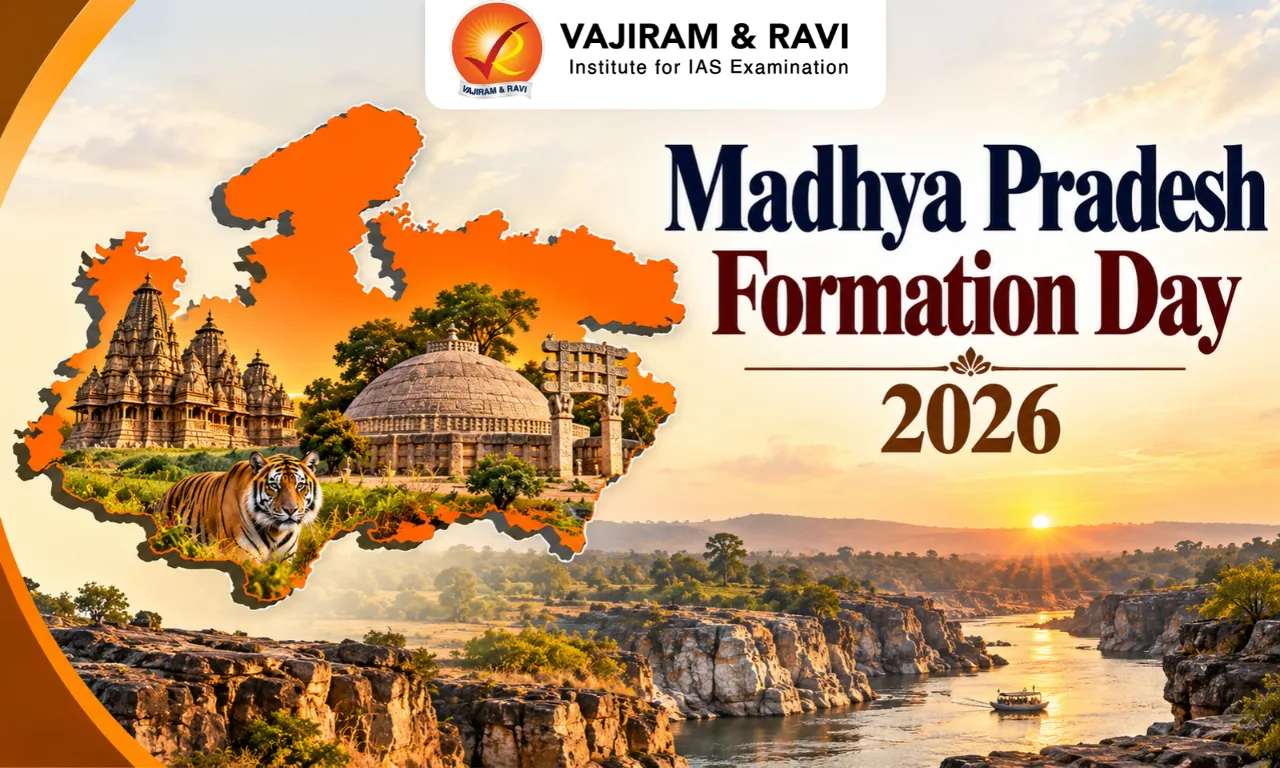
Madhya Pradesh Formation Day 2026, History and Celebrations

Madhya Pradesh Formation Day 2026

Madhya Pradesh Formation Day marks an important milestone in India's post-Independence history, particularly the integration of princely states and the reorganisation of administrative boundaries. The formation of the state in 1956 brought several regions of central India under a common administration. Its territorial boundaries were subsequently changed with the creation of Chhattisgarh in 2000.

When is Madhya Pradesh Formation Day celebrated?

Madhya Pradesh Formation Day, also known as Madhya Pradesh Sthapana Diwas, is celebrated every year on 1 November.

  • Madhya Pradesh was formed on 1 November 1956.
  • In 2026, the state completes 70 years since its formation and observes its 71st Foundation Day.
  • Bhopal is the capital of Madhya Pradesh.
  • The occasion is marked by cultural programmes, public celebrations and events highlighting the state's development.

Historical Background: Madhya Pradesh Before 1956

Before the reorganisation of states in 1956, the territories that constitute present-day Madhya Pradesh were divided among several administrative and political units.

After Independence, the integration of princely states led to the formation of different administrative units in central India. The major units included:

  • Central Provinces and Berar: This region included Mahakoshal and the Chhattisgarh area. It was part of the erstwhile Madhya Pradesh.
  • Madhya Bharat: Formed in 1948 through the integration of several princely states, including Gwalior and Indore.
  • Vindhya Pradesh: Formed in 1950 by integrating princely states of the Bundelkhand and Baghelkhand regions.
  • Bhopal State: Became a Part C State of the Indian Union after its merger with India in 1949.

These separate administrative units were subsequently reorganised to create a larger state of Madhya Pradesh in 1956.

States Reorganisation Commission (1953-1955)

The demand for reorganising Indian states on linguistic lines gained momentum following the formation of Andhra State in 1953. The Union Government appointed the States Reorganisation Commission (SRC) on 29 December 1953 to examine the reorganisation of states.

The Commission was chaired by Justice Fazl Ali and included two other members:

  • H.N. Kunzru
  • K.M. Panikkar

The Commission submitted its report in 1955. It considered linguistic, administrative, economic and national factors while recommending changes to India's state boundaries.

Formation of Madhya Pradesh under the States Reorganisation Act, 1956

The States Reorganisation Act, 1956 provided the legal basis for the formation of the new State of Madhya Pradesh on 1 November 1956.

Under Section 9 of the Act, the new state was formed by bringing together the following territories:

  • The existing State of Madhya Pradesh, excluding the districts transferred to the new Bombay State.
  • The territories of the erstwhile Madhya Bharat, excluding Sunel Tappa of Mandsaur district.
  • The territories of the erstwhile Bhopal State.
  • The territories of the erstwhile Vindhya Pradesh.
  • Sironj subdivision of Kota district in Rajasthan.

These territories were combined to constitute the new State of Madhya Pradesh.

Bhopal was made the capital of the reorganised state. Nagpur, which had been the capital of the erstwhile Madhya Pradesh, became part of Bombay State following the reorganisation.

How did Madhya Pradesh's boundaries change in 2000?

Madhya Pradesh underwent another major territorial reorganisation in 2000 when its southeastern districts were separated to form the new state of Chhattisgarh.

The Madhya Pradesh Reorganisation Act, 2000 provided the legal framework for this change.

  • Section 3 provided for the formation of Chhattisgarh from 16 districts of the existing Madhya Pradesh.
  • Section 4 defined the territories that would remain part of Madhya Pradesh after the separation.
  • Chhattisgarh came into existence as a separate state on 1 November 2000.
  • Madhya Pradesh retained Bhopal as its capital.

Following this reorganisation, Madhya Pradesh acquired its present territorial boundaries. 

Constitutional Provisions related to the formation and reorganisation of states

The formation of Madhya Pradesh in 1956 and the creation of Chhattisgarh in 2000 illustrate Parliament's constitutional power to reorganise states.

Article 3 – Formation of New States and Alteration of Boundaries

Article 3 empowers Parliament to:

  • Form a new state by separating territory from an existing state or by merging two or more states or parts of states.
  • Increase or reduce the area of any state.
  • Alter the boundaries of any state.
  • Change the name of any state.

A Bill under Article 3 can be introduced in Parliament only on the recommendation of the President. If a proposal affects the area, boundaries or name of a state, the President refers it to the concerned State Legislature for its views.

However, Parliament is not bound by the views of the State Legislature.

Article 4 – Supplemental and Consequential Provisions

Article 4 provides that laws made under Articles 2 and 3 may:

  • Amend the First Schedule and Fourth Schedule of the Constitution.
  • Include supplemental, incidental and consequential provisions necessary to implement the formation or reorganisation of states.

Such laws are not considered constitutional amendments under Article 368. 

Madhya Pradesh Formation Day 2026: Rajyotsav Celebrations

Madhya Pradesh will celebrate its 71st Foundation Day through a three-day state-level festival, Rajyotsav, from 1 to 3 November 2026 at Lal Parade Ground in Bhopal.

The celebrations will showcase the state's cultural heritage, development journey and achievements in different sectors.

Major features of Rajyotsav 2026 include:

  • Cultural programmes: Folk and tribal performances, instrumental music, light music and traditional art forms.
  • Development exhibitions: Displays focusing on agriculture, infrastructure, industrial development and government initiatives.
  • Women's entrepreneurship pavilion: A platform showcasing women's enterprises and economic participation.
  • Traditional food and handicrafts: Exhibitions highlighting indigenous cuisine and local handicraft traditions.
  • Student recognition: 102 meritorious students will receive ₹1 lakh each under the Bhagwan Shri Krishna Meritorious Student Scholarship.
  • Farmers' felicitation: 165 winners of the Kisan Kalyan Swabhiman Parv Quiz will be recognised. Prizes include tractors, motorcycles and electric scooters.

The announced theme for the 2026 celebrations is 'State Moving Forward on the Path from Heritage to Development'. It highlights the state's focus on preserving its historical, spiritual and tribal heritage while pursuing development in agriculture, infrastructure, industry, tourism and employment generation. 

Significance of Madhya Pradesh Formation Day

Madhya Pradesh Formation Day is significant for understanding India's post-Independence political and administrative consolidation.

  • Integration of regions: The formation brought several erstwhile administrative units under a common state administration.
  • National integration: The integration of different regions reflected the consolidation of the Indian Union after Independence.
  • Federal structure: The reorganisation demonstrates Parliament's constitutional power to alter state boundaries and create new states.
  • Administrative development: The formation provided a common administrative framework for the different regions of central India.
  • Cultural heritage: The occasion recognises the diverse historical and cultural traditions of the state.

Madhya Pradesh Formation Day 2026 FAQs

Q1: When is Madhya Pradesh Formation Day celebrated?

Ans: Madhya Pradesh Formation Day is celebrated every year on 1 November.

Q2: When was Madhya Pradesh formed?

Ans: Madhya Pradesh was formed on 1 November 1956 under the States Reorganisation Act, 1956.

Q3: Which regions were merged to form Madhya Pradesh in 1956?

Ans: The new state included territories of the erstwhile Madhya Pradesh, Madhya Bharat, Bhopal and Vindhya Pradesh, along with Sironj subdivision of Rajasthan.

Q4: Which section of the States Reorganisation Act, 1956 deals with the formation of Madhya Pradesh?

Ans: Section 9 of the States Reorganisation Act, 1956 provides for the formation of the new State of Madhya Pradesh.

Q5: Which constitutional articles deal with the formation and reorganisation of states?

Ans: Articles 3 and 4 of the Indian Constitution deal with the formation of new states and related constitutional provisions.
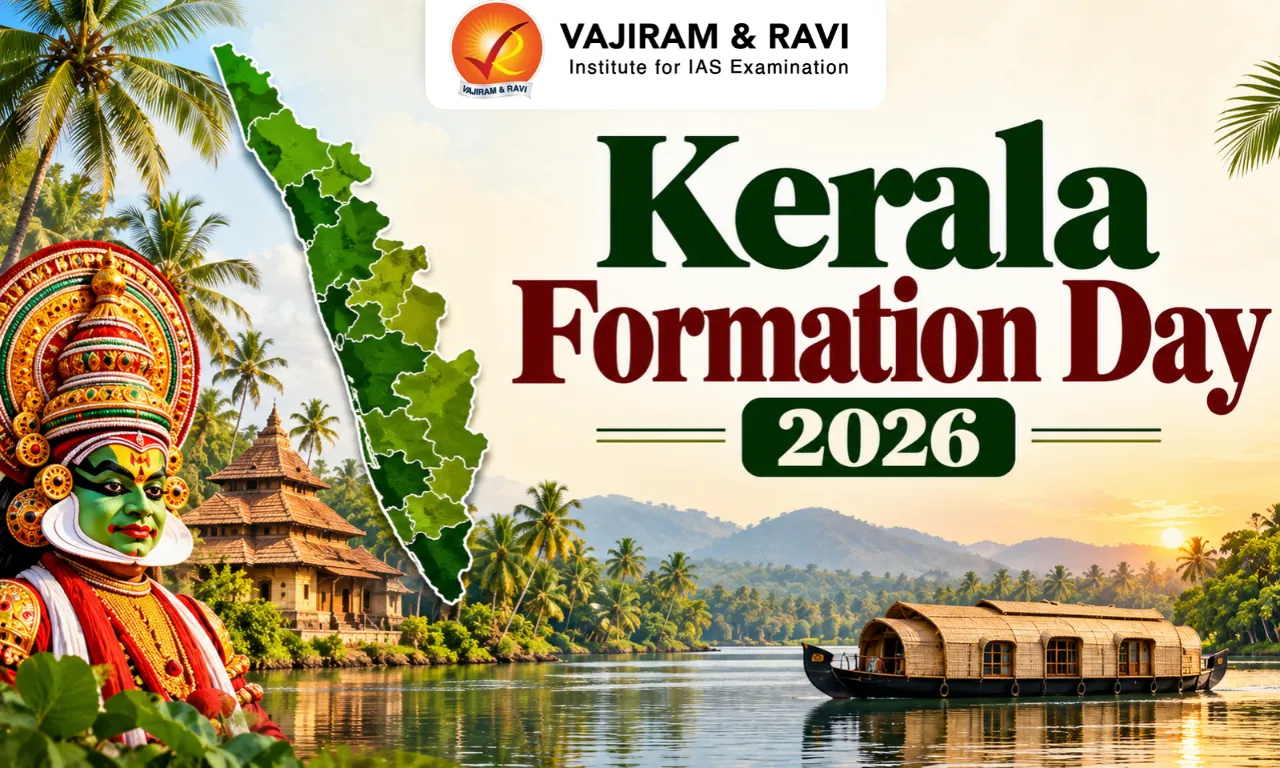
Kerala Formation Day 2026, 70th Anniversary, History and Significance

Kerala Formation Day 2026

When is Kerala Formation Day Celebrated?

Kerala Formation Day is celebrated every year on 1 November as Kerala Piravi, which means the birth of Kerala.

  • Kerala was formed on 1 November 1956.
  • In 2026, the state marks the 70th anniversary of its formation.
  • Kerala Piravi is the popular name for the occasion.
  • The state's current official name is Keralam, following the name change that came into force on 25 August 2026. 

Why is Kerala Formation Day Celebrated on 1 November?

Kerala Formation Day is celebrated on 1 November because the States Reorganisation Act, 1956 provided for the formation of Kerala on this date, bringing together Malayalam-speaking regions of the erstwhile Travancore-Cochin State and Madras State.

Before 1956, the regions that now form Kerala were administered mainly through three political and administrative units:

  • Travancore was a princely state covering much of present-day southern Kerala.
  • Cochin was a princely state covering parts of central Kerala.
  • Malabar was a district of the erstwhile Madras State, covering much of northern Kerala.

The integration of these regions created a unified state for Malayalam-speaking people. 

Historical Background: Aikya Kerala Movement

The demand for a unified Malayalam-speaking state emerged from the desire to bring Malayalam-speaking regions under a common administrative unit.

Before Independence, Travancore and Cochin were princely states, while Malabar was part of the Madras Presidency. Their separate administration encouraged the demand for a common linguistic and cultural identity.

The Aikya Kerala Movement (United Kerala Movement) gradually gained momentum to unite these regions.

  • The idea of a united Kerala began taking shape during the 1920s, with discussions on bringing Malayalam-speaking regions under a common administration.
  • The demand received wider support during the freedom movement, as political organisations advocated the unification of Malayalam-speaking people.
  • An Aikya Kerala Conference was held at Thrissur in April 1947, supporting the formation of a united state comprising Malabar, Cochin and Travancore.
  • Travancore and Cochin merged on 1 July 1949 to form Travancore-Cochin State.
  • The demand for including Malabar and other Malayalam-speaking areas in the unified state continued after Independence and was eventually realised in 1956.

States Reorganisation Act, 1956: Formation of Kerala State

The demand for linguistic reorganisation of states gained momentum after the formation of Andhra State in 1953. The Union Government subsequently established the States Reorganisation Commission (SRC) to examine the reorganisation of Indian states.

States Reorganisation Commission (1953-1955)

The Commission was constituted on 29 December 1953 under the chairmanship of Justice Fazl Ali. Its other members were:

  • H.N. Kunzru
  • K.M. Panikkar

The Commission submitted its report in 1955. It examined linguistic, administrative, economic and national considerations while recommending the reorganisation of states. 

States Reorganisation Act, 1956

Parliament enacted the States Reorganisation Act, 1956 on 31 August 1956. The Act defined 1 November 1956 as the appointed day for the reorganisation of states and provided for the formation of Kerala on that date.

Under Section 5, the new State of Kerala comprised:

  • The existing Travancore-Cochin State, excluding the territories transferred to Madras State under Section 4.
  • Malabar district of the erstwhile Madras State, excluding the Laccadive and Minicoy Islands.
  • Kasaragod taluk of the erstwhile South Kanara district.

The southern territories of Travancore-Cochin, including the areas that now form Kanyakumari district and Shencottah taluk, were transferred to Madras State.

Under Section 6, the Laccadive, Minicoy and Amindivi Islands were constituted as a separate Union Territory. 

Renaming of Kerala to Keralam in 2026

In 2026, the official name of Kerala was changed to Keralam through the Kerala (Alteration of Name) Act, 2026.

The change followed a resolution passed by the Kerala Legislative Assembly, seeking to adopt the state's name in Malayalam. The objective was to reflect its linguistic and cultural identity in its official name.

The change was made under Article 3 of the Constitution, which empowers Parliament to alter the name of a state. Accordingly, Kerala was replaced with Keralam in the relevant constitutional provisions, including the First and Fourth Schedules.

Constitutional provisions related to the formation of states in India

The formation of Kerala in 1956 and its renaming in 2026 illustrate Parliament's constitutional power to reorganise states and alter their names.

Article 3 – Formation of New States and Alteration of Boundaries

Article 3 empowers Parliament to:

  • Form a new state by separating territory from an existing state or by merging territories.
  • Increase or reduce the area of a state.
  • Alter the boundaries of a state.
  • Change the name of a state.

A Bill under Article 3 can be introduced in Parliament only on the recommendation of the President. If the proposal affects the area, boundaries or name of a state, the President refers it to the concerned State Legislature for its views. However, Parliament is not bound by those views.

Article 4 – Supplemental Provisions

A law passed under Articles 2 and 3 may:

  • Amend the First Schedule and Fourth Schedule of the Constitution.
  • Include supplemental, incidental and consequential provisions necessary to implement the reorganisation.

Such a law is not treated as a constitutional amendment under Article 368. 

How is Kerala Formation Day celebrated?

Kerala Formation Day, popularly known as Kerala Piravi, is observed through official ceremonies and cultural programmes across the state.

Major celebrations include:

  • Cultural programmes showcasing Malayalam literature, music, dance, folk traditions and the state's heritage.
  • Schools and colleges organising competitions and programmes highlighting Kerala's history, language and culture.
  • Government institutions and departments conducting events to mark the formation of the state.
  • Programmes promoting the preservation and development of Malayalam language and literature.

Kerala Formation Day 2026 FAQs

Q1: When is Kerala Formation Day celebrated?

Ans: Kerala Formation Day is celebrated every year on 1 November as Kerala Piravi.

Q2: When was Kerala formed as a state?

Ans: Kerala was formed on 1 November 1956 under the States Reorganisation Act, 1956.

Q3: Which regions were integrated to form Kerala?

Ans: The existing Travancore-Cochin State, Malabar district and Kasaragod taluk of South Kanara district were integrated to form Kerala.

Q4: What was the Aikya Kerala Movement?

Ans: The Aikya Kerala Movement was a movement that demanded the unification of Malayalam-speaking regions into a single state.

Q5: What is the current official name of Kerala?

Ans: The state was officially renamed Keralam under the Kerala (Alteration of Name) Act, 2026, which came into force on 25 August 2026.

Plato’s Theory of Justice, Concept, Principle and Criticism

Plato's Theory of Justice

Plato’s Theory of Justice is one of the most influential ideas in Western philosophy, forming the foundation of his political thought as presented in his famous work The Republic. According to Plato, justice is not just about laws or punishment but a moral and social order where everyone performs their proper role. He envisioned justice as harmony within both the individual soul and the state. For Plato, justice represents the highest virtue, ensuring balance and moral perfection in society

Plato's Theory of Justice

Plato’s Theory of Justice emerged from a period of social unrest and political chaos in Athens. He believed that moral decay and lack of virtue were the root causes of state instability. Unlike the conventional legal definitions of justice that focused on rights and retribution, Plato presented an unconventional moral and social theory of justice. He viewed justice as both an individual virtue and a virtue of social institutions, arguing that harmony within the individual and the state was essential for true justice. Thus, he shifted the focus from legal obligations to moral duties, emphasizing that justice concerns the duties individuals owe to society rather than the rights they claim from it.

Concept of Justice According to Plato

Plato believed that justice means “doing one’s own work and not meddling with what does not concern one.” He explained this idea through his concept of the ideal state, which mirrors the structure of the human soul. In both, justice is achieved when each part performs its function without interfering with others. Plato opposed the Sophists’ idea that justice is simply the interest of the stronger. Instead, he viewed it as a principle of balance and virtue that brings order to both individuals and the community. Plato explained that the human soul has three parts, and justice arises when these parts are in harmony:

  • Rational Part (Reason): Seeks truth and governs the soul with wisdom.
  • Spirited Part (Will): Represents courage and emotional drive, supporting reason in maintaining discipline.
  • Appetitive Part (Desire): Concerns physical needs and pleasures, which must be controlled by reason.

Traditional Theories of Justice

Before developing his own theory, Plato examined and rejected three existing notions of justice prevalent in his time:

(a) Cephalus and Polemarchus: Traditional Theory

  • Cephalus, a wealthy elder, defined justice as “doing one’s duty and paying one’s dues.” Plato accepted the idea of duty but rejected the mechanical repayment of dues. For instance, returning a weapon to a madman is not just, even if it’s owed.
  • Polemarchus defined justice as “doing good to friends and harm to enemies.”Plato refuted this, arguing that justice cannot cause harm to anyone and that identifying true friends or enemies is uncertain.

(b) Thrasymachus: Radical Theory

The sophist Thrasymachus claimed that “justice is the interest of the stronger.” In this view, might equals right, and rulers define justice to serve their power. Plato dismissed this, asserting that true justice is universal and moral, not relative to power or politics.

(c) Glaucon: Pragmatic Theory

Glaucon, Plato’s interlocutor, described justice as a social compromise, a way for the weak to protect themselves from the strong. Plato disagreed, saying justice is natural, eternal, and not man-made. It transcends conventions and benefits both individuals and the community equally.

Plato's Justice Theory

After rejecting these theories, Plato presented his own conception of justice, using his dialectical method in The Republic. He explained justice at two interrelated levels- the individual and the state. He believed the state is a magnified reflection of the individual soul. Therefore, justice in the individual and justice in the state are structurally similar, each dependent on harmony and order among their components.

(a) Justice in the State

According to Plato, the state has three classes, each representing a part of the human soul:

  1. Rulers (Philosopher Kings)- Represent reason and should govern with wisdom and truth.
  2. Soldiers (Guardians)- Represent spirit and are responsible for courage and defense.
  3. Producers (Farmers, Artisans, Traders)- Represent appetite and fulfill material needs.

Justice is achieved when each class performs its own function without interfering with others. Thus, justice is functional specialization and harmony, every class performing its natural role for the common good.

(b) Justice in the Individual

Plato extended this model to the human soul, which also has three parts:

  1. Rational Faculty- Seeks truth and knowledge; its virtue is wisdom.
  2. Spirited Faculty- Upholds courage and ambition; its virtue is courage.
  3. Appetitive Faculty- Desires pleasure and material needs; its virtue is temperance.

When these parts act in balance, with reason governing, spirit supporting, and desire obeying, justice arises in the individual.

Plato's Theory of Justice Principle

Plato’s theory is built on three fundamental principles:

  1. Functional Specialization- Each person performs tasks suited to their abilities.
  2. Non-Interference- No class or part of the soul intrudes into another’s domain.
  3. Harmony- Balance between wisdom, courage, and temperance results in justice.

Plato's Theory of Justice Features

The key features of the Plato’s theory for Justice has been listed below:

  • Justice as Virtue: It is both a personal and public virtue ensuring order and moral excellence.
  • Universal and Moral: Justice applies equally to all, not favoring rich or powerful individuals.
  • Social Harmony: Justice creates interdependence and unity among citizens.
  • Duties over Rights: Plato emphasizes responsibilities of individuals to the state over personal entitlements

Plato's Theory of Justice and Education

Plato viewed education as the cornerstone of justice. Through a rigorous educational system, the state identifies individuals’ natural aptitudes. This merit-based system ensures that everyone contributes according to capability, producing a balanced and just society, a principle comparable to modern administrative specialization in governance.

  • Those best in reasoning become Philosopher Kings.
  • The brave and loyal become Soldiers.
  • Others become Producers, fulfilling economic roles.

Plato’s The Allegory of the Cave and Justice

In The Republic, Plato’s Allegory of the Cave illustrates his idea of justice and knowledge. The cave symbolizes ignorance and illusion, while the journey out of the cave represents enlightenment through knowledge. A just ruler, according to Plato, is like the philosopher who escapes the cave and sees the truth. He must then return to guide others toward justice and wisdom, even if it is difficult.

Plato's Theory of Justice Criticism

Despite its philosophical depth, Plato’s theory has drawn significant criticism:

  1. Lack of Individual Freedom: It emphasizes duties, not rights, undermining liberty.
  2. Hierarchical Society: The class division creates inequality and subordination.
  3. Totalitarian Tendencies: Concentration of power in philosopher kings may lead to autocracy.
  4. Moral, Not Legal Justice: It lacks enforceable legal mechanisms.
  5. Privilege of the Elite: Critics like Karl Popper argued that Platonic justice justifies class privileges rather than abolishing them.
  6. Neglect of Democracy: Plato’s distrust of democracy contradicts modern egalitarian ideals.
  7. Popper called Plato’s ideal state a “closed society”, warning that such hierarchical justice could lead to totalitarianism.

Plato's Theory of Justice UPSC

Plato’s theory remains a cornerstone of political philosophy. It laid the groundwork for concepts of moral governance, ethical leadership, and institutional harmony. His idea that rulers should be wise and virtuous resonates with modern constitutionalism, where leaders are expected to act in public interest. Even John Rawls, in his modern theory of Justice as Fairness (1971), drew inspiration from Plato’s harmony-based model. In modern terms, Plato’s justice emphasizes rule of law, moral education, and public responsibility.

Plato's Theory of Justice FAQs

Q1: Who was Plato, and when was he born?

Ans: Plato was a Greek philosopher born in Athens around 427 BCE. He was a student of Socrates and teacher of Aristotle.

Q2: What is the main idea of Plato’s Theory of Justice?

Ans: Justice means harmony, each person performing their proper function without interfering in others’ roles.

Q3: What are the three classes in Plato’s ideal state?

Ans: Rulers (wisdom), soldiers (courage), and producers (temperance) together form a just and balanced state.

Q4: Why did Plato reject democracy?

Ans: Plato rejected Athenian democracy after witnessing Socrates’ execution, believing only wise rulers could ensure justice.

Q5: How is Plato’s Justice relevant today?

Ans: His emphasis on moral leadership, education, and ethical governance still shapes modern political and philosophical thought.

Biodiversity Hotspots in India, List, Criteria, Importance, Threats

Biodiversity Hotspots in India

Biodiversity Hotspots in India are regions with exceptionally rich biodiversity and a high number of endemic plant and animal species that are under serious threat from habitat loss. India is home to four of the world's 36 biodiversity hotspots, making these areas crucial for ecological balance and wildlife conservation. Understanding their list, criteria, importance, and threats is essential for environmental awareness and competitive examinations.

What are Biodiversity Hotspots?

Biodiversity Hotspots are regions of the world that have an exceptionally high concentration of endemic plant and animal species and are under serious threat due to habitat loss and human activities. These areas are considered global priorities for conservation because they contain unique biodiversity that cannot be found anywhere else on Earth.

The concept of Biodiversity Hotspots was introduced by Norman Myers in 1988 and was later expanded by Conservation International to identify regions that require urgent protection.

Criteria for Biodiversity Hotspots

A region is recognized as a Biodiversity Hotspot only if it meets specific scientific criteria established by Conservation International. These criteria ensure that the area has both exceptional biodiversity and faces serious threats, making it a global conservation priority.

  • Must contain at least 1,500 endemic vascular plant species, representing 0.5% of the world's total.
  • Must have lost at least 70% of its original natural vegetation due to human activities or environmental changes.
  • Should have high species richness with a large number of unique and endemic plants and animals.
  • Must face significant threats, such as deforestation, habitat fragmentation, climate change, urbanization, and pollution.
  • Requires urgent conservation measures to protect its unique ecosystems and endangered species.
  • Plays a vital role in maintaining ecological balance, genetic diversity, and ecosystem services.

Biodiversity Hotspots in India

India is one of the 17 megadiverse countries in the world and is home to four of the world's 36 Biodiversity Hotspots. These hotspots support a rich variety of endemic flora and fauna, making them crucial for biodiversity conservation and ecological sustainability.

Biodiversity Hotspots in India

Biodiversity Hotspot

Location in India

Major States/UTs Covered

Key Features

Himalaya

Northern India

Jammu & Kashmir (UT), Ladakh (UT), Himachal Pradesh, Uttarakhand, Sikkim, Arunachal Pradesh, Northern West Bengal

Alpine meadows, temperate forests, glaciers, high endemism

Indo-Burma

Northeast India and Andaman Islands

Assam, Meghalaya, Manipur, Mizoram, Nagaland, Tripura, parts of Arunachal Pradesh, Andaman Islands

Tropical rainforests, wetlands, orchids, rich freshwater biodiversity

Western Ghats and Sri Lanka

Western Peninsular India

Maharashtra, Goa, Karnataka, Kerala, Tamil Nadu

Evergreen forests, UNESCO World Heritage Sites, numerous endemic species

Sundaland

Nicobar Islands

Nicobar Islands (Andaman & Nicobar Islands)

Tropical rainforests, mangroves, coral reefs, island endemism

1. Himalaya Biodiversity Hotspot

The Himalaya Biodiversity Hotspot is one of the world's most biologically diverse regions, covering the Indian Himalayan Region and supporting thousands of unique plant and animal species. Its varied climate, altitude, and ecosystems make it a global priority for biodiversity conservation.

  • Covers parts of Jammu & Kashmir (UT), Ladakh (UT), Himachal Pradesh, Uttarakhand, Sikkim, Arunachal Pradesh, and Northern West Bengal.
  • Extends across India, Nepal, Bhutan, China (Tibet), Pakistan, and Myanmar.
  • Characterized by alpine meadows, temperate forests, subtropical forests, glaciers, and snow-covered mountains.
  • Recognized for its high level of endemic flora and fauna due to diverse climatic and altitudinal zones.
  • Serves as the source of major rivers, including the Ganga, Brahmaputra, and Indus.
  • Rich in plant species such as Rhododendron, Himalayan Yew, Deodar Cedar, Oak, Pine, Fir, Juniper, Birch, and Bamboo.
  • Home to iconic wildlife including the Snow Leopard, Red Panda, Himalayan Musk Deer, Himalayan Tahr, Asiatic Black Bear, Blue Sheep (Bharal), Himalayan Monal, and Western Tragopan.
  • Includes important protected areas such as Great Himalayan National Park, Valley of Flowers National Park, Nanda Devi National Park, Khangchendzonga National Park, and Namdapha National Park.
  • Plays a crucial role in climate regulation, carbon storage, soil conservation, and freshwater supply.
  • Supports the livelihoods of millions through agriculture, forestry, medicinal plants, and ecotourism.

2. Indo-Burma Biodiversity Hotspot

The Indo-Burma Biodiversity Hotspot is one of the richest biodiversity regions in Asia, covering Northeast India and the Andaman Islands. It is renowned for its tropical forests, exceptional species diversity, and high level of endemism, making it a globally important conservation area.

  • Covers Northeast India and the Andaman Islands, along with parts of Myanmar, Thailand, Cambodia, Laos, Vietnam, southern China, and Bangladesh.
  • In India, it includes Assam, Meghalaya, Manipur, Mizoram, Nagaland, Tripura, parts of Arunachal Pradesh, and the Andaman Islands.
  • Characterized by tropical evergreen forests, moist deciduous forests, wetlands, grasslands, and extensive river systems.
  • Recognized for its rich freshwater biodiversity and one of the highest diversities of orchids in the world.
  • Home to thousands of endemic plant, bird, reptile, amphibian, and freshwater fish species.
  • Rich in flora such as Bamboo, Orchids, Dipterocarp trees, Cane, Ferns, Magnolia, and Wild Banana.
  • Supports iconic wildlife including the Hoolock Gibbon, Clouded Leopard, Asian Elephant, Bengal Tiger, Slow Loris, Hornbills, Gaur, and Bengal Florican.
  • Includes important protected areas such as Kaziranga National Park, Manas National Park, Namdapha National Park, Dibru-Saikhowa National Park, Nokrek National Park, and Keibul Lamjao National Park.
  • Provides vital ecosystem services such as water conservation, carbon storage, climate regulation, and pollination.
  • Supports the livelihoods of local and indigenous communities through forestry, agriculture, fisheries, and ecotourism.

3. Western Ghats Biodiversity Hotspot

The Western Ghats Biodiversity Hotspot is one of the world's eight "hottest hotspots" of biological diversity and stretches along the western coast of India. It is renowned for its exceptional endemism, evergreen forests, and diverse ecosystems, making it one of India's most important conservation regions.

  • Extends across Gujarat, Maharashtra, Goa, Karnataka, Kerala, Tamil Nadu, and parts of southern India.
  • Runs parallel to the Arabian Sea for about 1,600 km, covering approximately 160,000 sq. km.
  • Characterized by tropical evergreen forests, moist deciduous forests, montane grasslands, shola forests, and river valleys.
  • Recognized as a UNESCO World Heritage Site for its outstanding biodiversity and ecological significance.
  • Home to a large number of endemic plants, amphibians, reptiles, birds, and mammals.
  • Acts as the origin of major peninsular rivers such as the Godavari, Krishna, Kaveri, and Tungabhadra.
  • Rich in flora including Sandalwood, Rosewood, Ebony, Wild Pepper, Cardamom, Myristica, Bamboo, and Teak.
  • Supports iconic wildlife such as the Lion-tailed Macaque, Nilgiri Tahr, Nilgiri Langur, Malabar Giant Squirrel, Malabar Civet, Great Indian Hornbill, Purple Frog, Bengal Tiger, and Asian Elephant.
  • Includes major protected areas such as Silent Valley National Park, Periyar National Park, Eravikulam National Park, Bandipur National Park, Nagarhole National Park, Anamalai Tiger Reserve, and Kudremukh National Park.
  • Plays a vital role in water security, climate regulation, carbon sequestration, soil conservation, and hydropower generation.
  • Supports millions of people through agriculture, plantations, forestry, medicinal plants, and ecotourism.

4. Sundaland Biodiversity Hotspot

The Sundaland Biodiversity Hotspot is a globally important biodiversity region, with India's Nicobar Islands forming its only Indian component. It is known for its tropical rainforests, mangroves, coral reefs, and high level of island endemism, making it a critical area for biodiversity conservation.

  • In India, the hotspot is represented only by the Nicobar Islands of the Andaman and Nicobar Islands.
  • Extends beyond India to include Indonesia (Sumatra, Java, Borneo, Bali), Brunei, Malaysia, Singapore, and southern Thailand.
  • Characterized by tropical evergreen rainforests, mangrove forests, coastal ecosystems, coral reefs, and seagrass beds.
  • Supports a high number of endemic plant and animal species found only on the islands.
  • Rich in flora such as Pandanus, Mangroves, Coconut, Dipterocarp trees, Tropical hardwoods, and Coastal vegetation.
  • Home to unique wildlife including the Nicobar Megapode, Nicobar Tree Shrew, Crab-eating Macaque, Saltwater Crocodile, Leatherback Sea Turtle, Green Sea Turtle, Dugong, and Nicobar Pigeon.
  • Includes important protected areas such as Campbell Bay National Park, Galathea National Park, and the Great Nicobar Biosphere Reserve.
  • Plays a crucial role in marine biodiversity conservation, coastal protection, carbon storage, and climate regulation.
  • Provides habitat for several rare, endangered, and migratory species.
  • Supports the livelihoods of indigenous communities through fisheries, forest resources, and sustainable tourism.

Why are Biodiversity Hotspots Important?

Biodiversity Hotspots are among the most biologically rich regions on Earth and are essential for preserving endemic species, maintaining ecological balance, and supporting human well-being. Conserving these areas helps protect unique ecosystems while ensuring the sustainable use of natural resources.

  • Conserve Endemic Species: Protect thousands of plants and animals found nowhere else in the world.
  • Maintain Ecological Balance: Support healthy ecosystems by preserving food chains, pollination, and nutrient cycling.
  • Protect Endangered Wildlife: Provide safe habitats for many rare, threatened, and endangered species.
  • Climate Regulation: Forests in biodiversity hotspots act as carbon sinks, helping reduce the impacts of climate change.
  • Water Security: Protect watersheds, rivers, and groundwater sources, ensuring a continuous supply of freshwater.
  • Support Livelihoods: Provide food, timber, medicinal plants, fuelwood, and other forest resources to millions of people.
  • Promote Ecotourism: Attract tourists and researchers, generating employment and supporting local economies.
  • Preserve Genetic Diversity: Safeguard valuable genetic resources that are important for agriculture, medicine, and scientific research.
  • Reduce Natural Disasters: Healthy forests help prevent soil erosion, floods, landslides, and desertification.
  • Ensure Sustainable Development: Conserving biodiversity hotspots supports environmental sustainability and contributes to achieving the Sustainable Development Goals (SDGs).

Major Threats to Biodiversity Hotspots in India

India's Biodiversity Hotspots face increasing pressure from human activities, climate change, and unsustainable resource use, leading to habitat degradation and species decline. Addressing these threats is essential to protect the country's unique ecosystems and endemic biodiversity.

  • Deforestation: Large-scale clearing of forests for agriculture, infrastructure, and settlements destroys natural habitats.
  • Habitat Fragmentation: Construction of roads, dams, railways, and urban projects breaks continuous habitats into smaller patches, affecting wildlife movement.
  • Climate Change: Rising temperatures, changing rainfall patterns, and extreme weather events alter ecosystems and threaten sensitive species.
  • Urbanization: Rapid expansion of cities and towns leads to the loss of forests, wetlands, and other natural ecosystems.
  • Mining and Quarrying: Extraction of minerals and natural resources damages forests, pollutes water bodies, and disturbs wildlife habitats.
  • Illegal Wildlife Trade: Poaching and illegal trafficking of plants and animals threaten many endangered species.
  • Overexploitation of Natural Resources: Excessive harvesting of timber, fuelwood, medicinal plants, and non-timber forest products depletes biodiversity.
  • Invasive Alien Species: Non-native plants and animals compete with native species, disrupting ecological balance.
  • Pollution: Industrial waste, agricultural chemicals, plastic pollution, and untreated sewage degrade soil, water, and air quality.
  • Forest Fires: Frequent natural and human-induced fires destroy vegetation, reduce habitat quality, and threaten wildlife.
  • Unsustainable Tourism: Poorly managed tourism increases waste generation, habitat disturbance, and pressure on natural resources.
  • Human–Wildlife Conflict: Encroachment into forest areas results in increased conflicts between people and wild animals, threatening both livelihoods and wildlife conservation.

Conservation Efforts for Biodiversity Hotspots

Protecting Biodiversity Hotspots is essential for conserving endemic species, restoring ecosystems, and ensuring sustainable development. India has adopted several legal, institutional, and community-based conservation measures to safeguard these ecologically sensitive regions.

  • Establishment of National Parks, Wildlife Sanctuaries, Biosphere Reserves, and Conservation Reserves to protect critical habitats.
  • Implementation of the Wildlife (Protection) Act, 1972 to conserve endangered species and regulate hunting and wildlife trade.
  • Enforcement of the Biological Diversity Act, 2002 to promote biodiversity conservation and the sustainable use of biological resources.
  • Expansion of Protected Area Networks in ecologically important regions such as the Western Ghats, Himalayas, Northeast India, and Nicobar Islands.
  • Launch of species-specific conservation programmes such as Project Tiger, Project Elephant, Project Snow Leopard, and Project Dolphin.
  • Promotion of afforestation, reforestation, and habitat restoration to recover degraded ecosystems.
  • Creation of Eco-Sensitive Zones (ESZs) around protected areas to minimize developmental pressures.
  • Community participation through Joint Forest Management (JFM) and involvement of indigenous and local communities in conservation.
  • Strengthening measures to control illegal wildlife trade, poaching, and deforestation through improved monitoring and law enforcement.

Biodiversity Hotspots in India FAQs

Q1: What are Biodiversity Hotspots?

Ans: Biodiversity Hotspots are regions with exceptionally high biodiversity and a large number of endemic species that have lost at least 70% of their original natural vegetation, making them global conservation priorities.

Q2: How many Biodiversity Hotspots are there in India?

Ans: India is home to four global biodiversity hotspots: Himalaya, Indo-Burma, Western Ghats and Sri Lanka and Sundaland (Nicobar Islands).

Q3: Who introduced the concept of Biodiversity Hotspots?

Ans: The concept of Biodiversity Hotspots was introduced by Norman Myers in 1988 and was later adopted and expanded by Conservation International.

Q4: What are the criteria for a Biodiversity Hotspot?

Ans: A region must: Have at least 1,500 endemic vascular plant species. Have lost at least 70% of its original natural vegetation.

Q5: Which Biodiversity Hotspot covers the Western Ghats?

Ans: The Western Ghats and Sri Lanka Biodiversity Hotspot includes the Western Ghats of India and Sri Lanka and is one of the world's richest biodiversity regions.

Bharat Ratna 2026, Award List, Nominees, Winner Benefits, Medal

Bharat Ratna Award Winners

Bharat Ratna is India’s highest civilian honour, instituted in 1954 to recognize exceptional service or performance of the highest order. The term “Bharat Ratna” means “Jewel of India.” It is awarded to individuals who have made extraordinary contributions in any field of human endeavour. The award is not given every year and since its establishment, several years have passed without any Bharat Ratna announcement. It remains the most prestigious civilian recognition conferred by the Republic of India.

What is Bharat Ratna?

Bharat Ratna is the highest civilian award presented by the President of India to individuals for outstanding contributions to the nation and humanity. It originally recognized achievements in arts, literature, science and public services. In 2011, the eligibility was broadened to include any field of human endeavour. The award carries immense national prestige but does not include any monetary grant. Recipients receive a Medallion and a Sanad signed by the President of India.

Bharat Ratna History

The Bharat Ratna has several unique characteristics that distinguish it from all other civilian honours in India which has evolved throughout years.

  • Origin: The award was instituted by President Dr. Rajendra Prasad on 2 January 1954, creating a formal mechanism to recognize exceptional national service and achievement.
  • How Many Get the Bharat Ratna Awards: Normally, a maximum of three Bharat Ratna awards can be conferred in a year. However, exceptions occurred in 1999 when four individuals were honoured and in 2024 when five recipients were announced.
  • First Bharat Ratna Awardees: The inaugural recipients in 1954 were Dr. Sarvepalli Radhakrishnan, Sir C.V. Raman and Chakravarti Rajagopalachari, representing excellence in scholarship, science and public life.
  • Award Suspension Periods: Bharat Ratna was temporarily suspended between 1977 and 1980 and again between 1992 and 1995 due to political changes and legal challenges.
  • No Mandatory Annual Conferment: The government is not required to announce Bharat Ratna every year. The last two awards were announced in 2019 and 2024.
  • Restriction on Titles: Under Article 18(1) of the Constitution, recipients cannot use “Bharat Ratna” as a prefix or suffix to their names. However, they may mention the honour in official biographies and documents.
  • Notable Controversy: In 1992, Bharat Ratna was announced for Subhash Chandra Bose posthumously. However, due to the absence of conclusive evidence regarding his death, the award was later withdrawn after objections from his family and legal challenges.
  • Contributions Across Fields: Bharat Ratna awardees have included freedom fighters, social reformers, musicians, economists, scientists, engineers, filmmakers, educators, political leaders and sports personalities.

Famous Bharat Ratna Awardees & Nominees

The list of the Famous Bharat Ratna Awardees include:

  • Youngest Recipient: Sachin Tendulkar became the youngest Bharat Ratna awardee and the first sportsperson to receive the honour in 2014. He is also the only cricketer among the recipients.
  • Oldest Recipient: The Oldest Recipient of Bharat Ratna Award is Dhondo Keshav Karve, who was honoured in 1958 at the age of 100. A renowned social reformer and educator, Karve played a crucial role in women’s education and widow remarriage in India during the early 20th century. His lifetime of service to society earned him this prestigious recognition at a remarkably advanced age.
  • Distinguished Awardees: Recipients include leaders such as Jawaharlal Nehru, Indira Gandhi, Rajiv Gandhi, Vallabhbhai Patel, Atal Bihari Vajpayee, Pranab Mukherjee and scientists like A.P.J. Abdul Kalam and C.N.R. Rao.

List of Bharat Ratna Award Winners Year Wise 1954 to 2026

The Bharat Ratna, India’s highest civilian honour, has a rich history associated with its recipients and nominations. For instance, in 1992, the Government of India decided to present the award posthumously to Netaji Subhas Chandra Bose. However, his family and supporters opposed it, questioning the circumstances surrounding his death. Similarly, the legendary hockey player Major Dhyan Chand’s name has frequently surfaced for this honour, yet he has not been awarded to date.

No Bharat Ratna awards were presented in 2021 or 2022. Below is a List of Bharat Ratna Award Winners Year Wise from 1954 to 2026.

List of Bharat Ratna Award Winners Year Wise 1954 to 2026
Recipients (State/UT) Year     Key Notes

C. Rajagopalachari/ Rajaji 

(Tamil Nadu)

1954

He was the last Governor General of India and also founder of the Swatantra Party. He was the conscience keeper of MK Gandhi.

Sarvapalli Radhakrishnan 

(Tamil Nadu)

1954

He was the first Vice President of India and the country's second President. 

C. V. Raman 

(Tamil Nadu)

1954

He became the first Asian scientist to receive a Nobel Prize in any branch of science, also famous for his discoveries in physics like Raman Scattering.

Bhagwan Das 

(Uttar Pradesh)

1955

He co-founded the Mahatma Gandhi Kashi Vidyapith, also contributed to the foundation of Banaras Hindu University. 

M. Visvesvaraya 

(Karnataka)

1955

He was a civil engineer who contributed much to the country's dam development.

Jawaharlal Nehru 

(Uttar Pradesh)

1955

Jawaharlal Nehru became the first and longest tenure Prime Minister (PM) of India, He was PM at the time of receiving this award.

Govind Ballabh Pant 

(Uttarakhand)

1957

He was elected to be the first chief minister of the state of Uttar Pradesh who was a huge supporter of making Hindi a national language.

Dhondo Keshav Karve 

(Maharashtra)

1958

Dhondo Keshav Karve was a great social reformer and was famous for women's education, and widow remarriage also founded the Widow Marriage Association.

Bidhan Chandra Roy 

(West Bengal)

1961

Bidhan Chandra Roy is recognized as the Maker of Modern West Bengal. 

Purushottam Das Tandon 

(Uttar Pradesh)

1961

Purushottam Das Tandon was titled Rajarshi. He became the speaker in Uttar Pradesh Legislative Assembly. 

He supported the Hindi language making it the official language.

Rajendra Prasad 

(Bihar)

1962

Rajendra Prasad swore as the first President of India. 

He was actively involved in the non-cooperation movement with Mahatma Gandhi Ji. 

Zakir Husain 

(Andhra Pradesh)

1963

Zakir Husain was elected to be the second Vice President and third President of India. 

He became the Vice Chancellor of Aligarh Muslim University.

Pandurang Vaman Kane 

(Maharashtra)

1963

He was a great Indologist and Sanskrit scholar who was well known for his works like ‘History of Dharmasastra: Ancient and Mediaeval Religious and Civil Laws in India’.

Lal Bahadur Shastri 

(Uttar Pradesh) *

1966

Lal Bahadur Shastri became the first posthumous recipient of the Bharat Ratna Award, He was elected to be the second PM of India. He is popular in the country for his slogan ‘Jai Jawan Jai Kisan’.

Indira Gandhi 

(Uttar Pradesh)

1971

Indira Gandhi was the first female recipient of the Bharat Ratna Award, She was PM during the Indo-Pak War of 1971.

V. V. Giri 

(Odisha)

1975

V. V. Giri, 4th President of India, was a trade union leader and freedom fighter championing workers' rights and democracy.

K. Kamaraj 

(Tamil Nadu) *

1976

K. Kamaraj, "Kingmaker," played a pivotal role in Indian politics by supporting Lal Bahadur Shastri and Indira Gandhi as Prime Ministers.

Mother Teresa 

(West Bengal, born in North Macedonia)

1980

Mother Teresa, a Bharat Ratna recipient and Nobel Laureate, founded the Missionaries of Charity, dedicating her life to humanitarian service.

Vinoba Bhave 

(Maharashtra) *

1983

Vinoba Bhave, a Gandhian, is renowned for the Bhoodan Movement and received the Ramon Magsaysay Award for his humanitarian efforts.

Khan Abdul Ghaffar Khan 

(Pakistan) 

1987

Khan Abdul Ghaffar Khan, "Frontier Gandhi," founded the Red Shirt Movement and was the first non-citizen Bharat Ratna recipient.

M. G. Ramachandran 

(Tamil Nadu) *

1988

M. G. Ramachandran, the first actor to receive Bharat Ratna, founded AIADMK and became the first actor-turned-Chief Minister.

B.R. Ambedkar 

(Maharashtra) 

1990

B.R. Ambedkar, chief architect of the Indian Constitution and first Law Minister, strongly opposed the caste system in Hinduism.

Nelson Mandela

(South Africa)

1990

Nelson Mandela, known as the "Gandhi of South Africa," was the second non-citizen Bharat Ratna recipient and Nobel laureate.

Rajiv Gandhi 

(Uttar Pradesh) 

1991

Rajiv Gandhi, India’s youngest PM at 40, passed landmark laws like the Anti-defection Law during his tenure from 1984.

Vallabhbhai Patel 

(Gujarat) 

1991

Vallabhbhai Patel, the "Iron Man of India," served as Deputy Prime Minister and led the Bardoli Satyagraha and All India Services.

Morarji Desai (Gujarat)

1991

Morarji Desai, India's first non-Congress PM and oldest PM, is the only Indian awarded Pakistan's Nishan-e-Pakistan honour.

Abul Kalam Azad 

(West Bengal) 

1992

Maulana Abul Kalam Azad, India's first Education Minister, is honoured on his birth anniversary (11th November) as National Education Day. He declined the Bharat Ratna Award throughout his life.

J. R. D. Tata 

(Maharashtra)

1992

J. R. D. Tata, an industrialist and aviation pioneer, founded Air India and established institutes like TIFR, TCS, and Tata Motors.

Satyajit Ray 

(West Bengal)

1992

Satyajit Ray, renowned for bringing Indian cinema global recognition, directed Pather Panchali and received the Dadasaheb Phalke Award.

Gulzarilal Nanda 

(Punjab)

1997

Gulzarilal Nanda served twice as interim PM and deputy chairman of the Planning Commission, advocating labor issues nationally.

Aruna Asaf Ali

(West Bengal) 

1997

Aruna Asaf Ali, the first post-independence Mayor of Delhi, played a key role in the Quit India Movement of 1942.

A.P.J Abdul Kalam

(Tamil Nadu)

1997

A.P.J. Abdul Kalam, the "Missile Man of India," advanced missile technology, served as 11th President, and authored notable works.

M. S. Subbulakshmi 

(Tamil Nadu)

1998

M. S. Subbulakshmi, the Queen of Songs, was India's first musician awarded the Ramon Magsaysay for her charity work.

Chidambaram Subramaniam 

(Tamil Nadu)

1998

Chidambaram Subramaniam contributed to the Green Revolution in India and the International Rice Research Institute of Manila, Philippines. 

Jayaprakash Narayan 

(Bihar) 

1999

Jayaprakash Narayan, known as Loknayak, led the Total Revolution Movement against the Congress government, advocating for political and social reforms.

Amartya Sen 

(West Bengal)

1999

Amartya Sen, Nobel Laureate in Economics, contributed to welfare economics, social justice, and social choice theory, influencing global policies.

Gopinath Bordoloi 

(Assam) 

1999

Gopinath Bordoloi, Assam's first chief minister, is honored as Lokapriya for his dedication to Assam's development and progress.

Ravi Shankar 

(Uttar Pradesh)

1999

Ravi Shankar, the world’s leading Hindustani classical musician, is renowned for his mastery and received a Grammy Award for his work.

Lata Mangeshkar 

(Maharashtra)

2001

Lata Mangeshkar, the Nightingale of India, honoured with the Dadasaheb Phalke Award, is celebrated as the Queen of Melody.

Bismillah Khan 

(Uttar Pradesh)

2001

Bismillah Khan, a renowned shehnai virtuoso, popularised the instrument in Indian music and became the third classical musician honoured with Bharat Ratna.

Bhimsen Joshi 

(Karnataka)

2009

Bhimsen Joshi, a renowned Hindustani classical singer from Kirana Gharana, was celebrated for his mastery in the Khyal genre.

C. N. R. Rao 

(Karnataka)

2014

C. N. R. Rao, an eminent chemist, contributed to solid-state chemistry and received numerous prestigious awards, including the Marlow Medal.

Sachin Tendulkar 

(Maharashtra)

2014

Sachin Tendulkar is known as the Master Blaster in cricket history. He is the only batsman to score more than 30,000 runs in entire forms of international cricket matches. 

Madan Mohan Malaviya 

(Uttar Pradesh) 

2015

Madan Mohan Malaviya was the founder of the Banaras Hindu University and Akhil Bharatiya Hindu Mahasabha. 

Atal Bihari Bajpayee 

(Madhya Pradesh)

2015

Atal Bihari Vajpayee, a three-time PM and 1994 Best Parliamentarian, was also a renowned poet and statesman.

Pranab Mukherjee 

(West Bengal)

2019

Pranab Mukherjee, the 13th President of India and former Lok Sabha leader, passed away in 2020 due to COVID-19.

Nanaji Deshmukh 

(Maharashtra) 

2019

Nanaji Deshmukh, also known as Chandikadas Deshmukh, contributed to education, rural development, health, and led Bharatiya Jana Sangh.

Bhupen Hazarika 

(Assam) 

2019

Bhupen Hazarika, known as Sudhakantha, was an influential filmmaker, poet, lyricist, playback singer, and musician in India.

Karpoori Thakur

(Bihar)*

2024

Karpoori Thakur, Bihar's former CM and Jan Nayak, passed away on 17th February 1988; award recognized 35 years later. 

Lal Krishna Advani

2024

He served as Home Minister and later Deputy Prime Minister in Atal Bihari Vajpayee's cabinet from 1999 to 2004.

MS Swaminathan

(Thiruvananthapuram)

2024

Conferred with the Bharat Ratna - the country's highest civilian honour.

Chaudhary Charan Singh

(Uttar Pradesh)*

2024

He dedicated his life to farmers' welfare, opposed the Emergency, and inspired through his unwavering commitment to farmers.

PV Narasimha Rao

(Andhra Pradesh)

2024

Narasimha Rao led major economic reforms in the 1990s, transforming India's economy while heading a Congress government at Centre.

Note: Posthumous recipients have been marked by an asterisk (*)

First Bharat Ratna Award Winners

The Bharat Ratna, India’s highest civilian honour, was first awarded in 1954. Among the inaugural recipients were C. Rajagopalachari, C.V. Raman, and Dr. Sarvepalli Radhakrishnan, all from Tamil Nadu. 

  1. Rajagopalachari, a multifaceted leader, was a prominent activist, statesman, and lawyer. 
  2. Dr. Radhakrishnan, renowned for his contributions to education, served as India's first Vice-President and later became its second President. 
  3. C.V. Raman, a distinguished physicist and mathematician, is celebrated for his groundbreaking work in the field of physics, particularly for the discovery of Raman Scattering. His remarkable achievements led him to become the first Asian scientist to win a Nobel Prize in a scientific field.

Who was the First Bharat Ratna Award Winner Woman?

Former Prime Minister of India Indira Gandhi was the first Indian Woman to get Bharat Ratna Award in the year 1971. She was awardedin the honor for the contribution in leadership roles of India especially the 1971 Indo-Pakistani War and the liberation of Bangladesh. She was presented the award while serving the office as the Prime Minister of India by President V. V. Giri, which makes her count among the few Prime Ministers Who Got Awarded Bharat Ratna while being in Office.

Which Indian President Got Bharat Ratna?

Between 1954 and 2026, several Indian Presidents have been honoured with the Bharat Ratna Award. Out of the 48 individuals who have received this esteemed recognition, six of them have served as Presidents of India. Below is a table listing the names of these Presidents and the years they were awarded the Bharat Ratna.

List of President of India Who Got Bharat Ratna

Presidents of India

Year of Award

Sarvapalli Radhakrishnan

1954

Rajendra Prasad

1962

Zakir Hussain

1963

A. P. J. Abdul Kalam

1997

Dr. V V Giri

1975

Pranab Mukherjee

2019

Who can Get Bharat Ratna Award?

The Bharat Ratna recognizes extraordinary contributions across diverse fields without restricting eligibility to nationality or profession. The Bharat Ratna Eligibility has been discussed below:

  • Initially limited to arts, literature, science and public service, the award criteria were expanded in 2011 to cover exceptional achievements in any field of human endeavour, allowing recognition across wider disciplines.
  • The award can be granted irrespective of race, occupation, position, gender, or social background. There is no formal requirement that only Indian citizens can receive the Bharat Ratna.
  • Non Indians have also been honoured. Abdul Ghaffar Khan received the award in 1987, while Nelson Mandela was awarded Bharat Ratna in 1990 for his remarkable contributions to humanity.
  • The original 1954 statute did not allow posthumous awards. This provision was introduced in 1966, beginning with Lal Bahadur Shastri, making posthumous recognition possible in exceptional circumstances.
  • Formal public nominations are not required. Recommendations are made directly by the Prime Minister of India to the President for consideration and approval.
  • How to Get Bharat Ratna? No one can self nominate or apply for the Bharat Ratna award. It is solely directed by the Government of India for exceptional National Services.

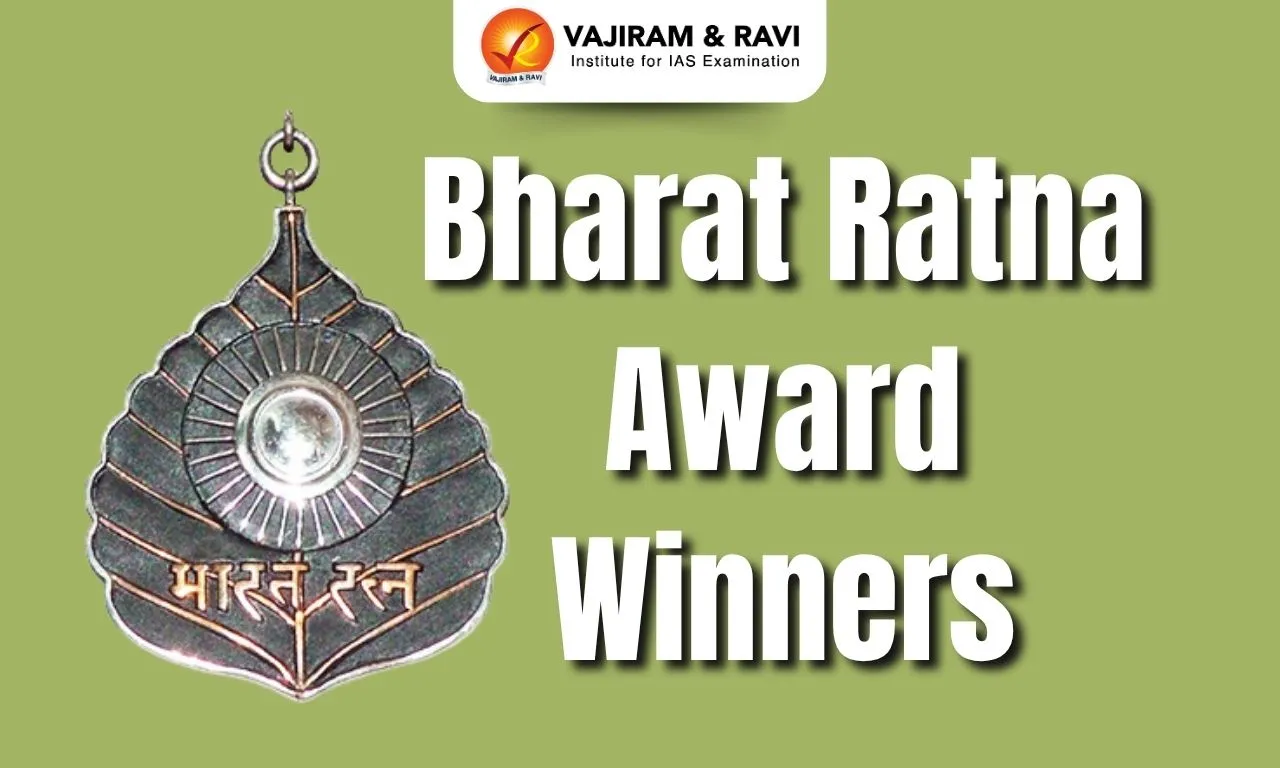
Bharat Ratna Medal Design

The Bharat Ratna Medallion carries unique national symbols that reflect India’s heritage and constitutional values.

[my_image src="https://vajiramias.sgp1.cdn.digitaloceanspaces.com/wp/current-affairs/2026/08/02175647/Bharat-Ratna-Medal-Design.webp?v=1788352014" size="full" align="center" width="auto" height="334px" alt="Bharat Ratna Medal Design" title="Bharat Ratna Medal Design"]

  • Peepal Leaf Shape: The medal is designed in the form of a peepal leaf, a symbol deeply associated with Indian culture and civilization. This distinctive shape makes the award instantly recognizable.
  • Front Design: The obverse side features a prominent sunburst at the centre. Below the sun, the words “Bharat Ratna” are inscribed in Devanagari script, highlighting the award’s national identity.
  • Reverse Side Elements: The reverse displays the State Emblem of India. Beneath it appears the national motto “Satyameva Jayate” written in Devanagari script.
  • Material Composition: The medallion is primarily cast in bronze. The emblem, sunburst and rim are crafted using platinum elements, while inscriptions are finished in burnished bronze.
  • Certificate and Medal: Every awardee receives a Sanad signed by the President of India along with the Bharat Ratna medallion, making the honour both symbolic and official.
  • Manufacturing Location: The medals are produced at the Alipore Mint in Kolkata, a historic institution responsible for manufacturing several important national decorations.
  • No Cash Component: Unlike many international honours, Bharat Ratna does not carry any monetary reward. Its significance lies entirely in national recognition and prestige.

Bharat Ratna Award Process

The Bharat Ratna selection process is highly exclusive and involves the highest constitutional offices of India.

  • Prime Minister’s Recommendation: The process begins with recommendations made by the Prime Minister of India. No formal public nomination mechanism exists for the award.
  • Presidential Approval: The recommendations are submitted to the President of India, who formally confers the Bharat Ratna upon approved recipients.
  • Official Announcement: After presidential approval, the names of awardees are officially announced by the Government of India and the President’s office.
  • Presentation Ceremony: Recipients are honoured in a formal investiture ceremony where they receive the Bharat Ratna medallion and the Sanad signed by the President.
  • Exceptional Selection Standards: The award is reserved only for individuals whose contributions are considered of the highest order and have created a lasting impact on society, the nation, or humanity.

Who Refused To Take Bharat Ratna?

Some individuals and families declined the Bharat Ratna due to personal principles, objections to state honours, or concerns surrounding recognition and history.

  • Maulana Abul Kalam Azad: India’s first Education Minister declined the Bharat Ratna nomination in 1954, believing selection committee members should not receive national honours; he was awarded posthumously in 1992.
  • H. N. Kunzru: The freedom fighter and Constituent Assembly member refused the Bharat Ratna nomination in 1968, opposing the practice of granting title-like state honours within a republic.
  • Hanuman Prasad Poddar: The freedom fighter and spiritual writer declined the Bharat Ratna when nominated, explaining that he preferred avoiding public distinctions and circumstances that could create political discomfort.
  • Subhas Chandra Bose’s Family: His extended family and supporters declined the posthumous Bharat Ratna announced in 1992, citing delayed recognition and unresolved questions about his death; legal challenges led to cancellation.

What Are The Benefits For Bharat Ratna Award?

The key benefits of the Bharat Ratna Awards has been highlighted below:

  • Bharat Ratna awardees are placed at Position 7A in the Table of Precedence, alongside top dignitaries like Governors, Former Presidents, and the Deputy Prime Minister, ensuring high-level recognition during official events.
  • Awardees receive a diplomatic passport, granting them access to separate immigration counters, VIP lounges at airports, and other privileges reserved for top government officials.
  • Recipients enjoy lifetime free air travel in executive class across domestic routes, sponsored by the Government of India.
  • They receive the same treatment as senior government dignitaries during official travels, including protocol services and access to government guest houses.
  • The Bharat Ratna Award includes a bronze medallion shaped like a peepal leaf, a miniature replica, and a certificate signed by the President of India.
  • Bharat Ratna Prize Money is not usually designated by the official awarding authority.
  • Bharat Ratna recipients are revered across the country. Their names are often associated with public institutions, and they hold a permanent place of respect in Indian history and society.
  • Bharat Ratna Award Family Benefits are not officially provided to the families of the awardees including Posthumous awards.

Bharat Ratna FAQs

Q1: Who became the first Bharat Ratna Award winner?

Ans: The first recipients of the Bharat Ratna Award were C Rajagopalachari, CV Raman, and S Radhakrishnan in 1954. Interestingly all first recipients were from the state of Tamil Nadu.

Q2: Who became the youngest Bharat Ratna Awardee?

Ans: The youngest recipient of the Bharat Ratna award is Sachin Tendulkar who was awarded in 2014.

Q3: Who were the first three recipients of Bharat Ratna?

Ans: The first three recipients of Bharat Ratna were C Rajagopalachari, CV Raman, and S Radhakrishnan. All three were awarded with the Bharat Ratna award in 1954.

Q4: Who are the recipients of the Bharat Ratna Award 2026?

Ans: The Bharat Ratna 2026 has not been announced yet. The latest recipients of the Bharat Ratna Award in 2024 are Karpoori Thakur, Lal Krishna Advani, MS Swaminathan, Chaudhary Charan Singh and PV Narasimha Rao.

Q5: How many people have received the Bharat Ratna Award till now?

Ans: The total number of recipients of the Bharat Ratna Award is 48 as of now.

Election Commission of India (ECI), Structure, Framework, Composition

Election Commission of India

Why in News?

Election Commission of India (ECI) is in the news amid protests and Supreme Court scrutiny over the deletion of voters' names during the Special Intensive Revision (SIR) of electoral rolls. Meanwhile, the ECI has announced a Special Summary Revision (SSR) across 17 States and Union Territories to update voter lists and ensure the inclusion of eligible voters.

Election Commission of India

The Election Commission of India derives its powers and responsibilities from Article 324 of the Indian Constitution. It is a constitutional body, independent of government influence, tasked with supervising the entire electoral process. Initially a single-member body, it became a multi-member Commission in 1993, consisting of the Chief Election Commissioner (CEC) and two Election Commissioners. The ECI manages over 97 crore registered voters (as per 2024 data) and conducts elections in more than 10 lakh polling stations nationwide.

Election Commission of India Structure

The Election Commission of India (ECI) is a constitutional body established under Article 324 of the Indian Constitution. It is a multi-member commission responsible for supervising elections to Parliament, State Legislatures, and the offices of the President and Vice President. Originally, it had only one Chief Election Commissioner (CEC), but since October 1993, it became a three-member body. The Commission operates as a collegiate body, ensuring collective decision-making. It has a permanent secretariat at Nirvachan Sadan, New Delhi, and functions independently of government control. Its structure ensures autonomy, impartiality, and accountability in the electoral process as mandated by the Constitution.

Election Commission of India Composition

The ECI comprises the Chief Election Commissioner (CEC) and two Election Commissioners (ECs), as provided under Article 324(2) of the Constitution. The President of India determines the number of Commissioners from time to time. All three members enjoy equal powers, salaries, and status, and decisions are taken collectively through majority vote. The Chief Election Commissioner acts as the head of the institution, ensuring smooth coordination. The administrative staff is drawn from central and state government services. This composition aims to maintain checks and balances within the Commission, upholding transparency and non-partisanship in the conduct of elections.

As of 2026 the members of Election Commission of India are:

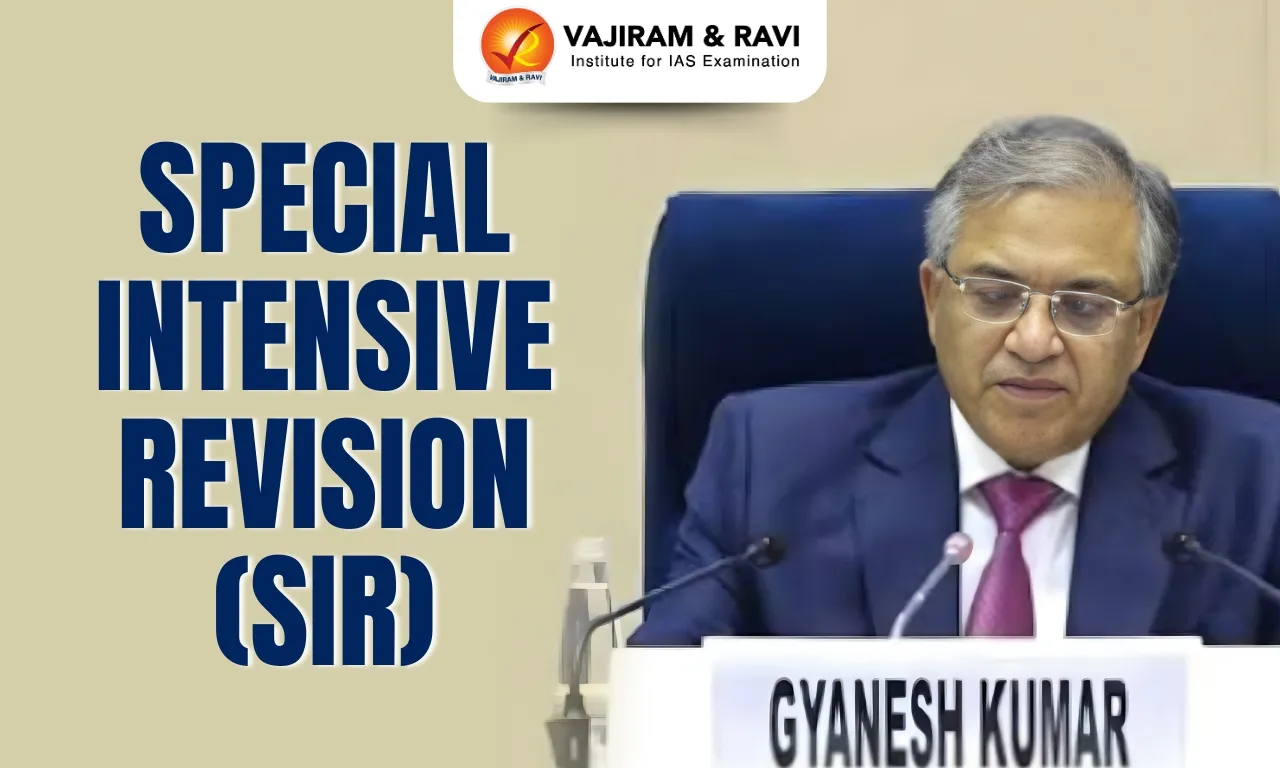
  • Chief Election Commissioner (CEC): Shri Gyanesh Kumar
  • Election Commissioners: Dr. Sukhbir Singh Sandhu and Dr. Vivek Joshi

Chief Election Commissioner (CEC)

The Chief Election Commissioner is the head of the Election Commission of India and ensures the independence and integrity of the electoral process.

  • The CEC is appointed by the President of India under Article 324(2) of the Constitution.
  • The CEC’s role is crucial in enforcing the Model Code of Conduct (MCC), supervising voter rolls, and ensuring impartial conduct of elections.
  • The Supreme Court in T.N. Seshan vs Union of India (1995) upheld that all Election Commissioners are equal in power and status, ensuring collective functioning.
  • The CEC is considered the guardian of India’s electoral democracy, accountable only to Parliament and the Constitution.

Election Commissioners Appointment

The Chief Election Commissioner and other Election Commissioners are appointed by the President of India under Article 324(2). Though the Constitution does not specify a detailed procedure, the appointment is made on the advice of the Council of Ministers. However, several legal experts and the Supreme Court (in March 2023) have recommended a collegium system involving the Prime Minister, Leader of Opposition, and Chief Justice of India to ensure transparency until Parliament enacts law. Their appointment order is issued by the President, and their terms, conditions, and service benefits are defined under the Election Commission (Conditions of Service) Rules 1992.

Election Commissioners Tenure

Under the Election Commission (Conditions of Service of Election Commissioners and Transaction of Business) Act 1991, each Election Commissioner, including the CEC, holds office for six years or until attaining the age of 65 years, whichever is earlier. This fixed tenure provides functional independence and stability. Their salaries and allowances are equivalent to those of Judges of the Supreme Court, ensuring parity with other high constitutional offices. Article 324(5) protects their tenure by stating that their service cannot be varied to their disadvantage after appointment. Such constitutional safeguards ensure autonomy and prevent arbitrary interference by the executive branch.

Election Commissioners Resignation and Removal

Election Commissioners may resign from office by submitting a written resignation to the President of India. However, the Chief Election Commissioner (CEC) enjoys stronger constitutional protection. Under Article 324(5), the CEC can be removed only in the same manner and on the same grounds as a Judge of the Supreme Court, that is, by a special majority of both Houses of Parliament on proven misbehavior or incapacity. Other Election Commissioners can be removed only on the recommendation of the CEC. This system ensures the Commission’s independence, preventing misuse of executive power and preserving the institution’s credibility and neutrality in elections.

Election Commission of India Powers

The Commission enjoys wide-ranging powers to ensure the integrity, neutrality, and transparency of the electoral process across India.Key Powers:

  • Administrative Powers: Control over election schedules, polling arrangements, and the deployment of polling staff.
  • Advisory Powers: Advises the President and Governors on matters related to disqualification of members.
  • Quasi-Judicial Powers: Decides disputes regarding political party recognition and symbols under the Election Symbols (Reservation and Allotment) Order, 1968.
  • Regulatory Powers: Enforces the Model Code of Conduct (MCC) and monitors election expenditure.
  • Disciplinary Powers: Can direct transfers or suspension of officials for election-related misconduct.

Election Commission of India Functions

The ECI performs multiple functions to ensure free, fair, and periodic elections in accordance with democratic principles. Major Functions:

  • Conduct of Elections: Supervises, directs, and controls elections to Parliament, State Legislatures, and high offices.
  • Delimitation: The Election Commission of India (ECI) does not directly have delimitation powers; instead, it oversees the process, which is conducted by a separate, temporary Delimitation Commission established by the Central Government.
  • Electoral Rolls: Prepares, revises, and updates voter lists through continuous revision and SIR (Special Intensive Revision).
  • Registration of Political Parties: Recognizes parties and allots election symbols.
  • Voter Education: Promotes awareness under the Systematic Voters’ Education and Electoral Participation (SVEEP) program.
  • Monitoring Expenditure: Ensures transparency through election expenditure audits and monitoring teams.

Election Commission of India Constitutional Provisions

The Election Commission of India is established under Article 324 of the Constitution to ensure free and fair elections in India. Key Constitutional Provisions:

  • Article 324(1): Grants the ECI the power to conduct elections to Parliament, State Legislatures, and the offices of President and Vice-President.
  • Article 324(2): Empowers the President to appoint the Chief Election Commissioner and other Election Commissioners.
  • Article 324(5): Provides protection to the tenure and service conditions of the CEC, ensuring independence.
  • These provisions ensure the ECI acts as an autonomous constitutional authority, not subordinate to any executive or legislature.

Election Commission of India Legal Safeguards

The legal framework guarantees the Commission’s independence and shields it from executive or political influence during elections. Major Legal Provisions:

  • Article 324(5): Protects the CEC’s tenure and prevents arbitrary removal.
  • Election Commission (Conditions of Service of Election Commissioners and Transaction of Business) Act, 1991: Defines tenure, salaries, and conditions of service.
  • Representation of the People Acts (1950 & 1951): Provide detailed election procedures, voter eligibility, and dispute resolution.
  • Indian Penal Code & Conduct of Election Rules, 1961: Penalize malpractices like bribery, booth capturing, and false nominations.
  • These legal safeguards collectively ensure institutional autonomy and operational transparency.

Election Commission of India Government Policies

To strengthen electoral integrity, several policy measures and reforms have been introduced by the government in consultation with the ECI. Key Policies and Their Impact:

  • Electoral Bond Scheme (2018): Introduced to improve transparency in political funding, though under judicial scrutiny.
  • One Nation, One Election (Proposal): Aims to synchronize national and state elections, reducing expenditure and administrative burden.
  • Voter ID-Aadhaar Linking Drive (Proposal): Ensures cleaner voter rolls by removing duplicate entries.
  • Remote Voting Prototype (Proposal): Designed to allow migrant workers to vote from other locations.
  • Awareness Campaigns (SVEEP): Promotes voter education and participation, increasing turnout rates to over 67% in 2019 Lok Sabha polls.

Election Commission of India Independence

The independence of the Election Commission is fundamental to Indian democracy. The Constitution grants it autonomy, but its accountability mechanisms ensure transparency.

Accountability Measures:

  • Judicial review of Commission decisions.
  • Parliamentary oversight through questions and debates.
  • Media transparency and publication of detailed election reports.

Measures Ensuring Independence:

  • Fixed Tenure: CEC and ECs hold office for six years or till the age of 65.
  • Security of Tenure: CEC can be removed only by parliamentary impeachment similar to a Supreme Court judge.
  • Equal Status: All commissioners enjoy equal decision-making power.
  • Financial Autonomy: ECI’s budget is charged on the Consolidated Fund of India, ensuring executive non-interference.
  • Neutrality in Appointments: Recent Supreme Court directives advocate a collegium-based selection process for transparency.

Election Commission of India Case Laws

Several judicial decisions have strengthened the constitutional position and functioning of the ECI:

  • S. Subramaniam Balaji v. State of Tamil Nadu (2013): Directed the ECI to enforce the Model Code of Conduct more stringently.
  • Union of India v. Association for Democratic Reforms (2002): Mandated disclosure of candidates’ criminal, educational, and financial backgrounds.
  • PUCL v. Union of India (2003): Recognized the Right to Vote as part of the freedom of expression under Article 19(1)(a).
  • A.C. Jose v. Sivan Pillai (1984): Affirmed that the ECI has plenary powers under Article 324 to ensure free elections.
  • ADR vs. Election Commission (2024): The Supreme Court emphasized transparency in voter list revisions under SIR, ensuring uniform procedures across states.

Election Commission of India Challenges

Despite its achievements, the ECI faces several operational and institutional challenges:

  • Political Pressure and Allegations of Bias: Increasing accusations of partisanship affect its credibility.
  • Voter Exclusion: Issues in electoral roll verification, especially during Special Intensive Revisions (SIR), lead to disenfranchisement.
  • Election Expenditure: Unchecked campaign spending and unaccounted political donations undermine transparency.
  • Fake News and Electoral Manipulation: Social media misinformation impacts voter behavior.
  • Digital Divide: Limited accessibility of digital services in rural areas hinders full participation.

Way Forward:

  • Establish a collegium system for appointment of Election Commissioners.
  • Provide statutory backing for the Model Code of Conduct.
  • Expand voter education programs in marginalized communities.
  • Enhance cyber resilience through AI-based monitoring.
  • Strengthen coordination with social media platforms to curb misinformation.

Election Commission of India Technology Integration

The ECI has significantly integrated technology into election management, ensuring faster, more secure, and transparent processes. Key Digital Initiatives:

  • EVMs and VVPATs: Ensure tamper-proof voting and verifiable paper trails.
  • cVIGIL App: Allows citizens to report Model Code violations in real time.
  • ERONet and NVSP Portal: Facilitate online voter registration and roll management.
  • Suvidha and Samadhan Portals: Streamline candidate permissions and grievance redressal.
  • Garuda App: Enables Booth Level Officers (BLOs) to conduct door-to-door verification digitally.

Election Commission of India Significance

The Election Commission acts as the foundation of India’s democracy, ensuring the people’s mandate is exercised freely, fairly, and periodically.

  • Democratic Legitimacy: Upholds citizens’ right to vote under Article 326, maintaining public confidence in electoral outcomes.
  • Institutional Stability: Ensures smooth transitions of power without conflict, protecting the essence of parliamentary democracy.
  • Inclusivity: Implements initiatives like SVEEP and Accessible Elections Project to include marginalized groups, PwDs, and senior citizens.
  • Technological Reforms: Adoption of EVMs, VVPAT, and digital voter roll systems enhances transparency and reduces human error.
  • Global Recognition: India’s ECI is often cited as a model for electoral management by international organizations like the UNDP and International IDEA.

Election Commission of India Recent Developments

The Election Commission of India (ECI) has announced Phase 2 of its nationwide “Special Intensive Revision” (SIR) of electoral rolls, covering 12 states and Union Territories from November 4, 2025.

  • The exercise will affect around 51 crore electors, aiming for a final roll publication on February 7, 2026.
  • States involved include major poll-bound regions such as Tamil Nadu, Kerala, West Bengal and Puducherry. 
  • The ECI clarified that Aadhaar card and 13 other documents may be used for identity proof, though concerns over potential disenfranchisement have been raised by opposition parties. 
  • The revision follows the earlier SIR pilot in Bihar, where the ECI reported zero appeals or complaints relating to deletions. 
  • Some states have questioned the timeline and scope of the exercise, arguing that it should not proceed in a short span of 2-3 months given migration and administrative challenges.

Election Commission of India FAQs

Q1: What is the Election Commission of India?

Ans: It is a constitutional body established under Article 324 to supervise elections in India.

Q2: Who appoints the Chief Election Commissioner?

Ans: The President of India appoints the Chief Election Commissioner and other Election Commissioners.

Q3: What is the tenure of Election Commissioners?

Ans: They hold office for six years or until the age of 65, whichever is earlier.

Q4: What are the major powers of the Election Commission of India?

Ans: The ECI conducts elections, enforces the Model Code, and regulates political parties and expenditure.

Q5: How does the Election Commission of India ensure free and fair elections?

Ans: Through technology use, strict monitoring, legal powers, and transparent processes under constitutional safeguards.

Fundamental Rights of Indian Constitution, Articles, Features, Importance, Judgements

Fundamental Rights of Indian Constitution

What are Fundamental Rights?

Fundamental Rights are basic rights guaranteed under Part III (Articles 12–35) of the Constitution of India to protect individual liberty, equality and dignity. Inspired by the US Bill of Rights and the ideals of the Magna Carta, they safeguard individuals against arbitrary State action.

They are called fundamental because they are essential for individual development and democratic governance. They are justiciable, allowing individuals to approach the courts for their enforcement, and are often described as the Magna Carta of India.

Features of Fundamental Rights of the Indian Constitution

The Fundamental Rights enshrined in Part III of the Indian Constitution have the following key features:

  • Available to Citizens and Non-Citizens: Some Fundamental Rights are available only to Indian citizens, while others are available to all persons, including foreigners and legal entities such as corporations and companies.
  • Not Absolute: Fundamental Rights are subject to reasonable restrictions imposed by the State, as permitted by the Constitution. Courts determine whether such restrictions satisfy constitutional requirements, balancing individual liberty with the interests of society.
  • Protection Against State and Private Action: Fundamental Rights generally protect individuals against arbitrary State action. However, certain rights, such as those under Articles 15(2), 17, 23 and 24, also operate against private individuals.
  • Negative and Positive in Nature: Some Fundamental Rights impose limitations on the powers of the State, while others confer protections, freedoms or privileges on individuals.
  • Justiciable: Fundamental Rights are enforceable through courts. Individuals can seek judicial remedies when these rights are violated.
  • Guaranteed by the Supreme Court: The Supreme Court acts as the ultimate constitutional protector of Fundamental Rights. Under Article 32, individuals can directly approach the Supreme Court for their enforcement. High Courts also have the power to enforce these rights under Article 226.
  • Can Be Amended: Fundamental Rights are not unalterable. Parliament can amend them through a constitutional amendment under Article 368, provided the amendment does not violate the Constitution’s Basic Structure Doctrine.
  • Suspension During a National Emergency: The enforcement of certain Fundamental Rights may be affected during a National Emergency. Article 20 and Article 21 cannot be suspended through a Presidential Order under Article 359. Article 19 is affected under Article 358 only during an Emergency declared on the grounds of war or external aggression, subject to constitutional conditions.
  • Subject to Certain Constitutional Provisions: Articles 31A, 31B and 31C provide specific protections to certain laws against challenges based on Fundamental Rights, subject to constitutional limitations and judicial review.
  • Special Provisions for Security Forces: Under Article 33, Parliament may restrict or abrogate the application of Fundamental Rights to members of the armed forces, forces charged with maintaining public order, intelligence organisations and certain related services to ensure the proper discharge of their duties and maintenance of discipline.
  • Restrictions During Martial Law: Under Article 34, Parliament may indemnify persons for acts performed in connection with the maintenance or restoration of order in an area where martial law was in force, and validate related actions, subject to the constitutional provision. Martial law is distinct from a National Emergency.
  • Direct and Indirect Enforceability: Many Fundamental Rights can be enforced directly, while some require legislation to give them effect. Under Article 35, Parliament has exclusive legislative power over certain specified matters relating to Fundamental Rights, ensuring uniformity across the country.

Fundamental Rights of the Indian Constitution

The Constitution originally provided seven categories of Fundamental Rights. However, the 44th Constitutional Amendment Act, 1978 removed the Right to Property from this list, leaving six categories. The Right to Property is now a constitutional right under Article 300A.

Fundamental Right Constitutional Articles
Right to Equality Articles 14–18
Right to Freedom Articles 19–22 and Article 21A
Right Against Exploitation Articles 23–24
Right to Freedom of Religion Articles 25–28
Cultural and Educational Rights Articles 29–30
Right to Constitutional Remedies Article 32

Fundamental Rights of Indian Constitution Articles 

The Fundamental Rights of the Indian Constitution are enshrined in Part III, covering Articles 12 to 35. They are grouped into six broad categories and protect individual liberty, equality, dignity and religious and cultural freedoms.

1. Right to Equality (Articles 14-18)

The Right to Equality ensures equal treatment under the law and prohibits discrimination on specified grounds.

  • Article 14: Guarantees equality before the law and equal protection of the laws to all persons.
  • Article 15: Prohibits the State from discriminating against citizens on grounds of religion, race, caste, sex or place of birth, while permitting specified affirmative-action measures.
  • Article 16: Guarantees equality of opportunity for citizens in matters of public employment, subject to constitutionally permitted reservations and other exceptions.
  • Article 17: Abolishes untouchability and prohibits its practice in any form.
  • Article 18: Abolishes titles, except military and academic distinctions, and restricts the acceptance of titles and certain foreign presents or offices under specified conditions.

2. Right to Freedom (Articles 19-22, along with Article 21A)

The Right to Freedom protects essential civil liberties and safeguards individuals against certain forms of arbitrary State action.

  • Article 19: Guarantees six freedoms to citizens: speech and expression, peaceful assembly, association or unions, movement, residence and profession or occupation. These freedoms are subject to constitutionally permitted reasonable restrictions.
  • Article 20: Protects individuals against retrospective criminal punishment, double jeopardy and compelled self-incrimination.
  • Article 21: Protects life and personal liberty, except according to a procedure established by law. Judicial interpretation has expanded its scope to include rights such as privacy and dignity.
  • Article 21A: Provides free and compulsory education to children aged 6–14 years, in the manner determined by law.
  • Article 22: Provides safeguards against arrest and detention, including the right to be informed of the grounds of arrest and to consult a legal practitioner, subject to specified exceptions. It also regulates preventive detention.

3. Right Against Exploitation (Articles 23-24)

These provisions prohibit specific forms of exploitation and protect human dignity.

  • Article 23: Prohibits human trafficking, begar and other similar forms of forced labour.
  • Article 24: Prohibits the employment of children below 14 years in factories, mines or other hazardous employment.

4. Right to Freedom of Religion (Articles 25-28)

These rights protect religious freedom while allowing the State to regulate certain secular activities and maintain public order.

  • Article 25: Guarantees freedom of conscience and the right to profess, practise and propagate religion, subject to public order, morality, health and other constitutional provisions.
  • Article 26: Gives religious denominations the right to manage their religious affairs, subject to public order, morality and health.
  • Article 27: Prohibits compelling a person to pay taxes specifically appropriated for promoting or maintaining a particular religion.
  • Article 28: Regulates religious instruction and worship in educational institutions, with different rules depending on how the institution is established or maintained.

5. Cultural and Educational Rights (Articles 29-30)

These rights protect cultural diversity and the educational interests of minorities.

  • Article 29: Protects the right of any section of citizens with a distinct language, script or culture to conserve it. It also prohibits specified forms of discrimination in admission to State-maintained or State-aided educational institutions.
  • Article 30: Gives religious and linguistic minorities the right to establish and administer educational institutions of their choice, subject to constitutional provisions.

6. Right to Constitutional Remedies (Article 32)

Article 32 guarantees the right to approach the Supreme Court for the enforcement of Fundamental Rights. Dr. B. R. Ambedkar described Article 32 as the “heart and soul” of the Constitution, as it provides an effective remedy when Fundamental Rights are violated.

The Court can issue five types of writs:

  • Habeas Corpus: Protects against unlawful detention.
  • Mandamus: Directs a public authority to perform a public duty.
  • Prohibition: Prevents a lower court or tribunal from exceeding its jurisdiction.
  • Certiorari: Allows a higher court to quash an order of a lower court or tribunal in appropriate cases.
  • Quo Warranto: Challenges the legal authority of a person holding a public office.

High Courts can also issue writs under Article 226, including for purposes beyond the enforcement of Fundamental Rights.

Status of Right to Property 

The Right to Property is no longer a Fundamental Right in India. It was removed from Part III by the 44th Constitutional Amendment Act, 1978, and is now a constitutional right under Article 300A.

Article 300A states that no person shall be deprived of their property except by authority of law. This means the State cannot take away a person’s property without legal authority.

Fundamental Rights Available to Citizens and Foreigners

Fundamental Rights differ in their applicability: some are available only to Indian citizens, while others are available to all persons, including foreigners, subject to constitutional exceptions.

Fundamental Rights available only to Indian citizens

Fundamental Rights available to citizens and foreigners*

Article 15: Prohibition of discrimination on specified grounds

Article 14: Equality before law and equal protection of laws

Article 16: Equality of opportunity in public employment

Article 20: Protection in respect of conviction for offences

Article 19: Six freedoms, including speech, assembly, association, movement, residence and profession

Article 21: Protection of life and personal liberty

Article 29: Protection of the language, script and culture of sections of citizens

Article 21A: Right to free and compulsory education for children aged 6–14

Article 30: Rights of religious and linguistic minorities to establish and administer educational institutions

Article 22: Protection against arrest and detention, subject to constitutional exceptions


Article 23: Prohibition of human trafficking and forced labour


Article 24: Prohibition of child employment in factories, mines and hazardous employment


Article 25: Freedom of conscience and religion


Article 26: Freedom to manage religious affairs


Article 27: Freedom from taxes specifically appropriated for promoting a particular religion


Article 28: Freedom from religious instruction or worship in specified educational institutions, subject to constitutional conditions


Other Important Constitutional Provisions Related to Fundamental Rights

  • Article 12: Defines the term “State” for Part III.
  • Article 13: Provides that laws inconsistent with Fundamental Rights are void to the extent of the inconsistency.
  • Articles 33–35: Deal with Parliament’s power to modify the application of rights to specified forces and services, provisions relating to martial law, and Parliament’s exclusive legislative power over certain specified matters.

Supreme Court Judgments Related to Fundamental Rights of the Indian Constitution

The Supreme Court of India has played a crucial role in interpreting and protecting Fundamental Rights. Several landmark judgments have clarified their scope, strengthened individual liberty and defined the limits of Parliament’s power to amend the Constitution.

  • Kesavananda Bharati v. State of Kerala (1973): The Supreme Court established the Basic Structure Doctrine, holding that Parliament can amend Fundamental Rights under Article 368 but cannot alter the basic structure of the Constitution.
  • Maneka Gandhi v. Union of India (1978): The Court expanded the interpretation of Article 21 (Right to Life and Personal Liberty). It held that the procedure depriving a person of life or personal liberty must be just, fair and reasonable. It also strengthened the interconnected interpretation of Articles 14, 19 and 21.
  • Minerva Mills v. Union of India (1980): The Court reaffirmed the Basic Structure Doctrine and struck down provisions of the 42nd Constitutional Amendment that attempted to make Parliament’s amending power unlimited. It also emphasised the need to maintain a balance between Fundamental Rights and Directive Principles of State Policy.
  • Indra Sawhney v. Union of India (1992): Popularly known as the Mandal Commission case, the Court upheld the implementation of 27% reservation for Other Backward Classes (OBCs) in central government jobs, subject to conditions. It recognised the exclusion of the creamy layer and generally limited reservations to 50%, subject to exceptional circumstances. The judgment primarily interpreted Article 16, which guarantees equality of opportunity in public employment.
  • Vishaka v. State of Rajasthan (1997): The Court laid down guidelines to prevent and address sexual harassment of women at the workplace in the absence of specific legislation. The judgment drew upon Articles 14, 15, 19(1)(g) and 21, linking workplace safety and dignity with Fundamental Rights. These guidelines operated until Parliament enacted the relevant legislation in 2013.
  • I.R. Coelho v. State of Tamil Nadu (2007): The Court held that laws placed in the Ninth Schedule after 24 April 1973, the date of the Kesavananda Bharati judgment, are subject to judicial review if they damage the basic structure of the Constitution by violating Fundamental Rights that form part of that structure.
  • Justice K.S. Puttaswamy (Retd.) v. Union of India (2017): A nine-judge Constitution Bench unanimously recognised the Right to Privacy as a Fundamental Right, protected primarily under Article 21 and other freedoms guaranteed by Part III. The judgment affirmed that privacy is essential to individual liberty and dignity.
  • Navtej Singh Johar v. Union of India (2018): The Court read down Section 377 of the Indian Penal Code to decriminalise consensual sexual relations between adults of the same sex. It emphasised equality, dignity, privacy and personal autonomy under Articles 14, 15, 19 and 21.
  • Shreya Singhal v. Union of India (2015): The Court struck down Section 66A of the Information Technology Act, 2000, holding it unconstitutional for violating Article 19(1)(a), the freedom of speech and expression. The judgment is significant for protecting online expression against vague and overly broad restrictions.
  • D.K. Basu v. State of West Bengal (1997): The Court laid down safeguards to be followed during arrest and detention to prevent custodial abuse. The judgment strengthened protections associated with Articles 21 and 22, particularly the right to life, personal liberty and safeguards against arbitrary arrest and detention.

These judgments demonstrate how judicial interpretation has expanded the practical meaning of Fundamental Rights and helped maintain constitutional limits on legislative and executive power.

Importance of Fundamental Rights of Indian Constitution

Fundamental Rights are essential to the functioning of India's constitutional democracy.

  • Protection of liberty: They safeguard freedoms and personal autonomy.
  • Promotion of equality: They prohibit specified forms of discrimination and support constitutional equality.
  • Prevention of arbitrary rule: They limit the powers of the State and strengthen the rule of law.
  • Protection of human dignity: They provide safeguards against exploitation and arbitrary deprivation of liberty.
  • Preservation of diversity: They protect religious freedoms and cultural and educational interests.
  • Access to justice: They allow individuals to seek judicial remedies when their rights are violated.

Fundamental Rights of Indian Constitution FAQs

Q1: Are there 6 or 7 fundamental rights in India?

Ans: There are six fundamental rights that include right to equality, right to freedom, right against exploitation, right to freedom of religion, cultural and educational rights, and right to constitutional remedies.

Q2: What are the fundamental rights from article 14 to 32?

Ans: Right to equality (Article 14–18) Right to freedom (Article 19–22) Right against exploitation (Article 23–24) Right to freedom of religion (Article 25–28).

Q3: Who is called the father of fundamental rights?

Ans: Sardar Vallabhbhai Patel considered as the father of Fundamental rights in India.

Q4: What is the Article 14 to 18?

Ans: Right to Equality is the Article 14 to 18.

Q5: What is Article 51A G?

Ans: Article 51A (g) places a duty on the citizens of India to protect and improve the natural environment and have compassion for all living creatures.

States and Capitals of India 2026, Name List of 28 States and 8 UT, Map

States and Capitals of India

India comprises 28 states and 8 Union Territories, each with its own administrative structure. Every state has a designated capital that functions as its administrative, political, and often cultural hub. Together, the states and Union Territories showcase India's vast geographical, linguistic, and cultural diversity. Knowing the states and their capitals is important for understanding the country's geography, governance, and regional identity. The article delves into the details related to the States and Capitals of India 2026 and Union Territories.

States and Capitals of India 2026

India is a vast country with diverse cultural and linguistic features. The States and Capitals of India represent one of the major political divisions indicating diversity in unity. At central level, New Delhi act as the National Capital Territory and the Capital of India which overlooks the functioning of overall country. In the similar way, states have also been designated a specified Capital for each which administers and overlooks the functions and management of the state as a center.

List of 28 States with their Capitals 2026

All 28 States of India represent its rich culture and geographical diversity. The cities of each state serve not only as administrative headquarters but also as important centers of culture, history, commerce, and development, highlighting the diverse contributions of each state to the nation as a whole. Here below we have provided a List of States and Capital of India:

List of States and Capitals of India 2026
S.No. State Capital Formation Date

1

Andhra Pradesh

Amaravati

1 November 1956

2

Arunachal Pradesh

Itanagar

20 February 1987

3

Assam

Dispur

1950

4

Bihar

Patna

1950

5

Chhattisgarh

Raipur

1 November 2020

6

Goa

Panaji

30 May 1987

7

Gujarat

Gandhinagar

1 May 1960

8

Haryana

Chandigarh

1 November 1966

9

Himachal Pradesh

Shimla

25 January 1971

10

Jharkhand

Ranchi

15 November 2000

11

Karnataka

Bengaluru

1 November 1956

12

Kerala

Thiruvananthapuram

1 November 1956

13

Madhya Pradesh

Bhopal

1 November 1956

14

Maharashtra

Mumbai

1 May 1960

15

Manipur

Imphal

21 January 1972

16

Meghalaya

Shillong

21 January 1972

17

Mizoram

Aizawl

20 February 1987

18

Nagaland

Kohima

1 December 1963

19

Odisha

Bhubaneswar

1950

20

Punjab

Chandigarh

1 November 1966

21

Rajasthan

Jaipur

30 March 1949

22

Sikkim

Gangtok

16 May 1975

23

Tamil Nadu

Chennai

1 November 1956

24

Telangana

Hyderabad

2 June 2014

25

Tripura

Agartala

21 January 1972

26

Uttar Pradesh

Lucknow

24 January, 1950

27

Uttarakhand

Dehradun

9 November 2000

28

West Bengal

Kolkata

1950

List of 8 Union Territories with their Capitals 2026

New Delhi is a Union Territory and holds the title of being the capital of India. Other Union Territories include, Andaman and Nicobar Islands, Chandigarh, Dadra and Nagar Haveli, Daman and Diu, Jammu and Kashmir, Ladakh, Lakshadweep and Puducherry. Below we have shared the List of Union Territory and Capitals in the table:

List of Union Territories and Capitals 2026
Name of the Union Territory Capital

Andaman and Nicobar Islands

Port Blair

Chandigarh

Chandigarh

Dadra & Nagar Haveli and Daman & Diu

Daman

Delhi

New Delhi

Jammu and Kashmir

Srinagar (Summer) / Jammu (Winter)

Lakshadweep

Kavaratti

Puducherry

Pondicherry

Ladakh

Leh

Difference Between States and Union Territories

India is the largest democracy in the world whose administration has been divided into States and Union Territories. Each state has their own federal government which is accountable to the union government, whereas Union Territories are directly governed by the central government, some of which have legislative assemblies. Below in the table the Difference Between States and Union Territories has been highlighted:

States vs Union Territories
State Union Territory

It has a large area.

It has a small area.

It is an independent unit.

It is not an independent unit.

It elects its Government.

It is ruled by the Central Government.

It has a larger population as compared to a union territory

It has a smaller population.

A state is administered by a Chief Minister.

A union territory is administered by the Lieutenant Governor.

The Chief Minister is elected through an election.

The Lieutenant Governor is appointed by the President.

The Governor is the head of the state.

The President is the head of the union territory.

A state has more powers than a union territory.

All the powers lie in the hands of the Central Government.

There are 28 states in India.

There are 8 union territories in India.

Examples: Maharashtra, Gujarat, Punjab, Haryana

Examples: Delhi, Chandigarh, Puducherry

Largest State of India 2026

Rajasthan is the Largest State of India by area, It covers approximately an area of 342,239 sq.km which is 10.4% total area of India. It is present in the northwest part of the county and is known for its desert landscapes and historical forts. Jaipur serves as the Capital of the State. The total population of  Rajasthan is about 68,548,43. 

Smallest State of India 2026

Goa is the Smallest State of India in terms of area, It covers approximately an area of 3,702 square kilometers and is located on the western coast of India, specifically in the Konkan region, bordering the Arabian Sea. It has a population of about 1,575,000. Panaji serves as the Capital of Goa. It is known for its beautiful beaches and rich Portuguese history.

Largest Union Territory of India 2026

The Largest Union Territory of India in terms of area is Jammu And Kashmir covering a total area of about 42,241 square kilometers, The population of Jammu and Kashmir, according to the census 2011, was 12,267,013. On August 5, 2019, the Indian government removed Article 370, which gave special status to this region. After this, the state of Jammu and Kashmir was split into two Union Territories, Jammu & Kashmir and Ladakh. This change officially took place on October 31, 2019.

Smallest Union Territory of India 2026

The Smallest Union Territory of India in terms of area and population is Lakshadweep covering a total area of only 32 sq.km and having a population of approximately 64,473.  It is basically just  a group of 36 islands located in the Arabian Sea, about 300-400 km off the Kerala coast.

Also Check Other Posts
Biosphere Reserves in India National Parks in India
Waterfalls in India Highest Peak in India
Ramsar Sites in India Wildlife Sanctuaries in India
Dams in India Tiger Reserves in India
Mountain Passes in India Longest Bridge in India

States and Capitals 2026 FAQs

Q1: What is the smallest state in India 2026?

Ans: The smallest state in India by area is Goa, with a total area of 3,702 square kilometers.

Q2: Which is the least populated state in India 2026?

Ans: The least populated state in India is Sikkim. According to the 2011 census, Sikkim had a population of approximately 610,577.

Q3: Which state has the highest population 2026?

Ans: Uttar Pradesh is the Indian state with the largest population. It is estimated to have over 240 million residents, accounting for about 17% of India's total population.

Q4: How many states are there in India 2026?

Ans: India has a total of 28 states. There are also 8 Union Territories in addition to the states.

Q5: Which is the oldest capital of India 2026?

Ans: The first capital of British India was Calcutta (now Kolkata), which served as the capital until 1911, when it was shifted to Delhi.

Indian National Movement (1857-1947), Phases, Leaders, Timeline

Indian National Movement

The Indian National Movement was a long struggle by Indians to gain independence from British colonial rule. Beginning in the late 19th century and culminating in 1947, it involved political, social, and economic efforts to challenge foreign dominance. Leaders like Mahatma Gandhi, Jawaharlal Nehru, Subhas Chandra Bose, Bal Gangadhar Tilak, and others played crucial roles. The movement combined constitutional reforms, mass mobilization, revolutionary activities, and civil disobedience, shaping modern India

Indian National Movement

The movement evolved in phases, reflecting the changing strategies of Indians against British rule. Early leaders emphasized moderate political reforms, while later generations adopted more radical approaches. Mass movements, including the Non-Cooperation Movement, Civil Disobedience Movement, and Quit India Movement, mobilized millions. It also integrated social reform, women’s participation, and youth activism, marking a nationwide awakening. Regional movements in Bengal, Punjab, Maharashtra, and the South complemented the national struggle for freedom.

Revolt of 1857

The 1857 Revolt, also called the First War of Indian Independence, marked the beginning of modern nationalist sentiment. Triggered by sepoy grievances, economic exploitation, and religious fears, it began in Meerut and spread to Delhi, Kanpur, Lucknow, and Jhansi. Key leaders included Mangal Pandey, Rani Lakshmibai, Nana Sahib, and Bahadur Shah Zafar. Though suppressed, it inspired future organized nationalist movements.

Indian National Movement Phases

The Historians have distributed the timeline of Indian National Movement into three major Phases:

  1. Moderate Phase (1885 - 1905)
  2. Extremist Phase (1905 - 1919)
  3. Gandhian Era (1919 - 1947)

Moderate Phase (1885-1905)

Focused on petitions, reforms, and dialogue with the British. Leaders like Dadabhai Naoroji emphasized economic critique (Drain Theory).

  • Leaders: Dadabhai Naoroji, Gopal Krishna Gokhale, Pherozeshah Mehta, Surendranath Banerjee, W.C. Bonnerjee. Advocated constitutional reforms, petitions, and economic critique.
  • Objective: Gain political rights through constitutional methods through “Dominion Status”, including participation in legislative councils, economic justice, and social reform.

Major Events & Movements:

Events of Moderate Phase (1885-1905)
Event / Movement Year

Formation of INC

1885

Regional Associations

1885-1900

Early Protests against Bengal Partition

1905

  • Important Locations: Bombay, Calcutta, Madras, Allahabad- hubs of political activity and education.
  • Outcome: Laid the foundation for organized nationalism, political awareness, and petitioning the British for reform.
  • Other Contemporary British Events:
  • Indian Councils Act (1892) increased council participation but limited powers.
  • Censorship laws to curb nationalist press.
  • Regional Uprisings: Peasant agitations in Bengal and Madras, Santhal and Munda tribal revolts.

Extremist Phase (1905-1919)

Advocated direct action, boycott, and assertive nationalism.

  • Leaders: Bal Gangadhar Tilak, Lala Lajpat Rai, Bipin Chandra Pal. Advocated direct action, boycotts, and assertive nationalism.
  • Objective: Achieve “Swaraj” (self-rule) and assert Indian authority against British policies.

Major Movements & Events:

Events of Extremist Phase (1905-1919)
Movement / Event Year Objective Outcome

Swadeshi Movement

1905

Boycott British goods

Strengthened nationalist sentiment

Partition of Bengal Protests

1905

Political and economic resistance

Mass mobilization

  • Important Locations: Bengal (Calcutta), Maharashtra (Bombay), Punjab, United Provinces- major centres of agitation.
  • Regional Uprisings: Localized protests against taxes and British policies in Bengal, Punjab, and Maharashtra.

Gandhian Era/ Mass Movements Phase (1919-1947)

Non-violent protests, civil disobedience, and Satyagraha led by Mahatma Gandhi mobilized millions.

  • Leaders: Mahatma Gandhi, Jawaharlal Nehru, Subhas Chandra Bose, Sarojini Naidu, Kasturba Gandhi, Aruna Asaf Ali.
  • Objective: Achieve Sampoorna Swaraj (complete independence) through non-violent resistance and mass mobilization.

Major Movements & Events:

Events of Gandhian Era/ Mass Movements Phase (1919-1947)
Movement Year Leaders Method Outcome

Non-Cooperation

1920-22

Gandhi

Boycott institutions, resignations

Suspended after Chauri Chaura

Civil Disobedience

1930-34

Gandhi

Salt March, non-payment of taxes

International attention

Quit India

1942

Gandhi, Nehru

Mass protests, strikes

Suppressed but united India

  • Important Locations: Champaran, Kheda, Dandi, Bombay, Delhi- centres of mass Satyagraha.
  • Regional Uprisings: Champaran Satyagraha (1917), Kheda Satyagraha (1918), tribal and peasant revolts integrated into national struggle.
  • Other Contemporary British Events: Rowlatt Act (1919), Jallianwala Bagh Massacre (1919), Simon Commission (1927).

Factors Responsible for National Uprising

The Indian National Movements were the results of the various events that occurred against Policies and Actions of the British. Few of the major causes are:

Factors Responsible for National Uprising
Factor Details

Political

Exclusion from governance, British monopoly

Economic

Heavy taxation, drain of wealth, deindustrialization

Social

Famines, caste discrimination, low education

Events

Partition of Bengal (1905), World Wars I & II

Repressive Policies

Rowlatt Act, Jallianwala Bagh Massacre, Simon Commission

Indian National Movement (1857-1947) Timeline

The chronological order of the key events and list of major Indian National Movements is tabulated below:

Timeline of Indian National Movement (1857-1947)
Year Event / Movement Leader(s) / Organisation Location / Centre Outcome / Significance

1857

Revolt of 1857

Mangal Pandey, Rani Lakshmibai, Nana Sahib, Bahadur Shah Zafar

Meerut, Delhi, Jhansi, Kanpur

First War of Indian Independence; inspired nationalist sentiment

1885

Formation of INC

Allan Octavian Hume, Dadabhai Naoroji, W.C. Bonnerjee

Bombay

Platform for political dialogue and reforms

1885-1905

Moderate Phase activities

Dadabhai Naoroji, Gopal Krishna Gokhale, Pherozeshah Mehta

Bombay, Calcutta, Madras, Allahabad

Constitutional petitions, economic critique (Drain Theory), foundation for nationalism

1905

Partition of Bengal

Lord Curzon, local leaders

Bengal

Triggered Swadeshi Movement; early mass protests

1905-1919

Extremist Phase

Bal Gangadhar Tilak, Bipin Chandra Pal, Lala Lajpat Rai

Bengal, Maharashtra, Punjab

Assertive nationalism, boycott of British goods, regional mobilization

1917

Champaran Satyagraha

Mahatma Gandhi

Champaran, Bihar

First major non-violent protest addressing rural grievances

1918

Kheda Satyagraha

Mahatma Gandhi

Kheda, Gujarat

Non-payment of revenue; success in obtaining concessions from British

1919

Jallianwala Bagh Massacre

British colonial authority

Amritsar, Punjab

Sparked nationwide outrage; led to Non-Cooperation Movement

1920-22

Non-Cooperation Movement

Gandhi, C.R. Das

Nationwide

Boycott of British institutions; suspended after Chauri Chaura incident

1930

Salt March / Civil Disobedience

Mahatma Gandhi

Dandi, Gujarat

Protest against salt tax; widespread civil disobedience

1935

Government of India Act

British Parliament

India-wide

Provincial autonomy; partial self-rule; step toward independence

1942

Quit India Movement

Gandhi, Nehru

Nationwide

Mass uprising demanding immediate independence; suppressed but politically significant

1942

Formation of Indian National Army (INA)

Subhas Chandra Bose

Singapore (initially), Burma

Armed resistance against British; mobilized Indian soldiers and expatriates

1943

Provisional Government of Free India (Azad Hind)

Subhas Chandra Bose

Singapore

Parallel government in exile; diplomatic recognition sought; symbol of sovereign India

1944

INA campaigns: Imphal & Kohima

Subhas Chandra Bose

Assam-Nagaland border

Pushed into India but eventually retreated; inspired nationalist sentiment

1944

Arakan Campaign

INA + Japanese forces

Burma

Coordinated offensive; strengthened INA’s strategic role

1947

Indian Independence

Indian National Congress

India-wide

End of British rule; establishment of a sovereign nation

List of Major Movements of India's Freedom Struggle

The major National Movements of Freedom Struggle of India include:

Kheda Satyagraha (1918)

In 1918, Gandhi led Kheda Satyagraha in Gujarat, supporting farmers facing crop failure and high taxes through non-violent protest.

Salt March/ Civil Disobedience Movement (1930)

Gandhi’s 1930 Salt March protested the salt tax, inspiring mass civil disobedience, boycotts, and nationwide anti-British mobilization.

Non-Cooperation Movement (1920)

Launched in 1920-22, Gandhi promoted boycotts of British institutions, resignations, and social unity, paused after Chauri Chaura violence.

Bardoli Satyagraha (1928)

In 1928, Sardar Vallabhbhai Patel led Bardoli Satyagraha, achieving concessions from the British against oppressive land taxes through non-violent methods.

Indigo Rebellion / Nil Bidroha (1859)

In 1859-60, Bengal peasants revolted against forced indigo cultivation, gaining temporary concessions and inspiring later nationalist and agrarian movements.

Quit India Movement (1942)

Launched in 1942 by Gandhi, the Quit India Movement demanded immediate British withdrawal, mass protests, strikes, and national unity.

Home Rule Movement (1916)

Led by Tilak and Annie Besant (1916), it aimed for self-governance within the British Empire, mobilizing people politically and socially.

Newspaper and Press Rebellion

The press played a vital role in mobilizing public opinion, spreading nationalist ideas, and documenting British injustices. Newspapers and journals became platforms for protest, awareness, and political critique. Press activism was often suppressed by the British, with censorship laws, fines, and imprisonment of editors, but it continued to strengthen nationalist consciousness across India

Newspaper and Press Rebellion

Newspaper / Journal

Year

Leader / Editor

Significance

Kesari

1881

Bal Gangadhar Tilak

Advocated extremism and Swadeshi; inspired mass mobilization

The Hindu

1878

G. Subramania Iyer

Constitutional criticism and political awareness

Indian National Herald

1938

Jawaharlal Nehru

Promoted Gandhian policies and Quit India Movement

Bengalee

1879

Surendranath Banerjee

Supported early nationalist policies; anti-partition stance

Amrita Bazar Patrika

1868

Sisir Kumar Ghosh

Highlighted colonial exploitation; mass influence

Contribution of Women to the Indian National Movements

Women played a critical role in India’s struggle for freedom, participating in protests, leadership, and social reform campaigns. Key contributions include:

Contribution of Women to the National Movements
Leader Region Contribution

Sarojini Naidu

Andhra / Maharashtra

Led Civil Disobedience and Quit India campaigns; first woman president of INC

Kasturba Gandhi

Gujarat

Participated in non-violent protests and Satyagraha

Aruna Asaf Ali

Delhi

Hoisted Indian flag during Quit India Movement; underground activist

Annie Besant

All India

Home Rule League; political awareness and reform

Begum Rokeya

Bengal

Promoted women’s education; participated in social reform

Tribal Uprisings

Tribal communities in India resisted British colonial policies that exploited their lands, resources, and autonomy. Tribal uprisings often preceded mainstream nationalist movements and highlighted local grievances against land revenue systems, forest laws, and forced labor.

Tribal Uprisings
Tribal Uprising Year Leader(s) Region Significance

Santhal Rebellion

1855-56

Sidhu & Kanhu Murmu

Bihar / West Bengal

Revolt against zamindari exploitation and revenue demands

Munda Rebellion

1899-1900

Birsa Munda

Jharkhand

Resistance to British land revenue policies; assertion of tribal rights

Kol Rebellion

1831-32

Tribal Chiefs

Chotanagpur

Early tribal revolt against British revenue and administrative interference

Paika Rebellion

1817

Bakshi Jagabandhu

Odisha

Armed resistance against British land policies; precursor to nationalist movement

Bhils & Gonds Revolts

18th-19th Century

Local Chiefs

Central India / Madhya Pradesh

Sustained resistance against revenue collection and forest exploitation

Peasant Movements

Indian peasants led agrarian movements against excessive taxation, forced cultivation, and oppressive policies. They were crucial in linking local grievances to national awareness.

Peasant Movements
Movement Year Region Leader(s) Cause Outcome

Indigo Rebellion / Nil Bidroha

1859-60

Bengal

Local peasants

Forced indigo cultivation for European planters

Temporary concessions; British attempted reforms; inspired political activism

Deccan Riots

1875

Maharashtra

Peasants

High debt, oppressive moneylenders

Limited relief via colonial reforms

Kheda Satyagraha

1918

Gujarat

Mahatma Gandhi

Failure of crops; high taxes

Successful non-payment of revenue; model for non-violent protest

Bardoli Satyagraha

1928

Gujarat

Sardar Vallabhbhai Patel

Increased land revenue

Government concession; strengthened civil disobedience strategies

Telangana Peasant Revolt

1946-51

Hyderabad State

Communist leaders

Zamindari exploitation, forced labour

Integrated into larger post-independence land reforms

Punjab Peasant Agitation

Early 20th century

Punjab

Local leaders

High taxes, colonial revenue policies

Contributed to anti-British sentiment

Formation of Indian National Army (INA)

Leader: Subhas Chandra Bose, 1942.
Objective: Overthrow British rule militarily and inspire Indian soldiers and expatriates to join the freedom struggle.

Structure of Azad Hind Government (Provisional Government of Free India, 1943):

Structure of Azad Hind Government 1943
Department Head Responsibility

Defence

Subhas Chandra Bose

Led INA operations

Foreign Affairs

Abid Hasan

Diplomacy, international recognition

Interior

Syed Mahmud

Administration of territories

Finance

Lakshmi Swaminathan

Funding INA and government operations

Impact: Boosted morale, inspired Indian soldiers, pressured British administration, and influenced post-war independence.

Causes of Indian National Movements

Various factors responsible for the National Uprising and Indian National Movements involve roles of various section of society along with major activities and policies laid by the British Rulers as discussed below:

1. Role of British Reforms and Acts

The British passed various reforms to manage Indian dissent. These reforms often fueled further nationalist demand for complete independence, as incremental concessions were deemed insufficient.

Role of British Reforms and Acts in Indian National Movements
Act/ Reform Year Significance

Indian Councils Act

1892

Expanded legislative participation; limited powers

Morley-Minto Reforms

1909

Introduced separate electorates for Muslims

Montagu-Chelmsford Reforms

1919

Dyarchy in provinces; partial self-government

Government of India Act

1935

Provincial autonomy; federal structure

2. Political Organizations in the Indian National Movement

Besides the Indian National Congress, regional and communal organizations influenced the movement:

  • All India Muslim League (1906): Initially sought Muslim interests, later called for Pakistan.
  • Hindu Mahasabha (1915): Promoted Hindu nationalist agenda.
  • Ghadar Party (1913): Revolutionary activities abroad, especially in the US and Canada.
  • Socialist and Labour groups: Focused on workers’ rights and peasant welfare.

3. Role of Media and Literature

Newspapers, journals, and literature played a vital role in spreading nationalist ideas:

  • The Indian Spectator, The Hindu, Kesari promoted political awareness.
  • Writings of Bankim Chandra Chatterjee, Rabindranath Tagore, and revolutionary poetry inspired youth and common people.
  • Print media helped unite diverse linguistic and cultural groups under common goals.

4. Role of Youth in the Movement

Youth played a critical role, often participating in revolutionary activities and protests:

  • Members of HSRA and Jugantar took part in armed resistance.
  • Student movements in colleges across India engaged in boycotts and civil disobedience.
  • Young leaders, including Bhagat Singh and Chandrashekhar Azad, became icons of courage and patriotism.

5. Socio-Religious Movements

Social reform movements complemented political struggle:

  • Brahmo Samaj (Raja Ram Mohan Roy)- eradication of Sati, widow remarriage.
  • Arya Samaj (Dayananda Saraswati)- revivalist movement, education, anti-caste practices.
  • Aligarh Movement (Sir Syed Ahmed Khan)- Muslim education, modern institutions.
  • Prarthana Samaj- reform in Maharashtra.

6. Secret Societies and Underground Activities

Secret revolutionary organizations worked alongside moderate and extremist movements:

  • Anushilan Samiti- Bengal, revolutionary planning, training.
  • Jugantar Party- Bengal, political assassinations.
  • Ghadar Party- North America, Indian expatriates, armed struggle during WWI.
  • Abhinav Bharat Society- Maharashtra, revolutionary activities.

7. Split in INC and Revolutionary Rivalry

The INC split into Moderates and Extremists (1905-1919) due to differences in approach:

Split of Indian National Congress
Faction Leaders Method Objective

Moderates

Gokhale, Naoroji

Dialogue, petitions

Constitutional reforms

Extremists

Tilak, Lajpat Rai

Boycotts, protests

Assertive Swaraj

Revolutionary leaders like Bhagat Singh, Surya Sen, Chandrasekhar Azad carried out targeted attacks on British officials, inspiring youth and public support.

8. Role of Working Class

Urban industrial workers participated in strikes and labor protests:

  • Bombay Textile Strike (1920s-1930s)
  • Bengal jute mill strikes
  • Formation of All India Trade Union Congress (AITUC, 1920)
  • Highlighted link between industrial grievances and nationalist struggle

9. Role of Capitalists

Indian business community supported nationalism through:

  • Funding Swadeshi movement
  • Establishing indigenous industries to reduce dependence on British goods
  • Leaders: G.D. Birla, Jamnalal Bajaj, Ghanshyam Das Birla

10. Communalism and Its Impact

  • Communal divisions emerged in the late 19th and early 20th century.
  • Muslim League (1906) advocated separate representation.
  • Hindu Mahasabha formed in 1915.
  • Impact: Led to political negotiations, partition debates, and influenced nationalist strategies

11. Princely States and Their Struggle

During the Indian National Movement, princely states often participated in protests, strikes, and local uprisings to demand reforms and align with the broader struggle for independence.

Struggle of Princely States
Princely State Leader / Key Figure Contribution / Significance

Mysore

Maharaja Krishna Raja Wadiyar IV

Supported reforms; some administrative autonomy; allowed nationalist activities in education and society

Travancore

Local leaders, Diwan Sir C.P. Ramaswami Iyer

Mobilization in civil protests; participated in Quit India Movement indirectly

Hyderabad

People & local activists

Regional uprisings; demanded democratic reforms; resisted Nizam’s autocratic policies

Rajasthan (Mewar, Jaipur, Jodhpur)

Princes & commoners

Organized regional protests; collaborated with INC and peasant movements

Gwalior

People & local leaders

Participated in Quit India protests; provided shelter to nationalist leaders

Indian National Movement Outcomes

The result of the Indian National Movement was eventually Freedom in 1947. Although various aspects of impacts created through these movements are discussed below:

  • Political: End of British rule, foundation of democracy.
  • Social: Women and marginalized groups participated in politics.
  • Economic: Awareness of exploitation; promotion of indigenous industries.
  • Cultural: Revival of Indian identity and national unity.
  • International: Inspired anti-colonial movements worldwide.
Other Related Posts
Freedom Fighters of India 80th Independence Day 2026
Vande Mataram To Be Sung at Red Fort For First Time Har Ghar Tiranga Campaign 2026
Women Freedom Fighters of India Dadabhai Naoroji
Subhash Chandra Bose Gopal Krishna Gokhale
Jawaharlal Nehru Surendranath Banerjee
Sardar Vallabhbhai Patel Rabindranath Tagore
Sarojini Naidu Independence Day 2026
Madam Bhikaji Cama Sarvodaya Movement
Slogans of Freedom Fighters Indian National Movements 
Important Days in 2026 Republic Day 2026
National Song National Anthem
National Flag Code of India 2002 National Flag
Indian Independence Act 1947  Revolt of 1857 
Swadeshi Movement  Home Rule Movement 
Non-Cooperation Movement Civil Disobedience Movement 
Azad Hind Fauj and INA Trials Azad Hind Fauj
Partition of India 1947 Mountbatten Plan 
Constituent Assembly of India Fundamental Duties 
Constitutional Values Preamble of the Indian
National Symbols of India Madan Mohan Malviya
Pingali Venkayya APJ Abdul Kalam 

Indian National Movement FAQs

Q1: When did the Indian National Movement start?

Ans: The Indian National Movement began with the Revolt of 1857, marking India’s first large-scale struggle against British rule.

Q2: Who were the key leaders of the Indian National Movement?

Ans: Leaders like Mahatma Gandhi, Jawaharlal Nehru, Subhas Chandra Bose, Bal Gangadhar Tilak, and Sarojini Naidu played crucial roles.

Q3: What were the main phases of the Indian National Movement?

Ans: The movement had three phases: Moderate (1885-1905), Extremist (1905-1919), and Gandhian Era (1919-1947).

Q4: How did women contribute to the Indian National Movement?

Ans: Women leaders like Sarojini Naidu, Kasturba Gandhi, Aruna Asaf Ali, and Annie Besant actively participated in protests, Satyagraha, and leadership roles.

Q5: What was the role of the Indian National Army (INA)?

Ans: Formed by Subhas Chandra Bose in 1942, the INA inspired armed resistance against British rule and boosted nationalist morale.

18th BRICS Summit 2026, Date, Venue, Theme & Host Country

18th BRICS Summit 2026

18th BRICS Summit 2026 will be hosted by India in New Delhi on September 12–13, 2026. The summit will bring together leaders of BRICS member countries to discuss global economic cooperation, development, climate action, technology, energy transition and issues concerning the Global South. India assumed the BRICS Chairship on January 1, 2026.

Delhi schools and offices will remain closed on September 12 in view of the 18th BRICS Leaders’ Summit, which is scheduled to be held at Bharat Mandapam from September 12 and 13.

18th BRICS Summit 2026 Overview

18th BRICS Summit 2026 is the culmination of India’s year-long BRICS Chairship, bringing leaders together to strengthen cooperation and discuss shared global and regional challenges.

18th BRICS Summit 2026 Overview

Particulars

Details

Summit

18th BRICS Summit

Year

2026

Dates

September 12–13, 2026

Host Country

India

Venue

Bharat Mandapam, New Delhi

Chair

India

Theme

“Building for Resilience, Innovation, Cooperation and Sustainability”

Major Focus

Global South, climate action, digital public infrastructure, green finance, energy transition and multilateral cooperation

18th BRICS Summit 2026 Venue

The 18th BRICS Summit will be held at Bharat Mandapam in New Delhi. Bharat Mandapam is a major international convention and exhibition centre located at Pragati Maidan, New Delhi. It has hosted several major national and international events and provides facilities for large-scale diplomatic and multilateral meetings.

18th BRICS Summit 2026 Theme

The theme of the 18th BRICS Summit is: “Building for Resilience, Innovation, Cooperation and Sustainability”. The theme highlights the need for BRICS countries to work together to address global challenges while promoting sustainable development and technological innovation.

The four key ideas in the theme are:

  • Resilience: Strengthening countries' ability to deal with economic, environmental and geopolitical challenges.
  • Innovation: Promoting new technologies, research and digital solutions for development.
  • Cooperation: Increasing collaboration among BRICS countries in different sectors.
  • Sustainability: Supporting environmentally sustainable and inclusive economic growth.

India as BRICS Chair in 2026

India assumed the BRICS Chairship on January 1, 2026, placing it at the centre of the grouping's agenda for the year. India's chairship is guided by the theme “Building for Resilience, Innovation, Cooperation and Sustainability”, with a focus on people-centric development and stronger cooperation among BRICS countries.

Also Read:- India-EU FTA 2026

BRICS Summit 2026 Guest List

BRICS currently has 11 full members: Brazil, Russia, India, China, South Africa, Egypt, Ethiopia, Indonesia, Iran, Saudi Arabia, and the United Arab Emirates (UAE). South African President Cyril Ramaphosa has confirmed his participation in the summit.

The key leaders and representatives expected to attend include:

  • Xi Jinping – President of China
  • Vladimir Putin – President of Russia
  • Cyril Ramaphosa – President of South Africa
  • Masoud Pezeshkian – President of Iran
  • Abdel Fattah el-Sisi – President of Egypt
  • Abiy Ahmed – Prime Minister of Ethiopia
  • Prabowo Subianto – President of Indonesia
  • Sheikh Khaled bin Mohamed bin Zayed Al Nahyan – Crown Prince of Abu Dhabi, UAE
  • Mauro Vieira – Foreign Minister of Brazil

18th BRICS Summit 2026 Agenda

18th BRICS Summit 2026 will focus on strengthening cooperation among member countries while addressing major global economic, technological and environmental challenges. India’s agenda places particular emphasis on Global South priorities, innovation, digital cooperation, climate action and sustainable development.

  • Global South: Strengthening the voice and priorities of developing countries in global governance.
  • Climate Action: Promoting climate resilience, clean energy and sustainable development.
  • Green Finance: Encouraging greater green and climate finance for sustainable projects.
  • Digital Public Infrastructure: Expanding cooperation in DPI, digital payments and inclusive digital services.
  • Innovation and Technology: Promoting AI, startups, scientific research and inclusive innovation.
  • Energy Transition: Supporting clean energy and sustainable energy systems.
  • Resilient Supply Chains: Building reliable and diversified global supply chains through greater BRICS cooperation.
  • Multilateral Reforms: Pushing for more representative and inclusive global institutions.
  • Financial Cooperation: Exploring greater use of local currencies and cross-border digital payments among BRICS countries.

18th BRICS Summit 2026 Significance

18th BRICS Summit 2026 is significant as India’s chairship provides an opportunity to strengthen cooperation among emerging economies and highlight the priorities of the Global South. The summit also focuses on resilience, innovation, cooperation and sustainability in addressing major global challenges.

  • Global South: Strengthens the collective voice of developing and emerging economies in global decision-making.
  • Global Governance Reforms: Supports efforts to make multilateral institutions more representative and inclusive.
  • Climate Action: Promotes cooperation on climate change, sustainable development and green growth.
  • Digital Cooperation: Encourages collaboration in digital public infrastructure, technology and digital inclusion.
  • Economic Cooperation: Provides opportunities to enhance trade, investment and financial cooperation among BRICS members.
  • Energy Transition: Encourages cooperation on clean energy, energy security and sustainable energy systems.
  • Innovation: Places greater emphasis on technology, research and innovation-led development.
  • India's Global Role: Strengthens India's role in shaping discussions on global development and international cooperation.
  • 25-Year Milestone: The summit comes in 2026, 25 years after the BRIC concept was coined in 2001, highlighting the evolution of the grouping.

Also Read:- India's Q1 GDP Growth: 7.8%

BRICS

BRICS is a grouping of major emerging economies that aims to promote cooperation in areas such as trade, investment, finance, sustainable development, technology and global governance. The term BRIC was coined in 2001 to refer to Brazil, Russia, India and China, while South Africa joined the grouping in 2010, leading to the name BRICS.

  • BRIC Concept: Coined in 2001 by economist Jim O’Neill.
  • Founding Members: Brazil, Russia, India and China.
  • South Africa: Joined in 2010, turning BRIC into BRICS.
  • BRICS expanded to BRICS+ with the addition of Egypt, Ethiopia, Iran, Saudi Arabia and the UAE as new members in January 2024, followed by Indonesia in January 2025. 
  • Nature: A platform for economic, political and development cooperation among member countries.
  • Major Focus: Trade, investment, finance, technology, climate change and sustainable development.
  • Global South: BRICS seeks to strengthen the voice and representation of developing countries in global affairs.
  • New Development Bank: Established by BRICS to support infrastructure and sustainable development projects.
  • Global Governance: The grouping supports reforms to make international institutions more representative and inclusive.

BRICS and India’s Strategic Interests

  • Strategic Autonomy and Multi-Alignment: BRICS helps India engage with major global powers while maintaining an independent foreign policy.
  • Leadership of the Global South: It strengthens India’s role in raising concerns related to food security, climate finance, healthcare, debt and development.
  • Global Governance Reform: BRICS supports India’s demand for greater representation in the UNSC, IMF, World Bank and WTO.
  • Greater Diplomatic Influence: The grouping gives India a larger platform to shape discussions on global economic and geopolitical issues.
  • Trade and Export Diversification: BRICS provides access to expanding markets in Asia, Africa, Latin America and West Asia, helping India diversify its exports.
  • Energy Security: Cooperation with major oil and gas producers can help India secure reliable and diversified energy supplies.
  • Critical Mineral Security: Partnerships with resource-rich BRICS members can improve access to nickel, iron ore and other critical minerals.
  • Alternative Development Finance: The New Development Bank (NDB) provides additional financing for India’s infrastructure and sustainable-development projects.
  • Financial Independence: Local-currency trade and payment systems can reduce dependence on the US dollar and lower transaction costs.
  • Technology and Digital Cooperation: BRICS provides opportunities for cooperation in AI, fintech, digital public infrastructure, space and healthcare, while India can showcase UPI and India Stack.
  • Supply-Chain Resilience: Greater cooperation can diversify India’s sources of energy, minerals, food and industrial inputs, reducing vulnerability to global disruptions.

18th BRICS Summit 2026 FAQs

Q1: Which country will host the 2026 BRICS Summit?

Ans: India will host the 18th BRICS Summit 2026 in New Delhi on September 12–13, 2026. The summit will be held at Bharat Mandapam.

Q2: What is the theme of the 18th BRICS Summit 2026?

Ans: The theme of the 18th BRICS Summit 2026 is “Building for Resilience, Innovation, Cooperation and Sustainability.” It reflects India's focus on people-centric development and stronger cooperation among BRICS countries.

Q3: Who will host the BRICS Summit in 2027?

Ans: China is expected to host the BRICS Summit in 2027, following India's 2026 chairship.

Q4: Who will host the 19th BRICS Summit?

Ans: The 19th BRICS Summit will be hosted by China in 2027, as the BRICS chairship rotates among member countries.

Q5: Which country is the president of BRICS in 2026?

Ans: India holds the BRICS Chairship/Presidency in 2026. India assumed the chairship on January 1, 2026, succeeding Brazil.

Asian Games 2026 India Schedule, Dates, Games, Cricket Schedule

Asian Games 2026 India Schedule

Asian Games 2026 are officially known as the 20th Asian Games Aichi-Nagoya 2026. They are being held in Japan from 19 September to 4 October 2026. Aichi Prefecture and Nagoya are the host region. The Asian Games 2026 India Schedule feature 43 sports, 71 disciplines and 469 medal events. India has a 503 athletes across 36 disciplines.

Asian Games 2026 India Schedule

The Asian Games 2026 India Schedule covers India's participation across 36 disciplines at Aichi-Nagoya 2026. The Games calendar has competitions from 10 September, while the main event runs from 19 September to 4 October. India's cricket schedule includes women's matches on 18 and 20 September, with the final on 22 September. The men's cricket knockout schedule runs from 28 September to 3 October.

Also Read:- Asian Games 2026 Medal Tally

Asian Games 2026 Schedule

The complete schedule of the Games and Sports at the Asian Games 2026 has been tabulated below:

Asian Games 2026 Schedule
Date Games

10 - 13 September

Basketball

14 September

Basketball, Football 

15 September

Football

16 September

Indoor Volleyball, Modern Pentathlon, Basketball, Football

17 September

Women's Cricket, Basketball, Football, Modern Pentathlon, Indoor Volleyball, Teqball

18 September

Women's Cricket, Basketball, Football, Modern Pentathlon, Indoor Volleyball, Teqball, Soft tennis, Field hockey

19 September

Opening Ceremony, Basketball, Teqball, Handball

20 September

Women's Cricket, Basketball, Football, Modern Pentathlon, Indoor Volleyball, Teqball, Soft tennis, Field hockey, Swimming, Water polo, Badminton, Mixed Martial Arts, Road cycling, Handball, Karate, Sepak takraw, Shooting, Table Tennis, Teqball, Triathlon, Beach Volleyball, Wushu

21 September

Swimming, Water Polo, Badminton, Baseball, Basketball, Basketball 3x3, Boxing, Mixed Martial Arts, Field Hockey, Football, Artistic Gymnastics, Handball, Kabaddi, Karate, Sepak Takraw, Shooting, Table Tennis, Soft Tennis, Triathlon, Beach Volleyball, Indoor Volleyball, Wushu

22 September

Swimming, Water Polo, Badminton, Baseball, Basketball, Basketball 3x3, Boxing, Mixed Martial Arts, Cricket, Road Cycling, Equestrian, Fencing, Field Hockey, Football, Artistic Gymnastics, Handball, Kabaddi, Karate, Sepak Takraw, Shooting, Table Tennis, Soft Tennis, Beach Volleyball, Indoor Volleyball, Wushu

23 September

Wushu, Weightlifting, Beach Volleyball, Soft Tennis, Table Tennis, Squash, Shooting, Sepak Takraw, Rowing, Karate, Kabaddi, Handball, Artistic Gymnastics, Football, Field Hockey, Fencing, Esports, Equestrian, Road Cycling, Sprint, Boxing, Basketball 3x3, Baseball, Badminton, Athletics, Water Polo, Swimming

24 September

Swimming, Water Polo, Athletics, Badminton, Basketball, Basketball 3x3, Boxing, Sprint, Cricket, BMX, Mountain Biking, Esports, Fencing, Field Hockey, Artistic Gymnastics, Kabaddi, Rowing, Sepak Takraw, Shooting, Skateboarding, Squash, Table Tennis, Beach Volleyball, Weightlifting, Wushu

25 September

Weightlifting, Beach Volleyball, Table Tennis, Surfing, Squash, Skateboarding, Shooting, Sepak Takraw, Kabaddi, Handball, Artistic Gymnastic, Football, Field Hockey, Fencing, Esports, Equestrian, Mountain Biking, BMX, Sprint, Boxing, Basketball, Basketball 3x3, Baseball, Badminton, Athletics, Swimming

26 September

Artistic Swimming, Diving, Water Polo, Archery, Athletics, Badminton, Baseball, Softball, Basketball, Boxing, Sprint, Cricket, Equestrian, Esports, Fencing, Field Hockey, Football, Handball, Kabaddi, Sailing, Shooting, Skateboarding, Squash, Surfing, Table Tennis, Beach Volleyball, Weightlifting

27 September

Weightlifting, Indoor Volleyball, Beach Volleyball, Tennis, Table Tennis, Surfing, Squash, Skateboarding, Shooting, Sepak Takraw, Sailing, Handball, Trampolining, Field Hockey, Fencing, Esports, Equestrian, Kurash, Boxing, Softball, Baseball, Badminton, Athletics, Archery, Water Polo, Diving, Artistic Swimming

28 September

Artistic Swimming, Diving, Water Polo, Archery, Athletics, Badminton, Softball, Boxing, Kurash, Cricket, BMX, Esports, Field Hockey, Handball, Padel, Sailing, Sepak Takraw, Shooting, Squash, Surfing, Table Tennis, Tennis, Neach Volleyball, Indoor Volleyball, Weightlifting

29 September

Weightlifting, Indoor Volleyball, Beach Volleyball, Tennis, Squash, Sport Clibing, Shooting, Sepak Takraw, Sailing, Padel, Handball, Football, Esports, Track cycling, Cricket, Kurash, Slalom, Boxing, Softball, Badminton, Athletics, Archery, Water Polo, Diving

30 September

Diving, Water Polo, Archery, Softball, Boxing, Slalom, Track Cycling, Esports, Field Hockey, Football, Golf, Judo, Padel, Sailing, Sepak Takraw, Shooting, SPort Climbing, Squash, Tennis, Beach Volleyball, Wrestling

1 October

Wrestling, Indoor Volleyball, Beach Volleyball, Tennis, Taekwondo, Squash, Sport Climbing, Shooting, Sepak Takraw, Sailing, Rugby Sevens, Padel, Judo, Rhythmic Gymnastics, Golf, Field Hockey, Esports, Equestrian, Track Cycling, Cricket, Ju-jitsu, Slalom, Softball, Archery

2 October

Water Polo, Archery, Softball, Boxing, Breaking, Slalom, Sprint, Track Cycling, Esports, Field Hockey, Football, Golf, Rhythmic Gymnastics, Judo, Padel, Rugby Sevens, Sailing, Sepak Takraw, Sport Climbing, Squash, Taekwondo, Virtual Taekwondo, Tennis, Beach Volleyball, Indoor Volleyball, Wrestling

3 October

Wrestling, Indoor Volleyball, Beach Volleyball, Tennis, Taekwondo, Sport Climbing, Ssepak Takraw, Sailing, Rugby Sevens, Padel, Judo, GOlf, Football, Field Hockey, Equestrian, Cricket, Ju-jitsu, Breaking, Soft Ball, Archery, water Polo, 

4 October

Closing Ceremony, Equestrian

Asian Games Cricket 2026 Schedule

The Asian Games Cricket 2026 Schedule covers men's and women's T20 cricket at Korogi Athletic Park in Aichi, Japan, from September 17 to October 3.

Asian Games 2026 Women’s Cricket Schedule

The women’s cricket tournament follows a knockout format, with India beginning its title defence against Japan in the quarter-final.

Asian Games 2026 Women’s Cricket Schedule

Date

Match Type

Opponents

September 17, Thursday

Quarter-final

Bangladesh vs China

September 17, Thursday

Quarter-final

Pakistan vs Thailand

September 18, Friday

Quarter-final

Sri Lanka vs Malaysia

September 18, Friday

Quarter-final

India vs Japan

September 20, Sunday

Semi-final

Pakistan/Thailand winner vs Sri Lanka/Malaysia winner

September 20, Sunday

Semi-final

Bangladesh/China winner vs India/Japan winner

September 22, Tuesday

Third-place playoff

Bronze Medal Match

September 22, Tuesday

Final

Gold Medal Match

Asian Games 2026 Men’s Cricket Schedule

The men’s cricket competition has 10 teams, with India entering directly at the quarter-final stage as one of four seeded teams. Group A consists of Afghanistan, Japan, Nepal, Group B consists Hong Kong, China, Malaysia, Oman and the Seeding Team includes India, Pakistan, Bangladesh, Sri Lanka.

Asian Games 2026 Men’s Cricket Schedule

Date

Match Type

Opponents

September 24, Thursday

Group A

Afghanistan vs Japan

September 24, Thursday

Group B

Hong Kong China vs Malaysia

September 25, Friday

Group B

Hong Kong China vs Oman

September 25, Friday

Group A

Afghanistan vs Nepal

September 26, Saturday

Group A

Japan vs Nepal

September 26, Saturday

Group B

Malaysia vs Oman

September 28, Monday

Quarter-final

Pakistan vs B2

September 28, Monday

Quarter-final

India vs A2

September 29, Tuesday

Quarter-final

Sri Lanka vs A1

September 29, Tuesday

Quarter-final

Bangladesh vs B1

October 1, Thursday

Semi-final

Pakistan/B2 vs Bangladesh/B1

October 1, Thursday

Semi-final

India/A2 vs Sri Lanka/A1

October 3, Saturday

Third-place playoff

Bronze Medal Match

October 3, Saturday

Final

Gold Medal Match

Also Read:- Asian Games 2026 Sports List

Asian Games 2026

The Asian Games 2026 India Schedule bring together 45 countries and regions and include traditional disciplines along with newer sports. The event also marks Japan's third time hosting the Asian Games.

  • Host and Dates: Japan is hosting Aichi-Nagoya 2026 in Aichi Prefecture and Nagoya from 19 September to 4 October 2026. Nagoya previously hosted no Asian Games, while Japan hosted Tokyo in 1958 and Hiroshima in 1994.
  • Sports: The Games feature 43 sports, 71 disciplines and 469 medal events. The programme includes athletics, swimming, shooting, wrestling, hockey, cricket, badminton, football, volleyball, kabaddi and other major disciplines.
  • Indian participation: India is participating with about 500 athletes across 36 disciplines.
  • India's previous performance: India won a record 107 medals at the Hangzhou 2023 Asian Games. The tally included 28 gold, 38 silver and 41 bronze medals.
  • Asian Games 2026 Cricket Schedule: India's women's cricket team plays Japan on 18 September. The women's semi finals are scheduled for 20 September, followed by the bronze medal match and final on 22 September. India's men's quarter final is scheduled for 28 September against the second placed team from Group A.
  • Venues: The Games are spread across venues in Aichi Prefecture and Nagoya. The Nagoya City Mizuho Park Athletic Stadium hosts the opening and closing ceremonies and athletics. Other competitions are held at dedicated venues for sports such as basketball, judo, squash, shooting, sailing and cricket.
  • Asian Games History: The first Asian Games were held in New Delhi in March 1951. They had 489 athletes from 11 countries competing in 6 sports and 57 events. The Asian Games Federation was established in New Delhi in 1949, while the Olympic Council of Asia was created in 1981.

Asian Games 2026 India Schedule FAQs

Q1: When is the Asian Games 2026?

Ans: The Asian Games 2026 will be held in Japan from 19 September to 4 October 2026, with some competitions beginning from 10 September.

Q2: What is the Asian Games 2026 India Schedule?

Ans: The Asian Games 2026 India Schedule covers India's participation across 36 disciplines, with events scheduled from September to October 2026.

Q3: When is the Asian Games 2026 Opening Ceremony?

Ans: The Asian Games 2026 Opening Ceremony is scheduled for 19 September 2026 in Aichi-Nagoya, Japan.

Q4: When is the Asian Games 2026 Closing Ceremony?

Ans: The Asian Games 2026 Closing Ceremony is scheduled for 4 October 2026, marking the end of Aichi-Nagoya 2026.

Q5: When are Cricket Matches starting at Asian Games 2026?

Ans: India's women's cricket matches begin on 18 September, while the men's cricket knockout stage includes a quarter final on 28 September, with the men's final scheduled for 3 October.

Mudaliar Commission (1952-53), Background, Objectives, Recommendations

Mudaliar Commission

The Secondary Education Commission, also called the Mudaliar Commission, was set up by the Government of India to improve the education system and make it more useful for the country. Dr. A. Lakshmanswami Mudaliar, who was the Vice-Chancellor of Madras University, served as the chairman of this commission.

Background and Need for the Mudaliar Commission

  • In the early years after independence, India’s education system was largely based on the British model. It mainly focused on rote learning and passing exams, with little attention to practical knowledge or overall development of students. This system was not suitable for the needs of a newly independent and democratic country.
  • To address these issues, the Government of India set up the Secondary Education Commission (1952-53) under the chairmanship of Dr. A. Lakshmanswami Mudaliar. The main purpose was to examine the condition of secondary education and suggest improvements.
  • The Commission aimed to make education more practical, skill-based, and relevant to real life. It also focused on preparing students to become responsible citizens and contribute to nation-building in a modern India.

Aim of Establishing the Mudaliar Commission

  • Develop Ideal Citizens: Education should foster patriotism, social responsibility, cooperation, and a sense of sacrifice. Students should take pride in India’s culture, reflect on their own strengths and weaknesses, and cultivate universal brotherhood.
  • Vocational Skills: Secondary education should equip students to earn a living, introducing vocational subjects for self-reliance.
  • Leadership Qualities: Schools should develop leadership skills to strengthen democracy and national development.
  • Human Values: Education must promote discipline, humility, kindness, cooperation, and brotherhood through subjects like science, arts, literature, and music.
  • Personality and Creativity: Students should explore creative skills and appreciate cultural heritage through music, dance, drama, and crafts.
  • Vocational Efficiency: Education should encourage productive work for self-sufficiency and national prosperity.

Mudaliar Commission Recommendations

  • Duration of Secondary Education:
    • Ages 11-17, divided into Junior High (3 years) and High School (4 years).
    • Suggested integration of 12th class into university degree to abolish intermediate colleges.
  • Curriculum Recommendations:
    • Multi-purpose schools to match student interests, near industrial institutions for practical learning.
    • Agriculture should be compulsory in rural schools; home science for girls; technical and commercial subjects in cities.
    • Lower Secondary Subjects: Mathematics, general science, languages, social studies, physical education, arts, handicraft, music.
    • Secondary Stage: Seven groups – Humanities, Sciences, Agriculture, Fine Arts, Industrial, Commercial, Home Science.
    • Core Curriculum: Common for all (languages, science, social studies, craft).
    • Students choose three subjects from the seven groups; optional additional subjects allowed.
  • Medium of Instruction:
    • Mother tongue or regional language.
    • At least two languages in junior stage; three languages in secondary stage (national, regional, foreign).
  • Textbooks and Resources:
    • Selection by a High-Power Committee based on quality, content, and utility.
    • Recommended stability in textbooks; supplementary reading for students and teachers encouraged.
  • Character and Health Education:
    • Focus on character formation as the foundation of national development.
    • Medical examinations twice a year; knowledge of health principles taught.
  • Teaching Methods and Teacher Improvement:
    • Trained teachers with proper qualifications and two-year training.
    • Better salaries, pension, medical benefits, and educational facilities for teachers.
    • Retirement at 60; restrictions on private tuition.
    • Central committee to improve teaching methods and encourage innovation.
  • School Management and Administration:
    • Education Director to advise the minister, organize boards for secondary education and teacher training.
    • Schools should be recognized only if conditions met; principals to have autonomy in management.
  • Finance:
    • Government support for vocational and technical education; financial aid from Centre to States.
    • No taxes on educational goods.
  • School Infrastructure and Session:
    • Schools in peaceful, ventilated locations; max 40 students per class.
    • Facilities include halls for assemblies, reading rooms with books and periodicals.
    • 200 days per year, 35 teaching hours per week; summer vacation two months.

Mudaliar Commission Highlighted the Defects in Secondary Education

  • Overemphasis on book learning; lack of critical thinking and expression.
  • Neglect of co-curricular activities due to heavy curriculum and limited resources.
  • One-sided education focusing on intellect, ignoring social, emotional, and moral development.
  • Lack of diversification; all students follow the same rigid track.
  • Outdated and ineffective teaching methods; insufficient research and dynamic teaching aids.
  • Overcrowded classrooms; weak teacher-student interaction.
  • Poor quality textbooks and teaching materials.
  • The examination system focused on rote learning, not skills or understanding.
  • Inadequate guidance and counseling for students.

Mudaliar Commission Significance

  • Brought focus from rote learning to practical and skill-based education.
  • Introduced the idea of structured stages in schooling.
  • Emphasized teacher training and improvement of teaching methods.
  • Encouraged regular evaluation and inspection of schools.
  • Influenced later policies like National Education Policy (1968).
  • Its ideas are still relevant in NEP 2020 (experiential learning, flexible curriculum).
  • Inspired schemes like Samagra Shiksha and DIKSHA for better education.
  • Overall, it made education more useful, student-centered, and linked to real life.

Mudaliar Commission FAQs

Q1: What was the Mudaliar Commission?

Ans: A commission set up to improve secondary education in India, chaired by Dr. A. L. Mudaliar.

Q2: What were its main objectives?

Ans: To develop ideal citizens, promote skills, leadership, values, and overall personality.

Q3: What structure of education was suggested?

Ans: Secondary education for ages 11-17, divided into 3 years (Junior) and 4 years (High School).

Q4: What were the key curriculum changes?

Ans: Introduction of multi-purpose schools, vocational subjects, and diversified subject choices.

Q5: What was suggested about language/medium?

Ans: Mother tongue as medium; learning 2-3 languages at different stages.

BIMSTEC Maritime Security Exercise

BIMSTEC Maritime Security Exercise

BIMSTEC Maritime Security Exercise Latest News

The inaugural BIMSTEC Maritime Security Exercise, being conducted in the Bay of Bengal.

About BIMSTEC Maritime Security Exercise

  • It is the inaugural maritime security exercise of BIMSTEC.
  • The exercise is a key initiative announced by the Prime Minister of India at the 6th BIMSTEC Summit in Thailand.
  • It aims to strengthen maritime cooperation and enhance regional security among member states.
  • Participating Countries: The exercise brings together Bangladesh, Bhutan, India, Myanmar, Nepal, Sri Lanka and Thailand.
  • Focus: The exercise seeks to translate the regional grouping’s vision into practical cooperation through enhanced operational coordination and stronger maritime security mechanisms.
  • The exercise underscores BIMSTEC members’ commitment to maintaining a secure, open and inclusive maritime domain, reflecting the shared vision of “Shared Seas, Shared Security and Shared Prosperity” and promoting peace, stability and sustainable development across the region.

Key Facts about BIMSTEC

  • The Bay of Bengal Initiative for Multi-Sectoral Technical and Economic Cooperation (BIMSTEC) is a grouping of seven Member States lying in the littoral and adjacent areas of the Bay of Bengal.
  • The organization came into existence on 6 June 1997 through the ‘Bangkok Declaration’.
  • Members: Bangladesh, Bhutan, India, Nepal, Sri Lanka, Myanmar and Thailand.
  • Historical Background
    • It was formed as BIST-EC (Bangladesh, India, Sri Lanka, Thailand Economic Cooperation) in 1997.
    • It was renamed to BIMST-EC with the addition of Myanmar in 1998.
    • It was fully transformed into BIMSTEC (Bay of Bengal Initiative for Multi-Sectoral Technical and Economic Cooperation) in 2004.
  • Objectives: To strengthen technical and economic cooperation among its seven member nations situated around the Bay of Bengal.
  • BIMSTEC Working Mechanism: It organizes intergovernmental interactions through Summits (held once in 2 years), Ministerial Meetings (Convened annually), Senior Officials Meetings (held twice a year).
  • Secretariat: Dhaka, Bangladesh.

Source: PIB

BIMSTEC Maritime Security Exercise FAQs

Q1: What is the aim of BIMSTEC Maritime Security Exercise?

Ans: It aims to strengthen maritime cooperation and enhance regional security among member states.

Q2: Where was the inaugural BIMSTEC Maritime Security Exercise was conducted?

Ans: Bay of Bengal

INS Kesari

INS Kesari

INS Kesari Latest News

Indian Navy vessel INS Kesari experienced water ingress while berthed at the Naval Dockyard in Visakhapatnam recently.

About INS Kesari

  • INS Kesari (L15) is a Shardul Class Landing Ship Tank (LST) of the Indian Navy.
  • The ship was built by Garden Reach Shipbuilders and Engineers (GRSE), Kolkata.
  • It was commissioned into the Indian Navy on 5 April 2008.
  • It is the second ship of the Shardul class after INS Shardul, with INS Airavat completing the three-ship class. 
  • The ship is designed for amphibious operations, including the transportation of troops and equipment. 
    • It can carry tanks, armoured vehicles, stores, and around 500 personnel and can put them ashore directly on a beach. 
  • Their large cargo decks also make them a regular choice for humanitarian assistance and disaster relief missions. 
  • It displaces around 5,650 tonnes and is about 125 metres long.

News: DP

INS Kesari FAQs

Q1: What is INS Kesari?

Ans: INS Kesari (L15) is a Shardul-class Landing Ship Tank (LST) of the Indian Navy.

Q2: Which shipyard built INS Kesari?

Ans: Garden Reach Shipbuilders and Engineers (GRSE), Kolkata.

Q3: When was INS Kesari commissioned into the Indian Navy?

Ans: 5 April 2008.

Q4: What is the primary role of INS Kesari?

Ans: To support amphibious operations, including the transportation and landing of troops and equipment.

National Institute of Plant Genome Research (NIPGR)

National Institute of Plant Genome Research

National Institute of Plant Genome Research Latest News

Researchers at the National Institute of Plant Genome Research (NIPGR) recently identified a previously uncharacterised protein named CNGC13 that helps a plant warn undamaged leaves when an insect attacks one of them.

About National Institute of Plant Genome Research

  • It is an autonomous institution under the Biotechnology Research and Innovation Council (BRIC) of the Department of Biotechnology, Ministry of Science and Technology.
  • The institute started to function in the year 1998.
  • Location: New Delhi 
  • Mandate: To undertake, promote, and coordinate research; train workers; and serve as an information resource in identified aspects of plant genomics to build a frontline institution.  
  • Objectives:
    • To conduct high-quality research in frontier areas of plant genomics and molecular biology, with the aim of having practical application in crop improvement;
    • To utilize molecular biology and omics approaches along with tissue culture and genetic engineering technology to identify important genes/proteins/metabolites and manipulate these for generating plants with improved agronomic characters, biotic/abiotic stress tolerance, and enhanced nutritional value;
    • To take up any fundamental work related to gene regulation, systems biology, and mapping that would aid in achieving the above mandate;
    • Development of molecular markers for monitoring important traits;
    • Production and testing of transgenic and gene-edited plants;
    • Identification of genes that are vital for the survival of the pathogens, and targeting them for pathogen resistance;
    • Knowledge generation and innovation, including publications and patents;
    • Knowledge dissemination for human resource development at all levels (Ph.D., post-doctoral researchers, postgraduate trainees and young scientists) through advanced training workshops, symposia, seminars, and scientists exchange programmes.
    • To impart advance training module in plant genetic engineering and genome analysis;
    • To undertake collaborative programmes with international institutes those are engaged in plant genome research and develop close linkages;
  • Research Focus: Research at NIPGR is in frontier areas of Plant Biology such as
    • Computational Biology;
    • Genome Analysis;
    • Molecular Mechanism of Abiotic Stress Responses;
    • Nutritional Genomics;
    • Plant Development and Architecture;
    • Plant Immunity;
    • Molecular Breeding;
    • Transgenics for crop improvement; and 
    • other emerging areas based on plant genomics.

Key Facts about Biotechnology Research and Innovation Council (BRIC)

  • It is an Apex Autonomous Body established as a registered Society.
  • Nodal Ministry: Ministry of Science and Technology.
  • It was formed by subsuming 14 Autonomous Institutes of the Department of Biotechnology (DBT).
  • BRIC aims to provide a centralized and unified governance mechanism for the administration of its research institutions through intra-mural core grants.
  • It emphasizes multi-disciplinary research support from basic discovery to application in areas of strength within the DBT institutions.
  • BRIC seeks to nurture the next generation of scientific leaders by enabling the pursuit of knowledge and innovation in globally competitive and nationally relevant ecosystems.
  • Objectives: 
    • Promoting cutting-edge research in biotechnology aligned with national priorities.
    • Fostering innovation and translation across institutional boundaries.
    • Developing indigenous technologies and capabilities in line with the principles of Atmanirbhar Bharat.

News: TH

National Institute of Plant Genome Research FAQs

Q1: What is the National Institute of Plant Genome Research (NIPGR)?

Ans: It is an autonomous research institution under the Biotechnology Research and Innovation Council (BRIC), Department of Biotechnology, Ministry of Science and Technology.

Q2: What is the primary mandate of National Institute of Plant Genome Research (NIPGR)?

Ans: To undertake, promote and coordinate research in plant genomics, train researchers and serve as an information resource in identified areas of plant genomics.

Q3: What is the primary research objective of National Institute of Plant Genome Research (NIPGR)?

Ans: To conduct high-quality research in plant genomics and molecular biology for practical applications in crop improvement.

Q4: Under which organisation does National Institute of Plant Genome Research (NIPGR) function?

Ans: The Biotechnology Research and Innovation Council (BRIC).

Five Year Plans in India, History, Objectives, Achievements, Failures

Five Year Plan in India

The Five Year Plan in India was a systematic approach to economic development introduced after Independence to ensure planned use of resources and balanced growth. India implemented twelve Five Year Plans between 1951 and 2017, covering agriculture, industry, infrastructure, education, and welfare sectors. The planning system was discontinued after the Twelfth Five-Year Plan, and a more flexible policy framework under NITI Aayog replaced it, as discussed in detail in the article below.

What is Five Year Plan in India?

The Five Year Plans in India was a centralized economic planning mechanism under which the government set specific economic, social, and developmental targets to be achieved over a period of five years.

The planning process was formulated and implemented by the Planning Commission of India, which was established in 1950. Each plan outlined sector-wise priorities such as agriculture, industry, education, health, infrastructure, and social justice, keeping in view the country’s developmental needs.

Five Year Plans in India Origin

The concept of Five Year Plans in India was inspired by the centralized planning model adopted by the Soviet Union. After gaining independence in 1947, India faced challenges such as poverty, unemployment, low agricultural productivity, and inadequate industrial development. To address these issues through systematic economic planning, the Government of India adopted the Five Year Plan model.

Five Year Plans in India History

India adopted the Five Year Plans model in 1951 to achieve planned economic development after Independence, inspired by the Soviet Union’s centralized planning system. The plans aimed to address poverty, low industrial base, and uneven development through systematic resource allocation.

  • Planning Commission was established in 1950 under the chairmanship of the Prime Minister
  • First Five Year Plan (1951-56) focused mainly on agriculture and irrigation
  • Early plans emphasized state-led industrialization and public sector growth
  • Plan Holiday (1966-69) occurred due to wars, droughts, and economic instability
  • Economic reforms in 1991 changed the planning approach toward liberalization
  • Twelfth Five Year Plan (2012-17) was the last plan before discontinuation
  • Planning Commission was replaced by NITI Aayog in 2015
  • Five Year Plans ended in 2017 to adopt a flexible and cooperative federal framework

Five Year Plans in India Objectives and Goals

The major objectives of the Five Year Plans in India were:

  • Economic Growth: Achieving rapid and sustained economic development by increasing national income and productivity.
  • Self-Reliance: Reducing dependence on imports and promoting domestic production, especially in key industries.
  • Social Justice: Reducing inequalities of income, wealth, and opportunities across regions and communities.
  • Poverty Alleviation: Addressing unemployment, poverty, and underdevelopment through targeted programs.
  • Balanced Regional Development: Ensuring equitable growth across states and backward regions.
  • Modernization: Promoting technological advancement, industrial diversification, and human capital development.

List of Five Year Plans in India

India implemented Twelve Five Year Plans between 1951 and 2017 to guide economic and social development in a planned manner. These plans were formulated by the Planning Commission and focused on areas such as agriculture, industrialisation, poverty reduction, and inclusive growth. The Twelfth Five-Year Plan (2012-17) was the last plan, after which the Planning Commission was replaced by NITI Aayog and the planning system was discontinued. 

The complete list of All Five Year Plans in India has been provided below:

First Five Year Plan (1951-56)

  • Marked the beginning of planned economic development in independent India, aiming to stabilise the economy after Partition.
  • Presented to Parliament by Jawaharlal Nehru, reflecting a mixed economy approach with state intervention.
  • K. N. Raj advocated a cautious growth path, arguing that India should “hasten slowly” to avoid inflation and instability.
  • Priority was given to agriculture, irrigation, and food security, as nearly 70% of the population depended on agriculture.
  • Large-scale investments were made in multipurpose river valley projects like Bhakra Nangal, Damodar Valley, and Hirakud.
  • Based on the Harrod-Domar Model, stressing capital formation through higher savings and investment.
  • Strengthened institutional framework by establishing five IITs to build technical manpower.
  • Target growth rate: 2.1% | Achieved growth rate: 3.6%, indicating strong early success.

Second Five Year Plan (1956-61)

  • Shifted focus from agriculture to rapid industrialisation, especially heavy and capital goods industries.
  • Planned under P. C. Mahalanobis, whose model prioritised long-term industrial capacity over short-term consumption.
  • Emphasised development of public sector enterprises in steel, power, and machine tools.
  • Established major steel plants at Bhilai, Rourkela, and Durgapur, laying the foundation of industrial India.
  • Introduced import substitution by imposing high tariffs to protect domestic industries.
  • Faced challenges of inflation, balance of payments pressure, and limited foreign exchange.
  • Target growth rate: 4.5% | Actual growth rate: 4.27%.

Third Five Year Plan (1961-66)

  • Aimed to make India a self-reliant economy with balanced growth of agriculture and industry.
  • Focused on wheat production, fertilisers, and agricultural expansion to reduce food imports.
  • Greater decentralisation, assigning states more responsibility for education and development.
  • Introduction of Panchayat elections strengthened democratic governance at the grassroots.
  • External shocks such as the 1962 China war, 1965 Pakistan war, and consecutive droughts disrupted the plan.
  • Severe fiscal stress and inflation led to poor outcomes.
  • Target growth rate: 5.6% | Actual growth rate: 2.4%, resulting in plan failure.

Plan Holidays (1966-69)

  • Implemented due to economic crisis following the failure of the Third Plan.
  • Consisted of three Annual Plans focusing on short-term stabilization.
  • Priority given to controlling inflation, food security, and restoring economic balance.

Fourth Five Year Plan (1969-74)

  • Introduced under Indira Gandhi with an emphasis on correcting earlier distortions.
  • Based on the Gadgil Formula, ensuring balanced regional development.
  • Core objectives were growth with stability and self-reliance.
  • Nationalisation of 14 banks expanded institutional credit to agriculture and small industries.
  • Green Revolution significantly increased food grain production, especially wheat.
  • Launch of Drought Prone Area Programme (DPAP) to address regional vulnerabilities.
  • Target growth rate: 5.6% | Actual growth rate: 3.3%.

Fifth Five Year Plan (1974-78)

  • Strongly focused on poverty alleviation and employment generation under the slogan Garibi Hatao.
  • Emphasised redistribution of income and reduction of inequalities.
  • Minimum Needs Programme (MNP) aimed at providing basic services like health, education, housing, and water.
  • Expansion of power sector after amendment of the Electricity Supply Act, 1975.
  • Development of the National Highway System to improve connectivity.
  • Target growth rate: 4.4% | Actual growth rate: 4.8%.
  • Discontinued in 1978 due to political change.

Rolling Plan (1978-80)

  • Introduced by the Janata Party government to ensure flexibility in planning.
  • Plans were revised annually based on performance evaluation.
  • Allowed adjustments in targets and resource allocation each year.
  • Abandoned after political transition in 1980.

Sixth Five Year Plan (1980-1985)

  • Marked a major shift in India’s economic strategy, moving gradually from strict state control toward economic liberalisation.
  • Considered the end of Nehruvian Socialism, as price controls, licensing, and excessive regulation were reduced.
  • Focused on modernisation of industries, efficiency improvement, and technological upgradation.
  • Introduced family planning and population control measures to address demographic pressure on resources.
  • Strengthened rural and agricultural credit by establishing the National Bank for Agriculture and Rural Development (NABARD) in 1982, based on the Shivaraman Committee’s recommendations.
  • Prioritised development of energy, transport, and communication infrastructure to support industrial growth.
  • Encouraged greater participation of the private sector while retaining a strong public sector presence.
  • Target growth rate: 5.2%
  • Actual growth rate: 5.7%, making it one of the more successful Five Year Plans.

Seventh Five Year Plan (1985-1990)

  • Implemented under the leadership of Prime Minister Rajiv Gandhi, focusing on technology-driven economic growth.
  • Emphasised modernisation of industries through the adoption of computers, electronics, and telecommunications.
  • Aimed to improve industrial productivity and efficiency, reducing reliance on outdated production methods.
  • Strengthened anti-poverty initiatives and welfare schemes to promote social justice.
  • Encouraged self-sustained economic growth, reducing long-term dependence on external assistance.
  • Laid emphasis on food grain production to ensure food security and price stability.
  • Promoted a shift towards a knowledge-based economy, laying groundwork for future IT sector growth.
  • Aimed to achieve the prerequisites for self-reliant growth by the year 2000.
  • Target growth rate: 5.0%
  • Actual growth rate: 6.01%, indicating robust economic performance.

Annual Plans (1990-1992)

  • The regular Five Year Plan framework was suspended due to political instability and severe economic crisis.
  • India faced an acute balance of payments and foreign exchange crisis, with reserves barely sufficient for a few weeks of imports.
  • High fiscal deficit, rising inflation, and declining industrial growth worsened economic conditions.
  • These years acted as a transition phase before comprehensive structural reforms.
  • Under Prime Minister P. V. Narasimha Rao, India initiated Liberalisation, Privatisation, and Globalisation (LPG) reforms.
  • Major measures included industrial delicensing, reduction in import tariffs, and encouragement of foreign investment.
  • The role of the private sector was expanded, while government control over the economy was reduced.

Eighth Five Year Plan (1992-1997)

  • The first Five Year Plan implemented after the 1991 economic reforms.
  • Marked a decisive shift from centralised planning to a market-driven growth strategy.
  • Focused on modernisation of industries, improving efficiency, and global competitiveness.
  • Emphasised human resource development, especially in education, health, and skill formation.
  • Aimed to control population growth, reduce poverty, and generate employment opportunities.
  • Gave high priority to the development of infrastructure sectors such as power, roads, and telecommunications.
  • Encouraged private sector participation and foreign direct investment (FDI).
  • India became a member of the World Trade Organisation (WTO) in 1995, integrating with the global economy.
  • Target growth rate: 5.6%
  • Actual growth rate: 6.8%, reflecting strong economic performance.

Ninth Five Year Plan (1997-2002)

  • Implemented during the period marking 50 years of Indian Independence.
  • Led under the Prime Ministership of Atal Bihari Vajpayee.
  • Theme of the plan was “Growth with Social Justice.”
  • Sought to balance rapid economic growth with improvement in quality of life.
  • Emphasised poverty eradication, human development, and social sector expansion.
  • Focused on empowering socially and economically backward classes.
  • Aimed to ensure universal access to primary education and improve health outcomes.
  • Encouraged public-private partnership (PPP) to accelerate economic development.
  • Target growth rate: 7.1%
  • Actual growth rate: 6.8%, slightly below expectations.

Tenth Five Year Plan (2002-2007)

  • The Tenth Plan marked a clear shift towards inclusive and equitable economic growth.
  • Aimed at achieving an average annual GDP growth of 8%, focusing on both growth and distribution.
  • One of its key objectives was to reduce poverty by half during the plan period.
  • Targeted creation of 80 million employment opportunities, especially in agriculture, manufacturing, and services.
  • Emphasised reduction of regional disparities by promoting balanced development across states.
  • Focused on strengthening education, health, and skill development to improve human capital.
  • Sought to reduce gender inequality, particularly in education and wage employment.
  • Target growth rate: 8.1%
  • Actual growth rate: 7.6%, slightly below the target but considered relatively strong.

Eleventh Five Year Plan (2007-2012)

  • The theme of the Eleventh Five Year Plan was “Faster and More Inclusive Growth.”
  • Placed strong emphasis on social sector development, especially education, health, and skill formation.
  • Aimed to expand access to higher education, including universities, distance learning, and IT institutes.
  • The Right to Education Act (2009) was enacted, making free and compulsory education for children aged 6-14 years.
  • Focused on employment generation, particularly for youth, through skill development initiatives.
  • Sought to reduce poverty, gender inequality, and regional imbalances.
  • Emphasised environmental sustainability and sustainable use of natural resources.
  • Prepared under the leadership of C. Rangarajan.
  • Targeted provision of safe and clean drinking water for all.
  • Target growth rate: 9%
  • Actual growth rate: 8%, affected partly by the global financial crisis (2008).

Twelfth Five Year Plan (2012-2017)

  • The Twelfth Plan was the last five-year plan implemented in India.
  • Its theme was “Faster, More Inclusive and Sustainable Growth.”
  • Focused on strengthening infrastructure, including power, roads, railways, and urban development.
  • Aimed to ensure electricity access to all villages and improve energy efficiency.
  • Emphasised reducing social and gender gaps in school and higher education enrolment.
  • Promoted skill development and employment generation, especially in non-farm sectors.
  • Stressed environmental sustainability, with a target to increase green cover by 1 million hectares annually.
  • Encouraged innovation, improved governance, and better delivery of public services.
  • Initially targeted 9% growth, later revised to 8% by the National Development Council.

Five Year Plans in India Achievements and Failures

The Five Year Plans played a crucial role in shaping India's economic development after independence. Introduced in 1951, these plans aimed to promote balanced growth, reduce poverty, strengthen infrastructure, and achieve self-reliance. Over six decades, the planning process has significantly influenced various sectors of the Indian economy.

Growth of Agriculture

  • The First Five Year Plan focused heavily on agricultural development and irrigation projects.
  • Initiatives such as the Green Revolution helped India achieve food security.
  • Agricultural productivity increased, reducing dependence on food imports.

Expansion of Industrial Base

  • The Second Five Year Plan emphasized rapid industrialization through the Mahalanobis Model.
  • Development of heavy industries, steel plants, and manufacturing units strengthened the industrial sector.
  • Public sector enterprises played a key role in economic growth.

Development of Infrastructure

  • Massive investments were made in roads, railways, power generation, dams, and communication networks.
  • Major multipurpose river valley projects such as Bhakra Nangal Dam and Hirakud Dam contributed to irrigation and electricity generation.
  • Improved infrastructure facilitated trade and industrial expansion.

Reduction in Poverty and Unemployment

  • Several plans introduced poverty alleviation and employment generation programmes.
  • Schemes targeting rural development improved living standards in many regions.
  • Employment opportunities increased through industrial and infrastructure projects.

Promotion of Self-Reliance

  • Five Year Plans encouraged domestic production and import substitution.
  • India developed capabilities in sectors such as steel, machinery, agriculture, and energy.
  • Dependence on foreign goods gradually declined in strategic sectors.

Growth of Education and Healthcare

  • Increased public expenditure on education, healthcare, and social welfare improved human development indicators.
  • Literacy rates and life expectancy witnessed substantial growth.
  • Expansion of schools, colleges, hospitals, and primary health centres benefited millions.

Balanced Regional Development

  • Special efforts were made to reduce disparities between developed and backward regions.
  • Investments in rural infrastructure and development projects helped integrate remote areas into the national economy.
  • Though regional inequalities persisted, significant progress was achieved in many states.

Increase in National Income

  • India's GDP and per capita income grew steadily over successive plans.
  • Economic planning laid the foundation for long-term development and modernization.
  • The economy transformed from a primarily agrarian system to a diversified one with strong industrial and service sectors.

Five Year Plans in India Failures and Challenges

  • Several plans failed to achieve their growth targets due to wars, droughts, political instability, and resource constraints.
  • Excessive government control sometimes reduced efficiency and competitiveness.
  • Poverty, unemployment, and regional disparities remained major challenges despite planning efforts.

Overall Impact

The Five Year Plans laid the foundation for India's economic transformation by promoting agriculture, industry, infrastructure, and social development. While the planning model faced limitations, it played a vital role in building a self-reliant economy and preparing India for the liberalization era that began in 1991.

Also Read: NITI Aayog

Five Year Plans in India FAQs

Q1: Who introduced the Five Year Plans in India?

Ans: The Five Year Plans were introduced by the Government of India with the establishment of the Planning Commission in 1950.

Q2: Which was the first Five Year Plan in India?

Ans: The First Five Year Plan was launched in 1951 under the leadership of Jawaharlal Nehru.

Q3: How many Five Year Plans were implemented in India?

Ans: India implemented 12 Five Year Plans between 1951 and 2017.

Q4: Why were Five Year Plans discontinued in India?

Ans: They were discontinued to adopt a more flexible, decentralized, and market-driven planning approach through NITI Aayog.

Q5: What replaced the Five Year Plans in India?

Ans: The NITI Aayog replaced the Planning Commission and introduced long-term vision documents and action agendas.

World Pharmacist Day 2026, Theme, Celebration, Importance

World Pharmacist Day 2026

World Pharmacists Day 2026 will be observed on September 25, 2026, to recognise the contribution of pharmacists to healthcare and highlight their role in improving access to medicines, promoting safe medicine use and supporting healthier communities.

In India, the Pharmacy Council of India (PCI) has aligned the 2026 celebrations with the same global theme and is promoting the overarching mission “Swastha Bharat: Combating Antimicrobial Resistance (AMR)”.

What is World Pharmacists Day?

World Pharmacists Day is observed every year on September 25 to recognise the contribution of pharmacists and the wider pharmacy profession to healthcare.

Pharmacists work across community pharmacies, hospitals, pharmaceutical industries, research institutions, regulatory organisations and other healthcare settings. Their responsibilities extend beyond dispensing medicines and include supporting appropriate medicine use, patient counselling, medication safety, health promotion and disease prevention.

World Pharmacist Day 2026 Theme

The theme of World Pharmacists Day 2026 is: “Empowering pharmacists for healthier futures”

FIP announced the theme in March 2026. It highlights the need to ensure that pharmacists have appropriate skills, recognition, education and system support to respond to changing healthcare requirements.

World Pharmacist Week 2026

World Pharmacy Week 2026 is observed from September 19 to September 25, 2026, highlighting the contribution of pharmacists and the wider pharmacy workforce to healthcare. It provides an opportunity to raise awareness about safe medicine use, patient care, public health and antimicrobial resistance. The week encourages healthcare institutions, educational organisations and pharmacy professionals to organise awareness programmes, educational activities and community initiatives. 

Why is World Pharmacists Day Celebrated?

World Pharmacists Day is celebrated to recognise the important contribution of pharmacists to individual and public health.

Pharmacists are often among the most accessible healthcare professionals, particularly in community settings. They help people understand how to use medicines correctly, identify potential medicine-related problems and seek appropriate medical care when required.

The 2026 FIP campaign highlights the importance of pharmacists in prevention, access to care, medicine use and health-system resilience.

The day also creates an opportunity to discuss how pharmacists can contribute to emerging health challenges.

Importance of World Pharmacists Day 2026

World Pharmacists Day 2026 highlights the important role of pharmacists in patient care, safe medicine use, public health and stronger healthcare systems, while promoting greater recognition and empowerment of the pharmacy profession.

  • Recognises Pharmacists: Highlights the contribution of pharmacists to healthcare and patient well-being.
  • Promotes Safe Medicine Use: Creates awareness about the correct, safe and responsible use of medicines.
  • Supports AMR Awareness: Promotes action against Antimicrobial Resistance (AMR) through responsible antimicrobial use.
  • Strengthens Healthcare Systems: Highlights how pharmacists can contribute to accessible and effective healthcare.
  • Improves Patient Care: Emphasises the role of pharmacists in patient counselling, medication safety and health education.
  • Encourages Professional Development: Supports education, training and skill development for pharmacists.
  • Promotes Public Health: Encourages pharmacists to participate in disease prevention and health-awareness activities.

Role of Pharmacists in Healthcare

Pharmacists play an important role in safe medicine use, patient care, disease prevention and public health, working across community pharmacies, hospitals, research, industry and other healthcare settings.

  • Safe Use of Medicines: Help patients understand the correct dose, timing, precautions and storage of medicines.
  • Patient Counselling: Provide guidance on medicine use, side effects, interactions and treatment adherence.
  • Medication Safety: Help identify potential drug interactions, duplicate medicines and medication-related problems.
  • Antimicrobial Stewardship: Promote responsible use of antibiotics and create awareness about Antimicrobial Resistance (AMR).
  • Disease Prevention: Support health screening, vaccination awareness and preventive healthcare within their professional scope.
  • Health Education: Educate people about medicines, healthy practices and disease prevention.
  • Chronic Disease Management: Support patients in managing conditions such as diabetes, hypertension and asthma through proper medicine use and adherence.
  • Healthcare Support: Work with doctors, nurses and other healthcare professionals to improve medication-related care.

World Pharmacists Day 2026 in India

In India, the Pharmacy Council of India is coordinating activities related to World Pharmacists Day and National Pharmacy Week 2026.

The PCI announced the September 25 celebration under the global theme “Empowering Pharmacists for Healthier Futures” and the overarching mission “Swastha Bharat: Combating Antimicrobial Resistance (AMR)”.

The PCI has also issued notices related to state-level celebrations, nodal officers and participation in World Pharmacists Day/National Pharmacy Week activities.

About Pharmacy Council of India

Pharmacy Council of India (PCI) is a statutory body established under the Pharmacy Act, 1948, responsible for regulating pharmacy education and the profession of pharmacy in India.

  • Established Under: The PCI was constituted under the Pharmacy Act, 1948.
  • Main Objective: To regulate and maintain standards of pharmacy education and professional practice in India.
  • Pharmacy Education: Prescribes minimum standards of education and training required for pharmacists.
  • Approval of Institutions: Approves pharmacy courses and institutions that meet the prescribed standards.
  • Registration of Pharmacists: Supports the regulatory framework for registration of pharmacists through State Pharmacy Councils.
  • Professional Standards: Works to ensure that pharmacy professionals receive appropriate education and training.
  • Regulatory Role: Frames and maintains standards related to pharmacy education, examinations and practical training.
  • Public Health: Its regulatory work supports the availability of qualified and trained pharmacy professionals for the healthcare system.
  • Legal Framework: Its functions are carried out under the provisions of the Pharmacy Act, 1948 and related regulations.

World Pharmacist Day 2026 FAQs

Q1: When is World Pharmacists Day 2026?

Ans: World Pharmacists Day 2026 will be observed on September 25, 2026, which falls on a Friday.

Q2: What is the theme of World Pharmacists Day 2026?

Ans: The global theme is “Empowering pharmacists for healthier futures.” It was announced by the International Pharmaceutical Federation (FIP).

Q3: What is the theme of World Pharmacists Day 2026 in India?

Ans: In India, the Pharmacy Council of India is observing the day under the global theme “Empowering Pharmacists for Healthier Futures”, with the overarching mission “Swastha Bharat: Combating Antimicrobial Resistance (AMR).”

Q4: Who organises World Pharmacists Day?

Ans: The global World Pharmacists Day campaign is led by the International Pharmaceutical Federation (FIP). In India, the Pharmacy Council of India is conducting activities related to the 2026 celebration.

Q5: Why is World Pharmacists Day celebrated?

Ans: The day recognises the contribution of pharmacists to healthcare and raises awareness about their role in safe medicine use, patient care, prevention and stronger health systems.

Dopamine

Dopamine

Dopamine Latest News

A new study revealed that exhaustive training without adequate rest alters the regulation of dopamine in the hippocampus, a brain region closely linked to memory and the regulation of emotions.

About Dopamine

  • Dopamine is a hormone and a type of neurotransmitter, or chemical messenger, made in your brain. 
  • It is a nitrogen-containing organic compound. 
  • Your nervous system uses it to send messages between nerve cells.  These messages also travel between your brain and the rest of your body.  
  • This unique neurotransmitter affects your body, brain, and behavior.
  • It is often referred to as the “feel-good” chemical in the brain. 
  • Dopamine is the chemical that mediates pleasure in the brain.  
  • It is released when your brain is expecting a reward. 
  • When you come to associate a certain activity with pleasure, mere anticipation may be enough to raise dopamine levels.
  • It’s a big part of our unique human ability to think and plan.  It helps us focus, work towards goals, and find things interesting. 
  • Dopamine also plays a role in these functions:
    • learning and attention
    • mood
    • movement
    • heart rate
    • kidney function
    • blood vessel function
    • sleep
    • pain processing
    • lactation.
  • High or low dopamine levels are associated with diseases including Parkinson’s disease, restless legs syndrome, and attention deficit hyperactivity disorder (ADHD).
  • Dopamine is also made in other parts of your body, where it acts as a hormone. 
  • Dopamine acts as a hormone to help:
    • Relax or tighten your blood vessels when needed.
    • Control your salt levels and urine production.
    • Control how much insulin you make.
    • Slow down some parts of your digestion.
  • Dopamine is found in humans as well as animals, including both vertebrates and invertebrates.
  • Medical Uses of Dopamine:
    • Used as a medication in emergency settings.
    • Helps improve blood pressure in critical patients.
    • Supports heart function during shock.
    • Used in treating certain neurological conditions.

News: NM

Dopamine FAQs

Q1: What is dopamine?

Ans: Dopamine is a nitrogen-containing organic compound that functions as both a neurotransmitter and a hormone.

Q2: What is the primary role of dopamine as a neurotransmitter?

Ans: It acts as a chemical messenger that transmits signals between nerve cells.

Q3: Why is dopamine often called the “feel-good” chemical?

Ans: Because it plays an important role in the brain's reward, motivation and pleasure-related processes.

Q4: When is dopamine released in the brain?

Ans: Dopamine is released in response to rewards and reward-related cues, including the anticipation of a reward.

Q5: Where is dopamine produced apart from the brain?

Ans: It is also produced in other parts of the body, where it can act as a hormone.

Kothari Commission 1964-1966, Report, Chairman, Recommendations

Kothari Commission

Kothari Commission was formed under the chairmanship of Dr. Daulat Singh Kothari with 17 other members and is also known as National Education Commission, 1964. It was a temporary committee established by the government of India to streamline the education system of India. The main objective of the Kothari Commission was to create an educational framework and provide recommendations and create policies for the development of the education system in India.

Kothari Commission

Kothari Commission sustained from 1964 till 1966 under the chairmanship of Dr. DS Kothari aimed to lay down the framework for a national education policy from primary school to the highest level. The scope excluded medical and legal education but covered every other aspect of the education system of India.

The Kothari Commission worked for two years and submitted the report on 29th June 1966. It formed 12 Task Forces to focus on key areas like School Education, Technical and Higher Education, and Agricultural Education. Alongside, 7 Working Groups were created to study specific issues in greater detail.

Kothari Commission Formation

The Kothari Commission was formed with the core agenda of crafting a roadmap for the educational development and policy formation to contribute to growth and progress of the country. Other than this commission was formed to address the below mentioned needs:

  • To conduct a thorough review of Education System of India and identify gaps at every level from primary to higher education.
  • To tackle inequalities in access and quality, especially in rural and underprivileged regions.
  • To push for broad reforms in areas like curriculum design, infrastructure, teacher training, and overall learning quality.
  • To make education more relevant to the evolving social and economic needs of a developing India.
  • To introduce a unified and consistent national education framework across the country.

Kothari Commission Report

Kothari Commission Report was submitted on 29th June 1996 with title “Education and National Development” based on how education is the most important and essential resource that every citizen has the right and must equip with for the development of the country. The report was divided into four sub parts including:

  • Part I: Focused on the General issues.
  • Part II: Studied the Stages of Education.
  • Part III: Provided Recommendations and programmes.
  • Part IV: Deals with additional papers.

Also further based on four main themes including:

  • Increase of Productivity
  • Promoting National and social integration
  • Modernization and Education
  • Developing moral, social, and spiritual values

Kothari Commission Recommendations

  • Kothari Commission proposed a unified school system to offer equal learning opportunities to all children, regardless of their background.
  • Recommended free education for all children up to the age of 14.
  • The commission emphasized creativity, critical thinking, and the holistic development of learners through a well-rounded curriculum.
  • Suggested that students should learn three Language:
    • Mother tongue or regional language
    • Official language of the state
    • English
  • Standardized the academic progression into 10+2+3 Education Structure:
    • 10 years of school (Class 1-10)
    • 2 years of higher secondary (Class 11-12)
    • 3 years of undergraduate education (Bachelor’s degree)
  • Teacher-Student Ratio must be an optimal ratio to ensure better attention and instruction.
  • Expanding access to girl’s education, including setting up schools and hostels for female students.
  • Recommended revamping teacher education to improve teaching quality and morale.
  • Focus on Core Subjects by integrating science, mathematics, social studies, and national service throughout the education journey.
  • Proposed increasing the number of universities and investing in research and innovation.
  • Emphasized developing vocational and technical institutions to serve the needs of a modern economy.

Kothari Commission Impact

As a result of the recommendations by the Kothari Commission, National Policy on Education was formed. Other recommendations includes:

  • Education System followed the pattern of 10+2+3
  • Education became the fundamental right which provided education to children who are between the age of 6 to 14 years.
  • The equalization of the education system was adopted to all sections of the society.
  • The revision in the pay scale and status was seen in the aspect of teachers.
  • There was a setup of two different boards i.e. the central board and the state board was done. The Board of Higher Secondary Education was formed in 1986.

Kothari Commission Limitations

There were also some Kothari Commission Limitations which are discussed below:

  • The Commission’s recommendations were leaned toward a centralized model and didn’t fully reflect India’s vast linguistic, cultural, and regional differences.
  • Many recommendations required heavy funding, better infrastructure, and inter-governmental coordination, which were not always feasible leading to delays and uneven execution.
  • While it offered structural suggestions for universities, the Commission fell short of providing a sustainable roadmap for funding higher education.
  • It did not propose a strong framework for revisiting and updating policies over time.
  • The emphasis was more on structure and access than measurable learning outcomes or quality metrics.
Also Read
Parliamentary Committee Join Parliamentary Committee
Ethics Committee Drafting Committee

Kothari Commission FAQs

Q1: What is the Kothari Commission?

Ans: A landmark education commission formed in 1964 to examine India’s education system and recommend reforms for national development.

Q2: When was the Kothari Commission formed?

Ans: It was established in July 1964 and submitted its final report in 1966.

Q3: Who headed the Kothari Commission?

Ans: Dr. Daulat Singh Kothari, then Chairman of the University Grants Commission (UGC), led the commission.

Q4: Why was the Kothari Commission formed?

Ans: To evaluate the Indian education system and suggest a uniform, modern, and nationalistic educational structure.

Q5: How many members were in the Kothari Commission?

Ans: It had 17 members, including educationists, scientists, and administrators from India and abroad.

Mekedatu Reservoir Project

Mekedatu Reservoir Project

Mekedatu Reservoir Project Latest News

The Karnataka Chief Minister recently said that 2,500 acres of land have been identified for the Mekedatu project, of which only 500 acres of private land belonging to farmers needs to be acquired.

About Mekedatu Reservoir Project

  • It is a multi-purpose (drinking water and power) project involving the construction of a balancing reservoir near Kanakapura in the Ramanagara district, Karnataka. 
  • It is about 90 km away from Bengaluru and 4 km ahead of the border with Tamil Nadu.
  • The project is proposed at the confluence of the Cauvery River with its tributary Arkavathi.
  • The plan involves building a 99-metre-high, 735-metre-long concrete gravity dam, an underground powerhouse, and a water conductor system.
  • It will have a capacity to store 67 tmcft of water.
  • The project envisages using 4.75 TMC of water annually for drinking-water supply to Bengaluru and surrounding areas and generating approximately 400 MW of hydropower. 
  • Once built, the Mekedatu dam will submerge more than 5,000 hectares of protected area in the Cauvery Wildlife Sanctuary.

Mekedatu Project Issue

  • The dispute over the project is rooted in the broader Cauvery water-sharing conflict between Karnataka and Tamil Nadu.  
  • Tamil Nadu, the lower riparian state, has been opposing the project, raising apprehensions that the state would be affected if the project takes shape. 
  • Tamil Nadu says, Mekedatu area represents the last free point in Karnataka from where Cauvery water flows unrestricted into Tamil Nadu, and the Mekedatu dam project is an attempt by Karnataka to block this free flow of water.

News: NIE

Mekedatu Reservoir Project FAQs

Q1: What is the Mekedatu Project?

Ans: It is a multipurpose drinking-water and hydropower project involving the construction of a balancing reservoir in Karnataka.

Q2: At the confluence of which two rivers is the Mekedatu Project proposed?

Ans: The Cauvery River and its tributary, the Arkavathi River.

Q3: Which city and surrounding areas are expected to benefit from the drinking-water component of the Mekedatu Project?

Ans: Bengaluru and its surrounding areas.

Q4: How much hydropower is the Mekedatu Project expected to generate?

Ans: Approximately 400 MW.

Dysphaea Assamensis

Dysphaea Assamensis

Dysphaea Assamensis Latest News

Researchers have formally described a new damselfly species, Dysphaea assamensis, from the Karbi Anglong District of Assam, India.

About Dysphaea Assamensis

  • It is a new species of damselfly discovered in Assam.
  • Appearance: It displays an extensive, intricate blue dorsal pattern across its abdominal segments, setting it apart from all other known congeners.
  • Dysphaea assamensis brings the total number of recognised global Dysphaea species to ten.
  • Habitat: It inhabits undisturbed, shaded forest streams, the species highlights the exceptional biodiversity of the Indo-Burma biological frontier.

What are Damselflies?

  • They are a group of predatory, aerial insects that are in the order Odonata. 
  • Habitat of Damselflies: Damselflies are found mainly near shallow, freshwater habitats and are graceful fliers with slender bodies and long, filmy, net-veined wings.
  • They are generally smaller, more delicate, and fly weakly in comparison with dragonflies.
  • Spreadwing damselflies are easy to identify as they hold their wings in a “V” shape over their abdomens.

Source: RM

Dysphaea Assamensis FAQs

Q1: What is Dysphaea Assamensis ?

Ans: It is a damselfly.

Q2: Where was Dysphaea Assamensis discovered?

Ans: It was discovered in Assam.

Pench Tiger Reserve

Pench Tiger Reserve (UPSC)

Pench Tiger Reserve Latest News

A cub born to a tigress from Umred-Karhandla Wildlife Sanctuary has moved into Pench Tiger Reserve (PTR) in Maharashtra's Nagpur district.

About Pench Tiger Reserve

  • Location: It is located in the southern reaches of the Satpura hills in the Seoni and Chhindwara districts in Madhya Pradesh and shares the southern boundary with Maharashtra.
  • In 1983, it was declared a National Park, and in 1992, a tiger reserve.
  • It derives its name from its life line-the River Pench which flows from North to South.
  • It comprises the Indira Priyadarshini Pench National Park, the Pench Mowgli Sanctuary.
  • Vegetation: The forests in Pench tiger reserve are classified into three types:
    • South Indian Tropical Moist Deciduous (slightly moist)
    • Southern Tropical Dry Deciduous Teak Forests and
    • Southern Dry Mixed Deciduous Forest
  • Flora: The reserve boasts a diverse range of flora, including teak, saag, mahua, and various grasses and shrubs.
  • Fauna: The area is especially famous for large herds of Chital, Sambar, Nilgai, Gaur (Indian Bison), and wild boar.

Pench Tiger Reserve FAQs

Q1: Where is Pench Tiger Reserve located?

Ans: Madhya Pradesh

Q2: What type of flora is found in Pench Tiger Reserve?

Ans: The reserve boasts a diverse range of flora, including teak, saag, mahua, and various grasses and shrubs.

Bihar Floods 2026, Over 50 Lakh People Affected Across 15 Districts

Bihar Floods 2026

Bihar Floods 2026 situation has intensified, with around 50 lakh people affected across 15 districts of the state. The crisis has worsened after the Ganga crossed its previous Highest Flood Level (HFL) at Gandhi Ghat in Patna, prompting authorities to issue alerts for downstream areas.

North Western Bihar Floods 2026

Recently, the Champaran Floods 2026 have worsened after continuous rainfall in Nepal’s Gandak basin and North Bihar. As of 3rd October, the Gandak River reached a record 91.25 metres in Bagaha, while embankments breached at several places. Over 200 villages across Bihar have been affected, with relief and rescue operations continuing in flood-hit areas.

Major Causes of Floods in Bihar

Floods in Bihar are caused by a combination of natural factors, geographical conditions and human activities.

  1. Heavy Monsoon Rainfall: Intense and prolonged monsoon rainfall increases the volume of water flowing into Bihar's rivers and can quickly push them beyond their carrying capacity.
  2. River Overflow: Rivers such as the Ganga, Kosi, Gandak and Bagmati frequently experience rising water levels during the monsoon, resulting in inundation of nearby areas.
  3. Siltation of Riverbeds: Large quantities of sediment and silt carried by Himalayan rivers gradually raise riverbeds and reduce their water-carrying capacity.
  4. Flat and Low-Lying Terrain: Much of Bihar consists of flat alluvial plains, allowing floodwaters to spread over large areas and drain slowly.
  5. Embankment-Related Problems: Embankments protect settlements and agricultural land but can also restrict natural drainage. Breaches, poor maintenance and waterlogging can worsen flood impacts.
  6. Deforestation and Land-Use Changes: Loss of vegetation in catchment areas can increase surface runoff and soil erosion, adding more sediment to rivers.
  7. Urbanisation: Unplanned urban growth and the conversion of natural drainage channels can reduce the ability of cities and towns to absorb and drain excess water.

Why is Bihar Highly Vulnerable to Floods?

Bihar is among India's most flood-prone states because of its geography, river system and socio-economic conditions. A large part of the state consists of fertile but low-lying alluvial plains, while many rivers entering Bihar originate in the Himalayan region.

Key factors behind Bihar's vulnerability include:

  • Himalayan rivers: Rivers originating in the Himalayas carry substantial amounts of water and sediment into Bihar during the monsoon.
  • Low-gradient plains: The state's relatively flat terrain slows the movement of floodwaters.
  • High population density: Large populations live in flood-prone areas, increasing the number of people exposed to disasters.
  • Agricultural dependence: A significant rural population depends on agriculture, making floods a major threat to livelihoods and food security.
  • Drainage constraints: Water can remain stagnant for long periods because of inadequate natural and artificial drainage.
  • Transboundary river systems: Several major rivers enter Bihar from Nepal, making effective flood management dependent partly on upstream conditions and cooperation.

Major Rivers Responsible for Floods in Bihar

Bihar's flood vulnerability is closely linked to its major Himalayan and Gangetic rivers, which carry high volumes of water and sediment during the monsoon.

  • Ganga: The principal river of Bihar; rising water levels can inundate large areas along its floodplain.
  • Kosi: Known for its high sediment load and shifting course, making it one of Bihar's most flood-prone rivers.
  • Gandak: Originating in the Himalayas, it causes flooding in parts of north-western Bihar during heavy rainfall.
  • Bagmati: Frequently causes floods in north Bihar, particularly during intense monsoon rainfall.
  • Burhi Gandak: Its overflowing waters affect several districts of north and central Bihar.
  • Kamla-Balan: A Himalayan river that contributes to flooding in parts of Madhubani, Darbhanga and adjoining areas.
  • Ghaghra: Its high water levels can affect areas near its confluence with the Ganga.
  • Punpun: A significant cause of flooding in parts of south Bihar, including Patna region.

Impact of Bihar Floods 2026

Northwestern Bihar Floods 2026 have created significant humanitarian, economic and infrastructural challenges.

  • Human displacement: Flooding forces vulnerable families to move to safer locations and relief camps.
  • Agricultural losses: Floodwaters can damage standing crops, farmland and livestock, affecting rural incomes.
  • Infrastructure damage: Roads, bridges, houses, schools and other public infrastructure may be damaged or disrupted.
  • Transport disruption: Flooding can affect road and rail connectivity, making movement difficult.
  • Health risks: Contaminated water and stagnant water can increase the risk of waterborne diseases and other health problems.
  • Livelihood disruption: Small businesses, agricultural workers and rural households may lose income during prolonged flooding.
  • Food and water insecurity: Disruption of supplies can create shortages of safe drinking water, food and essential medicines.
  • Pressure on administration: Large-scale flooding requires extensive deployment of NDRF, SDRF, boats, relief camps and community kitchens.

Government Measures for Flood Management in Bihar

Bihar government follows a multi-dimensional approach to flood management, combining embankment protection, drainage, flood forecasting, rescue operations, relief and disaster preparedness. The Water Resources Department is responsible for flood-control works, including embankments, river-bank protection and drainage of waterlogged areas.

  • Embankment Construction and Maintenance: The government undertakes the construction, strengthening and maintenance of embankments to protect flood-prone settlements and agricultural areas.
  • Anti-Erosion Measures: Revetments, land spurs and other river-bank protection works are undertaken at vulnerable locations to reduce erosion and protect embankments.
  • Flood Forecasting and Monitoring: River water levels and vulnerable locations are monitored to support timely warnings and preparedness.
  • Flood Control Orders: The Water Resources Department issues annual flood-control guidelines and operational directions for managing vulnerable rivers and embankments; a specific Flood Control Order 2026 is also listed by the department.
  • Flood Protection Forces: Special flood-fighting teams are constituted to provide technical assistance for protecting embankments and other vulnerable sites during the flood season.
  • NDRF and SDRF Deployment: Disaster-response forces are deployed for rescue, evacuation and emergency relief in severely affected areas.
  • Relief and Rehabilitation: The Disaster Management Department coordinates response, relief, rehabilitation and reconstruction, with a focus on vulnerable communities.
  • Flood and Drainage Schemes: The state implements flood-protection and drainage schemes to reduce inundation and waterlogging in vulnerable areas.
  • Community-Based Preparedness: Bihar's flood-disaster management framework includes pre-flood preparation, relief and rescue during floods, post-flood action and reconstruction, helping strengthen disaster preparedness at different stages.

Challenges in Flood Management in Bihar

Bihar faces persistent challenges in managing floods due to its geographical vulnerability, heavy sedimentation, inadequate drainage, infrastructure limitations and recurring monsoon floods. These challenges are further complicated by the transboundary nature of several major rivers.

  • High Sediment Load: Himalayan rivers carry large amounts of silt, reducing the carrying capacity of river channels and raising riverbeds.
  • Embankment Breaches: Weak or damaged embankments can lead to sudden flooding, while their maintenance requires continuous monitoring and investment.
  • Poor Drainage: Inadequate drainage and blocked natural channels can result in prolonged waterlogging even after river levels decline.
  • Transboundary Rivers: Several major rivers originate in Nepal, making effective flood management dependent on timely data sharing and cooperation between India and Nepal.
  • Changing Rainfall Patterns: Climate change and extreme rainfall events can increase uncertainty in flood forecasting and preparedness.
  • High Population Exposure: A large population lives in low-lying and flood-prone areas, making evacuation, relief and rehabilitation difficult.
  • Agricultural Dependence: Frequent floods cause crop and livestock losses, affecting the livelihoods of rural communities.
  • Limited Floodplain Management: Encroachment and unplanned development in flood-prone areas can obstruct natural drainage and increase flood risks.

Bihar Floods 2026 FAQs

Q1: What is the Bihar Floods 2026 situation?

Ans: Bihar Floods 2026 have affected around 50 lakh people across 15 districts and 330 gram panchayats. The situation worsened after the Ganga crossed its previous Highest Flood Level (HFL) at Gandhi Ghat in Patna.

Q2: Which rivers are responsible for floods in Bihar?

Ans: Major flood-prone rivers include the Ganga, Kosi, Gandak, Bagmati, Burhi Gandak, Punpun and Ghaghra. Rising water levels in these rivers can cause widespread inundation during the monsoon.

Q3: Why is Bihar highly vulnerable to floods?

Ans: Bihar's vulnerability is linked to its flat alluvial terrain, Himalayan river systems, heavy monsoon rainfall, high sediment load, poor drainage and high population exposure.

Q4: What are the major impacts of Bihar Floods 2026?

Ans: The floods have caused displacement, disruption of transport, damage to livelihoods and agricultural activities, waterlogging and increased risks to public health and infrastructure.

Q5: How does climate change affect floods in Bihar?

Ans: Changing rainfall patterns, intense rainfall events and increasing weather variability can make flood prediction and management more difficult, increasing the need for climate-resilient disaster preparedness.

Important Supreme Court Judgements, Case Summaries, Constitutional Principles

Important Supreme Court Judgements

Supreme Court judgements are the backbone of constitutional interpretation in India. They explain the true meaning of constitutional provisions, resolve conflicts between organs of the state, and protect citizens’ rights.

Supreme Court judgements are not merely case-specific decisions; they lay down binding legal principles, doctrines, and interpretations that guide future legislation, executive action, and judicial reasoning. Concepts such as basic structure, judicial review, due process, federalism, secularism, equality, and dignity have evolved primarily through judicial pronouncements.

Important Supreme Court Judgements

The Supreme Court of India plays a vital role in interpreting the Constitution and safeguarding fundamental rights. Its landmark judgements have shaped the balance of power between the state and citizens, clarified constitutional ambiguities, and strengthened democracy.

We have listed all the Important Supreme Court Judgements for candidates to get a detailed insight into each important judgement.

A.K. Gopalan Case (1950)

This was one of the earliest constitutional cases interpreting the scope of Article 21 – Right to Life and Personal Liberty. The Supreme Court adopted a strict and literal interpretation of the Constitution and upheld the validity of preventive detention laws.

  • Article 21 was interpreted narrowly
  • “Procedure established by law” did not require fairness or reasonableness
  • Fundamental Rights were treated as isolated provisions
  • Later overruled by Maneka Gandhi judgement

Romesh Thapar Case (1950)

This case dealt with government restrictions on a political journal and examined the scope of free speech. The Court recognised that democracy depends on the free circulation of ideas and opinions. It significantly strengthened press freedom in the early years of the Constitution.

  • Freedom of speech includes freedom of circulation
  • Press recognised as essential to democracy
  • Restrictions must strictly fall within constitutional grounds
  • Executive censorship limited
  • Strengthened liberal interpretation of Article 19

Shankari Prasad Case (1951)

The case questioned whether Parliament could amend Fundamental Rights through constitutional amendments. The Supreme Court upheld Parliament’s power, giving wide scope to legislative authority in constitutional matters.

  • Parliament empowered to amend Fundamental Rights
  • Article 368 includes both power and procedure
  • Constitutional amendments not treated as ordinary law
  • Article 13 not applicable to amendments
  • Early preference for parliamentary supremacy

Berubari Union Case (1960)

This case concerned the transfer of Indian territory to Pakistan following an international agreement. The Supreme Court clarified that territorial integrity cannot be altered by ordinary legislation.

  • Article 3 insufficient for ceding territory
  • Constitutional amendment required for boundary changes
  • International agreements subject to constitutional limits
  • Sovereignty of territory protected
  • Strengthened federal constitutional process

Golaknath Case (1967)

In a major shift, the Supreme Court restricted Parliament’s amending power by protecting Fundamental Rights from alteration. This judgement placed individual liberties above legislative authority.

  • Fundamental Rights declared non-amendable
  • Constitutional amendments treated as law under Article 13
  • Parliament’s amending power curtailed
  • Judiciary asserted constitutional guardianship
  • Led to constitutional conflict

Kesavananda Bharati Case (1973)

This landmark judgement resolved the tension between parliamentary sovereignty and constitutional supremacy. The Court evolved the Basic Structure Doctrine to protect core constitutional principles.

  • Parliament can amend Constitution but not its basic structure
  • Judicial review of amendments established
  • Constitution declared supreme over Parliament
  • Balance between flexibility and rigidity achieved
  • Cornerstone of Indian constitutional law

Indira Nehru Gandhi v. Raj Narain Case (1975)

The case examined constitutional provisions that attempted to immunise election disputes from judicial scrutiny. The Court struck them down for violating democratic principles.

  • Free and fair elections recognised as basic feature
  • Judicial review reaffirmed
  • Equality before law upheld
  • Arbitrary constitutional amendments invalidated
  • Strengthened democratic accountability

Habeas Corpus Case (ADM Jabalpur) (1976)

Decided during the Emergency, this case tested the limits of state power over personal liberty. The majority judgement favoured executive authority, while the dissent defended constitutional morality.

  • Judicial remedy for life and liberty denied (majority view)
  • State power prioritised during Emergency
  • Rule of law weakened
  • Justice H.R. Khanna’s dissent upheld liberty
  • Later regarded as a constitutional failure

Maneka Gandhi Case (1978)

This judgement marked a transformative shift in constitutional interpretation. The Court expanded the meaning of personal liberty and rejected arbitrary state action.

  • Article 21 interpreted broadly
  • Procedure must be just, fair, and reasonable
  • Articles 14, 19, and 21 linked
  • Introduced substantive due process
  • Human dignity placed at the centre

Minerva Mills Case (1980)

The Supreme Court reinforced the Basic Structure Doctrine and limited Parliament’s power to amend the Constitution. It emphasised constitutional harmony and balance.

  • Limited amending power part of basic structure
  • Balance between Fundamental Rights and DPSPs
  • Parliamentary supremacy rejected
  • Constitution declared supreme
  • Strengthened democratic governance

Waman Rao Case (1981)

The Waman Rao case clarified the temporal application of the Basic Structure Doctrine laid down in the Kesavananda Bharati judgement. The Supreme Court sought to prevent legal uncertainty by distinguishing between constitutional amendments made before and after April 24, 1973.

  • Constitutional amendments after April 1973 are subject to judicial review
  • Amendments made before this date were largely protected from challenge
  • Prevented retrospective invalidation of constitutional changes
  • Reinforced the authority of the Kesavananda Bharati ruling
  • Ensured legal certainty and constitutional continuity

Shah Bano Begum Case (1985)

This case addressed the maintenance rights of a divorced Muslim woman and highlighted the tension between personal laws and constitutional principles. The Supreme Court upheld the right to maintenance under secular law, emphasising equality and dignity. The judgement triggered widespread legal and social debate across the country.

  • Maintenance granted under secular criminal law
  • Gender justice and women’s dignity prioritised
  • Equality before law reinforced
  • Personal laws made subject to constitutional values
  • Sparked nationwide debate on uniform civil rights

MC Mehta v. Union of India (1986)

This landmark judgement transformed environmental jurisprudence in India by expanding state and corporate responsibility. The Supreme Court evolved the doctrine of Absolute Liability for hazardous industries, ensuring stronger protection of public health. It recognised environmental safety as an essential component of the right to life.

  • Absolute Liability doctrine introduced for hazardous industries
  • Victims entitled to compensation without proof of negligence
  • Right to life includes a clean and healthy environment
  • Corporate accountability significantly strengthened
  • Environmental protection integrated into constitutional law

Indra Sawhney Case (1992)

Popularly known as the Mandal case, this judgement examined the constitutional validity of reservations for Other Backward Classes. The Supreme Court upheld affirmative action while laying down limits to maintain balance with equality. It provided a structured framework for social justice policies.

  • Reservation for OBCs upheld
  • Creamy layer concept introduced
  • 50% ceiling imposed on total reservations
  • Reservation in promotions disallowed
  • Balanced equality with social justice objectives

S.R. Bommai Case (1994)

The S.R. Bommai judgement strengthened Indian federalism by restricting the arbitrary use of President’s Rule. The Supreme Court subjected the exercise of Article 356 to judicial review, ensuring democratic accountability. It protected the autonomy of state governments against central overreach.

  • Proclamation under Article 356 made justiciable
  • Federalism recognised as a basic feature of the Constitution
  • Arbitrary dismissal of state governments curtailed
  • State autonomy safeguarded
  • Centre-State balance constitutionally reinforced

L. Chandra Kumar Case (1997)

This case clarified the role of tribunals within India’s constitutional framework. The Supreme Court reaffirmed the primacy of judicial review while allowing tribunals to function as supplementary bodies. It ensured that access to justice remains protected.

  • Judicial review declared part of the basic structure
  • High Courts retain supervisory jurisdiction over tribunals
  • Tribunal decisions subject to scrutiny by constitutional courts
  • Access to justice preserved
  • Judicial hierarchy maintained

Vishaka v. State of Rajasthan (1997)

In the absence of specific legislation, this judgement addressed sexual harassment at the workplace. The Supreme Court framed binding guidelines to protect women’s dignity and safety. It relied on constitutional guarantees and international conventions to fill the legal vacuum.

  • Vishaka Guidelines issued
  • Workplace dignity and gender equality upheld
  • Employer responsibility clearly defined
  • International norms incorporated
  • Foundation laid for later legislation

Samatha Case (1997)

This judgement protected tribal land rights in Scheduled Areas from commercial exploitation. The Supreme Court restricted mining leases to non-tribals and emphasised the state’s duty to protect indigenous communities. It linked social justice with environmental protection.

  • Mining leases to non-tribals declared invalid
  • Tribal land and resource rights safeguarded
  • Environmental concerns recognised
  • State’s protective responsibility emphasised
  • Social justice strengthened

Lily Thomas v. Union of India (2000)

This case dealt with the misuse of religious conversion to evade personal laws related to marriage. The Supreme Court upheld the sanctity of marriage and prevented circumvention of legal obligations. It reinforced women’s legal protection and equality.

  • Conversion does not dissolve an existing marriage
  • Second marriage during subsistence of first declared void
  • Misuse of personal laws prevented
  • Women’s rights strengthened
  • Equality principles reaffirmed

I.R. Coelho Case (2007)

The Court examined whether laws placed in the Ninth Schedule are immune from judicial scrutiny. It ruled that such laws cannot violate the Basic Structure of the Constitution. This judgement reinforced constitutional supremacy over legislative actions.

  • Ninth Schedule laws subject to judicial review
  • Basic Structure Doctrine made applicable
  • Legislative immunity limited
  • Judicial oversight strengthened
  • Supremacy of the Constitution upheld

Aruna Shanbaug Case (2011)

This case addressed passive euthanasia and the right to die with dignity. The Supreme Court allowed withdrawal of life support under strict safeguards. It balanced ethical considerations with constitutional values.

  • Passive euthanasia permitted
  • Right to die with dignity recognised
  • Strict procedural safeguards laid down
  • Medical ethics clarified
  • Article 21 expanded to include dignity in death

NOTA Judgement (2013)

This judgement strengthened electoral democracy by introducing the “None of the Above” option. It empowered voters to reject all candidates while maintaining secrecy. The ruling encouraged cleaner and more accountable elections.

  • NOTA option introduced
  • Voter choice and freedom enhanced
  • Electoral secrecy protected
  • Democratic participation strengthened
  • Electoral reforms encouraged

NALSA v. Union of India (2014)

This progressive judgement recognised transgender persons as a distinct legal category. The Supreme Court affirmed their rights to equality, dignity, and self-identification. It directed the state to implement welfare and inclusion measures.

  • Third gender legally recognised
  • Equality and dignity upheld
  • Welfare measures directed
  • Reservations encouraged
  • Social inclusion promoted

Right to Privacy - Puttaswamy Case (2017)

The Supreme Court unanimously declared the right to privacy as a fundamental right. It linked privacy with personal liberty, dignity, and autonomy. The judgement overruled earlier restrictive interpretations.

  • Privacy recognised as a Fundamental Right
  • Integral part of Article 21
  • Limits placed on state surveillance
  • Individual autonomy protected
  • Earlier rulings overruled

Triple Talaq Judgement (2017)

This judgement struck down the practice of instant triple talaq for being arbitrary and unconstitutional. The Supreme Court prioritised gender justice and constitutional morality. It strengthened women’s rights within personal laws.

  • Instant triple talaq declared unconstitutional
  • Equality and dignity upheld
  • Arbitrary religious practices rejected
  • Constitutional morality applied
  • Women’s rights reinforced

Section 377 Judgement (2018)

This historic ruling decriminalised consensual same-sex relations between adults. The Supreme Court affirmed personal liberty, dignity, and equality. It marked a significant advance in rights-based jurisprudence.

  • Consensual same-sex acts decriminalised
  • Personal autonomy recognised
  • Equality and dignity affirmed
  • Constitutional morality prioritised
  • Progressive interpretation of fundamental rights advanced

Important Supreme Court Judgements FAQs

Q1: What are landmark Supreme Court judgements?

Ans: Landmark judgements are decisions of the Supreme Court that have a profound impact on Indian law, governance, or society.

Q2: Why are Supreme Court judgements important?

Ans: These judgements shape the interpretation of the Constitution, limit arbitrary state power, ensure social justice, and protect civil liberties.

Q3: What is the Basic Structure Doctrine?

Ans: The Basic Structure Doctrine, established in the Kesavananda Bharati case (1973), holds that Parliament can amend the Constitution but cannot alter its core principles such as democracy, federalism, and fundamental rights.

Q4: Which case recognised the right to privacy as a Fundamental Right?

Ans: The Puttaswamy case (2017) declared the right to privacy as an intrinsic part of the Right to Life and Personal Liberty under Article 21.

Q5: Which judgement addressed gender justice for Muslim women?

Ans: The Shah Bano Begum case (1985) upheld a Muslim woman’s right to maintenance, emphasising equality and dignity over personal law practices.

UN Votes to Adopt New World Map, Equal Earth Projection Explained

UN Votes to Adopt New World Map

The United Nations has voted to support a new world map that aims to show the actual size of continents more accurately, especially Africa. This move focuses on the limitations of the traditional Mercator projection, which makes areas near the poles look much larger while making regions near the Equator appear relatively smaller. The new approach promotes map projections such as Equal Earth, which provide a more balanced representation of the world’s land areas. 

UN Votes to Adopt New World Map

  • The United Nations General Assembly has voted in favour of a new world map that presents the size of continents more accurately, especially the African region. 
  • The resolution, known as “Correct the Map,” was sponsored by Togo and supported by members of the African Union (AU). It received 164 votes in favour, while the United States was the only country to vote against it and six countries abstained.
  • This UN resolution is non-binding, which means countries are not legally required to stop using the traditional map. 
  • However, it is expected to encourage schools, institutions, governments and digital platforms to adopt more accurate map projections.

Why Did the UN Propose a New World Map?

  • The major reason behind this proposal, is the distortion created by the Mercator map, which has been widely used since the 16th century. 
  • While the map is useful for navigation, it does not show the actual size of land areas accurately.
  • The Mercator projection, created by Flemish cartographer Gerardus Mercator in 1569, makes regions closer to the poles appear much larger than they actually are. 
  • As a result, Africa appears much smaller in comparison with countries and regions in the northern hemisphere.
  • A well-known example to quote is Greenland, which appears almost similar in size to Africa on the Mercator map. Whereas in reality, Africa is around 14 times larger than Greenland.
  • Supporters of the “Correct the Map” campaign argue that this visual distortion has influenced how people understand Africa’s size, resources, population and economic potential. They believe that maps can shape perceptions of the importance of different regions.
  • African countries have also linked the issue to the legacy of colonialism. They argue that changing the map can help address long-standing geographical and educational perceptions and present Africa more fairly.

Key Changes in the New World Map

  • The UN-backed resolution promotes the use of the Equal Earth projection, which was developed in 2018 by an international team of cartographers. It is designed to show the relative size of continents more accurately.
  • In February, the African Union’s 54 member states adopted the Equal Earth projection and stated that it provides a better representation of the actual size of continents, particularly Africa.
  • Unlike the Mercator projection, the Equal Earth map does not greatly enlarge areas near the poles. This makes the relative size of Africa and other equatorial regions easier to understand.
  • The change does not mean that the Mercator projection will immediately disappear. The UN resolution is not legally enforceable and the Mercator map can continue to be used where it is suitable, particularly for maritime and aerial navigation.
  • Different map projections have different purposes because it is impossible to represent the curved surface of the Earth perfectly on a flat map. 
  • Therefore, the new approach focuses on using more suitable projections for education, public information and other purposes.

Significance of the UN’s New World Map

  • The decision could lead to changes in school textbooks, educational materials, government documents, media and digital mapping platforms. Togo has also indicated plans to encourage wider adoption of the Equal Earth projection.
  • The move is seen by supporters as an effort to provide a more accurate geographical representation of the world and correct the long-standing visual underrepresentation of Africa.
  • The campaign also highlights the idea that maps are not simply geographical tools. They can influence how people perceive the importance, size and position of different countries and continents.
  • France supported the resolution and announced that it would move away from the Mercator projection in favour of map representations that are more suitable for particular purposes and closer to actual surface areas. France plans to use the Eckert IV projection, which is similar to the Equal Earth approach in its focus on accurate area representation.
  • The United States opposed the resolution, arguing that the General Assembly should focus on major international issues rather than what it considered a map-related project.
  • For African countries and campaign groups, the decision represents more than a change in cartography. It is also part of a wider effort to challenge outdated perceptions of Africa and ensure that the continent's geographical, economic and geopolitical importance is represented more accurately.

UN Votes to Adopt New World Map FAQs

Q1: What is the new world map proposed by the UN?

Ans: The new world map promotes projections that represent the actual size of continents more accurately, particularly Africa, instead of relying mainly on the distorted Mercator projection.

Q2: Why did the UN vote for a new world map?

Ans: The UN supported the proposal to address the size distortion caused by the Mercator projection and encourage more accurate geographical representation.

Q3: What is the “Correct the Map” resolution?

Ans: The “Correct the Map” resolution is a UN initiative sponsored by Togo and supported by African Union members to promote more accurate world map projections.

Q4: What is the Mercator projection?

Ans: The Mercator projection is a world map projection created by Gerardus Mercator in 1569. It is useful for navigation but makes areas near the poles appear much larger than their actual size.

Q5: How much larger is Africa than Greenland?

Ans: Africa is around 14 times larger than Greenland, although the Mercator projection makes them appear relatively similar in size.

Lord Macaulay Minute 1835 on Indian Education, Objectives, History

Lord Macaulay Minute

Lord Macaulay Minute on Education was an important document in colonial India’s educational history as it advocated the introduction and promotion of English education for Indians. British historian and politician Thomas Babington Macaulay introduced this document on 2 February 1835. Macaulay’s vision was to create a class of Indians who could act as intermediaries between the British rulers and the Indian masses. He aimed to develop individuals who would be “Indian in blood and colour, but English in tastes, opinions, morals, and intellect.” Macaulay dismissed the worth of traditional Indian learning, claiming that European knowledge especially in science and social thought was way above. In this article, we are going to cover Lord Macaulay minute, its historical background, features and objectives. 

Lord Macaulay Minute 1835 Historical Background

The historical evolution and origin of the Lord Macaulay Minute 1835 for Indian Education has been discussed below:

  • In the beginning, the British East India Company showed little interest in education, focusing solely on trade and profit.
  • Over the period, they realized the strategic importance of education and began setting up limited institutions of higher learning.
  • Early efforts promoted Indian classical learning in languages such as Sanskrit, Arabic, and Persian (the court language at the time).
  • The Charter Act of 1813 was the first concrete step, allocating ₹1 lakh annually for education. However, missionary efforts largely focused on religious and moral instruction, aiming to Christianize Indians.
  • A major debate emerged between:
    • Orientalists : who supported traditional Indian learning in native languages.
    • Anglicists:  who advocated for English education and Western sciences.
  • To resolve this, Macaulay arrived in India in 1834 as the President of the General Committee of Public Instruction (GCPI). His Minute finally tilted the balance in favour of the Anglicists.

Lord Macaulay Minute on Education Provisions

Following were the features of Lord Macaulay's Minute on Education: 

  • Education funds should be used exclusively for promoting European literature and science in English.
  • Stipends for students already enrolled in traditional institutions would continue, but no new grants would be provided for Oriental studies.
  • No government support for printing Oriental works.
  • All resources were to be diverted towards English education, with the belief that it would serve as the gateway to modern knowledge.

Also Read: Government Resolution on Education Policy

Lord Macaulay’s Minute Objectives

Following are the objectives of Lord Macaulay’s Minute: 

  • Prioritization of Western Education: Funds should be spent only on Western sciences and literature.
  • Closure of Oriental Colleges: Institutions teaching only Eastern philosophy and classics were to be discontinued.
  • Downward Filtration Theory:  Only a small group of elites would be educated, who in turn were expected to spread knowledge to the masses.
  • Cultural Assimilation: Creating a loyal class of Indians aligned with British values and interests.

Who was Lord Macaulay?

  • Lord Macaulay, also known as Thomas Babington Macaulay (1800-1859) was a politician, historian, and essayist.
  • He is known as the architect of India’s modern education system under British rule.
  • Lord Macaulay advocated the superiority of Western knowledge, famously stating that “a single shelf of a good European library was worth the whole native literature of India and Arabia.”
  • He was a strong believer in liberal progress and European traditions, while dismissing Indian and Arabic learning as inferior.

Also Read: Orientalist and Anglicist Controversy

Downward Filtration Theory of Lord Macaulay

  • Downward Filtration Theory was proposed in Macaulay’s Minute of 1835.
  • The theory suggested providing education only to a small upper-class elite, who would act as agents of knowledge diffusion for the wider population.
  • It is based on the belief that education would “trickle down” from elites to the masses.
  • In practice, it led to a social and educational divide, benefiting the upper classes while leaving the majority uneducated.

Lord Macaulay Minute FAQs

Q1: What was introduced following Macaulay's Minute of 1835?

Ans: Macaulay’s minute introduced English education and promotion of Western literature and science were officially introduced in India.

Q2: What were the main features of Lord Macaulay's recommendations?

Ans: Lord Macaulay recommended promotion of English education, closure of Oriental institutions, focus on Western sciences, and the Downward Filtration Theory.

Q3: Who was the Governor-General of India during Macaulay's Minute?

Ans: Lord William Bentinck was the governor general of India during Macaulay’s minute.

Q4: What is the difference between Macaulay Minute and Wood's Despatch?

Ans: Macaulay’s Minute (1835) emphasized English education for elites, while Wood’s Despatch (1854) laid down a comprehensive plan for mass education and institutions at all levels.

Q5: What is Lord Macaulay Minute 1835?

Ans: Macaulay’s Minute is a policy document of 1835 recommending English as the medium of instruction and Western knowledge for Indian education.

Edicts of Ashoka, Types, Major-Minor Rock & Pillar Edicts

Edicts of Ashoka

The Ashoka Edicts are among the most important sources of ancient Indian history. These inscriptions were issued by Ashoka, the great ruler of the Mauryan Empire, who ruled from 268 BCE to 232 BCE. Engraved on rocks and pillars across the Indian subcontinent, these edicts reflect his governance, moral philosophy, and commitment to Dhamma (righteous conduct).

What are Ashoka Edicts?

Ashoka Edicts are a collection of 33 inscriptions carved on rocks and pillars. These proclamations were meant to communicate the king’s policies, ethical teachings, and administrative instructions directly to the public. Most of these inscriptions were written in the Prakrit language using the Brahmi script, making them accessible to common people.

Discovery and Decipherment

The discovery and decipherment of Ashokan inscriptions was a major breakthrough in understanding ancient Indian history. These inscriptions were first successfully read in 1837 by James Prinsep. He identified the script and decoded the term “Devanampiya Piyadasi,” which referred to Emperor Ashoka. This helped historians confirm the authorship of the edicts and reconstruct the history of the Mauryan Empire.

Types of Ashoka Edicts

The edicts of Ashoka are classified based on the medium on which they were inscribed, such as rocks and pillars. These inscriptions provide valuable insights into administration, moral values, and the concept of Dhamma during the Mauryan Empire.

1. Major Rock Edicts

The Major Rock Edicts of Ashoka are a set of 14 detailed inscriptions carved on large rocks across the Mauryan Empire. These edicts mainly focus on the principles of Dhamma, welfare policies, non-violence, and moral governance.

  • Engraved on large natural rock surfaces for public visibility
  • Located mainly in frontier and strategic regions to spread royal messages
  • Written primarily in Prakrit language using Brahmi script
  • Some north-western inscriptions use Kharosthi, Greek, and Aramaic
  • Reflect Ashoka’s transformation after the Kalinga War
  • Focus on non-violence, religious tolerance, social welfare, and ethical conduct
  • Introduce administrative officers like Dhamma Mahamatras
  • Promote harmony between different religious sects
Major Rock Edicts

Edict No.

Location

Important Features

Major Rock Edict I

Girnar, Shahbazgarhi

Complete ban on animal sacrifices in royal ceremonies; restriction on festive gatherings involving killing; reduction in slaughter in royal kitchens; promotes compassion towards all living beings

Major Rock Edict II

Girnar, Sopara

Mentions southern kingdoms (Cholas, Pandyas, Satyaputras, Keralaputras); provision of medical facilities for humans and animals; construction of wells, roads, and planting of medicinal herbs and trees; reflects welfare state concept

Major Rock Edict III

Kalsi

Orders respect towards Brahmanas and Shramanas; instructs officials (Yuktas, Rajukas, Pradesikas) to tour every five years; emphasizes obedience to parents, generosity, and moral discipline

Major Rock Edict IV

Dhauli, Jaugada

Replacement of war drum (Berighosa) with Dhamma message (Dhammaghosa); decline in violent practices; highlights moral progress of society due to Dhamma

Major Rock Edict V

Girnar

Appointment of Dhamma Mahamatras to oversee moral welfare; focus on care for prisoners, slaves, elderly, and women; encourages humane treatment and social justice

Major Rock Edict VI

Kalsi

King’s accessibility to subjects at all times; prompt redressal of grievances; emphasis on efficient administration and continuous communication between ruler and people

Major Rock Edict VII

Dhauli

Promotes religious tolerance and coexistence; encourages mutual respect among sects; highlights unity in diversity

Major Rock Edict VIII

Kalsi

Mentions pilgrimage to Bodh Gaya; replaces hunting expeditions with Dharmayatras; encourages moral and spiritual upliftment

Major Rock Edict IX

Girnar

Criticism of empty rituals and ceremonies; stresses importance of moral conduct, respect, and charity; encourages simple living

Major Rock Edict X

Kalsi

Rejects desire for fame and glory; emphasizes that true achievement lies in spreading Dhamma and ethical behavior

Major Rock Edict XI

Dhauli

Provides clear definition of Dhamma: respect for elders, kindness, truthfulness, generosity, and purity; promotes ethical way of life

Major Rock Edict XII

Girnar

Strong appeal for religious tolerance; encourages dialogue and understanding among different sects; condemns religious intolerance

Major Rock Edict XIII

Dhauli, Jaugada

Detailed account of the Kalinga War; expresses deep remorse for loss of life; promotes policy of Dhamma Vijaya (conquest through righteousness); mentions spread of Dhamma to foreign regions

Major Rock Edict XIV

Multiple locations

Explains purpose of inscriptions; states variations in language and style for different regions; shows systematic communication strategy of the empire

2. Minor Rock Edicts

The Minor Rock Edicts of Ashoka are earlier and shorter inscriptions that mainly reflect his personal beliefs, conversion to Buddhism, and practical aspects of Dhamma. These edicts are less elaborate than the Major Rock Edicts but are very important for understanding the early phase of his rule in the Mauryan Empire.

  • Provide insight into Ashoka’s personal transformation after embracing Buddhism
  • Focus more on individual moral conduct rather than detailed administration
  • Written in simple language for common people
  • Found mainly in remote and interior regions of the empire
  • Important for identifying Ashoka as “Devanampiya Piyadasi”
  • Some inscriptions directly mention the name Ashoka
Minor Rock Edicts

Edict Name

Location

Important Features

Maski Edict

Karnataka

First inscription where the name “Ashoka” appears clearly; confirms identity as Devanampiya Piyadasi

Brahmagiri Edict

Karnataka

Emphasizes moral conduct, obedience to elders, and following Dhamma

Sasaram Edict

Bihar

Highlights Ashoka’s message of discipline and righteous living

Rupanath Edict

Madhya Pradesh

Focus on self-control, moral behavior, and devotion

Bhabru (Bairat) Edict

Rajasthan

Mentions Buddhist texts recommended for monks; shows Ashoka’s faith in Buddhism

Gujarra Edict

Madhya Pradesh

Contains the name “Ashoka”; reinforces identity of the emperor

Nittur Edict

Karnataka

Promotes ethical living and adherence to Dhamma

Udegolam Edict

Karnataka

Encourages discipline and moral responsibility among people

Ahraura Edict

Uttar Pradesh

Focuses on following righteous path and moral teachings

3. Major Pillar Edicts

The Major Pillar Edicts of Ashoka are a set of seven inscriptions engraved on stone pillars, representing the mature phase of his rule in the Mauryan Empire. These edicts mainly focus on administration, justice, public welfare, and a detailed explanation of Dhamma.

  • Total of 7 pillar edicts (I-VII)
  • Inscribed on polished sandstone pillars, known for their high craftsmanship
  • Belong to the later period of Ashoka’s reign
  • Found mainly in Central and Northern India
  • Written in Prakrit language using Brahmi script
  • Provide detailed instructions about administration and duties of officials
  • Emphasize justice, compassion, and ethical governance
  • Highlight Ashoka’s concern for prisoners, animals, and common people
Major Pillar Edicts

Pillar Edict

Important Features

Pillar Edict I

Emphasizes protection and welfare of people; promotes moral behavior; highlights king’s responsibility towards subjects

Pillar Edict II

Defines Dhamma as compassion, charity, purity, truthfulness, and minimum sins; encourages ethical living

Pillar Edict III

Condemns sins such as anger, cruelty, pride, and jealousy; encourages self-control and moral discipline

Pillar Edict IV

Mentions duties and responsibilities of Rajukas (officials); ensures fair justice and administration

Pillar Edict V

Lists animals and birds that should not be killed; regulates slaughter; mentions release of 25 prisoners; reflects humanitarian approach

Pillar Edict VI

Explains policy of Dhamma; emphasizes quick decision-making and administrative efficiency; promotes welfare measures

Pillar Edict VII

Longest edict; summarizes Ashoka’s Dhamma policy; promotes religious tolerance, charity, kindness, and moral progress

4. Minor Pillar Edicts

The Minor Pillar Edicts of Ashoka are a set of shorter inscriptions engraved on pillars that belong to the early phase of his reign in the Mauryan Empire. These edicts mainly focus on religious discipline, Buddhist Sangha regulations, and royal instructions, reflecting Ashoka’s growing inclination towards Buddhism.

Minor Pillar Edicts

Edict Name

Location

Important Features

Schism Edict

Sarnath, Sanchi

Warns monks and nuns against creating divisions in the Sangha; strict punishment for those causing schism; ensures unity and discipline

Queen’s Edict

Allahabad

Mentions charitable donations made by Ashoka’s queens; orders that these donations be properly recorded and credited

Rummindei Pillar Edict

Lumbini

Records Ashoka’s visit to the birthplace of Buddha; grants tax reduction and special privileges to the village

Nigali Sagar Pillar Edict

Nigali Sagar

Mentions Ashoka’s reverence for Kanakamuni Buddha; records enlargement of a stupa and religious devotion

Kosambi (Allahabad) Edict

Kaushambi

Related to Sangha discipline; reinforces obedience to royal authority and Buddhist teachings

Important Rock Edicts Features

The pillars of Ashoka are among the finest examples of ancient Indian art, architecture, and political communication during the Mauryan Empire. These monolithic sandstone pillars were not only symbols of authority but also carried inscriptions that conveyed Dhamma, administrative policies, and later historical records, making them invaluable historical sources.

1. Allahabad–Kaushambi Pillar (Prayagraj Pillar)

  • Originally located at Kaushambi on the banks of the Yamuna River
  • Later shifted to Prayagraj during the medieval period
  • It is an Ashokan pillar (Ashoka Stambha) with inscriptions in Brahmi script and Prakrit language
  • Contains six Major Pillar Edicts similar to other Ashokan pillars
  • Also includes the famous Prayag Prashasti of Samudragupta
  • This inscription was composed by Harishena in Sanskrit using Gupta script
  • It praises Samudragupta’s military conquests and political achievements
  • Later, Jahangir also added inscriptions on the same pillar
  • Thus, this pillar represents a continuous historical record from Mauryan to Mughal period

2. Delhi-Meerut and Delhi-Topra Pillars

Delhi-Meerut Pillar

  • Located on the Delhi Ridge in Delhi
  • Originally from Meerut/Topra region, later transported by Firoz Shah Tughlaq
  • Contains seven edicts of Ashoka in Brahmi script
  • Includes several minor inscriptions and engravings added later
  • Reflects Ashoka’s emphasis on morality, governance, and public welfare

Delhi-Topra Pillar

  • Located in Feroz Shah Kotla
  • Originally erected at Topra (Haryana) and moved to Delhi by Firoz Shah Tughlaq
  • Inscribed in Brahmi script with Ashokan edicts
  • Conveys core principles of Dhamma: virtue, social harmony, and piety
  • Unique feature: includes references related to taxation policies, showing administrative depth

3. Lauria Nandangarh Pillar

  • Located in West Champaran
  • Contains six Ashokan pillar edicts in Prakrit language and Brahmi script
  • Features a single lion capital, symbolizing royal authority
  • Pillar surface includes engraved peacock figures, indicating artistic excellence
  • Nearby archaeological remains include large burial mounds (stupas/tombs)
  • These mounds are believed to belong to the pre-Mauryan period, possibly linked to ancient republics like Vrijjis and Mallas
  • Indicates continuity of religious and cultural traditions

4. Lauria Areraj Pillar

  • Located in East Champaran
  • Erected around 249 BCE by Ashoka
  • Made from a single block of polished sandstone
  • Contains six pillar edicts
  • Currently without its capital (top structure)
  • Reflects Ashoka’s efforts to spread Dhamma in eastern regions

5. Rampurva Pillars

  • Located in West Champaran
  • Two Ashokan pillars discovered at the site
  • One pillar has a bull capital, while the other has a lion capital
  • The lion pillar contains inscriptions, while the bull pillar is without inscriptions
  • The animal capitals symbolize strength, authority, and guardianship
  • Represent high level of Mauryan art and craftsmanship

6. Kandahar Edicts

  • Located in Kandahar
  • Known as Kandahar Greek Edicts, part of Ashoka’s inscriptions
  • Written in Greek and Prakrit (Aramaic influence)
  • One of the rare bilingual inscriptions of Ashoka
  • Shows Ashoka’s effort to communicate with Greek-speaking populations
  • The region was historically linked to Alexander the Great
  • Kandahar was a strategic trade and military center, connecting India with Central Asia and the Middle East
  • Demonstrates the international scope of Mauryan Empire and Dhamma policy

7. Nigali Sagar Pillar Inscription

  • Located in Nigali Sagar near Lumbini
  • A Minor Pillar Edict of Ashoka
  • Originally erected near the stupa of Kanakamuni (Konakamana) Buddha
  • Records Ashoka’s enlargement of the stupa and later his visit to the site
  • Chinese traveler Xuanzang mentioned seeing this pillar with a lion capital
  • The capital and original stupa are now missing
  • Provides strong evidence of Ashoka’s patronage of Buddhist pilgrimage sites

Edicts of Ashoka Significance

The edicts of Ashoka are one of the most valuable sources for understanding the political, social, and religious life of the Mauryan Empire. These inscriptions not only reflect Ashoka’s policies but also reveal his vision of a moral, welfare-oriented, and inclusive state.

  • Provide authentic and reliable historical evidence about the Mauryan period and Ashoka’s rule
  • Help historians reconstruct the political history and territorial extent of the empire
  • Show the transformation of Ashoka from a conqueror to a promoter of peace and non-violence
  • Reflect the concept of Dhamma as a universal moral code based on compassion, truth, and discipline
  • Demonstrate the idea of welfare state, including medical care, roads, wells, and plantations
  • Reveal the structure of administration through references to officials like Rajukas and Dhamma Mahamatras
  • Show that the king maintained direct communication with people through inscriptions
  • Emphasize religious tolerance, encouraging respect for all sects and beliefs
  • Provide early and strong evidence of the spread and influence of Buddhism
  • Encourage social values such as respect for elders, obedience to parents, and kindness to servants
  • Oppose meaningless rituals and promote ethical and moral living instead
  • Highlight concern for animal welfare and environmental protection
  • Indicate development of infrastructure such as roads, rest houses, and water facilities
  • Show the use of local languages like Prakrit, making messages accessible to common people
  • Help in understanding ancient scripts like Brahmi and Kharosthi
  • Reflect cultural unity across diverse regions of the empire

Edicts of Ashoka FAQs

Q1: What are the Edicts of Ashoka?

Ans: The Edicts of Ashoka are a collection of inscriptions carved on rocks and pillars that communicate his policies, moral teachings (Dhamma), and administrative instructions to the people of the Mauryan Empire.

Q2: How many edicts of Ashoka are there?

Ans: There are 33 edicts in total, including Major Rock Edicts, Minor Rock Edicts, Major Pillar Edicts, and Minor Pillar Edicts.

Q3: What is the main purpose of Ashoka’s edicts?

Ans: The main purpose was to spread the concept of Dhamma, promote moral values, ensure welfare of people, and establish effective communication between the king and his subjects.

Q4: In which language were Ashoka’s edicts written?

Ans: Most edicts were written in Prakrit language using Brahmi script, while some in the northwest were written in Kharosthi, Greek, and Aramaic.

Q5: Who deciphered the Ashokan inscriptions?

Ans: The inscriptions were first deciphered in 1837 by James Prinsep.

SCO Summit 2026 Bishkek, Theme, Agenda, Indian Participation

SCO Summit 2026 Bishkek

The SCO Summit 2026 Bishkek is the 26th meeting of the Council of Heads of State of the Shanghai Cooperation Organisation. It is being held in Bishkek, Kyrgyzstan, from 31 August to 1 September 2026. The summit marks the 25th anniversary of the SCO and focuses on sustainable peace, development and prosperity. Prime Minister Narendra Modi is representing India at the summit.

What is SCO Summit 2026 in Bishkek?

The SCO Summit 2026 Bishkek is hosted by Kyrgyzstan during its 2025-2026 rotating chairmanship. The summit brings together leaders of the SCO's 10 member countries to discuss regional security, counter terrorism, trade, connectivity, energy, digital cooperation and sustainable development. The meeting also provides a platform for bilateral discussions among participating leaders.

SCO Summit 2026 Theme

The official theme of the SCO Summit 2026 Bishkek is “25 Years of the SCO: Together Towards Sustainable Peace, Development and Prosperity.” The theme reflects the organisation's 25 year journey and its focus on regional stability, economic development, connectivity, environmental cooperation and practical multilateral engagement. Kyrgyzstan adopted the theme for its SCO chairmanship for 2025-2026.

SCO Summit 2026 Bishkek Features

The SCO Summit 2026 Bishkek marks an important stage in the SCO's institutional development and brings together its member states, partner countries and international organisations.

  • Date and Venue: The summit is being held from 31 August to 1 September 2026 in Bishkek, the capital of Kyrgyzstan. Yrys Ordo is the venue for the 26th SCO Summit.
  • Host and Chair: Kyrgyzstan is hosting the summit during its 2025-2026 rotating chairmanship. Kyrgyz President Sadyr Japarov is chairing the meeting of SCO heads of state.
  • 25th Anniversary of SCO: The summit coincides with the 25th anniversary of the SCO. The organisation was formally established on 15 June 2001 in Shanghai after developing from the Shanghai Five framework.
  • Member States: The SCO has 10 members: India, China, Russia, Pakistan, Kazakhstan, Kyrgyzstan, Tajikistan, Uzbekistan, Iran and Belarus. India and Pakistan became full members in 2017, Iran joined in 2023 and Belarus joined in 2024.
  • Participants: The member state leaders include Narendra Modi, Xi Jinping, Vladimir Putin, Masoud Pezeshkian, Alexander Lukashenko, Kassym-Jomart Tokayev, Shehbaz Sharif, Emomali Rahmon, Shavkat Mirziyoyev and Sadyr Japarov.
  • SCO Plus: The expanded format includes leaders and representatives from partner countries and international organisations. 
  • Preparatory Meetings: Kyrgyzstan conducted several preparatory meetings during its chairmanship. 
  • Major Documents: Preparatory discussions included the draft Bishkek Declaration marking the SCO's 25th anniversary. The foreign ministers approved the draft as a basis for consideration at the leaders' summit.
  • World Nomad Games: The sixth World Nomad Games opened in Bishkek on 31 August 2026. Prime Minister Narendra Modi attended the opening ceremony with leaders of SCO member countries.

Also Read:- 18th BRICS Summit 2026

SCO Summit 2026 Agenda

The agenda of SCO Summit 2026 Bishkek combines traditional security concerns with economic, technological, environmental and connectivity priorities relevant to the wider Eurasian region.

  • Regional Security: Security remains a central SCO priority. Member states are expected to strengthen cooperation against terrorism, separatism and extremism and address emerging security challenges.
  • Counter Terrorism: India continues to oppose double standards in combating terrorism. The SCO framework emphasises collective action against terrorism in all its forms and manifestations.
  • Organised Crime: Cooperation against transnational organised crime is an important agenda area. The proposed International Centre for Combating Organised Crime is intended to strengthen institutional cooperation among member states.
  • Cyber Threats: The SCO agenda also covers cybercrime, cyber attacks and the misuse of digital technologies. Digital cooperation is increasingly linked with regional security and economic development.
  • Transport Connectivity: Improving transport links across Eurasia is a major economic priority. The China-Kyrgyzstan-Uzbekistan railway is expected to strengthen regional connectivity and facilitate movement of goods.
  • Trade Cooperation: SCO members seek to expand intra SCO trade, improve transit potential, facilitate investment and develop stronger economic partnerships across member countries.
  • Energy Security: Energy cooperation is an important component of the summit. Discussions include strengthening energy security and exploring cooperation through initiatives such as the proposed SCO Energy Consortium.
  • Sustainable Development: Environmental protection, climate change response and sustainable development remain major priorities. SCO cooperation also covers green energy, biodiversity, water resources and environmentally responsible development.
  • Development Finance: The SCO has continued discussions on stronger financial mechanisms for regional projects. Proposals relating to an SCO Development Bank are part of the wider economic cooperation agenda.
  • Humanitarian Cooperation: Cultural, educational and humanitarian exchanges are also part of the SCO's broader cooperation framework. These areas support people to people relations among member countries.

SCO Summit 2026 Indian Participation

India's participation in the SCO Summit 2026 Bishkek focuses on security, connectivity, economic opportunity, youth and regional cooperation, with Prime Minister Narendra Modi representing the country at the leaders' meeting.

  • Prime Minister's Address: Prime Minister Narendra Modi is addressing the 26th SCO Summit. His intervention highlights India's priorities concerning security, connectivity and opportunity.
  • Security Priority: India has consistently stressed that terrorism, separatism and extremism must be addressed without double standards. Modi called for collective opposition to terrorism in all its forms.
  • Security, Connectivity, Opportunity: Modi described the three major pillars of India's SCO approach as “Security, Connectivity and Opportunity.” The formulation links regional stability with economic integration and opportunities for people.
  • Youth and Startups: India advocates creating new opportunities for young people across SCO countries. It also supports stronger startup ecosystems by using youth energy, innovation and entrepreneurship for regional development.
  • India-Russia Meeting: On the sidelines of the summit, PM Modi met Russian President Vladimir Putin. Their discussions covered bilateral relations, the Russia-Ukraine war and major regional developments.
  • Other Bilateral Meetings: During his Kyrgyzstan visit, Modi also held meetings with leaders of Russia, Iran, the Kyrgyz Republic and Armenia. The discussions covered bilateral relations and issues of mutual interest.
  • Peace and Diplomacy: Modi stressed the need to move away from prolonged conflicts towards peaceful solutions. He described peace as the message shared by the traditions associated with Gandhi and Buddha.
  • Governance Message: At the summit, Modi highlighted “Reform, Perform, Transform” as a key governance mantra. He linked reforms and effective implementation with transformative development.

What is Shanghai Cooperation Organisation (SCO)?

The Shanghai Cooperation Organisation (SCO) is a regional organisation centred on security, economic cooperation, connectivity and regional stability, with 10 member states representing more than 3.4 billion people.

  • Origin: The SCO originated as the Shanghai Five in 1996. China, Russia, Kazakhstan, Kyrgyzstan and Tajikistan formed the grouping to address regional security and border related concerns.
  • Establishment: The Shanghai Cooperation Organisation was formally established on 15 June 2001 in Shanghai, China. Uzbekistan joined the founding framework when the organisation was created.
  • Membership Expansion: India and Pakistan became full members in 2017. Iran joined in 2023. Belarus became the tenth member in 2024.
  • Core Objectives: Its major objectives include combating terrorism, separatism and extremism, strengthening regional security, promoting economic cooperation and advancing sustainable development.
  • Permanent Bodies: The SCO Secretariat is located in Beijing. The Regional Anti Terrorist Structure, known as RATS, is located in Tashkent.
  • Shanghai Spirit: The organisation follows the principle of the “Shanghai Spirit.” It emphasises mutual trust, respect for sovereignty, non interference and mutually beneficial cooperation.
  • Official Languages: Russian and Chinese are the official languages of the SCO. The organisation operates through consensus among its member states.

SCO Summit 2026 Bishkek Significance

The SCO Summit 2026 Bishkek is significant because it combines the organisation's 25th anniversary with an expanding agenda covering security, connectivity, trade, energy and sustainable development.

  • Eurasian Cooperation: The summit provides a platform for major Eurasian countries to coordinate on regional security, economic cooperation, transport routes and emerging challenges.
  • Central Asian Connectivity: Kyrgyzstan's hosting role highlights Central Asia's importance within the SCO. Transport corridors and railway projects can improve trade links between Central Asia and wider Eurasian markets.
  • Security Cooperation: Terrorism, separatism, extremism, organised crime and cyber threats remain important common concerns. Greater institutional cooperation can strengthen the region's collective security response.
  • Economic Integration: Expanding intra SCO trade, improving transit infrastructure and facilitating investment can increase economic interdependence among member states.
  • Energy and Environment: Cooperation on energy security, green development, climate change, water resources and environmental protection can support long term regional stability.
  • India's Regional Role: India's emphasis on security, connectivity and opportunity gives the summit a wider development oriented dimension. Its position also stresses sovereignty and territorial integrity in connectivity projects.
  • Future Direction: The Bishkek meeting represents a transition towards the next phase of SCO cooperation. The organisation is seeking stronger practical implementation while maintaining consensus, national interests and mutual respect.

SCO Summit 2026 Bishkek FAQs

Q1: Where is the SCO Summit 2026 being held?

Ans: The SCO Summit 2026 is being held in Bishkek, Kyrgyzstan, from 31 August to 1 September 2026.

Q2: What is the theme of SCO Summit 2026 Bishkek?

Ans: The theme of the SCO Summit 2026 Bishkek is “25 Years of the SCO: Together Towards Sustainable Peace, Development and Prosperity.”

Q3: Who is representing India at the SCO Summit 2026 in Bishkek?

Ans: Prime Minister Narendra Modi is representing India at the 26th SCO Summit in Bishkek, Kyrgyzstan.

Q4: How many members does the SCO have in the 2026 Bishkek Summit?

Ans: The Shanghai Cooperation Organisation has 10 member countries in 2026 Bishkek Summit, including India, China, Russia, Pakistan, Iran and Belarus.

Q5: Why is the SCO Summit 2026 Bishkek important?

Ans: The SCO Summit 2026 Bishkek marks the 25th anniversary of the SCO and focuses on regional security, counter terrorism, connectivity, trade, energy and sustainable development.

Education Ministers of India (1947–2026), List, New Education Minister

Education Ministers of India

The Education Minister of India is a member of the Union Cabinet who heads the Ministry of Education. The ministry is responsible for formulating national education policies, improving school and higher education, promoting research and innovation, strengthening teacher training, and expanding access to quality education across India. Pralhad Joshi has assumed the office of Education Minister after Dharmendra Pradhan resigned from his position on 25th July 2026 due to ongoing student protest over paper leak and accountability.

Education Ministers of India Complete List (1947– Present)

Since India’s independence in 1947, several distinguished leaders have served as the Education Minister. Each has contributed to strengthening the country’s education system through new policies, institutions, and reforms. 

Complete List of Education Ministers of India
Education Minister Tenure

Maulana Abul Kalam Azad

15 August 1947 – 2 February 1958

Dr. K. L. Shrimali

22 February 1958 – 31 August 1963

Humayun Kabir

1 September 1963 – 21 November 1963

M. C. Chagla

21 November 1963 – 13 November 1966

Fakhruddin Ali Ahmed

14 November 1966 – 13 March 1967

Dr. Triguna Sen

16 March 1967 – 14 February 1969

Dr. V. K. R. V. Rao

14 February 1969 – 18 March 1971

Siddhartha Shankar Ray

18 March 1971 – 20 March 1972

S. Nurul Hasan

24 March 1972 – 24 March 1977

Pratap Chandra Chunder

26 March 1977 – 28 July 1979

Dr. Karan Singh

30 July 1979 – 14 January 1980

B. Shankaranand

14 January 1980 – 17 October 1980

S. B. Chavan

17 October 1980 – 8 August 1981

Sheila Kaul

8 August 1981 – 31 December 1984

K. C. Pant

31 December 1984 – 25 September 1985

P. V. Narasimha Rao

25 September 1985 – 25 June 1988

P. Shiv Shankar

25 June 1988 – 2 December 1989

V. P. Singh (Additional Charge)

2 December 1989 – 10 November 1990

Rajmangal Pandey

21 November 1990 – 21 June 1991

Arjun Singh

23 June 1991 – 24 December 1994

P. V. Narasimha Rao

24 December 1994 – 9 February 1995

Madhavrao Scindia

9 February 1995 – 17 January 1996

P. V. Narasimha Rao

17 January 1996 – 16 May 1996

Murli Manohar Joshi

16 May 1996 – 1 June 1996

S. R. Bommai

5 June 1996 – 19 March 1998

Murli Manohar Joshi

19 March 1998 – 22 May 2004

Arjun Singh

23 May 2004 – 22 May 2009

Kapil Sibal

28 May 2009 – 28 October 2012

M. M. Pallam Raju

28 October 2012 – 26 May 2014

Smriti Irani

26 May 2014 – 5 July 2016

Prakash Javadekar

5 July 2016 – 30 May 2019

Ramesh Pokhriyal ‘Nishank’

30 May 2019 – 7 July 2021

Dharmendra Pradhan

7 July 2021 – 25 July 2026 (Resigned)

Pralhad Joshi 25 July 2026 - Present

First Education Minister of India

Maulana Abul Kalam Azad was the first Education Minister of independent India. A freedom fighter, scholar, journalist, and senior leader of the Indian National Congress, he played a crucial role in building the foundation of India’s modern education system.

Major Contributions of Maulana Abul Kalam Azad: 

  • Laid the foundation of India’s modern education system.
  • Played an important role in establishing the University Grants Commission (UGC) in 1956.
  • Supported the development of the Indian Institutes of Technology (IITs).
  • Promoted universal primary education and adult literacy.
  • Encouraged scientific research, technical education, and women’s education.
  • Supported major cultural institutions including the Indian Council for Cultural Relations (ICCR), Sahitya Akademi, Sangeet Natak Akademi, and Lalit Kala Akademi.

Because of his remarkable contribution to education, 11 November, his birth anniversary, is celebrated as National Education Day in India.

Who is the New Education Minister of India 2026?

Pralhad Joshi has been appointed as the new Union Education Minister of India. He has been provided additional charge of the Ministry of Education along with the charge of Ministry of Consumer Affair, Food and Public Distribution as well as Ministry of New and Renewable Energy.  Amid ongoing students' protest in 2026 over Paper Leaks and accountability, Dharmendra Pradhan (previous Education Minister) has officially resigned from his position on 25th July 2026. 

Major Educational Reforms and Contributions of Education Ministers of India

Since independence, India’s Education Ministers have played a significant role in shaping the country’s education system through institution building, policy reforms, expansion of educational opportunities, and promotion of research and innovation. Their contributions have influenced school education, higher education, technical learning, literacy programmes, and digital transformation.

  • Maulana Abul Kalam Azad (1947-1958): Laid the foundation of India’s modern education system after independence. He promoted universal primary education, adult literacy, women’s education, and scientific research. He played a key role in strengthening higher education through institutions like the University Grants Commission (UGC) and supported the development of the Indian Institutes of Technology (IITs). He also encouraged the growth of cultural and literary institutions to preserve India’s heritage.
  • Dr. K. L. Shrimali (1958-1963): Focused on expanding access to education at school and university levels. He strengthened teacher training programmes, promoted educational planning, and worked towards improving rural education facilities.
  • Humayun Kabir (1963): During his brief tenure, he encouraged curriculum development, supported higher education expansion, and promoted cultural and academic activities within the education system.
  • M. C. Chagla (1963-1966): Worked towards modernising education by promoting science education, technical learning, and improvements in secondary and higher education. He emphasised education as an important tool for national development.
  • Fakhruddin Ali Ahmed (1966-1967): Focused on educational planning, literacy improvement, and expansion of educational opportunities, particularly in rural areas.
  • Dr. Triguna Sen (1967-1969): Strengthened technical and engineering education and supported improvements in higher education institutions. His tenure was influenced by the recommendations of the Kothari Commission, which contributed to the National Policy on Education, 1968.
  • Dr. V. K. R. V. Rao (1969-1971): Promoted educational planning, academic research, and expansion of higher education institutions. He encouraged the development of education policies based on research and social needs.
  • S. Nurul Hasan (1972-1977): Continued major education reforms and strengthened academic and research institutions. He played an important role in promoting historical and social science research through institutions such as the Indian Council of Historical Research (ICHR) and supported the development of higher education.
  • Pratap Chandra Chunder (1977-1979): Focused on improving educational administration, curriculum development, value-based education, and ensuring equal educational opportunities for different sections of society.
  • Dr. Karan Singh (1979-1980): Promoted cultural education, heritage studies, and academic research. He emphasised the importance of Indian culture within the education system.
  • B. Shankaranand (1980): Worked towards expanding educational opportunities and supported initiatives aimed at improving access to education, especially in rural areas.
  • S. B. Chavan (1980-1981): Focused on literacy programmes, educational planning, and strengthening the school education system.
  • Sheila Kaul (1981-1984): Promoted girls’ education, expansion of primary education, and welfare-oriented educational programmes to improve access for disadvantaged groups.
  • K. C. Pant (1984-1985): Encouraged modernisation of education, strengthened science education, and supported reforms in higher education policies.
  • P. V. Narasimha Rao (1985-1988): Introduced the landmark National Policy on Education (NPE), 1986, which focused on universal elementary education, teacher training, adult literacy, women’s education, and vocational education. Major initiatives such as Jawahar Navodaya Vidyalayas, Operation Blackboard, and District Institutes of Education and Training (DIETs) were introduced during this period.
  • P. Shiv Shankar (1988-1989): Continued the implementation of the National Policy on Education, 1986, and worked towards strengthening educational administration and policy execution.
  • V. P. Singh (1989-1990): Held additional charge of the Education portfolio as Prime Minister and continued existing educational policies and programmes.
  • Rajmangal Pandey (1990-1991): Focused on literacy programmes, educational equality, and strengthening school education initiatives.
  • Arjun Singh (1991-1994; 2004-2009): Played an important role in expanding higher education institutions, including Central Universities, IITs, IIMs, and IISERs. During his second tenure, major developments took place regarding the Right of Children to Free and Compulsory Education Act, 2009, and policies promoting inclusion in higher education.
  • Madhavrao Scindia (1995-1996): Focused on improving the quality of higher education, modernising institutions, and promoting academic excellence.
  • S. R. Bommai (1996-1998): Strengthened educational administration and continued policy implementation during the United Front government period.
  • Murli Manohar Joshi (1998-2004): Expanded the Sarva Shiksha Abhiyan (SSA), promoted science and technology education, and introduced curriculum reforms through the National Curriculum Framework (NCF), 2000.
  • Kapil Sibal (2009-2012): Played a key role in implementing the Right to Education (RTE) Act, 2009. He introduced the Continuous and Comprehensive Evaluation (CCE) system along with the CGPA-based grading system for CBSE Class 10 examinations, promoted technology-based learning, and encouraged reforms in higher education.
  • M. M. Pallam Raju (2012-2014): Focused on improving teacher education, expanding higher education opportunities, promoting skill development, and enhancing the quality of educational institutions.
  • Smriti Irani (2014-2016): Promoted digital education initiatives, improved school education programmes, encouraged innovation, and focused on strengthening educational quality.
  • Prakash Javadekar (2016-2019): Expanded technology-based education through initiatives such as DIKSHA, encouraged digital classrooms, promoted research and innovation, and strengthened learning outcomes in schools.
  • Ramesh Pokhriyal ‘Nishank’ (2019-2021): Oversaw the approval and early implementation process of the National Education Policy (NEP) 2020, one of India’s biggest education reforms. During his tenure, the Ministry of Human Resource Development was renamed the Ministry of Education.
  • Dharmendra Pradhan (2021-2026): Leading the implementation of NEP 2020 with a focus on multidisciplinary education, skill development, digital learning, multilingual education, research, and innovation. His tenure has included initiatives such as PM SHRI Schools, the National Curriculum Framework, Academic Bank of Credits, National Credit Framework, and strengthening research through the Anusandhan National Research Foundation (ANRF). He has officially resigned from his post on 25 July 2026 due to nationwide massive students' protest for paper leak and accountability.
  • Pralhad Joshi (2026- Present): After the resignation of Dharmendra Pradhan, Joshi has been provided additional charges of Ministry of Education in India.

History of the Ministry of Education in India

The Ministry of Education was established on 15 August 1947 after India gained independence.

  • Initially focused on expanding literacy, school education, and higher education institutions.
  • During the 1980s, the ministry was renamed the Ministry of Human Resource Development (MHRD) in 1985.
  • The ministry was renamed back to the Ministry of Education on 29 July 2020 with the announcement of the National Education Policy (NEP) 2020.

The Ministry of Education currently functions through two major departments:

  • Department of School Education and Literacy.
  • Department of Higher Education.

Education Ministers of India FAQs

Q1: Who was the first Education Minister of India?

Ans: Maulana Abul Kalam Azad was the first Education Minister of independent India. He served from 1947 to 1958.

Q2: Who is the new Education Minister of India 2026?

Ans: Pralhad Joshi has been appointed as the new Education Minister after Dharmendra Pradhan has resigned on 25th July 2026 amid ongoing nationwide student protest for paper leak and accountability.

Q3: When was the Ministry of Education established?

Ans: The Ministry of Education was established on 15 August 1947.

Q4: When was the Ministry of Human Resource Development created?

Ans: The ministry was renamed as the Ministry of Human Resource Development in 1985.

Q5: When was the ministry renamed back to the Ministry of Education?

Ans: The ministry was renamed back to the Ministry of Education on 29 July 2020.

Sinhagad Fort

Sinhagad Fort

Sinhagad Fort Latest News

A 100-foot tall saffron flag will be erected by the Pune Municipal Corporation (PMC) at Sinhagad Fort in honour of Chhatrapati Shivaji Maharaj and the Maratha Empire.

About Sinhagad Fort

  • Sinhagad, earlier known as ‘Kondhana’, is a fortress located near Pune, Maharashtra. 
  • It perched on an isolated cliff of the Bhuleswar range of the Sahyadri Mountains, 1,312 m above sea level. 
  • It was built in a strategic location and was surrounded by several other forts like Torna Fort, Purandar Fort, and Rajgad Fort.  

Sinhagad Fort History

  • Sinhagad Fort has a rich history dating back over 2,000 years. 
  • It was originally known as Kondhana and was named after the sage Kaundinya. 
  • It has changed hands multiple times, with rulers from different dynasties leaving their mark.
  • Mohammed bin Tughalak captured the fort from the Koli tribal chieftain, Nag Naik, in 1340 CE. 
  • In 1496 CE, Malik Ahmad, the founder of the Nizam Shahi dynasty, took control of the fort.
  • Nearly 200 years later, the Maratha leader Shahaji Bhonsale captured the fort. 
  • In 1647 CE, Shivaji held the stronghold.
  • In 1665 CE, as per the Treaty of Purandar, Shivaji handed over Sinhagad to the Mughals. 
  • The fort’s famous chapter unfolded in 1670 when Chhatrapati Shivaji Maharaj orchestrated a daring mission to reclaim the fort from the Mughals.
  • The Battle of Sinhagad was led by the fearless Tanaji Malusare ( Shivaji’s favorite general), who, along with his brave warriors, scaled the steep cliffs under the cover of darkness. 
  • Despite putting up a fierce fight, Tanaji succumbed to his injuries. 
  • When Shivaji Maharaj heard of Tanaji’s sacrifice, he famously remarked, “Gad ala, pan Sinha gela” (The fort is won, but the lion is lost). 
  • In honor of his valiant warrior,  Shivaji Maharaj honoured the fort with the name Sinhagad Fort, or Lion’s Fort.
  • The battle has led to an unforgettable victory for the Marathas over the Mughal Army.
  • The fort remained under the control of the Marathas until 1818 CE, when it was surrendered to the British after the Third Anglo-Maratha War. 
  •  The fort was later used as a retreat for many European residents of Pune.

Sinhagad Fort Architecture

  • It is a marvel of Maratha architecture and engineering. 
  • It comprises a strong fortified wall which runs for almost 2 miles. 
  • The fort features two main entrances—the Pune Darwaza, facing Pune, and the Kalyan Darwaza, opening towards the Konkan region—both showcasing intricate stonework and strategic placement for enhanced security.
  • It has an advanced water storage system, which includes ancient rainwater harvesting techniques and natural reservoirs that ensure a continuous water supply.
  • The fort has several bastions, ramparts, walls, and gates that enclose its premises. 
  • The fort also houses a temple dedicated to Goddess Kali, a brewery, some military sheds, and the tombs of Rajaram Chhatrapati (Shivaji’s youngest son) and Tanaji Malusare.

News: IE

Sinhagad Fort FAQs

Q1: Where is Sinhagad Fort located?

Ans: Near Pune in Maharashtra.

Q2: When did Chhatrapati Shivaji Maharaj take control of Sinhagad Fort?

Ans: In 1647 CE.

Q3: Who led the Battle of Sinhagad in 1670 CE?

Ans: Tanaji Malusare, a trusted general of Chhatrapati Shivaji Maharaj.

Q4: Why was Kondhana renamed Sinhagad Fort?

Ans: Shivaji Maharaj renamed it in honour of Tanaji Malusare's sacrifice. Sinhagad means the “Lion's Fort”.

Q5: Following which war was Sinhagad Fort surrendered to the British in 1818 CE?

Ans: The Third Anglo-Maratha War.

International Day to End Impunity for Crimes Against Journalists 2026

International Day to End Impunity for Crimes Against Journalists 2026

International Day to End Impunity for Crimes Against Journalists 2026 is observed on 2 November 2026 (Monday) to raise awareness about violence against journalists and the need to bring those responsible to justice. Established by the United Nations General Assembly in 2013, the day highlights the importance of press freedom, freedom of expression and journalists’ safety. The 2026 observance focuses on emerging threats, especially the use of new technologies and weapons to target journalists, and the continued failure to punish those responsible.

International Day to End Impunity for Crimes Against Journalists 2026 Historical Background

The International Day to End Impunity for Crimes Against Journalists was established to address the growing number of attacks on media professionals and the lack of accountability for these crimes.

  • Established by the United Nations: The UN General Assembly declared 2 November as the International Day to End Impunity for Crimes Against Journalists through Resolution, adopted on 18 December 2013. The first official observance took place in 2014.
  • Why 2 November was selected: The date honours two French journalists who were assassinated in Mali on 2 November 2013. Their deaths drew international attention to the dangers journalists face while reporting and the importance of ensuring justice for such crimes.
  • Meaning of impunity: Impunity refers to a situation where people responsible for crimes are not investigated, prosecuted or punished. In journalism, this may involve attacks, kidnappings, torture, unlawful detention or killings of media workers without proper legal action against those responsible.
  • Purpose of the UN resolution: The resolution condemns violence against journalists and urges governments to prevent attacks, investigate crimes, prosecute offenders and provide appropriate remedies to victims. It also calls for a safe environment where journalists can work independently.
  • Connection with fundamental rights: The observance promotes freedom of expression and access to information, which are essential for a functioning democracy. It also supports the principles of Article 19 of the Universal Declaration of Human Rights, which recognises freedom of opinion and expression.

International Day to End Impunity for Crimes Against Journalists 2026 Theme

  • The official global campaign theme for 2026 is “Threats Evolve. Impunity Endures.” It highlights how the dangers faced by journalists are changing because of new technologies, while many attacks continue to go unpunished.
  • Focus on emerging threats: The 2026 theme draws attention to how modern weapons, drones and digital technologies are creating new dangers for journalists. These threats are especially serious for media workers reporting from armed conflict zones.
  • Growing dangers in conflict areas: Journalists covering wars and humanitarian emergencies face risks from bombings, drone attacks, armed violence and targeted killings. The campaign highlights the need for stronger protection and accountability in these areas.
  • Increase in online harassment: Journalists also experience cyberstalking, doxxing, online threats, digital intimidation and harassment. Such attacks can discourage them from investigating sensitive issues or expressing their views freely.
  • Special concerns for women journalists: Women working in the media are particularly vulnerable to gender-based harassment, online abuse, threats of violence and technology-facilitated attacks. These threats can affect their physical safety, mental well-being and professional independence.
  • Accountability remains a major challenge: Although the methods of attacking journalists have changed, many perpetrators still escape punishment. The theme calls for stronger investigations, better protection systems and effective legal action against those responsible.
  • Global awareness campaigns: UNESCO and its partners are organising events and discussions around the theme. These include awareness activities in different countries.

International Day to End Impunity for Crimes Against Journalists 2026 Significance

The day highlights the importance of protecting journalists, strengthening democratic values and ensuring that the public continues to receive reliable and independent information. 

  • Protection of press freedom: Journalists inform citizens about government policies, corruption, human rights violations and crime. Protecting them ensures public-interest information reaches society without fear or interference.
  • Rising violence against journalists: According to UNESCO’s 2026 findings, 189 journalists were killed during 2024-2025, a 20% increase over the previous two-year period. Around 67% of these killings occurred in conflict zones.
  • High rate of unresolved killings: UNESCO reports that 86% of journalist killings remain judicially unresolved, meaning almost nine out of ten cases have not led to accountability.
  • New threats from drone warfare: During 2024-2025, 50 journalists were killed by drones in six conflict zones, showing how changing military technologies create new risks.
  • Impact of online violence on women journalists: A UNESCO study found that 73% of surveyed women journalists faced online violence linked to their work, including threats, intimidation and abusive messages, which can push them to withdraw from public discussions.
  • Impact of impunity on society: Unpunished crimes create a chilling effect, making media workers afraid to report sensitive stories and limiting public access to information.
  • Strengthening democracy and accountability: Independent journalism holds powerful institutions accountable. Protecting journalists supports human rights, transparency, democratic governance and the rule of law.

International Day to End Impunity for Crimes Against Journalists 2026 UN Initiatives

The United Nations and UNESCO have introduced several programmes and international initiatives to improve journalists' safety, prevent violence and strengthen accountability for crimes committed against media professionals. 

  • UN Plan of Action on the Safety of Journalists: Launched in 2012, it was the first coordinated UN-wide initiative on attacks against journalists and impunity. It brings together governments, UN agencies, media organisations and civil society to improve prevention, protection and prosecution.
  • UN General Assembly Resolution: Adopted in 2013, it urges Member States to act against violence targeting journalists, with independent investigations, prosecution of offenders and access to justice for victims and families.
  • UNESCO Observatory of Killed Journalists: A global database documenting journalist killings. It helps track cases, monitor investigation progress and highlight regions where accountability remains weak.
  • UNESCO Director-General’s Report: Published every two years, the Report on the Safety of Journalists and the Danger of Impunity examines global trends in killings and unresolved cases. The 2026 report highlights threats from modern weapons and technology, especially in conflict areas.
  • National protection mechanisms: The Plan of Action has encouraged national safety mechanisms in at least 50 countries, helping journalists report threats, obtain protection and seek legal assistance.
  • Protection under the Sustainable Development Goals: Journalists’ safety is linked to SDG 16: Peace, Justice and Strong Institutions, which covers public access to information and fundamental freedoms.
  • International cooperation and awareness: The UN works with governments, human rights organisations and media institutions to strengthen legal safeguards and protection programmes, while addressing online violence, gender-based harassment and legal intimidation.
  • Renewed commitment to justice: The 2026 observance calls for stronger investigations, effective prosecution and better protection for journalists, while adapting legal and safety measures to changing technological threats.

International Day to End Impunity for Crimes Against Journalists 2026 FAQs

Q1: When is International Day to End Impunity for Crimes Against Journalists 2026 observed?

Ans: The International Day to End Impunity for Crimes Against Journalists 2026 is observed on 2 November 2026 (Monday) to promote press freedom and journalists' safety.

Q2: What is the theme of International Day to End Impunity for Crimes Against Journalists 2026?

Ans: The 2026 theme is "Threats Evolve. Impunity Endures." It highlights emerging threats from new technologies, digital harassment and violence against journalists.

Q3: Why is International Day to End Impunity for Crimes Against Journalists celebrated?

Ans: The day commemorates the killing of two French journalists in Mali on 2 November 2013 and raises awareness about ending violence and ensuring justice for journalists.

Q4: Which UN resolution established International Day to End Impunity for Crimes Against Journalists?

Ans: The UN General Assembly established the day through Resolution, adopted on 18 December 2013, to address attacks on journalists and promote accountability.

Q5: What initiatives has the UN taken to protect journalists?

Ans: The UN introduced the UN Plan of Action on the Safety of Journalists in 2012, while UNESCO monitors journalist killings and promotes legal protection, accountability and press freedom worldwide.

5th Swachh Vayu Sarvekshan Award 2026, Lucknow Tops, Rankings

5th Swachh Vayu Sarvekshan 2026

Swachh Vayu Sarvekshan 2026 has been released under the National Clean Air Programme (NCAP). Lucknow topped the ranking among cities with a population of more than 10 lakh, scoring 198 out of 200 points. Indore secured second place, followed by Jabalpur.

The survey also highlighted improvement in particulate pollution across several Indian cities. Out of 130 cities, 108 recorded an improvement in PM10 levels compared with their 2017-18 baseline.

What is Swachh Vayu Sarvekshan?

Swachh Vayu Sarvekshan is an annual assessment conducted to evaluate the air quality management efforts of cities in India. It is implemented under the National Clean Air Programme (NCAP) to encourage cities to take effective measures to control air pollution. The survey assesses actions related to vehicular emissions, road dust, construction activities, waste burning and industrial pollution. It also promotes healthy competition among cities and highlights successful clean-air practices that can be adopted by other cities.

Swachh Vayu Sarvekshan 2026 Ranking

Swachh Vayu Sarvekshan 2026 Ranking assesses cities based on their air pollution control measures, air-quality improvement and implementation of clean-air action plans under the National Clean Air Programme (NCAP).

Category I: Population Above 10 Lakh

Lucknow's first-place position is particularly significant because it moved from 15th position in the previous assessment to first place.

Swachh Vayu Sarvekshan 2026: Category-I Cities Population Above 10 Lakhs

Sl. No.

City/Town

Final Score

Rank

1

Lucknow

198

1

2

Indore

197

2

3

Jabalpur

195

3

4

Bhopal

192

4

5

Agra

192

4

6

Surat

191

5

7

Raipur

189

6

8

Thane

187

7

9

Chandigarh

187

7

10

Rajkot

187

7

11

Ahmedabad

186

8

12

Vijayawada

186

8

13

Ghaziabad

184

9

14

Navi Mumbai

184

9

15

Nagpur

183.8

10

Category II: Population 3-10 Lakh

Rourkela topped this category with a score of 198.5, followed by Firozabad and other cities.

Category III: Population Below 3 Lakh

Kalinga Nagar emerged as the top-performing city with a score of 198.5. Angul, Talcher, Eluru and Haldia were among the other leading cities.

Why Did Lucknow Top Swachh Vayu Sarvekshan 2026?

Lucknow topped the Swachh Vayu Sarvekshan 2026 among cities with more than 10 lakh population, scoring 198 out of 200 points, due to its sustained efforts to control major sources of air pollution and improve urban air-quality management.

  • Waste segregation and collection helped improve municipal waste management.
  • Mechanised road sweeping helped reduce pollution caused by road dust.
  • Electric vehicles were promoted to reduce vehicular emissions.
  • Open waste burning was controlled to prevent additional particulate pollution.
  • Green spaces were expanded to support a cleaner urban environment.
  • Community participation at the local level strengthened clean-air initiatives.
  • PM10 levels also declined significantly compared with the 2017–18 baseline.

PM10 Reduction in Swachh Vayu Sarvekshan 2026

Swachh Vayu Sarvekshan 2026 highlighted a significant improvement in PM10 levels across several Indian cities. Out of 130 cities covered under the National Clean Air Programme, 108 cities recorded lower PM10 concentrations compared with the 2017–18 baseline. As many as 72 cities achieved more than 20% reduction, while 26 cities recorded reductions of more than 40%.

  • 108 out of 130 cities showed improvement in PM10 levels.
  • 72 cities achieved more than 20% reduction in PM10 concentration.
  • 26 cities recorded more than 40% reduction.
  • 14 cities achieved the National Ambient Air Quality Standards (NAAQS) for PM10.
  • Lucknow reduced its annual PM10 concentration substantially, from around 250 µg/m³ in 2017–18 to 137 µg/m³.
  • Lucknow, Rourkela and Kalinga Nagar emerged among the leading cities for PM10 reduction in their respective population categories.
  • The improvement has been supported by measures such as road-dust control, mechanised sweeping, cleaner mobility, waste management and better pollution monitoring.

What is the National Clean Air Programme?

National Clean Air Programme (NCAP) is a government initiative launched in January 2019 to improve air quality in Indian cities by addressing major sources of air pollution through city-specific action plans, monitoring, enforcement and public participation.

  • Launch: The NCAP was launched in 2019 by the Ministry of Environment, Forest and Climate Change (MoEFCC).
  • Main Objective: It aims to achieve better air quality by reducing particulate pollution and strengthening pollution-control measures across cities.
  • Focus on PM10 and PM2.5: The programme gives particular importance to reducing Particulate Matter (PM10 and PM2.5), which are major contributors to poor air quality.
  • Target for Pollution Reduction: The revised NCAP framework targets up to 40% reduction in PM10 concentration or achievement of the National Ambient Air Quality Standards (NAAQS) by 2025–26, compared with the 2017–18 baseline.
  • City-Specific Action Plans: Cities prepare City Action Plans (CAPs) based on their local pollution sources and environmental conditions.
  • Control of Vehicular Pollution: Measures include promoting public transport, cleaner fuels, electric mobility and better traffic management to reduce vehicle emissions.
  • Road Dust Management: Cities undertake measures such as mechanised sweeping, paving of roads and controlling dust from unpaved surfaces.
  • Control of Industrial Emissions: The programme promotes better monitoring and compliance with emission standards for industries.
  • Construction and Demolition Dust: Cities are encouraged to adopt measures to control dust generated by construction and demolition activities.
  • Waste Management: Improving waste collection, segregation, processing and disposal helps reduce pollution caused by open waste burning.
  • Strengthening Monitoring: NCAP supports the expansion and improvement of air-quality monitoring systems to generate better pollution data.
  • Performance-Based Approach: Cities are assessed based on their air-quality improvement and implementation of pollution-control measures, encouraging healthy competition among urban areas.
  • Public Participation: The programme promotes awareness, citizen participation and behavioural changes to support cleaner air.

Major Sources of Air Pollution in Indian Cities

Air pollution in Indian cities comes from several transport, industrial, construction, waste and natural sources. The contribution of each source varies from city to city depending on local activities, weather conditions and urban development.

  1. Vehicular Emissions: Cars, buses, trucks, two-wheelers and other vehicles release pollutants such as PM2.5, nitrogen oxides (NOx) and carbon monoxide (CO), especially in areas with heavy traffic.
  2. Road Dust: Dust from unpaved roads, traffic movement, damaged road surfaces and roadside soil is an important source of particulate pollution, particularly PM10.
  3. Construction and Demolition Activities: Construction sites, demolition work and the transportation of construction materials can generate large amounts of dust and particulate matter.
  4. Industrial Emissions: Factories, power plants, brick kilns and other industrial units can release particulate matter, sulphur dioxide (SO₂), nitrogen oxides and other pollutants.
  5. Open Burning of Waste: Burning municipal waste, plastics and other materials in the open releases harmful gases and fine particulate matter into the atmosphere.
  6. Biomass and Solid-Fuel Burning: Burning wood, crop residue, coal and other solid fuels for cooking, heating or agricultural purposes can contribute significantly to air pollution.
  7. Diesel Generator Sets: Diesel generators used during power interruptions or at commercial and construction sites emit particulate matter and gaseous pollutants.
  8. Agricultural Residue Burning: Crop-residue burning, particularly during certain seasons, can release large quantities of smoke and particulate matter and affect air quality in nearby cities.

Swachh Vayu Sarvekshan 2026 Significance

Swachh Vayu Sarvekshan 2026 is significant as it evaluates how effectively Indian cities are implementing measures to control air pollution and improve air quality. It encourages cities to adopt better pollution-control practices and provides recognition to those showing strong performance.

  • Encourages healthy competition: The ranking motivates cities to compete for better air-quality management and improve their performance.
  • Measures city-level efforts: It assesses actions taken to control vehicular emissions, road dust, construction dust, industrial pollution and waste burning.
  • Supports NCAP: The survey strengthens the implementation of the National Clean Air Programme (NCAP) by tracking progress at the city level.
  • Highlights successful practices: Cities performing well can provide best practices and innovative solutions that other cities can adopt.
  • Focuses on measurable improvement: The assessment considers improvements in air pollution levels, particularly PM10 concentrations, along with pollution-control measures.
  • Promotes better urban management: It encourages improvements in waste management, road cleaning, public transport and dust control.
  • Strengthens public awareness: Rankings and clean-air initiatives increase awareness about the importance of clean air and pollution reduction.
  • Encourages local participation: Urban local bodies, government agencies and citizens are encouraged to work together for cleaner and healthier cities.

Swachh Vayu Sarvekshan 2026 FAQs

Q1: What is Swachh Vayu Sarvekshan 2026?

Ans: Swachh Vayu Sarvekshan 2026 is an annual assessment that ranks cities based on their efforts to improve air quality and reduce air pollution under the National Clean Air Programme.

Q2: Which city topped Swachh Vayu Sarvekshan 2026?

Ans: Lucknow topped the category of cities with a population above 10 lakh, scoring 198 out of 200 points.

Q3: Which city ranked second in Swachh Vayu Sarvekshan 2026?

Ans: Indore ranked second among cities with a population above 10 lakh, with 197 points.

Q4: Which city ranked third?

Ans: Jabalpur ranked third among million-plus cities with 195 points.

Q5: Which city topped the 3-10 lakh population category?

Ans: Rourkela topped the category of cities having a population between 3 lakh and 10 lakh.

Special Intensive Revision (SIR), Meaning, Phases, Latest News 2026

Special Intensive Revision (SIR)

Special Intensive Revision (SIR) is a comprehensive, time bound exercise of the Election Commission of India (ECI) to verify and update electoral rolls through house to house enumeration. It aims to include every eligible citizen while removing deceased, shifted, duplicate and otherwise ineligible entries. The exercise is conducted under constitutional and statutory authority and includes draft publication, claims, objections and verification before finalisation.

Special Intensive Revision Latest News 2026

As of September 2026, Special Intensive Revision (SIR) is being implemented in phases across India. Phase III covers 16 States and 3 Union Territories. Odisha, Mizoram, Sikkim and Manipur were scheduled for final rolls on September 6, while other regions have later deadlines extending into October, November and December 2026.

What is Special Intensive Revision (SIR)?

Special Intensive Revision (SIR) is an intensive verification of electoral rolls conducted by the Election Commission of India. It differs from routine summary revision because it involves extensive field level enumeration and verification.

  • Full form: SIR stands for Special Intensive Revision of electoral rolls. It involves systematic verification of voters at the household level.
  • Primary objective: The central aim is to ensure that no eligible citizen is excluded and no ineligible person remains enrolled in the electoral roll.
  • Field verification: Booth Level Officers conduct house to house visits, distribute SIR Enumeration Forms and verify existing electoral information.
  • Electoral roll: An electoral roll is the official voter list of a constituency. Registration generally requires Indian citizenship, attainment of the prescribed voting age and ordinary residence in the concerned area.
  • Entries examined: The process identifies deaths, permanent migration, duplicate registrations, incorrect particulars and voters who remain untraceable after prescribed verification.

Special Intensive Revision Background

SIR (Special Intensive Revision) has historical roots in earlier intensive electoral roll revisions. The current nationwide exercise gained importance from demographic changes, migration, urbanisation and the need to improve electoral roll accuracy.

  • Earlier revisions: Intensive revisions were conducted in 1952-56, 1957, 1961, 1965, 1966, 1983-84, 1987-89, 1992, 1993, 1995, 2002, 2003 and 2004 in different parts of India.
  • Nationwide expansion: The ECI subsequently expanded SIR through multiple phases, covering progressively larger groups of States and Union Territories.
  • Participatory structure: Political parties participate through Booth Level Agents. During the first two phases, nearly 59 crore electors were covered with over 6.3 lakh BLOs and 9.2 lakh BLAs involved at different stages.

Special Intensive Revision Phases

The current Special Intensive Revision has been organised in stages to manage the large administrative scale and allow verification, claims and objections before final publication.

SIR Phase I

  • Bihar was covered from June to September 2025. 
  • The starting electorate was 7.89 crore, while the final roll contained nearly 7.42 crore electors.

SIR Phase II

  • Chhattisgarh, Goa, Gujarat, Kerala, Madhya Pradesh, Rajasthan, Tamil Nadu, Uttar Pradesh and West Bengal, along with Andaman and Nicobar Islands, Lakshadweep and Puducherry, were covered during the second phase.
  • The exercise covered about 50.99 crore electors. 
  • The final electorate was approximately 45.81 crore, representing a reduction of about 10.2%.

SIR Phase III

  • Andhra Pradesh, Arunachal Pradesh, Haryana, Jharkhand, Karnataka, Maharashtra, Manipur, Meghalaya, Mizoram, Nagaland, Odisha, Punjab, Sikkim, Tripura, Telangana and Uttarakhand are covered along with Delhi, Chandigarh and Dadra and Nagar Haveli and Daman and Diu.
  • Over 3.94 lakh BLOs were assigned to visit approximately 36.73 crore electors. 
  • Political parties appointed about 3.42 lakh BLAs to support participation and verification.

Remaining Areas

  • Himachal Pradesh, Jammu and Kashmir and Ladakh were kept for a later schedule considering Census related requirements and difficult weather conditions in higher altitude areas.

What is the Need of Special Intensive Revision?

The principal purpose of Special Intensive Revision SIR is to maintain an accurate, inclusive and credible electoral roll amid continuous demographic and residential changes.

  • Remove duplicate entries: SIR identifies multiple registrations of the same elector across constituencies or within electoral records.
  • Update migration: Frequent movement of workers, students and families can leave voters registered at addresses where they no longer ordinarily reside.
  • Record deaths: Verification helps remove names of deceased electors when such information has not been reflected in electoral records.
  • Add eligible voters: Young citizens reaching voting age and eligible residents omitted earlier can seek inclusion through the prescribed process.
  • Protect one person one vote: Accurate rolls strengthen electoral equality by reducing duplicate and invalid registrations.
  • Improve public confidence: Transparent verification, publication of draft rolls and grievance mechanisms can improve trust in the electoral process.

Also Read: Universal Adult Franchise

Special Intensive Revision SIR Process

Special Intensive Revision combines physical enumeration, administrative scrutiny, public participation and final verification before an electoral roll is formally published.

  • Notification: The ECI announces the revision, qualifying date, schedule, areas covered and applicable procedures for the concerned States and Union Territories.
  • House visits: BLOs visit households in their assigned polling areas and distribute or collect enumeration forms from electors.
  • Data verification: Existing electoral information is checked against field findings and available official records to identify discrepancies.
  • Identification of entries: Deaths, permanent shifts, duplicate registrations and untraceable electors are examined before any deletion is finalised.
  • Draft roll: A draft electoral roll is published after enumeration and preliminary scrutiny, allowing citizens and political parties to examine entries.
  • Claims and objections: Form 6 is used for inclusion, Form 7 for objections or deletion and Form 8 for correction or shifting of residence.
  • Notice and verification: Deletion follows prescribed procedures. The ECI has stated that BLOs make two to three attempts before an elector is treated as untraceable.
  • Appeal mechanism: Aggrieved persons can use the prescribed appellate channels, including the designated appellate authority and further recourse to the Chief Electoral Officer.
  • Final publication: After disposal of claims and objections, corrections and verification, the final electoral roll is published.

Special Intensive Revision Legal Framework

SIR (Special Intensive Revision) rests on constitutional authority and statutory provisions governing electoral roll preparation, revision and correction.

  • Constitutional Articles:
    • Article 324: It gives the Election Commission superintendence, direction and control over elections and electoral roll preparation within its constitutional functions.
    • Article 326: It establishes elections to the Lok Sabha and State Legislative Assemblies on the basis of adult suffrage, subject to legal qualifications and disqualifications.
  • Representation of the People Act 1950:
    • Section 16: The Act 1950 specifies disqualifications for registration, including non citizenship.
    • Section 19: Registration is linked to eligibility conditions including the prescribed age and ordinary residence in the concerned constituency.
    • Section 21: Section 21(3) specifically permits the ECI to direct a special revision of an electoral roll at any time for reasons recorded by it.
    • Section 22: Electoral Registration Officers can correct, transpose or delete entries after proper verification when entries are erroneous, the elector has shifted or other statutory grounds apply.
  • Registration of Electors Rules 1960: The rules provide the procedural framework for electoral roll revision, claims, objections and related actions.
  • Supreme Court judgment: On May 27, 2026, the Supreme Court in Association for Democratic Reforms & Ors. vs. Election Commission of India & Ors. held that SIR falls within the ECI's statutory mandate and is consistent with its constitutional responsibility to ensure free and fair elections.

Special Intensive Revision (SIR) Significance

Special Intensive Revision has significance for electoral integrity because the quality of the voter list directly affects participation, representation and confidence in elections.

  • Electoral accuracy: Regular field verification helps bring electoral records closer to actual demographic conditions.
  • Democratic legitimacy: Accurate rolls strengthen the principle that eligible citizens should have an equal opportunity to participate in elections.
  • Better inclusion: Enumeration can identify eligible citizens who were previously missed, particularly first time voters and people affected by residential changes.
  • Administrative efficiency: Updated rolls support better polling station planning, voter communication and election management.
  • Political transparency: BLAs allow recognised political parties to participate in verification and flag discrepancies during the process.

Special Intensive Revision Challenges

The effectiveness of SIR (Special Intensive Revision) depends on balancing electoral roll accuracy with the constitutional importance of universal adult participation.

  • Risk of exclusion: Strict verification requirements can create difficulties for genuine voters who lack easily available historical or residential documents.
  • Migrant vulnerability: Migrant workers, students and seasonal labourers frequently change residences, making ordinary residence verification more difficult.
  • Documentation burden: Poor, elderly, homeless and socially marginalised citizens may face greater difficulty completing forms or producing supporting records.
  • Timing concerns: Large scale revision close to elections can create administrative pressure and political controversy over possible voter exclusions.
  • Digital divide: Online systems can improve efficiency but may disadvantage citizens with limited internet access, digital literacy or connectivity.
  • Public trust: Large deletions can generate anxiety unless reasons, procedures and opportunities for restoration are communicated clearly.

Way Forward

The future implementation of Special Intensive Revision should combine rigorous verification with simple procedures, transparency and strong safeguards against wrongful exclusion.

  • Simple documentation: Documentation requirements should remain proportionate and should not create unnecessary barriers for genuinely eligible electors.
  • Strong field verification: Door to door verification should remain central, particularly for vulnerable communities and areas with high migration.
  • Transparent deletion: Reasons for deletions should be properly recorded and made accessible through lawful and privacy conscious disclosure mechanisms.
  • Effective appeals: Claims, objections and appeals should receive adequate time and prompt disposal before final electoral rolls are published.
  • Political participation: Political parties should actively appoint BLAs so that discrepancies can be identified through wider stakeholder participation.
  • Technology safeguards: Digital systems can support duplicate detection, tracking and monitoring, but automated flags should not independently determine voter deletion.
  • Special outreach: Dedicated camps and multilingual awareness drives should assist migrants, persons with disabilities, first time voters and other vulnerable groups.
  • Post revision audits: Independent sample checks after finalisation can identify wrongful exclusions and help improve the accuracy of subsequent electoral roll revisions.

SIR Election Commission

The Election Commission of India (ECI) plays a central role in planning and executing the Special Intensive Revision (SIR). It issues formal notifications specifying the schedule, qualifying date, and procedures for enumeration. The ECI also supervises the house-to-house verification, document scrutiny, and final roll publication. Through its constitutional authority under Article 324, the Commission ensures that every eligible citizen is included and every error or duplicate is eliminated from the voter roll.

Chief Electoral Officer

The Chief Electoral Officer (CEO) of each state or union territory is responsible for implementing SIR on the ground. Acting under the guidance of the Election Commission, the CEO coordinates with District Election Officers, Electoral Registration Officers, and Booth Level Officers. The CEO ensures timely data collection, field verification, training of staff, public awareness drives, and transparent grievance redressal during the revision. Their reports form the basis for ECI’s final electoral roll approval.

Special Intensive Revision (SIR) FAQs

Q1: What is Special Intensive Revision (SIR)?

Ans: SIR is a large-scale voter roll verification process conducted by the Election Commission to update and correct the electoral list.

Q2: Why is Special Intensive Revision important before elections?

Ans: It ensures fair and accurate elections by removing duplicate or ineligible entries and adding newly eligible voters to the list.

Q3: Who conducts Special Intensive Revision in each state?

Ans: The Chief Electoral Officer and local election officers conduct SIR under the supervision of the Election Commission of India.

Q4: What documents are required for SIR verification?

Ans: Voters may need to provide proof of age, address, and parentage, especially for registrations after 2003.

Q5: What are the major challenges in Special Intensive Revision?

Ans: Challenges include risk of voter exclusion, documentation barriers, limited staff, and digital accessibility issues in remote areas.

Andhra Pradesh Formation Day 2026, History, Telugu Culture

Andhra Pradesh Formation Day 2026

Andhra Pradesh Formation Day 2026 is observed on 1 November 2026 (Sunday) to commemorate the formation of Andhra Pradesh on 1 November 1956 under the States Reorganisation Act, 1956. The day remembers the struggle of Telugu-speaking people for a separate state and honours leaders such as Potti Sreeramulu, whose sacrifice played an important role in the creation of Andhra State in 1953. It also celebrates the state’s rich Telugu language, culture, heritage and traditions.

Andhra Pradesh Formation Day 2026 Historical Background

The history of Andhra Pradesh Formation Day is closely connected with India's linguistic statehood movement, which demanded that states be organised according to the languages spoken by their people. 

  • Telugu-speaking regions before independence: Before 1947, Telugu-speaking people lived mainly in two administrative regions. Many lived in the Madras Presidency under British rule, while others lived in the princely Hyderabad State. Despite sharing a common language and cultural identity, they were governed by different administrations.
  • Demand for a separate Telugu state: After independence, Telugu-speaking communities demanded their own state to protect their language, literature, culture and regional interests. They believed a separate administration would provide better opportunities for education, development and political representation.
  • Role of Potti Sreeramulu: Freedom fighter and social reformer Potti Sreeramulu became an important figure in the Andhra movement. He began a fast-unto-death on 19 October 1952, demanding a separate state for Telugu-speaking people. He died on 15 December 1952, after fasting for 58 days.
  • Public protests and political pressure: Potti Sreeramulu’s death led to widespread protests across Telugu-speaking regions. The growing public movement placed pressure on the Central Government to accept the demand for a separate Andhra State.
  • Beginning of linguistic reorganisation: The creation of Andhra State in 1953 became a turning point in independent India’s history. It encouraged similar demands in other regions and contributed to the wider reorganisation of Indian states along linguistic lines.

Formation of Andhra State and States Reorganisation Act, 1956

The formation of Andhra Pradesh took place in two important stages: the creation of Andhra State in 1953 and its merger with the Telugu-speaking Telangana region in 1956. 

  • Formation of Andhra State in 1953: The Andhra State Act, 1953, provided the legal framework for creating a separate state. On 1 October 1953, Andhra State was formed by separating Telugu-speaking areas from the erstwhile Madras State. It became the first state created on a linguistic basis after India’s independence.
  • First capital and Chief Minister: Kurnool became the capital of Andhra State, while Tanguturi Prakasam Pantulu became its first Chief Minister. The new state represented a major achievement of the Telugu-speaking population’s long struggle for a separate identity.
  • Establishment of the States Reorganisation Commission: In December 1953, the Government of India appointed the States Reorganisation Commission (SRC) to examine demands for reorganising states. It was chaired by Fazl Ali, with K. M. Panikkar and H. N. Kunzru as members.
  • Recommendations of the commission: The commission considered factors such as language, culture, administrative efficiency, economic development and national unity. Its work helped establish a broader framework for reorganising India’s states.
  • Formation of Andhra Pradesh in 1956: Under the States Reorganisation Act, 1956, Andhra State was merged with the Telugu-speaking Telangana region of the former Hyderabad State on 1 November 1956. The newly formed state was named Andhra Pradesh, with Hyderabad as its capital.
  • First Chief Minister of Andhra Pradesh: Neelam Sanjiva Reddy became the first Chief Minister of the unified Andhra Pradesh. The formation of the state brought major Telugu-speaking regions under a common administration.

Key Historical Timeline of Andhra Pradesh Formation

  • 19 October 1952 - Beginning of Potti Sreeramulu’s Fast: Potti Sreeramulu began his hunger strike demanding a separate Andhra State.
  • 1 October 1953 - Formation of Andhra State: Andhra State was created from the Telugu-speaking areas of Madras State, with Kurnool as its capital.
  • 1 November 1956 - Formation of Andhra Pradesh: Andhra State merged with the Telugu-speaking Telangana region of Hyderabad State.
  • 2 June 2014 - Formation of Telangana: Telangana became a separate state following the bifurcation of Andhra Pradesh.
  • 6 April 2026 - Amaravati Receives Statutory Recognition: The Andhra Pradesh Reorganisation (Amendment) Act, 2026 received Presidential assent, naming Amaravati as the new capital of Andhra Pradesh.

Telangana Bifurcation and Andhra Pradesh Reorganisation Act, 2014

Although Andhra Pradesh was formed in 1956 by bringing Telugu-speaking regions together, demands for a separate Telangana state continued for several decades. 

  • Background of the Telangana movement: After the formation of unified Andhra Pradesh, concerns emerged in Telangana over regional development, employment opportunities, irrigation, public spending and political representation. These issues gradually strengthened the demand for a separate state.
  • Growing demand for Telangana statehood: Political movements and public campaigns demanded separate administrative arrangements for Telangana. Supporters argued that statehood would allow the region to address its development needs and preserve its distinct regional identity.
  • Andhra Pradesh Reorganisation Act, 2014: Following years of political mobilisation, Parliament passed the Andhra Pradesh Reorganisation Act, 2014. This legislation provided the legal framework for dividing unified Andhra Pradesh into two separate states.
  • Formation of Telangana on 2 June 2014: Telangana officially became a separate state on 2 June 2014, becoming India’s 29th state at that time. The remaining coastal Andhra and Rayalaseema regions continued as Andhra Pradesh.
  • Hyderabad as the common capital: Under the 2014 Act, Hyderabad was designated as the common capital of Andhra Pradesh and Telangana for a period not exceeding ten years. This arrangement ended on 2 June 2024, after which Hyderabad remained the capital of Telangana.
  • Need for a new Andhra Pradesh capital: Following bifurcation, Andhra Pradesh needed its own capital and administrative infrastructure. Amaravati, located in the Krishna River region, was selected for development as the state’s capital.

Andhra Pradesh Reorganisation (Amendment) Act, 2026 and Amaravati Capital

A major development in 2026 was the legal recognition of Amaravati as the capital of Andhra Pradesh, resolving an important aspect of the state's post-bifurcation administrative arrangements. 

  • Introduction of the Amendment Bill: The Andhra Pradesh Reorganisation (Amendment) Bill, 2026 was introduced in the Lok Sabha on 1 April 2026. It proposed changes to the 2014 Reorganisation Act to specifically recognise Amaravati as Andhra Pradesh’s capital.
  • Approval by Parliament: The Lok Sabha passed the Bill on 1 April 2026, followed by the Rajya Sabha on 2 April 2026. The legislation aimed to provide clear statutory recognition to Amaravati.
  • Presidential assent: The Bill received Presidential assent on 6 April 2026, becoming the Andhra Pradesh Reorganisation (Amendment) Act, 2026.
  • Recognition of Amaravati: The amendment modified Section 5 of the Andhra Pradesh Reorganisation Act, 2014, replacing the general reference to a new capital with a specific provision naming Amaravati as the new capital.
  • Retrospective effect: The amendment is deemed to have come into force on 2 June 2024, the date on which the ten-year common-capital arrangement ended. It also defines Amaravati by reference to the notified capital city areas under the Andhra Pradesh Capital Region Development Authority Act, 2014.

Andhra Pradesh Formation Day 2026 Significance

Andhra Pradesh Formation Day is not just a historical anniversary. It is also an occasion to remember the state's journey, honour those who contributed to its formation and celebrate the cultural identity of Telugu-speaking people. 

  • Tribute to the statehood movement: The day honours the contributions of Potti Sreeramulu, Tanguturi Prakasam Pantulu and other leaders associated with the formation of Andhra State and Andhra Pradesh.
  • Celebration of Telugu language and culture: Cultural programmes highlight Telugu literature, traditional music, folk arts and Kuchipudi, the classical dance form associated with Andhra Pradesh. These activities help younger generations connect with their cultural heritage.
  • Government programmes and ceremonies: Formation Day observances traditionally include flag-hoisting ceremonies, official addresses, commemorative events and public programmes organised by government institutions.
  • Educational and cultural activities: Schools and colleges may organise essay competitions, debates, drawing contests and cultural performances to help students understand the history of Andhra Pradesh and the importance of linguistic state formation.
  • Recognition of achievements: Public programmes may also recognise individuals who have contributed to the state’s education, literature, arts, social service and development.
  • Celebrations among Telugu communities: Telugu-speaking people living outside Andhra Pradesh and abroad also commemorate the occasion through cultural gatherings and community events, reflecting their connection with the state’s history and traditions.

Andhra Pradesh Formation Day 2026 FAQs

Q1: When is Andhra Pradesh Formation Day celebrated in 2026?

Ans: Andhra Pradesh Formation Day 2026 is celebrated on 1 November 2026 (Sunday), marking the 70th anniversary of the state's formation in 1956.

Q2: Why is Andhra Pradesh Formation Day celebrated on 1 November?

Ans: It commemorates the formation of Andhra Pradesh on 1 November 1956, when Andhra State merged with the Telugu-speaking Telangana region under the States Reorganisation Act, 1956.

Q3: Who is known as the key figure behind the formation of Andhra State?

Ans: Potti Sreeramulu played a major role in the Andhra movement. His death after a 58-day hunger strike in 1952 strengthened the demand for a separate Telugu-speaking state.

Q4: When was Andhra State formed, and who was its first Chief Minister?

Ans: Andhra State was formed on 1 October 1953, with Kurnool as its capital. Tanguturi Prakasam Pantulu became its first Chief Minister.

Q5: When was Telangana separated from Andhra Pradesh?

Ans: Telangana was formed on 2 June 2014 under the Andhra Pradesh Reorganisation Act, 2014, becoming India's 29th state at that time.

Somalia

Somalia

Somalia Latest News

Recently, the United Nations political mission in Somalia ended after a two-year transition. 

About Somalia

  • Location: It is an African country located in the Horn of Africa.
  • The Equator passes through southern Somalia.
  • Bordering Countries: It is bordered by Djibouti (Northwest), Ethiopia (West), and Kenya (Southwest). 
  • Maritime Borders: The Gulf of Aden and Indian Ocean
  • Capital city: Mogadishu

Geographical Features of Somalia

  • Climate: It has an arid or semiarid climate, and there is little seasonal change in temperature.
  • Topography: The Somali peninsula consists mainly of a tableland of young limestone and sandstone formations.
  • In the extreme north, along the Gulf of Aden is a narrow coastal plain called the Guban.
  • Rivers: It is drained by the Jubba and the Shabeelle rivers.
  • Highest Peak: Highest point in Somalia is Mount Shimbiris (the 2,460 m tall).
  • Natural Resources:  It mainly consists of iron ore, uranium, copper, tin, bauxite, gypsum, salt.

Key Facts about United Nations Assistance Mission in Somalia (UNSOM)

  • It was established by the UN Security Council in 2013.
  • Purpose: To support Somali authorities in the transition to democracy and the rule of law after more than two decades of conflict involving militias, Islamist groups and criminal gangs.
  • Its mandate ended on 31 October 2024, subsumed to the United Nations Transitional Assistance Mission in Somalia (UNTMIS).

Source: TH

Somalia FAQs

Q1: Where is Somalia located?

Ans: It is an African country located in the Horn of Africa.

Q2: What is the capital city of Somalia?

Ans: Mogadishu

Important Days in October 2026, National and International Events

Important Days in October 2026

October is an important month for national and international observances related to peace, health, education, food, environment, social justice, and development. The Important Days in October 2026 includes major days such as International Day of Non-Violence, World Teachers’ Day, World Mental Health Day, World Food Day, and United Nations Day.

Important Days in October 2026

The Important Days in October 2026 cover a wide range of global concerns and social issues. Several observances are designated by the United Nations and its agencies, while others focus on specific areas such as education, disaster management, rural communities, food security, media literacy, and urban development.

List of Important Days in October 2026

The October Special Days 2026 listed here cover major international observances connected with sustainability, human welfare, science, development, peace and social awareness. In India, these observances are also relevant for understanding wider national and global issues.

The following List of Important Days in October 2026 includes the dates, official names and key background of every observance provided for the month.

List of Important Days in October 2026
Date Day/ Event Significance

October 1-31

Breast Cancer Awareness Month

Raises awareness about breast cancer, promotes early detection and supports prevention, treatment and care.

October 1

National Voluntary Blood Donation Day

Encourages voluntary blood donation and highlights the importance of maintaining adequate blood supplies for patients.

October 1

International Coffee Day

Recognises coffee and highlights its importance to farmers, workers and the wider coffee sector.

October 1

International Day of Older Persons

Highlights the contributions of older people and promotes awareness of issues affecting ageing populations.

October 2

Lal Bahadur Shastri Jayanti

Marks the birth anniversary of former Prime Minister Lal Bahadur Shastri and honours his contribution to India.

October 2-8

National Wildlife Week

Promotes wildlife conservation and creates awareness about protecting India's biodiversity and natural habitats.

October 2

Mahatma Gandhi Jayanti

Marks the birth anniversary of Mahatma Gandhi.

October 2

International Day of Non-Violence

Observed on the birth anniversary of Mahatma Gandhi to promote the principle of non-violence.

October 4

World Animal Day

Promotes animal welfare and raises awareness about the rights, protection and well-being of animals.

October 4

Shyamji Krishna Varma Birth Anniversary

Marks the birth anniversary of freedom fighter and revolutionary Shyamji Krishna Varma, who supported India's independence movement.

October 4-10

World Space Week

Highlights the contribution of space science and technology to human life and encourages interest in space exploration.

October 5

Rani Durgavati Birth Anniversary

Marks the birth anniversary of Gond queen Rani Durgavati, remembered for her courage and resistance against Mughal forces.

October 5

Ramalinga Swamigal Birth Anniversary

Marks the birth anniversary of Ramalinga Swamigal, a spiritual reformer known for promoting compassion, equality and universal brotherhood.

October 5

World Teachers’ Day

Recognises teachers and highlights their important role in education and society.

October 5

(First Monday)

World Habitat Day

Raises awareness about human settlements and the importance of adequate and sustainable habitats.

October 6

V K Krishna Menon Death Anniversary

Marks the death anniversary of V. K. Krishna Menon, an Indian diplomat, politician and former Defence Minister.

October 6

World Cerebral Palsy Day

Raises awareness about cerebral palsy and promotes inclusion, accessibility, rights and equal opportunities for people with disabilities.

October 7

World Cotton Day

Highlights the importance of cotton to farmers, workers and economies around the world.

October 7

K. Kelappan Death Anniversary

Marks the death anniversary of K. Kelappan, a freedom fighter and social reformer associated with India's national movement and social causes.

October 8

Indian Air Force Day

Commemorates the establishment of the Indian Air Force in 1932 and recognises its role in India's defence and security.

October 8

Jai Prakash Narayan Death Anniversary

Marks the death anniversary of Jayaprakash Narayan, a freedom fighter and social reformer known for his role in India's democratic movement.

October 8

Munshi Premchand Death Anniversary

Marks the death anniversary of Munshi Premchand, one of India's most influential Hindi and Urdu writers.

October 9

Immanuel Sekaran Birth Anniversary

Marks the birth anniversary of Immanuel Sekaran, a social activist and freedom fighter remembered for his work for social equality.

October 9

World Post Day

Marks the founding of the Universal Postal Union in 1874 and recognises the role of postal services.

October 10

R.K. Narayan Birth Anniversary

Marks the birth anniversary of R. K. Narayan, renowned Indian author known for his literary works set in the fictional town of Malgudi.

October 10

World Migratory Bird Day

Raises awareness about migratory birds and the protection of their habitats and migration routes.

October 10

World Mental Health Day

Promotes awareness and understanding of mental health issues and the need for support.

October 11

Jayaprakash Narayan Birth Anniversary

Marks the birth anniversary of Jayaprakash Narayan, a prominent freedom fighter and advocate of democratic and social reform.

October 11

Nanaji Deshmukh Birth Anniversary

Marks the birth anniversary of Nanaji Deshmukh, a social reformer known for his work in rural development and community-based development.

October 11

International Day of the Girl Child

Highlights the rights, needs and challenges faced by girls and supports their empowerment.

October 12

Ram Manohar Lohia Death Anniversary

Marks the death anniversary of Ram Manohar Lohia, a socialist leader and freedom fighter who advocated social equality and democratic values.

October 12

World Arthritis day

Raises awareness about arthritis, its impact on people and the importance of early diagnosis, treatment and management.

October 13

International Day for Disaster Risk Reduction

Promotes awareness about reducing disaster risks and developing safer and more resilient communities.

October 14

World Standards Day

Recognises the work of experts who develop voluntary standards that support quality, safety, efficiency and international cooperation.

October 14

Lala Har Dayal Birth Anniversasry

Marks the birth anniversary of Lala Har Dayal, an Indian revolutionary and key figure associated with the Ghadar Movement.

October 15

World Students' Day

Commemorates the birth anniversary of Dr. A. P. J. Abdul Kalam and recognises his contribution to education and inspiration among students.

October 15

Dr. A.P.J. Abdul Kalam Birth Anniversary

Marks the birth anniversary of Dr. A. P. J. Abdul Kalam, former President of India and renowned scientist.

October 15

International Day of Rural Women

Recognises the important role of women in rural communities and their contribution to development.

October 16

World Anesthesia Day

Commemorates the first successful public demonstration of ether anaesthesia and highlights the importance of safe anaesthesia in healthcare.

October 16

World Food Day

Marks the founding of the Food and Agriculture Organization in 1945 and focuses on food and agriculture.

October 17

Sir Syed Ahmad Khan Birth Anniversary

Marks the birth anniversary of Sir Syed Ahmad Khan, an educationist and social reformer who promoted modern education among Indian Muslims.

October 17

Swami Ramtirtha Death Anniversary

Marks the death anniversary of Swami Ramtirtha, a spiritual teacher and philosopher known for his teachings on Vedanta and self-realisation.

October 17

International Day for the Eradication of Poverty

Raises awareness about poverty, social exclusion and the need for efforts to end poverty.

October 18

Ram Krishna Khatri Death Anniversary

Marks the death anniversary of Ram Krishna Khatri, an Indian revolutionary associated with the freedom movement.

October 19

Subrahmanyan Chandrasekhar Birth Anniversary

Marks the birth anniversary of astrophysicist Subrahmanyan Chandrasekhar, known for his work on stellar structure and the Chandrasekhar limit.

October 20

Dussehra (Vijayadashami)

Celebrates the victory of good over evil and marks the triumph of Lord Rama over Ravana. It also commemorates the victory of Goddess Durga over Mahishasura in Hinduism. It is a major festival symbolising dharma and righteousness.

October 20

National Solidarity Day

Commemorates India's resolve and unity following the 1962 India-China war and promotes national solidarity.

October 20

World Statistics Day

Highlights the importance of reliable and timely statistics in policymaking, development planning and informed decision-making.

October 20

World Osteoporosis Day

Raises awareness about osteoporosis, bone health and measures to prevent fractures and maintain strong bones.

October 21

Police Commemoration Day

Honours police personnel who have lost their lives in the line of duty and recognises their service and sacrifice.

October 21

Azad Hind Government Formation Anniversary

Marks the formation of the Provisional Government of Free India, or Azad Hind Government, led by Subhas Chandra Bose in 1943.

October 22

Ashfaqulla Khan Birth Anniversary

Marks the birth anniversary of Ashfaqulla Khan, a revolutionary freedom fighter and member of the Hindustan Republican Association.

October 23

Mole Day

Celebrates the mole, a fundamental unit in chemistry, and promotes awareness of chemical science and its applications.

October 23

Kittur Rani Chennamma Birth Anniversary

Marks the birth anniversary of Kittur Rani Chennamma, who led an early armed resistance against British rule in Karnataka.

October 23

Nellie Sengupta Death Anniversary

Marks the death anniversary of Nellie Sengupta, a freedom fighter who participated in India's independence movement.

October 23

International Day of the Snow Leopard

Promotes awareness about snow leopard conservation and protection of its natural habitat.

October 24-30

Disarmament Week

Focuses on disarmament and issues related to international peace and security.

October 24

United Nations Day

Marks the entry into force of the UN Charter in 1945 and highlights international cooperation.

October 24

ITBP Raising Day

Commemorates the establishment of the Indo-Tibetan Border Police in 1962 and recognises its role in guarding India's Himalayan borders.

October 24

World Polio Day

Raises awareness about polio eradication and highlights global efforts to protect children through vaccination.

October 24

World Development Information Day

Highlights the importance of information and communication in understanding development issues.

October 24-31

Global Media and Information Literacy Week

Promotes media and information literacy and the responsible understanding and use of information.

October 25

International Artist Day

Recognises artists and celebrates their contribution to culture, creativity and society.

October 26

Jammu and Kashmir Marks Accession Day

Commemorates the signing of the Instrument of Accession by Maharaja Hari Singh in 1947, under which Jammu and Kashmir acceded to India.

October 27

Jatindra Nath Das Birth Anniversary

Marks the birth anniversary of Jatindra Nath Das, an Indian revolutionary remembered for his role in the freedom movement and hunger strike.

October 27

Shaurya Diwas

Commemorates the landing of Indian Army troops in Srinagar on 27 October 1947 and honours their role in defending Jammu and Kashmir.

October 27

World Day for Audiovisual Heritage

Emphasises the importance of preserving films, recordings and other audiovisual materials as cultural heritage.

October 28

World Animation Day

Celebrates animation as an art and communication medium and recognises its development and contribution to creative industries.

October 28

Sister Nivedita Birth Anniversary

Marks the birth anniversary of Sister Nivedita, an educator and social worker who contributed to education and India's national awakening.

October 29

International Day of Care and Support

Highlights the importance of care and support services and the role of care work in society.

October 29

Pasumpon Muthuramalinga Thevar Death Anniversary

Marks the death anniversary of Pasumpon Muthuramalinga Thevar, a political leader and social figure from Tamil Nadu.

October 29

Kamaladevi Chattopadhyay Death Anniversary

Marks the death anniversary of Kamaladevi Chattopadhyay, a freedom fighter and social reformer known for promoting handicrafts, handlooms and women's empowerment.

October 30

Pasumpon Muthuramalinga Thevar Birth Anniversary

Marks the birth anniversary of Pasumpon Muthuramalinga Thevar, remembered for his political and social contributions in Tamil Nadu.

October 30

World Thrift Day (India)

Promotes the habit of saving and highlights the importance of financial discipline and responsible money management.

October 30

Homi Jehangir Bhabha

Marks the birth anniversary of Homi Jehangir Bhabha, the founder of India's nuclear science programme and a leading physicist.

October 30

Swami Dayanand Saraswati Death Anniversary

Marks the death anniversary of Swami Dayanand Saraswati, founder of the Arya Samaj and a major social and religious reformer.

October 31

National Unity Day

Commemorates the birth anniversary of Sardar Vallabhbhai Patel and promotes national unity, integrity and solidarity.

October 31

Sardar Vallabhai Patel Birth Anniversary

Marks the birth anniversary of Sardar Vallabhbhai Patel, who played a major role in India's freedom movement and political integration.

October 31

Acharya Narendra Deva Birth Anniversary

Marks the birth anniversary of Acharya Narendra Deva, a socialist leader, educationist and prominent figure in India's freedom movement.

October 31

Indira Gandhi Death Anniversary

Marks the death anniversary of former Prime Minister Indira Gandhi, who served as India's Prime Minister from 1966-1977 and 1980-1984.

October 31

World Cities Day

Raises awareness about urbanisation and encourages cooperation to address challenges faced by cities.

Important Days in October 2026 Explained

These Notable Days in October 2026 highlight important themes such as non-violence, education, health, food security, disaster management, development and international cooperation.

October 1: International Coffee Day

International Coffee Day is one of the major Important Events in October 2026. It recognises the importance of coffee and the people associated with its production. It draws attention to coffee farmers, workers and others involved in the coffee industry.

October 1: International Day of Older Persons

International Day of Older Persons highlights the contribution of older people to society. It also creates awareness about the challenges and needs associated with ageing.

October 2: International Day of Non-Violence

International Day of Non-Violence is observed on the birth anniversary of Mahatma Gandhi, born on October 2, 1869. The day promotes his principle of non-violence as a means of achieving peace. The UN designated 2 October as International Day of Non-Violence in 2007, linking Gandhian thought with global peace.

October 2: Mahatma Gandhi Jayanti

Mahatma Gandhi Jayanti marks Gandhi’s birth on 2 October 1869 at Porbandar. Gandhi developed Satyagraha, Ahimsa and Swaraj as instruments of political and social mobilisation. 

October 2: Lal Bahadur Shastri Jayanti

Lal Bahadur Shastri’s birth anniversary is observed on 2 October. India’s second Prime Minister, Shastri led the country during the 1965 India-Pakistan War and promoted the slogan “Jai Jawan, Jai Kisan”, emphasising national security and agricultural self-reliance.

October 5: World Teachers’ Day

World Teachers’ Day recognises the contribution of teachers to education and society. It also draws attention to the importance of supporting teachers and strengthening the teaching profession.

October 8: Indian Air Force Day

Indian Air Force Day commemorates the establishment of the Indian Air Force in 1932. The IAF is a key component of India’s national security architecture, responsible for air defence, strategic airlift, humanitarian assistance and disaster relief, making the day relevant to defence and security studies.

October 13: International Day for Disaster Risk Reduction

Observed annually on 13 October, the day promotes disaster-risk awareness, prevention and preparedness. It is closely linked with the Sendai Framework for Disaster Risk Reduction 2015-2030, which emphasises reducing disaster losses, strengthening resilience and integrating risk reduction into sustainable development.

October 15: International Day of Rural Women

The UN observes 15 October to recognise rural women’s contribution to agriculture, food security, livelihoods and rural development. It highlights their role in sustainable development while drawing attention to challenges involving access to land, finance, technology, healthcare and decision-making.

October 16: World Food Day

World Food Day commemorates the founding of the Food and Agriculture Organization (FAO) in 1945. It focuses on food security, hunger, sustainable agriculture and resilient food systems. For India, the observance connects with nutrition, agricultural productivity, food distribution and sustainable development.

October 20: World Statistics Day

World Statistics Day highlights the importance of reliable, timely and comparable official statistics for evidence-based policymaking and development monitoring. The UN General Assembly designated 20 October 2010 as the first World Statistics Day through Resolution 64/267, making data governance an important policy dimension.

October 21: Azad Hind Government Formation Anniversary

21 October marks the formation of the Provisional Government of Free India, or Azad Hind Government, in 1943, under Subhas Chandra Bose. Its establishment represents an important episode in India’s freedom struggle and is relevant to questions on revolutionary nationalism, the INA and Bose’s political strategy.

October 24: United Nations Day

United Nations Day marks the entry into force of the UN Charter on 24 October 1945 and the formal establishment of the United Nations. It is significant for understanding multilateralism, international peace and security, sustainable development and the institutional structure of global governance.

October 31: National Unity Day and Sardar Vallabhbhai Patel Jayanti

National Unity Day, or Rashtriya Ekta Diwas, commemorates Sardar Vallabhbhai Patel’s birth anniversary. Patel played a central role in the political integration of princely states after Independence. The observance highlights national unity, territorial integrity and India’s constitutional and administrative integration.

Important Days in October 2026 FAQs

Q1: What are the important days in October 2026?

Ans: Notable days in October 2026 include World Teachers’ Day, World Mental Health Day, World Food Day, United Nations Day and World Cities Day.

Q2: When is World Food Day 2026 observed?

Ans: World Food Day 2026 is observed on 16 October every year.

Q3: When is United Nations Day 2026?

Ans: United Nations Day 2026 is observed on 24 October.

Q4: When is World Mental Health Day 2026?

Ans: World Mental Health Day 2026 is observed on 10 October.

Q5: What are the October Special Days 2026 in India?

Ans: The October Special Days 2026 include international observances related to health, education, food, peace, development, disaster risk reduction and urbanisation.

Reports and Indices in News 2025-2026, National and International List

Reports and Indices in News 2025-2026

Reports and Indices in News 2025-2026 are released by international organisations, research institutions and government bodies to help measure a country’s performance in areas like economy, governance, environment, health, innovation, peace and development. In 2025-2026, many important reports highlighted India’s progress, challenges and global standing. These rankings and assessments are important because they reflect current global trends, policy priorities and development indicators across different sectors.

Reports and Indices in News 2025-2026

Important National and International Report and Index released during 2025-2026 focused on governance, peace, innovation, climate change, development, terrorism, gender equality and economic performance across countries.

Responsible Nations Index (RNI) 2026

The Responsible Nations Index evaluates countries on ethical governance, environmental responsibility and social well being through a broader global framework.

  • Released under the World Intellectual Foundation (WIF).
  • Singapore ranked 1st globally, while India secured 16th position with a score of 0.551513.
  • The index measures governance quality, environmental stewardship and global responsibility beyond economic strength.

Global Terrorism Index 2026

The Global Terrorism Index studies terrorism trends, attacks, deaths and regional security challenges across 163 countries over the last decade.

  • Published by the Institute for Economics and Peace (IEP).
  • India ranked 13th globally and recorded improvement due to reduced terrorist incidents.
  • Pakistan became the most terrorism affected country in 2025, replacing Burkina Faso.

World Happiness Report 2025

The World Happiness Report measures happiness levels using social support, income, freedom, trust and overall life satisfaction indicators.

  • Published by the Wellbeing Research Centre at the University of Oxford.
  • Finland remained the world’s happiest country for the ninth consecutive year.
  • India improved from 126th rank in 2024 to 118th in 2025 and later stood at 116th.

Global Peace Index (GPI) 2025

The Global Peace Index evaluates peacefulness through societal safety, conflicts and militarisation indicators across countries worldwide.

  • Released by the Institute for Economics and Peace.
  • India ranked 115th globally with a score of 2.229.
  • India improved steadily from 141st rank in 2019 to 115th in 2025.

Corruption Perceptions Index (CPI) 2025

The Corruption Perceptions Index measures perceived levels of public sector corruption using a scale from 0 to 100.

  • Published by Transparency International.
  • Denmark topped the index with a score of 89.
  • India ranked 91st globally with a score of 39, improving slightly from 38 in 2024.

Global Risks Report 2026

The Global Risks Report identifies major global threats affecting economies, societies and international stability over different time periods.

  • Published annually by the World Economic Forum (WEF).
  • Geoeconomic confrontation emerged as the biggest short term global risk.
  • Cyber insecurity was identified as the major risk facing India.

Climate Change Performance Index (CCPI) 2026

The Climate Change Performance Index tracks climate mitigation efforts related to emissions, renewable energy and climate policies.

  • Published by Germanwatch, New Climate Institute and CAN International.
  • Denmark became the top ranked country with 80.52 points.
  • India dropped 13 positions and ranked 23rd with a score of 61.31.

Climate Risk Index (CRI) 2026

The Climate Risk Index analyses economic and human losses caused by climate related extreme weather events over several decades.

  • Released by Germanwatch during COP30.
  • India ranked 9th among the countries most affected by climate disasters between 1995-2024.
  • India faced around 430 extreme weather events and economic losses of nearly $170 billion.

World Water Development Report 2025

The report studies glaciers, mountain water systems, snow cover decline and future global freshwater security challenges.

  • Released by UNESCO on the first World Day for Glaciers.
  • The report highlighted shrinking snow cover across mountain regions globally.
  • It warned about future decline in glacier based freshwater availability.

Greenhouse Gas Bulletin 2025

The Greenhouse Gas Bulletin tracks atmospheric greenhouse gas concentrations and long term global temperature trends.

  • Published annually by the World Meteorological Organisation (WMO).
  • Carbon dioxide concentration reached a record 423.9 ppm in 2024.
  • Global temperature in 2024 was 1.55°C above pre industrial levels.

Global Tuberculosis Report 2025

The Global TB Report evaluates progress made by countries in reducing tuberculosis cases and deaths.

  • Released by the World Health Organisation (WHO).
  • India achieved only 21% reduction in TB cases between 2015-2024.
  • India recorded 28% decline in TB deaths, below End TB targets.

Human Development Report 2025

The Human Development Report measures progress using health, education and income indicators under the Human Development Index.

Global Gender Gap Report 2025

The Global Gender Gap Report evaluates gender equality in economic participation, education, health and political empowerment.

  • Released by the World Economic Forum.
  • Iceland remained the most gender equal country for the 16th consecutive year.
  • India ranked 131st among 148 countries, slipping two positions.

SIPRI Report: Trends in International Arms Transfers 2025

The SIPRI report studies global arms exports, imports, suppliers and defence transfer patterns between countries.

  • Published by Stockholm International Peace Research Institute (SIPRI).
  • India became one of the top five arms importers globally during 2021-25.
  • Russia supplied 40% of India’s arms imports, followed by France and Israel.

Global Innovation Index 2025

The Global Innovation Index measures innovation capabilities, technology output, institutions and research performance across economies.

  • Published by the World Intellectual Property Organization (WIPO).
  • India ranked 38th globally and remained the top lower middle income economy.
  • India performed strongly in Knowledge and Technology Outputs with rank 22.

Water Bankruptcy Report 2025

The Water Bankruptcy Report studies growing imbalance between freshwater demand and available water resources globally.

  • Released by the United Nations University Institute for Water, Environment and Health.
  • The report declared the world has entered an era of “global water bankruptcy”.
  • It warned about irreversible damage to water related natural resources.

Henley Passport Index 2026

The Henley Passport Index measures passport strength through visa free and visa on arrival travel access across countries.

  • Published by Henley & Partners.
  • Singapore held the top rank globally.
  • India ranked between 75th and 80th during different 2025-26 editions.

Global Firepower Index 2025

The Global Firepower Index evaluates military strength using manpower, equipment, logistics and defence capabilities.

  • Published by Global Firepower.
  • India ranked 4th globally in conventional military strength.
  • The United States remained the strongest military power globally.

Air Quality Life Index 2025

The Air Quality Life Index studies the impact of PM2.5 pollution on human life expectancy.

  • Published by the Energy Policy Institute at the University of Chicago.
  • India ranked 2nd globally in pollution related life expectancy impact.
  • Delhi recorded PM2.5 concentration of 84.3 micrograms per cubic metre.

Global Hunger Index 2025

The Global Hunger Index measures hunger using undernourishment, child wasting, stunting and mortality indicators.

  • Published by Concern Worldwide and Welthungerhilfe.
  • India ranked 102nd among 127 countries.
  • The report highlighted persistent malnutrition and child nutrition concerns.

World Competitiveness Index 2025

The World Competitiveness Index measures economic performance, infrastructure, governance and business efficiency.

  • Published by the International Institute for Management Development (IMD).
  • India ranked 41st globally.
  • Switzerland secured the top position in competitiveness rankings.

World Press Freedom Index 2025

The World Press Freedom Index assesses media freedom and working conditions for journalists across countries.

  • Published by Reporters Without Borders (RSF).
  • India ranked 151st among 180 countries.
  • Norway retained the top position in press freedom.

Global Soft Power Index 2025

The Global Soft Power Index evaluates international influence through culture, diplomacy, business and global perception.

  • Published by Brand Finance.
  • India ranked 30th globally.
  • The index measures a nation’s global image and influence.

Rule of Law Index 2025

The Rule of Law Index studies governance quality, legal systems, accountability and justice delivery mechanisms.

  • Published by the World Justice Project.
  • India ranked 86th globally.
  • The index measures constraints on government powers and civil justice systems.

Energy Transition Index 2025

The Energy Transition Index evaluates countries on sustainable, secure and affordable energy transition readiness.

  • Released by the World Economic Forum.
  • India ranked 71st among 118 countries.
  • Sweden secured the top position globally.

SDG Index 2025

The SDG Index measures progress made by countries toward achieving Sustainable Development Goals.

  • Published by the UN Sustainable Development Solutions Network.
  • Finland topped the SDG rankings globally.
  • India ranked 99th in the index.

Global AI Vibrancy Index 2025

The Global AI Vibrancy Index evaluates countries based on artificial intelligence research, talent, investment and innovation.

  • Published by Stanford HAI.
  • India ranked 3rd globally.
  • The United States secured the top position.

Asia Power Index 2025

The Asia Power Index studies military, diplomatic, economic and cultural influence of countries in Asia.

  • Published by the Lowy Institute.
  • India ranked 3rd in Asia.
  • The United States held the top position in the region.

Network Readiness Index 2025

The Network Readiness Index measures digital technology adoption, governance and digital transformation capabilities.

  • Published by the Portulans Institute.
  • India ranked 45th with a score of 54.43.
  • The United States topped the index.

Global Business Investment Confidence Index 2025

The index measures investor confidence and future business investment attractiveness across countries.

  • Published by Dun & Bradstreet.
  • India ranked 1st globally.
  • The ranking reflected strong investor confidence in the Indian economy.

Global Unicorn Index 2025

The Global Unicorn Index tracks countries with high value startup companies and innovation ecosystems.

  • Published by Hurun Research Institute.
  • India ranked 3rd globally.
  • The United States remained the leading country.

Fiscal Health Index (FHI) 2026

The Fiscal Health Index evaluates fiscal sustainability, revenue mobilisation, expenditure quality and debt management of Indian states.

  • Released by NITI Aayog for FY 2023-24.
  • Odisha emerged as the top performing state.
  • Gujarat, Maharashtra, Telangana, Karnataka and Uttar Pradesh were classified as Front Runner states.

Financial Inclusion Index 2025

The Financial Inclusion Index measures access, usage and quality of banking and financial services across India.

  • Published by the Reserve Bank of India.
  • India’s FI Index improved from 64.2 in 2024 to 67 in March 2025.
  • Usage carries the highest weightage of 45% in the index.

Panchayat Advancement Index (PAI) 2.0

The Panchayat Advancement Index assesses localisation of Sustainable Development Goals across Gram Panchayats in India.

  • Released by the Ministry of Panchayati Raj.
  • Tripura recorded the highest share of Front Runner Panchayats.
  • Panchayats are classified as Achiever, Front Runner, Performer, Aspirant and Beginner.

Panchayat Devolution Index (PDI)

The Panchayat Devolution Index measures decentralisation and empowerment of Panchayati Raj Institutions across states.

  • Released by the Ministry of Panchayati Raj based on IIPA study.
  • Karnataka, Kerala and Tamil Nadu ranked highest in devolution performance.
  • Uttar Pradesh and Bihar showed major improvement over the last decade.

Export Preparedness Index 2024

The Export Preparedness Index evaluates export ecosystem, infrastructure, logistics and trade readiness of states.

  • Published by NITI Aayog.
  • Maharashtra topped among large states.
  • Uttarakhand emerged as the best performing small state.

ICJS 2.0 National Rankings

The ICJS rankings assess integration and efficiency of India’s criminal justice system using digital governance indicators.

  • Released by the National Crime Records Bureau.
  • Uttarakhand secured the top position among states.
  • The rankings focus on police, courts, prisons and prosecution systems.

State Mining Readiness Index

The State Mining Readiness Index evaluates mining governance, policy reforms and investment environment across states.

  • Published by the Ministry of Mines.
  • Madhya Pradesh secured the top position.
  • The index promotes sustainable and transparent mining practices.

State Energy Efficiency Index

The State Energy Efficiency Index measures energy saving initiatives and efficiency performance across Indian states.

  • Released by the Ministry of Power.
  • Maharashtra, Andhra Pradesh, Assam and Tripura emerged as leading performers.
  • The index encourages energy conservation and sustainable development.

North Eastern Region SDG Index

The North Eastern Region SDG Index tracks Sustainable Development Goal progress across northeastern districts and states.

  • Released by NITI Aayog.
  • Hnahthial district in Mizoram secured the top position.
  • The index focuses on regional development and SDG implementation.

Swachh Survekshan 2025

Swachh Survekshan evaluates cleanliness, waste management, sanitation and urban hygiene performance of Indian cities.

  • Conducted by the Ministry of Housing and Urban Affairs.
  • Ahmedabad emerged as the cleanest city.
  • Madurai was identified as the dirtiest city in the survey.

Brand Finance India 100

The Brand Finance India 100 ranks India’s strongest and most valuable corporate brands across sectors.

  • Published by Brand Finance.
  • Tata Group secured the top position.
  • Adani Group emerged among the leading Indian brands.

Hurun India Rich List 2025

The Hurun India Rich List tracks India’s wealthiest individuals and major business fortunes.

  • Published by Hurun India.
  • Mukesh Ambani secured the top position.
  • The list reflects wealth trends in India’s corporate sector.

Forbes India Rich List 2025

The Forbes India Rich List measures wealth and net worth of leading Indian billionaires.

  • Published by Forbes India.
  • Mukesh Ambani remained India’s richest person.
  • The ranking tracks changes in India’s business economy.

Global Financial Centres Index 38

The Global Financial Centres Index evaluates financial competitiveness, infrastructure and business environment of global cities.

  • Published by Z/Yen Group and China Development Institute.
  • GIFT City ranked 43rd globally.
  • New York retained the top global position.

Global PMI Rankings 2025

The Global PMI Rankings measure manufacturing and services sector business activity across economies.

  • Published by JP Morgan.
  • India ranked 1st globally in PMI performance.
  • The rankings reflected strong industrial and service sector growth.

World’s Busiest Airports Ranking 2025

The ranking measures passenger traffic handled by major international airports worldwide.

  • Published by Airports Council International and Official Airline Guide.
  • Delhi’s IGI Airport ranked among the top 10 busiest airports globally.
  • The airport secured 8th and 9th positions in different global assessments.

Aviation Market Ranking 2025

The aviation market ranking studies passenger traffic and size of national aviation sectors.

  • Published by the International Air Transport Association (IATA).
  • India became the world’s 5th largest aviation market.
  • The United States remained the largest aviation market.

Global Top 100 Most Profitable Companies 2025

The ranking evaluates the world’s most profitable listed companies based on earnings and market performance.

  • Published by Bloomberg.
  • State Bank of India ranked 98th globally.
  • Alphabet emerged as the world’s most profitable company.

The World’s 100 Largest Banks by Assets 2025

The ranking measures banks based on total assets and financial strength worldwide.

  • Published by S&P Global Market Intelligence.
  • SBI ranked 43rd while HDFC ranked 73rd globally.
  • Industrial and Commercial Bank of China topped the list.

World’s Best Hospitals Ranking 2025

The ranking evaluates hospitals using medical performance, research quality and healthcare reputation indicators.

  • Published by Newsweek and Statista.
  • Gurugram hospital ranked 146th globally.
  • PGIMER Chandigarh secured 228th position.

Global Liveability Index 2025

The Global Liveability Index measures quality of life, infrastructure, healthcare and stability in major cities.

  • Published by Economist Intelligence Unit.
  • New Delhi ranked 120th while Mumbai ranked 121st.
  • Copenhagen emerged as the world’s most liveable city.

Time Out City Life Index 2025

The City Life Index measures happiness, lifestyle, entertainment and urban experience in global cities.

  • Published by Time Out.
  • Mumbai was recognised as Asia’s happiest city.
  • Abu Dhabi secured the top global position.

QS Best Student Cities 2026

The QS Best Student Cities ranking measures affordability, academic environment and student experience in cities worldwide.

  • Published by Quacquarelli Symonds (QS).
  • Delhi ranked 1st globally in affordability.
  • The ranking focused on student friendly urban infrastructure.

Global Language Rankings 2025

The rankings measure the global spread and influence of languages based on speakers and usage.

  • Published by Ethnologue.
  • India had five languages among the world’s top 20 languages.
  • English remained the most widely used global language.

Reports and Indices in News 2025-2026 FAQs

Q1: What was the position of India in the World Happiness Report 2025?

Ans: The World Happiness Report 2025 measures happiness levels and India ranked 118th globally.

Q2: Which country topped the Global Peace Index 2025?

Ans: Iceland remained the world’s most peaceful country in the Global Peace Index 2025.

Q3: What is India’s rank in the Global Innovation Index 2025?

Ans: India ranked 38th globally in the Global Innovation Index 2025 published by WIPO.

Q4: Which organisation publishes the Corruption Perceptions Index?

Ans: Transparency International publishes the Corruption Perceptions Index every year.

Q5: Which state topped the Fiscal Health Index 2026?

Ans: Odisha emerged as the top performing state in the Fiscal Health Index 2026.

Nepal Floods 2026, Causes, Map, Impact, Areas on Alert in India

Nepal Floods 2026

A Flash Flood is a sudden and rapid rise of water that can inundate areas within a short time. The Nepal Floods 2026 disaster occurred after an ice rock avalanche triggered a sudden surge in the Bhotekoshi River. The flood swept away villages, bridges and multi storey concrete buildings along the Nepal-Tibet border. The disaster caused extensive deaths, displacement, missing persons and infrastructure damage across affected areas.

Nepal Flash Floods Latest News October 2026

A Flash Flood struck settlements along Nepal’s Budhi Gandaki river in Gorkha district early on October 11, 2026. The surge carried mud, boulders and debris, damaging infrastructure. The Gorkha flood of October 2026 has renewed concerns about flash floods, landslide blockages and glacial hazards across the Himalayan region. It also highlights the need for effective monitoring and early warning systems.

Gorkha Flood 2026

The Gorkha Flood 2026 of October 11 highlights the risks associated with sudden water releases, unstable slopes and heavy sediment loads in Himalayan river valleys.

  • Location and Affected Areas: The flood affected settlements along the Budhi Gandaki river in Gorkha district, Nepal. Early reports identified Siuribas and the Chekampar area as locations linked to possible blockages and sudden water release.
  • Immediate Cause: Initial reports suggested that a landslide above Siuribas blocked the Chumke Khola stream. Officials also suspected that a temporary blockage near Chekampar may have broken, releasing water and debris downstream. The exact cause remains unconfirmed.
  • Possible Glacial and Landslide Triggers: Glaciologists of the Wadia Institute of Himalayan Geology suggested that the event's initial appearance was consistent with a possible glacial lake outburst flood (GLOF) or an avalanche involving ice and rock. 
  • Role of Mud and Boulders: Himalayan valleys contain loose sediment deposited through glacial activity, weathering and erosion. A sudden water surge can carry this material downstream, forming a dense mixture of water, gravel, vegetation and boulders that increases the destructive force of floods.
  • Impact on Infrastructure: The October 2026 Nepal Floods damaged infrastructure along the Budhi Gandaki river. Heavy sediment and large rocks can increase pressure on houses, bridges and roads, making debris laden floods more destructive than water only flooding.
  • Climate Change and Himalayan Hazards: Rising temperatures contribute to glacier retreat and snowmelt. Retreating glaciers can leave depressions where lakes form, sometimes held back by loose moraine deposits. Intense rainfall, overtopping or a breach of these natural barriers can trigger sudden downstream flooding.
  • Risk to Indian Himalayan States: Similar hazards exist across Uttarakhand, Himachal Pradesh, Ladakh, Sikkim and Arunachal Pradesh. The Gorkha flood reinforces the need to assess vulnerable lakes, unstable slopes and downstream settlements throughout the Himalayan region.
  • Early Warning and Disaster Management: Satellite observations can track glacier retreat, map lakes and identify landscape changes. Ground based sensors can help detect dangerous conditions, while timely alerts can allow authorities to evacuate vulnerable settlements before floodwaters arrive.
  • Way Forward: Himalayan disaster management requires regular monitoring of glacial lakes, landslide prone areas and river channels. Reliable early warning systems, coordination among authorities and clear communication with downstream communities can reduce loss of life and infrastructure damage.

Nepal Floods August 2026

The Nepal Flash Flood 2026 struck on Wednesday, August 26, after a glacial collapse and debris flow triggered catastrophic downstream flooding. The event affected parts of Nepal near the Tibet border. Initial reports linked the event to a 4.4 magnitude earthquake, but the U.S. Geological Survey later determined that no earthquake had occurred. The seismic event was revised to magnitude 5.2.

What is a Flash Flood?

A Flash Flood develops rapidly when a large volume of water reaches a river valley or low lying area within a short period. In the Himalayas, glacial events can intensify this hazard. It involves a sudden and powerful water surge that can destroy settlements, bridges, roads and other infrastructure with little warning.

Glacial Lake Outburst Flood (GLOF)

A Glacial Lake Outburst Flood occurs when water stored in or around a glacial lake is suddenly released, producing destructive downstream flooding. In the Nepal Flash Flood event, USGS identified a glacial collapse and debris flow rather than an earthquake as the trigger of the disaster.

Nepal Flood 2026 Highlights

The Nepal Flash Flood 2026 disaster originated in the Himalayan region near Tibet and rapidly affected downstream locations in Nepal, creating major human and infrastructure losses.

  • Location: The Flash Floods affected the Nepal-Tibet border region. 
  • Districts: Rasuwa and Dhading among the Nepalese districts reporting deaths and destruction. 
  • River: The Bhotekoshi River surged following the ice rock avalanche. Its floodwaters swept through villages and damaged critical infrastructure along the river corridor.
  • Death Toll: At least 165 people were confirmed killed in Nepal and China in the latest reported figures.
  • Missing Persons: Nepal’s disaster agency reported 823 people out of contact. The figure included at least 579 tourists, while China separately reported 558 people missing.
  • Indian Nationals: Nepal’s Foreign Minister Shishir Khanal said nearly 300 Indians were among those reported missing.
  • Foreign Tourists: Nepal reported 468 tourists and travellers out of contact, including 393 foreigners and 75 Nepalis. Australia separately reported limited information about 34 missing citizens.
  • Indian Tourist Groups: A 32 member Kolkata group travelling for the Kailash-Mansarovar Yatra became untraceable. The group included 30 tourists and two tour managers.
  • Infrastructure Damage: Floodwaters destroyed or damaged bridges, roads, hydropower projects, villages and multi storey concrete buildings. Around a dozen hydropower projects were also affected.
  • Humanitarian Impact: The disaster stranded tourists and pilgrims and disrupted communication and transport. Rescue operations faced difficulties because several remote affected areas remained difficult to access.
  • International Response: Chinese President Xi Jinping ordered an all out effort to rescue and evacuate affected people. India offered comprehensive assistance and prepared to send food and relief material.

Nepal Floods Map

Nepal Flash Flood Reasons

The main causes of the Nepal Flash Flood disaster was a glacial collapse that generated an ice rock avalanche and powerful downstream debris flow.

  • Glacial Collapse: Scientists initially believed that the lower portion of a Himalayan glacier collapsed and crashed into the valley. This triggered the destructive ice rock avalanche.
  • Seismic Misidentification: The event was initially reported as a 4.4 magnitude earthquake. USGS analysis of seismic waves and satellite imagery later established that the tremors came from glacial collapse and debris flow.
  • Avalanche Trigger: The ice rock avalanche rapidly displaced material and water into the valley. This created a sudden surge in the Bhotekoshi River and intensified downstream flooding.
  • Himalayan Setting: The affected area lies in a high mountain environment where glaciers, steep valleys and rivers can transmit large amounts of water and debris rapidly downstream.

Also Read:- Karnali River

Nepal Floods Implications and Response of India

The Nepal Floods 2026 disaster created cross border flood concerns because rivers originating in Nepal can carry increased flows into Indian territory, especially Bihar and Uttar Pradesh.

  • India’s Assistance: Prime Minister Narendra Modi spoke with Nepal’s Prime Minister Balen Shah and offered all possible assistance. India also planned military transport of food and relief material.
  • Search and Rescue: India indicated that it could join search and rescue operations. The immediate priority remained locating survivors and assisting stranded Indian nationals.
  • India’s Monitoring: India’s Ministry of Home Affairs closely monitored rising water levels because downstream flooding could affect border areas of Bihar and Uttar Pradesh.
  • Uttar Pradesh Alert: Maharajganj and Kushinagar were placed on alert. Local administrations were directed to maintain preparedness because of possible downstream effects from Nepal.
  • Bihar Alert: Bihar authorities anticipated increased Gandak River inflow and opened all 36 gates of the Gandak Barrage at Valmikinagar as a precaution.
  • Bihar Districts: West Champaran, East Champaran, Gopalganj, Saran, Muzaffarpur and Vaishali were identified as potentially affected. Sitamarhi and Sheohar were also treated as sensitive districts.
  • Gandak River: Nepal’s Gandak River is known as the Narayani. Its Devghat water level was 4.77 metres against a warning level of 7.30 metres and danger level of 9 metres.
  • Expected Inflow: Officials projected a possible inflow of around 250,000 cusecs through the Gandak Barrage, compared with the existing discharge of about 80,000 cusecs.
  • Evacuation: Around 5,000 people were moved from riverine areas of West Champaran. National and State Disaster Response Force teams were deployed in potentially affected locations.
  • Border Implications: The flood demonstrated how a high altitude glacial event in the Nepal-Tibet region can create rapid downstream risks across international boundaries.
  • Flood Comparison: Bihar recorded a maximum Gandak discharge of 224,000 cusecs on July 14, 2026. The discharge had reached 562,500 cusecs on September 28, 2024.

Also Read: Kosi River

List of Top 25 Worst Floods in India 2026

The list of Top 25 worst Floods in India as of 2026 has been tabulated below:

List of Top 25 Worst Floods in India 2026
S No Year Flood Region Highlights

1

2025

Uttarakhand

Heavy rainfall triggered flash floods and landslides in Uttarakhand. At least 5 people died and 50+ were reported missing.

2

2024

Wayanad, Kerala

Heavy rainfall triggered devastating floods and landslides in Wayanad, killing at least 123 people and causing extensive damage.

3

2024

Andhra Pradesh & Telangana

Heavy rainfall caused widespread flooding and landslides across parts of Andhra Pradesh and Telangana, resulting in 27 deaths.

4

2023

Chennai, Tamil Nadu

Cyclone Michaung caused heavy rainfall and severe flooding in Chennai in December 2023.

5

2022

Assam

Heavy rainfall caused severe flooding across Assam, affecting large areas of the state.

6

2021

Maharashtra

Exceptionally heavy rainfall caused widespread flooding, particularly around Mahad and Chiplun. More than 250 people were killed and over 100 went missing.

7

2021

Chamoli, Uttarakhand

An avalanche/glacier-related event from Ronti Peak triggered a devastating flood in the Rishi Ganga-Dhauliganga valley. 200+ people died or were reported missing.

8

2020

Hyderabad, Telangana

Intense rainfall triggered severe urban flash floods in Hyderabad in October, causing 98 deaths.

9

2019

Multiple States

Widespread floods affected more than nine states, with Kerala, Madhya Pradesh, Karnataka, Maharashtra and Gujarat among the worst affected.

10

2018

Kerala

Exceptionally heavy monsoon rainfall caused one of Kerala's worst floods. More than 445 people died, while about one million people were displaced.

11

2017

Gujarat

Heavy July rainfall caused severe flooding across Gujarat. Rainfall was around 40% above average, and more than 200 people died.

12

2015

Tamil Nadu & Chennai

Extremely heavy rainfall caused the Adyar and Cooum rivers to overflow, producing severe flooding. About 1.8 million people were affected, around 470 died and 40,000+ were displaced.

13

2014

Jammu & Kashmir

Continuous rainfall for more than a week triggered flash floods and landslides. More than 200 people died, while large parts of the region were submerged.

14

2013

Uttarakhand

Cloudburst, rapid melting of the Chorabari Glacier, Mandakini River flooding, flash floods and landslides combined to cause catastrophic destruction. More than 5,700 people were presumed dead.

15

2007

Bihar

Heavy rainfall and overflowing rivers caused one of Bihar's worst floods, submerging more than 40% of the state and killing over 1,200 people.

16

2006

Surat, Gujarat

Sudden release of a huge volume of water from Ukai Dam into the Tapi River submerged about 80% of Surat, causing 200+ deaths.

17

2005

Maharashtra & Mumbai

Exceptional 24-hour rainfall caused catastrophic flooding across Maharashtra. At least 1,094 people died, while more than 14,000 homes were destroyed; Mumbai came to a standstill.

18

1993

Multiple States

Flash floods affected seven to eight states across India and killed about 530 people.

19

1988

Punjab

All major rivers in Punjab overflowed, causing the state's first major recorded flood event of this type and widespread flooding.

210

1987

Bihar

Overflow of the Kosi River caused one of Bihar's worst floods at the time. 1,399 people died, along with 302 animals, while property losses were estimated at about ₹68 billion.

21

1979

Morbi, Gujarat

The Machchhu-2 Dam on the Machchhu River breached on 11 August, inundating Morbi. The death toll is estimated at 1,800-2,500 people.

22

1971

Lucknow, Uttar Pradesh

Two embankment breaches occurred along the Gomti River after heavy monsoon rainfall. About one-fourth of Lucknow was submerged, while 268 deaths were reported across Uttar Pradesh during the two-month period of rains and flooding.

23

1960

Lucknow, Uttar Pradesh

Heavy rainfall in the Himalayan region caused the Gomti River to overflow, submerging almost half of Lucknow. More than 16 people died, and thousands were left homeless.

24

1943

Madras (Chennai), Tamil Nadu

Excessive rainfall lasting six days caused the Cooum and Adyar rivers to overflow. It was described as the worst flood to hit Madras at the time; the death toll is not known, and thousands were left homeless.

25

1923

Lucknow, Uttar Pradesh

Heavy monsoon rainfall caused the Gomti River to overflow, inundating the old city, civil lines and cantonment areas. Property, crops and infrastructure were extensively damaged; a reliable death toll is not specified.


Nepal Flood 2026 FAQs

Q1: When did the Nepal Flood 2026 occur?

Ans: The flash flood struck at around 9:00 AM on 26 August 2026, surging down the Bhotekoshi river from the Nepal–Tibet border area.

Q2: Which districts were affected by the Nepal Flood 2026?

Ans: Rasuwa was the worst affected district, followed by Nuwakot and Dhading. Alerts were issued along the Bhotekoshi, Trishuli and Narayani rivers.

Q3: What caused the Nepal Floods in 2026?

Ans: The Nepal floods were caused by a glacial collapse and debris flow that triggered an ice-rock avalanche and a sudden surge in the Bhotekoshi River.

Q4: What is a Glacial Lake Outburst Flood?

Ans: A GLOF is the sudden release of water from a glacier-fed lake after the failure of its moraine or ice dam, producing a destructive flood far downstream.

Q5: How did the Nepal Flood 2026 affect Nepal's power supply?

Ans: Nepal's Ministry of Energy reported that around 430 MW of capacity was affected, roughly one-eighth of the country's installed capacity, with the Rasuwagadhi, Sanjen Khola and Upper Trishuli 3A projects among those damaged.

Major Navya Shekhawat, First Woman Army Officer ADC to President

Major Navya Shekhawat

Major Navya Shekhawat has become the first woman officer from the Indian Army to be appointed Aide-de-Camp (ADC) to President Droupadi Murmu. She serves at Rashtrapati Bhavan in one of the Armed Forces’ most prestigious protocol appointments. An ADC is a commissioned military officer who assists a senior constitutional or military authority in official and ceremonial duties.

Who is Major Navya Shekhawat?

Major Navya Shekhawat is an officer of the Army Service Corps who entered the Indian Army through the Combined Defence Services (CDS) examination. She trained at Officers Training Academy (OTA), Chennai and later became the first woman Army officer appointed as the President’s ADC.

Women entered the Indian Army through the Short Service Commission route in 1992. The Supreme Court’s 2020 decision strengthened opportunities for eligible women SSC officers to receive Permanent Commission on terms comparable with male officers.

What is Aide-De-Camp (ADC)?

An Aide-De-Camp is a commissioned Armed Forces officer attached to a senior constitutional or military authority. The key features and highlights related to the ADC in India are given below:

  • Meaning of ADC: Aide-De-Camp means an officer appointed to assist a senior authority during official engagements. The officer works closely with the principal and handles responsibilities requiring discipline, discretion and military etiquette.
  • Services represented: ADCs can come from the Indian Army, Indian Navy or Indian Air Force. Their appointment depends on the authority they serve and the requirements of the concerned office.
  • Selection: ADC is not a direct entry level appointment. Officers are generally selected internally after gaining military experience. Performance, discipline, conduct, professional ability and suitability for protocol duties are important considerations.
  • Service Experience: Officers selected for ADC appointments generally have around 5 to 7 years of service. Captains, Majors and equivalent officers in the Navy and Air Force may be considered depending on the appointment.
  • Tenure: The tenure of an ADC is generally around three years. The exact appointment and service arrangements can depend on the authority and applicable military procedures.
  • Uniform Identification: ADCs can be identified by distinctive ceremonial uniform features, including aiguillettes or golden shoulder cords. These elements indicate their official appointment and protocol responsibilities.
  • Who is ADC appointed to in India?
    • ADC to Governors: State Governors are generally assisted by two ADCs. The arrangement usually includes one officer from the Armed Forces and one officer from the State Police.
    • ADC to Service Chiefs: Senior military leaders, including the Chiefs of the Army, Navy and Air Force, have designated ADCs. These officers provide assistance and coordination within the senior leadership environment.
    • ADC to President: The President of India is traditionally assisted by five ADCs, comprising three Army officers, one Navy officer and one Air Force officer.

Role and Responsibilities of ADC

Aide-De-Camps (ADCs) assist with schedules, meetings, official visits, ceremonies, communication and coordination. They also help ensure that protocol and military etiquette are properly followed during important engagements.

  • Ceremonial Duties: ADCs are commonly seen during state ceremonies, military functions, investiture ceremonies, official visits and national events. Their visible presence reflects the formal connection between the Armed Forces and senior national leadership.
  • Coordination Role: An ADC coordinates with military formations, civil authorities and officials involved in an engagement. This helps ensure that programmes involving senior authorities are conducted smoothly and according to established protocol.

Aide-De-Camp (ADC) to the President of India

The President’s ADC appointment has special national significance because the President is the Supreme Commander of the Indian Armed Forces. Five ADCs traditionally assist the President, representing all three military services.

  • How many ADCs are appointed to the President of India?: The President of India is traditionally assisted by five ADCs. Three are from the Indian Army, while one each comes from the Indian Navy and Indian Air Force.
  • First Woman ADC to the President of India: Lieutenant Commander Yashasvi Solanki of the Indian Navy became the first woman ADC to the President in May 2025. Major Shekhawat followed this milestone as the first woman Army officer in the position.
  • First Woman Army Officer ADC to the President of India: Major Navya Shekhawat is the first woman officer from the Indian Army to serve as ADC to the President. Her appointment made her the second woman overall to enter this presidential ADC group.
  • Duties: The President’s ADCs assist during state ceremonies, investiture functions, military events, diplomatic engagements, official visits, national celebrations and programmes at Rashtrapati Bhavan.

Major Navya Shekhawat FAQs

Q1: Who is Major Navya Shekhawat?

Ans: Major Navya Shekhawat is an Indian Army officer who became the first woman from the Indian Army to be appointed Aide-De-Camp (ADC) to the President of India.

Q2: Who is Major Navya Shekhawat ADC to?

Ans: Major Navya Shekhawat serves as an Aide-De-Camp to President Droupadi Murmu at Rashtrapati Bhavan.

Q3: Which Army branch does Major Navya Shekhawat belong to?

Ans: Major Navya Shekhawat belongs to the Army Service Corps (ASC) of the Indian Army.

Q4: How many ADCs assist the President of India?

Ans: The President of India is traditionally assisted by five ADCs, including three from the Army, one from the Navy and one from the Air Force.

Q5: Who was the first woman ADC to the President of India?

Ans: Lieutenant Commander Yashasvi Solanki of the Indian Navy became the first woman ADC to the President in May 2025. Major Navya Shekhawat later became the first woman Army officer in this role.

BioSentinel Mission

BioSentinel Mission

BioSentinel Mission Latest News

Recently, the BioSentinel probe flew past the Moon with yeast to measure deep-space radiation.

About BioSentinel Mission

  • It is a six-unit (6U) CubeSat launched on November 16, 2022.
  • It was developed by the NASA Ames Research Center, California, USA.
  • It is the first biological CubeSat developed to travel beyond low Earth orbit (LEO).
  • It was selected as one of the secondary payloads – and the sole biological experiment – to have the rare opportunity to catch a ride to deep space on Artemis I, 
  • Objectives
    • To develop the capability to support biological organisms in deep interplanetary space, and
    • To characterize the deep space radiation environment and its effects on biological organisms.
  • Components
    • It is composed of two sections, one containing the scientific payloads, and a spacecraft bus equipped with solar panel arrays, batteries, micropropulsion system, star tracker navigation system, transponder, antennas, and command and data handling systems.
    • The two payloads are the microfluidic-based BioSensor instrument and a radiation detector.
    • The BioSensor instrument carried the budding yeast S. cerevisiae to assay biological responses to accumulated doses of deep space radiation. 

Source: HT

BioSentinel Mission FAQs

Q1: What is the objective of BioSentinel Mission ?

Ans: To develop the capability to support biological organisms in deep interplanetary space.

Q2: Which organisation developed the BioSentinel Mission?

Ans: It was developed by the NASA Ames Research Center, California, USA.

Districts of India 2026, All State List, Total Numbers, Name

Districts of India

India comprises 28 states and 8 Union Territories which further subdivided into multiple districts. These Districts of India are the administrative divisions, facilitating governance, public administration, and the execution of government initiatives. The district is administered by a District Collector or District Magistrate. As of 2026, India has nearly 802 districts spread across its 28 states and 8 Union Territories. The number of districts has steadily increased over time due to administrative reorganization and population growth

What are Districts?

In India, a district serves as the administrative body within a state or Union Territory which is governed by a District Magistrate (DM) or District Collector who operates as a semi-autonomous body, overseeing the implementation of government policies, maintaining law and order, managing revenue collection, and developmental initiatives. To make the administration process smoother, districts are further divided into talukas, tehsils, or subdivisions.

How Many District of India 2026?

By the records of 2026, there are approximately 802 Districts of India, from which Uttar Pradesh has 75 districts, Madhya Pradesh consisting 57, Rajasthan includes 55 districts and Tamil Nadu with 38 districts.

List of Districts of India State Wise 2026

Uttar Pradesh has the highest number of districts in India, with a total population of 199,812,341. In contrast, Goa has the fewest districts, with just two, and a population of 1,458,545. The Districts of India Numbers 2026 has been tabulated below:

India All State Districts List 2026
S.No. State/Union Territory No. of districts Population

1

Uttar Pradesh

75

199,812,341

2

Madhya Pradesh

57

72,626,809

3

Rajasthan

55

68,548,437

4

Bihar

38

104,099,452

5

Tamil Nadu

38

72,147,030

6

Maharashtra

36

112,374,333

7

Assam

35

31,205,576

8

Gujarat

33

60,439,692

9

Telangana

33

35,003,674

10

Chhattisgarh

33

25,545,198

11

Karnataka

31

61,095,297

12

West Bengal

30

91,276,115

13

Odisha

30

41,974,218

14

Andhra Pradesh

26

49,577,103

15

Arunachal Pradesh

26

1,383,727

16

Jharkhand

24

32,988,134

17

Punjab

23

27,743,338

18

Haryana

22

25,351,462

19

Uttarakhand

17

10,086,292

20

Manipur

16

2,570,390

21

Nagaland

16

1,978,502

22

Kerala

14

33,406,061

23

Himachal Pradesh

13

6,864,602

24

Meghalaya

12

2,966,889

25

Mizoram

11

1,097,206

26

Tripura

8

3,673,917

27

Sikkim

6

610,577

28

Goa

2

1,458,545

List of Districts in Union Territory 2026

Jammu and Kashmir has the highest number of districts among Union Territories, with a total of 20 and a population of 12,258,093. On the other hand, Lakshadweep has the fewest, comprising just one district with a population of 64,473.

List of Districts in Union Territory 2026
Sno. Union Territory No. of districts Population

1

Jammu and Kashmir

20

12,258,093

2

Delhi

11

16,787,941

3

Puducherry

4

1,247,953

4

Ladakh

4

290,492

5

Dadra and Nagar Haveli and Daman and Diu

3

586,956

6

Andaman and Nicobar Islands

3

380,581

7

Chandigarh

1

1,055,450

8

Lakshadweep

1

64,473

Largest District in India 2026

Kutch district in Gujarat is the Largest District in India. It shares its northern and northwestern borders with Pakistan and its northeastern boundary with Rajasthan. Covering an area of 45,674 square kilometers, it accounts for 23.27% of Gujarat’s total geographical area.

Smallest District in India 2026

Mahe (8.69 km2) is one of the four districts of the Union Territory of Puducherry, covering the entire Mahe region. It holds the distinction of being the smallest district in India by area. Completely surrounded by the North Malabar region of Kerala, Mahe stands as an enclave within the state.

Most Populated District in India 2026

As per the Census 2011, Thane district in Maharashtra was the most populated District in India, with a population of 11,060,148. On the other hand, Dibang Valley in Arunachal Pradesh had the lowest population, with just 8,004 population. The most populous states in the country include Uttar Pradesh, Maharashtra, and Bihar. Below is a list of the top 10 Most Populated District in India as of December 19, 2023, based on provisional population estimates for Q2 FY 2023-24.

Most Populated District in India 2026
S.No. District State Population (lakhs)

1

Thane

Maharashtra

180.55

2

North 24 Parganas

West Bengal

160.9

3

Bangalore

Karnataka

126.7

4

Delhi East

Delhi

120.12

5

Delhi North

Delhi

118.34

6

Mumbai Suburban

Maharashtra

115.06

7

Kolkata

West Bengal

112.09

8

Hyderabad

Telangana

95.7

9

Pune

Maharashtra

94.27

10

Ahmedabad

Gujarat

87.79

Least Populated District of India 2026

The Dibang Valley of Arunachal Pradesh is the Least Populated District of India as of 2026 with a population estimated to be 8,004 lakhs.

District Administration in India

District Administration is the basic unit of governance in India responsible for maintaining law and order, implementing government policies, delivering public services, and coordinating developmental activities at the district level.

  • The District Collector/ District Magistrate (DM) is the chief administrative officer of the district.
  • Acts as the link between the State Government and local administration.
  • Responsible for maintaining law and order in coordination with the police administration.
  • Oversees the implementation of government schemes and welfare programmes.
  • Manages revenue administration, including land records and tax collection.
  • Conducts and supervises elections within the district.
  • Coordinates disaster management, relief, and rehabilitation activities.
  • Monitors developmental projects related to health, education, agriculture, and infrastructure.
  • Ensures effective delivery of public services to citizens.
  • Works with Panchayati Raj Institutions (PRIs) and Urban Local Bodies for local governance.
  • The district is generally divided into sub-divisions, tehsils/taluks, blocks, and villages for administrative convenience.
  • District Administration plays a crucial role in promoting good governance, public welfare, and socio-economic development.

Districts of India 2026 FAQs

Q1: How many districts are in India 2026?

Ans: As of 2026, India has approximately 802 districts.

Q2: Which state has the 36 district in India?

Ans: Maharashtra is divided into 36 districts, which are grouped into six divisions.

Q3: Are there 75 districts in UP 2026?

Ans: Uttar Pradesh, the most populous state in India, has 75 districts and 1 temporary district.

Q4: Which is India's biggest district 2026?

Ans: Kachchh district of Gujarat is the largest district in India.

Q5: Which is the 1st district in India?

Ans: Salem district was the first district to be formed in India on 4 April 1792 that spread over 7,530 km2.

National Party in India 2026, Symbol, Criteria, Latest List

National Party in India

India follows a vibrant multi-party democratic system where political parties act as the primary link between citizens and governance. To ensure fairness and uniformity in elections, the Election Commission of India regulates the registration and recognition of political parties. Based on electoral performance and geographical presence, parties are recognised as national parties or state parties. National Party in India play a decisive role in shaping national policies, forming governments, influencing federal relations, and representing India’s diverse political ideologies at the central level.

National Party in India

A National Party in India is a political party recognised by the Election Commission of India due to its significant electoral presence across multiple states or at the national level. Such recognition provides exclusive privileges, including a reserved election symbol throughout the country, free airtime on public broadcasters, and consultation rights on electoral reforms. As of March 2024, India has six recognised national parties, reflecting the competitive and plural nature of Indian democracy across regions and ideologies. Although in 1952, India had 14 National Political Parties, which later lost their status for several reasons.

National Political Party in India Criteria

A National Party in India is recognised by fulfilling at least one of the officially prescribed electoral conditions. The conditions for a party to be recognised as National Political Party include:

  • Securing at least 6% valid votes in Lok Sabha or Assembly elections in four states and winning four Lok Sabha seats
  • Winning a minimum of 2% Lok Sabha seats from at least three different states
  • Being recognised as a state party in four or more states
  • Recognition is reviewed periodically after two consecutive elections, not after every election

National Party in India List 2026

Currently there are six recognised National Party in India as per Election Commission notifications. Together, these parties represent diverse ideological positions ranging from left-wing socialism to right-wing nationalism. The total recognised National Political Parties in India are:

  1. Aam Aadmi Party
  2. Bahujan Samaj Party
  3. Bharatiya Janata Party
  4. Communist Party of India (Marxist)
  5. Indian National Congress
  6. National People’s Party

Aam Aadmi Party

Aam Aadmi Party emerged as a reform-oriented political force focused on governance, transparency, and welfare delivery. The election symbol of the party is “broom”:

[my_image src="https://vajiramias.sgp1.cdn.digitaloceanspaces.com/wp/current-affairs/2025/12/Aam.webp?v=1765888464" size="full" align="none" width="auto" height="246px" alt="Aam Aadmi Party" title="Aam Aadmi Party"]

  • Founded on 26 November 2012 under the leadership of Arvind Kejriwal
  • Originated from the anti-corruption movement advocating institutional accountability
  • Recognised as a national party after electoral success in multiple states
  • The party currently governs the state of Punjab
  • Ideology combines welfare governance, Indian nationalism, populism, and secularism

Bahujan Samaj Party

Bahujan Samaj Party represents political mobilisation of historically marginalised communities. The election symbol of the party is “elephant”:

[my_image src="https://vajiramias.sgp1.cdn.digitaloceanspaces.com/wp/current-affairs/2025/12/Bahujan.webp?v=1765888458" size="full" align="none" width="auto" height="204px" alt="Bahujan Samaj Party" title="Bahujan Samaj Party"]

  • Founded on 14 April 1984 by Kanshi Ram, currently led by Mayawati
  • Ideology rooted in Ambedkarism, social justice, and self-respect movements
  • Played a major role in Uttar Pradesh politics, including forming state governments
  • Retains national party status despite limited recent electoral presence
  • Holds representation mainly in state legislatures with minimal parliamentary seats
  • Focuses on political empowerment of Scheduled Castes and backward communities

Bharatiya Janata Party

Bharatiya Janata Party is India’s largest political party in terms of representation and governance. The election symbol of the party is “Lotus”:

[my_image src="https://vajiramias.sgp1.cdn.digitaloceanspaces.com/wp/current-affairs/2025/12/Bharatiya.webp?v=1765888457" size="full" align="none" width="auto" height="233px" alt="Bharatiya Janata Party" title="Bharatiya Janata Party"]

  • Established on 6 April 1980, led by J. P. Nadda
  • Ideology includes Hindutva, conservatism, nationalism, and economic reforms
  • Currently leads the Union government and governs a majority of Indian states
  • Dominant force in coalition politics and policy formulation
  • Strong organisational structure with nationwide presence and cadre-based mobilization

Communist Party of India (Marxist)

Communist Party of India (Marxist) represents left-wing ideology within India’s parliamentary democracy. The election symbol of the party is “Hammer, Sickle and Star”: 

[my_image src="https://vajiramias.sgp1.cdn.digitaloceanspaces.com/wp/current-affairs/2025/12/Communist.webp?v=1765888462" size="full" align="none" width="auto" height="233px" alt="Communist Party of India" title="Communist Party of India"]

  • Formed on 7 November 1964 after a split in the Communist movement
  • Ideology based on Marxism-Leninism, socialism, and secularism
  • Strong historical presence in West Bengal and Tripura
  • Currently governs Kerala and Tamil Nadu, maintaining relevance through social welfare policies
  • Holds limited parliamentary representation
  • Focuses on labour rights, land reforms, and public sector expansion

Indian National Congress

Indian National Congress is the oldest political party in India and a foundational force in nation-building. The election symbol of the party is “Palm”:

[my_image src="https://vajiramias.sgp1.cdn.digitaloceanspaces.com/wp/current-affairs/2025/12/Indian.webp?v=1765888460" size="full" align="none" width="auto" height="230px" alt="Indian National Congress" title="Indian National Congress"]

  • Founded on 28 December 1885, currently led by Mallikarjun Kharge
  • Played a central role in India’s freedom struggle and constitutional development
  • Ideology includes secularism, social democracy, liberalism, and inclusive growth
  • Has governed India for several decades after independence
  • Continues to be a principal opposition party at the national level

National People's Party

National People’s Party is a regional-origin party with national recognition. The election symbol of the party is “Book”:

[my_image src="https://vajiramias.sgp1.cdn.digitaloceanspaces.com/wp/current-affairs/2025/12/National.webp?v=1765888481" size="full" align="none" width="auto" height="287px" alt="National People's Party" title="National People's Party"]

  • Founded on 6 January 2013 by P. A. Sangma, currently under Conrad Sangma
  • Ideology blends conservatism, regional aspirations, and decentralisation
  • Recognised as a national party due to state-level presence in multiple regions
  • Governs Meghalaya and participates in coalition governments
  • Holds representation in Rajya Sabha and several state assemblies
  • Reflects growing political assertion of the North-East in national politics

National Party in India Significance

National Party in India recognition gives political parties uniform symbols, wider visibility, official privileges, and stronger participation in election processes across India. The benefits and significance of the recognition of National Political Party Status are:

  • National parties get one permanently reserved election symbol usable across all states, even where they do not contest elections.
  • Recognised parties receive free broadcast time on state-run television and radio, helping them reach voters equally.
  • National parties can appoint up to 40 star campaigners, double the limit given to unrecognised political parties.
  • They get access to electoral rolls and are consulted while fixing election dates and framing electoral rules.

National Party in India FAQs

Q1: What is a National Party in India?

Ans: A National Party in India is a political party recognised by the Election Commission for significant electoral performance across multiple states.

Q2: How many National Parties are there in India currently?

Ans: As of 2025, India has six recognised National Parties as notified by the Election Commission of India.

Q3: Who grants the status of National Party in India?

Ans: The Election Commission of India grants, reviews, and withdraws National Party status based on prescribed electoral criteria.

Q4: What are the main benefits of being a National Party in India?

Ans: National Parties get a reserved symbol nationwide, free media time, and consultation rights on election-related decisions.

Q5: Can a National Party in India lose its status?

Ans: Yes, a National Party can lose its status if it fails to meet recognition criteria in two consecutive elections.

Extreme Poverty in India – Declining Poverty, Persistent Employment Challenges

Extreme Poverty in India

Extreme Poverty in India Latest News

  • The World Bank’s (WB) latest Poverty & Equity Brief indicates that India’s extreme poverty rate has declined significantly. 
  • However, persistent unemployment, stagnant real earnings and regional disparities raise concerns about the sustainability of poverty reduction.
  • The central challenge is to translate economic growth into productive employment, higher incomes and improved living standards, particularly in India’s poorer states.

Declining Poverty - WB Estimates

  • Significant reduction in poverty:
    • Extreme poverty, measured using the World Bank’s $3-per-day poverty line, declined from 5.3% in 2022 to 2.6% in 2023.
    • Using the Lower Middle-Income Country (LMIC) threshold of $4.20 per day, poverty declined from 23.9% to 16.1%.
    • The poverty rate under the $4.20 threshold is projected to decline further to 14.2% in 2026 and 12.1% by 2028.
  • Employment remains the critical determinant:
    • The WB emphasises that future poverty reduction depends on the creation of productive jobs in India’s poorest states.
    • For example,
      • Youth unemployment increased to 15.9% over the preceding year.
      • Real earnings have remained largely stagnant.
      • The sustainability of poverty reduction depends on employment quality, not merely employment numbers.

The ‘Feeling’ of Growth - A Disconnect Between GDP and Incomes

  • Economic growth without equitable gains:
    • India recorded GDP growth of 7.8% in the April–June quarter, exceeding most forecasts. 
    • Yet, the benefits of growth are not uniformly reflected in household incomes and living standards.
    • The International Labour Organization (ILO) highlights a weakening relationship between productivity and wages.
    • For example,
      • The global share of income accruing to labour declined from approximately 54% in 2004 to 52.6% in 2025.
      • Rising productivity does not necessarily translate into proportionately higher wages.
      • This weakens purchasing power and limits the ability of economic growth to reduce poverty.
  • Demographic dividend under pressure:
    • India’s demographic dividend cannot be taken for granted.
    • For instance,
      • Youth unemployment and inadequate skills threaten the productive absorption of the working-age population.
      • Excessive dependence on smartphones, social media and AI raises concerns about attention spans, cognitive skills and social well-being.
      • Unlike earlier ageing economies, India must manage demographic pressures alongside rapid technological transformation.

Regional Concentration of Poverty

  • A new BIMARU?
    • The World Bank estimates that 57% of India’s poor live in a contiguous belt extending from UP to West Bengal.
    • This recalls the term BIMARU, coined by demographer Ashish Bose to describe Bihar, Madhya Pradesh, Rajasthan and UP.
    • The emerging poverty belt suggests a shift in the geographical concentration of poverty, with West Bengal becoming an important part of the region.
  • Poverty estimates based:
    • The earlier Rangarajan Committee estimated the monthly per capita poverty line at - Urban areas: ₹1,407 (approximately ₹47 per day); and Rural areas: ₹972 (approximately ₹32 per day). 
    • It estimated India’s poverty rate at 29.5%.
  • State-wise poverty rates (2022–23): 
    • Chhattisgarh (25.1% rural poverty, 13.3% urban), Jharkhand (16.6% and 12.6%), MP (9.6% and 11.6%), WB (7.5% and 12.4%), Bihar (5.9% and 9.1%), and UP (5.7% and 9.9%).
    • Despite relatively high poverty levels, these states have achieved substantial reductions between 2011–12 and 2022–23. 
    • Urban Bihar recorded the largest decline among states, from 50.8% to 9.1%.

Employment Challenges - A New Reckoning

  • The WB estimates that employment increased by 13.4 crore between 2017 and 2023, nearly twice the increase in the working-age population. However, there is a mismatch between employment quantity and quality.
  • Emerging concerns:
    • Wage stagnation: Factory workers’ wages in Jharkhand declined by 5.2% in 2024–25, against an all-India increase of 5.3%.
    • NEET youth: In 2025, 81% of Bihar’s districts had more than one-fourth of their 15–29-year-olds neither employed nor in education or training (NEET). 
    • Regional disparities: Poorer states face inadequate industrial diversification, low productivity and limited access to quality employment.
    • AI-driven disruption: Automation may intensify pressure on low-skilled workers and require large-scale reskilling.
  • Nevertheless, progress is visible. UP recorded the largest increase in the number of factories in 2024–25, at 12.8%.

Way Forward

  • Labour-intensive manufacturing: Promote textiles, food processing, footwear and other employment-intensive sectors in poorer states.
  • Human capital development: Strengthen foundational literacy, vocational education, healthcare and digital skills to improve labour productivity.
  • Decentralised development: Improve infrastructure, logistics, urbanisation and investment conditions in lagging regions.
  • Employment quality: Focus on formalisation, social security, minimum wages and productive self-employment.
  • Evidence-based policy: Use updated consumption surveys, employment data and multidimensional poverty indicators to identify vulnerable groups.

Conclusion

  • India’s declining poverty is a significant development achievement, but sustaining it requires a transition from growth-led poverty reduction to employment-led inclusive development. 
  • Creating productive jobs, improving real wages and addressing regional inequalities will be essential to realise the demographic dividend and achieve the vision of Viksit Bharat by 2047.

Source: IE

Extreme Poverty in India FAQs

Q1: What does the World Bank’s poverty data indicate about India’s poverty reduction?

Ans: India’s extreme poverty declined to 2.6% in 2023, but sustaining this progress requires productive employment.

Q2: Why is India’s demographic dividend not guaranteed?

Ans: Youth unemployment, skill gaps, may prevent the working-age population from becoming a productive asset.

Q3: What does the emerging BIMARU phenomenon signify?

Ans: Poverty is increasingly concentrated in a contiguous belt from Uttar Pradesh to West Bengal.

Q4: Why does high GDP growth not necessarily translate into poverty reduction?

Ans: Weak wage growth, unequal distribution of productivity gains limit the transmission of economic growth to household incomes.

Q5: What measures can achieve employment-led poverty reduction in India?

Ans: Promoting labour-intensive manufacturing, strengthening skill development, improving infrastructure in lagging states, etc.

Mineral Resources, Definition, Characteristics, Distribution in India and World

Mineral Resources

Mineral resources are naturally occurring substances found in the earth’s crust that have economic value. These include metals like iron, copper, and gold, as well as non-metals like mica and limestone. They are essential for industrial development, infrastructure, and daily human activities. Minerals are exhaustible resources, meaning they take millions of years to form and cannot be replaced quickly once used.

Types of Minerals

Minerals are broadly classified based on their properties and usage:

1. Metallic Minerals

Metallic minerals are those minerals that contain metals in their raw form. These metals can be extracted through mining and processing and are widely used in industries like construction, transport, and manufacturing.

Types of Metallic Minerals

1. Ferrous Minerals

  • These minerals contain iron as the main element.
  • They are mainly used in the production of steel and alloys, which are essential for infrastructure and heavy industries.
  • Examples: Iron ore, manganese, chromite

2. Non-Ferrous Minerals

  • These minerals do not contain iron.
  • They are important for industries like electronics, aerospace, electrical, and construction because they are lightweight and resistant to corrosion.
  • Examples: Copper, bauxite (aluminium), lead, zinc, gold, silver

2. Non-Metallic Minerals

Non-metallic minerals do not contain metals but are equally important for various industries like construction, chemicals, and manufacturing.

Types of Non-Metallic Minerals

1. Industrial Minerals

    • Used directly in industries without converting into metals.
  • Examples: Limestone, mica, graphite

2. Building Materials

    • Used in construction and infrastructure development.
  • Examples: Sand, clay, gypsum, marble

3. Gemstones and Precious Stones

    • Used in jewellery and decorative items.
  • Examples: Diamond, ruby, emerald

Characteristics of Minerals

Minerals have distinct physical and chemical properties that help in their identification, classification, and use in various industries. These characteristics are formed due to their internal structure, composition, and geological processes.

  • Natural Occurrence: Minerals are naturally occurring inorganic substances formed over millions of years through geological processes like heat, pressure, and chemical reactions.
  • Occurrence in Deposits: Minerals are found in rocks, veins, and beds, and when present in large quantities, they form economically valuable deposits.
  • Definite Chemical Composition: Each mineral has a fixed or limited chemical formula that determines its properties and behavior.
  • Crystal Structure: Minerals have an orderly internal arrangement of atoms, which gives them a definite shape and crystal system such as cubic or hexagonal.
  • Hardness: It is the resistance of a mineral to scratching, measured on the Mohs scale from 1 (softest) to 10 (hardest).
  • Cleavage: The property of a mineral to break along smooth and flat surfaces due to its internal structure.
  • Fracture: The irregular breaking pattern of a mineral when cleavage is absent, often producing rough or curved surfaces.
  • Toughness: The ability of a mineral to resist breaking, bending, or deforming under stress.
  • Brittleness: The tendency of a mineral to break or shatter easily when force is applied.
  • Color: The visible appearance of a mineral, which may vary due to impurities and is not always reliable for identification.
  • Streak: The color of a mineral in powdered form, which is more reliable than its surface color.
  • Luster: The way a mineral reflects light, which can be metallic or non-metallic such as glassy or dull.
  • Transparency (Diaphaneity): The ability of a mineral to allow light to pass through it, classified as transparent, translucent, or opaque.

Distribution of Mineral Resources in India

The distribution of minerals in India is highly uneven and closely linked to the country’s geological structure. Most minerals are concentrated in the Peninsular Plateau region, especially in areas formed by ancient crystalline rocks. States like Odisha, Jharkhand, Chhattisgarh, Karnataka, and Rajasthan are rich in mineral resources, while the Northern Plains have very limited deposits.

Major Mineral Belts in India

India’s mineral wealth is concentrated in a few important belts, each known for specific types of minerals:

  • North-Eastern Plateau Belt: Covers Jharkhand, Odisha, West Bengal, and parts of Chhattisgarh. It is the richest mineral belt in India with large deposits of iron ore, coal, manganese, and mica. The Chota Nagpur Plateau lies in this region and is often called the “storehouse of minerals.”
  • Central Belt: Extends across Madhya Pradesh and Chhattisgarh. This belt is known for coal, bauxite, limestone, and diamonds. The region supports cement and power industries.
  • Southern Belt: Includes Karnataka, Andhra Pradesh, and Tamil Nadu. It is rich in iron ore, gold, bauxite, and mica. The Dharwar region in Karnataka is famous for gold deposits.
  • Western Belt: Covers Rajasthan and Gujarat. It is known for copper, zinc, lead, gypsum, and petroleum. Rajasthan is particularly important for non-ferrous minerals.
  • North-Western Himalayan Belt: Includes Jammu & Kashmir ansd Himachal Pradesh. This belt has deposits of copper, lead, zinc, and limestone, though mining is limited due to difficult terrain.

State-wise Distribution of Major Mineral Resources 

State-wise Distribution of Major Minerals has been highlighted below, along with major mines and their significance.

State-wise Distribution of Major Mineral Resources 

Mineral

Top Producing States

Major Mines / Areas

Significance / Uses

Iron Ore

Odisha, Chhattisgarh, Jharkhand, Karnataka, Goa

Barbil-Joda (Odisha), Bailadila (Chhattisgarh), Noamundi (Jharkhand), Bellary (Karnataka)

Backbone of steel industry, infrastructure, railways

Coal

Jharkhand, Chhattisgarh, Odisha, West Bengal, MP

Jharia, Raniganj, Bokaro, Talcher, Korba

Thermal power generation, major energy source

Bauxite

Odisha, Gujarat, Maharashtra, Jharkhand, MP

Panchpatmali, Koraput, Amarkantak

Raw material for aluminium production

Aluminium

Odisha, Chhattisgarh, Jharkhand

Angul, Korba

Used in aircraft, transport, packaging, electrical

Copper

Rajasthan, MP, Jharkhand

Khetri, Malanjkhand, Singhbhum

Electrical wires, electronics, alloys

Zinc

Rajasthan (dominant), Gujarat

Rampura Agucha, Zawar

Galvanization, corrosion protection

Lead

Rajasthan

Zawar, Rajpura-Dariba

Batteries, chemicals, radiation shielding

Gold

Karnataka, Andhra Pradesh

Kolar Gold Fields, Hutti, Ramagiri

Jewellery, electronics, financial reserves

Silver

Rajasthan, Gujarat

By-product of zinc mines (Udaipur belt)

Jewellery, solar panels, electronics

Nickel

Odisha

Sukinda Valley

Stainless steel, batteries, alloys

Manganese

Odisha, Maharashtra, MP, Karnataka

Nagpur, Balaghat, Keonjhar

Steel making, alloy production

Chromite

Odisha (largest), Karnataka

Sukinda Valley

Stainless steel, refractory material

Limestone

MP, Rajasthan, Andhra Pradesh, Gujarat, Chhattisgarh

Satna, Jaisalmer, Kadapa

Cement industry, construction

Dolomite

Chhattisgarh, Odisha, MP

Bilaspur, Durg

Flux in iron & steel industry

Gypsum

Rajasthan (largest), J&K

Bikaner, Barmer

Fertilizers, cement, plaster

Mica

Jharkhand, Bihar, Andhra Pradesh, Rajasthan

Koderma, Gaya belt, Nellore

Electrical insulation, cosmetics

Graphite

Jharkhand, Odisha, Tamil Nadu, Kerala

Palamu, Koraput

Lubricants, batteries, pencils

Diamond

MP, Andhra Pradesh, Chhattisgarh

Panna, Krishna River basin

Jewellery, cutting tools

Petroleum (Oil)

Assam, Gujarat, Maharashtra (offshore), Rajasthan

Digboi, Ankleshwar, Mumbai High, Barmer

Fuel, petrochemicals, transport

Natural Gas

Assam, Tripura, Gujarat, Maharashtra

Krishna-Godavari Basin, Hazira

Power generation, fertilizer industry

Uranium

Jharkhand, Andhra Pradesh, Telangana

Jaduguda, Tummalapalle

Nuclear energy production

Thorium

Kerala, Tamil Nadu, Odisha

Monazite sands (coastal)

Future nuclear fuel

Salt

Gujarat (largest), Rajasthan, Tamil Nadu

Rann of Kutch, Sambhar Lake

Food, chemicals, preservation

Mineral Distribution in World

The global distribution of minerals is uneven and depends on geological history, with major concentrations found in regions rich in ancient rocks, tectonic activity, and sedimentary basins.

Distribution of Minerals in the World

Mineral

Major Producing Countries

Key Regions / Mines

Significance / Uses

Iron Ore

Australia, Brazil, China, India, Russia

Pilbara (Australia), Carajás (Brazil)

Steel production, infrastructure

Coal

China, India, USA, Australia, Indonesia

Shanxi (China), Jharia (India), Appalachia (USA)

Power generation, fuel

Bauxite

Australia, Guinea, China, Brazil, India

Weipa (Australia), Boké (Guinea)

Aluminium production

Copper

Chile, Peru, China, USA, DR Congo

Chuquicamata (Chile), Escondida (Chile)

Electrical industry, wiring

Gold

China, Australia, Russia, USA, Canada

Witwatersrand (South Africa), Nevada (USA)

Jewellery, finance

Silver

Mexico, China, Peru, Australia, Russia

Zacatecas (Mexico), Andes (Peru)

Jewellery, electronics

Zinc

China, Peru, Australia, India, Mexico

Mount Isa (Australia), Rampura Agucha (India)

Galvanization, alloys

Nickel

Indonesia, Philippines, Russia, Canada, Australia

Sudbury (Canada), Norilsk (Russia)

Stainless steel, batteries

Manganese

South Africa, Australia, Gabon, Brazil, India

Kalahari (South Africa)

Steel making

Chromium (Chromite)

South Africa, Kazakhstan, India, Turkey

Bushveld Complex (South Africa)

Stainless steel

Petroleum (Oil)

USA, Saudi Arabia, Russia, Canada, Iraq

Middle East, Texas, Siberia

Fuel, petrochemicals

Natural Gas

USA, Russia, Iran, Qatar, China

Siberia, Persian Gulf

Energy, fertilizers

Uranium

Kazakhstan, Canada, Australia, Namibia, Niger

Athabasca Basin (Canada)

Nuclear energy

Diamond

Russia, Botswana, Canada, DR Congo, Australia

Yakutia (Russia), Kimberley (South Africa)

Jewellery, cutting tools

Limestone

China, USA, India, Russia

Widely distributed

Cement industry

Phosphate

Morocco, China, USA, Russia, Jordan

Western Sahara (Morocco)

Fertilizers

Gypsum

China, USA, Iran, Spain, Thailand

Global deposits

Cement, plaster

Tin

China, Indonesia, Myanmar, Peru, Bolivia

Southeast Asia belt

Electronics, alloys

Mineral Resources Significance

Mineral resources are essential for economic development as they provide raw materials for industries, support infrastructure growth, and contribute to energy and technological advancement.

  • Industrial Development: Provide basic raw materials for industries like iron & steel, cement, and manufacturing.
  • Economic Growth: Contribute significantly to GDP, exports, and government revenue.
  • Employment Generation: Create jobs in mining, processing, and related sectors.
  • Infrastructure Development: Used in construction of roads, buildings, railways, and urban development.
  • Energy Security: Minerals like coal, petroleum, and uranium are key sources of energy.
  • Technological Advancement: Essential for electronics, communication, and modern technologies.
  • Strategic Importance: Critical minerals are vital for defense, aerospace, and national security.
  • Regional Development: Promotes development of mineral-rich but backward areas.
  • Foreign Exchange Earnings: Export of minerals adds to national income.
  • Support to Agriculture: Minerals like gypsum and phosphate are used in fertilizers.

Mineral Resources FAQs

Q1: What are mineral resources?

Ans: Mineral resources are naturally occurring substances found in the Earth’s crust that have economic value and are used in industries, construction, and daily life.

Q2: Are mineral resources renewable or non-renewable?

Ans: Most mineral resources are non-renewable because they take millions of years to form and cannot be replenished quickly.

Q3: What are the main types of minerals?

Ans: Minerals are mainly classified into metallic minerals (ferrous and non-ferrous) and non-metallic minerals, along with energy minerals like coal and petroleum.

Q4: Why are minerals unevenly distributed in India?

Ans: Minerals are unevenly distributed due to differences in geological structure, rock formation, and tectonic history of different regions.

Q5: Which region in India is richest in minerals?

Ans: The Chota Nagpur Plateau (Jharkhand, Odisha, Chhattisgarh) is the richest mineral region in India.

Asian Countries, Name List, Capitals, Area, Population, Flags, Map

Asia is the largest and most populous continent on Earth, known for its remarkable geographical, cultural, and economic diversity. Comprising 48 sovereign countries, Asia accounts for nearly 30% of the world's land area and is home to around 60% of the global population. The continent includes some of the world's oldest civilizations, fastest-growing economies, and most influential nations. This article provides a comprehensive List of Asian Countries, along with their capitals, regional classifications, currencies, and other important facts.

Asian Countries

Asia, the world’s largest continent, spans 44.58 million square kilometres, covering 30% of Earth’s land area and hosting 60% of its population. Located in the northern and eastern hemispheres, it is bordered by the Pacific Ocean (east), Indian Ocean (south), and Arctic Ocean (north). It connects to Europe through the Ural Mountains and links to Africa via the Isthmus of Suez. Its immense diversity and strategic location make it a vital region in understanding global development, both historically and in contemporary times.

The Regional Divisions of the Countries in Asia has been tabulated below:

Asian Countries Divisions
Divisions Countries

Central Asia

Kazakhstan, Kyrgyzstan, Tajikistan, Turkmenistan, Uzbekistan

Eastern Asia

China, Hong Kong, Japan, North Korea, South Korea, Macau, Mongolia, Taiwan

Northern Asia

Russia

South-eastern Asia

Brunei, Myanmar, Cambodia, Indonesia, Laos, Malaysia, Philippines, Singapore, Thailand, Timor-Leste, Vietnam.

Southern Asia

Afghanistan, Bangladesh, Bhutan, India, Maldives, Nepal, Pakistan, Sri Lanka.

Western Asia

Armenia, Azerbaijan, Bahrain, Cyprus, Georgia, Iran, Iraq, Israel, Jordan, Kuwait, Lebanon, Oman, State of Palestine, Qatar, Saudi Arabia, Syria, Turkey, United Arab Emirates, and Yemen.

What are 48 Countries in Asia?

Asia, the Largest Continent in the World, is home to 48 countries, as recognized by the United Nations. Spanning a massive land area of over 44.58 million km², the continent showcases diverse geographical, cultural, and political characteristics. Among these nations, Russia holds the title of the largest Asian country by area, covering approximately 13 million km², which accounts for 77% of Asia's landmass. Next in line is China, having an area of 9.6 million km². On the other hand, the smallest Asian nation is the island country of Maldives, which spans just 298 km².

The List of 48 Countries in Asia with their Capital, Region and Currency has been tabulated below:

List of 48 Countries in Asia with Capital, Region and Currency
Country Capital Region Currency

Afghanistan

Kabul

South Asia

Afghan Afghani (AFN)

Armenia

Yerevan

West Asia

Armenian Dram (AMD)

Azerbaijan

Baku

West Asia

Azerbaijani Manat (AZN)

Bahrain

Manama

West Asia

Bahraini Dinar (BHD)

Bangladesh

Dhaka

South Asia

Bangladeshi Taka (BDT)

Bhutan

Thimphu

South Asia

Bhutanese Ngultrum (BTN)

Brunei

Bandar Seri Begawan

Southeast Asia

Brunei Dollar (BND)

Cambodia

Phnom Penh

Southeast Asia

Cambodian Riel (KHR)

China

Beijing

East Asia

Chinese Yuan (CNY)

Cyprus

Nicosia

West Asia

Euro (EUR)

Georgia

Tbilisi

West Asia

Georgian Lari (GEL)

India

New Delhi

South Asia

Indian Rupee (INR)

Indonesia

Jakarta

Southeast Asia

Indonesian Rupiah (IDR)

Iran

Tehran

West Asia

Iranian Rial (IRR)

Iraq

Baghdad

West Asia

Iraqi Dinar (IQD)

Israel

Jerusalem

West Asia

Israeli New Shekel (ILS)

Japan

Tokyo

East Asia

Japanese Yen (JPY)

Jordan

Amman

West Asia

Jordanian Dinar (JOD)

Kazakhstan

Astana

Central Asia

Kazakhstani Tenge (KZT)

Kuwait

Kuwait City

West Asia

Kuwaiti Dinar (KWD)

Kyrgyzstan

Bishkek

Central Asia

Kyrgyzstani Som (KGS)

Laos

Vientiane

Southeast Asia

Lao Kip (LAK)

Lebanon

Beirut

West Asia

Lebanese Pound (LBP)

Malaysia

Kuala Lumpur

Southeast Asia

Malaysian Ringgit (MYR)

Maldives

Malé

South Asia

Maldivian Rufiyaa (MVR)

Mongolia

Ulaanbaatar

East Asia

Mongolian Tugrik (MNT)

Myanmar

Naypyidaw

Southeast Asia

Burmese Kyat (MMK)

Nepal

Kathmandu

South Asia

Nepalese Rupee (NPR)

North Korea

Pyongyang

East Asia

North Korean Won (KPW)

Oman

Muscat

West Asia

Omani Rial (OMR)

Pakistan

Islamabad

South Asia

Pakistani Rupee (PKR)

Palestine

Ramallah

West Asia

Israeli New Shekel (ILS)

Philippines

Manila

Southeast Asia

Philippine Peso (PHP)

Qatar

Doha

West Asia

Qatari Riyal (QAR)

Russia*

Moscow

Eurasia

Russian Ruble (RUB)

Saudi Arabia

Riyadh

West Asia

Saudi Riyal (SAR)

Singapore

Singapore

Southeast Asia

Singapore Dollar (SGD)

South Korea

Seoul

East Asia

South Korean Won (KRW)

Sri Lanka

Sri Jayawardenepura Kotte

South Asia

Sri Lankan Rupee (LKR)

Syria

Damascus

West Asia

Syrian Pound (SYP)

Taiwan

Taipei

East Asia

New Taiwan Dollar (TWD)

Tajikistan

Dushanbe

Central Asia

Tajikistani Somoni (TJS)

Thailand

Bangkok

Southeast Asia

Thai Baht (THB)

Timor-Leste

Dili

Southeast Asia

US Dollar (USD)

Turkey*

Ankara

Eurasia

Turkish Lira (TRY)

Turkmenistan

Ashgabat

Central Asia

Turkmenistan Manat (TMT)

United Arab Emirates

Abu Dhabi

West Asia

UAE Dirham (AED)

Uzbekistan

Tashkent

Central Asia

Uzbekistani Som (UZS)

Vietnam

Hanoi

Southeast Asia

Vietnamese Dong (VND)

Yemen

Sana’a

West Asia

Yemeni Rial (YER)

Top 10 Largest Countries in Asia by Area

Water covers about 71% of the Earth's surface, while landmass occupies the remaining 29%. Russia is the Largest Country in Asia by Area spanning an impressive 17,125,000 square kilometres. The following are the Top 10 Asian Countries (Area-wise):

Top 10 Asian Countries Area Wise
Asian Countries Area covered

Russia

17,125,000 ²km

Canada

9,984,670 ²km

China

9,572,900 ²km

United States of America

9,525,067 ²km

Brazil

8,515,767 ²km

Australia

7,692,202 ²km

India

3,166,391 ²km

Argentina

2,780,400 ²km

Kazakhstan

2,724,900 ²km

Algeria

2,381,741 ²km

Top 10 Most Populated Country in Asia

Asia contributes the most when it comes to the global population, accounting for approximately 60%. Among its vast nations, China and India stand out as the most populous. India is the Largest Country in Asia by Population estimated about 1.476 million as of 2026. The following are the Top 10 Asian Countries Population Wise 2026:

Top 10 Asian Countries Population Wise 2026
Asian Countries Population

India

1,476,625,576

China

1,412,914,089

Indonesia

287,886,782

Pakistan

259,299,791

Bangladesh

177,818,044

Russia

143,394,458

Japan 

122,427,731

The Philippines

117,724,471

Vietnam

102,177,431

Iran

93,168,497

Asian Countries Flag

Asia, the largest and most populous continent on Earth, is divided into six distinct geographical regions based on physiographic features. Each of these regions encompasses a variety of countries with diverse landscapes, cultures, and populations. Below is a List of Asian Countries along with their official flags:

Asian Countries Flags
Regions Asian Countries Flags
Northeast Asia Russia Flag of Russia - Wikipedia
Western Asia Armenia Flag of Armenia | History, Meaning & Symbolism | Britannica
Azerbaijan Flag of Azerbaijan - Wikipedia
Bahrain Flag of Bahrain | Meaning, History & Design | Britannica
Cyprus Flag of Cyprus - Wikipedia
Georgia Flag of Georgia (country) - Wikipedia
Iran Social media platform X replaces Iran flag emoji with Lion-and-Sun symbol amid widening protests - India Today
Iraq Flag of Iraq | History, Meaning & Design | Britannica
Israel Flag of Israel - Wikipedia
Jordan Flag of Jordan - Wikipedia
Kuwait Flag of Kuwait | Meaning, Colors & Redesign | Britannica
Lebanon Flag of Lebanon - Wikipedia
Oman Flag of Oman - Wikipedia
Qatar Flag of Qatar - Wikipedia
Saudi Arabia Flag of Saudi Arabia - Wikipedia
State of Palestine Flag of Palestine - Wikipedia
Syria Flag of Syria | History, Design, Colors | Britannica
Turkey Flag of Turkey - Wikipedia
United Arab Emirates Flag of the United Arab Emirates - Wikipedia

Yemen

Flag of Yemen - Wikipedia

Central Asia

Kazakhstan Flag of Kazakhstan - Wikipedia
Kyrgyzstan Flag of Kyrgyzstan - Wikipedia
Tajikistan Flag of Tajikistan | Meaning, Colors & Symbol | Britannica
Turkmenistan Flag of Turkmenistan | Meaning, Colors & History | Britannica
Uzbekistan Flag of Uzbekistan - Wikipedia

East Asia

China File:Flag of the People's Republic of China.svg - Wikimedia Commons
China, Hong Kong SAR Flag of Hong Kong - Wikipedia
China, Macao SAR Flag of Macau - Wikipedia
Japan Flag of Japan - Wikipedia
North Korea Flag of North Korea - Wikipedia
South Korea South Korea at the 2026 Winter Olympics - Wikipedia
Mongolia Flag of Mongolia - Wikipedia
Taiwan Flag of Taiwan | History, Design, Symbolism | Britannica

South Asia

Afghanistan Islamic Republic of Afghanistan - Wikipedia
Bangladesh Flag of Bangladesh - Wikipedia
Bhutan Flag of Bhutan - Wikipedia
India Flag of India - Wikipedia
Maldives Flag of the Maldives | Meaning, Colors & History | Britannica
Nepal Flag of Nepal | Meaning, Colors & Facts | Britannica
Pakistan Flag of Pakistan - Wikipedia
Sri Lanka Flag of Sri Lanka - Wikipedia

Southeast Asia

Brunei Darussalam Flag of Brunei - Wikipedia
Cambodia Flag of Cambodia - Wikipedia
Indonesia Flag of Indonesia - Wikipedia
Lao PDR Flag of Laos - Wikipedia
Malaysia Flag of Malaysia - Wikipedia
Myanmar (Burma) Flag of Myanmar | History, Meaning & Design | Britannica
Philippines Flag of the Philippines - Wikipedia
Singapore Flag of Singapore - Wikipedia
Thailand Flag of Thailand - Wikipedia
Timor-Leste (East Timor) Flag of East Timor | Meaning, Colors & History | Britannica
Vietnam Flag of Vietnam | History, Meaning, Symbolism | Britannica

Asian Countries Map

This Asian Countries Map depicts a political division of Asia, showcasing all countries with clear boundaries and capitals. Asia, covering around 49.7 million km² (≈30 % of Earth's land area), is bordered by the Arctic Ocean in the north, the Pacific Ocean to the east, Indian Ocean to the south, and connects with Europe via the Ural Mountains and Caucasus. Asia’s landmass features transcontinental nations such as Russia, Turkey, Kazakhstan, Azerbaijan, and Georgia, which straddle both Europe and Asia {Eurasian Economic Union (EAEU)}.

Asian Countries Features

  • Diverse Economies: Asia has economic powerhouses like China, Japan, and India, alongside emerging markets such as Vietnam and Bangladesh that are rapidly industrializing.
  • Cultural Richness: Home to ancient civilizations and spiritual traditions, Asia features deep cultural roots in countries like China, India, Thailand, and Indonesia.
  • Population Giants: China and India together make up more than one-third of the world’s population, with each exceeding one billion people.
  • Economic and Cultural Diversity: The continent includes advanced economies like Japan, Singapore, and South Korea, alongside rapidly developing countries striving for growth. Culturally, Asia showcases a rich variety of languages, religions, traditions, and social norms, highlighting its vast historical and societal depth across regions.

Also Read: European Countries

Asian Countries FAQs

Q1: How many countries in Asia?

Ans: Currently, there are 48 countries in the Asian continent according to the United Nations.

Q2: List the top 3 countries in terms of area globally?

Ans: The top 3 countries in terms of area are- Russia, Canada and China.

Q3: List the top 3 countries in terms of population globally?

Ans: The top 3 countries in terms of population are- China, India and Indonesia.

Q4: What are the subregions of Asian Countries?

Ans: The six geographical regions of Asian countries are, namely, Northern Asia, Western Asia, Central Asia, Eastern Asia, Southern Asia, and Southeast Asia.

Q5: Which countries are covered in Southern Asian Countries?

Ans: The countries covered under southern Asian countries are- Afghanistan, Bangladesh, Bhutan, India, Maldives, Nepal, Pakistan, Sri Lanka.

Ganga River System, Tributaries, Origin, Map, Length

Ganga River System

The Ganga River System is also known as the Ganges River System, an extensive and intricate network of rivers, tributaries, distributaries, and wetlands covering multiple states in northern India and parts of Bangladesh. The Ganga River is already considered sacred in Hinduism and holds immense religious importance. It is one of the most significant river systems in the world, supporting a vast population and influencing the cultural, religious, and economic landscape of the region. The Ganga originates in the Himalayas and flows through the fertile Indo-Gangetic Plain. It eventually drains into the Bay of Bengal, forming the Ganges-Brahmaputra Delta, one of the largest river deltas in the world.

Ganga River System

The Ganga River is one of the major rivers of the Himalayan drainage system and the most sacred river in India. Flowing through northern and eastern India, it forms the largest river basin of the country, supporting diverse flora, fauna, and human settlements. Key features of the Ganga River System has been listed below:

  • It stretches over 2,500 km, making it one of Asia’s longest rivers.
  • It forms a complex network of Himalayan and Peninsular tributaries.
  • It sustains numerous cities, farmlands, and industries across its basin.
  • It holds immense spiritual significance in Hindu traditions, rituals, and pilgrimages.

Ganga River System Origin

The Ganga originates as the Bhagirathi River from the Gangotri Glacier at Gaumukh in Uttarakhand at an elevation of 3,892 m. After merging with the Alaknanda River at Devprayag, the stream is officially named Ganga.

Flowing for nearly 2,525 km, the Ganga passes through the states of Uttarakhand, Uttar Pradesh, Bihar, Jharkhand, and West Bengal, touching the lives of millions. It forms one of the world's most densely populated basins, accounting for 26.4% of India’s geographical area and supporting nearly 50% of India’s population.

  • Origin: Gaumukh (Gangotri Glacier), Uttarakhand
  • Source Stream: Bhagirathi
  • Total Length: ~2,525 km
  • Ganga River System Flow Chart of Major States: Uttarakhand → UP → Bihar → Jharkhand → West Bengal
  • Final Drainage: Bay of Bengal

Ganga River System Map

The Ganga River System is the largest and most sacred river network in India, playing a central role in the country's cultural, spiritual, and ecological landscape. A Ganga River System Map illustrates the origin, major tributaries, and extensive drainage basin of the Ganga River, which spans multiple states across northern and eastern India before emptying into the Bay of Bengal.

Ganga River System Course

The course of Ganga can be divided into three major sections: Upper Course, Middle Course, and Lower Course, shaped by Himalayan terrain, alluvial plains, and deltaic regions.

Upper Course (Himalayan Region)

This part features steep gradients, rapids, and narrow gorges.

  • Bhagirathi meets Alaknanda at Devprayag → River named Ganga
  • Enters plains at Haridwar
  • Barrages at Haridwar, Bijnor, and Narora divert water to Upper, Madhya, and Lower Ganga Canals

Middle Course (Indo-Gangetic Plains)

From Haridwar to Bihar, the river becomes wider and supports dense agricultural activity.

  • Joined by major tributaries: Ramganga, Yamuna, Gomti, Ghaghara, Gandak, Kosi
  • Plains provide extremely fertile alluvial soil
  • River meanders widely due to low gradient

Lower Course (Bengal Region)

The river slows down and splits into distributaries forming the world's largest delta.

  • Farakka Barrage regulates flow
  • Ganga splits into Bhagirathi-Hooghly (right) and Padma (left)
  • Padma enters Bangladesh and joins Brahmaputra & Meghna
  • Dense mangrove forests (Sundarbans) formed by tidal influence

Ganga River System Tributaries

The Ganga River System is fed by various tributaries and sub-tributaries, which are categorized into right-bank and left-bank tributaries depending on their position relative to the main source (the Ganga). The Tributaries of Ganga River include:

  • Yamuna River
  • Tons (Tamsa) River
  • Son (Sone) River
  • Punpun River
  • Chandan River
  • Phalgu (Niranjana) River
  • Kiul River
  • Karamnasa River
  • Ramganga River
  • Gomti River
  • Ghaghara (Karnali) River
  • Gandak River
  • Kosi River
  • Mahananda River

Ganga River System Right Bank Tributaries

The Ganga River System is one of the most extensive and sacred river systems in India. It originates from the Gangotri Glacier in Uttarakhand and flows through the northern plains, nourishing millions of lives. The river receives several right bank tributaries, mainly from the southern side of its flow. The major right-bank tributaries joining the Ganga River include:

1. Yamuna River

The Yamuna is the largest and most important right-bank tributary of the Ganga. It originates from the Yamunotri Glacier in Uttarakhand and flows through major urban and agricultural centers.

  • Originates at 6,387 meters in the Himalayas.
  • Passes through Haryana, Delhi, and Uttar Pradesh.
  • Major tributaries: Chambal, Betwa, Ken, Hindon.
  • Joins the Ganga at Allahabad (Prayagraj) at the Triveni Sangam.

Importance

  • Essential for irrigation in the Yamuna–Ganga Doab.
  • Provides water to Delhi and surrounding regions.
  • Associated with ancient Indian civilization and heritage.

2. Tons (Tamsa) River

The Tons River is an important right-bank tributary flowing through central India.

  • Originates in the Kaimur Range, Madhya Pradesh.
  • Known for waterfalls like the Chachai Falls.
  • Flows through Madhya Pradesh and Uttar Pradesh.

Importance

  • Supports local irrigation and agriculture.
  • Carries seasonal monsoon flows essential for eastern UP plains.

3. Son (Sone) River

The Son River is a major right-bank tributary with a large basin area.

  • Originates from the Amarkantak Plateau, Madhya Pradesh.
  • Longest right-bank tributary after the Yamuna.
  • Flows through MP, UP, Jharkhand, Bihar.
  • Known for the Indrapuri Barrage in Bihar.

Importance

  • Major irrigation projects for Bihar and UP.
  • Alluvial plains formed by the river are agriculturally fertile.

4. Punpun River

The Punpun River flows parallel to the Ganga and drains eastern Bihar.

  • Originates in Palamu Hills of Jharkhand.
  • Flows through Gaya, Patna.
  • Joins the Ganga near Fatuha in Bihar.

Importance

  • Crucial for local farming in Bihar’s plains.
  • Religious mention in the Puranas as a sacred river.

5. Chandan River

A small right-bank tributary located in Bihar and Jharkhand.

  • Originates in Jharkhand’s hills.
  • Flows into Bihar’s plains and merges with the Ganga.

Importance

  • Supports agriculture and groundwater recharge.
  • Plays a role in small-scale irrigation.

6. Phalgu (Niranjana) River

The Phalgu River is historically significant due to its association with Bodh Gaya.

  • Formed by the merging of Niranjana and Mohana rivers.
  • Flows through Gaya in Bihar.
  • Eventually drains into the Punpun River.

Importance

  • Considered sacred by Hindus and Buddhists.
  • Important for religious rituals in Gaya (Pind Daan).

Ganga River System Left Bank Tributaries

The Ganga River System, one of the largest in the world, receives numerous tributaries that join it from the northern Himalayan side. These are known as the left-bank tributaries. They originate mainly in the Himalayas, making them perennial rivers with high discharge, rich sediments, and strong ecological influence. The major left-bank tributaries of the Ganga include:

1. Ramganga River

The Ramganga River originates in the Doodhatoli Range of Uttarakhand and flows through the Jim Corbett National Park before entering the plains. It contributes significantly to irrigation and water supply in western Uttar Pradesh. The river joins the Ganga near Kannauj, increasing its discharge.

  • Origin: Doodhatoli Hills, Uttarakhand
  • Passes through Corbett National Park
  • Joins Ganga near Kannauj

2. Gomti River

The Gomti River originates from Gomat Taal in Pilibhit and flows entirely through the plains of Uttar Pradesh. It passes through major cities like Lucknow and Sultanpur, serving as an important water source. The river meets the Ganga at Ghazipur.

  • Origin: Gomat Taal, Pilibhit (UP)
  • Major cities: Lucknow, Sultanpur, Jaunpur
  • Joins Ganga at Ghazipur

3. Ghaghara (Karnali) River

The Ghaghara River rises in the Tibetan Plateau near Lake Mansarovar and flows through Nepal before entering India. It is one of the largest and most powerful tributaries, bringing heavy sediments and causing floods. The river joins the Ganga at Chhapra in Bihar.

  • Origin: Mapchachungo Glacier, Tibet
  • Known as Karnali in Nepal
  • Joins Ganga at Chhapra (Bihar)

4. Gandak River

The Gandak River originates in the Himalayas of Nepal from the Nhubine Himal Glacier. It flows southward through deep valleys and brings nutrient-rich alluvium to Bihar. The river meets the Ganga near Patna.

  • Origin: Nhubine Himal Glacier (Nepal)
  • Known as Kali Gandaki/Narayani in Nepal
  • Joins Ganga near Patna

5. Kosi River

The Kosi River originates in Tibet and enters India after flowing through eastern Nepal. Known as the “Sorrow of Bihar,” it frequently shifts its course due to heavy sediment load. The river merges with the Ganga at Kursela in Bihar.

  • Origin: Tibet (Saptakoshi system)
  • Causes widespread floods in Bihar
  • Joins Ganga at Kursela

6. Mahananda River

The Mahananda River rises in the Darjeeling Hills and flows through Bihar and West Bengal before entering Bangladesh. It is the easternmost major tributary of the Ganga and influences the hydrology of North Bengal. The river finally joins the Ganga near Godagari.

  • Origin: Darjeeling Hills (WB)
  • Flows through Bihar & North Bengal
  • Joins Ganga near Godagari (Bangladesh)

Ganga River System Cities

The Ganga River flows through several historically, culturally, and economically significant cities in India. These cities have flourished along the river due to fertile lands, trade routes, and religious importance. Many of them, like Haridwar, Varanasi, and Kolkata, serve as major pilgrimage destinations and urban centers. Here is the list of Major Cities located on the bank of Ganga River.

  • Srinagar (Uttarakhand) – Known for its ancient temples and scenic Himalayan surroundings.
  • Rishikesh (Uttarakhand) – Global hub of yoga and spirituality; gateway to the Himalayas.
  • Haridwar (Uttarakhand) – One of the holiest Hindu cities; site of Kumbh Mela and ritual bathing ghats.
  • Roorkee (Uttarakhand) – Known for IIT Roorkee and colonial-era canal systems.
  • Bijnor (Uttar Pradesh) – A significant agricultural and sugarcane belt along the Ganga.
  • Narora (Uttar Pradesh) – Home to Narora Atomic Power Station and Ganga barrage.
  • Kannauj (Uttar Pradesh) – Famous for attar (perfume), ancient trade center on Ganga bank.
  • Kanpur (Uttar Pradesh) – Major industrial city known for leather, textiles, and IIT Kanpur.
  • Prayagraj (Uttar Pradesh) – Site of the Triveni Sangam; hosts the world-famous Kumbh Mela.
  • Varanasi (Uttar Pradesh) – One of the world’s oldest cities; a major cultural, spiritual, and educational hub.
  • Mirzapur (Uttar Pradesh) – Known for carpets, handicrafts, and its scenic ghats.
  • Patna (Bihar) – One of India’s oldest continuously inhabited cities; political and cultural hub.
  • Bhagalpur (Bihar) – Known for silk production and Vikramshila ruins.
  • Behrampore (West Bengal) – Important town in Murshidabad district along the river.
  • Serampore (West Bengal) – Known for colonial heritage and educational institutions.
  • Howrah (West Bengal) – Industrial hub; connected to Kolkata by the iconic Howrah Bridge.
  • Kolkata (West Bengal) – Major metropolitan city; cultural capital of India and major port city on the Hooghly (Ganga distributary).

Dams on the Ganga River System

The Ganga River System contains several major dams and barrages that play a vital role in hydropower generation, irrigation, flood control, and water management across northern India. These structures support agriculture, drinking water supply, and regional development in Uttarakhand, Uttar Pradesh, Bihar, West Bengal, and adjoining states.

Ganga River System Dams
Dam / Project River Location State Purpose / Key Features

Tehri Dam

Bhagirathi (Ganga headstream)

Tehri

Uttarakhand

2,400 MW hydropower; irrigation, drinking water; one of the world’s tallest dams

Koteshwar Dam

Bhagirathi

Koteshwar

Uttarakhand

Acts as balancing reservoir for Tehri Dam; hydropower

Maneri Bhali I & II

Bhagirathi

Uttarkashi

Uttarakhand

Hydroelectric generation: 90 MW (Stage I) + 304 MW (Stage II)

Ramganga Dam (Kalagarh Dam)

Ramganga

Kalagarh

Uttarakhand

Multipurpose: irrigation, hydropower, flood control; located near Corbett NP

Narora Barrage

Ganga

Bulandshahr

Uttar Pradesh

Supplies water for irrigation; regulates flow near Narora Atomic Power Station

Kanpur Barrage

Ganga

Kanpur

Uttar Pradesh

Ensures urban water supply & irrigation regulation

Farakka Barrage

Ganga

Murshidabad

West Bengal

2304 m long; diverts water into Hooghly River to maintain Kolkata Port

Gandak Barrage / Project

Gandak

Valmikinagar

Bihar

Indo–Nepal project for irrigation, flood control & hydropower

Kosi Project (Kosi Barrage)

Kosi

Birpur

Bihar

Major flood control & irrigation system; Indo–Nepal collaboration

Rihand Dam

Rihand (tributary of Son)

Pipri, Sonebhadra

Uttar Pradesh

India’s largest reservoir (Govind Ballabh Pant Sagar); hydropower + irrigation

Bansagar Dam

Son

Shahdol

Madhya Pradesh

Joint MP–UP–Bihar irrigation project; hydropower generation

Matatila Dam

Betwa (Yamuna tributary)

Lalitpur

Uttar Pradesh

Hydropower, irrigation, regional water supply

Chambal Project (Gandhi Sagar, Rana Pratap Sagar & Jawahar Sagar Dams)

Chambal (Yamuna tributary)

MP–Rajasthan

Multipurpose hydropower & irrigation system across three major dams


Damodar Valley Project

Damodar

Jharkhand & West Bengal

Flood control, hydropower, irrigation; India’s first multipurpose river valley project


Durgawati Dam

Durgawati (Karmanasa tributary)

Kaimur

Bihar

Under construction; drinking water + irrigation supply

Ganga-Brahmaputra Delta

Before merging into the Bay of Bengal, the Ganga and Brahmaputra together form the world's largest delta, situated between the Bhagirathi-Hooghly and the Padma-Meghna rivers. The coastline of this delta features a highly indented and complex landscape. Comprising a network of distributaries and islands, the region is covered by dense mangrove forests. A significant portion of the Ganga-Brahmaputra Delta consists of low-lying swamps that frequently cause flooding by seawater during high tides.

Ganga River System Government Initiatives

The Ganga River is not only vital for India’s ecology and economy but also holds immense cultural and spiritual significance. Over the years, pollution from industrial, domestic, and agricultural sources has severely impacted its water quality. To restore and maintain the health of the river, the Government of India has launched several initiatives aimed at cleaning, conserving, and rejuvenating the Ganga River and its tributaries.

1. Namami Gange Programme (2014)

  • Launched in 2014 by the Ministry of Jal Shakti.
  • Objectives: Sewage treatment, riverfront development, industrial effluent control, afforestation along riverbanks.
  • Integrated mission with a budget of over ₹20,000 crore for cleaning the Ganga and its tributaries.

2. Ganga Action Plan (GAP I & II)

  • GAP-I (1986–2000): First major effort to control pollution in major cities along the Ganga.
  • GAP-II (1993–2000): Focused on additional towns and river stretches.
  • Key measures included sewage treatment plants (STPs), public awareness campaigns, and industrial waste control.

3. National Ganga River Basin Authority (NGRBA)

  • Established in 2009 under the Ministry of Environment & Forests.
  • Objective: Coordinated management and pollution control of the Ganga basin.
  • Responsible for implementing policies and monitoring water quality across multiple states.

4. River Surface Cleaning Initiatives

  • Deployment of floating trash skimmers and manual cleaning drives.
  • Focus on plastic, industrial debris, and solid waste removal from riverbanks and ghats.

5. Afforestation and Biodiversity Programs

  • Plantation of trees along riverbanks to reduce soil erosion.
  • Protection of aquatic species like the Ganges river dolphin and Gharial.

Ganga River System Economy

The Ganga River is one of India’s most economically significant rivers, supporting agriculture, industry, fisheries, tourism, and inland navigation. Its fertile plains, abundant water supply, and navigable stretches make it a backbone for regional livelihoods and contribute substantially to the national economy.

  • The Ganga River supports irrigation across Uttar Pradesh, Bihar, Jharkhand, and West Bengal, enabling cultivation of rice, wheat, sugarcane, and other crops.
  • Its fertile alluvial plains contribute to high agricultural productivity and food security in northern India.
  • The river provides habitat for freshwater fish and supports livelihoods of fishermen along its banks.
  • It supplies water for industries in cities like Kanpur, Varanasi, and Kolkata, including textiles, leather, paper, and chemical sectors.
  • Navigable stretches of the Ganga form part of National Waterway-1, facilitating transport of goods like coal, cement, and food grains.
  • Pilgrimage and tourism along the river, including sites like Haridwar, Varanasi, and Prayagraj, contribute significantly to local and regional economies.
  • Hydropower projects like Tehri Dam and Maneri Bhali generate electricity, support irrigation, and control floods in multiple states.
  • Sand, silt, and gravel extracted from the Ganga are used in construction, supporting local economies.
Also Check Other River System
Godavari River System Tapti River System
Kaveri River System Mahanadi River System
Ganga River System Narmada River System
Yamuna River System Krishna River System
Indus River System
Brahmaputra River System


Ganga River System FAQs

Q1: What is the Ganga River System?

Ans: The Ganga drainage system, also known as the Ganga river basin, is a large river system that includes the Ganga river and its tributaries.

Q2: What are the 7 streams of Ganga River System?

Ans: The seven streams of Ganga are Bhagirathi, Janhvi, Bhilangana, Mandakini, Rishiganga, Saraswati and Alaknanda which merge into Ganga at Devprayag.

Q3: What is the flow direction of the Ganga River System?

Ans: The Ganga River System flows from northwest to southeast.

Q4: What are the 3 parts of Ganga River System?

Ans: The important among these are Alaknanda, Dhauliganga, Pindar, Mandakini and Bhilangana.

Q5: Ganga River System flows through which cities?

Ans: The Ganga River flows through major cities including Rishikesh, Haridwar, Kanpur, Prayagraj, Varanasi, Patna, Bhagalpur, Howrah, and Kolkata, supporting culture, trade and pilgrimage.

UPI Merchant Charges Above ₹2,000, New MDR Rules After Diwali

UPI MDR 2026

National Payments Corporation of India (NPCI) has deferred the implementation of the proposed 0.4% Merchant Discount Rate (MDR) on selected UPI person-to-merchant (P2M) transactions above ₹2,000. The framework was originally scheduled to take effect on October 15, 2026. On October 13, NPCI announced that the revised charges would be implemented immediately after Diwali, with the exact date to be notified separately. The decision aims to provide relief to merchants during the festive shopping season.

What is UPI MDR?

Merchant Discount Rate (MDR) is a fee associated with accepting digital payments. It is generally paid within the payment ecosystem by the merchant side and is distributed among participating entities such as banks, payment service providers and payment application providers.

In the case of UPI, MDR is being introduced for a specified category of person-to-merchant transactions above ₹2,000. It is important to note that MDR is not a tax collected by the government. The revenue remains within the payment ecosystem to support its functioning and expansion.

Why has NPCI Introduced MDR on UPI Transactions?

UPI has grown into a large-scale digital payment infrastructure handling billions of transactions every month. With the expansion of the network, payment infrastructure requires continued investment in technology, cybersecurity, fraud prevention, server capacity and customer support.

The new MDR framework provides a revenue mechanism within the payment ecosystem while keeping everyday low-value transactions free. NPCI and the government have also emphasised the need to protect small merchants and ordinary users from additional costs.

Major reasons behind the introduction of MDR

  • Financial sustainability: A revenue mechanism can support the continued operation and expansion of the UPI ecosystem.
  • Infrastructure development: UPI requires continuous investment in payment infrastructure and technology.
  • Cybersecurity: Growing digital payments require stronger systems for preventing fraud and cyber threats.
  • Innovation: Revenue can support technological improvements and new payment solutions.
  • Consumer protection: The framework keeps P2P payments and low-value merchant payments free.
  • Support for small businesses: Eligible small merchants continue to receive zero-MDR benefits.
  • Reduced dependence on government incentives: A payment ecosystem with its own revenue mechanism can reduce dependence on continued public funding.

What is the New 0.4% UPI MDR Rule?

Under the UPI New Rules 2026 framework, a 0.4% MDR will apply to specified person-to-merchant UPI transactions above ₹2,000 after Diwali.

For example, if an eligible merchant receives a ₹3,000 UPI payment, the standard MDR would be ₹12. Similarly, a ₹50,000 eligible transaction would attract ₹200 MDR. For transactions of ₹75,000 and above, the MDR is capped at ₹300 per transaction.

Impact of UPI MDR on Merchants and Consumers

The new UPI MDR framework will mainly affect eligible merchants receiving higher-value UPI payments, while ordinary consumers will continue to use most UPI services without direct charges. The policy aims to maintain affordable digital payments while supporting the financial sustainability of the UPI ecosystem.

  • Consumers: P2P transactions and merchant payments up to ₹2,000 remain free.
  • Merchants: Eligible P2M transactions above ₹2,000 will attract 0.4% MDR.
  • Small merchants: Eligible small merchants continue to benefit from zero MDR.
  • No direct consumer charge: MDR is not intended to be separately recovered from customers.
  • Digital payment ecosystem: MDR can provide a revenue stream for maintaining payment infrastructure, cybersecurity and innovation.
  • Higher-value transactions: Transactions of ₹75,000 and above have an MDR cap of ₹300 per transaction.

Significance of UPI MDR for India’s Digital Payments Ecosystem

The introduction of UPI MDR is significant because it creates a revenue mechanism for supporting the rapidly expanding digital payments infrastructure while keeping most everyday UPI transactions free.

  • Financial sustainability: Provides a revenue stream to support the long-term functioning of the UPI ecosystem.
  • Stronger infrastructure: Can support investment in payment technology, processing capacity and system upgrades.
  • Better cybersecurity: Growing digital transactions require continuous investment in fraud prevention and cybersecurity.
  • Continued innovation: Revenue within the ecosystem can support development of new digital payment solutions.
  • Protection of small users: P2P payments and merchant transactions up to ₹2,000 remain free.
  • Support for small merchants: Eligible small merchants continue to receive zero-MDR benefits.
  • Growth of Digital Public Infrastructure: Strengthens the sustainability of UPI as a major component of India's Digital Public Infrastructure (DPI).
  • Balanced approach: The framework attempts to combine affordable digital payments with the long-term sustainability of payment infrastructure.

About National Payment Corporation of India (NPCI)

National Payments Corporation of India (NPCI) is an umbrella organisation for operating and developing retail payment and settlement systems in India, established as an initiative of the Reserve Bank of India (RBI) and the Indian Banks’ Association (IBA).

  • Established: 2008
  • Headquarters: Mumbai, Maharashtra
  • Legal status: Section 8 company under the Companies Act, 2013
  • Key role: Develops and operates retail payment systems in India.
  • Major payment systems: UPI, RuPay, IMPS, Bharat BillPay, FASTag (NETC) and AePS.
  • Ownership: Promoted by RBI and IBA, with ownership held by member banks.
  • Importance: Acts as a key institution in India's digital payments ecosystem.

UPI MDR 2026 FAQs

Q1: What is UPI MDR?

Ans: UPI MDR (Merchant Discount Rate) is the fee charged to eligible merchants for accepting certain UPI payments. A 0.4% MDR will apply to specified person-to-merchant transactions above ₹2,000 after Diwali.

Q2: When will the new UPI MDR rule come into effect?

Ans: The new UPI MDR rule will come into effect immediately after Diwali 2026, on a date to be announced separately by the National Payments Corporation of India (NPCI). It was originally scheduled for October 15, 2026, but was deferred to avoid disrupting transactions during the festive season.

Q3: Will UPI payments above ₹2,000 be charged to consumers?

Ans: No. The MDR is a merchant-side charge, and consumers will continue to make UPI payments without a separate transaction fee.

Q4: What is the MDR rate for UPI transactions above ₹2,000?

Ans: The standard MDR is 0.4% for eligible person-to-merchant UPI transactions above ₹2,000.

Q5: What is the maximum UPI MDR that can be charged?

Ans: For transactions of ₹75,000 and above, the MDR is capped at ₹300 per transaction.

Dadasaheb Phalke Award 2026, Winners List from 1969 to 2026

Dadasaheb Phalke Award Winners List

Dadasaheb Phalke Award Winners List: Malayalam superstar Mohanlal was honoured with the Dadasaheb Phalke Award at the 71st National Film Awards for his remarkable four-decade career and over 350 films that transformed Indian cinema through his unmatched versatility and depth. Veteran Bollywood legend Mithun Chakraborty received the same honour during the 70th National Film Awards on October 8, 2024, celebrating his iconic performances in films like Mrigayaa, Disco Dancer, and Agneepath, which cemented his legacy as one of India’s most influential and dynamic actors.

Dadasaheb Phalke Award Winners

The Dadasaheb Phalke Award, introduced in 1969, is the highest honour in Indian cinema. It is named after Dhundiraj Govind Phalke, the visionary behind India’s first feature film, Raja Harishchandra, released in 1913. The award symbolises excellence in filmmaking and is given to individuals who have significantly contributed to Indian cinema. Winners receive a Golden Lotus medallion, a shawl, and ₹10 lakh as a cash prize. Over the years, iconic figures like Satyajit Ray, Raj Kapoor, and Lata Mangeshkar have been celebrated with this award.

Dadasaheb Phalke Award Winners List from 1969 to 2026

Below in the table we have shared the Dadasaheb Phalke Award Winners List from 1969 to 2026 with the industries they have worked with.

Dadasaheb Phalke Award Winners List from 1969 to 2026
Year Edition (NFA) Recipient Language(s)
2023 71st NFA Mohanlal Malayalam
2022 70th NFA Mithun Chakraborty Bengali, Hindi
2021 69th NFA Waheeda Rehman Hindi
2020 68th NFA Asha Parekh Hindi
2019 67th NFA Rajinikanth Tamil
2018 66th NFA Amitabh Bachchan Hindi
2017 65th NFA Vinod Khanna Hindi
2016 64th NFA K. Viswanath Telugu
2015 63rd NFA Manoj Kumar Hindi
2014 62nd NFA Shashi Kapoor Hindi
2013 61st NFA Gulzar Hindi
2012 60th NFA Pran Hindi
2011 59th NFA Soumitra Chatterjee Bengali
2010 58th NFA K. Balachander Tamil
2009 57th NFA D. Ramanaidu Telugu
2008 56th NFA V. K. Murthy Hindi
2007 55th NFA Manna Dey Bengali, Hindi
2006 54th NFA Tapan Sinha Bengali, Hindi
2005 53rd NFA Shyam Benegal Hindi
2004 52nd NFA Adoor Gopalakrishnan Malayalam
2003 51st NFA Mrinal Sen Bengali, Hindi
2002 50th NFA Dev Anand Hindi
2001 49th NFA Yash Chopra Hindi
2000 48th NFA Asha Bhosle Hindi, Marathi
1999 47th NFA Hrishikesh Mukherjee Hindi
1998 46th NFA B. R. Chopra Hindi
1997 45th NFA Kavi Pradeep Hindi
1996 44th NFA Sivaji Ganesan Tamil
1995 43rd NFA Rajkumar Kannada
1994 42nd NFA Dilip Kumar Hindi
1993 41st NFA Majrooh Sultanpuri Hindi
1992 40th NFA Bhupen Hazarika Assamese
1991 39th NFA Bhalji Pendharkar Marathi
1990 38th NFA Akkineni Nageswara Rao Telugu
1989 37th NFA Lata Mangeshkar Hindi, Marathi
1988 36th NFA Ashok Kumar Hindi
1987 35th NFA Raj Kapoor Hindi
1986 34th NFA B. Nagi Reddy Telugu
1985 33rd NFA V. Shantaram Hindi, Marathi
1984 32nd NFA Satyajit Ray Bengali
1983 31st NFA Durga Khote Hindi, Marathi
1982 30th NFA L. V. Prasad Telugu, Tamil, Hindi
1981 29th NFA Naushad Hindi
1980 28th NFA Paidi Jairaj Hindi
1979 27th NFA Sohrab Modi Hindi
1978 26th NFA Raichand Boral Bengali, Hindi
1977 25th NFA Nitin Bose Bengali, Hindi
1976 24th NFA Kanan Devi Bengali
1975 23rd NFA Dhirendra Nath Ganguly Bengali
1974 22nd NFA B. N. Reddy Telugu
1973 21st NFA Ruby Myers (Sulochana) Hindi
1972 20th NFA Pankaj Mullick Bengali, Hindi
1971 19th NFA Prithviraj Kapoor Hindi
1970 18th NFA Birendranath Sircar Bengali
1969 17th NFA Devika Rani Hindi

Dadasaheb Phalke Award Winners 2024

The India's highest honour in cinema, Dadasaheb Phalke Award, recognizes significant contributions to the film industry.

Dadasaheb Phalke Award Winners 2024

Category

Winner

Work

Best Actor

Shah Rukh Khan

Jawan

Best Actress

Rani Mukerji

Mrs Chatterjee vs Norway

Best Film

Jawan

-

Best Director

Sandeep Reddy Vanga

Animal

Best Actor (Critics)

Vicky Kaushal

Sam Bahadur

Best Actress (Critics)

Kareena Kapoor Khan

Jaane Jaan

Best Film (Critics)

12th Fail

-

Best Director (Critics)

Atlee

Jawan

Best Actor in a Negative Role

Bobby Deol

Animal

Best Actress in a Comic Role

Sanya Malhotra

Kathal

Best Actor in a Comic Role

Ayushmann Khurrana

Dream Girl 2

Best Actor in a Supporting Role

Anil Kapoor

Animal

Best Actress in a Supporting Role

Dimple Kapadia

Pathaan

Most Versatile Actress

Nayanthara

-

Most Promising Actor

Vikrant Massey

12th Fail

Most Promising Actress

Adah Sharma

The Kerala Story

Best Music Director

Anirudh Ravichander

Jawan

Best Playback Singer (Male)

Varun Jain

Tere Vaste (Zara Hatke Zara Bachke)

Best Playback Singer (Female)

Shilpa Rao

Besharam Rang

Outstanding Contribution to Film

Moushumi Chatterjee

-

Outstanding Contribution to Music

KJ Yesudas

-

Dadasaheb Phalke Award Winners 2023

The Dadasaheb Phalke Award Winners 2023 witnessed the presence of leading figures from Bollywood and the television industry, who were recognized for their contributions to Indian cinema. The award includes the presentation of the prestigious Swarna Kamal (Golden Lotus) medallion, a ceremonial shawl, and a monetary award of ₹10 lakh (approximately US$13,000).

Dadasaheb Phalke Award Winners 2023

S.No

Category

Name

1.

Best Film

Kashmir Files

2. 

Film Of The Year

RRR

3.

Best Actor

Ranbir Kapoor

4.

Best Actress

Alia Bhatt

5.

Critics Best Actor

Varun Dhawan

6.

Critics Best Actress

Vidya Balan

7.

Best Actor in Negative Role

Salmaan Dulquer

8.

Best Director

R. Balki

9.

Best Cinematographer

PS Vinod

10

Most Promising Actor

Rishabh Shetty

11.

Best Actor In A Supporting Role

Manish Paul

12.

Best Playback Singer (Male)

Sachet Tandon

13.

Best Playback Singer (Female)

Neeti Mohan

13.

Best Web Series

Rudra: The Edge of Darkness (Hindi)

15.

Most Versatile Actor

Anupam Kher

16.

Television Series Of The Year

Anupamaa

17.

Best Actor In A Television Series

Zain Imam For Fanaa

18.

Best Actress In A Television Series

Tejasswi Prakash

19.

Dadasaheb Phalke International Film Festival Awards 2023 for Outstanding Contribution In The Film Industry

Rekha

20.

Dadasaheb Phalke International Film Festival Awards 2023 for Outstanding Contribution In The Music Industry

Hariharan

21.

Dadasaheb Phalke Lifetime Achievement Award

Waheeda Rehman

Dadasaheb Phalke Award Winners 2022

The Dadasaheb Phalke Award Winners 2022 took place on February 20 at Taj Lands End in Mumbai. The ceremony celebrated the rich legacy and artistic brilliance of Indian cinema while also marking the historic occasion of 75 years of Indian Independence under the theme ‘Azadi Ka Amrit Mahotsav.’ Refer to the table below to get the complete List of Dadasaheb Phalke Award Winners 2022.

Dadasaheb Phalke Award Winners 2022

S.No

Category

Awarded to

1

Film of the Year

Pushpa: The Rise

2

Best Film

Shershaah

3

Best Actor

Ranveer Singh for '83'

4

Best Actress

Kriti Sanon for 'Mimi'

5

Best Director

Ken Ghosh for State of Siege: Temple Attack

8

Best Actress in Supporting Role

Lara Dutta for Bell Bottom

9

Best Actor in a Negative Role

Aayush Sharma for Antim: The Final Truth

10

Critics Best Film

Sardar Udham

11

Critics Best Actor

Sidharth Malhotra for Shershaah

12

Critics Best Actress

Kiara Advani for Shershaah

13

People’s Choice Best Actor

Abhimanyu Dassani

14

People’s Choice Best Actress

Radhika Madan

15

Best Debut

Ahan Shetty for Tadap

16

Best International Feature Film

Another Round

17

Best Web Series

Candy

18

Best Actor in Web Series

Manoj Bajpayee for The Family Man 2

19

Best Actress in Web Series

Raveena Tandon for Aranyak

20

Television Series of the Year

Anupama

21

Best Actor in Television Series

Shaheer Sheikh for Kuch Rang Pyar ke Aise Bhi

22

Best Actress in Television Series

shraddha Arya for Kundali Bhagya

23

Most Promising Actor in Television Series

Dheeraj Dhoopar for Kundali Bhagya

24

Most Promising Actress in Television Series

Rupali Ganguly for Anupama

25

Best Short Film

Pauli

26

Best Playback Singer Male

Vishal Mishra

27

Best Playback Singer Female

Kanika Kapoor

28

Best Cinematographer

Jayakrishna Gummadi for Haseen Dilruba

Dadasaheb Phalke Award 2026 FAQs

Q1: In whose remembrance DadaSaheb Phalke award is given?

Ans: Dada Saheb Phalke is recognised as the “father of Indian cinema”, the award, Dada Saheb Phalke Award is given to appreciate the contribution of this Indian filmmaker.

Q2: DadaSaheb Phalke award is awarded to whom?

Ans: Dadasaheb Phalke is honoured for the "Outstanding contribution to the growth and development of Indian cinema".

Q3: Who was the first recipient of this award?

Ans: Devaki rani was the first awardee of this prestigious honour at the 17th National Films Awards in the year 1969.

Q4: Dadasaheb Phalke was given to whom in the year 2020?

Ans: Veteran actor Asha Parekh is the 52nd recipient of the Dada Saheb Phalke award, she was awarded for the year 2020 in the year 2022 due to the Covid Pandemic for her majestic journey in the film industry.

Q5: Which four pairs of siblings have won the Dadasaheb Phalke award?

Ans: The four pairs of siblings have won the Dadasaheb Phalke award are- Bommireddy Narasimha Reddy (1974) and Bommireddy Nagi Reddy (1986); Raj Kapoor (1987) and Shashi Kapoor (2014); Lata Mangeshkar (1989) and Asha Bhosle (2000); Baldev Raj Chopra (1998) and Yash Chopra (2001).

ISRO Successfully Launches EOS-05 Earth Observation Satellite

ISRO EOS-05 Launch 2026

The Indian Space Research Organisation (ISRO) has launched the GSLV-F17/EOS-05 mission on September 4, 2026, at 2:55 AM IST. The mission lift off from the Second Launch Pad (SLP) at Satish Dhawan Space Centre (SDSC-SHAR), Sriharikota.

The GSLV-F17 carried EOS-05, an advanced Earth observation satellite, and placed it into a Sub-Geosynchronous Transfer Orbit (Sub-GTO). A major feature of the mission is that EOS-05 is India's first imaging satellite designed for operation from a geosynchronous orbit.

What is GSLV-F17?

GSLV-F17 is the launch vehicle assigned to place EOS-05 into its designated orbit. It belongs to India's Geosynchronous Satellite Launch Vehicle (GSLV) family, which is designed to launch heavier spacecraft into high-energy orbits.

For the GSLV-F17 mission, ISRO is using a 4-metre diameter Ogive composite payload fairing. The fairing protects the satellite from atmospheric conditions during the initial phase of flight.

The vehicle will inject EOS-05 into a Sub-Geosynchronous Transfer Orbit (Sub-GTO). From there, the spacecraft can be manoeuvred towards its operational orbit.

What is EOS-05?

EOS-05 is a state-of-the-art Earth observation spacecraft developed by ISRO. It is particularly significant because it is described by ISRO as India's first-ever imaging satellite from a geosynchronous orbit.

Earth observation satellites collect information about the Earth's surface and atmosphere. Their data can support applications such as:

  • Land and resource monitoring
  • Agricultural assessment
  • Disaster management
  • Environmental monitoring
  • Weather and climate-related studies
  • Mapping and planning

EOS-05 and Geosynchronous Orbit

A key aspect of the mission is the use of a geosynchronous orbit for Earth imaging.

A geosynchronous satellite has an orbital period approximately equal to Earth's rotation period. Such an orbit allows a satellite to repeatedly observe a particular region at regular intervals.

The use of geosynchronous orbit for Earth observation can be particularly useful for frequent monitoring of large areas. This makes the EOS-05 mission important from the perspective of India's remote sensing and Earth observation capabilities.

What is Sub-Geosynchronous Transfer Orbit?

The Sub-Geosynchronous Transfer Orbit (Sub-GTO) is the target orbit into which GSLV-F17 will place EOS-05.

A transfer orbit is used to move a spacecraft from the launch vehicle's initial injection conditions towards its intended operational orbit. After reaching the transfer orbit, the satellite can undertake additional orbital manoeuvres to reach its final position.

The distinction between GTO, Sub-GTO, geosynchronous orbit and geostationary orbit is important while understanding India's space missions.

ISRO EOS-05 Launch 2026 Significance

GSLV-F17/EOS-05 Mission is significant for strengthening India’s Earth observation capabilities and demonstrating the use of a geosynchronous orbit for imaging applications.

  • First geosynchronous imaging satellite: EOS-05 is India’s first-ever imaging satellite from a geosynchronous orbit.
  • Strengthens Earth observation: The mission will enhance India’s ability to obtain space-based Earth observation data.
  • Advances satellite applications: Earth observation data can support resource monitoring, environmental studies, agriculture and disaster management.
  • Demonstrates GSLV capability: GSLV-F17 marks the 19th flight of the GSLV, adding to India’s experience with high-energy orbital missions.
  • Technological advancement: The mission reflects progress in developing advanced spacecraft and launch vehicle technologies.
  • Strategic importance: Improved space-based observation capabilities can contribute to better planning, monitoring and management of natural resources.
  • Expands orbital applications: EOS-05 demonstrates the potential of geosynchronous orbit for Earth imaging, broadening India's remote-sensing capabilities.

Importance of Earth Observation Satellites

Earth observation satellites are an important part of modern space-based infrastructure. They provide data that can be used by governments, researchers and other organisations for monitoring changes on Earth.

Their applications include:

  • Agriculture: Monitoring crops and agricultural conditions.
  • Disaster Management: Assessing floods, cyclones, landslides and other disasters.
  • Water Resources: Monitoring water bodies and changes in water resources.
  • Forestry: Tracking forest cover and environmental changes.
  • Urban Planning: Supporting mapping and development planning.
  • Environmental Monitoring: Studying changes in ecosystems and land use.
  • Climate Studies: Providing observations useful for understanding environmental and climatic changes.

ISRO EOS-05 Launch 2026 FAQs

Q1: What is ISRO EOS-05 Launch 2026?

Ans: The ISRO EOS-05 Launch 2026 took place on 4 September, India’s advanced Earth observation satellite into Sub-GTO.

Q2: When will EOS-05 be launched?

Ans: The GSLV-F17/EOS-05 mission has been launched on September 4, 2026, at 2:55 AM IST.

Q3: Which launch vehicle launched EOS-05?

Ans: EOS-05 has been launched using GSLV-F17, which is the 19th flight of India's Geosynchronous Satellite Launch Vehicle (GSLV).

Q4: Where will the EOS-05 launch take place?

Ans: The launch took place from the Second Launch Pad (SLP) at Satish Dhawan Space Centre, Sriharikota.

Q5: What type of satellite is EOS-05?

Ans: EOS-05 is an Earth observation satellite developed by ISRO. Its primary application is Earth observation.

Himalayan Region in India, Formation, Types, Significance

Himalayan Region in India

The Himalayas are fold mountains that were formed due to the convergence of two tectonic plates. Acting as a dividing range between the Tibetan Plateau in the north and India in the south, the Himalayas constitute one of the 5 physiographic divisions of India. The mountains also act as a barrier guarding India’s frontiers. 

Formation of Himalayas

The Himalayas were formed several years ago due to the convergence of the Indo-Australian Tectonic Plate with Eurasian Tectonic Plate. The evolution of the Himalayas is as follows: 

  • The Pangea Landscape was surrounded by the Panthalassa waterbody about 250 million years ago. Later, about 150 years later, the Pangea subcontinent further broke into pieces into further two parts: 
  • Laurasia and Angaraland: The northern part was called Angaraland or Laurasia. It consists of present day North America, Europe and Asia. 
  • The South part is called Gondawanaland and consists of Africa, Australia, Antarctica and South America. 
  • The Tethys Sea in between Dondwanaland and Angaraland, was created by the division of Pangea. 
  • Millions of years ago, Gondwanaland and Angaraland began breaking apart into smaller landmasses. The Indo-Australian Plate (now India and Australia) separated from Gondwanaland, while the Eurasian Plate (comprising Europe and Northern Asia) emerged from Angaraland.
  • Driven by convection currents in the Earth's mantle, the Indo-Australian Plate drifted northward, gradually colliding with the Eurasian Plate across the Tethys Sea. As they converged, the Tethys Sea shrank, and its seabed sediments were compressed and pushed upward, forming folds.
  • Over time, these rising folds gave birth to the Himalayas, a process that continues even today. The collision of these plates still causes the Himalayas to rise by about 5 mm per year, shaping the world’s highest mountain range.

Types of Himalayas

Himalayas happen to be one of the youngest mountain ranges in the words and are divided into four different types according to their geological and geographical characteristics:

  • Trans- Himalayas: they are on the north of Great Himalayas and consist of arid landscapes and high plateaus
  • Greater Himalayas (Himadri): this is the most prominent himalayan range, consisting of Mount Everest and Kanchenjunga
  • Lesser Himalayas (Himachal): includes Shimla and Darjeeling and rugged terrains
  • Shivalik Hills are the youngest range lying on the low-altitude foothills
  • The Himalayas act as a natural barrier and are important for balancing Indian climates, water resources and biodiversity. 

Longitudinal Division of Himalayas

According to the longitudinal division, the Himalayas can be divided into 3 divisions: 

The Trans-Himalayas

  • The Trans-Himalayas lie north of the Great Himalayas, stretching 1,000 km from east to west.
  • Their average elevation is around 3,000 meters above sea level.
  • The major ranges include the Karakoram Range, Ladakh Range, and Zaskar Range.

Karakoram Range

  • The northernmost Trans-Himalayan range in India, forming a natural boundary with Afghanistan and China.
  • It spans 110-130 km in width and houses some of the world’s highest peaks and largest glaciers.
  • K2 (Mount Godwin-Austen), at 8,611m, is the second-highest peak in the world.
  • Major glaciers include the Siachen Glacier and Remo Glacier.

Ladakh Range

  • A southeastern extension of the Karakoram Range.
  • Runs from Shyok River in North Kashmir to the Indo-Tibetan border.
  • The Deosai Mountains in POK and the Kailash Range in Tibet are often considered part of this range.

Zaskar Range

  • Runs parallel to the Great Himalayas, extending southeast from the Suru River to the Upper Karnali River.
  • Kamet Peak (25,446 ft) is the highest peak in this range.

The Himalayan Ranges

The Himalayan Ranges are divided into different ranges like Himavan, Himadri, Shivalik Range etc. Being the youngest mountains, the Himalayas consist of uplifted Sedimentary and Metamorphic Rocks.The Himalayas are bordered on the northwest by Karakoram and Hindu Kush Ranges on the North by the Tibetan Plateau and Indo-Gangetic Plains on south. 

The mountains range over 2,400 km from Indus Gorge In west to Brahmaputra Gorge in the east. 

1. The Greater Himalayas (Himadri/Inner Himalayas/Central Himalayas)

  • Composed of Archaean rocks like granite, gneiss, and schist.
  • Orientation changes across regions:
    • Southeast across northern Pakistan, India, and Nepal.
    • Eastward across Sikkim and Bhutan.
    • Northeast across northern Arunachal Pradesh.
  • Home to several of the world’s highest peaks, including:
    • Nanga Parbat, Mount Everest, Kanchenjunga, and Namcha Barwa.
  • The slopes are steep in the north and gentler in the south.

2. The Middle Himalayas (Lesser/Lower Himalayas)

  • Elevation: 3,500 to 5,000 meters | Width: 60 to 80 km.
  • Major ranges: Nag Tibba, Mahabharat Range, Dhauladhar, Pir Panjal, Mussoorie Range.
  • Rivers like Jhelum and Chenab pass through this range.
  • Kashmir Valley lies between Pir Panjal and Zanskar Range.
  • Famous hill stations: Shimla, Chail, Ranikhet, Chakrata, Nainital, Almora.
  • Karewas (fluvioglacial deposits) are found between the Greater and Middle Himalayas.

3. The Outer Himalayas (Shiwalik Hills)

  • Southernmost Himalayan range, lying between the Middle Himalayas and the Indo-Gangetic Plains.
  • Rises abruptly from the plains of the Indus and Ganges rivers.
  • Churia Range is the portion of Shiwaliks in Nepal.
  • Wider in the west, narrower in the east.
  • Known for the formation of Doons and Duars:
    • Created by rivers depositing fertile alluvial soils after cutting through the Shiwaliks.
    • Doons (western India) & Duars (eastern India) are important for tea cultivation.

4. The Eastern Hills (Purvanchal)

  • Formed by a southward bend of the Himalayas at the Dihang Gorge (Syntaxial Bend).
  • Extends from Arunachal Pradesh to Mizoram, forming India’s border with Myanmar.
  • Major ranges:
    • Patkai Bum – Along the Arunachal Pradesh-Myanmar border.
    • Naga Hills – South of Patkai Bum, forms a watershed with Myanmar.
    • Manipur Hills – South of Naga Hills, separated by Barail Range.
    • Mizo Hills (Lushai Hills) – Southernmost range of Purvanchal. 

Himalayan Mountains Significance

The importance of Himalayas is as follows: 

  • Climatic Influence: The Himalayas shape India’s climate by blocking cold Siberian winds and triggering monsoonal rainfall through their altitude and orientation.
  • Natural Defense: Acting as a formidable barrier, they have historically protected India from invasions and external threats.
  • Water Source: These mountains sustain major Indian rivers, supporting agriculture and daily life across northern India.
  • Forest Wealth: The region is rich in forests, providing fuelwood and raw materials for various industries.
  • Agriculture: While large plains are scarce, terraced farming on slopes supports cultivation.
  • Mineral Resources: The Himalayas contain valuable minerals like copper, lead, zinc, gold, silver, and gemstones.
  • Hydroelectric Potential: Rugged terrain and fast-flowing rivers make the region ideal for hydroelectric power generation.

Beyond their geographical importance, the Himalayas face critical ecological challenges, including climate change, deforestation, and unregulated tourism. Ensuring their sustainability is vital not only for India but for global environmental balance. A sustainable approach is the way forward.

Himalayan Region of India FAQs

Q1: Where is the Himalayan region?

Ans: The Himalayan region stretches across northern India, Nepal, Bhutan, and Tibet, forming a natural border between the Indian subcontinent and the Tibetan Plateau.

Q2: What are the 4 Himalayan ranges?

Ans: The four Himalayan ranges are Trans-Himalayas, Greater Himalayas (Himadri), Lesser Himalayas (Middle Himalayas), and Shiwalik (Outer Himalayas).

Q3: What is the Himalayan region Class 9?

Ans: The Himalayan region is a vast mountain system in northern India, consisting of parallel ranges that influence climate, biodiversity, and river systems.

Q4: What are the 5 divisions of the Himalayas?

Ans: The five divisions of the Himalayas are Punjab Himalayas, Kumaon Himalayas, Nepal Himalayas, Assam Himalayas, and Eastern Hills (Purvanchal).

Q5: What are the 11 Himalayan states in India?

Ans: The 11 Himalayan states in India are Jammu & Kashmir, Ladakh, Himachal Pradesh, Uttarakhand, Sikkim, Arunachal Pradesh, Nagaland, Manipur, Mizoram, Tripura, and Meghalaya.

Industrial Policy in India, Evolution, Reforms and Impact

Industrial Policy in India

Industrial policy in India refers to the set of government measures that guide the development and growth of industries in the country. It decides the role of the state and private sector in industrial development and aims to promote economic growth, employment, and self-reliance. Over time, it has shifted from a state-controlled approach after independence to a more liberal and market-oriented approach after 1991.

Evolution of Industrial Policy in India

India’s industrial policy has evolved through multiple phases, reflecting shifts in development strategy from state-led industrialization to market-oriented reforms. 

Industrial Policy Resolution, 1948

The Industrial Policy Resolution of 1948 was the first official industrial policy of independent India. It aimed to ensure a steady rise in industrial production along with equitable distribution of resources, while clearly stating that the state would play an increasingly important role in industrial development. It laid the foundation of a mixed economy, where both public and private sectors would operate together.

It classified the industries into broadly four categories based on whether government or private sector will play a major role in the establishment of these industries:

  • State Monopolies: Industries such as defence production, atomic energy, and railways were kept entirely under government control due to their strategic importance.
  • Basic Industries: Sectors like coal, iron and steel, shipbuilding, aircraft manufacturing, telecommunications, and mineral oils were placed under state control, but existing private firms were allowed to continue operations.
  • Regulated Industries: Industries such as automobiles, cement, fertilizers, chemicals, and textiles were left to private participation but subject to government regulation in terms of production, pricing, and distribution.
  • Private Industries: All remaining industries were open to private enterprises and cooperatives without direct state control.

The government assumed responsibility for planning, coordination, and regulation to ensure balanced industrial growth.

Industrial Policy Resolution, 1956

The Industrial Policy Resolution of 1956 marked a decisive shift towards state-led industrialization in India. It was adopted in line with the objective of establishing a socialistic pattern of society and is often referred to as the Economic Constitution of India. The policy was closely aligned with the Second Five-Year Plan and emphasized long-term industrial growth through heavy industries. Key Features include: 

    • Public Sector Dominance: The state assumed a leading role in industries of strategic and basic importance, especially those requiring large capital investment and long gestation periods.
  • Classification of Industries into Three Schedules:
    • Schedule A: Seventeen industries reserved exclusively for the public sector, such as defence production, atomic energy, railways, iron and steel, heavy machinery, and mining.
    • Schedule B: Industries where both public and private sectors could operate, but with the state expected to gradually expand its role.
    • Schedule C: Remaining industries left primarily to the private sector, subject to government regulation.
  • Emphasis on Heavy and Capital Goods Industries: Focus on building a strong base in sectors like steel, machine tools, and heavy engineering to support long-term industrial growth.
  • Import Substitution: Aim to reduce dependence on foreign goods by promoting domestic production of capital goods and intermediate products.
  • Industrial Licensing System: Private enterprises required government approval for setting up, expanding, or diversifying industries, leading to administrative control over industrial investment.
  • Promotion of Balanced Regional Development: Policies were designed to reduce regional disparities by encouraging industries in backward areas.
  • Support to Small-Scale Industries: Certain products were reserved for small-scale industries to promote employment and decentralized production. For example, items such as garments, footwear, simple engineering goods, toys, wooden furniture, and hand tools were reserved exclusively for production by small-scale units.

Industrial Policy, 1977

The Industrial Policy of 1977 marked a shift from heavy-industry bias towards a strategy focused on employment generation, decentralization, and promotion of small-scale industries, primarily due to the coming to power of the Janata Party government, which emphasized Gandhian principles of rural development, self-reliance, and distributive justice over centralized, capital-intensive industrialization. Key Features include: 

  • Emphasis on Small-Scale and Cottage Industries: Expanded the role of small-scale, village, and cottage industries as engines of employment and equitable growth.
  • Reservation of Products for Small-Scale Sector: A large number of items (around 800) were reserved exclusively for production by small-scale units to protect them from competition by large firms.
  • District Industries Centres (DICs): Establishment of DICs to provide single-window support for small entrepreneurs, including credit, raw materials, training, and marketing assistance.
  • Promotion of Decentralization: Focus on spreading industries to rural and backward areas to reduce regional disparities.
  • Restrictions on Large Industrial Houses: Large business groups were discouraged from expanding into areas reserved for small-scale industries and faced tighter regulatory scrutiny.
  • Focus on Labour-Intensive Production: Encouragement of industries that could generate maximum employment with relatively low capital investment.

Industrial Policy, 1980

The Industrial Policy of 1980 marked a corrective shift from the excessive emphasis on small-scale industries in 1977 towards restoring industrial growth, efficiency, and modernization. It was introduced in the context of industrial stagnation and low productivity during the late 1970s. Key Features include : 

  • Economic Federalism: The government promoted a model where big industries (nucleus plants) are set up in a region. These big units would help small industries grow around them by providing demand, raw materials, and support.
  • Easy Expansion for Industries: Industries that were performing well were allowed to increase production capacity without taking long government approvals.
  • Extra Production: If a factory was producing more than its approved limit, the government legalized this excess production instead of penalizing it.
  • Support to Small Industries: The definition of small industries was changed by increasing investment limits, so they could grow bigger and modernize.
  • Revival of Sick Units: Industries that were failing financially were supported through mergers or restructuring, so that resources and jobs were not wasted.

Industrial Policy, 1991

The Industrial Policy of 1991 was introduced in the backdrop of a severe Balance of Payments crisis. This economic emergency compelled India to adopt Liberalisation, Privatisation, and Globalisation reforms, aimed at restructuring the industrial and economic framework to ensure long-term stability, efficiency, and global integration. Key features of Industrial Policy, 1991 were: 

  • De-reservation of Industries: The policy significantly reduced the list of industries reserved for the public sector. At present, the private sector is allowed in all industries except two strategic areas, namely: atomic Energy and railway Operations

This marked a major shift towards private sector participation in industrial development.

  • De-licensing of Industries: Industrial licensing was largely abolished to reduce bureaucratic control and promote ease of doing business. At present, only four industries require compulsory industrial licensing, which include: Cigarettes, Electronic aerospace and defence equipment, Industrial explosives and Specified hazardous chemicals. This reform enabled faster industrial expansion and investment decisions.
  • Autonomy and Restructuring of Public Sector Enterprises: The role of Public Sector Undertakings was redefined to improve efficiency and competitiveness. This included: 
    • Introduction of disinvestment, where government equity in public enterprises was reduced
    • Categorisation of PSUs into Maharatna, Navaratna, and Miniratna, granting varying levels of financial and operational autonomy

This aimed to make public enterprises more commercially viable and less dependent on the government.

  • Liberalised Foreign Direct Investment Regime: The policy opened the Indian economy to foreign investment by simplifying approval procedures and allowing higher foreign equity participation in several sectors. The objective was to attract foreign capital, advanced technology and managerial expertise. This helped integrate India with global production networks.
  • Abolition of Monopolies and Restrictive Trade Practices Act: The Monopolies and Restrictive Trade Practices Act was repealed and replaced by a competition-oriented framework. This reduced restrictions on large industrial houses and promoted market competition, higher efficiency and consumer welfare. 

Impact of Industrial Policy, 1991: The Industrial Policy of 1991 brought a structural transformation in the Indian economy by shifting it from a controlled regime to a market-oriented system. Its impact can be understood across economic, industrial, and social dimensions.

Positive Impact: 

  • Higher Economic Growth: The policy triggered a sustained rise in industrial output and overall economic growth by improving efficiency, investment, and productivity.
  • Increase in Foreign Investment: Liberalised foreign direct investment norms led to a significant inflow of foreign capital, technology, and managerial expertise, strengthening industrial capacity.
  • Expansion of Private Sector: The removal of licensing and reduction in public sector dominance encouraged private enterprises to expand into new industries and sectors.
  • Integration with Global Economy: India became more integrated with global markets through trade liberalisation, foreign investment, and technology collaboration.
  • Development of Modern Sectors: Sectors such as information technology, telecommunications, and services expanded rapidly, contributing to structural transformation of the economy.

Negative Impact: 

  • Rising Inequality: Economic gains were unevenly distributed, leading to widening income and regional disparities.
  • Pressure on Small Industries: Small-scale and traditional industries faced intense competition from large domestic and foreign firms, resulting in closures and reduced competitiveness in some sectors.
  • Regional Imbalance: Industrial growth became concentrated in developed states, while backward regions lagged behind due to uneven investment flows.
  • Employment Concerns: Industrial modernisation and automation led to jobless growth in certain capital-intensive sectors, limiting employment generation.
  • Dependence on External Factors: Increased reliance on foreign investment and global markets exposed the economy to external shocks and fluctuations.

Post-1991 Developments in Industrial Policy in India

After the Industrial Policy of 1991, India did not follow one single industrial policy document. Instead, industrial reforms have taken place in a continuous and phased manner through laws, schemes, and sectoral initiatives. The overall direction has moved from licensing and control → liberalisation → competition-based regulation → incentive-driven and strategic industrial policy.

Early Liberalisation Phase (1991 onwards): 

  • The first major change after 1991 was the end of the licensing system. Industrial licensing was abolished for almost all industries. At present, only a very small number of sectors require licences, such as alcohol distillation and defence aircraft and warship manufacturing. This reduced government control and made it easier to set up industries.
  • Foreign direct investment rules were liberalised. The automatic approval route was introduced, which allowed foreign investors to invest in many sectors without prior government approval. Over time, foreign investment was allowed in sectors like insurance, retail, telecommunications, and defence manufacturing. This helped India connect with global markets and increased capital inflow significantly.
  • Another important reform was disinvestment in public sector enterprises. The government started selling its stake in public companies and in some cases transferred full control to private companies through strategic disinvestment. 

Regulatory and Structural Reforms (2000–2010): 

  • In 2002, the Monopolies and Restrictive Trade Practices Act was replaced by the Competition Act. This shifted focus from controlling big companies to preventing unfair trade practices. The Competition Commission of India was set up to regulate cartels, monopolies, and mergers. The idea was to ensure fair competition in the market.
  • In 2005, the Special Economic Zones policy and later the Special Economic Zones Act were introduced. Special Economic Zones are special industrial areas with tax benefits and simpler rules. They were created to promote exports and attract foreign investment. These zones helped in developing export hubs, especially in information technology and manufacturing, but their benefits remained concentrated in certain regions.
  • In 2011, the National Manufacturing Policy was introduced. It aimed to increase the share of manufacturing in the economy from fifteen percent to twenty-five percent and create one hundred million jobs. It also proposed National Investment and Manufacturing Zones, but implementation remained limited.

Reform Acceleration Phase (2010–2020): 

  • A major initiative in 2014 was Make in India. It aimed to make India a global manufacturing hub. It focused on twenty-seven sectors such as electronics, automobiles, pharmaceuticals, defence, and capital goods. The policy improved ease of doing business and encouraged investment, but manufacturing growth remained moderate.
  • In 2016, Startup India was launched to promote entrepreneurship. It provided tax benefits, easier regulations, and funding support through a fund of funds. This helped build a strong startup ecosystem in India.
  • In 2017, Goods and Services Tax was introduced. It replaced multiple indirect taxes with a single tax system. This removed inter-state tax barriers and improved logistics and supply chains across India.

Strategic Industrial Policy Phase (2020 onwards); 

From 2020 onwards, India moved towards a more strategic industrial policy focused on incentives and self-reliance.

  • The Production Linked Incentive Scheme was introduced across fourteen sectors such as electronics, pharmaceuticals, textiles, batteries, and solar energy. Under this scheme, companies receive incentives based on production levels. The aim is to boost domestic manufacturing, attract global companies, and reduce imports.
  • In 2021, the Prime Minister Gati Shakti National Master Plan was launched. It is a digital platform that brings together sixteen ministries for infrastructure planning. It aims to coordinate roads, railways, ports, and airports to reduce delays and logistics costs.
  • In 2022, the National Logistics Policy was launched. It aims to reduce logistics costs and improve supply chain efficiency in India by using digital systems and better transport integration.
  • In 2021, the Semiconductor Mission was introduced with an investment of about seventy-six thousand crore rupees. It aims to develop domestic semiconductor manufacturing and reduce dependence on imports from countries like China and Taiwan.
  • India has also focused on defence indigenisation. Certain defence items have been banned from import under positive indigenisation lists. Foreign investment in defence has been increased up to seventy-four percent. Defence industrial corridors have been developed in Uttar Pradesh and Tamil Nadu.

Current Issues in India’s Industrial Sector

India’s industrial sector, despite decades of reforms since 1991, continues to face structural constraints that necessitate a comprehensive and updated industrial policy.

  • Stagnant manufacturing share in GDP: Manufacturing contribution has remained broadly around 15-17 percent, indicating weak structural shift.
  • Jobless and capital-intensive growth: Industrial expansion is increasingly technology-driven, generating limited employment opportunities.
  • High logistics and infrastructure costs: Elevated transport and logistics expenses reduce export competitiveness and industrial efficiency.
  • Weak integration into global value chains: India remains largely confined to lower-value assembly rather than high-value production segments.
  • Dependence on imported critical inputs: High reliance on imports in electronics, semiconductors, and capital goods creates supply vulnerability.
  • Regional industrial imbalance: Industrial growth is concentrated in a few developed states, widening regional disparities.
  • Regulatory and compliance bottlenecks: Multiple approvals, land acquisition issues, and regulatory delays still affect ease of doing business.
  • Technological backwardness in MSMEs: Small and medium industries face low productivity due to inadequate technology adoption and innovation gaps.

Need for a New Industrial Policy

  • Increase manufacturing share in GDP: Achieve a higher contribution of manufacturing by encouraging greater private sector investment and reducing structural bottlenecks.
  • Promote labour-intensive industries: Focus on sectors such as textiles, leather, footwear, and food processing to absorb surplus workforce from agriculture and generate large-scale employment.
  • Enable scale expansion of firms: Encourage firms to grow beyond small scale through a sunset clause on incentives, along with improved access to credit, technology, and markets, as recommended by the U. K. Sinha Committee.
  • Promote service-led manufacturing models: Encourage hybrid models where manufacturing is integrated with services such as design, branding, and customer ecosystems, as seen in firms like Lenskart, in line with the ideas of Raghuram Rajan.
  • Increase investment in research and development: Raise research and development expenditure to around 0.7 percent of gross domestic product and strengthen innovation capacity.
  • Develop innovation clusters and sunrise sectors: Promote innovation clusters on the lines of global models such as China’s industrial clusters, with focus on sunrise sectors like semiconductors, electric vehicles, and robotics.
  • Integrate with global value chains through “Assemble in India” strategy: Leverage the China plus one strategy to attract global firms and integrate India into global manufacturing networks through assembly and value-added production.
  • Rationalise trade policy and free trade agreements: Renegotiate free trade agreements to correct inverted duty structures, reduce import dependence, and improve export competitiveness, as highlighted by the Surjit Bhalla Committee.

Industrial Policy in India FAQs

Q1: What is the significance of Industrial Policy Resolution 1948?

Ans: It established the mixed economy model by defining state control over strategic industries like defence and atomic energy while allowing private participation in other sectors.

Q2: Why is Industrial Policy Resolution 1956 important?

Ans: It prioritised public sector dominance, heavy industries, import substitution, and introduced industrial licensing to build a self-reliant industrial base.

Q3: What was the problem with the pre-1991 industrial licensing system?

Ans: It created bureaucratic delays, restricted competition, discouraged private investment, and led to inefficiency and rent-seeking.

Q4: What were the major reforms under Industrial Policy 1991?

Ans: It abolished most industrial licensing, reduced public sector monopoly, liberalised foreign direct investment, and integrated India with the global economy.

Q5: What are the main issues in India’s industrial sector?

Ans: Low manufacturing share, weak job creation, high logistics cost, regional imbalance, import dependence, and weak integration into global value chains.

Plate Tectonics Theory, Types, Diagram, Significance, Divisions

Plate Tectonics Theory

Plate Tectonics is a geographical theory that covers the lithosphere, the outer layer of Earth and its division into large pieces that are known as tectonic plates. Tectonic plates move slowly beneath the Earth’s surface and are responsible for the formation of mountains, volcanoes and other geographical features that form and change over time. In this article, we are going to cover all about Plate Tectonic Theory. 

The Plate Tectonics Theory evolved from Alfred Wegener’s early concept of continental drift theory, proposed in 1912. The modern, comprehensive version of Plate Tectonics Theory was given by several contributions during the 1950s and 1960s from scientists like Harry Hess, who introduced seafloor spreading, W.J. Morgan, and Vine & Matthews, among others, ultimately formalizing the movement of Earth’s rigid plates.

Plate Tectonics Theory

A tectonic plate is a slab of solid rock that keeps shifting and causes changes in the lithosphere, that is the outermost layer of Earth. Tectonic plates are not static and move slowly over the asthenosphere, a semi-molten, ductile layer below the lithosphere that allows movement. 

Tectonic Plates Types

Tectonic Plates are of the following types: 

  • Continental Plates: Consists of granitic rocks, light but thicker
  • Oceanic Plates: Consists of basaltic rocks, dense but thin
  • Mixed Pates: Include both continental and oceanic crust 

A tectonic plate can be categorised as continental or oceanic depending on the dominant type of crust that it contains. Example- 

  • Pacific Plate- Oceanic Plate
  • Eurasian Plate- Continental Plate

Plate Tectonics Theory Significance

The Plate Tectonics Theory was given by Alfred Weneger in the mid 20th century. Plate- Tectonics is accepted as the most reasonable theory for large-scale Earth processes. The theory explains- 

  • The origin and breakup of oceans and continents 
  • Formation of mountains due to collision of plates 
  • Occurrence of earthquakes due to fault lines 
  • Eruption of volcanoes at subduction zones and mid-ocean ridges 
  • This helps in understanding the dynamic surface of Earth

Plate Tectonics Major and Minor Divisions

The lithosphere layer of Earth is divided into seven major and minor plates: 

Major Tectonic Plates:  

  1. Pacific Plate
  2. Eurasian Plate
  3. North American Plate
  4. South American Plate
  5. African Plate
  6. Indo-Australian Plate
  7. Antarctic Plate

Minor Tectonic Plates:

  • Cocos Plate – Between Central America & Pacific Plate
  • Nazca Plate – Between South America & Pacific Plate
  • Arabian Plate – Covers much of the Middle East
  • Philippine Plate – Between Asia & Pacific
  • Caroline Plate – North of New Guinea
  • Fuji Plate – Northeast of Australia 

Plate Tectonics Diagram 

The following diagram below explains the Theory of Plate Tectonics:

Forces Driving Plate Tectonics Movement 

Plate Tectonics movement is caused by the energy of heat in the Earth’s interior. These forces include: 

  • Asthenosphere Flow: Movement of tectonic plates due to convection currents in the semi-fluid asthenosphere. 
  • Heat sources include radioactive decay of elements (uranium, thorium, potassium) and heat residual from Earth’s formation. 
  • Convection Cells: Hot mantle material rises, spreads, cools and sinks leading to circular flow that pushes and pulls plates. 
  • This idea, proposed by Arthur Holmes (1930s), laid the foundation for Harry Hess’ theory of seafloor spreading in the 1960s. 

Plate Tectonics Boundaries

Plate Tectonics boundaries can be classified into three types: 

  • Divergent Boundaries (Constructive)
    • Plates move apart, and new crust forms from rising magma.
    • Example: Mid-Atlantic Ridge (North American Plate separating from Eurasian Plate).
  • Convergent Boundaries (Destructive)
    • Plates collide, leading to subduction or mountain-building.
      • Oceanic–Oceanic Convergence: One oceanic plate subducts beneath the other Volcanic island arcs (e.g., Philippines, Indonesia).
      • Oceanic–Continental Convergence: Denser oceanic plate subducts beneath continental plate Volcanic mountains (e.g., Andes).
      • Continental–Continental Convergence: Both plates collide Fold mountains (e.g., Himalayas, Alps).
  • Transform Boundaries (Conservative)
    • Plates slide past each other horizontally → causes earthquakes.
    • Example: San Andreas Fault in California.

Plate Tectonics and Continental Evolution 

  • Alfred Wegener’s Theory of Continental Drift (1912) says that all continents were once a part of a supercontinent that is Pangaea. 
  • Over the years, through the studying of seafloor spreading and paleomagnetism, it was confirmed that continents were separated by tectonic plates. 
  • Continents move constantly, collide, break apart and reshape the globe.
  • Example: The Indian subcontinent drifted from near Antarctica and collided with Asia, forming the Himalayas.

Plate Tectonics Theory FAQs

Q1: What is plate tectonic theory?

Ans: The plate tectonic theory explains the movement of Earth’s lithospheric plates over the asthenosphere, shaping continents, oceans, mountains, earthquakes, and volcanoes.

Q2: Who proposed the plate tectonic theory?

Ans: The plate tectonic theory was developed in the 1960s by contribution of various scientist including- building on Alfred Wegener’s continental drift hypothesis and Harry Hess’s seafloor spreading concept.

Q3: What is the 3 plate tectonic theory?

Ans: The three types of plate boundaries in plate tectonic theory are divergent (plates move apart), convergent (plates collide), and transform (plates slide past each other).

Q4: How many types of plate tectonics are there?

Ans: There are three main types of plate tectonic boundaries—divergent, convergent, and transform.

Q5: What are the transform boundaries of Plate tectonics?

Ans: Transform boundaries are places where two plates slide past each other horizontally, neither creating nor destroying crust, e.g., San Andreas Fault in California.

Chola Dynasty, Capital, Founder, King, Time Period, Administration

Chola Dynasty

The Chola Dynasty was a prominent Tamil dynasty originating from Southern India, known for its long-lasting influence on South Indian history. At its peak, the Cholas ruled the expansive Chola Empire, a maritime power that extended across South and Southeast Asia. Early inscriptions, dating back to the 3rd century BCE during Ashoka’s reign, mention the Cholas as a neighboring kingdom. The dynasty reached its imperial height under the Medieval Cholas from the mid-9th century CE, leaving a lasting legacy in governance, culture, and trade.

Chola Dynasty

The Chola Dynasty emerged as one of the Three Crowned Kings of Tamilakam alongside the Chera and Pandya kingdoms. Its heartland was the fertile Kaveri River valley, enabling agricultural prosperity and population growth. Between the 9th and 13th centuries CE, the Cholas unified peninsular India south of the Tungabhadra River. Under rulers like Rajaraja I and Rajendra I, the empire became a military, economic, and cultural powerhouse, influencing South and Southeast Asia through trade, architecture, and temple-building projects that remain significant to Indian history.

Chola Dynasty Origin

The origins of the Chola Dynasty trace back to ancient Tamil literature, oral traditions, and inscriptions. Early references appear in Ashokan edicts (273–232 BCE) as southern neighbors of the Mauryan Empire. Buddhist texts like the Mahāvaṃsa recount Chola involvement in Sri Lanka during the 1st century BCE. Medieval Cholas claimed an ancient lineage, with names like Choda, Killi, Valavan, Sembiyan, and Cenni reflecting their heritage. Chola possibly denotes a newly formed kingdom, while titles such as Valavan emphasize fertility and rule over prosperous lands, highlighting their enduring socio-political influence.

Chola Dynasty History

The history of the Chola Dynasty spans over a millennium, evolving from early Sangam rulers to a powerful imperial and later dynasty dominating South India and Southeast Asia.

  • Early Cholas (Sangam Period)
    • Documented in Sangam literature (c. 600 BCE–300 CE).
    • Prominent kings: Karikala and Kocengannan.
    • Capitals: Urayur and Kaveripattinam.
    • Mahāvaṃsa mentions Ellalan, a Chola prince conquering Sri Lanka in 235 BCE.
    • Literature includes legends, royal genealogies, and accounts of poets praising kings.
  • Interregnum (c. 300-848 CE)
    • Period marked by decline; Kalabhra invasion displaced existing kingdoms.
    • Cholas migrated to Rayalaseema (Telugu region) as chieftains under Pallavas.
    • Telugu-Chola families like Renati, Velanati, and Nellore Cholas claim descent from Karikala.
    • Re-emergence began with Vijayalaya Chola (c. 848 CE), overthrowing Pallavas and Pandyas.
  • Imperial Cholas (848-1070 CE)
    • Founded by Vijayalaya Chola; expanded under Aditya I, Parantaka I, Rajaraja I, and Rajendra I.
    • Achievements: conquest of Tondaimandalam, Kalinga, Sri Lanka, and Srivijaya in Southeast Asia.
    • Capitals: Thanjavur and later Gangaikonda Cholapuram.
    • Cultural milestones: Brihadeeswarar Temple, naval dominance, and trade expansion.
  • Later Cholas (1070-1279 CE)
    • Led by Kulothunga Chola I and successors.
    • Maintained stability, conquered Kalinga, Ilam, and other regions.
    • Gradual decline due to Pandya resurgence, loss of Lanka, and weakening central authority.

Administration in Chola Dynasty

The Chola Empire had a well-organized administrative system. The administration combined centralized monarchy, provincial hierarchy, and empowered local governance, ensuring political stability, economic prosperity, and social cohesion.

  • Monarchy and Central Authority
    • The Chola Empire was a hereditary monarchy with the king as supreme authority.
    • Kings were regarded as divine, adopting the suffix “Deva” after coronation.
    • Assisted by a Council of Ministers for decision-making.
    • Officials classified into Perundanam (higher officials) and Sirudanam (lower officials).
    • Temple grants reinforced royal authority and controlled land and resources.
  • Territorial Division
    • Mandalam (Provinces): Governed by royal princes or appointed officers.
    • Valanadu (Sub-provinces): Administered by Periyanattar.
    • Nadu (Counties): Managed by Nattar.
    • Villages: Autonomous units with local councils (Sabhas).
    • Towns (Nagaram): Governed by Nagarattar, with officials like Naattukanakku (records) and Nattuviyavan (local governance).
    • Large villages could be administered as a single unit, called Taniyur.
  • Village Administration
    • Village self-governance thrived under Sabhas.
    • Uthiramerur inscriptions provide evidence of the Kudavolai system, where members were chosen by lot from eligible property-owning, educated candidates.
    • Sabha divided into six committees (Variyams) managing land revenue, law enforcement, irrigation, and water distribution (Tank Committee).
    • Mahasabha had authority over new land settlements, tax levies, and land ownership regulation.
  • Urban Administration and Key Towns
    • Major towns: Thanjavur, Uraiyur, Kudanthai (Kumbakonam).
    • Coastal ports: Kaveripoompattinam (Khaberis) and Nagapattinam, important for trade and cultural exchange, attracting Buddhism and Roman merchants.
    • Rajendra Chola I moved the capital to Gangaikonda Cholapuram, reducing Thanjavur’s administrative role but maintaining cultural significance.

Economy in Chola Dynasty

The Chola economy was highly organized, relying on agriculture, trade, and taxation systems to sustain a prosperous and powerful empire.

  • Agriculture and Irrigation
    • The fertile Kaveri delta was the agricultural heartland of the Chola Empire.
    • Extensive irrigation systems included tanks, canals, and channels to ensure stable crop production.
    • Eriayam: Tax collected specifically for maintenance of irrigation tanks.
    • Paddy was the primary crop, measured in Kalam (1 kalam ≈ 28 kg).
  • Land and Revenue System
    • Puravuvarithinaikkalam: Centralized revenue department overseeing land and tax administration.
    • Tax-Exempt Lands: Temples and residential lands were exempted from taxation.
    • Irai: General land tax.
    • Kanikadan: Tribute paid by peasants.
    • Kudimai: Tax on tenant cultivators.
    • Opati: Levy imposed by kings or local chiefs.
    • Land measurement units: Kuli, Ma, Veli, Patti, Padagam.
  • Trade and Commerce
    • Coastal ports Kaveripoompattinam and Nagapattinam facilitated trade with Southeast Asia, China, and Rome.
    • Roman coins found in the Kaveri delta indicate long-distance trade activity.
    • Urban centers acted as trade hubs, supporting local industries and crafts.
  • Currency and Tax Collection
    • Taxes were collected in kind (paddy, produce) and occasionally in cash.
    • Temple grants helped consolidate economic power and maintain social welfare.
    • Revenue system ensured efficient distribution for agriculture, administration, military, and cultural activities.

Chola Dynasty Military

The Chola military was highly organized, combining land forces and naval power to protect and expand the empire across South India and Southeast Asia.

  • Structure of the Army
    • Kaikkolaperumpadai: The royal army, comprising infantry, cavalry, and war elephants.
    • Velaikkarar: Elite personal guards of the king, highly trained and loyal.
    • Padimagalir: Women bodyguards who protected and attended the king.
    • Kadagams: Military cantonments used for training soldiers and organizing regiments.
    • Inscriptions mention around seventy regiments, reflecting the large and disciplined standing army.
  • Naval Power
    • The Chola navy dominated the Malabar and Coromandel coasts, controlling key maritime trade routes.
    • Bay of Bengal was referred to as a “Chola lake” due to naval dominance.
    • Enabled overseas expeditions and safeguarded trade with Southeast Asia.
  • Overseas Conquests
    • Rajaraja Chola I and successors (Rajendra I, Virarajendra, Kulothunga I) invaded Sri Lanka, Maldives, Malaysia, Indonesia, and Southern Thailand.
    • 1025 CE: Rajendra Chola raided Srivijaya ports and the Burmese kingdom of Pegu, capturing or plundering 14 locations, including Palembang, Tambralinga, and Kedah.
    • Virarajendra Chola conquered Kedah (Malaysia) in the late 11th century.
  • Strategic Impact
    • Chola invasions did not establish direct control over Srivijaya but weakened its hegemony, enabling regional kingdoms.
    • Tamil traders expanded influence over the Malay Peninsula and north Sumatra, increasing trade dominance.
    • The military supported both territorial defense and economic expansion, ensuring the empire’s strength for centuries.

Chola Dynasty Art and Culture

The Chola period marked a golden age of Tamil culture, achieving excellence in art, literature, religion, and architecture, influencing South India and Southeast Asia.

  • Art and Architecture
    • Monumental temples and sculptures in stone and bronze reached unprecedented finesse.
    • Brihadeeswarar Temple in Thanjavur exemplifies Chola architectural grandeur.
    • Overseas influence: Chola conquests of Kadaram (Kedah) and Srivijaya spread South Indian cultural motifs to Indonesia, Malaysia, and Thailand.
    • Example: Prambanan temple complex (Indonesia) shows architectural similarities with South Indian temples.
  • Literature and Education
    • Imperial Chola era saw the flourishing of Tamil literature:
      • Works include Rajarajesvara Natakam, Viranukkaviyam, Kannivana Puranam, Periapuranam, and Nannul (Tamil grammar).
      • Revival of Shaiva and Vaishnava literature linked with temple construction.
      • Jain and Buddhist texts also produced, e.g., Jivaka-chintamani and Sulamani.
      • Telugu literature flourished under Telugu Chodas, including poets Tikkana, Ketana, Marana, Somana.
    • Notable works: Nirvachanottara Ramayanamu, Andhra Mahabharatamu, Dasakumaracharitramu, Basava Purana.
    • Scholars like Buddhamitra wrote grammar texts; commentaries on Tolkappiyam emphasized ethics of warfare.
  • Religion and Devotion
    • Cholas were predominantly Hindu, supporting Shaivism strongly; temples acted as social and cultural centers.
    • Nambi Andar Nambi arranged Shaivite canon into eleven books.
    • Vaishnavite works were fewer in the later period.
    • Chola rulers resisted the rise of Buddhism and Jainism, maintaining Hindu cultural dominance.
    • Festivals, temple rituals, and temple grants reinforced religious authority and social cohesion.
  • Cultural Influence Abroad
    • Chola rule left lasting legacies in Malaysia and Indonesia.
    • Malay chronicle Sejarah Melayu claims rulers of Malacca descended from Chola kings.
    • Names like Chulan or Cholan persist among Malay royalty (e.g., Raja Chulan of Perak).

Chola Dynasty Decline

The later Chola period witnessed gradual decline after the reign of Kulothunga Chola I, caused by internal disputes, weak succession, and rising regional powers.

  • Decline after Kulothunga Chola I
    • The empire weakened due to setbacks during Kulothunga I’s final years.
    • His successors, Vikrama Chola (1118-1135 CE) and Kulothunga Chola II (1133-1150 CE), ruled with care but avoided large wars.
    • The empire’s power and wealth started reducing, though administration remained efficient.
  • Political Instability and Succession Disputes
    • Chola succession became unstable under Rajadhiraja II (1166-1178 CE) and Kulothunga III (1178-1218 CE).
    • Internal intrigues and disputes over succession weakened central control.
    • These internal conflicts allowed Pandya and Hoysala powers to rise in South India.
  • Conflicts and Military Decline
    • Kulothunga Chola III initially strengthened Chola rule by suppressing revolts in Sri Lanka and Madurai.
    • He defeated Hoysala generals under Veera Ballala II at Karuvur and fought campaigns in Gangavadi, Vengi, and Kalinga.
    • However, continuous wars drained resources, and alliances, though strategic, couldn’t restore Chola dominance.
  • Alliance and Temporary Stability
    • After the wars, Kulothunga III formed a marital alliance with Veera Ballala II, improving relations with the Hoysalas.
    • Despite these efforts, the empire’s boundaries and influence continued shrinking by early 13th century.
  • Final Dissolution
    • By 1215 CE, the Chola kingdom became weak and subordinate to the rising Pandya Empire.
    • The Cholas were finally absorbed by the Pandyas by 1279 CE, marking the end of one of South India’s greatest dynasties.

Chola Dynasty Foreign Relations

The Chola Dynasty maintained strong and strategic foreign relations, using diplomacy, trade, and military power to expand influence across Asia. 

  • Relations with Sri Lanka
    • Rajaraja Chola I and Rajendra Chola I invaded and controlled parts of Sri Lanka to secure trade routes and maritime dominance.
    • Chola influence lasted for decades, though local resistance persisted in Rajarata and Anuradhapura.
    • Later rulers like Kulottunga Chola III restored peace through diplomacy after military expeditions.
  • Relations with Southeast Asia
    • Chola naval expeditions under Rajendra Chola I reached Srivijaya, Malaysia, and Indonesia.
    • Though short-term, these campaigns weakened Srivijaya’s control and enhanced Tamil commercial presence.
    • Tamil merchant guilds expanded trade and cultural exchange in the region.
  • Relations with China
    • The Cholas sent several embassies to the Song Dynasty, recorded in Chinese sources.
    • These missions strengthened maritime trade between South India and China.

Chola Dynasty Navy

The Chola Dynasty built one of the most powerful naval forces in early medieval Asia, transforming the Indian Ocean into what historians describe as a “Chola Lake.” 

  • Naval Organization and Structure
    • The Chola navy was a permanent and well-trained maritime force established under Rajaraja Chola I and expanded by Rajendra Chola I.
    • Naval units were maintained through Kadagams (naval cantonments), ensuring constant readiness.
    • The navy worked in coordination with the Kaikkolaperumpadai (royal army) to protect ports and sea trade.
  • Naval Campaigns and Conquests
    • Rajaraja Chola I launched successful expeditions to Sri Lanka, Maldives, and the Malabar Coast, integrating them into Chola maritime trade routes.
    • Rajendra Chola I led major naval campaigns against the Srivijaya Empire (1025 CE), capturing ports like Palembang, Kedah, and Tambralinga.
    • These victories weakened Srivijaya’s dominance, opening Southeast Asian trade to Tamil merchants and guilds.
  • Maritime Trade and Commerce
    • The Chola ports of Kaveripoompattinam and Nagapattinam served as global trade hubs linking India with China, Arabia, and Southeast Asia.
    • Roman coins, Chinese ceramics, and Arab trade records indicate vast transoceanic commerce.
    • Tamil merchant guilds such as Ayyavole 500 and Nanadesis managed overseas trade and established economic colonies in foreign lands.
  • Strategic Significance
    • The Chola navy protected shipping lanes against piracy and ensured the safe movement of goods and tribute.
    • Their maritime dominance enhanced both economic prosperity and political influence across Asia.
    • The Cholas were among the first Indian dynasties to establish a formal naval diplomacy, blending sea power with international trade interests.
  • Cultural and Diplomatic Outcomes
    • Chola naval supremacy facilitated the spread of Indian art, architecture, and religion across Southeast Asia.
    • Monuments like Prambanan in Indonesia reflect South Indian architectural influence.
    • Their control of maritime trade routes helped establish Tamil culture as a transoceanic civilization during the 10th-12th centuries CE.

Chola Dynasty Rulers

The Chola Empire rose to prominence under visionary rulers who transformed it into a political, military, and cultural powerhouse..

  • Vijayalaya Chola (848-871 CE)
    • Founder of the Medieval Chola Empire.
    • Captured Thanjavur from the Muttaraiyars and made it the capital.
    • Rebuilt the political foundation of the Cholas after centuries of obscurity.
  • Aditya I (871-907 CE)
    • Son of Vijayalaya Chola.
    • Expanded the empire by defeating the Pallavas and occupying Tondaimandalam.
    • Promoted Shaivism and built several temples along the Kaveri River.
  • Parantaka I (907-955 CE)
    • Strengthened the administration and expanded territories towards Madurai and Sri Lanka.
    • Introduced efficient revenue and local self-governance systems.
    • Built temples and irrigation networks that improved agrarian output.
  • Rajaraja Chola I (985-1014 CE)
    • Greatest of all Chola rulers; expanded the empire across South India, Sri Lanka, and the Maldives.
    • Created a powerful standing army and navy, establishing dominance over the Indian Ocean.
    • Commissioned the Brihadeeswarar Temple at Thanjavur, a UNESCO World Heritage Site.
    • Organized administrative divisions into mandalams, valanadus, and nadus for efficient governance.
  • Rajendra Chola I (1014-1044 CE)
    • Son of Rajaraja I; extended the empire to Southeast Asia, conquering parts of Srivijaya (Indonesia and Malaysia).
    • Founded a new capital, Gangaikonda Cholapuram, symbolizing victory over the Ganges region.
    • Established diplomatic and trade relations with China and other Asian kingdoms.
    • Strengthened naval supremacy, making the Bay of Bengal a “Chola Lake.”
  • Rajadhiraja Chola I (1044-1052 CE)
    • Continued the empire’s military campaigns in Sri Lanka and Deccan.
    • Died heroically in battle against the Western Chalukyas, symbolizing Chola martial pride.
  • Virarajendra Chola (1063-1070 CE)
    • Consolidated Chola control over Kedah (Malaysia) and Sri Lanka.
    • Promoted temple construction and regional administration.
  • Kulothunga Chola I (1070-1122 CE)
    • Unified the Chalukya and Chola lineages, stabilizing the empire after years of warfare.
    • Reformed taxation and strengthened foreign trade with China and Southeast Asia.
    • Encouraged art, literature, and religious harmony.
  • Rajaraja Chola II (1146-1173 CE)
    • Patronized temple architecture, including the Airavatesvara Temple at Darasuram, another UNESCO site.
    • Maintained internal stability and prosperity through strong governance.
  • Kulothunga Chola III (1178-1218 CE)
    • The last great Chola ruler.
    • Defeated Hoysala and Pandya rebellions, maintaining imperial authority.
    • Strengthened foreign relations through marital alliances and diplomacy.
  • Rajaraja III and Rajendra III (1216-1279 CE)
    • Faced internal revolts and external invasions, leading to the decline of the Chola Empire.
    • The dynasty was eventually absorbed by the Pandya Kingdom by 1279 CE.

Chola Dynasty Recent Recognitions

The Chola legacy continues to resonate strongly in literature, archaeology, and popular culture with new findings and renewed public interest. These developments combine fresh archaeological evidence, cinematic revival, literary resurgence, and cultural tourism- all reinforcing the Chola Dynasty’s continuing relevance in modern India.

  • In Pudukottai district, a Chola-era stone inscription from the reign of Parantaka Chola I (907–955 CE) was rediscovered in Sithuppatti. The inscription, on a trident-shaped stone (soolakkal), documents a land donation to a Siva temple and the construction of a water tank by a chieftain, involving local village assemblies in temple and infrastructure work.
  • The film Ponniyin Selvan: II (2023), adapted from Kalki Krishnamurthy’s novel showed renewed national interest in Chola history.
  • Other notable works include Parthiban Kanavu, Kadal Pura, and Udaiyar, each reflecting renewed cultural engagement with Tamil heritage and the Chola legacy in contemporary India

[Note: The dates and timelines mentioned in the article may vary across different historical sources and scholarly interpretations.]

Chola Dynasty FAQs

Q1: Who founded the Chola Dynasty?

Ans: Vijayalaya Chola founded the Medieval Chola Empire around 848 CE after capturing Thanjavur from the Muttaraiyars.

Q2: Which ruler built the Brihadeeswarar Temple?

Ans: Rajaraja Chola I built the Brihadeeswarar Temple at Thanjavur around 1010 CE, symbolizing Chola architectural and cultural glory.

Q3: What was the capital of the Chola Empire?

Ans: The Chola capitals were Thanjavur and later Gangaikonda Cholapuram, established by Rajendra Chola I after northern conquests.

Q4: What was the main source of Chola economy?

Ans: Agriculture formed the backbone, supported by irrigation, trade through ports like Nagapattinam, and organized taxation systems.

Q5: When did the Chola Empire decline?

Ans: The Chola Empire declined after the 12th century due to internal disputes and Pandya resurgence, ending around 1279 CE.

UGC Act, New UGC Rules 2026, Provisions, Download UGC Bill PDF

New UGC Rule 2026

The University Grants Commission (UGC) notified the Promotion of Equity in Higher Education Institutions Regulations, 2026 to strengthen fairness, inclusion, and equal treatment across Indian universities and colleges. These rules aim to eliminate discrimination on campuses and ensure that students, teachers, and staff from all backgrounds feel safe, respected, and supported. The detailed UGC Act and New UGC Rules 2026 have been discussed below in detail.

Supreme Court Decision on UGC Rules 2026

The Supreme Court has stayed the UGC (Promotion of Equity in Higher Education Institutions) Regulations, 2026, observing that the regulations raise serious constitutional and social concerns which, if left unaddressed, could have far-reaching and divisive consequences for society, prompting judicial scrutiny of their validity and impact.

What is University Grants Commission?

The University Grants Commission (UGC) is a statutory body responsible for the coordination, funding, and maintenance of standards in higher education in India. It was established to ensure uniform quality and systematic development of universities across the country.

  • The idea of a national higher education system originated from the Sargeant Report, 1944.
  • A University Grants Committee was formed in 1945 to supervise Aligarh, Banaras, and Delhi universities.
  • By 1947, its jurisdiction was extended to all existing universities in India.
  • The University Education Commission (1948) chaired by Dr. S. Radhakrishnan recommended restructuring it on the British model.
  • In 1952, the Union Government designated the University Grants Commission to oversee grants for higher education institutions.
  • The UGC was formally inaugurated in 1953 by Maulana Abul Kalam Azad.
  • It became a statutory body in 1956 under the UGC Act, 1956.
  • The UGC is headquartered in New Delhi.
  • It consists of a Chairman, Vice-Chairman, and ten members appointed by the Central Government.
  • Its main functions include grant allocation, advising on higher education reforms, and maintaining academic standards.

University Grants Commission (Promotion of Equity in Higher Education Institutions) Regulations, 2026 Provisions

  • Comprehensive Coverage of Caste-Based Discrimination: The regulations clearly define caste-based discrimination to include unfair or biased treatment against Scheduled Castes (SCs), Scheduled Tribes (STs), and Other Backward Classes (OBCs). This explicitly extends legal protection to OBCs and addresses a major gap in earlier policy frameworks.
  • Expanded and Inclusive Definition of Discrimination: Discrimination is broadly defined as any unfair, biased, or differential treatment, whether direct or indirect, based on caste, religion, race, gender, place of birth, or disability. It also includes actions that undermine equality in education or violate human dignity.
  • Mandatory Establishment of Equal Opportunity Centres (EOCs): All higher education institutions are required to establish an Equal Opportunity Centre (EOC) to promote equity, social inclusion, and equal access, and to handle complaints related to discrimination on campus.
  • Formation of Equity Committees under EOCs: Each institution must constitute an Equity Committee under the EOC, chaired by the head of the institution, with compulsory representation from SCs, STs, OBCs, women, and persons with disabilities, ensuring inclusive and balanced decision-making.
  • Reporting and Compliance Framework: Equal Opportunity Centres must submit bi-annual reports, and institutions are required to file an annual report on equity-related measures with the UGC, strengthening transparency and institutional accountability.
  • Institutional Responsibility and Leadership Accountability: The regulations place a clear obligation on institutions to eliminate discrimination and promote equity, with the head of the institution held directly responsible for effective implementation and compliance.
  • National-Level Monitoring Mechanism: The UGC will set up a national monitoring committee comprising representatives from statutory bodies and civil society to oversee implementation, review complaints, and recommend preventive measures. The committee will meet at least twice a year.
  • Strict Penalties for Non-Compliance: Institutions that violate the regulations may face debarment from UGC schemes, restrictions on offering degree, distance, or online programmes, or withdrawal of UGC recognition, making the regulations legally enforceable rather than merely advisory

UGC Bill 2026 PDF Link

UGC New Rules 2026 is the official notification of the UGC (Promotion of Equity in Higher Education Institutions) Regulations, 2026, which many sources refer to informally as the UGC Bill 2026. It contains the full text of the new regulations that were published in the Official Gazette. 

Click here to download UGC Bill 2026 PDF

What is UGC Bill 2026 in Hindi?

UGC बिल 2026 केंद्र सरकार द्वारा प्रस्तावित एक नया कानून है, जिसका उद्देश्य उच्च शिक्षा प्रणाली को अधिक पारदर्शी, समान और गुणवत्तापूर्ण बनाना है। इस बिल के तहत विश्वविद्यालयों में समान अवसर, जवाबदेही और छात्रों की शिकायतों के समाधान की व्यवस्था को मजबूत किया गया है। इसमें इक्विटी कमेटी, ओम्बड्सपर्सन और समान अवसर केंद्र जैसी संस्थागत व्यवस्थाओं को अनिवार्य किया गया है। UGC बिल 2026 का मुख्य लक्ष्य उच्च शिक्षा में भेदभाव समाप्त करना और सभी छात्रों को समान अवसर प्रदान करना है।

What is Ombudsperson in New UGC Rules 2026

An Ombudsperson is an independent authority responsible for hearing appeals related to equity-based grievances when a complainant is not satisfied with the decision taken by the institution’s internal mechanisms.

  • The Ombudsperson acts as a neutral and impartial appellate authority.
  • Students or staff can approach the Ombudsperson if their complaint regarding discrimination, exclusion, or unfair treatment is not adequately resolved by the Equity Committee.
  • The Ombudsperson ensures transparency, fairness, and timely justice.
  • Decisions of the Ombudsperson are binding on the institution.

Role of Equal Opportunity Centre

The Equal Opportunity Centre (EOC) is the core institutional mechanism under the 2026 regulations. It functions as the nodal body for promoting equity and inclusion on campus.

  1. Promotion of Equity and Social Inclusion: Ensure equity and equal opportunity for all stakeholders in the HEI and foster social inclusion across the campus.
  2. Elimination of Discrimination: Promote fairness among students, teaching, and non-teaching staff while removing actual and perceived discrimination.
  3. Inclusive and Conducive Campus Environment: Create a socially harmonious atmosphere that encourages healthy academic interaction among students from diverse social backgrounds.
  4. Awareness and Sensitisation: Sensitise students, faculty, and staff on issues of social inclusion, equity, and non-discrimination.
  5. Support and Protection for Disadvantaged Groups: Provide assistance to individuals or groups from disadvantaged sections and protect complainants from retaliation.
  6. Information Dissemination and Reporting Mechanisms: Disseminate information on welfare schemes and maintain an online portal for reporting incidents of discrimination.
  7. Institutional Coordination and Inclusive Processes: Develop inclusive admission procedures and coordinate with government and other agencies to mobilise academic and financial support for disadvantaged students.

Equity Committee Composition

Every Higher Education Institution must constitute an Equity Committee under the Equal Opportunity Centre. The committee examines complaints, recommends action, and ensures compliance with equity norms.

  1. The Head of the Institution shall be the ex-officio Chairperson
  2. Three Professors/Senior Faculty Members of the HEI, as Members
  3. One Staff Member, other than a teacher, of the HEI, as a Member
  4. Two representatives from civil society having relevant experience, as Members
  5. Two student representatives, to be nominated based on academic merit/excellence in sports/performance in co-curricular activities, as Special Invitees.
  6. The Coordinator of the Equal Opportunity Centre shall act as the ex-officio Member Secretary

Representation Requirement

The committee must ensure adequate representation of:

  • Scheduled Castes (SC)
  • Scheduled Tribes (ST)
  • Other Backward Classes (OBC)
  • Women
  • Persons with Disabilities

Legal Provisions Against Caste Discrimination

India has a strong constitutional and legal framework to prevent caste-based discrimination and ensure equality, dignity, and social justice. These provisions protect historically disadvantaged communities, especially Scheduled Castes (SCs) and Scheduled Tribes (STs), from exclusion and abuse.

  • Article 14 (Right to Equality): Guarantees equality before law and equal protection of laws to all persons, prohibiting arbitrary discrimination.
  • Article 15 (Prohibition of Discrimination): Prohibits discrimination by the State on grounds of religion, race, caste, sex, or place of birth and allows affirmative action for socially and educationally backward classes.
    Article 16 (Equality of Opportunity in Public Employment): Ensures equal opportunity in public employment and permits reservation for SCs, STs, and OBCs.
  • Article 17 (Abolition of Untouchability): Abolishes untouchability in all forms and declares its practice a punishable offence.
  • Article 46 (Directive Principle of State Policy): Directs the State to promote the educational and economic interests of SCs, STs, and other weaker sections and protect them from social injustice and exploitation.
    Protection of Civil Rights Act, 1955: Enforces Article 17 by prescribing penalties for practising untouchability and denying civil rights.
  • Scheduled Castes and Scheduled Tribes (Prevention of Atrocities) Act, 1989: Provides stringent punishment for offences against SCs and STs and aims to prevent social, economic, and physical exploitation.
  • Right to Education Act, 2009: Promotes inclusive and non-discriminatory access to elementary education for all children.
  • University Grants Commission Regulations: Mandate higher education institutions to prevent caste-based discrimination and establish grievance redressal and equity mechanisms.
  • Judicial Safeguards: Indian courts have consistently upheld constitutional values of equality and dignity and expanded protections through progressive interpretations.

Impact of Caste-Based Discrimination on Access to Education

  • Erosion of Constitutional Values: Caste discrimination undermines equality, dignity, and fraternity, weakening trust in affirmative action and democratic institutions.
  • Restricted Access to Quality Education: Prejudice and poor schooling outcomes reduce the representation of SC/ST/OBC students in elite institutions, limiting social mobility.
  • Higher Dropout Rates: Combined academic, financial, and psychological pressures result in disproportionately higher dropout rates among marginalised communities.
  • Psychological Exclusion: Stigma associated with “reserved category” status causes anxiety, low self-esteem, and adverse academic outcomes.
  • Weak Grievance Redressal: SC/ST Cells in many institutions lack autonomy and effective enforcement powers, often prioritising institutional reputation.
  • Campus Segregation: The Thorat Committee (2007) highlighted segregation in hostels, dining spaces, and sports facilities, leading to isolation of marginalised students.

[youtube url="https://www.youtube.com/watch?v=FPOJcuHeJ14" width="560" height="315"]

UGC Rules 2026 FAQs

Q1: What are the UGC Promotion of Equity Regulations, 2026?

Ans: These are regulations notified by the University Grants Commission to prevent caste-based discrimination and promote equity, inclusion, and equal access in higher education institutions.

Q2: What is the UGC new rule in 2026?

Ans: The University Grants Commission (UGC) has introduced the Promotion of Equity in Higher Education Institutions Regulations, 2026 to eliminate caste-based discrimination.

Q3: What is the UGC Act 2026 controversy?

Ans: These regulations replace the 2012 framework and introduce a stricter system to address caste-based discrimination on campuses.

Q4: How do the 2026 regulations define discrimination?

Ans: Discrimination includes any direct or indirect, explicit or implicit unfair treatment based on caste, religion, gender, race, place of birth, or disability that undermines equality or human dignity.

Q5: What is the role of the Equal Opportunity Centre (EOC)?

Ans: The EOC promotes equity and inclusion, handles discrimination complaints, provides support to affected persons, and conducts awareness programmes within institutions.

Padma Awards 2026 Winners List, Name, Field, State

Padma Awards 2026 Winners List

The Padma Awards are among the highest civilian honours in India and are awarded in three categories: Padma Vibhushan, Padma Bhushan, and Padma Shri. These prestigious awards recognize individuals for their exceptional achievements and distinguished contributions in various fields such as art, literature, education, science, engineering, medicine, sports, social work, public affairs, civil service, and trade and industry. The Padma Vibhushan is awarded for exceptional and distinguished service, the Padma Bhushan for distinguished service of a high order, and the Padma Shri for notable service in any field. The recipients of these awards are announced annually on the occasion of India's Republic Day.

Padma Awards 2026 Winners List

The Padma Awards 2026 recognise 131 individuals for their exceptional contributions across various fields such as art, public affairs, medicine, literature, science, social work, sports, and trade. The awards include Padma Vibhushan, Padma Bhushan, and Padma Shri, with some honours given posthumously. Notable recipients include Dharmendra Singh Deol, Mammootty, Alka Yagnik, Rohit Sharma, and Uday Kotak. These awards are announced every year on Republic Day to honour distinguished service to the nation.

Padma Vibhushan Winners 2026 List

The Padma Vibhushan 2026 was awarded to five individuals for their exceptional and distinguished service in fields like art and public affairs. The Padma Vibhushan Winners 2026 List has been tabulated below.

Padma Vibhushan Winners 2026
SN Name Field State

1

Shri Dharmendra Singh Deol (Posthumous)

Art

Maharashtra

2

Shri K T Thomas

Public Affairs

Kerala

3

Ms. N. Rajam

Art

Uttar Pradesh

4

Shri P. Narayanan

Literature & Education

Kerala

5

Shri V. S. Achuthanandhan (Posthumous)

Public Affairs

Kerala

Padma Bhushan Winners 2026

The Padma Bhushan 2026 was conferred on 13 individuals for distinguished service of a high order in fields such as art, public affairs, medicine, social work, sports, and trade & industry. The Padma Bhushan Winners 2026 List has been shared below.

Padma Bhushan Winners 2026
SN Name Field State / Country

1

Ms. Alka Yagnik

Art

Maharashtra

2

Shri Bhagat Singh Koshyari

Public Affairs

Uttarakhand

3

Shri K. R. Palaniswamy

Medicine

Tamil Nadu

4

Shri Mammootty

Art

Kerala

5

Dr. Nori Dattatreyudu

Medicine

United States of America

6

Shri Piyush Pandey (Posthumous)

Art

Maharashtra

7

Shri S. K. M. Maeilanandhan

Social Work

Tamil Nadu

8

Shri Shatavadhani R. Ganesh

Art

Karnataka

9

Shri Shibu Soren (Posthumous)

Public Affairs

Jharkhand

10

Shri Uday Kotak

Trade & Industry

Maharashtra

11

Shri V. K. Malhotra (Posthumous)

Public Affairs

Delhi

12

Shri Vellappally Natesan

Public Affairs

Kerala

13

Shri Vijay Amritraj

Sports

United States of America

Padma Shri Winners 2026

The Padma Shri 2026 was awarded to 113 individuals for their distinguished contributions in diverse fields including art, literature and education, medicine, science and engineering, social work, sports, and others. Padma Shri Winners 2026 List is given below.

Padma Shri Winners 2026
SN Name Field State / Country

1

Shri A E Muthunayagam

Science and Engineering

Kerala

2

Shri Anil Kumar Rastogi

Art

Uttar Pradesh

3

Shri Anke Gowda M.

Social Work

Karnataka

4

Ms. Armida Fernandez

Medicine

Maharashtra

5

Shri Arvind Vaidya

Art

Gujarat

6

Shri Ashok Khade

Trade and Industry

Maharashtra

7

Shri Ashok Kumar Singh

Science and Engineering

Uttar Pradesh

8

Shri Asok Kumar Haldar

Literature and Education

West Bengal

9

Shri Baldev Singh

Sports

Punjab

10

Shri Bhagwandas Raikwar

Sports

Madhya Pradesh

11

Shri Bharat Singh Bharti

Art

Bihar

12

Shri Bhiklya Ladakya Dhinda

Art

Maharashtra

13

Shri Bishwa Bandhu (Posthumous)

Art

Bihar

14

Shri Brij Lal Bhat

Social Work

Jammu and Kashmir

15

Shri Buddha Rashmi Mani

Others – Archaeology

Uttar Pradesh

16

Dr. Budhri Tati

Social Work

Chhattisgarh

17

Shri Chandramouli Gaddamanugu

Science and Engineering

Telangana

18

Shri Charan Hembram

Literature and Education

Odisha

19

Shri Chiranji Lal Yadav

Art

Uttar Pradesh

20

Ms. Deepika Reddy

Art

Telangana

21

Shri Dharmiklal Chunilal Pandya

Art

Gujarat

22

Shri Gadde Babu Rajendra Prasad

Art

Andhra Pradesh

23

Shri Gafruddin Mewati Jogi

Art

Rajasthan

24

Shri Gambir Singh Yonzone

Literature and Education

West Bengal

25

Shri Garimella Balakrishna Prasad (Posthumous)

Art

Andhra Pradesh

26

Ms. Gayatri Balasubramanian & Ms. Ranjani Balasubramanian (Duo)

Art

Tamil Nadu

27

Shri Gopal Ji Trivedi

Science and Engineering

Bihar

28

Shri Guduru Venkat Rao

Medicine

Telangana

29

Shri H V Hande

Medicine

Tamil Nadu

30

Shri Hally War

Social Work

Meghalaya

31

Shri Hari Madhab Mukhopadhyay (Posthumous)

Art

West Bengal

32

Shri Haricharan Saikia

Art

Assam

33

Ms. Harmanpreet Kaur Bhullar

Sports

Punjab

34

Shri Inderjit Singh Sidhu

Social Work

Chandigarh

35

Shri Janardan Bapurao Bothe

Social Work

Maharashtra

36

Shri Jogesh Deuri

Others – Agriculture

Assam

37

Shri Juzer Vasi

Science and Engineering

Maharashtra

38

Shri Jyotish Debnath

Art

West Bengal

39

Shri K Pajanivel

Sports

Puducherry

40

Shri K Ramasamy

Science and Engineering

Tamil Nadu

41

Shri K Vijay Kumar

Civil Service

Tamil Nadu

42

Shri Kabindra Purkayastha (Posthumous)

Public Affairs

Assam

43

Shri Kailash Chandra Pant

Literature and Education

Madhya Pradesh

44

Ms. Kalamandalam Vimala Menon

Art

Kerala

45

Shri Kewal Krishan Thakral

Medicine

Uttar Pradesh

46

Shri Khem Raj Sundriyal

Art

Haryana

47

Ms. Kollakal Devaki Amma G

Social Work

Kerala

48

Shri Krishnamurty Balasubramanian

Science and Engineering

Telangana

49

Shri Kumar Bose

Art

West Bengal

50

Shri Kumarasamy Thangaraj

Science and Engineering

Telangana

51

Prof. (Dr.) Lars-Christian Koch

Art

Germany

52

Ms. Liudmila Viktorovna Khokhlova

Literature and Education

Russia

53

Shri Madhavan Ranganathan

Art

Maharashtra

54

Shri Maganti Murali Mohan

Art

Andhra Pradesh

55

Shri Mahendra Kumar Mishra

Literature and Education

Odisha

56

Shri Mahendra Nath Roy

Literature and Education

West Bengal

57

Shri Mamidala Jagadesh Kumar

Literature and Education

Delhi

58

Ms. Mangala Kapoor

Literature and Education

Uttar Pradesh

59

Shri Mir Hajibhai Kasambhai

Art

Gujarat

60

Shri Mohan Nagar

Social Work

Madhya Pradesh

61

Shri Narayan Vyas

Others – Archaeology

Madhya Pradesh

62

Shri Naresh Chandra Dev Varma

Literature and Education

Tripura

63

Shri Nilesh Vinodchandra Mandlewala

Social Work

Gujarat

64

Shri Nuruddin Ahmed

Art

Assam

65

Shri Othuvaar Thiruthani Swaminathan

Art

Tamil Nadu

66

Dr. Padma Gurmet

Medicine

Ladakh

67

Shri Palkonda Vijay Anand Reddy

Medicine

Telangana

68

Ms. Pokhila Lekthepi

Art

Assam

69

Dr. Prabhakar Basavprabhu Kore

Literature and Education

Karnataka

70

Shri Prateek Sharma

Medicine

USA

71

Shri Praveen Kumar

Sports

Uttar Pradesh

72

Shri Prem Lal Gautam

Science and Engineering

Himachal Pradesh

73

Shri Prosenjit Chatterjee

Art

West Bengal

74

Dr. Punniamurthy Natesan

Medicine

Tamil Nadu

75

Shri R Krishnan (Posthumous)

Art

Tamil Nadu

76

Shri R V S Mani

Civil Service

Delhi

77

Shri Rabilal Tudu

Literature and Education

West Bengal

78

Shri Raghupat Singh (Posthumous)

Others – Agriculture

Uttar Pradesh

79

Shri Raghuveer Tukaram Khedkar

Art

Maharashtra

80

Shri Rajastapathi Kaliappa Goundar

Art

Tamil Nadu

81

Shri Rajendra Prasad

Medicine

Uttar Pradesh

82

Shri Rama Reddy Mamidi (Posthumous)

Others – Animal Husbandry

Telangana

83

Shri Ramamurthy Sreedher

Others – Radio Broadcasting

Delhi

84

Shri Ramchandra Godbole & Ms. Suneeta Godbole (Duo)

Medicine

Chhattisgarh

85

Shri Ratilal Borisagar

Literature and Education

Gujarat

86

Shri Rohit Sharma

Sports

Maharashtra

87

Ms. S G Susheelamma

Social Work

Karnataka

88

Shri Sangyusang S Pongener

Art

Nagaland

89

Sant Niranjan Dass

Others – Spiritualism

Punjab

90

Shri Sarat Kumar Patra

Art

Odisha

91

Shri Saroj Mandal

Medicine

West Bengal

92

Shri Satish Shah (Posthumous)

Art

Maharashtra

93

Shri Satyanarayan Nuwal

Trade and Industry

Maharashtra

94

Ms. Savita Punia

Sports

Haryana

95

Prof. Shafi Shauq

Literature and Education

Jammu and Kashmir

96

Shri Shashi Shekhar Vempati

Literature and Education

Karnataka

97

Shri Shrirang Devaba Lad

Others – Agriculture

Maharashtra

98

Ms. Shubha Venkatesha Iyengar

Science and Engineering

Karnataka

99

Shri Shyam Sundar

Medicine

Uttar Pradesh

100

Shri Simanchal Patro

Art

Odisha

101

Ms. Sivasankari

Literature and Education

Tamil Nadu

102

Dr. Suresh Hanagavadi

Medicine

Karnataka

103

Swami Brahmdev Ji Maharaj

Social Work

Rajasthan

104

Shri T T Jagannathan (Posthumous)

Trade and Industry

Karnataka

105

Shri Taga Ram Bheel

Art

Rajasthan

106

Shri Tarun Bhattacharya

Art

West Bengal

107

Shri Techi Gubin

Social Work

Arunachal Pradesh

108

Shri Thiruvaarur Bakthavathsalam

Art

Tamil Nadu

109

Ms. Tripti Mukherjee

Art

West Bengal

110

Shri Veezhinathan Kamakoti

Science and Engineering

Tamil Nadu

111

Shri Vempaty Kutumba Sastry

Literature and Education

Andhra Pradesh

112

Shri Vladimer Mestvirishvili (Posthumous)

Sports

Georgia

113

Shri Yumnam Jatra Singh (Posthumous)

Art

Manipur

[youtube url="https://www.youtube.com/watch?v=fbMRY-9iRHA" width="560" height="315"]

Padma Awards 2026 Winners List FAQs

Q1: What are the Padma Awards?

Ans: The Padma Awards are among India’s highest civilian honours, bestowed annually to individuals for distinguished service in various fields such as art, public affairs, science, social work, medicine, sports, and literature.

Q2: When were the Padma Awards 2026 announced?

Ans: The Padma Awards 2026 were announced by the Government of India in January ahead of Republic Day, recognising achievements across diverse fields.

Q3: How many categories are there in the Padma Awards?

Ans: There are three main categories: Padma Vibhushan (second highest civilian award), Padma Bhushan (third highest civilian award) and Padma Shri (fourth highest civilian award)

Q4: How many recipients were named in the Padma Awards 2026?

Ans: A total of 131 recipients were conferred with Padma honours in 2026 across the three categories.

Q5: Which category includes the largest number of recipients?

Ans: The Padma Shri category has the most recipients, honouring individuals from a wide range of professions and regions.

Mountain Ranges in India 2026, List, Map, States Covered, Peaks

Mountain Ranges in India

India is home to some of the most magnificent and ancient mountain ranges in the world. These Mountain Ranges in India define the country's geography, influence its climate, shape its river systems, and play a key role in cultural and spiritual traditions. From the towering Himalayas in the north to the scenic Nilgiris in the south, each range tells a story of geological evolution and natural beauty.

In this detailed guide, we will understand the major Mountain Ranges in India, their location, formation, highest peaks, and unique geographical features.

Mountain Ranges in India 2026

India is a land of many beautiful mountain ranges that cover almost every part of the country. From the high Himalayas in the north to the green hills of the Western and Eastern Ghats in the south, these ranges add to India’s natural beauty. They also play an important role in climate, rivers, and rich wildlife. The details of all the important Mountain Ranges in India has been shared below. 

1. The Himalayas

The Himalayas are among the most prominent and youngest fold mountain ranges in the world, formed by the collision of the Indian Plate with the Eurasian Plate millions of years ago. Stretching over 2,500 km from west to east, they form a natural barrier between the Indian subcontinent and the Tibetan Plateau.

  • Length: ~2,500 km
  • Width: 160-400 km
  • Highest Peak: Mount Everest (8,848.86 meters)
  • Spread Across: India, Nepal, Bhutan, China, and Pakistan
  • Borders: Karakoram & Hindu Kush (NW), Tibetan Plateau (N), Indo-Gangetic Plain (S)

The Himalayas are divided into three main parallel ranges (from north to south):

  1. Greater Himalayas (Himadri)
  2. Lesser Himalayas (Himachal)
  3. Outer Himalayas (Shivalik)

I. The Greater Himalayas (Himadri)

The Greater Himalayas, also known as Himadri or the Inner Himalayas, form the northernmost and highest range of the Himalayan system. This range has an average elevation of around 6,000 meters, containing many of the world’s tallest peaks such as Mount Everest (8,849 m), Kanchenjunga (8,598 m), and Nanga Parbat. It is the permanent snow-covered zone and the origin of major glaciers like Gangotri and Satopanth, which give rise to sacred rivers such as the Ganga and Yamuna.

II. Lesser Himalayas (Himachal)

The Lesser Himalayas, also known as the Himachal Range or Middle Himalayas, lie to the south of the Himadri. They have an average elevation ranging from 3,700 to 4,500 meters and consist of rugged terrain with deep valleys and forested slopes. Major mountain ranges like the Pir Panjal, Dhauladhar, and Nag Tibba belong to this region. It is home to several popular hill stations such as Shimla, Mussoorie, Nainital, and Dharamshala, making it a prominent zone for tourism and habitation.

III. Outer Himalayas (Shivalik)

The Outer Himalayas, also known as the Shivalik Hills, form the southernmost and youngest range of the Himalayan system. They stretch for about 2,400 km from the Indus Gorge in the northwest to the Brahmaputra valley in the east, with an average height of 1,500-2,000 meters. The range is composed mainly of loose sediments and gravel, making it prone to erosion. It features fertile Doon and Duar valleys (like Dehradun), and is known by local names such as Dafla Hills, Dundwa Range, and Churia Hills in different regions.

2. The Karakoram Range

The Karakoram Range, located in the northern region of India (Ladakh and Jammu & Kashmir), is one of the most rugged and high-altitude mountain systems in the world. Stretching across India, Pakistan, and China, it features some of the highest peaks on Earth, including K2 (8,611 meters), the second-highest peak in the world. The range is also home to vast glaciers like the Siachen Glacier, which is the longest glacier outside the polar regions.

  • Location: Northern India (Ladakh & J&K), extending into Pakistan and China
  • Highest Peak: K2 (8,611 m), world’s second-highest mountain
  • Major Glaciers: Siachen, Baltoro, Biafo, and Hispar
  • Importance: Acts as a natural barrier and holds great strategic and defense significance for India

3. The Purvanchal Range

The Purvanchal Range, also known as the Eastern Hills, is an extension of the Himalayas located in northeastern India, curving southward beyond the Dihang River. It runs along the borders of Nagaland, Manipur, Mizoram, Tripura, and Assam, forming a scenic landscape of lush hills and dense forests. The region is known for its rich biodiversity, humid climate, and tribal culture, making it an ecological hotspot. These ranges also play a key role in preventing soil erosion and maintaining the stability of the northeastern terrain.

  • Location: Northeastern India (Assam, Manipur, Nagaland, Mizoram, Tripura)
  • Highest Peak: Dapha Bum (4,570 m)
  • Major Hills: Patkai, Naga, Mizo, and Manipur Hills
  • Significance: Rich in biodiversity, cultural diversity, and ecological importance

4. The Aravalli Range

The Aravalli Range, one of the oldest fold mountain ranges in the world, stretches for about 700 km from Delhi and Haryana through Rajasthan to Gujarat. Formed during the Precambrian era, it is a residual mountain range that has been heavily eroded over millions of years. Despite its age, the Aravallis play a vital role in blocking the expansion of the Thar Desert, supporting biodiversity, and maintaining ecological balance in northwestern India. The famous Mount Abu hill station and Guru Shikhar (1,722 m), its highest peak, lie within this range.

  • Location: Extends across Delhi, Haryana, Rajasthan, and Gujarat
  • Highest Peak: Guru Shikhar (1,722 m) in Mount Abu, Rajasthan
  • Type: Ancient fold (residual) mountains
  • Significance: Prevents desert spread, rich in minerals, and hosts historical sites

5. The Western Ghats

The Western Ghats, also known as the Sahyadri Hills, run parallel to the western coast of India for about 1,600 km from Gujarat to Kerala. This mountain range is one of the eight biodiversity hotspots in the world and a UNESCO World Heritage Site. It plays a major role in influencing the Indian monsoon, maintaining ecological balance, and supporting diverse flora and fauna. The region is home to scenic hill stations like Munnar, Wayanad, and Mahabaleshwar, as well as Anamudi (2,695 m), the highest peak in South India.

  • Location: Extends through Gujarat, Maharashtra, Goa, Karnataka, Kerala, and Tamil Nadu
  • Highest Peak: Anamudi (2,695 m), Kerala
  • Local Names: Sahyadri (Maharashtra), Nilgiri, Anaimalai, and Cardamom Hills (South)
  • Significance: Regulates monsoon, rich biodiversity, UNESCO World Heritage Site

6. The Eastern Ghats

The Eastern Ghats are a discontinuous and eroded mountain range running along the eastern coast of India from Odisha to Tamil Nadu. Unlike the Western Ghats, they are not continuous and are intersected by major east-flowing rivers like the Mahanadi, Godavari, Krishna, and Kaveri. These ancient hills are rich in minerals, forests, and biodiversity, playing a crucial role in the ecology and agriculture of eastern India. The Jindhagada Peak (1,690 m) in Andhra Pradesh is the highest point in the Eastern Ghats.

  • Location: Extends through Odisha, Andhra Pradesh, Telangana, Karnataka, and Tamil Nadu
  • Highest Peak: Jindhagada Peak or Arma Konda or Sitamma Konda(1,690 m), Andhra Pradesh
  • Major Hills: Javadi, Nallamala, Palkonda, Seshachalam, and Shevaroy Hills
  • Significance: Source of east-flowing rivers, rich in minerals and forest resources

7. The Vindhya Range

The Vindhya Range is a discontinuous chain of hills and plateaus located in central India, extending across Madhya Pradesh, Uttar Pradesh, and parts of Bihar and Chhattisgarh. It runs almost parallel to the Narmada River and forms a natural boundary between North and South India. The range holds great mythological and cultural significance, being mentioned in many ancient Hindu scriptures as the southern limit of the Aryavarta region. Its terrain consists of rocky ridges and forested plateaus, rich in minerals and wildlife.

  • Location: Central India - Madhya Pradesh, Uttar Pradesh, Bihar, and Chhattisgarh
  • Highest Peak: Sad-Bhawna Shikhar (752 m)
  • Type: Discontinuous and ancient mountain range
  • Significance: Marks the boundary between North and South India; rich in mineral and cultural heritage

8. The Satpura Range

The Satpura Range lies to the south of the Vindhya Range and extends through Madhya Pradesh, Maharashtra, and Chhattisgarh. It consists of a series of flat-topped plateaus and rugged hills, with an average elevation of 600-900 meters. The range is known for its dense forests, rich biodiversity, and significant role in separating the Narmada and Tapi river valleys. Its highest peak, Dhupgarh (1,350 m) near Pachmarhi in Madhya Pradesh, is also the highest point in Central India.

  • Location: Extends through Madhya Pradesh, Maharashtra, and Chhattisgarh
  • Highest Peak: Dhupgarh (1,350 m), near Pachmarhi
  • Type: Relict (eroded) mountain range formed by plateaus
  • Significance: Source of major rivers, rich in forests and wildlife sanctuaries like Pachmarhi Biosphere Reserve

9. The Nilgiri Hills

The Nilgiri Hills, meaning “Blue Mountains,” are located at the junction of Tamil Nadu, Kerala, and Karnataka, forming part of the Western Ghats. These hills are known for their rolling tea gardens, pleasant climate, and rich biodiversity. The Doddabetta Peak (2,637 m) is the highest point in the Nilgiri range and one of the highest in South India. The Nilgiris also serve as a meeting point of the Eastern and Western Ghats, making them a vital ecological and geographical link in southern India.

  • Location: Junction of Tamil Nadu, Kerala, and Karnataka
  • Highest Peak: Doddabetta (2,637 m), Tamil Nadu
  • Known For: Tea plantations, scenic beauty, and biodiversity
  • Significance: Connects Eastern and Western Ghats; major hill stations like Ooty and Coonoor

Mountain Ranges in India Map

The Mountain Ranges in India Map clearly shows how these ranges are spread across the country, shaping its geography and climate. In the north, the Himalayas and Karakoram dominate, while the Aravalli, Vindhya, and Satpura ranges define central India’s terrain. The Western and Eastern Ghats run along the peninsular coasts, and the Purvanchal hills mark the country’s eastern frontier. Together, these ranges form the backbone of India’s physical landscape.

List of Mountain Ranges in India 2026

India has many famous mountain ranges that make the country rich in natural beauty. From the great Himalayas in the north to the green Ghats in the south, each range is special in its own way. They are home to rivers, forests, and many beautiful places to visit. All the Important mountain ranges of India have been shared below.

Mountain Ranges in North India (North to South)

The Mountain Ranges in North India are dominated by some of the world’s highest and most majestic mountain ranges, including the Himalayas and the Karakoram. Stretching from Ladakh to Arunachal Pradesh, these ranges form a natural barrier against cold winds from Central Asia and play a vital role in shaping India’s climate, rivers, and biodiversity.

Mountain Ranges in North India (North to South)

Mountain Range

Location/State

Saltoro Mountains

Ladakh

Karakoram Range

Ladakh

Deosai Mountain

Jammu & Kashmir

Ladakh Range

Ladakh

Zanskar Range

Jammu & Kashmir

Pir Panjal Range

Jammu & Kashmir

Zabarwan Range

Jammu & Kashmir

Dhauladhar Range

Himachal Pradesh

Kishtwar Himalaya

Jammu & Kashmir

Garhwal Himalaya

Uttarakhand

Dundwa Range

Northern Uttar Pradesh

Mountain Ranges in Central India (West to East)

The Mountain Ranges in Central India are mostly folded and eroded hills, rich in minerals and dense forests. Stretching from Rajasthan in the west to Jharkhand in the east, they play a key role in influencing local climate, drainage patterns, and biodiversity.

Mountain Ranges in Central India (West to East)

Mountain Range

Location/State

Aravalli Range

Rajasthan to Haryana

Vindhya Range

Madhya Pradesh to Uttar Pradesh

Satpura Range

Madhya Pradesh to Maharashtra

Maikal Range

Madhya Pradesh to Chhattisgarh

Rajmahal Hills

Jharkhand

Mountain Ranges in North East India (North to South)

The Mountain Ranges in North East India are part of the Eastern Himalayas and Patkai hills, forming a natural boundary with Myanmar and China. These ranges are rich in biodiversity, covered with dense forests, and home to many tribal communities. The region includes significant ranges like Patkai, Naga, Mizo, Garo, Khasi, and Jaintia Hills, known for their scenic beauty and cultural diversity.

Mountain Ranges in Central India (West to East)

Mountain Range

Location (State/Region)

Highest Peak

Approx. Height (m)

Patkai Range

Arunachal Pradesh, Nagaland

Mount Saramati

3,841 m

Naga Hills

Nagaland

Mount Saramati

3,841 m

Khasi Hills

Meghalaya

Lum Shyllong

1,965 m

Jaintia Hills

Meghalaya

Smit Peak

1,700 m

Garo Hills

Meghalaya

Nokrek Peak

1,412 m

Mizo Hills (Lushai Hills)

Mizoram

Blue Mountain (Phawngpui)

2,157 m

Western Ghats Mountains (North to South)

The Western Ghats, also known as the Sahyadri Range, run parallel to India’s western coast from Gujarat to Kerala. These mountains form one of the world’s eight biodiversity hotspots, known for their lush forests, waterfalls, and diverse wildlife. Here is the list of Western Ghats Mountains (North to South).

Western Ghats Mountains (North to South)

Mountain Range

States

Satmala Hills

Maharashtra

Ajanta Hills

Maharashtra

Harishchandra Range

Maharashtra

Balaghat Range

Maharashtra

Kudremukh

Karnataka

Baba Budan Hills

Karnataka

Nilgiri Mountains

Tamil Nadu

Akamala Machad Hills

Kerala

Anaimalai Hills

Tamil Nadu, Kerala

Palani Hills

Tamil Nadu, Kerala

Cardamom Hills

Tamil Nadu, Kerala

Varushnad Hills

Tamil Nadu

Eastern Ghats Mountains (North to South)

The Eastern Ghats run parallel to India’s eastern coast, extending from Odisha in the north to Tamil Nadu in the south. These discontinuous and ancient hill ranges are lower than the Western Ghats and are rich in minerals, forests, and scenic river valleys like those of the Godavari and Krishna.

Eastern Ghats Mountains (North to South)

Mountain Range

States

Nayagarh Hills

Odisha

Bastar Plateau

Chhattisgarh

Nallamala Hills

Andhra Pradesh, Telangana

Erramala Hills

Andhra Pradesh

Velikonda Range

Andhra Pradesh

Palkonda Range

Andhra Pradesh

Seshachalam Hills

Andhra Pradesh

Nagari Hills

Andhra Pradesh

Javedi Hills

Tamil Nadu

Melagiri Range

Tamil Nadu

Shevaroy Hills

Tamil Nadu

Pachaimalai Hills

Tamil Nadu

Sirumalai Hills

Tamil Nadu

Also Check Other Posts
Biosphere Reserves in India National Parks in India
Waterfalls in India Highest Peak in India
Ramsar Sites in India Wildlife Sanctuaries in India
Dams in India Tiger Reserves in India
Mountain Passes in India Longest Bridge in India

Mountain Peaks in India FAQs

Q1: Which is the oldest mountain range in India?

Ans: The Aravalli Range is the oldest mountain range in India and one of the oldest geological formations in the world, dating back to around 2.5 billion years.

Q2: Which is the highest mountain range in India?

Ans: The Greater Himalayas (Himadri) is the highest mountain range in India, containing peaks like Mount Everest (on the border) and Kanchenjunga (within India).

Q3: Which mountain range separates Northern and Southern India?

Ans: The Vindhya Range acts as a natural divide between North and South India, influencing both geography and climate.

Q4: What are the 7 major mountain ranges of India?

Ans: The 7 major mountain ranges in India are the Himalayas, Karakoram, Aravalli, Western Ghats, Eastern Ghats, Vindhya, and Satpura ranges.

Q5: Which is the 2nd highest peak in India?

Ans: Nanda Devi is the second-highest peak in India at 7,816 meters.

Peninsular Plateau of India, Map, Divisions, Rivers, States

Peninsular Plateau

The Peninsular Plateau of India, also known as the Indian Shield, is one of the oldest and most stable landmasses on Earth. It forms the core of the Indian subcontinent and dominates the geographical landscape of central and southern India. Its geological antiquity, mineral wealth, diverse physiographic divisions, and ecological significance make it an essential part of India. The plateau has shaped India’s river systems, agriculture, settlement patterns, industrial development, and biodiversity over millions of years.

Peninsular Plateau of India Features

The Peninsular Plateau stands out due to its unique terrain, geological stability, and mineral-rich composition.

  • The plateau covers nearly 16 lakh sq km, representing almost 50% of India’s total landmass.
  • It is composed primarily of crystalline, igneous, and metamorphic rocks, dating back to the Archean and Proterozoic ages (over 2.5 billion years old).
  • The plateau is roughly triangular in shape, drained by both east-flowing and west-flowing rivers, creating deep valleys, escarpments, and basins.
  • The Peninsular Plateau is bounded by the Aravalli Range, Vindhya, Satpura, Barmer, and Rajmahal Hills in the north; the Western Ghats in the west; and the Eastern Ghats in the east.
  • It consists of numerous plateaus, uplands, hill ranges, forest belts, and fertile valleys formed by tectonic movements and prolonged erosion.
  • The region is rich in minerals resources such as iron ore, coal, manganese, bauxite, gold, mica, making it India’s “mineral heartland.”

Peninsular Plateau of India Geological Formation

The geological evolution of the Peninsular Plateau is linked to tectonic activity, volcanic events, and the breakup of ancient continents.

  • Part of the Gondwana supercontinent, the plateau separated due to continental drift about 135 million years ago.
  • The foundation of the plateau is formed by some of the world’s oldest rocks, comparable to those found in Western Australia and South Africa.
  • Large igneous eruptions known as Deccan Trap volcanic events (around 60-68 million years ago) formed extensive basaltic layers, especially in Maharashtra.
  • Lineaments, faults, and rift valleys such as the Narmada-Son Lineament and Narmada-Tapti Rift Valley are prominent tectonic features.
  • Weathering, denudation, and fluvial erosion have shaped its current topography over millions of years.

Peninsular Plateau of India Divisions

The Peninsular Plateau is divided into several physiographic units, each with distinct geological structure, river systems, soil types, ecology, and agricultural patterns. Below are the Major Divisions of the Peninsular Plateau of India

Peninsular Plateau of India Map

Marwar Upland

The Marwar Upland lies in the northwestern part of the Peninsular Plateau and forms a transitional zone between the Thar Desert and the Aravalli Range. It is characterized by semi-arid climate, rocky terrain, and ancient residual hills.

  • Location: Western Rajasthan, mainly Jodhpur, Pali, Nagaur, Barmer regions.
  • Topography:
    • Rocky uplands, pediments, and residual hills.
    • Elevation ranges between 250-500 m.
  • Rivers: Seasonal rivers such as Luni, Sukri, and Bandi.
  • Geological Composition: Predominantly Aravalli schists, gneisses, quartzite, and granite.
  • Flora & Fauna:
    • Xerophytic vegetation - Khejri, Acacia, Ber, thorn scrub.
    • Wildlife: Chinkara, Desert fox, Blackbuck.
  • Major Crops: Bajra, Jowar, Pulses, Mustard, and limited wheat in irrigated areas.
  • States Covered: Rajasthan.

Central Highlands

The Central Highlands form the northern segment of the Peninsular Plateau, extending from the Aravallis to the eastern part of Madhya Pradesh. They include important plateaus and river basins.

  • Location: Rajasthan, Madhya Pradesh, parts of Uttar Pradesh.
  • Topography:
    • Elevation 300-600 m, dissected plateaus.
    • Slopes eastward towards the Gangetic plains.
  • Rivers: Chambal, Banas, Sind, Betwa, Ken.
  • Geological Composition: Granite-gneiss, Vindhyan sedimentary rocks (sandstone, shale, limestone).
  • Flora & Fauna: Dry deciduous forest - Teak, Salai, Palash.
  • Fauna: Leopard, Nilgai, Sloth bear.
  • Major Crops: Wheat, Soybean, Mustard, Pulses, Cotton (western part).
  • States Covered: Rajasthan, Madhya Pradesh, Uttar Pradesh.

Bundelkhand Upland

Bundelkhand Upland is a rugged region between the Yamuna and Narmada river systems known for granite outcrops, uneven terrain, and low water availability.

  • Location: Southern Uttar Pradesh & Northern Madhya Pradesh (Jhansi, Banda, Chhatarpur).
  • Topography:
    • Highly eroded upland, rocky plateau, inselbergs.
    • Average elevation 300-400 m.
  • Rivers: Betwa, Dhasan, Ken, Sonar.
  • Geological Composition: Ancient Bundelkhand granites, gneisses, quartzite.
  • Flora & Fauna:
    • Thorn & dry deciduous vegetation.
    • Wildlife includes Nilgai, Wild Boar, Indian Wolf.
  • Major Crops: Gram, Wheat, Bajra, Urad, limited paddy.
  • States Covered: Madhya Pradesh, Uttar Pradesh.

Malwa Plateau

The Malwa Plateau is a fertile volcanic region with black soil, forming an important agricultural zone in central India.

  • Location: Western Madhya Pradesh & southeastern Rajasthan.
  • Topography:
    • Flat to gently undulating plateau, elevation 500-600 m.
    • Northern boundary marked by Chambal ravines.
  • Rivers:
    • Western Drainage (towards the Arabian Sea): Includes Narmada, Tapi, and Mahi, which flow westward and drain into the Arabian Sea.
    • Eastern Drainage (towards the Bay of Bengal): Includes Chambal and Betwa, which flow northeast and join the Yamuna, ultimately draining into the Bay of Bengal.
  • Geological Composition: Basaltic lava flows from Deccan volcanism, which formed Black cotton soil.
  • Flora & Fauna:
    • Dry deciduous forest - Teak, Butea, Neem.
    • Fauna: Chital, Indian fox, Hyena.
  • Major Crops: Soybean (largest producer), Wheat, Cotton, Sugarcane, Maize.
  • States Covered: Madhya Pradesh, Rajasthan and some parts of Gujarat

Baghelkhand Plateau

The Baghelkhand Plateau lies in eastern Madhya Pradesh and is known for rugged topography, dense forest cover, and important mineral reserves.

  • Location: Eastern Madhya Pradesh, Uttar Pradesh & northern Chhattisgarh.
  • Topography: Dissected plateau, steep escarpments, elevation 300-600 m.
  • Rivers: Son, and Mahanadi
  • Geological Composition: Vindhyan & Gondwana sediments, sandstone, limestone, shales.
  • Flora & Fauna:
    • Moist deciduous forests - Sal, Bamboo.
    • Animals: Tiger, Leopard, Sambar, Indian Bison.
  • Major Crops: Paddy, Wheat, Pulses, minor millets.
  • States Covered: Madhya Pradesh, Uttar Praedesh, Chhattisgarh.

Chotanagpur Plateau

The Chotanagpur Plateau is India's mineral heartland, rich in coal, iron ore, mica, bauxite, and copper. It supports major industrial belts.

  • Location: Jharkhand, northern Odisha, eastern Chhattisgarh, West Bengal border.
  • Topography:
    • Uplands, valleys, and highest peak Parasnath (1365 m).
    • Ranchi, Hazaribagh, Palamu uplands.
  • Rivers: Damodar, Subarnarekha, Koel, Sankh.
  • Geological Composition: Archaean granites and Gondwana coalfields.
  • Flora & Fauna:
    • Tropical dry & moist deciduous - Sal, Bamboo, Mahua.
    • Fauna: Elephant, Leopard, Sloth Bear.
  • Major Crops: Paddy, Maize, Oilseeds, Pulses.
  • States Covered: Jharkhand, Odisha, Chhattisgarh, West Bengal.

Meghalaya Plateau

The Meghalaya Plateau is a detached fragment of the Peninsular block, famous for heavy rainfall, limestone caves, and biodiversity.

  • Location: Meghalaya (Khasi, Garo, Jaintia Hills).
  • Topography:
    • High hills (avg. 1200-1500 m), deep valleys.
    • Receives highest rainfall at Mawsynram & Cherrapunji.
  • Rivers: Umngot, Myntdu, Simsang, seasonal streams.
  • Geological Composition: Gneiss, schist, sandstone, limestone, rich cave systems.
  • Flora & Fauna:
    • Evergreen forests - Orchids, Pine, Bamboo.
    • Fauna: Hoolock gibbon, Clouded leopard, Elephants.
  • Major Crops: Jhum crops, Potatoes, Turmeric, Oranges, spices.
  • States Covered: Meghalaya.

Deccan Plateau

The Deccan Plateau is the largest and most prominent part of the Peninsular Plateau, covering almost the entire southern part of India. It is a volcanic plateau formed primarily during the Cretaceous period due to massive basaltic lava flows, commonly known as the Deccan Traps.

  • Location: Bounded by the Western Ghats on the west, Eastern Ghats on the east, and the Satpura and Vindhya ranges in the north.
  • Topography
    • Average elevation ranges from 500 to 1000 meters above sea level.
    • Broad, gently sloping plateau surface, mostly towards the east.
    • Western Ghats form a steep escarpment with narrow coastal plains; Eastern Ghats are discontinuous and eroded.
    • Contains hill ranges like Balaghat, Nilgiri, Anaimalai, and Cardamom Hills.
  • Geological Composition
    • Dominated by basaltic lava flows of the Deccan Traps.
    • Some areas with granite, gneiss, schist, and laterite formations.
    • Rich in minerals: iron ore, manganese, bauxite, and limestone.
  • Rivers and Drainage
    • East-flowing rivers: Godavari, Krishna, Kaveri, Tungabhadra, Bhima, Pennar (drain into Bay of Bengal).
    • West-flowing rivers: Some short rivers along Western Ghats, e.g., Mandovi, Sharavathi (drain into Arabian Sea).
    • Provides hydropower potential at dams like Srisailam, Nagarjuna Sagar, and Tungabhadra.
  • Soil and Agriculture
    • Black soil (Regur): Ideal for cotton cultivation.
    • Red and laterite soils: Support millets, pulses, oilseeds.
    • Alluvial soils along river valleys: Rice and sugarcane.
    • Major crops: Cotton, Jowar, Ragi, Groundnut, Sugarcane, Paddy, Millets.
    • Horticulture: Coffee, Rubber, Spices (especially in Karnataka, Kerala, and Tamil Nadu).
  • Flora and Fauna
    • Dry and moist deciduous forests in plateau areas.
    • Western Ghats: Biodiversity hotspot with tropical evergreen forests.
    • Wildlife includes Tiger, Leopard, Gaur, Elephant, Nilgiri Tahr, Sloth Bear.
  • Economic Significance
    • Agriculture: Major cotton, sugarcane, and food grain-producing region.
    • Minerals: Iron ore (Karnataka, Goa), Manganese (Maharashtra, Karnataka), Bauxite (Karnataka, Odisha).
  • States Covered: Maharashtra, Karnataka, Telangana, Andhra Pradesh, Tamil Nadu, Kerala, Chhattisgarh

Major Hillls of Peninsular Plateau of India

[my_image src="https://vajiramias.sgp1.cdn.digitaloceanspaces.com/wp/current-affairs/2025/12/Artboard-1.webp?v=1764844141" size="full" align="center" width="auto" height="442px" alt="Major Hillls of Peninsular Plateau of India" title="Major Hillls of Peninsular Plateau of India"]

The Peninsular Plateau of India consists of several ancient hill ranges that influence river systems, climate, and biodiversity. These hills include both continuous ranges like the Western Ghats and discontinuous ranges like the Eastern Ghats, along with isolated highlands across central and southern India.

Major Hillls of Peninsular Plateau of India
Hill Range Location / States Highest Peak Significance

Aravalli Hills

Rajasthan, Delhi

Guru Shikhar (1,722 m)

Oldest fold mountains; influence desert ecology

Vindhya Range

Madhya Pradesh, Uttar Pradesh, Rajasthan

1,100 m

Natural divide between north & south India

Satpura Range

Madhya Pradesh, Maharashtra, Chhattisgarh

Dhupgarh (1,350 m)

Source of Narmada river; rich forests

Western Ghats

Maharashtra, Goa, Karnataka, Kerala, Tamil Nadu

Anamudi (2,695 m)

UNESCO Heritage Site; biodiversity hotspot

Eastern Ghats

Odisha, Andhra Pradesh, Tamil Nadu, Karnataka

Jindhagada or Arma Konda (1,690 m, Araku Valley)

Discontinuous hills; many rivers originate

Nilgiri Hills

Tamil Nadu, Kerala, Karnataka

Doddabetta (2,637 m)

Hill station & tourism; rich flora & fauna

Anaimalai Hills

Tamil Nadu, Kerala

Anamudi (2,695 m)

Coffee plantations; wildlife habitats

Cardamom Hills

Kerala

South Cardamom (1,670 m)

Spices cultivation; tropical forests

Meghalaya Hills

Meghalaya (Khasi, Garo, Jaintia Hills)

Shillong Peak (1,965 m)

Wettest region; unique biodiversity

Peninsular Plateau of India Mineral Resources

The Peninsular Plateau of India is rich in metallic, non-metallic, and fuel minerals due to its ancient geological formations like Archaean rocks, Deccan Traps, and Gondwana sediments. These minerals are crucial for India’s industrial growth, energy production, and infrastructure development.

  • Chotanagpur Plateau: Coal, iron, mica, copper.
  • Malwa & Bundelkhand Plateaus: Limestone, bauxite, some iron ore.
  • Karnataka Plateau: Gold, manganese, bauxite, granite.
Mineral Resources of the Peninsular Plateau
Mineral Major Producing States

Iron Ore

Odisha, Jharkhand, Chhattisgarh, Karnataka, Goa

Manganese

Madhya Pradesh, Maharashtra, Karnataka

Copper

Jharkhand (Singhbhum), Rajasthan (Khetri)

Bauxite

Maharashtra, Odisha, Jharkhand, Gujarat

Limestone

Madhya Pradesh, Rajasthan, Chhattisgarh, Andhra Pradesh

Coal

Jharkhand, Chhattisgarh, Odisha, Madhya Pradesh

Gold

Karnataka (Kolar, Hutti)

Mica

Jharkhand, Bihar, Andhra Pradesh

Graphite

Jharkhand, Tamil Nadu

Granite & Marble

Rajasthan, Karnataka

Diamond

Madhya Pradesh (Panna)

Gemstones

Andhra Pradesh, Rajasthan, Karnataka

Peninsular Plateau of India Economic Significance

The economic significance of the Peninsular Plateau of India has been listed below:

  • Fertile soils like black soil and alluvial soils support cotton, wheat, rice, sugarcane, millets, and oilseeds.
  • Rivers of the plateau provide irrigation through dams and canals, supporting agriculture.
  • Rich in iron, manganese, bauxite, copper, coal, mica, limestone, and gold, making it a mineral hub.
  • Mineral resources have led to the growth of steel plants, cement factories, and mining-based industries.
  • Plateau forests provide timber, medicinal plants, and other forest products.
  • Western and Eastern Ghats host biodiversity hotspots, contributing to eco-tourism and research.
  • Rivers are suitable for hydroelectric power projects, e.g., Srisailam, Nagarjuna Sagar.
  • Coal deposits in Jharkhand, Chhattisgarh, and Odisha support thermal power plants.
  • Hill stations, rivers, waterfalls, and scenic plateaus attract tourism.

Peninsular Plateau of India Challenges

Several environmental and ecological challenges faced by the Peninsular Plateau of India has been discussed below:

  • Deforestation - India’s forest cover on the plateau is around 21-23%, lower than the national average in some states. Western Ghats and Chotanagpur forests have lost 10-15% of original forest cover in the past two decades due to logging, mining, and urban expansion.
  • Soil Erosion - Over 35% of Bundelkhand and Malwa plateau areas are prone to soil erosion due to overgrazing, deforestation, and unsustainable farming.
  • Water Scarcity - Western plateau regions like Marwar and parts of Telangana receive less than 500-800 mm annual rainfall, leading to recurrent droughts and low groundwater levels.
  • Mining Impacts - Jharkhand and Chhattisgarh account for over 40% of India’s coal production, causing land degradation, deforestation, and siltation in rivers like Damodar.
  • Biodiversity Loss - Western Ghats are a UNESCO World Heritage site, yet nearly 150 species are critically endangered, including the lion-tailed macaque and Malabar civet.
  • Air Pollution and Water Pollution - Industrial regions in Odisha, Jharkhand, and Chhattisgarh contribute to high levels of suspended particulate matter, and heavy metal contamination in rivers like Brahmani and Mahanadi.
  • Climate Change Effects - Plateau areas have recorded temperature rise of 0.6-0.8°C over the last 50 years, impacting agriculture (e.g., reduced yields of millets, pulses) and increasing drought frequency.
  • Invasive Species - Plants like Lantana camara have invaded over 20% of degraded forest areas in Chhattisgarh and Madhya Pradesh, affecting local flora.
  • Landslides and Flooding - Western Ghats and Meghalaya Hills receive annual rainfall exceeding 2,500-11,000 mm, causing frequent landslides and flash floods during monsoon season.

Way Forward

  • Afforestation and Forest Management: Increase forest cover in degraded areas; India’s forest cover is 21.7%, lower than the ideal 33%, e.g., Western Ghats restoration projects.
  • Soil and Water Conservation: Adopt watershed management and rainwater harvesting; Bundelkhand has implemented Jaiv Krishi practices to reduce erosion.
  • Sustainable Mining Practices: Enforce eco-friendly mining and land reclamation, e.g., coal mining in Jharkhand and Odisha is being regulated under the Mine Environment & Safety Act.
  • Biodiversity Protection: Strengthen protected areas; the Nilgiri Biosphere Reserve conserves endemic species like lion-tailed macaque and Malabar civet.
  • Climate Change Adaptation: Promote drought-resistant crops and water-efficient irrigation, e.g., Telangana’s micro-irrigation schemes reduce water stress during erratic monsoons.
  • Pollution Control Measures: Implement industrial emission and effluent regulations; e.g., Odisha’s steel belt now follows stricter CPCB standards.

Peninsular Plateau FAQs

Q1: Why is the Peninsular Plateau important for the UPSC exam?

Ans: It forms a major part of India’s physical geography and is crucial for topics like physiography, minerals, environment, and river systems.

Q2: Which is the largest division of the Peninsular Plateau?

Ans: The Deccan Plateau, covering most of southern India.

Q3: Which region of the plateau is richest in minerals?

Ans: The Chotanagpur Plateau, known as India’s mineral heartland.

Q4: What type of rocks dominate the Peninsular Plateau?

Ans: Igneous and metamorphic rocks formed in the Precambrian era.

Q5: Why does the plateau have east-flowing rivers?

Ans: Because the plateau slopes gently toward the east, making rivers like Godavari and Krishna flow into the Bay of Bengal.

Constitutional Amendments in India, List, Procedure, Latest Acts & Bills

Constitutional Amendments in India

The Constitution of India, adopted on 26th January 1950, is a dynamic document that has continuously evolved to meet the changing needs of society, politics, and governance. To adapt to shifting social, political, and economic conditions, Constitutional Amendments have been introduced periodically. These amendments reflect the growth of Indian democracy, highlight policy priorities, and mark shifts in power structures. Some amendments have made minor procedural changes, while others like the 42nd and 44th Amendments have fundamentally reshaped the Constitution's spirit and framework.

What are Constitutional Amendments in India?

The Constitutional Amendments in India are formal changes to the text of the Constitution. These changes may modify, add, or remove provisions to adapt to new circumstances. Article 368 of the Indian Constitution grants Parliament the power to amend the Constitution while safeguarding the basic structure. The Total Amendments in Indian Constitution till date are 106 along with several pending bills left for approval.

According to Dr. B.R. Ambedkar:

“The Constitution is a dynamic document. It must be capable of growth and change.”

Constitutional Amendments in India Types

According to Article 368, there are three types of constitutional amendments which are discussed in the table below:

Constitutional Amendments in India Types
Type of Amendment Majority Required Examples

By Simple Majority of Parliament

More than 50% of members present and voting (Not under Article 368)

  • Admission or establishment of new states (Article 2)
  • Alteration of state boundaries or names

By Special Majority of Parliament

Majority of total membership + 2/3 of members present and voting in each House

  • Amendment to Fundamental Rights
  • Directive Principles
  • Election of President

By Special Majority + State Ratification

Special majority + Approval by half of the state legislatures

Major Constitutional Amendments in India

The Constitution of India, as a living document, has evolved over the decades through a series of significant amendments. These constitutional amendments reflect the dynamic needs of governance, societal transformation, and legal reform in a developing democracy. The following table includes all major Constitutional Amendments in India:

List of Constitutional Amendments in India
Constitution Amendment Changes Introduced

1st Amendment Act, 1951

  • Provided for the saving of laws, providing for the acquisition of estates, etc. 
  • Addition of the Ninth Schedule to protect the land reform and other laws included in it from judicial review. 
  • Empowerment of the state to make special provisions for the advancement of socially and economically backward classes. 
  • Added three more grounds of restrictions on freedom of speech and expression, public order, friendly relations with foreign states, and incitement to an offence. Also, it made the restrictions “reasonable” and thus justiciable in nature.
  • The act also provided that state trading and nationalisation of any trade or business by the state is not invalid on the grounds such as violation of the right to trade or business. 
  • Insertion of 31A and 31 B.

2nd Amendment Act, 1952

  • Readjustment of the scale of representation in the Lok Sabha by providing that one member could represent even more than 7,50,000 persons. 

7th Amendment Act, 1956

  • Abolition of the existing classification of states into four categories, i.e., Part A, Part B, Part C, and Part D state, and reorganised them into 14 states and 6 union territories. 
  • Extension of the jurisdiction of high courts to union territories and establishment of a common high court for two or more states. 
  • Provided for the appointment of additional and acting judges of the high court. 
  • Amendment of Second Schedule.
  • Modifications to the lists relating to the acquisition and requisition of property in the seventh schedule of the Constitution.

10th Amendment Act, 1961

  • Incorporation of Dadra and Nagar Haveli in the Indian Union in order to enable the President to make regulations for the peace, progress, and good government of the territory.

15th Amendment Act, 1963 

  • The High Courts were enabled to issue writs to any person or authority, even outside its territorial jurisdiction, if the cause of action arose within its territorial limits. Increase in the retirement age of high court judges from 60 to 62 years. 
  • Amendment in articles 297, 311, and 316.
  • Provision for appointment of retired judges of the high courts as acting judges of the same court.
  • Provided compensatory allowance to judges who are transferred from one high court to another. 
  • Enabling the retired judge of a high court to act as an ad-hoc judge of the Supreme Court. 

24th Amendment Act, 1971

  • Affirmation of the power of Parliament to amend any part of the Constitution, including fundamental rights.
  • It was made compulsory for the president to give his assent to a Constitutional Amendment Bill.
  • The act seeks to amend article 13 of the Constitution to make it inapplicable to any amendment of the Constitution under article 368.

25th Amendment Act, 1971

  • Introduction of new Article 31C.
  • The amendment act aims to overcome the obstacles that stand in the way of putting the Directive Principles of State Policy into action.
  • The act limited the fundamental right to property. 

26th Amendment Act, 1971

  • Omission of Articles 291 and 362 and insertion of new article 363A that states recognition granted to Rulers of Indian States to cease and privy purses to be abolished.

34th Amendment Act, 1974

  • This amendment act proposed to amend the Ninth Schedule to the Constitution to include the revised ceiling laws. 
  • The act also included twenty more land tenure and land reform acts of various states in the Ninth Schedule.

38th Amendment Act, 1975

  • The 38th amendment act of the Constitution seeks to amend articles 123, 213, 239B, 352, 356, 359, and 360 of the Constitution.
  • The emergency was declared as non-justiciable by the president of India. 
  • The promulgation of ordinances by the president, governors, and administrators of union territories was made non-justiciable. 
  • Empowerment of the president to declare different proclamations of national emergency on different grounds simultaneously.

42nd Amendment Act, 1976 (Mini Constitution)

  • Three new words were added in the 42nd Amendment Act, i.e., socialist, secular, and integrity, which were added in the Preamble. 
  • Fundamental Duties were added by the citizens (new Part IV A). 
  • President shall act in accordance with the advice of the Council of Ministers in the discharge of his functions under Article 74.
  • Provided provision for administrative tribunals and tribunals for other matters (Added Part XIV A). 
  • Maintenance of seats in the Lok Sabha and state legislative assemblies on the basis of the 1971 census till 2001. 
  • Constitutional amendments were made beyond judicial scrutiny. 
  • The tenure of Lok Sabha and state legislative assemblies was raised from 5 to 6 years. 
  • As long as certain Fundamental Rights are not violated, laws enacted to implement Directive Principles cannot be deemed invalid by the courts.
  • Added three new Directive Principles of state policy, viz., equal justice and free legal aid, participation of workers in the management of industries, and protection of the environment, forests, and wildlife. 
  • Facilitating the proclamation of national emergency in a part of the territory of India.
  • Extension of the one-time duration of the President’s rule in a state from 6 months to one year. 
  • Five subjects, including education, forests, wild animal and bird protection, weights and measures and administration of justice, Constitution, and organisation of all courts aside from the Supreme Court and the high courts, were moved from the state list to the concurrent list.
  • Establishment of All-India Judicial Service. 

44th Amendment Act, 1978

  • In the 44th Amendment Act, some of the powers of the Supreme Court and high courts were restored.
  • Replacement of the term “internal disturbance” with “armed rebellion” in respect of national emergency. 
  • Made the President declare a national emergency only on the written recommendation of the cabinet.
  • Deletion of the right to property from the list of Fundamental Rights, making it a legal right.
  • Provided that the fundamental rights guaranteed by Articles 20 and 21 cannot be suspended during a national emergency. 

51st Amendment Act, 1984

  • Provision of the reservation of seats in the Lok Sabha for Scheduled Tribes in Meghalaya, Arunachal Pradesh, Nagaland, and Mizoram, as well as in the Legislative Assemblies of Meghalaya and Nagaland.

52nd Amendment Act, 1985

  • This amendment act is also known as Anti Defection Law. 
  • The act provided for the disqualification of members of Parliament and state legislatures on the grounds of defection
  • Addition of a new Tenth Schedule containing the details in this regard.
61st Amendment Act, 1989
  • Reduced the voting age from 21 years to 18 years for the Lok Sabha and Assembly elections.
65th Amendment Act, 1990
  • Provision for the establishment of a National Commission for Scheduled Castes and Scheduled Tribes in the place of a Special Officer or SCs and STs.

69th Amendment Act, 1991

  • Made Delhi the ‘National Capital Territory of Delhi’ along with the provision of a 70-member assembly and a 7-member Council of Ministers for Delhi.

73rd Amendment Act, 1992

  • Panchayati Raj Institutions were included under the Eleventh Schedule that enumerated the powers and functions of Panchayati Raj Institutions.
  • Provisions for a three-tier model of Panchayati Raj, reservation of seats for SCs and STs in proportion to their population, and one-third reservation of seats for women were granted.

74th Amendment Act, 1992

  • This act granted Constitutional status and protection to the urban local bodies. 
  • For this purpose, the Amendment has added a new Part IX-A entitled “the municipalities.” 
  • A new Twelfth Schedule was added containing 18 functional items of the municipalities.

76th Amendment Act, 1994

  • The act included the Tamil Nadu Reservation Act of 1994, which provides for 69 percent reservation of seats in educational institutions and posts in state services in the Ninth Schedule in order to protect it from judicial review. 
  • In 1992, the Supreme Court ruled that the total reservation should not exceed 50 percent.

77th Amendment Act, 1995

  • The Scheduled Castes and the Scheduled Tribes have been enjoying the reservation in the promotion since 1955.
  • This act provided for reservation in promotions in government jobs for SCs and STs. 
  • Nullification of the Supreme Court ruling with regard to reservation in promotions.

80th Amendment Act, 2000

  • An alternative scheme of devolution of revenue for sharing taxes between the Union and the State was enacted. 

85th Amendment Act, 2001

  • Provided provision for “consequential seniority” in the case of promotion by virtue of the rule of reservation for the government servants belonging to the Scheduled Castes and Scheduled Tribes.

86th Amendment Act, 2002

  • Elementary education was made a fundamental right. 
  • The newly-added Article 21-A declares that “the State shall provide free and compulsory education to all children of the age of six to fourteen years in such manner as the State may determine.”
  • Changed the subject matter of Article 45 in Directive Principles.
  • Addition of a new fundamental duty under Article 51-A, which reads – It shall be the duty of every citizen of India who is a parent or guardian to provide opportunities for education to his child or ward between the age of six and fourteen years.

91st Amendment Act, 2003

  • Limited the size of the Council of Ministers at the Center and in the States to debar defectors from holding public offices and to strengthen the anti-defection law.

93rd Amendment Act, 2005

  • Reservation for the socially and educationally backward classes in private unaided educational institutions except for the minority educational institutions

97th Amendment Act, 2012

  • This act gave Constitutional status and protection to co-operative societies.

99th Amendment Act, 2014

  • Replacement of the collegium system of appointing judges to the Supreme Court and High Courts with a new body called the National Judicial Appointments Commission (NJAC). 
  • However, in 2015, the Supreme Court declared this amendment act unconstitutional and void. Consequently, the earlier collegium system became operational.

100th Amendment Act, 2015

  • This act amended the Constitution of India to give effect to the acquiring of territories by India and the transfer of certain territories to Bangladesh in pursuance of the agreement and its protocol entered into between the Governments of India and Bangladesh.

101st  Amendment Act, 2016

  • It introduced the Goods and Services Tax (GST) in India.
  • This amendment was passed by the Parliament and the states, and came into effect on July 1, 2017. 

102nd Amendment Act, 2018

  • Provided Constitutional status to the National Commission for Backward Classes.
  • This act relieved the National Commission for Scheduled Castes from its functions with regard to the backward classes. 
  • It also empowered the President to specify the socially and educationally backward classes in relation to a state or union territory. 

103rd Amendment Act, 2019

  • Empowered the state to make any special provision for the advancement of any economically weaker sections (EWS) of citizens. 
  • An EWS Certificate is needed in order to avail benefits of the EWS category. 
  • The state was permitted to set aside up to 10% of seats for certain sections when it came to admission to educational institutions, including private educational institutions that were either assisted or unassisted by the state, with the exception of minority educational institutions. This additional reservation of up to 10% would be made in addition to the ones already made.

104th Amendment Act, 2020

  • Extension of deadline for the cessation of seats for SCs and STs in the Lok Sabha and state assemblies from 70 to 80 years.
  • Removal of the reserved seats for the Anglo-Indian community in the Lok Sabha and state assemblies.

105th Amendment Act, 2020

  • It restored the power of state governments and union territories to identify and recognize Socially and Educationally Backward Classes (SEBCs).
  • The amendment came into effect on August 15, 2021. 

106th Amendment Act, 2020

  • Also known as the Women's Reservation Act.
  • It reserves one-third of seats in the Lok Sabha and state assemblies for women.
  • The amendment was passed in September 2023 and received the President's assent on September 28, 2023. 

Constitutional Amendments in India Scope

The Indian Constitution is designed with enough flexibility to adapt to changing needs while ensuring the preservation of its foundational principles. The scope of Parliament's power to amend the Constitution is broad, yet it is subject to important limitations to safeguard the democratic ethos and integrity of the Constitution.

  • One of the most significant limitations arises from the doctrine of the “Basic Structure,” which was propounded by the Supreme Court in the landmark Kesavananda Bharati case (1973). According to this doctrine, Parliament cannot amend those elements of the Constitution that form its basic structure.
  • Key Features of the Basic Structure Include:
    • Sovereignty of the people
    • Rule of law
    • Separation of powers
    • Judicial review
    • Federalism
    • Republican form of government
    • Secularism
    • Equality
    • Liberty
    • Justice
  • Additional Restrictions on Parliamentary Amendments:
    • Parliament cannot pass an amendment that seeks to extend or curtail its own term of office.
    • The Constitution cannot be amended to abolish key democratic institutions such as the office of the President or the Supreme Court.
    • Amendments that affect federal provisions such as the representation of states in Parliament or the powers of the states, require ratification by at least half of the state legislatures.

Constitutional Amendments in India Procedure

The Procedure for Making Constitutional Reforms in India is provided under Article 368. It ensures that amendments reflect a balance between flexibility and rigidity, preserving the core framework of the Constitution while allowing necessary changes.

The process of carrying out All Constitutional Amendments in India involves the following steps:

  • Initiation of the Bill: An amendment bill can be introduced in either House of Parliament Lok Sabha or Rajya Sabha. It can be proposed by a minister or any private member. However, it cannot be introduced in any of the state legislatures.
  • Parliamentary Approval: The bill must be passed in each House of Parliament by a special majority. This means:
  • A majority of the total membership of the House, and
  • A majority of not less than two-thirds of the members present and voting.
  • State Ratification (if required): In the case of amendments affecting federal provisions such as the distribution of powers between the Centre and the states, or representation of states in Parliament, the bill must be ratified by at least half of the state legislatures through a simple majority.
  • Presidential Assent: Once passed by Parliament and ratified by states (if required), the bill is sent to the President. The President is constitutionally obligated to give assent and cannot withhold or return the bill.
  • Enactment: Upon receiving the President’s assent, the bill becomes a Constitutional Amendment Act. It is then formally incorporated into the Constitution.

Recent Constitutional Amendments in India

One of the Latest Constitutional Amendments in India is 106th Constitutional Amendment Act 2023. It is also known as the Nari Shakti Vandan Adhiniyam. It brought 33% (1/3rd) reservation of women in Lok Sabha, state legislative assemblies and the Legislative Assembly of the NCT of Delhi along with sub-reservations of reserved classes. Several Recent Constitutional Amendment Bills introduced include:

125th Amendment of Indian Constitution Bill 2019

  • Proposed changes to Article 280 and the 6th Schedule to strengthen the functioning of Autonomous District Councils (ADCs) in Assam, Meghalaya, Tripura and Mizoram.
  • Sought greater financial and administrative autonomy for ADCs to improve local governance in tribal areas.
  • Recommended compulsory State Finance Commissions and the creation of Village and Municipal Councils for stronger grassroots democracy.
  • Proposed direct transfer of funds to local bodies for better development outcomes.
  • The Bill was introduced in the Rajya Sabha, examined by the Standing Committee on Home Affairs and remains pending.

126th Amendment of Indian Constitution Bill 2019

  • Extended reservation of seats for Scheduled Castes (SCs) and Scheduled Tribes (STs) in the Lok Sabha and State Legislative Assemblies for ten more years, up to 25 January 2030.
  • Discontinued the constitutional provision for nominated Anglo-Indian members in legislatures.
  • Ensured continued political representation of SC and ST communities through constitutional safeguards.
  • Passed by Parliament, ratified by the required State Assemblies and enacted as the 104th Amendment of Indian Constitution Act 2019.

127th Amendment of Indian Constitution Bill 2021

  • Restored the authority of States and Union Territories to identify and maintain their own lists of Socially and Educationally Backward Classes (SEBCs) or OBCs.
  • Amended Articles 338B, 342A and 366 to clarify the powers of States regarding backward class identification.
  • Removed the requirement for States to rely on the National Commission for Backward Classes (NCBC) for state specific lists.
  • Approved by both Houses of Parliament and became the 105th Amendment of Indian Constitution Act 2021 after receiving Presidential assent in August 2021.

128th Amendment of Indian Constitution Bill 2023

  • Popularly known as the Nari Shakti Vandan Adhiniyam.
  • Provided 33% reservation for women in the Lok Sabha, State Legislative Assemblies and the Legislative Assembly of the National Capital Territory of Delhi.
  • Extended the reservation benefit to seats already reserved for SC and ST communities.
  • Passed by Parliament in September 2023 and came into force as the 106th Amendment of Indian Constitution Act 2023.

129th Amendment of Indian Constitution Bill 2024

  • Introduced the constitutional framework for the "One Nation, One Election" (ONOE) initiative.
  • Aims to synchronize elections to the Lok Sabha and all State Legislative Assemblies.
  • Based on the recommendations of the Kovind Committee and seeks alignment of Assembly terms with the Lok Sabha tenure.
  • Introduced in the Lok Sabha in December 2024 and is currently pending as a proposed constitutional reform measure.

130th Amendment of Indian Constitution Bill 2025

  • Seeks to strengthen political accountability and ethical governance standards.
  • Proposes mandatory resignation or removal of the Prime Minister, Chief Ministers and Ministers if they remain in custody or detention for more than 30 consecutive days.
  • Applies to serious criminal offences carrying a punishment of five years or more of imprisonment.
  • Introduced in the Lok Sabha by Union Home Minister Amit Shah in August 2025 and is under parliamentary committee review.

131st Amendment of Indian Constitution Bill 2026

  • Proposes increasing the maximum strength of the Lok Sabha from 550 to 850 members.
  • Allocates up to 815 seats for States and 35 seats for Union Territories to reflect present population realities.
  • Reintroduces the principle of proportional representation among States and facilitates a post 2026 delimitation process.
  • Introduced by the Union Government in April 2026 and is currently under discussion and review regarding delimitation criteria and implementation.

Constitutional Amendments in India FAQs

Q1: How many constitutional amendments have been made in India till 2026?

Ans: A total of 106 amendments have been enacted as of 2026.

Q2: What is the most significant constitutional amendment?

Ans: The 42nd Amendment Act (1976) is considered the most comprehensive, often called the Mini Constitution.

Q3: Which amendment introduced Fundamental Duties?

Ans: The 42nd Amendment Act inserted Article 51A, introducing Fundamental Duties.

Q4: Which amendment granted constitutional status to Panchayati Raj?

Ans: The 73rd Amendment Act, 1992.

Q5: What is the 103rd Amendment Act?

Ans: It provides 10% reservation to Economically Weaker Sections (EWS) in educational institutions and government jobs.

Important Days in 2026, National and International Days List

Important Days in 2026

Important Days in 2026, Month-wise List helps candidates track national and international observances throughout the year in an organised manner. These days cover important themes such as health, environment, education, science, culture, and national pride. Remembering the date along with its significance improves general awareness and exam performance.

The detailed article on Special Days in 2026 in India along with a month-wise list have been mentioned below.

Important Days in 2026

Important Days in 2026 include nationally and internationally recognised dates observed to promote awareness about health, environment, human rights, culture, science, and historical events. Throughout the year, these days commemorate significant milestones such as independence movements, social reforms, humanitarian efforts, and global cooperation initiatives.

Month Wise Important Days in 2026 in India

The detailed list of Important Days Month Wise 2026 has been provided below along with the significance and dates for each:

List of Important Days in January 2026

Important Days in January 2026 mark the beginning of the year with significant national and international observances such as Republic Day, National Youth Day, and Army Day. These days highlight themes of patriotism, youth empowerment, cultural heritage, and social awareness.

Important Days in January 2026
Date Important Day Significance

1 January

English New Year

Marks the beginning of the Gregorian calendar year

1-31 January

National Road Safety Month

Spreads awareness on traffic safety and accident prevention

4 January

World Braille Day

Highlights importance of Braille for visually impaired

4 January

Holi

Festival symbolising victory of good over evil

5 January

National Birds Day

Promotes bird conservation and biodiversity

6 January

World War Orphans Day

Focuses on children orphaned due to wars

9 January

Pravasi Bharatiya Divas

Celebrates contribution of Indian diaspora

10 January

World Hindi Day

Promotes Hindi language globally

11 January

Lal Bahadur Shastri Death Anniversary

Remembers India’s second Prime Minister

12 January

National Youth Day

Birth anniversary of Swami Vivekananda

13 January

Lohri

Harvest festival of North India

14 January

Makar Sankranti

Marks sun’s transition into Capricorn

15 January

Army Day

Establishment of Indian Army leadership

23 January

Netaji Subhas Chandra Bose Jayanti

Honors freedom fighter Subhas Chandra Bose

25 January

India Tourism Day

Promotes tourism in India

25 January

National Voters Day

Encourages democratic participation

26 January

Republic Day

Adoption of Indian Constitution

28 January

Lala Lajpat Rai Jayanti

Birth anniversary of Punjab Kesari

28 January

Data Protection Day

Awareness on data privacy

28 January

K.M. Cariappa Day

Honors India’s first Field Marshal

30 January

Martyrs’ Day

Death anniversary of Mahatma Gandhi

30 January

World Leprosy Day

Awareness for leprosy eradication

31 January

International Zebra Day

Conservation of zebra species

Check Complete List of Important Days in January 2026

List of Important Days in February 2026

Important Days in February 2026 focus on health, science, language, and social justice, with key observances like World Cancer Day, National Science Day, and International Mother Language Day.

Important Days in February 2026
Date Important Day Significance

1 February

Indian Coast Guard Day

Formation of Indian Coast Guard

2 February

World Wetlands Day

Conservation of wetlands

4 February

World Cancer Day

Awareness on cancer prevention

13 February

World Radio Day

Importance of radio communication

20 February

World Social Justice Day

Promotes equality and fairness

21 February

Mother Language Day

Protects linguistic diversity

24 February

Central Excise Day

Formation of Excise Department

28 February

National Science Day

Discovery of Raman Effect

Check Complete List of Important Days in February 2026

List of Important Days in March 2026

March 2026 emphasises equality, happiness, and environmental protection through observances such as International Women’s Day, World Water Day, and World Wildlife Day. It promotes social justice, sustainability, and global well-being.

Important Days in March 2026
Date Important Day Significance

1 March

Zero Discrimination Day

Promotes equality

3 March

World Wildlife Day

Wildlife conservation

8 March

International Women’s Day

Women empowerment

14 March

Pi Day

Mathematical awareness

15 March

Consumer Rights Day

Protects consumer interests

20 March

Happiness Day

Global well-being

21 March

World Forestry Day

Forest conservation

22 March

World Water Day

Sustainable water management

23 March

Shaheed Diwas

Martyrdom of Bhagat Singh

24 March

World Tuberculosis (TB) Day

Tuberculosis awareness

Check Complete List of Important Days in March 2026

List of Important Days in April 2026

Important Days in April 2026 underlines public welfare, democracy, and cultural heritage. The table have been shared below.

Important Days in April 2026
Date Important Day Important Day

1 April

Odisha Foundation Day

Marks the formation of Odisha as a separate state in 1936

1 April

April Fools’ Day

A day associated with humor, jokes, and light-hearted pranks

1 April

Prevention of Blindness Week

Promotes eye care awareness and prevention of avoidable blindness

2 April

World Autism Awareness Day

Spreads awareness about autism spectrum disorder and social inclusion

5 April

National Maritime Day

Commemorates India’s maritime history and shipping sector

7 April

World Health Day

Raises awareness on global public health issues under WHO

10 April

World Homoeopathy Day

Birth anniversary of Dr. Samuel Hahnemann, founder of homoeopathy

11 April

National Safe Motherhood Day

Focuses on maternal health and reducing maternal mortality

13 April

Vaisakhi / Baisakhi / Vishu

Harvest festivals celebrated in different parts of India

13 April

Jallianwala Bagh Massacre

Remembers the 1919 massacre during India’s freedom struggle

14 April

Dr. B.R. Ambedkar Jayanti

Birth anniversary of the chief architect of the Indian Constitution

15 April

Bengali New Year / Bihu

Celebrates New Year and harvest season in eastern India

17 April

World Haemophilia Day

Raises awareness about haemophilia and bleeding disorders

18 April

World Heritage Day

Promotes protection of cultural and natural heritage sites

21 April

National Civil Service Day

Recognises the role of civil servants in governance

22 April

World Earth Day

Encourages environmental protection and climate action

23 April

World Book and Copyright Day

Promotes reading, publishing, and intellectual property rights

24 April

National Panchayati Raj Day

Marks constitutional status of local self-governance in India

25 April

World Malaria Day

Focuses on prevention and eradication of malaria

26 April

World Intellectual Property Day

Highlights importance of innovation and IP rights

30 April

World Veterinary Day

Recognises contributions of veterinarians to animal health

Check Complete List of Important Days in April 2026

List of Important Days in May 2026

Important Days in May 2026 focuses on workers’ rights, family values, and global health through days like International Labour Day, International Day of Families, and World No Tobacco Day.

Important Days in May 2026
Date Important Day Significance

1 May

International Labour Day / May Day

Celebrates workers’ rights and labour movements worldwide

1 May

Maharashtra Day

Marks the formation of Maharashtra state in 1960

2 May

World Asthma Day

Raises awareness about asthma management and care

3 May

World Press Freedom Day

Promotes freedom of expression and press independence

4 May

Coal Miners Day

Recognises the contribution of coal miners

7 May

World Athletics Day

Encourages youth participation in sports and fitness

8 May

World Red Cross Day

Marks the birth of Henry Dunant and humanitarian work

8 May

World Thalassaemia Day

Raises awareness about thalassaemia prevention and care

7 May

Rabindranath Tagore Jayanti

Birth anniversary of Nobel laureate Rabindranath Tagore

11 May

National Technology Day

Commemorates India’s technological achievements

12 May

International Nurses Day

Birth anniversary of Florence Nightingale

17 May

National Endangered Species Day

Promotes conservation of endangered species

18 May

Armed Forces Day

Honours the armed forces and their service

18 May

World AIDS Vaccine Day

Encourages research towards HIV vaccines

18 May

International Museum Day

Highlights role of museums in cultural preservation

21 May

National Anti-Terrorism Day

Observed in memory of Rajiv Gandhi

22 May

International Day for Biological Diversity

Promotes biodiversity conservation

31 May

World No Tobacco Day

Raises awareness about harmful effects of tobacco

Check Complete List of Important Days in May 2026

List of Important Days in June 2026

Important Days in June 2026 centre on environmental protection, yoga, and humanitarian issues, including World Environment Day and International Yoga Day.

Important Days in June 2026
Date Important Day Significance

1 June

World Milk Day

Highlights the importance of milk and dairy for nutrition

2 June

Telangana Formation Day

Marks formation of Telangana state in 2014

4 June

International Day of Innocent Children Victims of Aggression

Protects children affected by war and violence

5 June

World Environment Day

Encourages environmental protection and climate action

7 June

World Food Safety Day

Raises awareness of safe food handling and hygiene

8 June

World Oceans Day

Promotes conservation of oceans and marine resources

12 June

World Day Against Child Labour

Focuses on ending child labour worldwide

16 June

Martyrdom of Guru Arjan Dev

Commemorates the 5th Sikh Guru’s martyrdom

17 June

World Day to Combat Desertification and Drought

Promotes sustainable land management

19 June

World Sickle Cell Awareness Day

Awareness about sickle cell disease

19 June

World Sauntering Day

Promotes slow walking for health and relaxation

20 June

World Refugee Day

Recognises the rights and plight of refugees

21 June

World Hydrography Day

Highlights the importance of mapping seas and waterways

21 June

International Yoga Day

Promotes physical and mental well-being through yoga

23 June

International Olympic Day

Celebrates Olympic values and sports participation

23 June

United Nations Public Service Day

Recognises contributions of public servants

23 June

International Widow’s Day

Raises awareness of challenges faced by widows

26 June

International Day against Drug Abuse

Focuses on prevention of drug abuse worldwide

29 June

National Statistics Day

Recognises importance of statistics for development

30 June

World Asteroid Day

Promotes awareness of asteroid impact risks

Check Complete List of Important Days in June 2026

List of Important Days in July 2026

Important Days in July 2026 highlights population awareness, youth skills, and national pride with observances such as World Population Day and Kargil Vijay Diwas. It encourages responsibility, innovation, and patriotism.

Important Days in July 2026
Date Important Day Significance

1 July

National Doctor’s Day

Honours doctors for their contributions to healthcare

1 July

Canada Day

Celebrates Canada’s national day and independence

1 July

Chartered Accountants Day (India)

Recognises the role of CAs in India’s economy

4 July

Independence Day (USA)

Commemorates US independence from British rule in 1776

7 July

Jagannath Puri Rath Yatra

Annual Hindu chariot festival in Puri, Odisha

11 July

World Population Day

Focuses on global population awareness and challenges

12 July

Malala Day

Celebrates education advocacy and women’s rights inspired by Malala Yousafzai

15 July

World Youth Skills Day

Highlights importance of skill development for youth

17 July

World Day for International Justice

Promotes accountability and international justice mechanisms

18 July

International Nelson Mandela Day

Honors Mandela’s legacy of peace, equality, and social justice

22 July

Chandrayaan 2 Launch Anniversary

Marks India’s second lunar mission launch

26 July

Kargil Vijay Diwas

Commemorates India’s victory in Kargil War (1999)

28 July

World Nature Conservation Day

Promotes biodiversity and natural habitat protection

28 July

World Hepatitis Day

Raises awareness about hepatitis prevention and treatment

29 July

Guru Purnima

Pays tribute to spiritual and academic teachers

29 July

International Tiger Day

Promotes tiger conservation and wildlife protection

Check Complete List of Important Days in July 2026

List of Important Days in August 2026

Important Days in August 2026 commemorate freedom, humanitarian values, and peace, led by Independence Day, Quit India Movement Day, and World Humanitarian Day. The month reflects sacrifice, unity, and national pride.

Date Important Day Significance

6 August

Hiroshima Day

Remembers the atomic bombing of Hiroshima in 1945

7 August

National Handloom Day

Promotes India’s handloom sector and traditional weaving

8 August

Quit India Movement Day

Commemorates India’s Quit India Movement 1942 struggle for independence

9 August

Nagasaki Day

Remembers atomic bombing of Nagasaki in 1945

12 August

International Youth Day

Highlights youth empowerment and social engagement

12 August

World Elephant Day

Promotes conservation of elephants and their habitats

13 August

World Organ Donation Day

Encourages organ donation to save lives

14 August

Youm-e-Azadi (Pakistan Independence Day)

Commemorates Pakistan’s independence from British India in 1947

15 August

National Mourning Day (Bangladesh)

Observes the assassination of Sheikh Mujibur Rahman in 1975

15 August

Independence Day (India)

Marks India’s independence from British rule in 1947

19 August

World Humanitarian Day

Honors aid workers and promotes humanitarian causes

20 August

Sadbhavna Diwas

Promotes national harmony and peace in India

20 August

Indian Akshay Urja Day

Highlights renewable energy initiatives in India

29 August

National Sports Day

Marks birth anniversary of hockey legend Major Dhyan Chand

List of Important Days in September 2026

Important Days in September 2026 focus on education, democracy, and peace through International Literacy Day and International Day of Peace.

Important Days in September 2026
Date Important Day Significance

1 September

National Nutrition Week

Promotes awareness about balanced diet and nutrition

5 September

Teachers’ Day (India)

Honors teachers on Dr. S. Radhakrishnan’s birth anniversary

8 September

International Literacy Day

Promotes global literacy and education

11 September

National Forest Martyrs Day

Honors forest personnel who sacrificed their lives

14 September

Hindi Diwas

Celebrates Hindi as India’s official language

15 September

Engineer’s Day (India)

Marks birth anniversary of M. Visvesvaraya

15 September

International Day of Democracy

Promotes democratic values and governance

16 September

World Ozone Day

Raises awareness on ozone layer protection

18 September

World Bamboo Day

Promotes sustainable use of bamboo resources

21 September

International Day of Peace (UN)

Promotes global peace and non-violence

22 September

World Rhino Day

Promotes conservation of rhinoceros species

24 September

Antyodaya Diwas

Honors Pandit Deendayal Upadhyaya’s birth anniversary

25 September

World Pharmacists Day

Recognizes role of pharmacists in healthcare and Pharmaceutical Sector of India

26 September

World Environmental Health Day

Highlights link between environment and public health

28 September

World Rabies Day

Raises awareness to eliminate rabies

30 September

International Translation Day

Honors translators and language professionals

List of Important Days in October 2026

Important Days in October 2026 highlight non-violence, mental health, and social equality, with key observances like Gandhi Jayanti and World Mental Health Day.

Important Days in October 2026
Date Important Day Significance

1 October

International Day of the Older Persons

Promotes dignity, rights, and well-being of senior citizens

2 October

Gandhi Jayanti

Marks birth anniversary of Mahatma Gandhi

2 October

International Day of Non-Violence

Promotes non-violence inspired by Gandhian philosophy

8 October

Indian Air Force Day

Commemorates establishment of Indian Air Force in 1932

9 October

World Postal Day

Highlights role of postal services in communication

10 October

World Mental Health Day

Raises awareness about mental health issues

12 October

Dussehra

Celebrates victory of good over evil

13 October

International Day for Disaster Risk Reduction

Promotes disaster preparedness and resilience

16 October

World Anaesthesia Day

Commemorates first public demonstration of anaesthesia

17 October

International Day for the Eradication of Poverty

Highlights need to end poverty globally

20 October

World Statistics Day

Promotes importance of statistics in development

24 October

United Nations Day

Marks establishment of the United Nations in 1945

31 October

Rashtriya Ekta Diwas (National Unity Day)

Marks birth anniversary of Sardar Vallabhbhai Patel

List of Important Days in November 2026

Important Days in November 2026 emphasise children’s welfare, science, and social tolerance through Children’s Day and World Science Day. It reflects compassion, education, and equality.

Important Days in November 2026
Date Important Day Significance

1 November

Rajyotsava Day (Karnataka Formation Day)

Celebrates formation of Karnataka state in 1956

5 November

World Tsunami Awareness Day

Raises awareness about tsunami risks and preparedness

7 November

National Cancer Awareness Day

Promotes early detection and cancer prevention

9 November

Legal Services Day

Raises awareness about legal aid and justice

11 November

National Education Day

Celebrates birth anniversary of Maulana Abul Kalam Azad

12 November

World Pneumonia Day

Raises awareness on pneumonia prevention

14 November

Children’s Day (India)

Celebrates childhood on Jawaharlal Nehru’s birth anniversary

16 November

International Day for Tolerance

Promotes mutual understanding and harmony

17 November

National Epilepsy Day

Raises awareness about epilepsy

19 November

World Toilet Day

Promotes sanitation and hygiene

24 November

Guru Nanak Jayanti

Celebrates birth of Guru Nanak Dev Ji

25 November

International Day for Elimination of Violence against Women

Raises awareness to end gender-based violence and Women Empowerment

26 November

Constitution Day of India

Commemorates adoption of Indian Constitution

List of Important Days in December 2026

Important Days in December 2026 focus on human rights, national pride, and social responsibility, marked by World AIDS Day, Vijay Diwas, and Human Rights Day.

Important Days in December 2026
Date Important Day Significance

1 December

World AIDS Day

Raises awareness about HIV/AIDS prevention and treatment

2 December

National Pollution Control Day

Commemorates the Bhopal Gas Tragedy and promotes pollution control

4 December

Indian Navy Day

Marks Operation Trident and honours the Indian Navy

5 December

World Soil Day

Highlights importance of soil health for ecosystems

7 December

Armed Forces Flag Day

Supports welfare of Indian armed forces personnel

9 December

International Anti-Corruption Day

Raises awareness against corruption globally

10 December

Human Rights Day

Marks adoption of the Universal Declaration of Human Rights

14 December

National Energy Conservation Day

Promotes energy efficiency and conservation in India

16 December

Vijay Diwas

Celebrates India’s victory in the 1971 Indo-Pak war

18 December

Minorities Rights Day (India)

Protects constitutional rights of minorities

19 December

Goa’s Liberation Day

Marks Goa’s liberation from Portuguese rule in 1961

22 December

National Mathematics Day

Birth anniversary of Srinivasa Ramanujan

23 December

Kisan Diwas

Birth anniversary of Chaudhary Charan Singh

24 December

National Consumer Rights Day

Promotes awareness of consumer rights

25 December

Christmas Day

Celebrates birth of Jesus Christ

25 December

National Good Governance Day

Birth anniversary of Atal Bihari Vajpayee


Related Post
Important Days in January 2026 Important Days in 2026
Important Days in February 2026 Important Days in March 2026
Important Days in April 2026 Important Days in May 2026
Important Days in June 2026 Important Days in July 2026
Important Days in August 2026

Important Days in 2026 FAQs

Q1: What are the major National Important Days in 2026 in India?

Ans: Republic Day, Independence Day, National Youth Day, Army Day, Constitution Day, National Sports Day, and National Technology Day are highly significant special days in India.

Q2: What are the special days in 2026 internationally observed?

Ans: The list includes World Health Day, World Environment Day, International Yoga Day, Human Rights Day, World Water Day, and Literacy Day.

Q3: What are the important days in August 2026 in India?

Ans: Key days include Independence Day (15 August), Quit India Movement Day (8 August), Hiroshima Day (6 August), and National Sports Day (29 August).

Q4: Which Important Days in 2026 are related to the environment?

Ans: World Wetlands Day, World Forestry Day, Earth Day, World Environment Day, World Oceans Day, and World Ozone Day promote environmental conservation.

Q5: Why should students remember Important Days of 2026?

Ans: Remembering Important Days of 2026 helps students score better in competitive exams and stay aware of national and global issues.

Economic Survey 2025-26, Key Highlights, Features, PDF Download

Economic Survey 2026

The Economic Survey 2026 is one of the most important official documents released by the Government of India every year. It acts as a comprehensive report card of the Indian economy and provides a clear picture of economic performance, challenges, opportunities, and future policy directions. It is released just before the Union Budget, the Economic Survey plays a crucial role in shaping fiscal decisions and long-term economic planning.

What is the Economic Survey?

The Economic Survey is an annual document prepared by the Department of Economic Affairs, Ministry of Finance, under the supervision of the Chief Economic Adviser (CEA) of India. It presents a detailed analysis of the Indian economy’s performance during the previous financial year.

Features of the Economic Survey

  • Economic Survey 2026 provides a comprehensive analysis of India’s economic performance, including growth, inflation, employment, and fiscal trends.
  • It evaluates sector-wise performance such as agriculture, industry, services, and infrastructure.
  • It is released every year before the Union Budget to provide an economic background for policy formulation.
  • The document is data-driven and analytical in nature, based on official statistics and economic indicators.
  • It reviews government policies and reforms while suggesting future economic strategies.
  • The Economic Survey serves as an important reference for policymakers and researchers.

Economic Survey 2026 History

The Economic Survey was first presented in 1950–51 as a part of the Union Budget documents to provide an overview of India’s economic performance. However, in 1964, it was separated from the Budget and began to be presented as an independent document. This change was introduced to ensure a more detailed and objective review of economic developments before the presentation of the Union Budget. The separation allowed policymakers and Parliament to analyze economic trends, challenges, and opportunities in advance, thereby enabling better-informed fiscal decisions. 

In line with this tradition, the Economic Survey 2026 has been released on 29th January 2026, before the Union Budget 2026-27, which will be presented on 1st February 2026.

Economic Survey 2025-26 PDF Download

The Economic Survey 2025-26 PDF is officially released by the Government of India for public access. It provides a detailed review of the country’s economic performance, sector-wise analysis, and policy recommendations. This year, the Economic Survey 2026 has been released on 29th January 2026, ahead of the Union Budget. The PDF can be downloaded from the official government portals for reference by students, researchers, and policymakers.

Download Economic Survey 2025-26 PDF

Economic Survey 2026 Key Highlights

The Economic Survey 2026 highlights India’s continued macroeconomic resilience, with FY26 real GDP growth estimated at 7.4%, low inflation, improved fiscal consolidation, and a strong banking and external sector despite global uncertainties. It underscores structural transformation driven by robust services growth, manufacturing revival, infrastructure expansion, digital and financial inclusion, poverty reduction, and a long-term vision of strategic resilience and strategic indispensability under the Viksit Bharat 2047 framework.

1. Overall State of the Economy

  • India remained the fastest-growing major economy for the fourth consecutive year, despite global headwinds such as geopolitical tensions, trade fragmentation and financial instability.
  • As per First Advance Estimates, real GDP growth for FY26 is projected at 7.4%, while GVA growth is estimated at 7.3%, indicating broad-based economic expansion.
  • Potential growth rate of the Indian economy is assessed at around 7%, with FY27 real GDP growth projected between 6.8–7.2%.

2. Consumption and Investment

  • Private Final Consumption Expenditure (PFCE) grew by 7% in FY26, reaching 61.5% of GDP, the highest level since 2012, reflecting strong domestic demand.
  • Rural consumption improved due to a good agricultural performance, while urban demand was supported by stable employment and tax rationalisation.
  • Gross Fixed Capital Formation (GFCF) rose by 7.8%, remaining steady at 30% of GDP, driven by sustained public capital expenditure and revival of private investment.

3. Fiscal Developments

  • Centre’s revenue receipts increased to 9.2% of GDP in FY25, up from the pre-pandemic average of about 8.5%, reflecting improved tax buoyancy.
  • The direct tax base expanded, with income tax return filers increasing from 6.9 crore in FY22 to 9.2 crore in FY25, indicating better compliance and formalisation.
  • Gross GST collections during April–December 2025 stood at ₹17.4 lakh crore, registering a 6.7% year-on-year growth.
  • Effective capital expenditure of the Centre rose to about 4% of GDP in FY25, reinforcing growth through infrastructure creation.
  • India reduced its general government debt-to-GDP ratio by 7.1 percentage points since 2020, while maintaining high public investment.

4. Monetary Management and Banking Sector

  • The banking system showed strong resilience, with Gross NPAs declining to 2.2% in September 2025, a multi-decadal low.
  • Net NPAs declined further to 0.5%, reflecting improved asset quality and stronger balance sheets.
  • Credit growth of scheduled commercial banks accelerated to 14.5% (YoY) by December 2025, supporting economic activity.

5. Financial Inclusion and Capital Markets

  • Under PM Jan Dhan Yojana, 55.02 crore bank accounts were opened by March 2025, with 36.63 crore accounts in rural and semi-urban areas.
  • The number of unique investors crossed 12 crore in September 2025, with nearly 25% being women, highlighting widening financial participation.
  • Mutual fund penetration expanded beyond metros, with a growing share of investors from non-tier I and II cities.
  • GIFT City is emerging as an international financial hub, helping channel global capital into India.

6. External Sector Performance

  • India’s share in global merchandise exports nearly doubled from 1% in 2005 to 1.8% in 2024, while services export share rose from 2% to 4.3%.
  • Total exports reached a record USD 825.3 billion in FY25, driven mainly by services exports.
  • Services exports touched an all-time high of USD 387.6 billion, growing by 13.6%.
  • India remained the largest recipient of remittances globally, with inflows of USD 135.4 billion in FY25, approximately 3.5% of GDP.
  • Foreign exchange reserves rose to USD 701.4 billion (January 2026), providing import cover of about 11 months and covering 94% of external debt.

7. Inflation Trends

  • India recorded the lowest average CPI inflation (1.7%) for April–December 2025 since the beginning of the CPI series.
  • The sharp decline in inflation was mainly due to moderation in food and fuel prices, strengthening household purchasing power.

8. Agriculture and Allied Sectors

  • Foodgrain production reached 3,577.3 LMT in AY 2024–25, an increase of 254.3 LMT over the previous year.
  • Horticulture, contributing about one-third of agricultural GVA, produced 362.08 MT, surpassing foodgrain outp ut.
  • Livestock and fisheries sectors showed strong long-term growth with fish production increasing by more than 140 per cent during 2014-2024, compared to the increase from 2004-14, reflecting diversification of rural incomes.
  • Under PM-KISAN, more than ₹4.09 lakh crore has been transferred to farmers, strengthening income support.
  • e-NAM enhanced price discovery by integrating farmers, traders and FPOs across States.

9. Services Sector

  • Services accounted for 53.6% of GDP and 56.4% of GVA, the highest ever, reflecting India’s shift towards a service-led economy.
  • India emerged as the 7th largest services exporter globally, driven by IT, business services and digitally delivered services.
  • The services sector attracted over 80% of total FDI inflows during FY23–FY25.

10. Industry and Manufacturing

  • Industry GVA (in real terms) grew by 7% in H1 FY26, despite global slowdown pressures.
  • Manufacturing GVA accelerated to 7.72% in Q1 and 9.13% in Q2 FY26, indicating structural recovery.
  • PLI schemes across 14 sectors attracted over ₹2 lakh crore in investment, generated ₹18.7 lakh crore in output, and created 12.6 lakh jobs.
  • The India Semiconductor Mission advanced domestic manufacturing with ₹1.6 lakh crore investment across 10 projects.

11. Infrastructure and Connectivity

  • Central government capital expenditure increased over four times since FY18, reaching ₹11.21 lakh crore in FY26 (BE).
  • High-speed highway corridors expanded nearly ten-fold to 5,364 km.
  • Railway network expanded with near-total electrification (99.1%).
  • India became the 3rd largest domestic aviation market, with airports increasing from 74 (2014) to 164 (2025).
  • Power sector reforms led to DISCOMs recording a positive PAT of ₹2,701 crore in FY25 for the first time.

12. Social Sector: Education, Health and Employment

  • School enrolment improved with GERs exceeding 90% at primary and upper primary levels.
  • Expansion of premier institutions: 23 IITs, 21 IIMs and 20 AIIMS, including overseas IIT campuses.
  • India achieved faster reduction in maternal and child mortality than global averages since 1990.
  • Employment (15 years & above) stood at 56.2 crore persons in Q2 FY26, with new job creation supported by manufacturing and services.
  • e-Shram portal registered over 31 crore unorganised workers, with women forming 54%.

13. Poverty Reduction and Rural Development

  • Multidimensional Poverty Index (MPI) declined sharply from 55.3% (2005–06) to 11.28% (2022–23) as per NITI Aayog.
  • Social Services Expenditure increased to 7.9% of GDP in FY26 (BE).
  • SVAMITVA scheme improved rural asset ownership through drone-based property mapping.

14. Strategic Vision: From Swadeshi to Strategic Indispensability

  • The Survey advocates “Disciplined Swadeshi” through a three-tier framework focusing on strategic urgency, feasibility and cost-effectiveness.
  • Emphasises reducing input costs, strengthening advanced manufacturing, and integrating India into global value chains.
  • The long-term goal is to make India strategically indispensable in the global economic system.

Why is the Economic Survey 2026 Released Before the Union Budget?

The Economic Survey 2026 is released before the Union Budget to provide a detailed review of India’s economic performance and trends. It helps policymakers and Parliament understand the current economic situation and challenges. The Survey acts as a guide for budget formulation and prioritizing government spending. Releasing it beforehand ensures informed decision-making and transparency in fiscal planning.

Difference Between Union Budget and Economic Survey

The Economic Survey is an analytical document that reviews India’s economic performance and provides policy insights, while the Union Budget is a financial statement outlining government revenue, expenditure, and fiscal priorities. The Survey is presented before the Budget to guide policy decisions. Together, they provide a complete picture of India’s economic strategy and planning

Difference Between Union Budget and Economic Survey
Aspect Economic Survey Union Budget

Nature

Analytical document assessing the economy

Financial and legal statement of government’s revenue and expenditure

Purpose

Review past economic performance and provide policy recommendations

Allocate resources, announce taxes, and set fiscal priorities

Content

GDP trends, inflation, employment, sector-wise performance, and policy suggestions

Tax proposals, government spending, fiscal deficit, and schemes

Timing

Released before the Budget

Released after the Economic Survey

Binding Nature

Non-binding, advisory in nature

Legally binding financial plan for the fiscal year

Prepared by

Chief Economic Adviser and Ministry of Finance

Finance Minister with Ministry of Finance support

Focus

Economic trends, challenges, and future outlook

Financial planning, allocation of resources, and fiscal management

Usefulness

Helps policymakers, researchers, and analysts understand economic conditions

Directly affects citizens, businesses, and government programs

Political Nature

Objective and neutral

Policy-oriented and may include government priorities

Frequency

Annually

Annually

Economic Survey 2026 FAQs

Q1: What is the Economic Survey 2026?

Ans: The Economic Survey 2026 is an annual report that reviews India’s economic performance over the past year, highlights trends and challenges, and offers analytical insights before the Union Budget.

Q2: Who prepares the Economic Survey?

Ans: It is prepared by the Ministry of Finance under the guidance of the Chief Economic Adviser (CEA).

Q3: When is the Economic Survey 2026 released?

Ans: The Economic Survey 2026 has been released on 29th January 2026, ahead of the Union Budget.

Q4: Why is the Economic Survey released before the Union Budget?

Ans: It is released because it provides a detailed economic review and context that helps policymakers and Parliament make informed budgetary decisions.

Q5: What does the Economic Survey include?

Ans: It includes economic data, macroeconomic trends, sector‑wise analysis, policy insights, projections, and recommendations for future growth.

Countries Accepting UPI Payment 2026, Recent Addition, List

Countries Accepting UPI Payment 2025

India's digital payment system has become a global success story, with the Unified Payments Interface (UPI) expanding rapidly across international markets. UPI is developed by the National Payments Corporation of India (NPCI) and offers secure, real time and instant digital payments through QR codes and mobile applications. It's easy to use platform has transformed digital transactions within India and is now helping simplify cross border payments for travellers, businesses and the Indian diaspora. This article discusses the Countries Accepting UPI Payment 2026 globally and recent additions.

Countries Accepting UPI Payment 2026

As of 2026, UPI is live in nine countries, making India one of the leading nations in global digital payment innovation. The Government of India is also strengthening international cooperation through Digital Public Infrastructure (DPI) partnerships and India Stack initiatives with several countries. This article provides the updated List of Countries Accepting UPI Payment 2026, the latest developments and the growing global impact of India's digital payment ecosystem.

What is UPI?

Unified Payments Interface (UPI) was introduced in 2016. It is a real time digital payment system that allows users to transfer money instantly between bank accounts using mobile applications such as BHIM, PhonePe, Google Pay and Paytm. 

  • UPI enables secure person to person and merchant payments through a simple QR code or mobile number without requiring bank account details during every transaction.
  • The global expansion of UPI focuses on:
    • Making cross border payments simple and secure
    • Supporting Indian tourists, students and businesses abroad
    • Strengthening India's Digital Public Infrastructure partnerships
    • Promoting financial inclusion through low cost digital payments
    • Expanding India's leadership in global fintech innovation
  • NPCI International Payments Limited (NIPL), the international arm of NPCI, continues to collaborate with foreign banks, payment networks and governments to increase global acceptance of UPI.

List of Countries Accepting UPI Payment 2026

As of June 2026, UPI is officially live in 9 countries. Cambodia became the latest country to join the Countries Accepting UPI Payment 2026. The detailed list of UPI Accepting Countries 2026 has been tabulated below:

UPI Accepting Countries 2026
Country Year Introduced Significance Major Partners Coverage

Singapore

2023

Integrated with PayNow; supported by apps like PhonePe and Google Pay.

PayNow, NIPL

Retail and merchant payments

France

2024

First European country to accept UPI payments.

Worldline, Indian Embassy, NPCI

Tourism and retail

Mauritius

2024

UPI and RuPay launched; supports tourism and remittances.

NPCI, local banking partners

Selected merchant outlets

Nepal

2024

UPI integrated with Nepal's payment ecosystem for seamless transactions.

Fonepay, Gateway Payments

Retail and tourism

Sri Lanka

2024

UPI available at major merchant locations for Indian visitors.

NIPL, LankaPay

Tourism and retail

Bhutan

2021

First foreign country to adopt UPI payment services.

Royal Monetary Authority, NIPL

Nationwide merchant acceptance

United Arab Emirates

2021

Over 60,000 outlets accept UPI; Indian expats benefit; QR-enabled retail payments.

Mashreq Bank, AANI

Retail, shopping centres and merchant outlets

Qatar

2025

UPI services available for Indian travellers and merchant payments.

NPCI, Qatar National Bank (QNB)

Retail and tourism

Cambodia

2026

Phase 1 launched through KHQR allowing Indian travellers to pay at over 4.5 million merchants. Two way payment corridor planned in the next phase.

NPCI International, ACLEDA Bank Plc., National Bank of Cambodia

More than 4.5 million merchant locations

Cambodia Becomes 9th UPI Accepting Country 2026 

In June 2026, Cambodia became the ninth among the Countries Accepting UPI Payment 2026 after NPCI International partnered with ACLEDA Bank Plc. through Cambodia's national KHQR system. During the first phase, Indian travellers can make seamless QR code payments at more than 4.5 million merchant locations across Cambodia. The next phase will introduce a two way payment corridor, allowing Cambodian users to make digital payments across millions of UPI QR codes available in India.

How UPI Payments Work Abroad?

Indian travellers can use UPI abroad through participating payment applications and authorised partners by following these steps:

Step 1: Download the authorised issuer application and complete sign in.

Step 2: Verify passport and valid visa at the authorised issuer counter.

Step 3: Receive UPI One World activation on the registered international mobile number.

Step 4: Load the required amount in Indian Rupees by exchanging foreign currency or using a debit card or credit card.

Step 5: Scan the merchant QR code and make secure UPI payments.

Step 6: Encash the remaining balance before leaving the country, if applicable.

UPI Global Expansion Benefits

The strategic advantages of UPI expansion at global level include:

  • UPI allows Indian travellers to make quick and secure payments abroad without carrying large amounts of cash.
  • Cross border digital payments reduce dependence on currency exchange and lower transaction costs.
  • Global UPI adoption supports tourism, international trade and business transactions.
  • Digital payment partnerships strengthen India's role as a global fintech leader.
  • UPI expansion promotes financial inclusion through interoperable and secure payment infrastructure.
  • International collaborations under India's Digital Public Infrastructure initiative encourage innovation and long term digital cooperation.

Also Read: Features of Indian Economy

UPI Accepting Countries 2026 Future Aspects

The Government of India is expanding global cooperation through Digital Public Infrastructure initiatives alongside international UPI partnerships. Key developments related to the UPI Global Expansion include:

  • India has signed MoUs or cooperation agreements with 23 countries for sharing or adopting India Stack and Digital Public Infrastructure.
  • These agreements cover cooperation in digital identity, digital payments, service delivery platforms and secure data exchange.
  • Separate DigiLocker cooperation agreements have been signed with Cuba, Kenya, United Arab Emirates and Lao People's Democratic Republic.
  • India Stack Global showcases 18 major Digital Public Infrastructure platforms to partner countries.
  • The Global DPI Repository, launched during India's G20 Presidency in 2023, serves as a global platform for sharing digital public infrastructure solutions.
  • Countries having MoUs for India Stack or Digital Public Infrastructure cooperation include:
    • Republic of Armenia, 
    • Republic of Sierra Leone, 
    • Republic of Suriname, 
    • Antigua and Barbuda, 
    • Papua New Guinea, 
    • Republic of Trinidad and Tobago, 
    • United Republic of Tanzania, 
    • Republic of Kenya, 
    • Republic of Cuba, 
    • Republic of Colombia, 
    • Lao People's Democratic Republic, 
    • Saint Kitts and Nevis, 
    • Ethiopia, 
    • Jamaica, 
    • Gambia, 
    • Fiji, 
    • Guyana, 
    • Venezuela, 
    • Sri Lanka, 
    • Brazil, 
    • Lesotho, 
    • Maldives, 
    • Mongolia.

UPI Expansion Impact

UPI continues to strengthen India's position as a global leader in digital payments. 

  • With its presence now extending to nine countries, millions of Indian travellers can make secure QR code based payments using familiar UPI applications while travelling abroad.
  • The latest expansion into Cambodia has significantly increased UPI's international reach by enabling Indian visitors to pay digitally Cambodian merchants.
  • Alongside UPI expansion, India's Digital Public Infrastructure model is gaining worldwide recognition through international partnerships. 
  • The growing acceptance of UPI is expected to strengthen remittances, improve financial inclusion, simplify international travel and reinforce India's leadership in the global fintech ecosystem.

Also Read: Bilateral Relations

Countries Accepting UPI Payment 2026 FAQs

Q1: How many Countries Accepting UPI Payment 2026?

Ans: As of June 2026, UPI is live in nine countries: Singapore, United Arab Emirates, Bhutan, Nepal, Sri Lanka, France, Mauritius, Qatar and Cambodia.

Q2: Which is the recent UPI Accepting Country 2026?

Ans: Cambodia became the ninth country to accept UPI payments in June 2026 through a partnership between NPCI International and ACLEDA Bank using the KHQR payment system.

Q3: Can Indian travellers use UPI for payments abroad?

Ans: Yes. Indian travellers can use UPI for secure QR code payments at participating merchants in UPI accepting countries through authorised UPI payment applications.

Q4: Is UPI available in Europe?

Ans: Yes, France currently accepts UPI, with expansion planned to other EU nations.

Q5: Which was the first country to accept UPI outside India?

Ans: The first country to enable UPI payments after India is Bhutan.

UPSC Syllabus 2026 in हिंदी, आईएएस प्रारंभिक और मुख्य परीक्षा पाठ्यक्रम पीडीएफ

यूपीएससी पाठ्यक्रम 2026 upsc syllabus in hindi

यूपीएससी का पाठ्यक्रम उम्मीदवारों के ज्ञान, योग्यता और विश्लेषणात्मक क्षमताओं का आकलन करने के लिए डिज़ाइन किया गया है, और इसमें दो चरण शामिल हैं: प्रारंभिक परीक्षा (प्रीलिम्स) और मुख्य परीक्षा (मेन्स), जिसके बाद साक्षात्कार/व्यक्तित्व परीक्षण होता है। प्रारंभिक परीक्षा के लिए यूपीएससी के पाठ्यक्रम में दो अनिवार्य प्रश्नपत्र शामिल हैं: सामान्य अध्ययन प्रश्नपत्र-I और सामान्य अध्ययन प्रश्नपत्र-II (जिसे सीसैट या सिविल सेवा योग्यता परीक्षा भी कहा जाता है)। ये प्रश्नपत्र इतिहास, भूगोल, अर्थशास्त्र, राजनीति, पर्यावरण, विज्ञान और समसामयिक मामलों सहित कई विषयों को कवर करते हैं।

यूपीएससी मुख्य परीक्षा का पाठ्यक्रम अधिक विशिष्ट है और इसमें नौ पेपर होते हैं, जिनमें एक निबंध पेपर, चार सामान्य अध्ययन पेपर, दो वैकल्पिक विषय पेपर और दो भाषा पेपर (दोनों ही योग्यता प्रकृति के) शामिल हैं।

यूपीएससी पाठ्यक्रम 2026 पीडीएफ

यूपीएससी पाठ्यक्रम पीडीएफ उम्मीदवारों के लिए एक रोडमैप का काम करता है, जिससे उन्हें परीक्षा के प्रत्येक चरण, जिसमें प्रारंभिक परीक्षा, मुख्य परीक्षा और व्यक्तित्व परीक्षण (साक्षात्कार) शामिल हैं, में क्या अपेक्षित है, इसकी स्पष्ट समझ मिलती है। उम्मीदवार प्रारंभिक और मुख्य परीक्षा के लिए यूपीएससी पाठ्यक्रम पीडीएफ निम्नलिखित लिंक से डाउनलोड कर सकते हैं:

यूपीएससी प्रारंभिक परीक्षा पाठ्यक्रम 2026

परीक्षा का पहला चरण, यानी सिविल सेवा प्रारंभिक परीक्षा, केवल एक स्क्रीनिंग परीक्षा है और मुख्य परीक्षा के लिए उम्मीदवारों का चयन करने के लिए आयोजित की जाती है। अंतिम मेरिट तैयार करते समय प्रारंभिक परीक्षा में प्राप्त अंकों को ध्यान में नहीं रखा जाता है।

प्रारंभिक परीक्षा में वस्तुनिष्ठ प्रकार के दो प्रश्नपत्र होते हैं जिनके अधिकतम अंक 400 होते हैं।

यूपीएससी प्रारंभिक परीक्षा पाठ्यक्रम 2026
विवरण जानकारी

प्रश्नपत्रों की संख्या

2 अनिवार्य पेपर

प्रश्नों के प्रकार

वस्तुनिष्ठ (MCQ) प्रकार

कुल अधिकतम अंक

400 (प्रत्येक पेपर 200)

परीक्षा की अवधि

2 घंटे (दृष्टिहीन अभ्यर्थियों और लोकोमोटर विकलांगता व सेरेब्रल पाल्सी [न्यूनतम 40% विकलांगता] वाले अभ्यर्थियों के लिए 20 मिनट प्रति घंटा अतिरिक्त समय)

नकारात्मक अंकन

किसी प्रश्न के लिए निर्धारित अंकों का 1/3 भाग

परीक्षा का माध्यम

द्विभाषी (हिंदी और अंग्रेजी)

यूपीएससी सामान्य अध्ययन पेपर I का पाठ्यक्रम

इसमें निम्नलिखित विषयों को कवर करने वाले 100 प्रश्न हैं, जिनके अधिकतम अंक 200 हैं तथा इन्हें 2 घंटे में हल करना है।

  • राष्ट्रीय एवं अंतर्राष्ट्रीय महत्व की समसामयिक घटनाएँ।
  • भारत का इतिहास एवं भारतीय राष्ट्रीय आंदोलन।
  • भारतीय एवं विश्व भूगोल - भारत एवं विश्व का भौतिक, सामाजिक, आर्थिक भूगोल।
  • भारतीय राजनीति एवं शासन-संविधान, राजनीतिक व्यवस्था, पंचायती राज, सार्वजनिक नीति, अधिकार संबंधी मुद्दे, आदि।
  • आर्थिक एवं सामाजिक विकास - सतत विकास, गरीबी, समावेशन, जनसांख्यिकी, सामाजिक क्षेत्र की पहल, आदि।
  • पर्यावरण पारिस्थितिकी, जैव-विविधता और जलवायु परिवर्तन पर सामान्य मुद्दे - जिनके लिए विषय विशेषज्ञता की आवश्यकता नहीं है।
  • सामान्य विज्ञान।

यूपीएससी सामान्य अध्ययन पेपर-II का पाठ्यक्रम

इसमें निम्नलिखित विषयों से 80 प्रश्न होंगे जिनके लिए अधिकतम 200 अंक निर्धारित होंगे तथा इन्हें 2 घंटे में हल करना होगा।

  • समझ।(Comprehension)
  • संचार कौशल सहित पारस्परिक कौशल।
  • तार्किक तर्क एवं विश्लेषणात्मक क्षमता।
  • निर्णय लेना एवं समस्या समाधान करना।
  • सामान्य मानसिक क्षमता.
  • बुनियादी संख्यात्मकता (संख्याएँ और उनके संबंध, परिमाण के क्रम, आदि) (कक्षा X स्तर), डेटा व्याख्या (चार्ट, ग्राफ़, तालिकाएँ, डेटा पर्याप्तता, आदि - कक्षा X स्तर)

CSAT एक अर्हक परीक्षा है जिसके लिए न्यूनतम अर्हक अंक 33% निर्धारित हैं। मूल्यांकन के उद्देश्य से, किसी उम्मीदवार के लिए IAS प्रारंभिक परीक्षा के दोनों प्रश्नपत्रों में उपस्थित होना अनिवार्य है।

यूपीएससी मुख्य परीक्षा पाठ्यक्रम 2026

सिविल सेवा मुख्य परीक्षा में लिखित परीक्षा और साक्षात्कार (व्यक्तित्व परीक्षण) शामिल हैं। सिविल सेवा मुख्य परीक्षा में निम्नलिखित प्रश्नपत्र शामिल हैं, जिन्हें दो श्रेणियों में विभाजित किया गया है - अर्हक प्रश्नपत्र और योग्यता के लिए गिने जाने वाले प्रश्नपत्र।

यूपीएससी मुख्य परीक्षा पाठ्यक्रम 2026


योग्यता पत्र

विषय

निशान

पेपर-ए

संविधान की आठवीं अनुसूची में शामिल भाषाओं में से उम्मीदवार द्वारा चुनी जाने वाली एक भारतीय भाषा

300

पेपर-बी

अंग्रेजी

300

पेपर-I

निबंध

250

पेपर-II

सामान्य अध्ययन-I (भारतीय विरासत एवं संस्कृति, विश्व का इतिहास एवं भूगोल तथा समाज)

250

पेपर-III

सामान्य अध्ययन-II (शासन व्यवस्था, संविधान, राजनीति, सामाजिक न्याय एवं अंतर्राष्ट्रीय संबंध)

250

पेपर-IV

सामान्य अध्ययन-III (प्रौद्योगिकी, आर्थिक विकास, जैव-विविधता, पर्यावरण, सुरक्षा तथा आपदा प्रबंधन)

250

पेपर-V

सामान्य अध्ययन-IV (नैतिकता, सच्चाई और योग्यता)

250

पेपर-VI

वैकल्पिक विषय – पेपर 1

250

पेपर-VII

वैकल्पिक विषय – पेपर 2

250

उप-योग (लिखित परीक्षा)


1750

व्यक्तिगत परीक्षण


275

कुल योग


2025

महत्वपूर्ण बिंदु:

  • भारतीय भाषाओं और अंग्रेजी (पेपर ए और पेपर बी) के पेपर क्वालीफाइंग प्रकृति के होंगे और इन पेपरों में प्राप्त अंकों को रैंकिंग के लिए नहीं गिना जाएगा।
  • भारतीय भाषाओं और अंग्रेजी (पेपर ए और पेपर बी) के पेपर मैट्रिकुलेशन या समकक्ष स्तर के होंगे।
  • केवल ऐसे अभ्यर्थियों के निबंध, सामान्य अध्ययन और वैकल्पिक विषय के प्रश्नपत्रों पर विचार किया जाएगा, जो इन अर्हक प्रश्नोंपत्रों में न्यूनतम अर्हक मानक के रूप में 'भारतीय भाषा' में 25% अंक और 'अंग्रेजी' में 25% अंक प्राप्त करेंगे।
  • अभ्यर्थियों द्वारा केवल पेपर I-VII में प्राप्त अंक ही मेरिट रैंकिंग के लिए गिने जाएंगे।
  • मुख्य परीक्षा के प्रश्नपत्र पारंपरिक (निबंध) प्रकार के होंगे तथा प्रत्येक प्रश्नपत्र 3 घंटे की अवधि का होगा।
  • अभ्यर्थियों को अर्हक भाषा के प्रश्नपत्रों, प्रश्नपत्र-ए और प्रश्नपत्र-बी को छोड़कर, सभी प्रश्नपत्रों के उत्तर भारत के संविधान की आठवीं अनुसूची में शामिल किसी भी भाषा में या अंग्रेजी में देने का विकल्प होगा।
  • प्रश्न पत्र (भाषा साहित्य के प्रश्नपत्रों को छोड़कर) केवल हिंदी और अंग्रेजी में तैयार किए जाएंगे।
  • दृष्टिबाधित अभ्यर्थियों तथा लोकोमोटर विकलांगता और मस्तिष्क पक्षाघात से ग्रस्त अभ्यर्थियों, जिनमें प्रमुख (लेखन) अंग इस सीमा तक प्रभावित होता है कि उनके कार्य निष्पादन में कमी आ जाती है (न्यूनतम 40% हानि), को सिविल सेवा (प्रारंभिक) तथा सिविल सेवा (मुख्य) परीक्षा दोनों में बीस मिनट प्रति घंटा का प्रतिपूरक समय दिया जाएगा।

यूपीएससी पाठ्यक्रम 2026 अर्हक पत्रों के लिए (भारतीय भाषाएं और अंग्रेजी)

प्रश्नों का स्वरूप मोटे तौर पर इस प्रकार होगा:

अंग्रेजी भाषा:

  • दिए गए अनुच्छेदों की समझ।
  • सटीक लेखन.
  • उपयोग और शब्दावली.
  • लघु निबंध.

भारतीय भाषाएँ:

  • दिए गए अनुच्छेदों की समझ।
  • सटीक लेखन.
  • उपयोग और शब्दावली.
  • लघु निबंध.
  • अंग्रेजी से भारतीय भाषा में तथा इसके विपरीत अनुवाद।

यूपीएससी निबंध पाठ्यक्रम 2026

अभ्यर्थियों को कई विषयों पर निबंध लिखने की आवश्यकता हो सकती है।

उनसे अपेक्षा की जाएगी कि वे निबंध के विषय पर बारीकी से नज़र रखें, अपने विचारों को व्यवस्थित ढंग से प्रस्तुत करें और संक्षिप्त लेखन करें। प्रभावी और सटीक अभिव्यक्ति के लिए अंक दिए जाएँगे।

यूपीएससी जीएस 1 पाठ्यक्रम 2026

भारतीय विरासत और संस्कृति, विश्व का इतिहास और भूगोल तथा समाज।

  • भारतीय संस्कृति में प्राचीन काल से लेकर आधुनिक काल तक के कला रूपों, साहित्य और वास्तुकला के प्रमुख पहलुओं को शामिल किया जाएगा।
  • अठारहवीं शताब्दी के मध्य से लेकर वर्तमान तक का आधुनिक भारतीय इतिहास- महत्वपूर्ण घटनाएँ, व्यक्तित्व, मुद्दे।
  • स्वतंत्रता संग्राम - इसके विभिन्न चरण और देश के विभिन्न भागों से इसमें महत्वपूर्ण योगदानकर्ता/योगदान।
  • स्वतंत्रता के बाद देश के भीतर एकीकरण और पुनर्गठन।
  • विश्व के इतिहास में 18वीं शताब्दी की घटनाएं शामिल होंगी, जैसे औद्योगिक क्रांति, विश्व युद्ध, राष्ट्रीय सीमाओं का पुनः सीमांकन, उपनिवेशीकरण, उपनिवेशवाद-विमुक्ति, राजनीतिक दर्शन जैसे साम्यवाद, पूंजीवाद, समाजवाद आदि - उनके स्वरूप और समाज पर प्रभाव।
  • भारतीय समाज की मुख्य विशेषताएँ , भारत की विविधता ।
  • महिलाओं की भूमिका और महिला संगठन, जनसंख्या और संबंधित मुद्दे, गरीबी और विकास संबंधी मुद्दे, शहरीकरण, उनकी समस्याएं और उनके समाधान।
  • भारतीय समाज पर वैश्वीकरण के प्रभाव।
  • सामाजिक सशक्तिकरण, सांप्रदायिकता , क्षेत्रवाद और धर्मनिरपेक्षता ।
  • विश्व के भौतिक भूगोल की प्रमुख विशेषताएँ।
  • विश्व भर में प्रमुख प्राकृतिक संसाधनों का वितरण (दक्षिण एशिया और भारतीय उपमहाद्वीप सहित); विश्व के विभिन्न भागों (भारत सहित) में प्राथमिक, द्वितीयक और तृतीयक क्षेत्र के उद्योगों की अवस्थिति के लिए उत्तरदायी कारक।
  • महत्वपूर्ण भूभौतिकीय घटनाएं जैसे भूकंप, सुनामी, ज्वालामुखीय गतिविधि, चक्रवात आदि, भौगोलिक विशेषताएं और उनके स्थान-महत्वपूर्ण भौगोलिक विशेषताओं (जल निकायों और बर्फ-टोपियों सहित) और वनस्पतियों और जीवों में परिवर्तन और ऐसे परिवर्तनों के प्रभाव।

यूपीएससी जीएस 2 पाठ्यक्रम 2026

शासन, संविधान, राजनीति, सामाजिक न्याय और अंतर्राष्ट्रीय संबंध।

  • भारतीय संविधान-ऐतिहासिक आधार, विकास, विशेषताएँ, संशोधन, महत्वपूर्ण प्रावधान और मूल संरचना ।
  • संघ और राज्यों के कार्य और जिम्मेदारियां, संघीय ढांचे से संबंधित मुद्दे और चुनौतियां, स्थानीय स्तर तक शक्तियों और वित्त का हस्तांतरण और उसमें चुनौतियां।
  • विभिन्न अंगों, विवाद निवारण तंत्रों और संस्थाओं के बीच शक्तियों का पृथक्करण ।
  • भारतीय संवैधानिक योजना की अन्य देशों के साथ तुलना।
  • संसद और राज्य विधानमंडल-संरचना, कार्यप्रणाली, कार्य संचालन, शक्तियां एवं विशेषाधिकार तथा इनसे उत्पन्न होने वाले मुद्दे।
  • कार्यपालिका और न्यायपालिका की संरचना, संगठन और कार्यप्रणाली - सरकार के मंत्रालय और विभाग; दबाव समूह और औपचारिक/अनौपचारिक संघ और राजनीति में उनकी भूमिका।
  • जनप्रतिनिधित्व अधिनियम की मुख्य विशेषताएं .
  • विभिन्न संवैधानिक पदों पर नियुक्ति, विभिन्न संवैधानिक निकायों की शक्तियां, कार्य और जिम्मेदारियां।
  • वैधानिक, विनियामक और विभिन्न अर्ध-न्यायिक निकाय।
  • विभिन्न क्षेत्रों में विकास के लिए सरकारी नीतियां और हस्तक्षेप तथा उनके डिजाइन और कार्यान्वयन से उत्पन्न मुद्दे।
  • विकास प्रक्रियाएं और विकास उद्योग - गैर सरकारी संगठनों, स्वयं सहायता समूहों, विभिन्न समूहों और संघों, दाताओं, धर्मार्थ संस्थाओं, संस्थागत और अन्य हितधारकों की भूमिका।
  • केन्द्र और राज्यों द्वारा जनसंख्या के कमजोर वर्गों के लिए कल्याणकारी योजनाएं और इन योजनाओं का निष्पादन; इन कमजोर वर्गों के संरक्षण और बेहतरी के लिए गठित तंत्र, कानून, संस्थाएं और निकाय।
  • स्वास्थ्य, शिक्षा, मानव संसाधन से संबंधित सामाजिक क्षेत्र/सेवाओं के विकास और प्रबंधन से संबंधित मुद्दे।
  • गरीबी और भुखमरी से संबंधित मुद्दे।
  • शासन, पारदर्शिता और जवाबदेही के महत्वपूर्ण पहलू, ई-गवर्नेंस- अनुप्रयोग, मॉडल, सफलताएं, सीमाएं और संभावनाएं; नागरिक चार्टर, पारदर्शिता और जवाबदेही तथा संस्थागत और अन्य उपाय।
  • लोकतंत्र में सिविल सेवाओं की भूमिका.
  • भारत और उसके पड़ोसी संबंध।
  • द्विपक्षीय, क्षेत्रीय और वैश्विक समूह तथा भारत से संबंधित और/या भारत के हितों को प्रभावित करने वाले समझौते।
  • विकसित और विकासशील देशों की नीतियों और राजनीति का भारत के हितों, भारतीय प्रवासियों पर प्रभाव।
  • महत्वपूर्ण अंतर्राष्ट्रीय संस्थाएं, एजेंसियां ​​और मंच - उनकी संरचना, अधिदेश।

यूपीएससी जीएस 3 पाठ्यक्रम 2026

प्रौद्योगिकी, आर्थिक विकास, जैव विविधता, पर्यावरण, सुरक्षा और आपदा प्रबंधन

  • भारतीय अर्थव्यवस्था तथा नियोजन, संसाधनों का जुटाव, वृद्धि, विकास और रोजगार से संबंधित मुद्दे।
  • समावेशी विकास और इससे उत्पन्न मुद्दे।
  • सरकारी बजट.
  • देश के विभिन्न भागों में प्रमुख फसलें-फसल पैटर्न, - विभिन्न प्रकार की सिंचाई और सिंचाई प्रणालियाँ, कृषि उपज का भंडारण, परिवहन और विपणन तथा मुद्दे और संबंधित बाधाएँ; किसानों की सहायता में ई-प्रौद्योगिकी।
  • प्रत्यक्ष एवं अप्रत्यक्ष कृषि सब्सिडी और न्यूनतम समर्थन मूल्य से संबंधित मुद्दे; सार्वजनिक वितरण प्रणाली-उद्देश्य, कार्यप्रणाली, सीमाएं, सुधार; बफर स्टॉक और खाद्य सुरक्षा के मुद्दे; प्रौद्योगिकी मिशन; पशुपालन का अर्थशास्त्र।
  • भारत में खाद्य प्रसंस्करण एवं संबंधित उद्योग- कार्यक्षेत्र एवं महत्व, स्थान, अपस्ट्रीम एवं डाउनस्ट्रीम आवश्यकताएं, आपूर्ति श्रृंखला प्रबंधन।
  • भारत में भूमि सुधार.
  • अर्थव्यवस्था पर उदारीकरण के प्रभाव, औद्योगिक नीति में परिवर्तन और औद्योगिक विकास पर उनके प्रभाव।
  • बुनियादी ढांचा: ऊर्जा, बंदरगाह, सड़कें, हवाई अड्डे, रेलवे आदि।
  • निवेश मॉडल.
  • विज्ञान एवं प्रौद्योगिकी- विकास और उनके अनुप्रयोग तथा दैनिक जीवन पर प्रभाव।
  • विज्ञान एवं प्रौद्योगिकी में भारतीयों की उपलब्धियां ; प्रौद्योगिकी का स्वदेशीकरण और नई प्रौद्योगिकी का विकास।
  • आईटी, अंतरिक्ष, कंप्यूटर, रोबोटिक्स , नैनो-टेक्नोलॉजी , जैव-टेक्नोलॉजी और बौद्धिक संपदा अधिकारों से संबंधित मुद्दों के क्षेत्र में जागरूकता ।
  • संरक्षण, पर्यावरण प्रदूषण और क्षरण, पर्यावरणीय प्रभाव मूल्यांकन।
  • आपदा एवं आपदा प्रबंधन।
  • विकास और उग्रवाद के प्रसार के बीच संबंध।
  • आंतरिक सुरक्षा के लिए चुनौतियां पैदा करने में बाहरी राज्य और गैर-राज्य अभिनेताओं की भूमिका।
  • संचार नेटवर्क के माध्यम से आंतरिक सुरक्षा के लिए चुनौतियां, आंतरिक सुरक्षा चुनौतियों में मीडिया और सामाजिक नेटवर्किंग साइटों की भूमिका, साइबर सुरक्षा की मूल बातें; धन शोधन और इसकी रोकथाम।
  • सीमावर्ती क्षेत्रों में सुरक्षा चुनौतियां और उनका प्रबंधन - संगठित अपराध का आतंकवाद से संबंध।
  • विभिन्न सुरक्षा बल एवं एजेंसियां ​​तथा उनका अधिदेश।

जीएस पेपर 4 पाठ्यक्रम 2026

नैतिकता, अखंडता और योग्यता

इस प्रश्नपत्र में सार्वजनिक जीवन में ईमानदारी, सत्यनिष्ठा से संबंधित मुद्दों के प्रति अभ्यर्थियों के दृष्टिकोण और दृष्टिकोण तथा समाज के साथ व्यवहार करते समय उनके सामने आने वाले विभिन्न मुद्दों और संघर्षों के प्रति उनकी समस्या समाधान की दृष्टि का परीक्षण करने के लिए प्रश्न शामिल होंगे।

इन पहलुओं को निर्धारित करने के लिए प्रश्नों में केस स्टडी दृष्टिकोण का उपयोग किया जा सकता है।

निम्नलिखित व्यापक क्षेत्रों को कवर किया जाएगा:

  • नैतिकता और मानवीय अंतरसंबंध: मानवीय कार्यों में नैतिकता का सार, निर्धारक और परिणाम; नैतिकता के आयाम; निजी और सार्वजनिक संबंधों में नैतिकता। मानवीय मूल्य - महान नेताओं, सुधारकों और प्रशासकों के जीवन और शिक्षाओं से शिक्षा; मूल्यों के विकास में परिवार, समाज और शैक्षणिक संस्थाओं की भूमिका।
  •  दृष्टिकोण: विषय-वस्तु, संरचना, कार्य; विचार और व्यवहार पर इसका प्रभाव और संबंध; नैतिक और राजनीतिक दृष्टिकोण; सामाजिक प्रभाव और अनुनय।
  • सिविल सेवा के लिए योग्यता और आधारभूत मूल्य, ईमानदारी, निष्पक्षता और गैर-पक्षपात, वस्तुनिष्ठता, सार्वजनिक सेवा के प्रति समर्पण, कमजोर वर्गों के प्रति सहानुभूति, सहिष्णुता और करुणा।
  • भावनात्मक बुद्धिमत्ता-अवधारणाएं, तथा प्रशासन और शासन में उनकी उपयोगिताएं और अनुप्रयोग।
  • भारत और विश्व के नैतिक विचारकों और दार्शनिकों का योगदान।
  • लोक प्रशासन में सार्वजनिक/सिविल सेवा मूल्य और नैतिकता: स्थिति और समस्याएं; सरकारी और निजी संस्थानों में नैतिक चिंताएं और दुविधाएं; नैतिक मार्गदर्शन के स्रोत के रूप में कानून, नियम, विनियम और विवेक; जवाबदेही और नैतिक शासन; शासन में नैतिक और नैतिक मूल्यों को मजबूत करना; अंतर्राष्ट्रीय संबंधों और वित्त पोषण में नैतिक मुद्दे; कॉर्पोरेट प्रशासन।
  • शासन में ईमानदारी: सार्वजनिक सेवा की अवधारणा; शासन और ईमानदारी का दार्शनिक आधार; सरकार में सूचना साझाकरण और पारदर्शिता, सूचना का अधिकार, आचार संहिता, आचरण संहिता, नागरिक चार्टर, कार्य संस्कृति, सेवा वितरण की गुणवत्ता, सार्वजनिक धन का उपयोग, भ्रष्टाचार की चुनौतियां।
  • उपरोक्त मुद्दों पर केस स्टडीज़।

यूपीएससी वैकल्पिक पाठ्यक्रम 2026

वैकल्पिक विषय के पेपर I और II, प्रत्येक 250 अंकों के हैं और कुल मिलाकर 500 अंक हैं। यूपीएससी ने चुनने के लिए 48 वैकल्पिक विषयों की सूची उपलब्ध कराई है। इन पेपरों में प्राप्त अंक अंतिम यूपीएससी सिविल सेवा परीक्षा परिणाम में रैंक निर्धारित करने में महत्वपूर्ण रूप से सहायक हो सकते हैं।

यूपीएससी वैकल्पिक पाठ्यक्रम 2026

UPSC Agriculture Syllabus

UPSC Animal Husbandry and Veterinary Science Syllabus

UPSC Anthropology Syllabus

UPSC History Syllabus

UPSC Botany Syllabus

UPSC Law Optional Syllabus

UPSC Chemistry Syllabus

UPSC Management Syllabus

UPSC Civil Engineering Syllabus

UPSC Maths Optional Syllabus

UPSC Commerce and Accountancy Syllabus

UPSC Mechanical Engineering Syllabus

UPSC Economics Syllabus

UPSC Medical Science Syllabus

UPSC Electrical Engineering Syllabus

UPSC Philosophy Syllabus

UPSC Geography Syllabus

UPSC Physics Optional Syllabus

UPSC Geology Syllabus

UPSC PSIR Optional Syllabus

UPSC Psychology Syllabus

UPSC Public Administration Optional Syllabus

UPSC Sociology Optional Syllabus

UPSC Statistics Syllabus

UPSC Zoology Syllabus

यूपीएससी वैकल्पिक साहित्य पाठ्यक्रम 2026

यूपीएससी के वैकल्पिक पाठ्यक्रम में 22 वैकल्पिक साहित्य विषय शामिल हैं। इन विषयों में असमिया, संस्कृत, तमिल आदि भारतीय भाषाएँ शामिल हैं। ये वैकल्पिक विषय भाषा के ज्ञान का परीक्षण करते हैं, जिसमें प्रसिद्ध लेखकों के साथ-साथ महत्वपूर्ण साहित्यिक ग्रंथ, गद्य और पद्य शामिल हैं।  यूपीएससी साहित्य पाठ्यक्रम में निम्नलिखित विषय शामिल हैं।

यूपीएससी वैकल्पिक साहित्य पाठ्यक्रम 2026
UPSC Assamese Optional Syllabus UPSC Bengali Literature Syllabus
UPSC Gujarati Literature Optional Syllabus UPSC Hindi Literature Optional Syllabus
UPSC Maithili Literature Syllabus UPSC Malayalam Literature Syllabus
UPSC Manipuri Literature Optional Syllabus UPSC Odia Literature Syllabus
UPSC Punjabi Literature Syllabus UPSC Telugu Literature Syllabus
UPSC English Literature Syllabus UPSC Urdu Literature Syllabus
UPSC Dogri Literature Syllabus UPSC Kannada Literature Syllabus
UPSC Kashmiri Literature Syllabus UPSC Konkani Literature Syllabus
UPSC Marathi Literature Syllabus UPSC Nepali Literature Syllabus
UPSC Sanskrit Literature Syllabus UPSC Santhali Literature Syllabus
UPSC Sindhi Literature Syllabus UPSC Tamil Literature Syllabus
यूपीएससी 2026 के अन्य संबंधित पोस्ट
UPSC Syllabus UPSC Exam Pattern
UPSC Age Limit IAS Salary
UPSC Exam Date 2026 UPSC Calendar
UPSC Prelims 2027 UPSC Mains 2026
UPSC Mains Syllabus UPSC Interview
UPSC Prelims Result UPSC Mains Result
UPSC Final Result UPSC Cut Off
UPSC CSAT Syllabus UPSC Books
UPSC Admit Card UPSC Previous Year Papers
UPSC Answer Key IAS vs IPS


UPSC Syllabus 2026 FAQs

Q1: यूपीएससी परीक्षा 2026 का पाठ्यक्रम क्या है?

Ans: UPSC Syllabus 2026 में प्रारंभिक परीक्षा (सामान्य अध्ययन, सीएसएटी) और मुख्य परीक्षा (निबंध, जीएस I-IV, वैकल्पिक विषय और भाषा के पेपर सहित नौ पेपर) शामिल हैं।

Q2: क्या 2026 में यूपीएससी का पैटर्न बदल जाएगा?

Ans: यूपीएससी 2026 परीक्षा पैटर्न में किसी बड़े बदलाव की कोई आधिकारिक जानकारी नहीं है; यह पिछले वर्षों की तरह ही रहने की उम्मीद है।

Q3: यूपीएससी 2026 का पेपर पैटर्न क्या है?

Ans: यूपीएससी परीक्षा पैटर्न 2026 में प्रारंभिक परीक्षा (वस्तुनिष्ठ), मुख्य परीक्षा (वर्णनात्मक) और साक्षात्कार शामिल हैं। मुख्य परीक्षा में सामान्य अध्ययन, निबंध और एक वैकल्पिक विषय सहित नौ पेपर होते हैं।

Q4: आईएएस के लिए कौन सा विषय सर्वोत्तम है?

Ans: सर्वोत्तम वैकल्पिक विषय व्यक्तिगत रुचि के अनुसार भिन्न होता है, लेकिन लोकप्रिय विकल्पों में लोक प्रशासन, भूगोल, इतिहास, समाजशास्त्र और राजनीति विज्ञान शामिल हैं।

Q5: यूपीएससी के लिए कितने प्रयास मिलते है?

Ans: यूपीएससी सिविल सेवा परीक्षा के लिए, उम्मीदवारों को निर्धारित आयु सीमा के भीतर सामान्य के लिए 6 प्रयास, ओबीसी के लिए 9 और एससी/एसटी के लिए असीमित प्रयास मिलते हैं।

Maharatna, Navratna, and Miniratna, Eligibility, List, Benefits, Impact

Maharatna, Navratna, and Miniratna

Maharatna, Navratna, and Miniratna companies are special categories created by the Government of India to give selected Public Sector Undertakings more financial and operational freedom. These categories help strong-performing PSUs take quicker decisions, invest in large projects, and compete globally without waiting for multiple government approvals. PSUs are government-owned companies with at least 51 percent government stake. Their roles include developing heavy industries, boosting exports, reducing imports, and expanding infrastructure. Over the decades, PSUs have become one of India’s major economic pillars, contributing significantly to employment, industrialization, and national growth. Understanding their classification helps explain their functioning and importance.

What are Maharatna, Navratna, and Miniratna Status?

Maharatna, Navratna, and Miniratna are classifications created to reward high-performing Central Public Sector Enterprises (CPSEs) with different levels of autonomy. Maharatna companies enjoy the highest decision-making power and investment freedom. Navratna companies receive moderate autonomy, while Miniratna firms, divided into Category I and II, get limited but important operational independence. These categories depend on financial strength, profitability, net worth, and overall performance.

Maharatna, Navratna, and Miniratna Historical Background

The history of Maharatna, Navratna, and Miniratna categories reflects India’s effort to strengthen PSUs and push them towards financial and administrative autonomy.

  • After Independence, India needed rapid industrialization, leading to the creation of PSUs under the Industrial Policy Resolution of 1956.
  • PSUs were established in strategic sectors: communication, irrigation, chemicals, heavy industries, and energy.
  • By the 1990s, many PSUs were financially strong and required greater autonomy to compete globally.
  • In 1997, the government created the Navratna category to give nine top PSUs more powers.
  • Later, the Miniratna Category I and II classifications were introduced for profitable but smaller PSUs.
  • In 2010, the Maharatna Category was created to give the largest PSUs even greater financial independence.

Maharatna, Navratna, and Miniratna Definitions

The three classes of the companies can be defined as:

Maharatna

A Maharatna is the highest classification granted to the most financially strong, strategically important, and globally competitive CPSEs. These PSUs have very large investments, strong profits, and significant national importance. They are allowed to make large financial decisions without seeking government approval, enabling them to compete internationally. Maharatna companies represent India’s biggest public sector brands and play a major role in key areas such as energy, minerals, transportation, and heavy engineering.

Navratna

A Navratna is a mid-level classification awarded to strong-performing PSUs that meet specific financial and managerial criteria. To become a Navratna, a PSU must first qualify as a Miniratna and achieve a performance score of 60 out of 100 based on parameters like net worth, net profit, capital employed, manpower cost, and service cost. Navratna companies get moderate financial autonomy, enabling them to invest in projects up to a fixed limit. These companies show strong potential to grow into Maharatna status.

Miniratna

Miniratnas are profitable PSUs divided into two categories: Category I and Category II. They are financially stable but smaller than Navratna and Maharatna companies. Category I companies can invest up to ₹500 crore or their net worth, while Category II companies can invest up to ₹300 crore or 50 percent of net worth. Miniratnas are important regional and sectoral PSUs and often serve as the foundation for future Navratna-level performance.

Maharatna, Navratna, and Miniratna Eligibility Criteria

Each category has clear financial and performance-based criteria that determine whether a PSU qualifies as a Maharatna, Navratna, or Miniratna.

Maharatna Eligibility Criteria

  • Having Navratna status
  • Listed on Indian stock exchange with minimum prescribed public shareholding under SEBI regulations
  • An average annual turnover of more than Rs. 25,000 crore during the last 3 years
  • An average annual net worth of more than Rs. 15,000 crore during the last 3 years
  • An average annual net profit after tax of more than Rs. 5,000 crore during the last 3 years
  • Should have significant global presence/international operations.

Navratna Eligibility Criteria

Central Public Sector Enterprises (CPSEs) that hold Miniratna Category–I status, fall under Schedule ‘A’, and have achieved an ‘Excellent’ or ‘Very Good’ Memorandum of Understanding (MoU) rating in at least three out of the last five years are eligible to be considered for Navratna status. Additionally, the CPSE must obtain a composite score of 60 or above based on six selected performance indicators, which together carry a maximum weight of 100 marks.

Performance Indicator Maximum Weight
Net Profit to Net Worth 25
Manpower Cost to Total Cost of Production / Cost of Services 15
PBDIT to Capital Employed 15
PBIT to Turnover 15
Earnings Per Share (EPS) 10
Inter-Sectoral Performance 20
Total 100

Miniratna Eligibility Criteria

  • Miniratna Category-I status: - The CPSEs which have made profit in the last three years continuously, pre-tax profit is Rs.30 crores or more in at least one of the three years and have a positive net worth are eligible to be considered for grant of Miniratna-I status.

  • Miniratna Category-II status: - The CPSEs which have made profit for the last three years continuously and have a positive net worth are eligible to be considered for grant of Miniratna-II status.
    • Miniratna CPSEs should have not defaulted in the repayment of loans/interest payment on any loans due to the Government.
    • Miniratna CPSEs shall not depend upon budgetary support or Government guarantees.

Also Read: SEBI

Maharatna, Navratna, and Miniratna Impact

These classifications significantly impact India’s industrial growth, economic performance, and the global competitiveness of public sector enterprises.

Maharatna Impact

  • Drive India’s energy, minerals, and infrastructure sectors
  • Lead global expansion of Indian PSUs
  • Generate high revenue and profit for the country
  • Strengthen national strategic capacity

Navratna Impact

  • Support mid-level industrial growth
  • Enhance competitiveness of key sectors
  • Strengthen domestic manufacturing and services
  • Improve financial efficiency within the PSU ecosystem

Miniratna Impact

  • Promote regional development
  • Strengthen smaller industrial sectors
  • Convert profitable PSUs into stronger enterprises
  • Serve as a talent and development base for future Navratnas

Maharatna, Navratna, and Miniratna Significance

These categories help the government strengthen PSUs while promoting financial discipline, competitiveness, and strategic development.

Maharatna Significance

  • Represent India’s strongest public enterprises
  • Ensure leadership in globally competitive sectors
  • Help India achieve economic sovereignty
  • Major contributors to national infrastructure

Navratna Significance

  • Bridge the gap between Miniratna and Maharatna
  • Maintain industrial stability
  • Promote efficient management practices
  • Expand India’s sectoral capacity

Miniratna Significance

  • Encourage smaller PSUs to grow
  • Improve operational efficiency
  • Support local economies
  • Provide employment and industrial expansion

Also Read: Mutual Funds

Maharatna, Navratna, and Miniratna Financial Contributions

These PSUs collectively contribute major revenue, profits, and capital investments to India’s economy each year.

  • CPSUs earned revenue above ₹24 lakh crore in 2018-19
  • Top 10 profit-making PSUs earned ₹1.60 lakh crore profit in 2021-22
  • ONGC alone generated ₹40,305 crore profit
  • Maharatna and Navratna companies account for the largest share of national industrial investment
  • Miniratnas contribute significantly to regional economies

Maharatna, Navratna, and Miniratna Recent Development

The government is revising the classification system to improve PSU performance and align with Vision 2047.

  • A new proposal suggests adding two more Ratna categories.
  • A 10-member committee led by Cabinet Secretary T. V. Somanathan will review performance standards.
  • New criteria include corporate governance, leadership development, capital expenditure, sustainability, and dividend payout.
  • The revision aims to modernize public sector enterprises for global competitiveness.
  • This aligns PSU growth with India’s long-term development strategy under Vision 2047.

Maharatna, Navratna, and Miniratna List

As of 2025, India has 14 Maharatna, 26 Navratna, and 74 Miniratna companies (Category I and II combined). These companies together form the backbone of India’s industrial and economic strength.

Maharatna Companies

Maharatnas include India’s biggest companies like ONGC, NTPC, IOCL, Coal India, and Power Grid. The Maharatna consists of 14 companies as of now-

  1. Oil and Natural Gas Corporation (ONGC)
  2. Bharat Heavy Electricals Limited (BHEL)
  3. Bharat Petroleum Corporation Limited (BPCL)
  4. Coal India Limited (CIL)
  5. Gas Authority of India Limited (GAIL)
  6. Hindustan Petroleum Corporation Limited (HPCL)
  7. Indian Oil Corporation Limited (IOCL)
  8. National Thermal Power Corporation (NTPC)
  9. Power Grid Corporation of India (PGCIL)
  10. Power Finance Corporation Limited (PFCL)
  11. Rural Electrification Corporation Limited (REC)
  12. Steel Authority of India Limited (SAIL)
  13. Oil India Limited (OIL)
  14. Hindustan Aeronautics Limited (HAL) (since 12 October 2024)

Navratna Companies

Navratnas include leading sectoral enterprises such as BEL, Hindustan Aeronautics Limited (HAL), and Engineers India Limited. The list of 26 Navratnas are:

  1. Bharat Electronics Limited (BEL)
  2. Container Corporation of India (CONCOR)
  3. Engineers India Limited (EIL)
  4. Mahanagar Telephone Nigam Limited (MTNL)
  5. National Aluminium Company (NALCO)
  6. NBCC (India) Limited
  7. National Mineral Development Corporation (NMDC)
  8. NLC India Limited (Neyveli Lignite)
  9. Rashtriya Ispat Nigam Limited (RINL)
  10. Shipping Corporation of India (SCI)
  11. Rail Vikas Nigam Limited (RVNL)
  12. ONGC Videsh Limited
  13. Rashtriya Chemicals & Fertilizers Limited (RCF)
  14. Ircon International
  15. RITES Limited
  16. National Fertilizers Limited (NFL)
  17. Housing And Urban Development Corporation Limited (HUDCO)
  18. Indian Renewable Energy Development Agency (IREDA)
  19. Central Warehousing Corporation (CWC)
  20. Mazagon Dockyard Limited
  21. RailTel Corporation of India Limited (RCIL) (since 30 August 2024)
  22. SJVN Limited
  23. NHPC Limited
  24. Solar Energy Corporation of India (SECI)
  25. Indian Railway Catering and Tourism Corporation (IRCTC)
  26. Indian Railway Finance Corporation (IRFC)

Miniratna Companies

Miniratnas include both large and regionally important PSUs spread across energy, services, transport, minerals, manufacturing, and engineering sectors. The major companies under Miniratna Category has been listed below:

Miniratna Category-I

  1. Airports Authority of India
  2. Antrix Corporation Limited
  3. Balmer Lawrie & Co. Limited
  4. Bharat Coking Coal Limited
  5. Bharat Dynamics Limited
  6. BEML Limited
  7. Bharat Sanchar Nigam Limited
  8. Bridge & Roof Company (India) Limited
  9. Central Warehousing Corporation
  10. Central Coalfields Limited
  11. Central Mine Planning & Design Institute Limited
  12. Chennai Petroleum Corporation Limited
  13. Cochin Shipyard Limited
  14. EdCIL (India) Limited
  15. Kamarajar Port Limited
  16. Garden Reach Shipbuilders & Engineers Limited
  17. Goa Shipyard Limited
  18. Hindustan Copper Limited
  19. HLL Lifecare Limited
  20. Hindustan Newsprint Limited
  21. Hindustan Paper Corporation Limited
  22. Housing & Urban Development Corporation Limited
  23. HSCC (India) Limited
  24. India Tourism Development Corporation Limited
  25. Indian Rare Earths Limited
  26. Indian Railway Catering & Tourism Corporation Limited
  27. Indian Railway Finance Corporation Limited
  28. Indian Renewable Energy Development Agency Limited
  29. India Trade Promotion Organization
  30. IRCON International Limited
  31. KIOCL Limited
  32. Mazagaon Dock Shipbuilders Limited
  33. Mahanadi Coalfields Limited
  34. MOIL Limited
  35. Mangalore Refinery & Petrochemical Limited
  36. Mineral Exploration Corporation Limited
  37. Mishra Dhatu Nigam Limited
  38. MMTC Limited
  39. MSTC Limited
  40. National Fertilizers Limited
  41. National Projects Construction Corporation Limited
  42. National Small Industries Corporation Limited
  43. National Seeds Corporation
  44. NHPC Limited
  45. Northern Coalfields Limited
  46. North Eastern Electric Power Corporation Limited
  47. Numaligarh Refinery Limited
  48. ONGC Videsh Limited
  49. Pawan Hans Helicopters Limited
  50. Projects & Development India Limited
  51. Railtel Corporation of India Limited
  52. Rail Vikas Nigam Limited
  53. Rashtriya Chemicals & Fertilizers Limited
  54. RITES Limited
  55. SJVN Limited
  56. Security Printing and Minting Corporation of India Limited
  57. South Eastern Coalfields Limited
  58. Telecommunications Consultants India Limited
  59. THDC India Limited
  60. Western Coalfields Limited
  61. WAPCOS Limited

Miniratna Category-II

  1. Artificial Limbs Manufacturing Corporation of India
  2. Bharat Pumps & Compressors Limited
  3. Broadcast Engineering Consultants India Limited
  4. Central Railside Warehouse Company Limited
  5. Engineering Projects (India) Limited
  6. FCI Aravali Gypsum & Minerals India Limited
  7. Ferro Scrap Nigam Limited
  8. HMT (International) Limited
  9. Indian Medicines & Pharmaceuticals Corporation Limited
  10. MECON Limited
  11. National Film Development Corporation Limited
  12. Rajasthan Electronics & Instruments Limited

Maharatna, Navratna, and Miniratna UPSC

Maharatna, Navratna, and Miniratna classifications highlight the government’s strategy of empowering its strongest enterprises while encouraging others to grow. They ensure that PSUs remain globally competitive, financially strong, and strategically important for national development. Maharatnas drive large-scale national growth, Navratnas enhance sectoral performance, and Miniratnas strengthen regional and foundational industries. Together, they contribute significantly to revenue, employment, capital formation, and infrastructure. As India moves towards Vision 2047, strengthening these categories will help create modern, efficient, and future-ready public sector enterprises that support India’s economic progress.

Maharatna, Navratna, and Miniratna FAQs

Q1: What are Maharatna, Navratna, and Miniratna companies?

Ans: These are categories of top-performing Central Public Sector Enterprises (CPSEs) in India, classified based on their financial strength, autonomy, and strategic importance.

Q2: Which companies get Maharatna status?

Ans: Maharatna status is awarded to very large CPSEs with high annual turnover, profitability, and global presence, such as ONGC, Indian Oil, and NTPC.

Q3: What is the main difference between Navratna and Miniratna companies?

Ans: Navratna companies enjoy greater financial autonomy than Miniratna companies, while Miniratna are divided into Category I and II based on consistent profit-making records.

Q4: How does a company become a Navratna?

Ans: A CPSE becomes Navratna by meeting specific performance criteria, including strong financials and a high score in parameters like profitability, net worth, and operational efficiency.

Q5: Why are the classification of Maharatna, Navratna, and Miniratna important?

Ans: These categories allow CPSEs greater independence in investment decisions, helping them expand operations, compete globally, and improve efficiency without seeking constant government approval.

El Nino, Meaning, Effect in India and World, Weather Conditions

El Nino

Why in News?

The Ministry of Agriculture and Farmers’ Welfare recently reviewed the availability of fertilizers, seeds, monsoon progress, and El Niño conditions during its weekly review meeting. The Union Agriculture Minister Shivraj Singh Chouhan stated that the Southwest Monsoon has covered the entire country, creating favourable conditions for Kharif crop sowing, and directed officials to continuously monitor agricultural activities in sensitive districts to ensure smooth progress of the cropping season.

What is El Nino?

El Nino is the warm phase of the ENSO which is one of the world's most important natural climate patterns. It develops when sea surface temperatures in the central and eastern equatorial Pacific Ocean become unusually warm, changing global wind systems and rainfall patterns. It normally occurs every two to seven years and lasting about nine to twelve months. Its effects depend on intensity, duration and interaction with other climate systems such as the Indian Ocean Dipole.

El Nino 2026

El Nino Weather conditions strengthened during 2026, with global agencies warning of widespread weather disruptions, higher temperatures and changing rainfall patterns.

  • WMO Forecast: The World Meteorological Organization (WMO) estimated an 80% probability of El Niño during June-August 2026, with the likelihood rising to 90% or more of continuing until at least November 2026.
  • Ocean Monitoring: Observations during late April to mid-May showed sea surface temperatures in the central-eastern equatorial Pacific approaching El Nino thresholds. Subsurface waters exceeded 6°C above average, providing a large heat reserve that continued warming the ocean surface.
  • Atmospheric Signals: The Southern Oscillation Index (SOI) also shifted towards El Niño conditions, confirming weakening atmospheric circulation. Together with warmer ocean waters, these indicators showed that El Niño development was well underway during 2026.
  • NOAA Advisory: On 11 June 2026, the National Oceanic and Atmospheric Administration (NOAA) officially issued an El Nino Advisory. It forecast a 63% probability of sea surface temperatures crossing 2°C above average, indicating the possibility of a very strong El Niño (Super El Nino).

El Nino Effects on India and World

El Nino influences rainfall, temperatures and weather systems worldwide, affecting agriculture, food security, public health, water resources and economic activity.

Effect on India

  • El Niño weakens the Southwest Monsoon by shifting the Walker Circulation eastward. During late June 2026, India's cumulative monsoon rainfall remained around 42% below normal, increasing drought risk, reducing reservoir levels and affecting agricultural production.
  • Reduced rainfall and prolonged heat increase temperatures above 45°C across many parts of India. Lower hydropower generation, combined with rising electricity demand exceeding 240 GW, places additional pressure on thermal power generation and electricity prices.
  • Nearly 45% of India's workforce depends on agriculture. Weak monsoon conditions reduce crop yields, raise food inflation, lower rural incomes, affect FMCG and automobile demand, and increase government spending on relief measures and food imports.

Global Impact

  • Rainfall Changes: El Niño generally brings heavier rainfall to southern South America, southern United States, the Horn of Africa and Central Asia, while causing drier conditions across Australia, Indonesia, Central America, northern South America, the Caribbean and parts of southern Asia.
  • Europe Heatwaves 2026: During June 2026, Europe experienced record-breaking heat, with temperatures reaching 43.8°C in France, 41.7°C in Germany, and 40.7°C in Hungary, causing severe stress on agriculture, infrastructure and public health.
  • Human Health Risks: Prolonged El Niño-driven heatwaves increase heat stress, dehydration and heat-related illnesses. WHO reported more than 1,300 excess deaths in Europe after 21 June 2026, while over 150 million people were affected by extreme heat conditions.
  • Agriculture and Food Security: Rising temperatures and changing rainfall reduce crop productivity across several regions. The 2026-27 El Niño is expected to affect agriculture in India, China, Australia, Brazil and Sub-Saharan Africa, increasing food security concerns and disrupting global agricultural markets.
  • Wildfires and Drought: El Niño raises drought risk in Australia, South-East Asia, southern Africa and Central America, while prolonged dry conditions increase the probability of forest fires, water shortages and ecosystem degradation across vulnerable regions.
  • Flood and Disaster Risk: While some regions become drier, East Africa, parts of Central and East Asia, and large areas of North and South America are expected to receive above-normal rainfall, increasing the risk of floods, landslides, soil erosion and waterlogging.
  • Urban Heat Stress: El Niño intensifies the urban heat island effect, where cities remain much hotter than surrounding areas. Warm nights prevent the human body from recovering, increasing health risks, especially for elderly people, children, outdoor workers and those with chronic illnesses.
  • Water Resource Pressure: Reduced rainfall and prolonged drought lower reservoir levels and groundwater recharge in many regions, increasing competition for drinking water, irrigation and industrial use while raising the likelihood of water scarcity.
  • Marine Ecosystems: Warmer Pacific waters alter fish migration patterns, push cold-water species into deeper waters and encourage harmful algal blooms in some coastal regions, affecting fisheries, marine biodiversity and coastal livelihoods.
  • Compound Climate Disasters: WMO highlighted that El Niño can trigger multiple hazards simultaneously, including heatwaves, droughts, floods, storms and wildfires, creating cascading impacts on food systems, water availability, public health and national economies.

El Nino Formation

El Nino develops when the normal ocean-atmosphere system of the Pacific Ocean gets disturbed due to changes in wind patterns and heat distribution, leading to large-scale climatic impacts across the globe.

  • Weakening of Trade Winds: The easterly trade winds, which normally push warm water toward the western Pacific, lose strength or may even reverse direction.
  • Eastward Movement of Warm Water: Warm surface water accumulated near Asia and Australia starts flowing back toward the central and eastern Pacific Ocean.
  • Reduction in Upwelling: The usual rise of cold, nutrient-rich water along the western coast of South America decreases significantly, affecting ocean productivity.
  • Increase in Sea Surface Temperature (SST): The central and eastern Pacific Ocean experience abnormal warming, which is the core feature of El Nino.
  • Shift in Convection Zone: The region of rising warm air and cloud formation moves eastward, changing rainfall patterns across the Pacific.
  • Disturbance in Atmospheric Circulation: The Walker Circulation weakens or shifts, disrupting the balance between ocean and atmosphere.
  • Change in Pressure Systems: The pressure difference between the eastern and western Pacific reduces, influencing global wind systems.
  • Alteration of Jet Streams: The Pacific jet stream shifts its path, affecting weather patterns in different parts of the world.

Also Read: Primary Winds

El Nino and Indian Monsoon

El Nino has a strong and often negative impact on the Indian monsoon, which is crucial for agriculture, water supply, and the overall economy. When El Nino develops, the warming of the Pacific Ocean weakens the monsoon circulation over India, leading to reduced rainfall and increased chances of drought.

  • Weak Monsoon Winds: El Nino reduces the strength of southwest monsoon winds, leading to less moisture transport toward India.
  • Deficient Rainfall: Many regions experience below-normal rainfall, especially during strong El Nino years.
  • Increased Drought Risk: Lower rainfall increases the chances of drought, particularly in central and northwestern India.
  • Rise in Temperature: Reduced cloud cover and rainfall lead to higher temperatures and heatwave conditions.
  • Agricultural Impact: Crop yields decline due to insufficient water, affecting food production and farmer income.
  • Water Scarcity: Reservoir levels, groundwater, and rivers receive less recharge, causing water shortages.
  • Regional Variability: While most areas face deficit rainfall, some regions may still receive normal or even excess rain due to local factors.

Impacts of El Nino

El Nino significantly alters global weather systems by redistributing heat and moisture across the Pacific Ocean. This leads to widespread climatic disturbances such as floods, droughts, and temperature extremes in different parts of the world.
eastern Pacific Ocean.

  • Australia and Indonesia: Face severe drought conditions and increased risk of forest fires due to reduced rainfall.
  • North America: Southern regions (like California) may receive heavy rainfall, while northern areas experience warmer winters.
  • Asia: Countries like India may face weak monsoon and drought-like conditions, while Southeast Asia also sees reduced rainfall.
  • Africa: Eastern Africa often receives above-normal rainfall causing floods, while Southern Africa may experience drought.
  • Global Temperature Rise: El Nino years are generally warmer, contributing to short-term global warming spikes.
  • Marine Ecosystem Impact: Reduced upwelling affects fish populations, especially along the South American coast.
  • Coral Bleaching: Warmer ocean temperatures lead to widespread coral bleaching events in tropical oceans.
  • Cyclone/Hurricane Patterns: Decreases Atlantic hurricanes but may increase cyclone activity in the Pacific.
  • Agriculture Impact: Crop yields decline in drought-affected regions, while floods damage crops elsewhere.
  • Water Resources: Causes water scarcity in some regions and excess water in others, disrupting supply systems.
  • Economic Losses: Leads to global economic impacts due to damage to agriculture, fisheries, and infrastructure.

El Nino Management

Early monitoring, climate planning and resilient infrastructure help governments reduce the economic and humanitarian impacts of El Nino.

  • Early Warning Systems: WMO issues global El Niño/ La Niña Updates, seasonal climate forecasts and regional outlooks to support governments, humanitarian agencies and sectors such as agriculture, water management, health and energy in timely decision-making.
  • Scientific Monitoring: Continuous monitoring through ONI, RONI, SOI, satellite observations, ocean buoys and atmospheric measurements enables earlier detection of changing Pacific Ocean conditions and improves forecast accuracy.
  • Climate-Resilient Agriculture: Promoting millets, pulses and oilseeds, expanding drip irrigation, using AI-based weather advisories and developing drought-tolerant crop varieties improve agricultural resilience against weak monsoon conditions.
  • Water and Urban Management: Rainwater harvesting, groundwater recharge, restoration of wetlands, canal-top solar projects, efficient reservoir management and urban "cool roof" programmes help reduce water shortages and heat stress.
  • International Coordination: Organizations including WMO, NOAA, IMD, IITM, ECMWF, IRI and regional climate forums regularly share forecasts, technical expertise and humanitarian guidance for coordinated preparedness across countries.

Also Check: Difference Between El Nino and La Nina

El Nino FAQs

Q1: What is El Nino?

Ans: El Nino is a climate phenomenon in which the central and eastern Pacific Ocean becomes warmer than normal, affecting global weather patterns.

Q2: What causes El Nino?

Ans: It is mainly caused by the weakening or reversal of trade winds, which allows warm water to move eastward across the Pacific Ocean.

Q3: How often does El Nino occur?

Ans: El Nino typically occurs every 2 to 7 years as part of the El Niño–Southern Oscillation (ENSO) cycle.

Q4: What is the difference between El Nino and La Nina?

Ans: El Nino involves warming of Pacific waters, while La Niña involves cooling, leading to opposite weather effects.

Q5: How does El Nino affect India?

Ans: It usually weakens the monsoon, leading to less rainfall, drought conditions, and higher temperatures.

Ramsar Sites in India 2026, State Wise List, Total 103 Sites, Latest Update

ramsar sites in india

India is home to 103 Ramsar Sites across states and union territories, each recognized for its ecological, hydrological, and biodiversity significance. The largest Ramsar site is the Sundarban Wetland in West Bengal (4,230 km²), while the smallest sites include Renuka Lake in Himachal Pradesh and Vembannur Wetland Complex in Tamil Nadu (both under 1 km²). The oldest Ramsar sites, Chilika Lake in Odisha and Keoladeo Ghana National Park in Rajasthan, were designated in 1981, reflecting India’s long-standing commitment to wetland conservation.

What is a Ramsar Site?

A Ramsar Site is a wetland recognized under the Ramsar Convention (1971) for its international importance in conserving biodiversity and sustaining ecological balance. These wetlands provide critical habitats for migratory birds, endangered species, and unique flora and fauna. They help in groundwater recharge, flood control, and climate regulation, while supporting local livelihoods like fishing and agriculture. India currently has 103 Ramsar Sites spread across 28 states and union territories, highlighting the country’s rich wetland diversity.

Total Ramsar Sites in India 2026

As of October 2026, India has a total of 103 Ramsar Sites, which are wetlands recognised for their international ecological importance under the Ramsar Convention. The latest additions are Sukhna Wetland in Chandigarh and Sauj Jheel in Uttar Pradesh, both designated as Ramsar Sites on 15 October 2026.

Ramsar Sites in India StateWise List 2026

India has 103 Ramsar sites spread across 28 states and union territories, each recognized for its ecological, hydrological, and biodiversity significance. These wetlands range from large brackish lagoons to small freshwater lakes, supporting unique flora, fauna, and migratory birds.

Ramsar Sites in India State wise List 2026

S.No

Ramsar Site

State/UT

Designated Year

Area (km²)

1

Kolleru Lake

Andhra Pradesh

2002

901

2

Deepor Beel

Assam

2002

40

3

Kanwar (Kabar) Taal

Bihar

2020

26.2

4

Nagi Bird Sanctuary

Bihar

2023

2

5

Nakti Bird Sanctuary

Bihar

2023

3.3

6

Nanda Lake

Goa

2022

0.42

7

Khijadia WLS

Gujarat

2021

6

8

Nalsarovar BS

Gujarat

2012

123

9

Thol Lake

Gujarat

2021

6.99

10

Wadhvana WetlandN

Gujarat

2021

10.38

11

Bhindawas WLS

Haryana

2021

4.11

12

Sultanpur NP

Haryana

2021

142.5

13

Chandra Taal

Himachal Pradesh

2005

0.49

14

Pong Dam Lake

Himachal Pradesh

2002

156.62

15

Renuka Lake

Himachal Pradesh

2005

0.2

16

Ranganathituu BS

Karnataka

2022

5.18

17

Magadi Kere Conservation Reserve

Karnataka

2024

0.5

18

Ankasamudra Bird Conservation Reserve

Karnataka

2024

0.98

19

Aghanashini Estuary

Karnataka

2024

4.8

20

Ashtamudi Wetland

Kerala

2002

614

21

Sasthamkotta Lake

Kerala

2002

3.73

22

Vembanad-Kol Wetland

Kerala

1905

1,512.5

23

Bhoj Wetland

Madhya Pradesh

2002

32

24

Sakhya Sagar

Madhya Pradesh

2022

2.48

25

Sirpur Wetland

Madhya Pradesh

2022

1.61

26

Yashwant Sagar

Madhya Pradesh

2022

8.22

27

Tawa Reservoir

Madhya Pradesh

2024

200

28

Lonar Lake

Maharashtra

2020

4.27

29

Nandur Madhameshwar

Maharashtra

2019

14

30

Thane Creek

Maharashtra

2022

65.21

31

Loktak Lake

Manipur

1990

266

32

Pala Wetland

Mizoram

2021

18.5

33

Ansupa Lake

Odisha

2021

2.31

34

Bhitarkanika Mangroves

Odisha

2002

650

35

Chilika Lake

Odisha

1981

1,165

36

Hirakud Reservoir

Odisha

2021

654

37

Satkosia Gorge

Odisha

2021

981.97

38

Tampara Lake

Odisha

2021

3

39

Beas CnR

Punjab

2019

64

40

Harike Wetland

Punjab

1990

41

41

Kanjli Wetland

Punjab

2002

1.83

42

Keshopur-Miani CmR

Punjab

2019

34

43

Nangal WLS

Punjab

2019

1

44

Ropar Wetland

Punjab

2002

13.65

45

Keoladeo National Park

Rajasthan

1981

28.73

46

Sambhar Lake

Rajasthan

1990

240

47

Chitrangudi BS

Tamil Nadu

2021

2.6

48

Gulf of Mannar Marine BR

Tamil Nadu

2022

526.72

49

Kanjirankulam BS

Tamil Nadu

2022

0.96

50

Karikili BS

Tamil Nadu

2022

0.584

51

Koonthankulam BS

Tamil Nadu

2021

0.72

52

Pallikaranai Marsh Reserve Forest

Tamil Nadu

2022

12.475

53

Pichavaram Mangrove

Tamil Nadu

2022

14.786

54

Point Calimere WLS & BS

Tamil Nadu

2002

389

55

Suchindram Theroor Wetland Complex

Tamil Nadu

2022

0.94

56

Udhayamarthandapuram BS

Tamil Nadu

2022

0.44

57

Vaduvur BS

Tamil Nadu

2022

1.12

58

Vedanthangal BS

Tamil Nadu

2022

0.4

59

Vellode BS

Tamil Nadu

2022

0.77

60

Vembannur Wetland Complex

Tamil Nadu

2022

0.2

61

Karaivetti Bird Sanctuary

Tamil Nadu

2024

4.5

62

Longwood Shola Reserve Forest

Tamil Nadu

2024

1.16

63

Nanjarayan Bird Sanctuary

Tamil Nadu

2024

1.3

64

Kazhuveli Bird Sanctuary

Tamil Nadu

2024

1,513

65

Rudrasagar Lake

Tripura

2005

2.4

66

Hokera Wetland

UT of Jammu & Kashmir

2005

13.75

67

Hygam Wetland CnR

UT of Jammu & Kashmir

2022

8.02

68

Shallbugh Wetland CnR

UT of Jammu & Kashmir

2022

16.75

69

Surinsar-Mansar Lakes

UT of Jammu & Kashmir

2005

3.5

70

Wular Lake

UT of Jammu & Kashmir

1990

189

71

Tso Kar

UT of Ladakh

2020

95.77

72

Tsomoriri

UT of Ladakh

2002

120

73

Bakhira WLS

Uttar Pradesh

2021

28.94

74

Haiderpur Wetland

Uttar Pradesh

2021

69

75

Nawabganj BS

Uttar Pradesh

2019

2

76

Parvati Arga BS

Uttar Pradesh

2019

7

77

Saman BS

Uttar Pradesh

2019

5

78

Samaspur BS

Uttar Pradesh

2019

8

79

Sandi BS

Uttar Pradesh

2019

3

80

Sarsai Nawar Jheel

Uttar Pradesh

2019

2

81

Sur Sarovar (Keetham Lake)

Uttar Pradesh

2020

4.31

82

Upper Ganga River (Brijghat to Narora)

Uttar Pradesh

2005

265.9

83

Asan Barrage

Uttarakhand

2020

4.44

84

East Kolkata Wetlands

West Bengal

2002

125

85

Sundarban Wetland

West Bengal

2019

4,230

86

Sakkarakottai Bird Sanctuary

Tamil Nadu

2025

–

87

Therthangal Bird Sanctuary

Tamil Nadu

2025

–

88

Khecheopalri Wetland

Sikkim

2025

–

89

Udhwa Lake

Jharkhand

2025

–

90

Khichan (Phalodi)

Rajasthan

2025

–

91

Menar (Udaipur)

Rajasthan

2025

–

92

Gokul Jalashay

Bihar

2025

–

93

Udaipur Jheel

Bihar

2025

–

94

Gogabeel Lake

Bihar

2025

-

95

Siliserh Lake

Rajasthan

2025

-

96

Kopra Jalashay

Chhattisgarh

2025

-

97

Patna Bird Sanctuary

Uttar Pradesh

2026

-

98

Chhari-Dhand

Kutch (Gujarat)

2026

-

99

Shekha Jheel Bird Sanctuary

Uttar Pradesh

2026

-

100

Jai Prakash Narayan Bird Sanctuary

Uttar Pradesh

2026

-

101

Glaw Lake

Arunachal Pradesh

2026

-

102

Sukhna Wetland

Chandigarh

2026

-

103

Sauj Jheel

Uttar Pradesh

2026

-

Recently Added Ramsar Sites in India 2025-2026

In 2025 and 2026, India added 18 new Ramsar Sites, reflecting its ongoing commitment to wetland conservation and biodiversity protection. These sites span several states and union territories, including Tamil Nadu, Uttar Pradesh, Chhattisgarh, Sikkim, Jharkhand, Rajasthan, and Bihar.

Newly Added Ramsar Sites in India

S.No

Ramsar Site

State/UT

Designated Year

1

Sakkarakottai Bird Sanctuary

Tamil Nadu

2025

2

Therthangal Bird Sanctuary

Tamil Nadu

2025

3

Khecheopalri Wetland

Sikkim

2025

4

Udhwa Lake

Jharkhand

2025

5

Khichan (Phalodi)

Rajasthan

2025

6

Menar (Udaipur)

Rajasthan

2025

7

Gokul Jalashay

Bihar

2025

8

Udaipur Jheel

Bihar

2025

9

Gogabeel Lake

Bihar

2025

10

Siliserh Lake

Rajasthan

2025

11

Kopra Jalashay

Chhattisgarh

2025

12

Patna Bird Sanctuary

Uttar Pradesh

2026

13

Chhari-Dhand

Kutch (Gujarat)

2026

14

Shekha Jheel Bird Sanctuary

Uttar Pradesh

2026

15

Jai Prakash Narayan Bird Sanctuary

Uttar Pradesh

2026

16

Glaw Lake

Arunachal Pradesh

2026

17

Sukhna Wetland

Chandigarh

2026

18

Sauj Jheel

Uttar Pradesh

2026

[youtube url="https://www.youtube.com/watch?v=SSE0fdf60s4" width="560" height="315"]

Major Ramsar Sites in India 2026

This table provides a comprehensive list of all 103 Ramsar Sites in India, including their state/UT and a brief description highlighting ecological, cultural, and conservation importance. It serves as a handy reference for understanding India’s wetlands and their significance for biodiversity, migratory birds, and local livelihoods.

Ramsar Sites in India Description

S.No

Ramsar Site

State/UT

Description

1

Kolleru Lake

Andhra Pradesh

Nutrient-rich freshwater lake between Godavari and Krishna basins, supports fisheries and agriculture; endangered Spot-Billed Pelican.

2

Deepor Beel

Assam

Permanent freshwater lake near Guwahati; habitat for Grey Pelican, Lesser & Greater Adjutant Storks, Baer’s Pochard.

3

Kanwar Taal

Bihar

Oxbow lake in Indo-Gangetic plain; hosts critically endangered vultures and waterbirds like Baer’s Pochard.

4

Nagi Bird Sanctuary

Bihar

Created from damming Nagi River; wintering site for Baer’s Pochard and steppe eagle; large bar-headed goose congregation.

5

Nakti Bird Sanctuary

Bihar

Man-made wetland from Nakti Dam; habitat for red-crested pochard and vulnerable catfish.

6

Gokul Jalashay

Bihar

Oxbow lake on Ganga’s southern edge; supports 50+ bird species; local communities depend on it for fishing and agriculture.

7

Udaipur Jheel

Bihar

Oxbow lake in Udaipur WLS; home to 280 plant species and migratory birds including vulnerable common pochard.

8

Nanda Lake

Goa

Freshwater marsh near Zuari River; supports aquatic biodiversity despite small size (0.42 km²).

9

Khijadia WLS

Gujarat

Freshwater wetland in Jamnagar; endangered Pallas’s Fish-Eagle, Indian Skimmer, and Bdellium-Tree.

10

Nalsarovar BS

Gujarat

Largest natural freshwater lake in Thar Desert; supports endangered Indian Wild Ass and Sociable Lapwing.

11

Thol Lake

Gujarat

Human-made reservoir; supports Blackbucks and endangered birds like White-Rumped Vulture.

12

Wadhvana Wetland

Gujarat

Semi-arid man-made wetland; habitat for Pallas’s Fish-Eagle, Sarus Crane, Common Pochard.

13

Bhindawas WLS

Haryana

Human-made freshwater wetland; hosts Egyptian Vultures and Pallas’s Fish-Eagle.

14

Sultanpur NP

Haryana

Near Delhi; IBA wetland supporting Sociable Lapwing, Egyptian Vultures, Saker Falcon, Black-Bellied Tern.

15

Chandra Taal

Himachal Pradesh

High-altitude lake; habitat for Snow Leopard, Himalayan Ibex, Blue Sheep; threatened by overgrazing.

16

Pong Dam Lake

Himachal Pradesh

Reservoir on Beas River; lies on Trans-Himalayan Flyway for migratory waterfowl.

17

Renuka Lake

Himachal Pradesh

Freshwater wetland with karst formations; named after sage Parshuram’s mother.

18

Udhwa Lake

Jharkhand

Oxbow wetland; supports Oriental White-Backed Vulture, Pallas’s Fish Eagle, Lesser Adjutant.

19

Aghanashini Estuary

Karnataka

Free-flowing river estuary; mangroves support fish, prawns, and bird diversity; important nutrient cycling.

20

Ankasamudra Bird CnR

Karnataka

Near Hampi; 175 bird species including 11 IUCN-listed species; nesting and breeding site.

21

Magadi Kere CnR

Karnataka

Saline wetland attracting migratory waterfowl; hosts bar-headed goose, Grey & Purple Herons.

22

Ranganathituu BS

Karnataka

Part of Kaveri River; habitat for Mugger Crocodile, Smooth-Coated Otter, Painted Stork, Grey Pelican.

23

Ashtamudi Wetland

Kerala

Backwater ecosystem; second-largest estuary in Kerala; supports fisheries and National Waterway 3.

24

Sasthamkotta Lake

Kerala

Largest freshwater lake in Kerala; exceptionally pure water supporting diverse aquatic life.

25

Vembanad-Kol Wetland

Kerala

Largest brackish lake in Kerala; supports paddy cultivation and migratory birds; second-largest Ramsar site in India.

26

Bhoj Wetland

Madhya Pradesh

Two human-made lakes in Bhopal; habitat for Sarus Crane.

27

Sakhya Sagar

Madhya Pradesh

Reservoir near Madhav National Park; hosts Mugger, Smooth-Coated Otter, Hump-Backed Mahseer.

28

Sirpur Wetland

Madhya Pradesh

Human-made wetland in Indore; supports Common Pochard, Egyptian Vulture, Indian River Tern.

29

Tawa Reservoir

Madhya Pradesh

Within Satpura Tiger Reserve; fish spawning ground and habitat for Indian giant squirrel.

30

Yashwant Sagar

Madhya Pradesh

IBA wetland in Indore region; important for migratory and resident birds.

31

Lonar Lake

Maharashtra

Meteorite crater lake; hypersaline and alkaline, hosts haloarchaea producing pink pigment.

32

Nandur Madhameshwar

Maharashtra

Created by Godavari-Kadwa confluence; hosts leopards and endangered bird species.

33

Thane Creek

Maharashtra

Large brackish water creek; fringed by mangroves; supports flamingos and diverse avifauna.

34

Loktak Lake

Manipur

Largest freshwater lake in northeast India; features floating phumdis and Keibul Lamjao, the only floating national park.

35

Pala Wetland

Mizoram

Natural lake in Indo-Burma hotspot; supports Sambar Deer, Barking Deer, Hoolock Gibbon.

36

Ansupa Lake

Odisha

Freshwater oxbow of Mahanadi River; largest freshwater lake in Odisha; endangered birds and fish.

37

Bhitarkanika Mangroves

Odisha

Part of Bhitarkanika WLS; supports Olive Ridley Turtles, Saltwater Crocodiles.

38

Chilika Lake

Odisha

India’s first Ramsar site (1981); brackish water lagoon; home to Irrawaddy dolphins; major migratory bird hub.

39

Hirakud Reservoir

Odisha

Large earthen dam; moderates floods in Mahanadi delta.

40

Satkosia Gorge

Odisha

Mosaic of rivers and forests; home to tigers and endangered turtles.

41

Tampara Lake

Odisha

Formed during 1766 battle; now connected to Rushikulya River for flood control.

42

Beas CnR

Punjab

189 km stretch of Beas River; hosts Indus River dolphin and reintroduced Gharial.

43

Harike Wetland

Punjab

Shallow reservoir at Beas-Sutlej confluence; important for migratory birds.

44

Kanjli Wetland

Punjab

Associated with Guru Nanak; freshwater wetland supporting local biodiversity.

45

Keshopur-Miani CmR

Punjab

Mosaic of marshes and ponds; supports Common Pochard, Spotted Pond Turtle.

46

Nangal WLS

Punjab

Bhakra-Nangal reservoir; historically significant; endangered Indian Pangolin and Leopard.

47

Ropar Wetland

Punjab

Formed by Sutlej River barrage; supports Smooth Indian Otter, Hog Deer, Sambar.

48

Keoladeo NP

Rajasthan

Complex of seasonal marshes; invasive grasses threaten Siberian Crane; on Montreux Record in 1990.

49

Sambhar Lake

Rajasthan

India’s largest inland saltwater lake; wintering site for flamingos.

50

Khichan Wetland

Rajasthan

Thar Desert wetland; wintering site for migratory demoiselle cranes.

51

Menar Wetland Complex

Rajasthan

Monsoon-fed freshwater ponds; supports vultures, waterbirds, and local flora.

52

Khecheopalri Wetland

Sikkim

Sacred lake in Demazong valley; revered by Hindus and Buddhists; near Kanchenjunga.

53

Chitrangudi BS

Tamil Nadu

IBA adjacent to Kanjirankulam; supports Grey Pelican, Painted Stork, Little Egret.

54

Gulf of Mannar Marine BR

Tamil Nadu

First marine biosphere reserve in South Asia; Dugong, Hawksbill Turtle, Humpback Dolphin.

55

Kanjirankulam BS

Tamil Nadu

Affected by invasive Prosopis trees; hosts Painted Stork, Oriental Darter.

56

Karaivetti BS

Tamil Nadu

Irrigation tank; freshwater feeding ground for migratory birds like Bar-headed Goose.

57

Karikili BS

Tamil Nadu

Near Kanchipuram; supports Oriental Darter, Spot-Billed Pelican.

58

Kazhuveli BS

Tamil Nadu

Brackish lake; important migratory bird path and spawning ground for fish.

59

Koonthankulam BS

Tamil Nadu

Human-made wetland; IBA maintained by local community.

60

Longwood Shola RF

Tamil Nadu

Urban shola forest in Nilgiris; retains water, regulates microclimate.

61

Nanjarayan BS

Tamil Nadu

Historical freshwater lake; nesting habitats for waterbirds and flapshell turtles.

62

Pallikaranai Marsh RF

Tamil Nadu

Coastal marsh; buffers Chennai floodwaters.

63

Pichavaram Mangrove

Tamil Nadu

Large mangrove forest; spiritual value; supports endangered birds and Olive Ridley Turtle.

64

Point Calimere WLS & BS

Tamil Nadu

Last remnants of dry evergreen forests; hosts Spoon-Billed Sandpiper and Grey Pelican.

65

Suchindram Theroor Wetland Complex

Tamil Nadu

IBA; inland perennial man-made tank on Central Asian flyway.

66

Udhayamarthandapuram BS

Tamil Nadu

Stores monsoon floodwaters; maintains dry-season water flow.

67

Vaduvur BS

Tamil Nadu

Large human-made tank; shelter for migratory birds.

68

Vedanthangal BS

Tamil Nadu

Freshwater wetland; protected by locals; guano enriches agriculture.

69

Vellode BS

Tamil Nadu

Supports Indian River Tern, Oriental Darter, Painted Stork.

70

Vembannur Wetland Complex

Tamil Nadu

Human-made inland tank; habitat for Spot-Billed Pelican and Spotted Greenshank.

71

Karaivetti BS

Tamil Nadu

Freshwater lake; attracts migratory waterbirds.

72

Rudrasagar Lake

Tripura

Reservoir fed by perennial streams; habitat for Three-Striped Roof Turtle.

73

Hokera Wetland

UT of JK

Natural wetland near Srinagar; hosts White-Eyed Pochard.

74

Hygam Wetland CnR

UT of JK

Downstream of Wular Lake; threatened by siltation.

75

Shallbugh Wetland CnR

UT of JK

Prevents flooding; supports Steppe Eagle, Pallas’s Fish-Eagle.

76

Surinsar-Mansar Lakes

UT of JK

Composite freshwater lake; semi-arid Punjab plains; linked to Mahabharata mythology.

77

Wular Lake

UT of JK

Largest freshwater lake in India; fed by Jhelum; supports rich biodiversity.

78

Tso Kar

UT of Ladakh

High-altitude hypersaline and freshwater lakes; breeding site for Black-Necked Cranes.

79

Tsomoriri

UT of Ladakh

Freshwater-brackish lake; only breeding site in India for Black-Necked Cranes and Bar-Headed Geese.

80

Bakhira WLS

Uttar Pradesh

Freshwater marsh near Gorakhpur; hosts Egyptian Vultures, Greater Spotted Eagle.

81

Haiderpur Wetland

Uttar Pradesh

Formed by Madhya Ganga Barrage; supports Gharial, Golden Mahseer, Hog Deer.

82

Nawabganj BS

Uttar Pradesh

Shallow marsh near Lucknow; renamed Chandra Shekhar Azad BS; Egyptian Vulture and Pallas’s Fish Eagle.

83

Parvati Arga BS

Uttar Pradesh

Freshwater oxbow lakes; home to Red-Headed Vulture, Indian Vulture.

84

Saman BS

Uttar Pradesh

Seasonal oxbow lake on Ganges floodplain; Sarus Crane, Greater Spotted Eagle.

85

Samaspur BS

Uttar Pradesh

Perennial lowland marsh; Egyptian Vulture, Pallas’s Fish Eagle.

86

Sandi BS

Uttar Pradesh

Freshwater wetland; supports Sarus Crane.

87

Sarsai Nawar Jheel

Uttar Pradesh

Marsh; name from Sarus Crane; pilgrimage site nearby.

88

Sur Sarovar (Keetham Lake)

Uttar Pradesh

Created for Agra water supply; supports Greater Spotted Eagle.

89

Upper Ganga River

Uttar Pradesh

Stretch from Brijghat to Narora; endangered Ganges River Dolphin and Gharial.

90

Asan Barrage

Uttarakhand

Formed by damming Asan River; supports Red-Headed Vulture, White-Rumped Vulture, Baer’s Pochard.

91

East Kolkata Wetlands

West Bengal

Multiple-use wetland; feeds world’s largest wastewater-fed aquaculture.

92

Sundarban Wetland

West Bengal

Largest Ramsar site in India; mangrove forest; Northern River Terrapin, Irrawaddy Dolphin.

93

Newly Added Sites (2025 and 2026)

Multiple States

Includes Sakkarakottai BS, Therthangal BS (TN), Khecheopalri Wetland (Sikkim), Udhwa Lake (Jharkhand), Khichan (Rajasthan), Menar (Rajasthan), Gokul Jalashay, Udaipur Jheel (Bihar), Gogabeel Lake (Bihar), Siliserh Lake (Rajasthan), and Kopra Jalashay (Chhattisgarh), Patna Bird Sanctuary (Uttar Pradesh), Chhari-Dhand (Gujarat), Shekha Jheel Bird Sanctuary (Uttar Pradesh), Jai Prakash Narayan Bird Sanctuary (Uttar Pradesh), Glaw Lake (Arunachal Pradesh), Sukhna Wetland (Chandigarh), and Sauj Jheel (Uttar Pradesh)

Largest Ramsar Sites in India 2026

The Sundarban Wetland, Kazhuveli Bird Sanctuary, and Vembanad-Kol Wetland are among India’s largest Ramsar sites, spanning over 1,500 km² each. These wetlands play a crucial role in biodiversity conservation, supporting diverse flora, fauna, and migratory birds.

Largest Ramsar Sites in India

Rank

Ramsar Site

State

Area (km²)

1

Sundarban Wetland

West Bengal

4,230

2

Kazhuveli Bird Sanctuary

Tamil Nadu

1,513

3

Vembanad-Kol Wetland

Kerala

1,512.5

4

Chilika Lake

Odisha

1,165

5

Satkosia Gorge

Odisha

981.97

6

Kolleru Lake

Andhra Pradesh

901

Smallest Ramsar Sites in India 2026

Renuka Lake, Vembannur Wetland Complex, and Vedanthangal Bird Sanctuary are India’s smallest Ramsar sites, each under 1 km² in area. Despite their size, these sites are ecologically significant, providing critical habitats for endangered species and local communities.

Smallest Ramsar Sites in India

Rank

Ramsar Site

State

Area (km²)

1

Renuka Lake

Himachal Pradesh

0.2

2

Vembannur Wetland Complex

Tamil Nadu

0.2

3

Vedanthangal BS

Tamil Nadu

0.4

4

Nanda Lake

Goa

0.42

5

Udhayamarthandapuram BS

Tamil Nadu

0.44

Oldest Ramsar Sites in India 2026

Chilika Lake and Keoladeo Ghana National Park were the first Indian wetlands recognized under the Ramsar Convention in 1981. They are internationally renowned for their rich biodiversity, especially migratory waterbirds, and long-standing conservation importance.

Oldest Ramsar Sites in India

Rank

Ramsar Site

Year of Designation

1

Chilika Lake

1981

2

Keoladeo Ghana NP

1981

Importance of Ramsar Sites in India

Ramsar sites are wetlands of international importance that support biodiversity, regulate water cycles, and sustain livelihoods of local communities. They play a vital role in flood control, groundwater recharge, and climate regulation. 

  • Provide habitat for migratory and endangered species.
  • Support fisheries, agriculture, and tourism-based livelihoods.
  • Act as natural water purifiers and carbon sinks.
  • Help in flood mitigation and groundwater replenishment.
  • Contribute to climate regulation and ecosystem services.

Montreux Record in India

The Montreux Record is a register of Ramsar sites facing ecological changes due to human activities or natural factors. Inclusion highlights wetlands requiring priority conservation and restoration efforts. There are only 2 Ramsar Sites in India in the Montreux Record.

Indian Ramsar Sites on the Montreux Record

Ramsar Site

State

Reason for Inclusion

Year Listed

Keoladeo Ghana National Park

Rajasthan

Water shortage and unbalanced grazing

1990

Loktak Lake

Manipur

This lake is affected by factors such as human-induced changes and pollution

1993

Also Check Other Posts
Biosphere Reserves in India National Parks in India
Waterfalls in India Highest Peak in India
Ramsar Sites in India Wildlife Sanctuaries in India
Dams in India Tiger Reserves in India
Mountain Passes in India Longest Bridge in India


Ramsar Sites in India FAQs

Q1: What is a Ramsar Site?

Ans: A Ramsar Site is a wetland designated as being of international importance under the Ramsar Convention (1971) for its biodiversity, ecological, and hydrological value.

Q2: How many Total Ramsar Sites are there in India 2026?

Ans: As of October 2026, India has 103 Ramsar Sites spread across 28 states and union territories.

Q3: Which is the largest Ramsar Site in India 2026?

Ans: The Sundarban Wetland in West Bengal is the largest Ramsar Site in India, covering 4,230 km².

Q4: Which is the smallest Ramsar Site in India 2026?

Ans: The Renuka Lake (Himachal Pradesh) and Vembannur Wetland Complex (Tamil Nadu) are the smallest Ramsar Sites, each under 1 km².

Q5: Which are the oldest Ramsar Sites in India 2026?

Ans: Chilika Lake (Odisha) and Keoladeo Ghana National Park (Rajasthan), both designated in 1981, are the oldest Ramsar Sites.

Social Media Takedowns in India: Faster Blocking, Fewer Safeguards

Social Media Takedowns in India

Social Media Takedowns in India Latest News

  • In recent weeks, social media users across Instagram, Facebook, and X have reported a surge in posts, reels, and accounts being blocked, with notices reading “Your post is unavailable in India.” 
  • This wave of restrictions coincides with protests against the Special Intensive Revision (SIR) of electoral rolls and demands for Chief Election Commissioner Gyanesh Kumar’s resignation. 
  • The episode has thrust India’s content-blocking powers, shortened compliance deadlines, and platforms’ own automated moderation systems into sharp focus.

What Triggered the Latest Wave of Takedowns?

  • The surge follows two advisories issued by MeitY (Ministry of Electronics and Information Technology) in succession, amid anti-CEC protests:
    • October 8 Advisory (to all platforms)
      • Urged platforms to show enhanced diligence. This meant contextualising misleading content. 
      • It also meant prioritising complaints from authorised government agencies. 
      • Platforms were told to curb manipulated or out of context content. This was in addition to existing rules on AI-generated deepfakes.
    • October 10 Advisory (specifically to Meta)
      • This one focused on how content spreads through feeds and recommendation systems. 
      • MeitY flagged a specific risk. Content on public-order situations, if shown without context, could cause confusion. 
      • It could also disturb public order if heavily amplified by algorithms.
    • What Meta Was Asked To Do
      • Identify content that risks public disorder or incitement. Review its ranking and recommendation algorithms.
      • Add context to visuals with unclear authenticity.
      • Ensure users aren’t shown only a single narrative.
      • Speed up escalation of fast-spreading content.
      • Cooperate with law enforcement, within IT Rules timelines.
    • The advisory also stressed that “lawful civic and public discourse should not be unnecessarily restricted.”

How Amended IT Rules Made Takedowns Faster

  • The Information Technology (Intermediary Guidelines and Digital Media Ethics Code) Amendment Rules, 2026 —effective from February 2026 — tightened obligations, particularly around synthetically generated/AI-altered content.
  • Key Change — Rule 3(1)(d): Intermediaries receiving actual knowledge via a court order or reasoned intimation from an authorised government officer must remove unlawful content within just 3 hours — down sharply from 36 hours under the earlier framework.
  • Safe-Harbour Clarification: Removing content via automated tools, in compliance with the Rules, does not itself violate safe-harbour protections under Section 79(2), IT Act.
  • This leaves platforms with far less time to properly assess a takedown notice’s scope before acting.

The Three Key Legal Provisions Governing Takedowns

  • Section 69A, IT Act, 2000 - Empowers the Central Government (or authorised officer) to block public access to content on specified grounds — sovereignty, defence, security, public order, friendly relations with foreign states, incitement prevention. 
    • Governed by the 2009 Blocking Rules, with examination, recorded reasons, review, and an emergency procedure.
  • Rule 3(1)(d), IT Rules 2021 - Sets intermediary obligations after receiving a court order or qualifying government intimation. 
    • 2025 amendments added safeguards: senior-level authorisation (police intimations now require DIG rank or above), specific content identification, periodic review. 
    • February 2026 amendments then cut the compliance window to 3 hours.
  • Section 79(3)(b), IT Act - Governs intermediaries’ conditional liability protection — this protection can lapse if a platform fails to act after receiving a legally required takedown notification.

Are These Takedowns Government-Driven?

  • Interestingly, government-issued takedown notices actually declined in October, even as automated takedowns rose.
  • Delhi Police issued ~300 takedown requests in the past three months, with most acted upon by platforms.
  • Law enforcement identifies posts through routine monitoring, assessing content and providing removal reasons.
  • Experts note that the recent takedowns are a direct consequence of the advisory issued to Meta. These advisories have been incorporated into Meta’s community standards, contributing to restrictions imposed under the company’s own policies. 

What Recourse Do Users Have?

  • Restrictions under Sections 69A/79(3)(b): Users can challenge legality, including through courts.
  • Restrictions under a platform’s own community standards: Users must first approach the platform’s Grievance Officer, then appeal to the government’s Grievance Appellate Committee (GAC) if dissatisfied.
  • Experts, however, point that this shift to platform-level enforcement significantly delays relief. 
    • Grievance officer complaints often get only an automated acknowledgment.
    • Appeals to the GAC require waiting 30 days for a result.
    • Total delay: 60-90 days — during which the account remains blocked, potentially harming the user’s livelihood and credibility.
    • Crucially, users lack recourse to constitutional courts when Meta itself initiates the takedown under its own policies, rather than a government order.

Conclusion

  • The recent wave of social media blocking in India reveals something important. The system is now built for speed, not scrutiny. Compliance windows have shrunk from 36 hours to just 3. 
  • Much of the actual content removal happens through platforms’ own automated systems. These systems respond to government advisories. They don’t rely on formal, challengeable legal orders.
  • This approach may help curb misinformation during sensitive events, like election-related protests. But it also creates a real accountability gap. Users facing platform-driven restrictions lose access to constitutional courts. 
  • Instead, they must go through a grievance process. This process can stretch to 90 days. During this time, their digital presence stays frozen. Sometimes, their livelihood is affected too.
  • India’s digital governance framework still faces one unresolved tension. It must balance the need for rapid content moderation during public-order situations. 
  • At the same time, it must ensure meaningful and timely recourse for users who are wrongly restricted.

Source: IE | B.

Social Media Takedowns in India FAQs

Q1: What triggered the recent wave of social media takedowns in India?

Ans: Social media takedowns in India increased following MeitY advisories asking platforms to prioritise government complaints and address misleading or potentially disruptive content.

Q2: How have the amended IT Rules affected social media takedowns in India?

Ans: The 2026 amendments shortened the compliance deadline for removing unlawful content from 36 hours to just three hours after qualifying notices.

Q3: Which legal provisions govern social media takedowns in India?

Ans: Social media takedowns in India are governed principally by Section 69A, Rule 3(1)(d) and Section 79(3)(b), each addressing different legal responsibilities.

Q4: Are recent social media takedowns in India entirely government-driven?

Ans: No. Government notices declined in October, while automated platform-level restrictions increased, partly following government advisories incorporated into platforms’ community standards.

Q5: What remedies are available against social media takedowns in India?

Ans: Users can approach platform Grievance Officers and the Grievance Appellate Committee, while certain government-directed restrictions can also be challenged before courts.

Viksit Bharat 2047, Vision, Pillars, Policies, Challenges

Viksit Bharat 2047

Viksit Bharat 2047 is a transformative vision of the Government of India to make the country a fully developed, self-reliant, inclusive, and globally influential nation by the time it celebrates 100 years of independence in 2047. This milestone marks a historic journey since Indian Independence, reflecting India’s progress in economic growth, governance, and global standing.

India aims to expand its economy to USD 30-40 trillion, improve living standards, and ensure inclusive development across all sections of society.

Vision of Viksit Bharat 2047

The vision focuses on achieving high living standards, inclusive growth, advanced infrastructure, and strong governance for all citizens.

  • Developed Economy: Transform India into a high-income nation with a GDP of $30-40 trillion and strong global economic presence.
  • Zero Poverty Goal: Eliminate extreme poverty through inclusive policies, social welfare schemes, and financial inclusion initiatives.
  • High Per Capita Income: Raise per capita income to around $18,000-$21,000, ensuring better quality of life.
  • Quality Education & Healthcare: Ensure universal access to affordable, high-quality education and modern healthcare systems.
  • Infrastructure Development: Build world-class physical and digital infrastructure including smart cities, high-speed transport, and 5G/6G connectivity.
  • Technological Leadership: Position India as a global leader in AI, semiconductors, space technology, and innovation-driven sectors.
  • Self-Reliance (Aatmanirbharta): Reduce dependency on imports by strengthening domestic manufacturing and supply chains.
  • Environmental Sustainability: Achieve sustainable development through renewable energy, climate action, and a circular economy.
  • Good Governance: Promote transparent, efficient, and technology-driven governance systems with citizen participation.
  • Global Leadership: Enhance India’s influence in global governance, trade, diplomacy, and cultural outreach.

Pillars of Viksit Bharat 2047

Viksit Bharat 2047 is built on four core pillars that ensure inclusive and balanced development across all sections of society. These pillars focus on empowering key segments to drive India’s transformation into a developed nation.

1. Yuva (Youth)

India has one of the youngest populations in the world, making youth empowerment central to achieving the Viksit Bharat vision.

  • Skill Development & Employability: Large-scale programs like Skill India and PM Kaushal Vikas Yojana aim to equip youth with industry-relevant skills for future jobs.
  • Education Reforms: Implementation of modern education frameworks aligned with the National Education Policy 2020, focusing on critical thinking, multidisciplinary learning, and digital education.
  • Startup & Innovation Ecosystem: Initiatives like Startup India and Atal Innovation Mission promote entrepreneurship, incubation, and funding support for young innovators.
  • Digital Empowerment: Access to online learning, coding, AI tools, and digital platforms to prepare youth for Industry 4.0 jobs.
  • Employment Generation: Schemes like PM Viksit Bharat Rozgar Yojana aim to create millions of job opportunities.
  • Civic Participation: Platforms like MY Bharat encourage youth engagement in nation-building, volunteering, and leadership roles.

2. Garib (Poor)

This pillar focuses on uplifting economically weaker sections and achieving the goal of zero poverty.

  • Basic Amenities for All: Ensuring universal access to housing (PM Awas Yojana), electricity (Saubhagya), clean water (Jal Jeevan Mission), and sanitation (Swachh Bharat Mission).
  • Financial Inclusion: Expansion of banking services through PM Jan Dhan Yojana, enabling access to savings, credit, insurance, and pensions.
  • Direct Benefit Transfer (DBT): Transparent and efficient transfer of subsidies directly to beneficiaries using Aadhaar-linked systems.
  • Affordable Healthcare: Schemes like Ayushman Bharat provide free or subsidized healthcare to poor families.
  • Education Accessibility: Digital education tools and government schemes reduce barriers due to geography, language, and income.
  • Livelihood Opportunities: Employment generation through MGNREGA and urban livelihood missions.

3. Mahilayen (Women)

Empowering women is a key driver of economic growth and social transformation under Viksit Bharat 2047.

  • Economic Empowerment: Promoting women entrepreneurship through schemes like PM Mudra Yojana, Stand-Up India, and Self-Help Groups (SHGs).
  • Financial Inclusion: Massive participation of women in Jan Dhan accounts and microfinance initiatives.
  • Workforce Participation: Increasing female labor force participation with flexible work opportunities, skill development, and workplace reforms.
  • Education & Health: Improved access to education, maternal healthcare, nutrition, and sanitation facilities.
  • Safety & Legal Rights: Strengthening laws, fast-track courts, and awareness campaigns for women’s safety and empowerment.
  • Leadership & Governance: Encouraging women participation in politics, administration, and decision-making roles.

4. Annadata (Farmers)

Farmers are central to India’s economy, and this pillar focuses on modernizing agriculture and improving rural livelihoods.

  • Income Enhancement: Target to significantly increase farmers’ income through better pricing, diversification, and value addition.
  • Agri-Tech Integration: Use of AI, drones, IoT, and precision farming for improved productivity and efficiency.
  • Market Reforms: Strengthening e-NAM (National Agriculture Market) for better price discovery and direct market access.
  • Irrigation & Infrastructure: Expansion of irrigation facilities (PM Krishi Sinchai Yojana) and rural infrastructure development.
  • Crop Insurance & Risk Management: Schemes like Pradhan Mantri Fasal Bima Yojana to protect farmers against crop losses.
  • Sustainable Agriculture: Promotion of organic farming, natural farming, and climate-resilient agricultural practices.
  • Food Processing & Exports: Boosting agro-based industries and making India a global food supplier. 

Key Policies under Viksit Bharat 2047

Viksit Bharat 2047 is supported by a wide range of government policies and flagship programmes aimed at accelerating economic growth, strengthening infrastructure, promoting innovation, and ensuring inclusive development. These policies act as the execution framework of the vision.

1. PM Gati Shakti National Master Plan

PM Gati Shakti is an integrated infrastructure development initiative that brings together various ministries for coordinated planning.

  • Integrates 16+ ministries on a single digital platform for coordinated planning
  • Uses GIS-based mapping for real-time monitoring of infrastructure projects
  • Focuses on multi-modal transport connectivity (road, rail, air, waterways)
  • Reduces logistics cost from ~14% to global benchmark (~87-10%)
  • Boosts industrial corridors, economic zones, and export hubs
  • Minimizes project delays and cost overruns through centralized planning
  • Supports last-mile connectivity in rural and remote areas

2. Digital India & Digital Hub Policy

The Digital India initiative, along with the Digital Hub Policy, aims to transform India into a global digital powerhouse.

  • Expansion of high-speed internet connectivity (BharatNet in rural areas)
  • Development of data centres and cloud infrastructure
  • Incentives (tax benefits till 2047) to attract global tech companies
  • Promotion of Artificial Intelligence, Machine Learning, and semiconductor manufacturing
  • Strengthening cybersecurity frameworks and data protection laws
  • Digital governance through e-office, e-courts, and online service delivery
  • Boost to fintech ecosystem via UPI, Aadhaar, and digital payments
  • Encourages digital literacy and inclusion across all sections

3. Make in India & Aatmanirbhar Bharat

These initiatives aim to promote self-reliance and domestic manufacturing.

  • Expansion of Production Linked Incentive (PLI) schemes across sectors
  • Focus sectors: electronics, pharmaceuticals, defence, automobiles, textiles
  • Promotion of FDI inflows and ease of doing business reforms
  • Development of industrial corridors and manufacturing clusters
  • Strengthening local supply chains and export competitiveness
  • Encouraging innovation and indigenous technology development
  • Strategic push for defence indigenization and energy security

4. MSME Development & Support Policies

MSMEs are key drivers of employment and grassroots economic growth.

  • Collateral-free loans up to ₹5 crore under credit guarantee schemes
  • ₹50,000 crore Self-Reliant India Fund for equity support
  • ₹10,000 crore growth fund to scale MSMEs globally
  • Promotion of digitization and e-commerce integration
  • Support for green and sustainable manufacturing practices
  • Simplification of compliance and regulatory procedures
  • Encouragement of cluster-based development (textiles, handicrafts, etc.)
  • Integration of MSMEs into global value chains

5. Startup India & Innovation Policies

Promotes innovation-led economic growth and entrepreneurship.

  • Tax exemptions for startups for initial years
  • Creation of incubators, accelerators, and innovation hubs
  • Funding support through venture capital and government-backed funds
  • Promotion of deep-tech sectors like AI, biotech, fintech, space tech
  • Simplified regulatory compliance and faster company registration
  • Encouragement of research & development (R&D) in universities
  • Collaboration between academia, industry, and government
  • Job creation through startup ecosystem expansion

6. PM Viksit Bharat Rozgar Yojana (PMVBRY)

A large-scale employment generation initiative targeting youth.

  • Target to generate employment for 3.5 crore+ youth
  • ₹15,000 direct benefit for first-time job seekers
  • ₹3,000/month incentive to employers for new hiring
  • Focus on formal sector job creation
  • Encourages industries to expand workforce capacity
  • Promotes skill-based employment and apprenticeship programs
  • Reduces unemployment and underemployment challenges

7. Financial Inclusion & DBT Ecosystem

Ensures transparent and efficient delivery of welfare benefits.

  • Expansion of Jan Dhan accounts for universal banking access
  • Integration with Aadhaar for identity verification
  • Direct Benefit Transfer (DBT) reduces leakages and corruption
  • Promotion of digital payments ecosystem (UPI, AEPS)
  • Financial literacy programs for rural and marginalized populations
  • Access to micro-credit, insurance, and pension schemes
  • Strengthens inclusive growth and economic participation

8. Green Growth & Energy Transition Policies

Supports sustainable development and climate commitments.

  • Expansion of renewable energy capacity (solar, wind, green hydrogen)
  • National Green Hydrogen Mission for clean energy leadership
  • Promotion of electric vehicles (EVs) and charging infrastructure
  • Policies for reducing carbon emissions and pollution
  • Target of net-zero emissions by 2070
  • Encouragement of circular economy and waste management systems
  • Conservation of biodiversity and natural resources
  • Climate-resilient infrastructure development

9. Agriculture & Rural Development Policies

Focuses on improving farmers’ income and rural transformation.

  • Income support through PM-KISAN scheme
  • Crop insurance under PM Fasal Bima Yojana
  • Digital agriculture platforms like e-NAM for market access
  • Irrigation expansion through PM Krishi Sinchai Yojana
  • Promotion of agri-tech (AI, drones, precision farming)
  • Development of food processing industries and cold storage chains
  • Encouragement of organic and natural farming
  • Strengthening rural infrastructure (roads, storage, logistics)

10. Smart Cities Mission & Urban Development Policies

Focuses on building sustainable and modern urban ecosystems.

  • Development of 100+ smart cities with digital governance
  • Smart solutions for traffic, waste management, and energy use
  • Expansion of metro rail and public transport systems
  • Affordable housing under PM Awas Yojana (Urban)
  • Focus on sustainable urban planning and green spaces
  • Use of IoT and AI for efficient city management
  • Improvement in quality of life and urban services
  • Strengthening municipal governance and urban finance

Challenges in Achieving Viksit Bharat 2047

While Viksit Bharat 2047 presents an ambitious roadmap to transform India into a developed nation, several structural, economic, and social challenges may hinder its successful implementation.

  • Digital Divide: Unequal access to internet connectivity, digital infrastructure, and digital literacy, especially in rural areas, can limit inclusive growth despite initiatives like Digital India.
  • Income Inequality: The widening gap between rich and poor, along with regional disparities, may hinder equitable distribution of growth benefits and social stability.
  • Unemployment and Skill Gap: A mismatch between education and industry needs, along with limited high-quality job creation, poses a challenge in utilizing India’s demographic dividend effectively.
  • Agricultural Distress: Low farm productivity, climate dependence, rising input costs, and limited market access continue to affect farmers’ income and rural prosperity.
  • Urbanization Pressure: Rapid urban growth is leading to overcrowding, infrastructure stress, pollution, and inadequate housing in major cities.
  • Climate Change and Environmental Risks: Increasing environmental degradation, extreme weather events, and resource scarcity threaten sustainable development and long-term growth.
  • Governance and Implementation Issues: Bureaucratic delays, lack of coordination between institutions, and inefficiencies in policy execution can slow down progress toward achieving the vision.

Importance of Viksit Bharat 2047 for India

Viksit Bharat 2047 is a crucial national vision that aims to transform India into a developed, self-reliant, and globally influential country by the centenary of Indian Independence. 

  • Economic Transformation: It aims to elevate India into a $30-40 trillion economy, making it one of the world’s leading economic powers with higher income levels and stronger global competitiveness.
  • Improved Standard of Living: The vision focuses on ensuring better quality of life through access to quality education, healthcare, housing, and basic amenities for all citizens.
  • Inclusive Growth: By targeting key groups like youth, women, poor, and farmers, it ensures that development benefits reach every section of society, reducing inequality.
  • Global Leadership: It strengthens India’s position in global governance, trade, and innovation, enhancing its influence on the international stage.
  • Technological Advancement: Promotes leadership in emerging technologies like Artificial Intelligence, semiconductors, and digital infrastructure, driving future-ready growth.
  • Sustainable Development: Emphasizes environmental protection, renewable energy, and climate action to ensure long-term ecological balance.
  • National Unity and Long-Term Vision: Acts as a unifying national goal that aligns policies, institutions, and citizens toward a common purpose of building a developed India by 2047.

Viksit Bharat 2047 FAQs

Q1: What is Viksit Bharat 2047?

Ans: It is India’s long-term vision to become a developed nation by 2047, focusing on economic growth, social inclusion, and governance reforms.

Q2: What is the GDP target under Viksit Bharat 2047?

Ans: India aims to achieve a GDP of $30-40 trillion by 2047.

Q3: What are the four pillars of Viksit Bharat 2047?

Ans: The four pillars are Yuva (Youth), Garib (Poor), Mahilayen (Women), and Annadata (Farmers).

Q4: What are the main challenges?

Ans: Key challenges include digital divide, inequality, climate risks, and urbanization pressures.

Q5: Why is Viksit Bharat 2047 important?

Ans: It aligns with India’s 100th independence anniversary and aims to establish India as a global leader.

Countries and Capitals of the World, Continent Wise List, Map

Countries and Capitals

List of Countries and Capitals helps in understanding the world geography, global affairs, and international relations. There are 195 recognized countries across continents, Asia, Africa, Europe, North and South America, and Oceania each with its own capital city that typically serves as the center of political authority, commerce, and cultural identity. In this article, you'll find a List of Countries and Capitals, including a special focus on India's neighboring countries and their capitals.

Countries and Capitals of Asia

Asia is the largest continent with a wide range of cultures, religions, languages, and political systems. It includes global powers like China and India, alongside smaller nations with unique identities. Asia plays a crucial role in world affairs. Knowing the countries and their capitals is essential for understanding international relations, trade, and cultural exchanges.

Countries and Capitals of Asia

S. No.

Country

Capital

1

Afghanistan

Kabul 

2

Armenia

Yerevan 

3

Azerbaijan 

Baku 

4

Bahrain

Manama 

5

Bangladesh

Dhaka 

6

Bhutan

Thimphu 

7

Brunei

Bandar Seri Begawan 

8

Cambodia

Phnom Penh 

9

China

Beijing 

10

Cyprus 

Nicosia 

11

East Timor 

Dili 

12

Georgia 

Tbilisi 

13

India

New Delhi 

14

Indonesia 

Jakarta 

15

Iran 

Tehran 

16

Iraq 

Baghdad 

17

Israel 

Jerusalem 

18

Japan 

Tokyo 

19

Jordan 

Amman 

20

Kazakhstan 

Nur-Sultan 

21

Kuwait 

Kuwait City 

22

Kyrgyzstan 

Bishkek

23

Laos

Vientiane 

24

Lebanon 

Beirut 

25

Malaysia 

Kuala Lumpur 

26

Maldives 

Male 

27

Mongolia 

Ulaanbaatar 

28

Myanmar 

Naypyidaw 

29

Nepal 

Kathmandu 

30

North Korea 

Pyongyang 

31

Oman 

Muscat 

32

Pakistan 

Islamabad 

33

Philippines 

Manila 

34

Qatar 

Doha 

35

Saudi Arabia 

Riyadh

36

Singapore 

Singapore 

37

South Korea 

Seoul 

38

Sri Lanka 

Sri Jayawardenepura Kotte

39

State of Palestine 

Jerusalem 

40

Syria 

Damascus 

41

Tajikistan 

Dushanbe 

42

Thailand 

Bangkok 

43

Turkey 

Ankara 

44

Turkmenistan 

Ashgabat 

45

United Arab Emirates 

Abu Dhabi 

46

Uzbekistan 

Tashkent 

47

Vietnam

Hanoi

48

Yemen

Sanaa

Countries and Capitals of Africa

Africa, the second-largest continent, is made up of 54 countries each with its own distinct culture, language, and history. It’s a region rich in natural resources, vibrant traditions, and growing economies. Find a list of Countries and Capitals of Africa.

Countries and Capitals of Africa

S. No.

Country

Capital

1

Algeria 

Algiers 

2

Egypt

Cairo 

3

Libya

Tripoli 

4

Morocco

Rabat 

5

Sudan

Khartoum 

6

Tunisia

Tunis 

7

Burundi

Gitega 

8

Comoros

Moroni 

9

Djibouti

Djibouti 

10

Eritrea

Asmara

11

Ethiopia

Addis Ababa 

12

Kenya

Nairobi 

13

Madagascar

Antananarivo 

14

Malawi

Lilongwe 

15

Mauritius

Port Louis 

16

Mozambique

Maputo 

17

Rwanda

Kigali 

18

Somalia Mogadishu

Mogadishu

19

South Sudan Juba

Juba

20

Tanzania Dodoma

Dodoma

21

Seychelles

Victoria 

22

Uganda

Kampala 

24

Zambia

Lusaka 

25

Zimbabwe 

Harare 

26

Angola

Luanda 

27

Cameroon

Yaounde 

28

Central African Republic

Bangui

29

Chad

N’Djamena 

30

Botswana 

Gaborone 

31

Burkina Faso

Ouagadougou 

32

Cabo Verde

Praia 

33

Congo, The Democratic Republic

Kinshasa

34

Congo Republic

Brazzaville 

35

Cote d’Ivoire

Yamoussoukro 

36

Equatorial Guinea

Malabo 

37

Eswatini (Swaziland)

Mbabane 

38

Gabon

Libreville 

39

Gambia

Banjul 

40

Ghana

Accra 

41

Guinea 

Conakry

42

Guinea-Bissau

Bissau

43

Lesotho

Maseru 

44

Liberia

Monrovia 

45

Mali

Bamako 

46

Mauritania 

Nouakchott 

47

Namibia

Windhoek 

48

Niger

Niamey 

49

Nigeria

Abuja 

50

Sao Tome and Principe

Sao Tome 

51

Senegal

Dakar 

52

Sierra Leone

Free Town 

53

South Africa

Pretoria 

54

Togo

Lome

Countries and Capitals of Australia/ Oceania

Australia/Oceania is a unique region that includes the continent of Australia along with thousands of islands scattered across the Pacific Ocean. From the dry stretches of the Australian Outback to the dense rainforests of Papua New Guinea, this part of the world is rich in natural diversity and cultural depth. 

Countries and Capitals of Australia/Oceania

S. No.

Country

Capital

1

Australia 

Canberra

2

Fiji

Suva

3

Kiribati 

South Tarawa

4

Marshall Islands 

Majuro

5

Micronesia

Palikir

6

Nauru 

No official capital

7

New Zealand

Wellington 

8

Palau

Ngerulmud

9

Papua New Guinea

Port Moresby 

10

Samoa 

Apia

11

Solomon Islands

Honiara

12

Tonga 

Nukuʻalofa

13

Tuvalu

Funafuti Atoll 

14

Vanuatu

Port-Vila

Countries and Capitals of Europe

Europe is a continent in history, home to ancient civilizations like Greece and Rome and a driving force behind global developments in politics, science, and culture. It includes some of the world’s most powerful and influential nations, alongside smaller countries with equally rich heritage and identity. From monarchies to modern democracies, Europe has a complex and fascinating political landscape.

Countries and Capitals of Europe

S. No.

Country

Capital

1

Albania

Tirana 

2

Andorra

Andorra La Vella 

3

Austria

Vienna 

4

Belarus

Minsk 

5

Belgium

Brussels 

6

Bosnia and Herzegovina

Sarajevo

7

Bulgaria

Sofia 

8

Croatia

Zagreb 

9

Czech Republic

Prague 

10

Denmark

Copenhagen 

11

Estonia

Tallinn 

12

Finland

Helsinki 

13

France

Paris

14

Germany

Berlin 

15

Greece

Athens 

16

Vatican

Vatican City 

17

Hungary

Budapest 

18

Iceland

Reykjavik 

19

Ireland

Dublin 

20

Italy 

Rome 

21

Latvia

Riga 

22

Liechtenstein

Vaduz 

23

Lithuania

Vilnius 

24

Luxembourg

Luxembourg 

25

Macedonia

Skopje 

26

Malta

Valletta 

27

Moldova

Chisinau 

28

Monaco

Monaco 

29

Montenegro

Podgorica 

30

Netherlands

Amsterdam 

31

Norway

Oslo 

32

Poland

Warsaw 

33

Portugal

Lisbon 

34

Romania

Bucharest 

35

Russia

Moscow

36

San Marino

San Marino 

37

Serbia

Belgrade 

38

Slovakia

Bratislava

39

Slovenia

Ljubljana 

40

Spain

Madrid 

41

Sweden

Stockholm 

42

Switzerland

Bern 

43

Ukraine 

Kyiv 

44

United Kingdom

London

Countries and Capitals of North America

North America is a geographically and culturally diverse continent, having the vast Arctic regions of Canada, the economic and political influence of the United States, the historical richness of Mexico, and the distinct identities of the Caribbean nations.

Countries and Capitals of North America

S. No.

Country

Capital

1

Antigua and Barbuda

St. John's

2

Bahamas

Nassau

3

Barbados

Bridgetown

4

Belize

Belmopan

5

Canada

Ottawa

6

Costa Rica

San Jose

7

Cuba

Havana

8

Dominica

Roseau

9

Dominican Republic

Santo Domingo

10

El Salvador

San Salvador

11

Grenada

St. George's

12

Guatemala

Guatemala City

13

Haiti

Port-au-Prince

14

Honduras

Tegucigalpa

15

Jamaica

Kingston

16

Mexico

Mexico City

17

Nicaragua

Managua

18

Panama

Panama City

19

Saint Kitts and Nevis

Basseterre

20

Saint Lucia

Castries

21

Saint Vincent and the Grenadines

Kingstown

22

Trinidad and Tobago

Port of Spain

23

United States of America

Washington, D.C.

Countries and Capitals of South America

South America is the fourth largest continent by area and ranks fifth in terms of population. It is made up of 12 independent countries, each with distinct cultural traditions, historical backgrounds, and official languages. From the Andes mountains to the Amazon rainforest, the continent is known for its geographical diversity and natural resources. 

Countries and Capitals of South America

S. No.

Country

Currency

1

Argentina

Argentine peso

2

Bolivia

Bolivian boliviano 

3

Brazil 

Brazilian real

4

Chile

Chilean peso

5

Colombia

Colombian peso

6

Ecuador

United States dollar 

7

Falkland Islands (UK)

Falkland Islands pound

8

French Guiana (France)

European euro

9

Guyana

Guyanese dollar

10

Paraguay 

Paraguayan guarani

11

Peru

Peruvian sol

12

South Georgia Island (UK)

Pound sterling

13

Suriname 

Surinamese dollar

14

Uruguay

Uruguayan peso

15

Venezuela 

Venezuelan bolivar

Also Read: Places in News 2026

List of Countries with Multiple Capitals

While most countries operate with a single capital that houses the central government and key administrative functions, a few nations have adopted a multi-capital structure. This arrangement often arises from historical circumstances, the need to balance political power, or efforts to improve administrative efficiency across regions. These countries may divide their executive, legislative, and judicial branches among different cities, or maintain separate political and economic capitals. In this section, we present a List of Countries with Multiple Capitals.

List of Countries with Multiple Capitals

S. No.

Country

Capitals

1

South Africa

Pretoria, Cape Town, and Bloemfontein

2

Sri Lanka

Sri Jayawardenepura Kotte and Colombo

3

Benin

Porto-Novo and Cotonou

4

Bolivia

Sucre and La Paz

5

Chile

Santiago and Valparaiso

6

Côte d’Ivoire

Yamoussoukro and Abidjan

7

Georgia

Tbilisi and Kutaisi

8

Malaysia

Kuala Lumpur and Putrajaya

9

Montenegro

Podgorica and Cetinje

10

Netherlands

Amsterdam and The Hague

11

Swaziland

Mbabane and Lobamba

12

Yemen

Sana and Aden

13

Tanzania

Dodoma and Dar es Salaam

Neighboring Countries of India and Their Capitals

India, the seventh-largest country in the world by area, shares its land borders with a number of neighboring nations, each with distinct cultural identities, historical backgrounds, and languages. These countries play a significant role in shaping the regional geopolitics of South Asia.

Neighboring Countries of India and Their Capitals

S. No.

Country

Capital

1

Bhutan

Thimphu

2

Nepal

Kathmandu

3

Sri Lanka

Srijaywardhanepuram

4

Pakistan

Islamabad

5

China

Beijing

6

Myanmar

Naypidaw

7

Bangladesh

Dhaka

8

Afghanistan

Kabul

9

Maldives

Male

Also Read: Mountain Ranges of the World

Countries and Capitals FAQs

Q1: What is a capital city?

Ans: A capital city is the administrative, political, or cultural center of a country where its government is usually located.

Q2: Which country has the most capital cities?

Ans: South Africa has three capitals: Pretoria (executive), Cape Town (legislative), and Bloemfontein (judicial).

Q3: What is the capital of India?

Ans: New Delhi is the capital of India and the seat of all three branches of the Indian government.

Q4: Which is the smallest capital city in the world?

Ans: Ngerulmud, the capital of Palau, is among the smallest by population.

Q5: Which is the highest capital city in the world?

Ans: La Paz, Bolivia, is the highest capital city at around 3,640 meters above sea level.

Magadha Empire, Time Period, Map, King, Capital, Dynasty

Magadha Empire

The Magadha Empire was one of the most powerful and influential empires of ancient India, known for its strategic location, military strength, and political acumen. Emerging as a prominent Mahajanapada during the 6th century BCE, Magadha played a decisive role in shaping the political, cultural, and economic landscape of the Indian subcontinent. It laid the foundation for subsequent empires such as the Mauryas and significantly influenced Indian history. This article delves into the Magadha Empire’s rise, its major dynasties, administrative and economic structures, cultural contributions, and enduring legacy.

Magadha Empire

The Magadha Empire covers the dynamic evolution of political power, economic organization, and cultural patronage in ancient India. Its rise was facilitated by a combination of strategic geography, strong leadership, military innovation, and economic prosperity. Successive dynasties the Brihadrathas, Pradyotas, Haryankas, Sisunagas, and Nandas each contributed uniquely to its consolidation and expansion.

The empire’s legacy, particularly in governance, trade, urbanization, and religious patronage, laid the foundation for the Mauryan Empire, which became one of the greatest empires in Indian history. Magadha’s story reflects the intricate interplay of geography, economy, military power, and culture that shaped the trajectory of ancient India, leaving a lasting imprint on its political and cultural landscape.

Magadha Empire Geographical Location

Magadha was located in the eastern part of the Gangetic plain, primarily in present-day Bihar, encompassing areas around Patna, Gaya, Rajgir, and Bodh Gaya. The kingdom was naturally fortified by hills and rivers, making it strategically defensible. Key geographical features contributing to its rise included:

  • Fertile Alluvial Soil: The plains of the Ganga and Son rivers provided nutrient-rich soil, allowing abundant agricultural production and sustaining a growing population.
  • Iron Resources: The Chotanagpur plateau offered a plentiful supply of iron ore, critical for weapons and agricultural tools, giving Magadha a technological and military edge.
  • Rivers and Trade Routes: The Ganga, Son, and Gandak rivers facilitated trade, transport, and communication, enhancing economic prosperity and political control.
  • Centralized Location: Being at the heart of northern India, Magadha could influence neighboring Mahajanapadas and act as a hub for trade, administration, and military campaigns.
  • Neighboring regions included the Republic of Vajjis to the north, the Kosala Kingdom to the west, and Avanti (Ujjain) further west. Control over these regions was crucial for dominance in northern India.

Mahajanapadas and Rise of Magadha Empire

By the 6th century BCE, northern India was divided into 16 Mahajanapadas, comprising monarchies and republics. Monarchical states like Magadha, Kosala, and Kashi concentrated on agriculture and centralized administration, whereas republics such as the Licchavis, Shakyas, and Mallas emphasized collective decision-making.

Urbanization played an important role in the rise of these states. Towns such as Rajgir, Vaishali, Hastinapur, Shravasti, Kaushambi, and Champa became centers of trade, administration, and culture. Markets emerged in areas of agricultural surplus, connecting distant regions through trade networks. Religious centers like Vaishali attracted scholars, monks, and pilgrims, promoting both cultural and economic activity.

The strategic positioning of Magadha, combined with its fertile land, iron resources, and central location, enabled it to gradually dominate other Mahajanapadas, setting the stage for an empire that would later encompass large parts of northern and eastern India.

Magadha Empire Dynasties

The history of Magadha Empire spans many centuries, with several ruling dynasties expanding its territory, strengthening administration and making it the dominant political power of ancient India.

Vedic Period (c. 1500 BCE-600 BCE)

During the Vedic Period, Magadha was located outside the main Vedic cultural region. The Atharvaveda mentions the Magadhas along with the Angas, Gandharis and Mujavats as non Vedic tribes.

  • Location: The region was situated in present day southern Bihar. It remained beyond the Kuru-Panchala cultural sphere and gradually emerged as an important political centre in eastern India.
  • Early References: Some scholars associate the Kikata tribe mentioned in the Rigveda with the early Magadhas because later texts use Kikata as another name for Magadha, although this identification remains debated.
  • Religious Background: Early Vedic texts describe the Kikatas as people who did not perform Vedic rituals and lived outside the Brahmanical cultural tradition, reflecting Magadha's distinct religious identity.
  • Historical Importance: This early phase laid the foundation for the rise of Greater Magadha, where the Second Urbanisation began around 500 BCE and both Buddhism and Jainism later originated and

Early Period

Brihadratha Dynasty

Considered the earliest ruling dynasty of Magadha, the Brihadrathas are mentioned in the Puranas, Rigveda and Mahabharata. Much of their history is connected with tradition, making exact historical details uncertain.

  • Location: The dynasty ruled the Magadha region in present day southern Bihar, which later became the political centre of eastern India because of its fertile land and strategic position.
  • Capital: Rajagriha, later known as Rajgir, served as the early capital. It was naturally protected by hills and became one of the oldest fortified cities of ancient India.
  • Rulers: Brihadratha is regarded as the founder, while Jarasandha became the most famous ruler.
  • Art and Architecture: Early defensive structures developed around Rajagriha. The famous Cyclopean Wall, built with massive stone blocks, is among the oldest surviving examples of ancient stone fortification.
  • Major Features: This dynasty laid the political foundation of Magadha, which later emerged as one of the strongest Mahajanapadas and the centre of several powerful empires.

Pradyota Dynasty

The Pradyota Dynasty, founded by Punika/Pulika, ruled after the Brihadrathas. Although historical records are somewhat confusing, key aspects include:

  • Origins: Punika/Pulika placed his son, Pradyota, on the throne.
  • Capital: Avanti (Ujjain), though their influence extended over Magadha temporarily.
  • Religion: Brahmanism and Buddhism coexisted, reflecting religious diversity.
  • Significance: The Pradyotas consolidated territories and engaged in diplomacy, setting the stage for later expansion by Magadha proper.

Mahajanapada Period (6th-4th Century BCE)

Haryanka Dynasty (544 BCE-413 BCE)

The Haryanka Dynasty transformed Magadha into the leading kingdom of northern India through military expansion, diplomacy and efficient administration over nearly 130 years.

  • Location: The kingdom initially covered southern Bihar and later expanded into Anga, most of Bihar, Bengal and parts of neighbouring regions through successful conquests.
  • Capital: Rajagriha remained the capital under Bimbisara and Ajatashatru. Udayin later shifted the capital to Pataliputra, located near modern Patna, because of its strategic river location.
  • Rulers: Bimbisara annexed Anga and strengthened Magadha through diplomatic marriages. Ajatashatru conquered the Vajjika League, expanded territory and fortified Rajagriha. Udayin established Pataliputra as the new capital.
  • Art and Architecture: Rajagriha's Cyclopean Wall remained an important defensive structure, while Pataliputra developed into a planned administrative city with strong fortifications and river based connectivity.
  • Major Features: Bimbisara and Ajatashatru were contemporaries of Gautama Buddha and Mahavira. Their patronage helped Buddhism and Jainism grow, while Magadha became the strongest Mahajanapada.

Shaishunaga Dynasty (413 BCE-345 BCE)

The Shaishunaga (Sisunaga) Dynasty rulers succeeded the Haryankas and further strengthened Magadha by ending the long rivalry with the powerful kingdom of Avanti.

  • Location: Their rule covered Magadha and neighbouring regions after incorporating Avanti, significantly increasing political influence across northern India.
  • Capital: Vaishali briefly served as the capital during Kalashoka's reign before Pataliputra once again became the permanent administrative centre.
  • Rulers: Shishunaga founded the dynasty, while Kalashoka is remembered for the Second Buddhist Council held at Vaishali around 383 BCE.
  • Art and Architecture: Pataliputra continued to expand as an important administrative city, while Buddhist religious centres gained greater importance during this period.
  • Major Features: The conquest of Avanti removed Magadha's strongest rival and prepared the kingdom for the rise of the powerful Nanda dynasty.

Nanda Dynasty (345 BCE-322 BCE)

The Nandas established the first large empire of northern India before the Mauryas and created one of the strongest military systems of ancient India.

  • Location: Their empire extended across Magadha, Kalinga, Kosala, Bihar, Uttar Pradesh and several other regions of northern India.
  • Capital: Pataliputra remained the capital and functioned as the administrative and military headquarters of the expanding empire.
  • Rulers: Mahapadma Nanda founded the dynasty, while Dhana Nanda became its last and most famous ruler before being defeated by Chandragupta Maurya with Chanakya's guidance.
  • Art and Architecture: The Nandas strengthened administrative centres and invested in state infrastructure supported by their enormous treasury and organised taxation system.
  • Major Features: Ancient traditions mention nine Nanda rulers. Their army reportedly included about 200,000 infantry, 60,000 cavalry and nearly 6,000 war elephants, making it one of the largest military forces of the time.

Imperial Period

Maurya Empire (322 BCE-185 BCE)

Originating from Magadha, the Maurya Empire became the first empire to unite almost the entire Indian subcontinent under a single political authority.

  • Location: The empire stretched across nearly the whole Indian subcontinent, making Magadha the centre of one of ancient India's largest political systems.
  • Capital: Pataliputra developed into one of the world's largest ancient cities and served as the imperial capital throughout the Mauryan period.
  • Rulers: Chandragupta Maurya founded the empire after overthrowing the Nandas. Magadh Empire under Ashoka later expanded and consolidated while promoting Buddhist values across India and beyond.
  • Art and Architecture: Pataliputra flourished with grand palaces and administrative buildings. Buddhist monuments and religious institutions expanded significantly under Ashoka's patronage.
  • Major Features: The Mauryan Empire represented the political peak of Magadha, extending its influence across almost the entire Indian subcontinent through strong administration and imperial governance.

Shunga Dynasty (185 BCE-73 BCE)

The Shungas replaced the Mauryas after Pushyamitra Shunga overthrew the last Mauryan ruler, beginning a new political phase in Magadha.

  • Location: Their authority covered Magadha and several northern Indian regions while facing repeated challenges from Indo-Greek invasions.
  • Capital: Pataliputra initially remained the capital before administrative importance gradually shifted towards Vidisha and later Ayodhya.
  • Rulers: Pushyamitra Shunga founded the dynasty after defeating Brihadratha, the last Mauryan ruler and established independent rule over Magadha.
  • Art and Architecture: Brahmanical traditions received greater royal support, while existing religious and cultural institutions continued to develop.
  • Major Features: The dynasty marked a revival of Brahmanical traditions and defended northern India against several foreign invasions during its rule.

Kanva Dynasty (73 BCE-28 BCE)

The Kanvas succeeded the Shungas and ruled Magadha for a comparatively short period before losing power to the Satavahanas.

  • Location: Their control remained centred on Magadha with limited territorial expansion compared to earlier imperial dynasties.
  • Capital: Pataliputra continued as the political capital and administrative centre during Kanva rule.
  • Rulers: Vasudeva Kanva founded the dynasty after overthrowing Devabhuti. Bhumimitra, Narayana and Susharman succeeded him.
  • Art and Architecture: Buddhist institutions continued receiving patronage, helping preserve religious learning and monastic activities in Magadha.
  • Major Features: The dynasty ended around 28 BCE when Satakarni of the Satavahana dynasty defeated the last Kanva ruler.

Later Period

Gupta Empire (c. 240-c. 579 CE)

The Guptas restored Magadha's importance after centuries of political change and established one of India's greatest classical empires.

  • Location: Their empire covered much of northern India, with Magadha remaining one of its principal political regions.
  • Capital: Pataliputra again functioned as a major imperial capital, increasing Magadha's historical prestige.
  • Rulers: Chandragupta I, Samudragupta and Chandragupta II strengthened imperial authority and expanded the empire across northern India.
  • Art and Architecture: Literature, education, sculpture and temple architecture flourished during the Gupta period, making it one of India's greatest cultural eras.
  • Major Features: The Guptas restored Magadha's political prominence and created lasting achievements in administration, art, literature and cultural development.

Later Guptas and Maukharis (6th-8th Century CE)

After the Imperial Guptas declined, the Later Guptas and Maukharis controlled Magadha, though political authority became more regional than imperial.

  • Location: Their influence covered Magadha and parts of Malwa, while the Maukharis initially ruled from Gaya before expanding towards Kannauj.
  • Capital: Gaya remained important under the early Maukharis, while Magadha continued to serve as their principal political region.
  • Rulers: Mahasenagupta was a notable Later Gupta ruler, while Harivarman emerged as an important Maukhari ruler after westward expansion.
  • Art and Architecture: Coins, inscriptions and administrative records provide valuable evidence of political continuity and regional governance during this period.
  • Major Features: Later Guptas adopted the "-gupta" suffix to associate themselves with the earlier imperial legacy, while the Maukharis maintained Magadha's political importance until the 8th century CE.

Reasons for the Rise of Magadha Empire

Magadha’s rise as a dominant power was due to several interlinked factors:

  • Strategic Geographical Location: Fertile plains, river systems, and central positioning enabled agricultural surplus, trade, and defense.
  • Surplus Resources: Abundant food production and revenue allowed support for large armies and state infrastructure.
  • Availability of Iron: Access to iron resources from Chotanagpur facilitated weapons, tools, and military superiority.
  • Strong Leadership: Rulers like Bimbisara, Ajatashatru, and Mahapadma Nanda combined strategic marriages, military campaigns, and administrative reforms to consolidate power.
  • Capital Location: Patliputra provided central administration, military defense (surrounded by rivers), and communication advantages.
  • Trade and Urbanization: Emergence of towns as administrative, trade, and religious centers strengthened economic and cultural influence.

Magadha Empire Administration and Governance

Magadha Empire developed an organised administrative system:

  • Monarchical Structure: Kings wielded absolute power, assisted by ministers and regional governors.
  • Revenue Administration: Land revenue was a primary source of income. Tax collection was organized and supported the army and infrastructure.
  • Military Organization: Large standing armies included infantry, cavalry, chariots, and elephants.
  • Capital Fortifications: Rajgir was naturally fortified by hills, while Patliputra served as a riverine fortress, making invasion difficult.
  • Judicial System: Maintained law and order, resolved disputes, and protected property rights.

Magadha Empire Economy and Trade

Magadha Empire’s economic strength stemmed from:

  • Agriculture: Fertile alluvial soil produced surplus crops, enabling trade and taxation.
  • Iron Tools: Advanced metallurgy improved productivity and military strength.
  • Trade Networks: Towns like Rajgir, Patliputra, and Vaishali were key trade centers, connecting regions within India.
  • Urban Centers: Facilitated markets, crafts, and cultural activities, enhancing regional prosperity.

Magadha Empire Culture, Religion, and Society

Magadha Empire was a hub of religious and cultural development:

  • Buddhism: Gautama Buddha lived and taught in Magadha, with Rajgir and Bodh Gaya being prominent centers.
  • Jainism: Mahavira, the 24th Tirthankara, spent much of his life in the region.
  • Patronage: Kings supported monasteries, temples, and learning centers.
  • Arts and Architecture: Development of stupas, temples, and urban planning reflected a vibrant cultural life.

Magadha Empire Military Strategies and Conquests

Magadha Empire rulers emphasized military expansion:

  • Elephants and Cavalry: Provided battlefield dominance and intimidation.
  • Strategic Forts: Rajgir and Patliputra offered natural and constructed defenses.
  • Diplomacy and Marriage Alliances: Marriages with neighboring kingdoms reduced hostilities and expanded influence.
  • Conquest of Rival Mahajanapadas: Annexation of Anga, Kashi, Kosala, and Vaishali ensured political supremacy.

Magadha Empire Decline

The decline of Magadha Empire was gradual rather than sudden as highlighted below:

  • After the Mauryan Empire weakened, frequent changes of rulers, political instability and the emergence of smaller regional kingdoms reduced central authority. 
  • Foreign invasions by Indo-Greeks and later Indo-Scythians further affected governance. 
  • Trade routes gradually shifted away from the Gangetic region, reducing economic strength. 
  • Although the Gupta Empire briefly restored Magadha's importance during the 4th century CE, power later shifted to other kingdoms. 
  • The region remained historically significant under later rulers, including the Pithipatis, before being conquered by Muslim forces toward the end of the 12th century, marking the close of Magadha's long political dominance.

Magadha Empire Significance

The Magadha Empire’s influence extended far beyond its time:

  • Foundation for Mauryan Empire: Chandragupta Maurya built upon Magadha’s military, administrative, and economic framework.
  • Political Models: Set precedents for centralized governance, taxation, and military organization.
  • Cultural Hub: Nurtured Buddhism and Jainism, which spread across Asia.
  • Economic Growth: Paved the way for trade, urbanization, and resource utilization in northern India.
  • Infrastructure Development: Forts, roads, and urban centers enhanced connectivity and administration.

Magadha Empire FAQs

Q1: Who founded the Magadha Empire?

Ans: The Magadha Empire was established by Brihadratha of the Brihadratha Dynasty.

Q2: What are the main dynasties of Magadha?

Ans: The seven dynasties are Brihadratha, Pradyota, Haryanka, Shaishunaga (Sisunaga), Nanda, Maurya, and Shunga.

Q3: Who ruled the Haryanka Dynasty?

Ans: The Haryanka Dynasty was ruled by Bimbisara, Ajatashatru, and Udayin.

Q4: Who ruled the Nanda Dynasty?

Ans: ​​The Nanda Dynasty was ruled by Mahapadma Nanda and Dhana Nanda.

Q5: Who ruled the Sisunaga Dynasty?

Ans: The Sisunaga Dynasty was ruled by Sisunaga and Kalasoka (Kakvarnin).

Important Battles in Indian History, List, Year, Outcomes

Important Battles in Indian History

The Important Battles in Indian History cover all the major events and battles that took place during ancient, medieval and modern history. Given the long history of conquering and invasion, India has witnessed a huge number of wars which were fought for the quest of power, religious domination and territorial control. In this article, we are going to look into these wars and their important dates and significance. 

Important Battles in Indian History

The Important Battles in Indian History are the ones that have left a lasting impact on the topography, culture and political environment of India. The battles in Indian history can be divided into three periods: 

  • Ancient period 
  • Medieval period 
  • Modern period 

Important Battles in Ancient India History

Ancient Indian History has witnessed some important battles that reflect on the culture, philosophies and flourishing economy of that period. Once known as the “sone ki chidiya”, India was invaded by some powerful dynasties, with the intention of expansion and power control. 

Important Battles in Ancient Indian History

Battle Name

Year

Between

Outcome

Battle of the Ten Kings

14th century BCE

King of Bharatas vs. a confederation of ten tribes

Bharatas emerged victorious, leading to the establishment of the Kuru Kingdom.

Battle of Hydaspes

326 BCE

Alexander the Great vs. King Porus

Alexander won but respected Porus, allowing him to retain his kingdom.

Seleucid–Mauryan War

305–303 BCE

Chandragupta Maurya vs. Seleucus I Nicator

Chandragupta secured territories and a marriage alliance with Seleucus.

Kalinga War

261 BCE

Ashoka vs. Raja Anantha Padmanabha

Ashoka won but adopted Buddhism due to the war's brutality.

Battle of Pullalur

618–619 CE

Chalukya King Pulakesin II vs. Pallava King Mahendravarman I

Pulakesin II defeated the Pallavas.

Important Battles in Medieval Indian History

Medieval India saw the invasion of the Mughal Empire and the Delhi Sultanate both constituting powerful empires. Both being powerful kingdoms, this period saw a rise in political struggles for supremacy in India and military conflicts. List of important battles in Medieval Indian History include: 

Important Battles in Medieval Indian History

Battle

Year

Between

Outcome

First Battle of Tarain

1191 CE

Prithviraj Chauhan vs. Muhammad Ghori

Prithviraj defeated Muhammad Ghori, showcasing Rajput strength.

Second Battle of Tarain

1192 CE

Muhammad Ghori vs. Prithviraj Chauhan

Muhammad Ghori defeated Prithviraj, marking the start of Muslim rule in North India.

Battle of Chandawar

1194 CE

Muhammad Ghori vs. Jaichandra

Muhammad Ghori defeated Jaichandra, consolidating his power in northern India.

Battle of Kili

1299 CE

Mongols (Chagatai Khanate) vs. Delhi Sultanate

Delhi Sultanate, under Alauddin Khilji, successfully repelled the Mongol invasion.

Battle of Delhi

1398 CE

Timur (Timurids) vs. Tughlaq Dynasty

Timur sacked Delhi, causing widespread destruction and weakening the Tughlaq dynasty.

First Battle of Panipat

1526 CE

Babur vs. Ibrahim Lodi

Babur's victory established the Mughal Empire in India.

Battle of Khanwa

1527 CE

Babur vs. Rana Sanga

Babur defeated Rana Sanga, solidifying Mughal control over northern India.

Battle of Chanderi

1528 CE

Babur vs. Medini Rai

Babur captured Chanderi, further consolidating Mughal power in central India.

Second Battle of Panipat

1556 CE

Akbar (Mughals) vs. Hemu

Akbar's forces defeated Hemu, ensuring Mughal dominance in northern India.

Battle of Haldighati

1576 CE

Maharana Pratap of Mewar vs. Mughal forces (led by Man Singh I)

Mughals emerged victorious, Maharana Pratap's guerrilla warfare tactics continued.

List of Important Battles in Modern Indian History

Modern History of India constitutes a major power supremacy of the British and their ruling. The wars fought during this period shaped the political landscape of India and also acknowledged the wars fought by Indians against the British to get freedom from colonial rule. Important battles in Modern Indian History include: 

Important Battles in Modern Indian History

Battle Name

Year

Between

Outcome

Battle of Plassey

1757 CE

British East India Company vs. Siraj-ud-Daulah

Marked the beginning of British political dominance in India.

Battle of Buxar

1764 CE

British East India Company vs. Mir Qasim, Shuja-ud-Daula, and Shah Alam II

Consolidated British control over Bengal and established the Company's dominance in India.

Third Battle of Panipat

1761 CE

Marathas vs. Ahmad Shah Abdali

Decisive defeat of the Marathas, leading to a decline in their power.

Battle of Wandiwash

1760 CE

British vs. French

Ended French ambitions in India during the Carnatic Wars.

Anglo-Mysore Wars

1767–1799 CE

British East India Company vs. Mysore (Hyder Ali and Tipu Sultan)

Series of wars that led to the fall of Mysore and strengthened British control.

Anglo-Maratha Wars

1775–1818 CE

British East India Company vs. Maratha Empire

Led to the dissolution of the Maratha Empire and British supremacy.

Revolt of 1857 (First War of Independence)

1857 CE

Indian rebels vs. British East India Company

Marked the end of Company rule and the beginning of direct British Crown rule.

Top 10 Battles in Indian History 2026

Here is a list of the top 10 most important battles in Indian history, based on their historical impact and legacy:

  1. Battle of Kurukshetra (Mahabharata) 
    • Date: Legendary (circa 3000 BCE)
    • Significance: Fought between the Pandavas and Kauravas, the battle of Kurukshetra is a mythological battle which shaped the narrative in Indian culture about the Mahabharata and its philosophy. 
  2. Battle of Hydaspes 
    • Date: 326 BCE
    • Combatants: Alexander the Great vs. King Porus of Paurava
    • Significance: fought on the banks of Jhelum River, the Battle of Hydaspes was one of the biggest victories of Alexander. However, while King Porus was defeated, his efforts to resist were appreciated by Alexander. 
  3. Kalinga War
    • Date: 261 BCE
    • Combatants: Emperor Ashoka and the kingdom of Kalinga.
    • Significance: Ashoka is remembered to play an important role in preaching and promoting Buddhism in India as well in other nations. After the casualties that occured in the Kalinga War, Ashoka gave up on violence and decided to follow a non-violence life and embrace buddhism. 
  4. Battle of Panipat 
    • Date: April 21, 1526
    • Combatants: Babur vs. Ibrahim Lodi
    • Significance: The beginning of Mughal Empire in India witnessed the first battle of Panipat that was fought in between Babur and Ibrahim Lodi. This war played a significant role in shaping Indian history by marking the start of Mughal Rule in India. 
  5. Battle of Talikota
    • Date: January 26, 1565
    • Combatants: Deccan Sultanates vs. Vijayanagara Empire
    • Significance: Battle of Talikota marked the collapse of Vijayanagara empire by a combined effort of the Deccan sultanate to fight against the power in south India. 
  6. Battle of Plassey
    • Date: June 23, 1757
    • Combatants: British East India Company vs. Nawab of Bengal, Siraj-ud-Daula
    • Significance: 
    • This battle marked the beginning of British rule in India. The British victory, largely due to treachery within the Nawab’s ranks, led to British domination of Bengal and, eventually, most of India.
  7. Battle of Buxar
    • Date: October 22, 1764
    • Combatants: British East India Company vs. Shuja-ud-Daula, Mir Qasim, and the Nawab of Oudh
    • Significance: This war increased the influence of British over India and led to the expansion of British Colonial power, strengthening the control of British East India Company over Bengal territory.
  8. Battle of Kolhapur 
    • Year: 1779
    • Combatants: Marathas vs. British East India Company
    • Significance: Showed the resilience of Maratha Empire through the key battle of maratha-british conflict. After this war, the Marathas emerged as a powerful empire in Indian politics.
  9. First Battle of Indian Independence
    • Year: 1857
    • Combatants: Indian rebels (Sepoys) vs. British East India Company
    • Significance: The Revolt against British Rule was the first war of Indian Independence. All the wars after this event were inspired from this war of 1857.
  10. Battle of Kohima
    • Date: April 4 to June 22, 1944
    • Combatants: British-Indian forces vs. Imperial Japanese Army
    • Significance: A turning point in World War II where British-Indian troops halted Japan’s advance into India, shifting momentum in favor of the Allies in Southeast Asia.

All Battles fought in the past have played an important role in impacting the cultural and political history of India, whether it involved struggle of independence, spread of religious changes, and territorial dominance.

Related Articles
Important Battles in Indian History Important Battles of Mughal Empire
Battle of Kannauj Battle of Khanwa
Battle of Purandar Battle of Longewala
Battle of Hydapses Battle of Wandiwash
Battle of Tarain Battle of Chengam
Battle of Porto Novo Battle of Pollilur
Battle of Salher Battle of Pavankhind
Battle of Kolhapur Battle of Bhupalgarh
Battle of Sinhagad Battle of Surat
Battle of Walong Battle of Saragarhi
Battle of Rezang La Maratha Wars List


Important Battles of Indian History FAQs

Q1: What was the greatest battle in Indian history?

Ans: The Battle of Panipat (1526, 1556, 1761) had a massive impact on Indian history, shaping empires and dynasties.

Q2: Which part of history is most important for UPSC Mains?

Ans: Modern Indian History (1757–1947), especially British rule, freedom struggle, and post-independence developments.

Q3: What was the most famous battle in history?

Ans: The Battle of Kurukshetra (from Mahabharata) is legendary, while the Battle of Panipat (1761) is historically significant.

Q4: When and between whom did the major wars of Indian history take place?

Ans: Major battles like Panipat (1526, 1556, 1761), Buxar (1764), Plassey (1757), and 1857 Revolt were fought between Indian rulers and foreign powers like the Mughals, Marathas, British, and Afghans.

Q5: What was India called 1000 years ago?

Ans: India was known as "Bharat", "Aryavarta", and "Jambudweep" in ancient texts.

Neighbouring Countries of India 2026, List, Capital, Currency, Flags

India, a prominent South Asian nation, stands out as one of the largest countries in the world. Positioned in both the Northern and Eastern Hemispheres, India ranks as the seventh-largest globally by land area. India's land boundaries extend to approximately 15,106.7 kilometers, encompassing a coastline of around 7,516.6 kilometers. This extensive border area offers unique access to neighboring countries, connecting India with cultures, economies, and ecosystems that enhance its regional significance. This article delves into details for Neighbouring Countries of India as of 2026.

What are Neighbouring Countries of India?

India shares over 15,106.7 kilometers of land borders with 7 countries: Pakistan to the west, China and Nepal to the north, Bhutan to the northeast, and Bangladesh and Myanmar to the east, and maritime border with 2 countries: Sri Lanka separated by the Gulf of Mannar & the Palk Strait and Maldives located southwest of the Indian mainland. This geographical spread makes India a central player in South Asian geopolitics.

In addition to its land borders, India has a coastline stretching 7,516.6 kilometers, providing it with direct access to the Arabian Sea, the Bay of Bengal, and the Indian Ocean. This coastal expanse connects India to international waters, giving it a strategic marine position that supports trade routes linking the Middle East, Africa, and Southeast Asia. Important ports like Mumbai, Chennai, and Kolkata facilitate extensive trade and cultural exchange, solidifying India's role in the global economy.

Neighbouring Countries of India 2026

India shares its borders with nine countries: seven land borders (Pakistan, China, Nepal, Bhutan, Bangladesh, Myanmar, Afghanistan) and two maritime borders (Sri Lanka and the Maldives). This geographical knowledge is vital for competitive exams, especially in the General Awareness section.

Neighbouring Countries of India 2026
Aspect Description

Total Neighbouring Countries Of India

9

Neighbouring Countries Of India

Afghanistan, Pakistan, China, Nepal, Bhutan, Bangladesh, Sri Lanka, Maldives and MyanmarTotal

Total Land Border Of India

15,106.7 k.m.

Total Length Of Indian Coastline

7516.6 km

Neighbouring Countries of India With Capital 2026 List

India shares its borders with 9 countries, each with distinct geographical, cultural, and economic ties. The List of Neighbouring Countries of India With Capital the capital, border length, and bordering states has been tabulated below:

List of Neighbouring Countries of India 2026 With Capital
Country Capital Flag Currency Border Length Bordering States

Afghanistan

Kabul

Flag of Afghanistan | History, Meaning & Colors | Britannica

Afghani (AFN)

106 Km

Ladakh (PoK)

Bangladesh

Dhaka

Flag of Bangladesh | Meaning, Colors & History | Britannica

Bangladeshi Taka (BDT)

4096.7 Km

West Bengal, Meghalaya, Mizoram, Tripura and Assam

Bhutan

Thimphu

Flag of Bhutan | Traditional Design, Dragon Emblem, Color Symbolism | Britannica

Bhutanese Ngultrum (BTN)

699 Km

West Bengal, Sikkim, Arunachal Pradesh & Assam

China

Beijing

Flag of China | Meaning, Symbolism & History | Britannica

Renminbi (CNY)

3488 Km

Ladakh, Himachal Pradesh, Uttarakhand, Sikkim and Arunachal Pradesh

Myanmar

Naypyidaw, Yangon

Flag of Myanmar | History, Meaning & Design | Britannica

Myanmar Kyat (MMK)

1643 Km

Arunachal Pradesh, Nagaland, Mizoram and Manipur

Nepal

Kathmandu

Flag of Nepal | Meaning, Colors & Facts | Britannica

Nepalese Rupee (NPR)

1751 Km

Bihar, Uttarakhand, UP, Sikkim and West Bengal

Pakistan

Islamabad

Flag of Pakistan | Meaning, Symbol, & History | Britannica

Pakistani Rupee (PKR)

3323 Km

Jammu and Kashmir, Ladakh, Punjab, Rajasthan and Gujarat

Sri Lanka

Colombo (Commercial), Sri Jayawardenepura Kotte (Legislative)

Flag of Sri Lanka | Meaning, Colors & Lion Symbol | Britannica

Sri Lankan Rupee (LKR)

Sea Border

It is separated to India by Gulf of Mannar

Maldives

Male

Flag of the Maldives | Meaning, Colors & History | Britannica

Maldivian Rufiyaa (MVR)

Sea Border

It lies in the south-west part of India Ocean below the Lakshadweep Island

Neighbouring Countries of India Physical Features

India shares its land and maritime boundaries with several countries, each having distinct physical features that influence geopolitics, trade, and regional cooperation. India shares land borders with seven countries and maritime boundaries with two. The Neighbouring Countries of India Physical Features has been discussed in the table below:

Neighbouring Countries of India Physical Features

Country

Geographical & Climatic Features

Energy & Natural Resources

India’s Strategic Interests

Afghanistan

Mountainous terrain influences cold winters and seismic activity due to tectonic plate location.

Rich in minerals and water but lacks infrastructure in remote regions.

Acts as a corridor for India to Central Asia, enhancing connectivity and economic cooperation.

Bangladesh

Dense river network vital for agriculture, but vulnerable to monsoons and floods; seismic risk exists.

Investing in solar energy to meet growing demands; high population strains resources.

Important trade partner in textiles and agriculture; collaboration on river management is crucial.

Bhutan

High-altitude mountainous country; experiences cold winters and occasional earthquakes.

Major hydropower potential; rivers are tapped for electricity generation.

India imports hydropower from Bhutan, vital for energy supply in northeastern states.

China

Geographically diverse, with deserts, tropical zones, and the Tibetan Plateau, earthquake-prone zones.

Global leader in renewable and nuclear energy production.

Trade ties benefit India in goods and tech, though geopolitical relations are complex and sensitive.

Myanmar

Tropical climate with intense monsoons; situated near earthquake fault lines.

Exploring geothermal and wind energy, rich in river-based water resources.

Strategic for India’s Act East policy; access to ports strengthens trade and regional integration.

Nepal

Dominated by the Himalayas; experiences altitude-driven cold weather and frequent quakes.

Excellent hydropower potential; solar energy initiatives are rising in remote areas.

Access to Nepal’s rivers for electricity benefits India’s northern power grid and water-sharing cooperation.

Pakistan

Diverse terrain with deserts and fertile plains; northern areas face high seismic activity.

Water-stressed despite major rivers; exploring wind and solar solutions.

Cooperation essential for managing shared rivers like the Indus; has energy and climate impact implications.

Sri Lanka

Island nation with tropical monsoons; affected by Indian Ocean climate and tsunami risk.

Expanding use of solar energy; coastal ecosystems critical for livelihood.

Strategic location aids India in maritime security, trade routes, and regional diplomacy.

Maldives

The low-lying island nation, highly threatened by sea-level rise, has a tropical marine climate.

Depends largely on solar energy; rich marine biodiversity in coral reefs.

Important for India’s maritime diplomacy and security in the Indian Ocean; enhances regional influence.

9 Neighbouring Countries of India 2026

India shares its borders with nine neighbouring countries, including Pakistan, China, Nepal, Bhutan, Bangladesh, Myanmar, Afghanistan, Sri Lanka, and the Maldives. Among them, seven share land borders: Pakistan, China, Nepal, Bhutan, Bangladesh, Myanmar, and Afghanistan, while Sri Lanka and the Maldives are India’s maritime neighbours. These countries together reflect India’s vast geopolitical landscape, cultural diversity, and regional influence.

7 Neighbouring Countries of India By Land 2026

The seven Neighbouring Countries of India 2026 separated by Land Border are:

1. Pakistan

Pakistan lies to the northwest of India, sharing a 3,323 km long border. The two countries were part of undivided British India until 1947. Key border crossings include Wagah (Punjab) and Attari (Amritsar). While relations have been politically strained, they share strong cultural and linguistic links.

2. China

China borders India to the north and northeast with a border length of 3,488 km. The boundary passes through Ladakh, Himachal Pradesh, Uttarakhand, Sikkim, and Arunachal Pradesh. Both countries are ancient civilizations and major Asian powers. However, the border areas like Aksai Chin and Arunachal Pradesh remain disputed.

3. Nepal

Nepal lies to the north of India, bordered by Bihar, Sikkim, Uttar Pradesh, and West Bengal, sharing an open border of 1,770 km. Citizens of both countries can travel and work freely across borders. The two nations share deep cultural, linguistic, and religious ties. Mount Everest and the Himalayas further connect their geography and tourism.

4. Bhutan

Bhutan is a landlocked Himalayan kingdom situated to the northeast of India, sharing a 699 km border. It touches Indian states like Sikkim, Arunachal Pradesh, Assam, and West Bengal. Relations between India and Bhutan are marked by friendship, trust, and cooperation. India assists Bhutan in defense, trade, and hydropower development.

5. Bangladesh

Bangladesh lies to the east of India and shares the longest international border with India, about 4,096 km. It borders West Bengal, Assam, Meghalaya, Tripura, and Mizoram. The two countries share strong historical and cultural bonds, with Bengali as a common language. India supported Bangladesh’s independence movement in 1971.

6. Myanmar (Burma)

Myanmar shares a 1,643 km border with India, touching Arunachal Pradesh, Nagaland, Manipur, and Mizoram. It acts as India’s gateway to Southeast Asia under the “Act East Policy.” The Moreh–Tamu border point facilitates trade and cross-border cooperation. India and Myanmar also collaborate in defense and counter-insurgency operations.

7. Afghanistan

Afghanistan shares a 106 km border with India, though it currently lies in Pakistan-occupied Kashmir (PoK). Historically, India and Afghanistan had strong trade and cultural connections through the Silk Route. India has helped rebuild Afghanistan through infrastructure and education projects. The region is strategically vital for South Asian geopolitics.

2 Neighbouring Countries of India By Water 2026

The two Neighbouring Countries of India 2026 separated by Water are:

1. Sri Lanka

Sri Lanka is India’s southern maritime neighbor, separated by the Palk Strait and the Gulf of Mannar. The shortest distance between them is around 30 km through Adam’s Bridge (Rama’s Bridge). The two nations share close historical, cultural, and religious ties, especially through Buddhism and Hinduism. Trade and tourism link both economies strongly.

2. Maldives

The Maldives lies to the southwest of India in the Indian Ocean, about 700 km from the Lakshadweep Islands. Though separated by sea, it is a key maritime neighbor of India. The two countries maintain friendly ties focused on security, trade, and tourism. India often assists the Maldives in disaster relief and defense cooperation.

Neighbouring Countries of India Facts

  • India has seven land neighbours: Bangladesh, China, Pakistan, Nepal, Myanmar, Bhutan, and Afghanistan.
  • India has two major maritime neighbours: Sri Lanka and Maldives.
  • Bangladesh shares the longest international border with India.
  • Afghanistan shares the shortest land border with India.
  • China is India's largest neighbouring country by area.
  • Nepal and Bhutan are Himalayan countries located to the north of India.
  • Sri Lanka is separated from India by the Palk Strait and the Gulf of Mannar.
  • Maldives lies southwest of India in the Indian Ocean.
  • India occupies a central position in South Asia and plays a key role in regional cooperation through organizations such as SAARC.
  • Several major rivers, trade routes, and cultural links connect India with its neighbouring countries.

Direction Wise Neighbours of India 2026

  • North: China, Nepal, and Bhutan
  • North-West: Pakistan and Afghanistan
  • East: Bangladesh and Myanmar
  • South: Sri Lanka and Maldives (maritime neighbours)

India Relations with Neighbouring Countries 2026

The Bilateral Relations and disputes of India with its Neighbouring Countries has been discussed below:

India-China Relations 2026

India and China share a historical bond that spans thousands of years, marked by significant cultural and trade exchanges. In modern times, the two nations signed the Panchsheel Agreement in 1954, emphasizing mutual respect and peaceful coexistence. However, the relationship has been marred by a border conflict in 1962, which has led to long-standing disputes over territorial boundaries.

Also Read: India-China Relations 2026

India-Pakistan Relations 2026

The relationship between India and Pakistan is deeply rooted in a shared history, marked by the partition of British India in 1947. Despite cultural and historical similarities, the two nations have faced tensions, especially after conflicts such as the 1965 war and the Kargil conflict in 1999. Diplomatic channels remain open, with a focus on reducing tensions and fostering stability in the region.

Also Read: India-Pakistan Relations 2026

South Asian Association for Regional Cooperation (SAARC) 2026

Established in 1985, SAARC was formed with the goal of promoting regional cooperation and advancing economic, social, and cultural development across South Asia. Comprising eight member states, including India, Pakistan, and Bangladesh, SAARC aims to create a unified approach to addressing regional challenges such as poverty, education, and climate change. The organization has played a significant role in fostering peace and collaboration, though political disagreements have sometimes hindered its full potential.

India-Bangladesh Relations 2026

India's support for Bangladesh's independence in 1971 laid the foundation for a strong bilateral relationship. Since then, India and Bangladesh have developed close ties in political, economic, and cultural spheres. Both countries share a commitment to regional peace and stability, with cooperation in areas like trade, water-sharing agreements, and counterterrorism. 

Also Read: India-Bangladesh Relations 2026

India-Sri Lanka Relations 2026

India and Sri Lanka have long standing historical and cultural ties that have shaped their bilateral relationship. The two nations share deep connections through religion, language, and trade. While challenges related to the Indian-origin Tamil population in Sri Lanka have occasionally strained relations, both countries continue to maintain positive political and economic ties. Cooperation in areas such as defense, trade, and infrastructure development has strengthened the partnership, with efforts focused on resolving issues diplomatically.

Also Read: India-Sri Lanka Relations 2026

Neighbouring Countries of India 2026 FAQs

Q1: How many neighbouring countries of India?

Ans: There are 9 neighbouring countries of India.

Q2: Which country has the longest boundary with India?

Ans: Bangladesh has the longest boundary with India.

Q3: Which country has the shortest boundary with India?

Ans: Afghanistan has the shortest boundary with India.

Q4: How many states share boundaries with China?

Ans: China shares a boundary with 5 Indian states.

Q5: How many states share boundary with Bangladesh?

Ans: Bangladesh share boundary with 5 Indian states.

Major Military Exercises of India, List, Army, Navy, Air Force

Major Military Exercises of India

Major military exercises of India are joint training activities conducted by the Indian Armed Forces with other countries or within the country. These exercises help improve coordination, strengthen defence capabilities, and prepare forces for different security challenges. They also play an important role in building strategic partnerships and ensuring national security.

Major Military Exercises of India Need

  • Joint military exercises are important activities under defence cooperation that highlight the professionalism and preparedness of the Indian Army. They provide a platform for troops from different countries to train together and exchange knowledge about modern military practices.
  • These exercises are designed to be practical and cover a wide range of situations. They include operations such as counter-terrorism, humanitarian assistance and disaster relief (HADR), United Nations peacekeeping missions, and combat training in different terrains like high-altitude areas, deserts, urban regions, and jungles.
  • In recent times, the nature of these exercises has become more advanced. They now incorporate emerging aspects of warfare such as drone operations and grey zone conflicts, making the training more realistic and relevant to current security challenges.

Major Military Exercises conducted by Indian Army

Major military exercises conducted by the Indian Army are an important part of India’s defence cooperation with other countries. These exercises help in improving coordination, operational skills, and mutual understanding between participating forces. The Major Military Exercises conducted by the Indian Army are discussed below.

Major Military Exercises conducted by Indian Army

Country

Joint Exercise

Australia

Exercise AUSTRA HIND

Bangladesh

Exercise SAMPRITI

China

Exercise HAND IN HAND

France

Exercise SHAKTI

Indonesia

Exercise GARUDA SHAKTI

Kazakhstan

Exercise PRABAL DOSTYK

Kyrgyzstan

Exercise KHANJAR

Maldives

Exercise EKUVERIN

Mongolia

Exercise NOMADIC ELEPHANT

Myanmar

IMBEX

Nepal

Exercise SURYA KIRAN

Oman

Exercise AL NAGAH

Russia

Exercise INDRA

Seychelles

Exercise LAMITIYE

Sri Lanka

Exercise MITRA SHAKTI

Thailand

Exercise MAITREE

UK

Exercise AJEYA WARRIOR

USA

Exercise YUDH ABHYAS

USA

Exercise VAJRA PRAHAR

Major Military Exercises conducted by Navy

Major military exercises conducted by the Indian Navy play a key role in strengthening maritime security and cooperation with other countries. The Major Military Exercises conducted by the Indian Navy are discussed below.

Major Military Exercises conducted by Navy

Exercise

Participating Countries

MALABAR

India, USA, Japan, Australia

VARUNA

India, France

LA PEROUSE

India, Australia, USA, France, Japan, UK

SEA DRAGON

India, USA, Japan, Canada, South Korea

KONKAN

India, UK

AIME & IMDEX

India, ASEAN Countries

BRIGHT STAR

India, 34 Countries

RIMPAC

India, USA (Multilateral)

SLINEX

India, Sri Lanka

SAMUDRA SHAKTI

India, Indonesia

AL-MOHED AL-HINDI

India, Saudi Arabia

INDIA–FRANCE–UAE Trilateral Exercise

India, France, UAE

KOMODO

India, Multiple (36 Countries)

AUSINDEX

India, Australia

SIMBEX

India, Singapore

IN-BN CORPAT

India, Bangladesh

IBSAMAR

India, Brazil & South Africa

IN-MN Table Top Ex

India, Malaysia

IMCOR, IN-MN BILAT

India, Myanmar

Naseem-al Bahr

India, Oman

INDRA NAVY

India, Russia

INDO-THAI CORPAT

India, Thailand

Major Military Exercises conducted by Air Force

Major military exercises conducted by the Indian Air Force are crucial for enhancing air combat capabilities and operational readiness. These exercises involve coordination with friendly foreign air forces and help in mastering advanced technologies and tactics. The Major Military Exercises conducted by the Indian Air Force are discussed below.

Major Military Exercises conducted by Air Force

Exercise Name

Description

Exercise Veer Guardian

India, Japan

Exercise PASSEX (France)

India, France

Exercise Desert Flag-8

First participation of Tejas in an international exercise (multilateral air exercise)

Exercise Cobra Warrior

Multinational air exercise

Exercise Cope India

Joint exercise with USAF; Japan as observer

Exercise Orion

Multinational air exercise

Exercise INIOCHOS

First air exercise between India and Greece

Exercise Bright Star

Joint exercise with Egypt

Humanitarian Assistance and Disaster Relief (HADR) & Search and Rescue (SAR) Operations

Humanitarian Assistance and Disaster Relief (HADR) and Search and Rescue (SAR) operations involve the Indian Armed Forces responding to disasters and emergencies. These operations focus on rescue, relief, and evacuation of affected people. They are discussed below in the table.

Humanitarian Assistance and Disaster Relief (HADR) & Search and Rescue (SAR) Operations

Operation Name

Year

Objective

Operation Seawave

2004

Tsunami relief and rescue in Andaman & Nicobar Islands

Operation Castor

2004

Humanitarian assistance to Maldives after tsunami

Operation Rainbow

2004

Relief and rescue support to Sri Lanka after tsunami

Operation Rahat

2013

Rescue and evacuation during Uttarakhand floods

Operation Surya Hope

2013

Army-led rescue and relief in Uttarakhand disaster

Operation Megh Rahat

2014

Rescue and relief during Jammu & Kashmir floods

Operation Maitri

2015

Earthquake relief and assistance to Nepal

Kerala Flood Relief Ops

2018

Rescue, evacuation, and relief during Kerala floods

Cyclone Fani Relief Ops

2019

Disaster response and evacuation along Odisha coast

Operation Samudra Setu

2020

Evacuation of Indian citizens during COVID-19

Mission SAGAR

2020-2022

Humanitarian aid and medical support to Indian Ocean countries

Cyclone Amphan Relief Ops

2020

Disaster preparedness and relief in eastern India

Operation Devi Shakti

2021

Evacuation from Afghanistan

Operation Ganga

2022

Evacuation of Indians from Ukraine conflict

Operation Dost

2023

Earthquake relief in Türkiye and Syria

Operation Kaveri

2023

Evacuation of Indians from Sudan

Operation HIMRAHAT

2023

Rescue during Sikkim Glacial Lake Outburst Flood

Tunnel Rescue (Silkyara)

2023

Rescue of trapped workers in Uttarakhand tunnel collapse

Cyclone Michaung Relief Ops

2023

Flood rescue and relief in Chennai

Operation Brahma

2025

Earthquake relief and humanitarian aid to Myanmar

Operation Sagar Bandhu

2025

Cyclone relief and assistance to Sri Lanka

Nationwide Flood Relief Ops

2024-2025

Rescue, medical aid, and relief across multiple Indian states

Integrated Exercises With Sister Services

Integrated exercises with sister services involve joint training conducted by the Army, Navy, and Air Force. These exercises aim to improve coordination, joint planning, and effective use of resources across services. They enhance overall combat readiness and promote integrated operations.

Integrated Exercises With Sister Services

Exercise Name

Description

Ex Kranti Mahotsav

Multi-Role Helicopter (MLH) operations

Ex Chakra Drishti

Use of fighter aircraft, RPA, and AEW&C systems

Western Command Theatre Exercise

Involves helicopters, transport aircraft, RPA, and fighter aircraft

Long-Range Maritime Strike

Operations using fighters, transport aircraft, and AWACS

MiG-29K Detachment at AFS Naliya

Joint detachment with Indian Navy’s MiG-29K fighter aircraft

Major Military Exercises Advantages

  • Better Coordination (Interoperability): Joint exercises help armed forces of different countries work smoothly together. Soldiers learn common procedures, communication methods, and teamwork, which is important during joint operations.
  • Sharing of Knowledge and Best Practices: These exercises provide a platform to exchange ideas, strategies, and modern techniques. Countries learn from each other’s strengths, which improves overall military efficiency and innovation.
  • Strengthening Diplomatic Relations: Military exercises act as a tool of defence diplomacy. They build trust, improve mutual understanding, and strengthen political and strategic partnerships between nations. Example: The Malabar Exercise enhances cooperation among like-minded countries.
  • Assessment of Military Capability: Exercises help identify strengths and weaknesses in planning, coordination, and technology. Based on these observations, countries can improve their defence systems and strategies.
  • Deterrence and Strategic Signalling: Conducting joint exercises sends a strong message of preparedness and unity to potential adversaries. It acts as a deterrent by showcasing military strength and readiness.
  • Preparedness for Humanitarian Assistance (HADR): Many exercises include disaster relief scenarios such as earthquakes, floods, and evacuations. This improves coordination between military forces and civilian agencies during real emergencies.
  • Adaptation to Modern Warfare: Exercises now include new dimensions like cyber warfare, drone operations, and grey zone conflicts. This helps forces stay updated with evolving security challenges.
  • Operational Readiness in Diverse Terrains: Training in deserts, mountains, jungles, and maritime environments improves the ability of forces to operate effectively in different geographical conditions.
  • Confidence Building Measures (CBMs): Regular interaction reduces misunderstandings and builds confidence among participating countries, especially in sensitive regions.
  • Support to Global Peace and Security: Through joint training for UN peacekeeping and crisis response, military exercises contribute to maintaining international peace and stability.

Major Military Exercises FAQs

Q1: What are Major Military Exercises of India?

Ans: They are training activities conducted by the Indian Armed Forces with other countries or domestically to improve combat skills and coordination.

Q2: Why are military exercises important for India?

Ans: They enhance defence preparedness, improve coordination, and help tackle various security and disaster-related challenges.

Q3: What types of military exercises does India conduct?

Ans: India conducts bilateral, multilateral, and tri-service exercises, along with disaster relief and peacekeeping training.

Q4: What are some major Army, Navy, and Air Force exercises of India?

Ans: Some of the major exercises include Yudh Abhyas (Army), Malabar (Navy), and Cope India (Air Force).

Q5: What is the role of military exercises in diplomacy?

Ans: They strengthen strategic partnerships, build trust among nations, and promote regional stability.

Asian Games 2026 Medal Tally, Country-Wise Medals and Rankings

Asian Games 2026 Medal Tally

Asian Games 2026 Medal Tally is updated as athletes from across Asia compete for medals at the 20th Asian Games in Aichi-Nagoya, Japan. The Asian Games 2026 are being held from 19 September to 4 October 2026. The event features 43 sports, 71 disciplines and 469 medal events.

China, Japan, South Korea and other Asian countries are competing across multiple sports. The medal table ranks countries based primarily on the number of gold medals, followed by silver and bronze medals. 

India has won 85 medals at the Asian Games 2026, including 21 gold medal, 27 silver medals and 37 bronze medals. Indian athletes have earned these medals across events such as shooting and mixed martial arts.

Asian Games 2026 Medal Tally

The following is the Asian Games 2026 medal tally based on the latest figures as concluded on 4th October, 2026.

Country Gold Silver Bronze Total
China 169 89 83 341
Japan 83 95 91 269
South Korea 39 43 68 150
India 21 27 37 85
Uzbekistan 21 25 24 70
Iran 19 18 15 52
Thailand 18 13 21 52
Kazakhstan 12 24 48 84
Hong Kong, China 11 19 24 54
Bahrain 11 5 6 22
Malaysia 9 7 16 32
North Korea 7 13 9 29
United Arab Emirates 7 5 1 13
Qatar 6 6 6 18
Chinese Taipei 5 17 33 55
Indonesia 5 11 23 39
Philippines 4 9 16 29
Saudi Arabia 4 3 10 17
Kuwait 4 1 4 9
Vietnam 3 3 19 25
Singapore 2 9 7 18
Tajikistan 2 5 9 16
Jordan 2 3 6 11
Myanmar 2 1 2 5
Macao, China 1 4 1 6
Kyrgyzstan 1 3 10 14
Mongolia 1 1 13 15
Sri Lanka 1 1 1 3
Pakistan 0 2 8 10
Iraq 0 2 3 5
Turkmenistan 0 2 0 2
Afghanistan 0 1 2 3
Lebanon 0 1 2 3
Oman 0 1 1 2
Cambodia 0 0 4 4
Nepal 0 0 2 2
Bangladesh 0 0 1 1
Brunei Darussalam 0 0 1 1
Laos 0 0 1 1
Syria 0 0 1 1

Note: The medal tally changes throughout the Asian Games as more events are completed. The table above reflects the figures provided for this update and should be treated as a live/ongoing tally rather than the final medal standings.

India in Asian Games 2026 Medal Tally

India has recorded 85 medals in the provided Asian Games 2026 medal tally, including 21 gold medal, 27 silver medals and 37 bronze medals.

India in Asian Games 2026 Medal Tally

Medal

Number

Gold

21

Silver

27

Bronze

37

Total

85

Indian Medalists at Asian Games 2026

India delivered a strong performance at the Asian Games 2026, winning 85 medals, 21 Gold, 27 Silver and 37 Bronze across sports including shooting, athletics, kabaddi, cricket, squash, weightlifting, badminton, rowing, wushu and table tennis.

No. Athlete Sport Event Medal
1 Elavenil Valarivan, Sonam Maskar, Vidarsa Vinod Shooting Women's 10m air rifle team Silver
2 Elavenil Valarivan Shooting Women's 10m air rifle Silver
3 Rudrankksh Patil, Parth Mane, Himanshu Dhillon Shooting Men's 10m air rifle team Silver
4 Himanshu Dhillon Shooting Men's 10m air rifle Silver
5 Rudrankksh Patil Shooting Men's 10m air rifle Bronze
6 Suchika Tariyal Mixed martial arts Women's traditional -60kg Bronze
7 Team India Cricket Women's event Gold
8 Parinaaz Dhaliwal, Raiza Dhillon, Maheshwari Chauhan Shooting Women's skeet team Bronze
9 Anantjeet Singh Naruka, Bhavtegh Singh Gill, Mairaj Ahmad Khan Shooting Men's skeet team Bronze
10 Jay Meena Soft tennis Men's singles Bronze
11 Mirabai Chanu Weightlifting Women's 49kg Silver
12 Team India Badminton Men's team Bronze
13 Satnam Singh, Salman Khan Rowing Men's double sculls Bronze
14 Roshibina Devi Wushu Women's 60kg sanda Silver
15 Anantjeet Singh Naruka, Parinaaz Dhaliwal Shooting Mixed skeet team Bronze
16 Seema Kumari Athletics Women's 10,000m Bronze
17 Manu TS, Poovamma MR, Vishal Thennarasu, Vithya Ramraj Athletics Mixed 4×400m relay Silver
18 Aishwary Pratap Singh Tomar, Rudranksh Patil, Niraj Kumar Shooting Men's 50m rifle 3P team Silver
19 Kamaljeet, Suruchi Singh Shooting Mixed team 10m air pistol Gold
20 Diya Chitale, Manush Shah Table tennis Mixed doubles Bronze
21 Manpreet Kaur Athletics Shot put Bronze
22 Gulveer Singh Athletics Men's 10,000m Silver
23 Baranica Elangovan Athletics Women's pole vault Bronze
24 Sawan Berwal Athletics Men's marathon Silver
25 Vidarsa Vinod, Ashi Chouksey, Tilottama Sen Shooting Women's 50m rifle 3P team Silver
26 Joshna Chinappa, Velavan Senthilkumar Squash Mixed doubles Bronze
27 Team India Kabaddi Women's event Gold
28 Team India Kabaddi Men's event Gold
29 Tajinderpal Singh Toor Athletics Shot put Silver
30 Prachi Choudhary Athletics Women's 400m Bronze
31 Abhay Singh Squash Men's singles Silver
32 Anahat Singh Squash Women's singles Silver
33 Haritha Bhadra Athletics Women's 200m Bronze
34 Ancy Sojan Athletics Women's long jump Silver
35 Tejaswin Shankar Athletics Decathlon Bronze
36 Parul Chaudhary Athletics Women's 3000m steeplechase Bronze
37 Sarvesh Kushare Athletics Men's high jump Silver
38 Pincky Balhara Kurash Women's -78kg Bronze
39 Esha Singh Shooting Women's 25m pistol Silver
40 Vithya Ramraj Athletics Women's 400m hurdles Bronze
41 Gulveer Singh Athletics Men's 1500m Silver
42 Parul Chaudhary Athletics Women's 5000m Bronze
43 Murali Sreeshankar Athletics Men's long jump Silver
44 Yash Vir Singh Athletics Men's javelin throw Silver
45 Rohit Yadav Athletics Men's javelin throw Bronze
46 Neeru Dhanda, Manisha Keer, Aashima Ahlawat Shooting Women's trap team Silver
47 Neeru Dhanda Shooting Women's trap Gold
48 Narender Berwal Boxing Men's +90kg Bronze
49 Gulveer Singh Athletics Men's 5000m Bronze
50 Gurindervir Singh, Sneha SS, Animesh Kujur, Harita Bhadra Athletics Mixed 4×100m team relay Bronze
51 Pooja Singh Athletics Women's high jump Bronze
52 Kiran Pahal, Poovamma MR, Prachi Choudhary, Vithya Ramraj Athletics Women's 4×400m relay Gold
53 Dharmveer Choudhary, Manu TS, Jay Kumar, Vishal TK Athletics Men's 4×400m relay Bronze
54 Jyothi Surekha Vennam, Prithika Pradeep, Chikitha Taniparthi Archery Women's compound team Gold
55 Chikitha Taniparthi, Sahil Jadhav Archery Mixed compound team Gold
56 Priya Ghanghas Boxing Women's 60kg Bronze
57 Kynan Chenai, Neeru Dhanda Shooting Mixed trap Gold
58 Kapil Pokhariya Boxing Men's 90kg Bronze
59 Sahil Jadhav, Ganesh Mani Ratnam Thirumuru, Kushal Dalal Archery Men's compound team Gold
60 Sunil Kumar Wrestling Greco-Roman 87kg Bronze
61 Anahat Singh, Joshana Chinappa, Tanvi Khanna, Shameena Riaz Squash Women's team Bronze
62 Prince Kurisinkal Noble, Manu Francis Sailing Men's skiff Silver
63 Ganesh Mani Ratnam Thirumuru Archery Men's compound individual Bronze
64 Nitesh Kumar Wrestling Greco-Roman 97kg Silver
65 Abhay Singh, Veer Chotrani, Velavan Senthilkumar, Suraj Kumar Chand Squash Men's team Bronze
66 Harshita Tomar, Shital Verma Sailing Women's skiff Bronze
67 Ankita Bhakat, Kumkum Mohod, Kirti Sharma Archery Women's team recurve Gold
68 Kumkum Mohod, Dhiraj Bommadevara Archery Mixed team recurve Silver
69 Nethra Kumanan Sailing Women's dinghy Bronze
70 Lovlina Borgohain Boxing Women's 75kg Gold
71 Dhiraj Bommadevara, Neeraj Chauhan, Yashdeep Bhoge Archery Men's team Silver
72 Team India Sepaktakraw Men's quadrant Bronze
73 Parveen Hooda Boxing Women's 65kg Gold
74 Ankush Panghal Boxing Men's 80kg Gold
75 Sujeet Kalkal Wrestling Men's 65kg Gold
76 Team India Hockey Women's event Gold
77 Kumkum Mohod Archery Women's individual recurve Gold
78 Pranavi Urs Golf Women's individual Gold
79 Pranavi Urs, Aditi Ashok, Diksha Dagar Golf Women's team Silver
80 Neeraj Chauhan Archery Men's individual recurve Bronze
81 Team India Cricket Men's event Gold
82 Aman Sehrawat Wrestling Men's 57kg Gold
83 Deepak Punia Wrestling Men's 97kg Bronze
84 Antim Panghal Wrestling Women's 53kg Silver
85 Team India Hockey Men's event Gold
India at Asian Games 2026 Day-Wise Medal Updates

India has won 85 medals at the Asian Games 2026 in Aichi-Nagoya, comprising 21 Gold, 27 Silver and 37 Bronze medals as of 4th October, 2026. India’s medal campaign has seen strong contributions from shooting, athletics, kabaddi, cricket, squash, weightlifting, wushu, rowing, badminton and table tennis.

4 October Update

India added further medals on 4 October, taking its final Asian Games 2026 tally to 85 medals, 21 Gold, 27 Silver and 37 Bronze.

  • Indian men’s cricket team won the Gold medal in the men’s T20 cricket event.
  • Indian men’s hockey team won the Gold medal in the men’s hockey event.
  • Aman Sehrawat won Gold in the men’s 57kg wrestling event.
  • Antim Panghal won Silver in the women’s 53kg wrestling event.
  • Deepak Punia won Bronze in the men’s 97kg wrestling event.
  • India’s final medal tally reached 85 medals, including 21 Gold, 27 Silver and 37 Bronze.

3 October Update

India added medals in archery and golf on 3 October, taking its tally to 79 medals, 18 Gold, 26 Silver and 35 Bronze at that stage.

  • Kumkum Mohod won Gold in the women’s individual recurve archery event.
  • Pranavi Urs won Gold in the women’s individual golf event with a score of 15-under par.
  • Pranavi Urs, Aditi Ashok and Diksha Dagar won Silver in the women’s team golf event.
  • India also competed in the men’s T20 cricket gold-medal match against Pakistan.
  • India faced Malaysia in the men’s hockey gold-medal match on the same day.

2 October Update

India enjoyed one of its most successful days at the Asian Games 2026 on 2 October, winning 11 medals — five Gold, two Silver and four Bronze. The day's medals came from archery, boxing, wrestling, hockey, sailing and sepaktakraw.

  • Ankita Bhakat, Kumkum Mohod and Kirti Sharma won gold in the women’s recurve team event.
  • Lovlina Borgohain won gold in women’s 75kg boxing.
  • Parveen Hooda secured gold in women’s 65kg boxing.
  • Ankush Panghal won gold in men’s 80kg boxing.
  • Sujeet Kalkal won gold in men’s 65kg freestyle wrestling after a dramatic comeback in the final.
  • India’s women’s hockey team defeated China 1–0 to win gold, ending a 44-year wait for an Asian Games women’s hockey title.
  • Kumkum Mohod and Dhiraj Bommadevara won silver in the mixed recurve team event.
  • Yashdeep Bhoge, Neeraj Chauhan and Dhiraj Bommadevara secured silver in the men’s recurve team event.
  • Nethra Kumanan won bronze in the women’s dinghy sailing event.
  • Harshita Tomar and Shital Verma secured bronze in the women’s skiff event following China’s disqualification.
  • India won bronze in the men’s quadrant sepaktakraw event after losing to Japan.

1 October Update

India added seven medals on 1 October 2026, taking its overall tally to 65 medals — 10 Gold, 23 Silver and 32 Bronze. The medals came from wrestling, sailing, squash and archery.

  • Nitesh Siwach won the silver medal in the men’s Greco-Roman 97kg wrestling event after losing the final to Japan’s Yuri Nakazato.
  • Manu Francis and Prince Kurisinkal Noble secured silver in the men’s skiff (49er) sailing event.
  • Harshita Tomar and Shital Verma won bronze in the women’s skiff sailing event after a retrospective change in the standings.
  • India’s women’s squash team won bronze after losing its semifinal to Hong Kong, China.
  • India’s men’s squash team also secured bronze after its semifinal defeat to Malaysia.
  • T. Ganesh Mani Ratnam Thirumuru won bronze in the men’s compound individual archery event.
  • India also secured a bronze medal in the men’s quadrant sepaktakraw event, with the team losing to Japan in the semifinal.

30 September Update

India enjoyed its best medal-winning day so far at the Asian Games 2026 on 30 September, with the compound archery contingent completing a clean sweep of all three team gold medals. Indian shooters also added a gold in the mixed trap team event, while boxing and wrestling contributed bronze medals.

  • Jyothi Surekha Vennam, Chikitha Taniparthi and Prithika Pradeep won gold in the women's compound team event, defeating China 238–234. Their score equalled the world record for the event.
  • Chikitha Taniparthi and Sahil Jadhav won gold in the mixed compound team event, defeating South Korea in a dramatic shoot-off. Their victory also secured an LA 2028 Olympic quota place.
  • Sahil Jadhav, Kushal Dalal and Thirumuru Ganesh Maniratnam won gold in the men's compound team event, completing India's sweep of all three compound archery team titles.
  • Neeru Dhanda and Kynan Chenai won gold in the mixed team trap shooting event, giving India another gold medal on the day.
  • Priya Ghanghas won bronze in women's 60kg boxing after losing her semifinal to China's Yang Chengyu by a 1–4 decision.
  • Kapil Pokhariya secured bronze in men's 90kg boxing after losing his semifinal to Uzbekistan's Turabek Khabibullaev.
  • Sunil Kumar won bronze in men's 87kg Greco-Roman wrestling. His medal was notable as it made him the first Indian to win two Greco-Roman medals at the Asian Games.
  • India's women's hockey team reached the final after defeating South Korea 2–0, while both the men's and women's squash teams reached the semifinals and assured themselves of at least bronze medals.

29 September Update

India had a highly productive 29 September, winning eight medals, including two gold, one silver and five bronze medals. The day's medals took India's tally to 47 medals, 5 Gold, 21 Silver and 21 Bronze.

  • Neeru Dhanda, Manisha Keer and Aashima Ahlawat won the silver medal in the women's trap team event in shooting.
  • Neeru Dhanda then won the gold medal in the women's individual trap event.
  • Dhanda became the first Indian woman to win Asian Games gold in the women's individual trap event.
  • India also added medals in athletics, shooting and other events during the day, taking the total to 47 medals by the end of the day's reported tally.

28 September Update

India entered 28 September with 37 medals, 4 Gold, 16 Silver and 17 Bronze. The day features medal opportunities in athletics, shooting, boxing, squash and hockey, along with India's men's cricket quarter-final against Afghanistan. Key Indian athletes in action include Manu Bhaker, Avinash Sable and Lovlina Borgohain.

  • Athletics: Avinash Sable begins his campaign in the men's 3000m steeplechase as he looks to defend his Asian Games title.
  • Shooting: Manu Bhaker competes in the women's 25m pistol event after India's strong showing in shooting earlier in the Games.
  • Boxing: Lovlina Borgohain and other Indian boxers continue their campaigns across different weight categories.
  • Cricket: India's men's cricket team takes on Afghanistan in the quarter-final.
  • Hockey: The Indian women's hockey team continues its campaign after topping its group with five wins from five matches.
  • Medal tally: No new Indian medal had been added at the time of this update; India's latest confirmed tally remained 37 medals.

27 September Update – Seven More Medals

India added seven medals on 27 September, taking its overall tally to 37 medals. Athletics contributed five medals, while India won two silver medals in squash.

  • Ancy Sojan – Silver (Athletics): Won silver in the women's long jump.
  • Sarvesh Kushare – Silver (Athletics): Won silver in the men's high jump, clearing 2.25m.
  • Anahat Singh – Silver (Squash): Won silver in the women's singles after losing the final to Malaysia's Sivasangari Subramaniam.
  • Abhay Singh – Silver (Squash): Won silver in the men's singles after losing the final to Malaysia's Ng Eain Yow.
  • Tejaswin Shankar – Bronze (Athletics): Secured bronze in the men's decathlon with 7,934 points.
  • Harita Bhadra – Bronze (Athletics): Won bronze in the women's 200m.
  • Parul Chaudhary – Bronze (Athletics): Secured bronze in the women's 3000m steeplechase.

26 September Update – India Wins Double Kabaddi Gold

India enjoyed a highly successful day on 26 September, winning seven medals, including two gold medals in kabaddi. The men's and women's teams both defeated Iran in their respective finals, completing India's historic kabaddi double.

  • Men's Kabaddi Gold: India defeated Iran 40–34 in the final to successfully defend its Asian Games title.
  • Women's Kabaddi Gold: India defeated Iran 37–34 to win the women's kabaddi title and successfully defend its crown.
  • Sawan Barwal – Silver (Athletics): Won silver in the men's marathon, setting a national record and becoming India's first Asian Games marathon medallist since 1982.
  • Tajinderpal Singh Toor – Silver (Athletics): Secured silver in the men's shot put.
  • Ashi Chouksey, Tilottama Sen & Vidarsa Kochalumkal – Silver (Shooting): Won silver in the women's 50m rifle 3 positions team event.
  • Prachi Chaudhary – Bronze (Athletics): Won bronze in the women's 400m.
  • Joshna Chinappa & Velavan Senthilkumar – Bronze (Squash): Secured bronze in mixed doubles.

Following the day's results, India had 4 Gold, 12 Silver and 14 Bronze medals, taking its tally to 30 medals at the end of 26 September.

25 September Update

India added two medals on 25 September, including a gold medal in shooting. Kamaljeet and Suruchi Singh won the 10m Air Pistol Mixed Team event, securing India's second gold medal of the Games and India's first shooting gold.

India also won a silver medal in the Men's 50m Rifle 3 Positions Team event, with Aishwary Pratap Singh Tomar, Rudrankksh Patil and Niraj Kumar finishing second.

Athlete/Team Sport Event Medal
Kamaljeet & Suruchi Singh Shooting 10m Air Pistol Mixed Team Gold
Aishwary Pratap Singh Tomar, Rudrankksh Patil & Niraj Kumar Shooting Men's 50m Rifle 3 Positions Team Silver

Following these results, India's medal tally stands at 2 Gold, 8 Silver and 9 Bronze, 19 medals in total.

24 September Update Wushu Silver and Rowing Bronze

  • Roshibina Devi – Silver (Wushu): Won silver in the women's 60kg sanda category after losing the final to China's Zhang Xiaoyu. This is her third consecutive Asian Games medal, following bronze in 2018 and silver in 2023.
  • Satnam Singh and Salman Khan – Bronze (Rowing): Won bronze in the men's double sculls, clocking 6:13.25. It is India's first Asian Games medal in the men's double sculls.
  • Anantjeet Singh Naruka and Parinaaz Dhaliwal: Qualified for the mixed skeet team final, keeping India in contention for another shooting medal.
  • Balraj Panwar: Finished fourth in the men's single sculls after staying in medal contention for much of the race.

23 September Update India's Five-Medal Day

  • Mirabai Chanu – Silver (Weightlifting): Won silver in the women's 49kg category, ending India's 28-year wait for an Asian Games weightlifting medal since Karnam Malleswari's bronze in 1998.
  • Women's skeet team – Bronze (Shooting): Parinaaz Dhaliwal, Raiza Dhillon and Maheshwari Chauhan won bronze.
  • Men's skeet team – Bronze (Shooting): Anantjeet Singh Naruka, Bhavtegh Singh Gill and Mairaj Ahmad Khan secured bronze.
  • Jay Meena – Bronze (Soft Tennis): Won India's first-ever Asian Games medal in soft tennis in the men's singles.
  • Men's badminton team – Bronze: India secured bronze after reaching the semi-finals.
  • Women's hockey: India defeated Thailand 20-1, with Deepika Sehrawat scoring nine goals.
  • Women's kabaddi: The defending champions defeated Iran 37-23 to record their second consecutive group-stage win.

22 September Update India Wins First Gold

  • Women's cricket team – Gold: India defeated Sri Lanka by 147 runs in the final to retain the Asian Games women's cricket title.
  • Record total: India scored 216/3, the highest team total in Asian Games cricket, with Smriti Mandhana scoring 79, Shafali Verma 48 and Richa Ghosh remaining unbeaten on 49.
  • Shooting: Elavenil Valarivan and Parth Mane finished fourth in the 10m air rifle mixed team event.
  • Swimming: India's men's 4x100m medley relay team qualified for the final with the seventh-fastest time.
  • Karate: Chetan Bhatt missed a bronze medal in the men's 84kg kumite event.

Also Read:- Asian Games 2026 Indian Cricket Team

Asian Games 2026 Host Country

Japan is the host country of the 20th Asian Games. The event is officially called the Aichi-Nagoya 2026 Asian Games.

The Games are being organised in Aichi Prefecture and Nagoya, with competitions taking place across multiple venues. The official event programme includes 43 sports and 71 disciplines.

The Asian Games are being held from 19 September 2026 to 4 October 2026. The Opening Ceremony took place on 19 September 2026, while the Closing Ceremony is scheduled for 4 October 2026.

Also Read:- India's medals at Asian Games 2026

How is the Asian Games Medal Tally Calculated?

The Asian Games medal tally records the number of gold, silver and bronze medals won by each participating country or region.

The ranking generally follows this order:

  1. Number of gold medals
  2. Number of silver medals
  3. Number of bronze medals

For example, a country with 5 gold medals is placed above a country with 4 gold medals even if the second country has a higher overall medal count.

The Total column is calculated by adding: Gold + Silver + Bronze = Total Medals

Asian Games 2026 Key facts for UPSC Prelims

20th Asian Games, hosted by Aichi Prefecture and Nagoya, Japan, are being held from 19 September to 4 October 2026, featuring 43 sports, 71 disciplines and 469 medal events under the Olympic Council of Asia (OCA).

Parameter Details
Edition 20th Asian Games (XX Asian Games)
Host Aichi Prefecture and Nagoya, Japan
Dates 19 September – 4 October 2026
Sports / Disciplines / Events 43 / 71 / 469
Governing Body Olympic Council of Asia (OCA), headquartered in Kuwait City
Debut Sport Mixed Martial Arts (MMA)
India’s Firsts in 2026 First MMA medal – Suchika Tariyal; first soft tennis medal – Jay Meena; first wushu medals at three consecutive Games – Roshibina Devi
First Asian Games New Delhi, India – 1951
India at Hangzhou 2023 106 medals (28 Gold, 38 Silver, 40 Bronze) – 4th position; India’s first 100+ medal haul
Next Editions Doha 2030 and Riyadh 2034

Asian Games 2026 Medal Tally FAQs

Q1: What is the Asian Games 2026 Medal Tally?

Ans: The Asian Games 2026 Medal Tally is the country-wise record of gold, silver and bronze medals won at the Aichi-Nagoya 2026 Asian Games.

Q2: Which country is leading the Asian Games 2026 Medal Tally?

Ans: China is leading the medal tally with 169 gold medals and 341 total medals.

Q3: How many medals has India won in Asian Games 2026?

Ans: According to the provided update, India has won 85 medals, including 21 gold, 27 silver and 37 bronze medals.

Q4: How many gold medals has India won in Asian Games 2026?

Ans: India has won 21 gold medals in the provided medal tally.

Q5: When are the Asian Games 2026 being held?

Ans: Asian Games 2026 are being held from 19 September to 4 October 2026 in Aichi-Nagoya, Japan.

Important Summits and Conferences 2025-2026, Key Outcomes

Important Summits and Conferences 2025-2026

The year 2025-2026 witnessed several key summits at the national and international level addressing major global issues such as security, climate, and technology.

1st Raisina Middle East Conference (2025)

The first Raisina Middle East Conference was held on 28-29 January 2025 in Abu Dhabi, UAE, to strengthen India-Middle East strategic and economic cooperation.

  • Venue: Abu Dhabi, UAE.
  • Chief Guest: S. Jaishankar.
  • Organisers: Observer Research Foundation, ORF Middle East, UAE Ministry of Foreign Affairs, and India’s Ministry of External Affairs.
  • Key Focus: Trade, connectivity, technology, energy, and regional security cooperation.

Key Outcomes of the 1st Raisina Middle East Conference (2025)

  • Support for IMEC: Strong emphasis on the India-Middle East-Europe Economic Corridor (IMEC) to improve connectivity and trade.
  • Technology Cooperation: Focus on AI governance, digital infrastructure, and semiconductor partnerships.
  • Energy & Climate: Discussions on green hydrogen, clean energy transition, and energy security.
  • Strategic & Maritime Security: Emphasis on regional stability, maritime safety, and secure supply chains.
  • India–UAE Partnership: Reinforced growing India-UAE economic and strategic ties under CEPA.

AI Action Summit 2025

The AI Action Summit 2025 was held from 10–11 February 2025. This was the third edition of the global AI summit series after Bletchley Park (2023) and Seoul (2024).

  • Venue: Grand Palais, Paris, France.
  • Host Country: France.
  • Co-Chairs: President Emmanuel Macron and Prime Minister Narendra Modi.
  • Participants: Representatives from over 100 countries, including governments, industry leaders, academia, and civil society.
  • Key Focus: Safe AI governance, innovation, inclusivity, and global cooperation.

Key Outcomes of the AI Action Summit 2025

  • Five Key Thematic Areas: Public interest AI, Future of work, Innovation and culture, Trust and safety and Inclusive global AI governance. 
  • Paris Statement: Over 50 countries supported a shared vision for safe, inclusive, and sustainable development of AI. The United States (US) and United Kingdom (UK) did not sign it.
  • Public Interest AI Push: Strong emphasis on developing AI systems that serve public welfare and social good.
  • Global South Inclusion: Focus on reducing the digital divide by improving access to computing power and AI resources in developing countries.
  • InvestAI Initiative: Launch of funding mechanisms to support public-interest AI projects and innovation in AI governance.
  • AI for Good Projects: Multiple initiatives showcased AI applications in healthcare, education, climate action, and governance.

Global Investors Summit (GIS) 2025

The Global Investors Summit (GIS) 2025 was held on 24–25 February 2025 in Bhopal, Madhya Pradesh. The summit focused on attracting investment, promoting industrial growth, and generating employment opportunities in the state.

  • Venue: Indira Gandhi Rashtriya Manav Sangrahalaya (National Museum of Mankind), Bhopal.
  • Host State: Madhya Pradesh.
  • Theme: Infinite Possibilities.
  • Objective: To attract domestic and foreign investment and boost employment and industrial development in Madhya Pradesh.

Key Outcomes of GIS 2025

  • Investment Commitments: MoUs worth around ₹30.77 lakh crore were signed during the summit.
  • Focus Sectors: Investments targeted renewable energy, IT, MSMEs, infrastructure, startups, health services, technical education, and skill development.
  • Global Participation: More than 25,000 registrations and participation from delegates representing over 60 countries.
  • Partner Countries: Nine countries participated as partner nations, including Germany, Japan, the United Kingdom, Italy, Russia, and Canada.
  • Employment & Industrial Growth: The summit aimed to promote large industries, ancillary industries, and job creation in Madhya Pradesh.
  • Vision for Developed India: Discussions highlighted India’s goal of becoming a developed nation by 2047 and the world’s third-largest economy by 2027.

World Audio Visual and Entertainment Summit (WAVES) 2025

The inaugural World Audio Visual and Entertainment Summit (WAVES) 2025 was held from 1–4 May 2025 in Mumbai, to promote India as a global hub for media, entertainment, and digital innovation.

  • Venue: Jio World Convention Centre, Mumbai, India.
  • Organiser: Ministry of Information and Broadcasting.
  • Inaugurated By: Narendra Modi.
  • Participants: Over 10,000 delegates and creators from more than 90 countries.
  • Objective: To promote dialogue, innovation, collaboration, and investment in the media and entertainment sector.

Key Outcomes of WAVES 2025

  • WAVES Declaration: Representatives from 77 countries adopted the WAVES Declaration, strengthening global cooperation in media and entertainment.
  • Business Deals: WAVES Bazaar facilitated media and entertainment deals worth over ₹1,300 crore.
  • Create in India Challenge: Showcased young creators and innovators, with 750 finalists presenting their work at the Creatosphere.
  • Four Core Pillars:
    • Broadcasting & Infotainment
    • AVGC-XR (Animation, VFX, Gaming, Comics & Extended Reality)
    • Digital Media & Innovation
    • Films
  • WaveXcelerator Platform: Connected startups with investors and mentors to support innovation in the media sector.
  • Global Media Dialogue: Discussions focused on media ethics, digital innovation, international cooperation, and emerging technologies like AI and virtual reality.
  • Bharat Pavilion: Highlighted India’s journey from traditional arts to digital creativity under the theme “Kala to Code.”

51st G7 Summit

The 51st G7 Summit was held from 16-17 June 2025.

  • Venue: Kananaskis, Alberta, Canada.
  • Host Country: Canada.
  • India’s Status: India attended as an outreach country for the sixth consecutive year.
  • Key Theme: Economic resilience, climate action, critical minerals security and resilient supply chains.

Key Outcomes of the 51st G7 Summit: 

  • Kananaskis Wildfire Charter: Adopted to address wildfire threats through science-based policies, local action and nature-based solutions.
  • G7 Critical Minerals Action Plan: Launched to diversify critical mineral supply chains, boost investment and promote local value addition and innovation.
  • Support for RISE Partnership: G7 reaffirmed commitment to the World Bank-led Resilient and Inclusive Supply Chain Enhancement (RISE) Partnership.
  • Condemnation of Transnational Repression (TNR): G7 condemned foreign interference aimed at intimidating or coercing individuals and communities abroad.
  • Measures Against Migrant Smuggling: G7 strengthened cooperation through the G7 Coalition and the 2024 Action Plan to counter migrant smuggling.
  • Climate and Forest Commitments: Reaffirmed support for the 2021 Glasgow Leaders’ Declaration to halt deforestation and land degradation by 2030.

NATO Summit 2025

The NATO Summit 2025 was held from 24–25 June 2025.

  • Venue: World Forum, The Hague, Netherlands. 
  • Host Country: It marked the first NATO summit hosted by the Netherlands. 
  • Chair: NATO Secretary General Mark Rutte.
  • Key Participants: NATO member states + Indo-Pacific partners (Australia, Japan, New Zealand, South Korea). It was the first NATO summit attended by the U.S. President Donald Trump during his second term.
  • Key Focus: Defence spending, collective security, support to Ukraine, industrial capacity, and Indo-Pacific security linkages.

Key Outcomes of NATO Summit 2025

  • The Hague Summit Declaration: Adopted as the main political outcome of the summit.
  • 5% Defence Spending Pledge: NATO members agreed to raise defence and security spending to 5% of GDP by 2035, replacing the earlier 2% target.
    • 3.5% for core military capability development and NATO capability targets.
    • 1.5% for defence-related areas like cyber security, infrastructure protection, civil preparedness, innovation, and defence industry strengthening.
  • Reaffirmation of Article 5: Allies reaffirmed commitment to collective defence, stressing unity against emerging hybrid threats like cyberattacks and sabotage.
  • Support for Ukraine: Continued political and military support to Ukraine was reiterated, with greater flexibility allowing defence aid contributions to be counted in national defence spending calculations.
  • Defence Industrial Expansion: Adoption of Defence Production Action Plan and Rapid Adoption Action Plan to boost joint production, reduce barriers, and strengthen NATO defence supply chains.
  • Indo-Pacific Engagement: Special session held with Indo-Pacific partners (Australia, Japan, New Zealand, South Korea) highlighting security linkages such as Russia–North Korea military cooperation.

17th BRICS Summit 2025 

The 17th BRICS Summit was held on 6-7 July 2025.

  • Venue: Rio de Janeiro, Brazil.
  • Host Country: Brazil.
  • Theme: Strengthening Global South cooperation for a more Inclusive and Sustainable Governance.
  • Next Chair : India will assume BRICS Chairship and host the 18th BRICS Summit in 2026.
  • India’s Participation: Prime Minister of India participated in the summit.
  • New Member: Indonesia became a BRICS member in January 2025 and participated in the 17th BRICS Summit for the first time since its membership.

Key Outcomes of the 17th BRICS Summit

  • Global Governance Reform: Supported expansion of the UN Security Council to include more representation from Asia, Africa and Latin America; pushed reforms in IMF and World Bank to better reflect Emerging Markets and Developing Countries; and backed a fair, rules-based WTO system.
  • Sustainable Development & Climate Finance: Adopted a framework to mobilize climate finance for developing countries and signed an MoU on BRICS Carbon Markets Partnership to promote cooperation in carbon pricing and emissions trading.
  • Peace and Security: Reaffirmed “African Solutions for African Problems,” called for Gaza ceasefire and two-state solution, and condemned the Pahalgam terror attack. India emphasized that terrorism must be opposed universally without double standards.
  • Financial Cooperation: Progress on Cross-Border Payments Initiative to reduce dependence on the US dollar, support for expansion of the New Development Bank, and launch of BRICS Multilateral Guarantees (BMG) pilot to reduce investment risk.
  • Technology & Digital Economy: Adoption of BRICS statement on global AI governance, agreement on data economy cooperation, and proposal to establish a BRICS Space Council for joint space activities.
  • Health Cooperation: Launch of Partnership for elimination of socially determined diseases, with focus on tuberculosis.
  • CBAM Concern: BRICS countries condemned the EU’s Carbon Border Adjustment Mechanism (CBAM), stating it acts as a trade barrier and affects exports from developing economies like steel and cement.

25th SCO Summit (2025)

The 25th Meeting of the Council of Heads of State of the Shanghai Cooperation Organisation (SCO) was held from 31 August-1 September 2025. The summit marked the first meeting of SCO at its full 10-member membership size.

  • Venue: Tianjin, China (Meijiang International Convention and Exhibition Center).
  • Host Country: China.
  • Chair: President Xi Jinping.
  • Next Chair: Kyrgyzstan (2025–26).
  • Theme: Preserving the Shanghai Spirit: The Dynamism of the SCO.
  • India’s Participation: Prime Minister Narendra Modi attended the summit.

Key Outcomes of the 25th SCO Summit (2025)

  • Expansion of SCO : Laos granted partner status, expanding SCO’s total strength to 27 countries (10 members + 17 partners).
  • Tianjin Declaration (Counter-Terrorism): Strongly condemned terrorism, including the Pahalgam attack, rejected “double standards” in counter-terrorism, and called for ending cross-border movement of terrorists.
  • Global Governance Initiative (GGI): Proposed vision for a more just, multipolar world based on sovereign equality, multilateralism, and fair global order; aligned with India’s idea of “One Earth, One Family, One Future.”
  • Opposition to Unilateral Sanctions: Members opposed unilateral coercive measures (including economic sanctions) that go against UN and WTO principles.
  • Peace & Security Concerns: Condemned military actions in Gaza and Iran and stressed inclusive governance in Afghanistan for regional stability.
  • Economic Cooperation: Emphasis on boosting trade and investment, stabilizing global trade flows, and proposal to establish an SCO Development Bank.

Gaza Peace Summit (2025)

The Gaza Peace Summit, also known as the Sharm El-Sheikh Peace Summit, was held on 13 October 2025,  following the implementation of a ceasefire agreement on 10 October 2025. The summit focused on peacebuilding, humanitarian relief, and post-war reconstruction in Gaza.

  • Venue: Sharm El-Sheikh International Convention Centre, Egypt.
  • Host Country: Egypt.
  • Co-Chairs: US President Donald Trump and Egyptian President Abdel Fattah el-Sisi.
  • Participants: Representatives from around 30 countries, UN officials, and regional leaders.
  • India’s Participation: India was represented by the Minister of State for External Affairs.
  • Notable Absence: Representatives from Israel and Hamas were not physically present at the venue, with regional powers acting as direct mediators

Key Outcomes of the Gaza Peace Summit (2025)

  • Trump Declaration for Enduring Peace and Prosperity: Leaders of the US, Egypt, Qatar, and Turkey signed a declaration inaugurating the US-backed 20-point peace plan for Gaza. 
  • Peace Through Diplomacy: The plan declared that future disputes should be resolved through diplomatic engagement and negotiation rather than force or prolonged conflict.
  • Hamas Disarmament & Gaza Reconstruction: Called for Hamas’s disarmament and internationally supervised reconstruction of Gaza.
  • No Forced Displacement: The plan stated that Palestinians would not be forcibly removed from Gaza and Israel would neither occupy nor annex the Gaza Strip.
  • No Explicit Two-State Guarantee: The 20-point peace plan did not guarantee the creation of an independent Palestinian state or a formal two-state solution.
  • Ceasefire & Prisoner Exchange: Summit supported implementation of the ceasefire and mechanisms for release of hostages and prisoners.
  • Humanitarian Assistance: Leaders pushed for unrestricted humanitarian aid, including food, medicine, fuel, and reconstruction materials.
  • Transitional Governance Discussions: Discussions began on future governance arrangements and stabilization mechanisms for Gaza.
  • Regional Diplomacy: Summit highlighted the growing role of regional guarantors and multilateral diplomacy in Middle East peace efforts.
  • India’s Stand: India appreciated international efforts aimed at achieving lasting peace and stability in the region.

22nd ASEAN–India Summit (2025)

The 22nd ASEAN–India Summit was held on 26 October 2025. The meeting strengthened the ASEAN–India Comprehensive Strategic Partnership (CSP).

  • Venue: Kuala Lumpur, Malaysia.
  • Chair/Co-Chair: Prime Minister Anwar Ibrahim (Malaysia).
  • India’s Participation: Prime Minister Narendra Modi participated virtually.
  • Theme: Inclusivity and Sustainability.
  • Key Focus: Maritime cooperation, trade, digital economy, and regional connectivity.

Key Outcomes of the 22nd ASEAN–India Summit (2025)

  • ASEAN Expansion: Timor-Leste participated as the 11th member of ASEAN for the first time in the summit.
  • ASEAN–India Plan of Action (2026–2030): Endorsed to implement and strengthen the Comprehensive Strategic Partnership (CSP) across political, economic, and security areas.
  • Maritime Cooperation (2026): India declared 2026 as ASEAN–India Year of Maritime Cooperation focusing on Blue Economy, maritime security, and disaster management.
  • Trade Cooperation: Call for early review of the ASEAN–India Trade in Goods Agreement (AITIGA) to address trade imbalance and improve market access.
  • Tourism Cooperation: 2025 marked as the ASEAN–India Year of Tourism with emphasis on sustainable tourism development.
  • Capacity Building: Proposal to establish a Centre for Southeast Asian Studies at Nalanda University to promote academic and cultural exchange.
  • Technology & Strategic Cooperation: Strengthening collaboration in fintech, semiconductors, cyber security, critical minerals, rare earths, and emerging technologies.
  • Cultural & Maritime Initiatives: India to host the Maritime Heritage Festival at Lothal, Gujarat, and expand maritime security cooperation exercises.

APEC Summit 2025

The Asia-Pacific Economic Cooperation (APEC) Summit 2025 was held in Gyeongju, South Korea, from 31 October-1 November 2025, where leaders adopted the APEC Leaders’ Gyeongju Declaration (2025) focusing on inclusive growth, AI transformation, and regional economic cooperation.

  • Venue: Gyeongju, South Korea.
  • Host Country: South Korea.
  • Theme: Building a Sustainable Tomorrow: Connect, Innovate, Prosper.
  • Participants: Leaders of 21 APEC member economies.
  • Key Document: APEC Leaders’ Gyeongju Declaration (2025).

Key Outcomes of the APEC Summit 2025

  • Gyeongju Declaration (2025): Reaffirmed commitment to inclusive growth, digital transformation, and stronger regional economic integration.
  • Three Core Priorities:
    • Building a dynamic and interconnected regional economy
    • Preparing for AI and digital transformation
    • Ensuring inclusive and sustainable growth benefits all
  • APEC AI Initiative (2026–2030): Launched to promote innovation, capacity building, cooperation, and sustainable AI development.
  • Framework for Demographic Changes: Adopted to address ageing populations, declining birth rates, urbanisation, and promote “silver economy” opportunities.
  • Economic & Technological Cooperation:
    • China and South Korea renewed a currency swap agreement and signed a cybersecurity MoU.
    • US–China discussions signaled easing trade tensions and possible tariff reductions.
  • Support for Multilateralism: Reaffirmed commitment to the Putrajaya Vision 2040 for free, fair, and rules-based trade and investment cooperation.
    • Putrajaya Vision 2040: A long-term APEC strategy adopted in 2020 to build an open, dynamic, resilient, and peaceful Asia-Pacific community.

World Toilet Summit (WTS) 2025

The World Toilet Summit 2025 was held in New Delhi, India, alongside World Toilet Day (19 November), focusing on sanitation, dignity, and sustainable waste management.

  • Host Organisations: Sulabh International and Ministry of Housing and Urban Affairs.
  • Theme: “Sanitation: Collective Responsibility for Dignity and Planet.”
  • Organiser: World Toilet Organization.
  • Focus Areas: Circular economy in sanitation, sustainable waste management, and transition from ODF to ODF++ status.

Key Outcomes of World Toilet Summit 2025

    • Promotion of Sanitation & Hygiene: Emphasis on safe sanitation, dignity, and environmental sustainability.
    • ODF++ Focus: Discussions on improving sewage treatment and waste management beyond open-defecation-free status.
    • Circular Economy in Sanitation: Encouraged reuse and recycling of wastewater and sanitation resources.
  • Awareness Campaigns Launched:
    • “Toilet Paas Hai” campaign to improve awareness and accessibility of toilets.
    • “Main Saaf Hi Achha Hoon” campaign promoting cleanliness and hygiene practices.

20th G20 Summit (2025)

  • Venue: Johannesburg Expo Centre, Johannesburg, South Africa. It marked the first-ever G20 Summit hosted on the African continent 
  • Chair: South Africa.
  • Troika: Brazil (previous), South Africa (current), United States (next).
  • Theme: Solidarity, Equality, Sustainability.
  • Significance: It marked the first-ever G20 Summit hosted on the African continent
  • India’s Participation: Prime Minister Narendra Modi attended the summit.
  • Top leaders of several major economies, including Chinese leader Xi Jinping, Russian President Vladimir Putin, and notably the United States did not participate in the summit despite being a G20 member.  

Key Outcomes of the 20th G20 Summit (2025)

  • Johannesburg Leaders’ Declaration: Adopted a 122-paragraph consensus document covering climate action, global governance reform, and inclusive development.
  • African Union Integration: Strengthened and operationalised the African Union’s permanent membership in G20 decision-making processes.
  • UNSC Reform: Supported expansion and reform of the UN Security Council to improve representation for Africa, Asia-Pacific, and Latin America.
  • Condemnation of Terrorism: Reaffirmed strong collective condemnation of terrorism in all forms and manifestations.
  • Climate Finance Push: Committed to scaling climate finance toward a “billions-to-trillions” model and advancing equitable transition under the Paris Agreement.
  • Debt Relief Initiative: Launch of a Cost of Capital Commission to address Africa’s debt crisis (~USD 1.8 trillion) and reform credit rating systems.
  • Mission 300: Initiative by World Bank and African Development Bank to provide electricity access to 300 million people in Sub-Saharan Africa by 2030.
  • Critical Minerals Framework: Promoted sustainable extraction, local processing, and value addition in developing countries.
  • Women Empowerment: Commitment to improving women’s participation in decision-making and ensuring gender equality in development outcomes.
  • Youth Employment Targets: Adoption of Nelson Mandela Bay Target to reduce youth NEET rate by 5% by 2030 and achieve 25% gender parity in workforce participation.
  • Global Governance Emphasis: Reinforced multilateralism and equitable global order amid geopolitical tensions and leadership absences of major powers.

UNFCCC COP30 (2025)

The 30th UN Climate Change Conference (COP30) was held in Belém, Brazil, where countries adopted the Belém Package to strengthen climate action, climate finance, adaptation, and implementation of the Paris Agreement.

  • Host Country: Brazil.
  • Significance: Called the “Forest COP” because of its focus on forests, climate implementation, and the Amazon region.

Key Outcomes of COP30

  • Belém Package: Countries adopted 29 decisions focusing on climate finance, adaptation, just transition, and implementation of climate goals.
  • Just Transition Mechanism: Created to help workers and economies shift away from fossil fuels through training and cooperation.
  • Adaptation Finance: Countries agreed to triple funding for climate adaptation by 2030 compared to 2025 levels.
  • Global Goal on Adaptation (GGA): Countries adopted indicators to track progress on climate adaptation.
  • Tropical Forests Forever Facility (TFFF): Brazil launched a mechanism to financially reward countries for protecting tropical forests.
  • Belém 4x Pledge: Countries aimed to increase the use of sustainable fuels four times by 2035.
  • Belém Gender Action Plan: Focused on increasing women’s participation in climate decision-making.

India’s Stand at COP30

  • India demanded predictable and grant-based climate finance from developed countries.
  • India stressed the principle of Common But Differentiated Responsibilities (CBDR-RC), saying developed countries should take greater responsibility.
  • India opposed the EU’s Carbon Border Adjustment Mechanism (CBAM), calling it unfair for developing countries.

EARTH Summit 2025

The EARTH Summit 2025 was held on 5–6 December 2025.

  • Venue: Mahatma Mandir Convention & Exhibition Centre, Gandhinagar, Gujarat.
  • Organisers: National Bank for Agriculture and Rural Development (NABARD) and Internet and Mobile Association of India (IAMAI).
  • Theme: Empowerment of Rural Innovation for Global Change.

Key Outcomes of EARTH Summit 2025

  • Sahakar Sarathi Services: The Ministry of Cooperation launched more than 13 digital platforms and services to modernise cooperatives and strengthen the rural economy.
  • Digi Kisan Credit Card (KCC): Introduced to simplify digital access to agricultural credit for farmers.
  • Cooperative Governance Index: Launched to improve transparency, accountability, and performance assessment of cooperatives.
  • World’s Largest Grain Storage Application: Introduced to strengthen agricultural storage infrastructure and food security.
  • ePACS Platform: A new digital platform was introduced to modernise the functioning of Primary Agricultural Credit Societies (PACS) and improve service delivery.
  • Sahakar Taxi Initiative: A cooperative-based taxi network was introduced with more than 51,000 registered drivers to create employment opportunities in rural areas.
  • Promotion of Gram Swaraj: Summit emphasized Gandhian vision of village-centred development and self-reliant rural communities.
  • Cooperative Insurance Framework: A cooperative insurance model covering health, life, accident, and agricultural insurance was proposed to improve social security in villages.
  • Shiksha Sarathi and Sarathi Technology Forum: These initiatives were launched to train cooperative personnel and encourage the adoption of modern technologies in rural institutions.
  • Focus on Climate-Resilient Agriculture: Discussions highlighted regenerative farming, natural farming, water conservation, and sustainable agricultural practices.
  • Promotion of Rural Entrepreneurship: The summit encouraged women-led startups, youth skilling, innovation networks, and circular economy opportunities in rural India.
  • Future Roadmap: Insights from the Hyderabad and Gandhinagar editions will be combined to draft a National Cooperative Policy Framework, which will be presented at the final summit in New Delhi.

India AI Impact Summit 2026

The India AI Impact Summit 2026 was held from 16–20 February 2026 under the IndiaAI Mission. It marked the first major global AI summit hosted in the Global South, shifting the focus from AI safety to AI for development and impact.

  • Venue: Bharat Mandapam, New Delhi.
  • Organiser: Ministry of Electronics and IT (MeitY) under IndiaAI Mission.
  • Theme: People, Planet, Progress.
  • Core Philosophy: “Sarvajana Hitaya, Sarvajana Sukhaya” (Welfare and happiness for all).

Key Outcomes of the India AI Impact Summit 2026

  • New Delhi AI Declaration: Adopted to promote global cooperation on inclusive, responsible, and development-oriented AI governance.
  • People–Planet–Progress Framework:
    • People: AI for healthcare, education, financial inclusion
    • Planet: Climate action and sustainability through AI
    • Progress: Economic growth, governance, and public service delivery
  • Seven Working Pillars (Chakras): Health, agriculture, safe & trusted AI, science, inclusion, democratizing AI resources, and economic development.
  • Pledges Campaign Record: Guinness World Record for 250,946 AI responsibility pledges in 24 hours.
  • AI for ALL Initiatives: Showcased innovation challenges including AI for ALL Global Impact Challenge and AI by HER (women-led innovation).
  • Key Focus Areas: AI in healthcare, agriculture, climate resilience, governance, and job creation.

India EU summit 

The 16th India-EU Summit was held in New Delhi, India, from 25 to 27 January, 2026. Prime Minister Narendra Modi co-chaired the summit alongside European Council President Antonio Costa and European Commission President Ursula von der Leyen. 

Key Outcomes & Agreements

  • The India-EU FTA: Often referred to as the "mother of all deals," this landmark agreement covers a shared market of over two billion people. It features sweeping tariff cuts (over 90%) aimed at significantly boosting mutual trade and investments.
  • Security & Defence Partnership: The summit marked a deeper alignment on geopolitical issues, counter-terrorism, and Indo-Pacific security. It also paved the way for enhanced joint maritime operations and defence cooperation.
  • Clean Energy & Digital Tech: Following up on the established Trade and Technology Council (TTC), leaders advanced commitments for green hydrogen development, trusted digital governance, and resilient global supply chains

Raisina Dialogue 2026

The 11th Raisina Dialogue was held from 5–7 March 2026 in New Delhi, India. The conference brought together around 2,700 participants from 110 countries and was inaugurated by Prime Minister Narendra Modi, with Finland President Alexander Stubb delivering the keynote address.

  • Organisers: Observer Research Foundation and Ministry of External Affairs.
  • Theme: Saṁskāra – Assertion, Accommodation, Advancement.
  • Key Focus: Multipolar world order, science diplomacy, and strategic cooperation.

Key Outcomes of Raisina Dialogue 2026

  • Raisina Science Diplomacy Initiative (SDI): Launched to integrate science and technology into foreign policy, focusing on AI, semiconductors, and Digital Public Infrastructure (DPI).
  • Multipolar World Order: Discussions highlighted the growing role of the Global South and emerging South–South partnerships in global governance.
  • India’s Strategic Role: India’s engagement through BRICS, IMEC, and India-France-UAE trilateral was highlighted.
  • Reformed Multilateralism: Strong support for UNSC reforms and India’s permanent membership.
  • Maritime Security: Focus on securing maritime routes, supply chains, and undersea communication cables in the Indo-Pacific and Red Sea regions.

9th Indian Ocean Conference (IOC 2026)

The 9th Indian Ocean Conference was held from 10–12 April 2026. The conference focused on maritime security, regional cooperation, energy security, and geopolitical challenges in the Indian Ocean Region (IOR).

  • Venue: Port Louis, Mauritius
  • Theme: Collective Stewardship for Indian Ocean Governance.
  • Organisers: India Foundation in collaboration with the Ministry of External Affairs and the Government of Mauritius.
  • Significance: First Indian Ocean Conference hosted in Africa.
  • Participants: Delegates, ministers, and experts from over 30 countries.

Key Outcomes of the 9th Indian Ocean Conference (2026)

  • India on West Asia Conflict: India opposed attacks on civilians and commercial shipping, and called for de-escalation and stability in the region.
  • Maritime Security & Trade: Emphasis on securing critical sea routes and ensuring uninterrupted maritime navigation in the Indian Ocean Region (IOR).
  • India–Mauritius Energy Pact: India moved to finalise an oil and gas supply agreement with Mauritius to strengthen regional energy security.
  • SAGAR Vision: Conference reaffirmed cooperation under India’s SAGAR (Security and Growth for All in the Region) vision.
  • Global South & Regional Cooperation: Bangladesh called for revitalising SAARC, while discussions stressed stronger Global South partnerships and regional resilience.

Santa Marta Climate Conference (2026)

The First International Conference on Transitioning Away from Fossil Fuels, popularly known as the Santa Marta Climate Conference, was held from 24–29 April 2026. The conference brought together a “coalition of the willing” countries to accelerate the global transition away from fossil fuels.

  • Venue: Santa Marta, Colombia.
  • Co-Hosts: Colombia and the Netherlands.
  • Participants: Representatives from 57 countries, accounting for nearly 50% of global GDP.
  • Objective: To develop practical roadmaps for phasing out fossil fuels and promoting renewable energy transitions.
  • Significance: Organised outside the UNFCCC process due to frustration with slow climate negotiations at COP summits.

Key Outcomes of the Santa Marta Climate Conference (2026)

  • Support for Fossil Fuel Non-Proliferation Treaty: Countries backed stronger global action to limit fossil fuel extraction and use.
  • Climate Finance & Green Transition: Emphasis on phasing out fossil fuel subsidies and providing financial support to developing countries for clean energy transition.
  • PFrance’s Fossil Exit Roadmap: France announced plans to phase out coal by 2030, oil by 2045, and gas by 2050.
  • Major Limitation: Absence of major emitters like the US, China, and India reduced the conference’s global impact.
  • Next Conference: Ireland and Tuvalu will co-host the next summit in 2027.

Important Summits and Conferences 2025-2026 FAQs

Q1: Where was the AI Action Summit 2025 held?

Ans: It was held in Paris, France.

Q2: Where was the NATO Summit 2025 held?

Ans: It was held in The Hague, Netherlands.

Q3: Which country became a new BRICS member in 2025?

Ans: Indonesia became a BRICS member.

Q4: Where was the Gaza Peace Summit 2025 held?

Ans: It was held in Sharm El-Sheikh, Egypt.

Q5: Which country hosted the 20th G20 Summit 2025?

Ans: South Africa hosted the 20th G20 Summit.

Poverty in India 2026, Rate, Percentage, Causes, State Wise

Poverty In India

Poverty in India reflects both basic deprivation and widening inequality, seen through absolute poverty (lack of essentials for survival) and relative poverty (inequality compared to societal standards). It is driven by factors such as low agricultural productivity, unemployment, population pressure, and historical social disparities. To combat this, the government implements programmes like MGNREGA, NFSA, PMAY, and social security schemes targeting income support, food security, and basic services. Despite improvements, reducing multidimensional deprivation remains a core developmental challenge.

Poverty In India

Poverty in India has reduced significantly in its multidimensional form, yet extreme poverty has remained persistently high in the last five years, showing uneven progress. Poverty is a social condition where a section of society cannot meet basic needs like food, shelter, healthcare, and education. Structural inequalities, slow employment growth, and rising vulnerabilities have contributed to continued deprivation despite welfare improvements.

Poverty In India History

Poverty In India has deep historical roots shaped by colonial exploitation, post-Independence economic stagnation, and long-standing structural inequalities. While the country has made notable progress in recent decades, especially after economic reforms, the legacy of low productivity, unequal access to resources, and regional imbalance continues to influence today’s poverty patterns.

  • Colonial Exploitation and Deindustrialisation: British rule destroyed traditional industries and drained wealth, causing mass unemployment; India’s share in world GDP fell from ~20% in 1700 to ~4% by 1950.
  • Slow Economic Growth Post-Independence (1950–1980): The “Hindu Rate of Growth” of 3–3.5% was too low to significantly reduce poverty, despite planning and state-led development.
  • Green Revolution but Uneven Gains: The 1960s–70s agriculture reforms boosted yields mainly in Punjab–Haryana, while Eastern and Central India remained trapped in chronic poverty.
  • High Poverty Estimates in the 1970s–80s: Early official poverty assessments showed over 50% of India’s population living below the poverty line, highlighting widespread deprivation.
  • Post-1991 Reforms and Accelerated Poverty Reduction: Liberalisation increased growth to 6–8%, helped lift millions out of poverty, and set the stage for the sharp MPI decline noted between 2013–14 and 2019–21.

Types of Poverty 

Poverty may be understood as absolute, defined by minimum subsistence needs, or relative, defined by inequality and deprivation compared to societal standards.

  • Absolute poverty: It refers to a condition where individuals or households are unable to meet the minimum basic necessities required for survival, such as adequate food, clothing, shelter, and healthcare. It is measured against a fixed and universal poverty line, such as the International Poverty Line (IPL) of $2.15/day (World Bank) based on 2017 Purchasing Power Parity.
  • Relative Poverty: Relative poverty is defined as a condition where individuals have significantly lower income or resources compared to the average or median income of the society they live in. It highlights economic inequality, as people may meet basic needs but remain deprived relative to societal standards. 

Absolute vs Relative Poverty In India

The difference between Absolute and Relative Poverty In India has been tabulated below:

Difference Between Absolute vs. Relative Poverty

Aspect

Absolute Poverty

Relative Poverty

Definition

Lack of basic necessities (fixed, universal)

Income/resources inadequate relative to society

Measurement

Fixed threshold (e.g., $2.15/day - WB IPL)

Compared to median income

Focus

Survival and subsistence

Inequality and social disparity

Policy Implications

Provide essential needs & services

Reduce inequality & improve distribution

Trends

Stable unless standards change

Changes with growth & income distribution

[recap title="Differences Between Absolute Poverty and Relative Poverty" url="https://vajiramandravi.com/current-affairs/differences-between-absolute-poverty-and-relative-poverty/" new_tab="yes"]

Poverty Estimation in India

Poverty estimation in India is carried out primarily by NITI Aayog (earlier Planning Commission) using household consumption expenditure data from the NSSO under the Ministry of Statistics and Programme Implementation (MOSPI). These estimates determine the official poverty line, which helps identify beneficiaries for welfare schemes and assess long-term socio-economic trends.

The Ministry of Rural Development conducts the BPL Census for identifying poor households for specific schemes. India does not have a single fixed poverty line; instead, it has evolved with committees adapting to changing economic realities and nutritional standards.

Methods of Poverty Estimation

  • Calorie-Based Method (Pre-1993)
    • Adopted before the Lakdawala Committee.
    • Poverty line defined by minimum calorie intake requirements (2400 rural, 2100 urban).
    • Did not capture spending on health, education, housing, or inflation accurately.
  • Consumption Expenditure Method (Post-1993)
    • Shifted from pure calorie intake to a broader consumption-based approach.
    • Captures household spending on food and non-food essentials.
    • Committees refine the basket of goods, inflation indices, and regional variations.
  • Mixed Reference Period (MRP) Method
    • Used by NSSO: combines 30-day recall for some items and 365-day recall for infrequent purchases.
    • Provides a more accurate picture of consumption.
  • Modified Mixed Reference Period (MMRP) Method (Post-2011)
    • Uses 7-day, 30-day, and 365-day recall depending on items.
    • Became the basis for more recent committee recommendations.

Poverty Estimation Committees in India

  • Alagh Committee (1979)
    • First systematic poverty estimation post-independence.
    • Used calorie-based norms:
      • Rural: 2400 calories
      • Urban: 2100 calories
    • Developed a poverty line basket (PLB) of goods.
    • Poverty Line was derived from the expenditure needed to meet these calorie norms.
  • Lakdawala Committee (1993)
    • Continued calorie norms but refined methodology.
    • Did not update the basket of goods; relied on the same base year.
    • Recommended poverty estimation based on state-specific poverty lines.
    • MPCE Poverty Line:
      • Rural: ₹328
      • Urban: ₹454 (1993-94 prices)
  • Tendulkar Committee (2009)
    • Major methodological shift.
    • Abandoned calorie norms and adopted a broader consumption approach.
    • Included spending on health, education, clothing, shelter, etc.
    • Recommended uniform poverty line basket across rural and urban areas.
    • Poverty Line (2004-05 prices):
      • Rural: ₹672
      • Urban: ₹859
    • Significantly increased the estimated number of poor in India.
  • Rangarajan Committee (2012-2014)
    • Reviewed Tendulkar’s method and increased thresholds.
    • Used Modified Mixed Reference Period (MMRP).
    • Higher poverty lines:
      • Rural: ₹972
      • Urban: ₹1,407 (2011-12 prices)
    • Resulted in a higher poverty headcount than Tendulkar.

Causes of Poverty in India

The major causes of Poverty in India has been discussed below:

  • Low Agricultural Productivity: Agricultural output remains low because of fragmented landholdings and limited irrigation over 55% of India’s farmland is still rainfed. For example, states like Bihar and Jharkhand, dominated by small and marginal farmers, consistently report low yields compared to Punjab and Haryana.
  • Population Explosion: India adds nearly 17 million people every year, creating intense pressure on food, housing, and employment systems. States like Uttar Pradesh and Bihar, with some of the highest population growth rates, also show some of the highest poverty levels.
  • Unemployment and Underemployment: India’s unemployment rate has fluctuated between 6%-8% in recent years (PLFS), but the bigger issue is informal employment, where nearly 90% of workers are engaged in low-paying, insecure jobs. Youth unemployment remains high, especially among educated youth over 18% urban youth unemployed (PLFS 2023).
  • Inefficient Resource Utilisation: Disguised unemployment in agriculture leads to low productivity as too many workers share limited work. Such labour underutilisation prevents households from earning sustainable incomes. Agriculture employs 45% of the workforce but contributes only 14-16% to GDP, reflecting major inefficiencies.
  • Price Rise (Inflation): Persistent inflation reduces the purchasing power of the poor, especially when incomes don’t rise proportionately. Essential goods like food and fuel become less affordable.
  • Low Rate of Economic Development: For decades after independence, slow industrialisation and state-controlled economic structures limited income growth and job creation. This delayed large-scale poverty reduction.
  • Lack of Capital and Entrepreneurship: Limited access to credit, inadequate financial literacy, and weak entrepreneurial ecosystems inhibit investment in small businesses and agriculture. This restricts job creation and income opportunities. Only 10% of MSMEs in India have access to formal credit; the remaining depend on informal, high-interest borrowing (MSME Ministry).
  • Social Inequalities and Structural Barriers: Caste discrimination, patriarchal norms, unequal inheritance, and social exclusion restrict access to land, education, and employment. Such structural barriers perpetuate intergenerational poverty. SCs and STs have an MPI (Multi-Dimensional Poverty Index) significantly higher than the national average, 32% for SCs and 43% for STs (NITI Aayog MPI 2023).
  • Climatic and Environmental Vulnerability: Frequent floods, droughts, cyclones, and other disasters disrupt agriculture and livelihoods in vulnerable states, pushing households into repeated poverty cycles. Bihar and Assam face severe floods almost annually, affecting over 10 million people each year, damaging crops and homes (IMD & NDMA).

Poverty Rate in India 2026

India has recorded a major decline in Poverty Rate in India 2026, supported by economic growth, social welfare schemes, and wider access to basic services.

  • India’s extreme poverty rate was estimated at 5.3% in 2022-23 under the revised World Bank poverty line, reflecting significant progress in reducing deprivation.
  • Estimates show poverty fell from 21.9% in 2011-12 to 2.3% in 2023-24, with improvements visible across both rural and urban areas.
  • Population covered under social protection systems increased from 22% in 2016 to 64.3% in 2025, strengthening financial and social security support.
  • Rural access to improved drinking water reached 99.6% in 2024-25, while universal household electrification was achieved across the country.
  • Social Services Expenditure grew at a 12% annual rate between FY22 and FY26, supporting welfare, education, healthcare, and poverty reduction efforts.
  • All districts achieved Open Defecation Free status, and more than 96% of villages attained ODF Plus status by December 2025.
  • Government initiatives focused on housing, food security, financial inclusion, and welfare delivery have contributed to improving living conditions and reducing inequality.

Trends in Poverty Reduction Post-Liberalisation

Post-1991 economic liberalisation significantly accelerated poverty reduction in India by boosting growth, increasing employment opportunities, and expanding social welfare schemes. Over the years, both consumption poverty and multidimensional poverty have shown a consistent decline, supported by targeted government interventions and rising rural development indicators.

  • Sharp Decline in Poverty Ratio (1993–2011): Poverty fell from 45.3% in 1993–94 to 21.9% in 2011–12 (Planning Commission). Example: 133 million people were lifted out of poverty between 2004–05 and 2011–12 alone.
  • Decline in Extreme Poverty as per World Bank (2022 Report): Extreme poverty in India reduced to less than 3% by 2019. Example: WB calculated poverty using the international poverty line of $2.15/day PPP.
  • Significant Drop in Multidimensional Poverty (MPI): India saw a 55% reduction in MPI poverty between 2005–06 and 2019–21 (UNDP & NITI Aayog). Example: Over 415 million people exited multidimensional poverty in 15 years.
  • Rural Poverty Reduction Accelerated Post-2005: Rural poverty declined faster due to schemes like MGNREGA, PMGSY, and NRLM. Example: Rural poverty dropped from 50.1% in 1993–94 to 25.7% in 2011–12.
  • Urban Poverty Also Declined Steadily: Urban poverty fell from 31.8% in 1993-94 to 13.7% in 2011-12. Example: Growth in construction and service sectors pulled large numbers into informal urban jobs.
  • Rise in Real Wages Post-2005 Contributed to Poverty Reduction: Real agricultural wages increased by ~3% annually from 2007-2013.
  • Food Security Measures Reduced Extreme Deprivation: Schemes like TPDS reforms, NFSA 2013, and mid-day meals reduced hunger and child malnutrition. Example: NFSA covers 75% rural and 50% urban population with subsidised food grains.
  • Expansion of Social Welfare and Direct Benefit Transfers: JAM trinity (Jan Dhan, Aadhaar, Mobile) reduced leakages and improved cash assistance. Example: Over ₹2.3 lakh crore transferred via DBT in 2021-22.

Rural vs. Urban Poverty in India

Rural and urban poverty in India differ significantly in terms of causes, intensity, and living conditions, though both reflect deep structural inequalities. Rural areas experience poverty driven mainly by agricultural distress, while urban poverty is shaped by informal employment and high living costs.

  • Over 70% of India’s poor still reside in rural areas, showing the uneven spread of development and the continued dominance of agriculture-based livelihoods.
  • Agriculture employs ~45% of the workforce but contributes only ~15% of GDP, resulting in low rural wages and pushing many households into chronic poverty.
  • Urban poverty remains lower in percentage terms but intense in living conditions, as 35% of urban residents live in slums with overcrowding, poor sanitation, and limited social security.
  • Average monthly per capita consumption is significantly lower in rural areas: Rural ₹3,773 vs. Urban ₹6,459 (NSO 2022–23), highlighting persistent income and affordability gaps.
  • Access to healthcare and education remains poorer in rural regions, where shortages of doctors, teachers, and facilities reinforce long-term poverty traps.
  • Inflation impacts the rural poor more severely, especially food inflation; even a 10% rise in food prices can push vulnerable rural households below the poverty line.

Poverty and Unemployment Linkages

Poverty and Unemployment in India are deeply interconnected, forming a cycle where one reinforces the other. High unemployment reduces household income, pushing families into poverty, while poverty limits access to education, skills, and opportunities, leading to structural unemployment.

  • Unemployment reduces household income and consumption capacity, directly increasing poverty; for example, India’s youth unemployment crossed 18% (2023), disproportionately affecting poor households.
  • Poverty limits access to quality education and skill training, resulting in low employability; ASER surveys show ~25% of rural children in Class 5 cannot read Class 2 text, indicating future unemployment risks.
  • India faces widespread disguised unemployment in agriculture, where too many workers share limited farm output, keeping rural wages low and perpetuating poverty.
  • Underemployment and informal work dominate the labour market, with ~92% of workers in informal jobs, often earning below minimum wages and lacking job security.
  • Poor households lack access to credit and assets, preventing them from starting enterprises, which keeps them dependent on low-paying casual wage labour.
  • Long-term poverty pushes people into vulnerable work like construction, domestic work, and street vending, where wages fluctuate and social security is minimal.
  • Economic shocks such as the pandemic hit informal workers the hardest, as seen in 2020 when over 120 million informal workers lost jobs, driving millions back into poverty.
  • Poverty leads to poor nutrition and ill health, lowering productivity and employability; for example, India’s 35.5% child stunting rate indicates future labour force weakness.

Impact of Poverty in India

Poverty deeply impacts health, education, and overall human development by limiting access to basic services, nutritious food, and learning opportunities. Poor households often face a cycle of illness, low learning outcomes, and reduced productivity, which restricts their earning potential and further reinforces poverty.

  • Poor families cannot afford quality healthcare, leading to untreated illnesses and high mortality; for example, 63% of out-of-pocket health expenditure is paid directly by households, pushing millions into debt.
  • Malnutrition is concentrated among poor households, reducing physical and cognitive development; India’s child stunting rate is 35.5% (NFHS-5), disproportionately affecting low-income groups.
  • Poverty increases vulnerability to diseases like TB, malaria, and diarrhoea due to poor sanitation, unsafe water, and crowded living conditions. 50% of rural households still rely on non-piped water.
  • Education outcomes decline due to poverty-driven absenteeism, child labour, and lack of learning resources; over 3.2% of children aged 6–14 are out of school, mostly from poor families (UNESCO).
  • Poor nutrition and lack of healthcare impair learning ability, resulting in weak foundational skills; ASER 2023 shows 25% of Class 5 children cannot read Class 2 text.
  • Poverty forces children into labour to support family income, reducing school attendance; India has 10.1 million child labourers (Census 2011), mainly in poor states.

Poverty in India Government Initiatives

The Government of India implements a wide range of poverty alleviation programmes focusing on employment generation, social security, food security, housing, and financial inclusion. These schemes aim to reduce multidimensional poverty by improving livelihoods, ensuring basic services, and creating safety nets for vulnerable groups.

  • MGNREGA (2005) provides 100 days of guaranteed wage employment, reducing rural distress; it generated 3.2 billion person-days in 2022–23, offering a crucial safety net for rural poor.
  • National Rural Livelihood Mission (DAY-NRLM) promotes self-employment through SHGs; over 8.7 crore women have been mobilised into SHGs, improving rural incomes and credit access.
  • Pradhan Mantri Awaas Yojana (PMAY-Gramin & PMAY-Urban) provides pucca houses to poor families; PMAY has sanctioned over 2.3 crore rural houses and 1.2 crore urban houses.
  • Pradhan Mantri Garib Kalyan Anna Yojana (PMGKAY) ensures free foodgrains to all NFSA beneficiaries; it benefits 81.35 crore people, preventing extreme poverty during crises.
  • National Food Security Act (2013) provides subsidised foodgrains to 67% of India’s population, improving nutrition and reducing hunger-driven poverty.
  • PM-KISAN offers ₹6,000 annually to farmers, supporting small and marginal families; 11 crore farmers are beneficiaries, reducing income volatility.
  • Ayushman Bharat (PM-JAY) provides health insurance up to ₹5 lakh for poor families, reducing catastrophic health expenditure; it covers over 50 crore people.
  • Atal Pension Yojana (APY) gives old-age income security to informal workers; over 5.6 crore subscribers, many from low-income households, have enrolled.
  • PM-JDY (Jan Dhan Yojana) promotes financial inclusion, enabling direct benefit transfers; over 51 crore bank accounts opened, reducing leakages in welfare schemes.
  • Pradhan Mantri Ujjwala Yojana (PMUY) provides free LPG connections to poor women; 9.6 crore connections have reduced indoor pollution and improved health.
  • Deendayal Antyodaya Yojana–National Urban Livelihood Mission (DAY-NULM) enhances urban poor’s skills and employment; over 20 lakh beneficiaries trained under various components.
  • Saubhagya Scheme ensures electricity connections to poor households; more than 2.8 crore homes have been electrified.
  • Swachh Bharat Mission (SBM) improved sanitation access, reducing health-related poverty; rural sanitation coverage rose from 39% (2014) to nearly 100% (2023).
  • Integrated Child Development Services (ICDS) provides nutrition and preschool education to children and mothers, reducing intergenerational poverty; 13.9 lakh Anganwadi centres provide services.
  • Skill India Mission enhances employability for poor youth; more than 1.4 crore candidates trained under PMKVY.
  • One Nation One Ration Card (ONORC) enables foodgrain portability across states, benefitting migrants and reducing urban poverty-related food insecurity.

Feminisation of Poverty

The feminisation of poverty refers to the growing trend of women experiencing higher levels of poverty than men, due to structural inequalities in employment, wages, education, healthcare, and access to resources. Women often face multiple layers of discrimination: economic, social, and cultural, which reduce their opportunities and increase vulnerability.

  • Women have lower labour force participation (around 28% in 2023, PLFS), restricting their income-earning opportunities and increasing their risk of poverty.
  • They are concentrated in informal, low-paid, and insecure jobs; over 90% of working women are in the informal sector, where wages are below minimum levels and job security is minimal.
  • Wage inequality remains high; women earn 20–30% less than men for similar work (ILO estimates), limiting their long-term financial stability.
  • Women shoulder a disproportionate burden of unpaid care and domestic work, averaging 5–6 hours per day, leaving them less time for paid employment.
  • Women-led SHGs under NRLM play a major role in reducing feminisation of poverty, 8.7 crore women mobilised into SHGs have improved income, credit access, and entrepreneurship.
  • Schemes like PMUY, PMMVY, PMJDY, MGNREGA (with >55% women participation) have contributed to reducing gendered poverty, but gaps remain in economic freedom and asset creation.

Also Check: Women Empowerment

Poverty Eradication in India

India’s poverty reduction efforts are closely aligned with Sustainable Development Goal 1: No Poverty, which aims to end extreme poverty by 2030. Over the past decade, India has made steady progress through targeted social protection schemes, rural employment programmes, and direct benefit delivery reforms.

  • Significant Decline in Multidimensional Poverty: According to NITI Aayog’s National MPI Report 2024, India lifted around 24 crore people out of multidimensional poverty between 2013–14 and 2022–23, showing accelerated progress in nutrition, housing, sanitation, and access to clean cooking fuel.
  • Improvement in Social Indicators: India’s MPI dropped from 0.117 in 2015–16 to 0.066 in 2019–21, driven by better health outcomes (like reduced child mortality), improved school attendance, and wider electricity coverage.
  • Expansion of Social Protection Schemes: Schemes such as PM-KISAN, PM-JAY, Ujjwala Yojana, and PMAY-Gramin have enhanced income security and basic living
  • standards, reducing both consumption-based and multidimensional poverty.
    Direct Benefit Transfer (DBT) Efficiency: DBT has enabled transparent delivery of subsidies to over 50 crore beneficiaries, cutting leakages and ensuring that welfare benefits reach the poorest households efficiently.
  • Progress towards SDG 1.3 (Social Security Coverage): India has expanded coverage through schemes like Atal Pension Yojana and PM-JAY, providing financial risk protection to vulnerable families.
  • Challenges Ahead: Despite progress, issues such as rising urban poverty pockets, jobless growth, and rural distress still pose obstacles to achieving SDG-1 by 2030.

Way Forward

India’s fight against poverty requires a multi-dimensional, growth-oriented, and inclusive strategy that addresses structural inequalities and strengthens human capabilities.

  • Strengthen Labour-Intensive Job Creation: Boost sectors like manufacturing, agro-processing, textiles, and construction to generate large-scale employment. For example, labour-intensive manufacturing accounts for less than 20% of total employment, showing the need for expansion.
  • Enhance Quality of Education and Skills: Improve foundational learning and vocational training to make the workforce job-ready. ASER 2023 shows over 25% of rural youth lack basic employability skills, highlighting the need for skill-linked poverty reduction.
  • Expand Social Protection Coverage: Build resilient safety nets including universal health coverage, pensions, and insurance for informal workers. Over 80% of India’s workforce is informal, making targeted protection essential.
  • Improve Agricultural Productivity and Farmers’ Incomes: Promote MSP reforms, irrigation expansion, FPOs, and post-harvest infrastructure to raise rural incomes. Agriculture still employs around 45% of the workforce, but contributes only 15-17% of GDP.
  • Strengthen Urban Poverty Alleviation Policies: Implement affordable housing, skilling, and social security for migrant and informal workers. Urban poverty pockets grew during Covid-19, revealing gaps in existing programmes.
  • Promote Women-Centric Development: Improve women’s workforce participation, credit access, and asset ownership. India’s female LFPR, though rising, is still around 37%, much lower than global averages.
  • Use Technology to Improve Targeting and Delivery: Expand DBT, Aadhaar-linked benefits, and digital monitoring to reduce leakage. JAM trinity has already saved over ₹2.7 lakh crore in leakages, indicating strong potential.

Poverty In India FAQs

Q1: What is Poverty In India?

Ans: Poverty in India refers to a state of socioeconomic deprivation where individuals lack sufficient income, resources, and access to basic necessities such as food, housing, healthcare, and education.

Q2: How is poverty measured in India?

Ans: India measures poverty using income/consumption-based measures and multidimensional indicators. The Tendulkar Committee (2009) and Rangarajan Committee (2014) provide poverty lines, while NITI Aayog’s Multidimensional Poverty Index (MPI) uses health, education, and living standards indicators.

Q3: What is the Poverty Rate in India in 2026?

Ans: India's extreme poverty rate was estimated at 5.3% in 2022-23, reflecting a significant decline in poverty levels across the country.

Q4: What are the major causes of poverty in India?

Ans: Key causes include population pressure, low agricultural productivity, unemployment, low human development, inequality, inadequate social security, and climate vulnerability.

Q5: What is the difference between absolute and relative poverty?

Ans: Absolute poverty refers to the inability to meet basic survival needs such as food, shelter, and clothing. Relative poverty refers to inequality within a society, when people have significantly less income or resources compared to the average standard of living.

Asian Games 2026, Medal Tally, Participating Countries, Host Country

Asian Games 2026, officially known as the 20th Asian Games Aichi-Nagoya 2026, are being held in Japan from 19 September to 4 October 2026. Aichi Prefecture and Nagoya are hosting the continental multi-sport event, which brings together athletes from across Asia.

The Games feature 43 sports, 71 disciplines and 469 medal events. The official programme also includes newer sports such as teqball, padel, sport climbing, skateboarding, surfing, esports and mixed martial arts (MMA).

Asian Games 2026 Overview

The key highlights related to the Asian Games 2026 have been tabulated below...

Asian Games 2026 Overview

Particulars

Details

Event

20th Asian Games

Official Name

Aichi-Nagoya 2026

Host Country

Japan

Host Region

Aichi Prefecture and Nagoya

Dates

19 September – 4 October 2026

Total Indian Delegation

768

New and Emerging Sports at Asian Games 2026

Asian Games 2026 feature several new and emerging sports, reflecting the changing interests of athletes and younger audiences. These sports add more variety to the Games and give athletes from newer sporting disciplines an international platform.

  • Teqball: A football-based sport played on a curved table, making its Asian Games debut in 2026.
  • Mixed Martial Arts (MMA): Included in the Games for the first time, with competitions across different weight categories.
  • Padel: A racket sport combining elements of tennis and squash, included in men's and women's competitions.
  • Surfing: Features shortboard events for men and women.
  • Skateboarding: Includes different disciplines that test balance, speed and technical skills.
  • Sport Climbing: Includes speed, bouldering and lead events.
  • Esports: Continues to provide a competitive platform for digital sports and gaming.

Also Read:- India to Host Commonwealth Games 2030

Asian Games 2026 Participating Countries

Asian Games 2026 feature participation from 45 countries and regions across Asia. The participating delegations represent South Asia, Southeast Asia, East Asia, Central Asia and West Asia.

No. Country/Region No. Country/Region No. Country/Region
1 Afghanistan 16 Kazakhstan 31 Philippines
2 Bahrain 17 Kuwait 32 Qatar
3 Bangladesh 18 Kyrgyzstan 33 Korea
4 Bhutan 19 Lao PDR 34 Saudi Arabia
5 Brunei 20 Lebanon 35 Singapore
6 Cambodia 21 Macao, China 36 Sri Lanka
7 Chinese Taipei 22 Malaysia 37 Syria
8 DPR Korea 23 Maldives 38 Tajikistan
9 Hong Kong, China 24 Mongolia 39 Thailand
10 India 25 Myanmar 40 Timor-Leste
11 Indonesia 26 Nepal 41 Turkmenistan
12 Iraq 27 Oman 42 United Arab Emirates
13 IR Iran 28 Pakistan 43 Uzbekistan
14 Japan 29 Palestine 44 Vietnam
15 Jordan 30 China 45 Yemen

Asian Games 2026 Host Country

Japan is hosting the 20th Asian Games 2026 in Aichi-Nagoya, marking the third time the country has hosted the Asian Games. The event is being held from 19 September to 4 October 2026 across multiple venues in Aichi Prefecture and Nagoya. Japan previously hosted the Asian Games in Tokyo in 1958 and Hiroshima in 1994. The Games feature athletes from across Asia competing in a wide range of sports and disciplines.

Also Read:- India's medals at Asian Games 2026

India at Asian Games 2026

India is participating in the 20th Asian Games in Aichi-Nagoya with 503 athletes across 36 disciplines. The contingent includes 269 men and 234 women, supported by coaches, officials and other staff. India enters the Games after winning a record 107 medals at Hangzhou 2023, including 28 gold, 38 silver and 41 bronze medals.

India delivered a strong performance at the Asian Games 2026, winning 85 medals, 21 Gold, 27 Silver and 37 Bronze across sports including shooting, athletics, kabaddi, cricket, squash, weightlifting, badminton, rowing, wushu and table tennis.

No. Athlete Sport Event Medal
1 Elavenil Valarivan, Sonam Maskar, Vidarsa Vinod Shooting Women's 10m air rifle team Silver
2 Elavenil Valarivan Shooting Women's 10m air rifle Silver
3 Rudrankksh Patil, Parth Mane, Himanshu Dhillon Shooting Men's 10m air rifle team Silver
4 Himanshu Dhillon Shooting Men's 10m air rifle Silver
5 Rudrankksh Patil Shooting Men's 10m air rifle Bronze
6 Suchika Tariyal Mixed martial arts Women's traditional -60kg Bronze
7 Team India Cricket Women's event Gold
8 Parinaaz Dhaliwal, Raiza Dhillon, Maheshwari Chauhan Shooting Women's skeet team Bronze
9 Anantjeet Singh Naruka, Bhavtegh Singh Gill, Mairaj Ahmad Khan Shooting Men's skeet team Bronze
10 Jay Meena Soft tennis Men's singles Bronze
11 Mirabai Chanu Weightlifting Women's 49kg Silver
12 Team India Badminton Men's team Bronze
13 Satnam Singh, Salman Khan Rowing Men's double sculls Bronze
14 Roshibina Devi Wushu Women's 60kg sanda Silver
15 Anantjeet Singh Naruka, Parinaaz Dhaliwal Shooting Mixed skeet team Bronze
16 Seema Kumari Athletics Women's 10,000m Bronze
17 Manu TS, Poovamma MR, Vishal Thennarasu, Vithya Ramraj Athletics Mixed 4×400m relay Silver
18 Aishwary Pratap Singh Tomar, Rudranksh Patil, Niraj Kumar Shooting Men's 50m rifle 3P team Silver
19 Kamaljeet, Suruchi Singh Shooting Mixed team 10m air pistol Gold
20 Diya Chitale, Manush Shah Table tennis Mixed doubles Bronze
21 Manpreet Kaur Athletics Shot put Bronze
22 Gulveer Singh Athletics Men's 10,000m Silver
23 Baranica Elangovan Athletics Women's pole vault Bronze
24 Sawan Berwal Athletics Men's marathon Silver
25 Vidarsa Vinod, Ashi Chouksey, Tilottama Sen Shooting Women's 50m rifle 3P team Silver
26 Joshna Chinappa, Velavan Senthilkumar Squash Mixed doubles Bronze
27 Team India Kabaddi Women's event Gold
28 Team India Kabaddi Men's event Gold
29 Tajinderpal Singh Toor Athletics Shot put Silver
30 Prachi Choudhary Athletics Women's 400m Bronze
31 Abhay Singh Squash Men's singles Silver
32 Anahat Singh Squash Women's singles Silver
33 Haritha Bhadra Athletics Women's 200m Bronze
34 Ancy Sojan Athletics Women's long jump Silver
35 Tejaswin Shankar Athletics Decathlon Bronze
36 Parul Chaudhary Athletics Women's 3000m steeplechase Bronze
37 Sarvesh Kushare Athletics Men's high jump Silver
38 Pincky Balhara Kurash Women's -78kg Bronze
39 Esha Singh Shooting Women's 25m pistol Silver
40 Vithya Ramraj Athletics Women's 400m hurdles Bronze
41 Gulveer Singh Athletics Men's 1500m Silver
42 Parul Chaudhary Athletics Women's 5000m Bronze
43 Murali Sreeshankar Athletics Men's long jump Silver
44 Yash Vir Singh Athletics Men's javelin throw Silver
45 Rohit Yadav Athletics Men's javelin throw Bronze
46 Neeru Dhanda, Manisha Keer, Aashima Ahlawat Shooting Women's trap team Silver
47 Neeru Dhanda Shooting Women's trap Gold
48 Narender Berwal Boxing Men's +90kg Bronze
49 Gulveer Singh Athletics Men's 5000m Bronze
50 Gurindervir Singh, Sneha SS, Animesh Kujur, Harita Bhadra Athletics Mixed 4×100m team relay Bronze
51 Pooja Singh Athletics Women's high jump Bronze
52 Kiran Pahal, Poovamma MR, Prachi Choudhary, Vithya Ramraj Athletics Women's 4×400m relay Gold
53 Dharmveer Choudhary, Manu TS, Jay Kumar, Vishal TK Athletics Men's 4×400m relay Bronze
54 Jyothi Surekha Vennam, Prithika Pradeep, Chikitha Taniparthi Archery Women's compound team Gold
55 Chikitha Taniparthi, Sahil Jadhav Archery Mixed compound team Gold
56 Priya Ghanghas Boxing Women's 60kg Bronze
57 Kynan Chenai, Neeru Dhanda Shooting Mixed trap Gold
58 Kapil Pokhariya Boxing Men's 90kg Bronze
59 Sahil Jadhav, Ganesh Mani Ratnam Thirumuru, Kushal Dalal Archery Men's compound team Gold
60 Sunil Kumar Wrestling Greco-Roman 87kg Bronze
61 Anahat Singh, Joshana Chinappa, Tanvi Khanna, Shameena Riaz Squash Women's team Bronze
62 Prince Kurisinkal Noble, Manu Francis Sailing Men's skiff Silver
63 Ganesh Mani Ratnam Thirumuru Archery Men's compound individual Bronze
64 Nitesh Kumar Wrestling Greco-Roman 97kg Silver
65 Abhay Singh, Veer Chotrani, Velavan Senthilkumar, Suraj Kumar Chand Squash Men's team Bronze
66 Harshita Tomar, Shital Verma Sailing Women's skiff Bronze
67 Ankita Bhakat, Kumkum Mohod, Kirti Sharma Archery Women's team recurve Gold
68 Kumkum Mohod, Dhiraj Bommadevara Archery Mixed team recurve Silver
69 Nethra Kumanan Sailing Women's dinghy Bronze
70 Lovlina Borgohain Boxing Women's 75kg Gold
71 Dhiraj Bommadevara, Neeraj Chauhan, Yashdeep Bhoge Archery Men's team Silver
72 Team India Sepaktakraw Men's quadrant Bronze
73 Parveen Hooda Boxing Women's 65kg Gold
74 Ankush Panghal Boxing Men's 80kg Gold
75 Sujeet Kalkal Wrestling Men's 65kg Gold
76 Team India Hockey Women's event Gold
77 Kumkum Mohod Archery Women's individual recurve Gold
78 Pranavi Urs Golf Women's individual Gold
79 Pranavi Urs, Aditi Ashok, Diksha Dagar Golf Women's team Silver
80 Neeraj Chauhan Archery Men's individual recurve Bronze
81 Team India Cricket Men's event Gold
82 Aman Sehrawat Wrestling Men's 57kg Gold
83 Deepak Punia Wrestling Men's 97kg Bronze
84 Antim Panghal Wrestling Women's 53kg Silver
85 Team India Hockey Men's event Gold

Medal Tally at Asian Games 2026

As of 04 October 2026, China leads the Asian Games 2026 medal table with 341 medals, while India is ranked 4th with 85 medals, including 21 gold, 27 silver and 37 bronze.

Country Gold Silver Bronze Total
China 169 89 83 341
Japan 83 95 91 269
South Korea 39 43 68 150
India 21 27 37 85
Uzbekistan 21 25 24 70
Iran 19 18 15 52
Thailand 18 13 21 52
Kazakhstan 12 24 48 84
Hong Kong, China 11 19 24 54
Bahrain 11 5 6 22
Malaysia 9 7 16 32
North Korea 7 13 9 29
United Arab Emirates 7 5 1 13
Qatar 6 6 6 18
Chinese Taipei 5 17 33 55
Indonesia 5 11 23 39
Philippines 4 9 16 29
Saudi Arabia 4 3 10 17
Kuwait 4 1 4 9
Vietnam 3 3 19 25
Singapore 2 9 7 18
Tajikistan 2 5 9 16
Jordan 2 3 6 11
Myanmar 2 1 2 5
Macao, China 1 4 1 6
Kyrgyzstan 1 3 10 14
Mongolia 1 1 13 15
Sri Lanka 1 1 1 3
Pakistan 0 2 8 10
Iraq 0 2 3 5
Turkmenistan 0 2 0 2
Afghanistan 0 1 2 3
Lebanon 0 1 2 3
Oman 0 1 1 2
Cambodia 0 0 4 4
Nepal 0 0 2 2
Bangladesh 0 0 1 1
Brunei Darussalam 0 0 1 1
Laos 0 0 1 1
Syria 0 0 1 1

About Asian Games

Asian Games, also known as the Asiad, are a major multi-sport event held every four years for athletes from across Asia. The Games have evolved significantly since their beginning in 1951.

  • Early Origins: The idea of an Asian multi-sport event was influenced by the Far Eastern Championship Games (1913) and the West Asian Games (1934).
  • 1948 Initiative: During the 1948 London Olympics, Asian representatives discussed creating a larger sporting event for Asian countries. Indian IOC representative Guru Dutt Sondhi played an important role in promoting the idea.
  • Asian Games Federation: The Asian Games Federation (AGF) was established in 1949 in New Delhi to organise and govern the new continental sporting event.
  • First Asian Games: The first Asian Games were held in New Delhi in March 1951, with 489 athletes from 11 countries competing in 6 sports and 57 events.
  • Expansion: The Games gradually expanded to more countries and sports, with editions held in Manila (1954), Tokyo (1958), Jakarta (1962), Bangkok (1966 and 1970) and other Asian cities.
  • Formation of OCA: In 1981, the Olympic Council of Asia (OCA) was created to replace the Asian Games Federation. It later became the main governing body for the Asian Games.
  • Modern Asian Games: The Games continued to grow, with recent editions held in Guangzhou (2010), Incheon (2014), Jakarta-Palembang (2018) and Hangzhou (2023).

Asian Games 2026 FAQs

Q1: When are the Asian Games 2026 being held?

Ans: Asian Games 2026 are being held from 19 September to 4 October 2026 in Aichi-Nagoya, Japan.

Q2: Where are the Asian Games 2026 being held?

Ans: The Games are being hosted by Aichi Prefecture and Nagoya in Japan, with competitions taking place across multiple venues.

Q3: How many sports are there in Asian Games 2026?

Ans: The official Aichi-Nagoya programme features 43 sports, 71 disciplines and 469 medal events.

Q4: How many athletes are representing India?

Ans: India has sent 503 athletes, comprising 269 men and 234 women, across 36 disciplines.

Q5: How many members are there in India's Asian Games contingent?

Ans: India's total approved contingent consists of 768 members, including 503 athletes and accompanying support staff and officials.

7th Schedule of Indian Constitution, Provisions, States, Articles

7th Schedule of Indian Constitution

The Constitution of India establishes a clear framework for the distribution of legislative powers between the Union and the States, reinforcing the Federal System of India. A key component of this framework is the 7th Schedule of Indian Constitution, which discusses the division of subjects into three lists: the Union List, the State List, and the Concurrent List. Each list defines the areas in which the respective governments can legislate, ensuring clarity and preventing overlap in responsibilities. This structured division plays an important role in governance, policy formulation, and legal interpretation, making it an essential feature of India’s constitutional design.

7th Schedule of Indian Constitution History

The concept of the 7th Schedule of Indian Constitution has its discussion in the Government of India Act, 1935, which introduced a three-fold division of legislative subjects into:

  • Federal List
  • Provincial List
  • Concurrent List

This model was later adopted and modified by the Constitution of India in 1950. While drafting the Constitution, the Constituent Assembly took into account India’s complex realities such as its cultural diversity, need for unity, and uneven levels of development.

Hence, the Seventh Schedule was included to maintain a functional balance between the powers of the Centre and the States. India is a quasi-federal country with a strong unitary bias, unlike classical federations like the United States. The Constitution allows the Centre to step into State affairs under specific conditions, a provision that became especially important in the early post-Independence period, when ensuring national integration was critical.

Article 246

Article 246 of the Indian Constitution discusses the division of legislative powers between the Union and State governments based on the Seventh Schedule. It establishes a hierarchical structure among the three lists:

  • Clause (1): Parliament has exclusive authority to legislate on subjects listed in the Union List.
  • Clause (2): Both Parliament and State Legislatures can legislate on matters in the Concurrent List.
  • Clause (3): State Legislatures have exclusive powers over subjects in the State List.
  • Clause (4): Parliament holds the right to legislate on State List matters for Union Territories.

In case of conflict or overlap, the lists follow a priority order: Union List > Concurrent List > State List. If there’s any inconsistency between Central and State law on Concurrent subjects, the Parliament’s law exists.

7th Schedule of Indian Constitution Structure

The 7th Schedule of Indian Constitution plays a central role in defining the federal structure of governance. It clearly defines the areas of legislation between the Union and State governments through three distinct lists. The below table includes 7th Schedule of Indian Constitution Structure:

7th Schedule of Indian Constitution Structure
List Subject Count Examples Significance Special Provisions

Union List (List I)

Originally 97, now ~100

Defence, Atomic Energy, Foreign Affairs, Railways, Banking, Insurance, Citizenship, Currency, Interstate Trade

  • Centralizes control of key national areas
  • Maintains national unity
  • Ensures uniform foreign policy and economic strategy

Parliament has exclusive authority

State List (List II)

Originally 66, now 61

Police, Public Order, Local Government, Public Health, Land, Agriculture, Fisheries, Betting and Gambling

  • Strengthens state autonomy
  • Encourages decentralised governance
  • Reflects regional priorities and diversity

Parliament can legislate during:• National Emergency (Art. 250)• Rajya Sabha Resolution (Art. 249)• States' Consent (Art. 252)• To implement International Agreements (Art. 253)

Concurrent List (List III)

Originally 47, now ~52

Criminal Law, Marriage & Divorce, Education, Forests, Economic and Social Planning, Trade Unions, Bankruptcy

  • Balances national interest with state flexibility
  • Support Centre-State coordination
  • Encourages cooperative federalism

If State law conflicts with Union law, Union law prevails unless State law has Presidential assent (Art. 254)

Union List (List I)

The Union List contains subjects on which only the Parliament of India can make laws. These matters are of national importance such as defense, foreign affairs, atomic energy, and railways. It currently includes 100 subjects under the Seventh Schedule of the Indian Constitution.

Key Subjects under Union List Description
Defence and Armed Forces Management and control of India’s defense system.
Foreign Affairs Diplomatic relations, treaties, and international organizations.
Atomic Energy Regulation of nuclear power and research.
Railways Development and operation of the national railway network.
Currency and Banking Control over the Reserve Bank of India and monetary policy.
Citizenship and Naturalization Rules governing Indian citizenship and immigration.

State List (List II)

The State List includes subjects on which state legislatures have the exclusive power to make laws. These topics primarily concern local or regional governance and welfare. The list contains 61 subjects, such as police, public health, and agriculture.

Key Subjects under State List Description
Police and Public Order Maintenance of law, order, and internal security within the state.
Public Health and Sanitation Regulation of hospitals, healthcare, and sanitation systems.
Agriculture Policies related to farming, irrigation, and crop management.
Local Government Administration of municipalities and panchayats.
State Taxes Collection of taxes on land, electricity, and goods within the state.
Prisons and Reformatories Management of jails and correctional facilities.

Concurrent List (List III)

The Concurrent List contains subjects on which both Parliament and state legislatures can make laws. In case of a conflict, the Central law prevails. It includes 52 subjects, focusing on areas requiring cooperative federalism such as education, forests, and labor welfare.

Key Subjects under Concurrent List Description
Education Policies for schools, universities, and technical education.
Forests and Wildlife Conservation and regulation of natural resources.
Marriage and Divorce Uniform laws governing marriage, divorce, and succession.
Criminal Law and Procedure Penal codes and criminal justice administration.
Labor Welfare Working conditions, trade unions, and industrial disputes.
Social Security Welfare schemes for workers, women, and children.

Article 248

The Constitution gives Parliament the exclusive power to make laws on subjects not covered in any of the three lists. These are called residuary subjects. This setup tilts power toward the Centre and ensures it can step in to handle new, evolving issues as they arise.

Examples: Cyber laws, space exploration, digital currencies, artificial intelligence.

7th Schedule of Indian Constitution Major Amendments

The Federal System of India has undergone significant transformation through constitutional amendments. Among them, the 42nd and 101st Amendment Acts stand out for their deep impact on Centre-State relations. While the 42nd Amendment expanded the Centre’s legislative domain by shifting key subjects to the Concurrent List, the 101st Amendment reshaped India’s fiscal landscape through the introduction of the Goods and Services Tax (GST). The table below highlights the 7th Schedule of Indian Constitution Major Amendments.

7th Schedule of Indian Constitution Major Amendments
Amendment Key Provisions Impact

42nd Amendment Act, 1976

Shifted 5 subjects from State List to Concurrent List: 

  • Education
  • Forests
  • Weights & Measures
  • Administration of Justice
  • Protection of Wild Animals & Birds
  • Enhanced Centre’s legislative power
  • Triggered debates on State autonomy erosion

101st Amendment Act, 2016 (GST)

Introduced GST; added Article 246A for concurrent taxation powers; removed State List sales tax entries

  • Unified indirect tax regime
  • Reduced State’s fiscal autonomy
  • Established GST Council

7th Schedule of Indian Constitution FAQs

Q1: What is the 7th Schedule in the Constitution?

Ans: It defines subjects for Union, State, and both governments via Union List, State List, and Concurrent List.

Q2: How many subjects are in the Union List?

Ans: There are 97 subjects in the Union List.

Q3: How many subjects are in the State List?

Ans: There are 66 subjects under the State List.

Q4: What is the Concurrent List?

Ans: It contains 47 subjects where both Union and State governments can make laws.

Q5: Who can amend the 7th Schedule?

Ans: Parliament can amend it through a constitutional amendment under Article 368.

NVS-03 Satellite: Can ISRO Revive India’s NavIC Navigation System?

NVS-03 Satellite

NVS-03 Satellite Latest News

  • ISRO successfully launched NVS-03, its third new-generation navigation satellite, aboard GSLV-F18 from the Satish Dhawan Space Centre, Sriharikota. 
  • The launch is crucial: NavIC, India’s regional satellite navigation system, had stopped providing positioning data after repeated atomic clock failures and failed replacement satellite launches. 
  • NVS-03 aims to restore the minimum four operational satellites NavIC needs to function.

What Is NavIC?

  • NavIC (Navigation with Indian Constellation) is the operational name for the Indian Regional Navigation Satellite System (IRNSS).
  • A seven-satellite constellation covering India and up to 1,500 km beyond its borders — similar in concept to the US’s GPS, but regional rather than global.
  • With all satellites functional, it offers public accuracy up to 10 metres, plus a more accurate restricted service (for authorised users like the military) — roughly ten times more precise.
  • Origins: Development began in 1999, after the Kargil War, when the US reportedly restricted GPS data access to India — exposing the risks of depending on a foreign-controlled navigation system during conflict.
  • Applications: Civilian navigation, transportation, disaster management, telecommunications, financial clock synchronisation, and real-time tracking of ~12,000 trains (8,700 already equipped).
  • NavIC also offers better coverage over Indian terrain (valleys, forests) compared to GPS, whose signals arrive at India at an angle.

Why NavIC Stopped Working

  • Since July 2013, ISRO has launched 11 navigation satellites — but six have failed, mainly due to defective imported atomic clocks and some orbital issues.
  • July 2025: Five satellites were found completely defunct, with all onboard clocks non-functional.
  • March 2026: The last functioning clock aboard IRNSS-1F failed — just three days after completing its 10-year mission life — leaving only three operational satellites (minimum four needed for positioning service).
  • Government told Parliament the constellation cannot provide standalone positioning service, though timing service remained functional.
  • Delayed consumer rollout: A 2018 CAG report found that development of consumer-end receivers (for devices like phones) began only in 2017 — wasting years of satellite mission life.

Replacement Failures

  • IRNSS-1H couldn’t reach orbit — its heat shield failed to open.
  • NVS-02 (January 2025) was placed in transfer orbit but its thrusters/propulsion system failed, preventing it from reaching final orbit. 
  • A review committee found the cause: a signal failing to reach the pyro valve of the oxidiser line, likely due to a disengaged connector contact (“loose connection”).

What’s Different About NVS-03 and the Second-Generation Satellites

  • Carry at least one indigenously developed rubidium atomic clock (by ISRO’s Space Applications Centre), replacing imported clocks from Swiss firm SpectraTime.
  • Longer mission life: 12 years (vs. 10 for first-generation satellites).
  • Added L1 frequency band (alongside existing L5, S frequencies) — improves interoperability with GPS and enables use in low-power devices like smartwatches.
  • ISRO plans to increase atomic clocks per satellite from 3 to 5 for added redundancy.
  • Launch details: GSLV-F18 placed the 2,250 kg NVS-03 satellite into its intended geosynchronous transfer orbit within 18 minutes of liftoff.
  • Pipeline: NVS-04 and NVS-05 are expected to follow, purportedly by December 2026, to fully restore the constellation.

Deeper Structural Challenges

  • Indigenous clock supply issues: Despite moving to domestic rubidium clocks, procurement of flight-ready equipment remains unreliable.
  • Institutional gap: Unlike the US GPS Directorate or the EU Agency for the Space Programme, ISRO acts as both designer and operator of NavIC, with no dedicated counterpart agency.
  • Resource strain: ISRO simultaneously juggles human spaceflight, Earth observation, new launch vehicles, and R&D — alongside the absence of a national space law.
  • Broader launch setbacks: Two consecutive PSLV failures (May 2025 — EOS-09; January 2026 — N1 satellite) forced a pause. Of seven major missions scheduled since December 2025, only two succeeded before NVS-03.

How NavIC Compares Globally

  • India is the only country with a regional-only navigation system; Japan’s Quasi-Zenith Satellite System merely augments GPS in Asia-Oceania.
  • Four global systems exist: GPS (USA, ~32 satellites), GLONASS (Russia, 24), Galileo (EU, 27), BeiDou (China, 30).
  • Most use middle-earth orbit (19,000-24,000 km); BeiDou uniquely combines middle and higher orbits — NavIC, like Japan’s system, uses higher orbits.

Conclusion

  • NVS-03’s successful launch marks a critical, if partial, step toward restoring NavIC’s operational capability after a string of technical setbacks exposed deep vulnerabilities in India’s indigenous navigation ambitions. 
  • Beyond the immediate fix of adding a functional satellite, the episode highlights structural issues — ISRO’s dual role as both builder and operator, reliance on still-maturing indigenous clock technology, and an overstretched space agency juggling multiple missions simultaneously. 
  • With NVS-04 and NVS-05 expected by December 2026, India’s path to a fully self-reliant, strategically significant regional navigation system remains promising but incomplete — a reminder that technological sovereignty in space requires not just successful launches, but sustained institutional and manufacturing reliability.

Source: IE | TH

NVS-03 Satellite FAQs

Q1: What is the NVS-03 satellite?

Ans: The NVS-03 satellite is ISRO’s third second-generation navigation satellite, designed to strengthen NavIC and help restore its minimum operational constellation.

Q2: Why is the NVS-03 satellite important for NavIC?

Ans: The NVS-03 satellite is important because NavIC had fallen below the four-satellite minimum required to provide standalone positioning services.

Q3: What are the key technological improvements in the NVS-03 satellite?

Ans: The NVS-03 satellite carries an indigenous rubidium atomic clock, offers a 12-year mission life and adds the L1 frequency band.

Q4: How does the NVS-03 satellite improve India’s navigation independence?

Ans: The NVS-03 satellite reduces dependence on imported atomic clocks and strengthens India’s ability to operate an independent regional navigation system.

Q5: What challenges remain after the NVS-03 satellite launch?

Ans: The NVS-03 satellite cannot resolve every challenge, including unreliable indigenous clock supplies, institutional gaps, resource constraints and the need for replacement satellites.

Major Committees of the Indian Constituent Assembly, List, Objectives

The Constituent Assembly of India was a landmark body responsible for framing the Constitution of independent India. It represented diverse regions, social groups, and political perspectives, ensuring that the Constitution was inclusive, coherent, and forward-looking. The Major Committees of the Indian Constituent Assembly has been discussed in detail in this article.

Constituent Assembly

The Constituent Assembly of India was established to draft the Constitution and prepare for independent governance. Initially guided by the Cabinet Mission Plan of 1946, it later gained full legislative powers through the Indian Independence Act of 1947. The Assembly represented provinces, princely states, and diverse communities, ensuring an inclusive constitution. Its first session was held on 9 December 1946, with Dr. Rajendra Prasad elected as President.

  • Initial Strength: 389 members (292 from provinces, 93 from princely states, 4 from Chief Commissioner provinces)
  • Post-Partition Strength: 299 members
  • First Meeting: 9 December 1946 (Interim President: Dr. Sachchidananda Sinha)
  • President: Dr. Rajendra Prasad (elected 11 December 1946)
  • Functioning Period: December 1946 - November 1949
  • Adoption of Constitution: 26 November 1949

Cabinet Mission Plan of 1946

The Cabinet Mission Plan was the blueprint for the Constituent Assembly’s formation. It outlined the composition, election procedure, and federal structure for India, ensuring fair representation of all provinces and communities. The plan also recommended committees to streamline constitution drafting. It emphasized consensus-building and a federal framework with Union and provincial autonomy.

  • Provided framework for formation and composition of the Assembly.
  • Determined method of election of members from provinces and princely states.
  • Recommended committees for specific constitutional tasks.
  • Emphasized federal structure and provincial autonomy.
  • Ensured representation of minorities and diverse communities.

Indian Independence Act of 1947

The Indian Independence Act legally empowered the Constituent Assembly as a sovereign legislative body. Passed by the British Parliament, it confirmed the Assembly’s authority to draft the Constitution and enact laws. The Act also made the Assembly the successor to British legislative powers in India. 

  • Confirmed Constituent Assembly’s sovereign status.
  • Granted full legislative authority to draft laws and Constitution.
  • Recognized Assembly as successor to British legislative powers.
  • Enabled Assembly to act independently during transition.
  • Provided legal legitimacy for constitution-making and governance.

Committees of the Indian Constituent Assembly Objectives

The Constituent Assembly formed 22 committees to ensure systematic drafting and inclusive deliberation. Their objectives were:

  • Structured Drafting: Divide the complex task into manageable parts
  • Expert Consultation: Involve specialists in law, administration, and governance
  • Inclusivity: Represent different social groups, regions, and minorities
  • Deliberation & Review: Examine, debate, and refine proposals before Assembly approval
  • Efficiency: Reduce the workload on the main Assembly by pre-processing issues

Major Committees of the Indian Constituent Assembly List

Major Committees of the Indian Constituent Assembly handled the core aspects of the Constitution, including Union-State relations, fundamental rights, and governance structures.

Major Committees of the Indian Constituent Assembly List
Name of Major Committee Chairperson Function / Focus

Union Powers Committee

Pandit Jawaharlal Nehru

Examined the distribution of powers between Union and States; recommended legislative and executive powers for the Union government.

Union Constitution Committee

Pandit Jawaharlal Nehru

Drafted provisions for the structure and functioning of the Union government, including Parliament and executive authorities.

States Committee

Pandit Jawaharlal Nehru

Focused on relations between Centre and States, integration of princely states, and state autonomy.

Provincial Constitution Committee

Sardar Vallabhbhai Patel

Drafted a constitutional framework for provinces, including legislative and administrative powers at the provincial level.

Drafting Committee

B.R. Ambedkar

Drafted the Constitution of India, prepared and finalised clauses, and incorporated recommendations from other committees.

Advisory Committee

Sardar Vallabhbhai Patel

Provided advice on policy matters, governance issues, and constitutional proposals from other committees.

Fundamental Rights Sub-Committee

J.B. Kripalani

Formulated provisions on Fundamental Rights to safeguard civil liberties and individual freedoms.

Minorities Sub-Committee

H.C. Mukherjee

Examined safeguards for religious and cultural minorities and recommended protective measures.

North East Frontier Tribal Areas & Assam Excluded & Partially Excluded Areas Sub-Committee

A.V. Thakkar

Addressed administration and special constitutional provisions for tribal areas in North East India.

Excluded & Partially Excluded Areas Sub-Committee

A.V. Thakkar

Examined governance and legal provisions for areas excluded or partially excluded from regular provincial administration.

Rules and Procedure Committee

Dr. Rajendra Prasad

Determined rules and procedures for the Constituent Assembly’s functioning and legislative processes.

Steering Committee

Dr. Rajendra Prasad

Coordinated the work of all committees, prioritised the agenda, and ensured smooth workflow and reporting.

Minor Committees of the Indian Constituent Assembly List

The Minor Committees of the Indian Constituent Assembly assisted the major committees by handling administrative, procedural, and technical tasks. They ensured the smooth functioning of the Assembly and provided expert input for specialised areas such as finance, national symbols, citizenship, and media coverage.

Minor Committees of the Indian Constituent Assembly List
Name of Minor Committee Chairperson Function / Focus

Finance and Staff Committee

Dr. Rajendra Prasad

Managed administrative and financial arrangements of the Assembly, including salaries, staff appointments, and budgetary provisions.

Credentials Committee

Alladi Krishnaswami Ayyar

Verified the credentials of Assembly members to ensure proper representation and legitimacy of membership.

House Committee

Pattabhi Sitaramayya

Oversaw accommodation, facilities, and logistical arrangements for members within the Assembly premises.

Order of Business Committee

Dr. K.M. Munshi

Scheduled the Assembly’s agenda, organized debates, and managed the flow of legislative business.

Ad Hoc Committee on National Flag

Dr. Rajendra Prasad

Recommended the design and adoption of the Indian national flag and its symbolic elements.

Committee on Functions of Constituent Assembly

G.V. Malvankar

Defined the operational functions, responsibilities, and procedural framework of the Assembly.

Ad Hoc Committee on Supreme Court

S. Varadachari

Drafted provisions and guidelines for the formation, powers, and functioning of the Supreme Court of India.

Committee on Chief Commissioners’ Provinces

Pattabhi Sitaramayya

Examined governance and administrative arrangements for Chief Commissioner provinces.

Expert Committee on Financial Provisions of the Union Constitution

Nalini Ranjan Sarkar

Drafted detailed financial provisions for the Union government, including revenue distribution and budgetary rules.

Linguistic Provinces Commission

S.K. Dhar

Proposed recommendations for the formation of language-based provinces and administrative divisions.

Special Committee to Examine Draft Constitution

Jawaharlal Nehru

Reviewed the draft Constitution, suggested revisions, and coordinated inputs from other committees.

Press Gallery Committee

Usha Nath Sen

Managed media access, press coverage, and reporting of Assembly proceedings.

Ad Hoc Committee on Citizenship

S. Varadachari

Drafted provisions related to citizenship, rights, and eligibility criteria for Indian citizens.

Women in the Indian Constituent Assembly

Women played a significant role in shaping India’s Constitution by participating actively in debates and committees. They contributed to issues related to fundamental rights, social justice, minority protection, and governance. Out of 299 members, 15 were women, representing various regions, communities, and professional backgrounds.

Women in the Indian Constituent Assembly
Name of Member Committee(s) Contribution / Focus

Ammu Swaminathan

Steering Committee, Fundamental Rights discussions

Contributed to policy and procedural deliberations on rights and governance

Annie Mascarene

Minor Committees

Assisted in administrative and procedural tasks of Assembly

Begum Aizaz Rasul

Advisory and Minor Committees

Advocated for minority rights and social justice provisions

Sarojini Naidu

Various Debates

Provided inputs on social reform, civil liberties, and governance

Sucheta Kripalani

Drafting Committee member

Worked on drafting provisions related to rights and governance

Vijaya Lakshmi Pandit

Advisory roles

Contributed to discussions on foreign policy and administrative issues

Hansa Mehta

Fundamental Rights Sub-Committee

Played a key role in drafting gender equality and civil rights provisions

Renuka Ray

Minor Committees

Focused on procedural and legislative matters

Purnima Banerji

Steering and Procedural Committees

Assisted in operational coordination of Assembly and debates

Drafting Committee

The Drafting Committee was the most important Major Committees of the Indian Constituent Assembly, tasked with preparing the final draft of the Constitution. Formed on 29 August 1947, it was chaired by Dr. B.R. Ambedkar and included six other members with expertise in law, administration, and governance.

  • Chairman: Dr. B.R. Ambedkar, considered the chief architect of the Constitution.
  • Members: K.M. Munshi, N. Gopalaswami Ayyangar, Alladi Krishnaswamy Ayyar, Syed Mohammed Sadulla, B.L. Mitter (replaced by N. Madhava Rau), D.P. Khaitan (replaced by T.T. Ramakrishna Chari).
  • Formation Date: 29 August 1947.
  • Responsibilities: Drafted, reviewed, and finalized the Constitution, incorporating inputs from all other committees.
  • Key Milestones: First draft - Feb 1948, Second draft - Oct 1948, Final draft introduced - 4 Nov 1948, Adopted - 26 Nov 1949.

Major Committees of the Indian Constituent Assembly FAQs

Q1: How many Major Committees were there?

Ans: There were 12 Major Committees, including the Drafting Committee, Union Powers Committee, Advisory Committee, Fundamental Rights Sub-Committee, and committees for minorities and excluded areas.

Q2: Who chaired the Drafting Committee?

Ans: Dr. B.R. Ambedkar chaired the Drafting Committee, which was responsible for preparing the final draft of the Constitution.

Q3: What was the role of the Union Powers Committee?

Ans: The Union Powers Committee, chaired by Jawaharlal Nehru, examined the distribution of powers between the Union and the States and recommended legislative and executive powers for the Union government.

Q4: Which committee dealt with Fundamental Rights?

Ans: The Fundamental Rights Sub-Committee, chaired by J.B. Kripalani, was responsible for formulating provisions on fundamental rights to protect civil liberties and individual freedoms.

Q5: What was the function of the Advisory Committee?

Ans: Chaired by Sardar Vallabhbhai Patel, the Advisory Committee provided guidance on policy matters, governance issues, and constitutional proposals from other committees.

Cyclone Arnab 2026 Latest News, Landfall and IMD Weather Alerts

Cyclone Arnab

Cyclone Arnab 2026 is a tropical cyclone that has developed over the Bay of Bengal and is moving towards the eastern coast of India. The India Meteorological Department (IMD) has warned of further intensification, heavy rainfall and strong winds, particularly along the Andhra Pradesh coast and adjoining southern Odisha. Understanding the cyclone's path, expected landfall, rainfall warnings and preparedness measures is important for assessing its potential effects on coastal communities, agriculture, infrastructure and disaster management.

Cyclone Arnab Latest News

As of October 29, 2026, Cyclone Arnab has weakened into a deep depression after making landfall along the Andhra Pradesh coast on October 28. According to the India Meteorological Department (IMD), the system is very likely to weaken further into a depression by Thursday morning and a well-marked low-pressure area by the evening. The cyclone has caused heavy rainfall, damage to infrastructure and agricultural land, and reported casualties in Andhra Pradesh. Despite weakening, heavy rainfall, strong winds, and potential flooding remain concerns across parts of Andhra Pradesh, Odisha, and neighbouring states.

What is Cyclone Arnab?

Cyclone Arnab is a tropical cyclone over the Bay of Bengal that is expected to intensify into a very severe cyclonic storm before reaching the Andhra Pradesh coast. Its development highlights the importance of timely weather forecasting and coastal disaster preparedness.

  • Origin and development: Cyclone Arnab developed from a depression over the east-central and adjoining south-east Bay of Bengal. It subsequently intensified into a deep depression and then a cyclonic storm, according to the India Meteorological Department.
  • Expected intensity: The IMD has forecast further intensification into a severe cyclonic storm, followed by a very severe cyclonic storm. The expected intensity indicates the possibility of damaging winds, heavy rainfall and coastal disruption.
  • Expected landfall: The cyclone is likely to cross the Andhra Pradesh and Yanam coasts between Bapatla and Visakhapatnam by the forenoon of October 28, 2026. Authorities are preparing vulnerable areas for the potential impact.
  • Wind speed: Maximum sustained wind speeds of 115-125 kmph are forecast during landfall, with gusts reaching 140 kmph. Such strong winds can damage structures, uproot trees and disrupt electricity and transport services.
  • Cyclone Arnab Tracker Live: The latest available position and movement information places the cyclone over the east-central and adjoining west-central Bay of Bengal. Its projected path is towards the Andhra Pradesh coast, with landfall expected between Bapatla and Visakhapatnam.

Also Read:- Cyclones

Cyclone Arnab Name Origin

The name “Arnab” was proposed by Bangladesh and forms part of the official tropical cyclone naming list adopted in April 2020. The term “Arnab” means “Sea” or “Ocean” in Bengali. Naming of a cyclone helps authorities and the public identify weather systems and communicate warnings clearly. The IMD gives the pronunciation of Arnab as “Ornab”. Using a standard name helps distinguish this weather system from other cyclones and reduces confusion during emergency communication.

Also Read:- Cyclone Arnab

Cyclone Arnab Tracker

The Cyclone Arnab Tracker outlines the storm's current location, forecast movement, changing wind intensity and expected weakening. The storm is under continuous monitoring by the Doppler Weather Radar at Visakhapatnam. The following timeline is based on the IMD bulletin issued on October 29, 2026.

Cyclone Arnab Tracker

  • October 28, 2026 - Landfall nearing completion: Cyclone Arnab, a very severe cyclonic storm, began landfall near Narsapur, Andhra Pradesh, at 1:30 a.m. The IMD reports that the cyclone is moving inland, with landfall expected to conclude within hours. Rainfall of up to 263 mm has been recorded in coastal Andhra Pradesh, while heavy rain and strong winds continue to threaten Odisha and surrounding regions.
  • October 29, 2026 - Rainfall warning continues: Odisha is expected to experience very heavy rainfall in association with the weather system. Thunderstorms, lightning and squally conditions may create additional risks for communities, transport networks and agricultural activities.
  • October 30, 2026 - Heavy rainfall forecast: The IMD's Odisha warning schedule indicates heavy rainfall accompanied by thunderstorms, lightning and squally weather. Authorities and residents should continue following official advisories and local instructions.
  • October 31, 2026 - No warning: The Odisha sub division forecast lists no warning for this date. However, residents should continue to follow updated official advisories because actual weather conditions may differ from earlier forecasts.
  • November 1, 2026 - No warning: No warning is listed for Odisha on November 1. The seven day schedule indicates a gradual reduction in forecast warning levels after the period of intense rainfall and cyclone related activity.

Also Read:- Super Typhoon Champi

Arnab Cyclone Warnings

The IMD has issued warnings for coastal and inland regions amid Arnab Cyclone, highlighting risks from intense rainfall, destructive winds, rough seas, storm surge and flooding. The alerts require appropriate precautions.

  • Heavy rainfall warning: On October 29, 2026, heavy to very heavy rainfall is likely over Chhattisgarh, Jharkhand, Bihar, east Uttar Pradesh and east Madhya Pradesh, with heavy rainfall at isolated places in coastal Andhra Pradesh, Odisha, Vidarbha and West Bengal. Heavy rainfall may continue over Bihar, east Uttar Pradesh, West Bengal and Sikkim during October 30–31.
  • Wind warning: Squally winds of 35–45 kmph, gusting to 55 kmph, are expected over the northwest Bay of Bengal and along Odisha and West Bengal coasts until noon on October 29. Winds reaching 45–55 kmph, gusting to 65 kmph, may affect parts of south Odisha, south Chhattisgarh and northeast Telangana until the afternoon, weakening thereafter.
  • Sea condition warning: Rough sea conditions are expected over the northwest Bay of Bengal and along the West Bengal coast until noon on October 29, with conditions gradually improving thereafter.
  • Storm surge warning: A storm surge of approximately 1–1.5 metres above astronomical tide may inundate low-lying coastal areas of Andhra Pradesh during landfall, increasing the risk of coastal flooding.
  • Fishermen and marine operations: Fishermen are advised not to venture into the northwest Bay of Bengal and along Odisha and West Bengal coasts until noon on October 29. Fishing activities should remain suspended in affected areas, and small vessels should avoid unsafe sea conditions.
  • Expected impact and flooding risks: Heavy rainfall and strong winds may cause damage to standing crops, plantations and vulnerable structures, along with waterlogging, road flooding and traffic disruptions. Riverine flooding, urban flooding and landslides in hilly areas are also possible, particularly in south Odisha, south Chhattisgarh and northeast Telangana.
  • Emergency precautions and safety measures: Residents in affected areas are advised to remain indoors, avoid vulnerable structures and waterlogged roads, and follow official weather and traffic advisories. Authorities should regulate road and rail traffic, monitor flood-prone areas and take necessary precautions to minimise damage.
  • Emergency response and preparedness: Local authorities and disaster management agencies should monitor weather conditions, maintain emergency response arrangements and protect vulnerable communities. Fisheries departments and harbour authorities should alert fishermen and ensure compliance with the latest IMD marine warnings.

Cyclone Arnab Impacts

Cyclone Arnab may affect coastal communities through strong winds, heavy rainfall, flooding and disruption of essential services. Its expected landfall and associated rainfall also raise concerns about agricultural losses, electricity interruptions, transport difficulties and the safety of people living in low lying areas.

  • Heavy rainfall and flooding: Heavy to extremely heavy rainfall is forecast in parts of southern Odisha during the warning period. Intense precipitation may cause waterlogging, local flooding and disruption to movement, particularly in vulnerable and low lying areas.
  • Strong winds and structural damage: Forecast winds of 115-125 kmph, with gusts up to 140 kmph, may damage weak structures, uproot trees and affect overhead electricity lines. Coastal districts near the expected landfall require particular attention.
  • Agricultural losses: Standing paddy and vegetable crops in southern Odisha face the risk of waterlogging, lodging and physical damage. Prolonged rainfall may affect harvesting and other agricultural activities, creating concerns for farmers and rural livelihoods.
  • Electricity supply disruption: Strong winds, fallen trees and damaged electrical infrastructure may interrupt power distribution. Andhra Pradesh power utilities have mobilised personnel, machinery and electrical materials, while control rooms have been established to coordinate emergency response and restoration.
  • Fishing and coastal livelihoods: Fishing activities have been suspended as part of cyclone preparedness and more than 4,800 fishing boats have returned safely to the Kakinada coast. Such precautionary measures reduce exposure to dangerous sea conditions.
  • Transport and infrastructure: Heavy rainfall and strong winds may disrupt road movement and damage public infrastructure. Waterlogging, fallen trees and localised flooding can complicate emergency access, making advance planning for transport and essential services important.
  • Displacement of vulnerable communities: Residents of low lying and exposed coastal settlements may need to move to safer locations. Evacuation planning and the availability of relief shelters can help reduce casualties and provide temporary protection during severe weather.
  • Pressure on essential services: Cyclone related damage may increase demand for drinking water, food, medical assistance, electricity restoration and emergency transport. Coordinated action among government departments is essential to maintain basic services and support affected communities.

Cyclone Arnab Preparedness

Preparedness for Cyclone Arnab involves early warnings, evacuation, emergency response teams and continuity of essential services. Andhra Pradesh and Odisha have taken precautionary measures to reduce casualties and limit disruption, with particular attention to vulnerable coastal settlements and districts expecting intense rainfall.

  • Early warning and monitoring: The IMD issues forecasts and warnings about cyclone intensity, movement, wind speeds and rainfall. Residents should follow the latest official bulletins and local administration instructions rather than relying on outdated forecasts or unverified information.
  • Evacuation of vulnerable areas: Authorities have directed the movement of people from low lying areas to safer shelters where necessary. Timely evacuation is particularly important for coastal communities exposed to strong winds, heavy rainfall and possible flooding.
  • Cyclone Arnab Tracker Live Satellite: Satellite based weather observations can help meteorological agencies monitor cloud patterns, cyclone organisation and changes in intensity. For current operational information, the IMD's latest bulletin remains the appropriate reference for the system's location and projected movement.
  • Deployment of rescue teams: Odisha has kept 302 rescue teams ready for emergency operations. These teams can support evacuation, rescue and relief activities, helping authorities respond more effectively if the cyclone causes flooding or other damage.
  • Closure of educational institutions: Schools, colleges and Anganwadi centres in Ganjam, Gajapati, Rayagada, Koraput and Malkangiri are scheduled to remain closed on October 28 and 29. The measure reduces exposure during the period of forecast severe weather.
  • Power supply management: Andhra Pradesh power utilities have been instructed to take precautionary measures to maintain electricity supply. APEPDCL has opened 30 divisional control rooms and 11 circle level control rooms to coordinate monitoring, emergency action and power restoration.
  • Removal of dangerous structures: Andhra Pradesh authorities have directed officials to remove dangerous hoardings and remain on high alert. Securing vulnerable structures and identifying potential hazards can reduce injuries and damage during periods of strong winds.
  • Relief camps and essential supplies: Authorities have identified relief camps and reviewed arrangements for food, drinking water, medical assistance and rehabilitation. Maintaining adequate supplies helps meet immediate needs during evacuation and supports the recovery of affected communities.
  • Protection of agriculture: Odisha authorities are focusing on reducing potential damage to standing crops and restoring essential services quickly. Farmers should follow locally issued agricultural advisories and take feasible precautions to protect harvested produce and vulnerable farm assets.
  • Coordination among departments: Effective cyclone management requires cooperation among meteorological agencies, district administrations, disaster response teams, power utilities, fisheries departments and health services. Clear responsibilities and timely information sharing improve preparedness and reduce delays during emergencies.

Why is Bay of Bengal Prone to Cyclonic Storms?

The Bay of Bengal exposes the Indian coastline to tropical cyclones, which are influenced by warm ocean waters, atmospheric conditions and seasonal storm tracks. The key reasons for the development of frequent cyclones in Odisha and Andhra Pradesh are:

  • Location along the Bay of Bengal: Odisha and Andhra Pradesh lies along a major cyclone corridor on India's eastern coast. Storms developing over the Bay of Bengal can move towards its coastline, creating recurring exposure to strong winds and heavy rainfall.
  • Warm ocean waters: Warm sea surfaces supply heat and moisture that support tropical cyclone development. When atmospheric conditions are favourable, these disturbances can strengthen over the Bay of Bengal and move towards coastal regions.
  • Seasonal cyclone activity: October to December is an important period for cyclone activity in the North Indian Ocean. Odisha's location makes it vulnerable to systems that approach the Odisha-West Bengal coastline during the post monsoon season.
  • Favourable atmospheric conditions: Cyclones develop when ocean heat, atmospheric moisture, a weather disturbance, sufficient rotation and relatively weak upper level winds combine. These conditions can allow a low pressure system to intensify into a cyclonic storm.
  • Storm movement towards the coast: Larger atmospheric wind patterns influence cyclone tracks. When these systems move west-northwestwards across the Bay of Bengal, Odisha and neighbouring coastal states may experience strong winds, heavy rainfall and associated hazards.

Cyclone Arnab 2026 FAQs

Q1: What is Cyclone Arnab 2026?

Ans: Cyclone Arnab 2026 is a tropical cyclone that developed over the Bay of Bengal after a depression intensified into a deep depression and then a cyclonic storm. The IMD expects it to strengthen further before reaching the Andhra Pradesh coast.

Q2: When and where is Cyclone Arnab expected to make landfall?

Ans: Cyclone Arnab is expected to cross the Andhra Pradesh and Yanam coasts between Bapatla and Visakhapatnam by the forenoon of October 28, 2026, as a very severe cyclonic storm.

Q3: What is the expected wind speed of Cyclone Arnab?

Ans: The IMD has forecast maximum sustained wind speeds of 115-125 kmph, with gusts reaching 140 kmph during the expected landfall.

Q4: Which areas are likely to be affected by Cyclone Arnab?

Ans: The Andhra Pradesh coast, particularly the stretch between Bapatla and Visakhapatnam, faces the expected landfall. Southern Odisha is also likely to experience heavy to extremely heavy rainfall, thunderstorms, lightning and squally weather.

Q5: Who named Cyclone ‘Arnab’?

Ans: The name Cyclone 'Arnab' was given by Bangladesh which means Sea or Ocean in Bengali.

Major Crops of India, State Wise List, Classification, Government Initiatives

Major Crops of India

India is one of the largest agricultural countries in the world, producing a wide variety of crops due to its diverse climate, soil, and irrigation facilities. Crops in India are mainly classified into food crops, cash crops, fibre crops, oilseeds, and plantation crops. These crops not only meet the country’s domestic consumption needs but also contribute to exports and rural employment. Understanding the Major Crops of India and their distribution is essential for food security and economic planning.

Classification of Major Crops in India

The types of Crops Produced in India include:

  • Food Crops: Crops grown primarily for human consumption, including cereals like rice, wheat, and millets, as well as pulses.
  • Cash Crops: Crops cultivated for commercial purposes, such as cotton, sugarcane, and tobacco.
  • Fibre Crops: Crops like cotton, jute, and hemp used in textiles and industrial applications.
  • Plantation Crops: Long-duration crops like tea, coffee, rubber, and spices grown mainly in hilly regions.
  • Oilseed Crops: Crops like groundnut, mustard, soybean, and sunflower cultivated for oil extraction.
  • Horticultural Crops: Fruits, vegetables, and flowers grown for domestic consumption and export.

Major Crops of India

The Major Crops in India consist of the following examples:

1. Rice

  • Rice is a staple food crop for a large part of India, especially in eastern and southern states.
  • Requires high temperature (20-37°C), high humidity, and abundant water for cultivation.
  • India is the second-largest producer of rice in the world.
  • Primarily a Kharif crop, sown with the onset of monsoon and harvested in autumn.
  • Important varieties include Basmati, Sona Masuri, Ponni, and non-Basmati hybrids.
  • Grown in alluvial soils of river valleys and irrigated plains.
  • Major Producing States: West Bengal, Uttar Pradesh, Punjab, Andhra Pradesh, Tamil Nadu

Also Read: Rice Cultivation in India

2. Wheat

  • Wheat is a Rabi crop and staple food in northern and north-western India.
  • Requires cool and dry climate with moderate rainfall (50-75 cm) and fertile, well-drained loamy soil.
  • Grown under irrigated conditions, making it suitable for areas like Punjab, Haryana, and Uttar Pradesh.
  • India ranks among the top three wheat-producing countries globally.
  • Varieties include Sharbati, Lok-1, PBW-343, and HD-2967.
  • Plays a major role in food security and national buffer stocks.
  • Major Producing States: Uttar Pradesh, Punjab, Haryana, Madhya Pradesh, Rajasthan, Bihar and Gujarat.

Also Read: Wheat Cultivation in India

3. Maize (Corn)

  • Maize is a versatile crop used for human consumption, animal feed, and industrial purposes.
  • Can be cultivated in both Kharif and Rabi seasons depending on climatic conditions.
  • Requires moderate rainfall (50-100 cm), well-drained fertile soil, and warm temperature.
  • Varieties include sweet corn, hybrid maize, and popcorn, with high-yield hybrids increasing productivity.
  • India is among the top 10 maize-producing countries.
  • Contributes to processed foods, poultry feed, and starch industries.
  • Major Producing States: Karnataka, Madhya Pradesh, Bihar, Tamil Nadu, Telangana, Maharashtra and Andhra Pradesh.

Also Read: Maize Cultivation in India

4. Millets (Jowar, Bajra, Ragi)

  • Millets are drought-resistant cereals suitable for semi-arid and arid regions.
  • Require minimal irrigation, grow in poor or less fertile soils, and are nutritionally rich.
  • Includes Jowar, Bajra, and Ragi, widely used for human consumption and fodder.
  • Serve as subsistence crops in dry regions, ensuring food security.
  • Can withstand high temperatures and low rainfall, making them climate-resilient.
  • India is a major producer of millets, supporting rural livelihoods.
  • Major Producing States: Rajasthan is the largest producer, followed by Uttar Pradesh, Karnataka, and Maharashtra.

Also Read: Millets in India

5. Pulses

  • Pulses are a vital protein source, complementing cereals in the Indian diet.
  • Mostly grown as Rabi crops, requiring moderate water and well-drained soil.
  • Improve soil fertility by nitrogen fixation, making them important in crop rotation.
  • Common varieties: Gram (chana), Moong, Urad, Arhar (Tur), Masoor.
  • Essential for nutrition, protein supply, and soil conservation.
  • India is the largest producer of pulses, contributing 25% of global production, the largest consumer with 27% of world consumption, and also accounts for 14% of global imports.
  • Major Producing States: Madhya Pradesh, Maharashtra, Rajasthan, Uttar Pradesh, Karnataka

6. Sugarcane

  • Sugarcane is a major cash crop cultivated for sugar, jaggery, and ethanol.
  • Requires tropical to subtropical climate, high temperature, and abundant water.
  • Long-duration crop grown mainly in irrigated regions due to high water requirement.
  • Varieties include Co 86032, Co 0238, and others suitable for sugar mills.
  • Supports sugar, ethanol, and paper industries, generating rural employment.
  • India ranks second globally in sugarcane production.
  • Major Producing States: Uttar Pradesh, Maharashtra, Karnataka, Tamil Nadu, Andhra Pradesh

7. Cotton

  • Cotton is the primary fibre crop for India’s textile industry.
  • Requires warm, frost-free climate and moderate rainfall (50-100 cm).
  • Can be grown under rainfed or irrigated conditions depending on region.
  • Varieties include Hirsutum (long-staple) and Desi cotton (short-staple).
  • Supports cotton textile industry, exports, and employment in rural areas.
  • India is among the top five cotton-producing countries globally.
  • Major Producing States: Gujarat, Maharashtra, Telangana, Punjab, Haryana

Also Read: Cotton Production in India

8. Tea

  • Tea is a plantation crop grown mainly in hilly and high rainfall areas.
  • Requires acidic soil, humidity, well-distributed rainfall (200-250 cm), and cool climate.
  • Varieties include Assam, Darjeeling, Nilgiri, each with unique characteristics.
  • India is the second-largest tea producer and a major exporter.
  • Plantation sector provides employment in rural and tribal areas.
  • Tea is used domestically and internationally as a beverage commodity.
  • Major Producing States: Assam, West Bengal, Tamil Nadu, Kerala

9. Coffee

  • Coffee is grown in tropical regions with high rainfall and shade conditions.
  • Requires well-drained soil, moderate temperature (15-28°C), and humidity.
  • Produces Arabica and Robusta varieties, used domestically and exported.
  • Plantation crop providing employment in hilly and forested areas.
  • India ranks among top 10 coffee producers globally.
  • Major for export revenue and specialty coffee industry.
  • Major Producing States: Karnataka, Kerala, Tamil Nadu

10. Rubber

  • Rubber is a plantation crop cultivated for latex production.
  • Requires tropical climate, rainfall above 2000 mm, and temperatures 25-35°C.
  • Supports industrial sectors like tires, gloves, and adhesives.
  • Plantation cultivation ensures employment in rural southern India.
  • India is among the top 10 rubber producers, mainly in tropical south.
  • Varieties include RRII 105, RRII 414, and high-yield clones.
  • Major Producing States: Kerala, Tamil Nadu, Karnataka

Major Crops Producing States in India​

India’s diverse climate and fertile soils support the cultivation of a wide variety of crops across different states. Each state specialises in certain major crops based on regional climate, soil type, and irrigation facilities, contributing significantly to national agricultural production. Here is the List of Major Crops Producing States in India​.

Major Crops Producing States in India​
State Major Crops Produced

Uttar Pradesh

Wheat, Sugarcane, Rice, Maize

Punjab

Wheat, Rice, Cotton

Madhya Pradesh

Soybean, Wheat, Rice, Pulses

Maharashtra

Sugarcane, Cotton, Rice

West Bengal

Rice, Jute, Pulses, Oilseeds

Rajasthan

Bajra (Pearl Millet), Wheat, Pulses, Oilseeds

Bihar

Rice, Wheat, Maize

Karnataka

Coffee, Sugarcane, Rice, Oilseeds

Andhra Pradesh

Rice, Sugarcane, Cotton

Tamil Nadu

Rice, Sugarcane, Banana, Oilseeds

Major Crops and Cropping Seasons

India’s agriculture follows three main cropping seasons: Kharif, Rabi, and Zaid, determined by the monsoon and climatic conditions. Different crops are cultivated in these seasons based on temperature, rainfall, and soil requirements.

Major Crops and Cropping Seasons (Kharif, Rabi, Zaid)
Season Months Major Crops Features

Kharif

June - October

Rice, Maize, Cotton, Sugarcane, Soybean, Millets

Sown with the onset of monsoon; requires high rainfall and warm temperature; harvested in autumn

Rabi

November - April

Wheat, Barley, Gram, Mustard, Peas

Sown after monsoon; requires cool, dry climate; harvested in spring

Zaid

March - June

Watermelon, Muskmelon, Cucumber, Maize, Vegetables

Short-duration crops grown between Rabi and Kharif; require warm and sunny climate

Perennial/Plantation

Year-round (specific to crop)

Tea, Coffee, Rubber, Sugarcane

Long-duration crops grown in tropical/hilly regions; require specific climatic and soil conditions

Factors Influencing Crop Distribution in India

Crop Distribution in India is influenced by natural and human factors, determining which crops are suitable for different regions. Key factors include:

  • Climate: Temperature, rainfall, and humidity directly affect crop growth.
    • Example: Rice requires annual rainfall above 100 cm and temperatures of 20-37°C, which is why it is mainly grown in West Bengal, Uttar Pradesh, and Punjab.
    • Wheat grows best in cool, dry climates with rainfall 50-75 cm, making Punjab, Haryana, and Madhya Pradesh major producers.
  • Soil Type: Fertility and soil texture influence crop suitability.
    • Example: Alluvial soils of the Indo-Gangetic plains support rice and wheat, while black soils of Maharashtra and Gujarat are ideal for cotton cultivation.
    • Laterite soils in Kerala and Tamil Nadu are suited for tea and coffee plantations.
  • Irrigation Availability: Access to water determines high-yield crop cultivation.
    • Example: Sugarcane, which requires 150-250 cm of water, is grown in Uttar Pradesh and Maharashtra, where irrigation infrastructure is well-developed.
  • Topography: Landforms and elevation impact crop choice.
    • Example: Hilly areas like Assam, Darjeeling, and Nilgiris grow tea due to sloping terrain and high rainfall, while the plains of Punjab and Haryana favour wheat and rice.
  • Technology and Inputs: High-yield varieties (HYVs), fertilisers, pesticides, and mechanisation improve productivity.
    • Example: Adoption of HYV wheat and rice varieties during the Green Revolution doubled yields in Punjab and Haryana between 1965-1975.
  • Socio-Economic Factors: Market demand, government policies, and cropping patterns influence decisions.
    • Example: Cotton cultivation in Gujarat and Maharashtra is promoted due to domestic textile industry demand and government support for cash crops.

Government Initiatives Related to Major Crops

The Indian government has implemented several schemes and programs to enhance crop production, improve farmers’ income, and ensure food security. These initiatives focus on insurance, diversification, technology adoption, and crop management.

    • Provides crop insurance against natural calamities, pests, and diseases.
    • Ensures farmers receive compensation for crop losses, reducing financial risk.
    • In 2022-23, over 50 million farmers were covered under this scheme, with claims of around ₹30,000 crore paid.
  • National Food Security Mission (NFSM):
    • Aims to increase production of rice, wheat, pulses, and coarse cereals.
    • Promotes high-yield varieties, improved seeds, fertilizers, and crop management practices.
    • Between 2019-2023, NFSM contributed to ~10-15% increase in pulse production in targeted districts.
  • Rashtriya Krishi Vikas Yojana (RKVY):
    • Encourages crop diversification, modernization, and infrastructure development.
    • Supports irrigation projects, farm machinery, and post-harvest storage.
    • States like Maharashtra and Madhya Pradesh used RKVY funds for modern storage and drip irrigation projects.
  • Soil Health Card Scheme:
    • Provides farmers with soil nutrient status and fertilizer recommendations.
    • Promotes balanced fertilization and enhances crop productivity.
    • As of 2023, 12 crore soil health cards were issued to farmers across India.
  • National Mission on Oilseeds and Oil Palm (NMOOP):
    • Focuses on increasing oilseed crop production to reduce dependency on imports.
    • Supports high-yielding varieties, technology, and extension services.
    • Oilseed production increased from 27 million tonnes in 2014-15 to 35 million tonnes in 2023.

Challenges Related to Crop Production in India

The challenges associated with the Major Crops Production in India has been discussed below:

  • Climate change and erratic rainfall reduce crop yields; e.g., 2022 monsoon caused an almost 15% decline in Kharif rice in eastern states.
  • Soil degradation and nutrient depletion from monocropping and overuse of fertilisers affect fertility; Punjab and Haryana face declining soil health.
  • Water scarcity and inefficient irrigation limit high-water crops like sugarcane; Maharashtra suffers from falling water tables.
  • Post-harvest losses due to inadequate storage and transport infrastructure lead to 20-25% loss in fruits and vegetables.
  • Low mechanisation and limited technology adoption reduce productivity, especially in rainfed regions of Rajasthan and Madhya Pradesh.
  • Pest and disease outbreaks damage crops; e.g., 2020 locust swarms affected wheat and millet in Rajasthan and Madhya Pradesh.
  • Market and price volatility impact farmers’ income; cotton and soybean farmers in Maharashtra faced losses due to low MSP in 2021-22.

Way Forward

  • Promote climate-resilient and drought-tolerant crop varieties to withstand erratic weather, as seen with drought-resistant jowar and pulses in Maharashtra, increasing yields by 15–20%.
  • Improve irrigation efficiency through drip, sprinkler systems, and watershed management, like the Mula Pravara project in Maharashtra, reducing water use by 40% for sugarcane.
  • Encourage modern farming techniques such as mechanisation, precision agriculture, and high-yield seeds, similar to Punjab’s adoption of PBW-343 wheat during the Green Revolution.
  • Strengthen storage, cold chain, and processing infrastructure to reduce post-harvest losses, exemplified by the Amul cold chain system in Gujarat.
  • Provide better market access, MSP support, and crop insurance to stabilize farmers’ income, as under PMFBY where 50 million farmers received ₹30,000 crore in claims in 2022–23.
  • Enhance research, extension services, and farmer training for sustainable agriculture practices, like ICAR-KVK programs increasing yields by 10–15%.
  • Promote crop diversification and organic farming to improve soil health and reduce dependency on a few crops, following Sikkim’s 100% organic farming policy.

Major Crops of India FAQs

Q1: What are the main food crops of India?

Ans: Rice, wheat, maize, millets (jowar, bajra, ragi), and pulses (gram, moong, urad, arhar, masoor).

Q2: Which crops are grown in Kharif season?

Ans: Rice, maize, cotton, sugarcane, soybean, and millets; sown with the onset of monsoon and harvested in autumn.

Q3: Which crops are grown in Rabi season?

Ans: Wheat, barley, gram, mustard, peas; sown after monsoon and harvested in spring.

Q4: Which crops are grown in Zaid season?

Ans: Watermelon, muskmelon, cucumber, maize, and vegetables; grown between Rabi and Kharif seasons.

Q5: Which states are major rice producers?

Ans: West Bengal, Uttar Pradesh, Punjab, Andhra Pradesh, and Tamil Nadu.

Parts of Indian Constitution, Check All 25 Parts Subject, Key Details

Parts of Indian Constitution

The Constitution of India, adopted in 1950, originally consisted of 395 Articles, 22 Parts, and 8 Schedules. Over time, through amendments, its scope has expanded to address emerging needs of governance and society. Today, the Constitution contains 448 Articles, 25 Parts, and 12 Schedules.

The Parts of Indian Constitution serve as the backbone, organizing its provisions into broad themes such as fundamental rights, directive principles, governance structure, and emergency provisions. Later additions like Part IXA (Municipalities), Part IXB (Co-operative Societies), and Part XIVA (Tribunals) highlight the evolving nature of constitutional law in India.

It’s also important to note that when new Articles or Parts are inserted, they are numbered alphabetically (like Article 21A) to maintain the document’s structure without disrupting the original sequence.

Parts of Indian Constitution 

The Constitution of India is not just a legal document but also the supreme law of the land. It lays down the framework of governance by defining the roles of people in positions of authority and clearly outlining the limitations on their power. At the same time, it secures the rights, powers, procedures, and duties of both the government and the citizens.

What makes it unique is its emphasis on the supremacy of the Constitution itself, rather than the supremacy of the legislature. This ensures that every law and every action of the government remains within the constitutional framework.

To understand this structure better, here’s an overview of the Parts of the Indian Constitution presented in a table:

Parts of Indian Constitution Overview

Particulars

Details

Constitution formed on

26th November 1949

Parts of Indian Constitution Originally

22 Parts

Parts of Indian Constitution at Present

25 Parts

New Parts added in Constitution

  • Part IX A of the Constitution was inserted by the Constitution (74th Amendment) Act, 1992. It contains provisions for local self government at the urban level.
  • Part IXB of the Constitution grants constitutional status to co-operative societies and contains provisions for their democratic functioning. It was inserted by the Constitution (97th, Amendment) Act, 2011.
  • Part XIVA of the Indian Constitution provides for the appointment of tribunals for administrative and other disputes. It was not a part of the Constitution of India 1950, but was added by the Constitution (Forty-second Amendment) Act, 1942.

List of Parts of Indian Constitution

The Indian Constitution is a written document that serves as the supreme law of the land. It was drafted by the Constituent Assembly, with key contributions from leaders like Dr. B.R. Ambedkar, Rajendra Prasad, and Jawaharlal Nehru, and came into effect on January 26, 1950.

To ensure clarity and proper governance, the Constitution is divided into distinct sections that address specific subjects. Over time, it has expanded and now consists of 25 Parts, each focusing on different aspects of governance, rights, and duties.

List of Parts of Indian Constitution

Parts and Subject

Articles

Part I - The Union and its Territories

1 - 4

Part II - Citizenship

5 -11

Part III - Fundamental Rights

12 - 35

Part IV - Directive Principles of State Policy

36 - 51

Part IV A - Fundamental Duties

51A

Part V - The Union

52 - 151

Part VI - The States

152 - 237

Part VII - The States in Part B of First Schedule

238 [Repealed]

Part VIII - The Union Territories

239 - 242

Part IX - The Panchayats

243 - 243O

Part IXA - The Municipalities

243P - 243ZG

Part IXB - The Co-operative Societies

243ZH - 243ZT

Part X - The Scheduled and Tribal Areas

244 - 244A

Part XI - Relation between the Union and the States

245 - 263

Part XII - Finance, Property, Contracts and Suits

264 - 300A

Part XIII - Trade, Commerce and Intercourse within the territory of India

301 - 307

Part XIV - Services Under the Union and the States

308 - 323

Part XIVA - Tribunals

323A - 323B

Part XV - Elections

324 - 329A

Part XVI - Special provisions relating to certain classes

330 - 342

Part XVII - Official language

343 - 351

Part XVIII - Emergency Provisions

352 - 360

Part XIX - Miscellaneous

361 - 367

Part XX - Amendment of the Constitution

368

Part XXI - Temporary, Transitional and Special Provisions

369 - 392

Part XXII - Short Title, Commencement, Authoritative Text in Hindi and Repeals

393 - 395

Parts of Indian Constitution Details

The Constitution of India is the supreme law of the land. It was adopted on 26 January 1950 and originally contained 395 Articles, 22 Parts, and 8 Schedules. Today, through amendments, it has expanded to 448 Articles, 25 Parts, and 12 Schedules.

Each Part of the Constitution deals with a specific subject - from Union and State structures to rights, duties, emergency provisions, and governance frameworks. 

Parts of Indian Constitution Details

Part

Articles Covered

Subject / Theme

Brief Explanation

Part I

Articles 1 - 4

The Union and its Territory

Defines India as a Union of States; regulates formation of new states and alteration of boundaries.

Part II

Articles 5 - 11

Citizenship

Lays down provisions for citizenship at the commencement of the Constitution and rules for acquisition/termination.

Part III

Articles 12 - 35

Fundamental Rights

Guarantees six categories of Fundamental Rights to citizens, inspired by the US Bill of Rights.

Part IV

Articles 36 - 51

Directive Principles of State Policy (DPSP)

Guidelines for the State to establish a just society; non-justiciable but fundamental to governance.

Part IVA

Article 51A

Fundamental Duties

Lists 11 duties of citizens, added by the 42nd Amendment (1976) on recommendation of Swaran Singh Committee.

Part V

Articles 52 - 151

The Union

Deals with the Union Government - Executive (President, PM, Council of Ministers), Parliament, and Judiciary.

Part VI

Articles 153 - 237

The States

Deals with State Governments - Governors, State Legislature, and High Courts.

Part VII

[Repealed]

States in Part B

Dealt with Part B states; repealed by the 7th Amendment (1956).

Part VIII

Articles 239 - 242

Union Territories

Provides for administration of Union Territories by the President through Administrators.

Part IX

Articles 243 - 243O

The Panchayats

Establishes Panchayati Raj system (73rd Amendment, 1992) for rural local self-government.

Part IXA

Articles 243P - 243ZG

The Municipalities

Establishes urban local bodies (74th Amendment, 1992) with structure, powers, and responsibilities.

Part IXB

Articles 243ZH - 243ZT

Co-operative Societies

Provides for regulation and management of co-operatives (97th Amendment, 2011).

Part X

Articles 244 - 244A

Scheduled and Tribal Areas

Deals with administration of Scheduled Areas (Fifth Schedule) and Tribal Areas (Sixth Schedule).

Part XI

Articles 245 - 263

Relations between the Union and States

Lays down legislative, administrative, and financial relations between the Centre and States.

Part XII

Articles 264 - 300A

Finance, Property, Contracts, and Suits

Covers distribution of revenues, borrowing powers, property rights, and legal suits involving government.

Part XIII

Articles 301 - 307

Trade, Commerce, and Intercourse

Ensures freedom of trade and commerce across India; modeled on Australian Constitution.

Part XIV

Articles 308 - 323

Services under Union and States

Covers recruitment, conditions of service, and role of Public Service Commissions.

Part XIVA

Articles 323A - 323B

Tribunals

Provides for Administrative Tribunals and other tribunals for speedy justice (42nd Amendment, 1976).

Part XV

Articles 324 - 329A

Elections

Deals with conduct of elections; empowers Election Commission of India.

Part XVI

Articles 330 - 342

Special Provisions for Certain Classes

Safeguards for SCs, STs, and Anglo-Indians, including reservation of seats.

Part XVII

Articles 343 - 351

Official Language

Declares Hindi in Devanagari script as official language; provides for use of English and development of regional languages.

Part XVIII

Articles 352 - 360

Emergency Provisions

Provides for National Emergency, President’s Rule, and Financial Emergency.

Part XIX

Articles 361 - 367

Miscellaneous

Covers protection of President/Governors, privy purses, interpretation of Constitution, etc.

Part XX

Article 368

Amendment of the Constitution

Provides the procedure for constitutional amendments - flexible yet rigid.

Part XXI

Articles 369 - 392

Temporary, Transitional, and Special Provisions

Deals with temporary and special provisions for certain states and union territories.

Part XXII

Articles 393 - 395

Short title, Commencement, Authoritative Text, Repeals

Specifies short title, date of commencement, authoritative text in Hindi, and repeals of previous laws.

Parts of Indian Constitution FAQs

Q1: Are there 22 or 25 parts in the Indian Constitution?

Ans: Originally, the Constitution had 22 parts, but after subsequent amendments and additions, it now has 25 parts.

Q2: Why is part 7 removed?

Ans: Part 7 dealt with Part-B states. After the 7th Constitutional Amendment, 1956, Part-B states were merged with others, making this part redundant, so it was repealed.

Q3: What is part 8 of the Indian Constitution?

Ans: Part 8 (Articles 239-242) deals with Union Territories, their administration, governance, and special provisions.
Q4: What are the articles 1, 2, 3, 4, 5 of the Constitution?

Ans: Article 1 - India, that is Bharat, is a Union of States, Article 2 - Admission/establishment of new States, Article 3 - Formation of new States and alteration of areas/boundaries, Article 4 - Laws under Articles 2 & 3 not amendments under Article 368, Article 5 - Citizenship at the commencement of the Constitution.

Q5: How to remember 25 parts of the Indian Constitution?

Ans: Use a mnemonic chain technique. For example: “The Union’s State Needs Citizenship, Directive Policies, Emergency Provisions, Panchayati Raj, Tribunals...” linking each part in order with keywords.

Delimitation Commission, Chairman, Members, Act, Appointed By

Delimitation Commission

The Delimitation Commission is a statutory body constituted by the Union Government to redraw the boundaries of Lok Sabha and State Assembly constituencies based on Census data, ensuring equal representation. Its formation is guided by Articles 82 and 170, with Articles 330 and 332 covering SC/ST seat reservations. The Commission is chaired by a retired Supreme Court judge, with the Chief Election Commissioner and State Election Commissioners as members.

What is Delimitation Commission?

The Delimitation Commission is a statutory and quasi-judicial body established by the Government of India to redraw the boundaries of Lok Sabha and State Assembly constituencies based on the latest Census. This process ensures that each constituency represents roughly equal population size, maintaining the principle of democratic equality. The Commission’s decisions are final, have the force of law, and cannot be challenged in any court, ensuring independence and integrity in the process.

Delimitation Commission Constitutional Provisions

India’s Constitution contains detailed provisions to ensure population-based representation. These provisions guide how Parliament and the Commission undertake delimitation.

Delimitation Commission Constitutional Provisions
Article Provision

Article 82

Parliament to enact a Delimitation Act after every Census.

Article 170

Readjustment of State Legislative Assembly seats after every Census.

Articles 330 & 332

Reservation of seats for Schedule Castes and Schedule Tribes based on population proportion.

Article 327

Parliament’s power to make laws regarding elections.

Article 329(a)

Delimitation orders cannot be challenged in any court.

Delimitation Commission Members

The Delimitation Commission consists of a retired Supreme Court judge as the Chairperson (Chairman), along with the Chief Election Commissioner and State Election Commissioners as members. This structure ensures neutrality and legal oversight in redrawing constituency boundaries. Associate Members (MPs/MLAs) may participate, but the final authority rests solely with the Commission.

  • Chairman: Retired Judge of the Supreme Court
  • Member: Chief Election Commissioner (CEC) of India
  • Members: State Election Commissioners of concerned states
  • Associate Members: Selected MPs/MLAs (consultative only, no voting power)
  • Decisions: Final and legally binding; cannot be challenged in court

Delimitation Commission Objectives

The primary objective of the Delimitation Commission is to ensure fair and equal representation by redrawing constituency boundaries based on the latest population data. It aims to correct population imbalances, allocate seats proportionately for SC/ST communities, and improve the administrative coherence of electoral divisions.

  • Ensure equal population representation across constituencies.
  • Allocate SC/ST reserved seats as per their population proportion.
  • Maintain electoral fairness by preventing over- or under-representation.
  • Promote balanced federal representation among states.

Delimitation Commission Functions

  • Redraw boundaries of Lok Sabha and State Assembly constituencies.
  • Fix the total number of seats allocated to each state.
  • Determine SC/ST seat reservation based on Census data.
  • Ensure compact, contiguous, and administratively coherent constituencies.
  • Publish draft proposals, invite public objections, and finalise orders.
  • Implement seat rotation for reserved constituencies where applicable.

Delimitation Acts in India

The Delimitation Acts provide the legal framework for periodically redrawing Lok Sabha and State Assembly constituencies based on Census data. These Acts ensure equal population representation, update SC/ST reserved seats, and maintain electoral fairness across states. India has enacted four major Delimitation Acts in 1952, 1962, 1972, and 2002, each corresponding to a national Census and leading to the formation of a Delimitation Commission

Delimitation Acts in India
Delimitation Act Year of Commission Census Used Key Features

Delimitation Act 1952

1952

1951 Census

First Delimitation Commission; created initial LS & Assembly constituencies; set SC/ST reserved seats.

Delimitation Act 1962

1963

1961 Census

Redefined constituencies based on population changes; ensured updated SC/ST reservation.

Delimitation Act 1972

1973

1971 Census

Third Commission; boundaries readjusted; total seats later frozen by 42nd Amendment (1976).

Delimitation Act 2002

2002

2001 Census

Fourth Commission; updated boundaries & reserved seats; total seats unchanged due to freeze until 2026.

Delimitation Commission Amendments

Delimitation in India has been influenced by key constitutional amendments aimed at ensuring fair representation while encouraging population control. These amendments froze or adjusted the number of seats and guided the process of redrawing constituency boundaries. Major changes were brought by the 42nd, 84th, and 87th Amendments, which continue to shape delimitation today.

  • 42nd Amendment (1976): Froze total Lok Sabha and Assembly seats until 2001 to promote population control.
  • 84th Amendment (2002): Extended the freeze until 2026 and allowed internal readjustments using the 1991 Census.
  • 87th Amendment (2003): Mandated use of the 2001 Census for SC/ST seat allocation and constituency rationalisation.
  • Impact: Ensures stability in seat allocation but delays adjustment to reflect population changes.

Criteria Used for Delimitation of Constituencies

Delimitation of constituencies is guided by clear criteria to ensure fair representation, administrative efficiency, and electoral equity. The process considers population distribution, geographic contiguity, natural and administrative boundaries, and the proportion of SC/ST population for reserved seats.

  • Population Equality: Each constituency should represent roughly the same number of people.
  • Geographical Compactness: Constituencies must be contiguous and not fragmented.
  • Natural Boundaries: Rivers, hills, and other natural features are considered while drawing boundaries.
  • Administrative Convenience: Districts, blocks, and tehsils should not be unnecessarily split.
  • SC/ST Representation: Reserved seats are allocated in proportion to the SC/ST population in the area.
  • Public Feedback: Draft proposals are published for objections before finalisation.

International Practices Related to Delimitation

Delimitation, or the redrawing of electoral boundaries, is practiced worldwide to ensure fair and equal representation. Different countries adopt various methods, including independent commissions, proportional representation, and legal safeguards to prevent gerrymandering.

International Practices Related to Delimitation
Country Delimitation/Redistricting Authority Key Features

USA

State legislatures, some with independent commissions

Boundaries redrawn every 10 years after Census; gerrymandering is a major concern.

UK

Boundary Commissions

Independent commissions review and propose boundaries; public consultations are mandatory.

Canada

Independent Electoral Boundaries Commissions

Boundaries reviewed every 10 years; transparency and population equality emphasized.

Australia

Australian Electoral Commission (Independent)

Uses strict population quotas; public objections invited; legal challenges allowed.

South Africa

Independent Electoral Commission

Reviews boundaries before general elections; ensures minority and regional representation.

Lessons for India

  • Use independent commissions to reduce political bias.
  • Ensure public consultation and transparency in the delimitation process.
  • Maintain strict population equality with flexibility for geography and administrative convenience.
  • Consider minority representation to protect marginalised communities.

Impact of Delimitation on Political Representation

Delimitation significantly influences political representation by adjusting constituency boundaries to reflect population changes. It ensures that each vote has roughly equal value, enhances fair representation for SC/ST communities, and can alter the political strength of parties across regions.

  • Equal Representation: Balances voter population across constituencies, upholding the principle of “one person, one vote.”
  • SC/ST Reservation Adjustment: Ensures reserved seats reflect current demographic proportions.
  • Shift in Political Power: States or regions may gain or lose influence based on population changes.
  • Effect on Party Strongholds: Traditional strongholds may be altered, influencing election outcomes.
  • Administrative Efficiency: Constituencies become more manageable, improving governance and electoral management.
  • Federal Balance: Adjusts representation among states, preserving equity in Parliament and Assemblies.

Impact of Delimitation on Southern & North-Eastern States

Delimitation has had a significant impact on Southern and North-Eastern states due to differences in population growth compared to the national average. Southern states, which successfully implemented population control measures, retained fewer parliamentary seats relative to their population, while North-Eastern states often maintained smaller constituencies due to geographic and administrative considerations.

Southern States (e.g., Kerala, Tamil Nadu, Karnataka, Andhra Pradesh)

  • Population control led to smaller seat share relative to Northern states despite stable population growth.
  • Political influence in Lok Sabha remains limited due to fixed seat allocation under the freeze (until 2026).
  • Encouraged efficient constituency management with relatively smaller populations per seat.

North-Eastern States (e.g., Nagaland, Manipur, Mizoram, Meghalaya)

  • Constituencies are smaller in population due to difficult terrain and scattered settlements.
  • Seat allocation ensures regional representation despite low population density.
  • Helps preserve minority and tribal representation, maintaining political and cultural inclusivity.

Delimitation Commission Issues

Delimitation faces challenges such as population imbalances, unequal constituency sizes, and political resistance from states fearing loss of seats. Delays and outdated boundaries also affect fair representation and SC/ST seat allocation.

  • Population Imbalance Across States: Southern states successfully controlled population growth, while Northern states have higher growth, creating disparities in representation. The freeze on seats until 2026 prevents proportional adjustment based on current population.
  • Political Sensitivity and Resistance: States fearing loss of seats or political influence often resist delimitation. Redistribution of constituencies may alter party strongholds, causing political friction.
  • Unequal Constituency Sizes: Northern states like Uttar Pradesh have overpopulated constituencies, while North-Eastern states have very small populations per seat. This affects voter equality, with some votes carrying more weight than others.
  • Delayed Delimitation: Lack of regular delimitation results in stale constituency boundaries that no longer reflect demographic realities.
  • SC/ST Reservation Issues: Reserved constituencies for Scheduled Castes and Tribes may not reflect current population distribution, leading to under- or over-representation.
  • Geographical and Administrative Challenges: North-Eastern states and hill regions pose terrain and accessibility challenges, complicating boundary rationalization.

Delimitation Commission Way Forward

To ensure fair and equitable representation, delimitation should be conducted after 2026 using the latest Census data. Greater use of technology, periodic reviews, public consultation, and special attention to Southern and North-Eastern states can enhance transparency, accuracy, and political equity.

  • Conduct delimitation using the latest Census post-2026.
  • Implement periodic delimitation every 10 years.
  • Use GIS and digital mapping for precise boundaries.
  • Ensure public participation and transparency.
  • Protect representation for states with population control.
  • Consider terrain, accessibility, and tribal representation in the North-Eastern and hill regions.

Delimitation Commission UPSC Prelims PYQs

Que. How many Delimitation Commissions have been constituted by the Government of India till December 2023? [UPSC Prelims 2024]

a). One

b). Two

c). Three

d). Four

Ans d Four

Explanation: Delimitation Commissions have been established under the Delimitation Acts of 1952, 1962, 1972, and 2002, leading to commissions being set up in 1952, 1963, 1973, and 2002. Notably, no commissions were created following the 1981 and 1991 Censuses due to political considerations and a nationwide freeze on seat allocation aimed at encouraging population control, which was first introduced by the 42nd Amendment (1976).

The process also considers the reservation of seats for Scheduled Castes (SCs) and Scheduled Tribes (STs) as mandated by Articles 330 and 332 of the Constitution, ensuring proportional representation based on population. Delimitation has a direct impact on political representation, electoral competitiveness, and federal balance among states, making it a crucial mechanism in India’s democratic framework. The next major delimitation is expected after 2026, once the freeze on seat allocation ends, potentially reshaping political dynamics across the country.

Delimitation Commission FAQs

Q1: What is the Delimitation Commission?

Ans: A statutory body constituted by the Union Government to redraw Lok Sabha and State Assembly constituency boundaries based on Census data.

Q2: Under which constitutional provisions does Delimitation Commission function?

Ans: Articles 82 and 170 (delimitation) and Articles 330 and 332 (SC/ST reservations).

Q3: Who are the members of the Delimitation Commission?

Ans: Chairperson (retired Supreme Court judge), Chief Election Commissioner, State Election Commissioners, and Associate MPs/MLAs (consultative role).

Q4: Are the orders of Delimitation Commission legally binding?

Ans: Yes. Under Article 329(a), its decisions cannot be challenged in any court.

Q5: When was the last delimitation conducted?

Ans: The last Delimitation was conducted between 2002 and 2008, based on the 2001 Census.

Engineers’ Day 2026, History, Sir M. Visvesvaraya, Significance

Engineers’ Day 2026

Engineers’ Day 2026 is observed in India to recognise the contribution of engineers to the country’s development and honour the legacy of Sir M. Visvesvaraya. It highlights the role of engineering in infrastructure development, technology, industrialisation and public welfare.

When is Engineers’ Day 2026 Celebrated?

Engineers’ Day 2026 is celebrated in India on Tuesday, 15 September 2026.

  • The date marks the birth anniversary of Sir M. Visvesvaraya, who was born on 15 September 1861 at Muddenahalli in present-day Karnataka.
  • India has observed Engineers’ Day since 1968 in his honour.

Why is Engineers’ Day Celebrated?

Engineers’ Day 2026 highlights the important role of engineering in India's economic and technological development.

  • It recognises the contribution of engineers to infrastructure, industry, technology and public welfare.
  • It promotes innovation, scientific thinking and technical problem-solving.
  • It highlights the importance of engineering in addressing challenges related to sustainability, energy, water and emerging technologies.

About Sir M. Visvesvaraya

Sir Mokshagundam Visvesvaraya (1861-1962) was a renowned civil engineer, administrator and statesman who played an important role in India’s infrastructure and industrial development. He began his career in the Bombay Public Works Department in 1884 and later served as the Diwan of Mysore from 1912 to 1918, where he promoted industrialisation, technical education and economic development.

Sir M. Visvesvaraya Contributions 

His contributions covered water management, irrigation, flood control, industrialisation and economic development.

  • He developed and patented automatic water-control floodgates, first installed at Khadakvasla Reservoir in 1903.
  • He played a major role in the development of the Krishna Raja Sagara (KRS) Dam across the Cauvery River.
  • After the 1908 Musi floods, he provided technical advice for improving flood protection in Hyderabad.
  • As Diwan of Mysore, he promoted industries such as the Mysore Iron and Steel Works at Bhadravati and the Mysore Soap Factory.
  • Through his writings, including Reconstructing India and Planned Economy for India, he advocated industrialisation, technical education and planned development.
  • In recognition of his contribution to nation-building, he was awarded the Bharat Ratna in 1955.

Engineers’ Day 2026 FAQs

Q1: When will Engineers’ Day 2026 be celebrated in India?

Ans: Engineers’ Day 2026 is celebrated on Tuesday, 15 September 2026.

Q2: Why is Engineers’ Day celebrated in India?

Ans: Engineers’ Day is celebrated to recognise the contribution of engineers to infrastructure, technology, industry and public welfare.

Q3: Who was Sir M. Visvesvaraya?

Ans: Sir M. Visvesvaraya was a renowned civil engineer, administrator and statesman who contributed to India’s infrastructure, water management and industrial development.

Q4: What were the major contributions of Sir M. Visvesvaraya?

Ans: His major contributions included automatic floodgates, the Krishna Raja Sagara Dam, flood-control measures in Hyderabad, industrial development in Mysore and advocacy of planned economic development.

Q5: When did Sir M. Visvesvaraya receive the Bharat Ratna?

Ans: Sir M. Visvesvaraya was awarded the Bharat Ratna in 1955 in recognition of his outstanding contribution to engineering, nation-building and public service.

42nd Constitutional Amendment Act 1976, Provisions, Case Law

42nd Constitutional Amendment Act

The 42nd Constitutional Amendment Act 1976 is the most important constitutional amendment and also known as the ‘Mini Constitution’ of India. Indira Gandhi was heading the Indian Congress when these changes were implemented. In this article, we are going to cover the 42nd Constitutional Amendment Act 1976 and its importance and major changes that were implemented. 

42nd Constitutional Amendment Act 1976

The 42nd Constitutional Amendment Act 1976 introduced some major changes in the Constitution of India. Also known as the Constitution Act of 1976, this act made the following changes in the constitution: 

  • Reduce the power of the supreme court and the high court
  • Laid down fundamental duties for citizens
  • Terms- socialist, secular and integrity were added to the Preamble 

42nd Constitutional Amendment Act Provisions

The 42nd Constitutional Amendment Act 1976 altered the basic structure of the Constitution of India. The changes include: 

42nd Constitutional Amendment Act Provisions
Changes introduced Details of the Amendment

Preamble

  • For the words “Sovereign Democratic Republic”, the words “Sovereign
    Socialist Secular Democratic Republic” was substituted
  • For the words “unity of the Nation”, the words “unity and
    integrity of the Nation” was substituted.

7th Schedule

Transferred five subjects from the state list to the concurrent list:

  1. Education
  2. Forests
  3. Weights & Measures
  4. Protection of Wild Animals and Birds
  5. Administration of Justice

Article 51A

10 Fundamental Duties added for the citizens. (The Fundamental Duties of citizens were added upon the recommendations of the Swaran Singh Committee that was constituted by the government in 1976)

Parliament

  1. Made President bound to the advice of the cabinet
  2. Allowed Centre to deploy central forces in State to deal with the conflicting situations of law and order (Article 257A)
  3. Gave special discretionary powers to the speaker of  the Lok Sabha and Prime Minister (Article 329A)
  4. Directive Principles were given precedence over Fundamental Rights and any law made to this effect by the Parliament was kept beyond the scope of judicial review by the Court

Judicial Powers of HC

Curtailed the judicial review power of the High Courts

Articles 323A and 323B, Part XIV-A 

Part XIV-A added entitled as ‘Tribunals dealing with Administrative matters’ and ‘Tribunals for other matters’

DPSPs 

Three new DPSPs (Directive Principles of State Policy) were added to the existing list of DPSPs and one was amended:

  1. To secure opportunities for the healthy development of children (Article 39)
  2. To promote equal justice and to provide free legal aid to the poor (Article 39 A)
  3. To take steps to secure the participation of workers in the management of industries (Article 43 A)
  4. To protect and improve the environment and to safeguard forests and wildlife (Article 48 A)

42nd Constitutional Amendment Act Case Law

The 42nd Constitutional Amendment Act faced major judicial review, leading to landmark rulings that restored constitutional balance and judicial powers.

  • In the Minerva Mills v. Union of India Case (1980), the Supreme Court became the most important judicial check on the 42nd Amendment and protected the Constitution's basic structure. 
  • The Court struck down Section 4 of the 42nd Amendment, which gave Directive Principles priority over Fundamental Rights in many cases. 
  • The Court invalidated Section 55, which attempted to give Parliament unlimited power to amend the Constitution under Article 368.
  • The judgment reaffirmed that judicial review is a basic feature of the Constitution and cannot be removed by constitutional amendments.
  • The Court relied on the Kesavananda Bharati judgment and held that Parliament cannot alter the Constitution’s basic structure.
  • The Janata Government reversed several Emergency-era changes, restored powers of the Supreme Court and High Courts, and replaced "Internal Disturbance" with "Armed Rebellion" for National Emergency through 43rd and 44th Amendments.

42nd Constitutional Amendment Act FAQs

Q1: What is the 42nd amendment of India?

Ans: It is the Constitutional (42nd Amendment) Act 1976, which made extensive changes to the Indian Constitution during the Emergency.

Q2: Which words are added in the Preamble by the 42nd amendment?

Ans: The words "Socialist", "Secular", and "Integrity" were added to the Preamble.

Q3: When was the 42nd amendment Act implemented?

Ans: It came into effect on 3 January 1977.

Q4: What were the major changes of the 42nd Constitutional Amendment?

Ans: It added Fundamental Duties, strengthened Directive Principles, curtailed judicial review, extended legislatures’ terms, and altered the Preamble.

Q5: Why is the 42nd amendment act also called a mini constitution?

Ans: The 42nd Constitutional amendment brought the most comprehensive and wide-ranging changes to the Constitution since its adoption.

E100 Vehicle Rules in India – Ethanol Blending and Consumer Concerns

E100 Vehicle Rules

E100 Vehicle Rules Latest News

  • The Ministry of Road Transport and Highways has amended the Central Motor Vehicles Rules, 1989, to permit the use of fuels containing up to 100% ethanol (E100), enabling the regulatory pathway for flex-fuel vehicles in India.

Understanding Ethanol-Blended Fuels

  • Ethanol is an alcohol-based fuel produced through the fermentation of plant biomass, including sugarcane, maize and broken rice. It can be blended with petrol in different proportions to reduce dependence on conventional fossil fuels.
  • Ethanol blending is represented through an 'E' classification, indicating the percentage of ethanol in the fuel.
[caption id="attachment_131505" align="alignnone" width="628"]Fuel Type & Composition Fuel Type & Composition[/caption]
  • The use of higher ethanol blends requires specially designed engines and compatible vehicle components.

New E100 Vehicle Rules

  • The Ministry of Road Transport and Highways has amended the Central Motor Vehicles Rules, 1989, to include E100 alongside E85 in several tables under Rule 115, which deals with emission standards and related requirements for motor vehicles.
  • A key provision clarifies that E85 and E100 can be used only in flex-fuel vehicles designed by original equipment manufacturers (OEMs).
  • The amendment establishes the regulatory basis for introducing vehicles capable of operating on petrol, varying ethanol blends and pure ethanol. It does not mean that all existing petrol vehicles can use these fuels.

No Mandatory Conversion for Existing Vehicles

  • The Ministry has clarified that owners of existing vehicles are not required to switch to E85 or E100 or modify their vehicles.
  • Compatibility with E10 or E20 does not automatically establish compatibility with E85 or E100. 
  • Motorists must check their vehicle's fuel-compatibility sticker and follow the manufacturer's instructions in the owner's manual.
  • This distinction is important because higher ethanol concentrations can require specialised engine components and fuel-system materials.

Flex-Fuel Vehicles and Their Significance

  • Flex-fuel vehicles are designed to operate on petrol, ethanol blends of varying proportions or pure ethanol, depending on their technical specifications.
  • The regulatory amendment is expected to facilitate homologation, the official certification process through which authorised agencies, such as the Automotive Research Association of India (ARAI), verify compliance with technical, safety and environmental standards.
  • This will enable type approval for E100-powered vehicles and support their introduction and wider consumer adoption.
  • The amendment also corrects fuel classifications by incorporating a reference to E20 in place of an earlier E10 notation in the relevant provisions.

India's Ethanol Blended Petrol Programme

  • India's Ethanol Blended Petrol (EBP) Programme aims to reduce dependence on imported crude oil, promote domestic biofuel production and diversify the country's energy mix.
  • The National Policy on Biofuels, 2018, originally envisaged achieving 20% ethanol blending by 2030. India achieved the E20 target in 2025, five years ahead of the original deadline.
  • From April 2026, all Bharat Stage-VI (BS-VI) vehicles are required to fully meet E20 emission standards, while petrol sold across India is mandated to contain 20% ethanol.
  • The policy focus is now expanding beyond E20, with the regulatory pathway for E85 and E100 vehicles being enabled. However, their adoption will require compatible flex-fuel vehicles and suitable fuel-storage and dispensing infrastructure.

Consumer Concerns and Challenges

  • Despite the potential benefits of ethanol blending, the transition has raised several technical, economic and environmental concerns.
  • Vehicle Compatibility and Maintenance
    • Owners of older or non-E20-compliant vehicles have expressed concerns about possible damage to engine components, increased maintenance costs and the availability of lower-ethanol petrol.
    • The use of higher ethanol blends in vehicles not designed for them can create compatibility and performance problems.
  • Fuel Efficiency
    • Ethanol has a lower energy density than conventional petrol. Consequently, vehicles running on ethanol-blended fuel may deliver lower mileage.
    • The government estimates a decline of approximately 5% in fuel efficiency, although some consumers report greater reductions.
  • Storage and Contamination
    • Ethanol has an affinity for water, raising concerns about fuel contamination, particularly during the monsoon. This strengthens the case for appropriate storage, handling and separate dispensing infrastructure for higher ethanol blends.
  • Impact on Retail Fuel Prices
    • Consumers have questioned why increased ethanol blending has not translated into lower retail petrol prices.
    • The government has argued that ethanol procurement costs can be relatively high. For instance, maize-based ethanol procurement was cited at ₹71.86 per litre, compared with an estimated ₹37-₹40 per litre equivalent for crude oil priced at $70 per barrel.
  • Food Security and Environmental Concerns
    • Large-scale ethanol production requires substantial land and water resources. The choice of agricultural feedstock also raises concerns about competition between food production and fuel production.
    • The expansion of ethanol production must therefore consider agricultural sustainability, water availability and the potential impact on food security.

Source : TH

E100 Vehicle Rules FAQs

Q1: What is E100 fuel?

Ans: E100 is a fuel consisting of 100% ethanol, subject to applicable fuel specifications. It can be used only in vehicles specifically designed for it.

Q2: What are flex-fuel vehicles?

Ans: Flex-fuel vehicles are specially designed automobiles capable of operating on petrol, varying ethanol blends or pure ethanol, depending on their specifications.

Q3: Do existing petrol vehicles need to switch to E85 or E100?

Ans: No. The new rules do not require existing vehicle owners to switch fuels or modify their vehicles. Compatibility must be confirmed through the manufacturer's guidance.

Q4: What is India's E20 target?

Ans: India achieved its target of 20% ethanol blending in petrol in 2025, five years ahead of the original 2030 deadline under the National Policy on Biofuels, 2018.

Q5: What is vehicle homologation?

Ans: Homologation is the official certification process through which authorised agencies verify that vehicles and components meet prescribed technical, safety and environmental standards.

How are Rajya Sabha Members Elected? Detailed Process Explained

How are Rajya Sabha Members Elected

India follows the British parliamentary system, so the Rajya Sabha, or the Upper House of Parliament, is equivalent to the House of Lords in the United Kingdom. The Rajya Sabha currently has 245 members, including 233 elected members and 12 nominated. As per the constitutional limit, the Upper House strength cannot exceed 250. While 233 members are elected from states and Union Territories (UTs), President of India nominates the remaining 12 from from the fields of art, literature, science and social services. Every Rajya Sabha MP has a tenure of six years and elections to one-third seats are held every two years. According to Section 154 of the Representation of the People Act 1951, a member chosen to fill a casual vacancy will serve for the remainder of his predecessor's term of office. The Indian vice-president is chairperson of the Upper House, while it also has a deputy chair.

How are Rajya Sabha Members Elected?

Check How are Rajya Sabha Members Elected in the points provided below:

  • While Lok Sabha members are elected directly by the voters, Rajya Sabha members are elected indirectly by the people, that is, by the elected Members of a state's Legislative Assembly (MLAs).
  • How many Rajya Sabha members a state can send depends on its population.
  • MLAs vote in the Rajya Sabha elections in what is called proportional representation with the single transferable vote (STV) system. Each MLA’s vote is counted only once.
  • In this system, MLAs don’t vote for each seat.
  • Instead, the MLAs are given a paper with the names of all candidates. They have to give their order of preference for each candidate, marking 1,2,3… against their names.
  • The ballot is open but MLAs have to show their ballots to an authorised agent from their party to prevent practices such as cross-voting. A vote cannot be counted if the ballot is not shown to the agent. Independent MLAs cannot show their ballot to anyone.
  • If a qualifying number of voters choose a candidate as their first choice, he or she is elected. 
  • The remaining votes go to the next candidates, but with a lesser value. So, MLAs also vote for candidates from other parties. 
  • The candidate that gets rank 1 from an MLA secures a first preference vote. In order to win, a candidate needs a specific number of such first preference votes. This number depends on the strength of the state Assembly and the number of MPs it sends to Rajya Sabha.
  • To win, a candidate should get a required number of votes which is known as quota or preference vote. The formula is = [Total number of votes/(Number of Rajya Sabha seats + 1)] + 1.
  • However, the formula is changed in case more than one seat needs to be filled. The total number of votes required for a candidate in the case is = [(Number of votes x 100) / (Vacancies + 1)] + 1.

How are Rajya Sabha Members Elected? FAQs

Q1: How are Rajya Sabha members Elected in India?

Ans: Rajya Sabha members are elected indirectly by elected MLAs through the proportional representation and single transferable vote system.

Q2: How many members are there in the Rajya Sabha?

Ans: The Rajya Sabha has 245 members, including 233 elected members and 12 nominated members.

Q3: What is the tenure of a Rajya Sabha MP?

Ans: A Rajya Sabha Member of Parliament serves a term of six years, with one-third members retiring every two years.

Q4: Who nominates members to the Rajya Sabha?

Ans: The President of India nominates 12 Rajya Sabha members from fields like art, literature, science, and social service.

Q5: What is the minimum vote quota required to win a Rajya Sabha election?

Ans: A candidate must secure the required quota of first preference votes, calculated using the prescribed election formula.

Planning Commission of India 1950, Established, Chairman, Article

Planning Commission of India

The Planning Commission of India was formed on 15th March 1950 and marked a landmark institution that laid the foundation of India’s economic and social development in the post-independence era. Its responsibilities included formulating and overseeing the five year plans and taking the nation towards planned development, resource mobilization and focusing on socio-economic growth objectives. In this article, we are going to cover all about the Planning Commission, its historical background, its functions and objectives. 

Planning Commission of India

The Planning Commission was an apex body established by a Government of India resolution in 1950, under the chairmanship of Prime Minister Jawaharlal Nehru. It was a non-constitutional and non-statutory body. Its purpose was to guide India’s economic development through structured Five-Year Plans. Its responsibilities included:

  • Assessing national resources (natural, financial, and human).
  • Formulating plans and setting developmental priorities.
  • Allocating resources for different sectors and ministries.
  • Monitoring plan implementation and making mid-course corrections.
  • Advising the government on policy matters concerning development.
  • In essence, the Commission worked as the chief architect of India’s post-independence economic strategy.

Planning Commission of India Historical Background

The creation of Planning Commission of India can be traced back on the lines of the following historical background: 

  • First Five-Year Plan (1951–1956): Focused on agriculture, irrigation, and energy to address food security and basic needs.
  • Second Plan (1956–1961): Inspired by the Mahalanobis model, it emphasized rapid industrialization and the growth of the public sector.
  • Third Plan (1961–1966): Aimed at making India self-reliant but was disrupted by wars with China (1962) and Pakistan (1965), along with a severe drought.
  • Plan Holiday (1966–1969): Annual plans were introduced due to resource constraints, inflation, and currency depreciation.
  • Fourth Plan (1969–1974): Restarted the planned development framework with a focus on growth with stability and self-reliance.
  • Eighth Plan (1992–1997): Introduced after the 1991 economic crisis and liberalization, focusing on modernization, privatization, and globalization.
  • Ninth Plan onwards (1997–2002): Shifted attention towards social justice, poverty alleviation, and decentralized planning.
  • The Planning Commission continued its work until the Twelfth Five-Year Plan (2012–2017), after which it was abolished and replaced by NITI Aayog. 

Planning Commission of India Composition

The Planning Commission of India consists of the following members: 

  • Chairman: The Prime Minister of India served as the ex-officio Chairman of Planning Commission of India.
  • Deputy Chairman: The de facto executive head responsible for drafting and presenting the Five-Year Plans. Equivalent in status to a Cabinet Minister but without voting powers.
  • Full-time Members: Experts in economics, planning, agriculture, industry, and administration.
  • Part-time Members: Central Ministers holding key portfolios.
  • Ex-Officio Members: The Finance Minister and Planning Minister. 

Planning Commission of India Functions

The Planning Commission body of India served the following functions: 

  • Formulating Five-Year Plans: Designing developmental blueprints with clear objectives, targets, and investment patterns.
  • Resource Assessment: Evaluating India’s financial, natural, and human resources.
  • Prioritization: Allocating resources to sectors based on national priorities.
  • Monitoring and Evaluation: Reviewing implementation, identifying bottlenecks, and suggesting corrective action.
  • Inter-Ministerial Coordination: Ensuring policy alignment across ministries and departments.
  • Research and Innovation: Encouraging scientific research and supporting institutions.
  • Policy Advisory Role: Advising the government on economic, industrial, and social development strategies.
  • Regional Balance: Promoting equitable development among states and regions.
  • Social Justice: Emphasizing inclusion of marginalized sections – women, minorities, and disadvantaged communities.
  • Stakeholder Participation: Involving experts, industries, and citizens in shaping policies.

Difference Between the Planning Commission and NITI Aayog 

The Planning Commission of India was finally dissolved in 2014 and taken over by the NITI Aayog. This new planning body reflects India’s shift from centralised, top-down planning to a more flexible, decentralised and participatory policy framework. Here is a list of differences between the Planning Commission of India and the NITI Aayog.

Planning Commission of India
Feature Planning Commission NITI Aayog

Nature

Centralized, top-down approach

Decentralized, cooperative federalism

Role

Drafted and enforced Five-Year Plans

Acts as think tank & policy advisory body

States’ Role

Limited, indirect via National Development Council

Direct, full participation of states & UTs

Functioning

Resource allocation and plan implementation

Knowledge hub, innovation, and strategy

Leadership

PM as Chairman, Deputy Chairman as executive head

PM as Chairman, supported by Vice-Chairperson, CEO, and experts

Approach

One-size-fits-all

Flexible, state-specific policy tailoring

Planning Commission of India FAQs

Q1: Who is the current Planning Commission of India?

Ans: The Planning Commission no longer exists; it was replaced by NITI Aayog in 2015.

Q2: Why did NITI Aayog replace the Planning Commission?

Ans: NITI Aayog replaced the Planning Commission to promote cooperative federalism, decentralized planning, and flexible policy-making suited to contemporary needs.

Q3: In which year was the Planning Commission of India set up?

Ans: The Planning Commission was established in 1950.

Q4: What is the difference between the Planning Commission and NITI Aayog?

Ans: The Planning Commission followed a centralized, top-down approach with Five-Year Plans, while NITI Aayog is a decentralized think tank promoting state participation and policy innovation.

Q5: What are the functions of the NITI Aayog?

Ans: NITI Aayog functions as a policy think tank, focusing on strategy formulation, innovation, cooperative federalism, monitoring developmental programs, and fostering sustainable growth.

Top 10 Longest Rivers in India 2026, List, Largest, Widest, Origin

Longest Rivers in India

Top 10 Longest Rivers in India: India, known for its rich network of rivers, depends on these waterways for both its environment and economy. Indian rivers are broadly classified into two types: Himalayan Rivers, which are fed year-round by melting glaciers, and Peninsular Rivers, which rely on seasonal rainfall. Leading them all, the Ganga stretches over 2,525 km, making it the Longest River in India. In this article, we’ll explore the Top 10 Longest Rivers in India List and their importance.

Longest Rivers in India

The Ganges River, or Ganga, stands as the longest river in India, spanning roughly 2,525 kilometers from the Himalayas to the Bay of Bengal. Beyond its length, the Ganga holds deep cultural and spiritual significance, impacting the lives and beliefs of millions across the country. The Ganges River originates high in the Himalayas, beginning its journey at the Gangotri Glacier in Uttarakhand, India. The Ganges River travels through multiple states, starting from Uttarakhand and flowing through Uttar Pradesh, Bihar, Jharkhand, and West Bengal, before merging with the Bay of Bengal. A detailed map of the Ganges highlights its path and the diverse regions it nourishes along the way.

Longest Rivers of India 2026

The Top 10 Longest Rivers of India ranked by their length order:

Top 10 Longest Rivers of India 2026

S.No

River

Length in India (km)

Total Length (km)

Origin

Drains Into

1

Ganga

2,525

2,525

Gangotri Glacier, Uttarakhand

Bay of Bengal

2

Godavari

1,464

1,465

Trimbak, Maharashtra

Bay of Bengal

3

Krishna

1,400

1,400

Mahabaleshwar, Maharashtra

Bay of Bengal

4

Yamuna

1,376

1,376

Yamunotri Glacier, Uttarakhand

Confluence with Ganga

5

Narmada

1,312

1,312

Amarkantak Plateau, Madhya Pradesh

Arabian Sea

6

Indus

1,114

3,180

Tibet (near Lake Mansarovar)

Arabian Sea

7

Brahmaputra

916

2,900

Angsi Glacier, Tibet

Bay of Bengal

8

Mahanadi

890

890

Sihawa Hills, Chhattisgarh

Bay of Bengal

9

Cauvery

800

800

Brahmagiri Hills, Karnataka

Bay of Bengal

10

Tapi (Tapti)

724

724

Satpura Range, Madhya Pradesh

Arabian Sea

Top 10 Longest Rivers in India 2026

Top 10 Longest Rivers of India each tell a unique story as they flow across the country, sustaining its people, culture, and rich history. From the mighty Ganga, the longest, to the more modest Tapi, these rivers shape India’s landscapes and heritage. Here’s a closer look at the Top 10 Longest Rivers of India 2026:

1. Ganga River

The Ganga River, with a total length of 2,525 kilometers, holds the title of the Longest River in India, flowing entirely through the mainland. It originates from the Gangotri Glacier in Uttarakhand and travels across multiple states, including Uttar Pradesh, Bihar, and West Bengal, before merging with the Bay of Bengal. Along its journey, the Ganga is fed by numerous tributaries. On the left bank, it receives waters from the Ramganga, Garra, Gomti, Ghaghara, Gandak, Burhi Gandak, Koshi, and Mahananda rivers. Its right bank tributaries include the Yamuna, Tamsa, Son, Punpun, Kiul, Karmanasa, and Chandan rivers.

2. Godavari River

The Godavari River, spanning a length of 1,464 kilometers, holds the title of the Longest Rivers in India in Peninsular Region and 2nd Longest River in India. It originates from the Triambakeshwar region near Nashik in Maharashtra. The river flows through the states of Chhattisgarh, Telangana, and Andhra Pradesh before emptying into the Bay of Bengal. Along its journey, the Godavari is joined by several tributaries: the left bank tributaries include the Banganga, Kadva, Shivana, and Purna rivers, while the right bank tributaries are Nasardi, Darna, and Pravara.

3. Krishna River

The Krishna River spans 1,400 kilometers, originating from the Western Ghats at an elevation of approximately 1,337 meters, just north of Mahabaleshwar, about 64 kilometers from the Arabian Sea. It is the 3rd Longest River in India. Its left bank tributaries include the Bhima, Dindi Musi, Paleru, and Munneru rivers, while the right bank is fed by the Vienna, Koyna, and Panchganga rivers. The Krishna River ultimately flows into the Bay of Bengal. Known for its vital role in irrigation, it is a major water source for the states of Maharashtra, Karnataka, Telangana, and Andhra Pradesh.

4. Yamuna River

The Yamuna River, spanning a length of 1,376 kilometers, originates from the Yamunotri Glacier, located at the Banderpoonch Peak in Uttarkashi district, Uttarakhand. It is the 4th Longest River in India. As one of the primary tributaries of the Ganges, the Yamuna’s tributaries include Hindon, Sharda on the left bank, and Chambal, Betwa, and Ken on the right. The river flows through several key states, including Uttarakhand, Himachal Pradesh, Delhi, Haryana, and Uttar Pradesh.

5. Narmada River

The Narmada River, stretching over 1,312 kilometers, originates from the Amarkantak Peak in Madhya Pradesh. It is the 5th Longest River in India. Its left-bank tributaries include Burhner, Banjar, Sher, and Karjan, while the right bank tributaries consist of Hiran, Tendoni, and Choral. The river flows westward, ultimately emptying into the Arabian Sea. Often referred to as the "Lifeline of Madhya Pradesh and Gujarat," the Narmada plays a crucial role in the agricultural and economic development of both states.

6. Indus River

The Indus River holds the distinction of being the longest river in terms of the total distance it covers, stretching over 3,180 kilometers. However, within India, it flows for approximately 1,114 kilometers, with the majority of the river's course running through present-day Pakistan. It is considered as the 6th Longest River in India. Originating from the northern slopes of the Kailash Range in Tibet, near Lake Manasarovar, the river traverses vast regions. Prominent cities situated along its banks include Leh and Skardu. The river is fed by several tributaries, with the left bank contributing Zanskar, Suru, Soan, Jhelum, Chenab, and Luni, while the right bank is nourished by Shyok, Hunza, Gilgit, Gomal, and Zhob. Ultimately, the Indus River empties into the Arabian Sea.

7. Brahmaputra River

The Brahmaputra River, stretching 2,900 kilometers from Tibet’s Kailash Ranges, flows 916 kilometers through India, entering via Arunachal Pradesh. It is the Widest River in India and the 7th Longest River in India. Its left bank tributaries include Dibang, Lohit, and Dhansiri, while the right bank is fed by Kameng, Manas, Jaldhaka, Teesta, and Subansiri. In Bangladesh, it becomes the Jamuna River, merging with the Padma (Ganges) before emptying into the Bay of Bengal. Majuli, an island in Assam’s Brahmaputra, became India’s first river island district in 2016, once covering 880 square kilometers at the turn of the 20th century.

8. Mahanadi River

The Mahanadi River, stretching 890 km, begins its journey in the Raipur district of Chhattisgarh. It is the 8th Longest River in India. Its left bank tributaries include the Mand, Ib, and Hasdeo rivers, while its right bank tributaries are the Ong and Parry. The river ultimately empties into the Bay of Bengal. Due to its impact on Odisha, it has historically been referred to as "the distress of Odisha." However, the construction of the Hirakud Dam has significantly changed the situation, providing much-needed regulation and flood control.

9. Cauvery River

The Cauvery River, spanning 800 km, originates from the Brahmagiri Range in the Western Ghats, located in the Coorg District of Karnataka. It is the 9th Longest River in India. On its left bank lies the Harangi Reservoir, while its primary right bank tributary is the Lakshmana Tirtha. The river ultimately flows toward the Grand Anicut in the south, before branching into numerous distributaries. These tributaries form a vast delta, often referred to as the "Garden of Southern India," before the Cauvery empties into the Bay of Bengal, in Tamil Nadu.

10. Tapi River

The Tapi River, stretching over 724 kilometers, begins its journey from the Satpura Range. It is the 10th Longest River in India. It flows through the states of Madhya Pradesh, Maharashtra, and Gujarat before emptying into the Gulf of Khambhat, part of the Arabian Sea. The river is fed by six tributaries, including Purna and Girna.

Largest River in India 2026

  • The Ganga is the Longest and the Largest River in India By Length 2026, stretching for about 2,525 kilometers entirely within the country's main drainage. However, the Indus (3,180 km total and only 1,114 km in India) and Brahmaputra (2,900 km total and only 916 km in India) are longer overall before leaving India's borders.
  • The Brahmaputra is the Largest River in India By Volume 2026 with water discharging roughly 59,000 m³/sec at its peak.

Widest River in India 2026

The Brahmaputra is the Widest River in India 2026. It originates in the tibet region of Himalayas. It's width is approximately 8 to 10 km which eventually extends during monsoon season. The river forms a massive braided channel with numerous islands.

Importance of Rivers in India

Rivers are the lifeline of India, supporting agriculture, livelihoods, ecosystems, industries, and cultural traditions across the country.

  • Provide Water for Agriculture by irrigating millions of hectares of farmland and supporting food production.
  • Supply Drinking Water to urban and rural populations for domestic use.
  • Generate Hydroelectric Power through dams and river valley projects, contributing to energy security.
  • Support Industries by providing water for manufacturing, processing, and other industrial activities.
  • Facilitate Transportation through inland waterways, reducing transportation costs and promoting trade.
  • Sustain Biodiversity by providing habitats for numerous aquatic and terrestrial plant and animal species.
  • Recharge Groundwater through seepage and natural water infiltration processes.
  • Prevent Soil Degradation by depositing fertile alluvial soil, especially in river plains.
  • Promote Economic Development by supporting agriculture, fisheries, tourism, and various river-based activities.
  • Hold Cultural and Religious Significance as many rivers are considered sacred and are central to festivals, rituals, and pilgrimages.
  • Help Maintain Ecological Balance by regulating water cycles and supporting natural ecosystems.
  • Support Fisheries and Livelihoods for millions of people dependent on river resources for income and sustenance.

Top 10 Longest Rivers in India FAQs

Q1: Which is the longest river in India 2026?

Ans: The Ganges River is the longest river in India with a length of 2525 Kms.

Q2: Which is the inland longest river of India 2026?

Ans: Ganges is the longest inland river of India.

Q3: Which is the longest tributary river of India 2026?

Ans: Yamuna is the longest tributary river of India.

Q4: Which is the longest river of South India 2026?

Ans: Godavari is the longest river of South India.

Q5: Which is the largest river island of India 2026?

Ans: Majuli is the largest river island of India.

Monetary Policy in India, Types, Objectives, Significance

Monetary Policy in India

Monetary Policy in India frames an important outline of the Indian economy as it helps the RBI as well as the government in controlling the supply of money, inflation and the stability of the Indian economy. In this article, we are going to cover all about the Monetary Policy in India, its types, important monetary tools and related concepts. 

Monetary Policy in India

Monetary Policy is a macroeconomic policy tool used by the Central Bank to manage the money supply in the Indian economy in order to achieve the macroeconomic goals of the country. The central bank uses various monetary instruments to manage the credit availability in the market to fulfil all the objectives of the economic policy. 

The Reserve Bank of India Act 1934 makes it necessary for the Reserve Bank of India to create monetary policies of India. Before 2016, the governor of RBI was responsible for formulating Monetary Policy in India and after 2016, the Finance Act of India 2016 was enacted that led to the creation of the Monetary Policy Committee. This committee is responsible for formulating the monetary policy of India. 

Monetary Policy Objectives 

The Monetary Policy of India has the following objectives: 

  • Maintaining price balance
  • Provide employment opportunities 
  • Managing the exchange rates 
  • Accelerating the growth of economy

Monetary Policy Types 

There are two types of Monetary Policy- Expansionary Monetary Policy and Contractionary Monetary Policy

Expansionary Monetary Policy

Also known as Accommodative Monetary Policy, its primary objective is to increase the money supply in the economy to stimulate growth. The key measures include:

  • Decreasing interest rates – Makes borrowing cheaper for consumers and businesses, encouraging spending and investment.
  • Lowering reserve requirements for banks – Allows commercial banks to lend more, increasing liquidity in the market.
  • Purchasing government securities – The RBI injects money into the economy by buying securities, thereby increasing available funds.

This policy is aimed at boosting economic activity, encouraging consumer spending, and reducing unemployment. However, if overused, it can lead to inflationary pressures or even hyperinflation.

Contractionary Monetary Policy

This policy is designed to reduce the money supply in the economy, primarily to control inflation. The key measures include:

  • Raising interest rates – Makes borrowing costlier, discouraging excessive spending and investment.
  • Increasing reserve requirements for banks – Limits the amount banks can lend, tightening liquidity in the market.
  • Selling government bonds – Withdraws money from the economy as buyers pay the RBI for these securities.

The primary goal is to control rising prices and maintain economic stability.

Monetary Policy Committee (MPC)

Features of Indian Monetary Policy Committee include:

  • The setting of MPC  was recommended by the Urjit Patel Committee. 
  • Section 45ZB of amended RBI Act 1934, provides for the establishment of 6-member monetary policy committee. 
  • MPC has to meet at least 4 times a year. 
  • The committee consists of 6 members. 
  • The MPC members can hold the office for a term of 4 years and are not eligible for re-appointment. 
  • The RBI Governor has a casting vote in the case of a tie. 

Monetary Policy Tools in India 

Various instruments used by the RBI to control the money supply can be categorized into two categories:

  • Quantitative Tools – Quantitative tools of monetary policy are aimed at controlling the cost and quantity of credit.
  • Qualitative Tools – Qualitative tools of monetary policy are aimed at controlling the use and direction of credit.
    • The qualitative measures do not regulate the total amount of credit created by commercial banks. Rather, they make a distinction between good credit and bad credit and regulate only such credit which creates economic instability. Therefore, qualitative measures are known as the selective measures of credit control.

Monetary Policy Quantitative Tools

Major instruments coming in this category are explained below:

  1. Bank Rate (Discount Rate) 

  • Bank Rate is the rate at which the RBI buys or rediscounts Bills of Exchange or Commercial Papers from Scheduled Commercial Banks. 
  • Higher Bank Rate means banks avoid borrowing money from RBI and the money supply decreases. 
  • Lower Bank Rate means banks borrow more money and the money supply increases. 
  1. Reserve Requirements

A regulation that specifies the minimum reserves banks must maintain.
Two components:

a) Cash Reserve Ratio (CRR)

  • Percentage of a bank’s total Demand and Time Liabilities (DTL) deposited with RBI in cash.
  • No interest is paid on CRR deposits.

  • When CRR increases, there is less money available for lending and money supply decreases. 
  • When the CRR decreases, money money is available for lending and the money supply in the economy increases. 

b) Statutory Liquidity Ratio (SLR)

  • Percentage of Net Demand and Time Liabilities (NDTL) maintained by banks in cash, gold, SLR securities, or a combination.
  • It is not mandatory to deposit SLR to the RBI. 
  • Range prescribed by RBI: 0%–40%.
  • When SLR increases, banks have less lending capacity and money supply decreases. 
  • When SLR decreases, banks have more lending capacity and the money supply increases. 

3. Liquidity Adjustment Facility (LAF)

Helps banks manage daily liquidity mismatches via:

  1. a) Repo Rate – Interest rate at which RBI lends short-term funds to SCBs against approved securities.
  2. b) Reverse Repo Rate – Interest rate at which RBI borrows from SCBs (banks park excess funds with RBI).

4. Marginal Standing Facility (MSF)

  • Introduced in 2011 by the Narasimhan Committee recommendation.
  • Allows SCBs to borrow overnight loans (up to 1% of NDTL) from RBI at Repo Rate + 0.25%.
  • Marginal Standing Facility is used when funds via LAF are exhausted.
  • Minimum: ₹1 crore, in multiples thereof.

5. Open Market Operations (OMOs)

  • Buying/selling of government securities by RBI.
  • Buy securities in order toInject liquidity into the economy.
  • Sell securities in order to withdraw liquidity from the economy.

6. Market Stabilization Scheme (MSS)

  • RBI sells Market Stabilization Bonds (MSBs) to absorb excess liquidity.
  • Mainly used for sterilization of surplus funds in the system.

7. Term Repos

  • Introduced in Oct 2013 for tenors of 7, 14, or 28 days.
  • Provides liquidity for longer than overnight.
  • Helps develop the inter-bank money market and improve monetary policy transmission.

Monetary Policy Qualitative Tools

Major instruments coming in this category are explained below

  1. Margin Requirements

  • Margin Requirements is the difference between the value of securities offered as collateral and the actual value of the loan granted.
  • Introduced to control credit flow to specific sectors.
  • High margin leads to less loan sanctioned and reduced credit to that sector.

2. Consumer Credit Regulation

  • Consumer credit regulation means loans given by banks in installments for purchasing consumer durables.
  • RBI’s Control Measures:
    • Increase down payment required.
    • Reduce the number of repayment installments.
  • Used when excess demand for consumer goods pushes prices upward.

3. Moral Suasion

  • Moral Suasion means persuasion and requests by RBI to banks to follow monetary policy guidelines.
  • Relies on cooperation rather than compulsion to maintain desired money supply levels.

4. Direct Action

  • Direct Action means penal or restrictive measures against non-cooperative banks.
  • Examples include: 
    • Refusal to rediscount bills.
    • Charging penal interest rates.

5. Rationing of Credit (Credit Ceiling)

  • Rationing of credit means RBI sets a maximum limit on loans that Scheduled Commercial Banks (SCBs) can grant.
  • This tightens lending and controls credit expansion.

6. Priority Sector Lending

  • RBI mandates banks to allocate a specific portion of lending to sectors like:
    • Agriculture & allied activities
    • Micro & small enterprises
    • Housing for low-income groups
  • Ensures credit availability to socially important but underfunded sectors.

Monetary Policy Significance

Introduction of Monetary Policy on India has the following significance: 

  • Helps maintain price stability and economic growth of the country. 
  • Helps in managing inflation. 
  • Helps determine variables like consumption, savings, investment and capital formation. 
  • Control over the money supply market helps in balancing the currency exchange rates.

Monetary Policy in India FAQs

Q1: What is the Monetary Policy of India?

Ans: It is the process by which the Reserve Bank of India manages money supply and interest rates to achieve economic objectives like growth, inflation control, and financial stability.

Q2: What is Fiscal Policy?

Ans: It refers to the government's use of taxation, spending, and borrowing to influence the economy.

Q3: What is the meaning of Bank Rate?

Ans: It is the rate at which the RBI is willing to buy or rediscount bills of exchange from commercial banks.

Q4: What do you mean by Moral Suasion?

Ans: It is the RBI’s method of persuading banks to follow its monetary policy guidelines without using legal force.

Q5: What is Expansionary Monetary Policy?

Ans: It is a policy aimed at increasing money supply and stimulating economic growth, often by lowering interest rates and reserve requirements.

Human Development Index (HDI), Meaning, Calculation, Components

The Human Development Index (HDI) is a composite indicator developed by the United Nations Development Programme to measure a country's overall level of human development. It evaluates progress based on three key dimensions: health (life expectancy), education, and standard of living (per capita income). HDI provides a broader assessment of development than economic growth alone by focusing on people's well-being and quality of life.

Human Development Index (HDI)

The Human Development Index is a summary measure of average achievement in three basic dimensions of human development:

  • A long and healthy life (measured by life expectancy at birth)
  • Access to knowledge (measured by expected years of schooling for children and mean years of schooling for adults)
  • A decent standard of living (measured by Gross National Income (GNI) per capita, adjusted for purchasing-power parity)

In effect, the HDI uses the geometric mean of these three dimension-indices to compute a composite score between 0 and 1, where a higher number indicates higher human development.

Human Development Index Calculation

The Human Development Index 2025 is calculated in three steps:

  • Compute Dimension Indices
    • Health Index = (Life Expectancy - 20) / (85 -20)
    • Education Index = (Mean Years of Schooling Index + Expected Years of Schooling Index) / 2
    • Income Index = (log(GNI per capita) - log(100)) / (log(75,000) - log(100))
  • Combine Indices
    • HDI = (Health Index × Education Index × Income Index)^(1/3)
  • Rank Countries
    • Countries are ranked based on their HDI score and grouped into development categories.

Human Development Index Historical Background

The idea of measuring development through people’s well-being, rather than only economic output, gained importance in the late 20th century. The United Nations Development Programme (UNDP) introduced the Human Development Index (HDI) in 1990, inspired by the works of Dr. Mahbub ul Haq and Amartya Sen. Dr. Haq argued that development should expand people’s choices and freedoms, not just increase national income. The first Human Development Report published in 1990 introduced HDI as a new approach to understanding development, focusing on health, knowledge, and income as key pillars.

Since then, the HDI has become a central feature of UNDP’s annual Human Development Reports (HDRs) and is used by governments, economists, and researchers worldwide to evaluate progress and inequalities among countries.

Human Development Index Classification of Countries

The United Nations Development Programme (UNDP) categorizes countries into four groups based on HDI values:

  • Very High Human Development: HDI of 0.800 and above
  • High Human Development: HDI between 0.700 and 0.799
  • Medium Human Development: HDI between 0.550 and 0.699
  • Low Human Development: HDI below 0.550

Human Development Index Components

The major dimensions of the Human Development Index is distributed into three components as given below:

  1. Health Dimension
    • Represented by life expectancy at birth, which reflects the average number of years a person is expected to live under current conditions.
    • Higher life expectancy indicates better health services, nutrition, and living conditions.
  2. Education Dimension
    • Measured using mean years of schooling (average years of education received by adults aged 25 and above) and expected years of schooling (years of schooling a child entering the education system can expect).
    • Education enhances human capabilities and contributes to individual and national growth.
  3. Standard of Living
    • Measured by Gross National Income (GNI) per capita (PPP), adjusted for purchasing power parity to reflect real living standards.
    • This captures the economic capacity and access to resources available to citizens.

Inequality Adjusted Human Development Index (IHDI)

The Inequality-Adjusted Human Development Index (IHDI) shows how unequal access to opportunities lowers overall development. For India, the IHDI shows nearly 31% loss in HDI value due to inequality in income, health, and education. The Gender Development Index (GDI) and Gender Inequality Index (GII) highlight gender-based disparities:

  • India ranked 108th on GII (UNDP 2024).
  • Women’s labor participation rate is below 30%.
  • Access to higher education and political representation still needs improvement.

Human Development Index India’s Performance

India’s experience with the Human Development Index offers interesting insights:

  • According to UNDP, India’s HDI value rose from 0.676 in 2022 to 0.685 in 2023, placing the country at 130th out of 193 countries in the 2025 Human Development Report.
  • Between 1990 and 2022, India’s HDI value increased from 0.434 to 0.644, a rise of about 48.4%.
  • The improvement has been driven by gains in life expectancy (from 58.6 years in 1990 to around 72 years in 2023), education (schooling years increasing) and income (GNI per capita rising).
  • Life expectancy: Increased from 58.6 years (1990) to 72 years (2023).
  • Education: Mean years of schooling rose from 3.0 years to 6.2 years.
  • Income: GNI per capita (PPP) increased from US$2,000 in 1990 to about US$9,000 in 2023.
  • Despite these gains, India still falls under the Medium Human Development category.
  • States like Kerala, Goa, and Himachal Pradesh show higher HDI, while Bihar, Uttar Pradesh, and Jharkhand lag behind.

Government Policies to Improve HDI in India

India has introduced several national programs to improve its HDI indicators. Together, these schemes aim to raise living standards and human capital, both essential for improving the Human Development Index.

  • Ayushman Bharat Yojana (2018): Provides free healthcare coverage to over 10 crore families.
  • National Education Policy (2020): Focuses on inclusive, skill-based, and flexible education.
  • Skill India Mission (2015): Aims to provide vocational training to millions of youth.
  • PM-KISAN and PM Awas Yojana: Support rural income and housing.
  • Beti Bachao Beti Padhao (2015): Promotes education and safety of girls.
  • Digital India Mission: Expands access to technology and e-governance, improving service delivery.

UNDP Indices

To overcome Human Development Index’s limitations, UNDP introduced related indices:

  • Inequality-adjusted HDI (IHDI)- Adjusts HDI based on inequality levels in each dimension.
  • Gender Development Index (GDI)- Compares HDI values for men and women.
  • Gender Inequality Index (GII)- Measures gender-based disadvantages in health, empowerment, and labor.
  • Multidimensional Poverty Index (MPI)- Measures overlapping deprivations in health, education, and living standards.

Human Development Index Challenges

While the HDI is a powerful tool, there are well-recognised limitations:

  • Simplification: It condenses complex realities into a single number, which can mask internal disparities and context.
  • Data Lag and Quality: Some critics argue that HDI data may be outdated or not fully represent the current situation, particularly in countries with rapid change.
  • Exclusion of Important Dimensions: HDI does not directly capture environmental sustainability, governance quality, informal work, and the distribution of development. Although complementary indices exist, they are not always emphasised.
  • Comparability Issues: Methodological changes over time, and differing national circumstances, complicate direct comparisons across years or countries.

Way Forward:

  • Focus on Quality Education: Mere enrolment is not sufficient; improving learning outcomes and mean years of schooling should be a priority.
  • Health Equity: Strengthening primary health-care networks, reducing malnutrition, and improving maternal and child health will push life-expectancy gains further.
  • Growth with Inclusivity: Economic growth must translate into improved living standards for marginalised communities for the standard-of-living dimension to keep rising.
  • Addressing Inequality: Losses in HDI due to inequality suggest that targeted programmes for vulnerable groups (women, rural, SC/ST, minorities) will deliver better human development.
  • State-Level Variation: Sub-national HDI shows vast gaps between Indian states (for example, Goa or Kerala perform much better than others), policy must recognise regional diversity.
  • Beyond HDI: Integrate sustainability and climate resilience into human development planning, as climate change increasingly threatens human life and well-being.

Human Development Index Significance

While Gross Domestic Product (GDP) and per capita income remain important, they don’t tell the full story about human welfare. The HDI matters because:

  • It highlights people’s opportunities, not just their income or output.
  • It allows cross-country comparison and shows broader social progress.
  • It directs attention to education, health and standard of living as core development components.
  • It enables policy makers to identify weak areas (for example schooling or income) and design targeted interventions.

Human Development Index Future Aspects

As India and the world navigate 21st-century challenges, the Human Development Index remains relevant but requires evolution:

  • Technological Change: The UNDP’s 2025 Report emphasises how AI and digital inclusion can shape future human development opportunities.
  • Climate and Environment: Human development must increasingly account for environmental resilience, because climate vulnerabilities affect health, livelihood and education.
  • Data Disaggregation: More granularity at district and city-level HDI, and inclusion of informal work and technology access, will improve relevance.
  • Inclusive Growth: The focus will shift to not just raising HDI values but ensuring equitable and sustainable human development.
  • Global Interdependence: India’s progress in HDI ties into global goals like the Sustainable Development Goal 10 (reduced inequalities) and SDG 3, 4 (health and education).

Human Development Index FAQs

Q1: What is the Human Development Index (HDI)?

Ans: The Human Development Index (HDI) is a composite measure developed by UNDP in 1990 to assess health, education, and income levels in countries.

Q2: Who introduced the Human Development Index?

Ans: HDI was introduced by economist Dr. Mahbub ul Haq and Nobel Laureate Amartya Sen in 1990 through the United Nations Development Programme (UNDP).

Q3: What is India’s rank in the Human Development Index 2024?

Ans: According to the UNDP Human Development Report 2024, India ranks 134th with an HDI value of 0.644.

Q4: What are the three main components of Human Development Index?

Ans: The three main components of HDI are life expectancy at birth, mean and expected years of schooling, and Gross National Income per capita.

Q5: How is the Human Development Index different from GDP?

Ans: GDP measures only economic output, while HDI assesses overall human well-being by combining health, education, and income indicators.

World Organisations and Their Headquarters, List, Established Date

World Organisations and Their Headquarters

A World Organisation is a grouping composed of member states from multiple countries. These organisations serve as catalysts for collaboration, incorporating cooperation among their member nations. Their primary role is to promote the welfare and development of these nations, often by offering financial support to countries in need. Here in this article, we have shared a list of World Organisations and Their Headquarters. 

World Organisations and Their Headquarters

In today’s world, creating unity in the world to maintain peace, the International Organisation came into existence and has functioned since then. One of the key objectives of such organisations is to ensure peace among the member countries while contributing to their economic and social progress. These organisations tackle the conflicts where more than one country is being affected and the diversity is being hampered. 

List of World Organisations and Their Headquarters

In recent days where there are conflicts going on in various nations, these organisations are the incharge to maintaining the peace and improving the quality of lives of the citizens of that country. Below in the table we have shared the List of World Organisations and Their Headquarters to know which organisations work for which concern and are there any similar common goals to address.

List of International Organisations and Their Headquarters

Organisation 

Headquarters

Established

United Nations Development Programme (UNDP)

New York City, USA

1965

United Nations Environment Programme (UNEP)

Nairobi, Kenya

1972

United Nations Population Fund (UNPF)

New York City, USA

1969

United Nations Human Settlement Programme (UN-Habitat)

Nairobi, Kenya

1978

United Nations Children's Fund (UNICEF)

New York City, USA

1946

World Food Programme (WFP)

Rome, Italy

1961

Food and Agriculture Organization (FAO)

Rome, Italy

1945

International Civil Aviation Organization (ICAO)

Montreal, Canada

1947

International Fund for Agricultural Development (IFAD)

Rome, Italy

1977

International Labour Organization (ILO)

Geneva, Switzerland

1919

International Monetary Fund (IMF)

Washington, DC, USA

1944

International Maritime Organization (IMO)

London, United Kingdom

1948

International Telecommunication Union (ITU)

Geneva, Switzerland

1865

United Nations Educational, Scientific and Cultural Organization (UNESCO)

Paris, France

1945

United Nations Industrial Development Organization (UNIDO)

Vienna, Austria

1966

World Tourism Organization (UNWTO)

Madrid, Spain

1974

Universal Postal Union (UPU)

Bern, Switzerland

1874

World Health Organization (WHO)

Geneva, Switzerland

1948

World Intellectual Property Organization (WIPO)

Geneva, Switzerland

1967

World Meteorological Organization (WMO)

Geneva, Switzerland

1950

World Bank

Washington, DC, USA

1944

Joint United Nations Programme on HIV/AIDS (UNAIDS)

Geneva, Switzerland

1994

United Nations High Commissioner for Refugees (UNHCR)

Geneva, Switzerland

1950

United Nations Institute for Disarmament Research (UNIDIR)

Geneva, Switzerland

1980

United Nations Institute for Training and Research (UNITAR)

Geneva, Switzerland

1963

United Nations Office for Project Services (UNOPS)

Copenhagen, Denmark

1973

United Nations Relief and Works Agency for Palestine Refugees (UNRWA)

Amman, Jordan

1949

United Nations System Staff College (UNSSC)

Turin, Italy

2002

United Nations University (UNU)

Tokyo, Japan

1973

UN Women

New York City, USA

2010

International Atomic Energy Agency (IAEA)

Vienna, Austria

1957

International Organization for Migration (IOM)

Geneva, Switzerland

1951

Organization for the Prohibition of Chemical Weapons (OPCW)

The Hague, Netherlands

1997

United Nations Framework Convention on Climate Change (UNFCCC)

Bonn, Germany

1994 (Signed in 1993)

World Trade Organization (WTO)

Geneva, Switzerland

1995

International Trade Centre (ITC)

Geneva, Switzerland

1964

African Development Bank Group

Abidjan, Cote d'Ivoire

1964

African Union (AU)

Addis Abab, Ethiopia

2002

Amnesty International (AI)

London, United Kingdom

1961

Andean Community 

Lima, Peru

1969

Arctic Council

Tromso, Norway

1996

Asia-Pacific Economic Cooperation (APEC)

Queenstown, Singapore

1989

Asian Development Bank (ADB)

Mandaluyong, Philippines

1966

Association of Caribbean States (ACS)

Port of Spain, Trinidad, Tobago

1994

Association of Southeast Asian Nations (ASEAN)

Jakarta, Indonesia

1967

Bank for International Settlements (BIS)

Basel, Switzerland

1930

Black Sea Economic Cooperation (BSEC)

Istanbul, Turkey

1992

Caribbean Community (CARICOM)

Georgetown, Guyana

1973

Central American Bank for Economic Integration 

Tegucigalpa, Honduras

1960

Common Market for Eastern and Southern Africa (COMESA)

Lusaka, Zambia

1994

Commonwealth Secretariat

London, United Kingdom

1965

Council of Europe

Strasbourg, France

1949

Council of European Municipalities and Regions (CEMR)

Geneva, Switzerland

1951

Council of the Baltic Sea States (CBSS)

Stockholm, Switzerland

1992

Economic Community of West African States (ECOWAS)

Federal Capital Territory, Nigeria

1975

European Bank for Reconstruction and Development (EBRD)

London, United Kingdom

1991

European Central Bank (ECB)

Frankfurt, Germany

1998

European Free Trade Association (EFTA)

Geneva, Switzerland

1960

Association of European Parliamentarians with Africa (AWEPA)

Amsterdam, Netherlands

1984

European Space Agency (ESA)

Paris, France

1975

European Union (EU)

Brussels, Belgium

1993

Group of Eight (G8)

New York, USA

1975

G-15 Summit

Geneva, Switzerland

1990

Inter-American Development Bank (IDB)

Washington, DC, USA

1959

Intergovernmental Authority on Development (IGAD)

Djibouti, Djibouti

1986

International Atomic Energy Agency (IAEA)

Vienna, Austria

1957

International Civil Aviation Organization (ICAO)

Montreal, Canada

1947

International Chamber of Commerce (ICC)

Paris, France

1919

International Committee of the Red Cross (ICRC)

Geneva, Switzerland

1863

International Court of Justice (ICJ)

The Hague, Netherlands

1945

International Development Association (IDA)

Washington, DC, USA

1960

International Federation of Red Cross and Red Crescent Societies (IFRC)

Geneva, Switzerland

1919

International Finance Corporation (IFC)

Washington, DC, USA

1956

International Labour Organization (ILO)

Geneva, Switzerland

1919

International Olympic Committee (IOC)

Lausanne, Switzerland

1894

International Organization for Standardization (ISO)

Geneva, Switzerland

1947

International Peace Bureau (IPB)

Geneva, Switzerland

1891

International Seabed Authority (ISA)

Kingston, Jamaica

1994

International Service for Human Rights (ISHR)

Geneva, Switzerland

1984

Inter-Parliamentary Union

Geneva, Switzerland

1889

League of Arab States

Cairo, Egypt

1945

Multilateral Investment Guarantee Agency (MIGA)

Washington, DC, USA

1988

The Non-Aligned Movement (NAM)

Central Jakarta, Indonesia

1961

Nordic Council of Ministers

Copenhagen, Denmark

1971

North Atlantic Treaty Organization (NATO)

Washington, DC, USA

1949

Organisation for Economic Co-operation and Development (OECD)

Paris, France

1961

Organisation for Security and Co-operation in Europe (OSCE)

Vienna, Austria

1975

Organization of Arab Petroleum Exporting Countries (OAPEC)

Kuwait, Middle East

1968

Organization of the Islamic Conference (OIC)

Jeddah, Saudi Arabia

1969

Organization of the Petroleum Exporting Countries (OPEC)

Vienna, Austria

1960

Secretariat of the Pacific Community (SPC)

Noumea, New Caledonia

1947

South Asian Association for Regional Cooperation (SAARC)

Kathmandu, Nepal

1985

Unión Latina

Paris, France

1954

United Cities & Local Governments (UCLG)

Barcelona, Spain

2004

United Nations Economic and Social Commission for Asia and the Pacific (ESCAP)

Bangkok, Thailand

1947

United Nations Economic and Social Commission for Western Asia (ESCWA)

Beirut, Lebanon

1973

United Nations Environmental Program (UNEP)

Nairobi, Kenya

1972

United Nations Food and Agriculture Organization (FAO)

Rome, Italy

1945

United Nations High Commissioner for Human Rights (UNHCHR)

Geneva, Switzerland and New York City, USA

1993

United Nations Office on Drugs and Crime (UNODC)

Vienna, Austria

1997

United Nations International Research and Training Institute for the Advancement of Women (INSTRAW)

Santo Domingo, Dominican Republic

1975

United Nations Office for the Coordination of Humanitarian Affairs (OCHA)

Geneva, Switzerland and New York City, USA

1991

United Nations Relief and Works Agency for Palestine Refugees in the Near East (UNRWA)

Amman, Jordan

1949

Western European Union (WEU)

Paris, France

1954

World Federation of United Nations Associations (WFUNA)

Geneva, Switzerland and New York City, USA

1946

World Organization Against Torture (OMCT)

Geneva, Switzerland

1985

World Wide Fund for Nature (WWF)

Gland, Switzerland

1961

List of International Organisations where India is Member

India's membership in various international organisations plays an important role in its development and global standing. Although the United States has re-classified India from a developing nation to a developed one. These international organisations offer crucial aid, making it essential to acknowledge the key global bodies to which India belongs.

List of International Organizations where India is Member

International Organization

Headquarters

Year of Foundation

AALCO - Asian-African Legal Consultative Organization

New Delhi

1956

ADB - Asian Development Bank

Manila, Philippines 

1956

AfDB - African Development Bank (non-regional members)

Tunis, Tunisia

1964

AG - Australia Group

Brussels, Belgium

1985

ASEAN Regional Forum - The Association of Southeast Asian Nations

Jakarta, Indonesia

1967

BIMSTEC - Bay of Bengal Initiative for Multi-Sectoral Technical and Economic Cooperation

Dhaka, Bangladesh

1997

BIS - Bank for International Settlements

Basel, Switzerland

1930

BRICS - Brazil, Russia, India, China, and South Africa

Shanghai, China

2006

CoN - Commonwealth of Nations

London, UK

1931

CERN - European Organization for Nuclear Research 

Geneva, Switzerland

1954

CP - Colombo Plan

Colombo, Srilanka

1950

EAS - East Asia Summit

Colombo, Sri Lanka

1950

FAO - Food and Agriculture Organization of the United Nations

Rome, Itlay

1945

G-15 - Group of 15

Geneva, Switzerland

1989

G-20 - Group of 20

Cancun, Mexico

1999

G-77 - Group of 77

New York

1964

IAEA - International Atomic Energy Agency

Vienna, Austria

1957

IBRD - International Bank for Reconstruction and Development (World Bank)

Washington DC, US

1944

ICAO - International Civil Aviation Organization

Montreal, Canada

1944

ICC - International Chamber of Commerce

Paris, France

1919

IDA - International Development Association

Washington DC

1950

IEA - International Energy Agency

Paris, France

1974

IFAD - International Fund for Agricultural Development

Rome, Italy

1977

IFC - International Finance Corporation

Washington DC, US

1956

ILO - International Labour Organization

Geneva, Switzerland

1919

IMF - International Monetary Fund

Washington DC, US

1945

IMO - International Maritime Organization

London, UK

1948

IMSO - International Mobile Satellite Organization

London, UK

1999

Interpol - International Criminal Police Organization

Lyon, France

1923

IOC - International Olympic Committee

Lausanne, Switzerland

1894

IPEEC - International Partnership for Energy Efficiency Cooperation

Paris, France

2009

ISO - International Organization for Standardization

Geneva, Switzerland

1947

ITSO - International Telecommunications Satellite Organization

Washington DC

1964

ITU - International Telecommunication Union

Geneva, Switzerland

1864

ITUC - International Trade Union Confederation (the successor to ICFTU (International Confederation of Free Trade Unions) and the WCL (World Confederation of Labour))

Brussels, Belgium

2006

MTCR Missile Technology Control Regime

Japan

1987

NAM - Non-Aligned Movement

Jakarta, Indonesia

1961

OPCW - Organisation for the Prohibition of Chemical Weapons

Hague, Netherland

1997

PCA - Permanent Court of Arbitration

Hague, Netherland

1899

PIF - Pacific Islands Forum (partner)

Suva, Fiji

1971

SAARC - South Asian Association for Regional Cooperation

Kathmandu, Nepal

1985

SACEP  - South Asia Co-operative Environment Programme

Colombo, Sri Lanka

1982

SCO - Shanghai Cooperation Organisation (member)

Beijing, China

1996

UN - United Nations

New York

1945

UNAIDS  - United Nations Programme on HIV/AIDS

New York

1994

UNESCO - United Nations Educational, Scientific and Cultural Organisation

London, Uk

1946

WHO- World Health Organization

Geneva, Switzerland

1948

Types of International Organisation

The several types of International Organisations include:

  • Intergovernmental Organizations (IGOs):
    • IGOs are formed through agreements between sovereign nations to address common global or regional concerns. They play a vital role in fostering international cooperation on matters such as health, development, trade, and security. Notable examples include the United Nations (UN), World Health Organization (WHO), International Monetary Fund (IMF), World Bank, and World Trade Organization (WTO).
  • Non-Governmental Organizations (NGOs):
    • NGOs are independent, non-state entities that operate across borders to advocate for social, humanitarian, and environmental causes. Though not affiliated with governments, their influence in shaping policy and delivering aid is significant. Prominent examples include Amnesty International, Greenpeace, and Médecins Sans Frontières (Doctors Without Borders).
  • Regional Organizations:
    • These organizations focus on strengthening political, economic, and cultural ties within a specific geographic area. They are designed to address regional challenges through dialogue and cooperation among member states. Examples include the European Union (EU), African Union (AU), and the Association of Southeast Asian Nations (ASEAN).

International OrganiSation and Their Headquarters Features

  • International Organizations are established through multilateral agreements among sovereign states, allowing member countries to collaborate on shared interests and global challenges. Participation is voluntary, and cooperation is based on mutually agreed principles.
  • While International Organizations promote collective decision-making, member states maintain their sovereign authority. Most decisions are made through consensus or voting systems to ensure fair representation and respect for each nation’s autonomy.
  • Each organization operates under clearly defined objectives and mandates, as outlined in its founding charter. These goals shape the organization’s strategies, programs, and areas of engagement.
  • Most international Organizations have permanent headquarters in key global cities. Their governance structures typically include bodies such as a General Assembly, Executive Council, Secretariat, and specialized agencies tailored to their operational needs.
  • International Organizations are funded through contributions from member states, as well as grants and voluntary donations. The financial contribution from each country is usually determined by its economic capacity or agreed-upon criteria.

International Organisations and Their Headquarters Roles

  • International Organizations such as the United Nations play a vital role in promoting peace and stability across the globe. Through peacekeeping missions, diplomatic interventions, and mediation efforts, they help manage and resolve political and armed conflicts.
  • In times of natural disasters, armed conflicts, or humanitarian crises, international bodies provide essential relief, including food, shelter, medical care, and logistical support, to affected populations.
  • Institutions like the World Bank and the International Monetary Fund (IMF) assist developing nations by offering financial aid, policy advice, and infrastructure development programs aimed at promoting sustainable economic growth.
  • Organizations such as the World Health Organization (WHO) and the United Nations Environment Programme (UNEP) address cross-border health challenges and environmental concerns, promoting global public health standards and environmental sustainability.
  • The World Trade Organization (WTO) and similar institutions work to streamline international trade, reduce barriers, and ensure fair and equitable trade practices among member countries.

World Organisations and Their Headquarters FAQs

Q1: How many international organisations and their headquarters are there?

Ans: There are 107 international organisations.

Q2: How many organisations are there in the world?

Ans: There are more than 300 intergovernmental organisations around the world.

Q3: What is the world's largest organisation?

Ans: The United Nations is the largest organisation having 193 member states and 2 observer states.

Q4: What is the world No 1 organisation?

Ans: The United Nations (UN) is considered as the world’s no. 1 organisation.

Q5: What are the 8 agencies of the UN and their headquarters?

Ans: FAO. Headquarters: Rome, Italy ICAO. Headquarters: Montreal, Canada IFAD. Headquarters: Rome, Italy ILO. Headquarters: Geneva, Switzerland IMF. Headquarters: Washington, DC, USA IMO. Headquarters: London, United Kingdom ITU. Headquarters: Geneva, Switzerland UNESCO. Headquarters: Paris, France

List of Government Schemes in India 2026, Centre and State, Benefits

Important Government Schemes

Government Schemes in India are important policy tools used to improve social welfare, economic growth, infrastructure, education, healthcare, employment, and financial inclusion. These schemes are launched by different ministries to address specific national priorities and support various sections of society. From housing and healthcare to entrepreneurship and renewable energy, government schemes play a major role in improving living standards and promoting inclusive development across urban and rural India. This article provides detailed List of Government Schemes in India 2026.

What are Government Schemes?

Government schemes are organized programmes launched by the Central Government to achieve specific developmental goals. These initiatives provide financial assistance, infrastructure support, social security, skill development, healthcare services, and livelihood opportunities to targeted beneficiaries. Schemes are implemented through ministries, departments, state governments, and local bodies. They help bridge development gaps, strengthen public services, encourage economic participation, and support sustainable growth while addressing the needs of vulnerable and underprivileged communities.

List of Government Schemes in India 2026

Below in the table including newly launched and strategically Important Government Schemes List 2026:

List of Government Schemes in India 2026

Scheme Name

Launch Date

Department

Key Features

Budget

Beneficiaries

PM Awas Yojana

2015

Ministry of Housing & Urban Affairs

Affordable housing for all by 2022

₹6.85 lakh crore

Urban and rural poor

Model Skill Loan Scheme

2015

Ministry of Skill Development

Provides loans for skill development courses

N/A

Students pursuing skill development

Mudra Yojana

2015

Ministry of Finance

Financial support to small businesses

₹3 lakh crore

Small entrepreneurs

PMGSY (Pradhan Mantri Gram Sadak Yojana)

2000

Ministry of Rural Development

Rural road connectivity

₹1.8 lakh crore

Rural population

Urban 2.0 Initiative

2021

Ministry of Housing & Urban Affairs

Urban renewal and smart city development

₹2.05 lakh crore

Urban residents

PM Vishwakarma Scheme

2023

Ministry of MSME

Skill enhancement for traditional artisans

₹13,000 crore

Traditional artisans

Amrit Bharat Station Scheme

2023

Ministry of Railways

Redevelopment of railway stations

₹10,000 crore

Railway passengers

Mission LiFE (Lifestyle for Environment)

2022

Ministry of Environment

Promoting sustainable living practices

N/A

General public

National Logistics Policy (NLP)

2022

Ministry of Commerce & Industry

Improve efficiency in logistics sector

N/A

Logistics companies

PM Gati Shakti National Master Plan

2021

Ministry of Commerce & Industry

Integrated infrastructure planning

₹100 lakh crore

Infrastructure sector

PM Schools for Rising India (PM SHRI)

2022

Ministry of Education

Strengthen schools with modern facilities

₹27,360 crore

Students and educators

Rashtriya Udyamita Vikas Pariyojana

2024

Ministry of Skill Development

Entrepreneurship development for youth

N/A

Young entrepreneurs

Pradhan Mantri Janjatiya Unnat Gram Abhiyan

2024

Ministry of Tribal Affairs

Development of tribal villages

₹7,000 crore

Tribal communities

Vatsalya Scheme

2024

Ministry of Women & Child Development

Child welfare and protection

N/A

Children in need

Purvodaya

2024

Ministry of Steel

Boosting Eastern India's steel sector

N/A

Steel industry

Pradhan Mantri Surya Ghar Yojana

2024

Ministry of New & Renewable Energy

Solar energy adoption in households

₹75,000 crore

Residential households

Electric Mobility Promotion Scheme

2024

Ministry of Heavy Industries

Promotion of electric vehicles

₹10,000 crore

EV manufacturers and buyers

Pradhan Mantri Swasthya Suraksha Nidhi

2021

Ministry of Health & Family Welfare

Health infrastructure funding

₹64,180 crore

Health institutions

Ayushman Bharat Pradhan Mantri Jan Aarogya Yojana

2018

Ministry of Health & Family Welfare

Health insurance for the poor

₹64,180 crore

Low-income families

National Digital Health Mission

2020

Ministry of Health & Family Welfare

Digital health records for all citizens

₹1,600 crore

General public

Pradhan Mantri Swasthya Suraksha Yojna

2006

Ministry of Health & Family Welfare

Establish AIIMS-like institutions across India

₹14,970 crore

Medical students, patients

Intensified Mission Indradhanush 3.0

2021

Ministry of Health & Family Welfare

Immunization drive for children and pregnant women

N/A

Children and pregnant women

STARS Project

2020

Ministry of Education

Strengthening teaching-learning outcomes

$500 million (World Bank)

School students

Institutions of Eminence Scheme

2018

Ministry of Education

Promote world-class higher education institutions

₹10,000 crore

Universities

Mid-Day Meal

1995

Ministry of Education

Free meals to school children

₹11,000 crore

School students

Swach Vidyalaya Abhiyan

2014

Ministry of Education

Build separate toilets for boys and girls in schools

N/A

School students

Kala Utsav

2015

Ministry of Education

Promote art and cultural activities in schools

N/A

School students

Shikshav Parv Initiative

2020

Ministry of Education

Discuss and implement NEP 2020

N/A

Educators, students

Scheme for Promotion of Academic and Research Collaboration (SPARC)

2018

Ministry of Education

Promote research collaboration between Indian and foreign institutions

₹418 crore

Researchers

Higher Education Financing Agency (HEFA)

2017

Ministry of Education

Finance infrastructure projects in higher education

₹1 lakh crore

Educational institutions

Pradhan Mantri Matru Vandana Yojna

2017

Ministry of Women & Child Development

Maternity benefit scheme for pregnant and lactating women

₹12,661 crore

Pregnant women

Poshan Abhiyan

2018

Ministry of Women & Child Development

Improve nutritional outcomes for children, pregnant women, and lactating mothers

₹9,046 crore

Women and children

Rashtriya Poshan Maah

2018

Ministry of Women & Child Development

Nutrition awareness campaign

N/A

General public

Pradhan Mantri Kaushal Vikas Yojna

2015

Ministry of Skill Development

Skill development and certification

₹12,000 crore

Youth

Unique Land Parcel Identification Number (ULPIN) Scheme

2021

Ministry of Rural Development

Assign unique IDs to land parcels

N/A

Landowners

National Social Assistance Programme (NSAP)

1995

Ministry of Rural Development

Social pensions for elderly, widows, and disabled persons

₹9,200 crore

Vulnerable groups

Mahatma Gandhi National Rural Employment Guarantee Scheme (MGNREGS)

2006

Ministry of Rural Development

Guarantee 100 days of wage employment to rural households

₹1.11 lakh crore

Rural workers

Rashtriya Aajivika Mission

2011

Ministry of Rural Development

Promote self-employment and skilled wage employment

₹5,000 crore

Rural poor

Gram Panchayat Development Plans

2015

Ministry of Panchayati Raj

Bottom-up planning at Gram Panchayat level

N/A

Rural population

Startup Village Entrepreneurship Programme

2016

Ministry of Rural Development

Promote entrepreneurship in rural areas

₹700 crore

Rural entrepreneurs

DDU Grameen Kaushalya Yojna

2014

Ministry of Rural Development

Skill training for rural youth

₹1,500 crore

Rural youth

Global Housing Technology Challenge

2019

Ministry of Housing & Urban Affairs

Promote innovative construction technologies

N/A

Construction sector

Safaimitra Suraksha Challenge

2020

Ministry of Housing & Urban Affairs

Promote mechanized cleaning of sewers

N/A

Sanitation workers

PM SVANIDI

2020

Ministry of Housing & Urban Affairs

Micro-credit scheme for street vendors

₹10,000 crore

Street vendors

Climate-Smart City Assessment Framework

2021

Ministry of Housing & Urban Affairs

Evaluate climate actions in cities

N/A

Urban residents

Swachh Sarvekshan

2016

Ministry of Housing & Urban Affairs

Annual cleanliness survey

N/A

Urban population

Rashtriya Swachhta Kendra

2020

Ministry of Housing & Urban Affairs

National center for cleanliness awareness

N/A

General public

Grand ICT Challenge

2020

Ministry of Electronics & IT

Promote innovative ICT solutions

N/A

Tech startups

Ambekar Social Innovation & Incubation Mission

2019

Ministry of Social Justice & Empowerment

Promote social entrepreneurship

N/A

Social entrepreneurs

Saral Jeevan Bima

2021

IRDAI

Standard term life insurance policy

N/A

Insurance buyers

One District One Product Scheme

2018

Ministry of Commerce & Industry

Promote district-specific products

₹6,000 crore

Local entrepreneurs

PRARAMBH: Startup India International Summit

2021

Ministry of Commerce & Industry

Global platform for startups

N/A

Startups

Merchandise Export From India Scheme

2015

Ministry of Commerce & Industry

Incentives for goods exporters

₹40,000 crore

Exporters

SAMARTH Scheme

2017

Ministry of Textiles

Skill development in textile sector

₹1,300 crore

Textile workers

National Technical Textile Mission

2020

Ministry of Textiles

Promote technical textiles

₹1,480 crore

Textile industry

Sagarmala Sea Plane Services

2020

Ministry of Ports, Shipping & Waterways

Enhance coastal and inland water connectivity

N/A

Tourists, travelers

Atal Beemit Vyakti Kalyan Yojna

2018

Ministry of Labour & Employment

Provide financial support to unemployed insured persons

₹6,500 crore

Unemployed persons

Nation Career Service Project

2015

Ministry of Labour & Employment

Employment services and career counseling

₹1,000 crore

Job seekers

Vision 2035

2020

NITI Aayog

Long-term policy vision for India

N/A

Policy makers

NPMPF (‘National Program and Project Management Policy Framework’)

2020

NITI Aayog

Improve project management practices

N/A

Government agencies

Aatmanirbhar Bharat ARISE-Atal New India Challenge

2020

Atal Innovation Mission

Support startups with innovative solutions

₹500 crore

Startups

Startup India Seed Fund Scheme (SISFS)

2021

Department for Promotion of Industry & Internal Trade

Financial support to early-stage startups

₹945 crore

Startups

Government Schemes in India 2026 UPSC

List of Government Schemes in India 2026 are an important part of UPSC CSE preparation because they explain how the government addresses development and welfare challenges.

  • Government Schemes for UPSC Prelims: UPSC Prelims frequently asks questions on scheme objectives, launch year, target beneficiaries, implementing ministry, funding pattern, and major features announced through government policy updates.
  • Government Schemes for UPSC Mains: Government schemes strengthen answers in Governance, Social Justice, Economy, Agriculture, Health, and Environment topics by providing relevant examples, policy measures, and practical solutions.
  • Government Schemes for UPSC Interview: Interview questions often focus on recent schemes, their impact, implementation challenges, and relevance to the candidate’s state, background, or current national issues.
  • Benefits of Government Schemes in UPSC: Government schemes help aspirants understand public administration, welfare delivery, social inclusion, transparency, accountability, and the functioning of different ministries and departments.
  • How to Prepare Government Schemes for UPSC? Aspirants should study schemes from PIB releases, Union Budget, Economic Survey, Yojana, Kurukshetra, and official ministry reports for accurate and updated information. In addition to this candidates are also suggested to go through the Prelims Pointer, Mains Article, Daily Editorial and Monthly Current Affairs curated by Vajiram and Ravi Experts.
  • Government Schemes Study Strategy: Focus on objectives, beneficiaries, features, achievements, challenges, and recent updates. Preparing short notes, tables, and mind maps helps quick revision before exams.

List of Government Schemes in India 2026 FAQs

Q1: How many government schemes should I study for UPSC 2026?

Ans: Focus on 80–100 current and flagship schemes, especially those mentioned in PIB, Budget, and Economic Survey.

Q2: Which government source is best for reading about schemes?

Ans: Use PIB, Yojana magazine, Kurukshetra, and ministry websites. Avoid relying solely on coaching material.

Q3: How to remember so many List of Government Schemes in India 2026 effectively?

Ans: Use short notes, categorization (GS Paper-wise), and visual tools like flowcharts or tables for memory retention.

Q4: Should I quote schemes in Ethics and Essay papers?

Ans: Yes, referring to schemes in Ethics case studies or Essay themes like social justice enhances answer quality.

Q5: Are schemes relevant for all UPSC stages?

Ans: Absolutely. Schemes play a key role in Prelims (MCQs), Mains (GS, Essay, Ethics), and even in Interview discussions.
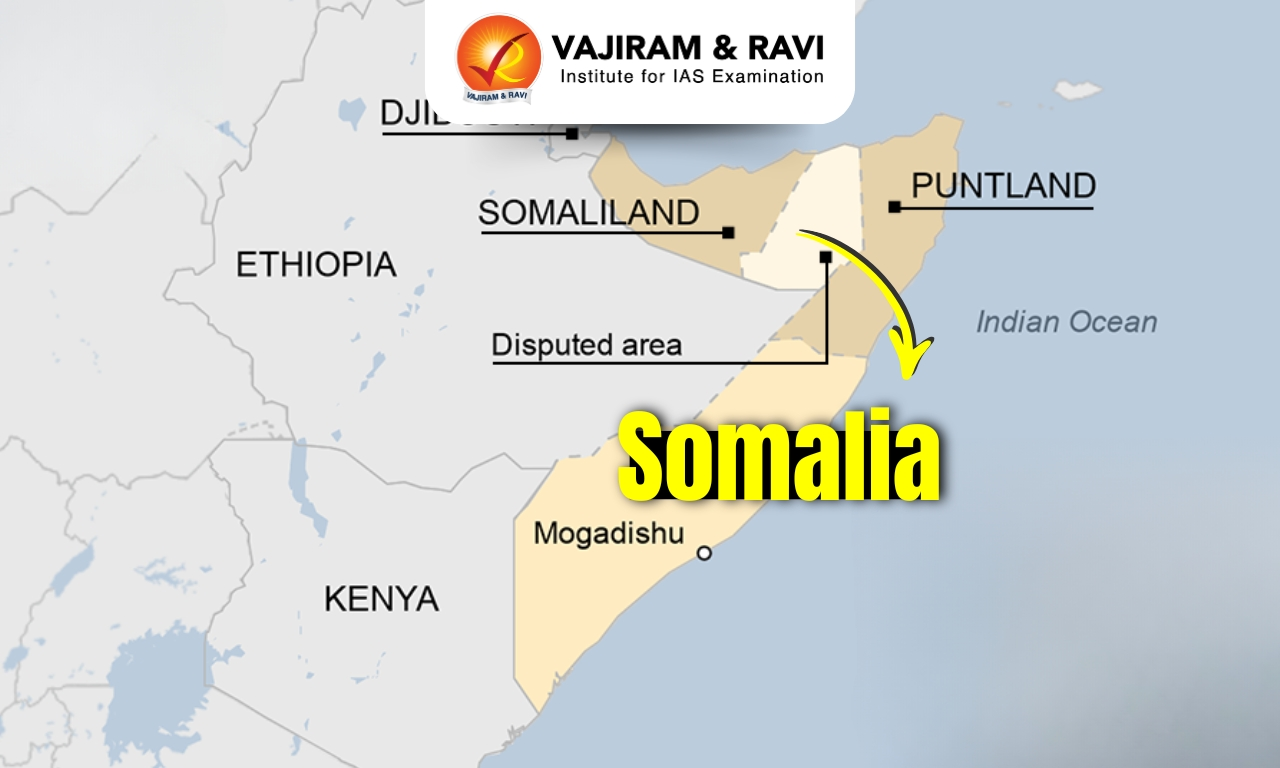
Sex Ratio in India 2026 Data, State-Wise Ratio and Trends

Sex Ratio in India

The sex ratio in India is one of the key demographic indicators used to measure gender balance within the population. It represents the number of females per 1,000 males and reflects the country’s socio-economic and cultural dynamics. A balanced sex ratio is vital for equitable development, social stability, and sustainable population growth. However, India has long struggled with gender disparities rooted in deep-seated social and cultural preferences.

Sex Ratio in India

The sex ratio serves as a mirror to gender equity, social progress, and health conditions. As per Census 2011, India’s overall sex ratio stood at 943 females per 1,000 males, marking an improvement from 933 in 2001. The Sample Registration System (SRS) Statistical Report 2023 estimated India’s sex ratio at 1,020 females per 1,000 males, showing gradual improvement, especially in southern states. However, the child sex ratio (0-6 years) remains a concern, declining from 927 in 2001 to 919 in 2011, indicating persistent issues like sex-selective abortions and gender bias
Read About: Neighbouring Countries of India

Sex Ratio in India Historical Background

India’s sex ratio has witnessed significant fluctuations since the early 20th century. In 1901, the sex ratio was 972 females per 1,000 males. It declined to 933 by 2001, before slightly improving in 2011. The fall was mainly due to gender discrimination, preference for male children, and unequal healthcare access. The NFHS-5 (2019-21) data later revealed a positive trend, showing 1,020 females per 1,000 males, indicating gradual social transformation and better health outcomes for women.

Sex Ratio in India State-Wise

According to Census 2011, states like Kerala (1084) and Puducherry (1037) recorded the highest sex ratios, while Haryana (879), Delhi (868), and Chandigarh (818) had the lowest. Key highlights include:

  • Kerala: 1084 females per 1000 males
  • Puducherry: 1037
  • Tamil Nadu: 996
  • Uttar Pradesh: 912
  • Haryana: 879
  • Punjab: 895
  • Delhi: 868

Child Sex Ratio in India

The Child Sex Ratio (CSR), which measures the number of girls per 1,000 boys aged 0–6 years, is a crucial indicator of gender bias at birth. As per Census 2011, the child sex ratio in India stood at 919, down from 927 in 2001. The SRS Statistical Report 2023 shows improvement in CSR to around 935, supported by schemes like Beti Bachao Beti Padhao and awareness against prenatal sex selection.

States such as Chhattisgarh (969) and Kerala (964) show balanced ratios, while Haryana (834) and Punjab (846) remain among the lowest, though improving in recent years.

Factors Influencing Sex Ratio in India

Various factors that influence the Sex Ratio in India are:

  1. Socio-Cultural Preference for Sons: Historical patriarchal beliefs and inheritance patterns favor male children for economic and social reasons.
  2. Female Foeticide and Infanticide: Widespread use of sex determination tests in past decades led to declining birth rates of girls.
  3. Migration Patterns: Male-dominated labor migration from rural to urban areas skews the ratio in certain states.
  4. Health Inequalities: Poor nutrition, limited access to maternal healthcare, and early marriages impact female survival rates.
  5. Educational and Economic Gaps: Lower education and employment levels among women often translate to less empowerment and autonomy.

Read About: Highest Peak in India

Sex Ratio in India Government Initiatives to Improve

The Government of India has prevailed several initiatives and policies to improve the Sex Ratio in India as given below:

  1. Beti Bachao Beti Padhao (2015): Launched in Panipat, Haryana, this flagship scheme aims to prevent gender-biased sex selection and promote the education and survival of girl children. It helped improve the child sex ratio in Haryana from 834 (2011) to 923 (2022).
  2. Sukanya Samriddhi Yojana (2015): A savings scheme for the girl child that provides financial security and encourages families to value female education and empowerment.
  3. Janani Suraksha Yojana: Promotes institutional deliveries and maternal healthcare, reducing female infant mortality.
  4. Poshan Abhiyan (2018): Addresses malnutrition and anemia among adolescent girls and women, improving overall health indicators contributing to sex ratio balance.
  5. National Girl Child Day: Celebrated every year on January 24, it promotes gender equality and awareness about rights of the girl child.

Sex Ratio in India Regional Variation

The southern and northeastern states such as Kerala, Tamil Nadu, and Meghalaya consistently report higher sex ratios due to better female literacy, healthcare access, and matrilineal traditions. In contrast, northern states like Haryana, Punjab, and Delhi lag behind due to stronger patriarchal structures and lower participation of women in workforce and decision-making.
Sex Ratio in India Impact

The skewed Sex Ratio in India has several impacts on the social, cultural, developmental and other aspects as mentioned here:

  1. Marriage Squeeze: Shortage of women in northern states leads to delayed marriages and rise in trafficking.
  2. Social Instability: Gender imbalance increases violence against women.
  3. Labor Market Effects: Reduced female participation affects economic growth.
  4. Population Aging: Declining female birth rates impact demographic stability in the long term.
  5. Health Burden: Poor reproductive health and stress among women in male-dominated societies.
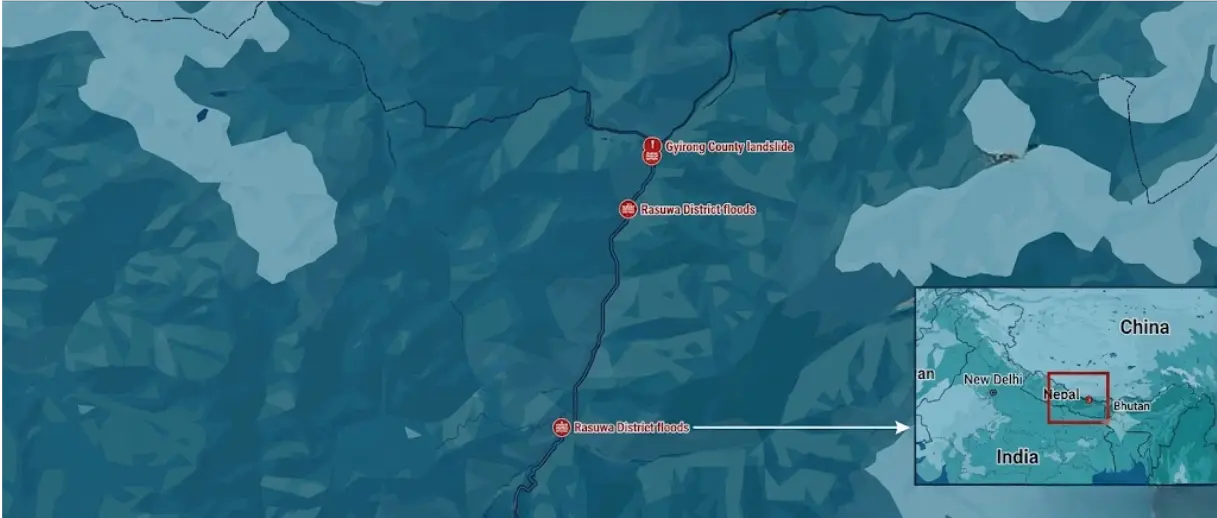
Sex Ratio in India Challenges

The challenges faced in the balancing of the Gender disparities are:

  1. Persistent Gender Bias: Deep-rooted son preference in rural and semi-urban India continues. Way Forward: Gender sensitization programs in schools and local governance reforms are vital.

  2. Economic Dependence of Women: Limited job opportunities restrict women’s empowerment. Way Forward: Promote skill-based employment and financial inclusion.
  3. Incomplete Enforcement of Laws: Laws like PCPNDT Act often face poor implementation. Way Forward: Strengthen monitoring and impose strict penalties for violations.
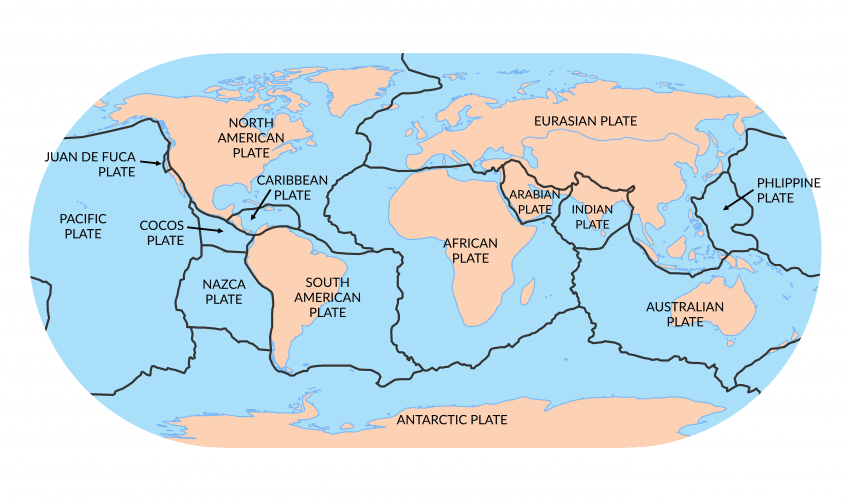
  4. Health Disparities: Maternal and infant health services remain inadequate in some regions. Way Forward: Expand healthcare outreach and nutritional programs.
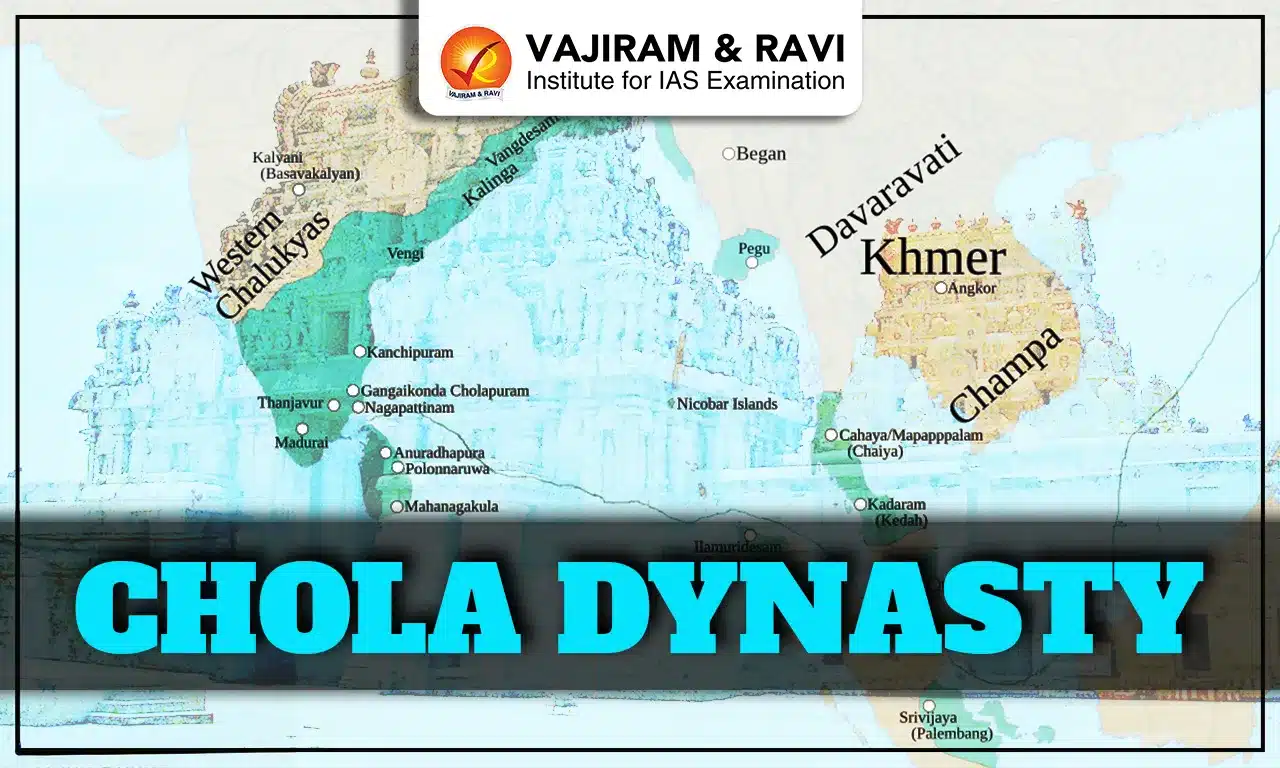
  5. Cultural Resistance: Traditions favoring dowry and son preference still prevail. Way Forward: Promote awareness campaigns and incentivize girl child education.

Sex Ratio in India International Comparison

According to World Bank Data and UN, the global average sex ratio is 984 females per 1,000 males, while India’s ratio stands around 1,020 as per NFHS-5 (2019-20), indicating notable improvement but still facing child sex ratio concerns. Countries like China (926) continue to struggle with similar issues, showing that socio-cultural bias remains a global challenge.
Sex Ratio in India SDG

Balanced sex ratio directly contributes to achieving SDG 5 (Gender Equality) and SDG 3 (Good Health and Well-being). Ensuring equal survival, education, and employment opportunities for women forms the foundation for inclusive development in India.

Sex Ratio in India Status of Women

Today, India is witnessing gradual improvement in gender parity, reflected in higher political participation, rising education levels, and workforce inclusion. Women now hold 33% of Parliament seats and increasingly occupy leadership positions. The narrowing gender gap is reshaping India’s social fabric and contributing to its human capital growth.
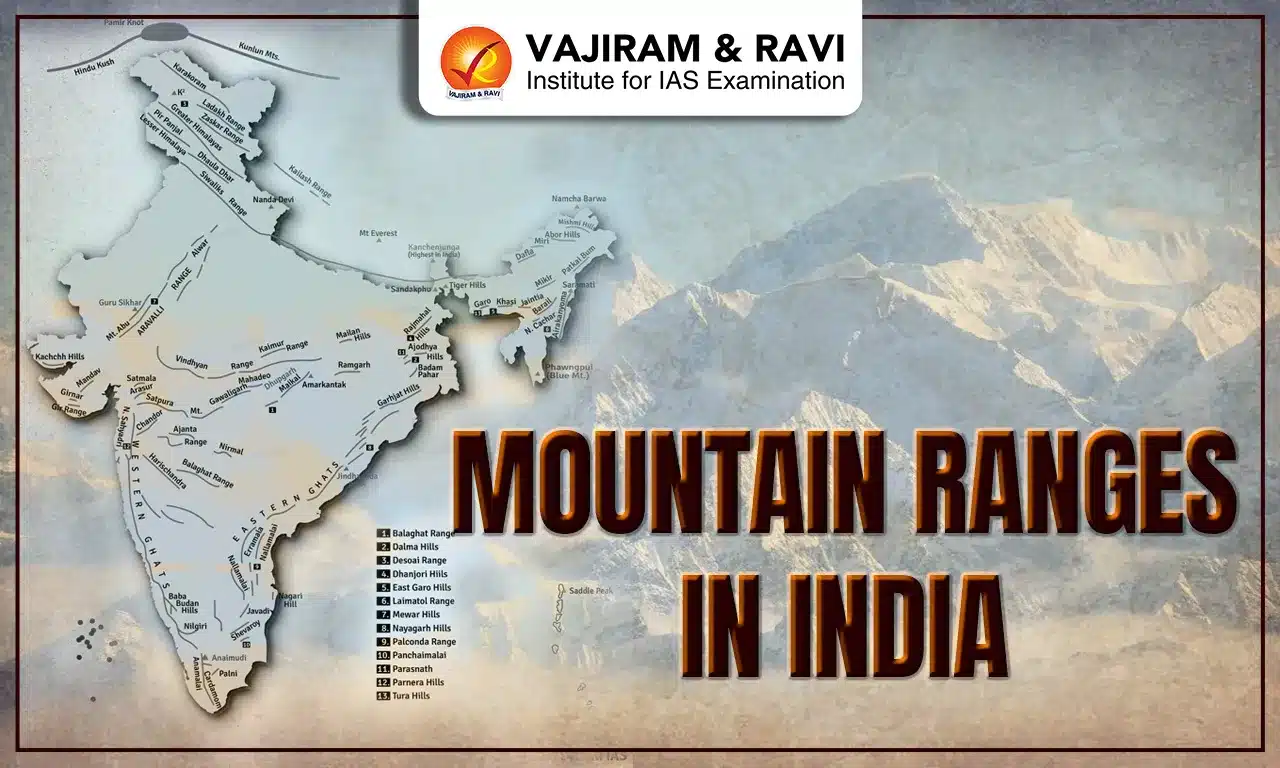
NFHS-5 Survey on Sex Ratio in India (2019-21)

The National Family Health Survey (NFHS-5) conducted in 2019-21 provided updated demographic insights into India’s population and gender balance. It reported a total sex ratio of 1,020 females per 1,000 males, a significant rise from 991 in NFHS-4 (2015-16), showing gradual improvement. However, the sex ratio at birth remained low at 929, below the natural level of 950-970, due to continued sex-selective practices. The child sex ratio also stood at 929, reflecting regional variations and modest progress in reducing gender imbalance.

Projected Sex Ratio in India by 2036

By 2036, India’s population is projected to reach 152.2 crore, with women forming 48.8% of the total, up from 48.5% in 2011. The overall sex ratio is expected to improve to 952 females per 1,000 males, reflecting a more balanced demographic structure. With declining fertility rates, enhanced maternal healthcare, and rising female literacy and workforce participation, India’s demographic future looks more gender equitable. The emphasis on women’s education, entrepreneurship, and participation in policymaking will further shape a progressive and inclusive Vision 2036.

Sex Ratio in India UPSC

The journey of India’s sex ratio, from 933 (2001) to over 1,020 (2019-20), represents progress driven by awareness, legal reforms, and policy interventions. However, regional disparities, cultural prejudices, and child sex ratio decline remain pressing concerns. Strengthening gender-sensitive education, enforcing anti-discrimination laws, and promoting economic independence for women are crucial to achieving a balanced and equitable demographic future.

As per the recent estimates, India’s overall sex ratio has reached 1,020 females per 1,000 males, marking a significant milestone. This improvement is attributed to better maternal health, rising female literacy (77.70% in 2021-2022, according to the National Family Health Survey (NFHS-5) and the National Statistical Office), and government-led welfare programs focusing on girl child education and protection.

  • NFHS-5 (2019-20) reported 1,020 females per 1,000 males, for the first time showing a slightly higher number of females.
  • Maternal Mortality Ratio (MMR) dropped from 556 (1990) to 97 (2020) per 100,000 live births (WHO data).
  • Female Literacy improved to 77.70% in 2021 from 54.16% in 2001 (Census).
  • Government interventions and legal bans on sex selection have curbed female foeticide significantly.

Sex Ratio in India FAQs

Q1: What is the Sex Ratio in India as per Census 2011?

Ans: The sex ratio of India in 2011 was 943 females per 1,000 males, an increase from 933 in 2001.

Q2: Which state has the highest Sex Ratio in India?

Ans: According to Census 2011, Kerala recorded the highest sex ratio of 1084 females per 1,000 males.

Q3: What is India’s current sex ratio as per NFHS-5 (2019-20)?

Ans: India’s sex ratio improved to 1,020 females per 1,000 males, reflecting progress toward gender balance.

Q4: Which states have the lowest Sex Ratio in India?

Ans: Haryana (879), Punjab (895), and Delhi (868) recorded the lowest sex ratios in 2011, though improving in recent years.

Q5: What measures has the government taken to improve the Sex Ratio in India?

Ans: Key schemes include Beti Bachao Beti Padhao, Sukanya Samriddhi Yojana, and strict enforcement of the PCPNDT Act (1994) to prevent sex-selective practices

Asian Games 2026 Indian Cricket Team, Squad, Schedule, Format and Players

Asian Games 2026 Indian Cricket Team

The Asian Games 2026 Indian Cricket Team will compete in Nagoya, Japan, with India defending the gold medals won in both men’s and women’s cricket at the 2022 Asian Games in Hangzhou. The women’s cricket competition is being held from September 17 to 22, while the men’s tournament will run from September 24 to October 3. Both competitions will be played in the T20 format. 

India Men Win Gold Medal at Asian Games 2026

India won the men’s cricket gold medal at the Asian Games 2026 after defeating Pakistan by 19 runs in the final at the Korogi Sports Park in Nisshin, Japan, on October 3.

The victory enabled India to successfully defend the men’s cricket gold medal won at the 2022 Asian Games in Hangzhou. India had entered the knockout stage as the defending champions and reached the final after defeating Sri Lanka by 124 runs in the semi-final.

With the men’s victory, India defended both cricket gold medals at the Asian Games 2026, after the women’s team had earlier defeated Sri Lanka by 147 runs in the women’s final on September 22.

India Women Win Gold Medal at Asian Games 2026

India won the women’s cricket gold medal at the Asian Games 2026 after defeating Sri Lanka by 147 runs in the final at the Korogi Sports Park in Nisshin, Japan, on September 22.

India posted 216/3 in 20 overs, the highest team total in women’s cricket at the Asian Games. Sri Lanka were then bowled out for 69 in 15.4 overs, giving India a comprehensive 147-run victory.

The 147-run margin is India Women’s biggest victory in T20 Internationals, surpassing their previous record of a 144-run win over Malaysia in 2018.

The victory gave India its second consecutive women’s cricket gold medal at the Asian Games, following the team’s triumph over Sri Lanka in the final at the 2022 Hangzhou Games. Sri Lanka won the silver medal, while Pakistan secured bronze after defeating Bangladesh in the third-place play-off.

With this victory, India also became only the second team after Pakistan to successfully defend the women’s cricket gold medal at the Asian Games.

What are the Asian Games?

The Asian Games are a continental multi-sport event held every four years, bringing together athletes from across Asia. The 20th Asian Games, Aichi-Nagoya 2026, are being held in Japan from September 19 to October 4, with competitions taking place across Nagoya and other venues in Aichi Prefecture.

Also Read:- India's medals at Asian Games 2026

Cricket at the Asian Games

Cricket made its Asian Games debut at Guangzhou 2010. It was also included at Incheon 2014, absent from Jakarta 2018, and returned at Hangzhou 2022. The 2026 edition will therefore mark the fourth appearance of cricket in the last five Asian Games. 

Asian Games 2026 Cricket Venue

The cricket competition is being played at the Nisshin Cricket Ground in Korogi Sports Park, located in Nisshin on the outskirts of Nagoya. The venue is hosting both the men’s and women’s competitions.

Format and Qualification

The men’s and women’s tournaments follow different competition structures, with the men’s event beginning with a preliminary group stage and the women’s event starting at the quarter-final stage. 

Men's Competition

The men’s tournament features 10 teams. Six teams begin in the preliminary round, divided into two groups of three.

Group A

  • Afghanistan
  • Japan
  • Nepal

Group B

  • Hong Kong, China
  • Malaysia
  • Oman

The top two teams from each group will qualify for the quarter-finals. India, Pakistan, Sri Lanka and Bangladesh have direct entry into the quarter-finals based on their seeding.

ICC Full Members received automatic qualification, along with hosts Japan. Hong Kong, China, Malaysia, Nepal and Oman secured the remaining places through the qualification process.

Also Read:- Asian Games 2026 Medal Tally

Women's Competition

The women’s tournament features eight teams and begins directly with the quarter-finals. The winners progress to the semi-finals, followed by the bronze-medal and gold-medal matches. 

The participating teams are India, Japan, Bangladesh, China, Sri Lanka, Malaysia, Pakistan and Thailand.

Asian Games 2026 Cricket Schedule

The Asian Games 2026 cricket schedule covers the women’s competition from September 17 to 22 and the men’s tournament from September 24 to October 3. )

Women's Cricket Schedule

Date

Match

September 17

Bangladesh vs China

September 17

Pakistan vs Thailand

September 18

Sri Lanka vs Malaysia

September 18

India vs Japan

September 20

Semi-finals

September 22

Bronze-medal match

September 22

Gold-medal match

The quarter-final between India and Japan was played on September 18, with India winning by eight wickets. India then defeated Bangladesh by 114 runs in the semi-final on September 20 to reach the gold-medal match against Sri Lanka. 

Men's Cricket Schedule

The men’s preliminary round will be played from September 24 to 26, followed by the quarter-finals, semi-finals and medal matches. 

Date

Match

September 24

Afghanistan vs Japan

September 24

Hong Kong, China vs Malaysia

September 25

Hong Kong, China vs Oman

September 25

Afghanistan vs Nepal

September 26

Japan vs Nepal

September 26

Malaysia vs Oman

September 28

Pakistan vs Group B runner-up

September 28

India vs Group A runner-up

September 29

Sri Lanka vs Group A winner

September 29

Bangladesh vs Group B winner

October 1

Semi-finals

October 3

Bronze-medal and Gold-medal matches

Asian Games 2026 Indian Cricket Team

India Men's Squad

The final Asian Games 2026 Indian Cricket Team men's squad comprises 14 players:

Shreyas Iyer (Captain), Abhishek Sharma, Sanju Samson (WK), Ishan Kishan (WK), Shivam Dube, Tilak Varma (Vice-Captain), Axar Patel, Washington Sundar, Ravi Bishnoi, Jasprit Bumrah, Arshdeep Singh, Vaibhav Sooryavanshi, Yash Thakur and Vipraj Nigam.

BCCI initially named Harshit Rana and Varun Chakaravarthy in the squad. Harshit Rana was later replaced by Yash Thakur after a rectus femoris strain, while Vipraj Nigam replaced Varun Chakaravarthy after the latter was ruled out with a side strain. Nitish Kumar Reddy was also withdrawn from the Asian Games squad. 

India Women's Squad

The Asian Games 2026 Indian Cricket Team women's squad is:

Harmanpreet Kaur (Captain), Smriti Mandhana, Shafali Verma, Pratika Rawal, Deepti Sharma, Richa Ghosh, G. Kamalini, Bharti Fulmali, Sree Charani, Renuka Singh, Kranti Gaud, Arundhati Reddy, Shreyanka Patil, Radha Yadav and Nandni Sharma.

Jemimah Rodrigues was ruled out of the Asian Games because of a high-grade right hamstring tear. Pratika Rawal was named as her replacement. 

Asian Games 2026 Indian Cricket Team FAQs

Q1: When will the Asian Games 2026 cricket tournament be held?

Ans: The women’s cricket competition will be held from September 17 to 22, 2026, while the men’s competition will take place from September 24 to October 3, 2026. Both tournaments will be played in the T20 format.

Q2: Where will the Asian Games 2026 cricket matches be played?

Ans: All cricket matches at the Asian Games 2026 will be played at the Nisshin Cricket Ground in Korogi Sports Park, located in Nisshin near Nagoya, Japan.

Q3: When was cricket first played at the Asian Games?

Ans: Cricket made its Asian Games debut at the 2010 Asian Games in Guangzhou, China.

Q4: What is the format of cricket at the Asian Games 2026?

Ans: Both the men’s and women’s competitions will be played in the Twenty20 (T20) format. The women’s tournament begins with the quarter-finals, while the men’s tournament has a preliminary round followed by the quarter-finals.

Q5: Who are the defending champions in Asian Games cricket?

Ans: India are the defending champions in both men’s and women’s cricket. The Indian men’s and women’s teams won gold at the 2022 Asian Games in Hangzhou, where cricket returned to the Games after being absent from the 2018 edition.

Enquire Now